US12084434B2 - Methods for treating cancer - Google Patents
Methods for treating cancer Download PDFInfo
- Publication number
- US12084434B2 US12084434B2 US18/509,967 US202318509967A US12084434B2 US 12084434 B2 US12084434 B2 US 12084434B2 US 202318509967 A US202318509967 A US 202318509967A US 12084434 B2 US12084434 B2 US 12084434B2
- Authority
- US
- United States
- Prior art keywords
- alkyl
- hydroxyl
- hydrogen
- formula
- optionally substituted
- Prior art date
- Legal status (The legal status is an assumption and is not a legal conclusion. Google has not performed a legal analysis and makes no representation as to the accuracy of the status listed.)
- Active
Links
Classifications
-
- C—CHEMISTRY; METALLURGY
- C07—ORGANIC CHEMISTRY
- C07D—HETEROCYCLIC COMPOUNDS
- C07D307/00—Heterocyclic compounds containing five-membered rings having one oxygen atom as the only ring hetero atom
- C07D307/77—Heterocyclic compounds containing five-membered rings having one oxygen atom as the only ring hetero atom ortho- or peri-condensed with carbocyclic rings or ring systems
- C07D307/78—Benzo [b] furans; Hydrogenated benzo [b] furans
- C07D307/79—Benzo [b] furans; Hydrogenated benzo [b] furans with only hydrogen atoms, hydrocarbon or substituted hydrocarbon radicals, directly attached to carbon atoms of the hetero ring
- C07D307/81—Radicals substituted by nitrogen atoms not forming part of a nitro radical
-
- A—HUMAN NECESSITIES
- A61—MEDICAL OR VETERINARY SCIENCE; HYGIENE
- A61K—PREPARATIONS FOR MEDICAL, DENTAL OR TOILETRY PURPOSES
- A61K31/00—Medicinal preparations containing organic active ingredients
- A61K31/33—Heterocyclic compounds
- A61K31/335—Heterocyclic compounds having oxygen as the only ring hetero atom, e.g. fungichromin
- A61K31/34—Heterocyclic compounds having oxygen as the only ring hetero atom, e.g. fungichromin having five-membered rings with one oxygen as the only ring hetero atom, e.g. isosorbide
- A61K31/343—Heterocyclic compounds having oxygen as the only ring hetero atom, e.g. fungichromin having five-membered rings with one oxygen as the only ring hetero atom, e.g. isosorbide condensed with a carbocyclic ring, e.g. coumaran, bufuralol, befunolol, clobenfurol, amiodarone
-
- A—HUMAN NECESSITIES
- A61—MEDICAL OR VETERINARY SCIENCE; HYGIENE
- A61K—PREPARATIONS FOR MEDICAL, DENTAL OR TOILETRY PURPOSES
- A61K31/00—Medicinal preparations containing organic active ingredients
- A61K31/33—Heterocyclic compounds
- A61K31/38—Heterocyclic compounds having sulfur as a ring hetero atom
- A61K31/381—Heterocyclic compounds having sulfur as a ring hetero atom having five-membered rings
-
- A—HUMAN NECESSITIES
- A61—MEDICAL OR VETERINARY SCIENCE; HYGIENE
- A61K—PREPARATIONS FOR MEDICAL, DENTAL OR TOILETRY PURPOSES
- A61K31/00—Medicinal preparations containing organic active ingredients
- A61K31/33—Heterocyclic compounds
- A61K31/38—Heterocyclic compounds having sulfur as a ring hetero atom
- A61K31/382—Heterocyclic compounds having sulfur as a ring hetero atom having six-membered rings, e.g. thioxanthenes
-
- A—HUMAN NECESSITIES
- A61—MEDICAL OR VETERINARY SCIENCE; HYGIENE
- A61K—PREPARATIONS FOR MEDICAL, DENTAL OR TOILETRY PURPOSES
- A61K31/00—Medicinal preparations containing organic active ingredients
- A61K31/33—Heterocyclic compounds
- A61K31/395—Heterocyclic compounds having nitrogen as a ring hetero atom, e.g. guanethidine or rifamycins
- A61K31/40—Heterocyclic compounds having nitrogen as a ring hetero atom, e.g. guanethidine or rifamycins having five-membered rings with one nitrogen as the only ring hetero atom, e.g. sulpiride, succinimide, tolmetin, buflomedil
- A61K31/403—Heterocyclic compounds having nitrogen as a ring hetero atom, e.g. guanethidine or rifamycins having five-membered rings with one nitrogen as the only ring hetero atom, e.g. sulpiride, succinimide, tolmetin, buflomedil condensed with carbocyclic rings, e.g. carbazole
- A61K31/4035—Isoindoles, e.g. phthalimide
-
- A—HUMAN NECESSITIES
- A61—MEDICAL OR VETERINARY SCIENCE; HYGIENE
- A61K—PREPARATIONS FOR MEDICAL, DENTAL OR TOILETRY PURPOSES
- A61K31/00—Medicinal preparations containing organic active ingredients
- A61K31/33—Heterocyclic compounds
- A61K31/395—Heterocyclic compounds having nitrogen as a ring hetero atom, e.g. guanethidine or rifamycins
- A61K31/41—Heterocyclic compounds having nitrogen as a ring hetero atom, e.g. guanethidine or rifamycins having five-membered rings with two or more ring hetero atoms, at least one of which being nitrogen, e.g. tetrazole
- A61K31/415—1,2-Diazoles
- A61K31/416—1,2-Diazoles condensed with carbocyclic ring systems, e.g. indazole
-
- A—HUMAN NECESSITIES
- A61—MEDICAL OR VETERINARY SCIENCE; HYGIENE
- A61K—PREPARATIONS FOR MEDICAL, DENTAL OR TOILETRY PURPOSES
- A61K31/00—Medicinal preparations containing organic active ingredients
- A61K31/33—Heterocyclic compounds
- A61K31/395—Heterocyclic compounds having nitrogen as a ring hetero atom, e.g. guanethidine or rifamycins
- A61K31/41—Heterocyclic compounds having nitrogen as a ring hetero atom, e.g. guanethidine or rifamycins having five-membered rings with two or more ring hetero atoms, at least one of which being nitrogen, e.g. tetrazole
- A61K31/425—Thiazoles
- A61K31/427—Thiazoles not condensed and containing further heterocyclic rings
-
- A—HUMAN NECESSITIES
- A61—MEDICAL OR VETERINARY SCIENCE; HYGIENE
- A61K—PREPARATIONS FOR MEDICAL, DENTAL OR TOILETRY PURPOSES
- A61K31/00—Medicinal preparations containing organic active ingredients
- A61K31/33—Heterocyclic compounds
- A61K31/395—Heterocyclic compounds having nitrogen as a ring hetero atom, e.g. guanethidine or rifamycins
- A61K31/435—Heterocyclic compounds having nitrogen as a ring hetero atom, e.g. guanethidine or rifamycins having six-membered rings with one nitrogen as the only ring hetero atom
- A61K31/4353—Heterocyclic compounds having nitrogen as a ring hetero atom, e.g. guanethidine or rifamycins having six-membered rings with one nitrogen as the only ring hetero atom ortho- or peri-condensed with heterocyclic ring systems
- A61K31/437—Heterocyclic compounds having nitrogen as a ring hetero atom, e.g. guanethidine or rifamycins having six-membered rings with one nitrogen as the only ring hetero atom ortho- or peri-condensed with heterocyclic ring systems the heterocyclic ring system containing a five-membered ring having nitrogen as a ring hetero atom, e.g. indolizine, beta-carboline
-
- A—HUMAN NECESSITIES
- A61—MEDICAL OR VETERINARY SCIENCE; HYGIENE
- A61K—PREPARATIONS FOR MEDICAL, DENTAL OR TOILETRY PURPOSES
- A61K31/00—Medicinal preparations containing organic active ingredients
- A61K31/33—Heterocyclic compounds
- A61K31/395—Heterocyclic compounds having nitrogen as a ring hetero atom, e.g. guanethidine or rifamycins
- A61K31/435—Heterocyclic compounds having nitrogen as a ring hetero atom, e.g. guanethidine or rifamycins having six-membered rings with one nitrogen as the only ring hetero atom
- A61K31/44—Non condensed pyridines; Hydrogenated derivatives thereof
- A61K31/4427—Non condensed pyridines; Hydrogenated derivatives thereof containing further heterocyclic ring systems
- A61K31/443—Non condensed pyridines; Hydrogenated derivatives thereof containing further heterocyclic ring systems containing a five-membered ring with oxygen as a ring hetero atom
-
- A—HUMAN NECESSITIES
- A61—MEDICAL OR VETERINARY SCIENCE; HYGIENE
- A61K—PREPARATIONS FOR MEDICAL, DENTAL OR TOILETRY PURPOSES
- A61K31/00—Medicinal preparations containing organic active ingredients
- A61K31/33—Heterocyclic compounds
- A61K31/395—Heterocyclic compounds having nitrogen as a ring hetero atom, e.g. guanethidine or rifamycins
- A61K31/435—Heterocyclic compounds having nitrogen as a ring hetero atom, e.g. guanethidine or rifamycins having six-membered rings with one nitrogen as the only ring hetero atom
- A61K31/44—Non condensed pyridines; Hydrogenated derivatives thereof
- A61K31/445—Non condensed piperidines, e.g. piperocaine
- A61K31/4523—Non condensed piperidines, e.g. piperocaine containing further heterocyclic ring systems
- A61K31/4525—Non condensed piperidines, e.g. piperocaine containing further heterocyclic ring systems containing a five-membered ring with oxygen as a ring hetero atom
-
- A—HUMAN NECESSITIES
- A61—MEDICAL OR VETERINARY SCIENCE; HYGIENE
- A61K—PREPARATIONS FOR MEDICAL, DENTAL OR TOILETRY PURPOSES
- A61K31/00—Medicinal preparations containing organic active ingredients
- A61K31/33—Heterocyclic compounds
- A61K31/395—Heterocyclic compounds having nitrogen as a ring hetero atom, e.g. guanethidine or rifamycins
- A61K31/495—Heterocyclic compounds having nitrogen as a ring hetero atom, e.g. guanethidine or rifamycins having six-membered rings with two or more nitrogen atoms as the only ring heteroatoms, e.g. piperazine or tetrazines
- A61K31/505—Pyrimidines; Hydrogenated pyrimidines, e.g. trimethoprim
- A61K31/506—Pyrimidines; Hydrogenated pyrimidines, e.g. trimethoprim not condensed and containing further heterocyclic rings
-
- A—HUMAN NECESSITIES
- A61—MEDICAL OR VETERINARY SCIENCE; HYGIENE
- A61K—PREPARATIONS FOR MEDICAL, DENTAL OR TOILETRY PURPOSES
- A61K31/00—Medicinal preparations containing organic active ingredients
- A61K31/33—Heterocyclic compounds
- A61K31/395—Heterocyclic compounds having nitrogen as a ring hetero atom, e.g. guanethidine or rifamycins
- A61K31/495—Heterocyclic compounds having nitrogen as a ring hetero atom, e.g. guanethidine or rifamycins having six-membered rings with two or more nitrogen atoms as the only ring heteroatoms, e.g. piperazine or tetrazines
- A61K31/505—Pyrimidines; Hydrogenated pyrimidines, e.g. trimethoprim
- A61K31/517—Pyrimidines; Hydrogenated pyrimidines, e.g. trimethoprim ortho- or peri-condensed with carbocyclic ring systems, e.g. quinazoline, perimidine
-
- A—HUMAN NECESSITIES
- A61—MEDICAL OR VETERINARY SCIENCE; HYGIENE
- A61K—PREPARATIONS FOR MEDICAL, DENTAL OR TOILETRY PURPOSES
- A61K31/00—Medicinal preparations containing organic active ingredients
- A61K31/33—Heterocyclic compounds
- A61K31/395—Heterocyclic compounds having nitrogen as a ring hetero atom, e.g. guanethidine or rifamycins
- A61K31/495—Heterocyclic compounds having nitrogen as a ring hetero atom, e.g. guanethidine or rifamycins having six-membered rings with two or more nitrogen atoms as the only ring heteroatoms, e.g. piperazine or tetrazines
- A61K31/505—Pyrimidines; Hydrogenated pyrimidines, e.g. trimethoprim
- A61K31/519—Pyrimidines; Hydrogenated pyrimidines, e.g. trimethoprim ortho- or peri-condensed with heterocyclic rings
-
- A—HUMAN NECESSITIES
- A61—MEDICAL OR VETERINARY SCIENCE; HYGIENE
- A61K—PREPARATIONS FOR MEDICAL, DENTAL OR TOILETRY PURPOSES
- A61K31/00—Medicinal preparations containing organic active ingredients
- A61K31/33—Heterocyclic compounds
- A61K31/395—Heterocyclic compounds having nitrogen as a ring hetero atom, e.g. guanethidine or rifamycins
- A61K31/535—Heterocyclic compounds having nitrogen as a ring hetero atom, e.g. guanethidine or rifamycins having six-membered rings with at least one nitrogen and one oxygen as the ring hetero atoms, e.g. 1,2-oxazines
- A61K31/5375—1,4-Oxazines, e.g. morpholine
- A61K31/5377—1,4-Oxazines, e.g. morpholine not condensed and containing further heterocyclic rings, e.g. timolol
-
- A—HUMAN NECESSITIES
- A61—MEDICAL OR VETERINARY SCIENCE; HYGIENE
- A61K—PREPARATIONS FOR MEDICAL, DENTAL OR TOILETRY PURPOSES
- A61K31/00—Medicinal preparations containing organic active ingredients
- A61K31/33—Heterocyclic compounds
- A61K31/395—Heterocyclic compounds having nitrogen as a ring hetero atom, e.g. guanethidine or rifamycins
- A61K31/535—Heterocyclic compounds having nitrogen as a ring hetero atom, e.g. guanethidine or rifamycins having six-membered rings with at least one nitrogen and one oxygen as the ring hetero atoms, e.g. 1,2-oxazines
- A61K31/5375—1,4-Oxazines, e.g. morpholine
- A61K31/5386—1,4-Oxazines, e.g. morpholine spiro-condensed or forming part of bridged ring systems
-
- A—HUMAN NECESSITIES
- A61—MEDICAL OR VETERINARY SCIENCE; HYGIENE
- A61K—PREPARATIONS FOR MEDICAL, DENTAL OR TOILETRY PURPOSES
- A61K31/00—Medicinal preparations containing organic active ingredients
- A61K31/33—Heterocyclic compounds
- A61K31/395—Heterocyclic compounds having nitrogen as a ring hetero atom, e.g. guanethidine or rifamycins
- A61K31/54—Heterocyclic compounds having nitrogen as a ring hetero atom, e.g. guanethidine or rifamycins having six-membered rings with at least one nitrogen and one sulfur as the ring hetero atoms, e.g. sulthiame
- A61K31/541—Non-condensed thiazines containing further heterocyclic rings
-
- A—HUMAN NECESSITIES
- A61—MEDICAL OR VETERINARY SCIENCE; HYGIENE
- A61P—SPECIFIC THERAPEUTIC ACTIVITY OF CHEMICAL COMPOUNDS OR MEDICINAL PREPARATIONS
- A61P35/00—Antineoplastic agents
-
- C—CHEMISTRY; METALLURGY
- C07—ORGANIC CHEMISTRY
- C07D—HETEROCYCLIC COMPOUNDS
- C07D307/00—Heterocyclic compounds containing five-membered rings having one oxygen atom as the only ring hetero atom
- C07D307/77—Heterocyclic compounds containing five-membered rings having one oxygen atom as the only ring hetero atom ortho- or peri-condensed with carbocyclic rings or ring systems
- C07D307/78—Benzo [b] furans; Hydrogenated benzo [b] furans
- C07D307/82—Benzo [b] furans; Hydrogenated benzo [b] furans with hetero atoms or with carbon atoms having three bonds to hetero atoms with at the most one bond to halogen, e.g. ester or nitrile radicals, directly attached to carbon atoms of the hetero ring
- C07D307/83—Oxygen atoms
-
- C—CHEMISTRY; METALLURGY
- C07—ORGANIC CHEMISTRY
- C07D—HETEROCYCLIC COMPOUNDS
- C07D403/00—Heterocyclic compounds containing two or more hetero rings, having nitrogen atoms as the only ring hetero atoms, not provided for by group C07D401/00
- C07D403/02—Heterocyclic compounds containing two or more hetero rings, having nitrogen atoms as the only ring hetero atoms, not provided for by group C07D401/00 containing two hetero rings
- C07D403/12—Heterocyclic compounds containing two or more hetero rings, having nitrogen atoms as the only ring hetero atoms, not provided for by group C07D401/00 containing two hetero rings linked by a chain containing hetero atoms as chain links
-
- C—CHEMISTRY; METALLURGY
- C07—ORGANIC CHEMISTRY
- C07D—HETEROCYCLIC COMPOUNDS
- C07D405/00—Heterocyclic compounds containing both one or more hetero rings having oxygen atoms as the only ring hetero atoms, and one or more rings having nitrogen as the only ring hetero atom
- C07D405/02—Heterocyclic compounds containing both one or more hetero rings having oxygen atoms as the only ring hetero atoms, and one or more rings having nitrogen as the only ring hetero atom containing two hetero rings
- C07D405/12—Heterocyclic compounds containing both one or more hetero rings having oxygen atoms as the only ring hetero atoms, and one or more rings having nitrogen as the only ring hetero atom containing two hetero rings linked by a chain containing hetero atoms as chain links
-
- C—CHEMISTRY; METALLURGY
- C07—ORGANIC CHEMISTRY
- C07D—HETEROCYCLIC COMPOUNDS
- C07D405/00—Heterocyclic compounds containing both one or more hetero rings having oxygen atoms as the only ring hetero atoms, and one or more rings having nitrogen as the only ring hetero atom
- C07D405/14—Heterocyclic compounds containing both one or more hetero rings having oxygen atoms as the only ring hetero atoms, and one or more rings having nitrogen as the only ring hetero atom containing three or more hetero rings
-
- C—CHEMISTRY; METALLURGY
- C07—ORGANIC CHEMISTRY
- C07D—HETEROCYCLIC COMPOUNDS
- C07D409/00—Heterocyclic compounds containing two or more hetero rings, at least one ring having sulfur atoms as the only ring hetero atoms
- C07D409/02—Heterocyclic compounds containing two or more hetero rings, at least one ring having sulfur atoms as the only ring hetero atoms containing two hetero rings
- C07D409/12—Heterocyclic compounds containing two or more hetero rings, at least one ring having sulfur atoms as the only ring hetero atoms containing two hetero rings linked by a chain containing hetero atoms as chain links
-
- C—CHEMISTRY; METALLURGY
- C07—ORGANIC CHEMISTRY
- C07D—HETEROCYCLIC COMPOUNDS
- C07D409/00—Heterocyclic compounds containing two or more hetero rings, at least one ring having sulfur atoms as the only ring hetero atoms
- C07D409/14—Heterocyclic compounds containing two or more hetero rings, at least one ring having sulfur atoms as the only ring hetero atoms containing three or more hetero rings
-
- C—CHEMISTRY; METALLURGY
- C07—ORGANIC CHEMISTRY
- C07D—HETEROCYCLIC COMPOUNDS
- C07D413/00—Heterocyclic compounds containing two or more hetero rings, at least one ring having nitrogen and oxygen atoms as the only ring hetero atoms
- C07D413/02—Heterocyclic compounds containing two or more hetero rings, at least one ring having nitrogen and oxygen atoms as the only ring hetero atoms containing two hetero rings
- C07D413/12—Heterocyclic compounds containing two or more hetero rings, at least one ring having nitrogen and oxygen atoms as the only ring hetero atoms containing two hetero rings linked by a chain containing hetero atoms as chain links
-
- C—CHEMISTRY; METALLURGY
- C07—ORGANIC CHEMISTRY
- C07D—HETEROCYCLIC COMPOUNDS
- C07D413/00—Heterocyclic compounds containing two or more hetero rings, at least one ring having nitrogen and oxygen atoms as the only ring hetero atoms
- C07D413/14—Heterocyclic compounds containing two or more hetero rings, at least one ring having nitrogen and oxygen atoms as the only ring hetero atoms containing three or more hetero rings
-
- C—CHEMISTRY; METALLURGY
- C07—ORGANIC CHEMISTRY
- C07D—HETEROCYCLIC COMPOUNDS
- C07D417/00—Heterocyclic compounds containing two or more hetero rings, at least one ring having nitrogen and sulfur atoms as the only ring hetero atoms, not provided for by group C07D415/00
- C07D417/02—Heterocyclic compounds containing two or more hetero rings, at least one ring having nitrogen and sulfur atoms as the only ring hetero atoms, not provided for by group C07D415/00 containing two hetero rings
- C07D417/12—Heterocyclic compounds containing two or more hetero rings, at least one ring having nitrogen and sulfur atoms as the only ring hetero atoms, not provided for by group C07D415/00 containing two hetero rings linked by a chain containing hetero atoms as chain links
-
- C—CHEMISTRY; METALLURGY
- C07—ORGANIC CHEMISTRY
- C07D—HETEROCYCLIC COMPOUNDS
- C07D471/00—Heterocyclic compounds containing nitrogen atoms as the only ring hetero atoms in the condensed system, at least one ring being a six-membered ring with one nitrogen atom, not provided for by groups C07D451/00 - C07D463/00
- C07D471/02—Heterocyclic compounds containing nitrogen atoms as the only ring hetero atoms in the condensed system, at least one ring being a six-membered ring with one nitrogen atom, not provided for by groups C07D451/00 - C07D463/00 in which the condensed system contains two hetero rings
- C07D471/04—Ortho-condensed systems
-
- C—CHEMISTRY; METALLURGY
- C07—ORGANIC CHEMISTRY
- C07D—HETEROCYCLIC COMPOUNDS
- C07D487/00—Heterocyclic compounds containing nitrogen atoms as the only ring hetero atoms in the condensed system, not provided for by groups C07D451/00 - C07D477/00
- C07D487/02—Heterocyclic compounds containing nitrogen atoms as the only ring hetero atoms in the condensed system, not provided for by groups C07D451/00 - C07D477/00 in which the condensed system contains two hetero rings
- C07D487/04—Ortho-condensed systems
-
- C—CHEMISTRY; METALLURGY
- C07—ORGANIC CHEMISTRY
- C07D—HETEROCYCLIC COMPOUNDS
- C07D491/00—Heterocyclic compounds containing in the condensed ring system both one or more rings having oxygen atoms as the only ring hetero atoms and one or more rings having nitrogen atoms as the only ring hetero atoms, not provided for by groups C07D451/00 - C07D459/00, C07D463/00, C07D477/00 or C07D489/00
- C07D491/02—Heterocyclic compounds containing in the condensed ring system both one or more rings having oxygen atoms as the only ring hetero atoms and one or more rings having nitrogen atoms as the only ring hetero atoms, not provided for by groups C07D451/00 - C07D459/00, C07D463/00, C07D477/00 or C07D489/00 in which the condensed system contains two hetero rings
- C07D491/10—Spiro-condensed systems
- C07D491/107—Spiro-condensed systems with only one oxygen atom as ring hetero atom in the oxygen-containing ring
-
- C—CHEMISTRY; METALLURGY
- C07—ORGANIC CHEMISTRY
- C07D—HETEROCYCLIC COMPOUNDS
- C07D497/00—Heterocyclic compounds containing in the condensed system at least one hetero ring having oxygen and sulfur atoms as the only ring hetero atoms
- C07D497/02—Heterocyclic compounds containing in the condensed system at least one hetero ring having oxygen and sulfur atoms as the only ring hetero atoms in which the condensed system contains two hetero rings
- C07D497/10—Spiro-condensed systems
-
- C—CHEMISTRY; METALLURGY
- C07—ORGANIC CHEMISTRY
- C07D—HETEROCYCLIC COMPOUNDS
- C07D498/00—Heterocyclic compounds containing in the condensed system at least one hetero ring having nitrogen and oxygen atoms as the only ring hetero atoms
- C07D498/02—Heterocyclic compounds containing in the condensed system at least one hetero ring having nitrogen and oxygen atoms as the only ring hetero atoms in which the condensed system contains two hetero rings
- C07D498/10—Spiro-condensed systems
Definitions
- This disclosure provides compounds of Formula (I), Formula (II), and pharmaceutically acceptable salts thereof, that inhibit phosphatidylinositol 4,5-bisphosphate 3-kinase (PI3K) isoform alpha (PI3K ⁇ ).
- PI3K phosphatidylinositol 4,5-bisphosphate 3-kinase
- These chemical entities are useful, e.g., for treating a condition, disease or disorder in which increased (e.g., excessive) PI3K ⁇ activation contributes to the pathology and/or symptoms and/or progression of the condition, disease or disorder (e.g., cancer) in a subject (e.g., a human).
- This disclosure also provides compositions containing the same as well as methods of using and making the same.
- PI3K/AKT signaling is involved in physiological and pathophysiological functions that drive tumor progression such as metabolism, cell growth, proliferation, angiogenesis and metastasis.
- Suppression e.g., pharmacological or genetic
- PI3K/AKT/TOR signaling may cause cancer cell death and regression of tumor growth.
- the PI3K pathway can be activated via, for example, point mutation(s) of the PIK3CA gene or via inactivation of the phosphatase and tensin homolog (PTEN) gene. Activation of this pathway occurs in approximately 30-50% human cancers and contributes to resistance to various anti-cancer therapies.
- PTEN phosphatase and tensin homolog
- PI3K consists of three subunits: p85 regulatory subunit, p55 regulatory subunit, and p110 catalytic subunit. According to their different structures and specific substrates, PI3K is divided into 3 classes: classes I, II, and III. Class I PI3Ks include class IA and class IB PI3Ks. Class IA PI3K, a heterodimer of p85 regulatory subunit and p110 catalytic subunit, is the type most clearly implicated in human cancer.
- Class IA PI3K includes p110 ⁇ , p110 ⁇ and p110 ⁇ catalytic subunits produced from different genes (PIK3CA, PIK3CB and PIK3CD, respectively), while p110 ⁇ produced by PIK3CG represents the only catalytic subunit in class IB PI3K.
- PIK3CA the gene encoding the p110 ⁇ subunit, is frequently mutated or amplified in many human cancers, such as breast cancer, colon cancer, gastric cancer, cervical cancer, prostate cancer, and lung cancer. (See, Samuels Y, et al. High frequency of mutations of the PIK3CA gene in human cancers. Science.
- PI3K inhibitors have been problematic for several reasons including (i) adaptive molecular mechanisms upon therapeutic inhibition of PI3K, (ii) inability to specifically inhibit signaling by PIK3CA mutations while sparing endogenous p110 ⁇ , (iii) the limited use of these therapies in rational combinations, including those informed with strong mechanistic support, and (iv) dose-limiting toxicities that prevent sustained PI3K pathway suppression.
- alpelisib is an alpha-selective PI3K inhibitor that is equipotent against wild-type and mutant forms of PI3K ⁇ .
- the therapeutic benefit of alpelisib is limited by wild-type PI3K ⁇ inhibition in normal tissues, resulting in dose-limiting toxicities including hyperglycemia.
- PI3K3CA Domain deletions in PIK3CA can activate PI3K signaling significantly and also enhance the sensitivity to PI3K inhibitors.
- PI3K ⁇ represents an approach for the treatment of proliferative disorders such as cancer.
- Some embodiments provide a compound of Formula (I):
- Some embodiments provide a compound of Formula (I):
- Some embodiments provide a compound of Formula (I):
- Some embodiments provide compounds of Formula (I), having Formula (X):
- composition comprising a compound of Formula (I), or a pharmaceutically acceptable salt thereof, and one or more pharmaceutically acceptable excipients.
- a method for treating cancer in a subject in need thereof comprising administering to the subject a therapeutically effective amount of a compound of Formula (I), or a pharmaceutically acceptable salt thereof, or a pharmaceutical composition as provided herein.
- Also provided herein is a method for treating cancer in a subject in need thereof, the method comprising (a) determining that the cancer is associated with a dysregulation of a PIK3CA gene, a PI3K ⁇ protein, or expression or activity or level of any of the same; and (b) administering to the subject a therapeutically effective amount of a compound of Formula (I), or a pharmaceutically acceptable salt thereof, or a pharmaceutical composition as provided herein.
- a method of treating a PI3K ⁇ -associated disease or disorder in a subject comprising administering to a subject identified or diagnosed as having a PI3K ⁇ -associated disease or disorder a therapeutically effective amount of a compound of Formula (I), or a pharmaceutically acceptable salt thereof, or a pharmaceutical composition as provided herein.
- This disclosure also provides a method of treating a PI3K ⁇ -associated disease or disorder in a subject, the method comprising: determining that the cancer in the subject is a PI3K ⁇ -associated disease or disorder; and administering to the subject a therapeutically effective amount of a compound of Formula (I), or a pharmaceutically acceptable salt thereof, or a pharmaceutical composition as provided herein.
- a method of treating a PI3K ⁇ -associated cancer in a subject comprising administering to a subject identified or diagnosed as having a PI3K ⁇ -associated cancer a therapeutically effective amount of a compound of Formula (I), or a pharmaceutically acceptable salt thereof, or a pharmaceutical composition as provided herein.
- This disclosure also provides a method of treating a PI3K ⁇ -associated cancer in a subject, the method comprising: determining that the cancer in the subject is a PI3K ⁇ -associated cancer; and administering to the subject a therapeutically effective amount of a compound of Formula (I), or a pharmaceutically acceptable salt thereof, or a pharmaceutical composition as provided herein.
- a method of treating a subject comprising administering a therapeutically effective amount of a compound of Formula (I), or a pharmaceutically acceptable salt thereof, or a pharmaceutical composition as provided herein, to a subject having a clinical record that indicates that the subject has a dysregulation of a PIK3CA gene, a PI3K ⁇ protein, or expression or activity or level of any of the same.
- This disclosure also provides a method for inhibiting PI3K ⁇ in a mammalian cell, the method comprising contacting the mammalian cell with an effective amount of a compound of Formula (I), or a pharmaceutically acceptable salt thereof.
- composition comprising a compound of Formula (II), or a pharmaceutically acceptable salt thereof, and a pharmaceutically acceptable carrier.
- a method for treating cancer in a subject in need thereof comprising administering to the subject a therapeutically effective amount of a compound of Formula (II), or a pharmaceutically acceptable salt thereof, or a pharmaceutical composition as provided herein.
- Also provided herein is a method for treating cancer in a subject in need thereof, the method comprising (a) determining that the cancer is associated with a dysregulation of a PIK3CA gene, a PI3K ⁇ protein, or expression or activity or level of any of the same; and (b) administering to the subject a therapeutically effective amount of a compound of Formula (II), or a pharmaceutically acceptable salt thereof, or a pharmaceutical composition as provided herein.
- a method of treating a PI3K ⁇ -associated disease or disorder in a subject comprising administering to a subject identified or diagnosed as having a PI3K ⁇ -associated disease or disorder a therapeutically effective amount of a compound of Formula (II), or a pharmaceutically acceptable salt thereof, or a pharmaceutical composition as provided herein.
- This disclosure also provides a method of treating a PI3K ⁇ -associated disease or disorder in a subject, the method comprising: determining that the cancer in the subject is a PI3K ⁇ -associated disease or disorder; and administering to the subject a therapeutically effective amount of a compound of Formula (II), or a pharmaceutically acceptable salt thereof, or a pharmaceutical composition as provided herein.
- a method of treating a PI3K ⁇ -associated cancer in a subject comprising administering to a subject identified or diagnosed as having a PI3K ⁇ -associated cancer a therapeutically effective amount of a compound of Formula (II), or a pharmaceutically acceptable salt thereof, or a pharmaceutical composition as provided herein.
- This disclosure also provides a method of treating a PI3K ⁇ -associated cancer in a subject, the method comprising: determining that the cancer in the subject is a PI3K ⁇ -associated cancer; and administering to the subject a therapeutically effective amount of a compound of Formula (II), or a pharmaceutically acceptable salt thereof, or a pharmaceutical composition as provided herein.
- a method of treating a subject comprising administering a therapeutically effective amount of a compound of Formula (II), or a pharmaceutically acceptable salt thereof, or a pharmaceutical composition as provided herein, to a subject having a clinical record that indicates that the subject has a dysregulation of a PIK3CA gene, a PI3K ⁇ protein, or expression or activity or level of any of the same.
- This disclosure also provides a method for inhibiting PI3K ⁇ in a mammalian cell, the method comprising contacting the mammalian cell with an effective amount of a compound of Formula (II), or a pharmaceutically acceptable salt thereof.
- inhibitor or “inhibition of” means to reduce by a measurable amount, or to prevent entirely (e.g., 100% inhibition).
- API refers to an active pharmaceutical ingredient.
- an “effective amount” or “therapeutically effective amount,” as used herein, refer to a sufficient amount of a chemical entity being administered which will relieve to some extent one or more of the symptoms of the disease or condition being treated. The result includes reduction and/or alleviation of the signs, symptoms, or causes of a disease, or any other desired alteration of a biological system.
- an “effective amount” for therapeutic uses is the amount of the composition comprising a compound as disclosed herein required to provide a clinically significant decrease in disease symptoms.
- An appropriate “effective” amount in any individual case is determined using any suitable technique, such as a dose escalation study.
- pharmaceutically acceptable excipient means a pharmaceutically-acceptable material, composition, or vehicle, such as a liquid or solid filler, diluent, carrier, solvent, or encapsulating material.
- each component is “pharmaceutically acceptable” in the sense of being compatible with the other ingredients of a pharmaceutical formulation, and suitable for use in contact with the tissue or organ of humans and animals without excessive toxicity, irritation, allergic response, immunogenicity, or other problems or complications, commensurate with a reasonable benefit/risk ratio.
- pharmaceutically acceptable salt refers to a formulation of a compound that does not cause significant irritation to an organism to which it is administered and does not abrogate the biological activity and properties of the compound.
- pharmaceutically acceptable salts are obtained by reacting a compound described herein, with acids such as hydrochloric acid, hydrobromic acid, sulfuric acid, nitric acid, phosphoric acid, methanesulfonic acid, ethanesulfonic acid, p-toluenesulfonic acid, salicylic acid and the like.
- pharmaceutically acceptable salts are obtained by reacting a compound having acidic group described herein with a base to form a salt such as an ammonium salt, an alkali metal salt, such as a sodium or a potassium salt, an alkaline earth metal salt, such as a calcium or a magnesium salt, a salt of organic bases such as dicyclohexylamine, N-methyl-D-glucamine, tris(hydroxymethyl)methylamine, and salts with amino acids such as arginine, lysine, and the like, or by other methods previously determined.
- a salt such as an ammonium salt, an alkali metal salt, such as a sodium or a potassium salt, an alkaline earth metal salt, such as a calcium or a magnesium salt, a salt of organic bases such as dicyclohexylamine, N-methyl-D-glucamine, tris(hydroxymethyl)methylamine, and salts with amino acids such as arginine, lysine, and the like, or by other methods previously determined.
- Examples of a salt that the compounds described herein form with a base include the following: salts thereof with inorganic bases such as sodium, potassium, magnesium, calcium, and aluminum; salts thereof with organic bases such as methylamine, ethylamine and ethanolamine; salts thereof with basic amino acids such as lysine and ornithine; and ammonium salt.
- the salts may be acid addition salts, which are specifically exemplified by acid addition salts with the following: mineral acids such as hydrochloric acid, hydrobromic acid, hydroiodic acid, sulfuric acid, nitric acid, and phosphoric acid: organic acids such as formic acid, acetic acid, propionic acid, oxalic acid, malonic acid, succinic acid, fumaric acid, maleic acid, lactic acid, malic acid, tartaric acid, citric acid, methanesulfonic acid, and ethanesulfonic acid; acidic amino acids such as aspartic acid and glutamic acid.
- mineral acids such as hydrochloric acid, hydrobromic acid, hydroiodic acid, sulfuric acid, nitric acid, and phosphoric acid
- organic acids such as formic acid, acetic acid, propionic acid, oxalic acid, malonic acid, succinic acid, fumaric acid, maleic acid, lactic acid, malic acid, tartaric
- pharmaceutical composition refers to a mixture of a compound described herein with other chemical components (referred to collectively herein as “pharmaceutically acceptable excipients”), such as carriers, stabilizers, diluents, dispersing agents, suspending agents, and/or thickening agents.
- pharmaceutically acceptable excipients such as carriers, stabilizers, diluents, dispersing agents, suspending agents, and/or thickening agents.
- the pharmaceutical composition facilitates administration of the compound to an organism. Multiple techniques of administering a compound exist in the art including, but not limited to: rectal, oral, intravenous, aerosol, parenteral, ophthalmic, pulmonary, and topical administration.
- the terms “subject,” “individual,” or “patient,” are used interchangeably, refers to any animal, including mammals such as primates (e.g., humans), mice, rats, other rodents, rabbits, dogs, cats, swine, cattle, sheep, horses, primates, and humans.
- the subject is a human.
- the subject has experienced and/or exhibited at least one symptom of the disease or disorder to be treated and/or prevented.
- treat or “treatment” refer to therapeutic or palliative measures.
- Beneficial or desired clinical results include, but are not limited to, alleviation, in whole or in part, of symptoms associated with a disease or disorder or condition, diminishment of the extent of disease, stabilized (i.e., not worsening) state of disease, delay or slowing of disease progression, amelioration or palliation of the disease state (e.g., one or more symptoms of the disease), and remission (whether partial or total), whether detectable or undetectable.
- Treatment can also mean prolonging survival as compared to expected survival if not receiving treatment.
- halo refers to fluoro (F), chloro (Cl), bromo (Br), or iodo (I).
- oxo refers to a divalent doubly bonded oxygen atom (i.e., “ ⁇ O”). As used herein, oxo groups are attached to carbon atoms to form carbonyls.
- hydroxyl refers to an —OH radical.
- cyano refers to a —CN radical.
- alkyl refers to a saturated acyclic hydrocarbon radical that may be a straight chain or branched chain, containing the indicated number of carbon atoms. For example, C 1-10 indicates that the group may have from 1 to 10 (inclusive) carbon atoms in it. Alkyl groups can either be unsubstituted or substituted with one or more substituents. Non-limiting examples include methyl, ethyl, iso-propyl, tert-butyl, n-hexyl.
- saturated as used in this context means only single bonds present between constituent carbon atoms and other available valences occupied by hydrogen and/or other substituents as defined herein.
- haloalkyl refers to an alkyl, in which one or more hydrogen atoms is/are replaced with an independently selected halo.
- alkoxy refers to an —O-alkyl radical (e.g., —OCH 3 ).
- aryl refers to a 6-20 carbon mono-, bi-, tri- or polycyclic group wherein at least one ring in the system is aromatic (e.g., 6-carbon monocyclic, 10-carbon bicyclic, or 14-carbon tricyclic aromatic ring system); and wherein 0, 1, 2, 3, or 4 atoms of each ring may be substituted by a substituent.
- aryl groups include phenyl, naphthyl, tetrahydronaphthyl, and the like.
- cycloalkyl refers to cyclic saturated hydrocarbon groups having, e.g., 3 to 20 ring carbons, preferably 3 to 16 ring carbons, and more preferably 3 to 12 ring carbons or 3-10 ring carbons or 3-6 ring carbons, wherein the cycloalkyl group may be optionally substituted.
- cycloalkyl groups include, without limitation, cyclopropyl, cyclobutyl, cyclopentyl, cyclohexyl, cycloheptyl, and cyclooctyl.
- Cycloalkyl may include multiple fused and/or bridged rings.
- Non-limiting examples of fused/bridged cycloalkyl includes: bicyclo[1.1.0]butane, bicyclo[2.1.0]pentane, bicyclo[1.1.1]pentane, bicyclo[3.1.0]hexane, bicyclo[2.1.1]hexane, bicyclo[3.2.0]heptane, bicyclo[4.1.0]heptane, bicyclo[2.2.1]heptane, bicyclo[3.1.1]heptane, bicyclo[4.2.0]octane, bicyclo[3.2.1]octane, bicyclo[2.2.2]octane, and the like.
- Cycloalkyl also includes spirocyclic rings (e.g., spirocyclic bicycle wherein two rings are connected through just one atom).
- spirocyclic cycloalkyls include spiro[2.2]pentane, spiro[2.5]octane, spiro[3.5]nonane, spiro[3.5]nonane, spiro[3.5]nonane, spiro[4.4]nonane, spiro[2.6]nonane, spiro[4.5]decane, spiro[3.6]decane, spiro[5.5]undecane, and the like.
- saturated as used in this context means only single bonds present between constituent carbon atoms.
- heteroaryl means a mono-, bi-, tri- or polycyclic group having 5 to 20 ring atoms, alternatively 5, 6, 9, 10, or 14 ring atoms; wherein at least one ring in the system contains one or more heteroatoms independently selected from the group consisting of N, O, and S and at least one ring in the system is aromatic (but does not have to be a ring which contains a heteroatom, e.g. tetrahydroisoquinolinyl, e.g., tetrahydroquinolinyl). Heteroaryl groups can either be unsubstituted or substituted with one or more substituents.
- heteroaryl examples include thienyl, pyridinyl, furyl, oxazolyl, oxadiazolyl, pyrrolyl, imidazolyl, triazolyl, thiodiazolyl, pyrazolyl, isoxazolyl, thiadiazolyl, pyranyl, pyrazinyl, pyrimidinyl, pyridazinyl, triazinyl, thiazolyl benzothienyl, benzoxadiazolyl, benzofuranyl, benzimidazolyl, benzotriazolyl, cinnolinyl, indazolyl, indolyl, isoquinolinyl, isothiazolyl, naphthyridinyl, purinyl, thienopyridinyl, pyrido[2,3-d]pyrimidinyl, pyrrolo[2,3-b]pyridinyl, quinazolinyl
- the heteroaryl is selected from thienyl, pyridinyl, furyl, pyrazolyl, imidazolyl, isoindolinyl, pyranyl, pyrazinyl, and pyrimidinyl.
- heteroaryl also includes aromatic lactams, aromatic cyclic ureas, or vinylogous analogs thereof, in which each ring nitrogen adjacent to a carbonyl is tertiary (i.e., all three valences are occupied by non-hydrogen substituents), such as one or more of pyridone
- heterocyclyl refers to a mono-, bi-, tri-, or polycyclic saturated or partially unsaturated ring system with 3-16 ring atoms (e.g., 5-8 membered monocyclic, 8-12 membered bicyclic, or 11-14 membered tricyclic ring system) having 1-3 heteroatoms if monocyclic, 1-6 heteroatoms if bicyclic, or 1-9 heteroatoms if tricyclic or polycyclic, said heteroatoms selected from O, N, or S (e.g., carbon atoms and 1-3, 1-6, or 1-9 heteroatoms of N, O, or S if monocyclic, bicyclic, or tricyclic, respectively), wherein one or more ring atoms may be substituted by 1-3 oxo (forming, e.g., a lactam) and one or more N or S atoms may be substituted by 1-2 oxido (forming, e.g., an N-oxide, an S-oxid
- heterocyclyl groups include piperazinyl, pyrrolidinyl, dioxanyl, morpholinyl, tetrahydrofuranyl, tetrahydropyridyl, dihydropyrazinyl, dihydropyridyl, dihydropyrrolyl, dihydrofuranyl, dihydrothiophenyl, and the like.
- Heterocyclyl may include multiple fused and bridged rings.
- Non-limiting examples of fused/bridged heterocyclyl includes: 2-azabicyclo[1.1.0]butane, 2-azabicyclo[2.1.0]pentane, 2-azabicyclo[1.1.1]pentane, 3-azabicyclo[3.1.0]hexane, 5-azabicyclo[2.1.1]hexane, 3-azabicyclo[3.2.0]heptane, octahydrocyclopenta[c]pyrrole, 3-azabicyclo[4.1.0]heptane, 7-azabicyclo[2.2.1]heptane, 6-azabicyclo[3.1.1]heptane, 7-azabicyclo[4.2.0]octane, 2-azabicyclo[2.2.2]octane, 3-azabicyclo[3.2.1]octane, 2-oxabicyclo[1.1.0]butane, 2-oxabicyclo[2.1.0]pentane, 2-oxabicyclo[1.1.1]pentane, 3-oxabi
- Non-limiting examples of spirocyclic heterocyclyls include 2-azaspiro[2.2]pentane, 4-azaspiro[2.5]octane, 1-azaspiro[3.5]nonane, 2-azaspiro[3.5]nonane, 7-azaspiro[3.5]nonane, 2-azaspiro[4.4]nonane, 6-azaspiro[2.6]nonane, 1,7-diazaspiro[4.5]decane, 7-azaspiro[4.5]decane 2,5-diazaspiro[3.6]decane, 3-azaspiro[5.5]undecane, 2-oxaspiro[2.2]pentane, 4-oxaspiro[2.5]octane, 1-oxaspiro[3.5]nonane, 2-oxaspiro[3.5]nonane, 7-oxaspiro[3.5]nonane, 2-oxaspiro[4.4]
- aromatic rings include: benzene, pyridine, pyrimidine, pyrazine, pyridazine, pyridone, pyrrole, pyrazole, oxazole, thioazole, isoxazole, isothiazole, and the like.
- a ring when a ring is described as being “partially unsaturated”, it means said ring has one or more additional degrees of unsaturation (in addition to the degree of unsaturation attributed to the ring itself, e.g., one or more double or triple bonds between constituent ring atoms), provided that the ring is not aromatic.
- additional degrees of unsaturation in addition to the degree of unsaturation attributed to the ring itself, e.g., one or more double or triple bonds between constituent ring atoms
- examples of such rings include: cyclopentene, cyclohexene, cycloheptene, dihydropyridine, tetrahydropyridine, dihydropyrrole, dihydrofuran, dihydrothiophene, and the like.
- rings and cyclic groups e.g., aryl, heteroaryl, heterocyclyl, cycloalkyl, and the like described herein
- rings and cyclic groups encompass those having fused rings, including those in which the points of fusion are located (i) on adjacent ring atoms (e.g., [x.x.0] ring systems, in which 0 represents a zero atom bridge
- atoms making up the compounds of the present embodiments are intended to include all isotopic forms of such atoms.
- Isotopes include those atoms having the same atomic number but different mass numbers.
- isotopes of hydrogen include tritium and deuterium
- isotopes of carbon include 13 C and 14 C.
- a pyridinyl or pyrimidinyl moiety that is described to be optionally substituted with hydroxyl encompasses pyridone or pyrimidone tautomeric forms.
- the compounds provided herein may encompass various stereochemical forms.
- the compounds also encompass enantiomers (e.g., R and S isomers), diastereomers, as well as mixtures of enantiomers (e.g., R and S isomers) including racemic mixtures and mixtures of diastereomers, as well as individual enantiomers and diastereomers, which arise as a consequence of structural asymmetry in certain compounds.
- enantiomers e.g., R and S isomers
- diastereomers e.g., R and S isomers
- mixtures of enantiomers e.g., R and S isomers
- a disclosed compound is named or depicted by a structure that specifies the stereochemistry (e.g., a structure with “wedge” and/or “dashed” bonds) and has one or more chiral centers, it is understood to represent the indicated stereoisomer of the compound.
- This disclosure provides compounds of Formula (I), Formula (II), and pharmaceutically acceptable salts thereof, that inhibit phosphatidylinositol 4,5-bisphosphate 3-kinase (PI3K) isoform alpha (PI3K ⁇ ).
- PI3K phosphatidylinositol 4,5-bisphosphate 3-kinase
- These chemical entities are useful, e.g., for treating a condition, disease or disorder in which increased (e.g., excessive) PI3K ⁇ activation contributes to the pathology and/or symptoms and/or progression of the condition, disease or disorder (e.g., cancer) in a subject (e.g., a human).
- This disclosure also provides compositions containing the same as well as methods of using and making the same.
- Some embodiments provide a compound of Formula (I):
- Ring A is not phenyl.
- Some embodiments provide a compound of Formula (I), or a pharmaceutically acceptable salt thereof, as described herein, wherein the compound is not a compound selected from the group consisting of:
- Some embodiments provide a compound of Formula (I), or a pharmaceutically acceptable salt thereof, as described herein, wherein the compound is not a compound selected from the group consisting of:
- Some embodiments provide a compound of Formula (I), or a pharmaceutically acceptable salt thereof, as described herein, wherein the compound is not a compound selected from the group consisting of:
- Some embodiments provide a compound of Formula (I), having Formula (X):
- Some embodiments provide a compound of Formula (X), or a pharmaceutically acceptable salt thereof, as described herein, wherein the compound is not a compound selected from the group consisting of:
- Some embodiments provide a compound of Formula (X), or a pharmaceutically acceptable salt thereof, as described herein, wherein the compound is not a compound selected from the group consisting of:
- the compounds described herein are not compounds that are selected from the group described above (i.e., the “excluded compounds”).
- the excluded compounds are flat structures, as indicated above.
- the excluded compounds are specific stereoisomers, e.g. specific enantiomers or diastereomers.
- the excluded compounds are R isomers.
- the excluded compounds are S isomers.
- one or more of the excluded compounds are R isomers, and the remaining excluded compounds are S isomers.
- the excluded compounds are R isomers.
- one or more of the excluded compounds are S isomers, and the remaining excluded compounds are S isomers.
- m is 0. In some embodiments, m is 1. In some embodiments, m is 2. In some embodiments, m is 3.
- each R 1 is an independently selected halogen. In some embodiments, each R 1 is independently selected from fluoro and chloro. In some embodiments, each R 1 is independently selected from fluoro and bromo. In some embodiments, each R 1 is fluoro.
- At least one R 1 is an independently selected halogen. In some embodiments, at least one R 1 is independently selected from fluoro and chloro. In some embodiments, at least one R 1 is fluoro.
- At least one R 1 is cyano. In some embodiments, at least one R 1 is hydroxyl. In some embodiments, at least one R 1 is C1-C6 alkyl optionally substituted with hydroxyl. In some embodiments, at least one R 1 is C1-C6 alkyl substituted with hydroxyl. In some embodiments, at least one R 1 is C1-C3 alkyl substituted with hydroxyl. In some embodiments, at least one R 1 is hydroxymethyl. In some embodiments, at least one R 1 is unsubstituted C1-C6 alkyl. In some embodiments, at least one R 1 is methyl. In some embodiments, at least one R 1 is C3-C6 cycloalkyl. In some embodiments, at least one R 1 is cyclopropyl.
- m is 2; one R 1 is halogen; and the other R 1 is C1-C6 alkyl. In some embodiments, m is 2; one R 1 is fluoro; and the other R 1 is methyl In some embodiments, m is 2; one R 1 is halogen; and the other R 1 is C3-C6 cycloalkyl. In some embodiments, m is 2; one R 1 is halogen; and the other R 1 is cyclopropyl. In some embodiments, m is 2; one R 1 is fluoro; and the other R 1 is cyano. In some embodiments, m is 2; one R 1 is halogen; and the other R 1 is halogen.
- m is 2; one R 1 is fluoro; and the other R 1 is fluoro.
- R 2 is hydroxyl. In some embodiments, R 2 is C1-C6 alkyl optionally substituted with hydroxyl. In some embodiments, R 2 is C1-C6 alkyl substituted with hydroxyl. In some embodiments, R 2 is C1-C3 alkyl substituted with hydroxyl. In some embodiments, R 2 is hydroxymethyl. In some embodiments, R 2 is an unsubstituted C1-C6 alkyl. In some embodiments, R 2 is unsubstituted C1-C3 alkyl. In some embodiments, R 2 is methyl.
- R 2 is a C1-C6 haloalkyl. In some embodiments, R 2 is a C1-C3 haloalkyl. In some embodiments, R 2 is difluoromethyl. In some embodiments, R 2 is trifluoromethyl.
- R 2 is halogen. In some embodiments, R 2 is fluoro. In some embodiments, R 2 is chloro.
- R 2 is C3-C6 cycloalkyl optionally substituted with 1 or 2 fluoro. In some embodiments, R 2 is C3-C6 cycloalkyl substituted with 1 or 2 fluoro. In some embodiments, R 2 is C3-C6 cycloalkyl substituted with 1 fluoro. In some embodiments, R 2 is C3-C6 cycloalkyl substituted with 2 fluoro. In some embodiments, R 2 is C3-C4 cycloalkyl substituted with 1 fluoro.
- R 2 is C3-C4 cycloalkyl substituted with 2 fluoro. In some embodiments, R 2 is an unsubstituted C3-C6 cycloalkyl.
- R 3 is a C1-C6 alkyl. In some embodiments, R 3 is a C1-C3 alkyl. In some embodiments, R 3 is methyl, ethyl, t-butyl, or isopropyl. In some embodiments, R 3 is methyl, ethyl, or isopropyl. In some embodiments, R 3 is methyl. In some embodiments, R 3 is ethyl. In some embodiments, R 3 is isopropyl.
- R 3 is a C1-C6 haloalkyl. In some embodiments, R 3 is a C1-C3 haloalkyl. In some embodiments, R 3 is difluoromethyl. In some embodiments, R 3 is trifluoromethyl.
- R 3 is C3-C6 cycloalkyl optionally substituted with 1 or 2 substituents independently selected from fluoro and C1-C6 alkyl. In some embodiments, R 3 is C3-C6 cycloalkyl optionally substituted with 1 or 2 fluoro. In some embodiments, R 3 is C3-C6 cycloalkyl substituted with 1 or 2 fluoro. In some embodiments, R 3 is C3-C6 cycloalkyl substituted with 1 fluoro. In some embodiments, R 3 is C3-C6 cycloalkyl substituted with 1 fluoro at the position of the C3-C6 cycloalkyl that is bonded to the methine of Formula (I).
- R 3 is 2,2-difluorocyclopropyl or 3,3-difluorocyclopropyl. In some embodiments, R 3 is C3-C6 cycloalkyl optionally substituted with 1 or 2 methyl. In some embodiments, R 3 is C3-C6 cycloalkyl substituted with 1 or 2 methyl. In some embodiments, R 3 is C3-C6 cycloalkyl substituted with 1 methyl. In some embodiments, R 3 is C3-C6 cycloalkyl substituted with 1 methyl at the position of the C3-C6 cycloalkyl that is bonded to the methine of Formula (I).
- R 3 is an unsubstituted C3-C6 cycloalkyl. In some embodiments, the R 3 C3-C6 cycloalkyl is cyclopropyl. In some embodiments, R 3 is cyclopropyl. In some embodiments, R 3 is cyclobutyl. In some embodiments, R 3 is cyclopentyl. In some embodiments, R 3 is cyclohexyl.
- Ring A is a 6-10 membered aryl. In some embodiments, Ring A is phenyl, naphthyl, or tetrahydronaphthyl. In some embodiments, Ring A is phenyl.
- Ring A is a C3-C8 cycloalkyl. In some embodiments, Ring A is a C5-C6 cycloalkyl. In some embodiments, Ring A is cyclohexyl.
- Ring A is a 5-10 membered heteroaryl. In some embodiments, Ring A is a 9-10 membered heteroaryl. In some embodiments, Ring A is a 9 membered heteroaryl. In some embodiments, Ring A is a 9 membered heteroaryl, wherein the point of attachment to the urea nitrogen atom in Formula (I) is on a 6-membered ring of Ring A. In some embodiments, Ring A is a 9 membered heteroaryl, wherein the point of attachment to the urea nitrogen atom in Formula (I) is on a 5-membered ring of Ring A.
- Ring A is benzimidazolyl, indazolyl, indolyl, quinazolone, isobenzofuranonyl, isoindolinonyl, imidazo[1,2-a]pyridinyl, or imidazo[1,2-a]pyrimidinyl.
- Ring A is benzimidazolyl, indazolyl, indolyl, quinazolone, isobenzofuranonyl, isoindolinonyl, 5,6,7,8-tetrahydroimidazo[1,5-a]pyridin-6-yl, or imidazo[1,2-a]pyridinyl.
- Ring A is benzimidazolyl, indazolyl, indolyl, or imidazo[1,2-a]pyridinyl. In some embodiments, Ring A is 2-benzimidazolyl, 5-indazolyl, 2-indolyl, 7-imidazo[1,2-a]pyridinyl,
- Ring A is selected from the group consisting of
- Ring A is a 5-6 membered heteroaryl. In some embodiments, Ring A is selected from the group consisting of pyrrolyl, pyrazolyl, imidazolyl, triazolyl, tetrazolyl, furanyl, thiophenyl, oxazolyl, isoxazolyl, isothiazolyl, thiazolyl, furzanyl, oxadiazolyl, thiadiazolyl, oxatriazolyl, and thiatriazolyl.
- Ring A is selected from the groups consisting of pyridinyl, pyrimidinyl, pyrazinyl, pyridazinyl, and triazinyl. In some embodiments, Ring A is pyrimidinyl, pyridyl, thiazolyl, thiophenyl, or pyrazolyl. In some embodiments, Ring A is pyrimidinyl, pyridyl, or pyrazolyl. In some embodiments, Ring A is 5-pyrimidinyl, 3-pyridyl, or 4-pyrazolyl. In some embodiments, Ring A is consisting of
- Ring A is pyrimidinyl. In some embodiments, Ring A is 5-pyrimidinyl. In some embodiments, Ring A is
- Ring A is a 4-10 membered heterocyclyl. In some embodiments, Ring A is a 6-9 membered heterocyclyl. In some embodiments, Ring A is piperidinyl, isoindolinone, or tetrahydro-2H-thiopyranyl-1,1-dioxide.
- Ring A is 2-benzimidazolyl, 5-indazolyl, 2-indolyl, 7-imidazo[1,2-a]pyridinyl,
- Ring A is 2-benzimidazolyl, 5-indazolyl, 2-indolyl, 7-imidazo[1,2-a]pyridinyl,
- Ring A is selected from the group consisting of 3-piperidinyl,
- n is 0. In some embodiments, n is 1. In some embodiments, n is 2.
- one R 4 is C1-C6 alkyl. In some embodiments, one R 4 is unsubstituted C1-C6 alkyl. In some embodiments, one R 4 is C1-C4 alkyl. In some embodiments, one R 4 is t-butyl. In some embodiments, one R 4 is methyl.
- one R 4 is C1-C6 alkoxy optionally substituted with 1-2 substituents independently selected from hydroxyl and C3-C6 cycloalkyl. In some embodiments, one R 4 is C1-C6 alkoxy substituted with 1-2 substituents independently selected from hydroxyl and C3-C6 cycloalkyl. In some embodiments, one R 4 is C1-C6 alkoxy substituted with 1-2 substituents independently selected from hydroxyl and cyclopropyl. In some embodiments, one R 4 is C1-C6 alkoxy substituted with hydroxyl. In some embodiments, one R 4 is C1-C6 alkoxy substituted with C3-C6 cycloalkyl. In some embodiments, one R 4 is C1-C6 alkoxy substituted with cyclopropyl.
- R 4 is C1-C6 alkoxy. In some embodiments, R 4 is C1-C3 alkoxy. In some embodiments, one R 4 is methoxy.
- one R 4 is C1-C6 haloalkyl. In some embodiments, one R 4 is C1-C3 haloalkyl. In some embodiments, one R 4 is difluoromethyl. In some embodiments, one R 4 is trifluoromethyl.
- one R 4 is hydroxyl. In some embodiments, one R 4 is cyano. In some embodiments, one R 4 is —CO 2 H. In some embodiments, one R 4 is halogen. In some embodiments, one R 4 is fluoro. In some embodiments, one R 4 is chloro.
- one R 4 is C1-C6 alkyl optionally substituted with 1-2 hydroxyl. In some embodiments, one R 4 is C1-C6 alkyl substituted with 1-2 hydroxyl. In some embodiments, one R 4 is C1-C6 alkyl substituted with 1 hydroxyl. In some embodiments, one R 4 is C1-C6 alkyl substituted with 2 hydroxyl. In some embodiments, one R 4 is C1-C3 alkyl substituted with 2 hydroxyl. In some embodiments, one R 4 is C1-C6 alkyl optionally substituted with —NR A R B In some embodiments, one R 4 is C1-C6 alkyl substituted with —NR A R B .
- one R 4 is methyl or ethyl substituted with —NR A R B . In some embodiments, one R 4 is an unsubstituted C1-C6 alkyl. In some embodiments, one R 4 is methyl.
- one R 4 is —NR A R B.
- R A and R B are each hydrogen. In some embodiments, one of R A and R B is hydrogen and the other of R A and R B is C1-C6 alkyl optionally substituted with hydroxyl or —C( ⁇ O)NR B2 R C2 . In some embodiments, one of R A and R B is hydrogen and the other of R A and R B is C1-C6 alkyl optionally substituted with hydroxyl or —C( ⁇ O)NH 2 . In some embodiments, one of R A and R B is hydrogen and the other of R A and R B is —C( ⁇ O)O(C1-C6 alkyl).
- one of R A and R B is hydrogen and the other of R A and R B is —C( ⁇ O)OCH 3 . In some embodiments, one of R A and R B is hydrogen and the other of R A and R B is 4-6 membered heterocyclyl (e.g., oxetanyl), In some embodiments, one of R A and R B is hydrogen and the other of R A and R B is C1-C6 alkyl optionally substituted with hydroxyl. In some embodiments, one of R A and R B is hydrogen and the other of R A and R B is C1-C6 alkyl substituted with hydroxyl.
- one of R A and R B is hydrogen and the other of R A and R B is C1-C6 alkyl. In some embodiments, one of R A and R B is hydrogen and the other of R A and R B is C1-C3 alkyl optionally substituted with hydroxyl. In some embodiments, one of R A and R B is hydrogen and the other of R A and R B is C1-C3 alkyl substituted with hydroxyl. In some embodiments, one of R A and R B is hydrogen and the other of R A and R B is ethyl substituted with hydroxyl (e.g., 2-hydroxy-1-propyl).
- one of R A and R B is hydrogen and the other of R A and R B is propyl substituted with hydroxyl (e.g., 3-hydroxy-1-propyl, 2-hydroxy-1-propyl or 1-hydroxy-2-propyl). In some embodiments, one of R A and R B is hydrogen and the other of R A and R B is butyl substituted with hydroxyl (e.g., 2-hydroxy-2-methyl-1-propyl). In some embodiments, one of R A and R B is hydrogen and the other of R A and R B is C1-C3 alkyl. In some embodiments, one of R A and R B is hydrogen and the other of R A and R B is methyl.
- R A and R B are each C1-C6 alkyl optionally substituted with hydroxyl. In some embodiments, R A and R B are each C1-C6 alkyl substituted with hydroxyl. In some embodiments, one of R A and R B is C1-C3 alkyl and the other of R A and R B is C1-C3 alkyl substituted with hydroxyl. In some embodiments, one of R A and R B is methyl and the other of R A and R B is C1-C3 alkyl substituted with hydroxyl. In some embodiments, one of R A and R B is methyl and the other of R A and R B is ethyl substituted with hydroxyl (e.g., 2-hydroxy-1-propyl). In some embodiments, R A and R B are each C1-C6 alkyl.
- R A and R B are each C1-C3 alkyl. In some embodiments, R A and R B are each methyl.
- both of R B2 and R C2 are hydrogen. In some embodiments, one of R B2 and R C2 is hydrogen and the other of R B2 and R C2 is C1-C6 alkyl. In some embodiments, one of R B2 and R C2 is hydrogen and the other of R B2 and R C2 is methyl. In some embodiments, both of R B2 and R C2 are methyl.
- one of R A and R B is hydrogen and the other of R A and R B is C1-C6 haloalkyl. In some embodiments, one of R A and R B is hydrogen and the other of R A and R B is C1-C3 haloalkyl. In some embodiments, R A and R B are each C1-C6 haloalkyl. In some embodiments, R A and R B are each C1-C3 haloalkyl.
- one of R A and R B is C1-C6 alkyl and the other of one of R A and R B is C1-C6 haloalkyl.
- one R 4 is —C( ⁇ O)NR C R D.
- R C and R D are each hydrogen. In some embodiments, one of R C and R D is hydrogen and the other of R C and R D is C1-C6 alkyl. In some embodiments, one of R C and R D is hydrogen and the other of R C and R D is C1-C3 alkyl. In some embodiments, one of R C and R D is hydrogen and the other of R C and R D is methyl. In some embodiments, R C and R D are each C1-C6 alkyl. In some embodiments, R C and R D are each C1-C3 alkyl. In some embodiments, R C and R D are each methyl. In some embodiments, one of R C and R D is C1-C6 alkyl and the other of
- one of R C and R D is hydrogen and the other of R C and R D is C1-C6 haloalkyl. In some embodiments, one of R C and R D is hydrogen and the other of R C and R D is C1-C3 haloalkyl. In some embodiments, R C and R D are each is C1-C6 haloalkyl. In some embodiments, one of R C and R D is C1-C6 alkyl and the other of R C and R D is C1-C6 haloalkyl.
- R C and R D together with the nitrogen atom to which they are attached form a 4-10 membered heterocyclyl optionally substituted with 1-2 substituents independently selected from hydroxyl, halogen, —C( ⁇ O)NR B1 R C1 , —SO 2 (C1-C6 alkyl), —CO 2 H, C1-C6 alkyl optionally substituted with hydroxyl, C1-C6 alkoxy, and C1-C6 haloalkoxy.
- R C and R D together with the nitrogen atom to which they are attached form a 4-10 membered heterocyclyl substituted with 1-2 substituents independently selected from hydroxyl, halogen, —C( ⁇ O)NR B1 R C1 , —SO 2 (C1-C6 alkyl), —CO 2 H, C1-C6 alkyl optionally substituted with hydroxyl, C1-C6 alkoxy, and C1-C6 haloalkoxy.
- R B1 and R C1 are each hydrogen. In some embodiments, one of R B1 and R C1 is hydrogen and the other of R B1 and R C1 is C1-C6 alkyl. In some embodiments, one of R B1 and R C1 is hydrogen and the other of R B1 and R C1 is methyl. In some embodiments, R B1 and R C1 are each independently selected C1-C6 alkyl. In some embodiments, R B1 and R C1 are each methyl.
- R C and R D together with the nitrogen atom to which they are attached form a 4-6 membered heterocyclyl. In some embodiments, R C and R D , together with the nitrogen atom to which they are attached form azetidine or piperazine.
- one R 4 is —SO 2 (NR E R F ).
- R E and R F are each hydrogen.
- one of R E and R F is hydrogen and the other of R E and R F is C1-C6 alkyl.
- one of R E and R F is hydrogen and the other of R E and R F is C1-C3 alkyl.
- one of R E and R F is hydrogen and the other of R E and R F is methyl.
- R E and R F are each is C1-C6 alkyl. In some embodiments, R E and R F are each is C1-C3 alkyl. In some embodiments, R E and R F are each methyl.
- one of R E and R F is hydrogen and the other of R E and R F is C1-C6 haloalkyl. In some embodiments, one of R E and R F is hydrogen and the other of R E and R F is C1-C3 haloalkyl. In some embodiments, R E and R F are each C1-C6 haloalkyl. In some embodiments, one of R E and R F is C1-C6 alkyl and the other of R E and R F is C1-C6 haloalkyl.
- one R 4 is —SO 2 (C1-C6 alkyl). In some embodiments, one R 4 is —SO 2 (C1-C3 alkyl). In some embodiments, one R 4 is —SO 2 Et. In some embodiments, one R 4 is —SO 2 Me.
- one R 4 is —S( ⁇ O)( ⁇ NH)(C1-C6 alkyl). In some embodiments, one R 4 is —S( ⁇ O)( ⁇ NH)(C1-C3 alkyl). In some embodiments, one R 4 is —S( ⁇ O)( ⁇ NH)Me.
- one R 4 is —C( ⁇ O)(C1-C6 alkyl). In some embodiments, one R 4 is —C( ⁇ O)(C1-C3 alkyl). In some embodiments, one R 4 is —C( ⁇ O)Me.
- one R 4 is —CO 2 (C1-C6 alkyl). In some embodiments, one R 4 is —CO 2 (C1-C3 alkyl). In some embodiments, one R 4 is —CO 2 Me.
- one R 4 is 5-6 membered heteroaryl optionally substituted with C1-C6 alkyl. In some embodiments, one R 4 is 5-6 membered heteroaryl substituted with C1-C6 alkyl. In some embodiments, one R 4 is 5-6 membered heteroaryl.
- one R 4 is selected from the group consisting of pyrrolyl, pyrazolyl, imidazolyl, triazolyl, tetrazolyl, furanyl, thiophenyl, oxazolyl, isoxazolyl, isothiazolyl, thiazolyl, furanyl, oxadiazolyl, thiadiazolyl, oxatriazolyl, and thiatriazolyl, pyridinyl, pyrimidinyl, pyrazinyl, pyridazinyl, and triazinyl.
- one R 4 is tetrazolyl substituted with methyl.
- one R 4 is pyrazolyl.
- one R 4 is unsubstituted pyrazolyl.
- one R 4 is 1-pyrazolyl.
- one R 4 is 3-9 membered heterocyclyl optionally substituted with 1 or 2 independently selected R G . In some embodiments, one R 4 is 3 membered heterocyclyl optionally substituted with 1 or 2 independently selected R G . In some embodiments, one R 4 is 4 membered heterocyclyl optionally substituted with 1 or 2 independently selected R G . In some embodiments, one R 4 is 5 membered heterocyclyl optionally substituted with 1 or 2 independently selected R G . In some embodiments, one R 4 is 7-9 membered heterocyclyl optionally substituted with 1 or 2 independently selected R G . In some embodiments, the R 4 heterocyclyl is a spirocycle.
- one R 4 is 3-6 membered heterocyclyl optionally substituted with 1 or 2 independently selected R G . In some embodiments, one R 4 is 3-6 membered heterocyclyl substituted with 1 or 2 independently selected R G . In some embodiments, one R 4 is 3-6 membered heterocyclyl substituted with 1 R G . In some embodiments, one R 4 is 3-6 membered heterocyclyl substituted with 2 independently selected R G . In some embodiments, one R 4 is an unsubstituted 3-6 membered heterocyclyl.
- one R 4 is a 3-6 membered cycloalkyl optionally substituted with 1 or 2 independently selected R G . In some embodiments, one R 4 is 3-6 membered cycloalkyl substituted with 1 or 2 independently selected R G . In some embodiments, one R 4 is 3-6 membered cycloalkyl substituted with 1 R G . In some embodiments, one R 4 is 3-6 membered cycloalkyl substituted with 2 independently selected R G . In some embodiments, one R 4 is an unsubstituted 3-6 membered cycloalkyl.
- the 1 or 2 independently selected R G is 1 R G . In some embodiments, the 1 or 2 independently selected R G are 2 independently selected R G . In some embodiments, when 2 R G are present, they are bonded to the same atom, valency permitting. In some embodiments, when 2 R G are present, they are bonded to adjacent atoms, valency permitting. In some embodiments, when 2 R G are present, the 2 R G are different. In some embodiments, when 2 R G are present, the 2 R G are the same. In some embodiments, one R G is fluoro. In some embodiments, one R G is cyano. In some embodiments, one R G is hydroxyl.
- one R G is C1-C6 alkyl optionally substituted with hydroxyl. In some embodiments, one R G is 2-hydroxy-2-propyl. In some embodiments, one R G is C1-C6 alkyl. In some embodiments, one R G is C1-C3 alkyl. In some embodiments, one R G is methyl. In some embodiments, one R G is ethyl.
- one R G is C1-C6 alkoxy. In some embodiments, one R G is C1-C3 alkoxy. In some embodiments, one R G is methoxy.
- one R G is —NR A1 R B1 .
- R A1 and R B1 are each hydrogen.
- one of R A1 and R B1 is hydrogen and the other of R A1 and R B1 is C1-C6 alkyl.
- one of R A1 and R B1 is hydrogen and the other of R A1 and R B1 is C1-C3 alkyl.
- one of R A1 and R B1 is hydrogen and the other of R A1 and R B1 is methyl.
- R A1 and R B1 are each C1-C6 alkyl.
- R A1 and R B1 are each methyl.
- one of R A1 and R B1 is hydrogen and the other of R A1 and R B1 is C1-C6 haloalkyl. In some embodiments, one of R A1 and R B1 is hydrogen and the other of R A1 and R B1 is C1-C3 haloalkyl. In some embodiments, R A1 and R B1 are each C1-C6 haloalkyl. In some embodiments, one of R A1 and R B1 is C1-C6 alkyl and the other of R A1 and R B1 is C1-C6 haloalkyl.
- one R G is ⁇ NR A2 . In some embodiments, one R G is ⁇ NH. In some embodiments, R A2 is hydrogen. In some embodiments, R A2 is C1-C6 alkyl. In some embodiments, R A2 is methyl.
- one R G is —C( ⁇ O)NR C1 R D1 . In some embodiments, one R G is —CO 2 NH 2 . In some embodiments, one R G is —CO 2 NHCH 3 . In some embodiments, R C1 and R D 1 are each is hydrogen. In some embodiments, one of R C1 and R D 1 is hydrogen and the other of R C1 and R D 1 is C1-C6 alkyl. In some embodiments, one of R C1 and R D 1 is hydrogen and the other of R C1 and R D 1 is C1-C3 alkyl. In some embodiments, one of R C1 and R D 1 is hydrogen and the other of R C1 and R D 1 is methyl.
- R C1 and R D 1 are each is C1-C6 alkyl. In some embodiments, R C1 and R D 1 are each is C1-C3 alkyl. In some embodiments, R C1 and R D 1 are each is methyl.
- one of R C1 and R D1 is hydrogen and the other of R C1 and R D1 is C1-C6 haloalkyl. In some embodiments, one of R C1 and R D1 is hydrogen and the other of R C1 and R D1 is C1-C3 haloalkyl. In some embodiments, R C1 and R D1 are each is C1-C6 haloalkyl. In some embodiments, one of R C1 and R D1 is C1-C6 alkyl and the other of R C1 and R D1 is C1-C6 haloalkyl.
- one R G is —CO 2 (C1-C6 alkyl). In some embodiments, one R G is —CO 2 CH 3 . In some embodiments, one R G is C1-C6 haloalkyl. In some embodiments, one R G is trifluoromethyl. In some embodiments, one R G is difluoromethyl. In some embodiments, one R G is C3-C6 cycloalkyl. In some embodiments, one R G is cyclopropyl. In some embodiments, one R G is —CO 2 H.
- one R G is C1-C6 haloalkoxy. In some embodiments, one R G is C1-C3 haloalkoxy. In some embodiments, one R G is difluoromethoxy. In some embodiments, one R G is trifluoromethoxy.
- one R G is —SO 2 (C1-C6 alkyl). In some embodiments, one R G is —SO 2 CH 3 .
- the R 4 3-9 membered heterocyclyl is a 3-6 membered heterocyclyl.
- the R 4 3-6 membered heterocyclyl is a 5-6 membered heterocyclyl. In some embodiments, the R 4 3-6 membered heterocyclyl is azetidinyl, azetidin-2-onyl, morpholinyl, piperazinyl, or tetrahydropyranyl. In some embodiments, the R 4 3-6 membered heterocyclyl is 1-azetidinyl, 1-azetidin-2-onyl, 1-piperazinyl, 1-morpholinyl, or 4-tetrahydropyranyl. In some embodiments, the R 4 3-9 membered heterocyclyl is selected from the group consisting of
- the R 4 3-9 membered heterocyclyl (e.g., the R 4 3-6 membered heterocyclyl) is
- Q is a C1-C3 alkylene in which one or more carbons is optionally replaced by —C( ⁇ O)—, NH, 0, or S.
- Q is a C1-C3 alkylene in which one or more carbons is optionally replaced by —C( ⁇ O)— or NH.
- Q is a C1-C2 alkylene in which one or more carbons is optionally replaced by —C( ⁇ O)— or NH.
- the R 4 3-9 membered heterocyclyl is selected from the group consisting of
- R 4 is unsubstituted 3-6 membered heterocyclyl.
- R 4 3-6 membered heterocyclyl is a 5-6 membered heterocyclyl.
- R 4 is azetidinyl, morpholinyl, or tetrahydropyranyl.
- R 4 is selected from the group consisting of
- X is selected from N and CR 4A2 ;
- R 4A 1 and R 4A2 are independently selected from hydrogen, C1-C3 alkyl optionally substituted with —NR A R B , methoxy, C1-C3 haloalkyl, hydroxyl, cyano, —CO 2 H, —NR A R B , —C( ⁇ O)NR C R D , —SO 2 (NR E R F ), —SO 2 (C1-C6 alkyl), and 3-6 membered heterocyclyl optionally substituted with 1 or 2 independently selected R G , and 3-6 membered cycloalkyl optionally substituted with 1 or 2 independently selected R G .
- X is N.
- X is CR 4A2 .
- R 4A 1 and, when present, R 4A2 are independently selected from hydrogen, methyl, ethyl, isopropyl, difluoromethyl, trifluoromethyl, cyano, hydroxyl, methoxy, amino, —C( ⁇ O)NH 2 , —C( ⁇ O)NHMe, —SO 2 NH 2 , —SO 2 Me, and azetidinyl optionally substituted with 1-2 independently selected fluoro, hydroxyl, or methyl.
- R C and R D together with the nitrogen atom to which they are attached form a 4-6 membered heterocyclyl.
- X is N and R 4A 1 is 3-6 membered heterocyclyl optionally substituted with 1 or 2 independently selected R G .
- R C and R D together with the nitrogen atom to which they are attached form azetidine or piperazine.
- X is N; and R 4A 1 is selected from amino or an azetidinyl optionally substituted with 1-2 independently selected fluoro, hydroxyl, or methyl.
- R 4B is selected from —NR A R B and 4-6 membered heterocyclyl comprising one nitrogen ring member and optionally substituted with 1-2 independently selected R G 1; wherein R G 1 is selected from fluoro, hydroxyl, C1-C6 haloalkyl, and C1-C6 alkyl. In some embodiments, R G1 is selected from fluoro, hydroxyl, and C1-C6 alkyl.
- R 4B is selected from —NR A R B and 4-6 membered heterocyclyl comprising one nitrogen ring member and optionally substituted with 1-2 independently selected R G1 ; wherein R G1 is selected from fluoro, hydroxyl, methoxy, methyl, ethyl, amino, hydroxymethyl, 2-hydroxy-2-propyl, —C(O)Me, —C(O)NH 2 , ⁇ NH, difluoromethoxy, —S(O) 2 Me, —CO 2 H, C1-C6 haloalkyl, and C1-C6 alkyl.
- R G1 is selected from fluoro, hydroxyl, methoxy, methyl, ethyl, hydroxymethyl, 2-hydroxy-2-propyl, —C(O)Me, —C(O)NH 2 , ⁇ NH, difluoromethoxy, —S(O) 2 Me, —CO 2 H, C1-C6 haloalkyl, and C1-C6 alkyl. In some embodiments, R G1 is selected from fluoro, hydroxyl, and C1-C6 alkyl.
- R A and R B are each hydrogen. In some embodiments, one of R A and R B is hydrogen and the other of R A and R B is C1-C6 alkyl optionally substituted with hydroxyl. In some embodiments, one of R A and R B is hydrogen and the other of R A and R B is C1-C6 alkyl substituted with hydroxyl. In some embodiments, one of R A and R B is hydrogen and the other of R A and R B is C1-C6 alkyl. In some embodiments, one of R A and R B is hydrogen and the other of R A and R B is C1-C3 alkyl optionally substituted with hydroxyl.
- one of R A and R B is hydrogen and the other of R A and R B is C1-C3 alkyl substituted with hydroxyl. In some embodiments, one of R A and R B is hydrogen and the other of R A and R B is ethyl substituted with hydroxyl (e.g., 2-hydroxy-1-propyl. In some embodiments, one of R A and R B is hydrogen and the other of R A and R B is propyl substituted with hydroxyl (e.g., 2-hydroxyl-propyl or 1-hydroxy-2-propyl). In some embodiments, one of R A and R B is hydrogen and the other of R A and R B is C1-C3 alkyl.
- one of R A and R B is hydrogen and the other of R A and R B is methyl.
- R A and R B are each C1-C6 alkyl optionally substituted with hydroxyl.
- R A and R B are each C1-C6 alkyl substituted with hydroxyl.
- one of R A and R B is C1-C3 alkyl and the other of R A and R B is C1-C3 alkyl substituted with hydroxyl.
- one of R A and R B is methyl and the other of R A and R B is C1-C3 alkyl substituted with hydroxyl.
- R A and R B are methyl and the other of R A and R B is ethyl substituted with hydroxyl (e.g., 2-hydroxy-1-propyl).
- R A and R B are each C1-C6 alkyl.
- R A and R B are each C1-C3 alkyl.
- R A and R B are each methyl.
- R 4B is amino or a 4-6 membered heterocyclyl having one nitrogen atom and optionally substituted with 1-2 independently selected R G ; wherein R G is selected from fluoro, hydroxyl, and C1-C6 alkyl.
- R 4B is
- Ring B is azetidinyl, pyrrolidinyl, piperidinyl, piperazinyl, morpholinyl, thiomorpholinyl, each optionally containing 1-2 ⁇ O, and each optionally substituted with 1-2 R G independently selected from fluoro, hydroxyl, trifluoromethyl, amino, cyclopropyl, —CO 2 CH 3 , and C1-C6 alkyl.
- R 4B is
- Ring B is azetidinyl, pyrrolidinyl, piperidinyl, piperazinyl, or morpholinyl, each optionally substituted with 1-2 R G independently selected from fluoro, hydroxyl, trifluoromethyl, amino, cyclopropyl, —CO 2 CH 3 , and C1-C6 alkyl.
- R 4B is
- Ring B is azetidinyl, pyrrolidinyl, piperidinyl, piperazinyl, or morpholinyl, each optionally substituted with 1-2 R G independently selected from fluoro, hydroxyl, trifluoromethyl, and C1-C6 alkyl.
- R 4B is
- Ring B is azetidinyl, pyrrolidinyl, or piperidinyl, each optionally substituted with 1-2 R G independently selected from fluoro, hydroxyl, and C1-C6 alkyl. In some embodiments, Ring B is azetidinyl.
- Ring B is unsubstituted.
- Ring B is substituted with 1 R G .
- R G is fluoro.
- R G is cyano. In some embodiments, R G is amino, In some embodiments, R G is hydroxyl. In some embodiments, R G is C1-C3 alkyl. In some embodiments, R G is methyl. In some embodiments, R G is ethyl. In some embodiments, R G is —CO 2 CH 3 . In some embodiments, R G is methoxy. In some embodiments, R G is methoxy.
- Ring B is substituted with 2 R G .
- each R G is fluoro.
- each R G is C1-C3 alkyl.
- each R G is methyl.
- one R G is hydroxyl and the other R G is methyl. In some embodiments, one R G is hydroxyl and the other R G is ethyl. In some embodiments, one R G is amino and the other R G is methyl. In some embodiments, one R G is hydroxyl and the other R G is cyclopropyl. In some embodiments, one R G is fluoro and the other R G 1 is methyl. In some embodiments, one R G is hydroxyl and the other R G is fluoro. In some embodiments, one R G is hydroxyl and the other R G is trifluoromethyl. In some embodiments, each R G is bonded to the position of Ring B para to the nitrogen that is bonded to Ring A.
- R G attach at the 3-position of the azetidine.
- Z is O.
- Z is NR X.
- R X is hydrogen
- R X is C1-C6 alkyl. In some embodiments, R X is C1-C3 alkyl. In some embodiments, R X is methyl. In some embodiments, R X is ethyl. In some embodiments, R X is n-propyl. In some embodiments, R X is isopropyl.
- R X is C3-C6 cycloalkyl. In some embodiments, R X is C3-C4 cycloalkyl. In some embodiments, R X is cyclopropyl. In some embodiments, R X is cyclobutyl.
- each R 1 is fluoro; m is 1 or 2; R 2 is a C1-C6 alkyl; and R 3 is a C1-C6 alkyl.
- each R 1 is fluoro; m is 1 or 2; R 2 is methyl; and R 3 is selected from methyl, ethyl, isopropyl, or tert-butyl.
- each R 1 is fluoro; m is 1 or 2; R 2 is a C1-C6 alkyl; and R 3 is a C1-C6 haloalkyl. In some embodiments, each R 1 is fluoro; m is 1 or 2; R 2 is methyl; and R 3 is trifluoromethyl.
- m is 2, one R 4 is halogen, and the other R 4 is —SO 2 (C1-C6 alkyl). In some embodiments, m is 2, one R 4 is chloro, and the other R 4 is —SO 2 CH 3 .
- m is 2, one R 4 is C1-C6 alkoxy, and the other R 4 is —C( ⁇ O)NR C R D.
- m is 2, one R 4 is methoxy, and the other R 4 is —C(O)NHCH 3 .
- Ring A is a phenyl or a 5-6 membered heteroaryl
- each R 1 is fluoro
- each R 1 is fluoro, cyano, or methyl
- each R 1 is fluoro, cyano, or methyl
- Z is O; each R 1 is fluoro; m is 1 or 2; R 2 is a C1-C6 alkyl; and R 3 is a C1-C6 alkyl.
- Z is O; each R 1 is fluoro; m is 1 or 2; R 2 is methyl; and R 3 is selected from methyl, ethyl, isopropyl, or tert-butyl.
- Z is O; each R 1 is fluoro; m is 1 or 2; R 2 is a C1-C6 alkyl; and R 3 is a C1-C6 haloalkyl. In some embodiments, Z is O; each R 1 is fluoro; m is 1 or 2; R 2 is methyl; and R 3 is trifluoromethyl.
- Z is O; m is 2, one R 4 is halogen, and the other R 4 is —SO 2 (C1-C6 alkyl). In some embodiments, m is 2, one R 4 is chloro, and the other R 4 is —SO 2 CH 3 .
- Z is O; m is 2, one R 4 is C1-C6 alkoxy, and the other R 4 is —C( ⁇ O)NR C R D.
- Z is O; m is 2, one R 4 is methoxy, and the other R 4 is —C(O)NHCH 3 .
- Ring A is a phenyl or a 5-6 membered heteroaryl
- Z is O
- Z is O
- Z is O
- Z is O
- Z is NR X ; each R 1 is fluoro; m is 1 or 2; R 2 is a C1-C6 alkyl; and R 3 is a C1-C6 alkyl.
- Z is NR X ; each R 1 is fluoro; m is 1 or 2; R 2 is methyl; and R 3 is selected from methyl, ethyl, isopropyl, or tert-butyl.
- Z is NR X ; each R 1 is fluoro; m is 1 or 2; R 2 is a C1-C6 alkyl; and R 3 is a C1-C6 haloalkyl.
- Z is O; each R 1 is fluoro; m is 1 or 2; R 2 is methyl; and R 3 is trifluoromethyl.
- Z is NR X ; m is 2, one R 4 is halogen, and the other R 4 is —SO 2 (C1-C6 alkyl). In some embodiments, m is 2, one R 4 is chloro, and the other R 4 is —SO 2 CH 3 .
- Z is NR X ; m is 2, one R 4 is C1-C6 alkoxy, and the other R 4 is —C( ⁇ O)NR C R D.
- Ring A is a phenyl or a 5-6 membered heteroaryl;
- Z is NR X ;
- Z is NR X ;
- Z is NR X ;
- Z is NR X ;
- the compound of Formula (I) is Formula (I-A):
- Ring A1 is pyrimidinyl, pyridyl, or pyrazolyl. In some embodiments, Ring A1 is pyrimidinyl. In some embodiments, Ring A1 is pyridyl. In some embodiments, Ring A1 is pyrazolyl.
- Ring A1 is 5-pyrimidinyl, 3-pyridyl, or 4-pyrazolyl. In some embodiments, Ring A1 is 5-pyrimidinyl. In some embodiments, Ring A1 is 3-pyridyl. In some embodiments, Ring A1 is 4-pyrazolyl.
- R 4B is selected from —NR A R B and 4-6 membered heterocyclyl comprising one nitrogen ring member and optionally substituted with 1-2 independently selected R G1 ; wherein R G1 is selected from fluoro, hydroxyl, and C1-C6 alkyl.
- R A and R B are each hydrogen.
- R A and R B are each 4-6 membered heterocyclyl. In some embodiments of Formula (I-A), one of R A and R B is hydrogen and the other of R A and R B is 4-6 membered heterocyclyl. In some embodiments of Formula (I-A), one of R A and R B is hydrogen and the other of R A and R B is 4 membered heterocyclyl. In some embodiments of Formula (I-A), one of R A and R B is hydrogen and the other of R A and R B is 5 membered heterocyclyl.
- one of R A and R B is hydrogen and the other of R A and R B is 1,1-dioxidotetrahydrothiophen-3-yl. In some embodiments of Formula (I-A), one of R A and R B is hydrogen and the other of R A and R B is 6 membered heterocyclyl. In some embodiments of Formula (I-A), R A and R B are each C1-C6 haloalkyl. In some embodiments of Formula (I-A), one of R A and R B is hydrogen and the other of R A and R B is C1-C6 haloalkyl.
- one of R A and R B is hydrogen and the other of R A and R B is C1-C3 haloalkyl. In some embodiments of Formula (I-A), one of R A and R B is C1-C6 alkyl and the other of R A and R B is C1-C6 haloalkyl.
- R A and R B are each 3-6 membered cycloalkyl optionally substituted with hydroxyl.
- one of R A and R B is hydrogen and the other of R A and R B is 3-6 membered cycloalkyl optionally substituted with hydroxyl.
- one of R A and R B is hydrogen and the other of R A and R B is 3-6 membered cycloalkyl substituted with hydroxyl.
- one of R A and R B is hydrogen and the other of R A and R B is unsubstituted 3-6 membered cycloalkyl.
- one of R A and R B is hydrogen and the other of R A and R B is 3 membered cycloalkyl optionally substituted with hydroxyl. In some embodiments of Formula (I-A), one of R A and R B is hydrogen and the other of R A and R B is 4 membered cycloalkyl optionally substituted with hydroxyl. In some embodiments of Formula (I-A), one of R A and R B is hydrogen and the other of R A and R B is cis- or trans-3-hydroxycyclobutyl. In some embodiments of Formula (I-A), one of R A and R B is hydrogen and the other of R A and R B is 5 membered cycloalkyl optionally substituted with hydroxyl.
- one of R A and R B is hydrogen and the other of R A and R B is 6 membered cycloalkyl optionally substituted with hydroxyl.
- one of R A and R B is C1-C6 alkyl and the other of R A and R B is 3-6 membered cycloalkyl substituted with hydroxyl.
- one of R A and R B is hydrogen and the other of R A and R B is C1-C6 alkyl optionally substituted with 1-2 substituents independently selected from hydroxyl, 3-6 membered cycloalkyl, —SO 2 (C1-C6 alkyl), and —SO 2 (NH 2 ).
- one of R A and R B is hydrogen and the other of R A and R B is C1-C6 alkyl optionally substituted with hydroxyl
- one of R A and R B is hydrogen and the other of R A and R B is C1-C6 alkyl substituted with hydroxyl.
- one of R A and R B is hydrogen and the other of R A and R B is C1-C6 alkyl. In some embodiments of Formula (I-A), one of R A and R B is hydrogen and the other of R A and R B is C1-C3 alkyl optionally substituted with hydroxyl. In some embodiments of Formula (I-A), one of R A and R B is hydrogen and the other of R A and R B is C1-C3 alkyl substituted with hydroxyl. In some embodiments of Formula (I-A), one of R A and R B is hydrogen and the other of R A and R B is ethyl substituted with hydroxyl (e.g., 2-hydroxy-1-propyl.
- one of R A and R B is hydrogen and the other of R A and R B is propyl substituted with hydroxyl (e.g., 2-hydroxyl-propyl or 1-hydroxy-2-propyl).
- one of R A and R B is hydrogen and the other of R A and R B is C1-C3 alkyl.
- one of R A and R B is hydrogen and the other of R A and R B is methyl.
- R A and R B are each C1-C6 alkyl optionally substituted with hydroxyl. In some embodiments of Formula (I-A), R A and R B are each C1-C6 alkyl substituted with hydroxyl. In some embodiments of Formula (I-A), one of R A and R B is C1-C3 alkyl and the other of R A and R B is C1-C3 alkyl substituted with hydroxyl. In some embodiments of Formula (I-A), one of R A and R B is methyl and the other of R A and R B is C1-C3 alkyl substituted with hydroxyl.
- one of R A and R B is methyl and the other of R A and R B is ethyl substituted with hydroxyl (e.g., 2-hydroxy-1-propyl).
- R A and R B are each C1-C6 alkyl.
- R A and R B are each C1-C3 alkyl.
- R A and R B are each methyl.
- one of R A and R B is hydrogen and the other of R A and R B is C1-C6 alkyl substituted with 3-6 membered cycloalkyl. In some embodiments of Formula (I-A), one of R A and R B is hydrogen and the other of R A and R B is C1-C3 alkyl substituted with 3-6 membered cycloalkyl. In some embodiments of Formula (I-A), one of R A and R B is hydrogen and the other of R A and R B is C1-C3 alkyl substituted with 3-4 membered cycloalkyl.
- one of R A and R B is hydrogen and the other of R A and R B is C1-C3 alkyl substituted with 3-4 membered cycloalkyl and hydroxyl. In some embodiments of Formula (I-A), one of R A and R B is hydrogen and the other of R A and R B is C1-C3 alkyl substituted with cyclopropyl and hydroxyl. In some embodiments of Formula (I-A), one of R A and R B is hydrogen and the other of R A and R B is ethyl substituted with cyclopropyl and hydroxyl, e.g., 1-cyclopropyl-2-hydroxyethyl.
- one of R A and R B is C1-C6 alkyl and the other of R A and R B is C1-C6 alkyl substituted with 3-6 membered cycloalkyl.
- R A and R B are both C1-C6 alkyl substituted with 3-6 membered cycloalkyl.
- one of R A and R B is hydrogen and the other of R A and R B is C1-C6 alkyl substituted with —SO 2 (C1-C6 alkyl). In some embodiments of Formula (I-A), one of R A and R B is hydrogen and the other of R A and R B is C1-C3 alkyl substituted with —SO 2 (C1-C6 alkyl). In some embodiments of Formula (I-A), one of R A and R B is hydrogen and the other of R A and R B is C1-C3 alkyl substituted with —SO 2 (C1-C3 alkyl).
- one of R A and R B is hydrogen and the other of R A and R B is C1-C3 alkyl substituted with —SO 2 CH 3 , e.g., 1-(methylsulfonyl)propan-2-yl.
- one of R A and R B is C1-C6 alkyl and the other of R A and R B is C1-C6 alkyl substituted with —SO 2 (C1-C6 alkyl).
- R A and R B are both C1-C6 alkyl substituted with —SO 2 (C1-C6 alkyl).
- one of R A and R B is hydrogen and the other of R A and R B is C1-C6 alkyl substituted with —SO 2 (NH 2 ).
- one of R A and R B is hydrogen and the other of R A and R B is C1-C3 alkyl substituted with —SO 2 (NH 2 ), e.g., 1-sulfamoylpropan-2-yl.
- one of R A and R B is C1-C6 alkyl hydrogen and the other of R A and R B is C1-C6 alkyl substituted with —SO 2 (NH 2 ).
- R A and R B are both C1-C6 alkyl substituted with —SO 2 (NH 2 ).
- R 4B is 4-6 membered heterocyclyl comprising one nitrogen ring member and optionally substituted with 1-2 independently selected R G ; wherein R G is selected from fluoro, hydroxyl, and C1-C6 alkyl.
- R 4B is
- Ring B is azetidinyl, pyrrolidinyl, or piperidinyl, each optionally substituted with 1-2 R G independently selected from fluoro, hydroxyl, and C1-C6 alkyl.
- Ring B is azetidinyl.
- Ring B is unsubstituted.
- Ring B is substituted with 1 R G .
- R G is fluoro.
- R G is cyano.
- R G is hydroxyl.
- R G is C1-C3 alkyl.
- R G is methyl.
- R G is —CO 2 CH 3 .
- Ring B is substituted with 2 independently selected R G .
- each R G is fluoro.
- each R G is C1-C3 alkyl.
- each R G is methyl.
- one R G is hydroxyl and the other R G is C1-C3 alkyl.
- one R G is hydroxyl and the other R G is methyl.
- one R G is fluoro and the other R G is C1-C3 alkyl.
- one R G is fluoro and the other R G is methyl. In some embodiments of Formula (I-A), one R G is hydroxyl and the other R G is fluoro. In some embodiments of Formula (I-A), one R G is hydroxyl and the other R G is trifluoromethyl.
- R G is at the 3-position of the azetidine.
- the compound of Formula (I) is Formula (I-B):
- R 1A and R 1B are each fluoro
- R 2 is a C1-C6 alkyl. In some embodiments, R 2 is a C1-C3 alkyl. In some embodiments, R 2 is methyl.
- R 2 is a C1-C6 haloalkyl. In some embodiments, R 2 is a C1-C3 haloalkyl. In some embodiments, R 2 is a trifluoromethyl.
- R 3 is a C1-C6 alkyl. In some embodiments, R 3 is a C1-C3 alkyl. In some embodiments, R 3 is methyl, ethyl, or isopropyl. In some embodiments, R 3 is methyl. In some embodiments, R 3 is ethyl. In some embodiments, R 3 is isopropyl.
- R 3 is a C1-C6 haloalkyl. In some embodiments, R 3 is a C1-C3 haloalkyl. In some embodiments, R 3 is a trifluoromethyl.
- R 3 is C3-C6 cycloalkyl optionally substituted with 1 or 2 substituents independently selected from fluoro and C1-C6 alkyl. In some embodiments, R 3 is C3-C6 cycloalkyl optionally substituted with 1 or 2 fluoro. In some embodiments, R 3 is C3-C6 cycloalkyl substituted with 1 or 2 fluoro. In some embodiments, R 3 is unsubstituted C3-C6 cycloalkyl. In some embodiments, the R 3 C3-C6 cycloalkyl is cyclopropyl. In some embodiments, R 3 is cyclopropyl.
- R 4 is C1-C6 alkyl optionally substituted with —NR A R B . In some embodiments, R 4 is C1-C3 alkyl optionally substituted with —NR A R B . In some embodiments, R 4 is methyl optionally substituted with —NR A R B . In some embodiments, R 4 is C1-C4 alkyl. In some embodiments, R 4 is methyl.
- R 4 is C1-C6 alkoxy. In some embodiments, R 4 is C1-C3 alkoxy. In some embodiments, R 4 is methoxy.
- R 4 is C1-C6 haloalkyl. In some embodiments, R 4 is C1-C3 haloalkyl. In some embodiments, R 4 is trifluoromethyl.
- R 4 is hydroxyl. In some embodiments, R 4 is cyano. In some embodiments, R 4 is —CO 2 H.
- R A and R B are each hydrogen. In some embodiments, one of R A and R B is hydrogen and the other of R A and R B is C1-C6 alkyl optionally substituted with hydroxyl. In some embodiments, one of R A and R B is hydrogen and the other of R A and R B is C1-C6 alkyl substituted with hydroxyl. In some embodiments, one of R A and R B is hydrogen and the other of R A and R B is C1-C6 alkyl.
- one of R A and R B is hydrogen and the other of R A and R B is C1-C3 alkyl optionally substituted with hydroxyl. In some embodiments, one of R A and R B is hydrogen and the other of R A and R B is C1-C3 alkyl substituted with hydroxyl. In some embodiments, one of R A and R B is hydrogen and the other of R A and R B is ethyl substituted with hydroxyl (e.g., 2-hydroxy-1-propyl. In some embodiments, one of R A and R B is hydrogen and the other of R A and R B is propyl substituted with hydroxyl (e.g., 2-hydroxyl-propyl or 1-hydroxy-2-propyl).
- one of R A and R B is hydrogen and the other of R A and R B is C1-C3 alkyl. In some embodiments, one of R A and R B is hydrogen and the other of R A and R B is methyl. In some embodiments, R A and R B are each C1-C6 alkyl optionally substituted with hydroxyl. In some embodiments, R A and R B are each C1-C6 alkyl substituted with hydroxyl. In some embodiments, one of R A and R B is C1-C3 alkyl and the other of R A and R B is C1-C3 alkyl substituted with hydroxyl.
- one of R A and R B is methyl and the other of R A and R B is C1-C3 alkyl substituted with hydroxyl. In some embodiments, one of R A and R B is methyl and the other of R A and R B is ethyl substituted with hydroxyl (e.g., 2-hydroxy-1-propyl). In some embodiments, R A and R B are each C1-C6 alkyl. In some embodiments, R A and R B are each C1-C3 alkyl. In some embodiments, R A and R B are each methyl.
- one of R A and R B is hydrogen and the other of R A and R B is C1-C6 haloalkyl. In some embodiments, R A and R B are each C1-C6 haloalkyl. In some embodiments, one of R A and R B is C1-C6 alkyl and the other of one of R A and R B is C1-C6 haloalkyl. In some embodiments, one of R A and R B is hydrogen and the other of R A and R B is C1-C3 haloalkyl. In some embodiments, one of R A and R B is C1-C6 alkyl and the other of R A and R B is C1-C6 haloalkyl.
- R A and R B are each 4-6 membered heterocyclyl. In some embodiments, one of R A and R B is hydrogen and the other of R A and R B is 4-6 membered heterocyclyl. In some embodiments, one of R A and R B is hydrogen and the other of R A and R B is 4 membered heterocyclyl. In some embodiments, one of R A and R B is hydrogen and the other of R A and R B is 5 membered heterocyclyl. In some embodiments of Formula (I-A), one of R A and R B is hydrogen and the other of R A and R B is 1,1-dioxidotetrahydrothiophen-3-yl. In some embodiments, one of R A and R B is hydrogen and the other of R A and R B is 6 membered heterocyclyl.
- R A and R B are each 3-6 membered cycloalkyl optionally substituted with hydroxyl. In some embodiments, one of R A and R B is hydrogen and the other of R A and R B is 3-6 membered cycloalkyl optionally substituted with hydroxyl. In some embodiments, one of R A and R B is hydrogen and the other of R A and R B is 3-6 membered cycloalkyl substituted with hydroxyl. In some embodiments, one of R A and R B is hydrogen and the other of R A and R B is unsubstituted 3-6 membered cycloalkyl.
- one of R A and R B is hydrogen and the other of R A and R B is 3 membered cycloalkyl optionally substituted with hydroxyl. In some embodiments, one of R A and R B is hydrogen and the other of R A and R B is 4 membered cycloalkyl optionally substituted with hydroxyl. In some embodiments, one of R A and R B is hydrogen and the other of R A and R B is cis- or trans-3-hydroxycyclobutyl. In some embodiments, one of R A and R B is hydrogen and the other of R A and R B is 5 membered cycloalkyl optionally substituted with hydroxyl.
- one of R A and R B is hydrogen and the other of R A and R B is 6 membered cycloalkyl optionally substituted with hydroxyl. In some embodiments, one of R A and R B is C1-C6 alkyl and the other of R A and R B is 3-6 membered cycloalkyl substituted with hydroxyl.
- one of R A and R B is hydrogen and the other of R A and R B is C1-C6 alkyl optionally substituted with 1-2 substituents independently selected from hydroxyl, 3-6 membered cycloalkyl, —SO 2 (C1-C6 alkyl), and —SO 2 (NH 2 ).
- one of R A and R B is hydrogen and the other of R A and R B is C1-C6 alkyl substituted with 3-6 membered cycloalkyl. In some embodiments, one of R A and R B is hydrogen and the other of R A and R B is C1-C3 alkyl substituted with 3-6 membered cycloalkyl. In some embodiments, one of R A and R B is hydrogen and the other of R A and R B is C1-C3 alkyl substituted with 3-4 membered cycloalkyl. In some embodiments, one of R A and R B is hydrogen and the other of R A and R B is C1-C3 alkyl substituted with 3-4 membered cycloalkyl and hydroxyl.
- one of R A and R B is hydrogen and the other of R A and R B is C1-C3 alkyl substituted with cyclopropyl and hydroxyl. In some embodiments, one of R A and R B is hydrogen and the other of R A and R B is ethyl substituted with cyclopropyl and hydroxyl, e.g., 1-cyclopropyl-2-hydroxyethyl. In some embodiments, one of R A and R B is C1-C6 alkyl and the other of R A and R B is C1-C6 alkyl substituted with 3-6 membered cycloalkyl. In some embodiments, R A and R B are both C1-C6 alkyl substituted with 3-6 membered cycloalkyl.
- one of R A and R B is hydrogen and the other of R A and R B is C1-C6 alkyl substituted with —SO 2 (C1-C6 alkyl). In some embodiments, one of R A and R B is hydrogen and the other of R A and R B is C1-C3 alkyl substituted with —SO 2 (C1-C6 alkyl). In some embodiments, one of R A and R B is hydrogen and the other of R A and R B is C1-C3 alkyl substituted with —SO 2 (C1-C3 alkyl).
- one of R A and R B is hydrogen and the other of R A and R B is C1-C3 alkyl substituted with —SO 2 CH 3 , e.g., 1-(methylsulfonyl)propan-2-yl.
- one of R A and R B is C1-C6 alkyl and the other of R A and R B is C1-C6 alkyl substituted with —SO 2 (C1-C6 alkyl).
- R A and R B are both C1-C6 alkyl substituted with —SO 2 (C1-C6 alkyl).
- one of R A and R B is hydrogen and the other of R A and R B is C1-C6 alkyl substituted with —SO 2 (NH 2 ). In some embodiments, one of R A and R B is hydrogen and the other of R A and R B is C1-C3 alkyl substituted with —SO 2 (NH 2 ), e.g., 1-sulfamoylpropan-2-yl. In some embodiments, one of R A and R B is C1-C6 alkyl hydrogen and the other of R A and R B is C1-C6 alkyl substituted with —SO 2 (NH 2 ). In some embodiments, R A and R B are both C1-C6 alkyl substituted with —SO 2 (NH 2 ).
- one R 4 is —C( ⁇ O)NR C R D .
- R C and R D are each hydrogen.
- one of R C and R D is hydrogen and the other of R C and R D is C1-C6 alkyl.
- one of R C and R D is hydrogen and the other of R C and R D is C1-C3 alkyl.
- one of R C and R D is hydrogen and the other of R C and R D is methyl.
- R C and R D are each C1-C6 alkyl.
- R C and R D are each C1-C3 alkyl.
- R C and R D are each methyl.
- one of R C and R D is hydrogen and the other of R C and R D is C1-C6 haloalkyl. In some embodiments, R C and R D are each is C1-C6 haloalkyl. In some embodiments, one of R C and R D is C1-C6 alkyl and the other of R C and R D is C1-C6 haloalkyl. In some embodiments, R C and R D , together with the nitrogen atom to which they are attached form a 4-6 membered heterocyclyl.
- R C and R D together with the nitrogen atom to which they are attached form azetidine or piperazine.
- one R 4 is —SO 2 (NR E R F ).
- R E and R F are each hydrogen.
- one of R E and R F is hydrogen and the other of R E and R F is C1-C6 alkyl.
- one of R E and R F is hydrogen and the other of R E and R F is methyl.
- R E and R F are each is C1-C6 alkyl. In some embodiments, R E and R F are each is C1-C3 alkyl. In some embodiments, R E and R F are each methyl. In some embodiments, one of R E and R F is hydrogen and the other of R E and R F is C1-C6 haloalkyl. In some embodiments, R E and R F are each C1-C6 haloalkyl. In some embodiments, one of R E and R F is C1-C6 alkyl and the other of R E and R F is C1-C6 haloalkyl.
- R 4 is —SO 2 (C1-C6 alkyl). In some embodiments, R 4 is —SO 2 (C1-C3 alkyl). In some embodiments, R 4 is —SO 2 Me. In some embodiments, R 4 is —SO 2 Et.
- R 4 is —S( ⁇ O)( ⁇ NH)(C1-C6 alkyl). In some embodiments, R 4 is —S( ⁇ O)( ⁇ NH)(C1-C4 alkyl). In some embodiments, R 4 is —S( ⁇ O)( ⁇ NH)Me.
- R 4 is —C( ⁇ O)(C1-C6 alkyl). In some embodiments, R 4 is —C( ⁇ O)(C1-C3 alkyl). In some embodiments, R 4 is —C( ⁇ O)Me.
- R 4 is —CO 2 (C1-C6 alkyl). In some embodiments, R 4 is —CO 2 (C1-C3 alkyl). In some embodiments, R 4 is —CO 2 Me.
- one R 4 is 5-6 membered heteroaryl optionally substituted with C1-C6 alkyl. In some embodiments, one R 4 is 5-6 membered heteroaryl substituted with C1-C6 alkyl.
- R 4 is 5-6 membered heteroaryl.
- R 4 is selected from the group consisting of pyrrolyl, pyrazolyl, imidazolyl, triazolyl, tetrazolyl, furanyl, thiophenyl, oxazolyl, isoxazolyl, isothiazolyl, thiazolyl, furanyl, oxadiazolyl, thiadiazolyl, oxatriazolyl, and thiatriazolyl, pyridinyl, pyrimidinyl, pyrazinyl, pyridazinyl, and triazinyl.
- R 4 is pyrazolyl.
- one R 4 is tetrazolyl substituted with methyl. In some embodiments, one R 4 is pyrazolyl. In some embodiments, one R 4 is unsubstituted pyrazolyl. In some embodiments, one R 4 is 1-pyrazolyl.
- R 4 is 3-6 membered heterocyclyl optionally substituted with 1 or 2 independently selected R G . In some embodiments, R 4 is 3-6 membered heterocyclyl substituted with 1 or 2 independently selected R G . In some embodiments, R 4 is 3-6 membered heterocyclyl substituted with 1 R G . In some embodiments, R 4 is 3-6 membered heterocyclyl substituted with 2 independently selected R G.
- R G is fluoro. In some embodiments, R G is cyano. In some embodiments, R G is hydroxyl. In some embodiments, R G is C1-C6 alkyl. In some embodiments, R G is C1-C3 alkyl. In some embodiments, R G is methyl.
- R G is C1-C6 alkoxy. In some embodiments, R G is C1-C3 alkoxy.
- R G is methoxy
- one R G is R A1 R B1 .
- R A1 and R B1 are each hydrogen.
- one of R A1 and R B1 is hydrogen and the other of R A1 and R B1 is C1-C6 alkyl.
- one of R A1 and R B1 is hydrogen and the other of R A1 and R B1 is C1-C3 alkyl.
- one of R A1 and R B1 is hydrogen and the other of R A1 and R B1 is methyl.
- R A1 and R B1 are each C1-C6 alkyl.
- R A1 and R B1 are each C1-C3 alkyl.
- R A1 and R B1 are each methyl.
- one of R A1 and R B1 is hydrogen and the other of R A1 and R B1 is C1-C6 haloalkyl. In some embodiments, R A1 and R B1 are each C1-C6 haloalkyl. In some embodiments, one of R A1 and R B1 is C1-C6 alkyl and the other of R A1 and R B1 is C1-C6 haloalkyl.
- one R G is —C( ⁇ O)NR C1 R D1 .
- R C1 and R D 1 are each is hydrogen.
- one of R C1 and R D 1 is hydrogen and the other of R C1 and R D 1 is C1-C6 alkyl.
- one of R C1 and R D 1 is hydrogen and the other of R C1 and R D 1 is C1-C3 alkyl.
- one of R C1 and R D 1 is hydrogen and the other of R C1 and R D 1 is methyl.
- R C1 and R D 1 are each is C1-C6 alkyl.
- R C1 and R D 1 are each is methyl.
- one of R C1 and R D 1 is hydrogen and the other of R C1 and R D1 is C1-C6 haloalkyl. In some embodiments, R C1 and R D1 are each is C1-C6 haloalkyl. In some embodiments, one of R C1 and R D1 is C1-C6 alkyl and the other of R C1 and R D1 is C1-C6 haloalkyl.
- one R G is —CO 2 (C1-C6 alkyl). In some embodiments, one R G is —CO 2 CH 3 .
- one R G is C1-C6 haloalkyl. In some embodiments, one R G is trifluoromethyl.
- one R G is C3-C6 cycloalkyl. In some embodiments, one R G is cyclopropyl.
- R G is —CO 2 H.
- the R 4 3-6 membered heterocyclyl is a 5-6 membered heterocyclyl.
- the R 4 3-6 membered heterocyclyl is azetidinyl, azetidin-2-onyl, morpholinyl, piperazinyl, or tetrahydropyranyl. In some embodiments, the R 4 3-6 membered heterocyclyl is 1-azetidinyl, 1-azetidin-2-onyl, 1-piperazinyl, 1-morpholinyl, or 4-tetrahydropyranyl.
- R 4 is unsubstituted 3-6 membered heterocyclyl. In some embodiments, R 4 is a 5-6 membered heterocyclyl. In some embodiments, R 4 is azetidinyl, morpholinyl, or tetrahydropyranyl.
- R 4 is selected from the group consisting of
- R 4 is selected from —NR A R B and 4-6 membered heterocyclyl comprising one nitrogen ring member and optionally substituted with 1-2 independently selected R G1 ; wherein R G1 is selected from fluoro, hydroxyl, and C1-C6 alkyl.
- R A and R B are each hydrogen. In some embodiments, one of R A and R B is hydrogen and the other of R A and R B is C1-C6 alkyl optionally substituted with hydroxyl. In some embodiments, one of R A and R B is hydrogen and the other of R A and R B is C1-C6 alkyl substituted with hydroxyl. In some embodiments, one of R A and R B is hydrogen and the other of R A and R B is C1-C6 alkyl. In some embodiments, one of R A and R B is hydrogen and the other of R A and R B is C1-C3 alkyl optionally substituted with hydroxyl.
- one of R A and R B is hydrogen and the other of R A and R B is C1-C3 alkyl substituted with hydroxyl. In some embodiments, one of R A and R B is hydrogen and the other of R A and R B is ethyl substituted with hydroxyl (e.g., 2-hydroxy-1-propyl. In some embodiments, one of R A and R B is hydrogen and the other of R A and R B is propyl substituted with hydroxyl (e.g., 2-hydroxyl-propyl or 1-hydroxy-2-propyl). In some embodiments, one of R A and R B is hydrogen and the other of R A and R B is C1-C3 alkyl.
- one of R A and R B is hydrogen and the other of R A and R B is methyl.
- R A and R B are each C1-C6 alkyl optionally substituted with hydroxyl.
- R A and R B are each C1-C6 alkyl substituted with hydroxyl.
- one of R A and R B is C1-C3 alkyl and the other of R A and R B is C1-C3 alkyl substituted with hydroxyl.
- one of R A and R B is methyl and the other of R A and R B is C1-C3 alkyl substituted with hydroxyl.
- one of R A and R B is methyl and the other of R A and R B is ethyl substituted with hydroxyl (e.g., 2-hydroxy-1-propyl).
- R A and R B are each C1-C6 alkyl. In some embodiments, R A and R B are each C1-C3 alkyl. In some embodiments, R A and R B are each methyl.
- R 4 is 4-6 membered heterocyclyl comprising one nitrogen ring member and optionally substituted with 1-2 independently selected R G ; wherein R G is selected from fluoro, hydroxyl, and C1-C6 alkyl.
- the compound of Formula (I) is Formula (I-C):
- the compound of Formula (I) is Formula (I-D):
- the compound of Formula (I) is Formula (I-E):
- the compound of Formula (I) is Formula (I-F):
- Some embodiments provide a compound of Formula (I-F), wherein the compound is not a compound selected from the group consisting of:
- the compound of Formula (I) is Formula (I-G):
- the compound of Formula (I) is Formula (I-H):
- the compound of Formula (I) is Formula (I-J):
- Ring A1 is pyrimidinyl, pyridyl, or pyrazolyl. In some embodiments, Ring A1 is pyrimidinyl. In some embodiments, Ring A1 is pyridyl. In some embodiments, Ring A1 is pyrazolyl.
- Ring A1 is 5-pyrimidinyl, 3-pyridyl, or 4-pyrazolyl. In some embodiments, Ring A1 is 5-pyrimidinyl. In some embodiments, Ring A1 is 3-pyridyl. In some embodiments, Ring A1 is 4-pyrazolyl.
- R 4B is selected from —NR A R B and 4-6 membered heterocyclyl comprising one nitrogen ring member and optionally substituted with 1-2 independently selected R G1 ; wherein R G1 is selected from fluoro, hydroxyl, and C1-C6 alkyl.
- R A and R B are each hydrogen.
- R A and R B are each 4-6 membered heterocyclyl. In some embodiments of Formula (I-A), one of R A and R B is hydrogen and the other of R A and R B is 4-6 membered heterocyclyl. In some embodiments of Formula (I-A), one of R A and R B is hydrogen and the other of R A and R B is 4 membered heterocyclyl. In some embodiments of Formula (I-A), one of R A and R B is hydrogen and the other of R A and R B is 5 membered heterocyclyl.
- one of R A and R B is hydrogen and the other of R A and R B is 1,1-dioxidotetrahydrothiophen-3-yl. In some embodiments of Formula (I-A), one of R A and R B is hydrogen and the other of R A and R B is 6 membered heterocyclyl. In some embodiments of Formula (I-A), R A and R B are each C1-C6 haloalkyl. In some embodiments of Formula (I-A), one of R A and R B is hydrogen and the other of R A and R B is C1-C6 haloalkyl.
- one of R A and R B is hydrogen and the other of R A and R B is C1-C3 haloalkyl. In some embodiments of Formula (I-A), one of R A and R B is C1-C6 alkyl and the other of R A and R B is C1-C6 haloalkyl.
- R A and R B are each 3-6 membered cycloalkyl optionally substituted with hydroxyl.
- one of R A and R B is hydrogen and the other of R A and R B is 3-6 membered cycloalkyl optionally substituted with hydroxyl.
- one of R A and R B is hydrogen and the other of R A and R B is 3-6 membered cycloalkyl substituted with hydroxyl.
- one of R A and R B is hydrogen and the other of R A and R B is unsubstituted 3-6 membered cycloalkyl.
- one of R A and R B is hydrogen and the other of R A and R B is 3 membered cycloalkyl optionally substituted with hydroxyl. In some embodiments of Formula (I-A), one of R A and R B is hydrogen and the other of R A and R B is 4 membered cycloalkyl optionally substituted with hydroxyl. In some embodiments of Formula (I-A), one of R A and R B is hydrogen and the other of R A and R B is cis- or trans-3-hydroxycyclobutyl. In some embodiments of Formula (I-A), one of R A and R B is hydrogen and the other of R A and R B is 5 membered cycloalkyl optionally substituted with hydroxyl.
- one of R A and R B is hydrogen and the other of R A and R B is 6 membered cycloalkyl optionally substituted with hydroxyl.
- one of R A and R B is C1-C6 alkyl and the other of R A and R B is 3-6 membered cycloalkyl substituted with hydroxyl.
- one of R A and R B is hydrogen and the other of R A and R B is C1-C6 alkyl optionally substituted with 1-2 substituents independently selected from hydroxyl, 3-6 membered cycloalkyl, —SO 2 (C1-C6 alkyl), and —SO 2 (NH 2 ).
- one of R A and R B is hydrogen and the other of R A and R B is C1-C6 alkyl optionally substituted with hydroxyl
- one of R A and R B is hydrogen and the other of R A and R B is C1-C6 alkyl substituted with hydroxyl.
- one of R A and R B is hydrogen and the other of R A and R B is C1-C6 alkyl. In some embodiments of Formula (I-A), one of R A and R B is hydrogen and the other of R A and R B is C1-C3 alkyl optionally substituted with hydroxyl. In some embodiments of Formula (I-A), one of R A and R B is hydrogen and the other of R A and R B is C1-C3 alkyl substituted with hydroxyl. In some embodiments of Formula (I-A), one of R A and R B is hydrogen and the other of R A and R B is ethyl substituted with hydroxyl (e.g., 2-hydroxy-1-propyl.
- one of R A and R B is hydrogen and the other of R A and R B is propyl substituted with hydroxyl (e.g., 2-hydroxyl-propyl or 1-hydroxy-2-propyl).
- one of R A and R B is hydrogen and the other of R A and R B is C1-C3 alkyl.
- one of R A and R B is hydrogen and the other of R A and R B is methyl.
- R A and R B are each C1-C6 alkyl optionally substituted with hydroxyl. In some embodiments of Formula (I-A), R A and R B are each C1-C6 alkyl substituted with hydroxyl. In some embodiments of Formula (I-A), one of R A and R B is C1-C3 alkyl and the other of R A and R B is C1-C3 alkyl substituted with hydroxyl. In some embodiments of Formula (I-A), one of R A and R B is methyl and the other of R A and R B is C1-C3 alkyl substituted with hydroxyl.
- one of R A and R B is methyl and the other of R A and R B is ethyl substituted with hydroxyl (e.g., 2-hydroxy-1-propyl).
- R A and R B are each C1-C6 alkyl.
- R A and R B are each C1-C3 alkyl.
- R A and R B are each methyl.
- one of R A and R B is hydrogen and the other of R A and R B is C1-C6 alkyl substituted with 3-6 membered cycloalkyl. In some embodiments of Formula (I-A), one of R A and R B is hydrogen and the other of R A and R B is C1-C3 alkyl substituted with 3-6 membered cycloalkyl. In some embodiments of Formula (I-A), one of R A and R B is hydrogen and the other of R A and R B is C1-C3 alkyl substituted with 3-4 membered cycloalkyl.
- one of R A and R B is hydrogen and the other of R A and R B is C1-C3 alkyl substituted with 3-4 membered cycloalkyl and hydroxyl. In some embodiments of Formula (I-A), one of R A and R B is hydrogen and the other of R A and R B is C1-C3 alkyl substituted with cyclopropyl and hydroxyl. In some embodiments of Formula (I-A), one of R A and R B is hydrogen and the other of R A and R B is ethyl substituted with cyclopropyl and hydroxyl, e.g., 1-cyclopropyl-2-hydroxyethyl.
- one of R A and R B is C1-C6 alkyl and the other of R A and R B is C1-C6 alkyl substituted with 3-6 membered cycloalkyl.
- R A and R B are both C1-C6 alkyl substituted with 3-6 membered cycloalkyl.
- one of R A and R B is hydrogen and the other of R A and R B is C1-C6 alkyl substituted with —SO 2 (C1-C6 alkyl). In some embodiments of Formula (I-A), one of R A and R B is hydrogen and the other of R A and R B is C1-C3 alkyl substituted with —SO 2 (C1-C6 alkyl). In some embodiments of Formula (I-A), one of R A and R B is hydrogen and the other of R A and R B is C1-C3 alkyl substituted with —SO 2 (C1-C3 alkyl).
- one of R A and R B is hydrogen and the other of R A and R B is C1-C3 alkyl substituted with —SO 2 CH 3 , e.g., 1-(methylsulfonyl)propan-2-yl.
- one of R A and R B is C1-C6 alkyl and the other of R A and R B is C1-C6 alkyl substituted with —SO 2 (C1-C6 alkyl).
- R A and R B are both C1-C6 alkyl substituted with —SO 2 (C1-C6 alkyl).
- one of R A and R B is hydrogen and the other of R A and R B is C1-C6 alkyl substituted with —SO 2 (NH 2 ).
- one of R A and R B is hydrogen and the other of R A and R B is C1-C3 alkyl substituted with —SO 2 (NH 2 ), e.g., 1-sulfamoylpropan-2-yl.
- one of R A and R B is C1-C6 alkyl hydrogen and the other of R A and R B is C1-C6 alkyl substituted with —SO 2 (NH 2 ).
- R A and R B are both C1-C6 alkyl substituted with —SO 2 (NH 2 ).
- R 4B is 4-6 membered heterocyclyl comprising one nitrogen ring member and optionally substituted with 1-2 independently selected R G ; wherein R G is selected from fluoro, hydroxyl, and C1-C6 alkyl.
- R 4B is
- Ring B is azetidinyl, pyrrolidinyl, or piperidinyl, each optionally substituted with 1-2 R G independently selected from fluoro, hydroxyl, and C1-C6 alkyl.
- Ring B is azetidinyl.
- Ring B is unsubstituted.
- Ring B is substituted with 1 R G .
- R G is fluoro.
- R G is cyano.
- R G is hydroxyl.
- R G is C1-C3 alkyl.
- R G is methyl.
- R G is —CO 2 CH 3 .
- Ring B is substituted with 2 independently selected R G .
- each R G is fluoro.
- each R G is C1-C3 alkyl.
- each R G is methyl.
- one R G is hydroxyl and the other R G is C1-C3 alkyl.
- one R G is hydroxyl and the other R G is methyl.
- one R G is fluoro and the other R G is C1-C3 alkyl.
- one R G is fluoro and the other R G is methyl. In some embodiments of Formula (I-A), one R G is hydroxyl and the other R G is fluoro. In some embodiments of Formula (I-A), one R G is hydroxyl and the other R G is trifluoromethyl.
- R G is at the 3-position of the azetidine.
- the compound of Formula (I) is Formula (I-K):
- R 1A and R 1B are each fluoro
- R 2 is a C1-C6 alkyl. In some embodiments, R 2 is a C1-C3 alkyl. In some embodiments, R 2 is methyl.
- R 2 is a C1-C6 haloalkyl. In some embodiments, R 2 is a C1-C3 haloalkyl. In some embodiments, R 2 is a trifluoromethyl.
- R 3 is a C1-C6 alkyl. In some embodiments, R 3 is a C1-C3 alkyl. In some embodiments, R 3 is methyl, ethyl, or isopropyl. In some embodiments, R 3 is methyl. In some embodiments, R 3 is ethyl. In some embodiments, R 3 is isopropyl.
- R 3 is a C1-C6 haloalkyl. In some embodiments, R 3 is a C1-C3 haloalkyl. In some embodiments, R 3 is a trifluoromethyl.
- R 3 is C3-C6 cycloalkyl optionally substituted with 1 or 2 substituents independently selected from fluoro and C1-C6 alkyl. In some embodiments, R 3 is C3-C6 cycloalkyl optionally substituted with 1 or 2 fluoro. In some embodiments, R 3 is C3-C6 cycloalkyl substituted with 1 or 2 fluoro. In some embodiments, R 3 is unsubstituted C3-C6 cycloalkyl. In some embodiments, the R 3 C3-C6 cycloalkyl is cyclopropyl. In some embodiments, R 3 is cyclopropyl.
- R 4 is C1-C6 alkyl optionally substituted with —NR A R B . In some embodiments, R 4 is C1-C3 alkyl optionally substituted with —NR A R B . In some embodiments, R 4 is methyl optionally substituted with —NR A R B . In some embodiments, R 4 is C1-C4 alkyl. In some embodiments, R 4 is methyl.
- R 4 is C1-C6 alkoxy. In some embodiments, R 4 is C1-C3 alkoxy. In some embodiments, R 4 is methoxy.
- R 4 is C1-C6 haloalkyl. In some embodiments, R 4 is C1-C3 haloalkyl. In some embodiments, R 4 is trifluoromethyl.
- R 4 is hydroxyl. In some embodiments, R 4 is cyano. In some embodiments, R 4 is —CO 2 H.
- R A and R B are each hydrogen. In some embodiments, one of R A and R B is hydrogen and the other of R A and R B is C1-C6 alkyl optionally substituted with hydroxyl. In some embodiments, one of R A and R B is hydrogen and the other of R A and R B is C1-C6 alkyl substituted with hydroxyl. In some embodiments, one of R A and R B is hydrogen and the other of R A and R B is C1-C6 alkyl.
- one of R A and R B is hydrogen and the other of R A and R B is C1-C3 alkyl optionally substituted with hydroxyl. In some embodiments, one of R A and R B is hydrogen and the other of R A and R B is C1-C3 alkyl substituted with hydroxyl. In some embodiments, one of R A and R B is hydrogen and the other of R A and R B is ethyl substituted with hydroxyl (e.g., 2-hydroxy-1-propyl. In some embodiments, one of R A and R B is hydrogen and the other of R A and R B is propyl substituted with hydroxyl (e.g., 2-hydroxyl-propyl or 1-hydroxy-2-propyl).
- one of R A and R B is hydrogen and the other of R A and R B is C1-C3 alkyl. In some embodiments, one of R A and R B is hydrogen and the other of R A and R B is methyl. In some embodiments, R A and R B are each C1-C6 alkyl optionally substituted with hydroxyl. In some embodiments, R A and R B are each C1-C6 alkyl substituted with hydroxyl. In some embodiments, one of R A and R B is C1-C3 alkyl and the other of R A and R B is C1-C3 alkyl substituted with hydroxyl.
- one of R A and R B is methyl and the other of R A and R B is C1-C3 alkyl substituted with hydroxyl. In some embodiments, one of R A and R B is methyl and the other of R A and R B is ethyl substituted with hydroxyl (e.g., 2-hydroxy-1-propyl). In some embodiments, R A and R B are each C1-C6 alkyl. In some embodiments, R A and R B are each C1-C3 alkyl. In some embodiments, R A and R B are each methyl.
- one of R A and R B is hydrogen and the other of R A and R B is C1-C6 haloalkyl. In some embodiments, R A and R B are each C1-C6 haloalkyl. In some embodiments, one of R A and R B is C1-C6 alkyl and the other of one of R A and R B is C1-C6 haloalkyl. In some embodiments, one of R A and R B is hydrogen and the other of R A and R B is C1-C3 haloalkyl. In some embodiments, one of R A and R B is C1-C6 alkyl and the other of R A and R B is C1-C6 haloalkyl.
- R A and R B are each 4-6 membered heterocyclyl. In some embodiments, one of R A and R B is hydrogen and the other of R A and R B is 4-6 membered heterocyclyl. In some embodiments, one of R A and R B is hydrogen and the other of R A and R B is 4 membered heterocyclyl. In some embodiments, one of R A and R B is hydrogen and the other of R A and R B is 5 membered heterocyclyl. In some embodiments of Formula (I-A), one of R A and R B is hydrogen and the other of R A and R B is 1,1-dioxidotetrahydrothiophen-3-yl. In some embodiments, one of R A and R B is hydrogen and the other of R A and R B is 6 membered heterocyclyl.
- R A and R B are each 3-6 membered cycloalkyl optionally substituted with hydroxyl. In some embodiments, one of R A and R B is hydrogen and the other of R A and R B is 3-6 membered cycloalkyl optionally substituted with hydroxyl. In some embodiments, one of R A and R B is hydrogen and the other of R A and R B is 3-6 membered cycloalkyl substituted with hydroxyl. In some embodiments, one of R A and R B is hydrogen and the other of R A and R B is unsubstituted 3-6 membered cycloalkyl.
- one of R A and R B is hydrogen and the other of R A and R B is 3 membered cycloalkyl optionally substituted with hydroxyl. In some embodiments, one of R A and R B is hydrogen and the other of R A and R B is 4 membered cycloalkyl optionally substituted with hydroxyl. In some embodiments, one of R A and R B is hydrogen and the other of R A and R B is cis- or trans-3-hydroxycyclobutyl. In some embodiments, one of R A and R B is hydrogen and the other of R A and R B is 5 membered cycloalkyl optionally substituted with hydroxyl.
- one of R A and R B is hydrogen and the other of R A and R B is 6 membered cycloalkyl optionally substituted with hydroxyl. In some embodiments, one of R A and R B is C1-C6 alkyl and the other of R A and R B is 3-6 membered cycloalkyl substituted with hydroxyl.
- one of R A and R B is hydrogen and the other of R A and R B is C1-C6 alkyl optionally substituted with 1-2 substituents independently selected from hydroxyl, 3-6 membered cycloalkyl, —SO 2 (C1-C6 alkyl), and —SO 2 (NH 2 ).
- one of R A and R B is hydrogen and the other of R A and R B is C1-C6 alkyl substituted with 3-6 membered cycloalkyl. In some embodiments, one of R A and R B is hydrogen and the other of R A and R B is C1-C3 alkyl substituted with 3-6 membered cycloalkyl. In some embodiments, one of R A and R B is hydrogen and the other of R A and R B is C1-C3 alkyl substituted with 3-4 membered cycloalkyl. In some embodiments, one of R A and R B is hydrogen and the other of R A and R B is C1-C3 alkyl substituted with 3-4 membered cycloalkyl and hydroxyl.
- one of R A and R B is hydrogen and the other of R A and R B is C1-C3 alkyl substituted with cyclopropyl and hydroxyl. In some embodiments, one of R A and R B is hydrogen and the other of R A and R B is ethyl substituted with cyclopropyl and hydroxyl, e.g., 1-cyclopropyl-2-hydroxyethyl. In some embodiments, one of R A and R B is C1-C6 alkyl and the other of R A and R B is C1-C6 alkyl substituted with 3-6 membered cycloalkyl. In some embodiments, R A and R B are both C1-C6 alkyl substituted with 3-6 membered cycloalkyl.
- one of R A and R B is hydrogen and the other of R A and R B is C1-C6 alkyl substituted with —SO 2 (C1-C6 alkyl). In some embodiments, one of R A and R B is hydrogen and the other of R A and R B is C1-C3 alkyl substituted with —SO 2 (C1-C6 alkyl). In some embodiments, one of R A and R B is hydrogen and the other of R A and R B is C1-C3 alkyl substituted with —SO 2 (C1-C3 alkyl).
- one of R A and R B is hydrogen and the other of R A and R B is C1-C3 alkyl substituted with —SO 2 CH 3 , e.g., 1-(methylsulfonyl)propan-2-yl.
- one of R A and R B is C1-C6 alkyl and the other of R A and R B is C1-C6 alkyl substituted with —SO 2 (C1-C6 alkyl).
- R A and R B are both C1-C6 alkyl substituted with —SO 2 (C1-C6 alkyl).
- one of R A and R B is hydrogen and the other of R A and R B is C1-C6 alkyl substituted with —SO 2 (NH 2 ). In some embodiments, one of R A and R B is hydrogen and the other of R A and R B is C1-C3 alkyl substituted with —SO 2 (NH 2 ), e.g., 1-sulfamoylpropan-2-yl. In some embodiments, one of R A and R B is C1-C6 alkyl hydrogen and the other of R A and R B is C1-C6 alkyl substituted with —SO 2 (NH 2 ). In some embodiments, R A and R B are both C1-C6 alkyl substituted with —SO 2 (NH 2 ).
- one R 4 is —C( ⁇ O)NR C R D .
- R C and R D are each hydrogen.
- one of R C and R D is hydrogen and the other of R C and R D is C1-C6 alkyl.
- one of R C and R D is hydrogen and the other of R C and R D is C1-C3 alkyl.
- one of R C and R D is hydrogen and the other of R C and R D is methyl.
- R C and R D are each C1-C6 alkyl.
- R C and R D are each C1-C3 alkyl.
- R C and R D are each methyl.
- one of R C and R D is hydrogen and the other of R C and R D is C1-C6 haloalkyl. In some embodiments, R C and R D are each is C1-C6 haloalkyl. In some embodiments, one of R C and R D is C1-C6 alkyl and the other of R C and R D is C1-C6 haloalkyl. In some embodiments, R C and R D , together with the nitrogen atom to which they are attached form a 4-6 membered heterocyclyl.
- R C and R D together with the nitrogen atom to which they are attached form azetidine or piperazine.
- one R 4 is —SO 2 (NR E R F ).
- R E and R F are each hydrogen.
- one of R E and R F is hydrogen and the other of R E and R F is C1-C6 alkyl.
- one of R E and R F is hydrogen and the other of R E and R F is methyl.
- R E and R F are each is C1-C6 alkyl. In some embodiments, R E and R F are each is C1-C3 alkyl. In some embodiments, R E and R F are each methyl. In some embodiments, one of R E and R F is hydrogen and the other of R E and R F is C1-C6 haloalkyl. In some embodiments, R E and R F are each C1-C6 haloalkyl. In some embodiments, one of R E and R F is C1-C6 alkyl and the other of R E and R F is C1-C6 haloalkyl.
- R 4 is —SO 2 (C1-C6 alkyl). In some embodiments, R 4 is —SO 2 (C1-C3 alkyl). In some embodiments, R 4 is —SO 2 Me. In some embodiments, R 4 is —SO 2 Et.
- R 4 is —S( ⁇ O)( ⁇ NH)(C1-C6 alkyl). In some embodiments, R 4 is —S( ⁇ O)( ⁇ NH)(C1-C4 alkyl). In some embodiments, R 4 is —S( ⁇ O)( ⁇ NH)Me.
- R 4 is —C( ⁇ O)(C1-C6 alkyl). In some embodiments, R 4 is —C( ⁇ O)(C1-C3 alkyl). In some embodiments, R 4 is —C( ⁇ O)Me.
- R 4 is —CO 2 (C1-C6 alkyl). In some embodiments, R 4 is —CO 2 (C1-C3 alkyl). In some embodiments, R 4 is —CO 2 Me.
- one R 4 is 5-6 membered heteroaryl optionally substituted with C1-C6 alkyl. In some embodiments, one R 4 is 5-6 membered heteroaryl substituted with C1-C6 alkyl.
- R 4 is 5-6 membered heteroaryl.
- R 4 is selected from the group consisting of pyrrolyl, pyrazolyl, imidazolyl, triazolyl, tetrazolyl, furanyl, thiophenyl, oxazolyl, isoxazolyl, isothiazolyl, thiazolyl, furanyl, oxadiazolyl, thiadiazolyl, oxatriazolyl, and thiatriazolyl, pyridinyl, pyrimidinyl, pyrazinyl, pyridazinyl, and triazinyl.
- R 4 is pyrazolyl.
- one R 4 is tetrazolyl substituted with methyl. In some embodiments, one R 4 is pyrazolyl. In some embodiments, one R 4 is unsubstituted pyrazolyl. In some embodiments, one R 4 is 1-pyrazolyl.
- R 4 is 3-6 membered heterocyclyl optionally substituted with 1 or 2 independently selected R G . In some embodiments, R 4 is 3-6 membered heterocyclyl substituted with 1 or 2 independently selected R G . In some embodiments, R 4 is 3-6 membered heterocyclyl substituted with 1 R G . In some embodiments, R 4 is 3-6 membered heterocyclyl substituted with 2 independently selected R G.
- R G is fluoro. In some embodiments, R G is cyano. In some embodiments, R G is hydroxyl. In some embodiments, R G is C1-C6 alkyl. In some embodiments, R G is C1-C3 alkyl. In some embodiments, R G is methyl.
- R G is C1-C6 alkoxy. In some embodiments, R G is C1-C3 alkoxy.
- R G is methoxy
- one R G is R A1 R B1 .
- R A1 and R B1 are each hydrogen.
- one of R A1 and R B1 is hydrogen and the other of R A1 and R B1 is C1-C6 alkyl.
- one of R A1 and R B1 is hydrogen and the other of R A1 and R B1 is C1-C3 alkyl.
- one of R A1 and R B1 is hydrogen and the other of R A1 and R B1 is methyl.
- R A1 and R B1 are each C1-C6 alkyl.
- R A1 and R B1 are each C1-C3 alkyl.
- R A1 and R B1 are each methyl.
- one of R A1 and R B1 is hydrogen and the other of R A1 and R B1 is C1-C6 haloalkyl. In some embodiments, R A1 and R B1 are each C1-C6 haloalkyl. In some embodiments, one of R A1 and R B1 is C1-C6 alkyl and the other of R A1 and R B1 is C1-C6 haloalkyl.
- one R G is —C( ⁇ O)NR C1 R D1 .
- R C1 and R D 1 are each is hydrogen.
- one of R C1 and R D 1 is hydrogen and the other of R C1 and R D 1 is C1-C6 alkyl.
- one of R C1 and R D 1 is hydrogen and the other of R C1 and R D 1 is C1-C3 alkyl.
- one of R C1 and R D 1 is hydrogen and the other of R C1 and R D 1 is methyl.
- R C1 and R D 1 are each is C1-C6 alkyl.
- R C1 and R D 1 are each is methyl.
- one of R C1 and R D 1 is hydrogen and the other of R C1 and R D 1 is C1-C6 haloalkyl. In some embodiments, R C1 and R D 1 are each is C1-C6 haloalkyl. In some embodiments, one of R C1 and R D 1 is C1-C6 alkyl and the other of R C1 and R D 1 is C1-C6 haloalkyl.
- one R G is —CO 2 (C1-C6 alkyl). In some embodiments, one R G is —CO 2 CH 3 .
- one R G is C1-C6 haloalkyl. In some embodiments, one R G is trifluoromethyl.
- one R G is C3-C6 cycloalkyl. In some embodiments, one R G is cyclopropyl.
- R G is —CO 2 H.
- the R 4 3-6 membered heterocyclyl is a 5-6 membered heterocyclyl.
- the R 4 3-6 membered heterocyclyl is azetidinyl, azetidin-2-onyl, morpholinyl, piperazinyl, or tetrahydropyranyl. In some embodiments, the R 4 3-6 membered heterocyclyl is 1-azetidinyl, 1-azetidin-2-onyl, 1-piperazinyl, 1-morpholinyl, or 4-tetrahydropyranyl.
- R 4 is unsubstituted 3-6 membered heterocyclyl. In some embodiments, R 4 is a 5-6 membered heterocyclyl. In some embodiments, R 4 is azetidinyl, morpholinyl, or tetrahydropyranyl.
- R 4 is selected from the group consisting of
- R 4 is selected from —NR A R B and 4-6 membered heterocyclyl comprising one nitrogen ring member and optionally substituted with 1-2 independently selected R G 1; wherein R G 1 is selected from fluoro, hydroxyl, and C1-C6 alkyl.
- R A and R B are each hydrogen. In some embodiments, one of R A and R B is hydrogen and the other of R A and R B is C1-C6 alkyl optionally substituted with hydroxyl. In some embodiments, one of R A and R B is hydrogen and the other of R A and R B is C1-C6 alkyl substituted with hydroxyl. In some embodiments, one of R A and R B is hydrogen and the other of R A and R B is C1-C6 alkyl. In some embodiments, one of R A and R B is hydrogen and the other of R A and R B is C1-C3 alkyl optionally substituted with hydroxyl.
- one of R A and R B is hydrogen and the other of R A and R B is C1-C3 alkyl substituted with hydroxyl. In some embodiments, one of R A and R B is hydrogen and the other of R A and R B is ethyl substituted with hydroxyl (e.g., 2-hydroxy-1-propyl. In some embodiments, one of R A and R B is hydrogen and the other of R A and R B is propyl substituted with hydroxyl (e.g., 2-hydroxyl-propyl or 1-hydroxy-2-propyl). In some embodiments, one of R A and R B is hydrogen and the other of R A and R B is C1-C3 alkyl.
- one of R A and R B is hydrogen and the other of R A and R B is methyl.
- R A and R B are each C1-C6 alkyl optionally substituted with hydroxyl.
- R A and R B are each C1-C6 alkyl substituted with hydroxyl.
- one of R A and R B is C1-C3 alkyl and the other of R A and R B is C1-C3 alkyl substituted with hydroxyl.
- one of R A and R B is methyl and the other of R A and R B is C1-C3 alkyl substituted with hydroxyl.
- one of R A and R B is methyl and the other of R A and R B is ethyl substituted with hydroxyl (e.g., 2-hydroxy-1-propyl).
- R A and R B are each C1-C6 alkyl. In some embodiments, R A and R B are each C1-C3 alkyl. In some embodiments, R A and R B are each methyl.
- R 4 is 4-6 membered heterocyclyl comprising one nitrogen ring member and optionally substituted with 1-2 independently selected R G ; wherein R G is selected from fluoro, hydroxyl, and C1-C6 alkyl.
- the compound of Formula (I) is Formula (I-L):
- the compound of Formula (I) is Formula (I-M):
- the compound of Formula (I) is Formula (I-N):
- the compound of Formula (I) is Formula (I-0):
- the compound of Formula (I) is Formula (I-P):
- the compound of Formula (I) is Formula (I-Q):
- the compound of Formula (I) is N-(2-aminoethyl)-2-aminoethyl-N-(2-aminoethyl)-2-aminoethyl-N-(2-aminoethyl)-2-aminoethyl-N-(2-aminoethyl)-2-aminoethyl-N-(2-aminoethyl)-2-aminoethyl-N-N-(2-aminoethyl)-2-aminoethyl-N-(2-aminoethyl)-2-aminoethyl-N-(2-aminoethyl)-2-aminoethyl-N-(2-aminoethyl)-2-aminoethyl-N-(2-aminoethyl)-2-aminoethyl-N-(2-aminoethyl)-2-aminoethyl
- R 3 , R 4 , and Ring A are as described herein; and wherein the compound is not a compound selected from the group consisting of:
- the compound of Formula (I) is N-(2-aminoethyl)-2-aminoethyl-N-(2-aminoethyl)-2-aminoethyl-N-(2-aminoethyl)-2-aminoethyl-N-(2-aminoethyl)-2-aminoethyl-N-(2-aminoethyl)-2-aminoethyl-N-N-(2-aminoethyl)-2-aminoethyl-N-(2-aminoethyl)-2-aminoethyl-N-(2-aminoethyl)-2-aminoethyl-N-(2-aminoethyl)-2-aminoethyl-N-(2-aminoethyl)-2-aminoethyl-N-(2-aminoethyl)-2-aminoethyl
- R 3 , R 4 , and Ring A are as described herein; and wherein the compound is not a compound selected from the group consisting of:
- the compound of Formula (I) is N-(2-aminoethyl)-2-aminoethyl-N-(2-aminoethyl)-2-aminoethyl-N-(2-aminoethyl)-2-aminoethyl-N-(2-aminoethyl)-2-aminoethyl-N-(2-aminoethyl)-2-aminoethyl-N-N-(2-aminoethyl)-2-aminoethyl-N-(2-aminoethyl)-2-aminoethyl-N-(2-aminoethyl)-2-aminoethyl-N-(2-aminoethyl)-2-aminoethyl-N-(2-aminoethyl)-2-aminoethyl-N-(2-aminoethyl)-2-aminoethyl
- R 3 , R 4 , and Ring A are as described herein; and wherein the compound is not a compound selected from the group consisting of:
- the compound of Formula (I) is N-(2-aminoethyl)-2-aminoethyl-N-(2-aminoethyl)-2-aminoethyl-N-(2-aminoethyl)-2-aminoethyl-N-(2-aminoethyl)-2-aminoethyl-N-(2-aminoethyl)-2-aminoethyl-N-N-(2-aminoethyl)-2-aminoethyl-N-(2-aminoethyl)-2-aminoethyl-N-(2-aminoethyl)-2-aminoethyl-N-(2-aminoethyl)-2-aminoethyl-N-(2-aminoethyl)-2-aminoethyl-N-(2-aminoethyl)-2-aminoethyl
- the compound of Formula (I) is N-(2-aminoethyl)-2-aminoethyl-N-(2-aminoethyl)-2-aminoethyl-N-(2-aminoethyl)-2-aminoethyl-N-(2-aminoethyl)-2-aminoethyl-N-(2-aminoethyl)-2-aminoethyl-N-N-(2-aminoethyl)-2-aminoethyl-N-(2-aminoethyl)-2-aminoethyl-N-(2-aminoethyl)-2-aminoethyl-N-(2-aminoethyl)-2-aminoethyl-N-(2-aminoethyl)-2-aminoethyl-N-(2-aminoethyl)-2-aminoethyl
- the compound of Formula (I) is N-(2-aminoethyl)-2-aminoethyl-N-(2-aminoethyl)-2-aminoethyl-N-(2-aminoethyl)-2-aminoethyl-N-(2-aminoethyl)-2-aminoethyl-N-(2-aminoethyl)-2-aminoethyl-N-N-(2-aminoethyl)-2-aminoethyl-N-(2-aminoethyl)-2-aminoethyl-N-(2-aminoethyl)-2-aminoethyl-N-(2-aminoethyl)-2-aminoethyl-N-(2-aminoethyl)-2-aminoethyl-N-(2-aminoethyl)-2-aminoethyl
- the compound is selected from the group consisting of the compounds in Examples 1-195 (e.g., Compounds 1-276), or a pharmaceutically acceptable salt thereof.
- the compound is selected from the group consisting of the compounds delineated in Table A, or a pharmaceutically acceptable salt thereof.
- the compound is selected from the group consisting of the compounds delineated in Table B, or a pharmaceutically acceptable salt thereof.
- the compound is selected from the group consisting of the compounds delineated in Table C, or a pharmaceutically acceptable salt thereof.
- the compound is selected from the group consisting of the compounds delineated in Table D, or a pharmaceutically acceptable salt thereof.
- a chemical entity e.g., a compound that inhibits PI3K ⁇ , or a pharmaceutically acceptable salt thereof
- a pharmaceutical composition that includes the chemical entity and one or more pharmaceutically acceptable excipients, and optionally one or more additional therapeutic agents as described herein.
- the chemical entities can be administered in combination with one or more conventional pharmaceutical excipients.
- Pharmaceutically acceptable excipients include, but are not limited to, ion exchangers, alumina, aluminum stearate, lecithin, self-emulsifying drug delivery systems (SEDDS) such as d- ⁇ -tocopherol polyethylene glycol 1000 succinate, surfactants used in pharmaceutical dosage forms such as Tweens, poloxamers or other similar polymeric delivery matrices, serum proteins, such as human serum albumin, buffer substances such as phosphates, tris, glycine, sorbic acid, potassium sorbate, partial glyceride mixtures of saturated vegetable fatty acids, water, salts or electrolytes, such as protamine sulfate, disodium hydrogen phosphate, potassium hydrogen phosphate, sodium-chloride, zinc salts, colloidal silica, magnesium trisilicate, polyvinyl pyrrolidone, cellulose-based substances, polyethylene glycol, sodium, sodium
- Cyclodextrins such as ⁇ -, ⁇ , and ⁇ -cyclodextrin, or chemically modified derivatives such as hydroxyalkylcyclodextrins, including 2- and 3-hydroxypropyl- ⁇ -cyclodextrins, or other solubilized derivatives can also be used to enhance delivery of compounds described herein.
- Dosage forms or compositions containing a chemical entity as described herein in the range of 0.005% to 100% with the balance made up from pharmaceutically acceptable excipients may be prepared.
- the contemplated compositions may contain 0.001%-100% of a chemical entity provided herein, in one embodiment 0.1-95%, in another embodiment 75-85%, in a further embodiment 20-80%.
- Actual methods of preparing such dosage forms are known, or will be apparent, to those skilled in this art; for example, see Remington: The Science and Practice of Pharmacy, 22 nd Edition (Pharmaceutical Press, London, U K. 2012).
- the chemical entities described herein or a pharmaceutical composition thereof can be administered to subject in need thereof by any accepted route of administration.
- Acceptable routes of administration include, but are not limited to, buccal, cutaneous, endocervical, endosinusial, endotracheal, enteral, epidural, interstitial, intra-abdominal, intra-arterial, intrabronchial, intrabursal, intracerebral, intracisternal, intracoronary, intradermal, intraductal, intraduodenal, intradural, intraepidermal, intraesophageal, intragastric, intragingival, intraileal, intralymphatic, intramedullary, intrameningeal, intramuscular, intraovarian, intraperitoneal, intraprostatic, intrapulmonary, intrasinal, intraspinal, intrasynovial, intratesticular, intrathecal, intratubular, intratumoral, intrauterine, intravascular, intravenous, nasal, nasogastric
- compositions can be formulated for parenteral administration, e.g., formulated for injection via the intravenous, intramuscular, sub-cutaneous, or even intraperitoneal routes.
- parenteral administration e.g., formulated for injection via the intravenous, intramuscular, sub-cutaneous, or even intraperitoneal routes.
- such compositions can be prepared as injectables, either as liquid solutions or suspensions; solid forms suitable for use to prepare solutions or suspensions upon the addition of a liquid prior to injection can also be prepared; and the preparations can also be emulsified.
- injectables either as liquid solutions or suspensions
- solid forms suitable for use to prepare solutions or suspensions upon the addition of a liquid prior to injection can also be prepared; and the preparations can also be emulsified.
- the preparation of such formulations will be known to those of skill in the art in light of the present disclosure.
- the pharmaceutical forms suitable for injectable use include sterile aqueous solutions or dispersions; formulations including sesame oil, peanut oil, or aqueous propylene glycol; and sterile powders for the extemporaneous preparation of sterile injectable solutions or dispersions.
- the form must be sterile and must be fluid to the extent that it may be easily injected. It also should be stable under the conditions of manufacture and storage and must be preserved against the contaminating action of microorganisms, such as bacteria and fungi.
- the carrier also can be a solvent or dispersion medium containing, for example, water, ethanol, polyol (for example, glycerol, propylene glycol, and liquid polyethylene glycol, and the like), suitable mixtures thereof, and vegetable oils.
- the proper fluidity can be maintained, for example, by the use of a coating, such as lecithin, by the maintenance of the required particle size in the case of dispersion, and by the use of surfactants.
- the prevention of the action of microorganisms can be brought about by various antibacterial and antifungal agents, for example, parabens, chlorobutanol, phenol, sorbic acid, thimerosal, and the like.
- isotonic agents for example, sugars or sodium chloride.
- Prolonged absorption of the injectable compositions can be brought about by the use in the compositions of agents delaying absorption, for example, aluminum monostearate and gelatin.
- Sterile injectable solutions are prepared by incorporating the active compounds in the required amount in the appropriate solvent with various of the other ingredients enumerated above, as required, followed by filtered sterilization.
- dispersions are prepared by incorporating the various sterilized active ingredients into a sterile vehicle which contains the basic dispersion medium and the required other ingredients from those enumerated above.
- the preferred methods of preparation are vacuum-drying and freeze-drying techniques, which yield a powder of the active ingredient, plus any additional desired ingredient from a previously sterile-filtered solution thereof.
- Intratumoral injections are discussed, e.g., in Lammers, et al., “ Effect of Intratumoral Injection on the Biodistribution and the Therapeutic Potential of HPMA Copolymer - Based Drug Delivery Systems” Neoplasia. 2006, 10, 788-795.
- compositions include, without limitation, any one or more of cocoa butter glycerides, synthetic polymers such as polyvinylpyrrolidone, PEG (like PEG ointments), glycerine, glycerinated gelatin, hydrogenated vegetable oils, poloxamers, mixtures of polyethylene glycols of various molecular weights and fatty acid esters of polyethylene glycol Vaseline, anhydrous lanolin, shark liver oil, sodium saccharinate, menthol, sweet almond oil, sorbitol, sodium benzoate, anoxid SBN, vanilla essential oil, aerosol, parabens in phenoxyethanol, sodium methyl p-oxybenzoate, sodium propyl p-oxybenzoate, diethylamine, carbomers, carbopol, methyloxybenzoate, macrogol cetostearyl ether, cocoyl caprylocaprate,
- suppositories can be prepared by mixing the chemical entities described herein with suitable non-irritating pharmaceutically acceptable excipients or carriers such as cocoa butter, polyethylene glycol or a suppository wax which are solid at ambient temperature but liquid at body temperature and therefore melt in the rectum and release the active compound.
- suitable non-irritating pharmaceutically acceptable excipients or carriers such as cocoa butter, polyethylene glycol or a suppository wax which are solid at ambient temperature but liquid at body temperature and therefore melt in the rectum and release the active compound.
- compositions for rectal administration are in the form of an enema.
- the compounds described herein or a pharmaceutical composition thereof are suitable for local delivery to the digestive or GI tract by way of oral administration (e.g., solid or liquid dosage forms).
- Solid dosage forms for oral administration include capsules, tablets, pills, powders, and granules.
- the chemical entity is mixed with one or more pharmaceutically acceptable excipients, such as sodium citrate or dicalcium phosphate and/or: a) fillers or extenders such as starches, lactose, sucrose, glucose, mannitol, and silicic acid, b) binders such as, for example, carboxymethylcellulose, alginates, gelatin, polyvinylpyrrolidinone, sucrose, and acacia, c) humectants such as glycerol, d) disintegrating agents such as agar-agar, calcium carbonate, potato or tapioca starch, alginic acid, certain silicates, and sodium carbonate, e) solution retarding agents such as paraffin, f) absorption accelerators such as quaternary ammonium compounds, g) wetting agents such as, for example, cetyl alcohol and glycerol mono
- the dosage form may also comprise buffering agents.
- Solid compositions of a similar type may also be employed as fillers in soft and hard-filled gelatin capsules using such pharmaceutically acceptable excipients as lactose or milk sugar as well as high molecular weight polyethylene glycols and the like.
- the compositions will take the form of a unit dosage form such as a pill or tablet and thus the composition may contain, along with a chemical entity provided herein, a diluent such as lactose, sucrose, dicalcium phosphate, or the like; a lubricant such as magnesium stearate or the like; and a binder such as starch, gum acacia, polyvinylpyrrolidine, gelatin, cellulose, cellulose derivatives or the like.
- a diluent such as lactose, sucrose, dicalcium phosphate, or the like
- a lubricant such as magnesium stearate or the like
- a binder such as starch, gum acacia, polyvinylpyrrolidine, gelatin, cellulose, cellulose derivatives or the like.
- a powder, marume, solution or suspension (e.g., in propylene carbonate, vegetable oils, PEG's, poloxamer 124 or triglycerides) is encapsulated in a capsule (gelatin or cellulose base capsule).
- Unit dosage forms in which one or more chemical entities provided herein or additional active agents are physically separated are also contemplated; e.g., capsules with granules (or tablets in a capsule) of each drug; two-layer tablets; two-compartment gel caps, etc. Enteric coated or delayed release oral dosage forms are also contemplated.
- physiologically acceptable compounds include wetting agents, emulsifying agents, dispersing agents or preservatives that are particularly useful for preventing the growth or action of microorganisms.
- Various preservatives are well known and include, for example, phenol and ascorbic acid.
- the pharmaceutically acceptable excipients are sterile and generally free of undesirable matter. These compositions can be sterilized by conventional, well-known sterilization techniques. For various oral dosage forms, pharmaceutically acceptable excipients such as tablets and capsules sterility is not required. The USP/NF standard is usually sufficient.
- solid oral dosage forms can further include one or more components that chemically and/or structurally predispose the composition for delivery of the chemical entity to the stomach or the lower GI; e.g., the ascending colon and/or transverse colon and/or distal colon and/or small bowel.
- Exemplary formulation techniques are described in, e.g., Filipski, K. J., et al., Current Topics in Medicinal Chemistry, 2013, 13, 776-802, which is incorporated herein by reference in its entirety.
- Examples include upper-GI targeting techniques, e.g., Accordion Pill (Intec Pharma), floating capsules, and materials capable of adhering to mucosal walls.
- Upper-GI targeting techniques e.g., Accordion Pill (Intec Pharma)
- floating capsules e.g., floating capsules, and materials capable of adhering to mucosal walls.
- lower-GI targeting techniques For targeting various regions in the intestinal tract, several enteric/pH-responsive coatings and pharmaceutically acceptable excipients are available. These materials are typically polymers that are designed to dissolve or erode at specific pH ranges, selected based upon the GI region of desired drug release. These materials also function to protect acid labile drugs from gastric fluid or limit exposure in cases where the active ingredient may be irritating to the upper GI (e.g., hydroxypropyl methylcellulose phthalate series, Coateric (polyvinyl acetate phthalate), cellulose acetate phthalate, hydroxypropyl methylcellulose acetate succinate, Eudragit series (methacrylic acid-methyl methacrylate copolymers), and Marcoat).
- Other techniques include dosage forms that respond to local flora in the GI tract, Pressure-controlled colon delivery capsule, and Pulsincap.
- Ocular compositions can include, without limitation, one or more of any of the following: viscogens (e.g., Carboxymethylcellulose, Glycerin, Polyvinylpyrrolidone, Polyethylene glycol); Stabilizers (e.g., Pluronic (triblock copolymers), Cyclodextrins); Preservatives (e.g., Benzalkonium chloride, ETDA, SofZia (boric acid, propylene glycol, sorbitol, and zinc chloride; Alcon Laboratories, Inc.), Purite (stabilized oxychloro complex; Allergan, Inc.)).
- viscogens e.g., Carboxymethylcellulose, Glycerin, Polyvinylpyrrolidone, Polyethylene glycol
- Stabilizers e.g., Pluronic (triblock copolymers), Cyclodextrins
- Preservatives e.g., Benzalkonium chloride, ETDA, SofZ
- Topical compositions can include ointments and creams.
- Ointments are semisolid preparations that are typically based on petrolatum or other petroleum derivatives.
- Creams containing the selected active agent are typically viscous liquid or semisolid emulsions, often either oil-in-water or water-in-oil.
- Cream bases are typically water-washable, and contain an oil phase, an emulsifier and an aqueous phase.
- the oil phase also sometimes called the “internal” phase, is generally comprised of petrolatum and a fatty alcohol such as cetyl or stearyl alcohol; the aqueous phase usually, although not necessarily, exceeds the oil phase in volume, and generally contains a humectant.
- the emulsifier in a cream formulation is generally a nonionic, anionic, cationic or amphoteric surfactant.
- an ointment base should be inert, stable, nonirritating and non-sensitizing.
- compositions described herein can include one or more one or more of the following: lipids, interbilayer crosslinked multilamellar vesicles, biodegradeable poly(D,L-lactic-co-glycolic acid) [PLGA]-based or poly anhydride-based nanoparticles or microparticles, and nanoporous particle-supported lipid bilayers.
- lipids interbilayer crosslinked multilamellar vesicles
- biodegradeable poly(D,L-lactic-co-glycolic acid) [PLGA]-based or poly anhydride-based nanoparticles or microparticles and nanoporous particle-supported lipid bilayers.
- the dosages may be varied depending on the requirement of the patient, the severity of the condition being treating and the particular compound being employed. Determination of the proper dosage for a particular situation can be determined by one skilled in the medical arts.
- the total daily dosage may be divided and administered in portions throughout the day or by means providing continuous delivery.
- the compounds described herein are administered at a dosage of from about 0.001 mg/Kg to about 500 mg/Kg (e.g., from about 0.001 mg/Kg to about 200 mg/Kg; from about 0.01 mg/Kg to about 200 mg/Kg; from about 0.01 mg/Kg to about 150 mg/Kg; from about 0.01 mg/Kg to about 100 mg/Kg; from about 0.01 mg/Kg to about 50 mg/Kg; from about 0.01 mg/Kg to about 10 mg/Kg; from about 0.01 mg/Kg to about 5 mg/Kg; from about 0.01 mg/Kg to about 1 mg/Kg; from about 0.01 mg/Kg to about 0.5 mg/Kg; from about 0.01 mg/Kg to about 0.1 mg/Kg; from about 0.1 mg/Kg to about 200 mg/Kg; from about 0.1 mg/Kg to about 150 mg/Kg; from about 0.1 mg/Kg to about 100 mg/Kg; from about 0.1 mg
- the foregoing dosages can be administered on a daily basis (e.g., as a single dose or as two or more divided doses) or non-daily basis (e.g., every other day, every two days, every three days, once weekly, twice weeks, once every two weeks, once a month).
- a daily basis e.g., as a single dose or as two or more divided doses
- non-daily basis e.g., every other day, every two days, every three days, once weekly, twice weeks, once every two weeks, once a month.
- the period of administration of a compound described herein is for 1 day, 2 days, 3 days, 4 days, 5 days, 6 days, 7 days, 8 days, 9 days, 10 days, 11 days, 12 days, 13 days, 14 days, 3 weeks, 4 weeks, 5 weeks, 6 weeks, 7 weeks, 8 weeks, 9 weeks, 10 weeks, 11 weeks, 12 weeks, 4 months, 5 months, 6 months, 7 months, 8 months, 9 months, 10 months, 11 months, 12 months, or more.
- a period of during which administration is stopped is for 1 day, 2 days, 3 days, 4 days, 5 days, 6 days, 7 days, 8 days, 9 days, 10 days, 11 days, 12 days, 13 days, 14 days, 3 weeks, 4 weeks, 5 weeks, 6 weeks, 7 weeks, 8 weeks, 9 weeks, 10 weeks, 11 weeks, 12 weeks, 4 months, 5 months, 6 months, 7 months, 8 months, 9 months, 10 months, 11 months, 12 months, or more.
- a therapeutic compound is administered to an individual for a period of time followed by a separate period of time.
- a therapeutic compound is administered for a first period and a second period following the first period, with administration stopped during the second period, followed by a third period where administration of the therapeutic compound is started and then a fourth period following the third period where administration is stopped.
- the period of administration of a therapeutic compound followed by a period where administration is stopped is repeated for a determined or undetermined period of time.
- a period of administration is for 1 day, 2 days, 3 days, 4 days, 5 days, 6 days, 7 days, 8 days, 9 days, 10 days, 11 days, 12 days, 13 days, 14 days, 3 weeks, 4 weeks, 5 weeks, 6 weeks, 7 weeks, 8 weeks, 9 weeks, 10 weeks, 11 weeks, 12 weeks, 4 months, 5 months, 6 months, 7 months, 8 months, 9 months, 10 months, 11 months, 12 months, or more.
- a period of during which administration is stopped is for 1 day, 2 days, 3 days, 4 days, 5 days, 6 days, 7 days, 8 days, 9 days, 10 days, 11 days, 12 days, 13 days, 14 days, 3 weeks, 4 weeks, 5 weeks, 6 weeks, 7 weeks, 8 weeks, 9 weeks, 10 weeks, 11 weeks, 12 weeks, 4 months, 5 months, 6 months, 7 months, 8 months, 9 months, 10 months, 11 months, 12 months, or more.
- PI3K ⁇ phosphatidylinositol 4,5-bisphosphate 3-kinase isoform alpha
- PI3K ⁇ phosphatidylinositol 4,5-bisphosphate 3-kinase isoform alpha
- inhibitors of PI3K ⁇ useful for treating or preventing diseases or disorders associated with dysregulation of a PIK3CA gene, a PI3K ⁇ protein, or the expression or activity or level of any of the same (i.e., a PI3K ⁇ -associated disease or disorder), such as PIK3CA-related overgrowth syndromes ((PROS), see, e.g., Venot, et al., Nature, 558, 540-546 (2016)), brain disorders (e.g., as macrocephaly-capillary malformation (MCAP) and hemimegalencephaly), congenital lipomatous (e.g., overgrowth of vascular malformations), epidermal nevi and skeletal/spinal anomalies (
- a “PI3K ⁇ inhibitor” as used herein includes any compound exhibiting PI3K ⁇ inactivation activity (e.g., inhibiting or decreasing).
- a PI3K ⁇ inhibitor can be selective for a PI3K ⁇ having one or more mutations.
- test compounds to act as inhibitors of PI3K ⁇ may be demonstrated by assays known in the art.
- the activity of the compounds and compositions provided herein as PI3K ⁇ inhibitors can be assayed in vitro, in vivo, or in a cell line.
- In vitro assays include assays that determine inhibition of the kinase.
- Alternate in vitro assays quantitate the ability of the inhibitor to bind to the protein kinase and can be measured either by radio labeling the compound prior to binding, isolating the compound/kinase complex and determining the amount of radio label bound, or by running a competition experiment where new compounds are incubated with the kinase bound to known radio ligands.
- Potency of a PI3K ⁇ inhibitor as provided herein can be determined by EC 50 value.
- a compound with a lower EC 50 value, as determined under substantially similar conditions, is a more potent inhibitor relative to a compound with a higher EC 50 value.
- the substantially similar conditions comprise determining a PI3K ⁇ -dependent phosphorylation level, in vitro or in vivo (e.g., in tumor cells, A594 cells, U2OS cells, A431 cells, Ba/F3 cells, or 3T3 cells expressing a wild type PI3K ⁇ , a mutant PI3K ⁇ , or a fragment of any thereof).
- Potency of a PI3K ⁇ inhibitor as provided herein can also be determined by IC 50 value.
- a compound with a lower IC 50 value, as determined under substantially similar conditions, is a more potent inhibitor relative to a compound with a higher IC 50 value.
- the substantially similar conditions comprise determining a PI3K ⁇ -dependent phosphorylation level, in vitro or in vivo (e.g., in tumor cells, SKOV3, T47D, CAL33, BT20, HSC2, OAW42, NCI, HCC1954, NCIH1048, Detroit562, A594 cells, U2OS cells, A431 cells, A594 cells, U2OS cells, Ba/F3 cells, or 3T3 cells expressing a wild type PI3K ⁇ , a mutant PI3K ⁇ , or a fragment of any thereof).
- a PI3K ⁇ -dependent phosphorylation level in vitro or in vivo (e.g., in tumor cells, SKOV3, T47D, CAL33, BT20, HSC2, OAW42, NCI, HCC1954, NCIH1048, Detroit562, A594 cells, U2OS cells, A431 cells, A594 cells, U2OS cells, Ba/F3 cells, or 3T3 cells expressing
- the selectivity between wild type PI3K ⁇ and PI3K ⁇ containing one or more mutations as described herein can also be measured using in vitro assays such as surface plasmon resonance and fluorence-based binding assays, and cellular assays such as the levels of pAKT, a biomarker of PI3K ⁇ activity, or proliferation assays where cell proliferation is dependent on mutant PI3K ⁇ kinase activity.
- in vitro assays such as surface plasmon resonance and fluorence-based binding assays, and cellular assays such as the levels of pAKT, a biomarker of PI3K ⁇ activity, or proliferation assays where cell proliferation is dependent on mutant PI3K ⁇ kinase activity.
- the compounds provided herein can exhibit potent and selective inhibition of PI3K ⁇ .
- the compounds provided herein can bind to the helical phosphatidylinositol kinase homology domain catalytic domain of PI3K ⁇ .
- the compounds provided herein can exhibit nanomolar potency against a PI3K ⁇ kinase including one or more mutations, for example, the mutations in Tables 1 and 2.
- the compounds provided herein can exhibit potent and selective inhibition of mutant PI3K ⁇ .
- the compounds provided herein can bind to an alloseric site in the kinase domain.
- the compounds provided herein can exhibit nanomolar potency against a PI3K ⁇ protein including an activating mutation, with minimal activity against related kinases (e.g., wild type PI3K ⁇ ). Inhibition of wild type PI3K ⁇ can cause undesirable side effects (e.g., hyperglycemia and skin rashes) that can impact quality of life and compliance. In some cases, the inhibition of wild type PI3K ⁇ can lead to dose limiting toxicities. See, e.g., Hanker, et al., Cancer Disc. 2019, 9, 4, 482-491. Mutant-selective inhibitors may reduce the risk of such dose limiting toxicities, including hyperglycemia, observed with inhibitors of wild type PI3K ⁇ .
- the compounds of Formula (I), or a pharmaceutically acceptable salt thereof can selectively target PI3K ⁇ .
- a compound of Formula (I), or a pharmaceutically acceptable salt thereof can selectively target PI3K ⁇ over another kinase or non-kinase target.
- a compound of Formula (I), or a pharmaceutically acceptable salt thereof can exhibit greater inhibition of PI3K ⁇ containing one or more mutations as described herein (e.g., one or more mutations as described in Table 1 or Table 2) relative to inhibition of wild type PI3K ⁇ .
- a compound of Formula (I), or a pharmaceutically acceptable salt thereof can exhibit at least 2-fold, 3-fold, 5-fold, 10-fold, 25-fold, 50-fold or 100-fold greater inhibition of PI3K ⁇ containing one or more mutations as described herein relative to inhibition of wild type PI3K ⁇ .
- a compound of Formula (I), or a pharmaceutically acceptable salt thereof can exhibit up to 1000-fold greater inhibition of PI3K ⁇ containing one or more mutations as described herein relative to inhibition of wild type PI3K ⁇ . In some embodiments, a compound of Formula (I), or a pharmaceutically acceptable salt thereof, can exhibit up to 10000-fold greater inhibition of PI3K ⁇ having a combination of mutations described herein relative to inhibition of wild type PI3K ⁇ .
- a compound of Formula (I), or a pharmaceutically acceptable salt thereof can exhibit from about 2-fold to about 10-fold greater inhibition of PI3K ⁇ containing one or more mutations as described herein relative to inhibition of wild type PI3K ⁇ . In some embodiments, a compound of Formula (I), or a pharmaceutically acceptable salt thereof, can exhibit from about 10-fold to about 100-fold greater inhibition of PI3K ⁇ containing one or more mutations as described herein relative to inhibition of wild type PI3K ⁇ . In some embodiments, a compound of Formula (I), or a pharmaceutically acceptable salt thereof, can exhibit from about 100-fold to about 1000-fold greater inhibition of PI3K ⁇ containing one or more mutations as described herein relative to inhibition of wild type PI3K ⁇ .
- a compound of Formula (I), or a pharmaceutically acceptable salt thereof can exhibit from about 1000-fold to about 10000-fold greater inhibition of PI3K ⁇ containing one or more mutations as described herein relative to inhibition of wild type PI3K ⁇ .
- Compounds of Formula (I), or pharmaceutically acceptable salts thereof are useful for treating diseases and disorders which can be treated with a PI3K ⁇ inhibitor, such as PI3K ⁇ -associated diseases and disorders, e.g., PIK3CA-related overgrowth syndromes (PROS) and proliferative disorders such as cancers, including hematological cancers and solid tumors (e.g., advanced or metastatic solid tumors).
- PI3K ⁇ -associated diseases and disorders e.g., PIK3CA-related overgrowth syndromes (PROS)
- proliferative disorders such as cancers, including hematological cancers and solid tumors (e.g., advanced or metastatic solid tumors).
- the subject has been identified or diagnosed as having a cancer with a dysregulation of a PIK3CA gene, a PI3K ⁇ protein, or expression or activity, or level of any of the same (a PI3K ⁇ -associated cancer) (e.g., as determined using a regulatory agency-approved, e.g., FDA-approved, assay or kit).
- the subject has a tumor that is positive for a dysregulation of a PIK3CA gene, a PI3K ⁇ protein, or expression or activity, or level of any of the same (e.g., as determined using a regulatory agency-approved assay or kit).
- the subject has a tumor that is positive for a mutation as described in Table 1 or Table 2.
- the subject can be a subject with a tumor(s) that is positive for a dysregulation of a PIK3CA gene, a PI3K ⁇ protein, or expression or activity, or level of any of the same (e.g., identified as positive using a regulatory agency-approved, e.g., FDA-approved, assay or kit).
- the subject can be a subject whose tumors have a dysregulation of a PIK3CA gene, a PI3K ⁇ protein, or expression or activity, or a level of the same (e.g., where the tumor is identified as such using a regulatory agency-approved, e.g., FDA-approved, kit or assay).
- the subject is suspected of having a PI3K ⁇ -associated cancer.
- the subject has a clinical record indicating that the subject has a tumor that has a dysregulation of a PIK3CA gene, a PI3K ⁇ protein, or expression or activity, or level of any of the same (and optionally the clinical record indicates that the subject should be treated with any of the compositions provided herein).
- the subject is a pediatric subject.
- the term “pediatric subject” as used herein refers to a subject under the age of 21 years at the time of diagnosis or treatment.
- the term “pediatric” can be further be divided into various subpopulations including: neonates (from birth through the first month of life); infants (1 month up to two years of age); children (two years of age up to 12 years of age); and adolescents (12 years of age through 21 years of age (up to, but not including, the twenty-second birthday)).
- Berhman R E, Kliegman R, Arvin A M Nelson W E. Nelson Textbook of Pediatrics, 15th Ed. Philadelphia: W. B. Saunders Company, 1996; Rudolph A M, et al. Rudolph's Pediatrics, 21st Ed.
- a pediatric subject is from birth through the first 28 days of life, from 29 days of age to less than two years of age, from two years of age to less than 12 years of age, or 12 years of age through 21 years of age (up to, but not including, the twenty-second birthday).
- a pediatric subject is from birth through the first 28 days of life, from 29 days of age to less than 1 year of age, from one month of age to less than four months of age, from three months of age to less than seven months of age, from six months of age to less than 1 year of age, from 1 year of age to less than 2 years of age, from 2 years of age to less than 3 years of age, from 2 years of age to less than seven years of age, from 3 years of age to less than 5 years of age, from 5 years of age to less than 10 years of age, from 6 years of age to less than 13 years of age, from 10 years of age to less than 15 years of age, or from 15 years of age to less than 22 years of age.
- compounds of Formula (I), or pharmaceutically acceptable salts thereof are useful for preventing diseases and disorders as defined herein (for example, PIK3CA-related overgrowth syndromes (PROS) and cancer).
- PIK3CA-related overgrowth syndromes for example, PIK3CA-related overgrowth syndromes (PROS) and cancer.
- preventing means to delay the onset, recurrence or spread, in whole or in part, of the disease or condition as described herein, or a symptom thereof.
- PI3K ⁇ -associated disease or disorder refers to diseases or disorders associated with or having a dysregulation of a PIK3CA gene, a PI3K ⁇ protein, or the expression or activity or level of any (e.g., one or more) of the same (e.g., any of the types of dysregulation of a PIK3CA gene, or a PI3K ⁇ protein, or the expression or activity or level of any of the same described herein).
- Non-limiting examples of a PI3K ⁇ -associated disease or disorder include, for example, PIK3CA-related overgrowth syndromes (PROS), brain disorders (e.g., as macrocephaly-capillary malformation (MCAP) and hemimegalencephaly), congenital lipomatous (e.g., overgrowth of vascular malformations), epidermal nevi and skeletal/spinal anomalies (e.g., CLOVES syndrome) and fibroadipose hyperplasia (FH), or cancer (e.g., PI3K ⁇ -associated cancer).
- PROS PIK3CA-related overgrowth syndromes
- MCAP macrocephaly-capillary malformation
- FH fibroadipose hyperplasia
- cancer e.g., PI3K ⁇ -associated cancer
- PI3K ⁇ -associated cancer refers to cancers associated with or having a dysregulation of a PIK3CA gene, a PI3K ⁇ protein, or expression or activity, or level of any of the same. Non-limiting examples of PI3K ⁇ -associated cancer are described herein.
- the phrase “dysregulation of a PIK3CA gene, a PI3K ⁇ protein, or the expression or activity or level of any of the same” refers to a genetic mutation (e.g., a mutation in a PIK3CA gene that results in the expression of a PI3K ⁇ that includes a deletion of at least one amino acid as compared to a wild type PI3K ⁇ , a mutation in a PIK3CA gene that results in the expression of PI3K ⁇ with one or more point mutations as compared to a wild type PI3K ⁇ , a mutation in a PIK3CA gene that results in the expression of PI3K ⁇ with at least one inserted amino acid as compared to a wild type PI3K ⁇ , a gene duplication that results in an increased level of PI3K ⁇ in a cell, or a mutation in a regulatory sequence (e.g., a promoter and/or enhancer) that results in an increased level of PI3K ⁇ in a cell
- a dysregulation of a PIK3CA gene, a PI3K ⁇ protein, or expression or activity, or level of any of the same can be a mutation in a PIK3CA gene that encodes a PI3K ⁇ that is constitutively active or has increased activity as compared to a protein encoded by a PIK3CA gene that does not include the mutation.
- Non-limiting examples of PI3K ⁇ point mutations/substitutions/insertions/deletions are described in Table 1 and Table 2.
- activating mutation in reference to PI3K ⁇ describes a mutation in a PIK3CA gene that results in the expression of PI3K ⁇ that has an increased kinase activity, e.g., as compared to a wild type PI3K ⁇ , e.g., when assayed under identical conditions.
- an activating mutation can be a mutation in a PIK3CA gene that results in the expression of a PI3K ⁇ that has one or more (e.g., two, three, four, five, six, seven, eight, nine, or ten) amino acid substitutions (e.g., any combination of any of the amino acid substitutions described herein) that has increased kinase activity, e.g., as compared to a wild type a PI3K ⁇ , e.g., when assayed under identical conditions.
- one or more e.g., two, three, four, five, six, seven, eight, nine, or ten amino acid substitutions (e.g., any combination of any of the amino acid substitutions described herein) that has increased kinase activity, e.g., as compared to a wild type a PI3K ⁇ , e.g., when assayed under identical conditions.
- an activating mutation can be a mutation in a PIK3CA that results in the expression of a PI3K ⁇ that has one or more (e.g., two, three, four, five, six, seven, eight, nine, or ten) amino acids deleted, e.g., as compared to a wild type PI3K ⁇ , e.g., when assayed under identical conditions.
- an activating mutation can be a mutation in a PIK3CA gene that results in the expression of a PI3K ⁇ that has at least one (e.g., at least 2, at least 3, at least 4, at least 5, at least 6, at least 7, at least 8, at least 9, at least 10, at least 12, at least 14, at least 16, at least 18, or at least 20) amino acid inserted as compared to a wild type PI3K ⁇ , e.g., the exemplary wild type PI3K ⁇ described herein, e.g., when assayed under identical conditions. Additional examples of activating mutations are known in the art.
- wild type or wild-type describes a nucleic acid (e.g., a PIK3CA gene or a PI3K ⁇ mRNA) or protein (e.g., a PI3K ⁇ ) sequence that is typically found in a subject that does not have a disease or disorder related to the reference nucleic acid or protein.
- a nucleic acid e.g., a PIK3CA gene or a PI3K ⁇ mRNA
- protein e.g., a PI3K ⁇ sequence that is typically found in a subject that does not have a disease or disorder related to the reference nucleic acid or protein.
- wild type PI3K ⁇ or “wild-type PI3K ⁇ ” describes a normal PI3K ⁇ nucleic acid (e.g., a PIK3CA or PI3K ⁇ mRNA) or protein that is found in a subject that does not have a PI3K ⁇ -associated disease, e.g., a PI3K ⁇ -associated cancer (and optionally also does not have an increased risk of developing a PI3K ⁇ -associated disease and/or is not suspected of having a PI3K ⁇ -associated disease), or is found in a cell or tissue from a subject that does not have a PI3K ⁇ -associated disease, e.g., a PI3K ⁇ -associated cancer (and optionally also does not have an increased risk of developing a PI3K ⁇ -associated disease and/or is not suspected of having a PI3K ⁇ -associated disease).
- a PI3K ⁇ -associated disease e.g., a PI3K ⁇ -associated cancer
- a method of treating cancer e.g., a PI3K ⁇ -associated cancer
- the method comprising administering to the subject a therapeutically effective amount of a compound of Formula (I), or a pharmaceutically acceptable salt thereof, or a pharmaceutical composition thereof.
- methods for treating PI3K ⁇ -associated cancer in a subject in need of such treatment comprising a) detecting a dysregulation of PIK3CA gene, a PI3K ⁇ protein, or the expression or activity or level of any of the same in a sample from the subject; and b) administering a therapeutically effective amount of a compound of Formula (I), or a pharmaceutically acceptable salt thereof.
- the dysregulation of a PIK3CA gene, a PI3K ⁇ protein, or the expression or activity or level of any of the same includes one or more a PI3K ⁇ protein substitutions/point mutations/insertions.
- PI3K ⁇ protein substitutions/insertions/deletions are described in Table 1 and Table 2.
- the PI3K ⁇ protein substitution/insertion/deletion is selected from the group consisting of E542A, E542G, E542K, E542Q, E542V, E545A, E545D, E545G, E545K, E545Q, M10431, M1043L, M1043T, M1043V, H1047L, H1047Q, H1047R, H1047Y, G1049R, and combinations thereof.
- the PI3K ⁇ protein substitution/insertion/deletion is H1047X, where X is any amino acid.
- the cancer e.g., PI3K ⁇ -associated cancer
- the cancer is selected from a hematological cancer and a solid tumor.
- the cancer e.g., PI3K ⁇ -associated cancer
- breast cancer including both HER 2+ and HER 2 ⁇ breast cancer, ER + breast cancer, and triple negative breast cancer
- endometrial cancer lung cancer (including adenocarcinoma lung cancer and squamous cell lung carcinoma), esophageal squamous cell carcinoma, ovarian cancer, colorectal cancer, esophagastric adenocarcinoma, bladder cancer, head and neck cancer (including head and neck squamous cell cancers such as oropharyngeal squamous cell carcinoma), thyroid cancer, glioma, cervical cancer, lymphangioma, meningioma, melanoma (including uveal melanoma), kidney cancer, pancreatic neuroendocine neoplasms (pNETs), stomach cancer, esophageal cancer, acute myeloid leukemia, re
- the cancer e.g., PI3K ⁇ -associated cancer
- breast cancer including both HER 2+ and HER 2 ⁇ breast cancer, ER + breast cancer, and triple negative breast cancer
- colon cancer rectal cancer, colorectal cancer, ovarian cancer, lymphangioma, meningioma, head and neck squamous cell cancer (including oropharyngeal squamous cell carcinoma), melanoma (including uveal melanoma), kidney cancer, pancreatic neuroendocine neoplasms (pNETs), stomach cancer, esophageal cancer, acute myeloid leukemia, relapsed and refractory multiple myeloma, pancreatic cancer, lung cancer (including adenocarcinoma lung cancer and squamous cell lung carcinoma), and endometrial cancer.
- breast cancer including both HER 2+ and HER 2 ⁇ breast cancer, ER + breast cancer, and triple negative breast cancer
- rectal cancer colorectal cancer
- the cancer e.g., PI3K ⁇ -associated cancer
- the cancer is selected from breast cancer, lung cancer, endometrial cancer, esophageal squamous cell carcinoma, ovarian cancer, colorectal cancer, esophagastric adenocarcinoma, bladder cancer, head and neck cancer, thyroid cancer, glioma, and cervical cancer.
- the PI3K ⁇ -associated cancer is breast cancer. In some embodiments of any of the methods or uses described herein, the PI3K ⁇ -associated cancer is colorectal cancer. In some embodiments of any of the methods or uses described herein, the PI3K ⁇ -associated cancer is endometrial cancer. In some embodiments of any of the methods or uses described herein, the PI3K ⁇ -associated cancer is lung cancer.
- the PI3K ⁇ -associated cancer is selected from the cancers described in Table 1 and Table 2.
- PI3K ⁇ Protein Amino Acid Substitutions/Insertions/Deletions A Amino Non-Limiting Acid Exemplary Non-Limiting Exemplary Position Mutations PI3K ⁇ Associated Cancer(s) 1 M1 (Translation Astrocytoma Start Site) Glioblastoma Multiforme 4 R4* (Nonsense Glioblastoma Multiforme Mutation) 9 E9G Stomach Adenocarcinoma 10 L10_M16del Glioblastoma Multiforme 11 W11L, W11S, Lung Adenocarcinoma, W11_P18del (In Oligodendroglioma, Frame Deletion) Uterine Endometrioid Carcinoma 12 G12D Uterine Endometrioid Carcinoma 13 I13T Colon Adenocarcinoma 19 R19I Uterine Endometrioid Carcinoma 27 P27T Hepatocellular Carcinoma 36 C36Y
- the cBio Cancer Genomics Portal An Open Platform for Exploring Multidimensional Cancer Genomics Data. Cancer Discovery. May 2012 2; 401; and Gao et al. Integrative analysis of complex cancer genomics and clinical profiles using the cBioPortal. Sci. Signal. 6, pl1 (2013). ⁇ Velho S, Oliveira C, Ferreira A, Ferreira AC, Suriano G, Schwartz S Jr, Duval A, Carneiro F, Machado JC, Hamelin R, Seruca R. The prevalence of PIK3CA mutations in gastric and colon cancer. Eur J Cancer. 2005 July; 41(11):1649-54. doi: 10.1016/j.ejca.2005.04.022. PMID: 15994075.
- the cBio Cancer Genomics Portal An Open Platform for Exploring Multidimensional Cancer Genomics Data. Cancer Discovery. May 2012 2; 401; and Gao et al. Integrative analysis of complex cancer genomics and clinical profiles using the cBioPortal. Sci. Signal. 6, pl1 (2013). ⁇ Velho S, Oliveira C, Ferreira A, Ferreira AC, Suriano G, Schwartz S Jr, Duval A, Carneiro F, Machado JC, Hamelin R, Seruca R. The prevalence of PIK3CA mutations in gastric and colon cancer. Eur J Cancer. 2005 July; 41(11):1649-54. doi: 10.1016/j.ejca.2005.04.022. PMID: 15994075.
- the dysregulation of a PIK3CA gene, a PI3K ⁇ protein, or expression or activity or level of any of the same includes a splice variation in a PI3K ⁇ mRNA which results in an expressed protein that is an alternatively spliced variant of PI3K ⁇ having at least one residue deleted (as compared to the wild type PI3K ⁇ protein) resulting in a constitutive activity of a PI3K ⁇ protein domain.
- the dysregulation of a PIK3CA gene, a PI3K ⁇ protein, or expression or activity or level of any of the same includes at least one point mutation in a PIK3CA gene that results in the production of a PI3K ⁇ protein that has one or more amino acid substitutions or insertions or deletions in a PIK3CA gene that results in the production of a PI3K ⁇ protein that has one or more amino acids inserted or removed, as compared to the wild type PI3K ⁇ protein.
- the resulting mutant PI3K ⁇ protein has increased activity, as compared to a wild type PI3K ⁇ protein or a PI3K ⁇ protein not including the same mutation.
- the compounds described herein selectively inhibit the resulting mutant PI3K ⁇ protein relative to a wild type PI3K ⁇ protein or a PI3K ⁇ protein not including the same mutation.
- compounds of Formula (I), or pharmaceutically acceptable thereof are useful for treating a cancer that has been identified as having one or more PI3K ⁇ mutations. Accordingly, provided herein are methods for treating a subject diagnosed with (or identified as having) a cancer that include administering to the subject a therapeutically effective amount of a compound of Formula (I), or a pharmaceutically acceptable salt thereof.
- Also provided herein are methods for treating a subject identified or diagnosed as having a PI3K ⁇ -associated cancer that include administering to the subject a therapeutically effective amount of a compound of Formula (I), or a pharmaceutically acceptable salt thereof, or a pharmaceutical composition thereof.
- the subject that has been identified or diagnosed as having a PI3K ⁇ -associated cancer through the use of a regulatory agency-approved, e.g., FDA-approved test or assay for identifying dysregulation of a PIK3CA gene, a PI3K ⁇ protein, or expression or activity or level of any of the same, in a subject or a biopsy sample from the subject or by performing any of the non-limiting examples of assays described herein.
- the test or assay is provided as a kit.
- the cancer is an PI3K ⁇ -associated cancer.
- regulatory agency refers to a country's agency for the approval of the medical use of pharmaceutical agents with the country.
- FDA U.S. Food and Drug Administration
- Some embodiments of these methods further include administering to the subject another anticancer agent (e.g., an immunotherapy).
- the subject was previously treated with another anticancer treatment, e.g., at least partial resection of the tumor or radiation therapy.
- the subject is determined to have a PI3K ⁇ -associated cancer through the use of a regulatory agency-approved, e.g., FDA-approved test or assay for identifying dysregulation of a PIK3CA gene, a PI3K ⁇ protein, or expression or activity or level of any of the same, in a subject or a biopsy sample from the subject or by performing any of the non-limiting examples of assays described herein.
- a regulatory agency-approved e.g., FDA-approved test or assay for identifying dysregulation of a PIK3CA gene, a PI3K ⁇ protein, or expression or activity or level of any of the same, in a subject or a biopsy sample from the subject or by performing any of the non-limiting examples of assays described herein.
- the test or assay is provided as a kit.
- the cancer is an PI3K ⁇ -associated cancer.
- Also provided are methods of treating a subject that include performing an assay on a sample obtained from the subject to determine whether the subject has a dysregulation of a PIK3CA gene, a PI3K ⁇ protein, or expression or activity or level of any of the same, and administering (e.g., specifically or selectively administering) a therapeutically effective amount of a compound of Formula (I), or a pharmaceutically acceptable salt thereof, or a pharmaceutical composition thereof, to the subject determined to have a dysregulation of a PIK3CA gene, a PI3K ⁇ protein, or expression or activity or level of any of the same.
- Some embodiments of these methods further include administering to the subject another anticancer agent (e.g., an immunotherapy).
- the subject was previously treated with another anticancer treatment, e.g., at least partial resection of a tumor or radiation therapy.
- the subject is a subject suspected of having a PI3K ⁇ -associated cancer, a subject presenting with one or more symptoms of a PI3K ⁇ -associated cancer, or a subject having an elevated risk of developing a PI3K ⁇ -associated cancer.
- the assay utilizes next generation sequencing, pyrosequencing, immunohistochemistry, or break apart FISH analysis.
- the assay is a regulatory agency-approved assay, e.g., FDA-approved kit.
- the assay is a liquid biopsy. Additional, non-limiting assays that may be used in these methods are described herein. Additional assays are also known in the art.
- a compound of Formula (I), or a pharmaceutically acceptable salt thereof, or a pharmaceutical composition thereof for use in treating a PI3K ⁇ -associated cancer in a subject identified or diagnosed as having a PI3K ⁇ -associated cancer through a step of performing an assay (e.g., an in vitro assay) on a sample obtained from the subject to determine whether the subject has a dysregulation of a PIK3CA gene, a PI3K ⁇ protein, or expression or activity or level of any of the same, where the presence of a dysregulation of a PIK3CA gene, a PI3K ⁇ protein, or expression or activity or level of any of the same, identifies that the subject has a PI3K ⁇ -associated cancer.
- an assay e.g., an in vitro assay
- a compound of Formula (I), or a pharmaceutically acceptable salt thereof for the manufacture of a medicament for treating a PI3K ⁇ -associated cancer in a subject identified or diagnosed as having a PI3K ⁇ -associated cancer through a step of performing an assay on a sample obtained from the subject to determine whether the subject has a dysregulation of a PIK3CA gene, a PI3K ⁇ protein, or expression or activity or level of any of the same where the presence of dysregulation of a PIK3CA gene, a PI3K ⁇ protein, or expression or activity or level of any of the same, identifies that the subject has a PI3K ⁇ -associated cancer.
- any of the methods or uses described herein further include recording in the subject's clinical record (e.g., a computer readable medium) that the subject is determined to have a dysregulation of a PIK3CA gene, a PI3K ⁇ protein, or expression or activity or level of any of the same, through the performance of the assay, should be administered a compound of Formula (I), or a pharmaceutically acceptable salt thereof, or a pharmaceutical composition thereof.
- the assay utilizes next generation sequencing, pyrosequencing, immunohistochemistry, or break apart FISH analysis.
- the assay is a regulatory agency-approved assay, e.g., FDA-approved kit.
- the assay is a liquid biopsy.
- a compound of Formula (I), or a pharmaceutically acceptable salt thereof for use in the treatment of a cancer in a subject in need thereof, or a subject identified or diagnosed as having a PI3K ⁇ -associated cancer. Also provided is the use of a compound of Formula (I), or a pharmaceutically acceptable salt thereof, for the manufacture of a medicament for treating a cancer in a subject identified or diagnosed as having a PI3K ⁇ -associated cancer.
- a subject is identified or diagnosed as having a PI3K ⁇ -associated cancer through the use of a regulatory agency-approved, e.g., FDA-approved, kit for identifying dysregulation of a PIK3CA gene, a PI3K ⁇ protein, or expression or activity or level of any of the same, in a subject or a biopsy sample from the subject.
- a regulatory agency-approved e.g., FDA-approved, kit for identifying dysregulation of a PIK3CA gene, a PI3K ⁇ protein, or expression or activity or level of any of the same.
- a PI3K ⁇ -associated cancer includes those described herein and known in the art.
- the subject has been identified or diagnosed as having a cancer with a dysregulation of a PIK3CA gene, a PI3K ⁇ protein, or expression or activity or level of any of the same.
- the subject has a tumor that is positive for a dysregulation of a PIK3CA gene, a PI3K ⁇ protein, or expression or activity or level of any of the same.
- the subject can be a subject with a tumor(s) that is positive for a dysregulation of a PIK3CA gene, a PI3K ⁇ protein, or expression or activity or level of any of the same.
- the subject can be a subject whose tumors have a dysregulation of a PIK3CA gene, a PI3K ⁇ protein, or expression or activity or level of any of the same. In some embodiments of any of the methods or uses described herein, the subject is suspected of having a PI3K ⁇ -associated cancer.
- PI3K ⁇ -associated cancer in a subject in need of such treatment, the method comprising a) detecting a dysregulation of a PIK3CA gene, a PI3K ⁇ protein, or the expression or activity or level of any of the same in a sample from the subject; and b) administering a therapeutically effective amount of a compound of Formula (I), or a pharmaceutically acceptable salt thereof.
- the dysregulation of a PIK3CA gene, a PI3K ⁇ protein, or the expression or activity or level of any of the same includes one or more PI3K ⁇ protein point mutations/insertions/deletions.
- Non-limiting examples of PI3K ⁇ protein point mutations/insertions/deletions are described in Table 1 and Table 2.
- the PI3K ⁇ protein point mutation/insertion/deletion is H1047X, where X is any amino acid.
- the PI3K ⁇ protein point mutations/insertions/deletions are selected from the group consisting of E542A, E542G, E542K, E542Q, E542V, E545A, E545D, E545G, E545K, E545Q, M10431, M1043L, M1043T, M1043V, H1047L, H1047Q, H1047R, H1047Y, and G1049R.
- the cancer with a dysregulation of a PIK3CA gene, a PI3K ⁇ protein, or expression or activity or level of any of the same is determined using a regulatory agency-approved, e.g., FDA-approved, assay or kit.
- the tumor with a dysregulation of a PIK3CA gene, a PI3K ⁇ protein, or expression or activity or level of any of the same is determined using a regulatory agency-approved, e.g., FDA-approved, assay or kit.
- the subject has a clinical record indicating that the subject has a tumor that has a dysregulation of a PIK3CA gene, a PI3K ⁇ protein, or expression or activity or level of any of the same.
- methods of treating a subject that include administering a therapeutically effective amount of a compound of Formula (I), or a pharmaceutically acceptable salt thereof, to a subject having a clinical record that indicates that the subject has a dysregulation of a PIK3CA gene, a PI3K ⁇ protein, or expression or activity or level of any of the same.
- the methods provided herein include performing an assay on a sample obtained from the subject to determine whether the subject has a dysregulation of a PIK3CA gene, a PI3K ⁇ protein, or expression or level of any of the same.
- the method also includes administering to a subject determined to have a dysregulation of a PIK3CA gene, a PI3K ⁇ protein, or expression or activity, or level of any of the same a therapeutically effective amount of a compound of Formula (I), or a pharmaceutically acceptable salt thereof.
- the method includes determining that a subject has a dysregulation of a PIK3CA gene, a PI3K ⁇ protein, or expression or level of any of the same via an assay performed on a sample obtained from the subject. In such embodiments, the method also includes administering to a subject a therapeutically effective amount of a compound of Formula (I), or a pharmaceutically acceptable salt thereof.
- the dysregulation in a PIK3CA gene, a PI3K ⁇ protein, or expression or activity or level of any of the same is one or more point mutation in the PIK3CA gene (e.g., any of the one or more of the PI3K ⁇ point mutations described herein).
- the one or more point mutations in a PIK3CA gene can result, e.g., in the translation of a PI3K ⁇ protein having one or more of the following amino acid substitutions, deletions, and insertions: E542A, E542G, E542K, E542Q, E542V, E545A, E545D, E545G, E545K, E545Q, M10431, M1043L, M1043T, M1043V, H1047L, H1047Q, H1047R, H1047Y, and G1049R.
- the one or more mutations in a PIK3CA gene can result, e.g., in the translation of an PI3K ⁇ protein having one or more of the following amino acids: 542, 545, 1043, and 1047 and 1049.
- the dysregulation in a PIK3CA gene, a PI3K ⁇ protein protein, or expression or activity or level of any of the same is one or more PI3K ⁇ amino acid substitutions (e.g., any of the PI3K ⁇ amino acid substitution described herein).
- Some embodiments of these methods further include administering to the subject another anticancer agent (e.g., an immunotherapy).
- an assay used to determine whether the subject has a dysregulation of a PIK3CA gene, or a PI3K ⁇ protein, or expression or activity or level of any of the same, using a sample from a subject can include, for example, next generation sequencing, immunohistochemistry, fluorescence microscopy, break apart FISH analysis, Southern blotting, Western blotting, FACS analysis, Northern blotting, and PCR-based amplification (e.g., RT-PCR and quantitative real-time RT-PCR).
- the assays are typically performed, e.g., with at least one labeled nucleic acid probe or at least one labeled antibody or antigen-binding fragment thereof. Assays can utilize other detection methods known in the art for detecting dysregulation of a PIK3CA gene, a PI3K ⁇ protein, or expression or activity or levels of any of the same (see, e.g., the references cited herein).
- the sample is a biological sample or a biopsy sample (e.g., a paraffin-embedded biopsy sample) from the subject.
- the subject is a subject suspected of having a PI3K ⁇ -associated cancer, a subject having one or more symptoms of a PI3K ⁇ -associated cancer, and/or a subject that has an increased risk of developing a PI3K ⁇ -associated cancer).
- dysregulation of a PIK3CA gene, a PI3K ⁇ protein, or the expression or activity or level of any of the same can be identified using a liquid biopsy (variously referred to as a fluid biopsy or fluid phase biopsy).
- a liquid biopsy (variously referred to as a fluid biopsy or fluid phase biopsy). See, e.g., Karachialiou et al., “Real-time liquid biopsies become a reality in cancer treatment”, Ann. Transl. Med., 3(3):36, 2016.
- Liquid biopsy methods can be used to detect total tumor burden and/or the dysregulation of a PIK3CA gene, a PI3K ⁇ protein, or the expression or activity or level of any of the same.
- Liquid biopsies can be performed on biological samples obtained relatively easily from a subject (e.g., via a simple blood draw) and are generally less invasive than traditional methods used to detect tumor burden and/or dysregulation of a PIK3CA gene, a PI3K ⁇ protein, or the expression or activity or level of any of the same.
- liquid biopsies can be used to detect the presence of dysregulation of a PIK3CA gene, a PI3K ⁇ protein, or the expression or activity or level of any of the same at an earlier stage than traditional methods.
- the biological sample to be used in a liquid biopsy can include, blood, plasma, urine, cerebrospinal fluid, saliva, sputum, broncho-alveolar lavage, bile, lymphatic fluid, cyst fluid, stool, ascites, and combinations thereof.
- a liquid biopsy can be used to detect circulating tumor cells (CTCs).
- CTCs circulating tumor cells
- a liquid biopsy can be used to detect cell-free DNA.
- cell-free DNA detected using a liquid biopsy is circulating tumor DNA (ctDNA) that is derived from tumor cells.
- Analysis of ctDNA can be used to identify dysregulation of a PIK3CA gene, a PI3K ⁇ protein, or the expression or activity or level of any of the same.
- NGS next-generation sequencing
- PIK3CA gene, a PI3K ⁇ protein, or the expression or activity or level of any of the same.
- a method for inhibiting PI3K ⁇ activity in a cell comprising contacting the cell with a compound of Formula (I), or a pharmaceutically acceptable salt thereof.
- the contacting is in vitro.
- the contacting is in vivo.
- the contacting is in vivo, wherein the method comprises administering an effective amount of a compound of Formula (I), or a pharmaceutically acceptable salt thereof, to a subject having a cell having aberrant PI3K ⁇ activity.
- the cell is a cancer cell.
- the cancer cell is any cancer as described herein.
- the cancer cell is a PI3K ⁇ -associated cancer cell.
- contacting refers to the bringing together of indicated moieties in an in vitro system or an in vivo system.
- “contacting” a PI3K ⁇ protein with a compound provided herein includes the administration of a compound provided herein to an individual or subject, such as a human, having a PI3K ⁇ protein, as well as, for example, introducing a compound provided herein into a sample containing a cellular or purified preparation containing the PI3K ⁇ protein.
- Also provided herein is a method of inhibiting cell proliferation, in vitro or in vivo, the method comprising contacting a cell with an effective amount of a compound of Formula (I), or a pharmaceutically acceptable salt thereof, or a pharmaceutical composition thereof as defined herein.
- a method of increase cell death in vitro or in vivo, the method comprising contacting a cell with an effective amount of a compound of Formula (I), or a pharmaceutically acceptable salt thereof, or a pharmaceutical composition thereof as defined herein.
- a method of increasing tumor cell death in a subject comprises administering to the subject an effective compound of Formula (I), or a pharmaceutically acceptable salt thereof, in an amount effective to increase tumor cell death.
- terapéuticaally effective amount means an amount of compound that, when administered to a subject in need of such treatment, is sufficient to (i) treat a PI3K ⁇ protein-associated disease or disorder, (ii) attenuate, ameliorate, or eliminate one or more symptoms of the particular disease, condition, or disorder, or (iii) delay the onset of one or more symptoms of the particular disease, condition, or disorder described herein.
- the amount of a compound of Formula (I), or a pharmaceutically acceptable salt thereof, that will correspond to such an amount will vary depending upon factors such as the particular compound, disease condition and its severity, the identity (e.g., weight) of the subject in need of treatment, but can nevertheless be routinely determined by one skilled in the art.
- the compounds of Formula (I), including pharmaceutically acceptable salts thereof can be administered in the form of pharmaceutical compositions as described herein.
- compositions provided herein may be, for example, surgery, radiotherapy, and chemotherapeutic agents, such as other kinase inhibitors, signal transduction inhibitors and/or monoclonal antibodies.
- a surgery may be open surgery or minimally invasive surgery.
- Compounds of Formula (I), or pharmaceutically acceptable salts thereof therefore may also be useful as adjuvants to cancer treatment, that is, they can be used in combination with one or more additional therapies or therapeutic agents, for example, a chemotherapeutic agent that works by the same or by a different mechanism of action.
- a compound of Formula (I), or a pharmaceutically acceptable salt thereof can be used prior to administration of an additional therapeutic agent or additional therapy.
- a subject in need thereof can be administered one or more doses of a compound of Formula (I), or a pharmaceutically acceptable salt thereof, for a period of time and then undergo at least partial resection of the tumor.
- the treatment with one or more doses of a compound of Formula (I), or a pharmaceutically acceptable salt thereof reduces the size of the tumor (e.g., the tumor burden) prior to the at least partial resection of the tumor.
- a subject in need thereof can be administered one or more doses of a compound of Formula (I), or a pharmaceutically acceptable salt thereof, for a period of time and under one or more rounds of radiation therapy.
- the treatment with one or more doses of a compound of Formula (I), or a pharmaceutically acceptable salt thereof reduces the size of the tumor (e.g., the tumor burden) prior to the one or more rounds of radiation therapy.
- a subject has a cancer (e.g., a locally advanced or metastatic tumor) that is refractory or intolerant to standard therapy (e.g., administration of a chemotherapeutic agent, such as a multi-kinase inhibitor, immunotherapy, or radiation (e.g., radioactive iodine)).
- a chemotherapeutic agent such as a multi-kinase inhibitor, immunotherapy, or radiation (e.g., radioactive iodine)
- prior therapy e.g., administration of a chemotherapeutic agent, such as a multi-kinase inhibitor, immunotherapy, or radiation (e.g., radioactive iodine)
- a subject has a cancer (e.g., a locally advanced or metastatic tumor) that has no standard therapy.
- a subject is PI3K ⁇ inhibitor näive.
- the subject is näive to treatment with a selective PI3K ⁇ inhibitor.
- a subject is not PI3K ⁇ inhibitor näive.
- a subject is kinase inhibitor näive.
- a subject is not kinase inhibitor näive.
- a subject has undergone prior therapy.
- MKI multi-kinase inhibitor
- another PI3K inhibitor such as buparlisib (BKM120), alpelisib (BYL719), WX-037, copanlisib (ALIQOPATM, BAY80-6946), dactolisib (NVP-BEZ235, BEZ-235), taselisib (GDC-0032, RG7604), sonolisib (PX-866), CUDC-907, PQR 309 , ZSTK474, SF1126, AZD8835, GDC-0077, ASN003, pictilisib (GDC-0941), pilaralisib (XL147, SAR 245408 ), gedatolisib (PF-05212384, PKI-587), serabelisib (TAK-117, MLN1117, INK 1117), BGT-226 (NVP-BGT226),
- the compound of Formula (I) (or a pharmaceutically acceptable salt thereof) is administered in combination with a therapeutically effective amount of at least one additional therapeutic agent selected from one or more additional therapies or therapeutic (e.g., chemotherapeutic) agents.
- Non-limiting examples of additional therapeutic agents include: other PI3K ⁇ -targeted therapeutic agents (i.e., other PI3K ⁇ inhibitors), EGFR inhibitors, HER 2 inhibitors, RAS pathway targeted therapeutic agents (including mTOR inhibitors, as described herein), PARP inhibitors, other kinase inhibitors (e.g., receptor tyrosine kinase-targeted therapeutic agents (e.g., Trk inhibitors or multi-kinase inhibitors)), farnesyl transferase inhibitors, signal transduction pathway inhibitors, aromatase inhibitors, selective estrogen receptor modulators or degraders (SERMs/SERDs), checkpoint inhibitors, modulators of the apoptosis pathway (e.g., obataclax); cytotoxic chemotherapeutics, angiogenesis-targeted therapies, immune-targeted agents, including immunotherapy, and radiotherapy.
- PI3K ⁇ -targeted therapeutic agents i.e., other PI
- the EGFR inhibitor is osimertinib (AZD9291, merelectinib, TAGRISSOTM), erlotinib (TARCEVA®), gefitinib (IRESSA®), cetuximab (ERBITUX®), necitumumab (PORTRAZZATM, IMC-11F8), neratinib (HKI-272, NERLYNX®), lapatinib (TYKERB®), panitumumab (ABX-EGF, VECTIBIX®), vandetanib (CAPRELSA®), rociletinib (CO-1686), olmutinib (OLITATM, HM61713, BI-1482694), naquotinib (ASP8273), creartinib (EGF816, NVS-816), PF-06747775, icotinib (BPI-2009H), afatinib (BIBW 2992, GILOTRIF®
- the EGFR-targeted therapeutic agent is selected from osimertinib, gefitinib, erlotinib, afatinib, lapatinib, neratinib, AZD-9291, CL-387785, CO-1686, or WZ4002.
- HER 2 inhibitors include trastuzumab (e.g., TRAZIMERATM, HERCEPTIN®), pertuzumab (e.g., PERJETA®), trastuzumab emtansine (T-DM1 or ado-trastuzumab emtansine, e.g., KADCYLA®), lapatinib, KU004, neratinib (e.g., NERLYNX®), dacomitinib (e.g., VIZIMPRO®), afatinib (GILOTRIF®), tucatinib (e.g., TUKYSATM), erlotinib (e.g., TARCEVA®), pyrotinib, poziotinib, CP-724714, CUDC-101, sapitinib (AZD8931), tanespimycin (17-AAG), IPI-504, PF2
- a “RAS pathway targeted therapeutic agent” as used herein includes any compound exhibiting inactivation activity of any protein in a RAS pathway (e.g., kinase inhibition, allosteric inhibition, inhibition of dimerization, and induction of degradation).
- a protein in a RAS pathway include any one of the proteins in the RAS-RAF-MAPK pathway or PI3K/AKT pathway such as RAS (e.g., KRAS, HRAS, and NRAS), RAF (ARAF, BRAF, CRAF), MEK, ERK, PI3K, AKT, and mTOR.
- a RAS pathway modulator can be selective for a protein in a RAS pathway, e.g., the RAS pathway modulator can be selective for RAS (also referred to as a RAS modulator).
- a RAS modulator is a covalent inhibitor.
- a RAS pathway targeted therapeutic agent is a “KRAS pathway modulator.”
- a KRAS pathway modulator includes any compound exhibiting inactivation activity of any protein in a KRAS pathway (e.g., kinase inhibition, allosteric inhibition, inhibition of dimerization, and induction of degradation).
- Non-limiting examples of a protein in a KRAS pathway include any one of the proteins in the KRAS-RAF-MAPK pathway or PI3K/AKT pathway such as KRAS, RAF, BRAF, MEK, ERK, PI3K (i.e., other PI3K inhibitors, as described herein), AKT, and mTOR.
- a KRAS pathway modulator can be selective for a protein in a RAS pathway, e.g., the KRAS pathway modulator can be selective for KRAS (also referred to as a KRAS modulator).
- a KRAS modulator is a covalent inhibitor.
- Non-limiting examples of a KRAS-targeted therapeutic agents include BI 1701963, AMG 510, ARS-3248, ARS1620, AZD4785, SML-8-73-1, SML-10-70-1, VSA9, AA12, and MRTX-849.
- RAS-targeted therapeutic agents include BRAF inhibitors, MEK inhibitors, ERK inhibitors, PI3K inhibitors, AKT inhibitors, and mTOR inhibitors.
- the BRAF inhibitor is vemurafenib (ZELBORAF®), dabrafenib (TAFINLAR®), and encorafenib (BRAFTOVI®), BMS-908662 (XL281), sorafenib, PLX3603, RAF265, RO5185426, GSK2118436, ARQ 736, GDC-0879, PLX-4720, AZ304, PLX-8394, HM95573, RO5126766, LXH254, or a combination thereof.
- the MEK inhibitor is trametinib (MEKINIST®, GSK1120212), cobimetinib (COTELLIC®), binimetinib (MEKTOVI®, MEK162), selumetinib (AZD6244), PD0325901, MSC1936369B, SHR 7390 , TAK-733, RO5126766, CS3006, WX-554, PD98059, CI1040 (PD184352), hypothemycin, or a combination thereof.
- the ERK inhibitor is FRI-20 (ON-01060), VTX-11e, 25-OH-D3-3-BE (B3CD, bromoacetoxycalcidiol), FR-180204, AEZ-131 (AEZS-131), AEZS-136, AZ-13767370, BL-EI-001, LY-3214996, LTT-462, KO-947, KO-947, MK-8353 (SCH 900353 ), SCH 772984 , ulixertinib (BVD-523), CC-90003, GDC-0994 (R G -7482), ASN007, FR 148083, 5 -7-Oxozeaenol, 5-iodotubercidin, GDC0994, ONC201, or a combination thereof.
- the other PI3K inhibitor is another PI3K ⁇ inhibitor. In some embodiments, the other PI3K inhibitor is a pan-PI3K inhibitor. In some embodiments, the other PI3K inhibitor is selected from buparlisib (BKM120), alpelisib (BYL719), WX-037, copanlisib (ALIQOPATM, BAY80-6946), dactolisib (NVP-BEZ235, BEZ-235), taselisib (GDC-0032, RG7604), sonolisib (PX-866), CUDC-907, PQR 309 , ZSTK474, SF1126, AZD8835, GDC-0077, ASN003, pictilisib (GDC-0941), pilaralisib (XL147, SAR 245408 ), gedatolisib (PF-05212384, PKI-587), serabelisib (BKM120),
- the AKT inhibitor is selected from miltefosine (IMPADIVO®), wortmannin, NL-71-101, H-89, GSK690693, CCT128930, AZD5363, ipatasertib (GDC-0068, RG7440), A-674563, A-443654, AT7867, AT13148, uprosertib, afuresertib, DC120, 2-[4-(2-aminoprop-2-yl)phenyl]-3-phenylquinoxaline, MK-2206, edelfosine, miltefosine, perifosine, erucylphophocholine, erufosine, SR 13668 , OSU-A9, PH-316, PHT-427, PIT-1, DM-PIT-1, triciribine (Triciribine Phosphate Monohydrate), API-1, N-(4-(5-(3
- the mTOR inhibitor is selected from MLN0128, vistusertib (AZD-2014), onatasertib (CC-223), CC-115, everolimus (RAD001), temsirolimus (CCI-779), ridaforolimus (AP-23573), sirolimus (rapamycin), ridaforolimus (MK-8669), or a combination thereof.
- Non-limiting examples of farnesyl transferase inhibitors include lonafarnib, tipifarnib, BMS-214662, L778123, L744832, and FTI-277.
- a chemotherapeutic agent includes an anthracycline, cyclophosphamide, a taxane, a platinum-based agent, mitomycin, gemcitabine, eribulin (HALAVENTM), or combinations thereof.
- Non-limiting examples of a taxane include paclitaxel, docetaxel, abraxane, and taxotere.
- the anthracycline is selected from daunorubicin, doxorubicin, epirubicin, idarubicin, and combinations thereof.
- the platinum-based agent is selected from carboplatin, cisplatin, oxaliplatin, nedplatin, triplatin tetranitrate, phenanthriplatin, picoplatin, satraplatin and combinations thereof.
- Non-limiting examples of PARP inhibitors include olaparib (LYNPARZA®), talazoparib, rucaparib, niraparib, veliparib, BGB-290 (pamiparib), CEP 9722, E7016, iniparib, IMP4297, NOV1401, 2X-121, ABT-767, RBN-2397, BMN 673, KU-0059436 (AZD2281), BSI-201, PF-01367338, INO-1001, and JPI-289.
- LYNPARZA® olaparib
- rucaparib rucaparib
- niraparib niraparib
- veliparib BGB-290 (pamiparib)
- aromatase inhibitors include aminoglutethimide, testolactone, anastrozole, letrozole, exemestane, vorozole, formestane, and fadrozole.
- Non-limiting examples of selective estrogen receptor modulators or degraders include tamoxifen, fulvestrant, brilanestrant, elacestrant, giredestrant, amcenestrant (SAR 439859 ), AZD9833, rintodestrant, LSZ102, LY3484356, ZN-c5, D-0502, and SHR 9549.
- Non-limiting examples of immunotherapy include immune checkpoint therapies, atezolizumab (TECENTRIQ®), albumin-bound paclitaxel.
- immune checkpoint therapies include inhibitors that target CTLA-4, PD-1, PD-L1, BTLA, LAG-3, A2AR, TIM-3, B7-H3, VISTA, IDO, and combinations thereof.
- the CTLA-4 inhibitor is ipilimumab (YERVOY®).
- the PD-1 inhibitor is selected from pembrolizumab (KEYTRUDA®), nivolumab (OPDIVO®), cemiplimab (LIBTAYO®), or combinations thereof.
- the PD-L1 inhibitor is selected from atezolizumab (TECENTRIQ®), avelumab (BAVENCIO®), durvalumab (IMFINZI®), or combinations thereof.
- the LAG-3 inhibitor is IMP701 (LAG525).
- the A2AR inhibitor is CPI-444.
- the TIM-3 inhibitor is MBG453.
- the B7-H3 inhibitor is enoblituzumab.
- the VISTA inhibitor is JNJ-61610588.
- the IDO inhibitor is indoximod. See, for example, Marin-Acevedo, et al., J Hematol Oncol. 11: 39 (2018).
- the additional therapy or therapeutic agent is selected from fulvestrant, capecitabine, trastuzumab, ado-trastuzumab emtansine, pertuzumab, paclitaxel, nab-paclitaxel, enzalutamide, olaparib, pegylated liposomal doxorubicin (PLD), trametinib, ribociclib, palbociclib, buparlisib, AEB071, everolimus, exemestane, cisplatin, letrozole, AMG479, LSZ102, LEE011, cetuximab, AUY922, BGJ398, MEK162, LJM716, LGH447, imatinib, gemcitabine, LGX818, amcenestrant, and combinations thereof.
- PLD pegylated liposomal doxorubicin
- trametinib trametinib
- additional therapeutic agents may also be administrated to treat potential side-effects for particular anticancer therapies and/or as palliative therapy, for example, opioids and corticosteroids.
- the additional therapy or therapeutic agent described herein is selected from the group consisting of a glucagon-like peptide-1 (GLP-1) receptor agonist, a sodium-glucose transport protein 2 (SGLT-2) inhibitor, a dipeptidyl peptidase 4 (DPP-4) inhibitor, metformin, and combinations thereof.
- GLP-1 receptor agonists include liraglutide (VICTOZA®, NN2211), dulaglutide (LY2189265, TRULICITY®), exenatide (BYETTA®, BYDUREON@, Exendin-4), taspoglutide, lixisenatide (LYXUMIA®), albiglutide (TANZEUM@), semaglutide (OZEMPIC®), ZP2929, NNC0113-0987, BPI-3016, and TT401.
- Non-limiting examples of SGLT-2 inhibitors include bexagliflozin, canagliflozin (INVOKANA®), dapagliflozin (FARXIGA@), empagliflozin (JARDIANCE®), ertugliflozin (STEGLATROTM), ipragliflozin (SUGLAT®), luseogliflozin (LUSEFI®), remogliflozin, serfliflozin, licofliglozin, sotagliflozin (ZYNQUISTATM), and tofogliflozin.
- Non-limiting examples of DPP-4 inhibitors include, sitagliptin (JANUVIA®), vildagliptin, saxagliptin (ONGLYZA®), linagliptin (TRADJENDA®), gemigliptin, anagliptin, teneligliptin, alogliptin, trelagliptin (NESINA@), omarigliptin, evogliptin, and dutogliptin.
- sitagliptin JNUVIA®
- vildagliptin saxagliptin
- TRADJENDA® linagliptin
- gemigliptin anagliptin
- teneligliptin teneligliptin
- alogliptin trelagliptin
- NESINA@ omarigliptin
- evogliptin evogliptin
- dutogliptin dutogli
- the subject is also instructed to maintain a particular diet and/or exercise regimen to control blood sugar levels.
- a method of treating cancer comprising administering to a subject in need thereof a pharmaceutical combination for treating cancer which comprises (a) a compound of Formula (I), or a pharmaceutically acceptable salt thereof, (b) an additional therapeutic agent, and (c) optionally at least one pharmaceutically acceptable carrier for simultaneous, separate or sequential use for the treatment of cancer, wherein the amounts of the compound of Formula (I), or a pharmaceutically acceptable salt thereof, and the additional therapeutic agent are together effective in treating the cancer.
- the additional therapeutic agent(s) includes any one of the above listed therapies or therapeutic agents which are standards of care in cancers wherein the cancer has a dysregulation of a PIK3CA gene, a PI3K ⁇ protein, or expression or activity, or level of any of the same.
- additional therapeutic agents may be administered with one or more doses of the compound of Formula (I), or a pharmaceutically acceptable salt thereof, or pharmaceutical composition thereof, as part of the same or separate dosage forms, via the same or different routes of administration, and/or on the same or different administration schedules according to standard pharmaceutical practice known to one skilled in the art.
- a pharmaceutical combination for treating a cancer in a subject in need thereof which comprises (a) a compound of Formula (I), or a pharmaceutically acceptable salt thereof, (b) at least one additional therapeutic agent (e.g., any of the exemplary additional therapeutic agents described herein or known in the art), and (c) optionally at least one pharmaceutically acceptable carrier for simultaneous, separate or sequential use for the treatment of cancer, wherein the amounts of the compound of Formula (I), or pharmaceutically acceptable salt thereof, and of the additional therapeutic agent are together effective in treating the cancer; (ii) a pharmaceutical composition comprising such a combination; (iii) the use of such a combination for the preparation of a medicament for the treatment of cancer; and (iv) a commercial package or product comprising such a combination as a combined preparation for simultaneous, separate or sequential use; and to a method of treatment of cancer in a subject in need thereof.
- the cancer is a PI3K ⁇ -associated cancer.
- pharmaceutical combination refers to a pharmaceutical therapy resulting from the mixing or combining of more than one active ingredient and includes both fixed and non-fixed combinations of the active ingredients.
- fixed combination means that a compound of Formula (I), or a pharmaceutically acceptable salt thereof, and at least one additional therapeutic agent (e.g., a chemotherapeutic agent), are both administered to a subject simultaneously in the form of a single composition or dosage.
- non-fixed combination means that a compound of Formula (I), or a pharmaceutically acceptable salt thereof, and at least one additional therapeutic agent (e.g., chemotherapeutic agent) are formulated as separate compositions or dosages such that they may be administered to a subject in need thereof simultaneously, concurrently or sequentially with variable intervening time limits, wherein such administration provides effective levels of the two or more compounds in the body of the subject.
- additional therapeutic agent e.g., chemotherapeutic agent
- cocktail therapies e.g., the administration of three or more active ingredients
- a method of treating a cancer comprising administering to a subject in need thereof a pharmaceutical combination for treating cancer which comprises (a) a compound of Formula (I), or pharmaceutically acceptable salt thereof, and (b) an additional therapeutic agent, wherein the compound of Formula (I) and the additional therapeutic agent are administered simultaneously, separately or sequentially, wherein the amounts of the compound of Formula (I), or pharmaceutically acceptable salt thereof, and the additional therapeutic agent are together effective in treating the cancer.
- the compound of Formula (I), or pharmaceutically acceptable salt thereof, and the additional therapeutic agent are administered simultaneously as separate dosages.
- the compound of Formula (I), or pharmaceutically acceptable salt thereof, and the additional therapeutic agent are administered as separate dosages sequentially in any order, in jointly therapeutically effective amounts, e.g., in daily or intermittently dosages. In some embodiments, the compound of Formula (I), or pharmaceutically acceptable salt thereof, and the additional therapeutic agent are administered simultaneously as a combined dosage.
- Embodiment 1 A compound of Formula (I):
- Embodiment 2 The compound of embodiment 1, wherein m is 1.
- Embodiment 3 The compound of embodiment 1, wherein m is 2.
- Embodiment 4 The compound of embodiments 1 or 2, wherein
- Embodiment 5 The compound of embodiments 1 or 2, wherein
- Embodiment 6 The compound of embodiments 1 or 3, wherein
- Embodiment 7 The compound of any one of embodiments 1-6, wherein each R 1 is halogen.
- Embodiment 8 The compound of any one of embodiments 1-7, wherein each R 1 is selected from fluoro and chloro.
- Embodiment 9 The compound of any one of embodiments 1-8, wherein each R 1 is fluoro.
- Embodiment 10 The compound of any one of embodiments 1-6, wherein one R 1 is cyano.
- Embodiment 11 The compound of any one of embodiments 1-6, wherein one R 1 is C1-C6 alkyl.
- Embodiment 12 The compound of any one of embodiments 1-6, wherein one R 1 is C3-C6 cycloalkyl.
- Embodiment 13 The compound of embodiment 1, wherein m is 0.
- Embodiment 14 The compound of any one of embodiments 1-13, wherein R 2 is a C1-C6 alkyl.
- Embodiment 15 The compound of embodiment 14, wherein R 2 is methyl.
- Embodiment 16 The compound of any one of embodiments 1-13, wherein R 2 is a C1-C6 haloalkyl.
- Embodiment 17 The compound of embodiment 16, wherein R 2 is difluoromethyl.
- Embodiment 18 The compound of embodiment 16, wherein R 2 is trifluoromethyl.
- Embodiment 19 The compound of any one of embodiments 1-13, wherein R 2 is halogen.
- Embodiment 20 The compound of any one of embodiments 1-13, wherein R 2 is C3-C6 cycloalkyl optionally substituted with 1 or 2 fluoro.
- Embodiment 21 The compound of any one of embodiments 1-13 or 20, wherein R 2 is C3-C6 cycloalkyl substituted with 1 or 2 fluoro.
- Embodiment 22 The compound of any one of embodiments 1-13 or 21, wherein R 2 is an unsubstituted C3-C6 cycloalkyl.
- Embodiment 23 The compound of any one of embodiments 1-22, wherein R 3 is a C1-C6 alkyl.
- Embodiment 24 The compound of any one of embodiments 1-23, wherein R 3 is methyl, ethyl, or isopropyl.
- Embodiment 25 The compound of any one of embodiments 1-23, wherein R 3 is methyl.
- Embodiment 26 The compound of any one of embodiments 1-23, wherein R 3 is ethyl.
- Embodiment 27 The compound of any one of embodiments 1-23, wherein R 3 is isopropyl.
- Embodiment 28 The compound of any one of embodiments 1-22, wherein R 3 is a C1-C6 haloalkyl.
- Embodiment 29 The compound of any one of embodiments 1-22 and 28, wherein R 3 is trifluoromethyl.
- Embodiment 30 The compound of any one of embodiments 1-22, wherein R 3 is C3-C6 cycloalkyl optionally substituted with 1 or 2 substituents independently selected from fluoro and C1-C6 alkyl.
- Embodiment 31 The compound of any one of embodiments 1-22 and 30, wherein R 3 is C3-C6 cycloalkyl substituted with 1 or 2 fluoro.
- Embodiment 32 The compound of any one of embodiments 1-22 and 30, wherein R 3 is an unsubstituted C3-C6 cycloalkyl.
- Embodiment 33 The compound of any one of embodiments 1-22, 30, and 31, wherein the R 3 C3-C6 cycloalkyl is cyclopropyl.
- Embodiment 34 The compound of any one of embodiments 1-33, wherein Ring A is a 6-10 membered aryl.
- Embodiment 35 The compound of any one of embodiments 1-34, wherein Ring A is phenyl.
- Embodiment 36 The compound of any one of embodiments 1-33, wherein Ring A is a C3-C8 cycloalkyl.
- Embodiment 37 The compound of any one of embodiments 1-33 and 36, wherein Ring A is a C5-C6 cycloalkyl.
- Embodiment 38 The compound of any one of embodiments 1-33 and 36-37, wherein Ring A is a cyclohexyl.
- Embodiment 39 The compound of any one of embodiments 1-33, wherein Ring A is a 5-10 membered heteroaryl.
- Embodiment 40 The compound of any one of embodiments 1-33 and 39, wherein Ring A is a 5-6 membered heteroaryl.
- Embodiment 41 The compound of any one of embodiments 1-33 and 39-40, wherein Ring A is pyrimidinyl, pyridyl, thiazolyl, thiophenyl, or pyrazolyl.
- Embodiment 42 The compound of any one of embodiments 1-33 and 39-41, wherein Ring A is pyrimidinyl.
- Embodiment 43 The compound of any one of embodiments 1-33 and 39-41, wherein Ring A is pyridyl.
- Embodiment 44 The compound of any one of embodiments 1-33 and 39-41, wherein Ring A is thiazolyl.
- Embodiment 45 The compound of any one of embodiments 1-33 and 39-41, wherein Ring A is thiophenyl.
- Embodiment 46 The compound of any one of embodiments 1-33 and 39-41, wherein Ring A is pyrazolyl.
- Embodiment 47 The compound of any one of embodiments 1-33 and 39-41, wherein Ring A is 5-pyrimidinyl, 3-pyridyl, or 4-pyrazolyl.
- Embodiment 48 The compound of any one of embodiments 1-33, 39-41, and 47, wherein Ring A is 5-pyrimidinyl.
- Embodiment 49 The compound of any one of embodiments 1-33, 39-41, and 47, wherein Ring A is 3-pyridyl.
- Embodiment 50 The compound of any one of embodiments 1-33, 39-41, and 47, wherein Ring A is 4-pyrazolyl.
- Embodiment 51 The compound of any one of embodiments 1-33 and 39, wherein Ring A is a 9-10 membered heteroaryl.
- Embodiment 52 The compound of any one of embodiments 1-33, 39, and 51, wherein Ring A is benzimidazolyl, indazolyl, indolyl, quinazolone, isobenzofuranonyl, isoindolinonyl, or imidazo[1,2-a]pyridinyl.
- Embodiment 53 The compound of any one of embodiments 1-33, 39, and 51-52, wherein Ring A is benzimidazolyl.
- Embodiment 54 The compound of any one of embodiments 1-33, 39, and 51-52, wherein Ring A is indazolyl.
- Embodiment 55 The compound of any one of embodiments 1-33, 39, and 51-52, wherein Ring A is indolyl.
- Embodiment 56 The compound of any one of embodiments 1-33, 39, and 51-52, wherein Ring A is indolyl.
- Embodiment 57 The compound of any one of embodiments 1-33, 39, and 51-52, wherein Ring A is quinazolone.
- Embodiment 58 The compound of any one of embodiments 1-33, 39, and 51-52, wherein Ring A is isobenzofuranonyl.
- Embodiment 59 The compound of any one of embodiments 1-33, 39, and 51-52, wherein Ring A is isoindolinonyl.
- Embodiment 60 The compound of any one of embodiments 1-33, 39, and 51-52, wherein Ring A is imidazo[1,2-a]pyridinyl.
- Embodiment 61 The compound of any one of embodiments 1-33, 39, and 51-52, wherein Ring A is 2-benzimidazolyl, 5-indazolyl, 2-indolyl, 7-imidazo[1,2-a]pyridinyl,
- Embodiment 62 The compound of any one of embodiments 1-33, 39, and 61, wherein Ring A is 2-benzimidazolyl.
- Embodiment 63 The compound of any one of embodiments 1-33, 39, and 61, wherein Ring A is 5-indazolyl.
- Embodiment 64 The compound of any one of embodiments 1-33, 39, and 61, wherein Ring A is 2-indolyl.
- Embodiment 65 The compound of any one of embodiments 1-33, 39, and 61, wherein Ring A is 7-imidazo[1,2-a]pyridinyl.
- Embodiment 66 The compound of any one of embodiments 1-33, 39, and 61, wherein Ring A is
- Embodiment 67 The compound of any one of embodiments 1-33, 39, and 61, wherein Ring A is
- Embodiment 68 The compound of any one of embodiments 1-33, wherein Ring A is a 4-10 membered heterocyclyl.
- Embodiment 69 The compound of any one of embodiments 1-33 and 68, wherein Ring A is a 6-9 membered heterocyclyl.
- Embodiment 70 The compound of any one of embodiments 1-33 and 68-69, wherein Ring A is piperidinyl or 3-methyltetrahydro-2H-thiopyranyl-1,1-dioxide.
- Embodiment 71 The compound of any one of embodiments 1-33 and 68-70, wherein Ring A is piperidinyl.
- Embodiment 72 The compound of any one of embodiments 1-33 and 68-70, wherein Ring A is 3-methyltetrahydro-2H-thiopyranyl-1,1-dioxide.
- Embodiment 73 The compound of any one of embodiments 1-33 and 68-70, wherein Ring A is 3-piperidinyl, 4-piperidinyl, or
- Embodiment 73 The compound of any one of embodiments 1-33 and 68-70, wherein Ring A is 3-piperidinyl.
- Embodiment 74 The compound of any one of embodiments 1-33 and 68-70, wherein Ring A is 4-piperidinyl.
- Embodiment 75 The compound of any one of embodiments 1-33 and 68-70, wherein Ring A is
- Embodiment 76 The compound of any one of embodiments 1-75, wherein n is 1.
- Embodiment 77 The compound of any one of embodiments 1-75, wherein n is 2.
- Embodiment 78 The compound of any one of embodiments 1-77, wherein one R 4 is an unsubstituted C1-C6 alkyl.
- Embodiment 79 The compound of any one of embodiments 1-78, wherein one R 4 is methyl.
- Embodiment 80 The compound of any one of embodiments 1-77, wherein one R 4 is C1-C6 alkoxy optionally substituted with 1-2 substituents independently selected from hydroxyl and C3-C6 cycloalkyl.
- Embodiment 81 The compound of any one of embodiments 1-77, wherein one R 4 is C1-C6 alkoxy substituted with 1-2 substituents independently selected from hydroxyl and C3-C6 cycloalkyl.
- Embodiment 82 The compound of any one of embodiments 1-77, wherein one R 4 is C1-C6 alkoxy substituted with hydroxyl or C3-C6 cycloalkyl.
- Embodiment 83 The compound of any one of embodiments 1-77, wherein one R 4 is C1-C6 alkoxy substituted with 2 substituents independently selected from hydroxyl and C3-C6 cycloalkyl.
- Embodiment 84 The compound of any one of embodiments 1-77, wherein one R 4 is C1-C6 alkoxy.
- Embodiment 85 The compound of any one of embodiments 1-77 and 84, wherein one R 4 is methoxy.
- Embodiment 86 The compound of any one of embodiments 1-77, wherein one R 4 is C1-C6 haloalkyl.
- Embodiment 87 The compound of any one of embodiments 1-77 and 86, wherein one R 4 is trifluoromethyl.
- Embodiment 88 The compound of any one of embodiments 1-77, wherein one R 4 is hydroxyl.
- Embodiment 89 The compound of any one of embodiments 1-77, wherein one R 4 is cyano.
- Embodiment 90 The compound of any one of embodiments 1-77, wherein one R 4 is —CO 2 H.
- Embodiment 91 The compound of any one of embodiments 1-77, wherein one R 4 is halogen.
- Embodiment 92 The compound of any one of embodiments 1-77, wherein one R 4 is C1-C6 alkyl substituted with 1-2 hydroxyl.
- Embodiment 93 The compound of any one of embodiments 1-77 and 92, wherein one R 4 is C1-C6 alkyl substituted with hydroxyl.
- Embodiment 94 The compound of any one of embodiments 1-77 and 92, wherein one R 4 is C1-C6 alkyl substituted with 2 hydroxyl.
- Embodiment 95 The compound of any one of embodiments 1-77, wherein one R 4 is C1-C6 alkyl substituted with —NR A R B
- Embodiment 96 The compound of any one of embodiments 1-77, wherein one R 4 is —NR A R B.
- Embodiment 97 The compound of any one of embodiments 1-77 and 95-96, wherein R A and R B are each hydrogen.
- Embodiment 98 The compound of any one of embodiments 1-77 and 95-96, wherein R A and R B are each C1-C6 alkyl.
- Embodiment 99 The compound of any one of embodiments 1-52, 95-96, and 98, wherein R A and R B are each methyl.
- Embodiment 100 The compound of any one of embodiments 1-77 and 95-96, wherein one of R A and R B is hydrogen and the other of R A and R B is C1-C6 haloalkyl.
- Embodiment 101 The compound of any one of embodiments 1-77, wherein one R 4 is —C( ⁇ O)NR C R D.
- Embodiment 102 The compound of any one of embodiments 1-77 and 101, wherein R C and R D are each hydrogen.
- Embodiment 103 The compound of any one of embodiments 1-77 and 101, wherein R C and R D are each C1-C6 alkyl.
- Embodiment 104 The compound of any one of embodiments 1-77 and 101, wherein R C and R D , together with the nitrogen atom to which they are attached form a 4-10 membered heterocyclyl optionally substituted with 1-2 substituents independently selected from hydroxyl, halogen, —C( ⁇ O)NR B1 R C1 , —SO 2 (C1-C6 alkyl), —CO 2 H, C1-C6 alkyl optionally substituted with hydroxyl, C1-C6 alkoxy, and C1-C6 haloalkoxy.
- Embodiment 105 The compound of any one of embodiments 1-77 and 101, wherein R C and R D , together with the nitrogen atom to which they are attached form a 4-10 membered heterocyclyl substituted with 1-2 substituents independently selected from hydroxyl, halogen, —C( ⁇ O)NR B1 R C1 , —SO 2 (C1-C6 alkyl), —CO 2 H, C1-C6 alkyl optionally substituted with hydroxyl, C1-C6 alkoxy, and C1-C6 haloalkoxy.
- Embodiment 106 The compound of any one of embodiments 1-77 and 101, wherein R C and R D , together with the nitrogen atom to which they are attached form a 4-6 membered heterocyclyl.
- Embodiment 107 The compound of any one of embodiments 1-77, 101, and 76, wherein
- Embodiment 108 The compound of any one of embodiments 1-77, wherein one R 4 is —SO 2 (NR E R F ).
- Embodiment 109 The compound of any one of embodiments 1-77 and 108, wherein R E and R F are each hydrogen.
- Embodiment 110 The compound of any one of embodiments 1-77 and 208, wherein R E and R F are each is C1-C6 alkyl.
- Embodiment 111 The compound of any one of embodiments 1-77, wherein one R 4 is —SO 2 (C1-C6 alkyl).
- Embodiment 112 The compound of any one of embodiments 1-77 and 111, wherein one R 4 is —SO 2 Me.
- Embodiment 113 The compound of any one of embodiments 1-77 and 111, wherein one R 4 is —SO 2 Et.
- Embodiment 114 The compound of any one of embodiments 1-77, wherein one R 4 is —S( ⁇ O)( ⁇ NH)(C1-C6 alkyl).
- Embodiment 115 The compound of any one of embodiments 1-77 and 84, wherein one R 4 is —S( ⁇ O)( ⁇ NH)Me.
- Embodiment 116 The compound of any one of embodiments 1-77, wherein one R 4 is —C( ⁇ O)(C1-C6 alkyl).
- Embodiment 117 The compound of any one of embodiments 1-77 and 106, wherein one R 4 is —C( ⁇ O)Me.
- Embodiment 118 The compound of any one of embodiments 1-77, wherein one R 4 is —CO 2 (C1-C6 alkyl).
- Embodiment 119 The compound of any one of embodiments 1-77 and 118, wherein one R 4 is —CO 2 Me.
- Embodiment 120 The compound of any one of embodiments 1-77, wherein one R 4 is 5-6 membered heteroaryl optionally substituted with C1-C6 alkyl.
- Embodiment 121 The compound of any one of embodiments 1-77 and 120, wherein one R 4 is 5-6 membered heteroaryl substituted with C1-C6 alkyl.
- Embodiment 122 The compound of any one of embodiments 1-77 and 120-121, wherein one R 4 is tetrazolyl substituted with methyl.
- Embodiment 123 The compound of any one of embodiments 1-77 and 90, wherein one R 4 is unsubstituted 5-6 membered heteroaryl.
- Embodiment 124 The compound of any one of embodiments 1-77, 90, and 93, wherein one R 4 is unsubstituted pyrazolyl.
- Embodiment 125 The compound of any one of embodiments 1-77, wherein one R 4 is 3-9 membered heterocyclyl optionally substituted with 1 or 2 independently selected R G.
- Embodiment 126 The compound of any one of embodiments 1-77, wherein one R 4 is 3-6 membered heterocyclyl optionally substituted with 1 or 2 independently selected R G.
- Embodiment 127 The compound of any one of embodiments 1-77 and 96, wherein one R 4 is 3-6 membered heterocyclyl substituted with 1 or 2 independently selected R G.
- Embodiment 128 The compound of any one of embodiments 1-77 and 126-127, wherein one R 4 is 3-6 membered heterocyclyl substituted with 1 R G.
- Embodiment 129 The compound of any one of embodiments 1-77 and 126-127, wherein one R 4 is 3-6 membered heterocyclyl substituted with 2 independently selected R G.
- Embodiment 130 The compound of any one of embodiments 1-77, wherein one R 4 is 3-6 membered cycloalkyl optionally substituted with 1 or 2 independently selected R G.
- Embodiment 131 The compound of any one of embodiments 1-77 and 130, wherein one R 4 is 3-6 membered cycloalkyl substituted with 1 or 2 independently selected R G.
- Embodiment 132 The compound of any one of embodiments 1-77 and 130-131, wherein one R 4 is 3-6 membered cycloalkyl substituted with 1 R G.
- Embodiment 133 The compound of any one of embodiments 1-77 and 130-131, wherein one R 4 is 3-6 membered cycloalkyl substituted with 2 independently selected R G.
- Embodiment 134 The compound of any one of embodiments 1-77 and 125-133, wherein one R G is fluoro.
- Embodiment 135 The compound of any one of embodiments 1-77 and 125-133, wherein one R G is cyano.
- Embodiment 136 The compound of any one of embodiments 1-77 and 125-133, wherein one R G is hydroxyl.
- Embodiment 137 The compound of any one of embodiments 1-77 and 125-133, wherein one R G is C1-C6 alkyl.
- Embodiment 138 The compound of any one of embodiments 1-77, 125-133, and 137, wherein one R G is methyl.
- Embodiment 139 The compound of any one of embodiments 1-77 and 125-133, wherein one R G is C1-C6 alkoxy.
- Embodiment 140 The compound of any one of embodiments 1-77, 125-133, and 139, wherein one R G is methoxy.
- Embodiment 141 The compound of any one of embodiments 1-77 and 125-133, wherein one R G is NR A1 R B1.
- Embodiment 142 The compound of any one of embodiments 1-77 and 125-133, wherein one R G is ⁇ NR A2.
- Embodiment 143 The compound of any one of embodiments 1-77, 125-133, and 142, wherein R A2 is hydrogen.
- Embodiment 144 The compound of any one of embodiments 1-77, 125-133, and 142, wherein R A2 is C1-C6 alkyl.
- Embodiment 145 The compound of any one of embodiments 1-77 and 125-133, wherein R A1 and R B1 are each hydrogen.
- Embodiment 146 The compound of any one of embodiments 1-77, and 126-133, wherein one of R A1 and R B1 is hydrogen and the other of R A1 and R B1 is C1-C6 alkyl.
- Embodiment 147 The compound of any one of embodiments 1-77, 126-133, and 116, wherein one of R A1 and R B1 is hydrogen and the other of R A1 and R B1 is methyl.
- Embodiment 148 The compound of any one of embodiments 1-77 and 126-133, wherein R A1 and R B1 are each C1-C6 alkyl.
- Embodiment 149 The compound of any one of embodiments 1-77, 126-133, and 118, wherein R A1 and R B1 are each methyl.
- Embodiment 150 The compound of any one of embodiments 1-77 and 126-133, wherein one of R A1 and R B1 is hydrogen and the other of R A1 and R B1 is C1-C6 haloalkyl.
- Embodiment 151 The compound of any one of embodiments 1-77 and 126-133, wherein R A1 and R B1 are each C1-C6 haloalkyl.
- Embodiment 152 The compound of any one of embodiments 1-77 and 126-133, wherein one of R A1 and R B1 is C1-C6 alkyl and the other of R A1 and R B1 is C1-C6 haloalkyl.
- Embodiment 153 The compound of any one of embodiments 1-77 and 126-133, wherein one R G is —C( ⁇ O)NR C1 R D1.
- Embodiment 154 The compound of any one of embodiments 1-77, 126-133, and 123, wherein R C1 and R D 1 are each is hydrogen.
- Embodiment 155 The compound of any one of embodiments 1-77, 126-133, and 123, wherein one of R C1 and R D 1 is hydrogen and the other of R C1 and R D1 is C1-C6 alkyl.
- Embodiment 156 The compound of any one of embodiments 1-77, 126-133, 123, and 125, wherein one of R C1 and R D 1 is hydrogen and the other of R C1 and R D 1 is methyl.
- Embodiment 157 The compound of any one of embodiments 1-77, 126-133, and 123, wherein R C1 and R D 1 are each is C1-C6 alkyl.
- Embodiment 158 The compound of any one of embodiments 1-77, 126-133, 123, and 127, wherein R C1 and R D 1 are each is methyl.
- Embodiment 159 The compound of any one of embodiments 1-77, 126-133, and 123, wherein one of R C1 and R D 1 is hydrogen and the other of R C1 and R D 1 is C1-C6 haloalkyl.
- Embodiment 160 The compound of any one of embodiments 1-77, 126-133, and 123, wherein R C1 and R D 1 are each is C1-C6 haloalkyl.
- Embodiment 161 The compound of any one of embodiments 1-77, 126-133, and 123, wherein one of R C1 and R D 1 is C1-C6 alkyl and the other of R C1 and R D 1 is C1-C6 haloalkyl.
- Embodiment 162 The compound of any one of embodiments 1-77 and 126-133, wherein one R G is —CO 2 (C1-C6 alkyl).
- Embodiment 163 The compound of any one of embodiments 1-77 and 126-133, wherein one R G is —CO 2 CH 3 .
- Embodiment 164 The compound of any one of embodiments 1-77 and 126-133, wherein one R G is C1-C6 haloalkyl.
- Embodiment 165 The compound of any one of embodiments 1-77 and 126-133, wherein one R G is trifluoromethyl.
- Embodiment 166 The compound of any one of embodiments 1-77 and 126-133, wherein one R G is C1-C6 haloalkoxy.
- Embodiment 167 The compound of any one of embodiments 1-77 and 126-133, wherein one R G is —SO 2 (C1-C6 alkyl).
- Embodiment 168 The compound of any one of embodiments 1-77 and 126-133, wherein one R G is C3-C6 cycloalkyl.
- Embodiment 169 The compound of any one of embodiments 1-77 and 126-133, wherein one R G is cyclopropyl.
- Embodiment 170 The compound of any one of embodiments 1-77 and 126-133, wherein one R G is —CO 2 H.
- Embodiment 171 The compound of any one of embodiments 1-77 and 125, wherein one R 4 is unsubstituted 3-6 membered heterocyclyl.
- Embodiment 172 The compound of any one of embodiments 125-129, wherein the R 4 3-6 membered heterocyclyl is a 5-6 membered heterocyclyl.
- Embodiment 173 The compound of any one of embodiments 125-129, wherein the R 4 3-6 membered heterocyclyl is azetidinyl, azetidin-2-onyl, morpholinyl, piperazinyl, or tetrahydropyranyl.
- Embodiment 174 The compound of any one of embodiments 125-129, wherein the R 4 3-6 membered heterocyclyl is 1-azetidinyl, 1-azetidin-2-onyl, 1-piperazinyl, 1-morpholinyl, or 4-tetrahydropyranyl.
- Embodiment 175 The compound of any one of embodiments 1-77 and 130, wherein one R 4 is unsubstituted 3-6 membered cycloalkyl.
- Embodiment 176 The compound of any one of embodiments 130-170 and 175, wherein the R 4 3-6 membered cycloalkyl is a 3-4 membered cycloalkyl.
- Embodiment 177 The compound of any one of embodiments 130-170 and 175-176, wherein the R 4 3-6 membered cycloalkyl is cyclobutyl.
- Embodiment 178 The compound of any one of embodiments 1-77, wherein n is 0.
- Embodiment 179 The compound of any one of embodiments 1-33, wherein
- X is selected from N and CR 4A2 ;
- R 4A1 and R 4A2 are independently selected from hydrogen, C1-C3 alkyl optionally substituted with —NR A R B methoxy, C1-C3 haloalkyl, hydroxyl, cyano, —NR A R B , —C( ⁇ O)NR C R D , —SO 2 (NR E R F ), —SO 2 (C1-C6 alkyl), 3-6 membered heterocyclyl optionally substituted with 1 or 2 independently selected R G and 3-6 membered cycloalkyl optionally substituted with 1 or 2 independently selected R G .
- Embodiment 180 The compound of embodiment 179, wherein X is N.
- Embodiment 181 The compound of embodiment 179, wherein X is CR 4A2.
- Embodiment 182 The compound of any one of embodiments 179-181, wherein R 4A 1 and, when present, R 4A2 are independently selected from hydrogen, methyl, ethyl, isopropyl, difluoromethyl, trifluoromethyl, cyano, hydroxyl, methoxy, amino, —C( ⁇ O)NH 2 , —C( ⁇ O)NHMe, —SO 2 NH 2 , —SO 2 Me, and azetidinyl optionally substituted with 1-2 independently selected fluoro, hydroxyl, or methyl.
- R 4A 1 and, when present, R 4A2 are independently selected from hydrogen, methyl, ethyl, isopropyl, difluoromethyl, trifluoromethyl, cyano, hydroxyl, methoxy, amino, —C( ⁇ O)NH 2 , —C( ⁇ O)NHMe, —SO 2 NH 2 , —SO 2 Me, and azetidiny
- Embodiment 183 The compound of embodiment 179, wherein X is N and R 4A1 is selected from amino and azetidinyl optionally substituted with 1-2 independently selected fluoro, hydroxyl, or methyl.
- Embodiment 184 The compound of any one of embodiments 1-33, wherein
- R 4B is selected from —NR A R B and 4-6 membered heterocyclyl comprising one nitrogen ring member and optionally substituted with 1-2 independently selected R G1 ; wherein R G1 is selected from fluoro, hydroxyl, C1-C6 haloalkyl, and C1-C6 alkyl.
- Embodiment 185 The compound of embodiment 184, wherein R A and R B are both hydrogen.
- Embodiment 186 The compound of embodiment 184, wherein one of R A and R B is hydrogen and the other of R A and R B is C1-C6 alkyl.
- Embodiment 187 The compound of any one of embodiments 184 and 186, wherein one of R A and R B is hydrogen and the other of R A and R B is methyl.
- Embodiment 188 The compound of embodiment 184, wherein R 4B is 4-6 membered heterocyclyl comprising one nitrogen ring member and optionally substituted with 1-2 independently selected R G ; wherein R G is selected from fluoro, hydroxyl, and C1-C6 alkyl.
- Embodiment 189 The compound of embodiment 184, wherein R 4B is
- Ring B is azetidinyl, pyrrolidinyl, piperidinyl, piperazinyl, or morpholinyl, each optionally substituted with 1-2 R G independently selected from fluoro, hydroxyl, trifluoromethyl, and C1-C6 alkyl.
- Embodiment 190 The compound of embodiment 189, wherein Ring B is azetidinyl.
- Embodiment 191 The compound of any one of embodiments 189-190, wherein Ring B is unsubstituted.
- Embodiment 192 The compound of any one of embodiments 189-190, wherein Ring B is substituted with 1 R G.
- Embodiment 193 The compound of embodiment 192, wherein R G is fluoro.
- Embodiment 194 The compound of embodiment 192, wherein R G is hydroxyl.
- Embodiment 195 The compound of embodiment 192, wherein R G is methyl.
- Embodiment 196 The compound of any one of embodiments 189-190, wherein Ring B is substituted with 2 R G.
- Embodiment 197 The compound of embodiment 196, wherein each R G is fluoro.
- Embodiment 198 The compound of embodiment 196, wherein each R G is methyl.
- Embodiment 199 The compound of embodiment 196, wherein one R G is hydroxyl and the other R G is methyl.
- Embodiment 200 The compound of embodiment 196, wherein one R G is fluoro and the other R G is methyl.
- Embodiment 201 The compound of embodiment 196, wherein one R G is hydroxyl and the other R G is fluoro.
- Embodiment 202 The compound of any one of embodiments 189-201, wherein each R G is bonded to the position of Ring B para to the nitrogen that is bonded to Ring A.
- Embodiment 203 The compound of embodiment 1, wherein each R 1 is fluoro; m is 1 or 2;
- Embodiment 204 The compound of embodiment 1, wherein each R 1 is fluoro; m is 1 or 2;
- Embodiment 205 The compound of embodiment 1, wherein:
- Embodiment 206 The compound of embodiment 1, wherein:
- Embodiment 207 A compound of Formula (I-A):
- Embodiment 208 The compound of embodiment 207, wherein Ring A1 is pyrimidinyl.
- Embodiment 209 The compound of embodiment 207, wherein Ring A1 is pyridyl.
- Embodiment 210 The compound of embodiment 207, wherein Ring A1 is pyrazolyl.
- Embodiment 211 The compound of embodiment 207, wherein Ring A1 is 5-pyrimidinyl, 3-pyridyl, or 4-pyrazolyl.
- Embodiment 212 The compound of embodiment 207, wherein
- R 4B is selected from —NR A R B and 4-6 membered heterocyclyl comprising one nitrogen ring member and optionally substituted with 1-2 independently selected R G1 ; wherein R G1 is selected from fluoro, hydroxyl, and C1-C6 alkyl.
- Embodiment 213 The compound of embodiment 212, wherein R A and R B are both hydrogen.
- Embodiment 214 The compound of embodiment 212, wherein one of R A and R B is hydrogen and the other of R A and R B is 4-6 membered heterocyclyl, C1-C6 haloalkyl, 3-6 membered cycloalkyl optionally substituted with hydroxyl, or C1-C6 alkyl optionally substituted with 1-2 substituents independently selected from hydroxyl, 3-6 membered cycloalkyl, —SO 2 (C1-C6 alkyl), and —SO 2 (NH 2 ).
- Embodiment 215 The compound of any one of embodiments 212 and 214, wherein one of R A and R B is hydrogen and the other of R A and R B is 4-6 membered heterocyclyl.
- Embodiment 216 The compound of any one of embodiments 212 and 214-215, wherein one of R A and R B is hydrogen and the other of R A and R B is 5 ⁇ membered heterocyclyl.
- Embodiment 217 The compound of any one of embodiments 212 and 214, wherein one of R A and R B is hydrogen and the other of R A and R B is C1-C6 haloalkyl.
- Embodiment 218 The compound of any one of embodiments 212 and 214, wherein R A and R B are both C1-C6 haloalkyl.
- Embodiment 219 The compound of any one of embodiments 212 and 214, wherein one of R A and R B is C1-C6 alkyl and the other of R A and R B is C1-C6 haloalkyl.
- Embodiment 220 The compound of any one of embodiments 212 and 214, wherein one of R A and R B is hydrogen and the other of R A and R B is 3-6 membered cycloalkyl optionally substituted with hydroxyl.
- Embodiment 221 The compound of any one of embodiments 212, 214, and 220, wherein one of R A and R B is hydrogen and the other of R A and R B is cyclobutanyl optionally substituted with hydroxyl.
- Embodiment 222 The compound of any one of embodiments 212, 214, and 220-221, wherein one of R A and R B is hydrogen and the other of R A and R B is 3-hydroxycyclobutyl.
- Embodiment 223 The compound of any one of embodiments 212 and 214, wherein one of R A and R B is hydrogen and the other of R A and R B C1-C6 alkyl optionally substituted with 1-2 substituents independently selected from hydroxyl, 3-6 membered cycloalkyl, —SO 2 (C1-C6 alkyl), and —SO 2 (NH 2 ).
- Embodiment 224 The compound of any one of embodiments 212,214, and 223, wherein one of R A and R B is hydrogen and the other of R A and R B is methyl.
- Embodiment 225 The compound of any one of embodiments 212,214, and 223, wherein one of R A and R B is hydrogen and the other of R A and R B is ethyl or propyl substituted with hydroxyl.
- Embodiment 226 The compound of any one of embodiments 212, 214, and 223, wherein one of R A and R B is hydrogen and the other of R A and R B is ethyl or propyl substituted with 3-6 membered cycloalkyl and hydroxyl.
- Embodiment 227 The compound of any one of embodiments 212, 214, 223, and 226, wherein one of R A and R B is hydrogen and the other of R A and R B is ethyl substituted with 3-4 membered cycloalkyl and hydroxyl.
- Embodiment 228 The compound of any one of embodiments 212, 214, and 223, wherein one of R A and R B is hydrogen and the other of R A and R B is ethyl or propyl substituted with —SO 2 (C1-C6 alkyl).
- Embodiment 229 The compound of any one of embodiments 212, 214, 223, and 228, wherein one of R A and R B is hydrogen and the other of R A and R B is ethyl or propyl substituted with —SO 2 CH 3 .
- Embodiment 230 The compound of any one of embodiments 212, 214, and 223, wherein one of R A and R B is hydrogen and the other of R A and R B is ethyl or propyl substituted with —SO 2 (NH 2 ).
- Embodiment 231 The compound of embodiment 212, wherein R 4 B is 4-6 membered heterocyclyl comprising one nitrogen ring member and optionally substituted with 1-2 independently selected R G ; wherein R G is selected from fluoro, hydroxyl, and C1-C6 alkyl.
- Embodiment 232 The compound of embodiment 212 or 231, wherein R 4B is
- Ring B is azetidinyl, pyrrolidinyl, or piperidinyl, each optionally substituted with 1-2 R G independently selected from fluoro, hydroxyl, and C1-C6 alkyl.
- Embodiment 233 The compound of embodiment 232, wherein Ring B is azetidinyl.
- Embodiment 234 The compound of any one of embodiments 232-233, wherein Ring B is unsubstituted.
- Embodiment 235 The compound of any one of embodiments 232-233, wherein Ring B is substituted with 1 R G.
- Embodiment 236 The compound of embodiment 235, wherein R G is fluoro.
- Embodiment 237 The compound of embodiment 235, wherein R G is cyano.
- Embodiment 238 The compound of embodiment 235, wherein R G is hydroxyl.
- Embodiment 239 The compound of embodiment 235, wherein R G is methyl.
- Embodiment 240 The compound of embodiment 235, wherein R G is —CO 2 CH 3 .
- Embodiment 241 The compound of any one of embodiments 232-233, wherein Ring B is substituted with 2 independently selected R G.
- Embodiment 242 The compound of embodiment 241, wherein each R G is fluoro.
- Embodiment 243 The compound of embodiment 241, wherein each R G is methyl.
- Embodiment 244 The compound of embodiment 241, wherein one R G is hydroxyl and the other R G is methyl.
- Embodiment 245 The compound of embodiment 241, wherein one R G is fluoro and the other R G1 is methyl.
- Embodiment 246 The compound of embodiment 241, wherein one R G is hydroxyl and the other R G1 is fluoro.
- Embodiment 247 The compound of any one of embodiments 232-233 and 235-246, wherein each R G is bonded to the position of Ring B para to the nitrogen.
- Embodiment 248 A compound of Formula (I-B):
- Embodiment 249 The compound of any one of embodiments 207-248, wherein R 1A and R 1B are each fluoro.
- Embodiment 250 The compound of any one of embodiments 207-249, wherein R 2 is a C 1 -C6 alkyl.
- Embodiment 251 The compound of any one of embodiments 207-250, wherein R 2 is methyl.
- Embodiment 252 The compound of any one of embodiments 207-249, wherein R 2 is a C 1 -C6 haloalkyl.
- Embodiment 253 The compound of any one of embodiments 207-249 and 242, wherein R 2 is a trifluoromethyl.
- Embodiment 254 The compound of any one of embodiments 207-253, wherein R 3 is a C 1 -C6 alkyl.
- Embodiment 255 The compound of any one of embodiments 207-254, wherein R 3 is a C 1 -C3 alkyl.
- Embodiment 256 The compound of any one of embodiments 207-255, wherein R 3 is methyl, ethyl, or isopropyl.
- Embodiment 257 The compound of any one of embodiments 207-256, wherein R 3 is methyl.
- Embodiment 258 The compound of any one of embodiments 207-256, wherein R 3 is ethyl.
- Embodiment 259 The compound of any one of embodiments 207-256, wherein R 3 is isopropyl.
- Embodiment 260 The compound of any one of embodiments 207-253, wherein R 3 is a C 1 -C6 haloalkyl.
- Embodiment 261 The compound of any one of embodiments 207-253 and 260, wherein R 3 is a trifluoromethyl.
- Embodiment 262 The compound of any one of embodiments 207-253, wherein R 3 is C 3 -C6 cycloalkyl optionally substituted with 1 or 2 substituents independently selected from fluoro and C1-C6 alkyl.
- Embodiment 263 The compound of any one of embodiments 207-253 and 262, wherein R 3 is C 3 -C6 cycloalkyl substituted with 1 or 2 fluoro.
- Embodiment 264 The compound of any one of embodiments 207-253 and 262, wherein R 3 is unsubstituted C 3 -C6 cycloalkyl.
- Embodiment 265 The compound of any one of embodiments 207-253, wherein the R 3 C 3 -C6 cycloalkyl is cyclopropyl.
- Embodiment 266 The compound of any one of embodiments 207-211 and 248-265, wherein, R 4 is C1-C6 alkyl optionally substituted with —NR A R B.
- Embodiment 267 The compound of any one of embodiments 207-211 and 248-266, wherein R 4 is C 1 -C3 alkyl optionally substituted with —NR A R B.
- Embodiment 268 The compound of any one of embodiments 207-211 and 248-267, wherein R 4 is methyl optionally substituted with —NR A R B.
- Embodiment 269 The compound of any one of embodiments 207-211 and 248-265, wherein R 4 is C1-C6 alkyl.
- Embodiment 270 The compound of any one of embodiments 207-211 and 248-265, wherein R 4 is methyl.
- Embodiment 271 The compound of any one of embodiments 207-211 and 248-265, wherein R 4 is C1-C6 alkoxy.
- Embodiment 272 The compound of any one of embodiments 207-211, 248-265, and 271, wherein R 4 is methoxy.
- Embodiment 273 The compound of any one of embodiments 207-211 and 248-265, wherein R 4 is C1-C6 haloalkyl.
- Embodiment 274 The compound of any one of embodiments 207-211, 248-265, and 273, wherein R 4 is trifluoromethyl.
- Embodiment 275 The compound of any one of embodiments 207-211 and 248-265, wherein R 4 is hydroxyl.
- Embodiment 276 The compound of any one of embodiments 207-211 and 248-265, wherein R 4 is cyano or —CO 2 H.
- Embodiment 277 The compound of any one of embodiments 207-211 and 248-265, wherein R 4 is —NR A R B .
- Embodiment 278 The compound of any one of embodiments 207-211, 248-265, and 277, wherein R A and R B are each hydrogen.
- Embodiment 279 The compound of any one of embodiments 207-211, 248-265, and 277, wherein one of R A and R B is hydrogen and the other of R A and R B is C1-C6 alkyl.
- Embodiment 280 The compound of any one of embodiments 207-211, 248-265, 277, and 249, wherein one of R A and R B is hydrogen and the other of R A and R B is methyl.
- Embodiment 281 The compound of any one of embodiments 207-265, and 277, wherein R A and R B are each C1-C6 alkyl.
- Embodiment 282 The compound of any one of embodiments 207-211, 248-265, 277, and 251, wherein R A and R B are each methyl.
- Embodiment 283 The compound of any one of embodiments 207-211, 248-265, and 277, wherein one of R A and R B is hydrogen and the other of R A and R B is 4-6 membered heterocyclyl, C1-C6 haloalkyl, 3-6 membered cycloalkyl optionally substituted with hydroxyl, or C1-C6 alkyl optionally substituted with 1-2 substituents independently selected from hydroxyl, 3-6 membered cycloalkyl, —SO 2 (C1-C6 alkyl), and —SO 2 (NH 2 ).
- Embodiment 284 The compound of any one of embodiments 207-211, 248-265, 277 and 283, wherein one of R A and R B is hydrogen and the other of R A and R B is 4-6 membered heterocyclyl.
- Embodiment 285 The compound of any one of embodiments 207-211, 248-265, 277 and 283-284, wherein one of R A and R B is hydrogen and the other of R A and R B is 5 ⁇ membered heterocyclyl.
- Embodiment 286 The compound of any one of embodiments 207-211, 248-265, 277 and 283, wherein one of R A and R B is hydrogen and the other of R A and R B is 3-6 membered cycloalkyl optionally substituted with hydroxyl.
- Embodiment 287 The compound of any one of embodiments 207-211, 248-265, 277, 283 and 286, wherein one of R A and R B is hydrogen and the other of R A and R B is cyclobutanyl optionally substituted with hydroxyl.
- Embodiment 288 The compound of any one of embodiments 207-211, 248-265, 277, 283 and 286-287, wherein one of R A and R B is hydrogen and the other of R A and R B is 3-hydroxycyclobutyl.
- Embodiment 289 The compound of any one of embodiments 207-211, 248-265, 277, and 283, wherein one of R A and R B is hydrogen and the other of R A and R B is C1-C6 haloalkyl.
- Embodiment 290 The compound of any one of embodiments 207-211, 248-265, and 277, wherein R A and R B are each C1-C6 haloalkyl.
- Embodiment 291 The compound of any one of embodiments 207-211, 248-265, and 277, wherein one of R A and R B is C1-C6 alkyl and the other of one of R A and R B is C1-C6 haloalkyl.
- Embodiment 292 The compound of any one of embodiments 207-211, 248-265, 277, and 283, wherein one of R A and R B is hydrogen and the other of R A and R B C1-C6 alkyl optionally substituted with 1-2 substituents independently selected from hydroxyl, 3-6 membered cycloalkyl, —SO 2 (C1-C6 alkyl), and —SO 2 (NH 2 ).
- Embodiment 293 The compound of any one of embodiments 207-211, 248-265, 277, 283, and 292, wherein one of R A and R B is hydrogen and the other of R A and R B is ethyl or propyl substituted with hydroxyl.
- Embodiment 294 The compound of any one of embodiments 207-211, 248-265, 277, 283, and 292, wherein one of R A and R B is hydrogen and the other of R A and R B is ethyl or propyl substituted with 3-6 membered cycloalkyl and hydroxyl.
- Embodiment 295 The compound of any one of embodiments 207-211, 248-265, 277, 283, 292 and 294, wherein one of R A and R B is hydrogen and the other of R A and R B is ethyl substituted with 3-4 membered cycloalkyl and hydroxyl.
- Embodiment 296 The compound of any one of embodiments 207-211, 248-265, 277, 283, and 292, wherein one of R A and R B is hydrogen and the other of R A and R B is ethyl or propyl substituted with —SO 2 (C1-C6 alkyl).
- Embodiment 297 The compound of any one of embodiments 207-211, 248-265, 277, 283, 292, and 296, wherein one of R A and R B is hydrogen and the other of R A and R B is ethyl or propyl substituted with —SO 2 CH 3 .
- Embodiment 298 The compound of any one of embodiments 207-211, 248-265, 277, 283, and 292, wherein one of R A and R B is hydrogen and the other of R A and R B is ethyl or propyl substituted with —SO 2 (NH 2 )
- Embodiment 299 The compound of any one of embodiments 207-211 and 248-265, wherein one R 4 is —C( ⁇ O)NR C R D .
- Embodiment 300 The compound of any one of embodiments 207-211, 248-265, and 299, wherein R C and R D are each hydrogen.
- Embodiment 301 The compound of any one of embodiments 207-211, 248-265, and 299, wherein one of R C and R D is hydrogen and the other of R C and R D is C1-C6 alkyl.
- Embodiment 302 The compound of any one of embodiments 207-211, 248-265, and 299, wherein one of R C and R D is hydrogen and the other of R C and R D is methyl.
- Embodiment 303 The compound of any one of embodiments 207-211, 248-265, and 299, wherein R C and R D are each C1-C6 alkyl.
- Embodiment 304 The compound of any one of embodiments 207-211, 248-265, and 299, wherein R C and R D are each methyl.
- Embodiment 305 The compound of any one of embodiments 207-211, 248-265, and 299, wherein one of R C and R D is hydrogen and the other of R C and R D is C1-C6 haloalkyl.
- Embodiment 306 The compound of any one of embodiments 207-211, 248-265, and 299, wherein R C and R D are each is C1-C6 haloalkyl.
Landscapes
- Chemical & Material Sciences (AREA)
- Organic Chemistry (AREA)
- Health & Medical Sciences (AREA)
- Life Sciences & Earth Sciences (AREA)
- Pharmacology & Pharmacy (AREA)
- Medicinal Chemistry (AREA)
- Animal Behavior & Ethology (AREA)
- General Health & Medical Sciences (AREA)
- Public Health (AREA)
- Veterinary Medicine (AREA)
- Epidemiology (AREA)
- Chemical Kinetics & Catalysis (AREA)
- General Chemical & Material Sciences (AREA)
- Nuclear Medicine, Radiotherapy & Molecular Imaging (AREA)
- Pharmaceuticals Containing Other Organic And Inorganic Compounds (AREA)
Abstract
Description

-
- or a pharmaceutically acceptable salt thereof, wherein:
- Z is O or NRX;
- RX is hydrogen, C1-C6 alkyl, or C3-C6 cycloalkyl;
- each R1 is independently selected from halogen, hydroxyl, cyano, C1-C6 alkyl optionally substituted with hydroxyl, and C3-C6 cycloalkyl;
- m is 0, 1, 2, or 3;
- R2 is halogen, hydroxyl, C1-C6 alkyl optionally substituted with hydroxyl, C1-C6 haloalkyl, C3-C6 cycloalkyl optionally substituted with 1 or 2 fluoro;
- R3 is a C1-C6 alkyl, a C1-C6 haloalkyl, or a C3-C6 cycloalkyl optionally substituted with 1 or 2 substituents independently selected from fluoro and C1-C6 alkyl;
- Ring A is a 6-10 membered aryl, a C3-C8 cycloalkyl, a 5-10 membered heteroaryl, or a 4-10 membered heterocyclyl;
- each R4 is independently selected from the group consisting of:
- (i) halogen,
- (ii) C1-C6 alkyl optionally substituted with 1 or 2 hydroxyl or —NRARB,
- (iii) C1-C6 alkoxy optionally substituted with 1-2 substituents independently selected from hydroxyl and C3-C6 cycloalkyl,
- (iv) C1-C6 haloalkyl,
- (v) hydroxyl,
- (vi) cyano,
- (vii) —CO2H,
- (viii) —NRARB.
- (ix) ═NRA2
- (x) —C(═O)NRCRD,
- (xi) —SO2(NRERF),
- (xii) —SO2(C1-C6 alkyl),
- (xiii) —S(═O)(═NH)(C1-C6 alkyl),
- (xiv) —C(═O)(C1-C6 alkyl),
- (xv) —CO2(C1-C6 alkyl),
- (xvi) 5-6 membered heteroaryl optionally substituted with C1-C6 alkyl,
- (xvii) 3-9 membered heterocyclyl optionally substituted with 1 or 2 independently selected RG, and
- (xviii) 3-6 membered cycloalkyl optionally substituted with 1 or 2 independently selected RG.
- n is 0, 1, or 2;
- each RA, RA1, RB, RB1, RC, RC1, RD, RD1, RE, and RF is independently
- (i) hydrogen,
- (ii) hydroxyl,
- (iii) 4-6 membered heterocyclyl,
- (iv) C1-C6 haloalkyl,
- (v) —C(═O)(C1-C6 alkyl),
- (vi) —C(═O)O(C1-C6 alkyl),
- (vii) —SO2(C1-C6 alkyl),
- (viii) 3-6 membered cycloalkyl optionally substituted with hydroxyl, or
- (ix) C1-C6 alkyl optionally substituted with 1-2 substituents independently selected from hydroxyl, —C(═O)NRB2RC2, 5-6 membered heteroaryl, 3-6 membered cycloalkyl, —SO2(C1-C6 alkyl), —CO2H, and —SO2(NH2); or
- RC and RD, together with the nitrogen atom to which they are attached form a 4-10 membered heterocyclyl optionally substituted with 1-2 substituents independently selected from hydroxyl, halogen, —C(═O)NRB1RC1, —SO2(C1-C6 alkyl), —CO2H, C1-C6 alkyl optionally substituted with hydroxyl, C1-C6 alkoxy, and C1-C6 haloalkoxy;
- each RA2, RB2, and RC2 is independently hydrogen or C1-C6 alkyl;
- each RG is independently selected from the group consisting of: fluoro, cyano, hydroxyl, C1-C6 alkyl optionally substituted with hydroxyl, C1-C6 alkoxy, —NRA1RB1, ═NRA2, —C(═O)NRC1RD1, —CO2(C1-C6 alkyl), C1-C6 haloalkyl, C3-C6 cycloalkyl, C1-C6 haloalkoxy, —SO2(C1-C6 alkyl), and —CO2H; and
- wherein the compound is not a compound selected from the group consisting of:


-
- or a pharmaceutically acceptable salt thereof, wherein:
- each R1 is independently selected from halogen, hydroxyl, cyano, C1-C6 alkyl optionally substituted with hydroxyl, and C3-C6 cycloalkyl;
- m is 0, 1, 2, or 3;
- R2 is halogen, hydroxyl, C1-C6 alkyl optionally substituted with hydroxyl, C1-C6 haloalkyl, C3-C6 cycloalkyl optionally substituted with 1 or 2 fluoro;
- R3 is a C1-C6 alkyl, a C1-C6 haloalkyl, or a C3-C6 cycloalkyl optionally substituted with 1 or 2 substituents independently selected from fluoro and C1-C6 alkyl;
- Ring A is a 6-10 membered aryl, a C3-C8 cycloalkyl, a 5-10 membered heteroaryl, or a 4-10 membered heterocyclyl;
- each R4 is independently selected from the group consisting of:
- (i) halogen,
- (ii) C1-C6 alkyl optionally substituted with 1 or 2 hydroxyl or —NRARB.
- (iii) C1-C6 alkoxy optionally substituted with 1-2 substituents independently selected from hydroxyl and C3-C6 cycloalkyl,
- (iv) C1-C6 haloalkyl,
- (v) hydroxyl,
- (vi) cyano,
- (vii) —CO2H,
- (viii) —NRARB,
- (ix) ═NRA2,
- (x) —C(═O)NRCRD,
- (xi) —SO2(NRERF),
- (xii) —SO2(C1-C6 alkyl),
- (xiii) —S(═O)(═NH)(C1-C6 alkyl),
- (xiv) —C(═O)(C1-C6 alkyl),
- (xv) —CO2(C1-C6 alkyl),
- (xvi) 5-6 membered heteroaryl optionally substituted with C1-C6 alkyl,
- (xvii) 3-9 membered heterocyclyl optionally substituted with 1 or 2 independently selected RG, and
- (xviii) 3-6 membered cycloalkyl optionally substituted with 1 or 2 independently selected RG;
- n is 0, 1, or 2;
- each RA, RA1, RB, RB1, RC, RC1, RD, RD1, RE, and RF is independently
- (i) hydrogen,
- (ii) hydroxyl,
- (iii) 4-6 membered heterocyclyl,
- (iv) C1-C6 haloalkyl,
- (v) —C(═O)(C1-C6 alkyl),
- (vi) —C(═O)O(C1-C6 alkyl),
- (vii) —SO2(C1-C6 alkyl),
- (viii) 3-6 membered cycloalkyl optionally substituted with hydroxyl, or
- (ix) C1-C6 alkyl optionally substituted with 1-2 substituents independently selected from hydroxyl, —C(═O)NRB2RC2, 5-6 membered heteroaryl, 3-6 membered cycloalkyl, —SO2(C1-C6 alkyl), —CO2H, and —SO2(NH2); or
- RC and RD, together with the nitrogen atom to which they are attached form a 4-10 membered heterocyclyl optionally substituted with 1-2 substituents independently selected from hydroxyl, halogen, —C(═O)NRB1RC1, —SO2(C1-C6 alkyl), —CO2H, C1-C6 alkyl optionally substituted with hydroxyl, C1-C6 alkoxy, and C1-C6 haloalkoxy;
- each RA2, RB2, and RC2 is independently hydrogen or C1-C6 alkyl;
- each RG is independently selected from the group consisting of: fluoro, cyano, hydroxyl, C1-C6 alkyl optionally substituted with hydroxyl, C1-C6 alkoxy, —NRA1RB1═NRA2, —C(═O)NRC1RD1, —CO2(C1-C6 alkyl), C1-C6 haloalkyl, C3-C6 cycloalkyl, C1-C6 haloalkoxy, —SO2(C1-C6 alkyl), and —CO2H; and
- wherein the compound is not a compound selected from the group consisting of:


-
- or a pharmaceutically acceptable salt thereof, wherein:
- each R1 is independently selected from halogen, hydroxyl, cyano, C1-C6 alkyl optionally substituted with hydroxyl, and C3-C6 cycloalkyl;
- m is 0, 1, 2, or 3;
- R2 is halogen, hydroxyl, C1-C6 alkyl optionally substituted with hydroxyl, C1-C6 haloalkyl, C3-C6 cycloalkyl optionally substituted with 1 or 2 fluoro;
- R3 is a C1-C6 alkyl, a C1-C6 haloalkyl, or a C3-C6 cycloalkyl optionally substituted with 1 or 2 substituents independently selected from fluoro and C1-C6 alkyl;
- Ring A is a 6-10 membered aryl, a C3-C8 cycloalkyl, a 5-10 membered heteroaryl, or a 4-10 membered heterocyclyl;
- each R4 is independently selected from the group consisting of:
- (i) halogen,
- (ii) C1-C6 alkyl optionally substituted with 1 or 2 hydroxyl or —NRARB,
- (iii) C1-C6 alkoxy optionally substituted with 1-2 substituents independently selected from hydroxyl and C3-C6 cycloalkyl,
- (iv) C1-C6 haloalkyl,
- (v) hydroxyl,
- (vi) cyano,
- (vii) —CO2H,
- (viii) —NRARB,
- (ix) ═NRA2,
- (x) —C(═O)NRCRD,
- (xi) —SO2(NRERF),
- (xii) —SO2(C1-C6 alkyl),
- (xiii) —S(═O)(═NH)(C1-C6 alkyl),
- (xiv) —C(═O)(C1-C6 alkyl),
- (xv) —CO2(C1-C6 alkyl),
- (xvi) 5-6 membered heteroaryl optionally substituted with C1-C6 alkyl,
- (xvii) 3-9 membered heterocyclyl optionally substituted with 1 or 2 independently selected RG, and
- (xviii) 3-6 membered cycloalkyl optionally substituted with 1 or 2 independently selected RG;
- n is 0, 1, or 2;
- each RA, RA1, RB, RB1, RC, RC1, RD, RD1, RE, and RF is independently
- (i) hydrogen,
- (ii) hydroxyl,
- (iii) 4-6 membered heterocyclyl,
- (iv) C1-C6 haloalkyl,
- (v) —C(═O)(C1-C6 alkyl),
- (vi) —C(═O)O(C1-C6 alkyl),
- (vii) —SO2(C1-C6 alkyl),
- (viii) 3-6 membered cycloalkyl optionally substituted with hydroxyl, or
- (ix) C1-C6 alkyl optionally substituted with 1-2 substituents independently selected from hydroxyl, —C(═O)NRB2RC2, 5-6 membered heteroaryl, 3-6 membered cycloalkyl, —SO2(C1-C6 alkyl), —CO2H, and —SO2(NH2); or
- RC and RD, together with the nitrogen atom to which they are attached form a 4-10 membered heterocyclyl optionally substituted with 1-2 substituents independently selected from hydroxyl, halogen, —C(═O)NRB1RC1, —SO2(C1-C6 alkyl), —CO2H, C1-C6 alkyl optionally substituted with hydroxyl, C1-C6 alkoxy, and C1-C6 haloalkoxy;
- each RA2, RB2, and RC2 is independently hydrogen or C1-C6 alkyl;
- each RG is independently selected from the group consisting of: fluoro, cyano, hydroxyl, C1-C6 alkyl optionally substituted with hydroxyl, C1-C6 alkoxy, —NRA1RB1, ═NRA2, —C(═O)NRC1RD1, —CO2(C1-C6 alkyl), C1-C6 haloalkyl, C3-C6 cycloalkyl, C1-C6 haloalkoxy, —SO2(C1-C6 alkyl), and —CO2H.

-
- or a pharmaceutically acceptable salt thereof, wherein:
- Z is O or NRX;
- RX is hydrogen, C1-C6 alkyl, or C3-C6 cycloalkyl;
- each R1 is an independently selected halogen;
- m is 0, 1, 2, or 3;
- R2 is halogen, C1-C6 alkyl, C1-C6 haloalkyl, C3-C6 cycloalkyl optionally substituted with 1 or 2 fluoro;
- R3 is a C1-C6 alkyl, a C1-C6 haloalkyl, or a C3-C6 cycloalkyl optionally substituted with 1 or 2 fluoro;
- Ring A is a 6-10 membered aryl, a C3-C8 cycloalkyl, a 5-10 membered heteroaryl, or a 4-10 membered heterocyclyl;
- each R4 is independently selected from the group consisting of: halogen, C1-C6 alkyl optionally substituted with 1 or 2 hydroxyl or —NRARB, C1-C6 alkoxy, C1-C6 haloalkyl, hydroxyl, cyano, —CO2H, —NRARB, —C(═O)NRCRD, —SO2(NRERF), —SO2(C1-C6 alkyl), —S(═O)(═NH)(C1-C6 alkyl), —C(═O)(C1-C6 alkyl), —CO2(C1-C6 alkyl), 5-6 membered heteroaryl, and a 3-6 membered heterocyclyl or 3-6 membered cycloalkyl each optionally substituted with 1 or 2 independently selected RG;
- n is 0, 1, or 2;
- each RA, RA1, RB, RB1, RC, RC1, RD, RD1, RE, and RF is independently hydrogen, 4-6 membered heterocyclyl, C1-C6 haloalkyl, —C(═O)(C1-C6 alkyl), —SO2(C1-C6 alkyl), 3-6 membered cycloalkyl optionally substituted with hydroxyl, or C1-C6 alkyl optionally substituted with 1-2 substituents independently selected from hydroxyl, —C(═O)NRB2RC2, 5-6 membered heteroaryl, 3-6 membered cycloalkyl, SO2(C1-C6 alkyl), —SO2(NH2; or
- RC and RD, together with the nitrogen atom to which they are attached form a 4-6 membered heterocyclyl;
- each RG is independently selected from the group consisting of: fluoro, hydroxyl, cyano, C1-C6 alkyl, C1-C6 alkoxy, —NRA1RB1, —C(═O)NRC1RD1, —CO2(C1-C6 alkyl), C1-C6 haloalkyl, C3-C6 cycloalkyl, and —CO2H; and
- wherein the compound is not a compound selected from the group consisting of:


-
- or a pharmaceutically acceptable salt thereof, wherein:
- Z is O or NRX;
- RX is hydrogen, C1-C6 alkyl, or C3-C6 cycloalkyl;
- each R1 is an independently selected halogen;
- m is 0, 1, 2, or 3;
- R2 is a C1-C6 alkyl or a C1-C6 haloalkyl;
- R3 is a C1-C6 alkyl, a C1-C6 haloalkyl, or a C3-C6 cycloalkyl optionally substituted with 1 or 2 fluoro;
- Ring A is a 6-10 membered aryl, a C3-C8 cycloalkyl, a 5-10 membered heteroaryl, or a 4-10 membered heterocyclyl;
- each R4 is independently selected from the group consisting of: C1-C6 alkyl optionally substituted with 1 or 2 hydroxyl or —NRARB, C1-C6 alkoxy, C1-C6 haloalkyl, hydroxyl, cyano, —NRARB, —C(═O)NRCRD, —SO2(NRERF), —SO2(C1-C6 alkyl), —S(═O)(═NH)(C1-C6 alkyl), —C(═O)(C1-C6 alkyl), —CO2(C1-C6 alkyl), 5-6 membered heteroaryl, and 3-6 membered heterocyclyl optionally substituted with 1 or 2 independently selected RG;
- n is 0, 1, or 2;
- each RA, RA1, RB, RB1, RC, RC1, RD, RD1, RE, and RF is independently hydrogen, 4-6 membered heterocyclyl, C1-C6 haloalkyl, —C(═O)(C1-C6 alkyl), C(═O)O(C1-C6 alkyl), —SO2(C1-C6 alkyl), 3-6 membered cycloalkyl optionally substituted with hydroxyl, or C1-C6 alkyl optionally substituted with 1-2 substituents independently selected from hydroxyl, —C(═O)NRB2RC2, 5-6 membered heteroaryl, 3-6 membered cycloalkyl, —SO2(C1-C6 alkyl), and —SO2(NH2); or
- RC and RD, together with the nitrogen atom to which they are attached form a 4-10 membered heterocyclyl optionally substituted with 1-2 substituents independently selected from hydroxyl, halogen, —C(═O)NRB1RC1, —SO2(C1-C6 alkyl), —CO2H, C1-C6 alkyl optionally substituted with hydroxyl, C1-C6 alkoxy, and C1-C6 haloalkoxy;
- each RA2, RB2, and RC2 is independently hydrogen or C1-C6 alkyl;
- each RG is independently selected from the group consisting of: fluoro, cyano, hydroxyl, C1-C6 alkyl optionally substituted with hydroxyl, C1-C6 alkoxy, —NRARB1, ═NRA2, —C(═O)NRC1RD1, —CO2(C1-C6 alkyl), C1-C6 haloalkyl, C3-C6 cycloalkyl, C1-C6 haloalkoxy, —SO2(C1-C6 alkyl), and —CO2H.

pyrimidone

pyridazinone

pyrazinone

and imidazolone

wherein each ring nitrogen adjacent to a carbonyl is tertiary (i.e., the oxo group (i.e., “═O”) herein is a constituent part of the heteroaryl ring).

(ii) a single ring atom (spiro-fused ring systems)

or (iii) a contiguous array of ring atoms (bridged ring systems having all bridge lengths >0)


encompasses the tautomeric form containing the moiety:

Similarly, a pyridinyl or pyrimidinyl moiety that is described to be optionally substituted with hydroxyl encompasses pyridone or pyrimidone tautomeric forms.

-
- or a pharmaceutically acceptable salt thereof, wherein:
- Z is O or NRX;
- RX is hydrogen, C1-C6 alkyl, or C3-C6 cycloalkyl;
- each R1 is independently selected from halogen, hydroxyl, cyano, C1-C6 alkyl optionally substituted with hydroxyl, and C3-C6 cycloalkyl;
- m is 0, 1, 2, or 3;
- R2 is halogen, hydroxyl, C1-C6 alkyl optionally substituted with hydroxyl, C1-C6 haloalkyl, C3-C6 cycloalkyl optionally substituted with 1 or 2 fluoro;
- R3 is a C1-C6 alkyl, a C1-C6 haloalkyl, or a C3-C6 cycloalkyl optionally substituted with 1 or 2 substituents independently selected from fluoro and C1-C6 alkyl;
- Ring A is a 6-10 membered aryl, a C3-C8 cycloalkyl, a 5-10 membered heteroaryl, or a 4-10 membered heterocyclyl;
- each R4 is independently selected from the group consisting of:
- (i) halogen,
- (ii) C1-C6 alkyl optionally substituted with 1 or 2 hydroxyl or —NRARB,
- (iii) C1-C6 alkoxy optionally substituted with 1-2 substituents independently selected from hydroxyl and C3-C6 cycloalkyl,
- (iv) C1-C6 haloalkyl,
- (v) hydroxyl,
- (vi) cyano,
- (vii) —CO2H,
- (viii) —NRARB,
- (ix) ═NRA2,
- (x) —C(═O)NRCRD,
- (xi) —SO2(NRERF),
- (xii) —SO2(C1-C6 alkyl),
- (xiii) —S(═O)(═NH)(C1-C6 alkyl),
- (xiv) —C(═O)(C1-C6 alkyl),
- (xv) —CO2(C1-C6 alkyl),
- (xvi) 5-6 membered heteroaryl optionally substituted with C1-C6 alkyl,
- (xvii) 3-9 membered heterocyclyl optionally substituted with 1 or 2 independently selected RG, and
- (xviii) 3-6 membered cycloalkyl optionally substituted with 1 or 2 independently selected RG;
- n is 0, 1, or 2;
- each RA, RA1, RB, RB1, RC, RC1, RD, RD1, RE, and RF is independently
- (i) hydrogen,
- (ii) hydroxyl,
- (iii) 4-6 membered heterocyclyl,
- (iv) C1-C6 haloalkyl,
- (v) —C(═O)(C1-C6 alkyl),
- (vi) —C(═O)O(C1-C6 alkyl),
- (vii) —SO2(C1-C6 alkyl),
- (viii) 3-6 membered cycloalkyl optionally substituted with hydroxyl, or
- (ix) C1-C6 alkyl optionally substituted with 1-2 substituents independently selected from hydroxyl, —C(═O)NRB2RC2, 5-6 membered heteroaryl, 3-6 membered cycloalkyl, SO2(C1-C6 alkyl), —CO2H, and —SO2(NH2); or
- RC and RD, together with the nitrogen atom to which they are attached form a 4-10 membered heterocyclyl optionally substituted with 1-2 substituents independently selected from hydroxyl, halogen, —C(═O)NRB1RC1, —SO2(C1-C6 alkyl), —CO2H, C1-C6 alkyl optionally substituted with hydroxyl, C1-C6 alkoxy, and C1-C6 haloalkoxy;
- each RA2, RB2, and RC2 is independently hydrogen or C1-C6 alkyl;
- each RG is independently selected from the group consisting of: fluoro, cyano, hydroxyl, C1-C6 alkyl optionally substituted with hydroxyl, C1-C6 alkoxy, —NRA1RB1, ═NRA2, —C(═O)NRC1RD1, —CO2(C1-C6 alkyl), C1-C6 haloalkyl, C3-C6 cycloalkyl, C1-C6 haloalkoxy, —SO2(C1-C6 alkyl), and —CO2H; and
- wherein the compound is not a compound selected from the group consisting of:


-
- or a pharmaceutically acceptable salt thereof, wherein:
- Z is O or NRX;
- RX is hydrogen, C1-C6 alkyl, or C3-C6 cycloalkyl;
- each R1 is an independently selected halogen;
- m is 0, 1, 2, or 3;
- R2 is halogen, C1-C6 alkyl, C1-C6 haloalkyl, C3-C6 cycloalkyl optionally substituted with 1 or 2 fluoro;
- R3 is a C1-C6 alkyl, a C1-C6 haloalkyl, or a C3-C6 cycloalkyl optionally substituted with 1 or 2 substituents independently selected from fluoro and C1-C6 alkyl;
- Ring A is a 6-10 membered aryl, a C3-C8 cycloalkyl, a 5-10 membered heteroaryl, or a 4-10 membered heterocyclyl;
- each R4 is independently selected from the group consisting of: halogen, C1-C6 alkyl optionally substituted with 1 or 2 hydroxyl or —NRARB, C1-C6 alkoxy, C1-C6 haloalkyl, hydroxyl, cyano, —CO2H, —NRARB, —C(═O)NRCRD, —SO2(NRERF), —SO2(C1-C6 alkyl), —S(═O)(═NH)(C1-C6 alkyl), —C(═O)(C1-C6 alkyl), —CO2(C1-C6 alkyl), 5-6 membered heteroaryl optionally substituted with C1-C6 alkyl, and a 3-6 membered heterocyclyl or 3-6 membered cycloalkyl each optionally substituted with 1 or 2 independently selected RG;
- n is 0, 1, or 2;
- each RA, RA1, RB, RB1, RC, RC1, RD, RD1, RE, and RF is independently hydrogen, 4-6 membered heterocyclyl, C1-C6 haloalkyl, —C(═O)(C1-C6 alkyl), —SO2(C1-C6 alkyl), 3-6 membered cycloalkyl optionally substituted with hydroxyl, or C1-C6 alkyl optionally substituted with 1-2 substituents independently selected from hydroxyl, —C(═O)NRB2RC2, 5-6 membered heteroaryl, 3-6 membered cycloalkyl, SO2(C1-C6 alkyl), —SO2(NH2; or
- RC and RD, together with the nitrogen atom to which they are attached form a 4-6 membered heterocyclyl;
- each RG is independently selected from the group consisting of: fluoro, cyano, hydroxyl, C1-C6 alkyl, C1-C6 alkoxy, —NRA1RB1, —C(═O)NRC1RD1, —CO2(C1-C6 alkyl), C1-C6 haloalkyl, C3-C6 cycloalkyl, and —CO2H; and
- wherein the compound is not a compound selected from the group consisting of:


In some embodiments,

In some embodiments,


In some embodiments,

In some embodiments,


In some embodiments,

In some embodiments,

In some embodiments,

In some embodiments,


In some embodiments, Ring A is selected from the group consisting of

wherein “*” indicates the attachment point to the urea nitrogen atom in Formula (I).

wherein “*” indicates the attachment point to the urea nitrogen atom in Formula (I). In some embodiments, Ring A is pyrimidinyl. In some embodiments, Ring A is 5-pyrimidinyl. In some embodiments, Ring A is

wherein “*” indicates the attachment point to the urea nitrogen atom in Formula (I). In some embodiments, Ring A is a 4-10 membered heterocyclyl. In some embodiments, Ring A is a 6-9 membered heterocyclyl. In some embodiments, Ring A is piperidinyl, isoindolinone, or tetrahydro-2H-thiopyranyl-1,1-dioxide.

In some embodiments, Ring A is 2-benzimidazolyl, 5-indazolyl, 2-indolyl, 7-imidazo[1,2-a]pyridinyl,


-
- RC and RD is C1-C3 alkyl.

In some embodiments, the R4 3-9 membered heterocyclyl (e.g., the R4 3-6 membered heterocyclyl) is

wherein Q is a C1-C3 alkylene in which one or more carbons is optionally replaced by —C(═O)—, NH, 0, or S. In some embodiments, Q is a C1-C3 alkylene in which one or more carbons is optionally replaced by —C(═O)— or NH. In some embodiments, Q is a C1-C2 alkylene in which one or more carbons is optionally replaced by —C(═O)— or NH. In some embodiments, the R4 3-9 membered heterocyclyl is selected from the group consisting of


wherein: X is selected from N and CR4A2; R4A1 and R4A2 are independently selected from hydrogen, C1-C3 alkyl optionally substituted with —NRARB, methoxy, C1-C3 haloalkyl, hydroxyl, cyano, —CO2H, —NRARB, —C(═O)NRCRD, —SO2(NRERF), —SO2(C1-C6 alkyl), and 3-6 membered heterocyclyl optionally substituted with 1 or 2 independently selected RG, and 3-6 membered cycloalkyl optionally substituted with 1 or 2 independently selected RG. In some embodiments, X is N. In some embodiments, X is CR4A2. In some embodiments, R4A1 and, when present, R4A2 are independently selected from hydrogen, methyl, ethyl, isopropyl, difluoromethyl, trifluoromethyl, cyano, hydroxyl, methoxy, amino, —C(═O)NH2, —C(═O)NHMe, —SO2NH2, —SO2Me, and azetidinyl optionally substituted with 1-2 independently selected fluoro, hydroxyl, or methyl. In some embodiments, RC and RD, together with the nitrogen atom to which they are attached form a 4-6 membered heterocyclyl. In some embodiments, X is N and R4A1 is 3-6 membered heterocyclyl optionally substituted with 1 or 2 independently selected RG. In some embodiments, RC and RD, together with the nitrogen atom to which they are attached form azetidine or piperazine.

wherein: R4B is selected from —NRARB and 4-6 membered heterocyclyl comprising one nitrogen ring member and optionally substituted with 1-2 independently selected RG1; wherein RG1 is selected from fluoro, hydroxyl, C1-C6 haloalkyl, and C1-C6 alkyl. In some embodiments, RG1 is selected from fluoro, hydroxyl, and C1-C6 alkyl.

wherein: R4B is selected from —NRARB and 4-6 membered heterocyclyl comprising one nitrogen ring member and optionally substituted with 1-2 independently selected RG1; wherein RG1 is selected from fluoro, hydroxyl, methoxy, methyl, ethyl, amino, hydroxymethyl, 2-hydroxy-2-propyl, —C(O)Me, —C(O)NH2, ═NH, difluoromethoxy, —S(O)2Me, —CO2H, C1-C6 haloalkyl, and C1-C6 alkyl. In some embodiments, RG1 is selected from fluoro, hydroxyl, methoxy, methyl, ethyl, hydroxymethyl, 2-hydroxy-2-propyl, —C(O)Me, —C(O)NH2, ═NH, difluoromethoxy, —S(O)2Me, —CO2H, C1-C6 haloalkyl, and C1-C6 alkyl. In some embodiments, RG1 is selected from fluoro, hydroxyl, and C1-C6 alkyl.

wherein Ring B is azetidinyl, pyrrolidinyl, piperidinyl, piperazinyl, morpholinyl, thiomorpholinyl, each optionally containing 1-2═O, and each optionally substituted with 1-2 RG independently selected from fluoro, hydroxyl, trifluoromethyl, amino, cyclopropyl, —CO2CH3, and C1-C6 alkyl. In some embodiments, R4B is

wherein Ring B is azetidinyl, pyrrolidinyl, piperidinyl, piperazinyl, or morpholinyl, each optionally substituted with 1-2 RG independently selected from fluoro, hydroxyl, trifluoromethyl, amino, cyclopropyl, —CO2CH3, and C1-C6 alkyl. In some embodiments, R4B is

wherein Ring B is azetidinyl, pyrrolidinyl, piperidinyl, piperazinyl, or morpholinyl, each optionally substituted with 1-2 RG independently selected from fluoro, hydroxyl, trifluoromethyl, and C1-C6 alkyl. In some embodiments, R4B is

wherein Ring B is azetidinyl, pyrrolidinyl, or piperidinyl, each optionally substituted with 1-2 RG independently selected from fluoro, hydroxyl, and C1-C6 alkyl. In some embodiments, Ring B is azetidinyl.

wherein 1 or 2 independently selected RG attach at the 3-position of the azetidine. In some embodiments,

is selected from the group consisting of

In some embodiments,

is selected from the group consisting of

In some embodiments,

is selected from the group consisting of

-
- each R4 is independently selected from the group consisting of: C1-C3 alkyl, C1-C3 alkoxy, C1-C3 haloalkyl, hydroxyl, cyano, —CO2H, —NH2, —C(═O)NH2, —C(═O)NHMe, —SO2NH2, —SO2NHMe, —SO2Me, —S(═O)(═NH)Me, —C(═O)Me, 5-6 membered heteroaryl, and unsubstituted 3-6 membered heterocyclyl; and
- n is 1 or 2.
- In some embodiments, each R1 is fluoro;
- m is 1 or 2;
- R2 is a C1-C6 alkyl;
- R3 is a C1-C6 alkyl;
- Ring A is a phenyl or a 5-6 membered heteroaryl;
- each R4 is independently selected from the group consisting of: C1-C3 alkyl, C1-C3 alkoxy, C1-C3 haloalkyl, hydroxyl, cyano, —NH2, —C(═O)NH2, —C(═O)NHMe, —SO2NH2, —SO2NHMe, —SO2Me, —S(═O)(═NH)Me, —C(═O) Me, 5-6 membered heteroaryl, and unsubstituted 3-6 membered heterocyclyl; and
- n is 1 or 2.
-
- m is 1 or 2;
- R2 is a C1-C6 alkyl;
- R3 is a C1-C6 alkyl;
- Ring A is a phenyl or a 5-6 membered heteroaryl;
- each R4 is independently selected from the group consisting of: C1-C3 alkyl, C1-C3 alkoxy, C1-C3 haloalkyl, hydroxyl, cyano, —NH2, —C(═O)NH2, —C(═O)NHMe, —SO2NH2, —SO2NHMe, —SO2Me, —S(═O)(═NH)Me, —C(═O) Me, 5-6 membered heteroaryl, and 3-6 membered heterocyclyl optionally substituted with 1 or 2 independently selected RG; and
- n is 1 or 2.
-
- m is 1 or 2;
- R2 is a C1-C3 alkyl;
- R3 is a C1-C3 alkyl or C1-C3 haloalkyl;
- Ring A is a phenyl or a 5-6 membered heteroaryl;
- each R4 is independently selected from the group consisting of: C1-C3 alkyl, C1-C3 alkoxy, C1-C3 haloalkyl, hydroxyl, cyano, —NH2, —C(═O)NH2, —C(═O)NHMe, —SO2NH2, —SO2NHMe, —SO2Me, —S(═O)(═NH)Me, —C(═O) Me, 5-6 membered heteroaryl, and unsubstituted 3-6 membered heterocyclyl; and
- n is 1 or 2.
-
- m is 1 or 2;
- R2 is a C1-C3 alkyl;
- R3 is a C1-C3 alkyl or C1-C3 haloalkyl;
- Ring A is a phenyl or a 5-6 membered heteroaryl;
- each R4 is independently selected from the group consisting of: —NHRB, and 4-6 membered heterocyclyl optionally substituted with 1-2 RG; and
- n is 1 or 2.
-
- each R4 is independently selected from the group consisting of: C1-C3 alkyl, C1-C3 alkoxy, C1-C3 haloalkyl, hydroxyl, cyano, —CO2H, —NH2, —C(═O)NH2, —C(═O)NHMe, —SO2NH2, —SO2NHMe, —SO2Me, —S(═O)(═NH)Me, —C(═O)Me, 5-6 membered heteroaryl, and unsubstituted 3-6 membered heterocyclyl; and
- n is 1 or 2.
-
- each R1 is fluoro;
- m is 1 or 2;
- R2 is a C1-C6 alkyl;
- R3 is a C1-C6 alkyl;
- Ring A is a phenyl or a 5-6 membered heteroaryl;
- each R4 is independently selected from the group consisting of: C1-C3 alkyl, C1-C3 alkoxy, C1-C3 haloalkyl, hydroxyl, cyano, —NH2, —C(═O)NH2, —C(═O)NHMe, —SO2NH2, —SO2NHMe, —SO2Me, —S(═O)(═NH)Me, —C(═O) Me, 5-6 membered heteroaryl, and unsubstituted 3-6 membered heterocyclyl; and
- n is 1 or 2.
-
- each R1 is fluoro;
- m is 1 or 2;
- R2 is a C1-C6 alkyl;
- R3 is a C1-C6 alkyl;
- Ring A is a phenyl or a 5-6 membered heteroaryl;
- each R4 is independently selected from the group consisting of: C1-C3 alkyl, C1-C3 alkoxy, C1-C3 haloalkyl, hydroxyl, cyano, —NH2, —C(═O)NH2, —C(═O)NHMe, —SO2NH2, —SO2NHMe, —SO2Me, —S(═O)(═NH)Me, —C(═O) Me, 5-6 membered heteroaryl, and 3-6 membered heterocyclyl optionally substituted with 1 or 2 independently selected RG; and
- n is 1 or 2.
-
- each R1 is fluoro, cyano, or methyl;
- m is 1 or 2;
- R2 is a C1-C3 alkyl;
- R3 is a C1-C3 alkyl or C1-C3 haloalkyl;
- Ring A is a phenyl or a 5-6 membered heteroaryl;
- each R4 is independently selected from the group consisting of: C1-C3 alkyl, C1-C3 alkoxy, C1-C3 haloalkyl, hydroxyl, cyano, —NH2, —C(═O)NH2, —C(═O)NHMe, —SO2NH2, —SO2NHMe, —SO2Me, —S(═O)(═NH)Me, —C(═O) Me, 5-6 membered heteroaryl, and unsubstituted 3-6 membered heterocyclyl; and
- n is 1 or 2.
-
- each R1 is fluoro, cyano, or methyl;
- m is 1 or 2;
- R2 is a C1-C3 alkyl;
- R3 is a C1-C3 alkyl or C1-C3 haloalkyl;
- Ring A is a phenyl or a 5-6 membered heteroaryl;
- each R4 is independently selected from the group consisting of: —NHRB, and 4-6 membered heterocyclyl optionally substituted with 1-2 RG; and
- n is 1 or 2.
-
- each R4 is independently selected from the group consisting of: C1-C3 alkyl, C1-C3 alkoxy, C1-C3 haloalkyl, hydroxyl, cyano, —CO2H, —NH2, —C(═O)NH2, —C(═O)NHMe, —SO2NH2, —SO2NHMe, —SO2Me, —S(═O)(═NH)Me, —C(═O)Me, 5-6 membered heteroaryl, and unsubstituted 3-6 membered heterocyclyl; and
- n is 1 or 2.
-
- each R1 is fluoro;
- m is 1 or 2;
- R2 is a C1-C6 alkyl;
- R3 is a C1-C6 alkyl;
- Ring A is a phenyl or a 5-6 membered heteroaryl;
- each R4 is independently selected from the group consisting of: C1-C3 alkyl, C1-C3 alkoxy, C1-C3 haloalkyl, hydroxyl, cyano, —NH2, —C(═O)NH2, —C(═O)NHMe, —SO2NH2, —SO2NHMe, —SO2Me, —S(═O)(═NH)Me, —C(═O) Me, 5-6 membered heteroaryl, and unsubstituted 3-6 membered heterocyclyl; and
- n is 1 or 2.
-
- each R1 is fluoro;
- m is 1 or 2;
- R2 is a C1-C6 alkyl;
- R3 is a C1-C6 alkyl;
- Ring A is a phenyl or a 5-6 membered heteroaryl;
- each R4 is independently selected from the group consisting of: C1-C3 alkyl, C1-C3 alkoxy, C1-C3 haloalkyl, hydroxyl, cyano, —NH2, —C(═O)NH2, —C(═O)NHMe, —SO2NH2, —SO2NHMe, —SO2Me, —S(═O)(═NH)Me, —C(═O) Me, 5-6 membered heteroaryl, and 3-6 membered heterocyclyl optionally substituted with 1 or 2 independently selected RG; and
- n is 1 or 2.
-
- each R1 is fluoro, cyano, or methyl;
- m is 1 or 2;
- R2 is a C1-C3 alkyl;
- R3 is a C1-C3 alkyl or C1-C3 haloalkyl;
- Ring A is a phenyl or a 5-6 membered heteroaryl;
- each R4 is independently selected from the group consisting of: C1-C3 alkyl, C1-C3 alkoxy, C1-C3 haloalkyl, hydroxyl, cyano, —NH2, —C(═O)NH2, —C(═O)NHMe, —SO2NH2, —SO2NHMe, —SO2Me, —S(═O)(═NH)Me, —C(═O) Me, 5-6 membered heteroaryl, and unsubstituted 3-6 membered heterocyclyl; and
- n is 1 or 2.
-
- each R1 is fluoro, cyano, or methyl;
- m is 1 or 2;
- R2 is a C1-C3 alkyl;
- R3 is a C1-C3 alkyl or C1-C3 haloalkyl;
- Ring A is a phenyl or a 5-6 membered heteroaryl;
- each R4 is independently selected from the group consisting of: —NHRB, and 4-6 membered heterocyclyl optionally substituted with 1-2 RG; and
- n is 1 or 2.

or a pharmaceutically acceptable salt thereof, wherein:
-
- R1A is halogen;
- R1B is halogen or absent (the phenyl ring is monosubstituted with R1A);
- R2 is a C1-C6 alkyl or a C1-C6 haloalkyl;
- R3 is a C1-C6 alkyl, a C1-C6 haloalkyl, or a C3-C6 cycloalkyl optionally substituted with 1 or 2 substituents independently selected from fluoro and C1-C6 alkyl;
- Ring A1 is a 6 membered heteroaryl;
- R4 is independently selected from the group consisting of: C1-C6 alkyl optionally substituted with —NRARB, C1-C6 alkoxy, C1-C6 haloalkyl, hydroxyl, cyano, —CO2H, —NRARB, —C(═O)NRCRD, —SO2(NRERF), —SO2(C1-C6 alkyl), —S(═O)(═NH)(C1-C6 alkyl), —C(═O)(C1-C6 alkyl), —CO2(C1-C6 alkyl), 5-6 membered heteroaryl optionally substituted with C1-C6 alkyl, 3-6 membered heterocyclyl optionally substituted with 1 or 2 independently selected RG, and 3-6 membered cycloalkyl optionally substituted with 1 or 2 independently selected RG;
- wherein R4 is bonded to the position of Ring A1 that is para to the N atom of the urea moiety;
- each RA, RA1, RB, RB, RC, RC1, RD, RD1, RE, and RF is independently hydrogen, 4-6 membered heterocyclyl, C1-C6 haloalkyl, 3-6 membered cycloalkyl optionally substituted with hydroxyl, or C1-C6 alkyl optionally substituted with 1-2 substituents independently selected from hydroxyl, 3-6 membered cycloalkyl, —SO2(C1-C6 alkyl), and —SO2(NH2); or
- RC and RD, together with the nitrogen atom to which they are attached form a 4-6 membered heterocyclyl;
- each RG is independently selected from the group consisting of: fluoro, cyano, hydroxyl, C1-C6 alkyl, C1-C6 alkoxy, —NRA1RB1, —C(═O)NRC1RD1, —CO2(C1-C6 alkyl), C1-C6 haloalkyl, C3-C6 cycloalkyl, and —CO2H.

wherein: R4B is selected from —NRARB and 4-6 membered heterocyclyl comprising one nitrogen ring member and optionally substituted with 1-2 independently selected RG1; wherein RG1 is selected from fluoro, hydroxyl, and C1-C6 alkyl.

wherein Ring B is azetidinyl, pyrrolidinyl, or piperidinyl, each optionally substituted with 1-2 RG independently selected from fluoro, hydroxyl, and C1-C6 alkyl. In some embodiments of Formula (I-A), Ring B is azetidinyl.

wherein 1 or 2 independently selected RG is at the 3-position of the azetidine. In some embodiments of Formula (I-A),

is selected from the group consisting of


is selected from the groups consisting of


or a pharmaceutically acceptable salt thereof, wherein:
-
- R1A is halogen;
- R1B is halogen or absent (the phenyl ring is monosubstituted with R1A);
- R2 is a C1-C6 alkyl or a C1-C6 haloalkyl;
- R3 is a C1-C6 alkyl, a C1-C6 haloalkyl, or a C3-C6 cycloalkyl optionally substituted with 1 or 2 substituents independently selected from fluoro and C1-C6 alkyl;
- R4 is independently selected from the group consisting of: C1-C6 alkyl optionally substituted with —NRARB, C1-C6 alkoxy, C1-C6 haloalkyl, hydroxyl, cyano, —CO2H, —NRARB, —C(═O)NRCRD, —SO2(NRERF), —SO2(C1-C6 alkyl), —S(═O)(═NH)(C1-C6 alkyl), —C(═O)(C1-C6 alkyl), —CO2(C1-C6 alkyl), 5-6 membered heteroaryl optionally substituted with C1-C6 alkyl, 3-6 membered heterocyclyl optionally substituted with 1 or 2 independently selected RG, and 3-6 membered cycloalkyl optionally substituted with 1 or 2 independently selected RG;
- each RA, RA1, RB, RB1, RC, RC1, RD, RD1, RE, and RF is independently hydrogen, 4-6 membered heterocyclyl, C1-C6 haloalkyl, 3-6 membered cycloalkyl optionally substituted with hydroxyl, or C1-C6 alkyl optionally substituted with 1-2 substituents independently selected from hydroxyl, 3-6 membered cycloalkyl, —SO2(C1-C6 alkyl), and —SO2(NH2); or
- RC and RD, together with the nitrogen atom to which they are attached form a 4-6 membered heterocyclyl;
- each RG is independently selected from the group consisting of: fluoro, cyano, hydroxyl, C1-C6 alkyl, C1-C6 alkoxy, —NRA1RB1, —C(═O)NRC1RD1, —CO2(C1-C6 alkyl), C1-C6 haloalkyl, C3-C6 cycloalkyl, and —CO2H.


or a pharmaceutically acceptable salt thereof, wherein:
-
- R1A is halogen;
- R1B is halogen or absent (the phenyl ring is monosubstituted with R1A);
- R2 is a C1-C6 alkyl or a C1-C6 haloalkyl;
- R3 is a C1-C6 alkyl, a C1-C6 haloalkyl, or a C3-C6 cycloalkyl optionally substituted with 1 or 2 fluoro;
- R4 is independently selected from the group consisting of: C1-C6 alkyl, C1-C6 alkoxy, C1-C6 haloalkyl, hydroxyl, cyano, —CO2H, —NRARB, —C(═O)NRCRD, —SO2(NRERF), —SO2(C1-C6 alkyl), —S(═O)(═NH)(C1-C6 alkyl), —C(═O)(C1-C6 alkyl), —CO2(C1-C6 alkyl), 5-6 membered heteroaryl, and 3-6 membered heterocyclyl optionally substituted with 1 or 2 independently selected RG;
- each RA, RA1, RB, RB1, RC, RC1, RD, RD1, RE, and RF is independently hydrogen or C1-C6 alkyl optionally substituted with hydroxyl, C1-C6 haloalkyl; or
- RC and RD, together with the nitrogen atom to which they are attached form a 4-6 membered heterocyclyl;
- each RG is independently selected from the group consisting of: fluoro, hydroxyl, C1-C6 alkyl, C1-C6 alkoxy, —NRA1RB1, —C(═O)NRC1RD1 and —CO2H.

or a pharmaceutically acceptable salt thereof, wherein:
-
- R1A is halogen;
- R1B is halogen or absent (the phenyl ring is monosubstituted with R1A);
- R2 is a C1-C6 alkyl or a C1-C6 haloalkyl;
- R3 is a C1-C6 alkyl, a C1-C6 haloalkyl, or a C3-C6 cycloalkyl optionally substituted with 1 or 2 fluoro;
- R4 is independently selected from the group consisting of: C1-C6 alkyl, C1-C6 alkoxy, C1-C6 haloalkyl, hydroxyl, cyano, —CO2H, —NRARB, —C(═O)NRCRD, —SO2(NRERF), —SO2(C1-C6 alkyl), —S(═O)(═NH)(C1-C6 alkyl), —C(═O)(C1-C6 alkyl), —CO2(C1-C6 alkyl), 5-6 membered heteroaryl, and 3-6 membered heterocyclyl optionally substituted with 1 or 2 independently selected RG;
- each RA, RA1, RB, RB1, RC, RC1, RD, RD1, RE, and RF is independently hydrogen or C1-C6 alkyl, C1-C6 haloalkyl; or
- RC and RD, together with the nitrogen atom to which they are attached form a 4-6 membered heterocyclyl;
- each RG is independently selected from the group consisting of: fluoro, cyano, hydroxyl, C1-C6 alkyl, C1-C6 alkoxy, —NRA1RB1, —C(═O)NRC1RD1, —CO2(C1-C6 alkyl), C1-C6 haloalkyl, C3-C6 cycloalkyl, and —CO2H.

or a pharmaceutically acceptable salt thereof, wherein:
-
- R1A is halogen;
- R1B is halogen or absent (the phenyl ring is monosubstituted with R1A);
- R2 is a C1-C6 alkyl or a C1-C6 haloalkyl;
- R3 is a C1-C6 alkyl, a C1-C6 haloalkyl, or a C3-C6 cycloalkyl optionally substituted with 1 or 2 fluoro;
- R4 is independently selected from the group consisting of: C1-C6 alkyl, C1-C6 alkoxy, C1-C6 haloalkyl, hydroxyl, cyano, —CO2H, —NRARB, —C(═O)NRCRD, —SO2(NRERF), —SO2(C1-C6 alkyl), —S(═O)(═NH)(C1-C6 alkyl), —C(═O)(C1-C6 alkyl), —CO2(C1-C6 alkyl), 5-6 membered heteroaryl, and 3-6 membered heterocyclyl optionally substituted with 1 or 2 independently selected RG;
- each RA, RA1, RB, RB1, RC, RC1, RD, RD1, RE, and RF is independently hydrogen or C1-C6 alkyl optionally substituted with hydroxyl, C1-C6 haloalkyl; or
- RC and RD, together with the nitrogen atom to which they are attached form a 4-6 membered heterocyclyl;
- each RG is independently selected from the group consisting of: fluoro, cyano, hydroxyl, C1-C6 alkyl, C1-C6 alkoxy, —NRA1RB1, —C(═O)NRC1RD1, —CO2(C1-C6 alkyl), C1-C6 haloalkyl, C3-C6 cycloalkyl, and —CO2H.

or a pharmaceutically acceptable salt thereof, wherein:
-
- R1A is halogen;
- R1B is halogen or absent (the phenyl ring is monosubstituted with R1A);
- R2 is a C1-C6 alkyl or a C1-C6 haloalkyl;
- R3 is a C1-C6 alkyl, a C1-C6 haloalkyl, or a C3-C6 cycloalkyl optionally substituted with 1 or 2 fluoro;
- R4 is independently selected from the group consisting of: C1-C6 alkyl, C1-C6 alkoxy, C1-C6 haloalkyl, hydroxyl, cyano, —CO2H, —NRARB, —C(═O)NRCRD, —SO2(NRERF), —SO2(C1-C6 alkyl), —S(═O)(═NH)(C1-C6 alkyl), —C(═O)(C1-C6 alkyl), —CO2(C1-C6 alkyl), 5-6 membered heteroaryl, and 3-6 membered heterocyclyl optionally substituted with 1 or 2 independently selected RG;
- each RA, RA1, RB, RB1, RC, RC1, RD, RD1, RE, and RF is independently hydrogen or C1-C6 alkyl optionally substituted with hydroxyl, C1-C6 haloalkyl; or
- RC and RD, together with the nitrogen atom to which they are attached form a 4-6 membered heterocyclyl;
- each RG is independently selected from the group consisting of: fluoro, cyano, hydroxyl, C1-C6 alkyl, C1-C6 alkoxy, —NRA1RB1, —C(═O)NRC1RD1, —CO2(C1-C6 alkyl), C1-C6 haloalkyl, C3-C6 cycloalkyl, and —CO2H; and wherein the compound is not


or a pharmaceutically acceptable salt thereof, wherein:
-
- R1A is halogen;
- R1B is halogen or absent (the phenyl ring is monosubstituted with R1A);
- R2 is a C1-C6 alkyl or a C1-C6 haloalkyl;
- R3 is a C1-C6 alkyl, a C1-C6 haloalkyl, or a C3-C6 cycloalkyl optionally substituted with 1 or 2 fluoro;
- R4 is independently selected from the group consisting of: C1-C6 alkyl, C1-C6 alkoxy, C1-C6 haloalkyl, hydroxyl, cyano, —CO2H, —NRARB, —C(═O)NRCRD, —SO2(NRERF), —SO2(C1-C6 alkyl), —S(═O)(═NH)(C1-C6 alkyl), —C(═O)(C1-C6 alkyl), —CO2(C1-C6 alkyl), 5-6 membered heteroaryl, and 3-6 membered heterocyclyl optionally substituted with 1 or 2 independently selected RG;
- each RA, RA1, RB, RB1, RC, RC1, RD, RD 1, RE, and RF is independently hydrogen or C1-C6 alkyl optionally substituted with hydroxyl, C1-C6 haloalkyl; or
- RC and RD, together with the nitrogen atom to which they are attached form a 4-6 membered heterocyclyl;
- each RG is independently selected from the group consisting of: fluoro, cyano, hydroxyl, C1-C6 alkyl, C1-C6 alkoxy, —NRA1RB1, —C(═O)NRC1RD1, —CO2(C1-C6 alkyl), C1-C6 haloalkyl, C3-C6 cycloalkyl, and —CO2H.

or a pharmaceutically acceptable salt thereof, wherein:
-
- R1A is halogen;
- R1B is halogen, cyano, cyclopropyl, or absent (the phenyl ring is monosubstituted with
- R1A);
- R2 is a C1-C6 alkyl or C1-C6 haloalkyl;
- R3 is a C1-C6 alkyl or a C1-C6 haloalkyl;
- R4 is independently selected from the group consisting of: C1-C6 alkyl, C1-C6 alkoxy optionally substituted with 1-2 substituents independently selected from hydroxyl and C3-C6 cycloalkyl, C1-C6 haloalkyl, —NRARB, and 3-9 membered heterocyclyl optionally substituted with 1 or 2 independently selected RG;
- each RA, RB, RC1, and RD 1 is independently hydrogen, 4-6 membered heterocyclyl, C1-C6 alkyl optionally substituted with hydroxyl or —C(═O)NRB2RC2, —C(═O)O(C1-C6 alkyl), or C1-C6 haloalkyl;
- each RA2, RB2, and RC2 is independently hydrogen or C1-C6 alkyl;
- each RG is independently selected from the group consisting of: fluoro, hydroxyl, C1-C6 alkyl optionally substituted with hydroxyl, C1-C6 alkoxy, ═NRA2, —C(═O)NRC1RD1, C1-C6 haloalkoxy, —SO2(C1-C6 alkyl), and —CO2H.

or a pharmaceutically acceptable salt thereof, wherein:
-
- RX is hydrogen, C1-C6 alkyl, or C3-C6 cycloalkyl;
- R1A is halogen;
- R1B is halogen or absent (the phenyl ring is monosubstituted with R1A);
- R2 is a C1-C6 alkyl or a C1-C6 haloalkyl;
- R3 is a C1-C6 alkyl, a C1-C6 haloalkyl, or a C3-C6 cycloalkyl optionally substituted with 1 or 2 substituents independently selected from fluoro and C1-C6 alkyl;
- Ring A1 is a 6 membered heteroaryl;
- R4 is independently selected from the group consisting of: C1-C6 alkyl optionally substituted with —NRARB, C1-C6 alkoxy, C1-C6 haloalkyl, hydroxyl, cyano, —CO2H, —NRARB, —C(═O)NRCRD, —SO2(NRERF), —SO2(C1-C6 alkyl), —S(═O)(═NH)(C1-C6 alkyl), —C(═O)(C1-C6 alkyl), —CO2(C1-C6 alkyl), 5-6 membered heteroaryl optionally substituted with C1-C6 alkyl, 3-6 membered heterocyclyl optionally substituted with 1 or 2 independently selected RG, and 3-6 membered cycloalkyl optionally substituted with 1 or 2 independently selected RG;
- wherein R4 is bonded to the position of Ring A1 that is para to the N atom of the urea moiety;
- each RA, RA1, RB, RB1, RC, RC1, RD, RD 1, RE, and RF is independently hydrogen, 4-6 membered heterocyclyl, C1-C6 haloalkyl, 3-6 membered cycloalkyl optionally substituted with hydroxyl, or C1-C6 alkyl optionally substituted with 1-2 substituents independently selected from hydroxyl, 3-6 membered cycloalkyl, —SO2(C1-C6 alkyl), and —SO2(NH2); or
- RC and RD, together with the nitrogen atom to which they are attached form a 4-6 membered heterocyclyl;
- each RG is independently selected from the group consisting of: fluoro, cyano, hydroxyl, C1-C6 alkyl, C1-C6 alkoxy, —NRA1RB1, —C(═O)NRC1RD1, —CO2(C1-C6 alkyl), C1-C6 haloalkyl, C3-C6 cycloalkyl, and —CO2H.

wherein: R4B is selected from —NRARB and 4-6 membered heterocyclyl comprising one nitrogen ring member and optionally substituted with 1-2 independently selected RG1; wherein RG1 is selected from fluoro, hydroxyl, and C1-C6 alkyl.

wherein Ring B is azetidinyl, pyrrolidinyl, or piperidinyl, each optionally substituted with 1-2 RG independently selected from fluoro, hydroxyl, and C1-C6 alkyl. In some embodiments of Formula (I-A), Ring B is azetidinyl.

wherein 1 or 2 independently selected RG is at the 3-position of the azetidine. In some embodiments of Formula (I-A),

is selected from the group consisting of


is selected from the groups consisting of


or a pharmaceutically acceptable salt thereof, wherein:
-
- RX is hydrogen, C1-C6 alkyl, or C3-C6 cycloalkyl;
- R1A is halogen;
- R1B is halogen or absent (the phenyl ring is monosubstituted with R1A);
- R2 is a C1-C6 alkyl or a C1-C6 haloalkyl;
- R3 is a C1-C6 alkyl, a C1-C6 haloalkyl, or a C3-C6 cycloalkyl optionally substituted with 1 or 2 substituents independently selected from fluoro and C1-C6 alkyl;
- R4 is independently selected from the group consisting of: C1-C6 alkyl optionally substituted with —NRARB, C1-C6 alkoxy, C1-C6 haloalkyl, hydroxyl, cyano, —CO2H, —NRARB, —C(═O)NRCRD, —SO2(NRERF), —SO2(C1-C6 alkyl), —S(═O)(═NH)(C1-C6 alkyl), —C(═O)(C1-C6 alkyl), —CO2(C1-C6 alkyl), 5-6 membered heteroaryl optionally substituted with C1-C6 alkyl, 3-6 membered heterocyclyl optionally substituted with 1 or 2 independently selected RG, and 3-6 membered cycloalkyl optionally substituted with 1 or 2 independently selected RG;
- each RA, RA1, RB, RB1, RC, RC1, RD, RD1, RE, and RF is independently hydrogen, 4-6 membered heterocyclyl, C1-C6 haloalkyl, 3-6 membered cycloalkyl optionally substituted with hydroxyl, or C1-C6 alkyl optionally substituted with 1-2 substituents independently selected from hydroxyl, 3-6 membered cycloalkyl, —SO2(C1-C6 alkyl), and —SO2(NH2); or
- RC and RD, together with the nitrogen atom to which they are attached form a 4-6 membered heterocyclyl;
- each RG is independently selected from the group consisting of: fluoro, cyano, hydroxyl, C1-C6 alkyl, C1-C6 alkoxy, —NRA1RB1, —C(═O)NRC1RD1, —CO2(C1-C6 alkyl), C1-C6 haloalkyl, C3-C6 cycloalkyl, and —CO2H.


or a pharmaceutically acceptable salt thereof, wherein:
-
- RX is hydrogen, C1-C6 alkyl, or C3-C6 cycloalkyl;
- R1A is halogen;
- R1B is halogen or absent (the phenyl ring is monosubstituted with R1A);
- R2 is a C1-C6 alkyl or a C1-C6 haloalkyl;
- R3 is a C1-C6 alkyl, a C1-C6 haloalkyl, or a C3-C6 cycloalkyl optionally substituted with 1 or 2 fluoro;
- R4 is independently selected from the group consisting of: C1-C6 alkyl, C1-C6 alkoxy, C1-C6 haloalkyl, hydroxyl, cyano, —CO2H, —NRARB, —C(═O)NRCRD, —SO2(NRERF), —SO2(C1-C6 alkyl), —S(═O)(═NH)(C1-C6 alkyl), —C(═O)(C1-C6 alkyl), —CO2(C1-C6 alkyl), 5-6 membered heteroaryl, and 3-6 membered heterocyclyl optionally substituted with 1 or 2 independently selected RG;
- each RA, RA1, RB, RB1, RC, RC1, RD, RD1, RE, and RF is independently hydrogen or C1-C6 alkyl optionally substituted with hydroxyl, C1-C6 haloalkyl; or
- RC and RD, together with the nitrogen atom to which they are attached form a 4-6 membered heterocyclyl;
- each RG is independently selected from the group consisting of: fluoro, hydroxyl, C1-C6 alkyl, C1-C6 alkoxy, —NRARB, —C(═O)NRC1RD1 and —CO2H.

or a pharmaceutically acceptable salt thereof, wherein:
-
- RX is hydrogen, C1-C6 alkyl, or C3-C6 cycloalkyl;
- R1A is halogen;
- R1B is halogen or absent (the phenyl ring is monosubstituted with R1A);
- R2 is a C1-C6 alkyl or a C1-C6 haloalkyl;
- R3 is a C1-C6 alkyl, a C1-C6 haloalkyl, or a C3-C6 cycloalkyl optionally substituted with 1 or 2 fluoro;
- R4 is independently selected from the group consisting of: C1-C6 alkyl, C1-C6 alkoxy, C1-C6 haloalkyl, hydroxyl, cyano, —CO2H, —NRARB, —C(═O)NRCRD, —SO2(NRERF), —SO2(C1-C6 alkyl), —S(═O)(═NH)(C1-C6 alkyl), —C(═O)(C1-C6 alkyl), —CO2(C1-C6 alkyl), 5-6 membered heteroaryl, and 3-6 membered heterocyclyl optionally substituted with 1 or 2 independently selected RG;
- each RA, RA1, RB, RB1, RC, RC1, RD, RD 1, RE, and RF is independently hydrogen or C1-C6 alkyl, C1-C6 haloalkyl; or
- RC and RD, together with the nitrogen atom to which they are attached form a 4-6 membered heterocyclyl;
- each RG is independently selected from the group consisting of: fluoro, cyano, hydroxyl, C1-C6 alkyl, C1-C6 alkoxy, —NRA1RB1, —C(═O)NRC1RD1, —CO2(C1-C6 alkyl), C1-C6 haloalkyl, C3-C6 cycloalkyl, and —CO2H.

or a pharmaceutically acceptable salt thereof, wherein:
-
- RX is hydrogen, C1-C6 alkyl, or C3-C6 cycloalkyl;
- R1A is halogen;
- R1B is halogen or absent (the phenyl ring is monosubstituted with R1A);
- R2 is a C1-C6 alkyl or a C1-C6 haloalkyl;
- R3 is a C1-C6 alkyl, a C1-C6 haloalkyl, or a C3-C6 cycloalkyl optionally substituted with 1 or 2 fluoro;
- R4 is independently selected from the group consisting of: C1-C6 alkyl, C1-C6 alkoxy, C1-C6 haloalkyl, hydroxyl, cyano, —CO2H, —NRARB, —C(═O)NRCRD, —SO2(NRERF), —SO2(C1-C6 alkyl), —S(═O)(═NH)(C1-C6 alkyl), —C(═O)(C1-C6 alkyl), —CO2(C1-C6 alkyl), 5-6 membered heteroaryl, and 3-6 membered heterocyclyl optionally substituted with 1 or 2 independently selected RG;
- each RA, RA1, RB, RB1, RC, RC1, RD, RD 1, RE, and RF is independently hydrogen or C1-C6 alkyl optionally substituted with hydroxyl, C1-C6 haloalkyl; or
- RC and RD, together with the nitrogen atom to which they are attached form a 4-6 membered heterocyclyl;
- each RG is independently selected from the group consisting of: fluoro, cyano, hydroxyl, C1-C6 alkyl, C1-C6 alkoxy, —NRA1RB1, —C(═O)NRC1RD1, —CO2(C1-C6 alkyl), C1-C6 haloalkyl, C3-C6 cycloalkyl, and —CO2H.

or a pharmaceutically acceptable salt thereof, wherein:
-
- RX is hydrogen, C1-C6 alkyl, or C3-C6 cycloalkyl;
- R1A is halogen;
- R1B is halogen or absent (the phenyl ring is monosubstituted with R1A);
- R2 is a C1-C6 alkyl or a C1-C6 haloalkyl;
- R3 is a C1-C6 alkyl, a C1-C6 haloalkyl, or a C3-C6 cycloalkyl optionally substituted with 1 or 2 fluoro;
- R4 is independently selected from the group consisting of: C1-C6 alkyl, C1-C6 alkoxy, C1-C6 haloalkyl, hydroxyl, cyano, —CO2H, —NRARB, —C(═O)NRCRD, —SO2(NRERF), —SO2(C1-C6 alkyl), —S(═O)(═NH)(C1-C6 alkyl), —C(═O)(C1-C6 alkyl), —CO2(C1-C6 alkyl), 5-6 membered heteroaryl, and 3-6 membered heterocyclyl optionally substituted with 1 or 2 independently selected RG;
- each RA, RA1, RB, RB1, RC, RC1, RD, RD 1, RE, and RF is independently hydrogen or C1-C6 alkyl optionally substituted with hydroxyl, C1-C6 haloalkyl; or
- RC and RD, together with the nitrogen atom to which they are attached form a 4-6 membered heterocyclyl;
- each RG is independently selected from the group consisting of: fluoro, cyano, hydroxyl, C1-C6 alkyl, C1-C6 alkoxy, —NRA1RB1, —C(═O)NRC1RD1, —CO2(C1-C6 alkyl), C1-C6 haloalkyl, C3-C6 cycloalkyl, and —CO2H.

or a pharmaceutically acceptable salt thereof, wherein:
-
- RX is hydrogen, C1-C6 alkyl, or C3-C6 cycloalkyl;
- R1A is halogen;
- R1B is halogen or absent (the phenyl ring is monosubstituted with R1A);
- R2 is a C1-C6 alkyl or a C1-C6 haloalkyl;
- R3 is a C1-C6 alkyl, a C1-C6 haloalkyl, or a C3-C6 cycloalkyl optionally substituted with 1 or 2 fluoro;
- R4 is independently selected from the group consisting of: C1-C6 alkyl, C1-C6 alkoxy, C1-C6 haloalkyl, hydroxyl, cyano, —CO2H, —NRARB, —C(═O)NRCRD, —SO2(NRERF), —SO2(C1-C6 alkyl), —S(═O)(═NH)(C1-C6 alkyl), —C(═O)(C1-C6 alkyl), —CO2(C1-C6 alkyl), 5-6 membered heteroaryl, and 3-6 membered heterocyclyl optionally substituted with 1 or 2 independently selected RG;
- each RA, RA1, RB, RB1, RC, RC1, RD, RD 1, RE, and RF is independently hydrogen or C1-C6 alkyl optionally substituted with hydroxyl, C1-C6 haloalkyl; or
- RC and RD, together with the nitrogen atom to which they are attached form a 4-6 membered heterocyclyl;
- each RG is independently selected from the group consisting of: fluoro, cyano, hydroxyl, C1-C6 alkyl, C1-C6 alkoxy, —NRA1RB1, —C(═O)NRC1RD1, —CO2(C1-C6 alkyl), C1-C6 haloalkyl, C3-C6 cycloalkyl, and —CO2H.

or a pharmaceutically acceptable salt thereof, wherein:
-
- RX is hydrogen, C1-C6 alkyl, or C3-C6 cycloalkyl;
- R1A is halogen;
- R1B is halogen, cyano, cyclopropyl, or absent (the phenyl ring is monosubstituted with R1A);
- R2 is a C1-C6 alkyl or C1-C6 haloalkyl;
- R3 is a C1-C6 alkyl or a C1-C6 haloalkyl;
- R4 is independently selected from the group consisting of: C1-C6 alkyl, C1-C6 alkoxy optionally substituted with 1-2 substituents independently selected from hydroxyl and C3-C6 cycloalkyl, C1-C6 haloalkyl, —NRARB, and 3-9 membered heterocyclyl optionally substituted with 1 or 2 independently selected RG;
- each RA, RB, RC1, and RD 1 is independently hydrogen, 4-6 membered heterocyclyl, C1-C6 alkyl optionally substituted with hydroxyl or —C(═O)NRB2RC2, —C(═O)O(C1-C6 alkyl), or C1-C6 haloalkyl;
- each RA2, RB2, and RC2 is independently hydrogen or C1-C6 alkyl;
- each RG is independently selected from the group consisting of: fluoro, hydroxyl, C1-C6 alkyl optionally substituted with hydroxyl, C1-C6 alkoxy, ═NRA2, —C(═O)NRC1RD1, C1-C6 haloalkoxy, —SO2(C1-C6 alkyl), and —CO2H.

or a pharmaceutically acceptable salt thereof, wherein R3, R4, and Ring A are as described herein; and wherein the compound is not a compound selected from the group consisting of:


or a pharmaceutically acceptable salt thereof, wherein R3, R4, and Ring A are as described herein; and wherein the compound is not a compound selected from the group consisting of:


or a pharmaceutically acceptable salt thereof, wherein R3, R4, and Ring A are as described herein; and wherein the compound is not a compound selected from the group consisting of:


or a pharmaceutically acceptable salt thereof, wherein R3, R4, and Ring A are as described herein.

or a pharmaceutically acceptable salt thereof, wherein R3, R4, and Ring A are as described herein.

or a pharmaceutically acceptable salt thereof, wherein R3, R4, and Ring A are as described herein.
Non-Limiting Exemplary Compounds
| TABLE A |
| Structure |
 |
 |
 |
 |
 |
 |
 |
 |
 |
 |
 |
 |
 |
 |
 |
 |
 |
 |
 |
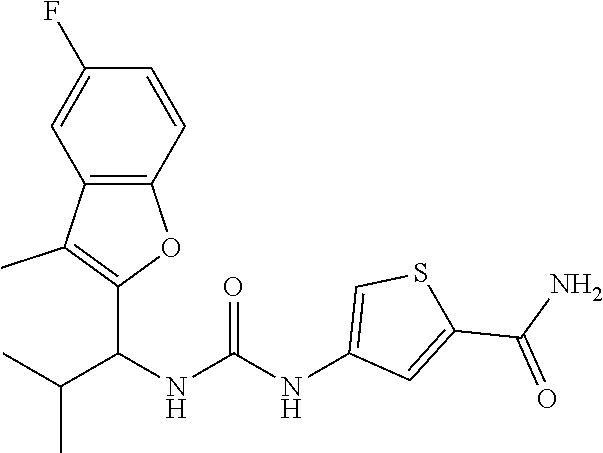 |
 |
 |
 |
 |
 |
 |
 |
 |
 |
 |
 |
 |
 |
 |
 |
 |
 |
 |
 |
 |
 |
 |
 |
 |
 |
 |
 |
 |
 |
 |
 |
 |
 |
 |
 |
 |
 |
 |
 |
 |
 |
 |
 |
 |
 |
 |
 |
 |
 |
 |
 |
 |
 |
 |
 |
 |
 |
 |
 |
 |
 |
 |
 |
 |
 |
 |
 |
 |
 |
 |
 |
 |
 |
 |
 |
 |
 |
 |
 |
 |
 |
 |
 |
 |
 |
 |
 |
 |
 |
 |
 |
 |
 |
 |
 |
 |
 |
 |
 |
 |
 |
 |
 |
 |
 |
 |
 |
 |
 |
 |
 |
 |
 |
 |
 |
 |
 |
 |
 |
 |
 |
 |
 |
 |
 |
 |
 |
 |
 |
 |
 |
 |
 |
 |
 |
 |
 |
 |
 |
 |
 |
 |
 |
 |
 |
 |
 |
 |
 |
 |
 |
 |
 |
 |
 |
 |
 |
 |
 |
 |
 |
 |
 |
 |
 |
 |
 |
 |
 |
 |
 |
 |
 |
 |
 |
 |
 |
 |
 |
 |
 |
 |
 |
 |
 |
 |
 |
 |
 |
 |
 |
 |
 |
 |
 |
 |
| TABLE B |
| Structure |
 |
 |
 |
 |
 |
 |
 |
 |
 |
 |
 |
 |
 |
 |
 |
 |
 |
 |
 |
 |
 |
 |
 |
 |
 |
 |
 |
 |
 |
 |
 |
 |
 |
 |
 |
 |
 |
 |
 |
 |
 |
 |
 |
 |
 |
 |
 |
 |
 |
 |
 |
 |
 |
 |
 |
 |
 |
 |
 |
 |
 |
 |
 |
 |
 |
 |
 |
 |
 |
 |
 |
 |
 |
 |
 |
 |
 |
 |
 |
 |
 |
 |
 |
 |
 |
 |
 |
 |
 |
 |
 |
 |
 |
 |
 |
 |
 |
 |
 |
 |
 |
 |
 |
 |
 |
 |
 |
 |
 |
 |
 |
 |
 |
 |
 |
 |
 |
 |
 |
 |
 |
 |
 |
 |
 |
 |
 |
 |
 |
 |
 |
 |
 |
 |
 |
 |
 |
 |
 |
 |
 |
 |
 |
 |
 |
 |
 |
 |
 |
 |
 |
 |
 |
 |
 |
 |
 |
 |
 |
 |
 |
 |
 |
 |
 |
 |
 |
 |
 |
 |
 |
 |
 |
 |
 |
 |
 |
 |
 |
 |
 |
 |
 |
 |
 |
 |
 |
 |
 |
 |
 |
 |
 |
 |
 |
 |
 |
 |
 |
 |
 |
 |
 |
 |
 |
 |
 |
 |
 |
 |
 |
 |
 |
 |
 |
 |
| TABLE C |
| Structure |
 |
 |
 |
 |
 |
 |
 |
 |
 |
 |
 |
 |
 |
 |
 |
 |
 |
 |
 |
 |
 |
 |
 |
 |
 |
 |
 |
 |
 |
 |
 |
 |
 |
 |
 |
 |
 |
 |
 |
 |
 |
 |
 |
 |
 |
 |
 |
 |
 |
 |
 |
 |
 |
 |
 |
 |
 |
 |
 |
 |
 |
 |
 |
 |
 |
 |
 |
 |
 |
 |
 |
 |
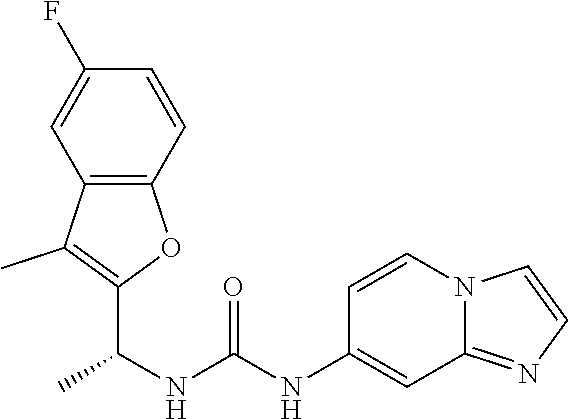 |
 |
 |
 |
 |
 |
 |
 |
 |
 |
 |
 |
 |
 |
 |
 |
 |
 |
 |
 |
 |
 |
 |
 |
 |
 |
 |
 |
 |
 |
 |
 |
 |
 |
 |
 |
 |
 |
 |
 |
 |
 |
 |
 |
 |
 |
 |
 |
 |
 |
 |
 |
 |
 |
 |
 |
 |
 |
 |
 |
 |
 |
 |
 |
 |
 |
 |
 |
 |
 |
 |
 |
 |
 |
 |
 |
 |
 |
 |
 |
 |
 |
 |
 |
 |
 |
 |
 |
 |
 |
 |
 |
 |
 |
 |
 |
 |
 |
 |
 |
 |
 |
 |
 |
 |
 |
 |
 |
 |
 |
 |
 |
 |
 |
 |
 |
 |
 |
 |
 |
 |
 |
 |
 |
 |
 |
 |
 |
 |
 |
 |
 |
 |
 |
 |
 |
 |
 |
 |
 |
 |
 |
 |
 |
 |
 |
 |
 |
 |
 |
 |
 |
 |
 |
 |
 |
 |
 |
 |
 |
 |
 |
 |
 |
 |
 |
 |
 |
 |
 |
 |
 |
 |
 |
 |
 |
 |
 |
 |
 |
 |
 |
 |
 |
 |
 |
 |
 |
 |
 |
 |
 |
 |
 |
 |
 |
 |
 |
 |
 |
 |
 |
 |
 |
 |
 |
 |
Pharmaceutical Compositions and Administration
General
| TABLE 1 |
| PI3Kα Protein Amino Acid Substitutions/Insertions/DeletionsA |
| Amino | Non-Limiting | |
| Acid | Exemplary | Non-Limiting Exemplary |
| Position | Mutations | PI3Kα Associated Cancer(s) |
| 1 | M1 (Translation | Astrocytoma |
| Start Site) | Glioblastoma Multiforme | |
| 4 | R4* (Nonsense | Glioblastoma Multiforme |
| Mutation) | ||
| 9 | E9G | Stomach Adenocarcinoma |
| 10 | L10_M16del | Glioblastoma Multiforme |
| 11 | W11L, W11S, | Lung Adenocarcinoma, |
| W11_P18del (In | Oligodendroglioma, | |
| Frame Deletion) | Uterine Endometrioid Carcinoma | |
| 12 | G12D | Uterine Endometrioid Carcinoma |
| 13 | I13T | Colon Adenocarcinoma |
| 19 | R19I | Uterine Endometrioid Carcinoma |
| 27 | P27T | Hepatocellular Carcinoma |
| 36 | C36Y | Uterine Endometrioid Carcinoma |
| 38 | R38C, | Uterine Endometrioid Carcinoma |
| R38H, | Papillary Renal Cell Carcinoma | |
| R38L, | Papillary Stomach Adenocarcinoma | |
| R38S | Mucinous Adenocarcinoma of the | |
| Colon and Rectum | ||
| Glioblastoma Multiforme | ||
| Cervical Squamous Cell Carcinoma | ||
| Hepatocellular Carcinoma | ||
| Uterine Endometrioid Carcinoma | ||
| Diffuse Type Stomach Adenocarcinoma | ||
| Lung Squamous Cell Carcinoma | ||
| Uterine Endometrioid Carcinoma | ||
| 39 | E39G, | Uterine Endometrioid Carcinoma |
| E39K | Glioblastoma Multiforme | |
| 57 | P57L | Cutaneous Melanoma |
| 65 | E65K | Lung Squamous Cell Carcinoma |
| 66 | S66C | Bladder Urothelial Carcinoma |
| 69 | I69N | Colon Adenocarcinoma |
| 71 | V71I | Head and Neck Squamous Cell Carcinoma |
| 75 | Q75E | Bladder Urothelial Carcinoma |
| Cervical Squamous Cell Carcinoma | ||
| Head and Neck Squamous Cell Carcinoma | ||
| 78 | E78* (nonsense | Lung Squamous Cell Carcinoma |
| mutation) | ||
| 80 | E80K | Uterine Mixed Endometrial Carcinoma |
| 81 | E81* (nonsense | Colon Adenocarcinoma |
| mutation), | Glioblastoma Multiforme | |
| E81del | Colon Adenocarcinoma | |
| (in frame | Uterine Serous Carcinoma/ | |
| deletion), E81K | Uterine Papillary Serous | |
| Carcinoma | ||
| Glioblastoma Multiforme | ||
| Uterine Endometrioid Carcinoma | ||
| Lung Squamous Cell Carcinoma | ||
| Mucinous Adenocarcinoma of | ||
| the Colon and Rectum | ||
| Breast Invasive Ductal Carcinoma | ||
| Cervical Squamous Cell Carcinoma | ||
| Head and Neck Squamous Cell Carcinoma | ||
| 83 | F83L, F83S | Breast Invasive Lobular Carcinoma |
| 84 | D84H | Lung Adenocarcinoma |
| 86 | T86S | Hepatocellular Carcinoma |
| 87 | R87T | Lung Adenocarcinoma |
| 88 | R88Q | Breast Invasive Ductal Carcinoma |
| Rectal Adenocarcinoma | ||
| Colon Adenocarcinoma | ||
| Prostate Adenocarcinoma | ||
| Cervical Squamous Cell Carcinoma | ||
| Uterine Carcinosarcoma/Uterine | ||
| Malignant Mixed | ||
| Mullerian Tumor | ||
| Tubular Stomach Adenocarcinoma | ||
| Oligodendroglioma | ||
| Mucinous Stomach Adenocarcinoma | ||
| Glioblastoma Multiforme | ||
| Stomach Adenocarcinoma | ||
| Uterine Endometrioid Carcinoma | ||
| Uterine Mixed Endometrial Carcinoma | ||
| Head and Neck Squamous Cell Carcinoma | ||
| Mucinous Adenocarcinoma of the | ||
| Colon and Rectum | ||
| Breast Invasive Lobular Carcinoma | ||
| Intestinal Type Stomach Adenocarcinoma | ||
| Bladder Urothelial Carcinoma | ||
| 90 | C90G, C90R, | Glioblastoma Multiforme |
| C90Y | Cervical Squamous Cell Carcinoma | |
| 93 | R93P, R93Q, | Mucinous Adenocarcinoma of |
| R93W | the Colon and Rectum | |
| Stomach Adenocarcinoma | ||
| Glioblastoma Multiforme | ||
| Uterine Endometrioid Carcinoma | ||
| Tubular Stomach Adenocarcinoma | ||
| Mucinous Stomach Adenocarcinoma | ||
| Bladder Urothelial Carcinoma | ||
| Cervical Squamous Cell Carcinoma | ||
| Colon Adenocarcinoma | ||
| 102 | I102del | Uterine Endometrioid Carcinoma |
| 103 | E103G, | Glioblastoma Multiforme |
| E103_G106delins | Breast Invasive Ductal Carcinoma | |
| D (In Frame | ||
| Deletion), | ||
| E103_P104del (In | ||
| Frame Deletion) | ||
| 104 | P104L, P104R, | Breast Invasive Ductal Carcinoma |
| P104T | Head and Neck Squamous Cell Carcinoma | |
| Lung Adenocarcinoma | ||
| Colon Adenocarcinoma | ||
| Uterine Serous Carcinoma/Uterine | ||
| Papillary Serous | ||
| Carcinoma | ||
| 105 | V105del, | Uterine Endometrioid Carcinoma |
| V105_R108del | Breast Invasive Ductal Carcinoma | |
| 106 | G106D, G106R, | Uterine Mixed Endometrial Carcinoma |
| G106S, G106V, | Breast Invasive Ductal Carcinoma | |
| G106_R108del | Mucinous Adenocarcinoma of | |
| (In Frame | the Colon and Rectum | |
| Deletion), | Mucinous Carcinoma | |
| G106_N107del | Oligodendroglioma | |
| (In Frame | Uterine Carcinosarcoma/Uterine | |
| Deletion) | Malignant Mixed | |
| Mullerian Tumor | ||
| Uterine Serous Carcinoma/Uterine | ||
| Papillary Serous | ||
| Carcinoma | ||
| Uterine Endometrioid Carcinoma | ||
| Rectal Adenocarcinoma | ||
| Lung Squamous Cell Carcinoma | ||
| Cervical Squamous Cell Carcinoma | ||
| Tubular Stomach Adenocarcinoma | ||
| Uterine Endometrioid Carcinoma | ||
| 107 | N107S | Uterine Endometrioid Carcinoma |
| Lung Adenocarcinoma | ||
| 108 | R108C, R108H, | Prostate Adenocarcinoma |
| R108L | Uterine Endometrioid Carcinoma | |
| Glioblastoma Multiforme | ||
| Uterine Carcinosarcoma/Uterine | ||
| Malignant Mixed | ||
| Mullerian Tumor | ||
| Mucinous Adenocarcinoma of the | ||
| Colon and Rectum | ||
| Tubular Stomach Adenocarcinoma | ||
| Colon Adenocarcinoma | ||
| Uterine Serous Carcinoma/Uterine | ||
| Papillary Serous | ||
| Carcinoma | ||
| Uterine Mixed Endometrial Carcinoma | ||
| Breast Invasive Ductal Carcinoma | ||
| Lung Squamous Cell Carcinoma | ||
| 109 | E109_I112delins | Breast Invasive Ductal Carcinoma |
| D (In Frame | ||
| Deletion) | ||
| 110 | E110del | Uterine Endometrioid Carcinoma |
| Oligodendroglioma | ||
| Breast Invasive Lobular Carcinoma | ||
| Breast Invasive Ductal Carcinoma | ||
| Uterine Mixed Endometrial Carcinoma | ||
| Colon Adenocarcinoma | ||
| Head and Neck Squamous Cell Carcinoma | ||
| Lung Adenocarcinoma | ||
| Papillary Thyroid Cancer | ||
| 111 | K111del, K111E, | Uterine Endometrioid Carcinoma |
| K111N, K111R, | Breast Invasive Ductal Carcinoma | |
| K111_L113del | Oligodendroglioma | |
| (In Frame | Head and Neck Squamous Cell Carcinoma | |
| Deletion) | Colon Adenocarcinoma | |
| Intestinal Type Stomach Adenocarcinoma | ||
| Stomach Adenocarcinoma | ||
| Uterine Endometrioid Carcinoma | ||
| Lung Adenocarcinoma | ||
| Esophageal Adenocarcinoma | ||
| Lung Squamous Cell Carcinoma | ||
| Glioblastoma Multiforme | ||
| 113 | L113del | Uterine Endometrioid Carcinoma |
| 115 | R115L, R115P | Serous Ovarian Cancer |
| Bladder Urothelial Carcinoma | ||
| Uterine Carcinosarcoma/Uterine | ||
| Malignant Mixed | ||
| Mullerian Tumor | ||
| Uterine Endometrioid Carcinoma | ||
| Uterine Serous Carcinoma/Uterine | ||
| Papillary Serous | ||
| Carcinoma | ||
| Rectal Adenocarcinoma | ||
| Cervical Squamous Cell Carcinoma | ||
| 116 | E116K | Rectal Adenocarcinoma |
| 118 | G118D | Glioblastoma Multiforme |
| Breast Invasive Ductal Carcinoma | ||
| Uterine Endometrioid Carcinoma | ||
| Bladder Urothelial Carcinoma | ||
| Oligodendroglioma | ||
| Esophageal Adenocarcinoma | ||
| Astrocytoma | ||
| Lung Squamous Cell Carcinoma | ||
| Breast Invasive Lobular Carcinoma | ||
| Uterine Serous Carcinoma/Uterine | ||
| Papillary Serous | ||
| Carcinoma | ||
| Mucinous Carcinoma | ||
| Uterine Mixed Endometrial Carcinoma | ||
| Stomach Adenocarcinoma | ||
| Pancreatic Adenocarcinoma | ||
| Papillary Thyroid Cancer | ||
| Rectal Adenocarcinoma | ||
| 123 | M123I | Lung Adenocarcinoma |
| 124 | P124A | Lung Adenocarcinoma |
| 151 | V151M | Bladder Urothelial Carcinoma |
| Astrocytoma | ||
| 165 | Y165H | Uterine Mixed Endometrial Carcinoma |
| 170 | N170S | Uterine Endometrioid Carcinoma |
| 182 | Y182H | Stomach Adenocarcinoma |
| 213 | H213N | Cutaneous Melanoma |
| 224 | A224S | Colon Adenocarcinoma |
| 239 | L239R | Colon Adenocarcinoma |
| 258 | D258N | Rectal Adenocarcinoma |
| 262 | L262I | Cutaneous Melanoma |
| 266 | P266T | Uterine Endometrioid Carcinoma |
| 267 | L267M | Cutaneous Melanoma |
| 272 | Y272* | Renal Clear Cell Carcinoma |
| (Nonsense | ||
| Mutation) | ||
| 274 | R274K | Bladder Urothelial Carcinoma |
| 279 | L279I | Uterine Endometrioid Carcinoma |
| 282 | M282V | Uterine Endometrioid Carcinoma |
| 292 | S292I | Glioblastoma Multiforme |
| 296 | Q296E | Lung Adenocarcinoma |
| 300 | D300V | Lung Squamous Cell Carcinoma |
| 310 | R310C | Uterine Endometrioid Carcinoma |
| 322 | T322A | Uterine Endometrioid Carcinoma |
| 335 | R335G | Head and Neck Squamous Cell Carcinoma |
| 337 | K337N | Rectal Adenocarcinoma |
| 339 | L339I | Cervical Squamous Cell Carcinoma |
| Uterine Endometrioid Carcinoma | ||
| 342 | T342S | Lung Adenocarcinoma |
| 344 | V344A, V344G, | Uterine Endometrioid Carcinoma |
| V344M | Mucinous Adenocarcinoma of the | |
| Colon and Rectum | ||
| Colon Adenocarcinoma | ||
| Cervical Squamous Cell Carcinoma | ||
| Rectal Adenocarcinoma | ||
| Head and Neck Squamous Cell Carcinoma | ||
| Breast Invasive Carcinoma (NOS) | ||
| Uterine Mixed Endometrial Carcinoma | ||
| Glioblastoma Multiforme | ||
| 345 | N345H, N345I, | Breast Invasive Lobular Carcinoma |
| N345K, N345T, | Uterine Carcinosarcoma/Uterine | |
| N345Y | Malignant Mixed | |
| Mullerian Tumor | ||
| Uterine Serous Carcinoma/Uterine | ||
| Papillary Serous | ||
| Carcinoma | ||
| Uterine Endometrioid Carcinoma | ||
| Breast Invasive Carcinoma (NOS) | ||
| Lung Adenocarcinoma | ||
| Mucinous Adenocarcinoma of the | ||
| Colon and Rectum | ||
| Bladder Urothelial Carcinoma | ||
| Colon Adenocarcinoma | ||
| Leiomyosarcoma | ||
| Glioblastoma Multiforme | ||
| Uterine Endometrioid Carcinoma | ||
| Seminoma | ||
| Tubular Stomach Adenocarcinoma | ||
| Breast Invasive Ductal Carcinoma | ||
| Head and Neck Squamous Cell Carcinoma | ||
| Stomach Adenocarcinoma | ||
| Diffuse Type Stomach Adenocarcinoma | ||
| Prostate Adenocarcinoma | ||
| Breast Invasive Ductal Carcinoma | ||
| Oligodendroglioma | ||
| 350 | D350G, D350N | Lung Squamous Cell Carcinoma |
| Breast Invasive Ductal Carcinoma | ||
| Uterine Endometrioid Carcinoma | ||
| Colon Adenocarcinoma | ||
| Uterine Endometrioid Carcinoma | ||
| Mucinous Stomach Adenocarcinoma | ||
| Lung Adenocarcinoma | ||
| Breast Invasive Lobular Carcinoma | ||
| 351 | I351T | Uterine Endometrioid Carcinoma |
| 357 | R357Q | Uterine Endometrioid Carcinoma |
| Mucinous Adenocarcinoma of the | ||
| Colon and Rectum | ||
| Colon Adenocarcinoma | ||
| 359 | G359R | Uterine Endometrioid Carcinoma |
| 363 | G363A | Head and Neck Squamous Cell Carcinoma |
| 364 | G364R | Uterine Mixed Endometrial Carcinoma |
| Intestinal Type Stomach Adenocarcinoma | ||
| Colon Adenocarcinoma | ||
| 365 | E365K, E365V | Uterine Endometrioid Carcinoma |
| Bladder Urothelial Carcinoma | ||
| Mucinous Adenocarcinoma of the | ||
| Colon and Rectum | ||
| Diffuse Type Stomach Adenocarcinoma | ||
| Breast Invasive Ductal Carcinoma | ||
| Head and Neck Squamous Cell Carcinoma | ||
| 366 | P366R | Breast Invasive Ductal Carcinoma |
| 378 | C378F, C378R, | Uterine Serous Carcinoma/Uterine |
| C378Y | Papillary Serous | |
| Carcinoma | ||
| Uterine Endometrioid Carcinoma | ||
| Oligodendroglioma | ||
| 379 | S379T | Cutaneous Melanoma |
| 380 | N380S | Diffuse Type Stomach Adenocarcinoma |
| 390 | D390N | Lung Adenocarcinoma |
| 392 | Y392H | Uterine Endometrioid Carcinoma |
| 398 | R398H | Breast Invasive Ductal Carcinoma |
| 399 | A399T | Cervical Squamous Cell Carcinoma |
| 401 | R401Q | Uterine Endometrioid Carcinoma |
| 405 | S405F | Intestinal Type Stomach Adenocarcinoma |
| 406 | I406V | Uterine Mixed Endometrial Carcinoma |
| 412 | R412Q | Stomach Adenocarcinoma |
| 417 | E417K | Bladder Urothelial Carcinoma |
| 418 | E418K | Uterine Endometrioid Carcinoma |
| Rectal Adenocarcinoma | ||
| Mucinous Carcinoma | ||
| Head and Neck Squamous Cell Carcinoma | ||
| Bladder Urothelial Carcinoma | ||
| 420 | C420R | Uterine Endometrioid Carcinoma |
| Tubular Stomach Adenocarcinoma | ||
| Lung Squamous Cell Carcinoma | ||
| Breast Invasive Ductal Carcinoma | ||
| Uterine Serous Carcinoma/Uterine | ||
| Papillary Serous | ||
| Carcinoma | ||
| Colon Adenocarcinoma | ||
| Intestinal Type Stomach Adenocarcinoma | ||
| Stomach Adenocarcinoma | ||
| Head and Neck Squamous Cell Carcinoma | ||
| Breast Invasive Carcinoma (NOS) | ||
| Astrocytoma | ||
| Cervical Squamous Cell Carcinoma | ||
| 432 | Y432C | Cervical Squamous Cell Carcinoma |
| 447 | P447_L455del (In | Breast Invasive Ductal Carcinoma |
| frame Deletion) | ||
| 449 | P449L, P449S | Uterine Endometrioid Carcinoma |
| 450 | H450 P458del | Breast Invasive Ductal Carcinoma |
| (In Frame | ||
| Deletion) | ||
| 451 | G451R, G451V, | Head and Neck Squamous Cell Carcinoma |
| G451_D454del | Bladder Urothelial Carcinoma | |
| (In Frame | Colon Adenocarcinoma | |
| Deletion) | ||
| 452 | L452_G460del | Breast Invasive Ductal Carcinoma |
| (In Frame | ||
| Deletion) | ||
| 453 | E453del, E453K, | Oligodendroglioma |
| E453Q, | Uterine Mixed Endometrial Carcinoma | |
| E453_G460delins | Intestinal Type Stomach Adenocarcinoma | |
| DDF (in Frame | Breast Invasive Ductal Carcinoma | |
| Deletion), | Breast Invasive Lobular Carcinoma | |
| E453_L455del | Head and Neck Squamous Cell Carcinoma | |
| Astrocytoma | ||
| Stomach Adenocarcinoma | ||
| Bladder Urothelial Carcinoma | ||
| Lung Squamous Cell Carcinoma | ||
| Cervical Squamous Cell Carcinoma | ||
| Lung Adenocarcinoma | ||
| Mucinous Carcinoma | ||
| Uterine Endometrioid Carcinoma | ||
| Uterine Serous Carcinoma/Uterine | ||
| Papillary Serous | ||
| Carcinoma | ||
| Glioblastoma Multiforme | ||
| Colon Adenocarcinoma | ||
| 454 | D454Y | Uterine Endometrioid Carcinoma |
| 455 | L455_G463del | Glioblastoma Multiforme |
| (In Frame | ||
| Deletion) | ||
| 463 | G463_N465delins | Uterine Endometrioid Carcinoma |
| D (In Frame | ||
| Deletion) | ||
| 469 | E469A, | Rectal Adenocarcinoma |
| E469delinsDK | Breast Invasive Ductal Carcinoma | |
| (In Frame | ||
| Insertion) | ||
| 471 | P471A, P471L | Bladder Urothelial Carcinoma |
| Rectal Adenocarcinoma | ||
| Uterine Endometrioid Carcinoma | ||
| Oligoastrocytoma | ||
| Hepatocellular Carcinoma | ||
| 474 | E474A | Prostate Adenocarcinoma |
| 475 | L475F | Cutaneous Melanoma |
| 479 | W479* | Uterine Endometrioid Carcinoma |
| 495 | H495L, H495Y | Lung Squamous Cell Carcinoma |
| Uterine Endometrioid Carcinoma | ||
| 499 | S499F | Bladder Urothelial Carcinoma |
| 519 | R519G | Head and Neck Squamous Cell Carcinoma |
| 520 | D520V | Breast Invasive Lobular Carcinoma |
| 522 | E522A | Uterine Endometrioid Carcinoma |
| 531 | L531V | Breast Invasive Ductal Carcinoma |
| 539 | P539R, P539S | Breast Invasive Ductal Carcinoma |
| Pancreatic Adenocarcinoma | ||
| Uterine Endometrioid Carcinoma | ||
| Lung Squamous Cell Carcinoma | ||
| 542 | E542A, E542G, | Uterine Serous Carcinoma/Uterine |
| E542K, E542Q, | Papillary Serous | |
| E542V | Carcinoma | |
| Uterine Endometrioid Carcinoma | ||
| Colon Adenocarcinoma | ||
| Prostate Adenocarcinoma | ||
| Breast Invasive Ductal Carcinoma | ||
| Breast Invasive Lobular Carcinoma | ||
| Endocervical Adenocarcinoma | ||
| Intestinal Type Stomach Adenocarcinoma | ||
| Prostate Adenocarcinoma | ||
| Papillary Renal Cell Carcinoma | ||
| Oligoastrocytoma | ||
| Hepatocellular Carcinoma | ||
| Bladder Urothelial Carcinoma | ||
| Mucinous Adenocarcinoma of the | ||
| Colon and Rectum | ||
| Diffuse Type Stomach Adenocarcinoma | ||
| Lung Squamous Cell Carcinoma | ||
| Signet Ring Cell Carcinoma | ||
| of the Stomach | ||
| Head and Neck Squamous Cell Carcinoma | ||
| Breast Invasive Carcinoma (NOS) | ||
| Mucinous Carcinoma | ||
| Breast Invasive Ductal Carcinoma | ||
| Cervical Squamous Cell Carcinoma | ||
| Glioblastoma Multiforme | ||
| Lung Adenocarcinoma | ||
| 545 | E545A, E545D, | Uterine Serous Carcinoma/Uterine |
| E545G, E545K, | Papillary Serous | |
| E545Q | Carcinoma | |
| Uterine Endometrioid Carcinoma | ||
| Colon Adenocarcinoma | ||
| Prostate Adenocarcinoma | ||
| Breast Invasive Ductal Carcinoma | ||
| Breast Invasive Lobular Carcinoma | ||
| Endocervical Adenocarcinoma | ||
| Intestinal Type Stomach Adenocarcinoma | ||
| Papillary Renal Cell Carcinoma | ||
| Oligoastrocytoma | ||
| Hepatocellular Carcinoma | ||
| Bladder Urothelial Carcinoma | ||
| Mucinous Adenocarcinoma of the | ||
| Colon and Rectum | ||
| Diffuse Type Stomach Adenocarcinoma | ||
| Lung Squamous Cell Carcinoma | ||
| Signet Ring Cell Carcinoma | ||
| of the Stomach | ||
| Head and Neck Squamous Cell Carcinoma | ||
| Breast Invasive Carcinoma (NOS) | ||
| Mucinous Carcinoma | ||
| Cervical Squamous Cell Carcinoma | ||
| Glioblastoma Multiforme | ||
| Oligodendroglioma | ||
| Lung Adenocarcinoma | ||
| Serous Ovarian Cancer | ||
| Uterine Carcinosarcoma/Uterine | ||
| Malignant Mixed | ||
| Mullerian Tumor | ||
| Astrocytoma | ||
| Rectal Adenocarcinoma | ||
| Stomach Adenocarcinoma | ||
| Cutaneous Melanoma | ||
| Esophageal Squamous Cell Carcinoma | ||
| Breast Invasive Mixed | ||
| Mucinous Carcinoma | ||
| Intrahepatic Cholangiocarcinoma | ||
| Renal Clear Cell Carcinoma | ||
| Seminoma | ||
| Esophageal Adenocarcinoma | ||
| Tubular Stomach Adenocarcinoma | ||
| Uterine Mixed Endometrial Carcinoma | ||
| 546 | Q546E, Q546H, | Uterine Endometrioid Carcinoma |
| Q546K, Q546P, | Rectal Adenocarcinoma | |
| Q546R | Oligodendroglioma | |
| Stomach Adenocarcinoma | ||
| Esophageal Adenocarcinoma | ||
| Bladder Urothelial Carcinoma | ||
| Breast Invasive Carcinoma (NOS) | ||
| Breast Invasive Ductal Carcinoma | ||
| Colon Adenocarcinoma | ||
| Glioblastoma Multiforme | ||
| Uterine Serous Carcinoma/Uterine | ||
| Papillary Serous | ||
| Carcinoma | ||
| Undifferentiated Pleomorphic | ||
| Sarcoma/Malignant Fibrous | ||
| Histiocytoma/High-Grade Spindle | ||
| Cell Sarcoma | ||
| Astrocytoma | ||
| Uterine Carcinosarcoma/Uterine | ||
| Malignant Mixed | ||
| Mullerian Tumor | ||
| Oligoastrocytoma | ||
| Breast Invasive Lobular Carcinoma | ||
| Tubular Stomach Adenocarcinoma | ||
| Head and Neck Squamous Cell Carcinoma | ||
| Cervical Squamous Cell Carcinoma | ||
| Intestinal Type Stomach Adenocarcinoma | ||
| 547 | E547D, E547K | Lung Squamous Cell Carcinoma |
| Stomach Adenocarcinoma | ||
| 552 | W552C | Bladder Urothelial Carcinoma |
| 569 | L569I | Uterine Serous Carcinoma/Uterine |
| Papillary Serous | ||
| Carcinoma | ||
| Prostate Adenocarcinoma | ||
| 576 | S576Y | Uterine Endometrioid Carcinoma |
| 581 | A581S | Cutaneous Melanoma |
| 589 | D589N | Cervical Squamous Cell Carcinoma |
| 600 | E600K, E600V | Uterine Endometrioid Carcinoma |
| Bladder Urothelial Carcinoma | ||
| Lung Adenocarcinoma | ||
| Breast Invasive Lobular Carcinoma | ||
| Papillary Stomach Adenocarcinoma | ||
| 603 | D603H | Breast Invasive Ductal Carcinoma |
| 604 | C604R | Uterine Endometrioid Carcinoma |
| Uterine Carcinosarcoma/Uterine | ||
| Malignant Mixed | ||
| Mullerian Tumor | ||
| Uterine Serous Carcinoma/Uterine | ||
| Papillary Serous | ||
| Carcinoma | ||
| Head and Neck Squamous Cell Carcinoma | ||
| 606 | Y606C | Head and Neck Squamous Cell Carcinoma |
| 607 | P607Q | Cutaneous Melanoma |
| 609 | P609H | Colon Adenocarcinoma |
| 614 | F614I | Breast Invasive Ductal Carcinoma |
| 617 | R617Q, R617W | Uterine Endometrioid Carcinoma |
| 617 | R617W | Uterine Endometrioid Carcinoma |
| 629 | S629C | Breast Invasive Ductal Carcinoma |
| 636 | V636L | Bladder Urothelial Carcinoma |
| 642 | E642K | Uterine Serous Carcinoma/Uterine |
| Papillary Serous | ||
| Carcinoma | ||
| 643 | Q643H | Uterine Endometrioid Carcinoma |
| 658 | L658F | Colon Adenocarcinoma |
| 667 | F667L | Uterine Endometrioid Carcinoma |
| Lung Squamous Cell Carcinoma | ||
| Uterine Serous Carcinoma/Uterine | ||
| Papillary Serous | ||
| Carcinoma | ||
| 673 | S673T | Breast Invasive Ductal Carcinoma |
| 674 | E674* (Nonsense | Papillary Thyroid Cancer |
| mutation), | Cutaneous Melanoma | |
| E674D, E674Q | Bladder Urothelial Carcinoma | |
| 682 | Q682K, | Cutaneous Melanoma |
| Q682Rfs*18 | Glioblastoma Multiforme | |
| (Frame Shift | ||
| Deletion) | ||
| 683 | R683M | Cutaneous Melanoma |
| 684 | F684L | Uterine Endometrioid Carcinoma |
| 693 | R693H | Cervical Squamous Cell Carcinoma |
| 710 | E710Q | Bladder Urothelial Carcinoma |
| 711 | K711N | Astrocytoma |
| 722 | E722K | Colon Adenocarcinoma |
| 725 | D725G, D725N | Colon Adenocarcinoma |
| Uterine Endometrioid Carcinoma | ||
| 726 | E726K | Cervical Squamous Cell Carcinoma |
| Uterine Endometrioid Carcinoma | ||
| Breast Invasive Ductal Carcinoma | ||
| Hepatocellular Carcinoma | ||
| Lung Adenocarcinoma | ||
| Esophageal Squamous Cell Carcinoma | ||
| Esophageal Adenocarcinoma | ||
| Rectal Adenocarcinoma | ||
| Head and Neck Squamous Cell Carcinoma | ||
| Lung Squamous Cell Carcinoma | ||
| Breast Invasive Lobular Carcinoma | ||
| Bladder Urothelial Carcinoma | ||
| Colon Adenocarcinoma | ||
| 729 | K729N | Cutaneous Melanoma |
| 732 | M732I | Colon Adenocarcinoma |
| 737 | E737K | Cutaneous Melanoma |
| 741 | R741Q | Serous Ovarian Cancer |
| 744 | F744I | Stomach Adenocarcinoma |
| 746 | D746Y | Cutaneous Melanoma |
| 749 | Q749H | Cutaneous Melanoma |
| 752 | L752V | Bladder Urothelial Carcinoma |
| 766 | L766F | Breast Invasive Ductal Carcinoma |
| 770 | R770Q | Uterine Endometrioid Carcinoma |
| 773 | S773F | Cutaneous Melanoma |
| 777 | R777M, R777K | Cutaneous Melanoma |
| Colon Adenocarcinoma | ||
| 791 | E791Q | Bladder Urothelial Carcinoma |
| 811 | M811I | Uterine Endometrioid Carcinoma |
| 816 | I816S | Uterine Endometrioid Carcinoma |
| 818 | R818C, R818H | Cutaneous Melanoma |
| Uterine Endometrioid Carcinoma | ||
| 849 | E849K | Serous Ovarian Cancer |
| 852 | R852Q | Leiomyosarcoma |
| Uterine Serous Carcinoma/Uterine | ||
| Papillary Serous | ||
| Carcinoma | ||
| 865 | G865D | Cutaneous Melanoma |
| 866 | L866F, L866W | Cervical Squamous Cell Carcinoma |
| Uterine Endometrioid Carcinoma | ||
| 879 | Q879R | Stomach Adenocarcinoma |
| 886 | K886E | Undifferentiated Pleomorphic |
| Sarcoma/Malignant Fibrous | ||
| Histiocytoma/High-Grade Spindle | ||
| Cell Sarcoma | ||
| 901 | C901F | Uterine Endometrioid Carcinoma |
| Astrocytoma | ||
| Breast Invasive Ductal Carcinoma | ||
| Head and Neck Squamous Cell Carcinoma | ||
| 903 | G903E | Uterine Serous Carcinoma/Uterine |
| Papillary Serous | ||
| Carcinoma | ||
| 905 | C905S | Head and Neck Squamous Cell Carcinoma |
| 909 | F909C | Esophageal Adenocarcinoma |
| 914 | G914R | Uterine Serous Carcinoma/Uterine |
| Papillary Serous | ||
| Carcinoma | ||
| Astrocytoma | ||
| 929 | L929M | Uterine Endometrioid Carcinoma |
| 930 | F930V | Uterine Endometrioid Carcinoma |
| 939 | D939G | Breast Invasive Carcinoma (NOS) |
| Uterine Endometrioid Carcinoma | ||
| Breast Invasive Ductal Carcinoma | ||
| 948 | K948E | Intestinal Type Stomach Adenocarcinoma |
| 951 | R951C | Rectal Adenocarcinoma |
| 953 | P953S | Uterine Endometrioid Carcinoma |
| 956 | L956F | Bladder Urothelial Carcinoma |
| 958 | Q958R | Uterine Mixed Endometrial Carcinoma |
| 970 | E970K | Esophageal Squamous Cell Carcinoma |
| Head and Neck Squamous Cell Carcinoma | ||
| Mucinous Adenocarcinoma of the | ||
| Colon and Rectum | ||
| Colon Adenocarcinoma | ||
| 971 | C971R | Head and Neck Squamous Cell Carcinoma |
| 978 | E978K | Bladder Urothelial Carcinoma |
| 979 | R979G | Pancreatic Adenocarcinoma |
| 985 | Y985* | Pleural Mesothelioma, Biphasic Type |
| 989 | L989V | Breast Invasive Ductal Carcinoma |
| 992 | R992L, R992P | Bladder Urothelial Carcinoma |
| Uterine Serous Carcinoma/Uterine | ||
| Papillary Serous | ||
| Carcinoma | ||
| Mucinous Carcinoma | ||
| 997 | L997I | Uterine Endometrioid Carcinoma |
| 1002 | F1002L | Uterine Endometrioid Carcinoma |
| 1004 | M1004I, | Uterine Endometrioid Carcinoma |
| M1004R, | Breast Invasive Ductal Carcinoma | |
| M1004V | Bladder Urothelial Carcinoma | |
| Lung Squamous Cell Carcinoma | ||
| 1005 | M1005V | Oligodendroglioma |
| 1006 | L1006R | Uterine Endometrioid Carcinoma |
| 1007 | G1007R | Uterine Endometrioid Carcinoma |
| Breast Invasive Ductal Carcinoma | ||
| Head and Neck Squamous Cell Carcinoma | ||
| Colon Adenocarcinoma | ||
| Endocervical Adenocarcinoma | ||
| 1012 | E1012Q | Bladder Urothelial Carcinoma |
| 1015 | S1015Y | Mucinous Adenocarcinoma of the |
| Colon and Rectum | ||
| 1016 | F1016C | Uterine Endometrioid Carcinoma |
| 1017 | D1017N | Pancreatic Adenocarcinoma |
| 1020 | A1020T | Uterine Endometrioid Carcinoma |
| 1021 | Y1021C, | Uterine Carcinosarcoma/Uterine |
| Y1021H | Malignant Mixed | |
| Mullerian Tumor | ||
| Colon Adenocarcinoma | ||
| Breast Invasive Ductal Carcinoma | ||
| Uterine Serous Carcinoma/Uterine | ||
| Papillary Serous | ||
| Carcinoma | ||
| Uterine Endometrioid Carcinoma | ||
| Stomach Adenocarcinoma | ||
| Mucinous Adenocarcinoma of the | ||
| Colon and Rectum | ||
| Tubular Stomach Adenocarcinoma | ||
| 1025 | T1025A, | Uterine Endometrioid Carcinoma |
| T1025S | Breast Invasive Ductal Carcinoma | |
| Mucinous Adenocarcinoma of the | ||
| Colon and Rectum | ||
| Uterine Mixed Endometrial Carcinoma | ||
| 1023 | R1023Q† | Colorectal Cancer |
| 1026 | L1026I | Cutaneous Melanoma |
| 1029 | D1029H | Uterine Serous Carcinoma/Uterine |
| Papillary Serous | ||
| Carcinoma | ||
| 1037 | E1037K | Breast Invasive Ductal Carcinoma |
| 1040 | M1040I, | Head and Neck Squamous Cell Carcinoma |
| M1040V | Breast Invasive Ductal Carcinoma | |
| 1043 | M1043I, | Breast Invasive Lobular Carcinoma |
| M1043L, | Tubular Stomach Adenocarcinoma | |
| M1043T, | Uterine Endometrioid Carcinoma | |
| M1043V | Mucinous Adenocarcinoma of the | |
| Colon and Rectum | ||
| Papillary Thyroid Cancer | ||
| Esophageal Squamous Cell Carcinoma | ||
| Colon Adenocarcinoma | ||
| Breast Invasive Ductal Carcinoma | ||
| Bladder Urothelial Carcinoma | ||
| Pancreatic Adenocarcinoma | ||
| Oligodendroglioma | ||
| Uterine Serous Carcinoma/Uterine | ||
| Papillary Serous | ||
| Carcinoma | ||
| Glioblastoma Multiforme | ||
| Head and Neck Squamous Cell Carcinoma | ||
| 1044 | N1044I, N1044K, | Uterine Endometrioid Carcinoma |
| N1044Y | Breast Invasive Ductal Carcinoma | |
| 1045 | D1045A, | Uterine Endometrioid Carcinoma |
| D1045V | Lung Squamous Cell Carcinoma | |
| 1047 | H1047L, | Esophageal Squamous Cell Carcinoma |
| H1047Q, | Uterine Endometrioid Carcinoma | |
| H1047R, | Hepatocellular Carcinoma | |
| H1047Y | Cutaneous Melanoma | |
| Mucinous Adenocarcinoma of the | ||
| Colon and Rectum | ||
| Bladder Urothelial Carcinoma | ||
| Cervical Squamous Cell Carcinoma | ||
| Intrahepatic Cholangiocarcinoma | ||
| Uterine Mixed Endometrial Carcinoma | ||
| Breast Invasive Ductal Carcinoma | ||
| Renal Clear Cell Carcinoma | ||
| Uterine Serous Carcinoma/Uterine | ||
| Papillary Serous | ||
| Carcinoma | ||
| Head and Neck Squamous Cell Carcinoma | ||
| Lung Squamous Cell Carcinoma | ||
| Breast Invasive Lobular Carcinoma | ||
| Breast Invasive Carcinoma (NOS) | ||
| Astrocytoma | ||
| Colon Adenocarcinoma | ||
| Leiomyosarcoma | ||
| Uterine Carcinosarcoma/Uterine | ||
| Malignant Mixed | ||
| Mullerian Tumor | ||
| Oligodendroglioma | ||
| Serous Ovarian Cancer | ||
| Mucinous Stomach Adenocarcinoma | ||
| Rectal Adenocarcinoma | ||
| Intestinal Type Stomach Adenocarcinoma | ||
| Diffuse Type Stomach Adenocarcinoma | ||
| Prostate Adenocarcinoma | ||
| Lung Adenocarcinoma | ||
| Stomach Adenocarcinoma | ||
| Tubular Stomach Adenocarcinoma | ||
| Adrenocortical Carcinoma | ||
| Undifferentiated Pleomorphic | ||
| Sarcoma/Malignant Fibrous | ||
| Histiocytoma/High-Grade | ||
| Spindle Cell Sarcoma | ||
| Glioblastoma Multiforme | ||
| Oligoastrocytoma | ||
| 1048 | H1048R | Colon Adenocarcinoma |
| Renal Clear Cell Carcinoma | ||
| 1049 | G1049R | Intestinal Type Stomach Adenocarcinoma |
| Bladder Urothelial Carcinoma | ||
| Renal Clear Cell Carcinoma | ||
| Breast Invasive Ductal Carcinoma | ||
| Breast Invasive Lobular Carcinoma | ||
| Uterine Endometrioid Carcinoma | ||
| Colon Adenocarcinoma | ||
| 1052 | T1052K | Hepatocellular Carcinoma |
| Colon Adenocarcinoma | ||
| 1055 | M1055I | Uterine Mixed Endometrial Carcinoma |
| 1058 | I1058M | Uterine Carcinosarcoma/Uterine |
| Malignant Mixed | ||
| Mullerian Tumor | ||
| 1065 | H1065L | Breast Invasive Lobular Carcinoma |
| 1066 | A1066V | Uterine Mixed Endometrial Carcinoma |
| 1068 | N1068Y, | Pleural Mesothelioma, Epithelioid Type |
| N1068fs*5 | Dedifferentiated Liposarcoma | |
| (Frame Shift | Head and Neck Squamous Cell Carcinoma | |
| Insertion) | ||
| 1069 | *1069Wext*4 | Glioblastoma Multiforme |
| (nonstop | ||
| Mutation) | ||
| AUnless noted otherwise, the mutations of Table 1 are found in cBioPortal database derived from Cerami et al. The cBio Cancer Genomics Portal: An Open Platform for Exploring Multidimensional Cancer Genomics Data. Cancer Discovery. May 2012 2; 401; and Gao et al. Integrative analysis of complex cancer genomics and clinical profiles using the cBioPortal. Sci. Signal. 6, pl1 (2013). | ||
| †Velho S, Oliveira C, Ferreira A, Ferreira AC, Suriano G, Schwartz S Jr, Duval A, Carneiro F, Machado JC, Hamelin R, Seruca R. The prevalence of PIK3CA mutations in gastric and colon cancer. Eur J Cancer. 2005 July; 41(11):1649-54. doi: 10.1016/j.ejca.2005.04.022. PMID: 15994075. | ||
| TABLE 2 |
| Additional PI3Kα Protein Amino Acid Substitutions/Insertions/DeletionsA |
| Amino | Non-Limiting | |
| Acid | Exemplary | Non-Limiting Exemplary PI3Kα |
| Position | Mutations | Associated Cancer(s) |
| 1043 | M1043I, | Breast Invasive Lobular Carcinoma |
| M1043L, | Tubular Stomach Adenocarcinoma | |
| M1043T, | Uterine Endometrioid Carcinoma | |
| M1043V | Mucinous Adenocarcinoma of the | |
| Colon and Rectum | ||
| Papillary Thyroid Cancer | ||
| Esophageal Squamous Cell Carcinoma | ||
| Colon Adenocarcinoma | ||
| Breast Invasive Ductal Carcinoma | ||
| Bladder Urothelial Carcinoma | ||
| Pancreatic Adenocarcinoma | ||
| Oligodendroglioma | ||
| Uterine Serous Carcinoma/Uterine | ||
| Papillary Serous | ||
| Carcinoma | ||
| Glioblastoma Multiforme | ||
| Head and Neck Squamous Cell Carcinoma | ||
| 1044 | N1044I, N1044K, | Uterine Endometrioid Carcinoma |
| N1044Y | Breast Invasive Ductal Carcinoma | |
| 1045 | D1045A, | Uterine Endometrioid Carcinoma |
| D1045V | Lung Squamous Cell Carcinoma | |
| 1047 | H1047L, | Esophageal Squamous Cell Carcinoma |
| H1047Q, | Uterine Endometrioid Carcinoma | |
| H1047R, H1047Y | Hepatocellular Carcinoma | |
| Cutaneous Melanoma | ||
| Mucinous Adenocarcinoma of the | ||
| Colon and Rectum | ||
| Bladder Urothelial Carcinoma | ||
| Cervical Squamous Cell Carcinoma | ||
| Intrahepatic Cholangiocarcinoma | ||
| Uterine Mixed Endometrial Carcinoma | ||
| Breast Invasive Ductal Carcinoma | ||
| Renal Clear Cell Carcinoma | ||
| Uterine Serous Carcinoma/Uterine | ||
| Papillary Serous | ||
| Carcinoma | ||
| Head and Neck Squamous Cell Carcinoma | ||
| Lung Squamous Cell Carcinoma | ||
| Breast Invasive Lobular Carcinoma | ||
| Breast Invasive Carcinoma (NOS) | ||
| Astrocytoma | ||
| Colon Adenocarcinoma | ||
| Leiomyosarcoma | ||
| Uterine Carcinosarcoma/Uterine | ||
| Malignant Mixed | ||
| Mullerian Tumor | ||
| Oligodendroglioma | ||
| Serous Ovarian Cancer | ||
| Mucinous Stomach Adenocarcinoma | ||
| Rectal Adenocarcinoma | ||
| Intestinal Type Stomach Adenocarcinoma | ||
| Diffuse Type Stomach Adenocarcinoma | ||
| Prostate Adenocarcinoma | ||
| Lung Adenocarcinoma | ||
| Stomach Adenocarcinoma | ||
| Tubular Stomach Adenocarcinoma | ||
| Adrenocortical Carcinoma | ||
| Undifferentiated Pleomorphic | ||
| Sarcoma/Malignant Fibrous | ||
| Histiocytoma/High-Grade Spindle | ||
| Cell Sarcoma | ||
| Glioblastoma Multiforme | ||
| Oligoastrocytoma | ||
| 1048 | H1048R | Colon Adenocarcinoma |
| Renal Clear Cell Carcinoma | ||
| 1049 | G1049R | Intestinal Type Stomach Adenocarcinoma |
| Bladder Urothelial Carcinoma | ||
| Renal Clear Cell Carcinoma | ||
| Breast Invasive Ductal Carcinoma | ||
| Breast Invasive Lobular Carcinoma | ||
| Uterine Endometrioid Carcinoma | ||
| Colon Adenocarcinoma | ||
| 1052 | T1052K | Hepatocellular Carcinoma |
| Colon Adenocarcinoma | ||
| 1055 | M1055I | Uterine Mixed Endometrial Carcinoma |
| 1058 | I1058M | Uterine Carcinosarcoma/Uterine |
| Malignant Mixed | ||
| Mullerian Tumor | ||
| 1065 | H1065L | Breast Invasive Lobular Carcinoma |
| 1066 | A1066V | Uterine Mixed Endometrial Carcinoma |
| 1068 | N1068Y, | Pleural Mesothelioma, Epithelioid Type |
| N1068fs*5 | Dedifferentiated Liposarcoma | |
| (Frame Shift | Head and Neck Squamous Cell Carcinoma | |
| Insertion) | ||
| AUnless noted otherwise, the mutations of Table 2 are found in cBioPortal database derived from Cerami et al. The cBio Cancer Genomics Portal: An Open Platform for Exploring Multidimensional Cancer Genomics Data. Cancer Discovery. May 2012 2; 401; and Gao et al. Integrative analysis of complex cancer genomics and clinical profiles using the cBioPortal. Sci. Signal. 6, pl1 (2013). | ||
| † Velho S, Oliveira C, Ferreira A, Ferreira AC, Suriano G, Schwartz S Jr, Duval A, Carneiro F, Machado JC, Hamelin R, Seruca R. The prevalence of PIK3CA mutations in gastric and colon cancer. Eur J Cancer. 2005 July; 41(11):1649-54. doi: 10.1016/j.ejca.2005.04.022. PMID: 15994075. | ||
| Exemplary Sequence of Human Phosphatidylinositol |
| 4,5-bisphosphate 3-kinase isoform alpha |
| (UniProtKB entry P42336) |
| (SEQ ID NO: 1) |
| MPPRPSSGEL WGIHLMPPRI LVECLLPNGM IVTLECLREA |
| TLITIKHELF KEARKYPLHQ LLQDESSYIF VSVTQEAERE |
| EFFDETRRLC DLRLFQPFLK VIEPVGNREE KILNREIGFA |
| IGMPVCEFDM VKDPEVQDFR RNILNVCKEA VDLRDLNSPH |
| SRAMYVYPPN VESSPELPKH IYNKLDKGQI IVVIWVIVSP |
| NNDKQKYTLK INHDCVPEQV IAEAIRKKTR SMLLSSEQLK |
| LCVLEYQGKY ILKVCGCDEY FLEKYPLSQY KYIRSCIMLG |
| RMPNLMLMAK ESLYSQLPMD CFTMPSYSRR ISTATPYMNG |
| ETSTKSLWVI NSALRIKILC ATYVNVNIRD IDKIYVRTGI |
| YHGGEPLCDN VNTQRVPCSN PRWNEWLNYD IYIPDLPRAA |
| RLCLSICSVK GRKGAKEEHC PLAWGNINLF DYTDTLVSGK |
| MALNLWPVPH GLEDLLNPIG VTGSNPNKET PCLELEFDWF |
| SSVVKFPDMS VIEEHANWSV SREAGFSYSH AGLSNRLARD |
| NELRENDKEQ LKAISTRDPL SEITEQEKDF LWSHRHYCVT |
| IPEILPKLLL SVKWNSRDEV AQMYCLVKDW PPIKPEQAME |
| LLDCNYPDPM VRGFAVRCLE KYLTDDKLSQ YLIQLVQVLK |
| YEQYLDNLLV RFLLKKALTN QRIGHFFFWH LKSEMHNKTV |
| SQRFGLLLES YCRACGMYLK HLNRQVEAME KLINLTDILK |
| QEKKDETQKV QMKFLVEQMR RPDFMDALQG FLSPLNPAHQ |
| LGNLRLEECR IMSSAKRPLW LNWENPDIMS ELLFQNNEII |
| FKNGDDLRQD MLTLQIIRIM ENIWQNQGLD LRMLPYGCLS |
| IGDCVGLIEV VRNSHTIMQI QCKGGLKGAL QFNSHTLHQW |
| LKDKNKGEIY DAAIDLFTRS CAGYCVATFI LGIGDRHNSN |
| IMVKDDGQLF HIDFGHFLDH KKKKFGYKRE RVPFVLTQDF |
| LIVISKGAQE CTKTREFERF QEMCYKAYLA IRQHANLFIN |
| LFSMMLGSGM PELQSFDDIA YIRKTLALDK TEQEALEYFM |
| KQMNDAHHGG WTTKMDWIFH TIKQHALN |

or a pharmaceutically acceptable salt thereof, wherein:
-
- Z is O or NRX;
- RX is hydrogen, C1-C6 alkyl, or C3-C6 cycloalkyl;
- each R1 is independently selected from halogen, hydroxyl, cyano, C1-C6 alkyl optionally substituted with hydroxyl, and C3-C6 cycloalkyl;
- m is 0, 1, 2, or 3;
- R2 is halogen, hydroxyl, C1-C6 alkyl alkyl optionally substituted with hydroxyl, C1-C6 haloalkyl, C3-C6 cycloalkyl optionally substituted with 1 or 2 fluoro;
- R3 is a C1-C6 alkyl, a C1-C6 haloalkyl, or a C3-C6 cycloalkyl optionally substituted with 1 or 2 substituents independently selected from fluoro and C1-C6 alkyl;
- Ring A is a 6-10 membered aryl, a C3-C8 cycloalkyl, a 5-10 membered heteroaryl, or a 4-10 membered heterocyclyl;
- each R4 is independently selected from the group consisting of:
- (i) halogen,
- (ii) C1-C6 alkyl optionally substituted with 1 or 2 hydroxyl or —NRARB,
- (iii) C1-C6 alkoxy optionally substituted with 1-2 substituents independently selected from hydroxyl and C3-C6 cycloalkyl,
- (iv) C1-C6 haloalkyl,
- (v) hydroxyl,
- (vi) cyano,
- (vii) —CO2H,
- (viii) —NRARB,
- (ix) ═NRA2,
- (x) —C(═O)NRCRD,
- (xi) —SO2(NRERF),
- (xii) —SO2(C1-C6 alkyl),
- (xiii) —S(═O)(═NH)(C1-C6 alkyl),
- (xiv) —C(═O)(C1-C6 alkyl),
- (xv) —CO2(C1-C6 alkyl),
- (xvi) 5-6 membered heteroaryl optionally substituted with C1-C6 alkyl,
- (xvii) 3-9 membered heterocyclyl optionally substituted with 1 or 2 independently selected RG, and
- (xviii) 3-6 membered cycloalkyl optionally substituted with 1 or 2 independently selected RG;
- n is 0, 1, or 2;
- each RA, RA1, RB, RB1, RC, RC1, RD, RD1, RE, and RF is independently
- (i) hydrogen,
- (ii) hydroxyl,
- (iii) 4-6 membered heterocyclyl,
- (iv) C1-C6 haloalkyl,
- (v) —C(═O)(C1-C6 alkyl),
- (vi) —C(═O)O(C1-C6 alkyl),
- (vii) —SO2(C1-C6 alkyl),
- (viii) 3-6 membered cycloalkyl optionally substituted with hydroxyl, or
- (ix) C1-C6 alkyl optionally substituted with 1-2 substituents independently selected from hydroxyl, —C(═O)NRB2RC2, 5-6 membered heteroaryl, 3-6 membered cycloalkyl, —SO2(C1-C6 alkyl), —CO2H, and —SO2(NH2); or
- RC and RD, together with the nitrogen atom to which they are attached form a 4-10 membered heterocyclyl optionally substituted with 1-2 substituents independently selected from hydroxyl, halogen, —C(═O)NRB1RC1, —SO2(C1-C6 alkyl), —CO2H, C1-C6 alkyl optionally substituted with hydroxyl, C1-C6 alkoxy, and C1-C6 haloalkoxy;
- each RA2, RB2, and RC2 is independently hydrogen or C1-C6 alkyl;
- each RG is independently selected from the group consisting of: fluoro, cyano, hydroxyl, C1-C6 alkyl optionally substituted with hydroxyl, C1-C6 alkoxy, —NRA1RB1-NRA2, —C(═O)NRC1RD1, —CO2(C1-C6 alkyl), C1-C6 haloalkyl, C3-C6 cycloalkyl, C1-C6 haloalkoxy, —SO2(C1-C6 alkyl), and —CO2H; and
- wherein the compound is not a compound selected from the group consisting of:


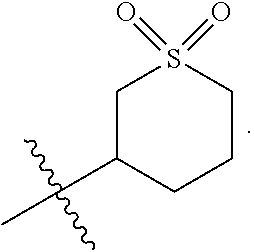

-
- RC and RD, together with the nitrogen atom to which they are attached form azetidine or piperazine.

wherein: X is selected from N and CR4A2; R4A1 and R4A2 are independently selected from hydrogen, C1-C3 alkyl optionally substituted with —NRARB methoxy, C1-C3 haloalkyl, hydroxyl, cyano, —NRARB, —C(═O)NRCRD, —SO2(NRERF), —SO2(C1-C6 alkyl), 3-6 membered heterocyclyl optionally substituted with 1 or 2 independently selected RG and 3-6 membered cycloalkyl optionally substituted with 1 or 2 independently selected RG.

wherein: R4B is selected from —NRARB and 4-6 membered heterocyclyl comprising one nitrogen ring member and optionally substituted with 1-2 independently selected RG1; wherein RG1 is selected from fluoro, hydroxyl, C1-C6 haloalkyl, and C1-C6 alkyl.

wherein Ring B is azetidinyl, pyrrolidinyl, piperidinyl, piperazinyl, or morpholinyl, each optionally substituted with 1-2 RG independently selected from fluoro, hydroxyl, trifluoromethyl, and C1-C6 alkyl.
-
- R2 is a C1-C6 alkyl; and R3 is a C1-C6 alkyl.
-
- R2 is a C1-C6 alkyl; and R3 is a C1-C6 haloalkyl.
-
- Ring A is a phenyl or a 5-6 membered heteroaryl;
- each R4 is independently selected from the group consisting of: C1-C3 alkyl, C1-C3 alkoxy, C1-C3 haloalkyl, hydroxyl, cyano, —NH2, —C(═O)NH2, —C(═O)NHMe, —SO2NH2, —SO2NHMe, —SO2Me, —S(═O)(═NH)Me, —C(═O)Me, 5-6 membered heteroaryl, and unsubstituted 3-6 membered heterocyclyl; and
- n is 1 or 2.
-
- each R1 is fluoro;
- m is 1 or 2;
- R2 is a C1-C6 alkyl;
- R3 is a C1-C6 alkyl;
- Ring A is a phenyl or a 5-6 membered heteroaryl;
- each R4 is independently selected from the group consisting of: C1-C3 alkyl, C1-C3 alkoxy, C1-C3 haloalkyl, hydroxyl, cyano, —NH2, —C(═O)NH2, —C(═O)NHMe, —SO2NH2, —SO2NHMe, —SO2Me, —S(═O)(═NH)Me, —C(═O) Me, 5-6 membered heteroaryl, and 3-6 membered heterocyclyl optionally substituted with 1 or 2 independently selected RG; and
- n is 1 or 2.

or a pharmaceutically acceptable salt thereof, wherein:
-
- R1A is halogen;
- RB1 is halogen or absent;
- R2 is a C1-C6 alkyl or a C1-C6 haloalkyl;
- R3 is a C1-C6 alkyl, a C1-C6 haloalkyl, or a C3-C6 cycloalkyl optionally substituted with 1 or 2 substituents independently selected from fluoro and C1-C6 alkyl;
- Ring A1 is a 6 membered heteroaryl;
- R4 is independently selected from the group consisting of: C1-C6 alkyl optionally substituted with —NRARB, C1-C6 alkoxy, C1-C6 haloalkyl, hydroxyl, cyano, —CO2H, —NRARB, —C(═O)NRCRD, —SO2(NRERF), —SO2(C1-C6 alkyl), —S(═O)(═NH)(C1-C6 alkyl), —C(═O)(C1-C6 alkyl), —CO2(C1-C6 alkyl), 5-6 membered heteroaryl optionally substituted with C1-C6 alkyl, 3-6 membered heterocyclyl optionally substituted with 1 or 2 independently selected RG, and 3-6 membered cycloalkyl optionally substituted with 1 or 2 independently selected RG;
- wherein R4 is bonded to the position of Ring A1 that is para to the N atom of the urea moiety;
- each RA, RA1, RB, RB1, RC, RC1, RD, RD1, RE, and RF is independently hydrogen, 4-6 membered heterocyclyl, C1-C6 haloalkyl, 3-6 membered cycloalkyl optionally substituted with hydroxyl, or C1-C6 alkyl optionally substituted with 1-2 substituents independently selected from hydroxyl, 3-6 membered cycloalkyl, —SO2(C1-C6 alkyl), and —SO2(NH2); or
- RC and RD, together with the nitrogen atom to which they are attached form a 4-6 membered heterocyclyl;
- each RG is independently selected from the group consisting of: fluoro, cyano, hydroxyl, C1-C6 alkyl, C1-C6 alkoxy, —NRA1RB1, —C(═O)NRC1RD1, —CO2(C1-C6 alkyl), C1-C6 haloalkyl, C3-C6 cycloalkyl, and —CO2H.

wherein: R4B is selected from —NRARB and 4-6 membered heterocyclyl comprising one nitrogen ring member and optionally substituted with 1-2 independently selected RG1; wherein RG1 is selected from fluoro, hydroxyl, and C1-C6 alkyl.

wherein Ring B is azetidinyl, pyrrolidinyl, or piperidinyl, each optionally substituted with 1-2 RG independently selected from fluoro, hydroxyl, and C1-C6 alkyl.

or a pharmaceutically acceptable salt thereof, wherein:
-
- R1A is halogen;
- R1B is halogen or absent (the phenyl ring is monosubstituted with R1A);
- R2 is a C1-C6 alkyl or a C1-C6 haloalkyl;
- R3 is a C1-C6 alkyl, a C1-C6 haloalkyl, or a C3-C6 cycloalkyl optionally substituted with 1 or 2 substituents independently selected from fluoro and C1-C6 alkyl;
- R4 is independently selected from the group consisting of: C1-C6 alkyl optionally substituted with —NRARB, C1-C6 alkoxy, C1-C6 haloalkyl, hydroxyl, cyano, —CO2H, —NRARB, —C(═O)NRCRD, —SO2(NRERF), —SO2(C1-C6 alkyl), —S(═O)(═NH)(C1-C6 alkyl), —C(═O)(C1-C6 alkyl), —CO2(C1-C6 alkyl), 5-6 membered heteroaryl optionally substituted with C1-C6 alkyl, 3-6 membered heterocyclyl optionally substituted with 1 or 2 independently selected RG, and 3-6 membered cycloalkyl optionally substituted with 1 or 2 independently selected RG;
- each RA, RA1, RB, RB1, RC, RC1, RD, RD1, RE, and RF is independently hydrogen, 4-6 membered heterocyclyl, C1-C6 haloalkyl, 3-6 membered cycloalkyl optionally substituted with hydroxyl, or C1-C6 alkyl optionally substituted with 1-2 substituents independently selected from hydroxyl, 3-6 membered cycloalkyl, —SO2(C1-C6 alkyl), and —SO2(NH2); or
- RC and RD, together with the nitrogen atom to which they are attached form a 4-6 membered heterocyclyl;
- each RG is independently selected from the group consisting of: fluoro, cyano, hydroxyl, C1-C6 alkyl, C1-C6 alkoxy, —NRA1RB1, —C(═O)NRC1RD1, —CO2(C1-C6 alkyl), C1-C6 haloalkyl, C3-C6 cycloalkyl, and —CO2H.
-
- wherein R4 is —SO2Me.
-
- wherein R4 is —SO2Et.
-
- wherein R4 is —S(═O)(═NH)Me.
-
- wherein R4 is —C(═O)Me.
-
- wherein R4 is —CO2Me.

wherein Ring B is azetidinyl, pyrrolidinyl, piperidinyl, piperazinyl, or morpholinyl, each optionally substituted with 1-2 RG independently selected from fluoro, hydroxyl, and C1-C6 alkyl.
-
- (a) determining that the cancer is associated with a dysregulation of a PIK3CA gene, a PI3Kα protein, or expression or activity or level of any of the same; and
- (b) administering to the subject a therapeutically effective amount of a compound of any one of embodiments 1-395, or a pharmaceutically acceptable salt thereof, or a pharmaceutical composition of embodiment 396.
-
- (a) determining that the cancer in the subject is a PI3Kα-associated cancer; and
- (b) administering to the subject a therapeutically effective amount of a compound of any one of embodiments 1-395 or a pharmaceutically acceptable salt thereof, or a pharmaceutical composition of embodiment 396.

-
- Step 1
-
- Step 2
-
- Compound 1:
-
- Compound 2:


-
- Step 2
-
- Compound 5:

-
- Step 2
-
- Step 3

-
- Column: Daicel CHIRALPAK OJ_3, 3*150 mm, 3 um;
- Mobile Phase: A/B: CO2/MeOH (0.1% DEA)=85/15;
-
- Temp: 37 degrees.
- Compound 8:
-
- Compound 9:

-
- Compound 10:
-
- Compound 11:

-
- Step 1
-
- Step 2

-
- Step 1
-
- Step 2

-
- Step 1


-
- Step 2
-
- Step 3
-
- Step 4
- Compound 3 was separated by SFC (Daicel CHIRALPAK OD-H, 20×250 mm, 5 μm 70/30 CO2/MeOH [0.2% NH3(7M Solution in MeOH)], 50 g/min, 120 bar, 35° C.) to give two enantiomers:
-
- Compound 15:
-
- Compound 16:

-
- Step 1
-
- Step 2
-
- Step 3

-
- Step 1
-
- Step 2
-
- Step 3
-
- Compound 17:
-
- Compound 18:

-
- Step 1
-
- Compound 19:
-
- Compound 20:

-
- Step 1


-
- Step 1
-
- Step 2

-
- Step 1
-
- Step 2
-
- Step 3
-
- Step 4
-
- Step 5


-
- Step 1
-
- Step 2

-
- Compound 31:
-
- Compound 32:

-
- Step 1

-
- Step 1
-
- Step 2


-
- Step 2

-
- Step 1
-
- Step 2

-
- Step 2


-
- Step 1
-
- Step 2

-
- Step 1

-
- Step 2

-
- Step 1
-
- Step 2

-
- Step 1
-
- Step 2
-
- Step 3
-
- Step 4
-
- Step 5
-
- Step 6
-
- Compound 49:
-
- Compound 50:

-
- Step 1
-
- Step 2
-
- Step 3
-
- Step 4
- Compound 6 was separated by SFC (Daicel CHIRALPAK IB-N, 250×30 mm I.D., 10 μm 80/20 CO2/MeOH [0.2% NH3(7M Solution in MeOH)], 70 g/min, 120 bar, 35° C.) to give two enantiomers: (R)-3-(3-(1-(5,7-difluoro-3-methylbenzofuran-2-yl)-2-methylpropyl)ureido)benzamide (Compound 51, 35 mg, 35%) as a white solid and (S)-3-(3-(1-(5,7-difluoro-3-methylbenzofuran-2-yl)-2-methylpropyl)ureido)benzamide (Compound 52, 35 mg, 35%) as a white solid respectively.
- Compound 51:
-
- Compound 52:


-
- Step 1
-
- Step 2
-
- Step 3
-
- Step 4
-
- Step 5
-
- Step 6
-
- Step 7
-
- Step 8
-
- Compound 53:
-
- Compound 54:

-
- Step 1
-
- Step 2
-
- Step 3

-
- Step 1
-
- Step 2
-
- Step 3

-
- Step 1
-
- Step 2
-
- Peak 1 (48.9 mg) and Peak 2 (51.2 mg) were assigned as Compound 57 and Compound 58 respectively.
- Compound 57:
-
- Compound 58:

-
- Step 1
-
- Step 2
-
- Step 3

-
- Step 1
-
- Step 2

-
- Step 1
-
- Step 2
-
- Step 3
-
- Step 4

-
- Step 1
-
- Step 2
-
- Step 3

-
- Step 1
-
- Step 2
-
- Step 3

-
- Step 1
-
- Step 2

-
- Step 1
-
- Step 2


-
- Step 1
-
- Step 2
-
- Step 3
-
- Step 4
-
- Step 5
- Step 5 To a solution of pyrimidine-2,5-diamine (180 mg, 1.64 mmol) in pyridine (5 μmL) was added phenyl carbonochloridate (256 mg, 1.64 mmol). The mixture was stirred at 25° C. for 1 h. 2,2,2-trifluoro-1-(5-fluoro-3-methylbenzofuran-2-yl)ethan-1-amine (400 mg, 1.62 mmol) was added to the mixture; the mixture was stirred at 80° C. for 16 h. After completion, the mixture was concentrated in vacuum. The residue was purified by reverse phase (ACN/water from 0-60) to give 1-(2-aminopyrimidin-5-yl)-3-(2,2,2-trifluoro-1-(5-fluoro-3-methylbenzofuran-2-yl)ethyl)urea (280 mg, 44.6%) as white solid. MS (ESI): mass calcd. for C16H13F4N5O2, 383.1, m/z found 384.1 [M+H]+.
- Step 6
-
- Compound 67:
-
- Compound 68:

-
- Step 1
-
- Step 2
-
- Compound 69:
-
- Compound 70:


-
- Step 1
-
- Step 2
-
- Step 3

-
- Step 1
-
- Step 2
-
- Step 3

-
- Step 1
-
- Step 2
-
- Step 3

-
- Step 1
-
- Step 2
-
- Step 3
-
- Compound 75:
-
- Compound 76:

-
- Step 1
-
- Step 2
-
- Step 3

-
- Step 1
-
- Step 2
-
- Step 3


-
- Step 1
-
- Step 2
-
- Step 3
-
- Step 4
-
- Step 5
-
- Step 6
-
- Step 7
-
- Step 8
-
- Step 9 (rac)1-(2-aminopyrimidin-5-yl)-3-(1-(5,7-difluoro-3-methylbenzofuran-2-yl)-2,2,2-trifluoroethyl) urea (150 mg) was separated by chiral HPLC to give Compound 79 (peak 1, 61 mg, 41%) and Compound 80 (peak 2, 58 mg, 39%)MS (ESI): mass calcd. for C16H12F5N5O2, 401.1, m/z found 402.1 [M+H]+.
- Compound 79 (peak 1):
-
- Compound 80 (peak 2):


-
- Step 1
-
- Step 2
-
- Step 3
-
- Step 4
-
- Step 5
-
- Compound 81:
-
- Compound 82:

-
- Step 1
-
- Step 2
-
- Step 3
-
- Step 4
-
- Step 5
-
- Apparatus: SFC 80
- Column: Daicel CHIRALCEL OD, 250 mm×30 mm I.D., 10 μm
- Mobile phase: CO2/MeOH [0.20% NH3(7M Solution in MeOH)]=65/35
- Flow rate: 70 g/min
- Wavelength: UV 214 nm
- Temperature: 35° C.
- Compound 83:
-
- Compound 84:

-
- Step 1
-
- Step 2
-
- Step 3
-
- Compound 85:
-
- Compound 86:

-
- Step 1
-
- Step 2
-
- Step 3


-
- Step 1
-
- Step 2
-
- Step 3
-
- Step 4
-
- Step 5
-
- Compound 88:
-
- Compound 89:

-
- Step 1
-
- Step 2
-
- Apparatus: SFC 80
- Column: REGIS (S, S)-Whelk 01, 250 mm×30 mm I.D., 10 μm
- Mobile phase: CO2/MeOH [0.2% NH3(7M Solution in MeOH)]=75/25
- Flow rate: 70 g/min
- Wavelength: UV 214 nm
- Temperature: 35° C.
-
- Compound 90 (peak 1):
-
- Compound 91 (peak 2):

-
- Step 1
-
- Step 2
-
- Apparatus: SFC 80
- Column: REGIS (S, S)-Whelk 01, 250 mm×30 mm I.D., 10 μm
- Mobile phase: CO2/MeOH [0.2% NH3(7M Solution in MeOH)]=75/25
- Flow rate: 70 g/min
- Wavelength: UV 214 nm
- Temperature: 35° C.
-
- Compound 92 Peak 1:
-
- Compound 93 Peak 2:

-
- Step 1
-
- Step 2
-
- Step 3
-
- Step 4
-
- Compound 95 (33.3 mg) as white solid.
-
- Apparatus: SFC 80
- Column: Daicel CHIRALCEL OD, 250 mm×30 mm I.D., 10 μm
- Mobile phase: CO2/MeOH [0.2% NH3 (7M Solution in MeOH)]=50/50
- Flow rate: 70 g/min
- Wavelength: UV 214 nm
- Temperature: 35° C.
- Compound 94:
-
- Compound 95:

-
- Step 1
-
- Step 2
-
- Step 3


-
- Step 1
-
- Step 2
-
- Step 3
-
- Step 4
-
- Step 5 (rac)-1-(2-(3-hydroxy-3-methylazetidin-1-yl)pyrimidin-5-yl)-3-(2,2,2-trifluoro-1-(5-fluoro-3-methylbenzofuran-2-yl)ethyl)urea (60 mg) was separated by SFC 80 (Daicel CHIRALCEL OD, 250×30 mm I.D., 10 μm 50/50 CO2/MeOH [0.2% NH3(7M Solution in MeOH)], 70 g/min, 120 bar, 35° C.) to give two enantiomers (S)-1-(2-(3-hydroxy-3-methylazetidin-1-yl)pyrimidin-5-yl)-3-(2,2,2-trifluoro-1-(5-fluoro-3-methylbenzofuran-2-yl)ethyl)urea (Compound 97, 20 mg, 11%) as a white solid and (R)-1-(2-(3-hydroxy-3-methylazetidin-1-yl)pyrimidin-5-yl)-3-(2,2,2-trifluoro-1-(5-fluoro-3-methylbenzofuran-2-yl)ethyl)urea (Compound 98, 25 mg, 14%) as a white solid respectively.
- Compound 97:
-
- Compound 98:

-
- Step 1
-
- Step 2 Rac-1-(1-(5,7-difluoro-3-methylbenzofuran-2-yl)-2,2,2-trifluoroethyl)-3-(2-(3-hydroxyazetidin-1-yl)pyrimidin-5-yl)urea (220 mg) was separated by chiral separation to give (R)-1-(2-aminopyrimidin-5-yl)-3-(1-(5-fluoro-3-methylbenzofuran-2-yl)propyl)urea (peak 1, 43 mg, 19%) and (S)-1-(2-aminopyrimidin-5-yl)-3-(1-(5-fluoro-3-methylbenzofuran-2-yl)propyl)urea (peak 2, 52 mg, 23%) as white solid with the following separation conditions. MS (ESI): mass calcd. for C17H18FN5O2, 343.1, m/z found 344.2 [M+H]+.
Separation Conditions: - Apparatus SFC 150
- Column: Daicel CHIRALCEL IE, 250 mm×30 mm I.D., 10 μm
- Mobile phase: CO2/MeOH [0.20% NH3(7M Solution in MeOH)]=70/30
- Flow rate: 80 g/min
- Wavelength: UV 214 nm
- Temperature: 35° C.
- Compound 99 (peak 1):
- Step 2 Rac-1-(1-(5,7-difluoro-3-methylbenzofuran-2-yl)-2,2,2-trifluoroethyl)-3-(2-(3-hydroxyazetidin-1-yl)pyrimidin-5-yl)urea (220 mg) was separated by chiral separation to give (R)-1-(2-aminopyrimidin-5-yl)-3-(1-(5-fluoro-3-methylbenzofuran-2-yl)propyl)urea (peak 1, 43 mg, 19%) and (S)-1-(2-aminopyrimidin-5-yl)-3-(1-(5-fluoro-3-methylbenzofuran-2-yl)propyl)urea (peak 2, 52 mg, 23%) as white solid with the following separation conditions. MS (ESI): mass calcd. for C17H18FN5O2, 343.1, m/z found 344.2 [M+H]+.
-
- Compound 100 (peak 2):

-
- Step 1


-
- Step 1
-
- Step 2
-
- Step 3
-
- Step 4
-
- Step 5
-
- Step 6
-
- Step 7
-
- Compound 103

-
- Compound 104

-
- Compound 105


-
- Step 1
-
- Step 2
-
- Step 3
-
- Compound 107


-
- Compound 109

-
- Compound 110

-
- Compound 111

-
- Compound 112

-
- Compound 113

-
- Compound 114

-
- Compound 115

-
- Compound 116

-
- Compound 117

-
- Compound 118


-
- Step 1
-
- Step 2

-
- Step 1
-
- Step 2

-
- Step 1
-
- Step 2


-
- Step 1
-
- Step 2


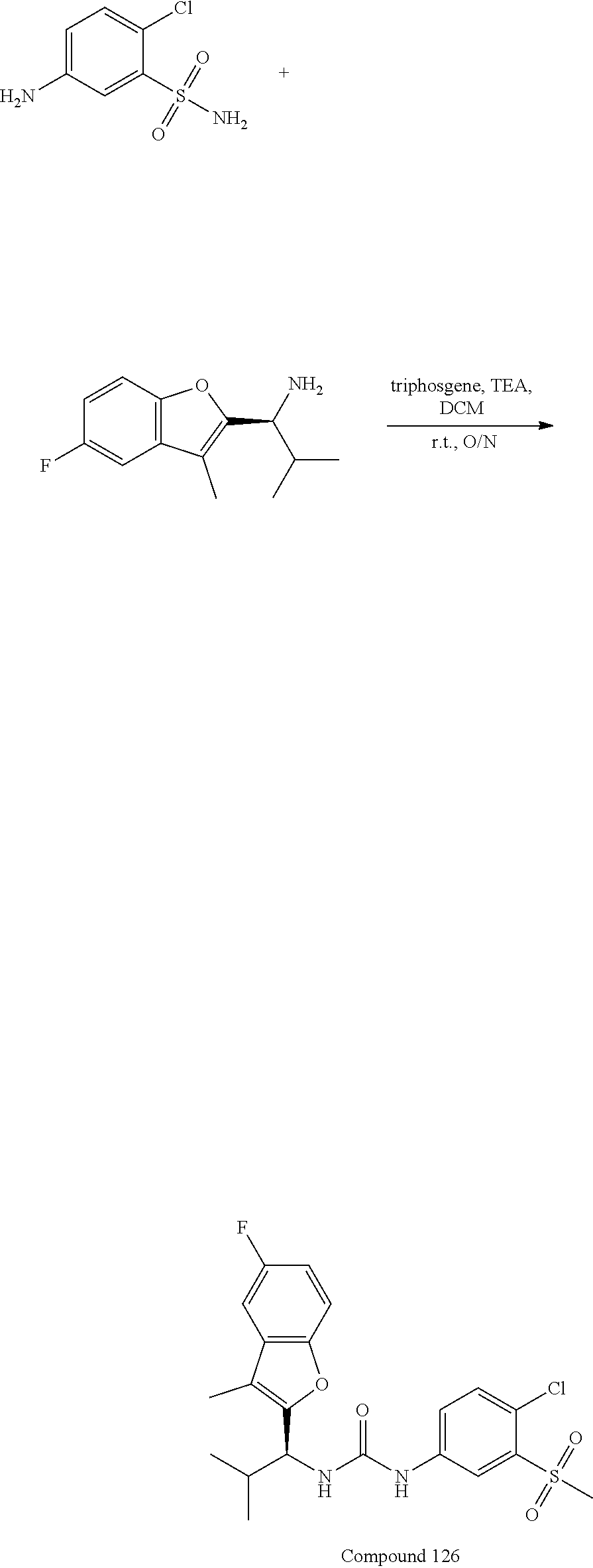


-
- Step 1
-
- Step 2

-
- Step 1
-
- Step 2


-
- Step 1
-
- Step 2
-
- Step 3
-
- Step 4
-
- Step 5
-
- Step 6
-
- Step 7
-
- Step 8
-
- Step 9
-
- Compound 132:
-
- Compound 133:


-
- Compound 135


-
- Step 1
-
- Step 2
-
- Step 3
-
- Step 4
-
- Apparatus: SFC 80
- Column: DZ-CHIRALPAK IC-3, 4.6*50 mm, 3.0 μm
- Mobile phase: A: Hex(0.2% DEA):EtOH=90:10
- Flow rate: 1 mL/min
- Gradient: 0% B to 0% B
- Injection Volume: 5 μmL.
- Compound 148:
-
- Compound 149:

-
- Compound 150

-
- Step 1
-
- Step 2


-
- Step 1
-
- Step 2
-
- Step 3
-
- Column: CHIRALPAK IG, 2*25 cm, 5 μm; Mobile Phase A: Hex(0.5% 2M NH3—MeOH), Mobile Phase B: EtOH; Flow rate: 20 mL/min; Gradient: 20% B to 20% B in 12 min; RT1(min): 7.00;
- RT2(min): 8.82;
- Compound 153:
-
- Compound 154:

-
- Step 1
-
- Step 2
-
- Step 3
-
- Step 4
-
- Step 5
-
- Step 6
-
- Step 7
-
- Step 8
-
- Step 9
-
- Apparatus: Prep-HPLC
- Column: CHIRALPAK IG, 2*25 cm, 5 μm; Mobile Phase A: Hex(0.2% TEA)-HPLC, Mobile
- Phase B: EtOH-HPLC; Flow rate: 20 mL/min; Gradient: 20% B to 20% B in 9 min; Wave Length: 220/254 nm; RT1(min): 5.90; RT2(min): 8.13; Sample Solvent: EtOH-HPLC; Injection Volume: 0.85 mL
- Compound 155:
-
- Compound 156:

-
- Step 1
-
- Step 2
-
- Step 3
-
- Step 4
-
- Step 5
-
- Step 6
-
- Step 7
-
- Step 8
-
- Step 9
-
- Step 10
-
- Apparatus: Prep-Chiral-HPLC
- Column: DZ-CHIRALPAK ID-3, 4.6*50 mm, 3.0 μm; Mobile Phase A: Hex (0.2% DEA): EtOH=85:15; Flow rate: 1 mL/min; Gradient: 0% B to 0% B; Injection Volume: 5 μmL.
- Compound 157:
-
- Compound 158:

-
- Step 1
-
- Step 2
-
- Step 3

-
- Step 1
-
- Step 2

-
- Step 1
-
- Step 2
-
- Step 3

-
- Step 1
-
- Step 2
-
- Step 3

-
- Step 1
-
- Step 2
-
- Step 3

-
- Step 1
-
- Step 2
-
- Step 3

-
- Step 1
-
- Step 2
-
- Step 3

-
- Step 1
-
- Step 2
-
- Step 3

-
- Step 1
-
- Step 2
-
- Step 3

-
- Step 1
-
- Step 2


-
- Step 1
-
- Step 2
-
- Step 3
-
- Step 4
-
- Compound 171:
-
- Compound 172:

-
- Step 1
-
- Step 2
-
- Column: CHIRALPAK IC, 2*25 cm, 5 μm; Mobile Phase A: Hex(0.5% 2M NH3—MeOH)-HPLC, Mobile Phase B: EtOH-HPLC; Flow rate: 20 mL/min; Gradient: 10% B to 10% B in 13 min; Wave Length: 220/254 nm; RT1(min): 7.62; RT2(min): 10.79; Sample Solvent: EtOH-HPLC; Injection Volume: 0.5 mL.
- Compound 173:
-
- Compound 174:

-
- Step 1
-
- Step 2
-
- Column: CHIRALPAK IC, 2*25 cm, 5 μm; Mobile Phase A: Hex(0.5% 2M NH3—MeOH)-HPLC, Mobile Phase B: EtOH-HPLC; Flow rate: 20 mL/min; Gradient: 10% B to 10% B in 15 min; Wave Length: 220/254 nm; RT1(min): 10.39; RT2(min): 12.49; Sample Solvent: EtOH-HPLC; Injection Volume: 0.2 mL; Number Of Runs: 13.
- Compound 175:
-
- Compound 176:

-
- Step 1
-
- Step 2
-
- Step 3
-
- Step 4
-
- Step 5
-
- Step 6
-
- Step 7
-
- Step 8
-
- Step 9
-
- Apparatus: Prep-Chiral-HPLC
- Column: CHIRALPAK IC, 2*25 cm, 5 μm; Mobile Phase A: Hex(0.5% 2M NH3—MeOH)-HPLC,
- Mobile Phase B: EtOH-HPLC; Flow rate: 20 mL/min; Gradient: 10% B to 10% B in 15 min;
- Wave Length: 220/254 nm; RT1(min): 9.564; RT2(min): 11.568; Sample Solvent: EtOH:DCM=1:1—HPLC; Injection Volume: 0.6 mL; Number Of Runs: 27.
- Compound 177:
-
- Compound 178:

-
- Step 1
-
- Step 2
-
- Step 3
-
- Step 4
-
- Step 5
-
- Apparatus: SFC 80
- Column: DZ-CHIRALPAK IC-3, 4.6*50 mm, 3.0 μm;
- Mobile Phase A: Hex(0.2% DEA):EtOH=85:15;
- Flow rate: 1 mL/min; Gradient: 0% B to 0% B;
- Injection Volume: 5 μmL
- Temperature: 35° C.
- Compound 179:
-
- Compound 180:

-
- Step 1
-
- Step 2
-
- Step 3
-
- Step 4
-
- Apparatus: SFC 80
- Column: DZ-CHIRALPAK IG-3, 4.6*50 mm, 3.0 μm;
- Mobile Phase A: Hex(0.2% DEA):EtOH=90:10;
- Flow rate: 1 mL/min; Gradient: 0% B to 0% B;
- Injection Volume: 5 μmL
- Temperature: 35° C.
- Compound 181:
-
- Compound 182:

-
- Step 1
-
- Step 2
-
- Step 3
-
- Step 4
-
- Apparatus: SFC 80
- Column: DZ-CHIRALPAK IF-3, 4.6*50 mm, 3.0 μm
- Mobile Phase A: Hex(0.2% DEA):EtOH=80:20
- Flow rate: 1 mL/min
- Gradient: 0% B to 0% B
- Injection Volume: 5 μmL.
- Compound 183:
-
- Compound 184:

-
- Step 1
-
- Step 2
-
- Column: XBridge Shield RP18 OBD Column, 30*150 mm, 5 μm; Mobile Phase A: Water(10 mmol/L NH4HCO3), Mobile Phase B: ACN; Flow rate: 60 mL/min; Gradient: 33% B to 58% B in 8 min, 58% B; Wave Length: 254 nm; RT1(min): 7.27; Number Of Runs: 0.
- Compound 185:
-
- Compound 186:

-
- Step 1
-
- Step 2
-
- Step 3
-
- Step 4
-
- Step 5
-
- Column: CHIRALPAK IF, 2*25 cm, 5 μm; Mobile Phase A: Hex(0.5% 2M NH3—MeOH)-HPLC,
- Mobile Phase B: EtOH-HPLC; Flow rate: 20 mL/min; Gradient: 20% B to 20% B in 11 min;
- Wave Length: 220/254 nm; RT1(min): 5.361; RT2(min): 7.624; Sample Solvent: EtOH:DCM=1:1—HPLC; Injection Volume: 1.5 mL; Number Of Runs: 4.
- Compound 187:
-
- Compound 188:

-
- Step 1
-
- Step 2
-
- Column: CHIRALPAK IF, 2*25 cm, 5 μm; Mobile Phase A: Hex(0.5% 2M N13-MeOH)-HPLC,
- Mobile Phase B: EtOH-HPLC; Flow rate: 20 mL/min; Gradient: 20% B to 20% B in 11 min;
- Wave Length: 220/254 nm; RT1(min): 12.706; RT2(min): 17.897; Sample Solvent: EtOH:DCM=1:1-HPLC; Injection Volume: 3.5 mL; Number Of Runs: 3.
- Compound 189:
-
- Compound 190:

-
- Step 1
-
- Step 2
-
- Step 3
-
- Step 4
-
- (Column: DZ-CHIRALPAK IF-3, 4.6*50 mm, 3.0 μm; Mobile Phase A: Hex(0.2% DEA):EtOH=80:20; Flow rate: 1 mL/min; Gradient: 0% B to 0% B; Injection Volume: 5 μmL)
- Compound 191:
-
- Compound 192:

-
- Step 1
-
- Step 2
-
- Step 3
-
- Flow rate: 20 mL/min; Gradient: 15% B to 15% B in 14 min;
- Wave Length: 220/254 nm; RT1(min): 7.457; RT2(min): 10.885;
- Sample Solvent: EtOH-HPLC; Injection Volume: 1 mL; Number Of Runs: 2
- Temperature: 35° C. MS (ESI): mass calcd. for C24H21F5N4O4, 524.1, m/z found 525.1 [M+H]+.
- Step 4a
-
- Mobile Phase A: Hex(0.2% DEA):EtOH=90:10; Flow rate: 1 mL/min; Gradient: 0% B to 0% B;
- Injection Volume: 5 μmL.
- Step 4b

-
- Step 1
-
- Step 2
-
- Step 3
-
- Step 4
-
- Step 5
-
- Compound 195:
-
- Compound 196:

-
- Apparatus: Prep-HPLC-072
- Column: (R, R)-WHELK-01-Kromasil, 2.12*25 cm, 5 μm
- Mobile phase: Hex(0.1% TFA): (EtOH:DCM=1:1)=80:20
- Flow rate: 20 mL/min
- Wavelength: UV 254 nm
- Temperature: 25° C.
- Compound 197:
-
- Compound 198:

-
- Step 1
-
- Step 2
-
- Step 3
-
- Step 4
-
- Apparatus: Prep-Chiral-HPLC
- Column: CHIRALPAK IC, 2*25 cm, 5 μm; Mobile Phase A: Hex(0.5% 2M NH3—MeOH)-HPLC,
- Mobile Phase B: EtOH-HPLC; Flow rate: 20 mL/min; Gradient: 15% B to 15% B in 13 min;
- Wave Length: 220/254 nm; RT1(min): 7.973; RT2(min): 10.255; Sample Solvent: EtOH:DCM=1:1-HPLC; Injection Volume: 0.6 mL; Number Of Runs: 3.
- Compound 199:
-
- Compound 200:

-
- Step 1
-
- Step 2
-
- Step 3
-
- Step 4
-
- Step 5
-
- Column: CHIRALPAK IC, 2*25 cm, 5 μm; Mobile Phase A: Hex (0.5% 2M NH3—MeOH), Mobile
- Phase B: EtOH; Flow rate: 20 mL/min; Gradient: 15% B to 15% B in 9 min; Wave Length: 220/254 nm; RT1(min): 6.323; RT2(min): 8.471.
- Compound 201:
-
- Compound 202:

-
- Apparatus: Prep-HPLC-072
- Column: CHIRALPAK ID, 2*25 cm, 5 μm
- Mobile phase: Hex(0.2% DEA):EtOH=80:20
- Flow rate: 20 mL/min
- Wavelength: UV 220/254 nm
- Temperature: 25° C.
- Compound 203:
-
- Compound 204:

-
- Apparatus: Prep-HPLC-072
- Column: CHIRALPAK ID, 2*25 cm, 5 μm
- Mobile phase: Hex(0.2% DEA):EtOH=80:20
- Flow rate: 20 mL/min
- Wavelength: UV 254 nm
- Temperature: 25° C.
- Compound 205:
-
- Compound 206:

-
- Apparatus: Prep-HPLC-037
- Column: CHIRALPAK IC, 2*25 cm, 5 μm
- Mobile phase: Mobile Phase A: Hex(0.5% 2M NH3—MeOH)-HPLC, Mobile Phase B: EtOH:DCM=1:1-HPLC
- Flow rate: 20 mL/min
- Wavelength: UV 220/254 nm
- Temperature: 25° C.
- Compound 207:
-
- Compound 208:

-
- Apparatus: Prep-HPLC-037
- Column: CHIRALPAK IG, 2*25 cm, 5 μm
- Mobile phase: Mobile Phase A: Hex(0.5% 2M NH3—MeOH), Mobile Phase B: EtOH;
- Flow rate: 20 mL/min
- Wavelength: UV 254 nm
- Temperature: 25° C.
- Compound 209:
-
- Compound 210:

-
- Compound 211 Compound 212
-
- Apparatus: Prep-HPLC-072
- Column: CHIRALPAK IG, 2*25 cm, 5 μm
- Mobile phase: Mobile Phase A: Hex(0.5% 2M NH3—MeOH), Mobile Phase B: EtOH
- Flow rate: 20 mL/min
- Wavelength: UV 254 nm
- Temperature: 25° C.
- Compound 211:
-
- Compound 212:


-
- Step 1
-
- Step 2
-
- Step 3
-
- Step 4
-
- Step 5
-
- Step 6
-
- Step 7
-
- Step 8
-
- Step 9
-
- Step 10
-
- Apparatus: Prep-HPLC-072
- Column: CHIRALPAK IC, 2*25 cm, 5 μm
- Mobile phase: Mobile Phase A: Hex(0.5% 2M NH3—MeOH)-HPLC, Mobile Phase B:
- EtOH:DCM=1:1-HPLC
- Flow rate: 20 mL/min
- Wavelength: UV 220/254 nm
- Temperature: 25° C.
- Compound 213:
-
- Compound 214:

-
- Step 1
-
- Step 2
-
- Step 3 130 mg of racemic was separated by CHIRAL-HPLC to give (Compound 215, 25.2 mg) as white solid and (Compound 216, 21.7 mg) as white solid.
-
- Apparatus: Prep-HPLC-072
- Column: CHIRALPAK IC, 2*25 cm, 5 μm
- Mobile phase: Mobile Phase A: Hex(0.5% 2M NH3—MeOH)-HPLC, Mobile Phase B: EtOH—HPLC
- Flow rate: 20 mL/min
- Wavelength: UV 220/254 nm
- Temperature: 25° C.
- Compound 215:
-
- Compound 216:

-
- Step 1
-
- Step 2
-
- Apparatus: Prep-HPLC-072
- Column: CHIRALPAK IC, 2*25 cm, 5 μm
- Mobile phase: Mobile Phase A: Hex(0.5% 2M NH3—MeOH)-HPLC, Mobile Phase B: EtOH—HPLC
- Flow rate: 20 mL/min
- Wavelength: UV 220/254 nm
- Temperature: 25° C.
- Compound 117:
-
- Compound 118:

-
- Step 1
-
- Step 2
-
- Step 3
-
- Step 4
-
- Apparatus: Prep-HPLC-072
- Column: CHIRALPAK IC, 2*25 cm, 5 μm
- Mobile phase: Mobile Phase A: Hex(0.5% 2M NH3—MeOH)-HPLC, Mobile Phase B: EtOH—HPLC
- Flow rate: 20 mL/min
- Wavelength: UV 220/254 nm
- Temperature: 25° C.
- Compound 219:
-
- Compound 220:

-
- Step 1
-
- Step 2
-
- Step 3
-
- Step 4
-
- Column: CHIRALPAK IG, 2*25 cm, 5 μm; Mobile Phase A: Hex(0.5% 2M NH3—MeOH)-HPLC,
- Mobile Phase B: EtOH-HPLC; Flow rate: 20 mL/min; Gradient: 10% B to 10% B in 10 μmin;
- Wave Length: 220/254 nm; RT1(min): 7.186; RT2(min): 10.545; Sample Solvent: EtOH:DCM=1:1-HPLC; Injection Volume: 2.3 mL; Number Of Runs: 3.
- Compound 221:
-
- Compound 222:

-
- Step 1
-
- Step 2
-
- Step 3
-
- Step 4
-
- Step 5
-
- Apparatus: SFC 80
- Column: Daicel CHIRALCEL IG, 250 mm×30 mm I.D., 10 μm
- Mobile phase: CO2/MeOH [0.20% NH3(7M Solution in MeOH)]=80/20
- Flow rate: 70 g/min
- Wavelength: UV 214 nm
- Temperature: 35° C.
- Compound 223:
-
- Compound 224:

-
- Step 1
-
- Step 2
-
- Step 3
-
- Apparatus: SFC 150
- Column: REGIS (S,S)-Whelk 01, 250 mm×30 mm I.D., 10 μm
- Mobile phase: CO2/MeOH[0.2% NH3(7M Solution in MeOH)]=65/35
- Flow rate: 80 g/min
- Wavelength: UV 214 nm
- Temperature: 35° C.
- Compound 225:
-
- Compound 226:

-
- Step 1
-
- Step 2


-
- Step 1
-
- Step 2
-
- Step 3
-
- Step 4
-
- Step 5
-
- Step 6
-
- Step 7

-
- Step 1
-
- Step 2
-
- Step 3

-
- Compound 231

-
- Compound 232


-
- Step 1
-
- Step 2
-
- Step 3
-
- Step 4

-
- Step 1
-
- Step 2
-
- Step 3

-
- Step 1
-
- Step 2
-
- Step 3

-
- Step 1
-
- Step 2
-
- Compound 236 (74.5 mg, 92.09%) as a white solid. MS (ESI): mass calcd. for C17H14F5N5O2, 415.1, m/z found 416.1 [M+H]+.

-
- Step 1
-
- Step 2
-
- Step 3

-
- Step 1
-
- Step 2
-
- Step 3
-
- Step 4

-
- Step 1
-
- Step 2
-
- Step 3

-
- Step 1
-
- Step 2
-
- Step 3

-
- Step 1
-
- Step 2
-
- Step 3
-
- Step 4
-
- Step 5
-
- Step 6

Step 1
-
- Step 2
-
- Step 3
-
- Step 4
-
- Step 5
-
- Step 6
-
- Step 7
-
- Apparatus: Prep-HPLC-072
- Column: (R, R)-WHELK-01-Kromasi, 5*25 cm, 5 μm
- Mobile phase: Mobile Phase A: Hex (0.5% 2M NH3—MeOH)-HPLC, Mobile Phase B: EtOH—HPLC
- Flow rate: 20 mL/min
- Wavelength: UV 220/254 nm
- Temperature: 25° C.
- Compound 242:


-
- Step 1
-
- Step 2
-
- Step 3
-
- Step 4
-
- Step 5
-
- Step 6
-
- Step 7
-
- Apparatus: Prep-HPLC-072
- Column: (R, R)-WHELK-01-Kromasi, 5*25 cm, 5 μm
- Mobile phase: Mobile Phase A: Hex(0.5% 2M NH3—MeOH)-HPLC, Mobile Phase B: EtOH:DCM=1:1-HPLC
- Flow rate: 20 mL/min
- Wavelength: UV 220/254 nm
- Temperature: 25° C.


-
- Step 1
-
- Step 2
-
- Step 3
-
- Step 4
-
- Step 5
-
- Step 6
-
- Step 7
-
- Step 8
-
- Step 9
-
- Step 10
-
- Step 11

-
- Step 12
-
- Step 13
-
- Step 14
-
- Step 15


-
- Step 1
-
- Step 2
-
- Step 3
-
- Step 4
-
- Step 5
-
- Step 6
-
- Step 7
-
- Step 8
-
- Step 9
-
- Step 10
-
- Column: CHIRALPAK IE, 2*25 cm, 5 μm; Mobile Phase A: Hex (0.5% 2M NH3—MeOH)-HPLC,
- Mobile Phase B: EtOH-HPLC; Flow rate: 20 mL/min; Gradient: 15% B to 15% B in 12 min;
- Wave Length: 220/254 nm; RT1 (min): 8.67; RT2(min): 10.33; Sample Solvent: EtOH-HPLC;
- Injection Volume: 0.9 mL; Number Of Runs: 4. MS (ESI): mass calcd. for C16H12F5N5O2, 401.09, m/z found 402 [M+H]+.


-
- Step 1
-
- Step 2
-
- Step 3
-
- Step 4
-
- Step 5
-
- Step 6
-
- Step 7
-
- Step 8
-
- Step 9
-
- Step 10


-
- Step 1
-
- Step 2
-
- Step 3
-
- Step 4
-
- Step 5
-
- Compound 249:
-
- Compound 250:

-
- Step 1
-
- Step 2
-
- Step 3
-
- Step 4

-
- Step 1
-
- Step 2
-
- Step 3

-
- Step 1
-
- Step 2
-
- Step 3

-
- Step 1
-
- Step 2
-
- Step 3
-
- Step 4

-
- Step 1
-
- Step 2
-
- Step 3

-
- Step 1
-
- Step 2
-
- Step 3

-
- Step 1
-
- Step 2
-
- Step 3

-
- Step 1
-
- Step 2
-
- Step 3
-
- Step 4

-
- Step 1
-
- Step 2
-
- Step 3

-
- Step 1
-
- Step 2
-
- Step 3

-
- Step 1
-
- Step 2
-
- Step 3

-
- Step 1
-
- Step 2
-
- Step 3


-
- Step 1
-
- Step 2
-
- Step 3
-
- Step 4


-
- Step 1
-
- Step 2
-
- Step 3
-
- Step 4

-
- Step 1
-
- Step 2
-
- Step 3

-
- Step 1
-
- Step 2
-
- Step 3
-
- Column: XBridge Shield RP18 OBD Column, 30*150 mm, 5 μm;
- Mobile Phase A: Water (10 μmmol/L NH4HCO3+0.1% NH3·H2O), Mobile Phase B: ACN;
- Flow rate: 60 mL/min;
- Gradient: 42% B to 67% B in 8 min, 67% B;
- Wave Length: 254 nm;
- RT1(min): 7.55;
- Number Of Runs: 0
- Temperature: 35° C.

-
- Step 1
-
- Step 2
-
- Step 3
-
- Column: XBridge Prep OBD C18 Column, 30*150 mm, 5 μm
- Mobile phase: Water (10 μmmol/L NH4HCO3), Mobile Phase B: ACN
- Flow rate: 60 mL/min
- Gradient: 45% B to 65% B in 8 min
- Wavelength: UV 220 nm
- RT 1(min): 7.52
- Temperature: 35° C.

-
- Step 1
-
- Step 2
-
- Step 3
-
- Column: XBridge Prep OBD C18 Column, 30*150 mm, 5 μm;
- Mobile Phase A: Water (10 μmmol/L NH4HCO3), Mobile Phase B: ACN; Flow rate: 60 mL/min;
- Gradient: 45% B to 70% B in 8 min, 70% B; Wave Length: 220 nm;
- RT 1(min): 6.95;
- Temperature: 35° C.

-
- Step 1
-
- Step 2
-
- Step 3
-
- Column: XBridge Prep OBD C18 Column, 30*150 mm, 5 μm;
- Mobile Phase A: Water(10 μmmol/L NH4HCO3), Mobile Phase B: ACN;
- Flow rate: 60 mL/min; Gradient: 48% B to 60% B in 8 min, 60% B;
- Wave Length: 254 nm;
- RT1(min): 10.02; Number Of Runs: 0
- Temperature: 35° C.

-
- Step 1
-
- Step 2
-
- Step 3
-
- Column: XBridge Prep OBD C18 Column, 30*150 mm, 5 μm;
- Mobile Phase A: Water (10 μmmol/L NH4HCO3), Mobile Phase B: ACN;
- Flow rate: 25 mL/min;
- Gradient: 48% B to 60% B in 8 min, 60% B;
- Wave Length: 254 nm;
- RT 1(min): 10.45;
- Temperature: 35° C.


-
- Step 1
-
- Step 2
-
- Step 3
-
- Step 4
-
- Step 5
-
- Step 6
-
- Step 7
-
- Step 8
-
- Chiral separation condition:
- Apparatus: SFC 80
- Column: CHIRALPAK IC-3 4.6*50 mm, 3.0 μm
- Mobile phase: Hex (0.2% DEA):EtOH=80:20
- Flow rate: 1.0 mL/min
- Wavelength: UV 254 nm
- Temperature: 25° C.
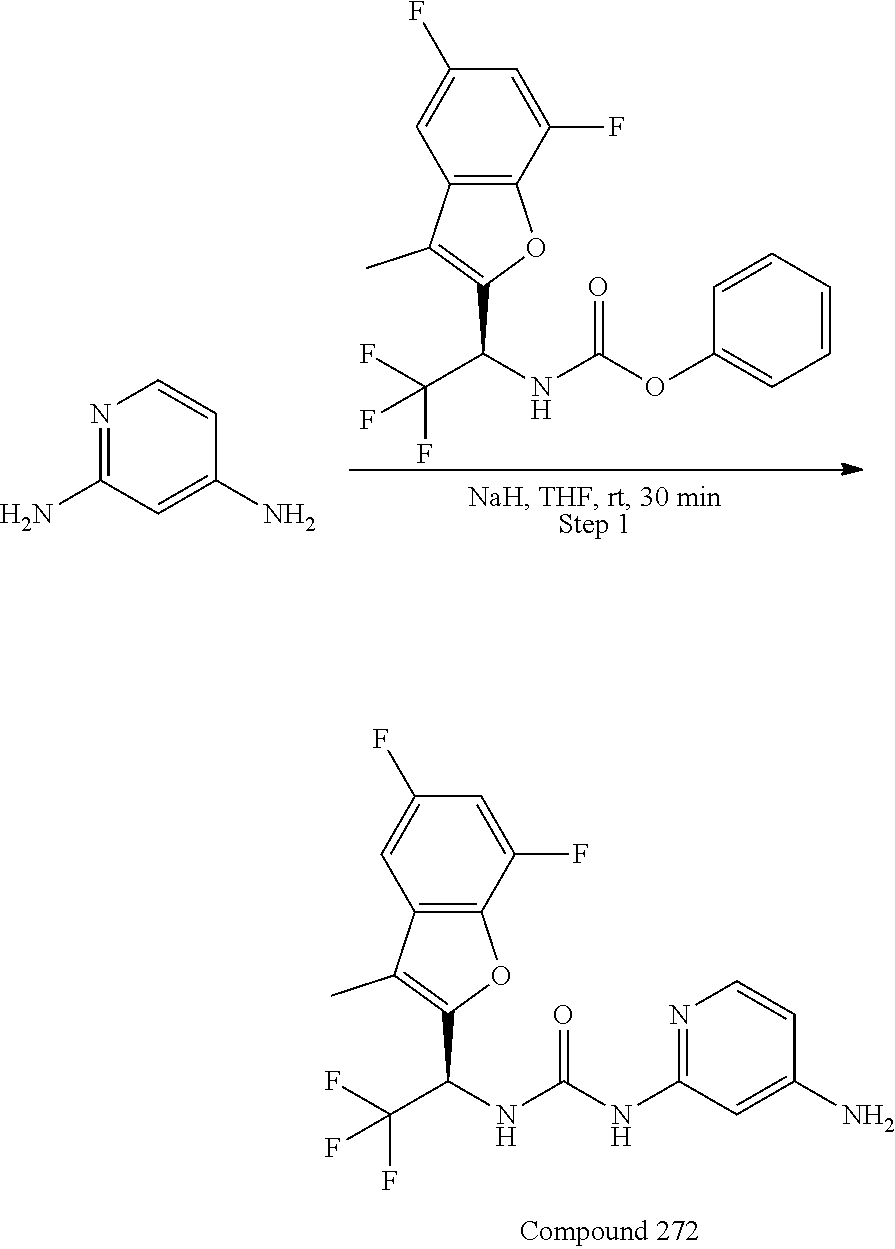
-
- Step 1

-
- Step 1
-
- Step 2
-
- Step 3

-
- Step 1
-
- Step 2

-
- Step 1
-
- Step 2
-
- Step 3

-
- Step 1
-
- Step 2
-
- Step 3
-
- Step 4
-
- The cell density was not permitted to reach 100% confluence. The cells were split 1:5 when they reached ˜80% confluence.
- Cells were split twice a week (Mon and Fri).
- Cells over passage 18 were not used (˜2 months of maintenance).
- Antibiotics were not used for tissue culture maintenance or assays.
For freezing cells:
- 1. Trypsinized cells were collected and counted. Cells were pelleted at 1000 rpm, 5 minutes and supernatant was aspirated.
- 2. Pelleted cells were gently resuspended at 3e6 cells/1 mL of freezing medium (Gibco Freezing Medium). For example, if there were 9e6 total cells, cell pellet was resuspended in 3 mL of freezing medium.
- 3. Measured aliquot of 1 mL of resuspended cells/cryovial. Cells were frozen in appropriate cell freezing container (i.e. Mr. Frosty or Corning CoolCell Freezing System) at −80° C.
- 4. Cells were transferred to Liquid Nitrogen Cryotank for long term storage.
For thawing cells: - 1. Cells were removed from liquid nitrogen tank. Cryovials were thawed in 37° C. waterbath until small “ice pellet” remained. This was then sprayed down with 70% ethanol before moving to TC/BSC hood.
- 2. Added 9 ml of fresh media to a 15 mL conical tube. Added 10 μmL of fresh media to a T75 TC treated flask.
- 3. Gently transferred 1 mL of cells in freezing medium from cryovial to 15 mL conical tube containing media.
- 4. Centrifuged at 1000 rpm, 5 mins to pellet cells.
- 5. Aspirated media/freezing media.
- 6. Gently resuspended cell pellet in 5 μmL fresh media and transferred to T75 flask with 10 μmLs of fresh media. Place flasks in 37° C. incubator, 5% CO2.
Protocol
Day1
- The cell density was not permitted to reach 100% confluence. The cells were split 1:5 when they reached ˜80% confluence.
-
- 1. Prepared ARP:
- a. Stamped 12.5 nL from 10 μmM source plate to destination plate using Echo. Sealed plate immediately and froze at −20° C. if it was not used on the same day.
- b. If a frozen ARP was used, the plate was thawed and spun at 1000 rpm×1 min.
- 2. Preparation of cells (adherent):
- a. Aspirated media from cells. Washed cells with sterile 1XPBS. Aspirated PBS and added appropriate amount of Trypsin.
- b. Once cells were fully trypsinized, added appropriate media to resuspend cells. Transferred cells to a 15 mL or 50 mL conical tube.
- c. Counted cells on the Countess II Cell Counter.
- 3. Plating of cells:
- a. Prepared cells at appropriate plating density. Dispensed 12 μL of diluted cells per well of a Greiner 784080-384 well TC treated white plate using a Multidrop Combi to columns 1-23. Added 12 uL of appropriate phenol free media only to column 24.
- b. Placed plates in 37° C. tissue culture incubator for appropriate treatment time (refer to “Assay” table).
- 4. Prepared HTRF Lysis Buffer
- a. Calculate the amount of HTRF lysis buffer master mix needed to perform the desired experiments plus any extra dead volume required for dispensing (4 μL required per well). Dilute the Blocking Reagent into 4X Lysis Buffer at a ratio of 1:25 (i.e. 0.1 mL Blocking Reagent Solution plus 2.4 mL 4X Lysis Buffer).
- b. Add 4 uL Lysis buffer master mix to all wells with sample or DMSO. Centrifuge the plates for 1 minute at 1000 rpm.
- c. Incubate at room temperature for 30 minutes.
- 5. Prepared HTRF Antibody
- a. Calculated the amount of HTRF antibody master mix needed to perform the desired experiments plus any extra dead volume required for dispensing (4 mL required per well). Eu Cryptate antibody and d2 antibody were added to detection buffer each at a ratio of 1:40 (i.e. 100 μL Eu Cryptate+100 μL d2 Cryptate+3800 μL detection buffer).
- b. 4 μL of antibody master mix was added to each well including the media only column 24.
- c. Centrifuged the plates for 1 minute at 1000 rpm. Placed lid on and created a “humidity chamber” by placing the plates into a ziplock bag with wet paper towels or something similar and incubated overnight at room temperature, keeping away from light.
Day 2
- 6. Measured on the PHERAstar/Envision using the HTRF protocol. When plates were read, all wells were read.
- 1. Prepared ARP:
| TABLE 3 |
| SPR and HTRF Data |
| Compound | PI3KαH1047R + | T47D pAKT |
| No. | wortmannin KD (nM) | IC50 (nM) |
| 1 | C | B |
| 3 | D | C |
| 4 | D | — |
| 6 | C | — |
| 7 | D | — |
| 9 | C | — |
| 11 | B | — |
| 12 | D | B |
| 13 | D | C |
| 14 | D | — |
| 16 | D | — |
| 17 | C | — |
| 19 | D | — |
| 20 | B | B |
| 21 | B | — |
| 22 | A | B |
| 23 | C | B |
| 24 | A | A |
| 25 | D | — |
| 26 | D | — |
| 27 | A | A |
| 28 | B | — |
| 31 | C | C |
| 32 | B | C |
| 33 | A | A |
| 34 | A | B |
| 35 | C | B |
| 36 | D | C |
| 37 | D | C |
| 38 | B | A |
| 39 | A | A |
| 40 | C | B |
| 41 | A | A |
| 42 | D | — |
| 43 | B | B |
| 44 | C | B |
| 45 | B | B |
| 46 | D | — |
| 47 | B | B |
| 48 | B | B |
| 50 | B | C |
| 52 | A | A |
| 54 | B | C |
| 55 | D | — |
| 56 | A | A |
| 29 | B | B |
| 30 | B | B |
| 59 | B | A |
| 60 | B | B |
| 61 | B | B |
| 62 | A | C |
| 63 | A | A |
| 64 | A | B |
| 65 | B | B |
| 66 | A | B |
| 68 | A | A |
| 69 | A | A |
| 71 | A | A |
| 72 | A | A |
| 73 | A | A |
| 74 | A | A |
| 75 | A | A |
| 77 | — | B |
| 78 | — | B |
| 80 | — | A |
| 81 | — | A |
| 84 | — | A |
| 86 | — | A |
| 87 | — | A |
| 89 | — | A |
| 91 | — | A |
| 93 | — | A |
| 95 | — | A |
| 96 | — | A |
| 98 | — | A |
| 100 | — | A |
| 101 | — | B |
| 102 | — | B |
| 103 | — | B |
| 104 | — | A |
| 105 | — | B |
| 106 | — | B |
| 107 | — | A |
| 121 | — | B |
| 123 | — | B |
| 124 | — | B |
| 125 | — | B |
| 126 | — | B |
| 128 | — | B |
| 129 | — | — |
| 130 | — | — |
| 131 | — | — |
| 132 | — | A |
| 133 | — | C |
| 134 | — | A |
| 135 | — | A |
| 136 | — | A |
| 137 | — | A |
| 138 | — | A |
| 139 | — | A |
| 140 | — | A |
| 141 | — | A |
| 142 | — | A |
| 143 | — | A |
| 144 | — | A |
| 145 | — | A |
| 146 | — | A |
| 147 | — | A |
| 148 | — | A |
| 149 | — | A |
| 150 | — | A |
| 151 | — | A |
| 152 | — | A |
| 153 | — | C |
| 154 | — | A |
| 155 | — | C |
| 156 | — | A |
| 157 | — | A |
| 158 | — | C |
| 159 | — | A |
| 160 | — | A |
| 161 | — | A |
| 162 | — | A |
| 163 | — | A |
| 164 | — | A |
| 165 | — | A |
| 166 | — | A |
| 167 | — | A |
| 168 | — | A |
| 169 | — | A |
| 170 | — | A |
| 171 | — | C |
| 172 | — | A |
| 173 | — | C |
| 174 | — | A |
| 175 | — | A |
| 176 | — | C |
| 177 | — | C |
| 178 | — | A |
| 179 | — | C |
| 180 | — | A |
| 181 | — | C |
| 182 | — | A |
| 183 | — | A |
| 184 | — | C |
| 185 | — | B |
| 186 | — | A |
| 187 | — | C |
| 188 | — | A |
| 189 | — | A |
| 190 | — | C |
| 191 | — | B |
| 192 | — | A |
| 193 | — | C |
| 194 | — | A |
| 195 | — | C |
| 196 | — | A |
| 197 | — | A |
| 198 | — | C |
| 199 | — | C |
| 200 | — | A |
| 201 | — | C |
| 202 | — | A |
| 203 | — | A |
| 204 | — | C |
| 205 | — | A |
| 206 | — | C |
| 207 | — | C |
| 208 | — | A |
| 209 | — | A |
| 210 | — | C |
| 211 | — | A |
| 212 | — | C |
| 213 | — | C |
| 214 | — | A |
| 215 | — | B |
| 216 | — | A |
| 217 | — | C |
| 218 | — | A |
| 219 | — | B |
| 220 | — | A |
| 221 | — | B |
| 222 | — | A |
| 223 | — | A |
| 224 | — | B |
| 225 | — | B |
| 226 | — | A |
Claims (16)


Priority Applications (3)
| Application Number | Priority Date | Filing Date | Title |
|---|---|---|---|
| US18/509,967 US12084434B2 (en) | 2021-06-14 | 2023-11-15 | Methods for treating cancer |
| US18/795,384 US12312341B2 (en) | 2021-06-14 | 2024-08-06 | Methods for treating cancer |
| US19/187,369 US20250250259A1 (en) | 2021-06-14 | 2025-04-23 | Methods for treating cancer |
Applications Claiming Priority (9)
| Application Number | Priority Date | Filing Date | Title |
|---|---|---|---|
| US202163210370P | 2021-06-14 | 2021-06-14 | |
| US202163228351P | 2021-08-02 | 2021-08-02 | |
| US202163288909P | 2021-12-13 | 2021-12-13 | |
| US202263316017P | 2022-03-03 | 2022-03-03 | |
| US202263319236P | 2022-03-11 | 2022-03-11 | |
| US202263348261P | 2022-06-02 | 2022-06-02 | |
| PCT/US2022/033255 WO2022265993A1 (en) | 2021-06-14 | 2022-06-13 | Urea derivatives which can be used to treat cancer |
| US18/450,586 US11897871B1 (en) | 2021-06-14 | 2023-08-16 | Methods for treating cancer |
| US18/509,967 US12084434B2 (en) | 2021-06-14 | 2023-11-15 | Methods for treating cancer |
Related Parent Applications (1)
| Application Number | Title | Priority Date | Filing Date |
|---|---|---|---|
| US18/450,586 Continuation US11897871B1 (en) | 2021-06-14 | 2023-08-16 | Methods for treating cancer |
Related Child Applications (1)
| Application Number | Title | Priority Date | Filing Date |
|---|---|---|---|
| US18/795,384 Continuation US12312341B2 (en) | 2021-06-14 | 2024-08-06 | Methods for treating cancer |
Publications (2)
| Publication Number | Publication Date |
|---|---|
| US20240158376A1 US20240158376A1 (en) | 2024-05-16 |
| US12084434B2 true US12084434B2 (en) | 2024-09-10 |
Family
ID=82403494
Family Applications (5)
| Application Number | Title | Priority Date | Filing Date |
|---|---|---|---|
| US18/568,899 Pending US20240300939A1 (en) | 2021-06-14 | 2022-06-13 | Urea derivatives which can be used to treat cancer |
| US18/450,586 Active US11897871B1 (en) | 2021-06-14 | 2023-08-16 | Methods for treating cancer |
| US18/509,967 Active US12084434B2 (en) | 2021-06-14 | 2023-11-15 | Methods for treating cancer |
| US18/795,384 Active US12312341B2 (en) | 2021-06-14 | 2024-08-06 | Methods for treating cancer |
| US19/187,369 Pending US20250250259A1 (en) | 2021-06-14 | 2025-04-23 | Methods for treating cancer |
Family Applications Before (2)
| Application Number | Title | Priority Date | Filing Date |
|---|---|---|---|
| US18/568,899 Pending US20240300939A1 (en) | 2021-06-14 | 2022-06-13 | Urea derivatives which can be used to treat cancer |
| US18/450,586 Active US11897871B1 (en) | 2021-06-14 | 2023-08-16 | Methods for treating cancer |
Family Applications After (2)
| Application Number | Title | Priority Date | Filing Date |
|---|---|---|---|
| US18/795,384 Active US12312341B2 (en) | 2021-06-14 | 2024-08-06 | Methods for treating cancer |
| US19/187,369 Pending US20250250259A1 (en) | 2021-06-14 | 2025-04-23 | Methods for treating cancer |
Country Status (19)
| Country | Link |
|---|---|
| US (5) | US20240300939A1 (en) |
| EP (1) | EP4334298B1 (en) |
| JP (2) | JP7728367B2 (en) |
| KR (1) | KR20240035395A (en) |
| AU (1) | AU2022292554A1 (en) |
| CA (1) | CA3220039A1 (en) |
| CL (1) | CL2023003691A1 (en) |
| CO (1) | CO2023017150A2 (en) |
| CR (1) | CR20230576A (en) |
| DO (1) | DOP2023000271A (en) |
| EC (1) | ECSP23093675A (en) |
| IL (1) | IL309232A (en) |
| MA (1) | MA63501B1 (en) |
| MX (1) | MX2023014819A (en) |
| PE (1) | PE20250155A1 (en) |
| TN (1) | TN2023000286A1 (en) |
| TW (1) | TW202317526A (en) |
| WO (1) | WO2022265993A1 (en) |
| ZA (1) | ZA202311329B (en) |
Families Citing this family (14)
| Publication number | Priority date | Publication date | Assignee | Title |
|---|---|---|---|---|
| EP4334298B1 (en) | 2021-06-14 | 2026-02-18 | Scorpion Therapeutics, Inc. | Urea derivatives which can be used to treat cancer |
| CN120500480A (en) * | 2022-10-07 | 2025-08-15 | 蝎子疗法股份有限公司 | Methods of treating cancer |
| WO2024097636A1 (en) * | 2022-10-31 | 2024-05-10 | Scorpion Therapeutics, Inc. | Combination therapy for treating cancer |
| CN121287704A (en) | 2022-11-02 | 2026-01-09 | 佩特拉制药公司 | Targeting the allosteric and ortho-pockets of phosphoinositol 3-kinase (PI3K) for disease treatment |
| CN120265618A (en) * | 2023-03-31 | 2025-07-04 | 长春金赛药业有限责任公司 | PI3Kα inhibitor compounds, pharmaceutical compositions and applications thereof |
| WO2024222894A1 (en) * | 2023-04-27 | 2024-10-31 | Laekna Pharmaceutical Ningbo Co., Ltd. | Benzofuran compounds and their use as pi3k alpha inhibitors |
| KR20260005985A (en) | 2023-05-05 | 2026-01-12 | 일라이 릴리 앤드 캄파니 | Imrunestrant or a salt thereof for use in treating and preventing central nervous system (CNS) metastases in subjects with ER+ breast cancer |
| WO2025002179A1 (en) * | 2023-06-27 | 2025-01-02 | Laekna Pharmaceutical Ningbo Co., Ltd. | Heterotricyclic n-[1-(2-benzofuranyl)-methyl]-urea derivatives as pi3k alpha inhibitors for the treatment of cancer |
| TW202508560A (en) | 2023-08-15 | 2025-03-01 | 美商史考皮恩治療有限公司 | Processes of preparing pi3k inhibitors |
| WO2025038698A1 (en) | 2023-08-15 | 2025-02-20 | Scorpion Therapeutics, Inc. | Crystalline forms of a pi3k inhibitor and uses of same |
| WO2025190225A1 (en) * | 2024-03-11 | 2025-09-18 | 长春金赛药业有限责任公司 | PI3Kα INHIBITOR COMPOUND, PHARMACEUTICAL COMPOSITION, AND USE THEREOF |
| WO2025231327A1 (en) * | 2024-05-03 | 2025-11-06 | Scorpion Therapeutics, Inc. | Pi3k degraders and methods of using same |
| WO2025247348A1 (en) | 2024-05-30 | 2025-12-04 | Laekna Pharmaceutical Ningbo Co., Ltd. | Heteroaryl compounds and their use as pi3k alpha inhibitors |
| WO2025264581A1 (en) * | 2024-06-17 | 2025-12-26 | Leapfrog Bio, Inc. | P110 inhibitors for the treatment of cancer |
Citations (129)
| Publication number | Priority date | Publication date | Assignee | Title |
|---|---|---|---|---|
| US4735941A (en) | 1986-12-23 | 1988-04-05 | Merck & Co., Inc. | 1,4-benzodiazepines with 5- and 6-membered heterocyclic rings, useful as gastrointestinal and CNS agents |
| EP0284256A1 (en) | 1987-03-16 | 1988-09-28 | Merck & Co. Inc. | Benzodiazepine analogs |
| EP0304223A2 (en) | 1987-08-17 | 1989-02-22 | Merck & Co. Inc. | Beta-carbolines as cholecy-stokinin and gastrin antagonist |
| EP0431944A2 (en) | 1989-12-08 | 1991-06-12 | Merck & Co. Inc. | Benzofurazan derivatives having antiarrhythmic properties |
| EP0434369A1 (en) | 1989-12-18 | 1991-06-26 | Merck & Co. Inc. | New benzodiazepine analogs |
| EP0434360A1 (en) | 1989-12-18 | 1991-06-26 | Merck & Co. Inc. | New benziodiazepine analogs |
| US5041453A (en) | 1990-05-30 | 1991-08-20 | Rhone-Poulenc Rorer Pharmaceuticals Inc. | Quinolinyl-benzoheterobicyclic derivatives as antagonists of leukotriene D4 |
| WO1992003132A1 (en) | 1990-08-20 | 1992-03-05 | Abbott Laboratories | Indole derivatives which inhibit leukotriene biosynthesis |
| EP0490590A1 (en) | 1990-12-07 | 1992-06-17 | Merck & Co. Inc. | New benzodiazepine analogs |
| CA2068500A1 (en) | 1991-05-14 | 1992-11-15 | Roger M. Freidinger | 1,4-benzodiazepines with 5- and 6-membered heterocyclic rings |
| EP0514131A1 (en) | 1991-05-16 | 1992-11-19 | Merck & Co. Inc. | 2-benzazepines with 5-and 6-membered heterocyclic rings |
| EP0514125A1 (en) | 1991-05-14 | 1992-11-19 | Merck & Co. Inc. | Triazolobenzodiazepines |
| EP0514126A1 (en) | 1991-05-14 | 1992-11-19 | Merck & Co. Inc. | Benzodiazepine analogs |
| US5166151A (en) | 1988-03-25 | 1992-11-24 | Merck & Co., Inc. | 2-Benzazepines with 5- and 6-membered heterocyclic rings, compositions and medical methods of use thereof |
| EP0519678A2 (en) | 1991-06-17 | 1992-12-23 | Merck & Co. Inc. | 1,4-Benzodiazepines with 6-membered heterocyclic rings |
| EP0523845A2 (en) | 1991-06-14 | 1993-01-20 | Merck & Co. Inc. | New benzodiazepine analogs |
| EP0523846A2 (en) | 1991-06-14 | 1993-01-20 | Merck & Co. Inc. | 1,4-Benzodiazepines with 5-membered heterocyclic rings |
| GB2259013A (en) | 1991-08-19 | 1993-03-03 | Merck Sharp & Dohme | Neuroprotective use of CCK antagonists |
| EP0532456A1 (en) | 1991-08-12 | 1993-03-17 | Ciba-Geigy Ag | 1-Acylpiperidine derivatives and their use as substance P antagonists |
| WO1993015081A1 (en) | 1992-01-23 | 1993-08-05 | Toray Industries, Inc. | Morphinan derivative and medicinal use |
| WO1993024458A1 (en) | 1992-05-28 | 1993-12-09 | Pfizer Inc. | New n-aryl and n-heteroarylurea derivatives as inhibitors of acyl coenzyme a:cholesterol acyl transferase (acat) |
| WO1994008962A1 (en) | 1992-10-14 | 1994-04-28 | Merck & Co., Inc. | Fibrinogen receptor antagonists |
| US5324726A (en) | 1989-12-18 | 1994-06-28 | Merck & Co., Inc. | Benzodiazepine analogs |
| WO1995003308A1 (en) | 1993-07-23 | 1995-02-02 | Toray Industries, Inc. | Morphinan derivative and medicinal use |
| WO1995009159A1 (en) | 1993-09-28 | 1995-04-06 | Otsuka Pharmaceutical Company, Limited | Quinoxaline derivative as antidiabetic agent |
| WO1995029907A1 (en) | 1994-04-29 | 1995-11-09 | Fujisawa Pharmaceutical Co., Ltd. | Benzofuran derivatives useful as inhibitors of bone resorption |
| EP0708099A1 (en) | 1994-10-21 | 1996-04-24 | Adir Et Compagnie | Tricyclic amide compounds, process for their preparation and pharmaceutical compositions containing them |
| EP0745583A1 (en) | 1995-05-31 | 1996-12-04 | Adir Et Compagnie | Alkoxy aryl compounds with affinity to the melatonine receptors, process for their preparation and pharmaceutical compositions containing them |
| WO1997014418A1 (en) | 1995-10-19 | 1997-04-24 | Merck & Co., Inc. | 16-substituted-6-aza-steroid 5-alpha-reductase inhibitors |
| WO1998023290A1 (en) | 1996-11-25 | 1998-06-04 | Toray Industries, Inc. | Antipruritic agent |
| US5821261A (en) | 1995-12-08 | 1998-10-13 | Merck & Co., Inc. | Substituted saturated aza heterocycles as inhibitors of nitric oxide synthase |
| WO1998049150A1 (en) | 1997-04-25 | 1998-11-05 | Takeda Chemical Industries, Ltd. | Triazine derivatives, their production and agrochemical composition |
| WO1999002158A1 (en) | 1997-07-11 | 1999-01-21 | Toray Industries, Inc. | Stable medicinal compositions containing 4,5-epoxymorphinane derivatives |
| WO1999005146A1 (en) | 1997-07-25 | 1999-02-04 | Toray Industries, Inc. | Hyponatremia remedies |
| WO1999011289A1 (en) | 1997-09-02 | 1999-03-11 | Toray Industries, Inc. | Remedies for drug addiction |
| WO1999058495A1 (en) | 1998-05-12 | 1999-11-18 | Adir Et Compagnie | Novel substituted cyclic compounds, preparation method and pharmaceutical compositions containing them |
| WO1999059586A1 (en) | 1998-05-19 | 1999-11-25 | Regents Of The University Of California | Thiazolidine and oxazolidine derivatives for the treatment of acute myocardial infarction and inhibition of cardiomyocyte apoptosis |
| JP2000053572A (en) | 1998-08-11 | 2000-02-22 | Toray Ind Inc | Orli (opioid orphan)receptor antagonist |
| WO2000014097A2 (en) | 1998-09-04 | 2000-03-16 | Byk Gulden Lomberg Chemische Fabrik Gmbh | Novel pyranoses |
| WO2000018738A1 (en) | 1998-09-25 | 2000-04-06 | Astrazeneca Ab | Benzamide derivatives and their use as cytokine inhibitors |
| WO2000035452A1 (en) | 1998-12-18 | 2000-06-22 | Du Pont Pharmaceuticals Company | N-ureidoalkyl-piperidines as modulators of chemokine receptor activity |
| WO2000039108A1 (en) | 1998-12-23 | 2000-07-06 | Du Pont Pharmaceuticals Company | Thrombin or factor xa inhibitors |
| WO2000064888A1 (en) | 1999-04-28 | 2000-11-02 | Aventis Pharma Deutschland Gmbh | Di-aryl acid derivatives as ppar receptor ligands |
| WO2001014383A1 (en) | 1999-08-24 | 2001-03-01 | Toray Industries, Inc. | Remedies for neuropathic pain and model animals of neuropathic pain |
| JP2001163784A (en) | 1999-12-06 | 2001-06-19 | Toray Ind Inc | Antipruritic for cornea or conjunctiva |
| WO2001051456A2 (en) | 2000-01-13 | 2001-07-19 | Tularik Inc. | Antibacterial agents |
| WO2002000651A2 (en) | 2000-06-27 | 2002-01-03 | Bristol-Myers Squibb Pharma Company | Factor xa inhibitors |
| WO2002078744A1 (en) | 2001-03-30 | 2002-10-10 | Toray Industries, Inc. | Remedies for psychoneurosis |
| WO2002089845A1 (en) | 2001-05-08 | 2002-11-14 | Toray Industries, Inc. | Remedies for sepsis |
| WO2002096863A1 (en) | 2001-06-01 | 2002-12-05 | Astrazeneca Ab | New phenylalkyloxy-phenyl derivatives |
| US6545152B1 (en) | 2000-07-18 | 2003-04-08 | Parker Hughes Institute | R-isomers of nonnucleoside inhibitors |
| WO2003037916A2 (en) | 2001-10-29 | 2003-05-08 | Malesci Istituto Farmacobiologico S.P.A. | Linear basic compounds having nk-2 antagonist activity and formulations thereof |
| WO2003091224A1 (en) | 2002-04-26 | 2003-11-06 | Nippon Shinyaku Co., Ltd. | Quinazoline derivative and medicine |
| WO2004007459A2 (en) | 2002-07-12 | 2004-01-22 | Janssen Pharmaceutica N.V. | Naphthol, quinoline and isoquinoline-derivatives as modulators of vanilloid vr1 receptor |
| JP2004083511A (en) | 2002-08-28 | 2004-03-18 | Yamanouchi Pharmaceut Co Ltd | Acrylamide derivative |
| WO2004022535A1 (en) | 2002-08-28 | 2004-03-18 | Yamanouchi Pharmaceutical Co., Ltd. | Acrylamide derivatives |
| WO2004108709A1 (en) | 2003-06-05 | 2004-12-16 | Warner-Lambert Company Llc | Tetrazol benzofurancarboxamides with p13k aktivity as therapeutic agents |
| WO2005004810A2 (en) | 2003-07-02 | 2005-01-20 | Merck & Co., Inc. | Arylsulfonamide derivatives |
| US20050026916A1 (en) | 2003-07-21 | 2005-02-03 | Aventis Pharmaceuticals Inc. | Heterocyclic compounds as P2X7 ion channel blockers |
| WO2005019190A2 (en) | 2003-08-20 | 2005-03-03 | Vertex Pharmaceuticals Incorporated | (4 -amino -1,2, 5-oxadiazol-4-yl) -hetξroaromatic compounds useful as protein kinase inhibitors |
| WO2005034838A2 (en) | 2002-05-22 | 2005-04-21 | Smithkline Beecham Corporation | Protease inhibitors |
| WO2005040157A2 (en) | 2003-10-22 | 2005-05-06 | Eli Lilly And Company | Novel mch receptor antagonists |
| WO2005042497A2 (en) | 2003-10-28 | 2005-05-12 | Vertex Pharmaceuticals, Incorporated | Benzimidazoles useful as modulators of ion channels |
| WO2005051938A1 (en) | 2003-11-20 | 2005-06-09 | Eli Lilly And Company | Vitamin d receptor modulators |
| WO2005054179A2 (en) | 2003-12-03 | 2005-06-16 | Leo Pharma A/S | Hydroxamic acid esters and pharmaceutical use thereof |
| WO2005087700A2 (en) | 2004-03-08 | 2005-09-22 | Chugai Seiyaku Kabushiki Kaisha | Bisphenyl compounds useful as vitamin d3 receptor agonists |
| WO2005105780A2 (en) | 2004-04-28 | 2005-11-10 | Vertex Pharmaceuticals Incorporated | Compositions useful as inhibitors of rock and other protein kinases |
| WO2006099379A2 (en) | 2005-03-14 | 2006-09-21 | Transtech Pharma, Inc. | Benzazole derivatives, compositions, and methods of use as b-secretase inhibitors |
| WO2006100204A1 (en) | 2005-03-24 | 2006-09-28 | Rottapharm S.P.A. | Benzamidine derivatives for treatment and prevention of cancer therapy induced mucositis |
| WO2006133459A1 (en) | 2005-06-09 | 2006-12-14 | Vertex Pharmaceuticals Incorporated | Indane derivatives as modulators of ion channels |
| WO2007026720A1 (en) | 2005-08-31 | 2007-03-08 | Taisho Pharmaceutical Co., Ltd. | Ring-fused pyrazole derivative |
| US20070072892A1 (en) | 2005-09-23 | 2007-03-29 | Schrimpf Michael R | Amino-aza-adamantane derivatives and methods of use |
| WO2007047474A2 (en) | 2005-10-12 | 2007-04-26 | Vertex Pharmaceuticals Incorporated | Biphenyl derivatives as modulators of voltage gated ion channels |
| WO2007075895A2 (en) | 2005-12-21 | 2007-07-05 | Vertex Pharmaceuticals Incorporated | Heterocyclic derivatives as modulators of ion channels |
| WO2007109330A2 (en) | 2006-03-21 | 2007-09-27 | Epix Delaware, Inc. | S1p receptor modulating compounds |
| WO2007126362A1 (en) | 2006-05-02 | 2007-11-08 | Astrazeneca Ab | Compounds that are agonists of muscarinic receptors and that may be effective in treating pain, alzheimer's disease and/or schizophrenia |
| WO2008013963A2 (en) | 2006-07-28 | 2008-01-31 | University Of Connecticut | Fatty acid amide hydrolase inhibitors |
| WO2008027483A1 (en) | 2006-08-31 | 2008-03-06 | Arena Pharmaceuticals, Inc. | Benzofuran derivatives as modulators of the 5-ht2a receptor |
| WO2008048991A2 (en) | 2006-10-18 | 2008-04-24 | Novartis Ag | Organic compounds |
| WO2008133330A1 (en) | 2007-04-26 | 2008-11-06 | Toray Industries, Inc. | Stable solid preparation comprising 4,5-epoxymorphinan derivative |
| WO2008133297A1 (en) | 2007-04-24 | 2008-11-06 | Toray Industries, Inc. | Therapeutic or prophylactic agent for dyskinesia |
| WO2008154642A2 (en) | 2007-06-12 | 2008-12-18 | Achaogen, Inc. | Antibacterial agents |
| WO2008156573A1 (en) | 2007-06-12 | 2008-12-24 | Provid Pharmaceuticals, Inc. | Kinase inhibitors, compositions thereof, and methods of use therewith |
| WO2009044883A1 (en) | 2007-10-05 | 2009-04-09 | Toray Industries, Inc. | Remedy for relieving skin troubles comprising morphinan derivative or pharmacologically acceptable acid addition salt thereof as the active ingredient |
| CN101412692A (en) | 2007-10-18 | 2009-04-22 | 中国科学院上海药物研究所 | 1-(3-amino propyl) piperidine-4-aminoamide compounds, and pharmaceutical composition, preparation and use thereof |
| WO2009089508A1 (en) | 2008-01-11 | 2009-07-16 | The Regents Of The University Of California | Activators of executioner procaspases 3, 6 and 7 |
| WO2009112445A1 (en) | 2008-03-10 | 2009-09-17 | Novartis Ag | Method of increasing cellular phosphatidyl choline by dgat1 inhibition |
| WO2009126691A1 (en) | 2008-04-09 | 2009-10-15 | Infinity Pharmaceuticals, Inc | Inhibitors of fatty acid amide hydrolase |
| WO2009137404A1 (en) | 2008-05-05 | 2009-11-12 | Amgen Inc. | Urea compounds as gamma secretase modulators |
| WO2010025295A2 (en) | 2008-08-27 | 2010-03-04 | Calcimedica Inc. | Compounds that modulate intracellular calcium |
| WO2010040272A1 (en) | 2008-10-08 | 2010-04-15 | 中国科学院上海药物研究所 | Amide compounds, their pharmaceutical compositions, their preparation and their use |
| WO2010047381A1 (en) | 2008-10-24 | 2010-04-29 | 東レ株式会社 | Stable tablet containing 4,5-epoxymorphinan derivative |
| WO2010050445A1 (en) | 2008-10-27 | 2010-05-06 | 武田薬品工業株式会社 | Bicyclic compound |
| WO2010065668A1 (en) | 2008-12-03 | 2010-06-10 | Presidio Pharmaceuticals, Inc. | Inhibitors of hcv ns5a |
| WO2010063996A2 (en) | 2008-12-02 | 2010-06-10 | Summit Corporation Plc | Antibacterial compounds |
| WO2010088574A1 (en) | 2009-01-30 | 2010-08-05 | Sirtris Pharmaceuticals, Inc. | Azabenzimidazoles and related analogs as sirtuin modulators |
| WO2010111534A1 (en) | 2009-03-27 | 2010-09-30 | Presidio Pharmaceuticals, Inc. | Fused ring inhibitors of hepatitis c |
| WO2011023081A1 (en) | 2009-08-24 | 2011-03-03 | Ascepion Pharmaceuticals, Inc. | 5,6-bicyclic heteroaryl-containing urea compounds as kinase inhibitors |
| WO2011088181A1 (en) | 2010-01-13 | 2011-07-21 | Tempero Pharmaceuticals, Inc. | Compounds and methods |
| WO2011093441A1 (en) | 2010-01-29 | 2011-08-04 | 東レ株式会社 | Therapeutic or prophylactic agent for biliary diseases |
| WO2012028106A1 (en) | 2010-09-01 | 2012-03-08 | Ascepion Pharmaceuticals, Inc. | Deuterium-enriched heterocyclic compounds as kinase inhibitors |
| WO2012050918A2 (en) | 2010-09-29 | 2012-04-19 | Presidio Pharmaceutical, Inc. | Tricyclic fused ring inhibitors of hepatitis c |
| WO2012105475A1 (en) | 2011-01-31 | 2012-08-09 | 東レ株式会社 | Therapeutic or prophylactic agent for cachexia |
| WO2012107475A1 (en) | 2011-02-10 | 2012-08-16 | Syngenta Participations Ag | Microbiocidal pyrazole derivatives |
| US20130018079A1 (en) | 2011-07-11 | 2013-01-17 | Weibel Douglas B | Antimicrobial compositions and methods of use thereof |
| WO2013009810A1 (en) | 2011-07-13 | 2013-01-17 | Tempero Pharmaceuticals, Inc. | Methods of treatment |
| WO2013009830A1 (en) | 2011-07-13 | 2013-01-17 | Tempero Pharmaceuticals, Inc. | Methods of treatment |
| WO2013096055A1 (en) | 2011-12-23 | 2013-06-27 | Novartis Ag | Compounds for inhibiting the interaction of bcl2 with binding partners |
| WO2013105608A1 (en) | 2012-01-13 | 2013-07-18 | 日本ケミファ株式会社 | P2x4 receptor antagonist |
| DE102012103405A1 (en) | 2012-04-18 | 2013-10-24 | Heinrich-Pette-Institut | New disubstituted heteroaryl compound useful for treating a disease consisting of viral diseases, proliferative diseases, neurodegenerative diseases, diabetes, malaria, and HIV infection |
| US20140200215A1 (en) | 2013-01-15 | 2014-07-17 | Intermune, Inc. | Lysophosphatidic acid receptor antagonists |
| WO2015095701A1 (en) | 2013-12-20 | 2015-06-25 | The Institute For Drug Delivery | Substituted amino triazoles, and methods using same |
| KR20150136294A (en) | 2014-05-27 | 2015-12-07 | 주식회사 레고켐 바이오사이언스 | New Compound Having Inhibition Activity to Factor XIa |
| WO2016038045A1 (en) | 2014-09-08 | 2016-03-17 | Helmholtz Zentrum München - Deutsches Forschungszentrum für Gesundheit und Umwelt (GmbH) | Pyrazolopyridine derivatives and their use in therapy |
| WO2016172255A1 (en) | 2015-04-21 | 2016-10-27 | Allgenesis Biotherapeutics, Inc. | Compounds and their use as bace1 inhibitors |
| WO2017039318A1 (en) | 2015-09-01 | 2017-03-09 | Kainos Medicine, Inc. | Benzimidazole derivatives for dna methylation inhibitors |
| WO2017117447A1 (en) | 2015-12-31 | 2017-07-06 | Karyopharm Therapeutics Inc. | Multicyclic compounds and uses thereof |
| WO2017191297A1 (en) | 2016-05-04 | 2017-11-09 | Bci Pharma | Adenine derivatives as protein kinase inhibitors |
| WO2018165501A1 (en) | 2017-03-10 | 2018-09-13 | Lycera Corporation | INDOLINYL SULFONAMIDE AND RELATED COMPOUNDS FOR USE AS AGONISTS OF RORγ AND THE TREATMENT OF DISEASE |
| WO2018208985A2 (en) | 2017-05-10 | 2018-11-15 | Forge Therapeutics, Inc. | Antibacterial compounds |
| WO2019111225A1 (en) | 2017-12-08 | 2019-06-13 | Avaliv Therapeutics | Compounds and methods for the treatment of non‑alcoholic steatohepatitis |
| WO2019229464A1 (en) | 2018-06-01 | 2019-12-05 | E-Therapeutics Plc | Urea derivative modulators of tryptophan catabolism |
| WO2020028515A1 (en) | 2018-07-31 | 2020-02-06 | University Of Pittsburgh-Of The Commonwealth System Of Higher Education | Neuroprotective disruption of kv2.1/syntaxin interaction by small molecules |
| WO2020033782A1 (en) | 2018-08-09 | 2020-02-13 | Kineta, Inc. | Activators of the retinoic acid inducible gene "rig-1" pathway and methods of use thereof |
| WO2020050253A1 (en) | 2018-09-03 | 2020-03-12 | 日本ケミファ株式会社 | Medicine for diabetic peripheral neuropathy |
| CN111039942A (en) | 2018-10-12 | 2020-04-21 | 上海长森药业有限公司 | Nitrogen-containing heterocyclic compound, and preparation method, pharmaceutical composition and application thereof |
| WO2020210785A1 (en) | 2019-04-12 | 2020-10-15 | The United States Of America, As Represented By The Secretary, Department Of Health And Human Services | D3 receptor agonist compounds; methods of preparation; intermediates thereof; and methods of use thereof |
| WO2020228649A1 (en) | 2019-05-10 | 2020-11-19 | 上海海雁医药科技有限公司 | Substituted phenylpropenylpyridine derivative, and preparation method therefor and medical use thereof |
| WO2022265993A1 (en) | 2021-06-14 | 2022-12-22 | Scorpion Therapeutics, Inc. | Urea derivatives which can be used to treat cancer |
Family Cites Families (4)
| Publication number | Priority date | Publication date | Assignee | Title |
|---|---|---|---|---|
| WO2012129562A2 (en) | 2011-03-24 | 2012-09-27 | The Scripps Research Institute | Compounds and methods for inducing chondrogenesis |
| BR112017008178A2 (en) | 2014-10-24 | 2017-12-19 | Ono Pharmaceutical Co | kcnq2-5 channel activator |
| WO2017183723A1 (en) | 2016-04-22 | 2017-10-26 | 小野薬品工業株式会社 | Kcnq 2-5 channel activator |
| WO2020041684A1 (en) | 2018-08-23 | 2020-02-27 | Memorial Sloan-Kettering Cancer Center | Biomarkers for determining responsiveness of a cancer to pi3k inhibitors |
-
2022
- 2022-06-13 EP EP22738208.2A patent/EP4334298B1/en active Active
- 2022-06-13 US US18/568,899 patent/US20240300939A1/en active Pending
- 2022-06-13 IL IL309232A patent/IL309232A/en unknown
- 2022-06-13 MA MA63501A patent/MA63501B1/en unknown
- 2022-06-13 AU AU2022292554A patent/AU2022292554A1/en active Pending
- 2022-06-13 KR KR1020237043209A patent/KR20240035395A/en active Pending
- 2022-06-13 CR CR20230576A patent/CR20230576A/en unknown
- 2022-06-13 PE PE2023003268A patent/PE20250155A1/en unknown
- 2022-06-13 JP JP2023576007A patent/JP7728367B2/en active Active
- 2022-06-13 WO PCT/US2022/033255 patent/WO2022265993A1/en not_active Ceased
- 2022-06-13 TN TNP/2023/000286A patent/TN2023000286A1/en unknown
- 2022-06-13 MX MX2023014819A patent/MX2023014819A/en unknown
- 2022-06-13 CA CA3220039A patent/CA3220039A1/en active Pending
- 2022-06-14 TW TW111122089A patent/TW202317526A/en unknown
-
2023
- 2023-08-16 US US18/450,586 patent/US11897871B1/en active Active
- 2023-11-15 US US18/509,967 patent/US12084434B2/en active Active
- 2023-12-08 ZA ZA2023/11329A patent/ZA202311329B/en unknown
- 2023-12-11 CO CONC2023/0017150A patent/CO2023017150A2/en unknown
- 2023-12-11 CL CL2023003691A patent/CL2023003691A1/en unknown
- 2023-12-13 DO DO2023000271A patent/DOP2023000271A/en unknown
- 2023-12-13 EC ECSENADI202393675A patent/ECSP23093675A/en unknown
-
2024
- 2024-08-06 US US18/795,384 patent/US12312341B2/en active Active
-
2025
- 2025-04-23 US US19/187,369 patent/US20250250259A1/en active Pending
- 2025-06-24 JP JP2025106162A patent/JP2025134924A/en active Pending
Patent Citations (134)
| Publication number | Priority date | Publication date | Assignee | Title |
|---|---|---|---|---|
| US4735941A (en) | 1986-12-23 | 1988-04-05 | Merck & Co., Inc. | 1,4-benzodiazepines with 5- and 6-membered heterocyclic rings, useful as gastrointestinal and CNS agents |
| EP0284256A1 (en) | 1987-03-16 | 1988-09-28 | Merck & Co. Inc. | Benzodiazepine analogs |
| EP0304223A2 (en) | 1987-08-17 | 1989-02-22 | Merck & Co. Inc. | Beta-carbolines as cholecy-stokinin and gastrin antagonist |
| US5166151A (en) | 1988-03-25 | 1992-11-24 | Merck & Co., Inc. | 2-Benzazepines with 5- and 6-membered heterocyclic rings, compositions and medical methods of use thereof |
| EP0431944A2 (en) | 1989-12-08 | 1991-06-12 | Merck & Co. Inc. | Benzofurazan derivatives having antiarrhythmic properties |
| EP0434369A1 (en) | 1989-12-18 | 1991-06-26 | Merck & Co. Inc. | New benzodiazepine analogs |
| EP0434360A1 (en) | 1989-12-18 | 1991-06-26 | Merck & Co. Inc. | New benziodiazepine analogs |
| US5324726A (en) | 1989-12-18 | 1994-06-28 | Merck & Co., Inc. | Benzodiazepine analogs |
| US5041453A (en) | 1990-05-30 | 1991-08-20 | Rhone-Poulenc Rorer Pharmaceuticals Inc. | Quinolinyl-benzoheterobicyclic derivatives as antagonists of leukotriene D4 |
| WO1992003132A1 (en) | 1990-08-20 | 1992-03-05 | Abbott Laboratories | Indole derivatives which inhibit leukotriene biosynthesis |
| US5459150A (en) | 1990-08-20 | 1995-10-17 | Abbott Laboratories | Indole derivatives which inhibit leukotriene biosynthesis |
| EP0490590A1 (en) | 1990-12-07 | 1992-06-17 | Merck & Co. Inc. | New benzodiazepine analogs |
| CA2068500A1 (en) | 1991-05-14 | 1992-11-15 | Roger M. Freidinger | 1,4-benzodiazepines with 5- and 6-membered heterocyclic rings |
| EP0514125A1 (en) | 1991-05-14 | 1992-11-19 | Merck & Co. Inc. | Triazolobenzodiazepines |
| EP0514126A1 (en) | 1991-05-14 | 1992-11-19 | Merck & Co. Inc. | Benzodiazepine analogs |
| EP0514131A1 (en) | 1991-05-16 | 1992-11-19 | Merck & Co. Inc. | 2-benzazepines with 5-and 6-membered heterocyclic rings |
| EP0523846A2 (en) | 1991-06-14 | 1993-01-20 | Merck & Co. Inc. | 1,4-Benzodiazepines with 5-membered heterocyclic rings |
| EP0523845A2 (en) | 1991-06-14 | 1993-01-20 | Merck & Co. Inc. | New benzodiazepine analogs |
| EP0519678A2 (en) | 1991-06-17 | 1992-12-23 | Merck & Co. Inc. | 1,4-Benzodiazepines with 6-membered heterocyclic rings |
| EP0532456A1 (en) | 1991-08-12 | 1993-03-17 | Ciba-Geigy Ag | 1-Acylpiperidine derivatives and their use as substance P antagonists |
| GB2259013A (en) | 1991-08-19 | 1993-03-03 | Merck Sharp & Dohme | Neuroprotective use of CCK antagonists |
| WO1993015081A1 (en) | 1992-01-23 | 1993-08-05 | Toray Industries, Inc. | Morphinan derivative and medicinal use |
| WO1993024458A1 (en) | 1992-05-28 | 1993-12-09 | Pfizer Inc. | New n-aryl and n-heteroarylurea derivatives as inhibitors of acyl coenzyme a:cholesterol acyl transferase (acat) |
| US5559127A (en) | 1992-10-14 | 1996-09-24 | Merck & Co., Inc. | Fibrinogen receptor antagonists |
| WO1994008962A1 (en) | 1992-10-14 | 1994-04-28 | Merck & Co., Inc. | Fibrinogen receptor antagonists |
| WO1995003308A1 (en) | 1993-07-23 | 1995-02-02 | Toray Industries, Inc. | Morphinan derivative and medicinal use |
| WO1995009159A1 (en) | 1993-09-28 | 1995-04-06 | Otsuka Pharmaceutical Company, Limited | Quinoxaline derivative as antidiabetic agent |
| WO1995029907A1 (en) | 1994-04-29 | 1995-11-09 | Fujisawa Pharmaceutical Co., Ltd. | Benzofuran derivatives useful as inhibitors of bone resorption |
| EP0708099A1 (en) | 1994-10-21 | 1996-04-24 | Adir Et Compagnie | Tricyclic amide compounds, process for their preparation and pharmaceutical compositions containing them |
| EP0745583A1 (en) | 1995-05-31 | 1996-12-04 | Adir Et Compagnie | Alkoxy aryl compounds with affinity to the melatonine receptors, process for their preparation and pharmaceutical compositions containing them |
| WO1997014418A1 (en) | 1995-10-19 | 1997-04-24 | Merck & Co., Inc. | 16-substituted-6-aza-steroid 5-alpha-reductase inhibitors |
| US5821261A (en) | 1995-12-08 | 1998-10-13 | Merck & Co., Inc. | Substituted saturated aza heterocycles as inhibitors of nitric oxide synthase |
| WO1998023290A1 (en) | 1996-11-25 | 1998-06-04 | Toray Industries, Inc. | Antipruritic agent |
| WO1998049150A1 (en) | 1997-04-25 | 1998-11-05 | Takeda Chemical Industries, Ltd. | Triazine derivatives, their production and agrochemical composition |
| WO1999002158A1 (en) | 1997-07-11 | 1999-01-21 | Toray Industries, Inc. | Stable medicinal compositions containing 4,5-epoxymorphinane derivatives |
| WO1999005146A1 (en) | 1997-07-25 | 1999-02-04 | Toray Industries, Inc. | Hyponatremia remedies |
| WO1999011289A1 (en) | 1997-09-02 | 1999-03-11 | Toray Industries, Inc. | Remedies for drug addiction |
| EP0974363A1 (en) | 1997-09-02 | 2000-01-26 | Toray Industries, Inc. | Remedies for drug addiction |
| WO1999058495A1 (en) | 1998-05-12 | 1999-11-18 | Adir Et Compagnie | Novel substituted cyclic compounds, preparation method and pharmaceutical compositions containing them |
| WO1999059586A1 (en) | 1998-05-19 | 1999-11-25 | Regents Of The University Of California | Thiazolidine and oxazolidine derivatives for the treatment of acute myocardial infarction and inhibition of cardiomyocyte apoptosis |
| JP2000053572A (en) | 1998-08-11 | 2000-02-22 | Toray Ind Inc | Orli (opioid orphan)receptor antagonist |
| WO2000014097A2 (en) | 1998-09-04 | 2000-03-16 | Byk Gulden Lomberg Chemische Fabrik Gmbh | Novel pyranoses |
| WO2000018738A1 (en) | 1998-09-25 | 2000-04-06 | Astrazeneca Ab | Benzamide derivatives and their use as cytokine inhibitors |
| WO2000035452A1 (en) | 1998-12-18 | 2000-06-22 | Du Pont Pharmaceuticals Company | N-ureidoalkyl-piperidines as modulators of chemokine receptor activity |
| WO2000039108A1 (en) | 1998-12-23 | 2000-07-06 | Du Pont Pharmaceuticals Company | Thrombin or factor xa inhibitors |
| WO2000064888A1 (en) | 1999-04-28 | 2000-11-02 | Aventis Pharma Deutschland Gmbh | Di-aryl acid derivatives as ppar receptor ligands |
| WO2001014383A1 (en) | 1999-08-24 | 2001-03-01 | Toray Industries, Inc. | Remedies for neuropathic pain and model animals of neuropathic pain |
| JP2001163784A (en) | 1999-12-06 | 2001-06-19 | Toray Ind Inc | Antipruritic for cornea or conjunctiva |
| WO2001051456A2 (en) | 2000-01-13 | 2001-07-19 | Tularik Inc. | Antibacterial agents |
| WO2002000651A2 (en) | 2000-06-27 | 2002-01-03 | Bristol-Myers Squibb Pharma Company | Factor xa inhibitors |
| US6545152B1 (en) | 2000-07-18 | 2003-04-08 | Parker Hughes Institute | R-isomers of nonnucleoside inhibitors |
| WO2002078744A1 (en) | 2001-03-30 | 2002-10-10 | Toray Industries, Inc. | Remedies for psychoneurosis |
| WO2002089845A1 (en) | 2001-05-08 | 2002-11-14 | Toray Industries, Inc. | Remedies for sepsis |
| WO2002096863A1 (en) | 2001-06-01 | 2002-12-05 | Astrazeneca Ab | New phenylalkyloxy-phenyl derivatives |
| WO2003037916A2 (en) | 2001-10-29 | 2003-05-08 | Malesci Istituto Farmacobiologico S.P.A. | Linear basic compounds having nk-2 antagonist activity and formulations thereof |
| WO2003091224A1 (en) | 2002-04-26 | 2003-11-06 | Nippon Shinyaku Co., Ltd. | Quinazoline derivative and medicine |
| WO2005034838A2 (en) | 2002-05-22 | 2005-04-21 | Smithkline Beecham Corporation | Protease inhibitors |
| WO2004007459A2 (en) | 2002-07-12 | 2004-01-22 | Janssen Pharmaceutica N.V. | Naphthol, quinoline and isoquinoline-derivatives as modulators of vanilloid vr1 receptor |
| WO2004022535A1 (en) | 2002-08-28 | 2004-03-18 | Yamanouchi Pharmaceutical Co., Ltd. | Acrylamide derivatives |
| JP2004083511A (en) | 2002-08-28 | 2004-03-18 | Yamanouchi Pharmaceut Co Ltd | Acrylamide derivative |
| WO2004108709A1 (en) | 2003-06-05 | 2004-12-16 | Warner-Lambert Company Llc | Tetrazol benzofurancarboxamides with p13k aktivity as therapeutic agents |
| WO2005004810A2 (en) | 2003-07-02 | 2005-01-20 | Merck & Co., Inc. | Arylsulfonamide derivatives |
| US20050026916A1 (en) | 2003-07-21 | 2005-02-03 | Aventis Pharmaceuticals Inc. | Heterocyclic compounds as P2X7 ion channel blockers |
| WO2005019190A2 (en) | 2003-08-20 | 2005-03-03 | Vertex Pharmaceuticals Incorporated | (4 -amino -1,2, 5-oxadiazol-4-yl) -hetξroaromatic compounds useful as protein kinase inhibitors |
| WO2005040157A2 (en) | 2003-10-22 | 2005-05-06 | Eli Lilly And Company | Novel mch receptor antagonists |
| WO2005042497A2 (en) | 2003-10-28 | 2005-05-12 | Vertex Pharmaceuticals, Incorporated | Benzimidazoles useful as modulators of ion channels |
| WO2005051938A1 (en) | 2003-11-20 | 2005-06-09 | Eli Lilly And Company | Vitamin d receptor modulators |
| WO2005054179A2 (en) | 2003-12-03 | 2005-06-16 | Leo Pharma A/S | Hydroxamic acid esters and pharmaceutical use thereof |
| WO2005087700A2 (en) | 2004-03-08 | 2005-09-22 | Chugai Seiyaku Kabushiki Kaisha | Bisphenyl compounds useful as vitamin d3 receptor agonists |
| WO2005105780A2 (en) | 2004-04-28 | 2005-11-10 | Vertex Pharmaceuticals Incorporated | Compositions useful as inhibitors of rock and other protein kinases |
| WO2006099379A2 (en) | 2005-03-14 | 2006-09-21 | Transtech Pharma, Inc. | Benzazole derivatives, compositions, and methods of use as b-secretase inhibitors |
| WO2006100204A1 (en) | 2005-03-24 | 2006-09-28 | Rottapharm S.P.A. | Benzamidine derivatives for treatment and prevention of cancer therapy induced mucositis |
| WO2006133459A1 (en) | 2005-06-09 | 2006-12-14 | Vertex Pharmaceuticals Incorporated | Indane derivatives as modulators of ion channels |
| WO2007026720A1 (en) | 2005-08-31 | 2007-03-08 | Taisho Pharmaceutical Co., Ltd. | Ring-fused pyrazole derivative |
| US20070072892A1 (en) | 2005-09-23 | 2007-03-29 | Schrimpf Michael R | Amino-aza-adamantane derivatives and methods of use |
| WO2007047474A2 (en) | 2005-10-12 | 2007-04-26 | Vertex Pharmaceuticals Incorporated | Biphenyl derivatives as modulators of voltage gated ion channels |
| WO2007075895A2 (en) | 2005-12-21 | 2007-07-05 | Vertex Pharmaceuticals Incorporated | Heterocyclic derivatives as modulators of ion channels |
| WO2007109330A2 (en) | 2006-03-21 | 2007-09-27 | Epix Delaware, Inc. | S1p receptor modulating compounds |
| WO2007126362A1 (en) | 2006-05-02 | 2007-11-08 | Astrazeneca Ab | Compounds that are agonists of muscarinic receptors and that may be effective in treating pain, alzheimer's disease and/or schizophrenia |
| WO2008013963A2 (en) | 2006-07-28 | 2008-01-31 | University Of Connecticut | Fatty acid amide hydrolase inhibitors |
| WO2008027483A1 (en) | 2006-08-31 | 2008-03-06 | Arena Pharmaceuticals, Inc. | Benzofuran derivatives as modulators of the 5-ht2a receptor |
| WO2008048991A2 (en) | 2006-10-18 | 2008-04-24 | Novartis Ag | Organic compounds |
| WO2008133297A1 (en) | 2007-04-24 | 2008-11-06 | Toray Industries, Inc. | Therapeutic or prophylactic agent for dyskinesia |
| WO2008133330A1 (en) | 2007-04-26 | 2008-11-06 | Toray Industries, Inc. | Stable solid preparation comprising 4,5-epoxymorphinan derivative |
| WO2008154642A2 (en) | 2007-06-12 | 2008-12-18 | Achaogen, Inc. | Antibacterial agents |
| WO2008156573A1 (en) | 2007-06-12 | 2008-12-24 | Provid Pharmaceuticals, Inc. | Kinase inhibitors, compositions thereof, and methods of use therewith |
| WO2009044883A1 (en) | 2007-10-05 | 2009-04-09 | Toray Industries, Inc. | Remedy for relieving skin troubles comprising morphinan derivative or pharmacologically acceptable acid addition salt thereof as the active ingredient |
| CN101412692A (en) | 2007-10-18 | 2009-04-22 | 中国科学院上海药物研究所 | 1-(3-amino propyl) piperidine-4-aminoamide compounds, and pharmaceutical composition, preparation and use thereof |
| WO2009089508A1 (en) | 2008-01-11 | 2009-07-16 | The Regents Of The University Of California | Activators of executioner procaspases 3, 6 and 7 |
| WO2009112445A1 (en) | 2008-03-10 | 2009-09-17 | Novartis Ag | Method of increasing cellular phosphatidyl choline by dgat1 inhibition |
| WO2009126691A1 (en) | 2008-04-09 | 2009-10-15 | Infinity Pharmaceuticals, Inc | Inhibitors of fatty acid amide hydrolase |
| WO2009137404A1 (en) | 2008-05-05 | 2009-11-12 | Amgen Inc. | Urea compounds as gamma secretase modulators |
| WO2010025295A2 (en) | 2008-08-27 | 2010-03-04 | Calcimedica Inc. | Compounds that modulate intracellular calcium |
| WO2010040272A1 (en) | 2008-10-08 | 2010-04-15 | 中国科学院上海药物研究所 | Amide compounds, their pharmaceutical compositions, their preparation and their use |
| WO2010047381A1 (en) | 2008-10-24 | 2010-04-29 | 東レ株式会社 | Stable tablet containing 4,5-epoxymorphinan derivative |
| WO2010050445A1 (en) | 2008-10-27 | 2010-05-06 | 武田薬品工業株式会社 | Bicyclic compound |
| WO2010063996A2 (en) | 2008-12-02 | 2010-06-10 | Summit Corporation Plc | Antibacterial compounds |
| WO2010065668A1 (en) | 2008-12-03 | 2010-06-10 | Presidio Pharmaceuticals, Inc. | Inhibitors of hcv ns5a |
| WO2010088574A1 (en) | 2009-01-30 | 2010-08-05 | Sirtris Pharmaceuticals, Inc. | Azabenzimidazoles and related analogs as sirtuin modulators |
| WO2010111534A1 (en) | 2009-03-27 | 2010-09-30 | Presidio Pharmaceuticals, Inc. | Fused ring inhibitors of hepatitis c |
| WO2011023081A1 (en) | 2009-08-24 | 2011-03-03 | Ascepion Pharmaceuticals, Inc. | 5,6-bicyclic heteroaryl-containing urea compounds as kinase inhibitors |
| WO2011088181A1 (en) | 2010-01-13 | 2011-07-21 | Tempero Pharmaceuticals, Inc. | Compounds and methods |
| WO2011093441A1 (en) | 2010-01-29 | 2011-08-04 | 東レ株式会社 | Therapeutic or prophylactic agent for biliary diseases |
| WO2012028106A1 (en) | 2010-09-01 | 2012-03-08 | Ascepion Pharmaceuticals, Inc. | Deuterium-enriched heterocyclic compounds as kinase inhibitors |
| WO2012050918A2 (en) | 2010-09-29 | 2012-04-19 | Presidio Pharmaceutical, Inc. | Tricyclic fused ring inhibitors of hepatitis c |
| WO2012105475A1 (en) | 2011-01-31 | 2012-08-09 | 東レ株式会社 | Therapeutic or prophylactic agent for cachexia |
| WO2012107475A1 (en) | 2011-02-10 | 2012-08-16 | Syngenta Participations Ag | Microbiocidal pyrazole derivatives |
| US20130018079A1 (en) | 2011-07-11 | 2013-01-17 | Weibel Douglas B | Antimicrobial compositions and methods of use thereof |
| WO2013009810A1 (en) | 2011-07-13 | 2013-01-17 | Tempero Pharmaceuticals, Inc. | Methods of treatment |
| WO2013009830A1 (en) | 2011-07-13 | 2013-01-17 | Tempero Pharmaceuticals, Inc. | Methods of treatment |
| WO2013096055A1 (en) | 2011-12-23 | 2013-06-27 | Novartis Ag | Compounds for inhibiting the interaction of bcl2 with binding partners |
| WO2013105608A1 (en) | 2012-01-13 | 2013-07-18 | 日本ケミファ株式会社 | P2x4 receptor antagonist |
| DE102012103405A1 (en) | 2012-04-18 | 2013-10-24 | Heinrich-Pette-Institut | New disubstituted heteroaryl compound useful for treating a disease consisting of viral diseases, proliferative diseases, neurodegenerative diseases, diabetes, malaria, and HIV infection |
| US20140200215A1 (en) | 2013-01-15 | 2014-07-17 | Intermune, Inc. | Lysophosphatidic acid receptor antagonists |
| WO2015095701A1 (en) | 2013-12-20 | 2015-06-25 | The Institute For Drug Delivery | Substituted amino triazoles, and methods using same |
| KR20150136294A (en) | 2014-05-27 | 2015-12-07 | 주식회사 레고켐 바이오사이언스 | New Compound Having Inhibition Activity to Factor XIa |
| WO2016038045A1 (en) | 2014-09-08 | 2016-03-17 | Helmholtz Zentrum München - Deutsches Forschungszentrum für Gesundheit und Umwelt (GmbH) | Pyrazolopyridine derivatives and their use in therapy |
| WO2016172255A1 (en) | 2015-04-21 | 2016-10-27 | Allgenesis Biotherapeutics, Inc. | Compounds and their use as bace1 inhibitors |
| WO2017039318A1 (en) | 2015-09-01 | 2017-03-09 | Kainos Medicine, Inc. | Benzimidazole derivatives for dna methylation inhibitors |
| WO2017117447A1 (en) | 2015-12-31 | 2017-07-06 | Karyopharm Therapeutics Inc. | Multicyclic compounds and uses thereof |
| WO2017191297A1 (en) | 2016-05-04 | 2017-11-09 | Bci Pharma | Adenine derivatives as protein kinase inhibitors |
| WO2018165501A1 (en) | 2017-03-10 | 2018-09-13 | Lycera Corporation | INDOLINYL SULFONAMIDE AND RELATED COMPOUNDS FOR USE AS AGONISTS OF RORγ AND THE TREATMENT OF DISEASE |
| WO2018208985A2 (en) | 2017-05-10 | 2018-11-15 | Forge Therapeutics, Inc. | Antibacterial compounds |
| WO2019111225A1 (en) | 2017-12-08 | 2019-06-13 | Avaliv Therapeutics | Compounds and methods for the treatment of non‑alcoholic steatohepatitis |
| WO2019229464A1 (en) | 2018-06-01 | 2019-12-05 | E-Therapeutics Plc | Urea derivative modulators of tryptophan catabolism |
| WO2020028515A1 (en) | 2018-07-31 | 2020-02-06 | University Of Pittsburgh-Of The Commonwealth System Of Higher Education | Neuroprotective disruption of kv2.1/syntaxin interaction by small molecules |
| WO2020033782A1 (en) | 2018-08-09 | 2020-02-13 | Kineta, Inc. | Activators of the retinoic acid inducible gene "rig-1" pathway and methods of use thereof |
| WO2020050253A1 (en) | 2018-09-03 | 2020-03-12 | 日本ケミファ株式会社 | Medicine for diabetic peripheral neuropathy |
| CN111039942A (en) | 2018-10-12 | 2020-04-21 | 上海长森药业有限公司 | Nitrogen-containing heterocyclic compound, and preparation method, pharmaceutical composition and application thereof |
| WO2020210785A1 (en) | 2019-04-12 | 2020-10-15 | The United States Of America, As Represented By The Secretary, Department Of Health And Human Services | D3 receptor agonist compounds; methods of preparation; intermediates thereof; and methods of use thereof |
| WO2020228649A1 (en) | 2019-05-10 | 2020-11-19 | 上海海雁医药科技有限公司 | Substituted phenylpropenylpyridine derivative, and preparation method therefor and medical use thereof |
| WO2022265993A1 (en) | 2021-06-14 | 2022-12-22 | Scorpion Therapeutics, Inc. | Urea derivatives which can be used to treat cancer |
| US11897871B1 (en) | 2021-06-14 | 2024-02-13 | Scorpion Therapeutics, Inc. | Methods for treating cancer |
| US20240076289A1 (en) | 2021-06-14 | 2024-03-07 | Scorpion Therapeutics, Inc. | Methods for treating cancer |
Non-Patent Citations (186)
| Title |
|---|
| André et al., "Alpelisib for PIK3CA-Mutated, Hormone Receptor-Positive Advanced Breast Cancer," New England Journal of Medicine, May 16, 2019, 380(20):1929-1940. |
| Arafeh et al., "PIK3CA in cancer: the past 30 years, " Seminars in Cancer Biology, Dec. 1, 2019, 59:36-49. |
| Bauer et al., "Targeting PI3 kinase in cancer," Pharmacology & Therapeutics, Feb. 1, 2015, 146:53-60. |
| Bedard et al., "Long-term safety of inavolisib (GDC-0077) in an ongoing phase 1/1b study evaluating monotherapy and in combination (combo) with palbociclib and/or endocrine therapy in patients (pts) with PIK3CA-mutated, hormone receptor-positive/HER2-negative (HR+/HER2−) metastatic breast cancer (BC)," Journal of Clinical Oncology, Jun. 1, 2022, 40:1052. |
| Belli et al., "The emerging role of PI3K inhibitors for solid tumour treatment and beyond," British Journal of Cancer, Mar. 2023, 13:1-3. |
| Burke et al., "Oncogenic mutations mimic and enhance dynamic events in the natural activation of phosphoinositide 3-kinase p110α (PIK3CA)," Proceedings of the National Academy of Sciences, Sep. 18, 2012, 109(38):15259-15264. |
| CAS Registry No. 1311882-44-6 "Urea, N-[1-(5-fluoro-3-methyl-2-benzofuranyl)ethyl]-N′-(4-hydroxycyclohexy1)" dated Jul. 7, 2011, Chemical Library; Supplier: Enamine, 1 page. |
| CAS Registry No. 1370846-42-6 "Benzamide, 4-[[[[1-(2-benzofuranyl)ethyl]amino]carbonyl]amino]-N,N-diethyl-" dated Apr. 29, 2012, Chemical Library; Supplier: Interchim, 1 page. |
| CAS Registry No. 1424597-14-7 "Urea, N-[3-(1,3-dithian-2-yl)phenyl]-N′-[1-(3-methyl-2-benzofuranyl)ethyl]-" dated Mar. 16, 2013, Chemical Library; Supplier: Enamine, 1 page. |
| CAS Registry No. 1623108-98-4 "Urea, N-[(1R,2S)-2,3-dihydro-2-hydroxy-1H-inden-1-y1]-N′-[1-(3-methyl-2-benzofuranyl)ethyl]-, rel-" dated Sep. 17, 2014, Chemical Library; Supplier: Ukrorgsyntez Ltd., 1 page. |
| CAS Registry No. 1624160-83-3 "Urea, N-(3,4-dihydro-3-oxo-2H-1,4-benzoxazin-7-yl)-N′-[1-(3-methyl-2-benzofuranyl)ethyl]-" dated Sep. 22, 2014, Chemical Library; Supplier: Ukrorgsyntez Ltd., 1 page. |
| CAS Registry No. 1624561-09-6 "Benzamide, N-ethyl-4-methyl-3-[[[[1-(3-methyl-2- benzofuranyl)ethyl]amino]carbonyl]amino]-" dated Sep. 23, 2014, Chemical Library; Supplier: Ukrorgsyntez Ltd., 1 page. |
| CAS Registry No. 1624775-76-3 "Cyclohexanecarboxamide, 3-[[[[1-(5-fluoro-3-methyl-2-benzofuranyl)ethyl]amino]carbonyl]amino]-N-(1-methylethyl)-" dated Sep. 23, 2014, Chemical Library; Supplier: Ukrorgsyntez Ltd., 1 page. |
| CAS Registry No. 1625022-71-0 "Urea, N-[1-(2-ethyl-1-oxobutyl)-4-piperidinyl]-N′-[1-(5-fluoro-3-methyl-2-benzofuranyl)ethyl]-" dated Sep. 24, 2014, Chemical Library; Supplier: Ukrorgsyntez Ltd., 1 page. |
| CAS Registry No. 1625023-70-2 "Urea, N-[1-(5-fluoro-3-methyl-2-benzofuranyl)ethyl]-N′-[4-(2-oxo-1-pyrrolidinyl)phenyl]-" dated Sep. 24, 2014, Chemical Library; Supplier: Ukrorgsyntez Ltd., 1 page. |
| CAS Registry No. 1625032-76-9 "Urea, N-(2,3-dihydro-3-benzofuranyl)-N′-[1-(5-fluoro-3-methyl-2-benzofuranyl)ethyl]-" dated Sep. 24, 2014, Chemical Library; Supplier: Ukrorgsyntez Ltd., 1 page. |
| CAS Registry No. 1626154-71-9 "Benzamide, N-ethyl-3-methyl-4-[[[[1-(3-methyl-2-benzofuranyl)ethyl]amino]carbonyl]amino]-" dated Sep. 25, 2014, Chemical Library; Supplier: Ukrorgsyntez Ltd., 1 page. |
| CAS Registry No. 1626196-04-0 "Benzamide, N,2-dimethyl-3-[[[[1-(3-methyl-2-benzofuranyl)ethyl]amino]carbonyl]amino]-" dated Sep. 25, 2014, Chemical Library; Supplier: Ukrorgsyntez Ltd., 1 page. |
| CAS Registry No. 1626196-29-9 "Urea, N-(2,3-dihydro-5-benzofuranyl)-N′-[1-(3-methyl-2-benzofuranyl)ethyl]-" dated Sep. 25, 2014, Chemical Library; Supplier: Ukrorgsyntez Ltd., 1 page. |
| CAS Registry No. 1626914-96-2 "Urea, N-[4-(dimethylamino)-2-methylpheny1]-N′-[1-(5-fluoro-3-methyl-2-benzofuranyl)ethyl]-" dated Sep. 26, 2014, Chemical Library; Supplier: Ukrorgsyntez Ltd., 1 page. |
| CAS Registry No. 1646339-79-8 "Urea, N-(2-ethyl-5-benzoxazolyl)-N′-[1-(3-methyl-2-benzofuranyl)ethyl]-" dated Feb. 10, 2015, Chemical Library; Supplier: Ukrorgsyntez Ltd., 1 page. |
| CAS Registry No. 1647237-54-4 "Urea, N-[1-(3-methyl-2-benzofuranyl)ethyl]-N'-(2- methyl-5-benzoxazolyl)-" dated Feb. 14, 2015, Chemical Library; Supplier: Ukrorgsyntez Ltd., 1 page. |
| CAS Registry No. 1647327-15-8 "Urea, N-[1-(3-methyl-2-benzofuranyl)ethyl]-N′-[1-(1-methylethyl)-1H-indazol-6-y1]-" dated Feb. 14, 2015, Chemical Library; Supplier: Ukrorgsyntez Ltd., 1 page. |
| CAS Registry No. 1647611-05-9 "Urea, N-(1-ethyl-1H-indazol-6-yl)-N′-[1-(3-methyl-2-benzofuranyl)ethyl]-" dated Feb. 14, 2015, Chemical Library; Supplier: Ukrorgsyntez Ltd., 1 page. |
| CAS Registry No. 1648340-68-4 "Urea, N-[1-(3-methyl-2-benzofuranyl)ethyl]-N′-(5-methyl-2-thiazolyl)-" dated Feb. 16, 2015, Chemical Library; Supplier: Ukrorgsyntez Ltd., 1 page. |
| CAS Registry No. 1797831-62-9 "Urea, N-[1-(3-methyl-2-benzofuranyl)ethyl]-N′-[6-(1-pyrrolidinyl)-3-pyridinyl]-" dated Jul. 9, 2015, Chemical Library; Supplier: Aurora Fine Chemicals, 1 page. |
| CAS Registry No. 1808609-32-6 "2-Pyridinecarboxamide, 5-[[[[(1S)-1-(3-methyl-2-benzofuranyl)ethyl]amino]carbonyl]amino]-" dated Sep. 29, 2015, Chemical Library; Supplier: Enamine LLC, 1 page. |
| CAS Registry No. 1808818-00-9 "Urea, N-(1-acetyl-4-piperidinyl)-N′-[(1S)-1-(3-methyl-2-benzofuranyl)ethyl]-" dated Sep. 29, 2015, Chemical Library; Supplier: Enamine LLC, 1 page. |
| CAS Registry No. 1808831-39-1 "Urea, N-[(1R)-1-(3-methyl-2-benzofuranyl)ethyl]-N′-[6-(methylsulfony1)-3-pyridinyl]-" dated Sep. 29, 2015, Chemical Library; Supplier: Enamine LLC, 1 page. |
| CAS Registry No. 1808878-16-1 "Urea, N-[(1R)-1-(3-methyl-2-benzofuranyl)ethyl]-N′-[2-methyl-6-(4-morpholiny1)-3-pyridinyl]-" dated Sep. 29, 2015, Chemical Library; Supplier: Enamine LLC, 1 page. |
| CAS Registry No. 1824919-54-1 "Urea, N-[(1S)-1-(3-methyl-2-benzofuranyl)ethyl]-N′-(1-methyl-1H-pyrazol-4-yl)-" dated Dec. 8, 2015, Chemical Library; Supplier: Ukrorgsyntez Ltd., 1 page. |
| CAS Registry No. 1942992-12-2 "" dated Jul. 1, 2016, Chemical Library; Supplier: Ukrorgsyntez Ltd., 1 page. |
| CAS Registry No. 1943007-05-3 "Urea, N-[(1R)-1-(3-methyl-2-benzofuranyl)ethyl]-N′-6-oxaspiro[4.5]dec-9-yl-" dated Jul. 1, 2016, Chemical Library; Supplier: Ukrorgsyntez Ltd., 1 page. |
| CAS Registry No. 1943008-49-8 "Urea, N-[(1R)-1-(3-methyl-2-benzofuranyl)ethyl]-N′-[5,6,7,8-tetrahydro-2-(1-methylethyl)[1,2,4]triazolo[1,5-a]pyridin-6-y1]-" dated Jul. 1, 2016, Chemical Library; Supplier: Ukrorgsyntez Ltd., 1 page. |
| CAS Registry No. 1943064-93-4 "Urea, N-[(1S)-1-(3-methyl-2-benzofuranyl)ethyl]-N′-[5,6,7,8-tetrahydro-3-(1-methylethyl)-1,2,4-triazolo[4,3-a]pyridin-6-y1]-" dated Jul. 1, 2016, Chemical Library; Supplier: Ukrorgsyntez Ltd., 1 page. |
| CAS Registry No. 1943083-31-5 "Urea, N-(3-ethoxy-7-oxaspiro[3.5]non-1-y1)-N′-[(1R)-1-(3-methyl-2-benzofuranyl)ethyl]-" dated Jul. 1, 2016, Chemical Library; Supplier: Ukrorgsyntez Ltd., 1 page. |
| CAS Registry No. 1943375-82-3 "Urea, N-[(1R)-1-(3-methyl-2-benzofuranyl)ethyl]-N′-(octahydro-4-benzofuranyl)-" dated Jul. 1, 2016, Chemical Library; Supplier: Ukrorgsyntez Ltd., 1 page. |
| CAS Registry No. 1943513-12-9 "Urea, N-(2-ethyl-5,6,7,8-tetrahydro[1,2,4]triazolo[1,5-a]pyridin-6-yl)-N′-[(1S)-1-(3-methyl-2-benzofuranyl)ethyl]-" dated Jul. 1, 2016, Chemical Library; Supplier: Ukrorgsyntez Ltd., 1 page. |
| CAS Registry No. 1943613-85-1 "Urea, N-[(1S)-1-(3-methyl-2-benzofuranyl)ethyl]-N′-(5,6,7,8-tetrahydro-2-methyl[1,2,4]triazolo[1,5-a]pyridin-6-yl)-" dated Jul. 1, 2016, Chemical Library; Supplier: Ukrorgsyntez Ltd., 1 page. |
| CAS Registry No. 1943825-30-6 "Urea, N-(9-methyl-9-azabicyclo[3.3.1]non-3-yl)-N′-[(1R)-1-(3-methyl-2-benzofuranyl)ethyl]-" dated Jul. 2, 2016, Chemical Library; Supplier: Ukrorgsyntez Ltd., 1 page. |
| CAS Registry No. 1944509-79-8 "Urea, N-[1-(3-methyl-2-benzofuranyl)ethyl]-N′-spiro[cyclobutane-1,7′-[2]oxabicyclo[3.2.0]heptan]-6′-yl-" dated Jul. 4, 2016, Chemical Library; Supplier: Ukrorgsyntez Ltd., 1 page. |
| CAS Registry No. 1944642-24-3 "Urea, N-[2-methyl-1-(3-methyl-2-benzofuranyl)propyl]-N′-(tetrahydro-1-oxido-3-thienyl)-" dated Jul. 4, 2016, Chemical Library; Supplier: Ukrorgsyntez Ltd., 1 page. |
| CAS Registry No. 1945498-05-4 "Urea, N-[1-(3-methyl-2-benzofuranyl)ethyl]-N′-(tetrahydro-1-oxido-3-thieny1)-" dated Jul. 5, 2016, Chemical Library; Supplier: Ukrorgsyntez Ltd., 1 page. |
| CAS Registry No. 1946388-30-2 "Urea, N-[2-methyl-1-(3-methyl-2-benzofuranyl)propyl]-N′-4-oxepanyl-" dated Jul. 6, 2016, Chemical Library; Supplier: Ukrorgsyntez Ltd., 1 page. |
| CAS Registry No. 1946939-38-3 "Urea, N-[1-(3-methyl-2-benzofuranyl)ethyl]-N′-(4,5,6,7-tetrahydro-1H-indazol-6-y1)-" dated Jul. 7, 2016, Chemical Library; Supplier: Ukrorgsyntez Ltd., 1 page. |
| CAS Registry No. 1947228-91-2 "Urea, N-[1-(3-methyl-2-benzofuranyl)ethyl]-N′-(5,6,7,8-tetrahydro[1,2,4]triazolo[1,5-a]pyridin-6-yl)-" dated Jul. 7, 2016, Chemical Library; Supplier: Ukrorgsyntez Ltd., 1 page. |
| CAS Registry No. 1947339-35-6 "Urea, N-[2-methyl-1-(3-methyl-2-benzofuranyl)propyl]-N′-(5,6,7,8-tetrahydro[1,2,4]triazolo[1,5-a]pyridin-6-yl)-" dated Jul. 7, 2016, Chemical Library; Supplier: Ukrorgsyntez Ltd., 1 page. |
| CAS Registry No. 1948652-11-6 "Urea, N-[1-(3-methyl-2-benzofuranyl)ethyl]-N′-[1-methyl-3-(tetrahydro-2-furany1)-1H-pyrazol-5-y1]-" dated Jul. 9, 2016, Chemical Library; Supplier: Ukrorgsyntez Ltd., 1 page. |
| CAS Registry No. 1951735-17-3 "Urea, N-2,6-dioxaspiro[4.5]dec-9-yl-N'-[1-(3-methyl-2-benzofuranyl)ethyl]-" dated Jul. 14, 2016, Chemical Library; Supplier: Ukrorgsyntez Ltd., 1 page. |
| CAS Registry No. 1951892-73-1 "Urea, N-[2-methyl-1-(3-methyl-2-benzofuranyl)propyl]-N′-(4,5,6,7-tetrahydro-1H-indazol-6-yl)-" dated Jul. 14, 2016, Chemical Library; Supplier: Ukrorgsyntez Ltd., 1 page. |
| CAS Registry No. 1953088-71-5 "Urea, N-[2-methyl-1-(3-methyl-2- benzofuranyl)propyl]-N′-(4,5,6,7-tetrahydro-1H-indazol-7-yl)-" dated Jul. 15, 2016, Chemical Library; Supplier: Ukrorgsyntez Ltd., 1 page. |
| CAS Registry No. 1957794-34-1 "Urea, N-[2-methyl-1-(3-methyl-2-benzofuranyl)propyl]-N′-(4,5,6,7-tetrahydro-2-methyl-2H-indazol-4-yl)-" dated Jul. 22, 2016, Chemical Library; Supplier: Ukrorgsyntez Ltd., 1 page. |
| CAS Registry No. 2058073-81-5 "Urea, N-(trans-4-hydroxycyclohexyl)-N′-[2-methyl-1-(3-methyl-2-benzofuranyl)propyl]-" dated Jan. 23, 2017, Chemical Library; Supplier: Aurora Fine Chemicals, 1 page. |
| CAS Registry No. 2069134-97-8 "Urea, N-(2-hydroxycyclohexy1)-N′-[1-(3-methyl-2-benzofuranyl)ethyl]-" dated Feb. 10, 2017, Chemical Library; Supplier: Aurora Fine Chemicals, 1 page. |
| CAS Registry No. 2071247-53-3 "Urea, N-(4-hydroxycyclohexyl)-N′-[1-(3-methyl-2-benzofuranyl)ethyl]-" dated Feb. 15, 2017, Chemical Library; Supplier: Aurora Fine Chemicals, 1 page. |
| CAS Registry No. 2119166-46-8 "Urea, N-[1-(3-methyl-2-benzofuranyl)ethyl]-N′-(6-oxo-5-azaspiro[3.5]non-9-yl)-" dated Aug. 24, 2017, Chemical Catalog; Supplier: Aurora Fine Chemicals, 1 page. |
| CAS Registry No. 2119741-66-9 "Urea, N-[(1R)-1-(3-methyl-2-benzofuranyl)ethyl]-N′-(5,6,7,8-tetrahydro-2-methyl[1,2,4]triazolo[1,5-a]pyridin-6-yl)-" dated Aug. 24, 2017, Chemical Catalog; Supplier: Aurora Fine Chemicals, 1 page. |
| CAS Registry No. 2119743-05-2 "" dated Aug. 24, 2017, Chemical Catalog; Supplier: Aurora Fine Chemicals, 1 page. |
| CAS Registry No. 2119806-81-2 "Urea, N-[(1S)-1-(3-methyl-2-benzofuranyl)ethyl]-N′-(octahydro-4-benzofuranyl)-" dated Aug. 25, 2017, Chemical Catalog; Supplier: Aurora Fine Chemicals, 1 page. |
| CAS Registry No. 2119841-80-2 "Urea, N-[(1S)-1-(3-methyl-2-benzofuranyl)ethyl]-N′-6-oxaspiro[4.5]dec-9-yl-" dated Aug. 25, 2017, Chemical Catalog; Supplier: Aurora Fine Chemicals, 1 page. |
| CAS Registry No. 2119874-86-9 "Urea, N-(2-ethyl-5,6,7,8- tetrahydro[1,2,4]triazolo[1,5-a]pyridin-6-y1)-N′-[(1R)-1-(3-methyl-2-benzofuranyl)ethyl]-" dated Aug. 25, 2017, Chemical Catalog; Supplier: Aurora Fine Chemicals, 1 page. |
| CAS Registry No. 2120275-98-9 "Urea, N-[1-(3-methyl-2-benzofuranyl)ethyl]-N′-6-oxa-2-thiaspiro[4.5]dec-9-yl-" dated Aug. 25, 2017, Chemical Catalog; Supplier: Aurora Fine Chemicals, 1 page. |
| CAS Registry No. 2121771-45-5 "Urea, N-[1-(3-methyl-2-benzofuranyl)ethyl]-N′-8-oxaspiro[4.5]dec-1-yl-" dated Aug. 29, 2017, Chemical Catalog; Supplier: Aurora Fine Chemicals, 1 page. |
| CAS Registry No. 2122659-22-5 "Urea, N-[1-(3-methyl-2-benzofuranyl)ethyl]-N′-(4,5,6,7-tetrahydro-1H-indazol-7-y1)-" dated Aug. 30, 2017, Chemical Catalog; Supplier: Aurora Fine Chemicals, 1 page. |
| CAS Registry No. 2173642-11-8 "Urea, N-[(1S)-1-(3-methyl-2-benzofuranyl)ethyl]-N′-[1-(1-methylethyl)-2-oxo-3-pyrrolidinyl]-" dated Feb. 15, 2018, Chemical Library; Supplier: Aurora Fine Chemicals, 1 page. |
| CAS Registry No. 2173660-82-5 "Urea, N-[(1R)-1-(3-methyl-2-benzofuranyl)ethyl]-N′-(4-methyl-2-oxo-3-piperidinyl)-" dated Feb. 15, 2018, Chemical Library; Supplier: Aurora Fine Chemicals, 1 page. |
| CAS Registry No. 2173679-33-7 "Urea, N-[(1R)-1-(3-methyl-2-benzofuranyl)ethyl]-N′-[1-(1-methylethyl)-5-oxo-3-pyrrolidinyl]-" dated Feb. 15, 2018, Chemical Library; Supplier: Aurora Fine Chemicals, 1 page. |
| CAS Registry No. 2173683-02-6 "Urea, N-[(1R)-1-(3-methyl-2-benzofuranyl)ethyl]-N′-(tetrahydro-1, 1-dioxido-2H-thiopyran-3-yl)-" dated Feb. 15, 2018, Chemical Library; Supplier: Aurora Fine Chemicals, 1 page. |
| CAS Registry No. 2173711-86-7 "Urea, N-[(1R)-1-(3-methyl-2-benzofuranyl)ethyl]-N′-(tetrahydro-2H-thiopyran-3-y1)-" dated Feb. 15, 2018, Chemical Library; Supplier: Aurora Fine Chemicals, 1 page. |
| CAS Registry No. 2173731-95-6 "Urea, N-[(1S)-1-(3-methyl-2-benzofuranyl)ethyl]-N′-[1-(methylsulfonyl)-3-piperidinyl]-" dated Feb. 15, 2018, Chemical Library; Supplier: Aurora Fine Chemicals, 1 page. |
| CAS Registry No. 2173736-03-1 "1-Pyrrolidinecarboxamide, N-ethyl-3-[[[[(1S)-1-(3-methyl-2-benzofuranyl)ethyl]amino]carbonyl]amino]-" dated Feb. 15, 2018, Chemical Library; Supplier: Aurora Fine Chemicals, 1 page. |
| CAS Registry No. 2173925-60-3 "Urea, N-(1-acetyl-3-pyrrolidiny1)-N′-[(1R)-1-(3-methyl-2-benzofuranyl)ethyl]-" dated Feb. 15, 2018, Chemical Library; Supplier: Aurora Fine Chemicals, 1 page. |
| CAS Registry No. 2173967-89-8 "Urea, N-(2,2-dimethyl-6-oxo-3-piperidinyl)-N′-[(1S)-1-(3-methyl-2-benzofuranyl)ethyl]-" dated Feb. 15, 2018, Chemical Library; Supplier: Aurora Fine Chemicals, 1 page. |
| CAS Registry No. 2174231-48-0 "Urea, N-[1-(1-methylethyl)-2-oxo-3-pyrrolidinyl]-N′-[2-methyl-1-(3-methyl-2-benzofuranyl)propyl]-" dated Feb. 16, 2018, Chemical Library; Supplier: Aurora Fine Chemicals, 1 page. |
| CAS Registry No. 2174549-44-9 "Urea, N-[2-methyl-1-(3-methyl-2-benzofurany1)propyl]-N′-(1-methyl-2-oxo-3-pyrrolidinyl)-" dated Feb. 16, 2018, Chemical Library; Supplier: Aurora Fine Chemicals, 1 page. |
| CAS Registry No. 2174601-06-8 "Urea, N-[1-(3-methyl-2-benzofuranyl)ethyl]-N′-(1-methyl-2-oxo-3-pyrrolidiny1)-" dated Feb. 16, 2018, Chemical Library; Supplier: Aurora Fine Chemicals, 1 page. |
| CAS Registry No. 2174885-91-5 "Urea, N-[1-(3-methyl-2-benzofuranyl)ethyl]-N′-(2-oxo-3-piperidinyl)-" dated Feb. 16, 2018, Chemical Library; Supplier: Aurora Fine Chemicals, 1 page. |
| CAS Registry No. 2175207-31-3 "Urea, N-[2-methyl-1-(3-methyl-2-benzofuranyl)propyl]-N′-(2-oxo-3-piperidinyl)-" dated Feb. 17, 2018, Chemical Library; Supplier: Aurora Fine Chemicals, 1 page. |
| CAS Registry No. 2175748-28-2 "Urea, N-[(1R)-1-(3-methyl-2-benzofuranyl)ethyl]-N′-(1-propyl-4-piperidinyl)-" dated Feb. 19, 2018, Chemical Library; Supplier: Aurora Fine Chemicals, 1 page. |
| CAS Registry No. 2175995-85-2 "Cyclohexanecarboxamide, N-methyl-4-[[[[(1R)-1-(3-methyl-2-benzofuranyl)ethyl]amino]carbonyl]amino]-" dated Feb. 19, 2018, Chemical Library; Supplier: Aurora Fine Chemicals, 1 page. |
| CAS Registry No. 2175996-19-5 "Urea, N-[(1S)-1-(3-methyl-2-benzofuranyl)ethyl]-N′-[1-(3-methyl-1-oxobutyl)-4-piperidinyl]-" dated Feb. 19, 2018, Chemical Library; Supplier: Aurora Fine Chemicals, 1 page. |
| CAS Registry No. 2176054-50-3 "Urea, N-[1-(3-methyl-2-benzofuranyl)ethyl]-N′-(1-methyl-5-oxo-3-pyrrolidinyl)-" dated Feb. 19, 2018, Chemical Library; Supplier: Aurora Fine Chemicals, 1 page. |
| CAS Registry No. 2176306-20-8 "Urea, N-[2-methyl-1-(3-methyl-2-benzofurany1)propyl]-N′-(1-methyl-4-piperidinyl)-" dated Feb. 19, 2018, Chemical Library; Supplier: Aurora Fine Chemicals, 1 page. |
| CAS Registry No. 2176424-60-3 "Urea, N-(1-acetyl-3-pyrrolidinyl)-N′-[2-methyl-1-(3-methyl-2-benzofuranyl)propyl]-" dated Feb. 19, 2018, Chemical Library; Supplier: Aurora Fine Chemicals, 1 page. |
| CAS Registry No. 2177001-80-6 "Urea, N-[2-methyl-1-(3-methyl-2-benzofuranyl)propyl]-N′-(1-methyl-5-oxo-3-pyrrolidinyl)-" dated Feb. 20, 2018, Chemical Library; Supplier: Aurora Fine Chemicals, 1 page. |
| CAS Registry No. 2178297-36-2 "Urea, N-[1-(ethylsulfony1)-4-piperidinyl]-N′-[(1R)-1-(3-methyl-2-benzofuranyl)ethyl]-" dated Feb. 22, 2018, Chemical Library; Supplier: Aurora Fine Chemicals, 1 page. |
| CAS Registry No. 2178423-70-4 "Urea, N-[1-(3-methyl-2-benzofuranyl)ethyl]-N′-(tetrahydro-1,1-dioxido-3-thieny1)-" dated Feb. 22, 2018, Chemical Library; Supplier: Aurora Fine Chemicals, 1 page. |
| CAS Registry No. 2178424-01-4 "Urea, N-[1-(3-methyl-2-benzofuranyl)ethyl]-N′-[1-(1-methylethyl)-4-piperidinyl]-" dated Feb. 22, 2018, Chemical Library; Supplier: Aurora Fine Chemicals, 1 page. |
| CAS Registry No. 2178424-03-6 "Urea, N-[1-(3-methyl-2-benzofuranyl)ethyl]-N′-(1-methyl-4-piperidinyl)-" dated Feb. 22, 2018, Chemical Library; Supplier: Aurora Fine Chemicals, 1 page. |
| CAS Registry No. 2178627-09-1 "" dated Feb. 22, 2018, Chemical Library; Supplier: Aurora Fine Chemicals, 1 page. |
| CAS Registry No. 2179767-57-6 "Urea, N-(3-methoxycyclopentyl)-N′-[1-(3-methyl-2-benzofuranyl)ethyl]-" dated Feb. 26, 2018, Chemical Library; Supplier: Aurora Fine Chemicals, 1 page. |
| CAS Registry No. 2186280-72-6 "Urea, N-[1-(1,1-dimethylethyl)-4-piperidiny1]-N′-[1-(3-methyl-2-benzofuranyl)ethyl]-" dated Mar. 7, 2018, Chemical Library; Supplier: Aurora Fine Chemicals, 1 page. |
| CAS Registry No. 2189848-84-6 "Urea, N-[1-(3-methyl-2-benzofuranyl)ethyl]-N′-(tetrahydro-2,2-dimethyl-2H-pyran-4-yl)-" dated Mar. 13, 2018, Chemical Library; Supplier: Aurora Fine Chemicals, 1 page. |
| CAS Registry No. 2190747-26-1 "Cyclohexanecarboxamide, 3-[[[[1-(3-methyl-2-benzofuranyl)ethyl]amino]carbonyl]amino]-" dated Mar. 14, 2018, Chemical Library; Supplier: Aurora Fine Chemicals, 1 page. |
| CAS Registry No. 2191106-25-7 "Urea, N-[1-(3-methyl-2-benzofuranyl)ethyl]-N′-[1-(methylsulfony1)-4-piperidiny1]-" dated Mar. 14, 2018, Chemical Library; Supplier: Aurora Fine Chemicals, 1 page. |
| CAS Registry No. 2191565-44-1 "Cyclohexanecarboxamide, 3-[[[[2-methyl-1-(3-methyl-2-benzofuranyl)propyl]amino]carbonyl]amino]-" dated Mar. 15, 2018, Chemical Library; Supplier: Aurora Fine Chemicals, 1 page. |
| CAS Registry No. 2193295-09-7 "Urea, N-[1-(3-methyl-2-benzofuranyl)ethyl]-N′-[4-(methylsulfonyl)cyclohexyl]-" dated Mar. 17, 2018, Chemical Library; Supplier: Aurora Fine Chemicals, 1 page. |
| CAS Registry No. 2193493-17-1 "Urea, N-[1-(3-methyl-2-benzofuranyl)ethyl]-N′-(tetrahydro-2-methyl-2H-pyran-4-y1)-" dated Mar. 17, 2018, Chemical Library; Supplier: Aurora Fine Chemicals, 1 page. |
| CAS Registry No. 2193654-89-4 "Urea, N-(1-ethyl-4-piperidinyl)-N′-[1-(3-methyl-2-benzofuranyl)ethyl]-" dated Mar. 17, 2018, Chemical Library; Supplier: Aurora Fine Chemicals, 1 page. |
| CAS Registry No. 2193720-74-8 "Urea, N-[1-(3-methyl-2-benzofuranyl)ethyl]-N′-(tetrahydro-2H-pyran-4-y1)-" dated Mar. 17, 2018, Chemical Library; Supplier: Aurora Fine Chemicals, 1 page. |
| CAS Registry No. 2194252-63-4 "Cyclopentanecarboxamide, N-methyl-2-[[[[1-(3-methyl-2-benzofuranyl)ethyl]amino]carbonyl]amino]-" dated Mar. 19, 2018, Chemical Library; Supplier: Aurora Fine Chemicals, 1 page. |
| CAS Registry No. 2194265-11-5 "Urea, N-[(1S)-1-(3-methyl-2-benzofuranyl)ethyl]-N′-(tetrahydro-2H-thiopyran-4-yl)-" dated Mar. 19, 2018, Chemical Library; Supplier: Aurora Fine Chemicals, 1 page. |
| CAS Registry No. 2194408-61-0 "Urea, N-(4,4-difluorocyclohexy1)-N′-[(1R)-1-(3-methyl-2-benzofuranyl)ethyl]-" dated Mar. 19, 2018, Chemical Library; Supplier: Aurora Fine Chemicals, 1 page. |
| CAS Registry No. 2195576-58-8 "Urea, N-[1-(3-methyl-2-benzofuranyl)ethyl]-N′-(tetrahydro-2H-pyran-3-yl)-" dated Mar. 21, 2018, Chemical Library; Supplier: Aurora Fine Chemicals, 1 page. |
| CAS Registry No. 2195946-35-9 "Urea, N-[1-(3-methyl-2-benzofuranyl)ethyl]-N′-(1-methyl-6-oxo-3-piperidinyl)-" dated Mar. 21, 2018, Chemical Library; Supplier: Aurora Fine Chemicals, 1 page. |
| CAS Registry No. 2196116-64-8 "Urea, N-[2-methyl-1-(3-methyl-2-benzofurany1)propyl]-N′-(tetrahydro-2H-pyran-3-yl)-" dated Mar. 21, 2018, Chemical Library; Supplier: Aurora Fine Chemicals, 1 page. |
| CAS Registry No. 2196373-03-0 "Cyclohexanecarboxamide, 3-[[[[1-(3-methyl-2-benzofuranyl)ethyl]amino]carbonyl]amino]-N-(1-methylethyl)-" dated Mar. 22, 2018, Chemical Library; Supplier: Aurora Fine Chemicals, 1 page. |
| CAS Registry No. 2263104-40-9 "Urea, N-(2,4-dioxo-1,3-diazaspiro[4.5]dec-8-yl)-N′-[1-(3-methyl-2-benzofuranyl)ethyl]-" dated Jan. 31, 2019, Chemical Library; Supplier: Ukrorgsyntez Ltd., 1 page. |
| CAS Registry No. 2395556-55-3 "Urea, N-[1-(3-methyl-2-benzofuranyl)ethyl]-N′-(3-methyl-4-isothiazolyl)-" dated Dec. 20, 2019, Chemical Library; Supplier: FCH Group, 1 page. |
| CAS Registry No. 2397033-02-0 "Urea, N-[(1R)-1-(3-methyl-2-benzofuranyl)ethyl]-N′-[(3S)-tetrahydro-2-oxo-3-furany1]-" dated Dec. 31, 2019, Chemical Library; Supplier: Ukrorgsyntez Ltd., 1 page. |
| CAS Registry No. 2397238-39-8 "" dated Dec. 31, 2019, Chemical Library; Supplier: Ukrorgsyntez Ltd., 1 page. |
| CAS Registry No. 2397958-96-0 "Urea, N-[(1S)-1-(3-methyl-2-benzofuranyl)ethyl]-N′-[(3S)-tetrahydro-2-oxo-3-furanyl]-" dated Jan. 1, 2020, Chemical Library; Supplier: Ukrorgsyntez Ltd., 1 page. |
| CAS Registry No. 2420670-07-9 "Urea, N-[1-(3-methyl-2-benzofuranyl)ethyl]-N′-[(3R,4R)-tetrahydro-4-methoxy-3-furanyl]-, rel-" dated Jun. 9, 2020, Chemical Library; Supplier: Aurora Fine Chemicals, 1 page. |
| CAS Registry No. 2420683-70-9 "Urea, N-[1-(3-methyl-2-benzofuranyl)ethyl]-N′-[(3R,4S)-tetrahydro-4-methoxy-3-furanyl]-, rel-" dated Jun. 9, 2020, Chemical Library; Supplier: Aurora Fine Chemicals, 1 page. |
| CAS Registry No. 2420860-97-3 "Urea, N-[1-(3-methyl-2-benzofuranyl)ethyl]-N′-(1R,2S,4S)-7-oxabicyclo[2.2.1]hept-2-yl-, rel-" dated Jun. 9, 2020, Chemical Library; Supplier: Aurora Fine Chemicals, 1 page. |
| CAS Registry No. 2425614-90-8 "Urea, N-[1-(3-methyl-2-benzofuranyl)ethyl]-N′-4-oxepany1-" dated Jun. 15, 2020, Chemical Library; Supplier: Aurora Fine Chemicals, 1 page. |
| CAS Registry No. 2433660-24-1 "Urea, N-(trans-3-methoxycyclobutyl)-N′-[(1S)-1-(3-methyl-2-benzofuranyl)ethyl]-, rel-" dated Jun. 24, 2020, Chemical Library; Supplier: Aurora Fine Chemicals, 1 page. |
| CAS Registry No. 2448979-37-9 "Urea, N-[(1R)-1-(3-methyl-2-benzofuranyl)ethyl]-N′-[(3S,4R)-tetrahydro-4-methoxy-3-furanyl]-, rel-" dated Jul. 24, 2020, Chemical Library; Supplier: Aurora Fine Chemicals, 1 page. |
| CAS Registry No. 2450113-37-6 "Urea, N-[(1R)-1-(3-methyl-2-benzofuranyl)ethyl]-N′-[(3R,4S)-tetrahydro-4-methoxy-3-furanyl]-, rel-" dated Jul. 27, 2020, Chemical Library; Supplier: Aurora Fine Chemicals, 1 page. |
| CAS Registry No. 2451400-38-5 "Urea, N-[(1R)-1-(3-methyl-2-benzofuranyl)ethyl]-N′-(1R,2S,4S)-7-oxabicyclo[2.2.1]hept-2-yl-, rel-" dated Jul. 30, 2020, Chemical Library; Supplier: Aurora Fine Chemicals, 1 page. |
| CAS Registry No. 2462178-07-8 "Urea, N-[1-(3-methyl-2-benzofuranyl)ethyl]-N′-6-oxaspiro[2.5]oct-1-yl-" dated Aug. 26, 2020, Chemical Library; Supplier: Aurora Fine Chemicals, 1 page. |
| CAS Registry No. 2464101-94-6 "Urea, N-[(1R)-1-(3-methyl-2-benzofuranyl)ethyl]-N′-[(3R,4R)-tetrahydro-4-methoxy-3-furany1]-, rel-" dated Aug. 27, 2020, Chemical Library; Supplier: Aurora Fine Chemicals, 1 page. |
| CAS Registry No. 2464140-95-0 "" dated Aug. 27, 2020, Chemical Library; Supplier: Aurora Fine Chemicals, 1 page. |
| CAS Registry No. 2464723-82-6 "" dated Aug. 27, 2020, Chemical Library; Supplier: Aurora Fine Chemicals, 1 page. |
| CAS Registry No. 2466812-87-1 "Urea, N-[1-(3-methyl-2-benzofuranyl)ethyl]-N′-(3-methyl-3-oxetanyl)-" dated Aug. 28, 2020, Chemical Library; Supplier: Aurora Fine Chemicals, 1 page. |
| CAS Registry No. 2467887-81-4 dated Aug. 28, 2020, Chemical Library; Supplier: Aurora Fine Chemicals, 1 page. |
| Castel et al., "The present and future of PI3K inhibitors for cancer therapy," Nature Cancer, Jun. 2021, 2(6):587-597. |
| Cerami et al., "The cBio cancer genomics portal: an open platform for exploring multidimensional cancer genomics data," Cancer Discovery, May 1, 2012, 2(5):401-4044. |
| Chandarlapaty et al., "AKT inhibition relieves feedback suppression of receptor tyrosine kinase expression and activity," Cancer Cell, Jan. 18, 2011, 19(1):58-71. |
| Cheung et al., "Factors leading to alpelisib discontinuation in patients with hormone receptor positive, human epidermal growth factor receptor-2 negative breast cancer," Breast Cancer Research and Treatment, Apr. 1, 2022, 192(2):303-311. |
| Croessmann et al., "PIK3CA C2 domain deletions hyperactivate phosphoinositide 3-kinase (PI3K), generate oncogene dependence, and are exquisitely sensitive to PI3K a inhibitors, " Clinical Cancer Research, Mar. 15, 2018, 24(6):1426-1435. |
| Di Grandi et al., "Thiourea inhibitors of herpesviruses. Part 3: Inhibitors of varicella zoster virus," Bioorganic & Medicinal Chemistry Letters, Aug. 16, 2004, 14(16):4157-4160. |
| Di Veroli et al., "Combenefit: an interactive platform for the analysis and visualization of drug combinations," Bioinformatics, Sep. 15, 2016, 32(18):2866-2868. |
| Dockx et al., "Early Changes in [18F] FDG Uptake as a Readout for PI3K/Akt/mTOR Targeted Drugs in HER-2-Positive Cancer Xenografts," Molecular Imaging, May 25, 2021, 2021:1-14. |
| Elkabets et al., "mTORC1 inhibition is required for sensitivity to PI3K p110α inhibitors in PIK3CA-mutant breast cancer," Science Translational Medicine, Jul. 31, 2013, 5(196): 28 pages. |
| El-Khouly et al., "Synthesis, anticancer and antimicrobial evaluation of new benzofuran based derivatives: PI3K inhibition, quorum sensing and molecular modeling study," Bioorganic & Medicinal Chemistry, Feb. 1, 2021, 31:115976, 45 pages. |
| Emsley et al., "Features and development of Coot," Acta Crystallographica Section D: Biological Crystallography, Apr. 1, 2010, 66(4):486-501. |
| Evans, "Scaling and assessment of data quality," Acta Crystallographica Section D: Biological Crystallography, Jan. 1, 2006, 62(1):72-82. |
| Filipski et al., "Intestinal targeting of drugs: rational design approaches and challenges," Current Topics in Medicinal Chemistry, Apr. 1, 2013, 13(7):776-802. |
| Fritsch et al., "Characterization of the novel and specific PI3Kα inhibitor NVP-BYL719 and development of the patient stratification strategy for clinical trials," Molecular Cancer Therapeutics, May 1, 2014, 13(5):1117-1129. |
| Fruman et al., "The PI3K pathway in human disease," Cell, Aug. 10, 2017, 170(4):605-635. |
| Gao et al., "Integrative analysis of complex cancer genomics and clinical profiles using the cBioPortal," Science Signaling, Apr. 2, 2013, 6(269): 34 pages. |
| García-Aranda et al., "Tetramic acids and indole derivatives from amino acid β-keto esters. Fine-tuning the conditions of the key Cu-catalyzed reaction," Tetrahedron Letters, Mar. 26, 2014, 55(13):2142-2145. |
| Gkeka et al., "Exploring a non-ATP pocket for potential allosteric modulation of PI3Kα.," The Journal of Physical Chemistry B, Jan. 22, 2015, 119(3):1002-1016. |
| Hanker et al., "Challenges for the clinical development of PI3K inhibitors: strategies to improve their impact in solid tumors," Cancer Discovery, Apr. 1, 2019, 9(4):482-491. |
| Hauner et al., "Development of insulin-responsive glucose uptake and GLUT4 expression in differentiating human adipocyte precursor cells," International Journal of Obesity, May 1998, 22(5):448-453. |
| Hopkins et al., "Suppression of insulin feedback enhances the efficacy of PI3K inhibitors, " Nature, Aug. 23, 2018, 560(7719):499-503. |
| International Search Report and Written Opinion in International Appln. No. PCT/US2022/033255, mailed on Aug. 26, 2022, 16 pages. |
| James et al., "The aetiology and molecular landscape of insulin resistance," Nature Reviews Molecular Cell Biology, Nov. 2021, 22(11):751-771. |
| Janku et al., "Targeting the PI3K pathway in cancer: are we making headway?" Nature Reviews Clinical Oncology, May 2018, 15(5):273-291. |
| Juric et al., "Alpelisib plus fulvestrant in PIK3CA-altered and PIK3CA-wild-type estrogen receptor—positive advanced breast cancer: a phase 1b clinical trial," JAMA Oncology, Feb. 1, 2019, 5(2):e184475, 9 pages. |
| Juric et al., "Phosphatidylinositol 3-kinase α—selective inhibition with alpelisib (BYL719) in PIK3CA-altered solid tumors: results from the first-in-human study," Journal of Clinical Oncology, May 5, 2018, 36(13): 12 pages. |
| Kabsch, "Integration, scaling, space-group assignment and post-refinement," Acta Crystallographica Section D: Biological Crystallography, Feb. 1, 2010, 66(2):133-144. |
| Karachaliou et al., "Real-time liquid biopsies become a reality in cancer treatment," Annals of translational medicine, Mar. 2015, 3(3): 3 pages. |
| Karakas et al., "Mutation of the PIK3CA oncogene in human cancers," British journal of cancer, Feb. 2006, 94(4):455-459. |
| Lammers et al., "Effect of intratumoral injection on the biodistribution, the therapeutic potential of HPMA copolymer-based drug delivery systems," Neoplasia, Oct. 1, 2006, 8(10):788-795. |
| Lopes et al., "Metabolomics atlas of oral 13C-glucose tolerance test in mice," Cell Reports, Oct. 12, 2021, 37(2): 16 pages. |
| Madsen et al., "Cancer-associated PIK3CA mutations in overgrowth disorders," Trends in molecular medicine, Oct. 1, 2018, 24(10):856-870. |
| Mandelker et al., "A frequent kinase domain mutation that changes the interaction between PI3Kα and the membrane," Proceedings of the National Academy of Sciences, Oct. 6, 2009, 106(40):16996-17001. |
| Marin-Acevedo et al., "Next generation of immune checkpoint therapy in cancer: new developments and challenges," Journal of hematology & oncology, Dec. 2018, 11(39):1-20. |
| Martínez-Sáez et al., "Frequency and spectrum of PIK3CA somatic mutations in breast cancer," Breast Cancer Research, Dec. 2020, 22(1):1-9. |
| Martini et al., "PI3K/AKT signaling pathway and cancer: an updated review," Annals of medicine, Sep. 1, 2014, 46(6):372-383. |
| Mayer et al., "The PI3K/AKT pathway as a target for cancer treatment," Annual review of medicine, Jan. 14, 2016, 67:11-28. |
| Mishra et al., "PI3K inhibitors in cancer: clinical implications and adverse effects," International Journal of Molecular Sciences, Mar. 27, 2021, 22(7):3464, 77 pages. |
| O'Brien et al., "Targeting activated PI3K/mTOR signaling overcomes acquired resistance to CDK4/6-based therapies in preclinical models of hormone receptor- positive breast cancer," Breast Cancer Research, Dec. 2020, 22(1):1-17. |
| Peairs et al., "Diabetes mellitus and breast cancer outcomes: a systematic review and meta-analysis," Journal of Clinical Oncology, Jan. 1, 2011, 29(1):40-46. |
| Razavi et al., "Alterations in PTEN and ESR1 promote clinical resistance to alpelisib plus aromatase inhibitors, " Nature Cancer, Apr. 2020, 1(4): 33 pages. |
| Rosfjord et al., "Advances in patient-derived tumor xenografts: from target identification to predicting clinical response rates in oncology," Biochemical Pharmacology, Sep. 15, 2014, 91(2):135-143. |
| Rugo et al., "A multidisciplinary approach to optimizing care of patients treated with alpelisib," The Breast, Feb. 2022, 61:156-167. |
| Rugo et al., "Time course and management of key adverse events during the randomized phase III SOLAR-1 study of PI3K inhibitor alpelisib plus fulvestrant in patients with HR-positive advanced breast cancer," Annals of Oncology, Aug. 1, 2020, 31(8):1001-1010. |
| Samuels et al., "High frequency of mutations of the PIK3CA gene in human cancers," Science, Apr. 23, 2004, 304(5670):554. |
| Sarker et al., "First-in-human phase I study of pictilisib (GDC-0941), a potent pan—class I phosphatidylinositol-3-kinase (PI3K) inhibitor, in patients with advanced solid tumors," Clinical Cancer Research, Jan. 1, 2015, 21(1):77-86. |
| Savas et al., "Alpelisib monotherapy for PI3K-altered, pretreated advanced breast cancer: A phase II study," Cancer Discovery, Sep. 2, 2022, 12(9):2058-2073. |
| Serra et al., "PI3K inhibition results in enhanced HER signaling and acquired ERK dependency in HER2-overexpressing breast cancer," Oncogene, Jun. 2011, 30(22):2547-2557. |
| Sivakumar et al., "Genetic heterogeneity and tissue-specific patterns of tumors with multiple PIK3CA mutations," Clinical Cancer Research, Mar. 14, 2023, 29(6):1125-1136. |
| Smirnov et al., "PharmacoGx: an R package for analysis of large pharmacogenomic datasets," Bioinformatics, Apr. 15, 2016, 32(8):1244-1246. |
| Tolaney et al., "Phase Ib study of ribociclib plus fulvestrant and ribociclib plus fulvestrant plus PI3K inhibitor (Alpelisib or Buparlisib) for HR+ advanced breast cancer," Clinical Cancer Research, Jan. 15, 2021, 27(2):418-428. |
| Vanhaesebroeck et al., "PI3K inhibitors are finally coming of age," Nature Reviews Drug Discovery, Oct. 2021, 20(10): 71 pages. |
| Vasan et al., "At a crossroads: how to translate the roles of PI3K in oncogenic and metabolic signalling into improvements in cancer therapy," Nature Reviews Clinical Oncology, Jul. 2022, 19(7):471-485. |
| Velho et al., "The prevalence of PIK3CA mutations in gastric and colon cancer," European Journal of Cancer, Jul. 1, 2005, 41(11):1649-1654. |
| Venot et al., "Targeted therapy in patients with PIK3CA-related overgrowth syndrome," Nature, Jun. 28, 2018, 558(7711): 39 pages. |
| Vonrhein et al., "Data processing and analysis with the autoPROC toolbox," Acta Crystallographica Section D: Biological Crystallography, Apr. 1, 2011, 67(4):293- 302. |
| Wang et al., "Dermatologic adverse events related to the PI3Kα inhibitor alpelisib (BYL719) in patients with breast cancer," Breast Cancer Research and Treatment, Aug. 2020, 183: 20 pages. |
| Zegzouti et al., "ADP-Glo: A Bioluminescent and homogeneous ADP monitoring assay for kinases," ASSAY and Drug Development Technologies, Dec. 1, 2009, 7(6):560-572. |
| Zhang et al., "A pan-cancer proteogenomic atlas of PI3K/AKT/mTOR pathway alterations," Cancer Cell, Jun. 12, 2017, 31(6):820-832. |
| Zhao et al., "Class I PI3K in oncogenic cellular transformation," Oncogene, Sep. 2008, 27(41): 21 pages. |
Also Published As
| Publication number | Publication date |
|---|---|
| MA63501A1 (en) | 2024-03-29 |
| US20250250259A1 (en) | 2025-08-07 |
| IL309232A (en) | 2024-02-01 |
| JP7728367B2 (en) | 2025-08-22 |
| CA3220039A1 (en) | 2022-12-22 |
| ZA202311329B (en) | 2025-04-30 |
| CO2023017150A2 (en) | 2024-05-10 |
| US11897871B1 (en) | 2024-02-13 |
| CL2023003691A1 (en) | 2024-06-07 |
| KR20240035395A (en) | 2024-03-15 |
| ECSP23093675A (en) | 2024-03-01 |
| US20240400543A1 (en) | 2024-12-05 |
| CR20230576A (en) | 2024-04-05 |
| US12312341B2 (en) | 2025-05-27 |
| MX2023014819A (en) | 2024-03-21 |
| WO2022265993A1 (en) | 2022-12-22 |
| PE20250155A1 (en) | 2025-01-22 |
| US20240158376A1 (en) | 2024-05-16 |
| US20240300939A1 (en) | 2024-09-12 |
| EP4334298A1 (en) | 2024-03-13 |
| MA63501B1 (en) | 2024-07-31 |
| TW202317526A (en) | 2023-05-01 |
| EP4334298B1 (en) | 2026-02-18 |
| US20240076289A1 (en) | 2024-03-07 |
| AU2022292554A1 (en) | 2024-01-04 |
| DOP2023000271A (en) | 2024-03-28 |
| TN2023000286A1 (en) | 2025-07-02 |
| JP2025134924A (en) | 2025-09-17 |
| JP2024522192A (en) | 2024-06-11 |
Similar Documents
| Publication | Publication Date | Title |
|---|---|---|
| US12084434B2 (en) | Methods for treating cancer | |
| JP7634606B2 (en) | Substituted pyrazolo[1,5-a]pyridine compounds as ret kinase inhibitors - Patents.com | |
| US9850239B2 (en) | Pyrazolo[3,4-c]pyridine compounds and methods of use | |
| CN108430993A (en) | Tank-binding kinase inhibitor compounds | |
| US20230364070A1 (en) | Pyrrolo[3,2-c]pyridin-4-one derivatives useful in the treatment of cancer | |
| TW202227063A (en) | Methods for treating cancer | |
| WO2022072634A1 (en) | Bicyclic compounds for use in the treatment cancer | |
| TW202116753A (en) | Cinnolines as inhibitors of hpk 1 | |
| US20240343728A1 (en) | Compounds that inhibit pi3k isoform alpha and methods for treating cancer | |
| JP2023538242A (en) | Polycyclic IRAK and FLT3 inhibitory compounds and uses thereof | |
| JP2025535066A (en) | Methods for treating cancer | |
| JP7808616B2 (en) | Cyclic compounds and methods of using same | |
| CN117813293A (en) | Urea derivatives useful in treating cancer | |
| HK40107547A (en) | Urea derivatives which can be used to treat cancer | |
| HK40107546A (en) | Compounds that inhibit pi3k isoform alpha and methods for treating cancer | |
| WO2026015745A1 (en) | Macrocyclic ras inhibitors | |
| EA049995B1 (en) | COMPOUNDS INHIBITING THE ALPHA ISOFORM OF PI3K AND METHODS OF TREATMENT OF CANCER | |
| US20250368634A1 (en) | Phenyl amide compounds and methods of use |
Legal Events
| Date | Code | Title | Description |
|---|---|---|---|
| FEPP | Fee payment procedure |
Free format text: ENTITY STATUS SET TO UNDISCOUNTED (ORIGINAL EVENT CODE: BIG.); ENTITY STATUS OF PATENT OWNER: SMALL ENTITY |
|
| FEPP | Fee payment procedure |
Free format text: ENTITY STATUS SET TO SMALL (ORIGINAL EVENT CODE: SMAL); ENTITY STATUS OF PATENT OWNER: SMALL ENTITY |
|
| AS | Assignment |
Owner name: SCORPION THERAPEUTICS, INC., MASSACHUSETTS Free format text: ASSIGNMENT OF ASSIGNORS INTEREST;ASSIGNOR:ST. JEAN, DAVID, JR.;REEL/FRAME:066674/0117 Effective date: 20220519 |
|
| STPP | Information on status: patent application and granting procedure in general |
Free format text: NOTICE OF ALLOWANCE MAILED -- APPLICATION RECEIVED IN OFFICE OF PUBLICATIONS |
|
| STPP | Information on status: patent application and granting procedure in general |
Free format text: PUBLICATIONS -- ISSUE FEE PAYMENT VERIFIED |
|
| STCF | Information on status: patent grant |
Free format text: PATENTED CASE |
|
| FEPP | Fee payment procedure |
Free format text: ENTITY STATUS SET TO UNDISCOUNTED (ORIGINAL EVENT CODE: BIG.); ENTITY STATUS OF PATENT OWNER: LARGE ENTITY |