US12071669B2 - Methods and systems for detection of abnormal karyotypes - Google Patents
Methods and systems for detection of abnormal karyotypes Download PDFInfo
- Publication number
- US12071669B2 US12071669B2 US15/431,715 US201715431715A US12071669B2 US 12071669 B2 US12071669 B2 US 12071669B2 US 201715431715 A US201715431715 A US 201715431715A US 12071669 B2 US12071669 B2 US 12071669B2
- Authority
- US
- United States
- Prior art keywords
- chromosome
- genomic regions
- samples
- read coverage
- coverage data
- Prior art date
- Legal status (The legal status is an assumption and is not a legal conclusion. Google has not performed a legal analysis and makes no representation as to the accuracy of the status listed.)
- Active, expires
Links
- 238000000034 method Methods 0.000 title claims abstract description 142
- 208000037068 Abnormal Karyotype Diseases 0.000 title claims abstract description 34
- 238000001514 detection method Methods 0.000 title description 15
- 238000009826 distribution Methods 0.000 claims abstract description 15
- 210000000349 chromosome Anatomy 0.000 claims description 181
- NOIRDLRUNWIUMX-UHFFFAOYSA-N 2-amino-3,7-dihydropurin-6-one;6-amino-1h-pyrimidin-2-one Chemical compound NC=1C=CNC(=O)N=1.O=C1NC(N)=NC2=C1NC=N2 NOIRDLRUNWIUMX-UHFFFAOYSA-N 0.000 claims description 31
- 238000001914 filtration Methods 0.000 claims description 27
- 238000003908 quality control method Methods 0.000 claims description 27
- 238000012163 sequencing technique Methods 0.000 claims description 22
- 238000012417 linear regression Methods 0.000 claims description 13
- 238000007482 whole exome sequencing Methods 0.000 claims description 5
- 108700028369 Alleles Proteins 0.000 abstract description 97
- 230000002759 chromosomal effect Effects 0.000 abstract description 19
- 238000003860 storage Methods 0.000 description 24
- 230000015654 memory Effects 0.000 description 18
- 108020004414 DNA Proteins 0.000 description 14
- 230000002547 anomalous effect Effects 0.000 description 12
- 230000006870 function Effects 0.000 description 12
- 230000007935 neutral effect Effects 0.000 description 11
- 210000002593 Y chromosome Anatomy 0.000 description 10
- 238000004458 analytical method Methods 0.000 description 10
- 206010067477 Cytogenetic abnormality Diseases 0.000 description 9
- 210000001766 X chromosome Anatomy 0.000 description 8
- 238000010586 diagram Methods 0.000 description 8
- 238000004590 computer program Methods 0.000 description 6
- 238000012545 processing Methods 0.000 description 6
- 201000010374 Down Syndrome Diseases 0.000 description 5
- 108700024394 Exon Proteins 0.000 description 5
- 238000005096 rolling process Methods 0.000 description 5
- 206010028980 Neoplasm Diseases 0.000 description 4
- 206010044688 Trisomy 21 Diseases 0.000 description 4
- 208000031655 Uniparental Disomy Diseases 0.000 description 4
- 201000011510 cancer Diseases 0.000 description 4
- 238000012937 correction Methods 0.000 description 4
- 230000000694 effects Effects 0.000 description 4
- 239000000203 mixture Substances 0.000 description 4
- 230000003287 optical effect Effects 0.000 description 4
- 206010008805 Chromosomal abnormalities Diseases 0.000 description 3
- 208000031404 Chromosome Aberrations Diseases 0.000 description 3
- 208000031639 Chromosome Deletion Diseases 0.000 description 3
- 208000036086 Chromosome Duplication Diseases 0.000 description 3
- 206010068052 Mosaicism Diseases 0.000 description 3
- 230000002159 abnormal effect Effects 0.000 description 3
- 230000008901 benefit Effects 0.000 description 3
- 210000004027 cell Anatomy 0.000 description 3
- 230000002596 correlated effect Effects 0.000 description 3
- 230000000875 corresponding effect Effects 0.000 description 3
- 238000012217 deletion Methods 0.000 description 3
- 230000037430 deletion Effects 0.000 description 3
- 230000001419 dependent effect Effects 0.000 description 3
- 238000005516 engineering process Methods 0.000 description 3
- 239000000463 material Substances 0.000 description 3
- 238000007481 next generation sequencing Methods 0.000 description 3
- 239000002773 nucleotide Substances 0.000 description 3
- 125000003729 nucleotide group Chemical group 0.000 description 3
- 238000012070 whole genome sequencing analysis Methods 0.000 description 3
- 206010003805 Autism Diseases 0.000 description 2
- 208000020706 Autistic disease Diseases 0.000 description 2
- 101100029173 Phaeosphaeria nodorum (strain SN15 / ATCC MYA-4574 / FGSC 10173) SNP2 gene Proteins 0.000 description 2
- 101100094821 Saccharomyces cerevisiae (strain ATCC 204508 / S288c) SMX2 gene Proteins 0.000 description 2
- 238000003491 array Methods 0.000 description 2
- 238000013528 artificial neural network Methods 0.000 description 2
- 238000004422 calculation algorithm Methods 0.000 description 2
- 238000004364 calculation method Methods 0.000 description 2
- 210000002230 centromere Anatomy 0.000 description 2
- 238000004891 communication Methods 0.000 description 2
- 210000003754 fetus Anatomy 0.000 description 2
- 238000009499 grossing Methods 0.000 description 2
- 238000007689 inspection Methods 0.000 description 2
- 238000004519 manufacturing process Methods 0.000 description 2
- 238000010606 normalization Methods 0.000 description 2
- 238000003199 nucleic acid amplification method Methods 0.000 description 2
- 230000002093 peripheral effect Effects 0.000 description 2
- 230000008569 process Effects 0.000 description 2
- 230000000392 somatic effect Effects 0.000 description 2
- 230000008685 targeting Effects 0.000 description 2
- 238000012360 testing method Methods 0.000 description 2
- 230000007704 transition Effects 0.000 description 2
- 206010069754 Acquired gene mutation Diseases 0.000 description 1
- 108091061744 Cell-free fetal DNA Proteins 0.000 description 1
- 206010061764 Chromosomal deletion Diseases 0.000 description 1
- 238000000018 DNA microarray Methods 0.000 description 1
- 101000690100 Homo sapiens U1 small nuclear ribonucleoprotein 70 kDa Proteins 0.000 description 1
- 208000017924 Klinefelter Syndrome Diseases 0.000 description 1
- 208000034702 Multiple pregnancies Diseases 0.000 description 1
- 238000012408 PCR amplification Methods 0.000 description 1
- 208000037492 Sex Chromosome Aberrations Diseases 0.000 description 1
- 206010061513 Sex chromosome abnormality Diseases 0.000 description 1
- 208000037280 Trisomy Diseases 0.000 description 1
- 102100024121 U1 small nuclear ribonucleoprotein 70 kDa Human genes 0.000 description 1
- 230000001594 aberrant effect Effects 0.000 description 1
- 230000002776 aggregation Effects 0.000 description 1
- 238000004220 aggregation Methods 0.000 description 1
- 230000003321 amplification Effects 0.000 description 1
- 208000036878 aneuploidy Diseases 0.000 description 1
- 238000013459 approach Methods 0.000 description 1
- 238000013473 artificial intelligence Methods 0.000 description 1
- 238000003556 assay Methods 0.000 description 1
- 230000006399 behavior Effects 0.000 description 1
- 230000009286 beneficial effect Effects 0.000 description 1
- 210000004369 blood Anatomy 0.000 description 1
- 239000008280 blood Substances 0.000 description 1
- 230000032823 cell division Effects 0.000 description 1
- 230000001413 cellular effect Effects 0.000 description 1
- 230000008859 change Effects 0.000 description 1
- 238000012512 characterization method Methods 0.000 description 1
- 239000003153 chemical reaction reagent Substances 0.000 description 1
- 230000000052 comparative effect Effects 0.000 description 1
- 230000000295 complement effect Effects 0.000 description 1
- 150000001875 compounds Chemical class 0.000 description 1
- 238000011109 contamination Methods 0.000 description 1
- 230000003247 decreasing effect Effects 0.000 description 1
- 238000011161 development Methods 0.000 description 1
- 238000003745 diagnosis Methods 0.000 description 1
- 230000001747 exhibiting effect Effects 0.000 description 1
- 230000035558 fertility Effects 0.000 description 1
- 239000012634 fragment Substances 0.000 description 1
- 230000002068 genetic effect Effects 0.000 description 1
- 230000007614 genetic variation Effects 0.000 description 1
- 238000003205 genotyping method Methods 0.000 description 1
- 210000004602 germ cell Anatomy 0.000 description 1
- 210000002980 germ line cell Anatomy 0.000 description 1
- 238000009396 hybridization Methods 0.000 description 1
- 238000007901 in situ hybridization Methods 0.000 description 1
- 238000003780 insertion Methods 0.000 description 1
- 230000037431 insertion Effects 0.000 description 1
- 230000010354 integration Effects 0.000 description 1
- 230000003993 interaction Effects 0.000 description 1
- 210000000661 isochromosome Anatomy 0.000 description 1
- 238000012886 linear function Methods 0.000 description 1
- 239000004973 liquid crystal related substance Substances 0.000 description 1
- 238000010801 machine learning Methods 0.000 description 1
- 238000013507 mapping Methods 0.000 description 1
- 239000003550 marker Substances 0.000 description 1
- 230000008774 maternal effect Effects 0.000 description 1
- 230000005055 memory storage Effects 0.000 description 1
- 238000012986 modification Methods 0.000 description 1
- 230000004048 modification Effects 0.000 description 1
- 208000030454 monosomy Diseases 0.000 description 1
- 230000035772 mutation Effects 0.000 description 1
- 230000006855 networking Effects 0.000 description 1
- 238000002966 oligonucleotide array Methods 0.000 description 1
- 230000008520 organization Effects 0.000 description 1
- 102000054765 polymorphisms of proteins Human genes 0.000 description 1
- 230000035935 pregnancy Effects 0.000 description 1
- 238000009598 prenatal testing Methods 0.000 description 1
- 108090000623 proteins and genes Proteins 0.000 description 1
- 238000010845 search algorithm Methods 0.000 description 1
- 230000035945 sensitivity Effects 0.000 description 1
- 238000000926 separation method Methods 0.000 description 1
- 230000037439 somatic mutation Effects 0.000 description 1
- 238000001228 spectrum Methods 0.000 description 1
- 230000001360 synchronised effect Effects 0.000 description 1
- 230000009897 systematic effect Effects 0.000 description 1
- 208000011908 tetrasomy Diseases 0.000 description 1
- 210000001519 tissue Anatomy 0.000 description 1
- 230000000007 visual effect Effects 0.000 description 1
Images




Classifications
-
- C—CHEMISTRY; METALLURGY
- C12—BIOCHEMISTRY; BEER; SPIRITS; WINE; VINEGAR; MICROBIOLOGY; ENZYMOLOGY; MUTATION OR GENETIC ENGINEERING
- C12Q—MEASURING OR TESTING PROCESSES INVOLVING ENZYMES, NUCLEIC ACIDS OR MICROORGANISMS; COMPOSITIONS OR TEST PAPERS THEREFOR; PROCESSES OF PREPARING SUCH COMPOSITIONS; CONDITION-RESPONSIVE CONTROL IN MICROBIOLOGICAL OR ENZYMOLOGICAL PROCESSES
- C12Q1/00—Measuring or testing processes involving enzymes, nucleic acids or microorganisms; Compositions therefor; Processes of preparing such compositions
- C12Q1/68—Measuring or testing processes involving enzymes, nucleic acids or microorganisms; Compositions therefor; Processes of preparing such compositions involving nucleic acids
- C12Q1/6876—Nucleic acid products used in the analysis of nucleic acids, e.g. primers or probes
- C12Q1/6881—Nucleic acid products used in the analysis of nucleic acids, e.g. primers or probes for tissue or cell typing, e.g. human leukocyte antigen [HLA] probes
-
- G—PHYSICS
- G16—INFORMATION AND COMMUNICATION TECHNOLOGY [ICT] SPECIALLY ADAPTED FOR SPECIFIC APPLICATION FIELDS
- G16B—BIOINFORMATICS, i.e. INFORMATION AND COMMUNICATION TECHNOLOGY [ICT] SPECIALLY ADAPTED FOR GENETIC OR PROTEIN-RELATED DATA PROCESSING IN COMPUTATIONAL MOLECULAR BIOLOGY
- G16B20/00—ICT specially adapted for functional genomics or proteomics, e.g. genotype-phenotype associations
-
- G—PHYSICS
- G16—INFORMATION AND COMMUNICATION TECHNOLOGY [ICT] SPECIALLY ADAPTED FOR SPECIFIC APPLICATION FIELDS
- G16B—BIOINFORMATICS, i.e. INFORMATION AND COMMUNICATION TECHNOLOGY [ICT] SPECIALLY ADAPTED FOR GENETIC OR PROTEIN-RELATED DATA PROCESSING IN COMPUTATIONAL MOLECULAR BIOLOGY
- G16B20/00—ICT specially adapted for functional genomics or proteomics, e.g. genotype-phenotype associations
- G16B20/10—Ploidy or copy number detection
-
- G—PHYSICS
- G16—INFORMATION AND COMMUNICATION TECHNOLOGY [ICT] SPECIALLY ADAPTED FOR SPECIFIC APPLICATION FIELDS
- G16B—BIOINFORMATICS, i.e. INFORMATION AND COMMUNICATION TECHNOLOGY [ICT] SPECIALLY ADAPTED FOR GENETIC OR PROTEIN-RELATED DATA PROCESSING IN COMPUTATIONAL MOLECULAR BIOLOGY
- G16B20/00—ICT specially adapted for functional genomics or proteomics, e.g. genotype-phenotype associations
- G16B20/20—Allele or variant detection, e.g. single nucleotide polymorphism [SNP] detection
-
- G—PHYSICS
- G16—INFORMATION AND COMMUNICATION TECHNOLOGY [ICT] SPECIALLY ADAPTED FOR SPECIFIC APPLICATION FIELDS
- G16B—BIOINFORMATICS, i.e. INFORMATION AND COMMUNICATION TECHNOLOGY [ICT] SPECIALLY ADAPTED FOR GENETIC OR PROTEIN-RELATED DATA PROCESSING IN COMPUTATIONAL MOLECULAR BIOLOGY
- G16B30/00—ICT specially adapted for sequence analysis involving nucleotides or amino acids
-
- G—PHYSICS
- G16—INFORMATION AND COMMUNICATION TECHNOLOGY [ICT] SPECIALLY ADAPTED FOR SPECIFIC APPLICATION FIELDS
- G16B—BIOINFORMATICS, i.e. INFORMATION AND COMMUNICATION TECHNOLOGY [ICT] SPECIALLY ADAPTED FOR GENETIC OR PROTEIN-RELATED DATA PROCESSING IN COMPUTATIONAL MOLECULAR BIOLOGY
- G16B30/00—ICT specially adapted for sequence analysis involving nucleotides or amino acids
- G16B30/10—Sequence alignment; Homology search
-
- G—PHYSICS
- G16—INFORMATION AND COMMUNICATION TECHNOLOGY [ICT] SPECIALLY ADAPTED FOR SPECIFIC APPLICATION FIELDS
- G16B—BIOINFORMATICS, i.e. INFORMATION AND COMMUNICATION TECHNOLOGY [ICT] SPECIALLY ADAPTED FOR GENETIC OR PROTEIN-RELATED DATA PROCESSING IN COMPUTATIONAL MOLECULAR BIOLOGY
- G16B40/00—ICT specially adapted for biostatistics; ICT specially adapted for bioinformatics-related machine learning or data mining, e.g. knowledge discovery or pattern finding
-
- G—PHYSICS
- G16—INFORMATION AND COMMUNICATION TECHNOLOGY [ICT] SPECIALLY ADAPTED FOR SPECIFIC APPLICATION FIELDS
- G16B—BIOINFORMATICS, i.e. INFORMATION AND COMMUNICATION TECHNOLOGY [ICT] SPECIALLY ADAPTED FOR GENETIC OR PROTEIN-RELATED DATA PROCESSING IN COMPUTATIONAL MOLECULAR BIOLOGY
- G16B40/00—ICT specially adapted for biostatistics; ICT specially adapted for bioinformatics-related machine learning or data mining, e.g. knowledge discovery or pattern finding
- G16B40/20—Supervised data analysis
-
- G—PHYSICS
- G16—INFORMATION AND COMMUNICATION TECHNOLOGY [ICT] SPECIALLY ADAPTED FOR SPECIFIC APPLICATION FIELDS
- G16B—BIOINFORMATICS, i.e. INFORMATION AND COMMUNICATION TECHNOLOGY [ICT] SPECIALLY ADAPTED FOR GENETIC OR PROTEIN-RELATED DATA PROCESSING IN COMPUTATIONAL MOLECULAR BIOLOGY
- G16B50/00—ICT programming tools or database systems specially adapted for bioinformatics
-
- C—CHEMISTRY; METALLURGY
- C12—BIOCHEMISTRY; BEER; SPIRITS; WINE; VINEGAR; MICROBIOLOGY; ENZYMOLOGY; MUTATION OR GENETIC ENGINEERING
- C12Q—MEASURING OR TESTING PROCESSES INVOLVING ENZYMES, NUCLEIC ACIDS OR MICROORGANISMS; COMPOSITIONS OR TEST PAPERS THEREFOR; PROCESSES OF PREPARING SUCH COMPOSITIONS; CONDITION-RESPONSIVE CONTROL IN MICROBIOLOGICAL OR ENZYMOLOGICAL PROCESSES
- C12Q2600/00—Oligonucleotides characterized by their use
- C12Q2600/156—Polymorphic or mutational markers
Definitions
- CNVs copy number variants
- CGH comparative genomic hybridization
- FISH fluorescence in situ hybridization
- clone and PCR-product assays oligonucleotide arrays
- genotyping arrays Carl N P, Nature Genetics 2007; 39 S16-21
- next-generation sequencing whole-genome copy number variant methods have been utilized, such as read-pair, split-read, read-depth and assembly based methods (Pirooznia, et al., Front. Genet. 2015; 6; 138).
- WGS very light-skim whole-genome sequencing
- NIPT non-invasive prenatal testing
- An example method can comprise determining read coverage data, allele balance distributions of heterozygous SNPs, and chromosomal segments where heterozygosity is not observed, for each chromosome in a plurality of samples, wherein each chromosome comprises a plurality of genomic regions, determining expected read coverage data for each chromosome in the plurality of samples, determining a deviation between the read coverage data and the expected read coverage data for at least one chromosome in the plurality of samples, determining a deviation in the allele balance distribution from an expected ratio of 1:1 for a plurality of bi-allelic SNPs for at least one chromosome in a plurality of samples, determining whether the deviation occurs over the entire chromosome or only a portion of the identified chromosome, using the read coverage and allele balance data in complement to further refine and
- FIG. 1 is flowchart illustrating an example abnormal karyotype detection method
- FIG. 2 is a graph illustrating an example linear regression model
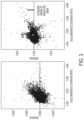
- FIG. 3 is a graph illustrating abnormal karyotypes exhibiting large residuals
- FIG. 4 is another flowchart illustrating an example abnormal karyotype detection method
- FIG. 5 shows a graph illustrating the relationship of GC content and coverage
- FIG. 6 is a graph illustrating identified abnormal karyotypes and outliers
- FIGS. 7 A, 7 B, 7 C, 7 D, 7 E, and 7 F are allele balance plots showing anomalies on chromosomes 9, 13 and 20 for a sample.
- the subplot number is the chromosome number.
- the shaded bar ( 701 ) denotes the normal range of variability expected for a heterozygous SNP allele balance of 0.5.
- the solid line ( 702 ) denotes the whole chromosome median allele balance.
- the dashed line ( 703 ) denotes the local median allele balance in an approximately 20 SNP rolling window.
- the line ( 704 ) denotes runs-of-homozygosity;
- FIG. 8 is a read coverage plot for the same sample as in FIGS. 7 A-F ;
- FIGS. 9 A, 9 B, 9 C, 9 D, 9 E, and 9 F are allele balance plots showing an anomaly on chromosome 21 in a sample and a run-of-homozygosity encompassing all of chromosome X, implying a karyotypically normal male sample having only one X chromosome.
- the shaded bar ( 901 ) denotes the normal range of variability expected for a heterozygous SNP allele balance of 0.5.
- the solid line ( 902 ) denotes the whole chromosome median allele balance.
- the dashed line ( 903 ) denotes the local median allele balance in an approximately 20 SNP rolling window.
- the line ( 904 ) denotes runs-of-homozygosity;
- FIG. 10 is a read coverage plot for the same sample as in FIGS. 9 A-F ;
- FIG. 11 is flowchart illustrating an example abnormal karyotype detection method
- FIG. 12 is an example allele balance plot of a sample on chromosome 4, in which a large run-of-homozygosity is detected ( 1202 ) that has an overlapping LocalHetAB Event ( 1204 ) due to small amounts of non-zero allele balance among homozygous SNPs in the anomalous region;
- FIG. 13 A is a plot of chromosome X versus chromosome Y coverage ratios for all samples and a threshold for determining male ( 1302 ) and female ( 1304 ) samples indicated by the solid line 1306 . Additionally, male samples having chromosome Y duplications can be identified using a chromosome Y coverage ratio threshold (dashed line 1308 );
- FIG. 13 B is an example plot for chromosome 21 demonstrating that the expected chromosome-wide median heterozygous SNP allele balance (ChromHetAB) increases relative to the fraction of bases covered at or above a specific read depth threshold (e.g., 50 ⁇ coverage, “PCTTARGETBASES50 ⁇ ” QC metric); “tier” ratings can be assigned based on the significance of the deviation in the observed versus expected ChromHetAB based on the coverage metric;
- ChromHetAB median heterozygous SNP allele balance
- FIG. 14 is a plot of the ChromHetAB value (x-axis) for all male samples on chromosome X relative to the number of SNPs included in the ChromHetAB value's calculation (putative heterozygous SNPs; y-axis). Lines indicate thresholds to distinguish male samples having duplications on chromosome X based on high, non-zero ChromHetAB values supported by a large number of SNPs;
- FIG. 15 is a plot of all LocalHetAB Events, black and grey dots, (with area greater than an example threshold, vertical line) relative to the number of heterozygous SNPs included in the event (y-axis), with diagonal lines demonstrating example tier rating thresholds.
- Grey dots indicate events having overlapping ROH events;
- FIG. 16 is a block diagram illustrating an exemplary operating environment for performing the disclosed methods.
- the word “comprise” and variations of the word, such as “comprising” and “comprises,” means “including but not limited to,” and is not intended to exclude, for example, other components, integers or steps.
- “Exemplary” means “an example of” and is not intended to convey an indication of a preferred or ideal embodiment. “Such as” is not used in a restrictive sense, but for explanatory purposes.
- the methods and systems may take the form of an entirely hardware embodiment, an entirely software embodiment, or an embodiment combining software and hardware aspects.
- the methods and systems may take the form of a computer program product on a computer-readable storage medium having computer-readable program instructions (e.g., computer software) embodied in the storage medium.
- the present methods and systems may take the form of web-implemented computer software. Any suitable computer-readable storage medium may be utilized including hard disks, CD-ROMs, optical storage devices, or magnetic storage devices.
- These computer program instructions may also be stored in a computer-readable memory that can direct a computer or other programmable data processing apparatus to function in a particular manner, such that the instructions stored in the computer-readable memory produce an article of manufacture including computer-readable instructions for implementing the function specified in the flowchart block or blocks.
- the computer program instructions may also be loaded onto a computer or other programmable data processing apparatus to cause a series of operational steps to be performed on the computer or other programmable apparatus to produce a computer-implemented process such that the instructions that execute on the computer or other programmable apparatus provide steps for implementing the functions specified in the flowchart block or blocks.
- blocks of the block diagrams and flowchart illustrations support combinations of means for performing the specified functions, combinations of steps for performing the specified functions and program instruction means for performing the specified functions. It will also be understood that each block of the block diagrams and flowchart illustrations, and combinations of blocks in the block diagrams and flowchart illustrations, can be implemented by special purpose hardware-based computer systems that perform the specified functions or steps, or combinations of special purpose hardware and computer instructions.
- detecting samples with abnormal karyotypes from population-scale whole-exome sequencing data also referred to as KaryoScan.
- Abnormal karyotypes can be detected through read depth distributions over chromosomes, but multiple factors confound the ability to distinguish true chromosomal anomalies from noise.
- PCR amplification is biased by GC content and experimental conditions, often resulting in non-uniform amplification of DNA fragments across the genome.
- exome capture techniques do not yield uniform target coverage.
- the expected coverage of any particular chromosome or chromosomal region is dependent on multiple factors, some of which are measurable and some of which are not.
- the disclosed methods can compute a read coverage profile for individual samples relative to each chromosome at 102 .
- representative GC-content and mappability metrics can be determined for exonic regions at 104 , as variation is smallest in regions with GC content close to 50% and high mappability.
- a robust read coverage profile r i can be determined for each chromosome i as the sum of read depths over exomic regions with GC content within a range (e.g., 45-55%) and having mappability over a threshold. This metric, as opposed to median chromosomal tag density, allows for sub-chromosomal resolution.
- Chromosomal read coverage profiles can then be normalized at 106 to represent an exome-wide ratio of read coverage for each chromosome relative to other autosomes.
- the exome-wide coverage ratio ⁇ i of chromosome i can be expressed as:
- ⁇ i r i ⁇ ⁇ j ⁇ ( A - i ) ⁇ r j ( 1 )
- (A-i) is the set of autosomes excluding chromosome i
- ⁇ i is determined for all autosomes and chromosome X (chromosome Y can be considered independently).
- the coverage ratio of chromosome i is therefore the ratio of reads on chromosome i compared to all other autosomes.
- Chromosomal abnormalities manifest in deviations of ⁇ i from expectation.
- the expected value of ⁇ i is not constant even between samples of normal (diploid) karyotype and is dependent upon experimental conditions.
- a linear regression model can be used to predict the expected value ⁇ circumflex over ( ⁇ ) ⁇ i of ⁇ i for every individual on every chromosome at 108 .
- An example of the observed ( ⁇ i ) and expected ( ⁇ circumflex over ( ⁇ ) ⁇ i ) values for chromosome 22 after fitting a linear regression are shown in FIG. 2 .
- Sequencing quality control (QC) metrics from Picard that are correlated with variations in read depth can be used as covariates in this model.
- the QC metrics can comprise, for example, one or more of, GCDROPOUT, ATDROPOUT, MEANINSERTSIZE, ONBAITVSSELECTED, PCTPFUQREADS, PCTTARGETBASES10 ⁇ , PCTTARGETBASES50 ⁇ , and/or the like.
- biases that are not measurable can be reflected in results obtained using previously known methods.
- These biases are correlated between chromosomes with similar exomic GC content distributions, and including ⁇ i values of similar chromosomes as additional co-variates can reduce variance to acceptable levels.
- these other chromosomes themselves might be karyotypically abnormal, which could result in false positive calls on the target chromosome.
- An advantage provided by the method of the invention herein is that false positive calls on the target chromosome are minimized by restricting the number of covariates from other chromosomes. For example, the number of covariates from other chromosomes can be restricted to two.
- gender as defined by a chromosome Y coverage threshold
- chromosome X can be used as an additional covariate for chromosome X.
- Detection of abnormal karyotypes can be based on detection of deviations of ⁇ i from expectation for a particular sample ( ⁇ circumflex over ( ⁇ ) ⁇ i ) at 110 , defined by the residual.
- estimates for samples that fall on the extremes of QC metric space inherently can produce mean estimates with higher variance, such that the interpretation of raw residuals cannot be assumed uniform over all samples.
- the disclosed methods can Z-score normalize the residuals relative to the standard error of the mean estimate, S( ⁇ circumflex over ( ⁇ ) ⁇ i ), for an individual sample with covariates x (See FIG. 6 ):
- a p-value based on the Z-score can be determined for each chromosome to identify significantly large residuals at 114 , representing abnormal karyotypes for chromosome i.
- p-value cutoff for p ⁇ 0.05 and q ⁇ 0.05 can be used to identify significantly large residuals. See FIG. 3 , in which the observed ( ⁇ i ) and expected ( ⁇ circumflex over ( ⁇ ) ⁇ i ) values after fitting a linear regression are shown.
- a p-value of up to 0.1 can be used.
- samples can be flagged that having h i (n,p) values greater than a threshold.
- the threshold can be from about 3 to about 5. This can be generally applied to ensure an optimal fit.
- a more conservative threshold can be used to flag the most extreme values, for example, values corresponding to the 99.5th and 99.9th percentiles ( ⁇ 10 and ⁇ 26). In some cases, it is useful to remove high leverage samples and refit the model, thereby reducing standard error for samples not having high leverage and improving (reducing) p-value estimates.
- FIG. 4 is a flowchart illustrating an example method 400 for detecting abnormal karyotypes.
- read coverage data for each chromosome in a plurality of samples can be determined.
- the method 400 can further comprise filtering the read coverage data.
- Filtering the read coverage data can comprise filtering the read coverage data based on a level of guanine-cytosine (GC) content in one or more genomic regions of the plurality of genomic regions.
- Filtering the read coverage data based on a level of guanine-cytosine (GC) content in one or more genomic regions of the plurality of genomic regions can comprise determining a level of GC content for each of the plurality of genomic regions and excluding one or more genomic regions of the plurality of genomic regions having a level of GC content outside a range.
- the present methods can filter one or more genomic regions with extreme GC content.
- GC-amplification bias can be corrected when the bias is mostly consistent for any particular level of GC content.
- the stochastic coverage volatility may increase dramatically, making it difficult to normalize effectively.
- the present methods can filter one or more genomic regions where the GC-fraction is outside of a configurable (e.g., or predefined) range or threshold.
- the configurable range can comprise [0.3, 0.7], as shown in FIG. 5 . It should be appreciated, however, that other ranges (e.g., thresholds) can be utilized as appropriate.
- FIG. 5 shows a graph illustrating the relationship of GC content and coverage.
- the coefficient of variation (e.g., standard deviation divided by mean) of coverage is shown on the y-axis and GC content is shown in the x-axis.
- the graph shows 50 samples (e.g., points jittered for visibility).
- the variance of coverage itself can be highly variable between samples. This variance makes it difficult to accurately estimate the expected variance of coverage for a particular sample at a particular window, as each reference panel sample's coverage value is an observation from a different distribution.
- Filtering the read coverage data in the method 400 can comprise filtering one or more genomic regions of the plurality of genomic regions based on a mappability score of the one or more genomic regions of the plurality of genomic regions.
- Filtering one or more genomic regions of the plurality of genomic regions based on a mappability score of the one or more genomic regions of the plurality of genomic regions can comprise determining a mappability score for each genomic region of the plurality of genomic regions and excluding one or more genomic regions of the plurality of genomic if the mappability score of the one or more genomic regions of the plurality of genomic regions is below a predetermined threshold.
- Determining a mappability score for each genomic region of the plurality of genomic regions can comprise determining an average of an inverse reference-genome frequency of k-mers whose first base overlaps the genomic region of the plurality of genomic regions.
- the method 400 can further comprise normalizing the read coverage data. Normalizing the read coverage data can comprise determining an exome-wide ratio of read coverage for each chromosome relative to other autosomes. The exome-wide ratio ( ⁇ ) can be determined for each chromosome (i) by:
- ⁇ i r i ⁇ ⁇ j ⁇ ( A - i ) ⁇ r j
- A is the set of autosomes and r is read coverage.
- expected read coverage data for each chromosome in the plurality of samples can be determined. Determining expected read coverage data for each chromosome in the plurality of samples can comprise applying a linear regression model to determine an expected exome-wide ratio for each chromosome, wherein a plurality of metrics are used as covariates.
- the plurality of metrics can comprise sequencing quality control metrics (QC metrics). Systematic coverage biases that arise due to variability in sequencing conditions are commonly referred to as “batch effects.” In an aspect, the present methods and systems can be configured to correct for batch effects.
- the present methods and systems can be configured to consider a low-dimensional metric space based on sequencing quality control (QC) metrics.
- the sequencing QC metrics can comprise seven sequencing QC metrics.
- the sequencing QC metrics can comprise sequencing QC metrics from a sequencing tool, such as Picard. Working in this low-dimensional space allows for improved scalability. For example, samples can be indexed ahead-of-time (e.g., using any appropriate indexing and/or search algorithm).
- a deviation between the read coverage data and the expected read coverage data for at least one chromosome in the plurality of samples can be determined. Determining a deviation between the read coverage data and the expected read coverage data for at least one chromosome in the plurality of samples can comprise determining, for each chromosome in the plurality of samples, a difference between the read coverage data and the expected read coverage data to generate a plurality of residuals and Z-score normalizing the plurality of residuals relative to a standard error of the mean estimate, S( ⁇ circumflex over ( ⁇ ) ⁇ i ), for an individual sample of the plurality of samples with covariates x:
- FIG. 6 depicts the results obtained using a linear regression model, in which the covariates included QC metrics and chromosomes, and in which the observed ( ⁇ i ) and expected ( ⁇ circumflex over ( ⁇ ) ⁇ i ) values after fitting the linear regression are shown 6 .
- a different standard error estimator can be used, for example the raw residual standard error (one value for the entire model) or using heteroskedasticity-consistent standard errors.
- FIG. 7 A-F are allele balance plots showing partial chromosome allele balance events for chromosomes 9, 13, and 20.
- the subplot number is the chromosome number.
- the shaded bar 701 denotes the normal range of variability expected for a heterozygous SNP allele balance of 0.5.
- the line 702 denotes the whole chromosome median allele balance.
- the dashed line 703 denotes the local median allele balance in an approximately 20 SNP rolling window.
- the line 704 denotes runs-of-homozygosity.
- FIG. 8 is a read coverage plot that shows a significant underrepresentation of reads for chromosomes 13 and 20 for the same sample.
- FIG. 9 A-F are allele balance plots of a trisomy 21 sample (Down Syndrome).
- the allele balance plots show an anomaly on chromosome 21 in a sample and a run-of-homozygosity encompassing all of chromosome X, implying a karyotypically normal male sample having only one X chromosome.
- the shaded bar ( 901 ) denotes the normal range of variability expected for a heterozygous SNP allele balance of 0.5.
- the solid line ( 902 ) denotes the whole chromosome median allele balance.
- the dashed line ( 903 ) denotes the local median allele balance in an approximately 20 SNP rolling window.
- the line ( 904 ) denotes runs-of-homozygosity.
- FIG. 10 is a read coverage plot for the same sample.
- Information obtained using the methods disclosed herein can be reported by a clinician to a patient, for example, in order to provide further clinical insight into an existing diagnosis, such as autism or an autism-spectrum condition.
- Information obtained using the methods disclosed herein can also be used by a clinician to provide a patient with clarity about known or unknown fertility issues, for example, in a patient with a sex chromosome abnormality.
- the methods disclosed herein can also be used to monitor cancer detection and development.
- Read coverage data can be computed from genome-aligned sequence reads that are generated prior to the KaryoScan method herein, for the purpose of detecting single nucleotide polymorphisms (SNPs), insertions and deletions (indels) for individual samples.
- SNPs having only two observed alleles or one observed homozygous allele that differs from a second allele defined by the reference genome that is unobserved in the sequence reads of this particular sample
- bi-allelic SNPs By focusing on bi-allelic SNPs, one can calculate the allele balance of a particular site in the genome.
- allele balance analysis can be used to identify one or more karyotypes.
- Allele balance is a measure of how many sequence reads support each allele. For example, if a heterozygous SNP is covered by 100 sequence reads, and the sample is diploid in this genomic region, 50 reads of one allele and 50 reads of the other allele can be expected, yielding an allele balance of 0.5/0.5. Because the allele balance of both alleles sums to 1 and is symmetric about 0.5, the focus is on the minor allele balance (e.g., the allele with fewer reads, or a randomly selected allele if the two alleles are exactly equal in coverage).
- N number of aligned sequence reads
- p true proportion
- mosaic events In addition to partial chromosome events, mosaic events (whole or partial chromosome) will also be reflected in allele balance distribution deviations.
- Mosaic events are events that occur in a subset of the cell population that provided DNA for the sequenced sample. Mosaicism can be a result of somatic mutation (such as in cancer) or in errors in early germline cell division. For example, if a whole chromosome deletion occurs in only 50% of sequenced cells, heterozygous SNPs from the deleted chromosome will have an expected 25% allele balance in addition to a 25% depletion in read coverage. Thus, allele balance can also be used to distinguish mosaic events.
- UPD Uniparental disomy
- Anomalies in chromosomal coverage can also occur without causing an anomaly in allele balance. For example, if a chromosome is duplicated into four copies (tetrasomy), the resulting karyotype may have two chromosomes of each parental origin, yielding a normal allele balance of ⁇ 50%. This would have the same effect in both mosaic and non-mosaic events.
- FIG. 11 is a flowchart illustrating an example method 1100 for detecting abnormal karyotypes incorporating read coverage and allele balance analysis.
- the method 1100 can determine one or more metrics which are described here for convenience and referred to in the description of the method flow.
- the method 1100 can determine a variant allele balance which can be a variant-specific metric determined by calculating a minimum (# of alternate allele reads, # of reference allele reads)/total # reads.
- the method 1100 can utilize “AD” (allele depth) and “DP” (read depth) tags from one or more VCF files to determine the variant allele balance.
- AD allele depth
- DP read depth
- the method 1100 can determine a callable chromosome length which can be a chromosome-specific metric determined by calculating a # of base pairs between the first and last unfiltered exons on the chromosome ⁇ # of overlapping centromeric bases.
- the adjustment for centromeric bases accounts for seemingly large events that span the centromere, where no read coverage is present.
- genomic centromere boundaries can be adjusted to the nearest exonic boundaries.
- restricting to the first and last unfiltered exons accounts for long telomeric regions without exon coverage, as well as for chromosomes having entire arms lacking exon coverage (e.g., many acrocentric chromosomes).
- the method 1100 can determine a chromosome-wide heterozygous allele balance (referred to as ChromHetAB) which is a chromosome-specific metric that enables filtering for putative heterozygous SNPs whereby variant allele balance >0.02 (threshold can be adjusted closer to or further from 0 depending on sequencing depth).
- ChromHetAB can be a summary statistic (e.g., median) representing the chromosome-wide heterozygous SNP allele balance among all unfiltered variants within a chromosome.
- ChromHetAB can be determined by calculating a median(variant allele balance) for all unfiltered variants within a chromosome.
- ChromHetAB References to ChromHetAB with respect to a specific SNP, LocalHetAB Event, or ROH Event can refer to the ChromHetAB value for the chromosome on which the SNP or event occurs.
- ChromHetAB can be a summary statistic (e.g., median) representing the chromosome-wide heterozygous SNP allele balance among all unfiltered variants within a chromosome.
- the method 1100 can determine a local median heterozygous allele balance (referred to as LocalHetAB) which is a variant-specific metric that enables filtering for possible heterozygous SNPs whereby variant allele balance >0.02 (threshold can be adjusted closer to or further from 0 depending on sequencing depth).
- LocalHetAB can be determined by calculating a running median of variant allele balance over an entire chromosome, using a 20 SNP window and constant ends.
- determining the LocalHetAB can comprises determining a smoothed, sub-chromosome scale (e.g., local) summary statistic (e.g., running median) of a sample's heterozygous SNP allele balance across all unfiltered variants on a chromosome.
- the method 1100 can determine a contiguous region of two or more SNPs, all having LocalHetAB ⁇ ChromHetAB (referred to as a LocalHetAB Event).
- the method 1100 can define coordinates (start and end chromosomal position) by first and last SNP within the LocalHetAB Event. There can be zero to a plurality of LocalHetAB Events per chromosome.
- the method 1100 can determine a LocalHetAB Event Area by calculating a normalized “area under the curve” for LocalHetAB Events.
- the method 1100 can determine a summary allele balance (AB) statistic for a LocalHetAB Event (referred to as a LocalHetAB Event AB) by determining a minimum(LocalHetAB, for all SNPs in the LocalHetAB Event). Because LocalHetAB is a smoothed (running median) estimate of the allele balance, the minimum is a good estimate for the entire event. However, alternative metrics (e.g. mean, median, 1 st quartile, etc.) may be better suited in other applications (e.g. larger SNP window size, deeper sequencing, whole-genome sequencing, etc.).
- AB summary allele balance
- the method 1100 can determine Runs-of-Homozygosity (referred to as ROH) which is a variant-specific metric for chromosomal regions where little-to-no heterozygosity is observed.
- ROH is a binary (yes/no) flag at every variant, but may have supporting metrics (e.g., confidence score).
- determining ROH can include use of the BCFtools/RoH method described by Narasimhan, V., et al. (2016) Bioinformatics, 32(11), 1749-1751), incorporated by reference herein in its entirety.
- one or more alternative method could be used. For example, Plink as described by Purcell S, Neale B, Todd-Brown K, et al. PLINK: A Tool Set for Whole-Genome Association and Population-Based Linkage Analyses. American Journal of Human Genetics. 2007; 81(3):559-575, incorporated by reference herein in its entirety.
- the method 1100 can determine a contiguous region of one or more SNPs predicted as ROH (referred to as a ROH Event).
- Event coordinates can be defined as the chromosomal positions of the first and last SNP within the ROH Event.
- data for all samples can be subjected to quality control (QC) filtering at block 1102 .
- the data can comprise, for example, VCF files (e.g., one VCF file per sample), depth of coverage files, and/or external quality control metrics (e.g., Picard metrics computed from a BAM read-mapping file).
- VCF files can comprise marker and genotype data for gene sequence variations.
- the depth of coverage files can comprise indications of a number of reads that include a given nucleotide or sequence of nucleotides.
- QC filtering can comprise application of one or more sample filtering criteria to the depth of coverage files, VCF files, and/or external quality control metrics.
- the one or more sample filtering criteria can comprise, for example, standard contamination filters (such as high heterozygous to homozygous SNP call ratios), filtering based on low sequence coverage ( ⁇ 75% of bases at 20 ⁇ coverage or higher), and/or filtering based on low DNA quality, combinations thereof, and the like.
- the QC filtering can comprise application of one or more variant filtering criteria to the VCF files.
- gender assignment can be performed on data associated with samples that pass through the QC filtering at block 1102 .
- Gender assignment can comprise determining a minimum chromosome Y read coverage ratio (relative to a chromosome X read coverage ratio) to determine if a sample is male (above the threshold) or female (below the threshold).
- FIG. 13 A is a plot of chromosome X versus chromosome Y coverage ratios for all samples and a threshold for determining male ( 1302 ) and female ( 1304 ) samples indicated by the solid line 1306 . Additionally, male samples having chromosome Y duplications can be identified using a chromosome Y coverage ratio threshold (dashed line 1308 ). If sample genders are already known or reported for samples, the existing assignments can be used to help determine appropriate thresholds. After gender assignment at block 1104 , each chromosome from the sample(s) can be processed via one or more of the remaining blocks of the method 1100 .
- the method 1100 can determine if coverage of the Y chromosome is greater than a threshold, for example, 0.0015. If the coverage of the Y chromosome is greater than the threshold, the method 1100 can determine at block 1108 that there has been a duplication of the Y chromosome and proceed to block 1138 as the Y chromosome can be treated independently of other chromosomes. If the coverage of the Y chromosome is less than the threshold, the method 1100 can determine at block 1108 that the sample has a normal dosage of Y chromosome reads for a male sample and therefore no detectable anomaly occurs on the Y chromosome.
- a threshold for example, 0.0015. If the coverage of the Y chromosome is greater than the threshold, the method 1100 can determine at block 1108 that there has been a duplication of the Y chromosome and proceed to block 1138 as the Y chromosome can be treated independently of other chromosomes. If the coverage of the Y
- gender assignment can comprise determining whether the sample is expected to have one or two X chromosomes (male or female), in which case the method 1100 will proceed to block 1110 to process chromosome X for the sample.
- the method 1100 can determine whether the data is derived from a male. If at block 1110 , it is determined that the data is derived from a male, the method 1100 will proceed to blocks 1112 and 1114 . If at block 1110 , it is determined that the data is not derived from a male, the method 1100 will proceed to blocks 1112 , 1114 , 1116 , and 1118 .
- gender assignment can comprise determining that the data comprises an autosome, in which case the method 1100 will proceed to blocks 1112 , 1114 , 1116 , and 1118 .
- the method 1100 can detect read coverage anomalies. Block 1112 can be performed as described herein with reference to one or more portions of FIG. 1 and/or FIG. 4 .
- the method 1100 can detect ChromHetAB anomalies.
- the method 1100 can detect ROH anomalies.
- the method 1100 can detect LocalHetAB anomalies.
- Blocks 1114 , 1116 , and 1118 related to determination of three allele-balance metrics (ChromHetAB, ROH, and LocalHetAB, respectively).
- These three allele-balance metrics can be used for detecting different types of anomalies, but can result in overlapping evidence.
- ROH can be used for identifying constitutional chromosomal deletions (whole or partial chromosome), as heterozygosity should not be observed in these regions.
- ROH can identify large uniparental disomy (UPD) events (copy neutral, whole or partial chromosome), but is not useful for identifying duplications.
- UPD uniparental disomy
- the LocalHetAB and ChromHetAB metrics may also produce anomalous signals within an ROH event by identifying small amounts of noise (due to technical artifacts, such as sequencing errors) resembling putative heterozygosity, having variant allele balance values close to 0; these signals can be ignored in lieu of the ROH anomaly (see FIG. 12 , representing an ROH event with an overlapping LocalHetAB event).
- FIG. 12 is an example allele balance plot of a sample on chromosome 4, in which a large run-of-homozygosity is detected ( 1202 ) that has an overlapping LocalHetAB Event ( 1204 ) due to small amounts of non-zero allele balance among homozygous SNPs in the anomalous region.
- ChromHetAB can be the most relevant metric; it should equal roughly 1 ⁇ 3 for a trisomy, or a fraction representative of the copy number and cellular fraction of a mosaic event.
- LocalHetAB can be the most relevant metric as it will detect event start and end coordinates.
- a large, partial chromosome event can also influence the chromosome-wide ChromHetAB metric, creating an anomalous signal that is better captured by the LocalHetAB event.
- balancing the evidence provided by each metric can be a component of automating the detection and characterization of a chromosomal anomaly.
- three Tiers of putatively anomalous signals can be defined for each metric, where Tier 1 signals are the most significant and Tier 3 are the least. Tier ratings are used to standardize and integrate these heterogeneous metrics, enabling simple decisions as to which signals are most relevant. Other numbers of Tiers can be used and defined.
- Tier 3 can comprise not passing Tier 1 or Tier 2 and read coverage p-value ⁇ a threshold, such as 0.05.
- One or more exceptions can apply to X Chromosome analysis. For example, Tier 3 signals on chrX can be promoted to Tier 2 if the absolute value (magnitude) of the estimated chromosomal dosage fraction is >5%.
- the variant allele balance metric always reflects the fraction of reads from the allele of a bi-allelic SNP with fewer reads, the expected ChromHetAB value for a karyotypically normal, diploid sample on a given chromosome is unlikely to be exactly 50%, but approaches 50% as sequencing depth increases. Therefore, a linear regression can be fit on the ChromHetAB values for all samples on a given chromosome (females only for chromosome X) relative to the PCTTARGETBASES50 ⁇ quality control metric (calculated per sample using Picard) ( FIG.
- a Z-score can be calculated for the residual of every sample's ChromHetAB value (observed ChromHetAB ⁇ expected ChromHetAB as defined by the regression).
- the Z-score can be transformed into a p-value.
- Tier 3 can comprise not passing Tier 1 or Tier 2 and ChromHetAB residual p-value ⁇ a threshold, such as 0.05.
- ChromHetAB can be ignored and not tested unless >75 SNPs are included in the metric's calculation and the ChromHetAB >0.15.
- These filters allow for chrX duplications in males to be included if they have a ChromHetAB value much larger than expected (i.e., zero for a single X chromosome) and having a sufficient number of SNPs used to call the ChromHetAB value confidently, while removing noise from karyotypically normal male samples ( FIG.
- detecting a ChromHetAB anomaly can comprise identifying a sample with a ChromHetAB value that is significantly smaller than the ChromHetAB value (or range of values) expected for a karyotypically normal sample
- ROH anomalies can be detected.
- Small ROH events are relatively common in karyotypically normal samples, and can be particularly frequent among consanguineous samples, for example. Therefore minimum size thresholds for ROH events can be defined to capture only large, chromosome-scale events.
- ROH event detection can be challenging when truly homozygous variants have non-zero variant allele balance due to technical artifacts. As a result, some large ROH events get fragmented into two or more ROH events ( FIG. 12 ). Thus independent ROH events within a chromosome are considered in combination. Detection of ROH Anomalies can utilize the following Tier definitions.
- Tier 2 can comprise unfiltered ROH events not passing Tier 1.
- One or more exceptions can apply to X Chromosome analysis. All ROH signals for male samples on chrX can be ignored.
- defining a male sample refers to the assignment (based on X and Y read coverage) to have an expectation of one X and one Y chromosome, assuming a karyotypically normal state.
- LocalHetAB anomalies can be detected.
- significant LocalHetAB Event anomalies should have large LocalHetAB Event Area metrics and be supported by a large number of included SNPs.
- a linear function can be defined to empirically fit to the exome data set relating LocalHetAB Event Area and # of SNPs included in the LocalHetAB Event (“# of SNPs”), with tier definitions defined using different intercepts on the same slope coefficient (e.g., minimum # of SNPs required for an event having a particular LocalHetAB Event Area). See FIG.
- Tier 15 showing all LocalHetAB events (dots) with area >0.02 (vertical line) and their separation into tiers based on the regions between diagonal lines (red points indicate an overlapping ROH event exists, providing supporting evidence that the LocalHetAB event is detecting an anomaly).
- One or more exceptions can apply to X Chromosome analysis. All LocalHetAB signals for male samples on chrX are ignored.
- defining a male sample refers to the assignment (based on X and Y read coverage) to have an expectation of one X and one Y chromosome, assuming a karyotypically normal state.
- detecting a LocalHetAB anomaly can comprise where the LocalHetAB value falls below (e.g., significantly below) the corresponding ChromHetAB value over a chromosomal region, indicating a possible partial chromosome anomaly.
- the analysis performed at blocks 1112 , 1114 , 1116 , and 1118 for the disclosed metrics contribute to a chromosomal anomaly prediction.
- the metrics can be annotated with tier ratings, filtered to remove non-anomalous metrics, and aggregated at block 1136 prior to karyotype prediction at block 1138 .
- the method 1100 can report anomalous events identified by each metric from blocks 1112 , 1114 , 1116 , and 1118 , and score each event into Tiers (e.g., Tier 1, Tier 2, Tier 3, etc. . . . ) that standardize the scaling between metrics and simplify their aggregation for abnormal karyotype (chromosomal anomaly) assessment.
- Tiers e.g., Tier 1, Tier 2, Tier 3, etc. . . .
- the method 1100 can report and/or score events for each of the one or more Tiers (e.g., Tier 1, Tier 2, Tier 3, etc. . . . ) used.
- the read coverage anomaly metric can be used for assessing chromosomal dosage and the remaining three can be used to assess allele balance and zygosity (ChromMedAB, ROH, and LocalHetAB events).
- the method 1100 can determine whether the event reflects a copy gain, a copy loss, or is copy neutral. This assessment can be made primarily based on the presence or absence of a read coverage anomaly, but supplementary information from allele balance-related metrics can also be considered. For example, all Tier 1 read coverage anomalies may be predicted as gains or losses independently, but Tier 2 and/or Tier 3 read coverage anomalies may only be deemed gains or losses if a supporting allele balance anomaly is also detected on the same chromosome. If no read coverage anomaly is detected to call a gain or loss, the event is assumed to be copy neutral, and may additionally be flagged as uncertain if a low-quality read coverage anomaly is detected but filtered.
- the method 1100 can proceed to block 1124 to determine if the underlying chromosome is a whole or a partial chromosome, based on comparison of anomalous LocalHetAB and ChromHetAB events on the chromosome. For example, if a LocalHetAB event has a lower tier rating (e.g. more significant) than an overlapping ChromHetAB event (or if no ChromHetAB event is reported), the event may be predicted as partial chromosome given that the LocalHetAB event is more significant. Conversely, a lower tier ChromHetAB event would suggest a whole chromosome event is more likely the case.
- the method may report the anomaly as uncertain and/or favor one event as more heavily weighted (e.g. favor LocalHetAB and call a partial chromosome event). Furthermore, the method may also compare estimates of the chromosomal fraction gain computed from the read coverage 11 to similar estimates from each allele balance anomaly, and weight the allele balance events by how closely their estimates match the estimate from read coverage.
- the method 1100 can proceed to block 1126 and utilize the respective allele balance metric to determine if the copy gain is a mosaic event by determining how close the heterozygous allele balance estimate is to 1/N, where N is the number of chromosomal copies predicted (e.g. 1 ⁇ 3 for a single copy autosomal gain).
- N is the number of chromosomal copies predicted (e.g. 1 ⁇ 3 for a single copy autosomal gain).
- One may apply an error threshold around this expected rate (e.g. 1 ⁇ 3 ⁇ 0.02) to make a binary (yes or no) classification for mosaicism. If no overlapping LocalHetAB nor ChromHetAB event is reported, one may assign the chromosomal and mosaic fraction estimates to uncertain and/or set a default value.
- This assessment is similar to that of copy gains (block 1124 ), where a more significant LocalHetAB event may indicate a partial chromosome event and a more significant ChromHetAB event may indicate a whole chromosome event, and an allele balance-based estimate of chromosomal fraction can be compared to the read coverage event's chromosomal fraction estimate.
- the method 1100 can proceed to block 1128 to determine if the copy neutral event is a mosaic utilizing ROH. If the copy neutral event is not mosaic (e.g., an ROH event is reported), the method 1100 can utilize ROH to determine if the underlying chromosome is whole or partial. If the copy neutral event is a mosaic the method 1100 can utilize ChromHetAB and LocalHetAB to determine if the underlying chromosome is whole or partial.
- Every anomaly can be reported with one or more of: 1) prediction of copy neutral, copy gain, or copy loss; 2) prediction of a whole or partial chromosome event; 3) prediction of mosaic or not mosaic; 4) a final tier rating, which can be equal to the minimum (most significant) tier rating for all events reported on the chromosome, or can be additionally modified to up- or down-weight anomalies if they have multiple mid-tier events (e.g., a tier 2 read coverage event with a supporting tier 2 LocalHetAB event may be deemed tier 1); and 5) a summary of some or all events reported for the chromosome, their tier ratings, and whether they were chosen as a primary or supporting event (e.g., for a non-mosaic, whole chromosome loss with tier 1 read coverage, ROH, and ChromHetAB events, read coverage and ROH are primary events, but ChromHetAB is a supporting event
- the output of block 1138 represents a karyotype prediction, where some or all chromosomal anomalies have been aggregated for a sample and interpreted relative to the expected karyotype (given the gender assignment from block 1104 ). This may be represented as a traditional karyotype coding (e.g., “47,XXY”) and/or a list of anomalies and their supporting information. Given the uncertainty of an automated karyotype prediction and the fact that certain complex karyotypes (e.g. isochromosomes) have unique patterns not easily interpreted automatically, supporting read coverage and allele balance diagnostic plots can be computed by block 1138 for every sample, enabling manual inspection of predicted chromosomal anomalies and their supporting evidence.
- a traditional karyotype coding e.g., “47,XXY”
- supporting read coverage and allele balance diagnostic plots can be computed by block 1138 for every sample, enabling manual inspection of predicted chromosomal anomalies and their supporting evidence.
- final anomalous karyotype calls can comprise one or more of: Sample; Chromosome; Start/End coordinates; Dosage change vs. copy neutral prediction (gain, loss, neutral, uncertain); Whole vs. partial chromosome event prediction (whole, partial, uncertain); Predicted mosaic event (yes, no, uncertain); Fraction estimate from read coverage, (i.e.
- the present methods and systems can be operational with numerous other general purpose or special purpose computing system environments or configurations.
- Examples of well-known computing systems, environments, and/or configurations that can be suitable for use with the systems and methods comprise, but are not limited to, personal computers, server computers, laptop devices, and multiprocessor systems. Additional examples comprise set top boxes, programmable consumer electronics, network PCs, minicomputers, mainframe computers, distributed computing environments that comprise any of the above systems or devices, and the like.
- the processing of the disclosed methods and systems can be performed by software components.
- the disclosed systems and methods can be described in the general context of computer-executable instructions, such as program modules, being executed by one or more computers or other devices.
- program modules comprise computer code, routines, programs, objects, components, data structures, etc. that perform particular tasks or implement particular abstract data types.
- the disclosed methods can also be practiced in grid-based and distributed computing environments where tasks are performed by remote processing devices that are linked through a communications network.
- program modules can be located in both local and remote computer storage media including memory storage devices.
- the components of the computer 1601 can comprise, but are not limited to, one or more processors 1603 , a system memory 1612 , and a system bus 1613 that couples various system components including the one or more processors 1603 to the system memory 1612 .
- the system can utilize parallel computing.
- the system bus 1613 represents one or more of several possible types of bus structures, including a memory bus or memory controller, a peripheral bus, an accelerated graphics port, or local bus using any of a variety of bus architectures.
- the bus 1613 , and all buses specified in this description can also be implemented over a wired or wireless network connection and each of the subsystems, including the one or more processors 1603 , a mass storage device 1604 , an operating system 1605 , KaryoScan software 1606 , KaryoScan data 1607 , a network adapter 1608 , the system memory 1612 , an Input/Output Interface 1610 , a display adapter 1609 , a display device 1611 , and a human machine interface 1602 , can be contained within one or more remote computing devices 1614 a,b,c at physically separate locations, connected through buses of this form, in effect implementing a fully distributed system.
- the computer 1601 typically comprises a variety of computer readable media. Exemplary readable media can be any available media that is accessible by the computer 1601 and comprises, for example and not meant to be limiting, both volatile and non-volatile media, removable and non-removable media.
- the system memory 1612 comprises computer readable media in the form of volatile memory, such as random access memory (RAM), and/or non-volatile memory, such as read only memory (ROM).
- RAM random access memory
- ROM read only memory
- the system memory 1612 typically contains data such as the KaryoScan data 1607 and/or program modules such as the operating system 1605 and the KaryoScan software 1606 that are immediately accessible to and/or are presently operated on by the one or more processors 1603 .
- the KaryoScan data 1607 can comprise read coverage data and/or expected read coverage data.
- the computer 1601 can also comprise other removable/non-removable, volatile/non-volatile computer storage media.
- FIG. 16 illustrates the mass storage device 1604 which can provide non-volatile storage of computer code, computer readable instructions, data structures, program modules, and other data for the computer 1601 .
- the mass storage device 1604 can be a hard disk, a removable magnetic disk, a removable optical disk, magnetic cassettes or other magnetic storage devices, flash memory cards, CD-ROM, digital versatile disks (DVD) or other optical storage, random access memories (RAM), read only memories (ROM), electrically erasable programmable read-only memory (EEPROM), and the like.
- the user can enter commands and information into the computer 1601 via an input device (not shown).
- input devices comprise, but are not limited to, a keyboard, pointing device (e.g., a “mouse”), a microphone, a joystick, a scanner, tactile input devices such as gloves, and other body coverings, and the like.
- pointing device e.g., a “mouse”
- tactile input devices such as gloves, and other body coverings, and the like.
- These and other input devices can be connected to the one or more processors 1603 via the human machine interface 1602 that is coupled to the system bus 1613 , but can be connected by other interface and bus structures, such as a parallel port, game port, an IEEE 1394 Port (also known as a Firewire port), a serial port, or a universal serial bus (USB).
- USB universal serial bus
- the display device 1611 can also be connected to the system bus 1613 via an interface, such as the display adapter 1609 .
- the computer 1601 can have more than one display adapter 1609 and the computer 1601 can have more than one display device 1611 .
- a display device can be a monitor, an LCD (Liquid Crystal Display), or a projector.
- other output peripheral devices can comprise components such as speakers (not shown) and a printer (not shown) which can be connected to the computer 1601 via the Input/Output Interface 1610 . Any step and/or result of the methods can be output in any form to an output device.
- Such output can be any form of visual representation, including, but not limited to, textual, graphical, animation, audio, tactile, and the like.
- the display 1611 and computer 1601 can be part of one device, or separate devices.
- the computer 1601 can operate in a networked environment using logical connections to one or more remote computing devices 1614 a,b,c .
- a remote computing device can be a personal computer, portable computer, smartphone, a server, a router, a network computer, a peer device or other common network node, and so on.
- Logical connections between the computer 1601 and a remote computing device 1614 a,b,c can be made via a network 1615 , such as a local area network (LAN) and/or a general wide area network (WAN).
- LAN local area network
- WAN general wide area network
- Such network connections can be through the network adapter 1608 .
- the network adapter 1608 can be implemented in both wired and wireless environments. Such networking environments are conventional and commonplace in dwellings, offices, enterprise-wide computer networks, intranets, and the Internet.
- KaryoScan software 1606 and/or the KaryoScan data 1607 can be stored on and/or executed on one or more of the computing device 1601 , the remote computing devices 1614 a,b,c , and/or combinations thereof.
- the KaryoScan software 1606 and/or the KaryoScan data 1607 can be operational within a cloud computing environment whereby access to the KaryoScan software 1606 and/or the KaryoScan data 1607 can be performed over the network 1615 (e.g., the Internet).
- the KaryoScan data 1607 can be synchronized across one or more of the computing device 1601 , the remote computing devices 1614 a,b,c , and/or combinations thereof.
- An implementation of the KaryoScan software 1606 can be stored on or transmitted across some form of computer readable media. Any of the disclosed methods can be performed by computer readable instructions embodied on computer readable media.
- Computer readable media can be any available media that can be accessed by a computer. By way of example and not meant to be limiting, computer readable media can comprise “computer storage media” and “communications media.” “Computer storage media” comprise volatile and non-volatile, removable and non-removable media implemented in any methods or technology for storage of information such as computer readable instructions, data structures, program modules, or other data.
- Exemplary computer storage media comprises, but is not limited to, RAM, ROM, EEPROM, flash memory or other memory technology, CD-ROM, digital versatile disks (DVD) or other optical storage, magnetic cassettes, magnetic tape, magnetic disk storage or other magnetic storage devices, or any other medium which can be used to store the desired information and which can be accessed by a computer.
- the methods and systems can employ Artificial Intelligence techniques such as machine learning and iterative learning.
- Artificial Intelligence techniques such as machine learning and iterative learning. Examples of such techniques include, but are not limited to, expert systems, case based reasoning, Bayesian networks, behavior based AI, neural networks, fuzzy systems, evolutionary computation (e.g. genetic algorithms), swarm intelligence (e.g. ant algorithms), and hybrid intelligent systems (e.g. Expert inference rules generated through a neural network or production rules from statistical learning).
- the KaryoScan method herein uses a novel co-normalization technique that assesses chromosomes in the context of their GC content and sequencing performance so that more accurate coverage normalization can be achieved. This is distinct from methods targeting the detection of smaller genomic changes as they are dependent entirely on the local GC-content biases. While methodologies targeting smaller changes can at times detect pieces of larger events, the smoothing functions (hidden Markov models for example) routinely used to understand high-resolution copy number changes in the context of larger events break down at the chromosome-arm scale. Furthermore, the integration of allele frequency data into KaryoScan calls provides for unique features including the detection of balanced genomic changes that do not present any signal in coverage space, but which may represent significant impact due to the loss of genetic variation.
- the KaryoScan method herein provides an estimate of the fraction.
- the disclosed methods were applied to 100,000 samples from the Regeneron Genetics Center's human exome variant database. In total, 3,150 samples were flagged as karyotypically abnormal at the highest stringency level on at least one tested chromosome, with 472 being gains or losses (not copy neutral). Over 200 samples were flagged as having sex chromosomal anomalies (chromosome X or chromosome Y), including extremely rare karyotypes (48, XXXX) and (48, XXXY).
Landscapes
- Life Sciences & Earth Sciences (AREA)
- Physics & Mathematics (AREA)
- Health & Medical Sciences (AREA)
- Engineering & Computer Science (AREA)
- Bioinformatics & Cheminformatics (AREA)
- Medical Informatics (AREA)
- Chemical & Material Sciences (AREA)
- Biotechnology (AREA)
- Biophysics (AREA)
- General Health & Medical Sciences (AREA)
- Theoretical Computer Science (AREA)
- Evolutionary Biology (AREA)
- Bioinformatics & Computational Biology (AREA)
- Spectroscopy & Molecular Physics (AREA)
- Proteomics, Peptides & Aminoacids (AREA)
- Analytical Chemistry (AREA)
- Genetics & Genomics (AREA)
- Molecular Biology (AREA)
- Bioethics (AREA)
- Databases & Information Systems (AREA)
- Data Mining & Analysis (AREA)
- Organic Chemistry (AREA)
- Computer Vision & Pattern Recognition (AREA)
- Artificial Intelligence (AREA)
- Software Systems (AREA)
- Evolutionary Computation (AREA)
- Epidemiology (AREA)
- Public Health (AREA)
- Zoology (AREA)
- Immunology (AREA)
- Wood Science & Technology (AREA)
- Microbiology (AREA)
- Cell Biology (AREA)
- Biochemistry (AREA)
- General Engineering & Computer Science (AREA)
- Measuring Or Testing Involving Enzymes Or Micro-Organisms (AREA)
- Management, Administration, Business Operations System, And Electronic Commerce (AREA)
Abstract
Description
where (A-i) is the set of autosomes excluding chromosome i, and γi is determined for all autosomes and chromosome X (chromosome Y can be considered independently). The coverage ratio of chromosome i is therefore the ratio of reads on chromosome i compared to all other autosomes.
{circumflex over (γ)}i =f(QC metrics,γj,γk) (2)
where chromosomes j,k are defined as the two autosomes with minimal D statistics relative to the GC content distribution of chromosome i. In some aspects, gender (as defined by a chromosome Y coverage threshold) can be used as an additional covariate for chromosome X.
where Se is the residual standard error, n is the number of samples used to fit the model, and:
where p is the number of covariates in the model. In an aspect, samples can be flagged that having hi (n,p) values greater than a threshold. For example, the threshold can be from about 3 to about 5. This can be generally applied to ensure an optimal fit. A more conservative threshold can be used to flag the most extreme values, for example, values corresponding to the 99.5th and 99.9th percentiles (˜10 and ˜26). In some cases, it is useful to remove high leverage samples and refit the model, thereby reducing standard error for samples not having high leverage and improving (reducing) p-value estimates.
wherein A is the set of autosomes and r is read coverage.
{circumflex over (γ)}i =f(QC metrics,γj,γk)
wherein chromosomes j,k are defined as two autosomes with minimal D statistics relative to a GC content distribution of chromosome i and εi is a random component of a linear relationship between {circumflex over (γ)} and γj,γk.
where Se is the residual standard error, and:
See
where p is the number of covariates in the model, xi represents a vector of covariates for sample i, and
Claims (14)
{circumflex over (γ)}i =f(QC metrics,γj,γk)
Priority Applications (2)
| Application Number | Priority Date | Filing Date | Title |
|---|---|---|---|
| US15/431,715 US12071669B2 (en) | 2016-02-12 | 2017-02-13 | Methods and systems for detection of abnormal karyotypes |
| US18/774,359 US20250027156A1 (en) | 2016-02-12 | 2024-07-16 | Methods and systems for detection of abnormal karyotypes |
Applications Claiming Priority (2)
| Application Number | Priority Date | Filing Date | Title |
|---|---|---|---|
| US201662294669P | 2016-02-12 | 2016-02-12 | |
| US15/431,715 US12071669B2 (en) | 2016-02-12 | 2017-02-13 | Methods and systems for detection of abnormal karyotypes |
Related Child Applications (1)
| Application Number | Title | Priority Date | Filing Date |
|---|---|---|---|
| US18/774,359 Continuation US20250027156A1 (en) | 2016-02-12 | 2024-07-16 | Methods and systems for detection of abnormal karyotypes |
Publications (2)
| Publication Number | Publication Date |
|---|---|
| US20170233806A1 US20170233806A1 (en) | 2017-08-17 |
| US12071669B2 true US12071669B2 (en) | 2024-08-27 |
Family
ID=58185625
Family Applications (2)
| Application Number | Title | Priority Date | Filing Date |
|---|---|---|---|
| US15/431,715 Active 2040-07-07 US12071669B2 (en) | 2016-02-12 | 2017-02-13 | Methods and systems for detection of abnormal karyotypes |
| US18/774,359 Pending US20250027156A1 (en) | 2016-02-12 | 2024-07-16 | Methods and systems for detection of abnormal karyotypes |
Family Applications After (1)
| Application Number | Title | Priority Date | Filing Date |
|---|---|---|---|
| US18/774,359 Pending US20250027156A1 (en) | 2016-02-12 | 2024-07-16 | Methods and systems for detection of abnormal karyotypes |
Country Status (12)
| Country | Link |
|---|---|
| US (2) | US12071669B2 (en) |
| EP (1) | EP3414691A1 (en) |
| JP (2) | JP6765433B2 (en) |
| KR (2) | KR102465122B1 (en) |
| CN (2) | CN109074426B (en) |
| AU (2) | AU2017218149B2 (en) |
| CA (1) | CA3014292A1 (en) |
| HK (1) | HK1259478A1 (en) |
| IL (2) | IL261216B (en) |
| MX (1) | MX2018009823A (en) |
| SG (1) | SG11201806812SA (en) |
| WO (1) | WO2017139801A1 (en) |
Families Citing this family (13)
| Publication number | Priority date | Publication date | Assignee | Title |
|---|---|---|---|---|
| US20130309666A1 (en) | 2013-01-25 | 2013-11-21 | Sequenom, Inc. | Methods and processes for non-invasive assessment of genetic variations |
| US10395759B2 (en) | 2015-05-18 | 2019-08-27 | Regeneron Pharmaceuticals, Inc. | Methods and systems for copy number variant detection |
| US12071669B2 (en) | 2016-02-12 | 2024-08-27 | Regeneron Pharmaceuticals, Inc. | Methods and systems for detection of abnormal karyotypes |
| WO2019083594A1 (en) * | 2017-08-21 | 2019-05-02 | The General Hospital Corporation | Compositions and methods for classifying tumors with microsatellite instability |
| JP7621967B2 (en) * | 2019-03-28 | 2025-01-27 | フェーズ ゲノミクス インコーポレイテッド | Systems and methods for karyotyping by sequencing - Patents.com |
| EP4143338A1 (en) * | 2020-04-30 | 2023-03-08 | Guardant Health, Inc. | Methods for sequence determination using partitioned nucleic acids |
| CN112037174B (en) * | 2020-08-05 | 2024-03-01 | 湖南自兴智慧医疗科技有限公司 | Chromosome abnormality detection method, chromosome abnormality detection device, chromosome abnormality detection apparatus, and computer-readable storage medium |
| US20220108773A1 (en) * | 2020-10-07 | 2022-04-07 | Baidu Usa Llc | Systems and methods for genome analysis and visualization |
| CN112599189B (en) * | 2020-12-29 | 2024-06-18 | 北京优迅医学检验实验室有限公司 | Data quality assessment method for whole genome sequencing and application thereof |
| CN112687336B (en) * | 2021-03-11 | 2021-06-22 | 北京贝瑞和康生物技术有限公司 | Method, computing device and storage medium for determining UPD type |
| CN113113085B (en) * | 2021-03-15 | 2022-08-19 | 杭州杰毅生物技术有限公司 | Analysis system and method for tumor detection based on intelligent metagenome sequencing data |
| CN114049914B (en) * | 2022-01-14 | 2022-04-15 | 苏州贝康医疗器械有限公司 | Method and device for integrally detecting CNV, uniparental disomy, triploid and ROH |
| CN114743593B (en) * | 2022-06-13 | 2023-02-24 | 北京橡鑫生物科技有限公司 | A method for constructing an early screening model for prostate cancer based on urine, a screening model and a kit |
Citations (415)
| Publication number | Priority date | Publication date | Assignee | Title |
|---|---|---|---|---|
| US5840484A (en) | 1992-07-17 | 1998-11-24 | Incyte Pharmaceuticals, Inc. | Comparative gene transcript analysis |
| US20010034023A1 (en) | 1999-04-26 | 2001-10-25 | Stanton Vincent P. | Gene sequence variations with utility in determining the treatment of disease, in genes relating to drug processing |
| US20020082869A1 (en) | 2000-12-27 | 2002-06-27 | Gateway, Inc. | Method and system for providing and updating customized health care information based on an individual's genome |
| US6434542B1 (en) | 1997-04-17 | 2002-08-13 | Smithkline Beecham Corporation | Statistical deconvoluting of mixtures |
| US20020133495A1 (en) | 2000-03-16 | 2002-09-19 | Rienhoff Hugh Y. | Database system and method |
| US20020155467A1 (en) | 2000-12-06 | 2002-10-24 | Jean-Louis Escary | Method for the determination of at least one functional polymorphism in the nucleotide sequence of a preselected candidate gene and its applications |
| US20020187496A1 (en) | 2000-08-23 | 2002-12-12 | Leif Andersson | Genetic research systems |
| US20020197632A1 (en) | 2001-05-03 | 2002-12-26 | Genomed, Llc | Method to find disease-associated SNPs and genes |
| US20030092040A1 (en) | 2001-08-08 | 2003-05-15 | Bader Joel S. | System and method for identifying a genetic risk factor for a disease or pathology |
| US20030101000A1 (en) | 2001-07-24 | 2003-05-29 | Bader Joel S. | Family based tests of association using pooled DNA and SNP markers |
| US20030104470A1 (en) | 2001-08-14 | 2003-06-05 | Third Wave Technologies, Inc. | Electronic medical record, library of electronic medical records having polymorphism data, and computer systems and methods for use thereof |
| US20030108938A1 (en) | 2001-11-06 | 2003-06-12 | David Pickar | Pharmacogenomics-based clinical trial design recommendation and management system and method |
| US20030113756A1 (en) | 2001-07-18 | 2003-06-19 | Lawrence Mertz | Methods of providing customized gene annotation reports |
| US6586251B2 (en) | 2000-10-31 | 2003-07-01 | Regeneron Pharmaceuticals, Inc. | Methods of modifying eukaryotic cells |
| US6596541B2 (en) | 2000-10-31 | 2003-07-22 | Regeneron Pharmaceuticals, Inc. | Methods of modifying eukaryotic cells |
| US20030138778A1 (en) | 2001-11-30 | 2003-07-24 | Garner Harold R. | Prediction of disease-causing alleles from sequence context |
| US20030195707A1 (en) | 2000-05-25 | 2003-10-16 | Schork Nicholas J | Methods of dna marker-based genetic analysis using estimated haplotype frequencies and uses thereof |
| US20030211504A1 (en) | 2001-10-09 | 2003-11-13 | Kim Fechtel | Methods for identifying nucleic acid polymorphisms |
| US6658396B1 (en) | 1999-11-29 | 2003-12-02 | Tang Sharon S | Neural network drug dosage estimation |
| US6703228B1 (en) | 1998-09-25 | 2004-03-09 | Massachusetts Institute Of Technology | Methods and products related to genotyping and DNA analysis |
| US20040053251A1 (en) | 2000-06-30 | 2004-03-18 | Pericak-Vance Margaret A. | Methods of screening for alzheimer's disease |
| US20040086888A1 (en) | 2001-10-18 | 2004-05-06 | Kornblith Paul L | Method for tandem genomic/proteomic analysis of proliferating cells |
| US20040115701A1 (en) | 2002-08-30 | 2004-06-17 | Comings David E | Method for risk assessment for polygenic disorders |
| US20040142325A1 (en) | 2001-09-14 | 2004-07-22 | Liat Mintz | Methods and systems for annotating biomolecular sequences |
| US20040146870A1 (en) | 2003-01-27 | 2004-07-29 | Guochun Liao | Systems and methods for predicting specific genetic loci that affect phenotypic traits |
| US20040161779A1 (en) | 2002-11-12 | 2004-08-19 | Affymetrix, Inc. | Methods, compositions and computer software products for interrogating sequence variations in functional genomic regions |
| US20040175700A1 (en) | 2002-05-15 | 2004-09-09 | Elixir Pharmaceuticals, Inc. | Method for cohort selection |
| US20040219567A1 (en) | 2002-11-05 | 2004-11-04 | Andrea Califano | Methods for global pattern discovery of genetic association in mapping genetic traits |
| US20040248092A1 (en) | 2000-05-26 | 2004-12-09 | Vance Jeffrey M | Methods of screening for parkinsons's disease |
| US20040249677A1 (en) | 2003-05-19 | 2004-12-09 | Debarshi Datta | Comprehensive searchable medical record system supporting healthcare delivery and experiment |
| US20040267458A1 (en) | 2001-12-21 | 2004-12-30 | Judson Richard S. | Methods for obtaining and using haplotype data |
| US20050019787A1 (en) | 2003-04-03 | 2005-01-27 | Perlegen Sciences, Inc., A Delaware Corporation | Apparatus and methods for analyzing and characterizing nucleic acid sequences |
| US20050064408A1 (en) | 2001-06-13 | 2005-03-24 | Petteri Sevon | Method for gene mapping from chromosome and phenotype data |
| US20050086035A1 (en) | 2003-09-02 | 2005-04-21 | Pioneer Hi-Bred International, Inc. | Computer systems and methods for genotype to phenotype mapping using molecular network models |
| US6909971B2 (en) | 2001-06-08 | 2005-06-21 | Licentia Oy | Method for gene mapping from chromosome and phenotype data |
| US20050176031A1 (en) | 2003-10-30 | 2005-08-11 | Sears Christopher P. | Kinship analysis program for missing persons and mass disaster |
| US20050191731A1 (en) | 1999-06-25 | 2005-09-01 | Judson Richard S. | Methods for obtaining and using haplotype data |
| US20050214811A1 (en) | 2003-12-12 | 2005-09-29 | Margulies David M | Processing and managing genetic information |
| US6955883B2 (en) | 2002-03-26 | 2005-10-18 | Perlegen Sciences, Inc. | Life sciences business systems and methods |
| US20050250098A1 (en) | 2002-04-04 | 2005-11-10 | Toivonen Hannu T T | Method for gene mapping from genotype and phenotype data |
| US20050256649A1 (en) | 2001-12-21 | 2005-11-17 | Roses Allen D | High throughput correlation of polymorphic forms with multiple phenotypes within clinical populations |
| US20050272057A1 (en) | 2004-01-23 | 2005-12-08 | Abrahamsen Mitchell S | Small segments of DNA determine animal identity and source |
| US7065451B2 (en) | 2001-05-24 | 2006-06-20 | Board Of Regents, The University Of Texas System | Computer-based method for creating collections of sequences from a dataset of sequence identifiers corresponding to natural complex biopolymer sequences and linked to corresponding annotations |
| US20060173663A1 (en) | 2004-12-30 | 2006-08-03 | Proventys, Inc. | Methods, system, and computer program products for developing and using predictive models for predicting a plurality of medical outcomes, for evaluating intervention strategies, and for simultaneously validating biomarker causality |
| US7105348B2 (en) | 2000-10-31 | 2006-09-12 | Regeneron Pharmaceuticals, Inc. | Methods of modifying eukaryotic cells |
| US7107155B2 (en) | 2001-12-03 | 2006-09-12 | Dnaprint Genomics, Inc. | Methods for the identification of genetic features for complex genetics classifiers |
| US20060286566A1 (en) | 2005-02-03 | 2006-12-21 | Helicos Biosciences Corporation | Detecting apparent mutations in nucleic acid sequences |
| US20070027636A1 (en) | 2005-07-29 | 2007-02-01 | Matthew Rabinowitz | System and method for using genetic, phentoypic and clinical data to make predictions for clinical or lifestyle decisions |
| US20070042369A1 (en) | 2003-04-09 | 2007-02-22 | Omicia Inc. | Methods of selection, reporting and analysis of genetic markers using borad-based genetic profiling applications |
| US20070082353A1 (en) | 2005-10-07 | 2007-04-12 | Hiraoka Yoshiko S | Genetic marker selection program for genetic diagnosis, apparatus and system for executing the same, and genetic diagnosis system |
| US7213009B2 (en) | 2000-09-21 | 2007-05-01 | Theradoc, Inc. | Systems and methods for manipulating medical data via a decision support system |
| US20070112585A1 (en) | 2003-08-01 | 2007-05-17 | Breiter Hans C | Cognition analysis |
| US7232656B2 (en) | 1998-07-30 | 2007-06-19 | Solexa Ltd. | Arrayed biomolecules and their use in sequencing |
| US20070174253A1 (en) | 2005-12-01 | 2007-07-26 | Michael Hodnett | Online marketplace for animal genetics |
| US20070196850A1 (en) | 2006-01-27 | 2007-08-23 | University Of Washington | Identification of aging genes through large-scale analysis |
| US20070276610A1 (en) | 2000-11-20 | 2007-11-29 | Michael Korenberg | Method for classifying genetic data |
| US7324928B2 (en) | 2002-03-06 | 2008-01-29 | Kitchen Scott G | Method and system for determining phenotype from genotype |
| US20080091358A1 (en) | 2004-12-21 | 2008-04-17 | Applied Research Systems Ars Holcing, N.V. | Method And System For Identifying Gene-Trait Linkages |
| US7424371B2 (en) | 2004-12-21 | 2008-09-09 | Helicos Biosciences Corporation | Nucleic acid analysis |
| US20080281818A1 (en) | 2007-05-10 | 2008-11-13 | The Research Foundation Of State University Of New York | Segmented storage and retrieval of nucleotide sequence information |
| US7461006B2 (en) | 2001-08-29 | 2008-12-02 | Victor Gogolak | Method and system for the analysis and association of patient-specific and population-based genomic data with drug safety adverse event data |
| US20080311574A1 (en) | 2005-03-11 | 2008-12-18 | Upender Manne | Novel Missense Mutations and Single Nucleotide Polymorphisms in the Rabphillin-3A-Like Gene and Uses Thereof |
| US20090011407A1 (en) | 2003-11-26 | 2009-01-08 | The Ohio State University Research Foundation | Polymorphic Cd24 Genotypes that are Predictive of Multiple Sclerosis Risk and Progression |
| US20090012928A1 (en) | 2002-11-06 | 2009-01-08 | Lussier Yves A | System And Method For Generating An Amalgamated Database |
| US20090035279A1 (en) | 2007-06-13 | 2009-02-05 | Decode Genetics Efh | Genetic variants on chr 15q24 as markers for use in diagnosis, prognosis and treatment of exfoliation syndrome and glaucoma |
| US7529685B2 (en) | 2001-08-28 | 2009-05-05 | Md Datacor, Inc. | System, method, and apparatus for storing, retrieving, and integrating clinical, diagnostic, genomic, and therapeutic data |
| US20090125246A1 (en) | 2006-01-11 | 2009-05-14 | Neocodex S.L. | Method and Apparatus for the Determination of Genetic Associations |
| US20090137402A1 (en) | 2006-10-11 | 2009-05-28 | San Ming Wang | Ditag genome scanning technology |
| US20090181380A1 (en) | 2005-12-19 | 2009-07-16 | Abdelmajid Belouchi | Genemap of the human genes associated with crohn's disease |
| US20090198519A1 (en) | 2008-01-31 | 2009-08-06 | Mcnamar Richard Timothy | System for gene testing and gene research while ensuring privacy |
| US20090240441A1 (en) | 2008-03-20 | 2009-09-24 | Helicos Biosciences Corporation | System and method for analysis and presentation of genomic data |
| US7622271B2 (en) | 2004-07-26 | 2009-11-24 | University Of Washington | Identification of aging genes through large-scale analysis |
| US20090299645A1 (en) | 2008-03-19 | 2009-12-03 | Brandon Colby | Genetic analysis |
| US7640113B2 (en) | 2001-12-03 | 2009-12-29 | Dnaprint Genomics, Inc. | Methods and apparatus for complex genetics classification based on correspondence analysis and linear/quadratic analysis |
| US7698117B2 (en) | 2000-12-15 | 2010-04-13 | Roche Palo Alto Llc | System and method for predicting chromosomal regions that control phenotypic traits |
| US7702468B2 (en) | 2006-05-03 | 2010-04-20 | Population Diagnostics, Inc. | Evaluating genetic disorders |
| US20100114956A1 (en) | 2008-10-14 | 2010-05-06 | Casework Genetics | System and method for inferring str allelic genotype from snps |
| US20100130526A1 (en) | 2008-05-30 | 2010-05-27 | Glinsky Gennadi V | Methods for Disease Therapy |
| US7734656B2 (en) | 1998-02-24 | 2010-06-08 | Luc Bessette | System and method for electronically managing medical data files in order to facilitate genetic research |
| US20100143921A1 (en) | 2007-04-30 | 2010-06-10 | The Ohio State University Research Foundation | Polymorphisms in Genes Affecting Dopamine Transporter Disorders and Uses Thereof |
| US20100184037A1 (en) | 2007-03-02 | 2010-07-22 | The Ohio State University Research Foundation | Death associated protein kinase 1 (dapk1) and uses thereof for the treatment of chronic lympocytic leukemia |
| US20100216655A1 (en) | 2007-10-12 | 2010-08-26 | Patrick Sulem | Sequence variants for inferring human pigmentation patterns |
| US7809539B2 (en) | 2000-04-10 | 2010-10-05 | Sas Institute Inc. | Method for selecting node variables in a binary decision tree structure |
| US7809660B2 (en) | 2006-10-03 | 2010-10-05 | International Business Machines Corporation | System and method to optimize control cohorts using clustering algorithms |
| US7820378B2 (en) | 2002-11-27 | 2010-10-26 | Sequenom, Inc. | Fragmentation-based methods and systems for sequence variation detection and discovery |
| US7840512B2 (en) | 2005-08-25 | 2010-11-23 | Siemens Medical Solutions Usa, Inc. | Medical ontologies for computer assisted clinical decision support |
| US20100317726A1 (en) | 2007-01-08 | 2010-12-16 | Government of the United States of America, as rep resented by the Secretary Dept. of Health and Hum | Slco1b3 genotype |
| US20110004616A1 (en) | 2007-10-31 | 2011-01-06 | National Institute Of Agrobiological Sciences | Base sequence determination program, base sequence determination device, and base sequence determination method |
| US20110014607A1 (en) | 2006-12-06 | 2011-01-20 | Jirtle Randy L | Imprinted genes and disease |
| US20110020320A1 (en) | 2009-05-08 | 2011-01-27 | Decode Genetics Ehf. | Genetic Variants Contributing to Risk of Prostate Cancer |
| US20110045997A1 (en) | 2007-02-23 | 2011-02-24 | Progenika Biopharma, S.A. | Method and product for "in vitro" genotyping with applications in anti-ageing medicine |
| US7912650B2 (en) | 2001-05-25 | 2011-03-22 | Hitachi, Ltd. | Information processing system using nucleotide sequence-related information |
| US7912674B2 (en) | 2006-10-31 | 2011-03-22 | Roche Diagnostics International Ag | Method for processing a chronological sequence of measurements of a time dependent parameter |
| US7937225B2 (en) | 2004-09-03 | 2011-05-03 | New York University | Systems, methods and software arrangements for detection of genome copy number variation |
| US20110111419A1 (en) | 2008-07-04 | 2011-05-12 | deCODE Geneties ehf. | Copy Number Variations Predictive of Risk of Schizophrenia |
| US7979215B2 (en) | 2007-07-30 | 2011-07-12 | Agilent Technologies, Inc. | Methods and systems for evaluating CGH candidate probe nucleic acid sequences |
| US7996157B2 (en) | 2003-02-27 | 2011-08-09 | Methexis Genomics N.V. | Genetic diagnosis using multiple sequence variant analysis |
| US20110202486A1 (en) | 2009-07-21 | 2011-08-18 | Glenn Fung | Healthcare Information Technology System for Predicting Development of Cardiovascular Conditions |
| US8010295B1 (en) | 2000-11-06 | 2011-08-30 | IB Security Holders LLC | System and method for selectively classifying a population |
| US20110212855A1 (en) | 2008-08-15 | 2011-09-01 | Decode Genetics Ehf. | Genetic Variants Predictive of Cancer Risk |
| US20110230366A1 (en) | 2008-08-12 | 2011-09-22 | Decode Genetics Ehf. | Genetic Variants Useful for Risk Assessment of Thyroid Cancer |
| US20110251243A1 (en) | 2005-09-09 | 2011-10-13 | Mark Rupert Tucker | Method and Kit for Assessing a Patient's Genetic Information, Lifestyle and Environment Conditions, and Providing a Tailored Therapeutic Regime |
| US20110257896A1 (en) | 2010-01-07 | 2011-10-20 | Affymetrix, Inc. | Differential Filtering of Genetic Data |
| US8051033B2 (en) | 2007-03-16 | 2011-11-01 | Expanse Networks, Inc. | Predisposition prediction using attribute combinations |
| US8050870B2 (en) | 2007-01-12 | 2011-11-01 | Microsoft Corporation | Identifying associations using graphical models |
| US20110287946A1 (en) | 2008-11-26 | 2011-11-24 | Decode Genetics Ehf. | Genetic Variants Useful for Risk Assessment of Thyroid Cancer |
| US8078407B1 (en) | 1997-03-28 | 2011-12-13 | Health Hero Network, Inc. | System and method for identifying disease-influencing genes |
| US8095389B2 (en) | 2006-07-17 | 2012-01-10 | H. Lee Moffitt Cancer Center And Research Institute, Inc. | Computer systems and methods for selecting subjects for clinical trials |
| US20120010866A1 (en) | 1999-11-10 | 2012-01-12 | Kalyanraman Ramnarayan | Use of computationally derived protein structures of genetic polymorphisms in pharmacogenomics for drug design and clinical applications |
| WO2012006291A2 (en) | 2010-07-06 | 2012-01-12 | Life Technologies Corporation | Systems and methods to detect copy number variation |
| US20120016594A1 (en) | 2010-07-02 | 2012-01-19 | Coriell Institute For Medical Research, Inc. | Method for translating genetic information for use in pharmacogenomic molecular diagnostics and personalized medicine research |
| US8122073B2 (en) | 2006-09-29 | 2012-02-21 | The Invention Science Fund I | Computational systems for biomedical data |
| US8140270B2 (en) | 2007-03-22 | 2012-03-20 | National Center For Genome Resources | Methods and systems for medical sequencing analysis |
| US20120078901A1 (en) | 2010-08-31 | 2012-03-29 | Jorge Conde | Personal Genome Indexer |
| WO2012051346A1 (en) | 2010-10-13 | 2012-04-19 | Complete Genomics | Methods for estimating genome-wide copy number variations |
| US20120109615A1 (en) | 2010-10-27 | 2012-05-03 | Samsung Sds Co., Ltd. | Apparatus and method for extracting biomarkers |
| US20120110013A1 (en) | 2010-10-28 | 2012-05-03 | Jorge Conde | Flexibly Filterable Visual Overlay Of Individual Genome Sequence Data Onto Biological Relational Networks |
| US20120122698A1 (en) | 2008-07-07 | 2012-05-17 | Decode Genetics Ehf. | Genetic Variants Predictive of Cancer Risk in Humans |
| US8190373B2 (en) | 2002-11-11 | 2012-05-29 | Affymetrix, Inc. | Methods for identifying DNA copy number changes |
| US8195415B2 (en) | 2008-09-20 | 2012-06-05 | The Board Of Trustees Of The Leland Stanford Junior University | Noninvasive diagnosis of fetal aneuploidy by sequencing |
| US20120173153A1 (en) | 2010-12-29 | 2012-07-05 | Dow Agrosciences Llc | Data analysis of dna sequences |
| US20120191366A1 (en) | 2011-01-20 | 2012-07-26 | Nathaniel Pearson | Methods and Apparatus for Assigning a Meaningful Numeric Value to Genomic Variants, and Searching and Assessing Same |
| US20120215463A1 (en) | 2011-02-23 | 2012-08-23 | The Mitre Corporation | Rapid Genomic Sequence Homology Assessment Scheme Based on Combinatorial-Analytic Concepts |
| US20120215459A1 (en) | 2009-09-04 | 2012-08-23 | Marianne Stef | High throughput detection of genomic copy number variations |
| US20120231959A1 (en) | 2011-03-04 | 2012-09-13 | Kew Group Llc | Personalized medical management system, networks, and methods |
| US8296116B2 (en) | 2004-05-18 | 2012-10-23 | Neal Solomon | Bioinformatics system |
| US8315957B2 (en) | 2009-09-01 | 2012-11-20 | Microsoft Corporation | Predicting phenotypes using a probabilistic predictor |
| US8326648B2 (en) | 2008-09-10 | 2012-12-04 | Expanse Networks, Inc. | System for secure mobile healthcare selection |
| US20120310539A1 (en) | 2011-05-12 | 2012-12-06 | University Of Utah | Predicting gene variant pathogenicity |
| US8335652B2 (en) | 2004-06-23 | 2012-12-18 | Yougene Corp. | Self-improving identification method |
| US8340950B2 (en) | 2006-02-10 | 2012-12-25 | Affymetrix, Inc. | Direct to consumer genotype-based products and services |
| US20120330559A1 (en) | 2011-06-21 | 2012-12-27 | Life Technologies Corporation | Systems and methods for hybrid assembly of nucleic acid sequences |
| US8367333B2 (en) | 2008-12-12 | 2013-02-05 | Decode Genetics Ehf. | Genetic variants as markers for use in diagnosis, prognosis and treatment of eosinophilia, asthma, and myocardial infarction |
| US20130035864A1 (en) | 2011-08-03 | 2013-02-07 | Steven Elliot Stupp | Technique for identifying association variables |
| US8372584B2 (en) | 2006-06-14 | 2013-02-12 | The General Hospital Corporation | Rare cell analysis using sample splitting and DNA tags |
| US20130039548A1 (en) | 2009-11-27 | 2013-02-14 | Technical University Of Denmark | Genome-Wide Association Study Identifying Determinants Of Facial Characteristics For Facial Image Generation |
| US8380539B2 (en) | 2006-05-09 | 2013-02-19 | University Of Louisville Research Foundation, Inc. | Personalized medicine management software |
| US20130080365A1 (en) | 2011-04-13 | 2013-03-28 | The Board Of Trustees Of The Leland Stanford Junior University | Phased Whole Genome Genetic Risk In A Family Quartet |
| US20130090859A1 (en) | 2008-02-19 | 2013-04-11 | The Regents Of The University Of California | Methods and systems for genome-scale kinetic modeling |
| US8429105B2 (en) | 2005-04-07 | 2013-04-23 | David L. Jacobson | Concurrent two-phase completion genetic algorithm multi-processor instance system |
| US8428886B2 (en) | 2008-08-26 | 2013-04-23 | 23Andme, Inc. | Genotype calling |
| US8463554B2 (en) | 2008-12-31 | 2013-06-11 | 23Andme, Inc. | Finding relatives in a database |
| WO2013102441A1 (en) | 2012-01-06 | 2013-07-11 | 深圳华大基因科技有限公司 | Cyp450 genotype database and method for genotyping and assessment of enzyme activity |
| US8489334B2 (en) | 2002-02-04 | 2013-07-16 | Ingenuity Systems, Inc. | Drug discovery methods |
| US20130184161A1 (en) | 2009-10-22 | 2013-07-18 | Stephen F. Kingsmore | Methods and Systems for Medical Sequencing Analysis |
| US20130184999A1 (en) | 2012-01-05 | 2013-07-18 | Yan Ding | Systems and methods for cancer-specific drug targets and biomarkers discovery |
| US8510057B1 (en) | 2007-10-15 | 2013-08-13 | 23Andme, Inc. | Summarizing an aggregate contribution to a characteristic for an individual |
| US20130212125A1 (en) | 2012-01-24 | 2013-08-15 | The Board Of Regents Of The University Of Oklahoma | Bioinformatics search tool system for retrieving and summarizing genotypic and phenotypic data for diagnosing patients |
| US8515679B2 (en) | 2005-12-06 | 2013-08-20 | Natera, Inc. | System and method for cleaning noisy genetic data and determining chromosome copy number |
| US20130224739A1 (en) | 2010-06-22 | 2013-08-29 | Decode Genetics Ehf. | Genetic markers for risk management of vascular disease |
| US20130226468A1 (en) | 2011-12-30 | 2013-08-29 | Washington State University Research Foundation | Genomic features associated with epigenetic control regions and transgenerational inheritance of epimutations |
| US20130226621A1 (en) | 2010-11-01 | 2013-08-29 | Koninklijke Philips Electronics N.V. | In vitro diagnostic testing including automated brokering of royalty payments for proprietary tests |
| US20130246033A1 (en) | 2012-03-14 | 2013-09-19 | Microsoft Corporation | Predicting phenotypes of a living being in real-time |
| US20130245958A1 (en) | 2012-03-15 | 2013-09-19 | Siemens Aktiengesellschaft | Accurate comparison and validation of single nucleotide variants |
| US20130261984A1 (en) | 2012-03-30 | 2013-10-03 | Illumina, Inc. | Methods and systems for determining fetal chromosomal abnormalities |
| US20130259847A1 (en) | 2012-04-02 | 2013-10-03 | Berg Pharma Llc | Interrogatory cell-based assays and uses thereof |
| US8554488B2 (en) | 2005-12-14 | 2013-10-08 | Cold Spring Harbor Laboratory | Determining a probabilistic diagnosis of autism by analysis of genomic copy number variations |
| US20130273543A1 (en) | 2010-12-21 | 2013-10-17 | Decode Genetics Ehf. | Genetic variants useful for risk assessment of thyroid cancer |
| US20130296175A1 (en) | 2011-01-13 | 2013-11-07 | Illumina Inc. | Genetic Variants as Markers for Use in Urinary Bladder Cancer Risk Assessment, Diagnosis, Prognosis and Treatment |
| US20130296193A1 (en) | 2012-05-07 | 2013-11-07 | Lg Electronics Inc. | Method for discovering a biomarker |
| US20130297221A1 (en) | 2011-06-01 | 2013-11-07 | The Board Of Trustees Of The Leland Stanford Junior University | Method and System for Accurate Construction Of Long Range Haplotype |
| US8589175B2 (en) | 2005-11-29 | 2013-11-19 | Children's Hospital Medical Center | Optimization and individualization of medication selection and dosing |
| US8589437B1 (en) | 2007-10-15 | 2013-11-19 | 23Andme, Inc. | De-identification and sharing of genetic data |
| US20130309666A1 (en) | 2013-01-25 | 2013-11-21 | Sequenom, Inc. | Methods and processes for non-invasive assessment of genetic variations |
| US8594944B2 (en) | 2002-01-15 | 2013-11-26 | Vysis, Inc. | Method and/or system for analyzing biological samples using a computer system |
| US20130316915A1 (en) | 2010-10-13 | 2013-11-28 | Aaron Halpern | Methods for determining absolute genome-wide copy number variations of complex tumors |
| US20130332081A1 (en) | 2010-09-09 | 2013-12-12 | Omicia Inc | Variant annotation, analysis and selection tool |
| US20130338012A1 (en) | 2010-11-18 | 2013-12-19 | Illumina Inc. | Genetic risk factors of sick sinus syndrome |
| US20130345066A1 (en) | 2012-05-09 | 2013-12-26 | Life Technologies Corporation | Systems and methods for identifying sequence variation |
| US8620594B2 (en) | 2009-10-20 | 2013-12-31 | Genepeeks, Inc. | Method and system for generating a virtual progeny genome |
| US20140024029A1 (en) | 2010-10-21 | 2014-01-23 | Mayo Foundation For Medical Education And Research | Methods for selecting medications for treating patients having attention-deficit hyperactivity disorder |
| US8639446B1 (en) | 2008-06-24 | 2014-01-28 | Trigeminal Solutions, Inc. | Technique for identifying association variables |
| US8639639B2 (en) | 2009-08-31 | 2014-01-28 | Bhagwan Mahavir Medical Research Centre | Predicting possible outcomes in multi-factored diseases |
| US20140040264A1 (en) | 2011-02-04 | 2014-02-06 | Hgh Tech Campus | Method for estimation of information flow in biological networks |
| US20140046696A1 (en) | 2012-08-10 | 2014-02-13 | Assurerx Health, Inc. | Systems and Methods for Pharmacogenomic Decision Support in Psychiatry |
| US20140046926A1 (en) | 2012-02-06 | 2014-02-13 | Mycare, Llc | Systems and methods for searching genomic databases |
| US20140067355A1 (en) | 2012-09-06 | 2014-03-06 | Ancestry.Com Dna, Llc | Using Haplotypes to Infer Ancestral Origins for Recently Admixed Individuals |
| US20140066317A1 (en) | 2012-09-04 | 2014-03-06 | Guardant Health, Inc. | Systems and methods to detect rare mutations and copy number variation |
| US8676608B2 (en) | 2007-02-14 | 2014-03-18 | Genelex Corporation | Genetic data analysis and database tools |
| US20140087961A1 (en) | 2011-03-17 | 2014-03-27 | Illumina Inc. | Genetic variants useful for risk assessment of thyroid cancer |
| US20140089009A1 (en) | 2012-09-27 | 2014-03-27 | Wobblebase, Inc. | Method for Personal Genome Data Management |
| US20140088942A1 (en) | 2012-09-27 | 2014-03-27 | Ambry Genetics | Molecular genetic diagnostic system |
| US20140100792A1 (en) | 2012-10-04 | 2014-04-10 | Sequenom, Inc. | Methods and processes for non-invasive assessment of genetic variations |
| US8700337B2 (en) | 2010-10-25 | 2014-04-15 | The Board Of Trustees Of The Leland Stanford Junior University | Method and system for computing and integrating genetic and environmental health risks for a personal genome |
| US8706422B2 (en) | 2007-07-23 | 2014-04-22 | The Chinese University Of Hong Kong | Determining a nucleic acid sequence imbalance |
| US20140114582A1 (en) | 2012-10-18 | 2014-04-24 | David A. Mittelman | System and method for genotyping using informed error profiles |
| US20140115515A1 (en) | 2012-10-24 | 2014-04-24 | Complete Genomics, Inc. | Genome Explorer System to Process and Present Nucleotide Variations in Genome Sequence Data |
| US20140114584A1 (en) | 2012-10-08 | 2014-04-24 | Spiral Genetics Inc. | Methods and systems for identifying, from read symbol sequences, variations with respect to a reference symbol sequence |
| US8718950B2 (en) | 2011-07-08 | 2014-05-06 | The Medical College Of Wisconsin, Inc. | Methods and apparatus for identification of disease associated mutations |
| US8725418B2 (en) | 2002-03-25 | 2014-05-13 | Janssen Pharmaceutica, N.V. | Data mining of SNP databases for the selection of intragenic SNPs |
| US8731956B2 (en) | 2008-03-21 | 2014-05-20 | Signature Genomic Laboratories | Web-based genetics analysis |
| US20140143188A1 (en) | 2012-11-16 | 2014-05-22 | Genformatic, Llc | Method of machine learning, employing bayesian latent class inference: combining multiple genomic feature detection algorithms to produce an integrated genomic feature set with specificity, sensitivity and accuracy |
| US8738300B2 (en) | 2012-04-04 | 2014-05-27 | Good Start Genetics, Inc. | Sequence assembly |
| US8738297B2 (en) | 2001-03-30 | 2014-05-27 | Ancestry.Com Dna, Llc | Method for molecular genealogical research |
| US20140153801A1 (en) | 2012-10-30 | 2014-06-05 | Silicon Computers Kft. | Method and computer program product for genotype classification |
| US20140200824A1 (en) | 2008-09-19 | 2014-07-17 | University Of Pittsburgh Of The Commonwealth System Of Higher Education | K-partite graph based formalism for characterization of complex phenotypes in clinical data analyses and disease outcome prognosis |
| US20140206006A1 (en) | 2011-08-25 | 2014-07-24 | Bgi Shenzhen | Single cell classification method, gene screening method and device thereof |
| US8793245B2 (en) | 2011-09-22 | 2014-07-29 | Patrick Kwete | Personalized medical treatment provision software |
| US20140214331A1 (en) | 2011-05-17 | 2014-07-31 | National Ict Australia Limited | Computer-implemented method and system for detecting interacting dna loci |
| US20140214333A1 (en) | 2013-01-28 | 2014-07-31 | Hasso-Plattner-Institut Fuer Softwaresystemtechnik Gmbh | System and method for genomic data processing with an in-memory database system and real-time analysis |
| US20140214334A1 (en) | 2013-01-28 | 2014-07-31 | Hasso-Plattner-Institut Fuer Softwaresystemtechnik Gmbh | Efficient genomic read alignment in an in-memory database |
| US8795963B2 (en) | 2009-04-03 | 2014-08-05 | Decode Genetics Ehf. | Genetic markers for risk management of atrial fibrillation and stroke |
| US8796182B2 (en) | 2009-07-10 | 2014-08-05 | Decode Genetics Ehf. | Genetic markers associated with risk of diabetes mellitus |
| WO2014121128A1 (en) | 2013-02-01 | 2014-08-07 | Life Technologies Corporation | Methods, systems, and computer readable media for exchanging genomic and/or patient information |
| US20140222349A1 (en) | 2013-01-16 | 2014-08-07 | Assurerx Health, Inc. | System and Methods for Pharmacogenomic Classification |
| US20140229495A1 (en) | 2011-01-19 | 2014-08-14 | Koninklijke Philips N.V. | Method for processing genomic data |
| US8812243B2 (en) | 2012-05-09 | 2014-08-19 | International Business Machines Corporation | Transmission and compression of genetic data |
| US20140235456A1 (en) | 2012-12-17 | 2014-08-21 | Virginia Tech Intellectual Properties, Inc. | Methods and Compositions for Identifying Global Microsatellite Instability and for Characterizing Informative Microsatellite Loci |
| US8818735B2 (en) | 1999-10-13 | 2014-08-26 | Sequenom, Inc. | Methods for generating databases and databases for identifying polymorphic genetic markers |
| US8814790B2 (en) | 2006-09-19 | 2014-08-26 | 3M Innovative Properties Company | Medical diagnosis derived from patient drug history data |
| US20140244556A1 (en) | 2013-02-27 | 2014-08-28 | Abdul Saleh | Methods for and apparatus generating automated pharmaco genetics correlation |
| US20140248692A1 (en) | 2011-08-11 | 2014-09-04 | Life Technologies Corporation | Systems and methods for nucleic acid-based identification |
| US20140249764A1 (en) | 2011-06-06 | 2014-09-04 | Koninklijke Philips N.V. | Method for Assembly of Nucleic Acid Sequence Data |
| US20140247184A1 (en) | 2011-07-15 | 2014-09-04 | Astrium Gmbh | Platform Relative Navigation Using Range Measurements |
| US8828657B2 (en) | 2008-02-14 | 2014-09-09 | Decode Genetics Ehf. | Susceptibility variants for lung cancer |
| US20140274745A1 (en) | 2011-10-28 | 2014-09-18 | Bgi Diagnosis Co., Ltd. | Method for detecting micro-deletion and micro-repetition of chromosome |
| US20140278133A1 (en) | 2013-03-15 | 2014-09-18 | Advanced Throughput, Inc. | Systems and methods for disease associated human genomic variant analysis and reporting |
| US20140278461A1 (en) | 2013-03-15 | 2014-09-18 | Memorial Sloan-Kettering Cancer Center | System and method for integrating a medical sequencing apparatus and laboratory system into a medical facility |
| WO2014145234A2 (en) | 2013-03-15 | 2014-09-18 | Vigenetech, Inc. | Systems and apparatus for integrated and comprehensive biomedical annotation of bioassay data |
| WO2014145503A2 (en) | 2013-03-15 | 2014-09-18 | Lieber Institute For Brain Development | Sequence alignment using divide and conquer maximum oligonucleotide mapping (dcmom), apparatus, system and method related thereto |
| US20140287934A1 (en) | 2013-03-15 | 2014-09-25 | The Translational Genomics Research Institute | Processes of identifying and characterizing x-linked disorders |
| US8855938B2 (en) | 2012-05-18 | 2014-10-07 | International Business Machines Corporation | Minimization of surprisal data through application of hierarchy of reference genomes |
| US20140303901A1 (en) | 2013-04-08 | 2014-10-09 | Ilan Sadeh | Method and system for predicting a disease |
| US8862410B2 (en) | 2010-08-02 | 2014-10-14 | Population Diagnostics, Inc. | Compositions and methods for discovery of causative mutations in genetic disorders |
| US20140310215A1 (en) | 2011-09-26 | 2014-10-16 | John Trakadis | Method and system for genetic trait search based on the phenotype and the genome of a human subject |
| US20140350954A1 (en) | 2013-03-14 | 2014-11-27 | Ontomics, Inc. | System and Methods for Personalized Clinical Decision Support Tools |
| US20140359422A1 (en) | 2011-11-07 | 2014-12-04 | Ingenuity Systems, Inc. | Methods and Systems for Identification of Causal Genomic Variants |
| US20140365243A1 (en) | 2011-12-05 | 2014-12-11 | Koninklijke Philips N.V. | Retroactive extraction of clinically relevant information from patient sequencing data for clinical decision support |
| US20140372953A1 (en) | 2011-08-03 | 2014-12-18 | Ingenuity Systems, Inc. | Methods and Systems for Biological Data Analysis |
| US20150024948A1 (en) | 2009-10-30 | 2015-01-22 | Roche Diagnostics Operations, Inc. | Method for detecting balanced chromosomal aberrations in a genome |
| WO2015013191A1 (en) | 2013-07-21 | 2015-01-29 | Dana-Farber Cancer Institute, Inc. | Methods, systems, apparatus and their optimization for effective clinical analysis and conveying results thereof |
| US8951735B2 (en) | 2008-07-07 | 2015-02-10 | Decode Genetics Ehf. | Genetic variants for breast cancer risk assessment |
| US8954337B2 (en) | 2008-11-10 | 2015-02-10 | Signature Genomic | Interactive genome browser |
| US20150046191A1 (en) | 2013-01-05 | 2015-02-12 | Foundation Medicine, Inc. | System and method for managing genomic information |
| US20150051116A1 (en) | 2013-08-19 | 2015-02-19 | Abbott Molecular Inc. | Next-generation sequencing libraries |
| US20150056619A1 (en) | 2012-04-05 | 2015-02-26 | Bgi Diagnosis Co., Ltd. | Method and system for determining copy number variation |
| US20150066385A1 (en) | 2013-08-30 | 2015-03-05 | 10X Technologies, Inc. | Sequencing methods |
| US20150066381A1 (en) | 2013-09-03 | 2015-03-05 | Seven Bridges Genomics Inc. | Genomic pipeline editor with tool localization |
| US20150073724A1 (en) | 2013-07-29 | 2015-03-12 | Agilent Technologies, Inc | Method for finding variants from targeted sequencing panels |
| US20150073719A1 (en) | 2013-08-22 | 2015-03-12 | Genomoncology, Llc | Computer-based systems and methods for analyzing genomes based on discrete data structures corresponding to genetic variants therein |
| US20150081323A1 (en) | 2012-04-02 | 2015-03-19 | Molecular Health Gmbh | Systems and methods for disease knowledge modeling and clinical decision support |
| US8996318B2 (en) | 2007-12-28 | 2015-03-31 | Pioneer Hi-Bred International, Inc. | Using oligonucleotide microarrays to analyze genomic differences for the prediction of heterosis |
| US20150095064A1 (en) | 2013-09-27 | 2015-04-02 | Orbicule Bvba | Method for Storage and Communication of Personal Genomic or Medical Information |
| US9002682B2 (en) | 2008-10-15 | 2015-04-07 | Nikola Kirilov Kasabov | Data analysis and predictive systems and related methodologies |
| WO2015051163A2 (en) | 2013-10-04 | 2015-04-09 | Sequenom, Inc. | Methods and processes for non-invasive assessment of genetic variations |
| US20150105267A1 (en) | 2012-05-24 | 2015-04-16 | University Of Washington Through Its Center For Commercialization | Whole genome sequencing of a human fetus |
| US20150105270A1 (en) | 2013-10-10 | 2015-04-16 | Severe Adverse Event (Sae) Consortium | Biomarkers for increased risk of drug-induced liver injury from exome sequencing studies |
| US20150120322A1 (en) | 2001-10-16 | 2015-04-30 | Cerner Innovation, Inc. | Determining a potential for atypical clinical events when selecting clinical agents |
| US20150142331A1 (en) | 2012-12-14 | 2015-05-21 | Celmatix, Inc. | Methods and devices for assessing risk of female infertility |
| US20150169828A1 (en) | 2011-05-19 | 2015-06-18 | Donald Spector | Method and system for collecting medical data |
| US20150178445A1 (en) | 2012-08-28 | 2015-06-25 | The Broad Institute, Inc. | Detecting variants in sequencing data and benchmarking |
| US20150186596A1 (en) | 2012-08-07 | 2015-07-02 | Koninklijke Philips N.V. | Population classification of genetic data set using tree based spatial data structure |
| US20150193578A1 (en) | 2014-01-07 | 2015-07-09 | The Regents Of The University Of Michigan | Systems and methods for genomic variant analysis |
| US20150199475A1 (en) | 2014-01-10 | 2015-07-16 | Seven Bridges Genomics Inc. | Systems and methods for use of known alleles in read mapping |
| US20150199474A1 (en) | 2013-10-18 | 2015-07-16 | Seven Bridges Genomics Inc. | Methods and systems for aligning sequences in the presence of repeating elements |
| US20150199473A1 (en) | 2013-10-18 | 2015-07-16 | Seven Bridges Genomics Inc. | Methods and systems for quantifying sequence alignment |
| US20150197785A1 (en) | 2012-08-10 | 2015-07-16 | The Broad Institute, Inc. | Methods and apparatus for analyzing and quantifying dna alterations in cancer |
| US20150199472A1 (en) | 2013-10-18 | 2015-07-16 | Seven Bridges Genomics Inc. | Methods and systems for genotyping genetic samples |
| US20150205914A1 (en) | 2012-10-31 | 2015-07-23 | Counsyl, Inc. | System and Methods for Detecting Genetic Variation |
| US9092391B2 (en) | 2006-11-30 | 2015-07-28 | Navigenics, Inc. | Genetic analysis systems and methods |
| US9098523B2 (en) | 2011-12-05 | 2015-08-04 | Samsung Electronics Co., Ltd. | Method and apparatus for compressing and decompressing genetic information obtained by using next generation sequencing (NGS) |
| US20150220687A1 (en) | 2012-10-16 | 2015-08-06 | Hyeong Jun An | System for searching for drug that minimizes individual side effect based on individual single nucleotide polymorphism, and method thereof |
| US20150227697A1 (en) | 2014-02-13 | 2015-08-13 | IIlumina, Inc. | Integrated consumer genomic services |
| US20150228041A1 (en) | 2014-02-10 | 2015-08-13 | Cure Forward Corp. | Clinical trial recruitment platform driven by molecular profile |
| US9111028B2 (en) | 2003-02-20 | 2015-08-18 | Mayo Foundation For Medical Education And Research | Methods for selecting medications |
| US20150248525A1 (en) | 2013-03-01 | 2015-09-03 | Actx, Inc. | Cloud-like medical-information service |
| US20150247184A1 (en) | 2012-10-05 | 2015-09-03 | Katholieke Universiteit Leuven | High-throughput genotyping by sequencing low amounts of genetic material |
| US20150248522A1 (en) | 2014-02-28 | 2015-09-03 | The Board of Trustees of the Leland Stanford Junior, University | Method and System for Identification of Disease Causing Variants |
| US9128861B2 (en) | 2013-01-17 | 2015-09-08 | Personalis, Inc. | Methods and systems for genetic analysis |
| US20150254397A1 (en) | 2014-01-11 | 2015-09-10 | Cytognomix Inc | Method of Validating mRNA Splciing Mutations in Complete Transcriptomes |
| US20150261913A1 (en) | 2014-03-11 | 2015-09-17 | The Board of Trustees of the Leland Stanford, Junior, University | Method and System for Identifying Clinical Phenotypes in Whole Genome DNA Sequence Data |
| US9141913B2 (en) | 2005-12-16 | 2015-09-22 | Nextbio | Categorization and filtering of scientific data |
| US9141755B2 (en) | 2010-08-26 | 2015-09-22 | National Institute Of Biomedical Innovation | Device and method for selecting genes and proteins |
| WO2015148776A1 (en) | 2014-03-27 | 2015-10-01 | The Scripps Research Institute | Systems and methods for genomic annotation and distributed variant interpretation |
| US20150294063A1 (en) | 2012-11-26 | 2015-10-15 | Koninklijke Philips N.V. | Diagnostic genetic analysis using variant-disease association with patient-specific relevance assessment |
| US9165253B2 (en) | 2012-08-31 | 2015-10-20 | Real Time Genomics Limited | Method of evaluating genomic sequences |
| US20150310163A1 (en) | 2012-09-27 | 2015-10-29 | The Children's Mercy Hospital | System for genome analysis and genetic disease diagnosis |
| US20150310165A1 (en) | 2012-11-26 | 2015-10-29 | Illumina, Inc. | Efficient comparison of polynucleotide sequences |
| US20150310228A1 (en) | 2014-02-26 | 2015-10-29 | Nantomics | Secured mobile genome browsing devices and methods therefor |
| US9177099B2 (en) | 2010-08-31 | 2015-11-03 | Annai Systems Inc. | Method and systems for processing polymeric sequence data and related information |
| US20150317432A1 (en) | 2012-12-05 | 2015-11-05 | Genepeeks, Inc. | System and method for the computational prediction of expression of single-gene phenotypes |
| US20150315645A1 (en) | 2014-05-03 | 2015-11-05 | The Regents Of The University Of California | Methods of identifying biomarkers associated with or causative of the progression of disease |
| US9183496B2 (en) | 2013-08-30 | 2015-11-10 | Personalis, Inc. | Methods and systems for genomic analysis |
| US20150324519A1 (en) | 2014-05-12 | 2015-11-12 | Roche Molecular System, Inc. | Rare variant calls in ultra-deep sequencing |
| WO2015173435A1 (en) | 2014-05-16 | 2015-11-19 | Katholieke Universiteit Leuven, KU LEUVEN R&D | Method for predicting a phenotype from a genotype |
| US9201916B2 (en) | 2012-06-13 | 2015-12-01 | Infosys Limited | Method, system, and computer-readable medium for providing a scalable bio-informatics sequence search on cloud |
| WO2015184404A1 (en) | 2014-05-30 | 2015-12-03 | Verinata Health, Inc. | Detecting fetal sub-chromosomal aneuploidies and copy number variations |
| US20150347676A1 (en) | 2014-05-30 | 2015-12-03 | Sequenom, Inc. | Chromosome representation determinations |
| US20150356243A1 (en) | 2013-01-11 | 2015-12-10 | Oslo Universitetssykehus Hf | Systems and methods for identifying polymorphisms |
| US9213944B1 (en) | 2012-11-08 | 2015-12-15 | 23Andme, Inc. | Trio-based phasing using a dynamic Bayesian network |
| US9215162B2 (en) | 2011-03-09 | 2015-12-15 | Annai Systems Inc. | Biological data networks and methods therefor |
| US20150363549A1 (en) | 2013-02-28 | 2015-12-17 | Hitachi High-Technologies Corporation | Data analysis device and method therefor |
| WO2015191562A1 (en) | 2014-06-09 | 2015-12-17 | Revon Systems, Llc | Systems and methods for health tracking and management |
| US9218450B2 (en) | 2012-11-29 | 2015-12-22 | Roche Molecular Systems, Inc. | Accurate and fast mapping of reads to genome |
| US20150367145A1 (en) | 2014-06-18 | 2015-12-24 | Elekta Ab (Publ) | System and method for automatic treatment planning |
| US20150376700A1 (en) | 2014-06-26 | 2015-12-31 | 10X Genomics, Inc. | Analysis of nucleic acid sequences |
| US20150379193A1 (en) | 2014-06-30 | 2015-12-31 | QIAGEN Redwood City, Inc. | Methods and systems for interpretation and reporting of sequence-based genetic tests |
| US9228233B2 (en) | 2011-10-17 | 2016-01-05 | Good Start Genetics, Inc. | Analysis methods |
| US20160004814A1 (en) | 2012-09-05 | 2016-01-07 | University Of Washington Through Its Center For Commercialization | Methods and compositions related to regulation of nucleic acids |
| US20160017412A1 (en) | 2014-07-18 | 2016-01-21 | Illumina, Inc. | Non-invasive prenatal diagnosis of fetal genetic condition using cellular dna and cell free dna |
| US20160024591A1 (en) | 2013-03-14 | 2016-01-28 | Wake Forest University Health Sciences | Methods and compositions for correlating genetic markers with risk of aggressive prostate cancer |
| US20160026753A1 (en) | 2011-10-11 | 2016-01-28 | Life Technologies Corporation | Systems and Methods for Analysis and Interpretation of Nucleic Acid Sequence Data |
| US20160026772A1 (en) | 2009-05-07 | 2016-01-28 | Pathway Genomics Corporation | Genomics-based alerting systems |
| US20160034667A1 (en) | 2013-11-27 | 2016-02-04 | Companion Dx Reference Lab, Llc | Tailored drug therapies and methods and systems for developing same |
| US20160040239A1 (en) | 2011-02-15 | 2016-02-11 | Ohio State Innovation Foundation | Methods for predicting cardiovascular risks and responsiveness to statin therapy using snps |
| US20160048608A1 (en) | 2014-08-15 | 2016-02-18 | Good Start Genetics, Inc. | Systems and methods for genetic analysis |
| US20160070854A1 (en) | 2013-04-17 | 2016-03-10 | Andrew Ka-Ching WONG | Aligning and clustering sequence patterns to reveal classificatory functionality of sequences |
| US20160070855A1 (en) | 2014-09-05 | 2016-03-10 | Nantomics, Llc | Systems And Methods For Determination Of Provenance |
| US20160078169A1 (en) | 2013-02-01 | 2016-03-17 | Sk Telecom Co., Ltd. | Method of and apparatus for providing information on a genomic sequence based personal marker |
| US20160078094A1 (en) | 2010-10-25 | 2016-03-17 | Life Technologies Corporation | Systems and Methods for Annotating Biomolecule Data |
| WO2016038220A1 (en) | 2014-09-12 | 2016-03-17 | Illumina Cambridge Limited | Detecting repeat expansions with short read sequencing data |
| US9298804B2 (en) | 2012-04-09 | 2016-03-29 | Good Start Genetics, Inc. | Variant database |
| US20160092631A1 (en) | 2014-01-14 | 2016-03-31 | Omicia, Inc. | Methods and systems for genome analysis |
| US20160098519A1 (en) | 2014-06-11 | 2016-04-07 | Jorge S. Zwir | Systems and methods for scalable unsupervised multisource analysis |
| US9309570B2 (en) | 2011-08-26 | 2016-04-12 | Bgi Tech Solutions Co., Ltd. | Method and device for genetic map construction, method and device for haplotype analysis |
| WO2016055971A2 (en) | 2014-10-10 | 2016-04-14 | Invitae Corporation | Methods, systems and processes of de novo assembly of sequencing reads |
| US20160103919A1 (en) | 2008-02-29 | 2016-04-14 | John Boyce | Methods and Systems for Social Networking Based on Nucleic Acid Sequences |
| WO2016061570A1 (en) | 2014-10-17 | 2016-04-21 | Ancestry.Com Dna, Llc | Ancestral human genomes |
| WO2016064995A1 (en) | 2014-10-22 | 2016-04-28 | Baylor College Of Medicine | Method to identify genes under positive selection |
| WO2016062713A1 (en) | 2014-10-21 | 2016-04-28 | Barcelona Supercomputing Center - Centro Nacional De Supercomputación | A computational method for the identification of variants in nucleic acid sequences |
| US20160140289A1 (en) | 2014-10-16 | 2016-05-19 | Counsyl, Inc. | Variant caller |
| WO2016083949A1 (en) | 2014-11-25 | 2016-06-02 | Koninklijke Philips N.V. | Secure transmission of genomic data |
| US20160154928A1 (en) | 2013-07-12 | 2016-06-02 | Immuneering Corporation | Systems, methods, and environment for automated review of genomic data to identify downregulated and/or upregulated gene expression indicative of a disease or condition |
| US20160153032A9 (en) | 2013-01-25 | 2016-06-02 | Signature Diagnostics Ag | Method for predicting a manifestation of an outcome measure of a cancer patient |
| US20160196382A1 (en) | 2013-09-26 | 2016-07-07 | Republic Of Korea (Mngmnt : Rural Devel. Admin.) | Variety identification-encoding system and encoding method using the same |
| US20160203196A1 (en) | 2015-01-13 | 2016-07-14 | 10X Genomics, Inc. | Systems and methods for visualizing structural variation and phasing information |
| US20160201134A1 (en) | 2012-04-06 | 2016-07-14 | The Chinese University Of Hong Kong | Noninvasive prenatal diagnosis of fetal trisomy by allelic ratio analysis using targeted massively parallel sequencing |
| US20160203287A1 (en) | 2013-08-20 | 2016-07-14 | Ohio State Innovation Foundation | Methods for predicting prognosis |
| US20160210401A1 (en) | 2013-08-19 | 2016-07-21 | Cipherome, Inc. | Method and system for selecting drug on basis of individual protein damage information for preventing side effects of drug |
| WO2016122318A1 (en) | 2015-01-27 | 2016-08-04 | Genalice B.V. | A computer implemented method for generating a variant call file |
| US20160224730A1 (en) | 2015-01-30 | 2016-08-04 | RGA International Corporation | Devices and methods for diagnostics based on analysis of nucleic acids |
| US20160232291A1 (en) | 2015-02-09 | 2016-08-11 | 10X Genomics, Inc. | Systems and methods for determining structural variation and phasing using variant call data |
| WO2016124600A1 (en) | 2015-02-02 | 2016-08-11 | Applied Maths | Method of typing nucleic acid or amino acid sequences based on sequence analysis |
| US9418203B2 (en) | 2013-03-15 | 2016-08-16 | Cypher Genomics, Inc. | Systems and methods for genomic variant annotation |
| US20160239603A1 (en) | 2015-02-18 | 2016-08-18 | Michael James Brown | Computer-implemented associations of nucleic and amino acid sequence polymorphisms with phenotypes. |
| US20160253452A1 (en) | 2013-10-22 | 2016-09-01 | Athena Diagnostics, Inc. | Pathogenicity scoring system for human clinical genetics |
| US20160253770A1 (en) | 2012-02-11 | 2016-09-01 | Yougene Corp | Systems and methods for genetic testing algorithms |
| US20160259886A1 (en) | 2013-07-05 | 2016-09-08 | Academy Of Mathematics And System Science, Chinese Academy Of Sciences | Method and system of mapping sequencing reads |
| US20160259880A1 (en) | 2015-03-05 | 2016-09-08 | Seven Bridges Genomics Inc. | Systems and methods for genomic pattern analysis |
| WO2016141127A1 (en) | 2015-03-04 | 2016-09-09 | Veracyte, Inc. | Methods for assessing the risk of disease occurrence or recurrence using expression level and sequence variant information |
| WO2016141214A1 (en) | 2015-03-03 | 2016-09-09 | Nantomics, Llc | Ensemble-based research recommendation systems and methods |
| WO2016139534A2 (en) | 2015-03-02 | 2016-09-09 | Strand Life Sciences Private Limited | Apparatuses and methods for determining a patient's response to multiple cancer drugs |
| US9449143B2 (en) | 2012-08-28 | 2016-09-20 | Inova Health System | Ancestral-specific reference genomes and uses thereof |
| US20160273049A1 (en) | 2015-03-16 | 2016-09-22 | Personal Genome Diagnostics, Inc. | Systems and methods for analyzing nucleic acid |
| WO2016154584A1 (en) | 2015-03-26 | 2016-09-29 | Quest Diagnostics Investments Incorporated | Alignment and variant sequencing analysis pipeline |
| US20160283407A1 (en) | 2015-03-23 | 2016-09-29 | Edico Genome Corporation | Method And System For Genomic Visualization |
| US20160283484A1 (en) | 2013-10-03 | 2016-09-29 | Personalis, Inc. | Methods for analyzing genotypes |
| WO2016154254A1 (en) | 2015-03-23 | 2016-09-29 | Private Access, Inc. | System, method and apparatus to enhance privacy and enable broad sharing of bioinformatic data |
| US20160281166A1 (en) | 2015-03-23 | 2016-09-29 | Parabase Genomics, Inc. | Methods and systems for screening diseases in subjects |
| US20160300012A1 (en) | 2013-03-15 | 2016-10-13 | Ancestry.Com Dna, Llc | Family Networks |
| US20160300013A1 (en) | 2015-04-10 | 2016-10-13 | Agilent Technologies, Inc. | METHOD FOR SIMULTANEOUS DETECTION OF GENOME-WIDE COPY NUMBER CHANGES, cnLOH, INDELS, AND GENE MUTATIONS |
| US20160298185A1 (en) | 2013-12-05 | 2016-10-13 | The Broad Institute Inc. | Polymorphic gene typing and somatic change detection using sequencing data |
| US20160306921A1 (en) | 2013-08-21 | 2016-10-20 | Seven Bridges Genomics Inc. | Methods and systems for detecting sequence variants |
| US20160314245A1 (en) | 2014-06-17 | 2016-10-27 | Genepeeks, Inc. | Device, system and method for assessing risk of variant-specific gene dysfunction |
| US9483610B2 (en) | 2013-01-17 | 2016-11-01 | Edico Genome, Corp. | Bioinformatics systems, apparatuses, and methods executed on an integrated circuit processing platform |
| US20160319335A1 (en) | 2011-10-06 | 2016-11-03 | Sequenom, Inc. | Methods and processes for non-invasive assessment of genetic variations |
| WO2016172801A1 (en) | 2015-04-29 | 2016-11-03 | The University Of British Columbia | Clinical support system and method |
| WO2016179049A1 (en) | 2015-05-01 | 2016-11-10 | Guardant Health, Inc | Diagnostic methods |
| US20160333411A1 (en) | 2014-01-17 | 2016-11-17 | Ruthie Harper | Methods of weight analysis and uses thereof |
| US20160342737A1 (en) | 2015-05-22 | 2016-11-24 | The University Of British Columbia | Methods for the graphical representation of genomic sequence data |
| US20160342733A1 (en) | 2015-05-18 | 2016-11-24 | Regeneron Pharmaceuticals, Inc. | Methods And Systems For Copy Number Variant Detection |
| WO2016183659A1 (en) | 2015-05-15 | 2016-11-24 | Centre For Addiction And Mental Health | Genetic markers for suicide risk and related methods |
| US20160340722A1 (en) | 2014-01-22 | 2016-11-24 | Adam Platt | Methods And Systems For Detecting Genetic Mutations |
| US20160342732A1 (en) | 2015-05-22 | 2016-11-24 | Seven Bridges Genomics Inc. | Systems and methods for haplotyping |
| US9504428B1 (en) | 2013-03-13 | 2016-11-29 | Fdna Inc. | Systems, methods, and computer readable media for using descriptors to identify when a subject is likely to have a dysmorphic feature |
| US20160371431A1 (en) | 2015-06-22 | 2016-12-22 | Counsyl, Inc. | Methods of predicting pathogenicity of genetic sequence variants |
| US20160371429A1 (en) | 2001-03-30 | 2016-12-22 | Genetic Technologies Limited | Computer systems and methods for genomic analysis |
| WO2016201564A1 (en) | 2015-06-15 | 2016-12-22 | Deep Genomics Incorporated | Neural network architectures for linking biological sequence variants based on molecular phenotype, and systems and methods therefor |
| US20160370961A1 (en) | 2010-11-25 | 2016-12-22 | Portable Genomics, Inc. | Organization, visualization and utilization of genomic data on electronic devices |
| WO2016203457A1 (en) | 2015-06-19 | 2016-12-22 | Koninklijke Philips N.V. | Efficient clinical trial matching |
| US20160374600A1 (en) | 2013-05-23 | 2016-12-29 | Iphenotype Llc | Methods and Systems for Assisting Persons, Product Providers and/or Service Providers |
| US20170004256A1 (en) | 2014-03-24 | 2017-01-05 | Kabushiki Kaisha Toshiba | Methods and apparatuses for generating reference genome data, generating difference genome data, and recovering data |
| US9547749B2 (en) | 2013-10-30 | 2017-01-17 | St. Petersburg State University | Visualization, sharing and analysis of large data sets |
| US20170017717A1 (en) | 2014-04-03 | 2017-01-19 | Hitachi High-Technologies Corporation | Sequence Data Analyzer, DNA Analysis System and Sequence Data Analysis Method |
| WO2017009372A2 (en) | 2015-07-13 | 2017-01-19 | Cartagenia Nv | System and methodology for the analysis of genomic data obtained from a subject |
| US20170017752A1 (en) | 2015-07-13 | 2017-01-19 | Ancestry.Com Dna, Llc | Local genetic ethnicity determination system |
| US9552458B2 (en) | 2012-03-16 | 2017-01-24 | The Research Institute At Nationwide Children's Hospital | Comprehensive analysis pipeline for discovery of human genetic variation |
| US20170032081A1 (en) | 2015-07-29 | 2017-02-02 | Koninklijke Philips N.V. | Systems and methods for prioritizing variants of unknown significance |
| WO2017024138A1 (en) | 2015-08-06 | 2017-02-09 | Arc Bio, Llc | Systems and methods for genomic analysis |
| US20170061070A1 (en) | 2014-02-13 | 2017-03-02 | The Children's Mercy Hospital | Method and process for whole genome sequencing for genetic disease diagnosis |
| US9589104B2 (en) | 2007-10-12 | 2017-03-07 | Patientslikeme, Inc. | Self-improving method of using online communities to predict health-related outcomes |
| US20170068826A1 (en) | 2014-05-02 | 2017-03-09 | Koninklijke Philips N.V. | Genomic informatics service |
| US20170076046A1 (en) | 2015-09-10 | 2017-03-16 | Roche Molecular Systems, Inc. | Informatics platform for integrated clinical care |
| WO2017042831A2 (en) | 2015-09-07 | 2017-03-16 | Isense Solution Private Limited | A system and method of measuring productivity and longevity of human beings based on analysis of their genes in a biological and functional context |
| US20170076050A1 (en) | 2012-07-06 | 2017-03-16 | Nant Holdings Ip, Llc | Healthcare analysis stream management |
| US20170073755A1 (en) | 2014-02-28 | 2017-03-16 | Centre For Addiction And Mental Health | Compositions and Methods for the Treatment and Prevention of Antipsychotic Medication-Induced Weight Gain |
| US9600627B2 (en) | 2011-10-31 | 2017-03-21 | The Scripps Research Institute | Systems and methods for genomic annotation and distributed variant interpretation |
| WO2017049214A1 (en) | 2015-09-18 | 2017-03-23 | Omicia, Inc. | Predicting disease burden from genome variants |
| US20170091382A1 (en) | 2015-09-29 | 2017-03-30 | Yotta Biomed, Llc. | System and method for automating data generation and data management for a next generation sequencer |
| US20170098053A1 (en) | 2014-06-09 | 2017-04-06 | Georgetown University | Telegenetics |
| US20170107576A1 (en) | 2014-04-21 | 2017-04-20 | Natera, Inc. | Detecting mutations and ploidy in chromosomal segments |
| WO2017064142A1 (en) | 2015-10-12 | 2017-04-20 | Leica Microsystems Cambridge Ltd. | Analysing a biological sample and obtaining related biological information and storing and searching biological information in a database |
| WO2017065959A2 (en) | 2015-09-25 | 2017-04-20 | Veracyte, Inc. | Methods and compositions that utilize transcriptome sequencing data in machine learning-based classification |
| US20170109471A1 (en) | 2014-02-20 | 2017-04-20 | Vela Operations Singapore Pte. Ltd. | Variant analysis in high-throughput sequencing applications |
| US9633166B2 (en) | 2005-12-16 | 2017-04-25 | Nextbio | Sequence-centric scientific information management |
| US20170116379A1 (en) | 2015-10-26 | 2017-04-27 | Aetna Inc. | Systems and methods for dynamically generated genomic decision support for individualized medical treatment |
| US20170132357A1 (en) | 2015-11-10 | 2017-05-11 | Human Longevity, Inc. | Platform for visual synthesis of genomic, microbiome, and metabolome data |
| US20170132362A1 (en) | 2015-11-09 | 2017-05-11 | Washington State University | Novel machine learning approach for the identification of genomic features associated with epigenetic control regions and transgenerational inheritance of epimutations |
| US9652587B2 (en) | 2010-05-25 | 2017-05-16 | The Regents Of The University Of California | Bambam: parallel comparative analysis of high-throughput sequencing data |
| US20170154154A1 (en) | 2013-07-25 | 2017-06-01 | Kbiobox Inc. | Method and system for rapid searching of genomic data and uses thereof |
| US9670530B2 (en) | 2014-01-30 | 2017-06-06 | Illumina, Inc. | Haplotype resolved genome sequencing |
| US20170169160A1 (en) | 2014-05-05 | 2017-06-15 | Board Of Regents, The University Of Texas System | Variant annotation, analysis and selection tool |
| US20170169163A1 (en) | 2014-03-20 | 2017-06-15 | Ramot At Tel-Aviv University Ltd. | Methods and systems for genome comparison |
| WO2017100794A1 (en) | 2015-12-12 | 2017-06-15 | Cipherome, Inc. | Computer-implemented evaluaton of drug safety for a population |
| US20170175206A1 (en) | 2011-01-06 | 2017-06-22 | Wake Forest University Health Sciences | Methods and compositions for correlating genetic markers with risk of aggressive prostate cancer |
| WO2017116123A1 (en) | 2015-12-28 | 2017-07-06 | (주)신테카바이오 | System for identifying cause of disease using genetic variation information on individual's genome |
| WO2017120556A1 (en) | 2016-01-07 | 2017-07-13 | The Children's Mercy Hospital | A system for determining diplotypes |
| US20170198348A1 (en) | 2014-07-18 | 2017-07-13 | Sk Telecom Co., Ltd. | Method for prediction of fetal monogenic genetic variations using maternal serum dna |
| US20170199960A1 (en) | 2016-01-07 | 2017-07-13 | Seven Bridges Genomics Inc. | Systems and methods for adaptive local alignment for graph genomes |
| US20170202519A1 (en) | 2005-05-31 | 2017-07-20 | Algeomics, Llc | Method for integrating large scale biological data with imaging |
| US20170213127A1 (en) | 2016-01-24 | 2017-07-27 | Matthew Charles Duncan | Method and System for Discovering Ancestors using Genomic and Genealogic Data |
| US20170213011A1 (en) | 2001-04-20 | 2017-07-27 | Cerner Innovation, Inc. | Computer System for Providing Information about the Risk of an Atypical Clinical Event Based Upon Genetic Information |
| US20170211205A1 (en) | 2016-01-26 | 2017-07-27 | Seven Bridges Genomics Inc. | Systems and Methods for Encoding Genetic Variation for a Population |
| WO2017139801A1 (en) | 2016-02-12 | 2017-08-17 | Regeneron Pharmaceuticals, Inc. | Methods and systems for detection of abnormal karyotypes |
| US20170286594A1 (en) | 2016-03-29 | 2017-10-05 | Regeneron Pharmaceuticals, Inc. | Genetic Variant-Phenotype Analysis System And Methods Of Use |
Family Cites Families (10)
| Publication number | Priority date | Publication date | Assignee | Title |
|---|---|---|---|---|
| US20100216153A1 (en) * | 2004-02-27 | 2010-08-26 | Helicos Biosciences Corporation | Methods for detecting fetal nucleic acids and diagnosing fetal abnormalities |
| US20140206552A1 (en) * | 2010-05-18 | 2014-07-24 | Natera, Inc. | Methods for preimplantation genetic diagnosis by sequencing |
| RU2671980C2 (en) * | 2011-02-09 | 2018-11-08 | Натера, Инк. | Methods for non-invasive prenatal ploidy calling |
| CN104120181B (en) * | 2011-06-29 | 2017-06-09 | 深圳华大基因股份有限公司 | The method and device of GC corrections is carried out to chromosome sequencing result |
| PL2561103T3 (en) * | 2011-06-29 | 2015-02-27 | Bgi Diagnosis Co Ltd | Noninvasive detection of fetal genetic abnormality |
| WO2013166517A1 (en) * | 2012-05-04 | 2013-11-07 | Complete Genomics, Inc. | Methods for determining absolute genome-wide copy number variations of complex tumors |
| TWI489305B (en) * | 2012-11-21 | 2015-06-21 | Bgi Diagnosis Co Ltd | Non-invasive detection of fetus genetic abnormality |
| US10643738B2 (en) * | 2013-01-10 | 2020-05-05 | The Chinese University Of Hong Kong | Noninvasive prenatal molecular karyotyping from maternal plasma |
| WO2014165267A2 (en) * | 2013-03-12 | 2014-10-09 | Counsyl, Inc. | Systems and methods for prenatal genetic analysis |
| EP2998407B2 (en) * | 2013-05-15 | 2022-11-30 | BGI Genomics Co., Ltd. | Method for detecting chromosomal structural abnormalities and device therefor |
-
2017
- 2017-02-13 US US15/431,715 patent/US12071669B2/en active Active
- 2017-02-13 WO PCT/US2017/017734 patent/WO2017139801A1/en not_active Ceased
- 2017-02-13 KR KR1020217040618A patent/KR102465122B1/en active Active
- 2017-02-13 CN CN201780021833.8A patent/CN109074426B/en active Active
- 2017-02-13 MX MX2018009823A patent/MX2018009823A/en unknown
- 2017-02-13 KR KR1020187026160A patent/KR102341129B1/en active Active
- 2017-02-13 CA CA3014292A patent/CA3014292A1/en not_active Abandoned
- 2017-02-13 SG SG11201806812SA patent/SG11201806812SA/en unknown
- 2017-02-13 EP EP17707732.8A patent/EP3414691A1/en not_active Withdrawn
- 2017-02-13 CN CN202210809402.0A patent/CN115273970A/en active Pending
- 2017-02-13 AU AU2017218149A patent/AU2017218149B2/en active Active
- 2017-02-13 JP JP2018542281A patent/JP6765433B2/en active Active
- 2017-02-13 HK HK19101887.3A patent/HK1259478A1/en unknown
-
2018
- 2018-08-19 IL IL261216A patent/IL261216B/en unknown
-
2020
- 2020-09-15 JP JP2020154436A patent/JP7144493B2/en active Active
- 2020-09-30 AU AU2020244451A patent/AU2020244451B2/en active Active
-
2021
- 2021-10-26 IL IL287595A patent/IL287595A/en unknown
-
2024
- 2024-07-16 US US18/774,359 patent/US20250027156A1/en active Pending
Patent Citations (423)
| Publication number | Priority date | Publication date | Assignee | Title |
|---|---|---|---|---|
| US5840484A (en) | 1992-07-17 | 1998-11-24 | Incyte Pharmaceuticals, Inc. | Comparative gene transcript analysis |
| US8078407B1 (en) | 1997-03-28 | 2011-12-13 | Health Hero Network, Inc. | System and method for identifying disease-influencing genes |
| US6434542B1 (en) | 1997-04-17 | 2002-08-13 | Smithkline Beecham Corporation | Statistical deconvoluting of mixtures |
| US7734656B2 (en) | 1998-02-24 | 2010-06-08 | Luc Bessette | System and method for electronically managing medical data files in order to facilitate genetic research |
| US7232656B2 (en) | 1998-07-30 | 2007-06-19 | Solexa Ltd. | Arrayed biomolecules and their use in sequencing |
| US6703228B1 (en) | 1998-09-25 | 2004-03-09 | Massachusetts Institute Of Technology | Methods and products related to genotyping and DNA analysis |
| US20010034023A1 (en) | 1999-04-26 | 2001-10-25 | Stanton Vincent P. | Gene sequence variations with utility in determining the treatment of disease, in genes relating to drug processing |
| US20050191731A1 (en) | 1999-06-25 | 2005-09-01 | Judson Richard S. | Methods for obtaining and using haplotype data |
| US8818735B2 (en) | 1999-10-13 | 2014-08-26 | Sequenom, Inc. | Methods for generating databases and databases for identifying polymorphic genetic markers |
| US20120010866A1 (en) | 1999-11-10 | 2012-01-12 | Kalyanraman Ramnarayan | Use of computationally derived protein structures of genetic polymorphisms in pharmacogenomics for drug design and clinical applications |
| US6658396B1 (en) | 1999-11-29 | 2003-12-02 | Tang Sharon S | Neural network drug dosage estimation |
| US20020133495A1 (en) | 2000-03-16 | 2002-09-19 | Rienhoff Hugh Y. | Database system and method |
| US7809539B2 (en) | 2000-04-10 | 2010-10-05 | Sas Institute Inc. | Method for selecting node variables in a binary decision tree structure |
| US20030195707A1 (en) | 2000-05-25 | 2003-10-16 | Schork Nicholas J | Methods of dna marker-based genetic analysis using estimated haplotype frequencies and uses thereof |
| US20040248092A1 (en) | 2000-05-26 | 2004-12-09 | Vance Jeffrey M | Methods of screening for parkinsons's disease |
| US20040053251A1 (en) | 2000-06-30 | 2004-03-18 | Pericak-Vance Margaret A. | Methods of screening for alzheimer's disease |
| US20020187496A1 (en) | 2000-08-23 | 2002-12-12 | Leif Andersson | Genetic research systems |
| US7213009B2 (en) | 2000-09-21 | 2007-05-01 | Theradoc, Inc. | Systems and methods for manipulating medical data via a decision support system |
| US7105348B2 (en) | 2000-10-31 | 2006-09-12 | Regeneron Pharmaceuticals, Inc. | Methods of modifying eukaryotic cells |
| US6596541B2 (en) | 2000-10-31 | 2003-07-22 | Regeneron Pharmaceuticals, Inc. | Methods of modifying eukaryotic cells |
| US6586251B2 (en) | 2000-10-31 | 2003-07-01 | Regeneron Pharmaceuticals, Inc. | Methods of modifying eukaryotic cells |
| US8010295B1 (en) | 2000-11-06 | 2011-08-30 | IB Security Holders LLC | System and method for selectively classifying a population |
| US20070276610A1 (en) | 2000-11-20 | 2007-11-29 | Michael Korenberg | Method for classifying genetic data |
| US20020155467A1 (en) | 2000-12-06 | 2002-10-24 | Jean-Louis Escary | Method for the determination of at least one functional polymorphism in the nucleotide sequence of a preselected candidate gene and its applications |
| US7698117B2 (en) | 2000-12-15 | 2010-04-13 | Roche Palo Alto Llc | System and method for predicting chromosomal regions that control phenotypic traits |
| US20020082869A1 (en) | 2000-12-27 | 2002-06-27 | Gateway, Inc. | Method and system for providing and updating customized health care information based on an individual's genome |
| US8738297B2 (en) | 2001-03-30 | 2014-05-27 | Ancestry.Com Dna, Llc | Method for molecular genealogical research |
| US20160371429A1 (en) | 2001-03-30 | 2016-12-22 | Genetic Technologies Limited | Computer systems and methods for genomic analysis |
| US20170213011A1 (en) | 2001-04-20 | 2017-07-27 | Cerner Innovation, Inc. | Computer System for Providing Information about the Risk of an Atypical Clinical Event Based Upon Genetic Information |
| US20020197632A1 (en) | 2001-05-03 | 2002-12-26 | Genomed, Llc | Method to find disease-associated SNPs and genes |
| US7065451B2 (en) | 2001-05-24 | 2006-06-20 | Board Of Regents, The University Of Texas System | Computer-based method for creating collections of sequences from a dataset of sequence identifiers corresponding to natural complex biopolymer sequences and linked to corresponding annotations |
| US7912650B2 (en) | 2001-05-25 | 2011-03-22 | Hitachi, Ltd. | Information processing system using nucleotide sequence-related information |
| US6909971B2 (en) | 2001-06-08 | 2005-06-21 | Licentia Oy | Method for gene mapping from chromosome and phenotype data |
| US20050064408A1 (en) | 2001-06-13 | 2005-03-24 | Petteri Sevon | Method for gene mapping from chromosome and phenotype data |
| US20030113756A1 (en) | 2001-07-18 | 2003-06-19 | Lawrence Mertz | Methods of providing customized gene annotation reports |
| US20030101000A1 (en) | 2001-07-24 | 2003-05-29 | Bader Joel S. | Family based tests of association using pooled DNA and SNP markers |
| US20030092040A1 (en) | 2001-08-08 | 2003-05-15 | Bader Joel S. | System and method for identifying a genetic risk factor for a disease or pathology |
| US20030104470A1 (en) | 2001-08-14 | 2003-06-05 | Third Wave Technologies, Inc. | Electronic medical record, library of electronic medical records having polymorphism data, and computer systems and methods for use thereof |
| US7529685B2 (en) | 2001-08-28 | 2009-05-05 | Md Datacor, Inc. | System, method, and apparatus for storing, retrieving, and integrating clinical, diagnostic, genomic, and therapeutic data |
| US7461006B2 (en) | 2001-08-29 | 2008-12-02 | Victor Gogolak | Method and system for the analysis and association of patient-specific and population-based genomic data with drug safety adverse event data |
| US20040142325A1 (en) | 2001-09-14 | 2004-07-22 | Liat Mintz | Methods and systems for annotating biomolecular sequences |
| US20030211504A1 (en) | 2001-10-09 | 2003-11-13 | Kim Fechtel | Methods for identifying nucleic acid polymorphisms |
| US20150120322A1 (en) | 2001-10-16 | 2015-04-30 | Cerner Innovation, Inc. | Determining a potential for atypical clinical events when selecting clinical agents |
| US20040086888A1 (en) | 2001-10-18 | 2004-05-06 | Kornblith Paul L | Method for tandem genomic/proteomic analysis of proliferating cells |
| US20030108938A1 (en) | 2001-11-06 | 2003-06-12 | David Pickar | Pharmacogenomics-based clinical trial design recommendation and management system and method |
| US20030138778A1 (en) | 2001-11-30 | 2003-07-24 | Garner Harold R. | Prediction of disease-causing alleles from sequence context |
| US7107155B2 (en) | 2001-12-03 | 2006-09-12 | Dnaprint Genomics, Inc. | Methods for the identification of genetic features for complex genetics classifiers |
| US7640113B2 (en) | 2001-12-03 | 2009-12-29 | Dnaprint Genomics, Inc. | Methods and apparatus for complex genetics classification based on correspondence analysis and linear/quadratic analysis |
| US20040267458A1 (en) | 2001-12-21 | 2004-12-30 | Judson Richard S. | Methods for obtaining and using haplotype data |
| US20050256649A1 (en) | 2001-12-21 | 2005-11-17 | Roses Allen D | High throughput correlation of polymorphic forms with multiple phenotypes within clinical populations |
| US8594944B2 (en) | 2002-01-15 | 2013-11-26 | Vysis, Inc. | Method and/or system for analyzing biological samples using a computer system |
| US8489334B2 (en) | 2002-02-04 | 2013-07-16 | Ingenuity Systems, Inc. | Drug discovery methods |
| US7324928B2 (en) | 2002-03-06 | 2008-01-29 | Kitchen Scott G | Method and system for determining phenotype from genotype |
| US8725418B2 (en) | 2002-03-25 | 2014-05-13 | Janssen Pharmaceutica, N.V. | Data mining of SNP databases for the selection of intragenic SNPs |
| US6955883B2 (en) | 2002-03-26 | 2005-10-18 | Perlegen Sciences, Inc. | Life sciences business systems and methods |
| US20050250098A1 (en) | 2002-04-04 | 2005-11-10 | Toivonen Hannu T T | Method for gene mapping from genotype and phenotype data |
| US20040175700A1 (en) | 2002-05-15 | 2004-09-09 | Elixir Pharmaceuticals, Inc. | Method for cohort selection |
| US20040115701A1 (en) | 2002-08-30 | 2004-06-17 | Comings David E | Method for risk assessment for polygenic disorders |
| US20040219567A1 (en) | 2002-11-05 | 2004-11-04 | Andrea Califano | Methods for global pattern discovery of genetic association in mapping genetic traits |
| US20090012928A1 (en) | 2002-11-06 | 2009-01-08 | Lussier Yves A | System And Method For Generating An Amalgamated Database |
| US8190373B2 (en) | 2002-11-11 | 2012-05-29 | Affymetrix, Inc. | Methods for identifying DNA copy number changes |
| US20040161779A1 (en) | 2002-11-12 | 2004-08-19 | Affymetrix, Inc. | Methods, compositions and computer software products for interrogating sequence variations in functional genomic regions |
| US7820378B2 (en) | 2002-11-27 | 2010-10-26 | Sequenom, Inc. | Fragmentation-based methods and systems for sequence variation detection and discovery |
| US20040146870A1 (en) | 2003-01-27 | 2004-07-29 | Guochun Liao | Systems and methods for predicting specific genetic loci that affect phenotypic traits |
| US9111028B2 (en) | 2003-02-20 | 2015-08-18 | Mayo Foundation For Medical Education And Research | Methods for selecting medications |
| US7996157B2 (en) | 2003-02-27 | 2011-08-09 | Methexis Genomics N.V. | Genetic diagnosis using multiple sequence variant analysis |
| US20050019787A1 (en) | 2003-04-03 | 2005-01-27 | Perlegen Sciences, Inc., A Delaware Corporation | Apparatus and methods for analyzing and characterizing nucleic acid sequences |
| US20120143512A1 (en) | 2003-04-09 | 2012-06-07 | Omicia, Inc. | Methods of selection, reporting and analysis of genetic markers using broad-based genetic profiling applications |
| US20160224722A1 (en) | 2003-04-09 | 2016-08-04 | Omicia, Inc. | Methods of Selection, Reporting and Analysis of Genetic Markers Using Broad-Based Genetic Profiling Applications |
| US20070042369A1 (en) | 2003-04-09 | 2007-02-22 | Omicia Inc. | Methods of selection, reporting and analysis of genetic markers using borad-based genetic profiling applications |
| US20040249677A1 (en) | 2003-05-19 | 2004-12-09 | Debarshi Datta | Comprehensive searchable medical record system supporting healthcare delivery and experiment |
| US20070112585A1 (en) | 2003-08-01 | 2007-05-17 | Breiter Hans C | Cognition analysis |
| US20050086035A1 (en) | 2003-09-02 | 2005-04-21 | Pioneer Hi-Bred International, Inc. | Computer systems and methods for genotype to phenotype mapping using molecular network models |
| US20050176031A1 (en) | 2003-10-30 | 2005-08-11 | Sears Christopher P. | Kinship analysis program for missing persons and mass disaster |
| US20090011407A1 (en) | 2003-11-26 | 2009-01-08 | The Ohio State University Research Foundation | Polymorphic Cd24 Genotypes that are Predictive of Multiple Sclerosis Risk and Progression |
| US20050214811A1 (en) | 2003-12-12 | 2005-09-29 | Margulies David M | Processing and managing genetic information |
| US20050272057A1 (en) | 2004-01-23 | 2005-12-08 | Abrahamsen Mitchell S | Small segments of DNA determine animal identity and source |
| US8296116B2 (en) | 2004-05-18 | 2012-10-23 | Neal Solomon | Bioinformatics system |
| US8335652B2 (en) | 2004-06-23 | 2012-12-18 | Yougene Corp. | Self-improving identification method |
| US7622271B2 (en) | 2004-07-26 | 2009-11-24 | University Of Washington | Identification of aging genes through large-scale analysis |
| US7937225B2 (en) | 2004-09-03 | 2011-05-03 | New York University | Systems, methods and software arrangements for detection of genome copy number variation |
| US7424371B2 (en) | 2004-12-21 | 2008-09-09 | Helicos Biosciences Corporation | Nucleic acid analysis |
| US20080091358A1 (en) | 2004-12-21 | 2008-04-17 | Applied Research Systems Ars Holcing, N.V. | Method And System For Identifying Gene-Trait Linkages |
| US20060173663A1 (en) | 2004-12-30 | 2006-08-03 | Proventys, Inc. | Methods, system, and computer program products for developing and using predictive models for predicting a plurality of medical outcomes, for evaluating intervention strategies, and for simultaneously validating biomarker causality |
| US20060286566A1 (en) | 2005-02-03 | 2006-12-21 | Helicos Biosciences Corporation | Detecting apparent mutations in nucleic acid sequences |
| US20080311574A1 (en) | 2005-03-11 | 2008-12-18 | Upender Manne | Novel Missense Mutations and Single Nucleotide Polymorphisms in the Rabphillin-3A-Like Gene and Uses Thereof |
| US8429105B2 (en) | 2005-04-07 | 2013-04-23 | David L. Jacobson | Concurrent two-phase completion genetic algorithm multi-processor instance system |
| US20170202519A1 (en) | 2005-05-31 | 2017-07-20 | Algeomics, Llc | Method for integrating large scale biological data with imaging |
| US20070027636A1 (en) | 2005-07-29 | 2007-02-01 | Matthew Rabinowitz | System and method for using genetic, phentoypic and clinical data to make predictions for clinical or lifestyle decisions |
| US7840512B2 (en) | 2005-08-25 | 2010-11-23 | Siemens Medical Solutions Usa, Inc. | Medical ontologies for computer assisted clinical decision support |
| US20110251243A1 (en) | 2005-09-09 | 2011-10-13 | Mark Rupert Tucker | Method and Kit for Assessing a Patient's Genetic Information, Lifestyle and Environment Conditions, and Providing a Tailored Therapeutic Regime |
| US20070082353A1 (en) | 2005-10-07 | 2007-04-12 | Hiraoka Yoshiko S | Genetic marker selection program for genetic diagnosis, apparatus and system for executing the same, and genetic diagnosis system |
| US8589175B2 (en) | 2005-11-29 | 2013-11-19 | Children's Hospital Medical Center | Optimization and individualization of medication selection and dosing |
| US20070174253A1 (en) | 2005-12-01 | 2007-07-26 | Michael Hodnett | Online marketplace for animal genetics |
| US8515679B2 (en) | 2005-12-06 | 2013-08-20 | Natera, Inc. | System and method for cleaning noisy genetic data and determining chromosome copy number |
| US8554488B2 (en) | 2005-12-14 | 2013-10-08 | Cold Spring Harbor Laboratory | Determining a probabilistic diagnosis of autism by analysis of genomic copy number variations |
| US9141913B2 (en) | 2005-12-16 | 2015-09-22 | Nextbio | Categorization and filtering of scientific data |
| US9633166B2 (en) | 2005-12-16 | 2017-04-25 | Nextbio | Sequence-centric scientific information management |
| US20090181380A1 (en) | 2005-12-19 | 2009-07-16 | Abdelmajid Belouchi | Genemap of the human genes associated with crohn's disease |
| US20090125246A1 (en) | 2006-01-11 | 2009-05-14 | Neocodex S.L. | Method and Apparatus for the Determination of Genetic Associations |
| US20070196850A1 (en) | 2006-01-27 | 2007-08-23 | University Of Washington | Identification of aging genes through large-scale analysis |
| US8340950B2 (en) | 2006-02-10 | 2012-12-25 | Affymetrix, Inc. | Direct to consumer genotype-based products and services |
| US7957913B2 (en) | 2006-05-03 | 2011-06-07 | Population Diagnostics, Inc. | Evaluating genetic disorders |
| US7702468B2 (en) | 2006-05-03 | 2010-04-20 | Population Diagnostics, Inc. | Evaluating genetic disorders |
| US8655599B2 (en) | 2006-05-03 | 2014-02-18 | Population Diagnostics, Inc. | Evaluating genetic disorders |
| US8380539B2 (en) | 2006-05-09 | 2013-02-19 | University Of Louisville Research Foundation, Inc. | Personalized medicine management software |
| US8372584B2 (en) | 2006-06-14 | 2013-02-12 | The General Hospital Corporation | Rare cell analysis using sample splitting and DNA tags |
| US8095389B2 (en) | 2006-07-17 | 2012-01-10 | H. Lee Moffitt Cancer Center And Research Institute, Inc. | Computer systems and methods for selecting subjects for clinical trials |
| US8814790B2 (en) | 2006-09-19 | 2014-08-26 | 3M Innovative Properties Company | Medical diagnosis derived from patient drug history data |
| US8122073B2 (en) | 2006-09-29 | 2012-02-21 | The Invention Science Fund I | Computational systems for biomedical data |
| US7809660B2 (en) | 2006-10-03 | 2010-10-05 | International Business Machines Corporation | System and method to optimize control cohorts using clustering algorithms |
| US20090137402A1 (en) | 2006-10-11 | 2009-05-28 | San Ming Wang | Ditag genome scanning technology |
| US7912674B2 (en) | 2006-10-31 | 2011-03-22 | Roche Diagnostics International Ag | Method for processing a chronological sequence of measurements of a time dependent parameter |
| US9092391B2 (en) | 2006-11-30 | 2015-07-28 | Navigenics, Inc. | Genetic analysis systems and methods |
| US20110014607A1 (en) | 2006-12-06 | 2011-01-20 | Jirtle Randy L | Imprinted genes and disease |
| US20100317726A1 (en) | 2007-01-08 | 2010-12-16 | Government of the United States of America, as rep resented by the Secretary Dept. of Health and Hum | Slco1b3 genotype |
| US8050870B2 (en) | 2007-01-12 | 2011-11-01 | Microsoft Corporation | Identifying associations using graphical models |
| US8676608B2 (en) | 2007-02-14 | 2014-03-18 | Genelex Corporation | Genetic data analysis and database tools |
| US20110045997A1 (en) | 2007-02-23 | 2011-02-24 | Progenika Biopharma, S.A. | Method and product for "in vitro" genotyping with applications in anti-ageing medicine |
| US20100184037A1 (en) | 2007-03-02 | 2010-07-22 | The Ohio State University Research Foundation | Death associated protein kinase 1 (dapk1) and uses thereof for the treatment of chronic lympocytic leukemia |
| US8051033B2 (en) | 2007-03-16 | 2011-11-01 | Expanse Networks, Inc. | Predisposition prediction using attribute combinations |
| US8140270B2 (en) | 2007-03-22 | 2012-03-20 | National Center For Genome Resources | Methods and systems for medical sequencing analysis |
| US20100143921A1 (en) | 2007-04-30 | 2010-06-10 | The Ohio State University Research Foundation | Polymorphisms in Genes Affecting Dopamine Transporter Disorders and Uses Thereof |
| US20080281818A1 (en) | 2007-05-10 | 2008-11-13 | The Research Foundation Of State University Of New York | Segmented storage and retrieval of nucleotide sequence information |
| US20090035279A1 (en) | 2007-06-13 | 2009-02-05 | Decode Genetics Efh | Genetic variants on chr 15q24 as markers for use in diagnosis, prognosis and treatment of exfoliation syndrome and glaucoma |
| US8706422B2 (en) | 2007-07-23 | 2014-04-22 | The Chinese University Of Hong Kong | Determining a nucleic acid sequence imbalance |
| US7979215B2 (en) | 2007-07-30 | 2011-07-12 | Agilent Technologies, Inc. | Methods and systems for evaluating CGH candidate probe nucleic acid sequences |
| US20100216655A1 (en) | 2007-10-12 | 2010-08-26 | Patrick Sulem | Sequence variants for inferring human pigmentation patterns |
| US9589104B2 (en) | 2007-10-12 | 2017-03-07 | Patientslikeme, Inc. | Self-improving method of using online communities to predict health-related outcomes |
| US8510057B1 (en) | 2007-10-15 | 2013-08-13 | 23Andme, Inc. | Summarizing an aggregate contribution to a characteristic for an individual |
| US8589437B1 (en) | 2007-10-15 | 2013-11-19 | 23Andme, Inc. | De-identification and sharing of genetic data |
| US20110004616A1 (en) | 2007-10-31 | 2011-01-06 | National Institute Of Agrobiological Sciences | Base sequence determination program, base sequence determination device, and base sequence determination method |
| US8996318B2 (en) | 2007-12-28 | 2015-03-31 | Pioneer Hi-Bred International, Inc. | Using oligonucleotide microarrays to analyze genomic differences for the prediction of heterosis |
| US20090198519A1 (en) | 2008-01-31 | 2009-08-06 | Mcnamar Richard Timothy | System for gene testing and gene research while ensuring privacy |
| US8828657B2 (en) | 2008-02-14 | 2014-09-09 | Decode Genetics Ehf. | Susceptibility variants for lung cancer |
| US20130090859A1 (en) | 2008-02-19 | 2013-04-11 | The Regents Of The University Of California | Methods and systems for genome-scale kinetic modeling |
| US20160103919A1 (en) | 2008-02-29 | 2016-04-14 | John Boyce | Methods and Systems for Social Networking Based on Nucleic Acid Sequences |
| US20090299645A1 (en) | 2008-03-19 | 2009-12-03 | Brandon Colby | Genetic analysis |
| US20090240441A1 (en) | 2008-03-20 | 2009-09-24 | Helicos Biosciences Corporation | System and method for analysis and presentation of genomic data |
| US8731956B2 (en) | 2008-03-21 | 2014-05-20 | Signature Genomic Laboratories | Web-based genetics analysis |
| US20100130526A1 (en) | 2008-05-30 | 2010-05-27 | Glinsky Gennadi V | Methods for Disease Therapy |
| US8639446B1 (en) | 2008-06-24 | 2014-01-28 | Trigeminal Solutions, Inc. | Technique for identifying association variables |
| US20110111419A1 (en) | 2008-07-04 | 2011-05-12 | deCODE Geneties ehf. | Copy Number Variations Predictive of Risk of Schizophrenia |
| US20120122698A1 (en) | 2008-07-07 | 2012-05-17 | Decode Genetics Ehf. | Genetic Variants Predictive of Cancer Risk in Humans |
| US8951735B2 (en) | 2008-07-07 | 2015-02-10 | Decode Genetics Ehf. | Genetic variants for breast cancer risk assessment |
| US20110230366A1 (en) | 2008-08-12 | 2011-09-22 | Decode Genetics Ehf. | Genetic Variants Useful for Risk Assessment of Thyroid Cancer |
| US20110212855A1 (en) | 2008-08-15 | 2011-09-01 | Decode Genetics Ehf. | Genetic Variants Predictive of Cancer Risk |
| US8428886B2 (en) | 2008-08-26 | 2013-04-23 | 23Andme, Inc. | Genotype calling |
| US8326648B2 (en) | 2008-09-10 | 2012-12-04 | Expanse Networks, Inc. | System for secure mobile healthcare selection |
| US20140200824A1 (en) | 2008-09-19 | 2014-07-17 | University Of Pittsburgh Of The Commonwealth System Of Higher Education | K-partite graph based formalism for characterization of complex phenotypes in clinical data analyses and disease outcome prognosis |
| US8195415B2 (en) | 2008-09-20 | 2012-06-05 | The Board Of Trustees Of The Leland Stanford Junior University | Noninvasive diagnosis of fetal aneuploidy by sequencing |
| US20100114956A1 (en) | 2008-10-14 | 2010-05-06 | Casework Genetics | System and method for inferring str allelic genotype from snps |
| US9002682B2 (en) | 2008-10-15 | 2015-04-07 | Nikola Kirilov Kasabov | Data analysis and predictive systems and related methodologies |
| US8954337B2 (en) | 2008-11-10 | 2015-02-10 | Signature Genomic | Interactive genome browser |
| US20110287946A1 (en) | 2008-11-26 | 2011-11-24 | Decode Genetics Ehf. | Genetic Variants Useful for Risk Assessment of Thyroid Cancer |
| US8367333B2 (en) | 2008-12-12 | 2013-02-05 | Decode Genetics Ehf. | Genetic variants as markers for use in diagnosis, prognosis and treatment of eosinophilia, asthma, and myocardial infarction |
| US8463554B2 (en) | 2008-12-31 | 2013-06-11 | 23Andme, Inc. | Finding relatives in a database |
| US8795963B2 (en) | 2009-04-03 | 2014-08-05 | Decode Genetics Ehf. | Genetic markers for risk management of atrial fibrillation and stroke |
| US20160026772A1 (en) | 2009-05-07 | 2016-01-28 | Pathway Genomics Corporation | Genomics-based alerting systems |
| US20110020320A1 (en) | 2009-05-08 | 2011-01-27 | Decode Genetics Ehf. | Genetic Variants Contributing to Risk of Prostate Cancer |
| US8796182B2 (en) | 2009-07-10 | 2014-08-05 | Decode Genetics Ehf. | Genetic markers associated with risk of diabetes mellitus |
| US20110202486A1 (en) | 2009-07-21 | 2011-08-18 | Glenn Fung | Healthcare Information Technology System for Predicting Development of Cardiovascular Conditions |
| US8639639B2 (en) | 2009-08-31 | 2014-01-28 | Bhagwan Mahavir Medical Research Centre | Predicting possible outcomes in multi-factored diseases |
| US8315957B2 (en) | 2009-09-01 | 2012-11-20 | Microsoft Corporation | Predicting phenotypes using a probabilistic predictor |
| US20120215459A1 (en) | 2009-09-04 | 2012-08-23 | Marianne Stef | High throughput detection of genomic copy number variations |
| US8620594B2 (en) | 2009-10-20 | 2013-12-31 | Genepeeks, Inc. | Method and system for generating a virtual progeny genome |
| US20130184161A1 (en) | 2009-10-22 | 2013-07-18 | Stephen F. Kingsmore | Methods and Systems for Medical Sequencing Analysis |
| US20150024948A1 (en) | 2009-10-30 | 2015-01-22 | Roche Diagnostics Operations, Inc. | Method for detecting balanced chromosomal aberrations in a genome |
| US20130039548A1 (en) | 2009-11-27 | 2013-02-14 | Technical University Of Denmark | Genome-Wide Association Study Identifying Determinants Of Facial Characteristics For Facial Image Generation |
| US20110257896A1 (en) | 2010-01-07 | 2011-10-20 | Affymetrix, Inc. | Differential Filtering of Genetic Data |
| US9652587B2 (en) | 2010-05-25 | 2017-05-16 | The Regents Of The University Of California | Bambam: parallel comparative analysis of high-throughput sequencing data |
| US20130224739A1 (en) | 2010-06-22 | 2013-08-29 | Decode Genetics Ehf. | Genetic markers for risk management of vascular disease |
| US20120016594A1 (en) | 2010-07-02 | 2012-01-19 | Coriell Institute For Medical Research, Inc. | Method for translating genetic information for use in pharmacogenomic molecular diagnostics and personalized medicine research |
| WO2012006291A2 (en) | 2010-07-06 | 2012-01-12 | Life Technologies Corporation | Systems and methods to detect copy number variation |
| US8862410B2 (en) | 2010-08-02 | 2014-10-14 | Population Diagnostics, Inc. | Compositions and methods for discovery of causative mutations in genetic disorders |
| US9141755B2 (en) | 2010-08-26 | 2015-09-22 | National Institute Of Biomedical Innovation | Device and method for selecting genes and proteins |
| US9177099B2 (en) | 2010-08-31 | 2015-11-03 | Annai Systems Inc. | Method and systems for processing polymeric sequence data and related information |
| US20120078901A1 (en) | 2010-08-31 | 2012-03-29 | Jorge Conde | Personal Genome Indexer |
| US20130332081A1 (en) | 2010-09-09 | 2013-12-12 | Omicia Inc | Variant annotation, analysis and selection tool |
| US20130316915A1 (en) | 2010-10-13 | 2013-11-28 | Aaron Halpern | Methods for determining absolute genome-wide copy number variations of complex tumors |
| WO2012051346A1 (en) | 2010-10-13 | 2012-04-19 | Complete Genomics | Methods for estimating genome-wide copy number variations |
| US8725422B2 (en) | 2010-10-13 | 2014-05-13 | Complete Genomics, Inc. | Methods for estimating genome-wide copy number variations |
| US20140229117A1 (en) | 2010-10-13 | 2014-08-14 | Complete Genomics, Inc. | Methods for estimating genome-wide copy number variations |
| US20140024029A1 (en) | 2010-10-21 | 2014-01-23 | Mayo Foundation For Medical Education And Research | Methods for selecting medications for treating patients having attention-deficit hyperactivity disorder |
| US20160078094A1 (en) | 2010-10-25 | 2016-03-17 | Life Technologies Corporation | Systems and Methods for Annotating Biomolecule Data |
| US8700337B2 (en) | 2010-10-25 | 2014-04-15 | The Board Of Trustees Of The Leland Stanford Junior University | Method and system for computing and integrating genetic and environmental health risks for a personal genome |
| US20120109615A1 (en) | 2010-10-27 | 2012-05-03 | Samsung Sds Co., Ltd. | Apparatus and method for extracting biomarkers |
| US20120110013A1 (en) | 2010-10-28 | 2012-05-03 | Jorge Conde | Flexibly Filterable Visual Overlay Of Individual Genome Sequence Data Onto Biological Relational Networks |
| US20130226621A1 (en) | 2010-11-01 | 2013-08-29 | Koninklijke Philips Electronics N.V. | In vitro diagnostic testing including automated brokering of royalty payments for proprietary tests |
| US20130338012A1 (en) | 2010-11-18 | 2013-12-19 | Illumina Inc. | Genetic risk factors of sick sinus syndrome |
| US20160370961A1 (en) | 2010-11-25 | 2016-12-22 | Portable Genomics, Inc. | Organization, visualization and utilization of genomic data on electronic devices |
| US20130273543A1 (en) | 2010-12-21 | 2013-10-17 | Decode Genetics Ehf. | Genetic variants useful for risk assessment of thyroid cancer |
| US20120173153A1 (en) | 2010-12-29 | 2012-07-05 | Dow Agrosciences Llc | Data analysis of dna sequences |
| US20170175206A1 (en) | 2011-01-06 | 2017-06-22 | Wake Forest University Health Sciences | Methods and compositions for correlating genetic markers with risk of aggressive prostate cancer |
| US20130296175A1 (en) | 2011-01-13 | 2013-11-07 | Illumina Inc. | Genetic Variants as Markers for Use in Urinary Bladder Cancer Risk Assessment, Diagnosis, Prognosis and Treatment |
| US20140229495A1 (en) | 2011-01-19 | 2014-08-14 | Koninklijke Philips N.V. | Method for processing genomic data |
| US20120191366A1 (en) | 2011-01-20 | 2012-07-26 | Nathaniel Pearson | Methods and Apparatus for Assigning a Meaningful Numeric Value to Genomic Variants, and Searching and Assessing Same |
| US20140040264A1 (en) | 2011-02-04 | 2014-02-06 | Hgh Tech Campus | Method for estimation of information flow in biological networks |
| US20160040239A1 (en) | 2011-02-15 | 2016-02-11 | Ohio State Innovation Foundation | Methods for predicting cardiovascular risks and responsiveness to statin therapy using snps |
| US20120215463A1 (en) | 2011-02-23 | 2012-08-23 | The Mitre Corporation | Rapid Genomic Sequence Homology Assessment Scheme Based on Combinatorial-Analytic Concepts |
| US20120231959A1 (en) | 2011-03-04 | 2012-09-13 | Kew Group Llc | Personalized medical management system, networks, and methods |
| US9215162B2 (en) | 2011-03-09 | 2015-12-15 | Annai Systems Inc. | Biological data networks and methods therefor |
| US20140087961A1 (en) | 2011-03-17 | 2014-03-27 | Illumina Inc. | Genetic variants useful for risk assessment of thyroid cancer |
| US20130080365A1 (en) | 2011-04-13 | 2013-03-28 | The Board Of Trustees Of The Leland Stanford Junior University | Phased Whole Genome Genetic Risk In A Family Quartet |
| US20120310539A1 (en) | 2011-05-12 | 2012-12-06 | University Of Utah | Predicting gene variant pathogenicity |
| US20140214331A1 (en) | 2011-05-17 | 2014-07-31 | National Ict Australia Limited | Computer-implemented method and system for detecting interacting dna loci |
| US20150169828A1 (en) | 2011-05-19 | 2015-06-18 | Donald Spector | Method and system for collecting medical data |
| US20130297221A1 (en) | 2011-06-01 | 2013-11-07 | The Board Of Trustees Of The Leland Stanford Junior University | Method and System for Accurate Construction Of Long Range Haplotype |
| US20140249764A1 (en) | 2011-06-06 | 2014-09-04 | Koninklijke Philips N.V. | Method for Assembly of Nucleic Acid Sequence Data |
| US20120330559A1 (en) | 2011-06-21 | 2012-12-27 | Life Technologies Corporation | Systems and methods for hybrid assembly of nucleic acid sequences |
| US8718950B2 (en) | 2011-07-08 | 2014-05-06 | The Medical College Of Wisconsin, Inc. | Methods and apparatus for identification of disease associated mutations |
| US20140247184A1 (en) | 2011-07-15 | 2014-09-04 | Astrium Gmbh | Platform Relative Navigation Using Range Measurements |
| US20130035864A1 (en) | 2011-08-03 | 2013-02-07 | Steven Elliot Stupp | Technique for identifying association variables |
| US20140372953A1 (en) | 2011-08-03 | 2014-12-18 | Ingenuity Systems, Inc. | Methods and Systems for Biological Data Analysis |
| US20140248692A1 (en) | 2011-08-11 | 2014-09-04 | Life Technologies Corporation | Systems and methods for nucleic acid-based identification |
| US20140206006A1 (en) | 2011-08-25 | 2014-07-24 | Bgi Shenzhen | Single cell classification method, gene screening method and device thereof |
| US9309570B2 (en) | 2011-08-26 | 2016-04-12 | Bgi Tech Solutions Co., Ltd. | Method and device for genetic map construction, method and device for haplotype analysis |
| US8793245B2 (en) | 2011-09-22 | 2014-07-29 | Patrick Kwete | Personalized medical treatment provision software |
| US20140310215A1 (en) | 2011-09-26 | 2014-10-16 | John Trakadis | Method and system for genetic trait search based on the phenotype and the genome of a human subject |
| US20160319335A1 (en) | 2011-10-06 | 2016-11-03 | Sequenom, Inc. | Methods and processes for non-invasive assessment of genetic variations |
| US20160026753A1 (en) | 2011-10-11 | 2016-01-28 | Life Technologies Corporation | Systems and Methods for Analysis and Interpretation of Nucleic Acid Sequence Data |
| US9228233B2 (en) | 2011-10-17 | 2016-01-05 | Good Start Genetics, Inc. | Analysis methods |
| US20140274745A1 (en) | 2011-10-28 | 2014-09-18 | Bgi Diagnosis Co., Ltd. | Method for detecting micro-deletion and micro-repetition of chromosome |
| US9600627B2 (en) | 2011-10-31 | 2017-03-21 | The Scripps Research Institute | Systems and methods for genomic annotation and distributed variant interpretation |
| US20140359422A1 (en) | 2011-11-07 | 2014-12-04 | Ingenuity Systems, Inc. | Methods and Systems for Identification of Causal Genomic Variants |
| US9098523B2 (en) | 2011-12-05 | 2015-08-04 | Samsung Electronics Co., Ltd. | Method and apparatus for compressing and decompressing genetic information obtained by using next generation sequencing (NGS) |
| US20140365243A1 (en) | 2011-12-05 | 2014-12-11 | Koninklijke Philips N.V. | Retroactive extraction of clinically relevant information from patient sequencing data for clinical decision support |
| US20130226468A1 (en) | 2011-12-30 | 2013-08-29 | Washington State University Research Foundation | Genomic features associated with epigenetic control regions and transgenerational inheritance of epimutations |
| US20130184999A1 (en) | 2012-01-05 | 2013-07-18 | Yan Ding | Systems and methods for cancer-specific drug targets and biomarkers discovery |
| WO2013102441A1 (en) | 2012-01-06 | 2013-07-11 | 深圳华大基因科技有限公司 | Cyp450 genotype database and method for genotyping and assessment of enzyme activity |
| US20130212125A1 (en) | 2012-01-24 | 2013-08-15 | The Board Of Regents Of The University Of Oklahoma | Bioinformatics search tool system for retrieving and summarizing genotypic and phenotypic data for diagnosing patients |
| US20140046926A1 (en) | 2012-02-06 | 2014-02-13 | Mycare, Llc | Systems and methods for searching genomic databases |
| US20160253770A1 (en) | 2012-02-11 | 2016-09-01 | Yougene Corp | Systems and methods for genetic testing algorithms |
| US20130246033A1 (en) | 2012-03-14 | 2013-09-19 | Microsoft Corporation | Predicting phenotypes of a living being in real-time |
| US20130245958A1 (en) | 2012-03-15 | 2013-09-19 | Siemens Aktiengesellschaft | Accurate comparison and validation of single nucleotide variants |
| US9552458B2 (en) | 2012-03-16 | 2017-01-24 | The Research Institute At Nationwide Children's Hospital | Comprehensive analysis pipeline for discovery of human genetic variation |
| US20130261984A1 (en) | 2012-03-30 | 2013-10-03 | Illumina, Inc. | Methods and systems for determining fetal chromosomal abnormalities |
| US20150081323A1 (en) | 2012-04-02 | 2015-03-19 | Molecular Health Gmbh | Systems and methods for disease knowledge modeling and clinical decision support |
| US20130259847A1 (en) | 2012-04-02 | 2013-10-03 | Berg Pharma Llc | Interrogatory cell-based assays and uses thereof |
| US8738300B2 (en) | 2012-04-04 | 2014-05-27 | Good Start Genetics, Inc. | Sequence assembly |
| US20150056619A1 (en) | 2012-04-05 | 2015-02-26 | Bgi Diagnosis Co., Ltd. | Method and system for determining copy number variation |
| US20160201134A1 (en) | 2012-04-06 | 2016-07-14 | The Chinese University Of Hong Kong | Noninvasive prenatal diagnosis of fetal trisomy by allelic ratio analysis using targeted massively parallel sequencing |
| US9298804B2 (en) | 2012-04-09 | 2016-03-29 | Good Start Genetics, Inc. | Variant database |
| US20130296193A1 (en) | 2012-05-07 | 2013-11-07 | Lg Electronics Inc. | Method for discovering a biomarker |
| US20130345066A1 (en) | 2012-05-09 | 2013-12-26 | Life Technologies Corporation | Systems and methods for identifying sequence variation |
| US8812243B2 (en) | 2012-05-09 | 2014-08-19 | International Business Machines Corporation | Transmission and compression of genetic data |
| US8855938B2 (en) | 2012-05-18 | 2014-10-07 | International Business Machines Corporation | Minimization of surprisal data through application of hierarchy of reference genomes |
| US20150105267A1 (en) | 2012-05-24 | 2015-04-16 | University Of Washington Through Its Center For Commercialization | Whole genome sequencing of a human fetus |
| US9201916B2 (en) | 2012-06-13 | 2015-12-01 | Infosys Limited | Method, system, and computer-readable medium for providing a scalable bio-informatics sequence search on cloud |
| US20170076050A1 (en) | 2012-07-06 | 2017-03-16 | Nant Holdings Ip, Llc | Healthcare analysis stream management |
| US20150186596A1 (en) | 2012-08-07 | 2015-07-02 | Koninklijke Philips N.V. | Population classification of genetic data set using tree based spatial data structure |
| US20150197785A1 (en) | 2012-08-10 | 2015-07-16 | The Broad Institute, Inc. | Methods and apparatus for analyzing and quantifying dna alterations in cancer |
| US20140046696A1 (en) | 2012-08-10 | 2014-02-13 | Assurerx Health, Inc. | Systems and Methods for Pharmacogenomic Decision Support in Psychiatry |
| US20150178445A1 (en) | 2012-08-28 | 2015-06-25 | The Broad Institute, Inc. | Detecting variants in sequencing data and benchmarking |
| US9449143B2 (en) | 2012-08-28 | 2016-09-20 | Inova Health System | Ancestral-specific reference genomes and uses thereof |
| US9165253B2 (en) | 2012-08-31 | 2015-10-20 | Real Time Genomics Limited | Method of evaluating genomic sequences |
| US20140066317A1 (en) | 2012-09-04 | 2014-03-06 | Guardant Health, Inc. | Systems and methods to detect rare mutations and copy number variation |
| US20160004814A1 (en) | 2012-09-05 | 2016-01-07 | University Of Washington Through Its Center For Commercialization | Methods and compositions related to regulation of nucleic acids |
| US20140067355A1 (en) | 2012-09-06 | 2014-03-06 | Ancestry.Com Dna, Llc | Using Haplotypes to Infer Ancestral Origins for Recently Admixed Individuals |
| US20140089009A1 (en) | 2012-09-27 | 2014-03-27 | Wobblebase, Inc. | Method for Personal Genome Data Management |
| US20140088942A1 (en) | 2012-09-27 | 2014-03-27 | Ambry Genetics | Molecular genetic diagnostic system |
| US20150310163A1 (en) | 2012-09-27 | 2015-10-29 | The Children's Mercy Hospital | System for genome analysis and genetic disease diagnosis |
| US20140100792A1 (en) | 2012-10-04 | 2014-04-10 | Sequenom, Inc. | Methods and processes for non-invasive assessment of genetic variations |
| US20150247184A1 (en) | 2012-10-05 | 2015-09-03 | Katholieke Universiteit Leuven | High-throughput genotyping by sequencing low amounts of genetic material |
| US20140114584A1 (en) | 2012-10-08 | 2014-04-24 | Spiral Genetics Inc. | Methods and systems for identifying, from read symbol sequences, variations with respect to a reference symbol sequence |
| US20150220687A1 (en) | 2012-10-16 | 2015-08-06 | Hyeong Jun An | System for searching for drug that minimizes individual side effect based on individual single nucleotide polymorphism, and method thereof |
| US20140114582A1 (en) | 2012-10-18 | 2014-04-24 | David A. Mittelman | System and method for genotyping using informed error profiles |
| US20140115515A1 (en) | 2012-10-24 | 2014-04-24 | Complete Genomics, Inc. | Genome Explorer System to Process and Present Nucleotide Variations in Genome Sequence Data |
| US20140153801A1 (en) | 2012-10-30 | 2014-06-05 | Silicon Computers Kft. | Method and computer program product for genotype classification |
| US20150205914A1 (en) | 2012-10-31 | 2015-07-23 | Counsyl, Inc. | System and Methods for Detecting Genetic Variation |
| US9213944B1 (en) | 2012-11-08 | 2015-12-15 | 23Andme, Inc. | Trio-based phasing using a dynamic Bayesian network |
| US20140143188A1 (en) | 2012-11-16 | 2014-05-22 | Genformatic, Llc | Method of machine learning, employing bayesian latent class inference: combining multiple genomic feature detection algorithms to produce an integrated genomic feature set with specificity, sensitivity and accuracy |
| US20150294063A1 (en) | 2012-11-26 | 2015-10-15 | Koninklijke Philips N.V. | Diagnostic genetic analysis using variant-disease association with patient-specific relevance assessment |
| US20150310165A1 (en) | 2012-11-26 | 2015-10-29 | Illumina, Inc. | Efficient comparison of polynucleotide sequences |
| US9218450B2 (en) | 2012-11-29 | 2015-12-22 | Roche Molecular Systems, Inc. | Accurate and fast mapping of reads to genome |
| US20150317432A1 (en) | 2012-12-05 | 2015-11-05 | Genepeeks, Inc. | System and method for the computational prediction of expression of single-gene phenotypes |
| US20150142331A1 (en) | 2012-12-14 | 2015-05-21 | Celmatix, Inc. | Methods and devices for assessing risk of female infertility |
| US20140235456A1 (en) | 2012-12-17 | 2014-08-21 | Virginia Tech Intellectual Properties, Inc. | Methods and Compositions for Identifying Global Microsatellite Instability and for Characterizing Informative Microsatellite Loci |
| US20150046191A1 (en) | 2013-01-05 | 2015-02-12 | Foundation Medicine, Inc. | System and method for managing genomic information |
| US20150356243A1 (en) | 2013-01-11 | 2015-12-10 | Oslo Universitetssykehus Hf | Systems and methods for identifying polymorphisms |
| US20140222349A1 (en) | 2013-01-16 | 2014-08-07 | Assurerx Health, Inc. | System and Methods for Pharmacogenomic Classification |
| US9128861B2 (en) | 2013-01-17 | 2015-09-08 | Personalis, Inc. | Methods and systems for genetic analysis |
| US9483610B2 (en) | 2013-01-17 | 2016-11-01 | Edico Genome, Corp. | Bioinformatics systems, apparatuses, and methods executed on an integrated circuit processing platform |
| US20130309666A1 (en) | 2013-01-25 | 2013-11-21 | Sequenom, Inc. | Methods and processes for non-invasive assessment of genetic variations |
| US20160153032A9 (en) | 2013-01-25 | 2016-06-02 | Signature Diagnostics Ag | Method for predicting a manifestation of an outcome measure of a cancer patient |
| US20140214334A1 (en) | 2013-01-28 | 2014-07-31 | Hasso-Plattner-Institut Fuer Softwaresystemtechnik Gmbh | Efficient genomic read alignment in an in-memory database |
| US20140214333A1 (en) | 2013-01-28 | 2014-07-31 | Hasso-Plattner-Institut Fuer Softwaresystemtechnik Gmbh | System and method for genomic data processing with an in-memory database system and real-time analysis |
| WO2014121128A1 (en) | 2013-02-01 | 2014-08-07 | Life Technologies Corporation | Methods, systems, and computer readable media for exchanging genomic and/or patient information |
| US20160078169A1 (en) | 2013-02-01 | 2016-03-17 | Sk Telecom Co., Ltd. | Method of and apparatus for providing information on a genomic sequence based personal marker |
| US20140244556A1 (en) | 2013-02-27 | 2014-08-28 | Abdul Saleh | Methods for and apparatus generating automated pharmaco genetics correlation |
| US20150363549A1 (en) | 2013-02-28 | 2015-12-17 | Hitachi High-Technologies Corporation | Data analysis device and method therefor |
| US20150248525A1 (en) | 2013-03-01 | 2015-09-03 | Actx, Inc. | Cloud-like medical-information service |
| US9504428B1 (en) | 2013-03-13 | 2016-11-29 | Fdna Inc. | Systems, methods, and computer readable media for using descriptors to identify when a subject is likely to have a dysmorphic feature |
| US20140350954A1 (en) | 2013-03-14 | 2014-11-27 | Ontomics, Inc. | System and Methods for Personalized Clinical Decision Support Tools |
| US20160024591A1 (en) | 2013-03-14 | 2016-01-28 | Wake Forest University Health Sciences | Methods and compositions for correlating genetic markers with risk of aggressive prostate cancer |
| US20140278461A1 (en) | 2013-03-15 | 2014-09-18 | Memorial Sloan-Kettering Cancer Center | System and method for integrating a medical sequencing apparatus and laboratory system into a medical facility |
| US20140278133A1 (en) | 2013-03-15 | 2014-09-18 | Advanced Throughput, Inc. | Systems and methods for disease associated human genomic variant analysis and reporting |
| US9418203B2 (en) | 2013-03-15 | 2016-08-16 | Cypher Genomics, Inc. | Systems and methods for genomic variant annotation |
| WO2014145234A2 (en) | 2013-03-15 | 2014-09-18 | Vigenetech, Inc. | Systems and apparatus for integrated and comprehensive biomedical annotation of bioassay data |
| US20140287934A1 (en) | 2013-03-15 | 2014-09-25 | The Translational Genomics Research Institute | Processes of identifying and characterizing x-linked disorders |
| US20160300012A1 (en) | 2013-03-15 | 2016-10-13 | Ancestry.Com Dna, Llc | Family Networks |
| WO2014145503A2 (en) | 2013-03-15 | 2014-09-18 | Lieber Institute For Brain Development | Sequence alignment using divide and conquer maximum oligonucleotide mapping (dcmom), apparatus, system and method related thereto |
| US20140303901A1 (en) | 2013-04-08 | 2014-10-09 | Ilan Sadeh | Method and system for predicting a disease |
| US20160070854A1 (en) | 2013-04-17 | 2016-03-10 | Andrew Ka-Ching WONG | Aligning and clustering sequence patterns to reveal classificatory functionality of sequences |
| US20160374600A1 (en) | 2013-05-23 | 2016-12-29 | Iphenotype Llc | Methods and Systems for Assisting Persons, Product Providers and/or Service Providers |
| US20160259886A1 (en) | 2013-07-05 | 2016-09-08 | Academy Of Mathematics And System Science, Chinese Academy Of Sciences | Method and system of mapping sequencing reads |
| US20160154928A1 (en) | 2013-07-12 | 2016-06-02 | Immuneering Corporation | Systems, methods, and environment for automated review of genomic data to identify downregulated and/or upregulated gene expression indicative of a disease or condition |
| WO2015013191A1 (en) | 2013-07-21 | 2015-01-29 | Dana-Farber Cancer Institute, Inc. | Methods, systems, apparatus and their optimization for effective clinical analysis and conveying results thereof |
| US20170154154A1 (en) | 2013-07-25 | 2017-06-01 | Kbiobox Inc. | Method and system for rapid searching of genomic data and uses thereof |
| US20150073724A1 (en) | 2013-07-29 | 2015-03-12 | Agilent Technologies, Inc | Method for finding variants from targeted sequencing panels |
| US20160210401A1 (en) | 2013-08-19 | 2016-07-21 | Cipherome, Inc. | Method and system for selecting drug on basis of individual protein damage information for preventing side effects of drug |
| US20150051116A1 (en) | 2013-08-19 | 2015-02-19 | Abbott Molecular Inc. | Next-generation sequencing libraries |
| US20160203287A1 (en) | 2013-08-20 | 2016-07-14 | Ohio State Innovation Foundation | Methods for predicting prognosis |
| US20160306921A1 (en) | 2013-08-21 | 2016-10-20 | Seven Bridges Genomics Inc. | Methods and systems for detecting sequence variants |
| US20150073719A1 (en) | 2013-08-22 | 2015-03-12 | Genomoncology, Llc | Computer-based systems and methods for analyzing genomes based on discrete data structures corresponding to genetic variants therein |
| US20150066385A1 (en) | 2013-08-30 | 2015-03-05 | 10X Technologies, Inc. | Sequencing methods |
| US9183496B2 (en) | 2013-08-30 | 2015-11-10 | Personalis, Inc. | Methods and systems for genomic analysis |
| US20150066381A1 (en) | 2013-09-03 | 2015-03-05 | Seven Bridges Genomics Inc. | Genomic pipeline editor with tool localization |
| US20160196382A1 (en) | 2013-09-26 | 2016-07-07 | Republic Of Korea (Mngmnt : Rural Devel. Admin.) | Variety identification-encoding system and encoding method using the same |
| US20150095064A1 (en) | 2013-09-27 | 2015-04-02 | Orbicule Bvba | Method for Storage and Communication of Personal Genomic or Medical Information |
| US20160283484A1 (en) | 2013-10-03 | 2016-09-29 | Personalis, Inc. | Methods for analyzing genotypes |
| WO2015051163A2 (en) | 2013-10-04 | 2015-04-09 | Sequenom, Inc. | Methods and processes for non-invasive assessment of genetic variations |
| US20150105270A1 (en) | 2013-10-10 | 2015-04-16 | Severe Adverse Event (Sae) Consortium | Biomarkers for increased risk of drug-induced liver injury from exome sequencing studies |
| US20150199473A1 (en) | 2013-10-18 | 2015-07-16 | Seven Bridges Genomics Inc. | Methods and systems for quantifying sequence alignment |
| US20150199472A1 (en) | 2013-10-18 | 2015-07-16 | Seven Bridges Genomics Inc. | Methods and systems for genotyping genetic samples |
| US20150199474A1 (en) | 2013-10-18 | 2015-07-16 | Seven Bridges Genomics Inc. | Methods and systems for aligning sequences in the presence of repeating elements |
| US20160253452A1 (en) | 2013-10-22 | 2016-09-01 | Athena Diagnostics, Inc. | Pathogenicity scoring system for human clinical genetics |
| US9547749B2 (en) | 2013-10-30 | 2017-01-17 | St. Petersburg State University | Visualization, sharing and analysis of large data sets |
| US20160034667A1 (en) | 2013-11-27 | 2016-02-04 | Companion Dx Reference Lab, Llc | Tailored drug therapies and methods and systems for developing same |
| US20160298185A1 (en) | 2013-12-05 | 2016-10-13 | The Broad Institute Inc. | Polymorphic gene typing and somatic change detection using sequencing data |
| US20150193578A1 (en) | 2014-01-07 | 2015-07-09 | The Regents Of The University Of Michigan | Systems and methods for genomic variant analysis |
| US20150199475A1 (en) | 2014-01-10 | 2015-07-16 | Seven Bridges Genomics Inc. | Systems and methods for use of known alleles in read mapping |
| US20150254397A1 (en) | 2014-01-11 | 2015-09-10 | Cytognomix Inc | Method of Validating mRNA Splciing Mutations in Complete Transcriptomes |
| US20160092631A1 (en) | 2014-01-14 | 2016-03-31 | Omicia, Inc. | Methods and systems for genome analysis |
| US20160333411A1 (en) | 2014-01-17 | 2016-11-17 | Ruthie Harper | Methods of weight analysis and uses thereof |
| US20160340722A1 (en) | 2014-01-22 | 2016-11-24 | Adam Platt | Methods And Systems For Detecting Genetic Mutations |
| US9670530B2 (en) | 2014-01-30 | 2017-06-06 | Illumina, Inc. | Haplotype resolved genome sequencing |
| US20150228041A1 (en) | 2014-02-10 | 2015-08-13 | Cure Forward Corp. | Clinical trial recruitment platform driven by molecular profile |
| US20150227697A1 (en) | 2014-02-13 | 2015-08-13 | IIlumina, Inc. | Integrated consumer genomic services |
| US20170061070A1 (en) | 2014-02-13 | 2017-03-02 | The Children's Mercy Hospital | Method and process for whole genome sequencing for genetic disease diagnosis |
| US20170109471A1 (en) | 2014-02-20 | 2017-04-20 | Vela Operations Singapore Pte. Ltd. | Variant analysis in high-throughput sequencing applications |
| US20150310228A1 (en) | 2014-02-26 | 2015-10-29 | Nantomics | Secured mobile genome browsing devices and methods therefor |
| US20150248522A1 (en) | 2014-02-28 | 2015-09-03 | The Board of Trustees of the Leland Stanford Junior, University | Method and System for Identification of Disease Causing Variants |
| US20170073755A1 (en) | 2014-02-28 | 2017-03-16 | Centre For Addiction And Mental Health | Compositions and Methods for the Treatment and Prevention of Antipsychotic Medication-Induced Weight Gain |
| US20150261913A1 (en) | 2014-03-11 | 2015-09-17 | The Board of Trustees of the Leland Stanford, Junior, University | Method and System for Identifying Clinical Phenotypes in Whole Genome DNA Sequence Data |
| US20170169163A1 (en) | 2014-03-20 | 2017-06-15 | Ramot At Tel-Aviv University Ltd. | Methods and systems for genome comparison |
| US20170004256A1 (en) | 2014-03-24 | 2017-01-05 | Kabushiki Kaisha Toshiba | Methods and apparatuses for generating reference genome data, generating difference genome data, and recovering data |
| WO2015148776A1 (en) | 2014-03-27 | 2015-10-01 | The Scripps Research Institute | Systems and methods for genomic annotation and distributed variant interpretation |
| US20170017717A1 (en) | 2014-04-03 | 2017-01-19 | Hitachi High-Technologies Corporation | Sequence Data Analyzer, DNA Analysis System and Sequence Data Analysis Method |
| US20170107576A1 (en) | 2014-04-21 | 2017-04-20 | Natera, Inc. | Detecting mutations and ploidy in chromosomal segments |
| US20170068826A1 (en) | 2014-05-02 | 2017-03-09 | Koninklijke Philips N.V. | Genomic informatics service |
| US20150315645A1 (en) | 2014-05-03 | 2015-11-05 | The Regents Of The University Of California | Methods of identifying biomarkers associated with or causative of the progression of disease |
| US20170169160A1 (en) | 2014-05-05 | 2017-06-15 | Board Of Regents, The University Of Texas System | Variant annotation, analysis and selection tool |
| US20150324519A1 (en) | 2014-05-12 | 2015-11-12 | Roche Molecular System, Inc. | Rare variant calls in ultra-deep sequencing |
| WO2015173435A1 (en) | 2014-05-16 | 2015-11-19 | Katholieke Universiteit Leuven, KU LEUVEN R&D | Method for predicting a phenotype from a genotype |
| WO2015184404A1 (en) | 2014-05-30 | 2015-12-03 | Verinata Health, Inc. | Detecting fetal sub-chromosomal aneuploidies and copy number variations |
| US20150347676A1 (en) | 2014-05-30 | 2015-12-03 | Sequenom, Inc. | Chromosome representation determinations |
| WO2015191562A1 (en) | 2014-06-09 | 2015-12-17 | Revon Systems, Llc | Systems and methods for health tracking and management |
| US20170098053A1 (en) | 2014-06-09 | 2017-04-06 | Georgetown University | Telegenetics |
| US20160098519A1 (en) | 2014-06-11 | 2016-04-07 | Jorge S. Zwir | Systems and methods for scalable unsupervised multisource analysis |
| US20160314245A1 (en) | 2014-06-17 | 2016-10-27 | Genepeeks, Inc. | Device, system and method for assessing risk of variant-specific gene dysfunction |
| US20150367145A1 (en) | 2014-06-18 | 2015-12-24 | Elekta Ab (Publ) | System and method for automatic treatment planning |
| US20150376700A1 (en) | 2014-06-26 | 2015-12-31 | 10X Genomics, Inc. | Analysis of nucleic acid sequences |
| US20150379193A1 (en) | 2014-06-30 | 2015-12-31 | QIAGEN Redwood City, Inc. | Methods and systems for interpretation and reporting of sequence-based genetic tests |
| US20160017412A1 (en) | 2014-07-18 | 2016-01-21 | Illumina, Inc. | Non-invasive prenatal diagnosis of fetal genetic condition using cellular dna and cell free dna |
| US20160186253A1 (en) | 2014-07-18 | 2016-06-30 | Illumina, Inc. | Non-invasive prenatal diagnosis of fetal genetic condition using cellular dna and cell free dna |
| US20170198348A1 (en) | 2014-07-18 | 2017-07-13 | Sk Telecom Co., Ltd. | Method for prediction of fetal monogenic genetic variations using maternal serum dna |
| US20160048608A1 (en) | 2014-08-15 | 2016-02-18 | Good Start Genetics, Inc. | Systems and methods for genetic analysis |
| US20160070855A1 (en) | 2014-09-05 | 2016-03-10 | Nantomics, Llc | Systems And Methods For Determination Of Provenance |
| WO2016038220A1 (en) | 2014-09-12 | 2016-03-17 | Illumina Cambridge Limited | Detecting repeat expansions with short read sequencing data |
| WO2016055971A2 (en) | 2014-10-10 | 2016-04-14 | Invitae Corporation | Methods, systems and processes of de novo assembly of sequencing reads |
| US20160140289A1 (en) | 2014-10-16 | 2016-05-19 | Counsyl, Inc. | Variant caller |
| WO2016061570A1 (en) | 2014-10-17 | 2016-04-21 | Ancestry.Com Dna, Llc | Ancestral human genomes |
| WO2016062713A1 (en) | 2014-10-21 | 2016-04-28 | Barcelona Supercomputing Center - Centro Nacional De Supercomputación | A computational method for the identification of variants in nucleic acid sequences |
| WO2016064995A1 (en) | 2014-10-22 | 2016-04-28 | Baylor College Of Medicine | Method to identify genes under positive selection |
| WO2016083949A1 (en) | 2014-11-25 | 2016-06-02 | Koninklijke Philips N.V. | Secure transmission of genomic data |
| US20160203196A1 (en) | 2015-01-13 | 2016-07-14 | 10X Genomics, Inc. | Systems and methods for visualizing structural variation and phasing information |
| WO2016122318A1 (en) | 2015-01-27 | 2016-08-04 | Genalice B.V. | A computer implemented method for generating a variant call file |
| US20160224730A1 (en) | 2015-01-30 | 2016-08-04 | RGA International Corporation | Devices and methods for diagnostics based on analysis of nucleic acids |
| WO2016124600A1 (en) | 2015-02-02 | 2016-08-11 | Applied Maths | Method of typing nucleic acid or amino acid sequences based on sequence analysis |
| US20160232291A1 (en) | 2015-02-09 | 2016-08-11 | 10X Genomics, Inc. | Systems and methods for determining structural variation and phasing using variant call data |
| US20160239603A1 (en) | 2015-02-18 | 2016-08-18 | Michael James Brown | Computer-implemented associations of nucleic and amino acid sequence polymorphisms with phenotypes. |
| WO2016139534A2 (en) | 2015-03-02 | 2016-09-09 | Strand Life Sciences Private Limited | Apparatuses and methods for determining a patient's response to multiple cancer drugs |
| WO2016141214A1 (en) | 2015-03-03 | 2016-09-09 | Nantomics, Llc | Ensemble-based research recommendation systems and methods |
| WO2016141127A1 (en) | 2015-03-04 | 2016-09-09 | Veracyte, Inc. | Methods for assessing the risk of disease occurrence or recurrence using expression level and sequence variant information |
| US20160259880A1 (en) | 2015-03-05 | 2016-09-08 | Seven Bridges Genomics Inc. | Systems and methods for genomic pattern analysis |
| US20160273049A1 (en) | 2015-03-16 | 2016-09-22 | Personal Genome Diagnostics, Inc. | Systems and methods for analyzing nucleic acid |
| US20160283407A1 (en) | 2015-03-23 | 2016-09-29 | Edico Genome Corporation | Method And System For Genomic Visualization |
| US20160281166A1 (en) | 2015-03-23 | 2016-09-29 | Parabase Genomics, Inc. | Methods and systems for screening diseases in subjects |
| WO2016154254A1 (en) | 2015-03-23 | 2016-09-29 | Private Access, Inc. | System, method and apparatus to enhance privacy and enable broad sharing of bioinformatic data |
| WO2016154584A1 (en) | 2015-03-26 | 2016-09-29 | Quest Diagnostics Investments Incorporated | Alignment and variant sequencing analysis pipeline |
| US20160300013A1 (en) | 2015-04-10 | 2016-10-13 | Agilent Technologies, Inc. | METHOD FOR SIMULTANEOUS DETECTION OF GENOME-WIDE COPY NUMBER CHANGES, cnLOH, INDELS, AND GENE MUTATIONS |
| WO2016172801A1 (en) | 2015-04-29 | 2016-11-03 | The University Of British Columbia | Clinical support system and method |
| WO2016179049A1 (en) | 2015-05-01 | 2016-11-10 | Guardant Health, Inc | Diagnostic methods |
| WO2016183659A1 (en) | 2015-05-15 | 2016-11-24 | Centre For Addiction And Mental Health | Genetic markers for suicide risk and related methods |
| US20160342733A1 (en) | 2015-05-18 | 2016-11-24 | Regeneron Pharmaceuticals, Inc. | Methods And Systems For Copy Number Variant Detection |
| WO2016187051A1 (en) | 2015-05-18 | 2016-11-24 | Regeneron Pharmaceuticals, Inc. | Methods and systems for copy number variant detection |
| US20160342737A1 (en) | 2015-05-22 | 2016-11-24 | The University Of British Columbia | Methods for the graphical representation of genomic sequence data |
| US20160342732A1 (en) | 2015-05-22 | 2016-11-24 | Seven Bridges Genomics Inc. | Systems and methods for haplotyping |
| WO2016201564A1 (en) | 2015-06-15 | 2016-12-22 | Deep Genomics Incorporated | Neural network architectures for linking biological sequence variants based on molecular phenotype, and systems and methods therefor |
| WO2016203457A1 (en) | 2015-06-19 | 2016-12-22 | Koninklijke Philips N.V. | Efficient clinical trial matching |
| US20160371431A1 (en) | 2015-06-22 | 2016-12-22 | Counsyl, Inc. | Methods of predicting pathogenicity of genetic sequence variants |
| WO2017009372A2 (en) | 2015-07-13 | 2017-01-19 | Cartagenia Nv | System and methodology for the analysis of genomic data obtained from a subject |
| US20170017752A1 (en) | 2015-07-13 | 2017-01-19 | Ancestry.Com Dna, Llc | Local genetic ethnicity determination system |
| US20170032081A1 (en) | 2015-07-29 | 2017-02-02 | Koninklijke Philips N.V. | Systems and methods for prioritizing variants of unknown significance |
| WO2017024138A1 (en) | 2015-08-06 | 2017-02-09 | Arc Bio, Llc | Systems and methods for genomic analysis |
| WO2017042831A2 (en) | 2015-09-07 | 2017-03-16 | Isense Solution Private Limited | A system and method of measuring productivity and longevity of human beings based on analysis of their genes in a biological and functional context |
| US20170076046A1 (en) | 2015-09-10 | 2017-03-16 | Roche Molecular Systems, Inc. | Informatics platform for integrated clinical care |
| WO2017049214A1 (en) | 2015-09-18 | 2017-03-23 | Omicia, Inc. | Predicting disease burden from genome variants |
| WO2017065959A2 (en) | 2015-09-25 | 2017-04-20 | Veracyte, Inc. | Methods and compositions that utilize transcriptome sequencing data in machine learning-based classification |
| US20170091382A1 (en) | 2015-09-29 | 2017-03-30 | Yotta Biomed, Llc. | System and method for automating data generation and data management for a next generation sequencer |
| WO2017064142A1 (en) | 2015-10-12 | 2017-04-20 | Leica Microsystems Cambridge Ltd. | Analysing a biological sample and obtaining related biological information and storing and searching biological information in a database |
| US20170116379A1 (en) | 2015-10-26 | 2017-04-27 | Aetna Inc. | Systems and methods for dynamically generated genomic decision support for individualized medical treatment |
| US20170132362A1 (en) | 2015-11-09 | 2017-05-11 | Washington State University | Novel machine learning approach for the identification of genomic features associated with epigenetic control regions and transgenerational inheritance of epimutations |
| US20170132357A1 (en) | 2015-11-10 | 2017-05-11 | Human Longevity, Inc. | Platform for visual synthesis of genomic, microbiome, and metabolome data |
| WO2017100794A1 (en) | 2015-12-12 | 2017-06-15 | Cipherome, Inc. | Computer-implemented evaluaton of drug safety for a population |
| WO2017116123A1 (en) | 2015-12-28 | 2017-07-06 | (주)신테카바이오 | System for identifying cause of disease using genetic variation information on individual's genome |
| WO2017120556A1 (en) | 2016-01-07 | 2017-07-13 | The Children's Mercy Hospital | A system for determining diplotypes |
| US20170199960A1 (en) | 2016-01-07 | 2017-07-13 | Seven Bridges Genomics Inc. | Systems and methods for adaptive local alignment for graph genomes |
| US20170213127A1 (en) | 2016-01-24 | 2017-07-27 | Matthew Charles Duncan | Method and System for Discovering Ancestors using Genomic and Genealogic Data |
| US20170211205A1 (en) | 2016-01-26 | 2017-07-27 | Seven Bridges Genomics Inc. | Systems and Methods for Encoding Genetic Variation for a Population |
| WO2017139801A1 (en) | 2016-02-12 | 2017-08-17 | Regeneron Pharmaceuticals, Inc. | Methods and systems for detection of abnormal karyotypes |
| US20170286594A1 (en) | 2016-03-29 | 2017-10-05 | Regeneron Pharmaceuticals, Inc. | Genetic Variant-Phenotype Analysis System And Methods Of Use |
Non-Patent Citations (146)
| Title |
|---|
| "Picard Metrics Definitions" (2014) [retrieved on line Dec. 24, 2021] Retrieved from the Internet <URL: http//broadinstitute.github.io/picard/picardmetric-definitions.html>. * |
| Backenroth et al. (2014) CANOES: detecting rare copy number variants from whole exome sequencing data. Nucleic Acids Res. 42(12): e97 (9 pages). |
| Baigent, S. et al., Efficacy and Safety of Cholesterol-Lowering Treatment: Prospective Meta-Analysis of Data from 90,056 Participants in 14 Randomised Trials of Statins. Lancet. 2005; 366(9493): 1267-78. |
| Benjamini, Yuval, and Speed, Terence P. (2012) Summarizing and correcting the GC content bias in high-throughput sequencing, Nucleic Acids Res, 40 (10): e72 (14 pages). |
| Benn, M. et al., PCSK9 R46L, Low-Density Lipoprotein Cholesterol Levels, and Risk of Ischemic Heart Disease. J Am Coll Cardiol. 2010; 55:2833-42. |
| Berg, J.S. et al., An Informatics Approach to Analyzing the Incidentalome. Genet Med. 2013; 15(1):36-44. |
| Blekhman, R. et al., Natural Selection on Genes that Underline Human Disease Susceptibility. Curr Biol. 2008; 18(12):883-9. |
| Boettger, L.M. et al., Recurring Exon Deletions in the HP (haptoglobin) Gene Contribute to Lower Blood Cholesterol Levels. Nat Genet. 2016; 48:359-66. |
| Brand, H. et al., Paired-Duplication Signatures Mark Cryptic Inversions and Other Complex Structural Variation. Am J Hum Genet. 2015; 97(1):170-6. |
| Brundert, M. et al., Scavenger Receptor CD36 Mediates Uptake of High Density Lipoproteins in Mice and by Cultured Cells. J Lipid Res. 2011; 52(4):745-58. |
| Carey et al., The Geisinger MyCode Community Health Initiative: an Electronic Health Record-Linked Biobank for Precision Medicine Research. Genes in Medicine. 2016; 18(9):906-13. |
| Carvalho et al., Inverted Genomic Segments and Complex Triplication Rearrangements are mediated by Inverted Repeats in the Human Genome. Nat Genet. 2011; 43(11):1074-81. |
| Chance, P.F. et al., DNA Deletion Associated with Hereditary Neuropathy with Liability to Pressure Palsies. Cell. 1993; 72(1):143-51. |
| Chance, P.F. et al., Two Autosomal Dominant Neuropathies Result from Reciprocal DNA Duplication/Deletion of a Region on Chromosome 17. Hum Mol Genet. 1994; 3:223-8. |
| Chang, C.C. et al., Second-Generation PLINK: Rising to the Challenge of Larger and Richer Datasets. Gigascience. 2015; 4:7 (16 pages). |
| Choi, M. et al., Genetic Diagnosis by Whole Exome Capture and Massively Parallel DNA Sequencing. Proc Natl Acad Sci USA. 2009; 106(45):19096-101. |
| Chong, J.X. et al., The Genetic Basis of Mandelian Phenotypes: Discoveries, Challenges, and Opportunities. Am J Hum Genet. 2015; 97(2):199-215. |
| Chou, J.Y et al., Type I Glycogen Storage Diseases: Disorders of the Glucose-6-Phosphatase Complex. Curr Mol Med. 2002; 2(2):121-43. |
| Cingolani, P. et al., A Program for Annotating and Predicting the Effects of Single Nucleotide Polymorphisms, SnpEff. Fly (Austin). 2012; 6(2):80-92. |
| Coe et al. (2014) Refining analyses of copy number variation identities specific genes associated with developmental delay. Nat Genet, 46 (10): 1063-71. |
| Cohen, J.C. et al., Sequence Variations in PCCK9, Low LDL, and Protection Against Coronary Heart Disease. N Engl J Med. 2006; 354(12): 1264-72. |
| Conrad, D.F. et al., Origins and Functional Impact of Copy Number variation in the Human Genome. Nature. 2010; 464(7289):704-12. |
| Coram, M.A., Genome-wide Characterization of Shared and Distant Genetic Components that Influence Blood Lipid Levels in Ethnically Diverse Human Populations. Am J Hum Genet. 2013; 92:904. |
| De Cid, R. et al., Deletion of the Late Cornified Envelope (LCE) 3B and 3C Genes as a Susceptibility Factor for Psoriasis. Nat Genet. 2009; 41(2):211-5. |
| Denny, J.C. et al., Systematic Comparison of Phenome-wide Association Study of Electronic Medical Record Data and Genome-wide Association Study Data. Nature Biotechnol. 2013; 31(12):1102-11. |
| DiVincenzo, C. et al., The Allelic Spectrum of Charcot-Marie-Tooth Disease in Over 17,000 Individuals with Neuropathy. Mol Genet Genomic Med. 2014; 2(6):522-9. |
| Do, R. et al., Exome Sequencing Identifies Rare LDLR and APOA5 Alleles Conferring Risk for Myocardial Infarction. Nature. 2015; 518(7537):102-6. |
| Elbers, C.C. et al., Gene-Centric Meta-Analysis of Lipid Traits in African, East Asian and Hispanic Populations. PLoS One. 2012; 7(12):e50198 (14 pages). |
| Ferreira, M.A. and S.M. Purcell, The Multivariate Test of Association. Bioinformatics. 2009; 25(1):132-3. |
| Final Rejection was issued on Jan. 25, 2018 by the USPTO for U.S. Appl. No. 14/714,949, filed May 18, 2015, and published as US 2016-0342733 A1 on Nov. 24, 2016 (Applicant—Jeffrey Reid ) (10 pages). |
| Fromer et al., (2012) "Discovery and statistical genotyping of copy-number variation from whole-exome sequencing depth," Am J Hum Genet 91 (4), 597-607. |
| Georgi, B. et al., From Mouse to Human: Evolutionary Genomics Analysis of Human Orthologs of Essential Genes. PLoS Genet. 2013; 9(5):e1003484 (10 pages). |
| Girirajan, S. et al., A Recurrent 16p12.1 Microdeletion Supports a Two-Hit Model for Severe Developmental Delay. Nat Genet. 2010; 42:203-9. |
| Gottesman, O. et al., Can Genetic Pleiotropy Replicate Common Clinical Constellations of Cardiovascular Disease and Risk? PLoS One. 2012; 7(9):e46419 (9 pages). |
| Green, R.C. et al., ACMG Recommendations for Reporting of Incidental Findings in Clinical Exome and Genome Sequencing. Genet Med. 2013; 15(7):565-74. |
| Gudbjartsson, D.F. et al., Large-Scale Whole-Genome Sequencing of the Icelandic Population. Nat Genet. 2015; 47(5):435-44. |
| Handsaker et al. (2015) Large multiallelic copy No. variations in humans. Nat Genet, 47 (3), 296-303. |
| Heinzen, E.L. et al., Rare Deletions at 16p13.11 Predispose to a Diverse Spectrum of Sporadic Epilepsy Syndromes. Am J Hum Genet. 2010; 86(5):707-18. |
| Hirayasu, K. and H. Arase, Functional and Genetic Diversity of Leukocyte Immunoglobulin-like Receptor and Implication for Disease Associations. J Hum Genet. 2015; 60(11):703-8. |
| Holm, H. et al., A Rare Variant in MYH6 is Associated with High Risk of Sick Sinus Syndrome. Nat Genet. 2011; 43:316-20. |
| Hoogendijk, J.E. et al., De-novo Mutation in Hereditary Motor and Sensory Neuropathy Type I. Lancet. 1992; 339(8801):1081-2. |
| Huff, C.D. et al., Maximum-likelihood Estimation of Recent Shared Ancestry (ERSA). Genome Res. 2011; 21(5):768-74. |
| Hughes, A.E. et al., A Common CFH Haplotype, with Deletion of CFHR1 and CFHR3, is Associated with Lower Risk of Age-Related Macular Degeneration. Nat Genet. 2006; 38(10):1173. |
| Illumina, Technical Note: Informatics, Human, W. G. S. "Sequencing Coverage Calculation Methods for Human Whole-Genome Sequencing." (2014). * |
| International Search Report and Written Opinion mailed on Aug. 17, 2016 by the International Searching Authority for Patent Application No. PCT/2016/032484, which was filed on May 13, 2016 and published as WO 2016/187051 (Inventor—Reid et al.; Applicant—Regeneron Pharmaceuticals, Inc .; (8 pages). |
| International Search Report and Written Opinion mailed on Jul. 21, 2017 by the International Searching Authority for International Patent Application No. PCT/US2017/017734, which was filed on Feb. 13, 2017 and published as WO 2017/139801 on Aug. 17, 2017 (Inventor—Maxwell et al.; Applicant—Regeneron Pharmaceuticals, Inc.; (13 pages). |
| International Search Report and Written Opinion mailed on Sep. 4, 2017 for Patent Application No. PCT/US2017/024810, which was filed on Mar. 29, 2017 and published as WO 2017/172958 on Oct. 5, 2017 (Inventor—Reid et al.; Applicant—Regeneron Pharmaceuticals, Inc.; (18 pages). |
| Kathiresan, S., A PCSK9 Missense Variant Associated with a Reduced Risk of Early-Onset Myocardial Infarction. N Engl J Med. 2008; 358(21):2299-300. |
| K-d tree, Wikipedia (2018) [retrieved on Apr. 25, 2018] Retrieved from the internet <URL: https://en.wikipedia.org/wiki/K-d_tree>. |
| Kd-trees CMSC 420 (2014) [retrieved on Jan. 19, 2018] Retrieved from the internet <URL: https://www.cs.cmu.edu/-ckingsf/u bioinfo-lectures/kdtrees.pdf>. |
| Kloosterman, W.P. et al., Characteristics of De Novo Structural Changes in the Human Genome. Genome Res. 2015; 25:792-801. |
| Korbel, J.O. et al., Paired-End Mapping Reveals Extensive Structural Variation in the Human Genome. Science. 2007; 318(5849):420-6. |
| Krumm et al. (2012) Copy number variation detection and genotyping from exome sequence data. Genome Res, 22 (8), 1525-32. |
| Landrum, M.J. et al., ClinVar: Public Archive of Relationships Among Sequence Variation and Human Phenotype. Nucleic Acids Res. 2014; 42:D980-5. |
| Lange, L.A. et al., Whole-exome Sequencing Identifies Rare and Low-Frequency Coding Variants Associated with LDL Cholesterol. Am J Hum Genet. 2014; 94(2):233-45. |
| Layer, R.M. et al., LUMPY: A Probabilistic Framework for Structural Variant Discovery. Genome Biol. 2014; 15:R84 (19 pages). |
| Lee, S. et al., Rare-Variant Association Analysis: Study Designs and Statistical Tests. Am J Hum Genet. 2014; 95(1):5-23. |
| Leigh, S.E. et al., Update and Analysis of the University College London Low Density Lipoprotein Receptor Familial Hypercholesterolemia Database. Ann Hum Genet. 2008; 72(4):485-98. |
| Lek, M. et al., Analysis of Protein-Coding Genetics Variation in 60,706 Humans. Nature. 2016; 536:285-91. |
| Li, A.H. et al., Analysis of Loss-of-Function Variants and 20 Risk Factor Phenotypes in 8,554 Individuals Identifies Loci Influencing chronic Disease. Nat Genet. 2015; 47(6):640-2. |
| Li, B. and S.M. Leal, Methods for Detecting Associations with Rare Variants for Common Diseases: Application to Analysis of Sequence Data. Am J Hum Genet. 2008; 83(3):311-21. |
| Li, H. and R. Durbin, Fast and Accurate Short Read Alignment with Burrows-Wheeler Transform. Bioinformatics. 2009; 25(14):1754-60. |
| Li, H. et al., The Sequence Alignment/Map Format and SAMtools. Bioinformatics. 2009; 25(16):2078-9. |
| Lim, E.T. et al., Distribution and Medical Impact of Loss-of-function Variants in the Finnish Founder Population. PLoS Genet. 2014; 10(7):e1004494 (12 pages). |
| Liu, P. et al., Mechanisms for Recurrent and Complex Human Genomic Rearrangements. Curr Opin Genet Dev. 2012; 22(3):211-20. |
| Loh, P.R. et al., Efficient Bayesian Mixed Model Analysis Increases Association Power in Large Cohorts. Nat Genet. 2015; 47(3):284-90. |
| Lupski, J.R. et al., DNA Duplication Associated with Charcot-Marie-Tooth Disease Type 1A. Cell. 1991; 66(2):219-32. |
| Lupski, J.R., Structural Variation Mutagenesis of the Human Genome: Impact on Disease and Evolution. Environ Mol Mutagen. 2015; 56(5):419-36. |
| MacArthur, D.G. et al., A Systematic Survey of Loss-Function Variants in Human Protein-Coding Genes. Science. 2012; 335(6070):823-8. |
| MacDonald, J.R. et al., The Database of Genomic Variants: a Curated Collection of Structural Variation in the Human Genome. Nucleic Acids Res. 2013; 42(Database Issue):D986-92. |
| Mahmud et al., "Fast MCMC sampling for hidden markov models to determine copy number variations" BMC Bioinformatics 2011 12:428. |
| Mahmud, P. et al., Fast MCMC Sampling for Hidden Markov Models to Determine Copy Number Variations. BMC Bioinformatics. 2011; 12(1):428 (17 pages). |
| McCarthy, S.E. et al., Microduplications of 16p11.2 are Associated with Schizophrenia. Nat Genet. 2009; 41(11):1223-7. |
| McKenna, A. et al., The Genome Analysis Toolkit: A MapReduce Framework for Analyzing Next-Generation DNA Sequencing Data. Genome Res. 2010; 20(9):1297-303. |
| Mefford, H.C. et al., Recurrent Rearrangements of Chromosome 1q21.1 and Variable Pediatric Phenotypes. N Engl J Med. 2008; 359:1685-99. |
| Meretoja, P. et al., Epidemiology of Hereditary Neuropathy with Liability to Pressure Palsies (HNPP) in South Western Finland. Neuromuscul Disord. 1997; 7(8):529-32. |
| Mills, R.E. et al., Mapping Copy Number Variation by Population-Scale Genome Sequencing. Nature. 2011; 470: 59-65. |
| Myocardial Infarction Genetics Consortium Investigators, Inactivating Mutations in NPC1L1 and Protection from Coronary Heart Disease. N Engl J Med. 2014; 371:2072. |
| Newman, S. et al., Next-Generation Sequencing of Duplication CNVs reseals that Most Are Tandem and Some Create Fusion Genes in Breakpoints. Am J Hum Genet. 2015; 96(2):208. |
| Non-Final Office Action issued on Jun. 22, 2017 by the U.S. Patent and Trademark Office for U.S. Appl. No. 14/714,949, which was filed on May 18, 2015 and published as US 2016/0342733 on Nov. 24, 2016 (Inventor—Reid et al.; Applicant—Regeneron Pharmaceuticals, Inc.; (9 pages). |
| O'Dushlaine, C.T. et al., Population Structure and Genome-Wide Patterns of Variation in Ireland and Britain. Eur J Hum Genet. 2010; 18(11):1248-54. |
| Office Action was issued on Feb. 3, 2020 by the Russian Patent Office for RU Application No. 2017143983, filed on May 13, 2016 (Applicant—Regeneron Pharmaceuticals, Inc.) (4 Pages). |
| Office Action was issued on Feb. 5, 2021 by the Canadian Patent Office for CA Application No. 3018186, filed on Mar. 29, 2017 (Applicant—Regeneron Pharmaceuticals, Inc.) (4 pages). |
| Office Action was issued on Jan. 21, 2020 by the Japanese Patent Office for JP Application No. 2017-559843, filed on May 13, 2016 and published as JP 2018-523198 on Aug. 16, 2018 (Applicant—Regeneron Pharmaceuticals, Inc.) (Original—4 Pages //Translation—3 Pages). |
| Office Action was issued on May 31, 2020 by the Israeli Patent Office for IL Application No. 261216, filed on Feb. 13, 2017 (Applicant—Regeneron Pharmaceuticals, Inc.) (Original—3 Pages //Translation—3 Pages). |
| Office Action was issued on Nov. 26, 2019 by the Japanese Patent Office for JP Application No. 2018-542281, filed on Feb. 13, 2017 and published as JP 2019-512122 on May 9, 2019 (Applicant—Regeneron Pharmaceuticals, Inc.) (Original—3 Pages //Translation—3 Pages). |
| Office Action was issued on Sep. 24, 2020 by the New Zealand Patent Office for NZ Application No. 745249, filed on Feb. 13, 2017 (Applicant—Regeneron Pharmaceuticals, Inc.) (5 pages). |
| Ordóñez, D. et al., Multiple Sclerosis Associates with LILRA3 Deletion in Spanish Patients. Genes and Immunity. 2009; 10:579. |
| Pabinger, S. et al.; A Survey of Tools for Variant Analysis of Next-Generation Genome Sequencing Data. Briefings Bioinformatics. 2013; 15(2):256-78. |
| Packer, J.S. et al., CLAMMS: A Scalable Algorithm for Calling Common and Rare Copy Number Variants from Exome Sequencing Data. Bioinformatics. 2016; 32(1):133-5. |
| Packer, J.S. et al., Supplementary Materials for CLAMMS: A Scalable Algorithm for Calling Common and Rare Copy Number Variants from Exome Sequencing Data. Bioinformatics Advance Access. 2015 (24 pages). |
| PCT, PCT/US2016/032484 (WO 2016/187051), May 13, 2016 (Nov. 24, 2016,), Jeffrey Reid et al. (Regeneron Pharmaceuticals, Inc.). |
| PCT, PCT/US2017/017734 (WO 2017/139801), Feb. 13, 2017 (Aug. 17, 2017), Evan Maxwell et al. (Regeneron Pharmaceuticals, Inc.). |
| PCT, PCT/US2017/024810 (WO 2017/172958), Mar. 29, 2017 (Oct. 5, 2017), Jeffrey Reid et al. (Regeneron Pharmaceuticals, Inc.). |
| Peloso, G.M. et al., Association of Low-Frequency and Rare Coding-Sequence Variants with Blood Lipids and Coronary Heart Disease in 56,000 Whites and Blacks. Am J Hum Genet. 2014; 94(2):223. |
| Pinto, D. et al., Comprehensive Assessment of Array-Based Platforms and Calling Algorithms for Detection of Copy Number Variants. Nature Biotechnol. 2011; 29(6):512-20. |
| Plagnol et al. (2012) A robust model for read count data in exome sequencing experiments and implications for copy number variant calling. Bioinformatics, 28 (21), 2747-54. |
| Pollin, T.I. et al., A Null Mutation in Human APOC3 Confers a Favorable Plasma Lipid Profile and Apparent Cardioprotection. Science. 2008; 322(5908):1702-5. |
| Psaty, B.M. et al., Cohorts for Heart and Aging Research in Genomic Epidemiology (CHARGE) Consortium. Circulation: Cardiovascular Genetics. 2009; 2(1): 73-80. |
| Raal, F.J., Mipomersen, an Apolipoprotein B Synthesis Inhibitor, for Lowering of LDL Cholesterol Concentrations in Patients with Homozygous Familial Hypercholesterolaemia: A Randomised, Double-Blind, Placebo-Controlled Trial. Lancet. 2010; 375(9719): 998-1006. |
| Rahman, N., Realizing the Promise of Cancer Predisposition Genes. Nature. 2014; 505(7483): 302-8. |
| Reid, J.G. et al., Launching Genomics into the Cloud: Deployment of Mercury, a Next Generation Sequence Analysis Pipeline. BMC Bioinformatics. 2014; 15:30 (11 pages). |
| Response to Non Final was mailed on Oct. 23, 2017 to the USPTO for U.S. Appl. No. 14/714,949, filed May 18, 2015, and published as US 2016-0342733 A1 on Nov. 24, 2016 (Applicant-Jeffrey Reid ) (30 pages). |
| Richards, S. et al., Standards and Guidelines for the Interpretation of Sequence Variants: A Joint Consensus Recommendation of the American College of Medical Genetics and Genomics and the Association for Molecular Pathology. Genet Med. 2015; 17(5):405-24. |
| Robinson, J.T., "The K-D-B-Tree: A Search Structure for large Multidimensional Dynamic Indexes", ProceedingSIGMOD '81 Proceedings of the 1981 ACM SIGMOD international conference on Management of data pp. 10-18. |
| Sham, P.C. and Purcell, S.M., Statistical Power and Significance Testing in Large-Scale Genetic Studies. Nature Rev Genet. 2014; 15(5):335-46. |
| Skre, H., Genetic and Clinical Aspects of Charcot-Marie-Tooth's Disease. Clin Genet. 1974; 6(2): 98-118. |
| Staples, J. et al., PRIMUS: Rapid Reconstruction of Pedigrees from Genome-wide Estimates of Identity by Descent. Am J Hum Genet. 2014; 95(5): 553-64. |
| Steinberg, S. et al., Loss-of-Function Variants in ABCA7 Confer Risk of Alzheimer's Disease. Nat Genet. 2015; 47(5):445-7. |
| Stenson et al. (2012) The Human Gene Mutation Database (HGMD) and its exploitation in the fields of personalized genomics and molecular evolution. Curr Protoc Bioinformatics. doi: 10.1002/0471250953.bi0113s39. |
| Sudmant, P.H. et al., An Integrated Map of Structural Variation in 2,504 Human Genomes. Nature. 2015; 526(7571):75-81. |
| Sulem, P. et al., Identification of a Large Set of Rare Complete Human Knockouts. Nat Genet. 2015; 47(5):448-52. |
| Surakka et al., The Impact of Low-Frequency and Rare Variants on Lipid Levels. Nat Genet. 2015; 47(6):589-97. |
| Szigeto, K. and J.R. Lupski, Charcot-Marie-Tooth Disease. Eur J Hum Genet. 2009; 17(6):703-10. |
| Tennessen, J.A. et al., Evolution and Functional Impact of Rare Coding Variation from Deep Sequencing of Human Exomes. Science. 2012; 337(6090):64-9. |
| Teslovich, T.M. et al., Biological, Clinical and Population Relevance of 95 Loci for Blood Lipids. Nature. 2010; 466(7307): 707-13. |
| The 1000 Genomes Project Consortium et al., An Integrated Map of Genetic Variation from 1,092 Human Genomes. Nature. 2012; 491(7422):56-65. |
| The 1000 Genomes Project Consortium, A Map of Human Genome Variation from Population-Scale Sequencing. Nature. 2010; 467(7319):1061-73. |
| The UK10K Consortium, The UK10K Project Identifies Rare Variants in Health and Disease. Nature. 2015; 526(7571):82-90. |
| Thomas, G.S. et al., Mipomersen, an Apolipoprotein B Synthesis Inhibitor, Reduces Atherogenic Lipoproteins in Patients with Severe Hypercholesterolemia at High Cardiovascular Risk. J Am Coll Cardiol. 2013; 62(23): 2178-84. |
| Turner, D.J. et al., Gremline Rates of de Novo Meiotic Deletions and Duplications Causing Several Genomic Disorders. Nat Genet. 2008; 40(1): 90-5. |
| U.S. Appl. No. 14/714,949 (2016/0342733), filed May 18, 2015 (Nov. 24, 2016), Jeffrey Reid et al. (Regeneron Pharmaceuticals, Inc.). |
| U.S. Appl. No. 15/473,302 (2017/0286594), filed Mar. 29, 2017 (Oct. 5, 2017), Jeffrey Reid et al. (Regeneron Pharmaceuticals, Inc.). |
| U.S. Appl. No. 62/294,669, filed Feb. 12, 2016, Evan Maxwell et al. (Regeneron Pharmaceuticals, Inc.). |
| U.S. Appl. No. 62/314,684, filed Mar. 29, 2016, Jeffrey Reid et al. (Regeneron Pharmaceuticals, Inc.). |
| U.S. Appl. No. 62/362,660, filed Jul. 15, 2016, Jeffrey Reid et al. (Regeneron Pharmaceuticals, Inc.). |
| U.S. Appl. No. 62/4404,912, filed Oct. 6, 2016, Jeffrey Reid et al. (Regeneron Pharmaceuticals, Inc.) |
| U.S. Appl. No. 62/467,547, filed Mar. 6, 2017, Jeffrey Reid et al. (Regeneron. |
| Valenzuela et al., High-throughput Engineering of the Mouse Genome Coupled with High-resolution Expression Analysis. Nat Biotechnol. 2003; 21(6): 652-9. |
| van bon, B.W. et al., Further Delineation of the 15q13 Microdeletion and Duplication Syndromes: a Clinical Spectrum Varying from Non-Pathogenic to a Severe Outcome. J Med Genet. 2009; 46(8):511-23. |
| van der Sluis, S. et al., TATES: Efficient Multivariate Genotype-Phenotype Analysis for Genome-Wide Association Studies. PLoS Genetics. 2013; 9(1):e1003235 (9 pages). |
| Van Steenhouse, "Identifying Chromosomal Abnormalities Using Infinium SNP BeadChips," p. 1-21, Sep. 2010. |
| Visscher, P.M. et al., Five Years of GWAS Discovery. Am J Hum Genet. 2012; 90(1): 7-24. |
| Wang et al., Copy Number Variation Detection Using Next Generation Sequencing Read Counts, BMC Bioinformatics, 15: 109 (2014). |
| Wang, K. et al., PennCNV: An Integrated Hidden Markov Model Designed for High-Resolution Copy Number Variation Detection in Whole-Genome SNP Genotyping Data. Genome Res. 2007; 17(11): 1665-74. |
| Weissbein et al. "Analysis of chromosomal aberrations and recombination by allelic bias in RNA-Seq," Nature Communications, 7:121444, p. 1-8, Jul. 7, 2016. |
| Wellcome Trust Case Control Consortium, Genome-Wide Association Study of 14,000 Cases of Seven Common Diseases and 3,000 Shared Controls. Nature. 2007; 447(7145): 661-78. |
| Wellcome Trust Case Control Consortium, Genome-Wide Association Study of CNVs in 16,000 Cases of Eight Common Diseases and 3,000 Shared Controls. Nature. 2010; 464: 713-20. |
| Welty, F.K., Hypobetalipoproteinemia and Abetalipoproteinemia. Curr Opin Lipidol. 2014; 25(3): 161-8. |
| Wishart, D.S. et al., DrugBank: A Comprehensive Resource for in Silico Drug Discovery and Exploration. Nucleic Acids Res. 2006; 34(Database Issue): D668-72. |
| Wu, M.C. et al., Rare-Variant Association Testing for Sequencing data with the Sequence Kernet Association Test. Am J Hum Genet. 2011; 89(1): 82-93. |
| Yang, J. et al., GCTA: A Tool for Genome-wide Complex Trait Analysis. Am J Hum Genet. 2011; 88(1): 76-82. |
| Yang, Y. et al., Molecular Findings Among Patients Referred for Clinical Whole-Exome Sequencing. JAMA. 2014; 312:1870. |
| Ye, K. et al., Pindel: A Pattern Growth Approach to Detect Break Points of Large Deletions and Medium Sized Insertions from Paired-end Short Reads. Bioinformatics. 2009; 25(21): 2865-71. |
| Zhang, F. et al., Copy Number Variation in Human Health, Disease, and Evolution. Annu Rev Genomics Hum Genet. 2009; 10: 451-81. |
| Zhao, M. et al., Computational Tools for Copy Number Variation (CNV) Detection Using Next-Generation Sequencing Data: Features and Perspectives. BMC Bioninformatics. 2013; 14(Suppl 11): 1-16. |
Also Published As
| Publication number | Publication date |
|---|---|
| JP7144493B2 (en) | 2022-09-29 |
| JP6765433B2 (en) | 2020-10-07 |
| WO2017139801A1 (en) | 2017-08-17 |
| KR102341129B1 (en) | 2021-12-21 |
| MX2018009823A (en) | 2019-02-20 |
| JP2019512122A (en) | 2019-05-09 |
| US20250027156A1 (en) | 2025-01-23 |
| JP2021019586A (en) | 2021-02-18 |
| HK1259478A1 (en) | 2019-11-29 |
| IL287595A (en) | 2021-12-01 |
| KR20210154877A (en) | 2021-12-21 |
| CN115273970A (en) | 2022-11-01 |
| IL261216A (en) | 2018-10-31 |
| SG11201806812SA (en) | 2018-09-27 |
| NZ745249A (en) | 2021-07-30 |
| AU2020244451A1 (en) | 2020-10-29 |
| AU2017218149A1 (en) | 2018-09-06 |
| CN109074426B (en) | 2022-07-26 |
| CA3014292A1 (en) | 2017-08-17 |
| KR20180116309A (en) | 2018-10-24 |
| AU2020244451B2 (en) | 2022-04-07 |
| CN109074426A (en) | 2018-12-21 |
| US20170233806A1 (en) | 2017-08-17 |
| AU2017218149B2 (en) | 2020-09-03 |
| IL261216B (en) | 2021-12-01 |
| EP3414691A1 (en) | 2018-12-19 |
| KR102465122B1 (en) | 2022-11-09 |
Similar Documents
| Publication | Publication Date | Title |
|---|---|---|
| US20250027156A1 (en) | Methods and systems for detection of abnormal karyotypes | |
| Luquette et al. | Identification of somatic mutations in single cell DNA-seq using a spatial model of allelic imbalance | |
| Leonard et al. | Graph construction method impacts variation representation and analyses in a bovine super-pangenome | |
| JP2023022220A (en) | Methods and procedures for non-invasive assessment of genetic variation | |
| EP3298523B1 (en) | Methods and systems for copy number variant detection | |
| KR102665592B1 (en) | Methods and processes for non-invasive assessment of genetic variations | |
| US20190066842A1 (en) | A novel algorithm for smn1 and smn2 copy number analysis using coverage depth data from next generation sequencing | |
| KR20240134392A (en) | Methods and processes for non-invasive assessment of genetic variations | |
| Broman et al. | Cleaning genotype data from diversity outbred mice | |
| Xiao et al. | An accurate and powerful method for copy number variation detection | |
| Zhou et al. | Integrative DNA copy number detection and genotyping from sequencing and array-based platforms | |
| Liu et al. | seGMM: A new tool for gender determination from massively parallel sequencing data | |
| Cabrejas-Olalla et al. | Genetic predictions of eye and hair colour in the Danish population | |
| Ju et al. | Estimation of cell-free fetal DNA fraction from maternal plasma based on linkage disequilibrium information | |
| Pronold et al. | Copy number variation signature to predict human ancestry | |
| Alonso et al. | CNstream: A method for the identification and genotyping of copy number polymorphisms using Illumina microarrays | |
| Niehus et al. | PopDel identifies medium-size deletions jointly in tens of thousands of genomes | |
| You et al. | Likelihood ratio test for excess homozygosity at marker loci on X chromosome | |
| Lefebvre et al. | Genotype-based test in mapping cis-regulatory variants from allele-specific expression data | |
| Iancu et al. | Detection of expression quantitative trait loci in complex mouse crosses: impact and alleviation of data quality and complex population substructure | |
| Gafurov et al. | Probabilistic Models of k-mer Frequencies | |
| Xia et al. | A novel HMM for analyzing chromosomal aberrations in heterogeneous tumor samples | |
| NZ745249B2 (en) | Methods and systems for detection of abnormal karyotypes | |
| Lin et al. | HaplotypeCN: copy number haplotype inference with hidden markov model and localized haplotype clustering | |
| Lin et al. | HaplotypeCN: Copy Number Haplotype Inference with Hidden Markov Model and Localized |
Legal Events
| Date | Code | Title | Description |
|---|---|---|---|
| STPP | Information on status: patent application and granting procedure in general |
Free format text: DOCKETED NEW CASE - READY FOR EXAMINATION |
|
| AS | Assignment |
Owner name: REGENERON PHARMACEUTICALS, INC., NEW YORK Free format text: ASSIGNMENT OF ASSIGNORS INTEREST;ASSIGNORS:MAXWELL, EVAN;HABEGGER, LUKAS;REID, JEFFREY;REEL/FRAME:042022/0668 Effective date: 20170410 |
|
| STPP | Information on status: patent application and granting procedure in general |
Free format text: NON FINAL ACTION MAILED |
|
| STPP | Information on status: patent application and granting procedure in general |
Free format text: RESPONSE TO NON-FINAL OFFICE ACTION ENTERED AND FORWARDED TO EXAMINER |
|
| STPP | Information on status: patent application and granting procedure in general |
Free format text: NON FINAL ACTION MAILED |
|
| STPP | Information on status: patent application and granting procedure in general |
Free format text: RESPONSE TO NON-FINAL OFFICE ACTION ENTERED AND FORWARDED TO EXAMINER |
|
| STPP | Information on status: patent application and granting procedure in general |
Free format text: FINAL REJECTION MAILED |
|
| STPP | Information on status: patent application and granting procedure in general |
Free format text: FINAL REJECTION MAILED |
|
| STPP | Information on status: patent application and granting procedure in general |
Free format text: DOCKETED NEW CASE - READY FOR EXAMINATION |
|
| STPP | Information on status: patent application and granting procedure in general |
Free format text: NON FINAL ACTION MAILED |
|
| STPP | Information on status: patent application and granting procedure in general |
Free format text: RESPONSE TO NON-FINAL OFFICE ACTION ENTERED AND FORWARDED TO EXAMINER |
|
| STPP | Information on status: patent application and granting procedure in general |
Free format text: FINAL REJECTION MAILED |
|
| STCV | Information on status: appeal procedure |
Free format text: NOTICE OF APPEAL FILED |
|
| STCV | Information on status: appeal procedure |
Free format text: APPEAL BRIEF (OR SUPPLEMENTAL BRIEF) ENTERED AND FORWARDED TO EXAMINER |
|
| STCV | Information on status: appeal procedure |
Free format text: EXAMINER'S ANSWER TO APPEAL BRIEF MAILED |
|
| STCV | Information on status: appeal procedure |
Free format text: ON APPEAL -- AWAITING DECISION BY THE BOARD OF APPEALS |
|
| STCV | Information on status: appeal procedure |
Free format text: BOARD OF APPEALS DECISION RENDERED |
|
| STPP | Information on status: patent application and granting procedure in general |
Free format text: NOTICE OF ALLOWANCE MAILED -- APPLICATION RECEIVED IN OFFICE OF PUBLICATIONS |
|
| ZAAA | Notice of allowance and fees due |
Free format text: ORIGINAL CODE: NOA |
|
| ZAAB | Notice of allowance mailed |
Free format text: ORIGINAL CODE: MN/=. |
|
| STPP | Information on status: patent application and granting procedure in general |
Free format text: AWAITING TC RESP., ISSUE FEE NOT PAID |
|
| STPP | Information on status: patent application and granting procedure in general |
Free format text: NOTICE OF ALLOWANCE MAILED -- APPLICATION RECEIVED IN OFFICE OF PUBLICATIONS |
|
| ZAAA | Notice of allowance and fees due |
Free format text: ORIGINAL CODE: NOA |
|
| STPP | Information on status: patent application and granting procedure in general |
Free format text: PUBLICATIONS -- ISSUE FEE PAYMENT VERIFIED |
|
| STCF | Information on status: patent grant |
Free format text: PATENTED CASE |