US12071403B2 - Modulators of complex I - Google Patents
Modulators of complex I Download PDFInfo
- Publication number
- US12071403B2 US12071403B2 US18/462,578 US202318462578A US12071403B2 US 12071403 B2 US12071403 B2 US 12071403B2 US 202318462578 A US202318462578 A US 202318462578A US 12071403 B2 US12071403 B2 US 12071403B2
- Authority
- US
- United States
- Prior art keywords
- mmol
- disease involving
- compound
- retinal dysfunction
- involving retinal
- Prior art date
- Legal status (The legal status is an assumption and is not a legal conclusion. Google has not performed a legal analysis and makes no representation as to the accuracy of the status listed.)
- Active
Links
- 150000001875 compounds Chemical class 0.000 claims abstract description 94
- 238000000034 method Methods 0.000 claims description 311
- 208000037265 diseases, disorders, signs and symptoms Diseases 0.000 claims description 29
- 150000003839 salts Chemical class 0.000 claims description 25
- 201000010099 disease Diseases 0.000 claims description 24
- -1 dioxepanyl Chemical group 0.000 claims description 21
- 230000004283 retinal dysfunction Effects 0.000 claims description 18
- 125000000623 heterocyclic group Chemical group 0.000 claims description 13
- 125000003566 oxetanyl group Chemical group 0.000 claims description 11
- 206010064930 age-related macular degeneration Diseases 0.000 claims description 10
- 208000002780 macular degeneration Diseases 0.000 claims description 10
- 125000003118 aryl group Chemical group 0.000 claims description 9
- 125000004432 carbon atom Chemical group C* 0.000 claims description 9
- 125000002496 methyl group Chemical group [H]C([H])([H])* 0.000 claims description 9
- 208000017442 Retinal disease Diseases 0.000 claims description 8
- 206010038923 Retinopathy Diseases 0.000 claims description 8
- 125000002777 acetyl group Chemical group [H]C([H])([H])C(*)=O 0.000 claims description 8
- 125000005842 heteroatom Chemical group 0.000 claims description 8
- 125000000719 pyrrolidinyl group Chemical group 0.000 claims description 8
- 125000001412 tetrahydropyranyl group Chemical group 0.000 claims description 8
- 125000004169 (C1-C6) alkyl group Chemical group 0.000 claims description 7
- 125000001449 isopropyl group Chemical group [H]C([H])([H])C([H])(*)C([H])([H])[H] 0.000 claims description 6
- 229910052757 nitrogen Inorganic materials 0.000 claims description 6
- 229910052760 oxygen Inorganic materials 0.000 claims description 6
- 125000006413 ring segment Chemical group 0.000 claims description 6
- 125000001072 heteroaryl group Chemical group 0.000 claims description 5
- UFHFLCQGNIYNRP-UHFFFAOYSA-N Hydrogen Chemical compound [H][H] UFHFLCQGNIYNRP-UHFFFAOYSA-N 0.000 claims description 4
- 125000001997 phenyl group Chemical group [H]C1=C([H])C([H])=C(*)C([H])=C1[H] 0.000 claims description 4
- 125000003386 piperidinyl group Chemical group 0.000 claims description 4
- 125000003718 tetrahydrofuranyl group Chemical group 0.000 claims description 4
- 125000006552 (C3-C8) cycloalkyl group Chemical group 0.000 claims description 3
- 125000001584 benzyloxycarbonyl group Chemical group C(=O)(OCC1=CC=CC=C1)* 0.000 claims description 3
- 239000001257 hydrogen Substances 0.000 claims description 3
- 229910052739 hydrogen Inorganic materials 0.000 claims description 3
- IJGRMHOSHXDMSA-UHFFFAOYSA-N nitrogen Substances N#N IJGRMHOSHXDMSA-UHFFFAOYSA-N 0.000 claims description 3
- 125000004433 nitrogen atom Chemical group N* 0.000 claims description 3
- UYWQUFXKFGHYNT-UHFFFAOYSA-N phenylmethyl ester of formic acid Chemical group O=COCC1=CC=CC=C1 UYWQUFXKFGHYNT-UHFFFAOYSA-N 0.000 claims description 3
- 125000004178 (C1-C4) alkyl group Chemical group 0.000 claims description 2
- 125000002887 hydroxy group Chemical group [H]O* 0.000 claims description 2
- 125000000956 methoxy group Chemical group [H]C([H])([H])O* 0.000 claims description 2
- 125000002757 morpholinyl group Chemical group 0.000 claims description 2
- QJGQUHMNIGDVPM-UHFFFAOYSA-N nitrogen group Chemical group [N] QJGQUHMNIGDVPM-UHFFFAOYSA-N 0.000 claims description 2
- 125000004044 trifluoroacetyl group Chemical group FC(C(=O)*)(F)F 0.000 claims description 2
- YSUIQYOGTINQIN-UZFYAQMZSA-N 2-amino-9-[(1S,6R,8R,9S,10R,15R,17R,18R)-8-(6-aminopurin-9-yl)-9,18-difluoro-3,12-dihydroxy-3,12-bis(sulfanylidene)-2,4,7,11,13,16-hexaoxa-3lambda5,12lambda5-diphosphatricyclo[13.2.1.06,10]octadecan-17-yl]-1H-purin-6-one Chemical compound NC1=NC2=C(N=CN2[C@@H]2O[C@@H]3COP(S)(=O)O[C@@H]4[C@@H](COP(S)(=O)O[C@@H]2[C@@H]3F)O[C@H]([C@H]4F)N2C=NC3=C2N=CN=C3N)C(=O)N1 YSUIQYOGTINQIN-UZFYAQMZSA-N 0.000 claims 2
- 125000003754 ethoxycarbonyl group Chemical group C(=O)(OCC)* 0.000 claims 1
- 230000002438 mitochondrial effect Effects 0.000 abstract description 5
- 108090000974 NADH dehydrogenase (quinone) Proteins 0.000 abstract description 3
- OKKJLVBELUTLKV-UHFFFAOYSA-N Methanol Chemical compound OC OKKJLVBELUTLKV-UHFFFAOYSA-N 0.000 description 201
- 239000000543 intermediate Substances 0.000 description 91
- YMWUJEATGCHHMB-UHFFFAOYSA-N Dichloromethane Chemical compound ClCCl YMWUJEATGCHHMB-UHFFFAOYSA-N 0.000 description 63
- 239000000203 mixture Substances 0.000 description 63
- XLYOFNOQVPJJNP-UHFFFAOYSA-N water Substances O XLYOFNOQVPJJNP-UHFFFAOYSA-N 0.000 description 58
- 239000002904 solvent Substances 0.000 description 57
- QGZKDVFQNNGYKY-UHFFFAOYSA-N Ammonia Chemical compound N QGZKDVFQNNGYKY-UHFFFAOYSA-N 0.000 description 53
- 239000003480 eluent Substances 0.000 description 50
- 238000004128 high performance liquid chromatography Methods 0.000 description 46
- 230000015572 biosynthetic process Effects 0.000 description 40
- 238000003786 synthesis reaction Methods 0.000 description 38
- 239000003643 water by type Substances 0.000 description 30
- CSCPPACGZOOCGX-UHFFFAOYSA-N Acetone Chemical compound CC(C)=O CSCPPACGZOOCGX-UHFFFAOYSA-N 0.000 description 27
- UIIMBOGNXHQVGW-UHFFFAOYSA-M Sodium bicarbonate Chemical compound [Na+].OC([O-])=O UIIMBOGNXHQVGW-UHFFFAOYSA-M 0.000 description 27
- 229910021529 ammonia Inorganic materials 0.000 description 25
- 238000002953 preparative HPLC Methods 0.000 description 24
- 239000000243 solution Substances 0.000 description 24
- DTQVDTLACAAQTR-UHFFFAOYSA-N trifluoroacetic acid Substances OC(=O)C(F)(F)F DTQVDTLACAAQTR-UHFFFAOYSA-N 0.000 description 22
- 239000012044 organic layer Substances 0.000 description 21
- QTBSBXVTEAMEQO-UHFFFAOYSA-N Acetic acid Chemical compound CC(O)=O QTBSBXVTEAMEQO-UHFFFAOYSA-N 0.000 description 19
- BWHMMNNQKKPAPP-UHFFFAOYSA-L potassium carbonate Chemical compound [K+].[K+].[O-]C([O-])=O BWHMMNNQKKPAPP-UHFFFAOYSA-L 0.000 description 16
- ZMXDDKWLCZADIW-UHFFFAOYSA-N N,N-Dimethylformamide Chemical compound CN(C)C=O ZMXDDKWLCZADIW-UHFFFAOYSA-N 0.000 description 15
- KDLHZDBZIXYQEI-UHFFFAOYSA-N Palladium Chemical compound [Pd] KDLHZDBZIXYQEI-UHFFFAOYSA-N 0.000 description 15
- 229910000030 sodium bicarbonate Inorganic materials 0.000 description 13
- IAZDPXIOMUYVGZ-UHFFFAOYSA-N Dimethylsulphoxide Chemical compound CS(C)=O IAZDPXIOMUYVGZ-UHFFFAOYSA-N 0.000 description 12
- HEMHJVSKTPXQMS-UHFFFAOYSA-M Sodium hydroxide Chemical compound [OH-].[Na+] HEMHJVSKTPXQMS-UHFFFAOYSA-M 0.000 description 12
- 239000003054 catalyst Substances 0.000 description 12
- 239000003642 reactive oxygen metabolite Substances 0.000 description 12
- 238000002360 preparation method Methods 0.000 description 11
- 239000002244 precipitate Substances 0.000 description 10
- 150000003254 radicals Chemical class 0.000 description 10
- WFDIJRYMOXRFFG-UHFFFAOYSA-N Acetic anhydride Chemical compound CC(=O)OC(C)=O WFDIJRYMOXRFFG-UHFFFAOYSA-N 0.000 description 9
- LFQSCWFLJHTTHZ-UHFFFAOYSA-N Ethanol Chemical compound CCO LFQSCWFLJHTTHZ-UHFFFAOYSA-N 0.000 description 9
- WSFSSNUMVMOOMR-UHFFFAOYSA-N Formaldehyde Chemical compound O=C WSFSSNUMVMOOMR-UHFFFAOYSA-N 0.000 description 9
- 229960000583 acetic acid Drugs 0.000 description 9
- 239000012267 brine Substances 0.000 description 8
- 239000012362 glacial acetic acid Substances 0.000 description 8
- 229910000027 potassium carbonate Inorganic materials 0.000 description 8
- HPALAKNZSZLMCH-UHFFFAOYSA-M sodium;chloride;hydrate Chemical compound O.[Na+].[Cl-] HPALAKNZSZLMCH-UHFFFAOYSA-M 0.000 description 8
- 239000007868 Raney catalyst Substances 0.000 description 7
- NPXOKRUENSOPAO-UHFFFAOYSA-N Raney nickel Chemical compound [Al].[Ni] NPXOKRUENSOPAO-UHFFFAOYSA-N 0.000 description 7
- 229910000564 Raney nickel Inorganic materials 0.000 description 7
- QAOWNCQODCNURD-UHFFFAOYSA-N Sulfuric acid Chemical compound OS(O)(=O)=O QAOWNCQODCNURD-UHFFFAOYSA-N 0.000 description 7
- 210000004027 cell Anatomy 0.000 description 7
- 239000003814 drug Substances 0.000 description 7
- 230000035484 reaction time Effects 0.000 description 7
- 229920006395 saturated elastomer Polymers 0.000 description 7
- BEOOHQFXGBMRKU-UHFFFAOYSA-N sodium cyanoborohydride Chemical compound [Na+].[B-]C#N BEOOHQFXGBMRKU-UHFFFAOYSA-N 0.000 description 7
- 238000003756 stirring Methods 0.000 description 7
- WEVYAHXRMPXWCK-UHFFFAOYSA-N Acetonitrile Chemical compound CC#N WEVYAHXRMPXWCK-UHFFFAOYSA-N 0.000 description 6
- 102000004190 Enzymes Human genes 0.000 description 6
- 108090000790 Enzymes Proteins 0.000 description 6
- XEKOWRVHYACXOJ-UHFFFAOYSA-N Ethyl acetate Chemical compound CCOC(C)=O XEKOWRVHYACXOJ-UHFFFAOYSA-N 0.000 description 6
- 238000003820 Medium-pressure liquid chromatography Methods 0.000 description 6
- JGFZNNIVVJXRND-UHFFFAOYSA-N N,N-Diisopropylethylamine (DIPEA) Chemical compound CCN(C(C)C)C(C)C JGFZNNIVVJXRND-UHFFFAOYSA-N 0.000 description 6
- SECXISVLQFMRJM-UHFFFAOYSA-N N-Methylpyrrolidone Chemical compound CN1CCCC1=O SECXISVLQFMRJM-UHFFFAOYSA-N 0.000 description 6
- 229940088598 enzyme Drugs 0.000 description 6
- VEXZGXHMUGYJMC-UHFFFAOYSA-N Hydrochloric acid Chemical compound Cl VEXZGXHMUGYJMC-UHFFFAOYSA-N 0.000 description 5
- 239000002253 acid Substances 0.000 description 5
- 230000029936 alkylation Effects 0.000 description 5
- 238000005804 alkylation reaction Methods 0.000 description 5
- 239000002585 base Substances 0.000 description 5
- 229910052731 fluorine Inorganic materials 0.000 description 5
- 239000011737 fluorine Substances 0.000 description 5
- 230000036542 oxidative stress Effects 0.000 description 5
- 239000008194 pharmaceutical composition Substances 0.000 description 5
- 238000000746 purification Methods 0.000 description 5
- 239000001117 sulphuric acid Substances 0.000 description 5
- 235000011149 sulphuric acid Nutrition 0.000 description 5
- 239000003826 tablet Substances 0.000 description 5
- IWVFFVBJTCPIIG-UHFFFAOYSA-N 2,2-dimethoxy-1-methylpyrrolidine Chemical compound COC1(OC)CCCN1C IWVFFVBJTCPIIG-UHFFFAOYSA-N 0.000 description 4
- RTZKZFJDLAIYFH-UHFFFAOYSA-N Diethyl ether Chemical compound CCOCC RTZKZFJDLAIYFH-UHFFFAOYSA-N 0.000 description 4
- PXGOKWXKJXAPGV-UHFFFAOYSA-N Fluorine Chemical compound FF PXGOKWXKJXAPGV-UHFFFAOYSA-N 0.000 description 4
- 241000282414 Homo sapiens Species 0.000 description 4
- 208000002193 Pain Diseases 0.000 description 4
- NQRYJNQNLNOLGT-UHFFFAOYSA-N Piperidine Chemical compound C1CCNCC1 NQRYJNQNLNOLGT-UHFFFAOYSA-N 0.000 description 4
- 125000000217 alkyl group Chemical group 0.000 description 4
- 150000001412 amines Chemical class 0.000 description 4
- 125000004429 atom Chemical group 0.000 description 4
- 208000035475 disorder Diseases 0.000 description 4
- RWSXRVCMGQZWBV-WDSKDSINSA-N glutathione Chemical compound OC(=O)[C@@H](N)CCC(=O)N[C@@H](CS)C(=O)NCC(O)=O RWSXRVCMGQZWBV-WDSKDSINSA-N 0.000 description 4
- 229930027945 nicotinamide-adenine dinucleotide Natural products 0.000 description 4
- BOPGDPNILDQYTO-NNYOXOHSSA-N nicotinamide-adenine dinucleotide Chemical compound C1=CCC(C(=O)N)=CN1[C@H]1[C@H](O)[C@H](O)[C@@H](COP(O)(=O)OP(O)(=O)OC[C@@H]2[C@H]([C@@H](O)[C@@H](O2)N2C3=NC=NC(N)=C3N=C2)O)O1 BOPGDPNILDQYTO-NNYOXOHSSA-N 0.000 description 4
- 208000008338 non-alcoholic fatty liver disease Diseases 0.000 description 4
- ROUYUBHVBIKMQO-UHFFFAOYSA-N 1,4-diiodobutane Chemical compound ICCCCI ROUYUBHVBIKMQO-UHFFFAOYSA-N 0.000 description 3
- PKYCWFICOKSIHZ-UHFFFAOYSA-N 1-(3,7-dihydroxyphenoxazin-10-yl)ethanone Chemical compound OC1=CC=C2N(C(=O)C)C3=CC=C(O)C=C3OC2=C1 PKYCWFICOKSIHZ-UHFFFAOYSA-N 0.000 description 3
- IDWINSICBKJFBK-UHFFFAOYSA-N 2-fluoro-5-nitrophenylacetic acid Chemical compound OC(=O)CC1=CC([N+]([O-])=O)=CC=C1F IDWINSICBKJFBK-UHFFFAOYSA-N 0.000 description 3
- HBAQYPYDRFILMT-UHFFFAOYSA-N 8-[3-(1-cyclopropylpyrazol-4-yl)-1H-pyrazolo[4,3-d]pyrimidin-5-yl]-3-methyl-3,8-diazabicyclo[3.2.1]octan-2-one Chemical class C1(CC1)N1N=CC(=C1)C1=NNC2=C1N=C(N=C2)N1C2C(N(CC1CC2)C)=O HBAQYPYDRFILMT-UHFFFAOYSA-N 0.000 description 3
- QGJOPFRUJISHPQ-UHFFFAOYSA-N Carbon disulfide Chemical compound S=C=S QGJOPFRUJISHPQ-UHFFFAOYSA-N 0.000 description 3
- ZAMOUSCENKQFHK-UHFFFAOYSA-N Chlorine atom Chemical compound [Cl] ZAMOUSCENKQFHK-UHFFFAOYSA-N 0.000 description 3
- 208000032087 Hereditary Leber Optic Atrophy Diseases 0.000 description 3
- 201000000639 Leber hereditary optic neuropathy Diseases 0.000 description 3
- 241001465754 Metazoa Species 0.000 description 3
- BZLVMXJERCGZMT-UHFFFAOYSA-N Methyl tert-butyl ether Chemical compound COC(C)(C)C BZLVMXJERCGZMT-UHFFFAOYSA-N 0.000 description 3
- OFOBLEOULBTSOW-UHFFFAOYSA-N Propanedioic acid Natural products OC(=O)CC(O)=O OFOBLEOULBTSOW-UHFFFAOYSA-N 0.000 description 3
- VYPSYNLAJGMNEJ-UHFFFAOYSA-N Silicium dioxide Chemical compound O=[Si]=O VYPSYNLAJGMNEJ-UHFFFAOYSA-N 0.000 description 3
- YXFVVABEGXRONW-UHFFFAOYSA-N Toluene Chemical compound CC1=CC=CC=C1 YXFVVABEGXRONW-UHFFFAOYSA-N 0.000 description 3
- 239000008186 active pharmaceutical agent Substances 0.000 description 3
- 125000003277 amino group Chemical group 0.000 description 3
- 238000003556 assay Methods 0.000 description 3
- KXVUSQIDCZRUKF-UHFFFAOYSA-N bromocyclobutane Chemical compound BrC1CCC1 KXVUSQIDCZRUKF-UHFFFAOYSA-N 0.000 description 3
- 230000030833 cell death Effects 0.000 description 3
- 230000001413 cellular effect Effects 0.000 description 3
- 238000006243 chemical reaction Methods 0.000 description 3
- 239000000460 chlorine Substances 0.000 description 3
- 229910052801 chlorine Inorganic materials 0.000 description 3
- KRKNYBCHXYNGOX-UHFFFAOYSA-N citric acid Chemical compound OC(=O)CC(O)(C(O)=O)CC(O)=O KRKNYBCHXYNGOX-UHFFFAOYSA-N 0.000 description 3
- 238000002425 crystallisation Methods 0.000 description 3
- 230000008025 crystallization Effects 0.000 description 3
- 125000000753 cycloalkyl group Chemical group 0.000 description 3
- 125000001995 cyclobutyl group Chemical group [H]C1([H])C([H])([H])C([H])(*)C1([H])[H] 0.000 description 3
- 125000001511 cyclopentyl group Chemical group [H]C1([H])C([H])([H])C([H])([H])C([H])(*)C1([H])[H] 0.000 description 3
- UAOMVDZJSHZZME-UHFFFAOYSA-N diisopropylamine Chemical compound CC(C)NC(C)C UAOMVDZJSHZZME-UHFFFAOYSA-N 0.000 description 3
- 239000012039 electrophile Substances 0.000 description 3
- 239000005457 ice water Substances 0.000 description 3
- 238000011534 incubation Methods 0.000 description 3
- 238000004519 manufacturing process Methods 0.000 description 3
- 229910000069 nitrogen hydride Inorganic materials 0.000 description 3
- 239000003960 organic solvent Substances 0.000 description 3
- JMJRYTGVHCAYCT-UHFFFAOYSA-N oxan-4-one Chemical compound O=C1CCOCC1 JMJRYTGVHCAYCT-UHFFFAOYSA-N 0.000 description 3
- 230000002265 prevention Effects 0.000 description 3
- 230000009467 reduction Effects 0.000 description 3
- 238000000926 separation method Methods 0.000 description 3
- 239000012453 solvate Substances 0.000 description 3
- 239000007858 starting material Substances 0.000 description 3
- 239000000126 substance Substances 0.000 description 3
- 238000012360 testing method Methods 0.000 description 3
- 238000004809 thin layer chromatography Methods 0.000 description 3
- 238000004704 ultra performance liquid chromatography Methods 0.000 description 3
- 125000006273 (C1-C3) alkyl group Chemical group 0.000 description 2
- HTSGKJQDMSTCGS-UHFFFAOYSA-N 1,4-bis(4-chlorophenyl)-2-(4-methylphenyl)sulfonylbutane-1,4-dione Chemical compound C1=CC(C)=CC=C1S(=O)(=O)C(C(=O)C=1C=CC(Cl)=CC=1)CC(=O)C1=CC=C(Cl)C=C1 HTSGKJQDMSTCGS-UHFFFAOYSA-N 0.000 description 2
- WXTMDXOMEHJXQO-UHFFFAOYSA-N 2,5-dihydroxybenzoic acid Chemical compound OC(=O)C1=CC(O)=CC=C1O WXTMDXOMEHJXQO-UHFFFAOYSA-N 0.000 description 2
- JQCGHRDKVZPCRO-UHFFFAOYSA-N 5-nitro-1,3-dihydroindol-2-one Chemical compound [O-][N+](=O)C1=CC=C2NC(=O)CC2=C1 JQCGHRDKVZPCRO-UHFFFAOYSA-N 0.000 description 2
- 208000024827 Alzheimer disease Diseases 0.000 description 2
- WKBOTKDWSSQWDR-UHFFFAOYSA-N Bromine atom Chemical compound [Br] WKBOTKDWSSQWDR-UHFFFAOYSA-N 0.000 description 2
- 206010058019 Cancer Pain Diseases 0.000 description 2
- 239000004215 Carbon black (E152) Substances 0.000 description 2
- HEDRZPFGACZZDS-UHFFFAOYSA-N Chloroform Chemical compound ClC(Cl)Cl HEDRZPFGACZZDS-UHFFFAOYSA-N 0.000 description 2
- ACTIUHUUMQJHFO-UHFFFAOYSA-N Coenzym Q10 Natural products COC1=C(OC)C(=O)C(CC=C(C)CCC=C(C)CCC=C(C)CCC=C(C)CCC=C(C)CCC=C(C)CCC=C(C)CCC=C(C)CCC=C(C)CCC=C(C)C)=C(C)C1=O ACTIUHUUMQJHFO-UHFFFAOYSA-N 0.000 description 2
- FKLJPTJMIBLJAV-UHFFFAOYSA-N Compound IV Chemical compound O1N=C(C)C=C1CCCCCCCOC1=CC=C(C=2OCCN=2)C=C1 FKLJPTJMIBLJAV-UHFFFAOYSA-N 0.000 description 2
- VZCYOOQTPOCHFL-OWOJBTEDSA-N Fumaric acid Chemical compound OC(=O)\C=C\C(O)=O VZCYOOQTPOCHFL-OWOJBTEDSA-N 0.000 description 2
- 108010024636 Glutathione Proteins 0.000 description 2
- 108010001336 Horseradish Peroxidase Proteins 0.000 description 2
- MHAJPDPJQMAIIY-UHFFFAOYSA-N Hydrogen peroxide Chemical compound OO MHAJPDPJQMAIIY-UHFFFAOYSA-N 0.000 description 2
- 201000009794 Idiopathic Pulmonary Fibrosis Diseases 0.000 description 2
- DGAQECJNVWCQMB-PUAWFVPOSA-M Ilexoside XXIX Chemical compound C[C@@H]1CC[C@@]2(CC[C@@]3(C(=CC[C@H]4[C@]3(CC[C@@H]5[C@@]4(CC[C@@H](C5(C)C)OS(=O)(=O)[O-])C)C)[C@@H]2[C@]1(C)O)C)C(=O)O[C@H]6[C@@H]([C@H]([C@@H]([C@H](O6)CO)O)O)O.[Na+] DGAQECJNVWCQMB-PUAWFVPOSA-M 0.000 description 2
- XEEYBQQBJWHFJM-UHFFFAOYSA-N Iron Chemical compound [Fe] XEEYBQQBJWHFJM-UHFFFAOYSA-N 0.000 description 2
- KFZMGEQAYNKOFK-UHFFFAOYSA-N Isopropanol Chemical compound CC(C)O KFZMGEQAYNKOFK-UHFFFAOYSA-N 0.000 description 2
- WHUUTDBJXJRKMK-VKHMYHEASA-N L-glutamic acid Chemical compound OC(=O)[C@@H](N)CCC(O)=O WHUUTDBJXJRKMK-VKHMYHEASA-N 0.000 description 2
- 208000006136 Leigh Disease Diseases 0.000 description 2
- 208000017507 Leigh syndrome Diseases 0.000 description 2
- 208000019693 Lung disease Diseases 0.000 description 2
- 201000009035 MERRF syndrome Diseases 0.000 description 2
- AFVFQIVMOAPDHO-UHFFFAOYSA-N Methanesulfonic acid Chemical compound CS(O)(=O)=O AFVFQIVMOAPDHO-UHFFFAOYSA-N 0.000 description 2
- 206010058799 Mitochondrial encephalomyopathy Diseases 0.000 description 2
- LRHPLDYGYMQRHN-UHFFFAOYSA-N N-Butanol Chemical compound CCCCO LRHPLDYGYMQRHN-UHFFFAOYSA-N 0.000 description 2
- 208000018737 Parkinson disease Diseases 0.000 description 2
- NBIIXXVUZAFLBC-UHFFFAOYSA-N Phosphoric acid Chemical compound OP(O)(O)=O NBIIXXVUZAFLBC-UHFFFAOYSA-N 0.000 description 2
- 206010041250 Social phobia Diseases 0.000 description 2
- FAPWRFPIFSIZLT-UHFFFAOYSA-M Sodium chloride Chemical compound [Na+].[Cl-] FAPWRFPIFSIZLT-UHFFFAOYSA-M 0.000 description 2
- 102000019197 Superoxide Dismutase Human genes 0.000 description 2
- 108010012715 Superoxide dismutase Proteins 0.000 description 2
- WETWJCDKMRHUPV-UHFFFAOYSA-N acetyl chloride Chemical compound CC(Cl)=O WETWJCDKMRHUPV-UHFFFAOYSA-N 0.000 description 2
- 239000012346 acetyl chloride Substances 0.000 description 2
- 230000002378 acidificating effect Effects 0.000 description 2
- 150000007513 acids Chemical class 0.000 description 2
- 239000002671 adjuvant Substances 0.000 description 2
- 206010002026 amyotrophic lateral sclerosis Diseases 0.000 description 2
- 230000008901 benefit Effects 0.000 description 2
- WPYMKLBDIGXBTP-UHFFFAOYSA-N benzoic acid Chemical compound OC(=O)C1=CC=CC=C1 WPYMKLBDIGXBTP-UHFFFAOYSA-N 0.000 description 2
- 239000011230 binding agent Substances 0.000 description 2
- GDTBXPJZTBHREO-UHFFFAOYSA-N bromine Substances BrBr GDTBXPJZTBHREO-UHFFFAOYSA-N 0.000 description 2
- 229910052794 bromium Inorganic materials 0.000 description 2
- 239000002775 capsule Substances 0.000 description 2
- 239000000969 carrier Substances 0.000 description 2
- 239000003795 chemical substances by application Substances 0.000 description 2
- 239000012069 chiral reagent Substances 0.000 description 2
- 238000013375 chromatographic separation Methods 0.000 description 2
- ACTIUHUUMQJHFO-UPTCCGCDSA-N coenzyme Q10 Chemical compound COC1=C(OC)C(=O)C(C\C=C(/C)CC\C=C(/C)CC\C=C(/C)CC\C=C(/C)CC\C=C(/C)CC\C=C(/C)CC\C=C(/C)CC\C=C(/C)CC\C=C(/C)CCC=C(C)C)=C(C)C1=O ACTIUHUUMQJHFO-UPTCCGCDSA-N 0.000 description 2
- 235000017471 coenzyme Q10 Nutrition 0.000 description 2
- 125000004122 cyclic group Chemical group 0.000 description 2
- 238000011161 development Methods 0.000 description 2
- 230000018109 developmental process Effects 0.000 description 2
- 206010012601 diabetes mellitus Diseases 0.000 description 2
- IJKVHSBPTUYDLN-UHFFFAOYSA-N dihydroxy(oxo)silane Chemical compound O[Si](O)=O IJKVHSBPTUYDLN-UHFFFAOYSA-N 0.000 description 2
- 239000007884 disintegrant Substances 0.000 description 2
- 231100000673 dose–response relationship Toxicity 0.000 description 2
- 238000002474 experimental method Methods 0.000 description 2
- 239000007789 gas Substances 0.000 description 2
- 229930195712 glutamate Natural products 0.000 description 2
- 229960003180 glutathione Drugs 0.000 description 2
- 125000005843 halogen group Chemical group 0.000 description 2
- 229930195733 hydrocarbon Natural products 0.000 description 2
- 125000004435 hydrogen atom Chemical group [H]* 0.000 description 2
- 150000002463 imidates Chemical class 0.000 description 2
- 239000003701 inert diluent Substances 0.000 description 2
- 230000005764 inhibitory process Effects 0.000 description 2
- 208000036971 interstitial lung disease 2 Diseases 0.000 description 2
- 150000002576 ketones Chemical class 0.000 description 2
- 208000017169 kidney disease Diseases 0.000 description 2
- 239000010410 layer Substances 0.000 description 2
- 239000007937 lozenge Substances 0.000 description 2
- 239000000314 lubricant Substances 0.000 description 2
- 230000014759 maintenance of location Effects 0.000 description 2
- 208000024714 major depressive disease Diseases 0.000 description 2
- 239000000463 material Substances 0.000 description 2
- 230000001404 mediated effect Effects 0.000 description 2
- 208000012268 mitochondrial disease Diseases 0.000 description 2
- 210000001700 mitochondrial membrane Anatomy 0.000 description 2
- 238000002156 mixing Methods 0.000 description 2
- 230000000626 neurodegenerative effect Effects 0.000 description 2
- 230000000926 neurological effect Effects 0.000 description 2
- 206010053219 non-alcoholic steatohepatitis Diseases 0.000 description 2
- 238000007254 oxidation reaction Methods 0.000 description 2
- 230000010627 oxidative phosphorylation Effects 0.000 description 2
- 208000019906 panic disease Diseases 0.000 description 2
- 239000000546 pharmaceutical excipient Substances 0.000 description 2
- 239000006187 pill Substances 0.000 description 2
- 239000000843 powder Substances 0.000 description 2
- 239000012256 powdered iron Substances 0.000 description 2
- 235000018102 proteins Nutrition 0.000 description 2
- 108090000623 proteins and genes Proteins 0.000 description 2
- 102000004169 proteins and genes Human genes 0.000 description 2
- NPCOQXAVBJJZBQ-UHFFFAOYSA-N reduced coenzyme Q9 Natural products COC1=C(O)C(C)=C(CC=C(C)CCC=C(C)CCC=C(C)CCC=C(C)CCC=C(C)CCC=C(C)CCC=C(C)CCC=C(C)CCC=C(C)C)C(O)=C1OC NPCOQXAVBJJZBQ-UHFFFAOYSA-N 0.000 description 2
- 238000010992 reflux Methods 0.000 description 2
- YGSDEFSMJLZEOE-UHFFFAOYSA-N salicylic acid Chemical compound OC(=O)C1=CC=CC=C1O YGSDEFSMJLZEOE-UHFFFAOYSA-N 0.000 description 2
- 208000013363 skeletal muscle disease Diseases 0.000 description 2
- 239000011734 sodium Substances 0.000 description 2
- 229910052708 sodium Inorganic materials 0.000 description 2
- VWDWKYIASSYTQR-UHFFFAOYSA-N sodium nitrate Chemical compound [Na+].[O-][N+]([O-])=O VWDWKYIASSYTQR-UHFFFAOYSA-N 0.000 description 2
- UCSJYZPVAKXKNQ-HZYVHMACSA-N streptomycin Chemical compound CN[C@H]1[C@H](O)[C@@H](O)[C@H](CO)O[C@H]1O[C@@H]1[C@](C=O)(O)[C@H](C)O[C@H]1O[C@@H]1[C@@H](NC(N)=N)[C@H](O)[C@@H](NC(N)=N)[C@H](O)[C@H]1O UCSJYZPVAKXKNQ-HZYVHMACSA-N 0.000 description 2
- 125000001424 substituent group Chemical group 0.000 description 2
- 238000006467 substitution reaction Methods 0.000 description 2
- 239000000758 substrate Substances 0.000 description 2
- 239000000829 suppository Substances 0.000 description 2
- 239000004094 surface-active agent Substances 0.000 description 2
- 239000006188 syrup Substances 0.000 description 2
- 235000020357 syrup Nutrition 0.000 description 2
- VZCYOOQTPOCHFL-UHFFFAOYSA-N trans-butenedioic acid Natural products OC(=O)C=CC(O)=O VZCYOOQTPOCHFL-UHFFFAOYSA-N 0.000 description 2
- QAEDZJGFFMLHHQ-UHFFFAOYSA-N trifluoroacetic anhydride Chemical compound FC(F)(F)C(=O)OC(=O)C(F)(F)F QAEDZJGFFMLHHQ-UHFFFAOYSA-N 0.000 description 2
- 229940035936 ubiquinone Drugs 0.000 description 2
- QBYIENPQHBMVBV-HFEGYEGKSA-N (2R)-2-hydroxy-2-phenylacetic acid Chemical compound O[C@@H](C(O)=O)c1ccccc1.O[C@@H](C(O)=O)c1ccccc1 QBYIENPQHBMVBV-HFEGYEGKSA-N 0.000 description 1
- 125000006527 (C1-C5) alkyl group Chemical group 0.000 description 1
- 125000006555 (C3-C5) cycloalkyl group Chemical group 0.000 description 1
- BJEPYKJPYRNKOW-REOHCLBHSA-N (S)-malic acid Chemical compound OC(=O)[C@@H](O)CC(O)=O BJEPYKJPYRNKOW-REOHCLBHSA-N 0.000 description 1
- JQYYDAPQCHWQCC-UHFFFAOYSA-N 1-(4-piperidinyl)-1,3-dihydro-2h-indol-2-one Chemical compound O=C1CC2=CC=CC=C2N1C1CCNCC1 JQYYDAPQCHWQCC-UHFFFAOYSA-N 0.000 description 1
- RSQUAQMIGSMNNE-UHFFFAOYSA-N 1-methyl-3h-indol-2-one Chemical compound C1=CC=C2N(C)C(=O)CC2=C1 RSQUAQMIGSMNNE-UHFFFAOYSA-N 0.000 description 1
- QQYDOWGHCYCEQF-UHFFFAOYSA-N 1-methyl-5-nitro-3h-indol-2-one Chemical compound [O-][N+](=O)C1=CC=C2N(C)C(=O)CC2=C1 QQYDOWGHCYCEQF-UHFFFAOYSA-N 0.000 description 1
- YBYIRNPNPLQARY-UHFFFAOYSA-N 1H-indene Natural products C1=CC=C2CC=CC2=C1 YBYIRNPNPLQARY-UHFFFAOYSA-N 0.000 description 1
- XOEBLSZYSCOXCH-UHFFFAOYSA-N 2-oxa-7-azaspiro[3.4]octan-6-one Chemical compound C1NC(=O)CC11COC1 XOEBLSZYSCOXCH-UHFFFAOYSA-N 0.000 description 1
- BMYNFMYTOJXKLE-UHFFFAOYSA-N 3-azaniumyl-2-hydroxypropanoate Chemical compound NCC(O)C(O)=O BMYNFMYTOJXKLE-UHFFFAOYSA-N 0.000 description 1
- ROADCYAOHVSOLQ-UHFFFAOYSA-N 3-oxetanone Chemical compound O=C1COC1 ROADCYAOHVSOLQ-UHFFFAOYSA-N 0.000 description 1
- DIRVIUXLQCSFGE-UHFFFAOYSA-N 5-methoxy-3,6-dihydro-2H-oxazine Chemical compound COC1=CCNOC1 DIRVIUXLQCSFGE-UHFFFAOYSA-N 0.000 description 1
- DNXIQMQGKSQHPC-UHFFFAOYSA-N 7-methoxy-3,4,5,6-tetrahydro-2h-azepine Chemical compound COC1=NCCCCC1 DNXIQMQGKSQHPC-UHFFFAOYSA-N 0.000 description 1
- ZCYVEMRRCGMTRW-UHFFFAOYSA-N 7553-56-2 Chemical compound [I] ZCYVEMRRCGMTRW-UHFFFAOYSA-N 0.000 description 1
- 230000002407 ATP formation Effects 0.000 description 1
- 206010001052 Acute respiratory distress syndrome Diseases 0.000 description 1
- 208000000230 African Trypanosomiasis Diseases 0.000 description 1
- 208000008811 Agoraphobia Diseases 0.000 description 1
- 206010001935 American trypanosomiasis Diseases 0.000 description 1
- 208000031295 Animal disease Diseases 0.000 description 1
- 208000019901 Anxiety disease Diseases 0.000 description 1
- 229910017251 AsO4 Inorganic materials 0.000 description 1
- 206010003805 Autism Diseases 0.000 description 1
- 208000020706 Autistic disease Diseases 0.000 description 1
- 239000005711 Benzoic acid Substances 0.000 description 1
- 208000020925 Bipolar disease Diseases 0.000 description 1
- 241000283690 Bos taurus Species 0.000 description 1
- 108091003079 Bovine Serum Albumin Proteins 0.000 description 1
- 208000014644 Brain disease Diseases 0.000 description 1
- ZGUVVKSQJKTUQK-UHFFFAOYSA-N CC(I)OCCI Chemical compound CC(I)OCCI ZGUVVKSQJKTUQK-UHFFFAOYSA-N 0.000 description 1
- OYPRJOBELJOOCE-UHFFFAOYSA-N Calcium Chemical compound [Ca] OYPRJOBELJOOCE-UHFFFAOYSA-N 0.000 description 1
- 208000024172 Cardiovascular disease Diseases 0.000 description 1
- 102000016938 Catalase Human genes 0.000 description 1
- 108010053835 Catalase Proteins 0.000 description 1
- 208000024699 Chagas disease Diseases 0.000 description 1
- 206010008635 Cholestasis Diseases 0.000 description 1
- 206010008874 Chronic Fatigue Syndrome Diseases 0.000 description 1
- 208000006545 Chronic Obstructive Pulmonary Disease Diseases 0.000 description 1
- 208000035473 Communicable disease Diseases 0.000 description 1
- XDTMQSROBMDMFD-UHFFFAOYSA-N Cyclohexane Chemical compound C1CCCCC1 XDTMQSROBMDMFD-UHFFFAOYSA-N 0.000 description 1
- LEVWYRKDKASIDU-QWWZWVQMSA-N D-cystine Chemical compound OC(=O)[C@H](N)CSSC[C@@H](N)C(O)=O LEVWYRKDKASIDU-QWWZWVQMSA-N 0.000 description 1
- XPYBSIWDXQFNMH-UHFFFAOYSA-N D-fructose 1,6-bisphosphate Natural products OP(=O)(O)OCC(O)C(O)C(O)C(=O)COP(O)(O)=O XPYBSIWDXQFNMH-UHFFFAOYSA-N 0.000 description 1
- 108020004414 DNA Proteins 0.000 description 1
- 206010011878 Deafness Diseases 0.000 description 1
- 208000020401 Depressive disease Diseases 0.000 description 1
- FEWJPZIEWOKRBE-JCYAYHJZSA-N Dextrotartaric acid Chemical compound OC(=O)[C@H](O)[C@@H](O)C(O)=O FEWJPZIEWOKRBE-JCYAYHJZSA-N 0.000 description 1
- 239000006144 Dulbecco’s modified Eagle's medium Substances 0.000 description 1
- 208000032928 Dyslipidaemia Diseases 0.000 description 1
- 102000001390 Fructose-Bisphosphate Aldolase Human genes 0.000 description 1
- 108010068561 Fructose-Bisphosphate Aldolase Proteins 0.000 description 1
- 230000005526 G1 to G0 transition Effects 0.000 description 1
- 208000011688 Generalised anxiety disease Diseases 0.000 description 1
- 206010019280 Heart failures Diseases 0.000 description 1
- 208000023105 Huntington disease Diseases 0.000 description 1
- 206010020772 Hypertension Diseases 0.000 description 1
- 208000001953 Hypotension Diseases 0.000 description 1
- 206010065390 Inflammatory pain Diseases 0.000 description 1
- 206010022489 Insulin Resistance Diseases 0.000 description 1
- ODKSFYDXXFIFQN-BYPYZUCNSA-N L-arginine Chemical compound OC(=O)[C@@H](N)CCCN=C(N)N ODKSFYDXXFIFQN-BYPYZUCNSA-N 0.000 description 1
- 229930064664 L-arginine Natural products 0.000 description 1
- 235000014852 L-arginine Nutrition 0.000 description 1
- 208000017170 Lipid metabolism disease Diseases 0.000 description 1
- FYYHWMGAXLPEAU-UHFFFAOYSA-N Magnesium Chemical compound [Mg] FYYHWMGAXLPEAU-UHFFFAOYSA-N 0.000 description 1
- 208000001145 Metabolic Syndrome Diseases 0.000 description 1
- 108020005196 Mitochondrial DNA Proteins 0.000 description 1
- 201000002169 Mitochondrial myopathy Diseases 0.000 description 1
- 241000699670 Mus sp. Species 0.000 description 1
- FXHOOIRPVKKKFG-UHFFFAOYSA-N N,N-Dimethylacetamide Chemical compound CN(C)C(C)=O FXHOOIRPVKKKFG-UHFFFAOYSA-N 0.000 description 1
- AHVYPIQETPWLSZ-UHFFFAOYSA-N N-methyl-pyrrolidine Natural products CN1CC=CC1 AHVYPIQETPWLSZ-UHFFFAOYSA-N 0.000 description 1
- MBBZMMPHUWSWHV-BDVNFPICSA-N N-methylglucamine Chemical compound CNC[C@H](O)[C@@H](O)[C@H](O)[C@H](O)CO MBBZMMPHUWSWHV-BDVNFPICSA-N 0.000 description 1
- 206010028980 Neoplasm Diseases 0.000 description 1
- 206010029260 Neuroblastoma Diseases 0.000 description 1
- GRYLNZFGIOXLOG-UHFFFAOYSA-N Nitric acid Chemical compound O[N+]([O-])=O GRYLNZFGIOXLOG-UHFFFAOYSA-N 0.000 description 1
- 208000001294 Nociceptive Pain Diseases 0.000 description 1
- 208000008589 Obesity Diseases 0.000 description 1
- 208000021384 Obsessive-Compulsive disease Diseases 0.000 description 1
- 229930182555 Penicillin Natural products 0.000 description 1
- JGSARLDLIJGVTE-MBNYWOFBSA-N Penicillin G Chemical compound N([C@H]1[C@H]2SC([C@@H](N2C1=O)C(O)=O)(C)C)C(=O)CC1=CC=CC=C1 JGSARLDLIJGVTE-MBNYWOFBSA-N 0.000 description 1
- 206010036376 Postherpetic Neuralgia Diseases 0.000 description 1
- 201000009916 Postpartum depression Diseases 0.000 description 1
- ZLMJMSJWJFRBEC-UHFFFAOYSA-N Potassium Chemical compound [K] ZLMJMSJWJFRBEC-UHFFFAOYSA-N 0.000 description 1
- 206010037075 Protozoal infections Diseases 0.000 description 1
- 208000003251 Pruritus Diseases 0.000 description 1
- 206010064911 Pulmonary arterial hypertension Diseases 0.000 description 1
- IWYDHOAUDWTVEP-UHFFFAOYSA-N R-2-phenyl-2-hydroxyacetic acid Natural products OC(=O)C(O)C1=CC=CC=C1 IWYDHOAUDWTVEP-UHFFFAOYSA-N 0.000 description 1
- 206010063837 Reperfusion injury Diseases 0.000 description 1
- 208000000810 Separation Anxiety Diseases 0.000 description 1
- KEAYESYHFKHZAL-UHFFFAOYSA-N Sodium Chemical compound [Na] KEAYESYHFKHZAL-UHFFFAOYSA-N 0.000 description 1
- 208000027520 Somatoform disease Diseases 0.000 description 1
- KDYFGRWQOYBRFD-UHFFFAOYSA-N Succinic acid Natural products OC(=O)CCC(O)=O KDYFGRWQOYBRFD-UHFFFAOYSA-N 0.000 description 1
- OUUQCZGPVNCOIJ-UHFFFAOYSA-M Superoxide Chemical compound [O-][O] OUUQCZGPVNCOIJ-UHFFFAOYSA-M 0.000 description 1
- 239000012317 TBTU Substances 0.000 description 1
- FEWJPZIEWOKRBE-UHFFFAOYSA-N Tartaric acid Natural products [H+].[H+].[O-]C(=O)C(O)C(O)C([O-])=O FEWJPZIEWOKRBE-UHFFFAOYSA-N 0.000 description 1
- DTQVDTLACAAQTR-UHFFFAOYSA-M Trifluoroacetate Chemical class [O-]C(=O)C(F)(F)F DTQVDTLACAAQTR-UHFFFAOYSA-M 0.000 description 1
- 241000223109 Trypanosoma cruzi Species 0.000 description 1
- CLZISMQKJZCZDN-UHFFFAOYSA-N [benzotriazol-1-yloxy(dimethylamino)methylidene]-dimethylazanium Chemical compound C1=CC=C2N(OC(N(C)C)=[N+](C)C)N=NC2=C1 CLZISMQKJZCZDN-UHFFFAOYSA-N 0.000 description 1
- 201000000690 abdominal obesity-metabolic syndrome Diseases 0.000 description 1
- 238000010521 absorption reaction Methods 0.000 description 1
- 238000009825 accumulation Methods 0.000 description 1
- 230000001154 acute effect Effects 0.000 description 1
- 125000002015 acyclic group Chemical group 0.000 description 1
- 230000032683 aging Effects 0.000 description 1
- 239000012996 alamarblue reagent Substances 0.000 description 1
- 150000001299 aldehydes Chemical class 0.000 description 1
- 239000003513 alkali Substances 0.000 description 1
- 208000026935 allergic disease Diseases 0.000 description 1
- RNBGYGVWRKECFJ-ZXXMMSQZSA-N alpha-D-fructofuranose 1,6-bisphosphate Chemical compound O[C@H]1[C@H](O)[C@](O)(COP(O)(O)=O)O[C@@H]1COP(O)(O)=O RNBGYGVWRKECFJ-ZXXMMSQZSA-N 0.000 description 1
- BJEPYKJPYRNKOW-UHFFFAOYSA-N alpha-hydroxysuccinic acid Natural products OC(=O)C(O)CC(O)=O BJEPYKJPYRNKOW-UHFFFAOYSA-N 0.000 description 1
- 229910000147 aluminium phosphate Inorganic materials 0.000 description 1
- 150000001408 amides Chemical class 0.000 description 1
- 238000004458 analytical method Methods 0.000 description 1
- 125000002178 anthracenyl group Chemical group C1(=CC=CC2=CC3=CC=CC=C3C=C12)* 0.000 description 1
- 239000003963 antioxidant agent Substances 0.000 description 1
- 230000003078 antioxidant effect Effects 0.000 description 1
- 235000006708 antioxidants Nutrition 0.000 description 1
- 238000003782 apoptosis assay Methods 0.000 description 1
- 239000007864 aqueous solution Substances 0.000 description 1
- 239000012300 argon atmosphere Substances 0.000 description 1
- 239000012131 assay buffer Substances 0.000 description 1
- 238000011914 asymmetric synthesis Methods 0.000 description 1
- 239000012298 atmosphere Substances 0.000 description 1
- QVGXLLKOCUKJST-UHFFFAOYSA-N atomic oxygen Chemical compound [O] QVGXLLKOCUKJST-UHFFFAOYSA-N 0.000 description 1
- SRSXLGNVWSONIS-UHFFFAOYSA-N benzenesulfonic acid Chemical compound OS(=O)(=O)C1=CC=CC=C1 SRSXLGNVWSONIS-UHFFFAOYSA-N 0.000 description 1
- 229940092714 benzenesulfonic acid Drugs 0.000 description 1
- 235000010233 benzoic acid Nutrition 0.000 description 1
- 238000004166 bioassay Methods 0.000 description 1
- 230000004071 biological effect Effects 0.000 description 1
- 230000033228 biological regulation Effects 0.000 description 1
- 230000036772 blood pressure Effects 0.000 description 1
- KDYFGRWQOYBRFD-NUQCWPJISA-N butanedioic acid Chemical compound O[14C](=O)CC[14C](O)=O KDYFGRWQOYBRFD-NUQCWPJISA-N 0.000 description 1
- 239000011575 calcium Substances 0.000 description 1
- 229910052791 calcium Inorganic materials 0.000 description 1
- 201000011510 cancer Diseases 0.000 description 1
- 125000002837 carbocyclic group Chemical group 0.000 description 1
- 150000001735 carboxylic acids Chemical class 0.000 description 1
- 230000000747 cardiac effect Effects 0.000 description 1
- 210000000748 cardiovascular system Anatomy 0.000 description 1
- 238000009903 catalytic hydrogenation reaction Methods 0.000 description 1
- 150000001768 cations Chemical class 0.000 description 1
- 239000006143 cell culture medium Substances 0.000 description 1
- 230000005754 cellular signaling Effects 0.000 description 1
- 239000003153 chemical reaction reagent Substances 0.000 description 1
- 239000003638 chemical reducing agent Substances 0.000 description 1
- 231100000359 cholestasis Toxicity 0.000 description 1
- 230000007870 cholestasis Effects 0.000 description 1
- 238000011097 chromatography purification Methods 0.000 description 1
- 230000001684 chronic effect Effects 0.000 description 1
- 238000011109 contamination Methods 0.000 description 1
- 238000005859 coupling reaction Methods 0.000 description 1
- 239000013078 crystal Substances 0.000 description 1
- 125000004093 cyano group Chemical group *C#N 0.000 description 1
- 125000000582 cycloheptyl group Chemical group [H]C1([H])C([H])([H])C([H])([H])C([H])([H])C([H])(*)C([H])([H])C1([H])[H] 0.000 description 1
- 125000000113 cyclohexyl group Chemical group [H]C1([H])C([H])([H])C([H])([H])C([H])(*)C([H])([H])C1([H])[H] 0.000 description 1
- 125000000640 cyclooctyl group Chemical group [H]C1([H])C([H])([H])C([H])([H])C([H])([H])C([H])(*)C([H])([H])C([H])([H])C1([H])[H] 0.000 description 1
- 125000001559 cyclopropyl group Chemical group [H]C1([H])C([H])([H])C1([H])* 0.000 description 1
- 229960003067 cystine Drugs 0.000 description 1
- 230000009089 cytolysis Effects 0.000 description 1
- 231100000433 cytotoxic Toxicity 0.000 description 1
- 230000001472 cytotoxic effect Effects 0.000 description 1
- 231100000895 deafness Toxicity 0.000 description 1
- 238000001212 derivatisation Methods 0.000 description 1
- 238000001514 detection method Methods 0.000 description 1
- 238000001784 detoxification Methods 0.000 description 1
- ZBCBWPMODOFKDW-UHFFFAOYSA-N diethanolamine Chemical compound OCCNCCO ZBCBWPMODOFKDW-UHFFFAOYSA-N 0.000 description 1
- 238000001085 differential centrifugation Methods 0.000 description 1
- 229940079919 digestives enzyme preparation Drugs 0.000 description 1
- 125000005046 dihydronaphthyl group Chemical group 0.000 description 1
- 229940043279 diisopropylamine Drugs 0.000 description 1
- 239000003085 diluting agent Substances 0.000 description 1
- 229940113088 dimethylacetamide Drugs 0.000 description 1
- UXGNZZKBCMGWAZ-UHFFFAOYSA-N dimethylformamide dmf Chemical compound CN(C)C=O.CN(C)C=O UXGNZZKBCMGWAZ-UHFFFAOYSA-N 0.000 description 1
- CETRZFQIITUQQL-UHFFFAOYSA-N dmso dimethylsulfoxide Chemical compound CS(C)=O.CS(C)=O CETRZFQIITUQQL-UHFFFAOYSA-N 0.000 description 1
- 239000002552 dosage form Substances 0.000 description 1
- 239000003937 drug carrier Substances 0.000 description 1
- 229940088679 drug related substance Drugs 0.000 description 1
- 208000024732 dysthymic disease Diseases 0.000 description 1
- 230000000694 effects Effects 0.000 description 1
- 238000000132 electrospray ionisation Methods 0.000 description 1
- 230000002255 enzymatic effect Effects 0.000 description 1
- 238000006911 enzymatic reaction Methods 0.000 description 1
- CCIVGXIOQKPBKL-UHFFFAOYSA-M ethanesulfonate Chemical compound CCS([O-])(=O)=O CCIVGXIOQKPBKL-UHFFFAOYSA-M 0.000 description 1
- OCLXJTCGWSSVOE-UHFFFAOYSA-N ethanol etoh Chemical compound CCO.CCO OCLXJTCGWSSVOE-UHFFFAOYSA-N 0.000 description 1
- NLFBCYMMUAKCPC-KQQUZDAGSA-N ethyl (e)-3-[3-amino-2-cyano-1-[(e)-3-ethoxy-3-oxoprop-1-enyl]sulfanyl-3-oxoprop-1-enyl]sulfanylprop-2-enoate Chemical compound CCOC(=O)\C=C\SC(=C(C#N)C(N)=O)S\C=C\C(=O)OCC NLFBCYMMUAKCPC-KQQUZDAGSA-N 0.000 description 1
- 230000005284 excitation Effects 0.000 description 1
- 239000012894 fetal calf serum Substances 0.000 description 1
- 230000003176 fibrotic effect Effects 0.000 description 1
- 125000001153 fluoro group Chemical group F* 0.000 description 1
- 238000005194 fractionation Methods 0.000 description 1
- RNBGYGVWRKECFJ-UHFFFAOYSA-N fructose-1,6-phosphate Natural products OC1C(O)C(O)(COP(O)(O)=O)OC1COP(O)(O)=O RNBGYGVWRKECFJ-UHFFFAOYSA-N 0.000 description 1
- 239000001530 fumaric acid Substances 0.000 description 1
- WFMQPKCNZSEUJT-UHFFFAOYSA-N furan-3-one dihydrochloride Chemical compound Cl.Cl.O1CC(C=C1)=O WFMQPKCNZSEUJT-UHFFFAOYSA-N 0.000 description 1
- 208000029364 generalized anxiety disease Diseases 0.000 description 1
- 229960005219 gentisic acid Drugs 0.000 description 1
- 229910052736 halogen Inorganic materials 0.000 description 1
- 150000002367 halogens Chemical class 0.000 description 1
- 208000016354 hearing loss disease Diseases 0.000 description 1
- 230000002440 hepatic effect Effects 0.000 description 1
- 208000006454 hepatitis Diseases 0.000 description 1
- 231100000283 hepatitis Toxicity 0.000 description 1
- 230000013632 homeostatic process Effects 0.000 description 1
- 208000029080 human African trypanosomiasis Diseases 0.000 description 1
- 150000004677 hydrates Chemical class 0.000 description 1
- 230000036543 hypotension Effects 0.000 description 1
- 208000023692 inborn mitochondrial myopathy Diseases 0.000 description 1
- 125000003392 indanyl group Chemical group C1(CCC2=CC=CC=C12)* 0.000 description 1
- 125000003454 indenyl group Chemical group C1(C=CC2=CC=CC=C12)* 0.000 description 1
- 238000002329 infrared spectrum Methods 0.000 description 1
- 208000014674 injury Diseases 0.000 description 1
- 229910052500 inorganic mineral Inorganic materials 0.000 description 1
- 230000003834 intracellular effect Effects 0.000 description 1
- 239000011630 iodine Substances 0.000 description 1
- 229910052740 iodine Inorganic materials 0.000 description 1
- 238000004255 ion exchange chromatography Methods 0.000 description 1
- 229910052742 iron Inorganic materials 0.000 description 1
- 230000007794 irritation Effects 0.000 description 1
- 208000012947 ischemia reperfusion injury Diseases 0.000 description 1
- 208000006443 lactic acidosis Diseases 0.000 description 1
- 238000012417 linear regression Methods 0.000 description 1
- 150000002632 lipids Chemical class 0.000 description 1
- 208000019423 liver disease Diseases 0.000 description 1
- 239000011777 magnesium Substances 0.000 description 1
- 229910052749 magnesium Inorganic materials 0.000 description 1
- 201000004792 malaria Diseases 0.000 description 1
- VZCYOOQTPOCHFL-UPHRSURJSA-N maleic acid Chemical compound OC(=O)\C=C/C(O)=O VZCYOOQTPOCHFL-UPHRSURJSA-N 0.000 description 1
- 239000011976 maleic acid Substances 0.000 description 1
- 230000007257 malfunction Effects 0.000 description 1
- 239000001630 malic acid Substances 0.000 description 1
- 235000011090 malic acid Nutrition 0.000 description 1
- 229960002510 mandelic acid Drugs 0.000 description 1
- 238000004949 mass spectrometry Methods 0.000 description 1
- 238000001819 mass spectrum Methods 0.000 description 1
- 238000002844 melting Methods 0.000 description 1
- 230000008018 melting Effects 0.000 description 1
- COTNUBDHGSIOTA-UHFFFAOYSA-N meoh methanol Chemical compound OC.OC COTNUBDHGSIOTA-UHFFFAOYSA-N 0.000 description 1
- 229940098779 methanesulfonic acid Drugs 0.000 description 1
- 238000007069 methylation reaction Methods 0.000 description 1
- 239000011707 mineral Substances 0.000 description 1
- 239000002480 mineral oil Substances 0.000 description 1
- 235000010446 mineral oil Nutrition 0.000 description 1
- 150000007522 mineralic acids Chemical class 0.000 description 1
- 210000003470 mitochondria Anatomy 0.000 description 1
- 208000029766 myalgic encephalomeyelitis/chronic fatigue syndrome Diseases 0.000 description 1
- OCIDXARMXNJACB-UHFFFAOYSA-N n'-phenylethane-1,2-diamine Chemical compound NCCNC1=CC=CC=C1 OCIDXARMXNJACB-UHFFFAOYSA-N 0.000 description 1
- 125000001624 naphthyl group Chemical group 0.000 description 1
- 230000001537 neural effect Effects 0.000 description 1
- 208000004296 neuralgia Diseases 0.000 description 1
- 208000021722 neuropathic pain Diseases 0.000 description 1
- 229910017604 nitric acid Inorganic materials 0.000 description 1
- YNGRGHODNDCZCC-UHFFFAOYSA-N nitro hydrogen sulfate Chemical compound OS(=O)(=O)O[N+]([O-])=O YNGRGHODNDCZCC-UHFFFAOYSA-N 0.000 description 1
- 150000002829 nitrogen Chemical group 0.000 description 1
- 239000012299 nitrogen atmosphere Substances 0.000 description 1
- 235000020824 obesity Nutrition 0.000 description 1
- 230000003287 optical effect Effects 0.000 description 1
- 150000007524 organic acids Chemical class 0.000 description 1
- 230000003349 osteoarthritic effect Effects 0.000 description 1
- OJEOJUQOECNDND-UHFFFAOYSA-N oxetan-3-amine Chemical compound NC1COC1 OJEOJUQOECNDND-UHFFFAOYSA-N 0.000 description 1
- 230000003647 oxidation Effects 0.000 description 1
- MIPHRQMEIYLZFZ-UHFFFAOYSA-N oxolan-3-amine Chemical compound NC1CCOC1 MIPHRQMEIYLZFZ-UHFFFAOYSA-N 0.000 description 1
- JLPJFSCQKHRSQR-UHFFFAOYSA-N oxolan-3-one Chemical compound O=C1CCOC1 JLPJFSCQKHRSQR-UHFFFAOYSA-N 0.000 description 1
- 239000001301 oxygen Substances 0.000 description 1
- 208000027753 pain disease Diseases 0.000 description 1
- FJKROLUGYXJWQN-UHFFFAOYSA-N papa-hydroxy-benzoic acid Natural products OC(=O)C1=CC=C(O)C=C1 FJKROLUGYXJWQN-UHFFFAOYSA-N 0.000 description 1
- 230000037361 pathway Effects 0.000 description 1
- 229940049954 penicillin Drugs 0.000 description 1
- 239000003208 petroleum Substances 0.000 description 1
- 125000001792 phenanthrenyl group Chemical group C1(=CC=CC=2C3=CC=CC=C3C=CC12)* 0.000 description 1
- 229960004838 phosphoric acid Drugs 0.000 description 1
- 230000004962 physiological condition Effects 0.000 description 1
- 238000000524 positive electrospray ionisation mass spectrometry Methods 0.000 description 1
- 208000028173 post-traumatic stress disease Diseases 0.000 description 1
- 239000011591 potassium Substances 0.000 description 1
- 229910052700 potassium Inorganic materials 0.000 description 1
- 230000005522 programmed cell death Effects 0.000 description 1
- 238000000425 proton nuclear magnetic resonance spectrum Methods 0.000 description 1
- 230000002685 pulmonary effect Effects 0.000 description 1
- 230000006950 reactive oxygen species formation Effects 0.000 description 1
- 238000007634 remodeling Methods 0.000 description 1
- 230000004044 response Effects 0.000 description 1
- 206010039073 rheumatoid arthritis Diseases 0.000 description 1
- 229960004889 salicylic acid Drugs 0.000 description 1
- 208000001076 sarcopenia Diseases 0.000 description 1
- 239000000741 silica gel Substances 0.000 description 1
- 229910002027 silica gel Inorganic materials 0.000 description 1
- 238000001542 size-exclusion chromatography Methods 0.000 description 1
- 201000002612 sleeping sickness Diseases 0.000 description 1
- 239000011780 sodium chloride Substances 0.000 description 1
- 239000012312 sodium hydride Substances 0.000 description 1
- 229910000104 sodium hydride Inorganic materials 0.000 description 1
- 239000004317 sodium nitrate Substances 0.000 description 1
- 235000010344 sodium nitrate Nutrition 0.000 description 1
- 239000012321 sodium triacetoxyborohydride Substances 0.000 description 1
- 230000007928 solubilization Effects 0.000 description 1
- 238000005063 solubilization Methods 0.000 description 1
- 230000000707 stereoselective effect Effects 0.000 description 1
- 229960005322 streptomycin Drugs 0.000 description 1
- WPLOVIFNBMNBPD-ATHMIXSHSA-N subtilin Chemical compound CC1SCC(NC2=O)C(=O)NC(CC(N)=O)C(=O)NC(C(=O)NC(CCCCN)C(=O)NC(C(C)CC)C(=O)NC(=C)C(=O)NC(CCCCN)C(O)=O)CSC(C)C2NC(=O)C(CC(C)C)NC(=O)C1NC(=O)C(CCC(N)=O)NC(=O)C(CC(C)C)NC(=O)C(NC(=O)C1NC(=O)C(=C/C)/NC(=O)C(CCC(N)=O)NC(=O)C(CC(C)C)NC(=O)C(C)NC(=O)CNC(=O)C(NC(=O)C(NC(=O)C2NC(=O)CNC(=O)C3CCCN3C(=O)C(NC(=O)C3NC(=O)C(CC(C)C)NC(=O)C(=C)NC(=O)C(CCC(O)=O)NC(=O)C(NC(=O)C(CCCCN)NC(=O)C(N)CC=4C5=CC=CC=C5NC=4)CSC3)C(C)SC2)C(C)C)C(C)SC1)CC1=CC=CC=C1 WPLOVIFNBMNBPD-ATHMIXSHSA-N 0.000 description 1
- 229910052717 sulfur Inorganic materials 0.000 description 1
- 229940032330 sulfuric acid Drugs 0.000 description 1
- 208000024891 symptom Diseases 0.000 description 1
- 229960001367 tartaric acid Drugs 0.000 description 1
- 239000011975 tartaric acid Substances 0.000 description 1
- 235000002906 tartaric acid Nutrition 0.000 description 1
- WHRNULOCNSKMGB-UHFFFAOYSA-N tetrahydrofuran thf Chemical compound C1CCOC1.C1CCOC1 WHRNULOCNSKMGB-UHFFFAOYSA-N 0.000 description 1
- 125000001712 tetrahydronaphthyl group Chemical group C1(CCCC2=CC=CC=C12)* 0.000 description 1
- WROMPOXWARCANT-UHFFFAOYSA-N tfa trifluoroacetic acid Chemical compound OC(=O)C(F)(F)F.OC(=O)C(F)(F)F WROMPOXWARCANT-UHFFFAOYSA-N 0.000 description 1
- 229940124597 therapeutic agent Drugs 0.000 description 1
- 238000011287 therapeutic dose Methods 0.000 description 1
- 230000001225 therapeutic effect Effects 0.000 description 1
- 238000002560 therapeutic procedure Methods 0.000 description 1
- 210000001519 tissue Anatomy 0.000 description 1
- JOXIMZWYDAKGHI-UHFFFAOYSA-N toluene-4-sulfonic acid Chemical compound CC1=CC=C(S(O)(=O)=O)C=C1 JOXIMZWYDAKGHI-UHFFFAOYSA-N 0.000 description 1
- 231100000331 toxic Toxicity 0.000 description 1
- 230000002588 toxic effect Effects 0.000 description 1
- 231100000419 toxicity Toxicity 0.000 description 1
- 230000001988 toxicity Effects 0.000 description 1
- 230000005945 translocation Effects 0.000 description 1
- 230000008733 trauma Effects 0.000 description 1
- QDNCLIPKBNMUPP-UHFFFAOYSA-N trimethyloxidanium Chemical compound C[O+](C)C QDNCLIPKBNMUPP-UHFFFAOYSA-N 0.000 description 1
- LENZDBCJOHFCAS-UHFFFAOYSA-N tris Chemical compound OCC(N)(CO)CO LENZDBCJOHFCAS-UHFFFAOYSA-N 0.000 description 1
- 208000001072 type 2 diabetes mellitus Diseases 0.000 description 1
- 230000008728 vascular permeability Effects 0.000 description 1
- 239000003981 vehicle Substances 0.000 description 1
- 230000035899 viability Effects 0.000 description 1
Classifications
-
- C—CHEMISTRY; METALLURGY
- C07—ORGANIC CHEMISTRY
- C07D—HETEROCYCLIC COMPOUNDS
- C07D401/00—Heterocyclic compounds containing two or more hetero rings, having nitrogen atoms as the only ring hetero atoms, at least one ring being a six-membered ring with only one nitrogen atom
- C07D401/02—Heterocyclic compounds containing two or more hetero rings, having nitrogen atoms as the only ring hetero atoms, at least one ring being a six-membered ring with only one nitrogen atom containing two hetero rings
- C07D401/04—Heterocyclic compounds containing two or more hetero rings, having nitrogen atoms as the only ring hetero atoms, at least one ring being a six-membered ring with only one nitrogen atom containing two hetero rings directly linked by a ring-member-to-ring-member bond
-
- C—CHEMISTRY; METALLURGY
- C07—ORGANIC CHEMISTRY
- C07D—HETEROCYCLIC COMPOUNDS
- C07D207/00—Heterocyclic compounds containing five-membered rings not condensed with other rings, with one nitrogen atom as the only ring hetero atom
- C07D207/02—Heterocyclic compounds containing five-membered rings not condensed with other rings, with one nitrogen atom as the only ring hetero atom with only hydrogen or carbon atoms directly attached to the ring nitrogen atom
- C07D207/30—Heterocyclic compounds containing five-membered rings not condensed with other rings, with one nitrogen atom as the only ring hetero atom with only hydrogen or carbon atoms directly attached to the ring nitrogen atom having two double bonds between ring members or between ring members and non-ring members
- C07D207/34—Heterocyclic compounds containing five-membered rings not condensed with other rings, with one nitrogen atom as the only ring hetero atom with only hydrogen or carbon atoms directly attached to the ring nitrogen atom having two double bonds between ring members or between ring members and non-ring members with hetero atoms or with carbon atoms having three bonds to hetero atoms with at the most one bond to halogen, e.g. ester or nitrile radicals, directly attached to ring carbon atoms
- C07D207/36—Oxygen or sulfur atoms
- C07D207/38—2-Pyrrolones
-
- C—CHEMISTRY; METALLURGY
- C07—ORGANIC CHEMISTRY
- C07D—HETEROCYCLIC COMPOUNDS
- C07D401/00—Heterocyclic compounds containing two or more hetero rings, having nitrogen atoms as the only ring hetero atoms, at least one ring being a six-membered ring with only one nitrogen atom
- C07D401/14—Heterocyclic compounds containing two or more hetero rings, having nitrogen atoms as the only ring hetero atoms, at least one ring being a six-membered ring with only one nitrogen atom containing three or more hetero rings
-
- C—CHEMISTRY; METALLURGY
- C07—ORGANIC CHEMISTRY
- C07D—HETEROCYCLIC COMPOUNDS
- C07D403/00—Heterocyclic compounds containing two or more hetero rings, having nitrogen atoms as the only ring hetero atoms, not provided for by group C07D401/00
- C07D403/02—Heterocyclic compounds containing two or more hetero rings, having nitrogen atoms as the only ring hetero atoms, not provided for by group C07D401/00 containing two hetero rings
- C07D403/04—Heterocyclic compounds containing two or more hetero rings, having nitrogen atoms as the only ring hetero atoms, not provided for by group C07D401/00 containing two hetero rings directly linked by a ring-member-to-ring-member bond
-
- C—CHEMISTRY; METALLURGY
- C07—ORGANIC CHEMISTRY
- C07D—HETEROCYCLIC COMPOUNDS
- C07D403/00—Heterocyclic compounds containing two or more hetero rings, having nitrogen atoms as the only ring hetero atoms, not provided for by group C07D401/00
- C07D403/14—Heterocyclic compounds containing two or more hetero rings, having nitrogen atoms as the only ring hetero atoms, not provided for by group C07D401/00 containing three or more hetero rings
-
- C—CHEMISTRY; METALLURGY
- C07—ORGANIC CHEMISTRY
- C07D—HETEROCYCLIC COMPOUNDS
- C07D413/00—Heterocyclic compounds containing two or more hetero rings, at least one ring having nitrogen and oxygen atoms as the only ring hetero atoms
- C07D413/02—Heterocyclic compounds containing two or more hetero rings, at least one ring having nitrogen and oxygen atoms as the only ring hetero atoms containing two hetero rings
- C07D413/04—Heterocyclic compounds containing two or more hetero rings, at least one ring having nitrogen and oxygen atoms as the only ring hetero atoms containing two hetero rings directly linked by a ring-member-to-ring-member bond
-
- C—CHEMISTRY; METALLURGY
- C07—ORGANIC CHEMISTRY
- C07D—HETEROCYCLIC COMPOUNDS
- C07D413/00—Heterocyclic compounds containing two or more hetero rings, at least one ring having nitrogen and oxygen atoms as the only ring hetero atoms
- C07D413/14—Heterocyclic compounds containing two or more hetero rings, at least one ring having nitrogen and oxygen atoms as the only ring hetero atoms containing three or more hetero rings
-
- C—CHEMISTRY; METALLURGY
- C07—ORGANIC CHEMISTRY
- C07D—HETEROCYCLIC COMPOUNDS
- C07D471/00—Heterocyclic compounds containing nitrogen atoms as the only ring hetero atoms in the condensed system, at least one ring being a six-membered ring with one nitrogen atom, not provided for by groups C07D451/00 - C07D463/00
- C07D471/02—Heterocyclic compounds containing nitrogen atoms as the only ring hetero atoms in the condensed system, at least one ring being a six-membered ring with one nitrogen atom, not provided for by groups C07D451/00 - C07D463/00 in which the condensed system contains two hetero rings
- C07D471/08—Bridged systems
-
- C—CHEMISTRY; METALLURGY
- C07—ORGANIC CHEMISTRY
- C07D—HETEROCYCLIC COMPOUNDS
- C07D491/00—Heterocyclic compounds containing in the condensed ring system both one or more rings having oxygen atoms as the only ring hetero atoms and one or more rings having nitrogen atoms as the only ring hetero atoms, not provided for by groups C07D451/00 - C07D459/00, C07D463/00, C07D477/00 or C07D489/00
- C07D491/02—Heterocyclic compounds containing in the condensed ring system both one or more rings having oxygen atoms as the only ring hetero atoms and one or more rings having nitrogen atoms as the only ring hetero atoms, not provided for by groups C07D451/00 - C07D459/00, C07D463/00, C07D477/00 or C07D489/00 in which the condensed system contains two hetero rings
- C07D491/04—Ortho-condensed systems
- C07D491/044—Ortho-condensed systems with only one oxygen atom as ring hetero atom in the oxygen-containing ring
-
- C—CHEMISTRY; METALLURGY
- C07—ORGANIC CHEMISTRY
- C07D—HETEROCYCLIC COMPOUNDS
- C07D498/00—Heterocyclic compounds containing in the condensed system at least one hetero ring having nitrogen and oxygen atoms as the only ring hetero atoms
- C07D498/02—Heterocyclic compounds containing in the condensed system at least one hetero ring having nitrogen and oxygen atoms as the only ring hetero atoms in which the condensed system contains two hetero rings
- C07D498/10—Spiro-condensed systems
Definitions
- the present invention relates to compounds having formula (I)
- said compounds modulate the function of the mitochondrial complex I (NADH-quinone oxidoreductase) allowing the treatment or prevention of conditions having an association with Complex I NADH-quinone oxidoreductase mediated oxidative stress.
- Oxidative stress reflects the imbalance between the generation and detoxification of Reactive Oxygen Species (ROS), which can cause toxic effects through the increased concentration of ROS, through disruption in cellular signaling and/or through damaging/oxidation of proteins, DNA or lipids. Oxidative stress is suspected to be important in many diseases.
- ROS Reactive Oxygen Species
- ROS reactive oxygen species
- the cytotoxic O 2 ⁇ ⁇ generated by Complex I is detoxified mainly by the mitochondrial superoxide dismutase (SOD2), generating hydrogen peroxide which is detoxified by a variety of enzymes, such as Catalase, Glutathionperoxidase(s), Thioreredoxin(s) etc.
- SOD2 mitochondrial superoxide dismutase
- a variety of enzymes such as Catalase, Glutathionperoxidase(s), Thioreredoxin(s) etc.
- C 1-6 -alkyl means an alkyl group or radical having 1 to 6 carbon atoms.
- groups like HO, H 2 N, (O)S, (O) 2 S, NC (cyano), HOOC, F 3 C or the like the skilled artisan can see the radical attachment point(s) to the molecule from the free valences of the group itself.
- aryl-C 1-3 -alkyl means an aryl group which is bound to a C 1-3 -alkyl-group, the latter of which is bound to the core or to the group to which the substituent is attached.
- substituted means that any one or more hydrogens on the designated atom is replaced with a selection from the indicated group, provided that the designated atom's normal valence is not exceeded, and that the substitution results in a stable compound.
- a given chemical formula or name shall encompass tautomers and all stereo, optical and geometrical isomers (e.g. enantiomers, diastereomers, E/Z isomers etc. . . . ) and racemates thereof as well as mixtures in different proportions of the separate enantiomers, mixtures of diastereomers, or mixtures of any of the foregoing forms where such isomers and enantiomers exist, as well as salts, including pharmaceutically acceptable salts thereof and solvates thereof such as for instance hydrates including solvates of the free compounds or solvates of a salt of the compound.
- substantially pure stereoisomers can be obtained according to synthetic principles known to a person skilled in the field, e.g. by separation of corresponding mixtures, by using stereochemically pure starting materials and/or by stereoselective synthesis. It is known in the art how to prepare optically active forms, such as by resolution of racemic forms or by synthesis, e.g. starting from optically active starting materials and/or by using chiral reagents.
- Enantiomerically pure compounds of this invention or intermediates may be prepared via asymmetric synthesis, for example by preparation and subsequent separation of appropriate diastereomeric compounds or intermediates which can be separated by known methods (e.g. by chromatographic separation or crystallization) and/or by using chiral reagents, such as chiral starting materials, chiral catalysts or chiral auxiliaries.
- halogen generally denotes fluorine, chlorine, bromine and iodine.
- alkyl denotes an acyclic, saturated, branched or linear hydrocarbon radical with 1 to 6 C atoms.
- C 1-5 -alkyl embraces the radicals H 3 C—, H 3 C—CH 2 —, H 3 C—CH 2 —CH 2 —, H 3 C—CH(CH 3 )—, H 3 C—CH 2 —CH 2 —CH 2 —, H 3 C—CH 2 —CH(CH 3 )—, H 3 C—CH(CH 3 )—CH 2 —, H 3 C—C(CH 3 ) 2 —, H 3 C—CH 2 —CH 2 —CH 2 —CH 2 —, H 3 C—CH 2 —CH 2 —CH(CH 3 )—, H 3 C—CH 2 —CH(CH 3 )—CH 2 —, H 3 C—CH 2 —CH(CH 3 )—CH 2 —, H 3 C—CH(CH 3 )—CH 2 —, H 3 C—CH(CH 3
- cycloalkyl either apart or in combination with another radical denotes a cyclic, saturated, unbranched hydrocarbon radical with 3 to 8 C atoms, preferably 3 to 5 C atoms.
- C 3-8 -cycloalkyl includes cyclopropyl, cyclobutyl, cyclopentyl, cyclohexyl, cycloheptyl, and cyclooctyl and the term C 3-5 -cycloalkyl cyclopropyl, cyclobutyl and cyclopentyl.
- halo added to an “alkyl” or “cycloalkyl” group (saturated or unsaturated) is such an alkyl or cycloalkyl group wherein one or more hydrogen atoms are replaced by a halogen atom selected from among fluorine, chlorine or bromine, preferably fluorine and chlorine, particularly preferred is fluorine. Examples include: H 2 FC—, HF 2 C—, F 3 C—.
- aryl as used herein, either apart or in combination with another radical, denotes a carbocyclic aromatic monocyclic group containing 6 carbon atoms which is optionally further fused to a second five- or six-membered, carbocyclic group which is optionally aromatic, saturated or unsaturated.
- Aryl includes, but is not limited to, phenyl, indanyl, indenyl, naphthyl, anthracenyl, phenanthrenyl, tetrahydronaphthyl and dihydronaphthyl.
- heterocyclyl is intended to include all possible isomeric forms.
- heterocyclyl includes the following exemplary structures which are not depicted as radicals as each form is optionally attached through a covalent bond to any atom so long as appropriate valences are maintained:
- heterocyclyl includes the ring systems found in the exemplary compounds 1 to 175 and 1001-1178.
- heteroaryl means a monocyclic-aromatic ring systems containing one or more heteroatoms selected from N, O or S consisting of 5 to 6 ring atoms wherein at least one of the heteroatoms is part of the aromatic ring.
- heteroaryl is intended to include all the possible isomeric forms.
- heteroaryl includes the following exemplary structures which are not depicted as radicals as each form are optionally attached through a covalent bond to any atom so long as appropriate valences are maintained:
- phrases “pharmaceutically acceptable” is employed herein to refer to those compounds, materials, compositions, and/or dosage forms which are, within the scope of sound medical judgment, suitable for use in contact with the tissues of human beings and animals without excessive toxicity, irritation, allergic response, or other problem or complication, and commensurate with a reasonable benefit/risk ratio.
- pharmaceutically acceptable salt refer to derivatives of the disclosed compounds wherein the parent compound is modified by making acid or base salts thereof.
- pharmaceutically acceptable salts include, but are not limited to, mineral or organic acid salts of basic residues such as amines; alkali or organic salts of acidic residues such as carboxylic acids; and the like.
- such salts include salts from benzenesulfonic acid, benzoic acid, citric acid, ethanesulfonic acid, fumaric acid, gentisic acid, hydrobromic acid, hydrochloric acid, maleic acid, malic acid, malonic acid, mandelic acid, methanesulfonic acid, 4-methyl-benzenesulfonic acid, phosphoric acid, salicylic acid, succinic acid, sulfuric acid and tartaric acid.
- salts can be formed with cations from ammonia, L-arginine, calcium, 2,2′-iminobisethanol, L-lysine, magnesium, N-methyl-D-glucamine, potassium, sodium and tris(hydroxymethyl)-aminomethane.
- the pharmaceutically acceptable salts of the present invention can be synthesized from the parent compound which contains a basic or acidic moiety by conventional chemical methods. Generally, such salts can be prepared by reacting the free acid or base forms of these compounds with a sufficient amount of the appropriate base or acid in water or in an organic diluent like ether, ethyl acetate, ethanol, isopropanol, or acetonitrile, or a mixture thereof.
- Salts of other acids than those mentioned above which for example are useful for purifying or isolating the compounds of the present invention e.g. trifluoro acetate salts
- Salts of other acids than those mentioned above which for example are useful for purifying or isolating the compounds of the present invention also comprise a part of the invention.
- R1 in formula (I) are tetrahydropyranyl and dioxepanyl.
- An individual embodiment of the structural element bound by a C ⁇ C double bond in formula (I) is a 6- or 7-membered ring containing 2 heteroatoms selected from O or N
- amino group containing R3 and R4 in formula (I) encompass hydrogen as R3 while R4 is iso-propyl, cyclobutyl or cyclopentyl unsubstituted or substituted with fluorine (F).
- Suitable electrophiles can be iminoethers, ketones and acetals, e.g. 5-methoxy-3,6-dihydro-2H-oxazine, oxan-4-one, or 2,2-dimethoxy-1-methyl-pyrrolidine which are either commercially available or easily prepared from commercially available materials by those skilled in the art.
- iminoethers can be prepared from suitable amides via O-methylation with trimethyloxoniumtetrafluoroborate in a suitable solvent like methylene chloride.
- Said reductions can be achieved by catalytic hydrogenation using hydrogen gas under high pressure and a suitable catalyst like Raney-nickel in a suitable solvent like methanol.
- a compound of formula (V) can be reacted with suitable aldehydes or ketones and a reducing agent like sodium cyanaborohydride, sodium triacetoxyborohydride or the like in a suitable solvent like methanol with the addition of an organic acid like acetic acid, pTosOH or the like.
- an amine (V) may be reacted in a substitution reaction with suitable electrophiles carrying a leaving group like Cl—, Br—, I—, methylsulfonylester, trifluorosulfonylester, tolylsulfonylester or the like in a suitable solvent such as DMF or the like and in the presence of a suitable base such as potassium carbonate.
- a compound according to the invention can be used in a medicament or pharmaceutical composition for a human patient.
- Such a composition can be practiced on a human body to therapeutically treat or diagnose a disease.
- a compound according to the invention can be used in a medicament or pharmaceutical composition for an animal.
- a composition can be practiced on an animal body to therapeutically treat or diagnose an animal's disease.
- compounds of the present invention can be used for the manufacture of a pharmaceutical composition or medicament for the treatment or prevention of a condition mentioned below in a human being.
- Suitable preparations for administering the compounds of formula 1 are apparent to those with ordinary skill in the art and include for example tablets, pills, capsules, suppositories, lozenges, troches, solutions, syrups, elixirs, sachets, injectables, inhalatives and powders etc.
- Suitable tablets are obtained, for example, by mixing one or more compounds according to formula I with known excipients, for example inert diluents, carriers, disintegrants, adjuvants, surfactants, binders and/or lubricants.
- Such a pharmaceutical composition or medicament comprises a compound or pharmaceutically acceptable salt thereof according to the present invention in a therapeutically effective amount of 0.1 to 2000 mg.
- such a medicament comprises a pharmaceutically acceptable carrier.
- the present invention is directed to compounds useful in the treatment of a disease, disorder and condition wherein the inhibition of oxidative stress, as the lowering of ROS generated by Complex I is of therapeutic benefit.
- This includes but is not limited to the treatment and/or prevention of neurological or neurodegenerative or psychiatric conditions, and non-neuronal conditions such as cardiovascular diseases, ischemia-reperfusion injury, cancer and pulmonary and mitochondrial diseases.
- Neurological or neurodegenerative conditions include e.g. Parkinson's disease, Alzheimer's disease (AD), Huntington's disease, amyotrophic lateral sclerosis (ALS), diseases involving retinal dysfunction like Retinopathy and age-related macular degeneration (AMD) and other brain disorders caused by trauma or other insults including aging.
- AD Alzheimer's disease
- ALS amyotrophic lateral sclerosis
- AMD age-related macular degeneration
- Mitochondrial diseases include e.g. Leber's hereditary optic neuropathy (LHON), Leigh Syndrome, Myoclonic Epilepsy with Ragged Red Fibers (MERRF), Mitochondrial myopathy, encephalomyopathy, lactic acidosis, stroke-like symptoms (MELAS) or Diabetes mellitus and deafness (DAD)
- LHON Leber's hereditary optic neuropathy
- MERRF Myoclonic Epilepsy with Ragged Red Fibers
- Mitochondrial myopathy e.g. Leber's hereditary optic neuropathy (LHON), Leigh Syndrome, Myoclonic Epilepsy with Ragged Red Fibers (MERRF), Mitochondrial myopathy, encephalomyopathy, lactic acidosis, stroke-like symptoms (MELAS) or Diabetes mellitus and deafness (DAD)
- Psychiatric conditions include depressive disorders like major depression, major depressive disorder, psychiatric depression, dysthymia, and postpartum depression, and bipolar disorders), and fear-related disorders (e.g. post-traumatic stress disorder, panic disorder, agoraphobia, social phobias, generalized anxiety disorder, panic disorder, social anxiety disorder, obsessive compulsive disorder, and separation anxiety), chronic fatigue syndrome and Autism
- depressive disorders like major depression, major depressive disorder, psychiatric depression, dysthymia, and postpartum depression, and bipolar disorders
- fear-related disorders e.g. post-traumatic stress disorder, panic disorder, agoraphobia, social phobias, generalized anxiety disorder, panic disorder, social anxiety disorder, obsessive compulsive disorder, and separation anxiety
- chronic fatigue syndrome e.g. post-traumatic stress disorder, panic disorder, agoraphobia, social phobias, generalized anxiety disorder, panic disorder, social anxiety disorder, obsessive compulsive disorder, and separation anxiety
- Pain disorders include nociceptive pain, inflammatory pain, cancer pain, and neuropathic pain (e.g. cancer pain, osteoarthritic pain, rheumatoid arthritis pain, post-herpetic neuralgia, pain due to burns, and other indications).
- the pain can be chronic or acute.
- Non-neuronal conditions include pulmonary diseases like chronic obstructive pulmonary disease (COPD), idiopathic pulmonary fibrosis (IPF) and other fibrotic diseases, nephropathy, proteinuric kidney disease, liver diseases such as hepatic dyslipidemia associated with cholestasis, non-alcoholic steatohepatitis (NASH), non-alcoholic fatty liver disease (NAFLD), itch, disorders associated with malfunction of the cardiovascular system or vascular permeability, e.g.
- COPD chronic obstructive pulmonary disease
- IPF idiopathic pulmonary fibrosis
- other fibrotic diseases nephropathy
- proteinuric kidney disease proteinuric kidney disease
- liver diseases such as hepatic dyslipidemia associated with cholestasis, non-alcoholic steatohepatitis (NASH), non-alcoholic fatty liver disease (NAFLD), itch, disorders associated with malfunction of the cardiovascular system or vascular permeability, e.g.
- ARDS acute respiratory distress syndrome
- maladaptive cardiac remodeling disorders associated with maladaptive blood pressure control like hypertension or hypotension
- infectious diseases like hepatitis and protozoal infections (including malaria, African sleeping sickness and Chagas disease), sarcopenia and other skeletal muscle diseases, disorders and other medical conditions such as diabetes, insulin resistance, metabolic syndrome and obesity.
- the applicable daily dose of compounds of the present invention may vary from 0.1 to 2000 mg.
- the actual pharmaceutically effective amount or therapeutic dose depends on factors known by those skilled in the art such as age and weight of the patient, route of administration and severity of disease.
- the drug substance is to be administered at a dose and in a manner which allows a pharmaceutically effective amount to be delivered that is appropriate to the patient's condition.
- compositions for administering the compounds of the present invention can be produced by those with ordinary skill in the art and include for example tablets, pills, capsules, suppositories, lozenges, troches, solutions, syrups, elixirs, sachets, injectables, inhalatives, and powders.
- the content of a pharmaceutically active compounds may vary in the range from 0.1 to 95 wt.-%, preferably 5.0 to 90 wt.-% of the composition as a whole.
- Suitable tablets can be obtained by mixing a compound of the present invention with known excipients, for example inert diluents, carriers, disintegrants, adjuvants, surfactants, binders and/or lubricants and compressing the resulting mixture to tablets.
- excipients for example inert diluents, carriers, disintegrants, adjuvants, surfactants, binders and/or lubricants
- the compounds of the present invention can be used as single active pharmaceutical ingredient or in combination with other active pharmaceutical ingredients known to be used in the art in connection with a treatment of any of the indications the treatment of which is in the focus of the present invention.
- Step 1 (462 mg; 0.92 mmol) and TBTU (0.71 g; 2.20 mmol) in DMF (8 mL) are stirred at room temperature over night. The resulting precipitate is filtered off and dried.
- 1,3-Dihydro-1-(piperidin-4-yl)-(2H)-indol-2-one (5.51 g; 25.49 mmol) and TEA (7.16 mL; 50.99 mmol) in DCM (30 mL) are cooled in an ice bath. Trifluoroacetic anhydride (4.25 mL; 30.59 mmol) is added drop wise. The mixture is stirred at room temperature for 2 h. The mixture is diluted with NaHCO 3 (aq. solution; 9%; 20 mL). After the gas development has stopped, the mixture is further diluted with DCM and water. The organic layer is separated, dried and evaporated. The residue is purified by MPLC (DCM/MeOH; 1/0 ⁇ 97/3).
- Step 1 (8.02 g; 25.68 mmol) is solved in conc. sulphuric acid (45 mL) and cooled to ⁇ 5° C. A cooled mixture of conc. sulphuric acid (15 mL) and conc. nitric acid (1.80 mL; 28.25 mmol) is added drop wise. After stirring for 1 h at ⁇ 5° C. the mixture is poured on ice water. The resulting precipitate is filtered off and dried. The residue is taken up in DCM. The organic layer is washed with NaHCO 3 (aq. solution; 9%), separated, dried and evaporated.
- Example 8 Synthesis of Intermediates 1-3, C5-C8, C10-C12, C14, C16, C18, C20-C25, C27-C29, C32-C36
- Step 1 (430 mg; 0.58 mmol) and Raney-Nickel (50 mg) in MeOH (5 mL) and THF (10 mL) are hydrogenated in a Parr apparatus (rt; 50 psi; 17 h). The catalyst is filtered off and the solvent is evaporated. The residue is purified by preparative HPLC (eluent A. water+0.1% conc. ammonia, eluent B: MeOH).
- Step 1 (203 mg; 0.46 mmol) and Pd/C (10%; 20 mg) in MeOH (20 mL) and THF (10 mL) are hydrogenated in a Parr apparatus (rt; 50 psi; 1 h). Additional Pd/C (10%) is added and the mixture is hydrogenated. The catalyst is filtered off and the solvent is evaporated.
- Step 1 (348 mg; 0.71 mmol) and Pd/C (10%; 35 mg) in MeOH (14 mL) and THF (10 mL) are hydrogenated in a Parr apparatus (rt; 50 psi; 1.25 h). The catalyst is filtered off and the solvent is evaporated. The residue is purified by preparative HPLC (eluent A. water+0.15% conc. ammonia, eluent B: MeOH).
- the resulting precipitate is filtered off, washed with water and dried.
- Example 146 (65 mg; 0.15 mmol) and Pd/C (10%; 10 mg) in MeOH (5 mL) is hydrogenated in a Parr apparatus (rt; 50 psi; 1 h). The catalyst is filtered off and the solvent is removed. The residue is purified by preparative HPLC (eluent A: water+0.15% conc. ammonia, eluent B: MeOH).
- the biological activity of compounds is determined by the following methods:
- Enzyme kinetic experiments permit the detection of ROS generated through Complex I.
- Complex I was purified from bovine heart (Sharpley et al. 2006 Biochemistry, 45(1):241-8. First a subcellular fractionation was conducted to obtain a crude mitochondria fraction, followed by a hypotonic lysis and differential centrifugation, from which mitochondrial membranes were obtained. Solubilization of mitochondrial membranes followed by an ion exchange chromatography and size exclusion chromatography resulted in enzyme preparations which contain Complex I with little contaminations of Complex IV. These preparations were used to study ROS-generation by Complex I, the substrate NADH (1 ⁇ M) and oxygen (ambient). The generated ROS are detected via the Oxiation of Amplex red in a coupled reaction containing Amplex Red and horse radish peroxidase
- IC50 of a compound of the invention was estimated by testing the compound using a 8 point concentration-response experiment.
- test compound final concentrations ranging from 0.01 nM to 30 ⁇ M, diluted in assay buffer and 1% DMSO final
- substrate mix 5 ⁇ M NADH, 10 ⁇ M AmplexRed, 1 mM Fructose 1,6 bis-phosphate and 1 mM AsO4.
- the enzymatic reaction was started by addition of 15 ⁇ l of enzyme mix (containing 20 ⁇ g/ml Complex 1, 2 U/ml horse radish peroxidase, 1 U/ml Aldolase, 1 U/ml Trioseisomerase, 1 U/ml Glycerinaldehyd-3-phosphat-Dehydrogenase) and the generation of ROS was followed by measuring the increase in absorption at 557 nm every 53 seconds at room temperature for 12 minutes, followed by linear regression (slope analysis).
- IC50 values are calculated as 50% activity of Complex I by nonlinear regression curve fitting, using a 4-parameter sigmoidal dose-response model.
- mice neuroblastoma cells were depleted of the endogenous antioxidant glutathione resulting on oxidative stress on the mitochondrial and cellular level and cell death (Tan S, Sagara Y, Liu Y, Maher P, Schubert D. The regulation of reactive oxygen species production during programmed cell death. J Cell Biol. 1998; 141:1423-1432).
- Glutamate 5 mM
- 2000 HT-22 cells were seeded in 50 ul cell culture medium (DMEM containing 10% fetal calf serum and 1% penicillin/streptomycin) and were cultured for 24 hours, followed by the incubation with glutamate (to induce cell death) or vehicle (viable cells (100%) in presence of test compound (0.01-30 ⁇ M final) for 16 hours. Viability of the cells were assessed by adding 10% Alamar Blue reagent and incubation for 1 h at 37° C., followed by measuring Fluorescence (excitation 530 nm, emission 590 nm.
- DMEM fetal calf serum
- test compound (0.01-30 ⁇ M final
- EC50 values were calculated by nonlinear regression curve fitting, using a 4-parameter sigmoidal dose-response model (see Complex I assay).
Landscapes
- Chemical & Material Sciences (AREA)
- Organic Chemistry (AREA)
- Pharmaceuticals Containing Other Organic And Inorganic Compounds (AREA)
Abstract
The present invention describes compounds modulating the function of mitochondrial complex I (NADH-quinone oxidoreductase) having formula (I)

Description
This application is a divisional of U.S. application Ser. No. 17/002,937 filed Aug. 26, 2020, which is hereby incorporated by reference herein in its entirety.
The present invention relates to compounds having formula (I)

their pharmaceutical compositions, and their use in therapy. Unexpectedly, said compounds modulate the function of the mitochondrial complex I (NADH-quinone oxidoreductase) allowing the treatment or prevention of conditions having an association with Complex I NADH-quinone oxidoreductase mediated oxidative stress.
Oxidative stress reflects the imbalance between the generation and detoxification of Reactive Oxygen Species (ROS), which can cause toxic effects through the increased concentration of ROS, through disruption in cellular signaling and/or through damaging/oxidation of proteins, DNA or lipids. Oxidative stress is suspected to be important in many diseases.
A variety of enzymes generate reactive oxygen species (ROS) in cells. One major source of ROS is oxidative phosphorylation via Complex I. The enzyme is a protein complex, encoded by 39 nuclear and 7 mitochondrial genes which is expressed ubiquitously and transfers electrons from NADH to Ubiquinone, coupled to translocation of protons necessary for ATP synthesis.
Since NADH-oxidation is much faster than reduction of Ubiquinone, the enzyme is reduced under physiological conditions and electron leakage (i.e. production of the negatively charged superoxide O2·− radical) occurs at the NADH-binding site. In consequence a low efficiency of UQ reduction is coupled to increased O2·− formation, which can be observed in several diseases such as Leigh syndrome, LHON disease, AMD or Parkinson's disease among others.
The cytotoxic O2·− generated by Complex I is detoxified mainly by the mitochondrial superoxide dismutase (SOD2), generating hydrogen peroxide which is detoxified by a variety of enzymes, such as Catalase, Glutathionperoxidase(s), Thioreredoxin(s) etc. Given the central importance of Complex I in oxidative phosphorylation and redox homeostasis, identification of agents that can inhibit ROS formation are of great interest as possible therapeutic agents.
Terms not specifically defined herein should be given the meanings that would be given to them by one of skill in the art in light of the disclosure and the context. As used in the specification, however, unless specified to the contrary, the following terms have the meaning indicated and the following conventions are adhered to.
In the groups, radicals, or moieties defined below, the number of carbon atoms is often specified preceding the group, for example, C1-6-alkyl means an alkyl group or radical having 1 to 6 carbon atoms. In general in groups like HO, H2N, (O)S, (O)2S, NC (cyano), HOOC, F3C or the like, the skilled artisan can see the radical attachment point(s) to the molecule from the free valences of the group itself. For combined groups comprising two or more subgroups, the last named subgroup is the radical attachment point, for example, the substituent “aryl-C1-3-alkyl” means an aryl group which is bound to a C1-3-alkyl-group, the latter of which is bound to the core or to the group to which the substituent is attached.
In case a compound of the present invention is depicted in form of a chemical name and as a formula in case of any discrepancy the formula shall prevail. An asterisk (*) may be used in sub-formulas to indicate the bond which is connected to the core molecule as defined.
The term “substituted” as used herein, means that any one or more hydrogens on the designated atom is replaced with a selection from the indicated group, provided that the designated atom's normal valence is not exceeded, and that the substitution results in a stable compound.
Unless specifically indicated, throughout the specification and the appended claims, a given chemical formula or name shall encompass tautomers and all stereo, optical and geometrical isomers (e.g. enantiomers, diastereomers, E/Z isomers etc. . . . ) and racemates thereof as well as mixtures in different proportions of the separate enantiomers, mixtures of diastereomers, or mixtures of any of the foregoing forms where such isomers and enantiomers exist, as well as salts, including pharmaceutically acceptable salts thereof and solvates thereof such as for instance hydrates including solvates of the free compounds or solvates of a salt of the compound.
In general, substantially pure stereoisomers can be obtained according to synthetic principles known to a person skilled in the field, e.g. by separation of corresponding mixtures, by using stereochemically pure starting materials and/or by stereoselective synthesis. It is known in the art how to prepare optically active forms, such as by resolution of racemic forms or by synthesis, e.g. starting from optically active starting materials and/or by using chiral reagents.
Enantiomerically pure compounds of this invention or intermediates may be prepared via asymmetric synthesis, for example by preparation and subsequent separation of appropriate diastereomeric compounds or intermediates which can be separated by known methods (e.g. by chromatographic separation or crystallization) and/or by using chiral reagents, such as chiral starting materials, chiral catalysts or chiral auxiliaries.
Further, it is known to the person skilled in the art how to prepare enantiomerically pure compounds from the corresponding racemic mixtures, such as by chromatographic separation of the corresponding racemic mixtures on chiral stationary phases; or by resolution of a racemic mixture using an appropriate resolving agent, e.g. by means of diastereomeric salt formation of the racemic compound with optically active acids or bases, subsequent resolution of the salts and release of the desired compound from the salt; or by derivatization of the corresponding racemic compounds with optically active chiral auxiliary reagents, subsequent diastereomer separation and removal of the chiral auxiliary group; or by kinetic resolution of a racemate (e.g. by enzymatic resolution); by enantioselective crystallization from a conglomerate of enantiomorphous crystals under suitable conditions; or by (fractional) crystallization from a suitable solvent in the presence of an optically active chiral auxiliary.
The term halogen generally denotes fluorine, chlorine, bromine and iodine.
The term “alkyl”, either apart or in combination with another radical, denotes an acyclic, saturated, branched or linear hydrocarbon radical with 1 to 6 C atoms. For example the term C1-5-alkyl embraces the radicals H3C—, H3C—CH2—, H3C—CH2—CH2—, H3C—CH(CH3)—, H3C—CH2—CH2—CH2—, H3C—CH2—CH(CH3)—, H3C—CH(CH3)—CH2—, H3C—C(CH3)2—, H3C—CH2—CH2—CH2—CH2—, H3C—CH2—CH2—CH(CH3)—, H3C—CH2—CH(CH3)—CH2—, H3C—CH(CH3)—CH2—CH2—, H3C—CH2—C(CH3)2—, H3C—C(CH3)2—CH2—, H3C—CH(CH3)—CH(CH3)— and H3C—CH2—CH(CH2CH3)—.
The term “cycloalkyl”, either apart or in combination with another radical denotes a cyclic, saturated, unbranched hydrocarbon radical with 3 to 8 C atoms, preferably 3 to 5 C atoms. For example the term C3-8-cycloalkyl includes cyclopropyl, cyclobutyl, cyclopentyl, cyclohexyl, cycloheptyl, and cyclooctyl and the term C3-5-cycloalkyl cyclopropyl, cyclobutyl and cyclopentyl.
By the term “halo” added to an “alkyl” or “cycloalkyl” group (saturated or unsaturated) is such an alkyl or cycloalkyl group wherein one or more hydrogen atoms are replaced by a halogen atom selected from among fluorine, chlorine or bromine, preferably fluorine and chlorine, particularly preferred is fluorine. Examples include: H2FC—, HF2C—, F3C—.
The term “aryl” as used herein, either apart or in combination with another radical, denotes a carbocyclic aromatic monocyclic group containing 6 carbon atoms which is optionally further fused to a second five- or six-membered, carbocyclic group which is optionally aromatic, saturated or unsaturated. Aryl includes, but is not limited to, phenyl, indanyl, indenyl, naphthyl, anthracenyl, phenanthrenyl, tetrahydronaphthyl and dihydronaphthyl.
The term “heterocyclyl” means a saturated or unsaturated mono- or polycyclic-ring systems including aromatic ring system containing one or more heteroatoms selected from N, O or S(O)r, wherein r=0, 1 or 2, consisting of 3 to 14 ring atoms, wherein none of the heteroatoms is part of the aromatic ring. The term “heterocyclyl” is intended to include all possible isomeric forms.
Thus, the term “heterocyclyl” includes the following exemplary structures which are not depicted as radicals as each form is optionally attached through a covalent bond to any atom so long as appropriate valences are maintained:


In particular, the term “heterocyclyl” includes the ring systems found in the exemplary compounds 1 to 175 and 1001-1178.
The term “heteroaryl” means a monocyclic-aromatic ring systems containing one or more heteroatoms selected from N, O or S consisting of 5 to 6 ring atoms wherein at least one of the heteroatoms is part of the aromatic ring. The term “heteroaryl” is intended to include all the possible isomeric forms.
Thus, the term “heteroaryl” includes the following exemplary structures which are not depicted as radicals as each form are optionally attached through a covalent bond to any atom so long as appropriate valences are maintained:

The phrase “pharmaceutically acceptable” is employed herein to refer to those compounds, materials, compositions, and/or dosage forms which are, within the scope of sound medical judgment, suitable for use in contact with the tissues of human beings and animals without excessive toxicity, irritation, allergic response, or other problem or complication, and commensurate with a reasonable benefit/risk ratio.
As used herein, “pharmaceutically acceptable salt” refer to derivatives of the disclosed compounds wherein the parent compound is modified by making acid or base salts thereof. Examples of pharmaceutically acceptable salts include, but are not limited to, mineral or organic acid salts of basic residues such as amines; alkali or organic salts of acidic residues such as carboxylic acids; and the like.
For example, such salts include salts from benzenesulfonic acid, benzoic acid, citric acid, ethanesulfonic acid, fumaric acid, gentisic acid, hydrobromic acid, hydrochloric acid, maleic acid, malic acid, malonic acid, mandelic acid, methanesulfonic acid, 4-methyl-benzenesulfonic acid, phosphoric acid, salicylic acid, succinic acid, sulfuric acid and tartaric acid.
Further pharmaceutically acceptable salts can be formed with cations from ammonia, L-arginine, calcium, 2,2′-iminobisethanol, L-lysine, magnesium, N-methyl-D-glucamine, potassium, sodium and tris(hydroxymethyl)-aminomethane.
The pharmaceutically acceptable salts of the present invention can be synthesized from the parent compound which contains a basic or acidic moiety by conventional chemical methods. Generally, such salts can be prepared by reacting the free acid or base forms of these compounds with a sufficient amount of the appropriate base or acid in water or in an organic diluent like ether, ethyl acetate, ethanol, isopropanol, or acetonitrile, or a mixture thereof.
Salts of other acids than those mentioned above which for example are useful for purifying or isolating the compounds of the present invention (e.g. trifluoro acetate salts) also comprise a part of the invention.
Many of the terms given above may be used repeatedly in the definition of a formula or group and in each case have one of the meanings given above, independently of one another.
A compound of the present invention or a salt thereof is described by formula (I)

-
- wherein:
- R1 is C1-4-alkyl unsubstituted or substituted with MeO;
- unsubstituted tetrahydropyranyl, tetrahydrofuranyl, oxetanyl, dioxepanyl, pyrrolidinyl or piperidinyl; or
- pyrrolidinyl or piperidinyl with the nitrogen substituted by methyl, isopropyl, oxetanyl, ethoxcarbonyl, acetyl, or trifluoroacetyl;
- R2 is a 5-, 6- or 7-membered unsubstituted or substituted ring containing 1 or 2 heteroatoms selected from O or N, or an unsubstituted or substituted spirocyclic heterocyclyl group containing 1 to 3 heteroatoms selected from N or O consisting of 4 to 11 ring atoms, the ring or spirocyclic heterocyclyl group being bound in formula (I) by a C═C double bond, and
- in which ring or spirocyclic heterocyclyl group one N-atom can be substituted by methyl, isopropyl, acetyl, benzyloxycarbonyl, phenyl, oxetanyl or tetrahydropyranyl, and
- in which one or more C-atoms can be substituted by -methyl or —OH;
- R3 or R4 are independently from one another
- hydrogen; C1-6-alkyl, unsubstituted or substituted with one or more F, methoxy, C3-8-cycloalkyl unsubstituted or substituted with one or more F; aryl; heteroaryl consisting of 5 to 6 ring atoms such as unsubstituted or substituted 5-pyrazolyl, or heterocyclyl consisting of 3 to 6 ring atoms, selected from the group consisting of oxetanyl, tetrahydropyranyl and pyrrolidinyl, said heterocyclyl being unsubstituted or substituted with C1-6-alkyl, acetyl, tetrahydrofuranyl, oxetanyl; or hydroxyethylacetyl;
- or R3 and R4 together with the attached N form a heterocyclyl ring selected from the group consisting of morpholinyl and pyrrolidinyl, both unsubstituted or substituted with C1-6-alkyl, F, or hydroxyl.
Representative embodiments of R1 in formula (I) are

unsubstituted or substituted with MeO;

unsubstituted or the nitrogen substituted with

Representative embodiments of the structural element  in formula (I) are

Representative embodiments of the amino group containing R3 and R4 in formula (I) are

Individual embodiments of R1 in formula (I) are

Preferred embodiments of R1 in formula (I) are tetrahydropyranyl and dioxepanyl.
An individual embodiment of the structural element  bound by a C═C double bond in formula (I) is a 6- or 7-membered ring containing 2 heteroatoms selected from O or N
-
- in which one or both N-atoms can be substituted by methyl, isopropyl, acetyl,
- benzyloxycarbonyl, phenyl, oxetanyl or tetrahydropyranyl, and
- in which one or more C-atoms can be substituted by -methyl or —OH
Other individual embodiments of  in formula (I) are

Individual embodiments of the amino group containing R3 and R4 in formula (I) encompass hydrogen as R3 while R4 is iso-propyl, cyclobutyl or cyclopentyl unsubstituted or substituted with fluorine (F).
Other individual embodiments of the amino group containing R3 and R4 in formula (I) are

and unsubstituted or substituted with one or more F.
Compounds according to the invention can be prepared with a method, wherein in a first step the compound (2-Fluoro-5-nitro-phenyl)-acetic acid (compound II)

s is reacted with an amine R1-NH2 using an appropriate solvent like dimethyl acetamide, dimethyl formamide, N-methyl-pyrrolidinone, acetonitrile, DMSO, dichloromethane, toluene or the like at elevated temperature to form the compound 5-nitro-2,3-dihydro-1H-indol-2-one (compound II)

In the next step the 5-nitro-2,3-dihydro-1H-indol-2-one (compound III) is condensed at elevated temperatures in a microwave either without solvent or in a suitable solvent like piperidine with electrophiles suitable to result in a 5-nitro-3-ylidene-2,3-dihydro-1H-indol-2-one (compound IV)

Suitable electrophiles can be iminoethers, ketones and acetals, e.g. 5-methoxy-3,6-dihydro-2H-oxazine, oxan-4-one, or 2,2-dimethoxy-1-methyl-pyrrolidine which are either commercially available or easily prepared from commercially available materials by those skilled in the art. E.g., iminoethers can be prepared from suitable amides via O-methylation with trimethyloxoniumtetrafluoroborate in a suitable solvent like methylene chloride.
In the next step the compound 5-nitro-3-ylidene-2,3-dihydro-1H-indol-2-one (compound IV) is reduced to a 5-amino-3-ylidene-2,3-dihydro-1H-indol-2-one (compound V)

Said reductions can be achieved by catalytic hydrogenation using hydrogen gas under high pressure and a suitable catalyst like Raney-nickel in a suitable solvent like methanol.
To obtain a final compound of formula (I), a compound of formula (V) can be reacted with suitable aldehydes or ketones and a reducing agent like sodium cyanaborohydride, sodium triacetoxyborohydride or the like in a suitable solvent like methanol with the addition of an organic acid like acetic acid, pTosOH or the like.
Alternatively an amine (V) may be reacted in a substitution reaction with suitable electrophiles carrying a leaving group like Cl—, Br—, I—, methylsulfonylester, trifluorosulfonylester, tolylsulfonylester or the like in a suitable solvent such as DMF or the like and in the presence of a suitable base such as potassium carbonate.
Of the above compounds it is possible to prepare salt forms which are also subject matter of the present invention, particularly pharmaceutically acceptable salts. Medicaments prepared thereof are another subject matter of the present invention.
A compound according to the invention can be used in a medicament or pharmaceutical composition for a human patient. Such a composition can be practiced on a human body to therapeutically treat or diagnose a disease.
Similarly, a compound according to the invention can be used in a medicament or pharmaceutical composition for an animal. Such a composition can be practiced on an animal body to therapeutically treat or diagnose an animal's disease.
In particular compounds of the present invention can be used for the manufacture of a pharmaceutical composition or medicament for the treatment or prevention of a condition mentioned below in a human being.
Suitable preparations for administering the compounds of formula 1 are apparent to those with ordinary skill in the art and include for example tablets, pills, capsules, suppositories, lozenges, troches, solutions, syrups, elixirs, sachets, injectables, inhalatives and powders etc. Suitable tablets are obtained, for example, by mixing one or more compounds according to formula I with known excipients, for example inert diluents, carriers, disintegrants, adjuvants, surfactants, binders and/or lubricants.
Such a pharmaceutical composition or medicament comprises a compound or pharmaceutically acceptable salt thereof according to the present invention in a therapeutically effective amount of 0.1 to 2000 mg.
In addition to a compound according to the present invention, such a medicament comprises a pharmaceutically acceptable carrier.
The present invention is directed to compounds useful in the treatment of a disease, disorder and condition wherein the inhibition of oxidative stress, as the lowering of ROS generated by Complex I is of therapeutic benefit. This includes but is not limited to the treatment and/or prevention of neurological or neurodegenerative or psychiatric conditions, and non-neuronal conditions such as cardiovascular diseases, ischemia-reperfusion injury, cancer and pulmonary and mitochondrial diseases.
Neurological or neurodegenerative conditions include e.g. Parkinson's disease, Alzheimer's disease (AD), Huntington's disease, amyotrophic lateral sclerosis (ALS), diseases involving retinal dysfunction like Retinopathy and age-related macular degeneration (AMD) and other brain disorders caused by trauma or other insults including aging.
Mitochondrial diseases include e.g. Leber's hereditary optic neuropathy (LHON), Leigh Syndrome, Myoclonic Epilepsy with Ragged Red Fibers (MERRF), Mitochondrial myopathy, encephalomyopathy, lactic acidosis, stroke-like symptoms (MELAS) or Diabetes mellitus and deafness (DAD)
Psychiatric conditions include depressive disorders like major depression, major depressive disorder, psychiatric depression, dysthymia, and postpartum depression, and bipolar disorders), and fear-related disorders (e.g. post-traumatic stress disorder, panic disorder, agoraphobia, social phobias, generalized anxiety disorder, panic disorder, social anxiety disorder, obsessive compulsive disorder, and separation anxiety), chronic fatigue syndrome and Autism
Pain disorders include nociceptive pain, inflammatory pain, cancer pain, and neuropathic pain (e.g. cancer pain, osteoarthritic pain, rheumatoid arthritis pain, post-herpetic neuralgia, pain due to burns, and other indications). The pain can be chronic or acute.
Non-neuronal conditions include pulmonary diseases like chronic obstructive pulmonary disease (COPD), idiopathic pulmonary fibrosis (IPF) and other fibrotic diseases, nephropathy, proteinuric kidney disease, liver diseases such as hepatic dyslipidemia associated with cholestasis, non-alcoholic steatohepatitis (NASH), non-alcoholic fatty liver disease (NAFLD), itch, disorders associated with malfunction of the cardiovascular system or vascular permeability, e.g. heart failure, pulmonary arterial hypertension, acute respiratory distress syndrome (ARDS), maladaptive cardiac remodeling, disorders associated with maladaptive blood pressure control like hypertension or hypotension, infectious diseases like hepatitis and protozoal infections (including malaria, African sleeping sickness and Chagas disease), sarcopenia and other skeletal muscle diseases, disorders and other medical conditions such as diabetes, insulin resistance, metabolic syndrome and obesity.
The applicable daily dose of compounds of the present invention may vary from 0.1 to 2000 mg.
The actual pharmaceutically effective amount or therapeutic dose depends on factors known by those skilled in the art such as age and weight of the patient, route of administration and severity of disease. In any case, the drug substance is to be administered at a dose and in a manner which allows a pharmaceutically effective amount to be delivered that is appropriate to the patient's condition.
Suitable compositions for administering the compounds of the present invention can be produced by those with ordinary skill in the art and include for example tablets, pills, capsules, suppositories, lozenges, troches, solutions, syrups, elixirs, sachets, injectables, inhalatives, and powders. The content of a pharmaceutically active compounds may vary in the range from 0.1 to 95 wt.-%, preferably 5.0 to 90 wt.-% of the composition as a whole.
Suitable tablets can be obtained by mixing a compound of the present invention with known excipients, for example inert diluents, carriers, disintegrants, adjuvants, surfactants, binders and/or lubricants and compressing the resulting mixture to tablets.
The compounds of the present invention can be used as single active pharmaceutical ingredient or in combination with other active pharmaceutical ingredients known to be used in the art in connection with a treatment of any of the indications the treatment of which is in the focus of the present invention.
The compounds of the following table and their features are listed to illustrate the present invention, not to define its scope.
| # | Formula | CI IC50/[μM] | HT22 IC50/[μM] |
| 1 |  | 0.060 | 0.282 |
| 2 |  | 0.080 | 1.054 |
| 3 |  | 0.077 | 0.071 |
| 4 |  | 0.242 | 3.140 |
| 5 |  | 0.081 | 0.220 |
| 6 |  | 0.533 | 0.207 |
| 7 |  | 0.350 | 0.256 |
| 8 |  | 0.062 | 0.041 |
| 9 |  | 0.398 | 0.038 |
| 10 |  | 0.078 | 0.031 |
| 11 |  | 0.031 | 0.038 |
| 12 |  | 0.194 | 0.191 |
| 13 |  | 0.084 | 0.014 |
| 14 |  | 0.101 | 0.020 |
| 15 |  | 0.096 | 0.115 |
| 16 |  | 0.313 | 0.693 |
| 17 |  | 0.022 | 0.159 |
| 18 |  | 0.011 | 0.409 |
| 19 |  | 0.022 | 0.168 |
| 20 |  | 0.073 | 0.034 |
| 21 |  | 0.108 | 0.253 |
| 22 |  | 0.087 | 0.011 |
| 23 |  | 0.137 | 0.173 |
| 24 |  | 0.048 | 0.123 |
| 25 |  | 0.707 | 0.096 |
| 26 |  | 0.020 | 0.059 |
| 27 |  | 0.162 | 0.015 |
| 28 |  | 0.069 | 0.118 |
| 29 |  | 0.132 | 0.142 |
| 30 |  | 0.195 | 0.135 |
| 31 |  | 0.081 | 0.041 |
| 32 |  | 0.031 | 0.205 |
| 33 |  | 0.032 | 0.037 |
| 34 |  | 0.048 | 0.049 |
| 35 |  | 0.083 | 2.723 |
| 36 |  | 0.150 | 0.056 |
| 37 |  | 0.405 | 0.003 |
| 38 |  | 0.051 | 0.038 |
| 39 |  | 0.067 | 0.102 |
| 40 |  | 0.166 | 0.013 |
| 41 |  | 0.052 | 0.983 |
| 42 |  | 0.042 | 0.951 |
| 43 |  | 0.011 | 0.124 |
| 44 |  | 0.044 | 0.030 |
| 45 |  | 0.259 | 0.261 |
| 46 |  | 0.086 | 0.048 |
| 47 |  | 0.153 | 0.085 |
| 48 |  | 0.122 | 0.353 |
| 49 |  | 0.282 | 1.254 |
| 50 |  | 0.195 | 0.013 |
| 51 |  | 0.135 | 0.033 |
| 52 |  | 0.061 | 0.198 |
| 53 |  | 0.233 | 0.055 |
| 54 |  | 0.203 | 0.024 |
| 55 |  | 0.307 | 0.038 |
| 56 |  | 0.159 | 0.002 |
| 57 |  | 0.073 | 0.199 |
| 58 |  | 0.100 | 0.019 |
| 59 |  | 0.122 | 0.022 |
| 60 |  | 0.245 | 0.01 |
| 61 |  | 0.343 | 0.012 |
| 62 |  | 0.081 | 0.162 |
| 63 |  | 0.022 | 0.134 |
| 64 |  | 0.286 | 0.065 |
| 65 |  | 0.194 | 0.018 |
| 66 |  | 0.169 | 0.019 |
| 67 |  | 0.225 | 0.037 |
| 68 |  | 0.624 | 0.134 |
| 69 |  | 0.055 | 0.141 |
| 70 |  | 0.193 | 1.149 |
| 71 |  | 0.093 | 0.131 |
| 72 |  | 0.140 | 0.006 |
| 73 |  | 0.066 | 0.264 |
| 74 |  | 0.046 | 0.144 |
| 75 |  | 0.072 | 0.073 |
| 76 |  | 0.043 | 0.024 |
| 77 |  | 0.022 | 0.048 |
| 78 |  | 0.089 | 0.037 |
| 79 |  | 0.020 | 0.221 |
| 80 |  | 0.084 | 0.345 |
| 81 |  | 0.130 | 0.233 |
| 82 |  | 0.091 | 0.026 |
| 83 |  | 0.011 | 2.075 |
| 84 |  | 0.333 | 0.141 |
| 85 |  | 0.069 | 0.264 |
| 86 |  | 0.069 | 1.112 |
| 87 |  | 0.332 | 1.002 |
| 88 |  | 0.068 | 0.010 |
| 89 |  | 0.197 | 0.493 |
| 90 |  | 0.428 | 0.032 |
| 91 |  | 0.242 | 0.009 |
| 92 |  | 0.106 | 0.044 |
| 93 |  | 0.024 | 0.101 |
| 94 |  | 0.558 | 0.027 |
| 95 |  | 0.151 | 0.006 |
| 96 |  | 0.063 | 0.041 |
| 97 |  | 0.344 | 0.017 |
| 98 |  | 0.187 | 0.166 |
| 99 |  | 0.451 | 0.163 |
| 100 |  | 0.034 | 0.397 |
| 101 |  | 0.202 | 0.369 |
| 102 |  | 0.109 | 0.003 |
| 103 |  | 0.076 | 0.105 |
| 104 |  | 0.704 | |
| 105 |  | 0.064 | 0.091 |
| 106 |  | 0.327 | 0.142 |
| 107 |  | 0.299 | 0.069 |
| 108 |  | 0.118 | 0.128 |
| 109 |  | 0.014 | 0.160 |
| 110 |  | 0.264 | 0.019 |
| 111 |  | 0.119 | 0.249 |
| 112 |  | 0.352 | 0.086 |
| 113 |  | 0.106 | 0.018 |
| 114 |  | 0.058 | 0.104 |
| 115 |  | 0.080 | 0.030 |
| 116 |  | 0.539 | 0.009 |
| 117 |  | 0.738 | 0.022 |
| 118 |  | 0.420 | 0.033 |
| 119 |  | 0.422 | 0.439 |
| 120 |  | 0.235 | 0.051 |
| 121 |  | 0.075 | 0.192 |
| 122 |  | 0.275 | 0.944 |
| 123 |  | 0.916 | 0.017 |
| 124 |  | 0.259 | 0.015 |
| 125 |  | 0.050 | 0.112 |
| 126 |  | 0.085 | 0.179 |
| 127 |  | 0.082 | 0.176 |
| 128 |  | 0.044 | 0.047 |
| 129 |  | 0.702 | 0.023 |
| 130 |  | 0.877 | 0.045 |
| 131 |  | 0.189 | 0.111 |
| 132 |  | 0.055 | 0.021 |
| 133 |  | 0.049 | 0.023 |
| 134 |  | 0.062 | 0.044 |
| 135 |  | 0.082 | 0.158 |
| 136 |  | 0.213 | 0.018 |
| 137 |  | 0.138 | 0.886 |
| 138 |  | 0.206 | 0.006 |
| 139 |  | 0.308 | 0.018 |
| 140 |  | 0.084 | 0.524 |
| 141 |  | 0.104 | 0.646 |
| 142 |  | 0.116 | 0.094 |
| 143 |  | 0.079 | 0.110 |
| 144 |  | 0.049 | 0.085 |
| 145 |  | 0.183 | 0.004 |
| 146 |  | 0.066 | 0.211 |
| 147 |  | 0.069 | 0.422 |
| 148 |  | 0.039 | 0.016 |
| 149 |  | 0.161 | 2.939 |
| 150 |  | 0.048 | 0.286 |
| 151 |  | 0.232 | 0.184 |
| 152 |  | 0.477 | 0.047 |
| 153 |  | 0.016 | 0.170 |
| 154 |  | 0.193 | 0.018 |
| 155 |  | 0.264 | 0.214 |
| 156 |  | 0.077 | 0.071 |
| 157 |  | 0.691 | 1.655 |
| 158 |  | 0.243 | 2.074 |
| 159 |  | 0.120 | 0.080 |
| 160 |  | 0.829 | 0.471 |
| 161 |  | 0.957 | 0.020 |
| 162 |  | 0.464 | 0.061 |
| 163 |  | 0.172 | 0.052 |
| 164 |  | 0.172 | 0.030 |
| 165 |  | 0.181 | 0.253 |
| 166 |  | 0.075 | 0.649 |
| 167 |  | 0.065 | 0.134 |
| 168 |  | 0.041 | 0.439 |
| 169 |  | 0.944 | 0.336 |
| 170 |  | 0.023 | 0.159 |
| 171 |  | 0.206 | 0.023 |
| 172 |  | 0.078 | 0.279 |
| 173 |  | 0.367 | 0.032 |
| 174 |  | 0.039 | 0.143 |
| 175 |  | 0.097 | 1.187 |
Experimental Section
The following examples are intended to illustrate the invention, without restricting its scope.
As a rule, melting points, IR, 1H-NMR and/or mass spectra have been obtained for the compounds prepared. Unless otherwise stated, Rf values were obtained using ready-made silica gel 60 F254 TLC plates (E-. Merck, Darmstadt, item no. 1.05714) without chamber saturation. The ratios given for the eluant refer to units by volume of the solvents in question. Chromatographic purification was done using silica gel supplied by E. Merck, Darmstadt (Silica gel 60, 0.040-0.063 mm), item no. 1.09385.2500).
The following abbreviations can be used in the following examples:
-
- BOC tBuOC(O
- CH Cyclohexane
- CM Dichloromethane
- DIPEA Diisopropylamine
- s DMSO Dimethylsulphoxide
- DMF N,N-Dimethylformamide
- EA Ethyl acetate
- ESI Electrospray ionisation
- h Hour(s)
- HPLC High performance liquid chromatography
- M Molar
- MeOH Methanol
- EtOH Ethanol
- min Minute(s)
- mL Milliliters
- μL Microliters
- mmol Millimoles
- μmol Micromoles
- MPLC Medium pressure liquid chromatography
- MS Mass spectrometry
- NMP N-Methyl-pyrrolidinone
- Pd/C Palladium on charcoal
- PE petroleum ether
- Rf Retention factor
- Rt Retention time
- sat. Saturated
- Tert. Tertiary
- TLC Thin layer chromatography
- TFA Trifluoroacetic acid
- THF Tetrahydrofurane
- TBME tert-Butyl methyl ether
- UPLC Ultra performance liquid chromatography
All references to brine refer to a saturated aqueous solution of sodium chloride. Unless otherwise indicated, all temperatures are expressed in ° C. (degrees Centigrade). All reactions are conducted not under an inert atmosphere at room temperature unless otherwise noted.
Method A
| Device: Waters Alliance with DAD and MS detector |
| Column: Waters XBridge C18, 4.6 × 30 mm, 3.5 μm |
| Time | % Solvent A | % Solvent B | Flow rate | Temperature |
| [min] | [H2O, 0.1% NH3] | [MeOH] | [mL/min] | [° C.] |
| 0.00 | 95 | 5 | 4.0 | 60 |
| 0.20 | 95 | 5 | 4.0 | 60 |
| 1.50 | 0 | 100 | 4.0 | 60 |
| 1.75 | 0 | 100 | 4.0 | 60 |
Method B
| Device: Waters Alliance with DAD and MS detector |
| Column: Waters SunFire C18, 4.6 × 30 mm, 3.5 μm |
| Time | % Solvent A | % Solvent B | Flow rate | Temperature |
| [min] | [H2O, 0.1% TFA] | [MeOH] | [mL/min] | [° C.] |
| 0.00 | 95 | 5 | 4.0 | 60 |
| 1.60 | 0 | 100 | 4.0 | 60 |
| 1.85 | 0 | 100 | 4.0 | 60 |
| 1.90 | 95 | 5 | 4.0 | 60 |
Method C
| Device: Waters Alliance with DAD and MS detector |
| Column: Waters XBridge C18, 4.6 × 30 mm, 3.5 μm |
| Time | % Solvent A | % Solvent B | Flow rate | Temperature |
| [min] | [H2O, 0.1% TFA] | [MeOH] | [mL/min] | [° C.] |
| 0.00 | 95 | 5 | 4.8 | 60 |
| 1.60 | 0 | 100 | 4.8 | 60 |
| 1.85 | 0 | 100 | 4.8 | 60 |
| 1.90 | 95 | 5 | 4.8 | 60 |
Method D
| Device: Waters Acquity with DAD and MS detector |
| Column: Waters SunFire C18, 2.1 × 20 mm, 2.5 μm |
| Time | % Solvent A | % Solvent B | Flow rate | Temperature |
| [min] | [H2O, 0.1% TFA] | [MeOH] | [mL/min] | [° C.] |
| 0.00 | 99 | 1 | 1.3 | 60 |
| 0.15 | 99 | 1 | 1.3 | 60 |
| 1.10 | 0 | 100 | 1.3 | 60 |
| 1.25 | 0 | 100 | 1.3 | 60 |
Method E
| Device: Waters Acquity with DAD and MS detector |
| Column: Supelco Ascentis Express C18, 2.1 × 50 mm, 2.7 μm |
| Time | % Solvent A | % Solvent B | Flow rate | Temperature |
| [min] | [H2O, 0.1% TFA] | [ACN, 0.08% TFA] | [mL/min] | [° C.] |
| 0.00 | 95 | 5 | 1.5 | 60 |
| 0.70 | 1 | 99 | 1.5 | 60 |
| 0.80 | 1 | 99 | 1.5 | 60 |
| 0.81 | 95 | 5 | 1.5 | 60 |
Method F
| Device: Waters Alliance with DAD and MS detector |
| Column: Waters XBridge C18, 4.6 × 30 mm, 3.5 μm |
| Time | % Solvent A | % Solvent B | Flow rate | Temperature |
| [min] | [H2O, 0.1% TFA] | [MeOH, 0.1% TFA] | [mL/min] | [° C.] |
| 0.00 | 95 | 5 | 4.0 | 60 |
| 0.20 | 95 | 5 | 4.0 | 60 |
| 1.50 | 0 | 100 | 4.0 | 60 |
| 1.75 | 0 | 100 | 4.0 | 60 |
| 1.85 | 95 | 5 | 4.0 | 60 |
Method G
| Device: Waters Alliance with DAD and MS detector |
| Column: Waters XBridge C18, 4.6 × 30 mm, 3.5 μm |
| Time | % Solvent A | % Solvent B | Flow rate | Temperature |
| [min] | [H2O, 0.1% TFA] | [MeOH] | [mL/min] | [° C.] |
| 0.00 | 95 | 5 | 4.0 | 60 |
| 1.60 | 0 | 100 | 4.0 | 60 |
| 1.85 | 0 | 100 | 4.0 | 60 |
| 1.90 | 95 | 5 | 4.0 | 60 |
Method H
| Device: Waters Alliance with 2695 with |
| PDA detector 2996 and micromass ZQ 2000 |
| Column: Microsorb C18, 4.6 × 20 mm, 5 μm |
| Time | % Solvent A | % Solvent B | Flow rate | Temperature |
| [min] | [H2O, 0.15% TFA] | [MeOH] | [mL/min] | [° C.] |
| 0.00 | 95 | 5 | 5.2 | rt |
| 0.25 | 95 | 5 | 5.2 | rt |
| 1.90 | 0 | 100 | 5.2 | rt |
| 2.05 | 0 | 100 | 5.2 | rt |
| 2.15 | 95 | 5 | 5.2 | rt |
| 2.25 | 95 | 5 | 5.2 | rt |
| 2.30 | 95 | 5 | 0.1 | rt |
Method I
| Device: Waters Acquity with DAD and MS detector |
| Column: Waters SunFire C18, 2.1 × 30 mm, 2.5 μm |
| Time | % Solvent A | % Solvent B | Flow rate | Temperature |
| [min] | [H2O, 0.13% TFA] | [MeOH, 0.05% TFA] | [mL/min] | [° C.] |
| 0.00 | 99 | 1 | 1.2 | 60 |
| 0.15 | 99 | 1 | 1.2 | 60 |
| 1.10 | 0 | 100 | 1.2 | 60 |
| 1.25 | 0 | 100 | 1.2 | 60 |
Method J
| Device: Waters Alliance with DAD and MS detector |
| Column: Waters XBridge C18, 4.6 × 30 mm, 3.5 μm |
| Time | % Solvent A | % Solvent B | Flow rate | Temperature |
| [min] | [H2O, 0.1% TFA] | [MeOH] | [mL/min] | [° C.] |
| 0.00 | 95 | 5 | 4.0 | 60 |
| 0.20 | 95 | 5 | 4.0 | 60 |
| 1.50 | 0 | 100 | 4.0 | 60 |
| 1.90 | 0 | 100 | 4.0 | 60 |
| 2.00 | 95 | 5 | 4.0 | 60 |
Method K
| Device: Waters Alliance with DAD and MS detector |
| Column: Waters XBridge C18, 4.6 × 30 mm, 3.5 μm |
| Time | % Solvent A | % Solvent B | Flow rate | Temperature |
| [min] | [H2O, 0.1% TFA] | [MeOH] | [mL/min] | [° C.] |
| 0.00 | 95 | 5 | 4.0 | 60 |
| 0.20 | 95 | 5 | 4.0 | 60 |
| 1.50 | 0 | 100 | 4.0 | 60 |
| 1.75 | 0 | 100 | 4.0 | 60 |
| 1.85 | 95 | 5 | 4.0 | 60 |
Method L
| Device: Waters Alliance with DAD and MS detector |
| Column: Waters XBridge C18, 4.6 × 30 mm, 3.5 μm |
| Time | % Solvent A | % Solvent B | Flow rate | Temperature |
| [min] | [H2O, 0.1% TFA] | [MeOH] | [mL/min] | [° C.] |
| 0.00 | 95 | 5 | 4.9 | 60 |
| 1.60 | 0 | 100 | 4.9 | 60 |
| 2.20 | 95 | 5 | 4.9 | 60 |
Method M
| Device: Waters Alliance with DAD and MS detector |
| Column: Waters XBridge C18, 4.6 × 30 mm, 3.5 μm |
| Time | % Solvent A | % Solvent B | Flow rate | Temperature |
| [min] | [H2O, 0.1% NH3] | [MeOH, 0.1% NH3] | [mL/min] | [° C.] |
| 0.00 | 95 | 5 | 4.0 | 60 |
| 0.20 | 95 | 5 | 4.0 | 60 |
| 1.50 | 0 | 100 | 4.0 | 60 |
| 1.75 | 0 | 100 | 4.0 | 60 |
Method N
| Device: Waters Alliance with DAD and MS detector |
| Column: Waters SunFire C18, 4.6 × 30 mm, 3.5 μm |
| Time | % Solvent A | % Solvent B | Flow rate | Temperature |
| [min] | [H2O, 0.1% TFA] | [MeOH] | [mL/min] | [° C.] |
| 0.00 | 95 | 5 | 4.0 | 60 |
| 0.20 | 95 | 5 | 4.0 | 60 |
| 1.50 | 0 | 100 | 4.0 | 60 |
| 1.75 | 0 | 100 | 4.0 | 60 |
| 1.85 | 95 | 5 | 4.0 | 60 |
Method O
| Device: Waters Acquity with DAD and MS detector |
| Column: Waters XBridge C18, 2.1 × 20 mm, 2.5 μm |
| Time | % Solvent A | % Solvent B | Flow rate | Temperature |
| [min] | [H2O, 0.1% TFA] | [MeOH] | [mL/min] | [° C.] |
| 0.00 | 95 | 5 | 1.4 | 60 |
| 0.05 | 95 | 5 | 1.4 | 60 |
| 1.00 | 0 | 100 | 1.4 | 60 |
| 1.10 | 0 | 100 | 1.4 | 60 |
Method P
| Device: Waters Acquity with DAD and MS detector |
| Column: Waters XBridge BEH C18, 2.1 × 30 mm, 1.7 μm |
| Time | % Solvent A | % Solvent B | Flow rate | Temperature |
| [min] | [H2O, 0.13% TFA] | [MeOH, 0.08% TFA] | [mL/min] | [° C.] |
| 0.00 | 99 | 1 | 1.3 | 60 |
| 0.05 | 99 | 1 | 1.3 | 60 |
| 0.35 | 0 | 100 | 1.3 | 60 |
| 0.50 | 0 | 100 | 1.3 | 60 |
Intermediate A1

(2-Fluoro-5-nitro-phenyl)-acetic acid (4.60 g; 23.10 mmol) and tetrahydro-furan-3-ylamine (10.0 g; 114.78 mmol) in DMSO (20 mL) are stirred at 45° C. over night. HCl (aq. solution; 2M; 92.4 mL; 184.80 mmol) is added. After stirring for 1.5 h at 45° C. the resulting precipitate is filtered off, washed with water and dried.
MS (ESI+): m/z=249 [M+H]+
HPLC (Method B): Rt=1.0 min
The following intermediates were prepared in an analogous manner to intermediate A1:
| Mass | Rf value or | ||||
| Structure | Educt 1 | Educt 2 | signal(s) | Rt | |
| No. | Comment |
| A2 |
 |
(2- Fluoro- 5-nitro- phenyl)- acetic acid | Tetrahydro- pyran-4- ylamine | (M + H)+ = 263 | 1.03 min (Method B) |
| A4 |
 |
(2- Fluoro- 5-nitro- phenyl)- acetic acid | Isopropylamine | (M + H)+ = 221 | |
| HCl (4M, aq. solution) is used instead of HCl (2M, aq. solution) | |
| A5 |
 |
(2- Fluoro- 5-nitro- phenyl)- acetic acid | 1,4-Dioxepan- 6-amine | (M + H)+ = 279 | 1.08 min (Method A) |
| Purification by MPLC (DCM/MeOH; 0/0 -> 99/1) | |
| A7 |
 |
(2- Fluoro- 5-nitro- phenyl)- acetic acid | (S)-3-Amino- pyrrolidine-1- carboxylic acid tert-butyl ester | (M + H)+ = 346 | 1.34 min (Method A) |
| A8 |
 |
(2- Fluoro- 5-nitro- phenyl)- acetic acid | tert-Butylamine | (M + H)+ = 235 | 0.77 min (Method O) |
| Additional amine (6 eq.) is added. Mixture is stirred at 100° C. over night | |
| A9 |
 |
(2- Fluoro- 5-nitro- phenyl)- acetic acid | 4-Amino- piperidine-1- carboxylic acid ethyl ester | (M + H)+ = 334 | 1.24 min (Method B) |
| A11 |
 |
(2- Fluoro- 5-nitro- phenyl)- acetic acid | 2-Methoxy-1- methyl- ethylamine | (M + H)+ = 251 | 1.08 min (Method B) |

Step 1:
(2-Fluoro-5-nitro-phenyl)-acetic acid (500 mg; 2.51 mmol) and oxetan-3-ylamine (936 mg; 12.81 mmol) in DMSO (2 mL) are stirred at 45° C. over night. The mixture is purified by preparative HPLC (eluent A. water+0.15% conc ammonia, eluent B: MeOH).
MS (EMI: m/z=251 [M−H]−
HPLC (Method A): Rt=0.66 min
Step 2:
Intermediate A3 Step 1 (462 mg; 0.92 mmol) and TBTU (0.71 g; 2.20 mmol) in DMF (8 mL) are stirred at room temperature over night. The resulting precipitate is filtered off and dried.
MS (EMI+): m/z=235 [M+H]+
HPLC (Method A): Rt=0.95 min

Step 1:
1,3-Dihydro-1-(piperidin-4-yl)-(2H)-indol-2-one (5.51 g; 25.49 mmol) and TEA (7.16 mL; 50.99 mmol) in DCM (30 mL) are cooled in an ice bath. Trifluoroacetic anhydride (4.25 mL; 30.59 mmol) is added drop wise. The mixture is stirred at room temperature for 2 h. The mixture is diluted with NaHCO3 (aq. solution; 9%; 20 mL). After the gas development has stopped, the mixture is further diluted with DCM and water. The organic layer is separated, dried and evaporated. The residue is purified by MPLC (DCM/MeOH; 1/0→97/3).
MS (ESI+): m/z=313 [M+H]+
HPLC (Method A): Rt=1.25 min
Step 2:
Intermediate A6 Step 1 (8.02 g; 25.68 mmol) is solved in conc. sulphuric acid (45 mL) and cooled to −5° C. A cooled mixture of conc. sulphuric acid (15 mL) and conc. nitric acid (1.80 mL; 28.25 mmol) is added drop wise. After stirring for 1 h at −5° C. the mixture is poured on ice water. The resulting precipitate is filtered off and dried. The residue is taken up in DCM. The organic layer is washed with NaHCO3 (aq. solution; 9%), separated, dried and evaporated.
MS (ESI+): m/z=358 [M+H]+
HPLC (Method A): Rt=1.22 min

To a cooled mixture of sodium nitrate (12.71 g; 149.48 mmol) and conc. sulphuric acid (22.9 mL; 407.68 mmol) additional conc. sulphuric acid (40 mL) is added drop wise. 1-Methyl-1,3-dihydro-indol-2-one (20.0 g; 135.89 mmol) is taken up in conc. sulphuric acid (120 mL) and added drop wise to the cooled nitrosulphuric acid. The mixture is allowed to warm up to room temperature over night. The mixture is poured on ice water. The resulting precipitate is filtered off, washed with water and dried. The residue is taken up in DCM, washed with water and brine, separated, dried and evaporated.
MS (ESI+): m/z=193 [M+H]+
HPLC (Method H): Rt=0.90 min
The following intermediates are prepared according to the given references or are commercially available:
| Name | Structure | Reference |
| B1 |
 |
WO2006/72350 |
| B2 |
 |
WO2005/111029 |
| B4 |
 |
WO2010/68520 |
| B6 |
 |
WO2010/68520 |
| B7 |
 |
EP1790641 |
| B9 |
 |
WO2008/76356 |
| B10 |
 |
WO2004/60376 |
Intermediate B3

2-Oxa-6-aza-spiro[3.4]octan-7-one (1.00 g; 7.87 mmol) and trimethyloxonium tertafluoroborate (1.28 g; 8.65 mmol) in DCM (120 mL) are stirred at room temperature over night. The mixture is diluted with saturated NaHCO3 solution until gas development stops.
The organic layer is separated, dried and evaporated.
MS (ESI+): m/z=142 [M+H]+
The following intermediates are prepared in an analogous manner to intermediate B3:
| Rf value | |||||
| Mass | or | ||||
| Structure | Educt 1 | Educt 2 | signal(s) | Rt | |
| No. | Comment |
| B5 |
 |
3-Oxo-1-oxa- 4,9-diaza- spiro[5.5]un- decane-9- carboxylic acid tert- butyl ester | Trimethyl- oxonium tertafluoro- borate | (M + H)+ = 285 | |
| B8 |
 |
5-Methyl- morpholin-3- one | Trimethyl- oxonium tertafluoro- borate | ||
Intermediate C1

Intermediate A1 (700 mg; 2.82 mmol) and Intermediate B1 (714 mg; 6.20 mmol) are stirred at 130° C. for 20 min in a microwave. The resulting precipitate is suspended in MeOH, filtered off and dried.
MS (ESI+): m/z=332 [M+H]+
HPLC (Method B): Rt=1.29 min
The following intermediates were prepared in an analogous manner to intermediate C1:
| Rf value | |||||
| Mass | or | ||||
| Structure | Educt 1 | Educt 2 | signal(s) | Rt | |
| No. | Comment |
| C2 |
 |
A2 | B2 | (M + H)+ = 360 | 1.29 min (Method B) |
| C3 |
 |
A3 | B1 | (M + H)+ = 318 | 1.19 min (Method A) |
| Combined reaction time in microwave 2.5 h at 130° C. | |
| C5 |
 |
A2 | B1 | (M + H)+ = 346 | 0.84 min (Method D) |
| After 20 min additional B1 is added and the mixture is stirred for 20 min at 130° C. | |
| C6 |
 |
A4 | B2 | (M + H)+ = 318 | 1.31 min (Method N) |
| C7 |
 |
A2 | B3 | (M + H)+ = 372 | 1.22 min (Method B) |
| The mixture is stirred for 40 min at 130° C. and for 20 min at 140° C. | |
| C8 |
 |
1- Methyl- 5-nitro- 1,3- dihydro- indol-2- one | B1 | (M + H)+ = 276 | 0.58 min (Method O) |
| C10 |
 |
A4 | B1 | (M + H)+ = 304 | 1.24 min (Method C) |
| The mixture is stirred for 40 min at 130° C. and for 20 min at 140° C. | |
| C11 |
 |
A5 | B1 | (M + H)+ = 362 | 1.27 min (Method A) |
| Combined reaction time in microwave 165 min at 130° C. | |
| C12 |
 |
A4 | B4 | (M + H)+ = 302 | 1.45 min (Method A) |
| C14 |
 |
A6 | B1 | (M + H)+ = 441 | 1.41 min (Method B) |
| Combined reaction time in microwave 40 min at 130° C. | |
| C16 |
 |
A7 | B1 | (M + H)+ = 431 | 1.46 min (Method A) |
| C18 |
 |
A4 | B5 | (M + H)+ = 473 | 1.65 min (Method B) |
| C20 |
 |
A8 | B1 | (M + H)+ = 318 | 1.45 min (Method A) |
| Combined reaction time in microwave 4.5 h at 130° C. Purification by MPLC | |
| (CH/EA = 4/1) | |
| C21 |
 |
A2 | B6 | (M + H)+ = 360 | 1.31 min (Method B) |
| C22 |
 |
A9 | B1 | (M + H)+ = 417 | 1.43 min (Method B) |
| C23 |
 |
A10 | B7 | (M + H)+ = 423 | 1.64 min (Method H) |
| C24 |
 |
A2 | B7 | (M + H)+ = 493 | 1.5 min (Method B) |
| C25 |
 |
A10 | B2 | (M + H)+ = 290 | 1.29 min (Method H) |
| C27 |
 |
A2 | B8 | (M + H)+ = 260 | 1.36 min (Method B) |
| Additional reaction time in microwave 30 min at 140° C. Purification by | |
| preparative HPLC (eluent A. water + 0.1% conc. ammonia, eluent B: MeOH) | |
| C28 |
 |
A11 | B1 | (M + H)+ = 334 | 1.32 min (Method B) |
| Combined reaction time in microwave 40 min at 130° C. | |
| C29 |
 |
A6 | B9 | (M + H)+ = 574 | 0.98 min (Method B) |
| Combined reaction time in microwave 40 min at 130° C. | |
| C32 |
 |
A10 | B9 | (M + H)+ = 409 | 1.45 min (Method A) |
| C33 |
 |
A2 | B9 | (M + H)+ = 479 | 1.47 min (Method A) |
| C34 |
 |
A4 | B9 | (M + H)+ = 437 | 1.54 min (Method A) |
| C35 |
 |
A2 | B10 | (M + H)+ = 330 | 1.16 min (Method L) |
| C36 |
 |
A6 | B10 | (M + H)+ = 425 | 1.28 min (Method K) |
Intermediate C4

Intermediate A4 (1.50 g; 6.81 mmol) and tetrahydro-4H-pyran-4-one (13.0 mL; 140.76 mmol) in piperidine (1.36 mL; 13.62 mmol) are stirred at 100° C. for 15 min in a microwave. The solvent is evaporated. The residue is stirred in TBME. The precipitate is filtered off and dried.
MS (ESI+): m/z=303 [M+H]+
HPLC (Method A): Rt=1.40 min
The following intermediates were prepared in an analogous manner to intermediate C4:
| Rf | |||||
| Structure | Educt | Educt | Mass | value or | |
| 1 | 2 | signal(s) | Rt | ||
| No. | Comment |
| C31 |
 |
A2 | Tetra- hydro- 4H- pyran- 4-one | M+ = 344 | 1.32 min (Method A) |
Intermediate C9

The following reaction is performed under a nitrogen atmosphere.
Intermediate A2 (225 mg; 1.24 mmol) and 2,2-dimethoxy-1-methyl-pyrrolidine (450 mg; 3.10 mmol) in chloroform (2.5 mL) are stirred at reflux for 3 h. Additional 2,2-dimethoxy-1-methyl-pyrrolidine (1.2 eq.) is added and the mixture is stirred at 65° C. over night. The mixture is washed with sat. NaHCO3 solution. The organic layer is separated, washed with brine, dried and evaporated. The residue is purified by preparative HPLC (eluent A. water+0.15% conc. ammonia, eluent B: MeOH).
MS (ESI+): m/z=344 [M+H]+
HPLC (Method A): Rt=1.26 min
The following intermediates were prepared in an analogous manner to intermediate C9:
| Rf value | |||||
| Mass | or | ||||
| Structure | Educt 1 | Educt 2 | signal(s) | or Rt | |
| No. | Comment |
| C13 |
 |
A4 | 2,2- dimethoxy- 1-methyl- pyrrolidine | (M + H)+ = 302 | 1.34 min (Method A) |
Intermediate C15

Intermediate C14 (81 mg; 0.16 mmol) in THF (5 mL) and potassium carbonate (51 mg; 0.37 mmol) in water (1.5 mL) are stirred at 40° C. for 2 h. The mixture is diluted with brine and EA. The organic layer is separated, dried and evaporated.
MS (ESI+): m/z=345 [M+H]+
HPLC (Method B): Rt=0.9 min
The following intermediates were prepared in an analogous manner to intermediate C15:
| Educt | Mass | Rf value or | ||
| Structure | 1 | signal(s) | Rt | |
| No. | Comment |
| C37 |
 |
C36 | (M + H)+ = 329 | 1.07 min (Method N) |
| The residue is taken up in DCM/water. The precipitate is filtered | |
| off and dried. | |

Intermediate C16 (800 mg; 1.86 mmol) in DCM/TFA (1/1; 15 mL) are stirred at room temperature for 1 h. The solvent is evaporated. The residue is taken up in DCM and washed with NaOH (aq. solution; 1M). The organic layer is separated, dried and evaporated.
MS (ESI+): m/z=331 [M+H]+
HPLC (Method B): Rt=0.91 min

Step 1:
Intermediate C18 (2.70 g; 5.71 mmol) in DCM/TFA (1/1; 30 mL) are stirred at room temperature for 1 h. The solvent is evaporated.
MS (ESI+): m/z=373 [M+H]+
HPLC (Method B): Rt=1.15 min
Step 2:
Intermediate C19 Step 1 (600 mg; 1.23 mmol), acetone (448 μL; 6.17 mmol) and glacial acetic acid (182 μL; 3.33 mmol) in MeOH (20 mL) are stirred at room temperature for 1 h. Sodium cyanoborohydride (155 mg; 2.47 mmol) is stirred at room temperature for 2 h. Additional acetone (2 mL) is added. After stirring over night the mixture is diluted with sat. NaHCO3 solution. The organic layer is separated, dried and evaporated.
MS (ESI+): m/z=415 [M+H]+
HPLC (Method B): Rt=1.12 min

Step 1:
Intermediate C18 (2.70 g; 5.71 mmol) in DCM/TFA (1/1; 30 mL) are stirred at room temperature for 1 h. The solvent is evaporated.
MS (ESI+): m/z=373 [M+H]+
HPLC (Method B): Rt=1.15 min
Step 2:
Intermediate C26 Step 1 (300 mg; 0.62 mmol), acetic anhydride (87 μL; 0.93 mmol) and TEA (316 μL; 1.85 mmol) in DCM (7 mL) are stirred at room temperature for 1 h. The mixture is diluted with sat. NaHCO3 solution and DCM. The organic layer is separated, dried and evaporated.
MS (ESI+): m/z=415 [M+H]+
HPLC (Method B): Rt=1.40 min

Step 1:
Intermediate C29 (500 mg; 0.87 mmol) in THF (17 mL) and potassium carbonate (157 mg; 1.13 mmol) in water (12 mL) are stirred at 40° C. for 5 h. The mixture is diluted with NaHCO3 (aq. solution; 9%) and extracted with EA. The organic layer is washed with brine, separated, dried and evaporated. The residue is purified by preparative HPLC (eluent A. water+0.15% conc. ammonia, eluent B: MeOH).
MS (ESI+): m/z=478 [M+H]+
HPLC (Method A): Rt=1.46 min
Step 2:
Intermediate C30 Step 1 (118 mg; 0.25 mmol), acetone (90 μL; 1.24 mmol) and glacial acetic acid (36 μL; 0.67 mmol) in MeOH (8 mL) are stirred at room temperature for 2 h. Sodium cyanoborohydride (31 mg; 0.49 mmol) is added and the mixture stirred is stirred at 40° C. for 2 days. The mixture is diluted with NaHCO3 (aq. solution; 9%) and DCM. The organic layer is separated, dried and evaporated. The residue is stirred in MeOH, filtered off and dried. The residue is purified by preparative HPLC (eluent A. water+0.15% conc. ammonia, eluent B: MeOH).
MS (ESI+): m/z=520 [M+H]+
HPLC (Method A): Rt=1.58 min

Intermediate C29 (203 mg; 0.35 mmol) in THF (7 mL) and potassium carbonate (64 mg; 0.46 mmol) in water (5 mL) are stirred at 40° C. for 3 days. The mixture is diluted with NaHCO3 (aq. solution; 9%) and extracted with EA. The organic layer is washed with brine, separated, dried and evaporated. The residue is purified by preparative HPLC (eluent A. water+0.15% conc. ammonia, eluent B: MeOH).
MS (ESI+): m/z=494 [M+H]+
HPLC (Method A): Rt=1.38 min
Intermediate D1

Intermediate C1 (862 mg; 2.60 mmol) and Raney-Nickel (150 mg) in MeOH (25 mL) and THF (50 mL) are hydrogenated in a Parr apparatus (rt; 50 psi; 4.5 h). The catalyst is filtered off and the solvent is evaporated.
MS (ESI+): m/z=302 [M+H]+
HPLC (Method B): Rt=0.67 min
The following intermediates were prepared in an analogous manner to intermediate D1:
| Mass | Rf value or | |||
| Structure | Educt 1 | signal(s) | Rt | |
| No. | Comment |
| D2 |
 |
C2 | (M + H)+ = 330 | 0.73 min (Method B) |
| D3 |
 |
C3 | (M + H)+ = 288 | 0.89 min (Method A) |
| D4 |
 |
C6 | (M + H)+ = 288 | 0.65 min (Method M) |
| D5 |
 |
C7 | (M + H)+ = 342 | 0.69 min (Method B) |
| D6 |
 |
C8 | (M + H)+ = 246 | 0.39 min (Method O) |
| D7 |
 |
C9 | (M + H)+ = 314 | 0.96 min (Method A) |
| D8 |
 |
C10 | (M + H)+ = 274 | 0.71 min (Method C) |
| D9 |
 |
C11 | (M + H)+ = 332 | 0.95 min (Method A) |
| D10 |
 |
C12 | (M + H)+ = 272 | 1.14 min (Method A) |
| D11 |
 |
C13 | (M + H)+ = 272 | 0.71 min (Method G) |
| D12 |
 |
C15 | (M + H)+ = 315 | |
| D15 |
 |
C19 | (M + H)+ = 385 | 0.71 min (Method B) |
| D16 |
 |
C20 | (M + H)+ = 288 | 0.91 min (Method G) |
| D17 |
 |
C21 | (M + H)+ = 330 | 0.76 min (Method B) |
| D18 |
 |
C22 | (M + H)+ = 387 | 0.92 min (Method B) |
| Purification by preparative HPLC ((eluent A. water + 0.1% conc. ammonia, | |
| eluent B: MeOH) | |
| D19 |
 |
C23 | (M + H)+ = 393 | 1.15 min (Method H) |
| Purification by preparative HPLC (eluent A. water + 0.1% conc. ammonia, | |
| eluent B: MeOH) | |
| D20 |
 |
C24 | (M + H)+ = 329 | 1.5 min (Method B) |
| D21 |
 |
C25 | (M + H)+ = 260 | 0.78 min (Method F) |
| D22 |
 |
C26 | (M + H)+ = 385 | 0.84 min (Method B) |
| D23 |
 |
C27 | (M + H)+ = 330 | 0.79 min (Method B) |
| D24 |
 |
C17 | (M + H)+ = 301 | 0.36 min (Method B) |
| D25 |
 |
C28 | (M + H)+ = 304 | 0.69 min (Method B) |
| D26 |
 |
C30 | (M + H)+ = 356 | 1.14 min (Method A) |
| D28 |
 |
C32 | (M + H)+ = 379 | 1.25 min (Method A) |
| D29 |
 |
C33 | (M + H)+ = 449 | 1.28 min (Method A) |
| D30 |
 |
C24 | (M + H)+ = 463 | 1.05 min (Method B) |
| D31 |
 |
C34 | (M + H)+ = 407 | 1.34 min (Method a) |

Step 1:
Intermediate C17 (270 mg; 0.82 mmol), acetic anhydride (85 μL; 0.90 mmol) and DIPEA (423 μL; 2.46 mmol) in DCM (5 mL) are stirred at room temperature for 15 min. The solvent is evaporated.
MS (ES+): m/z=373 [M+H]+
HPLC (Method A): Rt=1.17 min
Step 2:
Intermediate D13 Step 1 (430 mg; 0.58 mmol) and Raney-Nickel (50 mg) in MeOH (5 mL) and THF (10 mL) are hydrogenated in a Parr apparatus (rt; 50 psi; 17 h). The catalyst is filtered off and the solvent is evaporated. The residue is purified by preparative HPLC (eluent A. water+0.1% conc. ammonia, eluent B: MeOH).
MS (ESI+): m/z=343 [M+H]+

Step 1:
Intermediate C17 (489 mg; 1.48 mmol), oxetan-3-one (160 mg; 2.22 mmol) and glacial acetic acid (218 μL; 4.00 mmol) in MeOH (20 mL) are stirred at room temperature for 1 h. Sodium cyanoborohydride (186 mg; 2.96 mmol) is added and the mixture is stirred at room temperature for 1 h. THF (5 mL) is added. After stirring over night additional sodium cyanoborohydride (186 mg; 2.96 mmol) is added. The mixture is diluted with water. The organic solvent is evaporated and the aqueous layer is extracted with DCM. The organic layer is separated, dried and evaporated. The residue is stirred in MeOH, filtered off and dried. The residue is purified by preparative HPLC (eluent A. water+0.1% conc. ammonia, eluent B: MeOH).
MS (ESI+): m/z=387 [M+H]+
HPLC (Method A): Rt=1.24 min
Step 2:
Intermediate D14 Step 1 (164 mg; 0.42 mmol) and Raney-Nickel (50 mg) in MeOH (5 mL) and THF (10 mL) are hydrogenated in a Parr apparatus (rt; 50 psi; 4 h). The catalyst is filtered off and the solvent is evaporated.
MS (ESI+): m/z=357 [M+H]+
HPLC (Method B): Rt=0.43 min

Intermediate C31 (448 mg; 1.30 mmol) and powdered iron (392 mg; 7.02 mmol) in water (14 mL) and ethanol (29 mL) are heated to reflux. Glacial acetic acid (0.79 mL; 13.78 mmol) is added drop wise and the mixture is stirred for 1 h. The organic solvent is evaporated and the residue is taken up in DCM and water. The mixture is alkalised with NaOH (aq. solution; 5 mL). The mixture is filtered through celite. The organic layer is separated, dried and evaporated. The residue is stirred in MeOH/ACN, filtered off and dried.
MS (ESI+): m/z=315 [M+H]+
HPLC (Method A): Rt=1.07 min

Intermediate A10 (11.0 g; 57.24 mmol) and Pd/C (10%; 1.0 g) in DCM (200 mL) are hydrogenated in a Parr apparatus (rt; 50 psi; 5 h). Additional Pd/C (10%; 1.0 g) and MeOH (100 mL) is added and the mixture is hydrogenated for 3 h. Formaldehyde (aq. solution; 37%; 22.70 mL; 304.90 mmol) is added and the mixture is stirred for 10 min without H2-pressure and for further 3 h with H2-pressure. The catalyst is filtered off and the solvent is evaporated. The residue is taken up in NaOH (aq. solution; 1M) and extracted with DCM. The organic layer is separated, dried and evaporated. The residue is purified by MPLC (DCM/MeOH=98/2).
MS (ESI+): m/z=191 [M+H]+
HPLC (Method P): Rt=0.25 min
Intermediate F1

Step 1:
Intermediate D19 (430 mg; 1.10 mmol), 1,4-diiodo-butane (145 μL; 1.10 mmol) and potassium carbonate (303 mg; 2.19 mmol) in DMF (12 mL) are stirred at 70° C. for 2 h. After stirring over night at room temperature the mixture is diluted with NaHCO3 (aq. solution; 9%) and extracted with EA. The organic layer is washed with brine, separated, dried and evaporated. The residue is purified by preparative HPLC (eluent A. water+0.15% conc. ammonia, eluent B: MeOH).
MS (ESI+): m/z=447 [M+H]+
HPLC (Method A): Rt=1.57 min
Step 2:
Intermediate F1 Step 1 (203 mg; 0.46 mmol) and Pd/C (10%; 20 mg) in MeOH (20 mL) and THF (10 mL) are hydrogenated in a Parr apparatus (rt; 50 psi; 1 h). Additional Pd/C (10%) is added and the mixture is hydrogenated. The catalyst is filtered off and the solvent is evaporated.
MS (ESI+): m/z=313 [M+H]+
HPLC (Method A): Rt=1.33 min
The following intermediates were prepared in an analogous manner to intermediate F1:
| Mass | Rf value or | ||||
| Structure | Educt 1 | Educt 2 | signal(s) | Rt | |
| No. | Comment |
| F2 |
 |
D28 | 1,4- Diiodo- butane | (M + H)+ = 299 | |
| F4 |
 |
D30 | 1,4- Diiodo- butane | (M + H)+ = 383 | 0.65 min (Method B) |
Intermediate F3

Step 1:
Intermediate D29 (0.78 g; 1.74 mmol), acetone (631 μL; 8.70 mmol) and glacial acetic acid (256 μL; 4.70 mmol) in MeOH (20 mL) are stirred for 2 h at room temperature. Sodium cyanoborohydride (219 mg; 3.48 mmol) is added and the mixture is stirred at room temperature over night. The mixture is diluted with NaHCO3 (aq. solution; 9%) and extracted with DCM. The organic layer is separated, dried and evaporated. The residue is purified by preparative HPLC (eluent A. water+0.15% conc. ammonia, eluent B: MeOH).
MS (ESI+): m/z=491 [M+H]+
HPLC (Method A): Rt=1.49 min
Step 2:
Intermediate F3 Step 1 (348 mg; 0.71 mmol) and Pd/C (10%; 35 mg) in MeOH (14 mL) and THF (10 mL) are hydrogenated in a Parr apparatus (rt; 50 psi; 1.25 h). The catalyst is filtered off and the solvent is evaporated. The residue is purified by preparative HPLC (eluent A. water+0.15% conc. ammonia, eluent B: MeOH).
MS (ESI+): m/z=357 [M+H]+
HPLC (Method A): Rt=1.19 min
The following intermediate was prepared in an analogous manner to intermediate F3:
| Mass | Rf value or | ||||
| Structure | Educt 1 | Educt 2 | signal(s) | Rt | |
| No. | Comment |
| F5 |
 |
D31 | Acetone | (M + H)+ = 315 | 1.29 min (Method A) |

The following reaction is performed under an argon atmosphere.
Intermediate E1 (700 mg; 3.68 mmol) and carbon disulfide (0.24 mL; 4.05 mmol) in DMF (15 mL) are cooled in an ice bath. Sodium hydride (55% in mineral oil; 0.32 g; 7.36 mmol) is added and the mixture is stirred for 20 min. The mixture is allowed to warm up to room temperature. After 1 h of stirring at room temperature the mixture is poured on ice water.
The resulting precipitate is filtered off, washed with water and dried.
MS (ESI+): m/z=295 [M+H]+
HPLC (Method H): Rt=1.05 min
Compound 1001

Intermediate D1 (150 mg; 0.50 mmol), dihydro-furan-3-one (58 μL; 0.75 mmol) and glacial acetic acid (73 μL; 1.34 mmol) in MeOH (3 mL) are stirred for 1 h at room temperature. Sodium cyanoborohydride (63 mg; 1.00 mmol) is added and the mixture is stirred for 1 h at room temperature. The mixture is purified by preparative HPLC (eluent A. water+0.1% conc. ammonia, eluent B: MeOH).
MS (ESI+): m/z=372 [M+H]+
HPLC (Method A): Rt=1.11 min
In analogy to the preparation of compound 1001 the following compounds are obtained:
| Mass | |||||
| Nr. | Structure | Educt 1 | Educt 2 | signal(s) | Rt |
| 1002 |
 |
D1 |
 |
(M + H)+ = 374 | 0.98 min (Method A) |
| 1003 |
 |
D1 |
 |
(M + H)+ = 386 | 1.13 min (Method A) |
| 1004 |
 |
D1 |
 |
(M + H)+ = 374 | 1.21 min (Method A) |
| 1005 |
 |
D1 |
 |
(M + H)+ = 344 | 0.85 min (Method B) |
| 1006 |
 |
D2 |
 |
(M + H)+ = 398 | 1.4 min (Method A) |
| 1007 |
 |
D2 |
 |
(M + H)+ = 372 | 0.9 min (Method B) |
| 1008 |
 |
D2 |
 |
(M + H)+ = 384 | 1.33 min (Method A) |
| 1009 |
 |
D2 |
 |
(M + H)+ = 400 | 1.15 min (Method A) |
| 1010 |
 |
D17 |
 |
(M + H)+ = 372 | 0.92 min (Method B) |
| 1011 |
 |
D17 |
 |
(M + H)+ = 400 | 0.85 min (Method B) |
| 1012 |
 |
D3 |
 |
(M + H)+ = 342 | 1.27 min (Method A) |
| 1013 |
 |
D3 |
 |
(M + H)+ = 358 | 1.41 min (Method A) |
| 1014 |
 |
D3 |
 |
(M + H)+ = 356 | 1.35 min (Method A) |
| 1015 |
 |
D3 |
 |
(M + H)+ = 356 | 1.33 min (Method A) |
| 1016 |
 |
D3 |
 |
(M + H)+ = 330 | 1.22 min (Method A) |
| 1017 |
 |
D3 |
 |
(M + H)+ = 358 | 1.42 min (Method A) |
| 1018 |
 |
D3 |
 |
(M + H)+ = 360 | 1.18 min (Method A) |
| 1019 |
 |
Example 176 |
 |
(M + H)+ = 343 | 1.30 min (Method A) |
| 1020 |
 |
Example 176 |
 |
(M + H)+ = 341 | 1.53 min (Method A) |
| 1021 |
 |
Example 176 |
 |
(M + H)+ = 315 | 1.44 min (Method A) |
| 1022 |
 |
Example 176 |
 |
(M + H)+ = 327 | 1.48 min (Method A) |
| 1023 |
 |
Example 173 |
 |
(M + H)+ = 398 | 1.53 min (Method A) |
| 1024 |
 |
Example 173 |
 |
(M + H)+ = 358 | 0.83 min (Method C) |
| 1025 |
 |
Example 173 |
 |
(M + H)+ = 384 | 1.38 min (Method A) |
| 1026 |
 |
Example 173 |
 |
(M + H)+ = 370 | 1.33 min (Method A) |
| 1027 |
 |
D4 |
 |
(M + H)+ = 370 | 0.74 min (Method D) |
| 1028 |
 |
D4 |
 |
(M + H)+ = 330 | 1.37 min (Method A) |
| 1029 |
 |
D4 |
 |
(M + H)+ = 342 | 1.42 min (Method A) |
| 1030 |
 |
D5 |
 |
(M + H)+ = 412 | 0.78 min (Method B) |
| 1031 |
 |
D5 |
 |
(M + H)+ = 384 | 0.84 min (Method B) |
| 1032 |
 |
D6 |
 |
(M + H)+ = 369 | |
| 1033 |
 |
D6 |
 |
(M + H)+ = 300 | 1.29 min (Method A) |
| 1034 |
 |
D6 |
 |
(M + H)+ = 288 | 1.23 min (Method A) |
| 1035 |
 |
D7 |
 |
(M + H)+ = 368 | 1.31 min (Method A) |
| 1036 |
 |
D7 |
 |
(M + H)+ = 384 | 1.12 min (Method A) |
| 1037 |
 |
D7 |
 |
(M + H)+ = 356 | 1.26 min (Method A) |
| 1038 |
 |
D8 |
 |
(M + H)+ = 316 | 0.9 min (Method C) |
| 1039 |
 |
D9 |
 |
(M + H)+ = 374 | 1.28 min (Method A) |
| 1040 |
 |
D9 |
 |
(M + H)+ = 402 | 1.45 min (Method A) |
| 1041 |
 |
D9 |
 |
(M + H)+ = 400 | 1.39 min (Method A) |
| 1042 |
 |
D10 |
 |
(M + H)+ = 314 | 1.42 min (Method A) |
| 1043 |
 |
D10 |
 |
(M + H)+ = 380 | 1.66 min (Method A) |
| 1044 |
 |
D11 |
 |
(M + H)+ = 314 | 0.67 min (Method A) |
| 1045 |
 |
D11 |
 |
(M + H)+ = 326 | 0.81 min (Method A) |
| 1046 |
 |
D12 |
 |
(M + H)+ = 399 | 0.71 min (Method B) |
| 7 eq. of acetone and 4 eq. of borohydride were used, due to double alkylation | |
| 1047 |
 |
D12 |
 |
(M + H)+ = 441 | 0.74 min (Method B) |
| 7 eq. of acetone and 4 eq. of borohydride were used, due to triple alkylation | |
| 1048 |
 |
D13 |
 |
(M + H)+ = 385 | 1.21 min (Method A) |
| 1049 |
 |
D14 |
 |
(M + H)+ = 399 | 0.63 min (Method B) |
| 1050 |
 |
D15 |
 |
(M + H)+ = 427 | 1.46 min (Method A) |
| 1051 |
 |
D16 |
 |
(M + H)+ = 330 | 1.45 min (Method A) |
| 1052 |
 |
D18 |
 |
(M + H)+ = 415 | 0.94 min (Method B) |
| 1053 |
 |
D19 |
 |
(M + H)+ = 421 | 1.45 min (Method F) |
| 1054 |
 |
D20 |
 |
(M + H)+ = 413 | 1.45 min (Method B) |
| 5 eq. of acetone and 2 eq. of borohydride were used, due to double alkylation | |
| 1055 |
 |
D21 |
 |
(M + H)+ = 288 | 0.86 min (Method F) |
| 1056 |
 |
D22 |
 |
(M + H)+ = 427 | 0.97 min (Method B) |
| 1057 |
 |
D23 |
 |
(M + H)+ = 372 | 0.98 min (Method B) |
| 1058 |
 |
D24 |
 |
(M + H)+ = 385 | 0.7 min (Method B) |
| 5 eq. of acetone and 2 eq. of borohydride were used, due to double alkylation | |
| 1059 |
 |
D25 |
 |
(M + H)+ = 346 | 0.85 min (Method B) |
| 1060 |
 |
D18 |
 |
(M + H)+ = 429 | 1.01 min (Method B) |
| 1061 |
 |
D26 |
 |
(M + H)+ = 440 | 1.51 min (Method A) |
| 1062 |
 |
D27 |
 |
(M + H)+ = 440 | 0.97 min (Method G) |
| 1063 |
 |
D8 |
 |
(M + H)+ = 379 | 0.29 min (Method E) |
| 1064 |
 |
D8 |
 |
(M + H)+ = 388 | 0.30 min (Method E) |
| 1065 |
 |
D8 |
 |
(M + H)+ = 381 | 0.30 min (Method E) |
| 1066 |
 |
D8 |
 |
(M + H)+ = 358 | 0.30 min (Method E) |
| 1067 |
 |
D8 |
 |
(M + H)+ = 356 | 0.37 min (Method E) |
| 1068 |
 |
D8 |
 |
(M + H)+ = 371 | 0.24 min (Method E) |
| 1069 |
 |
D8 |
 |
(M + H)+ = 358 | 0.30 min (Method E) |
| 1070 |
 |
D8 |
 |
(M + H)+ = 330 | 0.34 min (Method E) |
| 1071 |
 |
D8 |
 |
(M + H)+ = 358 | 0.38 min (Method E) |
| 1072 |
 |
D8 |
 |
(M + H)+ = 370 | 0.39 min (Method E) |
| 1073 |
 |
D8 |
 |
(M + H)+ = 380 | 0.31 min (Method E) |
| 1074 |
 |
D8 |
 |
(M + H)+ = 328 | 0.33 min (Method E) |
| 1075 |
 |
D8 |
 |
(M + H)+ = 379 | 0.32 min (Method E) |
| 1076 |
 |
D8 |
 |
(M + H)+ = 392 | 0.36 min (Method E) |
| 1077 |
 |
D8 |
 |
(M + H)+ = 376 | 0.30 min (Method E) |
| 1078 |
 |
D8 |
 |
(M + H)+ = 354 | 0.28 min (Method E) |
| 1079 |
 |
D8 |
 |
(M + H)+ = 372 | 0.31 min (Method E) |
| 1080 |
 |
D8 |
 |
(M + H)+ = 342 | 0.35 min (Method E) |
| 1081 |
 |
D8 |
 |
(M + H)+ = 344 | 0.36 min (Method E) |
| 1082 |
 |
D8 |
 |
(M + H)+ = 399 | 0.26 min (Method E) |
| 1083 |
 |
D8 |
 |
(M + H)+ = 342 | 0.34 min (Method E) |
| 1084 |
 |
D8 |
 |
(M + H)+ = 330 | 0.31 min (Method E) |
| 1085 |
 |
D8 |
 |
(M + H)+ = 356 | 0.34 min (Method E) |
| 1086 |
 |
D8 |
 |
(M + H)+ = 358 | 0.31 min (Method E) |
| 1087 |
 |
D8 |
 |
(M + H)+ = 380 | 0.30 min (Method E) |
| 1088 |
 |
D8 |
 |
(M + H)+ = 358 | 0.30 min (Method E) |
| 1089 |
 |
D8 |
 |
(M + H)+ = 379 | 0.30 min (Method E) |
| 1090 |
 |
D8 |
 |
(M + H)+ = 385 | 0.36 min (Method E) |
| 1091 |
 |
D8 |
 |
(M + H)+ = 344 | 0.37 min (Method E) |
| 1092 |
 |
D8 |
 |
(M + H)+ = 344 | 0.36 min (Method E) |
| 1093 |
 |
D8 |
 |
(M + H)+ = 399 | 0.29 min (Method E) |
| 1094 |
 |
D8 |
 |
(M + H)+ = 330 | 0.35 min (Method E) |
| 1095 |
 |
Example 173 |
 |
(M + H)+ = 441 | 0.24 min (Method E) |
| 1096 |
 |
Example 173 |
 |
(M + H)+ = 400 | 0.28 min (Method E) |
| 1097 |
 |
Example 173 |
 |
(M + H)+ = 384 | 0.32 min (Method E) |
| 1098 |
 |
Example 173 |
 |
(M + H)+ = 396 | 0.26 min (Method E) |
| 1099 |
 |
Example 173 |
 |
(M + H)+ = 372 | 0.31 min (Method E) |
| 1100 |
 |
Example 173 |
 |
(M + H)+ = 384 | 0.32 min (Method E) |
| 1101 |
 |
Example 173 |
 |
(M + H)+ = 412 | 0.37 min (Method E) |
| 1102 |
 |
Example 173 |
 |
(M + H)+ = 386 | 0.33 min (Method E) |
| 1103 |
 |
Example 173 |
 |
(M + H)+ = 421 | 0.29 min (Method E) |
| 1104 |
 |
Example 173 |
 |
(M + H)+ = 434 | 0.34 min (Method E) |
| 1105 |
 |
Example 173 |
 |
(M + H)+ = 424 | 0.28 min (Method E) |
| 1106 |
 |
Example 173 |
 |
(M + H)+ = 418 | 0.28 min (Method E) |
| 1107 |
 |
Example 173 |
 |
(M + H)+ = 414 | 0.29 min (Method E) |
| 1108 |
 |
Example 173 |
 |
(M + H)+ = 388 | 0.29 min (Method E) |
| 1109 |
 |
Example 173 |
 |
(M + H)+ = 421 | 0.27 min (Method E) |
| 1110 |
 |
Example 173 |
 |
(M + H)+ = 439 | 0.27 min (Method E) |
| 1111 |
 |
Example 173 |
 |
(M + H)+ = 398 | 0.34 min (Method E) |
| 1112 |
 |
Example 173 |
 |
(M + H)+ = 370 | 0.30 min (Method E) |
| 1113 |
 |
Example 173 |
 |
(M + H)+ = 422 | 0.29 min (Method E) |
| 1114 |
 |
Example 173 |
 |
(M + H)+ = 422 | 0.28 min (Method E) |
| 1115 |
 |
Example 173 |
 |
(M + H)+ = 398 | 0.34 min (Method E) |
| 1116 |
 |
Example 173 |
 |
(M + H)+ = 430 | 0.28 min (Method E) |
| 1117 |
 |
Example 173 |
 |
(M + H)+ = 413 | 0.23 min (Method E) |
| 1118 |
 |
Example 173 |
 |
(M + H)+ = 400 | 0.28 min (Method E) |
| 1119 |
 |
Example 173 |
 |
(M + H)+ = 400 | 0.29 min (Method E) |
| 1120 |
 |
Example 173 |
 |
(M + H)+ = 372 | 0.28 min (Method E) |
| 1121 |
 |
D14 |
 |
(M + H)+ = 399 | 0.63 min (Method B) |
| 1122 |
 |
D6 |
 |
(M + H)+ = 328 | 1.52 min (Method A) |
| 1123 |
 |
D8 |
 |
(M + H)+ = 397 | 0.29 min (Method E) |
Compound 1124

Compound 1173 (70 mg; 0.22 mmol), 2-iodo-2-(-2-iodo-ethoxy)-ethane (32 μL; 0.22 mmol) and potassium carbonate (61 mg; 0.44 mmol) in DMF (3 mL) are stirred for 2 h at 70° C. Additional 2-iodo-2-(2-thoxy)-ethane (0.22 mmol) and potassium carbonate (0.44 mmol) are added. The mixture is stirred at 70° C. for 1.5 h and at room temperature for 3 days. The mixture is diluted with NaHCO3 (aq. solution; 9%) and extracted with EA. The organic layer is washed with brine, separated, dried and evaporated. The residue is purified by preparative HPLC (eluent A: water+0.1% conc. Ammonia, eluent B: MeOH).
MS (ESI+): m/z=386 [M+H]+
HPLC (Method A): Rt=1.19 min
In analogy to the preparation of example 1124 the following compounds are obtained:
| Mass | |||||
| Nr. | Structure | Educt 1 | Educt 2 | signal(s) | Rt |
| 1125 |
 |
Example 1173 |
 |
(M + H)+ = 398 | 1.51 min (Method A) |
| 1126 |
 |
Example 1173 |
 |
(M + H)+ = 384 | 1.43 min (Method A) |
| 1127 |
 |
Example 1173 |
 |
(M + H)+ = 370 | 0.83 min (Method G) |
| 1128 |
 |
D23 |
 |
(M + H)+ = 412 | 1.58 min (Method A) |
| 1129 |
 |
D2 |
 |
(M + H)+ = 412 | 0.91 min (Method B) |
| 1130 |
 |
D27 |
 |
(M + H)+ = 369 | 1.51 min (Method A) |
| 1131 |
 |
D17 |
 |
(M + H)+ = 412 | 1.54 min (Method A) |
| 1132 |
 |
D8 |
 |
(M + H)+ = 342 | 1.29 min (Method A) |
| 1133 |
 |
D8 |
 |
(M + H)+ = 328 | 0.83 min (Method C) |
| 1134 |
 |
D15 |
 |
(M + H)+ = 467 | 1.71 min (Method A) |
| 1135 |
 |
D15 |
 |
(M + H)+ = 439 | 1.67 min (Method A) |
| 1136 |
 |
D22 |
 |
(M + H)+ = 439 | 0.93 min (Method B) |
| 1137 |
 |
D4 |
 |
(M + H)+ = 342 | 0.72 min (Method D) |
| 1138 |
 |
D10 |
 |
(M + H)+ = 342 | 1.36 min (Method A) |
| 1139 |
 |
Example 1177 |
 |
(M + H)+ = 327 | 1.58 min (Method A) |
| 1140 |
 |
D25 |
 |
(M + H)+ = 358 | 0.81 min (Method B) |
| 1141 |
 |
D25 |
 |
(M + H)+ = 374 | 0.8 min (Method B) |
| 1142 |
 |
D18 |
 |
(M + H)+ = 442 | 1.05 min (Method B) |
| 1143 |
 |
D18 |
 |
(M + H)+ = 441 | 0.99 min (Method B) |
| 1144 |
 |
D6 |
 |
(M + H)+ = 328 | 1.52 min (Method A) |
| 1145 |
 |
D21 |
 |
(M + H)+ = 314 | 0.92 min (Method F) |
| 1146 |
 |
D19 |
 |
(M + H)+ = 447 | 1.17 min (Method F) |
| 1147 |
 |
D1 |
 |
(M + H)+ = 384 | 0.87 min (Method B) |
Compound 1148

Intermediate E1 (200 mg; 1.05 mmol) and 7-methoxy-3,4,5,6-tetrahydro-2H-azepine (134 mg; 1.05 mmol) are stirred for 20 minutes in a microwave at 170° C. The residue is purified by preparative HPLC (eluent A: water+0.1% conc. Ammonia, eluent B: MeOH).
MS (ESI+): m/z=286 [M+H]+
HPLC (Method H): Rt=1.05 min
In analogy to the preparation of example 27 the following compounds are obtained:
| Mass | |||||
| Nr. | Structure | Educt 1 | Educt 2 | signal(s) | Rt |
| 1149 |
 |
E1 |
 |
(M + H)+ = 272 | 0.98 min (Method H) |
| 1150 |
 |
E1 |
 |
(M + H)+ = 274 | 0.43 min (Method I) |
| 1151 |
 |
E1 |
 |
(M + H)+ = 258 | 0.89 min (Method H) |
Compound 1152

Intermediate F1 (30 mg; 0.10 mmol), 3-(2H)-furanone dihydrochloride (9 μL; 0.12 mmol) and glacial acetic acid (13 μL; 0.24 mmol) in MeOH (2 mL) are stirred at 50° C. for 1 h. Sodium cyanoborohydride (12 mg; 0.19 mmol) is added and stirred at room temperature over night. The mixture is diluted with NaHCO3 (aq. solution; 9%) and extracted with DCM. The organic layer is separated, dried and evaporated. The residue is purified by preparative HPLC (eluent A: water+0.1% conc. Ammonia, eluent B: MeOH).
MS (ESI+): m/z=383 [M+H]+
HPLC (Method A): Rt=1.42 min
In analogy to the preparation of example 1152 the following compounds are obtained:
| Mass | |||||
| Nr. | Structure | Educt 1 | Educt 2 | signal(s) | Rt |
| 1153 |
 |
F1 |
 |
(M + H)+ = 355 | 1.54 min (Method A) |
| 1154 |
 |
F1 |
 |
(M + H)+ = 369 | 1.38 min (Method A) |
| 1155 |
 |
F1 |
 |
(M + H)+ = 327 | 1.42 min (Method A) |
| 1156 |
 |
F2 |
 |
(M + H)+ = 341 | 1.53 min (Method A) |
| 1157 |
 |
F3 |
 |
(M + H)+ = 413 | 1.24 min (Method A) |
| 1158 |
 |
F3 |
 |
(M + H)+ = 441 | 1.30 min (Method A) |
| 1159 |
 |
F3 |
 |
(M + H)+ = 399 | 1.38 min (Method A) |
| 1160 |
 |
F4 |
 |
(M + H)+ = 439 | 0.67 min (Method A) |
| 1161 |
 |
F5 |
 |
(M + H)+ = 357 | 1.45 min (Method A) |
| 1162 |
 |
F5 |
 |
(M + H)+ = 371 | 1.34 min (Method A) |
| 1163 |
 |
F5 |
 |
(M + H)+ = 399 | 1.38 min (Method A) |

Intermediate F4 (100 mg; 0.26 mmol), acetic anhydride (37 μL; 0.39 mmol) and DIPEA (134 μL; 0.78 mmol) in DCM (3 mL) are stirred at room temperature for 1 h. The mixture is diluted with NaHCO3 (aq. solution; 9%) and extracted with DCM. The organic layer is separated, dried and evaporated. The residue is taken up in MeOH and the precipitate is filtered off. The precipitate is purified by preparative HPLC (eluent A: water+0.1% conc. ammonia, eluent B: MeOH).
MS (ESI+): m/z=425 [M+H]+
HPLC (Method B): Rt=0.84 min
Compound 1165

Intermediate F5 (30 mg; 0.10 mmol), acetyl chloride (6 μL; 0.09 mmol) and TEA (20 μL; 0.14 mmol) in THF (3 mL) are stirred at room temperature for 10 minutes. Additional acetyl chloride is added. The mixture is diluted with water and extracted with DCM. The organic layer is separated, dried and evaporated. The residue is purified by preparative HPLC (eluent A: water+0.1% TFA, eluent B: MeOH).
MS (ESI+): m/z=357 [M+H]+
HPLC (Method D): Rt=0.62 min
In analogy to the preparation of compound 1165 the following compound is obtained:
| Mass | |||||
| Nr. | Structure | Educt 1 | Educt 2 | signal(s) | Rt |
| 1166 |
 |
F3 |
 |
(M + H)+ = 399 | 0.88 min (Method J) |
Compound 1167

Intermediate G1 (90 mg; 0.31 mmol) and N1-phenyl-ethane-1,2-diamine (42 mg; 0.31 mmol) in n-butanol (2 mL) are stirred for 15 min in a microwave at 220° C. The solvent is evaporated and the residue is purified by preparative HPLC (eluent A: water+0.1% conc. ammonia, eluent B: MeOH).
MS (ESI+): m/z=335 [M+H]+
HPLC (Method H): Rt=1.02 min
In analogy to the preparation of example 1167 the following compounds are obtained:
| Mass | |||||
| Nr. | Structure | Educt 1 | Educt 2 | signal(s) | Rt |
| 1168 |
 |
G1 |
 |
(M + H)+ = 341 | 1.16 min (Method J) |
Compound 1169

Intermediate C35 (100 mg; 0.26 mmol), formaldehyde (aq. solution; 37%; 0.19 mL; 2.58 mmol) and Raney-Nickel (50 mg) in MeOH (10 mL) are hydrogenated in a Parr apparatus (rt; 1.1 bar; 8 h). The catalyst is filtered off and the solvent is evaporated. The residue is stirred in MeOH, filtered off and dried.
MS (ESI+): m/z=328 [M+H]+
HPLC (Method ?): Rt=0.72 min
In analogy to the preparation of example 1169 the following compounds are obtained:
| Educt | Mass | |||
| Nr. | Structure | 1 | signal(s) | Rt |
| 1170 |
 |
C37 | (M + H)+ = 341 | 0.75 min (Method K) |
| 15 eq. of formaldehyde used, due triple alkylation | |
| 1171 |
 |
C36 | (M + H)+ = 423 | 1.06 min (Method K) |
Compound 1172

Intermediate C35 (200 mg; 0.52 mmol) and Raney-Nickel (50 mg) in MeOH (10 mL) are hydrogenated in a Parr apparatus (rt; 1.1 bar; 8 h). The catalyst is filtered off and the solvent is evaporated. The residue is purified by preparative HPLC (eluent A: water+0.1% conc. ammonia, eluent B: MeOH).
MS (ESI+): m/z=300 [M+H]+
HPLC (Method L): Rt=0.63 min
In analogy to the preparation of example 1172 the following compounds are obtained:
| Educt | Mass | |||
| Nr. | Structure | 1 | signal(s) | Rt |
| 1173 |
 |
C5 | (M + H)+ = 316 | 0.69 min (Method B) |
| 1174 |
 |
C38 | (M + H)+ = 464 | 1.24 min (Method A) |

Intermediate C35 (200 mg; 0.52 mmol) and Raney-Nickel (50 mg) in MeOH (10 mL) are hydrogenated in a Parr apparatus (rt; 1.1 bar; 8 h). The catalyst is filtered off and the solvent is evaporated. The residue is purified by preparative HPLC (eluent A: water+0.1% conc. ammonia, eluent B: MeOH).
MS (ESI+): m/z=314 [M+H]+
HPLC (Method M): Rt=1.12 min

Intermediate C4 (1.78 g; 5.90 mmol) and powdered iron (1.78 g; 31.87 mmol) in water (56.5 mL) and ethanol (116 mL) are stirred at 80° C. Glacial acetic acid (3.58 mL; 62.55 mmol) are added drop wise and the mixture is stirred for 1 h at 80° C. The organic solvent is evaporated and the aq. layer is alkalised with NaOH (7 mL) and extracted with DCM. Iron is filtered off through celite. The organic layer is separated, dried and evaporated. The residue is purified by HPLC (eluent A: water+0.15% conc. ammonia, eluent B: MeOH).
MS (ESI+): m/z=273 [M+H]+
HPLC (Method A): Rt=1.16 min

Intermediate D1 (150 mg; 0.50 mmol), bromo-cyclobutane (101 mg; 0.75 mmol) and potassium carbonate (138 mg; 1.00 mmol) in DMF (3 mL) are stirred at 70° C. for 4 h. Additional bromo-cyclobutane (101 mg; 0.75 mmol) is added and the mixture is stirred at 80° C. over night. Additional bromo-cyclobutane (101 mg; 0.75 mmol) is added. After stirring for 4 h at 90° C. the mixture is purified by preparative HPLC (eluent A: water+0.15% conc. ammonia, eluent B: MeOH).
MS (ESI+): m/z=356 [M+H]+
HPLC (Method B): Rt=0.89 min

Example 146 (65 mg; 0.15 mmol) and Pd/C (10%; 10 mg) in MeOH (5 mL) is hydrogenated in a Parr apparatus (rt; 50 psi; 1 h). The catalyst is filtered off and the solvent is removed. The residue is purified by preparative HPLC (eluent A: water+0.15% conc. ammonia, eluent B: MeOH).
MS (ESI+): m/z=313 [M+H]+
HPLC (Method A): Rt=1.34 min
The biological activity of compounds is determined by the following methods:
Assay A: Determination of Complex I Mediated ROS-Inhibition (CI)
Enzyme kinetic experiments permit the detection of ROS generated through Complex I. Herefore Complex I was purified from bovine heart (Sharpley et al. 2006 Biochemistry, 45(1):241-8. First a subcellular fractionation was conducted to obtain a crude mitochondria fraction, followed by a hypotonic lysis and differential centrifugation, from which mitochondrial membranes were obtained. Solubilization of mitochondrial membranes followed by an ion exchange chromatography and size exclusion chromatography resulted in enzyme preparations which contain Complex I with little contaminations of Complex IV. These preparations were used to study ROS-generation by Complex I, the substrate NADH (1 μM) and oxygen (ambient). The generated ROS are detected via the Oxiation of Amplex red in a coupled reaction containing Amplex Red and horse radish peroxidase
IC50 of a compound of the invention was estimated by testing the compound using a 8 point concentration-response experiment.
In 384-well microtiter plates 5 μl of test compound (final concentrations ranging from 0.01 nM to 30 μM, diluted in assay buffer and 1% DMSO final) or control was mixed with 5 μl of substrate mix (3 μM NADH, 10 μM AmplexRed, 1 mM Fructose 1,6 bis-phosphate and 1 mM AsO4). The enzymatic reaction was started by addition of 15 μl of enzyme mix (containing 20 μg/ml Complex 1, 2 U/ml horse radish peroxidase, 1 U/ml Aldolase, 1 U/ml Trioseisomerase, 1 U/ml Glycerinaldehyd-3-phosphat-Dehydrogenase) and the generation of ROS was followed by measuring the increase in absorption at 557 nm every 53 seconds at room temperature for 12 minutes, followed by linear regression (slope analysis). To assess the potency of Compounds
IC50 values are calculated as 50% activity of Complex I by nonlinear regression curve fitting, using a 4-parameter sigmoidal dose-response model.
Assay B: Determination of Cellular Protection (HT22)
To show selective pathway engagement in a cellular context, a mice neuroblastoma cells (HT-22) were depleted of the endogenous antioxidant glutathione resulting on oxidative stress on the mitochondrial and cellular level and cell death (Tan S, Sagara Y, Liu Y, Maher P, Schubert D. The regulation of reactive oxygen species production during programmed cell death. J Cell Biol. 1998; 141:1423-1432). By incubation with high concentrations of Glutamate (5 mM) these cells are depleted of intracellular glutathione do to a inhibition of cystine uptake, which results in an accumulation of mitochondrial derived ROS and ultimately cell death.
In 384-well plates, 2000 HT-22 cells were seeded in 50 ul cell culture medium (DMEM containing 10% fetal calf serum and 1% penicillin/streptomycin) and were cultured for 24 hours, followed by the incubation with glutamate (to induce cell death) or vehicle (viable cells (100%) in presence of test compound (0.01-30 μM final) for 16 hours. Viability of the cells were assessed by adding 10% Alamar Blue reagent and incubation for 1 h at 37° C., followed by measuring Fluorescence (excitation 530 nm, emission 590 nm.
To assess the potency of compounds, EC50 values were calculated by nonlinear regression curve fitting, using a 4-parameter sigmoidal dose-response model (see Complex I assay).
Claims (21)
1. A method of treating a disease involving retinal dysfunction in a patient comprising administering to said patient a therapeutically effective amount of a compound having formula (I) or a pharmaceutically acceptable salt thereof:

wherein:
R1 is C1-4-alkyl unsubstituted or substituted with MeO; tetrahydropyranyl, tetrahydrofuranyl, oxetanyl, dioxepanyl, pyrrolidinyl or piperidinyl; or
pyrrolidinyl or piperidinyl with the nitrogen substituted by methyl, isopropyl, oxetanyl, ethoxycarbonyl, acetyl, or trifluoroacetyl;
R2 is a 5-, 6- or 7-membered ring containing 1 or 2 heteroatoms selected from O or N bound in formula (I) by a C═C double bond,
in which one or both N-atoms can be substituted by methyl, isopropyl, acetyl, benzyloxycarbonyl, phenyl, oxetanyl or tetrahydropyranyl, and
in which one or more C-atoms can be substituted by -methyl or —OH;
R3 and R4 are independently from one another
hydrogen; C1-6-alkyl, unsubstituted or substituted with one or more F, methoxy, C3-8-cycloalkyl unsubstituted or substituted with one or more F; aryl; heteroaryl consisting of 5 to 6 ring atoms; or heterocyclyl selected from the group consisting of oxetanyl, tetrahydropyranyl and pyrrolidinyl, said heterocyclyl being unsubstituted or substituted with C1-6-alkyl, acetyl, tetrahydrofuranyl, oxetanyl or hydroxyethylacetyl;
or R3 and R4 together with the attached N form a heterocyclyl ring selected from the group consisting of morpholinyl and pyrrolidinyl both unsubstituted or substituted with C1-6-alkyl, F, or hydroxyl;
or R3 and R4 together represent one of the following groups:

2. A method of treating a disease involving retinal dysfunction in a patient comprising administering to said patient a therapeutically effective amount of a compound selected from the group consisting of the following compounds 1 to 175, or a pharmaceutically acceptable salt thereof:


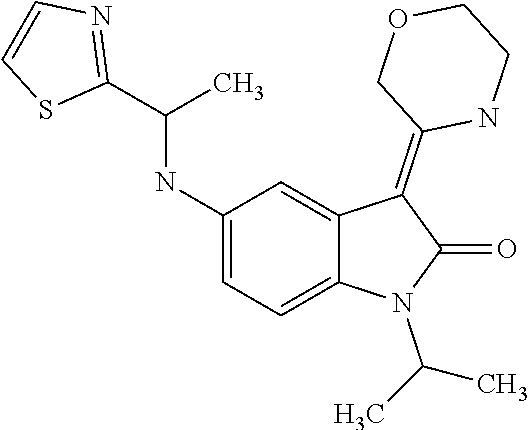


3. A method of treating a disease involving retinal dysfunction in a patient comprising administering to said patient a therapeutically effective amount of a compound selected from the group consisting of the following compounds 1001-1178, or a pharmaceutically acceptable salt thereof:


4. The method according to claim 2 , wherein the compound administered is compound 26 having the following formula or a pharmaceutically acceptable salt thereof:

5. The method according to claim 2 , wherein the compound administered is compound 26 having the following formula:

6. The method according to claim 3 , wherein the compound administered is compound 1024 having the following formula or a pharmaceutically acceptable salt thereof:

7. The method according to claim 3 , wherein the compound administered is compound 1024 having the following formula:

8. The method according to claim 1 , wherein the disease involving retinal dysfunction is retinopathy.
9. The method according to claim 2 , wherein the disease involving retinal dysfunction is retinopathy.
10. The method according to claim 3 , wherein the disease involving retinal dysfunction is retinopathy.
11. The method according to claim 4 , wherein the disease involving retinal dysfunction is retinopathy.
12. The method according to claim 5 , wherein the disease involving retinal dysfunction is retinopathy.
13. The method according to claim 6 , wherein the disease involving retinal dysfunction is retinopathy.
14. The method according to claim 7 , wherein the disease involving retinal dysfunction is retinopathy.
15. The method according to claim 1 , wherein the disease involving retinal dysfunction is age-related macular degeneration.
16. The method according to claim 2 , wherein the disease involving retinal dysfunction is age-related macular degeneration.
17. The method according to claim 3 , wherein the disease involving retinal dysfunction is age-related macular degeneration.
18. The method according to claim 4 , wherein the disease involving retinal dysfunction is age-related macular degeneration.
19. The method according to claim 5 , wherein the disease involving retinal dysfunction is age-related macular degeneration.
20. The method according to claim 6 , wherein the disease involving retinal dysfunction is age-related macular degeneration.
21. The method according to claim 7 , wherein the disease involving retinal dysfunction is age-related macular degeneration.
Priority Applications (1)
| Application Number | Priority Date | Filing Date | Title |
|---|---|---|---|
| US18/462,578 US12071403B2 (en) | 2019-08-26 | 2023-09-07 | Modulators of complex I |
Applications Claiming Priority (5)
| Application Number | Priority Date | Filing Date | Title |
|---|---|---|---|
| EP19193570.9 | 2019-08-26 | ||
| EP19193570 | 2019-08-26 | ||
| EP19193570 | 2019-08-26 | ||
| US17/002,937 US11795147B2 (en) | 2019-08-26 | 2020-08-26 | Modulators of complex I |
| US18/462,578 US12071403B2 (en) | 2019-08-26 | 2023-09-07 | Modulators of complex I |
Related Parent Applications (1)
| Application Number | Title | Priority Date | Filing Date |
|---|---|---|---|
| US17/002,937 Division US11795147B2 (en) | 2019-08-26 | 2020-08-26 | Modulators of complex I |
Publications (2)
| Publication Number | Publication Date |
|---|---|
| US20240150285A1 US20240150285A1 (en) | 2024-05-09 |
| US12071403B2 true US12071403B2 (en) | 2024-08-27 |
Family
ID=67766070
Family Applications (2)
| Application Number | Title | Priority Date | Filing Date |
|---|---|---|---|
| US17/002,937 Active US11795147B2 (en) | 2019-08-26 | 2020-08-26 | Modulators of complex I |
| US18/462,578 Active US12071403B2 (en) | 2019-08-26 | 2023-09-07 | Modulators of complex I |
Family Applications Before (1)
| Application Number | Title | Priority Date | Filing Date |
|---|---|---|---|
| US17/002,937 Active US11795147B2 (en) | 2019-08-26 | 2020-08-26 | Modulators of complex I |
Country Status (1)
| Country | Link |
|---|---|
| US (2) | US11795147B2 (en) |
Families Citing this family (2)
| Publication number | Priority date | Publication date | Assignee | Title |
|---|---|---|---|---|
| EP4291552B1 (en) * | 2021-02-09 | 2025-04-09 | Boehringer Ingelheim International GmbH | Modulators of complex i |
| CN113214134B (en) * | 2021-04-30 | 2022-08-30 | 南通大学 | Synthesis method of quaternary carbon oxoindole skeleton |
Citations (10)
| Publication number | Priority date | Publication date | Assignee | Title |
|---|---|---|---|---|
| WO2004060376A1 (en) | 2002-12-20 | 2004-07-22 | Pharmacia Corpration | The r-isomer of beta amino acid compounds as integrin receptor antagonists derivatives |
| WO2005111029A1 (en) | 2004-05-13 | 2005-11-24 | Boehringer Ingelheim International Gmbh | Novel substituted thiophenecarboxamides, their production and their use as medicaments |
| WO2006072350A1 (en) | 2004-12-22 | 2006-07-13 | Bayer Healthcare Ag | Cyanoguanidine-substituted pyrazolines |
| EP1790641A1 (en) | 2004-09-16 | 2007-05-30 | Astellas Pharma Inc. | Triazole derivative or salt thereof |
| WO2008076356A1 (en) | 2006-12-15 | 2008-06-26 | Abbott Laboratories | Novel oxadiazole compounds |
| WO2008152014A2 (en) | 2007-06-12 | 2008-12-18 | Boehringer Ingelheim International Gmbh | 3-hetrocyclylidene-indolinone derivatives as inhibitors of specific cell cycle kinases |
| WO2010068520A2 (en) | 2008-12-11 | 2010-06-17 | Cara Therapeutics, Inc. | Substituted imidazoheterocycle derivatives |
| WO2011052950A2 (en) | 2009-10-26 | 2011-05-05 | Lg Life Sciences Ltd. | Pharmaceutical composition comprising indole compound |
| WO2017098733A1 (en) | 2015-12-10 | 2017-06-15 | 株式会社 東北テクノアーチ | Indole acetic acid derivative |
| JP2018127429A (en) | 2017-02-10 | 2018-08-16 | 国立大学法人東北大学 | Indole acetic acid amide derivatives |
-
2020
- 2020-08-26 US US17/002,937 patent/US11795147B2/en active Active
-
2023
- 2023-09-07 US US18/462,578 patent/US12071403B2/en active Active
Patent Citations (12)
| Publication number | Priority date | Publication date | Assignee | Title |
|---|---|---|---|---|
| WO2004060376A1 (en) | 2002-12-20 | 2004-07-22 | Pharmacia Corpration | The r-isomer of beta amino acid compounds as integrin receptor antagonists derivatives |
| WO2005111029A1 (en) | 2004-05-13 | 2005-11-24 | Boehringer Ingelheim International Gmbh | Novel substituted thiophenecarboxamides, their production and their use as medicaments |
| US7476663B2 (en) | 2004-05-13 | 2009-01-13 | Boehringer Ingelheim International Gmbh | Substituted thiophene carboxamides |
| EP1790641A1 (en) | 2004-09-16 | 2007-05-30 | Astellas Pharma Inc. | Triazole derivative or salt thereof |
| WO2006072350A1 (en) | 2004-12-22 | 2006-07-13 | Bayer Healthcare Ag | Cyanoguanidine-substituted pyrazolines |
| WO2008076356A1 (en) | 2006-12-15 | 2008-06-26 | Abbott Laboratories | Novel oxadiazole compounds |
| WO2008152014A2 (en) | 2007-06-12 | 2008-12-18 | Boehringer Ingelheim International Gmbh | 3-hetrocyclylidene-indolinone derivatives as inhibitors of specific cell cycle kinases |
| US8207179B2 (en) | 2007-06-12 | 2012-06-26 | Boehringer Ingelheim International Gmbh | Substituted indolines as tyrosine kinase inhibitors |
| WO2010068520A2 (en) | 2008-12-11 | 2010-06-17 | Cara Therapeutics, Inc. | Substituted imidazoheterocycle derivatives |
| WO2011052950A2 (en) | 2009-10-26 | 2011-05-05 | Lg Life Sciences Ltd. | Pharmaceutical composition comprising indole compound |
| WO2017098733A1 (en) | 2015-12-10 | 2017-06-15 | 株式会社 東北テクノアーチ | Indole acetic acid derivative |
| JP2018127429A (en) | 2017-02-10 | 2018-08-16 | 国立大学法人東北大学 | Indole acetic acid amide derivatives |
Non-Patent Citations (5)
| Title |
|---|
| Cecil Textbook of Medicine, 20th edition (1996) vol. 2, 1992-1996. |
| Cecil Textbook of Medicine, 20th edition (1996) vol. 2, 2050-2057. |
| CNN.com "FDA mulls drug to slow late-stage Alzheimer's" (2003) 2 pgs. |
| International Search report and written Opinion for corresponding application, PCT/EP2020/0739988, date of mailing Oct. 23, 2020. |
| Tan, Shirlee et al. "The Regulation of Reactive Oxygen Species Production during Programmed Cell Death" (1998) The Journal of Cell Biology, vol. 141, No. 6, 1423-1432. |
Also Published As
| Publication number | Publication date |
|---|---|
| US20240150285A1 (en) | 2024-05-09 |
| US20210061761A1 (en) | 2021-03-04 |
| US11795147B2 (en) | 2023-10-24 |
Similar Documents
| Publication | Publication Date | Title |
|---|---|---|
| EP3368524B1 (en) | Heteroarylcarboxamide derivatives as plasma kallikrein inhibitors | |
| US12071403B2 (en) | Modulators of complex I | |
| US9493440B2 (en) | Compounds inhibiting leucine-rich repeat kinase enzyme activity | |
| TW201213329A (en) | Pyrazine derivatives as ENaC blockers | |
| US10711036B2 (en) | MALT1 inhibitors and uses thereof | |
| TW201702245A (en) | Substituted polycyclic pyridone derivatives and prodrug thereof | |
| US10759785B2 (en) | Compounds | |
| US11078182B2 (en) | Heteroaromatic compounds as Vanin inhibitors | |
| US12351584B2 (en) | Cyclic ether derivatives of pyrazolo[1,5-a]pyrimidine-3-carboxyamide | |
| TWI510469B (en) | 2,5-disubstituted arylsulfonamide CCR3 antagonist | |
| EA017282B1 (en) | Hydroxy-6-heteroarylphenanthridine derivative and use thereof as pde4 inhibitor | |
| US12441679B2 (en) | Acrylamide-substituted indane compounds and therapeutic use thereof | |
| JP3410104B2 (en) | Catechol diether derivatives useful as drugs | |
| US20250074904A1 (en) | Nsd2-targeted checmical degraderts and compositions and methods of use thereof | |
| KR101522803B1 (en) | Kat ii inhibitors | |
| EP0591027A1 (en) | Piperidine derivatives, their preparation and their use as medicine | |
| EP4291552B1 (en) | Modulators of complex i | |
| EP4426276A1 (en) | Uses of rhodoquinone for the treatment of disease | |
| US20240368146A1 (en) | Morpholine-Containing & Piperazine-Containing CXCR4 Modulators and Uses Related Thereto | |
| US20230117680A1 (en) | Cyclophilin d inhibitors and uses thereof | |
| WO2025165846A1 (en) | Rhodoquinone mimetics and methods of making and using thereof | |
| TW317565B (en) | ||
| CA3219801A1 (en) | Substituted heterobicyclic derivatives as negative allosteric modulators of mglu7 receptor | |
| HK40033047A (en) | Imidazopyridine derivatives and the use thereof as medicament | |
| JP2006219456A (en) | Anti-babesial agents and novel benzoxazolinone derivatives |
Legal Events
| Date | Code | Title | Description |
|---|---|---|---|
| FEPP | Fee payment procedure |
Free format text: ENTITY STATUS SET TO UNDISCOUNTED (ORIGINAL EVENT CODE: BIG.); ENTITY STATUS OF PATENT OWNER: LARGE ENTITY |
|
| STPP | Information on status: patent application and granting procedure in general |
Free format text: NOTICE OF ALLOWANCE MAILED -- APPLICATION RECEIVED IN OFFICE OF PUBLICATIONS |
|
| STPP | Information on status: patent application and granting procedure in general |
Free format text: PUBLICATIONS -- ISSUE FEE PAYMENT RECEIVED |
|
| STPP | Information on status: patent application and granting procedure in general |
Free format text: PUBLICATIONS -- ISSUE FEE PAYMENT VERIFIED |
|
| STCF | Information on status: patent grant |
Free format text: PATENTED CASE |