US12054497B2 - Substituted heterocyclic fused cyclic compound, preparation method therefor and pharmaceutical use thereof - Google Patents
Substituted heterocyclic fused cyclic compound, preparation method therefor and pharmaceutical use thereof Download PDFInfo
- Publication number
- US12054497B2 US12054497B2 US17/773,607 US202017773607A US12054497B2 US 12054497 B2 US12054497 B2 US 12054497B2 US 202017773607 A US202017773607 A US 202017773607A US 12054497 B2 US12054497 B2 US 12054497B2
- Authority
- US
- United States
- Prior art keywords
- alkyl
- ring
- halogenated
- alkoxy
- present
- Prior art date
- Legal status (The legal status is an assumption and is not a legal conclusion. Google has not performed a legal analysis and makes no representation as to the accuracy of the status listed.)
- Active, expires
Links
Images

Classifications
-
- C—CHEMISTRY; METALLURGY
- C07—ORGANIC CHEMISTRY
- C07D—HETEROCYCLIC COMPOUNDS
- C07D471/00—Heterocyclic compounds containing nitrogen atoms as the only ring hetero atoms in the condensed system, at least one ring being a six-membered ring with one nitrogen atom, not provided for by groups C07D451/00 - C07D463/00
- C07D471/02—Heterocyclic compounds containing nitrogen atoms as the only ring hetero atoms in the condensed system, at least one ring being a six-membered ring with one nitrogen atom, not provided for by groups C07D451/00 - C07D463/00 in which the condensed system contains two hetero rings
- C07D471/04—Ortho-condensed systems
-
- A—HUMAN NECESSITIES
- A61—MEDICAL OR VETERINARY SCIENCE; HYGIENE
- A61K—PREPARATIONS FOR MEDICAL, DENTAL OR TOILETRY PURPOSES
- A61K31/00—Medicinal preparations containing organic active ingredients
- A61K31/33—Heterocyclic compounds
- A61K31/395—Heterocyclic compounds having nitrogen as a ring hetero atom, e.g. guanethidine or rifamycins
- A61K31/495—Heterocyclic compounds having nitrogen as a ring hetero atom, e.g. guanethidine or rifamycins having six-membered rings with two or more nitrogen atoms as the only ring heteroatoms, e.g. piperazine or tetrazines
- A61K31/496—Non-condensed piperazines containing further heterocyclic rings, e.g. rifampin, thiothixene or sparfloxacin
-
- A—HUMAN NECESSITIES
- A61—MEDICAL OR VETERINARY SCIENCE; HYGIENE
- A61K—PREPARATIONS FOR MEDICAL, DENTAL OR TOILETRY PURPOSES
- A61K31/00—Medicinal preparations containing organic active ingredients
- A61K31/33—Heterocyclic compounds
- A61K31/395—Heterocyclic compounds having nitrogen as a ring hetero atom, e.g. guanethidine or rifamycins
- A61K31/495—Heterocyclic compounds having nitrogen as a ring hetero atom, e.g. guanethidine or rifamycins having six-membered rings with two or more nitrogen atoms as the only ring heteroatoms, e.g. piperazine or tetrazines
- A61K31/4985—Pyrazines or piperazines ortho- or peri-condensed with heterocyclic ring systems
-
- A—HUMAN NECESSITIES
- A61—MEDICAL OR VETERINARY SCIENCE; HYGIENE
- A61K—PREPARATIONS FOR MEDICAL, DENTAL OR TOILETRY PURPOSES
- A61K31/00—Medicinal preparations containing organic active ingredients
- A61K31/33—Heterocyclic compounds
- A61K31/395—Heterocyclic compounds having nitrogen as a ring hetero atom, e.g. guanethidine or rifamycins
- A61K31/535—Heterocyclic compounds having nitrogen as a ring hetero atom, e.g. guanethidine or rifamycins having six-membered rings with at least one nitrogen and one oxygen as the ring hetero atoms, e.g. 1,2-oxazines
- A61K31/5375—1,4-Oxazines, e.g. morpholine
- A61K31/5383—1,4-Oxazines, e.g. morpholine ortho- or peri-condensed with heterocyclic ring systems
-
- A—HUMAN NECESSITIES
- A61—MEDICAL OR VETERINARY SCIENCE; HYGIENE
- A61K—PREPARATIONS FOR MEDICAL, DENTAL OR TOILETRY PURPOSES
- A61K31/00—Medicinal preparations containing organic active ingredients
- A61K31/33—Heterocyclic compounds
- A61K31/395—Heterocyclic compounds having nitrogen as a ring hetero atom, e.g. guanethidine or rifamycins
- A61K31/55—Heterocyclic compounds having nitrogen as a ring hetero atom, e.g. guanethidine or rifamycins having seven-membered rings, e.g. azelastine, pentylenetetrazole
-
- A—HUMAN NECESSITIES
- A61—MEDICAL OR VETERINARY SCIENCE; HYGIENE
- A61P—SPECIFIC THERAPEUTIC ACTIVITY OF CHEMICAL COMPOUNDS OR MEDICINAL PREPARATIONS
- A61P35/00—Antineoplastic agents
-
- C—CHEMISTRY; METALLURGY
- C07—ORGANIC CHEMISTRY
- C07D—HETEROCYCLIC COMPOUNDS
- C07D471/00—Heterocyclic compounds containing nitrogen atoms as the only ring hetero atoms in the condensed system, at least one ring being a six-membered ring with one nitrogen atom, not provided for by groups C07D451/00 - C07D463/00
- C07D471/12—Heterocyclic compounds containing nitrogen atoms as the only ring hetero atoms in the condensed system, at least one ring being a six-membered ring with one nitrogen atom, not provided for by groups C07D451/00 - C07D463/00 in which the condensed system contains three hetero rings
- C07D471/14—Ortho-condensed systems
-
- C—CHEMISTRY; METALLURGY
- C07—ORGANIC CHEMISTRY
- C07D—HETEROCYCLIC COMPOUNDS
- C07D471/00—Heterocyclic compounds containing nitrogen atoms as the only ring hetero atoms in the condensed system, at least one ring being a six-membered ring with one nitrogen atom, not provided for by groups C07D451/00 - C07D463/00
- C07D471/12—Heterocyclic compounds containing nitrogen atoms as the only ring hetero atoms in the condensed system, at least one ring being a six-membered ring with one nitrogen atom, not provided for by groups C07D451/00 - C07D463/00 in which the condensed system contains three hetero rings
- C07D471/16—Peri-condensed systems
-
- C—CHEMISTRY; METALLURGY
- C07—ORGANIC CHEMISTRY
- C07D—HETEROCYCLIC COMPOUNDS
- C07D471/00—Heterocyclic compounds containing nitrogen atoms as the only ring hetero atoms in the condensed system, at least one ring being a six-membered ring with one nitrogen atom, not provided for by groups C07D451/00 - C07D463/00
- C07D471/22—Heterocyclic compounds containing nitrogen atoms as the only ring hetero atoms in the condensed system, at least one ring being a six-membered ring with one nitrogen atom, not provided for by groups C07D451/00 - C07D463/00 in which the condensed systems contains four or more hetero rings
-
- C—CHEMISTRY; METALLURGY
- C07—ORGANIC CHEMISTRY
- C07D—HETEROCYCLIC COMPOUNDS
- C07D498/00—Heterocyclic compounds containing in the condensed system at least one hetero ring having nitrogen and oxygen atoms as the only ring hetero atoms
- C07D498/22—Heterocyclic compounds containing in the condensed system at least one hetero ring having nitrogen and oxygen atoms as the only ring hetero atoms in which the condensed system contains four or more hetero rings
-
- C—CHEMISTRY; METALLURGY
- C07—ORGANIC CHEMISTRY
- C07B—GENERAL METHODS OF ORGANIC CHEMISTRY; APPARATUS THEREFOR
- C07B2200/00—Indexing scheme relating to specific properties of organic compounds
- C07B2200/07—Optical isomers
Definitions
- the present invention relates to the technical field of medicine, and in particular, to a substituted heterocyclic fused cyclic compound, use thereof as a selective inhibitor for KRAS gene mutations, and a pharmaceutical composition prepared therefrom.
- Lung cancer is the cancer with the highest global incidence. The incidence of lung cancer in China ranks first among all cancers. Lung cancer is also the cancer with the highest incidence and mortality in China. According to the data released by the American Cancer Society in 2016, about 1.8 million people in the world suffered from lung cancer, of which approximate 80% of lung cancer cases were non-small cell lung cancer (NSCLC).
- NSCLC non-small cell lung cancer
- RAS refers to a group of closely related monomeric globular proteins (with a molecular weight of 21 kDa) having 188-189 amino acids and binding to guanosine diphosphate (GDP) or guanosine triphosphate (GTP).
- GDP guanosine diphosphate
- GTP guanosine triphosphate
- Members in an RAS subfamily include HRAS, KRAS, and NRAS.
- RAS serves as a molecular switch. When containing the bound GDP, RAS is in the dormant or closed position and “inactive”. When cells are exposed to some growth promoting somatotrophic irritants, RAS is induced such that the GDP binding thereto is transformed into GTP. When binding to GTP, RAS is “switched on” and able to interact with and activate other downstream target proteins.
- the RAS proteins are extremely low in their inherent capability of hydrolyzing GTP into GDP (allowing themselves to be switched off). Accordingly, an extrinsic protein, namely GTPase activating protein (GAP), is needed to switch off an RAS protein.
- GAP GTPase activating protein
- the interaction between GAP and RAS greatly accelerates the transformation of GTP into GDP. Any mutation in RAS will affect the interaction between RAS and GAP and the ability to transform GTP into GDP. Such a mutation will result in prolonged protein activation time, leading to prolonged cell signal transduction and hence continuous cell growth and division. Since the signal transduction causes cell growth and division, excessively activated RAS signal transduction may eventually lead to cancer. It has been confirmed that mutations in the RAS genes were involved in about 32% of lung cancer cases.
- RAS RAS
- NRAS NRAS
- KRAS KRAS
- This mutation has been found in about 43% of lung cancer cases and almost 100% of MYH-associated polyposis (familial colon cancer syndrome) cases among about 13% of cancers. Therefore, it is desirable to develop inhibitors for selectively inhibiting KRAS mutations. To reduce the inhibitory activity for wild-type KRAS while improving the inhibitory activity for KRAS mutations, it is of great significance to develop novel selective inhibitors for RAS mutants that have higher activity, better selectivity, and lower toxicity.
- the present invention provides a substituted heterocyclic fused cyclic compound having a novel structure, which is used as a selective inhibitor for KRAS mutations and has the advantages of high activity, good selectivity, low toxic and side effects, etc.
- the present invention provides a compound of Formula (I), or a pharmaceutically acceptable salt, a stereoisomer, a solvate or a prodrug thereof:
- R m is —C 1-6 alkyl, -halogenated C 1-6 alkyl, —C 1-6 alkyl-hydroxyl, —C 1-6 alkyl-cyano, —C 1-6 alkyl-C 1-6 alkoxy, —C 1-6 alkyl-halogenated C 1-6 alkoxy, —C 1-6 alkyl-C 3-6 cycloalkyl, or —C 1-6 alkyl-3- to 6-membered heterocycloalkyl;
- R 42 is —(C ⁇ O)—, —C 1-3 alkyl-, —C 1-3 alkyl (hydroxy)-, —C 1-3 alkyl (cyano)-, —C 1-3 alkyl (C 1-6 alkyl)-, —C 1-3 alkyl (halogenated C 1-6 alkyl)-, —C 1-3 alkyl (C 1-6 alkyl-hydroxy)-, —
- R 42 is hydrogen, halogen, —C 1-3 alkyl, -halogenated C 1-3 alkyl, —C 1-3 alkyl-hydroxyl, —C 1-3 alkyl-cyano, —C 1-3 alkyl-C 1-6 alkoxy, —C 1-3 alkyl-halogenated C 1-6 alkyl, or —C 1-3 alkyl-halogenated C 1-6 alkoxy;
- the compound of Formula (I) is the compound of Formula (I-1) or a compound of Formula (I-2):
- P is O, NH, or NR m ;
- R m is —C 1-6 alkyl, -halogenated C 1-6 alkyl, —C 1-6 alkyl-hydroxyl, —C 1-6 alkyl-cyano, —C 1-6 alkyl-C 1-6 alkoxy, —C 1-6 alkyl-halogenated C 1-6 alkoxy, —C 1-6 alkyl-C 3-6 cycloalkyl, or —C 1-6 alkyl-3- to 6-membered heterocycloalkyl;
- R 42 is —(C ⁇ O)—, —C 1-3 alkyl-, —C 1-3 alkyl (hydroxy)-, —C 1-3 alkyl (cyano)-, —C 1-3 alkyl (C 1-6 alkyl)-, —C 1-3 alkyl (halogenated C 1-6 alkyl)-, —C 1-3 alkyl (C 1-6 alkyl-hydroxy)-, —
- P is hydrogen, halogen
- R 42 is hydrogen, halogen, —C 1-3 alkyl, -halogenated C 1-3 alkyl, —C 1-3 alkyl-hydroxyl, —C 1-3 alkyl-cyano, —C 1-3 alkyl-C 1-6 alkoxy, —C 1-3 alkyl-halogenated C 1-6 alkyl, or —C 1-3 alkyl-halogenated C 1-6 alkoxy
- R 11 , R 12 , R 21 , R 22 , R 31 , R 32 , R 41 , Z, R 0 , Ar, E 1 , E 2 , X 1 , and Y 1 are as defined above.
- the present invention provides a compound of Formula (IA), or a tautomer, a cis-trans isomer, a mesomer, a raceme, an enantiomer, a diastereoisomer, an atropisomer or a mixture thereof, or a pharmaceutically acceptable salt, a solvate or a prodrug thereof:
- R m′ is —C 1-6 deuteroalkyl, —C 1-6 alkyl, -halogenated C 1-6 alkyl, —C 1-6 alkyl-hydroxyl, —C 1-6 alkyl-cyano, —C 1-6 alkyl-C 1-6 alkoxy, —C 1-6 alkyl-halogenated C 1-6 alkoxy, —C 1-6 alkyl-C 3-6 cycloalkyl, or —C 1-6 alkyl-3- to 6-membered heterocycloalkyl;
- R 42′ is —C 1-3 alkyl-(C ⁇ O)—, —(C ⁇ O)—, —C 1-3 alkyl-, —C 1-3 alkyl (hydroxy)-, —C 1-3 alkyl (cyano)-, —C 1-3 alkyl (C 1-6 alkyl)-, —C 1-3 alkyl (hal
- R 42′ is hydrogen, halogen, —C 1-3 alkyl, -halogenated C 1-3 alkyl, —C 1-3 alkyl-hydroxyl, —C 1-3 alkyl-cyano, —C 1-3 alkyl-C 1-6 alkoxy, —C 1-3 alkyl-halogenated C 1-6 alkyl, or —C 1-3 alkyl-halogenated C 1-6 alkoxy;
- the compound of Formula (IA) is a compound of Formula (IB) or a compound of Formula (IC):
- P′ is O, NH, or NR m′ ;
- R m′ is —C 1-6 deuteroalkyl, —C 1-6 alkyl, -halogenated C 1-6 alkyl, —C 1-6 alkyl-hydroxyl, —C 1-6 alkyl-cyano, —C 1-6 alkyl-C 1-6 alkoxy, —C 1-6 alkyl-halogenated C 1-6 alkoxy, —C 1-6 alkyl-C 3-6 cycloalkyl, or —C 1-6 alkyl-3- to 6-membered heterocycloalkyl;
- R 42′ is —C 1-3 alkyl-(C ⁇ O)—, —(C ⁇ O)—, —C 1-3 alkyl-, —C 1-3 alkyl (hydroxy)-, —C 1-3 alkyl (cyano)-, —C 1-3 alkyl (C 1-6 alkyl)-, —C 1-3 alkyl (halogen
- P′ is hydrogen or halogen
- R 42′ is hydrogen, halogen, —C 1-3 alkyl, -halogenated C 1-3 alkyl, —C 1-3 alkyl-hydroxyl, —C 1-3 alkyl-cyano, —C 1-3 alkyl-C 1-6 alkoxy, —C 1-3 alkyl-halogenated C 1-6 alkyl, or —C 1-3 alkyl-halogenated C 1-6 alkoxy
- R 11 , R 12 , R 21 , R 22 , R 31 , R 32 , R 41 , Z, R 0′ , Ar′, E 1′ , E 2′ , X 1 , and Y 1 are defined as above.
- P′ is O, NH, or NR m′ ;
- R m′ is —C 1-6 deuteroalkyl or —C 1-6 alkyl; and
- R 42′ is —C 1-3 alkyl-(C ⁇ O)—, —(C ⁇ O)—, or —C 1-3 alkyl-.
- P′ is O, NH, or NR m′ ;
- R m′ is —C 1-3 deuteroalkyl or —C 1-3 alkyl;
- R 42′ is —C 1-3 alkyl-(C ⁇ O)—, —(C ⁇ O)—, or —C 1-3 alkyl-.
- P′ is O, NH, or NR m′ ;
- R m′ is deuteromethyl, deuteroethyl, deutero-n-propyl, deuteroisopropyl, methyl, ethyl, n-propyl, or isopropyl;
- R 42′ is —CH 2 —(C ⁇ O)—, —CH 2 CH 2 —(C ⁇ O)—, —(C ⁇ O)—, —CH 2 —, —CH 2 CH 2 —, or —CH 2 CH 2 CH 2 —.
- P′ is NH or NR m′ ;
- R m′ is —C 1-6 deuteroalkyl or —C 1-6 alkyl; and
- R 42′ is —C 1-3 alkyl-(C ⁇ O)— or —(C ⁇ O)—.
- P′ is NH or NR m′ ;
- R m′ is —C 1-3 deuteroalkyl or —C 1-3 alkyl; and
- R 42′ is —C 1-3 alkyl-(C ⁇ O)— or —(C ⁇ O)—.
- P′ is NH or NR m′ ;
- R m′ is deuteromethyl or methyl;
- R 42′ is —CH 2 —(C ⁇ O)—, —CH 2 CH 2 —(C ⁇ O)—, or —(C ⁇ O)—.
- P′ is O; and R 42′ is —C 1-3 alkyl-.
- P′ is O; and R 42′ is —CH 2 —.
- the compound of Formula (IB) is a compound of Formula (IB-1) or a compound of Formula (IB-2):
- R 21 , R 22 , R 11 , R 12 , R 31 , R 32 , R 41 , R 42 ′, Z, P′, R 0′ , Ar′, E 1′ , E 2′ , X 1 , and Y 1 are as defined above.
- P′ is O, NH, or NR m′ ;
- R m′ is —C 1-6 deuteroalkyl or —C 1-6 alkyl; and
- R 42′ is —C 1-3 alkyl-(C ⁇ O)—, —(C ⁇ O)—, or —C 1-3 alkyl-.
- P′ is NH or NR m′ ;
- R m′ is —C 1-6 deuteroalkyl or —C 1-6 alkyl; and
- R 42′ is —C 1-3 alkyl-(C ⁇ O)— or —(C ⁇ O)—.
- P′ is NH or NR m′ ;
- R m′ is —C 1-3 deuteroalkyl or —C 1-3 alkyl; and
- R 42′ is —C 1-3 alkyl-(C ⁇ O)— or —(C ⁇ O)—.
- P′ is NH or NR m′ ;
- R m′ is deuteromethyl or methyl;
- R 42′ is —CH 2 —(C ⁇ O)—, —CH 2 CH 2 —(C ⁇ O)—, or —(C ⁇ O)—.
- P′ is O; and R 42′ is —C 1-3 alkyl-.
- P′ is O; and R 42′ is —CH 2 —.
- the present invention provides a compound of Formula (IB-1a) or Formula (IB-2a), or a tautomer, a cis-trans isomer, a mesomer, a raceme, an enantiomer, a diastereoisomer, an atropisomer or a mixture thereof, or a pharmaceutically acceptable salt, a solvate or a prodrug thereof:
- P′ is NH or NR m′ ; and R m′ is —C 1-6 deuteroalkyl or —C 1-6 alkyl.
- P′ is NH or NR m′ ; and R m′ is —C 1-3 deuteroalkyl or —C 1-3 alkyl.
- P′ is NH or NR m′ ; and R m′ is deuteromethyl or methyl.
- the compound of Formula (IB-1a) is a compound of Formula (IB-1aa), a compound of Formula (IB-1ab), a compound of Formula (IB-1ac), or a compound of Formula (IB-1ad):
- R 21′ is independently halogen, —C 1-3 alkyl, -halogenated C 1-3 alkyl, —C 1-3 alkyl-hydroxyl, —C 1-3 alkyl-cyano, —C 1-3 alkyl-C 1-6 alkoxy, —C 3 alkyl-halogenated C 1-6 alkyl, or —C 1-3 alkyl-halogenated C 1-6 alkoxy; and R 1 , R 2 , R 3 , R 12 , R 11 , R 31 , R 32 , P′, R 0′ , Ar′, E 1′ , and X 1 are as defined above.
- R 12′ is independently halogen, —C 1-3 alkyl, -halogenated C 1-3 alkyl, —C 1-3 alkyl-hydroxyl, —C 1-3 alkyl-cyano, —C 1-3 alkyl-C 1-6 alkoxy, —C 1-3 alkyl-halogenated C 1-6 alkyl, or —C 1-3 alkyl-halogenated C 1-6 alkoxy; and R 1 , R 2 , R 3 , R 21 , R 22 , R 31 , R 32 , P′, R 0′ , Ar′, E 1′ , and X 1 are as defined above.
- the present invention provides a compound of Formula (IB-1c) or Formula (IB-2c), or a tautomer, a cis-trans isomer, a mesomer, a raceme, an enantiomer, a diastereoisomer, an atropisomer or a mixture thereof, or a pharmaceutically acceptable salt, a solvate or a prodrug thereof:
- P′ is NH or NR m′ ; and R m′ is —C 1-6 deuteroalkyl or —C 1-6 alkyl.
- P′ is NH or NR m′ ; and R m′ is —C 1-3 deuteroalkyl or —C 1-3 alkyl.
- P′ is NH or NR m′ ; and R m′ is deuteromethyl or methyl.
- the compound of Formula (IB-1c) is a compound of Formula (IB-1ca), a compound of Formula (IB-1cb), a compound of Formula (IB-1cc), or a compound of Formula (IB-1cd):
- R 21′ is independently halogen, —C 1-3 alkyl, -halogenated C 1-3 alkyl, —C 1-3 alkyl-hydroxyl, —C 1-3 alkyl-cyano, —C 1-3 alkyl-C 1-6 alkoxy, —C 1-3 alkyl-halogenated C 1-6 alkyl, or —C 1-3 alkyl-halogenated C 1-6 alkoxy; and R 1 , R 2 , R 3 , R 12 , R 11 , R 31 , R 32 , P′, R 0′ , Ar′, E 1′ , and X 1 are as defined above.
- R 12′ is independently halogen, —C 1-3 alkyl, -halogenated C 1-3 alkyl, —C 1-3 alkyl-hydroxyl, —C 1-3 alkyl-cyano, —C 1-3 alkyl-C 1-6 alkoxy, —C 1-3 alkyl-halogenated C 1-6 alkyl, or —C 1-3 alkyl-halogenated C 1-6 alkoxy; and R 1 , R 2 , R 3 , R 21 , R 22 , R 31 , R 32 , P′, R 0′ , Ar′, E 1′ , and X 1 are as defined above.
- P′ is independently NH or NR m′ ; and R m′ is —C 1-6 deuteroalkyl or —C 1-6 alkyl.
- P′ is independently NH or NR m′ ; and R m′ is —C 1-3 deuteroalkyl or —C 1-3 alkyl.
- P′ is independently NH or NR m′ ; and R m′ is deuteromethyl, deuteroethyl, deutero-n-propyl, deuteroisopropyl, methyl, ethyl, n-propyl, or isopropyl.
- the present invention provides a compound of Formula (IB-1b) or Formula (IB-2b), or a tautomer, a cis-trans isomer, a mesomer, a raceme, an enantiomer, a diastereoisomer, an atropisomer or a mixture thereof, or a pharmaceutically acceptable salt, a solvate or a prodrug thereof:
- the compound of Formula (IB-1b) is a compound of Formula (IB-1ba), a compound of Formula (IB-1bb), a compound of Formula (IB-1bc), or a compound of Formula (IB-1bd):
- R 21′ is independently halogen, —C 1-3 alkyl, -halogenated C 1-3 alkyl, —C 1-3 alkyl-hydroxyl, —C 1-3 alkyl-cyano, —C 1-3 alkyl-C 1-6 alkoxy, —C 1-3 alkyl-halogenated C 1-6 alkyl or —C 1-3 alkyl-halogenated C 1-6 alkoxy; and R 1 , R 2 , R 3 , R 12 , R 11 , R 31 , R 32 , P′, R 0′ , Ar′, E 1′ , and X 1 are as defined above.
- R 12′ is independently halogen, —C 1-3 alkyl, -halogenated C 1-3 alkyl, —C 1-3 alkyl-hydroxyl, —C 1-3 alkyl-cyano, —C 1-3 alkyl-C 1-6 alkoxy, —C 1-3 alkyl-halogenated C 1-6 alkyl, or —C 1-3 alkyl-halogenated C 1-6 alkoxy; and R 1 , R 2 , R 3 , R 21 , R 22 , R 31 , R 32 , P′, R 0′ , Ar′, E 1′ , and X 1 are as defined above.
- the present invention provides a compound of Formula (IB-1d) or Formula (IB-2d), or a tautomer, a cis-trans isomer, a mesomer, a raceme, an enantiomer, a diastereoisomer, an atropisomer or a mixture thereof, or a pharmaceutically acceptable salt, a solvate or a prodrug thereof:
- the compound of Formula (IB-1d) is a compound of Formula (IB-1da), a compound of Formula (IB-1db), a compound of Formula (IB-1 dc) or a compound of Formula (IB-1 dd):
- R 21′ is independently halogen, —C 1-3 alkyl, -halogenated C 1-3 alkyl, —C 1-3 alkyl-hydroxyl, —C 1-3 alkyl-cyano, —C 1-3 alkyl-C 1-6 alkoxy, —C 1-3 alkyl-halogenated C 1-6 alkyl, or —C 1-3 alkyl-halogenated C 1-6 alkoxy; and R 1 , R 2 , R 3 , R 12 , R 11 , R 31 , R 32 , P′, R 0′ , Ar′, E 1′ , and X 1 are as defined above.
- R 12′ is independently halogen, —C 1-3 alkyl, -halogenated C 1-3 alkyl, —C 1-3 alkyl-hydroxyl, —C 1-3 alkyl-cyano, —C 1-3 alkyl-C 1-6 alkoxy, —C 1-3 alkyl-halogenated C 1-6 alkyl, or —C 1-3 alkyl-halogenated C 1-6 alkoxy; and R 1 , R 2 , R 3 , R 21 , R 22 , R 31 , R 32 , P′, R 0′ , Ar′, E 1′ , and X 1 are as defined above.
- P′ is independently O.
- R 21′ and R 12′ are each independently —C 1-3 alkyl, —C 1-3 alkyl-hydroxyl, —C 1-3 alkyl-cyano, or —C 1-3 alkyl-C 1-6 alkoxy.
- R 21′ and R 12′ are each independently —C 1-3 alkyl, —CH 2 -hydroxyl, —CH 2 -cyano, or —CH 2 —C 1-3 alkoxy.
- R 21′ and R 12′ are each independently methyl, ethyl, n-propyl, or isopropyl.
- X 1 is hydrogen, halogen, -substituted or unsubstituted C 1-6 alkyl, -substituted or unsubstituted C 3-6 cycloalkyl, or —O-substituted or unsubstituted C 1-6 alkyl; and the “substituted” means 1, 2, 3 or 4 hydrogen atoms in a group being substituted by substituents each independently selected from the group S.
- X 1 is hydrogen, halogen, unsubstituted C 1-3 alkyl, unsubstituted C 3-6 cycloalkyl, or —O-unsubstituted C 1-3 alkyl.
- X is hydrogen, fluorine, chlorine, methyl, ethyl, n-propyl, isopropyl, cyclopropyl, cyclobutyl, cyclopentyl, cyclohexyl, methoxy, ethoxy, n-propoxy, or isopropoxy.
- X 1 is fluorine, chlorine, or cyclopropyl.
- Ar′ is phenyl, 5- or 6-membered monocyclic heteroaryl, or pyridonyl; and the phenyl, the 5- or 6-membered monocyclic heteroaryl, and the pyridonyl are unsubstituted or each substituted by 1, 2, 3, or 4 groups each independently selected from halogen, cyano, hydroxyl, —C 1-6 alkyl, —C 1-6 alkoxy, —NR c R d , —C 1-4 alkyl-NR e R f , where R e and R f are each independently hydrogen or C 1-3 alkyl; and R c and R d are each independently hydrogen, —C 1-3 alkyl, —C(O)C 1-3 alkyl, or —CO 2 C 1-3 alkyl.
- Ar′ is phenyl or pyridonyl; and the phenyl and the pyridonyl are unsubstituted or each substituted by 1, 2, 3, or 4 groups each independently selected from fluorine, chlorine, bromine, cyano, hydroxyl, —C 1-3 alkyl, —C 1-3 alkoxy, —NH 2 , —NHCH 3 , —N(CH 3 ) 2 , —CH 2 —NH 2 , —CH 2 —NHCH 3 , and —CH 2 —N(CH 3 ) 2 .
- Ar′ is phenyl; the phenyl is substituted by one group selected from R s1 ; R s1 is halogen, cyano, —C 1-6 alkyl, —C 1-6 alkoxy, -halogenated C 1-6 alkyl, -halogenated C 1-6 alkoxy, or —C 3-6 cycloalkyl.
- Ar′ has a structured selected from:
- R s1 and R s2 are as defined above.
- Ar′ has a structured selected from:
- R s1 is hydroxyl
- R s2 is halogen, cyano, —C 1-6 alkyl, —C 1-6 alkoxy, -halogenated C 1-6 alkyl, -halogenated C 1-6 alkoxy, or —C 3-6 cycloalkyl.
- the R s1 is above the plane of the benzene ring.
- Ar′ has a structured selected from:
- R s1 is —C 1-6 alkoxy
- R s2 is halogen, cyano, —C 1-6 alkyl, —C 1-6 alkoxy, -halogenated C 1-6 alkyl, -halogenated C 1-6 alkoxy, or —C 3-6 cycloalkyl.
- the R s1 is above the plane of the benzene ring.
- R 0′ is phenyl, 5- or 6-membered monocyclic heteroaryl, or pyridonyl, where the 5- or 6-membered monocyclic heteroaryl has 1, 2, or 3 heteroatoms selected from N, O, and S as ring atoms; and the phenyl, the 5- or 6-membered monocyclic heteroaryl, and the pyridonyl are unsubstituted or each substituted by 1, 2, 3, or 4 groups each independently selected from R s3 .
- R 0′ is phenyl, thiazolyl, isothiazolyl, imidazolyl, oxazolyl, isoxazolyl, pyrazolyl, pyridyl, pyrimidyl, pyrazinyl or pyridonyl which is unsubstituted or each substituted by 1, 2, 3, or 4 groups each independently selected from R s3 .
- R 0′ has a structure selected from:
- R s3′ is either identical or different and is independently selected from hydrogen, halogen, cyano, hydroxyl, —C 1-6 alkyl, —C 1-6 alkoxy, -halogenated C 1-6 alkyl, -halogenated C 1-6 alkoxy, —C 3-6 cycloalkyl, —NR h R i , —C(O)NR e R f , —C 1-3 alkyl-hydroxyl, and —C 1-3 alkyl-NR e R f ; and the —C 3-6 cycloalkyl is optionally substituted by 1, 2, or 3 substituents each independently selected from halogen, methyl, ethyl, propyl (n-propyl), isopropyl, trifluoromethyl, amino, N(CH 3 ) 2 , hydroxyl, and carboxyl, where R e and R f are each independently hydrogen or C 1-3 alkyl; and R h and R h and R
- R s3′′ is either identical or different and is independently selected from hydrogen, halogen, cyano, hydroxyl, —C 1-6 alkyl, —C 1-6 alkoxy, -halogenated C 1-6 alkyl, -halogenated C 1-6 alkoxy, —C 3-6 cycloalkyl, —NR h R i , —C(O)NR e R f , —C 1-3 alkyl-hydroxyl, and —C 1-3 alkyl-NR e R f ; and the —C 3-6 cycloalkyl is optionally substituted by 1, 2, or 3 substituents each independently selected from halogen, methyl, ethyl, propyl (n-propyl), isopropyl, trifluoromethyl, amino, N(CH 3 ) 2 , hydroxyl, and carboxyl, where R e and R f are each independently hydrogen or C 1-3 alkyl; R h and R i
- R s3′′′ is either identical or different and is independently selected from hydrogen, —C 1-6 alkyl, -halogenated C 1-6 alkyl, —C 3-6 cycloalkyl, —C 1-3 alkyl-C(O)NR e R f , —C(O)NR e R f , —C 1-4 alkyl-hydroxyl, and —C 1-4 alkyl-NR e R f ; and the —C 3-6 cycloalkyl is optionally substituted by 1, 2, or 3 substituents each independently selected from halogen, methyl, ethyl, propyl (n-propyl), isopropyl, trifluoromethyl, amino, N(CH 3 ) 2 , hydroxyl, and carboxyl, where R e and R f are each independently hydrogen or C 1-3 alkyl.
- R s3 is either identical or different and is independently selected from halogen, cyano, hydroxyl, —C 1-6 alkyl, —C 1-6 alkoxy, -halogenated C 1-6 alkyl, -halogenated C 1-6 alkoxy, —C 3-6 cycloalkyl, 3- to 6-membered heterocycloalkyl, —NR h R i , —C(O)NR e R f , —SO 2 C 1-3 alkyl, —SO 2 halogenated C 1-3 alkyl, —SO 2 NR e R f , —C 1-3 alkyl-hydroxyl, —C 1-3 alkyl-C 2-4 alkynyl, —C 1-3 alkyl-cyano, —C 1-3 alkyl-C 1-6 alkoxy, —C 1-3 alkyl-halogenated C 1-6 alkyl, —C 1-3 alkyl-halogenated C 1-6 alkyl, —
- R 0′ is
- R s3 ′ is hydrogen, halogen, cyano, hydroxyl, —C 1-6 alkyl, —C 1-6 alkoxy, -halogenated C 1-6 alkyl, -halogenated C 1-6 alkoxy, —C 3-6 cycloalkyl, —NR h R i , —C(O)NR e R f , —C 1-3 alkyl-hydroxyl, and —C 1-3 alkyl-NR e R f ; and the —C 3-6 cycloalkyl is optionally substituted by 1, 2, or 3 substituents each independently selected from halogen, methyl, ethyl, propyl (n-propyl), isopropyl, trifluoromethyl, amino, N(CH 3 ) 2 , hydroxyl, and carboxyl, where R e and R f are each independently hydrogen or C 1-3 alkyl; R h and R i are each independently hydrogen, —C 1-3 alkyl
- R 0′ has a structure selected from:
- R s3′ is hydrogen, halogen, cyano, hydroxyl, —C 1-6 alkyl, —C 1-6 alkoxy, -halogenated C 1-6 alkyl, -halogenated C 1-6 alkoxy, —C 3-6 cycloalkyl, —NR h R i , —C(O)NR e R f , —C 1-3 alkyl-hydroxyl, and —C 1-3 alkyl-NR e R f ; and the —C 3-6 cycloalkyl is optionally substituted by 1, 2, or 3 substituents each independently selected from halogen, methyl, ethyl, propyl (n-propyl), isopropyl, trifluoromethyl, amino, N(CH 3 ) 2 , hydroxyl, and carboxyl, where R e and R f are each independently hydrogen or C 1-3 alkyl; R h and R i are each independently hydrogen, —C 1-3 alkyl,
- R 0′ has a structure selected from:
- R s3 ′ is hydrogen, halogen, cyano, hydroxyl, —C 1-6 alkyl, —C 1-6 alkoxy, -halogenated C 1-6 alkyl, -halogenated C 1-6 alkoxy, —C 3-6 cycloalkyl, —NR h R i , —C(O)NR e R f , —C 1-3 alkyl-hydroxyl, and —C 1-3 alkyl-NR e R f ; and the —C 3-6 cycloalkyl is optionally substituted by 1, 2, or 3 substituents each independently selected from halogen, methyl, ethyl, propyl (n-propyl), isopropyl, trifluoromethyl, amino, N(CH 3 ) 2 , hydroxyl, and carboxyl, where R e and R f are each independently hydrogen or C 1-3 alkyl; R h and R i are each independently hydrogen, —C 1-3 alkyl
- R 0′ has a structure selected from:
- R s3′ is hydrogen, halogen, cyano, hydroxyl, —C 1-6 alkyl, —C 1-6 alkoxy, -halogenated C 1-6 alkyl, -halogenated C 1-6 alkoxy, —C 3-6 cycloalkyl, —NR h R i , —C(O)NR e R f , —C 1-3 alkyl-hydroxyl, and —C 1-3 alkyl-NR e R f ; and the —C 3-6 cycloalkyl is optionally substituted by 1, 2, or 3 substituents each independently selected from halogen, methyl, ethyl, propyl (n-propyl), isopropyl, trifluoromethyl, amino, N(CH 3 ) 2 , hydroxyl, and carboxyl, where R e and R f are each independently hydrogen or C 1-3 alkyl; R h and R i are each independently hydrogen, —C 1-3 alkyl,
- R 0′ has a structure selected from:
- R s3′ is isopropyl; and n is 0. In an embodiment, the R s3′ is below the plane of the pyrazine ring.
- R 0′ has a structure selected from:
- R s3′ is hydrogen, halogen, cyano, hydroxyl, —C 1-6 alkyl, —C 1-6 alkoxy, -halogenated C 1-6 alkyl, -halogenated C 1-6 alkoxy, —C 3-6 cycloalkyl, —NR h R i , —C(O)NR e R f , —C 1-3 alkyl-hydroxyl, and —C 1-3 alkyl-NR e R f ; and the —C 3-6 cycloalkyl is optionally substituted by 1, 2, or 3 substituents each independently selected from halogen, methyl, ethyl, propyl (n-propyl), isopropyl, trifluoromethyl, amino, N(CH 3 ) 2 , hydroxyl, and carboxyl, where R e and R f are each independently hydrogen or C 1-3 alkyl; R h and R i are each independently hydrogen, —C 1-3 alkyl,
- R 0′ has a structure selected from:
- the present invention provides a compound of Formula (II), or a pharmaceutically acceptable salt, a stereoisomer, a solvate or a prodrug thereof:
- R s1 and R s2 are each independently halogen, cyano, nitro, hydroxyl, —C 1-3 alkyl, —C 1-3 alkoxy, halogenated C 1-3 alkyl, C 1-3 haloalkoxy, —C 3-6 cycloalkyl, —NR c R d , —C(O)NR e R f , —SO 2 C 1-3 alkyl, —SO 2 halogenated C 1-3 alkyl, —SO 2 NR e R f , —C 1-2 alkyl-hydroxyl, —C 1-2 alkyl-cyano, —C 1-2 alkyl-C 1-3 alkoxy, —C 1-2 alkyl-halogenated C 1-3 alkyl, —C 1-2 alkyl-C 1-3 haloalkoxy, —C 1-2 alkyl-3- to 6-membered heterocycloalkyl, —C 1-2 alkyl,
- R s1 and R s2 are each independently halogen, cyano, nitro, hydroxyl, —C 1-3 alkyl, —C 1-3 alkoxy, halogenated C 1-3 alkyl, C 1-3 haloalkoxy, —C 3-6 cycloalkyl, —NR e R d , —C(O)NR e R f , —SO 2 C 1-3 alkyl, —SO 2 halogenated C 1-3 alkyl, —SO 2 NR e R f , —CH 2 -hydroxyl, —CH 2 -cyano, —CH 2 —C 1-3 alkoxy, —CH 2 -halogenated C 1-3 alkyl, —CH 2 —C 1-3 haloalkoxy, —CH 2 -3- to 6-membered heterocycloalkyl, —CH 2 —NR e R f , —CH 2 —C(O)
- R s1 and R s2 are each independently halogen, cyano, nitro, hydroxyl, —C 1-3 alkyl, —C 1-3 alkoxy, halogenated C 1-3 alkyl, C 1-3 haloalkoxy, —C 3-6 cycloalkyl, —NR c R d , —C(O)NR e R f , —CH 2 -hydroxyl, —CH 2 -cyano, where R e is hydrogen, —C(O)CH 3 , or —CO 2 CH 3 ; and R e , R f , and R d are each independently hydrogen or C 1-3 alkyl.
- the C 3-6 cycloalkyl is selected from cyclopropyl, cyclobutyl, cyclopentyl, cyclopentenyl, cyclohexyl, cyclohexenyl, cyclohexadienyl, cyclobutanone, cyclobutan-1,2-dione, cyclopentanone, cyclopentan-1,3-dione, cyclohexanone, and cyclohexan-1, 3-dione.
- the 3- to 6-membered heterocycloalkyl is selected from aziridine, ethylene oxide, azetidine, oxetane, oxazolidine, 1,3-dioxolane, imidazolidine, tetrahydrofuran, tetrahydrothiophene, tetrahydropyrrole, piperidine, piperazine, morpholine, thiomorpholine, thiomorpholin-1,1-dioxide, tetrahydropyrane, 1,3-oxazinane, hexahydropyrimidine, and 1,4-dioxane.
- R s1 , R s2 are each independently halogen, cyano, nitro, hydroxyl, methyl, ethyl, n-propyl, isopropyl, methoxy, ethoxy, propoxy (n-propoxy), isopropoxy, monochloromethyl, dichloromethyl, trichloromethyl, monochloroethyl, 1,2-dichloroethyl, trichloroethyl, monobromoethyl, monofluoromethyl, difluoromethyl, trifluoromethyl, monofluoroethyl, difluoroethyl, trifluoroethyl, trifluoromethoxy, trifluoroethoxy, monofluoromethoxy, monofluoroethoxy, difluoromethoxy, difluoroethoxy, cyclopropyl, cyclobutyl, cyclopentyl, cyclohexyl
- R s3 and R s4 are each independently halogen, cyano, hydroxyl, —C 1-6 alkyl, —C 1-3 alkoxy, halogenated C 1-3 alkyl, C 1-3 haloalkoxy, —C 3-6 cycloalkyl, 3- to 6-membered heterocycloalkyl, amino, NHCH 3 , N(CH 3 ) 2 , —C(O)NR e R f , —SO 2 C 1-3 alkyl, —SO 2 halogenated C 1-3 alkyl, —SO 2 NR e R f , —C 1-2 alkyl-hydroxyl, —C 1-2 alkyl-acetenyl, —C 1-2 alkyl-cyano, —C 1-2 alkyl-C 1-3 alkoxy, —C 1-2 alkyl-halogenated C 1-3 alkyl, —C 1-2 alkyl-C 1-3 haloal
- R s3 and R s4 are each independently halogen, cyano, hydroxyl, C 1-4 alkyl, —C 1-3 alkoxy, halogenated C 1-3 alkyl, C 1-3 haloalkoxy, —C 3-6 cycloalkyl, 3- to 6-membered heterocycloalkyl, amino, NHCH 3 , N(CH 3 ) 2 , —C(O)NR e R f , —SO 2 C 1-3 alkyl, —SO 2 halogenated C 1-3 alkyl, —SO 2 NR e R f , —CH 2 -hydroxyl, —CH 2 -ethynyl, —CH 2 -cyano, —CH 2 —C 1-3 alkoxy, —CH 2 -halogenated C 1-3 alkyl, —CH 2 —C 1-3 haloalkoxy, —CH 2 -3- to 6-membered heterocyclo
- R s3 and R s4 are each independently halogen, cyano, hydroxyl, C 1-4 alkyl, —C 1-3 alkoxy, halogenated C 1-3 alkyl, —C 3-6 cycloalkyl, 3- to 6-membered heterocycloalkyl, amino, NHCH 3 , N(CH 3 ) 2 , —CH 2 -hydroxyl, or —CH 2 -ethynyl, where the C 1 alkyl, the —C 1-3 alkoxy, the —CH 2 —, the —C 3-6 cycloalkyl, and the 3- to 6-membered heterocycloalkyl are each optionally substituted by 1, 2, or 3 substituents each independently selected from halogen, methyl, ethyl, propyl (n-propyl), isopropyl, trifluoromethyl, amino, N(CH 3 ) 2 , hydroxyl, and carboxyl.
- the C 3-6 cycloalkyl is selected from cyclopropyl, cyclobutyl, cyclopentyl, and cyclohexyl.
- the 3- to 6-membered heterocycloalkyl is selected from aziridine, ethylene oxide, azetidine, oxetane, tetrahydrofuran, tetrahydrothiophene, tetrahydropyrrole, piperidine, piperazine, morpholine, thiomorpholine, thiomorpholin-1,1-dioxide, and tetrahydropyrane.
- R s3 and R s4 are each independently halogen, cyano, hydroxyl, methyl, ethyl, n-propyl, isopropyl, sec-butyl, methoxy, ethoxy, propoxy (n-propoxy), isopropoxy, monochloromethyl, dichloromethyl, trichloromethyl, monochloroethyl, 1,2-dichloroethyl, trichloroethyl, monobromoethyl, monofluoromethyl, difluoromethyl, trifluoromethyl, monofluoroethyl, difluoroethyl, trifluoroethyl, cyclopropyl, cyclobutyl, cyclopentyl, cyclohexyl, aziridine, ethylene oxide, azetidine, oxetane, tetrahydrofuran, tetrahydrothiophene,
- the group-S substituent is selected from hydroxyl, halogen, nitro, oxo, —C 1-3 alkyl, hydroxy-substituted C 1-3 alkyl, benzyl, —(CH 2 ) u -cyano, —(CH 2 ) u —C 1-3 alkoxy, —(CH 2 ) u —C 1-3 haloalkoxy, —(CH 2 ) u -halogenated C 1-3 alkyl, —(CH 2 ) u -3- to 6-membered heterocycloalkyl, —(CH 2 ) u -5- or 6-membered monocyclic heteroaryl, —(CH 2 ) u —C 3-6 cycloalkyl, —(CH 2 ) u —O—(CH 2 ) v —C 3-6 cycloalkyl, —(CH 2 ) u —O—(CH 2 ) v —C 3-6
- the group-S substituent is halogen
- the group-S substituent is selected from C 1-3 alkyl, —(CH 2 ) u -3- to 6-membered heterocycloalkyl, —(CH 2 ) u —SO 2 C 1-3 alkyl, and —(CH 2 ) u —NR a0 R b0 , where the 3- to 6-membered heterocycloalkyl has 1, 2, or 3 heteroatoms selected from N, O, and S as ring atoms; the 3- to 6-membered heterocycloalkyl is optionally substituted by 1, 2, or 3 substituents selected from halogen, cyano, —C 1-3 alkyl, —C 1-3 alkoxy, and C 3-6 cycloalkyl; u is 0, 1, 2, 3, or 4; and R a0 and R b0 are each independently hydrogen or C 1-3 alkyl.
- the C 6-10 aryl is independently phenyl or naphthyl.
- R s1 and R s2 are as defined above.
- the 5- or 6-membered monocyclic heteroaryl is independently selected from thiophene, N-alkylcyclopyrrole, furan, thiazole, isothiazole, imidazole, oxazole, pyrrole, pyrazole, triazole, 1,2,3-triazole, 1,2,4-triazole, 1,2,5-triazole, 1,3,4-triazole, tetrazole, isoxazole, oxadiazole, 1,2,3-oxadiazole, 1,2,4-oxadiazole, 1,2,5-oxadiazole, 1,3,4-oxadiazole, thiadiazole, pyridine, pyridazine, pyrimidine, and pyrazine.
- the 5- or 6-membered monocyclic heteroaryl each independently has a structure selected from:
- the 8- to 10-membered bicyclic heteroaryl is independently 9- to 10-membered bicyclic heteroaryl formed by a benzene ring fused with a 5- or 6-membered monocyclic heteroaryl ring, or 8- to 10-membered bicyclic heteroaryl formed by a 5- or 6-membered monocyclic heteroaryl ring fused with a 5- or 6-membered monocyclic heteroaryl ring.
- the 5- or 6-membered monocyclic heteroaryl ring forming the 9- to 10-membered bicyclic heteroaryl or the 8- to 10-membered bicyclic heteroaryl is selected from a thiophene ring, an N-alkylcyclopyrrole ring, a furan ring, a thiazole ring, an isothiazole ring, an imidazole ring, an oxazole ring, a pyrrole ring, a pyrazole ring, a triazole ring, a 1,2,3-triazole ring, a 1,2,4-triazole ring, a 1,2,5-triazole ring, a 1,3,4-triazole ring, a tetrazole ring, an isoxazole ring, an oxadiazole ring, a 1,2,3-oxadiazole ring, a 1,2,4-oxadiazole ring,
- the 5- or 6-membered monocyclic heteroaryl ring forming the 9- to 10-membered bicyclic heteroaryl or the 8- to 10-membered bicyclic heteroaryl has a structure selected from:
- the 5- or 6-membered monocyclic heteroaryl ring is independently selected from a thiophene ring, an N-alkylcyclopyrrole ring, a furan ring, a thiazole ring, an isothiazole ring, an imidazole ring, an oxazole ring, a pyrrole ring, a pyrazole ring, a triazole ring, a 1,2,3-triazole ring, a 1,2,4-triazole ring, a 1,2,5-triazole ring, a 1,3,4-triazole ring, a tetrazole ring, an isoxazole ring, an oxadiazole ring, a 1,2,3-oxadiazole ring, a 1,2,4-oxadiazole ring, a 1,2,5-oxadiazole ring, a 1,3,
- the 5- or 6-membered monocyclic heteroaryl ring independently has a structure selected from:
- the fused 5- or 6-membered monocyclic cycloalkyl ring is independently selected from a cyclopentyl ring, a cyclopentenyl ring, a cyclohexyl ring, a cyclohexenyl ring, a cyclohexadienyl ring, cyclopentanone, cyclopentan-1,3-dione, cyclohexanone, and cyclohexan-1,3-dione.
- the fused 5- or 6-membered monocyclic heterocycloalkyl ring is independently selected from oxazolidine, pyrrolidin-2-one, pyrrolidin-2,5-dione, 1,3-dioxolane, dihydrofuro-2(3H)-one, dihydrofuro-2,5-dione, piperidin-2-one, piperidin-2,6-dione, tetrahydro-2H-pyran-2-one, imidazolidine, tetrahydrofuran, tetrahydrothiophene, tetrahydropyrrole, 1,3-dioxolan-2-one, oxazolidin-2-one, imidazolidin-2-one, piperidine, piperazine, piperazin-2-one, morpholine, morpholin-3-one, morpholin-2-one, thiomorpholin-3-one1,1-
- the fused 5- or 6-membered monocyclic heterocycloalkyl ring has a structure selected from:
- the 8- to 10-membered bicyclic heteroaryl is independently selected from benzoxazole, benzoisoxazole, benzoimidazole, benzothiazole, benzoisothiazole, benzotriazole, benzofuran, benzothiophene, indole, indazole, isoindole, quinoline, isoquinoline, quinazoline, quinoxaline, cinnoline, pyridopyrimidine, and naphthyridine.
- the 8- to 10-membered bicyclic heteroaryl is independently selected from benzo[d]isoxazole, H-indole, isoindole, 1H-benzo[d]imidazole, benzo[d]isothiazole, 1H-benzo[d][1,2,3]triazole, benzo[d]oxazole, benzo[d]thiazole, indazole, benzofuran, benzo[b]thiophene, quinoline, isoquinoline, quinazoline, quinoxaline, cinnoline, pyrido[3,2-d]pyrimidine, pyrido[2,3-d]pyrimidine, pyrido[3,4-d]pyrimidine, pyrido[4,3-d]pyrimidine, 1,8-naphthyridine, 1,7-na
- the 8- to 10-membered bicyclic heteroaryl independently has a structure selected from:
- the 8- to 10-membered bicyclic heteroaryl independently has a structure selected from:
- the 8- to 10-membered bicyclic heteroaryl independently has a structure selected from:
- Formula (B) and Formula (A-1) are each independently selected from:
- Ar and Ar′ each independently have a structure selected from:
- the C 3-6 cycloalkyl is selected from cyclopropyl, cyclobutyl, cyclopentyl, cyclopentenyl, cyclohexyl, cyclohexenyl, cyclohexadienyl, cyclobutanone, cyclobutan-1,2-dione, cyclopentanone, cyclopentan-1,3-dione, cyclohexanone, and cyclohexan-1,3-dione.
- the 3- to 6-membered heterocycloalkyl is selected from aziridine, ethylene oxide, azetidine, oxetane, oxazolidine, 1,3-dioxolane, imidazolidine, tetrahydrofuran, tetrahydrothiophene, tetrahydropyrrole, piperidine, piperazine, morpholine, thiomorpholine, thiomorpholin-1,1-dioxide, tetrahydropyrane, 1,3-oxazinane, hexahydropyrimidine, and 1,4-dioxane.
- the 7- to 11-membered spirocycloalkyl is a monospirocycloalkyl containing one spiro-atom that is formed by any two monocyclic cycloalkyl groups each selected from a cyclopropyl ring, a cyclobutyl ring, a cyclopentyl ring, and a cyclohexyl ring.
- R 0 is —C 1-6 alkyl, —C 3-6 cycloalkyl, 3- to 6-membered heterocycloalkyl, phenyl, 5- or 6-membered monocyclic heteroaryl, 8- to 10-membered bicyclic heteroaryl, 7- to 11-membered spirocycloalkyl, —CH 2 -phenyl, —CH(C 1-2 alkyl)-phenyl, —CH 2 -5- or 6-membered monocyclic heteroaryl, —CH(C 1-2 alkyl)-5- or 6-membered monocyclic heteroaryl, —NH-phenyl, —N(C 1-3 alkyl)-phenyl, —O-phenyl, —CH 2 -3- to 6-membered heterocycloalkyl, —CH 2 —C 3-6 cycloalkyl, —CH(C 1-2 alkyl)-C 3-6 cycloalkyl,
- R 0 is phenyl, cyclopropyl, 5- or 6-membered monocyclic heteroaryl, —CH 2 -5- or 6-membered monocyclic heteroaryl, —CH 2 -phenyl, —CH(C 1-2 alkyl)-phenyl, —NH-phenyl, —N(C 1-3 alkyl)-phenyl, or —O-phenyl, where the 5- or 6-membered monocyclic heteroaryl is selected from thiophene, N-alkylcyclopyrrole, furan, thiazole, isothiazole, imidazole, oxazole, pyrrole, pyrazole, triazole, 1,2,3-triazole, 1,2,4-triazole, 1,2,5-triazole, 1,3,4-triazole, tetrazole, isoxazole, oxadiazole, 1,2,3-oxadiazole, 1,2,4-o
- R 0 has a structure selected from:
- R 11 and R 12 are either identical or different and are each independently hydrogen, halogen, —C 1-3 alkyl, —CH 2 -hydroxyl, —CH 2 -cyano, —CH 2 —C 1-3 alkoxy, —CH 2 -halogenated C 1-3 alkyl, or —CH 2 —C 1-3 haloalkoxy.
- R 1 and R 12 are either identical or different and are each independently hydrogen, halogen, methyl, ethyl, n-propyl, isopropyl, —CH 2 -hydroxyl, —CH 2 -cyano, —CH 2 -methoxy, —CH 2 -ethoxy, —CH 2 -propoxy (n-propoxy), —CH 2 -isopropoxy, —CH 2 -trifluoromethyl, —CH 2 -difluoromethyl, —CH 2 -difluoroethyl, —CH 2 -trifluoromethoxy, or —CH 2 -difluoromethoxy.
- R 11 and R 12 are either identical or different and are each independently hydrogen or —C 1-3 alkyl.
- R 11 and R 12 are either identical or different and are each independently hydrogen or methyl.
- R 21 and R 22 are either identical or different and are each independently hydrogen, halogen, —C 1-3 alkyl, —CH 2 -hydroxyl, —CH 2 -cyano, —CH 2 —C 1-3 alkoxy, —CH 2 -halogenated C 1-3 alkyl, or —CH 2 —C 1-3 haloalkoxy.
- R 21 and R 22 are either identical or different and are each independently hydrogen, halogen, methyl, ethyl, n-propyl, isopropyl, —CH 2 -hydroxyl, —CH 2 -cyano, —CH 2 -methoxy, —CH 2 -ethoxy, —CH 2 -propoxy (n-propoxy), —CH 2 -isopropoxy, —CH 2 -trifluoromethyl, —CH 2 -difluoromethyl, —CH 2 -difluoroethyl, —CH 2 -trifluoromethoxy, or —CH 2 -difluoromethoxy.
- R 2 , and R 22 are either identical or different and are each independently hydrogen or —C 1-3 alkyl.
- R 21 and R 22 are either identical or different and are each independently hydrogen or methyl.
- R 31 and R 32 are either identical or different and are each independently hydrogen, halogen, —C 1-3 alkyl, —CH 2 -hydroxyl, —CH 2 -cyano, —CH 2 —C 1-3 alkoxy, —CH 2 -halogenated C 1-3 alkyl, or —CH 2 —C 1-3 haloalkoxy.
- R 31 and R 32 are either identical or different and are each independently hydrogen, halogen, methyl, ethyl, n-propyl, isopropyl, —CH 2 -hydroxyl, —CH 2 -cyano, —CH 2 -methoxy, —CH 2 -ethoxy, —CH 2 -propoxy (n-propoxy), —CH 2 -isopropoxy, —CH 2 -trifluoromethyl, —CH 2 -difluoromethyl, —CH 2 -difluoroethyl, —CH 2 -trifluoromethoxy, or —CH 2 -difluoromethoxy.
- R 31 and R 32 are either identical or different and are each independently hydrogen or —C 1-3 alkyl.
- R 31 and R 32 are either identical or different and are each independently hydrogen or methyl.
- R 41 is hydrogen, halogen, —C 1-3 alkyl, —CH 2 -hydroxyl, —CH 2 -cyano, —CH 2 —C 1-3 alkoxy, —CH 2 -halogenated C 1-3 alkyl, or —CH 2 —C 1-3 haloalkoxy.
- R 41 is hydrogen, halogen, methyl, ethyl, n-propyl, isopropyl, —CH 2 -hydroxyl, —CH 2 -cyano, —CH 2 -methoxy, —CH 2 -ethoxy, —CH 2 -propoxy (n-propoxy), —CH 2 -isopropoxy, —CH 2 -trifluoromethyl, —CH 2 -difluoromethyl, —CH 2 -difluoroethyl, —CH 2 -trifluoromethoxy, or —CH 2 -difluoromethoxy.
- R 41 is hydrogen
- R 42 is —C 1-3 alkyl-, —C 1-3 alkyl (hydroxy)-, —C 1-3 alkyl (cyano)-, —C 1-3 alkyl (C 1-3 alkyl), —C 1-3 alkyl (halogenated C 1-3 alkyl)-, —C 1-3 alkyl (C 1-3 alkyl-hydroxy)-, —C 1-3 alkyl (C 1-3 alkyl-cyano)-, —C 1-3 alkyl (C 1-3 alkoxy)-, or —C 1-3 alkyl (C 1-3 haloalkoxy)-, where C 1-3 alkyl is methyl, ethyl, or propyl (n-propyl or isopropyl); and C 1-3 alkoxy is methoxy, ethoxy, or propoxy (n-propoxy or isopropoxy).
- R m is —C 1-3 alkyl, -halogenated C 1-3 alkyl, —C 1-3 alkyl-hydroxyl, —C 1-3 alkyl-cyano, —C 1-3 alkyl-C 1-3 alkoxy, or —C 1-3 alkyl-C 1-3 haloalkoxy;
- R 42 is —(C ⁇ O)—, —C 1-3 alkyl-, —C 1-3 alkyl (hydroxy)-, —C 1-3 alkyl (cyano)-, —C 1-3 alkyl (C 1-3 alkyl), —C 1-3 alkyl(halogenated C 1-3 alkyl)-, —C 1-3 alkyl (C 1-3 alkyl-hydroxy)-, —C 1-3 alkyl (C 1-3 alkyl-cyano)-, —C 1-3 alkyl (C 1-3 alkoxy)-, or —C 1-3 alkyl
- P is O, NH, or NR m ;
- R m is —C 1-6 alkyl; and
- R 42 is —(C ⁇ O)— or —C 1-3 alkyl-.
- P is O, NH, or NR m ;
- R m is —C 1-3 alkyl; and
- R 42 is —(C ⁇ O)— or —C 1-3 alkyl-.
- R m is methyl, ethyl, n-propyl, or isopropyl; and R 42 is —(C ⁇ O)—, —CH 2 —, —CH 2 CH 2 —, or —CH 2 CH 2 CH 2 —.
- R 42 is hydrogen, halogen, —C 1-3 alkyl, —CH 2 -hydroxyl, —CH 2 -cyano, —CH 2 —C 1-3 alkoxy, —CH 2 -halogenated C 1-3 alkyl, or —CH 2 —C 1-3 haloalkoxy.
- R 42 is hydrogen, halogen, methyl, ethyl, n-propyl, isopropyl, —CH 2 -hydroxyl, —CH 2 -cyano, —CH 2 -methoxy, —CH 2 -ethoxy, —CH 2 -propoxy (n-propoxy), —CH 2 -isopropoxy, —CH 2 -trifluoromethyl, —CH 2 -difluoromethyl, —CH 2 -difluoroethyl, —CH 2 -trifluoromethoxy, or —CH 2 -difluoromethoxy.
- X 1 is hydrogen, halogen, cyano, hydroxyl, amino, nitro, -substituted or unsubstituted C 1-3 alkyl, -substituted or unsubstituted C 3-6 cycloalkyl, -substituted or unsubstituted 3- to 6-membered heterocycloalkyl, —O-substituted or unsubstituted C 1-3 alkyl, —O-substituted or unsubstituted C 3-6 cycloalkyl, —O-substituted or unsubstituted 3- to 6-membered heterocycloalkyl, —NH-substituted or unsubstituted C 1-3 alkyl, —N(substituted or unsubstituted C 1-3 alkyl) 2 , —NH-substituted or unsubstituted C 3-6 cycl
- Y 1 is C; E 1 is N; and E 2 is C.
- Y 1 is C; E 1 is N; and E 2 is N.
- P is O.
- P is NH or NR m ; and R m is C 1-3 alkyl, halogenated C 1-3 alkyl, —C 1-3 alkyl-hydroxyl, —C 1-3 alkyl-cyano, —C 1-3 alkyl-C 1-3 alkoxy, or —C 1-3 alkyl-C 1-3 haloalkoxy, where the C 1-3 alkyl is methyl, ethyl or propyl (n-propyl or isopropyl); and the C 1-3 alkoxy is methoxy, ethoxy, or propoxy (n-propoxy or isopropoxy).
- R 42 is —(C ⁇ O)—, —C 1-3 alkyl, —C 1-3 alkyl (hydroxy)-, —C 1-3 alkyl (cyano)-, —C 1-3 alkyl (C 1-3 alkyl), —C 1-3 alkyl(halogenated C 1-3 alkyl)-, —C 1-3 alkyl (C 1-3 alkyl-hydroxy)-, —C 1-3 alkyl (C 1-3 alkyl-cyano)-, —C 1-3 alkyl (C 1-3 alkoxy)-, or —C 1-3 alkyl(C 1-3 haloalkoxy)-, where the C 1-3 alkyl is methyl, ethyl, or propyl (n-propyl or isopropyl); and the C 1-3 alkoxy is methoxy, ethoxy, or propoxy (n-propoxy or isopropoxy).
- X 2 and Y 2 are either identical or different and are each independently hydrogen, halogen, —C 1-3 alkyl, —C 1-3 alkyl-hydroxyl, —C 1-3 alkyl-cyano, —C 1-3 alkyl-C 1-3 alkoxy, —C 1-3 alkyl-halogenated C 1-3 alkyl, or —C 1-3 alkyl-C 1-3 haloalkoxy, where the C 1-3 alkyl is methyl, ethyl, or propyl (n-propyl or isopropyl); and the C 1-3 alkoxy is methoxy, ethoxy, or propoxy (n-propoxy or isopropoxy).
- X 2 and Y 2 each form together with a carbon atom adjacent thereto substituted or unsubstituted C 3-6 cycloalkyl or substituted or unsubstituted 3- to 6-membered heterocycloalkyl; the 3- to 6-membered heterocycloalkyl has 1, 2 or 3 heteroatoms selected from N, O, and S as ring atoms; and the “substituted” means 1, 2, 3, or 4 hydrogen atoms in a group being each independently substituted by a group-S substituent.
- L is a bond
- R 5 is hydrogen, halogen, hydroxyl, -substituted or unsubstituted C 1-3 alkyl, -substituted or unsubstituted C 3-6 cycloalkyl, -substituted or unsubstituted 3- to 6-membered heterocycloalkyl, —O-substituted or unsubstituted C 1-3 alkyl, —O-substituted or unsubstituted C 3-6 cycloalkyl, —O-substituted or unsubstituted 3- to 6-membered heterocycloalkyl, —SO 2 -substituted or unsubstituted C 1-3 alkyl, —SO 2 -substituted or unsubstituted C 3-6 cycloalkyl, —SO 2 -substituted or unsubstituted 3- to 6-membered heterocycloalkyl, —SO 2 -sub
- R 1 and R 2 are each independently hydrogen, halogen, cyano, amino, NHCH 3 , N(CH 3 ) 2 , methyl, ethyl, n-propyl, isopropyl, monochloromethyl, dichloromethyl, trichloromethyl, monochloroethyl, 1,2-dichloroethyl, trichloroethyl, monobromoethyl, monofluoromethyl, difluoromethyl, trifluoromethyl, monofluoroethyl, difluoroethyl, trifluoroethyl, —CH 2 -hydroxyl, —CH 2 -cyano, —CH 2 -methoxy, —CH 2 -ethoxy, —CH 2 -propoxy (n-propoxy), —CH 2 -isopropoxy, —CH 2 —NH 2 , —CH 2 —NHCH 3 , —CH 2
- R 3 is hydrogen, halogen, methoxy, ethoxy, propoxy (n-propoxy), or isopropoxy.
- R 4 is hydrogen, monochloromethyl, dichloromethyl, trichloromethyl, monochloroethyl, 1,2-dichloroethyl, trichloroethyl, monobromoethyl, monofluoromethyl, difluoromethyl, trifluoromethyl, monofluoroethyl, difluoroethyl, trifluoroethyl, —CH 2 -hydroxyl, —CH 2 -cyano, —CH 2 -methoxy, —CH 2 -ethoxy, —CH 2 -propoxy (n-propoxy), or —CH 2 -isopropoxy.
- R 1 , R 2 , and R 3 are each independently hydrogen.
- E 1 is N or CR 5 , where R 5 is hydrogen.
- E 2 is N or CR 6 , where R 6 is hydrogen.
- R 11 , R 12 , R 21 , R 22 , R 31 , R 32 , R 41 , R 42 , Z, P, R 0 , Ar, E 1 , E 2 , X 1 , and Y 1 are each independently corresponding groups in different specific compounds in Examples.
- the compound of Formula (I) is any one of compounds Z1, and Z3 to Z16 in Examples, or diastereoisomers thereof.
- the representative compound of Formula (IA) includes structures shown in Table A-1 below, or a tautomer, a cis-trans isomer, a mesomer, a raceme, an enantiomer, a diastereoisomer, or an atropisomer of any structure in Table A-1, or a mixture of such isomers, or the structures in Table A-1 and pharmaceutically acceptable salts, solvates or prodrugs of such isomers.
- the representative compound of Formula (IA) includes but is not limited to structures shown in Table A-2 below, or pharmaceutically acceptable salts, solvates or prodrugs of such isomers of any structure in Table A-2.
- the representative compound of Formula (IA) includes but is not limited to any compound structure of example 51 to example 342, or pharmaceutically acceptable salts, solvates or prodrugs of such structures.
- R 11 , R 12 , R 21 , R 22 , R 31 , R 32 , R 41 , R 42 , Z, P, Ar, E 3 , E 4 , X 2 , and Y 2 are each independently corresponding groups are each independently corresponding groups in different specific compounds in Examples.
- the compound of Formula (II) is any one of compounds Z2, and Z17 to Z20 in Examples, or diastereoisomers thereof.
- the present invention provides a pharmaceutical composition including a compound as described above, or a tautomer, a cis-trans isomer, a mesomer, a raceme, an enantiomer, a diastereoisomer, an atropisomer or a mixture thereof, or a pharmaceutically acceptable salt, a solvate or a prodrug thereof, and a pharmaceutically acceptable carrier.
- the term “pharmaceutically acceptable carrier” refers to any formulation capable of delivering an effective amount of the active substance of the present invention without interfering with the biological activity of the active substance and with no toxic side effects to a host or a subject, or a carrier representative of carrier media, including water, oils, vegetables and minerals, cream bases, lotion bases, ointment bases, and the like.
- bases include suspending agents, tackifiers, dermal penetration enhancer, and the like.
- Their formulations are well known to those skilled in the field of cosmetics or topical agents.
- the pharmaceutical composition can be administered in any way, such as orally, by spray inhalation, rectally, nasally, bucally, topically, parenterally, e.g., by subcutaneous, intravenous, intramuscular, intraperitoneal, intrathecal, intraventricular, intrasternal or intracranial injection or infusion, or with the aid of an explanted reservoir.
- the compounds of the present invention can be prepared into any orally acceptable formulation, including but not limited to tablets, capsules, aqueous solutions, or aqueous suspensions.
- Carriers for tablets typically include lactose and cornstarch.
- lubricants such as magnesium stearate may also be added.
- Diluents used in capsule formulations typically include lactose and dried cornstarch.
- Aqueous suspensions are usually prepared by mixing active ingredients with suitable emulsifiers and suspending agents. If desired, some sweeteners, flavoring agents, or colorants may also be added to the above-mentioned oral formulations.
- the compounds of the present invention can be prepared into different topical agents according to different affected surfaces or organs.
- the compounds of the present invention When administered topically to eyes, the compounds of the present invention can be formulated into micronized suspensions or solutions with isotonic sterile salines at a certain pH with or without the addition of preservatives such as benzyl alkanol chlorides as carriers.
- the compounds can also be prepared into ointments such as Vaseline ointments.
- the compounds of the present invention When administered topically to the skin, can be prepared into suitable ointment, lotion or cream formulations, with the active ingredients being suspended or dissolved in one or more carriers.
- Carriers that can be used in ointment formulations include but are not limited to mineral oils, liquid Vaseline, white Vaseline, propylene glycol, polyethylene oxide, polypropylene oxide, emulsified wax, and water.
- Carriers that can be used in lotions or creams include but are not limited to mineral oils, sorbitan monostearate, Tween 60, cetyl esters wax, hexadecen-aryl alcohol, 2-octyldodecanol, benzyl alcohol, and water.
- the compounds of the present invention may also be administered in the form of sterile injections, including sterile injectable water or oil suspensions or sterile injectable solutions.
- Carriers and solvents that can be used include water, Ringer's solution, and isotonic sodium chloride solution.
- sterile non-volatile oils can also be used as solvents or suspending media, e.g., monoglycerides or diglycerides.
- the present invention provides use of the compounds as described above, or tautomers, cis-trans isomers, mesomers, racemes, enantiomers, diastereoisomers, atropisomers or mixtures thereof, or pharmaceutically acceptable salts, solvates or prodrugs thereof in preparing medicaments for preventing and/or treating a KRAS G12C mutation-induced disease.
- the KRAS G12C mutation-induced disease is cancer.
- the present invention provides use of the compounds as described above, or tautomers, cis-trans isomers, mesomers, racemes, enantiomers, diastereoisomers, atropisomers or mixtures thereof, or pharmaceutically acceptable salts, solvates or prodrugs thereof in preparing medicaments for preventing and/or treating cancer.
- the cancer is pancreatic cancer, colorectal cancer, or lung cancer.
- the cancer is lung cancer, preferably non-small-cell lung cancer (NSCLC).
- NSCLC non-small-cell lung cancer
- the present invention provides use of the compounds as described above, or tautomers, cis-trans isomers, mesomers, racemes, enantiomers, diastereoisomers, atropisomers or mixtures thereof, or pharmaceutically acceptable salts, solvates or prodrugs thereof in preparing inhibitors for a KRAS mutation (preferably, the KRAS mutation is KRAS G12C mutation).
- the present invention provides a method for treating cancer, including a Step of administering to a subject in need thereof a therapeutically effective amount of a compound, or a tautomer, a cis-trans isomer, a mesomer, a raceme, an enantiomer, a diastereoisomer, an atropisomer or a mixture thereof, or a pharmaceutically acceptable salt, a solvate or a prodrug thereof, as described above, or any combination thereof, or the above-mentioned pharmaceutical composition.
- the term “subject” refers to an animal, especially a mammal, preferably human.
- the term “effective amount” or “therapeutically effective amount” refers to a sufficient amount of a nontoxic drug or medicament that can achieve the expected effects.
- the amount of a drug when treating a patient according to the present invention, is given depending on many factors, such as the specific dosage regimen, the disease or condition type and its severity, and the peculiarity (e.g., body weight) of the subject or host in need of treatment.
- the administered dosage may be conventionally determined by the known method in the art.
- the administered dosage is typically in a range of 0.02-5000 mg/day, for example, about 1-1500 mg/day.
- the desired dosage can be conveniently shown as a single dose, or divided doses administered simultaneously (or in short time) or at appropriate intervals, for example, two, three, four or more divided doses each day. It will be understood by a person skilled in the art that although the above dosage range is given, the specific effective amount can be adjusted appropriately according to the patient's condition in combination with the doctor's diagnosis.
- the term “pharmaceutically acceptable salt” refers to a salt of a compound of the present invention that is pharmaceutically acceptable and has the pharmacological activity of the parent compound.
- Such salts include: acid addition salts formed with inorganic acids such as nitric acid, phosphoric acid, and carbonic acid, or organic acids such as propionic acid, hexanoic acid, cyclopentanoic acid, glycolic acid, pyruvic acid, gluconic acid, stearic acid, and muconic acid; or salts formed by replacing acidic protons present on the parent compounds with metal ions, such as alkali metal ions or alkaline earth metal ions; or coordination compounds formed with organic bases such as ethanolamine, diethanolamine, triethanolamine, and N-methylglucamine.
- the pharmaceutically acceptable salts of the present invention can be synthesized from the parent compounds containing acidic radicals or basic radicals by a conventional chemical method.
- such salts are prepared by reacting these compounds in the form of free acids or bases with a stoichiometric amount of an appropriate base or acid in water or an organic solvent or a mixture thereof.
- the compounds provided herein also exist in the form of prodrugs. Prodrugs of the compounds described herein are prone to chemical changes under physiological conditions and thus transformed into the compounds of the present invention.
- prodrugs can be converted to the compounds of the present invention by a chemical or biochemical method in the in vivo environment.
- solvate refers to a substrate formed by a compound of the present invention combined with a pharmaceutically acceptable solvent. Solvates include stoichiometric solvates and non-stoichiometric solvates.
- Some compounds of the present invention can be present in a non-solvated or solvated form.
- the solvated form and the non-solvated form are equivalent and both included in the scope of the present invention.
- stereoisomer includes a conformational isomer and a configurational isomer, where the configurational isomer mainly includes a cis-trans isomer and an optical isomer.
- the compounds of the present invention can be present in the form of stereoisomers and thus encompass all possible stereoisomer forms, including but not limited to cis-trans isomers, tautomers, enantiomers, diastereoisomers, atropisomers (or referred to as rotamers), etc.
- the compounds of the present invention can also be present in the form of any combination or any mixture of the aforementioned stereoisomers, for example, a mixture of equal amounts of a mesomer, a raceme, and an atropisomer.
- each compound can be present as a single enantiomer, a single diastereoisomer or a mixture thereof, or a single atropisomer or a mixture thereof.
- the compounds of the present invention include cis isomers and trans isomer and any combination thereof unless specified otherwise.
- the atropisomers of the present invention are stereoisomers based on axial or planar chirality resulting from restricted intramolecular rotation.
- the compounds of the present invention each have two atropisomers originated from axial dissymmetry, which are derived from steric hindrance formed by restricting the rotation of the bond linkage between the substituent Ar′ or R 0 ′ and the substituted naphthyridinone ring, with the substituent being a cyclic group such as C 6-10 aryl, 5- or 6-membered heteroaryl, 8- to 10-membered bicyclic heteroaryl, or pyridonyl.
- the compound have a structure of Formula (I), Formula (IA), or Formula (II), or the compound of Formula (I), Formula (IA), or Formula (II) has isomers derived from asymmetric carbon, which represent any one of a pair of atropisomers of each isocompound.
- drugs atropisomers having excellent activity are preferred.
- the compound of Formula (I), Formula (IA), or Formula (II) has optical isomers originated from asymmetric carbon, axial dissymmetry, etc, and a single isomer can be obtained by optical resolution when necessary.
- the atropisomers of the compounds of the present invention may be denoted as P- or M-configuration, and may also be denoted in other ways which are well-known and commonly used in the art.
- the present invention provides the above-mentioned compounds of different structures, or tautomers, cis-trans isomers, mesomers, racemes, enantiomers, diastereoisomers, atropisomers or mixtures thereof, where the “mixture thereof” includes mixing in any form between any stereoisomer (e.g., a tautomer, a cis-trans isomer, an enantiomer, a diastereoisomer, or an atropisomer) and/or a mixture (a mesomer and a raceme), such as a mixture of cis-trans isomers, a mixture of an enantiomer and a diastereoisomer, a mixture of diastereoisomers, and a mixture of atropisomers, or mixing of a cis-trans isomer and a raceme, mixing of an enantiomer and a mixture of diastereoisomers, mixing of an atropi
- fused refers to a structure in which two or more rings share one or more bonds.
- alkyl refers to a linear or branched saturated aliphatic hydrocarbyl group containing 1 to 20 carbon atoms.
- C 1-10 alkyl refers to linear or branched alkyl having 1 to 10 carbon atoms, more preferably linear or branched alkyl having 1, 2, 3, 4, 5, or 6 carbon atoms, namely C 1-6 alkyl, more preferably C 1-4 alkyl, and most preferably C 1-3 alkyl.
- alkyl examples include but are not limited to methyl, ethyl, n-propyl, isopropyl, n-butyl, isobutyl, tert-butyl, sec-butyl, n-amyl, 1,1-dimethylpropyl, 1,2-dimethylpropyl, 2,2-dimethylpropyl, 1-ethylpropyl, 2-methylbutyl, 3-methylbutyl, n-hexyl, 1-ethyl-2-methylpropyl, 1,1,2-trimethylpropyl, 1,1-dimethylbutyl, 1,2-dimethylbutyl, 2,2-dimethylbutyl, 1,3-dimethylbutyl, 2-ethylbutyl, 2-methylamyl, 3-methylamyl, 4-methylamyl, 2,3-dimethylbutyl, and various branched isomers thereof, etc.
- propyl and isopropyl are present among parallel options, the propyl represents n-propyl unless specified otherwise. If only propyl is present among parallel options, the propyl represents n-propyl or isopropyl.
- —C 1-3 alkyl- and “C 1-3 alkylidene” can be used interchangeably, which refer to saturated linear or branched aliphatic hydrocarbyl having 2 residues derived by removing two hydrogen atoms from the same carbon atom or two different carbon atoms of the parent alkyl and is a linear or branched group having 1 to 3 carbon atoms.
- alkylidene examples include but are not limited to methylene (—CH 2 —), 1,1-ethylidene (—CH(CH 3 )—), 1,2-ethylidene (—CH 2 CH 2 —), 1,1-propylidene (—CH(CH 2 CH 3 )—), 1,2-propylidene (—CH 2 CH(CH 3 )—), 1,3-propylidene (—CH 2 CH 2 CH 2 —), etc.
- Non-limiting examples include but are not limited to —CH(OH)—, —CH 2 CH(CN)—, —CH 2 CH(CH 2 CH 3 )—, —CH 2 CH(CF 3 )—, —CH(CH 2 OH)—, —CH 2 CH(CH 2 CN)—, —CH(OCH 3 )—, and —CH 2 CH(OCF 3 )—.
- alkoxy refers to a group having an —O-alkyl structure, where the alkyl is as defined above.
- C 1-10 alkoxy refers to alkoxy having 1 to 10 carbon atoms, preferably C 1-6 alkoxy, more preferably C 1-4 alkoxy, and further preferably C 1-3 alkoxy. Specific examples of alkoxy include but are not limited to methoxy, ethoxy, n-propoxy, isopropoxy, n-butoxy, tert-butoxy, isobutoxy, n-pentyloxy, etc.
- propoxy and isopropoxy are present among parallel options, the propoxy represents n-propoxy unless specified otherwise. If only propoxy is present among parallel options, the propoxy represents n-propoxy or isopropoxy.
- thioalkyl refers to a group having an —S-alkyl structure, where the alkyl is as defined above.
- C 1-10 thioalkyl refers to thioalkyl having 1 to 10 carbon atoms, preferably C 1-6 thioalkyl, more preferably C 1-4 thioalkyl, and further preferably C 1-3 thioalkyl.
- Specific examples of thioalkyl include but are not limited to thiomethyl, thioethyl, thiopropyl, thioisopropyl, thiobutyl, thio-tert-butyl, thio-isobutyl, thioamyl, etc.
- alkenyl refers to alkyl having one or more C ⁇ C double bonds at any site of the chain as defined above
- C 2-8 alkenyl refers to alkenyl having 2 to 8 carbon atoms and at least one C ⁇ C double bond, preferably alkenyl having 2 to 6 carbon atoms and 1 to 2 C ⁇ C double bonds, namely C 2-6 alkenyl, more preferably alkenyl having 2 to 4 carbon atoms and 1 to 2 C ⁇ C double bonds, namely C 2-4 alkenyl.
- alkenyl include but are not limited to ethenyl, 1-propenyl, 2-propenyl, 1-, 2- or 3-butenyl, pentenyl, hexenyl, butadienyl, etc.
- alkynyl refers to alkyl having one or more C ⁇ C triple bonds at any site of the chain as defined above
- C 2-8 alkynyl refers to alkynyl having 2 to 8 carbon atoms and at least one C ⁇ C triple bond, preferably alkynyl having 2 to 6 carbon atoms and 1 to 2 C ⁇ C triple bonds, namely C 2-6 alkynyl, more preferably alkynyl having 2 to 4 carbon atoms and 1 to 2 C ⁇ C triple bonds, namely C 2-4 alkynyl.
- Specific examples of alkynyl include but are not limited to ethynyl, 1-propinyl, 2-propinyl, 1-, 2- or 3-butynyl, etc.
- halogen refers to fluorine, chlorine, bromine, and iodine.
- haloalkyl refers to alkyl substituted by one or more (e.g., 1, 2, 3, 4, or 5) halogens, where the alkyl is as defined above.
- C 1-10 haloalkyl refers to haloalkyl having 1 to 10 carbon atoms, preferably halogenated C 1-6 alkyl, more preferably Cia haloalkyl, and further preferably halogenated C 1-3 alkyl.
- haloalkyl include but are not limited to monochloromethyl, dichloromethyl, trichloromethyl, monochloroethyl, 1,2-dichloroethyl, trichloroethyl, monobromoethyl, monofluoromethyl, difluoromethyl, trifluoromethyl, monofluoroethyl, difluoroethyl, trifluoroethyl, etc.
- deuteroalkyl refers to alkyl substituted by one or more (e.g., 1, 2, 3, 4, or 5) deuterium atoms, where the alkyl is as defined above.
- C 1-10 deuteroalkyl refers to deuteroalkyl having 1 to 10 carbon atoms, preferably C 1-6 deuteroalkyl, more preferably Cia deuteroalkyl, and further preferably C 1-3 deuteroalkyl.
- deuteroalkyl examples include but are not limited to monodeuteromethyl, dideuteromethyl, trideuteromethyl, monodeuteroethyl, 1,2-dideuteroethyl, trideuteroethyl, etc.
- haloalkoxy refers to alkoxy substituted by one or more (e.g., 1, 2, 3, 4, or 5) halogens, where the alkoxy is as defined above.
- C 1-10 haloalkoxy refers to haloalkoxy having 1 to 10 carbon atoms, preferably halogenated C 1-6 alkoxy, more preferably CIA haloalkoxy, and further preferably C 1-3 haloalkoxy.
- Specific examples of haloalkoxy include but are not limited to trifluoromethoxy, trifluoroethoxy, monofluoromethoxy, monofluoroethoxy, difluoromethoxy, difluoroethoxy, etc.
- cycloalkyl and “cycloalkyl ring” can be used interchangeably, which refer to saturated monocyclic or polycyclic fused cyclohydrocarbyl.
- C 3-20 cycloalkyl refers to cycloalkyl having 3 to 20 carbon atoms, including monocyclic cycloalkyl, spirocycloalkyl, fused cycloalkyl, and bridged cycloalkyl, preferably C 3-12 cycloalkyl.
- the ring carbon atoms of the cycloalkyl in the present invention carbon atoms can be each optionally substituted by 1, 2, or 3 oxo groups to form cyclic ketone structures.
- C 3-8 monocyclic cycloalkyl and “C 3-8 cycloalkyl” refer to saturated monocyclic cyclohydrocarbyl having 3 to 8 carbon atoms, preferably C 3-6 monocyclic cycloalkyl (i.e., C 3-6 cycloalkyl), more preferably C 3 , C 4 , C 5 , or C 6 monocyclic cycloalkyl.
- Specific examples of monocyclic cycloalkyl include but are not limited to cyclopropyl, cyclobutyl, cyclopentyl, cyclohexyl, cycloheptyl, cyclooctyl, etc.
- spirocycloalkyl and “spirocycloalkyl ring” refer to polycyclic cyclohydrocarbyl formed with two or more single rings sharing one carbon atom (called a spiro-atom). Spirocycloalkyl is classified as monospirocycloalkyl, bispirocycloalkyl, or polyspirocycloalkyl depending on the number of spiro-atoms shared between rings.
- 5- to 20-membered spirocycloalkyl or “C 5-20 spirocycloalkyl” refers to polycyclic cyclohydrocarbyl having 5 to 20 ring carbon atoms, where the singe rings sharing a spiro-atom are 3- to 8-membered monocyclic cycloalkyl rings, preferably 6- to 14-membered (C 6-14 ) spirocycloalkyl, more preferably 6- to 14-membered monospirocycloalkyl, further preferably 7- to 11-membered (C 7-11 ) spirocycloalkyl, still further preferably 7- to 11-membered monospirocycloalkyl, and most preferably 7-membered (4-membered monocyclic cycloalkyl ring/4-membered monocyclic cycloalkyl ring), 8-membered (4-membered monocyclic cycloalkyl ring/5-membere
- the cycloalkyl ring can be fused to an aryl, heteroaryl or heterocyclyl ring, where the ring linked to the parent structure is the cycloalkyl ring, and non-limiting examples thereof include indanyl, tetralyl, benzocycloheptyl, etc.
- the above-mentioned cycloalkyl groups can be optionally substituted, and when such a cycloalkyl group is substituted, the substituent is preferably one or more substituent groups specified herein.
- halocycloalkyl refers to cycloalkyl substituted by one or more (e.g., 1, 2, 3, 4, or 5) halogens, where the cycloalkyl is as defined above.
- C 3-8 halocycloalkyl refers to halocycloalkyl having 3 to 8 ring carbon atoms, preferably C 3-6 halocycloalkyl, and more preferably C 3 , C 4 , C 5 , or C 6 halocycloalkyl.
- halocycloalkyl include but are not limited to trifluorocyclopropyl, monofluorocyclopropyl, monofluorocyclohexyl, difluorocyclopropyl, difluorocyclohexyl, etc.
- heterocyclyl and “heterocyclyl” can be used interchangeably, which refer to saturated or partially unsaturated monocyclic or polycyclic fused cyclohydrocarbyl
- C 3-20 heterocyclyl or “3- to 20-membered heterocyclyl” refers to saturated or partially unsaturated monocyclic or polycyclic fused cyclohydrocarbyl having 3 to 20 ring atoms, where one or more (preferably 1, 2, 3, or 4) ring atoms are heteroatoms selected from nitrogen, oxygen, or S(O) m (m is an integer ranging from 0 to 2), but not including the ring portion —O—O—, —O—S—, or —S—S—, and other ring atoms are C.
- the ring atom When the ring atom is nitrogen atom, it may be substituted or unsubstituted (i.e., N or NR, R being hydrogen or other substituents already defined herein).
- the ring carbon atoms of the heterocyclyl in the present invention can be each optionally substituted by 1, 2, or 3 oxo groups to form cyclic ketone, cyclic lactone or cyclic lactam structures.
- the 3- to 20-membered heterocyclyl of the present invention includes monocyclic heterocyclyl, spiroheterocyclyl, fused heterocyclyl, and bridged heterocyclyl.
- C 3-8 monocyclic heterocyclyl refers to saturated or partially unsaturated monocyclic cyclohydrocarbyl having 3 to 8 ring atoms, with 1, 2, or 3 ring atoms being heteroatoms selected from nitrogen, oxygen, or S(O) m (m is an integer ranging from 0 to 2), preferably 3- to 6-membered monocyclic heterocyclyl having 3 to 6 ring atoms with 1 or 2 ring atoms being heteroatoms (i.e., C 3-6 monocyclic heterocyclyl), and more preferably 5- or 6-membered monocyclic heterocyclyl having 5 or 6 ring atoms with 1 or 2 ring atoms being heteroatoms.
- the nitrogen atom may be substituted or unsubstituted (i.e., N or NR, R being hydrogen or other substituents already defined herein).
- the sulfur atom may be optionally oxidated (i.e., S(O) m , m being an integer of 0 to 2).
- the ring carbon atoms of the monocyclic heterocyclyl can be each optionally substituted by 1, 2, or 3 oxo group to form cyclic ketone, cyclic lactone or cyclic lactam structures.
- monocyclic heterocyclyl include but are not limited to aziridine, ethylene oxide, azetidine, azetidin-2-one, oxetane, oxetan-2-one, oxazolidine, pyrrolidin-2-one, pyrrolidin-2,5-dione, 1,3-dioxolane, dihydrofuro-2(3H)-one, dihydrofuro-2,5-dione, piperidin-2-one, piperidin-2,6-dione, tetrahydro-2H-pyran-2-one, imidazolidine, tetrahydrofuran, tetrahydrothiophene, tetrahydropyrrole, 1,3-dioxolan-2-one, oxazolidin-2-one, imidazolidin-2-one, piperidine, piperazine, piperazin-2-one, morpholine, morpholin-3-one, morpholin-2
- C 3-8 heterocycloalkyl and “3- to 8-membered heterocycloalkyl” refer to saturated monocyclic cyclohydrocarbyl having 3 to 8 ring atoms with 1 or 2 ring atoms being heteroatoms, preferably 3- to 6-membered heterocycloalkyl having 3 to 6 ring atoms with 1 or 2 ring atoms being heteroatoms.
- heterocycloalkyl examples include but are not limited to aziridinyl, an ethylene oxide group, azetidinyl, oxetanyl, oxazolidinyl, 1,3-dioxolanyl, dioxanyl, imidazolidinyl, tetrahydrofuryl, tetrahydrothienyl, tetrahydropyrrolyl, piperidinyl, piperazinyl, morpholinyl, thiomorpholinyl, a thiomorpholin-1,1-dioxide group, tetrahydropyranyl, 1,4-oxoazepanyl, 1,3-oxoazepanyl, 1,3-oxazinanyl, hexahydropyrimidinyl, and 1,4-dioxanyl.
- Two linked ring atoms, including C—C and N—C, on the above-mentioned monocyclic heterocyclyl ring can be optionally fused with cycloalkyl such as a monocyclic cycloalkyl ring, a monocyclic heterocyclyl ring, a monoaryl ring, and a 5- or 6-membered monoheteroaryl ring, heterocyclyl, aryl or heteroaryl, as defined in the present invention, to form fused polycycles.
- the two linked ring atoms on the monocyclic heterocyclyl that forms a fused ring with other ring are preferably C—C.
- C 6-14 aryl As used herein, the terms “C 6-14 aryl”, “C 6-14 aryl ring” and “C 6-14 aromatic ring” can be used interchangeably, which refer to an all-carbon monocyclic, all-carbon polycyclic (rings being linked by a covalent bond rather than fused) or all-carbon fused polycyclic (rings sharing a pair of adjoining atoms) group having 6 to 14 ring atoms, where the group has at least one aromatic ring, i.e., has a conjugated ⁇ electron system.
- C 6-10 aryl is preferred.
- C 6-14 aryl in the present invention includes monocyclic aryl, polycyclic aryl, and aromatic fused polycycles, where examples of monocyclic include phenyl, and examples of polycyclic aryl include biphenyl and the like.
- the aromatic fused polycycles may be a polycyclic group formed by a monoaryl ring fused with one or more monoaryl rings, and non-limiting examples thereof include naphthyl, anthryl, etc.
- the aromatic fused polycycles may also be a polycyclic group formed by a monoaryl ring (e.g., phenyl) fused with one or more non-aromatic rings, where the ring linked to the parent structure is an aromatic ring or a non-aromatic ring.
- a monoaryl ring e.g., phenyl
- the non-aromatic rings include but are not limited to 3- to 6-membered monocyclic heterocyclyl rings (preferably a 5- or 6-membered monocyclic heterocyclyl ring, where the ring carbon atoms of the monocyclic heterocyclyl ring can be substituted by 1 to 2 oxo groups, forming a cyclic lactam or cyclic lactone structure), and 3- to 6-membered monocyclic cycloalkyl rings (preferably a 5- or 6-membered monocyclic cycloalkyl ring, where the ring carbon atoms of the monocyclic cycloalkyl ring can be substituted by 1 or 2 oxo groups, forming a cyclic ketone structure).
- polycyclic group formed by a monoaryl ring fused with one or more non-aromatic rings may be linked to other group or the parent structure by a nitrogen atom or a carbon atom, with the ring linked to the parent structure being a monoaryl ring or a non-aromatic ring.
- fusing of a benzene ring with a single 5- or 6-membered monocyclic heterocyclyl ring to form 9- or 10-membered aromatic fused bicycles refers to forming a fused 5- or 6-membered monocyclic heterocyclyl ring by two adjacent substituent groups on phenyl together with a ring atom linked thereto, where the 5- or 6-membered monocyclic heterocyclyl ring is as defined above, and the resulting 9- or 10-membered aromatic fused bicycles may also be referred to as a 9- or 10-membered phenyl heterocyclyl ring.
- fusing of a benzene ring with a single 5- or 6-membered monocyclic cycloalkyl ring to form 9- or 10-membered aromatic fused bicycles refers to forming a fused 5- or 6-membered monocyclic cycloalkyl ring by two adjacent substituent groups on phenyl together with a ring atom linked thereto, where the 5- or 6-membered monocyclic cycloalkyl ring is as defined above, and the resulting 9- or 10-membered aromatic fused bicycles may also be referred to as a 9- or 10-membered phenyl cycloalkyl ring.
- Non-limiting examples thereof include:
- the above-mentioned aryl groups may be substituted or unsubstituted, and when such an aryl group is substituted, the substituent is preferably one or more substituent groups specified herein.
- heteroaryl As used herein, the terms “heteroaryl”, “heteroaryl ring” and “heteroaromatic ring” can be used interchangeably, which refer to a monocyclic or fused polycyclic (i.e., sharing a pair of adjoining ring atoms which may be C—C or N—C) group with a ring atom being substituted by at least one heteroatom independently selected from nitrogen, oxygen, or sulfur, where nitrogen and sulfur atoms can be each optionally oxidated, and the nitrogen atom can be optionally quaternized.
- the heteroaryl has shared 6, 10, or 14 ⁇ electrons, and at least one ring in the group is aromatic.
- C 5-14 heteroaryl and “5- to 14-membered heteroaryl” refer to heteroaryl having 5 to 14 ring atoms with 1, 2, 3, or 4 ring atoms being heteroatoms, preferably 5- to 10-membered heteroaryl having 5 to 10 ring atoms with 1, 2, 3, or 4 ring atoms being heteroatoms.
- C 5-14 heteroaryl may be monoheteroaryl, fused bicyclic heteroaryl, or fused tricyclic heteroaryl.
- 5- or 6-membered monoheteroaryl and “5- or 6-membered monocyclic heteroaryl” can be used interchangeably, which refer to monocyclic heteroaryl having 5 or 6 ring atoms with 1, 2, or 3 ring atoms being heteroatoms.
- monoheteroaryl examples include but are not limited to thiophene, furan, thiazole, isothiazole, imidazole, oxazole, pyrrole, pyrazole, triazole, 1,2,3-triazole, 1,2,4-triazole, 1,2,5-triazole, 1,3,4-triazole, tetrazole, isoxazole, oxadiazole, 1,2,3-oxadiazole, 1,2,4-oxadiazole, 1,2,5-oxadiazole, 1,3,4-oxadiazole, thiadiazole, pyridine, pyridazine, pyrimidine, pyrazine, etc.
- 8- to 10-membered biheteroaryl and “8- to 10-membered bicyclic heteroaryl” can be used interchangeably, which refer to fused bicyclic heteroaryl having 8 to 10 ring atoms with 1, 2, 3, 4, or 5 ring atoms being heteroatoms.
- the fused bicyclic heteroaryl may either a bicyclic group (preferably a 9- or 10-membered biheteroaryl ring) formed by a monoaryl ring (e.g., phenyl) fused with a monoheteroaryl ring (preferably a 5- or 6-membered monoheteroaryl ring), or a bicyclic group formed by a monoheteroaryl ring (preferably a 5- or 6-membered monoheteroaryl ring) fused with a monoheteroaryl ring (preferably a 5- or 6-membered monoheteroaryl ring).
- a bicyclic group preferably a 9- or 10-membered biheteroaryl ring
- a monoaryl ring e.g., phenyl
- a monoheteroaryl ring preferably a 5- or 6-membered monoheteroaryl ring
- Any two linked ring atoms, including C—C, N—C, and N—N, on the above-mentioned monoheteroaryl ring can be fused with cycloalkyl such as a monocyclic cycloalkyl ring, a monocyclic heterocyclyl ring, a monoaryl ring, and a 5- or 6-membered monoheteroaryl ring, heterocyclyl, aryl or heteroaryl, as defined in the present invention, to form fused polycycles.
- the two linked ring atoms on the monoheteroaryl ring that forms a fused ring with other ring are preferably C—C, non-restrictively including the following forms:
- Non-limiting examples of 8- to 10-membered biheteroaryl include benzo[d]isoxazole, 1H-indole, isoindole, 1H-benzo[d]imidazole, benzo[d]isothiazole, 1H-benzo[d][1,2,3]triazole, benzo[d]oxazole, benzo[d]thiazole, indazole, benzofuran, benzo[b]thiophene, quinoline, isoquinoline, quinazoline, quinoxaline, cinnoline, pyrido[3,2-d]pyrimidine, pyrido[2,3-d]pyrimidine, pyrido[3,4-d]pyrimidine, pyrido[4,3-d]pyrimidine, 1,8-naphthyridine, 1,7-naphthyridine, 1,6-naphthyridine, 1,5-naphthy
- the above-mentioned monoheteroaryl, or biheteroaryl formed by a benzene ring fused with a monoheteroaryl ring, or biheteroaryl formed by a monoheteroaryl ring and a monoheteroaryl ring may be linked to other group or the parent structure by a nitrogen atom or a carbon atom.
- the ring linked to the parent structure is a monoheteroaryl ring or a benzene ring, and the specific examples thereof include but are not limited to:
- the fused bicyclic heteroaryl or the fused tricyclic heteroaryl may also be a polycyclic group formed by a monoheteroaryl ring (preferably a 5- or 6-membered monoheteroaryl ring) fused with one or more non-aromatic rings, where the ring linked to the parent structure is a monoheteroaryl ring or a non-aromatic ring.
- the non-aromatic rings include but are not limited to 3- to 6-membered monocyclic heterocyclyl rings (preferably a 5- or 6-membered monocyclic heterocyclyl ring, where the ring carbon atoms of the monocyclic heterocyclyl ring can be substituted by 1 to 2 oxo groups, forming a cyclic lactam or cyclic lactone structure), 3- to 6-membered monocyclic cycloalkyl rings (preferably a 5- or 6-membered monocyclic cycloalkyl ring, where the ring carbon atoms of the monocyclic cycloalkyl ring can be substituted by 1 or 2 oxo groups, forming a cyclic ketone structure), etc.
- the above-mentioned polycyclic group formed by a monoheteroaryl ring fused with one or more non-aromatic rings may be linked to other group or the parent structure by a nitrogen atom or a carbon atom, with the ring linked to the parent structure being a monoheteroaryl ring or a non-aromatic ring.
- fusing of a 5- or 6-membered monoheteroaryl ring with a single 5- or 6-membered monocyclic heterocyclyl ring to form 8- to 10-membered fused bicyclic heteroaryl refers to forming a fused 5- or 6-membered monocyclic heterocyclyl ring by two adjacent substituent groups on 5- or 6-membered monoheteroaryl together with a ring atom adjacent thereto, where the 5- or 6-membered monocyclic heterocyclyl ring is as defined above, and the resulting 8- to 10-membered fused bicyclic heteroaryl may also be referred to as an 8- to 10-membered heteroaryl heterocyclyl ring.
- fusing of a 5- or 6-membered monoheteroaryl ring with a single 5- or 6-membered monocyclic cycloalkyl ring to form 8- to 10-membered fused bicyclic heteroaryl refers to forming a fused 5- or 6-membered monocyclic cycloalkyl ring by two adjacent substituent groups on 5- or 6-membered monoheteroaryl together with a ring atom linked thereto, where the 5- or 6-membered monocyclic cycloalkyl ring is as defined above, and the resulting 8- to 10-membered fused bicyclic heteroaryl may also be referred to as an 8- to 10-membered heteroaryl cycloalkyl ring.
- Non-limiting examples thereof include:
- the above-mentioned heteroaryl groups may be substituted or unsubstituted, and when such a heteroaryl group is substituted, the substituent is preferably one or more substituent groups specified herein.
- R represents a substituent resulting from alkyl being substituted by one or more R groups, where “-alkyl-” represents alkylene or alkylidene formed after substitution.
- R may be hydroxyl, cyano, alkoxy, substituted amino, heterocycloalkyl, heteroaryl, haloalkyl, haloalkoxy, cycloalkyl, alkynyl or the like, and groups represented by R are as defined herein, preferably —C 1-6 alkyl-R, more preferably —C 1-4 alkyl-R, further preferably —C 1-3 alkyl-R, and still further preferably —C 1-2 alkyl-R, such as —CH 2 —CH(CH 3 )—R, —CH 2 —CH 2 —CH 2 —R, —CH 2 —CH 2 —R, and —CH 2 —R.
- hydroxyl refers to —OH.
- hydroxymethyl refers to —CH 2 OH
- hydroxyethyl refers to —CH 2 CH 2 OH or —CH(OH)CH 3 .
- cyanomethyl refers to —CH 2 CN
- cyanoethyl refers to —CH 2 CH 2 CN or —CHCNCH 3 .
- amino refers to —NH 2 .
- cyano refers to —CN
- nitro refers to —NO 2 .
- benzyl refers to —CH 2 -benzene.
- oxo refers to ⁇ O.
- carboxylate group refers to —C(O)O(alkyl) or —C(O)O(cycloalkyl).
- acetyl refers to —COCH 3 .
- C 1-10 may be preferably C 1-6 , more preferably C 1-4 , and further preferably C 1-3 .
- C 1-10 alkyl may be preferably C 1-6 alkyl, more preferably C 1-4 alkyl, and further preferably C 1-3 alkyl.
- C 1-10 alkoxy may be preferably C 1-6 alkoxy, more preferably C 1-4 alkoxy, and further preferably C 1-3 alkoxy.
- C 3-20 may be preferably C 3-10 , more preferably C 3-8 , further preferably C 3-6 , and still further preferably C 3-5 .
- C 3-20 cycloalkyl may be preferably C 3-8 cycloalkyl, more preferably C 3-6 cycloalkyl, and further preferably C 3-6 cycloalkyl.
- the C 3-6 cycloalkyl is selected from cyclopropyl, cyclobutyl, cyclopentyl, and cyclohexyl.
- the 3- to 6-membered heterocycloalkyl is selected from aziridine, ethylene oxide, azetidine, oxetane, tetrahydrofuran, tetrahydrothiophene, tetrahydropyrrole, piperidine, piperazine, morpholine, thiomorpholine, thiomorpholin-1,1-dioxide, and tetrahydropyrane.
- the 5- or 6-membered monocyclic heteroaryl is selected from thiophene, N-alkylcyclopyrrole, furan, thiazole, isothiazole, imidazole, oxazole, pyrrole, pyrazole, triazole, 1,2,3-triazole, 1,2,4-triazole, 1,2,5-triazole, 1,3,4-triazole, tetrazole, isoxazole, oxadiazole, 1,2,3-oxadiazole, 1,2,4-oxadiazole, 1,2,5-oxadiazole, 1,3,4-oxadiazole, thiadiazole, pyridine, pyriazine, pyrimidine, and pyrazine.
- the 8- to 10-membered bicyclic heteroaryl is selected from benzoxazole, benzoisoxazole, benzoimidazole, benzothiazole, benzoisothiazole, benzotriazole, benzofuran, benzothiophene, indole, indazole, isoindole, quinoline, isoquinoline, quinazoline, quinoxaline, cinnoline, pyridopyrimidine, and naphthyridine.
- substituted refers to any one or more hydrogen atoms at a particular atom being substituted by a substituent, which may include heavy hydrogen and variants of hydrogen as long as the valence state of the particular atom is normal and the substituted compound is stable.
- substituent is an oxo group (i.e., ⁇ O)
- two hydrogen atoms are substituted.
- the substitution of an oxo group will not occur on aryl.
- optionally substituted means that a group may be substituted and may also not be substituted. Unless stated otherwise, the types and the number of substituents can be chosen arbitrarily provided that they can be achieved chemically.
- any variable e.g., R
- any variable e.g., R
- the group can be optionally substituted by two R groups at most, and R can be independently selected in each case.
- substituents and/or variants thereof are allowable only when such combinations may result in stable compounds.
- the compound of Formula (IA) or Formula (IB) in the present invention can be prepared by a known synthesis method in the art or the known synthesis method in the art in combination with a method described in the present invention.
- Solvents, temperatures and other reaction conditions given in the present invention are all exemplary and may vary according to well-known methods in the art.
- Example compounds specified in the present invention may be synthesized from appropriate starting materials by methods specified in respective Examples in accordance with their specific structures, and may also be synthesized by methods similar to those specified in the Examples.
- the starting materials used to synthesize the Example compounds of the present invention may be prepared by known synthesis methods or similar methods described in the literature, or obtained commercially.
- Example compounds may be further resolved by well-known methods in the art, such as crystallization and chromatography, to obtain their stereoisomers as required, and the resolution conditions are easily obtained by those skilled in the art through conventional means or limited experiments.
- the compounds of Formula (IB-1′) and Formula (IB-2′) of the present invention may be synthesized by methods below, where solvents, temperatures and other reaction conditions in each step can be identical or similar to those described in the following Examples, or reaction conditions known in the art may be used.
- the compounds of Formula (IB-1′) and Formula (IB-2′) of the present invention may also be synthesized by methods below, where solvents, temperatures and other reaction conditions in each step can be identical or similar to those described in the following Examples, or reaction conditions known in the art may be used.
- R lev is a leaving group well known in the art, such as triflates, chlorine, bromine, iodine, sulfonate groups (such as mesylate, tosylate, and p-toluenesulfonate), and acyloxy groups (such as acetoxyl, and trifluoroacetoxyl).
- R p is an amino protecting group well known in the art, such as formyl, acyl (e.g., alkan-acyl, such as acetyl, trichloroacetyl, or trifluoroacetyl), alkoxycarbonyl (such as tert-butoxycarbonyl (Boc)), arylmethoxycarbonyl (such as carbobenzyloxy (Cbz) and 9-fluorenylmethyloxycarbonyl (Fmoc)), arylmethyl (such as benzyl (Bn), trityl (Tr), and 1,1-di-(4′-methoxyphenyl) methyl), and silyl (such as trimethylsilyl (TMS) and tert-butyldimethylsilyl (TBS)).
- alkoxycarbonyl such as tert-butoxycarbonyl (Boc)
- arylmethoxycarbonyl such as carbobenzyloxy (
- R 1 , R 2 , R 3 , R 21 , R 22 , R 12 , R 11 , R 31 , R 32 , R m′ , R 0′ , Ar′, E 1′ , and X 1 are as defined above (e.g., as defined as corresponding groups in Formula I or Formula IA).
- the compounds of Formula (IB-1′′) and Formula (IB-2′′) of the present invention may be synthesized by methods below, where solvents, temperatures and other reaction conditions in each step can be identical or similar to those described in the following Examples, or reaction conditions known in the art may be used.
- R p is an amino protecting group well known in the art, such as formyl, acyl (e.g., alkan-acyl, such as acetyl, trichloroacetyl, or trifluoroacetyl), alkoxycarbonyl (such as tert-butoxycarbonyl (Boc)), arylmethoxycarbonyl (such as carbobenzyloxy (Cbz) and 9-fluorenylmethyloxycarbonyl (Fmoc)), arylmethyl (such as benzyl (Bn), trityl (Tr), and 1,1-di-(4′-methoxyphenyl) methyl), and silyl (such as trimethylsilyl (TMS) and tert-butyldimethylsilyl (TBS)).
- acyl e.g., alkan-acyl, such as acetyl, trichloroacetyl, or trifluoroacetyl
- R 1 , R 2 , R 3 , R 21 , R 22 , R 12 , R 11 , R 31 , R 32 , R 0′ , Ar′, E 1′ , and X 1 are as defined above (e.g., as defined as corresponding groups in Formula I or Formula IA).
- the compound of Formula e may also be synthesized by methods below, where solvents, temperatures and other reaction conditions in each step can be identical or similar to those described in the following Examples, or reaction conditions known in the art may be used.
- R lev is a leaving group well known in the art, such as triflates, chlorine, bromine, iodine, sulfonate groups (such as mesylate, tosylate, and p-toluenesulfonate), and acyloxy groups (such as acetoxyl, and trifluoroacetoxyl).
- R 0′ , Ar′, E 1′ , and X 1 are as defined above (e.g., as defined as corresponding groups in Formula I or Formula IA).
- FIG. 1 is a three-dimensional molecular structure diagram of compound Z25-2 by single-crystal X-ray diffraction.
- FIG. 2 is a three-dimensional molecular structure diagram of compound Z27-2 by single-crystal X-ray diffraction.
- the compounds of the present invention can be prepared by a plurality of synthesis methods well known to those skilled in the art, including specific embodiments listed below, embodiments derived therefrom in combination with other chemical synthesis methods, and equivalent replacements well known to those skilled in the art.
- Preferred embodiments include but are not limited to the Examples of the present invention.
- the present invention will be described in detail below with reference to Examples, which, however, do not constitute any unfavorable limitation to the present invention.
- the present invention has been described in detail herein, and the specific embodiments thereof are also disclosed. It will be obvious for those skilled in the art that various changes and improvements can be made to the specific embodiments of the present invention without departing from the spirit and scope of the present invention. Where specific conditions are not indicated in Examples, conventional conditions or the conditions suggested by the manufacturer are adopted. For the used reagents or instruments that are not marked with the manufacturers, they are all conventional products that are commercially available.
- HPLC high-performance liquid chromatography
- Step 1 2-isopropyl-4-methylpyridin-3-amine (582 mg, 3.88 mmol) was dissolved in THF (20 mL), cooled to 0° C., added dropwise with NaHMDS (5.8 mL, 11.60 mmol, 2M in THF), stirred for 15 minutes to react, and then added dropwise with a solution of 2,5-difluoro-6-(2-fluoro-6-methoxyphenyl)nicotinic acid (1.0 g, 3.53 mmol) in THF (6 mL). The resulting mixture was stirred at room temperature for 3 hours to react. The resulting reaction liquid was poured into 30 mL of saturated NH 4 Cl.
- Step 2 5-fluoro-6-(2-fluoro-6-methoxyphenyl)-2-((2-isopropyl-4-methylpyridin-3-yl)amino)nicotinic acid (700 mg, 1.69 mmol) was dissolved in 1,2-dichloroethane (15 mL), added with SOCl 2 (2.0 g, 16.90 mmol), and stirred at 80° C. for 2 hours to react.
- Step 3 a solution of ethyl nitroacetate (449 mg, 3.38 mmol) in THF (2 ml) was added dropwise to a THF (25 mL) suspension containing NaH (608 mg, 15.21 mmol) at 0° C., stirred at the temperature of 0° C. for half an hour to react, and then added dropwise with a solution of 5-fluoro-6-(2-fluoro-6-methoxyphenyl)-2-((2-isopropyl-4-methylpyridin-3-yl)amino)nicotinoyl chloride (721 mg, 1.69 mmol) in THF (15 mL). The ice bath was removed. The resulting reaction liquid was stirred at 70° C.
- Step 4 6-fluoro-7-(2-fluoro-6-methoxyphenyl)-4-hydroxy-1-(2-isopropyl-4-methylpyridin-3-yl)-3-nitro-1,8-naphthyridin-2(1H)-one (1.05 g, 1.69 mmol) was dissolved in ACN (25 mL), then orderly added with POCl 3 (1.30 g, 8.45 mmol) and N,N-diisopropylethylamine (1.74 g, 13.52 mmol), and stirred at 80° C. for 1 hour to react. The resulting reaction liquid was concentrated, added with EtOAc, and washed orderly with ice water, water, and saturated salt water.
- Step 5 4-chloro-6-fluoro-7-(2-fluoro-6-methoxyphenyl)-1-(2-isopropyl-4-methylpyridin-3-yl)-3-nitro-1,8-naphthyridin-2(1H)-one (175 mg, 0.35 mmol) was dissolved in DMF (6 mL), added with tert-butyl (R)-3-(hydroxymethyl)piperazin-1-carboxylate (454 mg, 2.10 mmol), and stirred at 80° C. for 18 hours to react. The resulting reaction liquid was poured into 30 mL of water. The reaction liquid was extracted with 20 mL of EtOAc for 3 times.
- Step 6 the tert-butyl (3R)-4-(6-fluoro-7-(2-fluoro-6-methoxyphenyl)-1-(2-isopropyl-4-methylpyridin-3-yl)-3-nitro-2-oxo-1,2-dihydro-1,8-naphthyridin-4-yl)-3-(hydroxymethyl)piperazin-1-carboxylate (73 mg, 0.11 mmol) was dissolved in DMA (4 mL), added with NaH (22 mg, 0.55 mmol), and stirred at 145° C. for 10 hours to react. Cooled reaction liquid was poured into 15 mL of water. The reaction liquid was extracted with 30 mL of EtOAc for 3 times.
- Step 7 the tert-butyl (4aR)-11-fluoro-10-(2-fluoro-6-methoxyphenyl)-8-(2-isopropyl-4-methylpyridin-3-yl)-7-oxo-1,2,4a,5,7,8-hexahydropyrazino[1′,2′:4,5][1,4]oxo[-2,3-c][1,8]naphthyridin-3(4H)-formate (35 mg, 0.055 mmol) was dissolved in DCM (2.5 mL), and added with TFA (0.5 mL).
- Step 8 the (4aR)-11-fluoro-10-(2-fluoro-6-methoxyphenyl)-8-(2-isopropyl-4-methylpyridin-3-yl)-1,2,3,4,4a,5-hexahydropyrazino[1′,2′:4,5][1,4]oxazino[2,3-c][1,8]naphthyridin-7(8H)-one (40 mg, 0.055 mmol) was dissolved in DCM (4 mL), and added with triethylamine (28 mg, 0.28 mmol).
- the resulting reaction liquid was cooled to 0° C., and added dropwise with a solution (0.5 mL) of acrylic anhydride (6 mg, 0.05 mmol) in DCM. The resulting mixture was stirred at 0° C. for 15 minutes to react. The resulting reaction liquid was added with 10 mL of saturated solution of NaHCO 3 and extracted with 10 mL of DCM for 3 times.
- Step 9 the (4aR)-3-acryloyl-11-fluoro-10-(2-fluoro-6-methoxyphenyl)-8-(2-isopropyl-4-methylpyridin-3-yl)-1,2,3,4,4a,5-hexahydropyrazino[1′,2′:4,5][1,4]oxazino[2,3-c][1,8]naphthyridin-7(8H)-one (15 mg, 0.025 mmol) was dissolved in DCM (1.5 mL). The resulting solution was cooled to 0° C., and then added dropwise with a solution (1 mL) of 17% boron tribromide in DCM. The resulting mixture was stirred at room temperature for 3 hours to react.
- One of the atropisomer compounds had a structure arbitrarily specified as Z1-1 (75 mg, peak 1, retention time: 3.94 min, Y: 15.4%), which was faint yellow solid.
- Step 1 at room temperature, 5-(methoxymethylene)-2,2-dimethyl-1,3-dioxan-4,6-dione (2.9 g, 15.62 mmol) and isopropanol (40 mL) were added to a 100 mL round-bottom flask, and 2-chloropyridin-3-amine (2.0 g, 15.62 mmol) was added thereto in batches. The resulting mixture was refluxed and stirred for 15 minutes to react. The resulting reaction liquid was cooled to room temperature. The precipitated solid was filtered.
- Step 2 200 mL of diphenyl ether was added to a 500 mL round-bottom flask, heated to 220° C., and the 5-((2-chloropyridin-3-yl)amino)methylene)-2,2-dimethyl-1,3-dioxan-4,6-dione (3.9 g, 13.83 mmol) was added thereto in batches, and stirred at 220° C. for 20 minutes to react. The resulting reaction liquid was cooled to room temperature and poured into PE. The precipitated solid was filtered.
- Step 3 the 8-chloro-1,7-naphthyridin-4-ol (500 mg, 2.78 mmol), sodium acetate (300 mg, 2.78 mmol), anhydrous ethanol (25 mL), and 5% Pd/C (250 mg) were added to a 50 mL round-bottom flask, and stirred at room temperature for 3 days to react with hydrogen supply from a hydrogen balloon. The resulting reaction liquid was filtered by using diatomite, and the filtrate was concentrated.
- Step 4 the 1,7-naphthyridin-4-ol (550 mg, 3.77 mmol) was dissolved in concentrated sulfuric acid (4.5 mL), cooled to 0° C., slowly added dropwise with concentrated nitric acid (1.0 mL, 15.08 mmol), and stirred at 100° C. for 1 hour to react. Cooled reaction liquid was poured into ice water, and mixed with concentrated ammonia water such that the pH was adjusted to 6-7. The precipitated solid was filtered and dried in vacuum to obtain product 3-nitro-1,7-naphthyridin-4-ol (530 mg, Y: 73.7%), which was yellow solid.
- ES-API: [M+H] + 192.1.
- Step 5 the 3-nitro-1,7-naphthyridin-4-ol (480 mg, 2.51 mmol) and phosphorus oxychloride (4.68 mL, 50.20 mmol) were added to a 20 mL round-bottom flask, cooled to ⁇ 15° C., slowly added dropwise with triethylamine (1.8 mL, 12.55 mmol), and stirred at room temperature for 1 hour to react. The resulting reaction liquid was poured into ice water, mixed with a cold saturated sodium bicarbonate solution such that the pH was adjusted to 8, and extracted with DCM for 3 times. The resulting organic phase was dried and concentrated to obtain product 4-chloro-3-nitro-1,7-naphthyridine (450 mg, Y: 85.7%), which was brown solid.
- ES-API: [M+H] + 210.1.
- Step 6 the 4-chloro-3-nitro-1,7-naphthyridine (450 mg, 2.15 mmol) was dissolved in 1, 4-dioxane (15 mL), orderly added with tert-butyl (R)-3-(hydroxymethyl)piperazin-1-carboxylate (1.02 g, 4.73 mmol) and N,N-diisopropylethylamine (832 mg, 6.45 mmol), and stirred at 80° C. for 3 hours to react.
- Step 7 the tert-butyl (R)-3-(hydroxymethyl)-4-(3-nitro-1,7-naphthyridin-4-yl)piperazin-1-carboxylate (310 mg, 0.80 mmol), DMF (18 mL), and NaH (96 mg, 2.40 mmol) were orderly added to a 50 mL sealing tube, and stirred at 95° C. for 3 days to react. Cooled reaction liquid was poured into water and extracted with EtOAc twice.
- Step 8 the tert-butyl (R)-8a,9,11,12-tetrahydropyrazino[1′,2′:4,5][1,4]oxazino[2,3-c][1,7]naphthyridin-10(8H)-carboxylate (100 mg, 0.29 mmol) was dissolved in acetic acid (4 mL), added with sodium cyanoborohydride (73 mg, 1.16 mmol), and stirred at room temperature overnight to react. The resulting reaction liquid was poured into ice water, mixed with a saturated sodium bicarbonate solution such that the pH was adjusted to 8, and extracted with DCM twice.
- Step 9 the tert-butyl (R)-1,2,3,4,8a,9,11,12-octahydropyrazino[1′,2′:4,5][1,4]oxazino[2,3-c][1,7]naphthyridin-10(8H)-carboxylate (50 mg, 0.14 mmol), 4-bromo-5-methyl-1-(tetrahydro-2H-pyran-2-yl)-1H-indazole (83 mg, 0.28 mmol), cesium carbonate (136 mg, 0.42 mmol), Pd 2 (dba) 3 (51 mg, 0.056 mmol), Ruphos (26 mg, 0.056 mmol) and toluene (6 mL) were added to a 5 mL microwave tube, subjected to nitrogen replacement, placed into a microwave reactor at 120° C., and stirred for 1 hour to react.
- Step 10 the tert-butyl (8aR)-3-(5-methyl-1-(tetrahydro-2H-pyran-2-yl)-1H-indazol-4-yl)-1,2,3,4,8a,9,11,12-octahydropyrazino[1′,2′:4,5][1,4]oxazino[2,3-c][1,7]naphthyridin-10(8H)-carboxylate (60 mg, 0.11 mmol) was dissolved in DCM (3 mL), and added with TFA (0.8 mL). The resulting mixture was stirred at room temperature for 1 hour.
- Step 11 the (R)-3-(5-methyl-1H-indazol-4-yl)-1,2,3,4,8,8a,9,10,11,12-decahydropyrazino[1′,2′:4,5][1,4]oxazino[2,3-c][1,7]naphthyridine (60 mg, 0.11 mmol) and N,N-diisopropylethylamine (71 mg, 0.55 mmol) were dissolved in DCM (5 mL), and cooled to 0° C. A solution (0.5 mL) of acrylic anhydride (13 mg, 0.10 mmol) in DCM was added dropwise to the resulting reaction liquid. The resulting mixture was stirred at 0° C.
- Step 1 4-chloro-6-fluoro-7-(2-fluoro-6-methoxyphenyl)-1-(2-isopropyl-4-methylpyridin-3-yl)-3-nitro-1,8-naphthyridin-2(1H)-one (700 mg, 1.40 mmol) was dissolved in DMF (10 mL), added with tert-butyl (2R,5R)-5-(hydroxymethyl)-2-methylpiperazin-1-carboxylate (1.61 g, 7.0 mmol), and stirred at 80° C. for 1 hour to react. The resulting reaction liquid was poured into 30 mL of water. The reaction liquid was extracted with 20 mL of EtOAc for 3 times.
- Step 2 the tert-butyl (2R,5R)-4-(6-fluoro-7-(2-fluoro-6-methoxyphenyl)-1-(2-isopropyl-4-methylpyridin-3-yl)-3-nitro-2-oxo-1,2-dihydro-1,8-naphthyridin-4-yl)-5-(hydroxymethyl)-2-methylpyridin-1-carboxylate (300 mg, 0.44 mmol) was dissolved in DMA (20 mL), added with NaH (52 mg, 1.32 mmol), and stirred at 125° C. for 20 hours to react. Cooled reaction liquid was poured into 15 mL of water.
- Step 3 the tert-butyl (2R,4aR)-11-fluoro-10-(2-fluoro-6-methoxyphenyl)-8-(2-isopropyl-4-methylpyridin-3-yl)-2-methyl-7-oxo-1,2,4a,5,7,8-hexahydropyrazino[1′,2′:4,5][1,4]oxozino[2,3-c][1,8]naphthyridin-3(4H)-carboxylate (60 mg, 0.093 mmol) was dissolved in DCM (3 mL), and added with TFA (0.7 mL).
- Step 4 the (2R,4aR)-11-fluoro-10-(2-fluoro-6-methoxyphenyl)-8-(2-isopropyl-4-methylpyridin-3-yl)-2-methyl-1,2,3,4,4a,5-hexahydropyrazino[1′,2′:4,5][1,4]oxazino[2,3-c][1,8]naphthyridin-7(8H)-one (61 mg, 0.093 mmol) was dissolved in DCM (5 mL), and added with triethylamine (47 mg, 0.46 mmol).
- the resulting reaction liquid was cooled to 0° C., and added dropwise with a solution (1 mL) of acrylic anhydride (17 mg, 0.14 mmol) in DCM. The resulting mixture was stirred at 0° C. for 15 minutes to react. The resulting reaction liquid was added with 10 mL of saturated solution of NaHCO 3 and extracted with 10 mL of DCM for 3 times.
- Step 5 (6aR,9R)-8-acryloyl-3-fluoro-2-(2-fluoro-6-methoxyphenyl)-13-(2-isopropyl-4-methylpyridin-3-yl)-9-methyl-6,6a, 7,8,9,10-hexahydropyrazino[1′,2′:4,5][1,4]oxopyrazino[3,2-c][1,8]naphthyridin-12(13H)-one (32 mg, 0.053 mmol) was dissolved in DCM (1.5 mL). The resulting solution was cooled to 0° C., and then added dropwise with a solution (1 mL) of 17% boron tribromide in DCM.
- Step 1 4,6-dichloro-7-(2-fluoro-6-methoxyphenyl)-1-(2-isopropyl-4-methylpyridin-3-yl)-3-nitro-1,8-naphthyridin-2(1H)-one (1.8 g, 3.48 mmol) was dissolved in DMF (15 mL), added with tert-butyl (R)-3-(hydroxymethyl)piperazin-1-carboxylate (3 g, 13.92 mmol), and stirred at 80° C. for 2 hours to react. The resulting reaction liquid was poured into 30 mL of water. The reaction liquid was extracted with 20 mL of EtOAc for 3 times.
- Step 2 the tert-butyl (3R)-4-(6-chloro-7-(2-fluoro-6-methoxyphenyl)-1-(2-isopropyl-4-methylpyridin-3-yl)-3-nitro-2-oxo-1,2-dihydro-1,8-naphthyridin-4-yl)-3-(hydroxymethyl)piperazin-1-formate (1.3 g, 1.86 mmol) was dissolved in DMA (10 mL), added with LHMDS (5.6 mmol, 5.6 mmol, 1 M tetrahydrofuran solution), and stirred at 140° C. for 20 hours to react. Cooled reaction liquid was poured into 15 mL of water.
- Step 3 the tert-butyl (4aR)-11-chloro-10-(2-fluoro-6-methoxyphenyl)-8-(2-isopropyl-4-methylpyridin-3-yl)-7-oxo-1,2,4a,5,7,8-hexahydropyrazino[1′,2′:4,5][1,4]oxazino[2,3-c][1,8]naphthyridin-3(4H)-carboxylate (240 mg, 0.37 mmol) was dissolved in DCM (2 mL), and added with TFA (2 mL).
- Step 4 the (4aR)-11-chloro-10-(2-fluoro-6-methoxyphenyl)-8-(2-isopropyl-4-methylpyridin-3-yl)-1,2,3,4,4a, 5-hexahydropyrazino[1′,2′:4,5][1,4]oxazino[2,3-c][1,8]naphthyridin-7(8H)-one (203 mg, 0.37 mmol) was dissolved in DCM (4 mL), and added with triethylamine (187 mg, 1.85 mmol).
- the resulting reaction liquid was cooled to 0° C., and added dropwise with a solution (0.5 mL) of acrylic anhydride (37 mg, 0.30 mmol) in DCM. The resulting mixture was stirred at 0° C. for 10 minutes to react. The resulting reaction liquid was added with 10 mL of saturated solution of NaHCO 3 and extracted with 10 mL of DCM for 3 times.
- Step 5 the (4aR)-3-acryloyl-11-chloro-10-(2-fluoro-6-methoxyphenyl)-8-(2-isopropyl-4-methylpyridin-3-yl)-1,2,3,4,4a,5-hexahydropyrazino[1′,2′:4,5][1,4]oxazino[2,3-c][1,8]naphthyridin-7(8H)-one (223 mg, 0.37 mmol) was dissolved in DCM (1.5 mL). The resulting solution was cooled to 0° C., and then added dropwise with a solution (3 mL) of 17% boron tribromide in DCM. The resulting mixture was stirred at room temperature for 1 hour to react.
- Step 1 4-chloro-6-fluoro-7-(2-fluoro-6-methoxyphenyl)-1-(2-isopropyl-4-methylpyridin-3-yl)-3-nitro-1,8-naphthyridin-2(1H)-one (500 mg, 1.00 mmol) was dissolved in N,N-dimethylacetamide (6 mL), orderly added with (R)-1-(tert-butyl)3-methyl-piperazin-1,3-dicarboxylate (732 mg, 3.00 mmol) and N,N-diisopropylethylamine (387 mg, 3.00 mmol), and stirred at 120° C. for 2 hours to react.
- Step 2 the (3R)-1-(tert-butyl)-3-methyl-4-(6-fluoro-7-(2-fluoro-6-methoxyphenyl)-1-(2-isopropyl-4-methylpyridin-3-yl)-3-nitro-2-oxo-1,2-dihydro-1,8-naphthyridin-4-yl)piperazin-1,3-dicarboxylate (500 mg, 0.71 mmol) was dissolved in acetic acid (8 mL), added with iron powder (138 mg, 2.47 mmol), and stirred at 80° C. for 30 minutes to react. The resulting reaction liquid was concentrated, and orderly added with 50 mL of EtOAc and 30 mL of saturated sodium bicarbonate. The resulting suspension was filtered by using diatomite. The filter cake was washed with EtOAc.
- Step 3 the tert-butyl (4aR)-11-fluoro-10-(2-fluoro-6-methoxyphenyl)-8-(2-isopropyl-4-methylpyridin-3-yl)-5,7-dioxo-1,2,4,4a,5,6,7,8-octahydro-3H-pyrazino[1′,2′:4,5]pyrazino[2,3-c][1,8]naphthyridin-3-carboxylate (450 mg, 0.70 mmol), 12 mL of acetone, anhydrous potassium carbonate (290 mg, 2.10 mmol), and iodomethane (596 mg, 4.20 mmol) were orderly added to a 15 mL sealing tube.
- the sealing tube was sealed, and the resulting mixture was stirred at 50° C. for 20 hours to react.
- the resulting reaction liquid was concentrated, added with 60 mL of EtOAc, washed orderly with 30 mL of water and 30 mL of saturated salt solution, dried and concentrated.
- Step 4 the tert-butyl (4aR)-11-fluoro-10-(2-fluoro-6-methoxyphenyl)-8-(2-isopropyl-4-methylpyridin-3-yl)-6-methyl-5,7-dioxy-1,2,4,4a,5,6,7,8-octahydro-3H-pyrazino[1′,2′:4,5]pyrazino[2,3-c][1,8]naphthyridin-3-carboxylate (940 mg, 1.42 mmol) was dissolved in DCM (6 mL), and added with TFA (2 mL).
- Step 5 the (4aR)-11-fluoro-10-(2-fluoro-6-methoxyphenyl)-8-(2-isopropyl-4-methylpyridin-3-yl)-6-methyl-2,3,4,4a,6,8-hexahydro-1H-pyrazino[1′,2′:4,5]pyrazino[2,3-c][1,8]naphthyridin-5,7-dione (1.1 g, crude) was dissolved in DCM (20 mL), and added with N,N-diisopropylethylamine (916 mg, 7.10 mmol).
- the resulting reaction liquid was cooled to 0° C., added with acryloyl chloride (256 mg, 2.84 mmol), and stirred at 0° C. for 15 minutes to react.
- the resulting reaction liquid was added with 30 mL of DCM, washed orderly with 15 mL of water, 15 mL of saturated solution of NaHCO 3 and 15 mL of saturated salt solution, dried and concentrated.
- Step 6 the (4aR)-3-acryloyl-11-fluoro-10-(2-fluoro-6-methoxyphenyl)-8-(2-isopropyl-4-methylpyridin-3-yl)-6-methyl-2,3,4,4a,6,8-hexahydro-1H-pyrazino[1′,2′:4,5]pyrazino[2,3-c][1,8]naphthyridin-5,7-dione (390 mg, 0.64 mmol) was dissolved in DCM (9 mL). The resulting reaction liquid was cooled to 0° C., and then added dropwise with a solution (7 mL) of 17% boron tribromide in DCM.
- Step 1 tert-butyl (2R,4aR)-11-fluoro-10-(2-fluoro-6-methoxyphenyl)-8-(2-isopropyl-4-methylpyridin-3-yl)-2-methyl-5,7-dioxo-1,2,4,4a,5,6,7,8-octyl-3H-pyrazino[1′,2′:4,5]pyrazino[2,3-c][1,8]naphthyridin-3-carboxylate (800 mg, 1.21 mmol), 20 mL of acetone, anhydrous potassium carbonate (500 mg, 3.63 mmol), and iodomethane (1.03 g, 7.26 mmol) were orderly added to a 50 mL sealing tube.
- the sealing tube was sealed, and the resulting mixture was stirred at 50° C. for 18 hours to react.
- the resulting reaction liquid was concentrated, added with 60 mL of EtOAc, washed orderly with 20 mL of water and 30 mL of saturated salt solution, dried and concentrated.
- Step 2 the tert-butyl (2R,4aR)-11-fluoro-10-(2-fluoro-6-methoxyphenyl)-8-(2-isopropyl-4-methylpyridin-3-yl)-2,6-dimethyl-5,7-dioxo-1,2,4,4a,5,6,7,8-octyl-3H-pyrazino[1′,2′:4,5]pyrazino[2,3-c][1,8]naphthyridin-3-carboxylate (790 mg, 1.42 mmol) was dissolved in DCM (6 mL), and added with TFA (2 mL).
- Step 3 the (2R,4aR)-11-fluoro-10-(2-fluoro-6-methoxyphenyl)-8-(2-isopropyl-4-methylpyridin-3-yl)-2,6-dimethyl-2,3,4,4a,6,8-hexahydro-1H-pyrazino[1′,2′:4,5]pyrazino[2,3-c][1,8]naphthyridin-5,7-dione (810 mg, crude) was dissolved in DCM (15 mL), and added with N,N-diisopropylethylamine (755 mg, 5.85 mmol).
- the resulting reaction liquid was cooled to 0° C., added with acryloyl chloride (211 mg, 2.34 mmol), and stirred at 0° C. for 15 minutes to react.
- the resulting reaction liquid was added with 50 mL of DCM, washed orderly with 20 mL of water, 40 mL of saturated solution of NaHCO 3 and 20 mL of saturated salt solution, dried and concentrated.
- Step 4 the (2R,4aR)-3-acryloyl-11-fluoro-10-(2-fluoro-6-methoxyphenyl)-8-(2-isopropyl-4-methylpyridin-3-yl)-2,6-dimethyl-2,3,4,4a,6,8-hexahydro-1H-pyrazino[1′,2′:4,5]pyrazino[2,3-c][1,8]naphthyridin-5,7-dione (370 mg, 0.59 mmol) was dissolved in DCM (8 mL). The resulting reaction liquid was cooled to 0° C., and then added dropwise with a solution (7 mL) of 17% boron tribromide in DCM.
- the resulting mixture was stirred at room temperature for 3 hours to react.
- the resulting reaction liquid was poured into 60 mL of saturated solution of NaHCO 3 and extracted with 80 mL of DCM twice.
- the resulting organic phase was washed orderly with 50 mL of saturated solution of NaHCO 3 and 80 mL of saturated salt solution, dried and concentrated.
- One of the atropisomer compounds had a structure arbitrarily specified as Z10-1 (206 mg, peak 1, retention time: 8.321 min, Y: 45.7%), which was faint yellow solid.
- Step 1 7-chloro-6-fluoro-4-hydroxy-1-(4-isopropyl-6-methylpyrimidin-5-yl)-2-oxo-1,2-dihydro-1,8-naphthyridin-3-nitrile (2 g, 5.34 mmol), 12 mL of water, and 12 mL of dioxane were added to a round-bottom flask. The resulting system was cooled to 0° C., and 12 mL of concentrated sulfuric acid was added dropwise to the resulting reaction liquid. After the completion of dropwise addition, the resulting mixture was stirred at 120° C. for 18 hours to react. After the completion of the reaction, a large amount of solid was precipitated.
- Step 2 the 7-chloro-6-fluoro-4-hydroxy-1-(4-isopropyl-6-methylpyrimidin-5-yl)-1,8-naphthyridin-2(1H)-one (1.3 g, 3.72 mmol), sodium nitrite (26 mg, 0.37 mmol), and 8 mL of glacial acetic acid were added to a round-bottom flask. Concentrated nitric acid (700 mg, 11.1 mmol) was added dropwise to the resulting reaction liquid. The reaction liquid was placed into an oil bath at 30° C. to be heated for 2 hours. The reaction liquid was poured into ice water, and solid was precipitated.
- Step 3 the 7-chloro-6-fluoro-4-hydroxy-1-(4-isopropyl-6-methylpyrimidin-5-yl)-3-nitro-1,8-naphthyridin-2(1H)-one (1.2 g, 3 mmol), 2-fluoro-6-methoxyphenylboronic acid (2 g, 12 mmol), 2-dicyclohexylphosphino-2′,6′-dimethoxybiphenyl (123 mg, 0.3 mmol), SPhos-Pd-G2 (216 mg, 0.3 mmol), potassium phosphate (1.9 g, 9 mmol), 15 mL of dioxane, and 3 mL of water were added to a reaction flask.
- the resulting mixture was stirred in an oil bath at 110° C. for 1 hour to react under the protection of nitrogen, and then the reaction was terminated.
- the resulting reaction liquid was added with an aqueous solution (30 mL) of 1 M potassium carbonate, and extracted with 20 mL of EtOAc/PE (1:1) once to remove impurities.
- the water phase was then mixed with an aqueous solution of 6 M potassium carbonate such that the pH was adjusted to 4. Extraction was performed with EtOAc for 3 times.
- Step 4 the 6-fluoro-7-(2-fluoro-6-methoxyphenyl)-4-hydroxy-1-(4-isopropyl-6-methylpyrimidin-5-yl)-3-nitro-1,8-naphthyridin-2(1H)-one (1.2 g, 2.48 mmol), diisopropylethylamine (3 g, 23.1 mmol), and ACN (20 mL) were added to a round-bottom flask. Phosphorus oxychloride (2.2 g, 14.5 mmol) was added thereto. The resulting mixture was stirred at 85° C. for 1 hour to react. Whether the reaction was completed was detected by liquid chromatography-mass spectrograph (LC-MS).
- LC-MS liquid chromatography-mass spectrograph
- Step 5 the 4-chloro-6-fluoro-7-(2-fluoro-6-methoxyphenyl)-1-(4-isopropyl-6-methylpyrimidin-5-yl)-3-nitro-1,8-naphthyridin-2(1H)-one (1 g, 2 mmol), 1-(tert-butyl)3-methyl(R)-piperazin-1,3-dicarboxylate (1.94 g, 8 mmol), N,N-diisopropylethylamine (516 mg, 4 mmol), and N,N-dimethylacetamide (10 mL) were added to a round-bottom flask, and stirred at 120° C. for 2 hours to react.
- Step 6 the 1-(tert-butyl)3-methyl(3R)-4-(6-fluoro-7-(2-fluoro-6-methoxyphenyl)-1-(4-isopropyl-6-methylpyrimidin-5-yl)-3-nitro-2-oxo-1,2-dihydro-1,8-naphthyridin-4-yl)piperazin-1,3-dicarboxylate (1 g, 1.4 mmol), iron powder (390 mg, 7 mmol), and 15 mL of glacial acetic acid were added to a reaction flask. The resulting mixture was stirred at 80° C. for 1 hour to react. Whether the reaction was completed was detected by LC-MS.
- Step 7 the tert-butyl (4aR)-11-fluoro-10-(2-fluoro-6-methoxyphenyl)-8-(4-isopropyl-6-methylpyrimidin-5-yl)-5,7-dioxo-1,2,4,4a,5,6,7,8-octahydro-3H-pyrazino[1′,2′:4,5]pyrazino[2,3-c][1,8]naphthyridin-3-carboxylate (450 mg, 0.69 mmol), iodomethane (789 mg, 5.55 mmol), potassium carbonate (286 mg, 2.07 mmol), and 10 mL of acetone were added to a round-bottom flask.
- Step 8 the tert-butyl (4aR)-11-fluoro-10-(2-fluoro-6-methoxyphenyl)-8-(4-isopropyl-6-methylpyrimidin-5-yl)-6-methyl-5,7-dioxo-1,2,4,4a,5,6,7,8-octahydro-3H-pyrazino[1′,2′:4,5]pyrazino[2,3-c][1,8]naphthyridin-3-carboxylate (260 mg, 0.39 mmol), 1 mL of DCM, and 3 mL of TFA were added to a round-bottom flask.
- Step 9 the (4aR)-11-fluoro-10-(2-fluoro-6-methoxyphenyl)-8-(4-isopropyl-6-methylpyrimidin-5-yl)-6-methyl-2,3,4,4a,6,8-hexahydro-1H-pyrazino[1′,2′:4,5]pyrazino[2,3-c][1,8]naphthyridin-5,7-dione (219 mg, 0.39 mmol), 3 mL of DCM, and triethylamine (158 mg, 1.56 mmol) were added to a 50 mL round-bottom flask.
- the resulting reaction liquid was cooled to 0° C., and then added dropwise with a solution of acryloyl chloride in DCM (71 mg, 0.78 mmol, 0.5 mL). The resulting mixture was stirred at 0° C. for 10 minutes to react. The resulting reaction liquid was added with 40 mL of saturated solution of sodium bicarbonate and extracted with 20 mL of DCM for 3 times.
- Step 10 the (4aR)-3-acryloyl-11-fluoro-10-(2-fluoro-6-methoxyphenyl)-8-(4-isopropyl-6-methylpyrimidin-5-yl)-6-methyl-2,3,4,4a,6,8-hexahydro-1H-pyrazino[1′,2′:4,5]pyrazino[2,3-c][1,8]naphthyridin-5,7-dione (240 mg, 0.39 mmol) and 3 mL of DCM were added to a round-bottom flask. The resulting reaction liquid was cooled to 0° C., and then added dropwise with a solution (6 mL) of 17% boron tribromide in DCM.
- Step 1 7-chloro-6-fluoro-4-hydroxy-1-(3-isopropylpyrazin-2-yl)-1,8-naphthyridin-2(1H)-one (2 g, 6 mmol) was dissolved in acetic acid (5 mL), orderly added with sodium nitrite (41 mg, 0.6 mmol) and concentrated nitric acid (1.5 g, 24 mmol), and stirred at room temperature for 30 minutes to react. The resulting reaction liquid was slowly poured into 100 mL of ice water. The precipitated solid was filtered.
- Step 2 the 7-chloro-6-fluoro-4-hydroxy-1-(3-isopropylpyrazin-2-yl)-3-nitro-1,8-naphthyridin-2(1H)-one (1.5 g, 3.94 mmol), (2-fluoro-6-methoxyphenyl)boric acid (2.04 g, 12 mmol), SPhos-Pd-G2 (288 mg, 0.4 mmol), 2-dicyclohexylphosphino-2′,6′-dimethoxybiphenyl (164 mg, 0.4 mmol), potassium phosphate (2.5 g, 12 mmol), 10 mL of water, and 40 mL of dioxane were added to a 100 mL three-necked round-bottom flask.
- the resulting mixture was stirred at 100° C. for 2-3 hours to react under the protection of nitrogen. After the completion of the reaction, the resulting reaction liquid was cooled to room temperature, added with 80 mL of water and 100 mL of methyl tert-butyl ether extracted once. The water phase was then mixed with 1M hydrochloric acid solution such that the pH was adjusted to a range of 3 to 5, and extracted with EtOAc (200 mL*2). The resulting combined EtOAc phase was dried by using anhydrous sodium sulfate, and filtered.
- Step 3 the 6-fluoro-7-(2-fluoro-6-methoxyphenyl)-4-hydroxy-1-(3-isopropylpyrazin-2-yl)-3-nitro-1,8-naphthyridin-2(1H)-one (1.6 g, 3.4 mmol) was dissolved in ACN (30 mL), orderly added with phosphorus oxychloride (2.6 g, 17 mmol) and N,N-diisopropylethylamine (3 g, 23.8 mmol), and gradually heated to 80° C. and stirred for 30 minutes to react.
- reaction liquid was concentrated, added with 30 mL of cold ACN, then added dropwise to 150 mL of saturated sodium bicarbonate solution in an ice water bath, and extracted with EtOAc (200 mL*2). The resulting combined organic phase was washed with 200 mL of saturated salt solution once.
- Step 4 the 4-chloro-6-fluoro-7-(2-fluoro-6-methoxyphenyl)-1-(3-isopropylpyrazin-2-yl)-3-nitro-1,8-naphthyridin-2(1H)-one (310 mg, 0.64 mmol) was dissolved in N,N-dimethylacetamide (5 mL), orderly added with 1-(tert-butyl)3-methyl(3R,6R)-6-methylpiperazin-1,3-dicarboxylic acid (247 mg, 0.96 mmol) and N,N-diisopropylethylamine (250 mg, 1.92 mmol), and stirred at 120° C. for 2 hours to react.
- Step 5 the 1-(tert-butyl)3-methyl(3R,6R)-4-(6-fluoro-7-(2-fluoro-6-methoxyphenyl)-1-(3-isopropylpyrazin-2-yl)-3-nitro-2-oxo-1,2-dihydro-1,8-naphthyridin-4-yl)-6-methylpiperazin-1,3-dicarboxylate (280 mg, 0.4 mmol) was dissolved in acetic acid (4 mL), added with iron powder (78 mg, 1.4 mmol), and stirred at 80° C. for 30 minutes to react.
- Step 6 the tert-butyl (2R,4aR)-11-fluoro-10-(2-fluoro-6-methoxyphenyl)-8-(3-isopropylpyrazin-2-yl)-2-methyl-5,7-dioxo-1,2,4,4a,5,6,7,8-octahydro-3H-pyrazino[1′,2′:4,5]pyrazino[2,3-c][1,8]naphthyridin-3-carboxylate (295 mg, 0.46 mmol), 3 mL of acetone, anhydrous potassium carbonate (1 g, 6.9 mmol), and iodomethane (253 mg, 1.84 mmol) were added to a 15 mL sealing tube.
- Step 7 the tert-butyl (2R,4aR)-11-fluoro-10-(2-fluoro-6-methoxyphenyl)-8-(3-isopropylpyrazin-2-yl)-2,6-dimethyl-5,7-dioxo-1,2,4,4a,5,6,7,8-octahydro-3H-pyrazino[1′,2′:4,5]pyrazino[2,3-c][1,8]naphthyridin-3-carboxylate (356 mg, 0.54 mmol) was dissolved in DCM (8 mL), and added with TFA (4 mL). The resulting mixture was stirred at room temperature for 2 hours.
- Step 8 the (2R,4aR)-11-fluoro-10-(2-fluoro-6-methoxyphenyl)-8-(3-isopropylpyrazin-2-yl)-2,6-dimethyl-2,3,4,4a,6,8-hexahydro-1H-pyrazino[1′,2′:4,5]pyrazino[2,3-c][1,8]naphthyridin-5,7-dione (415 mg, 0.74 mmol) was dissolved in DCM (15 mL), and added with triethylamine (3.0 mL, 21.62 mmol).
- the resulting reaction liquid was cooled to 0° C., and then added dropwise with acryloyl chloride (115 mg, 1.28 mmol). The resulting mixture was stirred at 0° C. for 5 minutes to react. The resulting reaction liquid was added with 50 mL of DCM, washed with 50 mL of saturated solution of NaHCO 3 and 80 mL of saturated salt solution, dried and concentrated.
- Step 9 under the condition of an ice water bath, the (2R,4aR)-3-acryloyl-11-fluoro-10-(2-fluoro-6-methoxyphenyl)-8-(3-isopropylpyrazin-2-yl)-2,6-dimethyl-2,3,4,4a,6,8-hexahydro-1H-pyrazino[1′,2′:4,5]pyrazino[2,3-c][1,8]naphthyridin-5,7-dione (201 mg, 0.33 mmol) was added to dry DCM (3.0 mL), and then added with boron tribromide (5.0 mL) to react at room temperature for 30 minutes.
- boron tribromide 5.0 mL
- Step 1 4-chloro-6-fluoro-7-(2-fluoro-6-methoxyphenyl)-1-(4-isopropyl-6-methylpyrimidin-5-yl)-3-nitro-1,8-naphthyridin-2(1H)-one (0.8 g, 1.46 mmol), 1-(tert-butyl)3-methyl(3R,6R)-6-methylpiperazin-1,3-dicarboxylate (567 mg, 2.2 mmol), N,N-diisopropylethylamine (565 mg, 4.38 mmol), and N,N-dimethylacetamide (10 mL) were added to a round-bottom flask, and stirred at 120° C.
- Step 2 the 1-(tert-butyl)3-methyl(3R,6R)-4-(6-chloro-1-(4,6-diisopropylpyrimidin-5-yl)-7-(2-fluoro-6-methoxyphenyl)-3-nitro-2-oxo-1,2-dihydro-1,8-naphthyridin-4-yl)-6-methylpiperazin-1,3-dicarboxylate (1 g, 1.3 mmol), iron powder (300 mg, 5.3 mmol), and 8 mL of glacial acetic acid was added to a reaction flask. The resulting mixture was stirred at 80° C. for 0.5 hour to react. Whether the reaction was completed was detected by LC-MS.
- Step 3 the tert-butyl (2R,4aR)-11-chloro-8-(4,6-diisopropylpyrimidin-5-yl)-10-(2-fluoro-6-methoxyphenyl)-2-methyl-5,7-dioxo-1,2,4,4a,5,6,7,8-octahydro-3H-pyrazino[1′,2′:4,5]pyrazino[2,3-c][1,8]naphthyridin-3-carboxylate (761 mg, 1.08 mmol), iodomethane (1.5 g, 10.79 mmol), potassium carbonate (596 mg, 4.32 mmol), and 15 mL of acetone were added to a round-bottom flask.
- Step 4 the tert-butyl (2R,4aR)-11-chloro-8-(4,6-diisopropylpyrimidin-5-yl)-10-(2-fluoro-6-methoxyphenyl)-2,6-dimethyl-5,7-dioxo-1,2,4,4a,5,6,7,8-octahydro-3H-pyrazino[1′,2′:4,5]pyrazino[2,3-c][1,8]naphthyridin-3-carboxylate (738 mg, 1.02 mmol), 2 mL of DCM, and 5 mL of TFA were added to a round-bottom flask.
- Step 5 the (2R,4aR)-11-chloro-8-(4,6-diisopropylpyrimidin-5-yl)-10-(2-fluoro-6-methoxyphenyl)-2,6-dimethyl-2,3,4,4a,6,8-hexahydro-1H-pyrazino[1′,2′:4,5]pyrazino[2,3-c][1,8]naphthyridin-5,7-dione (632 mg, 1.02 mmol), 3 mL of DCM, and triethylamine (677 mg, 6.7 mmol) were added to a 50 mL round-bottom flask.
- the resulting reaction liquid was cooled to 0° C., and then added dropwise with a solution of acryloyl chloride in DCM (249 mg, 2.77 mmol, 0.5 mL). The resulting mixture was stirred at 0° C. for 10 minutes to react. The resulting reaction liquid was added with 40 mL of saturated solution of sodium bicarbonate and extracted with 20 mL of DCM for 3 times.
- Step 6 the (2R,4aR)-3-acryloyl-11-chloro-8-(4,6-diisopropylpyrimidin-5-yl)-10-(2-fluoro-6-methoxyphenyl)-2,6-dimethyl-2,3,4,4a,6,8-hexahydro-1H-pyrazino[1′,2′:4,5]pyrazino[2,3-c][1,8]naphthyridin-5,7-dione (500 mg, 0.74 mmol) and 3 mL of DCM were added to a round-bottom flask.
- the resulting reaction liquid was cooled to 0° C., and then added dropwise with a solution (12 mL) of 17% boron tribromide in DCM. After the completion of dropwise addition, the resulting mixture was stirred at 25° C. for 25 hours to react. The resulting reaction liquid was poured into 30 mL of glacial saturated solution of NaHCO 3 and extracted with 20 mL of DCM for 3 times.
- Step 1 6,7-dichloro-4-hydroxy-1-(2-isopropyl-4-methylpyridin-3-yl)-2-oxo-1,2-dihydro-1,8-naphthyridin-3-carbonitrile (30.0 g, 77.319 mmol) was suspended in a mixed solution of 1, 4-dioxane (120 mL) and water (120 mL), and slowly added with concentrated sulfuric acid (120 mL). The resulting mixture was stirred at 120° C. for 36 hours to react. Cooled reaction liquid was poured into 200 mL of ice water, mixed with sodium carbonate to adjust the pH to a range of 2 to 3, and extracted with EtOAc (1000 mL*2).
- Step 2 the 6,7-dichloro-4-hydroxy-1-(2-isopropyl-4-methylpyridin-3-yl)-3,8-naphthyridin-2(1H)-one (3.16 g, 8.705 mmol) was dissolved in acetic acid (15 mL), orderly added with sodium nitrite (100 mg, 1.58 mmol) and concentrated nitric acid (5.0 mL, 74.52 mmol), and stirred at room temperature for 30 minutes to react. The resulting reaction liquid was slowly poured into 100 mL ice water. The precipitated solid was filtered.
- Step 3 the 6,7-dichloro-4-hydroxy-1-(2-isopropyl-4-methylpyridin-3-yl)-3-nitro-1,8-naphthyridin-2(1H)-one (3.5 g, 8.570 mmol), (2-fluoro-6-methoxyphenyl)boric acid (5.8 g, 34.10 mmol), tetrakis(triphenylphosphine)palladium (1.15 g, 0.9956 mmol), sodium carbonate (3.5 g, 33.02 mmol), 10 mL of water, and 40 mL of dioxane were added to a 100 mL three-necked round-bottom flask.
- the resulting mixture was stirred at 100° C. for 2-3 hours to react under the protection of nitrogen. After the completion of the reaction, the resulting reaction liquid was cooled to room temperature, added with 80 mL of water and 100 mL of methyl tert-butyl ether, and extracted once. The water phase was then mixed with 1M hydrochloric acid solution to adjust the pH to a range of 3 to 5, and extracted with EtOAc (200 mL*2). The resulting combined EtOAc phase was dried by anhydrous sodium sulfate, and filtered.
- Step 4 the 6-chloro-7-(2-fluoro-6-methoxyphenyl)-4-hydroxy-1-(2-isopropyl-4-methylpyridin-3-yl)-3-nitro-1,8-naphthyridin-2(1H)-one (4.6 g, 8.57 mmol) was dissolved in ACN (30 mL), orderly added with phosphorus oxychloride (7.5 g, 48.92 mmol) and N,N-diisopropylethylamine (10.5 g, 81.24 mmol), and gradually warmed to 80° C. and stirred for 30 minutes to react.
- the resulting reaction liquid was concentrated, added with 30 mL of cold ACN, added dropwise to 150 mL of saturated sodium bicarbonate solution in an ice water bath, and extracted with EtOAc (200 mL*2).
- EtOAc 200 mL*2
- the resulting combined EtOAc phase was washed with 200 mL of saturated salt solution once, dried by anhydrous sodium sulfate, and filtered.
- Step 5 the 4,6-dichloro-7-(2-fluoro-6-methoxyphenyl)-1-(2-isopropyl-4-methylpyridin-3-yl)-3-nitro-1,8-naphthyridin-2(1H)-one (2.5 g, 4.843 mmol) was dissolved in N,N-dimethylacetamide (25 mL), orderly added with 1-(tert-butyl)3-methyl(R)-piperazin-1,3-dicarboxylate (3.5 g, 14.34 mmol) and N,N-diisopropylethylamine (2.0 g, 15.47 mmol), and stirred at 120° C. for 2 hours to react.
- N,N-dimethylacetamide 25 mL
- 1-(tert-butyl)3-methyl(R)-piperazin-1,3-dicarboxylate 3.5 g, 14.34 mmol
- Step 6 the 1-(tert-butyl)3-methyl(3R)-4-(6-chloro-7-(2-fluoro-6-methoxyphenyl)-1-(2-isopropyl-4-methylpyridin-3-yl)-3-nitro-2-oxo-1,2-dihydro-1,8-naphthyridin-4-yl)piperazin-1,3-dicarboxylate (2.7 g, 3.728 mmol) was dissolved in acetic acid (30 mL), added with iron powder (835 mg, 14.91 mmol), and stirred at 80° C. for 30 minutes to react.
- Step 7 the tert-butyl (4aR)-11-chloro-10-(2-fluoro-6-methoxyphenyl)-8-(2-isopropyl-4-methylpyridin-3-yl)-5,7-dioxo-1,2,4,4a,5,6,7,8-octahydro-3H-pyrazino[1′,2′:4,5]pyrazino[2,3-c][1,8]naphthyridin-3-carboxylate (250 mg, 0.3774 mmol), 4 mL of DCM, and 4 mL of TFA were orderly added to a 100 mL single-necked flask, stirred at room temperature for 2 hours.
- Step 8 the (4aR)-11-chloro-10-(2-fluoro-6-methoxyphenyl)-8-(2-isopropyl-4-methylpyridin-3-yl)-2,3,4,4a,6,8-hexahydro-1H-pyrazino[1′,2′:4,5]pyrazino[2,3-c][1,8]naphthyridin-5,7-dione (300 mg, 0.3774 mmol) was dissolved in DCM (10 mL), and added with triethylamine (3.0 mL, 21.62 mmol). The resulting reaction liquid was cooled to 0° C., and added dropwise with acryloyl chloride (50 mg, 0.5524 mmol).
- the resulting mixture was stirred at 0° C. for 15 minutes to react.
- the resulting reaction liquid was added with 80 mL of DCM, washed with 100 mL of saturated solution of NaHCO 3 and 80 mL of saturated salt solution, dried and concentrated.
- Step 9 under the condition of an ice water bath, the (4aR)-3-acryloyl-11-chloro-10-(2-fluoro-6-methoxyphenyl)-8-(2-isopropyl-4-methylpyridin-3-yl)-2,3,4,4a,6,8-hexahydro-1H-pyrazino[1′,2′:4,5]pyrazino[2,3-c][1,8]naphthyridin-5,7-dione (243 mg, 0.3774 mmol) was added to dry DCM (6.0 mL), then added with boron tribromide (5.0 mL, 5.0 mmol), and warmed to room temperature to react overnight.
- boron tribromide 5.0 mL, 5.0 mmol
- Step 1 6,7-dichloro-4-hydroxy-1-(2-isopropyl-4-methylpyridin-3-yl)-2-oxo-1,2-dihydro-1,8-naphthyridin-3-carbonitrile (30.0 g, 77.319 mmol) was suspended in a mixed solution of 1, 4-dioxane (120 mL) and water (120 mL), and slowly added with concentrated sulfuric acid (120 mL). The resulting mixture was stirred at 120° C. for 36 hours to react. Cooled reaction liquid was poured into 200 mL of ice water, mixed with sodium carbonate to adjust the pH to a range of 2 to 3, and extracted with EtOAc (1000 mL*2).
- Step 2 the 6,7-dichloro-4-hydroxy-1-(2-isopropyl-4-methylpyridin-3-yl)-1,8-naphthyridin-2(1H)-one (3.16 g, 8.705 mmol) was dissolved in acetic acid (15 mL), order added with sodium nitrite (100 mg, 1.58 mmol) and concentrated nitric acid (5.0 mL, 74.52 mmol), and stirred at room temperature for 30 minutes to react. The resulting reaction liquid was slowly poured into 100 mL ice water. The precipitated solid was filtered.
- Step 3 the 6,7-dichloro-4-hydroxy-1-(2-isopropyl-4-methylpyridin-3-yl)-3-nitro-1,8-naphthyridin-2(1H)-one (3.5 g, 8.570 mmol), (2-fluoro-6-methoxyphenyl)boric acid (5.8 g, 34.10 mmol), tetrakis(triphenylphosphine)palladium (1.15 g, 0.9956 mmol), sodium carbonate (3.5 g, 33.02 mmol), 10 mL of water, and 40 mL of dioxane were added to a 100 mL three-necked round-bottom flask.
- the resulting mixture was stirred at 100° C. for 2-3 hours to react under the protection of nitrogen. After the completion of the reaction, the resulting reaction liquid was cooled to room temperature, added with 80 mL of water and 100 mL of methyl tert-butyl ether, and extracted once. The water phase was then mixed with 1M hydrochloric acid solution to adjust the pH to a range of 3 to 5, and extracted with EtOAc (200 mL*2). The resulting combined EtOAc phase was dried by anhydrous sodium sulfate, and filtered.
- Step 4 the 6-chloro-7-(2-fluoro-6-methoxyphenyl)-4-hydroxy-1-(2-isopropyl-4-methylpyridin-3-yl)-3-nitro-1,8-naphthyridin-2(1H)-one (4.6 g, 8.57 mmol) was dissolved in ACN (30 mL), orderly added with phosphorus oxychloride (7.5 g, 48.92 mmol) and N,N-diisopropylethylamine (10.5 g, 81.24 mmol), and gradually heated to 80° C. and stirred for 30 minutes to react.
- the resulting reaction liquid was concentrated, added with 30 mL of cold ACN, added dropwise to 150 mL of saturated sodium bicarbonate solution in an ice water bath, and extracted with EtOAc (200 mL*2).
- EtOAc 200 mL*2
- the resulting combined EtOAc phase was washed with 200 mL of saturated salt solution once, dried by anhydrous sodium sulfate, and filtered.
- Step 5 the 4,6-dichloro-7-(2-fluoro-6-methoxyphenyl)-1-(2-isopropyl-4-methylpyridin-3-yl)-3-nitro-1,8-naphthyridin-2(1H)-one (2.5 g, 4.843 mmol) was dissolved in N,N-dimethylacetamide (25 mL), orderly added with 1-(tert-butyl)3-methyl(R)-piperazin-1,3-dicarboxylate (3.5 g, 14.34 mmol) and N,N-diisopropylethylamine (2.0 g, 15.47 mmol), and stirred at 120° C. for 2 hours to react.
- N,N-dimethylacetamide 25 mL
- 1-(tert-butyl)3-methyl(R)-piperazin-1,3-dicarboxylate 3.5 g, 14.34 mmol
- Step 6 the 1-(tert-butyl)3-methyl(3R)-4-(6-chloro-7-(2-fluoro-6-methoxyphenyl)-1-(2-isopropyl-4-methylpyridin-3-yl)-3-nitro-2-oxo-1,2-dihydro-1,8-naphthyridin-4-yl)piperazin-1,3-dicarboxylate (2.7 g, 3.728 mmol) was dissolved in acetic acid (30 mL), added with iron powder (835 mg, 14.91 mmol), and stirred at 80° C. for 30 minutes to react.
- Step 7 the tert-butyl (4aR)-11-chloro-10-(2-fluoro-6-methoxyphenyl)-8-(2-isopropyl-4-methylpyridin-3-yl)-5,7-dioxo-1,2,4,4a,5,6,7,8-octahydro-3H-pyrazino[1′,2′:4,5]pyrazino[2,3-c][1,8]naphthyridin-3-carboxylate (2.7 g, 3.728 mmol), 30 mL of acetone, anhydrous potassium carbonate (2.2 g, 15.94 mmol), and iodomethane (5.4 g, 38.03 mmol) were orderly added to a 150 mL sealing tube.
- Step 8 the tert-butyl (4aR)-11-chloro-10-(2-fluoro-6-methoxyphenyl)-8-(2-isopropyl-4-methylpyridin-3-yl)-6-methyl-5,7-dioxo-1,2,4,4a,5,6,7,8-octahydro-3H-pyrazino[1′,2′:4,5]pyrazino[2,3-c][1,8]naphthyridin-3-carboxylate (517 mg, 0.7549 mmol) was dissolved in DCM (8 mL), and added with TFA (2 mL). The resulting mixture was stirred at room temperature for 2 hours.
- Step 9 the (4aR)-11-chloro-10-(2-fluoro-6-methoxyphenyl)-8-(2-isopropyl-4-methylpyridin-3-yl)-6-methyl-2,3,4,4a,6,8-hexahydro-1H-pyrazino[1′,2′:4,5]pyrazino[2,3-c][1,8]naphthyridin-5,7-dione (530 mg, 0.7549 mmol) was dissolved in DCM (15 mL), and added with triethylamine (3.0 mL, 21.62 mmol).
- the resulting reaction liquid was cooled to 0° C., and added dropwise with acryloyl chloride (100 mg, 1.1048 mmol). The resulting mixture was stirred at 0° C. for 15 minutes to react. The resulting reaction liquid was added with 80 mL of DCM, washed with 100 mL of saturated solution of NaHCO 3 and 80 mL of saturated salt solution, dried and concentrated.
- Step 10 under the condition of an ice water bath, the (4aR)-3-acryloyl-11-chloro-10-(2-fluoro-6-methoxyphenyl)-8-(2-isopropyl-4-methylpyridin-3-yl)-6-methyl-2,3,4,4a,6,8-hexahydro-H-pyrazino[1′,2′:4,5]pyrazino[2,3-c][1,8]naphthyridin-5,7-dione (280 mg, 0.444 mmol) was added to dry DCM (6.0 mL), then added with boron tribromide (5.0 mL, 5.0 mmol), and warmed to room temperature to react overnight.
- boron tribromide 5.0 mL, 5.0 mmol
- One of the atropisomer compounds had a structure arbitrarily specified as Z25-1 (76.8 mg, peak 1, retention time: 2.531 min, Y: 34%).
- Step 1 tert-butyl (4aR)-11-chloro-10-(2-fluoro-6-methoxyphenyl)-8-(2-isopropyl-4-methylpyridin-3-yl)-6-(methyl-d3)-5,7-dioxo-1,2,4,4a,5,6,7,8-octahydro-3H-pyrazino[1′,2′:4,5]pyrazino[2,3-c][1,8]naphthyridin-3-carboxylate (511 mg, 0.7549 mmol) was dissolved in DCM (8 mL), and added with TFA (2 mL). The resulting mixture was stirred at room temperature for 2 hours.
- Step 2 the (4aR)-11-chloro-10-(2-fluoro-6-methoxyphenyl)-8-(2-isopropyl-4-methylpyridin-3-yl)-6-(methyl-d3)-2,3,4,4a,6,8-hexahydro-1H-pyrazino[1′,2′:4,5]pyrazino[2,3-c][1,8]naphthyridin-5,7-dione (520 mg, 0.7549 mmol) was dissolved in DCM (10 mL), and added with triethylamine (3.0 mL, 21.62 mmol).
- the resulting reaction liquid was cooled to 0° C., and added dropwise with acryloyl chloride (100 mg, 1.1048 mmol). The resulting mixture was stirred at 0° C. for 15 minutes to react. The resulting reaction liquid was added with 80 mL of DCM, washed with 100 mL of saturated solution of NaHCO 3 and 80 mL of saturated salt solution, dried and concentrated.
- Step 3 under the condition of an ice water bath, the (4aR)-3-acryloyl-11-chloro-10-(2-fluoro-6-methoxyphenyl)-8-(2-isopropyl-4-methylpyridin-3-yl)-6-(methyl-d3)-2,3,4,4a,6,8-hexahydro-1H-pyrazino[1′,2′:4,5]pyrazino[2,3-c][1,8]naphthyridin-5,7-dione (240 mg, 0.3791 mmol) was added to dry DCM (6.0 mL), then added with boron tribromide (5.0 mL, 5.0 mmol), and warmed to room temperature to react overnight.
- boron tribromide 5.0 mL, 5.0 mmol
- One of the atropisomer compounds had a structure arbitrarily specified as Z26-1 (68.8 mg, peak 1, retention time: 2.525 min, Y: 36.7%).
- Step 1 4,6-dichloro-7-(2-fluoro-6-methoxyphenyl)-1-(2-isopropyl-4-methylpyridin-3-yl)-3-nitro-1,8-naphthyridin-2(1H)-one (500 mg, 0.9686 mmol) was dissolved in N,N-dimethylacetamide (5 mL), orderly added with 1-(tert-butyl)3-methyl(3R,6R)-6-methylpiperazin-1,3-dicarboxylate (375 mg, 1.452 mmol) and N,N-diisopropylethylamine (375 mg, 2.907 mmol), and stirred at 120° C. for 2 hours to react.
- N,N-dimethylacetamide 5 mL
- 1-(tert-butyl)3-methyl(3R,6R)-6-methylpiperazin-1,3-dicarboxylate 375 mg, 1.452 mmol
- Step 2 the 1-(tert-butyl)3-methyl(3R,6R)-4-(6-chloro-7-(2-fluoro-6-methoxyphenyl)-1-(2-isopropyl-4-methylpyridin-3-yl)-3-nitro-2-oxo-1,2-dihydro-1,8-naphthyridin-4-yl)-6-methylpiperazin-1,3-dicarboxylate (530 mg, 0.7179 mmol) was dissolved in acetic acid (6 mL), added with iron powder (200 mg, 3.571 mmol), and stirred at 80° C. for 30 minutes to react.
- acetic acid 6 mL
- iron powder 200 mg, 3.571 mmol
- Step 3 the tert-butyl (2R,4aR)-11-chloro-10-(2-fluoro-6-methoxyphenyl)-8-(2-isopropyl-4-methylpyridin-3-yl)-2-methyl-5,7-dioxo-1,2,4,4a,5,6,7,8-octahydro-3H-pyrazino[1′,2′:4,5]pyrazino[2,3-c][1,8]naphthyridin-3-carboxylate (445 mg, 0.6583 mmol), 10 mL of acetone, anhydrous potassium carbonate (500 mg, 2.633 mmol), and iodomethane (1.20 g, 6.5828 mmol) were orderly added to a 150 mL sealing tube.
- Step 4 the tert-butyl (2R,4aR)-11-chloro-10-(2-fluoro-6-methoxyphenyl)-8-(2-isopropyl-4-methylpyridin-3-yl)-2,6-dimethyl-5,7-dioxo-1,2,4,4a,5,6,7,8-octahydro-3H-pyrazino[1′,2′:4,5]pyrazino[2,3-c][1,8]naphthyridin-3-carboxylate (511 mg, 0.7549 mmol) was dissolved in DCM (8 mL), and added with TFA (2 mL).
- Step 5 the (2R,4aR)-11-chloro-10-(2-fluoro-6-methoxyphenyl)-8-(2-isopropyl-4-methylpyridin-3-yl)-2,6-dimethyl-2,3,4,4a,6,8-hexahydro-1H-pyrazino[1′,2′:4,5]pyrazino[2,3-c][1,8]naphthyridin-5,7-dione (462 mg, 0.6283 mmol) was dissolved in DCM (8 mL), and added with triethylamine (2.0 mL, 14.41 mmol).
- the resulting reaction liquid was cooled to 0° C., and added dropwise with acryloyl chloride (100 mg, 1.1048 mmol). The resulting mixture was stirred at 0° C. for 15 minutes to react. The resulting reaction liquid was added with 80 mL of DCM, washed with 100 mL of saturated solution of NaHCO 3 and 80 mL of saturated salt solution, dried and concentrated.
- Step 6 under the condition of an ice water bath, the (2R,4aR)-3-acryloyl-11-chloro-10-(2-fluoro-6-methoxyphenyl)-8-(2-isopropyl-4-methylpyridin-3-yl)-2,6-dimethyl-2,3,4,4a,6,8-hexahydro-1H-pyrazino[1′,2′:4,5]pyrazino[2,3-c][1,8]naphthyridin-5,7-dione (290 mg, 0.4503 mmol) was added to dry DCM (6.0 mL), then added with boron tribromide (6.0 mL, 6.0 mmol), and warmed to room temperature to react overnight.
- One of the atropisomer compounds had a structure arbitrarily specified as Z27-1 (67.7 mg, peak 1, retention time: 2.394 min, Y: 23.4%).
- Step 1 4-chloro-6-fluoro-7-(2-fluoro-6-methoxyphenyl)-1-(2-isopropyl-4-methylpyridin-3-yl)-3-nitro-1,8-naphthyridin-2(1H)-one (400 mg, 0.80 mmol) was dissolved in DMF (5 mL), added with tert-butyl (S)-3-(hydroxymethyl)piperazin-1I-carboxylate (432 mg, 2.00 mmol) and N,N-diisopropylethylamine (310 mg, 2.40 mmol), and stirred at 75° C. for 2 hours to react.
- Step 2 the tert-butyl (3S)-4-(6-fluoro-7-(2-fluoro-6-methoxyphenyl)-1-(2-isopropyl-4-methylpyridin-3-yl)-3-nitro-2-oxo-1,2-dihydro-1,8-naphthyridin-4-yl)-3-(hydroxymethyl)piperazin-1-carboxylate (420 mg, 0.62 mmol) was dissolved in DMA (20 mL), added with LiHMDS (1.55 mL, 1.55 mmol, 1.0 M in THF), and then slowly heated to 140° C. and stirred for 24 hours to react.
- DMA 20 mL
- LiHMDS LiHMDS
- Step 3 (4aS)-11-fluoro-10-(2-fluoro-6-methoxyphenyl)-8-(2-isopropyl-4-methylpyridin-3-yl)-7-oxo-1,2,4a,5,7,8-hexahydropyrazino[1′,2′:4,5][1,4]oxo[2,3-c][1,8]naphthyridin-3(4H)-carboxylate (35 mg, 0.055 mmol) was dissolved in DCM (4 mL), and added with TFA (1 mL).
- Step 4 the (4aS)-11-fluoro-10-(2-fluoro-6-methoxyphenyl)-8-(2-isopropyl-4-methylpyridin-3-yl)-1,2,3,4,4a, 5-hexahydropyrazino[1′,2′:4,5][1,4]oxazino[2,3-c][1,8]naphthyridin-7(8H)-one (185 mg, crude) was dissolved in DCM (6 mL), and added with N,N-diisopropylethylamine (180 mg, 1.40 mmol).
- the resulting liquid was cooled to 0° C., and then added dropwise with a solution (0.5 mL) of acryloyl chloride (50 mg, 0.56 mmol) in DCM. The resulting mixture was stirred at 0° C. for 15 minutes to react. The resulting reaction liquid was added with 50 mL of DCM, washed orderly with 15 mL of water, with 15 mL of saturated solution of NaHCO 3 twice and then with 15 mL of saturated salt solution.
- Step 5 the (4aS)-3-acryloyl-11-fluoro-10-(2-fluoro-6-methoxyphenyl)-8-(2-isopropyl-4-methylpyridin-3-yl)-1,2,3,4,4a, 5-hexahydropyrazino[1′,2′:4,5][1,4]oxazino[2,3-c][1,8]naphthyridin-7(8H)-one (160 mg, 0.27 mmol) was dissolved in DCM (4 mL). The resulting solution was cooled to 0° C., and then added dropwise with a solution (3 mL) of 17% boron tribromide in DCM.
- the resulting mixture was stirred at room temperature for 3 hours to react.
- the resulting reaction liquid was poured into 25 mL of cold saturated solution of NaHCO 3 and extracted with 50 mL of DCM.
- the resulting organic phase was washed orderly with 25 mL of saturated solution of NaHCO 3 and 25 mL of saturated salt solution, dried and concentrated.
- Step 1 7-chloro-6-fluoro-4-hydroxy-1-(2-isopropyl-4-methylpyridin-3-yl)-1,8-naphthyridin-2(1H)-one (4.0 g, 11.53 mmol) was dissolved in acetic acid (9 mL), orderly added with sodium nitrite (79 mg, 1.15 mmol) and concentrated nitric acid (2.3 mL, 34.6 mmol), and stirred at room temperature for 30 minutes to react. The resulting reaction liquid was slowly poured into 100 mL of ice water. The precipitated solid was filtered.
- Step 2 the 7-chloro-6-fluoro-4-hydroxy-1-(2-isopropyl-4-methylpyridin-3-yl)-3-nitro-1,8-naphthyridin-2(1H)-one (1.0 g, 2.55 mmol), (5-methyl-1H-indazol-4-yl)boric acid (1.8 g, 10.2 mmol), tetrakis(triphenylphosphine)palladium (589 mg, 0.51 mmol), potassium carbonate (1.76 g, 12.75 mmol), 2 mL of water, and 8 mL of dioxane were added to a 100 mL three-necked round-bottom flask.
- the resulting mixture was stirred at 110° C. for 1 hour to react under the protection of nitrogen. After the completion of the reaction, the resulting reaction liquid was cooled to room temperature, added with 80 mL of water and 100 mL of methyl tert-butyl ether, and extracted once. The water phase was then mixed with 1 M hydrochloric acid solution to adjust the pH to a range of 3 to 4.
- Step 3 the 6-fluoro-7-(5-methyl-1H-indazol-4-yl)-4-hydroxy-1-(2-isopropyl-4-methylpyridin-3-yl)-3-nitro-1,8-naphthyridin-2(1H)-one (0.6 g, 1.23 mmol) was dissolved in ACN (20 mL), orderly added with phosphorus oxychloride (0.94 g, 6.15 mmol) and N,N-diisopropylethylamine (1.27 g, 9.84 mmol), and gradually heated to 80° C. and stirred for 24 hours to react.
- the resulting reaction liquid was concentrated, added with 30 mL of cold ACN, added dropwise to 30 mL of saturated sodium bicarbonate solution under the condition of an ice water bath, and extracted with EtOAc, and then combine the ethyl acetate phase (200 mL*2).
- the resulting combined EtOAc phase was washed with 50 mL of saturated salt solution once, dried by anhydrous sodium sulfate and filtered.
- Step 4 the tert-butyl 4-chloro-6-fluoro-7-(5-methyl-1H-indazol-4-yl)-1-(2-isopropyl-4-methylpyridin-3-yl)-3-nitro-1,8-naphthyridin-2(1H)-one (150 mg, 0.296 mmol) was dissolved in N,N-dimethylacetamide (25 mL), subsequently added with tert-butyl (R)-3-(hydroxymethyl)piperazin-1-formate (1.48 g, 320 mmol), and stirred at 80° C. for 1.5 hours to react.
- Step 5 the tert-butyl (3R)-4-(6-fluoro-1-(2-isopropyl-4-methylpyridin-3-yl)-7-(5-methyl-1H-indazol-4-yl)-3-nitro-2-oxo-1,2-dihydro-1,8-naphthyridin-4-yl)-3-(hydroxymethyl)piperazin-1-carboxylate (90 mg, 0.13 mmol) was dissolved in was dissolved in N,N-dimethylacetamide (25 mL), added with sodium hydride (15.7 mg, 0.39 mmol), and stirred at 130° C. for 18 hours to react.
- Step 6 the tert-butyl (4aR)-11-fluoro-8-(2-isopropyl-4-methylpyridin-3-yl)-10-(5-methyl-1H-indazol-4-yl)-7-oxo-1,2,4a,5,7,8-hexahydropyrazino[1′,2′:4,5][1,4]oxazino[2,3-c][1,8]naphthyridin-3(4H)-carboxylate (60 mg, 0.094 mmol) was dissolved in DCM (4 mL), and added with TFA (2 mL).
- Step 7 the (4aR)-11-fluoro-8-(2-isopropyl-4-methylpyridin-3-yl)-10-(5-methyl-H-indazol-4-yl)-1,2,3,4,4a, 5-hexahydropyrazino[1′,2′:4,5][1,4]oxazino[2,3-c][1,8]naphthyridin7(8H)-one (50 mg, 0.093 mmol) was dissolved in DCM (5 mL), and added with triethylamine (60 mg, 0.465 mmol).
- Step 1 tert-butyl (4aR)-11-fluoro-10-(2-fluoro-6-methoxyphenyl)-8-(2-isopropyl-4-methylpyridin-3-yl)-5,7-dioxo-1,2,4,4a,5,6,7,8-octahydro-3H-pyrazino[1′,2′:4,5]pyrazino[2,3-c][1,8]naphthyridin-3-carboxylate (310 mg, 0.48 mmol), 10 mL of acetone, anhydrous potassium carbonate (265 mg, 1.92 mmol), and iodoethane (599 mg, 3.84 mmol) were orderly added to a 15 mL sealing tube.
- the sealing tube was sealed, and the resulting mixture was stirred at 55° C. for 18 hours to react.
- the resulting reaction liquid was concentrated, added with 60 mL of EtOAc, washed orderly with 30 mL of water and 30 mL of saturated salt solution, dried and concentrated.
- Step 2 the tert-butyl (4aR)-6-ethyl-11-fluoro-10-(2-fluoro-6-methoxyphenyl)-8-(2-isopropyl-4-methylpyridin-3-yl)-5,7-dioxo-1,2,4,4a,5,6,7,8-octyl-3H-pyrazino[1′,2′:4,5]pyrazino[2,3-c][1,8]naphthyridin-3-carboxylate (290 mg, 0.43 mmol) was dissolved in DCM (4 mL), and added with TFA (1 mL).
- Step 3 the (4aR)-6-ethyl-11-fluoro-10-(2-fluoro-6-methoxyphenyl)-8-(2-isopropyl-4-methylpyridin-3-yl)-2,3,4,4a,6,8-hexahydro-1H-pyrazino[1′,2′:4,5]pyrazino[2,3-c][1,8]naphthyridin-5,7-dione (300 mg, crude) was dissolved in DCM (15 mL), and added with N,N-diisopropylethylamine (464 mg, 3.60 mmol).
- the resulting reaction liquid was cooled to 0° C., added with acryloyl chloride (130 mg, 1.44 mmol), and stirred at 0° C. for 15 minutes to react.
- the reaction liquid was added with 45 mL of DCM, washed orderly with 25 mL of water, 25 mL of saturated solution of NaHCO 3 and 25 mL of saturated salt solution, dried and concentrated.
- Step 4 the (4aR)-3-acryloyl-6-ethyl-11-fluoro-10-(2-fluoro-6-methoxyphenyl)-8-(2-isopropyl-4-methylpyridin-3-yl)-2,3,4,4a,6,8-hexahydro-1H-pyrazino[1′,2′:4,5]pyrazino[2,3-c][1,8]naphthyridin-5,7-dione (245 mg, 0.39 mmol) was dissolved in DCM (5 mL). The resulting solution was cooled to 0° C., and then added dropwise with a solution (5 mL) of 17% boron tribromide in DCM. The resulting mixture was stirred at room temperature for 3 hours to react.
- One of the atropisomer compounds had a structure arbitrarily specified as Z30-1 (71 mg, peak 1, retention time: 6.342 min, Y: 29.6%), which was faint yellow solid.
- Step 1 6-chloro-7-(2-fluoro-6-methoxyphenyl)-4-hydroxy-1-(2-isopropyl-4-methylpyridin-3-yl)-3-nitro-1,8-naphthyridin-2(1H)-one (1.0 g, 2.0 mmol), potassium cypropyltrifluoroborate (1.48 g, 10.0 mmol), SPhos-Pd-G2 (144 mg, 0.20 mmol), SPhos (82 mg, 0.20 mmol), potassium carbonate (1.66 g, 12.0 mmol), 2 mL of water, and 20 mL of toluene were added to a 250 mL round-bottom flask.
- Step 2 the 6-cyclopropyl-7-(2-fluoro-6-methoxyphenyl)-4-hydroxy-1-(2-isopropyl-4-methylpyridin-3-yl)-3-nitro-1,8-naphthyridin-2(1H)-one (1.6 g, crude) was dissolved in ACN (50 mL), orderly added with phosphorus oxychloride (2.43 g, 15.85 mmol) and N,N-diispropylethylamine (3.27 g, 25.36 mmol), and stirred at 85° C. for 1 hour to react.
- Step 3 the 4-chloro-6-cyclopropyl-7-(2-fluoro-6-methoxyphenyl)-1-(2-isopropyl-4-methylpyridin-3-yl)-3-nitro-1,8-naphthyridin-2(1H)-one (490 mg, 0.94 mmol) was dissolved in N,N-dimethylacetamide (6 mL), orderly added with methyl (3R,6R)-1-N-BOC-6-methylpiperazin-3-formate (485 mg, 1.88 mmol) and N,N-diisopropylethylamine (364 mg, 2.82 mmol), and stirred at 125° C. for 3 hours to react.
- Step 4 the methyl (3R,6R)-1-N-BOC-4-(6-cyclopropyl-7-(2-fluoro-6-methoxyphenyl)-1-(2-isopropyl-4-methylpyridin-3-yl)-3-nitro-2-oxo-1,2-dihydro-1,8-naphthyridin-4-yl)-6-methylpiperazin-3-formate (455 mg, 0.61 mmol) was dissolved in acetic acid (8 mL), added with iron powder (120 mg, 2.14 mmol), and stirred at 80° C. for 30 minutes to react. The resulting reaction liquid was concentrated, and orderly added with 80 mL of EtOAc and 50 mL of saturated sodium bicarbonate solution.
- Step 5 the tert-butyl (2R,4aR)-11-cyclopropyl-10-(2-fluoro-6-methoxyphenyl)-8-(2-isopropyl-4-methylpyridin-3-yl)-2-methyl-5,7-dioxo-1,2,4,4a,5,6,7,8-octyl-3H-pyrazino[1′,2′:4,5]pyrazino[2,3-c][1,8]naphthyridin-3-carboxylate (415 mg, 0.61 mmol), 12 mL of acetone, anhydrous potassium carbonate (337 mg, 2.44 mmol), and iodomethane (693 mg, 4.88 mmol) were orderly added to a 50 mL sealing tube.
- the sealing tube was sealed, and the resulting mixture was stirred at 50° C. for 18 hours to react.
- the resulting reaction liquid was added with 60 mL of EtOAc, washed orderly with 15 mL of water and 15 mL of saturated salt solution, dried and concentrated.
- Step 6 the tert-butyl (2R,4aR)-11-cyclopropyl-10-(2-fluoro-6-methoxyphenyl)-8-(2-isopropyl-4-methylpyridin-3-yl)-2,6-dimethyl-5,7-dioxo-1,2,4,4a,5,6,7,8-octyl-3H-pyrazino[1′,2′:4,5]pyrazino[2,3-c][1,8]naphthyridin-3-carboxylate (160 mg, 0.23 mmol) was dissolved in DCM (3.5 mL), and added with TFA (0.8 mL).
- Step 7 the (2R,4aR)-11-cyclopropyl-10-(2-fluoro-6-methoxyphenyl)-8-(2-isopropyl-4-methylpyridin-3-yl)-2,6-dimethyl-1,2,4,4a, 6,8-hexahydro-3l2-pyrazino[4′, 3: 4,5]pyrazino[2,3-c][1,8]naphthyridin-5,7-dione (165 mg, crude) was dissolved in DCM (10 mL), and added with N,N-diisopropylethylamine (148 mg, 1.15 mmol).
- the resulting reaction liquid was cooled to 0° C., and added dropwise with acryloyl chloride (41 mg, 0.46 mmol). The resulting mixture was stirred at 0° C. for 15 minutes to react. The resulting reaction liquid was added with 30 mL of DCM, washed orderly with 15 mL of water, 15 mL of saturated solution of NaHCO 3 and 15 mL of saturated salt solution, dried and concentrated.
- Step 8 the (2R,4aR)-3-acryloyl-11-cyclopropyl-10-(2-fluoro-6-methoxyphenyl)-8-(2-isopropyl-4-methylpyridin-3-yl)-2,6-dimethyl-2,3,4,4a,6,8-hexahydro-1H-pyrazino[1′,2′:4,5]pyrazino[2,3-c][1,8]naphthyridin-5,7-dione (130 mg, 0.20 mmol) was dissolved in DCM (3 mL). The resulting solution was cooled to 0° C., and then added dropwise with a solution (3 mL) of 17% boron tribromide in DCM.
- Step 1 4,6-bicyclopropylpyrimidin-5-amine (742 mg, 4.24 mmol) was dissolved in dry tetrahydrofuran (20 mL), added with 2 M NaHMDS (8.48 mL, 16.96 mmol) under the condition of an ice water bath, and stirred for 20 minutes under the condition of the ice water bath. The resulting mixture was added with 2,5-difluoro-6-(2-fluoro-6-methoxyphenyl)nicotinic acid (1.2 g, 4.24 mmol), and stirred at room temperature for 3 hours.
- Step 2 the 2-((4,6-bicyclopropylpyrimidin-5-yl)amino)-5-fluoro-6-(2-fluoro-6-methoxyphenyl)nicotinic acid (1.5 g, 3.42 mmol) was dissolved in dichloroethane, and added with thionyl chloride (4.07 g, 34.2 mmol). The resulting mixture was stirred at 80° C. for 2 hours to react.
- Step 3 under the condition of the ice water bath, sodium hydride (1.97 g, 49.35 mmol) was added to a solution of ethyl nitroacetate (1.31 g, 9.86 mmol) in tetrahydrofuran, stirred for 30 minutes, subsequently added with the 2-((4,6-bicyclopropylpyrimidin-5-yl)amino)-5-fluoro-6-(2-fluoro-6-methoxyphenyl)nicotinoyl chloride (1.57 g, 3.29 mmol), stirred at room temperature for 1 hour, and then heated to 80° C. to react for 2 hours.
- Step 4 the 1-(4,6-bicyclopropylpyrimidin-5-yl)-6-fluoro-7-(2-fluoro-6-methoxyphenyl)-4-hydroxy-3-nitro-1,8-naphthyridin-2(1H)-one (110 mg, 0.20 mmol) was dissolved in ACN (10 mL), orderly added with phosphorus oxychloride (153 mg, 1.0 mmol) and N,N-diisopropylethylamine (77 g, 0.6 mmol), and gradually heated to 80° C. and stirred for 3 hours to react.
- reaction liquid was concentrated, added with 30 mL of cold ACN, added dropwise to 30 mL of saturated sodium bicarbonate solution under the condition of the ice water bath, and extracted with EtOAc (50 mL*2).
- EtOAc 50 mL*2
- the resulting combined organic phase was washed with 30 mL of saturated salt solution, dried by anhydrous sodium sulfate, and filtered.
- Step 5 the 4-chloro-6-fluoro-7-(2-fluoro-6-methoxyphenyl)-1-(4,6-bicyclopropylpyrimidin-5-yl)-3-nitro-1,8-naphthyridin-2(1H)-one (110 mg, 0.296 mmol) was dissolved in N,N-dimethylacetamide (3 mL), subsequently added with 1-(tert-butyl)3-methyl(R)-piperazin-1,3-dicarboxylate (54 mg, 0.22 mmol), and stirred at 120° C. for 2 hours to react.
- Step 6 the (3R)-1-tert-butyl3-methyl4-(1-(4,6-bicyclopropylpyrimidin-5-yl)-6-fluoro-7-(2-fluoro-6-methoxyphenyl)-3-nitro-2-oxo-1,2-dihydro-1,8-naphthyridin-4-yl)piperazin-1,3-dione (50 mg, 0.068 mmol) was dissolved in acetic acid (25 mL), added with iron powder (11.5 mg, 0.204 mmol), and stirred at 80° C. for 30 minutes to react. The resulting reaction liquid was concentrated, and orderly added with 30 mL of EtOAc and 30 mL of saturated sodium bicarbonate solution.
- Step 7 the tert-butyl (4aR)-8-(4,6-bicyclopropylpyrimidin-5-yl)-11-fluoro-10-(2-fluoro-6-methoxyphenyl)-5,7-dioxo-4,4a,5,6,7,8-hexahydro-1H-pyrazino[1′,2′:4,5]pyrazino[2,3-c][1,8]naphthyridin-3(2H)-carboxylate (40 mg, 0.059 mmol), 30 mL of acetone, anhydrous potassium carbonate (33 mg, 0.24 mmol), and iodomethane (85 mg, 0.59 mmol) were sealed in a sealing tube, and stirred at 50° C.
- Step 8 the (4aR)-tert-butyl8-(4,6-bicyclopropylpyrimidin-5-yl)-11-fluoro-10-(2-fluoro-6-methoxyphenyl)-6-methyl-5,7-dioxo-4,4a,5,6,7,8-hexahydro-1H-pyrazino[1′,2′:4,5]pyrazino[2,3-c][1,8]naphthyridin-3(2H)-one (44 mg) was dissolved in DCM (3 mL), and added with TFA (1 mL).
- Step 9 the (4aR)-8-(4,6-bicyclopropylpyrimidin-5-yl)-11-fluoro-10-(2-fluoro-6-methoxyphenyl)-6-methyl-2,3,4,4a-tetrahydro-1H-pyrazino[1′,2′:4,5]pyrazino[2,3-c][1,8]naphthyridin-5,7(6H, 8H)-dione (40 mg, 0.068 mmol) was dissolved in DCM (5 mL), and added with diisopropylethylamine (53 mL, 0.408 mmol).
- the resulting reaction liquid was cooled to 0° C., and added dropwise with acryloyl chloride (12.4 mg, 0.137 mmol). The resulting mixture was stirred at 0° C. for 15 minutes to react. The resulting reaction liquid was added with 20 mL of DCM, washed with 20 mL of saturated solution of NaHCO 3 and 20 mL of saturated salt solution, dried and concentrated.
- Step 1 7-chloro-6-fluoro-4-hydroxy-1-(1-isopropyl-4-methyl-1H-pyrazol-5-yl)-2-oxo-1,2-dihydro-1,8-naphthyridin-3-nitrile (3.6 g, 10.0 mmol) was suspended in a mixed solution of 1, 4-dioxane (10 mL) and water (120 mL), and slowly added with concentrated sulfuric acid (10 mL). The resulting mixture was stirred at 120° C. for 18 hours to react. Cooled reaction liquid was poured into 20 mL of ice water, mixed with sodium carbonate to adjust the pH to a range of 2 to 3, and extracted with EtOAc (1000 mL*2).
- Step 2 the 7-chloro-6-fluoro-4-hydroxy-1-(1-isopropyl-4-methyl-1H-pyrazol-5-yl)-1,8-naphthyridin-2(1H)-one (3.36 g, 10 mmol) was dissolved in acetic acid (7 mL), orderly added with sodium nitrite (69 mg, 1.0 mmol) and concentrated nitric acid (2.0 mL, 30 mmol), and stirred at room temperature for 30 minutes to react. The resulting reaction liquid was slowly added into 21 mL of ice water. The precipitated solid was filtered.
- Step 3 the 7-chloro-6-fluoro-4-hydroxy-1-(1-isopropyl-4-methyl-1H-pyrazol-5-yl)3-nitro-1,8-naphthyridin-2(1H)-one (1.5 g, 3.93 mmol), (2-fluoro-6-methoxyphenyl)boric acid (2.67 g, 15.72 mmol), tetrakis(triphenylphosphine)palladium (908 mg, 0.786 mmol), potassium carbonate (2.72 g, 19.65 mmol), 4 mL of water, and 20 mL of dioxane were added to a 100 mL three-necked round-bottom flask.
- the resulting mixture was stirred at 100° C. for 3 hours to react under the protection of nitrogen. After the completion of the reaction, the resulting reaction liquid was cooled to room temperature, added with 20 mL of water and 50 mL of methyl tert-butyl ether, and extracted once. The water phase was then mixed with 1 M hydrochloric acid solution to adjust the pH to a range of 3 to 5, and extracted with EtOAc (50 mL*2). The resulting combined EtOAc phase was dried by anhydrous sodium sulfate, and filtered.
- Step 4 the 6-fluoro-7-(2-fluoro-6-methoxyphenyl)-4-hydroxy-1-(1-isopropyl-4-methyl-1H-pyrazol-5-yl)-3-nitro-1,8-naphthyridin-2(1H)-one (1.5 g, 3.18 mmol) was dissolved in ACN (15 mL), orderly added with phosphorus oxychloride (2.4 ml, 25.5 mmol) and N,N-diisopropylethylamine (2.6 ml, 15.9 mmol), and gradually heated to 80° C. and stirred for 30 minutes to react.
- the resulting reaction liquid was concentrated, added with 10 mL of cold ACN, added dropwise to 20 mL of saturated sodium bicarbonate solution in an ice water bath, and extracted with EtOAc (20 mL*2). The resulting combined EtOAc phase was washed with 20 mL of saturated salt solution once, dried by anhydrous sodium sulfate, and filtered.
- Step 5 the 4-chloro-6-fluoro-7-(2-fluoro-6-methoxyphenyl)-1-(1-isopropyl-4-methyl-1H-pyrazol-5-yl)-3-nitro-1,8-naphthyridin-2(1H)-one (490 mg, 1.0 mmol) was dissolved in N,N-dimethylacetamide (5 mL), orderly added with (3R,6R)-1-tert-butyl3-methyl6-methylpiperazin-1,3-dicarboxylic acid (310 mg, 1.2 mmol) and N,N-diisopropylethylamine (390 mg, 3 mmol), and stirred at 120° C. for 2 hours to react.
- N,N-dimethylacetamide 5 mL
- 3R,6R -1-tert-butyl3-methyl6-methylpiperazin-1,3-dicarboxylic acid
- Step 6 the (3R,6R)-1-tert-butyl-3-methyl4-(6-fluoro-7-(2-fluoro-6-methoxyphenyl)-1-(1-isopropyl-4-methyl-1H-pyrazol-5-yl)-3-nitro-2-oxo-1,2-dihydro-1,8-naphthyridin-4-yl)piperazin-1,3-dione (620 mg, 0.872 mmol) was dissolved in acetic acid (8 mL), added with iron powder (146 mg, 2.62 mmol), and stirred at 80° C. for 30 minutes to react.
- Step 7 the tert-butyl (2R,4aR)-tert-butyl11-fluoro-10-(2-fluoro-6-methoxyphenyl)-8-(1-isopropyl-4-methyl-1H-pyrazol-5-yl)-2-methyl-5,7-dioxo-4,4a,5,6,7,8-hexahydro-1H-pyrazino[1′,2′:4,5]pyrazino[2,3-c][1,8]naphthyridin-3(2H)-carboxylate (300 mg, 0.462 mmol), 6 mL of acetone, anhydrous potassium carbonate (255 mg, 1.84 mmol), and iodomethane (656 mg, 4.62 mmol) were sealed in a sealing tube, and stirred at 50° C.
- Step 8 the tert-butyl (2R,4aR)-11-fluoro-10-(2-fluoro-6-methoxyphenyl)-8-(1-isopropyl-4-methyl-1H-pyrazol-5-yl)-2,6-dimethyl-5,7-dioxo-4,4a,5,6,7,8-hexahydro-1H-pyrazino[1′,2′:4,5]pyrazino[2,3-c][1,8]naphthyridin-3(2H)-carboxylate (350 mg) was dissolved in DCM (4 mL), and added with TFA (2 mL).
- Step 9 the (2R,4aR)-11-fluoro-10-(2-fluoro-6-methoxyphenyl)-8-(1-isopropyl-4-methyl-1H-pyrazol-5-yl)-2,6-dimethyl-2,3,4,4a-tetrahydro-1H-pyrazino[1′,2′:4,5]pyrazino[2,3-c][1,8]naphthyridin-5,7(6H, 8H)-dione (350 mg, 0.62 mmol) was dissolved in DCM (6 mL), and added with diisopropylethylamine (480 mg, 3.72 mmol).
- the resulting reaction liquid was cooled to 0° C., and added dropwise with acryloyl chloride (112.5 mg, 1.24 mmol). The resulting mixture was stirred at 0° C. for 15 minutes to react. The resulting reaction liquid was added with 20 mL of DCM, washed with 20 mL of saturated solution of NaHCO 3 and 20 mL of saturated salt solution, dried and concentrated.
- Step 10 under the condition of the ice water bath, the (2R,4aR)-3-acryloyl-11-fluoro-10-(2-fluoro-6-methoxyphenyl)-8-(1-isopropyl-4-methyl-1H-pyrazol-5-yl)-2,6-dimethyl-2,3,4,4a-tetrahydro-1H-pyrazino[1′,2′:4,5]pyrazino[2,3-c][1,8]naphthyridin-5,7(6H, 8H)-dione (250 mg, 0.405 mmol) was added to dry DCM (6.0 mL), then added with boron tribromide (4.0 mL, 4.0 mmol), and warmed to room temperature to react for 1 hour.
- Step 11 the compound Z33 was purified by preparative scale HPLC to obtain the following atropisomer compounds.
- One of the atropisomer compounds had a structure arbitrarily specified as Z33-1 (peak 1, 30 mg, retention time: 9.576 min, Y: 50%).
- the other atropisomer compound had a structure arbitrarily specified as Z33-2 (peak 2, 15 mg, retention time: 9.663 min, Y: 25%).
- Step 1 tert-butyl (2R,4aR)-11-fluoro-10-(2-fluoro-6-methoxyphenyl)-8-(2-isopropyl-4-methylpyridin-3-yl)-2-methyl-5,7-dioxo-1,2,4,4a,5,6,7,8-octyl-3H-pyrazion[1′,2′:4,5]pyrazino[2,3-c][1,8]naphthyridin-3-carboxylate (115 mg, 0.17 mmol), 4 mL of acetone, anhydrous potassium carbonate (94 mg, 0.68 mmol), and deuteroiodomethane (246 mg, 1.70 mmol) were added to a 15 mL sealing tube.
- Step 2 the tert-butyl (2R,4aR)-11-fluoro-10-(2-fluoro-6-methoxyphenyl)-8-(2-isopropyl-4-methylpyridin-3-yl)-2-methyl-6-(methyl-d3)-5,7-dioxo-1,2,4,4a,5,6,7,8-octyl-3H-pyrazino[1′,2′:4,5]pyrazino[2,3-c][1,8]naphthyridin-3-carboxylate (118 mg, 0.17 mmol) was dissolved in DCM (3 mL), and added with TFA (0.7 mL).
- Step 3 the (2R,4aR)-11-fluoro-10-(2-fluoro-6-methoxyphenyl)-8-(2-isopropyl-4-methylpyridin-3-yl)-2-methyl-6-(methyl-d3)-2,3,4,4a,6,8-hexahydro-1H-pyrazino[1′,2′:4,5]pyrazino[2,3-c][1,8]naphthyridin-5,7-dione (120 mg, crude) was dissolved in DCM (5 mL), and added with N,N-diisopropylethylamine (110 mg, 0.85 mmol).
- the resulting reaction liquid was cooled to 0° C., and added dropwise with acryloyl chloride (31 mg, 0.34 mmol). The resulting mixture was stirred at 0° C. for 15 minutes to react. The resulting reaction liquid was added with 25 mL of DCM, washed orderly with 15 mL of water, 15 mL of saturated solution of NaHCO 3 and 15 mL of saturated salt solution, dried and concentrated.
- Step 4 the (2R,4aR)-3-acryloyl-11-fluoro-10-(2-fluoro-6-methoxyphenyl)-8-(2-isopropyl-4-methylpyridin-3-yl)-2-methyl-6-(methyl-d3)-2,3,4,4a,6,8-hexahydro-1H-pyrazino[1′,2′:4,5]pyrazino[2,3-c][1,8]naphthyridin-5,7-dione (85 mg, 0.13 mmol) was dissolved in DCM (1.5 mL).
- the resulting solution was cooled to 0° C., and then added dropwise with a solution (1.5 mL) of 17% boron tribromide in DCM.
- the resulting mixture was stirred at room temperature for 4 hours to react.
- the resulting reaction liquid was poured into 40 mL of saturated solution of NaHCO 3 and extracted with 25 mL of DCM twice.
- One of the atropisomer compounds had a structure arbitrarily specified as Z34-1 (23 mg, peak 1, retention time: 11.056 min, Y: 28.7%), which was faint yellow solid.
- Step 1 tert-butyl (2R,4aR)-11-fluoro-10-(2-fluoro-6-methoxyphenyl)-8-(2-isopropyl-4-methylpyridin-3-yl)-2-methyl-5,7-dioxo-1,2,4,4a,5,6,7,8-octyl-3H-pyrazino[1′,2′:4,5]pyrazino[2,3-c][1,8]naphthyridin-3-carboxylate (200 mg, 0.30 mmol) was dissolved in DCM (4 mL), and added with TFA (1 mL).
- Step 2 the (2R,4aR)-11-fluoro-10-(2-fluoro-6-methoxyphenyl)-8-(2-isopropyl-4-methylpyridin-3-yl)-2-methyl-2,3,4,4a,6,8-hexahydro-1H-pyrazino[1′,2′:4,5]pyrazino[2,3-c][1,8]naphthyridin-5,7-dione (210 mg, crude) was dissolved in DCM (10 mL), and added with N,N-diisopropylethylamine (194 mg, 1.50 mmol).
- Step 3 the (2R,4aR)-3-acryloyl-11-fluoro-10-(2-fluoro-6-methoxyphenyl)-8-(2-isopropyl-4-methylpyridin-3-yl)-2-methyl-2,3,4,4a,6,8-hexahydro-1H-pyrazino[1′,2′:4,5]pyrazino[2,3-c][1,8]naphthyridin-5,7-dione (175 mg, 0.28 mmol) was dissolved in DCM (4 mL). The resulting solution was cooled to 0° C., and then added dropwise with a solution (4 mL) of 17% boron tribromide in DCM.
- One of the atropisomer compounds had a structure arbitrarily specified as Z35-1 (19 mg, peak 1, retention time: 2.905 min, Y: 11.1%), which was faint yellow solid.
- Step 1 7-chloro-6-fluoro-4-hydroxy-1-(2-isopropyl-4-methylpyridin-3-yl)-2-oxo-1,2-dihydro-1,8-naphthyridin-3-carbonitrile (3.6 g, 10.0 mmol) was suspended in a mixed solution of 1, 4-dioxane (10 mL) and water (120 mL), and slowly added with concentrated sulfuric acid (10 mL). The resulting mixture was stirred at 120° C. for 18 hours to react. Cooled reaction liquid was poured into 20 mL of ice water, mixed with sodium carbonate to adjust the pH to a range of 2 to 3, and extracted with EtOAc (1000 mL*2).
- Step 2 the 7-chloro-6-fluoro-4-hydroxy-1-(2-isopropyl-4-methylpyridin-3-yl)-1,8-naphthyridin-2(1H)-one (3.36 g, 10 mmol) was dissolved in acetic acid (7 mL), orderly added with sodium nitrite (69 mg, 1.0 mmol) and concentrated nitric acid (2.0 mL, 30 mmol), and stirred at room temperature for 30 minutes to react. The resulting reaction liquid was slowly poured into 21 mL of ice water. The precipitated solid was filtered.
- Step 3 the 7-chloro-6-fluoro-4-hydroxy-1-(2-isopropyl-4-methylpyridin-3-yl)3-nitro-1,8-naphthyridin-2(1H)-one (1.5 g, 3.93 mmol), (2-fluorophenyl)boric acid (2.67 g, 15.72 mmol), tetrakis(triphenylphosphine)palladium (908 mg, 0.786 mmol), potassium carbonate (2.72 g, 19.65 mmol), 4 mL of water, and 20 mL of dioxane were added to a 100 mL three-necked round-bottom flask. The resulting mixture was stirred at 100° C.
- the resulting reaction liquid was cooled to room temperature, added with 20 mL of water and 50 mL of methyl tert-butyl ether, and extracted once.
- the water phase was then mixed with 1 M hydrochloric acid solution to adjust the pH to a range of 3 to 5, and extracted with EtOAc (50 mL*2).
- EtOAc 50 mL*2
- Step 4 the 6-fluoro-7-(2-fluorophenyl)-4-hydroxy-1-(2-isopropyl-4-methylpyridin-3-yl)-3-nitro-1,8-naphthyridin-2(1H)-one (1.5 g, 3.18 mmol) was dissolved in ACN (15 mL), orderly added with phosphorus oxychloride (2.4 ml, 25.5 mmol) and N,N-diisopropylethylamine (2.6 ml, 15.9 mmol), and gradually heated to 80° C. and stirred for 30 minutes to react.
- the resulting reaction liquid was concentrated, added with 10 mL of cold ACN, added dropwise to 20 mL of saturated sodium bicarbonate solution in an ice water bath, and extracted with EtOAc (20 mL*2). The resulting combined EtOAc phase was washed with 20 mL of saturated salt solution once, dried by anhydrous sodium sulfate, and filtered.
- Step 5 the 4-chloro-6-fluoro-7-(2-fluorophenyl)-1-(2-isopropyl-4-methylpyridin-3-yl)-3-nitro-1,8-naphthyridin-2(1H)-one (490 mg, 1.0 mmol) was dissolved in N,N-dimethylacetamide (5 mL), orderly added with (3R,6R)-1-tert-butyl3-methyl 6-methylpiperazin-1,3-dicarboxylic acid (310 mg, 1.2 mmol) and N,N-diisopropylethylamine (390 mg, 3 mmol), and stirred at 120° C. for 1 hour to react.
- Step 6 the (3R,6R)-1-tert-butyl-3-methyl4-(6-fluoro-7-(2-fluorophenyl)-1-(1-isopropyl-4-methyl-1H-pyrazol-5-yl)-3-nitro-2-oxo-1,2-dihydro-1,8-naphthyridin-4-yl)piperazin-1,3-dione (620 mg, 0.872 mmol) was dissolved in acetic acid (8 mL), added with iron powder (146 mg, 2.62 mmol), and stirred at 80° C. for 30 minutes to react. The resulting reaction liquid was concentrated, and orderly added with 30 mL of EtOAc and 30 mL of saturated sodium bicarbonate solution.
- Step 7 the tert-butyl (2R,4aR)-11-fluoro-10-(2-fluorophenyl)-8-(2-isopropyl-4-methylpyridin-3-yl)-2-methyl-5,7-dioxo-4,4a,5,6,7,8-hexahydro-1H-pyrazino[1′,2′:4,5]pyrazino[2,3-c][1,8]naphthyridin-3(2H)-carboxylate (300 mg, 0.462 mmol), 6 mL of acetone, anhydrous potassium carbonate (255 mg, 1.84 mmol), and iodomethane (656 mg, 4.62 mmol) were sealed in a sealing tube, and stirred at 50° C.
- Step 8 the tert-butyl (2R,4aR)-11-fluoro-10-(2-fluorophenyl)-8-(2-isopropyl-4-methylpyridin-3-yl)-2,6-dimethyl-5,7-dioxo-4,4a,5,6,7,8-hexahydro-1H-pyrazino[1′,2′:4,5]pyrazino[2,3-c][1,8]naphthyridin-3(2H)-carboxylate (350 mg) was dissolved in DCM (4 mL), and added with TFA (2 mL).
- Step 9 the (2R,4aR)-11-fluoro-10-(2-fluorophenyl)-8-(2-isopropyl-4-methylpyridin-3-yl)-2,6-dimethyl-2,3,4,4a-tetrahydro-1H-pyrazino[1′,2′:4,5]pyrazino[2,3-c][1,8]naphthyridin-5,7(6H, 8H)-dione (350 mg, 0.62 mmol) was dissolved in DCM (6 mL), and added with diisopropylethylamine (480 mg, 3.72 mmol).
- the resulting reaction liquid was cooled to 0° C., and added dropwise with acryloyl chloride (112.5 mg, 1.24 mmol). The resulting mixture was stirred at 0° C. for 15 minutes to react. The resulting reaction liquid was added with 20 mL of DCM, washed with 20 mL of saturated solution of NaHCO 3 and 20 mL of saturated salt solution, dried and concentrated.
- Step 1 7-bromo-6-chloro-1-(4,6-diisopropylpyrimidin-5-yl)-8-fluoro-4-hydroxy-2-oxo-1,2-dihydroquinolin-3-carbonitrile (2.0 g, 4.17 mmol) was suspended in 1, 4-dioxane (10 mL), and slowly added with a mixed liquid of concentrated sulfuric acid (10 mL) and water (10 mL). The resulting mixture was stirred at 120° C. for 18 hours to react. Cooled reaction liquid was poured into 50 mL of ice water. The precipitated solid was filtered.
- Step 2 the 7-bromo-6-chloro-1-(4,6-diisopropylpyrimidin-5-yl)-8-fluoro-4-hydroxylquinolin-2(1H)-one (1.4 g, 3.08 mmol) was dissolved in acetic acid (4 mL), orderly added with sodium nitrite (21 mg, 0.31 mmol) and concentrated nitric acid (0.62 mL, 9.24 mmol), and stirred at room temperature for 30 minutes to react. The resulting reaction liquid was poured into 10 mL of ice water. The precipitated solid was filtered.
- Step 3 the 7-bromo-6-chloro-1-(4,6-diisopropylpyrimidin-5-yl)-8-fluoro-4-hydroxy-3-nitroquinolin-2(1H)-one (1.25 g, 2.50 mmol) was dissolved in ACN (25 mL), orderly added with phosphorus oxychloride (1.15 mL, 12.50 mmol) and N,N-diisopropylethylamine (3.48 mL, 20.0 mmol), and stirred at 85° C. for 30 minutes to react.
- Step 4 the 7-bromo-4,6-dichloro-1-(4,6-diisopropylpyrimidin-5-yl)-8-fluoro-3-nitroquinolin-2(1H)-one (370 mg, 0.71 mmol) was dissolved in N,N-dimethylacetamide (5 mL), orderly added with (R)-1-(tert-butyl)3-methyl-piperazin-1,3-dicarboxylate (520 mg, 2.13 mmol) and N,N-diisopropylethylamine (275 mg, 2.13 mmol), and stirred at 120° C. for 2 hours to react.
- Step 5 the (R)-1-(tert-butyl)-3-methyl-4-(7-bromo-6-chloro-1-(4,6-diisopropylpyrimidin-5-yl)-8-fluoro-3-nitro-2-oxo-1,2-dihydroquinolin-4-yl)piperazin-1,3-dicarboxylate (380 mg, 0.52 mmol) was dissolved in acetic acid (7 mL), added with iron powder (103 mg, 1.83 mmol), and stirred at 80° C. for 30 minutes to react. The resulting reaction liquid was concentrated, and orderly added with 100 mL of EtOAc and 60 mL of saturated sodium bicarbonate. The resulting suspension was filtered by using diatomite.
- Step 6 the tert-butyl (R)-10-bromo-11-chloro-8-(4,6-diisopropylpyrimidin-5-yl)-9-fluoro-5,7-dioxo-1,2,4,4a,5,6,7,8-octahydro-3H-pyrazino[1′,2′:4,5]pyrazino[2,3-c]quinolin-3-carboxylate (317 mg, 0.48 mmol), 12 mL of acetone, anhydrous potassium carbonate (265 mg, 1.92 mmol), and iodomethane (678 mg, 4.80 mmol) were orderly added to a 50 mL sealing tube.
- the sealing tube was sealed, and the resulting mixture was stirred at 50° C. for 18 hours to react.
- the resulting reaction liquid was added with 60 mL of EtOAc, washed orderly with 25 mL of water and 25 mL of saturated salt solution, dried and concentrated.
- Step 7 the tert-butyl (R)-10-bromo-11-chloro-8-(4,6-diisopropylpyrimidin-5-yl)-9-fluoro-6-methyl-5,7-dioxo-1,2,4,4a,5,6,7,8-octyl-3H-pyrazino[1′,2′:4,5]pyrazino[2,3-c]quinolin-3-carboxylate (285 mg, 0.42 mmol), (2-fluoro-6-hydroxyphenyl)boric acid (262 mg, 1.68 mmol), SPhos-Pd-G2 (30 mg, 0.042 mmol), 2-dicyclohexylphosphino-2′,6′-dimethoxybiphenyl (17 mg, 0.042 mmol), potassium phosphate (356 mg, 1.68 mmol), 3 mL of water, and 15 mL of dioxane were added to a 100 mL round-bottom flask.
- Step 8 the tert-butyl (4aR)-11-chloro-8-(4,6-diisopropylpyrimidin-5-yl)-9-fluoro-10-(2-fluoro-6-hydroxyphenyl)-6-methyl-5,7-dioxo-1,2,4,4a,5,6,7,8-octahydro-3H-pyrazino[1′,2′:4,5]pyrazino[2,3-c]quinolin-3-carboxylate (230 mg, 0.32 mmol) was dissolved in DCM (3 mL), and added with TFA (0.8 mL).
- Step 9 the (4aR)-11-chloro-8-(4,6-diisopropylpyrimidin-5-yl)-9-fluoro-10-(2-fluoro-6-hydroxyphenyl)-6-methyl-2,3,4,4a,6,8-hexahydro-1H-pyrazino[1′, 2′, 5]pyrazino[2,3-c]quinolin-5,7-dione (270 mg, crude) was dissolved in DCM (12 mL), and added with N,N-diisopropylethylamine (206 mg, 1.60 mmol). The resulting reaction liquid was cooled to 0° C., and added dropwise with acryloyl chloride (26 mg, 0.29 mmol).
- the resulting mixture was stirred at 0° C. for 15 minutes to react.
- the resulting reaction liquid was added with 30 mL of DCM, washed orderly with 10 mL of water, 10 mL of saturated solution of NaHCO 3 and 10 mL of saturated salt solution, dried and concentrated.
- the resulting crude product was purified by preparative scale HPLC to obtain the following atropisomer compounds.
- One of the atropisomer compounds had a structure arbitrarily specified as Z37-1 (retention time: 10.095 min; 40 mg, Y: 18.6%), which was white solid.
- Step 1 2-cyano-6-isopropylphenyl-3-amine (742 mg, 4.24 mmol) was dissolved in dry tetrahydrofuran (20 mL), added with 2 M NaHMDS (8.48 mL, 16.96 mmol) under the condition of an ice water bath, and stirred for 20 minutes under the condition of the ice water bath. The resulting mixture was added with 2,5-difluoro-6-(2-fluoro-6-methoxyphenyl)nicotinic acid (1.2 g, 4.24 mmol), and stirred at room temperature for 3 hours.
- Step 2 the 2-((2-cyano-6-isopropylphenyl)amino)-5-fluoro-6-(2-fluoro-6-methoxyphenyl)nicotinic acid (1.5 g, 3.42 mmol) was dissolved in dichloroethane, and added with thionyl chloride (4.07 g, 34.2 mmol). The resulting mixture was stirred at 80° C. for 2 hours to react.
- Step 3 under the condition of the ice water bath, sodium hydride (1.97 g, 49.35 mmol) was added to a solution of ethyl nitroacetate (1.31 g, 9.86 mmol) in tetrahydrofuran, stirred for 30 minutes, subsequently added with the 2-((2-cyano-6-isopropylphen-3-yl)amino)-5-fluoro-6-(2-fluoro-6-methoxyphenyl)nicotinoyl chloride (1.57 g, 3.29 mmol), stirred at room temperature for 1 hour, and then heated to 80° C. to react for 2 hours.
- Step 4 the 1-(2-cyano-6-isopropylphen-3-yl)-6-fluoro-7-(2-fluoro-6-methoxyphenyl)-4-hydroxy-3-nitro-1,8-naphthyridin-2(1H)-one (110 mg, 0.20 mmol) was dissolved in ACN (10 mL), orderly added with phosphorus oxychloride (153 mg, 1.0 mmol) and N,N-diisopropylethylamine (77 g, 0.6 mmol), and gradually heated to 80° C. and stirred for 3 hours to react.
- reaction liquid was concentrated, added with 30 mL of cold ACN, added dropwise to 30 mL of saturated sodium bicarbonate solution under the condition of the ice water bath, and extracted with EtOAc (50 mL*2).
- EtOAc 50 mL*2
- the resulting combined organic phase was washed with 30 mL of saturated salt solution, dried by anhydrous sodium sulfate, and filtered.
- Step 5 the 4-chloro-6-fluoro-7-(2-fluoro-6-methoxyphenyl)-1-(2-cyano-6-isopropylphen-3-yl)-3-nitro-1,8-naphthyridin-2(1H)-one (110 mg, 0.296 mmol) was dissolved in N,N-dimethylacetamide (3 mL), subsequently added with (3R,6R)-1-tert-butyl3-methyl6-methylpiperazin-1,3-dicarboxylic acid (54 mg, 0.22 mmol), and stirred at 120° C. for 2 hours to react.
- Step 6 the (3R,6R)-1-tert-butyl3-methyl4-(1-(2-cyano-6-isopropylphenyl)-6-fluoro-7-(2-fluoro-6-methoxyphenyl)-3-nitro-2-oxo-1,2-dihydro-1,8-naphthyridin-4-yl)-6-methylpiperazin-1,3-dicarboxylic acid (50 mg, 0.068 mmol) was dissolved in acetic acid (25 mL), added with iron powder (11.5 mg, 0.204 mmol), and stirred at 80° C. for 30 minutes to react.
- Step 7 the (2R,4aR)-tert-butyl8-(2-cyano-6-isopropylphenyl)-11-fluoro-10-(2-fluoro-6-methoxyphenyl)-2-methyl-5,7-dioxo-4,4a, 5,6,7,8-hexahydro-1H-pyrazino[1′,2′:4,5]pyrazino[2,3-c][1,8]naphthyridin-3(2H)-carboxylate (40 mg, 0.059 mmol), 30 mL of acetone, anhydrous potassium carbonate (33 mg, 0.24 mmol), and iodomethane (85 mg, 0.59 mmol) were sealed in a sealing tube, and stirred at 50° C.
- Step 8 the (2R,4aR)-tert-butyl8-(2-cyano-6-isopropylphenyl)-11-fluoro-10-(2-fluoro-6-methoxyphenyl)-2,6-dimethyl-5,7-dioxo-4,4a,5,6,7,8-hexahydro-1H-pyrazino[1′,2′:4,5]pyrazino[2,3-c][1,8]naphthyridin-3(2H)-carboxylate (44 mg) was dissolved in DCM (3 mL), and added with TFA (1 mL).
- Step 9 the 2-((2R,4aR)-11-fluoro-10-(2-fluoro-6-methoxyphenyl)-2,6-dimethyl-5,7-dioxo-2,3,4,4a,5,6-hexahydro-1H-pyrazino[1′,2′:4,5]pyrazino[2,3-c][1,8]naphthyridin-8(7H)-yl)-3-isopropylbenzonitrile (40 mg, 0.068 mmol) was dissolved in DCM (5 mL), and added with diisopropylethylamine (53 mL, 0.408 mmol).
- the resulting reaction liquid was cooled to 0° C., and added dropwise with acryloyl chloride (12.4 mg, 0.137 mmol). The resulting mixture was stirred at 0° C. for 15 minutes to react. The resulting reaction liquid was added with 20 mL of DCM, washed with 20 mL of saturated solution of NaHCO 3 and 20 mL of saturated salt solution, dried and concentrated.
- Step 10 the 2-((2R,4aR)-3-acryloyl-11-fluoro-10-(2-fluoro-6-methoxyphenyl)-2,6-dimethyl-5,7-dioxo-2,3,4,4a,5,6-hexahydro-1H-pyrazino[1′,2′:4,5]pyrazino[2,3-c][1,8]naphthyridin-8(7H)-yl)-3-isopropylbenzonitrile (32 mg, 0.068 mmol) was added to dry DCM (4.0 mL), then added with boron tribromide (4.0 mL, 4.0 mmol), and warmed to room temperature to react for 1 hour.
- Step 1 tert-butyl (R)-10-bromo-11-chloro-8-(4,6-diisopropylpyrimidin-5-yl)-9-fluoro-5,7-dioxo-1,2,4,4a,5,6,7,8-octahydro-3H-pyrazino[1′,2′:4,5]pyrazino[2,3-c]quinolin-3-carboxylate (230 mg, 0.35 mmol), 8 mL of acetone, anhydrous potassium carbonate (193 mg, 1.40 mmol), and deuteroiodomethane (507 mg, 3.50 mmol) were orderly added to a 15 mL sealing tube.
- the sealing tube was sealed, and the resulting mixture was stirred at 50° C. for 18 hours to react.
- the resulting reaction liquid was added with 60 mL of EtOAc, washed orderly with 25 mL of water and 25 mL of saturated salt solution, dried and concentrated.
- Step 2 tert-butyl (R)-10-bromo-11-chloro-8-(4,6-diisopropylpyrimidin-5-yl)-9-fluoro-6-deuteromethyl-5,7-dioxo-1,2,4,4a,5,6,7,8-octyl-3H-pyrazino[1′,2′:4,5]pyrazino[2,3-c]quinolin-3-carboxylate (185 mg, 0.27 mmol), (2-fluoro-6-hydroxyphenyl)boric acid (262 mg, 1.35 mmol), SPhos-Pd-G2 (19 mg, 0.027 mmol), 2-dicyclohexylphosphino-2′,6′-dimethoxybiphenyl (11 mg, 0.027 mmol), potassium phosphate (229 mg, 1.08 mmol), 2 mL of water, and 10 mL of dioxane were added to a 100 mL round-bottom flask
- Step 3 the tert-butyl (4aR)-11-chloro-8-(4,6-diisopropylpyrimidin-5-yl)-9-fluoro-10-(2-fluoro-6-hydroxyphenyl)-6-(deuteromethyl-d 3 )-5,7-dioxo-1,2,4,4a,5,6,7,8-octahydro-3H-pyrazino[1′,2′:4,5]pyrazino[2,3-c]quinolin-3-carboxylate (140 mg, 0.20 mmol) was dissolved in DCM (3 mL), and added with TFA (0.8 mL).
- Step 4 the (4aR)-11-chloro-8-(4,6-diisopropylpyrimidin-5-yl)-9-fluoro-10-(2-fluoro-6-hydroxyphenyl)-6-(deuteromethyl-d 3 )-2,3,4,4a,6,8-hexahydro-1H-pyrazino[1′, 2′, 5]pyrazino[2,3-c]quinolin-5,7-dione (165 mg, crude) was dissolved in DCM (8 mL), and added with N,N-diisopropylethylamine (129 mg, 1.0 mmol).
- Step 5 the compound Z39 was purified by preparative scale HPLC to obtain the following atropisomer compounds.
- One of the atropisomer compounds had a structure arbitrarily specified as Z39-1 (retention time: 10.088 min; 23 mg, Y: 17.6%), which was white solid.
- Step 1 7-chloro-1-(4,6-diisopropylpyrimidin-5-yl)-6-fluoro-4-hydroxy-2-oxo-1,2-dihydro-1,8-naphthyridin-3-carbonitrile (2 g, 5 mmol) was suspended in 1, 4-dioxane (12 mL), and slowly added with a mixed liquid of concentrated sulfuric acid (12 mL) and water (12 mL). The resulting mixture was stirred at 120° C. to react overnight. The resulting reaction liquid was cooled and poured into ice water (50 mL), and extracted with EtOAc (50 mL*3).
- Step 2 the 7-chloro-1-(4,6-diisopropylpyrimidin-5-yl)-6-fluoro-4-hydroxy-1,8-naphthyridin-2(1H)-one (1.56 g, 4.14 mmol) was dissolved in acetic acid (5.46 mL), orderly added with sodium nitrite (29 mg, 0.42 mmol) and concentrated nitric acid (780 mg, 12.42 mmol), and stirred at room temperature for 20 minutes. The resulting reaction liquid was poured into 6 mL of water. Yellow solid was precipitated and then filtered.
- Step 3 a mixed solution of the 7-chloro-1-(4,6-diisopropylpyrimidin-5-yl)-6-fluoro-4-hydroxy-3-nitro-1,8-naphthyridin-2(1H)-one (1.56 g, 3.70 mmol), (2-fluoro-6-methoxyphenyl)boric acid (3.14 g, 18.49 mmol), chloro(2-dicyclohexylphosphino-2′,6′-dimethoxy-1,1′-biphenyl)(2′-amino-1,1′-biphen-2-yl)palladium(II) (266 mg, 0.37 mmol), 2-dicyclohexylphosphino-2′,6′-dimethoxybiphenyl (152 mg, 0.37 mmol), and potassium phosphate (2.36 g, 11.09 mmol) in 8 mL of water and 40 mL of dioxane was replaced with nitrogen
- Step 4 phosphorus oxychloride (2.29 g, 14.96 mmol) and N,N-diisopropylethylamine (3.09 g, 23.93 mmol) were orderly added to a solution of the 1-(4,6-diisopropylpyrimidin-5-yl)-6-fluoro-7-(2-fluoro-6-methoxyphenyl)-4-hydroxy-3-nitro-1,8-naphthyridin-2(1H)-one (1.53 g, 2.99 mmol) in ACN (20 mL). The resulting mixture was stirred at 80° C. for 1 hour to react.
- Step 5 the 4-chloro-1-(4,6-diisopropylpyrimidin-5-yl)-6-fluoro-7-(2-fluoro-6-methoxyphenyl)-3-nitro-1,8-naphthyridin-2(1H)-one (800 mg, 1.51 mmol) was dissolved in N,N-dimethylacetamide (8 mL), orderly added with 1-(tert-butyl)3-methyl(3R,6R)-6-methylpiperazin-1,3-dicarboxylic acid (390 mg, 1.51 mmol) and N,N-diisopropylethylamine (585 mg, 4.53 mmol), and stirred at 120° C. for 2 hours.
- Step 6 the 1-(tert-butyl)3-methyl(3R,6R)-4-(1-(4,6-diisopropylpyrimidin-5-yl)-6-fluoro-7-(2-fluoro-6-methoxyphenyl)-3-nitro-2-oxo-1,2-dihydro-1,8-naphthyridin-4-yl)-6-methylpiperazin-1,3-dicarboxylic acid (540 mg, 0.72 mmol) was dissolved in acetic acid (5 mL), added with iron powder (140 mg, 2.51 mmol), and stirred at 80° C. for 1 hour.
- Step 7 the tert-butyl (2R,4aR)-8-(4,6-diisopropylpyrimidin-5-yl)-11-fluoro-10-(2-fluoro-6-methoxyphenyl)-2-methyl-5,7-dioxo-1,2,4,4a,5,6,7,8-octahydro-3H-pyrazino[1′,2′:4,5]pyrazino[2,3-c][1,8]naphthyridin-3-carboxylate (540 mg, 0.78 mmol), acetone (10 mL), anhydrous potassium carbonate (433 mg, 3.13 mmol), and iodomethane (1.11 g, 7.83 mmol) were orderly added to a 50 mL sealing tube.
- Step 8 the tert-butyl (2R,4aR)-8-(4,6-diisopropylpyrimidin-5-yl)-11-fluoro-10-(2-fluoro-6-methoxyphenyl)-2,6-dimethyl-5,7-dioxo-1,2,4,4a,5,6,7,8-octahydro-3H-pyrazino[1′,2′:4,5]pyrazino[2,3-c][1,8]naphthyridin-3-carboxylate (420 mg, 0.60 mmol) was dissolved in DCM (20 mL), and added with TFA (4 mL).
- Step 9 the (2R,4aR)-8-(4,6-diisopropylpyrimidin-5-yl)-11-fluoro-10-(2-fluoro-6-methoxyphenyl)-2,6-dimethyl-2,3,4,4a,6,8-hexahydro-1H-pyrazino[1′,2′:4,5]pyrazino[2,3-c][1,8]naphthyridin-5,7-dione (360 mg, 0.60 mmol) was dissolved in DCM (5 mL), and added with N,N-diisopropylethylamine (385 mg, 2.98 mmol).
- Step 10 the (2R,4aR)-3-acryloyl-8-(4,6-diisopropylpyrimidin-5-yl)-11-fluoro-10-(2-fluoro-6-methoxyphenyl)-2,6-dimethyl-2,3,4,4a,6,8-hexahydro-1H-pyrazino[1′,2′:4,5]pyrazino[2,3-c][1,8]naphthyridin-5,7-dione (220 mg, 0.33 mmol) was dissolved in DCM (3 mL).
- the resulting solution was cooled to 0° C., added dropwise with a solution (3 mL) of 17% boron tribromide in DCM, and stirred at room temperature overnight.
- the resulting reaction liquid was poured into 40 mL of saturated solution of sodium bicarbonate and extracted with 25 mL of DCM twice.
- Step 1 4-chloro-1-(4,6-diisopropylpyrimidin-5-yl)-6-fluoro-7-(2-fluoro-6-methoxyphenyl)-3-nitro-1,8-naphthyridin-2(1H)-one (1 g, 1.89 mmol) was dissolved in N,N-dimethylacetamide (10 mL), orderly added with 1-(tert-butyl)3-methyl(R)-piperazin-1,3-dicarboxylate (1.39 g, 5.67 mmol) and N,N-diisopropylethylamine (733 mg, 5.67 mmol), and stirred at 120° C. for 2 hours.
- Step 2 the 1-(tert-butyl)3-methyl(3R)-4-(1-(4,6-diisopropylpyrimidin-5-yl)-6-fluoro-7-(2-fluoro-6-methoxyphenyl)-3-nitro-2-oxo-1,2-dihydro-1,8-naphthyridin-4-yl)piperazin-1,3-dicarboxylate (1.23 g, 1.67 mmol) was dissolved in acetic acid (12 mL), added with iron powder (326 mg, 5.84 mmol), and stirred at 80° C. for 2 hours.
- Step 3 the tert-butyl (4aR)-8-(4,6-diisopropylpyrimidin-5-yl)-11-fluoro-10-(2-fluoro-6-methoxyphenyl)-5,7-dioxo-1,2,4,4a,5,6,7,8-octahydro-3H-pyrazino[1′,2′:4,5]pyrazino[2,3-c][1,8]naphthyridin-3-carboxylate (500 mg, 0.74 mmol), acetone (10 mL), anhydrous potassium carbonate (307 mg, 2.22 mmol), and iodomethane (630 mg, 4.44 mmol) were orderly added to a 15 mL sealing tube.
- Step 4 the tert-butyl (4aR)-8-(4,6-diisopropylpyrimidin-5-yl)-11-fluoro-10-(2-fluoro-6-methoxyphenyl)-6-methyl-5,7-dioxo-1,2,4,4a,5,6,7,8-octahydro-3H-pyrazino[1′,2′:4,5]pyrazino[2,3-c][1,8]naphthyridin-3-carboxylate (410 mg, 0.60 mmol) was dissolved in DCM (4 mL), and added with TFA (1 mL).
- Step 5 the (4aR)-8-(4,6-diisopropylpyrimidin-5-yl)-11-fluoro-10-(2-fluoro-6-methoxyphenyl)-6-methyl-2,3,4,4a,6,8-hexahydro-1H-pyrazino[1′,2′:4,5]pyrazino[2,3-c][1,8]naphthyridin-5,7-dione (350 mg, 0.59 mmol) was dissolved in DCM (5 mL), and added with N,N-diisopropylethylamine (230 mg, 1.78 mmol).
- Step 6 the (4aR)-3-acryloyl-8-(4,6-diisopropylpyrimidin-5-yl)-11-fluoro-10-(2-fluoro-6-methoxyphenyl)-6-methyl-2,3,4,4a,6,8-hexahydro-1H-pyrazino[1′,2′:4,5]pyrazino[2,3-c][1,8]naphthyridin-5,7-dione (300 mg, 0.47 mmol) was dissolved in DCM (5 mL). The resulting solution was cooled to 0° C., added dropwise with a solution (5 mL) of 17% boron tribromide in DCM, and stirred at room temperature overnight.
- Step 1 4-chloro-6-fluoro-7-(2-fluoro-6-methoxyphenyl)-1-(2-isopropyl-4-methylpyridin-3-yl)-3-nitro-1,8-naphthyridin-2(1H)-one (1.2 g, 2.40 mmol) was dissolved in N,N-dimethylacetamide (10 mL), orderly added with tert-butyl (3-(2-methoxy-2-oxyethyl)piperazin-1I-carboxylate (743 mg, 2.87 mmol) and N,N-diisopropylethylamine (930 mg, 7.20 mmol), and stirred at 120° C. for 2 hours to react.
- Step 2 the tert-butyl 4-(6-fluoro-7-(2-fluoro-6-methoxyphenyl)-1-(2-isopropyl-4-methylpyridin-3-yl)-3-nitro-2-oxo-1,2-dihydro-1,8-naphthyridin-4-yl)-3-(2-methoxy-2-oxyethyl)piperazin--carboxylate (550 mg, 0.76 mmol) was dissolved in acetic acid (5.5 mL), added with iron powder (149 mg, 2.66 mmol), and stirred at 80° C. for 2 hours to react.
- Step 3 the tert-butyl 12-fluoro-11-(2-fluoro-6-methoxyphenyl)-9-(2-isopropyl-4-methylpyridin-3-yl)-6,8-dioxo-1,2,4a,5,6,7,8,9-octahydropyrazino[1′,2′:4,5][1,4]diaza[2,3-c][1,8]naphthyridin-3(4H)-carboxylate (100 mg, 0.15 mmol) was dissolved in DCM (4 mL), and added with TFA (1 mL).
- Step 4 the 12-fluoro-11-(2-fluoro-6-methoxyphenyl)-9-(2-isopropyl-4-methylpyridin-3-yl)-1,2,3,4,4a,5,7,9-octahydropyrazino[1′,2′:4,5][1,4]diaza[2,3-c][1,8]naphthyridin-6,8-dione (85 mg, crude) was dissolved in DCM (2 mL), and added with N,N-diisopropylethylamine (58 mg, 0.45 mmol).
- the resulting reaction liquid was cooled to 0° C., added dropwise with acryloyl chloride (27 mg, 0.30 mmol), and stirred at 0° C. for 10 minutes.
- the resulting reaction liquid was added with 25 mL of DCM, washed orderly with 15 mL of water, 15 mL of saturated solution of sodium bicarbonate and 15 mL of saturated salt solution, dried and concentrated.
- Step 5 the 3-acryloyl-12-fluoro-11-(2-fluoro-6-methoxyphenyl)-9-(2-isopropyl-4-methylpyridin-3-yl)-1,2,3,4,4a,5,7,9-octahydropyrazino[1′,2′:4,5][1,4]diaza[2,3-c][1,8]naphthyridin-6,8-dione (60 mg, 0.10 mmol) was dissolved in DCM (3 mL). The resulting reaction liquid was cooled to 0° C., and then added dropwise with a solution (3 mL) of 17% boron tribromide in DCM.
- Step 1 under the condition of an ice water bath, sodium hydride (91 mg, 2.27 mmol) was added to a solution of tert-butyl 12-fluoro-11-(2-fluoro-6-methoxyphenyl)-9-(2-isopropyl-4-methylpyridin-3-yl)-6,8-dioxo-1,2,4a,5,6,7,8,9-octahydropyrazino[1′, 2′: 4,5][1,4]diaza[2,3-c][1,8]naphthyridin-3(4H)-carboxylate (300 mg, 0.45 mmol) in tetrahydrofuran (10 mL), and stirred for 30 minutes.
- sodium hydride 9 mg, 2.27 mmol
- Step 2 the tert-butyl 12-fluoro-11-(2-fluoro-6-methoxyphenyl)-9-(2-isopropyl-4-methylpyridin-3-yl)-7-methyl-6,8-dioxo-1,2,4a,5,6,7,8,9-octahydropyrazino[1′,2′:4,5][1,4]diaza[2,3-c][1,8]naphthyridin-3(4H)-carboxylate (188 mg, 0.28 mmol) was dissolved in DCM (8 mL), and added with TFA (2 mL).
- Step 3 the 12-fluoro-11-(2-fluoro-6-methoxyphenyl)-9-(2-isopropyl-4-methylpyridin-3-yl)-7-methyl-1,2,3,4,4a,5,7,9-octahydropyrazino[1′,2′:4,5][1,4]diaza[2,3-c][1,8]naphthyridin-6,8-dione (160 mg, 0.28 mmol) was dissolved in DCM (4 mL), and added with N,N-diisopropylethylamine (108 mg, 0.84 mmol).
- Step 4 3-acryloyl-12-fluoro-11-(2-fluoro-6-methoxyphenyl)-9-(2-isopropyl-4-methylpyridin-3-yl)-7-methyl-1,2,3,4,4a,5,7,9-octahydropyrazino[1′,2′:4,5][1,4]diaza[2,3-c][1,8]naphthyridin-6,8-dione (170 mg, 0.27 mmol) was dissolved in DCM (3 mL). The resulting solution was cooled to 0° C., added dropwise with a solution (3 mL) of 17% boron tribromide in DCM, and stirred at room temperature for 2 hours.
- Step 1 tert-butyl (2R,4aR)-8-(4,6-diisopropylpyrimidin-5-yl)-11-fluoro-10-(2-fluoro-6-methoxyphenyl)-2-methyl-5,7-dioxo-1,2,4,4a,5,6,7,8-octahydro-3H-pyrazino[1′,2′:4,5]pyrazino[2,3-c][1,8]naphthyridin-3-carboxylate (350 mg, 0.51 mmol), acetone (5 mL), anhydrous potassium carbonate (210 mg, 1.52 mmol), and deuteroiodomethane (735 mg, 5.07 mmol) were orderly added to a 15 mL sealing tube.
- Step 2 the tert-butyl (2R,4aR)-8-(4,6-diisopropylpyrimidin-5-yl)-11-fluoro-10-(2-fluoro-6-methoxyphenyl)-2-methyl-6-(methyl-d3)-5,7-dioxo-1,2,4,4a,5,6,7,8-octahydro-3H-pyrazino[1′,2′:4,5]pyrazino[2,3-c][1,8]naphthyridin-3-carboxylate (250 mg, 0.35 mmol) was dissolved in DCM (8 mL), and added with TFA (2 mL).
- Step 3 the (2R,4aR)-8-(4,6-diisopropylpyrimidin-5-yl)-11-fluoro-10-(2-fluoro-6-methoxyphenyl)-2-methyl-6-(methyl-d3)-2,3,4,4a,6,8-hexahydro-1H-pyrazino[1′,2′:4,5]pyrazino[2,3-c][1,8]naphthyridin-5,7-dione (215 mg, 0.35 mmol) was dissolved in DCM (3 mL), and added with N,N-diisopropylethylamine (226 mg, 1.75 mmol).
- Step 4 (2R,4aR)-3-acryloyl-8-(4,6-diisopropylpyrimidin-5-yl)-11-fluoro-10-(2-fluoro-6-methoxyphenyl)-2-methyl-6-(methyl-d3)-2,3,4,4a,6,8-hexahydro-1H-pyrazino[1′,2′:4,5]pyrazino[2,3-c][1,8]naphthyridin-5,7-dione (Z44a, 120 mg, 0.18 mmol) was dissolved in DCM (3 mL).
- the resulting solution was cooled to 0° C., added dropwise with a solution (3 mL) of 17% boron tribromide in DCM, and stirred at room temperature overnight.
- the resulting reaction liquid was poured into 40 mL of saturated solution of sodium bicarbonate and extracted with 25 mL of DCM twice.
- Step 1 tert-butyl (2R,4aR)-8-(4,6-diisopropylpyrimidin-5-yl)-11-fluoro-10-(2-fluoro-6-methoxyphenyl)-2-methyl-5,7-dioxo-1,2,4,4a,5,6,7,8-octahydro-3H-pyrazino[1′,2′:4,5]pyrazino[2,3-c][1,8]naphthyridin-3-carboxylate (50 mg, 0.07 mmol) was dissolved in DCM (4 mL), and added with TFA (1 mL).
- Step 2 the (2R,4aR)-8-(4,6-diisopropylpyrimidin-5-yl)-1-fluoro-10-(2-fluoro-6-methoxyphenyl)-2-methyl-2,3,4,4a,6,8-hexahydro-1H-pyrazino[1′,2′:4,5]pyrazino[2,3-c][1,8]naphthyridin-5,7-dione (43 mg, 0.07 mmol) was dissolved in DCM (2 mL), and added with N,N-diisopropylethylamine (45 mg, 0.35 mmol).
- Step 3 the (2R,4aR)-3-acryloyl-8-(4,6-diisopropylpyrimidin-5-yl)-11-fluoro-10-(2-fluoro-6-methoxyphenyl)-2-methyl-2,3,4,4a,6,8-hexahydro-1H-pyrazino[1′,2′:4,5]pyrazino[2,3-c][1,8]naphthyridin-5,7-dione (26 mg, 0.04 mmol) was dissolved in DCM (0.5 mL).
- the resulting solution was cooled to 0° C., added dropwise with a solution (0.5 mL) of 17% boron tribromide in DCM, and stirred at room temperature overnight.
- the resulting reaction liquid was poured into 4 mL of saturated solution of sodium bicarbonate and extracted with 3 mL of DCM twice.
- Step 1 7-chloro-6-fluoro-4-hydroxy-1-(2-isopropyl-4,6-dimethylpyridin-3-yl)-2-oxo-1,2-dihydro-1,8-naphthyridin-3-nitrile (8 g, 20.68 mmol) was suspended in 1, 4-dioxane (40 mL), and slowly added with a mixed liquid of concentrated sulfuric acid (40 mL) and water (40 mL). The resulting mixture was stirred at 120° C. overnight to react. Cooled reaction liquid was poured into 150 mL of ice water, mixed with aqueous solution of potassium hydroxide to adjust the pH to 6, and extracted with EtOAc.
- Step 2 the 7-chloro-6-fluoro-4-hydroxy-1-(2-isopropyl-4,6-dimethylpyridin-3-yl)-1,8-naphthyridin-2(1H)-one (7.6 g, 21.01 mmol) was dissolved in acetic acid (26 mL), orderly added with sodium nitrite (145 mg, 2.10 mmol) and concentrated nitric acid (3.97 g, 63.01 mmol), and stirred at room temperature for 20 minutes. The resulting reaction liquid was poured into 20 mL of water. Yellow solid was precipitated and filtered.
- Step 3 a mixed solution of 7-chloro-6-fluoro-4-hydroxy-1-(2-isopropyl-4,6-dimethylpyridin-3-yl)-3-nitro-1,8-naphthyridin-2(1H)-one (4 g, 9.83 mmol), (2-fluoro-6-methoxyphenyl)boric acid (8.36 g, 49.16 mmol), chloro(2-dicyclohexylphosphino-2′,6′-dimethoxy-1,1′-biphenyl)(2′-amino-1,1′-biphen-2-yl)palladium (II) (705 mg, 0.98 mmol), 2-dicyclohexylphosphino-2′,6′-dimethoxybiphenyl (402 mg, 0.98 mmol), and potassium phosphate (6.26 g, 29.50 mmol) in 8 mL of water and 40 mL of dioxane was replaced
- Step 4 phosphorus oxychloride (6.18 g, 40.30 mmol) and N,N-diisopropylethylamine (8.33 g, 68.48 mmol) were orderly added to a solution of the 6-fluoro-7-(2-fluoro-6-methoxyphenyl)-4-hydroxy-1-(2-isopropyl-4,6-dimethylpyridin-3-yl)-3-nitro-1,8-naphthyridin-2(1H)-one (4 g, 8.06 mmol) in ACN (60 mL). The resulting mixture was stirred at 80° C. temperature for 1 hour to react.
- Step 5 the 4-chloro-6-fluoro-7-(2-fluoro-6-methoxyphenyl)-1-(2-isopropyl-4,6-dimethylpyridin-3-yl)-3-nitro-1,8-naphthyridin-2(1H)-one (1 g, 1.94 mmol) was dissolved in N,N-dimethylacetamide (10 mL), orderly added with 1-(tert-butyl)3-methyl(3R,6R)-6-methylpiperazin-1,3-dicarboxylic acid (600 mg, 2.33 mmol) and N,N-diisopropylethylamine (750 mg, 5.82 mmol), and stirred at 120° C. for 2 hours.
- Step 6 the 1-(tert-butyl)3-methyl(3R,6R)-4-(6-fluoro-7-(2-fluoro-6-methoxyphenyl)-1-(2-isopropyl-4,6-dimethylpyridin-3-yl)-3-nitro-2-oxo-1,2-dihydro-1,8-naphthyridin-4-yl)-6-methylpiperazin-1,3-dicarboxylate (1.6 g, 2.17 mmol) was dissolved in acetic acid (16 mL), added with iron powder (425 mg, 7.60 mmol), and stirred at 80° C. for 1 hour.
- Step 7 the tert-butyl (2R,4aR)-11-fluoro-10-(2-fluoro-6-methoxyphenyl)-8-(2-isopropyl-4,6-dimethylpyridin-3-yl)-2-methyl-5,7-dioxo-1,2,4,4a,5,6,7,8-octahydro-3H-pyrazino[1′,2′:4,5]pyrazino[2,3-c][1,8]naphthyridin-3-carboxylate (1.4 g, 2.07 mmol), acetone (15 mL), anhydrous potassium carbonate (860 mg, 6.21 mmol), and iodomethane (2.95 g, 20.7 mmol) were orderly added to a 50 mL sealing tube.
- Step 8 the tert-butyl (2R,4aR)-11-fluoro-10-(2-fluoro-6-methoxyphenyl)-8-(2-isopropyl-4,6-dimethylpyridin-3-yl)-2,6-dimethyl-5, 7-dioxo-1,2,4,4a,5,6,7,8-octahydro-3H-pyrazino[1′,2′:4,5]pyrazino[2,3-c][1,8]naphthyridin-3-carboxylate (340 mg, 0.49 mmol) was dissolved in DCM (4 mL), and added with TFA (1 mL).
- Step 9 the (2R,4aR)-11-fluoro-10-(2-fluoro-6-methoxyphenyl)-8-(2-isopropyl-4,6-dimethylpyridin-3-yl)-2,6-dimethyl-2,3,4,4a,6,8-hexahydro-1H-pyrazino[1′,2′:4,5]pyrazino[2,3-c][1,8]naphthyridin-5,7-dione (317 mg, 0.49 mmol) was dissolved in DCM (5 mL), and added with N,N-diisopropylethylamine (320 mg, 2.45 mmol).
- Step 10 the (2R,4aR)-3-acryloyl-11-fluoro-10-(2-fluoro-6-methoxyphenyl)-8-(2-isopropyl-4,6-dimethylpyridin-3-yl)-2,6-dimethyl-2,3,4,4a,6,8-hexahydro-1H-pyrazino[1′,2′:4,5]pyrazino[2,3-c][1,8]naphthyridin-5,7-dione (280 mg, 0.44 mmol) was dissolved in DCM (3 mL).
- the resulting solution was cooled to 0° C., added dropwise with a solution (3 mL) of 17% boron tribromide in DCM, and stirred at room temperature for 2 hours.
- the resulting reaction liquid was poured into 40 mL of saturated solution of sodium bicarbonate and extracted with 25 mL of DCM twice.
- Step 1 7-chloro-6-fluoro-4-hydroxy-1-(3-isopropyl-1,5-dimethyl-1H-pyrazol-4-yl)-2-oxo-1,2-dihydro-1,8-naphthyridin-3-nitrile (3.5 g, 9.3 mmol) was suspended in 1, 4-dioxane (40 mL), and slowly added with a mixed liquid of concentrated sulfuric acid (40 mL) and water (40 mL). The resulting mixture was stirred at 120° C. for 20 hours to react. Cooled reaction liquid was poured into 150 mL of ice water, mixed with 4.0 M aqueous potassium hydroxide solution solution to adjust the pH to 3.
- Step 2 the 7-chloro-6-fluoro-4-hydroxy-1-(3-isopropyl-1,5-dimethyl-1H-pyrazol-4-yl)-1,8-naphthyridin-2(1H)-one (2.3 g, 6.5 mmol) was dissolved in acetic acid (8 mL), orderly added with sodium nitrite (45 mg, 0.65 mmol) and concentrated nitric acid (1.5 mL, 19.5 mmol), and stirred at room temperature for 1 hour to react. The resulting reaction liquid was poured into 30 mL of ice water. The precipitated solid was filtered.
- Step 3 the 7-chloro-6-fluoro-4-hydroxy-1-(3-isopropyl-1,5-dimethyl-1H-pyrazol-4-yl)-3-nitro-1,8-naphthyridin-2(1H)-one (1.5 g, 3.8 mmol), (2-fluoro-6-methoxyphenyl)boric acid (0.96 g, 5.7 mmol), chloro(2-dicyclohexylphosphino-2′,6′-dimethoxy-1,1′-biphenyl)[2-(2′-amino-1,1′-biphenyl)]palladium(II)-G2-Pd (273 mg, 0.38 mmol), 2-dicyclohexylphosphino-2′,6′-dimethoxybiphenyl (155 mg, 0.38 mmol), potassium phosphate (2.41 g, 11.4 mmol), 4 mL of water, and 20 mL of diox
- Step 4 the 6-fluoro-7-(2-fluoro-6-methoxyphenyl)-4-hydroxy-1-(3-isopropyl-1,5-dimethyl-1H-pyrazol-4-yl)-3-nitro-1,8-naphthyridin-2(1H)-one (2.4 g, crude) was dissolved in ACN (50 mL), orderly added with phosphorus oxychloride (3.8 g, 24.7 mmol) and N,N-diisopropylethylamine (6.38 g, 49.4 mmol), and stirred at 85° C. for 1 hour to react.
- Step 5 the 4-chloro-6-fluoro-7-(2-fluoro-6-methoxyphenyl)-1-(3-isopropyl-1,5-dimethyl-1H-pyrazol-4-yl)-3-nitro-1,8-naphthyridin-2(1H)-one (290 mg, 0.57 mmol) was dissolved in N,N-dimethylacetamide (3 mL), orderly added with methyl (3R,6R)-1-N-BOC-6-methylpiperazin-3-formate (155 mg, 0.60 mmol) and N,N-diisopropylethylamine (116 mg, 0.90 mmol), and stirred at 120° C. for 2 hours to react.
- Step 6 the 1-(tert-butyl)3-methyl(3R,6R)-4-(6-fluoro-7-(2-fluoro-6-methoxyphenyl)-1-(3-isopropyl-1,5-dimethyl-1H-pyrazol-4-yl)-3-nitro-2-oxo-1,2-dihydro-1,8-naphthyridin-4-yl)-6-methylpiperazin-1,3-dicarboxylic acid (280 mg, 0.38 mmol) was dissolved in acetic acid (2.5 mL), added with iron powder (37 mg, 0.66 mmol), and stirred at 80° C. for 30 minutes to react.
- Step 7 the tert-butyl (2R,4aR)-11-fluoro-10-(2-fluoro-6-methoxyphenyl)-8-(3-isopropyl-1,5-dimethyl-1H-pyrazol-4-yl)-2-methyl-5,7-dioxo-1,2,4,4a,5,6,7,8-octahydro-3H-pyrazino[1′,2′:4,5]pyrazino[2,3-c][1,8]naphthyridin-3-carboxylate (250 mg, 0.37 mmol), 4 mL of acetone, anhydrous potassium carbonate (103.9 mg, 0.74 mmol), and iodomethane (246 mg, 1.70 mmol) were orderly added to a 15 mL sealing tube.
- Step 8 the tert-butyl (2R,4aR)-11-fluoro-10-(2-fluoro-6-methoxyphenyl)-8-(3-isopropyl-1,5-dimethyl-1H-pyrazol-4-yl)-2,6-dimethyl-5,7-dioxo-1,2,4,4a,5,6,7,8-octahydro-3H-pyrazino[1′,2′:4,5]pyrazino[2,3-c][1,8]naphthyridin-3-carboxylate (230 mg, 0.34 mmol) was dissolved in DCM (3 mL), and added with TFA (2 mL).
- Step 9 the (2R,4aR)-11-fluoro-10-(2-fluoro-6-methoxyphenyl)-8-(3-isopropyl-1,5-dimethyl-1H-pyrazol-4-yl)-2,6-dimethyl-2,3,4,4a,6,8-hexahydro-1H-pyrazino[1′,2′:4,5]pyrazino[2,3-c][1,8]naphthyridin-5,7-dione (230 mg, crude) was dissolved in DCM (5 mL), and added with N,N-diisopropylethylamine (110 mg, 0.85 mmol).
- the resulting reaction liquid was cooled to 0° C., and added dropwise with acryloyl chloride (31 mg, 0.34 mmol). The resulting mixture was stirred at 0° C. for 15 minutes to react. The resulting reaction liquid was added with 25 mL of DCM, washed orderly with 15 mL of water, 15 mL of saturated solution of NaHCO 3 and 15 mL of saturated salt solution, dried and concentrated.
- Step 10 the (2R,4aR)-3-acryloyl-11-fluoro-10-(2-fluoro-6-methoxyphenyl)-8-(3-isopropyl-1,5-dimethyl-1H-pyrazol-4-yl)-2, 6-dimethyl-2,3,4,4a,6,8-hexahydro-1H-pyrazino[1′,2′:4,5]pyrazino[2,3-c][1,8]naphthyridin-5,7-dione (190 mg, 0.3 mmol) was dissolved in DCM (1.5 mL).
- the resulting solution was cooled to 0° C., and then added dropwise with a solution (5 mL) of 17% boron tribromide in DCM. The resulting mixture was stirred at room temperature for 4 hours to react. The resulting reaction liquid was poured into 40 mL of saturated solution of NaHCO 3 and extracted with 25 mL of DCM twice.
- Step 1 6,7-dichloro-1-(4,6-diisopropylpyrimidin-5-yl)-4-hydroxy-2-oxo-1,2-dihydro-1,8-naphthyridin-3-carbonitrile (2 g, 12 mmol) was suspended in 1, 4-dioxane (12 mL), and slowly added with a mixed liquid of concentrated sulfuric acid (12 mL) and water (12 mL). The resulting mixture was stirred at 120° C. to react overnight. Cooled reaction liquid was then poured into 50 mL of ice water, mixed with aqueous solution of potassium hydroxide to adjust the pH to 6, and extracted with EtOAc (50 mL*3).
- Step 2 the 6,7-dichloro-1-(4,6-diisopropylpyrimidin-5-yl)-4-hydroxy-1,8-naphthyridin-2(1H)-one (1.50 g, 3.81 mmol) was dissolved in acetic acid (5 mL), orderly added with sodium nitrite (26 mg, 0.38 mmol) and concentrated nitric acid (721 mg, 11.44 mmol), and stirred at room temperature for 20 minutes. The resulting reaction liquid was poured into 5 mL of water. Yellow solid was precipitated and filtered.
Landscapes
- Chemical & Material Sciences (AREA)
- Organic Chemistry (AREA)
- Health & Medical Sciences (AREA)
- Veterinary Medicine (AREA)
- General Health & Medical Sciences (AREA)
- Medicinal Chemistry (AREA)
- Public Health (AREA)
- Pharmacology & Pharmacy (AREA)
- Life Sciences & Earth Sciences (AREA)
- Animal Behavior & Ethology (AREA)
- Epidemiology (AREA)
- General Chemical & Material Sciences (AREA)
- Nuclear Medicine, Radiotherapy & Molecular Imaging (AREA)
- Chemical Kinetics & Catalysis (AREA)
- Pharmaceuticals Containing Other Organic And Inorganic Compounds (AREA)
- Nitrogen Condensed Heterocyclic Rings (AREA)
- Nitrogen And Oxygen Or Sulfur-Condensed Heterocyclic Ring Systems (AREA)
- Organic Low-Molecular-Weight Compounds And Preparation Thereof (AREA)
- Acyclic And Carbocyclic Compounds In Medicinal Compositions (AREA)
Abstract

Description

-
- where,
- Z is N—C(O)—CR3═CR1R2 or N—C(O)—C≡CR4;
- R1 and R2 are each independently hydrogen, halogen, cyano, NRaRb, —C1-3 alkyl, halogenated C1-3 alkyl, —C1-3 alkyl-hydroxyl, —C1-3 alkyl-cyano, —C1-3 alkyl-C1-3 alkoxy, —C1-3 alkyl-NRaRb, —C1-3 alkyl-3- to 6-membered heterocycloalkyl, or —C1-3 alkyl-5- or 6-membered monocyclic heteroaryl, where the 3- to 6-membered heterocycloalkyl or the 5- or 6-membered monocyclic heteroaryl has 1, 2, or 3 heteroatoms selected from N, O, and S as ring atoms;
- R3 is hydrogen, halogen, —C1-3 alkyl, or —C1-3 alkoxy;
- R4 is hydrogen, halogenated C1-3 alkyl, —C1-3 alkyl-hydroxyl, —C1-3 alkyl-cyano, or —C1-3 alkyl-C1-3 alkoxy;
- R11 and R12 are either identical or different and are each independently hydrogen, halogen, —C1-3 alkyl, -halogenated C1-3 alkyl, —C1-3 alkyl-hydroxyl, —C1-3 alkyl-cyano, —C1-3 alkyl-C1-6 alkoxy, —C1-3 alkyl-halogenated C1-6 alkyl, or —C1-3 alkyl-halogenated C1-6 alkoxy;
- R21 and R22 are either identical or different and are each independently hydrogen, halogen, —C1-3 alkyl, -halogenated C1-3 alkyl, —C1-3 alkyl-hydroxyl, —C1-3 alkyl-cyano, —C1-3 alkyl-C1-6 alkoxy, —C1-3 alkyl-halogenated C1-6 alkyl, or —C1-3 alkyl-halogenated C1-6 alkoxy;
- R31 and R32 are either identical or different and are each independently hydrogen, halogen, —C1-3 alkyl, -halogenated C1-3 alkyl, —C1-3 alkyl-hydroxyl, —C1-3 alkyl-cyano, —C1-3 alkyl-C1-6 alkoxy, —C1-3 alkyl-halogenated C1-6 alkyl, or —C1-3 alkyl-halogenated C1-6 alkoxy;
- R41 is hydrogen, halogen, —C1-3 alkyl, -halogenated C1-3 alkyl, —C1-3 alkyl-hydroxyl, —C1-3 alkyl-cyano, —C1-3 alkyl-C1-6 alkoxy, —C1-3 alkyl-halogenated C1-6 alkyl, or —C1-3 alkyl-halogenated C1-6 alkoxy;
- when the dashed line in

is a single bond, P is O, NH or NRm; Rm is —C1-6 alkyl, -halogenated C1-6 alkyl, —C1-6 alkyl-hydroxyl, —C1-6 alkyl-cyano, —C1-6 alkyl-C1-6 alkoxy, —C1-6 alkyl-halogenated C1-6 alkoxy, —C1-6 alkyl-C3-6 cycloalkyl, or —C1-6 alkyl-3- to 6-membered heterocycloalkyl; R42 is —(C═O)—, —C1-3 alkyl-, —C1-3 alkyl (hydroxy)-, —C1-3 alkyl (cyano)-, —C1-3 alkyl (C1-6 alkyl)-, —C1-3 alkyl (halogenated C1-6 alkyl)-, —C1-3 alkyl (C1-6 alkyl-hydroxy)-, —C1-3 alkyl (C1-6 alkyl-cyano)-, —C1-3 alkyl (C1-6 alkoxy)-, or —C1-3 alkyl (halogenated C1-6 alkoxy)-;
-
- or when the dashed line in

is absent, P is hydrogen, halogen; R42 is hydrogen, halogen, —C1-3 alkyl, -halogenated C1-3 alkyl, —C1-3 alkyl-hydroxyl, —C1-3 alkyl-cyano, —C1-3 alkyl-C1-6 alkoxy, —C1-3 alkyl-halogenated C1-6 alkyl, or —C1-3 alkyl-halogenated C1-6 alkoxy;
-
- when Y1 is C, X1 is hydrogen, halogen, cyano, hydroxyl, amino, nitro, -substituted or unsubstituted C1-6 alkyl, -substituted or unsubstituted C3-6 cycloalkyl, -substituted or unsubstituted 3- to 6-membered heterocycloalkyl, —O— substituted or unsubstituted C1-6 alkyl, —O-substituted or unsubstituted C3-6 cycloalkyl, —O-substituted or unsubstituted 3- to 6-membered heterocycloalkyl, —NH-substituted or unsubstituted C1-6 alkyl, —N(substituted or unsubstituted C1-6 alkyl)2, —NH-substituted or unsubstituted C3-6 cycloalkyl, —NH-substituted or unsubstituted 3- to 6-membered heterocycloalkyl, —NH(C═O)-substituted or unsubstituted C1-6 alkyl, —NH(C═O)—C3-6 cycloalkyl, —NH(SO2)-substituted or unsubstituted C1-6 alkyl, —NH(SO2)-substituted or unsubstituted C3-6 cycloalkyl, —SO2-substituted or unsubstituted C1-6 alkyl, —SO2-substituted or unsubstituted C3-6 cycloalkyl, —(C═O)—NRjRk—, —(C═O)—O-substituted or unsubstituted C1-6 alkyl, or —(C═O)—O-substituted or unsubstituted C3-6 cycloalkyl, where Rj and Rk are each independently hydrogen or C1-3 alkyl; or Rj and Rk form together with a nitrogen atom adjacent thereto substituted or unsubstituted 3- to 6-membered N-containing heterocycloalkyl; the 3- to 6-membered heterocycloalkyl has 1, 2 or 3 heteroatoms selected from N, O, and S as ring atoms; the 3- to 6-membered N-containing heterocycloalkyl has 3 to 6 ring atoms, and one of the ring atoms is nitrogen atom, while 0, 1 or 2 ring atoms among the rest of the ring atoms are optionally heteroatoms selected from N, O, and S; the “substituted” means 1, 2, 3, or 4 hydrogen atoms in a group being each independently substituted by a group-S substituent;
- or when Y, is N, X1 is absent;
- the group-S substituent is selected from hydroxyl, halogen, nitro, oxo, —C1-6 alkyl, -halogenated C1-6 alkyl, hydroxyl-substituted C1-6 alkyl, benzyl, —(CH2)u-cyano, —(CH2)u—C1-6 alkoxy, —(CH2)u-halogenated C1-6 alkoxy, —(CH2)u-halogenated C1-6 alkyl, —(CH2)u-3- to 6-membered heterocycloalkyl, —(CH2)u-5- or 6-membered monocyclic heteroaryl, —(CH2)u—C3-8 cycloalkyl, —(CH2)u—O—(CH2)u—C3-8 cycloalkyl, —(CH2)u—O—(CH2)v—C1-6 alkoxy, —(CH2)u—O—(CH2)vOH, —(CH2)u—SO2C1-6 alkyl, —(CH2)u—NRa0Rb0, —(CH2)u—C(O)NRa0Rb0, —(CH2)u—C(O)C1-6 alkyl, —C(O)OC1-6 alkyl, NRa0C(O)—(CH2)u—NRa0Rb0, NRa0C(O)—(CH2)uOH, and NRa0C(O)-halogenated C1-6 alkyl, where the 3- to 6-membered heterocycloalkyl or the 5- or 6-membered monocyclic heteroaryl each independently has 1, 2 or 3 heteroatoms selected from N, O, and S as ring atoms; the 3- to 6-membered heterocycloalkyl and the 5- or 6-membered monocyclic heteroaryl are each optionally substituted by 1, 2, or 3 substituents selected from halogen, cyano, —C1-3 alkyl, —C1-3 alkoxy, and C3-6 cycloalkyl; u and v are each independently 0, 1, 2, 3, or 4; Ra0 and Rb0 are each independently hydrogen or C1-3 alkyl;
- E1 is N or CR5, where R5 is hydrogen, halogen, cyano, —C1-6 alkyl, —C1-6 alkoxy, -halogenated C1-6 alkyl, -halogenated C1-6 alkoxy, —C3-6 cycloalkyl, —NRhRi, —C1-4 alkyl-hydroxyl, —C1-4 alkyl-cyano, —C1-4 alkyl-C1-6 alkoxy, —C1-4 alkyl-halogenated C1-6 alkyl, or —C1-4alkyl-halogenated C1-6 alkoxy;
- E2 is N or CR6, where R6 is hydrogen, halogen, cyano, —C1-6 alkyl, —C1-6 alkoxy, -halogenated C1-6 alkyl, -halogenated C1-6 alkoxy, —C3-6 cycloalkyl, —NRhRi, —C1-4 alkyl-hydroxyl, —C1-4 alkyl-cyano, —C1-4 alkyl-C1-6 alkoxy, —C1-4 alkyl-halogenated C1-6 alkyl, or —C1-4 alkyl-halogenated C1-6 alkoxy,
- provided that Y1, E1 and E2 are not simultaneously N;
- Ar is C6-10 aryl, 5- or 6-membered monocyclic heteroaryl or 8- to 10-membered bicyclic heteroaryl, where the 5- or 6-membered monocyclic heteroaryl has 1, 2 or 3 heteroatoms selected from N, O, and S as ring atoms; the 8- to 10-membered bicyclic heteroaryl has 1, 2, 3, 4, or 5 heteroatoms selected from N, O, and S as ring atoms; and the C6-10 aryl, the 5- or 6-membered monocyclic heteroaryl or the 8- to 10-membered bicyclic heteroaryl is unsubstituted or substituted by 1, 2, 3, or 4 groups each independently selected from Rs1;
- or,
- Ar has a structure of Formula (B):

-
- where the ring B1 is a benzene ring or a 5- or 6-membered monocyclic heteroaryl ring; the ring B2 is a fused 5- or 6-membered monocyclic heterocycloalkyl ring or a fused 5- or 6-membered monocyclic cycloalkyl ring, where the 5- or 6-membered monocyclic heteroaryl ring or the fused 5- or 6-membered monocyclic heterocycloalkyl ring has 1, 2, or 3 heteroatoms selected from N, O, and S as ring atoms;
- (Rs1), represents that hydrogens on the ring B1 is substituted by p Rs1 groups, p being 0, 1, 2, or 3 and each Rs1 being either identical or different;
- (Rs2)q represents that hydrogens on the ring B2 is substituted by q Rs2 groups, q being 0, 1, 2, or 3 and each Rs2 being either identical or different;
- Rs1 and Rs2 are each independently halogen, cyano, nitro, hydroxyl, —C1-6 alkyl, —C1-6 alkoxy, -halogenated C1-6 alkyl, -halogenated C1-6 alkoxy, —C3-6 cycloalkyl, —NRcRd, —C(O)NReRf, —SO2C1-3 alkyl, —SO2halogenated C1-3 alkyl, —SO2NReRf, —C1-4 alkyl-hydroxyl, —C1-4 alkyl-cyano, —C1-4 alkyl-C1-6 alkoxy, —C1-4 alkyl-halogenated C1-6 alkyl, —C1-4alkyl-halogenated C1-6 alkoxy, —C1-4 alkyl-3- to 6-membered heterocycloalkyl, —C1-4 alkyl-NReRf, —C1-4 alkyl-C(O)NReRf, —C1-4 alkyl-SO2C1-3 alkyl, or C2-4 alkynyl, where the 3- to 6-membered heterocycloalkyl has 1, 2, or 3 heteroatoms selected from N, O, and S as ring atoms;
- R0 is —C1-6 alkyl, —C3-6 cycloalkyl, 3- to 6-membered heterocycloalkyl, C6-10 aryl, 5- or 6-membered monocyclic heteroaryl, 8- to 10-membered bicyclic heteroaryl, 7- to 11-membered spirocycloalkyl, —C1-3 alkyl-C6-10 aryl, —C1-3 alkyl-5- or 6-membered monocyclic heteroaryl, —NRg—C6-10 aryl, —O—C6-10 aryl, —C1-3 alkyl-3- to 6-membered heterocycloalkyl, or —C1-3 alkyl-C3-6 cycloalkyl, where the 3- to 6-membered heterocycloalkyl, the 5- or 6-membered monocyclic heteroaryl or the 8- to 10-membered bicyclic heteroaryl has 1, 2 or 3 heteroatoms selected from N, O, and S as ring atoms; the C1-6 alkyl, the C3-6 cycloalkyl, the 3- to 6-membered heterocycloalkyl, the C6-10 aryl, the 5- or 6-membered monocyclic heteroaryl, the 8- to 10-membered bicyclic heteroaryl and the 7- to 11-membered spirocycloalkyl are unsubstituted or each substituted by 1, 2, 3, or 4 groups each independently selected from Rs3; and the —C1-3 alkyl- is unsubstituted or substituted by 1, 2, 3, or 4 groups each independently selected from C1-3 alkyl;
- or,
- R0 has a structure of Formula (A-1) or Formula (A-2):

-
- where the ring A1 is a benzene ring or a 5- or 6-membered monocyclic heteroaryl ring; the ring A2 is a fused 5- or 6-membered monocyclic heterocycloalkyl ring or a fused 5- or 6-membered monocyclic cycloalkyl ring, where the 5- or 6-membered monocyclic heteroaryl ring or the fused 5- or 6-membered monocyclic heterocycloalkyl ring has 1, 2, or 3 heteroatoms selected from N, O, and S as ring atoms;
- (Rs3)t represents that hydrogen on the ring A1 is substituted by t Rs3 groups, t being 0, 1, 2, or 3 and each Rs3 being either identical or different;
- (Rs4)s represents that hydrogen on the ring A2 is substituted by s Rs4 groups, s being 0, 1, 2, or 3 and each Rs4 being either identical or different;
- Rs3 and Rs4 are each independently halogen, cyano, hydroxyl, —C1-6 alkyl, —C1-6 alkoxy, -halogenated C1-6 alkyl, -halogenated C1-6 alkoxy, —C3-6 cycloalkyl, 3- to 6-membered heterocycloalkyl, —NRhRi, —C(O)NReRf, —SO2C1-3 alkyl, —SO2halogenated C1-3 alkyl, —SO2NReRf, —C1-3 alkyl-hydroxyl, —C1-3 alkyl-C2-4 alkynyl, —C1-3 alkyl-cyano, —C1-3 alkyl-C1-6 alkoxy, —C1-3 alkyl-halogenated C1-6 alkyl, —C1-3 alkyl-halogenated C1-6 alkoxy, —C1-3 alkyl-3-to 6-membered heterocycloalkyl, —C1-3 alkyl-C3-6 cycloalkyl, —C1-3 alkyl-NReRf, —C1-3 alkyl-C(O)NReRf, —C1-3 alkyl-SO2C1-3 alkyl, or C2-4 alkynyl, where the 3- to 6-membered heterocycloalkyl has 1, 2 or 3 heteroatoms selected from N, O, and S as ring atoms; and the C1-6 alkyl, the —C1-6 alkoxy, the —C1-3 alkyl-, the —C3-6 cycloalkyl and the 3- to 6-membered heterocycloalkyl are each optionally substituted by 1, 2, or 3 substituents each independently selected from halogen, methyl, ethyl, propyl (n-propyl), isopropyl, trifluoromethyl, amino, N(CH3)2, hydroxyl and carboxyl;
- Ra, Rb, Re, Rf, and Rg are each independently hydrogen or C1-3 alkyl; and
- Rc, Rd, Rh, and Ri are each independently hydrogen, —C1-3 alkyl, —C(O)C1-3 alkyl, or —CO2C1-3 alkyl.


-
- where:
- Z is N—C(O)—CR3═CR1R2 or N—C(O)—C≡CR4;
- R1 and R2 are each independently hydrogen, halogen, cyano, NRaRb, —C1-3 alkyl, halogenated C1-3 alkyl, —C1-3 alkyl-hydroxyl, —C1-3 alkyl-cyano, —C1-3 alkyl-C1-3 alkoxy, —C1-3 alkyl-NRaRb, —C1-3 alkyl-3- to 6-membered heterocycloalkyl, or —C1-3 alkyl-5- or 6-membered monocyclic heteroaryl, where the 3- to 6-membered heterocycloalkyl or the 5- or 6-membered monocyclic heteroaryl has 1, 2, or 3 heteroatoms selected from N, O, and S as ring atoms;
- R3 is hydrogen, halogen, —C1-3 alkyl, or —C1-3 alkoxy;
- R4 is hydrogen, halogenated C1-3 alkyl, —C1-3 alkyl-hydroxyl, —C1-3 alkyl-cyano, or —C1-3 alkyl-C1-3 alkoxy;
- R11 and R12 are either identical or different and are each independently hydrogen, halogen, —C1-3 alkyl, -halogenated C1-3 alkyl, —C1-3 alkyl-hydroxyl, —C1-3 alkyl-cyano, —C1-3 alkyl-C1-6 alkoxy, —C1-3 alkyl-halogenated C1-6 alkyl, or —C1-3 alkyl-halogenated C1-6 alkoxy;
- R21 and R22 are either identical or different and are each independently hydrogen, halogen, —C1-3 alkyl, -halogenated C1-3 alkyl, —C1-3 alkyl-hydroxyl, —C1-3 alkyl-cyano, —C1-3 alkyl-C1-6 alkoxy, —C1-3 alkyl-halogenated C1-6 alkyl, or —C1-3 alkyl-halogenated C1-6 alkoxy;
- R31 and R32 are either identical or different and are each independently hydrogen, halogen, —C1-3 alkyl, -halogenated C1-3 alkyl, —C1-3 alkyl-hydroxyl, —C1-3 alkyl-cyano, —C1-3 alkyl-C1-6 alkoxy, —C1-3 alkyl-halogenated C1-6 alkyl, or —C1-3 alkyl-halogenated C1-6 alkoxy;
- R41 is hydrogen, halogen, —C1-3 alkyl, -halogenated C1-3 alkyl, —C1-3 alkyl-hydroxyl, —C1-3 alkyl-cyano, —C1-3 alkyl-C1-6 alkoxy, —C1-3 alkyl-halogenated C1-6 alkyl, or —C1-3 alkyl-halogenated C1-6 alkoxy;
- when the dashed line in

is a single bond, P′ is O, NH, or NRm′; Rm′ is —C1-6 deuteroalkyl, —C1-6 alkyl, -halogenated C1-6 alkyl, —C1-6 alkyl-hydroxyl, —C1-6 alkyl-cyano, —C1-6 alkyl-C1-6 alkoxy, —C1-6 alkyl-halogenated C1-6 alkoxy, —C1-6 alkyl-C3-6 cycloalkyl, or —C1-6 alkyl-3- to 6-membered heterocycloalkyl; R42′ is —C1-3 alkyl-(C═O)—, —(C═O)—, —C1-3 alkyl-, —C1-3 alkyl (hydroxy)-, —C1-3 alkyl (cyano)-, —C1-3 alkyl (C1-6 alkyl)-, —C1-3 alkyl (halogenated C1-6 alkyl)-, —C1-3 alkyl (C1-6 alkyl-hydroxy)-, —C1-3 alkyl (C1-6 alkyl-cyano)-, —C1-3 alkyl (C1-6 alkoxy)-, or —C1-3 alkyl (halogenated C1-6 alkoxy)-;
-
- or when the dashed line in

is absent, P′ is hydrogen or halogen; R42′ is hydrogen, halogen, —C1-3 alkyl, -halogenated C1-3 alkyl, —C1-3 alkyl-hydroxyl, —C1-3 alkyl-cyano, —C1-3 alkyl-C1-6 alkoxy, —C1-3 alkyl-halogenated C1-6 alkyl, or —C1-3 alkyl-halogenated C1-6 alkoxy;
-
- when Y1 is C, X1 is hydrogen, halogen, cyano, hydroxyl, amino, nitro, -substituted or unsubstituted C1-6 alkyl, -substituted or unsubstituted C3-6 cycloalkyl, -substituted or unsubstituted 3- to 6-membered heterocycloalkyl, —O— substituted or unsubstituted C1-6 alkyl, —O-substituted or unsubstituted C3-6 cycloalkyl, —O-substituted or unsubstituted 3- to 6-membered heterocycloalkyl, —NH-substituted or unsubstituted C1-6 alkyl, —N(substituted or unsubstituted C1-6 alkyl)2, —NH-substituted or unsubstituted C3-6 cycloalkyl, —NH-substituted or unsubstituted 3- to 6-membered heterocycloalkyl, —NH(C═O)-substituted or unsubstituted C1-6 alkyl, —NH(C═O)—C3-6 cycloalkyl, —NH(SO2)-substituted or unsubstituted C1-6 alkyl, —NH(SO2)-substituted or unsubstituted C3-6 cycloalkyl, —SO2-substituted or unsubstituted C1-6 alkyl, —SO2-substituted or unsubstituted C3-6 cycloalkyl, —(C═O)—NRjRk—, —(C═O)—O-substituted or unsubstituted C1-6 alkyl, or —(C═O)—O-substituted or unsubstituted C3-6 cycloalkyl, where Rj and Rk are each independently hydrogen or C1-3 alkyl; or Rj and Rk form together with a nitrogen atom adjacent thereto substituted or unsubstituted 3- to 6-membered N-containing heterocycloalkyl; the 3- to 6-membered heterocycloalkyl has 1, 2, or 3 heteroatoms selected from N, O, and S as ring atoms; the 3- to 6-membered N-containing heterocycloalkyl has 3 to 6 ring atoms, and one of the ring atoms is nitrogen atom, while 0, 1, or 2 ring atoms among the rest of the ring atoms are optionally heteroatoms selected from N, O, and S; the “substituted” means 1, 2, 3, or 4 hydrogen atoms in a group being each independently substituted by a group-S substituent;
- or when Y1 is N, X1 is absent;
- the group-S substituent is selected from hydroxyl, halogen, nitro, oxo, —C1-6 alkyl, -halogenated C1-6 alkyl, hydroxyl-substituted C1-6 alkyl, benzyl, —(CH2)u-cyano, —(CH2)u—C1-6 alkoxy, —(CH2)u-halogenated C1-6 alkoxy, —(CH2)u-halogenated C1-6 alkyl, —(CH2)u-3- to 6-membered heterocycloalkyl, —(CH2)u-5- or 6-membered monocyclic heteroaryl, —(CH2)u—C3-8 cycloalkyl, —(CH2)u—O—(CH2)v—C3-8 cycloalkyl, —(CH2)u—O—(CH2)v—C1-6 alkoxy, —(CH2)u—O—(CH2)vOH, —(CH2)u—SO2C1-6 alkyl, —(CH2)u—NRa0Rb0, —(CH2)u—C(O)NRa0Rb0, —(CH2)u—C(O)C1-6 alkyl, —C(O)OC1-6 alkyl, NRa0C(O)—(CH2)u—NRa0Rb0, NRa0C(O)—(CH2)uOH, and NRa0C(O)-halogenated C1-6 alkyl, where the 3- to 6-membered heterocycloalkyl or the 5- or 6-membered monocyclic heteroaryl each independently has 1, 2 or 3 heteroatoms selected from N, O, and S as ring atoms; the 3- to 6-membered heterocycloalkyl and the 5- or 6-membered monocyclic heteroaryl are each optionally substituted by 1, 2, or 3 substituents selected from halogen, cyano, —C1-3 alkyl, —C1-3 alkoxy, and C3-6 cycloalkyl; u and v are each independently 0, 1, 2, 3, or 4; Ra0 and Rb0 are each independently hydrogen or C1-3 alkyl;
- E1′ is N or CR5′, where R5′ is hydrogen, halogen, cyano, —C1-6 alkyl, —C1-6 alkoxy, -halogenated C1-6 alkyl, -halogenated C1-6 alkoxy, —C3-6 cycloalkyl, —O—C3-6 cycloalkyl, —NRhRi, —C1-4 alkyl-hydroxyl, —C1-4 alkyl-cyano, —C1-4 alkyl-C1-6 alkoxy, —C1-4 alkyl-halogenated C1-6 alkyl, or —C1-4 alkyl-halogenated C1-6 alkoxy;
- E2′ is N or CR6′, where R6′ is hydrogen, halogen, cyano, —C1-6 alkyl, —C1-6 alkoxy, -halogenated C1-6 alkyl, -halogenated C1-6 alkoxy, —C3-6 cycloalkyl, —O—C3-6 cycloalkyl, —NRhRi, —C1-4 alkyl-hydroxyl, —C1-4 alkyl-cyano, —C1-4 alkyl-C1-6 alkoxy, —C1-4 alkyl-halogenated C1-6 alkyl, or —C1-4 alkyl-halogenated C1-6 alkoxy,
- provided that Y1, E1′ and E2′ are not simultaneously N;
- Ar′ is C6-10 aryl, 5- or 6-membered monocyclic heteroaryl, 8- to 10-membered bicyclic heteroaryl, or pyridonyl, where the 5- or 6-membered monocyclic heteroaryl has 1, 2, or 3 heteroatoms selected from N, O, and S as ring atoms; the 8- to 10-membered bicyclic heteroaryl has 1, 2, 3, 4, or 5 heteroatoms selected from N, O, and S as ring atoms; and the C6-10 aryl, the 5- or 6-membered monocyclic heteroaryl, the 8- to 10-membered bicyclic heteroaryl, and the pyridonyl are unsubstituted or each substituted by 1, 2, 3, or 4 groups each independently selected from Rs1;
- or Ar′ has a structure of Formula (B):

-
- where the ring B1 is a benzene ring or a 5- or 6-membered monocyclic heteroaryl ring; the ring B2 is a fused 5- or 6-membered monocyclic heterocycloalkyl ring or a fused 5- or 6-membered monocyclic cycloalkyl ring, where the 5- or 6-membered monocyclic heteroaryl ring or the fused 5- or 6-membered monocyclic heterocycloalkyl ring has 1, 2, or 3 heteroatoms selected from N, O, and S as ring atoms;
- (Rs1)p represents that hydrogens on the ring B1 is substituted by p Rs1 groups, p being 0, 1, 2, or 3 and each Rs1 being either identical or different;
- (Rs2)q represents that hydrogens on the ring B2 is substituted by q Rs2 groups, q being 0, 1, 2, or 3 and each Rs2 being either identical or different;
- Rs1 and Rs2 are each independently halogen, cyano, nitro, hydroxyl, —C1-6 alkyl, —C1-6 alkoxy, -halogenated C1-6 alkyl, -halogenated C1-6 alkoxy, —C3-6 cycloalkyl, —NRcRd, —C(O)NReRf, —SO2C1-3 alkyl, —SO2halogenated C1-3 alkyl, —SO2NReRf, —C1-4 alkyl-hydroxyl, —C1-4 alkyl-cyano, —C1-4 alkyl-C1-6 alkoxy, —C1-4 alkyl-halogenated C1-6 alkyl, —C1-4 alkyl-halogenated C1-6 alkoxy, —C1-4 alkyl-3- to 6-membered heterocycloalkyl, —C1-4 alkyl-NReRf, —C1-4 alkyl-C(O)NReRf, —C1-4 alkyl-SO2C1-3 alkyl, or C2-4 alkynyl, where the 3- to 6-membered heterocycloalkyl has 1, 2, or 3 heteroatoms selected from N, O, and S as ring atoms;
- R0′ is —C1-6 alkyl, —C3-6 cycloalkyl, 3- to 6-membered heterocycloalkyl, C6-10 aryl, 5- or 6-membered monocyclic heteroaryl, 8- to 10-membered bicyclic heteroaryl, 7- to 11-membered spirocycloalkyl, —C1-3 alkyl-C6-10 aryl, —C1-3 alkyl-5- or 6-membered monocyclic heteroaryl, —NRg—C6-10 aryl, —O—C6-10 aryl, —C1-3 alkyl-3- to 6-membered heterocycloalkyl, —C1-3 alkyl-C3-6 cycloalkyl, or pyridonyl, where the 3- to 6-membered heterocycloalkyl, the 5- or 6-membered monocyclic heteroaryl or the 8- to 10-membered bicyclic heteroaryl has 1, 2 or 3 heteroatoms selected from N, O, and S as ring atoms; the C1-6 alkyl, the C3-6 cycloalkyl, the 3- to 6-membered heterocycloalkyl, the C6-10 aryl, the 5- or 6-membered monocyclic heteroaryl, the 8- to 10-membered bicyclic heteroaryl, the 7- to 11-membered spirocycloalkyl, and the pyridonyl are unsubstituted or each substituted by 1, 2, 3, or 4 groups each independently selected from Rs3; and the —C1-3 alkyl- is unsubstituted or substituted by 1, 2, 3, or 4 groups each independently selected from C1-3 alkyl;
- or R0′ has a structure of Formula (A-1) or Formula (A-2):

-
- where the ring A1 is a benzene ring or a 5- or 6-membered monocyclic heteroaryl ring; the ring A2 is a fused 5- or 6-membered monocyclic heterocycloalkyl ring or a fused 5- or 6-membered monocyclic cycloalkyl ring, where the 5- or 6-membered monocyclic heteroaryl ring or the fused 5- or 6-membered monocyclic heterocycloalkyl ring has 1, 2 or 3 heteroatoms selected from N, O, and S as ring atoms;
- (Rs3)t represents that hydrogen on the ring A1 is substituted by t Rs3 groups, t being 0, 1, 2 or 3 and each Rs3 being either identical or different;
- (Rs4)s represents that hydrogen on the ring A2 is substituted by s Rs4 groups, s being 0, 1, 2 or 3 and each Rs4 being either identical or different;
- Rs3 and Rs4 are each independently halogen, cyano, hydroxyl, —C1-6 alkyl, —C1-6 alkoxy, -halogenated C1-6 alkyl, -halogenated C1-6 alkoxy, —C3-6 cycloalkyl, 3- to 6-membered heterocycloalkyl, —NRhRi, —C(O)NReRf, —SO2C1-3 alkyl, —SO2halogenated C1-3 alkyl, —SO2NReRf, —C1-3 alkyl-hydroxyl, —C1-3 alkyl-C2-4 alkynyl, —C1-3 alkyl-cyano, —C1-3 alkyl-C1-6 alkoxy, —C1-3 alkyl-halogenated C1-6 alkyl, —C1-3 alkyl-halogenated C1-6 alkoxy, —C1-3 alkyl-3-to 6-membered heterocycloalkyl, —C1-3 alkyl-C3-6 cycloalkyl, —C1-3 alkyl-NReRf, —C1-3 alkyl-C(O)NReRf, —C1-3 alkyl-SO2C1-3 alkyl, or C2-4 alkynyl, where the 3- to 6-membered heterocycloalkyl has 1, 2 or 3 heteroatoms selected from N, O, and S as ring atoms; and the C1-6 alkyl, the —C1-6 alkoxy, the —C1-3 alkyl-, the —C3-6 cycloalkyl and the 3- to 6-membered heterocycloalkyl are each optionally substituted by 1, 2, or 3 substituents each independently selected from halogen, methyl, ethyl, propyl (n-propyl), isopropyl, trifluoromethyl, amino, N(CH3)2, hydroxyl and carboxyl;
- Ra, Rb, Re, Rf, and Rg are each independently hydrogen or C1-3 alkyl; and
- Rc, Rd, Rh, and Ri are each independently hydrogen, —C1-3 alkyl, —C(O)C1-3 alkyl, or —CO2C1-3 alkyl.


-
- where R1, R2, R3, R21, R22, R12, R11, R31, R32, P′, R0′, Ar′, E1′, and X1 are as defined above.


-
- where R1, R2, R3, R21, R22, R12, R11, R31, R32, P′, R0′, Ar′, E1′, and X1 are as defined above.


-
- where R1, R2, R3, R21, R22, R12, R11, R31, R32, P′, R0′, Ar′, E1′, and X1 are as defined above.


-
- where R1, R2, R3, R21, R22, R12, R11, R31, R32, P′, R0′, Ar′, E1′, and X1 are as defined above.


where Rs1 and Rs2 are as defined above.

where Rs1 is hydroxyl; Rs2 is halogen, cyano, —C1-6 alkyl, —C1-6 alkoxy, -halogenated C1-6 alkyl, -halogenated C1-6 alkoxy, or —C3-6 cycloalkyl.

where Rs1 is —C1-6 alkoxy; Rs2 is halogen, cyano, —C1-6 alkyl, —C1-6 alkoxy, -halogenated C1-6 alkyl, -halogenated C1-6 alkoxy, or —C3-6 cycloalkyl. In an embodiment of the present invention, the Rs1 is above the plane of the benzene ring.


Rs3′ is hydrogen, halogen, cyano, hydroxyl, —C1-6 alkyl, —C1-6 alkoxy, -halogenated C1-6 alkyl, -halogenated C1-6 alkoxy, —C3-6 cycloalkyl, —NRhRi, —C(O)NReRf, —C1-3 alkyl-hydroxyl, and —C1-3 alkyl-NReRf; and the —C3-6 cycloalkyl is optionally substituted by 1, 2, or 3 substituents each independently selected from halogen, methyl, ethyl, propyl (n-propyl), isopropyl, trifluoromethyl, amino, N(CH3)2, hydroxyl, and carboxyl, where Re and Rf are each independently hydrogen or C1-3 alkyl; Rh and Ri are each independently hydrogen, —C1-3 alkyl, —C(O)C1-3 alkyl, or —CO2C1-3 alkyl; Rs3″ is isopropyl; and n is 0. In an embodiment of the present invention, the Rs3″ is below the plane of the benzene ring.

Rs3′ is hydrogen, halogen, cyano, hydroxyl, —C1-6 alkyl, —C1-6 alkoxy, -halogenated C1-6 alkyl, -halogenated C1-6 alkoxy, —C3-6 cycloalkyl, —NRhRi, —C(O)NReRf, —C1-3 alkyl-hydroxyl, and —C1-3 alkyl-NReRf; and the —C3-6 cycloalkyl is optionally substituted by 1, 2, or 3 substituents each independently selected from halogen, methyl, ethyl, propyl (n-propyl), isopropyl, trifluoromethyl, amino, N(CH3)2, hydroxyl, and carboxyl, where Re and Rf are each independently hydrogen or C1-3alkyl; Rh and Ri are each independently hydrogen, —C1-3 alkyl, —C(O)C1-3 alkyl, or —CO2C1-3 alkyl; Rs3″ is isopropyl; Rs3 is —C1-6 alkyl; and n is 0 or 1. In an embodiment, the Rs3″ is below the plane of the pyridine ring.

Rs3′ is hydrogen, halogen, cyano, hydroxyl, —C1-6 alkyl, —C1-6 alkoxy, -halogenated C1-6 alkyl, -halogenated C1-6 alkoxy, —C3-6 cycloalkyl, —NRhRi, —C(O)NReRf, —C1-3 alkyl-hydroxyl, and —C1-3 alkyl-NReRf; and the —C3-6cycloalkyl is optionally substituted by 1, 2, or 3 substituents each independently selected from halogen, methyl, ethyl, propyl (n-propyl), isopropyl, trifluoromethyl, amino, N(CH3)2, hydroxyl, and carboxyl, where Re and Rf are each independently hydrogen or C1-3 alkyl; Rh and Ri are each independently hydrogen, —C1-3 alkyl, —C(O)C1-3 alkyl, or —CO2C1-3 alkyl; Rs3″ is isopropyl; and n is 0. In an embodiment, the Rs3″ is below the plane of the pyrimidine ring.

Rs3′ is hydrogen, halogen, cyano, hydroxyl, —C1-6 alkyl, —C1-6 alkoxy, -halogenated C1-6 alkyl, -halogenated C1-6 alkoxy, —C3-6 cycloalkyl, —NRhRi, —C(O)NReRf, —C1-3 alkyl-hydroxyl, and —C1-3 alkyl-NReRf; and the —C3-6 cycloalkyl is optionally substituted by 1, 2, or 3 substituents each independently selected from halogen, methyl, ethyl, propyl (n-propyl), isopropyl, trifluoromethyl, amino, N(CH3)2, hydroxyl, and carboxyl, where Re and Rf are each independently hydrogen or C1-3alkyl; Rh and Ri are each independently hydrogen, —C1-3 alkyl, —C(O)C1-3 alkyl, or —CO2C1-3 alkyl; Rs3′″ is isopropyl; and n is 0. In an embodiment, the Rs3′″ is below the plane of the pyrazole ring.

Rs3′ is isopropyl; and n is 0. In an embodiment, the Rs3′ is below the plane of the pyrazine ring.

Rs3′ is hydrogen, halogen, cyano, hydroxyl, —C1-6 alkyl, —C1-6 alkoxy, -halogenated C1-6 alkyl, -halogenated C1-6 alkoxy, —C3-6 cycloalkyl, —NRhRi, —C(O)NReRf, —C1-3 alkyl-hydroxyl, and —C1-3 alkyl-NReRf; and the —C3-6 cycloalkyl is optionally substituted by 1, 2, or 3 substituents each independently selected from halogen, methyl, ethyl, propyl (n-propyl), isopropyl, trifluoromethyl, amino, N(CH3)2, hydroxyl, and carboxyl, where Re and Rf are each independently hydrogen or C1-3 alkyl; Rh and Ri are each independently hydrogen, —C1-3 alkyl, —C(O)C1-3 alkyl, or —CO2C1-3 alkyl; Rs3″ is isopropyl; and Rs3′″ is —C1-6 alkyl. In an embodiment, the Rs3″ is below the plane of the pyrazole ring.


-
- where:
- Z is N—C(O)—CR3═CR1R2 or N—C(O)—C≡CR4;
- R1 and R2 are each independently hydrogen, halogen, cyano, NRaRb, —C1-3 alkyl, halogenated C1-3 alkyl, —C1-3 alkyl-hydroxyl, —C1-3 alkyl-cyano, —C1-3 alkyl-C1-3 alkoxy, —C1-3 alkyl-NRaRb, —C1-3 alkyl-3- to 6-membered heterocycloalkyl, or —C1-3 alkyl-5- or 6-membered monocyclic heteroaryl, where the 3- to 6-membered heterocycloalkyl or the 5- or 6-membered monocyclic heteroaryl has 1, 2 or 3 heteroatoms selected from N, O, and S as ring atoms;
- R3 is hydrogen, halogen, —C1-3 alkyl, or —C1-3 alkoxy;
- R4 is hydrogen, halogenated C1-3 alkyl, —C1-3 alkyl-hydroxyl, —C1-3 alkyl-cyano, or —C1-3 alkyl-C1-3 alkoxy;
- R11 and R12 are either identical or different and are each independently hydrogen, halogen, —C1-3 alkyl, -halogenated C1-3 alkyl, —C1-3 alkyl-hydroxyl, —C1-3 alkyl-cyano, —C1-3 alkyl-C1-6 alkoxy, —C1-3 alkyl-halogenated C1-6 alkyl, or —C1-3 alkyl-halogenated C1-6 alkoxy;
- R21 and R22 are either identical or different and are each independently hydrogen, halogen, —C1-3 alkyl, -halogenated C1-3 alkyl, —C1-3 alkyl-hydroxyl, —C1-3 alkyl-cyano, —C1-3 alkyl-C1-6 alkoxy, —C1-3 alkyl-halogenated C1-6 alkyl, or —C1-3 alkyl-halogenated C1-6 alkoxy;
- R31 and R32 are either identical or different and are each independently hydrogen, halogen, —C1-3 alkyl, -halogenated C1-3 alkyl, —C1-3 alkyl-hydroxyl, —C1-3 alkyl-cyano, —C1-3 alkyl-C1-6 alkoxy, —C1-3 alkyl-halogenated C1-6 alkyl, or —C1-3 alkyl-halogenated C1-6 alkoxy;
- R41 is hydrogen, halogen, —C1-3 alkyl, -halogenated C1-3 alkyl, —C1-3 alkyl-hydroxyl, —C1-3 alkyl-cyano, —C1-3 alkyl-C1-6 alkoxy, —C1-3 alkyl-halogenated C1-6 alkyl, or —C1-3 alkyl-halogenated C1-6 alkoxy;
- P is O, NH or NRm; Rm is —C1-6 alkyl, -halogenated C1-6 alkyl, —C1-6 alkyl-hydroxyl, —C1-6 alkyl-cyano, —C1-6 alkyl-C1-6 alkoxy, —C1-6 alkyl-halogenated C1-6 alkoxy, —C1-6 alkyl-C3-6 cycloalkyl, or —C1-6 alkyl-3- to 6-membered heterocycloalkyl;
- R42 is —(C═O)—, —C1-3 alkyl, —C1-3 alkyl (hydroxy)-, —C1-3 alkyl (cyano)-, —C1-3 alkyl (C1-6 alkyl), —C1-3 alkyl (halogenated C1-6 alkyl)-, —C1-3 alkyl (C1-6 alkyl-hydroxy)-, —C1-3 alkyl (C1-6 alkyl-cyano)-, —C1-3 alkyl (C1-6 alkoxy)-, or —C1-3 alkyl (halogenated C1-6 alkoxy)-;
- X2 and Y2 are either identical or different and are each independently hydrogen, halogen, —C1-3 alkyl, -halogenated C1-3 alkyl, —C1-3 alkyl-hydroxyl, —C1-3 alkyl-cyano, —C1-3 alkyl-C1-6 alkoxy, —C1-3 alkyl-halogenated C1-6 alkyl, or —C1-3 alkyl-halogenated C1-6 alkoxy;
- or X2 and Y2 form together with a carbon atom adjacent thereto substituted or unsubstituted C3-6 cycloalkyl or substituted or unsubstituted 3- to 6-membered heterocycloalkyl; the 3- to 6-membered heterocycloalkyl has 1, 2, or 3 heteroatoms selected from N, O, and S as ring atoms; the “substituted” means 1, 2, 3, or 4 hydrogen atoms in a group being each independently substituted by a group-S substituent;
- E3 is N or C-L-R5, where:
- L is a bond, —CRL1RL2—, —O—(CRL1RL2)u—, or —NH—(CRL3RL4)t2—, where RL1, RL2, RL3, and RL4 are either identical or different and are each independently hydrogen, halogen, hydroxyl, hydroxymethyl, hydroxyethyl, —C1-3 alkyl or oxo;
- t1 and t2 are each independently 0, 1, 2, 3, or 4; when between RL1 and RL2 or between RL3 and RL4, when one is oxo, the other one is absent;
- R5 is hydrogen, halogen, hydroxyl, -substituted or unsubstituted C1-6 alkyl, -substituted or unsubstituted C3-6 cycloalkyl, -substituted or unsubstituted 3- to 6-membered heterocycloalkyl, —O-substituted or unsubstituted C1-6 alkyl, —O-substituted or unsubstituted C3-6 cycloalkyl, —O-substituted or unsubstituted 3- to 6-membered heterocycloalkyl, —SO2-substituted or unsubstituted C1-6 alkyl, —SO2-substituted or unsubstituted C3-6 cycloalkyl, —SO2-substituted or unsubstituted 3- to 6-membered heterocycloalkyl, -substituted or unsubstituted 5- or 6-membered monocyclic heteroaryl, or NR51R52, where R51 and R52 are each independently hydrogen, substituted or unsubstituted C1-6 alkyl, —SO2C1-6 alkyl, —SO2C3-6 cycloalkyl, —C(O)C1-6 alkyl, or —C(O)halogenated C1-6 alkyl; or R51 and R52 form together with a nitrogen atom adjacent thereto substituted or unsubstituted 3- to 6-membered N-containing heterocycloalkyl; where the 3- to 6-membered heterocycloalkyl and the 5- or 6-membered monocyclic heteroaryl each independently have 1, 2, or 3 heteroatoms selected from N, O, and S as ring atoms; the 3- to 6-membered N-containing heterocycloalkyl has 3 to 6 ring atoms, and one of the ring atoms is nitrogen atom, while 0, 1 or 2 ring atoms among the rest of the ring atoms are optionally heteroatoms selected from N, O, and S; the “substituted” means 1, 2, 3, or 4 hydrogen atoms in a group being each independently substituted by a group-S substituent;
- the group-S substituent is selected from hydroxyl, halogen, nitro, oxo, —C1-6 alkyl, -halogenated C1-6 alkyl, hydroxyl-substituted C1-6 alkyl, benzyl, —(CH2)u-cyano, —(CH2)u—C1-6 alkoxy, —(CH2)u-halogenated C1-6 alkoxy, —(CH2)u-halogenated C1-6 alkyl, —(CH2)u-3- to 6-membered heterocycloalkyl, —(CH2)u-5- or 6-membered monocyclic heteroaryl, —(CH2)u—C3-8 cycloalkyl, —(CH2)u—O—(CH2)v—C3-8 cycloalkyl, —(CH2)u—O—(CH2)v—C1-6 alkoxy, —(CH2)u—O—(CH2)vOH, —(CH2)u—SO2C1-6 alkyl, —(CH2)u—NRa0Rb0, —(CH2)u—C(O)NRa0Rb0, —(CH2)u—C(O)C1-6 alkyl, —C(O)OC1-6 alkyl, NRa0C(O)—(CH2)u—NRa0Rb0, NRa0C(O)—(CH2)uOH, and NRa0C(O)-halogenated C1-6 alkyl, where the 3- to 6-membered heterocycloalkyl or the 5- or 6-membered monocyclic heteroaryl each independently has 1, 2 or 3 heteroatoms selected from N, O, and S as ring atoms; the 3- to 6-membered heterocycloalkyl and the 5- or 6-membered monocyclic heteroaryl are each optionally substituted by 1, 2, or 3 substituents selected from halogen, cyano, —C1-3 alkyl, —C1-3 alkoxy, and C3-6 cycloalkyl; u and v are each independently 0, 1, 2, 3, or 4; Ra0 and Rb0 are each independently hydrogen or C1-3 alkyl;
- E4 is N or CH;
- Ar is C6-10 aryl, 5- or 6-membered monocyclic heteroaryl or 8- to 10-membered bicyclic heteroaryl, where the 5- or 6-membered monocyclic heteroaryl has 1, 2, or 3 heteroatoms selected from N, O, and S as ring atoms; the 8- to 10-membered bicyclic heteroaryl has 1, 2, 3, 4, or 5 heteroatoms selected from N, O, and S as ring atoms; and the C6-10 aryl, the 5- or 6-membered monocyclic heteroaryl or the 8- to 10-membered bicyclic heteroaryl is unsubstituted or substituted by 1, 2, 3, or 4 groups each independently selected from Rs1;
- or,
- Ar has a structure of Formula (B):

-
- where the ring B1 is a benzene ring or a 5- or 6-membered monocyclic heteroaryl ring; the ring B2 is a fused 5- or 6-membered monocyclic heterocycloalkyl ring or a fused 5- or 6-membered monocyclic cycloalkyl ring, where the 5- or 6-membered monocyclic heteroaryl ring or the fused 5- or 6-membered monocyclic heterocycloalkyl ring has 1, 2, or 3 heteroatoms selected from N, O, and S as ring atoms;
- (Rs1)p represents that hydrogens on the ring B1 is substituted by p Rs1 groups, p being 0, 1, 2, or 3 and each Rs, being either identical or different;
- (Rs2)q represents that hydrogens on the ring B2 is substituted by q Rs2 groups, q being 0, 1, 2, or 3 and each Rs2 being either identical or different;
- Rs1 and Rs2 are each independently halogen, cyano, nitro, hydroxyl, —C1-6 alkyl, —C1-6 alkoxy, -halogenated C1-6 alkyl, -halogenated C1-6 alkoxy, —C3-6 cycloalkyl, —NReRd, —C(O)NReRf, —SO2C1-3 alkyl, —SO2halogenated C1-3 alkyl, —SO2NReRf, —C1-4 alkyl-hydroxyl, —C1-4 alkyl-cyano, —C1-4 alkyl-C1-6 alkoxy, —C1-4 alkyl-halogenated C1-6 alkyl, —C1-4 alkyl-halogenated C1-6 alkoxy, —C1-4 alkyl-3- to 6-membered heterocycloalkyl, —C1-4 alkyl-NReRf, —C1-4 alkyl-C(O)NReRf, —C1-4 alkyl-SO2C1-3 alkyl, or C2-4 alkynyl, where the 3- to 6-membered heterocycloalkyl has 1, 2, or 3 heteroatoms selected from N, O, and S as ring atoms;
- Ra, Rb, Re, and Rf are each independently hydrogen or C1-3 alkyl;
- Re and Rd are each independently hydrogen, —C1-3 alkyl, —C(O)C1-3 alkyl, or —CO2C1-3 alkyl.

where Rs1 and Rs2 are as defined above.


where two linked ring atoms represented by “


where two linked ring atoms represented by “


are each independently selected from:


is a single bond, P is O; R42 is —C1-3 alkyl-, —C1-3 alkyl (hydroxy)-, —C1-3 alkyl (cyano)-, —C1-3 alkyl (C1-3alkyl), —C1-3 alkyl (halogenated C1-3 alkyl)-, —C1-3 alkyl (C1-3 alkyl-hydroxy)-, —C1-3 alkyl (C1-3 alkyl-cyano)-, —C1-3 alkyl (C1-3 alkoxy)-, or —C1-3 alkyl (C1-3 haloalkoxy)-, where C1-3 alkyl is methyl, ethyl, or propyl (n-propyl or isopropyl); and C1-3 alkoxy is methoxy, ethoxy, or propoxy (n-propoxy or isopropoxy).

is a single bond, P is NH or NRm; Rm is —C1-3 alkyl, -halogenated C1-3 alkyl, —C1-3 alkyl-hydroxyl, —C1-3 alkyl-cyano, —C1-3 alkyl-C1-3 alkoxy, or —C1-3 alkyl-C1-3 haloalkoxy; R42 is —(C═O)—, —C1-3 alkyl-, —C1-3 alkyl (hydroxy)-, —C1-3 alkyl (cyano)-, —C1-3 alkyl (C1-3 alkyl), —C1-3 alkyl(halogenated C1-3 alkyl)-, —C1-3 alkyl (C1-3 alkyl-hydroxy)-, —C1-3 alkyl (C1-3 alkyl-cyano)-, —C1-3 alkyl (C1-3 alkoxy)-, or —C1-3 alkyl (C1-3 haloalkoxy)-, where C1-3 alkyl is methyl, ethyl, or propyl (n-propyl or isopropyl); and C1-3 alkoxy is methoxy, ethoxy, or propoxy (n-propoxy or isopropoxy).

is a single bond, P is O, NH, or NRm; Rm is —C1-6 alkyl; and R42 is —(C═O)— or —C1-3 alkyl-.

is a single bond, P is O, NH, or NRm; Rm is —C1-3 alkyl; and R42 is —(C═O)— or —C1-3 alkyl-.

is a single bond, P is O, NH, or NRm; Rm is methyl, ethyl, n-propyl, or isopropyl; and R42 is —(C═O)—, —CH2—, —CH2CH2—, or —CH2CH2CH2—.

is absent, P is hydrogen or halogen; and R42 is hydrogen, halogen, —C1-3 alkyl, —CH2-hydroxyl, —CH2-cyano, —CH2—C1-3 alkoxy, —CH2-halogenated C1-3 alkyl, or —CH2—C1-3 haloalkoxy.

is absent, P is hydrogen or halogen; and R42 is hydrogen, halogen, methyl, ethyl, n-propyl, isopropyl, —CH2-hydroxyl, —CH2-cyano, —CH2-methoxy, —CH2-ethoxy, —CH2-propoxy (n-propoxy), —CH2-isopropoxy, —CH2-trifluoromethyl, —CH2-difluoromethyl, —CH2-difluoroethyl, —CH2-trifluoromethoxy, or —CH2-difluoromethoxy.
| TABLE A-1 | |
 |
Z1 |
 |
Z3a |
 |
Z3 |
 |
Z4 |
 |
Z5 |
 |
Z6 |
 |
Z7 |
 |
Z8 |
 |
Z9 |
 |
Z10 |
 |
Z11 |
 |
Z12 |
 |
Z21 |
 |
Z22 |
 |
Z23 |
 |
Z24 |
 |
Z25 |
 |
Z26 |
 |
Z27 |
 |
Z28 |
 |
Z29 |
 |
Z30 |
 |
Z31 |
 |
Z32 |
 |
Z33 |
 |
Z34 |
 |
Z35 |
 |
Z36 |
 |
Z37 |
 |
Z38 |
 |
Z39 |
 |
Z40 |
 |
Z41 |
 |
Z42 |
 |
Z43 |
 |
Z44 |
 |
Z44a |
 |
Z45 |
 |
Z46 |
 |
Z47 |
 |
Z48 |
 |
Z49 |
 |
Z50 |
 |
Z51 |
 |
Z52 |
 |
Z53 |
 |
Z54 |
 |
Z55 |
 |
Z56 |
 |
Z57 |
 |
Z58 |
 |
Z59 |
 |
Z60 |
 |
Z61 |
 |
Z62 |
 |
Z63 |
 |
Z64 |
 |
Z65 |
 |
Z67 |
 |
Z68 |
 |
Z69 |
 |
Z70 |
 |
Z71 |
 |
Z72 |
 |
Z73 |
 |
Z74 |
 |
Z75 |
 |
Z76 |
 |
Z77 |
 |
Z78 |
 |
Z79 |
 |
Z80 |
 |
Z81 |
 |
Z82 |
 |
Z83 |
 |
Z84 |
 |
Z85 |
 |
Z86 |
 |
Z87 |
 |
Z88 |
 |
Z89 |
 |
Z90 |
 |
Z91 |
 |
Z92 |
 |
Z93 |
 |
Z95 |
 |
Z96 |
 |
Z97 |
 |
Z98 |
 |
Z99 |
 |
Z100 |
 |
Z101 |
 |
Z102 |
 |
Z103 |
 |
Z104 |
 |
Z105 |
 |
Z106 |
 |
Z107 |
 |
Z108 |
 |
Z109 |
 |
Z110 |
 |
Z111 |
 |
Z112 |
 |
Z113 |
 |
Z114 |
 |
Z115 |
 |
Z116 |
 |
Z117 |
 |
Z118 |
 |
Z119 |
 |
Z120 |
 |
Z121 |
 |
Z122 |
 |
Z123 |
 |
Z124 |
 |
Z125 |
 |
Z126 |
 |
Z127 |
 |
Z128 |
 |
Z129 |
 |
Z130 |
 |
Z131 |
 |
Z132 |
 |
Z133 |
 |
Z134 |
 |
Z135 |
 |
Z136 |
 |
Z137 |
 |
Z138 |
 |
Z139 |
 |
Z140 |
 |
Z141 |
 |
Z142 |
 |
Z143 |
 |
Z144 |
 |
Z145 |
 |
Z146 |
 |
Z147 |
 |
Z148 |
 |
Z149 |
 |
Z150 |
 |
Z151 |
 |
Z152 |
 |
Z153 |
 |
Z154 |
 |
Z155 |
 |
Z156 |
 |
Z157 |
 |
Z158 |
 |
Z159 |
 |
Z160 |
 |
Z161 |
 |
Z162 |
 |
Z163 |
 |
Z164 |
 |
Z165 |
 |
Z166 |
 |
Z167 |
 |
Z168 |
 |
Z169 |
 |
Z170 |
 |
Z171 |
 |
Z172 |
 |
Z173 |
 |
Z174 |
 |
Z175 |
 |
Z176 |
 |
Z177 |
 |
Z178 |
 |
Z179 |
 |
Z180 |
 |
Z181 |
 |
Z182 |
 |
Z183 |
 |
Z184 |
 |
Z185 |
 |
Z186 |
 |
Z187 |
 |
Z188 |
 |
Z189 |
 |
Z190 |
 |
Z191 |
 |
Z192 |
 |
Z193 |
 |
Z194 |
 |
Z195 |
 |
Z196 |
 |
Z197 |
 |
Z198 |
 |
Z199 |
 |
Z200 |
 |
Z201 |
 |
Z202 |
 |
Z203 |
 |
Z204 |
 |
Z205 |
 |
Z206 |
 |
Z207 |
 |
Z208 |
 |
Z209 |
 |
Z210 |
 |
Z211 |
 |
Z212 |
 |
Z213 |
 |
Z214 |
 |
Z215 |
 |
Z216 |
 |
Z217 |
 |
Z218 |
 |
Z219 |
 |
Z220 |
 |
Z221 |
 |
Z222 |
 |
Z223 |
 |
Z224 |
 |
Z225 |
 |
Z226 |
 |
Z227 |
 |
Z228 |
 |
Z229 |
 |
Z230 |
 |
Z231 |
 |
Z232 |
 |
Z233 |
 |
Z234 |
 |
Z235 |
 |
Z236 |
 |
Z237 |
 |
Z238 |
 |
Z239 |
 |
Z240 |
 |
Z241 |
 |
Z242 |
 |
Z243 |
 |
Z244 |
 |
Z245 |
 |
Z246 |
 |
Z247 |
 |
Z248 |
 |
Z249 |
 |
Z250 |
 |
Z251 |
 |
Z252 |
 |
Z253 |
 |
Z254 |
 |
Z255 |
 |
Z256 |
 |
Z257 |
 |
Z258 |
 |
Z259 |
 |
Z260 |
 |
Z261 |
 |
Z262 |
 |
Z266 |
 |
Z267 |
 |
Z268 |
 |
Z269 |
 |
Z270 |
 |
Z271 |
 |
Z272 |
 |
Z273 |
 |
Z274 |
 |
Z275 |
 |
Z276 |
 |
Z277 |
 |
Z278 |
 |
Z279 |
 |
Z280 |
 |
Z281 |
 |
Z282 |
 |
Z283 |
 |
Z284 |
 |
Z285 |
 |
Z286 |
 |
Z287 |
 |
Z288 |
 |
Z289 |
 |
Z290 |
 |
Z291 |
 |
Z292 |
 |
Z293 |
 |
Z297 |
 |
Z298 |
 |
Z299 |
 |
Z300 |
 |
Z301 |
 |
Z302 |
 |
Z303 |
 |
Z304 |
 |
Z305 |
 |
Z306 |
 |
Z307 |
 |
Z308 |
 |
Z309 |
 |
Z310 |
 |
Z311 |
 |
Z312 |
 |
Z313 |
 |
Z314 |
 |
Z315 |
 |
Z316 |
 |
Z317 |
 |
Z318 |
 |
Z319 |
 |
Z320 |
 |
Z321 |
 |
Z322 |
 |
Z323 |
 |
Z324 |
 |
Z325 |
 |
Z326 |
 |
Z327 |
 |
Z328 |
 |
Z329 |
 |
Z330 |
 |
Z331 |
 |
Z332 |
 |
Z333 |
 |
Z334 |
 |
Z335 |
 |
Z94 |
 |
Z263 |
 |
Z264 |
 |
Z265 |
 |
Z294 |
 |
Z295 |
 |
Z296 |
 |
Z336 |
 |
Z337 |
 |
Z338 |
 |
Z339 |
 |
Z340 |
 |
Z341 |
 |
Z342 |
| TABLE A-2 | |||
 |
Z1-1 | ||
 |
Z1-2 | ||
 |
Z9-1 | ||
 |
Z9-2 | ||
 |
Z10-1 | ||
 |
Z10-2 | ||
 |
Z21-1 | ||
 |
Z21-2 | ||
 |
Z24-1 | ||
 |
Z24-2 | ||
 |
Z25-1 | ||
 |
Z25-2 | ||
 |
Z26-1 | ||
 |
Z26-2 | ||
 |
Z27-1 | ||
 |
Z27-2 | ||
 |
Z30-1 | ||
 |
Z30-2 | ||
 |
Z33-1 | ||
 |
Z33-2 | ||
 |
Z34-1 | ||
 |
Z34-2 | ||
 |
Z35-1 | ||
 |
Z35-2 | ||
 |
Z36-1 | ||
 |
Z36-2 | ||
 |
Z37-1 | ||
 |
Z37-2 | ||
 |
Z38-1 | ||
 |
Z38-2 | ||
 |
Z39-1 | ||
 |
Z39-2 | ||
 |
Z49-1 | ||
 |
Z49-2 | ||
 |
Z50-1 | ||
 |
Z50-2 | ||


In the present invention, the above-mentioned aryl groups may be substituted or unsubstituted, and when such an aryl group is substituted, the substituent is preferably one or more substituent groups specified herein.


| Ex- | |||
| am- | Com- | ||
| ple | pound | MS | |
| No. | No. | Compound Structure | [M + H] |
| 4 | Z4 |
 |
558.2 |
| 5 | Z5 |
 |
575.2 |
| 7 | Z7 |
 |
574.2 |
| 8 | Z8 |
 |
587.2 |
| 11 | Z11 |
 |
563.2 |
| 12 | Z12 |
 |
566.2 |
| 13 | Z13 |
 |
546.2 |
| 14 | Z14 |
 |
564.2 |
| 15 | Z15 |
 |
580.2 |
| 16 | Z16 |
 |
535.2 |
| 17 | Z17 |
 |
458.2 |
| 18 | Z18 |
 |
445.2 |
| 19 | Z19 |
 |
461.2 |
| 20 | Z20 |
 |
411.2 |


| ES- | ||
| Ex- | API: | |
| ample | [M + | |
| No. | Structure and No. of Compound | H]+ |
| 51 |
 |
616.2 |
 |
||
 |
||
| 52 |
 |
632.2 |
 |
||
 |
||
| 53 |
 |
645.3 |
 |
||
 |
||
| 54 |
 |
646.3 |
 |
||
 |
||
| 55 |
 |
626.2 |
 |
||
 |
||
| 56 |
 |
646.2 |
| 57 |
 |
659.2 |
 |
||
 |
||
| 58 |
 |
642.2 |
| 59 |
 |
613.2 |
 |
||
 |
||
| 60 |
 |
660.2 |
| 61 |
 |
615.2 |
 |
||
 |
||
| 62 |
 |
629.2 |
 |
||
 |
||
| 63 |
 |
656.2 |
| 64 |
 |
673.2 |
 |
||
 |
||
| 65 |
 |
632.2 |
 |
||
 |
||
 |
||
 |
||
| 67 |
 |
634.2 |
 |
||
 |
||
 |
||
 |
||
| 68 |
 |
611.3 |
 |
||
 |
||
| 69 |
 |
649.2 |
 |
||
 |
||
| 70 |
 |
632.2 |
| 71 |
 |
645.2 |
 |
||
 |
||
| 72 |
 |
642.2 |
| 73 |
 |
613.2 |
 |
||
 |
||
| 74 |
 |
660.2 |
| 75 |
 |
615.2 |
 |
||
 |
||
| 76 |
 |
629.2 |
 |
||
 |
||
| 77 |
 |
656.2 |
| 78 |
 |
673.2 |
 |
||
 |
||
| 79 |
 |
632.2 |
 |
||
 |
||
 |
||
 |
||
| 80 |
 |
631.2 |
 |
||
 |
||
| 81 |
 |
634.2 |
 |
||
 |
||
 |
||
 |
||
| 82 |
 |
611.3 |
 |
||
 |
||
| 83 |
 |
666.2 |
 |
||
 |
||
| 84 |
 |
649.2 |
| 85 |
 |
662.2 |
 |
||
 |
||
| 86 |
 |
645.2 |
| 87 |
 |
616.2 |
 |
||
 |
||
| 88 |
 |
663.3 |
| 89 |
 |
618.2 |
 |
||
 |
||
| 90 |
 |
632.2 |
 |
||
 |
||
| 91 |
 |
659.2 |
| 92 |
 |
676.2 |
 |
||
 |
||
| 93 |
 |
635.2 |
 |
||
 |
||
 |
||
 |
||
| 94 |
 |
633.2 |
 |
||
 |
||
| 95 |
 |
634.2 |
 |
||
 |
||
| 96 |
 |
637.2 |
 |
||
 |
||
 |
||
 |
||
| 97 |
 |
649.2 |
 |
||
 |
||
| 98 |
 |
632.2 |
| 99 |
 |
645.2 |
 |
||
 |
||
| 100 |
 |
628.2 |
| 101 |
 |
599.2 |
 |
||
 |
||
| 102 |
 |
646.2 |
| 103 |
 |
601.2 |
 |
||
 |
||
| 104 |
 |
615.2 |
 |
||
 |
||
| 105 |
 |
656.2 |
| 106 |
 |
642.2 |
| 107 |
 |
659.2 |
 |
||
 |
||
| 108 |
 |
618.2 |
 |
||
 |
||
 |
||
 |
||
| 109 |
 |
617.2 |
 |
||
 |
||
| 110 |
 |
620.2 |
 |
||
 |
||
 |
||
 |
||
| 111 |
 |
658.3 |
| 112 |
 |
629.3 |
 |
||
 |
||
| 113 |
 |
627.2 |
 |
||
 |
||
| 114 |
 |
674.3 |
| 115 |
 |
643.2 |
 |
||
 |
||
| 116 |
 |
670.2 |
| 117 |
 |
687.2 |
 |
||
 |
||
| 118 |
 |
645.2 |
 |
||
 |
||
| 119 |
 |
555.2 |
 |
||
 |
||
| 120 |
 |
541.1 |
 |
||
 |
||
| 121 |
 |
558.2 |
 |
||
 |
||
| 122 |
 |
541.1 |
 |
||
 |
||
| 123 |
 |
544.2 |
 |
||
 |
||
| 124 |
 |
527.1 |
 |
||
 |
||
| 125 |
 |
524.1 |
| 126 |
 |
510.1 |
| 127 |
 |
527.2 |
| 128 |
 |
538.2 |
| 129 |
 |
524.1 |
| 130 |
 |
541.2 |
| 131 |
 |
560.1 |
 |
||
 |
||
| 132 |
 |
546.1 |
 |
||
 |
||
| 133 |
 |
563.1 |
 |
||
 |
||
| 134 |
 |
574.1 |
 |
||
 |
||
| 135 |
 |
560.2 |
 |
||
 |
||
| 136 |
 |
577.2 |
 |
||
 |
||
| 137 |
 |
558.2 |
 |
||
 |
||
| 138 |
 |
544.2 |
 |
||
 |
||
| 139 |
 |
561.2 |
 |
||
 |
||
| 140 |
 |
542.1 |
| 141 |
 |
528.1 |
| 142 |
 |
545.2 |
| 143 |
 |
556.1 |
| 144 |
 |
542.1 |
| 145 |
 |
559.2 |
| 146 |
 |
540.2 |
| 147 |
 |
526.2 |
| 148 |
 |
543.2 |
| 149 |
 |
573.1 |
 |
||
 |
||
| 150 |
 |
559.1 |
 |
||
 |
||
| 151 |
 |
576.2 |
 |
||
 |
||
| 152 |
 |
720.3 |
 |
||
 |
||
| 153 |
 |
703.3 |
| 154 |
 |
699.3 |
| 155 |
 |
716.2 |
 |
||
 |
||
| 156 |
 |
630.3 |
| 157 |
 |
601.3 |
 |
||
 |
||
| 158 |
 |
666.2 |
 |
||
 |
||
| 159 |
 |
635.3 |
| 160 |
 |
648.2 |
 |
||
 |
||
| 161 |
 |
631.2 |
| 162 |
 |
602.3 |
 |
||
 |
||
| 163 |
 |
649.3 |
| 164 |
 |
604.2 |
 |
||
 |
||
| 165 |
 |
618.2 |
 |
||
 |
||
| 166 |
 |
645.3 |
| 167 |
 |
662.2 |
 |
||
 |
||
| 168 |
 |
621.2 |
 |
||
 |
||
 |
||
 |
||
| 169 |
 |
620.3 |
 |
||
 |
||
| 170 |
 |
623.2 |
 |
||
 |
||
 |
||
 |
||
| 171 |
 |
619.2 |
 |
||
 |
||
| 172 |
 |
617.2 |
 |
||
 |
||
| 173 |
 |
610.2 |
 |
||
 |
||
| 174 |
 |
658.3 |
 |
||
 |
||
| 175 |
 |
659.3 |
| 176 |
 |
658.3 |
| 177 |
 |
687.3 |
| 178 |
 |
616.2 |
 |
||
 |
||
| 179 |
 |
656.3 |
 |
||
 |
||
| 180 |
 |
671.3 |
 |
||
 |
||
| 181 |
 |
630.2 |
 |
||
 |
||
| 182 |
 |
630.2 |
 |
||
 |
||
| 183 |
 |
615.2 |
 |
||
 |
||
| 184 |
 |
643.2 |
 |
||
 |
||
| 185 |
 |
612.2 |
 |
||
 |
||
| 186 |
 |
607.2 |
 |
||
 |
||
| 187 |
 |
590.2 |
| 188 |
 |
588.2 |
| 189 |
 |
645.2 |
 |
||
 |
||
| 190 |
 |
615.2 |
 |
||
 |
||
| 191 |
 |
618.2 |
 |
||
 |
||
| 192 |
 |
607.2 |
 |
||
 |
||
| 193 |
 |
590.2 |
 |
||
 |
||
| 194 |
 |
605.2 |
 |
||
 |
||
| 195 |
 |
612.2 |
 |
||
 |
||
| 196 |
 |
590.2 |
 |
||
 |
||
| 197 |
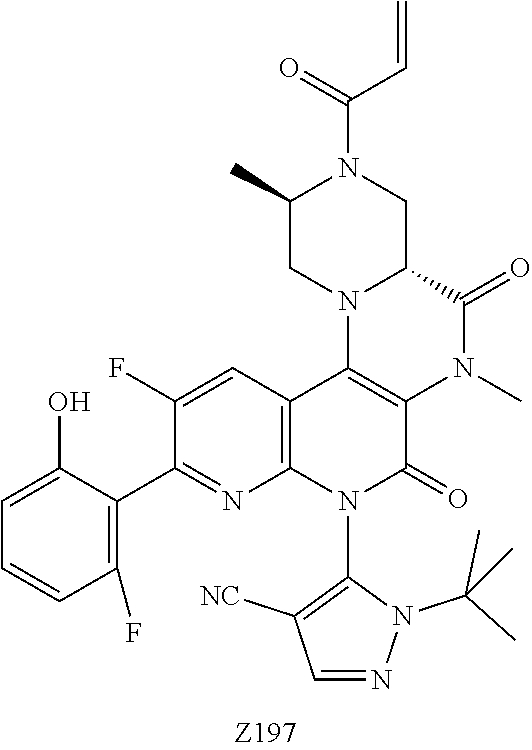 |
629.2 |
 |
||
 |
||
| 198 |
 |
615.2 |
 |
||
 |
||
| 199 |
 |
601.2 |
 |
||
 |
||
| 200 |
 |
618.3 |
 |
||
 |
||
| 201 |
 |
629.3 |
 |
||
 |
||
| 202 |
 |
615.2 |
 |
||
 |
||
| 203 |
 |
632.3 |
 |
||
 |
||
| 204 |
 |
674.3 |
 |
||
 |
||
| 205 |
 |
675.3 |
| 206 |
 |
674.3 |
| 207 |
 |
703.3 |
| 208 |
 |
632.2 |
 |
||
 |
||
| 209 |
 |
672.3 |
 |
||
 |
||
| 210 |
 |
687.3 |
 |
||
 |
||
| 211 |
 |
646.2 |
 |
||
 |
||
| 212 |
 |
646.2 |
 |
||
 |
||
| 213 |
 |
631.2 |
 |
||
 |
||
| 214 |
 |
659.2 |
 |
||
 |
||
| 215 |
 |
628.2 |
 |
||
 |
||
| 216 |
 |
623.2 |
 |
||
 |
||
| 217 |
 |
606.2 |
| 218 |
 |
604.2 |
| 219 |
 |
661.2 |
 |
||
 |
||
| 220 |
 |
631.2 |
 |
||
 |
||
| 221 |
 |
634.2 |
 |
||
 |
||
| 222 |
 |
623.2 |
 |
||
 |
||
| 223 |
 |
606.2 |
 |
||
 |
||
| 224 |
 |
606.2 |
 |
||
 |
||
| 225 |
 |
621.2 |
 |
||
 |
||
| 226 |
 |
628.2 |
 |
||
 |
||
| 227 |
 |
606.2 |
 |
||
 |
||
| 228 |
 |
645.2 |
 |
||
 |
||
| 229 |
 |
631.2 |
 |
||
 |
||
| 230 |
 |
617.2 |
 |
||
 |
||
| 231 |
 |
634.2 |
 |
||
 |
||
| 232 |
 |
645.2 |
 |
||
 |
||
| 233 |
 |
631.2 |
 |
||
 |
||
| 234 |
 |
648.3 |
 |
||
 |
||
| 235 |
 |
660.2 |
 |
||
 |
||
| 236 |
 |
661.2 |
| 237 |
 |
660.2 |
| 238 |
 |
689.3 |
| 239 |
 |
618.2 |
 |
||
 |
||
| 240 |
 |
658.3 |
 |
||
 |
||
| 241 |
 |
673.3 |
 |
||
 |
||
| 242 |
 |
632.2 |
 |
||
 |
||
| 243 |
 |
632.2 |
 |
||
 |
||
| 244 |
 |
617.2 |
 |
||
 |
||
| 245 |
 |
645.2 |
 |
||
 |
||
| 246 |
 |
614.2 |
 |
||
 |
||
| 247 |
 |
609.1 |
 |
||
 |
||
| 248 |
 |
592.1 |
| 249 |
 |
590.2 |
| 250 |
 |
647.2 |
 |
||
 |
||
| 251 |
 |
617.2 |
 |
||
 |
||
| 252 |
 |
620.2 |
 |
||
 |
||
| 253 |
 |
609.1 |
 |
||
 |
||
| 254 |
 |
592.2 |
 |
||
 |
||
| 255 |
 |
607.2 |
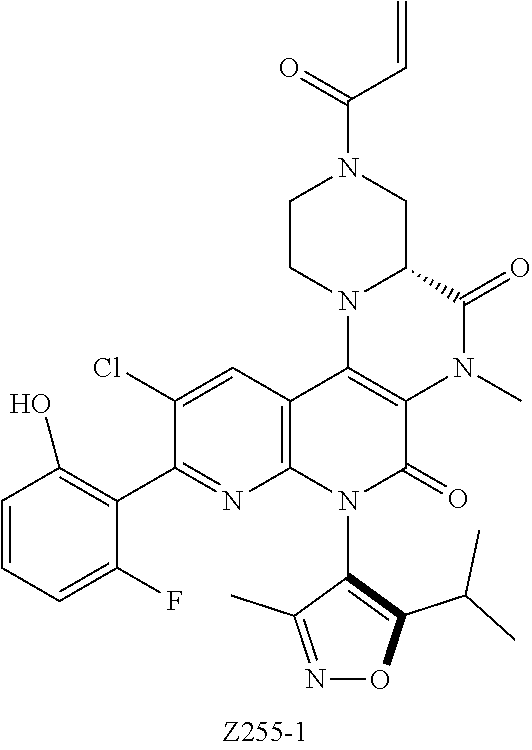 |
||
 |
||
| 256 |
 |
614.2 |
 |
||
 |
||
| 257 |
 |
592.2 |
 |
||
 |
||
| 258 |
 |
592.2 |
 |
||
 |
||
| 259 |
 |
631.2 |
 |
||
 |
||
| 260 |
 |
631.2 |
 |
||
 |
||
| 261 |
 |
617.2 |
 |
||
 |
||
| 262 |
 |
634.2 |
 |
||
 |
||
| 263 |
 |
645.2 |
 |
||
 |
||
| 264 |
 |
630.2 |
 |
||
 |
||
| 265 |
 |
683.2 |
 |
||
 |
||
| 266 |
 |
674.3 |
 |
||
 |
||
| 267 |
 |
675.3 |
| 268 |
 |
674.3 |
| 269 |
 |
703.3 |
| 270 |
 |
632.2 |
 |
||
 |
||
| 271 |
 |
672.3 |
 |
||
 |
||
| 272 |
 |
687.3 |
 |
||
 |
||
| 273 |
 |
646.2 |
 |
||
 |
||
| 274 |
 |
646.2 |
 |
||
 |
||
| 275 |
 |
631.2 |
 |
||
 |
||
| 276 |
 |
659.2 |
 |
||
 |
||
| 277 |
 |
628.2 |
 |
||
 |
||
| 278 |
 |
623.2 |
 |
||
 |
||
| 279 |
 |
606.2 |
| 280 |
 |
604.2 |
| 281 |
 |
661.2 |
 |
||
 |
||
| 282 |
 |
631.2 |
 |
||
 |
||
| 283 |
 |
634.2 |
 |
||
 |
||
| 284 |
 |
623.2 |
 |
||
 |
||
| 285 |
 |
606.2 |
 |
||
 |
||
| 286 |
 |
621.2 |
 |
||
 |
||
| 287 |
 |
628.2 |
 |
||
 |
||
| 288 |
 |
606.2 |
 |
||
 |
||
| 289 |
 |
606.2 |
 |
||
 |
||
| 290 |
 |
645.2 |
 |
||
 |
||
| 291 |
 |
645.2 |
 |
||
 |
||
| 292 |
 |
631.2 |
 |
||
 |
||
| 293 |
 |
648.3 |
 |
||
 |
||
| 294 |
 |
613.2 |
 |
||
 |
||
| 295 |
 |
604.2 |
 |
||
 |
||
| 296 |
 |
649.2 |
 |
||
 |
||
| 297 |
 |
674.3 |
 |
||
 |
||
| 298 |
 |
675.3 |
| 299 |
 |
674.3 |
| 300 |
 |
703.3 |
| 301 |
 |
632.2 |
 |
||
 |
||
| 302 |
 |
672.3 |
 |
||
 |
||
| 303 |
 |
687.3 |
 |
||
 |
||
| 304 |
 |
646.2 |
 |
||
 |
||
| 305 |
 |
646.2 |
 |
||
 |
||
| 306 |
 |
631.2 |
 |
||
 |
||
| 307 |
 |
659.2 |
 |
||
 |
||
| 308 |
 |
628.2 |
 |
||
 |
||
| 309 |
 |
623.2 |
 |
||
 |
||
| 310 |
 |
606.2 |
| 311 |
 |
604.2 |
| 312 |
 |
661.2 |
 |
||
 |
||
| 313 |
 |
631.2 |
 |
||
 |
||
| 314 |
 |
634.2 |
 |
||
 |
||
| 315 |
 |
623.2 |
 |
||
 |
||
| 316 |
 |
606.2 |
 |
||
 |
||
| 317 |
 |
621.2 |
 |
||
 |
||
| 318 |
 |
628.2 |
 |
||
 |
||
| 319 |
 |
606.2 |
 |
||
 |
||
| 320 |
 |
606.2 |
 |
||
 |
||
| 321 |
 |
645.2 |
 |
||
 |
||
| 322 |
 |
645.2 |
 |
||
 |
||
| 323 |
 |
631.2 |
 |
||
 |
||
| 324 |
 |
648.3 |
 |
||
 |
||
| 325 |
 |
633.2 |
 |
||
 |
||
| 326 |
 |
636.2 |
 |
||
 |
||
| 327 |
 |
647.2 |
 |
||
 |
||
| 328 |
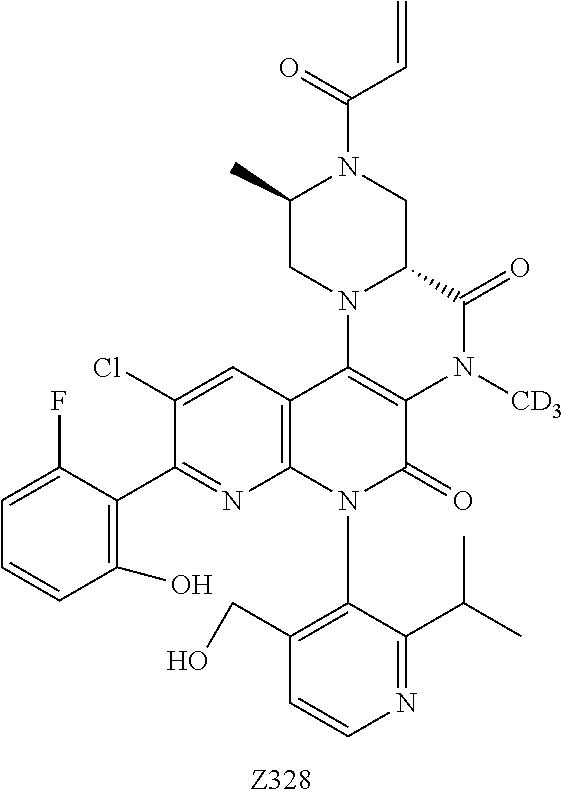 |
650.2 |
 |
||
 |
||
| 329 |
 |
634.2 |
 |
||
 |
||
| 330 |
 |
647.2 |
 |
||
 |
||
| 331 |
 |
650.2 |
 |
||
 |
||
| 332 |
 |
661.2 |
 |
||
 |
||
| 333 |
 |
664.2 |
 |
||
 |
||
| 334 |
 |
674.3 |
 |
||
 |
||
| 335 |
 |
688.3 |
 |
||
 |
||
| 336 |
 |
623.2 |
 |
||
 |
||
| 337 |
 |
592.2 |
 |
||
 |
||
| 338 |
 |
617.2 |
 |
||
 |
||
| 339 |
 |
633.3 |
 |
||
 |
||
| 340 |
 |
604.2 |
 |
||
 |
||
| 341 |
 |
591.2 |
 |
||
 |
||
| 342 |
 |
587.2 |
 |
||
 |
||
| TABLE 1 |
| Inhibitory Activity of Compounds For H358 and A549 Cells |
| H358 | A549 | H358 | A549 | ||
| Compound | IC50 | IC50 | Compound | IC50 | IC50 |
| No. | (μM) | (μM) | No. | (μM) | (μM) |
| Z1 | 0.031 | >10 | Z31 | 0.017 | 9.494 |
| Z2 | 0.773 | >10 | Z32 | 0.064 | >30 |
| Z1-1 | 0.031 | 10.716 | Z33-1 | 0.074 | >30 |
| Z1-2 | 0.198 | 16.482 | Z33-2 | 0.034 | >30 |
| Z3a | 0.017 | >10 | Z34-1 | 0.078 | >30 |
| Z3 | 0.016 | >10 | Z34-2 | 0.007 | >30 |
| Z6 | 0.035 | 11.312 | Z35 | 0.006 | 28.208 |
| Z9 | 0.032 | — | Z35-1 | 0.037 | >30 |
| Z9-1 | 0.218 | >10 | Z35-2 | 0.006 | >30 |
| Z9-2 | 0.015 | >10 | Z36-1 | 0.588 | >30 |
| Z10 | 0.008 | 12.125 | Z36-2 | 0.018 | 28.025 |
| Z10-1 | 0.070 | >10 | Z37 | 0.001 | 8.572 |
| Z10-2 | 0.004 | 24.640 | Z37-1 | 0.0007 | >30 |
| Z21 | 0.023 | >30 | Z37-2 | 0.165 | 3.322 |
| Z21-1 | 0.027 | >30 | Z38-1 | 0.007 | >30 |
| Z21-2 | 0.407 | >30 | Z38-2 | 0.513 | >30 |
| Z22 | 0.067 | >30 | Z39-1 | 0.0006 | >30 |
| Z23 | 0.002 | 10.482 | Z39-2 | 0.316 | 7.781 |
| Z24 | 0.003 | 28.067 | Z40 | 0.011 | >30 |
| Z24-1 | 0.028 | >30 | Z41 | 0.017 | >30 |
| Z24-2 | 0.003 | 11.308 | Z42 | 0.053 | >30 |
| Z25 | 0.004 | 28.332 | Z43 | 0.049 | 29.234 |
| Z25-1 | 0.050 | >30 | Z44a | 0.024 | 9.237 |
| Z25-2 | 0.003 | >30 | Z44 | 0.011 | >30 |
| Z26 | 0.002 | 12.856 | Z45 | 0.013 | >30 |
| Z26-1 | 0.042 | >30 | Z46 | 0.012 | 10.306 |
| Z26-2 | 0.003 | >30 | Z47 | 0.031 | >30 |
| Z27 | 0.002 | 10.123 | Z48 | 0.003 | >10 |
| Z27-1 | 0.012 | 12.705 | Z49-1 | 0.009 | 9.417 |
| Z27-2 | 0.001 | 18.995 | Z49-2 | 0.044 | >30 |
| Z28 | 0.090 | 16.881 | Z50 | 0.0005 | 28.289 |
| Z29 | 0.166 | 21.794 | Z50-1 | 0.0003 | >30 |
| Z30 | 0.051 | >30 | Z50-2 | 0.320 | 3.872 |
| Z30-1 | 0.804 | >30 | Z48′-1 | 0.828 | — |
| Z30-2 | 0.047 | >30 | Z48′-2 | >1 | — |
| TABLE 2 |
| Inhibitory Activity of Compounds For p-ERK |
| p-ERK | p-ERK | |||
| Compound No. | IC50 (μM) | Compound No. | IC50 (μM) | |
| Z1 | 0.432 | Z34-1 | 0.578 | |
| Z1-1 | 0.512 | Z34-2 | 0.051 | |
| Z3a | 0.273 | Z35 | 0.083 | |
| Z3 | 0.160 | Z35-1 | 0.249 | |
| Z6 | 0.313 | Z35-2 | 0.049 | |
| Z9 | 0.187 | Z36-2 | 0.188 | |
| Z9-2 | 0.221 | Z37 | 0.021 | |
| Z10 | 0.075 | Z37-1 | 0.011 | |
| Z10-1 | 0.460 | Z38-1 | 0.212 | |
| Z10-2 | 0.034 | Z39-1 | 0.011 | |
| Z21 | 0.271 | Z40 | 0.078 | |
| Z21-1 | 0.428 | Z41 | 0.279 | |
| Z23 | 0.017 | Z42 | 0.566 | |
| Z24 | 0.113 | Z43 | 0.439 | |
| Z24-1 | 0.536 | Z44a | 0.170 | |
| Z24-2 | 0.061 | Z44 | 0.088 | |
| Z25 | 0.051 | Z45 | 0.122 | |
| Z25-2 | 0.029 | Z46 | 0.224 | |
| Z26 | 0.039 | Z48 | 0.052 | |
| Z26-2 | 0.062 | Z49-1 | 0.114 | |
| Z27 | 0.029 | Z50 | 0.007 | |
| Z27-1 | 0.157 | Z50-1 | 0.006 | |
| Z27-2 | 0.011 | Z50-2 | 0.316 | |
| Z30 | 0.676 | Z72 | 0.106 | |
| Z30-2 | 0.488 | Z48′-1 | 7.477 | |
| Z31 | 0.206 | Z48′-2 | >10 | |
| Z33-2 | 0.238 | |||
| TABLE 3 |
| Inhibitory Activity of Compounds For MIA-PaCa2 |
| Compound | MIA-PaCa2 | Compound | MIA-PaCa2 | |
| No. | IC50 (μM) | No. | IC50 (μM) | |
| Z1 | 0.090 | Z33-1 | 0.092 | |
| Z1-1 | 0.095 | Z33-2 | 0.048 | |
| Z3a | 0.070 | Z34-1 | 0.135 | |
| Z3 | 0.018 | Z34-2 | 0.010 | |
| Z6 | 0.085 | Z35 | 0.015 | |
| Z9 | 0.074 | Z36-2 | 0.133 | |
| Z9-2 | 0.017 | Z37 | 0.004 | |
| Z10-2 | 0.008 | Z37-1 | 0.002 | |
| Z21 | 0.047 | Z38-1 | 0.027 | |
| Z21-1 | 0.046 | Z39-1 | 0.001 | |
| Z22 | 0.180 | Z40 | 0.012 | |
| Z23 | 0.002 | Z41 | 0.044 | |
| Z24 | 0.009 | Z42 | 0.128 | |
| Z24-2 | 0.004 | Z43 | 0.220 | |
| Z25 | 0.008 | Z44a | 0.103 | |
| Z25-2 | 0.005 | Z44 | 0.034 | |
| Z26 | 0.005 | Z45 | 0.048 | |
| Z26-2 | 0.005 | Z46 | 0.068 | |
| Z27 | 0.004 | Z47 | 0.083 | |
| Z27-2 | 0.001 | Z48 | 0.006 | |
| Z28 | 0.234 | Z49-1 | 0.012 | |
| Z30 | 0.140 | Z50 | 0.002 | |
| Z30-2 | 0.130 | Z50-1 | 0.001 | |
| Z31 | 0.059 | Z48′-1 | >1 | |
| Z32 | 0.170 | Z48′-2 | >1 | |
| TABLE 4 | |||
| Compound No. | NEA IC50 (μM) | ||
| Z1 | 0.255 | ||
| Z1-1 | 0.152 | ||
| Z1-2 | 1.428 | ||
| Z9-1 | 2.571 | ||
| Z9-2 | 0.115 | ||
| Z10 | 0.067 | ||
| Z10-1 | 0.708 | ||
| Z10-2 | 0.037 | ||
| Z21 | 0.388 | ||
| Z21-1 | 0.172 | ||
| Z21-2 | 3.935 | ||
| Z24 | 0.058 | ||
| Z24-1 | 0.291 | ||
| Z24-2 | 0.038 | ||
| Z25 | 0.060 | ||
| Z25-2 | 0.025 | ||
| Z25-1 | 0.951 | ||
| Z26 | 0.034 | ||
| Z26-1 | 0.868 | ||
| Z26-2 | 0.040 | ||
| Z27 | 0.027 | ||
| Z27-1 | 0.198 | ||
| Z27-2 | 0.009 | ||
| Z30 | 0.656 | ||
| Z31 | 0.151 | ||
| Z33-1 | 0.515 | ||
| Z33-2 | 0.162 | ||
| Z35 | 0.073 | ||
| Z37 | 0.020 | ||
| Z37-1 | 0.011 | ||
| Z37-2 | 1.898 | ||
| Z38-1 | 0.053 | ||
| Z38-2 | 2.147 | ||
| Z39-2 | 2.245 | ||
| Z50 | 0.019 | ||
| Z50-1 | 0.008 | ||
| Z50-2 | 1.450 | ||
| TABLE 5 | ||
| Tumor Volume | ||
| on Day 14 after | ||
| Group | Administration (mm3) | TGI(%) |
| Solvent control group | 670.99 | — |
| AMG 510 (1 mg/kg, p.o., QD) | 314.28 | 82.8 |
| AMG 510 (3 mg/kg, p.o., QD) | 205.35 | 109.1 |
| AMG 510 (10 mg/kg, p.o., QD) | 81.72 | 138.9 |
| Z37-1 (1 mg/kg, p.o., QD) | 286.12 | 89.4 |
| Z37-1 (3 mg/kg, p.o., QD) | 238.82 | 102.8 |
| Z37-1 (10 mg/kg, p.o., QD) | 210.59 | 108.4 |
| Z48 (1 mg/kg, p.o., QD) | 459.33 | 51.2 |
| Z48 (3 mg/kg, p.o., QD) | 148.62 | 124.7 |
| Z48 (10 mg/kg, p.o., QD) | 90.39 | 138.5 |
| Z23 (1 mg/kg, p.o., QD) | 194.65 | 113.2 |
| Z23 (3 mg/kg, p.o., QD) | 59.52 | 143.5 |
| Z23 (10 mg/kg, p.o., QD) | 47.32 | 149.2 |
| Z25-2 (1 mg/kg, p.o., QD) | 180.14 | 116.2 |
| Z25-2 (3 mg/kg, p.o., QD) | 62.35 | 143.7 |
| Z25-2 (10 mg/kg, p.o., QD) | 18.94 | 154.4 |
| Z26-2 (1 mg/kg, p.o., QD) | 157.06 | 121.1 |
| Z26-2 (3 mg/kg, p.o., QD) | 67.66 | 143.8 |
| Z26-2 (10 mg/kg, p.o., QD) | 30.49 | 151.1 |
| Z27-2 (1 mg/kg, p.o., QD) | 140.10 | 126.3 |
| Z27-2 (3 mg/kg, p.o., QD) | 54.81 | 145.1 |
| Z27-2 (10 mg/kg, p.o., QD) | 15.16 | 155.8 |

| TABLE 6 | ||||||
| Group | AMG510 | Z9-2 | Z10-2 | Z48 | Z25-2 | Z27-2 |
| Cl (L/h/kg) | 4.39 | 0.14 | 0.811 | 1.53 | 0.499 | 0.59 |
| Vd (L/kg) | 1.15 | 0.326 | 1.06 | 1.66 | 0.661 | 0.777 |
| T1/2 (h) | 0.318 | 1.74 | 0.941 | 1.02 | 1.00 | 1.08 |
| Notes: | ||||||
| Cl represents clearance rate; Vd represents volume of distribution; and T1/2 represents half-life. | ||||||
| TABLE 7 | |||||||
| Group | AMG510 | Z1 | Z9-2 | Z10-2 | Z48 | Z25-2 | Z27-2 |
| Cmax (ng/mL) | 1221 | 2603 | 13177 | 3960 | 1250 | 6643 | 3660 |
| Tmax (h) | 1.00 | 0.25 | 1.00 | 1.00 | 0.5 | 1.93 | 1.74 |
| F (%) | 36.10 | — | 103 | 59.20 | 38.1 | 93.5 | 96.8 |
| Notes: | |||||||
| Cmax represents maximum compound concentration after oral administration; Tmax represents time to reach Cmax; and F represents bioavailability. | |||||||
| TABLE 8 | |
| Empirical formula | C32H30C1FN6O4•C3H8O |
| Formula Weight | 677.16 |
| Temperature | 169.98 K |
| Wavelength | 1.34139 Å |
| Crystal system | Monoclinic |
| Space group | P 1 21 1 |
| Unit cell dimensions | a = 12.9184(4) Å | a = 90° |
| b = 9.0729(3) Å | b = 97.305(2)° | |
| c = 14.9611(4) Å | g = 90° |
| Volume | 1739.32(9) Å3 |
| Number of formula units, | 2 |
| Z, in a unit cell | |
| Density (calculated) | 1.293 Mg/m3 |
| Absorption coefficient | 0.929 mm−1 |
| Number of electrons, F(000), | 712 |
| in a unit cell | |
| Crystal size | 0.05 × 0.03 × 0.02 mm3 |
| Theta range for data collection | 3.000 to 54.999° |
| Index ranges | −15 <= h <= 15, −11 <= k <= |
| 7, −18 <= l <= 18 | |
| Reflections collected | 18587 |
| Independent reflections | 5906 [R(int) = 0.0559] |
| Completeness to theta = 53.594° | 99.7% |
| Absorption correction | Semi-empirical from equivalents |
| Max. and min. transmissions | 0.7508 and 0.6376 |
| Refinement method | Full-matrix least-squares on F2 |
| Data/restraints/parameters | 5906/1/441 |
| Goodness-of-fit on F2 | 1.048 |
| Final R indices [I > 2 sigma(I)] | R1 = 0.0511, wR2 = 0.1082 |
| R indices (all data) | R1 = 0.0812, wR2 = 0.1244 |
| Absolute structure parameter | 0.064(13) |
| Largest diff peak and hole | 0.276 and −0.191 e.Å−3 |
| TABLE 9 | |
| Empirical formula | C33H32C1FN6O4 |
| Formula Weight | 631.09 |
| Temperature | 172.99 K |
| Wavelength | 1.34139 Å |
| Crystal system | Monoclinic |
| Space group | P 1 21 1 |
| Unit cell dimensions | a = 12.3421(6) Å | a = 90°. |
| b = 9.5931(4) Å | b = 98.435(2)°. | |
| c = 14.9580(7) Å | g = 90°. |
| Volume | 1751.86(14) Å3 |
| Number of formula units, | 2 |
| Z, in a unit cell | |
| Density (calculated) | 1.196 Mg/m3 |
| Absorption coefficient | 0.887 mm−1 |
| Number F(000) of electrons, | 660 |
| F(000), in a unit cell | |
| Crystal size | 0.1 × 0.06 × 0.05 mm3 |
| Theta range for data collection | 3.149  |
| Index ranges | −15 <= h <= 15, −11 <= k <= |
| 11, −18 <= l <= 17 | |
| Reflections collected | 21383 |
| Independent reflections | 6556 [R(int) = 0.0396] |
| Completeness to theta = 53.594° | 99.2% |
| Absorption correction | Semi-empirical from equivalents |
| Max. and min. transmission | 0.7508 and 0.5869 |
| Refinement method) | Full-matrix least-squares on F2 |
| Data/restraints/parameters | 6556/2/411 |
| Goodness-of-fit on F2 | 1.043 |
| Final R indices [I > 2sigma(I)] | R1 = 0.0371, wR2 = 0.1029 |
| R indices (all data) | R1 = 0.0388, wR2 = 0.1044 |
| Absolute structure parameter | 0.039(6) |
| Largest diff. peak and hole | 0.276 and −0.311 e.Å−3 |
Claims (20)


Applications Claiming Priority (7)
| Application Number | Priority Date | Filing Date | Title |
|---|---|---|---|
| CN201911045542 | 2019-10-30 | ||
| CN201911045542.X | 2019-10-30 | ||
| CN202010272563 | 2020-04-09 | ||
| CN202010272563.1 | 2020-04-09 | ||
| CN202011140832.5 | 2020-10-22 | ||
| CN202011140832 | 2020-10-22 | ||
| PCT/CN2020/124226 WO2021083167A1 (en) | 2019-10-30 | 2020-10-28 | Substituted heterocyclic fused cyclic compound, preparation method therefor and pharmaceutical use thereof |
Related Parent Applications (1)
| Application Number | Title | Priority Date | Filing Date |
|---|---|---|---|
| PCT/CN2020/124226 A-371-Of-International WO2021083167A1 (en) | 2019-10-30 | 2020-10-28 | Substituted heterocyclic fused cyclic compound, preparation method therefor and pharmaceutical use thereof |
Related Child Applications (1)
| Application Number | Title | Priority Date | Filing Date |
|---|---|---|---|
| US18/381,121 Continuation US20240158417A1 (en) | 2019-10-30 | 2023-10-17 | Substituted heterocyclic fused cyclic compound, preparation method therefor and pharmaceutical use thereof |
Publications (2)
| Publication Number | Publication Date |
|---|---|
| US20230084095A1 US20230084095A1 (en) | 2023-03-16 |
| US12054497B2 true US12054497B2 (en) | 2024-08-06 |
Family
ID=75715785
Family Applications (2)
| Application Number | Title | Priority Date | Filing Date |
|---|---|---|---|
| US17/773,607 Active 2040-10-28 US12054497B2 (en) | 2019-10-30 | 2020-10-28 | Substituted heterocyclic fused cyclic compound, preparation method therefor and pharmaceutical use thereof |
| US18/381,121 Pending US20240158417A1 (en) | 2019-10-30 | 2023-10-17 | Substituted heterocyclic fused cyclic compound, preparation method therefor and pharmaceutical use thereof |
Family Applications After (1)
| Application Number | Title | Priority Date | Filing Date |
|---|---|---|---|
| US18/381,121 Pending US20240158417A1 (en) | 2019-10-30 | 2023-10-17 | Substituted heterocyclic fused cyclic compound, preparation method therefor and pharmaceutical use thereof |
Country Status (20)
| Country | Link |
|---|---|
| US (2) | US12054497B2 (en) |
| EP (2) | EP4053118B1 (en) |
| JP (3) | JP7601869B2 (en) |
| KR (1) | KR102894761B1 (en) |
| CN (4) | CN115057872B (en) |
| AU (1) | AU2020374844C1 (en) |
| BR (1) | BR112022008375A2 (en) |
| CA (1) | CA3156777A1 (en) |
| DK (1) | DK4053118T3 (en) |
| ES (1) | ES3000619T3 (en) |
| FI (1) | FI4053118T3 (en) |
| HR (1) | HRP20241590T1 (en) |
| HU (1) | HUE069297T2 (en) |
| LT (1) | LT4053118T (en) |
| PT (1) | PT4053118T (en) |
| RS (1) | RS66320B1 (en) |
| SI (1) | SI4053118T1 (en) |
| TW (1) | TWI754438B (en) |
| WO (1) | WO2021083167A1 (en) |
| ZA (1) | ZA202205758B (en) |
Cited By (3)
| Publication number | Priority date | Publication date | Assignee | Title |
|---|---|---|---|---|
| US20220389029A1 (en) * | 2019-09-20 | 2022-12-08 | Shanghai Jemincare Pharmaceuticals Co., Ltd | Fused pyridone compound, and preparation method therefor and use thereof |
| US20230295163A1 (en) * | 2020-08-21 | 2023-09-21 | Zhejiang Hisun Pharmaceutical Co., Ltd. | Tetracyclic derivative, method for preparing same and use thereof in medicine |
| US20240158417A1 (en) * | 2019-10-30 | 2024-05-16 | Genfleet Therapeutics (Shanghai) Inc. | Substituted heterocyclic fused cyclic compound, preparation method therefor and pharmaceutical use thereof |
Families Citing this family (36)
| Publication number | Priority date | Publication date | Assignee | Title |
|---|---|---|---|---|
| WO2019217307A1 (en) | 2018-05-07 | 2019-11-14 | Mirati Therapeutics, Inc. | Kras g12c inhibitors |
| WO2020055761A1 (en) | 2018-09-10 | 2020-03-19 | Mirati Therapeutics, Inc. | Combination therapies |
| KR102871791B1 (en) | 2018-09-10 | 2025-10-15 | 미라티 테라퓨틱스, 인크. | combination therapy |
| ES3004338T3 (en) | 2018-09-10 | 2025-03-12 | Mirati Therapeutics Inc | Combination therapies |
| JP2022500385A (en) | 2018-09-10 | 2022-01-04 | ミラティ セラピューティクス, インコーポレイテッド | Combination therapy |
| TWI831855B (en) | 2018-10-26 | 2024-02-11 | 日商大鵬藥品工業股份有限公司 | Novel indazole compounds or salts thereof |
| CA3112129A1 (en) | 2018-12-05 | 2020-06-11 | Mirati Therapeutics, Inc. | Combination therapies |
| JP7592601B2 (en) | 2019-01-10 | 2024-12-02 | ミラティ セラピューティクス, インコーポレイテッド | KRAS G12C inhibitors |
| CA3148745A1 (en) | 2019-08-29 | 2021-03-04 | Xiaolun Wang | Kras g12d inhibitors |
| US12122787B2 (en) | 2019-09-20 | 2024-10-22 | Shanghai Jemincare Pharmaceuticals Co., Ltd | Fused pyridone compound, and preparation method therefor and use thereof |
| CN114761012B (en) | 2019-09-24 | 2025-03-21 | 米拉蒂治疗股份有限公司 | Combination therapy |
| CA3158793A1 (en) | 2019-10-28 | 2021-05-06 | Merck Sharp & Dohme Corp. | Small molecule inhibitors of kras g12c mutant |
| WO2021106230A1 (en) | 2019-11-29 | 2021-06-03 | 大鵬薬品工業株式会社 | Novel phenol compound or salt thereof |
| KR20220130126A (en) | 2019-12-20 | 2022-09-26 | 미라티 테라퓨틱스, 인크. | SOS1 inhibitor |
| US12286431B2 (en) | 2020-09-11 | 2025-04-29 | Mirati Therapeutics, Inc. | Crystalline forms of a KRas G12C inhibitor |
| TW202214630A (en) * | 2020-09-12 | 2022-04-16 | 大陸商成都倍特藥業股份有限公司 | Methionine adenosyl transferase inhibitor, preparation method and use thereof |
| MX2023003338A (en) | 2020-09-23 | 2023-06-14 | Erasca Inc | Tricyclic pyridones and pyrimidones. |
| US12398154B2 (en) | 2020-12-15 | 2025-08-26 | Mirati Therapeutics, Inc. | Azaquinazoline pan-KRas inhibitors |
| EP4262803A4 (en) | 2020-12-16 | 2025-03-12 | Mirati Therapeutics, Inc. | PAN-KRAS TETRAHYDROPYRIDOPYRIMIDINE INHIBITORS |
| US20230107642A1 (en) | 2020-12-18 | 2023-04-06 | Erasca, Inc. | Tricyclic pyridones and pyrimidones |
| WO2022199669A1 (en) * | 2021-03-25 | 2022-09-29 | 上海济煜医药科技有限公司 | Salt type, crystal form, and use of fused pyridinone compound |
| CN115124533A (en) * | 2021-03-26 | 2022-09-30 | 浙江海正药业股份有限公司 | Tetracyclic derivative, preparation method and medical application thereof |
| CN116848111A (en) * | 2021-03-26 | 2023-10-03 | 浙江海正药业股份有限公司 | A key intermediate of a KRAS inhibitor and its preparation method |
| WO2022206723A1 (en) * | 2021-03-30 | 2022-10-06 | 浙江海正药业股份有限公司 | Heterocyclic derivative, and preparation method therefor and use thereof in medicine |
| WO2022223037A1 (en) * | 2021-04-22 | 2022-10-27 | 劲方医药科技(上海)有限公司 | Salt or polymorph of kras inhibitor |
| EP4373827A4 (en) * | 2021-07-23 | 2025-06-04 | Suzhou Zanrong Pharma Limited | KRAS G12D INHIBITORS AND THEIR USES |
| WO2023116895A1 (en) * | 2021-12-24 | 2023-06-29 | 劲方医药科技(上海)有限公司 | Polymorph of kras inhibitor, preparation method therefor, and use thereof |
| CN116327956B (en) * | 2022-04-01 | 2025-11-28 | 劲方医药科技(上海)股份有限公司 | Pharmaceutical composition, use thereof and method for treating cancer |
| US12600723B2 (en) | 2022-07-18 | 2026-04-14 | Incyte Corporation | Tetracyclic compounds as DGK inhibitors |
| US12600722B2 (en) * | 2022-07-18 | 2026-04-14 | Incyte Corporation | Tetracyclic compounds as DGK inhibitors |
| WO2024061267A1 (en) * | 2022-09-21 | 2024-03-28 | 劲方医药科技(上海)有限公司 | Pharmaceutical composition, and preparation method therefor and use thereof |
| WO2024081674A1 (en) | 2022-10-11 | 2024-04-18 | Aadi Bioscience, Inc. | Combination therapies for the treatment of cancer |
| CN121773111A (en) | 2023-08-15 | 2026-03-31 | 劲方医药科技(上海)股份有限公司 | Preparation method of pyrazinonaphthyridinedione compound and intermediate thereof |
| AU2024337913A1 (en) | 2023-09-08 | 2026-03-26 | Gilead Sciences, Inc. | Pyrimidine-containing polycyclic derivatives as kras g12d modulating compounds |
| IL327380A (en) | 2023-09-29 | 2026-05-01 | D3 Bio Wuxi Co Ltd | Combinations of wx-001 or derivatives thereof with a kras g12c inhibitor for use in the treatment of cancer |
| WO2025085748A1 (en) | 2023-10-20 | 2025-04-24 | Merck Sharp & Dohme Llc | Small molecule inhibitors of kras proteins |
Citations (12)
| Publication number | Priority date | Publication date | Assignee | Title |
|---|---|---|---|---|
| CN106488910A (en) | 2013-10-10 | 2017-03-08 | 亚瑞克西斯制药公司 | Inhibitors of KRAS G12C |
| RU2673079C2 (en) | 2012-09-07 | 2018-11-22 | Кэнсэр Ресерч Текнолоджи Лимитед | Inhibitor compounds |
| WO2018217651A1 (en) | 2017-05-22 | 2018-11-29 | Amgen Inc. | Kras g12c inhibitors and methods of using the same |
| WO2019051291A1 (en) | 2017-09-08 | 2019-03-14 | Amgen Inc. | KRAS G12C INHIBITORS AND METHODS OF USE |
| TWI659021B (en) | 2013-10-10 | 2019-05-11 | 亞瑞克西斯製藥公司 | Inhibitors of kras g12c |
| US20190144444A1 (en) | 2017-11-15 | 2019-05-16 | Mirati Therapeutics, Inc. | Kras g12c inhibitors |
| US20190177338A1 (en) | 2017-12-08 | 2019-06-13 | Astrazeneca Ab | Chemical compounds |
| WO2019213516A1 (en) | 2018-05-04 | 2019-11-07 | Amgen Inc. | Kras g12c inhibitors and methods of using the same |
| WO2020239123A1 (en) | 2019-05-31 | 2020-12-03 | 上海翰森生物医药科技有限公司 | Aromatic heterocyclic derivative modulator and preparation method therefor and use thereof |
| CN112300194A (en) | 2019-07-30 | 2021-02-02 | 上海凌达生物医药有限公司 | A class of fused-ring pyridone compounds, preparation method and use |
| CN112300196A (en) | 2019-07-30 | 2021-02-02 | 上海凌达生物医药有限公司 | Piperidine condensed ring compound, preparation method and application |
| CA3155066A1 (en) | 2019-09-20 | 2021-03-25 | Shanghai Jemincare Pharmaceuticals Co., Ltd | Fused pyridone compound, and preparation method therefor and use thereof |
Family Cites Families (12)
| Publication number | Priority date | Publication date | Assignee | Title |
|---|---|---|---|---|
| US4065457A (en) * | 1973-05-19 | 1977-12-27 | Beecham Group Limited | 4-Hydroxy-3-nitro-carbostyril compounds |
| US3962445A (en) * | 1973-05-19 | 1976-06-08 | Beecham Group Limited | Anti-allergenic carbostyril derivatives |
| US5179093A (en) * | 1991-05-10 | 1993-01-12 | Schering Corporation | Quinoline-diones |
| CN103012397B (en) * | 2011-09-26 | 2017-03-01 | 赛诺菲 | Pyrazolo (E)-3-(3-Acetyl-4-hydroxy-5-methoxy-phenyl)-N-(4-hydroxy-1-methyl-3-octyloxy-2-oxo-1,2-dihydro-quinolin-7-yl)-acrylamide, its preparation method and its therapeutic use |
| GB201406486D0 (en) * | 2014-04-10 | 2014-05-28 | Redx Pharma Ltd | Antibacterial compounds |
| JP2017523213A (en) * | 2014-08-06 | 2017-08-17 | ノバルティス アーゲー | Quinolone derivatives as antibacterial agents |
| WO2017046603A1 (en) * | 2015-09-18 | 2017-03-23 | Redx Pharma Plc | Antibacterial compounds and new uses thereof |
| JP2022517446A (en) * | 2018-12-25 | 2022-03-09 | 青島優梦家居科技有限公司 | pillow |
| US10541748B1 (en) * | 2019-03-26 | 2020-01-21 | Ciena Corporation | Multi-fiber interface automatic power reduction systems and methods |
| US12122787B2 (en) * | 2019-09-20 | 2024-10-22 | Shanghai Jemincare Pharmaceuticals Co., Ltd | Fused pyridone compound, and preparation method therefor and use thereof |
| CA3156777A1 (en) * | 2019-10-30 | 2021-05-06 | Fusheng ZHOU | Substituted heterocyclic fused cyclic compound, preparation method therefor and pharmaceutical use thereof |
| WO2023116895A1 (en) * | 2021-12-24 | 2023-06-29 | 劲方医药科技(上海)有限公司 | Polymorph of kras inhibitor, preparation method therefor, and use thereof |
-
2020
- 2020-10-28 CA CA3156777A patent/CA3156777A1/en active Pending
- 2020-10-28 RS RS20241407A patent/RS66320B1/en unknown
- 2020-10-28 CN CN202210818001.1A patent/CN115057872B/en active Active
- 2020-10-28 BR BR112022008375A patent/BR112022008375A2/en unknown
- 2020-10-28 FI FIEP20882039.9T patent/FI4053118T3/en active
- 2020-10-28 JP JP2022526049A patent/JP7601869B2/en active Active
- 2020-10-28 ES ES20882039T patent/ES3000619T3/en active Active
- 2020-10-28 HU HUE20882039A patent/HUE069297T2/en unknown
- 2020-10-28 PT PT208820399T patent/PT4053118T/en unknown
- 2020-10-28 DK DK20882039.9T patent/DK4053118T3/en active
- 2020-10-28 LT LTEPPCT/CN2020/124226T patent/LT4053118T/en unknown
- 2020-10-28 AU AU2020374844A patent/AU2020374844C1/en active Active
- 2020-10-28 CN CN202311339164.2A patent/CN117645614B/en active Active
- 2020-10-28 EP EP20882039.9A patent/EP4053118B1/en active Active
- 2020-10-28 EP EP23204050.1A patent/EP4328229A3/en active Pending
- 2020-10-28 KR KR1020227018301A patent/KR102894761B1/en active Active
- 2020-10-28 CN CN202080034074.0A patent/CN113853373B/en active Active
- 2020-10-28 US US17/773,607 patent/US12054497B2/en active Active
- 2020-10-28 SI SI202030546T patent/SI4053118T1/en unknown
- 2020-10-28 CN CN202510234552.7A patent/CN120271585A/en active Pending
- 2020-10-28 WO PCT/CN2020/124226 patent/WO2021083167A1/en not_active Ceased
- 2020-10-28 HR HRP20241590TT patent/HRP20241590T1/en unknown
- 2020-10-29 TW TW109137617A patent/TWI754438B/en active
-
2022
- 2022-05-16 ZA ZA2022/05758A patent/ZA202205758B/en unknown
-
2023
- 2023-10-11 JP JP2023176319A patent/JP7830406B6/en active Active
- 2023-10-17 US US18/381,121 patent/US20240158417A1/en active Pending
-
2025
- 2025-10-08 JP JP2025170602A patent/JP2026010039A/en active Pending
Patent Citations (20)
| Publication number | Priority date | Publication date | Assignee | Title |
|---|---|---|---|---|
| RU2673079C2 (en) | 2012-09-07 | 2018-11-22 | Кэнсэр Ресерч Текнолоджи Лимитед | Inhibitor compounds |
| CN106488910A (en) | 2013-10-10 | 2017-03-08 | 亚瑞克西斯制药公司 | Inhibitors of KRAS G12C |
| TWI659021B (en) | 2013-10-10 | 2019-05-11 | 亞瑞克西斯製藥公司 | Inhibitors of kras g12c |
| WO2018217651A1 (en) | 2017-05-22 | 2018-11-29 | Amgen Inc. | Kras g12c inhibitors and methods of using the same |
| WO2019051291A1 (en) | 2017-09-08 | 2019-03-14 | Amgen Inc. | KRAS G12C INHIBITORS AND METHODS OF USE |
| TW201922739A (en) | 2017-09-08 | 2019-06-16 | 美商安進公司 | Inhibitors of KRAS G12C and methods of using the same |
| US20190144444A1 (en) | 2017-11-15 | 2019-05-16 | Mirati Therapeutics, Inc. | Kras g12c inhibitors |
| TW201938555A (en) | 2017-11-15 | 2019-10-01 | 美商米拉蒂醫療股份有限公司 | KRAS G12C inhibitor |
| US20190177338A1 (en) | 2017-12-08 | 2019-06-13 | Astrazeneca Ab | Chemical compounds |
| CA3098574A1 (en) | 2018-05-04 | 2019-11-07 | Amgen Inc. | Kras g12c inhibitors and methods of using the same |
| WO2019213516A1 (en) | 2018-05-04 | 2019-11-07 | Amgen Inc. | Kras g12c inhibitors and methods of using the same |
| WO2020239123A1 (en) | 2019-05-31 | 2020-12-03 | 上海翰森生物医药科技有限公司 | Aromatic heterocyclic derivative modulator and preparation method therefor and use thereof |
| CN113396147A (en) | 2019-05-31 | 2021-09-14 | 上海翰森生物医药科技有限公司 | Aromatic heterocyclic derivative regulator, preparation method and application thereof |
| CN112300194A (en) | 2019-07-30 | 2021-02-02 | 上海凌达生物医药有限公司 | A class of fused-ring pyridone compounds, preparation method and use |
| CN112300196A (en) | 2019-07-30 | 2021-02-02 | 上海凌达生物医药有限公司 | Piperidine condensed ring compound, preparation method and application |
| CA3155066A1 (en) | 2019-09-20 | 2021-03-25 | Shanghai Jemincare Pharmaceuticals Co., Ltd | Fused pyridone compound, and preparation method therefor and use thereof |
| WO2021052499A1 (en) | 2019-09-20 | 2021-03-25 | 上海济煜医药科技有限公司 | Fused pyridone compound, and preparation method therefor and use thereof |
| AU2020350745A1 (en) | 2019-09-20 | 2022-04-07 | Jiangxi Jemincare Group Co., Ltd | Fused pyridone compound, and preparation method therefor and use thereof |
| CN114728968A (en) | 2019-09-20 | 2022-07-08 | 上海济煜医药科技有限公司 | Condensed pyridone compound and preparation method and application thereof |
| EP4043464A1 (en) | 2019-09-20 | 2022-08-17 | Shanghai Jemincare Pharmaceuticals Co., Ltd. | Fused pyridone compound, and preparation method therefor and use thereof |
Cited By (3)
| Publication number | Priority date | Publication date | Assignee | Title |
|---|---|---|---|---|
| US20220389029A1 (en) * | 2019-09-20 | 2022-12-08 | Shanghai Jemincare Pharmaceuticals Co., Ltd | Fused pyridone compound, and preparation method therefor and use thereof |
| US20240158417A1 (en) * | 2019-10-30 | 2024-05-16 | Genfleet Therapeutics (Shanghai) Inc. | Substituted heterocyclic fused cyclic compound, preparation method therefor and pharmaceutical use thereof |
| US20230295163A1 (en) * | 2020-08-21 | 2023-09-21 | Zhejiang Hisun Pharmaceutical Co., Ltd. | Tetracyclic derivative, method for preparing same and use thereof in medicine |
Also Published As
Similar Documents
| Publication | Publication Date | Title |
|---|---|---|
| US20240158417A1 (en) | Substituted heterocyclic fused cyclic compound, preparation method therefor and pharmaceutical use thereof | |
| CN113767106B (en) | Oxazaquinazoline-7(8H)-one compounds, their preparation methods and medicinal uses | |
| US20240270758A1 (en) | Pyridino-or pyrimido-cyclic compound, preparation method therefor and medical use thereof | |
| US20230203060A1 (en) | Fused tricyclic compound, pharmaceutical composition thereof, and use thereof | |
| CN104513252B (en) | Substituted urea derivative and its application in medicine | |
| EP4455132A1 (en) | Pyrimidine heterocyclic compound, preparation method therefor and use thereof in medicine | |
| RU2815814C1 (en) | Substituted heterocyclic fused cyclic compound, method for production thereof and pharmaceutical use thereof | |
| EP4223753A1 (en) | Aroyl substituted tricyclic compound, preparation method therefor and use thereof | |
| HK40079841A (en) | Substituted heterocyclic fused cyclic compound, preparation method therefor and pharmaceutical use thereof | |
| HK40065106A (en) | Substituted heterocyclic fused cyclic compound, preparation method therefor and pharmaceutical use thereof | |
| HK40065106B (en) | Substituted heterocyclic fused cyclic compound, preparation method therefor and pharmaceutical use thereof | |
| WO2025199438A1 (en) | 7-azaindazole macrocycles and their use | |
| HK40064286A (en) | Oxaazaquinazoline-7(8h)-ketone compound, preparation method therefor and pharmaceutical application thereof |
Legal Events
| Date | Code | Title | Description |
|---|---|---|---|
| FEPP | Fee payment procedure |
Free format text: ENTITY STATUS SET TO UNDISCOUNTED (ORIGINAL EVENT CODE: BIG.); ENTITY STATUS OF PATENT OWNER: SMALL ENTITY |
|
| FEPP | Fee payment procedure |
Free format text: ENTITY STATUS SET TO SMALL (ORIGINAL EVENT CODE: SMAL); ENTITY STATUS OF PATENT OWNER: SMALL ENTITY |
|
| AS | Assignment |
Owner name: ZHEJIANG GENFLEET THERAPEUTICS CO., LTD., CHINA Free format text: ASSIGNMENT OF ASSIGNORS INTEREST;ASSIGNORS:ZHOU, FUSHENG;JIANG, TAO;LIN, CHONGLAN;AND OTHERS;REEL/FRAME:060763/0480 Effective date: 20220428 Owner name: GENFLEET THERAPEUTICS (SHANGHAI) INC., CHINA Free format text: ASSIGNMENT OF ASSIGNORS INTEREST;ASSIGNORS:ZHOU, FUSHENG;JIANG, TAO;LIN, CHONGLAN;AND OTHERS;REEL/FRAME:060763/0480 Effective date: 20220428 |
|
| STPP | Information on status: patent application and granting procedure in general |
Free format text: DOCKETED NEW CASE - READY FOR EXAMINATION |
|
| STPP | Information on status: patent application and granting procedure in general |
Free format text: NON FINAL ACTION MAILED |
|
| STPP | Information on status: patent application and granting procedure in general |
Free format text: FINAL REJECTION MAILED |
|
| STPP | Information on status: patent application and granting procedure in general |
Free format text: RESPONSE AFTER FINAL ACTION FORWARDED TO EXAMINER |
|
| STPP | Information on status: patent application and granting procedure in general |
Free format text: ADVISORY ACTION MAILED |
|
| STPP | Information on status: patent application and granting procedure in general |
Free format text: RESPONSE AFTER FINAL ACTION FORWARDED TO EXAMINER |
|
| STPP | Information on status: patent application and granting procedure in general |
Free format text: NOTICE OF ALLOWANCE MAILED -- APPLICATION RECEIVED IN OFFICE OF PUBLICATIONS |
|
| ZAAA | Notice of allowance and fees due |
Free format text: ORIGINAL CODE: NOA |
|
| ZAAB | Notice of allowance mailed |
Free format text: ORIGINAL CODE: MN/=. |
|
| STPP | Information on status: patent application and granting procedure in general |
Free format text: NOTICE OF ALLOWANCE MAILED -- APPLICATION RECEIVED IN OFFICE OF PUBLICATIONS |
|
| STPP | Information on status: patent application and granting procedure in general |
Free format text: PUBLICATIONS -- ISSUE FEE PAYMENT RECEIVED |
|
| STPP | Information on status: patent application and granting procedure in general |
Free format text: PUBLICATIONS -- ISSUE FEE PAYMENT VERIFIED |
|
| STCF | Information on status: patent grant |
Free format text: PATENTED CASE |
|
| CC | Certificate of correction |