US12054475B2 - Substituted heterocycles as aldehyde dehydrogenase inhibitors - Google Patents
Substituted heterocycles as aldehyde dehydrogenase inhibitors Download PDFInfo
- Publication number
- US12054475B2 US12054475B2 US18/488,924 US202318488924A US12054475B2 US 12054475 B2 US12054475 B2 US 12054475B2 US 202318488924 A US202318488924 A US 202318488924A US 12054475 B2 US12054475 B2 US 12054475B2
- Authority
- US
- United States
- Prior art keywords
- formula
- optionally substituted
- alkyl
- cancer
- compound
- Prior art date
- Legal status (The legal status is an assumption and is not a legal conclusion. Google has not performed a legal analysis and makes no representation as to the accuracy of the status listed.)
- Active
Links
Images


Classifications
-
- C—CHEMISTRY; METALLURGY
- C07—ORGANIC CHEMISTRY
- C07D—HETEROCYCLIC COMPOUNDS
- C07D401/00—Heterocyclic compounds containing two or more hetero rings, having nitrogen atoms as the only ring hetero atoms, at least one ring being a six-membered ring with only one nitrogen atom
- C07D401/02—Heterocyclic compounds containing two or more hetero rings, having nitrogen atoms as the only ring hetero atoms, at least one ring being a six-membered ring with only one nitrogen atom containing two hetero rings
- C07D401/12—Heterocyclic compounds containing two or more hetero rings, having nitrogen atoms as the only ring hetero atoms, at least one ring being a six-membered ring with only one nitrogen atom containing two hetero rings linked by a chain containing hetero atoms as chain links
-
- A—HUMAN NECESSITIES
- A61—MEDICAL OR VETERINARY SCIENCE; HYGIENE
- A61K—PREPARATIONS FOR MEDICAL, DENTAL OR TOILETRY PURPOSES
- A61K31/00—Medicinal preparations containing organic active ingredients
- A61K31/33—Heterocyclic compounds
- A61K31/395—Heterocyclic compounds having nitrogen as a ring hetero atom, e.g. guanethidine or rifamycins
- A61K31/435—Heterocyclic compounds having nitrogen as a ring hetero atom, e.g. guanethidine or rifamycins having six-membered rings with one nitrogen as the only ring hetero atom
- A61K31/47—Quinolines; Isoquinolines
- A61K31/4709—Non-condensed quinolines and containing further heterocyclic rings
-
- A—HUMAN NECESSITIES
- A61—MEDICAL OR VETERINARY SCIENCE; HYGIENE
- A61P—SPECIFIC THERAPEUTIC ACTIVITY OF CHEMICAL COMPOUNDS OR MEDICINAL PREPARATIONS
- A61P15/00—Drugs for genital or sexual disorders; Contraceptives
- A61P15/16—Masculine contraceptives
-
- A—HUMAN NECESSITIES
- A61—MEDICAL OR VETERINARY SCIENCE; HYGIENE
- A61P—SPECIFIC THERAPEUTIC ACTIVITY OF CHEMICAL COMPOUNDS OR MEDICINAL PREPARATIONS
- A61P3/00—Drugs for disorders of the metabolism
-
- A—HUMAN NECESSITIES
- A61—MEDICAL OR VETERINARY SCIENCE; HYGIENE
- A61P—SPECIFIC THERAPEUTIC ACTIVITY OF CHEMICAL COMPOUNDS OR MEDICINAL PREPARATIONS
- A61P3/00—Drugs for disorders of the metabolism
- A61P3/08—Drugs for disorders of the metabolism for glucose homeostasis
- A61P3/10—Drugs for disorders of the metabolism for glucose homeostasis for hyperglycaemia, e.g. antidiabetics
-
- A—HUMAN NECESSITIES
- A61—MEDICAL OR VETERINARY SCIENCE; HYGIENE
- A61P—SPECIFIC THERAPEUTIC ACTIVITY OF CHEMICAL COMPOUNDS OR MEDICINAL PREPARATIONS
- A61P35/00—Antineoplastic agents
-
- A—HUMAN NECESSITIES
- A61—MEDICAL OR VETERINARY SCIENCE; HYGIENE
- A61P—SPECIFIC THERAPEUTIC ACTIVITY OF CHEMICAL COMPOUNDS OR MEDICINAL PREPARATIONS
- A61P35/00—Antineoplastic agents
- A61P35/04—Antineoplastic agents specific for metastasis
-
- A—HUMAN NECESSITIES
- A61—MEDICAL OR VETERINARY SCIENCE; HYGIENE
- A61P—SPECIFIC THERAPEUTIC ACTIVITY OF CHEMICAL COMPOUNDS OR MEDICINAL PREPARATIONS
- A61P9/00—Drugs for disorders of the cardiovascular system
- A61P9/12—Antihypertensives
-
- C—CHEMISTRY; METALLURGY
- C07—ORGANIC CHEMISTRY
- C07D—HETEROCYCLIC COMPOUNDS
- C07D215/00—Heterocyclic compounds containing quinoline or hydrogenated quinoline ring systems
- C07D215/02—Heterocyclic compounds containing quinoline or hydrogenated quinoline ring systems having no bond between the ring nitrogen atom and a non-ring member or having only hydrogen atoms or carbon atoms directly attached to the ring nitrogen atom
- C07D215/16—Heterocyclic compounds containing quinoline or hydrogenated quinoline ring systems having no bond between the ring nitrogen atom and a non-ring member or having only hydrogen atoms or carbon atoms directly attached to the ring nitrogen atom with hetero atoms or with carbon atoms having three bonds to hetero atoms with at the most one bond to halogen, e.g. ester or nitrile radicals, directly attached to ring carbon atoms
- C07D215/38—Nitrogen atoms
-
- C—CHEMISTRY; METALLURGY
- C07—ORGANIC CHEMISTRY
- C07D—HETEROCYCLIC COMPOUNDS
- C07D215/00—Heterocyclic compounds containing quinoline or hydrogenated quinoline ring systems
- C07D215/02—Heterocyclic compounds containing quinoline or hydrogenated quinoline ring systems having no bond between the ring nitrogen atom and a non-ring member or having only hydrogen atoms or carbon atoms directly attached to the ring nitrogen atom
- C07D215/16—Heterocyclic compounds containing quinoline or hydrogenated quinoline ring systems having no bond between the ring nitrogen atom and a non-ring member or having only hydrogen atoms or carbon atoms directly attached to the ring nitrogen atom with hetero atoms or with carbon atoms having three bonds to hetero atoms with at the most one bond to halogen, e.g. ester or nitrile radicals, directly attached to ring carbon atoms
- C07D215/48—Carbon atoms having three bonds to hetero atoms with at the most one bond to halogen
- C07D215/50—Carbon atoms having three bonds to hetero atoms with at the most one bond to halogen attached in position 4
-
- C—CHEMISTRY; METALLURGY
- C07—ORGANIC CHEMISTRY
- C07D—HETEROCYCLIC COMPOUNDS
- C07D221/00—Heterocyclic compounds containing six-membered rings having one nitrogen atom as the only ring hetero atom, not provided for by groups C07D211/00 - C07D219/00
- C07D221/02—Heterocyclic compounds containing six-membered rings having one nitrogen atom as the only ring hetero atom, not provided for by groups C07D211/00 - C07D219/00 condensed with carbocyclic rings or ring systems
- C07D221/04—Ortho- or peri-condensed ring systems
-
- C—CHEMISTRY; METALLURGY
- C07—ORGANIC CHEMISTRY
- C07D—HETEROCYCLIC COMPOUNDS
- C07D405/00—Heterocyclic compounds containing both one or more hetero rings having oxygen atoms as the only ring hetero atoms, and one or more rings having nitrogen as the only ring hetero atom
- C07D405/02—Heterocyclic compounds containing both one or more hetero rings having oxygen atoms as the only ring hetero atoms, and one or more rings having nitrogen as the only ring hetero atom containing two hetero rings
- C07D405/12—Heterocyclic compounds containing both one or more hetero rings having oxygen atoms as the only ring hetero atoms, and one or more rings having nitrogen as the only ring hetero atom containing two hetero rings linked by a chain containing hetero atoms as chain links
-
- C—CHEMISTRY; METALLURGY
- C07—ORGANIC CHEMISTRY
- C07D—HETEROCYCLIC COMPOUNDS
- C07D405/00—Heterocyclic compounds containing both one or more hetero rings having oxygen atoms as the only ring hetero atoms, and one or more rings having nitrogen as the only ring hetero atom
- C07D405/14—Heterocyclic compounds containing both one or more hetero rings having oxygen atoms as the only ring hetero atoms, and one or more rings having nitrogen as the only ring hetero atom containing three or more hetero rings
-
- C—CHEMISTRY; METALLURGY
- C07—ORGANIC CHEMISTRY
- C07D—HETEROCYCLIC COMPOUNDS
- C07D413/00—Heterocyclic compounds containing two or more hetero rings, at least one ring having nitrogen and oxygen atoms as the only ring hetero atoms
- C07D413/02—Heterocyclic compounds containing two or more hetero rings, at least one ring having nitrogen and oxygen atoms as the only ring hetero atoms containing two hetero rings
- C07D413/12—Heterocyclic compounds containing two or more hetero rings, at least one ring having nitrogen and oxygen atoms as the only ring hetero atoms containing two hetero rings linked by a chain containing hetero atoms as chain links
-
- C—CHEMISTRY; METALLURGY
- C07—ORGANIC CHEMISTRY
- C07D—HETEROCYCLIC COMPOUNDS
- C07D417/00—Heterocyclic compounds containing two or more hetero rings, at least one ring having nitrogen and sulfur atoms as the only ring hetero atoms, not provided for by group C07D415/00
- C07D417/02—Heterocyclic compounds containing two or more hetero rings, at least one ring having nitrogen and sulfur atoms as the only ring hetero atoms, not provided for by group C07D415/00 containing two hetero rings
- C07D417/12—Heterocyclic compounds containing two or more hetero rings, at least one ring having nitrogen and sulfur atoms as the only ring hetero atoms, not provided for by group C07D415/00 containing two hetero rings linked by a chain containing hetero atoms as chain links
-
- C—CHEMISTRY; METALLURGY
- C07—ORGANIC CHEMISTRY
- C07D—HETEROCYCLIC COMPOUNDS
- C07D471/00—Heterocyclic compounds containing nitrogen atoms as the only ring hetero atoms in the condensed system, at least one ring being a six-membered ring with one nitrogen atom, not provided for by groups C07D451/00 - C07D463/00
- C07D471/02—Heterocyclic compounds containing nitrogen atoms as the only ring hetero atoms in the condensed system, at least one ring being a six-membered ring with one nitrogen atom, not provided for by groups C07D451/00 - C07D463/00 in which the condensed system contains two hetero rings
- C07D471/04—Ortho-condensed systems
-
- C—CHEMISTRY; METALLURGY
- C07—ORGANIC CHEMISTRY
- C07D—HETEROCYCLIC COMPOUNDS
- C07D491/00—Heterocyclic compounds containing in the condensed ring system both one or more rings having oxygen atoms as the only ring hetero atoms and one or more rings having nitrogen atoms as the only ring hetero atoms, not provided for by groups C07D451/00 - C07D459/00, C07D463/00, C07D477/00 or C07D489/00
- C07D491/02—Heterocyclic compounds containing in the condensed ring system both one or more rings having oxygen atoms as the only ring hetero atoms and one or more rings having nitrogen atoms as the only ring hetero atoms, not provided for by groups C07D451/00 - C07D459/00, C07D463/00, C07D477/00 or C07D489/00 in which the condensed system contains two hetero rings
- C07D491/04—Ortho-condensed systems
- C07D491/044—Ortho-condensed systems with only one oxygen atom as ring hetero atom in the oxygen-containing ring
- C07D491/048—Ortho-condensed systems with only one oxygen atom as ring hetero atom in the oxygen-containing ring the oxygen-containing ring being five-membered
-
- C—CHEMISTRY; METALLURGY
- C07—ORGANIC CHEMISTRY
- C07D—HETEROCYCLIC COMPOUNDS
- C07D498/00—Heterocyclic compounds containing in the condensed system at least one hetero ring having nitrogen and oxygen atoms as the only ring hetero atoms
- C07D498/02—Heterocyclic compounds containing in the condensed system at least one hetero ring having nitrogen and oxygen atoms as the only ring hetero atoms in which the condensed system contains two hetero rings
- C07D498/04—Ortho-condensed systems
-
- C—CHEMISTRY; METALLURGY
- C07—ORGANIC CHEMISTRY
- C07D—HETEROCYCLIC COMPOUNDS
- C07D513/00—Heterocyclic compounds containing in the condensed system at least one hetero ring having nitrogen and sulfur atoms as the only ring hetero atoms, not provided for in groups C07D463/00, C07D477/00 or C07D499/00 - C07D507/00
- C07D513/02—Heterocyclic compounds containing in the condensed system at least one hetero ring having nitrogen and sulfur atoms as the only ring hetero atoms, not provided for in groups C07D463/00, C07D477/00 or C07D499/00 - C07D507/00 in which the condensed system contains two hetero rings
- C07D513/04—Ortho-condensed systems
Definitions
- ALDHs Aldehyde dehydrogenases
- RA retinoic acid
- alcohol metabolism among others.
- the ALDH family of enzymes contains 19 members with diverse functions. Enzymes within this family irreversibly catalyze the oxidation of an aldehyde into the corresponding carboxylic acid while reducing NAD+/NADP+ to NADH/NADPH. These enzymes are found in several cellular compartments, however, most are localized to the cytosol or the mitochondria.
- the ALDH enzymes can be classified into 3 main groups: 1) Broad specificity ALDH1 family containing ALDH1a1, 1a2, 1a3, 1b1 and ALDH2 known to oxidize retinal, acetaldehyde, GABA, medium chain lipid aldehydes, cyclophosphamide metabolites and potentially other aldehyde species; 2) Long chain fatty aldehyde-specific ALDH3A1-3B2; 3) Structurally diverse enzymes ALDH4A1, 5A1, 6A1, 7A1, 8A1, 9A1, 18A1, 1L1, and 1L2 catalyze the oxidation of discrete metabolites or semialdehydes (glutamate, succinate, methylmalonate, 10-formyl-THF etc).
- ALDH enzymes participate in global metabolism via expression in the liver where they function to detoxify acetylaldehyde formed from alcohol dehydrogenases, biosynthesize vitamin A from retinal stereoisomers, or detoxify other reactive aldehydes. In contrast, most ALDH enzymes are expressed in a cell- or disease-specific manner and modulate cellular biochemistry, often with unknown mechanisms of action.
- ALDH1a3 is distinctly upregulated across solid tumor subpopulations, failing pancreatic ⁇ cells, and proliferative smooth muscle cells in endothelial diseases. ALDH1a3 is further used to identify tumorigenic and chemoresistant cancer cells. Despite >100 publications studying ALDH1a3 in cancer, a cohesive understanding of its function has remained absent. Our discoveries have resolved this paradox by showing that tumor-expressed ALDH1a3 conditions the tumor microenvironment through the generation of paracrine retinoic acid that suppresses anti-tumor immunity.
- ALDH1a2 A less studied but equally important ALDH1a enzyme is ALDH1a2, which has been implicated as the main myeloid-expressed ALDH1a isoform. Similar to ALDH1a3, ALDH1a2 catalyzes retinaldehyde oxidation, and this activity controls normal immune tolerance through the induction of Regulatory T cells and M2 macrophages. However, few studies have been performed on the role of ALDH1a2 in controlling immune tolerance of cancer or other pathologies.
- retinoid signaling via the RAR nuclear receptors is arguably the most studied nutrient pathway in inflammatory diseases and cancer.
- Early trials established retinoic acid as a tremendously effective intervention in acute promyelocytic leukemia (APL) through targeting a fusion oncogene unique to APL.
- APL acute promyelocytic leukemia
- numerous follow-on clinical trials testing retinoid agonism in solid tumors unexpectedly revealed a pro-tumorigenic role of retinoid signaling across solid tumor types, resulting in numerous early terminations due to excess mortality and increased cancer incidence.
- Therapeutic retinoid agonism is also associated with hyperlipidemia, osteoarthritis, and various other pathologies caused by immune suppression.
- the present disclosure is based, in part, on the discovery that aldehyde dehydrogenase (Aldh, ALDH), and particularly ALDH isoform 1a3 (ALDH1a3) and/or ALDH isoform 1a2 (ALDH1a2), is implicated in various diseases or disorders such as proliferative diseases or disorders, immune suppression, diseases or disorders associated with retinoid pathway activation, metabolic diseases or disorders, endothelial cell or smooth muscle cell diseases or disorders, cancer and metastasis, etc.
- Aldh aldehyde dehydrogenase
- ALDH1a3 ALDH isoform 1a3
- ALDH1a2 ALDH1a2
- the present disclosure further shows that inhibition of the ALDH enzymes such as ALDH1a3 and/or ALDH1a2 can be useful in treating or preventing various cancers, cancer metastasis, and other ALDH1a2 and/or ALDH1a3-mediated diseases and disorders, metabolic diseases, such as such as type 2 diabetes, pulmonary arterial hypertension (PAH) and neointimal hyperplasia (NIH).
- ALDH enzymes such as ALDH1a3 and/or ALDH1a2
- metabolic diseases such as such as type 2 diabetes, pulmonary arterial hypertension (PAH) and neointimal hyperplasia (NIH).
- the present disclosure is further based, in part, on the discovery that various compounds described herein can potently and/or selectively inhibit one or more ALDH enzymes such as ALDH1a3 and/or ALDH1a2, can inhibit the retinoid pathway activation, and can treat various diseases such as cancer and Type 2 Diabetes.
- the present disclosure provides novel compounds and pharmaceutical compositions, which are useful in inhibiting aldehyde dehydrogenase (Aldh, ALDH), and particularly ALDH isoform 1a3 (ALDH1a3) and/or ALDH isoform 1a2 (ALDH1a2), or inhibiting retinoid pathway.
- ALDH aldehyde dehydrogenase
- ALDH1a3 ALDH isoform 1a3
- ALDH1a2 ALDH1a2
- the present disclosure also provides methods of using the novel compounds and pharmaceutical compositions herein for treating various diseases or disorders, such as various cancers, cancer metastasis, metabolic diseases such as type 2 diabetes, pulmonary arterial hypertension (PAH) and neointimal hyperplasia (NIH), or in male contraception.
- PHA pulmonary arterial hypertension
- NASH neointimal hyperplasia
- Some embodiments of the present disclosure are directed to a compound of Formula I, I-P, II, II-P, or III, or a pharmaceutically acceptable salt thereof:
- the compound of Formula I can be characterized as having a subformula of Formula I as defined herein, such as Formula I-O, I-F, I-1, I-2, I-1-A, I-2-A, I-1-A1, I-1-A2, I-1-A3, I-2-A1, I-2-A2, I-2-A3, I-1-B, I-2-B, I-1-C, or I-2-C.
- the compound of Formula II can be characterized as having a subformula of Formula II as defined herein, such as Formula II-1, II-2, II-3, or II-4.
- the compound of Formula III can be characterized as having a subformula of Formula III as defined herein, such as Formula III-1, III-2.
- the present disclosure also provides specific compounds, Compound Nos. 139-202 or 139-165, or a pharmaceutically acceptable salt thereof.
- the present disclosure provides a compound of Formula (IV)
- the present disclosure provides a compound of Formula (IV-A)
- the present disclosure provides a compound of Formula (IV-B)
- the present disclosure provides a compound of Formula (IV-C)
- R 20 , R 21 , R 20′ , R 21′ , R 22 , R 22 , p and R 100 are defined herein.
- the present disclosure provides a compound of Formula (IV-D)
- R 22 , R 22′ , p and R 100 are defined herein.
- Certain embodiments of the present disclosure are directed to a pharmaceutical composition
- a pharmaceutical composition comprising one or more of the compounds of the present disclosure (e.g., a compound of Formula I (e.g., Formula I-O, I-F, I-1, I-2, I-1-A, I-2-A, I-1-A1, I-1-A2, I-1-A3, I-2-A1, I-2-A2, I-2-A3, I-1-B, I-2-B, I-1-C, or I-2-C), Formula I-P, Formula II (e.g., Formula II-1, II-2, II-3, or II-4), Formula II-P, Formula III (e.g., Formula III-1 or III-2), Formula IV (e.g., IV-A, IV-B, IV-C, or IV-D) or any of Compound Nos. 139-202 or 139-165, or a pharmaceutically acceptable salt thereof) and optionally a pharmaceutically acceptable excipient.
- the pharmaceutical composition described herein can be formulated for different routes of administration
- Some embodiments of the present disclosure are directed to a method of inhibiting an aldehyde dehydrogenase, in particular, ALDH1a3 and/or ALDH1a2, in a subject in need thereof.
- Some embodiments of the present disclosure are directed to a method of inhibiting the retinoid pathway in a subject in need thereof.
- the present disclosure provides a method of inhibiting T reg cell and/or M2 macrophage formation in a subject in need thereof.
- the present disclosure provides a method of treating a disease or disorder associated with the retinoid pathway activation in a subject in need thereof, e.g., as described herein.
- the present disclosure provides a method of treating or preventing a disease or disorder associated with aldehyde dehydrogenase, preferably, a disease or disorder associated with aldehyde dehydrogenase isoform 1a3 (ALDH1a3) and/or ALDH1a2 in a subject in need thereof.
- the disease or disorder is a proliferative disease such as cancer (e.g., as described herein) associated with aldehyde dehydrogenase isoform 1a3 (ALDH1a3) and/or ALDH1a2.
- the disease or disorder is a metabolic disease such as type 2 diabetes or hyperlipidemias associated with aldehyde dehydrogenase isoform 1a3 (ALDH1a3) and/or ALDH1a2.
- the disease or disorder is an endothelial cell or smooth muscle cell disease or disorder, such as pulmonary arterial hypertension or neointimal hyperplasia, associated with aldehyde dehydrogenase isoform 1a3 (ALDH1a3) and/or ALDH1a2.
- the disease or disorder is an immunologically-driven disease or disorder, such as acute graft-vs-host disease or osteoarthritis pain, associated with aldehyde dehydrogenase isoform 1a3 (ALDH1a3) and/or ALDH1a2.
- an immunologically-driven disease or disorder such as acute graft-vs-host disease or osteoarthritis pain, associated with aldehyde dehydrogenase isoform 1a3 (ALDH1a3) and/or ALDH1a2.
- the present disclosure provides a method of treating cancer in a subject in need thereof.
- the cancer is associated with ALDH1a3 and/or ALDH1a2 activities, such as having cancer cells with higher expression level compared to a control, and/or having cancer cells with ALDH1a3 and/or ALDH1a2 activities, e.g., positive in AldefluorTM assay, which can be reduced with an ALDH1a3 and/or ALDH1a2 inhibitor or genetic knockout or knockdown.
- the cancer is a solid cancer.
- the cancer is metastatic cancer or chemoresistant cancer.
- the cancer can be a breast cancer, colorectal cancer, kidney cancer, ovarian cancer, gastric cancer, thyroid cancer, urothelial cancer, testicular cancer, cervical cancer, nasopharyngeal cancer, esophageal cancer, bile duct cancer, lung cancer, pancreatic cancer, prostate cancer, bone cancer, blood cancer, brain cancer, liver cancer, mesothelioma, melanoma, hematologic cancer, leukemia, lymphoma, and/or sarcoma.
- the cancer can also be gastrointestinal stromal tumor, peripheral nerve sheath tumor, myeloma, and/or endometrial cancer.
- the cancer is unresponsive to one or more immunotherapy, e.g., an anti-PD-1, anti-CTLA4, anti-LAG-3, anti-TIGIT or anti-PD-L1 antibody.
- the subject has developed resistance to one or more immunotherapy, e.g., an anti-PD-1 or anti-PD-L1 antibody.
- the method further comprises administering to the subject one or more immunotherapy (e.g., as described herein).
- the present disclosure provides a method of treating or preventing metastasis of a cancer in a subject in need thereof.
- the cancer has established metastasis.
- the cancer has not metastasized prior to treatment with the methods herein, and the method delays or prevents metastasis of the cancer.
- the cancer is associated with ALDH1a3 and/or ALDH1a2 activities.
- the present disclosure provides a method of treating a metabolic disease, such as type 2 diabetes in a subject in need thereof. In embodiments, the present disclosure provides a method of treating or hyperlipidemia in a subject in need thereof. In some embodiments, the present disclosure further provides a method of treating an endothelial cell or smooth muscle cell disease or disorder, such as pulmonary arterial hypertension or neointimal hyperplasia, in a subject in need thereof. In some embodiments, the present disclosure provides a method of inducing male contraception in a subject in need thereof.
- the method described herein typically comprises administering to the subject an effective amount of a compound of the present disclosure (e.g., a compound of Formula I (e.g., Formula I-O, I-F, I-1, I-2, I-1-A, I-2-A, I-1-A1, I-1-A2, I-1-A3, I-2-A1, I-2-A2, I-2-A3, I-1-B, I-2-B, I-1-C, or I-2-C), Formula I-P, Formula II (e.g., Formula II-1, II-2, II-3, or II-4), Formula II-P, Formula III (e.g., Formula III-1 or III-2), Formula IV (e.g., IV-A, IV-B, IV-C, or IV-D) or any of Compound Nos.
- a compound of the present disclosure e.g., a compound of Formula I-O, I-F, I-1, I-2, I-1-A, I-2-A, I-1-A1, I-1-A2, I-1-
- the administering is not limited to any particular route of administration.
- the administering can be orally, nasally, transdermally, pulmonary, inhalationally, buccally, sublingually, intraperintoneally, subcutaneously, intramuscularly, intravenously, rectally, intrapleurally, intrathecally and parenterally.
- compounds of the present disclosure can be administered as the only active ingredient(s).
- compounds of the present disclosure can be used in combination with an additional therapy, such as conventional surgery or radiotherapy, immunotherapy, cell therapy, therapeutic antibodies, or chemotherapy.
- FIG. 1 A is flow cytometry spectra, and shows that genetic knockout of ALDH1a3 (middle and rightmost spectra, two distinct ALDH1a3-targeting CRISPR gRNAs) in MDA-MB-468 breast cancer cells substantially decreases ALDEFLUORTM activity compared to control MDA-MB-468 cells (leftmost spectra).
- FIG. 1 B is a line graph of tumor volume (mm 3 ) versus time (days), and shows that genetic knockout of ALDH1a3 (KO #1 and KO #2) in MDA-MB-468 breast cancer cells slows primary tumor growth and sensitizes tumors to paclitaxel (ptx) compared to control cells (Vec).
- FIG. 1 C is a bar graph of tumor mass (g) versus ALDH1a3 genetic knockout (KO #1 and KO #2), and shows that genetic knockout of ALDH1a3 in MDA-MB-468 breast cancer cells slows primary tumor growth compared to control (Vec) and sensitizes tumors to paclitaxel (ptx).
- FIG. 2 A is flow cytometry spectra, and shows that genetic knockout of ALDH1a3 in Sum159-M1a breast cancer cells nearly abolishes ALDEFLUORTM activity in the cells, and that ALDEFLUORTM activity can be rescued by transducing the cells with a rescue vector encoding ALDH1a3 compared to empty vector.
- FIG. 2 B is a line graph of bone metastasis, as measured by bioluminescence (ph/s), versus time (days), and shows that knockout of ALDH1a3 in Sum159-M1a breast cancer cells slows bone metastasis growth.
- FIG. 2 C is a Kaplan-Meier plot of bone metastasis-free survival over time, and shows that knockout of ALDH1a3 in Sum159-M1a breast cancer cells significantly increases survival time. Statistics by Cox's proportional hazards model.
- FIG. 3 A is a line graph of bioluminescence (ph/s) versus time (days), and shows the development of lung metastasis in mice injected with SUM159-M1b cells transduced with vectors encoding three ALDH enzymes, ALDH1a1, ALDH1a3 and ALDH3a1 compared to empty vector (vector).
- FIG. 3 B is a plot of lung nodes counted ex vivo at the endpoint of the experiment described in FIG. 3 A . Student's t-test, two-tailed, assuming unequal variance.
- FIG. 3 C shows sample images of bioluminescence at Day1 (left) and endpoint (right) from the experiment described in FIG. 3 A and FIG. 3 B .
- FIG. 4 A is a patient survival curve stratified by high (red) and low (black) Aldh1a3 expression based on the data analysis tool hosted at kmplot.com, and shows the distant metastasis-free survival for breast cancer patients as a function of ALDH1a3 expression level.
- FIG. 4 B is a patient survival curve stratified by high (red) and low (black) Aldh1a3 expression based on the data analysis tool hosted at kmplot.com, and shows the overall survival for renal clear cell cancer patients as a function of ALDH1a3 expression level.
- FIG. 4 C is a patient survival curve stratified by high (red) and low (black) Aldh1a3 expression based on the data analysis tool hosted at kmplot.com, and shows the overall survival for gastric cancer patients as a function of ALDH1a3 expression level.
- FIG. 4 D is a patient survival curve stratified by high (red) and low (black) Aldh1a3 expression based on the data analysis tool hosted at kmplot.com, and shows the overall survival for bladder cancer patients as a function of ALDH1a3 expression level.
- FIG. 4 E is a patient survival curve stratified by high (red) and low (black) Aldh1a3 expression based on the data analysis tool hosted at kmplot.com, and shows the overall survival for ovarian cancer patients as a function of ALDH1a3 expression level.
- FIG. 4 F is a patient survival curve stratified by high (red) and low (black) Aldh1a3 expression based on the data analysis tool hosted at kmplot.com, and shows the overall survival for lung squamous cancer patients as a function of ALDH1a3 expression level.
- FIG. 4 G is a patient survival curve stratified by high (red) and low (blue) Aldh1a3 expression based on survival time series data and patient-level RNA expression data from The Cancer Genome Atlas, and shows the overall survival for colorectal cancer patients as a function of ALDH1a3 expression level.
- FIG. 4 H is a patient survival curve stratified by high (red) and low (blue) Aldh1a3 expression based on survival time series data and patient-level RNA expression data from The Cancer Genome Atlas, and shows the overall survival for low-grade glioma patients as a function of ALDH1a3 expression level.
- FIG. 5 A is graph of mRNA expression of Aldh1a3 from the METABRIC clinical breast cancer dataset, and shows expression of Aldh1a3 by breast cancer subtype and history of chemotherapy. Statistics by Student's t-test, two sided.
- FIG. 5 B is a set of survival curves based on the Erasmus Medical Center-Memorial Sloan-Kettering (EMC-MSK) dataset, and shows the survival time of breast cancer patients by subtype and stratification by median ALDH1a3 expression level. Statistics by Cox's proportional hazards model.
- FIG. 7 Expression of ALDH1a2 and ALDH1a3 mRNA in patient-derived xenograft models from multiple human cancers shows expression of ALDH1a2 and ALDH1a3 enzymes across multiple tumor types.
- FIG. 8 q-rtPCR of STRA6 mRNA to measure retinoid pathway activity in MCF7 cells expressing each ALDH isoform of interest, which demonstrates that only ALDH1a2 and ALDH1a3 induce retinoid pathway activation. Results were tested in both regular DMEM+ FBS as well as DMEM+ charcoal-stripped FBS.
- FIG. 9 In vivo imaging of SCP28 cells containing a retinoid response element driven firefly luciferase reporter were stably transduced with ALDH1a1, 1a2, 1a3 or vector control and then injected into the mammary gland of Nu/Nu female mice. Intravital imaging shows that ALDH1a2 and ALDH1a3 drive retinoid pathway activation in solid tumors in vivo. In the figure, based on the last data point, from top to the bottom, Aldh1a3, Aldh1a2, Aldh1a1, and vector control.
- FIGS. 10 A- 10 C q-rtPCR of STRA6 levels in MCF7 cells stably expressing vector control treated with DMSO or all-trans retinoic acid (10 uM) treated with various doses of MBE1 ( 10 A), Compound 140 ( 10 B) or Compound 151 (1° C.) demonstrate that compounds 140 and 151 effectively inhibit both ALDH1a2 and ALDH1a3 in cell-based assays at therapeutically advantageous levels ( ⁇ 50 nM) with IC50 values for MBE1 at 1666 nM (ALDH1a2) and 3.67 nM (Aldh1a3), IC50 values for 140 of 27.6 nM (Aldh1a2) and 6.97 nM (Aldh1a3) and IC50 values for 151 of 55.3 nM (Aldh1a2) and 1.25 nM (Aldh1a3).
- FIGS. 11 A and 11 B Treatment of the T3-MCA fibrosarcoma cell line allografts implanted subcutaneously into C57BL6 syngeneic mice with compounds Compound 140 or MBE1.5 once daily for the indicated treatment period show successful inhibition of tumor growth as a single agent as shown by caliper measurement ( 11 A) and tumor mass at endpoint ( 11 B).
- FIGS. 12 A and 12 B Treatment of the K-Ras, p53 ⁇ / ⁇ undifferentiated pleiomorphic sarcoma cell line allografts implanted subcutaneously into C57BL6 syngeneic mice with compounds Compound 140 or MBE1.5 once daily for the indicated treatment period show successful inhibition of tumor growth as a single agent for Compound 140 and not MBE1.5 as shown by caliper measurement ( 12 A) and tumor mass at endpoint ( 12 B).
- FIGS. 13 A- 13 D Pharmacokinetics analysis of plasma half-life in CD-1 mice after 10 mg/kg single oral dose of compounds MBE1 ( 13 A), MBE1.5 ( 13 B), Compound 140 ( 13 C), and Compound 151 ( 13 D) demonstrates superior pharmacokinetic dosing for compounds with 8′ methyl substitution.
- FIG. 14 Treatment of the T3-MCA fibrosarcoma cell line allografts implanted subcutaneously into C57BL6 syngeneic mice with oral Compound 140 and/or anti-PD-1 antibody for the indicated treatment period at the indicated doses show successful inhibition of tumor growth as a single agent as well as synergy with anti-PD-1 antibody in causing tumor regression. From the top line to the bottom line, control diet, anti-PD-1, Compound 140, and compound 140+ anti-PD-1.
- FIG. 15 A & FIG. 15 B Treatment of the T3-MCA fibrosarcoma cell line allografts implanted subcutaneously into C57BL6 syngeneic mice with oral Compound 140 or Compound 151 at 40 mg/kg once daily for twelve days show successful inhibition of tumor growth ( FIG. 15 A ) while showing excellent tolerability ( FIG. 15 B ).
- FIG. 16 shows CYP inhibiting properties of Compounds MBE1, 140, 151 tested at 10 uM using human CYP enzymes and standard operating protocols.
- Aldh1a3 was found to be an essential driver of tumor metastasis and resistance to chemotherapy.
- Aldh1a3 was found to be a critical determinant of metastasis initiation and growth both as a single genetic element and when combined with chemotherapy.
- Genetic experiments demonstrate that Aldh1a3 is necessary for lung and bone metastasis in triple negative breast cancer metastasis. Further, clinical analysis of multiple cancer types supports Aldh1a3 as the differentiated Aldh isoform predicting worse outcome across multiple solid tumor indications.
- genetic knockout of ALDH1a3 or inhibition of ALDH1a3 with representative ALDH1a3 inhibitors can slow primary tumor growth, sensitize tumors to chemotherapy, slow metastasis, and enhance survival time.
- ALDH1a3 inhibitors MBE1 or MBE1.5; shown below and disclosed in PCT/US2021/014883
- paclitaxel a chemotherapy agent
- diseases such as type 2 diabetes, pulmonary arterial hypertension (PAH) or neointimal hyperplasia (NIH) are also caused by ALDH1a3 expression and/or activities.
- the present disclosure shows that among the tested isoforms, only ALDH1a2 and ALDH1a3 induce retinoid pathway activation and ALDH1a2 and ALDH1a3 drive retinoid pathway activation in solid tumors in vivo.
- expression of ALDH1a2 and ALDH1a3 mRNA in patient-derived xenograft models from multiple human cancers shows expression of ALDH1a2 and ALDH1a3 enzymes across multiple tumor types.
- Exemplary ALDH1a2 and/or ALDH1a3 inhibitors were also shown herein as effective in inhibiting tumor growth in vivo either as a single agent or in a synergistic combination treatment with an immune checkpoint inhibitor (anti-PD-1 antibody).
- compounds described herein are orally available and exhibit sufficient pharmacokinetic exposure to effectively inhibit Aldh1a3 and/or Aldh1a2 in mouse models.
- Aldh1a3 was found to be an important driver of Type 2 Diabetes progression.
- Data herein demonstrate that ALDH1a3 is involved in the metabolism of medium chain fatty acids known to cause pathogenesis of Type 2 Diabetes and various endothelial disorders such as PAH and NIH.
- Data herein also demonstrated that pharmacologic inhibition of Aldh1a3 in the leptin-deficient db/db mouse strain effectively treats Type 2 Diabetes by restoring insulin secretion and subsequent blood glucose control.
- pancreatic islet cells isolated from obese diabetic C57/BL6 wild-type mice express active Aldh1a3 that is inhibited by compound MBE1.5 while pancreatic cells from non-obese, non-diabetic C57/BL6 mice do not express Aldh1a3.
- the present disclosure provides novel compounds and compositions, which are useful for inhibiting ALDH such as ALDH1a3 and/or Aldh1a2, and methods of using the same, for example, for inhibiting retinoid pathway activation, treating various diseases or disorders associated with ALDH1a3 and/or Aldh1a2, treating various diseases or disorders associated with retinoid pathway activation, treating various cancers, cancer metastasis, metabolic diseases such as type 2 diabetes, pulmonary arterial hypertension (PAH) or neointimal hyperplasia (NIH) or as male contraceptive.
- ALDH such as ALDH1a3 and/or Aldh1a2
- methods of using the same for example, for inhibiting retinoid pathway activation, treating various diseases or disorders associated with ALDH1a3 and/or Aldh1a2, treating various diseases or disorders associated with retinoid pathway activation, treating various cancers, cancer metastasis, metabolic diseases such as type 2 diabetes, pulmonary arterial hypertension (PAH) or neointim
- the present disclosure provides a compound of Formula I, or a pharmaceutically acceptable salt thereof:
- Z in Formula I is O and the compound can be characterized as having Formula I-O:
- R 1 , R 2 , R 3 , R 4 , R 5 , J 1 , J 2 , J 3 , X, and n are defined herein.
- R 3 and R 4 in Formula I are joined to form an optionally substituted phenyl, an optionally substituted 5 or 6-membered heteroaryl, e.g., having one or two ring nitrogen atoms, an optionally substituted C 4-7 cycloalkyl group (preferably cyclopentyl or cyclohexyl), or an optionally substituted 4 to 7-membered (preferably 6-membered) heterocyclic ring having one or two ring heteroatoms.
- R 3 and R 4 in Formula I are joined to form a ring system described herein, it should be understood that R 3 and R 4 , together with the two intervening carbon atoms, are joined to form the ring system.
- R 3 and R 4 in Formula I can be joined to form an optionally substituted phenyl ring, i.e., the moiety of
- R 5 is defined herein, and wherein the phenyl can be further optionally substituted at any available position, for example, with one or two substituents independently selected from F; Cl; hydroxyl; C 1-4 alkyl optionally substituted with 1-3 fluorines, preferably, methyl, ethyl, n-propyl, isopropyl, or —CF 3 ; a C 1-4 alkoxy optionally substituted with 1-3 fluorines, preferably, methoxy, ethoxy, n-propoxy, isopropoxy, or —OCF 3 ; a C 3-6 cycloalkyl optionally substituted with 1-3 substituents independently selected from fluorine and methyl, preferably, cyclopropyl or cyclobutyl; and —CN.
- R 5 is —O—R 30 or —CR 23 R 24 R 25 as defined herein.
- R 5 is ethyl, n-propyl, isopropyl, n-butyl, isobutyl, sec-butyl, —CH 2 —CHF 2 , —CH 2 —CF 3 , —CF 3 , —CH 2 -cyclopropyl, —CH 2 — cyclobutyl, —CH 2 —O—CH 3 , —CH 2 —O—C 2 H 5 , —CH 2 —O-n-propyl, —CH 2 —O-isopropyl, —C 2 H 4 -cyclopropyl, —C 2 H 4 -cyclobutyl, methoxy, ethoxy, n-propoxy, isopropoxy, n-butoxy, isobutoxy, sec-butoxy, —O—CH 2 —
- R 3 and R 4 in Formula I can be joined to form an optionally substituted 5 or 6-membered heteroaryl, such as those described herein.
- R 3 and R 4 in Formula I can be joined to form an optionally substituted pyrazole, imidazole, oxazole, thiazole, isoxazole, isothiazole, pyridyl, pyrimidinyl, pyridazinyl, or pyrazinyl.
- Formula I e.g., Formula I-O
- Formula I-O can be selected from the following:
- R 5 is defined herein, and wherein the pyridyl or pyridone can be further optionally substituted at any available position, including the ring nitrogen in the case of pyridone, for example, with one or two substituents (preferably one) independently selected from F; Cl; OH; C 1-4 alkyl optionally substituted with 1-3 fluorines, preferably, methyl, ethyl, n-propyl, isopropyl, or —CF 3 ; a C 1-4 alkoxy optionally substituted with 1-3 fluorines, preferably, methoxy, ethoxy, n-propoxy, isopropoxy, or —OCF 3 ; a C 3-6 cycloalkyl optionally substituted with 1-3 substituents independently selected from fluorine and methyl, preferably, cyclopropyl or cyclobutyl; and —CN.
- substituents preferably one) independently selected from F; Cl; OH; C 1-4 alkyl optionally substitute
- R 5 is defined herein, and wherein the pyridyl can be further optionally substituted at any available position, for example, with one or two substituents (preferably one) independently selected from F; Cl; C 1-4 alkyl optionally substituted with 1-3 fluorines, preferably, methyl, ethyl, n-propyl, isopropyl, or —CF 3 ; a C 1-4 alkoxy optionally substituted with 1-3 fluorines, preferably, methoxy, ethoxy, n-propoxy, isopropoxy, or —OCF 3 ; a C 3-6 cycloalkyl optionally substituted with 1-3 substituents independently selected from fluorine and methyl, preferably, cyclopropyl or cyclobutyl; and —CN.
- substituents preferably one) independently selected from F; Cl; C 1-4 alkyl optionally substituted with 1-3 fluorines, preferably, methyl, ethyl, n-propyl,
- R 5 is —O—R 30 or —CR 23 R 24 R 25 as defined herein.
- R 5 is ethyl, n-propyl, isopropyl, n-butyl, isobutyl, sec-butyl, —CH 2 —CHF 2 , —CH 2 —CF 3 , —CF 3 , —CH 2 -cyclopropyl, —CH 2 -cyclobutyl, —CH 2 —O—CH 3 , —CH 2 —O—C 2 H 5 , —CH 2 —O-n-propyl, —CH 2 —O-isopropyl, —C 2 H 4 -cyclopropyl, —C 2 H 4 -cyclobutyl, methoxy, ethoxy, n-propoxy, isopropoxy, n-butoxy, isobutoxy, sec-butoxy, —O—CH 2 —CF
- R 3 and R 4 in Formula I can be joined to form an optionally substituted 5 or 6-membered saturated ring system optionally containing one or two (preferably one) ring heteroatoms selected from O or N, such as cylopentyl, cyclohexyl, tetrahydropyranyl, piperidinyl, etc.
- the 5 or 6-membered saturated ring system can be further optionally substituted by one or two substituents independently selected from F and C 1-4 alkyl optionally substituted with 1-3 fluorines.
- R 5 is defined herein, and wherein the tetrahydropyranyl or morpholinyl can be further optionally substituted at any available position, for example, with one or two substituents independently selected from F and C 1-4 alkyl optionally substituted with 1-3 fluorines.
- R 5 is —O—R 30 or —CR 23 R 24 R 25 as defined herein.
- R 5 is ethyl, n-propyl, isopropyl, n-butyl, isobutyl, sec-butyl, —CH 2 —CHF 2 , —CH 2 —CF 3 , —CF 3 , —CH 2 -cyclopropyl, —CH 2 — cyclobutyl, —CH 2 —O—CH 3 , —CH 2 —O—C 2 H 5 , —CH 2 —O-n-propyl, —CH 2 —O-isopropyl, —C 2 H 4 -cyclopropyl, —C 2 H 4 -cyclobutyl, methoxy, ethoxy, n-propoxy, isopropoxy, n-butoxy, isobutoxy, sec-butoxy, —O—CH 2 —CF 3 , —O—CF 3 , —O—CH 2 -cyclopropyl, ——CH 2 -cyclo
- R 5 in Formula I can be hydrogen.
- R 5 in Formula I is —NR 11 R 12 , —CR 23 R 24 R 25 , or —OR 30 , more typically, —CR 23 R 24 R 25 or —OR 30 , wherein R 11 , R 12 , R 23 , R 24 , R 25 , and R 30 are defined herein.
- R 5 in Formula I can be —CR 23 R 24 R 25 , wherein
- R 23 is hydrogen or fluorine
- R 24 is hydrogen or fluorine
- R 25 is hydrogen, halogen, an optionally substituted C 1-4 alkyl, an optionally substituted C 3-6 carbocyclic ring, an optionally substituted 3-6 membered heterocyclic ring, an optionally substituted phenyl, or an optionally substituted 5 or 6 membered heteroaryl.
- R 25 can be fluorine.
- R 25 can be a C 1-4 alkyl optionally substituted with one or more (e.g., 1, 2, or 3) substituents independently selected from fluorine, hydroxyl, fluoro-substituted C 1-4 alkyl (e.g., CF 3 ), C 1-4 alkoxy, fluoro-substituted C 1-4 alkoxy (e.g., —OCF 3 ), NH 2 , —NH(C 1-4 alkyl), —N(C 1-4 alkyl)(C 1-4 alkyl), C 3-6 cycloalkyl, and 3-6 membered heterocyclic ring.
- substituents independently selected from fluorine, hydroxyl, fluoro-substituted C 1-4 alkyl (e.g., CF 3 ), C 1-4 alkoxy, fluoro-substituted C 1-4 alkoxy (e.g., —OCF 3 ), NH 2
- R 25 can be a C 3-6 cycloalkyl, such as cyclopropyl or cyclobutyl, which is optionally substituted with one or more (e.g., 1, 2, or 3) substituents independently selected from fluorine, C 1-4 alkyl, fluoro-substituted C 1-4 alkyl (e.g., CF 3 ), C 1-4 alkoxy, fluoro-substituted C 1-4 alkoxy (e.g., —OCF 3 ), NH 2 , —NH(C 1-4 alkyl), and —N(C 1-4 alkyl)(C 1-4 alkyl).
- substituents independently selected from fluorine, C 1-4 alkyl, fluoro-substituted C 1-4 alkyl (e.g., CF 3 ), C 1-4 alkoxy, fluoro-substituted C 1-4 alkoxy (e.g., —OCF 3 ), NH 2 , —
- R 25 can also be an optionally substituted 3-6 membered heterocyclic ring, such as an oxetanyl ring. In some embodiments, R 25 can be an optionally substituted phenyl. In some embodiments, R 25 can be an optionally substituted 5 or 6 membered heteroaryl, e.g., those described herein.
- R 5 in Formula I (e.g., Formula I-0) can be —CR 23 R 24 R 25 , wherein
- R 23 is hydrogen or fluorine
- R 24 is hydrogen or fluorine
- R 25 is hydrogen; fluorine; C 1-4 alkyl optionally substituted with 1-3 fluorines and/or a C 3-6 cycloalkyl; a C 1-4 alkoxy optionally substituted with 1-3 fluorines and/or a C 3-6 cycloalkyl; a C 3-6 cycloalkoxy optionally substituted with 1-3 substituents independently selected from fluorine and methyl; a C 3-6 cycloalkyl optionally substituted with 1-3 substituents independently selected from fluorine and methyl; or a 3-6 membered heterocyclic ring optionally substituted with 1-3 substituents independently selected from fluorine and methyl; and preferably, at least one of R 23 , R 24 , and R 25 is not hydrogen.
- R 25 is fluorine; C 1-4 alkyl optionally substituted with 1-3 fluorines and/or a C 3-6 cycloalkyl; or a C 3-6 cycloalkyl (e.g., cyclopropyl or cyclobutyl) optionally substituted with 1-3 substituents independently selected from fluorine and methyl.
- a C 1-4 alkyl is said to be optionally substituted with 1-3 fluorines and/or a C 3-6 cycloalkyl, it should be understood as encompassing unsubstituted C 1-4 alkyl, a C 1-4 alkyl substituted with 1-3 fluorines (e.g., CF 3 ), a C 1-4 alkyl substituted with a C 3-6 cycloalkyl (e.g., —CH 2 -cyclopropyl), and a C 1-4 alkyl substituted with 1-3 fluorines and a C 3-6 cycloalkyl (e.g., —CF 2 —CH 2 -cyclopropyl).
- a C 1-4 alkyl substituted with 1-3 fluorines e.g., CF 3
- C 3-6 cycloalkyl e.g., —CH 2 -cyclopropyl
- R 5 in Formula I can be —CH 2 R 25 , wherein R 25 is defined herein, for example, R 25 can be hydrogen; fluorine; C 1-4 alkyl optionally substituted with 1-3 fluorines and/or a C 3-6 cycloalkyl; a C 1-4 alkoxy optionally substituted with 1-3 fluorines and/or a C 3-6 cycloalkyl; a C 3-6 cycloalkoxy optionally substituted with 1-3 substituents independently selected from fluorine and methyl; a C 3-6 cycloalkyl optionally substituted with 1-3 substituents independently selected from fluorine and methyl; or a 3-6 membered heterocyclic ring optionally substituted with 1-3 substituents independently selected from fluorine and methyl, preferably, R 25 is not hydrogen.
- R 5 in Formula I can be —CH 2 R 25 , wherein R 25 is C 1-4 alkyl optionally substituted with 1-3 fluorines and/or a C 3-6 cycloalkyl, preferably, methyl, ethyl, n-propyl, isopropyl, or —CF 3 ; or a C 3-6 cycloalkyl optionally substituted with 1-3 substituents independently selected from fluorine and methyl, preferably, cyclopropyl or cyclobutyl.
- R 5 in Formula I can be —CH 2 R 25 , wherein R 25 can be methyl, ethyl, n-propyl, isopropyl, difluoromethyl, trifluoromethyl, —CH 2 —CF 3 , —CH 2 -cyclopropyl, cyclopropyl or cyclobutyl.
- R 5 in Formula I can be ethyl, n-propyl, isopropyl, n-butyl, isobutyl, sec-butyl, —CH 2 —CHF 2 , —CH 2 —CF 3 , —CF 3 , —CH 2 -cyclopropyl, —CH 2 -cyclobutyl, —CH 2 —O—CH 3 , —CH 2 —O—C 2 H 5 , —CH 2 —O-n-propyl, —CH 2 —O-isopropyl, —C 2 H 4 -cyclopropyl, —C 2 H 4 -cyclobutyl, methoxy, ethoxy, n-propoxy, isopropoxy, n-butoxy, isobutoxy, sec-butoxy, —O—CH 2 —CF
- the compound of Formula I-O can be characterized in that R 3 , R 4 and R 5 are joined to form an optionally substituted bicyclic or polycyclic ring system, wherein the ring system is an aryl, heteroaryl, carbocyclic, or heterocyclic ring system.
- R 3 , R 4 and R 5 are joined to form an optionally substituted bicyclic or polycyclic ring system, wherein the ring system is an aryl, heteroaryl, carbocyclic, or heterocyclic ring system.
- Z in Formula I is joined with R 5 to form an optionally substituted aryl, an optionally substituted heteroaryl, an optionally substituted carbocyclic (e.g., C 3-8 carbocyclic), or an optionally substituted heterocyclic ring (e.g., 3-8 membered heterocyclic ring).
- Z in Formula I is joined with R 5 to form an optionally substituted heteroaryl.
- the compound of Formula I can have a formula of Formula I-F:
- R 101 at each occurrence is independently selected from halogen, an optionally substituted alkyl (e.g., optionally substituted C 1-6 alkyl), an optionally substituted alkenyl (e.g., optionally substituted C 2-6 alkenyl), an optionally substituted alkynyl (e.g., optionally substituted C 2-6 alkynyl), —CN, or —OR 31 ; and m is 0, 1, 2, or 3, preferably, m is 0 or 1; and wherein R 1 , R 2 , R 3 , R 4 , R 31 , J 1 , J 2 , J 3 , X, and n are defined herein.
- an optionally substituted alkyl e.g., optionally substituted C 1-6 alkyl
- an optionally substituted alkenyl e.g., optionally substituted C 2-6 alkenyl
- an optionally substituted alkynyl e.g., optionally substituted C 2-6 alkyn
- R 3 and R 4 in Formula I-F are joined to form an optionally substituted phenyl, an optionally substituted 5 or 6-membered heteroaryl, e.g., having one or two ring nitrogen atoms, an optionally substituted C 4-7 cycloalkyl group (e.g., cyclopentyl or cyclohexyl), or an optionally substituted 4 to 7-membered (e.g., 6-membered) heterocyclic ring having one or two ring heteroatoms.
- R 3 and R 4 in Formula I-F can be joined to form an optionally substituted phenyl, for example, unsubstituted phenyl, or phenyl substituted with one or two substituents independently selected from F; Cl; C 1-4 alkyl optionally substituted with 1-3 fluorines, preferably, methyl, ethyl, n-propyl, isopropyl, or —CF 3 ; a C 1-4 alkoxy optionally substituted with 1-3 fluorines, preferably, methoxy, ethoxy, n-propoxy, isopropoxy, or —OCF 3 ; a C 3-6 cycloalkyl optionally substituted with 1-3 substituents independently selected from fluorine and methyl, preferably, cyclopropyl or cyclobutyl; and —CN.
- R 3 and R 4 in Formula I-F can be joined to form an optionally substituted 5 or 6-membered heteroaryl.
- the compound of Formula I can be characterized as having Formula I-1 or I-2:
- R 100 at each occurrence is independently selected from halogen, an optionally substituted alkyl (e.g., optionally substituted C 1-6 alkyl), an optionally substituted alkenyl (e.g., optionally substituted C 2-6 alkenyl), an optionally substituted alkynyl (e.g., optionally substituted C 2-6 alkynyl), —CN, or —OR 31 ; p is 0, 1, 2, or 3, preferably, p is 0 or 1; and R 1 , R 2 , R 5 , R 31 , J 1 , J 2 , J 3 , X, and n are defined herein.
- an optionally substituted alkyl e.g., optionally substituted C 1-6 alkyl
- an optionally substituted alkenyl e.g., optionally substituted C 2-6 alkenyl
- an optionally substituted alkynyl e.g., optionally substituted C 2-6 alkynyl
- —CN
- R 100 at each occurrence is independently selected from F; Cl; C 1-4 alkyl optionally substituted with 1-3 fluorines, preferably, methyl, ethyl, n-propyl, isopropyl, or —CF 3 ; a C 1-4 alkoxy optionally substituted with 1-3 fluorines, preferably, methoxy, ethoxy, n-propoxy, isopropoxy, or —OCF 3 ; a C 3-6 cycloalkyl optionally substituted with 1-3 substituents independently selected from fluorine and methyl, preferably, cyclopropyl or cyclobutyl; and —CN.
- p is 0. In some embodiments, in Formula I-1 or I-2, p is 1. In some embodiments, in Formula I-1 or I-2, p is 1, and R 100 is F, Cl, methyl, ethyl, n-propyl, isopropyl, —CF 3 , methoxy, ethoxy, n-propoxy, isopropoxy, —OCF 3 , cyclopropyl, or —CN. In some embodiments, in Formula I-1 or I-2, p is 1, and R 100 is OH. In some embodiments, in Formula I-1 or I-2, p is 1, and R 100 is F, Cl, OH, methyl, or ethyl.
- the compound of Formula I can be characterized as having Formula I-1-A or Formula I-2-A:
- R 23 is hydrogen or fluorine
- R 24 is hydrogen or fluorine
- R 25 is hydrogen
- C 1-4 alkyl optionally substituted with 1-3 fluorines and/or a C 3-6 cycloalkyl
- a C 1-4 alkoxy optionally substituted with 1-3 fluorines and/or a C 3-6 cycloalkyl
- a C 3-6 cycloalkoxy optionally substituted with 1-3 substituents independently selected from fluorine and methyl
- a C 3-6 cycloalkyl optionally substituted with 1-3 substituents independently selected from fluorine and methyl
- or a 3-6 membered heterocyclic ring optionally substituted with 1-3 substituents independently selected from fluorine and methyl
- R 23 and R 24 are both hydrogen.
- R 25 is a C 1-4 alkyl optionally substituted with 1-3 fluorines and/or a C 3-6 cycloalkyl, preferably, methyl, ethyl, n-propyl, isopropyl, or —CF 3 ; or a C 3-6 cycloalkyl optionally substituted with 1-3 substituents independently selected from fluorine and methyl, preferably, cyclopropyl or cyclobutyl.
- R 25 is methyl, ethyl, n-propyl, isopropyl, difluoromethyl, trifluoromethyl, —CH 2 —CF 3 , —CH 2 -cyclopropyl, cyclopropyl or cyclobutyl.
- the compound of Formula I-1-A or I-2-A can be characterized as having Formula I-1-A1, Formula I-1-A2, Formula I-1-A3, Formula I-2-A1, Formula I-2-A2; Formula I-2-A3:
- R 1 , R 25 , R 100 , J 1 , J 2 , J 3 , X, p, and n are defined herein.
- R 25 is C 1-4 alkyl optionally substituted with 1-3 fluorines and/or a C 3-6 cycloalkyl, preferably, methyl, ethyl, n-propyl, isopropyl, or —CF 3 ; or a C 3-6 cycloalkyl optionally substituted with 1-3 substituents independently selected from fluorine and methyl, preferably, cyclopropyl or cyclobutyl.
- R 25 in Formula I-1-A1, Formula I-1-A2, Formula I-1-A3, Formula I-2-A1, Formula I-2-A2, or Formula I-2-A3 can be methyl, ethyl, n-propyl, isopropyl, difluoromethyl, trifluoromethyl, —CH 2 —CF 3 , —CH 2 -cyclopropyl, cyclopropyl or cyclobutyl.
- R 100 at each occurrence is independently selected from F; Cl; C 1-4 alkyl optionally substituted with 1-3 fluorines, preferably, methyl, ethyl, n-propyl, isopropyl, or —CF 3 ; a C 1-4 alkoxy optionally substituted with 1-3 fluorines, preferably, methoxy, ethoxy, n-propoxy, isopropoxy, or —OCF 3 ; a C 3-6 cycloalkyl optionally substituted with 1-3 substituents independently selected from fluorine and methyl, preferably, cyclopropyl or cyclobutyl; and —CN.
- R 100 in Formula I-1-A1, Formula I-1-A2, Formula I-2-A1, or Formula I-2-A2, one instance of R 100 can be hydroxyl.
- p is 1.
- p is 2.
- R 100 is F, Cl, methyl, ethyl, n-propyl, isopropyl, —CF 3 , methoxy, ethoxy, n-propoxy, isopropoxy, —OCF 3 , cyclopropyl, or —CN.
- R 100 is F, Cl, or methyl.
- R 100 is F, Cl, methyl, ethyl, n-propyl, isopropyl, —CF 3 , methoxy, ethoxy, n-propoxy, isopropoxy, —OCF 3 , cyclopropyl, or —CN.
- R 100 is F, Cl, or methyl.
- the compound of Formula I-1 or I-2 can be characterized as having Formula I-1-B, I-1-C, I-2-B, or I-2-C:
- R 30 can be hydrogen; C 1-4 alkyl optionally substituted with 1-3 fluorines and/or a C 3-6 cycloalkyl, preferably, methyl, ethyl, n-propyl, isopropyl, difluoromethyl, trifluoromethyl, —CH 2 —CF 3 , or —CH 2 -cyclopropyl; a C 3-6 cycloalkyl optionally substituted with 1-3 substituents independently selected from fluorine and methyl, preferably, cyclopropyl or cyclobutyl; or a 3-6 membered heterocyclic ring optionally substituted with 1-3 substituents independently selected from fluorine and methyl, preferably,
- R 30 can be methyl, ethyl, n-propyl, isopropyl, difluoromethyl, trifluoromethyl, —CH 2 —CF 3 , or —CH 2 -cyclopropyl. In some embodiments, R 30 can be cyclopropyl, cyclobutyl; or
- one of R 11 and R 12 is hydrogen or a nitrogen protecting group
- the other of R 11 and R 12 is hydrogen, a nitrogen protecting group, C 1-4 alkyl optionally substituted with 1-3 fluorines or a C 3-6 cycloalkyl, preferably, methyl, ethyl, n-propyl, isopropyl, difluoromethyl, trifluoromethyl, —CH 2 —CF 3 , or —CH 2 -cyclopropyl
- a C 3-6 cycloalkyl optionally substituted with 1-3 substituents independently selected from fluorine and methyl, preferably, cyclopropyl or cyclobutyl
- a 3-6 membered heterocyclic ring optionally substituted with 1-3 substituents independently selected from fluorine and methyl, preferably,
- R 100 at each occurrence is independently selected from F; Cl; C 1-4 alkyl optionally substituted with 1-3 fluorines, preferably, methyl, ethyl, n-propyl, isopropyl, or —CF 3 ; a C 1-4 alkoxy optionally substituted with 1-3 fluorines, preferably, methoxy, ethoxy, n-propoxy, isopropoxy, or —OCF 3 ; a C 3-6 cycloalkyl optionally substituted with 1-3 substituents independently selected from fluorine and methyl, preferably, cyclopropyl or cyclobutyl; and —CN.
- p is 0. In some embodiments, in Formula I-1-B, I-1-C, I-2-B, or I-2-C, p is 0. In some embodiments, in Formula I-1-B, I-1-C, I-2-B, or I-2-C, p is 1. In some embodiments, in Formula I-1-B, I-1-C, I-2-B, or I-2-C, p is 1 and R 100 is F, Cl, methyl, ethyl, n-propyl, isopropyl, —CF 3 , methoxy, ethoxy, n-propoxy, isopropoxy, —OCF 3 , cyclopropyl, or —CN.
- the compound of Formula I-1 or I-2 can be characterized as having Formula I-1-B1, Formula I-1-B2, Formula I-2-B1, Formula I-2-B2:
- R 30 can be hydrogen; C 1-4 alkyl optionally substituted with 1-3 fluorines and/or a C 3-6 cycloalkyl, preferably, methyl, ethyl, n-propyl, isopropyl, difluoromethyl, trifluoromethyl, —CH 2 —CF 3 , or —CH 2 -cyclopropyl; a C 3-6 cycloalkyl optionally substituted with 1-3 substituents independently selected from fluorine and methyl, preferably, cyclopropyl or cyclobutyl; or a 3-6 membered heterocyclic ring optionally substituted with 1-3 substituents independently selected from fluorine and methyl, preferably,
- R 30 can be hydrogen, methyl, ethyl, n-propyl, isopropyl, difluoromethyl, trifluoromethyl, —CH 2 —CF 3 , —CH 2 -cyclopropyl, cyclopropyl or cyclobutyl.
- R 100 in Formula I-1-B1 or I-2-B1 can be F, Cl, methyl, ethyl, n-propyl, isopropyl, —CF 3 , methoxy, ethoxy, n-propoxy, isopropoxy, —OCF 3 , cyclopropyl, or —CN.
- any of the applicable subformulae can have a structure according to one of the following:
- any of the applicable subformulae can have a structure according to one of the following:
- the moiety of 3 in Formula I can have a structure according to one of the following:
- any of the applicable subformulae can have a structure of any of the corresponding moieties in Compound Nos. 139-202 or 139-165 as disclosed herein, as applicable.
- any of the applicable subformulae can have a structure of any of the corresponding moieties in the specific compounds disclosed herein, as applicable, that have an activity level of A or B shown in Table 3A of the present disclosure in inhibiting hALDH1a3 and or an IC 50 shown in Table 3B of less than 250 nM in inhibiting hALDA1a2.
- R 1 and R 2 in Formula I are both hydrogen.
- R 1 and R 2 in any of the sub-formulae of Formula I such as Formula I-O, I-F, I-1, I-2, I-1-A, I-2-A, I-1-A1, I-1-A2, I-1-A3, I-2-A1, I-2-A2, I-2-A3, I-1-B, I-2-B, I-1-C, or I-2-C, can be both hydrogen.
- J 1 in Formula I is CH.
- J 1 in Formula I can also be N.
- J 1 in Formula I (e.g., Formula I-O, I-F, I-1, I-2, I-1-A, I-2-A, I-1-A1, I-1-A2, I-1-A3, I-2-A1, I-2-A2, I-2-A3, I-1-B, I-2-B, I-1-C, or I-2-C) is CR 22 .
- J 1 in Formula I is CR 22 and R 22 is hydrogen, F, Cl, CN, or C 1-4 alkyl (preferably methyl). As shown in the Examples herein, it was unexpectedly found that substituents at this position can have an impact on selectivities of the compounds for the different ALDH isoforms.
- data herein shows that representative compounds with J 1 being CR 22 and R 22 is substituted e.g., substituted with a methyl, have a significantly enhanced activity in inhibiting hALDH1a2 compared to otherwise identical compounds except with J 1 being CH.
- J 2 in Formula I is CR 22 , wherein R 22 is defined herein.
- R 22 is hydrogen, F, Cl, CN, or methyl.
- J 2 in Formula I (including any of the subformulae of Formula I) can also be N.
- J 3 in Formula I is CH.
- J 3 in Formula I can also be N.
- Formula I e.g., Formula I-O, I-F, I-1, I-2, I-1-A, I-2-A, I-1-A1, I-1-A2, I-1-A3, I-2-A1, I-2-A2, I-2-A3, I-1-B, I-2-B, I-1-C, or I-2-C
- J 1 , J 2 , and J 3 are not N.
- none of J 1 , J 2 , and J 3 is N, for example, J 1 can be CH, J 2 can be CR 22 , and J 3 can be CH, wherein R 22 is hydrogen, F, Cl, CN, or methyl.
- J 1 , J 2 , and J 3 are N, for example, J 1 can be CR 22 , J 2 can be CH, and J 3 can be CH, wherein R 22 is hydrogen, F, Cl, CN, or C 1-4 alkyl (preferably methyl).
- R 22 is hydrogen, F, Cl, CN, or C 1-4 alkyl (preferably methyl).
- none of J 1 , J 2 , and J 3 is N, for example, J 1 can be CR 22 , J 2 can be CR 22 , and J 3 can be CH, wherein R 22 at each occurrence is independently hydrogen, F, Cl, CN, or C 1-4 alkyl (preferably methyl).
- J 1 and J 2 are both CR 22
- J 3 is CR 22 or N
- the two adjacent R 22 i.e., from J 1 and J 2
- the two adjacent R 22 are joined to form an optionally substituted ring structure, such as an optionally substituted C 3-8 carbocyclic ring, optionally substituted 4-8 membered heterocyclic ring, optionally substituted phenyl, or optionally substituted 5 or 6 membered heteroaryl ring, for example, a pyridine ring.
- n is 1, 2, or 3.
- n is 2.
- each instance of X can be O, NR 10 , or CR 20 R 21 , provided that at most one X is selected from O and NR 10 .
- at least one instance of X is CR 20 R 21 , wherein R 20 and R 21 are defined herein.
- n is 1 and X is O. In some embodiments, n is 1 and X is NR 10 wherein R 10 is defined herein, for example, hydrogen or C 1-4 alkyl. In some embodiments, n is 1 and X is CR 20 R 21 , wherein R 20 and R 21 are defined herein. In some embodiments, in the CR 20 R 21 unit,
- R 20 and R 21 are both methyl
- R 20 and R 21 is methyl, and the other of R 20 and R 21 is ethyl or methoxy; or
- R 20 and R 21 together with the carbon they are both attached to, form a C 3-6 cycloalkyl (preferably cyclopropyl, cyclobutyl, or cyclopentyl), or an oxetanyl ring.
- one of R 20 and R 21 is methyl, and the other of R 20 and R 21 is hydrogen.
- R 20 and R 21 are both hydrogen.
- R 20 and R 21 are both fluorine.
- n is 2, one instance of X is O, and one instance of X is CR 20 R 21 , wherein R 20 and R 21 are defined herein. In some embodiments, n is 2, one instance of X is NR 10 , and one instance of X is CR 20 R 21 , wherein R 10 , R 20 and R 21 are defined herein. In some embodiments, n is 2, and both instances of X are CR 20 R 21 as defined herein.
- R 20 and R 21 are independently hydrogen or C 1-4 alkyl, or R 20 and R 21 , together with the carbon they are both attached to, form a C 3-6 cycloalkyl (preferably cyclopropyl, cyclobutyl, or cyclopentyl), or an oxetanyl ring.
- R 10 is hydrogen or C 1-4 alkyl.
- the compound includes at least one CR 20 R 21 unit, wherein:
- R 20 and R 21 are both methyl
- R 20 and R 21 is methyl, and the other of R 20 and R 21 is ethyl or methoxy; or
- R 20 and R 21 together with the carbon they are both attached to, form a cyclopropyl, cyclobutyl, or an oxetanyl ring.
- one of R 20 and R 21 is methyl, and the other of R 20 and R 21 is hydrogen.
- R 20 and R 21 are both hydrogen.
- n is 3, one instance of X is O, and two instances of X are independently selected CR 20 R 21 , wherein R 20 and R 21 are defined herein. In some embodiments, n is 3, one instance of X is NR 10 , and and two instances of X are independently selected CR 20 R 21 wherein R 10 , R 20 and R 21 are defined herein. In some embodiments, n is 3, and all instances of X are CR 20 R 21 as defined herein.
- R 20 and R 21 are independently hydrogen or C 1-4 alkyl, or R 20 and R 21 , together with the carbon they are both attached to, form a C 3-6 cycloalkyl (preferably cyclopropyl, cyclobutyl, or cyclopentyl), or an oxetanyl ring.
- R 10 is hydrogen or C 1-4 alkyl.
- the compound includes at least one CR 20 R 21 unit, wherein:
- R 20 and R 21 are both methyl
- R 20 and R 21 is methyl, and the other of R 20 and R 21 is ethyl or methoxy; or
- R 20 and R 21 together with the carbon they are both attached to, form a cyclopropyl, cyclobutyl, or an oxetanyl ring.
- one of R 20 and R 21 is methyl, and the other of R 20 and R 21 is hydrogen.
- R 20 and R 21 are both hydrogen.
- Formula I e.g., Formula I-O, I-F, I-1, I-2, I-1-A, I-2-A, I-1-A1, I-1-A2, I-1-A3, I-2-A1, I-2-A2, I-2-A3, I-1-B, I-2-B, I-1-C, or I-2-C
- the formula I e.g., Formula I-O, I-F, I-1, I-2, I-1-A, I-2-A, I-1-A1, I-1-A2, I-1-A3, I-2-A1, I-2-A2, I-2-A3, I-1-B, I-2-B, I-1-C, or I-2-C
- J 1 , J 2 , J 3 , R 20 and R 21 are defined herein.
- J 1 is CH.
- J 2 is N or CR 22 , wherein R 22 is defined herein, for example, hydrogen, F, Cl, CN, or methyl.
- J 3 is CH.
- J 1 can be CR 22
- J 2 can be CH
- J 3 can be CH, wherein R 22 is hydrogen, F, Cl, CN, or C 1-4 alkyl (preferably methyl).
- J 1 can be CR 22
- J 2 can be CR 22
- J 3 can be CH
- R 22 at each occurrence is independently hydrogen, F, Cl, CN, or C 1-4 alkyl (preferably methyl).
- R 20 and R 21 are independently hydrogen or C 1-4 alkyl (e.g., methyl, ethyl, etc.), or R 20 and R 21 , together with the carbon they are both attached to, form a cyclopropyl, cyclobutyl, cyclopentyl, or an oxetanyl ring.
- R 20 and R 21 are both methyl; one of R 20 and R 21 is methyl, and the other of R 20 and R 21 is ethyl or methoxy; or R 20 and R 21 , together with the carbon they are both attached to, form a cyclopropyl, cyclobutyl, or an oxetanyl ring.
- one of R 20 and R 21 is methyl, and the other of R 20 and R 21 is hydrogen.
- R 20 and R 21 are both hydrogen.
- Formula I e.g., Formula I-O, I-F, I-1, I-2, I-1-A, I-2-A, I-1-A1, I-1-A2, I-1-A3, I-2-A1, I-2-A2, I-2-A3, I-1-B, I-2-B, I-1-C, or I-2-C
- the formula I e.g., Formula I-O, I-F, I-1, I-2, I-1-A, I-2-A, I-1-A1, I-1-A2, I-1-A3, I-2-A1, I-2-A2, I-2-A3, I-1-B, I-2-B, I-1-C, or I-2-C
- R 10 is independently hydrogen or C 1-4 alkyl (e.g., methyl, ethyl, etc.); R 20 and R 21 are independently hydrogen or C 1-4 alkyl (e.g., methyl, ethyl, etc.), or R 20 and R 21 together with the carbon they are both attached to, form a cyclopropyl, cyclobutyl, cyclopentyl, or an oxetanyl ring.
- one of R 20 and R 21 is methyl, and the other of R 20 and R 21 is hydrogen.
- R 20 and R 21 are both hydrogen.
- Formula I e.g., Formula I-O, I-F, I-1, I-2, I-1-A, I-2-A, I-1-A1, I-1-A2, I-1-A3, I-2-A1, I-2-A2, I-2-A3, I-1-B, I-2-B, I-1-C, or I-2-C
- the formula I e.g., Formula I-O, I-F, I-1, I-2, I-1-A, I-2-A, I-1-A1, I-1-A2, I-1-A3, I-2-A1, I-2-A2, I-2-A3, I-1-B, I-2-B, I-1-C, or I-2-C
- R 10 , R 20 , and R 21 are defined herein.
- R 10 is independently hydrogen or C 1-4 alkyl (e.g., methyl, ethyl, etc.).
- R 20 and R 21 are independently hydrogen or C 1-4 alkyl (e.g., methyl, ethyl, etc.), or R 20 and R 21 , together with the carbon they are both attached to, form a cyclopropyl, cyclobutyl, cyclopentyl, or an oxetanyl ring.
- R 20 and R 21 are both methyl; one of R 20 and R 21 is methyl, and the other of R 20 and R 21 is ethyl or methoxy; or R 20 and R 21 , together with the carbon they are both attached to, form a cyclopropyl, cyclobutyl, or an oxetanyl ring.
- one of R 20 and R 21 is methyl, and the other of R 20 and R 21 is hydrogen.
- R 20 and R 21 are both hydrogen.
- Formula I e.g., Formula I-O, I-F, I-1, I-2, I-1-A, I-2-A, I-1-A1, I-1-A2, I-1-A3, I-2-A1, I-2-A2, I-2-A3, I-1-B, I-2-B, I-1-C, or I-2-C
- the formula I e.g., Formula I-O, I-F, I-1, I-2, I-1-A, I-2-A, I-1-A1, I-1-A2, I-1-A3, I-2-A1, I-2-A2, I-2-A3, I-1-B, I-2-B, I-1-C, or I-2-C
- Formula I e.g., Formula I-O, I-F, I-1, I-2, I-1-A, I-2-A, I-1-A1, I-1-A2, I-1-A3, I-2-A1, I-2-A2, I-2-A3, I-1-B, I-2-B, I-1-C, or I-2-C
- the formula I e.g., Formula I-O, I-F, I-1, I-2, I-1-A, I-2-A, I-1-A1, I-1-A2, I-1-A3, I-2-A1, I-2-A2, I-2-A3, I-1-B, I-2-B, I-1-C, or I-2-C
- R 20 and R 21 are both methyl; one of R 20 and R 21 is methyl, and the other of R 20 and R 21 is ethyl or methoxy; or R 20 and R 21 , together with the carbon they are both attached to, form a cyclopropyl, cyclobutyl, or an oxetanyl ring.
- one of R 20 and R 21 is methyl, and the other of R 20 and R 21 is hydrogen.
- R 20 and R 21 are both hydrogen.
- Formula I e.g., Formula I-O, I-F, I-1, I-2, I-1-A, I-2-A, I-1-A1, I-1-A2, I-1-A3, I-2-A1, I-2-A2, I-2-A3, I-1-B, I-2-B, I-1-C, or I-2-C
- the formula I e.g., Formula I-O, I-F, I-1, I-2, I-1-A, I-2-A, I-1-A1, I-1-A2, I-1-A3, I-2-A1, I-2-A2, I-2-A3, I-1-B, I-2-B, I-1-C, or I-2-C
- R 20 and R 21 are defined herein.
- R 20 and R 21 are independently hydrogen or C 1-4 alkyl (e.g., methyl, ethyl, etc.), or R 20 and R 21 , together with the carbon they are both attached to, form a cyclopropyl, cyclobutyl, cyclopentyl, or an oxetanyl ring.
- R 20 and R 21 are both methyl; one of R 20 and R 21 is methyl, and the other of R 20 and R 21 is ethyl or methoxy; or R 20 and R 21 , together with the carbon they are both attached to, form a cyclopropyl, cyclobutyl, or an oxetanyl ring.
- one of R 20 and R 21 is methyl, and the other of R 20 and R 21 is hydrogen.
- R 20 and R 21 are both hydrogen.
- Formula I e.g., Formula I-O, I-F, I-1, I-2, I-1-A, I-2-A, I-1-A1, I-1-A2, I-1-A3, I-2-A1, I-2-A2, I-2-A3, I-1-B, I-2-B, I-1-C, or I-2-C
- the formula I e.g., Formula I-O, I-F, I-1, I-2, I-1-A, I-2-A, I-1-A1, I-1-A2, I-1-A3, I-2-A1, I-2-A2, I-2-A3, I-1-B, I-2-B, I-1-C, or I-2-C
- X 1 and X 2 are independently O, NR 10 , or CH 2 , provided that at least one of X 1 and X 2 is CH 2 ; and R 10 , R 20 , and R 21 are defined herein. In some embodiments, both X 1 and X 2 are CH 2 . In some embodiments, one of X 1 and X 2 is NR 10 . In some embodiments, R 10 is independently hydrogen or C 1-4 alkyl (e.g., methyl, ethyl, etc.).
- R 20 and R 21 are independently hydrogen or C 1-4 alkyl (e.g., methyl, ethyl, etc.), or R 20 and R 21 , together with the carbon they are both attached to, form a cyclopropyl, cyclobutyl, cyclopentyl, or an oxetanyl ring.
- R 20 and R 21 are both methyl; one of R 20 and R 21 is methyl, and the other of R 20 and R 21 is ethyl or methoxy; or R 20 and R 21 , together with the carbon they are both attached to, form a cyclopropyl, cyclobutyl, or an oxetanyl ring.
- one of R 20 and R 21 is methyl, and the other of R 20 and R 21 is hydrogen.
- R 20 and R 21 are both hydrogen.
- Formula I e.g., Formula I-O, I-F, I-1, I-2, I-1-A, I-2-A, I-1-A1, I-1-A2, I-1-A3, I-2-A1, I-2-A2, I-2-A3, I-1-B, I-2-B, I-1-C, or I-2-C
- the formula I e.g., Formula I-O, I-F, I-1, I-2, I-1-A, I-2-A, I-1-A1, I-1-A2, I-1-A3, I-2-A1, I-2-A2, I-2-A3, I-1-B, I-2-B, I-1-C, or I-2-C
- Formula I e.g., Formula I-O, I-F, I-1, I-2, I-1-A, I-2-A, I-1-A1, I-1-A2, I-1-A3, I-2-A1, I-2-A2, I-2-A3, I-1-B, I-2-B, I-1-C, or I-2-C
- the formula I e.g., Formula I-O, I-F, I-1, I-2, I-1-A, I-2-A, I-1-A1, I-1-A2, I-1-A3, I-2-A1, I-2-A2, I-2-A3, I-1-B, I-2-B, I-1-C, or I-2-C
- Formula I e.g., Formula I-O, I-F, I-1, I-2, I-1-A, I-2-A, I-1-A1, I-1-A2, I-1-A3, I-2-A1, I-2-A2, I-2-A3, I-1-B, I-2-B, I-1-C, or I-2-C
- the formula I e.g., Formula I-O, I-F, I-1, I-2, I-1-A, I-2-A, I-1-A1, I-1-A2, I-1-A3, I-2-A1, I-2-A2, I-2-A3, I-1-B, I-2-B, I-1-C, or I-2-C
- Formula I e.g., Formula I-O, I-F, I-1, I-2, I-1-A, I-2-A, I-1-A1, I-1-A2, I-1-A3, I-2-A1, I-2-A2, I-2-A3, I-1-B, I-2-B, I-1-C, or I-2-C
- the formula I e.g., Formula I-O, I-F, I-1, I-2, I-1-A, I-2-A, I-1-A1, I-1-A2, I-1-A3, I-2-A1, I-2-A2, I-2-A3, I-1-B, I-2-B, I-1-C, or I-2-C
- Formula I e.g., Formula I-O, I-F, I-1, I-2, I-1-A, I-2-A, I-1-A1, I-1-A2, I-1-A3, I-2-A1, I-2-A2, I-2-A3, I-1-B, I-2-B, I-1-C, or I-2-C
- the formula I e.g., Formula I-O, I-F, I-1, I-2, I-1-A, I-2-A, I-1-A1, I-1-A2, I-1-A3, I-2-A1, I-2-A2, I-2-A3, I-1-B, I-2-B, I-1-C, or I-2-C
- Formula I e.g., Formula I-O, I-F, I-1, I-2, I-1-A, I-2-A, I-1-A1, I-1-A2, I-1-A3, I-2-A1, I-2-A2, I-2-A3, I-1-B, I-2-B, I-1-C, or I-2-C
- the formula I e.g., Formula I-O, I-F, I-1, I-2, I-1-A, I-2-A, I-1-A1, I-1-A2, I-1-A3, I-2-A1, I-2-A2, I-2-A3, I-1-B, I-2-B, I-1-C, or I-2-C
- Formula I e.g., Formula I-O, I-F, I-1, I-2, I-1-A, I-2-A, I-1-A1, I-1-A2, I-1-A3, I-2-A1, I-2-A2, I-2-A3, I-1-B, I-2-B, I-1-C, or I-2-C
- the formula I e.g., Formula I-O, I-F, I-1, I-2, I-1-A, I-2-A, I-1-A1, I-1-A2, I-1-A3, I-2-A1, I-2-A2, I-2-A3, I-1-B, I-2-B, I-1-C, or I-2-C
- Formula I e.g., Formula I-O, I-F, I-1, I-2, I-1-A, I-2-A, I-1-A1, I-1-A2, I-1-A3, I-2-A1, I-2-A2, I-2-A3, I-1-B, I-2-B, I-1-C, or I-2-C
- the formula I e.g., Formula I-O, I-F, I-1, I-2, I-1-A, I-2-A, I-1-A1, I-1-A2, I-1-A3, I-2-A1, I-2-A2, I-2-A3, I-1-B, I-2-B, I-1-C, or I-2-C
- Formula I e.g., Formula I-O, I-F, I-1, I-2, I-1-A, I-2-A, I-1-A1, I-1-A2, I-1-A3, I-2-A1, I-2-A2, I-2-A3, I-1-B, I-2-B, I-1-C, or I-2-C
- the formula I e.g., Formula I-O, I-F, I-1, I-2, I-1-A, I-2-A, I-1-A1, I-1-A2, I-1-A3, I-2-A1, I-2-A2, I-2-A3, I-1-B, I-2-B, I-1-C, or I-2-C
- the present disclosure also provides a compound of Formula I-P, or a pharmaceutically acceptable salt thereof:
- Het represents an optionally substituted heterocyclic or heteroaryl ring structure, preferably, 5 or 6 membered heterocyclic ring or 5 or 6 membered heteroaryl ring, wherein R 1 , R 2 , R 5 , J 1 , J 2 , J 3 , X, and n can be any of those defined herein for Formula I (including its subformulae).
- Z is O
- Het is a 5 or 6 membered heteroaryl
- R 5 is attached to the Het at an ortho position of —C( ⁇ Z)—. It will also be understood that in Formula I-P, R 5 can be attached to a ring nitrogen as valance permits.
- Z is O, R 2 is hydrogen or methyl,
- Het is an optionally substituted 5 or 6 membered heteroaryl described herein, for example, Het is a 5 or 6 membered heteroaryl, preferably, a pyrazole, imidazole, oxazole, thiazole, isoxazole, isothiazole, pyridyl, pyrimidinyl, pyridazinyl, or pyrazinyl, which is optionally substituted with one or two (preferably one) substituents independently selected from F; Cl; C 1-4 alkyl optionally substituted with 1-3 fluorines, preferably, methyl, ethyl, n-propyl, isopropyl, or —CF 3 ; a C 1-4 alkoxy optionally substituted with 1-3 fluorines, preferably, methoxy, ethoxy, n-propoxy, isopropoxy, or —OCF 3 ; a
- Formula I-P can be selected from the following:
- R 5 in Formula I-P is —O—R 30 or —CR 23 R 24 R 25 as defined herein.
- R 5 in Formula I-P is ethyl, n-propyl, isopropyl, n-butyl, isobutyl, sec-butyl, —CH 2 —CHF 2 , —CH 2 —CF 3 , —CF 3 , —CH 2 -cyclopropyl, —CH 2 -cyclobutyl, —CH 2 —O—CH 3 , —CH 2 —O—C 2 H 5 , —CH 2 —O-n-propyl, —CH 2 —O-isopropyl, —C 2 H 4 -cyclopropyl, —C 2 H 4 -cyclobutyl, methoxy, ethoxy, n-propoxy, isopropoxy, n-butoxy, isobutoxy, sec-butoxy, —
- Some embodiments of the present disclosure are directed to compounds of Formula II, or a pharmaceutically acceptable salt thereof:
- W is —N(R 1 )—C(O)—, —N(R 1 )—S(O)—, or —N(R 1 )—S(O) 2 —;
- L is —(CR A1 R B1 ) t1 -Q 1 -Q 2 -Q 3 -(CR A2 R B2 ) t2 —, wherein: Q 1 and Q 3 are independently null, O or NR 2 ;
- Q 2 is null, —C(O)—, —C( ⁇ Z)—, —S(O)—, or —S(O) 2 —;
- t1 is 0, 1, 2, or 3;
- t2 is 0, 1, 2, or 3; and
- R A1 , R B1 , R A2 , and R B2 at each occurrence are independently hydrogen, C 1-4 alkyl (e.g., methyl), or fluorine, or two adjacent CR A1 R B1 or two adjacent CR A2 R B
- R A1 , R B1 , R A2 , and R B2 at each occurrence are independently hydrogen, C 1-4 alkyl (e.g., methyl), or fluorine;
- X at each occurrence is independently selected from O, NR 10 , and CR 20 R 21 , provided that at most one X is selected from O and NR 10 ;
- n is 1, 2, 3, or 4;
- J 1 , J 2 , and J 3 are each independently selected from CR 22 or N, preferably, at least one of J 1 , J 2 , and J 3 is not N;
- R 1 and R 2 at each occurrence are each independently hydrogen, an optionally substituted alkyl (e.g., optionally substituted C 1-6 alkyl), an optionally substituted alkenyl (e.g., optionally substituted C 2-6 alkenyl), an optionally substituted alkynyl (e.g., optionally substituted C 2-6 alkynyl), or a nitrogen protecting group;
- R 3 , R 4 , R 5 , J 1 , J 2 , J 3 , X, and n can be any of those described hereinabove in connection with Formula I and its subformulae.
- R 3 and R 4 in Formula II are joined to form an optionally substituted phenyl, an optionally substituted 5 or 6-membered heteroaryl, e.g., having one or two ring nitrogen atoms, an optionally substituted C 4-7 cycloalkyl group (preferably cyclopentyl or cyclohexyl), or an optionally substituted 4 to 7-membered (preferably 6-membered) heterocyclic ring having one or two ring heteroatoms.
- R 5 is defined herein, and wherein the phenyl or pyridyl can be further optionally substituted at any available position, for example, with one or two substituents independently selected from F; Cl; C 1-4 alkyl optionally substituted with 1-3 fluorines, preferably, methyl, ethyl, n-propyl, isopropyl, or —CF 3 ; a C 1-4 alkoxy optionally substituted with 1-3 fluorines, preferably, methoxy, ethoxy, n-propoxy, isopropoxy, or —OCF 3 ; a C 3-6 cycloalkyl optionally substituted with 1-3 substituents independently selected from fluorine and methyl, preferably, cyclopropyl or cyclobutyl; and —CN.
- R 5 is —O—R 30 or —CR 23 R 24 R 25 as defined herein.
- R 5 is ethyl, n-propyl, isopropyl, n-butyl, isobutyl, sec-butyl, —CH 2 —CHF 2 , —CH 2 —CF 3 , —CF 3 , —CH 2 -cyclopropyl, —CH 2 -cyclobutyl, —CH 2 —O—CH 3 , —CH 2 —O—C 2 H 5 , —CH 2 —O-n-propyl, —CH 2 —O-isopropyl, —C 2 H 4 -cyclopropyl, —C 2 H 4 -cyclobutyl, methoxy, ethoxy, n-propoxy, isopropoxy, n-butoxy, isobutoxy, sec-butoxy, —O—CH 2 —CF 3 ,
- n is 2.
- J 1 is CH.
- J 2 is N or CR 22 , wherein R 22 is defined herein.
- R 22 is hydrogen, F, Cl, CN, or methyl.
- J 3 is CH.
- J 1 can be CR 22
- J 2 can be CH
- J 3 can be CH, wherein R 22 is hydrogen, F, Cl, CN, or C 1-4 alkyl (preferably methyl).
- J 1 can be CR 22
- J 2 can be CR 22
- J 3 can be CH, wherein R 22 at each occurrence is independently hydrogen, F, Cl, CN, or C 1-4 alkyl (preferably methyl).
- each instance of X in Formula II is independently selected CR 20 R 21 , and R 20 and R 21 are independently hydrogen or C 1-4 alkyl (e.g., methyl, ethyl, etc.), or R 20 and R 21 , together with the carbon they are both attached to, form a cyclopropyl, cyclobutyl, cyclopentyl, or an oxetanyl ring.
- R 20 and R 21 are independently hydrogen or C 1-4 alkyl (e.g., methyl, ethyl, etc.), or R 20 and R 21 , together with the carbon they are both attached to, form a cyclopropyl, cyclobutyl, cyclopentyl, or an oxetanyl ring.
- R 20 and R 21 are both methyl; one of R 20 and R 21 is methyl, and the other of R 20 and R 21 is ethyl or methoxy; or R 20 and R 21 , together with the carbon they are both attached to, form a cyclopropyl, cyclobutyl, or an oxetanyl ring.
- one of R 20 and R 21 is methyl, and the other of R 20 and R 21 is hydrogen.
- R 20 and R 21 are both hydrogen.
- W in Formula II is typically —N(R 1 )—C(O)— or —N(R 1 )—S(O) 2 —, wherein either the nitrogen atom or the C(O)— or S(O) 2 — can be directly attached to an X, in other words, the expression is bi-directional.
- R 1 is hydrogen or a C 1-4 alkyl.
- the compound of Formula II can have a Formula II-1, II-2, II-3, or II-4:
- R 3 , R 4 , R 5 , L, J 1 , J 2 , J 3 , X, and n are defined herein.
- L in Formula II is typically —(CR A1 R B1 ) t1 -Q 1 -Q 2 -Q 3 -(CR A2 R B2 ) t2 —, wherein:
- a NR 2 is directly linked to the linker
- Formula II e.g., Formula II-1, II-2, II-3, or II-4)
- Formula II-1, II-2, II-3, or II-4 can be selected from any of those described as suitable
- the present disclosure also provides a compound of Formula II-P, or a pharmaceutically acceptable salt thereof.
- Het represents an optionally substituted heterocyclic or heteroaryl ring structure, preferably, 5 or 6 membered heterocyclic ring or 5 or 6 membered heteroaryl ring, wherein R 5 , J 1 , J 2 , J 3 , L, W, X, and n can be any of those defined herein for Formula II (including its subformulae).
- Het is a 5 or 6 membered heteroaryl
- R 5 is attached to the Het at an ortho position of the linker L. It will also be understood that in Formula II-P, R 5 can be attached to a ring nitrogen as valance permits.
- Het is an optionally substituted 5 or 6 membered heteroaryl described herein, for example, Het is a 5 or 6 membered heteroaryl, preferably, a pyrazole, imidazole, oxazole, thiazole, isoxazole, isothiazole, pyridyl, pyrimidinyl, pyridazinyl, or pyrazinyl, which is optionally substituted with one or two (preferably one) substituents independently selected from F; Cl; C 1-4 alkyl optionally substituted with 1-3 fluorines, preferably, methyl, ethyl, n-propyl, isopropyl, or —CF 3 ; a C 1-4 alkoxy optionally substituted with 1-3 fluorines, preferably, methoxy, ethoxy, n-propoxy, isopropoxy, or —OCF 3 ; a C 3-6 cycloalkoy optional
- R 5 is —O—R 30 or —CR 23 R 24 R 25 as defined herein.
- R 5 is ethyl, n-propyl, isopropyl, n-butyl, isobutyl, sec-butyl, —CH 2 —CHF 2 , —CH 2 —CF 3 , —CF 3 , —CH 2 -cyclopropyl, —CH 2 -cyclobutyl, —CH 2 —O—CH 3 , —CH 2 —O—C 2 H 5 , —CH 2 —O-n-propyl, —CH 2 —O-isopropyl, —C 2 H 4 -cyclopropyl, —C 2 H 4 -cyclobutyl, methoxy, ethoxy, n-propoxy, isopropoxy, n-butoxy, isobutoxy, sec-butoxy, —O—CH 2 —CF 3 ,
- unit in Formula II-P can be selected from the following:
- the present disclosure provides a compound of Formula III, or a pharmaceutically acceptable salt thereof:
- X at each occurrence is independently selected from O, NR 10 , and CR 20 R 21 , provided that at most one X is selected from O and NR 10 ;
- n is 1, 2, 3, or 4;
- J 1 , J 2 , and J 3 are each independently selected from CR 22 or N, preferably, at least one of J 1 , J 2 , and J 3 is not N;
- R 1 is hydrogen, an optionally substituted alkyl (e.g., optionally substituted C 1-6 alkyl), an optionally substituted alkenyl (e.g., optionally substituted C 2-6 alkenyl), an optionally substituted alkynyl (e.g., optionally substituted C 2-6 alkynyl), or a nitrogen protecting group;
- L is NH, O, or selected from:
- G 1 is an optionally substituted phenyl, optionally substituted heteroaryl (e.g., 5- or 6-membered heteroaryl, or 8-10 membered bicyclic heteroaryl), or an optionally substituted heterocyclyl, wherein: R 10 at each occurrence is independently hydrogen, a nitrogen protecting group, an optionally substituted alkyl (e.g., optionally substituted C 1-6 alkyl), an optionally substituted alkenyl (e.g., optionally substituted C 2-6 alkenyl), an optionally substituted alkynyl (e.g., optionally substituted C 2-6 alkynyl), an optionally substituted C 3-8 carbocyclic ring, or an optionally substituted 3-8 membered heterocyclic ring; R 20 and R 21 at each occurrence are each independently hydrogen, halogen, —OR 31 , —NR 13 R 14 , an optionally substituted alkyl (e.g., optionally substituted C 1-6 alkyl), an optionally substituted
- the compound of Formula III can have a Formula III-1 or III-2:
- R 1 , G 1 , J 1 , J 2 , J 3 , X, and n are defined herein.
- Formula III e.g., III-1 or III-2
- III-1 or III-2 can be any of those described for Formula I (including its subformulae).
- III-1 or III-2 can be any of those described for Formula I (including its subformulae).
- Formula III e.g., III-1 or III-2
- III-1 or III-2 can be selected from the following:
- Formula III e.g., III-1 or III-2
- III-1 or III-2 can be selected from the following:
- Formula III e.g., III-1 or III-2
- III-1 or III-2 can be selected from the following:
- G 1 in Formula III is typically an optionally substituted phenyl or optionally substituted heteroaryl, which includes any of those described herein.
- the compound of Formula III is characterized as having a formula of III-1, wherein G 1 is an optionally substituted 5- or 6-membered heteroaryl or an optionally substituted 8-10 membered bicyclic heteroaryl. In some embodiments, the compound of Formula III is characterized as having a formula of III-1, wherein G 1 is selected from the following:
- each of the groups is optionally further substituted, for example, with one or two substituents each independently halogen (e.g., Cl), C 1-4 alkyl, CN, hydroxyl, COOH, C(O)—O—(C 1-4 alkyl), etc.
- the compound of Formula III is characterized as having a formula of III-1, wherein G 1 is
- bicyclic heteroaryl is unsubstituted or further substituted with one or two (preferably one) substituents.
- substituents can be preferably independently selected from Cl, methyl, and hydroxyl.
- Representative heteroaryls suitable as G 1 for Formula III-1 are shown in the exemplified compounds herein.
- the compound of Formula III is characterized as having a formula of III-2, wherein G 1 can be any of those described herein as suitable as the moiety of
- the compound of Formula III is characterized as having a formula of III-2, wherein G 1 can be selected from any of the following:
- the compound of Formula III is characterized as having a formula of III-2, wherein G 1 can be selected from any of the following:
- the present disclosure provides a compound of Formula (IV)
- L is —NH—, —C(O)—NH—, —S(O)NH—, —S(O) 2 NH—, —S(O)—, or —S(O) 2 —.
- L is —NH—.
- L is —C(O)—NH—.
- L is —S(O)NH—.
- L is —S(O) 2 NH—.
- L is —S(O)—.
- L is —S(O) 2 —.
- the compound of Formula (IV) is a compound of Formula (IV-A)
- L 1 is absent, —C(O)—, —S(O)—, or —S(O) 2 —.
- L 1 is —C(O)—, —S(O)—, or —S(O) 2 —.
- L 1 is absent.
- L 1 is —S(O) 2 —.
- Ring A is a heteroaryl.
- Ring A is a heterocycle.
- ring ring A is a 5 or 6-membered heteroaryl, a 5,6-bicyclic heteroaryl, a 5,6-bicyclic heterocyclyl, a 6,6-bicyclic heterocyclyl, a 6,6-bicyclic heteroaryl, or a 3-8 membered heterocyclyl.
- ring A is a 5 or 6-membered heteroaryl. In embodiments, ring A is a 5-membered heteroaryl. In embodiments, ring A is a 6-membered heteroaryl.
- ring A is a 5,6-bicyclic heteroaryl.
- ring A is a 6,6-bicyclic heteroaryl, or a 3-8 membered heterocyclyl.
- ring A is pyridyl.
- ring A is pyrimidinyl.
- ring A is pyridazinyl.
- ring A is quinazolinyl.
- ring A is quinoxalinyl.
- ring A is morpholinyl.
- ring A-(R 100 ) p is:
- ring A-(R 100 ) p is
- ring A-(R 100 ) p is:
- ring A-(R 100 ) p is:
- ring A-(R 100 ) p is:
- ring A-(R 100 ) p is:
- ring A-(R 100 ) p is:
- ring A-(R 100 ) p is:
- ring A-(R 100 ) p is:
- ring A-(R 100 ) p is:
- ring A-(R 100 ) p is:
- ring A-(R 100 ) p is:
- ring A-(R 100 ) p is:
- ring A-(R 100 ) p is:
- ring A-(R 100 ) p is:
- ring A-(R 100 ) p is:
- ring A-(R 100 ) p is:
- ring A-(R 100 ) p is:
- ring A-(R 100 ) p is:
- ring A-(R 100 ) p is:
- ring A-(R 100 ) p is:
- ring A-(R 100 ) p is:
- ring A-(R 100 ) p is:
- ring A-(R 100 ) p is:
- ring A-(R 100 ) p is:
- ring A-(R 100 ) p is:
- ring A-(R 100 ) p is:
- ring A-(R 100 ) p is:
- ring A-(R 100 ) p is:
- ring A-(R 100 ) p is:
- ring A-(R 100 ) p is:
- ring A-(R 100 ) p is:
- ring A-(R 100 ) p is:
- ring A-(R 100 ) p is.
- the compound of Formula (IV) is a compound of Formula (IV-B)
- Z 2 is N and Z 1 , Z 3 , and Z 4 are CH;
- Z 1 and Z 2 are N and Z 3 , and Z 4 are CH;
- Z 2 and Z 4 are N and Z 1 and Z 3 are CH;
- Z 1 and Z 3 are N and Z 2 , and Z 4 are CH; or
- Z 2 and Z 3 are N and Z 1 , and Z 4 are CH.
- Z 2 is N and Z 1 , Z 3 , and Z 4 are CH; or
- Z 1 and Z 2 are N and Z 3 , and Z 4 are CH.
- Z 2 is N and Z 1 , Z 3 , and Z 4 are CH.
- Z 1 and Z 2 are N and Z 3 , and Z 4 are CH;
- Z 2 and Z 4 are N and Z 1 and Z 3 are CH;
- Z 1 and Z 3 are N and Z 2 , and Z 4 are CH.
- Z 2 and Z 3 are N and Z 1 , and Z 4 are CH.
- R 32 and R 33 are joined to form a heterocycle containing at least one N atom in the ring and substituted with oxo.
- R 32 and R 33 are joined to form a 6-7 membered heterocycle containing at least one N atom in the ring and substituted with oxo.
- R 32 and R 33 are joined to form a 6-membered heterocycle containing one N atom in the ring and substituted with oxo.
- the present disclosure provides a compound of Formula (IV-C):
- R 20 and R 21 are independently —H, C 1-4 alkyl, or halo; and R 20′ and R 21′ are hydrogen; or R 20 is joined with R 20′ to form a cyclopropyl ring, or a 5-6 membered heterocyclic ring; and R 21 and R 21′ are —H.
- R 20 and R 21 are independently —H, methyl, or fluoro; and R 20′ and R 21′ are hydrogen.
- R 20 and R 21 are hydrogen
- R 20 and R 21 are methyl.
- R 20 and R 21 are fluoro.
- R 20′ and R 21′ are hydrogen.
- R 20 is joined with R 20′ to form a cyclopropyl ring, or a 5-6 membered heterocyclyl containing one or two heteroatoms independently selected from N and O; and R 21 and R 21′ are —H.
- R 20 is joined with R 20′ to form a cyclopropyl ring and R 21 and R 21′ are —H.
- R 20 is joined with R 20′ to form a 5-6 membered heterocyclyl containing one or two heteroatoms independently selected from N and O; and R 21 and R 21′ are —H.
- R 20 is joined with R 20′ to form a pyrrolidinyl ring and R 21 and R 21′ are —H.
- R 20 is joined with R 20′ to form a morpholinyl ring and R 21 and R 21′ are —H.
- the present disclosure provides a compound is of Formula (IV-D)
- R 22 is halo, —CN, —C 1-6 alkyl, —C 1-6 alkyl-CN, —C 1-6 haloalkyl, or carbocyclyl.
- R 22 is halo, —CN, —C 1-6 alkyl, or C 1-6 haloalkyl.
- R 22 is halo, —CN, or —C 1-6 alkyl.
- R 22 is halo, —C 1-6 alkyl, or —C 1-6 haloalkyl.
- R 22 is halo, —C 1-4 alkyl, or —C 1-4 haloalkyl.
- R 22 is halo or —C 1-4 alkyl.
- R 22 is halo.
- R 22 —Cl or —F. In embodiments, R 22 —Cl. In embodiments, R 22 —F,
- R 22 is —CN.
- R 22 is —C 1-6 alkyl. In embodiments, R 22 is —C 1-4 alkyl.
- R 22 is —CH 3 or —CH 2 CH 3 . In embodiments, R 22 is —CH 3 . In embodiments, R 22 is —CH 2 CH 3 .
- R 22 is —C 1-6 alkyl-CN.
- R 22 is —CH 2 CN.
- R 22 is —C 1-6 haloalkyl. In embodiments of the compounds of Formula (IV), (IV-A), (IV-B), (IV-C), or (IV-D), R 22 is —C 1-4 haloalkyl.
- R 22 is —CF 3 . In embodiments, R 22 is —CH 2 CF 3 .
- R 22 is carbocyclyl
- R 22 is cyclopropyl.
- R 22 —Cl, —F, —CN, —CH 3 , —CH 2 CH 3 , —CH 2 CN, —CF 3 , —CH 2 CF 3 , or cyclopropyl.
- R 22 is —Cl, —F, —CN, —CH 3 , or —CH 2 CH 3 .
- R 22 is —Cl, —F, —CH 3 , or —CH 2 CH 3 .
- R 22 is —Cl, —F, or —CH 3 .
- R 22 and R 22′ are taken together to form:
- R 22 and R 22′ are taken together to form a 5-6 membered heteroaryl containing 1 or 2 heteroatoms independently selected from N, O, and S.
- R 22 and R 22′ are taken together to form a 5-membered carbocyclyl optionally substituted with one or more fluoro.
- R 22 and R 22′ are taken together to form a 6-membered heterocyclyl containing 1 or 2 heteroatoms independently selected from N and O.
- R 22 and R 22′ are taken together to form a 6-membered heteroaryl containing 1 nitrogen atom.
- R 22′ is —H, halo, —C 1-6 alkyl, or —C 1-6 haloalkyl.
- R 22′ is —H or halo, or —C 1-6 alkyl.
- R 22′ is —H or halo.
- R 22′ is —H.
- R 22′ is —C 1-6 alkyl. In embodiments, R 22′ is —CH 3 .
- R 22′ is —C 1-6 haloalkyl. In embodiments, R 22′ is-CF 3 .
- R 22 is —H, —F, —CH 3 , or —CF 3 .
- R 22′ is —H, —F, or —CH 3 ,
- R 22′ is —H or —F.
- R 100 is independently halo, —C 1-6 alkyl, —C 1-6 alkylene-carbocyclyl, —C 1-6 alkylene-heterocyclyl, or —C 1-6 haloalkyl.
- each R 100 is independently halo, —C 1-6 alkyl, —C 1-6 alkylene-carbocyclyl, —C 1-6 alkylene-heterocyclyl, or —C 1-6 haloalkyl; or when p is 2, two adjacent R 100 may be joined to form a carbocyclyl or heterocyclyl, each of which may be substituted with one or more halo.
- R 100 is independently halo, —C 1-6 alkyl, —C 1-6 alkylene-carbocyclyl, or —C 1-6 haloalkyl.
- R 100 is independently —CH 2 CH 3 , —CH 3 , —CH 2 -cyclopropyl, —Cl, —CH 2 —CF 3 , —CH 2 — cyclobutyl, —CH 2 -oxetanyl, —CF 2 CH 3 , or two adjacent R 100 may be joined to form a C 5-6 carbocyclyl, or a 5-membered heterocyclyl containing a N or O heteroatom; and wherein the carbocyclyl is optionally substituted with one or more fluoro.
- R 100 is —C 1-6 alkyl. In embodiments, R 100 is —C 1-4 alkyl. In embodiments, R 100 is —C 1-3 alkyl. In embodiments, R 100 is —CH 3 . In embodiments, R 100 is —CH 2 CH 3 .
- R 100 is halo. In embodiments, R 100 is —Cl.
- R 100 is-C 1-6 haloalkyl. In embodiments, R 100 is —C 1-4 haloalkyl. In embodiments, R 100 is —CH 2 —CF 3 . In embodiments, R 100 is —CF 2 CH 3 .
- R 100 is-C 1-6 alkylene-carbocyclyl. In embodiments, R 100 is —CH 2 -cyclopropyl. In embodiments, R 100 is —CH 2 -cyclobutyl.
- R 100 is —C 1-6 alkylene-heterocyclyl. In embodiments, R 100 is —CH 2 -oxetanyl.
- R 100 is independently for each occurrence —CH 2 CH 3 , —CH 3 , —CH 2 -cyclopropyl, —Cl, —CH 2 —CF 3 , —CH 2 -cyclobutyl, or —CH 2 -oxetanyl.
- R 100 is independently for each occurrence —CH 2 CH 3 , —CH 3 , —CH 2 -cyclopropyl, —Cl, or —CH 2 —CF 3 .
- p is 0, 1 or 2.
- p is 1 or 2.
- p is 2.
- p is 1 and R 100 is independently halo, —C 1-6 alkyl, —C 1-6 alkylene-carbocyclyl, —C 1-6 alkylene-heterocyclyl, or —C 1-6 haloalkyl.
- p is 1 and R 100 is independently halo, —C 2-6 alkyl, —C 1-6 alkylene-carbocyclyl, —C 1-6 alkylene-heterocyclyl, or —C 1-6 haloalkyl.
- p is 1 and R 100 is independently halo, —C 2-6 alkyl, —C 1-6 alkylene-carbocyclyl, —C 1-6 alkylene-heterocyclyl, or —C 2-6 haloalkyl.
- p is 1 and R 100 is —C 1-6 alkyl, —C 1-6 alkylene-carbocyclyl, or —C 1-6 haloalkyl.
- p is 1 and R 100 is —C 2-6 alkyl, —C 1-6 alkylene-carbocyclyl, or —C 1-6 haloalkyl.
- p is 1 and R 100 is —C 2-6 alkyl, —C 1-6 alkylene-carbocyclyl, or —C 2-6 haloalkyl.
- p is 1 and R 100 is —CH 2 CH 3 , —CH 2 -cyclopropyl, or —CH 2 —CF 3 .
- p is 1 and R 100 is substituted at the meta-position of the pyridine.
- p is 1 and R 100 is substituted at the ortho-position of the pyridine.
- p is 2 and R 100 is independently halo, —C 1-6 alkyl, —C 1-6 alkylene-carbocyclyl, —C 1-6 alkylene-heterocyclyl, or —C 1-6 haloalkyl.
- p is 2 and R 100 is independently halo, —C 2-6 alkyl, —C 1-6 alkylene-carbocyclyl, —C 1-6 alkylene-heterocyclyl, or —C 1-6 haloalkyl.
- p is 2 and R 100 is independently halo, —C 2-6 alkyl, —C 1-6 alkylene-carbocyclyl, —C 1-6 alkylene-heterocyclyl, or —C 2-6 haloalkyl.
- p is 2 and R 100 is independently halo and —C 1-6 alkyl.
- p is 2 and R 100 is independently halo and—C 2-6 alkyl.
- p is 2 and R 100 is —CH 2 CH 3 and —Cl.
- p is 2 and two R 100 may be joined to form a C 5-6 carbocyclyl, or a 5-membered heterocyclyl containing a N or O heteroatom; and wherein the carbocyclyl is optionally substituted with one or more fluoro.
- p is 2 and two R 100 are joined to form a C5-6 carbocyclyl and wherein the carbocyclyl is optionally substituted with one or more fluoro. In embodiments, the C5-6 carbocyclyl is substituted with 2 fluoro.
- p is 2 and two R 100 are joined to form a 5-membered heterocyclyl containing a N atom.
- p is 2 and two R 100 are joined to form a 5-membered heterocyclyl containing a O atom.
- p is 2 and R 100 is substituted at the meta-position and the ortho-position of the pyridine.
- the compound of Formula (V) is a compound of Formula (V-A)
- Z 1 is —CH— and Z 2 is —N—.
- Z 1 is —N— and Z 2 is —CH—.
- R 32 and R 33 are joined to form a heterocycle one N atom in the ring and substituted with oxo.
- R 22 is —H, or —C 1-6 alkyl. In embodiments, R 22 is H or —CH 3 .
- R 20′ is halo. In embodiments of the compounds of Formula (V-A), R 20′ is —F.
- R 21′ is —C 1-6 alkyl. In embodiments, R 21′ is —CH 3 .
- the present disclosure provides a compound of Formula (V-B):
- Z 1 is —CH— and Z 2 is —N—.
- Z 1 is —N— and Z 2 is —CH—.
- R 22 is —CH 3 .
- R 20 is halo. In embodiments R 20 is —F.
- R 21 is halo. In embodiments R 21 is —F.
- R 20 is —C 1-6 alkyl. In embodiments, R 20 is —CH 3 .
- R 21 is —C 1-6 alkyl. In embodiments, R 21 is —CH 3 .
- the present disclosure also provides a compound selected from compound Nos. 139-202 or a pharmaceutically acceptable salt thereof:
- the present disclosure also provides a compound selected from compound Nos. 139-165 or a pharmaceutically acceptable salt thereof:
- the genus of compounds described herein also excludes any specifically known single compound(s) prior to this disclosure. In some embodiments, to the extent applicable, any sub-genus of compounds prior to this disclosure that are entirely within a genus of compounds described herein can also be excluded from such genus herein.
- compounds of Formula I-1 can be typically prepared by an amide coupling reaction between suitable coupling partners, S-1 and S-2.
- Amide coupling reaction conditions are generally known by those skilled in the art and also exemplified in the Examples section herein.
- the acid S-1 can be converted into an activated form, such as acyl chloride, anhydride, active esters, etc., which can then react with the amine S-2 to form the compound of Formula I-1.
- the Examples section describe a representative EDCI (1-Ethyl-3-(3-dimethylaminopropyl)carbodiimide) mediated amide coupling reaction.
- the acid S-1 and amine S-2 can be readily available or be prepared by those skilled in the art in view of the present disclosure.
- the variables of R 1 , R 2 , R 5 , R 100 , J 1 , J 2 , J 3 , X, p, and n are defined herein in connection with Formula I-1.
- R 2 in S-2 is hydrogen.
- Other compounds of Formula I, I-P, II, or II-P with an amide linkage can be prepared similarly.
- Compounds of Formula I, I-P, II, II-P or III that are not connected with an amide linkage can be typically prepared by other cross coupling reactions known to those skilled in the art, such as various palladium catalyzed cross-coupling reactions including Hartwig-Buchwald amination, Heck reaction, Suzuki reaction, etc. Exemplified procedures are described in the Examples section herein.
- protecting groups may be necessary to prevent certain functional groups from undergoing undesired reactions.
- Suitable protecting groups for various functional groups as well as suitable conditions for protecting and deprotecting particular functional groups are well known in the art. For example, numerous protecting groups are described in “Protective Groups in Organic Synthesis”, 4 th ed. P. G. M. Wuts; T. W. Greene, John Wiley, 2007, and references cited therein.
- the reagents for the reactions described herein are generally known compounds or can be prepared by known procedures or obvious modifications thereof. For example, many of the reagents are available from commercial suppliers such as Aldrich Chemical Co. (Milwaukee, Wisconsin, USA), Sigma (St. Louis, Missouri, USA).
- compositions Certain embodiments are directed to a pharmaceutical composition comprising one or more compounds of the present disclosure.
- the pharmaceutical composition can optionally contain a pharmaceutically acceptable excipient.
- the pharmaceutical composition comprises a compound of the present disclosure (e.g., a compound of Formula I (e.g., Formula I-O, I-F, I-1, I-2, I-1-A, I-2-A, I-1-A1, I-1-A2, I-1-A3, I-2-A1, I-2-A2, I-2-A3, I-1-B, I-2-B, I-1-C, or I-2-C), Formula I-P, Formula II (e.g., Formula II-1, II-2, II-3, or II-4), Formula II-P, Formula III (e.g., Formula III-1 or III-2), Formula IV (e.g., IV-A, IV-B, IV-C, or IV-D) or any of Compound Nos.
- Formula I-O, I-F I-1, I-2, I-1-A, I-2-A, I-1-A1, I-1-A2, I-1-A3, I-2-A1, I-2-A2,
- Non-limiting suitable excipients include, for example, encapsulating materials or additives such as absorption accelerators, antioxidants, binders, buffers, carriers, coating agents, coloring agents, diluents, disintegrating agents, emulsifiers, extenders, fillers, flavoring agents, humectants, lubricants, perfumes, preservatives, propellants, releasing agents, sterilizing agents, sweeteners, solubilizers, wetting agents and mixtures thereof. See also Remington's The Science and Practice of Pharmacy, 21st Edition, A. R. Gennaro (Lippincott, Williams & Wilkins, Baltimore, Md., 2005; incorporated herein by reference), which discloses various excipients used in formulating pharmaceutical compositions and known techniques for the preparation thereof.
- the pharmaceutical composition can include any one or more of the compounds of the present disclosure.
- the pharmaceutical composition comprises a compound of Formula I (e.g., Formula I-O, I-F, I-1, I-2, I-1-A, I-2-A, I-1-A1, I-1-A2, I-1-A3, I-2-A1, I-2-A2, I-2-A3, I-1-B, I-2-B, I-1-C, or I-2-C), Formula I-P, Formula II (e.g., Formula II-1, II-2, II-3, or II-4), Formula II-P, Formula III (e.g., Formula III-1 or III-2), Formula IV (e.g., IV-A, IV-B, IV-C, or IV-D) or any of Compound Nos.
- Formula I-O, I-F I-1, I-2, I-1-A, I-2-A, I-1-A1, I-1-A2, I-1-A3, I-2-A1, I-2-A2, I-2-A3, I-1-B, I-2
- the pharmaceutical composition can comprise a therapeutically effective amount of a compound selected from Compound Nos. 139-202 or 139-165 (e.g., any of the compounds having an activity level of A or B against hALDH1a3 shown in Table 3A of the present disclosure or those having an IC 50 of less than 250 nM against hALDH1a2 as shown in Table 3B of the present disclosure), or a pharmaceutically acceptable salt thereof.
- a compound selected from Compound Nos. 139-202 or 139-165 e.g., any of the compounds having an activity level of A or B against hALDH1a3 shown in Table 3A of the present disclosure or those having an IC 50 of less than 250 nM against hALDH1a2 as shown in Table 3B of the present disclosure
- a pharmaceutically acceptable salt thereof e.g., any of the compounds having an activity level of A or B against hALDH1a3 shown in Table 3A of the present disclosure or those having an IC 50 of less than 250 nM
- the pharmaceutical composition can comprise a therapeutically effective amount of any compound of the present disclosure having an efficacy in ALDH1a3 inhibition comparable to Compound 1 or better, e.g., measured by any of the methods described herein.
- the pharmaceutical composition can comprise a therapeutically effective amount of any compound of the present disclosure having an IC50 value of less than 250 nM (preferably, less than 100 nM, such as about 1-100 nM, about 10-100 nM, about 10-50 nM, about 20-100 nM, about 20-50 nM, etc.) in inhibiting hALDH1a3 when measured by the method described herein according to Biological Example 5B.
- the pharmaceutical composition can comprise a therapeutically effective amount of any compound of the present disclosure having an IC50 value of less than 250 nM (preferably, less than 100 nM, such as about 1-100 nM, about 10-100 nM, about 10-50 nM, about 20-100 nM, about 20-50 nM, etc.) in inhibiting hALDH1a2 when measured by the method described herein according to Biological Example 5C.
- IC50 value of less than 250 nM (preferably, less than 100 nM, such as about 1-100 nM, about 10-100 nM, about 10-50 nM, about 20-100 nM, about 20-50 nM, etc.) in inhibiting hALDH1a2 when measured by the method described herein according to Biological Example 5C.
- the pharmaceutical composition can comprise a therapeutically effective amount of any compound of the present disclosure having an IC50 value of less than 250 nM (preferably, less than 100 nM, such as about 1-100 nM, about 10-100 nM, about 10-50 nM, about 20-100 nM, about 20-50 nM, etc.) in inhibiting both hALDH1a3 and hALDH1a2 when measured by the method described herein according to Biological Example 5B and 5C.
- IC50 value of less than 250 nM (preferably, less than 100 nM, such as about 1-100 nM, about 10-100 nM, about 10-50 nM, about 20-100 nM, about 20-50 nM, etc.) in inhibiting both hALDH1a3 and hALDH1a2 when measured by the method described herein according to Biological Example 5B and 5C.
- the pharmaceutical composition can also be formulated for delivery via any of the known routes of delivery, which include but are not limited to oral, parenteral, inhalation, etc.
- the pharmaceutical composition can be formulated for administering to a subject orally, nasally, transdermally, pulmonary, inhalationally, buccally, sublingually, intraperintoneally, subcutaneously, intramuscularly, intravenously, rectally, intrapleurally, intrathecally or parenterally.
- the pharmaceutical composition can be formulated for oral administration.
- the oral formulations can be presented in discrete units, such as capsules, pills, cachets, lozenges, or tablets, each containing a predetermined amount of the active compound; as a powder or granules; as a solution or a suspension in an aqueous or non-aqueous liquid; or as an oil-in-water or water-in-oil emulsion.
- the pharmaceutical composition is formulated for parenteral administration (such as intravenous injection or infusion, subcutaneous or intramuscular injection).
- parenteral formulations can be, for example, an aqueous solution, a suspension, or an emulsion.
- the pharmaceutical composition is formulated for inhalation.
- the inhalable formulations can be, for example, formulated as a nasal spray, dry powder, or an aerosol administrable through a metered-dose inhaler.
- Compounds of the present disclosure can be used alone, in combination with each other, or in combination with one or more additional therapeutic agents, e.g., metformin, recombinant insulin, liraglutide, semaglutide, empagliflozin, paclitaxel, doxorubicin, 5-fluorouracil, tamoxifen, octreotide, etc.
- additional therapeutic agents e.g., metformin, recombinant insulin, liraglutide, semaglutide, empagliflozin, paclitaxel, doxorubicin, 5-fluorouracil, tamoxifen, octreotide, etc.
- additional therapeutic agents e.g., metformin, recombinant insulin, liraglutide, semaglutide, empagliflozin, paclitaxel, doxorubicin, 5-fluorouracil, tamoxifen, oc
- compounds of the present disclosure can sensitize the cancer for chemotherapy treatment.
- compounds of the present disclosure can be used in combination with a chemotherapeutic agent, for example, for treating cancer. Any of the known chemotherapeutic agents can be used in combination with one or more compounds of the present disclosure.
- Non-limiting useful examples of chemotherapeutic agents include antineoplastic agents and combinations thereof, such as DNA alkylating agents (for example cisplatin, oxaliplatin, carboplatin, cyclophosphamide, nitrogen mustards like ifosfamide, bendamustine, melphalan, chlorambucil, busulphan, temozolamide and nitrosoureas like carmustine); antimetabolites (for example gemcitabine and antifolates such as fluoropyrimidines like 5-fluorouracil and tegafur, raltitrexed, methotrexate, cytosine arabinoside, and hydroxyurea); anti-tumour antibiotics (for example anthracyclines like adriamycin, bleomycin, doxorubicin, liposomal doxorubicin, pirarubicin, daunomycin, valrubicin, epirubicin, idarubicin, mit
- compounds of the present disclosure can also be used for treating type 2 diabetes in combination with one or more additional therapeutic agents useful for treating type 2 diabetes, e.g., metformin, recombinant insulin, liraglutide, semaglutide, empagliflozin etc.
- additional therapeutic agents useful for treating type 2 diabetes e.g., metformin, recombinant insulin, liraglutide, semaglutide, empagliflozin etc.
- the pharmaceutical composition can include various amounts of the compounds of the present disclosure, depending on various factors such as the intended use and potency and selectivity of the compounds.
- the pharmaceutical composition comprises a therapeutically effective amount of a compound of the present disclosure.
- the pharmaceutical composition comprises a therapeutically effective amount of the compound of the present disclosure and a pharmaceutically acceptable excipient.
- a therapeutically effective amount of a compound of the present disclosure is an amount effective to treat a disease or disorder as described herein, which can depend on the recipient of the treatment, the disease or disorder being treated and the severity thereof, the composition containing the compound, the time of administration, the route of administration, the duration of treatment, the compound potency, its rate of clearance and whether or not another drug is co-administered.
- compounds of the present disclosure have various utilities.
- compounds of the present disclosure can be used as therapeutic active substances for the treatment and/or prophylaxis of diseases or disorders that are associated with aldehyde dehydrogenase, preferably, a disease or disorder associated with aldehyde dehydrogenase isoform 1a3 (ALDH1a3) and/or 1a2 (ALDH1a2), such as proliferative diseases or disorders, metabolic diseases or disorders, endothelial cell or smooth muscle cell diseases or disorders, metastasis, etc.
- some embodiments of the present disclosure are also directed to methods of using one or more compounds of the present disclosure for inhibiting ALDH enzymes such as ALDH1a3 and/or ALDH1a2, and methods of treating or preventing various cancers, cancer metastasis, and/or other ALDH1a2 and/or ALDH1a3-mediated diseases and disorders, such as type 2 diabetes, pulmonary arterial hypertension (PAH) and neointimal hyperplasia (NIH) or as a male contraceptive.
- the present disclosure also provides a method of using one or more compounds of the present disclosure for antagonizing retinoid pathway.
- retinoid pathway activation can cause immune tolerance, induction of T reg cells and/or M2 macrophages, and/or effector T cell suppression.
- Inhibition of ALDH1a2 and/or ALDH1a3 by one or more compounds of the present disclosure can inhibit such retinoid signaling, which can be used to treat diseases or disorders associated with undesired retinoid pathway activation and can restore or activate the subject's immune responses, e.g., against cancer cells.
- the compounds of the present disclosure can be used in combination with an immunotherapy (e.g., an immune checkpoint inhibitor) to treat diseases or disorders that are unresponsive to the immunotherapy or to treat a subject who has developed resistance to the immunotherapy.
- an immunotherapy e.g., an immune checkpoint inhibitor
- Aldehyde dehydrogenase isoform 1a3 (ALDH1a3) is an isoform/isozyme of the ALDH1a subfamily that is crucial in the biosynthesis of RA and the regulation of RA signaling, and is cell- and disease-specific.
- ALDH1a3 was known as ALDH6 prior to 2000, and as Raldh3 from 2000-2007 in developmental studies. In normal conditions, ALDH1a3 is only required during embryonic development and is dispensable to healthy adult mice. In adult physiology, humans with homozygous inactivating mutations in Aldh1a3 have been described with incompletely penetrant anopthalmia and no other described pathologies.
- ALDEFLUORTM activity has long been used as a marker to differentiate aggressive cancer cells from the bulk tumor despite an overlying ignorance regarding if/how ALDEFLUORTM activity affects tumor progression.
- ALDH1a3 ALDEFLUORTM activity driven by ALDH1a3 is a functional driver of cancer aggressiveness, and is critical for tumor progression, metastasis, and resistance to chemotherapy.
- human ALDH1a3 (UniProtKB Accession No.: P47895) is a functional driver of chemoresistant and metastatic phenotypes in cancer, including breast cancer.
- ALDH1a3 represents a potential therapeutic target in multiple pathologies, and targeting ALDH1a3 may overcome the current barrier in treating Stage 3/4 patients whose tumors are resistant to conventional forms of therapy.
- the present disclosure shows that among the tested ALDH isoforms, only ALDH1a2 and ALDH1a3 induce retinoid pathway activation and ALDH1a2 and ALDH1a3 drive retinoid pathway activation in solid tumors in vivo. Further, as shown in FIG. 7 , expression of ALDH1a2 and ALDH1a3 mRNA in patient-derived xenograft models from multiple human cancers shows expression of ALDH1a2 and ALDH1a3 enzymes across multiple tumor types.
- Compounds of the present disclosure can inhibit ALDH1a2 and/or ALDH1a3, can inhibit retinoid signaling, and can be used to treat various diseases or disorders associated with ALDH1a2 and/or ALDH1a3, and diseases or disorders associated with retinoid pathway activation.
- the present disclosure provides a method of inhibiting an aldehyde dehydrogenase, in particular, ALDH1a3, ALDH1a2, or a combination of ALDH1a3 and ALDH1a2, in a subject in need thereof.
- the method is for inhibiting ALDH1a3.
- the method is for inhibiting ALDH1a2.
- the method is for inhibiting both ALDH1a3 and ALDH1a2.
- the method comprises administering an effective amount of a compound of the present disclosure (e.g., a compound of Formula I (e.g., Formula I-O, I-F, I-1, I-2, I-1-A, I-2-A, I-1-A1, I-1-A2, I-1-A3, I-2-A1, I-2-A2, I-2-A3, I-1-B, I-2-B, I-1-C, or I-2-C), Formula I-P, Formula II (e.g., Formula II-1, II-2, 11-3, or II-4), Formula II-P, Formula III (e.g., Formula III-1 or III-2), Formula IV (e.g., IV-A, IV-B, IV-C, or IV-D) or any of Compound Nos.
- a compound of the present disclosure e.g., a compound of Formula I (e.g., Formula I-O, I-F, I-1, I-2, I-1-A, I-2-A, I-1-A1, I-1-A2, I-1
- the subject suffers from a disease or disorder associated with aldehyde dehydrogenase, preferably, a disease or disorder associated with aldehyde dehydrogenase isoform 1a3 (ALDH1a3) and/or 1a2 (ALDH1a2), in a subject in need thereof.
- a disease or disorder associated with aldehyde dehydrogenase preferably, a disease or disorder associated with aldehyde dehydrogenase isoform 1a3 (ALDH1a3) and/or 1a2 (ALDH1a2)
- the subject suffers from a proliferative disease such as cancer (e.g., as described herein).
- the subject suffers from a metabolic disease such as type 2 diabetes.
- the subject suffers from an endothelial cell or smooth muscle cell disease or disorder, such as pulmonary arterial hypertension or neointimal hyperplasia.
- the present disclosure also provides a method of treating a disease or disorder associated with aldehyde dehydrogenase, preferably, a disease or disorder associated with aldehyde dehydrogenase isoform 1a3 (ALDH1a3) and/or 1a2 (ALDH1a2), in a subject in need thereof.
- a disease or disorder associated with aldehyde dehydrogenase preferably, a disease or disorder associated with aldehyde dehydrogenase isoform 1a3 (ALDH1a3) and/or 1a2 (ALDH1a2)
- the method comprises administering an effective amount of a compound of the present disclosure (e.g., a compound of Formula I (e.g., Formula I-O, I-F, I-1, I-2, I-1-A, I-2-A, I-1-A1, I-1-A2, I-1-A3, I-2-A1, I-2-A2, I-2-A3, I-1-B, I-2-B, I-1-C, or I-2-C), Formula I-P, Formula II (e.g., Formula II-1, II-2, II-3, or II-4), Formula II-P, Formula III (e.g., Formula III-1 or III-2), or any of Compound Nos.
- a compound of the present disclosure e.g., a compound of Formula I (e.g., Formula I-O, I-F, I-1, I-2, I-1-A, I-2-A, I-1-A1, I-1-A2, I-1-A3, I-2-A1, I-2-A2, I-2-A3, I-1-B, I-2
- the disease or disorder is associated with aldehyde dehydrogenase isoform 1a3 (ALDH1a3) in the subject. In some embodiments, the disease or disorder is associated with aldehyde dehydrogenase isoform 1a2 (ALDH1a2) in the subject. In some embodiments, the disease or disorder is associated with aldehyde dehydrogenase isoform 1a3 (ALDH1a3) and 1a2 (ALDH1a2) in the subject.
- the disease or disorder is a proliferative disease such as cancer (e.g., as described herein) associated with aldehyde dehydrogenase isoform 1a3 (ALDH1a3) and/or 1a2 (ALDH1a2).
- the disease or disorder is a metabolic disease, such as type 2 diabetes, associated with aldehyde dehydrogenase isoform 1a3 (ALDH1a3) and/or 1a2 (ALDH1a2).
- the disease or disorder is an endothelial cell or smooth muscle cell disease or disorder, such as pulmonary arterial hypertension or neointimal hyperplasia, associated with aldehyde dehydrogenase isoform 1a3 (ALDH1a3) and/or 1a2 (ALDH1a2).
- the disease or disorder is an immunologically-driven disease or disorder, such as acute graft-vs-host disease or osteoarthritis pain, associated with aldehyde dehydrogenase isoform 1a3 (ALDH1a3) and/or ALDH1a2.
- the present disclosure provides a method of treating cancer in a subject in need thereof.
- the method comprises administering to the subject a therapeutically effective amount of a compound of the present disclosure (e.g., a compound of Formula I (e.g., Formula I-O, I-F, I-1, I-2, I-1-A, I-2-A, I-1-A1, I-1-A2, I-1-A3, I-2-A1, I-2-A2, I-2-A3, I-1-B, I-2-B, I-1-C, or I-2-C), Formula I-P, Formula II (e.g., Formula II-1, II-2, II-3, or II-4), Formula II-P, Formula III (e.g., Formula III-1 or III-2), Formula IV (e.g., IV-A, IV-B, IV-C, or IV-D) or any of Compound Nos. 139-202 or 139-165, or a pharmaceutically acceptable salt thereof) or a therapeutically effective amount of a pharmaceutical composition
- the methods herein are not particularly limited to any specific cancer type. As shown in the Examples section, many cancer types were shown to have ALDH1a3 activities which can be inhibited by representative compounds of the present disclosure. Also, as shown in FIG. 7 , many cancer types were shown to express ALDH1a2 and ALDH1a3 enzymes, the activities of which can be inhibited by representative compounds of the present disclosure.
- the cancer is a solid cancer. In some embodiments, the cancer is metastatic cancer or chemoresistant cancer.
- the cancer is resistant to one or more immunotherapy, such as an immune checkpoint inhibitor, such as an anti-PD-1 antibody, anti-PD-L1 antibody, anti-CTLA4 antibody, IL-2, autologous T cell therapy, bispecific antibody therapy, anti-TGF ⁇ antibody, a JAK/STAT inhibitor, or any combination thereof.
- an immune checkpoint inhibitor such as an anti-PD-1 antibody, anti-PD-L1 antibody, anti-CTLA4 antibody, IL-2, autologous T cell therapy, bispecific antibody therapy, anti-TGF ⁇ antibody, a JAK/STAT inhibitor, or any combination thereof.
- the cancer is a breast cancer, colorectal cancer, kidney cancer, ovarian cancer, gastric cancer, thyroid cancer, urothelial cancer, testicular cancer, cervical cancer, nasopharyngeal cancer, esophageal cancer, bile duct cancer, lung cancer, pancreatic cancer, prostate cancer, bone cancer, blood cancer, brain cancer, liver cancer, mesothelioma, melanoma, hematologic cancer, sarcoma, gastrointestinal stromal tumor, peripheral nerve sheath tumor, myeloma, and/or endometrial cancer.
- the cancer is a breast cancer, colorectal cancer, kidney cancer, ovarian cancer, gastric cancer, thyroid cancer, testicular cancer, cervical cancer, nasopharyngeal cancer, esophageal cancer, bile duct cancer, lung cancer, pancreatic cancer, prostate cancer, bone cancer, blood cancer, brain cancer, liver cancer, mesothelioma, melanoma, and/or sarcoma.
- the cancer is breast caner (e.g., (e.g., ER negative breast cancer, triple negative breast cancer, basal-like breast cancers, or HER2-positive breast cancers), clear cell renal cell cancer, gastric cancer, bladder cancer, ovarian cancer, squamous cell lung cancer, colorectal cancer or glioma (e.g., low-grade glioma) cancer.
- the cancer can also be gastrointestinal stromal tumor, peripheral nerve sheath tumor, myeloma, leukemia, lymphoma and/or endometrial cancer.
- the cancer can also be any of those shown in FIG.
- the cancer can also be any of those described as treatable with an ALDH1a3 inhibitor in PCT/US2019/044278, which has an international filing date of Jul. 31, 2019, the content of which is incorporated by reference in its entirety.
- the cancer has established metastasis. In some embodiments, the cancer has not metastasized prior to treatment with the methods herein, and the method comprises administering an effective amount of one or more compounds of the present disclosure to delay or prevent metastasis of the cancer.
- the cancer is associated with ALDH1a3 and/or ALDH1a2 activities, such as having higher expression level compared to a control, and/or having cancer cells with ALDH1a3 and/or ALDH1a2 activities, e.g., positive in AldefluorTM assay, which can be reduced with an ALDH1a3 and/or ALDH1a2 inhibitor or genetic knockout or knockdown, as applicable.
- the method further comprises administering to the subject an effective amount of a second anti-cancer therapy, such as a chemotherapeutic agent (e.g., described herein, such as paclitaxel), a receptor tyrosine kinase inhibitor, or a therapeutic antibody.
- a second anti-cancer therapy such as a chemotherapeutic agent (e.g., described herein, such as paclitaxel), a receptor tyrosine kinase inhibitor, or a therapeutic antibody.
- a chemotherapeutic agent e.g., described herein, such as paclitaxel
- an immunotherapy such as an immune check point inhibitor.
- Suitable immunotherapy for the methods described herein is not particularly limited and can include any of those known in the art, which can include for example, anti-PD-1 antibody (e.g., nivolumab, pembrolizumab, lambrolizumab, pidilizumab, BMS-936559, or AMP-224), anti-PD-L1 antibody (e.g, atezolizumab, durvalumab, avelumab, YW243.55.S70, MEDI-4736, MSB-0010718C, LY3300054, BMS-936559, MPDL3280A, or MDX-1105), IL-2, autologous T cell therapy, bispecific antibody therapy, anti-TGF ⁇ antibody, a JAK/STAT inhibitor, or any combination thereof.
- anti-PD-1 antibody e.g., nivolumab, pembrolizumab, lambrolizumab, pidilizumab, BMS-936559, or AMP
- the present disclosure provides a method of treating metastatic cancer in a subject in need thereof, the method comprising administering to the subject a therapeutically effective amount of a compound of the present disclosure (e.g., a compound of Formula I (e.g., Formula I-O, I-F, I-1, I-2, I-1-A, I-2-A, I-1-A1, I-1-A2, I-1-A3, I-2-A1, I-2-A2, I-2-A3, I-1-B, I-2-B, I-1-C, or I-2-C), Formula I-P, Formula II (e.g., Formula II-1, II-2, II-3, or II-4), Formula II-P, Formula III (e.g., Formula III-1 or III-2), Formula IV (e.g., IV-A, IV-B, IV-C, or IV-D) or any of Compound Nos.
- a compound of the present disclosure e.g., a compound of Formula I (e.g., Formula I-O, I-F, I
- the metastatic cancer is a solid cancer.
- the metastatic cancer can be a metastatic breast cancer, metastatic colorectal cancer, metastatic kidney cancer, metastatic ovarian cancer, metastatic gastric cancer, metastatic thyroid cancer, metastatic testicular cancer, metastatic cervical cancer, metastatic nasopharyngeal cancer, metastatic esophageal cancer, metastatic bile duct cancer, metastatic lung cancer, metastatic pancreatic cancer, metastatic prostate cancer, metastatic bone cancer, metastatic blood cancer, metastatic brain cancer, metastatic liver cancer, metastatic mesothelioma, metastatic melanoma, and/or metastatic sarcoma.
- the cancer is metastatic breast (e.g., ER negative breast cancer, triple negative breast cancer, basal-like breast cancers, or HER2-positive breast cancers), clear cell renal cell, gastric, bladder, ovarian, squamous cell lung, colorectal or glioma (e.g., low-grade glioma) cancer.
- the metastatic cancer can also be a metastatic cancer selected from gastrointestinal stromal tumor, peripheral nerve sheath tumor, myeloma, and/or endometrial cancer.
- the metastatic cancer can also be a metastatic cancer selected from a bladder, brain, breast, cervical, cholangio, esophagus, gallbladder, gastric, head and neck, liver, lung, melanoma, ovarian, pancreatic, prostate, renal, sarcoma, sarcoma-GIST, and/or uterine cancer.
- the metastatic cancer is associated with ALDH1a3 and/or ALDH1a2 activities.
- the metastatic cancer can be breast cancer with established lung metastasis, colorectal metastasis, and/or bone metastasis.
- the method further comprises administering to the subject an effective amount of a second anti-cancer therapy, such as a chemotherapeutic agent (e.g., described herein, such as paclitaxel), a receptor tyrosine kinase inhibitor, or a therapeutic antibody.
- a second anti-cancer therapy such as a chemotherapeutic agent (e.g., described herein, such as paclitaxel), a receptor tyrosine kinase inhibitor, or a therapeutic antibody.
- the present disclosure provides a method of treating chemoresistant cancer in a subject in need thereof, the method comprising administering to the subject a therapeutically effective amount of a compound of the present disclosure (e.g., a compound of Formula I (e.g., Formula I-O, I-F, I-1, I-2, I-1-A, I-2-A, I-1-A1, I-1-A2, I-1-A3, I-2-A1, I-2-A2, I-2-A3, I-1-B, I-2-B, I-1-C, or I-2-C), Formula I-P, Formula II (e.g., Formula II-1, II-2, II-3, or II-4), Formula II-P, Formula III (e.g., Formula III-1 or III-2), Formula IV (e.g., IV-A, IV-B, IV-C, or IV-D) or any of Compound Nos.
- a compound of the present disclosure e.g., a compound of Formula I (e.g., Formula I-O, I-F
- “Chemoresistant cancer,” as used herein, refers to a cancer that does not respond to treatment with one or more chemotherapeutic agents. “Chemoresistant cancers” include those that are non-responsive to treatment with one or more therapeutic agents at the beginning of treatment, and those that become non-responsive to treatment with one or more therapeutic agents during treatment. Chemoresistant cancers that are particularly suitable for treatment using the methods described herein include, but are not limited to, cancers that are resistant to treatment with paclitaxel and/or doxorubicin. In some embodiments, the chemoresistant cancer is a solid cancer.
- the chemoresistant cancer can be a breast cancer, colorectal cancer, kidney cancer, ovarian cancer, gastric cancer, thyroid cancer, testicular cancer, cervical cancer, nasopharyngeal cancer, esophageal cancer, bile duct cancer, lung cancer, pancreatic cancer, prostate cancer, bone cancer, blood cancer, brain cancer, liver cancer, mesothelioma, melanoma, and/or sarcoma.
- the cancer can also be gastrointestinal stromal tumor, peripheral nerve sheath tumor, myeloma, and/or endometrial cancer.
- the cancer can also be a bladder, brain, breast, cervical, cholangio, esophagus, gallbladder, gastric, head and neck, liver, lung, melanoma, ovarian, pancreatic, prostate, renal, sarcoma, sarcoma-GIST, and/or uterine cancer.
- the cancer can be a breast (e.g., triple negative breast), clear cell renal cell, gastric, bladder, ovarian, squamous cell lung, colorectal or glioma (e.g., low-grade glioma) cancer.
- the chemoresistant cancer is associated with ALDH1a3 and/or ALDH1a2 activities.
- the method further comprises administering to the subject an effective amount of a second anti-cancer therapy, such as a chemotherapeutic agent (e.g., described herein, such as paclitaxel), a receptor tyrosine kinase inhibitor, or a therapeutic antibody.
- a second anti-cancer therapy such as a chemotherapeutic agent (e.g., described herein, such as paclitaxel), a receptor tyrosine kinase inhibitor, or a therapeutic antibody.
- the present disclosure provides a method of sensitizing cancer for chemotherapy in a subject in need thereof, the method comprising administering to the subject an effective amount of a compound of the present disclosure (e.g., a compound of Formula I (e.g., Formula I-O, I-F, I-1, I-2, I-1-A, I-2-A, I-1-A1, I-1-A2, I-1-A3, I-2-A1, I-2-A2, I-2-A3, I-1-B, I-2-B, I-1-C, or I-2-C), Formula I-P, Formula II (e.g., Formula II-1, II-2, II-3, or II-4), Formula II-P, Formula III (e.g., Formula III-1 or III-2), Formula IV (e.g., IV-A, IV-B, IV-C, or IV-D) or any of Compound Nos.
- a compound of the present disclosure e.g., a compound of Formula I (e.g., Formula I-O, I-F, I-1
- the method can cause the cancer more responsive to treatment with chemotherapeutic agent.
- the cancer is a solid cancer.
- the cancer can be a breast cancer, colorectal cancer, kidney cancer, ovarian cancer, gastric cancer, thyroid cancer, testicular cancer, cervical cancer, nasopharyngeal cancer, esophageal cancer, bile duct cancer, lung cancer, pancreatic cancer, prostate cancer, bone cancer, blood cancer, brain cancer, liver cancer, mesothelioma, melanoma, and/or sarcoma.
- the cancer can also be gastrointestinal stromal tumor, peripheral nerve sheath tumor, myeloma, and/or endometrial cancer.
- the cancer can also be a bladder, brain, breast, cervical, cholangio, esophagus, gallbladder, gastric, head and neck, liver, lung, melanoma, ovarian, pancreatic, prostate, renal, sarcoma, sarcoma-GIST, and/or uterine cancer.
- the cancer is associated with ALDH1a3 and/or ALDH1a2 activities.
- the method further comprises administering to the subject an effective amount of a second anti-cancer therapy, such as a chemotherapeutic agent (e.g., described herein, such as paclitaxel), a receptor tyrosine kinase inhibitor, or a therapeutic antibody.
- a second anti-cancer therapy such as a chemotherapeutic agent (e.g., described herein, such as paclitaxel), a receptor tyrosine kinase inhibitor, or a therapeutic antibody.
- the present disclosure provides a method of treating or preventing metastasis of a cancer in a subject in need thereof, the method comprising administering to the subject an effective amount of a compound of the present disclosure (e.g., a compound of Formula I (e.g., Formula I-O, I-F, I-1, I-2, I-1-A, I-2-A, I-1-A1, I-1-A2, I-1-A3, I-2-A1, I-2-A2, I-2-A3, I-1-B, I-2-B, I-1-C, or I-2-C), Formula I-P, Formula II (e.g., Formula II-1, II-2, II-3, or II-4), Formula II-P, Formula III (e.g., Formula III-1 or III-2), Formula IV (e.g., IV-A, IV-B, IV-C, or IV-D) or any of Compound Nos.
- a compound of the present disclosure e.g., a compound of Formula I (e.g., Formula I-O,
- the cancer is a solid cancer.
- the cancer can be a breast cancer, colorectal cancer, kidney cancer, ovarian cancer, gastric cancer, thyroid cancer, testicular cancer, cervical cancer, nasopharyngeal cancer, esophageal cancer, bile duct cancer, lung cancer, pancreatic cancer, prostate cancer, bone cancer, blood cancer, brain cancer, liver cancer, mesothelioma, melanoma, and/or sarcoma.
- the cancer can also be gastrointestinal stromal tumor, peripheral nerve sheath tumor, myeloma, and/or endometrial cancer.
- the cancer can also be a bladder, brain, breast, cervical, cholangio, esophagus, gallbladder, gastric, head and neck, liver, lung, melanoma, ovarian, pancreatic, prostate, renal, sarcoma, sarcoma-GIST, and/or uterine cancer.
- the cancer is associated with ALDH1a3 and/or ALDH1a2 activities.
- the cancer has established metastasis.
- the cancer has not metastasized prior to treatment with the methods herein, and the method delays or prevents metastasis of the cancer.
- the method further comprises administering to the subject an effective amount of a second anti-cancer therapy, such as a chemotherapeutic agent (e.g., described herein, such as paclitaxel), a receptor tyrosine kinase inhibitor, or a therapeutic antibody.
- a chemotherapeutic agent e.g., described herein, such as paclitaxel
- a receptor tyrosine kinase inhibitor e.g., described herein, such as paclitaxel
- the cancer is unresponsive to one or more immunotherapy, e.g., an anti-PD-1, anti-CTLA4, anti-LAG-3, anti-TIGIT or anti-PD-L1 antibody.
- the subject has developed resistance to one or more immunotherapy, e.g., an anti-PD-1 or anti-PD-L1 antibody.
- the method further comprises administering to the subject one or more immunotherapy (e.g., as described herein).
- the present disclosure provides a method of antagonizing the retinoid pathway in a subject in need thereof.
- the method comprises administering to the subject an effective amount of an ALDH1a2 inhibitor.
- the method comprises administering to the subject an effective amount of an ALDH1a3 inhibitor.
- the method of antagonizing the retinoid pathway comprises administering to the subject an effective amount of an ALDH1a2 inhibitor and an ALDH1a3 inhibitor, for example, an effective amount of a dual inhibitor of ALDH1a2 and ALDH1a3 or a combination of one or more ALDH1a2 inhibitor and one or more ALDH1a3 inhibitor.
- the method comprising administering to the subject an effective amount of a compound of the present disclosure (e.g., a compound of Formula I (e.g., Formula I-O, I-F, I-1, I-2, I-1-A, I-2-A, I-1-A1, I-1-A2, I-1-A3, I-2-A1, I-2-A2, I-2-A3, I-1-B, I-2-B, I-1-C, or I-2-C), Formula I-P, Formula II (e.g., Formula II-1, 11-2, II-3, or II-4), Formula II-P, Formula III (e.g., Formula III-1 or III-2), Formula IV (e.g., IV-A, IV-B, IV-C, or IV-D) or any of Compound Nos.
- a compound of the present disclosure e.g., a compound of Formula I-O, I-F, I-1, I-2, I-1-A, I-2-A, I-1-A1, I-1-A2, I-1-A3, I
- the subject suffers from a disease or disorder associated with retinoid pathway activation (e.g., any of those described herein).
- the present disclosure provides a method of inhibiting T reg cell and/or M2 macrophage formation in a subject in need thereof.
- the method comprises administering to the subject an effective amount of an ALDH1a2 inhibitor.
- the method comprises administering to the subject an effective amount of an ALDH1a3 inhibitor.
- the method of inhibiting T reg cell and/or M2 macrophage formation comprises administering to the subject an effective amount of an ALDH1a2 inhibitor and an ALDH1a3 inhibitor, for example, an effective amount of a dual inhibitor of ALDH1a2 and ALDH1a3 or a combination of one or more ALDH1a2 inhibitor and one or more ALDH1a3 inhibitor.
- the method comprising administering to the subject an effective amount of a compound of the present disclosure (e.g., a compound of Formula I (e.g., Formula I-O, I-F, I-1, I-2, I-1-A, I-2-A, I-1-A1, I-1-A2, I-1-A3, I-2-A1, I-2-A2, I-2-A3, I-1-B, I-2-B, I-1-C, or I-2-C), Formula I-P, Formula II (e.g., Formula II-1, II-2, II-3, or II-4), Formula II-P, Formula III (e.g., Formula III-1 or III-2), Formula IV (e.g., IV-A, IV-B, IV-C, or IV-D) or any of Compound Nos.
- a compound of the present disclosure e.g., a compound of Formula I-O, I-F, I-1, I-2, I-1-A, I-2-A, I-1-A1, I-1-A2, I-1-A3, I
- the subject is characterized as having a cancer (e.g., described herein) unresponsive to one or more immunotherapy or the subject has developed resistance to one or more immunotherapy.
- the cancer is a breast cancer, colorectal cancer, kidney cancer, ovarian cancer, gastric cancer, thyroid cancer, testicular cancer, cervical cancer, nasopharyngeal cancer, esophageal cancer, bile duct cancer, lung cancer, pancreatic cancer, prostate cancer, bone cancer, blood cancer, brain cancer, liver cancer, mesothelioma, melanoma, sarcoma, gastrointestinal stromal tumor, peripheral nerve sheath tumor, myeloma, and/or endometrial cancer.
- the cancer can also be a bladder, brain, breast, cervical, cholangio, esophagus, gallbladder, gastric, head and neck, liver, lung, melanoma, ovarian, pancreatic, prostate, renal, sarcoma, sarcoma-GIST, and/or uterine cancer.
- the cancer is unresponsive to one or more immunotherapy, such as an anti-PD-1 antibody, anti-PDL-1 antibody, anti-CTLA4 antibody, IL-2, autologous T cell therapy, bispecific antibody therapy, anti-TGF ⁇ antibody, a JAK/STAT inhibitor, or any combination thereof.
- the subject has developed resistance to one or more immunotherapy, such as an anti-PD-1 antibody, anti-PD-L1 antibody, anti-CTLA4 antibody, IL-2, autologous T cell therapy, bispecific antibody therapy, anti-TGF ⁇ antibody, a JAK/STAT inhibitor, or any combination thereof.
- the method further comprises administering to the subject one or more immunotherapy, such as an immune checkpoint inhibitor.
- the method further comprises administering to the subject an anti-PD-1 antibody, anti-PD-L1 antibody, anti-CTLA4 antibody, IL-2, autologous T cell therapy, bispecific antibody therapy, anti-TGF ⁇ antibody, a JAK/STAT inhibitor, or any combination thereof.
- the present disclosure provides a method of treating a disease or disorder associated with the retinoid pathway activation in a subject in need thereof.
- the method comprises administering to the subject an effective amount of an ALDH1a2 inhibitor.
- the method comprises administering to the subject an effective amount of an ALDH1a3 inhibitor.
- the method of treating a disease or disorder associated with the retinoid pathway activation comprises administering to the subject an effective amount of an ALDH1a2 inhibitor and an ALDH1a3 inhibitor, for example, an effective amount of a dual inhibitor of ALDH1a2 and ALDH1a3 or a combination of one or more ALDH1a2 inhibitor and one or more ALDH1a3 inhibitor.
- the method comprising administering to the subject an effective amount of a compound of the present disclosure (e.g., a compound of Formula I (e.g., Formula I-O, I-F, I-1, I-2, I-1-A, I-2-A, I-1-A1, I-1-A2, I-1-A3, I-2-A1, I-2-A2, I-2-A3, I-1-B, I-2-B, I-1-C, or I-2-C), Formula I-P, Formula II (e.g., Formula II-1, II-2, II-3, or II-4), Formula II-P, Formula III (e.g., Formula III-1 or III-2), Formula IV (e.g., IV-A, IV-B, IV-C, or IV-D) or any of Compound Nos.
- a compound of the present disclosure e.g., a compound of Formula I-O, I-F, I-1, I-2, I-1-A, I-2-A, I-1-A1, I-1-A2, I-1-A3, I
- the disease or disorder is associate with immunosuppression or immunotolerance of the subject.
- the disease or disorder is associate with induction of T reg cells and/or M2 macrophages, and/or effector T cell suppression in the subject.
- the disease or disorder is cancer (e.g., described herein).
- the cancer is a breast cancer, colorectal cancer, kidney cancer, ovarian cancer, gastric cancer, thyroid cancer, testicular cancer, cervical cancer, nasopharyngeal cancer, esophageal cancer, bile duct cancer, lung cancer, pancreatic cancer, prostate cancer, bone cancer, blood cancer, brain cancer, liver cancer, mesothelioma, melanoma, sarcoma, gastrointestinal stromal tumor, peripheral nerve sheath tumor, myeloma, and/or endometrial cancer.
- the cancer can also be a bladder, brain, breast, cervical, cholangio, esophagus, gallbladder, gastric, head and neck, liver, lung, melanoma, ovarian, pancreatic, prostate, renal, sarcoma, sarcoma-GIST, and/or uterine cancer.
- the cancer is unresponsive to one or more immunotherapy, such as an anti-PD-1 antibody, anti-PDL-1 antibody, anti-CTLA4 antibody, IL-2, autologous T cell therapy, bispecific antibody therapy, anti-TGF ⁇ antibody, a JAK/STAT inhibitor, or any combination thereof.
- the subject has developed resistance to one or more immunotherapy, such as an anti-PD-1 antibody, anti-PDL-1 antibody, anti-CTLA4 antibody, IL-2, autologous T cell therapy, bispecific antibody therapy, anti-TGF ⁇ antibody, a JAK/STAT inhibitor, or any combination thereof.
- the method further comprises administering to the subject one or more immunotherapy, such as an immune checkpoint inhibitor.
- the method further comprises administering to the subject an anti-PD-1 antibody, anti-PD-L1 antibody, anti-CTLA4 antibody, IL-2, autologous T cell therapy, bispecific antibody therapy, anti-TGF ⁇ antibody, a JAK/STAT inhibitor, or any combination thereof.
- the present disclosure provides a method of treating cancer in a subject in need thereof, wherein the cancer is unresponsive to one or more immunotherapy or the subject has developed resistance to one or more immunotherapy, the method comprising administering to the subject an effective amount of a compound of the present disclosure (e.g., a compound of Formula I (e.g., Formula I-O, I-F, I-1, I-2, I-1-A, I-2-A, I-1-A1, I-1-A2, I-1-A3, I-2-A1, I-2-A2, I-2-A3, I-1-B, I-2-B, I-1-C, or I-2-C), Formula I-P, Formula II (e.g., Formula II-1, II-2, II-3, or II-4), Formula II-P, Formula III (e.g., Formula III-1 or III-2), Formula IV (e.g., IV-A, IV-B, IV-C, or IV-D) or any of Compound Nos.
- a compound of the present disclosure e.g., Formula
- the cancer is unresponsive to one or more immunotherapy, such as an anti-PD-1 antibody, anti-PD-L1 antibody, anti-CTLA4 antibody, IL-2, autologous T cell therapy, bispecific antibody therapy, anti-TGF ⁇ antibody, a JAK/STAT inhibitor, or any combination thereof.
- the cancer is unresponsive to treatment with anti-PD-1 or anti-PD-L1 antibodies.
- the subject has developed resistance to one or more immunotherapy, such as an anti-PD-1 antibody, anti-PDL-1 antibody, anti-CTLA4 antibody, IL-2, autologous T cell therapy, bispecific antibody therapy, anti-TGF ⁇ antibody, a JAK/STAT inhibitor, or any combination thereof.
- the subject has developed resistance to anti-PD-1 or anti-PD-L1 antibodies based treatment.
- the method further comprises administering to the subject one or more immunotherapy, such as an immune checkpoint inhibitor.
- the method further comprises administering to the subject an anti-PD-1 antibody, anti-PDL-1 antibody, anti-CTLA4 antibody, IL-2, autologous T cell therapy, bispecific antibody therapy, anti-TGF ⁇ antibody, a JAK/STAT inhibitor, or any combination thereof.
- the cancer is a breast cancer, colorectal cancer, kidney cancer, ovarian cancer, gastric cancer, thyroid cancer, testicular cancer, cervical cancer, nasopharyngeal cancer, esophageal cancer, bile duct cancer, lung cancer, pancreatic cancer, prostate cancer, bone cancer, blood cancer, brain cancer, liver cancer, mesothelioma, melanoma, sarcoma, gastrointestinal stromal tumor, peripheral nerve sheath tumor, myeloma, and/or endometrial cancer.
- the cancer can also be a bladder, brain, breast, cervical, cholangio, esophagus, gallbladder, gastric, head and neck, liver, lung, melanoma, ovarian, pancreatic, prostate, renal, sarcoma, sarcoma-GIST, and/or uterine cancer.
- the present disclosure provides a method of treating cancer in a subject in need thereof, the method comprising administering to the subject an effective amount of a compound of the present disclosure (e.g., a compound of Formula I (e.g., Formula I-O, I-F, I-1, I-2, I-1-A, I-2-A, I-1-A1, I-1-A2, I-1-A3, I-2-A1, I-2-A2, I-2-A3, I-1-B, I-2-B, I-1-C, or I-2-C), Formula I-P, Formula II (e.g., Formula II-1, II-2, II-3, or II-4), Formula II-P, Formula III (e.g., Formula III-1 or III-2), Formula IV (e.g., IV-A, IV-B, IV-C, or IV-D) or any of Compound Nos.
- a compound of the present disclosure e.g., a compound of Formula I (e.g., Formula I-O, I-F, I-1, I-2,
- the immunotherapy comprises administering to the subject an anti-PD-1 antibody, anti-PD-L1 antibody, anti-CTLA4 antibody, IL-2, autologous T cell therapy, bispecific antibody therapy, anti-TGF ⁇ antibody, a JAK/STAT inhibitor, or any combination thereof.
- the cancer is a breast cancer, colorectal cancer, kidney cancer, ovarian cancer, gastric cancer, thyroid cancer, testicular cancer, cervical cancer, nasopharyngeal cancer, esophageal cancer, bile duct cancer, lung cancer, pancreatic cancer, prostate cancer, bone cancer, blood cancer, brain cancer, liver cancer, mesothelioma, melanoma, sarcoma, gastrointestinal stromal tumor, peripheral nerve sheath tumor, myeloma, and/or endometrial cancer.
- the cancer can also be a bladder, brain, breast, cervical, cholangio, esophagus, gallbladder, gastric, head and neck, liver, lung, melanoma, ovarian, pancreatic, prostate, renal, sarcoma, sarcoma-GIST, and/or uterine cancer.
- the present disclosure provides a method of treating or preventing a metabolic disease, such as Type 2 Diabetes, in a subject in need thereof, the method comprising administering to the subject a therapeutically effective amount of a compound of the present disclosure (e.g., a compound of Formula I (e.g., Formula I-O, I-F, I-1, I-2, I-1-A, I-2-A, I-1-A1, I-1-A2, I-1-A3, I-2-A1, I-2-A2, I-2-A3, I-1-B, I-2-B, I-1-C, or I-2-C), Formula I-P, Formula II (e.g., Formula II-1, II-2, II-3, or II-4), Formula II-P, Formula III (e.g., Formula III-1 or III-2), Formula IV (e.g., IV-A, IV-B, IV-C, or IV-D) or any of Compound Nos.
- a compound of the present disclosure e.g., a compound of Formula I (e.g.
- the method comprises administering to the subject a therapeutically effective amount of a compound of the present disclosure having an IC50 value of less than 250 nM (preferably, less than 100 nM, such as about 1-100 nM, about 10-100 nM, about 10-50 nM, about 20-100 nM, about 20-50 nM, etc.) in inhibiting hALDH1a3 when measured by the method described herein according to Biological Example 5B.
- metabolic diseases such as type 2 diabetes are associated with a pathology driven by ALDH1a3 activities.
- the method further comprises administering to the subject an effective amount of an additional anti-metabolic diseases agents, such as anti-type 2 diabetes agent.
- additional anti-metabolic diseases agents include without limitation an incretin mimic, recombinant insulin, a biguanide, SGLT2 inhibitors, a therapeutic antibody, etc.
- Any of the known Type 2 Diabetes treatments can be used in combination with the compounds of the present disclosure, for example, for treating Type 2 Diabetes (e.g., described herein) or treating or preventing other metabolic syndromes.
- the present disclosure provides a method of treating an endothelial cell or smooth muscle cell disease or disorder, such as pulmonary arterial hypertension or neointimal hyperplasia, in a subject in need thereof, the method comprising administering to the subject a therapeutically effective amount of a compound of the present disclosure (e.g., a compound of Formula I (e.g., Formula I-O, I-F, I-1, I-2, I-1-A, I-2-A, I-1-A1, I-1-A2, I-1-A3, I-2-A1, I-2-A2, I-2-A3, I-1-B, I-2-B, I-1-C, or I-2-C), Formula I-P, Formula II (e.g., Formula II-1, II-2, II-3, or II-4), Formula II-P, Formula III (e.g., Formula III-1 or III-2), Formula IV (e.g., IV-A, IV-B, IV-C, or IV-D) or any of Compound Nos.
- the endothelial cell or smooth muscle cell disease or disorder is associated with a pathology driven by ALDH1a3 activities.
- the endothelial cell or smooth muscle cell disease or disorder is pulmonary arterial hypertension.
- the endothelial cell or smooth muscle cell disease or disorder is neointimal hyperplasia.
- a method of inhibiting the proliferation of a cancer cell comprises administering to the cell (e.g., an effective amount of) one or more compounds of the present disclosure.
- the cancer cell is a breast cancer cell (e.g., a basal-like breast cancer cell or a HER-2 positive breast cancer cell).
- the cell can be a cultured cell (e.g., cell line) or a cell in a subject.
- the cell is present in a human subject (e.g., a human subject with a cancer).
- the present disclosure provides a method of male contraception, the method comprising administering to a subject in need thereof an effective amount of a compound of the present disclosure (e.g., a compound of Formula I (e.g., Formula I-O, I-F, I-1, I-2, I-1-A, I-2-A, I-1-A1, I-1-A2, I-1-A3, I-2-A1, I-2-A2, I-2-A3, I-1-B, I-2-B, I-1-C, or I-2-C), Formula I-P, Formula II (e.g., Formula II-1, II-2, II-3, or II-4), Formula II-P, Formula III (e.g., Formula III-1 or III-2), Formula IV (e.g., IV-A, IV-B, IV-C, or IV-D) or any of Compound Nos. 139-202 or 139-165, or a pharmaceutically acceptable salt thereof) or an effective amount of a pharmaceutical composition described herein.
- a compound of the present disclosure e.
- the compound of the present disclosure recited in the methods herein can be any of the compounds having an activity level of A or B shown in Table 3A of the present disclosure against hALDH1a3 and/or those having an IC 50 of less than 1 uM against hALDH1a2 as shown in Table 3B of the present disclosure.
- the compound of the present disclosure recited in the methods herein can also be any compound of the present disclosure having an efficacy in ALDH1a3 inhibition comparable to Compound 1 or better, e.g., measured by any of the methods described herein.
- the compound of the present disclosure recited in the methods herein can be any compound of the present disclosure having an IC50 value of less than 250 nM (preferably, less than 100 nM, such as about 1-100 nM, about 10-100 nM, about 10-50 nM, about 20-100 nM, about 20-50 nM, etc.) in inhibiting hALDH1a3 when measured by the method described herein according to Biological Example 5B.
- the compound of the present disclosure recited in the methods herein can be any compound of the present disclosure having an IC50 value of less than 250 nM (preferably, less than 100 nM, such as about 1-100 nM, about 10-100 nM, about 10-50 nM, about 20-100 nM, about 20-50 nM, etc.) in inhibiting hALDH1a2 when measured by the method described herein according to Biological Example 5C.
- the compound of the present disclosure recited in the methods herein can be any compound of the present disclosure having an IC50 value of less than 250 nM (preferably, less than 100 nM, such as about 1-100 nM, about 10-100 nM, about 10-50 nM, about 20-100 nM, about 20-50 nM, etc.) in inhibiting both hALDH1a3 and hALDH1a2 when measured by the method described herein according to Biological Example 5B and 5C.
- the administering in the methods herein is not limited to any particular route of administration.
- the administering can be orally, nasally, transdermally, pulmonary, inhalationally, buccally, sublingually, intraperintoneally, subcutaneously, intramuscularly, intravenously, rectally, intrapleurally, intrathecally and parenterally.
- the administering is orally.
- compounds of the present disclosure can be used as a monotherapy or in a combination therapy.
- compounds of the present disclosure can be administered as the only active ingredient(s).
- compounds of the present disclosure can be used in combination with conventional surgery or radiotherapy, immunotherapy, cell therapy, therapeutic antibodies, or chemotherapy.
- compounds of the present disclosure can be used in combination with, either concurrently or sequentially in any order, a chemotherapy (e.g., paclitaxel, doxorubicin, tamoxifen, cisplatin, mitomycin, 5-fluorouracil, sorafenib, octreotide, dacarbazine (DTIC), cis-platinum, cimetidine, cyclophosphamide), radiation therapy (e.g., proton beam therapy), hormone therapy (e.g., anti-estrogen therapy, androgen deprivation therapy (ADT), luteinizing hormone-releasing hormone (LH-RH) agonists, aromatase inhibitors (AIs, such as anastrozole, exemestane, letrozole), estrogen receptor modulators (e.g., tamoxifen, raloxifene, toremifene), or biological therapy.
- a chemotherapy e.g., paclit
- compounds of the present disclosure can also be co-administered with an additional pharmaceutically active compound, either concurrently or sequentially in any order, to the subject in need thereof.
- the additional pharmaceutically active compound can be a chemotherapeutic agent, a therapeutic antibody, etc. Any of the known chemotherapeutics, immunotherapy, cell therapy, or therapeutic antibodies can be used in combination with the compounds of the present disclosure, for example, for treating cancer (e.g., described herein) or treating or preventing metastasis.
- DNA alkylating agents for example cisplatin, oxaliplatin, carboplatin, cyclophosphamide, nitrogen mustards like ifosfamide, bendamustine, melphalan, chlorambucil, busulphan, temozolamide and nitrosoureas like carmustine
- antimetabolites for example gemcitabine and antifolates such as fluoropyrimidines like 5-fluorouracil and tegafur, raltitrexed, methotrexate, cytosine arabinoside, and hydroxyurea
- anti-tumour antibiotics for example anthracyclines like adriamycin, bleomycin, doxorubicin, liposomal doxorubicin, pirarubicin, daunomycin, valrubicin, epirubici
- the additional pharmaceutically active compound can be an incretin mimic, recombinant insulin, a biguanide, a therapeutic antibody, etc.
- Any of the known Type 2 Diabetes treatments can be used in combination with the compounds of the present disclosure, for example, for treating Type 2 Diabetes (e.g., described herein) or treating or preventing other metabolic syndromes.
- Dosing regimen including doses for the methods described herein can vary and be adjusted, which can depend on the recipient of the treatment, the disease or disorder being treated and the severity thereof, the composition containing the compound, the time of administration, the route of administration, the duration of treatment, the compound potency, its rate of clearance and whether or not another drug is co-administered.
- variable moiety herein can be the same or different as another specific embodiment having the same identifier.
- Suitable groups for in compounds of Formula I, II, I-P, II-P, III, or subformula thereof, as applicable, are independently selected.
- the described embodiments of the present disclosure can be combined. Such combination is contemplated and within the scope of the present disclosure.
- the definition(s) of any one or more of R 1 , R 2 , R 3 , R 4 , R 5 , J 1 , J 2 , J 3 , Z, X, and n of Formula I can be combined with the definition of any one or more of the other(s) of R 1 , R 2 , R 3 , R 4 , R 5 , J 1 , J 2 , J 3 , Z, X, and n of Formula I, as applicable, and the resulted compounds from the combination are within the scope of the present disclosure.
- Combinations of other variables for other Formulae should be understood similarly.
- Compounds described herein can comprise one or more asymmetric centers, and thus can exist in various isomeric forms, e.g., enantiomers and/or diastereomers.
- the compounds described herein can be in the form of an individual enantiomer, diastereomer or geometric isomer, or can be in the form of a mixture of stereoisomers, including racemic mixtures and mixtures enriched in one or more stereoisomer.
- Isomers can be isolated from mixtures by methods known to those skilled in the art, including chiral high performance liquid chromatography (HPLC) and the formation and crystallization of chiral salts; or isomers can be prepared by asymmetric syntheses.
- HPLC high performance liquid chromatography
- C 1-6 is intended to encompass, C 1 , C 2 , C 3 , C 4 , C 5 , C 6 , C 1-6 , C 1-5 , C 1-4 , C 1-3 , C 1-2 , C 2-6 , C 2-5 , C 2-4 , C 2-3 , C 3-6 , C 3-5 , C 3-4 , C 4-6 , C 4-5 , and C 5-6 .
- the term “compound(s) of the present disclosure” refers to any of the compounds described herein according to Formula I (e.g., Formula I-O, I-F, I-1, I-2, I-1-A, I-2-A, I-1-A1, I-1-A2, I-1-A3, I-2-A1, I-2-A2, I-2-A3, I-1-B, I-2-B, I-1-C, or I-2-C), Formula I-P, Formula II (e.g., Formula II-1, 11-2, II-3, or II-4), Formula II-P, Formula III (e.g., Formula III-1 or III-2), Formula IV (e.g., IV-A, IV-B, IV-C, or IV-D) or any of Compound Nos.
- Formula I-P Formula II (e.g., Formula II-1, 11-2, II-3, or II-4), Formula II-P, Formula III (e.g., Formula III-1 or III-2), Formula IV (e.g., IV-A, IV-B, IV
- 139-202 or 139-165 isotopically labeled compound(s) thereof (such as a deuterated analog wherein one or more of the hydrogen atoms is/are substituted with a deuterium atom with an abundance above its natural abundance), possible stereoisomers thereof (including diastereoisomers, enantiomers, and racemic mixtures), tautomers thereof, conformational isomers thereof, and/or possible pharmaceutically acceptable salts thereof (e.g., acid addition salt such as HCl salt or base addition salt such as Na salt). Hydrates and solvates of the compounds of the present disclosure are considered compositions of the present disclosure, wherein the compound(s) is in association with water or solvent, respectively.
- Isotopes can be radioactive or non-radioactive isotopes.
- Isotopes of atoms such as hydrogen, carbon, phosphorous, sulfur, fluorine, chlorine, and iodine include, but are not limited to 2 H, 3 H, 13 C, 14 C, 15 N, 18 O, 32 P, 35 S, 18 F, 36 Cl, and 125 I.
- Compounds that contain other isotopes of these and/or other atoms are within the scope of this invention.
- administering means providing the compound or a prodrug of the compound to the individual in need of treatment.
- alkyl refers to a straight- or branched-chain aliphatic saturated hydrocarbon.
- the alkyl which can include one to twelve carbon atoms (i.e., C 1-12 alkyl) or the number of carbon atoms designated.
- the alkyl group is a straight chain C 1-10 alkyl group.
- the alkyl group is a branched chain C 3-10 alkyl group.
- the alkyl group is a straight chain C 1-6 alkyl group.
- the alkyl group is a branched chain C 3-6 alkyl group.
- the alkyl group is a straight chain C 1-4 alkyl group.
- a C 1-4 alkyl group as used herein refers to a group selected from methyl, ethyl, propyl (n-propyl), isopropyl, butyl (n-butyl), sec-butyl, tert-butyl, and iso-butyl.
- An optionally substituted C 1-4 alkyl group refers to the C 1-4 alkyl group as defined, optionally substituted with one or more permissible substituents as described herein.
- Alkylene or “alkylene chain” refers to a fully saturated, straight or branched divalent hydrocarbon chain radical. In embodiments the alkylene has from one to twelve carbon atoms. Non-limiting examples of C1-C12 alkylene include methylene, ethylene, propylene, n-butylene, ethenylene, propenylene, n-butenylene, and the like.
- the alkylene chain is attached to the rest of the molecule through a single bond and to the radical group through a single bond. The points of attachment of the alkylene chain to the rest of the molecule and to the radical group can be through one carbon or any two carbons within the chain. Unless stated otherwise specifically in the specification, an alkylene chain can be optionally substituted.
- alkenyl refers to a straight- or branched-chain aliphatic hydrocarbon containing one or more, for example, one, two or three carbon-to-carbon double bonds.
- the alkenyl group is a C 2-6 alkenyl group.
- the alkenyl group is a C 2-4 alkenyl group.
- Non-limiting exemplary alkenyl groups include ethenyl, propenyl, isopropenyl, butenyl, sec-butenyl, pentenyl, and hexenyl.
- alkynyl refers to a straight- or branched-chain aliphatic hydrocarbon containing one or more, for example, one to three carbon-to-carbon triple bonds. In one embodiment, the alkynyl has one carbon-carbon triple bond. In one embodiment, the alkynyl group is a C 2-6 alkynyl group. In another embodiment, the alkynyl group is a C 2-4 alkynyl group.
- Non-limiting exemplary alkynyl groups include ethynyl, propynyl, butynyl, 2-butynyl, pentynyl, and hexynyl groups.
- alkoxy as used by itself or as part of another group refers to a radical of the formula OR a1 , wherein R a1 is an alkyl.
- cycloalkoxy as used by itself or as part of another group refers to a radical of the formula OR a1 , wherein R a1 is a cycloalkyl.
- haloalkyl refers to an alkyl substituted with one or more fluorine, chlorine, bromine and/or iodine atoms.
- the haloalkyl is an alkyl group substituted with one, two, or three fluorine atoms.
- the haloalkyl group is a C 1-10 haloalkyl group.
- the haloalkyl group is a C 1-6 haloalkyl group.
- the haloalkyl group is a C 1-4 haloalkyl group.
- Carbocyclyl or “carbocyclic” as used by itself or as part of another group refers to a radical of a non-aromatic cyclic hydrocarbon group having from 3 to 10 ring carbon atoms (“C 3-10 carbocyclyl”) and zero heteroatoms in the non-aromatic ring system.
- the carbocyclyl group can be either monocyclic (“monocyclic carbocyclyl”) or contain a fused, bridged or spiro ring system such as a bicyclic system (“bicyclic carbocyclyl”) and can be saturated or can be partially unsaturated.
- Carbocyclyl also includes ring systems wherein the carbocyclic ring, as defined above, is fused with one or more aryl or heteroaryl groups wherein the point of attachment is on the carbocyclic ring, and in such instances, the number of carbons continue to designate the number of carbons in the carbocyclic ring system.
- Non-limiting exemplary carbocyclyl groups include cyclopropyl, cyclobutyl, cyclopentyl, cyclohexyl, cycloheptyl, cyclooctyl, norbornyl, decalin, adamantyl, cyclopentenyl, and cyclohexenyl.
- “carbocyclyl” is a monocyclic, saturated carbocyclyl group having from 3 to 10 ring carbon atoms (“C 3-10 cycloalkyl”). In some embodiments, a cycloalkyl group has 3 to 8 ring carbon atoms (“C 3-8 cycloalkyl”). In some embodiments, a cycloalkyl group has 3 to 6 ring carbon atoms (“C 3-6 cycloalkyl”). In some embodiments, a cycloalkyl group has 5 to 6 ring carbon atoms (“C 5-6 cycloalkyl”). In some embodiments, a cycloalkyl group has 5 to 10 ring carbon atoms (“C 5-10 cycloalkyl”).
- Heterocyclyl or “heterocyclic” or “heterocycle” as used by itself or as part of another group refers to a radical of a 3- to 10-membered non-aromatic ring system having ring carbon atoms and 1 to 4 ring heteroatoms, wherein each heteroatom is independently selected from nitrogen, oxygen, sulfur, boron, phosphorus, and silicon (“3-10 membered heterocyclyl”).
- the point of attachment can be a carbon or nitrogen atom, as valency permits.
- a heterocyclyl group can either be monocyclic (“monocyclic heterocyclyl”) or a fused, bridged, or spiro ring system, such as a bicyclic system (“bicyclic heterocyclyl”), and can be saturated or can be partially unsaturated.
- Heterocyclyl bicyclic ring systems can include one or more heteroatoms in one or both rings.
- Heterocyclyl also includes ring systems wherein the heterocyclic ring, as defined above, is fused with one or more carbocyclyl groups wherein the point of attachment is on the heterocyclic ring, or ring systems wherein the heterocyclic ring, as defined above, is fused with one or more aryl or heteroaryl groups, wherein the point of attachment is on the heterocyclic ring, and in such instances, the number of ring members continue to designate the number of ring members in the heterocyclic ring system.
- Exemplary 3-membered heterocyclyl groups containing one heteroatom include, without limitation, azirdinyl, oxiranyl, thiiranyl.
- Exemplary 4-membered heterocyclyl groups containing one heteroatom include, without limitation, azetidinyl, oxetanyl and thietanyl.
- Exemplary 5-membered heterocyclyl groups containing one heteroatom include, without limitation, tetrahydrofuranyl, dihydrofuranyl, tetrahydrothiophenyl, dihydrothiophenyl, pyrrolidinyl, dihydropyrrolyl, and pyrrolyl-2,5-dione.
- Exemplary 5-membered heterocyclyl groups containing two heteroatoms include, without limitation, dioxolanyl, oxasulfuranyl, disulfuranyl, and oxazolidin-2-one.
- Exemplary 5-membered heterocyclyl groups containing three heteroatoms include, without limitation, triazolinyl, oxadiazolinyl, and thiadiazolinyl.
- Exemplary 6-membered heterocyclyl groups containing one heteroatom include, without limitation, piperidinyl, tetrahydropyranyl, dihydropyridinyl, and thianyl.
- Exemplary 6-membered heterocyclyl groups containing two heteroatoms include, without limitation, piperazinyl, morpholinyl, dithianyl, and dioxanyl. Exemplary 6-membered heterocyclyl groups containing two heteroatoms include, without limitation, triazinanyl. Exemplary 7-membered heterocyclyl groups containing one heteroatom include, without limitation, azepanyl, oxepanyl and thiepanyl. Exemplary 8-membered heterocyclyl groups containing one heteroatom include, without limitation, azocanyl, oxecanyl and thiocanyl.
- Exemplary 5-membered heterocyclyl groups fused to a C 6 aryl ring include, without limitation, indolinyl, isoindolinyl, dihydrobenzofuranyl, dihydrobenzothienyl, benzoxazolinonyl, and the like.
- Exemplary 6-membered heterocyclyl groups fused to an aryl ring include, without limitation, tetrahydroquinolinyl, tetrahydroisoquinolinyl, and the like.
- Aryl as used by itself or as part of another group refers to a radical of a monocyclic or polycyclic (e.g., bicyclic or tricyclic) 4n+2 aromatic ring system (e.g., having 6, 10, or 14 pi electrons shared in a cyclic array) having 6-14 ring carbon atoms and zero heteroatoms provided in the aromatic ring system (“C 6-14 aryl”).
- an aryl group has six ring carbon atoms (“C 6 aryl”; e.g., phenyl).
- an aryl group has ten ring carbon atoms (“C 10 aryl”; e.g., naphthyl such as 1-naphthyl and 2-naphthyl). In some embodiments, an aryl group has fourteen ring carbon atoms (“C 1-4 aryl”; e.g., anthracyl). “Aryl” also includes ring systems wherein the aryl ring, as defined above, is fused with one or more carbocyclyl or heterocyclyl groups wherein the radical or point of attachment is on the aryl ring, and in such instances, the number of carbon atoms continue to designate the number of carbon atoms in the aryl ring system.
- Alkyl as used by itself or as part of another group refers to an alkyl substituted with one or more aryl groups, preferably, substituted with one aryl group. Examples of aralkyl include benzyl, phenethyl, etc. When an aralkyl is said to be optionally substituted, either the alkyl portion or the aryl portion of the aralkyl can be optionally substituted.
- Heteroaryl as used by itself or as part of another group refers to a radical of a 5-10 membered monocyclic or bicyclic 4n+2 aromatic ring system (e.g., having 6 or 10 pi electrons shared in a cyclic array) having ring carbon atoms and 1-4 ring heteroatoms provided in the aromatic ring system, wherein each heteroatom is independently selected from nitrogen, oxygen and sulfur (“5-10 membered heteroaryl”).
- the point of attachment can be a carbon or nitrogen atom, as valency permits.
- Heteroaryl bicyclic ring systems can include one or more heteroatoms in one or both rings.
- Heteroaryl includes ring systems wherein the heteroaryl ring, as defined above, is fused with one or more carbocyclyl or heterocyclyl groups wherein the point of attachment is on the heteroaryl ring, and in such instances, the number of ring members continue to designate the number of ring members in the heteroaryl ring system. “Heteroaryl” also includes ring systems wherein the heteroaryl ring, as defined above, is fused with one or more aryl groups wherein the point of attachment is either on the aryl or heteroaryl ring, and in such instances, the number of ring members designates the number of ring members in the fused (aryl/heteroaryl) ring system.
- Bicyclic heteroaryl groups wherein one ring does not contain a heteroatom e.g., indolyl, quinolinyl, and the like
- the point of attachment can be on either ring, i.e., either the ring bearing a heteroatom (e.g., 2-indolyl) or the ring that does not contain a heteroatom (e.g., 5-indolyl).
- Exemplary 5-membered heteroaryl groups containing one heteroatom include, without limitation, pyrrolyl, furanyl, and thiophenyl.
- Exemplary 5-membered heteroaryl groups containing two heteroatoms include, without limitation, imidazolyl, pyrazolyl, oxazolyl, isoxazolyl, thiazolyl, and isothiazolyl.
- Exemplary 5-membered heteroaryl groups containing three heteroatoms include, without limitation, triazolyl, oxadiazolyl, and thiadiazolyl.
- Exemplary 5-membered heteroaryl groups containing four heteroatoms include, without limitation, tetrazolyl.
- Exemplary 6-membered heteroaryl groups containing one heteroatom include, without limitation, pyridinyl.
- Exemplary 6-membered heteroaryl groups containing two heteroatoms include, without limitation, pyridazinyl, pyrimidinyl, and pyrazinyl.
- Exemplary 6-membered heteroaryl groups containing three or four heteroatoms include, without limitation, triazinyl and tetrazinyl, respectively.
- Exemplary 7-membered heteroaryl groups containing one heteroatom include, without limitation, azepinyl, oxepinyl, and thiepinyl.
- Exemplary 5,6-bicyclic heteroaryl groups include, without limitation, indolyl, isoindolyl, indazolyl, benzotriazolyl, benzothiophenyl, isobenzothiophenyl, benzofuranyl, benzoisofuranyl, benzimidazolyl, benzoxazolyl, benzisoxazolyl, benzoxadiazolyl, benzthiazolyl, benzisothiazolyl, benzthiadiazolyl, indolizinyl, and purinyl.
- Exemplary 6,6-bicyclic heteroaryl groups include, without limitation, naphthyridinyl, pteridinyl, quinolinyl, isoquinolinyl, cinnolinyl, quinoxalinyl, phthalazinyl, and quinazolinyl.
- Heteroaralkyl as used by itself or as part of another group refers to an alkyl substituted with one or more heteroaryl groups, preferably, substituted with one heteroaryl group. When a heteroaralkyl is said to be optionally substituted, either the alkyl portion or the heteroaryl portion of the heteroaralkyl can be optionally substituted.
- an “optionally substituted” group such as an optionally substituted alkyl, optionally substituted alkenyl, optionally substituted alkynyl, optionally substituted carbocyclyl, optionally substituted heterocyclyl, optionally substituted aryl, and optionally substituted heteroaryl groups, refers to the respective group that is unsubstituted or substituted.
- substituted means that at least one hydrogen present on a group (e.g., a carbon or nitrogen atom) is replaced with a permissible substituent, e.g., a substituent which upon substitution results in a stable compound, e.g., a compound which does not spontaneously undergo transformation such as by rearrangement, cyclization, elimination, or other reaction.
- a “substituted” group has a substituent at one or more substitutable positions of the group, and when more than one position in any given structure is substituted, the substituent can be the same or different at each position.
- the optionally substituted groups herein can be substituted with 1-5 substituents.
- Substituents can be a carbon atom substituent, a nitrogen atom substituent, an oxygen atom substituent or a sulfur atom substituent, as applicable.
- Two of the optional substituents can join to form an optionally substituted cycloalkyl, heterocylyl, aryl, or heteroaryl ring. Substitution can occur on any available carbon, oxygen, or nitrogen atom, and can form a spirocycle.
- substitution herein does not result in an O—O, O—N, S—S, S—N(except SO 2 —N bond), heteroatom-halogen, or —C(O)—S bond or three or more consecutive heteroatoms, with the exception of O—SO 2 —O, O—SO 2 —N, and N—SO 2 —N, except that some of such bonds or connections may be allowed if in a stable aromatic system.
- the permissible substituents herein include acyclic and cyclic, branched and unbranched, carbocyclic and heterocyclic, aromatic and non-aromatic substituents of organic compounds.
- the permissible substituents can be one or more and the same or different for appropriate organic compounds.
- the heteroatoms such as nitrogen may have hydrogen substituents and/or any permissible substituents of organic compounds described herein which satisfy the valences of the heteroatoms.
- Substituents can include any substituents described herein, for example, a halogen, a hydroxyl, a carbonyl (such as a carboxyl, an alkoxycarbonyl, a formyl, or an acyl), a thiocarbonyl (such as a thioester, a thioacetate, or a thioformate), an alkoxy, a cycloalkoxy, a phosphoryl, a phosphate, a phosphonate, a phosphinate, an amino, an amido, an amidine, an imine, a cyano, a nitro, an azido, a sulfhydryl, an alkylthio, a sulfate, a sulfonate, a sulfamoyl, a sulfonamido, a sulfonyl, a heterocyclyl, an aralkyl, an
- substituents include, but not limited to, alkyl, alkenyl, alkynyl, aryl, heteroaryl, -alkylene-aryl, -arylene-alkyl, -alkylene-heteroaryl, -alkenylene-heteroaryl, -alkynylene-heteroaryl, —OH, hydroxyalkyl, haloalkyl, —O-alkyl, —O-haloalkyl, -alkylene-O-alkyl, O-aryl, O-alkylene-aryl, acyl, C(O)-aryl, halo, NO 2 , CN, SFs, C(O)OH, —C(O)O-alkyl, —C(O)O-aryl, —C(O)O-alkylene-aryl, —S(O)-alkyl, —S(O) 2 -alkyl, —S(O)-al
- substituents include, but not limited to, (C 1 -C 8 )alkyl groups, (C 2 -C 8 )alkenyl groups, (C 2 -C 8 )alkynyl groups, (C 3 -C 10 )cycloalkyl groups, halogen (F, Cl, Br or I), halogenated (C 1 -C 8 )alkyl groups (for example but not limited to CF 3 ), 0 (C 1 -C 8 )alkyl groups, OH, S (C 1 -C 8 )alkyl groups, SH, —NH(C 1 -C 8 )alkyl groups, N((C 1 -C 8 )alkyl) 2 groups, NH 2 , C(O)NH 2 , C(O)NH(C 1 -C 8 )alkyl groups, C(O)N((C 1 -C 8 )alkyl) 2 , —NHC(O)H, NHC(O)
- Exemplary carbon atom substituents include, but are not limited to, halogen, —CN, —NO 2 , —N 3 , hydroxyl, alkoxy, cycloalkoxy, aryloxy, amino, monoalkyl amino, dialkyl amino, amide, sulfonamide, thiol, acyl, carboxylic acid, ester, sulfone, sulfoxide, alkyl, haloalkyl, alkenyl, alkynyl, C 3-10 carbocyclyl, C 6-10 aryl, 3-10 membered heterocyclyl, 5-10 membered heteroaryl, etc.
- exemplary carbon atom substituents can include F, Cl, —CN, —SO 2 H, —SO 3 H, —OH, —OC 1-6 alkyl, —NH 2 , —N(C 1-6 alkyl) 2 , —NH(C 1-6 alkyl), —SH, —SC 1-6 alkyl, —C( ⁇ O)(C 1-6 alkyl), —CO 2 H, —C 2 (C 1-6 alkyl), —OC( ⁇ O)(C 1-6 alkyl), —OCO 2 (C 1-6 alkyl), —C( ⁇ O)NH 2 , —C( ⁇ O)N(C 1-6 alkyl) 2 , —OC( ⁇ O)NH(C 1-6 alkyl), —NHC( ⁇ O)(C 1-6 alkyl), —N(C 1-6 alkyl)C( ⁇ O)(C 1-6 alkyl), —NHCO 2 (C 1-6 alkyl), —NHC( ⁇ O
- Nitrogen atoms can be substituted or unsubstituted as valency permits, and include primary, secondary, tertiary, and quaternary nitrogen atoms.
- Exemplary nitrogen atom substituents include, but are not limited to, hydrogen, acyl groups, esters, sulfone, sulfoxide, C 1-10 alkyl, C 1-10 haloalkyl, C 2-10 alkenyl, C 2-10 alkynyl, C 3-10 carbocyclyl, 3-14 membered heterocyclyl, C 6-14 aryl, and 5-14 membered heteroaryl, or two substituent groups attached to a nitrogen atom are joined to form a 3-14 membered heterocyclyl or 5-14 membered heteroaryl ring, wherein each alkyl, alkenyl, alkynyl, carbocyclyl, heterocyclyl, aryl, and heteroaryl can be further substituted as defined herein.
- the substituent present on a nitrogen atom is a nitrogen protecting group (also referred to as an amino protecting group).
- Nitrogen protecting groups are well known in the art and include those described in detail in Protective Groups in Organic Synthesis , T. W. Greene and P. G. M. Wuts, 3 rd edition, John Wiley & Sons, 1999, incorporated by reference herein.
- Exemplary nitrogen protecting groups include, but not limited to, those forming carbamates, such as Carbobenzyloxy (Cbz) group, p-Methoxybenzyl carbonyl (Moz or MeOZ) group, tert-Butyloxycarbonyl (BOC) group, Troc, 9-Fluorenylmethyloxycarbonyl (Fmoc) group, etc., those forming an amide, such as acetyl, benzoyl, etc., those forming a benzylic amine, such as benzyl, p-methoxybenzyl, 3,4-dimethoxybenzyl, etc., those forming a sulfonamide, such as tosyl, Nosyl, etc., and others such as p-methoxyphenyl.
- carbamates such as Carbobenzyloxy (Cbz) group, p-Methoxybenzyl carbonyl (Moz or MeOZ) group, ter
- oxygen atom substituents include, but are not limited to, acyl groups, esters, sulfonates, C 1-10 alkyl, C 1-10 haloalkyl, C 2-10 alkenyl, C 2-10 alkynyl, C 3-10 carbocyclyl, 3-14 membered heterocyclyl, C 6-14 aryl, and 5-14 membered heteroaryl, wherein each alkyl, alkenyl, alkynyl, carbocyclyl, heterocyclyl, aryl, and heteroaryl can be further substituted as defined herein.
- the oxygen atom substituent present on an oxygen atom is an oxygen protecting group (also referred to as a hydroxyl protecting group).
- Oxygen protecting groups are well known in the art and include those described in detail in Protective Groups in Organic Synthesis , T. W. Greene and P. G. M. Wuts, 3 rd edition, John Wiley & Sons, 1999, incorporated herein by reference.
- oxygen protecting groups include, but are not limited to, those forming alkyl ethers or substituted alkyl ethers, such as methyl, allyl, benzyl, substituted benzyls such as 4-methoxybenzyl, methoxylmethyl (MOM), benzyloxymethyl (BOM), 2-methoxyethoxymethyl (MEM), etc., those forming silyl ethers, such as trymethylsilyl (TMS), triethylsilyl (TES), triisopropylsilyl (TIPS), t-butyldimethylsilyl (TBDMS), etc., those forming acetals or ketals, such as tetrahydropyranyl (THP), those forming esters such as formate, acetate, chloroacetate, dichloroacetate, trichloroacetate, trifluoroacetate, methoxyacetate, etc., those forming carbonates or sulfonates such as methane
- a “stable” compound is a compound that can be prepared and isolated and whose structure and properties remain or can be caused to remain essentially unchanged for a period of time sufficient to allow use of the compound for the purposes described herein (e.g., therapeutic administration to a subject).
- the “optionally substituted” alkyl, alkenyl, alkynyl, carbocyclic, cycloalkyl, alkoxy, cycloalkoxy, or heterocyclic group herein can be unsubstituted or substituted with 1, 2, 3, or 4 substituents independently selected from F, Cl, —OH, protected hydroxyl, oxo (as applicable), NH 2 , protected amino, NH(C 1-4 alkyl) or a protected derivative thereof, N(C 1-4 alkyl((C 1-4 alkyl), C 1-4 alkyl, C 2-4 alkenyl, C 2-4 alkynyl, C 1-4 alkoxy, C 3-6 cycloalkyl, C 3-6 cycloalkoxy, phenyl, 5 or 6 membered heteroaryl containing 1, 2, or 3 ring heteroatoms independently selected from O, S, and N, 3-7 membered heterocyclyl containing 1 or 2 ring heteroatoms independently selected from O, S
- the “optionally substituted” aryl or heteroaryl group herein can be unsubstituted or substituted with 1, 2, 3, or 4 substituents independently selected from F, Cl, —OH, —CN, NH 2 , protected amino, NH(C 1-4 alkyl) or a protected derivative thereof, N(C 1-4 alkyl((C 1-4 alkyl), —S( ⁇ O)(C 1-4 alkyl), —SO 2 (C 1-4 alkyl), C 1-4 alkyl, C 2-4 alkenyl, C 2-4 alkynyl, C 1-4 alkoxy, C 3-6 cycloalkyl, C 3-6 cycloalkoxy, phenyl, 5 or 6 membered heteroaryl containing 1, 2 or 3 ring heteroatoms independently selected from O, S, and N, 3-7 membered heterocyclyl containing 1 or 2 ring heteroatoms independently selected from O, S, and N, wherein each of the alkyl, alkenyl,
- Halo or “halogen” refers to fluorine (fluoro, —F), chlorine (chloro, —C1), bromine (bromo, —Br), or iodine (iodo, —I).
- pharmaceutically acceptable salt refers to those salts which are, within the scope of sound medical judgment, suitable for use in contact with the tissues of humans and lower animals without undue toxicity, irritation, allergic response, and the like, and are commensurate with a reasonable benefit/risk ratio.
- Pharmaceutically acceptable salts are well known in the art.
- tautomers or “tautomeric” refers to two or more interconvertible compounds resulting from at least one formal migration of a hydrogen atom and at least one change in valency (e.g., a single bond to a double bond, a triple bond to a single bond, or vice versa).
- the exact ratio of the tautomers depends on several factors, including temperature, solvent, and pH. Tautomerizations (i.e., the reaction providing a tautomeric pair) may catalyzed by acid or base.
- Exemplary tautomerizations include keto-to-enol, amide-to-imide, lactam-to-lactim, enamine-to-imine, and enamine-to-(a different enamine) tautomerizations.
- subject refers to an animal, preferably a mammal, most preferably a human, who has been the object of treatment, observation or experiment.
- the terms “treat,” “treating,” “treatment,” and the like refer to eliminating, reducing, or ameliorating a disease or condition, and/or symptoms associated therewith. Although not precluded, treating a disease or condition does not require that the disease, condition, or symptoms associated therewith be completely eliminated.
- the terms “treat,” “treating,” “treatment,” and the like may include “prophylactic treatment,” which refers to reducing the probability of redeveloping a disease or condition, or of a recurrence of a previously-controlled disease or condition, in a subject who does not have, but is at risk of or is susceptible to, redeveloping a disease or condition or a recurrence of the disease or condition.
- the term “treat” and synonyms contemplate administering a therapeutically effective amount of a compound described herein to a subject in need of such treatment.
- the various starting materials, intermediates, and compounds of the embodiments can be isolated and purified where appropriate using conventional techniques such as precipitation, filtration, crystallization, evaporation, distillation, and chromatography. Characterization of these compounds can be performed using conventional methods such as by melting point, mass spectrum, nuclear magnetic resonance, and various other spectroscopic analyses. Exemplary embodiments of steps for performing the synthesis of products described herein are described in greater detail infra.
- Step 1 To the mixture of 8-chloro-3,4-dihydro-1H-quinolin-2-one (0.2 g, 1.10 mmol, 1 eq) in H 2 SO 4 (2 mL) was added KNO 3 (133.60 mg, 1.32 mmol, 1.2 eq) in portions at 0° C. Then the mixture was stirred at 0° C. for 1 hr. The mixture was added to ice (20 mL) slowly. Then the mixture was filtered. The filter cake was washed with water (5 mL). 8-chloro-6-nitro-3,4-dihydro-1H-quinolin-2-one (0.2 g, 882.55 umol, 80.14% yield) was obtained as yellow solid.
- Step 1 To the mixture of 2,3-difluoroaniline (5 g, 38.73 mmol, 3.94 mL, 1 eq) and TEA (3.92 g, 38.73 mmol, 5.39 mL, 1 eq) in DCM (80 mL) was added 3-chloropropanoyl chloride (4.67 g, 36.79 mmol, 3.54 mL, 0.95 eq) drop-wise at 0° C. Then the mixture was stirred at 25° C. for 1 hr. To the mixture was added H 2 O (50 mL). Then the mixture was extracted with ethyl acetate (50 mL*3).
- Step 2 The mixture of 3-chloro-N-(2,3-difluorophenyl)propanamide (7 g, 31.87 mmol, 1 eq) in AlCl 3 (12.75 g, 95.62 mmol, 5.23 mL, 3 eq) was stirred at 130° C. for 5 hr. The mixture was added to ice-water (100 mL). Then the mixture was extracted with ethyl acetate (50 mL*3). The combined organic phase was washed with brine (30 mL), dried with anhydrous Na 2 SO 4 , filtered and concentrated in vacuum.
- Step 3 To the mixture of 7,8-difluoro-3,4-dihydro-1H-quinolin-2-one (0.22 g, 1.20 mmol, 1 eq) in H 2 SO 4 (2 mL) was added KNO 3 (145.73 mg, 1.44 mmol, 1.2 eq) in portions at 0° C. The mixture was stirred at 0° C. for 1 hr. The mixture was poured into ice (10 mL) slowly. Then the mixture was filtered. The filter cake was washed with water (10 mL). 7,8-difluoro-6-nitro-3,4-dihydro-1H-quinolin-2-one (0.28 g, crude) was obtained as light yellow solid.
- Step 4 To a solution of 7,8-difluoro-6-nitro-3,4-dihydro-1H-quinolin-2-one (0.28 g, 1.23 mmol, 1 eq) in MeOH (10 mL) was added Pd/C (0.05 g, 10%) under N 2 . The suspension was degassed under vacuum and purged with H 2 several times. The mixture was stirred under H 2 (15 psi) at 25° C. for 3 hours. The reaction mixture was filtered and the filter was concentrated. 6-amino-7,8-difluoro-3,4-dihydro-1H-quinolin-2-one (160 mg, 807.39 umol, 65.79% yield) was obtained as purple solid.
- Step 1 To the mixture of 3-fluoro-2-methyl-aniline (5 g, 39.95 mmol, 4.55 mL, 1 eq and TEA (4.25 g, 41.95 mmol, 5.84 mL, 1.05 eq in DCM (100 mL) was added 3-chloropropanoyl chloride (5.07 g, 39.95 mmol, 3.84 mL, 1 eq drop-wise at 0° C. under N 2 . The mixture was stirred at 0° C. for 1 hr. The reaction mixture was quenched by addition H 2 O 15 mL (5 ml*3) at 0° C., and then extracted with Ethyl acetate 30 mL (10 mL*3). The combined organic layers were concentrated under reduced pressure to give a residue. Compound 3-chloro-N-(3-fluoro-2-methyl-phenyl)propanamide (7 g, crude) was obtained as a white solid.
- Step 2 To the mixture of 3-chloro-N-(3-fluoro-2-methyl-phenyl) propanamide (7 g, 32.46 mmol, 1 eq), AlCl3 (12.98 g, 97.38 mmol, 5.32 mL, 3 eq) was degassed and purged with N 2 for 3 times, and then the mixture was stirred at 130° C. for 5 hr under N 2 atmosphere. The reaction mixture was poured into ice water 100 ml. The aqueous phase was extracted with ethyl acetate (50 mL*3). The combined organic phase was washed with brine (30 mL), dried with anhydrous Na 2 SO 4 , filtered and concentrated in vacuum.
- Step 3 The mixture of 7-fluoro-8-methyl-3,4-dihydro-1H-quinolin-2-one (0.11 g, 613.87 umol, 1 eq) in H 2 SO 4 (1 mL) was added KNO3 (68.27 mg, 675.26 umol, 1.1 eq) in portions at 0° C. Then the mixture was stirred at 0° C. for 1 hr. The mixture was added to ice (10 mL). Then the mixture was filtered. The filter cake was washed with water (2 mL) and concentrated in vacuum. 7-fluoro-8-methyl-6-nitro-3,4-dihydro-1H-quinolin-2-one (98 mg, 437.13 umol, 71.21% yield) was obtained as yellow solid.
- Step 4 To a solution of 7-fluoro-8-methyl-6-nitro-3,4-dihydro-1H-quinolin-2-one (98 mg, 437.13 umol, 1 eq) in THE (5 mL) was added 10% Pd/C (0.02 g) under N 2 . The suspension was degassed under vacuum and purged with H 2 several times. The mixture was stirred under H 2 (15 psi) at 25° C. for 5 hr. The reaction mixture was filtered and concentrated under reduced pressure to give a residue. Compound 6-amino-7-fluoro-8-methyl-3,4-dihydro-1H-quinolin-2-one (60 mg, 308.95 umol, 70.68% yield) was obtained as a white solid.
- Step 1 To the mixture of 8-chloro-3,4-dihydro-1H-quinolin-2-one (0.4 g, 2.20 mmol, 1 eq), Potassium acetate (80.00 mg, 815.14 umol, 0.37 eq), K 4 Fe(CN) 6 .3H 2 O (640.00 mg, 1.94 mmol, 533.33 uL, 8.83e-1 eq) in H 2 O (0.5 mL), tButBrettPhos (13.3 mg) in dioxane (2 mL) and H 2 O (1.5 mL) was added tBuBrettPhos Pd G3 (188.18 mg, 220.24 umol, 0.1 eq) under N 2 .
- Step 2 To a solution of 2-oxo-3,4-dihydro-1H-quinoline-8-carbonitrile (240 mg, 1.39 mmol, 1 eq) in conc ⁇ H 2 SO 4 (2 mL) was added KNO 3 (155.02 mg, 1.53 mmol, 1.1 eq) at 0° C. The mixture was stirred at 25° C. for 1 hr. The reaction mixture was cooled at 0° C. and the resulting solution was stirred for 15 min at 0° C. Then the mixture was quenched by adding 50 mL of H 2 O/ice. The suspension was filtered and filter cake was concentrated under reduced pressure to give a residue.
- KNO 3 155.02 mg, 1.53 mmol, 1.1 eq
- Step 1 The suspension of 8-methyl-1H-quinolin-2-one (200 mg, 1.26 mmol, 1 eq) and 10% Pd/C (80 mg) in EtOH (10 mL) was degassed and purged with H 2 for 3 times. The mixture was stirred under H 2 (15 Psi) at 25° C. for 12 hrs. The reaction mixture was filtered and filtrates were concentrated under reduced pressure to give a residue. The crude product 8-methyl-3,4-dihydro-1H-quinolin-2-one (180 mg, 1.12 mmol, 88.87% yield) was obtained as a white solid. It was used into the next step without further purification.
- Step 2 To a solution of 8-methyl-3,4-dihydro-1H-quinolin-2-one (180 mg, 1.12 mmol, 1 eq) in conc ⁇ H 2 SO 4 (3 mL) was added KNO 3 (112.89 mg, 1.12 mmol, 1 eq) at 0° C. The mixture was stirred at 0° C. for 2 hrs. The reaction mixture was cooled at 0° C. and the resulting solution was quenched by adding 20 mL of H 2 O/ice. The suspension was filtered and filter cake was concentrated under reduced pressure to give a residue. The crude product 8-methyl-6-nitro-3,4-dihydro-1H-quinolin-2-one (150 mg, 727.46 umol, 65.15% yield) was obtained as a white solid.
- Step 1 Step A: To a mixture of NaNO 2 (25.87 g, 374.99 mmol, 8.72 eq) and Amberlyst A26 (38 g) in H 2 O (520 mL) in one portion at 20° C. under N 2 . The mixture was stirred at 20° C. for 30 min. The suspension was filtered and filter cake were washed with H 2 O until the pH of filtrate to 7.
- Step B To a mixture of the product from step A, 1-fluoro-2,3-dinitro-benzene (8 g, 42.99 mmol, 1 eq), 4-methylbenzenesulfonic acid (24.43 g, 141.86 mmol, 3.3 eq) and diacetoxypalladium (965.13 mg, 4.30 mmol, 0.1 eq) in MeOH (80 mL) was added methyl prop-2-enoate (18.50 g, 214.94 mmol, 19.36 mL, 5 eq) in one portion at 60° C. under N 2 . The mixture was stirred at 60° C. for 12 hrs.
- Step 2 The suspension of methyl (E)-3-(3-fluoro-2-nitro-phenyl)prop-2-enoate (600 mg, 2.66 mmol, 1 eq) and 10% Pd/C (100 mg) in MeOH (10 mL) was degassed and purged with H 2 for 3 times. The mixture was stirred under H 2 (15 Psi) at 20° C. for 12 hrs. The reaction mixture was filtered and filtrates were concentrated under reduced pressure to give a residue. The crude product methyl 3-(2-amino-3-fluoro-phenyl)propanoate (400 mg) was obtained as a white solid. LCMS: (M+H) + : 198.1.
- Step 4 To a solution of 8-fluoro-3,4-dihydro-1H-quinolin-2-one (1.1 g, 6.66 mmol, 1 eq) in conc. H 2 SO 4 (5 mL) was added KNO 3 (673.33 mg, 6.66 mmol, 1 eq) at 0° C. The mixture was stirred at 25° C. for 1 hr. The reaction mixture was cooled at 0° C. and the resulting solution was stirred for 15 min at 0° C. Then the mixture was quenched by adding 100 mL of H 2 O/ice. The suspension was filtered and filter cake was concentrated under reduced pressure to give a residue.
- Step 5 The suspension of 8-fluoro-6-nitro-3,4-dihydro-1H-quinolin-2-one (189 mg, 899.31 umol, 1 eq) and 10% Pd/C (50 mg) in MeOH (10 mL) was degassed and purged with H 2 for 3 times. The mixture was stirred under H 2 (15 psi) at 25° C. for 1 hr. The reaction mixture was filtered and filtrates were concentrated under reduced pressure to give a residue. The crude product was triturated with the mixture solution of Petroleum ether/Ethyl acetate (10:1, 11 mL) at 25° C. for 10 min. The suspension was filtered and filter cake was concentrated under reduced pressure to give a residue. Compound 6-amino-8-fluoro-3,4-dihydro-1H-quinolin-2-one (150 mg, 832.51 umol, 92.57% yield) was obtained as a white solid.
- Step 6 To a mixture of 6-amino-8-fluoro-3,4-dihydro-1H-quinolin-2-one (100 mg, 555.00 umol, 1 eq) and 3-ethylpyridine-4-carboxylic acid (100.67 mg, 666.00 umol, 1.2 eq) in Py. (2 mL) was added EDCI (127.67 mg, 666.00 umol, 1.2 eq) in one portion. The mixture was stirred at 40° C. for 2 hrs.
- Step 1 To the mixture of 2,3-dimethylaniline (10 g, 82.52 mmol, 10.08 mL, 1 eq) and TEA (9.19 g, 90.77 mmol, 12.63 mL, 1.1 eq) in DCM (100 mL) was added 3-chloropropanoyl chloride (10.48 g, 82.52 mmol, 7.94 mL, 1 eq) at 0° C. The mixture was stirred at 0° C. for 1 hr. To the mixture was added H2O (50 mL). The aqueous phase was extracted with DCM (50 mL*3).
- Step 2 To the mixture of 3-chloro-N-(2,3-dimethylphenyl)propanamide (2 g, 9.45 mmol, 1 eq) in PhCl (20 mL) was added AlCl 3 (3.78 g, 28.34 mmol, 1.55 mL, 3 eq) at 0° C. The mixture was stirred at 80° C. for 12 hr. The reaction mixture was added to ice (20 mL). Then the mixture was extracted with ethyl acetate (30 mL*3). The combined organic phase was washed with brine (20 mL), dried with anhydrous Na 2 SO 4 , filtered and concentrated in vacuum.
- Step 3 To the mixture of 7,8-dimethyl-3,4-dihydro-1H-quinolin-2-one (0.1 g, 570.69 umol, 1 eq) in H 2 SO 4 (1 mL) was added KNO 3 (57.70 mg, 570.69 umol, 1.0 eq) in portions at 0° C. The mixture was stirred at 0° C. for 1 h. The mixture was added to ice (20 mL) slowly. Then the mixture was filtered. The filter cake was washed with water (2 mL) and concentrated in vacuum. 7,8-dimethyl-6-nitro-3,4-dihydro-1H-quinolin-2-one (112 mg, 508.57 umol, 89.12% yield) was obtained as yellow solid.
- Step 4 To a solution of 7,8-dimethyl-6-nitro-3,4-dihydro-1H-quinolin-2-one (101.41 mg, 460.49 umol, 1 eq) in MeOH (10 mL) was added 10% Pd/C (0.05 g) under N 2 . The suspension was degassed under vacuum and purged with H 2 several times. The mixture was stirred under H 2 (15 Psi) at 25° C. for 12 hours. The mixture was filtered and concentrated in vacuum. 6-amino-7,8-dimethyl-3,4-dihydro-1H-quinolin-2-one (67 mg, 352.18 umol, 76.48% yield) was obtained as yellow solid.
- Step 1 To the solution of POCl 3 (10 mL) was added 3-ethyl-1-oxido-pyridin-1-ium-4-carbonitrile (1 g, 6.75 mmol, 1 eq). The mixture was stirred at 100° C. for 1 hr. The reaction mixture was concentrated under reduced pressure to give a residue. The reaction mixture was diluted with EtOAc (30 mL). Then the solution was added to water (100 mL) slowly at 25° C. The mixture was adjusted pH to 8 with sat ⁇ Na 2 CO 3 . And the mixture was extracted with Ethyl acetate 60 mL (20 ml*3). Then the combined organic phase was concentrated under reduced pressure to give a residue.
- Step 2 To the mixture of ethyl prop-2-enoate (3.4 g, 33.96 mmol, 3.69 mL, 2.86 eq) and 6-bromo-5-nitro-isoquinoline (3 g, 11.86 mmol, 1 eq) in DMF (40 mL) was added Pd(OAc) 2 (532.32 mg, 2.37 mmol, 0.2 eq), PPh 3 (621.89 mg, 2.37 mmol, 0.2 eq) and TEA (1.80 g, 17.78 mmol, 2.48 mL, 1.5 eq). The mixture was stirred at 110° C. for 12 hr. The mixture was cooled to 25° C.
- Step 3 To a solution of ethyl (E)-3-(5-nitro-6-isoquinolyl)prop-2-enoate (1 g, 3.67 mmol, 1 eq) in MeOH (20 mL) was added 10% Pd/C (0.1 g) under N 2 . The suspension was degassed under vacuum and purged with H 2 several times. The mixture was stirred under H 2 (15 psi) at 25° C. for 12 hours. The mixture was filtered and concentrated in vacuum. Ethyl 3-(5-amino-6-isoquinolyl)propanoate (0.72 g, 2.95 mmol, 80.24% yield) was obtained as yellow solid. LCMS: (M+H) + : 245.1.
- Step 4 The mixture of ethyl 3-(5-amino-6-isoquinolyl)propanoate (0.72 g, 2.95 mmol, 1 eq) in Tol. (5 mL) was stirred at 110° C. for 12 hr. The mixture was concentrated in vacuum. The residue was purified by flash silica gel chromatography (ISCO®; 12 g SepaFlash® Silica Flash Column, Eluent of 0 ⁇ 50% Ethylacetate/Petroleum ethergradient @40 mL/min). 3,4-dihydro-1H-1,8-phenanthrolin-2-one (0.3 g, 1.51 mmol, 51.35% yield) was obtained as yellow solid.
- Step 5 The mixture of 3,4-dihydro-1H-1,8-phenanthrolin-2-one (0.1 g, 504.49 umol, 1 eq) in H 2 SO 4 (1 mL) was added KNO 3 (56.11 mg, 554.94 umol, 1.1 eq) in portions at 0° C. Then the mixture was stirred at 0° C. for 1 hr. The mixture was added to ice (10 mL) slowly. The mixture was filtered. The filter cake was washed with H 2 O (5 mL) and concentrated in vacuum. 6-nitro-3,4-dihydro-1H-1,8-phenanthrolin-2-one (45 mg, 185.02 umol, 36.67% yield) was obtained as yellow solid. LCMS: (M+H) + : 244.0.
- Step 6 To a solution of 6-nitro-3,4-dihydro-1H-1,8-phenanthrolin-2-one (45 mg, 185.02 umol, 1 eq) in THE (30 mL) was added 10% Pd/C (0.02 g). The mixture was stirred at 25° C. for 10 hr under H 2 (15 Psi). The reaction mixture was filtered and concentrated under reduced pressure to give a residue. Compound 6-amino-3,4-dihydro-1H-1,8-phenanthrolin-2-one (20 mg, crude) was obtained as a white solid.
- Step 7 To a solution of 6-amino-3,4-dihydro-1H-1,8-phenanthrolin-2-one (15 mg, 70.34 umol, 1 eq) and 3-ethylpyridine-4-carboxylic acid (15.84 mg, 84.41 umol, 1.2 eq, HCl) in Py (5 mL) was added EDCI (16.18 mg, 84.41 umol, 1.2 eq). The mixture was stirred at 45° C. for 2 hr. The reaction mixture was concentrated under reduced pressure to give a residue.
- Step 1 To the mixture of 2-fluoro-3-iodo-pyridine (5 g, 22.42 mmol, 1 eq) in THE (60 mL) was added LDA (2 M, 13.45 mL, 1.2 eq) drop-wise at ⁇ 70° C. Then the mixture was stirred at ⁇ 70° C. for 1.5 h under N 2 . To the mixture was added the solution of 1,3,2-dioxathiolane 2,2-dioxide (3.62 g, 29.15 mmol, 1.3 eq) in THE (30 mL) drop-wise at ⁇ 70° C. The mixture was stirred at ⁇ 70° C. for 0.5 h and at 25° C. for 2 hr.
- Step 2 The mixture of 2-(2-fluoro-4-iodo-3-pyridyl)ethanol (1 g, 3.74 mmol, 1 eq) and K 3 PO 4 (3.97 g, 18.72 mmol, 5 eq) in 1,4-dioxane (30 mL) was stirred at 110° C. for 36 hr. The mixture was filtered. The filter cake was washed with EtOAc (50 mL). The filtrate was washed with brine (10 mL) and dried with anhydrous Na 2 SO 4 , filtered and concentrated in vacuum. 4-iodo-2,3-dihydrofuro[2,3-b]pyridine (0.8 g, crude) was obtained as yellow solid.
- Step 3 To the mixture of 4-iodo-2,3-dihydrofuro[2,3-b]pyridine (0.8 g, 3.24 mmol, 1 eq) in EtOH (20 mL) was added Pd(OAc) 2 (72.71 mg, 323.84 umol, 0.1 eq), DPPP (133.57 mg, 323.84 umol, 0.1 eq) and TEA (983.08 mg, 9.72 mmol, 1.35 mL, 3 eq). The suspension was degassed under vacuum and purged with CO several times. Then the mixture was stirred under CO (50 psi) at 80° C. for 16 hours. The mixture was filtered and concentrated in vacuum.
- Step 1 To a mixture of 4-bromo-1H-pyrrolo[2,3-b]pyridine (5 g, 25.38 mmol, 1 eq) in THE (80 mL) was added BMS (10 M, 14.46 mL, 5.7 eq) drop-wise at 25° C. The mixture was stirred at 25° C. for 1 hr. Then the mixture was stirred at 70° C. for 16 hr. To the mixture was added water (30 mL) drop-wise at 0° C. Then the mixture was stirred at 25° C. for 1 hr. The mixture was extracted with ethyl acetate (30 mL*3).
- Step 2 To a solution of 4-bromo-2,3-dihydro-1H-pyrrolo[2,3-b]pyridine (0.5 g, 2.51 mmol, 1 eq) in EtOH (15 mL) was added Pd(OAc) 2 (56.40 mg, 251.20 umol, 0.1 eq), DPPP (103.60 mg, 251.20 umol, 0.1 eq), TEA (762.55 mg, 7.54 mmol, 1.05 mL, 3 eq). The suspension was degassed under vacuum and purged with CO several times. The mixture was stirred under CO (50 Psi) at 80° C. for 5 hours. The reaction mixture was filtered and concentrated under reduced pressure to give a residue.
- Pd(OAc) 2 56.40 mg, 251.20 umol, 0.1 eq
- DPPP 103.60 mg, 251.20 umol, 0.1 eq
- TEA 762.55 mg, 7.54 mmol
- Step 1 To the solution of methyl 3-bromopyridine-4-carboxylate (0.5 g, 2.31 mmol, 1 eq) and bromomethylcyclobutane (517.39 mg, 3.47 mmol, 389.01 uL, 1.5 eq) in DME (10 mL) was added bis[3,5-difluoro-2-[5-(trifluoromethyl)-2-pyridyl]phenyl]iridium (1+); 4-tert-butyl-2-(4-tert-butyl-2-pyridyl)pyridine; hexafluorophosphate (25.97 mg, 23.14 umol, 0.01 eq), 4-tert-butyl-2-(4-tert-butyl-2-pyridyl)pyridine (3.11 mg, 11.57 umol, 0.005 eq), bis(trimethylsilyl)silyl-trimethyl-silane (575.52 mg, 2.31 mmol,
- Step 1 To a solution of CDI (92.02 mg, 567.49 umol, 1 eq) and DIEA (110.02 mg, 851.23 umol, 148.27 uL, 1.5 eq) in DCM (10 mL) was added 6-amino-8-methyl-3,4-dihydro-1H-quinolin-2-one (100 mg, 567.49 umol, 1 eq) in one portion at 0° C. The mixture was stirred at 20° C. for 12 hr. TLC showed the reaction was consumed completely. The mixture was concentrated in vacuum. N-(8-methyl-2-oxo-3,4-dihydro-1H-quinolin-6-yl) imidazole-1-carboxamide (250 mg, crude) was obtained as a white solid.
- Step 2 To a solution of N-(8-methyl-2-oxo-3,4-dihydro-1H-quinolin-6-yl) imidazole-1-carboxamide (250 mg, 277.48 umol, 1 eq) and DIEA (119.41 mg, 277.48 umol, 48.33 uL, 1 eq) in DCM (10 mL) was added 3-ethylmorpholine (117.05 mg, 305.23 umol, 1.1 eq) at 0° C. The mixture was stirred at 20° C. for 8 hr. LC-MS showed the reaction was consumed completely. The mixture was concentrated in vacuum.
- Step 1 A mixture of 6-bromo-3,4-dihydro-1H-1,8-naphthyridin-2-one (1 g, 4.40 mmol, 1 eq), Cs 2 CO 3 (2.87 g, 8.81 mmol, 2 eq), PMB-Cl (827.68 mg, 5.29 mmol, 719.72 uL, 1.2 eq) in DMF (10 mL) was degassed and purged with N 2 for 3 times, and then the mixture was stirred at 60° C. for 2 hr under N 2 atmosphere. The mixture was added to water (50 ml). Then the mixture was filtered and concentrated in vacuum.
- Step 2 To the mixture of 6-bromo-1-[(4-methoxyphenyl)methyl]-3,4-dihydro-1,8-naphthyridin-2-one (200 mg, 576.03 umol, 1 eq), 3-ethylpyridine-4-carboxamide (95.16 mg, 633.63 umol, 1.1 eq), Cs 2 CO 3 (375.36 mg, 1.15 mmol, 2 eq) in dioxane (10 mL) was added Pd 2 (dba) 3 (52.75 mg, 57.60 umol, 0.1 eq) and Xantphos (33.33 mg, 57.60 umol, 0.1 eq).
- Step 3 The mixture of 3-ethyl-N-[8-[(4-methoxyphenyl)methyl]-7-oxo-5,6-dihydro-1,8-naphthyridin-3-yl]pyridine-4-carboxamide (112 mg, 268.93 umol, 1 eq) in DCM (2 mL) and methanesulfonic acid (0.2 mL) was stirred at 60° C. for 4 hr. The mixture was concentrated in vacuum. The residue was purified by prep-HPLC (column: Phenomenex luna C18 80*40 mm*3 um; mobile phase: [water (0.04% HCl)-ACN]; B %: 1%-25%, 7 min).
- Step 1 To a solution of 6-chloro-3,4-dihydro-1H-1,7-naphthyridin-2-one (0.14 g, 639.07 umol, 1 eq, HCl) and 1-(chloromethyl)-4-methoxy-benzene (200.17 mg, 1.28 mmol, 174.06 uL, 2 eq) in DMF (1 mL) was added Cs 2 CO 3 (624.67 mg, 1.92 mmol, 3 eq) at 25° C. The mixture was stirred at 60° C. for 2 hr. The mixture was poured into water (5 mL) and stirred for 10 min. The mixture was filtered to give a residue.
- Step 2 To a mixture of 6-chloro-1-[(4-methoxyphenyl)methyl]-3,4-dihydro-1,7-naphthyridin-2-one (220 mg, 726.66 umol, 1 eq) and 3-ethylpyridine-4-carboxamide (120 mg, 799.33 umol, 1.1 eq) in dioxane (1 mL) was added Xantphos (42.03 mg, 72.67 umol, 0.1 eq), Cs 2 CO 3 (710.04 mg, 2.18 mmol, 3 eq) and Pd 2 (dba) 3 (66.52 mg, 72.67 umol, 0.1 eq).
- Step 3 The mixture of 3-ethyl-N-[1-[(4-methoxyphenyl)methyl]-2-oxo-3,4-dihydro-1,7-naphthyridin-6-yl]pyridine-4-carboxamide (170 mg, 408.19 umol, 1 eq) in DCM (2 mL) and methanesulfonic acid (0.2 mL) was stirred at 60° C. for 5 hr. The mixture was concentrated in vacuum. The residue was purified by prep-HPLC (column: Welch Xtimate C18 100*25 mm*3 um; mobile phase: [water (0.04% HCl)-ACN]; B %: 1%-25%, 8 min).
- Step 1 To a solution of ethyl 3-oxopentanoate (3 g, 20.81 mmol, 1 eq) and 3-bromoprop-1-ene (2.52 g, 20.81 mmol, 1 eq) in THF (50 mL) was added K 2 CO 3 (8.63 g, 62.43 mmol, 3 eq). The mixture was stirred at 45° C. for 5 hr. TLC indicated ethyl 3-oxopentanoate was consumed completely. The reaction mixture was diluted with H 2 O (100 mL) and extracted with EtOAc (50 mL*3).
- Step 3 To a solution of ethyl 3-oxo-2-(2-oxoethyl) pentanoate (500 mg, 1.24 mmol, 1 eq) in THF (10 mL) was added N 2 H 4 -H 2 O (177.98 mg, 1.61 mmol, 79.64 uL, 98% purity, 1.3 eq) drop-wise at 25° C. The mixture was stirred at 25° C. for 5 hr. TLC indicated ethyl 3-oxo-2-(2-oxoethyl) pentanoate was consumed completely. To the mixture was added water (10 mL). The mixture was extracted with ethyl acetate (10 mL*3).
- Step 5 To a solution of ethyl 3-ethylpyridazine-4-carboxylate (40 mg, 166.48 umol, 1 eq) in THE (1 mL) and H 2 O (1 mL) was added LiOH. H 2 O (18.58 mg, 332.96 umol, 2 eq). The mixture was stirred at 25° C. for 5 hr. TLC indicated ethyl 3-ethylpyridazine-4-carboxylate was consumed completely. The reaction mixture was adjusted pH to 3-4 by 1N HCl. Then the reaction mixture was filtered and the solid was concentrated under reduced pressure to give a residue. Compound 3-ethylpyridazine-4-carboxylic acid (40 mg, crude) was obtained as a white solid.
- Step 6 To a solution of 3-ethylpyridazine-4-carboxylic acid (40 mg, 197.17 umol, 1 eq) and 6-amino-8-methyl-3,4-dihydro-1H-quinolin-2-one (46.21 mg, 197.17 umol, 1 eq) in Pyridine (2 mL) was added EDCI (75.41 mg, 295.76 umol, 1.5 eq). The mixture was stirred at 45° C. for 1 hr. TLC indicated 3-ethylpyridazine-4-carboxylic acid was consumed completely and one new spot formed. The reaction mixture was concentrated under reduced pressure to give a residue.
- Step 1 To the mixture 3-chloropropanoyl chloride (4.67 g, 36.79 mmol, 3.54 mL, 0.95 eq) and TEA (3.92 g, 38.73 mmol, 5.39 mL, 1 eq) in DCM (20 mL) was added 2,3-difluoroaniline (5 g, 38.73 mmol, 3.94 mL, 1 eq) drop-wise at 0° C. Then the reaction mixture was stirred at 20° C. for 1 hr. LC-MS showed the reaction was consumed completely.
- Step 3 To the mixture of 7,8-difluoro-3,4-dihydro-1H-quinolin-2-one (400 mg, 2.18 mmol, 1 eq) in H 2 SO 4 (7.51 g, 75.04 mmol, 4.08 mL, 98% purity, 34.36 eq) was added KNO 3 (410 mg, 4.06 mmol, 1.86 eq) in portions at 0° C. Then the reaction mixture was stirred at 0° C. for 1 hr. TLC showed the starting material was consumed completely. The mixture was poured into ice (10 mL) slowly. Then the mixture was filtered. Compound 7,8-difluoro-6-nitro-3,4-dihydro-1H-quinolin-2-one (380 mg, crude) was obtained as a brown solid.
- Step 4 To a solution of 7,8-difluoro-6-nitro-3,4-dihydro-1H-quinolin-2-one (180 mg, 788.95 umol, 1 eq) in MeOH (5 mL) was added Pd/C (0.05 g 10% purity) under N 2 atmosphere. The suspension was degassed and purged with H 2 for 5 times. The mixture was stirred under H 2 (15 Psi) at 20° C. for 3 hr. LC-MS showed 7,8-difluoro-6-nitro-3,4-dihydro-1H-quinolin-2-one was consumed completely and one main peak with desired m/z mass was detected. The reaction mixture was filtered and filter liquor concentrated under reduced pressure to give a residue. Compound 6-amino-7,8-difluoro-3,4-dihydro-1H-quinolin-2-one (100 mg, crude) was obtained as a black solid. (M+H + ): 199.2
- Step 5 A mixture of 6-amino-7,8-difluoro-3,4-dihydro-1H-quinolin-2-one (150 mg, 756.93 umol, 1 eq), 3-(2,2,2-trifluoroethyl) pyridine-4-carboxylic acid (259.82 mg, 908.32 umol, 1.2 eq, HBr), EDCI (174.13 mg, 908.32 umol, 1.2 eq) in Pyridine (2.94 g, 37.17 mmol, 3.00 mL, 49.10 eq) was degassed and purged with N 2 for 3 times, and then the mixture was stirred at 45° C. for 1 hr under N 2 atmosphere.
- Step 1 To the mixture of 8-chloro-3,4-dihydro-1H-quinolin-2-one (0.3 g, 1.65 mmol, 1 eq) in H 2 SO 4 (3.76 g, 37.52 mmol, 2.04 mL, 98% purity, 22.72 eq) was added KNO 3 (200.40 mg, 1.98 mmol, 1.2 eq) in portions at 0° C. Then the mixture was stirred at 0° C. for 1 hr. TLC showed the starting material was consumed completely. The mixture was added to ice (20 mL) slowly. Then the mixture was filtered. The filter cake was washed with water (5 mL).
- Step 2 To the mixture of 8-chloro-6-nitro-3,4-dihydro-1H-quinolin-2-one (100 mg, 441.27 umol, 1 eq) in EtOH (3 mL) was added AcOH (264.99 mg, 4.41 mmol, 252.38 uL, 10 eq) and Fe (123.21 mg, 2.21 mmol, 5 eq) in portions at 20° C. Then the reaction mixture was stirred at 40° C. for 1 hr. TLC showed the starting material was consumed completed and one major new spot with larger polarity was detected. The mixture filtered and concentrated under reduced pressure to give a residue.
- Step 3 To the mixture of 6-amino-8-chloro-3,4-dihydro-1H-quinolin-2-one (50 mg, 254.28 umol, 1 eq) and 3-(2,2,2-trifluoroethyl) pyridine-4-carboxylic acid (87.28 mg, 305.14 umol, 1.2 eq, HBr) in Py. (980.00 mg, 12.39 mmol, 1 mL, 48.72 eq) was added EDCI (58.50 mg, 305.14 umol, 1.2 eq) at 20° C. Then the reaction mixture was stirred at 45° C. for 1 hr. TLC indicated the starting material consumed completely and the desired production was detected.
- Step 1 A mixture of 2-bromo-6-(trifluoromethyl)aniline (0.8 g, 3.33 mmol, 1 eq), ethyl (E)-3-(4,4,5,5-tetramethyl-1,3,2-dioxaborolan-2-yl) prop-2-enoate (904.23 mg, 4.00 mmol, 1.2 eq) and Na 2 CO 3 (706.53 mg, 6.67 mmol, 2 eq) in dioxane (16 mL) and H 2 O (1.6 mL) was added Pd(dppf)Cl 2 (24.39 mg, 33.33 umol, 0.01 eq) under N 2 . The reaction mixture was stirred at 100° C. for 12 hr.
- Step 2 To a solution of ethyl (E)-3-[2-amino-3-(trifluoromethyl) phenyl]prop-2-enoate (780 mg, 3.01 mmol, 1 eq) in EtOH (10 mL) was added Pd/C (70 mg, 10% purity) under N 2 atmosphere. The suspension was degassed and purged with H 2 for 3 times. The mixture was stirred under H 2 (15 Psi) at 20° C. for 3 hr. TLC showed the reaction was completed. The mixture was filtered and the filter liquor was concentrated under reduced pressure to give a residue. Compound ethyl 3-[2-amino-3-(trifluoromethyl) phenyl]propanoate (720 mg, 2.76 mmol, 91.60% yield) was obtained as a yellow oil.
- Step 3 To the mixture of ethyl 3-[2-amino-3-(trifluoromethyl) phenyl]propanoate (720 mg, 2.76 mmol, 1 eq) in Tol. (10 mL) was added TsOH (47.46 mg, 275.61 umol, 0.1 eq) at 20° C. Then the reaction mixture was stirred at 110° C. for 12 hr. TLC showed the starting material was consumed completely. The reaction mixture was diluted with H 2 O (10 mL) and extracted with EtOAc (10 mL*3). The combined organic layers were washed with brine (30 mL), dried over Na 2 SO 4 , filtered and concentrated under reduced pressure to give a residue.
- TsOH 47.46 mg, 275.61 umol, 0.1 eq
- Step 4 A mixture of 8-(trifluoromethyl)-3,4-dihydro-1H-quinolin-2-one (520 mg, 2.42 mmol, 1 eq) in H 2 SO 4 (18.40 g, 183.85 mmol, 10 mL, 98% purity, 76.08 eq) at 100 mL three neek bottle was added KNO 3 (293.20 mg, 2.90 mmol, 1.2 eq) in portions at 0° C. Then the reaction mixture was stirred at 0° C. for 1 hr. TLC showed the starting material was consumed completely. The reaction mixture was poured into ice (20 mL), filtered and the filter cake was concentrated. Compound 6-nitro-8-(trifluoromethyl)-3,4-dihydro-1H-quinolin-2-one (427 mg, 1.64 mmol, 67.91% yield) was obtained as a yellow solid.
- Step 5 To a solution of 6-nitro-8-(trifluoromethyl)-3,4-dihydro-1H-quinolin-2-one (420 mg, 1.61 mmol, 1 eq) in MeOH (1 mL) was added Pd/C (10%, 20 mg) under N 2 atmosphere. The suspension was degassed and purged with H 2 for 3 times. The mixture was stirred under H 2 (15 Psi) at 20° C. for 1 hr. TLC showed the starting material was consumed completely. The reaction mixture was filtered and filter liquor was concentrated. Compound 6-amino-8-(trifluoromethyl)-3,4-dihydro-1H-quinolin-2-one (320 mg, 1.39 mmol, 86.11% yield) was obtained as a yellow solid.
- Step 6 A mixture of 6-amino-8-(trifluoromethyl)-3,4-dihydro-1H-quinolin-2-one (80 mg, 347.54 umol, 1 eq) and 3-(2,2,2-trifluoroethyl)pyridine-4-carboxylic acid (119.30 mg, 417.05 umol, 1.2 eq, HBr) in Py. (2 mL) was added EDCI (79.95 mg, 417.05 umol, 1.2 eq). Then the reaction mixture was stirred at 45° C. for 1 hr. TLC showed the starting material was consumed completely. The reaction mixture was concentrated under reduced pressure to give a residue.
- Step 1 A mixture of methyl 3-bromopyridine-4-carboxylate (5 g, 23.14 mmol, 1 eq), tributyl (1-ethoxyvinyl) stannane (9.27 g, 25.67 mmol, 8.66 mL, 1.11 eq) and Pd(PPh 3 ) 2 Cl 2 (649.81 mg, 925.79 umol, 0.04 eq) in dioxane (50 mL) was degassed and purged with N 2 for 3 times, and then the mixture was stirred at 80° C. for 8 hr under N 2 . LC-MS showed the reaction was consumed completely. The reaction mixture was quenched by addition dropwise to sat.
- Step 3 A mixture of methyl 3-acetylpyridine-4-carboxylate (0.5 g, 2.79 mmol, 1 eq) in DAST (10 mL) was degassed and purged with N 2 for 3 times, and then the mixture was stirred at 50° C. for 12 hr under N 2 atmosphere. LC-MS showed ⁇ 13% of the starting material remained. The reaction mixture was diluted with addition dichloromethane (50 mL) at 20° C., and then the mixture was added to sat. NaHCO 3 solution (100 mL) dropwise at 20° C. The reaction mixture was extracted with dichloromethane (30 mL*3).
- Step 5 A mixture of 3-(1,1-difluoroethyl)pyridine-4-carboxylic acid (125.62 mg, 561.81 umol, 1.50 eq, HCl), 6-amino-8-methyl-3,4-dihydro-1H-quinolin-2-one (66 mg, 374.54 umol, 1 eq), EDCI (86.16 mg, 449.45 umol, 1.2 eq) in Py. (3 mL) was degassed and purged with N 2 for 3 times, and then the mixture was stirred at 45° C. for 1 hr under N 2 atmosphere. LC-MS showed the reaction was consumed completely and one main peak with desired was detected.
- Step 1 To a solution of 4-chloro-5-ethyl-pyrimidine (0.9 g, 6.31 mmol, 1 eq) in EtOH (200 mL) was added TEA (2.55 g, 25.25 mmol, 3.51 mL, 4 eq), DPPP (260.33 mg, 631.20 umol, 0.1 eq), Pd(OAc) 2 (141.71 mg, 631.20 umol, 0.1 eq) under N 2 atmosphere. The suspension was degassed and purged with CO for 3 times. The mixture was stirred under CO (50 Psi) at 80° C. for 8 hr. LC-MS showed the starting material was consumed completely.
- Step 3 The mixture of 5-ethylpyrimidine-4-carboxylic acid (40 mg, 212.08 umol, 1 eq, HCl), 6-amino-8-methyl-3,4-dihydro-1H-quinolin-2-one (33.63 mg, 190.87 umol, 0.9 eq) and EDCI (48.79 mg, 254.49 umol, 1.2 eq) in Py. (2 mL) was stirred at 45° C. for 1 hr. LC-MS showed 5-ethylpyrimidine-4-carboxylic acid was consumed completely. The reaction mixture was concentrated under reduced pressure to give a residue. The batch was combined with this page for purification.
- Step 1 To a solution of 5-bromo-4-ethyl-pyrimidine (2 g, 10.69 mmol, 1 eq) in EtOH (20 mL) was added Pd(OAc) 2 (240.07 mg, 1.07 mmol, 0.1 eq), TEA (2.16 g, 21.39 mmol, 2.98 mL, 2 eq) and DPPP (882.06 mg, 2.14 mmol, 0.2 eq). The mixture was stirred at 80° C. for 12 hr under CO atmosphere (50 psi). The reaction mixture was filtered and concentrated under reduced pressure to give a residue.
- Pd(OAc) 2 240.07 mg, 1.07 mmol, 0.1 eq
- TEA 2.16 g, 21.39 mmol, 2.98 mL, 2 eq
- DPPP 882.06 mg, 2.14 mmol, 0.2 eq
- Step 2 To a solution of ethyl 4-ethylpyrimidine-5-carboxylate (1 g, 5.55 mmol, 1 eq) in THE (8 mL) was added LiOH ⁇ H 2 O (465.74 mg, 11.10 mmol, 2 eq) in H 2 O (8 mL). The mixture was stirred at 20° C. for 6 hr under N 2 . The mixture was adjusted to PH ⁇ 6 with 2M HCl. The mixture was filtered and the cake was collected. Compound 4-ethylpyrimidine-5-carboxylic acid (0.4 g, 2.60 mmol, 46.90% yield, 99% purity) as a white solid. (M+H) + : 153.1.
- Step 3 To a solution of 6-amino-8-methyl-3,4-dihydro-1H-quinolin-2-one (130 mg, 737.74 umol, 1 eq) 4-ethylpyrimidine-5-carboxylic acid (134.70 mg, 885.28 umol, 1.2 eq) in Py. (3 mL) was added EDCI (282.85 mg, 1.48 mmol, 2 eq) at 0° C. under N 2 . The mixture was stirred at 20° C. for 8 hr under N 2 . The reaction mixture was concentrated under reduced pressure to remove solvent. The residue was diluted with H 2 O (10 mL) and extracted with EtOAc 20 mL (10 mL*2).
- Step 1 A mixture of methyl 1H-imidazole-5-carboxylate (5 g, 39.65 mmol, 1 eq), bromoethane (5.18 g, 47.58 mmol, 3.55 mL, 1.2 eq), EtONa (5.40 g, 79.29 mmol, 2 eq) in EtOH (100 mL) was degassed and purged with N 2 for 3 times, and then the mixture was stirred at 20° C. for 3 hr under N 2 atmosphere. The reaction mixture was concentrated under reduced pressure to remove solvent. The residue was diluted with H 2 O (100 mL) and extracted with EtOAc 200 mL (100 mL*2).
- Step 2 To a solution of methyl 3-ethylimidazole-4-carboxylate (1 g, 6.49 mmol, 1 eq) in MeOH (80 mL) and H 2 O (10 mL) was added LiOH ⁇ H 2 O (408.30 mg, 9.73 mmol, 1.5 eq). The mixture was stirred at 20° C. for 3 hr. The reaction mixture was added 1N HCl to adjust pH ⁇ 6 and concentrated under reduced pressure to give a residue. The obtained compound used for next step without purification. Compound 3-ethylimidazole-4-carboxylic acid (0.5 g, crude) was obtained as a yellow solid.
- Step 3 To a solution of 6-amino-8-methyl-3,4-dihydro-1H-quinolin-2-one (0.2 g, 777.83 umol, 1 eq) and 3-ethylimidazole-4-carboxylic acid (130 mg, 927.65 umol, 1.19 eq) in Py. (3 mL) was added EDCI (298.22 mg, 1.56 mmol, 2 eq). The mixture was stirred at 20° C. for 8 hr. The reaction mixture was concentrated under reduced pressure to remove solvent. The residue was diluted with H 2 O (30 mL) and extracted with DCM 100 mL (50 mL*2).
- Step 1 To a solution of di(imidazol-1-yl) methanone (92.02 mg, 567.49 umol, 1 eq) and DIEA (110.01 mg, 851.23 umol, 148.27 uL, 1.5 eq) in DCM (10 mL) was added 6-amino-8-methyl-3,4-dihydro-1H-quinolin-2-one (100 mg, 567.49 umol, 1 eq) in DCM (3 mL) drop-wise at 0° C. The mixture was stirred at 20° C. for 12 h.
- Step 2 To a solution of N-(8-methyl-2-oxo-3,4-dihydro-1H-quinolin-6-yl) imidazole-1-carboxamide (453 mg, 1.68 mmol, 1 eq) and DIEA (216.61 mg, 1.68 mmol, 291.93 uL, 1 eq) in THE (10 mL) was added tert-butyl 3-ethylpiperazine-1-carboxylate (395.09 mg, 1.84 mmol, 1.1 eq) at 0° C. The mixture was stirred at 20° C. for 12 hr.
- Step 3 The mixture of tert-butyl 3-ethyl-4-[(8-methyl-2-oxo-3,4-dihydro-1H-quinolin-6-yl)carbamoyl]piperazine-1-carboxylate (30 mg, 72.03 umol, 1 eq) in HCl/EtOAc (4 M, 2 mL, 111.07 eq) was stirred at 20° C. for 1 h. TLC showed the starting material was consumed completely. The reaction mixture was concentrated under reduced pressure to give a residue. The crude product was purified by re-crystallization by EtOAc (1 mL) at 25° C.
- Compound 170 can be prepared according to the following scheme:
- Compound 171 can be prepared according to the following scheme:
- Compound 172 can be prepared according to the following scheme:
- Compound 173 can be prepared according to the following scheme:
- Compound 176 can be prepared according to the following scheme:
- Compound 180 can be prepared according to the following scheme:
- Compound 180 can be prepared according to the following scheme:
- Compound 190 can be prepared according to the following scheme:
- Compound 191 can be prepared according to the following scheme:
- Compound 194 can be prepared according to the following scheme:
- Compound 201 can be prepared according to the following scheme:
- Compound 202 can be prepared according to the following scheme:
- MDA-MB-468, MCF7, 293T, B16F10, HCT 116, HepG2, LN229, HTB140 and SW480 cells were cultured in DMEM+10% FBS; DU145 cells and its derivatives, PC3, AsPC-1, NCI-H358 were cultured in RPMI-1640+10% FBS; and SUM159 cells and its derivatives were cultured in F12 media supplemented with 10% FBS, 10 ⁇ g/mL Insulin and 20 ng/mL EGF.
- Cell lines were labeled with retroviral vectors with bi-cistronic expression of GFP/firefly luciferase to facilitate imaging and flow cytometry experiments. All cell lines were verified negative for mycoplasma contamination by monthly PCR analysis. No cells lines used here appear in the database of commonly misidentified cell lines (ICLAC). All cell lines were validated with STR analysis and compared to NCBI repository data.
- the coding sequences of Aldh1a1, Aldh1a2, Aldh1a3 and Aldh3a1 were cloned from cDNA made from pooled human reference RNA samples. Cloned sequences flanked by Age1 and Xho1 restriction sites were inserted into the pLex lentiviral plasmid. Clones were sequenced and compared against NCBI expressed sequence tags (ESTs) for accuracy. Viral production of each enzyme was performed by transfection into the 293T packaging cell line using PEI along with PsPax2 and VSVG packaging vectors.
- Viruses were collected and filtered at 0.45 ⁇ m, then cells were transduced using polybrene (8 ⁇ g/mL) for 12 hours, followed by culture with 1 ⁇ g/mL puromycin for the duration of experiments. All viral transduction and selection was performed on a cell population-wide basis.
Landscapes
- Chemical & Material Sciences (AREA)
- Organic Chemistry (AREA)
- Health & Medical Sciences (AREA)
- General Health & Medical Sciences (AREA)
- Veterinary Medicine (AREA)
- Medicinal Chemistry (AREA)
- Public Health (AREA)
- Pharmacology & Pharmacy (AREA)
- Life Sciences & Earth Sciences (AREA)
- Animal Behavior & Ethology (AREA)
- Nuclear Medicine, Radiotherapy & Molecular Imaging (AREA)
- General Chemical & Material Sciences (AREA)
- Chemical Kinetics & Catalysis (AREA)
- Diabetes (AREA)
- Engineering & Computer Science (AREA)
- Bioinformatics & Cheminformatics (AREA)
- Endocrinology (AREA)
- Obesity (AREA)
- Hematology (AREA)
- Cardiology (AREA)
- Heart & Thoracic Surgery (AREA)
- Emergency Medicine (AREA)
- Reproductive Health (AREA)
- Oncology (AREA)
- Epidemiology (AREA)
- Pharmaceuticals Containing Other Organic And Inorganic Compounds (AREA)
- Nitrogen Condensed Heterocyclic Rings (AREA)
- Plural Heterocyclic Compounds (AREA)
- Nitrogen And Oxygen Or Sulfur-Condensed Heterocyclic Ring Systems (AREA)
- Medicines That Contain Protein Lipid Enzymes And Other Medicines (AREA)
- Medicines Containing Antibodies Or Antigens For Use As Internal Diagnostic Agents (AREA)
- Pyridine Compounds (AREA)
Abstract

Description

wherein the variables are defined herein. In some embodiments, the compound of Formula I can be characterized as having a subformula of Formula I as defined herein, such as Formula I-O, I-F, I-1, I-2, I-1-A, I-2-A, I-1-A1, I-1-A2, I-1-A3, I-2-A1, I-2-A2, I-2-A3, I-1-B, I-2-B, I-1-C, or I-2-C. In some embodiments, the compound of Formula II can be characterized as having a subformula of Formula II as defined herein, such as Formula II-1, II-2, II-3, or II-4. In some embodiments, the compound of Formula III can be characterized as having a subformula of Formula III as defined herein, such as Formula III-1, III-2. In some embodiments, the present disclosure also provides specific compounds, Compound Nos. 139-202 or 139-165, or a pharmaceutically acceptable salt thereof.

-
- or a pharmaceutically acceptable salt thereof,
wherein ring A, L, R22, R22′, R32, R33, p and R100 are defined herein.
- or a pharmaceutically acceptable salt thereof,

wherein ring A, L1, R22, R22′, R32, R33, p and R100 are defined herein.
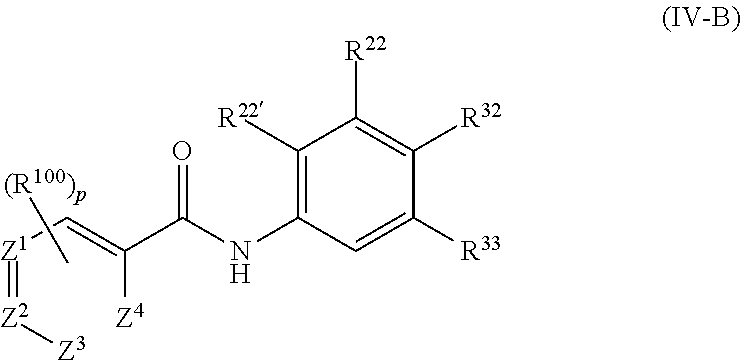
wherein Z1, Z2, Z3, Z4, R22, R22′, R32, R33, p and R100 are defined herein.

wherein, R20, R21, R20′, R21′, R22, R22, p and R100 are defined herein.

wherein, R22, R22′, p and R100 are defined herein.


-
- wherein:
- X at each occurrence is independently selected from O, NR10, and CR20R21 provided that at most one X is selected from O and NR10;
- n is 1, 2, 3, or 4;
- J1, J2, and J3 are each independently selected from CR22 or N, preferably, at least one of J1, J2, and J3 is not N;
- R1 and R2 are each independently hydrogen, an optionally substituted alkyl (e.g., optionally substituted C1-6 alkyl), an optionally substituted alkenyl (e.g., optionally substituted C2-6 alkenyl), an optionally substituted alkynyl (e.g., optionally substituted C2-6 alkynyl), or a nitrogen protecting group;
- R3 and R4 are joined to form an optionally substituted aryl, an optionally substituted heteroaryl, an optionally substituted carbocyclic (e.g., C3-8 carbocyclic), or an optionally substituted heterocyclic ring (e.g., 3-8 membered heterocyclic ring);
- Z is O, and R5 is hydrogen, —NR11R12, —CR23R24R25, or —OR30;
- or Z is O, and R3, R4 and R5 are joined to form an optionally substituted bicyclic or polycyclic ring system, wherein the ring system is an aryl, heteroaryl, carbocyclic, or heterocyclic ring system;
- or R5 and Z are joined to form an optionally substituted aryl, an optionally substituted heteroaryl, an optionally substituted carbocyclic (e.g., C3-8 carbocyclic), or an optionally substituted heterocyclic ring (e.g., 3-8 membered heterocyclic ring); and
- “” in Formula I indicates the bond is an aromatic bond, a double bond or a single bond as valance permits, and when a single bond, the two carbons forming the bond can be optionally further substituted as valance permits;

- wherein:
- R10 at each occurrence is independently hydrogen, a nitrogen protecting group, an optionally substituted alkyl (e.g., optionally substituted C1-6 alkyl), an optionally substituted alkenyl (e.g., optionally substituted C2-6 alkenyl), an optionally substituted alkynyl (e.g., optionally substituted C2-6 alkynyl), an optionally substituted C3-8 carbocyclic ring, or an optionally substituted 3-8 membered heterocyclic ring;
- R20 and R21 at each occurrence are each independently hydrogen, halogen, —OR31, —NR13R14 an optionally substituted alkyl (e.g., optionally substituted C1-6 alkyl), an optionally substituted alkenyl (e.g., optionally substituted C2-6 alkenyl), an optionally substituted alkynyl (e.g., optionally substituted C2-6 alkynyl), an optionally substituted C3-8 carbocyclic ring, an optionally substituted 3-8 membered heterocyclic ring, an optionally substituted phenyl, or an optionally substituted 5-10 membered heteroaryl; or
- R10 and one of R20 and R21 are joined to form a bond, an optionally substituted 4-8 membered heterocyclic ring or an optionally substituted 5 or 6 membered heteroaryl ring, wherein the other of R20 and R21 is defined above;
- R20 and R21 together with the carbon they are both attached to form —C(O)—, an optionally substituted C3-8 carbocyclic ring, or an optionally substituted 3-8 membered heterocyclic ring; or
- one of R20 and R21 in one CR20R21 is joined with one of R20 and R21 in a different CR20R21 to form a bond, an optionally substituted C3-8 carbocyclic ring, an optionally substituted 3-8 membered heterocyclic ring, wherein the others of R20 and R21 are defined above;
- R22 at each occurrence is independently hydrogen, halogen, an optionally substituted alkyl (e.g., optionally substituted C1-6 alkyl), an optionally substituted alkenyl (e.g., optionally substituted C2-6 alkenyl), an optionally substituted alkynyl (e.g., optionally substituted C2-6 alkynyl), —CN, —S(O)-alkyl (e.g., —S(O)—C1-6 alkyl), —S(O)2-alkyl (e.g., —S(O)2—C1-6 alkyl), or —OR31; or two adjacent R22 are joined to form an optionally substituted ring structure, such as an optionally substituted C3-8 carbocyclic ring, optionally substituted 4-8 membered heterocyclic ring, optionally substituted phenyl, or optionally substituted 5 or 6 membered heteroaryl ring;
- one of R11 and R12 is hydrogen or a nitrogen protecting group, and the other of R11 and R12 is hydrogen, a nitrogen protecting group, an optionally substituted alkyl (e.g., optionally substituted C1-6 alkyl), an optionally substituted alkenyl (e.g., optionally substituted C2-6 alkenyl), an optionally substituted alkynyl (e.g., optionally substituted C2-6 alkynyl), an optionally substituted C3-8 carbocyclic ring, an optionally substituted 3-8 membered heterocyclic ring, an optionally substituted phenyl, or an optionally substituted 5-10 membered heteroaryl;
- one of R23, R24, and R25 is hydrogen, halogen, an optionally substituted alkyl (e.g., optionally substituted C1-6 alkyl), an optionally substituted alkenyl (e.g., optionally substituted C2-6 alkenyl), an optionally substituted alkynyl (e.g., optionally substituted C2-6 alkynyl), an optionally substituted C3-8 carbocyclic ring, an optionally substituted 3-8 membered heterocyclic ring, an optionally substituted phenyl, an optionally substituted 5-10 membered heteroaryl, —OR31, or —NR13R14, and the other two of R23, R24, and R25 are independently selected from hydrogen, fluorine, or methyl, preferably, —CR23R24R25 is not —CH3;
- R30 is hydrogen, an oxygen protecting group, an optionally substituted alkyl (e.g., optionally substituted C1-6 alkyl), an optionally substituted alkenyl (e.g., optionally substituted C2-6 alkenyl), an optionally substituted alkynyl (e.g., optionally substituted C2-6 alkynyl), an optionally substituted C3-8 carbocyclic ring, or an optionally substituted 3-8 membered heterocyclic ring; and
- wherein:
- each of R13 and R14 at each occurrence is independently hydrogen, a nitrogen protecting group, an optionally substituted alkyl (e.g., optionally substituted C1-6 alkyl), an optionally substituted alkenyl (e.g., optionally substituted C2-6 alkenyl), an optionally substituted alkynyl (e.g., optionally substituted C2-6 alkynyl), an optionally substituted C3-8 carbocyclic ring, an optionally substituted 3-8 membered heterocyclic ring, an optionally substituted phenyl, or an optionally substituted 5-10 membered heteroaryl; or R13 and R14 are joined to form a 3-8 membered optionally substituted heterocyclic or a 5-10 membered optionally substituted heteroaryl; and
- R31 at each occurrence is hydrogen, an oxygen protecting group, an optionally substituted alkyl (e.g., optionally substituted C1-6 alkyl), an optionally substituted alkenyl (e.g., optionally substituted C2-6 alkenyl), an optionally substituted alkynyl (e.g., optionally substituted C2-6 alkynyl), an optionally substituted C3-8 carbocyclic ring, an optionally substituted 3-8 membered heterocyclic ring, an optionally substituted phenyl, or an optionally substituted 5-10 membered heteroaryl.
- wherein:

wherein R1, R2, R3, R4, R5, J1, J2, J3, X, and n are defined herein.

in Formula I is

wherein R5 is defined herein, and wherein the phenyl can be further optionally substituted at any available position, for example, with one or two substituents independently selected from F; Cl; hydroxyl; C1-4 alkyl optionally substituted with 1-3 fluorines, preferably, methyl, ethyl, n-propyl, isopropyl, or —CF3; a C1-4 alkoxy optionally substituted with 1-3 fluorines, preferably, methoxy, ethoxy, n-propoxy, isopropoxy, or —OCF3; a C3-6 cycloalkyl optionally substituted with 1-3 substituents independently selected from fluorine and methyl, preferably, cyclopropyl or cyclobutyl; and —CN. In some embodiments, R5 is —O—R30 or —CR23R24R25 as defined herein. For example, in some embodiments, R5 is ethyl, n-propyl, isopropyl, n-butyl, isobutyl, sec-butyl, —CH2—CHF2, —CH2—CF3, —CF3, —CH2-cyclopropyl, —CH2— cyclobutyl, —CH2—O—CH3, —CH2—O—C2H5, —CH2—O-n-propyl, —CH2—O-isopropyl, —C2H4-cyclopropyl, —C2H4-cyclobutyl, methoxy, ethoxy, n-propoxy, isopropoxy, n-butoxy, isobutoxy, sec-butoxy, —O—CH2—CF3, —O—CF3, —O—CH2-cyclopropyl, —O—CH2-cyclobutyl, —O—C2H4-cyclopropyl, or —O—C2H4-cyclobutyl. In some embodiments, R5 is hydrogen.

in Formula I (e.g., Formula I-O) can be selected from the following:

wherein R5 is defined herein, and wherein the pyridyl or pyridone can be further optionally substituted at any available position, including the ring nitrogen in the case of pyridone, for example, with one or two substituents (preferably one) independently selected from F; Cl; OH; C1-4 alkyl optionally substituted with 1-3 fluorines, preferably, methyl, ethyl, n-propyl, isopropyl, or —CF3; a C1-4 alkoxy optionally substituted with 1-3 fluorines, preferably, methoxy, ethoxy, n-propoxy, isopropoxy, or —OCF3; a C3-6 cycloalkyl optionally substituted with 1-3 substituents independently selected from fluorine and methyl, preferably, cyclopropyl or cyclobutyl; and —CN. In some embodiments, the moiety of

in Formula I can be

wherein R5 is defined herein, and wherein the pyridyl can be further optionally substituted at any available position, for example, with one or two substituents (preferably one) independently selected from F; Cl; C1-4 alkyl optionally substituted with 1-3 fluorines, preferably, methyl, ethyl, n-propyl, isopropyl, or —CF3; a C1-4 alkoxy optionally substituted with 1-3 fluorines, preferably, methoxy, ethoxy, n-propoxy, isopropoxy, or —OCF3; a C3-6 cycloalkyl optionally substituted with 1-3 substituents independently selected from fluorine and methyl, preferably, cyclopropyl or cyclobutyl; and —CN. In some embodiments, R5 is —O—R30 or —CR23R24R25 as defined herein. For example, in some embodiments, R5 is ethyl, n-propyl, isopropyl, n-butyl, isobutyl, sec-butyl, —CH2—CHF2, —CH2—CF3, —CF3, —CH2-cyclopropyl, —CH2-cyclobutyl, —CH2—O—CH3, —CH2—O—C2H5, —CH2—O-n-propyl, —CH2—O-isopropyl, —C2H4-cyclopropyl, —C2H4-cyclobutyl, methoxy, ethoxy, n-propoxy, isopropoxy, n-butoxy, isobutoxy, sec-butoxy, —O—CH2—CF3, —O—CF3, —O—CH2-cyclopropyl, —O—CH2-cyclobutyl, —O—C2H4-cyclopropyl, or —O—C2H4-cyclobutyl. In some embodiments, R5 can also be hydrogen.

in Formula I can be

wherein R5 is defined herein, and wherein the tetrahydropyranyl or morpholinyl can be further optionally substituted at any available position, for example, with one or two substituents independently selected from F and C1-4 alkyl optionally substituted with 1-3 fluorines. In some embodiments, R5 is —O—R30 or —CR23R24R25 as defined herein. For example, in some embodiments, R5 is ethyl, n-propyl, isopropyl, n-butyl, isobutyl, sec-butyl, —CH2—CHF2, —CH2—CF3, —CF3, —CH2-cyclopropyl, —CH2— cyclobutyl, —CH2—O—CH3, —CH2—O—C2H5, —CH2—O-n-propyl, —CH2—O-isopropyl, —C2H4-cyclopropyl, —C2H4-cyclobutyl, methoxy, ethoxy, n-propoxy, isopropoxy, n-butoxy, isobutoxy, sec-butoxy, —O—CH2—CF3, —O—CF3, —O—CH2-cyclopropyl, —O—CH2-cyclobutyl, —O—C2H4-cyclopropyl, or —O—C2H4-cyclobutyl.

in Formula I can be

which is optionally substituted.

wherein R101 at each occurrence is independently selected from halogen, an optionally substituted alkyl (e.g., optionally substituted C1-6 alkyl), an optionally substituted alkenyl (e.g., optionally substituted C2-6 alkenyl), an optionally substituted alkynyl (e.g., optionally substituted C2-6 alkynyl), —CN, or —OR31; and
m is 0, 1, 2, or 3, preferably, m is 0 or 1; and
wherein R1, R2, R3, R4, R31, J1, J2, J3, X, and n are defined herein. In some embodiments, R3 and R4 in Formula I-F are joined to form an optionally substituted phenyl, an optionally substituted 5 or 6-membered heteroaryl, e.g., having one or two ring nitrogen atoms, an optionally substituted C4-7 cycloalkyl group (e.g., cyclopentyl or cyclohexyl), or an optionally substituted 4 to 7-membered (e.g., 6-membered) heterocyclic ring having one or two ring heteroatoms. In some embodiments, R3 and R4 in Formula I-F can be joined to form an optionally substituted phenyl, for example, unsubstituted phenyl, or phenyl substituted with one or two substituents independently selected from F; Cl; C1-4 alkyl optionally substituted with 1-3 fluorines, preferably, methyl, ethyl, n-propyl, isopropyl, or —CF3; a C1-4 alkoxy optionally substituted with 1-3 fluorines, preferably, methoxy, ethoxy, n-propoxy, isopropoxy, or —OCF3; a C3-6 cycloalkyl optionally substituted with 1-3 substituents independently selected from fluorine and methyl, preferably, cyclopropyl or cyclobutyl; and —CN. In some embodiments, R3 and R4 in Formula I-F can be joined to form an optionally substituted 5 or 6-membered heteroaryl.

wherein:
R100 at each occurrence is independently selected from halogen, an optionally substituted alkyl (e.g., optionally substituted C1-6 alkyl), an optionally substituted alkenyl (e.g., optionally substituted C2-6 alkenyl), an optionally substituted alkynyl (e.g., optionally substituted C2-6 alkynyl), —CN, or —OR31;
p is 0, 1, 2, or 3, preferably, p is 0 or 1; and
R1, R2, R5, R31, J1, J2, J3, X, and n are defined herein. In some embodiments, in Formula I-1 or I-2, R100 at each occurrence is independently selected from F; Cl; C1-4 alkyl optionally substituted with 1-3 fluorines, preferably, methyl, ethyl, n-propyl, isopropyl, or —CF3; a C1-4 alkoxy optionally substituted with 1-3 fluorines, preferably, methoxy, ethoxy, n-propoxy, isopropoxy, or —OCF3; a C3-6 cycloalkyl optionally substituted with 1-3 substituents independently selected from fluorine and methyl, preferably, cyclopropyl or cyclobutyl; and —CN.

wherein R1, R2, R23, R24, R25, R100, J1, J2, J3, X, p, and n are defined herein. In some embodiments, in Formula I-1-A or I-2-A:
R23 is hydrogen or fluorine;
R24 is hydrogen or fluorine;
R25 is hydrogen; fluorine; C1-4 alkyl optionally substituted with 1-3 fluorines and/or a C3-6 cycloalkyl; a C1-4 alkoxy optionally substituted with 1-3 fluorines and/or a C3-6 cycloalkyl; a C3-6 cycloalkoxy optionally substituted with 1-3 substituents independently selected from fluorine and methyl; a C3-6 cycloalkyl optionally substituted with 1-3 substituents independently selected from fluorine and methyl; or a 3-6 membered heterocyclic ring optionally substituted with 1-3 substituents independently selected from fluorine and methyl; and
preferably at least one of R23, R24, and R25 is not hydrogen.
In some embodiments, R23 in Formula I-1-A or I-2-A is hydrogen.

wherein R1, R25, R100, J1, J2, J3, X, p, and n are defined herein. In some embodiments, in Formula I-1-A1, Formula I-1-A2, Formula I-1-A3, Formula I-2-A1, Formula I-2-A2, or Formula I-2-A3, R25 is C1-4 alkyl optionally substituted with 1-3 fluorines and/or a C3-6 cycloalkyl, preferably, methyl, ethyl, n-propyl, isopropyl, or —CF3; or a C3-6 cycloalkyl optionally substituted with 1-3 substituents independently selected from fluorine and methyl, preferably, cyclopropyl or cyclobutyl. In some specific embodiments, R25 in Formula I-1-A1, Formula I-1-A2, Formula I-1-A3, Formula I-2-A1, Formula I-2-A2, or Formula I-2-A3 can be methyl, ethyl, n-propyl, isopropyl, difluoromethyl, trifluoromethyl, —CH2—CF3, —CH2-cyclopropyl, cyclopropyl or cyclobutyl.

wherein R1, R2, R30, R11, R12, R100, J1, J2, J3, X, p, and n are defined herein. In some embodiments, in Formula I-1-B or I-2-B, R30 can be hydrogen; C1-4 alkyl optionally substituted with 1-3 fluorines and/or a C3-6 cycloalkyl, preferably, methyl, ethyl, n-propyl, isopropyl, difluoromethyl, trifluoromethyl, —CH2—CF3, or —CH2-cyclopropyl; a C3-6 cycloalkyl optionally substituted with 1-3 substituents independently selected from fluorine and methyl, preferably, cyclopropyl or cyclobutyl; or a 3-6 membered heterocyclic ring optionally substituted with 1-3 substituents independently selected from fluorine and methyl, preferably,

In some embodiments, R30 can be methyl, ethyl, n-propyl, isopropyl, difluoromethyl, trifluoromethyl, —CH2—CF3, or —CH2-cyclopropyl. In some embodiments, R30 can be cyclopropyl, cyclobutyl; or


wherein R1, R30, R100, J1, J2, J3, X, p, and n are defined herein. In some embodiments, R30 can be hydrogen; C1-4 alkyl optionally substituted with 1-3 fluorines and/or a C3-6 cycloalkyl, preferably, methyl, ethyl, n-propyl, isopropyl, difluoromethyl, trifluoromethyl, —CH2—CF3, or —CH2-cyclopropyl; a C3-6 cycloalkyl optionally substituted with 1-3 substituents independently selected from fluorine and methyl, preferably, cyclopropyl or cyclobutyl; or a 3-6 membered heterocyclic ring optionally substituted with 1-3 substituents independently selected from fluorine and methyl, preferably,


in Formula I (e.g., any of the applicable subformulae) can have a structure according to one of the following:


in Formula I (e.g., any of the applicable subformulae) can have a structure according to one of the following:


in Formula I (e.g., any of the applicable subformulae) can have a structure of any of the corresponding moieties in Compound Nos. 139-202 or 139-165 as disclosed herein, as applicable. In some embodiments, the moiety of

in Formula I (e.g., any of the applicable subformulae) can have a structure of any of the corresponding moieties in the specific compounds disclosed herein, as applicable, that have an activity level of A or B shown in Table 3A of the present disclosure in inhibiting hALDH1a3 and or an IC50 shown in Table 3B of less than 250 nM in inhibiting hALDA1a2.

can be selected from the following:

wherein J1, J2, J3, R20 and R21 are defined herein. In some embodiments, J1 is CH. In some embodiments, J2 is N or CR22, wherein R22 is defined herein, for example, hydrogen, F, Cl, CN, or methyl. In some embodiments, J3 is CH. In some embodiments, J1 can be CR22, J2 can be CH, and J3 can be CH, wherein R22 is hydrogen, F, Cl, CN, or C1-4 alkyl (preferably methyl). In some embodiments, J1 can be CR22, J2 can be CR22, and J3 can be CH, wherein R22 at each occurrence is independently hydrogen, F, Cl, CN, or C1-4 alkyl (preferably methyl). In some embodiments, R20 and R21 are independently hydrogen or C1-4 alkyl (e.g., methyl, ethyl, etc.), or R20 and R21, together with the carbon they are both attached to, form a cyclopropyl, cyclobutyl, cyclopentyl, or an oxetanyl ring. In some embodiments, in the CR20R21 unit:
R20 and R21 are both methyl;
one of R20 and R21 is methyl, and the other of R20 and R21 is ethyl or methoxy; or
R20 and R21, together with the carbon they are both attached to, form a cyclopropyl, cyclobutyl, or an oxetanyl ring. In some embodiments, in the CR20R21 unit, one of R20 and R21 is methyl, and the other of R20 and R21 is hydrogen. In some embodiments, in the CR20R21 unit, R20 and R21 are both hydrogen.

can be selected from the following:

wherein:
R10 is independently hydrogen or C1-4 alkyl (e.g., methyl, ethyl, etc.);
R20 and R21 are independently hydrogen or C1-4 alkyl (e.g., methyl, ethyl, etc.), or R20 and R21 together with the carbon they are both attached to, form a cyclopropyl, cyclobutyl, cyclopentyl, or an oxetanyl ring. In some embodiments, one of R20 and R21 is methyl, and the other of R20 and R21 is hydrogen. In some embodiments, R20 and R21 are both hydrogen.

can be selected from the following:


wherein R10, R20, and R21 are defined herein. In some embodiments, R10 is independently hydrogen or C1-4 alkyl (e.g., methyl, ethyl, etc.). In some embodiments, R20 and R21 are independently hydrogen or C1-4 alkyl (e.g., methyl, ethyl, etc.), or R20 and R21, together with the carbon they are both attached to, form a cyclopropyl, cyclobutyl, cyclopentyl, or an oxetanyl ring. In some embodiments, in the CR20R21 unit:
R20 and R21 are both methyl;
one of R20 and R21 is methyl, and the other of R20 and R21 is ethyl or methoxy; or
R20 and R21, together with the carbon they are both attached to, form a cyclopropyl, cyclobutyl, or an oxetanyl ring. In some embodiments, one of R20 and R21 is methyl, and the other of R20 and R21 is hydrogen. In some embodiments, R20 and R21 are both hydrogen.

can be selected from the following:

wherein R20 and R21 are defined herein. In some embodiments, R20 and R21 are independently hydrogen or C1-4 alkyl (e.g., methyl, ethyl, etc.), or R20 and R21, together with the carbon they are both attached to, form a cyclopropyl, cyclobutyl, cyclopentyl, or an oxetanyl ring. In some embodiments, in the CR20R21 unit:
R20 and R21 are both methyl;
one of R20 and R21 is methyl, and the other of R20 and R21 is ethyl or methoxy; or
R20 and R21, together with the carbon they are both attached to, form a cyclopropyl, cyclobutyl, or an oxetanyl ring. In some embodiments, one of R20 and R21 is methyl, and the other of R20 and R21 is hydrogen. In some embodiments, R20 and R21 are both hydrogen.

can be selected from the following:

wherein R10, R20, and R21 are defined herein. In some embodiments, R10 is independently hydrogen or C1-4 alkyl (e.g., methyl, ethyl, etc.). In some embodiments, R20 and R21 are independently hydrogen or C1-4 alkyl (e.g., methyl, ethyl, etc.), or R20 and R21, together with the carbon they are both attached to, form a cyclopropyl, cyclobutyl, cyclopentyl, or an oxetanyl ring. In some embodiments, in the CR20R21 unit:
R20 and R21 are both methyl;
one of R20 and R21 is methyl, and the other of R20 and R21 is ethyl or methoxy; or
R20 and R21, together with the carbon they are both attached to, form a cyclopropyl, cyclobutyl, or an oxetanyl ring. In some embodiments, one of R20 and R21 is methyl, and the other of R20 and R21 is hydrogen. In some embodiments, R20 and R21 are both hydrogen.

can be selected from the following:

wherein R20 and R21 are defined herein. In some embodiments, R20 and R21 are independently hydrogen or C1-4 alkyl (e.g., methyl, ethyl, etc.), or R20 and R21, together with the carbon they are both attached to, form a cyclopropyl, cyclobutyl, cyclopentyl, or an oxetanyl ring. In some embodiments, in the CR20R21 unit:
R20 and R21 are both methyl;
one of R20 and R21 is methyl, and the other of R20 and R21 is ethyl or methoxy; or
R20 and R21, together with the carbon they are both attached to, form a cyclopropyl, cyclobutyl, or an oxetanyl ring. In some embodiments, one of R20 and R21 is methyl, and the other of R20 and R21 is hydrogen. In some embodiments, R20 and R21 are both hydrogen.

can be selected from the following:


wherein X1 and X2 are independently O, NR10, or CH2, provided that at least one of X1 and X2 is CH2; and R10, R20, and R21 are defined herein. In some embodiments, both X1 and X2 are CH2. In some embodiments, one of X1 and X2 is NR10. In some embodiments, R10 is independently hydrogen or C1-4 alkyl (e.g., methyl, ethyl, etc.). In some embodiments, R20 and R21 are independently hydrogen or C1-4 alkyl (e.g., methyl, ethyl, etc.), or R20 and R21, together with the carbon they are both attached to, form a cyclopropyl, cyclobutyl, cyclopentyl, or an oxetanyl ring. In some embodiments, in the CR20R21 unit:
R20 and R21 are both methyl;
one of R20 and R21 is methyl, and the other of R20 and R21 is ethyl or methoxy; or
R20 and R21, together with the carbon they are both attached to, form a cyclopropyl, cyclobutyl, or an oxetanyl ring. In some embodiments, in the CR20R21 unit, one of R20 and R21 is methyl, and the other of R20 and R21 is hydrogen. In some embodiments, in the CR20R21 unit, R20 and R21 are both hydrogen.

can be selected from the following:


can be selected from the following:


can be selected from the following:


can be selected from the following:


can be selected from the following:


can be selected from the following:


can be selected from the following:


can be any of the corresponding moieties shown in Compound Nos. 139-202, or 139-165 disclosed herein, as applicable.

wherein Het represents an optionally substituted heterocyclic or heteroaryl ring structure, preferably, 5 or 6 membered heterocyclic ring or 5 or 6 membered heteroaryl ring, wherein R1, R2, R5, J1, J2, J3, X, and n can be any of those defined herein for Formula I (including its subformulae). Preferably, when Z is O, Het is a 5 or 6 membered heteroaryl, and in Formula I-P, R5 is attached to the Het at an ortho position of —C(═Z)—. It will also be understood that in Formula I-P, R5 can be attached to a ring nitrogen as valance permits.

and R5 can be any of those described for Formula I (including its subformulae), and Het is an optionally substituted 5 or 6 membered heteroaryl described herein, for example, Het is a 5 or 6 membered heteroaryl, preferably, a pyrazole, imidazole, oxazole, thiazole, isoxazole, isothiazole, pyridyl, pyrimidinyl, pyridazinyl, or pyrazinyl, which is optionally substituted with one or two (preferably one) substituents independently selected from F; Cl; C1-4 alkyl optionally substituted with 1-3 fluorines, preferably, methyl, ethyl, n-propyl, isopropyl, or —CF3; a C1-4 alkoxy optionally substituted with 1-3 fluorines, preferably, methoxy, ethoxy, n-propoxy, isopropoxy, or —OCF3; a C3-6 cycloalkoy optionally substituted with 1-3 substituents independently selected from fluorine and methyl; a C3-6 cycloalkyl optionally substituted with 1-3 substituents independently selected from fluorine and methyl, preferably, cyclopropyl or cyclobutyl; and —CN. In some embodiments

in Formula I-P can be selected from the following:


In some embodiments, R5 in Formula I-P is —O—R30 or —CR23R24R25 as defined herein. In some embodiments, R5 in Formula I-P is ethyl, n-propyl, isopropyl, n-butyl, isobutyl, sec-butyl, —CH2—CHF2, —CH2—CF3, —CF3, —CH2-cyclopropyl, —CH2-cyclobutyl, —CH2—O—CH3, —CH2—O—C2H5, —CH2—O-n-propyl, —CH2—O-isopropyl, —C2H4-cyclopropyl, —C2H4-cyclobutyl, methoxy, ethoxy, n-propoxy, isopropoxy, n-butoxy, isobutoxy, sec-butoxy, —O—CH2—CF3, —O—CF3, —O—CH2-cyclopropyl, —O—CH2-cyclobutyl, —O—C2H4-cyclopropyl, or —O—C2H4-cyclobutyl.
Formula II

wherein:
W is —N(R1)—C(O)—, —N(R1)—S(O)—, or —N(R1)—S(O)2—;
L is —(CRA1RB1)t1-Q1-Q2-Q3-(CRA2RB2)t2—, wherein:
Q1 and Q3 are independently null, O or NR2;
Q2 is null, —C(O)—, —C(═Z)—, —S(O)—, or —S(O)2—;
t1 is 0, 1, 2, or 3;
t2 is 0, 1, 2, or 3; and
RA1, RB1, RA2, and RB2 at each occurrence are independently hydrogen, C1-4 alkyl (e.g., methyl), or fluorine, or
two adjacent CRA1RB1 or two adjacent CRA2RB2 can form —C(RA1)═C(RB1)—, —C(RA2)═C(RB2)—, or

wherein RA1, RB1, RA2, and RB2 at each occurrence are independently hydrogen, C1-4 alkyl (e.g., methyl), or fluorine;
X at each occurrence is independently selected from O, NR10, and CR20R21, provided that at most one X is selected from O and NR10;
n is 1, 2, 3, or 4;
J1, J2, and J3 are each independently selected from CR22 or N, preferably, at least one of J1, J2, and J3 is not N;
R1 and R2 at each occurrence are each independently hydrogen, an optionally substituted alkyl (e.g., optionally substituted C1-6 alkyl), an optionally substituted alkenyl (e.g., optionally substituted C2-6 alkenyl), an optionally substituted alkynyl (e.g., optionally substituted C2-6 alkynyl), or a nitrogen protecting group;
R3 and R4 are joined to form an optionally substituted aryl, an optionally substituted heteroaryl, an optionally substituted carbocyclic (e.g., C3-8 carbocyclic), or an optionally substituted heterocyclic ring (e.g., 3-8 membered heterocyclic ring);
R5 is hydrogen, —NR11R12, —CR23R24R25, or —OR30;
R3, R4 and R5 are joined to form an optionally substituted bicyclic or polycyclic ring system, wherein the ring system is an aryl, heteroaryl, carbocyclic, or heterocyclic ring system; or when Q2 is —C(═Z)—, R5 and Z are joined to form an optionally substituted aryl, an optionally substituted heteroaryl, an optionally substituted carbocyclic (e.g., C3-8 carbocyclic), or an optionally substituted heterocyclic ring (e.g., 3-8 membered heterocyclic ring);
“
wherein:
R10 at each occurrence is independently hydrogen, a nitrogen protecting group, an optionally substituted alkyl (e.g., optionally substituted C1-6 alkyl), an optionally substituted alkenyl (e.g., optionally substituted C2-6 alkenyl), an optionally substituted alkynyl (e.g., optionally substituted C2-6 alkynyl), an optionally substituted C3-8 carbocyclic ring, or an optionally substituted 3-8 membered heterocyclic ring;
R20 and R21 at each occurrence are each independently hydrogen, halogen, —OR31, —NR13R14, an optionally substituted alkyl (e.g., optionally substituted C1-6 alkyl), an optionally substituted alkenyl (e.g., optionally substituted C2-6 alkenyl), an optionally substituted alkynyl (e.g., optionally substituted C2-6 alkynyl), an optionally substituted C3-8 carbocyclic ring, an optionally substituted 3-8 membered heterocyclic ring, an optionally substituted phenyl, or an optionally substituted 5-10 membered heteroaryl; or
R10 and one of R20 and R21 are joined to form a bond, an optionally substituted 4-8 membered heterocyclic ring or an optionally substituted 5 or 6 membered heteroaryl ring, wherein the other of R20 and R21 is defined above;
R20 and R21 together with the carbon they are both attached to form —C(O)—, an optionally substituted C3-8 carbocyclic ring, or an optionally substituted 3-8 membered heterocyclic ring; or one of R20 and R21 in one CR20R21 is joined with one of R20 and R21 in a different CR20R21 to form a bond, an optionally substituted C3-8 carbocyclic ring, an optionally substituted 3-8 membered heterocyclic ring, wherein the others of R20 and R21 are defined above;
R22 at each occurrence is independently hydrogen, halogen, an optionally substituted alkyl (e.g., optionally substituted C1-6 alkyl), an optionally substituted alkenyl (e.g., optionally substituted C2-6 alkenyl), an optionally substituted alkynyl (e.g., optionally substituted C2-6 alkynyl), —CN, —S(O)-alkyl, —S(O)2-alkyl, or —OR31; or two adjacent R22 are joined to form an optionally substituted ring structure, such as an optionally substituted C3-8 carbocyclic ring, optionally substituted 4-8 membered heterocyclic ring, optionally substituted phenyl, or optionally substituted 5 or 6 membered heteroaryl ring;
one of R11 and R12 is hydrogen or a nitrogen protecting group, and the other of R11 and R12 is hydrogen, a nitrogen protecting group, an optionally substituted alkyl (e.g., optionally substituted C1-6 alkyl), an optionally substituted alkenyl (e.g., optionally substituted C2-6 alkenyl), an optionally substituted alkynyl (e.g., optionally substituted C2-6 alkynyl), an optionally substituted C3-8 carbocyclic ring, an optionally substituted 3-8 membered heterocyclic ring, an optionally substituted phenyl, or an optionally substituted 5-10 membered heteroaryl;
one of R23, R24, and R25 is hydrogen, halogen, an optionally substituted alkyl (e.g., optionally substituted C1-6 alkyl), an optionally substituted alkenyl (e.g., optionally substituted C2-6 alkenyl), an optionally substituted alkynyl (e.g., optionally substituted C2-6 alkynyl), an optionally substituted C3-8 carbocyclic ring, an optionally substituted 3-8 membered heterocyclic ring, an optionally substituted phenyl, an optionally substituted 5-10 membered heteroaryl, —OR31, or —NR13R14, and the other two of R23, R24, and R25 are independently selected from hydrogen, fluorine, or methyl, preferably, —CR23R24R25 is not —CH3;
R30 is hydrogen, an oxygen protecting group, an optionally substituted alkyl (e.g., optionally substituted C1-6 alkyl), an optionally substituted alkenyl (e.g., optionally substituted C2-6 alkenyl), an optionally substituted alkynyl (e.g., optionally substituted C2-6 alkynyl), an optionally substituted C3-8 carbocyclic ring, or an optionally substituted 3-8 membered heterocyclic ring; and
wherein:
each of R13 and R14 at each occurrence is independently hydrogen, a nitrogen protecting group, an optionally substituted alkyl (e.g., optionally substituted C1-6 alkyl), an optionally substituted alkenyl (e.g., optionally substituted C2-6 alkenyl), an optionally substituted alkynyl (e.g., optionally substituted C2-6 alkynyl), an optionally substituted C3-8 carbocyclic ring, an optionally substituted 3-8 membered heterocyclic ring, an optionally substituted phenyl, or an optionally substituted 5-10 membered heteroaryl; or R13 and R14 are joined to form a 3-8 membered optionally substituted heterocyclic or a 5-10 membered optionally substituted heteroaryl; and
R31 at each occurrence is hydrogen, an oxygen protecting group, an optionally substituted alkyl (e.g., optionally substituted C1-6 alkyl), an optionally substituted alkenyl (e.g., optionally substituted C2-6 alkenyl), an optionally substituted alkynyl (e.g., optionally substituted C2-6 alkynyl), an optionally substituted C3-8 carbocyclic ring, an optionally substituted 3-8 membered heterocyclic ring, an optionally substituted phenyl, or an optionally substituted 5-10 membered heteroaryl.

in Formula II is

wherein R5 is defined herein, and wherein the phenyl or pyridyl can be further optionally substituted at any available position, for example, with one or two substituents independently selected from F; Cl; C1-4 alkyl optionally substituted with 1-3 fluorines, preferably, methyl, ethyl, n-propyl, isopropyl, or —CF3; a C1-4 alkoxy optionally substituted with 1-3 fluorines, preferably, methoxy, ethoxy, n-propoxy, isopropoxy, or —OCF3; a C3-6 cycloalkyl optionally substituted with 1-3 substituents independently selected from fluorine and methyl, preferably, cyclopropyl or cyclobutyl; and —CN. In some embodiments, R5 is —O—R30 or —CR23R24R25 as defined herein. In some embodiments, R5 is ethyl, n-propyl, isopropyl, n-butyl, isobutyl, sec-butyl, —CH2—CHF2, —CH2—CF3, —CF3, —CH2-cyclopropyl, —CH2-cyclobutyl, —CH2—O—CH3, —CH2—O—C2H5, —CH2—O-n-propyl, —CH2—O-isopropyl, —C2H4-cyclopropyl, —C2H4-cyclobutyl, methoxy, ethoxy, n-propoxy, isopropoxy, n-butoxy, isobutoxy, sec-butoxy, —O—CH2—CF3, —O—CF3, —O—CH2-cyclopropyl, —O—CH2-cyclobutyl, —O—C2H4-cyclopropyl, or —O—C2H4-cyclobutyl. In some embodiments, n is 2. In some embodiments, J1 is CH. In some embodiments, J2 is N or CR22, wherein R22 is defined herein. In some embodiments, R22 is hydrogen, F, Cl, CN, or methyl. In some embodiments, J3 is CH. In some embodiments, J1 can be CR22, J2 can be CH, and J3 can be CH, wherein R22 is hydrogen, F, Cl, CN, or C1-4 alkyl (preferably methyl). In some embodiments, J1 can be CR22, J2 can be CR22, and J3 can be CH, wherein R22 at each occurrence is independently hydrogen, F, Cl, CN, or C1-4 alkyl (preferably methyl). In some embodiments, each instance of X in Formula II is independently selected CR20R21, and R20 and R21 are independently hydrogen or C1-4 alkyl (e.g., methyl, ethyl, etc.), or R20 and R21, together with the carbon they are both attached to, form a cyclopropyl, cyclobutyl, cyclopentyl, or an oxetanyl ring. In some embodiments, in the CR20R21 unit:
R20 and R21 are both methyl;
one of R20 and R21 is methyl, and the other of R20 and R21 is ethyl or methoxy; or
R20 and R21, together with the carbon they are both attached to, form a cyclopropyl, cyclobutyl, or an oxetanyl ring. In some embodiments, in the CR20R21 unit, one of R20 and R21 is methyl, and the other of R20 and R21 is hydrogen. In some embodiments, in the CR20R21 unit, R20 and R21 are both hydrogen.

wherein R3, R4, R5, L, J1, J2, J3, X, and n are defined herein.
-
- (1) Q2 is —C(O)—, one of Q1 and Q3 is null, the other of Q1 and Q3 is NR2 as defined herein, t1 is 0 or 1, and t2 is 0 or 1, preferably, both t1 and t2 are 0, R2 is hydrogen or methyl;
- (2) Q1, Q2 and Q3 are null, t1 is 0, t2 is 2, and two adjacent CRA2RB2 form —C(RA2)═C(RB2)— as defined herein, preferably, RA2 and RB2 are both hydrogen; or
- (3) Q2 is null, and one of Q1 and Q3 is null, the other of Q1 and Q3 is NR2 as defined herein, t1 is 0 or 1, and t2 is 0 or 1, preferably, R2 is hydrogen or methyl, and t1 and t2 are not both 0.
It should also be noted that the bivalent linker L, —(CRA1RB1)t1-Q1-Q2-Q3-(CRA2RB2)t2—, in Formula II can link the remaining structures in either direction. For example, the

unit can be directly attached to the —(CRA1RB1)t1 end of the linker or the (CRA2RB2)t2— end of the linker. In some embodiments, a NR2 is directly linked to the

unit.

unit in Formula II (e.g., Formula II-1, II-2, II-3, or II-4) can be selected from any of those described as suitable

in connection with Formula I herein, for example,

or selected from:
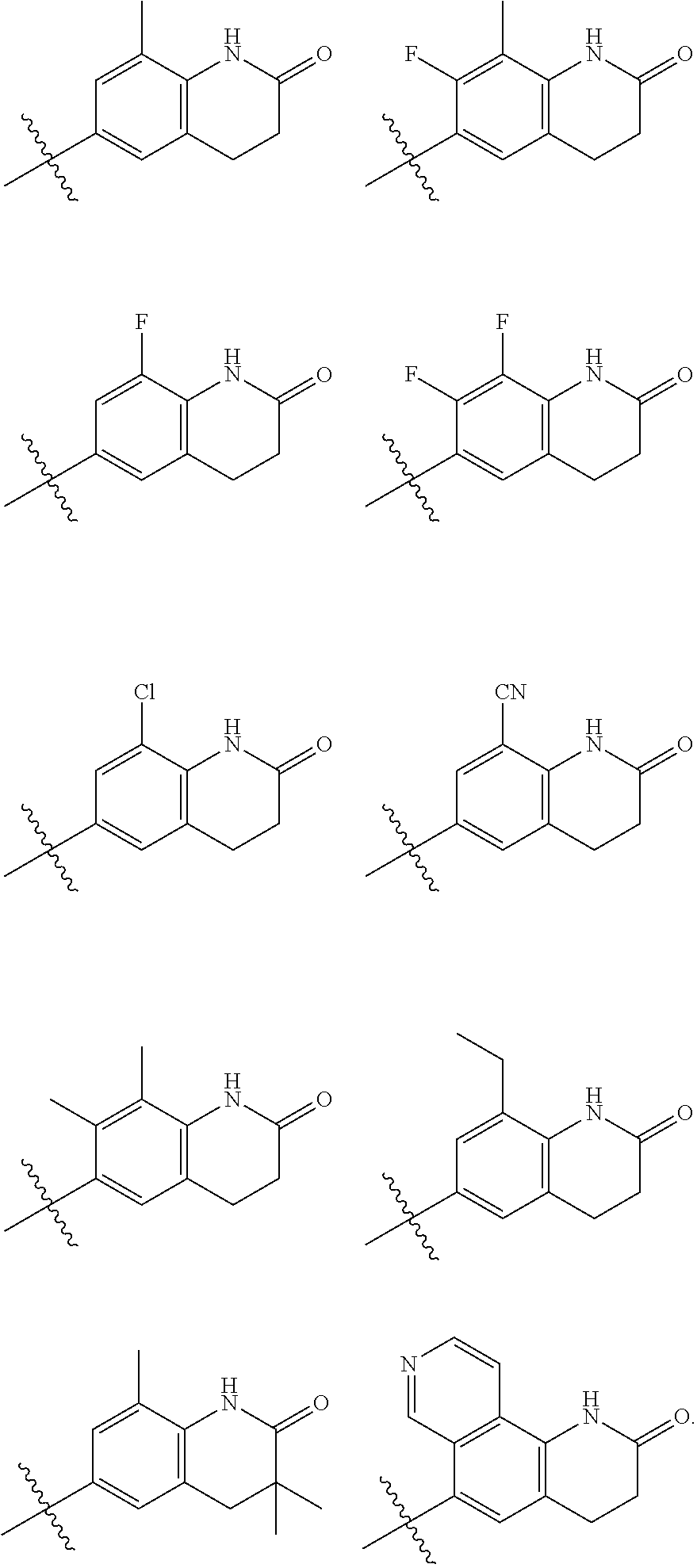

wherein Het represents an optionally substituted heterocyclic or heteroaryl ring structure, preferably, 5 or 6 membered heterocyclic ring or 5 or 6 membered heteroaryl ring, wherein R5, J1, J2, J3, L, W, X, and n can be any of those defined herein for Formula II (including its subformulae). Preferably, Het is a 5 or 6 membered heteroaryl, and in Formula II-P, R5 is attached to the Het at an ortho position of the linker L. It will also be understood that in Formula II-P, R5 can be attached to a ring nitrogen as valance permits.

unit in Formula II-P can be selected from the following:


Formula III

wherein:
X at each occurrence is independently selected from O, NR10, and CR20R21, provided that at most one X is selected from O and NR10;
n is 1, 2, 3, or 4;
J1, J2, and J3 are each independently selected from CR22 or N, preferably, at least one of J1, J2, and J3 is not N;
R1 is hydrogen, an optionally substituted alkyl (e.g., optionally substituted C1-6 alkyl), an optionally substituted alkenyl (e.g., optionally substituted C2-6 alkenyl), an optionally substituted alkynyl (e.g., optionally substituted C2-6 alkynyl), or a nitrogen protecting group;
L is NH, O, or selected from:

G1 is an optionally substituted phenyl, optionally substituted heteroaryl (e.g., 5- or 6-membered heteroaryl, or 8-10 membered bicyclic heteroaryl), or an optionally substituted heterocyclyl, wherein:
R10 at each occurrence is independently hydrogen, a nitrogen protecting group, an optionally substituted alkyl (e.g., optionally substituted C1-6 alkyl), an optionally substituted alkenyl (e.g., optionally substituted C2-6 alkenyl), an optionally substituted alkynyl (e.g., optionally substituted C2-6 alkynyl), an optionally substituted C3-8 carbocyclic ring, or an optionally substituted 3-8 membered heterocyclic ring;
R20 and R21 at each occurrence are each independently hydrogen, halogen, —OR31, —NR13R14, an optionally substituted alkyl (e.g., optionally substituted C1-6 alkyl), an optionally substituted alkenyl (e.g., optionally substituted C2-6 alkenyl), an optionally substituted alkynyl (e.g., optionally substituted C2-6 alkynyl), an optionally substituted C3-8 carbocyclic ring, an optionally substituted 3-8 membered heterocyclic ring, an optionally substituted phenyl, or an optionally substituted 5-10 membered heteroaryl; or
R10 and one of R20 and R21 are joined to form a bond, an optionally substituted 4-8 membered heterocyclic ring or an optionally substituted 5 or 6 membered heteroaryl ring, wherein the other of R20 and R21 is defined above;
R20 and R21 together with the carbon they are both attached to form —C(O)—, an optionally substituted C3-8 carbocyclic ring, or an optionally substituted 3-8 membered heterocyclic ring; or one of R20 and R21 in one CR20R21 is joined with one of R20 and R21 in a different CR20R21 to form a bond, an optionally substituted C3-8 carbocyclic ring, an optionally substituted 3-8 membered heterocyclic ring, wherein the others of R20 and R21 are defined above;
R22 at each occurrence is independently hydrogen, halogen, an optionally substituted alkyl (e.g., optionally substituted C1-6 alkyl), an optionally substituted alkenyl (e.g., optionally substituted C2-6 alkenyl), an optionally substituted alkynyl (e.g., optionally substituted C2-6 alkynyl), —CN, —S(O)-alkyl (e.g., —S(O)—C1-6 alkyl), —S(O)2-alkyl (e.g., —S(O)2—C1-6 alkyl), or —OR31; or two adjacent R22 are joined to form an optionally substituted ring structure, such as an optionally substituted C3-8 carbocyclic ring, optionally substituted 4-8 membered heterocyclic ring, optionally substituted phenyl, or optionally substituted 5 or 6 membered heteroaryl ring;
wherein:
each of R13 and R14 at each occurrence is independently hydrogen, a nitrogen protecting group, an optionally substituted alkyl (e.g., optionally substituted C1-6 alkyl), an optionally substituted alkenyl (e.g., optionally substituted C2-6 alkenyl), an optionally substituted alkynyl (e.g., optionally substituted C2-6 alkynyl), an optionally substituted C3-8 carbocyclic ring, an optionally substituted 3-8 membered heterocyclic ring, an optionally substituted phenyl, or an optionally substituted 5-10 membered heteroaryl; or R13 and R14 are joined to form a 3-8 membered optionally substituted heterocyclic or a 5-10 membered optionally substituted heteroaryl; and
R31 at each occurrence is hydrogen, an oxygen protecting group, an optionally substituted alkyl (e.g., optionally substituted C1-6 alkyl), an optionally substituted alkenyl (e.g., optionally substituted C2-6 alkenyl), an optionally substituted alkynyl (e.g., optionally substituted C2-6 alkynyl), an optionally substituted C3-8 carbocyclic ring, an optionally substituted 3-8 membered heterocyclic ring, an optionally substituted phenyl, or an optionally substituted 5-10 membered heteroaryl.

wherein R1, G1, J1, J2, J3, X, and n are defined herein.

in Formula III (e.g., III-1 or III-2) can be any of those described for Formula I (including its subformulae). For example, in some embodiments,

in Formula III (e.g., III-1 or III-2) can be selected from the following:


in Formula III (e.g., III-1 or III-2) can be selected from the following:


in Formula III (e.g., III-1 or III-2) can be selected from the following:


in Formula III (e.g., III-1 or III-2) can be


can be any of the corresponding moieties shown in Compound Nos. 139-202, or 139-165 disclosed herein, as applicable.


wherein each of the groups is optionally further substituted, for example, with one or two substituents each independently halogen (e.g., Cl), C1-4 alkyl, CN, hydroxyl, COOH, C(O)—O—(C1-4 alkyl), etc. In some embodiments, the compound of Formula III is characterized as having a formula of III-1, wherein G1 is

wherein the bicyclic heteroaryl is unsubstituted or further substituted with one or two (preferably one) substituents. When substituted, the substituents can be preferably independently selected from Cl, methyl, and hydroxyl. Representative heteroaryls suitable as G1 for Formula III-1 are shown in the exemplified compounds herein.

in Formula I (e.g., any of the applicable subformulae). For example, in some embodiments, the compound of Formula III is characterized as having a formula of III-2, wherein G1 can be selected from any of the following:

In some embodiments, the compound of Formula III is characterized as having a formula of III-2, wherein G1 can be selected from any of the following:

Formula (IV)

-
- or a pharmaceutically acceptable salt thereof,
wherein: - ring A is a heterocycle or heteroaryl;
- L is —NH—, —C(O)—NH—, —S(O)NH—, —S(O)2NH—, —S(O)—, or —S(O)2—; R22 is halo, —CN, —C1-6 alkyl, —C1-6 alkyl-CN, —C1-6 haloalkyl, or carbocyclyl;
- R22′ is H, halo, —C1-6 alkyl, or —C1-6 haloalkyl; or
- R22 and R22′ are joined to form a heteroaryl, carbocyclyl, or heterocyclyl, each of which may be substituted with one or more halo;
R32 and R33 are joined to form a heterocyclyl and substituted with oxo; and wherein the heterocycle may be further optionally substituted with one or more R101;
p is 0, 1 or 2;
each R100 is independently halo, —C1-6 alkyl, —C1-6 alkylene-carbocyclyl, —C1-6 alkylene-heterocyclyl, or —C1-6 haloalkyl; and
each R101 is independently hydrogen, halo, or —C1-6 alkyl.
- or a pharmaceutically acceptable salt thereof,

or a pharmaceutically acceptable salt thereof, wherein:
-
- L1 is absent, —C(O)—, —S(O)—, or —S(O)2—;
Ring A is a heterocycle or heteroaryl; - R22 is halo, —CN, —C1-6 alkyl, —C1-6 alkyl-CN, —C1-6 haloalkyl, or carbocyclyl;
- R22′ is H, halo, —C1-6 alkyl, or —C1-6 haloalkyl; or
- R22 and R22′ are joined to form a heteroaryl, carbocyclyl, or heterocyclyl, each of which may be substituted with one or more halo;
R32 and R33 are joined to form a heterocyclyl substituted with oxo; and wherein the heterocyclyl may be further optionally substituted with one or more R101; - p is 0, 1 or 2;
- each R100 is independently halo, —C1-6 alkyl, —C1-6 alkylene-carbocyclyl, —C1-6 alkylene-heterocyclyl, or —C1-6 haloalkyl; and
- each R101 is independently hydrogen, halo, or —C1-6 alkyl.
- L1 is absent, —C(O)—, —S(O)—, or —S(O)2—;


In embodiments, ring A-(R100)p is:

In embodiments, ring A-(R100)p is:

In embodiments, ring A-(R100)p is:

In embodiments, ring A-(R100)p is:

In embodiments, ring A-(R100)p is:

In embodiments, ring A-(R100)p is:

In embodiments, ring A-(R100)p is:

In embodiments, ring A-(R100)p is:

In embodiments, ring A-(R100)p is:

In embodiments, ring A-(R100)p is:

In embodiments, ring A-(R100)p is:

In embodiments, ring A-(R100)p is:

In embodiments, ring A-(R100)p is:

In embodiments, ring A-(R100)p is:

In embodiments, ring A-(R100)p is:

In embodiments, ring A-(R100)p is:

In embodiments, ring A-(R100)p is:


In embodiments, ring A-(R100)p is:

In embodiments, ring A-(R100)p is:

In embodiments, ring A-(R100)p is:

In embodiments, ring A-(R100)p is:

In embodiments, ring A-(R100)p is:

In embodiments, ring A-(R100)p is:

In embodiments, ring A-(R100)p is:

In embodiments, ring A-(R100)p is:

In embodiments, ring A-(R100)p is:

In embodiments, ring A-(R100)p is:

In embodiments, ring A-(R100)p is:

In embodiments, ring A-(R100)p is:


or a pharmaceutically acceptable salt thereof,
-
- wherein:
- each of Z1, Z2, Z3, and Z4 are independently CH or N, and at least one of Z1, Z2, Z3, and Z4 are N;
- R22 is halo, —CN, —C1-6 alkyl, —C1-6 alkyl-CN, —C1-6 haloalkyl, or carbocyclyl;
- R22′ is H, halo, —C1-6 alkyl, or —C1-6 haloalkyl; or
- R22 and R22′ are joined to form a heteroaryl, carbocyclyl, or heterocyclyl, each of which may be substituted with one or more halo
R32 and R33 are joined to form a heterocyclyl substituted with oxo; and wherein the heterocyclyl may be further optionally substituted with one or more R101;
p is 0, 1 or 2;
each R100 is independently halo, —C1-6 alkyl, —C1-6 alkylene-carbocyclyl, —C1-6 alkylene-heterocyclyl, or —C1-6 haloalkyl; and
each R101 is independently hydrogen, halo, or C1-6 alkyl.
- wherein:

-
- or a pharmaceutically acceptable salt thereof,
wherein:
R20, R21, R20′, R21′, are each independently hydrogen, halo, or —C1-4 alkyl; or one of R20 and R21 is joined with one of R20′ and R21′ to form a C3-8 carbocyclic ring, or a 3-8 membered heterocyclic ring;
R22 is halo, —CN, —C1-6alkyl, —C1-6 alkyl-CN, —C1-6 haloalkyl, or carbocyclyl; - R22′ is H, halo, —C1-6 alkyl, —C1-6 haloalkyl;
- or R22 and R22′ are taken together to form heteroaryl, carbocyclyl, or heterocyclyl, each of which may be substituted with one or more halo;
p is 0, 1 or 2; and
each R100 is independently halo, —C1-6 alkyl, —C1-6 alkylene-carbocyclyl, —C1-6 alkylene-heterocyclyl, or —C1-6 haloalkyl; or
when p is 2, two adjacent R100 may be joined to form a carbocyclyl or heterocyclyl, each of which may be substituted with one or more halo.
- or a pharmaceutically acceptable salt thereof,

-
- or a pharmaceutically acceptable salt thereof,
- wherein:
- R22 is halo, —CN, —C1-6 alkyl, —C1-6 alkyl-CN, —C1-6 haloalkyl, or carbocyclyl;
- R22′ is —H, halo, —C1-6 alkyl, —C1-6 haloalkyl;
- or R22 and R22′ are taken together to form a heteroaryl, carbocyclyl, or heterocyclyl, each of which may be substituted with one or more halo;
p is 0, 1 or 2;
each R100 is independently halo, —C1-6 alkyl, —C1-6 alkylene-carbocyclyl, —C1-6 alkylene-heterocyclyl, or —C1-6 haloalkyl;
- or, when p is 2, two R100 may be joined to form a carbocyclyl or heterocyclyl, each of which may be substituted with one or more halo.

-
- or a pharmaceutically acceptable salt thereof,
wherein: - Z1 and Z2 are independently CH or N;
R22 is —H, or —C1-6 alkyl; and
R32 and R33 are joined to form a heterocycle containing at least one N atom in the ring and substituted with oxo; and wherein the heterocycle may be further optionally substituted with one or more R101; and
R101 is independently hydrogen, halo, or C1-6 alkyl.
- or a pharmaceutically acceptable salt thereof,

-
- or a pharmaceutically acceptable salt thereof,
wherein: - R20′ is halo or C1-6 alkyl; and
- R21′ is halo or C1-6 alkyl.
- or a pharmaceutically acceptable salt thereof,

or a pharmaceutically acceptable salt thereof,
-
- wherein:
- Z1 and Z2 are independently —CH— or —N—;
R22 is H or —C1-6 alkyl
R20 is halo or —C1-6 alkyl - R21 is halo or —C1-6 alkyl
| TABLE 1-A |
 |
 |
 |
 |
 |
 |
 |
 |
 |
 |
 |
 |
 |
 |
 |
 |
 |
 |
 |
 |
 |
 |
 |
 |
 |
 |
 |
 |
 |
 |
 |
 |
 |
 |
 |
 |
 |
 |
 |
 |
 |
 |
 |
 |
 |
 |
 |
 |
 |
 |
 |
 |
 |
 |
 |
 |
 |
 |
 |
 |
 |
 |
 |

As shown in
-
- AIBN Azobisisobutyronitrile
- DCM dichloromethane
- DIPEA di-isopropylethylamine
- DMF dimethylformamide
-
DPPP 1,3-bis(diphenylphosphino)propane - EA or EtOAc ethyl acetate
- EDCI N-(3-Dimethylaminopropyl)-N′-ethylcarbodiimide
- LAH Lithium Aliminium hydride
- NMP N-methylpyrrolidinone
- PE petroleum ether
- Py. pyridine
- THE tetrahydrofuran
- TLC thin-layer chromatography


| Gene | All | Chemotherapy | No Chemotherapy |
| ALDH1a1 | 0.48 | 2.34 | 0.48 |
| (0.00039) | (0.065) | (0.0071) | |
| ALDH1a3 | 1.85 | 3.3 | 1.81 |
| (0.004) | (0.026) | (0.032) | |
| TABLE 3 |
 |
 |
 |
 |
 |
 |
 |
 |
| TABLE 3A |
| IC50 values* for inhibition of |
| hALDH1a3 and mALDH1a3 of selected compounds |
| Cmpd. | hAldh1a3 | mAldh1a3 | hAldh1a3 | mAldh1a3 | |
| No. | IC50 | IC50 | Cmpd. No. | IC50 | IC50 |
| 1 | B | B | 77 | B | C |
| 9 | A | C | 83 | B | D |
| 49 | E | E | 53 | A | A |
| 59 | A | A | 82 | A | B |
| 139 | B | A | 140 | A | A |
| 142 | A | A | 141 | A | A |
| 144 | A | A | 143 | A | A |
| 146 | A | A | 145 | A | A |
| 149 | A | A | 147 | B | C |
| 151 | A | A | 150 | A | A |
| 153 | D | C | 152 | D | C |
| 155 | C | D | 154 | D | C |
| 160 | E | E | 159 | C | C |
| 168 | A | A | 161 | E | C |
| 192 | E | E | 167 | A | A |
| 166 | A | C | 193 | E | E |
| *The IC50 values are reported herein according to the Activity Level: A < 100 nM; B: 100 nM-250 nM; C: 250 nM-1 uM (micromolar); D: 1 uM-5 uM; E: > 5 uM. | |||||
| TABLE 3B |
| IC50 values (nM) for inhibition of |
| hALDH1a2 and mALDH1a2 of selected compounds |
| Cmpd. | hAldh1a2 | mAldh1a2 | hAldh1a2 | mAldh1a2 | |
| No. | IC50 | IC50 | Cmpd. No. | IC50 | IC50 |
| 1 | 3333 | 3333 | 70 | >10000 | 2963 |
| 2 | >10000 | 10000 | 71 | 963 | 747 |
| 3 | 4000 | 3333 | 72 | >10000 | >10000 |
| 4 | 5000 | 4000 | 73 | >10000 | >10000 |
| 5 | 9000 | 10000 | 76 | 6560 | 4311 |
| 6 | >10000 | 10000 | 77 | 415 | 333 |
| 7 | 3500 | 9000 | 78 | 460 | 366 |
| 8 | 9000 | 5000 | 79 | 1455 | 849 |
| 9 | 587 | 1111 | 80 | 384 | 324 |
| 10 | 9000 | 3500 | 81 | 376 | 522 |
| 11 | >10000 | >10000 | 83 | 9000 | 3500 |
| 12 | >10000 | >10000 | 84 | >10000 | >10000 |
| 13 | 5000 | 2949 | 86 | 10000 | 84 |
| 14 | 10000 | 10000 | 87 | 419 | 149 |
| 15 | 10000 | 10000 | 88 | >10000 | >10000 |
| 16 | 10000 | 10000 | 89 | 10000 | 489 |
| 17 | 10000 | 10000 | 90 | 10000 | 6381 |
| 18 | 2130 | 1740 | 91 | 998 | 594 |
| 19 | 650 | 1046 | 92 | 40 | 31 |
| 20 | >10000 | >100000 | 93 | 80 | 63 |
| 21 | 30000 | 32000 | 94 | 809 | 921 |
| 22 | 20000 | 25000 | 95 | 10000 | 1768 |
| 24 | 100000 | 100000 | 96 | >10000 | >10000 |
| 30 | 9000 | 11110 | 97 | 466 | 294 |
| 33 | 258 | 143 | 98 | 3076 | 1292 |
| 34 | 39220 | 30950 | 99 | 316 | 184 |
| 35 | 148 | 100 | 100 | >10000 | >10000 |
| 37 | >10000 | >10000 | 101 | 1892 | 935 |
| 38 | >10000 | >10000 | 103 | >10000 | 5000 |
| 39 | 3500 | 8000 | 104 | >10000 | >10000 |
| 40 | 1042 | 3333 | 105 | >10000 | >10000 |
| 42 | 6358 | 2604 | 106 | >10000 | >10000 |
| 43 | 1200 | 3000 | 108 | 120 | 100 |
| 45 | 293 | 3333 | 109 | 42 | 45 |
| 46 | 248 | 162 | 111 | 196 | 145 |
| 47 | 99 | 72 | 112 | 346 | 300 |
| 48 | 99 | 97 | 113 | >10000 | >10000 |
| 49 | >10000 | >10000 | 114 | >10000 | >10000 |
| 50 | >10000 | >10000 | 115 | >10000 | >10000 |
| 52 | 320 | 117 | 116 | 305 | 337 |
| 53 | 374 | 494 | 118 | >10000 | >10000 |
| 54 | 1057 | 224 | 119 | >10000 | 10000 |
| 55 | >10000 | >10000 | 120 | 10000 | >10000 |
| 56 | 10000 | 1263 | 122 | >10000 | >10000 |
| 59 | 530 | 487 | 123 | >10000 | >10000 |
| 60 | 1534 | 935 | 125 | 4495 | 4047 |
| 61 | 2041 | 1815 | 126 | 214 | 165 |
| 62 | >10000 | >10000 | 127 | 894 | 1287 |
| 63 | 538 | 297 | 132 | 71 | 53 |
| 64 | 2789 | 5000 | 134 | 125 | 97 |
| 68 | >10000 | 3442 | 135 | >10000 | >10000 |
| 69 | >10000 | >10000 | 136 | >10000 | >10000 |
| 57 | >10000 | >10000 | 137 | >10000 | >100000 |
| 82 | 620 | 941 | 41 | 9000 | 11110 |
| 140 | 99 | 96 | 51 | >10000 | >10000 |
| 142 | 57 | 63 | 58 | >10000 | >10000 |
| 144 | 304 | 462 | 102 | >10000 | >10000 |
| 146 | 356 | 405 | 139 | 10000 | 1484 |
| 149 | 87 | 118 | 141 | 289 | 180 |
| 151 | 75 | 86 | 143 | 674 | 594 |
| 153 | 492 | 362 | 145 | 120 | 172 |
| 155 | 835 | 1294 | 147 | 431 | 358 |
| 160 | 163 | 177 | 150 | 121 | 131 |
| 152 | 807 | 824 | 159 | 2748 | 3182 |
| 154 | 4746 | 8171 | 161 | 89 | 114 |
| 168 | 70 | 92 | 167 | 754 | 815 |
| 192 | >10000 | >10000 | 193 | >10000 | >10000 |
| 166 | 1600 | >10000 | |||
-
- 1. A compound of Formula I, or a pharmaceutically acceptable salt thereof:

-
- wherein:
- X at each occurrence is independently selected from O, NR10, and CR20R21 provided that at most one X is selected from O and NR10;
- n is 1, 2, 3, or 4;
- J1, J2, and J3 are each independently selected from CR22 or N, preferably, at least one of J1, J2, and J3 is not N;
- R1 and R2 are each independently hydrogen, an optionally substituted alkyl (e.g., optionally substituted C1-6 alkyl), an optionally substituted alkenyl (e.g., optionally substituted C2-6 alkenyl), an optionally substituted alkynyl (e.g., optionally substituted C2-6 alkynyl), or a nitrogen protecting group;
- R3 and R4 are joined to form an optionally substituted aryl, an optionally substituted heteroaryl, an optionally substituted carbocyclic (e.g., C3-8 carbocyclic), or an optionally substituted heterocyclic ring (e.g., 3-8 membered heterocyclic ring);
- Z is O, and R5 is hydrogen, —NR11R12, —CR23R24R25, or —OR30;
- or Z is O, and R3, R4 and R5 are joined to form an optionally substituted bicyclic or polycyclic ring system, wherein the ring system is an aryl, heteroaryl, carbocyclic, or heterocyclic ring system;
- or R5 and Z are joined to form an optionally substituted aryl, an optionally substituted heteroaryl, an optionally substituted carbocyclic (e.g., C3-8 carbocyclic), or an optionally substituted heterocyclic ring (e.g., 3-8 membered heterocyclic ring); and
- “” in Formula I indicates the bond is an aromatic bond, a double bond or a single bond as valance permits, and when a single bond, the two carbons forming the bond can be optionally further substituted as valance permits;
- wherein:
- R10 at each occurrence is independently hydrogen, a nitrogen protecting group, an optionally substituted alkyl (e.g., optionally substituted C1-6 alkyl), an optionally substituted alkenyl (e.g., optionally substituted C2-6 alkenyl), an optionally substituted alkynyl (e.g., optionally substituted C2-6 alkynyl), an optionally substituted C3-8 carbocyclic ring, or an optionally substituted 3-8 membered heterocyclic ring;
- R20 and R21 at each occurrence are each independently hydrogen, halogen, —OR31, —NR1R14 an optionally substituted alkyl (e.g., optionally substituted C1-6 alkyl), an optionally substituted alkenyl (e.g., optionally substituted C2-6 alkenyl), an optionally substituted alkynyl (e.g., optionally substituted C2-6 alkynyl), an optionally substituted C3-8 carbocyclic ring, an optionally substituted 3-8 membered heterocyclic ring, an optionally substituted phenyl, or an optionally substituted 5-10 membered heteroaryl; or
- R10 and one of R20 and R21 are joined to form a bond, an optionally substituted 4-8 membered heterocyclic ring or an optionally substituted 5 or 6 membered heteroaryl ring, wherein the other of R20 and R21 is defined above;
- R20 and R21 together with the carbon they are both attached to form —C(O)—, an optionally substituted C3-8 carbocyclic ring, or an optionally substituted 3-8 membered heterocyclic ring; or
- one of R20 and R21 in one CR20R21 is joined with one of R20 and R21 in a different CR20R21 to form a bond, an optionally substituted C3-8 carbocyclic ring, an optionally substituted 3-8 membered heterocyclic ring, wherein the others of R20 and R21 are defined above;
- R22 at each occurrence is independently hydrogen, halogen, an optionally substituted alkyl (e.g., optionally substituted C1-6 alkyl), an optionally substituted alkenyl (e.g., optionally substituted C2-6 alkenyl), an optionally substituted alkynyl (e.g., optionally substituted C2-6 alkynyl), —CN, —S(O)-alkyl, —S(O)2-alkyl, or —OR31; or two adjacent R22 are joined to form an optionally substituted ring structure, such as an optionally substituted C3-8 carbocyclic ring, optionally substituted 4-8 membered heterocyclic ring, optionally substituted phenyl, or optionally substituted 5 or 6 membered heteroaryl ring;
- one of R11 and R12 is hydrogen or a nitrogen protecting group, and the other of R11 and R12 is hydrogen, a nitrogen protecting group, an optionally substituted alkyl (e.g., optionally substituted C1-6 alkyl), an optionally substituted alkenyl (e.g., optionally substituted C2-6 alkenyl), an optionally substituted alkynyl (e.g., optionally substituted C2-6 alkynyl), an optionally substituted C3-8 carbocyclic ring, an optionally substituted 3-8 membered heterocyclic ring, an optionally substituted phenyl, or an optionally substituted 5-10 membered heteroaryl;
- one of R23, R24, and R25 is hydrogen, halogen, an optionally substituted alkyl (e.g., optionally substituted C1-6 alkyl), an optionally substituted alkenyl (e.g., optionally substituted C2-6 alkenyl), an optionally substituted alkynyl (e.g., optionally substituted C2-6 alkynyl), an optionally substituted C3-8 carbocyclic ring, an optionally substituted 3-8 membered heterocyclic ring, an optionally substituted phenyl, an optionally substituted 5-10 membered heteroaryl, —OR31, or —NR13R14, and the other two of R23, R24, and R25 are independently selected from hydrogen, fluorine, or methyl, preferably, —CR23R24R25 is not —CH3;
- R30 is hydrogen, an oxygen protecting group, an optionally substituted alkyl (e.g., optionally substituted C1-6 alkyl), an optionally substituted alkenyl (e.g., optionally substituted C2-6 alkenyl), an optionally substituted alkynyl (e.g., optionally substituted C2-6 alkynyl), an optionally substituted C3-8 carbocyclic ring, or an optionally substituted 3-8 membered heterocyclic ring; and wherein:
- each of R13 and R14 at each occurrence is independently hydrogen, a nitrogen protecting group, an optionally substituted alkyl (e.g., optionally substituted C1-6 alkyl), an optionally substituted alkenyl (e.g., optionally substituted C2-6 alkenyl), an optionally substituted alkynyl (e.g., optionally substituted C2-6 alkynyl), an optionally substituted C3-8 carbocyclic ring, an optionally substituted 3-8 membered heterocyclic ring, an optionally substituted phenyl, or an optionally substituted 5-10 membered heteroaryl; or R13 and R14 are joined to form a 3-8 membered optionally substituted heterocyclic or a 5-10 membered optionally substituted heteroaryl; and
- R31 at each occurrence is hydrogen, an oxygen protecting group, an optionally substituted alkyl (e.g., optionally substituted C1-6 alkyl), an optionally substituted alkenyl (e.g., optionally substituted C2-6 alkenyl), an optionally substituted alkynyl (e.g., optionally substituted C2-6 alkynyl), an optionally substituted C3-8 carbocyclic ring, an optionally substituted 3-8 membered heterocyclic ring, an optionally substituted phenyl, or an optionally substituted 5-10 membered heteroaryl.
- 2. The compound of embodiment 1, or a pharmaceutically acceptable salt thereof, characterized as having Formula I-1 or I-2:
- wherein:

-
- wherein:
- R100 at each occurrence is independently selected from halogen, an optionally substituted alkyl (e.g., optionally substituted C1-6 alkyl), an optionally substituted alkenyl (e.g., optionally substituted C2-6 alkenyl), an optionally substituted alkynyl (e.g., optionally substituted C2-6 alkynyl), —CN, or —OR31, wherein R31 is defined in
embodiment 1; and - p is 0, 1, 2, or 3, preferably, p is 0 or 1.
- R100 at each occurrence is independently selected from halogen, an optionally substituted alkyl (e.g., optionally substituted C1-6 alkyl), an optionally substituted alkenyl (e.g., optionally substituted C2-6 alkenyl), an optionally substituted alkynyl (e.g., optionally substituted C2-6 alkynyl), —CN, or —OR31, wherein R31 is defined in
- 3. The compound of embodiment 2, or a pharmaceutically acceptable salt thereof, characterized as having Formula I-1-A or Formula I-2-A:
- wherein:

-
- wherein:
- R23 is hydrogen or fluorine;
- R24 is hydrogen or fluorine;
- R25 is hydrogen; fluorine; C1-4 alkyl optionally substituted with 1-3 fluorines and/or a C3-6 cycloalkyl; a C1-4 alkoxy optionally substituted with 1-3 fluorines and/or a C3-6 cycloalkyl; a C3-6 cycloalkoxy optionally substituted with 1-3 substituents independently selected from fluorine and methyl; a C3-6 cycloalkyl optionally substituted with 1-3 substituents independently selected from fluorine and methyl; or a 3-6 membered heterocyclic ring optionally substituted with 1-3 substituents independently selected from fluorine and methyl; and
- at least one of R23, R24, and R25 is not hydrogen.
- 4. The compound of embodiment 3, or a pharmaceutically acceptable salt thereof, characterized as having Formula I-1-A1, Formula I-1-A2, Formula I-1-A3, Formula I-2-A1, Formula I-2-A2; Formula I-2-A3:
- wherein:

-
- wherein:
- R25 is C1-4 alkyl optionally substituted with 1-3 fluorines and/or a C3-6 cycloalkyl, preferably, methyl, ethyl, n-propyl, isopropyl, or —CF3; or a C3-6 cycloalkyl optionally substituted with 1-3 substituents independently selected from fluorine and methyl, preferably, cyclopropyl or cyclobutyl; for example, R25 is methyl, ethyl, n-propyl, isopropyl, difluoromethyl, trifluoromethyl, —CH2—CF3, —CH2-cyclopropyl, cyclopropyl or cyclobutyl.
- 5. The compound of embodiment 2, or a pharmaceutically acceptable salt thereof, characterized as having Formula I-1-B, I-1-C, I-2-B, or I-2-C:
- wherein:

-
- wherein:
- R30 is hydrogen; C1-4 alkyl optionally substituted with 1-3 fluorines or a C3-6 cycloalkyl, preferably, methyl, ethyl, n-propyl, isopropyl, difluoromethyl, trifluoromethyl, —CH2—CF3, or —CH2-cyclopropyl; a C3-6 cycloalkyl optionally substituted with 1-3 substituents independently selected from fluorine and methyl, preferably, cyclopropyl or cyclobutyl; or a 3-6 membered heterocyclic ring optionally substituted with 1-3 substituents independently selected from fluorine and methyl, preferably,
- wherein:

-
- wherein one of R11 and R12 is hydrogen or a nitrogen protecting group, and the other of R11 and R12 is hydrogen, a nitrogen protecting group, C1-4 alkyl optionally substituted with 1-3 fluorines or a C3-6 cycloalkyl, preferably, methyl, ethyl, n-propyl, isopropyl, difluoromethyl, trifluoromethyl, —CH2—CF3, or —CH2-cyclopropyl; a C3-6 cycloalkyl optionally substituted with 1-3 substituents independently selected from fluorine and methyl, preferably, cyclopropyl or cyclobutyl; or a 3-6 membered heterocyclic ring optionally substituted with 1-3 substituents independently selected from fluorine and methyl, preferably,

-
- 6. The compound of embodiment 2, or a pharmaceutically acceptable salt thereof, characterized as having Formula I-1-B1, Formula I-1-B2, Formula I-2-B1, Formula I-2-B2:

-
- wherein R30 is hydrogen, methyl, ethyl, n-propyl, isopropyl, difluoromethyl, trifluoromethyl, —CH2—CF3, —CH2-cyclopropyl, cyclopropyl or cyclobutyl.
- 7. The compound of any one of embodiments 2-6, or a pharmaceutically acceptable salt thereof, wherein R100 at each occurrence is independently selected from F; Cl; C1-4 alkyl optionally substituted with 1-3 fluorines, preferably, methyl, ethyl, n-propyl, isopropyl, or —CF3; a C1-4 alkoxy optionally substituted with 1-3 fluorines, preferably, methoxy, ethoxy, n-propoxy, isopropoxy, or —OCF3; a C3-6 cycloalkyl optionally substituted with 1-3 substituents independently selected from fluorine and methyl, preferably, cyclopropyl or cyclobutyl; and —CN.
- 8. The compound of any one of embodiments 2-6, or a pharmaceutically acceptable salt thereof, wherein p is 1, and R100 is F, Cl, methyl, ethyl, n-propyl, isopropyl, —CF3, methoxy, ethoxy, n-propoxy, isopropoxy, —OCF3, cyclopropyl, or —CN.
- 9. The compound of
embodiment 1, or a pharmaceutically acceptable salt thereof, wherein Z is O;- R3 and R4 are joined to form an optionally substituted phenyl, an optionally substituted 5 or 6-membered heteroaryl, e.g., having one or two ring nitrogen atoms, an optionally substituted C4-7 cycloalkyl group (preferably cyclopentyl or cyclohexyl), or an optionally substituted 4 to 7-membered (preferably 6-membered) heterocyclic ring having one or two ring heteroatoms; and
- R5 is —O—R30 or —CR23R24R25
- 10. The compound of embodiment 9, or a pharmaceutically acceptable salt thereof, wherein R3 and R4 are joined to form a phenyl optionally substituted with one or two substituents independently selected from F; Cl; C1-4 alkyl optionally substituted with 1-3 fluorines, preferably, methyl, ethyl, n-propyl, isopropyl, or —CF3; a C1-4 alkoxy optionally substituted with 1-3 fluorines, preferably, methoxy, ethoxy, n-propoxy, isopropoxy, or —OCF3; a C3-6 cycloalkoy optionally substituted with 1-3 substituents independently selected from fluorine and methyl; a C3-6 cycloalkyl optionally substituted with 1-3 substituents independently selected from fluorine and methyl, preferably, cyclopropyl or cyclobutyl; and —CN.
- 11. The compound of embodiment 9, or a pharmaceutically acceptable salt thereof, wherein R3 and R4 are joined to form a 5 or 6-membered heteroaryl, preferably, pyrazole, imidazole, oxazole, thiazole, isoxazole, isothiazole, pyridyl, pyrimidinyl, pyridazinyl, or pyrazinyl, which is optionally substituted with one or two (preferably one) substituents independently selected from F; Cl; C1-4 alkyl optionally substituted with 1-3 fluorines, preferably, methyl, ethyl, n-propyl, isopropyl, or —CF3; a C1-4 alkoxy optionally substituted with 1-3 fluorines, preferably, methoxy, ethoxy, n-propoxy, isopropoxy, or —OCF3; a C3-6 cycloalkoy optionally substituted with 1-3 substituents independently selected from fluorine and methyl; a C3-6 cycloalkyl optionally substituted with 1-3 substituents independently selected from fluorine and methyl, preferably, cyclopropyl or cyclobutyl; and —CN.
- 12. The compound of embodiment 9, or a pharmaceutically acceptable salt thereof, wherein R3 and R4 are joined to form a 5 or 6-membered saturated ring system optionally containing one or two (preferably one) ring heteroatoms selected from O or N, which is optionally substituted with one or two substituents independently selected from F and C1-4 alkyl, wherein the C1-4 alkyl is optionally substituted with 1-3 fluorines.
- 13. The compound of any one of embodiments 1-12, or a pharmaceutically acceptable salt thereof, wherein R5 is ethyl, n-propyl, isopropyl, n-butyl, isobutyl, sec-butyl, —CH2—CHF2, —CH2—CF3, —CF3, —CH2-cyclopropyl, —CH2-cyclobutyl, —CH2—O—CH3, —CH2—O—C2H5, —CH2-0-n-propyl, —CH2—O-isopropyl, —C2H4-cyclopropyl, —C2H4-cyclobutyl, methoxy, ethoxy, n-propoxy, isopropoxy, n-butoxy, isobutoxy, sec-butoxy, —O—CH2—CF3, —O—CF3, —O—CH2-cyclopropyl, —O—CH2-cyclobutyl, —O—C2H4-cyclopropyl, or —O—C2H4-cyclobutyl.
- 14. The compound of any one of embodiments 1-13, or a pharmaceutically acceptable salt thereof, wherein J1 is N.
- 15. The compound of any one of embodiments 1-13, or a pharmaceutically acceptable salt thereof, wherein J1 is CR22 and R22 is hydrogen, F, Cl, CN, or C1-4 alkyl (preferably methyl).
- 16. The compound of any one of embodiments 1-15, or a pharmaceutically acceptable salt thereof, wherein J2 is N.
- 17. The compound of any one of embodiments 1-15, or a pharmaceutically acceptable salt thereof, wherein J2 is CR22. 18. The compound of embodiment 17, or a pharmaceutically acceptable salt thereof, wherein J2 is CR22 and R22 is hydrogen, F, Cl, CN, or methyl.
- 19. The compound of any one of embodiments 1-18, or a pharmaceutically acceptable salt thereof, wherein J3 is N.
- 20. The compound of any one of embodiments 1-18, or a pharmaceutically acceptable salt thereof, wherein J3 is CH.
- 21. The compound of any one of embodiments 1-20, or a pharmaceutically acceptable salt thereof, wherein R1 is hydrogen.
- 22. The compound of any one of embodiments 1-21, or a pharmaceutically acceptable salt thereof, wherein n is 1.
- 23. The compound of any one of embodiments 1-21, or a pharmaceutically acceptable salt thereof, wherein n is 2.
- 24. The compound of any one of embodiments 1-21, or a pharmaceutically acceptable salt thereof, wherein n is 3.
- 25. The compound of any one of embodiments 1-24, or a pharmaceutically acceptable salt thereof, wherein at least one instance of X is CR20R21, wherein R20 and R21 are independently hydrogen or C1-4 alkyl, or R20 and R21, together with the carbon they are both attached to, form a C3-6 cycloalkyl (preferably, cyclopropyl, cyclobutyl, or cyclopentyl) or an oxetanyl ring.
- 26. The compound of any one of embodiments 1-25, or a pharmaceutically acceptable salt thereof, wherein one instance of X is O.
- 27. The compound of any one of embodiments 1-25, or a pharmaceutically acceptable salt thereof, wherein one instance of X is NR10, wherein R10 is hydrogen or C1-4 alkyl.
- 28. The compound of any one of embodiments 1-21, or a pharmaceutically acceptable salt thereof, wherein the

is selected from the following:

-
- wherein R20 and R21 are independently hydrogen or C1-4 alkyl (e.g., methyl, ethyl, etc.), or R20 and R21, together with the carbon they are both attached to, form a cyclopropyl, cyclobutyl, cyclopentyl, or an oxetanylring.
- 29. The compound of any one of embodiments 1-13, or a pharmaceutically acceptable salt thereof, wherein the

is selected from the following:


-
- wherein:
- R10 is independently hydrogen or C1-4 alkyl (e.g., methyl, ethyl, etc.);
- R20 and R21 are independently hydrogen or C1-4 alkyl (e.g., methyl, ethyl, etc.), or R20 and
- R21, together with the carbon they are both attached to, form a cyclopropyl, cyclobutyl, cyclopentyl, or an oxetanyl ring.
- 30. The compound of any one of embodiments 1-13, or a pharmaceutically acceptable salt thereof, wherein the

is selected from the following:


-
- wherein:
- R10 is independently hydrogen or C1-4 alkyl (e.g., methyl, ethyl, etc.);
- R20 and R21 are independently hydrogen or C1-4 alkyl (e.g., methyl, ethyl, etc.), or R20 and
- R21, together with the carbon they are both attached to, form a cyclopropyl, cyclobutyl, cyclopentyl, or an oxetanyl ring.
- 31. The compound of any one of embodiments 1-13, or a pharmaceutically acceptable salt thereof, wherein the

is selected from the following:


-
- wherein:
- R10 is independently hydrogen or C1-4 alkyl (e.g., methyl, ethyl, etc.);
- R20 and R21 are independently hydrogen or C1-4 alkyl (e.g., methyl, ethyl, etc.), or R20 and
- R21, together with the carbon they are both attached to, form a cyclopropyl, cyclobutyl, cyclopentyl, or an oxetanyl ring.
- 32. The compound of any one of embodiments 1-13, or a pharmaceutically acceptable salt thereof, wherein the

is selected from the following:


-
- wherein:
- X1 and X2 are independently 0, NR10, or CH2, provided that at least one of X1 and X2 is CH2;
- R10 is hydrogen or C1-4 alkyl (e.g., methyl, ethyl, etc.);
- R20 and R21 are independently hydrogen or C1-4 alkyl (e.g., methyl, ethyl, etc.), or R20 and
- R21, together with the carbon they are both attached to, form a cyclopropyl, cyclobutyl, cyclopentyl, or an oxetanyl ring.
- 33. The compound of any one of embodiments 1-21, or a pharmaceutically acceptable salt thereof, wherein:
- (X)n in the formula includes 1-3 CR20R21 units, wherein for at least one CR20R21 unit, R20 and R21 are both methyl;
- one of R20 and R21 is methyl, and the other of R20 and R21 is ethyl or methoxy; or R20 and R21, together with the carbon they are both attached to, form a cyclopropyl, cyclobutyl, or an oxetanyl ring.
- 34. The compound of any one of embodiments 1-13, or a pharmaceutically acceptable salt thereof, wherein the

in Formula I is selected from the following:


-
- 35. The compound of any one of embodiments 1-13, or a pharmaceutically acceptable salt thereof, wherein the

in Formula I is selected from the following:

-
- 36. The compound of any one of embodiments 1-13, or a pharmaceutically acceptable salt thereof, wherein the

in Formula I is selected from the following:

-
- 37. The compound of any one of embodiments 1-13, or a pharmaceutically acceptable salt thereof, wherein the

in Formula I is

-
- 38. The compound of any one of embodiments 1-13, or a pharmaceutically acceptable salt thereof, wherein the

in Formula I is selected from the following:

-
- 39. A compound of Formula II, or a pharmaceutically acceptable salt thereof:

-
- wherein:
- W is —N(R1)—C(O)—, —N(R1)—S(O)—, or —N(R1)—S(O)2—;
- L is —(CRA1RB1)t1-Q1-Q2-Q3-(CRA2RB2)t2—, wherein:
- Q1 and Q3 are independently null, O or NR2;
- Q2 is null, —C(O)—, —C(═Z)—, —S(O)—, or —S(O)2—;
- t1 is 0, 1, 2, or 3;
- t2 is 0, 1, 2, or 3; and
- RA1, RB1, RA2, and RB2 at each occurrence are independently hydrogen, C1-4 alkyl (e.g., methyl), or fluorine, or
- two adjacent CRA1RB1 or two adjacent CRA2RB2 can form —C(RA1)═C(RB1)—, —C(RA2)═C(RB2)—, or
- wherein:

wherein RA1, RB1, RA2, and RB2 at each occurrence are independently hydrogen, C1-4 alkyl (e.g., methyl), or fluorine;
-
-
- X at each occurrence is independently selected from O, NR10, and CR20R21 provided that at most one X is selected from O and NR10;
- n is 1, 2, 3, or 4;
- J1, J2, and J3 are each independently selected from CR22 or N, preferably, at least one of J1, J2, and J3 is not N;
- R1 and R2 at each occurrence are each independently hydrogen, an optionally substituted alkyl (e.g., optionally substituted C1-6 alkyl), an optionally substituted alkenyl (e.g., optionally substituted C2-6 alkenyl), an optionally substituted alkynyl (e.g., optionally substituted C2-6 alkynyl), or a nitrogen protecting group;
- R3 and R4 are joined to form an optionally substituted aryl, an optionally substituted heteroaryl, an optionally substituted carbocyclic (e.g., C3-8 carbocyclic), or an optionally substituted heterocyclic ring (e.g., 3-8 membered heterocyclic ring);
- R5 is hydrogen, —NR11R12, —CR23R24R25, or —OR30;
- R3, R4 and R5 are joined to form an optionally substituted bicyclic or polycyclic ring system, wherein the ring system is an aryl, heteroaryl, carbocyclic, or heterocyclic ring system;
- or when Q2 is —C(═Z)—, R5 and Z are joined to form an optionally substituted aryl, an optionally substituted heteroaryl, an optionally substituted carbocyclic (e.g., C3-8 carbocyclic), or an optionally substituted heterocyclic ring (e.g., 3-8 membered heterocyclic ring);
- “” in Formula II indicates the bond is an aromatic bond, a double bond or a single bond as valance permits, and when a single bond, the two carbons forming the bond can be optionally further substituted as valance permits;
- wherein:
- R10 at each occurrence is independently hydrogen, a nitrogen protecting group, an optionally substituted alkyl (e.g., optionally substituted C1-6 alkyl), an optionally substituted alkenyl (e.g., optionally substituted C2-6 alkenyl), an optionally substituted alkynyl (e.g., optionally substituted C2-6 alkynyl), an optionally substituted C3-8 carbocyclic ring, or an optionally substituted 3-8 membered heterocyclic ring;
- R20 and R21 at each occurrence are each independently hydrogen, halogen, —OR31, —NR13R14, an optionally substituted alkyl (e.g., optionally substituted C1-6 alkyl), an optionally substituted alkenyl (e.g., optionally substituted C2-6 alkenyl), an optionally substituted alkynyl (e.g., optionally substituted C2-6 alkynyl), an optionally substituted C3-8 carbocyclic ring, an optionally substituted 3-8 membered heterocyclic ring, an optionally substituted phenyl, or an optionally substituted 5-10 membered heteroaryl; or
- R10 and one of R20 and R21 are joined to form a bond, an optionally substituted 4-8 membered heterocyclic ring or an optionally substituted 5 or 6 membered heteroaryl ring, wherein the other of R20 and R21 is defined above;
- R20 and R21 together with the carbon they are both attached to form —C(O)—, an optionally substituted C3-8 carbocyclic ring, or an optionally substituted 3-8 membered heterocyclic ring; or
- one of R20 and R21 in one CR20R21 is joined with one of R20 and R21 in a different CR20R21 to form a bond, an optionally substituted C3-8 carbocyclic ring, an optionally substituted 3-8 membered heterocyclic ring, wherein the others of R20 and R21 are defined above;
- R22 at each occurrence is independently hydrogen, halogen, an optionally substituted alkyl (e.g., optionally substituted C1-6 alkyl), an optionally substituted alkenyl (e.g., optionally substituted C2-6 alkenyl), an optionally substituted alkynyl (e.g., optionally substituted C2-6 alkynyl), —CN, —S(O)-alkyl, —S(O)2-alkyl, or —OR31; or two adjacent R22 are joined to form an optionally substituted ring structure, such as an optionally substituted C3-8 carbocyclic ring, optionally substituted 4-8 membered heterocyclic ring, optionally substituted phenyl, or optionally substituted 5 or 6 membered heteroaryl ring;
- one of R11 and R12 is hydrogen or a nitrogen protecting group, and the other of R11 and R12 is hydrogen, a nitrogen protecting group, an optionally substituted alkyl (e.g., optionally substituted C1-6 alkyl), an optionally substituted alkenyl (e.g., optionally substituted C2-6 alkenyl), an optionally substituted alkynyl (e.g., optionally substituted C2-6 alkynyl), an optionally substituted C3-8 carbocyclic ring, an optionally substituted 3-8 membered heterocyclic ring, an optionally substituted phenyl, or an optionally substituted 5-10 membered heteroaryl;
- one of R23, R24, and R25 is hydrogen, halogen, an optionally substituted alkyl (e.g., optionally substituted C1-6 alkyl), an optionally substituted alkenyl (e.g., optionally substituted C2-6 alkenyl), an optionally substituted alkynyl (e.g., optionally substituted C2-6 alkynyl), an optionally substituted C3-8 carbocyclic ring, an optionally substituted 3-8 membered heterocyclic ring, an optionally substituted phenyl, an optionally substituted 5-10 membered heteroaryl, —OR31, or —NR13R14, and the other two of R23, R24, and R25 are independently selected from hydrogen, fluorine, or methyl, preferably, —CR23R24R25 is not —CH3;
- R30 is hydrogen, an oxygen protecting group, an optionally substituted alkyl (e.g., optionally substituted C1-6 alkyl), an optionally substituted alkenyl (e.g., optionally substituted C2-6 alkenyl), an optionally substituted alkynyl (e.g., optionally substituted C2-6 alkynyl), an optionally substituted C3-8 carbocyclic ring, or an optionally substituted 3-8 membered heterocyclic ring; and
- wherein:
- each of R13 and R14 at each occurrence is independently hydrogen, a nitrogen protecting group, an optionally substituted alkyl (e.g., optionally substituted C1-6 alkyl), an optionally substituted alkenyl (e.g., optionally substituted C2-6 alkenyl), an optionally substituted alkynyl (e.g., optionally substituted C2-6 alkynyl), an optionally substituted C3-8 carbocyclic ring, an optionally substituted 3-8 membered heterocyclic ring, an optionally substituted phenyl, or an optionally substituted 5-10 membered heteroaryl; or R13 and R14 are joined to form a 3-8 membered optionally substituted heterocyclic or a 5-10 membered optionally substituted heteroaryl; and
- R31 at each occurrence is hydrogen, an oxygen protecting group, an optionally substituted alkyl (e.g., optionally substituted C1-6 alkyl), an optionally substituted alkenyl (e.g., optionally substituted C2-6 alkenyl), an optionally substituted alkynyl (e.g., optionally substituted C2-6 alkynyl), an optionally substituted C3-8 carbocyclic ring, an optionally substituted 3-8 membered heterocyclic ring, an optionally substituted phenyl, or an optionally substituted 5-10 membered heteroaryl.
- 40. The compound of embodiment 39, or a pharmaceutically acceptable salt thereof, wherein W is —NH—C(O)— or —NH—S(O)2—.
- 41. The compound of
embodiment 39 or 40, or a pharmaceutically acceptable salt thereof, wherein L is —(CRA1RB1)t1—N(R2)—, wherein t1 is 1 or 2. - 42. The compound of
embodiment 39 or 40, or a pharmaceutically acceptable salt thereof, wherein L is —(CRA1RB1)t1—, wherein t1 is 1 or 2. - 43. The compound of
embodiment 39 or 40, or a pharmaceutically acceptable salt thereof, wherein L is —(CRA1RB1)t1—N(R2)—C(O)—, wherein t1 is 1 or 2. - 44. The compound of
embodiment 39 or 40, or a pharmaceutically acceptable salt thereof, wherein L is —N(R2)—C(O)—(CRA2RB2)t2—, wherein t2 is 1 or 2. - 45. The compound of
embodiment 39 or 40, or a pharmaceutically acceptable salt thereof, wherein L is —(CRA1RB1 t-N(R2)—C(O)—(CRA2RB2)t2—, wherein t1 and t2 are independently 0, 1 or 2. - 46. A compound of Formula III, or a pharmaceutically acceptable salt thereof,
-

-
- wherein:
- X at each occurrence is independently selected from O, NR10, and CR20R21 provided that at most one X is selected from O and NR10;
- n is 1, 2, 3, or 4;
- J1, J2, and J3 are each independently selected from CR22 or N, preferably, at least one of J1, J2, and J3 is not N;
- R1 is hydrogen, an optionally substituted alkyl (e.g., optionally substituted C1-6 alkyl), an optionally substituted alkenyl (e.g., optionally substituted C2-6 alkenyl), an optionally substituted alkynyl (e.g., optionally substituted C2-6 alkynyl), or a nitrogen protecting group;
- L is NH, O, or selected from:
- wherein:

-
- G1 is an optionally substituted phenyl, optionally substituted heteroaryl (e.g., 5- or 6-membered heteroaryl, or 8-10 membered bicyclic heteroaryl), or an optionally substituted heterocyclyl,
- wherein:
- R10 at each occurrence is independently hydrogen, a nitrogen protecting group, an optionally substituted alkyl (e.g., optionally substituted C1-6 alkyl), an optionally substituted alkenyl (e.g., optionally substituted C2-6 alkenyl), an optionally substituted alkynyl (e.g., optionally substituted C2-6 alkynyl), an optionally substituted C3-8 carbocyclic ring, or an optionally substituted 3-8 membered heterocyclic ring;
- R20 and R21 at each occurrence are each independently hydrogen, halogen, —OR31, —NR13R14, an optionally substituted alkyl (e.g., optionally substituted C1-6 alkyl), an optionally substituted alkenyl (e.g., optionally substituted C2-6 alkenyl), an optionally substituted alkynyl (e.g., optionally substituted C2-6 alkynyl), an optionally substituted C3-8 carbocyclic ring, an optionally substituted 3-8 membered heterocyclic ring, an optionally substituted phenyl, or an optionally substituted 5-10 membered heteroaryl; or
- R10 and one of R20 and R21 are joined to form a bond, an optionally substituted 4-8 membered heterocyclic ring or an optionally substituted 5 or 6 membered heteroaryl ring, wherein the other of R20 and R21 is defined above;
- R20 and R21 together with the carbon they are both attached to form —C(O)—, an optionally substituted C3-8 carbocyclic ring, or an optionally substituted 3-8 membered heterocyclic ring; or
- one of R20 and R21 in one CR20R21 is joined with one of R20 and R21 in a different CR20R21 to form a bond, an optionally substituted C3-8 carbocyclic ring, an optionally substituted 3-8 membered heterocyclic ring, wherein the others of R20 and R21 are defined above;
- R22 at each occurrence is independently hydrogen, halogen, an optionally substituted alkyl (e.g., optionally substituted C1-6 alkyl), an optionally substituted alkenyl (e.g., optionally substituted C2-6 alkenyl), an optionally substituted alkynyl (e.g., optionally substituted C2-6 alkynyl), —CN, —S(O)-alkyl (e.g., —S(O)—C1-6 alkyl), —S(O)2-alkyl (e.g., —S(O)2—C1-6 alkyl), or —OR31; or two adjacent R22 are joined to form an optionally substituted ring structure, such as an optionally substituted C3-8 carbocyclic ring, optionally substituted 4-8 membered heterocyclic ring, optionally substituted phenyl, or optionally substituted 5 or 6 membered heteroaryl ring;
- wherein:
- each of R13 and R14 at each occurrence is independently hydrogen, a nitrogen protecting group, an optionally substituted alkyl (e.g., optionally substituted C1-6 alkyl), an optionally substituted alkenyl (e.g., optionally substituted C2-6 alkenyl), an optionally substituted alkynyl (e.g., optionally substituted C2-6 alkynyl), an optionally substituted C3-8 carbocyclic ring, an optionally substituted 3-8 membered heterocyclic ring, an optionally substituted phenyl, or an optionally substituted 5-10 membered heteroaryl; or R13 and R14 are joined to form a 3-8 membered optionally substituted heterocyclic or a 5-10 membered optionally substituted heteroaryl; and
- R31 at each occurrence is hydrogen, an oxygen protecting group, an optionally substituted alkyl (e.g., optionally substituted C1-6 alkyl), an optionally substituted alkenyl (e.g., optionally substituted C2-6 alkenyl), an optionally substituted alkynyl (e.g., optionally substituted C2-6 alkynyl), an optionally substituted C3-8 carbocyclic ring, an optionally substituted 3-8 membered heterocyclic ring, an optionally substituted phenyl, or an optionally substituted 5-10 membered heteroaryl.
- 47. The compound of embodiment 46, or a pharmaceutically acceptable salt thereof, characterized as having a Formula III-1 or III-2:

-
- 48. The compound of embodiment 46 or 47, or a pharmaceutically acceptable salt thereof, wherein the

in Formula III is selected from the following:

-
- 49. The compound of embodiment 46 or 47, or a pharmaceutically acceptable salt thereof, wherein the

in Formula III is selected from the following:

-
- 50. The compound of embodiment 46 or 47, or a pharmaceutically acceptable salt thereof, wherein the

in Formula III is

-
- 51. The compound of any one of embodiments 46-50, or a pharmaceutically acceptable salt thereof, wherein G1 is selected from.

-
- wherein each of which is optionally substituted, for example, with one or two substituents independently selected from Cl, methyl, and hydroxyl.
- 52. The compound of any one of embodiments 46-50, or a pharmaceutically acceptable salt thereof, wherein G1 is selected from:

-
- 53. A compound selected from any of Compound Nos. 139-202, or a pharmaceutically acceptable salt thereof.
- 54. A pharmaceutical composition comprising the compound of any one of embodiments 1-53, or a pharmaceutically acceptable salt thereof, and optionally a pharmaceutically acceptable excipient or carrier.
- 55. A method of treating cancer in a subject in need thereof, the method comprising administering to the subject a therapeutically effective amount of the compound of any one of embodiments 1-53 or a pharmaceutical salt thereof, or the pharmaceutical composition of embodiment 54.
- 56. A method of treating metastatic cancer or chemoresistant cancer in a subject in need thereof, the method comprising administering to the subject a therapeutically effective amount of the compound of any one of embodiments 1-53 or a pharmaceutical salt thereof, or the pharmaceutical composition of embodiment 54.
- 57. A method of treating or preventing metastasis of a cancer in a subject in need thereof, the method comprising administering to the subject an effective amount of the compound of any one of embodiments 1-53 or a pharmaceutical salt thereof, or the pharmaceutical composition of embodiment 54.
- 58. A method of sensitizing cancer for chemotherapy in a subject in need thereof, the method comprising administering to the subject an effective amount of the compound of any one of embodiments 1-53 or a pharmaceutical salt thereof, or the pharmaceutical composition of embodiment 54.
- 59. The method of any one of embodiments 55-58, further comprising administering to the subject an effective amount of a second anti-cancer therapy, such as a chemotherapeutic agent, a receptor tyrosine kinase inhibitor, or a therapeutic antibody.
- 60. The method of any one of embodiments 55-59, wherein the cancer is a breast cancer, colorectal cancer, kidney cancer, ovarian cancer, gastric cancer, thyroid cancer, testicular cancer, cervical cancer, nasopharyngeal cancer, esophageal cancer, bile duct cancer, lung cancer, pancreatic cancer, prostate cancer, bone cancer, blood cancer, brain cancer, liver cancer, mesothelioma, melanoma, sarcoma, gastrointestinal stromal tumor, peripheral nerve sheath tumor, myeloma, and/or endometrial cancer.
- 61. A method of treating or preventing
type 2 diabetes in a subject in need thereof, the method comprising administering to the subject an effective amount of the compound of any one of embodiments 1-53 or a pharmaceutical salt thereof, or the pharmaceutical composition of embodiment 54. - 62. A method of treating or preventing a metabolic disease in a subject in need thereof, the method comprising administering to the subject an effective amount of the compound of any one of embodiments 1-53 or a pharmaceutical salt thereof, or the pharmaceutical composition of embodiment 54.
- 63. A method of inhibiting an aldehyde dehydrogenase in a subject in need thereof, comprising administering to the subject an effective amount of the compound of any one of embodiments 1-53 or a pharmaceutical salt thereof, or the pharmaceutical composition of embodiment 54.
- 64. A method of treating a disease or disorder associated with aldehyde dehydrogenase, preferably, a disease or disorder associated with aldehyde dehydrogenase isoform 1a3 (ALDH1a3) and/or 1a2 (ALDH1a2) in a subject in need thereof, comprising administering to the subject an effective amount of the compound of any one of embodiments 1-53 or a pharmaceutical salt thereof, or the pharmaceutical composition of embodiment 54.
- 65. The method of embodiment 64, wherein the disease or disorder is a proliferative disease or disorder or a metabolic disease or disorder.
- 66. A method of treating an endothelial cell or smooth muscle cell disease or disorder, such as pulmonary arterial hypertension or neointimal hyperplasia in a subject in need thereof, comprising administering to the subject an effective amount of the compound of any one of embodiments 1-53 or a pharmaceutical salt thereof, or the pharmaceutical composition of embodiment 54.
- 67. A method of antagonizing the retinoid pathway in a subject in need thereof, the method comprising administering to the subject an effective amount of the compound of any one of embodiments 1-53 or a pharmaceutical salt thereof, or the pharmaceutical composition of embodiment 54.
- 68. A method of treating a cancer in a subject in need thereof, the method comprising administering to the subject a therapeutically effective amount of the compound of any one of embodiments 1-53 or a pharmaceutical salt thereof, or the pharmaceutical composition of embodiment 54, in combination with an immunotherapy.
- 69. The method of embodiment 68, wherein the immunotherapy comprises administering to the subject an anti-PD-1 antibody, anti-PD-L1 antibody, anti-CTLA4 antibody, IL-2, autologous T cell therapy, bispecific antibody therapy, anti-TGFβ antibody, a JAK/STAT inhibitor, or any combination thereof.
- 70. The method of embodiment 68 or 69, wherein the cancer is a breast cancer, colorectal cancer, kidney cancer, ovarian cancer, gastric cancer, thyroid cancer, testicular cancer, cervical cancer, nasopharyngeal cancer, esophageal cancer, bile duct cancer, lung cancer, pancreatic cancer, prostate cancer, bone cancer, blood cancer, brain cancer, liver cancer, mesothelioma, melanoma, sarcoma, gastrointestinal stromal tumor, peripheral nerve sheath tumor, myeloma, and/or endometrial cancer.
- 71. A method of treating a cancer in a subject in need thereof, wherein the cancer is unresponsive to one or more immunotherapy or the subject has developed resistance to one or more immunotherapy, the method comprising administering to the subject a therapeutically effective amount of the compound of any one of embodiments 1-53 or a pharmaceutical salt thereof, or the pharmaceutical composition of embodiment 54, and optionally administering to the subject an immunotherapy.
- 72. The method of
embodiment 71, wherein the cancer is unresponsive to treatment with anti-PD-1 or anti-PD-L1 antibodies. - 73. The method of
embodiment 71, wherein the subject has developed resistance to anti-PD-1 or anti-PD-L1 antibodies based treatment. - 74. The method of any one of embodiments 71-73, comprising administering to the subject an anti-PD-1 antibody, anti-PD-L1 antibody, anti-CTLA4 antibody, IL-2, autologous T cell therapy, bispecific antibody therapy, anti-TGFβ antibody, a JAK/STAT inhibitor, or any combination thereof.
- 75. The method of any one of embodiments 71-74, wherein the cancer is a breast cancer, colorectal cancer, kidney cancer, ovarian cancer, gastric cancer, thyroid cancer, testicular cancer, cervical cancer, nasopharyngeal cancer, esophageal cancer, bile duct cancer, lung cancer, pancreatic cancer, prostate cancer, bone cancer, blood cancer, brain cancer, liver cancer, mesothelioma, melanoma, sarcoma, gastrointestinal stromal tumor, peripheral nerve sheath tumor, myeloma, and/or endometrial cancer.
- 76. A method of treating a disease or disorder associated with retinoid pathway activation in a subject in need thereof, the method comprising administering to the subject a therapeutically effective amount of the compound of any one of embodiments 1-53 or a pharmaceutical salt thereof, or the pharmaceutical composition of embodiment 54.
- 77. The method of embodiment 76, wherein the disease or disorder is associated with immune tolerance, induction of Treg cells and/or M2 macrophages, and/or effector T cell suppression.
- 78. The method of embodiment 77 or 78, wherein the disease or disorder is cancer.
- 79. The method of embodiment 78, wherein the cancer is a breast cancer, colorectal cancer, kidney cancer, ovarian cancer, gastric cancer, thyroid cancer, testicular cancer, cervical cancer, nasopharyngeal cancer, esophageal cancer, bile duct cancer, lung cancer, pancreatic cancer, prostate cancer, bone cancer, blood cancer, brain cancer, liver cancer, mesothelioma, melanoma, sarcoma, gastrointestinal stromal tumor, peripheral nerve sheath tumor, myeloma, and/or endometrial cancer.
- 80. The method of any one of embodiments 76-79, further comprising administering to the subject an immunotherapy (e.g., an immune checkpoint inhibitor).
- 81. The method of
embodiment 80, wherein administering the immunotherapy comprises administering to the subject an anti-PD-1 antibody, anti-PD-L1 antibody, anti-CTLA4 antibody, IL-2, autologous T cell therapy, bispecific antibody therapy, anti-TGFβ antibody, a JAK/STAT inhibitor, or any combination thereof. - 82. A method of male contraception in a subject in need thereof, the method comprising administering to the subject an effective amount of the compound of any one of embodiments 1-53 or a pharmaceutical salt thereof, or the pharmaceutical composition of embodiment 54.
- 83. A method of inhibiting Treg cell and/or M2 macrophage formation in a subject in need thereof, the method comprising administering to the subject an effective amount of the compound of any one of embodiments 1-53 or a pharmaceutical salt thereof, or the pharmaceutical composition of embodiment 54.
- 84. The method of embodiment 83, wherein the subject is characterized as having a cancer unresponsive to one or more immunotherapy or the subject has developed resistance to one or more immunotherapy.
-
- 1 Hall, J. A., Grainger, J. R., Spencer, S. P. & Belkaid, Y. The role of retinoic acid in tolerance and immunity. Immunity 35, 13-22, doi: 10.1016/j.immuni.2011.07.002, S1074-7613 (11)00270-6 [pii](2011).
- 2 Chen, Y. et al. Structure of the STRA6 receptor for retinol uptake. Science 353, doi:10.1126/science.aad8266 (2016).
- 3 Li, Y., Wongsiriroj, N. & Blaner, W. S. The multifaceted nature of retinoid transport and metabolism.
Hepatobiliary Surg Nutr 3, 126-139, doi:10.3978/j.issn.2304-3881.2014.05.04 (2014). - 4 Cheng, C., Michaels, J. & Scheinfeld, N. Alitretinoin: a comprehensive review. Expert Opin Investig Drugs 17, 437-443, doi:10.1517/13543784.17.3.437 (2008).
- 5 Meyskens, F. L., Jr., Goodman, G. E. & Alberts, D. S. 13-Cis-retinoic acid: pharmacology, toxicology, and clinical applications for the prevention and treatment of human cancer. Crit
Rev Oncol Hematol 3, 75-101, doi:10.1016/s1040-8428 (85)80040-8 (1985). - 6 Farjo, K. M., Moiseyev, G., Takahashi, Y., Crouch, R. K. & Ma, J. X. The 11-cis-retinol dehydrogenase activity of RDH10 and its interaction with visual cycle proteins. Invest Ophthalmol Vis
Sci 50, 5089-5097, doi:10.1167/iovs.09-3797 (2009). - 7 Sahu, B. & Maeda, A. Retinol Dehydrogenases Regulate Vitamin A Metabolism for Visual Function.
Nutrients 8, doi:10.3390/nu8110746 (2016). - 8 Kawaguchi, R., Zhong, M., Kassai, M., Ter-Stepanian, M. & Sun, H. Vitamin A Transport Mechanism of the Multitransmembrane Cell-Surface Receptor STRA6. Membranes (Basel) 5, 425-453, doi:10.3390/membranes5030425 (2015).
- 9 Kane, M. A., Bright, F. V. & Napoli, J. L. Binding affinities of CRBPI and CRBPII for 9-cis-retinoids. Biochim Biophys Acta 1810, 514-518, doi:10.1016/j.bbagen.2011.02.009 (2011).
- 10 Wang, X., Penzes, P. & Napoli, J. L. Cloning of a cDNA encoding an aldehyde dehydrogenase and its expression in Escherichia coli. Recognition of retinal as substrate. J Biol Chem 271, 16288-16293, doi:10.1074/jbc.271.27.16288 (1996).
- 11 Duester, G. Retinoic acid synthesis and signaling during early organogenesis. Cell 134, 921-931, doi:10.1016/j.cell.2008.09.002 (2008).
- 12 Liden, M. & Eriksson, U. Understanding retinol metabolism: structure and function of retinol dehydrogenases. J Biol Chem 281, 13001-13004, doi: 10.1074/jbc.R500027200 (2006).
- 13 Ziouzenkova, O. et al. Retinaldehyde represses adipogenesis and diet-induced obesity.
Nat Med 13, 695-702, doi:10.1038/nm1587 (2007). - 14 Belyaeva, O. V., Korkina, O. V., Stetsenko, A. V. & Kedishvili, N. Y. Human retinol dehydrogenase 13 (RDH13) is a mitochondrial short-chain dehydrogenase/reductase with a retinaldehyde reductase activity. FEBS J 275, 138-147, doi:10.1111/j.1742-4658.2007.06184.x (2008).
- 15 Napoli, J. L. A gene knockout corroborates the integral function of cellular retinol-binding protein in retinoid metabolism. Nutr Rev 58, 230-236, doi:10.1111/j.1753-4887.2000.tb01870.x (2000).
- 16 Pequerul, R. et al. Structural and kinetic features of aldehyde dehydrogenase 1A (ALDH1A) subfamily members, cancer stem cell markers active in retinoic acid biosynthesis. Arch Biochem Biophys 681, 108256, doi:10.1016/j.abb.2020.108256 (2020).
- 17 Heyman, R. A. et al. 9-cis retinoic acid is a high affinity ligand for the retinoid X receptor. Cell 68, 397-406, doi: 10.1016/0092-8674 (92)90479-v (1992).
- 18 Kane, M. A., Chen, N., Sparks, S. & Napoli, J. L. Quantification of endogenous retinoic acid in limited biological samples by LC/MS/MS. Biochem J 388, 363-369, doi: 10.1042/BJ20041867 (2005).
- 19 Isoherranen, N. & Zhong, G. Biochemical and physiological importance of the CYP26 retinoic acid hydroxylases. Pharmacol Ther 204, 107400, doi:10.1016/j.pharmthera.2019.107400 (2019).
- 20 Allenby, G. et al. Binding of 9-cis-retinoic acid and all-trans-retinoic acid to retinoic acid receptors alpha, beta, and gamma. Retinoic acid receptor gamma binds all-trans-retinoic acid preferentially over 9-cis-retinoic acid. J Biol Chem 269, 16689-16695 (1994).
- 21 Kane, M. A. Analysis, occurrence, and function of 9-cis-retinoic acid. Biochim Biophys Acta 1821, 10-20, doi:10.1016/j.bbalip.2011.09.012 (2012).
- 22 You, C. S., Parker, R. S., Goodman, K. J., Swanson, J. E. & Corso, T. N. Evidence of cis-trans isomerization of 9-cis-beta-carotene during absorption in humans. Am J Clin Nutr 64, 177-183, doi:10.1093/ajcn/64.2.177 (1996).
- 23 Urbach, J. & Rando, R. R. Isomerization of all-trans-retinoic acid to 9-cis-retinoic acid. Biochem J 299 (Pt 2), 459-465, doi:10.1042/bj2990459 (1994).
- 24 Labrecque, J., Dumas, F., Lacroix, A. & Bhat, P. V. A novel isoenzyme of aldehyde dehydrogenase specifically involved in the biosynthesis of 9-cis and all-trans retinoic acid. BiochemJ305 (Pt 2), 681-684, doi:10.1042/bj3050681 (1995).
- 25 Paterson, E. K., Ho, H., Kapadia, R. & Ganesan, A. K. 9-cis retinoic acid is the ALDH1A1 product that stimulates melanogenesis.
Exp Dermatol 22, 202-209, doi:10.1111/exd.12099 (2013). - 26 Lin, M., Zhang, M., Abraham, M., Smith, S. M. & Napoli, J. L. Mouse retinal dehydrogenase 4 (RALDH4), molecular cloning, cellular expression, and activity in 9-cis-retinoic acid biosynthesis in intact cells. J Biol Chem 278, 9856-9861, doi:10.1074/jbc.M211417200 (2003).
- 27 Zhao, D. et al. NOTCH-induced aldehyde dehydrogenase 1A1 deacetylation promotes breast cancer stem cells. J Clin Invest 124, 5453-5465, doi: 10.1172/JC176611 (2014).
- 28 Feng, R. et al. Retinoic acid homeostasis through aldh1a2 and cyp26a1 mediates meiotic entry in Nile tilapia (Oreochromis niloticus).
Sci Rep 5, 10131, doi:10.1038/srep10131, [pii] (2015). - 29 Yao, H. et al. CHD7 represses the retinoic acid synthesis enzyme ALDH1A3 during inner ear development.
JCIInsight 3, doi:10.1172/jci.insight.97440 [pii] (2018). - 30 Iwata, M. Retinoic acid production by intestinal dendritic cells and its role in T-cell trafficking.
Semin Immunol 21, 8-13, doi:10.1016/j.smim.2008.09.002 (2009). - 31 Yim, C. Y., Mao, P. & Spinella, M. J. Headway and hurdles in the clinical development of dietary phytochemicals for cancer therapy and prevention: lessons learned from vitamin A derivatives. AAPSJ16, 281-288, doi:10.1208/s12248-014-9562-2 (2014).
- 32 Yoshida, H. et al. Accelerated degradation of PML-retinoic acid receptor alpha (PML-RARA) oncoprotein by all-trans-retinoic acid in acute promyelocytic leukemia: possible role of the proteasome pathway. Cancer Res 56, 2945-2948 (1996).
- 33 Dupe, V. et al. A newborn lethal defect due to inactivation of
retinaldehyde dehydrogenase type 3 is prevented by maternal retinoic acid treatment. Proc NatlAcad Sci USA 100, 14036-14041, doi:10.1073/pnas.2336223100 [pii] (2003). - 34 Ghyselinck, N. B. et al. Role of the retinoic acid receptor beta (RARbeta) during mouse development. IntJDev Biol 41, 425-447 (1997).
- 35 Berenguer, M., Lancman, J. J., Cunningham, T. J., Dong, P. D. S. & Duester, G. Mouse but not zebrafish requires retinoic acid for control of neuromesodermal progenitors and body axis extension. Dev Biol 441, 127-131, doi:S0012-1606 (18)30290-2 [pii] 10.1016/j.ydbio.2018.06.019 (2018).
- 36 Hogarth, C. A., Amory, J. K. & Griswold, M. D. Inhibiting vitamin A metabolism as an approach to male contraception.
Trends EndocrinolMetab 22, 136-144, doi:10.1016/j.tem.2011.01.001 (2011). - 37 Duvic, M. et al. Topical treatment of cutaneous lesions of acquired immunodeficiency syndrome-related Kaposi sarcoma using alitretinoin gel: results of
phase - 38 Evans, T. Regulation of hematopoiesis by retinoid signaling. Exp Hematol 33, 1055-1061, doi:10.1016/j.exphem.2005.06.007 (2005).
- 39 Maldonado, R. A. & von Andrian, U. H. How tolerogenic dendritic cells induce regulatory T cells. Advances in immunology 108, 111-165, doi: 10.1016/B978-0-12-380995-7.00004-5 (2010).
- 40 Mucida, D., et al. Reciprocal TH17 ad regulatory T cell differnetiation mediated by retinoic acid. Science 317 (5835): p. 1958-68 (2007).
- 41 Galvin, K. C. et al. Blocking retinoic acid receptor-alpha enhances the efficacy of a dendritic cell vaccine against tumours by suppressing the induction of regulatory T cells. Cancer Immunol Immunother 62, 1273-1282, doi:10.1007/s00262-013-1432-8 (2013).
- 42 Pinzon-Charry, A. et al. Numerical and functional defects of blood dendritic cells in early- and late-stage breast cancer. British journal of cancer 97, 1251-1259, doi: 10.1038/sj.bjc.6604018 (2007).
- 43 Scarlett, U. K. et al. Ovarian cancer progression is controlled by phenotypic changes in dendritic cells. The Journal of experimental medicine 209, 495-506, doi: 10.1084/jem.20111413 (2012).
- 44 Norian, L. A. et al. Tumor-infiltrating regulatory dendritic cells inhibit CD8+ T cell function via L-arginine metabolism. Cancer research 69, 3086-3094, doi: 10.1158/0008-5472.CAN-08-2826 (2009).
- 45 Tesone, A. J., Svoronos, N., Allegrezza, M. J. & Conejo-Garcia, J. R. Pathological mobilization and activities of dendritic cells in tumor-bearing hosts: challenges and opportunities for immunotherapy of cancer. Frontiers in
immunology 4, 435, doi: 10.3389/fimmu.2013.00435 (2013). - 46 Schindler, M., Drozdenko, G., Kuhl, A. A. & Worm, M. Immunomodulation in patients with chronic hand eczema treated with oral alitretinoin. Int Arch Allergy Immunol 165, 18-26, doi:10.1159/000365659 (2014).
- 47 Ruzicka, T. et al. Efficacy and safety of oral alitretinoin (9-cis retinoic acid) in patients with severe chronic hand eczema refractory to topical corticosteroids: results of a randomized, double-blind, placebo-controlled, multicentre trial. BrJDermatol 158, 808-817, doi: 10.1111/j.1365-2133.2008.08487.x (2008).
- 48 Alvarez, R. D. et al. The efficacy of 9-cis-retinoic acid (aliretinoin) as a chemopreventive agent for cervical dysplasia: results of a randomized double-blind clinical trial. Cancer
Epidemiol Biomarkers Prev 12, 114-119 (2003). - 49 Plaisancie, J. et al. Incomplete penetrance of biallelic ALDH1A3 mutations. Eur J Med Genet 59, 215-218, doi:10.1016/j.ejmg.2016.02.004, S1769-7212 (16)30015-5 [pii] (2016).
- 50 Minkina, A. et al. Retinoic acid signaling is dispensable for somatic development and function in the mammalian ovary. Dev Biol 424, 208-220, doi:S0012-1606 (16)30849-1 [pii]10.1016/j.ydbio.2017.02.015 (2017).
- 51 Wang, S. et al. ALDH1A3 correlates with luminal phenotype in prostate cancer. Tumour Biol 39, 1010428317703652, doi:10.1177/1010428317703652 (2017).
- 52 Eirew, P. et al. Aldehyde dehydrogenase activity is a biomarker of primitive normal human mammary luminal cells.
Stem Cells 30, 344-348, doi:10.1002/stem.1001 (2012). - 53 Bowles, J. et al. ALDH1A1 provides a source of meiosis-inducing retinoic acid in mouse fetal ovaries.
Nat Commun 7, 10845, doi: 10.1038/ncomms10845 [pii] (2016). - 54 Blanco-Gandia, M. C. & Rodriguez-Arias, M. Pharmacological treatments for opiate and alcohol addiction: a historical perspective of the last 50 years. Eur J Pharmacol, doi:S0014-2999 (18)30451-5 [pii] 10.1016/j.ejphar.2018.08.007 (2018).
- 55 Nechushtan, H. et al. A phase IIb trial assessing the addition of disulfiram to chemotherapy for the treatment of metastatic non-small cell lung cancer.
Oncologist 20, 366-367, doi:10.1634/theoncologist.2014-0424 [pii] (2015). - 56 Heller, C. G., Moore, D. J. & Paulsen, C. A. Suppression of spermatogenesis and chronic toxicity in men by a new series of bis(dichloroacetyl) diamines.
Toxicol Appl Pharmacol 3, 1-11, doi:10.1016/0041-008x(61)90002-3 (1961). - 57 Niederreither, K., Subbarayan, V., Dolle, P. & Chambon, P. Embryonic retinoic acid synthesis is essential for early mouse post-implantation development.
Nat Genet 21, 444-448, doi:10.1038/7788 (1999). - 58<Ryckebusch2008-LACZ stain of Aldh1a2 and deficiency in heart development.pdf>.
- 59 Mucida, D. et al. Reciprocal TH17 and regulatory T cell differentiation mediated by retinoic acid. Science 317, 256-260, doi: 10.1126/science.1145697 (2007).
- 60 Lee, S. W. et al. Cutting edge: 4-1BB controls regulatory activity in dendritic cells through promoting optimal expression of retinal dehydrogenase. J Immunol 189, 2697-2701, doi:10.4049/jimmunol.1201248 [pii] (2012).
- 61 Zhu, B. et al. IL-4 and retinoic acid synergistically induce regulatory dendritic cells expressing Aldh1a2. J Immunol 191, 3139-3151, doi:10.4049/jimmunol.1300329 [pii] (2013).
- 62 Yokota-Nakatsuma, A., Ohoka, Y., Takeuchi, H., Song, S. Y. & Iwata, M. Beta 1-integrin ligation and TLR ligation enhance GM-CSF-induced ALDH1A2 expression in dendritic cells, but differentially regulate their anti-inflammatory properties.
Sci Rep 6, 37914, doi:10.1038/srep37914 (2016). - 63 Zaman, T. S. et al. Notch Balances Th17 and Induced Regulatory T Cell Functions in Dendritic Cells by Regulating Aldh1a2 Expression. J Immunol 199, 1989-1997, doi:10.4049/jimmunol.1700645 (2017).
- 64 Strainic, M. G. et al. CD55 Is Essential for CD103(+) Dendritic Cell Tolerogenic Responses that Protect against Autoimmunity. Am J Pathol 189, 1386-1401, doi:10.1016/j.ajpath.2019.04.008 (2019).
- 65 Guilliams, M. et al. Skin-draining lymph nodes contain dermis-derived CD103(−) dendritic cells that constitutively produce retinoic acid and induce Foxp3(+) regulatory T cells. Blood 115, 1958-1968, doi: 10.1182/blood-2009-09-245274 [pii] (2010).
- 66 Manicassamy, S. et al. Toll-like receptor 2-dependent induction of vitamin A-metabolizing enzymes in dendritic cells promotes T regulatory responses and inhibits autoimmunity.
NatMed 15, 401-409, doi:10.1038/nm.1925 (2009). - 67<Maniccasammy2010-Beta-cat induces Raldh to promote Treg.pdf>.
- 68 Lombardi, V., Speak, A. O., Kerzerho, J., Szely, N. & Akbari, O. CD8alpha(+)beta(−) and CD8alpha(+)beta(+) plasmacytoid dendritic cells induce Foxp3(+) regulatory T cells and prevent the induction of airway hyper-reactivity.
Mucosal Immunol 5, 432-443, doi:10.1038/mi.2012.20 [pii] (2012). - 69 Xu, Y. et al. In Vivo Generation of Gut-Homing Regulatory T Cells for the Suppression of Colitis. J Immunol 202, 3447-3457, doi: 10.4049/jimmunol.1800018 (2019).
- 70 Yang, Y. et al. Tolerogenic properties of CD206+ macrophages appeared in the sublingual mucosa after repeated antigen-painting. Int Immunol, doi:10.1093/intimm/dxaa014 (2020).
- 71 Soroosh, P. et al. Lung-resident tissue macrophages generate Foxp3+ regulatory T cells and promote airway tolerance. J Exp Med 210, 775-788, doi: 10.1084/jem.20121849 (2013).
- 72 Gundra, U. M. et al. Alternatively activated macrophages derived from monocytes and tissue macrophages are phenotypically and functionally distinct. Blood 123, e110-122, doi: 10.1182/blood-2013-08-520619 (2014).
- 73 Denning, T. L., Wang, Y. C., Patel, S. R., Williams, I. R. & Pulendran, B. Lamina propria macrophages and dendritic cells differentially induce regulatory and interleukin 17-producing T cell responses.
Nat Immunol 8, 1086-1094, doi:10.1038/ni1511 (2007). - 74 Chang, Y. C. et al. Epigenetic control of MHC class II expression in tumor-associated macrophages by
decoy receptor 3. Blood 111, 5054-5063, doi: 10.1182/blood-2007-12-130609 (2008). - 75 Spiegl, N., Didichenko, S., McCaffery, P., Langen, H. & Dahinden, C. A. Human basophils activated by mast cell-derived IL-3 express retinaldehyde dehydrogenase-II and produce the immunoregulatory mediator retinoic acid. Blood 112, 3762-3771, doi: 10.1182/blood-2008-01-135251 [pii] (2008).
- 76 Broadhurst, M. J. et al. Upregulation of
retinal dehydrogenase 2 in alternatively activated macrophages during retinoid-dependent type-2 immunity to helminth infection in mice.PLoS Pathog 8, e1002883, doi:10.1371/journal.ppat.1002883 (2012). - 77 Kannan, Y. et al. TPL-2 Regulates Macrophage Lipid Metabolism and M2 Differentiation to Control TH2-Mediated Immunopathology.
PLoSPathog 12, e1005783, doi:10.1371/journal.ppat.1005783 (2016). - 78 Kim, E. W. et al. Vitamin A Metabolism by Dendritic Cells Triggers an Antimicrobial Response against Mycobacterium tuberculosis.
mSphere 4, doi:10.1128/mSphere.00327-19 (2019). - 79 Zheng, J. et al. Radiation and host retinoic acid signaling promote the induction of gut-homing donor T cells after allogeneic hematopoietic stem cell transplantation.
Am J Transplant 20, 64-74, doi:10.1111/ajt.15501 (2020). - 80 Thangavelu, G. et al. Dendritic Cell Expression of Retinal Aldehyde Dehydrogenase-2 Controls Graft-versus-Host Disease Lethality. JImmunol 202, 2795-2805, doi: 10.4049/jimmunol.1800899 (2019).
- 81 Styrkarsdottir, U. et al. Severe osteoarthritis of the hand associates with common variants within the ALDH1A2 gene and with rare variants at 1p31. Nat Genet 46, 498-502, doi: 10.1038/ng.2957 (2014).
- 82 Sun, J. et al. Histone demethylase LSD1 is critical for endochondral ossification during bone fracture healing.
Sci Adv 6, doi: 10.1126/sciadv.aaz1410 (2020). - 83 Hughes, N. E. et al. Identification of potent and selective retinoic acid receptor gamma (RARgamma) antagonists for the treatment of osteoarthritis pain using structure based drug design. BioorgMed Chem Lett 26, 3274-3277, doi:10.1016/j.bmcl.2016.05.056 (2016).
- 84 Chen, Y. et al. Structural Basis of ALDH1A2 Inhibition by Irreversible and Reversible Small Molecule Inhibitors.
ACS Chem Biol 13, 582-590, doi:10.1021/acschembio.7b00685 (2018). - 85 Amory, J. K. et al. Suppression of spermatogenesis by bisdichloroacetyldiamines is mediated by inhibition of testicular retinoic acid biosynthesis. JAndrol 32, 111-119, doi:10.2164/jandrol.110.010751 (2011).
- 86 Ginestier, C. et al. ALDH1 is a marker of normal and malignant human mammary stem cells and a predictor of poor clinical outcome.
Cell Stem Cell 1, 555-567, doi:10.1016/j.stem.2007.08.014, S1934-5909 (07)00133-6 [pii] (2007). - 87 Marcato, P. et al. Aldehyde dehydrogenase activity of breast cancer stem cells is primarily due to isoform ALDH1A3 and its expression is predictive of metastasis. Stem Cells 29, 32-45, doi:10.1002/stem.563 (2011).
- 88 Devalaraja, S. et al. Tumor-Derived Retinoic Acid Regulates Intratumoral Monocyte Differentiation to Promote Immune Suppression. Cell, doi:10.1016/j.cell.2020.02.042 (2020).
- 89 Luo, Y. et al. ALDH1A isozymes are markers of human melanoma stem cells and potential therapeutic targets.
Stem Cells 30, 2100-2113, doi: 10.1002/stem.1193 (2012). - 90 Perez-Alea, M. et al. ALDH1A3 is epigenetically regulated during melanocyte transformation and is a target for melanoma treatment. Oncogene 36, 5695-5708, doi: 10.1038/onc.2017.160 [pii](2017).
- 91 Sullivan, K. E., Rojas, K., Cerione, R. A., Nakano, I. & Wilson, K. F. The stem cell/cancer stem cell marker ALDH1A3 regulates the expression of the survival factor tissue transglutaminase, in mesenchymal glioma stem cells.
Oncotarget 8, 22325-22343, doi:10.18632/oncotarget.16479 [pii] (2017). - 92 Flahaut, M. et al. Aldehyde dehydrogenase activity plays a Key role in the aggressive phenotype ofneuroblastoma.
BMC Cancer 16, 781, doi:10.1186/s12885-016-2820-1, 10.1186/s12885-016-2820-1 [pii] (2016). - 93 Mao, P. et al. Mesenchymal glioma stem cells are maintained by activated glycolytic metabolism involving aldehyde dehydrogenase 1A3. Proc Natl
Acad Sci USA 110, 8644-8649, doi:10.1073/pnas.1221478110 [pii] (2013). - 94 Wu, W. et al. Aldehyde dehydrogenase 1A3 (ALDH1A3) is regulated by autophagy in human glioblastoma cells. Cancer Lett 417, 112-123, doi:S0304-3835 (18)30009-0 [pii]10.1016/j.canlet.2017.12.036 (2018).
- 95 Zhang, W. et al. ALDH1A3: A Marker of Mesenchymal Phenotype in Gliomas Associated with Cell Invasion.
PLoS One 10, e0142856, doi:10.1371/journal.pone.0142856, PONE-D-15-27556 [pii] (2015). - 96 Cheng, P. et al. FOXD1-ALDH1A3 Signaling Is a Determinant forthe Self-Renewal and Tumorigenicity of Mesenchymal Glioma Stem Cells. Cancer Res 76, 7219-7230, doi:0008-5472.CAN-15-2860 [pii] 10.1158/0008-5472.CAN-15-2860 (2016).
- 97 Ni, W. et al. High expression of ALDH1A3 might independently influence poor progression-free and overall survival in patients with glioma via maintaining glucose uptake and lactate production. Cell BiolInt, doi: 10.1002/cbin.11257 (2019).
- 98 Shao, C. et al. Essential role of aldehyde dehydrogenase 1A3 for the maintenance of non-small cell lung cancer stem cells is associated with the STAT3 pathway.
Clin Cancer Res 20, 4154-4166, doi: 10.1158/1078-0432.CCR-13-3292 [pii] (2014). - 99 Yun, X. et al. Targeting USP22 Suppresses Tumorigenicity and Enhances Cisplatin Sensitivity Through ALDH1A3 Downregulation in Cancer-Initiating Cells from Lung Adenocarcinoma.
Mol Cancer Res 16, 1161-1171, doi:10.1158/1541-7786.MCR-18-0042 [pii] (2018). - 100 Rebollido-Rios, R. et al. Dual disruption of
aldehyde dehydrogenases - 101 Jia, J. et al. An integrated transcriptome and epigenome analysis identifies a novel candidate gene for pancreatic cancer.
BMCMed Genomics 6, 33, doi: 10.1186/1755-8794-6-33 [pii] (2013). - 102 Kim, I. G., Lee, J. H., Kim, S. Y., Kim, J. Y. & Cho, E. W. Fibulin-3 negatively regulates ALDH1 via c-MET suppression and increases gamma-radiation-induced sensitivity in some pancreatic cancer cell lines. Biochem Biophys Res Commun 454, 369-375, doi:10.1016/j.bbrc.2014.10.084, S0006-291X(14)01893-2 [pii] (2014).
- 103 Golubovskaya, V. et al. Down-regulation of ALDH1A3, CD44 or MDR1 sensitizes resistant cancer cells to FAK autophosphorylation inhibitor Y15. JCancer Res Clin Oncol 141, 1613-1631, doi:10.1007/s00432-015-1924-3 (2015).
- 104 Lee, S., Bae, J. S., Jung, C. K. & Chung, W. Y. Extensive lymphatic spread of papillary thyroid microcarcinoma is associated with an increase in expression of genes involved in epithelial-mesenchymal transition and cancer stem cell-like properties.
CancerMed 8, 6528-6537, doi:10.1002/cam4.2544 (2019). - 105 Canino, C. et al. A STAT3-NFkB/DDIT3/CEBPbeta axis modulates ALDH1A3 expression in chemoresistant cell subpopulations.
Oncotarget 6, 12637-12653, doi:3703 [pii]10.18632/oncotarget.3703 (2015). - 106 Cortes-Dericks, L., Froment, L., Boesch, R., Schmid, R. A. & Karoubi, G. Cisplatin-resistant cells in malignant pleural mesothelioma cell lines show ALDH(high)CD44(+) phenotype and sphere-forming capacity.
BMC Cancer 14, 304, doi:10.1186/1471-2407-14-304 [pii] (2014). - 107 di Martino, S. et al. HSP90 inhibition alters the chemotherapy-driven rearrangement of the oncogenic secretome. Oncogene 37, 1369-1385, doi:10.1038/s41388-017-0044-8, 10.1038/s41388-017-0044-8 [pii] (2018).
- 108 Casanova-Salas, I. et al. MiR-187 Targets the Androgen-Regulated Gene ALDH1A3 in Prostate Cancer.
PLoS One 10, e0125576, doi:10.1371/journal.pone.0125576, PONE-D-14-46743 [pii](2015). - 109 Kashii-Magaribuchi, K. et al. Induced Expression of Cancer Stem Cell Markers ALDH1A3 and Sox-2 in Hierarchical Reconstitution of Apoptosis-resistant Human Breast Cancer Cells. Acta Histochem Cytochem 49, 149-158, doi: 10.1267/ahc.16031, JST.JSTAGE/ahc/16031 [pii] (2016).
- 110 Marcato, P. et al. Aldehyde dehydrogenase 1A3 influences breast cancer progression via differential retinoic acid signaling. Mol Oncol 9, 17-31, doi:10.1016/j.molonc.2014.07.010, S1574-7891 (14)00165-3 [pii] (2015).
- 111 Thomas, M. L. et al. Citral reduces breast tumor growth by inhibiting the cancer stem cell marker ALDH1A3.
Mol Oncol 10, 1485-1496, doi:S1574-7891 (16)30085-0 [pii]10.1016/j.molonc.2016.08.004 (2016). - 112 Yamashita, D. et al. Identification of ALDH1A3 as a viable therapeutic target in breast cancer metastasis-initiating cells. Mol Cancer Ther, doi: 10.1158/1535-7163.MCT-19-0461 (2020).
- 113 Gui, S. et al. p53 functional states are associated with distinct aldehyde dehydrogenase transcriptomic signatures.
Sci Rep 10, 1097, doi:10.1038/s41598-020-57758-5 (2020). - 114 Chen, M. H. et al. ALDH1A3, the Major Aldehyde Dehydrogenase Isoform in Human Cholangiocarcinoma Cells, Affects Prognosis and Gemcitabine Resistance in Cholangiocarcinoma Patients.
Clin Cancer Res 22, 4225-4235, doi: 10.1158/1078-0432.CCR-15-1800 [pii] (2016). - 115 Zhang, W. et al. Genome-wide DNA methylation profiling identifies ALDH1A3 promoter methylation as a prognostic predictor in G-CIMP-primary glioblastoma. Cancer Lett 328, 120-125, doi:10.1016/j.canlet.2012.08.033, S0304-3835 (12)00534-4 [pii] (2013).
- 116 Yang, Z. L. et al. Positive ALDH1A3 and negative GPX3 expressions are biomarkers for poor prognosis of gallbladder cancer. Dis Markers 35, 163-172, doi: 10.1155/2013/187043 (2013).
- 117 Trasino, S. E., Harrison, E. H. & Wang, T. T. Androgen regulation of aldehyde dehydrogenase 1A3 (ALDH1A3) in the androgen-responsive human prostate cancer cell line LNCaP. Exp Biol Med (Maywood) 232, 762-771, doi:232/6/762 [pii] (2007).
- 118 Kim-Muller, J. Y. et al. Aldehyde dehydrogenase 1a3 defines a subset of failing pancreatic beta cells in diabetic mice.
Nat Commun 7, 12631, doi: 10.1038/ncomms12631 [pii] (2016). - 119 Wang, Y. et al. Paraneoplastic beta Cell Dedifferentiation in non-diabetic Patients with Pancreatic Cancer. J Clin Endocrinol Metab, doi:10.1210/clinem/dgz224 (2019).
- 120 Davey, J. R. et al. Intravascular Follistatin gene delivery improves glycemic control in a mouse model of
type 2 diabetes. FASEB J, doi: 10.1096/fj.201802059RRR (2020). - 121 Wang, Y. et al. Paraneoplastic beta Cell Dedifferentiation in Nondiabetic Patients with Pancreatic Cancer. J
Clin Endocrinol Metab 105, doi: 10.1210/clinem/dgz224 (2020). - 122 Shimamura, M., Karasawa, H., Sakakibara, S. & Shinagawa, A. Raldh3 expression in diabetic islets reciprocally regulates secretion of insulin and glucagon from pancreatic islets. Biochem Biophys Res Commun 401, 79-84, doi:10.1016/j.bbrc.2010.09.013, S0006-291X(10)01688-8 [pii](2010).
- 123 Nagai, N., Murao, T., Okamoto, N. & Ito, Y. Disulfiram reduces elevated blood glucose levels in Otsuka Long-Evans Tokushima Fatty (OLETF) rats, a model of
type 2 diabetes. J Oleo Sci 58, 485-490, doi: 10.5650/jos.58.485 (2009). - 124 Xie, X. et al. ALDH1A3 Regulations of Matricellular Proteins Promote Vascular Smooth Muscle Cell Proliferation.
iScience 19, 872-882, doi:10.1016/j.isci.2019.08.044 (2019). - 125 Moretti, A. et al. Crystal structure of human aldehyde dehydrogenase 1A3 complexed with NAD+ and retinoic acid.
Sci Rep 6, 35710, doi: 10.1038/srep35710 [pii] (2016). - 126 Gibb, Z., Lambourne, S. R., Curry, B. J., Hall, S. E. & Aitken, R. J. Aldehyde Dehydrogenase Plays a Pivotal Role in the Maintenance of Stallion Sperm Motility. Biol Reprod 94, 133, doi:10.1095/biolreprod.116.140509 [pii] (2016).
- 127 Schilderink, R. et al. The SCFA butyrate stimulates the epithelial production of retinoic acid via inhibition of epithelial HDAC. Am JPhysiol Gastrointest Liver Physiol 310, G1138-1146, doi:10.1152/ajpgi.00411.2015 (2016).
- 128 Jang, J. H. et al. Aldehyde dehydrogenase 3A1 protects airway epithelial cells from cigarette smoke-induced DNA damage and cytotoxicity. Free Radic Biol Med 68, 80-86, doi:10.1016/j.freeradbiomed.2013.11.028, S0891-5849 (13)01533-5 [pii] (2014).
- 129 Kurth, I. et al. Cancer stem cell related markers of radioresistance in head and neck squamous cell carcinoma.
Oncotarget 6, 34494-34509, doi:10.18632/oncotarget.5417 [pii] (2015). - 130 Wu, W. et al. Lipid Peroxidation Plays an Important Role in Chemotherapeutic Effects of Temozolomide and the Development of Therapy Resistance in Human Glioblastoma.
Transl Oncol 13, 100748, doi: 10.1016/j.tranon.2020.100748 (2020). - 131<Tamori2018-methyglyoxal detox and Aldh1a3 strongly correlated in
grade 3 basal breast cancers.pdf>. - 132 Coyle, K. M. et al. Breast cancer subtype dictates DNA methylation and ALDH1A3-mediated expression of tumor suppressor RARRES1.
Oncotarget 7, 44096-44112, doi:10.18632/oncotarget.9858 [pii] (2016). - 133 Shiokawa, A., Kotaki, R., Takano, T., Nakajima-Adachi, H. & Hachimura, S. Mesenteric lymph node CD11b(−) CD103(+) PD-L1 (High) dendritic cells highly induce regulatory T cells. Immunology 152, 52-64, doi:10.1111/imm.12747 (2017).
- 134 Hong, Y. et al. beta-catenin promotes regulatory T-cell responses in tumors by inducing vitamin A metabolism in dendritic cells. Cancer Res 75, 656-665, doi:10.1158/0008-5472.CAN-14-2377 (2015).
- 135 Swoboda, A. & Nanda, R. Immune Checkpoint Blockade for Breast Cancer. Cancer treatment and research 173, 155-165, doi:10.1007/978-3-319-70197-4_10 (2018).
- 136 Plitas, G. et al. Regulatory T Cells Exhibit Distinct Features in Human Breast Cancer. Immunity 45, 1122-1134, doi:10.1016/j.immuni.2016.10.032 (2016).
- 137 Chen, L. et al. Rejection of metastatic 4T1 breast cancer by attenuation of Treg cells in combination with immune stimulation.
Mol Ther 15, 2194-2202, doi:S1525-0016 (16)32736-8 [pii]10.1038/sj.mt.6300310 (2007). - 138 Jang, J. E. et al. Crosstalk between Regulatory T Cells and Tumor-Associated Dendritic Cells Negates Anti-tumor Immunity in Pancreatic Cancer. Cell reports 20, 558-571, doi:10.1016/j.celrep.2017.06.062 (2017).
- 139 Marabelle, A. et al. Depleting tumor-specific Tregs at a single site eradicates disseminated tumors. J Clin Invest 123, 2447-2463, doi:64859 [pii]10.1172/JC164859 (2013).
- 140 Peggs, K. S., Quezada, S. A., Chambers, C. A., Korman, A. J. & Allison, J. P. Blockade of CTLA-4 on both effector and regulatory T cell compartments contributes to the antitumor activity of anti-CTLA-4 antibodies. J Exp Med 206, 1717-1725, doi: 10.1084/jem.20082492 [pii] (2009).
- 141 Koppaka, V. et al. Aldehyde dehydrogenase inhibitors: a comprehensive review of the pharmacology, mechanism of action, substrate specificity, and clinical application. Pharmacol Rev 64, 520-539, doi:10.1124/pr.111.005538 [pii] (2012).
- 142 Moreb, J. S. et al. The enzymatic activity of human aldehyde dehydrogenases 1A2 and 2 (ALDH1A2 and ALDH2) is detected by Aldefluor, inhibited by diethylaminobenzaldehyde and has significant effects on cell proliferation and drug resistance. Chem Biol Interact 195, 52-60, doi:10.1016/j.cbi.2011.10.007, S0009-2797 (11)00311-5 [pii] (2012).
- 143 Khanna, M. et al. Discovery of a novel class of covalent inhibitor for aldehyde dehydrogenases. J Biol Chem 286, 43486-43494, doi:10.1074/jbc.M111.293597 [pii] (2011).
- 144 Yasgar, A. et al. A High-Content Assay Enables the Automated Screening and Identification of Small Molecules with Specific ALDH1A1-Inhibitory Activity.
PLoS One 12, e0170937, doi:10.1371/journal.pone.0170937, PONE-D-16-39942 [pii] (2017). - 145 Kim, J. Y. et al. Disulfiram targets cancer stem-like properties and the HER2/Akt signaling pathway in HER2-positive breast cancer. Cancer Lett 379, 39-48, doi:10.1016/j.canlet.2016.05.026, S0304-3835 (16)30339-1 [pii] (2016).
- 146 Buchman, C. D., Mahalingan, K. K. & Hurley, T. D. Discovery of a series of aromatic lactones as ALDH1/2-directed inhibitors. Chem Biol Interact 234, 38-44, doi:10.1016/j.cbi.2014.12.038 (2015).
- 147 Chefetz, I. et al. A Pan-ALDH1A Inhibitor Induces Necroptosis in Ovarian Cancer Stem-like Cells. Cell Rep 26, 3061-3075 e3066, doi:10.1016/j.celrep.2019.02.032 (2019).
- 148 Condello, S. et al. beta-Catenin-regulated ALDH1A1 is a target in ovarian cancer spheroids. Oncogene 34, 2297-2308, doi:10.1038/onc.2014.178 (2015).
- 149 Jimenez, R. et al. Inhibitors of aldehyde dehydrogenases of the 1A subfamily as putative anticancer agents: Kinetic characterization and effect on human cancer cells. Chem Biol Interact 306, 123-130, doi:10.1016/j.cbi.2019.04.004 (2019).
- 150 Morgan, C. A. & Hurley, T. D. Characterization of two distinct structural classes of selective aldehyde dehydrogenase 1A1 inhibitors. J Med Chem 58, 1964-1975, doi:10.1021/jm501900s (2015).
- 151 Liang, D. et al. Discovery of coumarin-based selective aldehyde dehydrogenase 1A1 inhibitors with glucose metabolism improving activity. Eur J Med Chem 187, 111923, doi:10.1016/j.ejmech.2019.111923 (2020).
- 152 Huddle, B. C. et al. Structure-Based Optimization of a Novel Class of Aldehyde Dehydrogenase 1A (ALDH1A) Subfamily-Selective Inhibitors as Potential Adjuncts to Ovarian Cancer Chemotherapy. J Med Chem 61, 8754-8773, doi:10.1021/acs.jmedchem.8b00930 (2018).
- 153 Yang, S. M. et al. Discovery of Orally Bioavailable, Quinoline-Based Aldehyde Dehydrogenase 1A1 (ALDH1A1) Inhibitors with Potent Cellular Activity. J Med Chem 61, 4883-4903, doi:10.1021/acs.jmedchem.8b00270 (2018).
- 154 Kimble-Hill, A. C., Parajuli, B., Chen, C. H., Mochly-Rosen, D. & Hurley, T. D. Development of selective inhibitors for aldehyde dehydrogenases based on substituted indole-2,3-diones. J Med Chem 57, 714-722, doi:10.1021/jm401377v (2014).
- 155 Fan, X. et al. Targeted disruption of Aldh1a1 (Raldhl) provides evidence for a complex mechanism of retinoic acid synthesis in the developing retina. Mol Cell Biol 23, 4637-4648 (2003).
- 156 Bowles, J. et al. Male-specific expression of Aldh1a1 in mouse and chicken fetal testes: implications for retinoid balance in gonad development. Dev Dyn 238, 2073-2080, doi:10.1002/dvdy.22024 (2009).
- 157 Levi, B. P., Yilmaz, O. H., Duester, G. & Morrison, S. J. Aldehyde dehydrogenase lal is dispensable for stem cell function in the mouse hematopoietic and nervous systems. Blood 113, 1670-1680, doi: 10.1182/blood-2008-05-156752 [pii] (2009).
- 158 Chute, J. P. et al. Inhibition of aldehyde dehydrogenase and retinoid signaling induces the expansion of human hematopoietic stem cells. Proc Natl
Acad Sci USA 103, 11707-11712, doi:0603806103 [pii]10.1073/pnas.0603806103 (2006). - 159 Cooper, T. T. et al. Inhibition of Aldehyde Dehydrogenase-Activity Expands Multipotent Myeloid Progenitor Cells with Vascular Regenerative Function. Stem Cells 36, 723-736, doi:10.1002/stem.2790 (2018).
- 160 Arnold, S. L. et al. Importance of ALDH1A enzymes in determining human testicular retinoic acid concentrations. JLipid Res 56, 342-357, doi:10.1194/jlr.M054718 [pii] (2015).
- 161 Kiefer, F. W. et al. Retinaldehyde
dehydrogenase 1 regulates a thermogenic program in white adipose tissue.NatMed 18, 918-925, doi:10.1038/nm.2757 [pii] (2012). - 162 Kim, J. I. et al. Aldehyde dehydrogenase lal mediates a GABA synthesis pathway in midbrain dopaminergic neurons.
Science 350, 102-106, doi: 10.1126/science.aac4690, 350/6256/102 [pii](2015). - 163 Lassen, N. et al. Multiple and additive functions of ALDH3A1 and ALDH1A1: cataract phenotype and ocular oxidative damage in Aldh3a1(−/−)/Aldh1a1(−/−) knock-out mice. J Biol Chem 282, 25668-25676, doi: 10.1074/jbc.M702076200 (2007).
- 164 Liu, Y. et al. ALDH1A1 mRNA expression in association with prognosis of triple-negative breast cancer.
Oncotarget 6, 41360-41369, doi: 10.18632/oncotarget.6023 [pii] (2015). - 165 Anthony, T. E. & Heintz, N. The folate metabolic enzyme ALDH1L1 is restricted to the midline of the early CNS, suggesting a role in human neural tube defects.
JComp Neurol 500, 368-383, doi:10.1002/cne.21179 (2007). - 166 Ducker, G. S. et al. Reversal of Cytosolic One-Carbon Flux Compensates for Loss of the Mitochondrial Folate Pathway.
CellMetab 24, 640-641, doi:S1550-4131 (16)30491-0 [pii]10.1016/j.cmet.2016.09.011 (2016). - 167 Pappa, A. et al. Human aldehyde dehydrogenase 3A1 inhibits proliferation and promotes survival of human comeal epithelial cells. J Biol Chem 280, 27998-28006, doi:M503698200 [pii]10.1074/jbc.M503698200 (2005).
- 168 Black, W. et al. Molecular mechanisms of ALDH3A 1-mediated cellular protection against 4-hydroxy-2-nonenal. Free Radic Biol Med 52, 1937-1944, doi:10.1016/j.freeradbiomed.2012.02.050, S0891-5849 (12)00156-6 [pii] (2012).
- 169 Rizzo, W. B., Lin, Z. & Carney, G. Fatty aldehyde dehydrogenase: genomic structure, expression and mutation analysis in Sjogren-Larsson syndrome. Chem Biol Interact 130-132, 297-307, doi:10.1016/s0009-2797 (00)00273-8 (2001).
- 170 Majera, D. et al. Targeting genotoxic and proteotoxic stress-response pathways in human prostate cancer by clinically available PARP inhibitors, vorinostat and disulfiram. Prostate 79, 352-362, doi:10.1002/pros.23741 (2019).
Claims (30)


Priority Applications (2)
| Application Number | Priority Date | Filing Date | Title |
|---|---|---|---|
| US18/488,924 US12054475B2 (en) | 2021-04-22 | 2023-10-17 | Substituted heterocycles as aldehyde dehydrogenase inhibitors |
| US18/746,835 US20240343709A1 (en) | 2021-04-22 | 2024-06-18 | Substituted heterocycles as aldehyde dehydrogenase inhibitors |
Applications Claiming Priority (3)
| Application Number | Priority Date | Filing Date | Title |
|---|---|---|---|
| US202163178309P | 2021-04-22 | 2021-04-22 | |
| PCT/US2022/026059 WO2022226383A1 (en) | 2021-04-22 | 2022-04-22 | Heterocyclic compounds and uses thereof |
| US18/488,924 US12054475B2 (en) | 2021-04-22 | 2023-10-17 | Substituted heterocycles as aldehyde dehydrogenase inhibitors |
Related Parent Applications (1)
| Application Number | Title | Priority Date | Filing Date |
|---|---|---|---|
| PCT/US2022/026059 Continuation WO2022226383A1 (en) | 2021-04-22 | 2022-04-22 | Heterocyclic compounds and uses thereof |
Related Child Applications (1)
| Application Number | Title | Priority Date | Filing Date |
|---|---|---|---|
| US18/746,835 Division US20240343709A1 (en) | 2021-04-22 | 2024-06-18 | Substituted heterocycles as aldehyde dehydrogenase inhibitors |
Publications (2)
| Publication Number | Publication Date |
|---|---|
| US20240132469A1 US20240132469A1 (en) | 2024-04-25 |
| US12054475B2 true US12054475B2 (en) | 2024-08-06 |
Family
ID=83723210
Family Applications (2)
| Application Number | Title | Priority Date | Filing Date |
|---|---|---|---|
| US18/488,924 Active US12054475B2 (en) | 2021-04-22 | 2023-10-17 | Substituted heterocycles as aldehyde dehydrogenase inhibitors |
| US18/746,835 Pending US20240343709A1 (en) | 2021-04-22 | 2024-06-18 | Substituted heterocycles as aldehyde dehydrogenase inhibitors |
Family Applications After (1)
| Application Number | Title | Priority Date | Filing Date |
|---|---|---|---|
| US18/746,835 Pending US20240343709A1 (en) | 2021-04-22 | 2024-06-18 | Substituted heterocycles as aldehyde dehydrogenase inhibitors |
Country Status (11)
| Country | Link |
|---|---|
| US (2) | US12054475B2 (en) |
| EP (1) | EP4326696A4 (en) |
| JP (2) | JP7781391B2 (en) |
| KR (2) | KR20260022493A (en) |
| CN (1) | CN117897370A (en) |
| AU (1) | AU2022262654A1 (en) |
| CA (1) | CA3213692A1 (en) |
| IL (2) | IL324964A (en) |
| MX (1) | MX2023012435A (en) |
| WO (1) | WO2022226383A1 (en) |
| ZA (1) | ZA202309153B (en) |
Cited By (1)
| Publication number | Priority date | Publication date | Assignee | Title |
|---|---|---|---|---|
| US20230128402A1 (en) * | 2020-01-24 | 2023-04-27 | The Trustees Of Princeton University | Heterocyclic compounds and uses thereof |
Families Citing this family (3)
| Publication number | Priority date | Publication date | Assignee | Title |
|---|---|---|---|---|
| CN112638881B (en) | 2018-07-31 | 2025-01-07 | 普林斯顿大学托管委员会 | Tetrahydroquinoline derivatives for the treatment of metastatic and chemotherapy-resistant cancers |
| IL324964A (en) | 2021-04-22 | 2026-01-01 | Kayothera Inc | Substituted heterocycles as aldehyde dehydrogenase inhibitors |
| CN116120316B (en) * | 2022-12-29 | 2025-12-05 | 渭南瑞联制药有限责任公司 | A method for synthesizing a nitrogen-containing tricyclic antibacterial compound |
Citations (17)
| Publication number | Priority date | Publication date | Assignee | Title |
|---|---|---|---|---|
| US4593035A (en) | 1983-12-14 | 1986-06-03 | Otsuka Pharmaceutical Company Limited | Carbostyril derivatives |
| JPS61145162A (en) | 1984-12-19 | 1986-07-02 | Otsuka Pharmaceut Co Ltd | Carbostyryl derivative |
| JPS63192773A (en) | 1987-01-17 | 1988-08-10 | ベーリンガー・マンハイム・ゲゼルシヤフト・ミツト・ベシユレンクテル・ハフツング | Tricyclic benzimidazole, its production and blood flow disorder therapeutic agent containing said compound |
| JPH01319453A (en) | 1988-06-22 | 1989-12-25 | Wakamoto Pharmaceut Co Ltd | Novel benzoquinone derivative |
| WO2004099146A1 (en) | 2003-05-12 | 2004-11-18 | Pfizer Products Inc. | Benzamide inhibitors of the p2x7 receptor |
| WO2005046589A2 (en) | 2003-11-07 | 2005-05-26 | Chiron Corporation | Pharmaceutically acceptable salts of quinolinone compounds having improved pharmaceutical properties |
| US20050239825A1 (en) | 2004-02-20 | 2005-10-27 | Chiron Corporation | Modulation of inflammatory and metastatic processes |
| JP2006349902A (en) | 2005-06-15 | 2006-12-28 | Fujifilm Holdings Corp | Black-and-white heat developable photosensitive material |
| US20110112067A1 (en) | 2009-11-09 | 2011-05-12 | Universitat Des Saarlandes | Inhibitors of the Human Aldosterone Sythase CYP11B2 |
| WO2013027168A1 (en) | 2011-08-22 | 2013-02-28 | Pfizer Inc. | Novel heterocyclic compounds as bromodomain inhibitors |
| WO2015127137A1 (en) | 2014-02-19 | 2015-08-27 | Aldea Pharmaceuticals, Inc. | Mitochondrial aldehyde dehydrogenase 2 (aldh2) binding polycyclic amides and their use for the treatment of cancer |
| WO2016016316A1 (en) | 2014-08-01 | 2016-02-04 | Nuevolution A/S | Compounds active towards bromodomains |
| US20170182009A1 (en) | 2014-05-12 | 2017-06-29 | Fondazione Istituto Italiano Di Tecnologia | Substituted benzoxazolone derivatives as acid ceramidase inhibitors, and their use as medicaments |
| WO2020028461A1 (en) | 2018-07-31 | 2020-02-06 | The Trustees Of Princeton University | Tetrahydroquinolino derivatives for the treatment of metastatic and chemoresistant cancers |
| WO2021151062A1 (en) | 2020-01-24 | 2021-07-29 | The Trustees Of Princeton Univeristy | Heterocyclic compounds and uses thereof |
| WO2022123039A1 (en) | 2020-12-10 | 2022-06-16 | Cancer Research Technology Limited | Aldehyde dehydrogenase inhibitors and their therapeutic use |
| WO2022226383A1 (en) | 2021-04-22 | 2022-10-27 | Kayothera Inc. | Heterocyclic compounds and uses thereof |
Family Cites Families (8)
| Publication number | Priority date | Publication date | Assignee | Title |
|---|---|---|---|---|
| JPWO2006132295A1 (en) | 2005-06-09 | 2009-01-08 | 大日本住友製薬株式会社 | Aldosterone receptor modulator |
| WO2010102286A2 (en) | 2009-03-06 | 2010-09-10 | H. Lee Moffitt Cancer Center And Research Institute, Inc. | Proteasome inhibitors having chymotrypsin-like activity |
| WO2013066469A2 (en) | 2011-08-15 | 2013-05-10 | Seattle Children's Research Institute | Kinase inhibitors capable of increasing the sensitivity of bacterial pathogens to b-lactam antibiotics |
| WO2013170072A2 (en) * | 2012-05-09 | 2013-11-14 | Neurop, Inc. | Compounds for the treatment of neurological disorders |
| CA2926250A1 (en) | 2013-10-04 | 2015-04-09 | Bayer Cropscience Aktiengesellschaft | Use of substituted dihydro-oxindolyl sulfonamides, or the salts thereof, for increasing the stress tolerance of plants |
| WO2015092118A1 (en) | 2013-12-17 | 2015-06-25 | Orion Corporation | Spiro[cyclobutane-1,3'-indolin]-2'-one derivatives as bromodomain inhibitors |
| WO2018109650A1 (en) | 2016-12-14 | 2018-06-21 | Aurigene Discovery Technologies Limited | Spiro[cyclopentane-1,3'-indolin]-2'-one derivatives as bromodomain inhibitors |
| CN108690043B (en) | 2017-04-11 | 2019-10-18 | 东莞东阳光科研发有限公司 | Quinoline derivatives and its preparation method and application |
-
2022
- 2022-04-22 IL IL324964A patent/IL324964A/en unknown
- 2022-04-22 CA CA3213692A patent/CA3213692A1/en active Pending
- 2022-04-22 KR KR1020267003731A patent/KR20260022493A/en active Pending
- 2022-04-22 AU AU2022262654A patent/AU2022262654A1/en active Pending
- 2022-04-22 CN CN202280042077.8A patent/CN117897370A/en active Pending
- 2022-04-22 KR KR1020237039718A patent/KR102925139B1/en active Active
- 2022-04-22 JP JP2023565154A patent/JP7781391B2/en active Active
- 2022-04-22 IL IL307873A patent/IL307873B1/en unknown
- 2022-04-22 EP EP22792627.6A patent/EP4326696A4/en active Pending
- 2022-04-22 MX MX2023012435A patent/MX2023012435A/en unknown
- 2022-04-22 WO PCT/US2022/026059 patent/WO2022226383A1/en not_active Ceased
-
2023
- 2023-09-28 ZA ZA2023/09153A patent/ZA202309153B/en unknown
- 2023-10-17 US US18/488,924 patent/US12054475B2/en active Active
-
2024
- 2024-06-18 US US18/746,835 patent/US20240343709A1/en active Pending
-
2025
- 2025-11-17 JP JP2025196737A patent/JP2026020230A/en active Pending
Patent Citations (22)
| Publication number | Priority date | Publication date | Assignee | Title |
|---|---|---|---|---|
| US4593035A (en) | 1983-12-14 | 1986-06-03 | Otsuka Pharmaceutical Company Limited | Carbostyril derivatives |
| JPS61145162A (en) | 1984-12-19 | 1986-07-02 | Otsuka Pharmaceut Co Ltd | Carbostyryl derivative |
| JPS63192773A (en) | 1987-01-17 | 1988-08-10 | ベーリンガー・マンハイム・ゲゼルシヤフト・ミツト・ベシユレンクテル・ハフツング | Tricyclic benzimidazole, its production and blood flow disorder therapeutic agent containing said compound |
| US4954498A (en) | 1987-01-17 | 1990-09-04 | Boehringer Mannheim Gmbh | Tricyclic benzimidazole compounds, pharmaceutical compositions and methods of use |
| JPH01319453A (en) | 1988-06-22 | 1989-12-25 | Wakamoto Pharmaceut Co Ltd | Novel benzoquinone derivative |
| WO2004099146A1 (en) | 2003-05-12 | 2004-11-18 | Pfizer Products Inc. | Benzamide inhibitors of the p2x7 receptor |
| WO2005046589A2 (en) | 2003-11-07 | 2005-05-26 | Chiron Corporation | Pharmaceutically acceptable salts of quinolinone compounds having improved pharmaceutical properties |
| US20050239825A1 (en) | 2004-02-20 | 2005-10-27 | Chiron Corporation | Modulation of inflammatory and metastatic processes |
| JP2006349902A (en) | 2005-06-15 | 2006-12-28 | Fujifilm Holdings Corp | Black-and-white heat developable photosensitive material |
| US20110112067A1 (en) | 2009-11-09 | 2011-05-12 | Universitat Des Saarlandes | Inhibitors of the Human Aldosterone Sythase CYP11B2 |
| WO2013027168A1 (en) | 2011-08-22 | 2013-02-28 | Pfizer Inc. | Novel heterocyclic compounds as bromodomain inhibitors |
| WO2015127137A1 (en) | 2014-02-19 | 2015-08-27 | Aldea Pharmaceuticals, Inc. | Mitochondrial aldehyde dehydrogenase 2 (aldh2) binding polycyclic amides and their use for the treatment of cancer |
| US20170057982A1 (en) | 2014-02-19 | 2017-03-02 | Aviv Therapeutics, Inc. | Mitochondrial aldehyde dehydrogenase-2 binding compounds and methods of use thereof |
| US20170182009A1 (en) | 2014-05-12 | 2017-06-29 | Fondazione Istituto Italiano Di Tecnologia | Substituted benzoxazolone derivatives as acid ceramidase inhibitors, and their use as medicaments |
| WO2016016316A1 (en) | 2014-08-01 | 2016-02-04 | Nuevolution A/S | Compounds active towards bromodomains |
| US10752640B2 (en) | 2014-08-01 | 2020-08-25 | Nuevolution A/S | Compounds active towards bromodomains |
| WO2020028461A1 (en) | 2018-07-31 | 2020-02-06 | The Trustees Of Princeton University | Tetrahydroquinolino derivatives for the treatment of metastatic and chemoresistant cancers |
| US20210155602A1 (en) | 2018-07-31 | 2021-05-27 | The Trustees Of Princeton University | Tetrahydroquinolino derivatives for the treatment of metastatic and chemoresistant cancers |
| WO2021151062A1 (en) | 2020-01-24 | 2021-07-29 | The Trustees Of Princeton Univeristy | Heterocyclic compounds and uses thereof |
| US20230128402A1 (en) | 2020-01-24 | 2023-04-27 | The Trustees Of Princeton University | Heterocyclic compounds and uses thereof |
| WO2022123039A1 (en) | 2020-12-10 | 2022-06-16 | Cancer Research Technology Limited | Aldehyde dehydrogenase inhibitors and their therapeutic use |
| WO2022226383A1 (en) | 2021-04-22 | 2022-10-27 | Kayothera Inc. | Heterocyclic compounds and uses thereof |
Non-Patent Citations (64)
| Title |
|---|
| Buchman, C.D., et al., "Discovery of a series of aromatic lactones as ALDH1/2-directed inhibitors", Chem Biol Interact, 2015, 234, 38-44. |
| Chefetz, I., "A Pan-ALDH1A Inhibitor Induces Necroptosis in Ovarian Cancer Stem-Like Cells", Cell Rep. 2019, 26, 3061-3075. |
| Database Caplus [Online] STN; Jan. 1, 1976 (Jan. 1, 1976), Nakagawa Kazuyuki: "Carbostyril derivatives", Database accession No. 1977:468181; rn:63430-44-4, 2 pages. |
| Database Registry Chemical Abstracts Service, Columbus, Ohio, US, Database accession No. 1152985-39-1, entered Jun. 7, 2009, Supplier: UkrOrgSynthesis, 1 page. |
| Database Registry Chemical Abstracts Service, Columbus, Ohio, US, Database accession No. 1153283-51-2, entered Jun. 7, 2009, Supplier: UkrOrgSynthesis, 1 page. |
| Database Registry Chemical Abstracts Service, Columbus, Ohio, US, Database accession No. 1153283-98-7, Supplier: UkrOrgSynthesis, entered Jun. 7, 2009, 1 page. |
| Database Registry Chemical Abstracts Service, Columbus, Ohio, US, Database accession No. 1153284-52-6, entered Jun. 7, 2009, Supplier: UkrOrgSynthesis, 1 page. |
| Database Registry Chemical Abstracts Service, Columbus, Ohio, US, Database accession No. 1153285-10-9, entered Jun. 7, 2009, Supplier: UkrOrgSynthesis, 1 page. |
| Database Registry Chemical Abstracts Service, Columbus, Ohio, US, Database accession No. 1153285-30-3 rn: 1153285-30-3, entered Jun. 7, 2009, Supplier: UkrOrgSynthesis, 1 page. |
| Database Registry Chemical Abstracts Service, Columbus, Ohio, US, Database accession No. 1154533-39-7, entered Jun. 9, 2009, Supplier: UkrOrgSynthesis, 1 page. |
| Database Registry Chemical Abstracts Service, Columbus, Ohio, US, Database accession No. 1154533-72-8 rn: 1154533-72-8, entered Jun. 9, 2009, Supplier: UkrOrgSynthesis, 1 page. |
| Database Registry Chemical Abstracts Service, Columbus, Ohio, US, Database accession No. 1303823-01-9 rn: 1303823-01-9, entered Jun. 1, 2011, Supplier: Ryan Scientific, Inc., 1 page. |
| Database Registry Chemical Abstracts Service, Columbus, Ohio, US, Database accession No. 1304933-67-2 rn: 1304933-67-2, entered Jun. 3, 2011, Supplier: Ryan Scientific, Inc., 1 page. |
| Database Registry Chemical Abstracts Service, Columbus, Ohio, US, Database accession No. 1306404-60-3 rn: 1306404-60-3, entered Jun. 6, 2011, Supplier: Ryan Scientific, Inc., 1 page. |
| Database Registry Chemical Abstracts Service, Columbus, Ohio, US, Database accession No. 1308446-19-6 rn: 1308446-19-6, entered Jun. 10, 2011, Supplier: Ryan Scientific, Inc., 1 page. |
| Database Registry Chemical Abstracts Service, Columbus, Ohio, US, Database accession No. 1468571-74-5 rn: 1468571-74-5, entered Nov. 3, 2013, Supplier: Aurora Fine Chemicals, 1 page. |
| Database Registry Chemical Abstracts Service, Columbus, Ohio, US, Database accession No. 1798740-10-9 rn: 1798740-10-9, entered Jul. 10, 2015, Supplier: Aurora Fine Chemicals, 1 page. |
| Database Registry Chemical Abstracts Service, Columbus, Ohio, US, Database accession No. 2094147-63-2, entered May 2, 2017, Supplier: Enamine LLC, 1 page. |
| Database Registry Chemical Abstracts Service, Columbus, Ohio, US, Database accession No. 2094666-41-6 rn: 2094666-41-6, entered May 2, 2017, Supplier: Enamine LLC, 1 page. |
| Database Registry Chemical Abstracts Service, Columbus, Ohio, US, Database accession No. 2195663-27-3 rn: 2195663-27-3, entered Mar. 21, 2018, Supplier: Aurora Fine Chemicals, 1 page. |
| Database Registry Chemical Abstracts Service, Columbus, Ohio, US, Database accession No. 2217474-28-5, entered Apr. 22, 2018, Supplier: Aurora Fine Chemicals, 1 page. |
| Database Registry Chemical Abstracts Service, Columbus, Ohio, US; Database accession No. 1874534-18-5 rn: 1874534-18-5, entered Feb. 26, 2016, Supplier: Ukrorgsyntez Ltd., 1 page. |
| Database Registry Chemical Abstracts Service, Columbus, Ohio, US; Database accession No. 1875411-98-5 rn: 1875411-98-5, entered Feb. 28, 2016, Supplier: Ukrorgsyntez Ltd., 1 page. |
| Database Registrychemical Abstracts Service, Columbus, Ohio, US, Database accession No. 1292643-91-4 rn: 1292643-91-4, entered May 10, 2011, Supplier: Ryan Scientific, Inc., 1 page. |
| Dörwald, F. Zaragoza. Side Reactions in Organic Synthesis: A Guide to Successful Synthesis Design, Weinheim: WILEY-VCH Verlag Gmbh & Co. KGaA, 2005, Preface. * |
| Extended European Search report for Application No. 21744411.6, dated Feb. 8, 2024, 9 pages. |
| Henry et al., "One-pot ortho-amination of aryl C—H bonds using consecutive iron and copper catalysis," Org. Biomol. Chem., 2019, 17: 4629-4639. |
| Huddle, B.C., "Structure-Based Optimization of a Novel Class of Aldehyde Dehydrogenase 1A (ALDH1A) Subfamily-Selective Inhibitors as Potential Adjuncts to Ovarian Cancer Chemotherapy," J. Med. Chem., 2018, 61, 8754-8773. |
| International Preliminary Report on Patentability for International Application No. PCT/US2022/026059 dated Nov. 2, 2023, 7 pages. |
| International Search Report and Written Opinion for International Application No. PCT/US2022/026059 dated Sep. 9, 2022, 14 Pages. |
| International Search Report and Written Opinion for International Application No. PCT/US2023/077659, mailed Mar. 1, 2024, 13 pages. |
| International Search Report and Written Opinion for PCT Application No. PCT/US2019/044278 dated Nov. 27, 2019, 14 pages. |
| International Search Report and Written Opinion issued in PCT/US2021/014883, dated Jun. 3, 2021, 9 pages. |
| Invitation to Pay Additional Fees for International Application No. PCT/US2023/077659, dated Jan. 17, 2024, 2 pages. |
| Jimenez, R., "Inhibitors of aldehyde dehydrogenases of the 1A subfamily as putative anticancer agents: Kinetic characterization and effect on human cancer cells," Chem. Biol. Interact. 2019, 306, 123-130. |
| Jordan, V. C. Nature Reviews: Drug Discovery, 2, 2003, 205. * |
| Joshi, P., et al., "Identification of Potent and Selective CYP1 A 1 Inhibitors via Combined Ligand and Structure-Based Virtual Screening and Their in Vitro Validation in Sacchrosomes and Live Human Cells", J Chem Inf Model. Jun. 26, 2017; 57(6): 1309-1320. Epub May 22, 2017. |
| Khanna, M. et al., "Discovery of a Novel Class of Covalent Inhibitors for Aldehyde Dehydrogenases", J. Biol. Chem., Dec. 16, 2011, 286(50): 43486-43494. |
| Kimble-Hill, A.C., "Development of selective inhibitors for aldehyde dehydrogenases based on substituted indole-2,3-diones", J. Med. Chem., 2014, 57, 714-722. |
| Koppaka, V. et al., "Aldehyde dehydrogenase inhibitors: a comprehensive review of the pharmacology, mechanism of action, substrate specificity, and clinical application", Pharmacol. Rev., 2012, 64, 520-539. |
| Lack, N., et al., "Targeting the binding function 3 (BF3) site of the human androgen receptor through virtual screening", J Med Chem. Dec. 22, 2011; 54(24): 8563-73. Epub Nov. 18, 2011. |
| Li, D. et al., "Abstract 17192: ALDH1A3 Induces NFY to Coordinate Transcription of Cell Cycle and Metabolic Genes Necessary for Smooth Muscle Proliferation in Pulmonary Hypertension", Circulation, 2018, 138(Supp. 1) (abstract), 1 page. |
| Liang, D. et al., "Discovery of coumarin-based selective aldehyde dehydrogenase 1A1 inhibitors with glucose metabolism improving activity", Eur. J. Med. Chem, 2020, 187, 111923. |
| Mertens—Database Caplus [Online] STN; Jan. 1, 1988 (Jan. 1, 1988), Der Saal Alfred, et al., "Preparation of heterocyclobenzimidazoles as cardiovascular agents", Database accession No. 1988:590420; rn: 117242-02-1. |
| Morgan, C.A. et al., "Characterization of two distinct structural classes of selective aldehyde dehydrogenase 1A1 inhibitors", J. Med. Chem. 2015, 58, 1964-1975. |
| Nakagawa Nhajime N H, "Black and white heat-developable photographic material", Database Caplus (STN) [Online] Jan. 1, 2006, Database accession No. 2006:1351625—rn: 917242-17-2, 1 page. |
| Office Action for Japanese Application No. JP20210505202 dated Aug. 17, 2023, 5 pages, with English translation. |
| Pubchem 165301313, modified Feb. 4, 2023, created Oct. 10, 2022, 7 pages. |
| PubChem SID 164995132, Source: Life Chemicals, available date Nov. 14, 2013, 5 pages. |
| PubChem SID 228844606, Source: SureChEMBL, available date Feb. 12, 2015, 5 pages. |
| PubChem SID 355035722, Source: Fisher Drug Discovery Resource Center, available date Mar. 12, 2018, 5 pages. |
| Pubchem, SID 322785251, available and deposit Jan. 24, 2017, 7 pages. |
| Pubchem, SID 403637055, available and deposit Jan. 24, 2020, 5 pages. |
| Pubchem, SID 464908864, Modify Date: Jun. 23, 2022 [retrieved on Mar. 4, 2024], Retrieved from the Internet URL: https://pubchem.ncbi.nlm.nih.gov/substance/464908864, 5 pages. |
| Registry (STN) [online] [date-of-search Jun. 14, 2023] CAS Registration No. 1788963-83-6, entered Jun. 26, 2015, Supplier: Aurora Fine Chemicals, 3 pages. |
| STN International Registry 2217474-28-5/RN; Oct. 11, 2023, 34 pages. |
| UniProtKB Accession No. P47895, "AL1A3_HUMAN", integrated into UniProtKB/Swiss-Prot., Feb. 1, 1996. Available at: https://www.uniprot.org/uniprotkb/P47895/entry, retrieved on Feb. 13, 2024. 10 printed pages. |
| Vasiliou, V., et al., "Aldehyde dehydrogenases: From eye crystallins to metabolic disease and cancer stem cells", Chem Biol Interact. Feb. 25, 2013; 202(13): 2-10. Epub Nov. 16, 2012. |
| Wilen et al., "Strategies in optical resolutions," Tetrahedron, vol. 33, Issue 21, 1977, pp. 2725-2736. |
| Wilen, S. H., "Tables of Resolving Agents and Optical Resolutions", p. 268, E. L. Eliel, Ed., Univ. of Notre Dame Press, Notre Dame, IN, (1972), 31 printed pages. |
| Xie, X. et al. "ALDH1A3 Regulations of Matricellular Proteins Promote Vascular Smooth Muscle Cell Proliferation", iScience, 2019, 19: 872-882. |
| Yang, S.M., "Discovery of Orally Bioavailable, Quinoline-Based Aldehyde Dehydrogenase 1A1 (ALDH1A1) Inhibitors with Potent Cellular Activity", J. Med. Chem, 2018, 61, 4883-4903. |
| Yasgar, A. et al., "A High-Content Assay Enables the Automated Screening and Identification of Small Molecules and Specific ALDH1A1-Inhibitory Activity", PLoS one, 2017, 12, e0170937, 1-19. |
| Yoshizawa Toyokichi NC: "Preparation of heterocyclyl-substituted benzoquinone derivatives as drugs", Database STN [Online] Jan. 1, 1990 (Jan. 1, 1990), Database accession No. 113:5936; compound with rn: 127430-92-6, 2 pages. |
Cited By (1)
| Publication number | Priority date | Publication date | Assignee | Title |
|---|---|---|---|---|
| US20230128402A1 (en) * | 2020-01-24 | 2023-04-27 | The Trustees Of Princeton University | Heterocyclic compounds and uses thereof |
Also Published As
| Publication number | Publication date |
|---|---|
| IL307873A (en) | 2023-12-01 |
| AU2022262654A1 (en) | 2023-10-19 |
| JP7781391B2 (en) | 2025-12-08 |
| EP4326696A1 (en) | 2024-02-28 |
| MX2023012435A (en) | 2024-02-08 |
| KR20230173703A (en) | 2023-12-27 |
| WO2022226383A1 (en) | 2022-10-27 |
| ZA202309153B (en) | 2025-04-30 |
| KR102925139B1 (en) | 2026-02-10 |
| US20240132469A1 (en) | 2024-04-25 |
| JP2026020230A (en) | 2026-02-06 |
| CN117897370A (en) | 2024-04-16 |
| EP4326696A4 (en) | 2025-06-25 |
| IL307873B1 (en) | 2026-01-01 |
| JP2024514709A (en) | 2024-04-02 |
| US20240343709A1 (en) | 2024-10-17 |
| IL324964A (en) | 2026-01-01 |
| CA3213692A1 (en) | 2022-10-27 |
| KR20260022493A (en) | 2026-02-19 |
Similar Documents
| Publication | Publication Date | Title |
|---|---|---|
| US12054475B2 (en) | Substituted heterocycles as aldehyde dehydrogenase inhibitors | |
| US11925641B2 (en) | Pyrazole pyrimidine derivative and uses thereof | |
| US20240270736A1 (en) | Macrocyclic heterocycles and uses thereof | |
| US20230128402A1 (en) | Heterocyclic compounds and uses thereof | |
| CN109311839B (en) | Methylamine derivatives as lysyl oxidase inhibitors for cancer treatment | |
| TWI629268B (en) | Compound and method of use thereof | |
| KR20210098960A (en) | HELIOS small molecule degrading agent and method of use | |
| ES2756603T3 (en) | EZH2 inhibitors | |
| KR20180003597A (en) | Targeted selection of patients for treatment with cortistatin derivatives | |
| CN115605475B (en) | Immunosuppressant, preparation method and application thereof | |
| JP2022521605A (en) | Inhibitors of integrated stress response pathways | |
| TW201821105A (en) | Method of using HDAC11 inhibitor | |
| WO2023146991A1 (en) | Compounds and methods of use | |
| JP2020520359A (en) | N-substituted indole derivative | |
| TW202448466A (en) | [1,3]thiazolo[4,5-d]pyrimidin-7-ones as inhibitors of nox4 | |
| US20250171432A1 (en) | Compounds and methods of use | |
| WO2021202900A1 (en) | 1,6-naphthyridine compounds and methods for csk modulation and indications therefor | |
| KR102288246B1 (en) | Mechanical targets of rapamycin signaling pathway inhibitors and their therapeutic applications | |
| Li et al. | Design, Synthesis, and Biological Evaluation of 3, 4-Dihydroisoquinolin-1 (2H)-one Derivatives as Protein Arginine Methyltransferase 5 Inhibitors for the Treatment of Non-Hodgkin’s Lymphoma | |
| Yuan et al. | Pioneering 4, 11-Dioxo-4, 11-dihydro-1 H-anthra [2, 3-d] imidazol-3-ium Compounds as Promising Survivin Inhibitors by Targeting ILF3/NF110 for Cancer Therapy | |
| US20190071410A1 (en) | 3-Phenyl-7-Hydroxy-Isocoumarins as Macrophage Migration Inhibitory Factor (MIF) Inhibitors | |
| EP4384164A1 (en) | Inhibitors of hypoxia-inducible factors | |
| US20190152979A1 (en) | Substituted pyrazoloquinazolinones and pyrroloquinazolinones as allosteric modulators of group ii metabotropic glutamate receptors | |
| US12458637B2 (en) | Targeting WNK1 in blood cancers | |
| US20260027096A1 (en) | Phd inhibitors |
Legal Events
| Date | Code | Title | Description |
|---|---|---|---|
| FEPP | Fee payment procedure |
Free format text: ENTITY STATUS SET TO UNDISCOUNTED (ORIGINAL EVENT CODE: BIG.); ENTITY STATUS OF PATENT OWNER: SMALL ENTITY |
|
| FEPP | Fee payment procedure |
Free format text: ENTITY STATUS SET TO SMALL (ORIGINAL EVENT CODE: SMAL); ENTITY STATUS OF PATENT OWNER: SMALL ENTITY |
|
| AS | Assignment |
Owner name: KAYOTHERA INC., WASHINGTON Free format text: ASSIGNMENT OF ASSIGNORS INTEREST;ASSIGNORS:PROUDFOOT, JOHN;PIWINSKI, JOHN;REEL/FRAME:065902/0272 Effective date: 20220909 Owner name: THE TRUSTEES OF PRINCETON UNIVERSITY, NEW JERSEY Free format text: ASSIGNMENT OF ASSIGNORS INTEREST;ASSIGNOR:YANG, YIBIN;REEL/FRAME:065902/0316 Effective date: 20220909 Owner name: THE TRUSTEES OF PRINCETON UNIVERSITY, NEW JERSEY Free format text: ASSIGNMENT OF ASSIGNORS INTEREST;ASSIGNOR:ESPOSITO, MARK;REEL/FRAME:065902/0303 Effective date: 20220909 |
|
| AS | Assignment |
Owner name: KAYOTHERA INC., WASHINGTON Free format text: CORRECTIVE ASSIGNMENT TO CORRECT THE ASSIGNEE ADDING 2ND ASSIGNEE KAYOTHERA INC. THAT WAS INADVERTENTLY OMITTED IN ORIGINAL RECORDATION PREVIOUSLY RECORDED ON REEL 065902 FRAME 0303. ASSIGNOR(S) HEREBY CONFIRMS THE ASSIGNMENT;ASSIGNOR:ESPOSITO, MARK;REEL/FRAME:066302/0702 Effective date: 20220909 Owner name: THE TRUSTEES OF PRINCETON UNIVERSITY, NEW JERSEY Free format text: CORRECTIVE ASSIGNMENT TO CORRECT THE ASSIGNEE ADDING 2ND ASSIGNEE KAYOTHERA INC. THAT WAS INADVERTENTLY OMITTED IN ORIGINAL RECORDATION PREVIOUSLY RECORDED ON REEL 065902 FRAME 0303. ASSIGNOR(S) HEREBY CONFIRMS THE ASSIGNMENT;ASSIGNOR:ESPOSITO, MARK;REEL/FRAME:066302/0702 Effective date: 20220909 |
|
| STPP | Information on status: patent application and granting procedure in general |
Free format text: NOTICE OF ALLOWANCE MAILED -- APPLICATION RECEIVED IN OFFICE OF PUBLICATIONS |
|
| STPP | Information on status: patent application and granting procedure in general |
Free format text: PUBLICATIONS -- ISSUE FEE PAYMENT RECEIVED |
|
| STPP | Information on status: patent application and granting procedure in general |
Free format text: PUBLICATIONS -- ISSUE FEE PAYMENT VERIFIED |
|
| STPP | Information on status: patent application and granting procedure in general |
Free format text: PUBLICATIONS -- ISSUE FEE PAYMENT VERIFIED |
|
| STPP | Information on status: patent application and granting procedure in general |
Free format text: AWAITING TC RESP, ISSUE FEE PAYMENT VERIFIED |
|
| STPP | Information on status: patent application and granting procedure in general |
Free format text: PUBLICATIONS -- ISSUE FEE PAYMENT VERIFIED |
|
| STCF | Information on status: patent grant |
Free format text: PATENTED CASE |
|
| CC | Certificate of correction |