US12050224B2 - Compounds useful as near-infrared fluorescent probes selectively binding to tau aggregates and method of preparing the same - Google Patents
Compounds useful as near-infrared fluorescent probes selectively binding to tau aggregates and method of preparing the same Download PDFInfo
- Publication number
- US12050224B2 US12050224B2 US17/021,438 US202017021438A US12050224B2 US 12050224 B2 US12050224 B2 US 12050224B2 US 202017021438 A US202017021438 A US 202017021438A US 12050224 B2 US12050224 B2 US 12050224B2
- Authority
- US
- United States
- Prior art keywords
- compound
- group
- methoxyquinolin
- tau
- dien
- Prior art date
- Legal status (The legal status is an assumption and is not a legal conclusion. Google has not performed a legal analysis and makes no representation as to the accuracy of the status listed.)
- Active, expires
Links
Images


Classifications
-
- A—HUMAN NECESSITIES
- A61—MEDICAL OR VETERINARY SCIENCE; HYGIENE
- A61K—PREPARATIONS FOR MEDICAL, DENTAL OR TOILETRY PURPOSES
- A61K49/00—Preparations for testing in vivo
- A61K49/001—Preparation for luminescence or biological staining
- A61K49/0013—Luminescence
- A61K49/0017—Fluorescence in vivo
- A61K49/0019—Fluorescence in vivo characterised by the fluorescent group, e.g. oligomeric, polymeric or dendritic molecules
- A61K49/0021—Fluorescence in vivo characterised by the fluorescent group, e.g. oligomeric, polymeric or dendritic molecules the fluorescent group being a small organic molecule
-
- C—CHEMISTRY; METALLURGY
- C07—ORGANIC CHEMISTRY
- C07D—HETEROCYCLIC COMPOUNDS
- C07D215/00—Heterocyclic compounds containing quinoline or hydrogenated quinoline ring systems
- C07D215/02—Heterocyclic compounds containing quinoline or hydrogenated quinoline ring systems having no bond between the ring nitrogen atom and a non-ring member or having only hydrogen atoms or carbon atoms directly attached to the ring nitrogen atom
- C07D215/16—Heterocyclic compounds containing quinoline or hydrogenated quinoline ring systems having no bond between the ring nitrogen atom and a non-ring member or having only hydrogen atoms or carbon atoms directly attached to the ring nitrogen atom with hetero atoms or with carbon atoms having three bonds to hetero atoms with at the most one bond to halogen, e.g. ester or nitrile radicals, directly attached to ring carbon atoms
- C07D215/20—Oxygen atoms
-
- C—CHEMISTRY; METALLURGY
- C07—ORGANIC CHEMISTRY
- C07D—HETEROCYCLIC COMPOUNDS
- C07D215/00—Heterocyclic compounds containing quinoline or hydrogenated quinoline ring systems
- C07D215/02—Heterocyclic compounds containing quinoline or hydrogenated quinoline ring systems having no bond between the ring nitrogen atom and a non-ring member or having only hydrogen atoms or carbon atoms directly attached to the ring nitrogen atom
- C07D215/16—Heterocyclic compounds containing quinoline or hydrogenated quinoline ring systems having no bond between the ring nitrogen atom and a non-ring member or having only hydrogen atoms or carbon atoms directly attached to the ring nitrogen atom with hetero atoms or with carbon atoms having three bonds to hetero atoms with at the most one bond to halogen, e.g. ester or nitrile radicals, directly attached to ring carbon atoms
- C07D215/48—Carbon atoms having three bonds to hetero atoms with at the most one bond to halogen
-
- C—CHEMISTRY; METALLURGY
- C07—ORGANIC CHEMISTRY
- C07D—HETEROCYCLIC COMPOUNDS
- C07D401/00—Heterocyclic compounds containing two or more hetero rings, having nitrogen atoms as the only ring hetero atoms, at least one ring being a six-membered ring with only one nitrogen atom
- C07D401/02—Heterocyclic compounds containing two or more hetero rings, having nitrogen atoms as the only ring hetero atoms, at least one ring being a six-membered ring with only one nitrogen atom containing two hetero rings
- C07D401/06—Heterocyclic compounds containing two or more hetero rings, having nitrogen atoms as the only ring hetero atoms, at least one ring being a six-membered ring with only one nitrogen atom containing two hetero rings linked by a carbon chain containing only aliphatic carbon atoms
-
- G—PHYSICS
- G01—MEASURING; TESTING
- G01N—INVESTIGATING OR ANALYSING MATERIALS BY DETERMINING THEIR CHEMICAL OR PHYSICAL PROPERTIES
- G01N21/00—Investigating or analysing materials by the use of optical means, i.e. using sub-millimetre waves, infrared, visible or ultraviolet light
- G01N21/62—Systems in which the material investigated is excited whereby it emits light or causes a change in wavelength of the incident light
- G01N21/63—Systems in which the material investigated is excited whereby it emits light or causes a change in wavelength of the incident light optically excited
- G01N21/64—Fluorescence; Phosphorescence
- G01N21/6428—Measuring fluorescence of fluorescent products of reactions or of fluorochrome labelled reactive substances, e.g. measuring quenching effects, using measuring "optrodes"
-
- G—PHYSICS
- G01—MEASURING; TESTING
- G01N—INVESTIGATING OR ANALYSING MATERIALS BY DETERMINING THEIR CHEMICAL OR PHYSICAL PROPERTIES
- G01N33/00—Investigating or analysing materials by specific methods not covered by groups G01N1/00 - G01N31/00
- G01N33/48—Biological material, e.g. blood, urine; Haemocytometers
- G01N33/50—Chemical analysis of biological material, e.g. blood, urine; Testing involving biospecific ligand binding methods; Immunological testing
- G01N33/58—Chemical analysis of biological material, e.g. blood, urine; Testing involving biospecific ligand binding methods; Immunological testing involving labelled substances
- G01N33/582—Chemical analysis of biological material, e.g. blood, urine; Testing involving biospecific ligand binding methods; Immunological testing involving labelled substances with fluorescent label
-
- G—PHYSICS
- G01—MEASURING; TESTING
- G01N—INVESTIGATING OR ANALYSING MATERIALS BY DETERMINING THEIR CHEMICAL OR PHYSICAL PROPERTIES
- G01N33/00—Investigating or analysing materials by specific methods not covered by groups G01N1/00 - G01N31/00
- G01N33/48—Biological material, e.g. blood, urine; Haemocytometers
- G01N33/50—Chemical analysis of biological material, e.g. blood, urine; Testing involving biospecific ligand binding methods; Immunological testing
- G01N33/68—Chemical analysis of biological material, e.g. blood, urine; Testing involving biospecific ligand binding methods; Immunological testing involving proteins, peptides or amino acids
- G01N33/6893—Chemical analysis of biological material, e.g. blood, urine; Testing involving biospecific ligand binding methods; Immunological testing involving proteins, peptides or amino acids related to diseases not provided for elsewhere
- G01N33/6896—Neurological disorders, e.g. Alzheimer's disease
-
- A—HUMAN NECESSITIES
- A61—MEDICAL OR VETERINARY SCIENCE; HYGIENE
- A61K—PREPARATIONS FOR MEDICAL, DENTAL OR TOILETRY PURPOSES
- A61K2123/00—Preparations for testing in vivo
-
- G—PHYSICS
- G01—MEASURING; TESTING
- G01N—INVESTIGATING OR ANALYSING MATERIALS BY DETERMINING THEIR CHEMICAL OR PHYSICAL PROPERTIES
- G01N2333/00—Assays involving biological materials from specific organisms or of a specific nature
- G01N2333/435—Assays involving biological materials from specific organisms or of a specific nature from animals; from humans
- G01N2333/46—Assays involving biological materials from specific organisms or of a specific nature from animals; from humans from vertebrates
- G01N2333/47—Assays involving proteins of known structure or function as defined in the subgroups
- G01N2333/4701—Details
- G01N2333/4709—Amyloid plaque core protein
-
- G—PHYSICS
- G01—MEASURING; TESTING
- G01N—INVESTIGATING OR ANALYSING MATERIALS BY DETERMINING THEIR CHEMICAL OR PHYSICAL PROPERTIES
- G01N2800/00—Detection or diagnosis of diseases
- G01N2800/28—Neurological disorders
- G01N2800/2814—Dementia; Cognitive disorders
-
- G—PHYSICS
- G01—MEASURING; TESTING
- G01N—INVESTIGATING OR ANALYSING MATERIALS BY DETERMINING THEIR CHEMICAL OR PHYSICAL PROPERTIES
- G01N2800/00—Detection or diagnosis of diseases
- G01N2800/28—Neurological disorders
- G01N2800/2814—Dementia; Cognitive disorders
- G01N2800/2821—Alzheimer
-
- G—PHYSICS
- G01—MEASURING; TESTING
- G01N—INVESTIGATING OR ANALYSING MATERIALS BY DETERMINING THEIR CHEMICAL OR PHYSICAL PROPERTIES
- G01N2800/00—Detection or diagnosis of diseases
- G01N2800/28—Neurological disorders
- G01N2800/2835—Movement disorders, e.g. Parkinson, Huntington, Tourette
Definitions
- the present invention relates to a compound having high selectivity for a tau aggregate, a method for preparing the same, a tau-targeting near-infrared fluorescent probe including the compound, a composition for detecting a tau fiber protein containing the near-infrared fluorescent probe as an active ingredient, and the use of the composition for diagnosis of a tauopathy.
- degenerative dementia which is a degenerative neurological disease commonly observed in older people, has emerged as a serious issue.
- molecular imaging capable of imaging changes at the molecular level and cell level in vivo.
- Molecular imaging is a non-invasive method of imaging life phenomena in cells or molecular units of living organisms, and can help diagnose diseases by imaging minute functional differences in the initial state, before onset of anatomical changes caused by diseases. Therefore, molecular imaging detects and treats conditions before diseases in an early stage, presents new possibilities in the development of therapeutic drugs, and enables early evaluation of post-treatment responses, thus minimizing toxicity associated with treatment and providing treatment suitable for respective patients.
- Inspection methods for obtaining such images include single photon emission computed tomography (SPECT) and positron emission tomography (PET) using radioactive elements.
- SPECT single photon emission computed tomography
- PET positron emission tomography
- Molecular imaging using nuclear medicine techniques such as SPECT and PET has been developed very rapidly to evaluate the function of the central nervous system, and is a useful practical technique in basic medical research and clinical practice.
- research is being actively conducted to develop a radioactive probe for PET to image the accumulation of agents causative of Alzheimer's disease.
- beta-amyloid is known as the main etiology of Alzheimer's disease, and diagnosis of Alzheimer's disease is also performed through positron emission tomography (PET) using a labeling compound that binds to beta-amyloid.
- PET imaging using a beta-amyloid probe is of limited usefulness in the early diagnosis of patients with dementia because beta-amyloid is observed in normal people and is known to have a very low correlation with Alzheimer's-related dementia, thus being of.
- the positron tomography method uses a probe labeled with a radioisotope, it is limited as a biological imaging method because production and use thereof are possible only in special facilities, and entails drawbacks of requiring special equipment and incurring high costs.
- a tau protein has the function of stabilizing the tubulin structure, which constitutes the brain's nervous system.
- a tau protein is composed of 352 to 441 amino acids and has six isoforms depending on the composition.
- Tau441 (2N4R) the longest form, accounts for more than 85% thereof and undergoes phosphorylation in serine, threonine and tyrosine, and an overphosphorylated tau form thereof is known to be present in patients with brain diseases such as Alzheimer's disease.
- brain diseases such as Alzheimer's disease.
- Tau proteins are positively charged and thus neutralized in water-soluble or hyperphosphorylated forms, and are not well attached to microtubules and are easily detached therefrom.
- tau neurofibril tangles PHFs
- tau neurofibril tangles NFTs
- the degree of disease progression can be predicted from the concentration of the amount of tau present by type.
- entanglement of a large amount of amyloid beta protein has been found in the brain of patients with dementia, including Alzheimer's disease, and the presence or absence of amyloid beta protein is an important disease biomarker.
- an amyloid beta protein has been found to be present in a considerable amount in the brain of normal people, and is of limited use in diagnosing the disease because there is no difference in disease progression from the initial state to a severe state.
- NIR near-infrared
- 600-900 nm fluorescence detection has the effectiveness and advantage of penetrating through the skin to a deep thickness, and enables diagnosis in real time using a non-invasive method in vivo.
- near-infrared fluorescence detection has advantages of incurring lower costs than conventional SPECT and PET spectra and of high sensitivity owing to minimization of self-luminescence of tissues or cells. Nevertheless, it is still rarely used in animal models for early-stage Alzheimer's diagnosis.
- the present invention has been made in an effort to solve the above-described problems associated with the prior art, and it is an object of the present invention to provide a novel quinoline derivative compound selectively binding to tau aggregates.
- the present invention provides a quinoline derivative compound represented by the following Formula 1:
- the present invention provides a near-infrared fluorescent (NIRF) probe for detecting a tau fiber protein including the quinoline derivative compound represented by the following Formula 1.
- NIRF near-infrared fluorescent
- the present invention provides a composition containing the near-infrared fluorescent probe for detecting a tau fiber protein, as an active ingredient, wherein the composition is used for diagnosis of tauopathy selected from the group consisting of Alzheimer's disease, Parkinson's disease, progressive nuclear paralysis, corticobasal degeneration, argyrophilic grain disease, Pick's disease and frontotemporal dementia.
- the present invention provides a method for detecting a tau aggregate in vitro or in vivo or ex vivo using the quinoline derivative compound represented by the following Formula 1.
- the present invention provides a method for preparing the quinoline derivative compound represented by the following Formula 1.
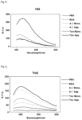
- FIG. 1 shows the degree of binding to tau aggregates and amyloid beta aggregates of a novel synthetic compound according to an embodiment of the present invention, which can be used as an imaging fluorescence probe for selectively distinguishing tau aggregates in vitro.
- FIG. 1 shows fluorescence spectrum changes and the degree of binding, particularly labeling ability to tau aggregates, in the absence of a target protein of a new synthetic compound in vitro (PBS) and in the presence of a non-aggregated tau protein (Tau Mono.), a tau fiber protein aggregate (Tau Agg.), a non-aggregated amyloid beta (A ⁇ Mono.), an amyloid beta aggregate (A ⁇ Agg.) and bovine serum albumin (BSA), and shows a fluorescence spectrum observed from Compounds 13a( FIG.
- FIG. 1 a ((E)-1-(4-(dimethylamino)phenyl)-3-(6-methoxyquinolin-2-yl)prop-2-en-1-one, Compound No. 1), 13d( FIG. 1 b ) ((E)-1-(4-(tolyl)-3-(6-methoxyquinolin-2-yl)prop-2-en-1-one, Compound No. 4), 13e( FIG. 1 c ) ((E)-1-(4-(bromophenyl)-3-(6-methoxyquinolin-2-yl)prop-2-en-1-one, Compound No. 5), 15g( FIG.
- the parameter encompasses all figures including end points disclosed within the range.
- the range of “5 to 10” includes figures of 5, 6, 7, 8, 9, and 10, as well as arbitrary sub-ranges, such as ranges of 6 to 10, 7 to 10, 6 to 9, and 7 to 9, and any figures, such as 5.5, 6.5, 7.5, 5.5 to 8.5 and 6.5 to 9, between appropriate integers that fall within the range.
- the range of “10% to 30%” encompasses all integers that include numbers such as 10%, 11%, 12% and 13% as well as 30%, and any sub-ranges of 10% to 15%, 12% to 18%, or 20% to 30%, as well as any numbers, such as 10.5%, 15.5% and 25.5%, between appropriate integers that fall within the range.
- the present inventors developed a novel quinoline derivative compound having high selectivity for tau aggregates, a method of preparing the same, a tau-targeting near-infrared fluorescent probe including the compound, and a composition for detecting tau fiber proteins containing the same as an active ingredient.
- the present invention provides a quinoline derivative compound represented by the following Formula 1:
- Ar described above is substituted or unsubstituted benzene, substituted or unsubstituted pyridazine, substituted or unsubstituted pyrazine, substituted or unsubstituted imidazole, substituted or unsubstituted pyrazole, substituted or unsubstituted furan, substituted or unsubstituted pyrimidine, substituted or unsubstituted pyrrole, substituted or unsubstituted pyridine, substituted or unsubstituted indole, substituted or unsubstituted thiazole, or substituted or unsubstituted benzothiazole,
- the compound includes a quinoline derivative compound which is represented by the following Formula 1 and selected from the group consisting of the following Compound Nos. 1 to 18:
- substitution means that, when one or more hydrogen atoms in an organic compound are replaced with another atomic group to form a derivative, the other atomic group is introduced in place of a hydrogen atom, and the term “substituent” refers to an atomic group introduced at this time.
- substituents examples include halogen atoms, C 1 -C 20 alkyl groups substituted with a halogen atom (e.g., CCF 3 , CHCF 2 , CH 2 F or CCl 3 ), C 1 -C 20 alkoxy, C 1 -C 2 Dalkoxyalkyl, a hydroxy group, a nitro group, a cyano group, an amino group, an amidino group, hydrazine, hydrazone, a carboxyl group or salt thereof, a sulfonyl group, a sulfamoyl group, a sulfonic acid group or salt thereof, a phosphoric acid or salt thereof, and a C 1 -C 20 alkyl group, a C 2 -C 20 alkenyl group, a C 2 -C 20 alkynyl group, a C 1 -C 20 heteroalkyl group, a C 6 -C 20 aryl group, a C 6 -C
- alkyl means an aliphatic hydrocarbon radical.
- the alkyl may be a saturated alkyl that does not contain an alkenyl or alkynyl moiety, or an unsaturated alkyl that contains at least one alkenyl or alkynyl moiety.
- alkenyl means a group containing at least one carbon-carbon double bond
- alkynyl means a group containing at least one carbon-carbon triple bond.
- the alkyl may have a cyclic, branched or straight-chain form when used alone or in combination.
- aryl means an aromatic monocyclic group containing 6 carbon atoms, which may be further fused, either alone or in combination with another radical, with a second 5- or 6-membered carbocyclic group, which may be aromatic, saturated or unsaturated.
- aryls may include, but are not limited to, phenyl, indanyl, 1-naphthyl, 2-naphthyl, tetrahydronaphthyl and the like.
- the aryl may be linked to another group at an appropriate position on the aromatic ring.
- alkoxy refers to an alkyl group (i.e., —O-alkyl) linked to another group via an oxygen atom.
- the alkoxy group may or may not be substituted with at least one appropriate substituent.
- Examples of the alkoxy group include, but are not limited to, (C 1 -06) alkoxy groups such as —O-methyl, —O-ethyl, —O-propyl, —O-isopropyl, —O-2-methyl-1-propyl, —O-2-methyl-2-propyl, —O-2-methyl-1-butyl, —O-3-methyl-1-butyl, —O-2-methyl-3-butyl, —O-2,2-dimethyl-1-propyl, —O-2-methyl-1-pantyl,-3-O-methyl-1-pantyl, —O-4-methyl-1-pantyl, —O-2-methyl-2-pentyl, —O-3-methyl-2-
- phenoxy means a phenyl group (i.e., —O-aryl) linked to another group via an oxygen atom.
- the phenoxy group may or may not be substituted with at least one halogen; an alkyl group; an aryl group; and a heteroaryl group, but is not limited thereto.
- amino group means an alkyl group linked to another group via a nitrogen atom (i.e., —NH— or —N-alkyl).
- the amino group may or may not be substituted with at least one appropriate substituent.
- Examples of the amino group include, but are not limited to, (C 1 -06) amino groups, such as —NH-methyl, —NH-ethyl, —NH-propyl, —NH-isopropyl, —NH-2-methyl-1-propyl, —NH-2-methyl-2-propyl, —NH-2-methyl-1-butyl, —NH-3-methyl-1-butyl, —NH-2-methyl-3-butyl, —NH-2,2-dimethyl-1-propyl, —NH-2-methyl-1-pentyl, 3-N H-methyl-1-pentyl, —NH-4-methyl-1-pentyl, —NH-2-methyl-2-pentyl, —NH-3-methyl-2-penty
- halogen atom means fluorine (F), chlorine (Cl), bromine (Br) or iodine (I).
- carbonyl group means —(C ⁇ O)—, and may be substituted with hydrogen, an alkyl group, an alkoxy group and an amino group, but is not limited thereto.
- heterocycle group means a heteroaromatic compound containing at least one hetero atom selected from the group consisting of N, O, and S, unless otherwise mentioned.
- the heterocyclic group may include a pyrrolidine group, a furan group, a morpholine group, a piperazine group and a piperidine group, and more preferably a pyrrolidine group, a piperidine group, a piperazine group and a morpholine group, but is not limited thereto.
- heteroaryl group means a heteroaromatic compound containing at least one hetero atom selected from the group consisting of N, O, and S, unless otherwise mentioned.
- the heteroaryl group is a pyridine group, a pyrazine group, a pyrimidine group, a pyridazine group, a pyrazole group, an imidazole group, a triazole group, an indole group, an oxadiazole group, a thiadiazole group, a quinoline group, an isoquinoline group, an isoxazole group, an oxazole group, a thiazolyl group and a pyrrole group, but is not limited thereto.
- derivative refers to a compound obtained by substituting a part of the structure of the compound with another atom or atomic group.
- the present invention provides a near-infrared fluorescent (NIRF) probe for detecting a tau fiber protein containing the quinoline derivative compound represented by Formula 1 according to the present invention.
- NIRF near-infrared fluorescent
- tau fiber protein is a protein mainly involved in entanglement of nerve fibers associated with Alzheimer's disease, and a recent study has reported that there is a high possibility of the onset of dementia when the blood concentration of this substance is higher than a normal value for the same age group.
- the quinoline derivative compound according to the present invention is a self-fluorescent compound which selectively binds to a tau fiber protein to exhibit a strong tau fiber protein detection effect.
- the fluorescent compound according to the present invention has excellent photophysical and photochemical properties such as full color-adjustable emission characteristics (fluorescence characteristics), Stokes shifts and drug-like lipid affinity with regard to membrane permeability within a single molecular structure through substituent changes.
- the self-fluorescent compound of the present invention can be usefully as a fluorescent substance, a fluorescent dye or a near-infrared fluorescent probe in organic light-emitting devices, and in bio-imaging and other bio-applications, and can be used as a near-infrared fluorescent probe that is specifically capable of labeling a protein of interest in the field of immunocytochemistry.
- the present invention provides a composition for diagnosing tauopathy containing the near-infrared fluorescent probe for detecting tau fiber proteins as an active ingredient.
- composition for early diagnosis of tauopathy containing the near-infrared fluorescent probe for detecting tau fiber proteins as an active ingredient according to the present invention can be used as a composition for early diagnosis of tauopathy selected from the group consisting of Alzheimer's disease, Parkinson's disease, progressive nuclear paralysis, corticobasal degeneration, argyrophilic grain disease, Pick's disease, and fronto-temporal dementia.
- tauopathy refers to a family of neurodegenerative diseases characterized by a malfunction of a tau protein (family closely related to intracellular microtubule-related proteins). These neurodegenerative diseases (tauopathy) include, for example, Alzheimer's disease, Parkinson's disease, progressive supranuclear palsy, corticobasal degeneration, argyrophilic grain diseases, Pick's disease and fronto-temporal dementia.
- the near-infrared fluorescent probe for detecting tau fiber proteins includes the quinoline derivative compound represented by Formula 1, and the near-infrared fluorescent probe can be used for the diagnosis of related diseases caused by tau aggregates, that is, tauopathy, through specific binding of the compound with tau aggregates, fluorescence, and excellent lipid affinity thereof.
- the term “aggregate”, which may be used interchangeably with “agglomerate”, refers to a state in which various insoluble fibrous proteins are deposited and aggregated in a patient's tissue.
- tau aggregate means an aggregate formed by aggregation of tau fiber proteins, mainly involved in entanglement of nerve fibers.
- the tau fiber protein detection is carried out by binding between the compound according to the invention and a Tau fiber protein aggregate, “binding” referring to a chemical interaction.
- binding referring to a chemical interaction. Examples of such binding include covalent bonds, ionic bonds, hydrophilic-hydrophilic interactions, hydrophobic-hydrophobic interactions, and complex compound coordination.
- detection includes not only determining whether or not tau aggregates are present in the sample (quantitative analysis), but also determining the amount thereof (quantitative analysis).
- the composition may further include a pharmaceutically acceptable carrier, in addition to the quinoline derivative compound represented by Formula 1, for the diagnosis of tauopathy.
- the composition may be administered orally or parenterally during clinical administration, and may be used in the form of a general pharmaceutical preparation.
- the pharmaceutical composition according to the present invention may be administered in a variety of oral or parenteral formulations during actual clinical administration.
- the formulations may be prepared using conventionally used diluents or excipients such as fillers, extenders, binders, wetting agents, disintegrating agents and surfactants, which are commonly used in the art.
- Solid formulations for oral administration include tablets, pills, powders, granules, capsules and the like. These solid formulations may be prepared by mixing at least one excipient such as starch, calcium carbonate, sucrose, lactose or gelatin.
- lubricants such as magnesium stearate or talc are used in addition to simple excipients.
- Liquid formulations for oral administration include suspension agents, liquids/solutions, emulsions, syrups and the like.
- various excipients such as wetting agents, sweeteners, fragrances and preservatives, may be contained therein.
- Formulations for parenteral administration may include sterile aqueous solutions, non-aqueous solvents, suspensions, emulsions, freeze-dried preparations, and suppositories.
- Non-aqueous solvents and suspension solvents include propylene glycol, polyethylene glycol, vegetable oils such as olive oil, and injectable esters such as ethyl oleate.
- As a base for suppositories Witepsol, macrogol, tween 61, cacao butter, laurin butter and glycerogelatin may be used.
- the present invention provides a method for detecting tau aggregates in cells in vitro or tissues ex vivo using the quinoline derivative compound represented by Formula 1 according to the present invention.
- the method for detecting tau aggregates from in vitro cells or ex vivo tissue using the quinoline derivative compound represented by Formula 1 includes the following steps:
- step (a) the administering the composition to the cells in vitro or tissues ex vivo may be carried out by introducing a detectable amount of the composition containing the compound according to the present invention into the cells in vitro or tissues ex vivo.
- the introduction into the cells in vitro or tissues ex vivo is carried out by administering the compound into cells or tissues by methods known to those skilled in the art.
- the cell may be, but is not limited to, a cell isolated from the brain, heart, blood vessels or arteries, and the tissue may be, but is not limited to, the brain, heart, blood vessels and arteries.
- detecttable amount means the amount of a composition required for detection by a selected detection method.
- the amount of the composition introduced into cells in vitro or tissues ex vivo to be analyzed can be easily determined by those skilled in the art.
- the composition can be administered to cells or tissues while increasing the amount of the composition until the active ingredient in the composition is detected by a selected detection method.
- step (b) after a sufficient time for the compound to bind to the tau fiber protein, the fluorescent signal can be detected non-invasively in the cells in vitro or tissues ex vivo.
- the excitation wavelength may have a wavelength in the range of 300 to 500 nm
- the fluorescent signal generated in step (d) may have a wavelength in the range of 400 to 650 nm.
- the fluorescence signal may be generated using a method of performing quantification and imaging in real time using a commercial spectrophotometer or a fluorescence microscope equipped with a software program capable of analyzing fluorescent signal data, but is not limited thereto.
- the producing step in step (e) includes obtaining the acquired signal data through a software program installed in the spectrophotometer or fluorescent microscope and then producing a graph or image showing the location and amount of the fluorescent signal emitted by the compound from this data set.
- the determining step in step (f) can be carried out by evaluating the resulting graph or image, because the emitted signal is directly related to the amount of tau aggregates.
- Imaging tau aggregates in the brain has several potential advantages. Imaging techniques can improve diagnostic methods by identifying potential patients who have accumulated excess tau aggregates in the brain and thus are more likely to develop, for example, Alzheimer's disease. In addition, these techniques are expected to be useful, for example, in monitoring the progression of Alzheimer's disease. When drug therapy targeting tau proteins is possible, imaging of tau aggregates in the brain can provide an important means to monitor therapy.
- the quinoline derivative compound represented by Formula 1 according to the present invention can be imaged using self-fluorescent properties even without the use of radioactive isotopes, and high-sensitivity detection is possible through high selective binding with tau aggregates.
- the present invention provides a method of diagnosing a patient with a tau-aggregate-related disease.
- the diagnostic method can also be used as a post-diagnosis method.
- the method for diagnosing a patient with a tau-aggregate-related disease further includes quantifying or imaging a tau fiber protein detected through the method for detecting tau aggregates, setting diagnostic criteria, and conducting diagnosis.
- the present invention provides a method for producing the quinoline derivative compound represented by Formula 1.
- the method includes any one of the following Reaction Scheme 1 to Reaction Scheme 3:
- the present invention includes a method for preparing the quinoline derivative compound represented by Formula 1, and the method includes a preparation process shown in Reaction Scheme 4, Reaction Scheme 5, and Reaction Scheme 6.
- R 5 represents methyl, bromo, amino or dimethylamino.
- the preparation method of Reaction Scheme 4 is performed through a condensation reaction between the 6-methoxyquinoline-2-carboaldehyde compound represented by Formula 2 above and the p-substituted acetophenone represented by Formula 3 above.
- R 6 is selected from hydrogen, methyl and hydroxypropyl
- R 7 is selected from hydrogen, methyl and hydroxypropyl, wherein R 6 and R 7 are identical to or different from each other.
- the preparation method of Reaction Scheme 5 is performed through condensation between (E)-3-(3-/4-substituted phenyl)/(6-substituted pyridin-3-yl)acrylaldehyde, represented by Formula 6, and 1-(6-methoxyquinolin-2-yl)ethan-1-one, represented by Formula 5.
- X is selected from carbon and nitrogen
- R 8 , R 9 and R 10 are selected from hydrogen, halogen, nitro, amino, trifluoromethyl, methylamino and dimethylamino, wherein R 8 , R 9 and R 10 are identical to or different from each other.
- the preparation method is performed through a condensation reaction between the (E)-3-(3-/4-substituted phenyl)/(6-substitutedpyridin-3-yl)acrylaldehyde compound, represented by Formula 9, and the diethyl (6-methoxyquinolin-2-yl)methyl)phosphonate compound, represented by Formula 8 above.
- the aldehyde compound represented by Formula 2 used as a reactant according to the present invention was prepared as shown in Reaction Scheme 7. Specifically, the aldehyde Compound (3) was prepared by reacting croton aldehyde with p-methoxy aniline as a starting material at a high temperature under acidic conditions to prepare Compound (2), 6-methoxy-2-methylquinoline, followed by an oxidation reaction.
- Useful oxidizing agents include various organic oxidizing agents such as pyridinium chlorochromate (PCC), pyridinium dichromate (PDC), Dess-Martin-Periodinane (DMP), tetrapropylammonium perruthenate (TPAP), 2,2,6,6-tetramethyl-1-piperidinyloxy (TEMPO) and Swern oxidation reagents, as well as inorganic oxidizing agents such as potassium permanganate and selenium dioxide. Preferred is selenium dioxide.
- Compound (6) represented by Formula 5, and Compound (9), represented by Formula 8, were prepared by the method of Reaction Scheme 8. Specifically, the compound was prepared using Compound (3), prepared in the present invention, as a starting material. The aldehyde Compound (3) was converted to carboxylic acid Compound (4), Compound (4) was reacted with N,O-dimethylhydroxyamine is hydrochloride in the presence of a base and HATU (1-[bis(dimethylamino)methylene]-1H-1,2,3-triazolo[4,5-b]pyridinium 3-oxide hexafluorophosphate, hexafluorophosphate azabenzotriazole tetramethyl uronium) to prepare Compound (5), N,6-dimethoxy-N-methylquinoline-2-carboxamide, and then a Grignard reaction was conducted to prepare Compound (6).
- HATU 1-[bis(dimethylamino)methylene]-1H-1,2,3-triazolo
- the aldehyde Compound (3) was converted to an alcohol Compound (7) through a reduction reaction, and then bromination was conducted to prepare Compound (8).
- the reducing agent is preferably sodium borohydride, which is selected from generally used alkyl metal reducing agents.
- Compound (8) was reacted with trialkylphosphite at a high temperature to prepare Compound (9), diethyl ((6-methoxyquinolin-2-yl)methyl)phosphonate.
- the high temperature specifically means 100° C. to 150° C.
- Compound (11), corresponding to the case of n 1, was prepared by reacting allyl iodide (10) as a starting material with alkyl in the presence of a palladium catalyst using acrolein diethyl acetal.
- the compounds of the present invention can be prepared by arbitrarily combining the synthesis methods specifically described in the following Examples or various synthesis methods disclosed in the prior art, which are understood to fall within the scope of the present invention, and the method of preparing the compounds according to the present invention is not limited to the specific examples below.
- Methyl magnesium bromide (CH 3 MgBr, 1.848 mL, 1.848 mmol, 1M in THF) was added dropwise at 0° C. to a solution of Compound 5 (350 mg, 1.42 mmol), prepared in Reference Example 4 dissolved in THF (10 mL), followed by reacting while stirring the mixture at 0° C. for 1 hour and at room temperature for 13 hours.
- the allyl compound (0.5 mmol) of the substituent corresponding to iodide was dissolved in 2.0 mL of dimethylformamide, and acrolein diethyl acetal (1.5 mmol), TBAA (1 mmol), potassium carbonate (K2003; 0.75 mmol), KCl (0.5 mmol) and palladium acetate (0.015 mmol) were simultaneously added to the solution, followed by stirring at 90° C. for 2 hours.
- the reaction solution was cooled to room temperature, 2N hydrochloric acid was slowly added thereto, and the mixture was stirred at room temperature for 30 minutes and diluted with ethyl acetate.
- the aldehyde Compound 3 (1.0 mmol), prepared in Reference Example 2, and p-substituted acetophenone were dissolved in minimal methanol (2 to 4 mL), solid NaOH ( ⁇ 100 mg) was added to the solution, and the reaction mixture was reacted with stirring at room temperature for 5 to 8 hours. The resulting solid was filtered and washed with cooled methanol, the resulting solution was concentrated, and the residue was purified through a silica gel column to prepare the target compound.
- Compound 16a was synthesized in the same preparation process as in Example 12 above.
- the absorbance was measured using a V-730 UV-visible spectrophotometer manufactured by JASCO, and fluorescence was measured using a FlexStation 3 multi-mode microplate reader manufactured by Molecular Devices. Absorbance and fluorescence were measured three times at a concentration of 10 ⁇ M in ethanol, and the average thereof is shown in Table 1 below. At this time, T807 (AV-1451) as a Tau positron-emission-tomography (PET) tracer and Thioflavin S, which are commercially available to detect tau production in vivo, were used as a control group.
- PET Tau positron-emission-tomography
- the newly synthesized compound in the present invention was found to be capable of emitting light at a fluorescence wavelength of 500 nm to 710 nm and to have a high Stokes shift of 90 nm to 220 nm.
- the measurement results are shown in Table 1 below.
- ⁇ ex a Maximum excitation wavelength
- ⁇ em b Maximum emission wavelength
- Stokes shift Difference between excitation energy and emission energy in accordance with Stokes' law
- clogP c a distribution coefficient of the compound and is a measure of lipophilicity
- Experimental Example 2-1 Tau and amyloid beta aggregation induction
- amyloid aggregation induction the synthesized Abeta40 (Amyloid Beta 40) peptide was dissolved in PBS at a concentration of 0.5 mg/ml to induce aggregation for 7 days at 37° C. and 200 rpm with shaking.
- Tau-K18 protein 0.5 mg/ml in PBS
- heparin 0.1 mg/ml
- DTT 100 ⁇ M
- BSA bovine serum albumin
- probe 13a ((E)-1-(4-(dimethylamino)phenyl)-3-(6-methoxyquinolin-2-yl)prop-2-en-1-one), 13e ((E)-1-(4-(bromophenyl)-3-(6-methoxyquinolin-2-yl)prop-2-en-1-one), 15g (6-methoxy-2-((1E,3E)-4-(3-nitrophenyl)buta-1,3-dien-1-yl)quinolone), 16d ((2E,4E)-5-(6-(dimethylamino)pyridin-3-yl)-1-(6-methoxyquinolin-2-yl)penta-2,4-dien-1-one) were found to have higher selectivity for tau aggregates than for amyloid aggregates, and 13a, 13e,
- novel quinoline derivative compounds of the present invention exhibit spontaneously near-infrared fluorescence, and selectively bind to tau fiber proteins and thus exhibit a strong effect of detecting tau fiber proteins.
- the compound can be usefully used as a near-infrared fluorescent probe composition for detecting tau fiber proteins for early diagnosis of tauopathy caused by tau aggregates, such as Alzheimer's disease and Parkinson's disease, and thus has industrial applicability.
- novel quinoline derivative compound according to the present invention can specifically bind to tau fiber protein aggregates, thereby specifically diagnosing conditions and disorders associated with tau fiber protein aggregates through fluorescence changes.
- the novel compound according to the present invention is a phosphor organic low-molecular-weight tracer compound that selectively binds to tau fiber protein aggregates and can be useful for early diagnosis of tauopathy including Alzheimer's disease, dementia, Parkinson's disease, progressive nuclear paralysis, corticobasal degeneration, argyrophilic grain disease, Pick's disease, frontotemporal dementia and the like, that is, brain nervous system diseases caused by entanglement of tau fiber proteins.
- novel compound according to the present invention can contribute to the improvement of bio-imaging methods through early diagnosis of tauopathy using a noninvasive method, and can easily analyze the degree of progression of pathology associated with tau fiber protein aggregation by fluorescently imaging and quantifying tau fiber proteins.
Landscapes
- Chemical & Material Sciences (AREA)
- Health & Medical Sciences (AREA)
- Life Sciences & Earth Sciences (AREA)
- Organic Chemistry (AREA)
- Engineering & Computer Science (AREA)
- Biomedical Technology (AREA)
- Immunology (AREA)
- Hematology (AREA)
- Molecular Biology (AREA)
- Urology & Nephrology (AREA)
- General Health & Medical Sciences (AREA)
- Physics & Mathematics (AREA)
- Biochemistry (AREA)
- Pathology (AREA)
- General Physics & Mathematics (AREA)
- Analytical Chemistry (AREA)
- Microbiology (AREA)
- Food Science & Technology (AREA)
- Cell Biology (AREA)
- Biotechnology (AREA)
- Medicinal Chemistry (AREA)
- Neurology (AREA)
- Proteomics, Peptides & Aminoacids (AREA)
- Neurosurgery (AREA)
- Nuclear Medicine, Radiotherapy & Molecular Imaging (AREA)
- Animal Behavior & Ethology (AREA)
- Public Health (AREA)
- Veterinary Medicine (AREA)
- Epidemiology (AREA)
- Optics & Photonics (AREA)
- Chemical Kinetics & Catalysis (AREA)
- Plural Heterocyclic Compounds (AREA)
Abstract
Description
- (Patent Document 1) International Publication Pat. No. 2015-060365 (2015.04.30)
- (Patent Document 2) Korean Patent No. 10-1749808 (2017.06.15)
- (Patent Document 3) Korean Patent No. 10-1802672 (2017.11.22)
- (Non-Patent Document 1) Hualong Fu. et. al., J. Med. Chem., 58(17), 6972-6983 (2015)


-
- Ar is a C6-C10 aryl group or a C3-C10 heteroaryl group,
- R1 is a C1-C6 alkyl group, a C1-C6 alkoxy group or a hydroxyl group,
- R2 is a hydroxyl group, a halogen group, an amino group, a nitro group, a cyano group, a C1-C6 alkyl group, a C1-C6 alkenyl group, a C6-C10 aryl group, a C1-C6 alkoxy group, a C3-C10 heteroaryl group, or a C3-C10 heterocyclyl group, and
- n is an integer of 1 to 5,
- wherein the C1-C6 alkyl group includes at least one substituent group selected from the group consisting of hydrogen, a hydroxyl group, a halogen group, a C1-C13 alkyl group, a C1-C6 alkoxy group, an amide group (—(C═O)NR3R4), a C6-C10 aryl group, a C3-C10 heteroaryl group and a C3-C10 heterocyclyl group,
- the C6-C10 aryl group, the C3-C10 heteroaryl group or the C3-C10 heterocyclyl group includes at least one substituent group selected from the group consisting of hydrogen, a hydroxyl group, a halogen group, a carbonyl group (—(C═O)R3R4), a C1-C3 alkyl group substituted or unsubstituted with halogen or a C3-C10 heterocyclyl group, a C1-C3 alkoxy group substituted or unsubstituted with halogen or a C3-C10 heterocyclyl group, C6-C10 phenoxy, an amino group (—NR3R4), an amide group (—(C═O)NR3R4), a C6-C10 aryl group, a C3-C10 heteroaryl group and a C3-C10 heterocyclyl group,
- R3 and R4 described above include at least one substituent group selected from the group consisting of hydrogen, a C1-C6 alkyl group, a C1-C6 alkenyl group, a C1-C6 alkynyl group, a C6-C10 aryl group, a C3-C10 heteroaryl group and a C3-C10 heterocyclyl group, and
- the C3-C10 heteroaryl group and the C3-C10 heterocyclyl group include at least one heteroatom selected from the group consisting of N, O and S.


-
- Ar is a C6-C10 aryl group or a C3-C10 heteroaryl group,
- R1 is a C1-C6 alkyl group, a C1-C6 alkoxy group or a hydroxyl group,
- R2 is a hydroxyl group, a halogen group, an amino group, a nitro group, a cyano group, a C1-C6 alkyl group, a C1-C6 alkenyl group, a C6-C10 aryl group, a C1-C6 alkoxy group, a C3-C10 heteroaryl group, or a C3-C10 heterocyclyl group, and
- n is an integer of 1 to 5,
- wherein the C1-C6 alkyl group includes at least one substituent group selected from the group consisting of hydrogen, a hydroxyl group, a halogen group, a C1-C13 alkyl group, a C1-C6 alkoxy group, an amide group (—(C═O)NR3R4), a C6-C10 aryl group, a C3-C10 heteroaryl group and a C3-C10 heterocyclyl group,
- the C6-C10 aryl group, the C3-C10 heteroaryl group or the C3-C10 heterocyclyl group includes at least one substituent group selected from the group consisting of hydrogen, a hydroxyl group, a halogen group, a carbonyl group (—(C═O)R3R4), a C1-C3 alkyl group substituted or unsubstituted with halogen or a C3-C10 heterocyclyl group, a C1-C3 alkoxy group substituted or unsubstituted with halogen or a C3-C10 heterocyclyl group, C6-C10 phenoxy, an amino group (—NR3R4), an amide group (—(C═O)NR3R4), a C6-C10 aryl group, a C3-C10 heteroaryl group and a C3-C10 heterocyclyl group,
- R3 and R4 described above include at least one substituent group selected from the group consisting of hydrogen, a C1-C6 alkyl group, a C1-C6 alkenyl group, a C1-C6 alkynyl group, a C6-C10 aryl group, a C3-C10 heteroaryl group and a C3-C10 heterocyclyl group, and
- the C3-C10 heteroaryl group and the C3-C10 heterocyclyl group include at least one heteroatom selected from the group consisting of N, O and S.
-
- R1 described above is any one selected from a C1-C3 alkyl group, a C1-C3 alkoxy group and a hydroxyl group, and
- n is an integer of 1 or 2.


[Compound No. 6: (E)-6-methoxy-2-(4-(trifluoromethyl)styryl)quinolone (Compound 14a)];


-
- (a) administering a composition containing the near-infrared fluorescent probe for detecting tau fiber proteins as an active ingredient to cells in vitro or tissues ex vivo;
- (b) binding the quinoline derivative compound represented by Formula 1 contained in the probe to the tau fiber proteins;
- (c) emitting light with an excitation wavelength to the cells in vitro or the tissues ex vivo;
- (d) detecting a fluorescent signal generated from the quinoline derivative compound represented by Formula 1;
- (e) producing a graph or image showing the position and amount of the fluorescent signal; and
- (f) determining a distribution and extent of tau aggregates in the cells in vitro or tissues ex vivo.


-
- wherein in Reaction Scheme 1 to Reaction Scheme 3,
- R1 is a C1-C6 alkyl group, a C1-C6 alkoxy group or a hydroxyl group, and
- R2 is a hydroxyl group, a halogen group, an amino group, a nitro group, a cyano group, a C1-C6 alkyl group, a C1-C6 alkenyl group, a C6-C10 aryl group, a C1-C6 alkoxy group, a C3-C10 heteroaryl group, or a C3-C10 heterocyclyl group,
- wherein the C1-C6 alkyl group includes at least one substituent group selected from the group consisting of hydrogen, a hydroxyl group, a halogen group, a C1-C13 alkyl group, a C1-C6 alkoxy group, an amide group (—(C═O)NR3R4), a C6-C10 aryl group, a 03-010 heteroaryl group and a C3-C10 heterocyclyl group,
- the C6-C10 aryl group, the C3-C10 heteroaryl group or the C3-C10 heterocyclyl group includes at least one substituent group selected from the group consisting of hydrogen, a hydroxyl group, a halogen group, a carbonyl group (—(C═O)R3R4), a C1-C3 alkyl group substituted or unsubstituted with halogen or a C3-C10 heterocyclyl group; a C1-C3 alkoxy group substituted or unsubstituted with halogen or a C3-C10 heterocyclyl group, a 06-010 phenoxy, an amino group (-NR3R4), an amide group (—(C═O)NR3R4), a C6-C10 aryl group, a C3-C10 heteroaryl group and a C3-C10 heterocyclyl group,
- R3 and R4 described above include at least one substituent group selected from the group consisting of hydrogen, a C1-C6 alkyl group, a C1-C6 alkenyl group, a C1-C6 alkynyl group, a C6-C10 aryl group, a C3-C10 heteroaryl group, and a C3-C10 heterocyclyl group, and
- the C3-C10 heteroaryl group and C3-C10 heterocyclyl group include at least one heteroatom selected from the group consisting of N, O and S,
- in Reaction Scheme 2 and Reaction Scheme 3,
- X is N or CH, and
- in Reaction Scheme 3,
- n is an integer from 1 to 5.


| TABLE 1 |
| Results of synthetic compound fluorescence measurement |
| Compound | λex a | λem b | Stokes shift | clogPc |
| Thioflavin S | 347 nm | 451 nm | 104 nm | — |
| T807 | 304 nm | 369 nm | 65 nm | 3.18 |
| (AV-1451) | ||||
| 13a | 339 nm | 601 nm | 202 nm | 4.28 |
| (Compound No. 1) | ||||
| 13c | 378 nm | 570 nm | 192 nm | 2.84 |
| (Compound No. 3) | ||||
| 13d | 314 nm | 454 nm | 140 nm | 4.30 |
| (Compound No. 4) | ||||
| 13e | 314 nm | 415 nm | 101 nm | 4.74 |
| (Compound No. 5) | ||||
| 14a | 359 nm | 415 nm | 56 nm | 5.90 |
| (Compound No. 6) | ||||
| 14b | 357 nm | 420 nm | 63 nm | 3.52 |
| (Compound No. 7) | ||||
| 15f | 360 nm | 415 nm | 55 nm | 5.93 |
| (Compound No. 8) | ||||
| 15g | 361 nm | 452 nm | 91 nm | 4.96 |
| (Compound No. 9) | ||||
| 15h | 360 nm | 415 nm | 55 nm | 5.51 |
| (Compound No. 10) | ||||
| 15b | 400 nm | 602 nm | 202 nm | 4.72 |
| (Compound No. 11) | ||||
| 15e | 389 nm | 587 nm | 198 nm | 3.65 |
| (Compound No. 12) | ||||
| 15c | 399 nm | 600 nm | 201 nm | 5.38 |
| (Compound No. 13) | ||||
| 15d | 402 nm | 520 nm | 118 nm | 4.44 |
| (Compound No. 14) | ||||
| 16c | 450 nm | 678 nm | 228 nm | 5.16 |
| (Compound No. 15) | ||||
| 16d | 425 nm | 637 nm | 212 nm | 4.21 |
| (Compound No. 16) | ||||
| 16b | 475 nm | 714 nm | 239 nm | 4.42 |
| (Compound No. 17) | ||||
| 16e | 436 nm | 658 nm | 222 nm | 4.49 |
| (Compound No. 18) | ||||
| λex a: Maximum excitation wavelength | ||||
| λem b: Maximum emission wavelength | ||||
| Stokes shift: Difference between excitation energy and emission energy in accordance with Stokes' law | ||||
| clogPc: a distribution coefficient of the compound and is a measure of lipophilicity | ||||
| Compound | Ex | Em | FIa | SIb | |
| (10 μM) | (nm) | (nm) | FItau | FIAβ | FIBSA | SIaβ | SItaumono |
| Thioflavin S | 430 | 500 | 15.32 | 19.95 | 7.133 | 0.8 | 4.3 |
| 13a | 310 | 440 | 5.12 | 1.10 | 1.23 | 4.6 | 5.2 |
| (Compound No. 1) | |||||||
| 13c | 310 | 435 | 4.63 | 1.67 | 1.72 | 2.8 | 3.2 |
| (Compound No. 3) | |||||||
| 13d | 310 | 445 | 6.05 | 1.88 | 1.57 | 3.2 | 4.8 |
| (Compound No. 4) | |||||||
| 13e | 310 | 435 | 5.18 | 1.37 | 1.39 | 3.8 | 2.2 |
| (Compound No. 5) | |||||||
| 14a | 310 | 455 | 1.01 | 0.54 | 0.60 | 1.9 | 2.0 |
| (Compound No. 6) | |||||||
| 14b | 310 | 455 | 0.79 | 0.57 | 0.61 | 1.4 | 1.3 |
| (Compound No. 7) | |||||||
| 15f | 310 | 435 | 3.91 | 3.27 | 1.75 | 1.2 | 4.4 |
| (Compound No. 8) | |||||||
| 15g | 310 | 430 | 3.42 | 0.58 | 1.33 | 5.8 | 3.7 |
| (Compound No. 9) | |||||||
| 15h | 310 | 435 | 2.35 | 1.56 | 0.70 | 1.5 | 2.8 |
| (Compound No. 10) | |||||||
| 15b | 350 | 440 | 0.63 | 0.32 | 0.26 | 2.0 | 3.6 |
| (Compound No. 11) | |||||||
| 15e | 350 | 440 | 0.95 | 0.44 | 0.17 | 2.2 | 4.5 |
| (Compound No. 12) | |||||||
| 15c | 350 | 450 | 0.81 | 0.18 | 0.19 | 1.2 | 3.9 |
| (Compound No. 13) | |||||||
| 15d | 380 | 540 | 1.33 | 1.25 | 1.05 | 1.1 | 1.3 |
| (Compound No. 14) | |||||||
| 16c | 430 | 620 | 1.71 | 1.43 | 1.29 | 1.2 | 1.7 |
| (Compound No. 15) | |||||||
| 16d | 405 | 630 | 3.82 | 1.10 | 1.26 | 3.5 | 3.9 |
| (Compound No. 16) | |||||||
| 16b | 430 | 630 | 9.22 | 9.45 | 56.71 | 1.0 | 2.1 |
| (Compound No. 17) | |||||||
| 16e | 405 | 610 | 3.90 | 1.55 | 1.59 | 2.5 | 3.0 |
| (Compound No. 18) | |||||||
| aFold increase (FI) = fluorescence intensity of probe bound to tau aggregate (or Aβ aggregate or BSA)/fluorescence intensity of probe (free) | |||||||
| bSelectivity index (SI) = fluorescence intensity of probe bound to Tau aggregate/fluorescence intensity of probe bound to Aβ aggregate (or BSA) | |||||||
Claims (5)
Applications Claiming Priority (2)
| Application Number | Priority Date | Filing Date | Title |
|---|---|---|---|
| KR10-2020-0016824 | 2020-02-12 | ||
| KR1020200016824A KR102344676B1 (en) | 2020-02-12 | 2020-02-12 | Novel compounds useful as near infrared fluorescent probes selectively binding to tau aggregates and preparation method thereof |
Publications (2)
| Publication Number | Publication Date |
|---|---|
| US20210255203A1 US20210255203A1 (en) | 2021-08-19 |
| US12050224B2 true US12050224B2 (en) | 2024-07-30 |
Family
ID=77272684
Family Applications (1)
| Application Number | Title | Priority Date | Filing Date |
|---|---|---|---|
| US17/021,438 Active 2040-10-31 US12050224B2 (en) | 2020-02-12 | 2020-09-15 | Compounds useful as near-infrared fluorescent probes selectively binding to tau aggregates and method of preparing the same |
Country Status (2)
| Country | Link |
|---|---|
| US (1) | US12050224B2 (en) |
| KR (1) | KR102344676B1 (en) |
Families Citing this family (1)
| Publication number | Priority date | Publication date | Assignee | Title |
|---|---|---|---|---|
| CN113880821B (en) * | 2021-10-29 | 2024-03-12 | 南京碳硅人工智能生物医药技术研究院有限公司 | Fluorescent probe design for epileptic intracerebral hypochlorous acid characteristic imaging by two-photon fluorescent probe and synthetic method thereof |
Citations (12)
| Publication number | Priority date | Publication date | Assignee | Title |
|---|---|---|---|---|
| US7118730B2 (en) | 2002-12-16 | 2006-10-10 | Bf Research Institute, Inc. | Quinoline derivative as diagnostic probe for disease with tau protein accumulation |
| US7619091B2 (en) | 2002-07-16 | 2009-11-17 | Prana Biotechnology Limited | 8-hydroxy quinoline derivatives |
| US20100279340A1 (en) | 2007-02-09 | 2010-11-04 | Nyu | Imaging agents for protein misfolding |
| WO2013148228A1 (en) | 2012-03-29 | 2013-10-03 | Advanced Cancer Therapeutics, Llc | Pfkfb3 inhibitor and methods of use as an anti-cancer therapeutic |
| KR20130129975A (en) | 2010-11-16 | 2013-11-29 | 지이 헬쓰케어 리미티드 | Heterocyclic compounds as imaging probes of tau pathology |
| EP2767532A1 (en) * | 2012-12-21 | 2014-08-20 | National Institute of Radiological Sciences | Novel compound for imaging tau protein accumulated in the brain |
| WO2015060365A1 (en) | 2013-10-22 | 2015-04-30 | クリノ株式会社 | Tau imaging probe |
| KR101749808B1 (en) | 2015-07-21 | 2017-06-21 | 건국대학교 산학협력단 | Curcumin-based near infrared fluorescence (NIRF) probes for detection of tau fibril and use of the same |
| US20170189566A1 (en) * | 2015-12-31 | 2017-07-06 | Washington University | Alpha-synuclein ligands |
| KR101802672B1 (en) | 2016-10-12 | 2017-11-30 | 건국대학교 산학협력단 | Near-infrared fluorescence smart probe for selectively detecting tau aggregates for the early diagnosis of Alzheimer's disease |
| KR20180052611A (en) | 2015-08-18 | 2018-05-18 | 더 리젠츠 오브 더 유니버시티 오브 캘리포니아 | Nitroxide-containing amyloid binding agents for imaging and therapeutic applications |
| CN110066243A (en) | 2018-01-22 | 2019-07-30 | 中国科学技术大学 | Fluorescence quinoline, preparation method, composition and purposes |
Family Cites Families (1)
| Publication number | Priority date | Publication date | Assignee | Title |
|---|---|---|---|---|
| KR101750463B1 (en) | 2013-11-26 | 2017-06-23 | 제일모직 주식회사 | Positive photosensitive resin composition, photosensitive resin film prepared by using the same, and display device |
-
2020
- 2020-02-12 KR KR1020200016824A patent/KR102344676B1/en active Active
- 2020-09-15 US US17/021,438 patent/US12050224B2/en active Active
Patent Citations (15)
| Publication number | Priority date | Publication date | Assignee | Title |
|---|---|---|---|---|
| US7619091B2 (en) | 2002-07-16 | 2009-11-17 | Prana Biotechnology Limited | 8-hydroxy quinoline derivatives |
| US7118730B2 (en) | 2002-12-16 | 2006-10-10 | Bf Research Institute, Inc. | Quinoline derivative as diagnostic probe for disease with tau protein accumulation |
| US20100279340A1 (en) | 2007-02-09 | 2010-11-04 | Nyu | Imaging agents for protein misfolding |
| KR20130129975A (en) | 2010-11-16 | 2013-11-29 | 지이 헬쓰케어 리미티드 | Heterocyclic compounds as imaging probes of tau pathology |
| WO2013148228A1 (en) | 2012-03-29 | 2013-10-03 | Advanced Cancer Therapeutics, Llc | Pfkfb3 inhibitor and methods of use as an anti-cancer therapeutic |
| US20150239878A1 (en) * | 2012-12-21 | 2015-08-27 | National Institute Of Radiological Sciences | Novel Compounds for Imaging Tau Proteins That Accumulate In Brain |
| EP2767532A1 (en) * | 2012-12-21 | 2014-08-20 | National Institute of Radiological Sciences | Novel compound for imaging tau protein accumulated in the brain |
| KR20150095610A (en) | 2012-12-21 | 2015-08-21 | 독립행정법인 방사선 의학 종합연구소 | Novel compound for imaging tau protein accumulated in the brain |
| WO2015060365A1 (en) | 2013-10-22 | 2015-04-30 | クリノ株式会社 | Tau imaging probe |
| KR20160072226A (en) | 2013-10-22 | 2016-06-22 | 클리노 가부시끼가이샤 | Tau imaging probe |
| KR101749808B1 (en) | 2015-07-21 | 2017-06-21 | 건국대학교 산학협력단 | Curcumin-based near infrared fluorescence (NIRF) probes for detection of tau fibril and use of the same |
| KR20180052611A (en) | 2015-08-18 | 2018-05-18 | 더 리젠츠 오브 더 유니버시티 오브 캘리포니아 | Nitroxide-containing amyloid binding agents for imaging and therapeutic applications |
| US20170189566A1 (en) * | 2015-12-31 | 2017-07-06 | Washington University | Alpha-synuclein ligands |
| KR101802672B1 (en) | 2016-10-12 | 2017-11-30 | 건국대학교 산학협력단 | Near-infrared fluorescence smart probe for selectively detecting tau aggregates for the early diagnosis of Alzheimer's disease |
| CN110066243A (en) | 2018-01-22 | 2019-07-30 | 中国科学技术大学 | Fluorescence quinoline, preparation method, composition and purposes |
Non-Patent Citations (8)
| Title |
|---|
| ACT on STN (RN No. 130520-71-7, Nov. 16, 1990 and RN No. 130520-68-2, Nov. 16, 1990). |
| American Chemical Society. Chemical Abstract Service. RN 130520-68-2, entered Nov. 16, 1990 (Year: 1990). * |
| American Chemical Society. Chemical Abstract Service. RN 130520-71-7. Entered into STN: Nov. 16, 1990 (Year: 1990). * |
| F. C. Mathur et al., Attempts to find New Antimalarials. Part XI . Some Aminoalkylarylquinoline Derivatives., J. Chem. Soc., Jan. 1, 1934, pp. 1520-1523. |
| Hualong Fu et.al., Highly Sensitive Near-Infrared Fluorophores for in Vivo Detection of Amyloid-β Plaques in Alzheimer's Disease, J. Med. Chem., Aug. 11, 2015, pp. 6972-6983, vol. 58. |
| K.K. Hsu et al., Synthesis of 2-(6-Methoxy..2-Quinolyl) Chromone Derivatives, J. The Chinese Chem. Soc., 1976, pp. 17-19 , vol. 26, No. 1. |
| STN registry. American Chemical Society. Chemical Abstract Service. Entered into STN: Aug. 25, 2021 (Year: 2021). * |
| Wang et al., "Simple Synthesis of carbon-11 labeled styryl dyes as new potential PET RNA-Specific, living cell imaging probes", European Journal of Medical Chemistry, vol. 44, Mar. 7, 2008, pp. 2300-2306 (Year: 2008). * |
Also Published As
| Publication number | Publication date |
|---|---|
| KR102344676B1 (en) | 2021-12-30 |
| US20210255203A1 (en) | 2021-08-19 |
| KR20210102616A (en) | 2021-08-20 |
Similar Documents
| Publication | Publication Date | Title |
|---|---|---|
| US7700616B2 (en) | Compounds and amyloid probes thereof for therapeutic and imaging uses | |
| US8497260B2 (en) | 2-arylbenzothiophene derivatives or pharmaceutically acceptable salts thereof, preparation method thereof, and pharmaceutical composition for the diagnosis or treatment of degenerative brain disease containing the same as active ingredient | |
| CN107412788B (en) | New compound for imaging Tau protein accumulated in the brain | |
| WO2007063946A1 (en) | Diagnostic and remedy for disease caused by amyloid aggregation and/or deposition | |
| TWI528977B (en) | New amyloid affinity products | |
| CN103739605A (en) | Imaging agents for detecting neurological disorders | |
| US20130287700A1 (en) | Compounds for the diagnosis of neurodegenerative disorders on the olfactory epithelium | |
| US20060018825A1 (en) | Probe for diseases with amyloid accumulation, amyloid-staining agent, remedy and preventive for diseases with amyloid accumulation and diagnostic probe and staining agent for neurofibrillary change | |
| WO2007135890A1 (en) | Novel compound having affinity for amyloid | |
| WO2007148755A1 (en) | Novel compound having affinity for amyloid | |
| US10300155B2 (en) | Alpha-synuclein ligands | |
| KR20100091965A (en) | Novel compound having affinity for amyloid | |
| KR20090083414A (en) | New Amyloid Affinity Compounds | |
| WO2007125988A1 (en) | Novel compound having affinity to amyloid | |
| US20210255203A1 (en) | Novel compounds useful as near-infrared fluorescent probes selectively binding to tau aggregates and method of preparing the same | |
| KR20100089858A (en) | Use of novel compound having affinity for amyloid, and process for production of the same | |
| KR102215255B1 (en) | Novel compounds useful as fluorescent probes selectively binding to tau aggregates and preparation method thereof | |
| KR101101977B1 (en) | 2-arylnaphthalene, 2-arylquinoline derivative or pharmaceutically acceptable salt thereof, preparation method thereof, and pharmaceutical composition for diagnosis or treatment of degenerative brain disease containing the same as an active ingredient | |
| CN101918039B (en) | Use of novel compound having affinity for amyloid, and process for production of the same | |
| US20150336948A1 (en) | Isotopically Labeled Biaryl Urea Compounds | |
| CN108290883B (en) | Azetidine derivatives for tau imaging | |
| CN116003402B (en) | A tricyclic compound, its intermediate, preparation method and application | |
| KR20190090448A (en) | Compounds with high selectivity to tau aggregates, tau-targeting probe comprising the same, and preparation method thereof | |
| KR102132847B1 (en) | Compounds with high selectivity to tau aggregates, tau-targeting probe comprising the same, and preparation method thereof | |
| KR20250131205A (en) | An Indane-based compound for detection of amyloid-β aggregates |
Legal Events
| Date | Code | Title | Description |
|---|---|---|---|
| AS | Assignment |
Owner name: KOREA INSTITUTE OF SCIENCE AND TECHNOLOGY, KOREA, REPUBLIC OF Free format text: ASSIGNMENT OF ASSIGNORS INTEREST;ASSIGNORS:NAM, GHIL SOO;CHOO, HYUN AH;ELBATRAWY, AHMED A.;AND OTHERS;REEL/FRAME:053776/0417 Effective date: 20200723 |
|
| FEPP | Fee payment procedure |
Free format text: ENTITY STATUS SET TO UNDISCOUNTED (ORIGINAL EVENT CODE: BIG.); ENTITY STATUS OF PATENT OWNER: SMALL ENTITY |
|
| FEPP | Fee payment procedure |
Free format text: ENTITY STATUS SET TO SMALL (ORIGINAL EVENT CODE: SMAL); ENTITY STATUS OF PATENT OWNER: SMALL ENTITY |
|
| STPP | Information on status: patent application and granting procedure in general |
Free format text: DOCKETED NEW CASE - READY FOR EXAMINATION |
|
| STPP | Information on status: patent application and granting procedure in general |
Free format text: NON FINAL ACTION MAILED |
|
| STPP | Information on status: patent application and granting procedure in general |
Free format text: RESPONSE TO NON-FINAL OFFICE ACTION ENTERED AND FORWARDED TO EXAMINER |
|
| STPP | Information on status: patent application and granting procedure in general |
Free format text: NON FINAL ACTION MAILED |
|
| STPP | Information on status: patent application and granting procedure in general |
Free format text: RESPONSE TO NON-FINAL OFFICE ACTION ENTERED AND FORWARDED TO EXAMINER |
|
| STPP | Information on status: patent application and granting procedure in general |
Free format text: FINAL REJECTION MAILED |
|
| STPP | Information on status: patent application and granting procedure in general |
Free format text: RESPONSE TO NON-FINAL OFFICE ACTION ENTERED AND FORWARDED TO EXAMINER |
|
| STPP | Information on status: patent application and granting procedure in general |
Free format text: FINAL REJECTION MAILED |
|
| STPP | Information on status: patent application and granting procedure in general |
Free format text: RESPONSE AFTER FINAL ACTION FORWARDED TO EXAMINER |
|
| STPP | Information on status: patent application and granting procedure in general |
Free format text: ADVISORY ACTION MAILED |
|
| STPP | Information on status: patent application and granting procedure in general |
Free format text: RESPONSE AFTER FINAL ACTION FORWARDED TO EXAMINER |
|
| STPP | Information on status: patent application and granting procedure in general |
Free format text: NOTICE OF ALLOWANCE MAILED -- APPLICATION RECEIVED IN OFFICE OF PUBLICATIONS |
|
| ZAAA | Notice of allowance and fees due |
Free format text: ORIGINAL CODE: NOA |
|
| ZAAB | Notice of allowance mailed |
Free format text: ORIGINAL CODE: MN/=. |
|
| STPP | Information on status: patent application and granting procedure in general |
Free format text: PUBLICATIONS -- ISSUE FEE PAYMENT VERIFIED |
|
| STCF | Information on status: patent grant |
Free format text: PATENTED CASE |