US12042415B2 - Orthosis brace with monitoring system - Google Patents
Orthosis brace with monitoring system Download PDFInfo
- Publication number
- US12042415B2 US12042415B2 US17/417,833 US202017417833A US12042415B2 US 12042415 B2 US12042415 B2 US 12042415B2 US 202017417833 A US202017417833 A US 202017417833A US 12042415 B2 US12042415 B2 US 12042415B2
- Authority
- US
- United States
- Prior art keywords
- brace
- patient
- electronic device
- dedicated electronic
- orthosis
- Prior art date
- Legal status (The legal status is an assumption and is not a legal conclusion. Google has not performed a legal analysis and makes no representation as to the accuracy of the status listed.)
- Active, expires
Links
Images


Classifications
-
- A—HUMAN NECESSITIES
- A61—MEDICAL OR VETERINARY SCIENCE; HYGIENE
- A61F—FILTERS IMPLANTABLE INTO BLOOD VESSELS; PROSTHESES; DEVICES PROVIDING PATENCY TO, OR PREVENTING COLLAPSING OF, TUBULAR STRUCTURES OF THE BODY, e.g. STENTS; ORTHOPAEDIC, NURSING OR CONTRACEPTIVE DEVICES; FOMENTATION; TREATMENT OR PROTECTION OF EYES OR EARS; BANDAGES, DRESSINGS OR ABSORBENT PADS; FIRST-AID KITS
- A61F5/00—Orthopaedic methods or devices for non-surgical treatment of bones or joints; Nursing devices ; Anti-rape devices
- A61F5/01—Orthopaedic devices, e.g. long-term immobilising or pressure directing devices for treating broken or deformed bones such as splints, casts or braces
- A61F5/0102—Orthopaedic devices, e.g. long-term immobilising or pressure directing devices for treating broken or deformed bones such as splints, casts or braces specially adapted for correcting deformities of the limbs or for supporting them; Ortheses, e.g. with articulations
- A61F5/0104—Orthopaedic devices, e.g. long-term immobilising or pressure directing devices for treating broken or deformed bones such as splints, casts or braces specially adapted for correcting deformities of the limbs or for supporting them; Ortheses, e.g. with articulations without articulation
- A61F5/0111—Orthopaedic devices, e.g. long-term immobilising or pressure directing devices for treating broken or deformed bones such as splints, casts or braces specially adapted for correcting deformities of the limbs or for supporting them; Ortheses, e.g. with articulations without articulation for the feet or ankles
-
- A—HUMAN NECESSITIES
- A43—FOOTWEAR
- A43B—CHARACTERISTIC FEATURES OF FOOTWEAR; PARTS OF FOOTWEAR
- A43B3/00—Footwear characterised by the shape or the use
- A43B3/34—Footwear characterised by the shape or the use with electrical or electronic arrangements
-
- A—HUMAN NECESSITIES
- A61—MEDICAL OR VETERINARY SCIENCE; HYGIENE
- A61B—DIAGNOSIS; SURGERY; IDENTIFICATION
- A61B5/00—Measuring for diagnostic purposes; Identification of persons
- A61B5/0002—Remote monitoring of patients using telemetry, e.g. transmission of vital signals via a communication network
- A61B5/0015—Remote monitoring of patients using telemetry, e.g. transmission of vital signals via a communication network characterised by features of the telemetry system
- A61B5/0022—Monitoring a patient using a global network, e.g. telephone networks, internet
-
- A—HUMAN NECESSITIES
- A61—MEDICAL OR VETERINARY SCIENCE; HYGIENE
- A61B—DIAGNOSIS; SURGERY; IDENTIFICATION
- A61B5/00—Measuring for diagnostic purposes; Identification of persons
- A61B5/103—Measuring devices for testing the shape, pattern, colour, size or movement of the body or parts thereof, for diagnostic purposes
- A61B5/1036—Measuring load distribution, e.g. podologic studies
-
- A—HUMAN NECESSITIES
- A61—MEDICAL OR VETERINARY SCIENCE; HYGIENE
- A61B—DIAGNOSIS; SURGERY; IDENTIFICATION
- A61B5/00—Measuring for diagnostic purposes; Identification of persons
- A61B5/103—Measuring devices for testing the shape, pattern, colour, size or movement of the body or parts thereof, for diagnostic purposes
- A61B5/11—Measuring movement of the entire body or parts thereof, e.g. head or hand tremor or mobility of a limb
- A61B5/112—Gait analysis
-
- A—HUMAN NECESSITIES
- A61—MEDICAL OR VETERINARY SCIENCE; HYGIENE
- A61B—DIAGNOSIS; SURGERY; IDENTIFICATION
- A61B5/00—Measuring for diagnostic purposes; Identification of persons
- A61B5/68—Arrangements of detecting, measuring or recording means, e.g. sensors, in relation to patient
- A61B5/6801—Arrangements of detecting, measuring or recording means, e.g. sensors, in relation to patient specially adapted to be attached to or worn on the body surface
- A61B5/6802—Sensor mounted on worn items
- A61B5/6804—Garments; Clothes
- A61B5/6807—Footwear
-
- A—HUMAN NECESSITIES
- A61—MEDICAL OR VETERINARY SCIENCE; HYGIENE
- A61F—FILTERS IMPLANTABLE INTO BLOOD VESSELS; PROSTHESES; DEVICES PROVIDING PATENCY TO, OR PREVENTING COLLAPSING OF, TUBULAR STRUCTURES OF THE BODY, e.g. STENTS; ORTHOPAEDIC, NURSING OR CONTRACEPTIVE DEVICES; FOMENTATION; TREATMENT OR PROTECTION OF EYES OR EARS; BANDAGES, DRESSINGS OR ABSORBENT PADS; FIRST-AID KITS
- A61F5/00—Orthopaedic methods or devices for non-surgical treatment of bones or joints; Nursing devices ; Anti-rape devices
- A61F5/01—Orthopaedic devices, e.g. long-term immobilising or pressure directing devices for treating broken or deformed bones such as splints, casts or braces
- A61F5/0102—Orthopaedic devices, e.g. long-term immobilising or pressure directing devices for treating broken or deformed bones such as splints, casts or braces specially adapted for correcting deformities of the limbs or for supporting them; Ortheses, e.g. with articulations
- A61F5/0127—Orthopaedic devices, e.g. long-term immobilising or pressure directing devices for treating broken or deformed bones such as splints, casts or braces specially adapted for correcting deformities of the limbs or for supporting them; Ortheses, e.g. with articulations for the feet
-
- G—PHYSICS
- G01—MEASURING; TESTING
- G01P—MEASURING LINEAR OR ANGULAR SPEED, ACCELERATION, DECELERATION, OR SHOCK; INDICATING PRESENCE, ABSENCE, OR DIRECTION, OF MOVEMENT
- G01P1/00—Details of instruments
- G01P1/07—Indicating devices, e.g. for remote indication
-
- G—PHYSICS
- G01—MEASURING; TESTING
- G01P—MEASURING LINEAR OR ANGULAR SPEED, ACCELERATION, DECELERATION, OR SHOCK; INDICATING PRESENCE, ABSENCE, OR DIRECTION, OF MOVEMENT
- G01P15/00—Measuring acceleration; Measuring deceleration; Measuring shock, i.e. sudden change of acceleration
- G01P15/18—Measuring acceleration; Measuring deceleration; Measuring shock, i.e. sudden change of acceleration in two or more dimensions
-
- G—PHYSICS
- G16—INFORMATION AND COMMUNICATION TECHNOLOGY [ICT] SPECIALLY ADAPTED FOR SPECIFIC APPLICATION FIELDS
- G16H—HEALTHCARE INFORMATICS, i.e. INFORMATION AND COMMUNICATION TECHNOLOGY [ICT] SPECIALLY ADAPTED FOR THE HANDLING OR PROCESSING OF MEDICAL OR HEALTHCARE DATA
- G16H40/00—ICT specially adapted for the management or administration of healthcare resources or facilities; ICT specially adapted for the management or operation of medical equipment or devices
- G16H40/60—ICT specially adapted for the management or administration of healthcare resources or facilities; ICT specially adapted for the management or operation of medical equipment or devices for the operation of medical equipment or devices
- G16H40/67—ICT specially adapted for the management or administration of healthcare resources or facilities; ICT specially adapted for the management or operation of medical equipment or devices for the operation of medical equipment or devices for remote operation
Definitions
- the present invention relates to an orthosis brace, in particular for diabetic foot, provided with a system used to monitor the motion, the stand-by and the removal of the brace.
- Diabetic patients are often elder, obese patients affected by co-morbidity and generally self-managed. When they are affected by peripheral neuropathy (lack of pain perception in the peripheries of the body: hands and feet), patients are unable to comply with the rehabilitation therapies of the chronic acute foot injury, and are often unaware of the risk of degenerative amputation.
- rehabilitative walking devices such as orthosis braces, which immobilize the foot in a correct position, discharging the weight on the ulcered/injured part of the foot, is a life-saving measure for this type of patients.
- Said risks are not limited to degeneration of the infected injury, gangrene and amputation, and can severely impair the life expectancy of the patient.
- the life expectancy of a diabetic patient who has suffered the amputation of foot, thigh or leg is generally lower than 5 years after amputation because of additional major problems and pathologies.
- EP2204146 and WO2016184533 disclose a footwear orthosis and a foot brace, in particular for diabetic foot.
- braces are generally provided with an anti-removal system, such as plastic straps that are closed and sealed to guarantee the use of the brace.
- an anti-removal system is closed when the brace is worn and is opened by the doctor at the end of the therapy.
- the aforesaid anti-removal system is considered as a coercive measure by the patient and for this reason it is not easily tolerated. In fact, such an anti-removal system is opposed by the patients, who eventually refuse the therapy. Moreover, in case of an infected ulcer, the anti-removal system cannot be used because of the frequent medications that must be performed several times a week.
- US2019021894 discloses an orthopedic brace that comprises a controller disposed in a body of the brace in a lateral external portion of the ankle.
- the controller comprises motion sensors (accelerometers and/or gyroscopes) suitable for detecting the motion of the brace and for sending data to a central device and a smart device held by the therapist in such a way the therapist can analyze whether the patient is using the brace correctly.
- US2019021894 does not disclose or discuss the technical problem represented by the fact that the patient may remove the brace.
- the motion sensors are not an inertial measurement unit (IMU) capable of providing 9-axes data.
- the controller has no firmware capable of processing the sensor data to detect the removal of the brace.
- the purpose of the present invention is to eliminate the drawbacks of the prior art by disclosing an orthosis brace with monitoring system that avoids the use of the anti-removal system and provides the therapist with information on the use and on the removal of the brace.
- Another purpose of the present invention is to disclose such an orthosis brace with monitoring system that induces the patient to use the brace correctly.
- the orthosis brace according to the invention is defined by claim 1 .
- FIG. 1 is a perspective view of the orthosis brace according to the invention
- FIG. 2 is an exploded perspective view of some parts of the orthosis brace according to FIG. 1 ;
- FIG. 3 is a back view of a box that contains a dedicated electronic device of the orthosis brace according to the invention
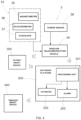
- FIG. 4 is a block diagram that shows the operation of the orthosis brace according to the invention.
- the orthosis brace of the invention is disclosed, which is generally indicated with reference numeral ( 1 ).
- the brace ( 1 ) comprises a bottom (F 1 ) comprising a sole ( 2 ) made of a soft material and a stiffening plate ( 5 ) associated with the sole ( 2 ) and fixed onto the sole ( 2 ).
- the sole ( 2 ) comprises a tread ( 21 ) intended to come in contact with the ground.
- the sole ( 2 ) is obtained by molding a soft thermoformable plastic material such as, for instance, soft thermoplastic polyurethane or soft EVA.
- the stiffening plate ( 5 ) of the brace is rigid and non-deformable and is made of a rigid material, preferably rigid polyurethane.
- the stiffening plate ( 5 ) is glued to the sole ( 2 ) in order to increase the hardness and the rigidity of the surface whereon the patient's foot rests and in order to avoid flexing the sole ( 2 ) longitudinally during ambulation.
- the brace ( 1 ) comprises a body ( 6 ) made of a rigid plastic material, preferably rigid propylene.
- the body ( 6 ) is connected to the stiffening plate ( 5 ) in fit-in coupling mode.
- the body ( 6 ) is longitudinally provided with an L-shaped configuration and is disposed in a back portion of the brace, in such a way to be positioned behind the heel and behind the back portion of the patient's tibia.
- the brace ( 1 ) comprises a monolithic upper ( 7 ) that is obtained by molding a soft, washable, thermoformable material, advantageously EVA.
- the upper ( 7 ) has a net or grid structure with a plurality of through holes.
- the upper ( 7 ) comprises a back portion and two lateral portions.
- the back portion ( 70 ) of the upper is curved in cross-section and has a concavity intended to be faced towards the patient's Achilles tendon, in such a way to surround the patient's calcaneus and the back part of the tibia.
- the back portion of the upper has a concavity that corresponds to the concavity of the back portion of the body.
- the lateral portions of the upper frontally extend from the back portion in such a way to surround the internal side and the external side of the foot of the patient who is wearing the brace.
- the upper ( 7 ) is connected to the body ( 6 ) in fit-in coupling mode.
- the brace ( 1 ) is also provided with a tibial protection ( 8 ) provided with L-shaped configuration in cross-section.
- the tibial protection ( 8 ) comprises a horizontal portion ( 80 ) suitable for surrounding the back of the patient's foot, and a vertical portion ( 81 ) suitable for surrounding the patient's tibia.
- the horizontal portion ( 80 ) and the vertical portion ( 81 ) of the tibial protection have a curved shape in cross-section and a concavity suitable for being directed towards the back of the patient's foot and towards the patient's tibia.
- the tibial protection ( 8 ) is made of the same material used for the upper ( 7 ); in particular, the tibial protection ( 8 ) is a monolithic piece preferably made of EVA, with a net or grid structure and a plurality of holes ( 86 ) that can be through holes or blind holes.
- a recessed seat ( 82 ) is obtained in an upper portion of the tibial protection ( 8 ).
- the recessed seat ( 82 ) of the tibial protection receives a flange ( 83 ) composed of a conductive metal plate, for example made of brass.
- the flange ( 83 ) is provided with two female seats ( 84 ).
- a dedicated electronic device ( 3 ) is disposed in a box ( 30 ) that is removably fixed to the flange ( 83 ).
- the box ( 83 ) has a back surface ( 31 ) provided with two male clips ( 32 ) ( FIG. 3 ) that are coupled in the female seats ( 84 ) of the flange in fit-in coupling mode.
- the two male clips ( 32 ) of the box operate as terminals of a normally open switch (SW) ( FIG. 4 ).
- SW normally open switch
- a rigid cover ( 4 ) that basically has the same shape as the tibial protection is disposed on the tibial protection ( 8 ).
- the rigid cover ( 4 ) is provided with hinging holes ( 40 ) disposed in upper position along a horizontal axis in such a way to hinge the rigid cover to the tibial protection that is provided with hinging holes ( 85 ) in upper position.
- the brace ( 1 ) comprises fastening means (B) to close the brace and fasten the tibial protection ( 8 ) and the rigid cover ( 4 ) inside the upper ( 7 ).
- Said fastening means (B) comprise wings ( 9 ) that are hinged to the body ( 6 ) and straps ( 93 ) connected to the wings ( 9 ) and closed by means of a tear-off system ( 95 ), such as Velcro, or snap buttons.
- the wings ( 9 ) have a through hole ( 90 ) and a slot ( 91 ). Each wing ( 9 ) is revolvingly connected to the body ( 6 ) by means of screws ( 92 ) that are inserted in the through hole ( 90 ) of the wing ( 9 ) and are screwed in the body ( 6 ).
- the straps ( 93 ) are slidingly inserted in the slots ( 91 ) of the wings to compress the upper ( 7 ) and hold the rigid cover ( 4 ) and the tibial protection ( 8 ).
- the dedicated electronic device ( 3 ) comprises a motion sensor array ( 33 ), a control unit ( 39 ) and a wireless telecommunication module ( 34 ).
- the motion sensor array ( 33 ) is composed of an inertial measurement unit (IMU) with 9 axes comprising a magnetometer ( 35 ), an accelerometer ( 36 ) and a gyroscope ( 37 ).
- the IMU is suitably configured to detect a 9-axes motion in the three-dimensional space of the dedicated electronic device ( 3 ) fixed to the brace ( 1 ).
- the control unit ( 39 ) is connected to the IMU of the motion sensor array ( 33 ) to receive data and process the received data.
- the control unit ( 39 ) comprises a memory ( 39 a ) and a processing unit ( 39 b ) comprising a firmware wherein a software is installed to implement an algorithm for the recognition of the removal of the brace.
- control unit ( 39 ) of the dedicated electronic device ( 3 ) is suitably configured to execute a fast Fourier transform (FFT) of the signals from the IMU of the motion sensor array and compare said fast Fourier transform (FFT) with preset threshold values in order to detect a removal of the brace from the patient's foot.
- FFT fast Fourier transform
- the wireless telecommunication module ( 34 ) is connected to the control unit ( 39 ) and is suitable for remotely sending the data processed by the control unit to a software platform ( 200 ) on the Internet.
- the software platform ( 200 ) can be accessed by smart devices ( 300 ) of the patient and smart devices ( 400 ) of the therapist, which are provided with specifics apps.
- the control unit ( 39 ) is connected to the switch (SW).
- the brace ( 1 ) can comprise a tamper sensor ( 38 ) suitable for detecting the tampering or removal of the dedicated electronic device ( 3 ).
- the tamper sensor ( 38 ) can be a switch that detects when the box ( 30 ) of the dedicated electronic device is detached from the flange ( 83 ) fixed to the tibial protection ( 8 ).
- the brace ( 1 ) can comprise at least one pressure sensor (P) disposed in the brace in such a way to detect a pressure exerted by the patient's foot.
- the pressure sensor (P) is operatively connected to the control unit ( 39 ).
- the control unit ( 39 ) is suitably configured in such a way to compare the pressure detected by the pressure sensors with threshold values in order to detect a removal of the brace from the patient's foot.
- the wireless telecommunication module ( 34 ) can be a Bluetooth module or the like, suitable for connecting to the smart device ( 300 ) of the patient or to a router connected to the Internet in order to send the data processed by the control unit to the software platform ( 200 ).
- the dedicated electronic device ( 3 ) can be recharged by means of a power supply unit suitable for being connected to the electric mains.
- the power supply unit is provided with an USB cable that is connected to the dedicated electronic device ( 3 ) or to a wireless charging system.
- the software platform ( 200 ) has a processing unit ( 201 ) suitable for receiving and processing the data sent by the dedicated electronic device ( 3 ).
- the software platform ( 200 ) also comprises a database ( 202 ), which can be for instance a cloud wherein the data processed by the processing unit ( 201 ) is stored, and an alarm ( 203 ) configured in such a way to generate an alarm signal to the smart device ( 400 ) of the therapist based on the data received from the dedicated electronic device that detects an incorrect use of the brace ( 1 ).
- the control unit ( 39 ) is configured in such a way to send an alarm signal and activate the alarm ( 203 ) in the following cases:
- the processing unit ( 201 ) calculates the patient's ambulation time and mode, measuring and controlling the compliance with the therapy of such ambulation time and mode, in such a way that the therapist can be informed about the patient's rehabilitation.
- the therapist can easily check the patient's compliance data from remote by simply accessing the software platform ( 200 ) by means of a browser.
- the therapist can rapidly consult the data about the compliance of all his/her patients with an aggregated analysis system; likewise, the therapist can make a detailed analysis by entering the data of a specific patient.
- the patient is monitored 24 hours per day by means of the dedicated electronic device ( 3 ) that sends the data detected by the sensors in Bluetooth mode to the smart device ( 300 ) held by the patient with 30-minute time intervals.
- the patient's smart device ( 300 ) sends the data to the software platform ( 200 ), which stores the data in the database ( 202 ) in the Cloud.
- the therapist can interrogate the software platform ( 200 ) several times a day and contact the patient promptly if the patient has removed the brace or the dedicated electronic device.
- the orthosis brace according to the invention has been devised in order to directly affect on the patient's compliance.
- a sort of patient-therapy interaction has been studied in order to induce a voluntary stimulation in the patient to keep a certain behavior, involving the patient in a sort of interactive game.
- the software platform ( 200 ) communicates with a dedicated app that is installed on the patient's smart device ( 300 ) and can interact with the patient.
- the software platform ( 200 ) will compare the data transmitted by the dedicated electronic device ( 3 ) with a set of expected data (based on algorithms predefined with the doctors and based on typical ambulation time and mode according to the type of patient, the conditions of the disease, the type, extension and position of the injury, the weight of the patient, the age range, etc.) and will interact with the patient in real time by means of the app installed on the patient's smart device, sending messages to encourage or discourage a specific activity.
- a set of expected data based on algorithms predefined with the doctors and based on typical ambulation time and mode according to the type of patient, the conditions of the disease, the type, extension and position of the injury, the weight of the patient, the age range, etc.
- the wireless telecommunication module ( 34 ) communicates with the software platform ( 200 ) that will send instructions to the app in order to interact with the patient with a specific messaging system.
- Such an encouraging/discouraging operation will be performed using a mechanism that is typical of interactive games, which has been specifically studied to obtain the maximum psychological involvement of the patient, who will not perceive any aspect related with his/her pathology or with the fact that his/her behavior is being controlled by third parties.
- a mechanism for an interactive game will be specifically studied in order to stimulate the patient's desire to become an active participant and to be responsible for achieving the goal of the game.
- the patient will be satisfied when his/her behaviors are displayed as a score (or when a virtual task has been completed) on the smart device. Additionally, the patient will never perceive the control or conditioning action that is exerted by the dedicated electronic device ( 3 ) in order to discourage any behavior that does not comply with the therapy.
- the therapist will access the software platform ( 200 ) by means of the smart device ( 400 ) or personal computer, configuring the patient's data sheet and including the therapeutic data that will be processed through a system of adherence and monitoring algorithms that will provide pre-configured instructions for the app.
- the medical center provided with the software platform ( 200 ) will enable the patient to download the app in the patient's smart device ( 300 ) for connecting to the software platform ( 200 ).
- the system for connecting the brace ( 1 ) with the patient's smart device ( 300 ) will be activated.
- the app of the patient's smart device ( 300 ) will manage an interactive game that consists in achieving a preset virtual goal (an X score or the completion of a task).
- the preset virtual goal will coincide with the completion of a set of correct actions according to the pre-configured instructions (such as for instance the non-removal of the brace, the ambulation for a given period of time per day for a certain number of days, etc.) detected by the dedicated electronic device ( 3 ) of the brace and directly analyzed by the software platform ( 200 ).
- the (motor) actions detected by the motion sensor array ( 33 ) will be informed by means of the wireless telecommunication module ( 34 ) to the app of the patient's smart device ( 300 ), which will analyze the data based on system algorithm and will compare the data with pre-configured instructions from the software platform ( 200 ) for the specific patient, performing three types of actions:
- the collected data that is stored in the database ( 202 ) can be consulted by the therapists in order to assess the therapeutic progress and the interaction of the patient's behavior with the evolution of the rehabilitation or of the criticalities and amputative degenerations.
- the inputs of the control unit ( 39 ) from the motion sensor array ( 33 ), from the switch (SW) and from the pressure sensors (P) are considered.
- the data from the motion sensor array ( 33 ) is filtered.
- a first subroutine is performed to check whether the dedicated electronic device ( 3 ) is attached to the brace.
- the analogue data from the switch (SW) is compared with threshold values to detect whether the dedicated electronic device ( 3 ) is attached to the flange ( 83 ) of the brace.
- a decision step is performed according to the result of the first subroutine.
- a warning signal ( 505 ) is generated to indicate that the dedicated electronic device ( 3 ) is detached.
- Such a warning signal is sent to the software platform ( 200 ) to inform the therapist's smart device ( 400 ) and the patient's smart device ( 300 ) that the dedicated electronic device ( 3 ) is detached from the brace.
- a second subroutine is performed to detect the current activity of the patient who is wearing the brace.
- the control unit ( 39 ) is configured in such a way to detect four possible activities:
- control unit ( 39 ) will store the state of the activity in the memory ( 39 a ) and will send information on the activity to the software platform ( 200 ).
- control unit ( 33 ) will send an alarm signal to the software platform ( 200 ) in such a way to inform the therapist's smart device ( 400 ) of the removal of the brace.
- the control unit ( 39 ) will perform a third subroutine to count the patient's steps.
- the step counting subroutine can be performed according to the signals from the IMU of the motion sensor array. In fact, if the signals are a pulse train, it can be recognized that the patient is walking and each pulse is a step.
Landscapes
- Health & Medical Sciences (AREA)
- Life Sciences & Earth Sciences (AREA)
- Engineering & Computer Science (AREA)
- Biomedical Technology (AREA)
- General Health & Medical Sciences (AREA)
- Public Health (AREA)
- Veterinary Medicine (AREA)
- Animal Behavior & Ethology (AREA)
- Heart & Thoracic Surgery (AREA)
- Physics & Mathematics (AREA)
- Medical Informatics (AREA)
- Biophysics (AREA)
- Pathology (AREA)
- Molecular Biology (AREA)
- Surgery (AREA)
- Vascular Medicine (AREA)
- Orthopedic Medicine & Surgery (AREA)
- Nursing (AREA)
- General Physics & Mathematics (AREA)
- Dentistry (AREA)
- Oral & Maxillofacial Surgery (AREA)
- Epidemiology (AREA)
- Business, Economics & Management (AREA)
- General Business, Economics & Management (AREA)
- Primary Health Care (AREA)
- Microelectronics & Electronic Packaging (AREA)
- Computer Networks & Wireless Communication (AREA)
- Physiology (AREA)
- Measurement Of The Respiration, Hearing Ability, Form, And Blood Characteristics Of Living Organisms (AREA)
Abstract
Description
-
- A) when it receives a signal from the tamper sensor (38) that indicates that the dedicated electronic device (3) has been removed;
- B) when the motion sensors (33) detect that the dedicated electronic device (3) has remained totally motionless for a time higher than a preset threshold time;
- C) when the motion sensors (33) detect an abrupt motion of the dedicated electronic device (3) that indicates that the fastening means (B) of the brace have been opened by the patient.
-
- 1) it will send encouraging or discouraging messages for the specific behavior to the patient: the detection of a correct behavior will correspond to an increase in the score (or in the completion of the task), which will be immediately displayed in the screen of the smart device. Vice versa, the opposite situation will occur in case of detection of an incorrect behavior;
- 2) it will send the data received from the wireless telecommunication module (34) over the Wi-Fi to the Cloud of the software platform (200). The data will be stored as patient's history and will be made available for consultation to the therapist;
- 3) if the patient continues on performing actions that are not compliant with the pre-configured instructions for a period of time that is longer than 3 hours, it will send an alert to the software platform by means of the alarm (203) sent to the therapist in such a way that the therapist can promptly and directly contact the patient.
-
- walking, wherein the patient is walking while wearing the brace,
- removing brace, wherein the brace is removed by the patient,
- falling, wherein the patient has fallen into the ground, and
- sitting, wherein the patient is sitting while wearing the brace.
Claims (13)
Applications Claiming Priority (3)
| Application Number | Priority Date | Filing Date | Title |
|---|---|---|---|
| IT201900004017 | 2019-03-20 | ||
| IT102019000004017 | 2019-03-20 | ||
| PCT/EP2020/056879 WO2020187753A1 (en) | 2019-03-20 | 2020-03-13 | Orthosis brace with monitoring system |
Publications (2)
| Publication Number | Publication Date |
|---|---|
| US20220071791A1 US20220071791A1 (en) | 2022-03-10 |
| US12042415B2 true US12042415B2 (en) | 2024-07-23 |
Family
ID=66867691
Family Applications (1)
| Application Number | Title | Priority Date | Filing Date |
|---|---|---|---|
| US17/417,833 Active 2041-08-27 US12042415B2 (en) | 2019-03-20 | 2020-03-13 | Orthosis brace with monitoring system |
Country Status (2)
| Country | Link |
|---|---|
| US (1) | US12042415B2 (en) |
| WO (1) | WO2020187753A1 (en) |
Families Citing this family (1)
| Publication number | Priority date | Publication date | Assignee | Title |
|---|---|---|---|---|
| USD1004786S1 (en) * | 2023-02-08 | 2023-11-14 | Xiamen Deland Medical Equipment Co., Ltd. | Orthopedic walker boot |
Citations (14)
| Publication number | Priority date | Publication date | Assignee | Title |
|---|---|---|---|---|
| EP2204146A1 (en) | 2004-05-06 | 2010-07-07 | Salvatelli S.r.l. | Footwear orthosis |
| US20130217998A1 (en) * | 2009-02-02 | 2013-08-22 | Jointvue, Llc | Motion Tracking System with Inertial-Based Sensing Units |
| WO2016184533A1 (en) | 2015-05-15 | 2016-11-24 | Salvatelli S.R.L | Off-load high leg-foot brace. |
| US20170319368A1 (en) | 2016-05-04 | 2017-11-09 | Allen Joseph Selner | Instrumented orthotic |
| US20170360586A1 (en) | 2016-06-17 | 2017-12-21 | Umbra Health Corporation | Orthopedic devices and systems integrated with controlling devices |
| US20190021894A1 (en) | 2017-07-19 | 2019-01-24 | Charles M. Zelen | Apparatus and system for external orthopedic devices |
| US10864100B2 (en) * | 2014-04-10 | 2020-12-15 | President And Fellows Of Harvard College | Orthopedic device including protruding members |
| US20210338469A1 (en) * | 2016-06-17 | 2021-11-04 | Quazar Ekb Llc | Orthopedic devices and systems integrated with sensors and controlling devices |
| US20210393427A1 (en) * | 2020-06-19 | 2021-12-23 | Kinisi Inc | Wearable System for Evaluating Joint Performance and Function |
| US20220008237A1 (en) * | 2020-06-19 | 2022-01-13 | Kinisi Inc | Wearable System for Evaluating Joint Performance and Function |
| US11389367B2 (en) * | 2020-06-05 | 2022-07-19 | Dephy, Inc. | Real-time feedback-based optimization of an exoskeleton |
| US20220409098A1 (en) * | 2019-11-29 | 2022-12-29 | Opum Technologies Limited | A wearable device for determining motion and/or a physiological state of a wearer |
| US20230372186A1 (en) * | 2020-10-09 | 2023-11-23 | Cincinnati Automation & Mechatronics,, LLC | Wearable coordinated automatic tensioning apparatuses |
| US20240000649A1 (en) * | 2022-06-30 | 2024-01-04 | Medos International Sàrl | Interconnected brace and crutch system |
-
2020
- 2020-03-13 WO PCT/EP2020/056879 patent/WO2020187753A1/en not_active Ceased
- 2020-03-13 US US17/417,833 patent/US12042415B2/en active Active
Patent Citations (16)
| Publication number | Priority date | Publication date | Assignee | Title |
|---|---|---|---|---|
| EP2204146A1 (en) | 2004-05-06 | 2010-07-07 | Salvatelli S.r.l. | Footwear orthosis |
| US20130217998A1 (en) * | 2009-02-02 | 2013-08-22 | Jointvue, Llc | Motion Tracking System with Inertial-Based Sensing Units |
| US20170296115A1 (en) | 2009-02-02 | 2017-10-19 | Joint Vue, LLC | Motion Tracking System with Inertial-Based Sensing Units |
| US10864100B2 (en) * | 2014-04-10 | 2020-12-15 | President And Fellows Of Harvard College | Orthopedic device including protruding members |
| WO2016184533A1 (en) | 2015-05-15 | 2016-11-24 | Salvatelli S.R.L | Off-load high leg-foot brace. |
| US20170319368A1 (en) | 2016-05-04 | 2017-11-09 | Allen Joseph Selner | Instrumented orthotic |
| US20210338469A1 (en) * | 2016-06-17 | 2021-11-04 | Quazar Ekb Llc | Orthopedic devices and systems integrated with sensors and controlling devices |
| US20170360586A1 (en) | 2016-06-17 | 2017-12-21 | Umbra Health Corporation | Orthopedic devices and systems integrated with controlling devices |
| US20190021894A1 (en) | 2017-07-19 | 2019-01-24 | Charles M. Zelen | Apparatus and system for external orthopedic devices |
| US11419748B2 (en) * | 2017-07-19 | 2022-08-23 | Zimmer, Inc. | Apparatus and system for external orthopedic devices |
| US20220409098A1 (en) * | 2019-11-29 | 2022-12-29 | Opum Technologies Limited | A wearable device for determining motion and/or a physiological state of a wearer |
| US11389367B2 (en) * | 2020-06-05 | 2022-07-19 | Dephy, Inc. | Real-time feedback-based optimization of an exoskeleton |
| US20210393427A1 (en) * | 2020-06-19 | 2021-12-23 | Kinisi Inc | Wearable System for Evaluating Joint Performance and Function |
| US20220008237A1 (en) * | 2020-06-19 | 2022-01-13 | Kinisi Inc | Wearable System for Evaluating Joint Performance and Function |
| US20230372186A1 (en) * | 2020-10-09 | 2023-11-23 | Cincinnati Automation & Mechatronics,, LLC | Wearable coordinated automatic tensioning apparatuses |
| US20240000649A1 (en) * | 2022-06-30 | 2024-01-04 | Medos International Sàrl | Interconnected brace and crutch system |
Non-Patent Citations (3)
| Title |
|---|
| Bae et al., "A tele-monitoring system for gait rehabilitation with an inertial measurement unit and a shoe-type ground reaction force sensor", MECHATRONICS,vol. 23, No. 6, Sep. 1, 2013, pp. 646-651. |
| International Search Report for corresponding PCT/EP2020/056879, dated Jun. 4, 2020. |
| Written Opinion of the International Searching Authority for corresponding PCT/EP2020/056879, dated Jun. 4, 2020. |
Also Published As
| Publication number | Publication date |
|---|---|
| US20220071791A1 (en) | 2022-03-10 |
| WO2020187753A1 (en) | 2020-09-24 |
Similar Documents
| Publication | Publication Date | Title |
|---|---|---|
| US11331482B2 (en) | Systems and methods for managing pain using an electro-dermal patch | |
| EP2688472B1 (en) | SENSOR DEVICE for monitoring physical rehabilitation | |
| CN108135537B (en) | Systems, devices and methods for treating osteoarthritis | |
| US6168569B1 (en) | Apparatus and method for relating pain and activity of a patient | |
| US12290141B2 (en) | Insole and systems including same | |
| CN113260340A (en) | Orthopedic system and rehabilitation of injured body parts | |
| US10159427B2 (en) | Passive foot sensor insole real-time feedback device | |
| US20200384267A1 (en) | Non-Invasive Nerve Stimulation | |
| JP7066729B2 (en) | Systems and methods for monitoring orthopedic implants and rehabilitation using wearable devices | |
| JP2002532125A (en) | Spine monitor and monitoring method thereof | |
| JP2001519207A (en) | Eye patch containing data acquisition component | |
| US10238316B2 (en) | Passive five sensor insole real-time feedback device | |
| US20230337791A1 (en) | A gait moderation aiding system | |
| US20190358397A1 (en) | Wearable products having sensing and response components | |
| AU2020337334A1 (en) | System including grip assembly and hip sensing assembly for rollator configured to provide feedback to user | |
| Winfree et al. | An untethered shoe with vibratory feedback for improving gait of Parkinson's patients: The PDShoe | |
| US12042415B2 (en) | Orthosis brace with monitoring system | |
| WO2017075359A2 (en) | Systems and methods for managing symptoms associated with dysmenorrhea using an electro-dermal patch | |
| US20180317847A1 (en) | Medical device and method of using | |
| US20180336798A1 (en) | Passive foot sensor real-time feedback method | |
| KR101275779B1 (en) | Portable diagnosis apparatus for dizziness | |
| JP6979735B1 (en) | Rehabilitation support / maintenance system | |
| JP2022100162A (en) | Rehabilitation support and maintenance system |
Legal Events
| Date | Code | Title | Description |
|---|---|---|---|
| AS | Assignment |
Owner name: OPTIMA MOLLITER SRL, ITALY Free format text: ASSIGNMENT OF ASSIGNORS INTEREST;ASSIGNORS:SALVATELLI, SUSANNA;SALVATELLI, ALBERTO;REEL/FRAME:056651/0033 Effective date: 20210621 |
|
| FEPP | Fee payment procedure |
Free format text: ENTITY STATUS SET TO UNDISCOUNTED (ORIGINAL EVENT CODE: BIG.); ENTITY STATUS OF PATENT OWNER: SMALL ENTITY |
|
| FEPP | Fee payment procedure |
Free format text: ENTITY STATUS SET TO SMALL (ORIGINAL EVENT CODE: SMAL); ENTITY STATUS OF PATENT OWNER: SMALL ENTITY |
|
| STPP | Information on status: patent application and granting procedure in general |
Free format text: DOCKETED NEW CASE - READY FOR EXAMINATION |
|
| STPP | Information on status: patent application and granting procedure in general |
Free format text: NOTICE OF ALLOWANCE MAILED -- APPLICATION RECEIVED IN OFFICE OF PUBLICATIONS |
|
| ZAAB | Notice of allowance mailed |
Free format text: ORIGINAL CODE: MN/=. |
|
| STPP | Information on status: patent application and granting procedure in general |
Free format text: PUBLICATIONS -- ISSUE FEE PAYMENT RECEIVED |
|
| STPP | Information on status: patent application and granting procedure in general |
Free format text: PUBLICATIONS -- ISSUE FEE PAYMENT VERIFIED |
|
| STCF | Information on status: patent grant |
Free format text: PATENTED CASE |