US12037302B1 - Compound for treatment of bacterial infections of different etiology in humans - Google Patents
Compound for treatment of bacterial infections of different etiology in humans Download PDFInfo
- Publication number
- US12037302B1 US12037302B1 US17/241,366 US202117241366A US12037302B1 US 12037302 B1 US12037302 B1 US 12037302B1 US 202117241366 A US202117241366 A US 202117241366A US 12037302 B1 US12037302 B1 US 12037302B1
- Authority
- US
- United States
- Prior art keywords
- spp
- compound
- novel compound
- bacterial infections
- carvacrol
- Prior art date
- Legal status (The legal status is an assumption and is not a legal conclusion. Google has not performed a legal analysis and makes no representation as to the accuracy of the status listed.)
- Active, expires
Links
Images




Classifications
-
- C—CHEMISTRY; METALLURGY
- C07—ORGANIC CHEMISTRY
- C07C—ACYCLIC OR CARBOCYCLIC COMPOUNDS
- C07C205/00—Compounds containing nitro groups bound to a carbon skeleton
- C07C205/13—Compounds containing nitro groups bound to a carbon skeleton the carbon skeleton being further substituted by hydroxy groups
- C07C205/20—Compounds containing nitro groups bound to a carbon skeleton the carbon skeleton being further substituted by hydroxy groups having nitro groups and hydroxy groups bound to carbon atoms of six-membered aromatic rings
- C07C205/21—Compounds containing nitro groups bound to a carbon skeleton the carbon skeleton being further substituted by hydroxy groups having nitro groups and hydroxy groups bound to carbon atoms of six-membered aromatic rings having nitro groups and hydroxy groups bound to carbon atoms of the same non-condensed six-membered aromatic ring
- C07C205/23—Compounds containing nitro groups bound to a carbon skeleton the carbon skeleton being further substituted by hydroxy groups having nitro groups and hydroxy groups bound to carbon atoms of six-membered aromatic rings having nitro groups and hydroxy groups bound to carbon atoms of the same non-condensed six-membered aromatic ring having two nitro groups bound to the ring
-
- C—CHEMISTRY; METALLURGY
- C07—ORGANIC CHEMISTRY
- C07C—ACYCLIC OR CARBOCYCLIC COMPOUNDS
- C07C205/00—Compounds containing nitro groups bound to a carbon skeleton
- C07C205/06—Compounds containing nitro groups bound to a carbon skeleton having nitro groups bound to carbon atoms of six-membered aromatic rings
-
- A—HUMAN NECESSITIES
- A61—MEDICAL OR VETERINARY SCIENCE; HYGIENE
- A61P—SPECIFIC THERAPEUTIC ACTIVITY OF CHEMICAL COMPOUNDS OR MEDICINAL PREPARATIONS
- A61P31/00—Antiinfectives, i.e. antibiotics, antiseptics, chemotherapeutics
- A61P31/04—Antibacterial agents
-
- C—CHEMISTRY; METALLURGY
- C07—ORGANIC CHEMISTRY
- C07C—ACYCLIC OR CARBOCYCLIC COMPOUNDS
- C07C237/00—Carboxylic acid amides, the carbon skeleton of the acid part being further substituted by amino groups
- C07C237/02—Carboxylic acid amides, the carbon skeleton of the acid part being further substituted by amino groups having the carbon atoms of the carboxamide groups bound to acyclic carbon atoms of the carbon skeleton
- C07C237/04—Carboxylic acid amides, the carbon skeleton of the acid part being further substituted by amino groups having the carbon atoms of the carboxamide groups bound to acyclic carbon atoms of the carbon skeleton the carbon skeleton being acyclic and saturated
-
- Y—GENERAL TAGGING OF NEW TECHNOLOGICAL DEVELOPMENTS; GENERAL TAGGING OF CROSS-SECTIONAL TECHNOLOGIES SPANNING OVER SEVERAL SECTIONS OF THE IPC; TECHNICAL SUBJECTS COVERED BY FORMER USPC CROSS-REFERENCE ART COLLECTIONS [XRACs] AND DIGESTS
- Y02—TECHNOLOGIES OR APPLICATIONS FOR MITIGATION OR ADAPTATION AGAINST CLIMATE CHANGE
- Y02A—TECHNOLOGIES FOR ADAPTATION TO CLIMATE CHANGE
- Y02A50/00—TECHNOLOGIES FOR ADAPTATION TO CLIMATE CHANGE in human health protection, e.g. against extreme weather
- Y02A50/30—Against vector-borne diseases, e.g. mosquito-borne, fly-borne, tick-borne or waterborne diseases whose impact is exacerbated by climate change
Definitions
- the compound is a novel medicine created for the treatment of bacterial infections caused by resistant pathogens in humans.
- the compound is a broad-spectrum antimicrobial compound, in the form of a liquid meant for IV (Intravenous) therapy in order to treat said bacterial infections.
- the antimicrobial effect of Carvacrol is well known.
- This invention is completely novel because its main compounds, Carvacrol and Lidocaine, have been bounced into one stable compound by a special process of synthesis. The effect and uniqueness of this compound is the subject of this invention.
- the active principle of the compound is a stable quaternary ammonium complex of Carvacrol and Lidocaine. The compound is more effective than standard 3 rd generation cephalosporin antibiotics in the treatment of the mentioned infections.
- the compound is created to fight antibiotic resistant pathogenic bacteria, such as Methicillin-resistant Staphylococcus aureus (MRSA), Streptococcus faecalis, Mycobacterium tuberculosis, Escherichia spp. E. coli, Salmonella spp.
- MRSA Methicillin-resistant Staphylococcus aureus
- Streptococcus faecalis Streptococcus faecalis
- Mycobacterium tuberculosis Escherichia spp. E. coli
- Salmonella spp Salmonella spp.
- Pasteurella spp. Corynebacterium spp., Bacillus spp., Bacillus anthracis, Clostridium spp., Spherophorus spp., Candida spp., Trichophyton spp., Microsporum spp., Mycobacterium spp., Vibrio spp., Cryptosporidium spp., Microsporidia spp., Listeria monocytogenes, Lawsonia intracellularis, Treponema dysenteriae, Enterococcus spp., Haemophilus spp., Campylobacter spp., Chlamydia spp., Brucella spp., and other pathogenic bacterial species.
- the active compound of this invention is different from any other antibiotic currently available on the market.
- an extra potent effect of the synergy of Carvacrol and Lidocaine is achieved.
- the antimicrobial efficiency of this novel compound will be significantly more effective than Carvacrol and Lidocaine by themselves or by their simple mixture.
- the reaction is quenched by adding distilled water, allowing the product to separate from its acid constituents.
- the product is of a dark red color and needs to be washed with water until the acetic acid is removed from the mixture, with the absence of acetic acid's odor being a good indicator of a successful removal.
- the separated product is then checked for purity (purify on column chromatography if needed); its mass is measured to calculate the amount of free base Lidocaine required for the reaction.
- the estimated mass of Lidocaine in dichloromethane is mixed with 2,4-dinitrocarvacrol, and excess diluent is evaporated using a vacuum evaporator.
- the obtained red viscous liquid is the final product and the subject of this patent.
- FIG. 1 1H-NMR spectrum of 2,4-dinitrocarvacrol, obtained after the synthesis of the novel compound
- FIG. 2 1H-NMR spectrum of 2,4-dinitrocarvacrol, obtained after the synthesis of the novel compound
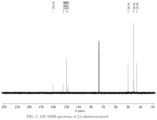
- FIG. 3 13C-NMR spectrum of 2,4-dinitrocarvacrol, obtained after the synthesis of the novel compound
- FIG. 4 1H-NMR spectrum of the novel compound, obtained after it's synthesis
- FIG. 5 13C-NMR spectrum of the novel compound, obtained after it's synthesis
- FIG. 6 IR spectrum of the novel compound, obtained after it's synthesis.
- FIG. 7 Gas chromatography of the novel compound, obtained after it's synthesis.
- the product is a dark red viscous liquid which is slightly soluble in water, and even more soluble in alkaline solutions.
- Methanol is used as a mobile phase and the peak of Lidocaine becomes available at about 24 min and the peak of 2,4-dinitrocarvacrol at about 26 min.
- Other possible peaks, if present, could be mononitration products and unreacted Carvacrol, which means that the reaction was not completed. Both mononitrocarvacrol and Carvacrol are considered non-harmless impurities.
- the novel product's solubility in water is improved by adding nitro groups to its aromatic ring. It can be visually tracked by examining the color of the solution.
- the nitro group is a well-known chromophore, which means that it changes the ab-sorption of electromagnetic radiation from UV to visible spectra.
- the nitro groups are also electron-withdrawing by inductive and resonance effects, which improves the acidity of phenolic protons. Improved acidity means that more acidic protons can more easily react with bases. The remaining anion is more stable in solutions of the same pH value than in the case of less acidic ones.
- PSB phosphate-buffered saline, isotonic solution, and pH of 7.4
- PSB phosphate-buffered saline, isotonic solution, and pH of 7.4
- Carvacrol salt with Lidocaine because nitrated Carvacrol is a stronger acid than Carvacrol alone, and it tends to make salts with organic bases more efficiently at lower PH levels.
- Carvacrol and its derivatives are phenolic compounds, and they are well known for their aggressiveness to pathogens such as bacteria, fungus, etc.
- the phenolic group is a carrier of that activity, and that group is kept in the transformations, improving its reactivity and making the whole molecule more lyophilic by adding nitro groups.
- Lidocaine is added for two reasons. The first being, as an organic base, to make a salt: with nitro derivate of Carvacrol, and the second as a local anesthetic because phenolic compound is reactive to tissue and can produce pain on the area of application.
- the compound was obtained by mixing the above stated ingredients in a vacuum mixer (Silverson L5M-A Sealed Unit Lab Mixer) at 6,000 rpm for 20 min.
- mice and rats were specially selected for the testing of the toxicity of the compounds, medicine, and chemicals. Only the testing of acute toxicity was done since the active therapy with the novel compound takes from one (1) to three (3) days. Sub-acute toxicity was not necessary and applicable since extended treatment with the novel compound will not be in function or planned. Groups of one hundred (100) lab mice and rats of both genders were placed into glass compartments. They were regularly consuming food manufactured for these lab animals. Water consumption was always available.
- the peroral application (p.o.) acute toxicity LD50 testing was done using the standard procedure: application p.o. with the special lab pipette easy to administer liquid product: orally to the lab animals.
- mice Results of the peroral application (p.o.) testing of LD50 of the novel compound on mice:
- Intraperitoneal testing of the compound LD50 i.e. by pharmaceutical lab needle and syringe, designed for the easy application to the lab animals intraperitoneally.
- mice 1 ⁇ L/kg, 5 ⁇ L/kg, 10 ⁇ L/kg, 20 ⁇ L/kg, 50 ⁇ L/kg, 100 ⁇ L/kg, 150 ⁇ L/kg, 250 ⁇ L/kg, 350 ⁇ L/kg, 450 ⁇ L/kg, 550 ⁇ L/kg, 650 ⁇ L/kg, 750 ⁇ L/kg, 850 ⁇ L/kg, 950 ⁇ L/kg, 1,100 ⁇ L/kg, 1,250 ⁇ L/kg, and 1,550 ⁇ L/kg.
- mice 1 ⁇ L/kg, 5 ⁇ L/kg, 10 ⁇ L/kg, 20 ⁇ L/kg, 50 ⁇ L/kg, 100 ⁇ L/kg, 150 ⁇ L/kg, 250 ⁇ L/kg, 350 ⁇ L/kg, 450 ⁇ L/kg, 550 ⁇ L/kg, 650 ⁇ L/kg, 750 ⁇ L/kg, 850 ⁇ L/kg, 950 ⁇ L/kg, 1,100
- mice out of one hundred (100) have changed their behavior and demonstrated discomfort: running as well as anxiety. Breathing and cardiac functions were regular, function of thorax was regular and without visual changes. Discomfort symptoms noticed after the applications, disappeared after 3-5 min, diverse from mouse to mouse. No mouse has ended lethally during this test. Conclusion based on these test results was that the novel compound's Intraperitoneal application has LD50 over 1,550 ⁇ L/kg for mice. The novel compound is low toxic in the applied doses on mice.
- Intraperitoneal application of the novel compound testing LD50 has been on rats: 1 ⁇ L/kg, 5 ⁇ L/kg, 10 ⁇ L/kg, 20 ⁇ L/kg, 50 ⁇ L/kg, 100 ⁇ L/kg, 150 ⁇ L/kg, 250 ⁇ L/kg, 350 ⁇ L/kg, 450 ⁇ L/kg, 550 ⁇ L/kg, 650 ⁇ L/kg, 750 ⁇ L/kg, 850 ⁇ L/kg, 950 ⁇ L/kg, 1,100 ⁇ L/kg, 1,250 ⁇ L/kg, 1,550 ⁇ L/kg, and 1,750 ⁇ L/kg.
- rats 1 ⁇ L/kg, 5 ⁇ L/kg, 10 ⁇ L/kg, 20 ⁇ L/kg, 50 ⁇ L/kg, 100 ⁇ L/kg, 150 ⁇ L/kg, 250 ⁇ L/kg, 350 ⁇ L/kg, 450 ⁇ L/kg, 550 ⁇ L/kg, 650 ⁇ L/kg,
Landscapes
- Chemical & Material Sciences (AREA)
- Organic Chemistry (AREA)
- Health & Medical Sciences (AREA)
- Chemical Kinetics & Catalysis (AREA)
- Life Sciences & Earth Sciences (AREA)
- General Chemical & Material Sciences (AREA)
- Medicinal Chemistry (AREA)
- Nuclear Medicine, Radiotherapy & Molecular Imaging (AREA)
- Communicable Diseases (AREA)
- Pharmacology & Pharmacy (AREA)
- Oncology (AREA)
- Animal Behavior & Ethology (AREA)
- General Health & Medical Sciences (AREA)
- Public Health (AREA)
- Veterinary Medicine (AREA)
- Pharmaceuticals Containing Other Organic And Inorganic Compounds (AREA)
- Acyclic And Carbocyclic Compounds In Medicinal Compositions (AREA)
Abstract
The invention relates to a novel compound manufactured with the procedure of synthesis of bouncing Carvacrol and Lidocaine into one stable compound. Use of the compound as an active compound/potent antimicrobial for the treatment of bacterial infections in humans caused by pathogens resistant to antibiotics, such as Methicillin-resistant Staphylococcus aureus (MRSA), Streptococcus faecalis, Mycobacterium tuberculosis, Escherichia spp. E. coli, Salmonella spp. Pasteurella spp., Corynebacterium spp., Bacillus spp., Bacillus anthracis, Clostridium spp., Spherophorus spp., Candida spp., Trichophyton spp., Microsporum spp., Mycobacterium spp., Vibrio spp., Cryptosporidium spp., Microsporidia spp., Listeria monocytogenes, Lawsonia intracellularis, Treponema dysenteriae, Enterococcus spp., Haemophilus spp., Campylobacter spp., Chlamydia spp., Brucella spp., and other pathogenic bacterial species.
Description
The compound is a novel medicine created for the treatment of bacterial infections caused by resistant pathogens in humans.
This invention is addresses the problems faced regarding bacterial infections in humans with the different etiology of pathogens. The compound is a broad-spectrum antimicrobial compound, in the form of a liquid meant for IV (Intravenous) therapy in order to treat said bacterial infections. The antimicrobial effect of Carvacrol is well known. This invention is completely novel because its main compounds, Carvacrol and Lidocaine, have been bounced into one stable compound by a special process of synthesis. The effect and uniqueness of this compound is the subject of this invention. The active principle of the compound is a stable quaternary ammonium complex of Carvacrol and Lidocaine. The compound is more effective than standard 3rd generation cephalosporin antibiotics in the treatment of the mentioned infections. The compound is created to fight antibiotic resistant pathogenic bacteria, such as Methicillin-resistant Staphylococcus aureus (MRSA), Streptococcus faecalis, Mycobacterium tuberculosis, Escherichia spp. E. coli, Salmonella spp. Pasteurella spp., Corynebacterium spp., Bacillus spp., Bacillus anthracis, Clostridium spp., Spherophorus spp., Candida spp., Trichophyton spp., Microsporum spp., Mycobacterium spp., Vibrio spp., Cryptosporidium spp., Microsporidia spp., Listeria monocytogenes, Lawsonia intracellularis, Treponema dysenteriae, Enterococcus spp., Haemophilus spp., Campylobacter spp., Chlamydia spp., Brucella spp., and other pathogenic bacterial species. Based on the specific mechanism of action, the active compound of this invention is different from any other antibiotic currently available on the market. In this invention, an extra potent effect of the synergy of Carvacrol and Lidocaine is achieved. The antimicrobial efficiency of this novel compound will be significantly more effective than Carvacrol and Lidocaine by themselves or by their simple mixture.
Before the widespread use of Penicillin, infectious diseases were the leading cause of death among all age groups across the globe. Antibiotics have extended the lives and improved the quality of life of people since the early 20th century. Many have thought that humanity was entering the post-pathogen era, where infectious disease was a historical footnote. Today, infective diseases are still the first leading cause of death and the leading cause of disability.
In the following text, the novelty and uniqueness of the compound will be elaborated.
The synthesis of our novel compound is achieved in a few steps. At first, a nitration of Carvacrol is used to make 2,4-dinitrocarvacrol, and after that trans-formation, an organic salt with free base Lidocaine is obtained. The nitration of Carvacrol is conducted at room temperature for a few hours in the presence of excess acetic anhydride with at least two equivalents of nitric acid. PLC plates are used to check the completion of the reaction. The reaction is violent, and care must be taken to avoid any accidents. In a mixture of Carvacrol and acetic anhydride in an ice bath with magnetic stirring, concentrated nitric acid (65%) dissolved in acetic anhydride is added one drop at a time. After about 6 h, the reaction is quenched by adding distilled water, allowing the product to separate from its acid constituents. The product is of a dark red color and needs to be washed with water until the acetic acid is removed from the mixture, with the absence of acetic acid's odor being a good indicator of a successful removal. The separated product is then checked for purity (purify on column chromatography if needed); its mass is measured to calculate the amount of free base Lidocaine required for the reaction. The estimated mass of Lidocaine in dichloromethane is mixed with 2,4-dinitrocarvacrol, and excess diluent is evaporated using a vacuum evaporator. The obtained red viscous liquid is the final product and the subject of this patent.


-
- Chemical formula: C24H34N2O5
- Molecular mass: 474.46 g mol-1
- Compound chemical name: 2,4-dinitro-5-isopropyl-2-methylphenoxy-N-(2,6-dimethylphenylium)-N2,N2-diethylglycinamide
We used 1H-NMR, 13C-NMR and IR spectroscopy for the characterization of our product. In addition, we used Gas chromatography-mass spectrometry (GC-MS) chromatography to check the purity and peak position of our product in given parameters.
For a more complete understanding of the invention, reference is made to the following description and accompanying drawings, in which:
The product is a dark red viscous liquid which is slightly soluble in water, and even more soluble in alkaline solutions. On chromatographie separation, two separate peaks of Lidocaine in cationic form and 2,4-dinitrocarvacrol in anionic form can be seen. Methanol is used as a mobile phase and the peak of Lidocaine becomes available at about 24 min and the peak of 2,4-dinitrocarvacrol at about 26 min. Other possible peaks, if present, could be mononitration products and unreacted Carvacrol, which means that the reaction was not completed. Both mononitrocarvacrol and Carvacrol are considered non-harmless impurities.
Since organic salt of 2,4-dinitrocarvacrol with Lidocaine freebase is synthesized for the first time, this product is considered novel. The peaks attributed to Lidocaine and 2,4-dinitrocarvacrol from the 1H-NMR and 13C-NMR spectra prove the product's novelty. The IR spectrum has an area between 2500 cm-1 to 3500 cm-1 that is characteristic for a 2,4-dinitrocarvacrol component of our product and an area from about 1700 cm-1 to 500 cm-1 that has characteristic positions for Lidocaine. That would mean our IR spectrum represents the fingerprint of our novel product.
The novel product's solubility in water is improved by adding nitro groups to its aromatic ring. It can be visually tracked by examining the color of the solution. The nitro group is a well-known chromophore, which means that it changes the ab-sorption of electromagnetic radiation from UV to visible spectra. The nitro groups are also electron-withdrawing by inductive and resonance effects, which improves the acidity of phenolic protons. Improved acidity means that more acidic protons can more easily react with bases. The remaining anion is more stable in solutions of the same pH value than in the case of less acidic ones. The solubility in PSB (phosphate-buffered saline, isotonic solution, and pH of 7.4) is also improved in comparison to Carvacrol salt with Lidocaine because nitrated Carvacrol is a stronger acid than Carvacrol alone, and it tends to make salts with organic bases more efficiently at lower PH levels.
Carvacrol and its derivatives are phenolic compounds, and they are well known for their aggressiveness to pathogens such as bacteria, fungus, etc. The phenolic group is a carrier of that activity, and that group is kept in the transformations, improving its reactivity and making the whole molecule more lyophilic by adding nitro groups. Lidocaine is added for two reasons. The first being, as an organic base, to make a salt: with nitro derivate of Carvacrol, and the second as a local anesthetic because phenolic compound is reactive to tissue and can produce pain on the area of application.
This text is a brief description of how the compound will be manufactured.
The compound was obtained by mixing the above stated ingredients in a vacuum mixer (Silverson L5M-A Sealed Unit Lab Mixer) at 6,000 rpm for 20 min.
Here are the findings of the comparative examination of selected pathogens against the novel compound and the antibiotics Cephalosporin and Ampicillin:
| Bacteria | Method | Novel Compound | R | Cephalosporin | R | Ampicilin | R | ||
| Staphylococcus aureus | Müler-Hinton-Agar | 27 | ES | 11 | S | 0 mm | R | ||
| Escherichia coli O157:H7 | Müler-Hinton-Agar | 24 | ES | 10 | S | 7 mm | MS | ||
| Salmonella typhimurium DT104 | Müler-Hinton- |
25 | ES | 11 | S | 6 mm | MS | ||
| Streptococcus pneumoniae | Müler-Hinton-Agar | 31 | ES | 12 | S | 0 mm | R | ||
| Streptococcus pyogenes | Müler-Hinton-Agar | 29 | ES | 9 | MS | 3 mm | R | ||
| Streptococcus uberis | Müler-Hinton-Agar | 32 | ES | 13 | S | 0 mm | R | ||
| Listeria monocytogenes | Müler-Hinton-Agar | 33 | ES | 16 mm | |
7 mm | MS | ||
-
- Amount used: The novel compound 0.05 mL; Cephalosporin 0.1 mL; Ampicillin 0.2 mL.
Evaluation of the results by zone diameter: - 0 mm to 4 mm: resistant: R
- 5 mm to 9 mm: moderately sensitive: MS
- 10 mm to 15 mm: sensitive: S
- 16 mm to 20 mm: very sensitive: VS
- 21 mm and more: extremely sensitive: ES
- Amount used: The novel compound 0.05 mL; Cephalosporin 0.1 mL; Ampicillin 0.2 mL.
This testing's objective was to determine the acute toxicity—LD50 of the novel compound in mice and rats. Both mice and rats were specially selected for the testing of the toxicity of the compounds, medicine, and chemicals. Only the testing of acute toxicity was done since the active therapy with the novel compound takes from one (1) to three (3) days. Sub-acute toxicity was not necessary and applicable since extended treatment with the novel compound will not be in function or planned. Groups of one hundred (100) lab mice and rats of both genders were placed into glass compartments. They were regularly consuming food manufactured for these lab animals. Water consumption was always available.
In this toxicology test—acute toxicity of the novel compound was tested:
-
- Oral LD50 p.o.—mice
- Oral LD50 p.o.—rats
- Intraperitoneal LD50—mice
- Intraperitoneal LD50—rats
Peroral Application (p.o.) of the Novel Compound—LD50—Testing and Doses
The peroral application (p.o.) acute toxicity LD50 testing was done using the standard procedure: application p.o. with the special lab pipette easy to administer liquid product: orally to the lab animals.
Results of the peroral application (p.o.) testing of LD50 of the novel compound on mice:
-
- Peroral application (p.o.) of the novel compound testing LD50 has been on mice: 1 μL/kg, 5 μL/kg, 10 μL/kg, 20 μL/kg, 50 μL/kg, 100 μL/kg, 150 μL/kg, 250 μL/kg, 350 μL/kg, 450 μL/kg, 550 μL/kg, 650 μL/kg, 750 μL/kg, 850 μL/kg, 950 μL/kg, 1,100 μL/kg, 1,250 μL/kg, 1,550 μL/kg, 1,750 μL/kg, and 2,000 μL/kg. At the level of oral dose LD50 2,000 μL/kg—twenty-three (23) mice out of one hundred (100), have changed their behavior and demonstrated light discomfort, running as well as anxiety. Breathing and cardiac functions were regular, function of thorax was regular and without visual changes. Discomfort symptoms were noticed after the applications, disappeared after 1-3 min, diverse from mouse to mouse. No mouse has ended lethally during this test. Conclusion based on these test results was: the novel compound has oral LD50 over 2,000 μL/kg for mice (p.o.). The novel compound is low toxic in the applied doses for mice orally (p.o.).
Results of the peroral application (p.o.) testing of LD50 of the novel compound on rats:
-
- Peroral application (p.o.) of the novel compound testing LD50 has been on rats: 1 μL/kg, 5 μL/kg, 10 μL/kg, 20 μL/kg, 50 μL/kg, 100 μL/kg, 150 μL/kg, 250 μL/kg, 350 μL/kg, 450 μL/kg, 550 μL/kg, 650 μL/kg, 750 μL/kg, 850 μL/kg, 950 μL/kg, 1,100 μL/kg, 1,250 μL/kg, 1,550 μL/kg, 1,750 μL/kg, 2,000 μL/kg, and 2,250 μL/kg. At the level of oral dose LD50 2,250 μL/kg—thirty-seven (37) rats out of one hundred (100), have changed their behavior and demonstrated light discomfort: running over the glass cubical, as well as anxiety. Breathing and cardiac functions were regular, function of thorax was regular and without visual changes. Discomfort symptoms noticed after the applications, disappeared after 1-3 min, diverse from rat to rat. No rat has ended lethally during this test. Conclusion based on these test results was: the novel compound has oral LD50 over 2,250 μL/kg for rats (p.o.). The novel compound is low toxic in the applied doses for rats orally (p.o.).
Intraperitoneal (i.p.) Injection of the Novel Compound—LD50-Testing and Doses
- Peroral application (p.o.) of the novel compound testing LD50 has been on rats: 1 μL/kg, 5 μL/kg, 10 μL/kg, 20 μL/kg, 50 μL/kg, 100 μL/kg, 150 μL/kg, 250 μL/kg, 350 μL/kg, 450 μL/kg, 550 μL/kg, 650 μL/kg, 750 μL/kg, 850 μL/kg, 950 μL/kg, 1,100 μL/kg, 1,250 μL/kg, 1,550 μL/kg, 1,750 μL/kg, 2,000 μL/kg, and 2,250 μL/kg. At the level of oral dose LD50 2,250 μL/kg—thirty-seven (37) rats out of one hundred (100), have changed their behavior and demonstrated light discomfort: running over the glass cubical, as well as anxiety. Breathing and cardiac functions were regular, function of thorax was regular and without visual changes. Discomfort symptoms noticed after the applications, disappeared after 1-3 min, diverse from rat to rat. No rat has ended lethally during this test. Conclusion based on these test results was: the novel compound has oral LD50 over 2,250 μL/kg for rats (p.o.). The novel compound is low toxic in the applied doses for rats orally (p.o.).
Intraperitoneal testing of the compound LD50 i.e. by pharmaceutical lab needle and syringe, designed for the easy application to the lab animals intraperitoneally.
Results of Intraperitoneal (i.p.) Injection Testing of LD50 of the Novel Compound on Mice:
Intraperitoneal application the novel compound testing LD50 has been on mice: 1 μL/kg, 5 μL/kg, 10 μL/kg, 20 μL/kg, 50 μL/kg, 100 μL/kg, 150 μL/kg, 250 μL/kg, 350 μL/kg, 450 μL/kg, 550 μL/kg, 650 μL/kg, 750 μL/kg, 850 μL/kg, 950 μL/kg, 1,100 μL/kg, 1,250 μL/kg, and 1,550 μL/kg. At the level of i.p. dose LD50 1,550 μL/kg—twenty-one (21) mice out of one hundred (100), have changed their behavior and demonstrated discomfort: running as well as anxiety. Breathing and cardiac functions were regular, function of thorax was regular and without visual changes. Discomfort symptoms noticed after the applications, disappeared after 3-5 min, diverse from mouse to mouse. No mouse has ended lethally during this test. Conclusion based on these test results was that the novel compound's Intraperitoneal application has LD50 over 1,550 μL/kg for mice. The novel compound is low toxic in the applied doses on mice.
Results of Intraperitoneal (i.p.) Injection Testing of LD50 of the Novel Compound on Rats:
Intraperitoneal application of the novel compound testing LD50 has been on rats: 1 μL/kg, 5 μL/kg, 10 μL/kg, 20 μL/kg, 50 μL/kg, 100 μL/kg, 150 μL/kg, 250 μL/kg, 350 μL/kg, 450 μL/kg, 550 μL/kg, 650 μL/kg, 750 μL/kg, 850 μL/kg, 950 μL/kg, 1,100 μL/kg, 1,250 μL/kg, 1,550 μL/kg, and 1,750 μL/kg. At the level of i.p. dose LD50 1,750 μL/kg—twenty-nine (29) rats out of one hundred (100), have changed their behavior and demonstrated discomfort: running over the glass cubical as well as the anxiety. Breathing and cardiac functions were regular, function of thorax was regular and without visual changes. Discomfort symptoms noticed after the applications, disappeared after 5-6 min, diverse from rat to rat. No rat has passed lethally during this test. Conclusion based on these test results was: the novel compound's Intraperitoneal application has LD50 over 1,750 ML/kg for rats. The novel compound is low toxic in the applied doses on rats.
Claims (4)
1. A method for synthesizing a compound having a structure of the following formula I:

by reacting Carvacrol and Lidocaine to produce said compound.
2. The compound having the structure of the following formula I:

produced by the method of claim 1 .
3. A liquid formulation for IV therapy, wherein the liquid formulation comprises the compound of claim 2 .
4. A method for treating bacterial infections in humans caused by pathogens resistant to antibiotics, wherein said bacterial infections are caused by a bacteria selected from the group consisting of Methicillin-resistant Staphylococcus aureus (MRSA), Streptococcus faecalis, Mycobacterium tuberculosis, Escherichia spp. E. coli, Salmonella spp. Pasteurella spp., Corynebacterium spp., Bacillus spp., Bacillusanthracis, Clostridium spp., Spherophorus spp., Candida spp., Trichophyton spp., Microsporum spp., Mycobacterium spp., Vibrio spp., Cryptosporidium spp., Microsporidia spp., Listeria monocytogenes, Lawsonia intracellularis, Treponema dysenteriae, Enterococcus spp., Haemophilus spp., Campylobacter spp., Chlamydia spp., or Brucella spp.
Priority Applications (1)
| Application Number | Priority Date | Filing Date | Title |
|---|---|---|---|
| US17/241,366 US12037302B1 (en) | 2021-04-01 | 2021-04-27 | Compound for treatment of bacterial infections of different etiology in humans |
Applications Claiming Priority (2)
| Application Number | Priority Date | Filing Date | Title |
|---|---|---|---|
| US202163169695P | 2021-04-01 | 2021-04-01 | |
| US17/241,366 US12037302B1 (en) | 2021-04-01 | 2021-04-27 | Compound for treatment of bacterial infections of different etiology in humans |
Publications (1)
| Publication Number | Publication Date |
|---|---|
| US12037302B1 true US12037302B1 (en) | 2024-07-16 |
Family
ID=75625288
Family Applications (1)
| Application Number | Title | Priority Date | Filing Date |
|---|---|---|---|
| US17/241,366 Active 2042-03-19 US12037302B1 (en) | 2021-04-01 | 2021-04-27 | Compound for treatment of bacterial infections of different etiology in humans |
Country Status (7)
| Country | Link |
|---|---|
| US (1) | US12037302B1 (en) |
| EP (1) | EP4067336B1 (en) |
| ES (1) | ES3038149T3 (en) |
| HR (1) | HRP20250933T1 (en) |
| HU (1) | HUE073183T2 (en) |
| PL (1) | PL4067336T3 (en) |
| RS (1) | RS67106B1 (en) |
Families Citing this family (2)
| Publication number | Priority date | Publication date | Assignee | Title |
|---|---|---|---|---|
| PL246762B1 (en) * | 2023-05-10 | 2025-03-03 | Politechnika Poznanska | New quaternary ammonium salts with a cation derived from lidocaine and a 2-furoate anion, method of their preparation and use as bacteriostatic and bactericidal agents |
| CN117049967B (en) * | 2023-07-10 | 2025-12-19 | 西华大学 | Preparation method and active application of 2, 6-dinitro-3, 4-dimethylphenol derivative |
Citations (1)
| Publication number | Priority date | Publication date | Assignee | Title |
|---|---|---|---|---|
| US6921539B2 (en) | 2002-02-20 | 2005-07-26 | Dusan Ninkov | Antimicrobial therapeutic compositions and method of use |
-
2021
- 2021-04-19 PL PL21020218.0T patent/PL4067336T3/en unknown
- 2021-04-19 HU HUE21020218A patent/HUE073183T2/en unknown
- 2021-04-19 ES ES21020218T patent/ES3038149T3/en active Active
- 2021-04-19 HR HRP20250933TT patent/HRP20250933T1/en unknown
- 2021-04-19 RS RS20250759A patent/RS67106B1/en unknown
- 2021-04-19 EP EP21020218.0A patent/EP4067336B1/en active Active
- 2021-04-27 US US17/241,366 patent/US12037302B1/en active Active
Patent Citations (1)
| Publication number | Priority date | Publication date | Assignee | Title |
|---|---|---|---|---|
| US6921539B2 (en) | 2002-02-20 | 2005-07-26 | Dusan Ninkov | Antimicrobial therapeutic compositions and method of use |
Also Published As
| Publication number | Publication date |
|---|---|
| EP4067336C0 (en) | 2025-05-21 |
| HRP20250933T1 (en) | 2025-09-26 |
| RS67106B1 (en) | 2025-09-30 |
| EP4067336B1 (en) | 2025-05-21 |
| EP4067336A1 (en) | 2022-10-05 |
| HUE073183T2 (en) | 2026-01-28 |
| PL4067336T3 (en) | 2025-09-08 |
| ES3038149T3 (en) | 2025-10-09 |
Similar Documents
| Publication | Publication Date | Title |
|---|---|---|
| US12037302B1 (en) | Compound for treatment of bacterial infections of different etiology in humans | |
| Nunes et al. | Silver complexes with sulfathiazole and sulfamethoxazole: Synthesis, spectroscopic characterization, crystal structure and antibacterial assays | |
| Rogalski | Chemical modification of the tetracyclines | |
| Shchur et al. | Metal complexes based on polyfluorosalicylic acids and their antimycotic and antimicrobial activity | |
| EP4347555A1 (en) | Method for synthesizing 9-aminomethyl tetracycline compounds | |
| Wang et al. | Degradation products and transformation pathways of sulfamethoxazole chlorination disinfection by-products in constructed wetlands | |
| CA3198383A1 (en) | Compound for treatment of bacterial infections of different etiology in humans | |
| DE2641388C3 (en) | 3 ', 4'-Dideoxykanamycin B-N-methanesulfonic acids and their alkali metal salts and pharmaceutical preparations containing these compounds | |
| Chávez-Riveros et al. | Synthesis of diphenylamine macrocycles and their anti-inflammatory effects | |
| CN111533707A (en) | Preparation method of polysubstituted oxazole-2 (3H) -ketone compound | |
| Salman et al. | Synthesis, characterization and study of biological activity of some new nitrone and isoxazolidine compounds | |
| JP7418345B2 (en) | Method of manufacturing sarecycline hydrochloride | |
| Khan et al. | Efficient microwave assisted synthesis and computational study of isoxazole Schiff base as an antibacterial agent | |
| Yi et al. | Zn (ii)-driven impact of monomeric transthyretin on amyloid-β amyloidogenesis | |
| EP3991725A1 (en) | Novel entero-antiseptic for the treatment of gastrointenstinal infections in humans | |
| Jaseer et al. | Highly stereoselective chlorination of β-substituted cyclic alcohols using PPh3–NCS: factors that control the stereoselectivity | |
| EP0796841B1 (en) | Bis alkanoyl esters of carnitine having bactericidal, fungicidal and antiprotozoal activity | |
| Li | Eravacycline (Xerava), a novel and completely synthetic fluorocycline antibiotic | |
| US11731951B1 (en) | Water reactivity with natural products | |
| Lo | The Synthesis and antimicrobial activity of nitropropenyl arenes and related compounds | |
| Soliman et al. | Synthesis and Antimicrobial Activity of Novel Bisbenzoxazine Monomer | |
| RU2537361C1 (en) | Optic isomers of (+) and (-)-benzhydrylureas and (+) and (-)-1-[(3-chlorophenyl)-phenyl-methyl]urea, pharmaceutical composition based on thereof and method of thereof obtaining | |
| Holmes et al. | Studies on nitroso compounds. III. Effect of ortho substituents on dimerization. Bromine versus chlorine | |
| US20240374551A1 (en) | Entero-antiseptic for the treatment of gastrointestinal infections in humans | |
| NEWMAN | A STUDY OF THE METAL ION COMPLEXATION SITES OF TETRACYCLINE BY CIRCULAR DICHROISM. |
Legal Events
| Date | Code | Title | Description |
|---|---|---|---|
| FEPP | Fee payment procedure |
Free format text: ENTITY STATUS SET TO UNDISCOUNTED (ORIGINAL EVENT CODE: BIG.); ENTITY STATUS OF PATENT OWNER: MICROENTITY |
|
| FEPP | Fee payment procedure |
Free format text: ENTITY STATUS SET TO MICRO (ORIGINAL EVENT CODE: MICR); ENTITY STATUS OF PATENT OWNER: MICROENTITY |
|
| STCF | Information on status: patent grant |
Free format text: PATENTED CASE |