US12032809B2 - Computer system and method for creating, assigning, and interacting with action items related to a collaborative task - Google Patents
Computer system and method for creating, assigning, and interacting with action items related to a collaborative task Download PDFInfo
- Publication number
- US12032809B2 US12032809B2 US16/226,193 US201816226193A US12032809B2 US 12032809 B2 US12032809 B2 US 12032809B2 US 201816226193 A US201816226193 A US 201816226193A US 12032809 B2 US12032809 B2 US 12032809B2
- Authority
- US
- United States
- Prior art keywords
- user
- action item
- data
- software module
- end software
- Prior art date
- Legal status (The legal status is an assumption and is not a legal conclusion. Google has not performed a legal analysis and makes no representation as to the accuracy of the status listed.)
- Active, expires
Links
Images




Classifications
-
- G—PHYSICS
- G06—COMPUTING OR CALCULATING; COUNTING
- G06Q—INFORMATION AND COMMUNICATION TECHNOLOGY [ICT] SPECIALLY ADAPTED FOR ADMINISTRATIVE, COMMERCIAL, FINANCIAL, MANAGERIAL OR SUPERVISORY PURPOSES; SYSTEMS OR METHODS SPECIALLY ADAPTED FOR ADMINISTRATIVE, COMMERCIAL, FINANCIAL, MANAGERIAL OR SUPERVISORY PURPOSES, NOT OTHERWISE PROVIDED FOR
- G06Q10/00—Administration; Management
- G06Q10/10—Office automation; Time management
- G06Q10/103—Workflow collaboration or project management
-
- G—PHYSICS
- G06—COMPUTING OR CALCULATING; COUNTING
- G06F—ELECTRIC DIGITAL DATA PROCESSING
- G06F3/00—Input arrangements for transferring data to be processed into a form capable of being handled by the computer; Output arrangements for transferring data from processing unit to output unit, e.g. interface arrangements
- G06F3/01—Input arrangements or combined input and output arrangements for interaction between user and computer
- G06F3/048—Interaction techniques based on graphical user interfaces [GUI]
- G06F3/0484—Interaction techniques based on graphical user interfaces [GUI] for the control of specific functions or operations, e.g. selecting or manipulating an object, an image or a displayed text element, setting a parameter value or selecting a range
-
- G—PHYSICS
- G06—COMPUTING OR CALCULATING; COUNTING
- G06F—ELECTRIC DIGITAL DATA PROCESSING
- G06F3/00—Input arrangements for transferring data to be processed into a form capable of being handled by the computer; Output arrangements for transferring data from processing unit to output unit, e.g. interface arrangements
- G06F3/01—Input arrangements or combined input and output arrangements for interaction between user and computer
- G06F3/048—Interaction techniques based on graphical user interfaces [GUI]
- G06F3/0481—Interaction techniques based on graphical user interfaces [GUI] based on specific properties of the displayed interaction object or a metaphor-based environment, e.g. interaction with desktop elements like windows or icons, or assisted by a cursor's changing behaviour or appearance
- G06F3/0482—Interaction with lists of selectable items, e.g. menus
-
- G—PHYSICS
- G06—COMPUTING OR CALCULATING; COUNTING
- G06Q—INFORMATION AND COMMUNICATION TECHNOLOGY [ICT] SPECIALLY ADAPTED FOR ADMINISTRATIVE, COMMERCIAL, FINANCIAL, MANAGERIAL OR SUPERVISORY PURPOSES; SYSTEMS OR METHODS SPECIALLY ADAPTED FOR ADMINISTRATIVE, COMMERCIAL, FINANCIAL, MANAGERIAL OR SUPERVISORY PURPOSES, NOT OTHERWISE PROVIDED FOR
- G06Q10/00—Administration; Management
- G06Q10/10—Office automation; Time management
- G06Q10/101—Collaborative creation, e.g. joint development of products or services
-
- H—ELECTRICITY
- H04—ELECTRIC COMMUNICATION TECHNIQUE
- H04L—TRANSMISSION OF DIGITAL INFORMATION, e.g. TELEGRAPHIC COMMUNICATION
- H04L67/00—Network arrangements or protocols for supporting network services or applications
- H04L67/01—Protocols
- H04L67/10—Protocols in which an application is distributed across nodes in the network
-
- G—PHYSICS
- G06—COMPUTING OR CALCULATING; COUNTING
- G06F—ELECTRIC DIGITAL DATA PROCESSING
- G06F40/00—Handling natural language data
- G06F40/10—Text processing
- G06F40/166—Editing, e.g. inserting or deleting
- G06F40/177—Editing, e.g. inserting or deleting of tables; using ruled lines
- G06F40/18—Editing, e.g. inserting or deleting of tables; using ruled lines of spreadsheets
Definitions
- a construction-related project may involve several different phases, where each phase may involve a series of tasks that require significant collaboration between different individuals to complete various actions items for a given task.
- a logistics phase of a construction-related project may involve tasks to allocate various resources to the project, including planning a budget for the project.
- software applications currently exist that allows users to collaborate with one another on the preparation of a document.
- software applications currently exist that allow a first user to create and assign a particular action item to a second user and then allow the second user to receive, review, and provide status updates on the assigned action item.
- One such software application is the “Punch List” tool offered by Procore Technologies, Inc. Software applications for collaborating on other types of tasks may exist as well.
- An action item created via the disclosed software application may include a particular action for one or more assignees that may include an action-embedded link to a front-end software module that facilitates completion of the action item.
- an action embedded-link may take the form of a hyperlink, and selection of an action-embedded link by a user may result in the user's client station accessing and beginning to run a front-end software module and may further cause data related to the action item to be pre-populated within the front-end module to facilitate completion of the action item.
- an assignor may access the disclosed software application to create an action item for one or more assignees involved in a collaborative task.
- the process for creating an action item may take various forms and may be carried out in various manners.
- the assignor may input an indication that the assignor wishes to create a new action item in connection with some aspect of the information presented via the first front-end software module.
- the back-end platform may then receive the indication that the assignor wishes to create the new action item in connection with some aspect of the information presented via first front-end software module, which may in turn trigger the back-end platform to take one or more actions based on the assignor's input.
- the back-end platform may cause the assignor's client station to present a modified view of the first front-end software module that enables the assignor to input data defining the new action item to be created.
- the modified view of the first front-end module may include one or more elements (e.g., windows, indicators, etc.) that may be different than the elements that were presented in the view that was initially accessed by the assignor (e.g., view 400 ).
- the assignor may input data that defines the action item to be created.
- the assignor may input data that identifies one or more assignees, a description of the particular action that needs to be taken by the one or more assignees that may include plain text and/or at least one action-embedded links to a second front-end software module that facilitates completion of the action item, and a an indication that the assignor has finished entering the data defining the action item, among other examples.
- the assignor's client station and/or the back-end platform may also contribute to the data that defines the action item.
- the back-end platform may cause the assignor's client station to present data that identifies the assignor creating the action item, the creation date of the action item, and/or a status indicator for the action item to be created that may later enable the assignor to approve the action item upon completion, among other examples.
- the back-end platform may then receive the data that defines the action item, which may in turn trigger the back-end platform to take one or more actions based on the received information.
- the back-end platform may store the information that defines the action item and/or a portion of the first front-end software module that is related to the action item.
- the back-end platform may generate an alert to notify a given assignee that has designated by the assignor to complete the action item.
- the disclosed software application may provide an assignee of the action item with a workflow for reviewing and potentially taking steps to complete the action item.
- the example workflow for reviewing and taking steps to complete an action item may begin with an assignee requesting access to a first front-end software module of the disclosed software application that includes an indication of one or more actions items assigned to the assignee via the assignee's client station.
- the assignee may request access to the first front-end module to check if the assignee has been assigned an action item and potentially complete the action item.
- the back-end platform may cause the assignee's client station to present the first front-end software module of the disclosed software application that includes the indication of the one or more action items.
- the first front-end module that may be presented to the assignee's client station may take various forms.
- the assignee may input a request to view an action item in more detail.
- the back-end platform may then receive the assignee's input indicating a selection of the action item from the first front-end module, which may in turn trigger the back-end platform to take one or more actions based on the assignee's input.
- the back-end platform may cause the assignee's client station to present a modified view of the first front-end module that presents the selected action item to the assignee. While accessing the modified view of the given front-end module, the assignee may take various steps to complete the action item.
- the back-end platform may then receive data indicating that the action item has been completed. For instance, the assignee's client station may send an indication that the action item has been completed to the back-end platform, which may in turn trigger back-end platform to update data defining the action item to indicate that the action item has been completed.
- the back-end platform may cause one or both of the assignor's client station or the assignee's client station to present an indication that the action item has been completed.
- a computing system that includes a network interface, at least one processor, a non-transitory computer-readable medium, and program instructions stored on the non-transitory computer-readable medium that are executable by the at least one processor to cause the computing system to carry out the functions disclosed herein, including but not limited to the functions of the foregoing method.
- non-transitory computer-readable storage medium provisioned with software that is executable to cause a computing system to carry out the functions disclosed herein, including but not limited to the functions of the foregoing method.
- FIG. 1 depicts an example network configuration in which example embodiments may be implemented.
- FIG. 3 depicts an example flow chart for creating an action item related to a given task.
- FIG. 4 A depicts an example view of a front-end module that may be presented to a client station.
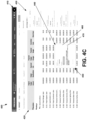
- FIG. 4 B depicts an example modified view of a front-end module that may be presented to a client station.
- FIG. 5 depicts an example flow chart for completing an action item related to a given task.
- FIG. 6 depicts another example view of a front-end module that may be presented to a client station.
- this collaborative software application may comprise front-end software running on client stations of individuals interested in collaborating on a task and back-end software running on a back-end platform (sometimes referred to as a “cloud” platform) that interacts with and/or drives the front-end software, which may be operated (either directly or indirectly) by the provider of the software.
- the front-end software may take the form of a native application, a web application, and/or a hybrid application, among other possibilities.
- the software technology disclosed herein may take other forms as well.
- back-end platform 102 may comprise one or more computing systems that have been provisioned with software for carrying out one or more of the platform functions disclosed herein, including but not limited to receiving data related to an action item for a given task (broadly referred to herein as “task-related data”), storing task-related data for future access by client stations 112 , 114 , 116 , and/or transmitting data and/or instructions that cause one or more client stations 112 , 114 , 116 to output information related to an action item for a given task.
- the one or more computing systems of back-end platform 102 may take various forms and be arranged in various manners.
- back-end platform 102 is configured to interact with one or more client stations 112 , 114 , 116 over respective communication paths.
- Each communication path between back-end platform 102 and one of client stations 112 , 114 , 116 may generally comprise one or more communication networks and/or communications links, which may take any of various forms.
- each respective communication path with back-end platform 102 may include any one or more of point-to-point links, Personal Area Networks (PANs), Local-Area Networks (LANs), Wide-Area Networks (WANs) such as the Internet or cellular networks, cloud networks, and/or operational technology (OT) networks, among other possibilities.
- PANs Personal Area Networks
- LANs Local-Area Networks
- WANs Wide-Area Networks
- OT operational technology
- presenting a given front-end software module on client stations 112 , 114 , 116 may involve back-end platform 102 outputting task-related data and other associated data and/or instructions that define the visual appearance of the given front-end software module through which the task-related data is to be presented on one or more of client stations 112 , 114 , 116 .
- Such data and/or instructions for defining the visual appearance of a given front-end software module may take various forms, examples of which may include Hypertext Markup Language (HTML), Cascading Style Sheets (CSS), and/or JavaScript, among other possibilities.
- HTML Hypertext Markup Language
- CSS Cascading Style Sheets
- JavaScript JavaScript
- client stations 112 , 114 , and 116 may each be operated by and/or otherwise associated with a different individual involved in a collaborative task.
- client station 112 may be operated by an “assignor” that may be responsible for creating an action item for the collaborative task
- client station 114 may be operated by an “assignee” responsible for completing an action item for the collaborative task
- client station 116 may be operated by an individual (e.g., project manager, project coordinator, etc.) responsible for monitoring action items to track the progress of a collaborative task.
- client stations 112 , 114 , and 116 may be operated by and/or otherwise associated with individuals having various other roles with respect to a collaborative task as well.
- FIG. 1 shows an arrangement in which three particular client stations are communicatively coupled to back-end platform 102 , it should be understood that an arrangement may include more or fewer client stations.
- back-end platform 102 may also be configured to receive data from one or more external data sources that may help to facilitate collaboration on a given task.
- network configuration 100 is one example of a network configuration in which embodiments described herein may be implemented. Numerous other arrangements are possible and contemplated herein. For instance, other network configurations may include additional components not pictured and/or more or less of the pictured components.
- FIG. 2 is a simplified block diagram illustrating some structural components that may be included in an example computing platform 200 , which could serve as back-end platform 102 of FIG. 1 .
- platform 200 may generally comprise one or more computer systems (e.g., one or more servers), and these one or more computer systems may collectively include at least a processor 202 , data storage 204 , and a communication interface 206 , all of which may be communicatively linked by a communication link 208 that may take the form of a system bus, a communication network such as a public, private, or hybrid cloud, or some other connection mechanism.
- a communication link 208 may take the form of a system bus, a communication network such as a public, private, or hybrid cloud, or some other connection mechanism.
- Processor 202 may comprise one or more processor components, such as general-purpose processors (e.g., a single- or multi-core microprocessor), special-purpose processors (e.g., an application-specific integrated circuit or digital-signal processor), programmable logic devices (e.g., a field programmable gate array), controllers (e.g., microcontrollers), and/or any other processor components now known or later developed.
- processor 202 could comprise processing components that are distributed across a plurality of physical computing devices connected via a network, such as a computing cluster of a public, private, or hybrid cloud.
- data storage 204 may be provisioned with software components that enable the platform 200 to carry out the platform-side functions disclosed herein. These software components may generally take the form of program instructions that are executable by the processor 202 to carry out the disclosed functions, which may be arranged together into software applications, virtual machines, software development kits, toolsets, or the like. Further, data storage 204 may be arranged to store task-related data in one or more databases, file systems, or the like. Data storage 204 may take other forms and/or store data in other manners as well.
- Communication interface 206 may be configured to facilitate wireless and/or wired communication with external data sources that may help facilitate collaboration on a given task and/or client stations, such as client stations 112 , 114 , 116 in FIG. 1 . Additionally, in an implementation where platform 200 comprises a plurality of physical computing devices connected via a network, communication interface 206 may be configured to facilitate wireless and/or wired communication between these physical computing devices (e.g., between computing and storage clusters in a cloud network).
- the present disclosure is generally directed to an improved collaborative software application for creating, assigning, and interacting with an action item that includes an action-embedded link, which allows the action item to be completed in a more efficient manner.
- the assignor may request this access by launching a native application on the assignor's client station or directing a web browser on the assignor's client station to a uniform resource locator (URL) for the disclosed software application, among other possibilities.
- launching a native application on the assignor's client station or directing a web browser on the assignor's client station to a uniform resource locator (URL) for the disclosed software application, among other possibilities.
- URL uniform resource locator
- back-end platform 102 may cause the assignor's client station to present a modified view of the first front-end software module that enables the assignor to input data defining the new action item to be created.
- the modified view of the first front-end module may include one or more elements (windows, indicators, etc.) that may be different than the elements that were presented in the view that was initially accessed by the assignor (e.g., view 400 ).
- the modified view may take various forms.
- window 440 may include various other data that the assignor may input to define the action item to create budget modifications for the selected data entry region.
- window 440 may include action input region 470 , which generally allows the assignor to describe the particular action that needs to be taken by a given assignee.
- Action input region 470 may take various forms. As one possibility, action input region 470 may take the form of a text entry box that enables the assignor to input plain text characters to describe a given action, which may include an action-embedded link. In practice, the assignor may create an action-embedded link in various manners.
- back-end platform 102 may cause the assignee's client station to present a second front-end software module of the disclosed software application identified by the selected action-embedded link that facilitates completion of the action item and also potentially cause data related to the action item to be pre-populated within the second front-end software module.
- the second front-end module may take various forms.
- FIG. 6 depicts an example module 600 that may be presented to the assignee via the assignee's client station as a result of the assignee's selection of the “create budget modifications” action-embedded link described in the example above.
- module 600 may include various elements, such as menu 610 , windows 620 , 630 , among other elements that are not numerically referenced. In line with the discussion above, these elements may take various forms.
- FIG. 7 depicts an example module 700 that may be presented to the assignee's client station based on the assignee's selection of the action-embedded link, “@CE #026,” described in the examples above.
- module 700 may include various elements, such as menu 710 , windows 720 , 730 , among other elements that are not numerically referenced. In line with the discussion above, these elements may take various forms.
- windows 720 , 730 may include various data and/or data fields that may be pre-populated or require the assignee to modify or populate to create a new change event (e.g., Change Event “#026”) that documents the budget modifications that are to be created by the assignee using module 600 .
- Change Event “#026” e.g., Change Event “#026”
- window 720 may include data that identifies the selected action-embedded link (e.g., the “Change Event #026”), which may be pre-populated based on the assignee's selection of the action-embedded link “@CE #026.”
- window 720 may include a “Description” field that may require the assignee to populate to describe the budget modifications that are to be created for the data entry corresponding to “Budget Modifications” for “Sanitary Facilities.”
- Windows 720 , 730 may include various other data and/or data entry fields that may be pre-populated or require the assignee to modify or populate as well.
- back-end platform 102 may then receive data indicating that the action item has been completed. For instance, after the assignee populates one or more data fields in window 630 of module 600 to create budget modifications for the action item and/or in windows 720 , 730 of module 700 to create a new change event to document the budget modifications that were created, the assignee's client station may send an indication that the action item has been completed to back-end platform 102 , which may in turn trigger back-end platform 102 to update data defining the action item to indicate that the action item has been completed.
- back-end platform 102 may then cause one or both of the assignor's client station or the assignee's client station to present an indication that the action item has been completed. For example, back-end platform 102 may update data defining the action item to indicate that the action item has been completed and cause one or both of the assignor's client station or the assignee's client station to present an updated view of the first front-end software module that includes an indication that the action item has been completed.
- the updated view of the first front-end module may take various forms.
- FIG. 8 depicts an example view 800 , which may include menu 810 , windows 820 , 830 , action item entry 840 , and indicator 850 , among other elements that are not numerically referenced. In line with the discussion above, these elements may take various forms.
- window 830 may take the form of a list that includes one or more action items, including the action item to create budget modifications that was assigned to the assignee, which may be presented in action item entry 840 .
- action item entry 840 may include an indication that the action item to create budget modifications that was assigned by the assignor (i.e., Jane Doe) has been completed by the assignee (i.e., John Smith) on Jun. 24, 2018.
- Action item entry 840 may include various other information as well, such as the information used to define the action item for creating budget modifications.
- view 800 may include indicator 850 , which may take the form similar to indicator 450 in FIG. 4 A , to indicate that the action item to create budget modifications has been completed with respect to the data entry region corresponding to “Budget Modifications” for “Sanitary Facilities.”
- the elements shown in view 800 may take various other forms as well.
- the updated view may take various other forms as well.
Landscapes
- Engineering & Computer Science (AREA)
- Theoretical Computer Science (AREA)
- General Engineering & Computer Science (AREA)
- Business, Economics & Management (AREA)
- Human Resources & Organizations (AREA)
- Physics & Mathematics (AREA)
- General Physics & Mathematics (AREA)
- Strategic Management (AREA)
- Entrepreneurship & Innovation (AREA)
- Human Computer Interaction (AREA)
- Computer Networks & Wireless Communication (AREA)
- Signal Processing (AREA)
- Economics (AREA)
- Data Mining & Analysis (AREA)
- Marketing (AREA)
- Operations Research (AREA)
- Quality & Reliability (AREA)
- Tourism & Hospitality (AREA)
- General Business, Economics & Management (AREA)
- Information Transfer Between Computers (AREA)
- Stored Programmes (AREA)
Abstract
Description
Claims (20)
Priority Applications (2)
| Application Number | Priority Date | Filing Date | Title |
|---|---|---|---|
| US16/226,193 US12032809B2 (en) | 2018-12-19 | 2018-12-19 | Computer system and method for creating, assigning, and interacting with action items related to a collaborative task |
| US18/399,124 US20240248586A1 (en) | 2018-12-19 | 2023-12-28 | Creating, Assigning, and Interacting with Action Items Related to Collaborative Tasks |
Applications Claiming Priority (1)
| Application Number | Priority Date | Filing Date | Title |
|---|---|---|---|
| US16/226,193 US12032809B2 (en) | 2018-12-19 | 2018-12-19 | Computer system and method for creating, assigning, and interacting with action items related to a collaborative task |
Related Child Applications (1)
| Application Number | Title | Priority Date | Filing Date |
|---|---|---|---|
| US18/399,124 Continuation US20240248586A1 (en) | 2018-12-19 | 2023-12-28 | Creating, Assigning, and Interacting with Action Items Related to Collaborative Tasks |
Publications (2)
| Publication Number | Publication Date |
|---|---|
| US20200201496A1 US20200201496A1 (en) | 2020-06-25 |
| US12032809B2 true US12032809B2 (en) | 2024-07-09 |
Family
ID=71097147
Family Applications (2)
| Application Number | Title | Priority Date | Filing Date |
|---|---|---|---|
| US16/226,193 Active 2039-07-02 US12032809B2 (en) | 2018-12-19 | 2018-12-19 | Computer system and method for creating, assigning, and interacting with action items related to a collaborative task |
| US18/399,124 Pending US20240248586A1 (en) | 2018-12-19 | 2023-12-28 | Creating, Assigning, and Interacting with Action Items Related to Collaborative Tasks |
Family Applications After (1)
| Application Number | Title | Priority Date | Filing Date |
|---|---|---|---|
| US18/399,124 Pending US20240248586A1 (en) | 2018-12-19 | 2023-12-28 | Creating, Assigning, and Interacting with Action Items Related to Collaborative Tasks |
Country Status (1)
| Country | Link |
|---|---|
| US (2) | US12032809B2 (en) |
Families Citing this family (4)
| Publication number | Priority date | Publication date | Assignee | Title |
|---|---|---|---|---|
| US11870635B2 (en) * | 2018-12-21 | 2024-01-09 | Nintex USA, Inc. | System and method for integration of dynamic embedded process communications |
| US12380344B2 (en) | 2020-12-31 | 2025-08-05 | International Business Machines Corporation | Generating summary and next actions in real-time for multiple users from interaction records in natural language |
| CN113741755A (en) * | 2021-09-16 | 2021-12-03 | 北京字跳网络技术有限公司 | Information processing method and device, terminal and storage medium |
| US20260030576A1 (en) * | 2024-07-29 | 2026-01-29 | Moxo, Inc | Systems and Methods for Automated, Linked Workflows with Actionable Items |
Citations (6)
| Publication number | Priority date | Publication date | Assignee | Title |
|---|---|---|---|---|
| US20070282660A1 (en) * | 2006-06-01 | 2007-12-06 | Peter Forth | Task management systems and methods |
| US20080209417A1 (en) * | 2007-02-22 | 2008-08-28 | Gabriel Jakobson | Method and system of project management and task collaboration over instant messenger |
| US8719217B1 (en) * | 2013-03-15 | 2014-05-06 | Decisyon, Inc. | Systems, devices, and methods for generation of contextual objects mapped by dimensional data to data measures |
| US20180129993A1 (en) * | 2016-11-06 | 2018-05-10 | Microsoft Technology Licensing, Llc | Efficiency enhancements in task management applications |
| US20180365263A1 (en) * | 2017-06-16 | 2018-12-20 | Zoho Corporation Private Limited | Synchronized Views for Cloud-Based File Collaboration |
| US20190138587A1 (en) * | 2017-11-03 | 2019-05-09 | Dropbox, Inc. | Collaborative Spreadsheet Embedding and Management |
-
2018
- 2018-12-19 US US16/226,193 patent/US12032809B2/en active Active
-
2023
- 2023-12-28 US US18/399,124 patent/US20240248586A1/en active Pending
Patent Citations (6)
| Publication number | Priority date | Publication date | Assignee | Title |
|---|---|---|---|---|
| US20070282660A1 (en) * | 2006-06-01 | 2007-12-06 | Peter Forth | Task management systems and methods |
| US20080209417A1 (en) * | 2007-02-22 | 2008-08-28 | Gabriel Jakobson | Method and system of project management and task collaboration over instant messenger |
| US8719217B1 (en) * | 2013-03-15 | 2014-05-06 | Decisyon, Inc. | Systems, devices, and methods for generation of contextual objects mapped by dimensional data to data measures |
| US20180129993A1 (en) * | 2016-11-06 | 2018-05-10 | Microsoft Technology Licensing, Llc | Efficiency enhancements in task management applications |
| US20180365263A1 (en) * | 2017-06-16 | 2018-12-20 | Zoho Corporation Private Limited | Synchronized Views for Cloud-Based File Collaboration |
| US20190138587A1 (en) * | 2017-11-03 | 2019-05-09 | Dropbox, Inc. | Collaborative Spreadsheet Embedding and Management |
Non-Patent Citations (5)
| Title |
|---|
| Abioye, Sofiat O. et al., "Artificial Intelligence in the Construction Industry: A Review of Present Status, Opportunities and Future Challenges", Journal of Building Engineering, vol. 44, Oct. 5, 2021, 13 pages. |
| Google. "Overview of comments and discussions." support.google.com/docs/answer/65129, Feb. 1, 2015 (accessed via Wayback Machine at web.archive.org/web/20150201171759/support.google.com/docs/answer/65129, 3 pages. |
| LearnChemE. (Sep. 18, 2012). Entering an Equation into Excel. YouTube. https://www.youtube.com/watch?v=-kNiQGgTYK4. (Year: 2012). * |
| Rasmussen, K. (Jul. 17, 2013). Introducing Hypertext: "@" Links for Projects, Tasks, People, and Tags. The Asana Blog. https://blog.asana.com/2012/08/introducing-hypertext-from-asana/ (Year: 2013). * |
| Slack. "Built-in slash commands." get.slack.help/hc/en-us/articles/201259356-Built-in-slash-commands, Dec. 1, 2018 (accessed via Wayback Machine at web.archive.org/web/20181201144649/https://get.slack.help/hc/en-us/articles/201259356-Built-in-slash-commands, 4 pages. |
Also Published As
| Publication number | Publication date |
|---|---|
| US20240248586A1 (en) | 2024-07-25 |
| US20200201496A1 (en) | 2020-06-25 |
Similar Documents
| Publication | Publication Date | Title |
|---|---|---|
| US20240248586A1 (en) | Creating, Assigning, and Interacting with Action Items Related to Collaborative Tasks | |
| US11966984B2 (en) | Systems and method for combined account reconciliation and variance/flux analysis | |
| US10331765B2 (en) | Methods and apparatus for translating forms to native mobile applications | |
| US10514910B2 (en) | Automatically mapping data while designing process flows | |
| US12169801B2 (en) | Flexible work breakdown structure | |
| US8639555B1 (en) | Workflow discovery through user action monitoring | |
| US11630708B2 (en) | OSN/PCS collaboration mechanism integration | |
| US11531792B2 (en) | Computer system and method for managing coordination issues in construction projects | |
| US20170352073A1 (en) | Platform configuration tool | |
| US20160364674A1 (en) | Project management with critical path scheduling and releasing of resources | |
| CN103577165A (en) | Form generation method and form generator | |
| US12314906B2 (en) | Workforce management in an agile development environment | |
| US11537989B2 (en) | Dynamically controlling case model structure using case fragments | |
| US20250335164A1 (en) | Dynamic User Interface Customization for No-Code Application Development | |
| KR102276230B1 (en) | Method for generating finite state machine, method for operating finite state machine, server and computer program for performing the same | |
| EP4485173A1 (en) | Process execution guide based on process model | |
| US20240104673A1 (en) | Computer System and Method for Mirroring Data Across Different Accounts of a Software as a Service (SaaS) Application | |
| US10460272B2 (en) | Client services reporting | |
| US20260119287A1 (en) | Managing lifecycle information, such as automated bulk branching, method, and system | |
| US12052115B1 (en) | Limited communications threads associated with construction based data objects | |
| WO2024206881A1 (en) | Connected configurations across collaborator accounts |
Legal Events
| Date | Code | Title | Description |
|---|---|---|---|
| FEPP | Fee payment procedure |
Free format text: ENTITY STATUS SET TO UNDISCOUNTED (ORIGINAL EVENT CODE: BIG.); ENTITY STATUS OF PATENT OWNER: LARGE ENTITY |
|
| AS | Assignment |
Owner name: PROCORE TECHNOLOGIES, INC., CALIFORNIA Free format text: ASSIGNMENT OF ASSIGNORS INTEREST;ASSIGNOR:WONG, JENNIFER YIANHONG;REEL/FRAME:047856/0934 Effective date: 20181218 |
|
| STPP | Information on status: patent application and granting procedure in general |
Free format text: RESPONSE TO NON-FINAL OFFICE ACTION ENTERED AND FORWARDED TO EXAMINER |
|
| STPP | Information on status: patent application and granting procedure in general |
Free format text: DOCKETED NEW CASE - READY FOR EXAMINATION |
|
| STPP | Information on status: patent application and granting procedure in general |
Free format text: NON FINAL ACTION MAILED |
|
| STPP | Information on status: patent application and granting procedure in general |
Free format text: RESPONSE TO NON-FINAL OFFICE ACTION ENTERED AND FORWARDED TO EXAMINER |
|
| STPP | Information on status: patent application and granting procedure in general |
Free format text: FINAL REJECTION MAILED |
|
| STPP | Information on status: patent application and granting procedure in general |
Free format text: RESPONSE AFTER FINAL ACTION FORWARDED TO EXAMINER |
|
| STPP | Information on status: patent application and granting procedure in general |
Free format text: ADVISORY ACTION MAILED |
|
| STPP | Information on status: patent application and granting procedure in general |
Free format text: DOCKETED NEW CASE - READY FOR EXAMINATION |
|
| STPP | Information on status: patent application and granting procedure in general |
Free format text: NON FINAL ACTION MAILED |
|
| STCV | Information on status: appeal procedure |
Free format text: NOTICE OF APPEAL FILED |
|
| STCV | Information on status: appeal procedure |
Free format text: APPEAL BRIEF (OR SUPPLEMENTAL BRIEF) ENTERED AND FORWARDED TO EXAMINER |
|
| STCV | Information on status: appeal procedure |
Free format text: ON APPEAL -- AWAITING DECISION BY THE BOARD OF APPEALS |
|
| STCV | Information on status: appeal procedure |
Free format text: BOARD OF APPEALS DECISION RENDERED |
|
| STPP | Information on status: patent application and granting procedure in general |
Free format text: AWAITING TC RESP., ISSUE FEE NOT PAID |
|
| ZAAA | Notice of allowance and fees due |
Free format text: ORIGINAL CODE: NOA |
|
| ZAAB | Notice of allowance mailed |
Free format text: ORIGINAL CODE: MN/=. |
|
| STPP | Information on status: patent application and granting procedure in general |
Free format text: NOTICE OF ALLOWANCE MAILED -- APPLICATION RECEIVED IN OFFICE OF PUBLICATIONS |
|
| ZAAA | Notice of allowance and fees due |
Free format text: ORIGINAL CODE: NOA |
|
| STPP | Information on status: patent application and granting procedure in general |
Free format text: AWAITING TC RESP, ISSUE FEE PAYMENT VERIFIED |
|
| STPP | Information on status: patent application and granting procedure in general |
Free format text: PUBLICATIONS -- ISSUE FEE PAYMENT VERIFIED |
|
| STPP | Information on status: patent application and granting procedure in general |
Free format text: PUBLICATIONS -- ISSUE FEE PAYMENT VERIFIED |
|
| STCF | Information on status: patent grant |
Free format text: PATENTED CASE |