US12031118B2 - Reactance and capacitance sensing platform for detecting microorganisms - Google Patents
Reactance and capacitance sensing platform for detecting microorganisms Download PDFInfo
- Publication number
- US12031118B2 US12031118B2 US17/019,802 US202017019802A US12031118B2 US 12031118 B2 US12031118 B2 US 12031118B2 US 202017019802 A US202017019802 A US 202017019802A US 12031118 B2 US12031118 B2 US 12031118B2
- Authority
- US
- United States
- Prior art keywords
- impedance
- sample
- frequency
- based method
- vessel
- Prior art date
- Legal status (The legal status is an assumption and is not a legal conclusion. Google has not performed a legal analysis and makes no representation as to the accuracy of the status listed.)
- Active, expires
Links
- 244000005700 microbiome Species 0.000 title claims abstract description 30
- 230000012010 growth Effects 0.000 claims abstract description 45
- 238000000034 method Methods 0.000 claims abstract description 37
- 230000035945 sensitivity Effects 0.000 claims abstract description 18
- 239000000203 mixture Substances 0.000 claims abstract description 14
- 238000012545 processing Methods 0.000 claims abstract description 6
- 230000000813 microbial effect Effects 0.000 claims description 30
- 238000005259 measurement Methods 0.000 claims description 16
- 239000003990 capacitor Substances 0.000 claims description 10
- 238000001514 detection method Methods 0.000 abstract description 67
- 239000007788 liquid Substances 0.000 abstract description 33
- 230000008859 change Effects 0.000 abstract description 13
- 230000001419 dependent effect Effects 0.000 abstract description 7
- 230000004044 response Effects 0.000 abstract description 7
- 230000009467 reduction Effects 0.000 abstract description 6
- 239000011159 matrix material Substances 0.000 abstract description 5
- 230000005789 organism growth Effects 0.000 abstract description 5
- 238000012544 monitoring process Methods 0.000 abstract description 4
- 239000012530 fluid Substances 0.000 abstract description 3
- 239000000523 sample Substances 0.000 description 55
- 239000008280 blood Substances 0.000 description 17
- 210000004369 blood Anatomy 0.000 description 17
- 230000003287 optical effect Effects 0.000 description 15
- 241000588724 Escherichia coli Species 0.000 description 13
- 229910052751 metal Inorganic materials 0.000 description 13
- 239000002184 metal Substances 0.000 description 13
- 210000004027 cell Anatomy 0.000 description 12
- 239000002609 medium Substances 0.000 description 12
- 238000002474 experimental method Methods 0.000 description 10
- 230000006872 improvement Effects 0.000 description 9
- 238000000576 coating method Methods 0.000 description 8
- 238000012360 testing method Methods 0.000 description 8
- 241000894006 Bacteria Species 0.000 description 7
- 239000011248 coating agent Substances 0.000 description 7
- 239000006227 byproduct Substances 0.000 description 6
- 230000002503 metabolic effect Effects 0.000 description 6
- 230000001878 mycolytic effect Effects 0.000 description 6
- 238000001228 spectrum Methods 0.000 description 6
- 230000001413 cellular effect Effects 0.000 description 5
- 230000001332 colony forming effect Effects 0.000 description 5
- 229910052737 gold Inorganic materials 0.000 description 5
- 239000010931 gold Substances 0.000 description 5
- 150000002500 ions Chemical class 0.000 description 5
- 239000012528 membrane Substances 0.000 description 5
- 241001135518 Acinetobacter lwoffii Species 0.000 description 4
- 239000004593 Epoxy Substances 0.000 description 4
- 241000025769 Mucor luteus Species 0.000 description 4
- 238000013461 design Methods 0.000 description 4
- 230000000694 effects Effects 0.000 description 4
- PCHJSUWPFVWCPO-UHFFFAOYSA-N gold Chemical compound [Au] PCHJSUWPFVWCPO-UHFFFAOYSA-N 0.000 description 4
- 239000001963 growth medium Substances 0.000 description 4
- 230000010076 replication Effects 0.000 description 4
- 239000002028 Biomass Substances 0.000 description 3
- 229910001369 Brass Inorganic materials 0.000 description 3
- 240000002355 Celtis tournefortii var. glabrata Species 0.000 description 3
- 241000606768 Haemophilus influenzae Species 0.000 description 3
- 230000001580 bacterial effect Effects 0.000 description 3
- 230000008901 benefit Effects 0.000 description 3
- 239000010951 brass Substances 0.000 description 3
- 230000007246 mechanism Effects 0.000 description 3
- 230000002906 microbiologic effect Effects 0.000 description 3
- 239000004033 plastic Substances 0.000 description 3
- BASFCYQUMIYNBI-UHFFFAOYSA-N platinum Chemical compound [Pt] BASFCYQUMIYNBI-UHFFFAOYSA-N 0.000 description 3
- 229910052709 silver Inorganic materials 0.000 description 3
- 239000000126 substance Substances 0.000 description 3
- XEEYBQQBJWHFJM-UHFFFAOYSA-N Iron Chemical compound [Fe] XEEYBQQBJWHFJM-UHFFFAOYSA-N 0.000 description 2
- PXHVJJICTQNCMI-UHFFFAOYSA-N Nickel Chemical compound [Ni] PXHVJJICTQNCMI-UHFFFAOYSA-N 0.000 description 2
- BQCADISMDOOEFD-UHFFFAOYSA-N Silver Chemical compound [Ag] BQCADISMDOOEFD-UHFFFAOYSA-N 0.000 description 2
- 238000013019 agitation Methods 0.000 description 2
- 238000013459 approach Methods 0.000 description 2
- 239000012472 biological sample Substances 0.000 description 2
- 238000009640 blood culture Methods 0.000 description 2
- 238000006243 chemical reaction Methods 0.000 description 2
- 150000001875 compounds Chemical class 0.000 description 2
- 238000007405 data analysis Methods 0.000 description 2
- 238000010586 diagram Methods 0.000 description 2
- 230000002708 enhancing effect Effects 0.000 description 2
- 230000006870 function Effects 0.000 description 2
- 239000012212 insulator Substances 0.000 description 2
- JVTAAEKCZFNVCJ-UHFFFAOYSA-N lactic acid Chemical compound CC(O)C(O)=O JVTAAEKCZFNVCJ-UHFFFAOYSA-N 0.000 description 2
- 239000000463 material Substances 0.000 description 2
- 238000007620 mathematical function Methods 0.000 description 2
- 239000002245 particle Substances 0.000 description 2
- 230000008569 process Effects 0.000 description 2
- 239000000047 product Substances 0.000 description 2
- 239000000376 reactant Substances 0.000 description 2
- 150000003839 salts Chemical class 0.000 description 2
- 238000005070 sampling Methods 0.000 description 2
- 239000004332 silver Substances 0.000 description 2
- 230000003595 spectral effect Effects 0.000 description 2
- RYGMFSIKBFXOCR-UHFFFAOYSA-N Copper Chemical compound [Cu] RYGMFSIKBFXOCR-UHFFFAOYSA-N 0.000 description 1
- 241000233866 Fungi Species 0.000 description 1
- 229910019142 PO4 Inorganic materials 0.000 description 1
- 206010036790 Productive cough Diseases 0.000 description 1
- 229910000831 Steel Inorganic materials 0.000 description 1
- 241000700605 Viruses Species 0.000 description 1
- HCHKCACWOHOZIP-UHFFFAOYSA-N Zinc Chemical compound [Zn] HCHKCACWOHOZIP-UHFFFAOYSA-N 0.000 description 1
- 238000009825 accumulation Methods 0.000 description 1
- 230000009471 action Effects 0.000 description 1
- 238000004026 adhesive bonding Methods 0.000 description 1
- 229910052782 aluminium Inorganic materials 0.000 description 1
- XAGFODPZIPBFFR-UHFFFAOYSA-N aluminium Chemical compound [Al] XAGFODPZIPBFFR-UHFFFAOYSA-N 0.000 description 1
- 150000001413 amino acids Chemical class 0.000 description 1
- 238000004458 analytical method Methods 0.000 description 1
- 238000009635 antibiotic susceptibility testing Methods 0.000 description 1
- 238000003556 assay Methods 0.000 description 1
- 230000015572 biosynthetic process Effects 0.000 description 1
- 238000000071 blow moulding Methods 0.000 description 1
- 238000004422 calculation algorithm Methods 0.000 description 1
- 238000004364 calculation method Methods 0.000 description 1
- 230000032823 cell division Effects 0.000 description 1
- 210000000170 cell membrane Anatomy 0.000 description 1
- 210000002421 cell wall Anatomy 0.000 description 1
- 210000003850 cellular structure Anatomy 0.000 description 1
- 239000004020 conductor Substances 0.000 description 1
- 239000000470 constituent Substances 0.000 description 1
- 239000000356 contaminant Substances 0.000 description 1
- 229910052802 copper Inorganic materials 0.000 description 1
- 239000010949 copper Substances 0.000 description 1
- 230000001186 cumulative effect Effects 0.000 description 1
- 230000003247 decreasing effect Effects 0.000 description 1
- 230000001066 destructive effect Effects 0.000 description 1
- 238000006073 displacement reaction Methods 0.000 description 1
- 238000009713 electroplating Methods 0.000 description 1
- 210000003013 erythroid precursor cell Anatomy 0.000 description 1
- 230000008020 evaporation Effects 0.000 description 1
- 238000001704 evaporation Methods 0.000 description 1
- 230000029142 excretion Effects 0.000 description 1
- 239000007789 gas Substances 0.000 description 1
- 239000003292 glue Substances 0.000 description 1
- 210000005260 human cell Anatomy 0.000 description 1
- 238000002847 impedance measurement Methods 0.000 description 1
- 230000036512 infertility Effects 0.000 description 1
- 230000010354 integration Effects 0.000 description 1
- 239000000543 intermediate Substances 0.000 description 1
- 229910052742 iron Inorganic materials 0.000 description 1
- 235000014655 lactic acid Nutrition 0.000 description 1
- 239000004310 lactic acid Substances 0.000 description 1
- 238000004519 manufacturing process Methods 0.000 description 1
- 238000000691 measurement method Methods 0.000 description 1
- 230000004060 metabolic process Effects 0.000 description 1
- 239000002207 metabolite Substances 0.000 description 1
- 238000001465 metallisation Methods 0.000 description 1
- 150000002739 metals Chemical class 0.000 description 1
- 238000002156 mixing Methods 0.000 description 1
- 238000012986 modification Methods 0.000 description 1
- 230000004048 modification Effects 0.000 description 1
- 238000000465 moulding Methods 0.000 description 1
- 230000007935 neutral effect Effects 0.000 description 1
- 229910052759 nickel Inorganic materials 0.000 description 1
- 150000002823 nitrates Chemical class 0.000 description 1
- 235000015097 nutrients Nutrition 0.000 description 1
- 244000052769 pathogen Species 0.000 description 1
- 230000000737 periodic effect Effects 0.000 description 1
- 235000021317 phosphate Nutrition 0.000 description 1
- 150000003013 phosphoric acid derivatives Chemical class 0.000 description 1
- 229910052697 platinum Inorganic materials 0.000 description 1
- 239000004417 polycarbonate Substances 0.000 description 1
- 229920000515 polycarbonate Polymers 0.000 description 1
- 238000012805 post-processing Methods 0.000 description 1
- 238000002360 preparation method Methods 0.000 description 1
- 102000004196 processed proteins & peptides Human genes 0.000 description 1
- 108090000765 processed proteins & peptides Proteins 0.000 description 1
- -1 protons Chemical class 0.000 description 1
- 230000003362 replicative effect Effects 0.000 description 1
- 239000011347 resin Substances 0.000 description 1
- 229920005989 resin Polymers 0.000 description 1
- 239000010944 silver (metal) Substances 0.000 description 1
- 150000003384 small molecules Chemical class 0.000 description 1
- 238000004544 sputter deposition Methods 0.000 description 1
- 210000003802 sputum Anatomy 0.000 description 1
- 208000024794 sputum Diseases 0.000 description 1
- 230000003068 static effect Effects 0.000 description 1
- 239000010959 steel Substances 0.000 description 1
- 150000003467 sulfuric acid derivatives Chemical class 0.000 description 1
- 238000012546 transfer Methods 0.000 description 1
- 210000002700 urine Anatomy 0.000 description 1
- 239000002699 waste material Substances 0.000 description 1
- XLYOFNOQVPJJNP-UHFFFAOYSA-N water Substances O XLYOFNOQVPJJNP-UHFFFAOYSA-N 0.000 description 1
- 229910052725 zinc Inorganic materials 0.000 description 1
- 239000011701 zinc Substances 0.000 description 1
Images



Classifications
-
- C—CHEMISTRY; METALLURGY
- C12—BIOCHEMISTRY; BEER; SPIRITS; WINE; VINEGAR; MICROBIOLOGY; ENZYMOLOGY; MUTATION OR GENETIC ENGINEERING
- C12M—APPARATUS FOR ENZYMOLOGY OR MICROBIOLOGY; APPARATUS FOR CULTURING MICROORGANISMS FOR PRODUCING BIOMASS, FOR GROWING CELLS OR FOR OBTAINING FERMENTATION OR METABOLIC PRODUCTS, i.e. BIOREACTORS OR FERMENTERS
- C12M41/00—Means for regulation, monitoring, measurement or control, e.g. flow regulation
- C12M41/30—Means for regulation, monitoring, measurement or control, e.g. flow regulation of concentration
- C12M41/36—Means for regulation, monitoring, measurement or control, e.g. flow regulation of concentration of biomass, e.g. colony counters or by turbidity measurements
-
- C—CHEMISTRY; METALLURGY
- C12—BIOCHEMISTRY; BEER; SPIRITS; WINE; VINEGAR; MICROBIOLOGY; ENZYMOLOGY; MUTATION OR GENETIC ENGINEERING
- C12Q—MEASURING OR TESTING PROCESSES INVOLVING ENZYMES, NUCLEIC ACIDS OR MICROORGANISMS; COMPOSITIONS OR TEST PAPERS THEREFOR; PROCESSES OF PREPARING SUCH COMPOSITIONS; CONDITION-RESPONSIVE CONTROL IN MICROBIOLOGICAL OR ENZYMOLOGICAL PROCESSES
- C12Q1/00—Measuring or testing processes involving enzymes, nucleic acids or microorganisms; Compositions therefor; Processes of preparing such compositions
- C12Q1/02—Measuring or testing processes involving enzymes, nucleic acids or microorganisms; Compositions therefor; Processes of preparing such compositions involving viable microorganisms
-
- C—CHEMISTRY; METALLURGY
- C12—BIOCHEMISTRY; BEER; SPIRITS; WINE; VINEGAR; MICROBIOLOGY; ENZYMOLOGY; MUTATION OR GENETIC ENGINEERING
- C12Q—MEASURING OR TESTING PROCESSES INVOLVING ENZYMES, NUCLEIC ACIDS OR MICROORGANISMS; COMPOSITIONS OR TEST PAPERS THEREFOR; PROCESSES OF PREPARING SUCH COMPOSITIONS; CONDITION-RESPONSIVE CONTROL IN MICROBIOLOGICAL OR ENZYMOLOGICAL PROCESSES
- C12Q1/00—Measuring or testing processes involving enzymes, nucleic acids or microorganisms; Compositions therefor; Processes of preparing such compositions
- C12Q1/02—Measuring or testing processes involving enzymes, nucleic acids or microorganisms; Compositions therefor; Processes of preparing such compositions involving viable microorganisms
- C12Q1/04—Determining presence or kind of microorganism; Use of selective media for testing antibiotics or bacteriocides; Compositions containing a chemical indicator therefor
-
- G—PHYSICS
- G01—MEASURING; TESTING
- G01N—INVESTIGATING OR ANALYSING MATERIALS BY DETERMINING THEIR CHEMICAL OR PHYSICAL PROPERTIES
- G01N27/00—Investigating or analysing materials by the use of electric, electrochemical, or magnetic means
- G01N27/02—Investigating or analysing materials by the use of electric, electrochemical, or magnetic means by investigating impedance
-
- G—PHYSICS
- G01—MEASURING; TESTING
- G01N—INVESTIGATING OR ANALYSING MATERIALS BY DETERMINING THEIR CHEMICAL OR PHYSICAL PROPERTIES
- G01N27/00—Investigating or analysing materials by the use of electric, electrochemical, or magnetic means
- G01N27/02—Investigating or analysing materials by the use of electric, electrochemical, or magnetic means by investigating impedance
- G01N27/04—Investigating or analysing materials by the use of electric, electrochemical, or magnetic means by investigating impedance by investigating resistance
-
- G—PHYSICS
- G01—MEASURING; TESTING
- G01N—INVESTIGATING OR ANALYSING MATERIALS BY DETERMINING THEIR CHEMICAL OR PHYSICAL PROPERTIES
- G01N33/00—Investigating or analysing materials by specific methods not covered by groups G01N1/00 - G01N31/00
- G01N33/48—Biological material, e.g. blood, urine; Haemocytometers
- G01N33/483—Physical analysis of biological material
- G01N33/487—Physical analysis of biological material of liquid biological material
- G01N33/48785—Electrical and electronic details of measuring devices for physical analysis of liquid biological material not specific to a particular test method, e.g. user interface or power supply
-
- G—PHYSICS
- G01—MEASURING; TESTING
- G01N—INVESTIGATING OR ANALYSING MATERIALS BY DETERMINING THEIR CHEMICAL OR PHYSICAL PROPERTIES
- G01N27/00—Investigating or analysing materials by the use of electric, electrochemical, or magnetic means
- G01N27/02—Investigating or analysing materials by the use of electric, electrochemical, or magnetic means by investigating impedance
- G01N27/026—Dielectric impedance spectroscopy
-
- G—PHYSICS
- G01—MEASURING; TESTING
- G01N—INVESTIGATING OR ANALYSING MATERIALS BY DETERMINING THEIR CHEMICAL OR PHYSICAL PROPERTIES
- G01N33/00—Investigating or analysing materials by specific methods not covered by groups G01N1/00 - G01N31/00
- G01N33/48—Biological material, e.g. blood, urine; Haemocytometers
- G01N33/483—Physical analysis of biological material
- G01N33/487—Physical analysis of biological material of liquid biological material
- G01N33/49—Blood
Definitions
- the present invention relates to the field of microbial detection in clinical samples.
- the invention is in particular related to achieving faster detection of the presence or absence of bacteria in a biological sample.
- the total ionic makeup of the sample is altered when microbial growth occurs.
- Microbial growth affects the overall conductivity (or resistivity) of the medium. This change in conduction (or resistance) manifests itself by changes in the overall electrical impedance of the solution over time. Impedance is measured by immersing a plurality of electrodes into the solution and measuring either the voltage (e.g., AC or DC) and/or current response.
- Sengupta Another disadvantage of the technique described in Sengupta is the need to perform the experiment on the microliter volume scale. This prohibits the technique from sensing clinically relevant samples without the proper preparation or sub-sampling steps. Furthermore, the technique utilizes raw spectrum data from a wide range of frequencies (hundreds to thousands of kHz) to computationally fit to a circuit model of the “capacitance” of the solution. Thus, there is mathematical complexity surrounding the analysis of the data, which may result in up to a minute of post-processing time per consumable.
- the current application also describes a system with increased sensitivity to microorganism growth.
- the system includes signal processing electronic circuit connected to a test cell (i.e., consumable) through two or more electrodes that fully penetrate the test cell and are in contact with the fluid contents.
- the electronic circuit is configured to detect a component of the total impedance, specifically the “out-of-phase” or imaginary reactance component, which has a sensitive response to organism growth in a frequency-dependent manner.
- the reactance component of impedance is well-known to one skilled in the art and is not described in detail herein.
- the system may detect changes in both the composition of charged molecules in the liquid matrix and the number of microorganisms based on monitoring the sample for change in this parameter. This results in a 5-70% reduction in time-to-detection (TTD).
- TTD time-to-detection
- Electrodes should be fully immersed in a continuous body of liquid sample.
- the distance between electrodes may be adjusted or tuned to fit the needs of the consumable.
- the voltage inputs can also be adjusted to allow proper detection of the contents within the consumable.
- FIG. 1 illustrates an example of an apparatus for measuring the dielectric capacitance of a liquid sample to determine the presence or absence of microorganisms therein;
- FIG. 5 illustrates a line graph showing the time to detection of E. coli at different frequencies
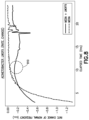
- FIG. 8 illustrates a line graph showing the time to detection for A. lwoffii at high frequencies
- Resistance is the opposition to the passage of an electrical current through an electrical conductor (e.g., metal wire, salt water solution, etc.). Resistance is a scalar value and is not frequency dependent. Accordingly, resistance has an inverse relationship with the total number of static (non-evolving) charged species (i.e., ions, protons, amino acids, peptides, small molecules, etc.) that are contained within a given sample. An increase in charged species results in a lower resistance while, conversely, a decrease results in a higher resistance. During microbial replication (commonly referred to as microbial growth), the total number of charged particles will continue to change in an organism-dependent manner.
- an electrical conductor e.g., metal wire, salt water solution, etc.
- ions are taken from the media and incorporated into the daughter cells.
- cell division results in a decreased number of charged species.
- organisms metabolize nutrients in the medium and produce charged products that result in an increase in the number of charged species.
- Reactance is the opposition of a circuit element to a change of electric current or voltage, due to that element's inductance or capacitance. Reactance is similar to electrical resistance, but differs in that reactance is sensitive to operating frequency. Accordingly, reactance has an inverse relationship with the total number of capacitive components that are contained within a given sample. In this regard, capacitance within biological samples is manifested in two ways. First, charged species (typically molecules, non-microbial cells, etc.) accumulate at the site of the electrode interface due to the application of a sensing voltage (or potential).
- charged species typically molecules, non-microbial cells, etc.
- the other biological contributor to reactance is the capacitance of the cell.
- human and non-human cells have charged outer cell membranes, followed by an insulating membrane core, and finally highly ionic inner cell components (e.g. ions).
- highly ionic inner cell components e.g. ions.
- This is similar to the interface capacitance discussed above and shall be referred to as cellular capacitance or membrane capacitance (Cm).
- FIG. 1 is a detailed illustration showing an apparatus for detecting microbial growth based on a measurement of the capacitive impedance of the component.
- a lock-in amplifier is shown having an output stage 210 and an input stage 235 .
- the output stage 210 includes an internal signal generator that may be used to feed a sinusoidal RF signal to one electrode 211 of a dielectric impedance measuring chamber 220 (not shown).
- the second electrode 212 of said chamber is connected with the signal input stage 235 of said lock-in amplifier.
- a lock-in amplifier is shown in the figures and described in the examples herein, one of ordinary skill in the art would recognize that other measuring devices, such as an LCR meter or a network analyzer, may be used in place of the lock-in amplifier.
- the apparatus for detecting microbial growth shown in FIG. 1 includes a source-matching resistor Rs ( 215 ) and a measuring load resistor Rv ( 216 ).
- the source-matching resistor 215 and the measuring load resister 216 may be selected for a given dielectric measuring chamber and liquid, such that the frequency spectrum of the out-of-phase component of the measurement signal shows a zero-crossing feature that (i) is dependent on the value of Cm, and (ii) is set at a conveniently low frequency. In certain embodiments that frequency is set at a value at or below about 100 kHz. This allows for the use of standard lock-in amplifiers.
- the out-of-phase signal amplitude with the output stage 210 of the lock-in amplifier is inversely proportional to the out-of-phase impedance value.
- the out-of phase impedance value e.g., the reactance value
- the lock-in amplifier input stage 235 provides reference potential.
- the reference as illustrated is a floating ground.
- the integrator 340 output voltage affects the frequency of the voltage-controlled oscillator. For example, if the starting frequency is below 60 kHz, the out-of-phase signal amplitude is positive. This leads to a positive output voltage at the integrator output 345 and, consequently, to an increase in the frequency of the voltage-controlled oscillator 310 . The increase in frequency will continue until the zero-crossing frequency is reached (where the out-of-phase-signal amplitude is zero). At this moment, when the out-of-phase amplitude becomes zero, no further integration occurs. Thus, the frequency of the voltage-controlled oscillator is left at the zero-crossing frequency, which is 60.723 kHz according to this example. If the initial frequency is too high, the actual zero-crossing frequency would be automatically approached from the too high frequency. The presence of bacteria could be detected by recording the zero-crossing frequency over time and detecting an increase in frequency attributable to microbial growth.
- the consumable 420 is largely a matter of design choice.
- the consumable is a plastic bottle or similar plastic consumable (not shown) with two apertures on the side spaced apart between about 10 mm to about 40 mm.
- a metalized electrode e.g., a brass cylinder piece electroplated with gold
- epoxy e.g., glue
- the consumable may have variety of geometries and adapter ports for sterile transfer of sample into and out of said consumable.
- different consumables may be used based on the patient specimen types, volumes of samples to be tested, etc.
- the metalized electrodes 411 , 412 may be made of any standard (i.e., low-cost) metal (e.g., copper, brass, steel, etc.) that has a conformal coating (i.e., sub-nm to micron thickness) with a non-corroding metal (e.g., platinum, gold, silver) applied thereto.
- a conformal coating i.e., sub-nm to micron thickness
- a non-corroding metal e.g., platinum, gold, silver
- This conformal coating of a non-corroding metal is necessary to be compatible with high salt growth/media matrices (e.g. blood, urine, sputum).
- conformal coating techniques include electroplating, sputtering, and evaporation processes. Such processes are well known to one skilled in the art and not described in detail herein.
- One of ordinary skill in the art would select among convention conformal coating techniques to form the electrodes described herein.
- the electrode configuration may be adapted to virtually any size, geometry, and material used in a consumable (i.e., test device).
- the electrodes (2 or more) may be configured into any consumable format that has been provided with appropriate sized features to receive the electrodes.
- the consumable may be formed by blow molding the consumable around the electrodes.
- the electrodes may extend into the consumable through the cap of the consumable. This design does not require molding or gluing the electrodes directly into the material of the consumable.
- the electrodes may be configured to form a conduction path between the outside world and inner contents (i.e., liquid) of the consumable.
- suitable metals for the electrode include, but are not limited to, silver, gold, zinc, iron, nickel, aluminum, etc.
- different metal coatings could be used for the electrodes.
- the electrode spacing, trace wire configurations, and electrode dimensions are largely a matter of design choice. The electrode design depends on a variety of factors, such as the medium, the consumable, the sample, etc. One of ordinary skill in the art would recognize that a variety of configurations may be used based on the examples described herein.
Landscapes
- Chemical & Material Sciences (AREA)
- Life Sciences & Earth Sciences (AREA)
- Health & Medical Sciences (AREA)
- Engineering & Computer Science (AREA)
- Organic Chemistry (AREA)
- Physics & Mathematics (AREA)
- Zoology (AREA)
- Wood Science & Technology (AREA)
- Biochemistry (AREA)
- Analytical Chemistry (AREA)
- General Health & Medical Sciences (AREA)
- Biomedical Technology (AREA)
- Immunology (AREA)
- Bioinformatics & Cheminformatics (AREA)
- Biophysics (AREA)
- Proteomics, Peptides & Aminoacids (AREA)
- Genetics & Genomics (AREA)
- Microbiology (AREA)
- Biotechnology (AREA)
- General Engineering & Computer Science (AREA)
- General Physics & Mathematics (AREA)
- Pathology (AREA)
- Molecular Biology (AREA)
- Electrochemistry (AREA)
- Chemical Kinetics & Catalysis (AREA)
- Sustainable Development (AREA)
- Urology & Nephrology (AREA)
- Food Science & Technology (AREA)
- Medicinal Chemistry (AREA)
- Hematology (AREA)
- Human Computer Interaction (AREA)
- Toxicology (AREA)
- Spectroscopy & Molecular Physics (AREA)
- Investigating Or Analyzing Materials By The Use Of Electric Means (AREA)
- Measuring Or Testing Involving Enzymes Or Micro-Organisms (AREA)
Abstract
Description
Z=Zo+j*Zr(f)
where Z=impedance, Zo=Resistance, j=√−1, Zr=Reactance, and f=frequency. Thus, impedance is an electrical characteristic of a substance that is comprised of two sub-components, resistance and reactance.
Z=Resistance+j*Reactance
Total Impedance |Z|=√(Resistance2+Reactance2).
In another example, the capacitive components (i.e., interface capacitance and cellular capacitance) contribute towards the total reactance subcomponent. Accordingly, using subcomponents of the signals may 1) allow for continuous monitoring of each consumable or subcomponent of a consumable at specified intervals (e.g. about 10 minutes) for several days (e.g. 5 day protocol) and 2) detect changes in the composition of charged molecules and number of biological cells or components of the sample.
Claims (14)
Priority Applications (1)
| Application Number | Priority Date | Filing Date | Title |
|---|---|---|---|
| US17/019,802 US12031118B2 (en) | 2014-10-14 | 2020-09-14 | Reactance and capacitance sensing platform for detecting microorganisms |
Applications Claiming Priority (4)
| Application Number | Priority Date | Filing Date | Title |
|---|---|---|---|
| US201462063602P | 2014-10-14 | 2014-10-14 | |
| PCT/US2015/055501 WO2016064635A1 (en) | 2014-10-14 | 2015-10-14 | Reactance and capacitance sensing platform for detecting microorganisms |
| US201715518989A | 2017-04-13 | 2017-04-13 | |
| US17/019,802 US12031118B2 (en) | 2014-10-14 | 2020-09-14 | Reactance and capacitance sensing platform for detecting microorganisms |
Related Parent Applications (2)
| Application Number | Title | Priority Date | Filing Date |
|---|---|---|---|
| PCT/US2015/055501 Division WO2016064635A1 (en) | 2014-10-14 | 2015-10-14 | Reactance and capacitance sensing platform for detecting microorganisms |
| US15/518,989 Division US10808217B2 (en) | 2014-10-14 | 2015-10-14 | Reactance and capacitance sensing platform for detecting microorganisms |
Publications (2)
| Publication Number | Publication Date |
|---|---|
| US20200407677A1 US20200407677A1 (en) | 2020-12-31 |
| US12031118B2 true US12031118B2 (en) | 2024-07-09 |
Family
ID=55761340
Family Applications (2)
| Application Number | Title | Priority Date | Filing Date |
|---|---|---|---|
| US15/518,989 Active 2036-02-17 US10808217B2 (en) | 2014-10-14 | 2015-10-14 | Reactance and capacitance sensing platform for detecting microorganisms |
| US17/019,802 Active 2036-12-20 US12031118B2 (en) | 2014-10-14 | 2020-09-14 | Reactance and capacitance sensing platform for detecting microorganisms |
Family Applications Before (1)
| Application Number | Title | Priority Date | Filing Date |
|---|---|---|---|
| US15/518,989 Active 2036-02-17 US10808217B2 (en) | 2014-10-14 | 2015-10-14 | Reactance and capacitance sensing platform for detecting microorganisms |
Country Status (8)
| Country | Link |
|---|---|
| US (2) | US10808217B2 (en) |
| EP (1) | EP3207362B1 (en) |
| JP (1) | JP6795495B2 (en) |
| CN (3) | CN205538786U (en) |
| AU (1) | AU2015336363B2 (en) |
| CA (1) | CA2964310C (en) |
| ES (1) | ES2982089T3 (en) |
| WO (1) | WO2016064635A1 (en) |
Families Citing this family (9)
| Publication number | Priority date | Publication date | Assignee | Title |
|---|---|---|---|---|
| US10196678B2 (en) | 2014-10-06 | 2019-02-05 | ALVEO Technologies Inc. | System and method for detection of nucleic acids |
| ES2982089T3 (en) | 2014-10-14 | 2024-10-14 | Becton Dickinson Co | Reactance and capacitance detection platform for detecting microorganisms |
| CN109996888A (en) * | 2016-09-23 | 2019-07-09 | 阿尔韦奥科技公司 | For testing and analyzing the method and composition of object |
| WO2019147225A1 (en) * | 2018-01-24 | 2019-08-01 | Hewlett-Packard Development Company, L.P. | Fluidic property determination from fluid impedances |
| US20190241861A1 (en) * | 2018-02-02 | 2019-08-08 | Karmel Alon Allison | Bacterial detection system |
| EP3899022A4 (en) | 2018-12-20 | 2023-03-01 | Alveo Technologies Inc. | PORTABLE IMPEDANCE-BASED DIAGNOSTIC TEST SYSTEM FOR ANALYTE DETECTION |
| US12472492B2 (en) | 2020-08-14 | 2025-11-18 | Alveo Technologies, Inc. | Systems and methods of sample depositing and testing |
| CN113406153B (en) * | 2021-06-29 | 2022-06-07 | 毕玉琦 | Food flora short-term test device |
| US12474250B2 (en) * | 2023-06-27 | 2025-11-18 | International Business Machines Corporation | Linear fluidic cell trap device for single cell detection |
Citations (15)
| Publication number | Priority date | Publication date | Assignee | Title |
|---|---|---|---|---|
| WO1999042847A1 (en) | 1998-02-19 | 1999-08-26 | Sumitomo Metal Industries, Ltd. | Impedance detection apparatus and method |
| WO2000022431A1 (en) | 1998-10-09 | 2000-04-20 | Simon Feldberg | Method and apparatus for determining and evaluating bacterial populations |
| EP1162449A1 (en) | 2000-06-06 | 2001-12-12 | Universiteit Gent | AC-based gate detection method and device for the sizing of colloidal particles, cells and bacteria in liquids |
| US6433560B1 (en) | 2001-08-31 | 2002-08-13 | Eaton Corporation | Combined fluid condition monitor and fluid level sensor |
| US20020197709A1 (en) | 2001-06-22 | 2002-12-26 | Van Der Weide Daniel W. | Microfabricated microbial growth assay method and apparatus |
| US20070090927A1 (en) | 2005-10-26 | 2007-04-26 | General Electric Company | Chemical and biological sensors, systems and methods based on radio frequency identification |
| US20070238092A1 (en) * | 2004-11-05 | 2007-10-11 | Rubesa Pier | Method and Device for the Detection, Measurement and Analysis of Biological, Bioactive, Bioenergetic and Bioharmonic Signals |
| US20090098645A1 (en) | 2007-10-10 | 2009-04-16 | Ye Fang | Cell culture article and methods thereof |
| CN101698879A (en) | 2009-10-14 | 2010-04-28 | 电子科技大学 | Medicament sensitivity testing method for detecting electrical impedance curve form of bacteria culture medium |
| CN102016575A (en) | 2008-05-07 | 2011-04-13 | 斯特拉斯克莱德大学 | A system and method for cell characterisation |
| TW201226896A (en) | 2010-12-17 | 2012-07-01 | Univ Yuanpei | Microbe or cell inspection system and method thereof |
| CN102954985A (en) | 2011-08-31 | 2013-03-06 | 中国科学院上海微系统与信息技术研究所 | Data analysis method for electrical impedance type quick bacteria detection sensor |
| WO2013123189A1 (en) | 2012-02-15 | 2013-08-22 | Becton, Dickinson And Company | Impedence-based bacterial detection system |
| CN205538786U (en) | 2014-10-14 | 2016-08-31 | 贝克顿·迪金森公司 | Systems Sensitive to Microbial Growth Using Reactive and Capacitive Sensing Platforms |
| US20200011847A1 (en) * | 2016-10-07 | 2020-01-09 | Boehringer Ingelheim Vetmedica Gmbh | Analysis system and method for testing a sample |
-
2015
- 2015-10-14 ES ES15853221T patent/ES2982089T3/en active Active
- 2015-10-14 AU AU2015336363A patent/AU2015336363B2/en active Active
- 2015-10-14 JP JP2017518797A patent/JP6795495B2/en active Active
- 2015-10-14 CN CN201520983323.7U patent/CN205538786U/en not_active Expired - Lifetime
- 2015-10-14 WO PCT/US2015/055501 patent/WO2016064635A1/en not_active Ceased
- 2015-10-14 CA CA2964310A patent/CA2964310C/en active Active
- 2015-10-14 US US15/518,989 patent/US10808217B2/en active Active
- 2015-10-14 CN CN202211697198.4A patent/CN115963149A/en active Pending
- 2015-10-14 EP EP15853221.8A patent/EP3207362B1/en active Active
- 2015-10-14 CN CN201580055175.5A patent/CN107110803A/en active Pending
-
2020
- 2020-09-14 US US17/019,802 patent/US12031118B2/en active Active
Patent Citations (20)
| Publication number | Priority date | Publication date | Assignee | Title |
|---|---|---|---|---|
| WO1999042847A1 (en) | 1998-02-19 | 1999-08-26 | Sumitomo Metal Industries, Ltd. | Impedance detection apparatus and method |
| CN1256756A (en) | 1998-02-19 | 2000-06-14 | 住友金属工业株式会社 | Impedance detection apparatus and method |
| WO2000022431A1 (en) | 1998-10-09 | 2000-04-20 | Simon Feldberg | Method and apparatus for determining and evaluating bacterial populations |
| EP1162449A1 (en) | 2000-06-06 | 2001-12-12 | Universiteit Gent | AC-based gate detection method and device for the sizing of colloidal particles, cells and bacteria in liquids |
| US20020197709A1 (en) | 2001-06-22 | 2002-12-26 | Van Der Weide Daniel W. | Microfabricated microbial growth assay method and apparatus |
| US6433560B1 (en) | 2001-08-31 | 2002-08-13 | Eaton Corporation | Combined fluid condition monitor and fluid level sensor |
| US20070238092A1 (en) * | 2004-11-05 | 2007-10-11 | Rubesa Pier | Method and Device for the Detection, Measurement and Analysis of Biological, Bioactive, Bioenergetic and Bioharmonic Signals |
| US20070090927A1 (en) | 2005-10-26 | 2007-04-26 | General Electric Company | Chemical and biological sensors, systems and methods based on radio frequency identification |
| US20090098645A1 (en) | 2007-10-10 | 2009-04-16 | Ye Fang | Cell culture article and methods thereof |
| CN102016575A (en) | 2008-05-07 | 2011-04-13 | 斯特拉斯克莱德大学 | A system and method for cell characterisation |
| US20110144469A1 (en) | 2008-05-07 | 2011-06-16 | Patraicia Connolly | Bacterial/Cellular Recognition Impedance Algorithm |
| US10094818B2 (en) | 2008-05-07 | 2018-10-09 | University Of Strathclyde | Bacterial/cellular recognition impedance algorithm |
| CN101698879A (en) | 2009-10-14 | 2010-04-28 | 电子科技大学 | Medicament sensitivity testing method for detecting electrical impedance curve form of bacteria culture medium |
| TW201226896A (en) | 2010-12-17 | 2012-07-01 | Univ Yuanpei | Microbe or cell inspection system and method thereof |
| CN102954985A (en) | 2011-08-31 | 2013-03-06 | 中国科学院上海微系统与信息技术研究所 | Data analysis method for electrical impedance type quick bacteria detection sensor |
| WO2013123189A1 (en) | 2012-02-15 | 2013-08-22 | Becton, Dickinson And Company | Impedence-based bacterial detection system |
| CN104380090A (en) | 2012-02-15 | 2015-02-25 | Bd公司 | Impedence-based bacterial detection system |
| CN205538786U (en) | 2014-10-14 | 2016-08-31 | 贝克顿·迪金森公司 | Systems Sensitive to Microbial Growth Using Reactive and Capacitive Sensing Platforms |
| US20170240855A1 (en) | 2014-10-14 | 2017-08-24 | Becton, Dickinson And Company | Reactance and capacitance sensing platform for detecting microorganisms |
| US20200011847A1 (en) * | 2016-10-07 | 2020-01-09 | Boehringer Ingelheim Vetmedica Gmbh | Analysis system and method for testing a sample |
Non-Patent Citations (26)
| Title |
|---|
| "The Wien Bridge Oscillator," http://www.play-hookey.com/oscillators/audio/wien_bridge_oscillator.html, obtained using Wayback Machine from Jan. 20, 2013 (Year: 2013). * |
| "The Wien Bridge Oscillator," http://www.play-hookey.com/oscillators/audio/wien_bridge_oscillator.html, obtained using Wayback Machine from Jan. 20, 2013, hereinafter Wien Bridge. (Year: 2013). |
| Chinese First Office Action issued in corresponding CN application No. 2015-800551755 dated Feb. 1, 2019. |
| Chinese First Office Action issued in corresponding CN application No. 2022116971984 dated Jun. 27, 2023, pp. 12. |
| Chinese Office Action issued in corresponding CN application No. 201580055175.5 dated Sep. 26, 2019. |
| Chinese Office Action issued in corresponding CN application No. 2022116971984 on Feb. 29, 2024., pp. 13. |
| Decision of Final Rejection for Chinese Patent Application No. 2015800551755 dated Nov. 4, 2020. |
| EP Article 94 Communication issued in EP application No. 158532218 on Jun. 14, 2021., pp. 7. |
| First Examination Report issued in corresponding Australian Application No. 2015336363 dated Apr. 22, 2020. |
| Full Examination Report issued in Australian Application No. 2015336363 dated Dec. 17, 2020. |
| Goncalves, J. J. , et al., ""Rapid Evaluation of biofilm attachment promoters and biofilm growth orientation using a mini-impedimetric device"", Sensors and Actuators B: Chemical, Elsevier BV, NL, vol. 143 No. 1, XP026754260, ISSN: 0925-4005, DOI: 10.1016/J.SNB.2009.07.036 [retrieved on Jul. 30, 2007], Dec. 4, 2009, pp. 341-348. |
| International Search Report and Written Opinion for Application No. PCT/US2015/055501 dated Jan. 25, 2016. |
| Japanese Office Action issued in JP application No. 2017518797 dated Nov. 22, 2019. |
| Kim, YH. et al., An impedimetric biosensor for real-time monitoring of bacterial growth in a microbial fermentor, Sensors and Actuators. B. Chemical. vol. 138,, (2009), pp. 270-277. |
| Masaaki Kobayashi et al., Real-time monitoring of cell growth rate by means of electrochemical impedance measurement, The 48th Jidouseigyorengo Conference, C2-16, (Jan. 1, 2006), pp. 513-516. |
| Office Action issued in corresponding Chinese Patent Application No. 201580055175.5 dated Jul. 15, 2022, (28 pp.). |
| Office Action issued in corresponding European Patent Application No. 15853221.8 dated May 25, 2023 (8 pp.). |
| Ramirez, Nardo , et al., ""Electrical Impedance Spectroscopy as a Powerful Analytical Tool for Monitoring Microbiological Growth on Medical Implants",", Encyclopedia of Healthcare Information Systems, Feb. 1, 2009 XP055463735, ISBN: 978-1-59904-889-5 Retrieved from the Internet: URL:https://pdfs.semanticscholar.org/6455/aaccleb487042dla5e332e0c635c54377414.pdf [retrieved on Mar. 28, 2018], (Feb. 1, 2009), pp. 7. |
| Search Report received in EP15853221.8 dated Mar. 29, 2018, pp. 6. |
| Sengupta el. al., "A micro-scale multi-frequency reactance measurement technique to detect bacterial growth at low bio-particle concentrations," Lab Chip, vol. 6, pp. 682-692 (2006). |
| Sengupta et al., "A micro-scale multi-frequency reactance measurement technique to detect bacterial growth at low bio-particle concentrations," Lap Chip, vol. 6, pp. 683-692 (2006) (Year: 2006). * |
| Sengupta Shramik, et al., "A micro-scale multi-frequency reactance measurement technique to detect", Lab Chip. 2006, 6, 682-692. |
| Third Office Action issued in corresponding Chinese Application No. 2015800551755 dated Apr. 13, 2020. |
| Varshney, M. et al., Double Interdigitated Array Microelectrode-Based Impedance Biosensor for Detection of Viable Escherichia coli O157:H7 in Growth Medium, Talanta, 2008, vol. 74, , (2008), pp. 518-525. |
| Yang, et al, Detection of Viable Salmonella typhimurium by Impedance Measurement of Electrode Capacitance and Medium Resistance, Biosensors & Bioelectronics, Jun. 30, 2003, pp. 495-502. |
| Zhang, Aiping , et al., "Rapid Detection of Total Bacteria Count in Milk by the Impedance Method, Journal of Chinese Institute of Food Science and Technology", vol. 12 No. 2, (Feb. 2012), pp. 158-164. |
Also Published As
| Publication number | Publication date |
|---|---|
| EP3207362A4 (en) | 2018-05-09 |
| WO2016064635A1 (en) | 2016-04-28 |
| EP3207362B1 (en) | 2024-05-01 |
| AU2015336363A1 (en) | 2017-05-04 |
| JP6795495B2 (en) | 2020-12-02 |
| US20170240855A1 (en) | 2017-08-24 |
| CN115963149A (en) | 2023-04-14 |
| EP3207362A1 (en) | 2017-08-23 |
| JP2017532033A (en) | 2017-11-02 |
| CN107110803A (en) | 2017-08-29 |
| US20200407677A1 (en) | 2020-12-31 |
| CA2964310C (en) | 2019-02-26 |
| US10808217B2 (en) | 2020-10-20 |
| AU2015336363B2 (en) | 2021-03-04 |
| EP3207362C0 (en) | 2024-05-01 |
| CA2964310A1 (en) | 2016-04-28 |
| CN205538786U (en) | 2016-08-31 |
| ES2982089T3 (en) | 2024-10-14 |
Similar Documents
| Publication | Publication Date | Title |
|---|---|---|
| US12031118B2 (en) | Reactance and capacitance sensing platform for detecting microorganisms | |
| US9709516B2 (en) | Impedance-based bacterial detection system | |
| US9400272B2 (en) | Detection method and apparatus for detecting microbial growth | |
| Vlasov et al. | Electronic tongue: Chemical sensor systems for analysis of aquatic media | |
| EP1488230B1 (en) | Drift compensated magnetic permeability detector | |
| JP2005304376A (en) | Method and apparatus for detecting organism | |
| Buscaglia | Development of a portable impedance spectrometer | |
| EP4296351A1 (en) | Non-contact impedance analyzer for real-time detection of microbial growth | |
| Al Ahmad et al. | Monitoring of Yeast Cell Volume Changes Using Electrical Impedance Spectroscopy | |
| WO2000022431A1 (en) | Method and apparatus for determining and evaluating bacterial populations | |
| Goh et al. | Impedance spectroscopy for in situ biomass measurements in microbioreactor | |
| Bhatt et al. | A historical perspective on impedance spectroscopy and its application in biological detection | |
| Cantons Villar | Online bioimpedance measurement: characterisation and application in bosystems engineering | |
| Farace et al. | Bioanalytical application of impedance analysis: Transducing in polymer-based biosensors and probes for living tissues | |
| VINCENTINI | Design and fabrication of a multi-parameter biochip for bioreactor monitoring | |
| EP3833969A1 (en) | Analysis of a test sample |
Legal Events
| Date | Code | Title | Description |
|---|---|---|---|
| AS | Assignment |
Owner name: BECTON DICKINSON AND COMPANY, NEW JERSEY Free format text: ASSIGNMENT OF ASSIGNORS INTEREST;ASSIGNORS:BEATY, PATRICK SHAWN;BRASCH, MICHAEL A.;HOSMANE, SUNEIL;AND OTHERS;SIGNING DATES FROM 20141024 TO 20190111;REEL/FRAME:053768/0359 |
|
| FEPP | Fee payment procedure |
Free format text: ENTITY STATUS SET TO UNDISCOUNTED (ORIGINAL EVENT CODE: BIG.); ENTITY STATUS OF PATENT OWNER: LARGE ENTITY |
|
| STPP | Information on status: patent application and granting procedure in general |
Free format text: DOCKETED NEW CASE - READY FOR EXAMINATION |
|
| STPP | Information on status: patent application and granting procedure in general |
Free format text: NON FINAL ACTION MAILED |
|
| STPP | Information on status: patent application and granting procedure in general |
Free format text: DOCKETED NEW CASE - READY FOR EXAMINATION |
|
| STPP | Information on status: patent application and granting procedure in general |
Free format text: NOTICE OF ALLOWANCE MAILED -- APPLICATION RECEIVED IN OFFICE OF PUBLICATIONS |
|
| ZAAA | Notice of allowance and fees due |
Free format text: ORIGINAL CODE: NOA |
|
| ZAAB | Notice of allowance mailed |
Free format text: ORIGINAL CODE: MN/=. |
|
| STPP | Information on status: patent application and granting procedure in general |
Free format text: NOTICE OF ALLOWANCE MAILED -- APPLICATION RECEIVED IN OFFICE OF PUBLICATIONS |
|
| ZAAA | Notice of allowance and fees due |
Free format text: ORIGINAL CODE: NOA |
|
| STPP | Information on status: patent application and granting procedure in general |
Free format text: PUBLICATIONS -- ISSUE FEE PAYMENT VERIFIED |
|
| STCF | Information on status: patent grant |
Free format text: PATENTED CASE |