US12029786B2 - Composition and method of mRNA vaccines against novel coronavirus infection - Google Patents
Composition and method of mRNA vaccines against novel coronavirus infection Download PDFInfo
- Publication number
- US12029786B2 US12029786B2 US17/170,876 US202117170876A US12029786B2 US 12029786 B2 US12029786 B2 US 12029786B2 US 202117170876 A US202117170876 A US 202117170876A US 12029786 B2 US12029786 B2 US 12029786B2
- Authority
- US
- United States
- Prior art keywords
- mrna
- composition
- protein
- ncov
- seq
- Prior art date
- Legal status (The legal status is an assumption and is not a legal conclusion. Google has not performed a legal analysis and makes no representation as to the accuracy of the status listed.)
- Active, expires
Links
Images




Classifications
-
- A—HUMAN NECESSITIES
- A61—MEDICAL OR VETERINARY SCIENCE; HYGIENE
- A61K—PREPARATIONS FOR MEDICAL, DENTAL OR TOILETRY PURPOSES
- A61K39/00—Medicinal preparations containing antigens or antibodies
- A61K39/12—Viral antigens
-
- A—HUMAN NECESSITIES
- A61—MEDICAL OR VETERINARY SCIENCE; HYGIENE
- A61K—PREPARATIONS FOR MEDICAL, DENTAL OR TOILETRY PURPOSES
- A61K39/00—Medicinal preparations containing antigens or antibodies
- A61K39/12—Viral antigens
- A61K39/215—Coronaviridae, e.g. avian infectious bronchitis virus
-
- A—HUMAN NECESSITIES
- A61—MEDICAL OR VETERINARY SCIENCE; HYGIENE
- A61K—PREPARATIONS FOR MEDICAL, DENTAL OR TOILETRY PURPOSES
- A61K9/00—Medicinal preparations characterised by special physical form
- A61K9/0012—Galenical forms characterised by the site of application
- A61K9/0019—Injectable compositions; Intramuscular, intravenous, arterial, subcutaneous administration; Compositions to be administered through the skin in an invasive manner
-
- A—HUMAN NECESSITIES
- A61—MEDICAL OR VETERINARY SCIENCE; HYGIENE
- A61K—PREPARATIONS FOR MEDICAL, DENTAL OR TOILETRY PURPOSES
- A61K9/00—Medicinal preparations characterised by special physical form
- A61K9/48—Preparations in capsules, e.g. of gelatin, of chocolate
- A61K9/50—Microcapsules having a gas, liquid or semi-solid filling; Solid microparticles or pellets surrounded by a distinct coating layer, e.g. coated microspheres, coated drug crystals
- A61K9/51—Nanocapsules; Nanoparticles
- A61K9/5107—Excipients; Inactive ingredients
- A61K9/5123—Organic compounds, e.g. fats, sugars
-
- A—HUMAN NECESSITIES
- A61—MEDICAL OR VETERINARY SCIENCE; HYGIENE
- A61P—SPECIFIC THERAPEUTIC ACTIVITY OF CHEMICAL COMPOUNDS OR MEDICINAL PREPARATIONS
- A61P31/00—Antiinfectives, i.e. antibiotics, antiseptics, chemotherapeutics
- A61P31/12—Antivirals
- A61P31/14—Antivirals for RNA viruses
-
- C—CHEMISTRY; METALLURGY
- C07—ORGANIC CHEMISTRY
- C07K—PEPTIDES
- C07K14/00—Peptides having more than 20 amino acids; Gastrins; Somatostatins; Melanotropins; Derivatives thereof
- C07K14/005—Peptides having more than 20 amino acids; Gastrins; Somatostatins; Melanotropins; Derivatives thereof from viruses
-
- C—CHEMISTRY; METALLURGY
- C12—BIOCHEMISTRY; BEER; SPIRITS; WINE; VINEGAR; MICROBIOLOGY; ENZYMOLOGY; MUTATION OR GENETIC ENGINEERING
- C12N—MICROORGANISMS OR ENZYMES; COMPOSITIONS THEREOF; PROPAGATING, PRESERVING, OR MAINTAINING MICROORGANISMS; MUTATION OR GENETIC ENGINEERING; CULTURE MEDIA
- C12N7/00—Viruses; Bacteriophages; Compositions thereof; Preparation or purification thereof
-
- A—HUMAN NECESSITIES
- A61—MEDICAL OR VETERINARY SCIENCE; HYGIENE
- A61K—PREPARATIONS FOR MEDICAL, DENTAL OR TOILETRY PURPOSES
- A61K39/00—Medicinal preparations containing antigens or antibodies
- A61K2039/51—Medicinal preparations containing antigens or antibodies comprising whole cells, viruses or DNA/RNA
- A61K2039/53—DNA (RNA) vaccination
-
- A—HUMAN NECESSITIES
- A61—MEDICAL OR VETERINARY SCIENCE; HYGIENE
- A61K—PREPARATIONS FOR MEDICAL, DENTAL OR TOILETRY PURPOSES
- A61K39/00—Medicinal preparations containing antigens or antibodies
- A61K2039/54—Medicinal preparations containing antigens or antibodies characterised by the route of administration
-
- A—HUMAN NECESSITIES
- A61—MEDICAL OR VETERINARY SCIENCE; HYGIENE
- A61K—PREPARATIONS FOR MEDICAL, DENTAL OR TOILETRY PURPOSES
- A61K39/00—Medicinal preparations containing antigens or antibodies
- A61K2039/54—Medicinal preparations containing antigens or antibodies characterised by the route of administration
- A61K2039/541—Mucosal route
- A61K2039/544—Mucosal route to the airways
-
- A—HUMAN NECESSITIES
- A61—MEDICAL OR VETERINARY SCIENCE; HYGIENE
- A61K—PREPARATIONS FOR MEDICAL, DENTAL OR TOILETRY PURPOSES
- A61K39/00—Medicinal preparations containing antigens or antibodies
- A61K2039/555—Medicinal preparations containing antigens or antibodies characterised by a specific combination antigen/adjuvant
- A61K2039/55511—Organic adjuvants
- A61K2039/55555—Liposomes; Vesicles, e.g. nanoparticles; Spheres, e.g. nanospheres; Polymers
-
- A—HUMAN NECESSITIES
- A61—MEDICAL OR VETERINARY SCIENCE; HYGIENE
- A61M—DEVICES FOR INTRODUCING MEDIA INTO, OR ONTO, THE BODY; DEVICES FOR TRANSDUCING BODY MEDIA OR FOR TAKING MEDIA FROM THE BODY; DEVICES FOR PRODUCING OR ENDING SLEEP OR STUPOR
- A61M11/00—Sprayers or atomisers specially adapted for therapeutic purposes
-
- C—CHEMISTRY; METALLURGY
- C12—BIOCHEMISTRY; BEER; SPIRITS; WINE; VINEGAR; MICROBIOLOGY; ENZYMOLOGY; MUTATION OR GENETIC ENGINEERING
- C12N—MICROORGANISMS OR ENZYMES; COMPOSITIONS THEREOF; PROPAGATING, PRESERVING, OR MAINTAINING MICROORGANISMS; MUTATION OR GENETIC ENGINEERING; CULTURE MEDIA
- C12N2770/00—MICROORGANISMS OR ENZYMES; COMPOSITIONS THEREOF; PROPAGATING, PRESERVING, OR MAINTAINING MICROORGANISMS; MUTATION OR GENETIC ENGINEERING; CULTURE MEDIA ssRNA viruses positive-sense
- C12N2770/00011—Details
- C12N2770/20011—Coronaviridae
- C12N2770/20022—New viral proteins or individual genes, new structural or functional aspects of known viral proteins or genes
-
- C—CHEMISTRY; METALLURGY
- C12—BIOCHEMISTRY; BEER; SPIRITS; WINE; VINEGAR; MICROBIOLOGY; ENZYMOLOGY; MUTATION OR GENETIC ENGINEERING
- C12N—MICROORGANISMS OR ENZYMES; COMPOSITIONS THEREOF; PROPAGATING, PRESERVING, OR MAINTAINING MICROORGANISMS; MUTATION OR GENETIC ENGINEERING; CULTURE MEDIA
- C12N2770/00—MICROORGANISMS OR ENZYMES; COMPOSITIONS THEREOF; PROPAGATING, PRESERVING, OR MAINTAINING MICROORGANISMS; MUTATION OR GENETIC ENGINEERING; CULTURE MEDIA ssRNA viruses positive-sense
- C12N2770/00011—Details
- C12N2770/20011—Coronaviridae
- C12N2770/20034—Use of virus or viral component as vaccine, e.g. live-attenuated or inactivated virus, VLP, viral protein
-
- C—CHEMISTRY; METALLURGY
- C12—BIOCHEMISTRY; BEER; SPIRITS; WINE; VINEGAR; MICROBIOLOGY; ENZYMOLOGY; MUTATION OR GENETIC ENGINEERING
- C12N—MICROORGANISMS OR ENZYMES; COMPOSITIONS THEREOF; PROPAGATING, PRESERVING, OR MAINTAINING MICROORGANISMS; MUTATION OR GENETIC ENGINEERING; CULTURE MEDIA
- C12N2770/00—MICROORGANISMS OR ENZYMES; COMPOSITIONS THEREOF; PROPAGATING, PRESERVING, OR MAINTAINING MICROORGANISMS; MUTATION OR GENETIC ENGINEERING; CULTURE MEDIA ssRNA viruses positive-sense
- C12N2770/00011—Details
- C12N2770/20011—Coronaviridae
- C12N2770/20071—Demonstrated in vivo effect
Definitions
- compositions are provided containing an effective amount of a messenger ribonucleic acid (mRNA) that contains an open reading frame (ORF) encoding a 2019-nCoV protein or protein fragment formulated in a pharmaceutically acceptable carrier, where the mRNA and the carrier form a polymeric nanoparticle.
- the 2019-nCoV protein may be a spike (S) protein or spike (S) subunit.
- the ORF may be an mRNA encoding a peptide such as the peptides having a sequence of selected from SEQ ID 14 to 31, or 50-66.
- the ORF may contain for example, an mRNA have a sequences as shown in SEQ ID Nos. 32 to 49 or SEQ ID No. 91 to 106 or 108.
- FIGS. 9 A- 9 B show RBD trimer DNA and amino acid sequences.
- FIG. 11 shows HKP peptide sequences.
- FIGS. 12 A- 12 B show D614G S2P DNA Sequence.
- compositions that contain mRNA sequences formulated with pharmaceutical excipients.
- the composition of the mRNA-based pharmaceutical formulation contains mRNA sequences coding viral proteins necessary for coronavirus infection and replication, and a specific carrier. Suitable carriers include Histidine-Lysine Co-polymers (HKP), and/or HKP plus a lipid, such as a cationic lipid. Methods also are provided for using these pharmaceutical compositions, including methods of treatment, process development, and specific delivery routes and regimens.
- the predominant human receptor for 2019-nCoV is believed to be human angiotensin-converting enzyme 2 (ACE2).
- ACE2 human angiotensin-converting enzyme 2
- Domain 288-330 of S1 protein from the 2019-nCoV represents a promising therapeutic and/or vaccine target [Veljkovic et al., supra].
- the spike (S) protein of coronavirus including 2019-nCoV is the major inducer of neutralizing antibodies, and the receptor-binding domain (RBD) in the S1 subunit of S protein contains multiple conformational neutralizing epitopes [He et al., J Immunol. 2005; 174(8): 4908-4915]. This suggests that recombinant proteins containing RBD and vectors including mRNAs encoding the RBD sequence can be used to develop safe and effective 2019-nCoV vaccines.
- the composition contains one or more mRNAs encoding the entire spike (S) protein of 2019-nCoV ( FIG. 3 ).
- S protein is used by the virus to attach to the host cell receptor.
- the Spike protein-coding mRNA sequence is long, and therefore in order to improve the efficiencies of mRNA expression systems preparation, it was divided into four regions, where one, some, or all of these regions can be used as mRNA antigen(s) against Spike protein structure (SEQ ID Nos. 1 to 4), when expressed in frame for the Spike protein domains.
- 24 short peptide fragments that are potential epitopes were selected as targets (SEQ ID Nos. 14 to 31).
- the short peptide selected is less than 20 amino acids, advantageously less than 15 amino acids.
- mRNA sequences encoding short peptide sequences were designed using methods that are well known in the art (SEQ ID No. 32 to 49).
- 2019-nCoV has several unique insertions in the spike protein.
- the amino acid residues in those insertion sites of S protein of 2019-nCoV are identical or similar to the amino acid residues in the replicating protein gp120 or Gag of human immunodeficiency virus type 1 (HIV-1).
- a series of mRNA sequences was designed that encode amino acid residues that are identical between 2019-nCoV and HIV-1 (SEQ ID No. 50 to 66), which are recognized by the human immune system.
- the mRNA encodes the D614G variant of the ORF of the spike protein.
- S proteins with aspartic acid (D614) and glycine (G614) at residue 614 have different functional properties. Specifically, retroviruses pseudotyped with G614 were found to infect ACE2-expressing cells much more efficiently than those with wild type (D614).
- the mRNA encodes the ORF with SEQ ID NO:89, encoding D614G spike protein precursor S2P.
- the mRNA may encode one or more other SARS-CoV-2 viral protein coding sequences including the Envelope (E), Membrane (M), or Nucleocapsid (N) structural proteins.
- E Envelope
- M Membrane
- N Nucleocapsid
- the 2019-nCoV genome is arranged in the order of: 5′-replicase (orf1/ab)-structural proteins [Spike (S)-Envelope (E)-Membrane (M)-Nucleocapsid (N)]-3′ (Zulma et al. 2016, Nature Reviews Drug Discovery 15:327-347.), and lacks the hemagglutinin-esterase gene which is characteristically found in lineage A ⁇ -CoV.
- the viral surface proteins advantageously are targets for an mRNA vaccine
- the viral functional proteins responsible for viral polymerase in the region of ORF1a (SEQ ID No. 5) and replication (RdRp) in the region of ORF1b (SEQ ID No. 6) also may be used to prepare a vaccine composition.
- viral proteins may also be the target of mRNA vaccines.
- the coronavirus membrane (M) protein is a key player in virion assembly. One of its functions is to mediate the incorporation of the spikes into the viral envelope.
- the nucleocapsid N-protein is a highly immunogenic phosphoprotein, that is typically highly conserved.
- the coronavirus N-protein is often used as a marker in diagnostic assays.
- Coronavirus (CoV) envelope (E) proteins play multiple roles during infection, including virus morphogenesis and pathogenesis.
- mRNAs coding for all or part of one or more viral M protein, N protein and E protein as their specific antigens may be selected for use as components in the antigenic vaccine composition (SEQ ID No. 7, 8, 9).
- Modifications may be made in the mRNA sequence to prepare the vaccine composition.
- a 5′ cap structure may be added to the mRNA sequence.
- a 5′CleanCap is added. This structure uses an initiating capped trimer to yield a naturally occurring 5′ cap structure.
- a poly-A tail is added to the sequence to increase mRNA stability.
- AU or GU-enriched sequences may be selected in the 3′ UTR, while random sequences may be utilized in the 5′ UTP to reduce similarity to the host gene sequences. Codon optimization of the mRNA sequence may also be used to improve translation efficiency.
- codons that correspond to lower abundance tRNA species and that therefore lead to lower protein expression are replaced with codons that correspond to higher abundance tRNAs that provide higher levels of protein expression.
- mRNA stability may be enhanced by partial chemical modification.
- short and double strand RNAs derived from aberrant RNA polymerase activities are removed, for example by FPLC, HPLC, or chromatography using cellulose as a matrix.
- sequence optimization may be used, together with usage of modified nucleosides, such as pseudouridine ( ⁇ ), 5-methylcytidine (5mC), Cap-1 structure and optimized codons, which in turn improve translation efficiency.
- modified nucleosides such as pseudouridine ( ⁇ ), 5-methylcytidine (5mC), Cap-1 structure and optimized codons
- immature mRNA may be produced as a contaminant which inhibits translation through stimulating innate immune activation (Kariko et al, Mol Ther. 2008 16(11):1833-40.; Andries et al, J Control Release. 2015 Nov. 10; 217:337-44.).
- FPLC and HPLC purification may be used to remove these contaminants.
- the template for in vitro transcription of mRNA contains five cis-acting structural elements, namely from 5′ to 3′: (i) the optimized cap structure, (ii) the optimized 5′ untranslated region (UTR), (iii) the codon optimized coding sequence, (iv) the optimized 3′ UTR and (v) a stretch of repeated adenine nucleotides (polyA tail) ( FIG. 18 ).
- the 5′-UTR includes a start, but does not encode polypeptide (i.e. it is non-coding).
- a 5′-UTR of the present disclosure comprises a cap structure with 7-methylguanosine (7mG) sequences.
- the 3′-UTR is directly downstream (3′) from the stop codon (the codon of an mRNA transcript representing a termination signal) and does not encode a polypeptide (is non-coding).
- a polyA tail is a special region of mRNA that is downstream from 3′-UTR and contains multiple consecutive adenosine monophosphates; it is required for efficient mRNA production.
- An mRNA in vitro transcription template is used not only for efficiency of mRNA production but also for the subsequent protein or peptide production
- mRNA is produced by in vitro transcription (IVT) from a linear DNA template containing a bacteriophage promoter, the optimized UTR's and the codon optimized sequence by using a RNA polymerase (T7, T3 or SP6) and a mix of the different nucleosides.
- the linear DNA template can be cloned into a plasmid DNA (pDNA) as a delivery vector.
- pDNA plasmid DNA
- the plasmid vectors can be adapted for mRNA vaccine production. Commonly used plasmids include pSFV1, pcDNA3 and pTK126, which are all commercially available.
- pEVL see Grier et al. Mol Ther Nucleic Acids. 19; 5:e306 (2016),
- the mRNA is a modified mRNA where all uridine residues are replaced by pseudouridines during in vitro transcription.
- This modification stabilizes the mRNA against enzymatic degradation in the cell, leading to enhanced translation efficiency of the mRNA.
- the pseudouridines used can be N1-methyl-pseudouridine, or other modifications that are well known in the art such as N6-methyladenosine (m6A), inosine, pseudouridine, 5-methylcytidine (m5C), 5-hydroxymethylcytidine (hm5C), and N1-methyladenosine (m1A).
- the modification optionally is made throughout the entire mRNA, including the ORF, the 5′UTR and 3′UTR.
- the skilled artisan will recognize that other modified RNA residues may be used to stabilize the protein 3 dimensional structure and increase protein translation.
- non-viral delivery systems have been developed and reported to be more advantageous than the viral delivery system in many aspects [Brito et al. Adv Genet. 2015; 89: 179-233].
- the large molecular weight branched polyethylenimine (PEI, 25 kDa) is an excellent carrier for plasmid DNA but not for mRNA.
- PEI branched polyethylenimine
- H2K4b The four-branched histidine-lysine (HK) peptide polymer H2K4b has been shown to be a good carrier of large molecular weight DNA plasmids [Leng et al. Nucleic Acids Res 2005; 33: e40.], but a poor carrier of relatively low molecular weight siRNA [Leng et al. J Gene Med 2005; 7: 977-986.].
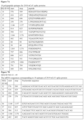
- HK polymers that may be used in the mRNA compositions include, but are not limited to, HK polymers where each of R 1 , R 2 , R 3 and R 4 is the same and selected from R A -R J (Table 1). These HK polymers are termed H2K4b, H3K4b, H3K(+H)4b, H3k(+H)4b, H-H3K(+H)4b, HH-H3K(+H)4b, H4K4b, H3K(1+H)4b, H3K(3+H)4b and H3K(1,3+H)4b, respectively.
- H2K4b KHKHHKHHKHHKHHKHK- (SEQ ID NO: 79) 4 3 2 1 _ H3K4b
- R B KHHHKHHHKHHHK- (SEQ ID NO: 80) K3K(+H)4b
- R C KHHHKHHHHHHKHHHK- (SEQ ID NO: 81) H3k(+H)4b
- R D kHHHkHHHkHHHHkHHHk- (SEQ ID NO: 82) H-H3K(+H)4b
- R E HKHHHKHHHHKHHHK- (SEQ ID NO: 83) HH-H3K(+H)4b
- R F HHKHHHKHHHHKHHHK- (SEQ ID NO: 84) H4K4b
- R G KHHHHKHHHHKHHHHK- (SEQ ID NO: 85) H3K(1 + H)4b
- Detection of mRNA uptake into cells can also be achieved using SmartFlare® technology (Millipore Sigma). These smart flares are beads that have a sequence attached that, when recognizing the RNA sequence in the cell, produce an increase in fluorescence that can be analyzed with a fluorescent microscope.
- H3K(+H)4b as a Carrier for mRNA Among HK Polymers
- compositions described herein may be administered to subjects, including human subjects, by any mode of administration that is conventionally used to administer vaccines.
- compositions can be in the form of an aerosol, dispersion, solution, or suspension and can be formulated for inhalation, intramuscular, oral, sublingual, buccal, parenteral, nasal, subcutaneous, intradermal, or topical administration.
- parenteral as used herein includes percutaneous, subcutaneous, intravascular (e.g., intravenous), intramuscular, or intrathecal injection or infusion techniques and the like.
- the methods described herein provide methods of making and using mRNA vaccines with a polypeptide delivery system and a polypeptide nanoparticle delivery system.
- CleanCap SARS-COV 2 spike protein S1P and S2P
- CleanCap Enhanced Green Fluorescent Protein EGFP expressed mRNA
- TriLink BioTechnologies, Inc San Diego, CA
- a chromatography buffer containing 10 mM HEPES (pH 7.2), 0.1 mM EDTA, 125 mM NaCl, 16% ethanol and cellulose fibers were added to microcentrifuge spin columns along with mRNA products and centrifuged. Almost 90% of dsRNA could be removed after this procedure (Baiersdorfer et. al, 2019). Contaminants could be also eliminated using FPLC and HPLC (Kariko et. al, 2011).
- mRNAs were transiently transfected into human embryonic kidney 293T cells (293T cells). Briefly, 4.8 ⁇ 10 5 cells were plated into a 6 well plate containing 2 ml of DMEM (10% fetal bovine serum and 1% Penicillin-Streptomycin (ThermoFisher Scientific)). After 24 hr, when the cells were 70-90% confluent, mRNAs were transfected into 293T cells using Lipofectamine MessengerMAX Transfection Reagent (ThermoFisher Scientific) according to the provided protocol. 293T cells were cultured for two day for in vitro protein expression measurement.
- DMEM fetal bovine serum
- Penicillin-Streptomycin ThermoFisher Scientific
- HEK 293 cells human embryonic kidney 293 cells
- DMEM fetal bovine serum
- Penicillin-Streptomycin ThermoFisher Scientific
- the transfer membrane was blocked with 5% fat-free milk powder in TBST for 1 hr at RT, incubated with primary antibody for overnight at 4° C., washed three times with TBST (0.05% Tween20 in TBS) buffer, and incubated with secondary antibody, which is HRP conjugated Mouse IgG (H+L) Secondary Antibody (ThermoFisher Scientific, A24512) for 1 hr at RT.
- Transfer membrane was developed by Pierce ECL Western Blotting Substrate (ThermoFisher Scientific) and was imaged using chemiluminescent imaging system.
- HKP(+H)/MC3 or HKP(+H)/DOTAP formulations (pre-mixed MC3 or DOTAP): HKP(+H) stock solution (10 mg/mL) was prepared in nuclease-free water. A concentrated stock solution was diluted to 4 mg/mL in water. DOTAP or MC3 is 1 mg/mL in aqueous buffered solution. mRNA working solution (1 mg/mL) was prepared in 1 mM citrate buffer (pH 6.0).
Landscapes
- Health & Medical Sciences (AREA)
- Life Sciences & Earth Sciences (AREA)
- Chemical & Material Sciences (AREA)
- Virology (AREA)
- General Health & Medical Sciences (AREA)
- Medicinal Chemistry (AREA)
- Public Health (AREA)
- Animal Behavior & Ethology (AREA)
- Veterinary Medicine (AREA)
- Pharmacology & Pharmacy (AREA)
- Organic Chemistry (AREA)
- Epidemiology (AREA)
- Engineering & Computer Science (AREA)
- Bioinformatics & Cheminformatics (AREA)
- Communicable Diseases (AREA)
- Immunology (AREA)
- Microbiology (AREA)
- Genetics & Genomics (AREA)
- Molecular Biology (AREA)
- Biomedical Technology (AREA)
- Mycology (AREA)
- Chemical Kinetics & Catalysis (AREA)
- Wood Science & Technology (AREA)
- Nuclear Medicine, Radiotherapy & Molecular Imaging (AREA)
- General Chemical & Material Sciences (AREA)
- Biochemistry (AREA)
- Zoology (AREA)
- Oncology (AREA)
- Pulmonology (AREA)
- Nanotechnology (AREA)
- Optics & Photonics (AREA)
- Physics & Mathematics (AREA)
- Dermatology (AREA)
- Gastroenterology & Hepatology (AREA)
- General Engineering & Computer Science (AREA)
- Biophysics (AREA)
- Proteomics, Peptides & Aminoacids (AREA)
- Biotechnology (AREA)
- Anesthesiology (AREA)
- Heart & Thoracic Surgery (AREA)
Abstract
Description

| (SEQ ID NO: 79) | |
| RA = KHKHHKHHKHHKHHKHHKHK- | |
| (SEQ ID NO: 80) | |
| RB = KHHHKHHHKHHHKHHHK- | |
| (SEQ ID NO: 81) | |
| RC = KHHHKHHHKHHHHKHHHK- | |
| (SEQ ID NO: 82) | |
| RD = kHHHkHHHkHHHHkHHHk- | |
| (SEQ ID NO: 83) | |
| RE = HKHHHKHHHKHHHHKHHHK- | |
| (SEQ ID NO: 84) | |
| RF = HHKHHHKHHHKHHHHKHHHK- | |
| (SEQ ID NO: 85) | |
| RG = KHHHHKHHHHKHHHHKHHHHK- | |
| (SEQ ID NO: 86) | |
| RH = KHHHKHHHKHHHKHHHHK- | |
| (SEQ ID NO: 87) | |
| RI = KHHHKHHHHKHHHKHHHK- | |
| (SEQ ID NO: 88) | |
| RJ = KHHHKHHHHKHHHKHHHHK- |
-
- 1) for H3K4b, the dominant repeating sequence in the branches is -HHHK- (SEQ ID NO: 107), thus “H3K” is part of the name; the “4b” refers to the number of branches;
- 2) there are four -HHHK- (SEQ ID NO: 107) motifs in each branch of H3K4b and analogues; the first -HHHK- (SEQ ID NO: 107) motif (“1”) is closest to the lysine core;
- 3) H3K(+H)4b is an analogue of H3K4b in which one extra histidine is inserted in the second -HHHK- (SEQ ID NO: 107) motif (motif 2) of H3K4b;
- 4) for H3K(1+H)4b and H3K(3+H)4b peptides, there is an extra histidine in the first (motif 1) and third (motif 3) motifs, respectively; 5) for H3K(1,3+H)4b, there are two extra histidines in both the first and the third motifs of the branches.
| TABLE 1 | ||
| Sequence | ||
| Polymer | Branch Sequence | Identifier |
| H2K4b | RA = KHKHHKHHKHHKHHKHHKHK- | (SEQ ID NO: 79) |
| 4 3 2 1 | ||
| _ | ||
| H3K4b | RB = KHHHKHHHKHHHKHHHK- | (SEQ ID NO: 80) |
| K3K(+H)4b | RC= KHHHKHHHKHHHHKHHHK- | (SEQ ID NO: 81) |
| H3k(+H)4b | RD = kHHHkHHHkHHHHkHHHk- | (SEQ ID NO: 82) |
| H-H3K(+H)4b | RE = HKHHHKHHHKHHHHKHHHK- | (SEQ ID NO: 83) |
| HH-H3K(+H)4b | RF = HHKHHHKHHHKHHHHKHHHK- | (SEQ ID NO: 84) |
| H4K4b | RG = KHHHHKHHHHKHHHHKHHHHK- | (SEQ ID NO: 85) |
| H3K(1 + H)4b | RH = KHHHKHHHKHHHKHHHHK- | (SEQ ID NO: 86) |
| H3K(3 + H)4b | RI = KHHHKHHHHKHHHKHHHK- | (SEQ ID NO: 87) |
| H3K(1, 3 + H)4b | RJ = KHHHKHHHHKHHHKHHHHK- | (SEQ ID NO: 88) |
| TABLE 2 | ||
| Polymer | Ratio(wt:wt; mRNA:Polymer) | RLU/ug-Protein |
| H3K(+H)4b | 1:4 | 1532.9 ± 122.9 |
| 1:8 | 1656.3 ± 202.5 | |
| 1:12 | 1033.4 ± 197 | |
| H3k(+H)4b | 1:4 | 1851.6 ± 138.3 |
| 1:8 | 1787.2 ± 195.2 | |
| 1:12 | 1982.3 ± 210.7 | |
| H3K4b | 1:4 | 156.8 ± 41.8 |
| 1:8 | 62.1 ± 13. 2 | |
| 1:12 | 18.1 ± 4.0 | |
| H3K(3 + H)4b | 1:4 | 61.7 ± 5.7 |
| 1:8 | 68.7 ± 3.1 | |
| 1:12 | 59.0 ± 7.5 | |
| H3K(1 + H)4b | 1:4 | 24.3 ± 4.5 |
| 1:8 | 15.0 ± 3.6 | |
| 1:12 | 7.3 ± 2.5 | |
| H-H3K(+H)4b | 1:4 | 1107.5 ± 140.4 |
| 1:8 | 874.6 ± 65.2 | |
| 1:12 | 676.4 ± 25.7 | |
| HH-H3K(+H)4b | 1:4 | 1101.9 ± 106.6 |
| 1:8 | 832.2 ± 75.3 | |
| 1:12 | 739.8 ± 105.4 | |
| H4K4b | 1:4 | 896. 4 ± 112. 6 |
| 1:8 | 821. 8 ± 115. 6 | |
| 1:12 | 522. 4 ± 69. 2 | |
| H3K(1, 3 + H)4b | 1:4 | 518. 3 ± 134. 7 |
| 1:8 | 427. 7 ± 18. 1 | |
| 1:12 | 378 ± 5. 2 | |
| H2K4b | 1:4 | 546. 7 ± 70. 1 |
| 1:8 | 132. 3 ± 58. 5 | |
| 1:12 | 194. 7 ± 18. 4 | |
Claims (19)
Priority Applications (1)
| Application Number | Priority Date | Filing Date | Title |
|---|---|---|---|
| US17/170,876 US12029786B2 (en) | 2020-02-07 | 2021-02-08 | Composition and method of mRNA vaccines against novel coronavirus infection |
Applications Claiming Priority (4)
| Application Number | Priority Date | Filing Date | Title |
|---|---|---|---|
| US202062971834P | 2020-02-07 | 2020-02-07 | |
| US202063058463P | 2020-07-29 | 2020-07-29 | |
| US202063130581P | 2020-12-24 | 2020-12-24 | |
| US17/170,876 US12029786B2 (en) | 2020-02-07 | 2021-02-08 | Composition and method of mRNA vaccines against novel coronavirus infection |
Publications (2)
| Publication Number | Publication Date |
|---|---|
| US20220040292A1 US20220040292A1 (en) | 2022-02-10 |
| US12029786B2 true US12029786B2 (en) | 2024-07-09 |
Family
ID=77200778
Family Applications (2)
| Application Number | Title | Priority Date | Filing Date |
|---|---|---|---|
| US17/170,876 Active 2041-07-13 US12029786B2 (en) | 2020-02-07 | 2021-02-08 | Composition and method of mRNA vaccines against novel coronavirus infection |
| US17/798,051 Abandoned US20230108926A1 (en) | 2020-02-07 | 2021-02-08 | COMPOSITION AND METHOD OF mRNA VACCINES AGAINST NOVEL CORONAVIRUS INFECTION |
Family Applications After (1)
| Application Number | Title | Priority Date | Filing Date |
|---|---|---|---|
| US17/798,051 Abandoned US20230108926A1 (en) | 2020-02-07 | 2021-02-08 | COMPOSITION AND METHOD OF mRNA VACCINES AGAINST NOVEL CORONAVIRUS INFECTION |
Country Status (11)
| Country | Link |
|---|---|
| US (2) | US12029786B2 (en) |
| EP (1) | EP4100066A4 (en) |
| JP (1) | JP2023512833A (en) |
| KR (1) | KR20220143684A (en) |
| CN (1) | CN115297892A (en) |
| AU (1) | AU2021216443A1 (en) |
| BR (1) | BR112022015626A2 (en) |
| CA (1) | CA3167257A1 (en) |
| IL (1) | IL295360A (en) |
| MX (1) | MX2022009688A (en) |
| WO (1) | WO2021159118A2 (en) |
Cited By (3)
| Publication number | Priority date | Publication date | Assignee | Title |
|---|---|---|---|---|
| US20230313323A1 (en) * | 2020-03-26 | 2023-10-05 | Ionian Technologies, Llc | Assays for detecting coronavirus disease 2019 (covid-19) |
| US20240370011A1 (en) * | 2021-11-19 | 2024-11-07 | RNAimmune, Inc. | Compositions and methods of ribonucleic acid respiratory syncytial virus (rsv) vaccines |
| US12280105B2 (en) | 2021-08-11 | 2025-04-22 | RNAimmune, Inc. | Compositions and methods of mRNA vaccines against novel coronavirus infection |
Families Citing this family (20)
| Publication number | Priority date | Publication date | Assignee | Title |
|---|---|---|---|---|
| CN115297892A (en) | 2020-02-07 | 2022-11-04 | 达冕生物有限公司 | Compositions and methods for mRNA vaccines against novel coronavirus infections |
| EP4103587A1 (en) * | 2020-02-14 | 2022-12-21 | Immunor AS | Corona virus vaccine |
| EP4119575A4 (en) * | 2020-03-10 | 2024-07-03 | Denka Company Limited | EPITOPES AND KIT FOR DETECTION OF SARS-COV-2 AND ANTI-SAR |
| CN113521269A (en) | 2020-04-22 | 2021-10-22 | 生物技术Rna制药有限公司 | Coronavirus vaccine |
| WO2021229270A1 (en) | 2020-05-13 | 2021-11-18 | Laboratorio Avi-Mex, S.A. De C.V. | Recombinant vaccine against covid-19 in a viral vector |
| US20250290165A1 (en) * | 2021-05-06 | 2025-09-18 | Transformative Biotech, Llc | Viral variant detection |
| WO2023020939A1 (en) * | 2021-08-17 | 2023-02-23 | Janssen Pharmaceuticals, Inc. | Sars-cov-2 vaccines |
| EP4404979A4 (en) * | 2021-09-22 | 2025-10-08 | Sirnaomics Inc | Pharmaceutical nanoparticipants with reduced nanoparticipant size and improved polydispersity index |
| EP4404973A4 (en) * | 2021-09-22 | 2025-10-15 | Sirnaomics Inc | IMPROVED NANOPARTICLE FORMULATIONS FROM HISTIDINE-LYSINE COPOLYMERS |
| CN113881806A (en) * | 2021-09-23 | 2022-01-04 | 华南理工大学 | Method and kit for detecting novel coronavirus and 69/70 mutant strain based on CRISPR/Cas12a technology |
| EP4183409A1 (en) * | 2021-11-17 | 2023-05-24 | Charité - Universitätsmedizin Berlin | Vaccine with improved immunogenicity against mutant coronaviruses |
| US12186387B2 (en) | 2021-11-29 | 2025-01-07 | BioNTech SE | Coronavirus vaccine |
| GB2615177A (en) * | 2021-11-29 | 2023-08-02 | BioNTech SE | Coronavirus vaccine |
| CN118556131A (en) | 2022-01-27 | 2024-08-27 | 爱思开生物科技有限公司 | mRNA and its template for protein expression |
| US20250228929A1 (en) * | 2022-04-03 | 2025-07-17 | Icahn School Of Medicine At Mount Sinai | Recombinant newcastle disease viruses and immunogenic compositions for use in immunizing against sars-cov-2 omicron variant |
| US20240207389A1 (en) * | 2022-04-27 | 2024-06-27 | Northwestern University | Methods for improving covid vaccine immunogenicity |
| WO2024002985A1 (en) * | 2022-06-26 | 2024-01-04 | BioNTech SE | Coronavirus vaccine |
| GB2620028B8 (en) * | 2022-06-26 | 2025-05-28 | BioNTech SE | Coronavirus vaccine |
| US12280104B2 (en) | 2022-11-01 | 2025-04-22 | RNAimmune, Inc. | Composition and methods for MRNA vaccines against novel omicron coronavirus infections |
| KR102832944B1 (en) * | 2024-12-27 | 2025-07-15 | 대한민국 | Pan-COVID-19 vaccine composition including consensus sequence of SARS-CoV-2 variants |
Citations (12)
| Publication number | Priority date | Publication date | Assignee | Title |
|---|---|---|---|---|
| US20170340725A1 (en) | 2015-10-22 | 2017-11-30 | Modernatx, Inc. | Combination piv3/hmpv rna vaccines |
| WO2018160690A1 (en) | 2017-02-28 | 2018-09-07 | Guangzhou Nanotides Pharmaceuticals Co., Ltd. | Rna pharmaceutical formulations for prophylactic and therapeutic treatment of zika virus infection |
| US20190351048A1 (en) | 2016-12-23 | 2019-11-21 | Curevac Ag | Mers coronavirus vaccine |
| US10973909B1 (en) | 2020-04-03 | 2021-04-13 | Peptc Vaccines Limited | Coronavirus vaccine |
| US20210316002A1 (en) | 2020-04-14 | 2021-10-14 | Ut-Battelle, Llc | Compositions and methods for drug delivery and treating viral infections |
| WO2021247779A1 (en) | 2020-06-03 | 2021-12-09 | Regeneron Pharmaceuticals, Inc. | METHODS FOR TREATING OR PREVENTING SARS-CoV-2 INFECTIONS AND COVID-19 WITH ANTI-SARS-CoV-2 SPIKE GLYCOPROTEIN ANTIBODIES |
| US20210388032A1 (en) | 2020-01-31 | 2021-12-16 | Janssen Pharmaceuticals, Inc. | Compositions and methods for preventing and treating coronavirus infection - sars-cov-2 vaccines |
| US20220064631A1 (en) | 2020-08-31 | 2022-03-03 | The Board Of Trustees Of The Leland Stanford Junior University | Systems and Methods for Producing RNA Constructs with Increased Translation and Stability |
| WO2022072910A1 (en) | 2020-10-02 | 2022-04-07 | Celsion Corporation | Polynucleotide vaccines and methods of using the same |
| CN115160413A (en) | 2021-04-06 | 2022-10-11 | 清华大学 | A new coronavirus vaccine |
| US20230108926A1 (en) | 2020-02-07 | 2023-04-06 | RNAimmune, Inc. | COMPOSITION AND METHOD OF mRNA VACCINES AGAINST NOVEL CORONAVIRUS INFECTION |
| US20230117167A1 (en) * | 2020-01-28 | 2023-04-20 | Codagenix Inc. | DEOPTIMIZED SARS-CoV-2 AND METHODS AND USES THEREOF |
Family Cites Families (4)
| Publication number | Priority date | Publication date | Assignee | Title |
|---|---|---|---|---|
| EP1270732A1 (en) * | 2001-06-21 | 2003-01-02 | Schuler, Gerold | Improved transfection of eukaryontic cells with linear polynucleotides by electroporation |
| DE102005046490A1 (en) * | 2005-09-28 | 2007-03-29 | Johannes-Gutenberg-Universität Mainz | New nucleic acid molecule comprising promoter, a transcriptable nucleic acid sequence, a first and second nucleic acid sequence for producing modified RNA with transcriptional stability and translational efficiency |
| MX357803B (en) * | 2012-03-27 | 2018-07-24 | Curevac Ag | Artificial nucleic acid molecules. |
| CN112703196A (en) * | 2018-05-24 | 2021-04-23 | 圣诺制药公司 | Compositions and methods for controllably coupling polypeptide nanoparticle delivery systems for nucleic acid therapy |
-
2021
- 2021-02-08 CN CN202180024212.1A patent/CN115297892A/en active Pending
- 2021-02-08 AU AU2021216443A patent/AU2021216443A1/en not_active Abandoned
- 2021-02-08 EP EP21750867.0A patent/EP4100066A4/en not_active Withdrawn
- 2021-02-08 CA CA3167257A patent/CA3167257A1/en active Pending
- 2021-02-08 MX MX2022009688A patent/MX2022009688A/en unknown
- 2021-02-08 KR KR1020227030556A patent/KR20220143684A/en not_active Withdrawn
- 2021-02-08 WO PCT/US2021/017149 patent/WO2021159118A2/en not_active Ceased
- 2021-02-08 BR BR112022015626A patent/BR112022015626A2/en not_active Application Discontinuation
- 2021-02-08 JP JP2022548143A patent/JP2023512833A/en active Pending
- 2021-02-08 IL IL295360A patent/IL295360A/en unknown
- 2021-02-08 US US17/170,876 patent/US12029786B2/en active Active
- 2021-02-08 US US17/798,051 patent/US20230108926A1/en not_active Abandoned
Patent Citations (13)
| Publication number | Priority date | Publication date | Assignee | Title |
|---|---|---|---|---|
| US20190240317A1 (en) * | 2015-10-22 | 2019-08-08 | Modernatx, Inc. | Hpiv3 rna vaccines |
| US20170340725A1 (en) | 2015-10-22 | 2017-11-30 | Modernatx, Inc. | Combination piv3/hmpv rna vaccines |
| US20190351048A1 (en) | 2016-12-23 | 2019-11-21 | Curevac Ag | Mers coronavirus vaccine |
| WO2018160690A1 (en) | 2017-02-28 | 2018-09-07 | Guangzhou Nanotides Pharmaceuticals Co., Ltd. | Rna pharmaceutical formulations for prophylactic and therapeutic treatment of zika virus infection |
| US20230117167A1 (en) * | 2020-01-28 | 2023-04-20 | Codagenix Inc. | DEOPTIMIZED SARS-CoV-2 AND METHODS AND USES THEREOF |
| US20210388032A1 (en) | 2020-01-31 | 2021-12-16 | Janssen Pharmaceuticals, Inc. | Compositions and methods for preventing and treating coronavirus infection - sars-cov-2 vaccines |
| US20230108926A1 (en) | 2020-02-07 | 2023-04-06 | RNAimmune, Inc. | COMPOSITION AND METHOD OF mRNA VACCINES AGAINST NOVEL CORONAVIRUS INFECTION |
| US10973909B1 (en) | 2020-04-03 | 2021-04-13 | Peptc Vaccines Limited | Coronavirus vaccine |
| US20210316002A1 (en) | 2020-04-14 | 2021-10-14 | Ut-Battelle, Llc | Compositions and methods for drug delivery and treating viral infections |
| WO2021247779A1 (en) | 2020-06-03 | 2021-12-09 | Regeneron Pharmaceuticals, Inc. | METHODS FOR TREATING OR PREVENTING SARS-CoV-2 INFECTIONS AND COVID-19 WITH ANTI-SARS-CoV-2 SPIKE GLYCOPROTEIN ANTIBODIES |
| US20220064631A1 (en) | 2020-08-31 | 2022-03-03 | The Board Of Trustees Of The Leland Stanford Junior University | Systems and Methods for Producing RNA Constructs with Increased Translation and Stability |
| WO2022072910A1 (en) | 2020-10-02 | 2022-04-07 | Celsion Corporation | Polynucleotide vaccines and methods of using the same |
| CN115160413A (en) | 2021-04-06 | 2022-10-11 | 清华大学 | A new coronavirus vaccine |
Non-Patent Citations (21)
| Title |
|---|
| CDC COVID-19 Treatment Guidelines, Dec. 2023, pp. 18-21, available from https://files.covid 19treatmentguidelines. nih.gov/guidelines/section/section_53.pdf (2023). |
| Chan et al., "A familial cluster of pneumonia associated with the 2019 novel coronavirus indicating person-to-person transmission: a study of a family cluster", Lancet, 2020, vol. 395, pp. 514-523, Epub Jan. 24, 2020. |
| Extended European Search Report on EP 21750867.0 DTD Apr. 3, 2024, 8 pages. |
| Genbank, Accession: QHD43416.1, Surface Glycoprotein [Wuhan searfood market pneumonia virus], Jan. 23, 2020, www.ncbi.nlm.nih.gov/protein/1791269090?sat=48&satkey=1085346. |
| Genbank_CP006842, Corynebacterium glyciniphilum AJ3170, complete genome GenBank Accession No. CP006842, Apr. 8, 2015, www.ncbi.nlm.nih.gov/nuccore/CP006842. |
| Huang et al., "Clinical features of patients infected with 2019 novel coronavirus in Wuhan, China", Lancet, Feb. 15, 2020, vol. 395, pp. 497-506. |
| International Search Report and Written Opinion for PCT/US2021/017149 dated Sep. 23, 2021, 21 pages. |
| Kon et al., "Principles for designing an optimal mRNA lipid nanoparticle vaccine," Curr. Opin. Biotechnol., 73:329-336 (2022). |
| Liu et al., "Potential inhibitors against 2019-nCOV coronavirus M protease from clinically approved medicines", J. Genet Genomics, Feb. 20, 2020, vol. 47(2), pp. 119-121. |
| Ljungberg et al. Expert Rev. Vaccines 14(2), 177-194 (Year: 2015). * |
| Lu et al. The Lancet vol. 395, Issue 10224 pp. 565-574 (Year: 2020). * |
| Lu et al., "Genomic characterisation and epidemiology of 2019 novel coronavirus: implications for virus origins and receptor binding", Lancet, 2020, vol. 395, pp. 565-574, epub 2020. |
| Menachery et al., "A SARS-like cluster of circulating bat coronaviruses shows potential for human emergence", Nat Med. 2015, vol. 21(12), pp. 1508-1513. |
| Midoux et al. (Expert Rev. Vaccines 14(2), 221-234 (Year: 2015). * |
| NCBI_NC_045512.2, Wuhan seafood market pneumonia virus isolate Wuhan-Hu-1, complete genome, NCBI accession No. NC_045512.2, Jan. 28, 2020, www.ncbi.nlm.nih.gov/nuccore/1798174254?sat=4&satkey=350670880. |
| Nicholson et al., "Tales of Detailed Poly(A) Tails," Trends in Cell Biology, 29(3):191-200 (Mar. 2019). |
| Non-Final Office Action on U.S. Appl. No. 18/385,879 DTD Mar. 8, 2024, 13 pages. |
| Seq ID# 1 prior art year of search 2023 (Year: 2023). * |
| Shi et al., "RBD-mRNA vaccine induces broadly neutralizing antibodies against Omicron and multiple other variants and protects mice from SARS-CoV-2 challenge," Transl. Res., 248:11-21 (Oct. 2022). |
| U.S. Appl. No. 18/385,879, filed Oct. 31, 2023. |
| Zhou et al., "A pneumonia outbreak associated with a new coronavirus of probably bat origin", Nature, 2020, vol. 579, pp. 270-273, Epub Feb. 3, 2020. |
Cited By (3)
| Publication number | Priority date | Publication date | Assignee | Title |
|---|---|---|---|---|
| US20230313323A1 (en) * | 2020-03-26 | 2023-10-05 | Ionian Technologies, Llc | Assays for detecting coronavirus disease 2019 (covid-19) |
| US12280105B2 (en) | 2021-08-11 | 2025-04-22 | RNAimmune, Inc. | Compositions and methods of mRNA vaccines against novel coronavirus infection |
| US20240370011A1 (en) * | 2021-11-19 | 2024-11-07 | RNAimmune, Inc. | Compositions and methods of ribonucleic acid respiratory syncytial virus (rsv) vaccines |
Also Published As
| Publication number | Publication date |
|---|---|
| JP2023512833A (en) | 2023-03-29 |
| KR20220143684A (en) | 2022-10-25 |
| EP4100066A2 (en) | 2022-12-14 |
| IL295360A (en) | 2022-10-01 |
| AU2021216443A1 (en) | 2022-09-08 |
| US20230108926A1 (en) | 2023-04-06 |
| WO2021159118A2 (en) | 2021-08-12 |
| EP4100066A4 (en) | 2024-05-01 |
| CN115297892A (en) | 2022-11-04 |
| WO2021159118A3 (en) | 2021-10-28 |
| US20220040292A1 (en) | 2022-02-10 |
| WO2021159118A8 (en) | 2022-09-22 |
| BR112022015626A2 (en) | 2022-10-11 |
| MX2022009688A (en) | 2022-12-15 |
| CA3167257A1 (en) | 2021-08-12 |
Similar Documents
| Publication | Publication Date | Title |
|---|---|---|
| US20220040292A1 (en) | Composition and Method of mRNA Vaccines Against Novel Coronavirus Infection | |
| CN115768521B (en) | RNAi pharmaceutical composition and method for preventing and treating severe acute respiratory infection caused by novel coronavirus infection | |
| US12280105B2 (en) | Compositions and methods of mRNA vaccines against novel coronavirus infection | |
| US20240294580A1 (en) | Compositions and methods of ribonucleic acid respiratory syncytial virus (rsv) vaccines | |
| WO2022110099A1 (en) | Coronavirus vaccines and uses thereof | |
| US12280104B2 (en) | Composition and methods for MRNA vaccines against novel omicron coronavirus infections | |
| WO2023051701A1 (en) | Mrna, protein and vaccine against sars-cov-2 infection | |
| KR20230008707A (en) | Vaccine composition for treatment of coronavirus | |
| CN114832100A (en) | Preparation method of nCOVsiRNA medicine for delivering shRNA in RBD targeting manner | |
| WO2023098679A1 (en) | Novel coronavirus mrna vaccine against mutant strains | |
| US20230218746A1 (en) | Compositions and methods relating to antiviral therapeutics | |
| JP2026514290A (en) | Nucleic acids and their use | |
| KR102948559B1 (en) | Modified Coronavirus Spike Proteins as Vaccine Antigens and Uses Thereof | |
| US20260083836A1 (en) | Modified coronavirus spike antigen protein and uses thereof | |
| US20260041759A1 (en) | COVID19 mRNA Vaccine | |
| US20250002540A1 (en) | Exosomal nucleic acid vaccine composition for protection against sars-cov-2 infection and disease | |
| WO2025024336A1 (en) | Compositions and methods of ribonucleic acid respiratory syncytial virus (rsv) vaccines | |
| WO2024234754A1 (en) | Method for constructing circular rna and vaccine against fipv | |
| CN116254256A (en) | A kind of synthetic method of chemical drug nCoVshRNA 2RBD | |
| WO2024234755A1 (en) | Development of multi-antigen mrna vaccine against feline fipv | |
| WO2023083315A1 (en) | Ncovsirna drug for targeted delivery of shrna by using rbd, synthesis method therefor and use thereof | |
| CN116042656A (en) | A kind of monkeypox virus mRNA vaccine and its preparation method and application |
Legal Events
| Date | Code | Title | Description |
|---|---|---|---|
| FEPP | Fee payment procedure |
Free format text: ENTITY STATUS SET TO UNDISCOUNTED (ORIGINAL EVENT CODE: BIG.); ENTITY STATUS OF PATENT OWNER: SMALL ENTITY |
|
| FEPP | Fee payment procedure |
Free format text: ENTITY STATUS SET TO SMALL (ORIGINAL EVENT CODE: SMAL); ENTITY STATUS OF PATENT OWNER: SMALL ENTITY |
|
| STPP | Information on status: patent application and granting procedure in general |
Free format text: DOCKETED NEW CASE - READY FOR EXAMINATION |
|
| STPP | Information on status: patent application and granting procedure in general |
Free format text: NON FINAL ACTION MAILED |
|
| AS | Assignment |
Owner name: RNAIMMUNE, INC., MARYLAND Free format text: ASSIGNMENT OF ASSIGNORS INTEREST;ASSIGNORS:TANG, SHENGGAO;SHEN, DONG;LU, CHUN;AND OTHERS;SIGNING DATES FROM 20230523 TO 20230603;REEL/FRAME:063865/0571 |
|
| STPP | Information on status: patent application and granting procedure in general |
Free format text: RESPONSE TO NON-FINAL OFFICE ACTION ENTERED AND FORWARDED TO EXAMINER |
|
| STPP | Information on status: patent application and granting procedure in general |
Free format text: NON FINAL ACTION MAILED |
|
| STPP | Information on status: patent application and granting procedure in general |
Free format text: RESPONSE TO NON-FINAL OFFICE ACTION ENTERED AND FORWARDED TO EXAMINER |
|
| STPP | Information on status: patent application and granting procedure in general |
Free format text: NOTICE OF ALLOWANCE MAILED -- APPLICATION RECEIVED IN OFFICE OF PUBLICATIONS |
|
| ZAAB | Notice of allowance mailed |
Free format text: ORIGINAL CODE: MN/=. |
|
| STPP | Information on status: patent application and granting procedure in general |
Free format text: AWAITING TC RESP., ISSUE FEE NOT PAID |
|
| STPP | Information on status: patent application and granting procedure in general |
Free format text: NOTICE OF ALLOWANCE MAILED -- APPLICATION RECEIVED IN OFFICE OF PUBLICATIONS |
|
| STPP | Information on status: patent application and granting procedure in general |
Free format text: PUBLICATIONS -- ISSUE FEE PAYMENT VERIFIED |
|
| STPP | Information on status: patent application and granting procedure in general |
Free format text: NOTICE OF ALLOWANCE MAILED -- APPLICATION RECEIVED IN OFFICE OF PUBLICATIONS |
|
| STPP | Information on status: patent application and granting procedure in general |
Free format text: PUBLICATIONS -- ISSUE FEE PAYMENT VERIFIED |
|
| STCF | Information on status: patent grant |
Free format text: PATENTED CASE |
|
| CC | Certificate of correction | ||
| AS | Assignment |
Owner name: RNAIMMUNE VACCINE (GUANGZHOU) CO., LTD, CHINA Free format text: ASSIGNMENT OF ASSIGNORS INTEREST; ASSIGNOR: RNAIMMUNE, INC.; REEL/FRAME: 072714/0821 Effective date: 20251029 Owner name: SUZHOU BIOMEDICAL INDUSTRY INNOVATION CENTER, CHINA Free format text: ASSIGNMENT OF ASSIGNORS INTEREST; ASSIGNOR: RNAIMMUNE, INC.; REEL/FRAME: 072714/0821 Effective date: 20251029 |