US12018020B2 - Crystalline forms of 1-[(3R,4S)-4-cyanotetrahydropyran-3-yl]-3-[(2-fluoro-6-methoxy-4-pyridyl)amino]pyrazole-4-carboxamide - Google Patents
Crystalline forms of 1-[(3R,4S)-4-cyanotetrahydropyran-3-yl]-3-[(2-fluoro-6-methoxy-4-pyridyl)amino]pyrazole-4-carboxamide Download PDFInfo
- Publication number
- US12018020B2 US12018020B2 US17/311,560 US201917311560A US12018020B2 US 12018020 B2 US12018020 B2 US 12018020B2 US 201917311560 A US201917311560 A US 201917311560A US 12018020 B2 US12018020 B2 US 12018020B2
- Authority
- US
- United States
- Prior art keywords
- crystalline
- peak
- spectrum
- crystalline form
- pyrazole
- Prior art date
- Legal status (The legal status is an assumption and is not a legal conclusion. Google has not performed a legal analysis and makes no representation as to the accuracy of the status listed.)
- Active, expires
Links
Images



Classifications
-
- C—CHEMISTRY; METALLURGY
- C07—ORGANIC CHEMISTRY
- C07D—HETEROCYCLIC COMPOUNDS
- C07D405/00—Heterocyclic compounds containing both one or more hetero rings having oxygen atoms as the only ring hetero atoms, and one or more rings having nitrogen as the only ring hetero atom
- C07D405/14—Heterocyclic compounds containing both one or more hetero rings having oxygen atoms as the only ring hetero atoms, and one or more rings having nitrogen as the only ring hetero atom containing three or more hetero rings
-
- A—HUMAN NECESSITIES
- A61—MEDICAL OR VETERINARY SCIENCE; HYGIENE
- A61K—PREPARATIONS FOR MEDICAL, DENTAL OR TOILETRY PURPOSES
- A61K31/00—Medicinal preparations containing organic active ingredients
- A61K31/33—Heterocyclic compounds
- A61K31/395—Heterocyclic compounds having nitrogen as a ring hetero atom, e.g. guanethidine or rifamycins
- A61K31/435—Heterocyclic compounds having nitrogen as a ring hetero atom, e.g. guanethidine or rifamycins having six-membered rings with one nitrogen as the only ring hetero atom
- A61K31/44—Non condensed pyridines; Hydrogenated derivatives thereof
- A61K31/4427—Non condensed pyridines; Hydrogenated derivatives thereof containing further heterocyclic ring systems
- A61K31/4439—Non condensed pyridines; Hydrogenated derivatives thereof containing further heterocyclic ring systems containing a five-membered ring with nitrogen as a ring hetero atom, e.g. omeprazole
-
- A—HUMAN NECESSITIES
- A61—MEDICAL OR VETERINARY SCIENCE; HYGIENE
- A61P—SPECIFIC THERAPEUTIC ACTIVITY OF CHEMICAL COMPOUNDS OR MEDICINAL PREPARATIONS
- A61P17/00—Drugs for dermatological disorders
-
- A—HUMAN NECESSITIES
- A61—MEDICAL OR VETERINARY SCIENCE; HYGIENE
- A61P—SPECIFIC THERAPEUTIC ACTIVITY OF CHEMICAL COMPOUNDS OR MEDICINAL PREPARATIONS
- A61P17/00—Drugs for dermatological disorders
- A61P17/04—Antipruritics
-
- A—HUMAN NECESSITIES
- A61—MEDICAL OR VETERINARY SCIENCE; HYGIENE
- A61P—SPECIFIC THERAPEUTIC ACTIVITY OF CHEMICAL COMPOUNDS OR MEDICINAL PREPARATIONS
- A61P19/00—Drugs for skeletal disorders
- A61P19/02—Drugs for skeletal disorders for joint disorders, e.g. arthritis, arthrosis
-
- A—HUMAN NECESSITIES
- A61—MEDICAL OR VETERINARY SCIENCE; HYGIENE
- A61P—SPECIFIC THERAPEUTIC ACTIVITY OF CHEMICAL COMPOUNDS OR MEDICINAL PREPARATIONS
- A61P35/00—Antineoplastic agents
-
- C—CHEMISTRY; METALLURGY
- C07—ORGANIC CHEMISTRY
- C07B—GENERAL METHODS OF ORGANIC CHEMISTRY; APPARATUS THEREFOR
- C07B2200/00—Indexing scheme relating to specific properties of organic compounds
- C07B2200/13—Crystalline forms, e.g. polymorphs
Definitions
- WO 2018/108969 discloses compounds of formula I which are selective Janus kinase (JAK) inhibitors, and as such are useful for the treatment of JAK-mediated diseases such as atopic dermatitis, arthritis, and cancer.
- JAK Janus kinase
- 1-[(3R,4S)-4-cyanotetrahydropyran-3-yl]-3-[(2-fluoro-6-methoxy-4-pyridyl)amino]pyrazole-4-carboxamide (I) is disclosed.
- WO 2013/041042 discloses pyrazole carboxamides as Janus kinase inhibitors that are useful for the treatment of rheumatoid arthritis, asthma, chronic obstructive pulmonary disease (COPD) and cancer.
- the compounds of this disclosure are of the following formula
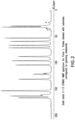
- FIG. 1 is a is a characteristic X-ray powder diffraction pattern of the crystalline Form 1
- FIG. 2 is a carbon-13 cross-polarization magic-angle spinning (CPMAS) nuclear magnetic resonance (NMR) spectrum of the crystalline Form 1. Peaks labeled with asterisks correspond to spinning sidebands.
- CPMAS cross-polarization magic-angle spinning
- NMR nuclear magnetic resonance
- FIG. 3 is a typical DSC thermogram of the crystalline Form 1.
- FIG. 4 is a is a characteristic X-ray powder diffraction pattern of the crystalline Form 2
- FIG. 5 is a carbon-13 cross-polarization magic-angle spinning (CPMAS) nuclear magnetic resonance (NMR) spectrum of the crystalline Form 2. Peaks labeled with asterisks correspond to spinning sidebands.
- CPMAS cross-polarization magic-angle spinning
- NMR nuclear magnetic resonance
- FIG. 6 is a typical DSC thermogram of the crystalline Form 2.
- FIG. 7 is a is a characteristic X-ray powder diffraction pattern of the crystalline hydrate form.
- FIG. 8 is a carbon-13 cross-polarization magic-angle spinning (CPMAS) nuclear magnetic resonance (NMR) spectrum of the crystalline hydrate form. Peaks labeled with asterisks correspond to spinning sidebands.
- CPMAS cross-polarization magic-angle spinning
- NMR nuclear magnetic resonance
- FIG. 9 is a typical DSC thermogram of the crystalline hydrate form.
- Form 1 and Form 2 of 1-[(3R,4S)-4-cyanotetrahydropyran-3-yl]-3-[(2-fluoro-6-methoxy-4-pyridyl)amino]pyrazole-4-carboxamide are monotropically related.
- Form 1 is the themodynamically most stable form at all temperatures.
- Form 1 polymorph crystals there are several advantages of the Form 1 polymorph crystals over Form 2 polymorph crystals. First, it's the thermodynamically most stable form. In addition, Form 1 carries lower risk of conversion to hydrate under humid conditions.
- An embodiment of the invention is a crystalline form (Form 1) of 1-[(3R,4S)-4-cyanotetrahydropyran-3-yl]-3-[(2-fluoro-6-methoxy-4-pyridyl)amino]pyrazole-4-carboxamide (I) having at least one of the following characteristics:
- the crystalline Form 1 has an X-ray powder diffraction (XRPD) pattern comprising peaks in terms of degrees 2 ⁇ ( ⁇ 0.2) at 6.7, 13.9 and 19.9.
- XRPD X-ray powder diffraction
- the crystalline Form 1 has a X-ray powder diffraction (XRPD) pattern further comprising peaks in terms of degrees 2 ⁇ ( ⁇ 0.2) at 5.0, a doublet peak at 20.4 and 20.9 and a doublet peak at 22.2 and 22.6.
- XRPD X-ray powder diffraction
- the crystalline Form 1 has a X-ray powder diffraction (XRPD) pattern further comprising a peak set in terms of degrees 2 ⁇ ( ⁇ 0.2) at 24.7, 26.6 and 29.1.
- XRPD X-ray powder diffraction
- the crystalline Form 1 has an X-ray powder diffraction (XRPD) pattern substantially as shown in FIG. 1 .
- XRPD X-ray powder diffraction
- the crystalline Form 1 has a carbon-13 cross-polarization magic-angle spinning (CPMAS) nuclear magnetic resonance (NMR) spectrum substantially as shown in FIG. 2 .
- CPMAS carbon-13 cross-polarization magic-angle spinning
- NMR nuclear magnetic resonance
- the crystalline Form 1 has a differential scanning calorimetry (DSC) thermogram substantially as shown in FIG. 3 .
- DSC differential scanning calorimetry
- Another embodiment of the invention is a crystalline form (Form 2) of 1-[(3R,4S)-4-cyanotetrahydropyran-3-yl]-3-[(2-fluoro-6-methoxy-4-pyridyl)amino]pyrazole-4-carboxamide (I) having at least one of the following characteristics:
- the crystalline Form 2 has a X-ray powder diffraction (XRPD) pattern comprising peaks in terms of degrees 2 ⁇ ( ⁇ 0.2) at 6.3, 7.9 and 12.7.
- XRPD X-ray powder diffraction
- the crystalline Form 2 has a X-ray powder diffraction (XRPD) pattern further comprising peaks in terms of degrees 2 ⁇ ( ⁇ 0.2) a doublet peak at 14.9 and 15.1 and a doublet peak at 16.9 and 17.1.
- XRPD X-ray powder diffraction
- the crystalline Form 2 has an X-ray powder diffraction (XRPD) pattern substantially as shown in FIG. 4 .
- XRPD X-ray powder diffraction
- the crystalline Form 2 has carbon-13 cross-polarization magic-angle spinning (CPMAS) nuclear magnetic resonance (NMR) spectrum substantially as shown in FIG. 5 .
- CPMAS cross-polarization magic-angle spinning
- NMR nuclear magnetic resonance
- the crystalline Form 2 has a differential scanning calorimetry (DSC) thermogram substantially as shown in FIG. 6 .
- DSC differential scanning calorimetry
- Another embodiment of the invention is a crystalline hydrate form of 1-[(3R,4S)-4-cyanotetrahydropyran-3-yl]-3-[(2-fluoro-6-methoxy-4-pyridyl)amino]pyrazole-4-carboxamide (I) having at least one of the following characteristics:
- the crystalline hydrate form has an X-ray powder diffraction (XRPD) pattern comprising peaks in terms of degrees 2 ⁇ ( ⁇ 0.2) at 7.3, a triplet at 12.6, 12.9 and 13.1 and a peak at 17.4.
- XRPD X-ray powder diffraction
- the crystalline hydrate form has a X-ray powder diffraction (XRPD) pattern further comprising peaks in terms of degrees 2 ⁇ ( ⁇ 0.2) at 16.2, 21.8, 27.8 and 28.4.
- XRPD X-ray powder diffraction
- the crystalline hydrate form has an X-ray powder diffraction (XRPD) pattern substantially as shown in FIG. 7 .
- XRPD X-ray powder diffraction
- the crystalline hydrate form has a carbon-13 cross-polarization magic-angle spinning (CPMAS) nuclear magnetic resonance (NMR) spectrum substantially as shown in FIG. 8 .
- CPMAS carbon-13 cross-polarization magic-angle spinning
- NMR nuclear magnetic resonance
- the crystalline hydrate form has a having a differential scanning calorimetry (DSC) thermogram substantially as shown in FIG. 9 .
- DSC differential scanning calorimetry
- Another embodiment is a pharmaceutical composition
- a pharmaceutical composition comprising the anyone of the above crystalline forms and a pharmaceutical excipient.
- An embodiment of the pharmaceutical composition wherein the crystalline form is substantially purified.
- Another embodiment is a method of treating or preventing a JAK-mediated disease or condition in a mammal comprising administering anyone of the above compositions.
- the JAK-mediated disease or condition is atopic dermatitis.
- Another embodiment is a process for preparing the crystalline form of anyone of claims 1 - 12 comprising either precipitating the crystalline form from a solution or by heating a slurry of 1-[(3R,4S)-4-cyanotetrahydropyran-3-yl]-3-[(2-fluoro-6-methoxy-4-pyridyl)amino]pyrazole-4-carboxamide (I) and by optionally inducing formation of the desired form by seeding the mixture with seeds of the desired form.
- the solvent or mixture of solvents is selected from the group consisting of methanol, DMAc, toluene, xylenes and ethyl acetate or mixtures thereof.
- a quantity of crystalline form seeds are added to the solution or slurry.
- the quantity of seeds is from about 0.1% to about 10.0%, preferably about 1.0 to about 5.0% of the weight of the 1-[(3R,4S)-4-cyanotetrahydropyran-3-yl]-3-[(2-fluoro-6-methoxy-4-pyridyl)amino]pyrazole-4-carboxamide (I).
- the solution or slurry is heated to reflux.
- the solvent is added in portions.
- the reflux temperature is between about 60° C. and about 70° C. and the solution is cooled to a temperature of lower then about 25° C.
- Dimethylacetamide (DMAc or DMA) is an organic compound of formula CH3C(O)N(CH3)2 which is commonly used as a solvent.
- the crystalline hydrate has the advantage of being more stable in an aqueous containing formulation than a non-hydrated crystalline form.
- XRPD X-ray powder diffraction
- CPMAS carbon-13 cross-polarization magic-angle spinning
- NMR nuclear magnetic resonance
- DSC differential scanning calorimetry
- substantially purified refers to a crystalline form of the compound that is at least 90% pure. In an alternate embodiment, “substantially purified” refers to a crystalline form of the compound that is at least 95%, 99%, or 99.9% pure.
- the Form I seeds were obtained via slurry to slurry turnover in refluxing methanol (30 volumes). The mixture was stirred at 275 rpm and aged for 14.5 h. The slurry was cooled from 65° C. to 20° C. over 12 h and then aged at 20° C. for 6 h.
- Crude API 150 g was purified and obtained as a hydrate. The hydrate was then stirred in methanol at reflux with 5% form 1 seed for 14 hours. The slurry was sampled at reflux for XRPD, which indicated a small amount of form 2 was present ( ⁇ 5%). The slurry was cooled to 20° C. and wet milled for 30 minutes at 5200 rpm using an IKA Ultra Turrax wetmill. It was then returned to reflux for another 16 hours.
- the slurry was milled for 60 min, aged for 2 hours at 0° C. and then filtered.
- the isolated product was washed with methanol (2 ⁇ 160 mL) and then dried under vacuum at room temperature for 2 hours followed by drying in a vacuum oven at 50° C. for 16 hours. 46.6 g of Form 1 crystals obtained.
- Form 2 was obtained as described in WO 2018/108969.
- Form 2 (0.2 g) was slurried in water (10 mL) at RT for 14 days. The suspension was then filtered and vacuum dried at ambient condition (0.18 g isolated). Hydrate formation was confirmed by PXRD.
- Form 2 (0.1 g) was slurried in 70/30 (v/v) MeOH/H2O (2 mL) at RT for 1 day. The suspension was then filtered and vacuum dried at ambient condition (X g isolated). Hydrate formation was confirmed by PXRD
- X-ray powder diffraction studies are widely used to characterize molecular structures, crystallinity, and polymorphism.
- the X-ray powder diffraction patterns of Form 1 and Form 2 and of the hydrate were generated on Bruker AXS D8 Advance with a LYNXEYE XE-T detector in reflection mode.
- Form 1, 2 and hydrate samples were further characterized based on their carbon-13 solid-state nuclear magnetic resonance (NMR) spectrum.
- NMR nuclear magnetic resonance
- the carbon-13 spectrum was recorded on a Bruker AV400 NMR spectrometer operating at a carrier frequency of 400.14 MHz, using a Bruker 4 mm H/F/X BB triple resonance CPMAS probe.
- the spectrum was collected utilizing proton/carbon-13 variable-amplitude cross-polarization (VACP) at 80 kHz, with a contact time of 3 ms.
- VACP proton/carbon-13 variable-amplitude cross-polarization
- DSC data were acquired using TA Instruments DSC Q2000 or equivalent instrumentation.
- a sample with a weight between 1 and 6 mg is weighed into an open pan. This pan is placed in the sample position in the calorimeter cell. An empty pan is placed in the reference position. The calorimeter cell is closed and a flow of nitrogen is passed through the cell.
- the heating program is set to heat the sample at a heating rate of 10° C./min to a temperature of approximately 275° C.
- the data are analyzed using the DSC analysis program in the system software.
- the observed endo- and exotherms are integrated between baseline temperature points that are above and below the temperature range over which the endotherm or exotherm is observed.
- the data reported are the onset temperature, peak temperature and enthalpy.
- FIG. 1 shows the X-ray powder diffraction pattern of Form 1.
- Form 1 exhibited characteristic diffraction peaks corresponding to d-spacings of 12.7, 6.4, and 4.5 angstroms.
- Form 1 was further characterized by the d-spacings of 5.0, a doublet peak at 4.4 and 4.2 angstroms and another doublet peak at 4.0 and 3.9 angstroms.
- Form 1 was even further characterized by the d-spacings of a peak set at 3.6, 3.4, and 3.1 angstroms.
- Peak Position d-Spacing [°2 ⁇ ] [ ⁇ ] 6.9 12.7 9.7 9.1 9.9 9.0 13.9 6.4 15.5 5.7 15.6 5.7 17.8 5.0 19.6 4.5 19.9 4.5 20.4 4.4 20.9 4.2 22.2 4.0 22.6 3.9 24.7 3.6 25.0 3.6 25.4 3.5 26.6 3.4 28.0 3.2 29.1 3.1 29.5 3.0 30.0 3.0 30.2 3.0 31.2 2.9 31.6 2.8 34.7 2.6 35.1 2.6 35.5 2.5 36.4 2.5 37.7 2.4 37.8 2.4 38.3 2.3
- Form 1 was characterized based on its solid-state carbon-13 nuclear magnetic resonance (NMR) spectrum (see FIG. 2 ).
- the carbon-13 spectrum was recorded on a Bruker AV400 NMR spectrometer operating at a carrier frequency of 400.14 MHz, using a Bruker 4 mm H/F/X BB triple resonance CPMAS probe.
- the spectrum was collected utilizing proton/carbon-13 variable-amplitude cross-polarization (VACP) at 80 kHz, with a contact time of 3 ms.
- VACP proton/carbon-13 variable-amplitude cross-polarization
- Other experimental parameters used for data acquisition were a proton 90-degree pulse of 100 kHz, SPINAL64 decoupling at 100 kHz, a pulse delay of 30.0 s, and signal averaging for 2900 scans.
- the magic-angle spinning (MAS) rate was set to 13 kHz.
- a Lorentzian line broadening of 30 Hz was applied to the spectrum before Fourier Transformation. Chemical shifts are reported on the TMS scale using the carbonyl carbon of glycine (176.70 ppm.) as a secondary reference.
- Characteristic carbon-13 isotropic chemical shifts for Form 1 are observed at 30.61, 32.60, 53.4022, 59.59, 67.21, 71.93, 88.50, 96.35, 104.47, 120.39, 121.95, 131.45, 153.31, 161.41, 163.36, and 166.70 ppm.
- FIG. 3 is a typical DSC thermogram of the crystalline Form 1.
- the DSC thermogram is characterized by a melting endotherm with an extrapolated onset temperature of 256.9° C., a peak temperature of 257.2° C. and enthalpy of 127.1 J/g.
- FIG. 4 shows the X-ray powder diffraction pattern of 1-[(3R,4S)-4-cyanotetrahydropyran-3-yl]-3-[(2-fluoro-6-methoxy-4-pyridyl)amino]pyrazole-4-carboxamide Crystalline Form 2 exhibited characteristic diffraction peaks corresponding to d-spacings of 13.9, 11.2, and 7.0 angstroms. Form 2 was further characterized by the d-spacings of a doublet peak at 6.0 and 5.9 angstroms and another doublet peak at 5.3 and 5.2 angstroms.
- Form 2 was characterized based on its solid-state carbon-13 nuclear magnetic resonance (NMR) spectrum (see FIG. 5 ).
- the carbon-13 spectrum was recorded on a Bruker AV400 NMR spectrometer operating at a carrier frequency of 400.14 MHz, using a Bruker 4 mm H/F/X BB triple resonance CPMAS probe.
- the spectrum was collected utilizing proton/carbon-13 variable-amplitude cross-polarization (VACP) at 80 kHz, with a contact time of 3 ms.
- VACP proton/carbon-13 variable-amplitude cross-polarization
- Other experimental parameters used for data acquisition were a proton 90-degree pulse of 100 kHz, SPINAL64 decoupling at 100 kHz, a pulse delay of 17.0 s, and signal averaging for 5916 scans.
- the magic-angle spinning (MAS) rate was set to 13 kHz.
- a Lorentzian line broadening of 30 Hz was applied to the spectrum before Fourier Transformation. Chemical shifts are reported on the TMS scale using the carbonyl carbon of glycine (176.70 ppm.) as a secondary reference.
- Characteristic carbon-13 isotropic chemical shifts for Form 2 are observed at 29.39, 30.67, 32.06, 52.40, 54.80, 59.92, 65.57, 67.64, 71.01, 72.30 88.52, 92.33, 93.02, 103.96, 121.32, 122.79, 130.85, 152.10, 162.16, 163.05, 164.45, and 168.12 ppm.
- FIG. 6 is a typical DSC thermogram of the crystalline Form 2.
- the DSC thermogram is characterized by a melting endotherm with an extrapolated onset temperature of 251.8° C., a peak temperature of 252.9° C. and enthalpy of 124.6 J/g.
- FIG. 7 shows the X-ray powder diffraction pattern of 1-[(3R,4S)-4-cyanotetrahydropyran-3-yl]-3-[(2-fluoro-6-methoxy-4-pyridyl)amino]pyrazole-4-carboxamide crystalline hydrate form exhibited characteristic diffraction peaks corresponding to d-spacings of 12.1, a triplet peak at 7.0, 6.9 and 6.7 angstroms and a peak at 5.1 angstroms.
- the hydrate form was further characterized by the d-spacings of 5.5, 4.1, 3.2 and 3.1 angstroms.
- Peak Position d-Spacing [°2 ⁇ ] [ ⁇ ] 7.3 12.1 7.5 11.8 9.8 9.0 12.6 7.0 12.9 6.9 13.1 6.7 14.7 6.0 15.0 5.9 15.8 5.6 16.2 5.5 16.9 5.2 17.4 5.1 18.6 4.8 19.3 4.6 19.9 4.5 20.6 4.3 21.8 4.1 22.6 3.9 23.2 3.8 23.5 3.8 24.3 3.7 24.7 3.6 25.3 3.5 25.5 3.5 25.9 3.4 26.4 3.4 26.8 3.3 27.2 3.3 27.8 3.2 28.4 3.1 29.7 3.0 30.2 3.0 30.5 2.9 31.2 2.9 31.6 2.8 31.7 2.8 32.0 2.8 32.7 2.7 33.6 2.7 34.5 2.6 35.0 2.6 35.3 2.5 35.6 2.5 36.9 2.4 38.4 2.3 38.9 2.3 39.4 2.3
- the hydrate was characterized based on its solid-state carbon-13 nuclear magnetic resonance (NMR) spectrum.
- NMR nuclear magnetic resonance
- the carbon-13 spectrum was recorded on a Bruker AV400 NMR spectrometer operating at a carrier frequency of 400.14 MHz, using a Bruker 4 mm H/F/X BB triple resonance CPMAS probe.
- the spectrum was collected utilizing proton/carbon-13 variable-amplitude cross-polarization (VACP) at 80 kHz, with a contact time of 3 ms.
- VACP proton/carbon-13 variable-amplitude cross-polarization
- Other experimental parameters used for data acquisition were a proton 90-degree pulse of 100 kHz, SPINAL64 decoupling at 100 kHz, a pulse delay of 1.6 s, and signal averaging for 8000 scans.
- the magic-angle spinning (MAS) rate was set to 13 kHz.
- a Lorentzian line broadening of 30 Hz was applied to the spectrum before Fourier Transformation. Chemical shifts are reported on the TMS scale using the carbonyl carbon of glycine (176.70 ppm.) as a secondary reference.
- Characteristic carbon-13 isotropic chemical shifts for the hydrate are observed at 29.80, 30.52, 54.35, 60.67, 65.45, 70.62, 89.08, 92.52, 102.17, 121.96, 123.48, 131.05, 152.21, 163.46, 164.53, and 168.40 ppm.
- FIG. 9 is a typical DSC curve of the crystalline hydrate form.
- the DSC curve is characterized by two endotherms and one exotherm.
- the first endotherm with an extrapolated onset temperature of 27.4° C., a peak temperature of 52.1° C., and enthalpy of 46.6 J/g is due to dehydration.
- the exotherm with an extrapolated onset temperature of 164.1° C. is due to solid phase transition to Form 2.
- the endotherm with an extrapolated onset temperature of 253.9° C., a peak temperature of 255.1° C. and enthalpy of 124.6 J/g is due to melting of Form 2.
- Form 1 and Form 2 are monotropically related. Form 1 is more stable than Form 2. Hydrate is the most stable form in aqueous solutions.
- Form 1 and Form 2 are physically and chemically stable after 12 months of storage at 40° C./75% relative humidity (RH) and 55° C. There is a risk of Form 2 conversion to hydrate at the typical wet granulation temperature when seeds of hydrate are present. Small scale crystallization process studies demonstrated that Form 1 can be consistently delivered.
- Form 1 remained as Form 1 after slurried in MeOH for 3 weeks at room temperature (RT).
- RT room temperature
- ⁇ 10 mg each of Form 1 and Form 2 were slurried in 1 mL of MeOH at 50° C., full conversion to Form 1 was observed after 4 days.
- Form 2 When Form 2 was slurried in 2-Me-THF, Ethyl Acetate, MeOH or MeOH/toluene (70:30 v/v) at 50° C., seeded with Form 1 at 14 days and equilibrated for an additional 14 days (28 days total), full or conversion to Form 1 was observed. Partial conversion was observed after 28 days in Ethyl Acetate and Isopropyl Acetate at 25° C. This is evidence that Form 1 is more thermodynamically stable than Form 2.
- Form 1 is the more stable form:
Landscapes
- Health & Medical Sciences (AREA)
- Chemical & Material Sciences (AREA)
- Organic Chemistry (AREA)
- General Health & Medical Sciences (AREA)
- Veterinary Medicine (AREA)
- Public Health (AREA)
- Medicinal Chemistry (AREA)
- Pharmacology & Pharmacy (AREA)
- Life Sciences & Earth Sciences (AREA)
- Animal Behavior & Ethology (AREA)
- Nuclear Medicine, Radiotherapy & Molecular Imaging (AREA)
- General Chemical & Material Sciences (AREA)
- Chemical Kinetics & Catalysis (AREA)
- Engineering & Computer Science (AREA)
- Bioinformatics & Cheminformatics (AREA)
- Dermatology (AREA)
- Immunology (AREA)
- Orthopedic Medicine & Surgery (AREA)
- Rheumatology (AREA)
- Physical Education & Sports Medicine (AREA)
- Epidemiology (AREA)
- Plural Heterocyclic Compounds (AREA)
- Pharmaceuticals Containing Other Organic And Inorganic Compounds (AREA)
Abstract

Description


-
- an X-ray powder diffraction (XRPD) pattern having at least one peak selected from the group consisting of 6.9, 13.9, 17.8, 19.6, 20.4, 20.9, 24.7, 25.0, 26.6 and 29.1 degrees 2θ (±0.2)
- a carbon-13 cross-polarization magic-angle spinning (CPMAS) nuclear magnetic resonance (NMR) spectrum having at least one peak selected from the group consisting of signals at 30.61, 32.60, 53.40 59.59, 67.21, 71.93, 88.50, 96.35, 104.47, 120.39, 121.95, 131.45, 153.31, 161.41, 163.36, and 166.70 ppm.
- or
- a differential scanning calorimetry (DSC) thermogram comprising an endothermic peak at about 257(±1)° C.
-
- an X-ray powder diffraction (XRPD) pattern having at least one peak in terms of degrees 2θ (±0.2) selected from the group consisting of 6.9, 13.9, 17.8, 19.6, 20.4, 20.9, 24.7, 25.0, 26.6 and 29.1;
- a carbon-13 cross-polarization magic-angle spinning (CPMAS) nuclear magnetic resonance (NMR) spectrum having at least one peak selected from the group consisting of signals at 30.61, 32.60, 53.40, 59.59, 67.21, 71.93, 88.50, 96.35, 104.47, 120.39, 121.95, 131.45, 153.31, 161.41, 163.36, and 166.70 ppm;
- or
- a differential scanning calorimetry (DSC) thermogram comprising an endothermic peak at about 257 (±1) ° C.
-
- an X-ray powder diffraction (XRPD) pattern having at least one peak in terms of degrees 2θ (±0.2) selected from the group consisting of 6.3, 7.9, 12.7, 14.9, 15.1, 16.9 and 17.1;
- a carbon-13 cross-polarization magic-angle spinning (CPMAS) nuclear magnetic resonance (NMR) spectrum having at least one peak selected from the group consisting of signals at 29.39, 30.67, 32.06, 52.40, 54.80, 59.92, 65.57, 67.64, 71.01, 72.30, 88.52, 92.33, 93.02, 103.96, 121.32, 122.79, 130.85, 152.10, 162.16, 163.05, 164.45, and 168.12 ppm;
- or
- a differential scanning calorimetry (DSC) thermogram comprising an endothermic peak at about 252 (±2) ° C.
-
- an X-ray powder diffraction (XRPD) pattern having at least one peak selected from the group consisting of peaks in terms of degrees 2θ (±0.2) at 7.3, 12.6, 12.9, 13.1, 16.2, 17.4, 21.8, 27.8 and 28.4;
- a carbon-13 cross-polarization magic-angle spinning (CPMAS) nuclear magnetic resonance (NMR) spectrum having at least one peak selected from the group consisting of signals at 29.80, 30.52, 54.35, 60.67, 65.45 70.62, 89.08, 92.52, 102.17, 121.96, 123.48, 131.05, 152.21, 163.46, 164.53, and 168.40 ppm;
- or
- a differential scanning calorimetry (DSC) thermogram comprising a first endothermic peak with an onset temperature of about 27° C. and a second endothermic peak at about 254(±2) ° C.
| TABLE 1 |
| Characteristic Peak Position and Corresponding |
| d-Spacing for |
| Peak Position | d-Spacing | ||
| [°2θ] | [Å] | ||
| 6.9 | 12.7 | ||
| 9.7 | 9.1 | ||
| 9.9 | 9.0 | ||
| 13.9 | 6.4 | ||
| 15.5 | 5.7 | ||
| 15.6 | 5.7 | ||
| 17.8 | 5.0 | ||
| 19.6 | 4.5 | ||
| 19.9 | 4.5 | ||
| 20.4 | 4.4 | ||
| 20.9 | 4.2 | ||
| 22.2 | 4.0 | ||
| 22.6 | 3.9 | ||
| 24.7 | 3.6 | ||
| 25.0 | 3.6 | ||
| 25.4 | 3.5 | ||
| 26.6 | 3.4 | ||
| 28.0 | 3.2 | ||
| 29.1 | 3.1 | ||
| 29.5 | 3.0 | ||
| 30.0 | 3.0 | ||
| 30.2 | 3.0 | ||
| 31.2 | 2.9 | ||
| 31.6 | 2.8 | ||
| 34.7 | 2.6 | ||
| 35.1 | 2.6 | ||
| 35.5 | 2.5 | ||
| 36.4 | 2.5 | ||
| 37.7 | 2.4 | ||
| 37.8 | 2.4 | ||
| 38.3 | 2.3 | ||
| TABLE 2 |
| Characteristic Peak Position and Corresponding |
| d-Spacing for |
| Peak Position | d-Spacing | ||
| [°2θ] | [Å] | ||
| 6.3 | 13.9 | ||
| 7.9 | 11.2 | ||
| 10.0 | 8.8 | ||
| 12.7 | 7.0 | ||
| 14.9 | 6.0 | ||
| 15.1 | 5.9 | ||
| 15.8 | 5.6 | ||
| 16.9 | 5.3 | ||
| 17.1 | 5.2 | ||
| 18.6 | 4.8 | ||
| 19.1 | 4.6 | ||
| 20.1 | 4.4 | ||
| 20.9 | 4.3 | ||
| 22.1 | 4.0 | ||
| 23.3 | 3.8 | ||
| 23.8 | 3.7 | ||
| 24.4 | 3.7 | ||
| 24.8 | 3.6 | ||
| 25.8 | 3.5 | ||
| 27.0 | 3.3 | ||
| 29.2 | 3.1 | ||
| 30.0 | 3.0 | ||
| 31.8 | 2.8 | ||
| 32.4 | 2.8 | ||
| 34.0 | 2.6 | ||
| 34.9 | 2.6 | ||
| 35.8 | 2.5 | ||
| 36.4 | 2.5 | ||
| 38.0 | 2.4 | ||
| 39.6 | 2.3 | ||
| TABLE 3 |
| Characteristic Peak Position and Corresponding |
| d-Spacing for crystalline hydrate. |
| Peak Position | d-Spacing | ||
| [°2θ] | [Å] | ||
| 7.3 | 12.1 | ||
| 7.5 | 11.8 | ||
| 9.8 | 9.0 | ||
| 12.6 | 7.0 | ||
| 12.9 | 6.9 | ||
| 13.1 | 6.7 | ||
| 14.7 | 6.0 | ||
| 15.0 | 5.9 | ||
| 15.8 | 5.6 | ||
| 16.2 | 5.5 | ||
| 16.9 | 5.2 | ||
| 17.4 | 5.1 | ||
| 18.6 | 4.8 | ||
| 19.3 | 4.6 | ||
| 19.9 | 4.5 | ||
| 20.6 | 4.3 | ||
| 21.8 | 4.1 | ||
| 22.6 | 3.9 | ||
| 23.2 | 3.8 | ||
| 23.5 | 3.8 | ||
| 24.3 | 3.7 | ||
| 24.7 | 3.6 | ||
| 25.3 | 3.5 | ||
| 25.5 | 3.5 | ||
| 25.9 | 3.4 | ||
| 26.4 | 3.4 | ||
| 26.8 | 3.3 | ||
| 27.2 | 3.3 | ||
| 27.8 | 3.2 | ||
| 28.4 | 3.1 | ||
| 29.7 | 3.0 | ||
| 30.2 | 3.0 | ||
| 30.5 | 2.9 | ||
| 31.2 | 2.9 | ||
| 31.6 | 2.8 | ||
| 31.7 | 2.8 | ||
| 32.0 | 2.8 | ||
| 32.7 | 2.7 | ||
| 33.6 | 2.7 | ||
| 34.5 | 2.6 | ||
| 35.0 | 2.6 | ||
| 35.3 | 2.5 | ||
| 35.6 | 2.5 | ||
| 36.9 | 2.4 | ||
| 38.4 | 2.3 | ||
| 38.9 | 2.3 | ||
| 39.4 | 2.3 | ||
| In 7/3 v/v toluene/MeOH |
| Solubility | ||
| Temperature | (mg/mL) | |
| (° C.) | |
|
| 25 | 3.4 | 4.7 |
| 40 | 6.6 | 9.3 |
| 60 | 12.5 | 15.6 |
Claims (15)
Applications Claiming Priority (4)
| Application Number | Priority Date | Filing Date | Title |
|---|---|---|---|
| EP18212191 | 2018-12-13 | ||
| EP18212191 | 2018-12-13 | ||
| EP18212191.3 | 2018-12-13 | ||
| PCT/EP2019/084898 WO2020120679A1 (en) | 2018-12-13 | 2019-12-12 | Crystalline forms of 1-[(3r,4s)-4-cyanotetrahydropyran-3-yl]-3-[(2-fluoro-6-methoxy-4-pyridyl)amino]pyrazole-4-carboxamide |
Publications (2)
| Publication Number | Publication Date |
|---|---|
| US20220024902A1 US20220024902A1 (en) | 2022-01-27 |
| US12018020B2 true US12018020B2 (en) | 2024-06-25 |
Family
ID=64665263
Family Applications (1)
| Application Number | Title | Priority Date | Filing Date |
|---|---|---|---|
| US17/311,560 Active 2041-07-22 US12018020B2 (en) | 2018-12-13 | 2019-12-12 | Crystalline forms of 1-[(3R,4S)-4-cyanotetrahydropyran-3-yl]-3-[(2-fluoro-6-methoxy-4-pyridyl)amino]pyrazole-4-carboxamide |
Country Status (8)
| Country | Link |
|---|---|
| US (1) | US12018020B2 (en) |
| EP (1) | EP3894404A1 (en) |
| JP (2) | JP2022511947A (en) |
| CN (1) | CN113195476A (en) |
| AU (1) | AU2019398756B2 (en) |
| BR (1) | BR112021010975A2 (en) |
| CA (1) | CA3122189A1 (en) |
| WO (1) | WO2020120679A1 (en) |
Families Citing this family (1)
| Publication number | Priority date | Publication date | Assignee | Title |
|---|---|---|---|---|
| JP2023554665A (en) | 2020-12-18 | 2023-12-28 | ベーリンガー インゲルハイム アニマル ヘルス ユーエスエイ インコーポレイテッド | Boron-containing pyrazole compounds, compositions containing them, methods and uses thereof |
Citations (2)
| Publication number | Priority date | Publication date | Assignee | Title |
|---|---|---|---|---|
| WO2013041042A1 (en) | 2011-09-22 | 2013-03-28 | Merck Sharp & Dohme Corp. | Pyrazole carboxamides as janus kinase inhibitors |
| WO2018108969A1 (en) | 2016-12-14 | 2018-06-21 | Intervet International B.V. | Aminopyrazoles as selective janus kinase inhibitors |
-
2019
- 2019-12-12 CA CA3122189A patent/CA3122189A1/en active Pending
- 2019-12-12 WO PCT/EP2019/084898 patent/WO2020120679A1/en not_active Ceased
- 2019-12-12 EP EP19817318.9A patent/EP3894404A1/en active Pending
- 2019-12-12 AU AU2019398756A patent/AU2019398756B2/en active Active
- 2019-12-12 BR BR112021010975-7A patent/BR112021010975A2/en unknown
- 2019-12-12 CN CN201980082741.XA patent/CN113195476A/en active Pending
- 2019-12-12 US US17/311,560 patent/US12018020B2/en active Active
- 2019-12-12 JP JP2021533235A patent/JP2022511947A/en active Pending
-
2024
- 2024-07-24 JP JP2024118479A patent/JP2024147774A/en active Pending
Patent Citations (2)
| Publication number | Priority date | Publication date | Assignee | Title |
|---|---|---|---|---|
| WO2013041042A1 (en) | 2011-09-22 | 2013-03-28 | Merck Sharp & Dohme Corp. | Pyrazole carboxamides as janus kinase inhibitors |
| WO2018108969A1 (en) | 2016-12-14 | 2018-06-21 | Intervet International B.V. | Aminopyrazoles as selective janus kinase inhibitors |
Non-Patent Citations (13)
| Title |
|---|
| Bernstein, J., Bioavailability, Polymorphism of molecular crystals, 2007, 324-330 (translated pp. 1-9), Ch. 7.3.2. |
| Bernstein, J., Bioavailability, Polymorphism of molecular crystals, 2007, 324-330, Ch. 7.3.2. |
| Byrn, Stephen, et al., Pharmaceutical Solids: A Strategic Approach to Regulatory Considerations, Pharmaceutical Research, 1995, p. 945-954, vol. 12, No. 7. |
| Caira, Crystalline Polymorphism of organic compounds, Topics in Current Chemistry, 1998, 163-208, 198. |
| Hirayama, N.,, Handbook of Preparation of Organic Compound Crystals, 2008, pp. 17-23, 37-40, 45-51, 57-65, Kodansha. |
| Hirayama, Noriaki, Handbook for Fabrication of Organic Compound Crystals, Handbook for Fabrication of Organic Compound Crystals, 2008, 3 pages, N/A, Kodansha, partial translation. |
| Kummerer, K., Pharmaceuticals in the environment, Annual Review of Environment and Resources, 2010, 57-75, 35. |
| Kuznetsova, G.A., Methodological instructions, Irkutsk State University (Seihveisu), Department of General Physics, 2005, 1, N/A, English translation. |
| Kuznetsova, G.A., Methodological instructions, Irkutsk State University (Seihveisu), Department of General Physics, 2005, 1-2, N/A. |
| Rodriquez-Spong, Barbara et al., General principles of pharmaceutical solid polymorphism: a supramolecular perspective, Advanced Drug Delivery Reviews, 2004, 241-274, 56. |
| Sarma, Bipul et al., Solid forms of pharmaceuticals: Polymorphs, salts and cocrystals, Korean J. Chem. Eng., 2011, 315-322, 28(2). |
| Siu T et al, The discovery of 3-((4-chloro-3-methoxyphenyl)amino)-1-((3R,4S)-4-cyanotetrahydro-2H-pyran-3-yl)-1H-pyrazole-4-carboxamide, a highly ligand efficient and efficacious janus kinase 1 selective inhibitor with favorable pharmacokinetic properties, Journal of Medicinal Chemistry, 2017, pp. 9676-9690, vol. 60, No. 23. |
| Variankaval, Narayan et al., From Form to Function: Crystallization of Active Pharmaceutical Ingredients, AlChE Journal, 2008, 1682-1688, 54(7). |
Also Published As
| Publication number | Publication date |
|---|---|
| AU2019398756B2 (en) | 2023-01-05 |
| AU2019398756A1 (en) | 2021-06-17 |
| WO2020120679A1 (en) | 2020-06-18 |
| JP2024147774A (en) | 2024-10-16 |
| CN113195476A (en) | 2021-07-30 |
| JP2022511947A (en) | 2022-02-01 |
| CA3122189A1 (en) | 2020-06-18 |
| EP3894404A1 (en) | 2021-10-20 |
| BR112021010975A2 (en) | 2021-09-08 |
| US20220024902A1 (en) | 2022-01-27 |
Similar Documents
| Publication | Publication Date | Title |
|---|---|---|
| DK2284167T3 (en) | Crystalline forms of 4-methyl-N- [3- (4-methyl-imidazol-1-yl) -5-trifluoromethyl-phenyl] -3- (4-pyridin-3-yl-pyrimidin-2-ylamino) -benzamide | |
| US7956048B2 (en) | Polymorphs of eltrombopag and eltrombopag salts and processes for preparation thereof | |
| US11149017B2 (en) | Solid state forms of apalutamide | |
| EP3248983B1 (en) | Crystal form a of obeticholic acid and preparation method therefor | |
| KR20190035680A (en) | Polymorphism of binalinostet and its production method | |
| EP3430004B1 (en) | Solid state forms of nilotinib salts | |
| JP2024147774A (en) | Crystalline form of 1-[(3R,4S)-4-cyanotetrahydropyran-3-yl]-3-[(2-fluoro-6-methoxy-4-pyridyl)amino]pyrazole-4-carboxamide | |
| KR20200024302A (en) | Salts, Polymorphs, and Pharmaceutical Compositions and Uses of Phenylpyrimidone Compounds | |
| WO2012071425A1 (en) | Solid state forms of sorafenib besylate, and processes for preparations thereof | |
| RU2828229C2 (en) | Crystalline forms of 1-[(3r,4s)-4-cyanotetrahydropyran-3-yl]-3-[(2-fluoro-6-methoxy-4-pyridyl)amino]pyrazole-4-carboxamide | |
| WO2012125993A1 (en) | Solid state forms of rilpivirine base, and rilipivirine salts | |
| EP3960742A1 (en) | Crystals of alkynyl-containing compound, salt and solvate thereof, preparation method, and applications | |
| TW202442647A (en) | Crystalline form of nitrogen-containing tetracyclic compound and preparation method thereof | |
| US20130245258A1 (en) | Preparation Method of alpha-imatinib Mesylate | |
| WO2007130814A1 (en) | Crystalline (3-cyano-1h-indol-7-yl)-[4-(4-fluorophenethyl)piperazin-1-yl]methanone phosphate | |
| HK1177456A (en) | Crystalline forms of 4-methyl-n-[3-(4-methyl-imidazol-1-yl)-5-trifluoromethyl-phenyl]-3-(4-pyridin-3-yl-pyrimidin-2-ylamino)-benzamide sulfate and its amorphous form | |
| HK1116783B (en) | Crystalline forms of 4-methyl-n-[3-(4-methyl-imidazol-1-yl)-5-trifluoromethyl-phenyl]3-(4-pyridin-3-yl-pyrimidin-2-ylamino)-benzamide | |
| HK1177455A (en) | Crystalline forms of 4-methyl-n-[3-(4-methyl-imidazol-1-yl)-5-trifluoromethyl-phenyl]-3-(4-pyridin-3-yl-pyrimidin-2-ylamino)-benzamide free base | |
| HK1247200B (en) | Mesylic acid salt of acylthiourea compound, crystal thereof, and production processes therefor | |
| HK1177456B (en) | Crystalline forms of 4-methyl-n-[3-(4-methyl-imidazol-1-yl)-5-trifluoromethyl-phenyl]-3-(4-pyridin-3-yl-pyrimidin-2-ylamino)-benzamide sulfate and its amorphous form |
Legal Events
| Date | Code | Title | Description |
|---|---|---|---|
| AS | Assignment |
Owner name: MERCK SHARP & DOHME CORP., NEW JERSEY Free format text: ASSIGNMENT OF ASSIGNORS INTEREST;ASSIGNOR:PHARMARON;REEL/FRAME:056457/0626 Effective date: 20190906 Owner name: MERCK SHARP & DOHME CORP., NEW JERSEY Free format text: ASSIGNMENT OF ASSIGNORS INTEREST;ASSIGNOR:VARSOLONA, RICHARD J.;REEL/FRAME:056457/0405 Effective date: 20190814 Owner name: PHARMARON, UNITED KINGDOM Free format text: ASSIGNMENT OF ASSIGNORS INTEREST;ASSIGNORS:CLEATOR, EDWARD;GOODYEAR, ADRIAN;SIMMONS, JONATHAN;REEL/FRAME:056457/0738 Effective date: 20190820 Owner name: MSD WERTHENSTEIN BIOPHARMA GMBH, SWITZERLAND Free format text: ASSIGNMENT OF ASSIGNORS INTEREST;ASSIGNOR:CODAN, LORENZO;REEL/FRAME:056457/0844 Effective date: 20190827 Owner name: INTERVET INC., NEW JERSEY Free format text: ASSIGNMENT OF ASSIGNORS INTEREST;ASSIGNOR:MSD WERTHENSTEIN BIOPHARMA GMBH;REEL/FRAME:056457/0914 Effective date: 20190827 |
|
| AS | Assignment |
Owner name: INTERVET INC., NEW JERSEY Free format text: ASSIGNMENT OF ASSIGNORS INTEREST;ASSIGNORS:CHASSAING, CHRISTOPHE PIERRE;JIN, XIAOLING;PETROVA, ROSITZA IORDANOVA;AND OTHERS;SIGNING DATES FROM 20190809 TO 20190819;REEL/FRAME:056463/0513 Owner name: INTERVET INC., NEW JERSEY Free format text: ASSIGNMENT OF ASSIGNORS INTEREST;ASSIGNOR:MERCK SHARP & DOHME CORP.;REEL/FRAME:056464/0601 Effective date: 20190816 |
|
| STPP | Information on status: patent application and granting procedure in general |
Free format text: DOCKETED NEW CASE - READY FOR EXAMINATION |
|
| AS | Assignment |
Owner name: INTERVET INC., NEW JERSEY Free format text: CHANGE OF ADDRESS;ASSIGNOR:INTERVET INC.;REEL/FRAME:065028/0818 Effective date: 20230912 |
|
| STPP | Information on status: patent application and granting procedure in general |
Free format text: NOTICE OF ALLOWANCE MAILED -- APPLICATION RECEIVED IN OFFICE OF PUBLICATIONS |
|
| STPP | Information on status: patent application and granting procedure in general |
Free format text: PUBLICATIONS -- ISSUE FEE PAYMENT VERIFIED |
|
| STCF | Information on status: patent grant |
Free format text: PATENTED CASE |
|
| CC | Certificate of correction |