US12016682B2 - In-vivo monitoring of molecular targets - Google Patents
In-vivo monitoring of molecular targets Download PDFInfo
- Publication number
- US12016682B2 US12016682B2 US14/768,134 US201414768134A US12016682B2 US 12016682 B2 US12016682 B2 US 12016682B2 US 201414768134 A US201414768134 A US 201414768134A US 12016682 B2 US12016682 B2 US 12016682B2
- Authority
- US
- United States
- Prior art keywords
- signal
- analyte
- period
- time
- probe
- Prior art date
- Legal status (The legal status is an assumption and is not a legal conclusion. Google has not performed a legal analysis and makes no representation as to the accuracy of the status listed.)
- Active, expires
Links
- 238000001727 in vivo Methods 0.000 title claims abstract description 56
- 238000012544 monitoring process Methods 0.000 title abstract description 36
- 239000000523 sample Substances 0.000 claims abstract description 366
- 238000000034 method Methods 0.000 claims abstract description 214
- 230000011664 signaling Effects 0.000 claims abstract description 158
- 239000012491 analyte Substances 0.000 claims abstract description 134
- 239000000872 buffer Substances 0.000 claims description 99
- 108091023037 Aptamer Proteins 0.000 claims description 71
- 230000027455 binding Effects 0.000 claims description 63
- 239000013060 biological fluid Substances 0.000 claims description 55
- 239000012530 fluid Substances 0.000 claims description 44
- 239000013543 active substance Substances 0.000 claims description 37
- 230000004044 response Effects 0.000 claims description 37
- 230000009870 specific binding Effects 0.000 claims description 35
- 238000004365 square wave voltammetry Methods 0.000 claims description 25
- 230000008859 change Effects 0.000 claims description 21
- 229910052751 metal Inorganic materials 0.000 claims description 13
- 239000002207 metabolite Substances 0.000 claims description 12
- 238000004832 voltammetry Methods 0.000 claims description 7
- 238000012546 transfer Methods 0.000 claims description 6
- 238000001903 differential pulse voltammetry Methods 0.000 claims description 5
- 238000004502 linear sweep voltammetry Methods 0.000 claims description 5
- 229940126586 small molecule drug Drugs 0.000 claims description 4
- 230000009871 nonspecific binding Effects 0.000 abstract description 35
- 238000001514 detection method Methods 0.000 abstract description 19
- 239000000203 mixture Substances 0.000 abstract description 10
- AOJJSUZBOXZQNB-TZSSRYMLSA-N Doxorubicin Chemical compound O([C@H]1C[C@@](O)(CC=2C(O)=C3C(=O)C=4C=CC=C(C=4C(=O)C3=C(O)C=21)OC)C(=O)CO)[C@H]1C[C@H](N)[C@H](O)[C@H](C)O1 AOJJSUZBOXZQNB-TZSSRYMLSA-N 0.000 description 86
- 210000004369 blood Anatomy 0.000 description 71
- 239000008280 blood Substances 0.000 description 71
- 239000000758 substrate Substances 0.000 description 46
- 229960004679 doxorubicin Drugs 0.000 description 43
- 238000009792 diffusion process Methods 0.000 description 36
- ZPUCINDJVBIVPJ-LJISPDSOSA-N cocaine Chemical compound O([C@H]1C[C@@H]2CC[C@@H](N2C)[C@H]1C(=O)OC)C(=O)C1=CC=CC=C1 ZPUCINDJVBIVPJ-LJISPDSOSA-N 0.000 description 30
- RBTBFTRPCNLSDE-UHFFFAOYSA-N 3,7-bis(dimethylamino)phenothiazin-5-ium Chemical group C1=CC(N(C)C)=CC2=[S+]C3=CC(N(C)C)=CC=C3N=C21 RBTBFTRPCNLSDE-UHFFFAOYSA-N 0.000 description 29
- 239000011521 glass Substances 0.000 description 29
- 238000005259 measurement Methods 0.000 description 29
- 229960000907 methylthioninium chloride Drugs 0.000 description 29
- 239000000463 material Substances 0.000 description 26
- 229920000642 polymer Polymers 0.000 description 24
- 238000004519 manufacturing process Methods 0.000 description 23
- 230000008569 process Effects 0.000 description 21
- 229910052710 silicon Inorganic materials 0.000 description 21
- 239000010703 silicon Substances 0.000 description 21
- 239000004205 dimethyl polysiloxane Substances 0.000 description 20
- 229920000435 poly(dimethylsiloxane) Polymers 0.000 description 20
- XUIMIQQOPSSXEZ-UHFFFAOYSA-N Silicon Chemical compound [Si] XUIMIQQOPSSXEZ-UHFFFAOYSA-N 0.000 description 18
- 235000018102 proteins Nutrition 0.000 description 18
- 108090000623 proteins and genes Proteins 0.000 description 18
- 102000004169 proteins and genes Human genes 0.000 description 18
- 239000003814 drug Substances 0.000 description 16
- 229960003920 cocaine Drugs 0.000 description 15
- 229940079593 drug Drugs 0.000 description 15
- 239000004033 plastic Substances 0.000 description 15
- 229920003023 plastic Polymers 0.000 description 15
- 229960004919 procaine Drugs 0.000 description 14
- MFDFERRIHVXMIY-UHFFFAOYSA-N procaine Chemical compound CCN(CC)CCOC(=O)C1=CC=C(N)C=C1 MFDFERRIHVXMIY-UHFFFAOYSA-N 0.000 description 14
- 239000000126 substance Substances 0.000 description 14
- 239000011230 binding agent Substances 0.000 description 13
- BASFCYQUMIYNBI-UHFFFAOYSA-N platinum Chemical compound [Pt] BASFCYQUMIYNBI-UHFFFAOYSA-N 0.000 description 13
- 230000002441 reversible effect Effects 0.000 description 13
- NWIBSHFKIJFRCO-WUDYKRTCSA-N Mytomycin Chemical compound C1N2C(C(C(C)=C(N)C3=O)=O)=C3[C@@H](COC(N)=O)[C@@]2(OC)[C@@H]2[C@H]1N2 NWIBSHFKIJFRCO-WUDYKRTCSA-N 0.000 description 12
- 108091028043 Nucleic acid sequence Proteins 0.000 description 12
- PCHJSUWPFVWCPO-UHFFFAOYSA-N gold Chemical compound [Au] PCHJSUWPFVWCPO-UHFFFAOYSA-N 0.000 description 12
- 229910052737 gold Inorganic materials 0.000 description 12
- 239000010931 gold Substances 0.000 description 12
- 239000010410 layer Substances 0.000 description 12
- XLYOFNOQVPJJNP-UHFFFAOYSA-N water Chemical compound O XLYOFNOQVPJJNP-UHFFFAOYSA-N 0.000 description 12
- 241000700159 Rattus Species 0.000 description 11
- 229930027917 kanamycin Natural products 0.000 description 11
- 229960000318 kanamycin Drugs 0.000 description 11
- SBUJHOSQTJFQJX-NOAMYHISSA-N kanamycin Chemical compound O[C@@H]1[C@@H](O)[C@H](O)[C@@H](CN)O[C@@H]1O[C@H]1[C@H](O)[C@@H](O[C@@H]2[C@@H]([C@@H](N)[C@H](O)[C@@H](CO)O2)O)[C@H](N)C[C@@H]1N SBUJHOSQTJFQJX-NOAMYHISSA-N 0.000 description 11
- 229930182823 kanamycin A Natural products 0.000 description 11
- 150000007523 nucleic acids Chemical class 0.000 description 11
- 239000000243 solution Substances 0.000 description 11
- 230000006870 function Effects 0.000 description 10
- 230000001965 increasing effect Effects 0.000 description 10
- 238000002347 injection Methods 0.000 description 10
- 239000007924 injection Substances 0.000 description 10
- 108020004707 nucleic acids Proteins 0.000 description 10
- 102000039446 nucleic acids Human genes 0.000 description 10
- -1 but not limited to Proteins 0.000 description 9
- 238000000151 deposition Methods 0.000 description 9
- 238000005530 etching Methods 0.000 description 9
- 230000003993 interaction Effects 0.000 description 9
- 239000002184 metal Substances 0.000 description 9
- 239000012071 phase Substances 0.000 description 9
- YBJHBAHKTGYVGT-ZKWXMUAHSA-N (+)-Biotin Chemical compound N1C(=O)N[C@@H]2[C@H](CCCCC(=O)O)SC[C@@H]21 YBJHBAHKTGYVGT-ZKWXMUAHSA-N 0.000 description 8
- 102000008100 Human Serum Albumin Human genes 0.000 description 8
- 108091006905 Human Serum Albumin Proteins 0.000 description 8
- 238000002474 experimental method Methods 0.000 description 8
- KTWOOEGAPBSYNW-UHFFFAOYSA-N ferrocene Chemical compound [Fe+2].C=1C=C[CH-]C=1.C=1C=C[CH-]C=1 KTWOOEGAPBSYNW-UHFFFAOYSA-N 0.000 description 8
- 241000894007 species Species 0.000 description 8
- KDLHZDBZIXYQEI-UHFFFAOYSA-N Palladium Chemical compound [Pd] KDLHZDBZIXYQEI-UHFFFAOYSA-N 0.000 description 7
- 150000001413 amino acids Chemical class 0.000 description 7
- PYKYMHQGRFAEBM-UHFFFAOYSA-N anthraquinone Natural products CCC(=O)c1c(O)c2C(=O)C3C(C=CC=C3O)C(=O)c2cc1CC(=O)OC PYKYMHQGRFAEBM-UHFFFAOYSA-N 0.000 description 7
- 150000004056 anthraquinones Chemical class 0.000 description 7
- 239000000090 biomarker Substances 0.000 description 7
- 239000003795 chemical substances by application Substances 0.000 description 7
- 238000013461 design Methods 0.000 description 7
- 238000004049 embossing Methods 0.000 description 7
- 238000005516 engineering process Methods 0.000 description 7
- 239000002090 nanochannel Substances 0.000 description 7
- 230000036470 plasma concentration Effects 0.000 description 7
- 108090000765 processed proteins & peptides Proteins 0.000 description 7
- 230000002829 reductive effect Effects 0.000 description 7
- FDKXTQMXEQVLRF-ZHACJKMWSA-N (E)-dacarbazine Chemical compound CN(C)\N=N\c1[nH]cnc1C(N)=O FDKXTQMXEQVLRF-ZHACJKMWSA-N 0.000 description 6
- 241001465754 Metazoa Species 0.000 description 6
- OKKJLVBELUTLKV-UHFFFAOYSA-N Methanol Chemical compound OC OKKJLVBELUTLKV-UHFFFAOYSA-N 0.000 description 6
- 210000000601 blood cell Anatomy 0.000 description 6
- 231100000673 dose–response relationship Toxicity 0.000 description 6
- 230000004927 fusion Effects 0.000 description 6
- HOMGKSMUEGBAAB-UHFFFAOYSA-N ifosfamide Chemical compound ClCCNP1(=O)OCCCN1CCCl HOMGKSMUEGBAAB-UHFFFAOYSA-N 0.000 description 6
- 229940027941 immunoglobulin g Drugs 0.000 description 6
- 238000000608 laser ablation Methods 0.000 description 6
- 238000000691 measurement method Methods 0.000 description 6
- 229960004857 mitomycin Drugs 0.000 description 6
- 239000002245 particle Substances 0.000 description 6
- 229910052697 platinum Inorganic materials 0.000 description 6
- 108091033319 polynucleotide Proteins 0.000 description 6
- 239000002157 polynucleotide Substances 0.000 description 6
- 102000040430 polynucleotide Human genes 0.000 description 6
- 230000010076 replication Effects 0.000 description 6
- 238000007789 sealing Methods 0.000 description 6
- 238000001338 self-assembly Methods 0.000 description 6
- 238000004088 simulation Methods 0.000 description 6
- 235000012431 wafers Nutrition 0.000 description 6
- 108010049003 Fibrinogen Proteins 0.000 description 5
- 102000008946 Fibrinogen Human genes 0.000 description 5
- PXHVJJICTQNCMI-UHFFFAOYSA-N Nickel Chemical compound [Ni] PXHVJJICTQNCMI-UHFFFAOYSA-N 0.000 description 5
- 235000001014 amino acid Nutrition 0.000 description 5
- 238000013459 approach Methods 0.000 description 5
- 230000004888 barrier function Effects 0.000 description 5
- 238000012512 characterization method Methods 0.000 description 5
- 230000008021 deposition Effects 0.000 description 5
- 238000010790 dilution Methods 0.000 description 5
- 239000012895 dilution Substances 0.000 description 5
- 239000000975 dye Substances 0.000 description 5
- 230000007613 environmental effect Effects 0.000 description 5
- 229940012952 fibrinogen Drugs 0.000 description 5
- 108020001507 fusion proteins Proteins 0.000 description 5
- 102000037865 fusion proteins Human genes 0.000 description 5
- 239000007789 gas Substances 0.000 description 5
- 230000009477 glass transition Effects 0.000 description 5
- 238000000338 in vitro Methods 0.000 description 5
- 239000007788 liquid Substances 0.000 description 5
- 229920003229 poly(methyl methacrylate) Polymers 0.000 description 5
- 239000004926 polymethyl methacrylate Substances 0.000 description 5
- 230000027756 respiratory electron transport chain Effects 0.000 description 5
- 230000035945 sensitivity Effects 0.000 description 5
- 238000000926 separation method Methods 0.000 description 5
- 150000003384 small molecules Chemical class 0.000 description 5
- 238000004416 surface enhanced Raman spectroscopy Methods 0.000 description 5
- 108090000790 Enzymes Proteins 0.000 description 4
- 102000004190 Enzymes Human genes 0.000 description 4
- XOGTZOOQQBDUSI-UHFFFAOYSA-M Mesna Chemical compound [Na+].[O-]S(=O)(=O)CCS XOGTZOOQQBDUSI-UHFFFAOYSA-M 0.000 description 4
- CBENFWSGALASAD-UHFFFAOYSA-N Ozone Chemical group [O-][O+]=O CBENFWSGALASAD-UHFFFAOYSA-N 0.000 description 4
- PZBFGYYEXUXCOF-UHFFFAOYSA-N TCEP Chemical compound OC(=O)CCP(CCC(O)=O)CCC(O)=O PZBFGYYEXUXCOF-UHFFFAOYSA-N 0.000 description 4
- 239000000427 antigen Substances 0.000 description 4
- 108091007433 antigens Proteins 0.000 description 4
- 102000036639 antigens Human genes 0.000 description 4
- 229960002685 biotin Drugs 0.000 description 4
- 235000020958 biotin Nutrition 0.000 description 4
- 239000011616 biotin Substances 0.000 description 4
- 238000004113 cell culture Methods 0.000 description 4
- 239000003153 chemical reaction reagent Substances 0.000 description 4
- 238000001312 dry etching Methods 0.000 description 4
- 238000009760 electrical discharge machining Methods 0.000 description 4
- 238000009713 electroplating Methods 0.000 description 4
- 229940088598 enzyme Drugs 0.000 description 4
- GNBHRKFJIUUOQI-UHFFFAOYSA-N fluorescein Chemical compound O1C(=O)C2=CC=CC=C2C21C1=CC=C(O)C=C1OC1=CC(O)=CC=C21 GNBHRKFJIUUOQI-UHFFFAOYSA-N 0.000 description 4
- 239000000017 hydrogel Substances 0.000 description 4
- 229940090411 ifex Drugs 0.000 description 4
- 238000003384 imaging method Methods 0.000 description 4
- 229960004635 mesna Drugs 0.000 description 4
- 125000003729 nucleotide group Chemical group 0.000 description 4
- 238000005457 optimization Methods 0.000 description 4
- 239000001301 oxygen Substances 0.000 description 4
- 229910052760 oxygen Inorganic materials 0.000 description 4
- 238000000206 photolithography Methods 0.000 description 4
- 229920002120 photoresistant polymer Polymers 0.000 description 4
- 229920001184 polypeptide Polymers 0.000 description 4
- 239000011148 porous material Substances 0.000 description 4
- 102000004196 processed proteins & peptides Human genes 0.000 description 4
- 230000009467 reduction Effects 0.000 description 4
- PYWVYCXTNDRMGF-UHFFFAOYSA-N rhodamine B Chemical compound [Cl-].C=12C=CC(=[N+](CC)CC)C=C2OC2=CC(N(CC)CC)=CC=C2C=1C1=CC=CC=C1C(O)=O PYWVYCXTNDRMGF-UHFFFAOYSA-N 0.000 description 4
- 239000013545 self-assembled monolayer Substances 0.000 description 4
- 239000001509 sodium citrate Substances 0.000 description 4
- FWMNVWWHGCHHJJ-SKKKGAJSSA-N 4-amino-1-[(2r)-6-amino-2-[[(2r)-2-[[(2r)-2-[[(2r)-2-amino-3-phenylpropanoyl]amino]-3-phenylpropanoyl]amino]-4-methylpentanoyl]amino]hexanoyl]piperidine-4-carboxylic acid Chemical compound C([C@H](C(=O)N[C@H](CC(C)C)C(=O)N[C@H](CCCCN)C(=O)N1CCC(N)(CC1)C(O)=O)NC(=O)[C@H](N)CC=1C=CC=CC=1)C1=CC=CC=C1 FWMNVWWHGCHHJJ-SKKKGAJSSA-N 0.000 description 3
- CSCPPACGZOOCGX-UHFFFAOYSA-N Acetone Chemical compound CC(C)=O CSCPPACGZOOCGX-UHFFFAOYSA-N 0.000 description 3
- 108091008102 DNA aptamers Proteins 0.000 description 3
- XEEYBQQBJWHFJM-UHFFFAOYSA-N Iron Chemical compound [Fe] XEEYBQQBJWHFJM-UHFFFAOYSA-N 0.000 description 3
- 108010092494 Periplasmic binding proteins Proteins 0.000 description 3
- 239000004698 Polyethylene Substances 0.000 description 3
- KJTLSVCANCCWHF-UHFFFAOYSA-N Ruthenium Chemical compound [Ru] KJTLSVCANCCWHF-UHFFFAOYSA-N 0.000 description 3
- 229910052782 aluminium Inorganic materials 0.000 description 3
- XAGFODPZIPBFFR-UHFFFAOYSA-N aluminium Chemical compound [Al] XAGFODPZIPBFFR-UHFFFAOYSA-N 0.000 description 3
- QVGXLLKOCUKJST-UHFFFAOYSA-N atomic oxygen Chemical compound [O] QVGXLLKOCUKJST-UHFFFAOYSA-N 0.000 description 3
- 230000008901 benefit Effects 0.000 description 3
- 230000015556 catabolic process Effects 0.000 description 3
- 210000004027 cell Anatomy 0.000 description 3
- 239000006143 cell culture medium Substances 0.000 description 3
- 238000005229 chemical vapour deposition Methods 0.000 description 3
- DQLATGHUWYMOKM-UHFFFAOYSA-L cisplatin Chemical compound N[Pt](N)(Cl)Cl DQLATGHUWYMOKM-UHFFFAOYSA-L 0.000 description 3
- 239000004020 conductor Substances 0.000 description 3
- 238000004624 confocal microscopy Methods 0.000 description 3
- 239000000470 constituent Substances 0.000 description 3
- 238000001816 cooling Methods 0.000 description 3
- 239000010949 copper Substances 0.000 description 3
- 238000012937 correction Methods 0.000 description 3
- 238000006731 degradation reaction Methods 0.000 description 3
- 230000001419 dependent effect Effects 0.000 description 3
- 208000037265 diseases, disorders, signs and symptoms Diseases 0.000 description 3
- 238000001035 drying Methods 0.000 description 3
- 230000000694 effects Effects 0.000 description 3
- 230000005684 electric field Effects 0.000 description 3
- 239000007850 fluorescent dye Substances 0.000 description 3
- 108091006047 fluorescent proteins Proteins 0.000 description 3
- 102000034287 fluorescent proteins Human genes 0.000 description 3
- 239000011888 foil Substances 0.000 description 3
- 238000007654 immersion Methods 0.000 description 3
- 238000001990 intravenous administration Methods 0.000 description 3
- 230000002427 irreversible effect Effects 0.000 description 3
- 239000003446 ligand Substances 0.000 description 3
- 238000001459 lithography Methods 0.000 description 3
- 238000003754 machining Methods 0.000 description 3
- QSHDDOUJBYECFT-UHFFFAOYSA-N mercury Chemical compound [Hg] QSHDDOUJBYECFT-UHFFFAOYSA-N 0.000 description 3
- 229910052753 mercury Inorganic materials 0.000 description 3
- 150000002739 metals Chemical class 0.000 description 3
- 238000000465 moulding Methods 0.000 description 3
- 239000002773 nucleotide Substances 0.000 description 3
- 229910052762 osmium Inorganic materials 0.000 description 3
- SYQBFIAQOQZEGI-UHFFFAOYSA-N osmium atom Chemical compound [Os] SYQBFIAQOQZEGI-UHFFFAOYSA-N 0.000 description 3
- 230000003647 oxidation Effects 0.000 description 3
- 238000007254 oxidation reaction Methods 0.000 description 3
- 229910052763 palladium Inorganic materials 0.000 description 3
- 238000005240 physical vapour deposition Methods 0.000 description 3
- 229920000573 polyethylene Polymers 0.000 description 3
- 229920000307 polymer substrate Polymers 0.000 description 3
- 238000006116 polymerization reaction Methods 0.000 description 3
- 238000002360 preparation method Methods 0.000 description 3
- 230000002285 radioactive effect Effects 0.000 description 3
- 238000011160 research Methods 0.000 description 3
- 239000010948 rhodium Substances 0.000 description 3
- 229910052707 ruthenium Inorganic materials 0.000 description 3
- 239000002094 self assembled monolayer Substances 0.000 description 3
- 239000004065 semiconductor Substances 0.000 description 3
- 239000010936 titanium Substances 0.000 description 3
- 229910052723 transition metal Inorganic materials 0.000 description 3
- 150000003624 transition metals Chemical class 0.000 description 3
- 239000002699 waste material Substances 0.000 description 3
- 238000003466 welding Methods 0.000 description 3
- AZQWKYJCGOJGHM-UHFFFAOYSA-N 1,4-benzoquinone Chemical compound O=C1C=CC(=O)C=C1 AZQWKYJCGOJGHM-UHFFFAOYSA-N 0.000 description 2
- UGZAJZLUKVKCBM-UHFFFAOYSA-N 6-sulfanylhexan-1-ol Chemical compound OCCCCCCS UGZAJZLUKVKCBM-UHFFFAOYSA-N 0.000 description 2
- XKRFYHLGVUSROY-UHFFFAOYSA-N Argon Chemical compound [Ar] XKRFYHLGVUSROY-UHFFFAOYSA-N 0.000 description 2
- IJGRMHOSHXDMSA-UHFFFAOYSA-N Atomic nitrogen Chemical compound N#N IJGRMHOSHXDMSA-UHFFFAOYSA-N 0.000 description 2
- 108090001008 Avidin Proteins 0.000 description 2
- 102000004506 Blood Proteins Human genes 0.000 description 2
- 108010017384 Blood Proteins Proteins 0.000 description 2
- RYGMFSIKBFXOCR-UHFFFAOYSA-N Copper Chemical compound [Cu] RYGMFSIKBFXOCR-UHFFFAOYSA-N 0.000 description 2
- MBMLMWLHJBBADN-UHFFFAOYSA-N Ferrous sulfide Chemical class [Fe]=S MBMLMWLHJBBADN-UHFFFAOYSA-N 0.000 description 2
- 108060003951 Immunoglobulin Proteins 0.000 description 2
- KFZMGEQAYNKOFK-UHFFFAOYSA-N Isopropanol Chemical compound CC(C)O KFZMGEQAYNKOFK-UHFFFAOYSA-N 0.000 description 2
- 229930040373 Paraformaldehyde Natural products 0.000 description 2
- 239000004952 Polyamide Substances 0.000 description 2
- 239000004721 Polyphenylene oxide Substances 0.000 description 2
- 239000004743 Polypropylene Substances 0.000 description 2
- 239000004793 Polystyrene Substances 0.000 description 2
- BQCADISMDOOEFD-UHFFFAOYSA-N Silver Chemical compound [Ag] BQCADISMDOOEFD-UHFFFAOYSA-N 0.000 description 2
- 108010090804 Streptavidin Proteins 0.000 description 2
- QAOWNCQODCNURD-UHFFFAOYSA-N Sulfuric acid Chemical compound OS(O)(=O)=O QAOWNCQODCNURD-UHFFFAOYSA-N 0.000 description 2
- 229920006362 Teflon® Polymers 0.000 description 2
- RTAQQCXQSZGOHL-UHFFFAOYSA-N Titanium Chemical compound [Ti] RTAQQCXQSZGOHL-UHFFFAOYSA-N 0.000 description 2
- 238000002679 ablation Methods 0.000 description 2
- 229940045799 anthracyclines and related substance Drugs 0.000 description 2
- 239000003146 anticoagulant agent Substances 0.000 description 2
- 229940127219 anticoagulant drug Drugs 0.000 description 2
- 230000006399 behavior Effects 0.000 description 2
- 230000009286 beneficial effect Effects 0.000 description 2
- 102000023732 binding proteins Human genes 0.000 description 2
- 108091008324 binding proteins Proteins 0.000 description 2
- 230000003851 biochemical process Effects 0.000 description 2
- 230000031018 biological processes and functions Effects 0.000 description 2
- 230000015572 biosynthetic process Effects 0.000 description 2
- 238000011088 calibration curve Methods 0.000 description 2
- 229910052799 carbon Inorganic materials 0.000 description 2
- 239000000919 ceramic Substances 0.000 description 2
- 239000013626 chemical specie Substances 0.000 description 2
- 230000000973 chemotherapeutic effect Effects 0.000 description 2
- HGAZMNJKRQFZKS-UHFFFAOYSA-N chloroethene;ethenyl acetate Chemical compound ClC=C.CC(=O)OC=C HGAZMNJKRQFZKS-UHFFFAOYSA-N 0.000 description 2
- 239000011651 chromium Substances 0.000 description 2
- 229960004316 cisplatin Drugs 0.000 description 2
- 238000003776 cleavage reaction Methods 0.000 description 2
- 230000000295 complement effect Effects 0.000 description 2
- 239000013068 control sample Substances 0.000 description 2
- 229910052802 copper Inorganic materials 0.000 description 2
- 230000008878 coupling Effects 0.000 description 2
- 238000010168 coupling process Methods 0.000 description 2
- 238000005859 coupling reaction Methods 0.000 description 2
- DDRJAANPRJIHGJ-UHFFFAOYSA-N creatinine Chemical compound CN1CC(=O)NC1=N DDRJAANPRJIHGJ-UHFFFAOYSA-N 0.000 description 2
- 239000012228 culture supernatant Substances 0.000 description 2
- 238000002484 cyclic voltammetry Methods 0.000 description 2
- 125000000151 cysteine group Chemical group N[C@@H](CS)C(=O)* 0.000 description 2
- 229960003901 dacarbazine Drugs 0.000 description 2
- 238000000354 decomposition reaction Methods 0.000 description 2
- 230000003247 decreasing effect Effects 0.000 description 2
- 201000010099 disease Diseases 0.000 description 2
- 238000009826 distribution Methods 0.000 description 2
- 238000002848 electrochemical method Methods 0.000 description 2
- 230000029142 excretion Effects 0.000 description 2
- 239000012634 fragment Substances 0.000 description 2
- 125000000524 functional group Chemical group 0.000 description 2
- 239000008103 glucose Substances 0.000 description 2
- 150000003278 haem Chemical class 0.000 description 2
- 229960001101 ifosfamide Drugs 0.000 description 2
- 238000005286 illumination Methods 0.000 description 2
- 102000018358 immunoglobulin Human genes 0.000 description 2
- 238000001802 infusion Methods 0.000 description 2
- 229910001410 inorganic ion Inorganic materials 0.000 description 2
- 238000007912 intraperitoneal administration Methods 0.000 description 2
- 238000010884 ion-beam technique Methods 0.000 description 2
- 150000002500 ions Chemical class 0.000 description 2
- 229910052741 iridium Inorganic materials 0.000 description 2
- GKOZUEZYRPOHIO-UHFFFAOYSA-N iridium atom Chemical compound [Ir] GKOZUEZYRPOHIO-UHFFFAOYSA-N 0.000 description 2
- 210000004731 jugular vein Anatomy 0.000 description 2
- 238000003475 lamination Methods 0.000 description 2
- 230000000670 limiting effect Effects 0.000 description 2
- 239000007791 liquid phase Substances 0.000 description 2
- 230000007774 longterm Effects 0.000 description 2
- 239000006249 magnetic particle Substances 0.000 description 2
- 125000005439 maleimidyl group Chemical class C1(C=CC(N1*)=O)=O 0.000 description 2
- 239000011572 manganese Substances 0.000 description 2
- 230000007246 mechanism Effects 0.000 description 2
- 108020004999 messenger RNA Proteins 0.000 description 2
- 238000000520 microinjection Methods 0.000 description 2
- 238000005459 micromachining Methods 0.000 description 2
- 238000013508 migration Methods 0.000 description 2
- 230000005012 migration Effects 0.000 description 2
- 238000003801 milling Methods 0.000 description 2
- 238000002156 mixing Methods 0.000 description 2
- 229910052759 nickel Inorganic materials 0.000 description 2
- 230000003287 optical effect Effects 0.000 description 2
- 238000000879 optical micrograph Methods 0.000 description 2
- 238000002161 passivation Methods 0.000 description 2
- 238000001020 plasma etching Methods 0.000 description 2
- 238000007750 plasma spraying Methods 0.000 description 2
- 229920002492 poly(sulfone) Polymers 0.000 description 2
- 229920002647 polyamide Polymers 0.000 description 2
- 239000004417 polycarbonate Substances 0.000 description 2
- 229920000515 polycarbonate Polymers 0.000 description 2
- 150000003071 polychlorinated biphenyls Chemical class 0.000 description 2
- 229920006324 polyoxymethylene Polymers 0.000 description 2
- 229920001155 polypropylene Polymers 0.000 description 2
- 239000000843 powder Substances 0.000 description 2
- 239000000047 product Substances 0.000 description 2
- 238000011002 quantification Methods 0.000 description 2
- 239000011541 reaction mixture Substances 0.000 description 2
- 125000006853 reporter group Chemical group 0.000 description 2
- 229910052703 rhodium Inorganic materials 0.000 description 2
- MHOVAHRLVXNVSD-UHFFFAOYSA-N rhodium atom Chemical compound [Rh] MHOVAHRLVXNVSD-UHFFFAOYSA-N 0.000 description 2
- 230000007017 scission Effects 0.000 description 2
- 210000002966 serum Anatomy 0.000 description 2
- SBEQWOXEGHQIMW-UHFFFAOYSA-N silicon Chemical compound [Si].[Si] SBEQWOXEGHQIMW-UHFFFAOYSA-N 0.000 description 2
- 229910052709 silver Inorganic materials 0.000 description 2
- 239000004332 silver Substances 0.000 description 2
- 239000002356 single layer Substances 0.000 description 2
- NLJMYIDDQXHKNR-UHFFFAOYSA-K sodium citrate Chemical compound O.O.[Na+].[Na+].[Na+].[O-]C(=O)CC(O)(CC([O-])=O)C([O-])=O NLJMYIDDQXHKNR-UHFFFAOYSA-K 0.000 description 2
- 229910001415 sodium ion Inorganic materials 0.000 description 2
- 239000007787 solid Substances 0.000 description 2
- 239000002904 solvent Substances 0.000 description 2
- 238000012453 sprague-dawley rat model Methods 0.000 description 2
- 239000011550 stock solution Substances 0.000 description 2
- 230000001629 suppression Effects 0.000 description 2
- 230000002123 temporal effect Effects 0.000 description 2
- 230000001225 therapeutic effect Effects 0.000 description 2
- 229920001169 thermoplastic Polymers 0.000 description 2
- 229910052719 titanium Inorganic materials 0.000 description 2
- 238000010200 validation analysis Methods 0.000 description 2
- 239000012855 volatile organic compound Substances 0.000 description 2
- 238000001075 voltammogram Methods 0.000 description 2
- 238000001039 wet etching Methods 0.000 description 2
- 108091032973 (ribonucleotides)n+m Proteins 0.000 description 1
- LHYQAEFVHIZFLR-UHFFFAOYSA-L 4-(4-diazonio-3-methoxyphenyl)-2-methoxybenzenediazonium;dichloride Chemical compound [Cl-].[Cl-].C1=C([N+]#N)C(OC)=CC(C=2C=C(OC)C([N+]#N)=CC=2)=C1 LHYQAEFVHIZFLR-UHFFFAOYSA-L 0.000 description 1
- MARUHZGHZWCEQU-UHFFFAOYSA-N 5-phenyl-2h-tetrazole Chemical compound C1=CC=CC=C1C1=NNN=N1 MARUHZGHZWCEQU-UHFFFAOYSA-N 0.000 description 1
- RZVAJINKPMORJF-UHFFFAOYSA-N Acetaminophen Chemical compound CC(=O)NC1=CC=C(O)C=C1 RZVAJINKPMORJF-UHFFFAOYSA-N 0.000 description 1
- APKFDSVGJQXUKY-KKGHZKTASA-N Amphotericin-B Natural products O[C@H]1[C@@H](N)[C@H](O)[C@@H](C)O[C@H]1O[C@H]1C=CC=CC=CC=CC=CC=CC=C[C@H](C)[C@@H](O)[C@@H](C)[C@H](C)OC(=O)C[C@H](O)C[C@H](O)CC[C@@H](O)[C@H](O)C[C@H](O)C[C@](O)(C[C@H](O)[C@H]2C(O)=O)O[C@H]2C1 APKFDSVGJQXUKY-KKGHZKTASA-N 0.000 description 1
- JBRZTFJDHDCESZ-UHFFFAOYSA-N AsGa Chemical compound [As]#[Ga] JBRZTFJDHDCESZ-UHFFFAOYSA-N 0.000 description 1
- 102100026189 Beta-galactosidase Human genes 0.000 description 1
- OKTJSMMVPCPJKN-UHFFFAOYSA-N Carbon Chemical compound [C] OKTJSMMVPCPJKN-UHFFFAOYSA-N 0.000 description 1
- 108010022366 Carcinoembryonic Antigen Proteins 0.000 description 1
- 102100025475 Carcinoembryonic antigen-related cell adhesion molecule 5 Human genes 0.000 description 1
- 108090000994 Catalytic RNA Proteins 0.000 description 1
- 102000053642 Catalytic RNA Human genes 0.000 description 1
- VYZAMTAEIAYCRO-UHFFFAOYSA-N Chromium Chemical compound [Cr] VYZAMTAEIAYCRO-UHFFFAOYSA-N 0.000 description 1
- 102000018832 Cytochromes Human genes 0.000 description 1
- 108010052832 Cytochromes Proteins 0.000 description 1
- HMFHBZSHGGEWLO-SOOFDHNKSA-N D-ribofuranose Chemical compound OC[C@H]1OC(O)[C@H](O)[C@@H]1O HMFHBZSHGGEWLO-SOOFDHNKSA-N 0.000 description 1
- 108020004414 DNA Proteins 0.000 description 1
- 108010014303 DNA-directed DNA polymerase Proteins 0.000 description 1
- 102000016928 DNA-directed DNA polymerase Human genes 0.000 description 1
- 239000004593 Epoxy Substances 0.000 description 1
- 241000588724 Escherichia coli Species 0.000 description 1
- 108700024394 Exon Proteins 0.000 description 1
- 108010008177 Fd immunoglobulins Proteins 0.000 description 1
- 229910001218 Gallium arsenide Inorganic materials 0.000 description 1
- WQZGKKKJIJFFOK-GASJEMHNSA-N Glucose Natural products OC[C@H]1OC(O)[C@H](O)[C@@H](O)[C@@H]1O WQZGKKKJIJFFOK-GASJEMHNSA-N 0.000 description 1
- 102000001554 Hemoglobins Human genes 0.000 description 1
- 108010054147 Hemoglobins Proteins 0.000 description 1
- HTTJABKRGRZYRN-UHFFFAOYSA-N Heparin Chemical compound OC1C(NC(=O)C)C(O)OC(COS(O)(=O)=O)C1OC1C(OS(O)(=O)=O)C(O)C(OC2C(C(OS(O)(=O)=O)C(OC3C(C(O)C(O)C(O3)C(O)=O)OS(O)(=O)=O)C(CO)O2)NS(O)(=O)=O)C(C(O)=O)O1 HTTJABKRGRZYRN-UHFFFAOYSA-N 0.000 description 1
- 102000005548 Hexokinase Human genes 0.000 description 1
- 108700040460 Hexokinases Proteins 0.000 description 1
- 241000282412 Homo Species 0.000 description 1
- 108010021625 Immunoglobulin Fragments Proteins 0.000 description 1
- 102000008394 Immunoglobulin Fragments Human genes 0.000 description 1
- GPXJNWSHGFTCBW-UHFFFAOYSA-N Indium phosphide Chemical compound [In]#P GPXJNWSHGFTCBW-UHFFFAOYSA-N 0.000 description 1
- 108091092195 Intron Proteins 0.000 description 1
- PIWKPBJCKXDKJR-UHFFFAOYSA-N Isoflurane Chemical compound FC(F)OC(Cl)C(F)(F)F PIWKPBJCKXDKJR-UHFFFAOYSA-N 0.000 description 1
- YQEZLKZALYSWHR-UHFFFAOYSA-N Ketamine Chemical compound C=1C=CC=C(Cl)C=1C1(NC)CCCCC1=O YQEZLKZALYSWHR-UHFFFAOYSA-N 0.000 description 1
- FBOZXECLQNJBKD-ZDUSSCGKSA-N L-methotrexate Chemical compound C=1N=C2N=C(N)N=C(N)C2=NC=1CN(C)C1=CC=C(C(=O)N[C@@H](CCC(O)=O)C(O)=O)C=C1 FBOZXECLQNJBKD-ZDUSSCGKSA-N 0.000 description 1
- 108060001084 Luciferase Proteins 0.000 description 1
- 239000005089 Luciferase Substances 0.000 description 1
- 241000530268 Lycaena heteronea Species 0.000 description 1
- 101710175625 Maltose/maltodextrin-binding periplasmic protein Proteins 0.000 description 1
- PWHULOQIROXLJO-UHFFFAOYSA-N Manganese Chemical compound [Mn] PWHULOQIROXLJO-UHFFFAOYSA-N 0.000 description 1
- ZOKXTWBITQBERF-UHFFFAOYSA-N Molybdenum Chemical compound [Mo] ZOKXTWBITQBERF-UHFFFAOYSA-N 0.000 description 1
- XJLXINKUBYWONI-NNYOXOHSSA-O NADP(+) Chemical compound NC(=O)C1=CC=C[N+]([C@H]2[C@@H]([C@H](O)[C@@H](COP(O)(=O)OP(O)(=O)OC[C@@H]3[C@H]([C@@H](OP(O)(O)=O)[C@@H](O3)N3C4=NC=NC(N)=C4N=C3)O)O2)O)=C1 XJLXINKUBYWONI-NNYOXOHSSA-O 0.000 description 1
- 206010028980 Neoplasm Diseases 0.000 description 1
- 229910000990 Ni alloy Inorganic materials 0.000 description 1
- 101710163270 Nuclease Proteins 0.000 description 1
- 108020004711 Nucleic Acid Probes Proteins 0.000 description 1
- 108010069341 Phosphofructokinases Proteins 0.000 description 1
- 102000001105 Phosphofructokinases Human genes 0.000 description 1
- 239000004696 Poly ether ether ketone Substances 0.000 description 1
- 239000004642 Polyimide Substances 0.000 description 1
- HCBIBCJNVBAKAB-UHFFFAOYSA-N Procaine hydrochloride Chemical compound Cl.CCN(CC)CCOC(=O)C1=CC=C(N)C=C1 HCBIBCJNVBAKAB-UHFFFAOYSA-N 0.000 description 1
- 108010048233 Procalcitonin Proteins 0.000 description 1
- 108091008103 RNA aptamers Proteins 0.000 description 1
- 108091028664 Ribonucleotide Proteins 0.000 description 1
- PYMYPHUHKUWMLA-LMVFSUKVSA-N Ribose Natural products OC[C@@H](O)[C@@H](O)[C@@H](O)C=O PYMYPHUHKUWMLA-LMVFSUKVSA-N 0.000 description 1
- 239000012327 Ruthenium complex Substances 0.000 description 1
- 241000872198 Serjania polyphylla Species 0.000 description 1
- 108090000190 Thrombin Proteins 0.000 description 1
- 108020004566 Transfer RNA Proteins 0.000 description 1
- 238000005411 Van der Waals force Methods 0.000 description 1
- 238000001015 X-ray lithography Methods 0.000 description 1
- 238000002835 absorbance Methods 0.000 description 1
- 238000010521 absorption reaction Methods 0.000 description 1
- 239000002253 acid Substances 0.000 description 1
- 230000006978 adaptation Effects 0.000 description 1
- 230000003044 adaptive effect Effects 0.000 description 1
- 239000012790 adhesive layer Substances 0.000 description 1
- 230000032683 aging Effects 0.000 description 1
- HMFHBZSHGGEWLO-UHFFFAOYSA-N alpha-D-Furanose-Ribose Natural products OCC1OC(O)C(O)C1O HMFHBZSHGGEWLO-UHFFFAOYSA-N 0.000 description 1
- APKFDSVGJQXUKY-INPOYWNPSA-N amphotericin B Chemical compound O[C@H]1[C@@H](N)[C@H](O)[C@@H](C)O[C@H]1O[C@H]1/C=C/C=C/C=C/C=C/C=C/C=C/C=C/[C@H](C)[C@@H](O)[C@@H](C)[C@H](C)OC(=O)C[C@H](O)C[C@H](O)CC[C@@H](O)[C@H](O)C[C@H](O)C[C@](O)(C[C@H](O)[C@H]2C(O)=O)O[C@H]2C1 APKFDSVGJQXUKY-INPOYWNPSA-N 0.000 description 1
- 229960003942 amphotericin b Drugs 0.000 description 1
- 230000037037 animal physiology Effects 0.000 description 1
- 238000000347 anisotropic wet etching Methods 0.000 description 1
- 230000000843 anti-fungal effect Effects 0.000 description 1
- 229940121375 antifungal agent Drugs 0.000 description 1
- PYMYPHUHKUWMLA-WDCZJNDASA-N arabinose Chemical compound OC[C@@H](O)[C@@H](O)[C@H](O)C=O PYMYPHUHKUWMLA-WDCZJNDASA-N 0.000 description 1
- PYMYPHUHKUWMLA-UHFFFAOYSA-N arabinose Natural products OCC(O)C(O)C(O)C=O PYMYPHUHKUWMLA-UHFFFAOYSA-N 0.000 description 1
- 229910052786 argon Inorganic materials 0.000 description 1
- 229910052785 arsenic Inorganic materials 0.000 description 1
- RQNWIZPPADIBDY-UHFFFAOYSA-N arsenic atom Chemical compound [As] RQNWIZPPADIBDY-UHFFFAOYSA-N 0.000 description 1
- 239000010425 asbestos Substances 0.000 description 1
- 239000006121 base glass Substances 0.000 description 1
- JUPQTSLXMOCDHR-UHFFFAOYSA-N benzene-1,4-diol;bis(4-fluorophenyl)methanone Chemical compound OC1=CC=C(O)C=C1.C1=CC(F)=CC=C1C(=O)C1=CC=C(F)C=C1 JUPQTSLXMOCDHR-UHFFFAOYSA-N 0.000 description 1
- SRBFZHDQGSBBOR-UHFFFAOYSA-N beta-D-Pyranose-Lyxose Natural products OC1COC(O)C(O)C1O SRBFZHDQGSBBOR-UHFFFAOYSA-N 0.000 description 1
- 108010005774 beta-Galactosidase Proteins 0.000 description 1
- 230000003115 biocidal effect Effects 0.000 description 1
- 230000002051 biphasic effect Effects 0.000 description 1
- 238000005422 blasting Methods 0.000 description 1
- 239000005352 borofloat Substances 0.000 description 1
- 239000007853 buffer solution Substances 0.000 description 1
- 239000006227 byproduct Substances 0.000 description 1
- 229910052793 cadmium Inorganic materials 0.000 description 1
- BDOSMKKIYDKNTQ-UHFFFAOYSA-N cadmium atom Chemical compound [Cd] BDOSMKKIYDKNTQ-UHFFFAOYSA-N 0.000 description 1
- 201000011510 cancer Diseases 0.000 description 1
- 239000012159 carrier gas Substances 0.000 description 1
- 238000005266 casting Methods 0.000 description 1
- 238000006555 catalytic reaction Methods 0.000 description 1
- 210000001175 cerebrospinal fluid Anatomy 0.000 description 1
- 238000003486 chemical etching Methods 0.000 description 1
- 238000006243 chemical reaction Methods 0.000 description 1
- 238000002512 chemotherapy Methods 0.000 description 1
- 239000012829 chemotherapy agent Substances 0.000 description 1
- 229910052804 chromium Inorganic materials 0.000 description 1
- 230000004087 circulation Effects 0.000 description 1
- 230000035602 clotting Effects 0.000 description 1
- 239000011248 coating agent Substances 0.000 description 1
- 238000000576 coating method Methods 0.000 description 1
- 229910017052 cobalt Inorganic materials 0.000 description 1
- 239000010941 cobalt Substances 0.000 description 1
- GUTLYIVDDKVIGB-UHFFFAOYSA-N cobalt atom Chemical compound [Co] GUTLYIVDDKVIGB-UHFFFAOYSA-N 0.000 description 1
- 239000002299 complementary DNA Substances 0.000 description 1
- 150000001875 compounds Chemical class 0.000 description 1
- 230000006835 compression Effects 0.000 description 1
- 238000007906 compression Methods 0.000 description 1
- 238000012790 confirmation Methods 0.000 description 1
- 229940109239 creatinine Drugs 0.000 description 1
- 238000005520 cutting process Methods 0.000 description 1
- 235000018417 cysteine Nutrition 0.000 description 1
- XUJNEKJLAYXESH-UHFFFAOYSA-N cysteine Natural products SCC(N)C(O)=O XUJNEKJLAYXESH-UHFFFAOYSA-N 0.000 description 1
- 239000008367 deionised water Substances 0.000 description 1
- 229910021641 deionized water Inorganic materials 0.000 description 1
- 239000005547 deoxyribonucleotide Substances 0.000 description 1
- 125000002637 deoxyribonucleotide group Chemical group 0.000 description 1
- 238000000586 desensitisation Methods 0.000 description 1
- 230000001687 destabilization Effects 0.000 description 1
- 238000003745 diagnosis Methods 0.000 description 1
- 239000010432 diamond Substances 0.000 description 1
- 229910003460 diamond Inorganic materials 0.000 description 1
- 150000002013 dioxins Chemical class 0.000 description 1
- 238000003618 dip coating Methods 0.000 description 1
- 208000035475 disorder Diseases 0.000 description 1
- 238000010494 dissociation reaction Methods 0.000 description 1
- 230000005593 dissociations Effects 0.000 description 1
- 230000005059 dormancy Effects 0.000 description 1
- 239000003651 drinking water Substances 0.000 description 1
- 235000020188 drinking water Nutrition 0.000 description 1
- 238000012377 drug delivery Methods 0.000 description 1
- 239000002359 drug metabolite Substances 0.000 description 1
- 230000009977 dual effect Effects 0.000 description 1
- 229920001971 elastomer Polymers 0.000 description 1
- 239000000806 elastomer Substances 0.000 description 1
- 238000010894 electron beam technology Methods 0.000 description 1
- 238000000609 electron-beam lithography Methods 0.000 description 1
- 230000002708 enhancing effect Effects 0.000 description 1
- 231100000317 environmental toxin Toxicity 0.000 description 1
- 230000002255 enzymatic effect Effects 0.000 description 1
- 239000002532 enzyme inhibitor Substances 0.000 description 1
- 238000011067 equilibration Methods 0.000 description 1
- 210000003743 erythrocyte Anatomy 0.000 description 1
- 229940049268 euthasol Drugs 0.000 description 1
- 238000001704 evaporation Methods 0.000 description 1
- 230000008020 evaporation Effects 0.000 description 1
- 230000007717 exclusion Effects 0.000 description 1
- 230000001747 exhibiting effect Effects 0.000 description 1
- 210000003722 extracellular fluid Anatomy 0.000 description 1
- 238000000605 extraction Methods 0.000 description 1
- 238000011049 filling Methods 0.000 description 1
- 235000013305 food Nutrition 0.000 description 1
- 102000036202 glucose binding proteins Human genes 0.000 description 1
- 108091011004 glucose binding proteins Proteins 0.000 description 1
- 108010016102 glutamine transport proteins Proteins 0.000 description 1
- 229960000789 guanidine hydrochloride Drugs 0.000 description 1
- PJJJBBJSCAKJQF-UHFFFAOYSA-N guanidinium chloride Chemical compound [Cl-].NC(N)=[NH2+] PJJJBBJSCAKJQF-UHFFFAOYSA-N 0.000 description 1
- 230000036541 health Effects 0.000 description 1
- 238000010438 heat treatment Methods 0.000 description 1
- 229910001385 heavy metal Inorganic materials 0.000 description 1
- 229960002897 heparin Drugs 0.000 description 1
- 229920000669 heparin Polymers 0.000 description 1
- 108010047800 histidine-binding protein Proteins 0.000 description 1
- 229920001480 hydrophilic copolymer Polymers 0.000 description 1
- 230000002209 hydrophobic effect Effects 0.000 description 1
- 230000003100 immobilizing effect Effects 0.000 description 1
- 229940072221 immunoglobulins Drugs 0.000 description 1
- 230000006872 improvement Effects 0.000 description 1
- 238000011065 in-situ storage Methods 0.000 description 1
- 239000003112 inhibitor Substances 0.000 description 1
- 238000001746 injection moulding Methods 0.000 description 1
- 239000012212 insulator Substances 0.000 description 1
- 238000010253 intravenous injection Methods 0.000 description 1
- PGLTVOMIXTUURA-UHFFFAOYSA-N iodoacetamide Chemical compound NC(=O)CI PGLTVOMIXTUURA-UHFFFAOYSA-N 0.000 description 1
- 229910052742 iron Inorganic materials 0.000 description 1
- 229960002725 isoflurane Drugs 0.000 description 1
- 238000005304 joining Methods 0.000 description 1
- 229960003299 ketamine Drugs 0.000 description 1
- 230000003907 kidney function Effects 0.000 description 1
- QTWZICCBKBYHDM-UHFFFAOYSA-N leucomethylene blue Chemical compound C1=C(N(C)C)C=C2SC3=CC(N(C)C)=CC=C3NC2=C1 QTWZICCBKBYHDM-UHFFFAOYSA-N 0.000 description 1
- 239000012160 loading buffer Substances 0.000 description 1
- 230000033001 locomotion Effects 0.000 description 1
- 210000002751 lymph Anatomy 0.000 description 1
- 238000012423 maintenance Methods 0.000 description 1
- 230000014759 maintenance of location Effects 0.000 description 1
- 229910052748 manganese Inorganic materials 0.000 description 1
- 239000011159 matrix material Substances 0.000 description 1
- 239000002609 medium Substances 0.000 description 1
- 238000002844 melting Methods 0.000 description 1
- 230000008018 melting Effects 0.000 description 1
- 239000012528 membrane Substances 0.000 description 1
- 230000004066 metabolic change Effects 0.000 description 1
- 238000002705 metabolomic analysis Methods 0.000 description 1
- 230000001431 metabolomic effect Effects 0.000 description 1
- 229910001092 metal group alloy Inorganic materials 0.000 description 1
- 229910021645 metal ion Inorganic materials 0.000 description 1
- 229910044991 metal oxide Inorganic materials 0.000 description 1
- 150000004706 metal oxides Chemical class 0.000 description 1
- 125000001360 methionine group Chemical group N[C@@H](CCSC)C(=O)* 0.000 description 1
- 229960000485 methotrexate Drugs 0.000 description 1
- 238000001690 micro-dialysis Methods 0.000 description 1
- 238000004377 microelectronic Methods 0.000 description 1
- 230000000116 mitigating effect Effects 0.000 description 1
- 108091005601 modified peptides Proteins 0.000 description 1
- 229910052750 molybdenum Inorganic materials 0.000 description 1
- 239000011733 molybdenum Substances 0.000 description 1
- 239000002636 mycotoxin Substances 0.000 description 1
- 239000013642 negative control Substances 0.000 description 1
- 229910052757 nitrogen Inorganic materials 0.000 description 1
- 239000002853 nucleic acid probe Substances 0.000 description 1
- 239000013110 organic ligand Substances 0.000 description 1
- 229920000620 organic polymer Polymers 0.000 description 1
- 150000002902 organometallic compounds Chemical class 0.000 description 1
- 230000010355 oscillation Effects 0.000 description 1
- 230000037361 pathway Effects 0.000 description 1
- 230000010412 perfusion Effects 0.000 description 1
- 230000000737 periodic effect Effects 0.000 description 1
- 230000002572 peristaltic effect Effects 0.000 description 1
- 239000000575 pesticide Substances 0.000 description 1
- 125000005498 phthalate group Chemical class 0.000 description 1
- 230000000704 physical effect Effects 0.000 description 1
- 230000035790 physiological processes and functions Effects 0.000 description 1
- 239000013612 plasmid Substances 0.000 description 1
- 239000003495 polar organic solvent Substances 0.000 description 1
- 229920002530 polyetherether ketone Polymers 0.000 description 1
- 229920001721 polyimide Polymers 0.000 description 1
- 229920006254 polymer film Polymers 0.000 description 1
- 229920002223 polystyrene Polymers 0.000 description 1
- 238000004321 preservation Methods 0.000 description 1
- 230000002265 prevention Effects 0.000 description 1
- 229960001309 procaine hydrochloride Drugs 0.000 description 1
- CWCXERYKLSEGEZ-KDKHKZEGSA-N procalcitonin Chemical compound C([C@@H](C(=O)N1CCC[C@H]1C(=O)N[C@@H](CCC(N)=O)C(=O)N[C@H](C(=O)N[C@@H](C)C(=O)N[C@@H]([C@@H](C)CC)C(=O)NCC(=O)N[C@@H](C(C)C)C(=O)NCC(=O)N[C@@H](C)C(=O)N1[C@@H](CCC1)C(=O)NCC(O)=O)[C@@H](C)O)NC(=O)[C@@H](NC(=O)[C@H](CC=1NC=NC=1)NC(=O)[C@H](CC=1C=CC=CC=1)NC(=O)[C@H](CCCCN)NC(=O)[C@H](CC(N)=O)NC(=O)[C@H](CC=1C=CC=CC=1)NC(=O)[C@H](CC(O)=O)NC(=O)[C@H](CCC(N)=O)NC(=O)[C@@H](NC(=O)[C@H](CC=1C=CC(O)=CC=1)NC(=O)[C@@H](NC(=O)CNC(=O)[C@H](CC(C)C)NC(=O)[C@H](CCSC)NC(=O)[C@H]1NC(=O)[C@H]([C@@H](C)O)NC(=O)[C@H](CO)NC(=O)[C@H](CC(C)C)NC(=O)[C@H](CC(N)=O)NC(=O)CNC(=O)[C@@H](N)CSSC1)[C@@H](C)O)[C@@H](C)O)[C@@H](C)O)C1=CC=CC=C1 CWCXERYKLSEGEZ-KDKHKZEGSA-N 0.000 description 1
- 238000004886 process control Methods 0.000 description 1
- 238000012545 processing Methods 0.000 description 1
- 230000002035 prolonged effect Effects 0.000 description 1
- 239000005297 pyrex Substances 0.000 description 1
- 239000010453 quartz Substances 0.000 description 1
- 230000003362 replicative effect Effects 0.000 description 1
- 230000000717 retained effect Effects 0.000 description 1
- 229910052702 rhenium Inorganic materials 0.000 description 1
- WUAPFZMCVAUBPE-UHFFFAOYSA-N rhenium atom Chemical compound [Re] WUAPFZMCVAUBPE-UHFFFAOYSA-N 0.000 description 1
- 239000002336 ribonucleotide Substances 0.000 description 1
- 125000002652 ribonucleotide group Chemical group 0.000 description 1
- 108020004418 ribosomal RNA Proteins 0.000 description 1
- 108091092562 ribozyme Proteins 0.000 description 1
- 229910052895 riebeckite Inorganic materials 0.000 description 1
- 210000003296 saliva Anatomy 0.000 description 1
- 229910052706 scandium Inorganic materials 0.000 description 1
- SIXSYDAISGFNSX-UHFFFAOYSA-N scandium atom Chemical compound [Sc] SIXSYDAISGFNSX-UHFFFAOYSA-N 0.000 description 1
- 230000019491 signal transduction Effects 0.000 description 1
- VYPSYNLAJGMNEJ-UHFFFAOYSA-N silicon dioxide Inorganic materials O=[Si]=O VYPSYNLAJGMNEJ-UHFFFAOYSA-N 0.000 description 1
- 238000004528 spin coating Methods 0.000 description 1
- 238000000141 square-wave voltammogram Methods 0.000 description 1
- 230000006641 stabilisation Effects 0.000 description 1
- 238000011105 stabilization Methods 0.000 description 1
- 239000010935 stainless steel Substances 0.000 description 1
- 229910001220 stainless steel Inorganic materials 0.000 description 1
- 239000010421 standard material Substances 0.000 description 1
- 210000000130 stem cell Anatomy 0.000 description 1
- 238000007920 subcutaneous administration Methods 0.000 description 1
- 235000000346 sugar Nutrition 0.000 description 1
- 150000008163 sugars Chemical class 0.000 description 1
- 239000002344 surface layer Substances 0.000 description 1
- 238000002198 surface plasmon resonance spectroscopy Methods 0.000 description 1
- 230000009897 systematic effect Effects 0.000 description 1
- 230000001839 systemic circulation Effects 0.000 description 1
- 210000001138 tear Anatomy 0.000 description 1
- 229910052713 technetium Inorganic materials 0.000 description 1
- GKLVYJBZJHMRIY-UHFFFAOYSA-N technetium atom Chemical compound [Tc] GKLVYJBZJHMRIY-UHFFFAOYSA-N 0.000 description 1
- 238000012360 testing method Methods 0.000 description 1
- 238000002560 therapeutic procedure Methods 0.000 description 1
- 238000006177 thiolation reaction Methods 0.000 description 1
- 150000003573 thiols Chemical class 0.000 description 1
- 229960004072 thrombin Drugs 0.000 description 1
- 230000007704 transition Effects 0.000 description 1
- 238000013519 translation Methods 0.000 description 1
- WFKWXMTUELFFGS-UHFFFAOYSA-N tungsten Chemical compound [W] WFKWXMTUELFFGS-UHFFFAOYSA-N 0.000 description 1
- 229910052721 tungsten Inorganic materials 0.000 description 1
- 239000010937 tungsten Substances 0.000 description 1
- 238000000825 ultraviolet detection Methods 0.000 description 1
- 210000002700 urine Anatomy 0.000 description 1
- LEONUFNNVUYDNQ-UHFFFAOYSA-N vanadium atom Chemical compound [V] LEONUFNNVUYDNQ-UHFFFAOYSA-N 0.000 description 1
- 239000013598 vector Substances 0.000 description 1
- 108700026220 vif Genes Proteins 0.000 description 1
- 238000012800 visualization Methods 0.000 description 1
- 239000011534 wash buffer Substances 0.000 description 1
- 239000002351 wastewater Substances 0.000 description 1
- BPICBUSOMSTKRF-UHFFFAOYSA-N xylazine Chemical compound CC1=CC=CC(C)=C1NC1=NCCCS1 BPICBUSOMSTKRF-UHFFFAOYSA-N 0.000 description 1
- 229960001600 xylazine Drugs 0.000 description 1
Images




Classifications
-
- A—HUMAN NECESSITIES
- A61—MEDICAL OR VETERINARY SCIENCE; HYGIENE
- A61B—DIAGNOSIS; SURGERY; IDENTIFICATION
- A61B5/00—Measuring for diagnostic purposes; Identification of persons
- A61B5/145—Measuring characteristics of blood in vivo, e.g. gas concentration or pH-value ; Measuring characteristics of body fluids or tissues, e.g. interstitial fluid or cerebral tissue
- A61B5/14525—Measuring characteristics of blood in vivo, e.g. gas concentration or pH-value ; Measuring characteristics of body fluids or tissues, e.g. interstitial fluid or cerebral tissue using microdialysis
-
- A—HUMAN NECESSITIES
- A61—MEDICAL OR VETERINARY SCIENCE; HYGIENE
- A61B—DIAGNOSIS; SURGERY; IDENTIFICATION
- A61B5/00—Measuring for diagnostic purposes; Identification of persons
- A61B5/145—Measuring characteristics of blood in vivo, e.g. gas concentration or pH-value ; Measuring characteristics of body fluids or tissues, e.g. interstitial fluid or cerebral tissue
- A61B5/14546—Measuring characteristics of blood in vivo, e.g. gas concentration or pH-value ; Measuring characteristics of body fluids or tissues, e.g. interstitial fluid or cerebral tissue for measuring analytes not otherwise provided for, e.g. ions, cytochromes
-
- A—HUMAN NECESSITIES
- A61—MEDICAL OR VETERINARY SCIENCE; HYGIENE
- A61B—DIAGNOSIS; SURGERY; IDENTIFICATION
- A61B5/00—Measuring for diagnostic purposes; Identification of persons
- A61B5/145—Measuring characteristics of blood in vivo, e.g. gas concentration or pH-value ; Measuring characteristics of body fluids or tissues, e.g. interstitial fluid or cerebral tissue
- A61B5/1468—Measuring characteristics of blood in vivo, e.g. gas concentration or pH-value ; Measuring characteristics of body fluids or tissues, e.g. interstitial fluid or cerebral tissue using chemical or electrochemical methods, e.g. by polarographic means
- A61B5/1473—Measuring characteristics of blood in vivo, e.g. gas concentration or pH-value ; Measuring characteristics of body fluids or tissues, e.g. interstitial fluid or cerebral tissue using chemical or electrochemical methods, e.g. by polarographic means invasive, e.g. introduced into the body by a catheter
-
- A—HUMAN NECESSITIES
- A61—MEDICAL OR VETERINARY SCIENCE; HYGIENE
- A61B—DIAGNOSIS; SURGERY; IDENTIFICATION
- A61B5/00—Measuring for diagnostic purposes; Identification of persons
- A61B5/145—Measuring characteristics of blood in vivo, e.g. gas concentration or pH-value ; Measuring characteristics of body fluids or tissues, e.g. interstitial fluid or cerebral tissue
- A61B5/1468—Measuring characteristics of blood in vivo, e.g. gas concentration or pH-value ; Measuring characteristics of body fluids or tissues, e.g. interstitial fluid or cerebral tissue using chemical or electrochemical methods, e.g. by polarographic means
- A61B5/1473—Measuring characteristics of blood in vivo, e.g. gas concentration or pH-value ; Measuring characteristics of body fluids or tissues, e.g. interstitial fluid or cerebral tissue using chemical or electrochemical methods, e.g. by polarographic means invasive, e.g. introduced into the body by a catheter
- A61B5/14735—Measuring characteristics of blood in vivo, e.g. gas concentration or pH-value ; Measuring characteristics of body fluids or tissues, e.g. interstitial fluid or cerebral tissue using chemical or electrochemical methods, e.g. by polarographic means invasive, e.g. introduced into the body by a catheter comprising an immobilised reagent
-
- A—HUMAN NECESSITIES
- A61—MEDICAL OR VETERINARY SCIENCE; HYGIENE
- A61B—DIAGNOSIS; SURGERY; IDENTIFICATION
- A61B5/00—Measuring for diagnostic purposes; Identification of persons
- A61B5/15—Devices for taking samples of blood
- A61B5/150992—Blood sampling from a fluid line external to a patient, such as a catheter line, combined with an infusion line; Blood sampling from indwelling needle sets, e.g. sealable ports, luer couplings or valves
-
- A—HUMAN NECESSITIES
- A61—MEDICAL OR VETERINARY SCIENCE; HYGIENE
- A61B—DIAGNOSIS; SURGERY; IDENTIFICATION
- A61B5/00—Measuring for diagnostic purposes; Identification of persons
- A61B5/48—Other medical applications
- A61B5/4836—Diagnosis combined with treatment in closed-loop systems or methods
- A61B5/4839—Diagnosis combined with treatment in closed-loop systems or methods combined with drug delivery
-
- C—CHEMISTRY; METALLURGY
- C12—BIOCHEMISTRY; BEER; SPIRITS; WINE; VINEGAR; MICROBIOLOGY; ENZYMOLOGY; MUTATION OR GENETIC ENGINEERING
- C12N—MICROORGANISMS OR ENZYMES; COMPOSITIONS THEREOF; PROPAGATING, PRESERVING, OR MAINTAINING MICROORGANISMS; MUTATION OR GENETIC ENGINEERING; CULTURE MEDIA
- C12N15/00—Mutation or genetic engineering; DNA or RNA concerning genetic engineering, vectors, e.g. plasmids, or their isolation, preparation or purification; Use of hosts therefor
- C12N15/09—Recombinant DNA-technology
- C12N15/11—DNA or RNA fragments; Modified forms thereof; Non-coding nucleic acids having a biological activity
- C12N15/111—General methods applicable to biologically active non-coding nucleic acids
-
- C—CHEMISTRY; METALLURGY
- C12—BIOCHEMISTRY; BEER; SPIRITS; WINE; VINEGAR; MICROBIOLOGY; ENZYMOLOGY; MUTATION OR GENETIC ENGINEERING
- C12N—MICROORGANISMS OR ENZYMES; COMPOSITIONS THEREOF; PROPAGATING, PRESERVING, OR MAINTAINING MICROORGANISMS; MUTATION OR GENETIC ENGINEERING; CULTURE MEDIA
- C12N15/00—Mutation or genetic engineering; DNA or RNA concerning genetic engineering, vectors, e.g. plasmids, or their isolation, preparation or purification; Use of hosts therefor
- C12N15/09—Recombinant DNA-technology
- C12N15/11—DNA or RNA fragments; Modified forms thereof; Non-coding nucleic acids having a biological activity
- C12N15/115—Aptamers, i.e. nucleic acids binding a target molecule specifically and with high affinity without hybridising therewith ; Nucleic acids binding to non-nucleic acids, e.g. aptamers
-
- C—CHEMISTRY; METALLURGY
- C12—BIOCHEMISTRY; BEER; SPIRITS; WINE; VINEGAR; MICROBIOLOGY; ENZYMOLOGY; MUTATION OR GENETIC ENGINEERING
- C12Q—MEASURING OR TESTING PROCESSES INVOLVING ENZYMES, NUCLEIC ACIDS OR MICROORGANISMS; COMPOSITIONS OR TEST PAPERS THEREFOR; PROCESSES OF PREPARING SUCH COMPOSITIONS; CONDITION-RESPONSIVE CONTROL IN MICROBIOLOGICAL OR ENZYMOLOGICAL PROCESSES
- C12Q1/00—Measuring or testing processes involving enzymes, nucleic acids or microorganisms; Compositions therefor; Processes of preparing such compositions
- C12Q1/68—Measuring or testing processes involving enzymes, nucleic acids or microorganisms; Compositions therefor; Processes of preparing such compositions involving nucleic acids
- C12Q1/6813—Hybridisation assays
- C12Q1/6816—Hybridisation assays characterised by the detection means
-
- C—CHEMISTRY; METALLURGY
- C12—BIOCHEMISTRY; BEER; SPIRITS; WINE; VINEGAR; MICROBIOLOGY; ENZYMOLOGY; MUTATION OR GENETIC ENGINEERING
- C12Q—MEASURING OR TESTING PROCESSES INVOLVING ENZYMES, NUCLEIC ACIDS OR MICROORGANISMS; COMPOSITIONS OR TEST PAPERS THEREFOR; PROCESSES OF PREPARING SUCH COMPOSITIONS; CONDITION-RESPONSIVE CONTROL IN MICROBIOLOGICAL OR ENZYMOLOGICAL PROCESSES
- C12Q2525/00—Reactions involving modified oligonucleotides, nucleic acids, or nucleotides
- C12Q2525/10—Modifications characterised by
- C12Q2525/205—Aptamer
-
- C—CHEMISTRY; METALLURGY
- C12—BIOCHEMISTRY; BEER; SPIRITS; WINE; VINEGAR; MICROBIOLOGY; ENZYMOLOGY; MUTATION OR GENETIC ENGINEERING
- C12Q—MEASURING OR TESTING PROCESSES INVOLVING ENZYMES, NUCLEIC ACIDS OR MICROORGANISMS; COMPOSITIONS OR TEST PAPERS THEREFOR; PROCESSES OF PREPARING SUCH COMPOSITIONS; CONDITION-RESPONSIVE CONTROL IN MICROBIOLOGICAL OR ENZYMOLOGICAL PROCESSES
- C12Q2565/00—Nucleic acid analysis characterised by mode or means of detection
- C12Q2565/60—Detection means characterised by use of a special device
- C12Q2565/629—Detection means characterised by use of a special device being a microfluidic device
-
- A—HUMAN NECESSITIES
- A61—MEDICAL OR VETERINARY SCIENCE; HYGIENE
- A61B—DIAGNOSIS; SURGERY; IDENTIFICATION
- A61B2503/00—Evaluating a particular growth phase or type of persons or animals
- A61B2503/40—Animals
-
- A—HUMAN NECESSITIES
- A61—MEDICAL OR VETERINARY SCIENCE; HYGIENE
- A61B—DIAGNOSIS; SURGERY; IDENTIFICATION
- A61B2503/00—Evaluating a particular growth phase or type of persons or animals
- A61B2503/42—Evaluating a particular growth phase or type of persons or animals for laboratory research
-
- C—CHEMISTRY; METALLURGY
- C12—BIOCHEMISTRY; BEER; SPIRITS; WINE; VINEGAR; MICROBIOLOGY; ENZYMOLOGY; MUTATION OR GENETIC ENGINEERING
- C12N—MICROORGANISMS OR ENZYMES; COMPOSITIONS THEREOF; PROPAGATING, PRESERVING, OR MAINTAINING MICROORGANISMS; MUTATION OR GENETIC ENGINEERING; CULTURE MEDIA
- C12N2310/00—Structure or type of the nucleic acid
- C12N2310/10—Type of nucleic acid
- C12N2310/16—Aptamers
-
- C—CHEMISTRY; METALLURGY
- C12—BIOCHEMISTRY; BEER; SPIRITS; WINE; VINEGAR; MICROBIOLOGY; ENZYMOLOGY; MUTATION OR GENETIC ENGINEERING
- C12N—MICROORGANISMS OR ENZYMES; COMPOSITIONS THEREOF; PROPAGATING, PRESERVING, OR MAINTAINING MICROORGANISMS; MUTATION OR GENETIC ENGINEERING; CULTURE MEDIA
- C12N2320/00—Applications; Uses
- C12N2320/10—Applications; Uses in screening processes
Definitions
- a biosensor in order to measure in vivo concentrations in real time, a biosensor should be capable of directly analyzing patient fluids continuously or semi-continuously without discrete stages of sample preparation, batch processing or the addition of exogenous reagents. Second, the biosensor should achieve sufficient sensitivity, selectivity and dynamic range, in addition to the ability to resolve the fluctuations in biochemical analyte concentrations on their physiological time-scales.
- the present disclosure provides devices, methods and systems for analyte detection and/or monitoring, e.g., the continuous and/or semi-continuous monitoring of in-vivo analyte concentrations in real time.
- the devices, methods and systems of the present disclosure make use of signaling probes; methods or devices for reducing interferent-based fouling of the signaling probes, non-specific binding to the signaling probes and/or occlusion of a sensor surface; and methods and/or devices for providing an adjusted signal based on a detected signal from the signaling probes.
- Compositions including conformation switching signaling probes are also provided.
- a method of determining an in vivo concentration of an analyte including:
- microfluidic device includes a channel configured to receive a sample stream including the biological fluid and a buffer stream, and wherein the microfluidic device is further configured to provide a stacked laminar flow of the sample stream and buffer stream in the channel, when present in the microfluidic device.
- a method of modulating an in vivo concentration of an analyte including:
- a method of administering a pharmacologically active agent including:
- a method of determining a concentration of an analyte in a sample fluid including:
- sample fluid is a fluid produced by a biological or biochemical process.
- a method of determining one or more pharmacokinetic parameters for a pharmacologically active agent including:
- An analyte monitoring system including:
- An analyte monitoring system including:
- a system including:
- redox reporter is selected from methylene blue, ferrocene and anthraquinone.
- microfluidic device includes a first electrode and the signaling probe is immobilized on the first electrode.
- the signaling probe is a conformation switching probe which has a first conformation when not bound to the analyte and a second conformation when bound to the analyte, and wherein the second conformation positions the redox reporter closer to the electrode than the first conformation.
- signaling probe is a conformation switching probe and the means for detecting a signal from the signaling probe utilizes a differential measurement technique, wherein the differential measurement technique includes interrogating the electrode with a first square wave voltammetry (SWV) frequency to obtain a first signal and a second SWV frequency to obtain a second signal, taking the difference between the two signals, and dividing by the average of the two signals to obtain an adjusted signal.
- SWV square wave voltammetry
- a method of determining the concentration of an analyte in a sample including:
- voltammetrically interrogating includes interrogating the electrode with a first square wave voltammetry (SWV) frequency to obtain the first signal and a second SWV frequency to obtain the second signal.
- SWV square wave voltammetry
- redox reporter is selected from methylene blue, ferrocene and anthraquinone.
- a microfluidic device including a channel including a sample stream and a buffer stream, wherein the sample stream includes the sample, wherein the microfluidic device provides a stacked laminar flow of the sample stream and buffer stream in the channel, and wherein the buffer stream is positioned between the electrode and the sample stream so that the analyte, when present in the sample, is capable of selectively diffusing from the sample stream, through the buffer stream to contact the conformation switching aptamer.
- a differential measurement method including:
- voltammetrically interrogating includes interrogating the electrode with a first square wave voltammetry (SWV) frequency to obtain the first signal and a second SWV frequency to obtain the second signal.
- SWV square wave voltammetry
- redox reporter is selected from methylene blue, ferrocene and anthraquinone.
- a microfluidic device including
- microfluidic device of any one of 107-109, wherein the stacked laminar flow is a horizontally stacked laminar flow.
- microfluidic device of any one of 107-111, wherein the sample stream and the buffer stream are present in the microfluidic device.
- microfluidic device of any one of 107-114, wherein the height of the channel is from about 1 ⁇ m to about 1000 ⁇ m.
- microfluidic device of 115 wherein the height of the channel is from about 100 ⁇ m to about 900 ⁇ m.
- microfluidic device of 116 wherein the height of the channel is from about 200 ⁇ m to about 800 ⁇ m.
- microfluidic device of 117 wherein the height of the channel is from about 300 ⁇ m to about 700 ⁇ m.
- microfluidic device of 118 wherein the height of the channel is from about 400 ⁇ m to about 600 ⁇ m.
- microfluidic device of 119 wherein the height of the channel is about 500 ⁇ m.
- microfluidic device of any one of 112-121, wherein the ratio of the thickness of the buffer stream to the height of the channel is from about 0.1:1 to about 1:1.
- microfluidic device of any one of 112-121, wherein the sample stream has a first flow rate, the buffer stream has a second flow rate, and the ratio of the second flow rate to the sum of the first and second flow rates is from about 0.1:1 to about 1:1.
- microfluidic device of 122 wherein ratio of the second flow rate to the sum of the first and second flow rates is about 0.33:1.
- microfluidic device of 124 wherein the redox reporter is selected from methylene blue, ferrocene and anthraquinone.
- microfluidic device of 124 or 125 wherein the microfluidic device includes a first electrode and the signaling probe is immobilized on the first electrode.
- the signaling probe is a conformation switching probe having a first conformation when not bound to the analyte and a second conformation when bound to the analyte, and wherein the second conformation positions the redox reporter closer to the electrode than the first conformation.
- a kanamycin-binding aptamer including a DNA sequence having at least 90% sequence identity with the DNA sequence set forth in SEQ ID NO: 2.
- a doxorubicin-binding aptamer including a DNA sequence having at least 90% sequence identity with the DNA sequence set forth in SEQ ID NO: 1.
- doxorubicin-binding aptamer of 131 wherein the doxorubicin-binding aptamer includes a redox reporter bound thereto.
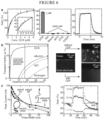
- FIG. 1 provides an overview of an embodiment of a Microfluidic Electrochemical Detector for In vivo Continuous monitoring (MEDIC) system according to the present disclosure.
- MEDIC achieves continuous, quantitative measurement of specific molecular analyte concentrations in the blood of living animals.
- the rate of electron transfer between the methylene blue reporter and a microfabricated electrode increases, yielding a measureable current change.
- CDF continuous diffusion filter
- the continuous diffusion filter (CDF) formed by vertically stacked laminar flow of buffer and blood, selectively permits transport of the target to the sensor while excluding interferents.
- KDM Kinetic differential measurement improves detection by minimizing drift and enhancing SNR.
- FIG. 2 shows the device architecture and general fabrication scheme for an embodiment of a MEDIC device according to the present disclosure.
- Electrodes are patterned on a glass substrate, which is then drilled for vias, and bonded to an ozone-treated PDMS sheet bearing the upper channel.
- the lower channel is cut into a PDMS sheet, treated with ozone and bonded to the base glass substrate.
- the two remaining exposed PDMS surfaces are ozone treated, aligned and bonded together. Fluidic ports are epoxied to the surface above the vias. The chip is then subjected to the probe immobilization protocol and ready for use.
- FIG. 3 shows a finite element model of diffusive transport of target in the MEDIC channel according to an embodiment of the present disclosure.
- FIG. 4 shows a schematic illustration of square wave voltammetry (SWV).
- SWV square wave voltammetry
- FIG. 5 shows dose response curves obtained in whole blood in vitro when an embodiment of the MEDIC system was targeted to detect either DOX (a) or kanamycin (b).
- FIG. 6 illustrates the basic aspects of a MEDIC system according to an embodiment of the present disclosure.
- FIG. 7 shows the results of characterizing a continuous diffusion filter (CDF) according to an embodiment of the present disclosure.
- Panel A Confocal microscopy shows that the buffer (blue) and blood (black with red boundary) streams remain separate throughout the device.
- Panel B Visualizing the thickness and shape of the CDF in buffer under different flow conditions.
- Top row Dual buffer flow at 1:4 throughput, confirming maintenance of the diffusion layer throughout the MEDIC device channel.
- Middle row Buffer and whole blood at a 1:1 flow ratio yield a curved flow pattern due to mismatched viscosity.
- Bottom row Buffer and whole blood at a 1:4 throughput ratio results in an intact, though non-uniform, diffusion barrier.
- FIG. 8 shows a graph illustrating a “signal on” response above f c and “signal-off” response below f c for one embodiment of a conformation switching probe according to the present disclosure.
- FIG. 9 provides a graph illustrating the frequency response of drift for an embodiment of a MEDIC system according to the present disclosure.
- Frequency-dependent signal drift is obtained at frequencies above and below f c .
- the drift obtained from their differential is dramatically reduced.
- 7.5 Hz and 75 Hz proved to be well-matched frequencies that enabled minimization of signal drift.
- FIG. 10 provides a graph illustrating that kinetic differential measurement (KDM), as utilized in an embodiment of a MEDIC system according to the present disclosure, improves signal to noise ratio (SNR) by a factor of ⁇ 3. Means and standard deviations were obtained via triplicate measurements with independent chips.
- KDM kinetic differential measurement
- SNR signal to noise ratio
- FIG. 11 provides a graph showing the continuous and quantitative in vitro measurement of DOX in whole blood (dotted line) relative to actual concentrations (large dashed line) using a MEDIC system according to an embodiment of the present disclosure.
- the inset provides a standard curve relating KDM signal to DOX concentration.
- FIG. 12 provides graphs showing the real-time measurement of specific molecular analytes in blood of living rats using a MEDIC system according to an embodiment of the present disclosure.
- FIG. 13 provides graphs demonstrating sensor specificity in vivo for an embodiment of a MEDIC system according to the present disclosure. Rats were subjected to chemotherapy cocktails (a) DMAP (MTC, DTIC, and CDDP) and (b) AIM (Ifex and Mesna) in the absence or presence of DOX. No observable response was detected to either cocktail in the absence of DOX but a significant response was observed in its presence, confirming MEDIC specificity in vivo.
- DMAP MTC, DTIC, and CDDP
- AIM Ifex and Mesna
- FIG. 14 provides graphs showing desensitization of a conformation switching aptamer probe upon whole blood exposure as measured by peak current gain step responses for target-doped samples.
- the sensor quickly equilibrates in response to 128 ⁇ M procaine in SSC buffer with 60% signal gain and returns to baseline rapidly.
- the same concentration in whole blood results in significantly less gain at ⁇ 10% for the same device.
- the signal also begins to recede before the input is switched to procaine-free whole blood.
- the sensor is challenged with a 128 ⁇ M procaine step in buffer after whole blood exposure. Although the gain has doubled to ⁇ 20%, it remains significantly less than preexposure level, indicating biofouling of the sensor surface.
- FIG. 15 provides graphs showing Target and interferant diffusion and enrichment.
- FIG. 16 provides a 3D simulation of target transport. Steady Poiseuille flow and convection diffusion equations are solved for the 3D microchannel from the flow-stream junction to the outlet.
- FIG. 17 provides graphs showing signaling degradation and preservation during continuous monitoring in whole blood. Continuous monitoring step responses to target in whole blood.
- the term “signaling probe” refers to a binding agent or a group of binding agents which report a detectable signal indicative of a specific binding interaction with a target, e.g., a target analyte.
- the term “conformation switching probe” refers to a probe, e.g., an aptamer probe, capable of specifically binding a target, wherein the conformation switching probe has a first conformation when bound to the target and a second conformation when not bound to the target, and wherein one or both of the first conformation and the second conformation provides a detectable signal. Conformation switching probes may be reversible or non-reversible as described herein.
- aptamer or “aptamer sequence” refers to a nucleic acid having a specific binding affinity for a target, e.g., a target molecule, wherein such target is other than a polynucleotide that binds to the aptamer or aptamer sequence through a mechanism which predominantly depends on Watson/Crick base pairing.
- nucleic acid refers to a polymeric form of nucleotides of any length, either deoxyribonucleotides or ribonucleotides, or analogs thereof, and may include naturally occurring nucleotides and/or modified nucleotides.
- Polynucleotides may have any three-dimensional structure, and may perform any function, known or unknown.
- Non-limiting examples of polynucleotides include a gene, a gene fragment, exons, introns, messenger RNA (mRNA), transfer RNA, ribosomal RNA, ribozymes, cDNA, recombinant polynucleotides, branched polynucleotides, plasmids, vectors, isolated DNA of any sequence, control regions, isolated RNA of any sequence, nucleic acid probes, and primers.
- the nucleic acid molecule may be linear or circular.
- peptide refers to a polymeric form of amino acids of any length, which can include coded and non-coded amino acids, chemically or biochemically modified or derivatized amino acids, and polypeptides having modified peptide backbones.
- fusion proteins including, but not limited to, fusion proteins with a heterologous amino acid sequence, fusions with heterologous and native leader sequences, with or without N-terminal methionine residues; immunologically tagged proteins; fusion proteins with detectable fusion partners, e.g., fusion proteins including as a fusion partner a fluorescent protein, ⁇ -galactosidase, luciferase, etc.; and the like.
- sequence as used, for example, in the context of an aptamer sequence, a nucleic acid sequence or an amino acid sequence may refer to the primary structure, e.g., the order of monomeric subunits, e.g., nucleotides or amino acids, and/or to the molecule having the primary structure.
- antibody and “immunoglobulin” include antibodies or immunoglobulins of any isotype, fragments of antibodies which retain specific binding to antigen, including, but not limited to, Fab, Fv, scFv, and Fd fragments, chimeric antibodies, humanized antibodies, single-chain antibodies, and fusion proteins including an antigen-binding portion of an antibody and a non-antibody protein.
- the antibodies may be detectably labeled, e.g., with a radioisotope, an enzyme which generates a detectable product, a fluorescent protein, and the like.
- the antibodies may be further conjugated to other moieties, such as members of specific binding pairs, e.g., biotin (member of biotin-avidin specific binding pair), and the like. Also encompassed by the terms are Fab′, Fv, F(ab′) 2 , and other antibody fragments that retain specific binding to antigen.
- Antibodies may exist in a variety of other forms including, for example, Fv, Fab, and (Fab′) 2 , as well as bi-functional (i.e. bi-specific) hybrid antibodies (e.g., Lanzavecchia et al., Eur. J. Immunol. 17, 105 (1987)) and in single chains (e.g., Huston et al., Proc. Natl. Acad. Sci. U.S.A., 85, 5879-5883 (1988) and Bird et al., Science, 242, 423-426 (1988), which are incorporated herein by reference).
- bi-functional hybrid antibodies e.g., Lanzavecchia et al., Eur. J. Immunol. 17, 105 (1987)
- single chains e.g., Huston et al., Proc. Natl. Acad. Sci. U.S.A., 85, 5879-5883 (1988) and Bird et al., Science,
- label and “detectable label” may be used interchangeably herein to refer to a molecule capable of detection, including, but not limited to, radioactive isotopes; redox reporters; luminescers, e.g., bioluminescers, chemiluminescers, electroluminescers, and photoluminescers, e.g., fluorescers; chromophores; enzymes; enzyme substrates; enzyme cofactors; enzyme inhibitors; dyes; metal ions; metal sols; ligands (e.g., biotin, avidin, strepavidin or haptens) and the like.
- Exemplary detectable moieties suitable for use as detectable labels include affinity tags and fluorescent proteins.
- redox reporter refers to a molecule which exhibits a reversible change in oxidation state at specific electrode potentials (e.g. methylene blue or ferrocene).
- fluorescer refers to a substance or a portion thereof which is capable of exhibiting fluorescence in the detectable range.
- affinity tag is used herein to denote a peptide segment that can be attached to a target that can be detected using a molecule that binds the affinity tag and provides a detectable signal (e.g., a fluorescent compound or protein).
- a detectable signal e.g., a fluorescent compound or protein.
- any peptide or protein for which an antibody or other specific binding agent is available can be used as an affinity tag.
- Stringency conditions refers to conditions in a reaction mixture that influence formation of complexes between candidate nucleic acid agents, e.g., aptamer sequences, and a target. Additional stringency conditions are described, for example, in U.S. Application Publication No. 2009/0170718, the disclosure of which is incorporated by reference herein in its entirety and for all purposes.
- binding refers to the ability of a first binding molecule or moiety to preferentially bind (covalently or non-covalently) to a second binding molecule or moiety relative to other molecules or moieties in a reaction mixture.
- a “member of a specific binding pair” is a member of a specific binding pair interaction. It should be noted that when either member of the binding pair is referred to as the first member, the remaining member is understood to be the second member and vice versa.
- specific binding pair interactions include immune binding interactions such as antigen/antibody and hapten/antibody as well as non-immune binding interactions such as complementary nucleic acid binding, biotin/avidin and biotin/streptavidin.
- determining As used herein, the terms “determining,” “measuring,” “assessing,” and “assaying” are used interchangeably and include both quantitative and qualitative determinations unless the context clearly indicates otherwise.
- active agent As used interchangeably herein, the terms “active agent”, “pharmacologically active agent” and “beneficial agent” refer to any substance intended for use in the diagnosis, cure, mitigation, treatment, or prevention of any disease, disorder, or condition or intended to affect the structure or function of the body, other than food. It can include any beneficial agent or substance that is biologically active or meant to alter animal physiology.
- the present disclosure provides devices, methods and systems for analyte detection and/or monitoring, e.g., the continuous and/or semi-continuous monitoring of in-vivo analyte concentrations in real time.
- the devices, methods and systems of the present disclosure make use of signaling probes; methods or devices for reducing interferent-based fouling of the signaling probes, non-specific binding to the signaling probes and/or occlusion of a sensor surface; and methods and/or devices for providing an adjusted signal based on a detected signal from the signaling probes.
- Compositions including conformation switching signaling probes are also provided.
- the devices, methods and systems of the present disclosure facilitate continuous and/or semi-continuous monitoring of analyte levels in real time, and may be used in connection with known medication delivery devices to provide analyte-responsive drug delivery systems, including open- and closed-loop systems. Accordingly, in some embodiments the devices, methods and systems of the present disclosure may facilitate direct control of in vivo concentrations of therapeutics in response to ongoing metabolic changes in a subject, thereby allowing for dose optimization based on individual subject response.
- the devices, methods and systems of the present disclosure also facilitate detection and/or monitoring of a variety of samples, including, e.g., detection and/or monitoring of environmental samples, detection and/or monitoring of one or more industrial processes, and detection and/or monitoring of excreted biomarkers from cell systems.
- Signaling probes effectively translate a specific binding interaction with a target into a detectable signal.
- Suitable signaling probes include, for example:
- a binding agent which is capable of specifically binding the target, wherein the presence of the specific binding interaction is signaled via an inherent property of the target itself, e.g., the target's mass, index of refraction, absorption, and the like;
- a reversible conformation switching probe wherein the presence of a specific binding interaction between the reversible conformation switching probe and the target is signaled by a conformation change in the probe which modulates a property of a detectable label, e.g., location, accessibility, or motion of the detectable label;
- non-reversible conformation switching probe wherein the non-reversible conformation switching probe is initially in a first conformation which conformation changes to a second conformation upon specific binding of the non-reversible conformation switching probe to the target, and wherein the presence of the specific binding interaction between the non-reversible conformation switching probe and the target is signaled by releasing a detectable label, enabling binding of a detectable label, or catalysis.
- Binding agents which may be used as signaling probes include, e.g., nucleic acid binding agents, e.g., aptamers, and polypeptide binding agents, e.g., antibodies, as described herein.
- Suitable detectable labels which may be used in connection with signaling probes include, e.g., magnetic particles, radioactive isotopes; redox reporters; surface-enhanced Raman scattering (SERS) reporter molecules; luminescers, e.g., bioluminescers, chemiluminescers, electroluminescers, and photoluminescers, e.g., fluorescers.
- SERS surface-enhanced Raman scattering
- Conformation switching probes which may be used in connection with the disclosed devices, methods and systems create a direct link between a detectable signal and an analyte binding event.
- a variety of conformation switching probes known in the art may be utilized in connection with the disclosed devices, methods and systems.
- new conformation switching probes are disclosed herein.
- Examples of known conformation switching probes include naturally occurring biomolecular switches which may be used to detect either their natural ligands or new molecular targets created via the rational or selection-driven re-design of their binding sites.
- Examples include the two-domain periplasmic-binding-protein superfamily, which undergo a binding-induced conformational change and may be used to detect a wide range of specific sugars, amino acids, and inorganic ions. See, e.g., K. W. Plaxco, H. T. Soh (2011) Trends Biotechnol. 29:1, pp. 1-5; Vallee-Belisle, A. and Plaxo, K. W. (2010) Curr. Opin. Struct. Biol. 20, 518-526; and Medintz, I. L. and Deschamps, J. R. (2006) Curr. Opin. Struct. Biol. 17, 17-27; the disclosures of each of which are incorporated by reference herein.
- proteins which may be suitable for use as conformation switching probes include members of the periplasmic-binding protein superfamily such as glucose-binding protein, maltose-binding protein, ribose-binding protein, arabinose-binding protein, histidine-binding protein, glutamine-binding protein. Additional examples include periplasmic binding proteins of E. coli and engineered versions thereof, as are all homologues, analogues and/or paralogues of members of this superfamily. Other examples include hexokinase, phosphofructokinase, DNA polymerase, etc.
- Non-naturally occurring, conformation switching probes include polypeptides, proteins and aptamers, e.g., DNA or RNA aptamers, which have been engineered to undergo a large-scale conformation change upon analyte binding. See, for example, Oh, K. J. et al. (2009) Chem. Eur. J. 15, 2244-2251; Kohn, J. E. and Plaxco, K. W. (2005) Proc. Natl. Acad. Sci. U.S.A 102, 10841-10845; Stratton, M. M. et al. (2008) ACS Chem. Biol. 3, 723-732; Xiao, Y. and Plaxco, K. W.
- Electrochemical aptamer sensors In Functional Nucleic Acids for Sensing and Other Analytical Applications (Lu, Y. and Li, Y., eds), pp. 179-198, New York, Springer; the disclosure of each of which is incorporated by reference herein.
- Aptamers can be engineered to undergo a large-scale conformation change upon target binding, e.g., by destabilization, which couples binding to a change in the folding equilibrium constant, or by introduction of a short auxiliary sequence complementary to the aptamer, which forces it to undergo a double-stranded-to-aptamer fold transition upon target binding.
- conformation switching probes which may be used in connection with the disclosed devices, methods and systems create a direct link between a detectable signal and an analyte binding event.
- the signal may be provided by a variety of detectable labels, which may be incorporated into the conformation switching probes, e.g., at a 3′ or 5′ end of a conformation switching aptamer.
- Suitable detectable labels may include, e.g., magnetic particles, radioactive isotopes; redox reporters; surface-enhanced Raman scattering (SERS) reporter molecules; luminescers, e.g., bioluminescers, chemiluminescers, electroluminescers, and photoluminescers, e.g., fluorescers.
- SERS surface-enhanced Raman scattering
- the redox reporter can be a redox-active metal center or a redox-active organic molecule. It can be a natural organic cofactor such as NAD, NADP, FAD or a natural metal center such as Blue Copper, iron-sulfur clusters, or heme, or a synthetic center such as an organometallic compound such as a ruthenium complex, or organic ligand such as a quinone.
- the redox reporter can be a metal-containing group (e.g., a transition metal-containing group) that is capable of reversibly or semi-reversibly transferring one or more electrons.
- a metal-containing group e.g., a transition metal-containing group
- the reporter group has a functional group suitable for covalent coupling to the conformation switching probe (e.g., thiol-reactive functionalities such as maleimides or iodoacetamide for coupling to unique cysteine residues in a protein).
- the reporter group can be capable of undergoing an amperometric or potentiometric change in response to ligand binding.
- Suitable transition metals for use in the invention include, but are not limited to, copper (Cu), cobalt (Co), palladium (Pd), iron (Fe), ruthenium (Ru), rhodium (Rh), osmium (Os), rhenium (Re), platinum (Pt), scandium (Sc), titanium (Ti), vanadium (V), chromium (Cr), manganese (Mn), nickel (Ni), molybdenum (Mo), technetium (Tc), tungsten (W), and iridium (Ir).
- suitable metals are selected from ruthenium, osmium, iron, platinum and palladium.
- the redox reporter is selected from ferrocene, methylene blue and anthraquinone.
- the redox reporter can be bound covalently or non-covalently to a signaling probe, e.g., conformation switching probe, e.g., at a 3′ or 5′ end of a conformation switching aptamer.
- a signaling probe e.g., conformation switching probe, e.g., at a 3′ or 5′ end of a conformation switching aptamer.
- the redox reporter can be present in the signaling probe as a covalent conjugate with the protein or it can be a metal center that forms part of the protein matrix (for instance, a redox center such as iron-sulfur clusters, heme, Blue copper, the electrochemical properties of which are sensitive to its local environment).
- the redox reporter can be present as a fusion between the protein and a metal binding domain (for instance, a small redox-active protein such as a cytochrome).
- a metal binding domain for instance, a small redox-active protein such as a cytochrome.
- the redox reporter is covalently conjugated to a protein signaling probe via a maleimide functional group bound to a cysteine (thiol) on the protein.
- signal readouts may be utilized depending on the nature of the detectable label selected. For example, where a redox reporter is used, an electrochemical output based on the binding-induced change in redox rates may be utilized. Additional readouts include binding induced change in fluorescence, luminesce, electrochemiluminescence, Surface Plasmon Resonance, or Surface Enhanced Raman Spectroscopy.
- the signaling probe e.g., a conformation switching probe
- the signaling probe may be immobilized on one or more surfaces in the context of the disclosed devices, methods and systems, e.g., to provide a sensor structure.
- a signaling probe e.g., a conformation switching probe
- Suitable conductive materials which may be utilized for the conductive electrode surface, include gold, silver, copper, aluminum, platinum, iridium, palladium, rhodium, mercury, silicon, osmium, ruthenium, gallium arsenide, indium phosphide, mercury, cadmium telluride, carbon and the like.
- the conductive material is selected from gold, silver, aluminum foil, and doped silicon wafers.
- the signaling probes may be immobilized on the one or more surfaces via any of a variety of methods known in the art, including, e.g, thiolation to facilitate self-assembly of nucleic acid signaling probes onto gold working electrodes.
- the signaling probes e.g., conformation switching probes
- Molecules making up self-assembled monolayers can include a functional group that adheres to the surface layer and further can include a pendant moiety that can interact with a molecule to be anchored above the self-assembled monolayer.
- one aspect of the present disclosure relates to methods, devices and systems for reducing interferent-based fouling of signaling probes, non-specific binding to signaling probes and/or occlusion of a sensor surface.
- This may be important, for example, in in vivo monitoring applications where the analyte may be present in a complex sample such as whole blood which contains a variety of interferents which can result in fouling and/or non-specific binding of the signaling probes or occlusion of the sensor surface.
- This problem may be exacerbated where the monitoring is continuous or semi continuous over an extended period of time.
- CDF continuous diffusion filter
- the streams are configured, and the signaling probes are positioned, such that the analyte can selectively diffuse from the sample stream, through the buffer stream, to contact the signaling probes, while interferents, e.g., blood cells, are selectively repressed from reaching signaling probes due to their lower diffusivity.
- This system exploits the differences in diffusivity between the analyte and the interferents.
- CDF thickness and analyte residence time may be adjustable by controlling the total flow and the ratio of the two flow rates such that the analyte selectively diffuses across the buffer stream relative to the interferents. Accordingly, CDFs capable of excluding a variety of interferents based on their relative diffusivities are readily achievable.
- Another suitable system for reducing interferent-based fouling of the signaling probes, non-specific binding to the signaling probes and/or occlusion of a sensor surface may be accomplished by providing a nanochannel parallel to a sample stream, wherein the nanochannel is sized to allow entry of the analyte or analytes of interest from the sample stream while excluding larger interferents, e.g., blood cells.
- the nanochannel may be sized such that it is no wider 1000 nm, e.g., no wider than 500 nm, or no wider than 100 nm.
- Similar exclusion of larger interferents in the sample stream can be achieved by positioning a hydrogel, e.g., a hydrogel having a pore size of 1000 nm or less (e.g., 500 nm or less, or 100 nm or less), between the probes and the sample stream.
- a hydrogel e.g., a hydrogel having a pore size of 1000 nm or less (e.g., 500 nm or less, or 100 nm or less)
- the hydrogel may be provided parallel to the sample stream flow.
- Interferents could also be prevented from contacting the signaling probes by applying a repulsive force directly to the interferents.
- repulsive forces may include, e.g., acoustophoretic forces, Dean forces or dielectrophoretic forces.
- forces could be applied up steam of the electrodes to continuously direct the large interferents away from the sensing surface while retaining the smaller targets.
- one aspect of the present disclosure relates to methods, devices and systems for providing an adjusted signal based on a detected signal from a signaling probe. This may be accomplished, for example, by obtaining a first signal and a second signal from a signaling probe, and combining the first and second signal via a mathematical operation to obtain an adjusted signal.
- the first and second signals are obtained by voltametrically interrogating an electrode as described herein.
- the step of voltammetrically interrogating the electrode may utilize alternating current voltammetry, linear sweep voltammetry, or differential pulse voltammetry to obtain the first signal and the second signal.
- the mathematical operation may include, e.g., a mathematical operation selected from a ratio, a difference, and a difference squared divided by a sum squared.
- KDM kinetic differential measurement
- Non-participating reference probe e.g., immobilized on the same sensor device but with a label that yields a separate signal (e.g. fluorophores with different emission wavelengths or redox reporters with different redox potentials), or by immobilizing these on an independently-addressable sensor surface.
- a non-participating sensor can act as a control that does not recognize the target molecules but otherwise behave similarly.
- Non-participating aptamer sensors could be selected, for example, through negative selection, as non-binders.
- a microfluidic device includes at least a first channel configured to receive a sample stream and a buffer stream, wherein the microfluidic device is further configured to provide a stacked laminar flow of the sample stream and buffer stream in the channel.
- a microfluidic device includes a signaling probe as described herein, e.g., a conformation switching probe as described herein, that produces a detectable signal based on specific binding of the signaling probe to an analyte when present in the sample stream.
- the signaling probe may be positioned in the microfluidic device relative to the sample stream and the buffer stream so that the analyte, when present in the sample stream, is capable of selectively diffusing from the sample stream, through the buffer stream to contact the signaling probe.
- This structure and probe configuration can effectively reduce interferent-based fouling of the signaling probes and/or non-specific binding to the signaling probes or occlusion of the sensor surface.
- microfluidic device/signaling probe configurations are described herein and may be utilized to reduce interferent-based fouling of the signaling probes, non-specific binding to the signaling probes, and/or occlusion of a sensor surface.
- the stacked laminar flow may be a vertically stacked laminar flow or a horizontally stacked laminar flow.
- the height of the channel configured to receive the sample stream and buffer stream may be from about 1 ⁇ m to about 1000 ⁇ m, e.g., from about 1 ⁇ m to about 900 ⁇ m, from about 1 ⁇ m to about 800 ⁇ m, from about 1 ⁇ m to about 700 ⁇ m, from about 1 ⁇ m to about 600 ⁇ m, from about 1 ⁇ m to about 500 ⁇ m, from about 1 ⁇ m to about 400 ⁇ m, from about 1 ⁇ m to about 300 ⁇ m, from about 1 ⁇ m to about 200 ⁇ m, from about 1 ⁇ m to about 100 ⁇ m, from about 1 ⁇ m to about 50 ⁇ m, from about 1 ⁇ m to about 10 ⁇ m, or from about 1 ⁇ m to about 5 ⁇ m.
- the height of the channel configured to receive the sample stream and buffer stream may be from about 100 ⁇ m to about 900 ⁇ m, e.g., from about 200 ⁇ m to about 800 ⁇ m, from about 300 ⁇ m to about 700 ⁇ m, from about 400 ⁇ m to about 600 ⁇ m, or about 500 ⁇ m.
- a microfluidic device may be configured such that the ratio of the thickness of the buffer stream to the height of the channel is from about 0.1:1 to about 1:1, e.g., from about 0.2:1 to about 1:1, from about 0.3:1 to about 1:1, from about 0.4:1 to about 1:1, from about 0.5:1 to about 1:1, from about 0.6:1 to about 1:1, from about 0.7:1 to about 1:1, from about 0.8:1 to about 1:1, or from about 0.9:1 to about 1:1.
- the ratio of the thickness of the buffer stream to the height of the channel is from about 0.1:1 to about 0.2:1, from about 0.2:1 to about 0.3:1, from about 0.3:1 to about 0.4:1, from about 0.4:1 to about 0.5:1, from about 0.5:1 to about 0.6:1, from about 0.6:1 to about 0.7:1, from about 0.7:1 to about 0.8:1, or from about 0.8:1 to about 0.9:1.
- the sample stream has a first flow rate
- the buffer stream has a second flow rate
- the ratio of the second flow rate to the sum of the first and second flow rates is from about 0.1:1 to about 1:1, e.g., from about 0.2:1 to about 1:1, from about 0.3:1 to about 1:1, from about 0.4:1 to about 1:1, from about 0.5:1 to about 1:1, from about 0.6:1 to about 1:1, from about 0.7:1 to about 1:1, from about 0.8:1 to about 1:1, or from about 0.9:1 to about 1:1.
- the ratio of the second flow rate to the sum of the first and second flow rates is from about 0.1:1 to about 0.2:1, from about 0.2:1 to about 0.3:1, from about 0.3:1 to about 0.4:1, from about 0.4:1 to about 0.5:1, from about 0.5:1 to about 0.6:1, from about 0.6:1 to about 0.7:1, from about 0.7:1 to about 0.8:1, or from about 0.8:1 to about 0.9:1.
- Microfluidics devices may be characterized in various ways.
- microfluidics devices have at least one “micro” channel.
- Such channels may have at least one cross-sectional dimension on the order of a millimeter or smaller (e.g., less than or equal to about 1 millimeter). For certain applications, this dimension may be adjusted; in some embodiments the at least one cross-sectional dimension is about 500 micrometers or less. In some embodiments, again as applications permit, the cross-sectional dimension is about 100 micrometers or less (or even about 10 micrometers or less—sometimes even about 1 micrometer or less).
- a cross-sectional dimension is one that is generally perpendicular to the direction of centerline flow, although it should be understood that when encountering flow through elbows or other features that tend to change flow direction, the cross-sectional dimension in play need not be strictly perpendicular to flow. It should also be understood that in some embodiments, a micro-channel may have two or more cross-sectional dimensions such as the height and width of a rectangular cross-section or the major and minor axes of an elliptical cross-section. Either of these dimensions may be compared against sizes presented here.
- microfluidic devices according to the present disclosure are fabricated using microfabrication technology. Such technology is commonly employed to fabricate integrated circuits (ICs), microelectromechanical devices (MEMS), display devices, and the like.
- ICs integrated circuits
- MEMS microelectromechanical devices
- display devices and the like.
- types of microfabrication processes that can be employed to produce small dimension patterns in microfluidic device fabrication are photolithography (including X-ray lithography, e-beam lithography, etc.), self-aligned deposition and etching technologies, anisotropic deposition and etching processes, self-assembling mask formation (e.g., forming layers of hydrophobic-hydrophilic copolymers), etc.
- microfluidic “device” it is generally intended to represent a single entity in which one or more channels, reservoirs, stations, etc. share a continuous substrate, which may or may not be monolithic.
- a microfluidics “system” may include one or more microfluidic devices and associated fluidic connections, electrical connections, control/logic features, etc. Aspects of microfluidic devices include the presence of one or more fluid flow paths, e.g., channels, having dimensions as discussed herein.
- microfluidic devices provide a continuous flow of a fluid medium, which may include an analyte of interest. Fluid flowing through a channel in a microfluidic device exhibits many interesting properties. Typically, the dimensionless Reynolds number is extremely low, resulting in flow that always remains laminar. Further, in this regime, two fluids joining will not easily mix, and diffusion alone may drive the mixing of two compounds.
- microfluidic device components suitable for use with in connection with the disclosed microfluidic devices will now be described.
- substrates used in microfluidic systems are the supports in which the necessary elements for fluid transport are provided.
- the basic structure may be monolithic, laminated, or otherwise sectioned.
- substrates include one or more microchannels serving as conduits for samples and reagents (if necessary). They may also include input ports, output ports, and/or features to assist in flow control.
- the substrate choice may be dependent on the application and design of the device.
- Substrate materials are generally chosen for their compatibility with a variety of operating conditions. Limitations in microfabrication processes for a given material are also relevant considerations in choosing a suitable substrate.
- Useful substrate materials include, e.g., glass, polymers, silicon, metal, and ceramics.
- Polymers are standard materials for microfluidic devices because they are amenable to both cost effective and high volume production. Polymers can be classified into three categories according to their molding behavior: thermoplastic polymers, elastomeric polymers and duroplastic polymers. Thermoplastic polymers can be molded into shapes above the glass transition temperature, and will retain these shapes after cooling below the glass transition temperature. Elastomeric polymers can be stretched upon application of an external force, but will go back to original state once the external force is removed. Elastomers do not melt before reaching their decomposition temperatures. Duroplastic polymers have to be cast into their final shape because they soften a little before the temperature reaches their decomposition temperature.
- polymers that may be used in microfabricated devices according to the present disclosure are polydimethylsiloxane (PDMS), polyamide (PA), polybutylenterephthalate (PBT), polycarbonate (PC), polyethylene (PE), polymethylmethacrylate (PMMA), polyoxymethylene (POM), polypropylene (PP), polyphenylenether (PPE), polystyrene (PS) and polysulphone (PSU).
- PDMS polydimethylsiloxane
- PA polyamide
- PBT polybutylenterephthalate
- PC polycarbonate
- PE polyethylene
- PMMA polymethylmethacrylate
- POM polyoxymethylene
- PP polypropylene
- PPE polyphenylenether
- PS polystyrene
- PSU polysulphone
- Glass which may also be used as the substrate material, has specific advantages under certain operating conditions. Since glass is chemically inert to most liquids and gases, it is particularly appropriate for applications employing certain solvents that have a tendency to dissolve plastics. Additionally, its transparent properties make glass particularly useful for optical or UV detection.
- Microfabrication processes differ depending on the type of materials used in the substrate and the desired production volume.
- fabrication techniques include LIGA, powder blasting, laser ablation, mechanical machining, electrical discharge machining, photoforming, etc.
- Technologies for mass production of microfluidic devices may use either lithographic or master-based replication processes.
- Lithographic processes for fabricating substrates from silicon/glass include both wet and dry etching techniques commonly used in fabrication of semiconductor devices.
- Injection molding and hot embossing typically are used for mass production of plastic substrates.
- lithography, etching and deposition techniques may be used to make microcanals and microcavities out of glass, silicon and other “hard” materials. Technologies based on the above techniques are commonly applied in for fabrication of devices in the scale of 0.1-500 micrometers.
- Microfabrication techniques based on current semiconductor fabrication processes are generally carried out in a clean room.
- the quality of the clean room is classified by the number of particles ⁇ 4 ⁇ m in size in a cubic inch.
- Typical clean room classes for MEMS microfabrication are 1000 to 10000.
- photolithography may be used in microfabrication.
- photolithography a photoresist that has been deposited on a substrate is exposed to a light source through an optical mask.
- Conventional photoresist methods allow structural heights of up to 10-40 ⁇ m. If higher structures are needed, thicker photoresists such as SU-8, or polyimide, which results in heights of up to 1 mm, can be used.
- the substrate is then etched using either a wet or dry process.
- wet etching the substrate—area not protected by the mask—is subjected to chemical attack in the liquid phase.
- the liquid reagent used in the etching process depends on whether the etching is isotropic or anisotropic. Isotropic etching generally uses an acid to form three-dimensional structures such as spherical cavities in glass or silicon. Anisotropic etching forms flat surfaces such as wells and canals using a highly basic solvent. Wet anisotropic etching on silicon creates an oblique channel profile.
- Dry etching involves attacking the substrate by ions in either a gaseous or plasma phase. Dry etching techniques can be used to create rectangular channel cross-sections and arbitrary channel pathways. Various types of dry etching that may be employed including physical, chemical, physico-chemical (e.g., RIE), and physico-chemical with inhibitor. Physical etching uses ions accelerated through an electric field to bombard the substrate's surface to “etch” the structures. Chemical etching may employ an electric field to migrate chemical species to the substrate's surface. The chemical species then reacts with the substrate's surface to produce voids and a volatile species.
- RIE physico-chemical
- deposition is used in microfabrication.
- Deposition techniques can be used to create layers of metals, insulators, semiconductors, polymers, proteins and other organic substances. Most deposition techniques fall into one of two main categories: physical vapor deposition (PVD) and chemical vapor deposition (CVD).
- PVD physical vapor deposition
- CVD chemical vapor deposition
- a substrate target is contacted with a holding gas (which may be produced by evaporation for example). Certain species in the gas adsorb to the target's surface, forming a layer constituting the deposit.
- a target containing the material to be deposited is sputtered with using an argon ion beam or other appropriately energetic source.
- the sputtered material then deposits on the surface of the microfluidic device.
- CVD species in contact with the target react with the surface, forming components that are chemically bonded to the object.
- Other deposition techniques include: spin coating, plasma spraying, plasma polymerization, dip coating, casting and Langmuir-Blodgett film deposition.
- plasma spraying a fine powder containing particles of up to 100 ⁇ m in diameter is suspended in a carrier gas. The mixture containing the particles is accelerated through a plasma jet and heated. Molten particles splatter onto a substrate and freeze to form a dense coating.
- Plasma polymerization produces polymer films (e.g. PMMA) from plasma containing organic vapors.
- the etched features may be sealed to ensure that the microfluidic device is “watertight.”
- adhesion can be applied on all surfaces brought into contact with one another.
- the sealing process may involve fusion techniques such as those developed for bonding between glass-silicon, glass-glass, or silicon-silicon.
- Anodic bonding can be used for bonding glass to silicon.
- a voltage is applied between the glass and silicon and the temperature of the system is elevated to induce the sealing of the surfaces.
- the electric field and elevated temperature induces the migration of sodium ions in the glass to the glass-silicon interface.
- the sodium ions in the glass-silicon interface are highly reactive with the silicon surface forming a solid chemical bond between the surfaces.
- the type of glass used should ideally have a thermal expansion coefficient near that of silicon (e.g. Pyrex Corning 7740).
- Fusion bonding can be used for glass-glass or silicon-silicon sealing.
- the substrates are first forced and aligned together by applying a high contact force. Once in contact, atomic attraction forces (primarily van der Waals forces) hold the substrates together so they can be placed into a furnace and annealed at high temperatures. Depending on the material, temperatures used ranges between about 600 and 1100° C.
- a number of techniques may be employed for micromachining plastic substrates in accordance with embodiments disclosed in the present disclosure. Among these are laser ablation, stereolithography, oxygen plasma etching, particle jet ablation, and microelectro-erosion. Some of these techniques can be used to shape other materials (glass, silicon, ceramics, etc.) as well.
- replication techniques are employed. Such techniques involve first fabricating a master or mold insert containing the pattern to be replicated. The master is then used to mass-produce polymer substrates through polymer replication processes.
- the master pattern contained in a mold is replicated onto the polymer structure.
- a polymer and curing agent mix is poured onto a mold under high temperatures. After cooling the mix, the polymer contains the pattern of the mold, and is then removed from the mold.
- the plastic can be injected into a structure containing a mold insert. In microinjection, plastic heated to a liquid state is injected into a mold. After separation and cooling, the plastic retains the mold's shape.
- PDMS polydimethylsiloxane
- silicon-based organic polymer may be employed in the molding process to form microfluidic structures. Because of its elastic character, PDMS is well suited for microchannels between about 5 and 500 ⁇ m. Specific properties of PDMS make it particularly suitable for microfluidic purposes:
- Microinjection can be used to form plastic substrates employed in a wide range of microfluidic designs.
- a liquid plastic material is first injected into a mold under vacuum and pressure, at a temperature greater than the glass transition temperature of the plastic.
- the plastic is then cooled below the glass transition temperature. After removing the mold, the resulting plastic structure is the negative of the mold's pattern.
- Yet another replicating technique is hot embossing, in which a polymer substrate and a master are heated above the polymer's glass transition temperature, Tg (which for PMMA or PC is around 100-180° C.). The embossing master is then pressed against the substrate with a preset compression force. The system is then cooled below Tg and the mold and substrate are then separated.
- Tg polymer's glass transition temperature
- the polymer is subjected to the highest physical forces upon separation from the mold tool, particularly when the microstructure contains high aspect ratios and vertical walls.
- material properties of the substrate and the mold tool may be taken into consideration. These properties include: sidewall roughness, sidewall angles, chemical interface between embossing master and substrate and temperature coefficients.
- High sidewall roughness of the embossing tool can damage the polymer microstructure since roughness contributes to frictional forces between the tool and the structure during the separation process.
- the microstructure may be destroyed if frictional forces are larger than the local tensile strength of the polymer. Friction between the tool and the substrate may be important in microstructures with vertical walls.
- the chemical interface between the master and substrate could also be of concern. Because the embossing process subjects the system to elevated temperatures, chemical bonds could form in the master-substrate interface. These interfacial bonds could interfere with the separation process. Differences in the thermal expansion coefficients of the tool and the substrate could create addition frictional forces.
- Various techniques can be employed to form molds, embossing masters, and other masters containing patterns used to replicate plastic structures through the replication processes mentioned above. Examples of such techniques include LIGA (described below), ablation techniques, and various other mechanical machining techniques. Similar techniques can also be used for creating masks, prototypes and microfluidic structures in small volumes. Materials used for the mold tool include metals, metal alloys, silicon and other hard materials.
- Laser ablation may be employed to form microstructures either directly on the substrate or through the use of a mask. This technique uses a precision-guided laser, typically with wavelength between infrared and ultraviolet. Laser ablation may be performed on glass and metal substrates, as well as on polymer substrates. Laser ablation can be performed either through moving the substrate surface relative to a fixed laser beam, or moving the beam relative to a fixed substrate. Various micro-wells, canals, and high aspect structures can be made with laser ablation.
- ⁇ -EDM ⁇ -Electro Discharge Machining
- ⁇ -milling ⁇ -milling
- focused ion beam milling ⁇ -EDM allows the fabrication of 3-dimensional structures in conducting materials.
- material is removed by high-frequency electric discharge generated between an electrode (cathode tool) and a workpiece (anode). Both the workpiece and the tool are submerged in a dielectric fluid. This technique produces a comparatively rougher surface but offers flexibility in terms of materials and geometries.
- Electroplating may be employed for making a replication mold tool/master out of, e.g., a nickel alloy.
- the process starts with a photolithography step where a photoresist is used to defined structures for electroplating. Areas to be electroplated are free of resist.
- LIGA can be used to produce electroplating forms.
- LIGA is a German acronym for Lithographic (Lithography), Galvanoformung (electroplating), Abformung (molding).
- thick PMMA layers are exposed to x-rays from a synchrotron source. Surfaces created by LIGA have low roughness (around 10 nm RMS) and the resulting nickel tool has good surface chemistry for most polymers.
- polymeric microfluidic devices may be sealed before they become functional.
- Lamination is one method used to seal plastic microfluidic devices.
- a PET foil about 30 ⁇ m coated with a melting adhesive layer (typically 5-10 ⁇ m) is rolled with a heated roller, onto the microstructure.
- the lid foil is sealed onto the channel plate.
- Several research groups have reported a bonding by polymerization at interfaces, whereby the structures are heated and force is applied on opposite sides to close the channel. But excessive force applied may damage the microstructures. Both reversible and irreversible bonding techniques exist for plastic-plastic and plastic-glass interfaces.
- One method of reversible sealing involves first thoroughly rinsing a PDMS substrate and a glass plate (or a second piece of PDMS) with methanol and bringing the surfaces into contact with one another prior to drying. The microstructure is then dried in an oven at 65° C. for 10 min. No clean room is required for this process. Irreversible sealing is accomplished by first thoroughly rinsing the pieces with methanol and then drying them separately with a nitrogen stream. The two pieces are then placed in an air plasma cleaner and oxidized at high power for about 45 seconds. The substrates are then brought into contact with each other and an irreversible seal forms spontaneously.
- FIG. 2 An exemplary microfluidic device fabrication method is described in the materials and methods for Examples 1-5 and is depicted generally in FIG. 2 .
- the disclosed devices and systems facilitate a variety of detection and/or monitoring methods, e.g., detection and/or monitoring, e.g., in vivo detection and/or monitoring, of whole blood or other biological fluids for an analyte of interest, e.g., a drug or drug metabolite; detection and/or monitoring of environmental samples, e.g., waste water, drinking water, run-off, etc., for an analyte of interest; detection and/or monitoring of one or more industrial processes, e.g., by detection and/or monitoring of a product or byproduct of the industrial process or processes, e.g., bioreactor monitoring; and detection and/or monitoring of excreted biomarkers from cell systems, e.g., cell culture excretions, such as stem-cell culture excretions; among others.
- detection and/or monitoring e.g., in vivo detection and/or monitoring, of whole blood or other biological fluids for an analyte of interest, e.g.
- the present disclosure provides methods of determining an in vivo concentration of an analyte.
- a method includes: continuously flowing a biological fluid from a living subject for a period of time; contacting the biological fluid or a component thereof with a signaling probe that produces a detectable signal based on specific binding of the signaling probe to the analyte when present in the biological fluid; detecting the detectable signal in response to a binding event between the analyte, when present in the biological fluid, and the signaling probe; reducing non-specific binding and/or fouling of the signaling probe by one or more components of the biological fluid; adjusting the detectable signal based on a background signal produced as a result of non-specific binding of the signaling probe to produce an adjusted signal; and determining an in vivo concentration of the analyte during the period of time based on the adjusted signal.
- methods of modulating an in vivo concentration of an analyte include: continuously flowing a biological fluid from a living subject for a period of time; contacting the biological fluid or a component thereof with a signaling probe that produces a detectable signal based on specific binding of the signaling probe to the analyte when present in the biological fluid; detecting the detectable signal in response to a binding event between the analyte, when present in the biological fluid, and the signaling probe; reducing non-specific binding and/or fouling of the signaling probe by one or more components of the biological fluid; adjusting the detectable signal based on a background signal produced as a result of non-specific binding of the signaling probe to produce an adjusted signal; determining an in vivo concentration of the analyte during the period of time based on the adjusted signal; and continuously or intermittently administering a pharmacologically active agent based on the determined in vivo concentration of the analyte
- methods of administering a pharmacologically active agent include: administering a pharmacologically active agent to a living subject; continuously flowing a biological fluid from the living subject for a period of time; contacting the biological fluid or a component thereof with a signaling probe that produces a detectable signal based on specific binding of the signaling probe to an analyte when present in the biological fluid, wherein the analyte is the pharmacologically active agent or a metabolite thereof; detecting the detectable signal in response to a binding event between the analyte, when present in the biological fluid, and the signaling probe; reducing non-specific binding and/or fouling of the signaling probe by one or more components of the biological fluid; adjusting the detectable signal based on a background signal produced as a result of non-specific binding of the signaling probe to produce an adjusted signal; determining an in vivo concentration of the analyte during the period of time based
- Suitable sample fluids may include, e.g., an environmental sample fluid, a fluid produced by a biological or biochemical process, and a cell culture medium or cell culture supernatant.
- such a method includes: flowing the sample fluid for a period of time; contacting the sample fluid or a component thereof with a signaling probe during the period of time, wherein the signaling probe produces a detectable signal based on specific binding of the signaling probe to the analyte when present in the sample fluid; detecting the detectable signal in response to a binding event between the analyte, when present in the sample fluid, and the signaling probe; reducing non-specific binding and/or fouling of the signaling probe by one or more components of the sample fluid; adjusting the detectable signal based on a background signal produced as a result of non-specific binding of the signaling probe to produce an adjusted signal; and determining the concentration of the analyte based on the adjusted signal.
- methods of determining one or more pharmacokinetic parameters for a pharmacologically active agent include: administering a pharmacologically active agent to a living subject; continuously flowing a biological fluid from the living subject for a period of time; contacting the biological fluid or a component thereof with a signaling probe that produces a detectable signal based on specific binding of the signaling probe to an analyte when present in the biological fluid, wherein the analyte is the pharmacologically active agent or a metabolite thereof; detecting the detectable signal in response to a binding event between the analyte, when present in the biological fluid, and the signaling probe; reducing non-specific binding and/or fouling of the signaling probe by one or more components of the biological fluid; adjusting the detectable signal based on a background signal produced as a result of non-specific binding of the signaling probe to produce an adjusted signal; determining an in vivo plasma concentration of the ana
- the disclosed methods, devices and systems may be applied to the detection and/or measurement of a range of molecules having varying molecular weights. This can be accomplished by adjusting the stringency of the methods, devices and systems for reducing interferent-based fouling of the signaling probes, non-specific binding to the signaling probes and/or occlusion of the sensor surface, e.g., by adjusting the stringency of the CDF described herein.
- the Examples below demonstrate that for small molecules a continuous diffusion filter of 125 ⁇ m and a residence time (molecule transit time before passing an electrode) of ⁇ 30 seconds provided sufficient target transport and non-target rejection.
- the diffusion layer can be decreased and/or the residence time increased as necessary to accomplish efficient capture of the analyte of interest while rejecting interferents.
- analytes which may be detected and/or monitored according to the disclosed methods, devices and systems may include, for example, small molecule drugs, e.g., those having a molecular weight of less than 800 Daltons, and metabolites thereof; and environmental toxins, e.g., polychlorinated biphenyls (PCBs), pesticides, fungal toxins, phthalates, volatile organic compounds (VOCs), dioxins, asbestos, and heavy metals (e.g., arsenic, mercury, lead, aluminum and cadmium).
- small molecule drugs e.g., those having a molecular weight of less than 800 Daltons, and metabolites thereof
- environmental toxins e.g., polychlorinated biphenyls (PCBs), pesticides, fungal toxins, phthalates, volatile organic compounds (VOCs), dioxins, asbestos, and heavy metals (e.g., arsenic, mercury, lead, aluminum and cadmium).
- the disclosed methods, devices and systems have been successfully demonstrated with respect to whole blood, the most complex human fluid.
- the disclosed methods, devices and systems could be adapted to measure a variety of other human fluids including urine, intraperitoneal fluid, interstitial fluid, cerebral spinal fluid, lymph, saliva and tears, as well as cell culture media and any fluids containing soluble analytes or excreted biomarkers, including samples for process control and environmental monitoring.
- the sample was drawn from subjects via a catheter. Such a method could be similarly employed to draw other fluids. Additionally, for subcutaneous measurement a perfusion system could be employed to flow a carrier fluid into an internal region and collect sample through a microdialysis tube, which would serve as the device input.
- the disclosed methods, systems and devices may also be utilized to return the monitored biological fluid to a subject from whom it was withdrawn.
- an inline pump could be utilized (such as a peristaltic pump).
- the buffer employed is isotonic and is flowed at a fraction of the sample flow rate (e.g., ⁇ 1:4), the dilutive impact on the sample would be minimal.
- a second output port could be added which owing to laminar flow, would re-circulate the sample portion of the stacked output.
- Such a configuration would allow for applications with the following constraints: higher-flow rate requirements and/or low total sample volume (e.g., intraperitoneal fluid).
- a measurement may be required only once every hour.
- a device according to the present disclosure could cycle through a period of activity and dormancy. During a brief active period, the device could operate normally to measure the target concentration.
- buffer could be flushed through the system with no sample injection.
- a special wash buffer such as guanidine hydrochloride
- a control sample for ratiometric measurement could be utilized to restore the sensor to its initial state, to preserve lifetime or enable use of slow-off rate affinity agents, or employ a control sample for ratiometric measurement.
- the methods, devices and systems of the present disclosure can support multiple affinity agents, e.g., located on multiple electrodes, to examine a range of biomarkers.
- the concentration of a specific drug could be controlled directly by measuring its concentration in circulation or the concentration of a specific drug could be controlled by measuring the concentration of related metabolites, or linked biomarkers.
- the disclosed methods, devices and systems facilitate the determination of a variety pharmacokinetic parameters for pharmacologically active agents.
- pharmacokinetic parameters such as peak plasma concentration (C max ), minimum plasma concentration (C min ), steady state concentration (C ss ), time to reach C max (T max ), plasma half-life (T 1/2 ), area under curve (AUC), volume of distribution (Vd), bioavailability and clearance may be readily determined using the methods, devices and systems of the present disclosure.
- the present disclosure provides specific DNA aptamer compositions which find use in the disclosed methods, devices and systems.
- a cocaine/procaine binding aptamer is provided, wherein the aptamer includes a DNA sequence having at least 90%, e.g., at least 95%, or 100%, sequence identity with the DNA sequence set forth in SEQ ID NO: 3.
- a kanamycin-binding aptamer is provided, wherein the aptamer includes a DNA sequence having at least 90%, e.g., at least 95%, or 100%, sequence identity with the DNA sequence set forth in SEQ ID NO: 2.
- a doxorubicin-binding aptamer is provided, wherein the aptamer includes a DNA sequence having at least 90% e.g., at least 95%, or 100%, sequence identity with the DNA sequence set forth in SEQ ID NO: 1.
- one or more of the above aptamers include a detectable label as described herein, e.g., a redox reporter, bound thereto.
- one or more of the above aptamers is immobilized on a solid support, e.g., in a microfluidic device channel and/or on an electrode according to the present disclosure.
- the Microfluidic Electrochemical Detector for In vivo Continuous monitoring (MEDIC) device measures 58 mm ⁇ 11 mm with a thickness of 2 mm, and is comprised of two layers of polydimethylsiloxane (PDMS) sandwiched between two glass wafers. The fabrication procedure is detailed below and illustrated in FIG. 2 .
- MEDIC Microfluidic Electrochemical Detector for In vivo Continuous monitoring
- Two borofloat glass wafers top and bottom, each 10 cm in diameter and 500 ⁇ m thick, were cleaned by sequential immersion in acetone, isopropanol and deionized water (DI). Gold working, counter and reference electrodes were then patterned onto the top wafer at 8-mm intervals photolithographically and electron-beam evaporated to a thickness of 200 nm on 20-nm titanium adhesion layers. Subsequently, a CNC mill with 1.1-mm diamond bit was used to drill fluidic vias (two inlets, one outlet) in the top wafer. The top and bottom wafers were then diced into device pieces with dimensions of 58 mm ⁇ 11 mm and 53 mm ⁇ 11 mm, respectively.
- DI isopropanol and deionized water
- the 500- ⁇ m-wide top (buffer) and bottom (blood) flow channels were both cut from a 250- ⁇ m-thick PDMS sheet using a cutting plotter.
- the buffer channel was first bonded to the diced electrode glass substrate via 10-s corona-ozone treatment.
- the blood channel was bonded to the buffer channel, and then to the bottom glass substrate, each with the same ozone treatment. Alignment was performed under a standard inverted microscope via an x-y-z- ⁇ stage and vacuum chuck. Fluidic port connectors were glued onto the device with 5-minute epoxy readying the chip for probe immobilization.
- Aptamer probes were synthesized with the following sequences: DOX-probe: 5′-HS—(CH 2 ) 6 -ACC ATC TGT GTA AGG GGT AAG GGG TGG T-MB-3′ (SEQ ID NO: 1), Kanamycin-probe: 5′-HS—(CH 2 ) 6 -GGG ACT TGG TTT AGG TAA TGA GTC CC-MB-3′ (SEQ ID NO: 2).
- DOX-probe is a truncated form of an anthracycline aptamer. A region of the aptamer suspected of supporting a hairpin structure was selected, with an apparent active binding site in the base. The stem was engineered to enable effective signal transduction through stabilization of the folded state.
- the kanamycin probe was adapted from that described in Rowe et al. Analytical chemistry 82, 7090-5 (2010). Each probe was thiolated at the 5′-end to facilitate self-assembly on the gold working electrodes, and conjugated with an MB redox label at the 3′-end to enable target binding-induced charge transfer modulation. Prior to probe immobilization, the gold electrodes were first cleaned via cyclic voltammetry, with twelve potential sweeps ranging from ⁇ 0.8 to 0.9 V (with respect to the platinum reference electrode) applied at 0.1 V ⁇ s ⁇ 1 with a sample interval of 0.001 V and 10 ⁇ A sensitivity in 50 mM H 2 SO 4 .
- probe solution was prepared by adding 2 ⁇ L of 10 mM tris(2-carboxyethyl)phosphine (TCEP) to 1 ⁇ L of 200 ⁇ M probe stock and incubating at room temperature for 60 minutes to enable cleavage of disulphide bonds. The solution was then diluted to 2 ⁇ M in 1 ⁇ saline-sodium citrate (SSC) buffer for effective self-assembly. The chip was incubated with probe solution for 1 hour at room temperature, permitting the thiolated aptamer to form a monolayer on the gold electrode surface.
- SSC saline-sodium citrate
- the chamber was then flushed with 5 mL DI water for 5 minutes, and the remaining electrode area was incubated for two hours in passivation solution, consisting of 1 ⁇ L of stock 6-mercaptohexanol diluted to 3 mM in DI water.
- passivation solution consisting of 1 ⁇ L of stock 6-mercaptohexanol diluted to 3 mM in DI water.
- the chamber was flushed again with DI water and filled with 1 ⁇ SSC, after which the device was stored at 4° C. until use.
- Electrochemical measurements were conducted with an electrochemical analyzer (730B, CH Instruments, Austin, TX). The chip was connected via 8-pin card-edge connector and subjected to SWV scans. Working electrodes were scanned in continuous succession with an average scan period of 8 seconds. To accommodate potential shifts due to the non-ideal on-chip pseudo-reference electrodes, a 400 mV potential range was scanned to reliably capture the MB redox peak. For optimal frequency determination for the KDM, frequency-sweep scans were performed from 5 Hz to 800 Hz, with amplitude of 25 mV. A custom peak-fitting script was created to fit the SWV measurements with a Gaussian curve on a hyperbolic baseline. Peak currents were then normalized to a baseline peak current to generate signal gain. Unless otherwise noted, all reported gains were obtained via KDM with the difference divided average of gains from 7.5 Hz and 75 Hz signals.
- the MEDIC input port was connected to an intravenous cannula for animal studies, or multiport valve for in vitro studies. The valve was used to select samples bearing different target concentrations.
- a 3 mL syringe loaded with 1 ⁇ SSC was placed in a pump and connected to the buffer port on the MEDIC device via a 30-cm length of Tygon® tubing, with 2.29-mm outer diameter (OD) and 0.76-mm inner diameter (ID).
- the MEDIC device output port was connected to a primed but otherwise empty 10 mL “waste” syringe placed in a second pump, via 1/16-inch OD and 0.5-mm ID Teflon® tubing.
- a flow meter was employed in-line between the output port and syringe pump.
- the buffer layer was established by engaging the buffer pump at 0.25 mL ⁇ h ⁇ 1 .
- sample was continuously drawn into the device by engaging the waste pump at 1 mL ⁇ h ⁇ 1 .
- Probes were characterized in terms of affinity, specificity and kinetic response.
- a dose-response curve was obtained by subjecting the probe to DOX concentrations (for the DOX-probe) ranging from 50 nM to 10 ⁇ M in 1 ⁇ SSC at a flow-rate of 1 mL ⁇ h ⁇ 1 .
- DOX concentrations for the DOX-probe
- the signal was permitted to equilibrate and then ten subsequent readings were obtained from two separate electrodes and averaged as the reported values.
- LOD K D ⁇ 3 ⁇ s baseline / D max 1 - 3 ⁇ s baseline / D max .
- MDC maximum detectable concentration
- MDC K D ⁇ ( D max - 3 ⁇ s max ) / D max 1 - ( D max - 3 ⁇ s max ) / D max .
- COMSOL Multiphysics V4.2a (COMSOL Inc., Los Angeles, CA) was used to simulate target and non-target diffusion in the microchannel in three dimensions via laminar flow and transport of diluted species modules. To simplify the simulation geometry, the straight portion of the channel from the junction of the two vertically-stacked flows to the outlet region was focused on. Based on an expected operational sample-to-buffer throughput ratio of 3:1, the domain depths were assigned to 375 ⁇ m and 125 ⁇ m, respectively. Input flow-rates were defined at 0.75 and 0.25 mL ⁇ h ⁇ 1 for buffer and sample respectively, with open pressure defined at the output.
- Buffer was represented as water, while the blood sample was approximated as water with density increased to 1060 kg ⁇ m ⁇ 3 and viscosity increased to 4 mPa ⁇ s.
- a diffusion constant of 1 ⁇ 10 ⁇ 9 m 2 ⁇ s ⁇ 1 was assumed for DOX.
- HSA, IgG and fibrinogen were assigned estimated diffusivities of 5, 4 and 2 ⁇ 10 ⁇ 11 m 2 ⁇ s ⁇ 1 , respectively.
- Analytes were supplied in the sample stream at a concentration of 1 ⁇ M at the sample input and convected according to the prior-solved velocity field, and reported concentrations were normalized by this value for the respective species.
- confocal imagery data was obtained via Fluoview 1000 MPE (Olympus Corporation, Tokyo, Japan) with a 10 ⁇ objective.
- devices were fabricated exclusively for imaging that were identical to normal devices save the absence of electrodes. These were mounted upside-down on a microscope slide clipped to the microscope stage in order to prevent the connectors from occluding the view of the channel. With the device mounted upside down, the buffer and blood inputs were switched to enable normal operation with blood on the bottom and buffer on the top.
- the motorized stage enabled digital encoding of location data.
- the x-y origin was set at the center of the channel junction for a given device. All location data were thus derived from the stage readout with respect to junction center.
- the rate of charge transfer from the redox-labeled probe described herein is a function of the applied voltage, probe flexibility, and redox reporter location. At a fixed voltage,
- the KDM signal (d) is obtained by taking the difference of the signal-on (G on ) and signal-off (G off ) and dividing by the average as
- SNR D target _ s baseline 2 + s target 2 , where D target is the average signal in the presence of target and s target is the standard deviation.
- PalmSens EmStat 2 (Palm Instruments BV, Houten, Netherlands) was utilized. A comparable effective signal was observed; to account for instrument differences, KDM was performed with constituent frequencies of 150 and 5 Hz, and a separate dose-response curve was obtained.
- mice All rats used in this work were Sprague-Dawley males from Charles River Laboratories (Hollister, CA, USA). To safely mount the device and catheters, rats were sedated throughout the duration of the experiment via isoflurane gas (1-4%) and ketamine/xylazine (56.25 mg ⁇ kg ⁇ 1 and 7.5 mg ⁇ kg ⁇ 1 respectively). Animals were placed dorsal side down on a heating pad. The right jugular vein was isolated and catheterized to provide an intravenous injection port. An initial injection of 0.41 mL heparin solution (1000 U ⁇ mL ⁇ 1 USP) was performed, followed by periodic injections of 0.1 mL every 40 minutes to prevent clot formation in the catheters.
- 0.41 mL heparin solution 1000 U ⁇ mL ⁇ 1 USP
- the left jugular vein was isolated and cannulated.
- a 0.3 mL pre-drug injection control blood sample was taken and set aside for the duration of the experiment.
- the end of a 10-cm length of Tygon® tubing (2.29-mm OD and 0.76-mm ID) was inserted into the cannula to connect the intravenous blood source to the blood port of the MEDIC device.
- the remaining fluidic instrumentation was configured as described in the prior section.
- Target concentrations were adjusted for a constant 0.3 mL injection volume, and injected via the input catheter in a 30-second bolus at >30 min intervals.
- subjects were euthanized via intravenous Euthasol® injection.
- the MEDIC input tube was then redirected to the control blood to obtain post-experiment readings of zero-target blood samples. Observed concentrations were derived from a dose-response calibration curve obtained a priori ( FIG. 5 ). Animal body surface area was calculated as per the correlation described by Lee, M. O. American Journal of Physiology—Legacy Content 89, 24-33 (1929), and all dosing was normalized to this estimated quantity.
- a MEDIC device was designed and fabricated as described above for Examples 1-4.
- a cocaine/procaine binding aptamer was synthesized with the following sequence: 5′-HS—(CH 2 ) 11 -AGA CAA GGA AAA TCC TTC AAT GAA GTG GGT CG-(CH 2 ) 7 -MB-3′ (SEQ ID NO: 3).
- the probe was thiolated on the 5′-end to facilitate self-assembly on the gold working electrodes, and conjugated with a methylene blue redox label at the 3′-end to enable target binding-induced charge transfer modulation.
- the electrodes were first cleaned via cyclic voltammetry, with twelve potential sweeps ranging from ⁇ 0.8 to 0.9 V (with respect to the platinum reference electrode) applied at 0.1 V s ⁇ 1 with a sample interval of 0.001 V and 10 ⁇ A sensitivity in 50 mM H 2 SO 4 . Subsequently, the chamber was flushed with deionized (DI) water, followed by the addition of probe solution.
- DI deionized
- Probe solution was prepared by adding 2 ⁇ L of 10 mM tris(2-carboxyethyl)phosphine (TCEP) to 1 ⁇ L of 200 ⁇ M probe stock and incubating at room temperature (RT) for 60 minutes to enable cleavage of disulphide bonds, after which it is diluted to 2 ⁇ M in 1 ⁇ SSC (saline-sodium citrate) buffer for effective subsequent self-assembly.
- TCEP tris(2-carboxyethyl)phosphine
- the chamber was then flushed with 5 mL of DI water over 5 minutes, and the remaining electrode area was incubated for two hours in passivation solution, consisting of 1 ⁇ L of stock 6-mercaptohexanol diluted to 3 mM in DI.
- passivation solution consisting of 1 ⁇ L of stock 6-mercaptohexanol diluted to 3 mM in DI.
- the chamber was flushed again with DI water and filled with 1 ⁇ SSC, after which the device was stored at 4° C. until use.
- Electrochemical measurements were conducted with an electrochemical analyzer (730B, CH Instruments, Inc., Austin, TX).
- the chip was connected via a 8-pin card-edge connector and subjected square wave voltammetry scans.
- the six working electrodes were scanned in continuous succession with scan period of 1 minute for a given electrode.
- the interrogation potential ranged from ⁇ 0.7 V and ⁇ 0.2 V at a frequency of 60 Hz, with increment of 1 mV and amplitude of 25 mV at current sensitivity of 200 nA.
- SWV curves were aligned by peak potential to correct for drift due to the on-chip platinum pseudo-reference electrodes.
- Flow to the device was controlled via syringe pump with samples loaded into 5 mL polystyrene syringes. Syringes were connected to the device via 360 ⁇ m outer diameter (OD), 150 ⁇ m inner diameter (ID) PEEK capillary tubing with luer lock and chip surface connectors. Input samples bearing different target concentrations were selected via a multiport valve. The output was directed to a waste collection tube via 1/16 inch OD and 0.5 mm ID Teflon® tube.
- COMSOL Multiphysics V4.0 was used to simulate cocaine diffusion in the microchannel in three dimensions via laminar flow and transport of diluted species modules. Transport of cocaine was simulated, but experimental validation was performed using procaine. It should be noted that the cocaine/procaine binding aptamer binds cocaine and procaine with similar affinity. In addition, as cocaine and procaine possess similar molecular mass they exhibit similar transport through the CDF. To simplify the simulation geometry, only the straight portion of the channel was included, from the junction of the two vertically-stacked flows to the outlet region. Based on an expected operational sample to buffer throughput ratio of 4:1, the domain depths were assigned to 400 ⁇ m and 100 ⁇ m, respectively.
- Average input flow velocities in the direction of the channel were applied at the input boundary at 1 mm ⁇ s ⁇ 1 . Open pressure was defined at the output. Water was used to represent that buffer solution and water with viscosity increased to 4 mPa ⁇ s and density increased to 1060 kg ⁇ m ⁇ 3 is used to approximate the otherwise non-Newtonian blood. Cocaine analyte, assigned a diffusion constant of 3 ⁇ 10 ⁇ 10 m 2 ⁇ s ⁇ 1 , was supplied at a concentration of 1 mM at the sample input and convected according to the prior-solved velocity field.
- Confocal imagery data was obtained via the Olympus Fluoview 1000 MPE under a 10 ⁇ objective.
- electrode-free devices were made exclusively for imaging which were fabricated identically to the normal devices save the absence of electrodes. Further, these devices were mounted upside-down on a microscope slide clipped to the microscope stage in order to prevent the connectors from occluding the view of the channel as well. With the device mounted upside down, the buffer and blood inputs were thus switched to enable normal operation with blood on the bottom, and buffer on the top.
- the motorized stage enabled digital encoding of location data.
- the x-y origin was set at the center of the channel junction for a given device. Location data is thus derived from the stage readout with respect to junction center.
- Image depth data is likewise derived from the readout of the motorized nosepiece actuating in the z-axis.
- fluorescein and rhodamine WT flourescent dyes were added to each respectively at 1:1000 dilution from stock.
- the rhodamine and fluorescein dyes were exited with a 559 nm 473 nm lasers respectively.
- negate channel cross-talk all images were collected via sequential illumination.
- MEDIC As a proof-of-concept, MEDIC, depicted generally in FIG. 1 , was used to measure the in vivo concentration of doxorubicin (DOX), a widely used chemotherapeutic, in live rats. DOX was chosen because its pharmacokinetics vary substantially across the population and change over the course of treatment.
- DOX doxorubicin
- the DOX probe was designed based on a previously-described DNA aptamer, selected in vitro to bind the anthracycline drug.
- the 3′ end was covalently conjugated to methylene blue (MB), which serves as an electrochemical reporter. Its 5′ end was thiolated for self-assembly onto the gold working electrodes of the electrochemical sensor.
- Target binding induces a conformational change in the aptamer that modulates electron transfer rate between MB and the electrode.
- the resulting change was measured using square-wave voltammetry (SWV) and signal gain was defined as the relative change in current at the MB reduction peak, which is a direct function of DOX concentration in solution.
- SWV square-wave voltammetry
- the DOX probe responded sensitively and rapidly to its specific molecular target. Probe sensitivity was measured by fitting signal gain to a Langmuir isotherm and obtaining its apparent K d (824 nM ⁇ 18 nM) ( FIG. 6 , Panel A, Left). The sensor achieved a limit of detection (LOD) in buffer of 10 nM, and a dynamic range spanning the entire 0.1-10 ⁇ M therapeutic range for the drug. Importantly, the sensor did not respond to 1,000 ⁇ greater concentrations of ifosfamide (Ifex), mesna, mitomycin-C (MTC), dacarbazine (DTIC) or cisplatin (CDDP), chemotherapy agents commonly administered with DOX ( FIG. 6 , Panel A, Middle).
- LOD limit of detection
- a continuous-flow diffusion filter was established by vertically stacking laminar flow streams of blood and an isotonic buffer within the chip ( FIG. 1 , Panel C, and FIG. 2 ). Because of its high diffusivity, DOX rapidly diffuses across the CDF while larger, lower-diffusivity interferents generally do not reach the sensor during their transit through the device. Unlike many physical filters, the liquid-phase CDF does not saturate, and protects the probe against nuclease degradation and enables optimization of buffer conditions to achieve maximum performance.
- the CDF was designed by numerically modeling the transport of DOX and typical blood-borne interferents, human serum albumin (HSA), immunoglobulin G (IgG) and fibrinogen.
- HSA human serum albumin
- IgG immunoglobulin G
- fibrinogen fibrinogen.
- a finite element model of the MEDIC channel was created to solve for velocity and concentration distributions.
- CDF thickness and analyte residence time are adjustable by controlling the total flow and the ratio of the two flow-rates.
- a 125- ⁇ m-thick CDF and total flow-rate of 1 mL ⁇ h ⁇ 1 yielded a Reynolds number ⁇ 0.1, enabling laminar flow stacking throughout the device. This was verified by loading buffer and blood with fluorescent dyes and imaging via confocal microscopy ( FIG. 7 , Panel A), which produced consistent results across multiple flow-rate ratios ( FIG. 7 , Panel B).
- KDM Medic—Kinetic Differential Measurement Technique
- KDM kinetic differential measurement technique
- KDM exploits the difference in charge transfer kinetics between the target-bound and unbound states of the probe. This difference occurs because the unbound probe adopts an unfolded conformation such that the MB reporter approaches the electrode surface infrequently, resulting in relatively slow electron transfer ( FIG. 6 , Panel C, Left). In contrast, the folded conformation of the target-bound probe constrains MB closer to the electrode, increasing the electron transfer rate. This difference allows one to obtain a “signal-on” response when interrogating using high frequency SWV and a “signal-off” at lower frequencies, with a crossover frequency (f c ) of ⁇ 11 Hz ( FIGS. 4 and 8 ). Importantly, because these two output signals exhibit matching response to the background ( FIG.
- MEDIC can determine absolute analyte concentrations from KDM output ( FIG. 11 ). To do so, a standard curve was constructed assuming a Langmuir isotherm ( FIG. 11 , Inset). After pulsing DOX at 0.3, 0.5, 1, 2 and 4 ⁇ M in whole blood ( FIG. 11 ), MEDIC tracked concentrations with a highly stable baseline for 4 hours with an average error of 0.06 ⁇ M, verifying its ability to quantify unknown DOX concentrations in real-time.
- DOX was injected intravenously into anesthetized Sprague-Dawley rats while blood was continuously drawn into the chip using an indwelling catheter. This ensures full systemic circulation prior to measurement, and owing to the low flow rate (750 ⁇ L ⁇ h ⁇ 1 ), recirculation of blood back into the rat is not necessary.
- a rat with a body surface area of 620 cm 2 was dosed with increasing DOX concentrations (0-2 mg ⁇ m ⁇ 2 ) over 4.5 hours ( FIG. 12 , Panel A). Vehicle-only injection (negative control) yielded no observable signal change.
- the disclosed MEDIC system allows for real-time measurement of key pharmacokinetic parameters.
- a rat was dosed with two DOX injections (1 mg ⁇ m ⁇ 2 ) an hour apart and the in vivo concentration profiles were measured ( FIG. 12 , Panel B).
- MEDIC can be adapted to detect a variety of targets.
- the aptamer probe was exchanged to perform continuous detection of the antibiotic kanamycin.
- a calibration curve was obtained ( FIG. 5 ), then doses of 32, 64 and 96 mg ⁇ kg ⁇ 1 were serially injected, followed by a baseline control. Peak concentrations of 0.45, 0.85 and 1.6 mM, respectively, were observed ( FIG. 12 , Panel D), and t 1/2 ⁇ of 7.2, 10 and 9 minutes were measured, similar to previously-reported values for this drug.
- the baseline control sample revealed minimal drift throughout the experiment ( ⁇ 0.01 mM).
- kanamycin concentrations do not return to baseline, because much of the clearance of this drug occurs in the beta phase (t 1/2 ⁇ ⁇ 2-3 h), which is considerably longer than the dosing interval (40 min) utilized in these examples.
- the cocaine/procaine binding aptamer described above was initially challenged with 128 ⁇ M target doped in pure 1 ⁇ SSC buffer to represent ideal sensing conditions.
- 1 ⁇ SSC buffer is injected into the device through at 6 mL ⁇ h ⁇ 1 .
- Square-wave voltammograms (SWV) were acquired every thirty seconds with the peak faradic current recorded as a function of time. After seven minutes of collecting baseline signals, the input is switched to target-doped buffer. After ten minutes, the input is reverted to pure buffer.
- the baseline is reinitialized and the sensor is again challenged with 128 ⁇ M target-doped buffer ( FIG. 14 , Panel C).
- the sensor yielded ⁇ 20% gain, though higher than in whole blood, significantly less than the initial response. This result suggests that whole blood exposure, in addition to reducing the gain in situ, also fouls the surface in a manner that is not recoverable by simple re-immersion into buffer, substantiating the need to prevent surface fouling.
- the Reynolds number was calculated to be ⁇ 0.1, assuming a viscosity of 4 mPa ⁇ s and density of 1060 kg ⁇ m ⁇ 3 at a flow speed of 1 mm ⁇ s ⁇ 1 , indicating laminar flow under normal conditions. It was thus expected that vertical stacking of sample and buffer flow streams may be achieved without mixing, permitting a controlled analyte diffusion layer.
- D is the diffusion constant of the given target or interferent
- C 0 is its initial concentration.
- the diffusion constant of the target cocaine was taken as 3 ⁇ 10 ⁇ 10 m 2 ⁇ s ⁇ 1 .
- a sample of blood interferents reported to be active in biofouling include human serum albumin (HSA), Immunoglobulin G (IgG), fibrinogen, and platelets, with respective diffusivities of 6, 4, 3 and 1 ⁇ 10 ⁇ 10 m 2 ⁇ s ⁇ 1 .
- the concentration as a function of position may be approximated by multiplying the time and the average flow velocity in the channel. Doing so for the above species across a 100 ⁇ m diffusion barrier at 1 mm ⁇ s ⁇ 1 demonstrates the selective passage of smaller, higher diffusivity species ( FIG. 15 , Panel A). A trade-off between non-target suppression and target retention is evident. Nevertheless, since the diffusivities of the target and smaller interferents differ by nearly an order of magnitude, significant suppression of interferents is possible with a modest expense in target concentration. For example, at region where >99% of HSA is rejected >20% of the target is retained. Platelets, differing in diffusivity by more than two orders, are essentially untransmitted across this length scale.
- the enrichment is obtained ( FIG. 15 , Panel B), demonstrating a usable range across a reasonable channel length with ten-fold enrichment over HSA, hundred-fold enrichment over fibrinogen, and greater than 10,000-fold enrichment over platelets approximately 2 cm from the junction.
- CDF continuous diffusion filter
- FIG. 17 the performance of the MEDIC device with and without the continuous diffusion filter (CDF) was compared.
- Whole blood is continuously injected into the devices, switching periodically between target-free and target-doped samples to elicit step responses.
- 0.5 mM target is cycled, giving rise to an initial gain of ⁇ 30% and falling to background levels by 2 hours.
- a least-squares linear fit is applied to the data collected in the presence of target-doped solution.
- the CDF confers additional capability to small molecule sensing.
- multiple targets could be immobilized on the existing or expanded electrode array, allowing for multiplexed real time sensing for a number of existing aptamer-target pairs.
- aptamers of optimal performance at non-physiological pH or temperatures could be implemented on the device by controlling buffer conditions and applying a temperature controlled surface-indeed the cocaine/procaine aptamer employed in this work loses affinity for its target at 37° C. but performs well at room temperature.
- the CDF can also serve as a tool to expand the dynamic range of the sensor by controlling the diffusion layer thickness or sensing at different positions along the gradient. This effect could also be achieved by engineering the stability of the binding or non-binding states of the aptamer switch.
Landscapes
- Health & Medical Sciences (AREA)
- Life Sciences & Earth Sciences (AREA)
- Engineering & Computer Science (AREA)
- Chemical & Material Sciences (AREA)
- Biomedical Technology (AREA)
- Physics & Mathematics (AREA)
- Molecular Biology (AREA)
- Genetics & Genomics (AREA)
- General Health & Medical Sciences (AREA)
- Biophysics (AREA)
- Organic Chemistry (AREA)
- Wood Science & Technology (AREA)
- Zoology (AREA)
- Bioinformatics & Cheminformatics (AREA)
- General Engineering & Computer Science (AREA)
- Biotechnology (AREA)
- Pathology (AREA)
- Veterinary Medicine (AREA)
- Animal Behavior & Ethology (AREA)
- Surgery (AREA)
- Medical Informatics (AREA)
- Public Health (AREA)
- Heart & Thoracic Surgery (AREA)
- Optics & Photonics (AREA)
- Microbiology (AREA)
- Biochemistry (AREA)
- Proteomics, Peptides & Aminoacids (AREA)
- Chemical Kinetics & Catalysis (AREA)
- General Chemical & Material Sciences (AREA)
- Plant Pathology (AREA)
- Immunology (AREA)
- Analytical Chemistry (AREA)
- Hematology (AREA)
- Medicinal Chemistry (AREA)
- Pharmacology & Pharmacy (AREA)
- Investigating Or Analysing Biological Materials (AREA)
- Apparatus Associated With Microorganisms And Enzymes (AREA)
- Dispersion Chemistry (AREA)
Abstract
Description
-
- continuously flowing a biological fluid from a living subject for a period of time;
- contacting the biological fluid or a component thereof with a signaling probe that produces a detectable signal based on specific binding of the signaling probe to the analyte when present in the biological fluid;
- detecting the detectable signal in response to a binding event between the analyte, when present in the biological fluid, and the signaling probe; reducing non-specific binding and/or fouling of the signaling probe by one or more components of the biological fluid; adjusting the detectable signal based on a background signal produced as a result of non-specific binding of the signaling probe to produce an adjusted signal; and determining an in vivo concentration of the analyte during the period of time based on the adjusted signal.
-
- administering a pharmacologically active agent to the subject; and
- following the step of determining an in vivo concentration of the analyte,
- administering an adjusted dose of the pharmacologically active agent to the subject based on the determined in vivo concentration of the analyte.
-
- continuously flowing a biological fluid from a living subject for a period of time;
- contacting the biological fluid or a component thereof with a signaling probe that produces a detectable signal based on specific binding of the signaling probe to the analyte when present in the biological fluid;
- detecting the detectable signal in response to a binding event between the analyte, when present in the biological fluid, and the signaling probe;
- reducing non-specific binding and/or fouling of the signaling probe by one or more components of the biological fluid;
- adjusting the detectable signal based on a background signal produced as a result of non-specific binding of the signaling probe to produce an adjusted signal;
- determining an in vivo concentration of the analyte during the period of time based on the adjusted signal; and
- continuously or intermittently administering a pharmacologically active agent based on the determined in vivo concentration of the analyte over the period of time,
- wherein the in vivo concentration of the analyte is modulated by the administering.
-
- administering a pharmacologically active agent to a living subject;
- continuously flowing a biological fluid from the living subject for a period of time;
- contacting the biological fluid or a component thereof with a signaling probe that produces a detectable signal based on specific binding of the signaling probe to an analyte when present in the biological fluid, wherein the analyte is the pharmacologically active agent or a metabolite thereof;
- detecting the detectable signal in response to a binding event between the analyte, when present in the biological fluid, and the signaling probe; reducing non-specific binding and/or fouling of the signaling probe by one or more components of the biological fluid;
- adjusting the detectable signal based on a background signal produced as a result of non-specific binding of the signaling probe to produce an adjusted signal;
- determining an in vivo concentration of the analyte during the period of time based on the adjusted signal; and
- administering an adjusted dose of the pharmacologically active agent to the subject based on the determined in vivo concentration of the analyte.
-
- flowing the sample fluid for a period of time;
- contacting the sample fluid or a component thereof with a signaling probe during the period of time, wherein the signaling probe produces a detectable signal based on specific binding of the signaling probe to the analyte when present in the sample fluid;
- detecting the detectable signal in response to a binding event between the analyte, when present in the sample fluid, and the signaling probe;
- reducing non-specific binding and/or fouling of the signaling probe by one or more components of the sample fluid;
- adjusting the detectable signal based on a background signal produced as a result of non-specific binding of the signaling probe to produce an adjusted signal; and
- determining the concentration of the analyte based on the adjusted signal.
-
- administering a pharmacologically active agent to a living subject;
- continuously flowing a biological fluid from the living subject for a period of time;
- contacting the biological fluid or a component thereof with a signaling probe that produces a detectable signal based on specific binding of the signaling probe to an analyte when present in the biological fluid, wherein the analyte is the pharmacologically active agent or a metabolite thereof;
- detecting the detectable signal in response to a binding event between the analyte, when present in the biological fluid, and the signaling probe;
- reducing non-specific binding and/or fouling of the signaling probe by one or more components of the biological fluid;
- adjusting the detectable signal based on a background signal produced as a result of non-specific binding of the signaling probe to produce an adjusted signal;
- determining an in vivo plasma concentration of the analyte during the period of time based on the adjusted signal; and
- determining one or more pharmacokinetic parameters for the pharmacologically active agent based on the determined in vivo plasma concentration of the analyte.
-
- means for continuously receiving a biological fluid from a living subject for a period of time;
- a signaling probe that produces a detectable signal based on specific binding of the signaling probe to an analyte when present in the biological fluid;
- means for reducing non-specific binding of the signaling probe by one or more components of the biological fluid; and
- a means for adjusting the detectable signal based on a background signal produced as a result of non-specific binding of the signaling probe to produce an adjusted signal, wherein the adjusted signal is indicative of an in vivo concentration of the analyte during the period of time.
-
- means for flowing a sample fluid for a period of time;
- a signaling probe configured to contact the sample fluid or a portion thereof during the period of time, wherein the signaling probe produces a detectable signal based on specific binding of the signaling probe to an analyte when present in the sample fluid;
- means for reducing non-specific binding of the signaling probe by one or more components of the sample fluid; and
- a means for adjusting the detectable signal based on a background signal produced as a result of non-specific binding of the signaling probe to produce an adjusted signal, wherein the adjusted signal is indicative of the concentration of the analyte in the sample fluid.
-
- a microfluidic device including a channel configured to receive a sample stream and a buffer stream, wherein the microfluidic device is further configured to provide a stacked laminar flow of the sample stream and buffer stream in the channel, when present in the microfluidic device; and
- a signaling probe that produces a detectable signal based on specific binding of the signaling probe to an analyte when present in the sample stream, wherein the signaling probe is positioned in the microfluidic device relative to the sample stream and the buffer stream, when present, so that the analyte, when present in the sample stream, is capable of selectively diffusing from the sample stream, through the buffer stream to contact the signaling probe; and
- means for detecting a signal from the signaling probe upon binding of the analyte to the signaling probe.
-
- contacting the sample or a component thereof with a conformation switching aptamer with specific binding affinity for the analyte, wherein the conformation switching aptamer is immobilized on an electrode and includes a redox reporter, and wherein the conformation switching aptamer has a first conformation when not bound to the analyte and a second conformation when bound to the analyte, and the second conformation positions the redox reporter closer to the electrode than the first conformation;
- detecting a conformation change in the conformation switching aptamer upon binding of the analyte, when present, to the conformation switching aptamer, wherein said detecting includes voltammetrically interrogating the electrode to obtain a first signal and a second signal, and combining the first and second signal via a mathematical operation to obtain an adjusted signal; and
- determining the concentration of the analyte in the sample from the adjusted signal.
-
- administering a pharmacologically active agent to the subject;
- receiving the sample from the subject; and
- following the step of determining an in vivo concentration of the analyte, administering an adjusted dose of the pharmacologically active agent to the subject based on the determined concentration of the analyte.
-
- voltammetrically interrogating an electrode to obtain a first signal and a second signal; and combining the first and second signal via a mathematical operation to obtain an adjusted signal, wherein the electrode includes immobilized thereon a conformation switching aptamer with specific binding affinity for an analyte, the conformation switching aptamer including an redox reporter, wherein the conformation switching aptamer has a first conformation when not bound to the analyte and a second conformation when bound to the analyte, and the second conformation positions the redox reporter closer to the electrode than the first conformation.
-
- a channel configured to receive a sample stream and a buffer stream, wherein the microfluidic device is further configured to provide a stacked laminar flow of the sample stream and buffer stream in the channel, when present in the microfluidic device; and
- a signaling probe that produces a detectable signal based on specific binding of the signaling probe to an analyte when present in the sample stream, wherein the signaling probe is positioned in the microfluidic device relative to the sample stream and the buffer stream, when present in the microfluidic device, so that the analyte, when present in the sample stream, is capable of selectively diffusing from the sample stream, through the buffer stream to contact the signaling probe.
-
- 1) It is optically clear which allows for visualization of the flows;
- 2) PDMS when mixed with a proper amount of reticulating agent has elastomeric qualities that facilitates keeping microfluidic connections “watertight;”
- 3) Valves and pumps using membranes can be made with PDMS because of its elasticity;
- 4) Untreated PDMS is hydrophobic, and becomes temporarily hydrophilic after oxidation of surface by oxygen plasma or after immersion in strong base; oxidized PDMS adheres by itself to glass, silicon, or polyethylene, as long as those surfaces were themselves exposed to an oxygen plasma.
- 5) PDMS is permeable to gas. Filling of the channel with liquids is facilitated even when there are air bubbles in the canal because the air bubbles are forced out of the material. But it's also permeable to non polar-organic solvents.
Continuous Diffusion Filter (CDF) Characterization
where F is Faraday's constant, [MB] is the concentration of methylene blue, [leucoMB] is the concentration of reduced leucomethylene blue, and k1 and k−1 are the forward and reverse reaction rates, respectively. In the unbound probe conformation, the kinetics are slow and MB is gradually reduced to leucoMB. However, in the bound confirmation, the kinetics are fast and MB is reduced rapidly. The probe was interrogated at multiple SWV frequencies, by varying the pulse-width
(
where
D is the diffusion constant of the given target or interferent, and C0 is its initial concentration. The diffusion constant of the target cocaine was taken as 3×10⁻¹⁰ m2·s−1. A sample of blood interferents reported to be active in biofouling include human serum albumin (HSA), Immunoglobulin G (IgG), fibrinogen, and platelets, with respective diffusivities of 6, 4, 3 and 1×10⁻¹⁰ m2·s−1. To project this estimate along the flow channel, the concentration as a function of position may be approximated by multiplying the time and the average flow velocity in the channel. Doing so for the above species across a 100 μm diffusion barrier at 1 mm·s−1 demonstrates the selective passage of smaller, higher diffusivity species (
Claims (22)
Priority Applications (1)
| Application Number | Priority Date | Filing Date | Title |
|---|---|---|---|
| US14/768,134 US12016682B2 (en) | 2013-03-14 | 2014-01-29 | In-vivo monitoring of molecular targets |
Applications Claiming Priority (3)
| Application Number | Priority Date | Filing Date | Title |
|---|---|---|---|
| US201361784130P | 2013-03-14 | 2013-03-14 | |
| US14/768,134 US12016682B2 (en) | 2013-03-14 | 2014-01-29 | In-vivo monitoring of molecular targets |
| PCT/US2014/013620 WO2014143427A1 (en) | 2013-03-14 | 2014-01-29 | In-vivo monitoring of molecular targets |
Publications (2)
| Publication Number | Publication Date |
|---|---|
| US20160166186A1 US20160166186A1 (en) | 2016-06-16 |
| US12016682B2 true US12016682B2 (en) | 2024-06-25 |
Family
ID=51537494
Family Applications (1)
| Application Number | Title | Priority Date | Filing Date |
|---|---|---|---|
| US14/768,134 Active 2036-03-18 US12016682B2 (en) | 2013-03-14 | 2014-01-29 | In-vivo monitoring of molecular targets |
Country Status (2)
| Country | Link |
|---|---|
| US (1) | US12016682B2 (en) |
| WO (1) | WO2014143427A1 (en) |
Families Citing this family (21)
| Publication number | Priority date | Publication date | Assignee | Title |
|---|---|---|---|---|
| US11300519B2 (en) * | 2015-02-19 | 2022-04-12 | Ionica Sciences | Reagents and methods for detecting infectious diseases |
| CN104880498B (en) * | 2015-05-08 | 2017-10-27 | 首都师范大学 | Nucleic acid aptamer electrochemical sensor for kanamycin A detection and its production and application method |
| US10376885B2 (en) | 2015-11-04 | 2019-08-13 | Lehigh University | Microfluidic concentrator for label-free, continuous nanoparticle processing |
| EP3515303B1 (en) * | 2016-09-25 | 2023-03-08 | The Regents of The University of California | Drift correction method for dual-reporter electrochemical sensors |
| JP6917540B2 (en) * | 2016-10-21 | 2021-08-11 | パナソニックIpマネジメント株式会社 | Cocaine aptamers and how to use them to detect cocaine |
| US12109032B1 (en) | 2017-03-11 | 2024-10-08 | Biolinq Incorporated | Methods for achieving an isolated electrical interface between an anterior surface of a microneedle structure and a posterior surface of a support structure |
| US11946098B2 (en) * | 2017-06-01 | 2024-04-02 | The Regents Of The University Of California | Calibration-free measurement with electrochemical biosensors |
| US12076143B2 (en) * | 2017-09-06 | 2024-09-03 | EnLiSense, LLC | Wearable biosensors with room temperature ionic liquid buffer |
| WO2019089465A1 (en) * | 2017-10-30 | 2019-05-09 | The Regents Of The University Of California | Calibration free in-vivo measurement of analytes using electrochemical sensors |
| US12569679B2 (en) | 2018-10-02 | 2026-03-10 | WearOptimo Pty Ltd | Treatment delivery system |
| AU2019352635B2 (en) | 2018-10-02 | 2024-12-19 | WearOptimo Pty Ltd | Actuator system |
| AU2019352634C1 (en) | 2018-10-02 | 2020-12-24 | WearOptimo Pty Ltd | A system for determining fluid level in a biological subject |
| WO2020086762A1 (en) * | 2018-10-24 | 2020-04-30 | Chan Zuckerberg Biohub, Inc. | Compositions and methods involving aptamer switch polynucleotides |
| US20220018799A1 (en) * | 2018-11-19 | 2022-01-20 | Zio Health Ltd. | System and methods for measuring analyte concentration |
| US10883873B1 (en) * | 2019-10-17 | 2021-01-05 | King Fahd University Of Petroleum And Minerals | Rotating sample platform for SERS analysis |
| US20230061218A1 (en) * | 2020-01-17 | 2023-03-02 | Chan Zuckerberg Biohub, Inc. | Continuous real-time monitoring of biomolecules in live subjects |
| EP4217723A4 (en) | 2020-09-24 | 2024-11-06 | University of Cincinnati | Reduced electronic sampling of aptamer sensors |
| US20230333042A1 (en) * | 2020-09-30 | 2023-10-19 | University Of Cincinnati | Devices and methods enabling the improved detection of analytes by means of reduced background signal attributable to undesirable redox-active species in a sample |
| EP4479736A4 (en) * | 2022-02-18 | 2026-02-25 | Univ Cincinnati | Continuous single-shaft shape square wave voltage measurement for optimal calibration-free measurement |
| CN120092177A (en) * | 2022-09-15 | 2025-06-03 | 索科普哈应用研究产品商业化基因科学有限合伙公司 | Sensors, kits and methods for detecting biomarkers in saliva |
| KR20250126033A (en) * | 2022-12-16 | 2025-08-22 | 뉴트로믹스 테크놀로지 피티와이 엘티디 | Methods for identifying peak drug concentrations in drug monitoring |
Citations (6)
| Publication number | Priority date | Publication date | Assignee | Title |
|---|---|---|---|---|
| US20060014172A1 (en) * | 2004-05-03 | 2006-01-19 | Nanosphere, Inc. | Aptamer-nanoparticle conjugates and method of use for target analyte detection |
| US20070031283A1 (en) * | 2005-06-23 | 2007-02-08 | Davis Charles Q | Assay cartridges and methods for point of care instruments |
| US20090170718A1 (en) | 2007-10-05 | 2009-07-02 | Hyongsok Soh | High-stringency screening of target-binding partners using a microfludic device |
| US20110003303A1 (en) | 2009-06-10 | 2011-01-06 | Cynvenio Biosystems, Inc. | Sheath flow devices and methods |
| WO2011056185A2 (en) | 2009-11-04 | 2011-05-12 | President And Fellows Of Harvard College | Reactivity-dependent and interaction-dependent pcr |
| US20120116195A1 (en) | 2008-10-15 | 2012-05-10 | The University Of Tennessee Research Foundation | Method and device for detection of bioavailable drug concentration in a fluid sample |
-
2014
- 2014-01-29 US US14/768,134 patent/US12016682B2/en active Active
- 2014-01-29 WO PCT/US2014/013620 patent/WO2014143427A1/en not_active Ceased
Patent Citations (6)
| Publication number | Priority date | Publication date | Assignee | Title |
|---|---|---|---|---|
| US20060014172A1 (en) * | 2004-05-03 | 2006-01-19 | Nanosphere, Inc. | Aptamer-nanoparticle conjugates and method of use for target analyte detection |
| US20070031283A1 (en) * | 2005-06-23 | 2007-02-08 | Davis Charles Q | Assay cartridges and methods for point of care instruments |
| US20090170718A1 (en) | 2007-10-05 | 2009-07-02 | Hyongsok Soh | High-stringency screening of target-binding partners using a microfludic device |
| US20120116195A1 (en) | 2008-10-15 | 2012-05-10 | The University Of Tennessee Research Foundation | Method and device for detection of bioavailable drug concentration in a fluid sample |
| US20110003303A1 (en) | 2009-06-10 | 2011-01-06 | Cynvenio Biosystems, Inc. | Sheath flow devices and methods |
| WO2011056185A2 (en) | 2009-11-04 | 2011-05-12 | President And Fellows Of Harvard College | Reactivity-dependent and interaction-dependent pcr |
Non-Patent Citations (68)
| Title |
|---|
| Ahuja, A. S., et al; (1978) "Transport phenomena in laminar flow of blood"; Physics in medicine and biology 23, 928-936. |
| Al-Nazawi, M. H. & Homeida, A. M.; (2008) "Comparative Pharmacokinetic Studies of Kanamycin in Camels, Sheep and Goats"; Scientific Journal of King Faisal University(Basic and Applied Sciences) 10, pp. 105-113. |
| Andrade, J. D. & Hlady, V.; (1986) "Protein adsorption and materials biocompatibility: a tutorial review and suggested hypotheses"; Advances in Polymer Science 79; pp. 1-63. |
| Anker, J. N. et al. (2008) "Biosensing with plasmonic nanosensors"; Nature materials 7, pp. 442-453. |
| Baker, D. A. & Gough, D. A. (1995) "A Continuous, Implantable Lactate Sensor"; Analytical Chemistry 67; pp. 1536-1540. |
| Baldrich, E., et al; (2004) "Aptasensor development: elucidation of critical parameters for optimal aptamer performance"; Analytical chemistry 76; pp. 7053-7063. |
| Bird et al., (1988) "Single-chain antigen-binding proteins"; Science, 242; pp. 423-426. |
| Brody, James P and Yager Paul; (1997) "Diffusion Based Extraction in A Microfabricated Device"; Sensors and Actuators A: Physical 58; pp. 13-18. |
| Camaggi, C., et al; (1988) "Epirubicin and doxorubicin comparative metabolism and pharmacokinetics"; Cancer chemotherapy 21; pp. 221-228. |
| Cass et al. "Nucleic acid aptamers: ideal reagents for point-of-care diagnostics" Faraday Discuss., 2011, 149, 49-61 (Year: 2011). * |
| Chen, S.J. et al. (2008) "Colorimetric determination of urinary adenosine using aptamer-modified gold nanoparticles"; Biosensors& bioelectronics 23; pp. 1749-1753. |
| Colcher David, et al; (1990) "In vivo tumor targeting of a recombinant single-chain antigen-binding protein"; J Natl Cancer Inst. 82(14); pp. 1191-1197. |
| Cruz-Toledo J, et al(2012) "Aptamer Base: a collaborative knowledge base to describe aptamers and SELEX experiments"; Database, vol. 2012, Article ID bas006, doi: 10.1093/database/bas006; pp. 1-8. |
| Das Thakur, M. et al; (2013) "Modelling vemurafenib resistance in melanoma reveals a strategy to forestall drug resistance"; Nature 494(7436); pp. 251-255. |
| Desoize, B. & Robert, J.; (1994) "Individual dose adaptation of anticancer drugs"; .European journal of cancer 30A; pp. 844-851. |
| Dobbs, N. et al; (1995) "Gender affects doxorubicin pharmacokinetics in patients with normal liver biochemistry"; Cancer chemotherapy and pharmacology 36; pp. 473-476. |
| Edmonson, J. H. et al; (1993) "Randomized comparison of doxorubicin alone versus ifosfamide plus doxorubicin or mitomycin, doxorubicin, and cisplatin against advanced soft tissue sarcomas. Journal of clinical oncology": Official Journal of the American Society of Clinical Oncology 11; pp. 1269-1275. |
| Eikenberry, S. (2009) "A tumor cord model for doxorubicin delivery and dose optimization in solid tumors"; Theoretical Biology and Medical Modelling 2009, 6:16; pp. 1-20. |
| Elias, A. et al; (1989) "Response to mesna, doxorubicin, ifosfamide, and dacarbazine in 108 patients with metastatic or unresectable sarcoma and no prior chemotherapy"; Journal of clinical oncology: official journal of the American Society of Clinical Oncology 7; pp. 1208-1216. |
| Elis, A. et al; (2010) "Doxorubicin in lymphoma: association between pharmacokinetic variability and clinical response"; Therapeutic drug monitoring 32; pp. 50-52. |
| Fan, C., et al; (2003) "Electrochemical interrogation of conformational changes as a reagentless method for the sequence-specific detection of DNA"; Proceedings of the National Academy of Sciences of the United States of America 100; pp. 9134-9137. |
| Ferguson Brian Scott; "Development of Novel Integrated Microfluidic Electrochemical Point-of-Care Sensors for Pathogen Detection and Continuous Drug Monitoring"; Dissertation Abstracts International, vol. 72, Issue 08; (Mar. 2011); pp. 1-114. |
| Frost, M. C. et al; (2002) "Implantable chemical sensors for real-time clinical monitoring: progress and challenges"; Current opinion in chemical biology 6; pp. 633-641. |
| Gaster, R. S. et al; (2009) "Matrix-insensitive protein assays push the limits of biosensors in medicine"; Nature medicine 15; pp. 1327-1332. |
| Grabowski, E. F., et al; (1972) "Effects of shear rate on the diffusion and adhesion of blood platelets to a foreign surface"; Industrial& Engineering Chemistry Fundamentals 11; pp. 224-232. |
| Greene, R. F., et al; (1983) "Plasma pharmacokinetics of adriamycin and adriamycinol: implications for the design of in vitro experiments and treatment protocols"; Cancer research 43; pp. 3417-3421. |
| Hamburg, M. A. et al; (2010) "The path to personalized medicine"; The New England journal of medicine 363; pp. 301-304. |
| Hunkapiller and Hood, (1986) "Immunology: The growing immunoglobulin gene superfamily" Nature, 323; pp. 15-16. |
| Huston et al.; (1988) "Protein engineering of antibody binding sites: recovery of specific activity in an anti-digoxin single-chain Fv analogue produced in Escherichia coli" Proc. Natl. Acad. Sci. USA., 85; pp. 5879-5883. |
| Kang, D. et al; (2009) "Comparing the properties of electrochemical-based DNA sensors employing different redox tags"; Analytical chemistry 81; pp. 9109-9113. |
| Keller, T. et al. (2009) "Sensitive troponin I assay in early diagnosis of acute myocardial infarction"; The New England journal of medicine 361; pp. 868-877. |
| Klonoff, D. C. (2005) "Continuous Glucose Monitoring: Roadmap for 21st century diabetes therapy"; Diabetes Care 28; pp. 1231-1239. |
| Kohn, J.E. and Plaxco, K.W. (2005) "Engineering a signal transduction mechanism for protein-based biosensors"; Proc. Natl. Acad. Sci. US.A. 102; p. 10841-10845. |
| Koutsopoulos, S., et al; (2009) Controlled release of functional proteins through designer self-assembling peptide nanofiber hydrogel scaffold: Proceedings of the National Academy of Sciences of the United States of America 106; pp. 4623-4628. |
| Lanzavecchia et al.; (1987) "The use of hybrid hybridomas to target human cytotoxic T lymphocytes" Eur. J Immunol. 17, 105-111. |
| Lavigne, J. J. et al; (2001) "Sensing A Paradigm Shift in the Field of Molecular Recognition: From Selective to Differential Receptors"; Angewandte Chemie International Edition 40; pp. 3118-3130. |
| Le Cesne, A. et al; (2000) "Randomized phase III study comparing conventional-dose doxorubicin plus ifosfamide versus high-dose doxorubicin plus ifosfamide plus recombinant human granulocyte-macrophage colony-stimulating factor in advanced soft tissue sarcomas: A trial of the Europe."; Journal of Clinical Oncology : Official Journal of the American Society of Clinical Oncology 18; pp. 2676-2684. |
| Lee, JF, et al(2004) "Aptamer Database"; Nucleic Acids Research, vol. 32, Database issue; pp. D95-D100. |
| Lee, M. O.; (1929) "Determination of the surface area of the white rat with its application to the expression of metabolic results"; American Journal of Physiology—Legacy Content 89; pp. 24-33. |
| McGrath et al., The use of differential measurements with a glucose biosensor for interference compensation during glucose determinations by flow injection analysis. Biosensors and Bioelectronics. vol. 10, Issues 9-10, pp. 937-943 (Year: 1995). * |
| McGregor, D. (2000) "Aminoglycosides"; Kirk-Othmer Encyclopedia of Chemical Technology; pp. 1-22; doi:10.1002/0471238961.0113091413030718.a01. |
| Medintz, I.L. and Deschamps, J.R. (2006) "Maltose-binding protein: a versatile platform for prototyping biosensing"; Curr Opin Biotechnol. 7(1); pp. 17-27. |
| Oh, K.J. et al; (2009) "Beyond Molecular Beacons: Optical Sensors Based on the Binding-Induced Folding of Proteins and Polypeptides"; Chem. Eur. J 15; pp. 2244-2251. |
| Oiye, E. N., et al; (2009) "De Voltammetric determination of cocaine in confiscated samples using a cobalt hexacyanoferrate film-modified electrode"; Forensic science international 192; pp. 94-99. |
| Patolsky, F., et al; (2006) "Fabrication of silicon nanowire devices for ultrasensitive, label-free, real-time detection of biological and chemical species"; Nature protocols 1, pp. 1711-1724. |
| Plaxco, K. W. et al; (2010) "Switch-based biosensors: a new approach towards real-time, in vivo molecular detection"; Trends in biotechnology 29; pp. 1-5. |
| Rahman, A., et al; (1986). "Comparative pharmacokinetics of free doxorubicin and doxorubicin entrapped in cardiolipin liposomes"; Cancer Research 46; pp. 2295-2299. |
| Ramaley, L.; (1969) "Theory of square wave voltammetry"; Analytical Chemistry 41(11); pp. 1362-1365. |
| Rand, P. W., et al; (1964) "Viscosity of Normal Human Blood Under Normothermic and Hypothermic Conditions"; Journal of Applied Physiology 19; pp. 117-122. |
| Rissin, D. M. et al; (2010) "Single-molecule enzyme-linked immunosorbent assay detects serum proteins at subfemtomolar concentrations"; Nature biotechnology 28; pp. 595-599. |
| Rowe et al.; "Reagentless Measurement of Aminoglycoside Antibiotics in Blood Serum via an Electrochemical, Ribonucleic Acid Aptamer-Based Biosensor"; Anal Chem. 82(17); Sep. 1, 2010; pp. 7090-7095. |
| Shan et al.; "Piasmonic-based Imaging of Local Square Wave Voltammetry"; Anal Chem. 83(19); (Oct. 2011) pp. 7394-7399. |
| Slack, S., et al; (1988) "Physicochemical and biochemical aspects of fibrinogen adsorption from plasma and binary protein solutions onto polyethylene and glass"; Journal of Colloid and Interface Science 124; pp. 535-551. |
| Stratton, M.M. et al. (2008) "A Ca2+—Sensing Molecular Switch Based on Alternate Frame Protein Folding," ACS Chem. Biol. 3, 723-732. |
| Swensen et al.; "Continuous, Real-Time Monitoring of Cocaine in Undiluted Blood Serum via a Microfluidic, Electrochemical Aptamer-Based Sensor"; J Am Chem Soc. 131(12); Apr. 1, 2009; pp. 4262-4266. |
| Tremper, K. K. et al; (1989) "Pulse oximetry"; Anesthesiology 70; pp. 98-108. |
| Ueda, Y et al.; (1989) "Comparison of efficacy, toxicity and pharmacokinetics of free adriamycin and adriamycin linked to oxidized dextran in rats"; Chemical& pharmaceutical bulletin 37; pp. 1639-1641. |
| Uzawa, T., et al; (2010) "A mechanistic study of electron transfer from the distal termini of electrode-bound, single-stranded DNAs"; Journal of the American Chemical Society 132; pp. 16120-16126. |
| Valleebelisle, A. and Plaxo, K.W. (2010) "Structure-switching biosensors: inspired by Nature" Curr. Opin. Struct. Biol. 20; pp. 518-526. |
| Wang, J. (1999) "Amperometric biosensors for clinical and therapeutic drug monitoring: a review"; Journal of pharmaceutical and biomedical analysis 19; pp. 47-53. |
| Wilson, G. S. & Hu, Y.; (2000) "Enzyme-based biosensors for in vivo measurements"; Chemical reviews 100; pp. 2693-2704. |
| Wisniewski, N., et al; (2000) "Characterization of implantable biosensor membrane biofouling. Fresenius"; Journal of Analytical Chemistry 366; pp. 611-621. |
| Wochner, A. et al; (2008) "A DNA aptamer with high affinity and specificity for therapeutic anthracyclines"; Analytical biochemistry 373; pp. 34-42. |
| Xiao, Y. and Plaxco, K.W. (2009) "Electrochemical Approaches to Aptamer-Based Sensing". In Functional Nucleic Acids for Sensing and Other Analytical Applications(Lu, Y. and Li, Y., eds), pp. 179-198, New York,. |
| Yager, P. et al; (2006) "Microfluidic diagnostic technologies for global public health"; Nature 442; pp. 412-418. |
| Yamamoto, Y. et al: (1992) "A new strategy for the assessment of viable myocardium and regional myocardial blood flow using 15O-water and dynamic positron emission tomography"; Circulation 86; pp. 167-178. |
| Yoneyama, Y. et al; (2009) Wireless biosensor system for real-time cholesterol monitoring in fish "Nile tilapia"; Talanta 80; pp. 909-915. |
| Zuo et al. "A Target-Responsive Electrochemical Aptamer Switch (TREAS) for Reagentless Detection of Nanomolar ATP" J. Am. Chem. Soc. 2007, 129, 5, 1042-1043 (Year: 2007). * |
Also Published As
| Publication number | Publication date |
|---|---|
| US20160166186A1 (en) | 2016-06-16 |
| WO2014143427A1 (en) | 2014-09-18 |
Similar Documents
| Publication | Publication Date | Title |
|---|---|---|
| US12016682B2 (en) | In-vivo monitoring of molecular targets | |
| CN109863391B (en) | Apparatus and method for sample analysis | |
| Rackus et al. | Electrochemistry, biosensors and microfluidics: a convergence of fields | |
| Pandey et al. | Microfluidics based point‐of‐care diagnostics | |
| US11022598B2 (en) | Devices and methods for sample analysis | |
| JP4581128B2 (en) | Enzyme immunoassay method and enzyme immunosensor therefor | |
| Barfidokht et al. | Approaches toward allowing electroanalytical devices to be used in biological fluids | |
| CN103502424B (en) | Nanopipette device for manipulating cells | |
| US20180095067A1 (en) | Devices and methods for sample analysis | |
| Lamberti et al. | Continuous monitoring biosensing mediated by single-molecule plasmon-enhanced fluorescence in complex matrices | |
| Ismail et al. | Enhanced bipolar electrochemistry at solid-state micropores: demonstration by wireless electrochemiluminescence imaging | |
| US8445212B2 (en) | Microfluidic structure for detecting biomolecule and microfluidic device comprising the same | |
| Reddy et al. | Electrical chips for biological point-of-care detection | |
| Lim et al. | Microfluidic biochips for simple impedimetric detection of thrombin based on label-free DNA aptamers | |
| US20230061218A1 (en) | Continuous real-time monitoring of biomolecules in live subjects | |
| Lin et al. | Selective fabrication of nanowires with high aspect ratios using a diffusion mixing reaction system for applications in temperature sensing | |
| ALKAÇ et al. | Functionalized nanomaterial-based electrochemical sensors for point-of-care devices | |
| Gu et al. | Sensitive glucometer-based microfluidic immune-sensing platform via DNA signal amplification coupled with enzymatic reaction | |
| Forouzanfar | Investigation of Carbon-based Label-Free Electrochemical Aptasensors for Point-of-Care Cancer Biomarker Detection | |
| Yang et al. | Microfluidics-Based Technologies | |
| Maehashi et al. | Electrochemical amperometric biosensors based on directly synthesized carbon nanotube electrodes | |
| Moscovici | Design of an Electrochemical Cell Cytosensor | |
| Castiello Flores | Development of a biosensing strategy for multiplex and dynamic quantification of a secretory fingerprint from human pancreatic islets | |
| Saar | Advances in biophysical characterisation through micron scale flow engineering Kadi Liis Saar Department of Chemistry | |
| Teerapanich | Fluorescence-based nanofluidic biosensor platform for real-time measurement of protein binding kinetics |
Legal Events
| Date | Code | Title | Description |
|---|---|---|---|
| AS | Assignment |
Owner name: THE REGENTS OF THE UNIVERSITY OF CALIFORNIA, CALIFORNIA Free format text: ASSIGNMENT OF ASSIGNORS INTEREST;ASSIGNORS:FERGUSON, BRIAN SCOTT;SOH, HYONGSOK TOM;HOGGARTH, DAVID A.;SIGNING DATES FROM 20140224 TO 20140523;REEL/FRAME:033866/0985 Owner name: THE REGENTS OF THE UNIVERSITY OF CALIFORNIA, CALIF Free format text: ASSIGNMENT OF ASSIGNORS INTEREST;ASSIGNORS:FERGUSON, BRIAN SCOTT;SOH, HYONGSOK TOM;HOGGARTH, DAVID A.;SIGNING DATES FROM 20140224 TO 20140523;REEL/FRAME:033866/0985 |
|
| AS | Assignment |
Owner name: THE REGENTS OF THE UNIVERSITY OF CALIFORNIA, CALIFORNIA Free format text: ASSIGNMENT OF ASSIGNORS INTEREST;ASSIGNORS:FERGUSON, BRIAN SCOTT;SOH, HYONGSOK TOM;HOGGARTH, DAVID A.;SIGNING DATES FROM 20140224 TO 20140523;REEL/FRAME:036582/0850 Owner name: THE REGENTS OF THE UNIVERSITY OF CALIFORNIA, CALIF Free format text: ASSIGNMENT OF ASSIGNORS INTEREST;ASSIGNORS:FERGUSON, BRIAN SCOTT;SOH, HYONGSOK TOM;HOGGARTH, DAVID A.;SIGNING DATES FROM 20140224 TO 20140523;REEL/FRAME:036582/0850 |
|
| STPP | Information on status: patent application and granting procedure in general |
Free format text: RESPONSE TO NON-FINAL OFFICE ACTION ENTERED AND FORWARDED TO EXAMINER |
|
| STPP | Information on status: patent application and granting procedure in general |
Free format text: FINAL REJECTION MAILED |
|
| STPP | Information on status: patent application and granting procedure in general |
Free format text: RESPONSE AFTER FINAL ACTION FORWARDED TO EXAMINER |
|
| STPP | Information on status: patent application and granting procedure in general |
Free format text: NON FINAL ACTION MAILED |
|
| STPP | Information on status: patent application and granting procedure in general |
Free format text: RESPONSE TO NON-FINAL OFFICE ACTION ENTERED AND FORWARDED TO EXAMINER |
|
| STPP | Information on status: patent application and granting procedure in general |
Free format text: FINAL REJECTION MAILED |
|
| STPP | Information on status: patent application and granting procedure in general |
Free format text: DOCKETED NEW CASE - READY FOR EXAMINATION |
|
| STPP | Information on status: patent application and granting procedure in general |
Free format text: RESPONSE TO NON-FINAL OFFICE ACTION ENTERED AND FORWARDED TO EXAMINER |
|
| STPP | Information on status: patent application and granting procedure in general |
Free format text: NON FINAL ACTION MAILED |
|
| STPP | Information on status: patent application and granting procedure in general |
Free format text: RESPONSE TO NON-FINAL OFFICE ACTION ENTERED AND FORWARDED TO EXAMINER |
|
| STPP | Information on status: patent application and granting procedure in general |
Free format text: FINAL REJECTION MAILED |
|
| STCV | Information on status: appeal procedure |
Free format text: NOTICE OF APPEAL FILED |
|
| STPP | Information on status: patent application and granting procedure in general |
Free format text: DOCKETED NEW CASE - READY FOR EXAMINATION |
|
| STPP | Information on status: patent application and granting procedure in general |
Free format text: NON FINAL ACTION MAILED |
|
| STPP | Information on status: patent application and granting procedure in general |
Free format text: RESPONSE TO NON-FINAL OFFICE ACTION ENTERED AND FORWARDED TO EXAMINER |
|
| STPP | Information on status: patent application and granting procedure in general |
Free format text: NOTICE OF ALLOWANCE MAILED -- APPLICATION RECEIVED IN OFFICE OF PUBLICATIONS |
|
| ZAAB | Notice of allowance mailed |
Free format text: ORIGINAL CODE: MN/=. |
|
| STPP | Information on status: patent application and granting procedure in general |
Free format text: PUBLICATIONS -- ISSUE FEE PAYMENT RECEIVED |
|
| STPP | Information on status: patent application and granting procedure in general |
Free format text: PUBLICATIONS -- ISSUE FEE PAYMENT VERIFIED |
|
| STPP | Information on status: patent application and granting procedure in general |
Free format text: AWAITING TC RESP, ISSUE FEE PAYMENT VERIFIED |
|
| STPP | Information on status: patent application and granting procedure in general |
Free format text: PUBLICATIONS -- ISSUE FEE PAYMENT VERIFIED |
|
| STCF | Information on status: patent grant |
Free format text: PATENTED CASE |
|
| CC | Certificate of correction |