US11964977B2 - Anthelmintic heterocyclic compounds - Google Patents
Anthelmintic heterocyclic compounds Download PDFInfo
- Publication number
- US11964977B2 US11964977B2 US17/324,288 US202117324288A US11964977B2 US 11964977 B2 US11964977 B2 US 11964977B2 US 202117324288 A US202117324288 A US 202117324288A US 11964977 B2 US11964977 B2 US 11964977B2
- Authority
- US
- United States
- Prior art keywords
- optionally substituted
- alkyl
- haloalkyl
- independently
- compound
- Prior art date
- Legal status (The legal status is an assumption and is not a legal conclusion. Google has not performed a legal analysis and makes no representation as to the accuracy of the status listed.)
- Active
Links
Classifications
-
- C—CHEMISTRY; METALLURGY
- C07—ORGANIC CHEMISTRY
- C07D—HETEROCYCLIC COMPOUNDS
- C07D487/00—Heterocyclic compounds containing nitrogen atoms as the only ring hetero atoms in the condensed system, not provided for by groups C07D451/00 - C07D477/00
- C07D487/02—Heterocyclic compounds containing nitrogen atoms as the only ring hetero atoms in the condensed system, not provided for by groups C07D451/00 - C07D477/00 in which the condensed system contains two hetero rings
- C07D487/04—Ortho-condensed systems
-
- A—HUMAN NECESSITIES
- A01—AGRICULTURE; FORESTRY; ANIMAL HUSBANDRY; HUNTING; TRAPPING; FISHING
- A01N—PRESERVATION OF BODIES OF HUMANS OR ANIMALS OR PLANTS OR PARTS THEREOF; BIOCIDES, e.g. AS DISINFECTANTS, AS PESTICIDES OR AS HERBICIDES; PEST REPELLANTS OR ATTRACTANTS; PLANT GROWTH REGULATORS
- A01N43/00—Biocides, pest repellants or attractants, or plant growth regulators containing heterocyclic compounds
- A01N43/90—Biocides, pest repellants or attractants, or plant growth regulators containing heterocyclic compounds having two or more relevant hetero rings, condensed among themselves or with a common carbocyclic ring system
-
- A—HUMAN NECESSITIES
- A01—AGRICULTURE; FORESTRY; ANIMAL HUSBANDRY; HUNTING; TRAPPING; FISHING
- A01P—BIOCIDAL, PEST REPELLANT, PEST ATTRACTANT OR PLANT GROWTH REGULATORY ACTIVITY OF CHEMICAL COMPOUNDS OR PREPARATIONS
- A01P7/00—Arthropodicides
- A01P7/02—Acaricides
-
- A—HUMAN NECESSITIES
- A01—AGRICULTURE; FORESTRY; ANIMAL HUSBANDRY; HUNTING; TRAPPING; FISHING
- A01P—BIOCIDAL, PEST REPELLANT, PEST ATTRACTANT OR PLANT GROWTH REGULATORY ACTIVITY OF CHEMICAL COMPOUNDS OR PREPARATIONS
- A01P7/00—Arthropodicides
- A01P7/04—Insecticides
-
- A—HUMAN NECESSITIES
- A61—MEDICAL OR VETERINARY SCIENCE; HYGIENE
- A61K—PREPARATIONS FOR MEDICAL, DENTAL OR TOILETRY PURPOSES
- A61K31/00—Medicinal preparations containing organic active ingredients
- A61K31/33—Heterocyclic compounds
- A61K31/395—Heterocyclic compounds having nitrogen as a ring hetero atom, e.g. guanethidine or rifamycins
- A61K31/495—Heterocyclic compounds having nitrogen as a ring hetero atom, e.g. guanethidine or rifamycins having six-membered rings with two or more nitrogen atoms as the only ring heteroatoms, e.g. piperazine or tetrazines
- A61K31/50—Pyridazines; Hydrogenated pyridazines
- A61K31/5025—Pyridazines; Hydrogenated pyridazines ortho- or peri-condensed with heterocyclic ring systems
-
- A—HUMAN NECESSITIES
- A61—MEDICAL OR VETERINARY SCIENCE; HYGIENE
- A61K—PREPARATIONS FOR MEDICAL, DENTAL OR TOILETRY PURPOSES
- A61K31/00—Medicinal preparations containing organic active ingredients
- A61K31/33—Heterocyclic compounds
- A61K31/395—Heterocyclic compounds having nitrogen as a ring hetero atom, e.g. guanethidine or rifamycins
- A61K31/535—Heterocyclic compounds having nitrogen as a ring hetero atom, e.g. guanethidine or rifamycins having six-membered rings with at least one nitrogen and one oxygen as the ring hetero atoms, e.g. 1,2-oxazines
- A61K31/5375—1,4-Oxazines, e.g. morpholine
- A61K31/5377—1,4-Oxazines, e.g. morpholine not condensed and containing further heterocyclic rings, e.g. timolol
-
- A—HUMAN NECESSITIES
- A61—MEDICAL OR VETERINARY SCIENCE; HYGIENE
- A61K—PREPARATIONS FOR MEDICAL, DENTAL OR TOILETRY PURPOSES
- A61K31/00—Medicinal preparations containing organic active ingredients
- A61K31/33—Heterocyclic compounds
- A61K31/395—Heterocyclic compounds having nitrogen as a ring hetero atom, e.g. guanethidine or rifamycins
- A61K31/535—Heterocyclic compounds having nitrogen as a ring hetero atom, e.g. guanethidine or rifamycins having six-membered rings with at least one nitrogen and one oxygen as the ring hetero atoms, e.g. 1,2-oxazines
- A61K31/5375—1,4-Oxazines, e.g. morpholine
- A61K31/538—1,4-Oxazines, e.g. morpholine ortho- or peri-condensed with carbocyclic ring systems
-
- A—HUMAN NECESSITIES
- A61—MEDICAL OR VETERINARY SCIENCE; HYGIENE
- A61K—PREPARATIONS FOR MEDICAL, DENTAL OR TOILETRY PURPOSES
- A61K31/00—Medicinal preparations containing organic active ingredients
- A61K31/695—Silicon compounds
-
- A—HUMAN NECESSITIES
- A61—MEDICAL OR VETERINARY SCIENCE; HYGIENE
- A61P—SPECIFIC THERAPEUTIC ACTIVITY OF CHEMICAL COMPOUNDS OR MEDICINAL PREPARATIONS
- A61P33/00—Antiparasitic agents
-
- A—HUMAN NECESSITIES
- A61—MEDICAL OR VETERINARY SCIENCE; HYGIENE
- A61P—SPECIFIC THERAPEUTIC ACTIVITY OF CHEMICAL COMPOUNDS OR MEDICINAL PREPARATIONS
- A61P33/00—Antiparasitic agents
- A61P33/10—Anthelmintics
-
- A—HUMAN NECESSITIES
- A61—MEDICAL OR VETERINARY SCIENCE; HYGIENE
- A61P—SPECIFIC THERAPEUTIC ACTIVITY OF CHEMICAL COMPOUNDS OR MEDICINAL PREPARATIONS
- A61P33/00—Antiparasitic agents
- A61P33/14—Ectoparasiticides, e.g. scabicides
-
- C—CHEMISTRY; METALLURGY
- C07—ORGANIC CHEMISTRY
- C07D—HETEROCYCLIC COMPOUNDS
- C07D519/00—Heterocyclic compounds containing more than one system of two or more relevant hetero rings condensed among themselves or condensed with a common carbocyclic ring system not provided for in groups C07D453/00 or C07D455/00
-
- C—CHEMISTRY; METALLURGY
- C07—ORGANIC CHEMISTRY
- C07F—ACYCLIC, CARBOCYCLIC OR HETEROCYCLIC COMPOUNDS CONTAINING ELEMENTS OTHER THAN CARBON, HYDROGEN, HALOGEN, OXYGEN, NITROGEN, SULFUR, SELENIUM OR TELLURIUM
- C07F7/00—Compounds containing elements of Groups 4 or 14 of the Periodic Table
- C07F7/02—Silicon compounds
- C07F7/08—Compounds having one or more C—Si linkages
- C07F7/0803—Compounds with Si-C or Si-Si linkages
- C07F7/081—Compounds with Si-C or Si-Si linkages comprising at least one atom selected from the elements N, O, halogen, S, Se or Te
- C07F7/0812—Compounds with Si-C or Si-Si linkages comprising at least one atom selected from the elements N, O, halogen, S, Se or Te comprising a heterocyclic ring
- C07F7/0816—Compounds with Si-C or Si-Si linkages comprising at least one atom selected from the elements N, O, halogen, S, Se or Te comprising a heterocyclic ring said ring comprising Si as a ring atom
Definitions
- This patent application relates to new antiparasitic compounds, compositions comprising the compounds, processes for their preparation, and methods of using the compounds to control parasites that harm animals and humans.
- endoparasitic infections including, for example, helminthiasis which is most frequently caused by a group of parasitic worms described as nematodes or roundworms. These parasites cause severe economic losses in pigs, sheep, horses, and cattle as well as affecting companion animals (e.g. cats and dogs) and poultry.
- parasites include those which occur in the gastrointestinal tract of animals and humans such as Ancylostoma, Necator, Ascaris, Strongyloides, Trichinella, Capillaria, Toxocara, Toxascaris, Trichuris and Enterobius .
- Other parasites which are found in the blood or other tissues and organs include filarial worms and the extra intestinal stages of Strongyloides and Trichinella.
- Dirofilaria immitis also known as Heartworm.
- Other filarial endoparasites include Dirofilaria repens and Dirofilaria honkongensis , which can also infect humans.
- the most common hosts are dogs and cats but other mammals such as ferrets and raccoons may also be infected.
- Heartworms go through several life stages before they become adults infecting the pulmonary artery of the host mammal. The worms require the mosquito as an intermediate host to complete their life cycle.
- L3 larvae migrate during blood feeding of the mosquito to the tip of the mosquito's mouth parts (labium), leave the mosquito and are deposited on the skin of the dog where they then migrate through the bite wound into the host. Most L3 larvae molt to fourth-stage larvae (L4s) in canine subcutaneous tissues within 1-3 days after infection. Then, they migrate to the muscles of the chest and abdomen, and 45 to 60 days after infection, molt to the fifth stage (L5, immature adult).
- Heartworm infection is a severe and life-threatening disease.
- Canine heartworm infection is preventable and prophylaxis treatment is a priority in heartworm endemic areas.
- Treatment of mature heartworm infection with an adulticide e.g. melarsomine dihydrochloride
- an adulticide e.g. melarsomine dihydrochloride
- the goal of marketed heartworm preventive therapies in dogs is to prevent the development of the parasite to adult heartworms by interrupting the Dirofilaria immitis life cycle post-infection.
- the macrocyclic lactones are the most commonly used chemoprophylaxis agents and are administered at monthly or six-month intervals. These drugs have been effective against Dirofilaria immitis infective third-stage larvae (L3) deposited by the mosquito as well as maturing fourth-stage larvae (L4). When administered monthly, MLs kill L3 and L4 larvae acquired within the previous 30 days, and thus prevent disease caused by adult worms.
- MLs can also be used monthly in infected dogs to suppress reproduction in adult worms and remove microfilariae, thereby reducing transmission and gradually causing the attrition of adult worms ( Vet. Parasitol. 2005 Oct. 24 133(2-3) 197-206).
- WO 2017/178416 A1 provides pyrazolopyrimidine derivatives for the control, treatment and/or prevention of helminths.
- WO 2018/197401 A1 provides bicyclic pyrazole derivatives for the control, treatment and/or prevention of helminths.
- WO 2018/087036 A1 provides quinolone-3-carboxamide derivatives for the control, treatment and/or prevention of helminths.
- WO 2019/025341 provides quinoline compounds for the treatment, control and/or prevention of helminth infections and WO 2019/002132 A1 azaquinone derivatives for the control, treatment and/or prevention of helminths. All these publications are to Bayer Animal Health GmbH and are incorporated herein by reference in their entirety.
- WO 2020/014068 A1 describes anthelmintic heterocyclic compounds that were found to be active against Dirofilaria immitis.
- the present application provides for novel anthelmintic and antiparasitic heterocyclic compounds with improved activity against endoparasites and ectoparasites.
- the application is also directed to compositions comprising the compounds, methods and uses of the compounds for eradicating, controlling, and/or preventing a parasitic infection and/or infestation in animals including humans.
- the compounds may be administered to animals, particularly mammals, fish and birds, to prevent and/or treat parasitic infections.
- An aspect of the present invention includes a compound of Formula (I):
- the invention also includes a veterinarily acceptable composition comprising a compound of Formula (I) and a veterinarily acceptable carrier and a method of controlling parasites, including helminths, comprising administering the compound, or the veterinarily acceptable composition thereof, to an animal in need thereof.
- An embodiment of the invention also includes the use of the compound of Formula (I) for eradicating, controlling, and/or preventing a parasitic infection and/or infestation in animals or humans.
- the compounds of the invention may be administered to animals, particularly mammals, fish and birds, to prevent and/or treat parasitic infections and/or infestations.
- the compound and compositions comprising the compound are highly effective for the treatment and/or prophylaxis of internal parasites in mammals, fish and birds, and in particular, cats, dogs, horses, chickens, pigs, sheep and cattle, with the aim of substantially ridding these hosts of endoparasites.
- compounds of Formula (I) and compositions comprising said compounds are substantially effective against endoparasites, such as filariae (e.g. heartworm), and hookworms, whipworms and roundworms of the digestive tract of animals and humans.
- compounds of Formula (I) and compositions comprising said compounds are effective against Dirofilaria immitis (heartworm) isolates that are less sensitive to treatment with macrocyclic lactones.
- the compounds and compositions of the invention are effective for treating and/or preventing infections of animals with nematodes that are less sensitive to treatment with commercially available or known active agents.
- the description includes a combination of a compound of Formula (I) with at least a second active agent, which may broaden the scope of protection afforded to animals against endoparasites and/or ectoparasites.
- Another embodiment includes a method for the treatment and/or prevention of a parasitic infection and/or infestation in an animal comprising administering a compound of Formula (I) to the animal.
- Another embodiment includes a use of a compound of Formula (I) for the treatment and/or prevention of a parasitic infection and/or infestation in an animal and the use of the compound of Formula (I) in the preparation of a medicament for the treatment and/or prevention of a parasitic infection in an animal.
- the invention includes the following non-limiting embodiments:
- compound of Formula (I) includes any stereoisomer, tautomer, N-oxide, hydrate, solvate, or salt thereof.
- optionally substituted is meant a radical that is optionally substituted by one or more of the following moieties: halogen, hydroxyl, alkyl, haloalkyl, carboxyl, acyl, acyloxy, alkylcarbonyl, haloalkylcarbonyl, alkoxycarbonyl, haloalkoxycarbonyl, aminocarbonyl, alkylaminocarbonyl, dialkylaminocarbonyl, haloalkylaminocarbonyl, dihaloalkylaminocarbonyl, amino, alkyl- or dialkylamino, amido, arylamino, alkoxy, haloalkoxy, aryloxy, nitro, cyano, azido, thiol, thioamide, imino, amidine, guanidine, carbonate, silyl, silyl ether, SF 5 , sulfonic acid, sulfate, sulfonyl, al
- the term “optionally substituted” includes substitution of a core group with halogen (chloro, fluoro, bromo, iodo), C 1 -C 6 -alkyl, C 1 -C 6 -haloalkyl, 3- to 8-membered cycloalkyl, amino, C 1 -C 6 -alkylamino, C 1 -C 6 -dialkylamino, C 1 -C 6 -alkoxy, C 1 -C 6 -haloalkoxy, cyano, nitro, SF 5 , acetyl, C 1 -C 6 -alkoxy carbonyl, C 1 -C 6 -haloalkoxycarbonyl, C 1 -C 6 -alkyl carbonyl, C 1 -C 6 -haloalkylcarbonyl, aminocarbonyl, C 1 -C 6 -alkylaminocarbonyl, C 1 -C 6 -dialkylamin
- the term “optionally substituted” includes substitution of a core group with halogen (chloro, fluoro, bromo, iodo), C 1 -C 3 -alkyl, C 1 -C 3 -haloalkyl, 3- to 8-membered cycloalkyl, amino, C 1 -C 3 -alkylamino, C 1 -C 3 -dialkylamino, C 1 -C 3 -alkoxy, C 1 -C 3 -haloalkoxy, cyano, nitro, SF 5 , acetyl, C 1 -C 3 -alkoxy carbonyl, C 1 -C 3 -haloalkoxycarbonyl, C 1 -C 3 -alkylcarbonyl, C 1 -C 3 -haloalkylcarbonyl, aminocarbonyl, C 1 -C 3 -alkylaminocarbonyl, C 1 -C 3 -dialkylamin
- the term “optionally substituted” includes substitution by halogen (chloro, fluoro, bromo and iodo), methyl, ethyl, propyl, butyl, cyclopropyl, cyclobutyl, cyclopentyl, cyclohexyl, hydroxyl, thiol, amino, methylamino, ethylamino, propylamino, butylamino, dimethylamino, diethylamino, methoxy, ethoxy, propoxy, CF 3 , CF 2 CF 3 , —OCF 3 , —OCF 2 CF 3 , —SCH 3 , —SCF 3 , —S(O)CH 3 , —S(O)CF 3 , —S(O) 2 CH 3 , —S(O) 2 CF 3 , morpholino, piperidinyl, pyridyl and phenyl.
- the compounds may be substituted with a viable functional group that does not inhibit the biological activity of the compounds of the description, either unprotected, or protected as necessary, as known to those skilled in the art, for example, as taught in Greene and Wuts, Protective Groups in Organic Synthesis, John Wiley and Sons, Third Edition, 1999, hereby incorporated by reference.
- a viable functional group that does not inhibit the biological activity of the compounds of the description, either unprotected, or protected as necessary, as known to those skilled in the art, for example, as taught in Greene and Wuts, Protective Groups in Organic Synthesis, John Wiley and Sons, Third Edition, 1999, hereby incorporated by reference.
- “optionally substituted alkyl” includes haloalkyl and hydroxyalkyl.
- alkyl means, either alone or in combination with a heteroatom, e.g., alkoxy, thioalkyl, alkylamino, and the like, saturated straight, branched, primary, secondary or tertiary hydrocarbons, including those having 1 to 12 atoms.
- alkyl groups will include C 1 -C 10 , C 1 -C 8 , C 1 -C 6 , C 1 -C 4 or C 1 -C 3 alkyl groups.
- C 1 -C 10 alkyl examples include, but are not limited to, methyl, ethyl, propyl, 1-methylethyl, butyl, 1-methylpropyl, 2-methylpropyl, 1,1-dimethylethyl, pentyl, 1-methylbutyl, 2-methylbutyl, 3-methylbutyl, 2,2-dimethylpropyl, 1-ethylpropyl, hexyl, 1,1-dimethylpropyl, 1,2-dimethylpropyl, 1-methylpentyl, 2-methylpentyl, 3-methylpentyl, 4-methylpentyl, 1,1-dimethylbutyl, 1,2-dimethylbutyl, 1,3-dimethylbutyl, 2,2-dimethylbutyl, 2,3-dimethylbutyl, 3,3-dimethylbutyl, 1-ethylbutyl, 2-ethylbutyl, 1,1,2-trimethylpropyl, 1,2,2-trimethylpropyl, 1-
- Cyclic alkyl groups may be referred to as “cycloalkyl” and include those with 3 to 10 carbon atoms having single or multiple fused rings.
- Non-limiting examples of cycloalkyl groups include adamantyl, cyclopropyl, cyclobutyl, cyclopentyl, cyclohexyl, cycloheptyl, cyclooctyl and the like.
- Carbocyclic groups are cyclic groups composed exclusively of carbon.
- the carbocyclic groups include both aromatic rings such as phenyl and non-aromatic rings such as cycloalkyl rings including cyclopropyl, cyclobutyl, cyclopentyl, cyclohexyl, and the like, and include those with 3 to 14 carbon atoms having single or multiple fused rings.
- alkenyl refers to both straight and branched carbon chains which have at least one carbon-carbon double bond.
- alkenyl groups may include C 2 -C 12 alkenyl groups.
- alkenyl includes C 2 -C 10 , C 2 -C 8 , C 2 -C 6 , C 2 -C 4 , or C 3 -C 4 alkenyl groups.
- the number of double bonds is 1-3; in another embodiment of alkenyl, the number of double bonds is one.
- Other ranges of carbon-carbon double bonds and carbon numbers are also contemplated depending on the location of the alkenyl moiety on the molecule.
- Alkenyl groups may include more than one double bond in the chain. Examples of alkenyl or a specific range thereof include, but are not limited to, ethenyl, 1-propenyl, 2-propenyl, 1-methyl-ethenyl, 1-butenyl, 2-butenyl, 3-butenyl, 1-methyl-1-propenyl, 2-methyl-1-propenyl, 1-methyl-2-propenyl, 2-methyl-2-propenyl; 1-pentenyl, 2-pentenyl, 3-pentenyl, 4-pentenyl, 1-methyl-1-butenyl, 2-methyl-1-butenyl, 3-methyl-1-butenyl, 1-methyl-2-butenyl, 2-methyl-2-butenyl, 3-methyl-2-butenyl, 1-methyl-3-butenyl, 2-methyl-3-butenyl, 3-methyl-3-butenyl, 1,1-dimethyl-2-propenyl, 1,2-dimethyl-1-propenyl, 1,2-dimethyl-1
- Alkynyl refers to both straight and branched carbon chains which have at least one carbon-carbon triple bond.
- the number of triple bonds is 1-3; in another embodiment of alkynyl, the number of triple bonds is one.
- alkynyl groups include from 2 to 12 carbon atoms. In other embodiments, alkynyl groups may include C 2 -C 10 , C 2 -C 8 , C 2 -C 6 or C 2 -C 4 alkynyl groups. Other ranges of carbon-carbon triple bonds and carbon numbers are also contemplated depending on the location of the alkynyl moiety on the molecule.
- C 2 -C 10 -alkynyl refers to a straight-chain or branched unsaturated hydrocarbon group having 2 to 10 carbon atoms and containing at least one triple bond, such as ethynyl, prop-1-yn-1-yl, prop-2-yn-1-yl, n-but-1-yn-1-yl, n-but-1-yn-3-yl, n-but-1-yn-4-yl, n-but-2-yn-1-yl, n-pent-1-yn-1-yl, n-pent-1-yn-3-yl, n-pent-1-yn-4-yl, n-pent-1-yn-5-yl, n-pent-2-yn-1-yl, n-pent-2-yn-4-yl, n-pent-2-yn-5-yl, 3-methylbut-1-yn-3-yl, 3-methylbut-1-yn-3-yl, 3-methyl
- haloalkyl refers to an alkyl group, as defined herein, which is substituted by one or more halogen atoms.
- C 1 -C 4 -haloalkyl includes, but is not limited to, chloromethyl, bromomethyl, dichloromethyl, trichloromethyl, fluoromethyl, difluoromethyl, trifluoromethyl, chlorofluoromethyl, dichlorofluoromethyl, chlorodifluoromethyl, 1-chloroethyl, 1-bromoethyl, 1-fluoroethyl, 2-fluoroethyl, 2,2-difluoroethyl, 2,2,2-trifluoroethyl, 2-chloro-2-fluoroethyl, 2-chloro-2,2-difluoroethyl, 2,2-dichloro-2-fluoroethyl, 2,2,2-trichloroethyl, pentafluoroethyl and the like
- fluoroalkyl refers to an alkyl in which one or more of the hydrogen atoms is replaced with fluorine atoms, for example difluoromethyl, trifluoromethyl, 1-fluoroethyl, 2-fluoroethyl, 2,2-difluoroethyl, 2,2,2-trifluoroethyl, 1,1,2,2-tetrafluoroethyl or pentafluoroethyl.
- haloalkenyl refers to an alkenyl group, as defined herein, which is substituted by one or more halogen atoms.
- haloalkynyl refers to an alkynyl group, as defined herein, which is substituted by one or more halogen atoms.
- alkoxy refers to alkyl-O—, wherein alkyl is as defined above.
- alkenyloxy refers to alkynyloxy, haloalkoxy,” “haloalkenyloxy,” “haloalkynyloxy,” “cycloalkoxy,” “cycloalkenyloxy,” “halocycloalkoxy,” and “halocycloalkenyloxy” refer to the groups alkenyl-O—, alkynyl-O—, haloalkyl-O—, haloalkenyl-O—, haloalkynyl-O—, cycloalkyl-O—, cycloalkenyl-O—, halocycloalkyl-O—, and halocycloalkenyl-O—, respectively, wherein alkenyl, alkynyl, haloalkyl, haloalkenyl, haloalkynyl, cycloalkyl-O—, respectively
- C 1 -C 6 -alkoxy examples include, but are not limited to, methoxy, ethoxy, OCH 2 —C 2 H 5 , OCH(CH 3 ) 2 , n-butoxy, OCH(CH 3 )—C 2 H 5 , OCH 2 —CH(CH 3 ) 2 , OC(CH 3 ) 3 , n-pentoxy, 1-methylbutoxy, 2-methylbutoxy, 3-methylbutoxy, 1,1-dimethylpropoxy, 1,2-dimethylpropoxy, 2,2-dimethyl-propoxy, 1-ethylpropoxy, n-hexoxy, 1-methylpentoxy, 2-methylpentoxy, 3-methylpentoxy, 4-methylpentoxy, 1,1-dimethylbutoxy, 1,2-dimethylbutoxy, 1,3-dimethylbutoxy, 2,2-dimethylbutoxy, 2,3-dimethylbutoxy, 3,3-dimethylbutoxy, 1-ethylbutoxy, 2-ethylbutoxy, 1,1,2-trimethyl
- aryl refers to a monovalent aromatic carbocyclic group of from 6 to 14 carbon atoms having a single ring or multiple fused rings.
- Aryl groups include, but are not limited to, phenyl, biphenyl, and naphthyl. In some embodiments aryl includes tetrahydronaphthyl, phenylcyclopropyl and indanyl.
- Aryl groups may be unsubstituted or substituted by one or more moieties selected from halogen, cyano, nitro, hydroxy, mercapto, amino, alkyl, alkenyl, alkynyl, cycloalkyl, cycloalkenyl, haloalkyl, haloalkenyl, haloalkynyl, halocycloalkyl, halocycloalkenyl, alkoxy, alkenyloxy, alkynyloxy, haloalkoxy, haloalkenyloxy, haloalkynyloxy, cycloalkoxy, cycloalkenyloxy, halocycloalkoxy, halocycloalkenyloxy, alkylthio, haloalkylthio, cycloalkylthio, halocycloalkylthio, alkylsulfinyl, alkenylsulfinyl, alky
- aralkyl refers to an aryl group that is bonded to the parent compound through a diradical alkylene bridge, (—CH 2 —) n , where n is 1-12 and where “aryl” is as defined above.
- heteroaryl refers to a monovalent aromatic group of from 1 to 15 carbon atoms, preferably from 1 to 10 carbon atoms, having one or more oxygen, nitrogen, and sulfur heteroatoms within the ring, preferably 1 to 4 heteroatoms, or 1 to 3 heteroatoms.
- the nitrogen and sulfur heteroatoms may optionally be oxidized.
- Heteroaryl groups will typically include a 5- or 6-membered aromatic ring.
- Such heteroaryl groups can have a single ring (e.g., pyridyl or furyl) or multiple fused rings provided that the point of attachment is through a heteroaryl ring atom.
- heteroaryls examples include pyridyl, pyridazinyl, pyrimidinyl, pyrazinyl, triazinyl, pyrrolyl, indolyl, quinolinyl, isoquinolinyl, quinazolinyl, quinoxalinnyl, furanyl, thiophenyl, furyl, pyrrolyl, imidazolyl, oxazolyl, isoxazolyl, isothiazolyl, pyrazolyl benzofuranyl, benzothiophenyl, imidazopyridyl, imidazopyrimidyl, or pyrrolopyrimidyl.
- Heteroaryl rings may be unsubstituted or substituted by one or more moieties as described for aryl above.
- heterocyclyl refers to fully saturated or partially unsaturated, but non-aromatic cyclic groups, for example, 3 to 7 membered monocyclic, 7 to 11 membered bicyclic, or 10 to 15 membered tricyclic ring systems, which have one or more oxygen, sulfur, silicon or nitrogen heteroatoms in ring, preferably 1 to 4 or 1 to 3 heteroatoms.
- the nitrogen and sulfur heteroatoms may optionally be oxidized and the nitrogen heteroatoms may optionally be quaternized.
- the heterocyclic group may be attached at any heteroatom or carbon atom of the ring or ring system and may be unsubstituted or substituted by one or more moieties as described for aryl groups above.
- Exemplary monocyclic heterocyclic groups include, but are not limited to, aziridinyl, azetidinyl, oxetanyl, pyrrolidinyl, pyrrolyl, pyrazolyl, oxetanyl, pyrazolinyl, imidazolyl, imidazolinyl, imidazolidinyl, oxazolyl, oxazolidinyl, isoxazolinyl, isoxazolyl, thiazolyl, thiadiazolyl, thiazolidinyl, isothiazolyl, isothiazolidinyl, furyl, tetrahydrofuryl, thienyl, oxadiazolyl, piperidinyl, piperazinyl, 2-oxopiperazinyl, 2-oxopiperidinyl, 2-oxopyrrolodinyl, 2-oxoazepinyl, azepinyl, 4-pipe
- bicyclic heterocyclic groups include, but are not limited to, indolyl, benzothiazolyl, benzoxazolyl, benzodioxolyl, benzothienyl, quinuclidinyl, quinolinyl, tetra-hydroisoquinolinyl, isoquinolinyl, benzimidazolyl, benzopyranyl, indolizinyl, benzofuryl, chromonyl, coumarinyl, benzopyranyl, cinnolinyl, quinoxalinyl, indazolyl, pyrrolopyridyl, furopyridinyl (such as furo[2,3-c]pyridinyl, furo[3,2-b]pyridinyl] or furo[2,3-b]pyridinyl), dihydroisoindolyl, dihydroquinazolinyl (such as 3,4-dihydro-4-oxo-
- Bicyclic and tricyclic carbocyclic or heterocyclic ring systems include spirocyclic systems in which at least two of the rings in the system are connected through a single carbon atom.
- the spirocyclic ring systems will include a combination of from 3- to 8-membered carbocyclic and/or heterocyclic ring systems joined at a common carbon atom.
- the spirocyclic ring systems may include a 3-membered ring bonded to another 3-membered ring (either carbocyclic or heterocyclic) to an 8-membered ring bonded to another 8-membered ring and all the combinations of different ring sizes between.
- the heterocyclic ring component of a spirocyclic ring system will include one or two heteroatoms selected from N, O, Si or S.
- alkylthio refers to alkyl-S—, where “alkyl” is as defined above.
- the alkyl component of the alkylthio group will include C 1 -C 10 , C 1 -C 8 , C 1 -C 6 , C 1 -C 4 or C 1 -C 3 alkyl groups.
- C 1 -C 4 -alkylthio include, but are not limited to, methylthio, ethylthio, propylthio, 1-methylethylthio, butylthio, 1-methylpropylthio, 2-methylpropylthio or 1,1-dimethylethylthio.
- haloalkylthio refers to the groups —S-haloalkyl, —S-cycloalkyl, and —S-halocycloalkyl, respectively, where the terms “haloalkyl,” “cycloalkyl,” and “halocycloalkyl” are as defined above.
- alkylsulfinyl refers to the group alkyl-S( ⁇ O)—, where “alkyl” is as defined above.
- the alkyl component in alkylsulfinyl groups will include C 1 -C 12 , C 1 -C 10 , C 1 -C 8 , C 1 -C 6 , C 1 -C 4 or C 1 -C 3 alkyl groups.
- Examples include, but are not limited to, —SO—CH 3 , —SO—C 2 H 5 , n-propylsulfinyl, 1-methylethylsulfinyl, n-butylsulfinyl, 1-methylpropylsulfinyl, 2-methylpropylsulfinyl, 1,1-dimethylethylsulfinyl, n-pentylsulfinyl, 1-methylbutylsulfinyl, 2-methylbutylsulfinyl, 3-methylbutylsulfinyl, 1,1-dimethylpropylsulfinyl, 1,2-dimethylpropylsulfinyl, 2,2-dimethylpropylsulfinyl, 1-ethylpropylsulfinyl, n-hexylsulfinyl, 1-methylpentylsulfinyl, 2-methylpentylsulf
- alkenylsulfinyl refers to the groups alkenyl-S( ⁇ O)—, alkynyl-S( ⁇ O)—, and haloalkyl-S( ⁇ O)—, haloalkenyl-S( ⁇ O)—, and haloalkynyl-S( ⁇ O)—, where the terms “alkenyl,” “alkynyl,” “haloalkyl,” “haloalkenyl,” and “haloalkynyl” are as defined above.
- alkylsulfonyl refers to the group alkyl-S( ⁇ O) 2 —, where the term “alkyl” is as defined above.
- the alkyl component in alkylsulfonyl groups will include C 1 -C 12 , C 1 -C 10 , C 1 -C 8 , C 1 -C 6 or C 1 -C 4 alkyl groups.
- Examples include, but are not limited to, —SO 2 —CH 3 , —SO 2 —C 2 H 5 , n-propylsulfonyl, —SO 2 —CH(CH 3 ) 2 , n-butylsulfonyl, 1-methylpropylsulfonyl, 2-methylpropylsulfonyl, —SO 2 —C(CH 3 ) 3 , n-pentylsulfonyl, 1-methylbutylsulfonyl, 2-methylbutylsulfonyl, 3-methylbutylsulfonyl, 1,1-dimethylpropylsulfonyl, 1,2-dimethylpropylsulfonyl, 2,2-dimethylpropylsulfonyl, 1-ethylpropylsulfonyl, n-hexylsulfonyl, 1-methylpentylsulfonyl, 2-methylpenty
- alkenylsulfonyl refers to the groups alkenyl-S( ⁇ O) 2 —, alkynyl-S( ⁇ O) 2 —, and haloalkyl-S( ⁇ O) 2 —, haloalkenyl-S( ⁇ O) 2 —, and haloalkynyl-S( ⁇ O) 2 —, where the terms “alkenyl,” “alkynyl,” “haloalkyl,” “haloalkenyl,” and “haloalkynyl” are as defined above.
- alkylamino dialkylamino
- alkenylamino alkynylamino
- alkynylamino di(alkenyl)amino
- di(alkynyl)amino refers to the groups —NH(alkyl), —N(alkyl) 2 , —NH(alkenyl), —NH(alkynyl), —N(alkenyl) 2 and —N(alkynyl) 2 , where the terms “alkyl,” “alkenyl,” and “alkynyl” are as defined above.
- the alkyl component in alkylamino or dialkylamino groups will include C 1 -C 12 , C 1 -C 10 , C 1 -C 8 , C 1 -C 6 or C 1 -C 4 alkyl groups.
- alkylcarbonyl alkoxycarbonyl
- alkylaminocarbonyl alkylaminocarbonyl
- dialkylaminocarbonyl refer to alkyl-C(O)—, alkoxy-C(O)—, alkylamino-C(O)— and dialkylamino-C(O)— where alkyl, alkoxy, alkylamino and dialkylamino are as defined above.
- haloalkylcarbonyl refers to the groups haloalkyl-C(O)—, haloalkoxy-C(O)—, haloalkylamino-C(O)— and dihaloalkylamino-C(O)— where haloalkyl, haloalkoxy, haloalkylamino and dihaloalkylamino are as defined above.
- An embodiment of the present invention includes a compound of Formula (I):
- a is 0 or 1
- q is 0 or 1
- p is independently in each occurrence is 0, 1, or 2;
- the invention provides a compound of Formula (I)
- L is L1. In another embodiment, L is L2. In another embodiment, L is L3. In another embodiment, L is L4. In another embodiment, L is L5. In another embodiment, L is L6. In another embodiment, L is L7. In another embodiment, L is L8. In another embodiment, L is L9. In another embodiment, L is L10. In another embodiment, L is L11. In another embodiment, L is L12. In another embodiment, L is L13. In another embodiment, L is L14. In another embodiment, L is L15.
- R 1 is hydrogen
- R 1 is C 1 -C 4 -alkyl, C 1 -C 4 -haloalkyl, amino, C 1 -C 4 -alkylamino, or di-(C 1 -C 4 -alkyl) amino.
- R 1 is halogen
- R 1 is C 1 -C 4 -alkyl-SO p —, C 1 -C 4 -haloalkyl-SO p — or —SF 5 .
- R 1 is hydroxy-C 1 -C 4 -alkyl, C 1 -C 4 -alkoxy-C 1 -C 4 -alkyl, C 1 -C 4 -haloalkoxy-C 1 -C 4 -alkyl or C 1 -C 4 -haloalkoxy-C 1 -C 4 -haloalkyl.
- R 1 is methyl, ethyl, propyl, butyl, pentyl, isopropyl (i-Pr), tert-butyl (t-butyl), prop-1-en-2-yl, 2-fluoroprop-2-yl, 1,1-difluoroethyl or 2-hydroxyprop-2-yl.
- R 1 is C 1 -C 3 -alkoxy or C 1 -C 3 -haloalkoxy.
- R 1 is OCH 3 or OCH 2 CH 3 .
- R 1 is OCF 3 or SCF 3 .
- R 1 is CF 3 , —CH 2 CF 3 , —CHFCF 3 or —CF 2 CF 3 .
- R 1 is C 2 -C 4 -alkenyl or C 2 -C 4 -haloalkenyl.
- R 1 is optionally substituted cyclopentyl or optionally substituted cyclohexyl.
- R 1 is cyclopropyl or cyclobutyl.
- R 1 is an optionally substituted, saturated or unsaturated 6-membered heterocyclyl group.
- R 1 is —NR a R b , wherein R a and R b are independently hydrogen or C 1 -C 6 alkyl.
- R 1 is —NR a R b , wherein R a and R b may form, with the nitrogen to which they are attached, a 3-, 4-, 5-, 6-, 7-, or 8-membered heterocyclyl group, which may include one to three additional heteroatoms selected from the group consisting of N, O and S and may be optionally substituted.
- R 1 is C 1 -C 6 -alkylcarbonyl, C 1 -C 6 -haloalkylcarbonyl, C 1 -C 6 -alkoxycarbonyl, C 1 -C 6 -haloalkoxycarbonyl, aminocarbonyl, C 1 -C 6 -alkylaminocarbonyl, C 1 -C 6 -haloalkylaminocarbonyl, di-C 1 -C 6 -alkylaminocarbonyl, di-C 1 -C 6 -haloalkylaminocarbonyl.
- R 1 is optionally substituted tetrahydrofuryl, dihydrofuryl, morpholino, pyranyl, dihydropyranyl, piperidinyl, dihydropiperidinyl, dihydrothiophene, or tetrahydrothiophene.
- R 1 is optionally substituted phenyl.
- R 1 is aziridinyl, azetidinyl, oxetanyl, pyrrolidinyl, pyrrolyl, pyrazolyl, oxetanyl, pyrazolinyl, imidazolyl, imidazolinyl, imidazolidinyl, oxazolyl, oxazolidinyl, isoxazolinyl, isoxazolyl, thiazolyl, thiadiazolyl, thiazolidinyl, isothiazolyl, isothiazolidinyl, furyl, tetrahydrofuryl, thienyl, oxadiazolyl, piperidinyl, piperazinyl, 2-oxopiperazinyl, 2-oxopiperidinyl, 2-oxopyrrolodinyl, 2-oxoazepinyl, azepinyl, 4-piperidonyl, pyridinyl, pyr
- R 1 is aziridinyl, azetidinyl, oxetanyl, pyrrolidinyl, pyrrolyl, or morpholinyl, all of which are optionally substituted by one or more halogen.
- R 2 is hydrogen, C 1 -C 4 -alkyl, C 1 -C 4 -haloalkyl, amino, C 1 -C 4 -alkylamino, or di-(C 1 -C 4 alkyl) amino.
- R 2 is hydrogen, methyl, ethyl, n-propyl, iso-propyl, n-butyl, sec-butyl, iso-butyl or tert-butyl.
- R 2 is hydrogen, CF 3 , —CH 2 CF 3 , —CHFCF 3 or —CF 2 CF 3 .
- R 2 is hydrogen
- R 2 is halogen
- R 2 is fluoro or chloro.
- R 2 is hydrogen, C 1 -C 4 -alkoxy, C 1 -C 4 -haloalkoxy or S(O) p (C 1 -C 4 -alkyl or C 1 -C 4 -haloalkyl) where p is 0, 1 or 2.
- R 2 is methoxy, ethoxy, propoxy or butoxy.
- R 2 is methylthio, ethylthio, propylthio or butylthio.
- R 2 is —OCF 3 or —SCF 3 .
- R 2 is C 1 -C 4 -alkenyl or C 1 -C 4 -haloalkenyl.
- R 2 is optionally substituted cyclopentyl or optionally substituted cyclohexyl.
- R 2 is an optionally substituted, saturated or unsaturated 6-membered heterocyclyl group.
- R 2 is optionally substituted tetrahydrofuryl, dihydrofuryl, morpholino, pyranyl, dihydropyranyl, piperidinyl, dihydropiperidinyl, dihydrothiophene, or tetrahydrothiophene.
- R 2 is optionally substituted phenyl.
- R 2 is phenyl substituted with 1, 2, or 3 substituents, which are independently halo, cyano, nitro, alkylsulfonyl, haloalkylsulfonyl, alkyl, alkenyl, alkynyl, cycloalkyl, cycloalkoxy, cycloalkenyl, haloalkyl, haloalkenyl, haloalkynyl, halocycloalkyl, halocycloalkenyl, alkoxy, alkenyloxy, alkynyloxy, haloalkoxy or haloalkenyloxy.
- R 2 is a 5- or 6-membered heteroaryl with 1 or 2 substituents, which are independently halo, cyano, nitro, alkylsulfonyl, haloalkylsulfonyl, alkyl, alkenyl, alkynyl, cycloalkyl, cycloalkenyl, haloalkyl, haloalkenyl, haloalkynyl, halocycloalkyl, halocycloalkenyl, alkoxy, alkenyloxy, alkynyloxy, haloalkoxy or haloalkenyloxy.
- R 2 is pyridinyl optionally substituted with halo, cyano, nitro, C 1 -C 3 -alkyl, C 1 -C 3 -haloalkyl, C 1 -C 3 -alkoxy, C 1 -C 3 -haloalkoxy or (C 1 -C 3 -alkyl or C 1 -C 3 -haloalkyl)S(O) p .
- R 2 is optionally substituted aziridinyl, azetidinyl, oxetanyl, pyrrolidinyl, pyrrolyl, pyrazolyl, oxetanyl, pyrazolinyl, imidazolyl, imidazolinyl, imidazolidinyl, oxazolyl, oxazolidinyl, isoxazolinyl, isoxazolyl, thiazolyl, thiadiazolyl, thiazolidinyl, isothiazolyl, isothiazolidinyl, furyl, tetrahydrofuryl, thienyl, oxadiazolyl, piperidinyl, piperazinyl, 2-oxopiperazinyl, 2-oxopiperidinyl, 2-oxopyrrolodinyl, 2-oxoazepinyl, azepinyl, 4-piperidonyl,
- R 2 is aziridinyl, azetidinyl, oxetanyl, pyrrolidinyl, pyrrolyl, or morpholinyl, all of which are optionally substituted by one or more halogen.
- R 3 is 6- to 10-membered aryl optionally substituted with 1, 2, 3, 4 or 5 substituents.
- R 3 is C 1 -C 4 -alkyl or C 1 -C 4 -haloalkyl.
- R 3 is methyl, ethyl, n-propyl, n-butyl, iso-propyl, tert-butyl, sec-butyl or iso-butyl.
- R 3 is CF 3 , —CH 2 CF 3 , —CHFCF 3 or —CF 2 CF 3 .
- R 3 is optionally substituted C 3 -C 8 -cycloalkyl. In yet other embodiments, R 3 is optionally substituted C 3 -C 6 -cycloalkyl. In yet other embodiments, R 3 is optionally substituted C 3 -C 8 -cycloalkenyl or C 3 -C 6 -cycloalkenyl. In some embodiments, R 3 is optionally substituted cyclopentyl or cyclohexyl. In other embodiments, R 3 is optionally substituted cyclopropyl or cyclobutyl.
- R 3 is cyclohexyl optionally substituted by one or more halo, C 1 -C 3 -alkyl or C 1 -C 3 -haloalkyl. In another embodiment, R 3 is cyclohexyl substituted by 1 or 2 fluoro, chloro or CF 3 .
- R 3 is optionally substituted piperidinyl, morpholinyl, tetrahydrofuranyl or dihydrofuranyl. In some embodiments, R 3 is piperidinyl, morpholinyl, tetrahydrofuranyl or dihydrofuranyl substituted with one or more halo, C 1 -C 6 -alkyl or C 1 -C 6 -haloalkyl. In another embodiment, R 3 is piperidinyl, morpholinyl, tetrahydrofuranyl or dihydrofuranyl substituted with one or more methyl, chloro or fluoro.
- R 3 is 5- to 10-membered heteroaryl optionally substituted with 1, 2, 3, 4 or 5 substituents.
- the 5- to 10-membered heteroaryl is pyridyl, pyridazinyl, pyrimidinyl, pyrazinyl, triazinyl, pyrrolyl, indolyl, quinolinyl, isoquinolinyl, quinazolinyl, quinoxalinnyl, furanyl, thiophenyl, furyl, pyrrolyl, imidazolyl, oxazolyl, isoxazolyl, isothiazolyl, pyrazolyl benzofuranyl, benzothiophenyl, imidazopyridyl, imidazopyrimidyl or pyrrolopyrimidyl.
- R 3 is an optionally substituted spirocyclic heterocyclyl-carbocyclyl group, an optionally substituted spirocyclic heterocyclyl-heterocyclyl group, an optionally substituted spirocyclic carbocyclyl-carbocyclyl group or an optionally substituted spirocyclic carbocyclyl-heterocyclyl group.
- R 3 is a 5- to 11-membered optionally substituted spirocyclic heterocyclyl-carbocyclyl group, a 5- to 11-membered optionally substituted spirocyclic heterocyclyl-heterocyclyl group, a 5- to 11-membered optionally substituted spirocyclic carbocyclyl-carbocyclyl group or a 5- to 11-membered optionally substituted spirocyclic carbocyclyl-heterocyclyl group.
- Non-limiting examples of spirocyclic carbocyclyl-carbocyclyl, spirocyclic carbocyclyl-heterocyclyl and spirocyclic heterocyclyl-heterocyclyl groups are shown below for illustration.
- the second ring of the spirocyclic group may be joined at any available carbon of the first ring. It will also be understood that the first ring of the spirocyclic group may be bonded to the molecule at any available atom.
- the present invention includes 3-, 4-, 5-, 6- and 7-membered carbocyclic or heterocyclic rings as defined herein joined to a second 3-, 4-, 5-, 6- and 7-membered carbocyclic or heterocyclic ring at any available carbon atom of the first ring.
- R 3 is phenyl substituted with 1 to 4 substituents. In another embodiment, R 3 is phenyl substituted by 1 to 3 substituents. In yet another embodiment, R 3 is phenyl substituted by 1 or 2 substituents.
- R 3 is phenyl substituted by 1, 2, 3 or 4 substituents which are independently halo, cyano, nitro, alkylsulfonyl, haloalkylsulfonyl, alkyl, alkenyl, alkynyl, cycloalkyl, cycloalkenyl, phenyl, substituted phenyl, haloalkyl, haloalkenyl, haloalkynyl, halocycloalkyl, halocycloalkenyl, alkoxy, alkenyloxy, alkynyloxy, haloalkoxy or haloalkenyloxy.
- R 3 is para-substituted phenyl.
- R 3 is meta-substituted phenyl.
- R 3 is ortho-substituted phenyl.
- R 3 is halophenyl
- R 3 is haloalkylphenyl.
- R 3 is haloalkoxyphenyl.
- R 3 is phenyl substituted with 2 substituents which are independently halo, cyano, nitro, alkylsulfonyl, haloalkylsulfonyl, alkyl, alkenyl, alkynyl, cycloalkyl, cycloalkenyl, haloalkyl, haloalkenyl, haloalkynyl, halocycloalkyl, halocycloalkenyl, alkoxy, alkenyloxy, alkynyloxy, haloalkoxy or haloalkenyloxy.
- R 3 is 2,3-disubstituted phenyl.
- R 3 is 2,4-disubstituted phenyl.
- R 3 is 2,5-disubstituted phenyl.
- R 3 is a 2,6-disubstituted phenyl.
- R 3 is a 3,5-disubstituted phenyl.
- R 3 is a 3,4-disubstitued phenyl.
- R 3 is a 3,6-disubstituted phenyl.
- R 3 is dihalophenyl, e.g., dichloro; difluoro; or chloro, fluoro.
- R 3 is 2,3-dihalophenyl.
- R 3 is chlorophenyl. In another embodiment, R 3 is fluorophenyl. In another embodiment, R 3 dichlorophenyl. In another embodiment, R 3 is difluorophenyl. In yet another embodiment, R 3 is 3,5-dichlorophenyl. In another embodiment, R 3 is 3,5-difluorophenyl. In another embodiment, R 3 is 2,6-dichlorophenyl. In another embodiment, R 3 is 2,6-difluorophenyl.
- R 3 is phenyl substituted with halo and haloalkyl.
- R 3 is phenyl substituted with halo and haloalkoxy.
- R 3 is phenyl substituted with haloalkyl and haloalkoxy.
- R 3 is phenyl substituted with 3 substituents which are independently halo, cyano, nitro, alkylsulfonyl, haloalkylsulfonyl, alkyl, alkenyl, alkynyl, cycloalkyl, cycloalkenyl, haloalkyl, haloalkenyl, haloalkynyl, halocycloalkyl, halocycloalkenyl, alkoxy, alkenyloxy, alkynyloxy, haloalkoxy or haloalkenyloxy.
- R 3 is trihalophenyl, e.g., trichloro; trifluoro; or chloro, chloro, fluoro, or fluoro, fluoro, chloro.
- R 3 is phenyl substituted with 2 halo and haloalkyl.
- R 3 is phenyl substituted with 2 halo and haloalkoxy.
- R 3 is phenyl substituted with 1 haloalkyl, 1 halo, and 1 haloalkoxy.
- R 3 is phenyl substituted with 1 halo and 2 haloalkyl.
- R 3 is 5-membered heteroaryl optionally substituted with 1 or 2 substituents which are independently halo, cyano, nitro, alkylsulfonyl, haloalkylsulfonyl, alkyl, alkenyl, alkynyl, cycloalkyl, cycloalkenyl, haloalkyl, haloalkenyl, haloalkynyl, halocycloalkyl, halocycloalkenyl, alkoxy, alkenyloxy, alkynyloxy, haloalkoxy or haloalkenyloxy.
- substituents which are independently halo, cyano, nitro, alkylsulfonyl, haloalkylsulfonyl, alkyl, alkenyl, alkynyl, cycloalkyl, cycloalkenyl, haloalkynyl, halocycloalkyl,
- R 3 is 6-membered heteroaryl optionally substituted with 1 or 2 substituents which are independently halo, cyano, nitro, alkylsulfonyl, haloalkylsulfonyl, alkyl, alkenyl, alkynyl, cycloalkyl, cycloalkenyl, haloalkyl, haloalkenyl, haloalkynyl, halocycloalkyl, halocycloalkenyl, alkoxy, alkenyloxy, alkynyloxy, haloalkoxy or haloalkenyloxy.
- R 3 is 2-pyridyl optionally substituted with 1 or 2 substituents which are independently halo, cyano, nitro, alkylsulfonyl, haloalkylsulfonyl, alkyl, alkenyl, alkynyl, cycloalkyl, cycloalkenyl, haloalkyl, haloalkenyl, haloalkynyl, halocycloalkyl, halocycloalkenyl, alkoxy, alkenyloxy, alkynyloxy, haloalkoxy or haloalkenyloxy.
- substituents which are independently halo, cyano, nitro, alkylsulfonyl, haloalkylsulfonyl, alkyl, alkenyl, alkynyl, cycloalkyl, cycloalkenyl, haloalkynyl, halocycloalkyl,
- R 3 is 3-pyridyl optionally substituted with 1 or 2 substituents which are independently halo, cyano, nitro, alkylsulfonyl, haloalkylsulfonyl, alkyl, alkenyl, alkynyl, cycloalkyl, cycloalkenyl, haloalkyl, haloalkenyl, haloalkynyl, halocycloalkyl, halocycloalkenyl, alkoxy, alkenyloxy, alkynyloxy, haloalkoxy or haloalkenyloxy.
- substituents which are independently halo, cyano, nitro, alkylsulfonyl, haloalkylsulfonyl, alkyl, alkenyl, alkynyl, cycloalkyl, cycloalkenyl, haloalkynyl, halocycloalkyl,
- R 3 is 4-pyridyl optionally substituted with 1 or 2 substituents which are independently halo, cyano, nitro, alkylsulfonyl, haloalkylsulfonyl, alkyl, alkenyl, alkynyl, cycloalkyl, cycloalkenyl, haloalkyl, haloalkenyl, haloalkynyl, halocycloalkyl, halocycloalkenyl, alkoxy, alkenyloxy, alkynyloxy, haloalkoxy or haloalkenyloxy.
- substituents which are independently halo, cyano, nitro, alkylsulfonyl, haloalkylsulfonyl, alkyl, alkenyl, alkynyl, cycloalkyl, cycloalkenyl, haloalkynyl, halocycloalkyl,
- R 3 is 4-pyridyl which is unsubstituted or substituted with 1 or 2 chloro or fluoro. In yet another embodiment R 3 is 3-pyridyl which is unsubstituted or substituted with 1 or 2 chloro or fluoro.
- R 3 is an optionally substituted 3- to 7-membered heterocycle.
- R 3 is optionally substituted aziridinyl, azetidinyl, oxetanyl, pyrrolidinyl, pyrrolyl, pyrazolyl, oxetanyl, pyrazolinyl, imidazolyl, imidazolinyl, imidazolidinyl, oxazolyl, oxazolidinyl, isoxazolinyl, isoxazolyl, thiazolyl, thiadiazolyl, thiazolidinyl, isothiazolyl, isothiazolidinyl, furyl, tetrahydrofuryl, thienyl, oxadiazolyl, piperidinyl, piperazinyl, 2-oxopiperazinyl, 2-oxopiperidinyl, 2-oxopyrrolodinyl, 2-o
- R 3 may be a heterocyclic, bridged bicyclic group, which may be optionally substituted.
- R 4 and/or R 4′ are hydrogen.
- each R 4 and/or R 4′ are independently hydrogen, C 1 -C 4 -alkyl, C 1 -C 4 -haloalkyl, amino, C 1 -C 4 -alkylamino, or di-(C 1 -C 4 alkyl) amino.
- each R 4 and/or R 4′ are independently hydrogen, methyl, ethyl, n-propyl, iso-propyl, n-butyl, sec-butyl, iso-butyl or tert-butyl.
- R 4 and/or R 4′ are independently hydrogen, CF 3 , —CH 2 CF 3 , —CHFCF 3 or —CF 2 CF 3 .
- R 4 and/or R 4′ are independently hydrogen or halogen.
- R 4 and/or R 4′ are independently hydrogen, fluoro or chloro.
- R 4 and/or R 4′ are independently hydrogen, C 1 -C 4 -alkoxy, C 1 -C 4 -haloalkoxy or S(O) p (C 1 -C 4 -alkyl or C 1 -C 4 -haloalkyl), where p is 0, 1 or 2.
- R 4 and/or R 4′ are independently hydrogen, methoxy, ethoxy, propoxy or butoxy.
- R 4 and/or R 4′ are independently hydrogen, methylthio, ethylthio, propylthio or butylthio.
- R 4 and/or R 4′ are independently hydrogen, —OCF 3 or —SCF 3 .
- R 4 and/or R 4′ are independently hydrogen, C 1 -C 4 -alkenyl or C 1 -C 4 -haloalkenyl.
- R 4 and/or R 4′ are independently hydrogen, C 1 -C 4 -alkylcarbonyl or C 1 -C 4 -alkoxycarbonyl.
- R 4 and/or R 4′ are independently hydrogen, C 1 -C 4 -alkylcarbonylamino.
- R 4 and/or R 4′ are independently hydrogen, optionally substituted cyclopentyl or optionally substituted cyclohexyl.
- R 4 and/or R 4′ are independently hydrogen, optionally substituted tetrahydrofuryl, dihydrofuryl, morpholino, pyranyl, dihydropyranyl, piperidinyl, dihydropiperidinyl, dihydrothiophene, or tetrahydrothiophene.
- R 4 and/or R 4′ are independently hydrogen, optionally substituted phenyl.
- R 4 and/or R 4′ are independently hydrogen, phenyl substituted with 1, 2, or 3 substituents, which are independently halo, cyano, nitro, alkylsulfonyl, haloalkylsulfonyl, alkyl, alkenyl, alkynyl, cycloalkyl, cycloalkoxy, cycloalkenyl, haloalkyl, haloalkenyl, haloalkynyl, halocycloalkyl, halocycloalkenyl, alkoxy, alkenyloxy, alkynyloxy, haloalkoxy or haloalkenyloxy.
- R 4 and/or R 4′ are independently hydrogen, a 5- or 6-membered heteroaryl with 1 or 2 substituents, which are independently halo, cyano, nitro, alkylsulfonyl, haloalkylsulfonyl, alkyl, alkenyl, alkynyl, cycloalkyl, cycloalkenyl, haloalkyl, haloalkenyl, haloalkynyl, halocycloalkyl, halocycloalkenyl, alkoxy, alkenyloxy, alkynyloxy, haloalkoxy or haloalkenyloxy.
- R 4 and/or R 4′ are independently hydrogen, optionally substituted aziridinyl, azetidinyl, oxetanyl, pyrrolidinyl, pyrrolyl, pyrazolyl, oxetanyl, pyrazolinyl, imidazolyl, imidazolinyl, imidazolidinyl, oxazolyl, oxazolidinyl, isoxazolinyl, isoxazolyl, thiazolyl, thiadiazolyl, thiazolidinyl, isothiazolyl, isothiazolidinyl, furyl, tetrahydrofuryl, thienyl, oxadiazolyl, piperidinyl, piperazinyl, 2-oxopiperazinyl, 2-oxopiperidinyl, 2-oxopyrrolodinyl, 2-oxoazepinyl, azepinyl
- R 4 and R 4′ are independently hydrogen, aziridinyl, azetidinyl, oxetanyl, pyrrolidinyl, pyrrolyl, or morpholinyl, all of which are optionally substituted by one or more halogen.
- R 8 is H. In another embodiment, R 8 is C 1 -C 3 -alkyl or C 1 -C 3 -haloalkyl.
- R 9 and R 9′ are each hydrogen.
- R 9 and R 9′ together form a 2- to 6-membered chain to form a spiroxyclic ring substituent together with the carbon atom to which they are attached.
- R 9 and R 9′ together form a 2- to 5-membered chain to form a spiroxyclic ring substituent together with the carbon atom to which they are attached.
- R 9 and R 9′ together form a 2- to 4-membered chain to form a spiroxyclic ring substituent together with the carbon atom to which they are attached.
- R 9 and R 9′ together form a 2- or 3-membered chain to form a spiroxyclic ring substituent together with the carbon atom to which they are attached. In another embodiment, R 9 and R 9′ together form a 2-membered chain to form a spiroxyclic ring substituent together with the carbon atom to which they are attached.
- a is 0.
- a is 1.
- Q is N.
- Q is C—R 8 .
- X is O.
- X is S.
- X is NR′.
- W is CH 2 .
- W is C(C 1 -C 3 -alkyl) 2 or C(C 1 -C 3 -haloalkyl) 2 ;
- W is C(CH 3 ) 2 , C(C 2 H 5 ) 2 or C(CF 3 ) 2
- Z is CH 2 .
- Z is O.
- Z is SO p .
- Z is SO 2 .
- Z is SO
- Z is NH
- Z is N(C 1 -C 3 -alkyl) or N(C 1 -C 3 -haloalkyl)
- the compound of Formula (I) is the compound of Formula (I-1):
- variables L, R 1 , R 2 , R 3 , R 9 , R 9′ , Y 1 , Y 3 , Y 4 , Y 5 , Y 6 , Q, W, Z and a are as defined for formula (I).
- W is CH 2 and Z is O. In one embodiment, Q is N. In another embodiment, Q is C—R 8 . In another embodiment of Formula (I-1), W is CH 2 and Z is CH 2 . In another embodiment of Formula (I-1), W is CR 5 R 6 wherein R 5 and R 6 are C 1 -C 3 -alkyl or C 1 -C 3 -haloalkyl and Z is O. In another embodiment of Formula (I-1), W is CR 5 R 6 and Z is CR 5 R 6 , wherein each R 5 and R 6 are independently C 1 -C 3 -alkyl or C 1 -C 3 -haloalkyl.
- W is CR 5 R 6 wherein R 5 and R 6 together form a 2- to 5-membered chain to form a ring and Z is O.
- a is 0 and Z is O.
- a is 0, Z is O and W is CH 2 .
- Y 3 is S. In another embodiment of Formula (I-1), Y 5 is S. In another embodiment, Y 3 is N. In another embodiment Y 5 is N. In another embodiment of Formula (I-1), Y 5 is N and Y 3 is S. In yet another embodiment of Formula (I-1), Y 5 is S and Y 3 is N. In another embodiment of Formula (I-1), Y 6 and Y 3 are each N. In another embodiment of Formula (I-1), Y 6 is N and Y 3 is N. In another embodiment, Y 1 is N and Y 5 is N.
- the compound of Formula (I) is the compound of formula (I-2):
- variables R 1 , R 2 , R 3 , R′, R 8 , R 9 , R 9′ , Y 2 , Y 3 , Y 4 , Y 5 , X, W, Z and a are as defined for formula (I).
- the compound of Formula (I) is the compound of Formula (I-3) below:
- variables R 1 , R 2 , R 3 , R′, R 8 , R 9 , R 9′ , Y 2 , Y 3 , Y 4 , Y 5 , X, W, Z and a are as defined for formula (I).
- the compound of Formula (I) is the compound of Formula (I-4):
- variables R 1 , R 2 , R 3 , R′, R 8 , R 9 , R 9′ , Y 1 , Y 3 , Y 4 , Y 5 , Y 6 , X, W, Z and a are as defined for formula (I).
- the compound of Formula (I) is the compound of Formula (I-5):
- variables R 1 , R 2 , R 3 , R′, R 8 , R 9 , R 9′ , Y 1 , Y 3 , Y 4 , Y 5 , Y 6 , X, W, Z and a are as defined for formula (I).
- the compound of formula (I) is the compound of formula (Ia):
- variables R 1 , R 2 , R 3 , R′, R 8 , R 9 , R 9′ , W, Z, Y 2 , Y 3 , Y 4 , Y 5 and a are as defined for formula (I).
- the compound of formula (I) is the compound of formula (Ib):
- variables R 1 , R 2 , R 3 , R′, R 8 , R 9 , R 9′ , Y 2 , Y 3 , Y 4 , Y 5 , W, Z and a are as defined for formula (I).
- the compound of formula (I) is the compound of formula (Ic):
- variables R 1 , R 2 , R 3 , R′, R 8 , R 9 , R 9′ , R 4 , W, Z and a are as defined for formula (I); and o is 0, 1, 2, 3 or 4.
- the compound of formula (I) is the compound of formula (Id):
- variables R 1 , R 2 , R 3 , R′, R 8 , R 9 , R 9′ , R 4 , W, Z and a are as defined for formula (I); and o is 0, 1, 2, 3 or 4.
- the compound of formula (I) is the compound of formula (Ie):
- variables R 1 , R 2 , R′, R 8 , R 9 , R 9′ , Y 2 , Y 3 , Y 4 , Y 5 , W, Z and a are as defined for formula (I); m is 0, 1, 2, 3 or 4; and each R 10 is cyano, halo, hydroxyl, C 1 -C 6 -alkyl, C 1 -C 6 -haloalkyl, C 1 -C 6 -alkoxy, C 1 -C 6 -haloalkoxy, C 2 -C 6 -alkenyl, C 2 -C 6 -haloalkenyl, C 2 -C 6 -alkynyl, C 2 -C 6 -haloalkynyl, C 1 -C 6 -alkoxy-C 1 -C 6 -alkyl, C 1 -C 6 -haloalkoxy-C 1 -C 6 -alkyl, optionally substituted pheny
- R 10 is halo. In another embodiment, R 10 is chloro. In yet another embodiment, R 10 is fluoro. In another embodiment, R 10 is chloro or fluoro and m is 1, 2 or 3. In yet another embodiment, R 10 is fluoro and m is 2. In another embodiment, R 10 is chloro and m is 2. In another embodiment, R 10 is fluoro or chloro, m is 2 and the fluoro or chloro are substituted are the 3- and 5-positions of the phenyl ring. In another embodiment, R 10 is fluoro or chloro, m is 2 and the fluoro or chloro are substituted at the 2- and 6-positions.
- the compound of formula (I) is the compound of formula (If):
- variables R 1 , R 2 , R′, R 8 , R 9 , R 9′ , R 4 , R 4′ , Y 2 , Y 3 , Y 4 , Y 5 , W, Z and a are as defined for formula (I); R 10 and m are as defined for formula (Ie); b is 0 or 1; the dashed bond ( ) signifies a single or double bond; D is N, SiR 11 , where R 11 is C 1 -C 6 alkyl or C 1 -C 6 haloalkyl, C or C—R 4 ; D 1 is N, O, SiR 11 R 12 , where R 11 and R 12 are independently C 1 -C 6 alkyl or C 1 -C 6 haloalkyl, —CR 4 R 4′ , S(O) p , where p is 0, 1 or 2, or D 1 is CR 4 R 4′ , wherein R 4 and R 4′ together form a 2- to 5-membered chain optional
- the present invention provides compounds of formula (If), wherein the dashed bond is a single bond.
- the present invention provides compounds of formula (If), wherein the dashed bond is a double bond.
- the present invention provides compounds of formula (If), wherein D is CH, C-halo or N.
- the present invention provides compounds of formula (If), wherein D is C, CH, C—F or N.
- the present invention provides compounds of formula (If), wherein D 1 is CR 4 R 4′ , wherein R 4 and R 4′ together form a 2- to 5-membered chain optionally with one heteroatom in the chain to form a spirocyclic group.
- the present invention provides compounds of formula (If), wherein D 1 is CH 2 , independently C-(halo) 2 , CH(C 1 -C 3 -alkyl) or CH(C 1 -C 3 -haloalkyl).
- the present invention provides compounds of formula (If), wherein D 1 is CH 2 , independently CF 2 , CH(CH 3 ) or CH(CF 3 ).
- the present invention provides compounds of formula (If), wherein D 1 is O, S, S(O) or S(O) 2 .
- the present invention provides compounds of formula (If), wherein D is CH or C-halo; and D 1 is CH 2 .
- the present invention provides compounds of formula (If), wherein D is N; and D 1 is CH 2 , O or S.
- the present invention provides compounds of formula (If), wherein D is N and D 1 is SiR 11 R 12 .
- D is CH 2 and D 1 is SiR 11 R 12 .
- D is N and D 1 is Si(CH 3 ) 2 .
- the present invention provides compounds of formula (If), wherein the dashed line is a double bond; D is C; and D 1 is CH 2 , CF 2 , O or S.
- the present invention provides compounds of formula (If), wherein D is N; and D 1 is CR 4 R 4′ , wherein R 4 and R 4′ together form a 2- to 4-membered chain optionally with one oxygen in the chain to form a spirocyclic group.
- the present invention provides compounds of formula (If), wherein D is CH; and D 1 is CR 4 R 4′ , wherein R 4 and R 4′ together form a 2- to 4-membered chain optionally with one oxygen in the chain to form a spirocyclic group.
- the present invention provides compounds of formula (If), wherein D is C and the dashed bond signify a double bond; and D 1 is CR 4 R 4′ , wherein R 4 and R 4′ together form a 2- to 4-membered chain optionally with one oxygen in the chain to form a spirocyclic group.
- variable R 4 is indicated to be present as substituents on the aromatic rings (e.g. (R 4 ) o groups, where o is 0, 1, 2, 3 or 4), they will represent non-hydrogen substituents since in embodiments where o is 0, R 4 will not be present.
- variable R 10 in the compounds of formula (Je) and (If).
- the invention provides compounds of formula (Ia), wherein variables R 1 , R 2 , R 3 , R 1 , R 4 , R 9 , R 9′ , W, Z, R 8 and a are as defined for formula (I) above, and Y 2 , Y 3 , Y 4 and Y 5 are as shown in Table 1:
- the invention provides compounds of formula (Ib), wherein variables R 1 , R 2 , R 3 , R 4 , R′, R 9 , R 9′ , W, Z, R 8 and a are as defined for formula (I) above, and Y 2 , Y 3 , Y 4 and Y 5 are as shown in Table 2:
- the present invention provides compounds of formulae (I-1), (I-2), (I-3), (I-4), (I-5), (Ia), (Ib), (Ic), (Id), (Ie) or (If), wherein each R 2 is independently H, halo, C 1 -C 4 -alkyl, C 1 -C 4 -haloalkyl, C 1 -C 4 -alkoxy, C 1 -C 4 -haloaloxy or S(O) p (C 1 -C 4 -alkyl or C 1 -C 4 -haloalkyl).
- the present invention provides compounds of formulae (I-1), (I-2), (I-3), (I-4), (I-5), (Ia), (Ib), (Ic), (Id), (Ie) or (If), wherein each R 2 is independently H, chloro, fluoro, methyl, ethyl, n-propyl, iso-propyl, n-butyl, sec-butyl, iso-butyl or tert-butyl.
- the present invention provides compounds of formulae (I-1), (I-2), (I-3), (I-4), (I-5), (Ia), (Ib), (Ic), (Id), (Ie) or (If), wherein each R 2 is independently H, CF 3 , —CH 2 CF 3 , —CHFCF 3 or —CF 2 CF 3 .
- the present invention provides compounds of formulae (I-1), (I-2), (I-3), (I-4), (I-5), (Ia), (Ib), (Ic), (Id), (Ie) or (If), wherein each R 2 is independently H, methoxy, ethoxy, propoxy or butoxy.
- the present invention provides compounds of formulae (I-1), (I-2), (I-3), (I-4), (I-5), (Ia), (Ib), (Ic), (Id), (Ie) or (If), wherein each R 2 is independently H, —OCF 3 or —SCF 3 .
- the present invention provides compounds of formulae (I-1), (I-2), (I-3), (I-4), (I-5), (Ia), (Ib), (Ie) or (If), wherein each R 4 and/or R 4′ are independently H, halo, C 1 -C 4 -alkyl, C 1 -C 4 -haloalkyl, C 1 -C 4 -alkoxy, C 1 -C 4 -haloaloxy or S(O) p (C 1 -C 4 -alkyl or C 1 -C 4 -haloalkyl).
- the present invention provides compounds of formulae (I-1), (I-2), (I-3), (I-4), (I-5), (Ia), (Ib), (Ie) or (If), wherein each R 4 and/or R 4′ are independently H, chloro, fluoro, methyl, ethyl, n-propyl, iso-propyl, n-butyl, sec-butyl, iso-butyl or tert-butyl.
- the present invention provides compounds of formulae (I-1), (I-2), (I-3), (I-4), (I-5), (Ia), (Ib), (Ie) or (If), wherein each R 4 and/or R 4′ are independently H, CF 3 , —CH 2 CF 3 , —CHFCF 3 or —CF 2 CF 3 .
- the present invention provides compounds of formulae (I-1), (I-2), (I-3), (I-4), (I-5), (Ia), (Ib), (Ie) or (If) wherein each R 4 and/or R 4′ are independently H, methoxy, ethoxy, propoxy or butoxy.
- the present invention provides compounds of formulae (I-1), (I-2), (I-3), (I-4), (I-5), (Ia), (Ib), (Ie) or (If), wherein each R 4 and/or R 4′ are independently H, —OCF 3 or —SCF 3 .
- the invention provides compounds of formulae (I-2), (I-3), (I-4), (I-5), (Ia), (Ib), (Ic), (Id), (Ie) or (If), wherein R′ and R 8 are independently H or C 1 -C 3 -alkyl.
- the invention provides compounds of formulae (Ia) to (If), wherein a is 1, W is CH 2 and Z is O.
- the invention provides compounds of formulae (I-1), (I-2), (I-3), (I-4), (I-5), (Ia), (Ib), (Ic), (Id), (Ie) or (If), wherein R 1 is C 1 -C 6 -alkyl, C 1 -C 6 -haloalkyl, hydroxy-C 1 -C 6 -alkyl, C 1 -C 6 -alkoxy-C 1 -C 6 -alkyl, C 1 -C 6 -haloalkoxy-C 1 -C 6 -alkyl, amino-C 1 -C 6 -alkyl, C 1 -C 6 -alkoxy, C 1 -C 6 -haloalkoxy, C 2 -C 6 -alkenyl, C 2 -C 6 -haloalkenyl, optionally substituted C 3 -C 8 -cycloalkyl, optionally substituted 3- to 7-membered heterocyclyl, or
- the invention provides compounds of formulae (I-1), (I-2), (I-3), (I-4), (I-5), (Ia), (Ib), (Ic) or (Id), wherein R 3 is C 1 -C 6 -alkyl, C 1 -C 6 -haloalkyl, optionally substituted C 3 -C 8 -cycloalkyl, optionally substituted 3- to 7-membered heterocyclyl containing from one to three heteroatoms selected from the group consisting of N, O and S; optionally substituted phenyl, optionally substituted 5- to 10-membered heteroaryl, a 5- to 11-membered spirocyclic heterocyclyl-carbocyclyl group, a 5- to 11-membered spirocyclic heterocyclyl-heterocyclyl group, a 5- to 11-membered spirocyclic carbocyclyl-carbocyclyl group, a 5- to 11-membered spirocyclic carb
- the invention provides compounds of formulae (I-1), (I-2), (I-3), (I-4), (I-5), (Ia), (Ib), (Ic) or (Id) above, wherein R 3 is optionally substituted phenyl.
- compounds of formulae (I-1), (I-2), (I-3), (I-4), (I-5), (Ia), (Ib), (Ic) or (Id) are provided, wherein R 3 is phenyl substituted with one or more halogen.
- compounds of formulae (I-1), (I-2), (I-3), (I-4), (I-5), (Ia), (Ib), (Ic) or (Id) are provided, wherein R 3 is phenyl substituted with 1 halogen.
- compounds of formulae (I-1), (I-2), (I-3), (I-4), (I-5), (Ia), (Ib), (Ic) or (Id) are provided, wherein R 3 is phenyl substituted with two halogen.
- compounds of formulae (I-1), (I-2), (I-3), (I-4), (I-5), (Ia), (Ib), (Ic) or (Id) are provided, wherein R 3 is phenyl substituted with three or four halogen.
- compounds of formulae (I-1), (I-2), (I-3), (I-4), (I-5), (Ia), (Ib), (Ic) or (Id) are provided, wherein R 3 is phenyl substituted with one or more chloro or fluoro.
- compounds of formulae (I-1), (I-2), (I-3), (I-4), (I-5), (Ia), (Ib), (Ic) or (Id) are provided, wherein R 3 is phenyl substituted with 1 chloro or fluoro.
- compounds of formulae (I-1), (I-2), (I-3), (I-4), (I-5), (Ia), (Ib), (Ic) or (Id) are provided, wherein R 3 is phenyl substituted with two chloro or fluoro.
- compounds of formulae (I-1), (I-2), (I-3), (I-4), (I-5), (Ia), (Ib), (Ic) or (Id) are provided, wherein R 3 is phenyl substituted with three or four chloro or fluoro.
- the invention provides compounds of formulae (I-2), (I-3), (I-4), (I-5), (Ia), (Ib), (Ic), (Id), (Ie) or (If), wherein R′ and R 8 are independently H or C 1 -C 3 -alkyl; W is CH 2 , Z is O and a is 1.
- each of Y 2 , Y 3 , Y 4 , Y 5 are CH.
- each of Y 2 , Y 3 , Y 4 , Y 5 are each independently CH or CR 4 , where R 4 is a non-hydrogen substituent.
- each of Y 3 , Y 4 and Y 5 are CH.
- each of Y 2 , Y 3 , Y 4 , Y 5 are independently CH or C-halogen.
- R 1 is C 1 -C 4 -alkyl, C 1 -C 4 alkenyl, C 1 -C 4 -cycloalkyl, amino, C 1 -C 4 -alkylamino, di(C 1 -C 4 -alkyl)amino, morpholino, pyranyl, tetrahydropyranyl, or dihydropyranyl.
- an R 4 is, independently of other R 4 , a halogen, cyano, C 1 -C 4 -alkyl, C 1 -C 4 haloalkyl, C 1 -C 4 -cycloalkyl, amino, C 1 -C 4 -alkylamino, di(C 1 -C 4 -alkyl)amino, or phenyl optionally substituted 1 or 2 times by halo or C 1 -C 4 -alkyl.
- the present invention includes the compounds of formula (I), wherein the group:
- the present invention provides compounds of formulae (I) shown in Table 3 below, wherein L, R 1 , R 2 and R 3 are defined in the table, X is O, R′ is hydrogen, and wherein the group
- prop-1-en-2-yl represents the group
- 1,1-difluoroethyl represents the group
- the compound may exist and be isolated in optically active and racemic forms.
- Compounds having one or more chiral centers may be present as single enantiomers or diastereomers or as mixtures of enantiomers and/or diastereomers.
- sulfoxide compounds may be optically active and may exist as single enantiomers or racemic mixtures.
- compounds of the description may include one or more chiral centers, which results in a theoretical number of optically active isomers.
- the compounds of formula (I) include at least one chiral center at the carbon atom bearing variable R 8 when Q is C—R 8 .
- the compounds of the description may comprise up to 2 n optical isomers.
- the compounds of the present invention include at least 2 enantiomers which are encompassed by the invention.
- the description encompasses the specific enantiomers or diastereomers of each compound as well as mixtures of different enantiomers and/or diastereomers of the compounds that possess the useful properties described herein.
- the optically active forms can be prepared by, for example, resolution of the racemic forms by selective crystallization techniques, by synthesis from optically active precursors, by chiral synthesis, by chromatographic separation using a chiral stationary phase or by enzymatic resolution.
- the compound may also be present in different solid forms such as different crystalline forms or in the form of an amorphous solid.
- the description includes different crystalline forms as well as amorphous forms of the compound.
- the compound may exist as hydrates or solvates, in which a certain stoichiometric amount of water or a solvent is associated with the molecule in the crystalline form.
- the hydrates and solvates of the compound are also the subject of the description.
- salt forms of the compound are also active against endoparasites.
- vehicleinarily acceptable salt is used throughout the specification to describe any salts of the compounds that are acceptable for administration for veterinary applications, and which provides an active compound upon administration.
- the compound may be in the form of a veterinarily or agriculturally acceptable salt.
- Veterinarily acceptable salts include those derived from veterinarily or agriculturally acceptable inorganic or organic bases and acids. Suitable salts include those comprising alkali metals such as lithium, sodium or potassium, alkaline earth metals such as calcium, magnesium and barium. Salts comprising transition metals including, but not limited to, manganese, copper, zinc and iron are also suitable.
- salts comprising ammonium cations (NH 4 m ) as well as substituted ammonium cations, in which one or more of the hydrogen atoms are replaced by alkyl or aryl groups are encompassed by the description.
- Salts derived from inorganic acids including, but not limited to, hydrohalide acids (HCl, HBr, HF, HI), sulfuric acid, nitric acid, phosphoric acid, and the like are particularly suitable. Suitable inorganic salts also include, but not limited to, bicarbonate, and carbonate salts.
- examples of veterinarily and agriculturally acceptable salts are organic acid addition salts formed with organic acids including, but not limited to, maleate, dimaleate, fumarate, tosylate, methanesulfonate, acetate, citrate, malonate, tartrate, succinate, benzoate, ascorbate, ⁇ -ketoglutarate, and ⁇ -glycerophosphate. Of course, other acceptable organic acids may be used.
- Alkali metal (for example, sodium, potassium or lithium) or alkaline earth metal (for example calcium) salts of the compound can also be made by reacting a sufficiently acidic residue on the compounds with a hydroxide of the alkali metal or alkaline earth metal.
- Veterinarily acceptable salts may be obtained using standard procedures well known in the art, for example by reacting a sufficiently basic compound such as an amine with a suitably acid functional group present in the compound, or by reacting a suitable acid with a suitably basic functional group on the compound of the description.
- variables R 1 , R 2 and R 3 represent the groups defined in formula (I) above and may be introduced by a metal-catalyzed cross-coupling reaction. Examples include the Heck reaction, the Negishi coupling reaction, the Stille cross-coupling reaction, the Suzuki reaction, and others well known in the art.
- Variable R 5 represents the linker L bonded to one of the bicyclic rings shown in formula (I) at this position of the bicyclic core. It is well within the skill level of a person of ordinary skill in the art to adapt these schemes to synthesize a specific compound of the invention. Moreover, the starting materials are either readily available or can be made via known procedures.
- compositions comprising the compound are useful for the prevention and/or treatment of parasitic infections or infestations in animals.
- the compositions of the description comprise an effective amount of a compound or a veterinarily acceptable salt thereof, in combination with a veterinarily acceptable carrier or diluent and optionally a non-active excipient.
- the compositions may be in a variety of solid and liquid forms which are suitable for various forms of application or administration to an animal.
- the veterinary compositions comprising the compound may be in compositions suitable for oral administration, injectable administration, including subcutaneous and parenteral administration, and topical administration (e.g. spot-on or pour-on), dermal or subdermal administration.
- compositions are intended to be administered to an animal including, but not limited to, mammals, birds and fish.
- mammals include but are not limited to humans, cattle, sheep, goats, llamas, alpacas, pigs, horses, donkeys, dogs, cats and other livestock or domestic mammals.
- birds include turkeys, chickens, ostriches and other livestock or domestic birds.
- the use of the compound to protect companion animals such as dogs and cats from endoparasites is particularly useful.
- compositions of the description may be in a form suitable for oral use (see, e.g., U.S. Pat. No. 4,564,631, which is hereby incorporated by reference in its entirety), dietary supplements, troches, lozenges, chewables, tablets, hard or soft capsules, bolus, emulsions, aqueous or oily suspensions, aqueous or oily solutions, oral drench compositions, dispersible powders or granules, premixes, syrups or elixirs, enteric compositions or pastes.
- compositions intended for oral use may be prepared according to any method known in the art for the manufacture of pharmaceutical compositions and such compositions may contain one or more sweetening agents, bittering agents, flavoring agents, coloring agents and preserving agents in order to provide pharmaceutically elegant and palatable preparations.
- Tablets may contain the active ingredient in admixture with non-toxic, pharmaceutically acceptable excipients which are suitable for the manufacture of tablets.
- excipients may be, for example, inert diluents, granulating and disintegrating agents, binding agents, and lubricating agents.
- the tablets may be uncoated, or they may be coated by known techniques to delay disintegration and absorption in the gastrointestinal tract and thereby provide a sustained action over a longer period. They may also be coated by the technique described in U.S. Pat. Nos. 4,256,108; 4,166,452; and 4,265,874 (all incorporated herein by reference in their entirety) to form osmotic therapeutic tablets for controlled release.
- Oral compositions include hard gelatin capsules. Capsules may also be soft gelatin capsules, wherein the active ingredient is mixed with water or water-miscible solvents, or an oil medium.
- the compound may be administered in chewable tablet compositions or soft chewable compositions such as those described in US 2013/0203692 A1, US 2010/0087492, US 2006/0222684, US 2004/0151759, U.S. Pat. No. 7,955,632, all incorporated herein by reference.
- the veterinary compositions may be in the form of a soft chewable composition (“soft chew”), which is palatable and acceptable to the animal.
- the soft chews of the description may include one or more of the following components known in the art for these dosage forms: a solvent or mixture of solvents, one or more fillers, one or more binders, one or more surfactants, one or more humectants, one or more lubricants, one or more disintegrants, one or more colorants, one or more antimicrobial agents, one or more antioxidants, one or more pH modifiers and one or more flavoring agents.
- a solvent or mixture of solvents one or more fillers, one or more binders, one or more surfactants, one or more humectants, one or more lubricants, one or more disintegrants, one or more colorants, one or more antimicrobial agents, one or more antioxidants, one or more pH modifiers and one or more flavoring agents.
- compositions may also contain other inert ingredients such as antioxidants, preservatives, or pH stabilizers. These compounds are well known in the composition art. Antioxidants may be added to the compositions of the description to inhibit degradation of the active agents.
- compositions of the description may also include one or more lubricants and/or processing aids.
- the lubricant/processing aid may also behave as a solvent, and accordingly, there some of the components of the inventive compositions may have dual functions.
- flavoring agents may be used in the compositions of the description to improve the palatability of the oral veterinary compositions.
- Preferred flavoring agents are those that are not derived from animal sources.
- flavoring components derived from fruit, meat including, but not limited to pork, beef, chicken, fish, poultry, and the like), vegetable, cheese, bacon, cheese-bacon and/or artificial flavorings may be used.
- a flavoring component is typically chosen based upon consideration related to the organism that will be ingesting the soft chew. For example, a horse may prefer an apple flavoring component, while a dog may prefer a meat flavoring component.
- flavoring components derived from non-animal sources are preferred, in some embodiments, natural flavors containing beef or liver extracts, etc., may be used such as braised beef flavor artificial powdered beef flavor, roast beef flavor and corned beef flavor among others.
- the active composition may be administered via a drench, and may be administered either topically or orally.
- Drench compositions are those in which the liquid-containing compositions of the description are administered to the mouth or throat of the animal or poured onto the skin or coat of the animal.
- compositions of the description may also be in the form of oil-in-water or water-in-oil emulsions which may include emulsifying agents known in the art.
- the emulsions may also contain sweetening agents, bittering agents, flavoring agents, and/or preservatives.
- the composition of the description may be in the form of a microemulsion.
- Microemulsions are well suited as the liquid carrier vehicle. Microemulsions are quaternary systems comprising an aqueous phase, an oily phase, a surfactant and a co-surfactant. They are translucent and isotropic liquids.
- Microemulsions are composed of stable dispersions of microdroplets of the aqueous phase in the oily phase or conversely of microdroplets of the oily phase in the aqueous phase.
- Oily suspensions may be formulated by suspending the active ingredient in a vegetable oil.
- the oily suspensions may contain a thickening agent.
- Sweetening agents, bittering agents, and flavoring agents may be added to provide a palatable oral preparation. These compositions may be preserved by the addition of an antioxidant, or other known preservatives.
- Aqueous suspensions may contain the active material in admixture with excipients suitable for the manufacture of aqueous suspensions.
- the aqueous suspensions may also contain one or more preservatives, one or more coloring agents, one or more flavoring agents, and one or more sweetening agents and/or bittering agents.
- Dispersible powders and granules suitable for preparation of an aqueous suspension by the addition of water may provide the active ingredient in admixture with a dispersing or wetting agent, suspending agent and one or more preservatives. Additional excipients, for example, sweetening, bittering, flavoring and coloring agents, may also be present.
- Syrups and elixirs may be formulated with sweetening agents. Such compositions may also contain a demulcent, a preservative, flavoring agent(s) and/or coloring agent(s).
- the composition may be in paste form.
- paste form examples include, but are not limited to, those described in U.S. Pat. Nos. 6,787,342 and 7,001,889 (each of which are incorporated herein by reference).
- the paste may further contain fumed silica; a viscosity modifier; a carrier; optionally, an absorbent; and optionally, a colorant, stabilizer, surfactant, or preservative.
- compositions may be in the form of a sterile injectable aqueous or oleagenous suspension.
- This suspension may be formulated according to the known art using those suitable dispersing or wetting agents and suspending agents which have been mentioned above.
- the sterile injectable preparation may also be a sterile injectable solution or suspension in a non-toxic parenterally-acceptable diluent or solvent.
- sterile, fixed oils may be conventionally employed as a solvent or suspending medium.
- Topical, dermal and subdermal compositions may include, by way of non-limiting example, emulsions, creams, ointments, gels, pastes, powders, shampoos, pour-on compositions, ready-to-use compositions, spot-on solutions and suspensions, dips and sprays.
- Topical application of an inventive compound or of a composition including at least one inventive compound among active agent(s) therein, in the form of a spot-on, spray-on or pour-on composition may allow for the inventive composition to be absorbed through the skin to achieve systemic levels, distributed through the sebaceous glands or on the surface of the skin achieving levels throughout the coat.
- Spot-on compositions are typically applied in a localized region which refers to an area other than the entire animal. In one embodiment, the location may be between the shoulders.
- the topical composition may be administered as a stripe on the surface of the animal, e.g. a stripe from head to tail of the animal.
- Pour-on compositions are described in U.S. Pat. No. 6,010,710, also incorporated herein by reference.
- Pour-on compositions may be advantageously oily, and generally comprise a diluent or vehicle and also a solvent (e.g. an organic solvent) for the active ingredient if the latter is not soluble in the diluent.
- pour-on compositions may comprise water-miscible organic solvents.
- the solvent will be used in proportion with the concentration of the active agent compound and its solubility in this solvent. It will be sought to have the lowest possible volume. The vehicle makes up the difference to 100%.
- an emollient and/or spreading and/or film-forming agent may be added to the topical composition.
- the composition may be in ready-to-use solution form as is described in U.S. Pat. No. 6,395,765, incorporated herein by reference.
- the ready-to-use solution may contain a crystallization inhibitor and an organic solvent or a mixture of organic solvents.
- water may be included with the organic solvent.
- composition may also comprise an antioxidizing agent intended to inhibit oxidation in air, this agent may be present in a proportion of about 0.005 to about 1% (w/v), about 0.01 to about 0.1%, or about 0.01 to about 0.05%.
- composition excipients discussed above are well known to the practitioner in this art and may be obtained commercially or through known techniques. These compositions are generally prepared by simple mixing of the constituents as defined above; advantageously, the starting point is to mix the active material in the main solvent and then the other ingredients or adjuvants are added.
- the volume of the composition applied will depend on the type of animal and the size of the animal as well as the strength of the composition and the potency of the active agents. In one embodiment, an amount of about 0.1 to about 20 ml of the composition may be applied to the animal. In other embodiment for the volume, the volume may be about 0.1 to about 10 ml, about 0.1 to about 5 ml, about 0.5 ml to about 10 ml, or about 0.3 to about 3 ml.
- Spot-on compositions may be prepared by dissolving the active ingredients into the pharmaceutically or veterinary acceptable vehicle.
- the spot-on composition may be prepared by encapsulation of the active ingredient to leave a residue of the therapeutic agent on the surface of the animal.
- These compositions will vary with regard to the weight of the therapeutic agent in the combination depending on the species of host animal to be treated, the severity and type of infection and the body weight of the host.
- Dosage forms may typically contain from about 0.1 mg to about 5 g. In other embodiments, the dosage form may contain about 0.5 mg to about 5 g of an active agent. In one embodiment of the dosage form, the dosage may contain from about 1 mg to about 500 mg of an active agent, typically about 25 mg, about 50 mg, about 100 mg, about 200 mg, about 300 mg, about 400 mg, about 500 mg, about 600 mg, about 800 mg, or about 1000 mg.
- the compound of Formula (I) may be present in the composition at a concentration of about 0.05 to about 50% weight/weight. In other embodiments, the compound of Formula (I) may be present in a concentration of about 0.1 to about 30% (w/w). In other embodiments, the compound of Formula (I) may be present in a concentration of about 0.5 to about 30% (w/w), about 1 to about 20% (w/w) or about 0.05 to about 10% (w/w). In other embodiments, the compound of Formula (I) may be present in a concentration of about 10 to about 50% (w/w), about 10 to about 30% (w/w), about 10 to about 20% (w/w).
- the compound of Formula (I) may be present in a concentration of about 1 to 10% (w/w) or about 5 to about 15% (w/w).
- the active agent may be present in the composition as a concentration from about 0.1 to about 2% w/w.
- the active agent may be present in the composition as a concentration from about 0.25 to about 1.5% w/w.
- the active agent may be present in the composition as a concentration about 1% w/w.
- the compound of Formula (I) are effective against endoparasites and may be used to treat and/or prevent parasitic infections in animals.
- the present description provides a method of treating and/or preventing an endoparasite infection in or on an animal (e.g. a mammal or bird) comprising administering an endoparasiticidally effective amount of a compound of formula (I), or veterinarily acceptable salts thereof, or a composition of the description, to the animal.
- the present description also provides a use of the compound of Formula (I) in the preparation of a medicament for the treatment and/or prevention of parasitic infections in animals.
- the present description also provides the compound of Formula (I) for use in the treatment and/or prevention of a parasitic infection in animals.
- the compound of Formula (I) may also effective against ectoparasites and may be used to treat and/or prevent ectoparasitic infestations on animals.
- the present description provides a method of treating and/or preventing an ectoparasitic infestation on an animal (e.g. a mammal or bird) comprising administering an ectoparasiticidally effective amount of a compound of formula (I), or veterinarily acceptable salts thereof, or a composition of the description, to the animal.
- the compound of Formula (I) in the preparation of a medicament for the treatment and/or prevention of an ectoparasitic infestation in animals.
- the present description also provides a compound of Formula (I) for use in the treatment and/or prevention of an ectoparasitic infestation on animals.
- the description provides a method for treating and/or preventing an endoparasitic infection and an ectoparasitic infestation in and on an animal, comprising administering a composition comprising an effective amount of a compound of formula (I) in combination with an effective amount of at least a second active agent, or veterinarily acceptable salts thereof, to the animal.
- the compound of Formula (I) in combination with at least a second active agent for use in the treatment and/or prevention of an endoparasitic infection and an ectoparasitic infestation is also provided herein.
- the use of the compound of Formula (I) in combination with at least a second active agent in the preparation of a medicament for the preparation of a medicament for the treatment and/or prevention of an endoparasitic infection and an ectoparasitic infestation is provided.
- a method for the treatment and/or prevention of a parasitic infestation at a locus which comprises administering or applying a parasiticidally effective amount of a compound of formula (I), or veterinarily acceptable salts thereof, to the locus.
- locus is intended to mean a habitat, breeding ground, area, material or environment in which a parasite is growing or may grow, excluding in or on an animal.
- the description provides methods and uses of the compound for controlling pests in plants and crops or for protecting wood-containing structures.
- the animals which can be treated are mammals that include but are not limited to humans, cats, dogs, cattle, chickens, cows, bison, deer, goats, horses, llamas, camels, pigs, sheep and yaks. In one embodiment of the description, the mammals treated are humans, cats or dogs.
- the compounds of Formula (I) have been found to have superior efficacy against endoparasites, and in particular against endoparasites that are resistant to active agents of the macrocyclic lactone class.
- the compounds and compositions of the description are effective for controlling Haemonchus contortus, Ostertagia circumcincta and Trichostrongylus colubriformis in mammals or birds.
- the description provides a method for the treatment or prevention of a parasitic infestation or infection in an animal, comprising administering an effective amount of an anthelmintic compound of the description in combination with an effective amount of activators of invertebrate GABA receptors including an avermectin or milbemycin to the animal in need thereof.
- the invention provides use of the compound of Formula (I) in the manufacture of a medicament for the treatment or prevention of a parasitic infestation or infection in an animal. In yet another embodiment, the invention provides a compound of Formula (I) for use in treating or preventing a parasitic infection or infestation in an animal.
- Avermectins that may be used in combination with the compounds of the description include, but are not limited to abamectin, dimadectin, doramectin, emamectin, eprinomectin, ivermectin, latidectin, lepimectin, and selamectin
- Milbemycins compounds that may be used in combination with the compounds of the description include, but are not limited to, milbemectin, milbemycin D, moxidectin and nemadectin. Also included are the 5-oxo and 5-oxime derivatives of said avermectins and milbemycins.
- the compounds and compositions of the description may be used for treating and/or preventing an endoparasitic infection of the following parasite: Anaplocephala ( Anoplocephala ), Ancylostoma, Necator, Ascaris, Brugia, Bunostomum, Capillaria, Chabertia, Cooperia, Cyathostomum, Cylicocyclus, Cylicodontophorus, Cylicostephanus, Craterostomum, Dictyocaulus, Dipetalonema, Dipylidium, Dirofilaria, Dracunculus, Echinococcus, Enterobius, Fasciola, Filaroides, Habronema, Haemonchus, Metastrongylus, Moniezia, Necator, Nematodirus, Nippostrongylus, Oesophagostomum, Onchocerca, Ostertagia, Oxyuris, Parascaris, Schistosoma, Strongylus, Ta
- the compounds and compositions of the description are used to treat and/or prevent an infection by Dirofilaria immitis .
- the compounds have been found to be highly effective against D. immitis microfilaria and L4 larvae.
- the compounds may be used to protect animals from developing heartworm disease by killing the immature stages of D. immitis before they can develop into adult worms.
- the compound and compositions comprising the compounds may be used to prevent the development of heartworm disease by killing immature stages of D. immitis that are resistant to macrocyclic lactones.
- the compounds and compositions of the description are used to treat and/or prevent an infection by Dirofilaria repens or Dirofilaria hongkongensis.
- the parasite is Haemonchus contortus, Ostertagia circumcincta, Trichostrongylus axei, Trichostrongylus colubriformis, Cooperia curticei, Nematodirus battus and combinations thereof.
- the ectoparasite is one or more insect or arachnid including those of the genera Ctenocephalides, Rhipicephalus, Dermacentor, Ixodes, Boophilus, Amblyomma, Haemaphysalis, Hyalomma, Sarcoptes, Psoroptes, Otodectes, Chorioptes, Hypoderma, Damalinia, Linognathus, Haematopinus, Solenoptes, Trichodectes , and Felicola.
- the ectoparasite is from the genera Ctenocephalides, Rhipicephalus, Dermacentor, Ixodes and/or Boophilus .
- the ectoparasites treated include but are not limited to fleas, ticks, mites, mosquitoes, flies, lice, blowfly and combinations thereof. Specific examples include but are not limited to cat and dog fleas ( Ctenocephalides felis, Ctenocephalides spp. and the like), ticks ( Rhipicephalus spp., Ixodes spp., Dermacentor spp., Amblyomma spp.
- the ectoparasite is a flea and/or tick.
- ectoparasites include, but are not limited to the tick genus Boophilus , especially those of the species microplus (cattle tick), decoloratus and annulatus ; myiasis such as Dermatobia hominis (known as Berne in Brazil) and Cochliomyia hominivorax (greenbottle); sheep myiasis such as Lucilia sericata, Lucilia cuprina (known as blowfly strike in Australia, New Zealand and South Africa).
- Flies proper namely those whose adult constitutes the parasite, such as Haematobia irritans (horn fly); lice such as Linognathus vitulorum , etc.; and mites such as Sarcoptes scabiei and Psoroptes ovis .
- Haematobia irritans horn fly
- lice such as Linognathus vitulorum , etc.
- mites such as Sarcoptes scabiei and Psoroptes ovis .
- the above list is not exhaustive and other ectoparasites are well known in the art to be harmful to animals and humans. These include, for example migrating dipterous larvae.
- the compounds and compositions of the description are suitable for controlling pests such as insects selected from the group consisting of Blatella germanica, Heliothis virescens, Leptinotarsa decemlineata, Tetramorium caespitum and combinations thereof.
- the phytoparasitic nematodes include, for example, Anguina spp., Aphelenchoides spp., Belonoaimus spp., Bursaphelenchus spp., Ditylenchus dipsaci, Globodera spp., Heliocotylenchus spp., Heterodera spp., Longidorus spp., Meloidogyne spp., Pratylenchus spp., Radopholus similis, Rotylenchus spp., Trichodorus spp., Tylenchorhynchus spp., Tylenchulus spp., Tylenchulus semipenetrans, Xiphinema spp.
- the description can also be used to treat other pests which include but are not limited to pests:
- the compounds and compositions of the description can be applied against a single pest or combinations thereof.
- compositions comprising the compounds of Formula (I) may also include other veterinary therapeutic agents.
- Veterinary pharmaceutical agents that may be included in the compositions of the description are well-known in the art (see e.g. Plumb' Veterinary Drug Handbook, 5 th Edition, ed. Donald C.
- arylpyrazole compounds such as phenylpyrazoles may be included in the veterinary compositions of the description.
- Arylpyrazoles are known in the art and may be suitable for combination with the compound of Formula (I) in the compositions of the description. Examples of such arylpyrazole compounds include but are not limited to those described in U.S. Pat. Nos. 6,001,384; 6,010,710; 6,083,519; 6,096,329; 6,174,540; 6,685,954, 6,998,131 and 7,759,381 (all of which are incorporated herein by reference).
- a particularly preferred arylpyrazole active agent is fipronil.
- one or more macrocyclic lactones which act as an acaricide, an anthelmintic agent and/or an insecticide, can be included in the compositions of the description in combination with the compound.
- macrocyclic lactone as used herein includes both naturally occurring and synthetic or semisynthetic avermectin and milbemycin compounds.
- the macrocyclic lactones that may be used in the compositions of the description include, but are not limited to, the naturally produced avermectins (e.g. including the components designated as A 1 a, A 1 b, A 2 a, A 2 b, B 1 a, B 1 b, B 2 a and B 2 b) and milbemycin compounds, semisynthetic avermectins and milbemycins, avermectin monosaccharide compounds and avermectin aglycone compounds.
- avermectins e.g. including the components designated as A 1 a, A 1 b, A 2 a, A 2 b, B 1 a, B 1 b, B 2 a and B 2 b
- milbemycin compounds e.g. including the components designated as A 1 a, A 1 b, A 2 a, A 2 b, B 1 a, B 1 b, B 2 a and B 2
- macrocyclic lactone compounds that may be used in the compositions include, but are not limited to, abamectin, dimadectin, doramectin, emamectin, eprinomectin, ivermectin, latidectin, lepimectin, selamectin, ML-1,694,554 and milbemycins including, but not limited to, milbemectin, milbemycin D, milbemycin A 3 , milbemycin A 4 , milbemycin oxime, moxidectin and nemadectin. Also included are the 5-oxo and 5-oxime derivatives of said avermectins and milbemycins.
- the macrocyclic lactone compounds are known in the art and can easily be obtained commercially or through synthesis techniques known in the art. Reference is made to the widely available technical and commercial literature.
- avermectins ivermectin and abamectin
- doramectin “Veterinary Parasitology”, vol. 49, No.
- milbemycins reference may be made, inter alia, to Davies H. G. et al., 1986, “Avermectins and Milbemycins”, Nat. Prod. Rep., 3, 87-121, Mrozik H. et al., 1983, Synthesis of Milbemycins from Avermectins, Tetrahedron Lett., 24, 5333-5336, U.S. Pat. No. 4,134,973 and EP 0 677 054, both incorporated herein by reference.
- avermectins and milbemycins are closely related, e.g., by sharing a complex 16-membered macrocyclic lactone ring.
- the natural product avermectins are disclosed in U.S. Pat. No. 4,310,519 and the 22,23-dihydro avermectin compounds are disclosed in U.S. Pat. No. 4,199,569. Mention is also made of U.S. Pat. Nos. 4,468,390, 5,824,653, EP 0 007 812 A1, U.K. Patent Specification 1 390 336, EP 0 002 916, and New Zealand Patent No. 237 086, inter alia. Naturally occurring milbemycins are described in U.S. Pat.
- the veterinary compositions of the description comprise an effective amount of at least one of abamectin, dimadectin, doramectin, emamectin, eprinomectin, ivermectin, latidectin, lepimectin, selamectin, milbemectin, milbemycin D, milbemycin A 3 , milbemycin A 4 , milbemycin oxime, moxidectin or nemadectin, or a combination thereof.
- the description provides a veterinary composition comprising an effective amount of at least one of abamectin, emamectin, eprinomectin, ivermectin, doramectin or selamectin, or a combination thereof.
- the veterinary compositions of the description comprise an effective amount of at least one of ivermectin, milbemectin, milbemycin oxime or moxidectin, or a combination thereof.
- a composition comprising a compound of Formula (I) in combination with a class of acaricide or insecticides known as insect growth regulators (IGRs) are provided.
- IGRs insect growth regulators
- Compounds belonging to this group are well known to the practitioner and represent a wide range of different chemical classes. These compounds all act by interfering with the development or growth of the insect pests.
- Insect growth regulators are described, for example, in U.S. Pat. Nos. 3,748,356, 3,818,047, 4,225,598, 4,798,837, 4,751,225, EP 0 179 022 or U.K. 2 140 010 as well as U.S. Pat. Nos. 6,096,329 and 6,685,954 (all incorporated herein by reference).
- compositions of the description may include an IGR compound that mimics juvenile hormone or that modulates levels of juvenile hormones in insects.
- juvenile hormone mimics include azadirachtin, diofenolan, fenoxycarb, hydroprene, kinoprene, methoprene, pyriproxyfen, tetrahydroazadirachtin and 4-chloro-2(2-chloro-2-methyl-propyl)-5-(6-iodo-3-pyridylmethoxy)pyridazine-3(2H)-one.
- the compositions of the description comprise a compound of formula (I) in combination with methoprene or pyriproxyfen and a pharmaceutically acceptable carrier.
- compositions of the description include an IGR compound that is a chitin synthesis inhibitor.
- Chitin synthesis inhibitors include chlorofluazuron, cyromazine, diflubenzuron, fluazuron, flucycloxuron, flufenoxuron, hexaflumoron, lufenuron, tebufenozide, teflubenzuron, triflumoron, 1-(2,6-difluorobenzoyl)-3-(2-fluoro-4-(trifluoromethyl)phenylurea, 1-(2,6-difluoro-benzoyl)-3-(2-fluoro-4-(1,1,2,2-tetrafluoroethoxy)-phenylurea and 1-(2,6-difluorobenzoyl)-3-(2-fluoro-4-trifluoromethyl)phenylurea.
- the compositions of the description may include one or more antinematodal agents including, but not limited to, active agents in the benzimidazoles, imidazothiazoles, tetrahydropyrimidines and the organophosphate class of compounds.
- benzimidazoles including, but not limited to, thiabendazole, cambendazole, parbendazole, oxibendazole, mebendazole, flubendazole, fenbendazole, oxfendazole, albendazole, cyclobendazole, febantel, thiophanate and its o,o-dimethyl analogue may be included in the compositions.
- compositions of the description may include an imidazothiazole compounds including, but not limited to, tetramisole, levamisole and butamisole.
- compositions of the description may include tetrahydropyrimidine active agents including, but not limited to, pyrantel, oxantel, and morantel.
- Suitable organophosphate active agents include, but are not limited to, coumaphos, trichlorfon, haloxon, naftalofos and dichlorvos, heptenophos, mevinphos, monocrotophos, TEPP, and tetrachlorvinphos.
- the compositions may include the antinematodal compounds phenothiazine, piperazine as the neutral compound and in various salt forms, diethylcarbamazine, phenols such as disophenol, arsenicals such as arsenamide, ethanolamines such as bephenium, thenium closylate, and methyridine; cyanine dyes including pyrvinium chloride, pyrvinium pamoate and dithiazanine iodide; isothiocyanates including bitoscanate, suramin sodium, phthalofyne, and various natural products including, but not limited to, hygromycin B, ⁇ -santonin and kainic acid.
- compositions of the description may include antitrematodal agents.
- Suitable antitrematodal agents include, but are not limited to, the miracils such as miracil D and mirasan; praziquantel, clonazepam and its 3-methyl derivative, oltipraz, lucanthone, hycanthone, oxamniquine, amoscanate, niridazole, nitroxynil, various bisphenol compounds known in the art including hexachlorophene, bithionol, bithionol sulfoxide and menichlopholan; various salicylanilide compounds including tribromsalan, oxyclozanide, clioxanide, rafoxanide, nitroxynil, brotianide, bromoxanide and closantel; triclabendazole, diamfenetide, clorsulon, hetolin and emetine.
- Anticestodal compounds may also be advantageously used in the compositions of the description including, but not limited to, arecoline in various salt forms, bunamidine, niclosamide, nitroscanate, paromomycin, paromomycin II, praziquantel and epsiprantel.
- compositions of the description may include other active agents that are effective against arthropod parasites.
- Suitable active agents include, but are not limited to, bromocyclen, chlordane, DDT, endosulfan, lindane, methoxychlor, toxaphene, bromophos, bromophos-ethyl, carbophenothion, chlorfenvinphos, chlorpyrifos, crotoxyphos, cythioate, diazinon, dichlorenthion, diemthoate, dioxathion, ethion, famphur, fenitrothion, fenthion, fospirate, iodofenphos, malathion, naled, phosalone, phosmet, phoxim, propetamphos, ronnel, stirofos, allethrin, cyhalothrin, cypermethrin, deltamethr
- an antiparasitic agent that can be included in the veterinary composition containing a compound of formula (I) can be a biologically active peptide or protein including, but not limited to, depsipeptides other than the compound. These include PF1022A or analogs thereof and emodepside. Other cyclic depsipeptide compounds that may be included in the compositions comprising a compound of Formula (I) are those described in WO 2016/187534 A1 and WO 2017/116702 A1, both incorporated herein by reference. These compounds act at the neuromuscular junction by stimulating presynaptic receptors belonging to the secretin receptor family resulting in the paralysis and death of parasites. In one embodiment of the depsipeptide, the depsipeptide is emodepside (see Wilson et al., Parasitology , January 2003, 126(Pt 1):79-86).
- compositions of the description may comprise an active agent from the neonicotinoid class of parasiticides.
- the neonicotinoids bind and inhibit insect specific nicotinic acetylcholine receptors.
- the neonicotinoid insecticidal agent that can be combined with a compound of Formula (I) in a composition of the description is imidacloprid. Agents of this class are described, for example, in U.S. Pat. No. 4,742,060 or in EP 0 892 060 (both incorporated herein by reference).
- the compositions of the description may comprise nitenpyram, another active agent of the neonicotinoid class of pesticides. The use of nitenpyram for controlling fleas is described in U.S. Pat. No. 5,750,548, which is incorporated herein by reference in its entirety.
- the compound of Formula (I) can be combined with the compositions of the description is a semicarbazone, such as metaflumizone.
- compositions of the description may advantageously include one or more isoxazoline compounds known in the art.
- Isoxazoline active agents are highly effective against a variety of ectoparasites and combination with the compound of Formula (I) would expand the scope of efficacy against these parasites.
- Particularly useful isoxazoline active agents that can be combined with the compound include afoxolaner (including the substantially pure active enantiomer, esafoxolaner), sarolaner, fluralaner (including substantially pure active enantiomer), lotilaner and tigolaner. These active agents are described in U.S. Pat. No.
- nodulisporic acid and its derivatives may be added to the compositions of the description. These compounds are used to treat or prevent infections in humans and animals and are described, for example, in U.S. Pat. Nos. 5,399,582, 5,962,499, 6,221,894 and 6,399,786, all of which are hereby incorporated by reference in their entirety.
- the compositions may include one or more of the known nodulisporic acid derivatives in the art, including all stereoisomers, such as those described in the literature cited above.
- anthelmintic compounds of the amino acetonitrile class (AAD) of compounds such as monepantel (ZOLVIX) and the like may be added to the compositions of the description.
- AAD amino acetonitrile class
- ZOLVIX monepantel
- compositions of the description may also include aryloazol-2-yl cyanoethylamino compounds such as those described in U.S. Pat. No. 8,088,801 to Soll et al., which is incorporated herein by reference, and thioamide derivatives of these compounds, as described in U.S. Pat. No. 7,964,621, which is also incorporated herein by reference.
- Aryloazol-2-yl cyanoethylamino active agents which are systemically-acting against endoparasites, may be used in combination with the compound in veterinary compositions of the description.
- compositions of the description may also include paraherquamide compounds and derivatives of these compounds, including derquantel (see Ostlind et al., Research in Veterinary Science, 1990, 48, 260-61; and Ostlind et al., Medical and Veterinary Entomology, 1997, 11, 407-408).
- the paraherquamide family of compounds is a known class of compounds that include a spirodioxepino indole core with activity against certain parasites (see Tett. Lett. 1981, 22, 135 ; J. Antibiotics 1990, 43, 1380, and J. Antibiotics 1991, 44, 492).
- marcfortines A-C structurally related marcfortine family of compounds, such as marcfortines A-C, are also known and may be combined with the compositions of the description (see J Chem. Soc.—Chem. Comm. 1980, 601 and Tet. Lett. 1981, 22, 1977). Further references to the paraherquamide derivatives can be found, for example, in WO 91/09961, WO 92/22555, WO 97/03988, WO 01/076370, WO 09/004432 and US 2010/0197624, U.S. Pat. Nos. 5,703,078 and 5,750,695, all of which are hereby incorporated by reference in their entirety.
- compositions may include a spinosyn active agent produced by the soil actinomycete Saccharopolyspora spinosa (see, for example Salgado V. L. and Sparks T. C., “ The Spinosyns: Chemistry, Biochemistry, Mode of Action, and Resistance ,” in Comprehensive Molecular Insect Science, vol. 6, pp. 137-173, 2005) or a semi-synthetic spinosoid active agent.
- a spinosyn active agent produced by the soil actinomycete Saccharopolyspora spinosa (see, for example Salgado V. L. and Sparks T. C., “ The Spinosyns: Chemistry, Biochemistry, Mode of Action, and Resistance ,” in Comprehensive Molecular Insect Science, vol. 6, pp. 137-173, 2005) or a semi-synthetic spinosoid active agent.
- the spinosyns are typically referred to as factors or components A, B, C, D, E, F, G, H, J, K, L, M, N, O, P, Q, R, S, T, U, V, W, or Y, and any of these components, or a combination thereof, may be used in the compositions of the description.
- the spinosyn compound may be a 5,6,5-tricylic ring system, fused to a 12-membered macro cyclic lactone, a neutral sugar (rhamnose), and an amino sugar (forosamine).
- spinosyn compounds including 21-butenyl spinosyn produced by Saccharopolyspora pagona , which may be used in the compositions of the description, may be produced via fermentation by conventional techniques known in the art.
- Other spinosyn compounds that may be used in the compositions of the description are disclosed in U.S. Pat. Nos. 5,496,931; 5,670,364; 5,591,606; 5,571,901; 5,202,242; 5,767,253; 5,840,861; 5,670,486; 5,631,155 and 6,001,981, all incorporated by reference herein in their entirety.
- the spinosyn compounds may include, but are not limited to, spinosyn A, spinosyn D, spinosad, spinetoram, or combinations thereof.
- Spinosad is a combination of spinosyn A and spinosyn D
- spinetoram is a combination of 3′-ethoxy-5,6-dihydro spinosyn J and 3′-ethoxy spinosyn L.
- additional active agents is included in the dosage units of the description in an amount of between about 0.1 ⁇ g and about 1000 mg.
- the active agent may be included in an amount of about 10 ⁇ g to about 500 mg, about 10 ⁇ g to about 400 mg, about 1 mg to about 300 mg, about 10 mg to about 200 mg or about 10 mg to about 100 mg. More typically the additional active agent will be present in an amount of about 5 mg to about 50 mg in the compositions of the description.
- the concentration of the additional active agent in the compositions of the description will typically be from about 0.01% to about 30% (w/w) depending on the potency of the active agent.
- concentration of the active agent will typically be from about 0.01% to about 10% (w/w), from about 0.01 to about 1% (w/w), from about 0.01% to about 0.5% (w/w), from about 0.1% to about 0.5% (w/w) or from about 0.01% to about 0.1% (w/w).
- the concentration of the active agent will typically be from about 0.1% to about 2% (w/w) or about 0.10% to about 1% (w/w).
- the additional active agent will typically be present at higher concentrations to achieve the desired efficacy.
- the active agent will be present in a concentration of about 1% to about 30% (w/w), about 1% to about 20% (w/w) or about 1% to about 15% (w/w).
- the active agent will be present in a concentration of about 5% to about 20% (w/w) or about 5% to about 15% (w/w) in the composition.
- an additional active agent may be included in the composition to deliver a dose of about 0.001 mg/kg to about 50 mg/kg or about 0.5 mg/kg to about 50 mg/kg of body weight of the animal.
- the active agent will typically be present in an amount sufficient to deliver a dose of about 0.05 mg/kg to about 30 mg/kg, about 0.1 mg/kg to about 20 mg/kg.
- the active agent will be present in an amount sufficient to deliver a dose of about 0.1 mg/kg to about 10 mg/kg, about 0.1 mg/kg to about 1 mg/kg or about 0.5 mg/kg to about 50 mg/kg per body weight of the animal.
- the active agent will be present in a concentration to provide a dose of about 0.001 mg/kg to about 5 mg/kg, about 0.001 mg/kg to about 0.1 mg/kg or about 0.001 mg/kg to about 0.01 mg/kg. In still other embodiments, the active agent is present in an amount sufficient to deliver a dose of about 0.01 mg/kg to about 2 mg/kg or about 0.1 mg/kg to about 1 mg/kg per body weight of the animal. In still other embodiments, the additional active agent may be present in an amount to deliver a dose of about 1 ⁇ g/kg to about 200 ⁇ g/kg or about 0.1 mg/kg to about 1 mg/kg of weight of animal.
- combinations of two or more active agents may be used with the compounds of the description in a composition to treat a desired spectrum of pests and parasites. It would be well within the skill level of the practitioner to decide which individual compound can be used in the inventive composition to treat a particular infection of an insect.
- the compounds of Formula (I) or pharmaceutically or a veterinarily acceptable salts thereof may be prepared by adopting one of the following reaction schemes.
- the starting materials for their preparation may be commercially available or can be prepared by methods known by persons of skill in the art and as described in the literature or may be an intermediate in any other of the schemes described herein. It will be appreciated that the following procedures may be modified by persons of skill in the art to prepare additional compounds according to the invention. For example, a person of skill in the art will understand that replacement of certain starting materials or the use of different intermediates will enable the preparation of different compounds of Formula (I).
- ambient temperature and “room temperature” are used interchangeably and designate a temperature of about 20° C.
- Formula (I) are derived after separation of racemic mixtures and obtained as enantiomerically pure products.
- the stereochemistry is in some cases arbitrarily assigned and the respective compound characterized by analytical methods as described below:
- dioxane (60.0 mL)
- ethyl 2-bromo-8-hydroxyimidazo[1,2-b]pyridazine-7-carboxylate 3-6, 3.0 g, 10.5 mmol, 1.0 equiv
- trimethyl-1,3,5,2,4,6-trioxatriborinane 2.6 g, 20.9 mmol, 2.0 equiv
- Pd(PPh 3 ) 4 1.2 g, 1.0 mmol, 0.1 equiv
- K 2 CO 3 (4.3 g, 31.3 mmol, 3.0 equiv).
- dioxane (10.0 mL), H 2 O (3.0 mL), ethyl 3-bromo-8-isopropyl-2-methylimidazo[1,2-b]pyridazine-7-carboxylate (4-4, 90.0 mg, 0.3 mmol, 1.0 equiv), 3,5-difluorophenylboronic acid (87.5 mg, 0.5 mmol, 2.0 equiv), Pd(dtbpf)Cl 2 (18.0 mg, 0.03 mmol, 0.1 equiv), K 2 CO 3 (114.6 mg, 0.829 mmol, 3.0 equiv).
- dioxane 100.0 mL, 1180.408 mmol, 67.54 equiv
- ethyl 2-bromo-8-hydroxyimidazo[1,2-b]pyridazine-7-carboxylate 5.00 g, 17.477 mmol, 1.00 equiv
- trimethyl-1,3,5,2,4,6-trioxatriborinane 6.60 g, 52.577 mmol, 3.01 equiv
- Pd(PPh 3 ) 4 (2.00 g, 1.731 mmol, 0.10 equiv
- K 3 PO 4 7.20 g, 52.096 mmol, 2.98 equiv).
- the conversion of compound 8-6 into the product may be achieved as in Scheme 4 by hydrolysis of the methyl ester to the carboxylic acid followed by coupling of the acid with the desired amine.
- ethyl 2-bromo-8-hydroxyimidazo[1,2-b]pyridazine-7-carboxylate 3-6, 2.0 g, 0.007 mmol, 1.0 equiv
- 3,5-dichlorophenylboronic acid 1.6 g, 0.008 mmol, 1.2 equiv
- K 2 CO 3 2.1 g, 0.015 mmol, 2.2 equiv
- N-(5-chloropyridazin-3-yl)-1,1-diphenylmethanimine 10-2, 10.0 mL
- HCl (3M) (15.0 mL)
- the resulting solution was stirred for 1 hr at room temperature.
- the pH value of the solution was adjusted to 7 with NaHCO 3 .
- the resulting mixture was concentrated. This resulted in 15 mL of 5-chloropyridazin-3-amine (5-1) as brown oil.
- the crude product was purified by Prep-Flash with the following conditions: Column, C 18 silica gel; mobile phase, 0.1% FA in water and CH 3 CN (10% CH 3 CN increasing to 70% within 12 min). Detector, UV 254 nm, 220 nm. This resulted in 537 mg (17.2%) of ethyl 8-chloro-2-methylimidazo[1,2-b]pyridazine-7-carboxylate (271-1) as a yellow solid.
- ethyl 8-chloro-2-methylimidazo[1,2-b]pyridazine-7-carboxylate (271-1, 480.0 mg, 2.0 mmol, 1.0 equiv), dioxane (19.0 mL), H 2 O (4.8 mL), 4,4,5,5-tetramethyl-2-(prop-1-en-2-yl)-1,3,2-dioxaborolane (673.1 mg, 4.0 mmol, 2.0 equiv), Pd(dtbpf)Cl 2 (130.5 mg, 0.20 mmol, 0.1 equiv), K 2 CO 3 (553.6 mg, 4.0 mmol, 2.0 equiv).
- the resulting solution was stirred for overnight at 80° C.
- the resulting solution was diluted with 10 mL of water.
- the resulting solution was extracted with 2 ⁇ 20 mL of ethyl acetate and the organic layers combined.
- the resulting mixture was washed with 2 ⁇ 20 ml of brine.
- the mixture was dried over anhydrous sodium sulfate and concentrated.
- the residue was applied onto a silica gel column with ethyl acetate/petroleum ether (0-20%). This resulted in 370 mg (73.0%) of ethyl 2-methyl-8-(prop-1-en-2-yl)imidazo[1,2-b]pyridazine-7-carboxylate (4-2) as a brown solid.
- the crude product was purified by Prep-Flash with the following conditions: Column, C 18 silica gel; mobile phase, 0.1% TFA in water and CH 3 CN (50% CH 3 CN increasing to 100% within 10 min). Detector, UV 254 nm, 220 nm. This resulted in 9.5 mg (4.6%) of 3-(3,5-difluorophenyl)-N-[(4S)-3,4-dihydro-2H-1-benzopyran-4-yl]-8-(2-fluoropropan-2-yl)-2-methylimidazo[1,2-b]pyridazine-7-carboxamide (277) as a white solid.
- Preparation Example 7 Compounds 306, 297, 298, 298-0, 299, 299-0, 418, 420, 523, 524, 525, 526, 571, 572, 573, 574, A472 may be prepared by utilizing the process shown in Scheme 12 shown below.
- the resulting mixture was stirred for 2 h at 60 degrees C. under nitrogen atmosphere. The mixture was allowed to cool down to room temperature. The resulting mixture was concentrated under vacuum. The resulting mixture was diluted with water (800 mL). The resulting mixture was extracted with EtOAc (2 ⁇ 800 mL). The combined organic layers were washed with brine (2 ⁇ 50 mL), dried over anhydrous Na 2 SO 4 . After filtration, the filtrate was concentrated under reduced pressure.
- Preparation Example 17 Compound 558 was prepared according to the scheme 23 shown below. Compound 559 can be prepared by adopting the process described in scheme 23 by someone skilled in the art.
- Compounds 298-0, 304, 295, 296, A412, A406, A405, A411, A400, A401, 325, A419, 513-0, 450, A435, A439 and A442 exhibited EC 50 values of between 0.1 ⁇ M and 1 ⁇ M.
- Compounds 279, 273, 276, 294, 322, 323, 326-0, 323-0, 352, 364, 371, 373, 298, 419, A403, A413, A407, A414, A449, A448, A447, A441, 512, 511, 513, 418, A428, A427, 305, 451 and 558 exhibited EC 50 values between 0.01 ⁇ M and 0.1 ⁇ M.
- Compounds 304, A405, A414, A403, A401, 371, 364, 352, 308, 320, 298, 299-0, 327, 324, 279 and 275 exhibited EC 50 values of between 0.1 ⁇ M and 1 ⁇ M.
- Compounds 175, 272, 273, 295, 326-0, 277, 294, 344, A408, A410, A412, A409, A413 and A400 exhibited EC 50 values of between 0.01 ⁇ M and 0.1 ⁇ M; and compounds 297, 306, 271, 345 and 274 exhibited EC 50 values of less than 0.01 ⁇ M.
- L4 stage Dirofilaria immitis worms are added to wells of a microtiter plate containing maintenance nutrient media and the test compound formulated in 100% DMSO. Plates are held at 37° C. and 5% CO 2 for three days and then assessed to determine the motility of the larvae. Efficacy of a compound is determined by comparison of the treated L4 motility of the relative to the average motility of worms in control wells containing DMSO only. A dose response assay is conducted to determine an EC 50 value.
- Compounds 366, 320-0, 365, 321, 304-0 and 329 exhibited EC50 values of between 1 ⁇ M and 10 ⁇ M, compounds 325, 323 and 370 were found to have EC50 values of between 0.1 ⁇ M and 1 ⁇ M.
- Compounds 276, 322, 320, 364, 326, 298-0, 299, 323-0, 296, 295 and 307 exhibited EC50 values of from 0.01 ⁇ M to 0.1 ⁇ M.
- Compounds 304, 175, 272, 294, 273, 344, 275, 327, 326-0, 299-0, 298, 277, 324 and 297 exhibited EC50 values of between 0.001 ⁇ M to 0.01 ⁇ M.
- Compounds 308, 271, 293, 345, 371 and 306 exhibited an EC50 of ⁇ 0.001 ⁇ M.
Landscapes
- Health & Medical Sciences (AREA)
- Chemical & Material Sciences (AREA)
- Life Sciences & Earth Sciences (AREA)
- Organic Chemistry (AREA)
- Veterinary Medicine (AREA)
- General Health & Medical Sciences (AREA)
- Medicinal Chemistry (AREA)
- Public Health (AREA)
- Pharmacology & Pharmacy (AREA)
- Animal Behavior & Ethology (AREA)
- General Chemical & Material Sciences (AREA)
- Chemical Kinetics & Catalysis (AREA)
- Epidemiology (AREA)
- Nuclear Medicine, Radiotherapy & Molecular Imaging (AREA)
- Tropical Medicine & Parasitology (AREA)
- Wood Science & Technology (AREA)
- Pest Control & Pesticides (AREA)
- Plant Pathology (AREA)
- Engineering & Computer Science (AREA)
- Zoology (AREA)
- Environmental Sciences (AREA)
- Insects & Arthropods (AREA)
- Dentistry (AREA)
- Agronomy & Crop Science (AREA)
- Pharmaceuticals Containing Other Organic And Inorganic Compounds (AREA)
- Nitrogen Condensed Heterocyclic Rings (AREA)
- Medicines That Contain Protein Lipid Enzymes And Other Medicines (AREA)
- Nitrogen And Oxygen Or Sulfur-Condensed Heterocyclic Ring Systems (AREA)
Abstract
Description


-
- (a) a compound of Formula (I) or a pharmaceutically or a veterinarily acceptable salt thereof, which is an active endoparasiticide and in some cases is also active against ectoparasites;
- (b) a veterinary composition comprising a parasiticidally effective amount of a compound of Formula (I), or a pharmaceutically or veterinarily acceptable salt thereof, in combination with a pharmaceutically or veterinarily acceptable carrier or diluent;
- (c) a veterinary composition comprising a parasiticidally effective amount of a compound of Formula (I), or a pharmaceutically or veterinarily acceptable salt thereof, in combination with one or more additional active agents (i.e., active ingredient not encompassed by Formula (I)) and a pharmaceutically or veterinarily acceptable carrier or diluent;
- (d) a method for treating a parasitic infection and/or infestation in or on an animal comprising administering a parasiticidally effective amount a compound of Formula (I), or a pharmaceutically or veterinarily acceptable salt thereof, optionally with one or more additional active agents (i.e., active ingredient not encompassed by Formula (I)), to the animal in need thereof;
- (e) a method for the prevention of a parasitic infection and/or infestation of an animal, which comprises administering a parasiticidally effective amount of a compound of Formula (I), or a pharmaceutically or a veterinarily acceptable salt thereof, optionally with one or more additional active agents (i.e., active ingredient not encompassed by Formula (I)), to the animal in need thereof;
- (f) the use of a compound of Formula (I), or a pharmaceutically or a veterinarily acceptable salt thereof, optionally with one or more additional active agents (i.e., active ingredient not encompassed by Formula (I)), for the treatment and/or prevention of a parasitic infection and possibly also a parasitic infestation in an animal;
- (g) a use of a compound of Formula (I), or a pharmaceutically or veterinarily acceptable salt thereof, optionally with one or more additional active agents (i.e., active ingredient not encompassed by Formula (I)), for the manufacture of a veterinary medicament for the treatment and/or prevention of a parasitic infection and/or infestation in an animal; and
- (h) a process for the preparation of a compound of Formula (I).

- L is L1, L2, L3, L4, L5, L6, L7, L8, L9, L10, L11, L12, L13, L14 or L15:


- R′ is hydrogen, optionally substituted alkyl, optionally substituted cycloalkyl, or optionally substituted aryl;
- R1 is hydrogen, cyano, halo, hydroxyl, optionally substituted alkyl, optionally substituted alkenyl, optionally substituted alkynyl, optionally substituted alkoxy, optionally substituted alkenyloxy, optionally substituted alkynyloxy, optionally substituted alkoxyalkyl, optionally substituted aminoalkyl, optionally substituted alkylaminoalkyl, optionally substituted dialkylaminoalkyl, optionally substituted alkenyl, optionally substituted alkynyl, optionally substituted aryl, optionally substituted aryloxy, optionally substituted heteroaryl, optionally substituted cycloalkyl, optionally substituted cycloalkenyl, optionally substituted cycloalkoxy, optionally substituted heterocyclyl, optionally substituted alkylcarbonyl, optionally substituted alkoxycarbonyl, aminocarbonyl, optionally substituted alkylaminocarbonyl, optionally substituted dialkylaminocarbonyl, —SOp (optionally substituted alkyl or haloalkyl), —SF5, or —NRaRb, wherein Ra and Rb are independently H or optionally substituted alkyl; or Ra and Rb may form, with the nitrogen to which they are attached, a 3-, 4-, 5-, 6-, 7-, or 8-membered-heterocyclyl group, which may include one to three additional heteroatoms selected from the group consisting of N, O, Si and S and may be optionally substituted;
- R2 is hydrogen, cyano, halo, hydroxyl, optionally substituted alkyl, optionally substituted alkoxy, optionally substituted alkoxyalkyl, optionally substituted aminoalkyl, optionally substituted alkylaminoalkyl, optionally substituted dialkylaminoalkyl, optionally substituted alkenyl, optionally substituted alkynyl, optionally substituted aryl; optionally substituted aryloxy, optionally substituted heteroaryl, optionally substituted cycloalkyl, optionally substituted cycloalkenyl, optionally substituted cycloalkoxy, optionally substituted heterocyclyl, optionally substituted alkylcarbonyl, optionally substituted alkoxycarbonyl, optionally substituted aminocarbonyl, optionally substituted alkylaminocarbonyl, optionally substituted dialkylaminocarbonyl, —SOp (optionally substituted alkyl or haloalkyl), —SF5, or —NRaRb, wherein Ra and Rb are independently H or optionally substituted alkyl; or Ra and Rb may form, with the nitrogen to which they are attached, a 3-, 4-, 5-, 6-, 7-, or 8-membered-heterocyclyl group, which may include one to three additional heteroatoms selected from the group consisting of N, O, Si and S and may be optionally substituted;
- R3 is hydrogen, optionally substituted alkyl, optionally substituted alkenyl, optionally substituted alkynyl, optionally substituted cycloalkyl, optionally substituted cycloalkenyl, optionally substituted alkylcarbonyl, optionally substituted alkoxycarbonyl, aminocarbonyl, optionally substituted alkylaminocarbonyl, optionally substituted dialkylaminocarbonyl, —S(O)p (optionally substituted alkyl), —SF5, optionally substituted heterocyclyl, optionally substituted 6- to 10-membered aryl, optionally substituted 5- to 10-membered heteroaryl, a spirocyclic heterocyclyl-carbocyclyl group, a spirocyclic heterocyclyl-heterocyclyl group, a spirocyclic carbocyclyl-carbocyclyl group, a spirocyclic carbocyclyl-heterocyclyl group or —NRaRb, wherein Ra and Rb are independently H or optionally substituted alkyl; or Ra and Rb may form, with the nitrogen to which they are attached, a 3-, 4-, 5-, 6-, 7-, or 8-membered-heterocyclyl group, which may include one to three additional heteroatoms selected from the group consisting of N, O, Si and S and may be optionally substituted;
- R4 and R4′ are independently in each occurrence, hydrogen, halogen, cyano, nitro, hydroxyl, optionally substituted alkyl, optionally substituted alkenyl, optionally substituted alkynyl, optionally substituted alkoxy, optionally substituted alkoxyalkyl, optionally substituted aminoalkyl, optionally substituted alkylaminoalkyl, optionally substituted dialkylaminoalkyl, optionally substituted cycloalkyl, optionally substituted cycloalkoxy, optionally substituted alkylcarbonyl, optionally substituted alkoxycarbonyl, optionally substituted aminocarbonyl, optionally substituted alkylaminocarbonyl, optionally substituted di(alkyl)aminocarbonyl, optionally substituted alkylcarbonyloxy, optionally substituted alkylcarbonylamino, optionally substituted aryl, optionally substituted heteroaryl, —SF5, —SOp (optionally substituted alkyl or haloalkyl); or R4 together with R4′ together form a 2-6-membered chain optionally containing one or two heteroatoms selected from the group consisting of N, O, Si and S to form carbocyclic or heterocyclic ring together with the carbon atom to which they are attached; or —NRcRd, wherein Rc and Rd are independently H or optionally substituted alkyl; or Rc and Rd may form, with the nitrogen to which they are attached, a 3-, 4-, 5-, 6-, 7-, or 8-membered-heterocyclyl group, which may include one to three additional heteroatoms selected from the group consisting of N, O, Si and S and may be optionally substituted;
- R8 is hydrogen, halogen, alkyl, haloalkyl, cycloalkyl, alkenyl or alkynyl;
- R9 and R9′ are independently hydrogen, halo, C1-C4-alkyl, C1-C4-haloalkyl, C1-C4-alkoxy, C1-C4-haloalkoxy or cycloalkoxy, or R9 together with R9′ form a 2-6-membered chain optionally containing one or two heteroatoms selected from the group consisting of N, O, Si and S to form carbocyclic or heterocyclic ring together with the carbon atom to which they are attached, wherein the carbon or nitrogen atoms in the chain may be optionally substituted;
- Q is C—R8 or N;
- X is O, S or N—R′;
- Y1 and Y6 are each independently N, C, or —CR4—;
- Y2, Y3, Y4 and Y5 are each independently N, NR′, S, O, —CR4— or CR4R4′;
- W is CR5R6, O, SOp, or N—R7,
- Z is CR5R6, O, SOp, or N—R7,
-
- R5 and R6 are independently in each occurrence hydrogen, halo, C1-C4-alkyl, C1-C4-haloalkyl, C1-C4-alkoxy, C1-C4-haloalkoxy or cycloalkoxy, or R5 together with R6 form a 2-6-membered chain optionally containing one or two heteroatoms selected from the group consisting of N, O, Si and S to form carbocyclic or heterocyclic ring together with the carbon atom to which they are attached, and wherein each carbon or nitrogen in said carbocyclic or heterocyclic ring may be optionally substituted;
- R7 is hydrogen or C1-C4-alkyl; and
wherein at most three of Y1, Y2, Y3, Y4, Y5 and Y6 are heteroatoms;

- R′ is hydrogen, C1-C6-alkyl, C1-C6-haloalkyl, optionally substituted C3-C8-cycloalkyl, or optionally substituted phenyl;
- R1 is hydrogen, cyano, halo, hydroxyl, C1-C6-alkyl, C1-C6-haloalkyl, hydroxy-C1-C6-alkyl, hydroxy-C1-C6-haloalkyl, C1-C6-alkoxy-C1-C6-alkyl, C1-C6-haloalkoxy-C1-C6-alkyl, amino-C1-C6-alkyl, C1-C6-alkoxy, C2-C6-alkenyloxy, C2-C6-haloalkenyloxy, C2-C6-alkynyloxy, C2-C6-haloalkynyloxy, C1-C6-haloalkoxy, C2-C6-alkenyl, C2-C6-haloalkenyl, C2-C6-alkynyl, C2-C6-haloalkynyl, C1-C6-alkylcarbonyl, C1-C6-haloalkylcarbonyl, C1-C6-alkoxycarbonyl, C1-C6-haloalkoxycarbonyl, aminocarbonyl, C1-C6-alkylaminocarbonyl, C1-C6-haloalkylaminocarbonyl, di-C1-C6-alkylaminocarbonyl, di-C1-C6-haloalkylaminocarbonyl, optionally substituted aryl, optionally substituted aryloxy, optionally substituted heteroaryl, optionally substituted C3-C8-cycloalkyl, optionally substituted C3-C8-cycloalkenyl, optionally substituted C3-C8-cycloalkyloxy, optionally substituted 3- to 7-membered heterocyclyl, —SF5, —SOp (optionally substituted C1-C6-alkyl or C1-C6-haloalkyl), or —NRaRb, wherein Ra and Rb are independently H or optionally substituted C1-C6-alkyl; or Ra and Rb may form, with the nitrogen to which they are attached, a 3-, 4-, 5-, 6-, 7-, or 8-membered-heterocyclyl group, which may include one to three additional heteroatoms selected from the group consisting of N, O, Si and S and may be optionally substituted;
- R2 is hydrogen, cyano, halo, hydroxyl, C1-C6-alkyl, C1-C6-haloalkyl, C1-C6-alkoxy, C1-C6-haloalkoxy, C2-C6-alkenyl, C2-C6-haloalkenyl, C2-C6-alkynyl, C2-C6-haloalkynyl, C1-C6-alkoxy-C1-C6-alkyl, C1-C6-haloalkoxy-C1-C6-alkyl, optionally substituted phenyl; optionally substituted phenyloxy, optionally substituted 5- or 6-membered heteroaryl, optionally substituted C3-C8-cycloalkyl, optionally substituted C3-C8-cycloalkenyl, optionally substituted C3-C8-cycloalkyloxy, optionally substituted 3- to 7-membered heterocyclyl containing from one to three heteroatoms selected from the group consisting of N, O and S, C1-C6-alkylcarbonyl, C1-C6-haloalkylcarbonyl, C1-C6-alkoxycarbonyl, C1-C6-haloalkoxycarbonyl, aminocarbonyl, C1-C6-alkylaminocarbonyl, C1-C6-haloalkylaminocarbonyl, di-C1-C6-alkylaminocarbonyl, di-C1-C6-haloalkylaminocarbonyl, —SOp (optionally substituted C1-C6-alkyl or C1-C6-haloalkyl), SF5, or —NRaRb, wherein Ra and Rb are independently H, C1-C6-alkyl or C1-C6-haloalkyl; or Ra and Rb may form, with the nitrogen to which they are attached, a 3-, 4-, 5-, 6-, 7-, or 8-membered-heterocyclyl group, which may include one to three additional heteroatoms selected from the group consisting of N, O, Si and S and may be optionally substituted;
- R3 is C1-C6-alkyl, C1-C6-haloalkyl, C2-C6-alkenyl, C2-C6-haloalkenyl, C2-C6-alkynyl, C2-C6-haloalkynyl, C1-C6-alkoxy-C1-C6-alkyl, C1-C6-haloalkoxy-C1-C6-alkyl, optionally substituted C3-C8-cycloalkyl, optionally substituted C3-C8-cycloalkenyl, C1-C6-alkylcarbonyl, C1-C6-haloalkylcarbonyl, C1-C6-alkoxycarbonyl, C1-C6-haloalkoxycarbonyl, aminocarbonyl, C1-C6-alkylaminocarbonyl, C1-C6-haloalkylaminocarbonyl, di-C1-C6-alkylaminocarbonyl, di-C1-C6-haloalkylaminocarbonyl, —SF5, —S(O)p(C1-C6-alkyl or C1-C6-haloalkyl), optionally substituted 3- to 7-membered heterocyclyl containing from one to three heteroatoms selected from the group consisting of N, O and S; optionally substituted phenyl, optionally substituted 5- to 10-membered heteroaryl, a 5- to 11-membered spirocyclic heterocyclyl-carbocyclyl group, a 5- to 11-membered spirocyclic heterocyclyl-heterocyclyl group, a 5- to 11-membered spirocyclic carbocyclyl-carbocyclyl group, a 5- to 11-membered spirocyclic carbocyclyl-heterocyclyl group, or —NRaRb, wherein Ra and Rb are independently H, C1-C6-alkyl or C1-C6-haloalkyl; or Ra and Rb may form, with the nitrogen to which they are attached, a 3-, 4-, 5-, 6-, 7-, or 8-membered-heterocyclyl group, which may include one to three additional heteroatoms selected from the group consisting of N, O, Si and S and may be optionally substituted;
- R4 and R4′ are independently in each occurrence, hydrogen, halogen, cyano, nitro, hydroxyl, C1-C6-alkyl, C1-C6-haloalkyl, C2-C6-alkenyl, C2-C6-haloalkenyl, C2-C6-alkynyl, C2-C6-haloalkynyl, C1-C6-alkoxy, C1-C6-haloalkoxy, C1-C6-alkoxy-C1-C6-alkyl, C1-C6-haloalkoxy-C1-C6-alkyl, optionally substituted C3-C8-cycloalkyl, optionally substituted C3-C8-cycloalkyloxy, optionally substituted C1-C6-alkylcarbonyl, optionally substituted C1-C6-alkoxycarbonyl, optionally substituted aminocarbonyl, C1-C6-alkylaminocarbonyl, di(C1-C6-alkyl)aminocarbonyl, optionally substituted C1-C6-alkylcarbonyloxy, optionally substituted C1-C6-alkylcarbonylamino, optionally substituted phenyl, optionally substituted 5- or 6-membered heteroaryl, —SF5, —SOp (optionally substituted C1-C6-alkyl or C1-C6-haloalkyl); or R4 together with R4′ together form a 2-6-membered chain optionally containing one or two heteroatoms selected from the group consisting of N, O, Si and S to form carbocyclic or heterocyclic ring together with the carbon atom to which they are attached; or —NRcRd, wherein Rc and Rd are independently H, C1-C6-alkyl or C1-C6-haloalkyl; or Rc and Rd may form, with the nitrogen to which they are attached, a 3-, 4-, 5-, 6-, 7-, or 8-membered-heterocyclyl group, which may include one to three additional heteroatoms selected from the group consisting of N, O, Si and S and may be optionally substituted;
- R8 is hydrogen, halogen, C1-C6-alkyl, C1-C6-haloalkyl, C3-C8-cycloalkyl, C2-C6-alkenyl or C2-C6-alkynyl; and
L, Q, X, Y1, Y2, Y3, Y4, Y5, Y6, W, Z, R5, R6, R7, R9, R9′, a, q, p and the dashed bonds () are as defined above for the compound of Formula (I).
-
- R1 is hydrogen, cyano, optionally substituted C1-C4-alkyl, optionally substituted C1-C4-alkoxy, optionally substituted C1-C4-alkenyl, optionally substituted C1-C4-alkynyl, optionally substituted C3-C8-cycloalkyl, optionally substituted C3-C8-cycloalkenyl, optionally substituted, saturated or partially unsaturated 5-, 6-, or 7-membered heterocycle group, optionally substituted aryl, optionally substituted heteroaryl, optionally substituted aryloxy, optionally substituted C1-C4-alkylcarbonyl, optionally substituted C1-C4-alkoxycarbonyl, optionally substituted aminocarbonyl, optionally substituted C1-C4-alkylaminocarbonyl, optionally substituted C1-C4-dialkylaminocarbonyl, optionally substituted alkyl-SOp—, haloalkyl-SOp—, amino, —NH-optionally substituted C1-C4-alkyl, or —NRaRb, wherein Ra and Rb are independently optionally substituted alkyl; or Ra and Rb may form, with the nitrogen to which they are attached, a 3-, 4-5-, 6-, 7-, or 8-membered-heterocyclyl group, which may include one to three additional heteroatoms selected from the group consisting of N, O and S and may be optionally substituted;
- R′ is hydrogen or C1-C4-alkyl;
- R2 is hydrogen, halogen, cyano, nitro, —OH, optionally substituted C1-C4-alkyl, optionally substituted C1-C4-alkoxy, optionally substituted C3-C8-cycloalkyl, optionally substituted C3-C8-cycloalkenyl, -amino, NH-optionally substituted C1-C4-alkyl, —SF5, or —NRaRb, wherein Rc and Rd are independently optionally substituted C1-C4-alkyl; or Ra and Rb may form, with the nitrogen to which they are attached, a 3-, 4-, 5-, 6-, 7-, or 8-membered heterocyclyl group, which may be optionally substituted, SOp (optionally substituted C1-C4-alkyl or haloalkyl);
- R3 is C1-C4-alkyl, C3-C6-cycloalkyl, optionally substituted C5-C7-cycloalkenyl, 4- to 6-membered-heterocyclyl, 6- to 10-membered aryl, 5- to 10-membered heteroaryl, each of which may be optionally substituted with 1, 2, or 3 substituents;
- R4 and R4′ are independently hydrogen, halogen, cyano, nitro, —OH, optionally substituted C1-C4-alkyl, optionally substituted C1-C4-alkoxy, optionally substituted C3-C8-cycloalkyl, -amino, NH-optionally substituted C1-C4-alkyl, —SF5; or R4 together with R4′ together form a 2-6-membered chain optionally containing one or two heteroatoms selected from the group consisting of O, Si and S, or containing the group NR′, to form carbocyclic or heterocyclic ring together with the carbon atom to which they are attached; or —NRcRd, wherein Rc and Rd are independently optionally substituted C1-C4-alkyl; or Rc and Rd may form, with the nitrogen to which they are attached, a 3-, 4-, 5-, 6-, 7-, or 8-membered heterocyclyl group, which may be optionally substituted, SOp (optionally substituted C1-C4-alkyl or haloalkyl.


| TABLE 1 | ||||||
| Formula | Y2 | Y3 | Y4 | Y5 | ||
| Ia-1 | CR4 | CR4 | CR4 | CR4 | ||
| Ia-2 | N | CR4 | CR4 | CR4 | ||
| Ia-3 | CR4 | N | CR4 | CR4 | ||
| Ia-4 | CR4 | CR4 | N | CR4 | ||
| Ia-5 | CR4 | CR4 | CR4 | N | ||
| Ia-6 | N | N | CR4 | CR4 | ||
| Ia-7 | CR4 | N | N | CR4 | ||
| Ia-8 | CR4 | CR4 | N | N | ||
| Ia-9 | N | CR4 | N | CR4 | ||
| Ia-10 | CR4 | N | CR4 | N | ||
| Ia-11 | N | CR4 | CR4 | N | ||

| TABLE 2 | |||||
| Formula | Y2 | Y3 | Y4 | Y5 | |
| Ib-1 | CR4 | CR4 | CR4 | CR4 | |
| Ib-2 | N | CR4 | CR4 | CR4 | |
| Ib-3 | CR4 | N | CR4 | CR4 | |
| Ib-4 | CR4 | CR4 | N | CR4 | |
| Ib-5 | CR4 | CR4 | CR4 | N | |
| Ib-6 | N | N | CR4 | CR4 | |
| Ib-7 | CR4 | N | N | CR4 | |
| Ib-8 | CR4 | CR4 | N | N | |
| Ib-9 | N | CR4 | N | CR4 | |
| Ib-10 | CR4 | N | CR4 | N | |
| Ib-11 | N | CR4 | CR4 | N | |


| TABLE 3 | ||||||
| Ring | ||||||
| Cmpd. # | L | R1 | R2 | R3 | System | ESI-MS |
| 271 | L1 | i-Pr | Me | 3,5-di-Cl—Ph | A | 596 |
| [M + H]+ | ||||||
| 326 | L1 | i-Pr | Me |  | A | 502 [M + H]+ |
| 327 | L1 | i-Pr | Me |  | A | 500 [M + H]+ |
| 326-0 | L1 | i-Pr | Me |  | A | 502 [M + H]+ |
| 324 | L1 | i-Pr | Me |  | A | 435 [M + H]+ |
| 325 | L1 | i-Pr | Me |  | A | 437 [M + H]+ |
| 323 | L1 | i-Pr | Me | t-Bu | A | 408 |
| [M + H]+ | ||||||
| 175 | L1 | i-Pr | Me | 3,5-di-F—Ph | A | 463 |
| [M + H]+ | ||||||
| A407 | L1 | i-Pr | Me | 2,6-di-F—Ph | A | 463 |
| [M + H]+ | ||||||
| A406 | L1 | i-Pr | Me | 2,6-di-Cl—Ph | A | 495 |
| [M + H]+ | ||||||
| A413 | L1 | i-Pr | Me | 2,4-di-F—Ph | A | 463 |
| [M + H]+ | ||||||
| A408 | L1 |  | Me | 3,5-di-Cl—Ph | A | 538 [M + H]+ |
| A412 | L1 | i-Pr | Me | 4-F—Ph | A | 445 |
| [M + H]+ | ||||||
| A410 | L1 | i-Pr | Me | 3-Cl-4-F—Ph | A | 479 |
| [M + H]+ | ||||||
| A411 | L1 | i-Pr | Me | 3,5-di-Cl—Ph | C | 511 |
| [M + H]+ | ||||||
| A409 | L1 | —N(CH3)2 | Me | 3,5-di-Cl—Ph | A | 496 |
| [M + H]+ | ||||||
| A414 | L1 | i-Pr | Me | 3,5-di-Cl—Ph | D | 529 |
| [M + H]+ | ||||||
| 306 | L1 | t-Bu | Me | 3,5-di-Cl—Ph | A | 510 |
| [M + H]+ | ||||||
| 297 | L1 | t-Bu | Me | 3,5-di-Cl—Ph | B | 528 |
| [M + H]+ | ||||||
| 365 | L1 | i-Pr | Me | cyclopropyl | A | 391 |
| [M + H]+ | ||||||
| 371 | L1 | i-Pr | Me |  | A | 470 [M + H]+ |
| 370 | L1 | i-Pr | Me |  | A | 436 [M + H]+ |
| 366 | L1 | i-Pr | Me | CN | A | 376 |
| [M + H]+ | ||||||
| 369 | L1 | i-Pr | Me |  | A | 447 [M + H]+ |
| 308 | L1 | prop-1-en-2- | Me | 3,5-di-Cl—Ph | B | 512 |
| yl | [M + H]+ | |||||
| 364 | L1 | i-Pr | Me | 3,5-di-Cl—Ph | E | 470 |
| [M + H]+ | ||||||
| 352 | L1 | i-Pr | H | 3,5-di-Cl—Ph | A | 481 |
| [M + H]+ | ||||||
| 320-0 | L1 | i-Pr | Me | 3,5-di-F—Ph | F | 463 |
| [M + H]+ | ||||||
| 345 | L1 | i-Pr | Me | 2,3,5-tri-F—Ph | A | 481 |
| [M + H]+ | ||||||
| 344 | L1 | i-Pr | Me | 2,3,5-tri-F—Ph | B | 499 |
| [M + H]+ | ||||||
| 294 | L1 | i-Pr | Me | 3,5-di-Cl—Ph | B | 514 |
| [M + H]+ | ||||||
| 320 | L2 | i-Pr | Me | 3,5-di-F—Ph | A | 463 |
| [M + H]+ | ||||||
| 277 | L1 | 2-F-prop-2-yl | Me | 3,5-di-F—Ph | A | 481 |
| [M + H]+ | ||||||
| 323-0 | L1 | i-Pr | Me | —CH2CH(CH3)2 | A | 407 |
| [M + H]+ | ||||||
| 298-0 | L1 | t-Bu | CF3 | 3-Cl—Ph | B | 548 |
| [M + H]+ | ||||||
| 299-0 | L1 | t-Bu | CF3 | 3-Cl—Ph | A | 530 |
| [M + H]+ | ||||||
| 299 | L1 | t-Bu | CF3 | 3,5-di-Cl—Ph | B | 582 |
| [M + H]+ | ||||||
| 298 | L1 | t-Bu | CF3 | 3,5-di-Cl—Ph | A | 564 |
| [M + H]+ | ||||||
| 304-0 | L1 | i-Pr | 3,5-di-Cl—Ph | Cl | B | 535 |
| [M + H]+ | ||||||
| 321 | L1 | i-Pr | 4-F—Ph | 3,5-di-F—Ph | A | 544 |
| [M + H]+ | ||||||
| 322 | L1 | i-Pr | Me |  | A | 463 [M + H]+ |
| 304 | L1 | i-Pr | Cl | 3,5-di-Cl—Ph | B | 535 |
| [M + H]+ | ||||||
| 307 | L1 | prop-1-en-2- | Me | 3,5-di-F—Ph | B | 478 |
| yl | [M + H]+ | |||||
| 296 | L1 | i-Pr | CF3 | 3,5-di-Cl—Ph | B | 568 |
| [M + H]+ | ||||||
| 295 | L1 | i-Pr | CF3 | 3,5-di-Cl—Ph | A | 550 |
| [M + H]+ | ||||||
| 293 | L1 | i-Pr | Me | 2,3-di-Cl—Ph | B | 514 |
| [M + H]+ | ||||||
| 276 | L1 | i-Pr | CF3 | 3,5-di-F—Ph | A | 517 |
| [M + H]+ | ||||||
| 274 | L1 | i-Pr | Me | 2,3-di-Cl—Ph | A | 496 |
| [M + H]+ | ||||||
| 273 | L1 | i-Pr | Me | 3-F—Ph | A | 446 |
| [M + H]+ | ||||||
| 272 | L1 | i-Pr | Me | 3-Cl-5-F—Ph | A | 480 |
| [M + H]+ | ||||||
| 275 | L1 | i-Pr | Me | 3,5-di-F—Ph | B | 481 |
| [M + H]+ | ||||||
| 279 | L1 | prop-1-en-2- | Me | 3,5-di-F—Ph | A | 461 |
| yl | [M + H]+ | |||||
| 174 | L1 | H | H | 2,6-di-F—Ph | A | 407 |
| [M + H]+ | ||||||
| A400 | L1 | 1,1- | Me | 3,5-di-Cl—Ph | A | 517 |
| difluoroethyl | [M + H]+ | |||||
| A401 | L1 | CF3 | Me | 3,5-di-Cl—Ph | A | 521 |
| [M + H]+ | ||||||
| 373 | L1 | i-Pr | Me |  | A | 479 [M + H]+ |
| 372-0 | L1 | i-Pr | Me |  | A | 421 [M + H]+ |
| A402 | L1 | i-Pr | Me | 3,5-di-Cl—Ph | G | 599 |
| [M + H]+ | ||||||
| A403 | L1 | i-Pr | —CH2OH | 3,5-di-Cl—Ph | A | 511 |
| [M + H]+ | ||||||
| A404 | L1 | i-Pr | —CF2CF3 | 3,5-di-Cl—Ph | A | 599 |
| [M + H]+ | ||||||
| 394 | L1 | —OCH3 | H | 3,5-di-Cl—Ph | A | 470 |
| [M + H]+ | ||||||
| 398 | L1 | —OCH2CH3 | H | 3,5-di-Cl—Ph | A | 484 |
| [M + H]+ | ||||||
| A405 | L1 | —CHF2 | Me | 3,5-di-Cl—Ph | A | 503 |
| [M + H]+ | ||||||
| 573 | L1 | t-Bu | Cl | 2,3,5-tri-F—Ph | A | 515 |
| [M + H]+ | ||||||
| 559 | L1 | i-Pr | —CN | 3,5-di-Cl—Ph | A | 504 |
| [M + H]+ | ||||||
| 614 | L1 | t-Bu | Me | 3,5-di-Cl—Ph | AAA | 510 |
| [M + H]+ | ||||||
| 451 | L1 | —N(CH3)2 | CF3 | 3,5-di-Cl—Ph | A | 550 |
| [M + H]+ | ||||||
| 572 | L1 | t-Bu | Cl | 2,5-di-Cl-4-F—Ph | A | 547 |
| [M + H]+ | ||||||
| 528 | L1 | i-Pr | Me | 2,5-di-Cl-4-F—Ph | A | 513 |
| [M + H]+ | ||||||
| 571 | L1 | t-Bu | Cl | 2,4,5-tri-F—Ph | A | 515 |
| [M + H]+ | ||||||
| 574 | L1 | t-Bu | Cl | 2,3-di-Cl-5-F—Ph | A | 547 |
| [M + H]+ | ||||||
| A415 | L1 | i-Pr | Me | 3,5-di-Cl—Ph | H | 543 |
| [M + H]+ | ||||||
| A416 | L1 | i-Pr | Me | 3,5-di-Cl—Ph | I | 543 |
| [M + H]+ | ||||||
| A417 | L1 | i-Pr | Me | 3,5-di-Cl—Ph | J | 578 |
| [M + H]+ | ||||||
| A418 | L1 | i-Pr | Me | 3,5-di-Cl—Ph | K | 578 |
| [M + H]+ | ||||||
| A419 | L1 | i-Pr | Me | 3,5-di-Cl—Ph | L | 500 |
| [M + H]+ | ||||||
| A420 | L1 | i-Pr | Me | 3,5-di-Cl—Ph | M | 500 |
| [M + H]+ | ||||||
| 560 | L1 | i-Pr | —CHF2 | 3,5-di-Cl—Ph | A | 530 |
| [M + H]+ | ||||||
| 305 | L1 | i-Pr | —CHF2 | 3,5-di-Cl—Ph | B | 548 |
| [M + H]+ | ||||||
| A421 | L1 |  | Me | 2,6-di-Cl-4-F | A | 556 [M + H]+ |
| A422 | L1 |  | Me | 2,3,5-tri-F—Ph | A | 524 [M + H]+ |
| 420 | L1 | t-Bu | Cl | 3,5-di-Cl—Ph | A | 572 |
| [M + H + CH3CN]+ | ||||||
| A423 | L1 | i-Pr | Me | 3,5-di-Cl—Ph | N | 557 |
| [M + H]+ | ||||||
| A424 | L1 | i-Pr | Me | 3,5-di-Cl—Ph | O | 557 |
| [M + H]+ | ||||||
| 523 | L1 | t-Bu | Me | 2,6-di-Cl-4-F—Ph | A | 527 |
| [M + H]+ | ||||||
| A425 | L1 | i-Pr | Me | 3,5-di-Cl—Ph | P | 483 |
| [M + H]+ | ||||||
| A426 | L1 | i-Pr | Me | 3,5-di-Cl—Ph | Q | 483 |
| [M + H]+ | ||||||
| 526 | L1 | t-Bu | Me | 2,3-di-Cl-5-F—Ph | A | 527 |
| [M + H]+ | ||||||
| 527 | L1 | i-Pr | Me | 2,4,6-tri-F—Ph | A | 481 |
| [M + H]+ | ||||||
| 524 | L1 | t-Bu | Me | 2,4,6-tri-F—Ph | A | 495 |
| [M + H]+ | ||||||
| 525 | L1 | t-Bu | Me | 2,3,5-tri-F—Ph | A | 495 |
| [M + H]+ | ||||||
| 414-0 | L2 | i-Pr | Me | 3,5-di-Cl—Ph | R | 496 |
| [M + H]+ | ||||||
| 514 | L2 | i-Pr | Me | 3,5-di-Cl—Ph | E | 496 |
| [M + H]+ | ||||||
| A427 | L1 | i-Pr | Me | 3,5-di-Cl—Ph | S | 487 |
| [M + H]+ | ||||||
| A428 | L1 | i-Pr | Me | 3,5-di-Cl—Ph | T | 522 |
| [M + H]+ | ||||||
| A429 | L1 | i-Pr | Me | 3,5-di-Cl—Ph | U | 487 |
| [M + H]+ | ||||||
| A430 | L1 | i-Pr | Me | 3,5-di-Cl—Ph | V | 522 |
| [M + H]+ | ||||||
| 418 | L1 | t-Bu | H | 3,5-di-Cl—Ph | A | 495 |
| [M + H]+ | ||||||
| 513 | L2 | i-Pr | Me | 3,5-di-Cl—Ph | A | 495 |
| [M + H]+ | ||||||
| 513-0 | L2 | i-Pr | Me | 3,5-di-Cl—Ph | F | 496 |
| [M + H]+ | ||||||
| 511 | L1 |  | H | 3,5-di-Cl—Ph | A | 524 [M + H]+ |
| 512 | L1 | —N(CH3)2 | H | 3,5-di-Cl—Ph | A | 482 |
| [M + H]+ | ||||||
| A431 | L1 | i-Pr | Me | 3,5-di-Cl—Ph | W | 513 |
| [M + H]+ | ||||||
| 450 | L1 |  | CF3 | 3,5-di-Cl—Ph | A | 592 [M + H]+ |
| A432 | L1 | i-Pr | Me | 3,5-di-Cl—Ph | X | 520 |
| [M + H]+ | ||||||
| A473 | L1 | i-Pr | Me | 3,5-di-Cl—Ph | Y | 520 |
| [M + H]+ | ||||||
| A433 | L1 | i-Pr | Me | 3,5-di-Cl—Ph | Z | 554 |
| [M + H]+ | ||||||
| A434 | L1 | i-Pr | Me | 3,5-di-Cl—Ph | AA | 554 |
| [M + H]+ | ||||||
| A435 | L1 | i-Pr | Me | 3,5-di-Cl—Ph | AB | 499 |
| [M + H]+ | ||||||
| A436 | L1 | L1 | i-Pr | Me | N/A | 363 |
| (H) | [M + H]+ | |||||
| A437 | L1 | i-Pr | Me | 3,5-di-Cl—Ph | AC | 499 |
| [M + H]+ | ||||||
| A438 | L1 | i-Pr | Me | 3,5-di-Cl—Ph | AD | 482 |
| [M + H]+ | ||||||
| A439 | L1 | i-Pr | Me | 3,5-di-Cl—Ph | AF | 494 |
| [M + H]+ | ||||||
| A440 | L1 | i-Pr | Me | 3,5-di-Cl—Ph | AG | 494 |
| [M + H]+ | ||||||
| A441 | L1 | i-Pr | Me | 3,5-di-Cl—Ph | AH | 499 |
| [M + H]+ | ||||||
| A442 | L1 | i-Pr | Me | 3,5-di-Cl—Ph | AE | 482 |
| [M + H]+ | ||||||
| A443 | L1 | i-Pr | Me | 3,5-di-Cl—Ph | AJ | 499 |
| [M + H]+ | ||||||
| A445 | L1 | i-Pr | Me | 3,5-di-Cl—Ph | AK | 511 |
| [M + H]+ | ||||||
| A446 | L1 | i-Pr | Me | 3,5-di-Cl—Ph | AL | 511 |
| [M + H]+ | ||||||
| A447 | L1 | i-Pr | Me | 3,5-di-Cl—Ph | AM | 482 |
| [M + H]+ | ||||||
| A448 | L1 | i-Pr | Me | 3,5-di-Cl—Ph | AO | 502 |
| [M + H]+ | ||||||
| A449 | L1 | i-Pr | Me | 3,5-di-Cl—Ph | AQ | 502 |
| [M + H]+ | ||||||
| A450 | L1 | i-Pr | Me | 3,5-di-Cl—Ph | AR | 502 |
| [M + H]+ | ||||||
| A451 | L1 | i-Pr | Me | 3,5-di-Cl—Ph | AP | 502 |
| [M + H]+ | ||||||
| A452 | L1 | i-Pr | Me | 3,5-di-Cl—Ph | AS | 523 |
| [M + H]+ | ||||||
| A472 | L1 | i-Pr | Me | 3,5-di-Cl—Ph | AT | 523 |
| [M + H]+ | ||||||
| A453 | L1 | i-Pr | Me | 3,5-di-Cl—Ph | AN | 482 |
| [M + H]+ | ||||||
| A454 | L1 | i-Pr | Me | 3,5-di-Cl—Ph | AU | 520 |
| [M + H]+ | ||||||
| 419 | L1 | i-Pr | Cl | 3,5-di-Cl—Ph | A | 558 |
| [M + CH3CN]+ | ||||||
| 397-0 | L1 | OCH2CH═CH2 | Me | 3,5-di-Cl—Ph | A | 495 |
| [M + H]+ | ||||||
| A455 | L1 | i-Pr | Me | 3,5-di-Cl—Ph | AW | 482 |
| [M + H]+ | ||||||
| A456 | L1 | i-Pr | Me | 3,5-di-Cl—Ph | AX | 482 |
| [M + H]+ | ||||||
| A457 | L1 | i-Pr | Me | 3,5-di-Cl—Ph | AY | 515 |
| [M + H]+ | ||||||
| A458 | L1 | i-Pr | Me | 3,5-di-Cl—Ph | AZ | 515 |
| [M + H]+ | ||||||
| 395 | L1 | —OCHF2 | Me | 3,5-di-Cl—Ph | A | 568 |
| [M + CH3CN+Na]+ | ||||||
| A459 | L1 |  | Me | 3,5-di-Cl—Ph | A | 570 [M + H]+ |
| A464 | L1 | —N(CH3)2 | Me | 2,6-di-Cl-4-F—Ph | A | 514 |
| [M + H]+ | ||||||
| A462 | L1 | —N(CH3)2 | Me | 2,4,6-tri-F—Ph | A | 481 |
| [M + H]+ | ||||||
| A463 | L1 | —N(CH3)2 | Me | 2,3-di-Cl-5-F—Ph | A | 514 |
| [M + H]+ | ||||||
| A460 | L1 | —N(CH3)2 | Me | 2,3,5-tri-F—Ph | A | 481 |
| [M + H]+ | ||||||
| A461 | L1 | —N(CH3)2 | Me | 2,3,5-tri-Cl—Ph | A | 531 |
| [M + H]+ | ||||||
| 558 | L1 | i-Pr | —C(O)CH3 | 3,5-di-Cl—Ph | A | 523 |
| [M + H]+ | ||||||
For avoidance of doubt, each of the compounds presented in Table 3 has been prepared.
Stereoisomers and Polymorphic Forms


-
- (1) from the order of Isopoda, for example Oniscus asellus, Armadillidium vulgare and Porcellio scaber;
- (2) from the order of Diplopoda, for example Blaniulus guttulatus;
- (3) from the order of Chilopoda, for example Geophilus carpophagus and Scutigera spp.;
- (4) from the order of Symphyla, for example Scutigerella immaculata;
- (5) from the order of Thysanura, for example Lepisma saccharina;
- (6) from the order of Collembola, for example Onychiurus armatus;
- (7) from the order of Blattaria, for example Blatta orientalis, Periplaneta americana, Leucophaea maderae and Blattella germanica;
- (8) from the order of Hymenoptera, for example Diprion spp., Hoplocampa spp., Lasius spp., Monomorium pharaonis and Vespa spp.;
- (9) from the order of Siphonaptera, for example Xenopsylla cheopis and Ceratophyllus spp.;
- (10) from the order of Anoplura (Phthiraptera), for example, Damalinia spp., Haematopinus spp., Linognathus spp., Pediculus spp., Trichodectes spp.;
- (11) from the class of Arachnida, for example, Acarus siro, Aceria sheldoni, Aculops spp., Aculus spp., Amblyomma spp., Argas spp., Boophilus spp., Brevipalpus spp., Bryobia praetiosa, Chorioptes spp., Dermanyssus gallinae, Eotetranychus spp., Epitrimerus pyri, Eutetranychus spp., Eriophyes spp., Hemitarsonemus spp., Hyalomma spp., Ixodes spp., Latrodectus mactans, Metatetranychus spp., Oligonychus spp., Ornithodoros spp., Panonychus spp., Phyllocoptruta oleivora, Polyphagotarsonemus latus, Psoroptes spp., Rhipicephalus spp., Rhizoglyphus spp., Sarcoptes spp., Scorpio maurus, Stenotarsonemus spp., Tarsonemus spp., Tetranychus spp., Vasates lycopersici;
- (12) from the class of Bivalva, for example, Dreissena spp.;
- (13) from the order of Coleoptera, for example, Acanthoscelides obtectus, Adoretus spp., Agelastica alni, Agriotes spp., Amphimallon solstitialis, Anobium punctatum, Anoplophora spp., Anthonomus spp., Anthrenus spp., Apogonia spp., Atomaria spp., Attagenus spp., Bruchidius obtectus, Bruchus spp., Ceuthorhynchus spp., Cleonus mendicus, Conoderus spp., Cosmopolites spp., Costelytra zealandica, Curculio spp., Cryptorhynchus lapathi, Dermestes spp., Diabrotica spp., Epilachna spp., Faustinus cubae, Gibbium psylloides, Heteronychus arator, Hylamorpha elegans, Hylotrupes bajulus, Hypera postica, Hypothenemus spp., Lachnosterna consanguinea, Leptinotarsa decemlineata, Lissorhoptrus oryzophilus, Lixus spp., Lyctus spp., Meligethes aeneus, Melolontha, Migdolus spp., Monochamus spp., Naupactus xanthographus, Niptus hololeucus, Oryctes rhinoceros, Oryzaephilus surinamensis, Otiorrhynchus sulcatus, Oxycetonia jucunda, Phaedon cochleariae, Phyllophaga spp., Popillia japonica, Premnotrypes spp., Psylliodes chrysocephala, Ptinus spp., Rhizobius ventralis, Rhizopertha dominica, Sitophilus spp., Sphenophorus spp., Sternechus spp., Symphyletes spp., Tenebrio molitor, Tribolium spp., Trogoderma spp., Tychius spp., Xylotrechus spp., Zabrus spp.;
- (14) from the order of Diptera, for example, Aedes spp., Anopheles spp., Bibio hortulanus, Calliphora erythrocephala, Ceratitis capitata, Chrysomyia spp., Coch/iomyia spp., Cordylobia anthropophaga, Culex spp., Cuterebra spp., Dacus oleae, Dermatobia hominis, Drosophila spp., Fannia spp., Gastrophilus spp., Hylemyia spp., Hyppobosca spp., Hypoderma spp., Liriomyza spp., Lucilia spp., Musca spp., Nezara spp., Oestrus spp., Oscinellafrit, Pegomyia hyoscyami, Phorbia spp., Stomoxys spp., Tabanus spp., Tannia spp., Tipula paludosa, Wohlfahrtia spp.;
- (15) from the class of Gastropoda, for example, Arion spp., Biomphalaria spp., Bulinus spp., Deroceras spp., Galba spp., Lymnaea spp., Oncomelania spp., Succinea spp.;
- (16) from the class of helminths, for example, Ancylostoma duodenale, Ancylostoma ceylanicum, Ancylostoma braziliensis, Ancylostoma spp., Ascaris lumbricoides, Ascaris spp., Brugia malayi, Brugia timori, Bunostomum spp., Chabertia spp., Clonorchis spp., Cooperia spp., Dicrocoelium spp, Dictyocaulus filaria, Diphyllobothrium latum, Dracunculus medinensis, Echinococcus granulosus, Echinococcus multilocularis, Enterobius vermicularis, Faciola spp., Haemonchus spp., Heterakis spp., Hymenolepis nana, Hyostrongulus spp., Loa, Nematodirus spp., Oesophagostomum spp., Opisthorchis spp., Onchocerca volvulus, Ostertagia spp., Paragonimus spp., Schistosomen spp., Strongyloides fuelleborni, Strongyloides stercoralis, Strongyloides spp., Taenia saginata, Taenia solium, Trichinella spiralis, Trichinella nativa, Trichinella britovi, Trichinella nelsoni, Trichinella pseudopsiralis, Trichostrongulus spp., Trichuris trichiura, Wuchereria bancrofti;
- (17) from the order of Heteroptera, for example, Anasa tristis, Antestiopsis spp., Blissus spp., Calocoris spp., Campylomma livida, Cavelerius spp., Cimex spp., Creontiades dilutus, Dasynus piperis, Dichelops furcatus, Diconocoris hewetti, Dysdercus spp., Euschistus spp., Eurygaster spp., Heliopeltis spp., Horcias nobilellus, Leptocorisa spp., Leptoglossus phyllopus, Lygus spp., Macropes excavatus, Miridae, Nezara spp., Oebalus spp., Pentomidae, Piesma quadrata, Piezodorus spp., Psallus seriatus, Pseudacysta persea, Rhodnius spp., Sahlbergella singularis, Scotinophora spp., Stephanitis nashi, Tibraca spp., Triatoma spp.;
- (18) from the order of Homoptera, for example, Acyrthosipon spp., Aeneolamia spp., Agonoscena spp., Aleurodes spp., Aleurolobus barodensis, Aleurothrixus spp., Amrasca spp., Anuraphis cardui, Aonidiella spp., Aphanostigma piri, Aphis spp., Arboridia apicalis, Aspidiella spp., Aspidiotus spp., Atanus spp., Aulacorthum solani, Bemisia spp., Brachycaudus helichrysii, Brachycolus spp., Brevicoryne brassicae, Calligypona marginata, Carneocephala fulgida, Ceratovacuna lanigera, Cercopidae, Ceroplastes spp., Chaetosiphon fragaefolii, Chionaspis tegalensis, Chlorita onukii, Chromaphis juglandicola, Chrysomphalus ficus, Cicadulina mbila, Coccomytilus halli, Coccus spp., Cryptomyzus ribis, Dalbulus spp., Dialeurodes spp., Diaphorina spp., Diaspis spp., Doralis spp., Drosicha spp., Dysaphis spp., Dysmicoccus spp., Empoasca spp., Eriosoma spp., Erythroneura spp., Euscelis bilobatus, Geococcus coffeae, Homalodisca coagulata, Hyalopterus arundinis, Icerya spp., Idiocerus spp., Idioscopus spp., Laodelphax striatellus, Lecanium spp., Lepidosaphes spp., Lipaphis erysimi, Macrosiphum spp., Mahanarva fimbriolata, Melanaphis sacchari, Metcalfiella spp., Metopolophium dirhodum, Monellia costalis, Monelliopsis pecanis, Myzus spp., Nasonovia ribisnigri, Nephotettix spp., Nilaparvata lugens, Oncometopia spp., Orthezia praelonga, Parabemisia myricae, Paratrioza spp., Parlatoria spp., Pemphigus spp., Peregrinus maidis, Phenacoccus spp., Phloeomyzus passerinii, Phorodon humuli, Phylloxera spp., Pinnaspis aspidistrae, Planococcus spp., Protopulvinaria pyriformis, Pseudaulacaspis pentagona, Pseudococcus spp., Psylla spp., Pteromalus spp., Pyrilla spp., Quadraspidiotus spp., Quesada gigas, Rastrococcus spp., Rhopalosiphum spp., Saissetia spp., Scaphoides titanus, Schizaphis graminum, Selenaspidus articulatus, Sogata spp., Sogatella furcifera, Sogatodes spp., Stictocephalafestina, Tenalaphara malayensis, Tinocallis caryaefoliae, Tomaspis spp., Toxoptera spp., Trialeurodes vaporariorum, Trioza spp., Typhlocyba spp., Unaspis spp., Viteus vitifolii;
- (19) from the order of Isoptera, for example, Reticulitermes spp., Odontotermes spp.;
- (20) from the order of Lepidoptera, for example, Acronicta major, Aedia leucomelas, Agrotis spp., Alabama argillacea, Anticarsia spp., Barathra brassicae, Bucculatrix thurberiella, Bupalus piniarius, Cacoecia podana, Capua reticulana, Carpocapsa pomonella, Cheimatobia brumata, Chilo spp., Choristoneura fumiferana, Clysia ambiguella, Cnaphalocerus spp., Earias insulana, Ephestia kuehniella, Euproctis chrysorrhoea, Euxoa spp., Feltia spp., Galleria mellonella, Helicoverpa spp., Heliothis spp., Hofmannophila pseudospretella, Homona magnanima, Hyponomeuta padella, Laphygma spp., Lithocolletis blancardella, Lithophane antennata, Loxagrotis albicosta, Lymantria spp., Malacosoma neustria, Mamestra brassicae, Mocis repanda, Mythimna separata, Oria spp., Oulema oryzae, Panolis flammea, Pectinophora gossypiella, Phyllocnistis citrella, Pieris spp., Plutella xylostella, Prodenia spp., Pseudaletia spp., Pseudoplusia includens, Pyrausta nubilalis, Spodoptera spp., Thermesia gemmatalis, Tinea pellionella, Tineola bisselliella, Tortrix viridana, Trichoplusia spp.;
- (21) from the order of Orthoptera, for example, Acheta domesticus, Blatta orientalis, Blattella germanica, Gryllotalpa spp., Leucophaea maderae, Locusta spp., Melanoplus spp., Periplaneta americana, Schistocerca gregaria;
- (22) from the order of Thysanoptera, for example, Baliothrips biformis, Enneothrips flavens, Frankliniella spp., Heliothrips spp., Hercinothrips femoralis, Kakothrips spp., Rhipiphorothrips cruentatus, Scirtothrips spp., Taeniothrips cardamoni, Thrips spp.;
- (23) from the class of Protozoa, for example, Eimeria spp.
-
- ACN acetonitrile
- AIBN azobisisobutyronitrile
- BINAP (2,2′-Bis(diphenylphosphino)-1,1′-binaphthyl)
- BSA bovine serum albumin
- BOC tert-butoxycarbonyl
- BOP—Cl Bis(2-oxo-3-oxazolidinyl)phosphinic chloride
- DAST Diethylaminosulfur trifluoride
- DCC N,N′-Dicyclohexylcarbodiimide solution
- DCM dichloromethane
- DEAD Diethyl azodicarboxylate
- DIEA diisopropylethylamine
- DMF N,N-dimethylformamide
- DMAP 4-(Dimethylamino)pyridine
- DMSO dimethylsulfoxide
- EDAC N-(3-Dimethylaminopropyl)-N′-ethylcarbodiimide hydrochloride
- EDCI 1-Ethyl-3-(3-dimethylaminopropyl)carbodiimide
- ES electrospray
- EtOAc or EA ethyl acetate
- HATU 1-[bis(dimethylamino)methylene]-1H-1,2,3-triazolo[4,5 b]pyridinium 3-oxide hexafluorophosphate
- HOBt or HOBT 1-hydroxybenzotriazole
- KHMDS potassium hexamethyldisilazide, more precisely potassium bis(trimethylsilyl)amide
- MeOH methanol
- m-CPBA m-Chloroperbenzoic acid
- NMO N-Methylmorpholine-N-oxide
- o/n over night
- PE petroleum ether
- Pd(dtbpf)Cl2 Dichloro[1,1′-bis (di-tert-butylphosphino) ferrocene] palladium(II)
- Pd2dba3 Tris(dibenzylideneacetone)dipalladium(O)
- Pd(dppf)Cl2 [1,1′-Bis(diphenylphosphino)ferrocene]dichloropalladium(II), complex with dichloromethane
- TBAF tert-butyl ammonium fluoride
- TfO triflate
- THE tetrahydrofuran
- TLC thin-layer chromatography
| Method A | |||||
| Gradient/ | % Sol | Back | |||
| Solvent | % Sol | [MeOH | Flow | Temp | pressure |
| Time [min] | [scCO2] | 20 mM NH3] | [ml/min] | [° C.] | [PSI] |
| 0.0 | 75.0 | 25.0 | 2.0 | 40.0 | 2175.0 |
| 4.0 | 75.0 | 25.0 | 2.0 | 40.0 | 2175.0 |
| CHIRAL ART ® Cellulose SJ_3 × 100 mm_3 μm (Agilent) | |||||
| Method B | |||||
| Gradient/ | % Sol | Back | |||
| Solvent | % Sol | [MeOH | Flow | Temp | pressure |
| Time [min] | [scCO2] | 20 mM NH3] | [ml/min] | [° C.] | [PSI] |
| 0.0 | 85.0 | 15.0 | 2.0 | 40.0 | 2175.0 |
| 4.0 | 85.0 | 15.0 | 2.0 | 40.0 | 2175.0 |
| CHIRAL ART ® Cellulose SJ_3 × 100 mm_3 μm (Agilent) | |||||
| Method C | |||||
| Gradient/ | % Sol | Back | |||
| Solvent | % Sol | [MeOH | Flow | Temp | pressure |
| Time [min] | [scCO2] | 20 mM NH3] | [ml/min] | [° C.] | [PSI] |
| 0.0 | 80.0 | 20.0 | 2.0 | 40.0 | 2175.0 |
| 4.0 | 80.0 | 20.0 | 2.0 | 40.0 | 2175.0 |
| CHIRAL ART ® Cellulose SJ_3 × 100 mm_3 μm (Agilent) | |||||
| Method D | |||||
| Gradient/ | % Sol | Back | |||
| Solvent | % Sol | IPA | Flow | Temp | pressure |
| Time [min] | [scCO2] | 20 mM NH3] | [ml/min] | [° C.] | [PSI] |
| 0.0 | 70.0 | 30.0 | 4.0 | 40.0 | 2175.0 |
| 10.0 | 70.0 | 30.0 | 4.0 | 40.0 | 2175.0 |
| CHIRAL ART ® Cellulose SB_4.6 × 250 mm_5 μm (Agilent) | |||||
| Method E | |||||
| Gradient/ | % Sol | Back | |||
| Solvent | % Sol | IPA [MeOH | Flow | Temp | pressure |
| Time [min] | [scCO2] | 20 mM NH3] | [ml/min] | [° C.] | [PSI] |
| 0.0 | 70.0 | 30.0 | 4.0 | 40.0 | 2175.0 |
| 10.0 | 70.0 | 30.0 | 4.0 | 40.0 | 2175.0 |
| CHIRAL ART ® Cellulose SB_4.6 × 250 mm_5 μm (Agilent) | |||||
Preparation Example 1: The following example compounds can be synthesized by adopting the subsequent schemes 3 and 4 shown below for compound 175 by someone skilled in the art: 271, 272, 273, 274, 275, 276, 279, 293, 294, 295, 296, 304, 305, 307, 308, 322, 344, 345, 364, 527, 528, A402, A403, A404, A406, A407, A410, A411, A412, A413, A414, A415, A416, A417, A418, 419, A419, A420, A423, A424, A425, A426, A428, A429, A430, A431, A432, A433, A434, A435, A436, A437, A438, A439, A440, A441, A442, A443, A445, A446, A447, A448, A451, A452, A453, A454, A455, A456, A457, A458, A460, A472, 560.


Into a 5-L round-bottom flask, was placed DMF (4000.00 mL, 51687.010 mmol, 144.87 equiv), ethyl 1H-imidazole-2-carboxylate (50.00 g, 356.781 mmol, 1.00 equiv). This was followed by the addition of NaH (21.00 g, 875.083 mmol, 2.45 equiv), in portions at room temperature in 30 min. To this was added amino diphenylphosphinate (120.00 g, 514.564 mmol, 1.44 equiv), in portions at room temperature. The resulting solution was stirred for 2 hr at room temperature. The resulting mixture was dried with nitrogen (blowing nitrogen). The residue was dissolved in 2000 mL of EA. The solids were filtered out. The filtrate was concentrated under vacuum. This resulted in 42 g (75.87%) of ethyl 1-aminoimidazole-2-carboxylate (3-2) as a white solid.


| Compound | 1H NMR Spectra |
| 272 | (300 MHz, CDCl3, ppm) δ 8.30 (s, 1H), 7.49 (s, 1H), 7.37-7.30 (m, 2H), 7.29- |
| 7.21 (m, 1H), 7.20-7.15 (m, 1H), 6.99-6.94 (m, 1H), 6.89 (d, J = 8.4 Hz, 1H), | |
| 6.19 (d, J = 7.5 Hz, 1H), 5.38 (q, J = 6.9 Hz, 1H), 4.37-4.35 (m, 1H), 4.25-4.14 | |
| (m, 1H), 3.79-3.74 (m, 1H), 2.64 (s, 3H), 2.43-2.40 (m, 1H), 2.26-2.21 (m, 1H), | |
| 1.64 (t, J = 6.6 Hz, 6H) | |
| 273 | (300 MHz, CDCl3, ppm) δ 8.31 (s, 1H), 7.53-7.40 (m, 3H), 7.40-7.31 (m, |
| 1H), 7.29-7.17 (m, 2H), 6.99-6.93 (m, 1H), 6.88 (d, J = 8.4 Hz, 1H), 6.26 (d, J = | |
| 7.2 Hz, 1H), 5.38 (q, J = 7.2 Hz, 1H), 4.39-4.33 (m, 1H), 4.25-4.20 (m, 1H), 3.78- | |
| 3.73 (m, 1H), 2.63 (s, 3H), 2.44-2.37 (m, 1H), 2.26-2.23 (m, 1H), 1.63 (t, J = 6.9 | |
| Hz, 6H) | |
| 274 | (300 MHz, CDCl3, ppm) δ 8.24 (d, J = 2.4 Hz, 1H), 7.64 (dd, J = 7.2, 2.1 Hz, 1H), |
| 7.41-7.35 (m, 2H), 7.33-7.29 (m, 1H), 7.27-7.20 (m, 1H), 6.98-6.93 (m, 1H), 6.90- | |
| 6.87 (m, 1H), 6.20 (d, J = 7.5 Hz, 1H), 5.38 (q, J = 7.2 Hz, 1H), 4.37-4.34 (m, | |
| 1H), 4.27-4.13 (m, 1H), 3.79-3.74 (m, 1H), 2.47 (s, 3H), 2.41-2.39 (m, 1H), 2.27- | |
| 2.20 (m, 1H), 1.69-1.63 (m, 6H) | |
| 275 | (300 MHz, DMSO-d6, ppm) δ 9.16 (d, J = 8.4 Hz, 1H), 8.53 (s, 1H), 7.51-7.47 |
| (m, 2H), 7.36-7.30 (m, 1H), 7.16 (dd, J = 9.3, 2.7 Hz, 1H), 7.08-7.01 (m, 1H), | |
| 6.83 (dd, J = 9.0, 4.8 Hz, 1H), 5.24 (q, J = 7.2 Hz, 1H), 4.28-4.22 (m, 2H), 3.62- | |
| 3.57 (m, 1H), 2.57 (s, 3H), 2.30-2.16 (m, 1H), 2.11-1.95 (m, 1H), 1.55 (t, J= 7.4 | |
| Hz, 6H) | |
| 276 | (300 MHz, CDCl3, ppm) δ 8.36 (s, 1H), 7.28-7.22 (m, 2H), 7.19-7.16 (m, 2H), |
| 7.03-6.95 (m, 2H), 6.91-6.88 (m, 1H), 6.09 (d, J = 7.2 Hz, 1H), 5.39 (q, J = 7.5 | |
| Hz, 1H), 4.41-4.35 (m, 1H), 4.24-4.17 (m, 1H), 3.77-3.72 (m, 1H), 2.44-2.39 (m, | |
| 1H), 2.28-2.24 (m, 1H), 1.68 (t, J = 6.9 Hz, 6H) | |
| 279 | (300 MHz, DMSO-d6, ppm) δ 8.99 (d, J = 8.4 Hz, 1H), 8.60 (s, 1H), 7.58-7.43 |
| (m, 2H), 7.43-7.25 (m, 2H), 7.24-7.12 (m, 1H), 6.93 (t, J = 6.9 Hz, 1H), 6.79 (d, | |
| J = 8.1 Hz, 1H), 5.45 (s, 1H), 5.26-5.16 (m, 2H), 4.30-4.17 (m, 2H), 2.55 (s, 3H), | |
| 2.30 (s, 3H), 2.23-2.09 (m, 1H), 2.00-1.95 (m, 1H) | |
| 293 | (300 MHz, CDCl3, ppm) δ 8.16 (d, J = 3.6 Hz, 1H), 7.60 (dd, J = 7.5, 1.5 Hz, 1H), |
| 7.40-7.29 (m, 2H), 6.99-6.89 (m, 2H), 6.83-6.79 (m, 1H), 6.24-6.22 (m, 1H), 5.36- | |
| 5.33 (m, 1H), 4.34-4.28 (m, 1H), 4.19-4.11 (m, 1H), 3.79-3.74 (m, 1H), 2.46 (s, | |
| 3H), 2.39-2.30 (m, 1H), 2.23-2.07 (m, 1H), 1.72-1.58 (m, 6H) | |
| 294 | (300 MHz, CDCl3, ppm) δ 8.27 (s, 1H), 7.58 (d, J = 1.8 Hz, 2H), 7.42 (t, J = 1.8 |
| Hz, 1H), 7.01-6.90 (m, 2H), 6.84-6.80 (m, 1H), 6.31 (br s, 1H), 5.39-5.34 (m, 1H), | |
| 4.36-4.30 (m, 1H), 4.24-4.17 (m, 1H), 3.79-3.75 (m, 1H), 2.63 (s, 3H), 2.42-2.36 | |
| (m, 1H), 2.22-2.16 (m, 1H), 1.64 (t, J = 6.6 Hz, 6H) | |
| 295 | (300 MHz, CDCl3, ppm) δ 8.37 (s, 1H), 7.53-7.51 (m, 3H), 7.26-7.23 (m, 1H), |
| 7.02-6.95 (m, 1H), 6.92-6.89 (m, 1H), 6.06 (d, J = 7.2 Hz, 1H), 5.43-5.37 (s, 1H), | |
| 4.42-4.35 (m, 1H), 4.24-4.17 (m, 1H), 3.77-3.70 (m, 1H), 2.47-2.41 (m, 1H), 2.27- | |
| 2.22(m, 1H), 1.68 (t, J = 6.6 Hz, 6H) | |
| 296 | (300 MHz, CDCl3, ppm) δ 8.37 (s, 1H), 7.53-7.51 (m, 3H), 7.00-6.93 (m, 2H), |
| 6.88-6.83 (m, 1H), 6.04 (d, J = 7.8 Hz, 1H), 5.43-5.37 (m, 1H), 4.38-4.33 (m, 1H), | |
| 4.26-4.12 (m, 1H), 3.76-3.71 (m, 1H), 1.68 (t, J = 6.9 Hz, 6H) | |
| 304 | (300 MHz, CDCl3, ppm) δ 8.40 (s, 1H), 8.16 (s, 2H), 7.42 (t, J = 2.1 Hz, 1H), |
| 7.03-6.93 (m, 2H), 6.88-6.83 (m, 1H), 6.06 (d, J = 7.8 Hz, 1H), 5.48-5.32 (m, 1H), | |
| 4.39-4.33 (m, 1H), 4.24-4.18 (m, 1H), 3.76-3.69 (m, 1H), 2.46-2.39 (m, 1H), 2.29- | |
| 2.18 (m, 1H), 1.72-1.68 (m, 6H) | |
| 305 | (400 MHz, Chloroform-d, ppm) δ : 8.37 (s, 1H), 7.66 (s, 2H), 7.55 (s, 1H), 7.01- |
| 6.84 (m, 4H), 6.10 (d, J = 8.3 Hz, 1H), 5.35 (d, J = 8.3 Hz, 1H), 4.39-4.34 (m, | |
| 1H), 4.26-4.15 (m, 1H), 3.81-3.74 (m, 1H), 2.44-2.38 (m, 1H), 2.21-2.20 (m, 1H), | |
| 1.70-1.55 (m, 6H) | |
| 307 | (300 MHz, CDCl3, ppm): δ 8.86 (s, 1H), 7.33-7.30 (m, 2H), 7.04-6.80 (m, 5H), |
| 5.69 (s, 1H), 5.50-5.30 (m, 2H), 4.35-4.30 (m, 1H), 4.25-4.00 (m, 1H), 2.68 (s, | |
| 3H), 2.45-2.25 (m, 4H), 2.20-2.10 (m, 1H) | |
| 308 | (300 MHz, Chloroform-d, ppm): δ 8.84 (s, 1H), 7.63 (s, 2H), 7.46 (s, 1H), 7.02- |
| 6.78 (m, 4H), 5.68 (s, 1H), 5.45-5.31 (m, 2H), 4.37-4.30 (m, 1H), 4.21-4.07 (m, | |
| 1H), 2.66 (s, 3H), 2.45-2.30 (m, 4H), 2.20-2.10 (m, 1H) | |
| 322 | (300 MHz, Chloroform-d, ppm): δ 8.52 (d, J = 5.1 Hz, 1H), 8.32 (s, 1H), 7.80 (s, |
| 1H), 7.70-7.60 (m, 1H), 7.40-7.20 (m, 2H), 7.05-6.95 (m, 1H), 6.93-6.87 (m, 1H), | |
| 6.20-6.00 (m, 1H), 5.45-5.30 (m, 1H), 4.45-4.35 (m, 1H), 4.30-4.15 (m, 1H), 3.83- | |
| 3.74 (m, 1H), 2.71 (s, 3H), 2.52-2.37 (m, 1H), 2.30-2.15 (m, 1H), 1.75-1.65 (m, | |
| 6H) | |
| 344 | (300 MHz Chloroform-d, ppm): δ 8.23 (s, 1H), 7.14-6.91 (m, 4H), 6.90-6.75 (m, |
| 1H), 6.10 (d, J = 7.8 Hz, 1H), 5.45-5.31 (m, 1H), 4.45-4.32 (m, 1H), 4.30-4.10 | |
| (m, 1H), 3.85-3.65 (m, 1H), 2.54 (s, 3H), 2.44-2.30 (m, 1H), 2.24-2.17 (m, 1H), | |
| 1.67 (t, J = 6.6 Hz, 6H) | |
| 345 | (300 MHz, Chloroform-d, ppm): δ 8.23 (s, 1H), 7.28-7.20 (m, 2H), 7.10-7.00 (m, |
| 2H), 6.99-6.93 (m, 1H), 6.90-6.87 (m, 1H), 6.11 (d, J = 7.2 Hz, 1H), 5.40-5.30 | |
| (m, 1H), 4.40-4.34 (m, 1H), 4.24-4.15 (m, 1H), 3.85-3.74 (m, 1H), 2.53 (s, 3H), | |
| 2.50-2.35 (m, 1H), 2.30-2.15 (m, 1H), 1.66 (t, J = 6.6 Hz, 6H) | |
| 364 | (300 MHz, Chloroform-d, ppm): δ 8.47 (s, 1H), 8.34-8.24 (m, 2H), 7.60 (d, J = |
| 1.8 Hz, 2H), 7.42 (t, J = 1.8 Hz, 1H), 6.79 (d, J = 5.7 Hz, 1H), 6.55-6.40 (m, 1H), | |
| 5.47-5.40 (m, 1H), 4.49-4.41 (m, 1H), 4.40-4.25 (m, 1H), 3.82-3.70 (m, 1H), 2.64 | |
| (s, 3H), 2.50-2.25 (m, 2H), 1.68-1.64 (m, 6H) | |
| 527 | (300 MHz DMSO-d6, ppm): δ 8.08 (s, 1H), 7.15-7.44(m, 3H), 7.00-6.79(m, 2H), |
| 6.10-6.21 (m, 1H), 5.36-5.43 (m, 1H), 4.30-4.49 (m, 1H), 4.10-4.18 (m, 1H), | |
| 2.40-2.38 (m, 4H), 2.28-2.26 (m, 1H), 1.80 (bs, 9H) | |
| 528 | (300 MHz, DMSO-d6, ppm) δ 9.18 (d, J = 8.1 Hz, 1H), 8.37 (s, 1H), 7.79 (d, J = |
| 8.7 Hz, 2H), 7.32 (d, J = 7.5 Hz, 1H), 7.17 (t, J = 7.5 Hz, 1H), 6.92 (t, J = 7.5 Hz, | |
| 1H), 6.79 (d, J = 8.1 Hz, 1H), 5.26-5.20 (m, 1H), 4.30-4.14 (m, 2H), 3.61-3.51 | |
| (m, 1H), 2.30 (s, 3H), 2.22-2.17 (m, 1H), 2.08-2.01 (m, 1H), 1.59-1.56 (m, 6H) | |
| A402 | (400 MHz, DMSO-d6, ppm) δ 9.19 (d, J = 8.62 Hz, 1H) 8.46 (s, 1H) 7.77 (d, J = |
| 1.90 Hz, 2H) 7.68 (t, J = 1.96 Hz, 1H) 7.45 (d, J = 2.41 Hz, 1H) 7.36 (dd, J = 8.68, | |
| 2.47 Hz, 1H) 6.83 (d, J = 8.74 Hz, 1H) 4.81 (d, J = 8.62 Hz, 1H) 4.29 (d, J = 11.28 | |
| Hz, 1H) 3.72-3.76 (m, 1H) 3.48-3.58 (m, 1H) 2.54 (s, 3H) 1.54 (dd, J = 8.36, | |
| 7.10 Hz, 6H) 0.89-0.99 (m, 1H) 0.75 (dt, J = 9.03, 4.67 Hz, 1H) 0.66-0.72 (m, | |
| 1H) 0.59-0.66 (m, 1H) | |
| A403 | (400 MHz, DMSO-d6) δ ppm 9.14 (d, J = 8.11 Hz, 1H) 8.56 (s, 1H) 7.96 (d, J = |
| 1.90 Hz, 2H) 7.69 (t, J = 1.90 Hz, 1H) 7.34 (d, J = 7.10 Hz, 1H) 7.18 (t, J = 7.69 | |
| Hz, 1H) 6.93 (t, J = 7.16 Hz, 1H) 6.80 (d, J = 8.24 Hz, 1H) 5.19-5.29 (m, 1H) | |
| 4.65 (s, 2H) 4.18-4.33 (m, 2H) 3.57-3.66 (m, 1H) 2.13-2.27 (m, 1H) 1.97- | |
| 2.13 (m, 1H) 1.55 (dd, J = 10.77, 6.97 Hz, 6H) | |
| A404 | (400 MHz, DMSO-d6) δ ppm 9.18 (d, J = 8.11 Hz, 1 H) 8.66 (s, 1 H) 7.84 (t, J = 1.90 |
| Hz, 1H) 7.68 (d, J = 1.90 Hz, 2H) 7.33 (d, J = 6.97 Hz, 1H) 7.17 (t, J = 7.77 Hz, | |
| 1H) 6.92 (t, J = 7.17 Hz, 1H) 6.80 (d, J = 8.11 Hz, 1H) 5.21-5.27 (m, 1H) 4.25- | |
| 4.31 (m, 1H) 4.18-4.25 (m, 1H) 3.58 (dt, J = 13.94, 6.97 Hz, 1H) 2.17-2.25 (m, | |
| 1H) 2.00-2.08 (m, 1H) 1.54 (dd, J = 11.79) | |
| A406 | (400 MHz, DMSO-d6, ppm) δ 9.15 (d, J = 7.98 Hz, 1H), 8.34 (s, 1H), 7.66-7.71 |
| (m, 2H), 7.57-7.64 (m, 1H), 7.31 (d, J = 6.97 Hz, 1H), 7.16 (t, J = 7.66 Hz, 1H), | |
| 6.91 (t, J = 7.15 Hz, 1H), 6.78 (d, J = 8.27 Hz, 1H), 5.19-5.25 (m, 1H), 4.18- | |
| 4.30 (m, 2H), 3.35-3.61 (m, 3H), 2.56-2.66 (m, 1H), 2.15-2.32 (m, 1H), 2.01- | |
| 2.09 (m, 1H), 1.51-1.59 (m, 6H) | |
| A407 | (400 MHz, DMSO-d6, ppm) δ 9.12 (d, J = 8.11 Hz, 1H), 8.39 (s, 1H), 7.62-7.70 |
| (m, 1H), 7.14-7.36 (m, 4H), 6.91 (t, J = 7.19 Hz, 1H), 6.79 (d, J = 8.11 Hz, 1H), | |
| 5.23 (br d, J = 7.48 Hz, 1H), 4.17-4.32 (m, 2H), 3.51-3.62 (m, 1H), 2.03-2.39 | |
| (m, 5H), 1.57-1.54 (m, 6H) | |
| A410 | (400 MHz, DMSO-d6, ppm) δ 9.11 (d, J = 8.11 Hz, 1H), 8.44-8.52 (m, 1H), 7.93 |
| (m, 1H), 7.15-7.73 (m, 4H), 6.92 (m, 1H), 6.76-6.80 (m, 1H), 4.04-5.27 (m, | |
| 4H), 3.52-3.66 (m, 1H), 2.51-2.53 (m, 2H), 2.36-2.46 (m, 1H), 1.98-2.26 (m, | |
| 2H), 1.46-1.61 (m, 5H) | |
| A411 | (400 MHz, DMSO-d6, ppm) δ ppm 9.14 (d, J = 8.24 Hz, 1H) 8.47 (s, 1H) 7.77 |
| (d, J = 1.90 Hz, 2H) 7.68 (t, J = 1.90 Hz, 1H) 7.37 (d, J = 7.73 Hz, 1H) 7.07-7.19 | |
| (m, 3H) 5.22-5.29 (m, 1H) 3.57-3.64 (m, 3H) 3.03-3.20 (m, 2H) 2.54 (s, 3H) | |
| 2.14 -2.31 (m, 2H) 1.55 (br d, J = 6.97 Hz, 3H) 1.52 (br d, J = 6.97 Hz, 3H) | |
| A412 | (400 MHz, DMSO-d6, ppm) δ 9.10 (d, J = 8.11 Hz, 1H), 8.40 (s, 1H), 6.77-7.76 |
| (m, 9H), 5.19-5.28 (m, 1H), 3.55-4.66 (m, 5H), 2.00-2.49 (m, 2H), 1.52-1.56 | |
| (m, 6H) | |
| A413 | (400 MHz, DMSO-d6, ppm) δ 9.11 (d, J = 7.98 Hz, 1H), 8.37 (s, 1H), 7.63-7.71 |
| (m, 1H), 7.46 (m, 1H), 7.26-7.34 (m, 2H), 7.16 (t, J = 7.74 Hz, 1H), 6.92 (t, J = | |
| 7.41 Hz, 1H), 6.79 (d, J = 7.60 Hz, 1H), 5.23 (br d, J = 7.73 Hz, 1H), 4.25 (m, | |
| 2H), 3.37-3.67 (m, 3H), 2.35-2.46 (m, 1H), 2.16-2.26 (m, 1H), 2.04 (br s, 1H), | |
| 1.56-1.53 (m, 6H) | |
| A414 | (400 MHz, DMSO-d6, ppm) δ 9.15 (d, J = 7.98 Hz, 1H) 8.54 (s, 1H) 7.78 (d, J = |
| 1.90 Hz, 2H) 7.68 (t, J = 1.90 Hz, 1H) 7.35 (d, J = 2.41 Hz, 1H) 7.22 (dd, J = 8.74, | |
| 2.66 Hz, 1H) 6.84 (d, J = 8.74 Hz, 1H) 5.23 (q, J = 6.42 Hz, 1H) 3.88-4.34 (m, | |
| 2H) 3.60 (spt, J = 6.91 Hz, 1H) 2.55 (s, 3 H) 1.94-2.24 (m, 2H) 1.55 (dd, J = | |
| 10.39, 6.97 Hz, 6H) | |
| A415 | (400 MHz, DMSO-d6) δ ppm 9.35 (d, J = 8.62 Hz, 1H), 8.57 (s, 1H), 7.57-7.85 |
| (m, 7H), 5.52 (m, 1H), 3.57-3.81 (m, 3H), 2.53-2.69 (m, 4H), 1.55-1.50 (m, | |
| 7H) | |
| A416 | (400 MHz, DMSO-d6, ppm) δ 9.35 (d, J = 8.62 Hz, 1H), 8.57 (s, 1H), 7.57-7.85 |
| (m, 7H), 5.52 (m, 1H), 3.57-3.81 (m, 3H), 2.53-2.69 (m, 4H), 1.55-1.50 (m, | |
| 7H) | |
| A417 | (400 MHz, DMSO-d6, ppm) δ 9.37 (d, J = 8.36 Hz, 1H), 8.61 (s, 1H), 7.78-7.89 |
| (m, 3H), 7.61-7.71 (m, 3H), 5.48-5.55 (m, 1H), 3.57-3.84 (m, 3H), 2.54-2.68 | |
| (m, 5H), 1.58 (d, J = 6.97 Hz, 3H), 1.54 (br d, J = 6.84 Hz, 3H) | |
| A418 | (400 MHz, DMSO-d6, ppm) δ 9.37 (d, J = 8.36 Hz, 1H), 8.61 (s, 1H), 7.78-7.89 |
| (m, 3H), 7.61-7.71 (m, 3H), 5.48-5.55 (m, 1H), 3.57-3.84 (m, 3H), 2.54-2.68 | |
| (m, 5H), 1.58 (d, J = 6.97 Hz, 3H), 1.54 (br d, J = 6.84 Hz, 3H) | |
| 419 | (300 MHz, DMSO-d6, ppm) δ 8.50 (s, 1H), 7.83 (d, J = 7.5 Hz, 2H), 7.45-7.50 |
| (m, 1H), 7.10-7.28 (m, 1H), 6.98-6.89 (m, 2H), 6.10-6.05 (m, 1H), 5.45-5.40 | |
| (m, 1H), 4.50-4.10 (m, 2H) 3.80-3.70 (m, 1H), 2.40-2.21 (m, 2H), 1.65-1.58 (m, | |
| 6H) | |
| A419 | (400 MHz, DMSO-d6, ppm) δ 9.17 (d, J = 7.98 Hz, 1H), 8.97 (s, 1H), 8.39 (s, |
| 1H), 7.67-7.78 (m, 3H), 5.28-5.35 (m, 1H), 3.58 (m, 1H), 2.68-2.80 (m, 2H), | |
| 2.52-2.55 (m, 3H), 1.51-2.16 (m, 10H) | |
| A420 | (400 MHz, DMSO-d6, ppm) δ 9.17 (d, J = 7.98 Hz, 1H), 8.97 (s, 1H), 8.39 (s, |
| 1H), 7.67-7.78 (m, 3H), 5.28-5.35 (m, 1H), 3.58 (m, 1H), 2.68-2.80 (m, 2H), | |
| 2.52-2.55 (m, 3H), 1.51-2.16 (m, 10H) | |
| A423 | (400 MHz, DMSO-d6, ppm) δ 11.72-12.10 (m, 1H), 9.07 (d, J = 8.11 Hz, 1H), |
| 8.37 (s, 1H), 7.66-7.79 (m, 3H), 5.21 (d, J = 6.72 Hz, 1H), 3.54-3.65 (m, 1H), | |
| 2.53-2.60 (m, 4H), 1.51-2.14 (m, 14H) | |
| A424 | (400 MHz, DMSO-d6, ppm) δ 11.72-12.10 (m, 1H), 9.07 (d, J = 8.11 Hz, 1H), |
| 8.37 (s, 1H), 7.66-7.79 (m, 3H), 5.21 (d, J = 6.72 Hz, 1H), 3.54-3.65 (m, 1H), | |
| 2.53-2.60 (m, 4H), 1.51-2.14 (m, 14H) | |
| A425 | (400 MHz, DMSO-d6, ppm) δ 9.42 (d, J = 7.86 Hz, 1H), 8.57 (s, 1H), 7.67-7.81 |
| (m, 5H), 5.45 (d, J = 6.46 Hz, 1H), 3.56-4.22 (m, 3H), 2.54-2.57 (m, 3H), 1.50- | |
| 2.32 (m, 10H) | |
| A426 | (400 MHz, DMSO-d6, ppm) δ 9.42 (d, J = 7.86 Hz, 1H), 8.57 (s, 1H), 7.67-7.81 |
| (m, 5H), 5.45 (d, J = 6.46 Hz, 1H), 3.56-4.22 (m, 3H), 2.54-2.57 (m, 3H), 1.50- | |
| 2.32 (m, 10H) | |
| A428 | (400 MHz, DMSO-d6, ppm) δ 9.02 (d, J = 8.24 Hz, 1H), 8.39 (s, 1H), 7.67-7.80 |
| (m, 1H), 7.67 (s, 1H), 5.40 (br d, J = 2.66 Hz, 1H), 3.36-3.70 (m, 2H), 2.76- | |
| 3.16 (m, 2H), 2.53-2.57 (m, 2H), 2.50-2.67 (m, 2H), 2.08-2.39 (m, 1H), 1.23- | |
| 1.55 (m, 6H) | |
| A429 | 400 MHz, DMSO-d6, ppm) δ 9.00 (t, J = 4.06 Hz, 2H), 8.38 (s, 1H), 7.76 (d, J = |
| 1.77 Hz, 1H), 7.67 (s, 1H), 5.45 (d, J = 5.07 Hz, 1H), 3.60-3.77 (m, 1H), 2.72- | |
| 3.47 (m, 4H), 2.53-2.56 (m, 2H), 2.34-2.46 (m, 1H), 1.42-1.58 (m, 6H) | |
| A430 | (400 MHz, DMSO-d6, ppm) δ 9.02 (d, J = 8.24 Hz, 1H), 8.39 (s, 1H), 7.67-7.80 |
| (m, 1H), 7.67 (s, 1H), 5.40 (br d, J = 2.66 Hz, 1H), 3.36-3.70 (m, 2H), 2.76- | |
| 3.16 (m, 2H), 2.53-2.57 (m, 2H), 2.50-2.67 (m, 2H), 2.08-2.39 (m, 1H), 1.23- | |
| 1.55 (m, 6H) | |
| A431 | (400 MHz, DMSO-d6, ppm) δ 8.82 (br t, J = 5.39 Hz, 1H) 8.40 (s, 1H) 7.77 (d, |
| J = 1.65 Hz, 2H) 7.66-7.73 (m, 1H) 7.20 (d, J = 8.36 Hz, 1H) 6.55-6.60 (range, | |
| 1H) 6.48-6.54 (range, 1H) 4.38 (br d, J = 5.45 Hz, 2H) 3.81 (s, 3H) 3.76 (s, 3H) | |
| 3.50 (dt, J = 13.88, 6.88 Hz, 1H) 2.53 (s, 3H) 1.50 (d, J = 6.84 Hz, 6H) | |
| A432 | (400 MHz, DMSO-d6, ppm) δ 9.15 (d, J = 7.86 Hz, 1H), 8.62 (s, 1H), 7.62-7.82 |
| (m, 5H), 6.98 (d, J = 8.49 Hz, 1H), 5.26 (m, 1H), 3.77-4.43 (m, 2H), 3.34-3.70 | |
| (m, 1H), 2.33-2.43 (m, 1H), 1.98-2.31 (m, 2H), 1.55 (m, 6H) | |
| A433 | (400 MHz, DMSO-d6, ppm) δ 9.55 (d, J = 7.60 Hz, 1H), 8.60 (s, 1H), 8.54 (s, |
| 1H), 8.24 (m, 1H), 7.97 (d, J = 8.11 Hz, 1H), 7.68-7.80 (m, 3H), 5.89 (d, J = 7.10 | |
| Hz, 1H), 3.70-4.29 (m, 3H), 2.53-2.57 (m, 3H), 1.45-1.54 (m, 6H) | |
| A434 | (400 MHz, DMSO-d6, ppm) δ 9.55 (d, J = 7.60 Hz, 1H), 8.60 (s, 1H), 8.54 (s, |
| 1H), 8.24 (m, 1H), 7.97 (d, J = 8.11 Hz, 1H), 7.68-7.80 (m, 3H), 5.89 (d, J = 7.10 | |
| Hz, 1H), 3.70-4.29 (m, 3H), 2.53-2.57 (m, 3H), 1.45-1.54 (m, 6H) | |
| A435 | (400 MHz, DMSO-d6, ppm) δ 9.11 (d, J = 8.49 Hz, 1H), 8.37 (s, 1H), 7.38-7.79 |
| (m, 4H), 6.82 (d, J = 5.07 Hz, 1H), 5.27 (d, J = 6.59 Hz, 1H), 3.36-3.67 (m, 1H), | |
| 2.53-2.62 (m, 5H), 1.52-2.14 (m, 10H) | |
| A436 | (400 MHz, DMSO-d6) δ ppm 8.44 (s, 1H) 8.05 (br s, 1H) 7.80 (br s, 1H) 7.77 |
| (d, J = 1.90 Hz, 2H) 7.68 (t, J = 1.84 Hz, 1H) 3.56-3.67 (m, 1H) 2.54 (s, 3H) | |
| 1.53 (d, J = 6.97 Hz, 6H) | |
| A437 | (400 MHz, DMSO-d6, ppm) δ 9.11 (d, J = 8.49 Hz, 1H), 8.37 (s, 1H), 7.38-7.79 |
| (m, 4H), 6.82 (d, J = 5.07 Hz, 1H), 5.27 (d, J = 6.59 Hz, 1H), 3.36-3.67 (m, 1H), | |
| 2.53-2.62 (m, 5H), 1.52-2.14 (m, 10H) | |
| A438 | (400 MHz, DMSO-d6, ppm) δ 9.32 (d, J = 7.6 Hz, 1H), 8.42 (s, 1H), 8.10-8.17 |
| (m, 3H), 7.64-7.83 (m, 1H), 7.21-7.31 (m, 2H), 5.66-5.77 (m, 1H), 4.93 (t, | |
| J = 9.4 Hz, 1H), 4.48 (m, 1H), 3.35-3.73 (m, 1H), 2.52-2.69 (m, 3H), 1.50-1.63 | |
| (m, 6H) | |
| A439 | 400 MHz, DMSO-d6, ppm) δ 8.97 (d, J = 8.11 Hz, 1H), 8.44 (s, 1H), 7.66-7.79 |
| (m, 3H), 6.94-7.17 (m, 2H), 6.52-6.63 (m, 2H), 3.88-5.17 (m, 1H), 2.53-3.60 | |
| (m, 7H), 1.44-2.33 (m, 8H) | |
| A440 | 400 MHz, DMSO-d6, ppm) δ 8.97 (d, J = 8.11 Hz, 1H), 8.44 (s, 1H), 7.66-7.79 |
| (m, 3H), 6.94-7.17 (m, 2H), 6.52-6.63 (m, 2H), 3.88-5.17 (m, 1H), 2.53-3.60 | |
| (m, 7H), 1.44-2.33 (m, 8H) | |
| A441 | (400 MHz, DMSO-d6, ppm) δ 8.94 (d, J = 8.36 Hz, 1H), 8.43 (s, 1H), 7.66-7.80 |
| (m, 3H), 6.87-7.36 (m, 2H), 5.09-5.17 (m, 1H), 3.37-3.78 (m, 1H), 2.53-2.77 | |
| (m, 5H), 2.23-2.41 (m, 1H), 1.51-2.09 (m, 9H) | |
| A442 | (400 MHz, DMSO-d6, ppm) δ 9.32 (d, J = 7.6 Hz, 1H), 8.42 (s, 1H), 8.10-8.17 |
| (m, 3H), 7.64-7.83 (m, 1H), 7.21-7.31 (m, 2H), 5.66-5.77 (m, 1H), 4.93 (t, | |
| J = 9.4 Hz, 1H), 4.48 (m, 1H), 3.35-3.73 (m, 1H), 2.52-2.69 (m, 3H), 1.50-1.63 | |
| (m, 6H) | |
| A443 | (400 MHz, DMSO-d6, ppm) δ 8.94 (d, J = 8.36 Hz, 1H), 8.43 (s, 1H), 7.66-7.80 |
| (m, 3H), 6.87-7.36 (m, 2H), 5.09-5.17 (m, 1H), 3.37-3.78 (m, 1H), 2.53-2.77 | |
| (m, 5H), 2.23-2.41 (m, 1H), 1.51-2.09 (m, 9H) | |
| A445 | (400 MHz, DMSO-d6, ppm) δ 9.21 (d, J = 7.35 Hz, 1H), 8.44 (s, 1H), 7.66-7.78 |
| (m, 3H), 7.30 (d, J = 8.24 Hz, 1H), 6.51 (m, 1H), 6.47 (d, J = 2.15 Hz, 1H), 5.65 | |
| (br d, J = 4.56 Hz, 1H), 4.81 (m, 1H), 4.40 (m, 1H), 3.56-3.74 (m, 4H), 2.52- | |
| 2.55 (m, 3H), 1.50-1.59 (m, 6H) | |
| A446 | (400 MHz, DMSO-d6, ppm) δ 9.21 (d, J = 7.35 Hz, 1H), 8.44 (s, 1H), 7.66-7.78 |
| (m, 3H), 7.30 (d, J = 8.24 Hz, 1H), 6.51 (m, 1H), 6.47 (d, J = 2.15 Hz, 1H), 5.65 | |
| (br d, J = 4.56 Hz, 1H), 4.81 (m, 1H), 4.40 (m, 1H), 3.56-3.74 (m, 4H), 2.52- | |
| 2.55 (m, 3H), 1.50-1.59 (m, 6H) | |
| A447 | (400 MHz, DMSO-d6, ppm) δ 9.28 (d, J = 7.35 Hz, 1H), 8.46 (s, 1H), 7.66-7.79 |
| (m, 3H), 7.43 (d, J = 7.35 Hz, 1H), 7.24 (t, J = 7.41 Hz, 1H), 6.94 (t, J = 7.41 Hz, | |
| 1H), 6.87 (d, J= 7.98 Hz, 1H), 5.72-5.80 (m, 1H), 4.80 (t, J = 9.19 Hz, 1H), 4.29- | |
| 4.38 (m, 1H), 3.58 (m, 1H), 2.53-2.56 (m, 3H), 1.50-1.60 (m, 6H) | |
| A448 | (400 MHz, DMSO-d6, ppm) δ 9.20 (d, J = 7.35 Hz, 1H), 8.84 (s, 1H), 8.43 (s, |
| 1H), 7.67-7.80 (m, 3H), 5.21-5.27 (m, 1H), 4.28-4.43 (m, 2H), 3.58 (m, 1H), | |
| 2.52-2.67 (m, 3H), 2.00-2.45 (m, 2H), 1.52 (m, 6H) | |
| A451 | (400 MHz, DMSO-d6, ppm) δ 9.20 (d, J = 7.35 Hz, 1H), 8.84 (s, 1H), 8.43 (s, |
| 1H), 7.67-7.80 (m, 3H), 5.21-5.27 (m, 1H), 4.28-4.43 (m, 2H), 3.58 (m, 1H), | |
| 2.52-2.67 (m, 3H), 2.00-2.45 (m, 2H), 1.52 (m, 6H) | |
| A452 | (400 MHz, DMSO-d6, ppm) δ 9.02 (d, J = 8.49 Hz, 1H), 8.53 (s, 1H), 7.78 (d, |
| J = 1.90 Hz, 2H), 7.68 (t, J = 1.84 Hz, 1H), 7.36 (d, J = 7.73 Hz, 1H), 7.17 (t, J = | |
| 7.71 Hz, 1H), 6.92 (t, J = 7.26 Hz, 1H), 6.76 (d, J = 8.11 Hz, 1H), 5.32 (m, 1H), | |
| 3.52-3.62 (m, 1H), 2.52-2.58 (m, 3H), 2.21 (m, 1H), 1.80-1.89 (m, 1H), 1.23- | |
| 1.61 (m, 12H) | |
| A453 | (400 MHz, DMSO-d6, ppm) δ 9.28 (d, J = 7.35 Hz, 1H), 8.46 (s, 1H), 7.66-7.79 |
| (m, 3H), 7.43 (d, J = 7.35 Hz, 1H), 7.24 (t, J = 7.41 Hz, 1H), 6.94 (t, J = 7.41 Hz, | |
| 1H), 6.87 (d, J = 7.98 Hz, 1H), 5.72-5.80 (m, 1H), 4.80 (t, J = 9.19 Hz, 1H), 4.29- | |
| 4.38 (m, 1H), 3.58 (m, 1H), 2.53-2.56 (m, 3H), 1.50-1.60 (m, 6H) | |
| A454 | (400 MHz, DMSO-d6, ppm) δ 9.17(d, J = 8.11 Hz, 1H) 8.54 (s, 1H) 7.78 (d, J = |
| 1.77 Hz, 2H) 7.68 (t, J = 1.90 Hz, 1H) 7.54 (d, J = 7.98 Hz, 1H) 7.36 (dd, J = 7.86, | |
| 1.52 Hz, 1H) 7.31 (d, J = 1.52 Hz, 1H) 5.30 (q, J = 6.67 Hz, 1H) 4.24-4.39 (m, | |
| 2H) 3.50-3.65 (m, 1H) 2.55 (s, 3H) 2.15-2.31 (m, 1H) 1.99-2.15 (m, 1H) 1.54 | |
| (dd, J = 11.09, 6.91 Hz, 6H) | |
| A455 | (400 MHz, DMSO-d6, ppm) δ 9.41 (d, J = 7.35 Hz, 1H), 8.51 (s, 1H), 8.27-8.42 |
| (m, 2H), 7.66-7.79 (m, 4H), 5.82-5.90 (m, 1H), 4.93 (t, J = 9.38 Hz, 1H), 3.61- | |
| 4.54 (m, 1H), 2.53-2.58 (m, 3H), 1.48-1.53 (m, 3H), 1.45-1.51 (m, 4H) | |
| A456 | (400 MHz, DMSO-d6, ppm) δ 9.41 (d, J = 7.35 Hz, 1H), 8.51 (s, 1H), 8.27-8.42 |
| (m, 2H), 7.66-7.79 (m, 4H), 5.82-5.90 (m, 1H), 4.93 (t, J = 9.38 Hz, 1H), 3.61- | |
| 4.54 (m, 1H), 2.53-2.58 (m, 3H), 1.48-1.53 (m, 3H), 1.45-1.51 (m, 4H) | |
| A457 | (400 MHz, DMSO-d6, ppm) δ 9.33 (d, J = 7.10 Hz, 1H), 8.52 (s, 1H), 7.66-7.79 |
| (m, 3H), 7.48 (s, 1H), 7.20-7.28 (m, 1H), 6.90 (d, J = 8.49 Hz, 1H), 5.73 (br d, | |
| J = 5.20 Hz, 1H), 4.85 (t, J = 9.25 Hz, 1H), 4.43 (m, 1H), 3.35-3.63 (m, 1H), 2.53- | |
| 2.56 (m, 3H), 1.50-1.53 (m, 6H) | |
| A458 | (400 MHz, DMSO-d6, ppm) δ 9.33 (d, J = 7.10 Hz, 1H), 8.52 (s, 1H), 7.66-7.79 |
| (m, 3H), 7.48 (s, 1H), 7.20-7.28 (m, 1H), 6.90 (d, J = 8.49 Hz, 1H), 5.73 (br d, | |
| J = 5.20 Hz, 1H), 4.85 (t, J = 9.25 Hz, 1H), 4.43 (m, 1H), 3.35-3.63 (m, 1H), 2.53- | |
| 2.56 (m, 3H), 1.50-1.53 (m, 6H) | |
| A472 | (400 MHz, DMSO-d6, ppm) δ 9.02 (d, J = 8.49 Hz, 1H), 8.53 (s, 1H), 7.78 (d, |
| J = 1.90 Hz, 2H), 7.68 (t, J = 1.84 Hz, 1H), 7.36 (d, J = 7.73 Hz, 1H), 7.17 (t, J = | |
| 7.71 Hz, 1H), 6.92 (t, J = 7.26 Hz, 1H), 6.76 (d, J = 8.11 Hz, 1H), 5.32 (m, 1H), | |
| 3.52-3.62 (m, 1H), 2.52-2.58 (m, 3H), 2.21 (m, 1H), 1.80-1.89 (m, 1H), 1.23- | |
| 1.61 (m, 12H) | |
| 560 | (400 MHz, Chloroform-d, ppm) δ+0: 8.35 (s, 1H), 7.51 (s, 2H), 7.65 (s, 1H), 7.29- |
| 7.21 (m, 2H), 7.01-6.84 (m, 3H), 6.20 (d, J = 8.3 Hz, 1H), 6.08-6.07 (m, 1H), 5.40 | |
| (d, J = 8.3 Hz, 1H), 4.39-4.34 (m, 1H), 4.21-4.15 (m, 1H), 3.71-3.64 (m, 1H), | |
| 2.44-2.39 (m, 1H), 2.26-2.20 (m, 1H), 1.65-1.54 (m, 6H) | |
Preparation Example 3: The example compounds A400, A401, A405 and A459 were prepared according to scheme 8, with reactions that are adapted from known reactions in the literature. For example, see Campbell, Alison N. et al. Organic Process Research & Development (2013), 17(2), 273-281 and Stanovnik, B. et al., Tetrahedron (1967), 23(6), 2739-46.


| Compound | 1H NMR Spectra |
| A400 | (400 MHz, DMSO-d6) δ ppm 9.12 (d, J = 7.98 Hz, 1H) 8.69 (s, 1H) 7.79 (d, |
| J = 1.90 Hz, 2 H) 7.71-7.75 (m, 1H) 7.34 (d, J = 7.73 Hz, 1 H) 7.18 (t, J = 7.67 Hz, | |
| 1H) 6.92 (t, J = 7.09 Hz, 1 H) 6.80 (d, J = 8.11 Hz, 1 H) 5.14-5.22 (m, 1H) 4.24- | |
| 4.34 (m, 1H) 4.13-4.24 (m, 1H) 2.67 (dt, J = 3.68, 1.84 Hz, 1H) 2.56 (s, 3H) | |
| 2.27 (t, J = 19.33 Hz, 3H) 2.10-2.21 (m, 1H) 1.96-2.08 (m, 1H | |
| A401 | (400 MHz, DMSO-d6) δ ppm 9.34 (d, J = 8.11 Hz, 1H) 8.84 (s, 1H) 7.80 (d, |
| J = 1.90 Hz, 2 H) 7.74-7.77 (m, 1H) 7.33 (d, J = 7.10 Hz, 1H) 7.19 (t, J = 7.10 Hz, | |
| 1H) 6.93 (t, J = 7.03 Hz, 1H) 6.81 (d, J = 8.11 Hz, 1H) 5.16-5.23 (m, 1H) 4.23- | |
| 4.33 (m, 1H) 4.14-4.23 (m, 1H) 2.58 (s, 3H) 2.16-2.27 (m, 1H) 1.98-2.07 | |
| (m, 1H) | |
| A405 | (400 MHz, DMSO-d6) δ ppm 9.29 (d, J = 7.98 Hz, 1H) 8.77 (s, 1H) 7.80 (d, |
| J = 1.90 Hz, 2H) 7.73 (d, J = 1.90 Hz, 1H) 7.60 (t, J = 52.00 Hz, 1H) 7.36 (d, J = 6.97 | |
| Hz, 1H) 7.16-7.21 (m, 1H) 6.92 (td, J = 7.45, 1.08 Hz, 1H) 6.81 (d, J = 8.11 Hz, | |
| 1H) 5.19-5.25 (m, 1H) 4.19-4.31 (m, 2H) 2.58 (s, 3H) 2.15-2.24 (m, 1H) | |
| 2.03-2.11 (m, 1H | |
Preparation Example 4: The example 304-0 was prepared according to scheme 9 below. Analogously, compound 321 can be prepared by the one skilled in the art in the same manner.


Into a 40-mL round-bottom flask purged and maintained with an inert atmosphere of nitrogen, was placed 7-chloro-3-iodoimidazo[1,2-b]pyridazine (10-5, 400.0 mg, 1.4 mmol, 1.0 equiv), 2,6-difluorophenylboronic acid (452.0 mg, 2.9 mmol, 2.0 equiv), Pd(dtbpf)Cl2 (93.3 mg, 0.14 mmol, 0.1 equiv), K3PO4 (911.4 mg, 4.3 mmol, 3.0 equiv), THE (10 mL), H2O (2.5 mL). The resulting solution was stirred for 1 hr overnight at room temperature. The resulting mixture was concentrated. The residue was applied onto a silica gel column with ethyl acetate/petroleum ether (1:3). This resulted in 150 mg (39.4%) of 7-chloro-3-(2,6-difluorophenyl)imidazo[1,2-b]pyridazine (10-6) as a white solid.


| Compound | 1H NMR Spectra |
| 297 | (300 MHz, CDCl3, ppm): δ 8.04 (s, 1H), 7.55 (d, J = 1.8 Hz, 2H), 7.38 (s, 1H), |
| 6.98-6.88 (m, 2H), 6.12 (d, J = 6.9 Hz, 1H), 5.29 (t, J = 5.4 Hz, 1H), 4.34-4.29 | |
| (m, 1H), 4.18-4.11 (m, 1H), 2.59 (s, 1H), 2.38-2.31 (m, 1H), 2.19-2.14 (m, 1H), | |
| 1.75 (s, 9H) | |
| 298 | (300 MHz, CDCl3, ppm) δ 8.16 (s, 1H), 7.50-7.46 (m, 3H), 7.26-7.19 (m, 2H), |
| 6.97-6.91 (m, 1H), 6.87 (d, J = 8.4 Hz, 1H), 6.06 (d, J = 7.2 Hz, 1H), 5.33-5.31 | |
| (m, 1H), 4.38-4.33 (m, 1H), 4.21-4.13 (m, 1H), 2.39-2.34 (m, 1H), 2.26-2.21 (m, | |
| 1H), 1.76 (s, 9H) | |
| 298-0 | (300 MHz, CDCl3, ppm) δ 8.16 (s, 1H), 7.60 (d, J = 1.8 Hz, 1H), 7.52-7.47 (m, |
| 3H), 6.99-6.93 (m, 2H), 6.90-6.79 (m, 1H), 6.05 (d, J = 7.5 Hz, 1H), 5.34 (q, J = | |
| 5.7 Hz, 1H), 4.37-4.34 (m, 1H), 4.19-4.16 (m, 1H), 2.48-2.32 (m, 1H), 2.28-2.12 | |
| (m, 1H), 1.79 (s, 9H) | |
| 299 | (300 MHz, CDCl3, ppm) δ 8.18 (s, 1H), 7.53-7.49 (m, 3H), 6.99-6.93 (m, 2H), |
| 6.87-6.82 (m, 1H), 6.09 (d, J = 7.5 Hz, 1H), 5.37-5.31 (m, 1H), 4.39-4.32 (m, 1H), | |
| 4.22-4.14 (m, 1H), 2.42-2.36 (m, 1H), 2.24-2.18 (m, 1H), 1.79 (s, 9H) | |
| 299-0 | (300 MHz, CDCl3, ppm) 8.16 (s, 1H), 7.60 (s, 1H), 7.57-7.44 (m, 3H), 6.96 (t, |
| J = 8.1 Hz, 2H), 6.92-6.79 (m, 1H), 6.07 (d, J = 7.8 Hz, 1H), 5.35 (q, J = 5.7 Hz, | |
| 1H), 4.37-4.34 (m, 1H), 4.24-4.11 (m, 1H), 2.44-2.40 (m, 1H), 2.30-2.13 (m, 1H), | |
| 1.79 (s, 9H) | |
| 418 | (300 MHz, DMSO-d6, ppm) δ 8.33 (s, 1H), 8.11 (s, 1H), 7.95 (s, 1H), 7.35 (s, |
| 1H) 7.25-7.15 (m, 3H), 6.99-6.85 (m, 1H), 6.84-6.80 (m, 1H), 6.25-6.20 (m, 1H), | |
| 5.35-5.30 (m, 1H), 4.36-4.15 (m, 2H), 2.50-2.22 (m, 2H), 1.73 (s, 9H) | |
| 420 | (300 MHz DMSO-d6, ppm): δ 8.15 (s, 1H), 7.75 (s, 2H) 7.44 (s, 1H), 7.00-6.79 |
| (m, 2H), 6.15-6.30 (m, 1H), 5.25-5.32 (m, 1H), 4.30-4.47 (m, 1H), 4.10-4.15 | |
| (m, 1H), 2.40-2.38 (m, 1H), 2.25-2.10 (m, 1H), 1.80 (bs, 9H) | |
| 523 | (300 MHz DMSO-d6, ppm): δ 8.08 (s, 1H), 7.15-7.44 (m, 3H), 7.00-6.79 (m, 2H), |
| 6.10-6.21 (m, 1H), 5.36-5.43 (m, 1H), 4.30-4.49 (m, 1H), 4.10-4.18 (m, 1H), | |
| 2.40-2.38 (m, 4H), 2.28-2.26 (m, 1H), 1.80 (bs, 9H) | |
| 524 | (300 MHz DMSO-d6, ppm): δ 9.20 (d, J = 7.9 Hz, 1H), 8.30 (s, 1H), 7.48-7.42 |
| (m, 2H), 7.36-7.34 (m, 1H), 7.20-7.15 (m, 1H), 6.92 (t, J = 7.5, 1H), 6.80 (d, J = | |
| 8.2 Hz, 1H), 5.19-5.16 (m, 1H), 4.28-4.19 (m, 2H), 2.35 (s, 3H), 2.20-2.18 (m, | |
| 1H), 2.10-2.00 (m, 1H), 1.68 (s, 9H) | |
| 525 | 300 MHz DMSO-d6, ppm): δ 9.20 (d, J = 8.0 Hz, 1H), 8.33 (s, 1H), 7.74-7.68 (m, |
| 1H), 7.47-7.42 (m, 1H), 7.37-7.34 (m, 1H), 7.21-7.15 (m, 1H), 6.94-6.90 (m, 1H), | |
| 6.80 (d, J = 8.2 Hz, 1H), 5.20-5.17 (m, 1H), 4.28-4.19 (m, 3H), 2.43 (s, 3H), 2.19- | |
| 2.16 (m, 1H), 2.05-1.99 (m, 1H), 1.68 (s, 9H) | |
| 526 | (300 MHz DMSO-d6, ppm): δ 8.31 (s, 1H), 7.47-7.44 (m, 2H), 7.26-6.79 (m, 5H), |
| 5.41 (bss, 1H), 4.36 (bs, 2H), 2.55 (bs, 3H), 2.40-2.38 (m, 1H), 2.28-2.26 (m, 1H), | |
| 1.80 (bs, 9H) | |
| 571 | (300 MHz, CDCl3, ppm) δ 8.11 (s, 1H), 7.28-7.21 (m, 2H), 6.97-6.85 (m, 4H), |
| 6.12-6.10 (m, 1H), 5.35-5.32 (m, 1H), 4.39-4.33 (m, 1H), 4.22-4.14 (m, 1H), 2.42- | |
| 2.35 (m, 1H), 2.27-2.21 (m, 1H), 1.78 (s, 9H) | |
| 572 | (400 MHz, CD3OD, ppm) δ 8.21 (s, 1H), 7.48 (d, J = 6.3 Hz, 2H), 7.31 (d, J = 5.7 |
| Hz, 1H), 7.16 (t, J = 5.7 Hz, 1H), 6.94 (t, J = 5.7 Hz, 1H), 6.82 (d, J = 5.7 Hz, 1H), | |
| 5.28 (bt, J = 3.6 Hz, 1H), 4.33-4.28 (m, 1H), 4.23-4.17 (m, 1H), 2.30-2.23 (m, | |
| 1H), 2.19-2.14 (m, 1H), 1.75 (s, 9H) | |
| 573 | (300 MHz, CDCl3, ppm) δ 8.11 (s, 1H), 7.24-7.17 (m, 2H), 7.13-7.03 (m, 2H), |
| 6.94 (t, J = 7.5 Hz, 1H), 6.86 (d, J = 8.2 Hz, 1H), 6.09-6.08 (m, 1H), 5.32-5.30 | |
| (m, 1H), 4.36-4.33 (m, 1H), 4.19-4.14 (m, J = 10.5 Hz, 1H), 2.39-2.36 (m, 1H), | |
| 2.23-2.20 (m, 1H), 1.75 (s, 9H) | |
| 574 | (300 MHz, CDCl3, ppm) δ 8.12 (d, J = 3.3 Hz, 1H), 7.44-7.40 (m, 1H), 7.25-7.10 |
| (m, 2H), 6.99-6.93 (m, 1H), 6.90-6.87 (m, 1H), 6.10 (m, 1H), 5.35-5.34 (m, 1H), | |
| 4.39-4.36 (m, 1H), 4.22-4.15 (m, 1H), 2.43-2.36 (m, 1H), 1.79 (s, 9H) | |
| A472 | (400 MHz, DMSO-d6, ppm) δ 9.02 (d, J = 8.49 Hz, 1H), 8.53 (s, 1H), 7.78 (d, |
| J = 1.90 Hz, 2H), 7.68 (t, J = 1.84 Hz, 1H), 7.36 (d, J = 7.73 Hz, 1H), 7.17 (t, J = | |
| 7.71 Hz, 1H), 6.92 (t, J = 7.26 Hz, 1H), 6.76 (d, J = 8.11 Hz, 1H), 5.32 (m, 1H), | |
| 3.52-3.62 (m, 1H), 2.52-2.58 (m, 3H), 2.21 (m, 1H), 1.80-1.89 (m, 1H), 1.23- | |
| 1.61 (m, 12H) | |
Preparation Example 8: The following compounds can be synthesized by adopting the process shown in scheme 13 below: 320, 320-0, 513, 513-0, 514, 514-0.


| Compound | 1H NMR Spectra |
| 514 | (300 MHz, CDCl3, ppm) δ 8.68 (s, 1H), 8.67 (bs, 1H), 8.44 (bs, 1H), 7.66 (bs, |
| 1H), 7.63 (s, 1H), 7.60 (d, J = 1.8 Hz, 1H), 7.50 (s, 1H), 6.94 (bs, 1H), 4.54-4.50 | |
| (m, 1H), 4.35-4.27 (m, 1H), 4.05 (bs, 1H), 3.71-3.62 (m, 1H), 2.74-2.69 (m, 1H), | |
| 2.59 (s, 3H), 2.30-2.20 (m, 1H), 1.32-1.29 (m, 6H) | |
Preparation Example 9: Compounds 323 and 323-0 can be synthesized according to the process depicted in Scheme 14 below.


| Compound | 1H NMR Spectra |
| 325 | (300 MHz, Chloroform-d, ppm): δ 8.20 (s, 1H), 7.34-7.27 (m, 1H), 7.25-7.21 (m, |
| 1H), 6.98-6.90 (m, 1H), 6.90-6.80 (m, 1H), 6.15-6.00 (m, 1H), 5.40-5.30 (m, 1H), | |
| 4.45-4.34 (m, 1H), 4.24-4.15 (m, 1H), 3.91-3.83 (m, 4H), 3.80-3.70 (m, 1H), 3.40- | |
| 3.20 (m, 4H), 2.52 (s, 3H), 2.49-2.32 (m, 1H), 2.30-2.15 (m, 1H), 1.70-1.50 (m, | |
| 6H) | |
| 369 | (300 MHz, DMSO-d6, ppm) δ 8.98 (d, J = 7.8 Hz, 1H), 8.26 (d, J = 2.7 Hz, 1H), |
| 7.31 (d, J = 7.2 Hz, 1H), 7.17 (t, J = 7.5 Hz, 1H), 6.92 (t, J = 7.2 Hz, 1H), 6.79 (d, | |
| J = 8.1 Hz, 1H), 5.30-5.15 (m, 1H), 4.25 (brs, 2H), 3.90 (s, 1H), 3.62-3.50 (m, | |
| 1H), 3.40-3.31 (m, 2H), 2.73 (brs, 1H), 2.42 (s, 3H), 2.30-2.15 (m, 1H), 2.10-2.00 | |
| (m, 1H), 1.90-1.80 (m, 1H), 1.75-1.40 (m, 11H) | |
| 372-0 | (300 MHz, Chloroform-d, ppm): δ 8.20 (s, 1H), 7.35-7.30 (m, 1H),7.26-7.20 |
| (m, 1H), 6.99-6.93 (m, 1H), 6.88 (dd, J = 7.2, 1.2 Hz, 1H), 6.05 (d, J = 7.5 Hz, | |
| 1H), 5.45-5.35 (m, 1H), 4.40-4.33 (m, 1H), 4.24-4.18 (m, 1H), 3.80-3.70 (m, 1H), | |
| 3.50-3.30 (m, 4H), 2.53 (s, 3H), 2.41-2.32 (m, 1H), 2.27-2.15 (m, 1H), 2.13-1.98 | |
| (m, 4H), 1.62 (t, J = 7.2 Hz, 6H) | |
| 373 | (300 MHz, DMSO-d6, ppm): δ 9.01 (d, J = 8.4 Hz, 1H), 8.32 (s, 1H), 7.32 (d, J = |
| 6.6 Hz, 1H), 7.20-7.14 (m, 1H), 6.95-6.89 (m, 1H), 6.80 (d, J = 6.6 Hz, 1H), 5.25- | |
| 5.19 (m, 1H), 4.27-4.22 (m, 2H), 3.58-3.53 (m, 1H), 3.41-3.30 (m, 4H), 2.38 (s, | |
| 3H), 2.25-2.15 (m, 1H), 2.12-1.96 (m, 1H), 1.52-1.46 (m, 6H), 0.88 (t, J = 6.3 Hz, | |
| 4H), 0.14 (s, 6H) | |
Preparation Example 11: Compounds 327, 326, 326-0, 365, 370, 371 may be prepared by the process shown in Scheme 16 below:


| Compound | 1H NMR Spectra |
| 365 | (300 MHz, CDCl3, ppm): δ 8.25 (s, 1H), 7.31-7.28 (m, 1H),7.26-7.20 (m, 1H), |
| 6.99-6.94 (m, 1H), 6.88 (d, J = 8.1 Hz, 1H), 6.06 (d, J = 7.2 Hz, 1H), 5.40-5.30 | |
| (m, 1H), 4.40-4.30 (m, 1H), 4.24-4.10 (m, 1H), 3.80-3.70 (m, 1H), 2.54 (s, 3H), | |
| 2.49-2.33 (m, 1H), 2.25-2.15 (m, 1H), 2.05-1.90 (m, 1H), 1.64-1.56 (m, 6H), 1.15- | |
| 1.05 (m, 2H), 0.95-0.80 (m, 2H) | |
| 370 | (300 MHz, CDCl3, ppm): δ 8.25 (s, 1H), 7.34-7.31 (m, 1H), 7.27-7.22 (m, 1H), |
| 6.99-6.95 (m, 1H), 6.89 (d, J = 8.1 Hz 1H), 6.16 (brs, 1H), 5.45-5.35 (m, 1H), | |
| 4.40-4.34 (m, 1H), 4.28-4.18 (m, 1H), 4.16-4.09 (m, 2H), 3.80 (brs, 1H), 3.63- | |
| 3.47 (m, 3H), 2.61 (s, 3H), 2.60-2.15 (m, 4H), 1.75-1.70 (m, 2H), 1.62 (t, J = 6.6 | |
| Hz, 6H) | |
| 371 | (300 MHz, CDCl3, ppm): δ 8.22 (s, 1H), 7.31-7.28 (m, 1H), 7.24-7.21 (m, |
| 1H), 6.99-6.94 (m, 1H), 6.90-6.87 (m, 1H), 6.07-6.05 (m, 1H), 5.41-5.35 (m, 1H), | |
| 4.41-4.34 (m, 1H), 4.27-4.17 (m, 1H), 3.78-3.74 (m, 1H), 3.38-3.29 (m, 1H), 2.56 | |
| (s, 3H), 2.54-2.22 (m, 6H), 2.03-1.86 (m, 4H), 1.62 (t, J = 6.9 Hz, 6H) | |
Preparation Example 12: Compound 352 was prepared according to the process shown in scheme 17 below:


| Compound | 1H NMR Spectra |
| 397-0 | (300 MHz, DMSO-d6, ppm) δ 10.1 (s, 1H), 9.15 (s, 1H), 7.95 (s, 2H), 7.65-7.60 |
| (m, 2H), 7.35-7.40 (m, 1H) 7.20-7.15 (m, 1H), 6.99-6.85 (m, 2H), 6.20-6.00 | |
| (m, 1H), 5.70-5.30 (m, 3H), 4.36-4.25 (m, 2H), 3.20 (br, 1H), 2.45-2.20 (m, 2H) | |
| 395 | (300 MHz, DMSO-d6, ppm) δ 10.05 (d, J = 15 Hz, 1H), 9.25 (s, 1H), 8.95 (s, |
| 1H), 8.25 (s, 2H), 7.85-7.80 (m, 1H), 7.35-7.15 (m, 1H) 7.00-6.80 (m, 2H), | |
| 5.25-5.18 (m, 1H), 4.36-4.15 (m, 2H), 2.25-2.02 (m, 2H) | |
| 398 | (300 MHz, CDCl3, ppm): δ 10.11 (d, J = 7.8 Hz, 1H), 9.12 (s, 1H), 7.93 (d, J = |
| 1.9 Hz, 2H), 7.53 (s, 1H), 7.53-7.50 (m, 2H), 7.37 (d, J = 7.8 Hz, 1H), 7.21-7.16 | |
| (m, 1H), 6.94-6.85 (m, 2H), 5.48-5.44 (m, 1H), 4.97-4.88 (m, 2H), 4.37-4.30 (m, | |
| 2H), 2.37-2.32 (m, 1H), 2.24-2.19 (m, 1H), 1.64 (t, J = 7.2 Hz, 3H) | |
Preparation Example 15: Compounds 450, 451, A408, A409, A421, A422, A460, A461, A462, A463 and A464 can be prepared adopting the process in schemes 20 and 21 shown below:


Into a 40-mL vial purged and maintained with an inert atmosphere of nitrogen, was placed ethyl 8-methoxy-2-(trifluoromethyl)imidazo[1,2-b]pyridazine-7-carboxylate (20-2, 1.8 g, 6.2 mmol, 1.0 equiv), LiCl (2.6 g, 62.2 mmol, 10.0 equiv), DMF (18.0 mL). The resulting solution was stirred for 2 hr at 120 degrees C. The residue was applied onto a C18 column with (75%˜83% 8 min ACN in H2O (0.1% TFA)). This resulted in 900 mg (52.5%) of ethyl 8-hydroxy-2-(trifluoromethyl)imidazo[1,2-b]pyridazine-7-carboxylate (20-3) as a yellow solid.


| Compound | 1H NMR Spectra |
| 451 | (300 MHz, DMSO-d6, ppm): δ 9.01 (d, J = 8.1 Hz, 1H), 8.23 (s, 1H), 7.82 (t, J = |
| 1.9 Hz, 1H), 7.64 (d, J = 1.9 Hz, 2H), 7.31-7.28 (m, 1H), 7.20-7.14 (m, 1H), 6.93- | |
| 6.88 (m, 1H), 6.80 (d, J = 8.1, Hz, 1H), 5.20-5.14 (m, 1H), 4.27-4.21 (m, 2H), | |
| 3.43 (s, 6H), 2.27-2.13 (m, 1H), 2.14-1.98 (m, 1H) | |
| A408 | (400 MHz, DMSO-d6) δ ppm 8.99 (d, J = 8.11 Hz, 1H) 8.20 (s, 1 H) 7.73 (d, |
| J = 1.90 Hz, 2H) 7.62-7.69 (m, 1H) 7.32 (d, J = 6.97 Hz, 1H) 7.12-7.21 (m, | |
| 1H) 6.91 (td, J = 7.45, 0.95 Hz, 1H) 6.80 (d, J = 8.24 Hz, 1H) 5.15-5.24 (m, 1H) | |
| 4.18-4.31 (m, 2H) 3.80-3.94 (m, 4H) 3.71-3.80 (m, 4H) 2.47 (s, 3H) 2.11- | |
| 2.27 (m, 1H) 1.98-2.11 (m, 1H) | |
| A409 | (400 MHz, DMSO-d6) δ ppm 8.93 (d, J = 8.11 Hz, 1H) 8.12 (s, 1H) 7.73 (d, |
| J = 1.90 Hz, 2H) 7.64 (t, J = 1.90 Hz, 1H) 7.31 (d, J = 7.10 Hz, 1H) 7.16 (t, J = 7.40 | |
| Hz, 1H) 6.91 (td, J = 7.48, 1.01 Hz, 1H) 6.79 (dd, J = 8.24, 0.76 Hz, 1H) 5.14- | |
| 5.21 (m, 1H) 4.16-4.31 (m, 2H) 3.30 (s, 6H) 2.47 (s, 3H) 2.09-2.25 (m, 1H) | |
| 1.96-2.09 (m, 1H) | |
| A421 | (400 MHz, DMSO-d6, ppm) δ 8.99 (d, J = 7.98 Hz, 1H), 8.06 (s, 1H), 7.74 (d, |
| J = 8.62 Hz, 2H), 7.30 (d, J = 7.60 Hz, 1H), 7.15 (t, J = 7.30 Hz, 1H), 6.89 (t, J = | |
| 7.41 Hz, 1H), 6.78 (d, J = 8.11 Hz, 1H), 5.18 (br d, J = 7.73 Hz, 1H), 4.19-4.29 | |
| (m, 2H), 3.69-3.93 (m, 8H), 2.52-2.55 (m, 1H), 2.22 (s, 3H), 1.20-1.24 (m, | |
| 1H) | |
| A422 | (400 MHz, DMSO-d6, ppm) δ 8.99 (d, J = 8.11 Hz, 1H), 8.14 (s, 1H), 7.65-7.73 |
| (m, 1H), 7.29-7.39 (m, 2H), 7.17 (t, J = 7.60 Hz, 1H), 6.91 (t, J = 7.10 Hz, 1H), | |
| 6.79 (d, J = 8.11 Hz, 1H), 5.16-5.22 (m, 1H), 4.20-4.30 (m, 2H), 3.72-3.92 | |
| (m, 8H), 2.16-2.38 (m, 4H), 1.99-2.08 (m, 1H) | |
| A460 | (400 MHz, DMSO-d6, ppm) δ 8.93 (d, 1H), 8.06 (s, 1H), 7.67 (m, 1H), 7.36 (m, |
| 1H), 7.30 (d, 1H), 7.16 (t, 1H), 6.90 (t, 1H), 6.79 (d, 1H), 5.17 (q, 1H), 4.24 (m, | |
| 2H), 3.41 (s, 6H), 2.35 (s, 3H), 1.97-2.20 (m, 2H) | |
| A461 | (400 MHz, DMSO-d6, ppm) δ 8.92 (d, 1H), 8.02 (s, 1H), 8.00 (d, 1H), 7.64 (m, |
| 1H), 7.28 (d, 1H), 7.16 (t, 1H), 6.89 (t, 1H), 6.79 (d, 1H), 5.17 (q, 1H), 4.24 (m, | |
| 2H), 3.41 (s, 6H), 2.27 (s, 3H), 1.96-2.19 (m, 2H) | |
| A462 | 400 MHz, DMSO-d6) δ ppm 8.91 (d, J = 8.1 Hz, 1H), 8.02 (s, 1H), 7.27-7.44 |
| (m, 3H), 7.16 (t, J = 7.4 Hz, 1H), 6.89 (td, J = 7.5, 1.1 Hz, 1H), 6.79 (dd, J = 8.2, | |
| 1.1 Hz, 1H), 5.14-5.21 (m, 1H), 3.49 (s, 6H), 2.52-2.52 (m, 2H), 2.21 (s, | |
| 3H), 2.10-2.21 (m, 1H), 1.95-2.05 (m, 1H) | |
| A463 | (400 MHz, DMSO-d6) δ ppm 8.92 (dd, J = 8.1, 2.3 Hz, 1H), 8.01 (s, 1H), 7.86 |
| (dd, J = 8.3, 3.0 Hz, 1H), 7.50 (ddd, J = 8.6, 7.2, 3.0 Hz, 1H), 7.28 (d, J = 7.7 Hz, | |
| 1H), 7.16 (t, J = 7.4 Hz, 1H), 6.89 (t, J = 7.5 Hz, 1H), 6.79 (d, J = 8.3 Hz, 1H), 5.13- | |
| 5.20 (m, 1H), 3.52 (s, 6H), 2.52-2.56 (m, 2H), 2.28 (s, 3H), 2.10-2.21 (m, | |
| 1H), 1.95-2.05 (m, 1H) | |
| A464 | (400 MHz, DMSO-d6) δ ppm 8.95 (d, J = 8.1 Hz, 1H), 8.00 (s, 1H), 7.30-7.41 |
| (m, 3H), 7.00-7.30 (m, 2H), 6.91 (td, J = 7.6, 1.1 Hz, 1H), 6.75 (dd, J = 8.1, 1.1 | |
| Hz, 1H), 5.15-5.20 (m, 1H), 4.20-4.25 (m, 2H), 3.51 (s, 6H), 2.21 (s, 3H), | |
| 2.11-2.21 (m, 1H), 1.95-2.05 (m, 1H) | |
Preparation Example 16: Compounds 511 and 512 can be prepared adopting the process in scheme 22 below:


Claims (41)


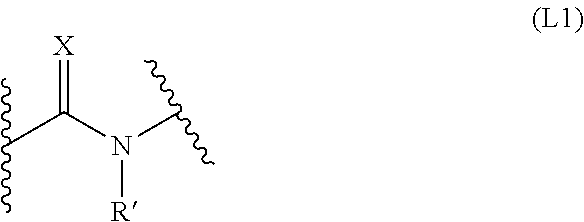


Priority Applications (3)
| Application Number | Priority Date | Filing Date | Title |
|---|---|---|---|
| US17/324,288 US11964977B2 (en) | 2020-05-29 | 2021-05-19 | Anthelmintic heterocyclic compounds |
| US18/421,660 US12312356B2 (en) | 2020-05-29 | 2024-01-24 | Anthelmintic heterocyclic compounds |
| US19/175,280 US20250236625A1 (en) | 2020-05-29 | 2025-04-10 | Anthelmintic heterocyclic compounds |
Applications Claiming Priority (2)
| Application Number | Priority Date | Filing Date | Title |
|---|---|---|---|
| US202063031656P | 2020-05-29 | 2020-05-29 | |
| US17/324,288 US11964977B2 (en) | 2020-05-29 | 2021-05-19 | Anthelmintic heterocyclic compounds |
Related Child Applications (1)
| Application Number | Title | Priority Date | Filing Date |
|---|---|---|---|
| US18/421,660 Continuation US12312356B2 (en) | 2020-05-29 | 2024-01-24 | Anthelmintic heterocyclic compounds |
Publications (2)
| Publication Number | Publication Date |
|---|---|
| US20210380591A1 US20210380591A1 (en) | 2021-12-09 |
| US11964977B2 true US11964977B2 (en) | 2024-04-23 |
Family
ID=78722707
Family Applications (3)
| Application Number | Title | Priority Date | Filing Date |
|---|---|---|---|
| US17/324,288 Active US11964977B2 (en) | 2020-05-29 | 2021-05-19 | Anthelmintic heterocyclic compounds |
| US18/421,660 Active US12312356B2 (en) | 2020-05-29 | 2024-01-24 | Anthelmintic heterocyclic compounds |
| US19/175,280 Pending US20250236625A1 (en) | 2020-05-29 | 2025-04-10 | Anthelmintic heterocyclic compounds |
Family Applications After (2)
| Application Number | Title | Priority Date | Filing Date |
|---|---|---|---|
| US18/421,660 Active US12312356B2 (en) | 2020-05-29 | 2024-01-24 | Anthelmintic heterocyclic compounds |
| US19/175,280 Pending US20250236625A1 (en) | 2020-05-29 | 2025-04-10 | Anthelmintic heterocyclic compounds |
Country Status (20)
| Country | Link |
|---|---|
| US (3) | US11964977B2 (en) |
| EP (1) | EP4185589A1 (en) |
| JP (1) | JP7818759B2 (en) |
| KR (1) | KR20230028268A (en) |
| CN (2) | CN121574131A (en) |
| AR (1) | AR122190A1 (en) |
| AU (1) | AU2021278889A1 (en) |
| BR (1) | BR112022024156A2 (en) |
| CA (1) | CA3183100A1 (en) |
| CL (1) | CL2022003305A1 (en) |
| CO (1) | CO2022018655A2 (en) |
| CR (1) | CR20220665A (en) |
| EC (1) | ECSP22091313A (en) |
| IL (1) | IL298596A (en) |
| MX (1) | MX2022015038A (en) |
| PE (1) | PE20231205A1 (en) |
| PH (1) | PH12022553222A1 (en) |
| TW (1) | TWI902809B (en) |
| UY (1) | UY39233A (en) |
| WO (1) | WO2021242581A1 (en) |
Families Citing this family (11)
| Publication number | Priority date | Publication date | Assignee | Title |
|---|---|---|---|---|
| EP3577109A4 (en) | 2017-01-31 | 2020-11-18 | Arvinas Operations, Inc. | CEREBLON LIGANDS AND BIFUNCTIONAL CONNECTIONS THEREOF |
| MX2021000293A (en) | 2018-07-09 | 2021-07-15 | Boehringer Ingelheim Animal Health Usa Inc | Anthelminthic heterocyclic compounds. |
| JP7637630B2 (en) | 2019-03-19 | 2025-02-28 | ベーリンガー インゲルハイム フェトメディカ ゲーエムベーハー | Anthelmintic azabenzothiophene and azabenzofuran compounds |
| EP4077309A1 (en) | 2019-12-19 | 2022-10-26 | Arvinas Operations, Inc. | Compounds and methods for the targeted degradation of androgen receptor |
| PH12022553222A1 (en) | 2020-05-29 | 2024-02-12 | Boehringer Ingelheim Animal Health Usa Inc | Anthelmintic heterocyclic compounds |
| CN116685584A (en) * | 2020-11-18 | 2023-09-01 | 礼蓝动物保健有限公司 | N-(2,3-Dihydro-1,4-benzoxazin-4-yl)-3-isopropyl-7-(2,3,5-trifluorobenzene for the treatment of heartworm infection base) benzothiophene-2-carboxamide derivatives and similar compounds |
| CA3202092A1 (en) * | 2020-11-18 | 2022-05-27 | Elanco Tiergesundheit Ag | Bicyclic derivatives |
| AR127495A1 (en) | 2021-11-01 | 2024-01-31 | Boehringer Ingelheim Vetmedica Gmbh | PYRROLOPYRIDAZINE COMPOUNDS AS ANTIHELMINTICS |
| EP4694887A1 (en) | 2023-04-14 | 2026-02-18 | Elanco Animal Health GmbH | Long-term prevention and/or treatment of a disease by slo-1 inhibitors |
| IL326231A (en) | 2023-08-02 | 2026-03-01 | Intervet Int Bv | Carboxamide-4-quinoline compounds with anthelmintic activity |
| WO2026078157A2 (en) | 2024-10-10 | 2026-04-16 | Elanco Animal Health Gmbh | Slo-1 modulators for prevention and/or treatment of a disease |
Citations (99)
| Publication number | Priority date | Publication date | Assignee | Title |
|---|---|---|---|---|
| US4464372A (en) | 1982-08-16 | 1984-08-07 | Schering Corporation | Imidazo[1,2-b]pyridazines |
| US5434150A (en) | 1991-09-06 | 1995-07-18 | Dr. Karl Thomae Gmbh | Condensed 5-membered heterocyclic compounds, processes for preparing them and pharmaceutical preparations containing these compounds |
| WO2000053602A1 (en) | 1999-03-10 | 2000-09-14 | Merck & Co., Inc. | 6-azaindole compounds as antagonists of gonadotropin releasing hormone |
| US20040242587A1 (en) | 2003-05-07 | 2004-12-02 | Pfizer Inc | Pyrrolo[1,2-b]pyridazine compounds |
| US6900208B2 (en) | 2002-03-28 | 2005-05-31 | Bristol Myers Squibb Company | Pyrrolopyridazine compounds and methods of use thereof for the treatment of proliferative disorders |
| US6911543B2 (en) | 2001-10-02 | 2005-06-28 | Pfizer Inc. | Azabicyclic-substituted fused-heteroaryl compounds for the treatment of disease |
| WO2005066177A1 (en) | 2003-12-31 | 2005-07-21 | Schering-Plough Ltd. | Control of parasites in animals by the use of imidazo[1,2-b]pyridazine derivatives |
| EP1277754B1 (en) | 2000-04-27 | 2005-07-27 | Yamanouchi Pharmaceutical Co. Ltd. | Imidazopyridine derivatives |
| WO2006004191A1 (en) | 2004-07-05 | 2006-01-12 | Astellas Pharma Inc. | Pyrrolopyridazine derivatives which inhibit pde iv and tnf alfa |
| US20060074102A1 (en) | 2004-05-14 | 2006-04-06 | Kevin Cusack | Kinase inhibitors as therapeutic agents |
| US7030112B2 (en) | 2003-03-25 | 2006-04-18 | Bristol-Myers Squibb Company | Pyrrolopyridazine compounds and methods of use thereof for the treatment of proliferative disorders |
| US7153854B2 (en) | 2003-01-09 | 2006-12-26 | Astellas Pharma Inc. | Pyrrolopyridazine derivatives |
| US20070027093A1 (en) | 2004-01-30 | 2007-02-01 | Japan Tobacco Inc. | Anorectic |
| WO2007123855A2 (en) | 2006-04-20 | 2007-11-01 | E. I. Du Pont De Nemours And Company | Pyrazolines for controlling invertebrate pests |
| US7300932B2 (en) | 2003-08-07 | 2007-11-27 | Japan Tobacco Inc. | Pyrrolo[1,2-b]pyridazine derivatives |
| US20070275962A1 (en) | 2003-09-10 | 2007-11-29 | Gpc Biotech Ag | Heterobicyclic Compounds as Pharmaceutically Active Agents |
| US7306631B2 (en) | 2004-03-30 | 2007-12-11 | The Procter & Gamble Company | Keratin dyeing compounds, keratin dyeing compositions containing them, and use thereof |
| WO2008019309A1 (en) | 2006-08-04 | 2008-02-14 | Metabasis Therapeutics, Inc. | Novel inhibitors of fructose 1,6-bisphosphatase |
| US7420056B2 (en) | 2004-09-14 | 2008-09-02 | Gruenenthal Gmbh | Substituted bicyclic imidazo-3-ylamine compounds |
| US7456192B2 (en) | 2001-11-02 | 2008-11-25 | Pierre Fabre Medicament | 3β-amino azabicyclooctane heteroaromatic amid derivatives preparation method and therapeutic uses thereof |
| JP2009203214A (en) | 2007-07-02 | 2009-09-10 | Nissan Chem Ind Ltd | Release-controlled granule and solid agrochemical preparation containing the granule |
| WO2010017046A1 (en) | 2008-08-05 | 2010-02-11 | Merck & Co., Inc. | Pyrazolo[1,5-a]pyridines as mark inhibitors |
| US7723336B2 (en) | 2005-09-22 | 2010-05-25 | Bristol-Myers Squibb Company | Fused heterocyclic compounds useful as kinase modulators |
| US7893085B2 (en) | 2006-08-21 | 2011-02-22 | Genentech, Inc | Aza-benzothiophenyl compounds and methods of use |
| US7919628B2 (en) | 2004-12-30 | 2011-04-05 | Sanofi-Aventis Deutschland Gmbh | CXCR2 inhibitors |
| US20110105457A1 (en) | 2008-04-18 | 2011-05-05 | Shionogi & Co., Ltd. | Heterocyclic compound having inhibitory activity on pi3k |
| WO2011058109A1 (en) | 2009-11-12 | 2011-05-19 | Ucb Pharma S.A. | Fused bicyclic pyrrole and imidazole derivatives as kinase inhibitors |
| US7956068B2 (en) | 2007-11-15 | 2011-06-07 | Boehringer Ingelheim International Gmbh | Inhibitors of human immunodeficiency virus replication |
| US7964204B2 (en) | 2005-12-30 | 2011-06-21 | E.I. Du Pont De Nemours And Company | Isoxazolines for controlling invertebrate pests |
| WO2011075591A1 (en) | 2009-12-17 | 2011-06-23 | Merial Limited | Anti parasitic dihydroazole compounds and compositions comprising same |
| JP2011140452A (en) | 2010-01-06 | 2011-07-21 | Nissan Chem Ind Ltd | Solid agrochemical preparation from which release of agrochemical active ingredient is controlled |
| US20110206607A1 (en) | 2007-05-10 | 2011-08-25 | Roger Olsson | Imidazol (1,2-a)pyridines and related compounds with activity at cannabinoid cb2 receptors |
| US8030327B2 (en) | 2004-11-08 | 2011-10-04 | Mds K.K. | Fused imidazole derivative |
| US20110245274A1 (en) | 2008-12-18 | 2011-10-06 | Novartis Ag | Isoxazolines derivatives and their use as pesticide |
| WO2011137587A1 (en) | 2010-05-06 | 2011-11-10 | Hutchison Medipharma Limited | Cytokine inhibitors |
| WO2011146401A1 (en) | 2010-05-17 | 2011-11-24 | Intermune, Inc. | Novel inhibitors of hepatitis c virus replication |
| JP2012012299A (en) | 2010-06-29 | 2012-01-19 | Nissan Chem Ind Ltd | Solid agrochemical preparation capable of controlling release of agrochemical active ingredient |
| US20120065200A1 (en) | 2010-09-14 | 2012-03-15 | Joseph Barbosa | Inhibitors of notum pectinacetylesterase and methods of their use |
| US20120083476A1 (en) | 2009-06-05 | 2012-04-05 | Janssen Pharmaceutica Nv | Heteroaryl-substituted spirocyclic diamine urea modulators of fatty acid amide hydrolase |
| WO2012100342A1 (en) | 2011-01-27 | 2012-08-02 | Université de Montréal | Pyrazolopyridine and pyrazolopyrimidine derivatives as melanocortin-4 receptor modulators |
| WO2012107533A1 (en) | 2011-02-10 | 2012-08-16 | Novartis Ag | Isoxazoline derivatives for controlling invertebrate pests |
| US8252795B2 (en) | 2008-10-09 | 2012-08-28 | Bristol-Myers Squibb Company | Imidazopyridazinecarbonitriles useful as kinase inhibitors |
| US20120219500A1 (en) | 2009-10-26 | 2012-08-30 | Fujifilm Ri Pharma Co., Ltd. | Diagnostic agent for infectious diseases |
| US20130071415A1 (en) | 2010-05-28 | 2013-03-21 | Biocryst Pharmaceuticals, Inc. | Heterocyclic Compounds as Janus Kinase Inhibitors |
| US8431593B2 (en) | 2006-11-27 | 2013-04-30 | H. Lundbeck A/S | Heteroaryl amide derivatives |
| US8450354B2 (en) | 2010-03-23 | 2013-05-28 | High Point Pharmaceuticals, Llc | Substituted imidazo[1,2-b]pyridazine derivatives, pharmaceutical compositions, and methods of use as β-secretase inhibitors |
| US20130203692A1 (en) | 2012-02-06 | 2013-08-08 | Merial Limited | Parasiticidal oral veterinary compositions comprising systemically-acting active agents, methods and uses thereof |
| US20140045826A1 (en) | 2011-04-07 | 2014-02-13 | Ariad Pharmaceuticals, Inc. | Methods and compositions for treating neurodegenerative diseases |
| US20140066434A1 (en) | 2011-04-07 | 2014-03-06 | Ariad Pharmaceuticals, Inc. | Methods and Compositions for Treating Parkinson's Disease |
| WO2014078802A1 (en) | 2012-11-19 | 2014-05-22 | Irm Llc | Compounds and compositions for the treatment of parasitic diseases |
| US8772301B2 (en) | 2009-12-18 | 2014-07-08 | Sunovion Pharmaceuticals, Inc. | Compounds for treating disorders mediated by metabotropic glutamate receptor 5, and methods of use thereof |
| US9023850B2 (en) | 2010-10-18 | 2015-05-05 | E I Du Pont De Nemours And Company | Nematocidal sulfonamides |
| US20150126523A1 (en) | 2013-11-01 | 2015-05-07 | Merial Limited | Antiparisitic and pesticidal isoxazoline compounds |
| US20160106102A1 (en) | 2013-05-23 | 2016-04-21 | Bayer Cropscience Aktiengesellschaft | Known and new heterocyclic compounds as pest control agents |
| WO2017093180A1 (en) | 2015-12-01 | 2017-06-08 | Bayer Cropscience Aktiengesellschaft | Condensed bicyclic heterocycle derivatives as pest control agents |
| WO2017125898A1 (en) | 2016-01-21 | 2017-07-27 | Novartis Ag | Compounds and compositions for the treatment of cryptosporidiosis |
| US9718816B2 (en) | 2013-03-15 | 2017-08-01 | Epizyme, Inc. | 1-phenoxy-3-(alkylamino)-propan-2-ol derivatives as CARM1 inhibitors and uses thereof |
| WO2017178416A1 (en) | 2016-04-15 | 2017-10-19 | Bayer Animal Health Gmbh | Pyrazolopyrimidine derivatives |
| US9802961B2 (en) | 2013-09-13 | 2017-10-31 | E I Du Pont De Nemours And Company | Heterocycle-substituted bicyclic azole pesticides |
| US20170369486A1 (en) | 2014-12-16 | 2017-12-28 | Axovant Sciences Gmbh | Geminal substituted quinuclidine amide compounds as agonists of alpha-7 nicotonic acetylcholine receptors |
| US9868749B2 (en) | 2013-12-09 | 2018-01-16 | Ucb Biopharma Sprl | Fused imidazole and pyrazole derivatives as modulators of TNF activity |
| US9873703B2 (en) | 2013-12-09 | 2018-01-23 | Ucb Biopharma Sprl | Imidazopyridazine derivatives as modulators of TNF activity |
| WO2018087036A1 (en) | 2016-11-11 | 2018-05-17 | Bayer Animal Health Gmbh | New anthelmintic quinoline-3-carboxamide derivatives |
| US20180230157A1 (en) | 2017-02-16 | 2018-08-16 | Gilead Sciences, Inc. | PYRROLO[1,2-b]PYRIDAZINE DERIVATIVES |
| WO2018197401A1 (en) | 2017-04-27 | 2018-11-01 | Bayer Animal Health Gmbh | New bicyclic pyrazole derivatives |
| US10138248B2 (en) | 2016-06-24 | 2018-11-27 | Incyte Corporation | Substituted imidazo[2,1-f][1,2,4]triazines, substituted imidazo[1,2-a]pyridines, substituted imidazo[1,2-b]pyridazines and substituted imidazo[1,2-a]pyrazines as PI3K-γ inhibitors |
| WO2019002132A1 (en) | 2017-06-30 | 2019-01-03 | Bayer Animal Health Gmbh | New azaquinoline derivatives |
| WO2019025341A1 (en) | 2017-08-04 | 2019-02-07 | Bayer Animal Health Gmbh | Quinoline derivatives for treating infections with helminths |
| WO2019115768A1 (en) | 2017-12-15 | 2019-06-20 | Bayer Animal Health Gmbh | Process for preparing antihelmintic 4-amino-quinoline-3-carboxamide derivatives |
| US20190233425A1 (en) | 2018-01-29 | 2019-08-01 | Merck Patent Gmbh | Gcn2 inhibitors and uses thereof |
| WO2019215182A1 (en) | 2018-05-09 | 2019-11-14 | Bayer Animal Health Gmbh | New quinoline derivatives |
| US20190352275A1 (en) | 2016-12-29 | 2019-11-21 | Enyo Pharma | Thiophene derivatives as antiviral agents |
| WO2020002124A1 (en) | 2018-06-26 | 2020-01-02 | CSEM Centre Suisse d'Electronique et de Microtechnique SA - Recherche et Développement | Method of operating a power distribution system |
| WO2020014068A1 (en) | 2018-07-09 | 2020-01-16 | Boehringer Ingelheim Animal Health USA Inc. | Anthelminthic heterocyclic compounds |
| WO2020012336A1 (en) | 2018-07-10 | 2020-01-16 | Glaxosmithkline Intellectual Property Development Limited | C-mannoside compounds useful for the treatment of urinary tract infections |
| EP3643711A1 (en) | 2018-10-24 | 2020-04-29 | Bayer Animal Health GmbH | New anthelmintic compounds |
| WO2020131629A1 (en) | 2018-12-18 | 2020-06-25 | Elanco Tiergesundheit Ag | Bicyclic derivatives |
| WO2020131631A1 (en) | 2018-12-18 | 2020-06-25 | Elanco Tiergesundheit Ag | Bicyclic derivatives |
| US20200237771A1 (en) | 2017-10-18 | 2020-07-30 | Jubilant Epipad LLC | Imidazo-pyridine compounds as pad inhibitors |
| WO2020191091A1 (en) | 2019-03-19 | 2020-09-24 | Boehringer Ingelheim Animal Health USA Inc. | Anthelmintic aza-benzothiophene and aza-benzofuran compounds |
| WO2020219871A1 (en) | 2019-04-26 | 2020-10-29 | Celgene Corporation | Heterocyclic compounds and their use for treatment of helminthic infections and diseases |
| WO2020247747A1 (en) | 2019-06-07 | 2020-12-10 | Elanco Tiergesundheit Ag | Bicyclic derivatives for treating endoparasites |
| WO2021018839A1 (en) | 2019-07-30 | 2021-02-04 | Bayer Animal Health Gmbh | Isoquinoline derivatives and their use for the treatment of parasitic infections |
| WO2021030379A1 (en) | 2019-08-13 | 2021-02-18 | Bristol-Myers Squibb Company | Bicyclic heteroaryl compounds useful as irak4 inhibitors |
| WO2021032934A1 (en) | 2019-08-21 | 2021-02-25 | Kalvista Pharmaceuticals Limited | Enzyme inhibitors |
| WO2021127443A1 (en) | 2019-12-19 | 2021-06-24 | Arvinas Operations, Inc. | Compounds and methods for the targeted degradation of androgen receptor |
| WO2021122911A1 (en) | 2019-12-18 | 2021-06-24 | Intervet International B.V. | Anthelmintic compounds comprising a quinoline structure |
| WO2021122906A1 (en) | 2019-12-18 | 2021-06-24 | Intervet International B.V. | Anthelmintic compounds comprising azaindoles structure |
| WO2021130731A1 (en) | 2019-12-27 | 2021-07-01 | Lupin Limited | Substituted tricyclic compounds |
| WO2021173713A1 (en) | 2020-02-27 | 2021-09-02 | Atea Pharmaceuticals, Inc. | Highly active compounds against covid-19 |
| WO2021204930A1 (en) | 2020-04-09 | 2021-10-14 | Bayer Animal Health Gmbh | Substituted condensed azines as anthelmintic compounds |
| WO2021231571A1 (en) | 2020-05-13 | 2021-11-18 | Chdi Foundation, Inc. | Htt modulators for treating huntington's disease |
| US20220047569A1 (en) | 2020-08-12 | 2022-02-17 | Jubilant Epipad LLC | Method and compound for use, in treating and/or preventing netosis |
| WO2022106469A2 (en) | 2020-11-18 | 2022-05-27 | Elanco Tiergesundheit Ag | N-(2,3-dihydro-1,4-benzoxazin-4-yl)-3-isopropyl-7-(2,3,5-trifluorophenyl)benzo-thiophene-2-carboxamide derivatives and similar compounds for the treatment of heartworm infections |
| WO2022117783A1 (en) | 2020-12-04 | 2022-06-09 | Elanco Tiergesundheit Ag | Bicyclic derivatives |
| WO2022122988A1 (en) | 2020-12-11 | 2022-06-16 | Intervet International B.V. | Anthelmintic compounds comprising a thienopyridine structure |
| WO2022122987A1 (en) | 2020-12-11 | 2022-06-16 | Intervet International B.V. | Anthelmintic compounds comprising a pyridine structure |
| WO2022152918A1 (en) | 2021-01-18 | 2022-07-21 | Liverpool School Of Tropical Medicine | Azaquinazoline derivatives for use in treating or preventing dirofilaria infection in a mammal |
| CL2022002346A1 (en) | 2020-02-27 | 2023-04-28 | Atea Pharmaceuticals Inc | Highly active compounds against coronavirus disease 2019 (covid-19) |
Family Cites Families (127)
| Publication number | Priority date | Publication date | Assignee | Title |
|---|---|---|---|---|
| NL160809C (en) | 1970-05-15 | 1979-12-17 | Duphar Int Res | METHOD FOR PREPARING BENZOYLURUM COMPOUNDS, AND METHOD FOR PREPARING INSECTICIDE PREPARATIONS BASED ON BENZOYLURUM COMPOUNDS. |
| JPS4914624A (en) | 1972-06-08 | 1974-02-08 | ||
| US3950360A (en) | 1972-06-08 | 1976-04-13 | Sankyo Company Limited | Antibiotic substances |
| US3818047A (en) | 1972-08-07 | 1974-06-18 | C Henrick | Substituted pyrones |
| SE434277B (en) | 1976-04-19 | 1984-07-16 | Merck & Co Inc | SET TO MAKE NEW ANTIHELMINTICALLY EFFECTIVE ASSOCIATIONS BY CULTIVATING STREPTOMYCS AVERMITILIS |
| US4166452A (en) | 1976-05-03 | 1979-09-04 | Generales Constantine D J Jr | Apparatus for testing human responses to stimuli |
| CH604517A5 (en) | 1976-08-19 | 1978-09-15 | Ciba Geigy Ag | |
| US4256108A (en) | 1977-04-07 | 1981-03-17 | Alza Corporation | Microporous-semipermeable laminated osmotic system |
| US4134973A (en) | 1977-04-11 | 1979-01-16 | Merck & Co., Inc. | Carbohydrate derivatives of milbemycin and processes therefor |
| US4199569A (en) | 1977-10-03 | 1980-04-22 | Merck & Co., Inc. | Selective hydrogenation products of C-076 compounds and derivatives thereof |
| US4144352A (en) | 1977-12-19 | 1979-03-13 | Merck & Co., Inc. | Milbemycin compounds as anthelmintic agents |
| US4203976A (en) | 1978-08-02 | 1980-05-20 | Merck & Co., Inc. | Sugar derivatives of C-076 compounds |
| US4265874A (en) | 1980-04-25 | 1981-05-05 | Alza Corporation | Method of delivering drug with aid of effervescent activity generated in environment of use |
| JPS57139012A (en) | 1981-02-23 | 1982-08-27 | Sankyo Co Ltd | Anthelmintic composition |
| US4427663A (en) | 1982-03-16 | 1984-01-24 | Merck & Co., Inc. | 4"-Keto-and 4"-amino-4"-deoxy avermectin compounds and substituted amino derivatives thereof |
| DE3235931A1 (en) | 1982-09-29 | 1984-03-29 | Bayer Ag, 5090 Leverkusen | Bait to fight vermin |
| JPS59199673A (en) | 1983-04-25 | 1984-11-12 | Sumitomo Chem Co Ltd | Nitrogen-containing heterocyclic compound, its preparation and pesticide containing the same |
| EP0179022B1 (en) | 1984-10-18 | 1990-11-07 | Ciba-Geigy Ag | Benzoylphenyl ureas |
| EP0192060B1 (en) | 1985-02-04 | 1991-09-18 | Nihon Bayer Agrochem K.K. | Heterocyclic compounds |
| EP0237482A1 (en) | 1986-03-06 | 1987-09-16 | Ciba-Geigy Ag | Derivatives of C(29)-carbonyloxy-milbemycine against parasites in animals and plants |
| ES2019932B3 (en) | 1986-03-25 | 1991-07-16 | Sankyo Co | MACROLID COMPOUNDS. |
| DE3778768D1 (en) | 1986-07-02 | 1992-06-11 | Ciba Geigy Ag | PESTICIDES. |
| US4855317A (en) | 1987-03-06 | 1989-08-08 | Ciba-Geigy Corporation | Insecticides and parasiticides |
| US4871719A (en) | 1987-03-24 | 1989-10-03 | Ciba-Geigy Corporation | Composition for controlling parasites in productive livestock |
| US4874749A (en) | 1987-07-31 | 1989-10-17 | Merck & Co., Inc. | 4"-Deoxy-4-N-methylamino avermectin Bla/Blb |
| EP0319142B1 (en) | 1987-11-03 | 1994-04-06 | Beecham Group Plc | Intermediates for the preparation of anthelmintic macrolide antibiotics |
| OA09249A (en) | 1988-12-19 | 1992-06-30 | Lilly Co Eli | Compounds of macrolides. |
| NZ232422A (en) | 1989-02-16 | 1992-11-25 | Merck & Co Inc | 13-ketal milbemycin derivatives and parasiticides |
| IE904606A1 (en) | 1989-12-21 | 1991-07-03 | Beecham Group Plc | Novel products |
| NZ247278A (en) | 1991-02-12 | 1995-03-28 | Ancare Distributors | Veterinary anthelmintic drench comprising a suspension of praziquantel in a liquid carrier |
| WO1992022555A1 (en) | 1991-06-17 | 1992-12-23 | Beecham Group Plc | Paraherquamide derivatives, precursor thereof, processes for their preparation, microorganism used and their use as antiparasitic agents |
| US5202242A (en) | 1991-11-08 | 1993-04-13 | Dowelanco | A83543 compounds and processes for production thereof |
| US5345377A (en) | 1992-10-30 | 1994-09-06 | Electric Power Research Institute, Inc. | Harmonic controller for an active power line conditioner |
| US5591606A (en) | 1992-11-06 | 1997-01-07 | Dowelanco | Process for the production of A83543 compounds with Saccharopolyspora spinosa |
| GB9300883D0 (en) | 1993-01-18 | 1993-03-10 | Pfizer Ltd | Antiparasitic agents |
| JP4258575B2 (en) | 1993-03-12 | 2009-04-30 | ダウ・アグロサイエンス・エル・エル・シー | Novel A83543 compounds and methods for their production |
| US5399582A (en) | 1993-11-01 | 1995-03-21 | Merck & Co., Inc. | Antiparasitic agents |
| US5750548A (en) | 1994-01-24 | 1998-05-12 | Novartis Corp. | 1- N-(halo-3-pyridylmethyl)!-N-methylamino-1-alklamino-2-nitroethylene derivatives for controlling fleas in domestic animals |
| AUPM969994A0 (en) | 1994-11-28 | 1994-12-22 | Virbac S.A. | Equine anthelmintic formulations |
| US6221894B1 (en) | 1995-03-20 | 2001-04-24 | Merck & Co., Inc. | Nodulisporic acid derivatives |
| US5962499A (en) | 1995-03-20 | 1999-10-05 | Merck & Co., Inc. | Nodulisporic acid derivatives |
| MY113806A (en) | 1995-07-21 | 2002-05-31 | Upjohn Co | Antiparasitic marcfortines and paraherquamides |
| FR2739255B1 (en) | 1995-09-29 | 1998-09-04 | Rhone Merieux | PEST CONTROL COMPOSITION FOR THE TREATMENT AND PROTECTION OF PETS |
| IE80657B1 (en) | 1996-03-29 | 1998-11-04 | Merial Sas | Insecticidal combination to control mammal fleas in particular fleas on cats and dogs |
| US6010710A (en) | 1996-03-29 | 2000-01-04 | Merial | Direct pour-on skin solution for antiparasitic use in cattle and sheep |
| FR2752525B1 (en) | 1996-08-20 | 2000-05-05 | Rhone Merieux | METHOD FOR CONTROLLING MYIA OF CATTLE AND SHEEP HERBS AND COMPOSITIONS FOR CARRYING OUT SAID METHOD |
| US5885607A (en) | 1996-03-29 | 1999-03-23 | Rhone Merieux | N-phenylpyrazole-based anti-flea and anti-tick external device for cats and dogs |
| US6001981A (en) | 1996-06-13 | 1999-12-14 | Dow Agrosciences Llc | Synthetic modification of Spinosyn compounds |
| US6998131B2 (en) | 1996-09-19 | 2006-02-14 | Merial Limited | Spot-on formulations for combating parasites |
| US6207647B1 (en) | 1997-07-18 | 2001-03-27 | Smithkline Beecham Corporation | RatA |
| US6174540B1 (en) | 1998-09-14 | 2001-01-16 | Merck & Co., Inc. | Long acting injectable formulations containing hydrogenated caster oil |
| US6787342B2 (en) | 2000-02-16 | 2004-09-07 | Merial Limited | Paste formulations |
| PE20011289A1 (en) | 2000-04-07 | 2001-12-21 | Upjohn Co | ANTIHELMINE COMPOSITIONS INCLUDING MACROCYCLIC AND SPIRODIOXEPINOINDOLES LACTONES |
| US6399786B1 (en) | 2000-07-14 | 2002-06-04 | Merck & Co., Inc. | Nonacyclic nodulisporic acid derivatives |
| RU2356891C9 (en) | 2002-05-16 | 2010-03-27 | Байер Кропсайенс Аг | Derivatives of pyridinecarboxamides and their salts for use as insecticide |
| US7001889B2 (en) | 2002-06-21 | 2006-02-21 | Merial Limited | Anthelmintic oral homogeneous veterinary pastes |
| US20040151759A1 (en) | 2002-08-16 | 2004-08-05 | Douglas Cleverly | Non-animal product containing veterinary formulations |
| AR042420A1 (en) | 2002-09-11 | 2005-06-22 | Novartis Ag | BENZOTRIAZOLIL- AMINOACETONITRIL COMPOUNDS, PROCESS FOR ITS PREPARATION, METHOD AND USE OF THE SAME IN THE CONTROL OF ENDO- AND ECTO-PARASITES WITHIN AND ON LIVESTOCK PRODUCER OF HOT BLOOD AND DOMESTIC AND PLANT ANIMALS, AND IN THE PREPARATION OF A COMPOSITION |
| AR045142A1 (en) | 2003-07-30 | 2005-10-19 | Novartis Ag | BUEN SABOR DUCTILE MASTICABLE VETERINARY COMPOSITION |
| CN101768129B (en) | 2004-03-05 | 2012-05-23 | 日产化学工业株式会社 | Preparation intermediate of isoxazoline substituted benzamide compound |
| AU2006285613B2 (en) | 2005-09-02 | 2011-11-17 | Nissan Chemical Corporation | Isoxazoline-substituted benzamide compound and harmful organism-controlling agent |
| US7955632B2 (en) | 2005-12-07 | 2011-06-07 | Bayer B.V. | Process for manufacturing chewable dosage forms for drug delivery and products thereof |
| BRPI0620668A2 (en) | 2005-12-14 | 2011-11-22 | Du Pont | compound of formula 1, composition comprising compound, invertebrate pest control composition, spray composition, bait composition, trap device, invertebrate pest control methods, cockroach, ants or termites control method and protection method. seeds against invertebrate pests |
| TW200803740A (en) | 2005-12-16 | 2008-01-16 | Du Pont | 5-aryl isoxazolines for controlling invertebrate pests |
| JP5152518B2 (en) | 2006-03-10 | 2013-02-27 | 日産化学工業株式会社 | Substituted isoxazoline compounds and pest control agents |
| WO2007125984A1 (en) | 2006-04-28 | 2007-11-08 | Nihon Nohyaku Co., Ltd. | Isoxazoline derivative, pest-controlling agent, and use of the pest-controlling agent |
| MX2008016411A (en) | 2006-07-05 | 2009-04-28 | Aventis Agriculture | 1-aryl-5-alkyl pyrazole derivative compounds, processes of making and methods of using thereof. |
| JP2008044880A (en) | 2006-08-15 | 2008-02-28 | Bayer Cropscience Ag | Insecticidal isooxazolines |
| JP5206993B2 (en) | 2007-03-07 | 2013-06-12 | 日産化学工業株式会社 | Isoxazoline-substituted benzamide compounds and pest control agents |
| US8114814B2 (en) | 2007-03-16 | 2012-02-14 | Kumiai Chemical Industry Co., Ltd. | Herbicide composition |
| JP5256753B2 (en) | 2007-03-29 | 2013-08-07 | 住友化学株式会社 | Isoxazoline compounds and their pest control applications |
| RU2009141185A (en) | 2007-04-10 | 2011-05-20 | Байер КропСайенс АГ (DE) | INSECTICIDAL DERIVATIVES OF ARILIZOXOXAZOLINE |
| PL3088384T3 (en) | 2007-05-15 | 2019-06-28 | Merial, Inc. | Aryloazol-2-yl cyanoethylamino compounds, method of making and method of using thereof |
| WO2008154528A2 (en) | 2007-06-13 | 2008-12-18 | E. I. Du Pont De Nemours And Company | Isoxazoline insecticides |
| TWI430995B (en) | 2007-06-26 | 2014-03-21 | Du Pont | Naphthalene isoxazoline invertebrate pest control agents |
| EP2172462A4 (en) | 2007-06-27 | 2010-12-15 | Nissan Chemical Ind Ltd | Method for production of 3-hydroxypropan-1-one compound, method for production of 2-propen-1-one compound, and method for production of isoxazoline compound |
| PL2170321T3 (en) | 2007-06-29 | 2013-12-31 | Zoetis Services Llc | Anthelmintic combination |
| US8053452B2 (en) | 2007-06-29 | 2011-11-08 | Nissan Chemical Industries, Ltd. | Substituted isoxazoline or enone oxime compound, and pest control agent |
| TWI556741B (en) | 2007-08-17 | 2016-11-11 | 英特威特國際股份有限公司 | Isoxazoline compositions and their use as antiparasitics |
| JP5365806B2 (en) | 2007-09-10 | 2013-12-11 | 日産化学工業株式会社 | Substituted isoxazoline compounds and pest control agents |
| MX2010003557A (en) | 2007-10-03 | 2010-04-12 | Du Pont | Naphthalene isoxazoline compounds for control of invertebrate pests. |
| CA2973871C (en) | 2008-07-09 | 2019-09-10 | Nissan Chemical Industries, Ltd. | Production method of isoxazoline-substituted benzoic acid amide compound |
| CN102088857A (en) | 2008-07-09 | 2011-06-08 | 巴斯夫欧洲公司 | Pesticidal mixtures comprising isoxazoline compounds ii |
| WO2010003923A1 (en) | 2008-07-09 | 2010-01-14 | Basf Se | Pestcidal active mixtures comprising isoxazoline compounds i |
| EP2331535B1 (en) | 2008-09-04 | 2015-07-22 | Syngenta Participations AG | Insecticidal compounds |
| US9820977B2 (en) | 2008-10-03 | 2017-11-21 | Bayer Healthcare Llc | Systemic treatment of blood-sucking and blood-consuming parasites by oral administration of a parasiticidal agent |
| CA2741186C (en) | 2008-10-21 | 2016-07-19 | Merial Limited | Thioamide compounds, method of making and method of using thereof |
| PL2379537T3 (en) | 2008-12-19 | 2013-03-29 | Elanco Tiergesundheit Ag | Isoxazoline derivatives and their use as pesticide |
| KR20110099139A (en) | 2008-12-23 | 2011-09-06 | 바스프 에스이 | Substituted Amidine Compounds for Fighting Animal Pests |
| CN102365278B (en) | 2009-03-26 | 2015-05-06 | 先正达参股股份有限公司 | Insecticidal compounds |
| CN102369199A (en) | 2009-04-01 | 2012-03-07 | 巴斯夫欧洲公司 | Isoxazoline compounds for controlling invertebrate pests |
| TWI487486B (en) | 2009-12-01 | 2015-06-11 | Syngenta Participations Ag | Insecticidal compound based on isoxazoline derivatives |
| EP2531493B1 (en) | 2010-02-01 | 2015-07-22 | Basf Se | Substituted ketonic isoxazoline compounds and derivatives for combating animal pests |
| PH12012501599A1 (en) | 2010-02-25 | 2012-10-22 | Syngenta Ltd | Pesticidal mixtures containing isoxazoline derivatives and insecticide or nematoicidal biological agent |
| BR112012021238A2 (en) | 2010-02-25 | 2016-06-21 | Syngenta Ltd | pesticide mixtures containing isoxazoline derivatives and a fungicide |
| KR20120133401A (en) | 2010-02-25 | 2012-12-10 | 신젠타 리미티드 | Process for the preparation of isoxazoline derivatives |
| WO2011124998A1 (en) | 2010-04-08 | 2011-10-13 | Pfizer Inc. | Substituted 3,5- di phenyl - isoxazoline derivatives as insecticides and acaricides |
| BR112012031088A8 (en) | 2010-06-09 | 2017-10-10 | Syngenta Participations Ag | PESTICIDE MIXTURES INCLUDING ISOXAZOLINE DERIVATIVES |
| AR081843A1 (en) | 2010-06-09 | 2012-10-24 | Syngenta Participations Ag | PESTICIDE MIXING INCLUDING ISOXAZOLINE DERIVATIVES |
| UY33403A (en) | 2010-06-17 | 2011-12-30 | Novartis Ag | ORGANIC COMPOUNDS WITH NEW ISOXAZOLINES, THEIR N-OXIDES, S-OXIDES AND SALTS |
| CN103270036B (en) | 2010-08-05 | 2015-11-25 | 佐蒂斯有限责任公司 | As antiparasitic isoxazoline derivative |
| BR112013006686A2 (en) | 2010-09-24 | 2017-11-14 | Zoetis Llc | isoxazoline oximes as antiparasitic agents |
| WO2012086462A1 (en) | 2010-12-20 | 2012-06-28 | 日本曹達株式会社 | Isoxazoline compound and pest control agent |
| NZ611476A (en) | 2010-12-27 | 2015-10-30 | Intervet Int Bv | Topical localized isoxazoline formulation |
| CN103260620A (en) | 2010-12-27 | 2013-08-21 | 英特维特国际股份有限公司 | Topical topical isoxazoline formulations containing ethylene glycol |
| RU2013145304A (en) | 2011-03-10 | 2015-04-20 | Новартис Аг | Isoxazole derivatives |
| SI2683723T1 (en) | 2011-03-10 | 2016-07-29 | Zoetis Services Llc | Spirocyclic isoxazoline derivatives as antiparasitic agents |
| AR088668A1 (en) | 2011-11-21 | 2014-06-25 | Lilly Co Eli | SMALL MOLECULES CONTAINING BORO |
| JP6148730B2 (en) | 2012-07-19 | 2017-06-14 | バイエル・クロップサイエンス・アクチェンゲゼルシャフト | Process for producing 5-fluoro-1H-pyrazoles |
| AU2013312896A1 (en) | 2012-09-07 | 2015-02-26 | Zoetis Services Llc | Spirocyclic derivatives as antiparasitic agents |
| JP6321042B2 (en) | 2013-02-06 | 2018-05-09 | バイエル・クロップサイエンス・アクチェンゲゼルシャフト | New halogen-substituted compounds |
| US9404206B2 (en) | 2013-02-28 | 2016-08-02 | Nike, Inc. | Feeder for knitting machine having pushing member |
| JP6678581B2 (en) | 2013-11-27 | 2020-04-08 | バイエル・アニマル・ヘルス・ゲゼルシャフト・ミット・ベシュレンクテル・ハフツングBayer Animal Health Gmbh | Process for the preparation of 5-fluoro-1H-pyrazoles |
| JP6613234B2 (en) | 2013-11-27 | 2019-11-27 | バイエル・アニマル・ヘルス・ゲゼルシャフト・ミット・ベシュレンクテル・ハフツング | Process for the preparation of 5-fluoro-1H-pyrazoles |
| JP2017509673A (en) | 2014-04-01 | 2017-04-06 | バイエル・クロップサイエンス・アクチェンゲゼルシャフト | Process for producing N- [3- (benzylcarbamoyl) phenyl] -1H-pyrazole-5-carboxamide |
| TWI694066B (en) | 2014-05-27 | 2020-05-21 | 德商拜耳動物保健有限公司 | Process for the preparation of 5-fluoro-1h-pyrazoles starting from hexafluoropropene |
| JP6676038B2 (en) | 2014-08-19 | 2020-04-08 | バイエル・アニマル・ヘルス・ゲゼルシャフト・ミット・ベシュレンクテル・ハフツングBayer Animal Health Gmbh | Process for the preparation of 5-fluoro-1H-pyrazoles starting from hexafluoropropene |
| BR112017023662B1 (en) | 2015-05-05 | 2022-06-07 | Syngenta Participations Ag | Method of controlling and/or preventing bed bug infestation, use of a compost and method for growing soybeans |
| CN107835818B (en) | 2015-05-20 | 2022-04-29 | 勃林格殷格翰动物保健美国公司 | Insect repellant depsipeptide compound |
| KR20220003663A (en) | 2015-12-28 | 2022-01-10 | 뵈링거 잉겔하임 애니멀 헬스 유에스에이 인코포레이티드 | Anthelmintic depsipeptide compounds |
| UY37137A (en) | 2016-02-24 | 2017-09-29 | Merial Inc | ANTIPARASITARY COMPOUNDS OF ISOXAZOLINE, INJECTABLE FORMULATIONS OF PROLONGED ACTION THAT INCLUDE THEM, METHODS AND USES OF THE SAME |
| EP3728234B1 (en) * | 2017-12-21 | 2025-05-14 | F. Hoffmann-La Roche AG | Radiolabeled compounds |
| EP4335512A3 (en) * | 2017-12-22 | 2024-06-12 | HiberCell, Inc. | Chromenopyridine derivatives as phosphatidylinositol phosphate kinase inhibitors |
| JP2019127467A (en) * | 2018-01-26 | 2019-08-01 | 塩野義製薬株式会社 | Pharmaceutical composition containing nitrogen-containing condensed ring compound having dopamine d3 receptor antagonism |
| EP3590927A1 (en) | 2018-07-05 | 2020-01-08 | Bayer Animal Health GmbH | Novel compounds for controlling arthropods |
| TWI861178B (en) | 2019-08-14 | 2024-11-11 | 法商維多奎諾公司 | Compositions for controlling parasites |
| PH12022553222A1 (en) | 2020-05-29 | 2024-02-12 | Boehringer Ingelheim Animal Health Usa Inc | Anthelmintic heterocyclic compounds |
-
2021
- 2021-05-19 PH PH1/2022/553222A patent/PH12022553222A1/en unknown
- 2021-05-19 BR BR112022024156A patent/BR112022024156A2/en unknown
- 2021-05-19 KR KR1020227043222A patent/KR20230028268A/en active Pending
- 2021-05-19 CN CN202511727992.2A patent/CN121574131A/en active Pending
- 2021-05-19 CR CR20220665A patent/CR20220665A/en unknown
- 2021-05-19 US US17/324,288 patent/US11964977B2/en active Active
- 2021-05-19 CN CN202180060216.5A patent/CN116249704B/en active Active
- 2021-05-19 EP EP21736410.8A patent/EP4185589A1/en active Pending
- 2021-05-19 MX MX2022015038A patent/MX2022015038A/en unknown
- 2021-05-19 WO PCT/US2021/033072 patent/WO2021242581A1/en not_active Ceased
- 2021-05-19 JP JP2022573445A patent/JP7818759B2/en active Active
- 2021-05-19 CA CA3183100A patent/CA3183100A1/en active Pending
- 2021-05-19 PE PE2022002741A patent/PE20231205A1/en unknown
- 2021-05-19 AU AU2021278889A patent/AU2021278889A1/en active Pending
- 2021-05-19 IL IL298596A patent/IL298596A/en unknown
- 2021-05-27 UY UY0001039233A patent/UY39233A/en unknown
- 2021-05-28 TW TW110119376A patent/TWI902809B/en active
- 2021-05-28 AR ARP210101438A patent/AR122190A1/en unknown
-
2022
- 2022-11-24 CL CL2022003305A patent/CL2022003305A1/en unknown
- 2022-11-29 EC ECSENADI202291313A patent/ECSP22091313A/en unknown
- 2022-12-22 CO CONC2022/0018655A patent/CO2022018655A2/en unknown
-
2024
- 2024-01-24 US US18/421,660 patent/US12312356B2/en active Active
-
2025
- 2025-04-10 US US19/175,280 patent/US20250236625A1/en active Pending
Patent Citations (111)
| Publication number | Priority date | Publication date | Assignee | Title |
|---|---|---|---|---|
| US4464372A (en) | 1982-08-16 | 1984-08-07 | Schering Corporation | Imidazo[1,2-b]pyridazines |
| US5434150A (en) | 1991-09-06 | 1995-07-18 | Dr. Karl Thomae Gmbh | Condensed 5-membered heterocyclic compounds, processes for preparing them and pharmaceutical preparations containing these compounds |
| WO2000053602A1 (en) | 1999-03-10 | 2000-09-14 | Merck & Co., Inc. | 6-azaindole compounds as antagonists of gonadotropin releasing hormone |
| EP1277754B1 (en) | 2000-04-27 | 2005-07-27 | Yamanouchi Pharmaceutical Co. Ltd. | Imidazopyridine derivatives |
| US6911543B2 (en) | 2001-10-02 | 2005-06-28 | Pfizer Inc. | Azabicyclic-substituted fused-heteroaryl compounds for the treatment of disease |
| US7456192B2 (en) | 2001-11-02 | 2008-11-25 | Pierre Fabre Medicament | 3β-amino azabicyclooctane heteroaromatic amid derivatives preparation method and therapeutic uses thereof |
| US6900208B2 (en) | 2002-03-28 | 2005-05-31 | Bristol Myers Squibb Company | Pyrrolopyridazine compounds and methods of use thereof for the treatment of proliferative disorders |
| US7153854B2 (en) | 2003-01-09 | 2006-12-26 | Astellas Pharma Inc. | Pyrrolopyridazine derivatives |
| US7030112B2 (en) | 2003-03-25 | 2006-04-18 | Bristol-Myers Squibb Company | Pyrrolopyridazine compounds and methods of use thereof for the treatment of proliferative disorders |
| US20040242587A1 (en) | 2003-05-07 | 2004-12-02 | Pfizer Inc | Pyrrolo[1,2-b]pyridazine compounds |
| US7300932B2 (en) | 2003-08-07 | 2007-11-27 | Japan Tobacco Inc. | Pyrrolo[1,2-b]pyridazine derivatives |
| US20070275962A1 (en) | 2003-09-10 | 2007-11-29 | Gpc Biotech Ag | Heterobicyclic Compounds as Pharmaceutically Active Agents |
| WO2005066177A1 (en) | 2003-12-31 | 2005-07-21 | Schering-Plough Ltd. | Control of parasites in animals by the use of imidazo[1,2-b]pyridazine derivatives |
| US20070027093A1 (en) | 2004-01-30 | 2007-02-01 | Japan Tobacco Inc. | Anorectic |
| US7306631B2 (en) | 2004-03-30 | 2007-12-11 | The Procter & Gamble Company | Keratin dyeing compounds, keratin dyeing compositions containing them, and use thereof |
| US20060074102A1 (en) | 2004-05-14 | 2006-04-06 | Kevin Cusack | Kinase inhibitors as therapeutic agents |
| WO2006004191A1 (en) | 2004-07-05 | 2006-01-12 | Astellas Pharma Inc. | Pyrrolopyridazine derivatives which inhibit pde iv and tnf alfa |
| US7420056B2 (en) | 2004-09-14 | 2008-09-02 | Gruenenthal Gmbh | Substituted bicyclic imidazo-3-ylamine compounds |
| US8030327B2 (en) | 2004-11-08 | 2011-10-04 | Mds K.K. | Fused imidazole derivative |
| US7919628B2 (en) | 2004-12-30 | 2011-04-05 | Sanofi-Aventis Deutschland Gmbh | CXCR2 inhibitors |
| US7723336B2 (en) | 2005-09-22 | 2010-05-25 | Bristol-Myers Squibb Company | Fused heterocyclic compounds useful as kinase modulators |
| US7964204B2 (en) | 2005-12-30 | 2011-06-21 | E.I. Du Pont De Nemours And Company | Isoxazolines for controlling invertebrate pests |
| WO2007123855A2 (en) | 2006-04-20 | 2007-11-01 | E. I. Du Pont De Nemours And Company | Pyrazolines for controlling invertebrate pests |
| WO2008019309A1 (en) | 2006-08-04 | 2008-02-14 | Metabasis Therapeutics, Inc. | Novel inhibitors of fructose 1,6-bisphosphatase |
| US7893085B2 (en) | 2006-08-21 | 2011-02-22 | Genentech, Inc | Aza-benzothiophenyl compounds and methods of use |
| US8431593B2 (en) | 2006-11-27 | 2013-04-30 | H. Lundbeck A/S | Heteroaryl amide derivatives |
| US20110206607A1 (en) | 2007-05-10 | 2011-08-25 | Roger Olsson | Imidazol (1,2-a)pyridines and related compounds with activity at cannabinoid cb2 receptors |
| JP2009203214A (en) | 2007-07-02 | 2009-09-10 | Nissan Chem Ind Ltd | Release-controlled granule and solid agrochemical preparation containing the granule |
| US7956068B2 (en) | 2007-11-15 | 2011-06-07 | Boehringer Ingelheim International Gmbh | Inhibitors of human immunodeficiency virus replication |
| US20110105457A1 (en) | 2008-04-18 | 2011-05-05 | Shionogi & Co., Ltd. | Heterocyclic compound having inhibitory activity on pi3k |
| WO2010017046A1 (en) | 2008-08-05 | 2010-02-11 | Merck & Co., Inc. | Pyrazolo[1,5-a]pyridines as mark inhibitors |
| US20110195933A1 (en) | 2008-08-05 | 2011-08-11 | Katz Jason D | Pyrazolo[1,5-a]pyridines as mark inhibitors |
| US8252795B2 (en) | 2008-10-09 | 2012-08-28 | Bristol-Myers Squibb Company | Imidazopyridazinecarbonitriles useful as kinase inhibitors |
| US20110245274A1 (en) | 2008-12-18 | 2011-10-06 | Novartis Ag | Isoxazolines derivatives and their use as pesticide |
| US20120083476A1 (en) | 2009-06-05 | 2012-04-05 | Janssen Pharmaceutica Nv | Heteroaryl-substituted spirocyclic diamine urea modulators of fatty acid amide hydrolase |
| US20120219500A1 (en) | 2009-10-26 | 2012-08-30 | Fujifilm Ri Pharma Co., Ltd. | Diagnostic agent for infectious diseases |
| WO2011058109A1 (en) | 2009-11-12 | 2011-05-19 | Ucb Pharma S.A. | Fused bicyclic pyrrole and imidazole derivatives as kinase inhibitors |
| WO2011075591A1 (en) | 2009-12-17 | 2011-06-23 | Merial Limited | Anti parasitic dihydroazole compounds and compositions comprising same |
| EP3078664A1 (en) | 2009-12-17 | 2016-10-12 | Merial Inc. | Antiparasitic dihydroazole compositions |
| US8772301B2 (en) | 2009-12-18 | 2014-07-08 | Sunovion Pharmaceuticals, Inc. | Compounds for treating disorders mediated by metabotropic glutamate receptor 5, and methods of use thereof |
| JP2011140452A (en) | 2010-01-06 | 2011-07-21 | Nissan Chem Ind Ltd | Solid agrochemical preparation from which release of agrochemical active ingredient is controlled |
| US8450354B2 (en) | 2010-03-23 | 2013-05-28 | High Point Pharmaceuticals, Llc | Substituted imidazo[1,2-b]pyridazine derivatives, pharmaceutical compositions, and methods of use as β-secretase inhibitors |
| WO2011137587A1 (en) | 2010-05-06 | 2011-11-10 | Hutchison Medipharma Limited | Cytokine inhibitors |
| WO2011146401A1 (en) | 2010-05-17 | 2011-11-24 | Intermune, Inc. | Novel inhibitors of hepatitis c virus replication |
| US20130071415A1 (en) | 2010-05-28 | 2013-03-21 | Biocryst Pharmaceuticals, Inc. | Heterocyclic Compounds as Janus Kinase Inhibitors |
| JP2012012299A (en) | 2010-06-29 | 2012-01-19 | Nissan Chem Ind Ltd | Solid agrochemical preparation capable of controlling release of agrochemical active ingredient |
| US20120065200A1 (en) | 2010-09-14 | 2012-03-15 | Joseph Barbosa | Inhibitors of notum pectinacetylesterase and methods of their use |
| US9023850B2 (en) | 2010-10-18 | 2015-05-05 | E I Du Pont De Nemours And Company | Nematocidal sulfonamides |
| WO2012100342A1 (en) | 2011-01-27 | 2012-08-02 | Université de Montréal | Pyrazolopyridine and pyrazolopyrimidine derivatives as melanocortin-4 receptor modulators |
| WO2012107533A1 (en) | 2011-02-10 | 2012-08-16 | Novartis Ag | Isoxazoline derivatives for controlling invertebrate pests |
| US20140045826A1 (en) | 2011-04-07 | 2014-02-13 | Ariad Pharmaceuticals, Inc. | Methods and compositions for treating neurodegenerative diseases |
| US20140066434A1 (en) | 2011-04-07 | 2014-03-06 | Ariad Pharmaceuticals, Inc. | Methods and Compositions for Treating Parkinson's Disease |
| US20130203692A1 (en) | 2012-02-06 | 2013-08-08 | Merial Limited | Parasiticidal oral veterinary compositions comprising systemically-acting active agents, methods and uses thereof |
| WO2014078802A1 (en) | 2012-11-19 | 2014-05-22 | Irm Llc | Compounds and compositions for the treatment of parasitic diseases |
| JP2016505529A (en) | 2012-11-19 | 2016-02-25 | アイアールエム・リミテッド・ライアビリティ・カンパニーIrm,Llc | Compounds and compositions for the treatment of parasitic diseases |
| US20160333012A1 (en) | 2012-11-19 | 2016-11-17 | Novartis Ag | Compounds and compositions for the treatment of parasitic diseases |
| US9556169B2 (en) | 2012-11-19 | 2017-01-31 | Novartis Ag | Compounds and compositions for the treatment of parasitic diseases |
| US9718816B2 (en) | 2013-03-15 | 2017-08-01 | Epizyme, Inc. | 1-phenoxy-3-(alkylamino)-propan-2-ol derivatives as CARM1 inhibitors and uses thereof |
| US20160106102A1 (en) | 2013-05-23 | 2016-04-21 | Bayer Cropscience Aktiengesellschaft | Known and new heterocyclic compounds as pest control agents |
| US9802961B2 (en) | 2013-09-13 | 2017-10-31 | E I Du Pont De Nemours And Company | Heterocycle-substituted bicyclic azole pesticides |
| US20150126523A1 (en) | 2013-11-01 | 2015-05-07 | Merial Limited | Antiparisitic and pesticidal isoxazoline compounds |
| WO2015066277A1 (en) | 2013-11-01 | 2015-05-07 | Merial Limited | Antiparisitic and pesticidal isoxazoline compounds |
| US9873703B2 (en) | 2013-12-09 | 2018-01-23 | Ucb Biopharma Sprl | Imidazopyridazine derivatives as modulators of TNF activity |
| US9868749B2 (en) | 2013-12-09 | 2018-01-16 | Ucb Biopharma Sprl | Fused imidazole and pyrazole derivatives as modulators of TNF activity |
| US20170369486A1 (en) | 2014-12-16 | 2017-12-28 | Axovant Sciences Gmbh | Geminal substituted quinuclidine amide compounds as agonists of alpha-7 nicotonic acetylcholine receptors |
| WO2017093180A1 (en) | 2015-12-01 | 2017-06-08 | Bayer Cropscience Aktiengesellschaft | Condensed bicyclic heterocycle derivatives as pest control agents |
| WO2017125898A1 (en) | 2016-01-21 | 2017-07-27 | Novartis Ag | Compounds and compositions for the treatment of cryptosporidiosis |
| WO2017178416A1 (en) | 2016-04-15 | 2017-10-19 | Bayer Animal Health Gmbh | Pyrazolopyrimidine derivatives |
| US20190071447A1 (en) | 2016-04-15 | 2019-03-07 | Bayer Animal Health Gmbh | Pyrazolopyrimidine derivatives |
| US10138248B2 (en) | 2016-06-24 | 2018-11-27 | Incyte Corporation | Substituted imidazo[2,1-f][1,2,4]triazines, substituted imidazo[1,2-a]pyridines, substituted imidazo[1,2-b]pyridazines and substituted imidazo[1,2-a]pyrazines as PI3K-γ inhibitors |
| WO2018087036A1 (en) | 2016-11-11 | 2018-05-17 | Bayer Animal Health Gmbh | New anthelmintic quinoline-3-carboxamide derivatives |
| US20200024264A1 (en) | 2016-11-11 | 2020-01-23 | Bayer Animal Health Gmbh | New anthelmintic quinoline-3-carboxamide derivatives |
| US20190352275A1 (en) | 2016-12-29 | 2019-11-21 | Enyo Pharma | Thiophene derivatives as antiviral agents |
| US20180230157A1 (en) | 2017-02-16 | 2018-08-16 | Gilead Sciences, Inc. | PYRROLO[1,2-b]PYRIDAZINE DERIVATIVES |
| WO2018197401A1 (en) | 2017-04-27 | 2018-11-01 | Bayer Animal Health Gmbh | New bicyclic pyrazole derivatives |
| WO2019002132A1 (en) | 2017-06-30 | 2019-01-03 | Bayer Animal Health Gmbh | New azaquinoline derivatives |
| WO2019025341A1 (en) | 2017-08-04 | 2019-02-07 | Bayer Animal Health Gmbh | Quinoline derivatives for treating infections with helminths |
| US20200237771A1 (en) | 2017-10-18 | 2020-07-30 | Jubilant Epipad LLC | Imidazo-pyridine compounds as pad inhibitors |
| WO2019115768A1 (en) | 2017-12-15 | 2019-06-20 | Bayer Animal Health Gmbh | Process for preparing antihelmintic 4-amino-quinoline-3-carboxamide derivatives |
| US20190233425A1 (en) | 2018-01-29 | 2019-08-01 | Merck Patent Gmbh | Gcn2 inhibitors and uses thereof |
| WO2019215182A1 (en) | 2018-05-09 | 2019-11-14 | Bayer Animal Health Gmbh | New quinoline derivatives |
| WO2020002124A1 (en) | 2018-06-26 | 2020-01-02 | CSEM Centre Suisse d'Electronique et de Microtechnique SA - Recherche et Développement | Method of operating a power distribution system |
| WO2020014068A1 (en) | 2018-07-09 | 2020-01-16 | Boehringer Ingelheim Animal Health USA Inc. | Anthelminthic heterocyclic compounds |
| WO2020012336A1 (en) | 2018-07-10 | 2020-01-16 | Glaxosmithkline Intellectual Property Development Limited | C-mannoside compounds useful for the treatment of urinary tract infections |
| CL2021000033A1 (en) | 2018-07-10 | 2021-07-30 | Glaxosmithkline Ip Dev Ltd | New compounds |
| EP3643711A1 (en) | 2018-10-24 | 2020-04-29 | Bayer Animal Health GmbH | New anthelmintic compounds |
| WO2020083971A2 (en) | 2018-10-24 | 2020-04-30 | Bayer Animal Health Gmbh | New anthelmintic compounds |
| WO2020131629A1 (en) | 2018-12-18 | 2020-06-25 | Elanco Tiergesundheit Ag | Bicyclic derivatives |
| WO2020131631A1 (en) | 2018-12-18 | 2020-06-25 | Elanco Tiergesundheit Ag | Bicyclic derivatives |
| WO2020191091A1 (en) | 2019-03-19 | 2020-09-24 | Boehringer Ingelheim Animal Health USA Inc. | Anthelmintic aza-benzothiophene and aza-benzofuran compounds |
| WO2020219871A1 (en) | 2019-04-26 | 2020-10-29 | Celgene Corporation | Heterocyclic compounds and their use for treatment of helminthic infections and diseases |
| WO2020247747A1 (en) | 2019-06-07 | 2020-12-10 | Elanco Tiergesundheit Ag | Bicyclic derivatives for treating endoparasites |
| WO2021018839A1 (en) | 2019-07-30 | 2021-02-04 | Bayer Animal Health Gmbh | Isoquinoline derivatives and their use for the treatment of parasitic infections |
| WO2021030379A1 (en) | 2019-08-13 | 2021-02-18 | Bristol-Myers Squibb Company | Bicyclic heteroaryl compounds useful as irak4 inhibitors |
| WO2021032934A1 (en) | 2019-08-21 | 2021-02-25 | Kalvista Pharmaceuticals Limited | Enzyme inhibitors |
| WO2021122906A1 (en) | 2019-12-18 | 2021-06-24 | Intervet International B.V. | Anthelmintic compounds comprising azaindoles structure |
| WO2021122911A1 (en) | 2019-12-18 | 2021-06-24 | Intervet International B.V. | Anthelmintic compounds comprising a quinoline structure |
| CL2022001662A1 (en) | 2019-12-19 | 2023-02-10 | Arvinas Operations Inc | Compounds and methods for the targeted degradation of androgen receptor |
| WO2021127443A1 (en) | 2019-12-19 | 2021-06-24 | Arvinas Operations, Inc. | Compounds and methods for the targeted degradation of androgen receptor |
| WO2021130731A1 (en) | 2019-12-27 | 2021-07-01 | Lupin Limited | Substituted tricyclic compounds |
| CL2022001739A1 (en) | 2019-12-27 | 2023-03-31 | Lupin Ltd | Substituted tricyclic compounds |
| WO2021173713A1 (en) | 2020-02-27 | 2021-09-02 | Atea Pharmaceuticals, Inc. | Highly active compounds against covid-19 |
| CL2022002346A1 (en) | 2020-02-27 | 2023-04-28 | Atea Pharmaceuticals Inc | Highly active compounds against coronavirus disease 2019 (covid-19) |
| WO2021204930A1 (en) | 2020-04-09 | 2021-10-14 | Bayer Animal Health Gmbh | Substituted condensed azines as anthelmintic compounds |
| WO2021231571A1 (en) | 2020-05-13 | 2021-11-18 | Chdi Foundation, Inc. | Htt modulators for treating huntington's disease |
| US20220047569A1 (en) | 2020-08-12 | 2022-02-17 | Jubilant Epipad LLC | Method and compound for use, in treating and/or preventing netosis |
| WO2022106469A2 (en) | 2020-11-18 | 2022-05-27 | Elanco Tiergesundheit Ag | N-(2,3-dihydro-1,4-benzoxazin-4-yl)-3-isopropyl-7-(2,3,5-trifluorophenyl)benzo-thiophene-2-carboxamide derivatives and similar compounds for the treatment of heartworm infections |
| WO2022117783A1 (en) | 2020-12-04 | 2022-06-09 | Elanco Tiergesundheit Ag | Bicyclic derivatives |
| WO2022122987A1 (en) | 2020-12-11 | 2022-06-16 | Intervet International B.V. | Anthelmintic compounds comprising a pyridine structure |
| WO2022122988A1 (en) | 2020-12-11 | 2022-06-16 | Intervet International B.V. | Anthelmintic compounds comprising a thienopyridine structure |
| WO2022152918A1 (en) | 2021-01-18 | 2022-07-21 | Liverpool School Of Tropical Medicine | Azaquinazoline derivatives for use in treating or preventing dirofilaria infection in a mammal |
Non-Patent Citations (9)
| Title |
|---|
| Database Registry (Online) Chemical Abstracts Service, Columbus, Ohio, US; Aug. 15, 2011, XP002799057, Database accession No. 1318005-39-8, 2-Benzofurancarboxamide, N-(6-bromo-3,4-dihydro-2H-1-benzopyran-4-yl)-3,7-dimethyl-. |
| Database Registry (Online) Chemical Abstracts Service, Columbus, Ohio, US; Dec. 23, 2015, XP002799058, Database accession No. 1835595-46-4, 2-Benzofurancarboxamide, N-(6-amino-1,2,3,4-tetrahydro-1-haphthalenyl)-3,4,7-trimethyl-, hydrochloride (1:1). |
| Database Registry (Online) Chemical Abstracts Service, Columbus, Ohio, US; Jul. 17, 2016, XP002799055, Database accession No. 1953874-77-5, 2-Benzofurancarboxamide,3,4,7-trimethyl-N-(octahydro-4-benzofuranyl)-. |
| Database Registry (Online) Chemical Abstracts Service, Columbus, Ohio, US; Jul. 4, 2016, XP002799060, Database accession No. 1944784-28-4, 2-Benzofurancarboxamide, 5-bromo-7-methyl-N-(4,5,6,7-tetrahydro-2-methyl-2H-indazol-4-yl)-. |
| Database Registry (Online) Chemical Abstracts Service, Columbus, Ohio, US; Nov. 18, 2018, XP002799059, Database accession No. 2249355-47-1, 2-Benzofurancarboxamide, N-(6,7-dihydro-5H-pyrrolo[1,2-a]imidazol-7-yl)-3,7-dimethyl-. |
| Database Registry (Online) Chemical Abstracts Service, Columbus, Ohio, US; Oct. 15, 2017, XP002799056, Database accession No. 2134947-60-5, 2-Benzofurancarboxamide,3,4,7-trimethyl-N-(4,5,6,7-tetrahydro-1-methyl-1H-indazol-4-yl)-. |
| Database Registry [Online], May 1, 2020 (May 1, 2020), Life Chemicals Inc.: "Imidazo[1,2-b]pyridazine-6-carboxamide, N-(1,2,3,4-tetrahydro-1-naphthalenyl)-", XP055837558, Database accession No. 2415490-08-1 compound with the Registry No. 2415490-08-1. |
| Database Registry Chemical Abstracts Service, Columbus, Ohio, Accession No. RN 2415490-08-1, Entered STN: May 1, 2020. * |
| Preston, "Low cost whole-organism screening of compounds for anthelmintic activity", International Journal for Parasitology, vol. 45, pp. 333-343, 2015. |
Also Published As
| Publication number | Publication date |
|---|---|
| MX2022015038A (en) | 2023-01-04 |
| EP4185589A1 (en) | 2023-05-31 |
| TWI902809B (en) | 2025-11-01 |
| CL2022003305A1 (en) | 2023-02-17 |
| PE20231205A1 (en) | 2023-08-17 |
| PH12022553222A1 (en) | 2024-02-12 |
| CN116249704A (en) | 2023-06-09 |
| US20250236625A1 (en) | 2025-07-24 |
| JP7818759B2 (en) | 2026-02-24 |
| JP2023528822A (en) | 2023-07-06 |
| AR122190A1 (en) | 2022-08-24 |
| BR112022024156A2 (en) | 2023-02-14 |
| US20210380591A1 (en) | 2021-12-09 |
| TW202210481A (en) | 2022-03-16 |
| CA3183100A1 (en) | 2021-12-02 |
| ECSP22091313A (en) | 2023-01-31 |
| IL298596A (en) | 2023-01-01 |
| AU2021278889A1 (en) | 2023-02-02 |
| CO2022018655A2 (en) | 2023-01-16 |
| CR20220665A (en) | 2023-07-19 |
| WO2021242581A1 (en) | 2021-12-02 |
| CN116249704B (en) | 2025-12-16 |
| UY39233A (en) | 2021-12-31 |
| CN121574131A (en) | 2026-02-27 |
| KR20230028268A (en) | 2023-02-28 |
| US12312356B2 (en) | 2025-05-27 |
| US20240166653A1 (en) | 2024-05-23 |
Similar Documents
| Publication | Publication Date | Title |
|---|---|---|
| US12312356B2 (en) | Anthelmintic heterocyclic compounds | |
| US12559503B2 (en) | Anthelmintic aza-benzothiophene and aza-benzofuran compounds | |
| US12269822B2 (en) | Anthelminthic heterocyclic compounds | |
| RU2798093C2 (en) | Antihelminthic heterocyclic compounds | |
| RU2833610C2 (en) | Anthelmintic aza-benzothiophene and aza-benzofuran compounds | |
| EA051346B1 (en) | ANTHELMINTHIC HETEROCYCLIC COMPOUNDS | |
| BR112021000257B1 (en) | HETEROCYCLIC ANTI-HELMINTHIC COMPOUNDS | |
| OA17691A (en) | Antiparisitic and pesticidal isoxazoline compounds. |
Legal Events
| Date | Code | Title | Description |
|---|---|---|---|
| FEPP | Fee payment procedure |
Free format text: ENTITY STATUS SET TO UNDISCOUNTED (ORIGINAL EVENT CODE: BIG.); ENTITY STATUS OF PATENT OWNER: LARGE ENTITY |
|
| AS | Assignment |
Owner name: BOEHRINGER INGELHEIM PHARMA GMBH & CO. KG, GERMANY Free format text: ASSIGNMENT OF ASSIGNORS INTEREST;ASSIGNORS:KOOLMAN, HANNES FIEPKO;HERLE, BART;SIGNING DATES FROM 20200928 TO 20201002;REEL/FRAME:056413/0171 Owner name: BOEHRINGER INGELHEIM ANIMAL HEALTH USA INC., GEORGIA Free format text: ASSIGNMENT OF ASSIGNORS INTEREST;ASSIGNOR:LONG, ALAN;REEL/FRAME:056377/0936 Effective date: 20200917 |
|
| STPP | Information on status: patent application and granting procedure in general |
Free format text: DOCKETED NEW CASE - READY FOR EXAMINATION |
|
| STPP | Information on status: patent application and granting procedure in general |
Free format text: NON FINAL ACTION MAILED |
|
| STPP | Information on status: patent application and granting procedure in general |
Free format text: RESPONSE TO NON-FINAL OFFICE ACTION ENTERED AND FORWARDED TO EXAMINER |
|
| AS | Assignment |
Owner name: BOEHRINGER INGELHEIM VETMEDICA GMBH, GERMANY Free format text: ASSIGNMENT OF ASSIGNORS INTEREST;ASSIGNOR:BOEHRINGER INGELHEIM ANIMAL HEALTH USA INC.;REEL/FRAME:062034/0953 Effective date: 20220503 |
|
| STPP | Information on status: patent application and granting procedure in general |
Free format text: NON FINAL ACTION MAILED |
|
| STPP | Information on status: patent application and granting procedure in general |
Free format text: NOTICE OF ALLOWANCE MAILED -- APPLICATION RECEIVED IN OFFICE OF PUBLICATIONS |
|
| ZAAA | Notice of allowance and fees due |
Free format text: ORIGINAL CODE: NOA |
|
| ZAAB | Notice of allowance mailed |
Free format text: ORIGINAL CODE: MN/=. |
|
| STPP | Information on status: patent application and granting procedure in general |
Free format text: NOTICE OF ALLOWANCE MAILED -- APPLICATION RECEIVED IN OFFICE OF PUBLICATIONS |
|
| STPP | Information on status: patent application and granting procedure in general |
Free format text: DOCKETED NEW CASE - READY FOR EXAMINATION |
|
| STPP | Information on status: patent application and granting procedure in general |
Free format text: NOTICE OF ALLOWANCE MAILED -- APPLICATION RECEIVED IN OFFICE OF PUBLICATIONS |
|
| ZAAB | Notice of allowance mailed |
Free format text: ORIGINAL CODE: MN/=. |
|
| STPP | Information on status: patent application and granting procedure in general |
Free format text: AWAITING TC RESP., ISSUE FEE NOT PAID |
|
| STPP | Information on status: patent application and granting procedure in general |
Free format text: NOTICE OF ALLOWANCE MAILED -- APPLICATION RECEIVED IN OFFICE OF PUBLICATIONS |
|
| STPP | Information on status: patent application and granting procedure in general |
Free format text: NOTICE OF ALLOWANCE MAILED -- APPLICATION RECEIVED IN OFFICE OF PUBLICATIONS |
|
| STPP | Information on status: patent application and granting procedure in general |
Free format text: AWAITING TC RESP., ISSUE FEE NOT PAID |
|
| STPP | Information on status: patent application and granting procedure in general |
Free format text: PUBLICATIONS -- ISSUE FEE PAYMENT RECEIVED |
|
| STPP | Information on status: patent application and granting procedure in general |
Free format text: AWAITING TC RESP, ISSUE FEE PAYMENT VERIFIED |
|
| STPP | Information on status: patent application and granting procedure in general |
Free format text: AWAITING TC RESP, ISSUE FEE PAYMENT VERIFIED |
|
| STPP | Information on status: patent application and granting procedure in general |
Free format text: PUBLICATIONS -- ISSUE FEE PAYMENT VERIFIED |
|
| STCF | Information on status: patent grant |
Free format text: PATENTED CASE |
|
| AS | Assignment |
Owner name: BOEHRINGER INGELHEIM ANIMAL HEALTH USA INC., GEORGIA Free format text: ASSIGNMENT OF ASSIGNORS INTEREST;ASSIGNOR:LONG, ALAN;REEL/FRAME:068051/0473 Effective date: 20240716 |
|
| CC | Certificate of correction |