US11909535B2 - Operating in a radio link control acknowledged mode using a multicast or broadcast radio bearer - Google Patents
Operating in a radio link control acknowledged mode using a multicast or broadcast radio bearer Download PDFInfo
- Publication number
- US11909535B2 US11909535B2 US17/069,038 US202017069038A US11909535B2 US 11909535 B2 US11909535 B2 US 11909535B2 US 202017069038 A US202017069038 A US 202017069038A US 11909535 B2 US11909535 B2 US 11909535B2
- Authority
- US
- United States
- Prior art keywords
- rlc
- transmission window
- adjustment
- transmission
- mrb
- Prior art date
- Legal status (The legal status is an assumption and is not a legal conclusion. Google has not performed a legal analysis and makes no representation as to the accuracy of the status listed.)
- Active, expires
Links
Images




Classifications
-
- H—ELECTRICITY
- H04—ELECTRIC COMMUNICATION TECHNIQUE
- H04L—TRANSMISSION OF DIGITAL INFORMATION, e.g. TELEGRAPHIC COMMUNICATION
- H04L1/00—Arrangements for detecting or preventing errors in the information received
- H04L1/12—Arrangements for detecting or preventing errors in the information received by using return channel
- H04L1/16—Arrangements for detecting or preventing errors in the information received by using return channel in which the return channel carries supervisory signals, e.g. repetition request signals
- H04L1/18—Automatic repetition systems, e.g. Van Duuren systems
- H04L1/1829—Arrangements specially adapted for the receiver end
- H04L1/1832—Details of sliding window management
-
- H—ELECTRICITY
- H04—ELECTRIC COMMUNICATION TECHNIQUE
- H04L—TRANSMISSION OF DIGITAL INFORMATION, e.g. TELEGRAPHIC COMMUNICATION
- H04L1/00—Arrangements for detecting or preventing errors in the information received
- H04L1/12—Arrangements for detecting or preventing errors in the information received by using return channel
- H04L1/16—Arrangements for detecting or preventing errors in the information received by using return channel in which the return channel carries supervisory signals, e.g. repetition request signals
- H04L1/1607—Details of the supervisory signal
- H04L1/1685—Details of the supervisory signal the supervisory signal being transmitted in response to a specific request, e.g. to a polling signal
-
- H—ELECTRICITY
- H04—ELECTRIC COMMUNICATION TECHNIQUE
- H04L—TRANSMISSION OF DIGITAL INFORMATION, e.g. TELEGRAPHIC COMMUNICATION
- H04L1/00—Arrangements for detecting or preventing errors in the information received
- H04L1/12—Arrangements for detecting or preventing errors in the information received by using return channel
- H04L1/16—Arrangements for detecting or preventing errors in the information received by using return channel in which the return channel carries supervisory signals, e.g. repetition request signals
- H04L1/18—Automatic repetition systems, e.g. Van Duuren systems
- H04L1/1812—Hybrid protocols; Hybrid automatic repeat request [HARQ]
- H04L1/1819—Hybrid protocols; Hybrid automatic repeat request [HARQ] with retransmission of additional or different redundancy
-
- H—ELECTRICITY
- H04—ELECTRIC COMMUNICATION TECHNIQUE
- H04L—TRANSMISSION OF DIGITAL INFORMATION, e.g. TELEGRAPHIC COMMUNICATION
- H04L1/00—Arrangements for detecting or preventing errors in the information received
- H04L1/12—Arrangements for detecting or preventing errors in the information received by using return channel
- H04L1/16—Arrangements for detecting or preventing errors in the information received by using return channel in which the return channel carries supervisory signals, e.g. repetition request signals
- H04L1/18—Automatic repetition systems, e.g. Van Duuren systems
- H04L1/1829—Arrangements specially adapted for the receiver end
- H04L1/1864—ARQ related signaling
-
- H—ELECTRICITY
- H04—ELECTRIC COMMUNICATION TECHNIQUE
- H04L—TRANSMISSION OF DIGITAL INFORMATION, e.g. TELEGRAPHIC COMMUNICATION
- H04L1/00—Arrangements for detecting or preventing errors in the information received
- H04L1/12—Arrangements for detecting or preventing errors in the information received by using return channel
- H04L1/16—Arrangements for detecting or preventing errors in the information received by using return channel in which the return channel carries supervisory signals, e.g. repetition request signals
- H04L1/18—Automatic repetition systems, e.g. Van Duuren systems
- H04L1/1867—Arrangements specially adapted for the transmitter end
- H04L1/187—Details of sliding window management
-
- H—ELECTRICITY
- H04—ELECTRIC COMMUNICATION TECHNIQUE
- H04L—TRANSMISSION OF DIGITAL INFORMATION, e.g. TELEGRAPHIC COMMUNICATION
- H04L5/00—Arrangements affording multiple use of the transmission path
- H04L5/003—Arrangements for allocating sub-channels of the transmission path
- H04L5/0053—Allocation of signalling, i.e. of overhead other than pilot signals
- H04L5/0055—Physical resource allocation for ACK/NACK
-
- H—ELECTRICITY
- H04—ELECTRIC COMMUNICATION TECHNIQUE
- H04W—WIRELESS COMMUNICATION NETWORKS
- H04W28/00—Network traffic management; Network resource management
- H04W28/02—Traffic management, e.g. flow control or congestion control
- H04W28/06—Optimizing the usage of the radio link, e.g. header compression, information sizing, discarding information
- H04W28/065—Optimizing the usage of the radio link, e.g. header compression, information sizing, discarding information using assembly or disassembly of packets
-
- H—ELECTRICITY
- H04—ELECTRIC COMMUNICATION TECHNIQUE
- H04W—WIRELESS COMMUNICATION NETWORKS
- H04W80/00—Wireless network protocols or protocol adaptations to wireless operation
- H04W80/08—Upper layer protocols
-
- H—ELECTRICITY
- H04—ELECTRIC COMMUNICATION TECHNIQUE
- H04L—TRANSMISSION OF DIGITAL INFORMATION, e.g. TELEGRAPHIC COMMUNICATION
- H04L1/00—Arrangements for detecting or preventing errors in the information received
- H04L2001/0092—Error control systems characterised by the topology of the transmission link
- H04L2001/0093—Point-to-multipoint
Definitions
- aspects of the present disclosure generally relate to wireless communication and specifically, to techniques and apparatuses for operating in a radio link control acknowledged mode using a multicast or broadcast radio bearer.
- Wireless communication systems are widely deployed to provide various telecommunication services such as telephony, video, data, messaging, and broadcasts.
- Typical wireless communication systems may employ multiple-access technologies capable of supporting communication with multiple users by sharing available system resources (for example, bandwidth, or transmit power, among other examples, or a combination thereof).
- multiple-access technologies include code division multiple access (CDMA) systems, time division multiple access (TDMA) systems, frequency-division multiple access (FDMA) systems, orthogonal frequency-division multiple access (OFDMA) systems, single-carrier frequency-division multiple access (SC-FDMA) systems, time division synchronous code division multiple access (TD-SCDMA) systems, and Long Term Evolution (LTE).
- LTE/LTE-Advanced is a set of enhancements to the Universal Mobile Telecommunications System (UMTS) mobile standard promulgated by the Third Generation Partnership Project (3GPP).
- UMTS Universal Mobile Telecommunications System
- New Radio which may also be referred to as 5G, is a set of enhancements to the LTE mobile standard promulgated by the 3GPP.
- NR is designed to better support mobile broadband Internet access by improving spectral efficiency, lowering costs, improving services, making use of new spectrum, and better integrating with other open standards using orthogonal frequency division multiplexing (OFDM) with a cyclic prefix (CP) (CP-OFDM) on the downlink (DL), using CP-OFDM or SC-FDMA (for example, also known as discrete Fourier transform spread OFDM (DFT-s-OFDM)) on the uplink (UL), as well as supporting beamforming, multiple-input multiple-output (MIMO) antenna technology, and carrier aggregation.
- OFDM orthogonal frequency division multiplexing
- SC-FDMA for example, also known as discrete Fourier transform spread OFDM (DFT-s-OFDM)
- MIMO multiple-input multiple-output
- LTE and NR technologies Preferably, these improvements are applicable to other multiple access technologies and the telecommunication standards that employ these technologies.
- a UE may be capable of receiving, for example, multicast/broadcast services in a mixed mode or a broadcast mode.
- multicast/broadcast services may be delivered using either a multicast or broadcast radio bearer (MRB) or a dedicated radio bearer (DRB) for a UE in a radio resource control (RRC) connected state.
- MRB multicast or broadcast radio bearer
- DRB dedicated radio bearer
- RRC radio resource control
- multicast/broadcast services may be delivered using an MRB for a UE in an RRC connected state, an RRC idle state, or an RRC inactive state.
- a method of wireless communication may include receiving a configuration for a multicast or broadcast radio bearer (MRB) in a radio link control (RLC) acknowledged mode (AM).
- the method may include determining an adjustment of an RLC AM transmission window of a base station, the RLC AM transmission window being associated with retransmission of RLC packets associated with the MRB.
- the method may include synchronizing an RLC AM reception window of the UE with the RLC AM transmission window based at least in part on determining the adjustment of the RLC AM transmission window of the base station, the RLC AM reception window being associated with reassembly of RLC packets associated with the MRB.
- a method of wireless communication may include receiving a configuration for an MRB in an RLC AM.
- the method may include determining whether to use in-sequence delivery or out-of-sequence delivery to deliver RLC packets to a packet data convergence protocol (PDCP) layer of the UE based at least in part on the configuration for the MRB.
- the method may include delivering RLC packets to the PDCP layer in sequence or out of sequence based at least in part on determining whether to use in-sequence delivery or out-of-sequence delivery to deliver RLC packets to the PDCP layer.
- PDCP packet data convergence protocol
- a method of wireless communication may include receiving a configuration for an MRB in an RLC AM.
- the method may include determining to transmit an RLC status report, indicating one or more negative acknowledgments (NACKs) for one or more RLC packets, based at least in part on at least one of: expiration of a timer associated with transmission of the RLC status report, a determination that a quantity of unreceived RLC packets or a quantity of unreceived bytes satisfies a threshold, reception of an RLC packet with a sequence number having a threshold offset from a sequence number of an unreceived RLC packet, reception of a polling request and a determination that a randomly generated number satisfies a configured condition for the MRB, or reception of a group-specific polling request that includes a value that matches at least a portion of an identifier associated with the UE.
- the method may include transmitting the RLC status report based at least in part on determining to
- a method of wireless communication may include configuring a set of UEs for a multicast or broadcast traffic flow using an RLC AM.
- the method may include determining an adjustment of an RLC AM transmission window of the base station, the RLC AM transmission window being associated with retransmission of RLC packets associated with the multicast or broadcast traffic flow.
- the method may include transmitting, to one or more UEs of the set of UEs, an indication of the adjustment of the RLC AM transmission window.
- a method of wireless communication may include configuring a set of UEs for a multicast or broadcast traffic flow using an RLC AM.
- the method may include transmitting a polling request to one or more UEs of the set of UEs, wherein the polling request is associated with at least one of: a condition, for the multicast or broadcast traffic flow, that controls whether a UE responds to the polling request with an RLC status report, or a value, included in the polling request, that controls whether the UE responds to the polling request with the RLC status report based at least in part on the value matching at least a portion of an identifier associated with the UE.
- a UE for wireless communication may include memory and one or more processors operatively coupled to the memory.
- the memory and the one or more processors may be configured to receive a configuration for an MRB in an RLC AM.
- the memory and the one or more processors may be configured to determine an adjustment of an RLC AM transmission window of a base station, the RLC AM transmission window being associated with retransmission of RLC packets associated with the MRB.
- the memory and the one or more processors may be configured to synchronize an RLC AM reception window of the UE with the RLC AM transmission window based at least in part on determining the adjustment of the RLC AM transmission window of the base station, the RLC AM reception window being associated with reassembly of RLC packets associated with the MRB.
- a UE for wireless communication may include memory and one or more processors operatively coupled to the memory.
- the memory and the one or more processors may be configured to receive a configuration for an MRB in an RLC AM.
- the memory and the one or more processors may be configured to determine whether to use in-sequence delivery or out-of-sequence delivery to deliver RLC packets to a PDCP layer of the UE based at least in part on the configuration for the MRB.
- the memory and the one or more processors may be configured to deliver RLC packets to the PDCP layer in sequence or out of sequence based at least in part on determining whether to use in-sequence delivery or out-of-sequence delivery to deliver RLC packets to the PDCP layer.
- a UE for wireless communication may include memory and one or more processors operatively coupled to the memory.
- the memory and the one or more processors may be configured to receive a configuration for an MRB in an RLC AM.
- the memory and the one or more processors may be configured to determine to transmit an RLC status report, indicating one or more NACKs for one or more RLC packets, based at least in part on at least one of: expiration of a timer associated with transmission of the RLC status report, a determination that a quantity of unreceived RLC packets or a quantity of unreceived bytes satisfies a threshold, reception of an RLC packet with a sequence number having a threshold offset from a sequence number of an unreceived RLC packet, reception of a polling request and a determination that a randomly generated number satisfies a configured condition for the MRB, or reception of a group-specific polling request that includes a value that matches at least a portion of an identifier associated with
- a base station for wireless communication may include memory and one or more processors operatively coupled to the memory.
- the memory and the one or more processors may be configured to configure a set of UEs for a multicast or broadcast traffic flow using an RLC AM.
- the memory and the one or more processors may be configured to determine an adjustment of an RLC AM transmission window of the base station, the RLC AM transmission window being associated with retransmission of RLC packets associated with the multicast or broadcast traffic flow.
- the memory and the one or more processors may be configured to transmit, to one or more UEs of the set of UEs, an indication of the adjustment of the RLC AM transmission window.
- a base station for wireless communication may include memory and one or more processors operatively coupled to the memory.
- the memory and the one or more processors may be configured to configure a set of UEs for a multicast or broadcast traffic flow using an RLC AM.
- the memory and the one or more processors may be configured to transmit a polling request to one or more UEs of the set of UEs, wherein the polling request is associated with at least one of: a condition, for the multicast or broadcast traffic flow, that controls whether a UE responds to the polling request with an RLC status report, or a value, included in the polling request, that controls whether the UE responds to the polling request with the RLC status report based at least in part on the value matching at least a portion of an identifier associated with the UE.
- a non-transitory computer-readable medium may store one or more instructions for wireless communication.
- the one or more instructions when executed by one or more processors of a UE, may cause the UE to receive a configuration for an MRB in an RLC AM.
- the one or more instructions may cause the UE to determine an adjustment of an RLC AM transmission window of a base station, the RLC AM transmission window being associated with retransmission of RLC packets associated with the MRB.
- the one or more instructions may cause the UE to synchronize an RLC AM reception window of the UE with the RLC AM transmission window based at least in part on determining the adjustment of the RLC AM transmission window of the base station, the RLC AM reception window being associated with reassembly of RLC packets associated with the MRB.
- a non-transitory computer-readable medium may store one or more instructions for wireless communication.
- the one or more instructions when executed by one or more processors of a UE, may cause the UE to receive a configuration for an MRB in an RLC AM.
- the one or more instructions may cause the UE to determine whether to use in-sequence delivery or out-of-sequence delivery to deliver RLC packets to a PDCP layer of the UE based at least in part on the configuration for the MRB.
- the one or more instructions may cause the UE to deliver RLC packets to the PDCP layer in sequence or out of sequence based at least in part on determining whether to use in-sequence delivery or out-of-sequence delivery to deliver RLC packets to the PDCP layer.
- a non-transitory computer-readable medium may store one or more instructions for wireless communication.
- the one or more instructions when executed by one or more processors of a UE, may cause the UE to receive a configuration for an MRB in an RLC AM.
- the one or more instructions may cause the UE to determine to transmit an RLC status report, indicating one or more NACKs for one or more RLC packets, based at least in part on at least one of: expiration of a timer associated with transmission of the RLC status report, a determination that a quantity of unreceived RLC packets or a quantity of unreceived bytes satisfies a threshold, reception of an RLC packet with a sequence number having a threshold offset from a sequence number of an unreceived RLC packet, reception of a polling request and a determination that a randomly generated number satisfies a configured condition for the MRB, or reception of a group-specific polling request that includes a value that matches at least a portion of an identifier associated with the UE.
- the one or more instructions may cause the UE to transmit the RLC status report based at least in part on determining to transmit the RLC status report.
- a non-transitory computer-readable medium may store one or more instructions for wireless communication.
- the one or more instructions when executed by one or more processors of a base station, may cause the base station to configure a set of UEs for a multicast or broadcast traffic flow using an RLC AM.
- the one or more instructions may cause the base station to determine an adjustment of an RLC AM transmission window of the base station, the RLC AM transmission window being associated with retransmission of RLC packets associated with the multicast or broadcast traffic flow.
- the one or more instructions may cause the base station to transmit, to one or more UEs of the set of UEs, an indication of the adjustment of the RLC AM transmission window.
- a non-transitory computer-readable medium may store one or more instructions for wireless communication.
- the one or more instructions when executed by one or more processors of a base station, may cause the base station to configure a set of UEs for a multicast or broadcast traffic flow using an RLC AM.
- the one or more instructions may cause the base station to transmit a polling request to one or more UEs of the set of UEs, wherein the polling request is associated with at least one of: a condition, for the multicast or broadcast traffic flow, that controls whether a UE responds to the polling request with an RLC status report, or a value, included in the polling request, that controls whether the UE responds to the polling request with the RLC status report based at least in part on the value matching at least a portion of an identifier associated with the UE.
- an apparatus for wireless communication may include means for receiving a configuration for an MRB in an RLC AM.
- the apparatus may include means for determining an adjustment of an RLC AM transmission window of a base station, the RLC AM transmission window being associated with retransmission of RLC packets associated with the MRB.
- the apparatus may include means for synchronizing an RLC AM reception window of the apparatus with the RLC AM transmission window based at least in part on determining the adjustment of the RLC AM transmission window of the base station, the RLC AM reception window being associated with reassembly of RLC packets associated with the MRB.
- an apparatus for wireless communication may include means for receiving a configuration for an MRB in an RLC AM.
- the apparatus may include means for determining whether to use in-sequence delivery or out-of-sequence delivery to deliver RLC packets to a PDCP layer of the apparatus based at least in part on the configuration for the MRB.
- the apparatus may include means for delivering RLC packets to the PDCP layer in sequence or out of sequence based at least in part on determining whether to use in-sequence delivery or out-of-sequence delivery to deliver RLC packets to the PDCP layer.
- an apparatus for wireless communication may include means for receiving a configuration for an MRB in an RLC AM.
- the apparatus may include means for determining to transmit an RLC status report, indicating one or more NACKs for one or more RLC packets, based at least in part on at least one of: expiration of a timer associated with transmission of the RLC status report, a determination that a quantity of unreceived RLC packets or a quantity of unreceived bytes satisfies a threshold, reception of an RLC packet with a sequence number having a threshold offset from a sequence number of an unreceived RLC packet, reception of a polling request and a determination that a randomly generated number satisfies a configured condition for the MRB, or reception of a group-specific polling request that includes a value that matches at least a portion of an identifier associated with the apparatus.
- the apparatus may include means for transmitting the RLC status report based at least in part on determining to transmit the RLC status report.
- an apparatus for wireless communication may include means for configuring a set of UEs for a multicast or broadcast traffic flow using an RLC AM.
- the apparatus may include means for determining an adjustment of an RLC AM transmission window of the apparatus, the RLC AM transmission window being associated with retransmission of RLC packets associated with the multicast or broadcast traffic flow.
- the apparatus may include means for transmitting, to one or more UEs of the set of UEs, an indication of the adjustment of the RLC AM transmission window.
- an apparatus for wireless communication may include means for configuring a set of UEs for a multicast or broadcast traffic flow using an RLC AM.
- the apparatus may include means for transmitting a polling request to one or more UEs of the set of UEs, wherein the polling request is associated with at least one of: a condition, for the multicast or broadcast traffic flow, that controls whether a UE responds to the polling request with an RLC status report, or a value, included in the polling request, that controls whether the UE responds to the polling request with the RLC status report based at least in part on the value matching at least a portion of an identifier associated with the UE.
- aspects generally include a method, apparatus, system, computer program product, non-transitory computer-readable medium, user equipment, base station, wireless communication device, or processing system as substantially described with reference to and as illustrated by the drawings and specification.
- FIG. 1 is a block diagram illustrating an example wireless network in accordance with various aspects of the present disclosure.
- FIG. 2 is a block diagram illustrating an example base station (BS) in communication with a user equipment (UE) in a wireless network in accordance with various aspects of the present disclosure.
- BS base station
- UE user equipment
- FIG. 3 is a block diagram illustrating a logical architecture of a distributed radio access network (RAN) in accordance with various aspects of the present disclosure.
- RAN radio access network
- FIG. 4 is a state machine diagram illustrating states of a radio resource control procedure and transitions between the states in accordance with various aspects of the present disclosure.
- FIG. 5 is a diagram illustrating an example of radio link control (RLC) window adjustment in accordance with various aspects of the present disclosure.
- RLC radio link control
- FIG. 6 is a diagram illustrating an example of operating in an RLC acknowledged mode using a multicast or broadcast radio bearer (MRB) in accordance with various aspects of the present disclosure.
- MRB broadcast radio bearer
- FIG. 7 is a diagram illustrating an example of operating in an RLC acknowledged mode using an MRB in accordance with various aspects of the present disclosure.
- FIG. 8 is a diagram illustrating an example of operating in an RLC acknowledged mode using an MRB in accordance with various aspects of the present disclosure.
- FIG. 9 is a flowchart illustrating an example process performed by a UE in accordance with various aspects of the present disclosure.
- FIG. 10 is a flowchart illustrating an example process performed by a UE in accordance with various aspects of the present disclosure.
- FIG. 11 is a flowchart illustrating an example process performed by a UE in accordance with various aspects of the present disclosure.
- FIG. 12 is a flowchart illustrating an example process performed by a base station in accordance with various aspects of the present disclosure.
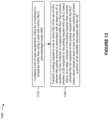
- FIG. 13 is a flowchart illustrating an example process performed by a base station in accordance with various aspects of the present disclosure.
- FIGS. 14 - 18 are block diagrams of example apparatuses for wireless communication in accordance with various aspects of the present disclosure.
- a user equipment may be capable of receiving, for example, multicast/broadcast services in a mixed mode or a broadcast mode.
- multicast/broadcast services may be delivered using either a multicast/broadcast radio bearer (MRB) or a dedicated radio bearer (DRB) for a UE in a radio resource control (RRC) connected state.
- RRC radio resource control
- multicast/broadcast services may be delivered using an MRB for a UE in an RRC connected state, an RRC idle state, or an RRC inactive state.
- Various aspects relate generally to enabling a UE to receive multicast/broadcast traffic while in an RRC connected state, an RRC idle state, an RRC inactive state, or across different RRC states. Some aspects more specifically relate to configuring a UE with an MRB in a radio link control (RLC) acknowledged mode (AM).
- the UE may determine an adjustment of an RLC AM transmission window of a base station.
- the RLC AM transmission window may be associated with retransmission of RLC packets associated with the MRB.
- the UE may synchronize an RLC AM reception window of the UE with the RLC AM transmission window based at least in part on determining the adjustment of the RLC AM transmission window of the base station.
- the RLC AM reception window may be associated with reassembly of RLC packets associated with the MRB.
- the described techniques can be used to reduce latency that may result from a lack of movement of an RLC AM window, among other examples. Furthermore, the described techniques can be used to improve reliability of communications via the MRB by enabling retransmissions in an RLC AM.
- FIG. 1 is a block diagram illustrating an example wireless network in accordance with various aspects of the present disclosure.
- the wireless network may be a Long Term Evolution (LTE) network or some other wireless network, such as a 5G or NR network.
- the wireless network may include a quantity of base stations (BSs) 110 (shown as BS 110 a , BS 110 b , BS 110 c , and BS 110 d ) and other network entities.
- BSs base stations
- a BS is an entity that communicates with user equipment (UE(s)) and may also be referred to as a Node B, an eNodeB, an eNB, a gNB, a NR BS, a 5G node B (NB), an access point (AP), or a transmit receive point (TRP), among other examples, or combinations thereof (these terms are used interchangeably herein).
- Each BS may provide communication coverage for a particular geographic area.
- the term “cell” can refer to a coverage area of a BS or a BS subsystem serving this coverage area, depending on the context in which the term is used.
- a BS may provide communication coverage for a macro cell, a pico cell, a femto cell, or another type of cell.
- a macro cell may cover a relatively large geographic area (for example, several kilometers in radius) and may allow unrestricted access by UEs with service subscription.
- a pico cell may cover a relatively small geographic area and may allow unrestricted access by UEs with service subscription.
- a femto cell may cover a relatively small geographic area (for example, a home) and may allow restricted access by UEs having association with the femto cell (for example, UEs in a closed subscriber group (CSG)).
- a BS for a macro cell may be referred to as a macro BS.
- a BS for a pico cell may be referred to as a pico BS.
- a BS for a femto cell may be referred to as a femto BS or a home BS.
- a BS may support one or multiple (for example, three) cells.
- the wireless network may be a heterogeneous network that includes BSs of different types, for example, macro BSs, pico BSs, femto BSs, or relay BSs, among other examples, or combinations thereof. These different types of BSs may have different transmit power levels, different coverage areas, and different impacts on interference in the wireless network.
- macro BSs may have a high transmit power level (for example, 5 to 40 watts) whereas pico BSs, femto BSs, and relay BSs may have lower transmit power levels (for example, 0.1 to 2 watts).
- macro BSs may have a high transmit power level (for example, 5 to 40 watts)
- pico BSs, femto BSs, and relay BSs may have lower transmit power levels (for example, 0.1 to 2 watts).
- a BS 110 a may be a macro BS for a macro cell 102 a
- a BS 110 b may be a pico BS for a pico cell 102 b
- a BS 110 c may be a femto BS for a femto cell 102 c
- a network controller 130 may couple to the set of BSs 102 a , 102 b , 110 a and 110 b , and may provide coordination and control for these BSs.
- Network controller 130 may communicate with the BSs via a backhaul.
- the BSs may also communicate with one another, for example, directly or indirectly via a wireless or wireline backhaul.
- a cell may not be stationary; rather, the geographic area of the cell may move in accordance with the location of a mobile BS.
- the BSs may be interconnected to one another or to one or more other BSs or network nodes (not shown) in the wireless network through various types of backhaul interfaces such as a direct physical connection, or a virtual network, among other examples, or combinations thereof using any suitable transport network.
- the wireless network may also include relay stations.
- a relay station is an entity that can receive a transmission of data from an upstream station (for example, a BS or a UE) and send a transmission of the data to a downstream station (for example, a UE or a BS).
- a relay station may also be a UE that can relay transmissions for other UEs.
- a relay station 110 d may communicate with macro BS 110 a and a UE 120 d in order to facilitate communication between BS 110 a and UE 120 d .
- a relay station may also be referred to as a relay BS, a relay base station, or a relay, among other examples, or combinations thereof.
- UEs 120 may be dispersed throughout the wireless network, and each UE may be stationary or mobile.
- a UE may also be referred to as an access terminal, a terminal, a mobile station, a subscriber unit, or a station, among other examples, or combinations thereof.
- a UE may be a cellular phone (for example, a smart phone), a personal digital assistant (PDA), a wireless modem, a wireless communication device, a handheld device, a laptop computer, a cordless phone, a wireless local loop (WLL) station, a tablet, a camera, a gaming device, a netbook, a smartbook, an ultrabook, a medical device or equipment, biometric sensors/devices, wearable devices (smart watches, smart clothing, smart glasses, smart wrist bands, smart jewelry (for example, smart ring, smart bracelet)), an entertainment device (for example, a music or video device, or a satellite radio), a vehicular component or sensor, smart meters/sensors, industrial manufacturing equipment, a global positioning system device, or any other suitable device that is configured to communicate via a wireless medium.
- PDA personal digital assistant
- WLL wireless local loop
- MTC and eMTC UEs include, for example, robots, drones, remote devices, sensors, meters, monitors or location tags, among other examples, or combinations thereof, that may communicate with a base station, another device (for example, remote device), or some other entity.
- a wireless node may provide, for example, connectivity for or to a network (for example, a wide area network such as Internet or a cellular network) via a wired or wireless communication link.
- Some UEs may be considered Internet-of-Things (IoT) devices, or may be implemented as NB-IoT (narrowband internet of things) devices.
- Some UEs may be considered a Customer Premises Equipment (CPE).
- UE 120 may be included inside a housing that houses components of UE 120 , such as processor components, or memory components, among other examples, or combinations thereof.
- any quantity of wireless networks may be deployed in a given geographic area.
- Each wireless network may support a particular radio access technology (RAT) and may operate on one or more frequencies or frequency channels.
- RAT radio access technology
- a frequency may also be referred to as a carrier among other examples.
- Each frequency may support a single RAT in a given geographic area in order to avoid interference between wireless networks of different RATs.
- NR or 5G RAT networks may be deployed.
- two or more UEs 120 may communicate directly with one another using one or more sidelink channels (for example, without using a base station 110 as an intermediary).
- the UEs 120 may communicate using peer-to-peer (P2P) communications, device-to-device (D2D) communications, a vehicle-to-everything (V2X) protocol (for example, which may include a vehicle-to-vehicle (V2V) protocol, or a vehicle-to-infrastructure (V2I) protocol, among other examples, or combinations thereof), or a mesh network, among other examples, or combinations thereof.
- V2X vehicle-to-everything
- the UE 120 may perform scheduling operations, resource selection operations, or other operations described elsewhere herein as being performed by the base station 110 .
- FIG. 2 is a block diagram illustrating an example base station (BS) in communication with a user equipment (UE) in a wireless network in accordance with various aspects of the present disclosure.
- Base station 110 may be equipped with T antennas 234 a through 234 t
- UE 120 may be equipped with R antennas 252 a through 252 r , where in general T ⁇ 1 and R ⁇ 1.
- a transmit processor 220 may receive data from a data source 212 for one or more UEs, select one or more modulation and coding schemes (MCSs) for each UE based at least in part on channel quality indicators (CQIs) received from the UE, process (for example, encode) the data for each UE based at least in part on the MCS(s) selected for the UE, and provide data symbols for all UEs. Transmit processor 220 may also process system information (for example, for semi-static resource partitioning information (SRPI) among other examples) and control information (for example, CQI requests, grants, or upper layer signaling, among other examples, or combinations thereof) and provide overhead symbols and control symbols.
- MCSs modulation and coding schemes
- CQIs channel quality indicators
- Transmit processor 220 may also process system information (for example, for semi-static resource partitioning information (SRPI) among other examples) and control information (for example, CQI requests, grants, or upper layer signaling, among other examples, or combinations thereof) and
- Transmit processor 220 may also generate reference symbols for reference signals (for example, the cell-specific reference signal (CRS)) and synchronization signals (for example, the primary synchronization signal (PSS) and secondary synchronization signal (SSS)).
- a transmit (TX) multiple-input multiple-output (MIMO) processor 230 may perform spatial processing (for example, precoding) on the data symbols, the control symbols, the overhead symbols, or the reference symbols, if applicable, and may provide T output symbol streams to T modulators (MODs) 232 a through 232 t .
- Each MOD 232 may process a respective output symbol stream (for example, for OFDM among other examples) to obtain an output sample stream.
- Each MOD 232 may further process (for example, convert to analog, amplify, filter, and upconvert) the output sample stream to obtain a downlink signal.
- T downlink signals from MODs 232 a through 232 t may be transmitted via T antennas 234 a through 234 t , respectively.
- the synchronization signals can be generated with location encoding to convey additional information.
- antennas 252 a through 252 r may receive the downlink signals from base station 110 or other base stations and may provide received signals to R demodulators (DEMODs) 254 a through 254 r , respectively.
- Each DEMOD 254 may condition (for example, filter, amplify, downconvert, and digitize) a received signal to obtain input samples.
- Each DEMOD 254 may further process the input samples (for example, for OFDM) to obtain received symbols.
- a MIMO detector 256 may obtain received symbols from all R DEMODs 254 a through 254 r , perform MIMO detection on the received symbols if applicable, and provide detected symbols.
- a receive processor 258 may process (for example, decode) the detected symbols, provide decoded data for UE 120 to a data sink 260 , and provide decoded control information and system information to a controller/processor 280 .
- a channel processor may determine a reference signal received power (RSRP), a received signal strength indicator (RSSI), a reference signal received quality (RSRQ), or a channel quality indicator (CQI), among other examples, or combinations thereof.
- RSRP reference signal received power
- RSSI received signal strength indicator
- RSRQ reference signal received quality
- CQI channel quality indicator
- one or more components of UE 120 may be included in a housing.
- a transmit processor 264 may receive and process data from a data source 262 as well as control information (for example, for reports including RSRP, RSSI, RSRQ, or CQI, among other examples, or combinations thereof) from controller/processor 280 . Transmit processor 264 may also generate reference symbols for one or more reference signals.
- the symbols from transmit processor 264 may be precoded by a TX MIMO processor 266 if applicable, further processed by MODs 254 a through 254 r (for example, for discrete Fourier transform spread orthogonal frequency division multiplexing (DFT-s-OFDM), or orthogonal frequency division multiplexing (OFDM) with a cyclic prefix (CP) (CP-OFDM), among other examples, or combinations thereof), and transmitted to base station 110 .
- DFT-s-OFDM discrete Fourier transform spread orthogonal frequency division multiplexing
- OFDM orthogonal frequency division multiplexing with a cyclic prefix
- CP-OFDM cyclic prefix
- the uplink signals from UE 120 and other UEs may be received by antennas 234 , processed by DEMODs 232 , detected by a MIMO detector 236 if applicable, and further processed by a receive processor 238 to obtain decoded data and control information sent by UE 120 .
- Receive processor 238 may provide the decoded data to a data sink 239 and the decoded control information to controller/processor 240 .
- Base station 110 may include communication unit 244 and communicate to network controller 130 via communication unit 244 .
- Network controller 130 may include communication unit 294 , controller/processor 290 , and memory 292 .
- Controller/processor 240 of base station 110 , controller/processor 280 of UE 120 , or any other component(s) of FIG. 2 may perform one or more techniques associated with operating in a radio link control (RLC) acknowledged mode (AM) using a multicast or broadcast radio bearer (MRB), as described in more detail herein.
- controller/processor 240 of base station 110 , controller/processor 280 of UE 120 , or any other component(s) of FIG. 2 may perform or direct operations of, for example, the process of FIG. 9 , the process of FIG. 10 , the process of FIG. 11 , the process of FIG. 12 , the process of FIG. 13 , or other processes as described herein.
- Memories 242 and 282 may store data and program codes for base station 110 and UE 120 , respectively.
- a scheduler 246 may schedule UEs for data transmission on the downlink or uplink.
- UE 120 may include means for receiving a configuration for an MRB in an RLC AM; means for determining an adjustment of an RLC AM transmission window of a base station, the RLC AM transmission window being associated with retransmission of RLC packets associated with the MRB; means for synchronizing an RLC AM reception window of the UE 120 with the RLC AM transmission window based at least in part on determining the adjustment of the RLC AM transmission window of the base station, the RLC AM reception window being associated with reassembly of RLC packets associated with the MRB; or combinations thereof, among other examples.
- UE 120 may include means for receiving a configuration for an MRB in an RLC AM; means for determining whether to use in-sequence delivery or out-of-sequence delivery to deliver RLC packets to a PDCP layer of the UE 120 based at least in part on the configuration for the MRB; means for delivering RLC packets to the PDCP layer in sequence or out of sequence based at least in part on determining whether to use in-sequence delivery or out-of-sequence delivery to deliver RLC packets to the PDCP layer; or combinations thereof, among other examples.
- UE 120 may include means for receiving a configuration for an MRB in an RLC AM; means for determining to transmit an RLC status report, indicating one or more NACKs for one or more RLC packets, based at least in part on at least one of: expiration of a timer associated with transmission of the RLC status report, a determination that a quantity of unreceived RLC packets or a quantity of unreceived bytes satisfies a threshold, reception of an RLC packet with a sequence number having a threshold offset from a sequence number of an unreceived RLC packet, reception of a polling request and a determination that a randomly generated number satisfies a configured condition for the MRB, or reception of a group-specific polling request that includes a value that matches at least a portion of an identifier associated with the UE 120 ; means for transmitting the RLC status report based at least in part on determining to transmit the RLC status report; or combinations thereof, among other examples.
- base station 110 may include means for configuring a set of UEs for a multicast or broadcast traffic flow using an RLC AM; means for determining an adjustment of an RLC AM transmission window of the apparatus, the RLC AM transmission window being associated with retransmission of RLC packets associated with the multicast or broadcast traffic flow; means for transmitting, to one or more UEs of the set of UEs, an indication of the adjustment of the RLC AM transmission window; or combinations thereof, among other examples.
- base station 110 may include means for configuring a set of UEs for a multicast or broadcast traffic flow using an RLC AM; means for transmitting a polling request to one or more UEs of the set of UEs, wherein the polling request is associated with at least one of: a condition, for the multicast or broadcast traffic flow, that controls whether a UE responds to the polling request with an RLC status report, or a value, included in the polling request, that controls whether the UE responds to the polling request with the RLC status report based at least in part on the value matching at least a portion of an identifier associated with the UE; or combinations thereof, among other examples.
- such means may include one or more components of base station 110 described in connection with FIG. 2 .
- FIG. 3 is a block diagram illustrating a logical architecture of a distributed radio access network (RAN) in accordance with various aspects of the present disclosure.
- a 5G network may have a multicast/broadcast (MB) user plane function (MB-UPF) 305 and an access and mobility function (AMF) 310 .
- the MB-UPF 305 may have an N 3 interface 315 for delivering an MB-flow 320 of packets (for example, in the form of protocol data units (PDUs)) to a 5G access node, such as a gNB.
- the AMF 310 may control signaling for MB-flow setup and modification using an N 2 interface 325 with the gNB.
- PDUs protocol data units
- the gNB may include a central unit (CU), shown as gNB-CU 330 .
- the gNB may also include one or more distributed units (DUs), shown as DU 1 335 and DU 2 340 .
- the DU 1 335 and the DU 2 340 may be configured to individually (for example, via dynamic selection) or jointly (for example, via joint transmission) serve traffic to UEs.
- DU 1 335 may serve traffic to a first UE or a first group of UEs 345 using a first multicast/broadcast radio bearer (MRB), shown as MRB 1 350
- MRB 1 350 multicast/broadcast radio bearer
- DU 2 340 may serve traffic to a second UE or a second group of UEs 355 using a second MRB, shown as MRB 2 360 .
- MRB multicast/broadcast radio bearer
- a UE may be capable of receiving, for example, multicast/broadcast services in a mixed mode or a broadcast mode.
- multicast/broadcast services may be delivered using either an MRB (a multicast/broadcast bearer) or a dedicated radio bearer (DRB) for a UE in an RRC connected state.
- MRB multicast/broadcast bearer
- DRB dedicated radio bearer
- multicast/broadcast services may be delivered using an MRB for a UE in an RRC connected state, an RRC idle state, or an RRC inactive state.
- Some techniques and apparatuses described herein enable a UE to reliably receive multicast/broadcast traffic while in an RRC connected state, an RRC idle state, an RRC inactive state, or across different RRC states. For example, some techniques and apparatuses described herein reduce latency that may result from a lack of movement of an RLC acknowledged mode window, reduce latency that may result from lack of movement of a packet data convergence protocol (PDCP) window, or reduce network load associated with transmission of an RLC status report, among other examples.
- PDCP packet data convergence protocol
- FIG. 4 is a state machine diagram illustrating states of a radio resource control (RRC) procedure and transitions between the states in accordance with various aspects of the present disclosure.
- RRC radio resource control
- a UE may transition among an RRC connected state 405 , an RRC idle state 410 , and an RRC inactive state 415 .
- An RRC procedure may be used, for example, for connection establishment, re-establishment, or release between a UE and a base station, for on-demand transfer of system information, for suspension or resumption of an RRC connection, for signaling relating to handover, or for radio link handling, among other examples.
- a UE may enter the RRC idle state 410 .
- the UE may transition from the RRC idle state 410 to the RRC connected state 405 via RRC connection establishment 420 (sometimes referred to as attaching to the network).
- the UE may transition from the RRC connected state 405 to the RRC idle state 410 via RRC connection release 425 (sometimes referred to as detaching from the network) or due to a connection failure.
- the UE may transition from the RRC connected state 405 to the RRC inactive state 415 via RRC connection suspension 430 (also referred to as RRC suspend or RRC release with suspend).
- RRC inactive state the UE maintains the RRC connection while reducing signaling and power consumption.
- the UE may transition to the RRC connected state 405 via RRC connection resumption 435 (also referred to as RRC resume), or may transition to the RRC idle state 410 via RRC connection release 440 or due to a connection failure.
- RRC connection resumption 435 also referred to as RRC resume
- RRC idle state 410 the UE is de-registered from the core network.
- a core network to RAN connection may be established for the UE for both the user plane and the control plane, the UE may be capable of communicating using the RAN connection (for example, a base station connection) and the core network, the UE and the RAN may store an access stratum context for the UE, the RAN may store information indicating the cell that is serving the UE, unicast data may be transferred between the RAN and the UE, the network may control mobility of the UE (including, for example, UE measurements), and the UE may be capable of operating in a connected mode discontinuous reception (CDRX) mode for power saving.
- the RAN connection for example, a base station connection
- the UE and the RAN may store an access stratum context for the UE
- the RAN may store information indicating the cell that is serving the UE
- unicast data may be transferred between the RAN and the UE
- the network may control mobility of the UE (including, for example, UE measurements)
- the UE may be capable of operating in a
- the UE may be capable of selecting a public land mobile network (PLMN), receiving system information messages, having mobility for cell re-selection, receiving pages initiated and managed by the core network, and operating in a discontinuous reception (DRX) mode for power saving.
- PLMN public land mobile network
- DRX discontinuous reception
- the UE may be capable of receiving system information messages, having mobility for cell re-selection, receiving pages initiated and managed by the RAN, and operating in a DRX mode for power saving. Furthermore, an RRC connection between the UE and the RAN (and the RAN and the core network) remains established for the UE, the UE continues to store an access stratum context for the UE, and the RAN may continue to store information indicating the cell that is serving the UE.
- transitioning from the RRC inactive state 415 to the RRC connected state 405 does not require non-access stratum (NAS) signaling, which extends UE battery life and reduces latency in transitioning to the RRC connected state 405 as compared to transitioning from the RRC idle state 410 to the RRC connected state 405 .
- the UE may transition from the RRC connected state 405 to the RRC inactive state 415 due to lack of activity (for example, based at least in part on a timer).
- Some techniques and apparatuses described herein enable a UE to reliably receive multicast/broadcast traffic while in an RRC connected state, an RRC idle state, an RRC inactive state, or across different RRC states.
- FIG. 5 is a diagram illustrating an example of RLC window adjustment in accordance with various aspects of the present disclosure. The procedure described in connection with FIG. 5 may be used by a base station to control or adjust an RLC AM transmission window.
- the base station may perform multicast or broadcast transmission (such as via one or more MRBs to one or more UEs) of RLC packets.
- the base station may use an RLC AM transmission window for transmission of RLC packets.
- the RLC AM transmission window may dictate which RLC packets are stored in memory of the base station for potential retransmission after an initial transmission. In the example of FIG.
- the base station transmits RLC packets having sequence numbers 0 through 5 and maintains those RLC packets in memory until the RLC AM transmission window is adjusted, such as due to reception of an RLC status report indicating that one or more oldest RLC packets (for example, having the lowest sequence numbers in the window) have been received by all UEs (or a threshold number of UEs) subscribed to receive the RLC packets.
- the base station transmits a polling request to trigger the UEs subscribed to receive the RLC packets (shown as UE1, UE2, and UE3) to transmit an RLC status report.
- the UEs may transmit respective RLC status reports indicating, for example, a negative acknowledgment (NACK) for RLC packets that were not successfully received.
- NACK negative acknowledgment
- the UE may start a reassembly timer. If the reassembly timer expires before the UE receives the RLC packet or the segment of the RLC packet, then the UE may skip the RLC packet and may indicate, to the base station, that the RLC packet has been skipped.
- the RLC AM reception window may be associated with receiving retransmissions of RLC packets or may be associated with reassembly of RLC packets (such as for a multicast/broadcast service). For example, if a UE receives an RLC packet with a sequence number (SN) that matches an SN in the RLC AM reception window, then the UE may deliver the RLC packet to an upper layer (or may store the RLC packet for later delivery to the upper layer, such as in the example of in-sequence RLC packet delivery). If the UE receives an RLC packet with an SN that does not match any SNs in the RLC AM reception window, then the UE may discard the RLC packet.
- SN sequence number
- the UEs may deliver successfully received RLC packets to an upper layer, such as a PDCP layer.
- UE1 may deliver packets 0, 2, 4, and 5 to an upper layer of UE1
- UE2 may deliver packets 0, 2, 3, and 5 to an upper layer of UE2
- UE3 may deliver packets 0, 2, 3, 4, and 5 to an upper layer of UE3.
- the UEs may use out-of-sequence RLC packet delivery.
- the base station receives the RLC status reports and adjusts the RLC AM transmission window based at least in part on the RLC status reports.
- the base station determines that all of the UEs have received RLC packet 0, and thus the base station can discard or delete RLC packet 0 from memory because the base station will not need to retransmit RLC packet 0.
- the base station must keep RLC packet 1 stored in memory because at least one of the UEs did not receive RLC packet 1 (in this example, none of the UEs received RLC packet 1). Due to the maximum RLC AM transmission window size of 6 RLC packets in this example, the base station adjusts the RLC AM transmission window to include RLC packets 1 through 6.
- the base station Based at least in part on the RLC status reports, the base station retransmits RLC packets 1, 3, and 4 (using either unicast retransmission or multicast/broadcast retransmission), and also transmits RLC packet 6 (using multicast/broadcast transmission). After transmission of RLC packet 6, the base station transmits a polling request to trigger UE1, UE2, and UE3 to transmit an RLC status report.
- the base station may use multicast/broadcast transmission for an initial transmission of an RLC packet (for example, via an MRB), and may use either multicast/broadcast transmission (for example, via the MRB) or unicast transmission (for example, via the MRB or a dedicated radio bearer (DRB)) for a retransmission of the RLC packet.
- MRB multicast/broadcast transmission
- DRB dedicated radio bearer
- the UEs may transmit respective RLC status reports indicating, for example, a NACK for RLC packets that were not successfully received.
- UE1 may successfully receive RLC packet 6, but may fail to receive RLC packets 1 and 3, and thus may indicate that RLC packets 1 and 3 were not successfully received by UE1.
- UE2 may successfully receive RLC packets 1 and 4, but may fail to receive RLC packet 6, and thus may indicate that RLC packet 6 was not successfully received by UE2.
- UE3 may successfully receive RLC packets 1 and 6, and thus may indicate that all RLC packets were successfully received by UE3.
- the UEs may deliver successfully received RLC packets to an upper layer, such as a PDCP layer, as described above.
- UE2 has successfully received RLC packets 1 through 5 and UE3 has successfully received RLC packets 1 through 6.
- the base station cannot adjust the RLC AM transmission window due to the window size of six because the base station needs to continue to store RLC packet 1 in memory until, for example, RLC packet 1 is successfully received by UE1 (or until UE1 indicates a failure to receive RLC packet 1 due to expiration of a reassembly timer).
- the inability to adjust the RLC AM transmission window results in increased latency for UE2 and UE3 as a result of, for example, poor channel conditions between the base station and the UE1.
- Some techniques and apparatuses described herein enable the base station to adjust an RLC AM transmission window despite one or more UEs not having received an RLC packet at the start of the RLC AM transmission window (for example, an RLC packet with the lowest sequence number in the window) or despite not receiving an indication from all UEs, subscribed to receive the RLC packets, that the RLC AM transmission window can be adjusted. Furthermore, these techniques and apparatuses may enable the base station to indicate the RLC AM transmission window adjustment to the UEs, thereby enabling the UEs to adjust a corresponding RLC AM reception window so that the RLC AM reception window and the RLC AM transmission window are synchronized. This may enable proper reception of RLC packets and may reduce latency.
- FIG. 6 is a diagram illustrating an example of operating in an RLC acknowledged mode using a multicast or broadcast radio bearer (MRB) in accordance with various aspects of the present disclosure.
- MRB multicast or broadcast radio bearer
- the base station 110 may transmit, to the UE 120 , a configuration for an MRB for RLC AM.
- RLC AM reliable transmission of multicast/broadcast traffic may be supported using acknowledgment (ACK) or negative acknowledgement (NACK) feedback and retransmissions.
- the ACK or NACK (sometimes referred to as ACK/NACK) feedback may be transmitted by the UE 120 in an RLC status report.
- the base station 110 may transmit the configuration for the MRB in a configuration message, such as an RRC message (for example, an RRC configuration message or an RRC reconfiguration message, among other examples).
- the base station 110 and the UE 120 may establish an MRB based at least in part on the MRB configuration.
- the base station 110 may configure an MRB for each UE 120 (for example, a set of UEs 120 ) subscribed to a multicast/broadcast service.
- the MRB configuration may indicate a multicast/broadcast control channel (MCCH) for transmission of multicast/broadcast control messages. Additionally or alternatively, the MRB configuration may indicate a multicast/broadcast traffic channel (MTCH) for transmission of multicast/broadcast data. For example, the MRB configuration may indicate resources (such as time domain resources, frequency domain resources, or spatial domain resources, among other examples) allocated to the MCCH and the MTCH. Additionally or alternatively, the MRB configuration may indicate a group radio network temporary identifier (G-RNTI) associated with the MRB. The G-RNTI may be used to transmit (such as by scrambling) communications on the MRB and to receive (such as by descrambling) communications on the MRB. In some aspects, different multicast/broadcast subscriptions may be associated with different G-RNTIs.
- G-RNTI group radio network temporary identifier
- the MRB configuration may indicate a retransmission configuration for multicast/broadcast traffic transmitted via the MRB.
- the MRB configuration may indicate whether retransmissions are unicast retransmissions (which may use a cell radio network temporary identifier (C-RNTI) in a similar manner as a G-RNTI), multicast/broadcast retransmissions (which may use a G-RNTI, as described above), or capable of being switched between unicast and multicast/broadcast.
- the retransmission configuration may indicate one or more resources to be used for retransmissions (for example, for preconfigured retransmissions).
- the MRB configuration may include an RLC AM window configuration for the MRB (or for all MRBs).
- the RLC AM window configuration may indicate a size of an RLC AM transmission window, a size of an RLC AM reception window, a maximum size of an RLC AM transmission window, a maximum size of an RLC AM reception window, a reassembly timer duration, a duration for a timer associated with adjusting the RLC AM transmission window, a duration for a timer associated with adjusting the RLC AM reception window, an indication of whether RLC AM window adjustment indications are enabled or disabled, an indication of an RLC status PDU that includes an RLC window adjustment indication, an indication of a periodicity for transmission of RLC window adjustment indications, an indication of one or more resources in which RLC window adjustment indications are to be transmitted, or a combination thereof, among other examples.
- the maximum size of the RLC AM reception window for multicast/broadcast transmissions may be configured with a smaller size than an RLC reception window used for unicast transmissions. This may conserve memory resources of the UE 120 (such as L2 memory resources, which may be limited for a UE 120 ), particularly when the UE 120 is subscribed to multiple multicast/broadcast services or is configured with multiple MRBs.
- the base station 110 may determine an adjustment of an RLC AM transmission window of the base station.
- the base station 110 may adjust the RLC AM transmission (shown as TX) window despite one or more UEs 120 not having received an RLC packet at the start of the RLC AM transmission window (for example, an RLC packet with the lowest sequence number in the window).
- the base station 110 may adjust the RLC AM transmission window despite not receiving an indication from all UEs 120 , subscribed to receive the RLC packets, that the RLC AM transmission window can be adjusted (such as due to expiration of a reassembly timer at a UE 120 ).
- the base station 110 may adjust the RLC AM transmission window even if all RLC status reports, from UEs 120 subscribed to receive the RLC packets, do not indicate that the base station 110 can adjust the RLC AM transmission window.
- the base station 110 may adjust the RLC AM transmission window from RLC packets 1 through 6 to RLC packets 6 through 11 despite UE1 having reported a NACK for RLC packets 1 and 3. Because UE2 has successfully received RLC packets 1 through 5 and UE3 has successfully received RLC packets 1 through 6, adjusting the RLC AM transmission window may reduce latency for UE2 and UE3.
- the base station 110 may determine to adjust the RLC AM transmission window based at least in part on expiration of a timer, such as an RLC AM transmission window adjustment timer. As an example, the base station 110 may start the RLC AM transmission window adjustment timer when an RLC AM transmission window is adjusted. When the RLC AM transmission window adjustment timer expires, the base station 110 may adjust the RLC AM transmission window. In some aspects, an offset for adjusting the RLC AM transmission window upon expiration of the RLC AM transmission window adjustment timer may be configured by the base station 110 (such as in the MRB configuration described above) or may be prespecified in a wireless communication standard, among other examples.
- a timer such as an RLC AM transmission window adjustment timer.
- the offset may be configured to move the entire window so that the current start of the RLC AM transmission window is one SN after the previous end of the RLC AM transmission window.
- a duration of the RLC AM transmission window may be applied across all MRBs or may be MRB-specific.
- the base station 110 may determine to adjust the RLC AM transmission window based at least in part on expiration of a timer associated with receiving NACK feedback from the UE 120 (or a set of UEs 120 ), such as a NACK feedback timer.
- the base station 110 may start the NACK feedback timer upon transmission of an RLC packet. If the base station 110 does not receive a NACK for the RLC packet prior (for example, in one or more RLC status reports) to expiration of the NACK feedback timer, then the base station 110 may assume that the RLC packet was successfully received by the UE 120 (or the set of UEs 120 ).
- the base station 110 may treat the RLC packet as successfully received for purposes of adjusting the RLC AM transmission window, and may adjust the RLC AM transmission window accordingly.
- the base station 110 may indicate the RLC AM transmission window adjustment to the UE 120 , as described below.
- the base station 110 may determine to adjust the RLC AM transmission window based at least in part on a failure indication from a medium access control (MAC) layer. For example, the base station 110 may determine to adjust the RLC AM transmission window based at least in part on a hybrid automatic repeat request (HARQ) failure indication from the MAC layer. Additionally or alternatively, the base station 110 may determine to adjust the RLC AM transmission window based at least in part on transmitting a threshold number of retransmissions.
- MAC medium access control
- HARQ hybrid automatic repeat request
- the base station 110 may transmit an indication of the adjustment of the RLC AM transmission window (sometimes referred to as an RLC AM window adjustment indication) to the UE 120 (for example, to all UEs 120 subscribed to receive the RLC packets of the multicast/broadcast service).
- the indication of the adjustment of the RLC AM transmission window may indicate an SN of a start of the RLC AM transmission window (for example, a lowest sequence number in the window). In this example, the SN is 6.
- the base station 110 may indicate the adjustment of the RLC AM transmission window using another value, such as an SN at the end of the RLC AM transmission window, an offset that represents the difference from a previous start of the RLC AM transmission window (prior to the adjustment) to a current start of the RLC AM transmission window (after the adjustment), or an offset that represents the difference from a previous end of the RLC AM transmission window (prior to the adjustment) to a current end of the RLC AM transmission window (after the adjustment), among other examples.
- the base station may transmit the RLC AM window adjustment indication in a status control PDU (such as an RLC status control PDU) or another RLC control PDU, among other examples.
- the base station 110 may periodically transmit an RLC AM window adjustment indication.
- the base station 110 may indicate a periodicity for RLC AM window adjustment indications or one or more resources (time resources, frequency resources, or spatial resources, among other examples) for transmission of RLC AM window adjustment indications, among other examples.
- the base station 110 may indicate the periodicity or the one or more resources in a configuration, such as the MRB configuration described above.
- the base station 110 may transmit an RLC AM window adjustment indication based at least in part on a number of retransmissions of RLC AM packets. For example, if the base station 110 transmits or retransmits an RLC packet a threshold number of times (such as two times, three times, or four times, among other examples), then the base station 110 may adjust the RLC AM transmission window to exclude that RLC packet, and may indicate the RLC AM window adjustment to the UE 120 . In this way, latency caused by the failed reception of the RLC packet by one or more UEs 120 may be reduced.
- a threshold number of times such as two times, three times, or four times, among other examples
- the UE 120 may synchronize an RLC AM reception (shown as RX) window of the UE 120 with the RLC AM transmission window. For example, the UE 120 may synchronize the RLC AM reception window by adjusting the RLC AM reception window to include the same set of RLC sequence numbers (corresponding to the same set of RLC packets) as the RLC AM transmission window. For example, if the base station 110 indicates a starting SN for the RLC AM transmission window, then the UE 120 may adjust the RLC AM reception window to start at the SN indicated by the base station 110 .
- the example of FIG. 6 shows the UE 120 determining the adjustment of the RLC AM transmission window made by the base station 110 and determining to adjust the RLC AM reception window of the UE 120 based at least in part on an indication from the base station 110 .
- the UE 120 may determine the adjustment of the RLC AM transmission window made by the base station 110 or may determine to adjust the RLC AM reception window of the UE 120 without receiving an indication from the base station 110 .
- the UE 120 may determine the adjustment(s) based at least in part on expiration of a timer, such as an RLC AM reception window adjustment timer.
- the UE 120 may start the RLC AM reception window adjustment timer when an RLC AM reception window is adjusted.
- an offset for adjusting the RLC AM reception window upon expiration of the RLC AM reception window adjustment timer may be configured by the base station 110 (such as in the MRB configuration described above) or may be prespecified in a wireless communication standard, among other examples.
- the offset may be configured to move the entire window so that the current start of the RLC AM reception window is one SN after the previous end of the RLC AM reception window.
- a duration of the RLC AM reception window adjustment timer may be configured by the base station 110 , such as in the MRB configuration described above. The duration may be applied across all MRBs or may be MRB-specific.
- the duration of the RLC AM reception window adjustment timer may be the same as a duration of an RLC AM transmission window adjustment timer, described above.
- the base station 110 may use multicast/broadcast transmission for an initial transmission of an RLC packet (for example, via an MRB), and may use either multicast/broadcast transmission (for example, via the MRB) or unicast transmission (for example, via the MRB or a dedicated radio bearer (DRB)) for a retransmission of the RLC packet.
- MRB multicast/broadcast transmission
- DRB dedicated radio bearer
- the base station 110 may determine whether to transmit the retransmission of the RLC packet as the multicast/broadcast (M/B) transmission (such as by using a configured G-RNTI) or the unicast transmission (such as by using a configured C-RNTI) based at least in part on a quantity of UEs indicating a NACK in RLC status reports, a quantity of NACKs in the RLC status reports, a quantity of RLC status reports that include a NACK, or a combination thereof, among other examples. For example, if one or more of the above quantities satisfy a threshold (or multiple thresholds corresponding to multiple quantities), then the base station may use M/B transmission for the retransmission. If one or more of the above quantities do not satisfy a threshold (or multiple thresholds corresponding to multiple quantities), then the base station may use unicast transmission for the retransmission.
- M/B multicast/broadcast
- the base station 110 and the UE 120 may enable proper reception of RLC packets and may reduce latency.
- FIG. 7 is a diagram illustrating an example of operating in an RLC acknowledged mode using an MRB in accordance with various aspects of the present disclosure. As shown in FIG. 7 , a UE 120 and a base station 110 may communicate with one another.
- the base station 110 may transmit, to the UE 120 , a configuration for an MRB for RLC AM, as described above in connection with FIG. 6 .
- the configuration may indicate a PDCP duplication configuration.
- the PDCP duplication configuration may indicate, for example, whether PDCP duplication is enabled or disabled. If PDCP duplication is enabled, then the base station 110 may transmit multiple (duplicate) copies of PDCP packets to the UE 120 .
- the PDCP packets may be encapsulated in RLC packets.
- different copies of the same PDCP packet may be transmitted via different RLC entities (for example, transmission via different radio bearers or transmission via different radio access technologies (RATs) such as NR and LTE in a dual connectivity mode, among other examples). If PDCP duplication is disabled, then the base station 110 may transmit a single copy of each PDCP packet to the UE 120 (with potentially multiple RLC packets carrying the same PDCP packet in the example of an RLC retransmission).
- RATs radio access technologies
- the UE 120 may determine whether to use in-sequence delivery or out-of-sequence delivery to deliver RLC packets to a PDCP layer of the UE 120 .
- the UE 120 may deliver RLC packets to the PDCP layer as the RLC packets are received, regardless of whether all prior RLC packets (for example, all prior RLC packets in the current RLC AM reception window) have been received.
- the UE 120 may deliver an RLC packet to the PDCP layer only if all prior RLC packets (for example, in the current RLC AM reception window) have been received and delivered to the PDCP layer.
- the UE 120 may deliver RLC packets to the PDCP layer in an order indicated by RLC sequence numbers, whereas for out-of-sequence delivery, the UE 120 may deliver RLC packets to the PDCP layer in any order.
- the UE 120 may determine whether to use in-sequence delivery or out-of-sequence delivery based at least in part on the MRB configuration. For example, the UE 120 may determine whether to use in-sequence delivery or out-of-sequence delivery to deliver RLC packets to the PDCP layer based at least in part on whether PDCP duplication (for example, downlink PDCP duplication) is configured for the MRB. For example, the UE 120 may use out-of-sequence delivery if PDCP duplication is configured for the MRB. As another example, the UE 120 may use in-sequence delivery if PDCP duplication is not configured for the MRB.
- PDCP duplication for example, downlink PDCP duplication
- the UE 120 may determine whether to use in-sequence delivery or out-of-sequence delivery based at least in part on an RLC configuration if PDCP duplication is not configured for the MRB.
- the RLC configuration may be included in the MRB configuration described above.
- the RLC configuration may indicate whether to use in-sequence or out-of-sequence delivery of RLC packets to an upper layer (such as the PDCP layer).
- multiple RLC packets may carry the same PDCP packet (or the same segment of a PDCP packet), such as a PDCP packet that has the same sequence number. Because RLC packets transmitted on different RLC entities may not use corresponding RLC sequence numbers, using in-sequence delivery with PDCP duplication may result in delays in adjusting a PDCP reception window (which operates in a similar manner as the RLC AM reception window described herein, except for PDCP packets instead of RLC packets).
- a PDCP reordering timer (similar to the RLC reassembly timer described herein) expires for a PDCP packet while the UE 120 is waiting for delivery of the PDCP packet (via an RLC packet) to the PDCP layer
- the UE 120 may adjust the PDCP reception window before receiving the PDCP packet at the PDCP layer, and may discard the PDCP packet if the PDCP packet is later received at the PDCP layer. This adjustment may occur even if the PDCP packet has been received by the UE 120 but is contained within an RLC packet that is being held in a buffer due to an in-sequence delivery requirement.
- PDCP packets may be processed earlier and fewer PDCP packet discards may occur, particularly when PDCP duplication is enabled and PDCP packets are more likely to be received out of sequence.
- PDCP duplication is disabled, out-of-sequence reception of PDCP packets occurs less frequently, and so the UE 120 may use in-sequence delivery of RLC packets to the PDCP layer in such examples.
- the UE 120 may deliver RLC packets to the PDCP layer in sequence (according to a sequence number) or out of sequence (regardless of sequence numbers) based at least in part on determining whether to use in-sequence delivery or out-of-sequence delivery to deliver RLC packets to the PDCP layer. For example, if the UE 120 determines to use in-sequence delivery, then the UE 120 may deliver RLC packets to the PDCP layer in sequence. As another example, if the UE 120 determines to use out-of-sequence delivery, then the UE 120 may deliver RLC packets to the PDCP layer out of sequence.
- an RLC AM reception window may include RLC sequence numbers 1 through 6.
- the UE 120 may receive RLC packets 1, 2, 4, 5, and 6, and may fail to receive RLC packet 3.
- the UE 120 may deliver RLC packets 1 and 2 to the PDCP layer in order (such as by delivering RLC packet 1 first and delivering RLC packet 2 second).
- the UE 120 may store RLC packets 4, 5, and 6 in an RLC buffer and may refrain from delivering RLC packets 4, 5, and 6 to the PDCP layer until RLC packet 3 is received.
- the UE 120 may deliver RLC packets 3, 4, 5, and 6 to the PDCP layer in order.
- an RLC AM reception window may include RLC sequence numbers 1 through 6.
- the UE 120 may receive RLC packets 1, 2, 4, 5, and 6, and may fail to receive RLC packet 3.
- the UE 120 may deliver all received RLC packets 1, 2, 4, 5, and 6 to the PDCP layer.
- the UE 120 may deliver RLC packet 3 to the PDCP layer.
- some techniques and apparatuses described herein enable flexible configuration of in-sequence delivery or out-of-sequence delivery of RLC packets to an upper layer (such as a PDCP layer).
- PDCP packets may be processed earlier and fewer PDCP packet discards may occur, particularly when PDCP duplication is enabled and PDCP packets are more likely to be received out of sequence.
- PDCP duplication is disabled, out-of-sequence reception of PDCP packets occurs less frequently, and so the UE 120 may use in-sequence delivery of RLC packets to the PDCP layer in such examples.
- FIG. 8 is a diagram illustrating an example of operating in an RLC acknowledged mode using an MRB in accordance with various aspects of the present disclosure. As shown in FIG. 8 , a UE 120 and a base station 110 may communicate with one another.
- the base station 110 may transmit, to the UE 120 , a configuration for an MRB for RLC AM, as described above in connection with FIG. 6 .
- the configuration may indicate an RLC status reporting configuration.
- the RLC status reporting configuration may indicate, for example, a trigger for RLC status reporting, such as a UE-detected trigger to be used for RLC status reporting, an RLC status reporting timer to be used for RLC status reporting, a duration of the RLC status reporting timer, a condition that triggers the UE 120 to transmit an RLC status report, a threshold associated with triggering an RLC status report with random number generation, an identifier to be used for group-specific RLC status reporting, or a combination thereof, among other examples. Additional details about these parameters are described below.
- the base station 110 may transmit a polling request to the UE 120 .
- a dashed line is used in FIG. 8 to indicate that in some aspects, the base station 110 may not transmit a polling request to trigger the UE 120 to transmit an RLC status report.
- the base station 110 may transmit the polling request.
- the polling request may be associated with a threshold value (which may be indicated in the MRB configuration described above) associated with the polling request. The threshold value may control whether the UE 120 transmits an RLC status report in response to the polling request. For example, upon receiving the polling request, the UE 120 may generate a random number.
- the UE 120 may transmit the RLC status report in response to the polling request. If the random number does not satisfy the condition, then the UE 120 may refrain from transmitting an RLC status report in response to the polling request. In this way, a network load and signaling overhead of RLC status reports may be reduced.
- a condition for example, is greater than the threshold, is less than the threshold, is equal to the threshold, or a combination thereof, among other examples
- the polling request may be a group-specific polling request.
- the group-specific polling request may trigger fewer than all UEs, subscribed to receive the RLC packets, to transmit a response to the polling request.
- the polling request may be associated with a value (for example, included in the polling request) that controls whether the UE 120 transmits an RLC status report in response to the polling request.
- the UE 120 may compare the value to at least a portion of an identifier (for example, a portion of the identifier, one or more bits of the identifier, one or more least significant bits of the identifier, one or more most significant bits of the identifier, or the entire identifier, among other examples) associated with the UE 120 .
- the identifier may include, for example, a subscription permanent identifier (SUPI), an international mobile subscriber identity (IMSI), a C-RNTI, a G-RNTI, or a combination thereof, among other examples.
- the identifier to be used for RLC status reporting may be indicated in a configuration, such as the MRB configuration described above.
- the UE 120 may determine to transmit an RLC status report.
- the UE 120 may determine to transmit the RLC status report based at least in part on receiving a polling request, generating a random number, and determining that the random number satisfies a condition, as described above. Additionally or alternatively, the UE 120 may determine to transmit the RLC status report based at least in part on receiving a group-specific polling request for a group to which the UE 120 belongs (which may be determined based at least in part on an identifier associated with the UE 120 ), as described above.
- the UE 120 may receive a polling request from the base station 110 , and may determine whether to transmit an RLC status report based at least in part on receiving the polling request and performing an additional operation (such as a comparison, random number generation, or a combination thereof, among other examples).
- the UE 120 may autonomously determine to transmit an RLC status report without receiving a polling request from the base station 110 .
- the UE 120 may determine to transmit an RLC status report based at least in part on expiration of a timer, such as an RLC status reporting timer.
- the RLC status reporting timer may start when the UE 120 transmits an RLC status report.
- the UE 120 may periodically transmit RLC status reports.
- the duration of the RLC status reporting timer or the periodicity of RLC status reporting may be configured by the base station 110 , such as in the MRB configuration described above.
- the UE 120 may determine to transmit an RLC status report based at least in part on determining that a quantity of unreceived RLC packets or a quantity of unreceived bytes (of RLC packets) satisfies a threshold. For example, the UE 120 may transmit an RLC status report if the UE 120 fails to receive a threshold number of RLC packets (such as a threshold number of RLC packets in a current RLC AM reception window) or a threshold number of other PDUs (such as PDCP packets, among other examples).
- a threshold number of RLC packets such as a threshold number of RLC packets in a current RLC AM reception window
- other PDUs such as PDCP packets, among other examples.
- the UE 120 may transmit an RLC status report if the UE 120 fails to receive a threshold number of bytes of RLC packets.
- the UE 120 may determine a number of unreceived bytes based at least in part on information carried in received RLC packets, such as a byte counter in a header of an RLC packet.
- the threshold number of RLC packets or the threshold number of bytes may be configured by the base station 110 , such as in the MRB configuration described above.
- the UE 120 may determine to transmit an RLC status report based at least in part on receiving an RLC packet with a sequence number having a threshold offset from a sequence number of an unreceived RLC packet. For example, the UE 120 may receive an RLC packet having sequence number N, and may determine that the UE 120 has failed to receive an RLC packet having a sequence number N ⁇ k, where k is a threshold offset. Based at least in part on determining that the UE 120 has not received an RLC packet with a sequence number (N ⁇ k) that is less than the sequence number of a received RLC packet (N) by the threshold offset (k), the UE 120 may transmit an RLC status report.
- the threshold offset may be configured by the base station 110 , such as in the MRB configuration described above.
- the UE 120 may transmit an RLC status report to the base station 110 .
- the UE 120 may transmit the RLC status report based at least in part on determining to transmit the RLC status report using one or more techniques described herein in connection with FIG. 8 .
- a network load and signaling overhead associated with transmission of RLC status reports may be reduced.
- FIG. 9 is a diagram illustrating an example process performed, for example, by a UE, in accordance with various aspects of the present disclosure.
- the example process is an example where the UE (for example, UE 120 ) performs operations associated with operating in an RLC AM using an MRB.
- the process may include receiving a configuration for an MRB in an RLC AM (block 910 ).
- the UE for example, using receive processor 258 , controller/processor 280 , or memory 282 , among other examples
- the process may include determining an adjustment of an RLC AM transmission window of a base station, the RLC AM transmission window being associated with retransmission of RLC packets associated with the MRB (block 920 ).
- the UE for example, using receive processor 258 , transmit processor 264 , controller/processor 280 , or memory 282 , among other examples
- the process may include synchronizing an RLC AM reception window of the UE with the RLC AM transmission window based at least in part on determining the adjustment of the RLC AM transmission window of the base station, the RLC AM reception window being associated with reassembly of RLC packets associated with the MRB (block 930 ).
- the UE for example, using receive processor 258 , transmit processor 264 , controller/processor 280 , or memory 282 , among other examples
- the RLC AM reception window is associated with reassembly of RLC packets associated with the MRB.
- the process may include additional aspects, such as any single aspect or any combination of aspects described below or in connection with one or more other processes described elsewhere herein.
- determining the adjustment of the RLC AM transmission window comprises determining the adjustment based at least in part on expiration of a timer.
- determining the adjustment of the RLC AM transmission window comprises receiving an indication of the adjustment of the RLC AM transmission window.
- the indication of the adjustment of the RLC AM transmission window is received in a status control protocol data unit or another RLC control protocol data unit.
- the indication of the adjustment of the RLC AM transmission window indicates a sequence number of a start of the RLC AM transmission window.
- the indication of the adjustment of the RLC AM transmission window is received periodically or based at least in part on a number of retransmissions of RLC packets by the base station.
- the configuration for the MRB indicates a maximum window size of the RLC AM reception window for the MRB.
- the process includes receiving an initial transmission as an M/B transmission via the MRB and receiving a retransmission as either an M/B transmission or a unicast transmission via one of the MRB or a dedicated radio bearer.
- FIG. 9 shows example blocks of the process
- the process may include additional blocks, fewer blocks, different blocks, or differently arranged blocks than those depicted in FIG. 9 . Additionally or alternatively, two or more of the blocks of the process may be performed in parallel.
- FIG. 10 is a diagram illustrating an example process performed, for example, by a UE, in accordance with various aspects of the present disclosure.
- the example process is an example where the UE (for example, UE 120 ) performs operations associated with operating in an RLC AM using an MRB.
- the process may include receiving a configuration for an MRB in an RLC AM (block 1010 ).
- the UE for example, using receive processor 258 , controller/processor 280 , or memory 282 , among other examples
- the process may include determining whether to use in-sequence delivery or out-of-sequence delivery to deliver RLC packets to a PDCP layer of the UE based at least in part on the configuration for the MRB (block 1020 ).
- the UE for example, using receive processor 258 , transmit processor 264 , controller/processor 280 , or memory 282 , among other examples
- the process may include delivering RLC packets to the PDCP layer in sequence or out of sequence based at least in part on determining whether to use in-sequence delivery or out-of-sequence delivery to deliver RLC packets to the PDCP layer (block 1030 ).
- the UE for example, using controller/processor 280 , or memory 282 , among other examples
- the process may include additional aspects, such as any single aspect or any combination of aspects described below or in connection with one or more other processes described elsewhere herein.
- determining whether to use in-sequence delivery or out-of-sequence delivery to deliver RLC packets to the PDCP layer comprises determining whether to use in-sequence delivery or out-of-sequence delivery based at least in part on whether downlink PDCP duplication is configured for the MRB.
- determining whether to use in-sequence delivery or out-of-sequence delivery to deliver RLC packets to the PDCP layer comprises determining to use out-of-sequence delivery if downlink PDCP duplication is configured for the MRB.
- determining whether to use in-sequence delivery or out-of-sequence delivery to deliver RLC packets to the PDCP layer comprises determining to use in-sequence delivery if PDCP duplication is not configured for the MRB.
- determining whether to use in-sequence delivery or out-of-sequence delivery to deliver RLC packets to the PDCP layer comprises determining whether to use in-sequence delivery or out-of-sequence delivery based at least in part on an RLC configuration if PDCP duplication is not configured for the MRB.
- FIG. 10 shows example blocks of the process
- the process may include additional blocks, fewer blocks, different blocks, or differently arranged blocks than those depicted in FIG. 10 . Additionally or alternatively, two or more of the blocks of the process may be performed in parallel.
- FIG. 11 is a diagram illustrating an example process performed, for example, by a UE, in accordance with various aspects of the present disclosure.
- the example process is an example where the UE (for example, UE 120 ) performs operations associated with operating in an RLC AM using an MRB.
- the process may include receiving a configuration for an MRB in an RLC AM (block 1110 ).
- the UE for example, using receive processor 258 , controller/processor 280 , or memory 282 , among other examples
- the process may include determining to transmit an RLC status report, indicating one or more NACKs for one or more RLC packets, based at least in part on at least one of: expiration of a timer associated with transmission of the RLC status report, a determination that a quantity of unreceived RLC packets or a quantity of unreceived bytes satisfies a threshold, reception of an RLC packet with a sequence number having a threshold offset from a sequence number of an unreceived RLC packet, reception of a polling request and a determination that a randomly generated number satisfies a configured condition for the MRB, or reception of a group-specific polling request that includes a value that matches at least a portion of an identifier associated with the UE (block 1120 ).
- the UE may determine to transmit an RLC status report, indicating one or more NACKs for one or more RLC packets, as described above.
- the UE may determine to transmit the RLC status report based at least in part on at least one of: expiration of a timer associated with transmission of the RLC status report, a determination that a quantity of unreceived RLC packets or a quantity of unreceived bytes satisfies a threshold, reception of an RLC packet with a sequence number having a threshold offset from a sequence number of an unreceived RLC packet, reception of a polling request and a determination that a randomly generated number satisfies a configured condition for the MRB, reception of a group-specific polling request that includes a value that matches at least a portion of an identifier associated with the UE, or a combination thereof.
- the process may include transmitting the RLC status report based at least in part on determining to transmit the RLC status report (block 1130 ).
- the UE for example, using transmit processor 264 , controller/processor 280 , or memory 282 , among other examples
- the process may include additional aspects, such as any single aspect or any combination of aspects described below or in connection with one or more other processes described elsewhere herein.
- the identifier associated with the UE includes at least one of a subscription permanent identifier, an international mobile subscriber identity, a cell radio network temporary identifier, a group radio network temporary identifier, or a combination thereof.
- FIG. 11 shows example blocks of the process
- the process may include additional blocks, fewer blocks, different blocks, or differently arranged blocks than those depicted in FIG. 11 . Additionally or alternatively, two or more of the blocks of the process may be performed in parallel.
- FIG. 12 is a diagram illustrating an example process performed, for example, by a base station, in accordance with various aspects of the present disclosure.
- the example process is an example where the base station (for example, base station 110 ) performs operations associated with operating in an RLC AM using an MRB.
- the process may include configuring a set of UEs for a multicast or broadcast traffic flow using an RLC AM (block 1210 ).
- the base station for example, using transmit processor 220 , receive processor 238 , controller/processor 240 , or memory 242 , among other examples
- the process may include determining an adjustment of an RLC AM transmission window of the base station, the RLC AM transmission window being associated with retransmission of RLC packets associated with the multicast or broadcast traffic flow (block 1220 ).
- the base station (for example, using transmit processor 220 , receive processor 238 , controller/processor 240 , or memory 242 , among other examples) may determine an adjustment of an RLC AM transmission window of the base station, the RLC AM transmission window being associated with retransmission of RLC packets associated with the multicast or broadcast traffic flow, as described above.
- the process may include transmitting, to one or more UEs of the set of UEs, an indication of the adjustment of the RLC AM transmission window (block 1230 ).
- the base station for example, using transmit processor 220 , controller/processor 240 , or memory 242 , among other examples
- the process may include additional aspects, such as any single aspect or any combination of aspects described below or in connection with one or more other processes described elsewhere herein.
- determining the adjustment of the RLC AM transmission window comprises determining the adjustment based at least in part on expiration of a timer, reception of a hybrid automatic repeat request failure indication from a medium access control layer, or transmitting a threshold number of retransmissions.
- the indication of the adjustment of the RLC AM transmission window is transmitted in a status control protocol data unit or another RLC control protocol data unit.
- the indication of the adjustment of the RLC AM transmission window indicates a sequence number of a start of the RLC AM transmission window.
- the indication of the adjustment of the RLC AM transmission window is transmitted periodically or based at least in part on a number of retransmissions of RLC packets by the base station.
- the indication of the adjustment of the RLC AM transmission window is transmitted to all UEs in the set of UEs.
- the configuration indicates a maximum window size of an RLC AM reception window for an MRB configured for a UE of the set of UEs
- the RLC AM reception window is associated with reassembly of RLC packets associated with the MRB.
- the process includes transmitting an initial transmission as an M/B transmission via an MRB and transmitting a retransmission as either an M/B transmission or a unicast transmission via one of the MRB or a dedicated radio bearer.
- the process includes determining whether to transmit the retransmission as the M/B transmission or the unicast transmission based at least in part on at least one of a quantity of UEs indicating a NACK in RLC status reports, a quantity of NACKs in the RLC status reports, a quantity of RLC status reports that include a NACK, or a combination thereof.
- the process includes determining the adjustment of the RLC AM transmission window of the base station based at least in part on a determination that a timer, associated with receiving NACK feedback from the set of UEs, has expired.
- FIG. 12 shows example blocks of the process
- the process may include additional blocks, fewer blocks, different blocks, or differently arranged blocks than those depicted in FIG. 12 . Additionally or alternatively, two or more of the blocks of the process may be performed in parallel.
- FIG. 13 is a diagram illustrating an example process performed, for example, by a base station, in accordance with various aspects of the present disclosure.
- the example process is an example where the base station (for example, base station 110 ) performs operations associated with operating in an RLC AM using an MRB.
- the process may include configuring a set of UEs for a multicast or broadcast traffic flow using an RLC AM (block 1310 ).
- the base station for example, using transmit processor 220 , receive processor 238 , controller/processor 240 , or memory 242 , among other examples
- the process may include transmitting a polling request to one or more UEs of the set of UEs, wherein the polling request is associated with at least one of: a condition, for the multicast or broadcast traffic flow, that controls whether a UE responds to the polling request with an RLC status report, or a value, included in the polling request, that controls whether the UE responds to the polling request with the RLC status report based at least in part on the value matching at least a portion of an identifier associated with the UE (block 1320 ).
- a condition for the multicast or broadcast traffic flow
- the base station may transmit a polling request to one or more UEs of the set of UEs, as described above.
- the polling request is associated with at least one of a condition, for the multicast or broadcast traffic flow, that controls whether a UE responds to the polling request with an RLC status report, or a value, included in the polling request, that controls whether the UE responds to the polling request with the RLC status report based at least in part on the value matching at least a portion of an identifier associated with the UE.
- the process may include additional aspects, such as any single aspect or any combination of aspects described below or in connection with one or more other processes described elsewhere herein.
- condition is configured for the one or more UEs.
- the polling request is a group-specific polling request associated with a subset of the set of UEs.
- the identifier associated with the UE includes at least one of a subscription permanent identifier, an international mobile subscriber identity, a cell radio network temporary identifier, a group radio network temporary identifier, or a combination thereof.
- FIG. 13 shows example blocks of the process
- the process may include additional blocks, fewer blocks, different blocks, or differently arranged blocks than those depicted in FIG. 13 . Additionally or alternatively, two or more of the blocks of the process may be performed in parallel.
- FIG. 14 is a block diagram of an example apparatus 1400 for wireless communication in accordance with various aspects of the present disclosure.
- the apparatus 1400 may be a UE, or a UE may include the apparatus 1400 .
- the apparatus 1400 includes a reception component 1402 , a communication manager 1404 , and a transmission component 1406 , which may be in communication with one another (for example, via one or more buses).
- the apparatus 1400 may communicate with another apparatus 1408 (such as a UE, a base station, or another wireless communication device) using the reception component 1402 and the transmission component 1406 .
- another apparatus 1408 such as a UE, a base station, or another wireless communication device
- the apparatus 1400 may be configured to perform one or more operations described herein in connection with FIGS. 6 - 8 . Additionally or alternatively, the apparatus 1400 may be configured to perform one or more processes described herein, such as process 900 of FIG. 9 , process 1000 of FIG. 10 , process 1100 of FIG. 11 , or a combination thereof. In some aspects, the apparatus 1400 may include one or more components of the UE described above in connection with FIG. 2 .
- the reception component 1402 may receive communications, such as reference signals, control information, data communications, or a combination thereof, from the apparatus 1408 .
- the reception component 1402 may provide received communications to one or more other components of the apparatus 1400 , such as the communication manager 1404 .
- the reception component 1402 may perform signal processing on the received communications (such as filtering, amplification, demodulation, analog-to-digital conversion, demultiplexing, deinterleaving, de-mapping, equalization, interference cancellation, or decoding, among other examples), and may provide the processed signals to the one or more other components.
- the reception component 1402 may include one or more antennas, a demodulator, a MIMO detector, a receive processor, a controller/processor, a memory, or a combination thereof, of the UE described above in connection with FIG. 2 .
- the transmission component 1406 may transmit communications, such as reference signals, control information, data communications, or a combination thereof, to the apparatus 1408 .
- the communication manager 1404 may generate communications and may transmit the generated communications to the transmission component 1406 for transmission to the apparatus 1408 .
- the transmission component 1406 may perform signal processing on the generated communications (such as filtering, amplification, modulation, digital-to-analog conversion, multiplexing, interleaving, mapping, or encoding, among other examples), and may transmit the processed signals to the apparatus 1408 .
- the transmission component 1406 may include one or more antennas, a modulator, a transmit MIMO processor, a transmit processor, a controller/processor, a memory, or a combination thereof, of the UE described above in connection with FIG. 2 . In some aspects, the transmission component 1406 may be co-located with the reception component 1402 in a transceiver.
- the communication manager 1404 may receive or may cause the reception component 1402 to receive a configuration for an MRB in an RLC AM.
- the communication manager 1404 may determine an adjustment of an RLC AM transmission window of a base station.
- the RLC AM transmission window may be associated with retransmission of RLC packets associated with the MRB.
- the communication manager 1404 may synchronize an RLC AM reception window of the UE with the RLC AM transmission window based at least in part on determining the adjustment of the RLC AM transmission window of the base station.
- the RLC AM reception window may be associated with reassembly of RLC packets associated with the MRB.
- the communication manager 1404 may perform one or more operations described elsewhere herein as being performed by one or more components of the communication manager 1404 .
- the communication manager 1404 may include a controller/processor, a memory, or a combination thereof, of the UE described above in connection with FIG. 2 .
- the communication manager 1404 includes a set of components, such as a determination component 1410 , a synchronization component 1412 , or a combination thereof.
- the set of components may be separate and distinct from the communication manager 1404 .
- one or more components of the set of components may include or may be implemented within a controller/processor, a memory, or a combination thereof, of the UE described above in connection with FIG. 2 .
- one or more components of the set of components may be implemented at least in part as software stored in a memory.
- a component (or a portion of a component) may be implemented as instructions or code stored in a non-transitory computer-readable medium and executable by a controller or a processor to perform the functions or operations of the component.
- the reception component 1402 may receive a configuration for an MRB in an RLC AM.
- the determination component 1410 may determine an adjustment of an RLC AM transmission window of a base station, the RLC AM transmission window being associated with retransmission of RLC packets associated with the MRB.
- the synchronization component 1412 may synchronize an RLC AM reception window of the UE with the RLC AM transmission window based at least in part on determining the adjustment of the RLC AM transmission window of the base station, the RLC AM reception window being associated with reassembly of RLC packets associated with the MRB.
- the reception component 1402 may receive an initial transmission as an M/B transmission via the MRB and receive a retransmission as either an M/B transmission or a unicast transmission via one of the MRB or a dedicated radio bearer.
- FIG. 14 The number and arrangement of components shown in FIG. 14 are provided as an example. In practice, there may be additional components, fewer components, different components, or differently arranged components than those shown in FIG. 14 . Furthermore, two or more components shown in FIG. 14 may be implemented within a single component, or a single component shown in FIG. 14 may be implemented as multiple, distributed components. Additionally or alternatively, a set of (one or more) components shown in FIG. 14 may perform one or more functions described as being performed by another set of components shown in FIG. 14 .
- FIG. 15 is a block diagram of an example apparatus 1500 for wireless communication in accordance with various aspects of the present disclosure.
- the apparatus 1500 may be a UE, or a UE may include the apparatus 1500 .
- the apparatus 1500 includes a reception component 1502 , a communication manager 1504 , and a transmission component 1506 , which may be in communication with one another (for example, via one or more buses).
- the apparatus 1500 may communicate with another apparatus 1508 (such as a UE, a base station, or another wireless communication device) using the reception component 1502 and the transmission component 1506 .
- another apparatus 1508 such as a UE, a base station, or another wireless communication device
- the apparatus 1500 may be configured to perform one or more operations described herein in connection with FIGS. 6 - 8 . Additionally or alternatively, the apparatus 1500 may be configured to perform one or more processes described herein, such as process 900 of FIG. 9 , process 1000 of FIG. 10 , process 1100 of FIG. 11 , or a combination thereof. In some aspects, the apparatus 1500 may include one or more components of the UE described above in connection with FIG. 2 .
- the reception component 1502 may receive communications, such as reference signals, control information, data communications, or a combination thereof, from the apparatus 1508 .
- the reception component 1502 may provide received communications to one or more other components of the apparatus 1500 , such as the communication manager 1504 .
- the reception component 1502 may perform signal processing on the received communications (such as filtering, amplification, demodulation, analog-to-digital conversion, demultiplexing, deinterleaving, de-mapping, equalization, interference cancellation, or decoding, among other examples), and may provide the processed signals to the one or more other components.
- the reception component 1502 may include one or more antennas, a demodulator, a MIMO detector, a receive processor, a controller/processor, a memory, or a combination thereof, of the UE described above in connection with FIG. 2 .
- the transmission component 1506 may transmit communications, such as reference signals, control information, data communications, or a combination thereof, to the apparatus 1508 .
- the communication manager 1504 may generate communications and may transmit the generated communications to the transmission component 1506 for transmission to the apparatus 1508 .
- the transmission component 1506 may perform signal processing on the generated communications (such as filtering, amplification, modulation, digital-to-analog conversion, multiplexing, interleaving, mapping, or encoding, among other examples), and may transmit the processed signals to the apparatus 1508 .
- the transmission component 1506 may include one or more antennas, a modulator, a transmit MIMO processor, a transmit processor, a controller/processor, a memory, or a combination thereof, of the UE described above in connection with FIG. 2 . In some aspects, the transmission component 1506 may be co-located with the reception component 1502 in a transceiver.
- the communication manager 1504 may receive or may cause the reception component 1502 to receive a configuration for an MRB in an RLC AM.
- the communication manager 1504 may determine whether to use in-sequence delivery or out-of-sequence delivery to deliver RLC packets to a PDCP layer of the UE based at least in part on the configuration for the MRB.
- the communication manager 1504 may deliver RLC packets to the PDCP layer in sequence or out of sequence based at least in part on determining whether to use in-sequence delivery or out-of-sequence delivery to deliver RLC packets to the PDCP layer.
- the communication manager 1504 may perform one or more operations described elsewhere herein as being performed by one or more components of the communication manager 1504 .
- the communication manager 1504 may include a controller/processor, a memory, or a combination thereof, of the UE described above in connection with FIG. 2 .
- the communication manager 1504 includes a set of components, such as a determination component 1510 , a packet delivery component 1512 , or a combination thereof.
- the set of components may be separate and distinct from the communication manager 1504 .
- one or more components of the set of components may include or may be implemented within a controller/processor, a memory, or a combination thereof, of the UE described above in connection with FIG. 2 .
- one or more components of the set of components may be implemented at least in part as software stored in a memory.
- a component (or a portion of a component) may be implemented as instructions or code stored in a non-transitory computer-readable medium and executable by a controller or a processor to perform the functions or operations of the component.
- the reception component 1502 may receive a configuration for an MRB in an RLC AM.
- the determination component 1510 may determine whether to use in-sequence delivery or out-of-sequence delivery to deliver RLC packets to a PDCP layer of the UE based at least in part on the configuration for the MRB.
- the packet delivery component 1512 may deliver RLC packets to the PDCP layer in sequence or out of sequence based at least in part on determining whether to use in-sequence delivery or out-of-sequence delivery to deliver RLC packets to the PDCP layer.
- FIG. 15 The number and arrangement of components shown in FIG. 15 are provided as an example. In practice, there may be additional components, fewer components, different components, or differently arranged components than those shown in FIG. 15 . Furthermore, two or more components shown in FIG. 15 may be implemented within a single component, or a single component shown in FIG. 15 may be implemented as multiple, distributed components. Additionally or alternatively, a set of (one or more) components shown in FIG. 15 may perform one or more functions described as being performed by another set of components shown in FIG. 15 .
- FIG. 16 is a block diagram of an example apparatus 1600 for wireless communication in accordance with various aspects of the present disclosure.
- the apparatus 1600 may be a UE, or a UE may include the apparatus 1600 .
- the apparatus 1600 includes a reception component 1602 , a communication manager 1604 , and a transmission component 1606 , which may be in communication with one another (for example, via one or more buses).
- the apparatus 1600 may communicate with another apparatus 1608 (such as a UE, a base station, or another wireless communication device) using the reception component 1602 and the transmission component 1606 .
- another apparatus 1608 such as a UE, a base station, or another wireless communication device
- the apparatus 1600 may be configured to perform one or more operations described herein in connection with FIGS. 6 - 8 . Additionally or alternatively, the apparatus 1600 may be configured to perform one or more processes described herein, such as process 900 of FIG. 9 , process 1000 of FIG. 10 , process 1100 of FIG. 11 , or a combination thereof. In some aspects, the apparatus 1600 may include one or more components of the UE described above in connection with FIG. 2 .
- the reception component 1602 may receive communications, such as reference signals, control information, data communications, or a combination thereof, from the apparatus 1608 .
- the reception component 1602 may provide received communications to one or more other components of the apparatus 1600 , such as the communication manager 1604 .
- the reception component 1602 may perform signal processing on the received communications (such as filtering, amplification, demodulation, analog-to-digital conversion, demultiplexing, deinterleaving, de-mapping, equalization, interference cancellation, or decoding, among other examples), and may provide the processed signals to the one or more other components.
- the reception component 1602 may include one or more antennas, a demodulator, a MIMO detector, a receive processor, a controller/processor, a memory, or a combination thereof, of the UE described above in connection with FIG. 2 .
- the transmission component 1606 may transmit communications, such as reference signals, control information, data communications, or a combination thereof, to the apparatus 1608 .
- the communication manager 1604 may generate communications and may transmit the generated communications to the transmission component 1606 for transmission to the apparatus 1608 .
- the transmission component 1606 may perform signal processing on the generated communications (such as filtering, amplification, modulation, digital-to-analog conversion, multiplexing, interleaving, mapping, or encoding, among other examples), and may transmit the processed signals to the apparatus 1608 .
- the transmission component 1606 may include one or more antennas, a modulator, a transmit MIMO processor, a transmit processor, a controller/processor, a memory, or a combination thereof, of the UE described above in connection with FIG. 2 . In some aspects, the transmission component 1606 may be co-located with the reception component 1602 in a transceiver.
- the communication manager 1604 may receive or may cause the reception component 1602 to receive a configuration for an MRB in an RLC AM.
- the communication manager 1604 may determine to transmit an RLC status report, indicating one or more NACKs for one or more RLC packets, based at least in part on at least one of expiration of a timer associated with transmission of the RLC status report, a determination that a quantity of unreceived RLC packets or a quantity of unreceived bytes satisfies a threshold, reception of an RLC packet with a sequence number having a threshold offset from a sequence number of an unreceived RLC packet, reception of a polling request and a determination that a randomly generated number satisfies a configured condition for the MRB, or reception of a group-specific polling request that includes a value that matches at least a portion of an identifier associated with the UE.
- the communication manager 1604 may transmit or may cause the transmission component 1606 to transmit the RLC status report based at least in part on determining to transmit the RLC status report. In some aspects, the communication manager 1604 may perform one or more operations described elsewhere herein as being performed by one or more components of the communication manager 1604 .
- the communication manager 1604 may include a controller/processor, a memory, or a combination thereof, of the UE described above in connection with FIG. 2 .
- the communication manager 1604 includes a set of components, such as a determination component 1610 .
- the set of components may be separate and distinct from the communication manager 1604 .
- one or more components of the set of components may include or may be implemented within a controller/processor, a memory, or a combination thereof, of the UE described above in connection with FIG. 2 .
- one or more components of the set of components may be implemented at least in part as software stored in a memory.
- a component (or a portion of a component) may be implemented as instructions or code stored in a non-transitory computer-readable medium and executable by a controller or a processor to perform the functions or operations of the component.
- the reception component 1602 may receive a configuration for an MRB in an RLC AM.
- the determination component 1610 may determine to transmit an RLC status report, indicating one or more NACKs for one or more RLC packets, based at least in part on at least one of expiration of a timer associated with transmission of the RLC status report, a determination that a quantity of unreceived RLC packets or a quantity of unreceived bytes satisfies a threshold, reception of an RLC packet with a sequence number having a threshold offset from a sequence number of an unreceived RLC packet, reception of a polling request and a determination that a randomly generated number satisfies a configured condition for the MRB, or reception of a group-specific polling request that includes a value that matches at least a portion of an identifier associated with the UE.
- the transmission component 1606 may transmit the RLC status report based at least in part on determining to transmit the RLC status report.
- FIG. 16 The number and arrangement of components shown in FIG. 16 are provided as an example. In practice, there may be additional components, fewer components, different components, or differently arranged components than those shown in FIG. 16 . Furthermore, two or more components shown in FIG. 16 may be implemented within a single component, or a single component shown in FIG. 16 may be implemented as multiple, distributed components. Additionally or alternatively, a set of (one or more) components shown in FIG. 16 may perform one or more functions described as being performed by another set of components shown in FIG. 16 .
- FIG. 17 is a block diagram of an example apparatus 1700 for wireless communication in accordance with various aspects of the present disclosure.
- the apparatus 1700 may be a base station, or a base station may include the apparatus 1700 .
- the apparatus 1700 includes a reception component 1702 , a communication manager 1704 , and a transmission component 1706 , which may be in communication with one another (for example, via one or more buses).
- the apparatus 1700 may communicate with another apparatus 1708 (such as a UE, a base station, or another wireless communication device) using the reception component 1702 and the transmission component 1706 .
- another apparatus 1708 such as a UE, a base station, or another wireless communication device
- the apparatus 1700 may be configured to perform one or more operations described herein in connection with FIGS. 6 - 8 . Additionally or alternatively, the apparatus 1700 may be configured to perform one or more processes described herein, such as process 1200 of FIG. 12 , process 1300 of FIG. 13 , or a combination thereof. In some aspects, the apparatus 1700 may include one or more components of the base station described above in connection with FIG. 2 .
- the reception component 1702 may receive communications, such as reference signals, control information, data communications, or a combination thereof, from the apparatus 1708 .
- the reception component 1702 may provide received communications to one or more other components of the apparatus 1700 , such as the communication manager 1704 .
- the reception component 1702 may perform signal processing on the received communications (such as filtering, amplification, demodulation, analog-to-digital conversion, demultiplexing, deinterleaving, de-mapping, equalization, interference cancellation, or decoding, among other examples), and may provide the processed signals to the one or more other components.
- the reception component 1702 may include one or more antennas, a demodulator, a MIMO detector, a receive processor, a controller/processor, a memory, or a combination thereof, of the base station described above in connection with FIG. 2 .
- the transmission component 1706 may transmit communications, such as reference signals, control information, data communications, or a combination thereof, to the apparatus 1708 .
- the communication manager 1704 may generate communications and may transmit the generated communications to the transmission component 1706 for transmission to the apparatus 1708 .
- the transmission component 1706 may perform signal processing on the generated communications (such as filtering, amplification, modulation, digital-to-analog conversion, multiplexing, interleaving, mapping, or encoding, among other examples), and may transmit the processed signals to the apparatus 1708 .
- the transmission component 1706 may include one or more antennas, a modulator, a transmit MIMO processor, a transmit processor, a controller/processor, a memory, or a combination thereof, of the base station described above in connection with FIG. 2 . In some aspects, the transmission component 1706 may be co-located with the reception component 1702 in a transceiver.
- the communication manager 1704 may configure a set of UEs for a multicast or broadcast traffic flow using an RLC AM.
- the communication manager 1704 may determine an adjustment of an RLC AM transmission window of the base station, the RLC AM transmission window being associated with retransmission of RLC packets associated with the multicast or broadcast traffic flow.
- the communication manager 1704 may transmit or may cause the transmission component 1706 to transmit, to one or more UEs of the set of UEs, an indication of the adjustment of the RLC AM transmission window.
- the communication manager 1704 may perform one or more operations described elsewhere herein as being performed by one or more components of the communication manager 1704 .
- the communication manager 1704 may include a controller/processor, a memory, a scheduler, a communication unit, or a combination thereof, of the base station described above in connection with FIG. 2 .
- the communication manager 1704 includes a set of components, such as a configuration component 1710 , a determination component 1712 , or a combination thereof.
- the set of components may be separate and distinct from the communication manager 1704 .
- one or more components of the set of components may include or may be implemented within a controller/processor, a memory, a scheduler, a communication unit, or a combination thereof, of the base station described above in connection with FIG. 2 .
- one or more components of the set of components may be implemented at least in part as software stored in a memory.
- a component (or a portion of a component) may be implemented as instructions or code stored in a non-transitory computer-readable medium and executable by a controller or a processor to perform the functions or operations of the component.
- the configuration component 1710 may configure a set of UEs for a multicast or broadcast traffic flow using an RLC AM.
- the determination component 1712 may determine an adjustment of an RLC AM transmission window of the base station, the RLC AM transmission window being associated with retransmission of RLC packets associated with the multicast or broadcast traffic flow.
- the transmission component 1706 may transmit, to one or more UEs of the set of UEs, an indication of the adjustment of the RLC AM transmission window.
- the transmission component 1706 may transmit an initial transmission as an M/B transmission via an MRB and may transmit a retransmission as either an M/B transmission or a unicast transmission via one of the MRB or a dedicated radio bearer.
- the determination component 1712 may determine whether to transmit the retransmission as the M/B transmission or the unicast transmission based at least in part on at least one of a quantity of UEs indicating a NACK in RLC status reports, a quantity of NACKs in the RLC status reports, a quantity of RLC status reports that include a NACK, or a combination thereof.
- the determination component 1712 may determine the adjustment of the RLC AM transmission window of the base station based at least in part on a determination that a timer, associated with receiving NACK feedback from the set of UEs, has expired.
- FIG. 17 The number and arrangement of components shown in FIG. 17 are provided as an example. In practice, there may be additional components, fewer components, different components, or differently arranged components than those shown in FIG. 17 . Furthermore, two or more components shown in FIG. 17 may be implemented within a single component, or a single component shown in FIG. 17 may be implemented as multiple, distributed components. Additionally or alternatively, a set of (one or more) components shown in FIG. 17 may perform one or more functions described as being performed by another set of components shown in FIG. 17 .
- FIG. 18 is a block diagram of an example apparatus 1800 for wireless communication in accordance with various aspects of the present disclosure.
- the apparatus 1800 may be a base station, or a base station may include the apparatus 1800 .
- the apparatus 1800 includes a reception component 1802 , a communication manager 1804 , and a transmission component 1806 , which may be in communication with one another (for example, via one or more buses).
- the apparatus 1800 may communicate with another apparatus 1808 (such as a UE, a base station, or another wireless communication device) using the reception component 1802 and the transmission component 1806 .
- another apparatus 1808 such as a UE, a base station, or another wireless communication device
- the apparatus 1800 may be configured to perform one or more operations described herein in connection with FIGS. 6 - 8 . Additionally or alternatively, the apparatus 1800 may be configured to perform one or more processes described herein, such as process 1200 of FIG. 12 , process 1300 of FIG. 13 , or a combination thereof. In some aspects, the apparatus 1800 may include one or more components of the base station described above in connection with FIG. 2 .
- the reception component 1802 may receive communications, such as reference signals, control information, data communications, or a combination thereof, from the apparatus 1808 .
- the reception component 1802 may provide received communications to one or more other components of the apparatus 1800 , such as the communication manager 1804 .
- the reception component 1802 may perform signal processing on the received communications (such as filtering, amplification, demodulation, analog-to-digital conversion, demultiplexing, deinterleaving, de-mapping, equalization, interference cancellation, or decoding, among other examples), and may provide the processed signals to the one or more other components.
- the reception component 1802 may include one or more antennas, a demodulator, a MIMO detector, a receive processor, a controller/processor, a memory, or a combination thereof, of the base station described above in connection with FIG. 2 .
- the transmission component 1806 may transmit communications, such as reference signals, control information, data communications, or a combination thereof, to the apparatus 1808 .
- the communication manager 1804 may generate communications and may transmit the generated communications to the transmission component 1806 for transmission to the apparatus 1808 .
- the transmission component 1806 may perform signal processing on the generated communications (such as filtering, amplification, modulation, digital-to-analog conversion, multiplexing, interleaving, mapping, or encoding, among other examples), and may transmit the processed signals to the apparatus 1808 .
- the transmission component 1806 may include one or more antennas, a modulator, a transmit MIMO processor, a transmit processor, a controller/processor, a memory, or a combination thereof, of the base station described above in connection with FIG. 2 . In some aspects, the transmission component 1806 may be co-located with the reception component 1802 in a transceiver.
- the communication manager 1804 may configure a set of UEs for a multicast or broadcast traffic flow using an RLC AM.
- the communication manager 1804 may transmit or may cause the transmission component 1806 to transmit a polling request to one or more UEs of the set of UEs, wherein the polling request is associated with at least one of a condition, for the multicast or broadcast traffic flow, that controls whether a UE responds to the polling request with an RLC status report, or a value, included in the polling request, that controls whether the UE responds to the polling request with the RLC status report based at least in part on the value matching at least a portion of an identifier associated with the UE.
- the communication manager 1804 may perform one or more operations described elsewhere herein as being performed by one or more components of the communication manager 1804 .
- the communication manager 1804 may include a controller/processor, a memory, a scheduler, a communication unit, or a combination thereof, of the base station described above in connection with FIG. 2 .
- the communication manager 1804 includes a set of components, such as a configuration component 1810 .
- the set of components may be separate and distinct from the communication manager 1804 .
- one or more components of the set of components may include or may be implemented within a controller/processor, a memory, a scheduler, a communication unit, or a combination thereof, of the base station described above in connection with FIG. 2 .
- one or more components of the set of components may be implemented at least in part as software stored in a memory.
- a component (or a portion of a component) may be implemented as instructions or code stored in a non-transitory computer-readable medium and executable by a controller or a processor to perform the functions or operations of the component.
- the configuration component 1810 may configure a set of UEs for a multicast or broadcast traffic flow using an RLC AM.
- the transmission component 1806 may transmit a polling request to one or more UEs of the set of UEs, wherein the polling request is associated with at least one of a condition, for the multicast or broadcast traffic flow, that controls whether a UE responds to the polling request with an RLC status report, or a value, included in the polling request, that controls whether the UE responds to the polling request with the RLC status report based at least in part on the value matching at least a portion of an identifier associated with the UE.
- FIG. 18 The number and arrangement of components shown in FIG. 18 are provided as an example. In practice, there may be additional components, fewer components, different components, or differently arranged components than those shown in FIG. 18 . Furthermore, two or more components shown in FIG. 18 may be implemented within a single component, or a single component shown in FIG. 18 may be implemented as multiple, distributed components. Additionally or alternatively, a set of (one or more) components shown in FIG. 18 may perform one or more functions described as being performed by another set of components shown in FIG. 18 .
- ком ⁇ онент is intended to be broadly construed as hardware, firmware, or a combination of hardware and software.
- a processor is implemented in hardware, firmware, or a combination of hardware and software.
- satisfying a threshold may, depending on the context, refer to a value being greater than the threshold, greater than or equal to the threshold, less than the threshold, less than or equal to the threshold, equal to the threshold, or not equal to the threshold, among other examples, or combinations thereof.
- “at least one of: a, b, or c” is intended to cover a, b, c, a-b, a-c, b-c, and a-b-c, as well as any combination with multiples of the same element (for example, a-a, a-a-a, a-a-b, a-a-c, a-b-b, a-c-c, b-b, b-b-b, b-b-c, c-c, and c-c-c or any other ordering of a, b, and c).
Landscapes
- Engineering & Computer Science (AREA)
- Signal Processing (AREA)
- Computer Networks & Wireless Communication (AREA)
- Mobile Radio Communication Systems (AREA)
Abstract
Description
Claims (30)
Priority Applications (4)
| Application Number | Priority Date | Filing Date | Title |
|---|---|---|---|
| US17/069,038 US11909535B2 (en) | 2019-10-24 | 2020-10-13 | Operating in a radio link control acknowledged mode using a multicast or broadcast radio bearer |
| PCT/US2020/055518 WO2021080826A1 (en) | 2019-10-24 | 2020-10-14 | Operating in a radio link control acknowledged mode using a multicast or broadcast radio bearer |
| CN202080072901.5A CN114556840B (en) | 2019-10-24 | 2020-10-14 | Operate in radio link control acknowledged mode using multicast or broadcast radio bearers |
| EP20804706.8A EP4049396A1 (en) | 2019-10-24 | 2020-10-14 | Operating in a radio link control acknowledged mode using a multicast or broadcast radio bearer |
Applications Claiming Priority (2)
| Application Number | Priority Date | Filing Date | Title |
|---|---|---|---|
| US201962925561P | 2019-10-24 | 2019-10-24 | |
| US17/069,038 US11909535B2 (en) | 2019-10-24 | 2020-10-13 | Operating in a radio link control acknowledged mode using a multicast or broadcast radio bearer |
Publications (2)
| Publication Number | Publication Date |
|---|---|
| US20210126745A1 US20210126745A1 (en) | 2021-04-29 |
| US11909535B2 true US11909535B2 (en) | 2024-02-20 |
Family
ID=75586322
Family Applications (1)
| Application Number | Title | Priority Date | Filing Date |
|---|---|---|---|
| US17/069,038 Active 2041-02-23 US11909535B2 (en) | 2019-10-24 | 2020-10-13 | Operating in a radio link control acknowledged mode using a multicast or broadcast radio bearer |
Country Status (4)
| Country | Link |
|---|---|
| US (1) | US11909535B2 (en) |
| EP (1) | EP4049396A1 (en) |
| CN (1) | CN114556840B (en) |
| WO (1) | WO2021080826A1 (en) |
Cited By (1)
| Publication number | Priority date | Publication date | Assignee | Title |
|---|---|---|---|---|
| US20240114383A1 (en) * | 2021-06-07 | 2024-04-04 | Huawei Technologies Co., Ltd. | Communication method and apparatus |
Families Citing this family (18)
| Publication number | Priority date | Publication date | Assignee | Title |
|---|---|---|---|---|
| EP4154582A1 (en) * | 2020-05-19 | 2023-03-29 | IDAC Holdings, Inc. | Quality of service features associated with supporting verticals in wireless systems |
| CN114071380B (en) * | 2020-08-05 | 2023-05-26 | 维沃移动通信有限公司 | Multicast service receiving method, configuration method, terminal and network equipment |
| CN116368822B (en) * | 2020-10-15 | 2025-09-05 | 苹果公司 | Apparatus for wireless communication and method for managing multicast and broadcast service (MBS) reception feedback |
| TWI792614B (en) * | 2020-10-19 | 2023-02-11 | 新加坡商聯發科技(新加坡)私人有限公司 | Methods and apparatus for multicast and broadcast service |
| US11765555B1 (en) * | 2020-10-20 | 2023-09-19 | Toyota Jidosha Kabushiki Kaisha | Packet data convergence protocol (PDCP) enhancement for multicast and broadcast services |
| US12245303B2 (en) * | 2020-11-05 | 2025-03-04 | Toyota Jidosha Kabushiki Kaisha | Radio link control (RLC) enhancements for multicast and broadcast services |
| CN115038049B (en) * | 2021-03-05 | 2024-01-23 | 维沃移动通信有限公司 | Multicast service receiving method, configuration method, terminal and network equipment |
| WO2022199698A1 (en) * | 2021-03-25 | 2022-09-29 | FG Innovation Company Limited | Method of triggering packet data convergence protocol status report and related device |
| CN115314930B (en) * | 2021-05-07 | 2025-08-26 | 中国移动通信有限公司研究院 | Configuration method and device for radio link control status reporting |
| CN115767441B (en) * | 2021-09-02 | 2025-09-12 | 大唐移动通信设备有限公司 | Multicast transmission feedback processing method, device, base station and terminal |
| CN116095611A (en) * | 2021-10-30 | 2023-05-09 | 华为技术有限公司 | Data transmission method, communication device and storage medium for multicast service |
| WO2023077473A1 (en) * | 2021-11-05 | 2023-05-11 | Nokia Shanghai Bell Co., Ltd. | Report of validity status on ul synchronization |
| CN116419434A (en) * | 2021-12-30 | 2023-07-11 | 展讯通信(上海)有限公司 | State transition method, device and equipment |
| CN116456283A (en) * | 2022-01-10 | 2023-07-18 | 华为技术有限公司 | Communication method and device |
| US20260032577A1 (en) * | 2022-07-22 | 2026-01-29 | Apple Inc. | Service continuity for multicast transmission for cell reselection |
| US20250081265A1 (en) * | 2022-12-29 | 2025-03-06 | Rakuten Symphony, Inc. | System and method memory optimization for multi-user rlc |
| WO2026065453A1 (en) * | 2024-09-30 | 2026-04-02 | 深圳Tcl新技术有限公司 | Data packet transmit window adjustment method, data packet receive window adjustment method, communication device, and storage medium |
| CN121486888A (en) * | 2026-01-12 | 2026-02-06 | 荣耀终端股份有限公司 | Communication methods and communication devices |
Citations (22)
| Publication number | Priority date | Publication date | Assignee | Title |
|---|---|---|---|---|
| US20060154603A1 (en) * | 2002-09-07 | 2006-07-13 | Joachim Sachs | Method and devices for efficient data transmission link control in mobile multicast communication systems |
| WO2007023520A1 (en) * | 2005-08-22 | 2007-03-01 | Matsushita Electric Industrial Co., Ltd. | Communication apparatus and communication method |
| US20070258591A1 (en) | 2006-05-05 | 2007-11-08 | Interdigital Technology Corporation | Ciphering control and synchronization in a wireless communication system |
| US20080043619A1 (en) * | 2006-08-21 | 2008-02-21 | Interdigital Technology Corporation | Method and apparatus for controlling arq and harq transmissions and retransmissions in a wireless communication system |
| JP2010518699A (en) * | 2007-02-02 | 2010-05-27 | インターデイジタル テクノロジー コーポレーション | Method and apparatus for enhancing RLC for flexible RLC PDU size |
| CA2362393C (en) * | 1999-02-17 | 2012-05-01 | Telefonaktiebolaget Lm Ericsson | Method and apparatus for managing polling request in data communications |
| US20140003320A1 (en) * | 2012-04-13 | 2014-01-02 | Kamran Etemad | Enhanced local communications in mobile broadband networks |
| CN104836646A (en) | 2014-02-12 | 2015-08-12 | 普天信息技术研究院有限公司 | Method for enhancing transmission reliability of RLC AM mode |
| US20170171060A1 (en) * | 2015-12-11 | 2017-06-15 | Qualcomm Incorporated | Coordination of multiple routes for a single ip connection |
| US20170230434A1 (en) * | 2013-06-17 | 2017-08-10 | Qualcomm Incorporated | Mediating content delivery via one or more services |
| US20170251499A1 (en) | 2016-02-26 | 2017-08-31 | Qualcomm Incorporated | Discovery reference signal transmission window detection and discovery reference signal measurement configuration |
| US20170317727A1 (en) * | 2016-04-27 | 2017-11-02 | Mediatek Inc. | Multi-user multiple-input multiple-output (mu-mimo) operation and user selection |
| US20170317963A1 (en) * | 2016-04-27 | 2017-11-02 | Linkedin Corporation | Distribution of electronic messages |
| WO2017196058A1 (en) * | 2016-05-10 | 2017-11-16 | 엘지전자 주식회사 | Method and device for transmitting system information request in wireless communication system |
| WO2018028497A1 (en) * | 2016-08-12 | 2018-02-15 | 中兴通讯股份有限公司 | Transmission method and device for multicast service |
| US20180109996A1 (en) * | 2011-05-05 | 2018-04-19 | Samsung Electronics Co., Ltd. | Network accessing method |
| CA3049157A1 (en) * | 2017-01-04 | 2018-07-12 | Guangdong Oppo Mobile Telecommunications Corp., Ltd. | Rlc layer status report control pdu transmitting method and related device |
| US20180324642A1 (en) * | 2017-05-05 | 2018-11-08 | Qualcomm Incorporated | Packet duplication at a packet data convergence protocol (pdcp) entity |
| US20190037603A1 (en) | 2017-07-28 | 2019-01-31 | Qualcomm Incorporated | Rach configurations for nr shared spectrum |
| US20190191279A1 (en) * | 2016-08-30 | 2019-06-20 | Kyocera Corporation | Radio terminal and base station |
| US20190253926A1 (en) * | 2018-02-13 | 2019-08-15 | Samsung Electronics Co., Ltd. | Method and apparatus for efficient operation upon packet duplication activation and deactivation in next generation wireless communication system |
| US20220109636A1 (en) * | 2019-09-23 | 2022-04-07 | Guangdong Oppo Mobile Telecommunications Corp., Ltd. | Window adjustment method and apparatus, network device, terminal device |
-
2020
- 2020-10-13 US US17/069,038 patent/US11909535B2/en active Active
- 2020-10-14 WO PCT/US2020/055518 patent/WO2021080826A1/en not_active Ceased
- 2020-10-14 CN CN202080072901.5A patent/CN114556840B/en active Active
- 2020-10-14 EP EP20804706.8A patent/EP4049396A1/en active Pending
Patent Citations (23)
| Publication number | Priority date | Publication date | Assignee | Title |
|---|---|---|---|---|
| CA2362393C (en) * | 1999-02-17 | 2012-05-01 | Telefonaktiebolaget Lm Ericsson | Method and apparatus for managing polling request in data communications |
| US20060154603A1 (en) * | 2002-09-07 | 2006-07-13 | Joachim Sachs | Method and devices for efficient data transmission link control in mobile multicast communication systems |
| WO2007023520A1 (en) * | 2005-08-22 | 2007-03-01 | Matsushita Electric Industrial Co., Ltd. | Communication apparatus and communication method |
| US20070258591A1 (en) | 2006-05-05 | 2007-11-08 | Interdigital Technology Corporation | Ciphering control and synchronization in a wireless communication system |
| US20080043619A1 (en) * | 2006-08-21 | 2008-02-21 | Interdigital Technology Corporation | Method and apparatus for controlling arq and harq transmissions and retransmissions in a wireless communication system |
| JP2010518699A (en) * | 2007-02-02 | 2010-05-27 | インターデイジタル テクノロジー コーポレーション | Method and apparatus for enhancing RLC for flexible RLC PDU size |
| US20180109996A1 (en) * | 2011-05-05 | 2018-04-19 | Samsung Electronics Co., Ltd. | Network accessing method |
| US20140003320A1 (en) * | 2012-04-13 | 2014-01-02 | Kamran Etemad | Enhanced local communications in mobile broadband networks |
| US20170230434A1 (en) * | 2013-06-17 | 2017-08-10 | Qualcomm Incorporated | Mediating content delivery via one or more services |
| CN104836646A (en) | 2014-02-12 | 2015-08-12 | 普天信息技术研究院有限公司 | Method for enhancing transmission reliability of RLC AM mode |
| US20170171060A1 (en) * | 2015-12-11 | 2017-06-15 | Qualcomm Incorporated | Coordination of multiple routes for a single ip connection |
| US20170251499A1 (en) | 2016-02-26 | 2017-08-31 | Qualcomm Incorporated | Discovery reference signal transmission window detection and discovery reference signal measurement configuration |
| US20170317727A1 (en) * | 2016-04-27 | 2017-11-02 | Mediatek Inc. | Multi-user multiple-input multiple-output (mu-mimo) operation and user selection |
| US20170317963A1 (en) * | 2016-04-27 | 2017-11-02 | Linkedin Corporation | Distribution of electronic messages |
| WO2017196058A1 (en) * | 2016-05-10 | 2017-11-16 | 엘지전자 주식회사 | Method and device for transmitting system information request in wireless communication system |
| WO2018028497A1 (en) * | 2016-08-12 | 2018-02-15 | 中兴通讯股份有限公司 | Transmission method and device for multicast service |
| US20190191279A1 (en) * | 2016-08-30 | 2019-06-20 | Kyocera Corporation | Radio terminal and base station |
| CA3049157A1 (en) * | 2017-01-04 | 2018-07-12 | Guangdong Oppo Mobile Telecommunications Corp., Ltd. | Rlc layer status report control pdu transmitting method and related device |
| US20180324642A1 (en) * | 2017-05-05 | 2018-11-08 | Qualcomm Incorporated | Packet duplication at a packet data convergence protocol (pdcp) entity |
| WO2018204828A1 (en) | 2017-05-05 | 2018-11-08 | Qualcomm Incorporated | Packet duplication at a packet data convergence protocol (pdcp) entity |
| US20190037603A1 (en) | 2017-07-28 | 2019-01-31 | Qualcomm Incorporated | Rach configurations for nr shared spectrum |
| US20190253926A1 (en) * | 2018-02-13 | 2019-08-15 | Samsung Electronics Co., Ltd. | Method and apparatus for efficient operation upon packet duplication activation and deactivation in next generation wireless communication system |
| US20220109636A1 (en) * | 2019-09-23 | 2022-04-07 | Guangdong Oppo Mobile Telecommunications Corp., Ltd. | Window adjustment method and apparatus, network device, terminal device |
Non-Patent Citations (1)
| Title |
|---|
| International Search Report and Written Opinion—PCT/US2020/055518—ISA/EPO—dated Feb. 4, 2021. |
Cited By (1)
| Publication number | Priority date | Publication date | Assignee | Title |
|---|---|---|---|---|
| US20240114383A1 (en) * | 2021-06-07 | 2024-04-04 | Huawei Technologies Co., Ltd. | Communication method and apparatus |
Also Published As
| Publication number | Publication date |
|---|---|
| CN114556840B (en) | 2023-12-26 |
| WO2021080826A1 (en) | 2021-04-29 |
| US20210126745A1 (en) | 2021-04-29 |
| EP4049396A1 (en) | 2022-08-31 |
| CN114556840A (en) | 2022-05-27 |
Similar Documents
| Publication | Publication Date | Title |
|---|---|---|
| US11909535B2 (en) | Operating in a radio link control acknowledged mode using a multicast or broadcast radio bearer | |
| US11399406B2 (en) | Maintaining a multicast/broadcast radio bearer in an idle state or an inactive state | |
| US11800541B2 (en) | Coordination between multicast/broadcast communication and unicast communication | |
| CN114270927A (en) | Discontinuous reception for mode 1side link | |
| US12389203B2 (en) | Multicast radio bearer (MRB) with radio link control (RLC) re-transmission | |
| US10531346B2 (en) | Techniques and apparatuses for compression enabled bearer management | |
| US11350477B2 (en) | Control signaling after primary cell link failure | |
| US11665584B2 (en) | Radio link control forward compatibility for multicast messages or broadcast messages | |
| US20200396023A1 (en) | Downlink decoding feedback for hybrid automatic repeat request-less transmission modes | |
| US12301362B2 (en) | Hybrid automatic repeat request (HARQ) timers with one shot HARQ feedback | |
| WO2021227085A1 (en) | Multi-user packet for user equipment assisted retransmission | |
| US20240187139A1 (en) | Applying network coding at one or more multicast radio bearer (mrb) paths in a multicast and broadcast service (mbs) system | |
| US20230224099A1 (en) | Semi-persistent scheduling (sps) and configured grant (cg) transmission parameter adjustment | |
| US20200163150A1 (en) | Common channel configuration in new radio inactive state | |
| US11832307B2 (en) | Medium access control (mac) control element handling for multicast or broadcast operation | |
| US11606180B2 (en) | Feedback message control | |
| US11871270B2 (en) | Reassembly of service data units for radio link control duplication | |
| US12238709B2 (en) | Indicating a number of empty transmission occasions of a group of semi-persistent transmission occasions |
Legal Events
| Date | Code | Title | Description |
|---|---|---|---|
| FEPP | Fee payment procedure |
Free format text: ENTITY STATUS SET TO UNDISCOUNTED (ORIGINAL EVENT CODE: BIG.); ENTITY STATUS OF PATENT OWNER: LARGE ENTITY |
|
| STPP | Information on status: patent application and granting procedure in general |
Free format text: APPLICATION DISPATCHED FROM PREEXAM, NOT YET DOCKETED |
|
| AS | Assignment |
Owner name: QUALCOMM INCORPORATED, CALIFORNIA Free format text: ASSIGNMENT OF ASSIGNORS INTEREST;ASSIGNORS:KADIRI, PRASAD REDDY;KANAMARLAPUDI, SITARAMANJANEYULU;HORN, GAVIN BERNARD;AND OTHERS;SIGNING DATES FROM 20210112 TO 20210202;REEL/FRAME:055195/0933 |
|
| STPP | Information on status: patent application and granting procedure in general |
Free format text: DOCKETED NEW CASE - READY FOR EXAMINATION |
|
| STPP | Information on status: patent application and granting procedure in general |
Free format text: NON FINAL ACTION MAILED |
|
| STPP | Information on status: patent application and granting procedure in general |
Free format text: RESPONSE TO NON-FINAL OFFICE ACTION ENTERED AND FORWARDED TO EXAMINER |
|
| STPP | Information on status: patent application and granting procedure in general |
Free format text: FINAL REJECTION MAILED |
|
| STPP | Information on status: patent application and granting procedure in general |
Free format text: RESPONSE AFTER FINAL ACTION FORWARDED TO EXAMINER |
|
| STPP | Information on status: patent application and granting procedure in general |
Free format text: DOCKETED NEW CASE - READY FOR EXAMINATION |
|
| STPP | Information on status: patent application and granting procedure in general |
Free format text: NON FINAL ACTION MAILED |
|
| STPP | Information on status: patent application and granting procedure in general |
Free format text: NON FINAL ACTION MAILED |
|
| STPP | Information on status: patent application and granting procedure in general |
Free format text: RESPONSE TO NON-FINAL OFFICE ACTION ENTERED AND FORWARDED TO EXAMINER |
|
| STPP | Information on status: patent application and granting procedure in general |
Free format text: NOTICE OF ALLOWANCE MAILED -- APPLICATION RECEIVED IN OFFICE OF PUBLICATIONS |
|
| STPP | Information on status: patent application and granting procedure in general |
Free format text: PUBLICATIONS -- ISSUE FEE PAYMENT RECEIVED |
|
| STPP | Information on status: patent application and granting procedure in general |
Free format text: PUBLICATIONS -- ISSUE FEE PAYMENT VERIFIED |
|
| STCF | Information on status: patent grant |
Free format text: PATENTED CASE |