US11902449B2 - Storage device authenticated modification - Google Patents
Storage device authenticated modification Download PDFInfo
- Publication number
- US11902449B2 US11902449B2 US17/040,454 US201917040454A US11902449B2 US 11902449 B2 US11902449 B2 US 11902449B2 US 201917040454 A US201917040454 A US 201917040454A US 11902449 B2 US11902449 B2 US 11902449B2
- Authority
- US
- United States
- Prior art keywords
- storage device
- interface
- signature
- input
- data
- Prior art date
- Legal status (The legal status is an assumption and is not a legal conclusion. Google has not performed a legal analysis and makes no representation as to the accuracy of the status listed.)
- Active, expires
Links
Images




Classifications
-
- H—ELECTRICITY
- H04—ELECTRIC COMMUNICATION TECHNIQUE
- H04L—TRANSMISSION OF DIGITAL INFORMATION, e.g. TELEGRAPHIC COMMUNICATION
- H04L9/00—Cryptographic mechanisms or cryptographic arrangements for secret or secure communications; Network security protocols
- H04L9/32—Cryptographic mechanisms or cryptographic arrangements for secret or secure communications; Network security protocols including means for verifying the identity or authority of a user of the system or for message authentication, e.g. authorization, entity authentication, data integrity or data verification, non-repudiation, key authentication or verification of credentials
- H04L9/3236—Cryptographic mechanisms or cryptographic arrangements for secret or secure communications; Network security protocols including means for verifying the identity or authority of a user of the system or for message authentication, e.g. authorization, entity authentication, data integrity or data verification, non-repudiation, key authentication or verification of credentials using cryptographic hash functions
- H04L9/3242—Cryptographic mechanisms or cryptographic arrangements for secret or secure communications; Network security protocols including means for verifying the identity or authority of a user of the system or for message authentication, e.g. authorization, entity authentication, data integrity or data verification, non-repudiation, key authentication or verification of credentials using cryptographic hash functions involving keyed hash functions, e.g. message authentication codes [MACs], CBC-MAC or HMAC
-
- G—PHYSICS
- G06—COMPUTING OR CALCULATING; COUNTING
- G06F—ELECTRIC DIGITAL DATA PROCESSING
- G06F21/00—Security arrangements for protecting computers, components thereof, programs or data against unauthorised activity
- G06F21/70—Protecting specific internal or peripheral components, in which the protection of a component leads to protection of the entire computer
- G06F21/78—Protecting specific internal or peripheral components, in which the protection of a component leads to protection of the entire computer to assure secure storage of data
-
- G—PHYSICS
- G06—COMPUTING OR CALCULATING; COUNTING
- G06F—ELECTRIC DIGITAL DATA PROCESSING
- G06F12/00—Accessing, addressing or allocating within memory systems or architectures
- G06F12/02—Addressing or allocation; Relocation
- G06F12/0223—User address space allocation, e.g. contiguous or non contiguous base addressing
- G06F12/023—Free address space management
- G06F12/0238—Memory management in non-volatile memory, e.g. resistive RAM or ferroelectric memory
- G06F12/0246—Memory management in non-volatile memory, e.g. resistive RAM or ferroelectric memory in block erasable memory, e.g. flash memory
-
- G—PHYSICS
- G06—COMPUTING OR CALCULATING; COUNTING
- G06F—ELECTRIC DIGITAL DATA PROCESSING
- G06F12/00—Accessing, addressing or allocating within memory systems or architectures
- G06F12/14—Protection against unauthorised use of memory or access to memory
- G06F12/1408—Protection against unauthorised use of memory or access to memory by using cryptography
-
- G—PHYSICS
- G06—COMPUTING OR CALCULATING; COUNTING
- G06F—ELECTRIC DIGITAL DATA PROCESSING
- G06F12/00—Accessing, addressing or allocating within memory systems or architectures
- G06F12/14—Protection against unauthorised use of memory or access to memory
- G06F12/1416—Protection against unauthorised use of memory or access to memory by checking the object accessibility, e.g. type of access defined by the memory independently of subject rights
- G06F12/1425—Protection against unauthorised use of memory or access to memory by checking the object accessibility, e.g. type of access defined by the memory independently of subject rights the protection being physical, e.g. cell, word, block
- G06F12/1433—Protection against unauthorised use of memory or access to memory by checking the object accessibility, e.g. type of access defined by the memory independently of subject rights the protection being physical, e.g. cell, word, block for a module or a part of a module
-
- G—PHYSICS
- G06—COMPUTING OR CALCULATING; COUNTING
- G06F—ELECTRIC DIGITAL DATA PROCESSING
- G06F13/00—Interconnection of, or transfer of information or other signals between, memories, input/output devices or central processing units
- G06F13/38—Information transfer, e.g. on bus
- G06F13/42—Bus transfer protocol, e.g. handshake; Synchronisation
- G06F13/4204—Bus transfer protocol, e.g. handshake; Synchronisation on a parallel bus
- G06F13/4221—Bus transfer protocol, e.g. handshake; Synchronisation on a parallel bus being an input/output bus, e.g. ISA bus, EISA bus, PCI bus, SCSI bus
-
- G—PHYSICS
- G06—COMPUTING OR CALCULATING; COUNTING
- G06F—ELECTRIC DIGITAL DATA PROCESSING
- G06F21/00—Security arrangements for protecting computers, components thereof, programs or data against unauthorised activity
- G06F21/30—Authentication, i.e. establishing the identity or authorisation of security principals
- G06F21/31—User authentication
- G06F21/33—User authentication using certificates
-
- G—PHYSICS
- G06—COMPUTING OR CALCULATING; COUNTING
- G06F—ELECTRIC DIGITAL DATA PROCESSING
- G06F21/00—Security arrangements for protecting computers, components thereof, programs or data against unauthorised activity
- G06F21/70—Protecting specific internal or peripheral components, in which the protection of a component leads to protection of the entire computer
- G06F21/71—Protecting specific internal or peripheral components, in which the protection of a component leads to protection of the entire computer to assure secure computing or processing of information
- G06F21/74—Protecting specific internal or peripheral components, in which the protection of a component leads to protection of the entire computer to assure secure computing or processing of information operating in dual or compartmented mode, i.e. at least one secure mode
-
- G—PHYSICS
- G06—COMPUTING OR CALCULATING; COUNTING
- G06F—ELECTRIC DIGITAL DATA PROCESSING
- G06F21/00—Security arrangements for protecting computers, components thereof, programs or data against unauthorised activity
- G06F21/70—Protecting specific internal or peripheral components, in which the protection of a component leads to protection of the entire computer
- G06F21/78—Protecting specific internal or peripheral components, in which the protection of a component leads to protection of the entire computer to assure secure storage of data
- G06F21/79—Protecting specific internal or peripheral components, in which the protection of a component leads to protection of the entire computer to assure secure storage of data in semiconductor storage media, e.g. directly-addressable memories
-
- H—ELECTRICITY
- H04—ELECTRIC COMMUNICATION TECHNIQUE
- H04L—TRANSMISSION OF DIGITAL INFORMATION, e.g. TELEGRAPHIC COMMUNICATION
- H04L9/00—Cryptographic mechanisms or cryptographic arrangements for secret or secure communications; Network security protocols
- H04L9/06—Cryptographic mechanisms or cryptographic arrangements for secret or secure communications; Network security protocols the encryption apparatus using shift registers or memories for block-wise or stream coding, e.g. DES systems or RC4; Hash functions; Pseudorandom sequence generators
- H04L9/0643—Hash functions, e.g. MD5, SHA, HMAC or f9 MAC
-
- H—ELECTRICITY
- H04—ELECTRIC COMMUNICATION TECHNIQUE
- H04L—TRANSMISSION OF DIGITAL INFORMATION, e.g. TELEGRAPHIC COMMUNICATION
- H04L9/00—Cryptographic mechanisms or cryptographic arrangements for secret or secure communications; Network security protocols
- H04L9/08—Key distribution or management, e.g. generation, sharing or updating, of cryptographic keys or passwords
- H04L9/0891—Revocation or update of secret information, e.g. encryption key update or rekeying
-
- H—ELECTRICITY
- H04—ELECTRIC COMMUNICATION TECHNIQUE
- H04L—TRANSMISSION OF DIGITAL INFORMATION, e.g. TELEGRAPHIC COMMUNICATION
- H04L9/00—Cryptographic mechanisms or cryptographic arrangements for secret or secure communications; Network security protocols
- H04L9/08—Key distribution or management, e.g. generation, sharing or updating, of cryptographic keys or passwords
- H04L9/0894—Escrow, recovery or storing of secret information, e.g. secret key escrow or cryptographic key storage
-
- H—ELECTRICITY
- H04—ELECTRIC COMMUNICATION TECHNIQUE
- H04L—TRANSMISSION OF DIGITAL INFORMATION, e.g. TELEGRAPHIC COMMUNICATION
- H04L9/00—Cryptographic mechanisms or cryptographic arrangements for secret or secure communications; Network security protocols
- H04L9/32—Cryptographic mechanisms or cryptographic arrangements for secret or secure communications; Network security protocols including means for verifying the identity or authority of a user of the system or for message authentication, e.g. authorization, entity authentication, data integrity or data verification, non-repudiation, key authentication or verification of credentials
- H04L9/3247—Cryptographic mechanisms or cryptographic arrangements for secret or secure communications; Network security protocols including means for verifying the identity or authority of a user of the system or for message authentication, e.g. authorization, entity authentication, data integrity or data verification, non-repudiation, key authentication or verification of credentials involving digital signatures
-
- G—PHYSICS
- G06—COMPUTING OR CALCULATING; COUNTING
- G06F—ELECTRIC DIGITAL DATA PROCESSING
- G06F2212/00—Indexing scheme relating to accessing, addressing or allocation within memory systems or architectures
- G06F2212/10—Providing a specific technical effect
- G06F2212/1052—Security improvement
-
- G—PHYSICS
- G06—COMPUTING OR CALCULATING; COUNTING
- G06F—ELECTRIC DIGITAL DATA PROCESSING
- G06F2212/00—Indexing scheme relating to accessing, addressing or allocation within memory systems or architectures
- G06F2212/72—Details relating to flash memory management
- G06F2212/7204—Capacity control, e.g. partitioning, end-of-life degradation
-
- G—PHYSICS
- G06—COMPUTING OR CALCULATING; COUNTING
- G06F—ELECTRIC DIGITAL DATA PROCESSING
- G06F2212/00—Indexing scheme relating to accessing, addressing or allocation within memory systems or architectures
- G06F2212/72—Details relating to flash memory management
- G06F2212/7208—Multiple device management, e.g. distributing data over multiple flash devices
-
- G—PHYSICS
- G06—COMPUTING OR CALCULATING; COUNTING
- G06F—ELECTRIC DIGITAL DATA PROCESSING
- G06F2221/00—Indexing scheme relating to security arrangements for protecting computers, components thereof, programs or data against unauthorised activity
- G06F2221/21—Indexing scheme relating to G06F21/00 and subgroups addressing additional information or applications relating to security arrangements for protecting computers, components thereof, programs or data against unauthorised activity
- G06F2221/2143—Clearing memory, e.g. to prevent the data from being stolen
-
- H—ELECTRICITY
- H04—ELECTRIC COMMUNICATION TECHNIQUE
- H04L—TRANSMISSION OF DIGITAL INFORMATION, e.g. TELEGRAPHIC COMMUNICATION
- H04L2209/00—Additional information or applications relating to cryptographic mechanisms or cryptographic arrangements for secret or secure communication H04L9/00
- H04L2209/84—Vehicles
Definitions
- Embodiments described herein generally relate to computer storage devices and more specifically to storage device authenticated modification.
- Storage devices are computer hardware designed to store data. Storage devices can be known as memory, mass storage, or the like. Storage devices generally include media to hold data (e.g., bits, bytes, blocks, etc.) controller hardware and an interface to facilitate querying the data and, in write capable storage devices, to write data.
- media e.g., bits, bytes, blocks, etc.
- FIG. 1 is a block diagram of an example of an environment including a system for an authenticated modify operation in a storage device, according to an embodiment.
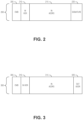
- FIG. 2 illustrates an example of a message to the storage device to perform an authenticated modification, according to an embodiment.
- FIG. 3 illustrates an example of a message to the storage device to invoke production of a hash by the storage device, according to an embodiment.
- FIG. 4 illustrates blocks moving from an unsecured non-volatile buffer to a secured non-volatile location on a storage device in response to a successful authenticated modification operation, according to an embodiment.
- FIG. 5 is a swim lane diagram illustrating an example of component messaging within a storage device to perform an authenticated modification, according to an embodiment.
- FIG. 6 is a swim lane diagram illustrating an example of component messaging within a storage device to produce a hash, according to an embodiment.
- FIG. 7 illustrates a flow diagram of an example of a method for multi-factor intelligent agent control, according to an embodiment.
- FIG. 8 is a block diagram illustrating an example of a machine upon which, or with which, one or more embodiments can be implemented.
- a storage device is modified to include cryptographic components, such as a cryptographic engine (e.g., a hash engine).
- the storage device is also enhanced to accept additional commands from an external entity (e.g., a processor, device, etc.) to invoke a number of cryptographic operations performed by the cryptographic engine.
- the additional command operates in a manner similar to other commands provided by external entities to the storage device, such as data reads or writes. Accordingly, the hardware interface of the storage device to a system remains the same allowing the storage device to be included, without modification, to existing systems.
- Software of existing systems can be modified, however, to invoke the cryptographic operation commands and thus gain the benefit of the cryptographic components of the storage device. This arrangement permits the cryptographic enhancement of systems, including embedded systems, without redesigning manufacturing processes for these systems.
- One such cryptographic command includes a block (or other storage measure such as a page) unlock.
- a block of storage can be locked, for example, when a storage device powers on, restarts, or in response to a command.
- the host or other entity
- the cryptographic hash can include a secret from the storage device-achieved during an earlier authentication of the caller to the storage device or via configuration of the caller, providing an authentication for the caller.
- the caller can then write to the unlocked block.
- This procedure generally protects the block from an unauthorized write, and thus may be used to store critical information, such as operating parameters. There can, however, exist a race condition in which the block is unlocked and an unauthorized writer performs a write while the block is unlocked.
- the data being written can itself be signed instead of, or in addition to, relying on a command signature to unlock a block.
- the caller e.g., entity performing the write
- the caller then initiates a command, which may be called auth_modify, to store the data into a secure portion of the storage device.
- the command includes identification of the data (e.g., an address range of the unsecured storage in which the data is buffered) and a signature of the data computed by the caller.
- the storage device computes its own signature of the data using its cryptographic engine and compares the two signatures. When they match, the data is moved to the secure portion. If the signatures do not match, then the auth_modify command fails.
- the secure portion is configured in the storage device. Part of this configuration includes causing standard programming (e.g., write, or update) commands to fail when directed to the secure portion.
- read commands operate normally. Thus, any entity can read the data in the secure portion.
- the storage device can provide a signature of the data in the secure portion along with, or paired with, a read. Thus, a reading entity can verify that there is no other entity (e.g., a “man-in-the-middle”) modifying the critical data between the storage device and the reading entity. Additional examples and details are described below.
- FIG. 1 is a block diagram of an example of an environment 100 including a system (e.g., storage device 105 or the components therein) for an authenticated modify operation in a storage device, according to an embodiment.
- the environment 100 includes the system 140 embedded into a manufactured good 145 .
- the manufactured good 145 can include a variety of things, such as a vehicle (as shown) including unmanned vehicles, an appliance, furniture, a structure, a sensor, clothing, or other items in which the system 140 can be included (e.g., embedded).
- the system 140 can include an interface to communicate with one or more components of the manufactured good 145 that are external to the system 140 .
- the interface enables the system 140 to control speakers, and can enable receiving content from a user's device (e.g., phone, personal music player, tablet, etc.).
- the system 140 can also include one or more processers (e.g., central processing unit, low-power processor, digital signal processor, graphic processing unit, etc.), and one or more storage devices (e.g., mass storage, memory, static memory, etc.) include the storage device 105 .
- processers e.g., central processing unit, low-power processor, digital signal processor, graphic processing unit, etc.
- storage devices e.g., mass storage, memory, static memory, etc.
- the storage device 105 includes an interface 110 , a decoder 115 , a controller 120 , a cryptographic engine 125 , and a storage portion 130 .
- the storage device 105 and the components therein are manufactured on a single chip.
- the storage device 105 includes a register bank 135 (e.g., comprising one or more registers). All of these components of the storage device 105 are implemented in computer hardware (e.g., processing circuitry).
- the interface 110 provides a hardware communications medium between the storage device 105 and other components of the system 140 .
- the interface 110 is a Joint Electron Device Engineering Council (JEDEC) memory standards interface.
- the storage device 105 is a random access memory (RAM) device.
- the interface 110 conforms to at least one of an Integrated Device Electronics (IDE) AT Attachment (ATA) interface, a serial ATA (SATA) interface, a Small Computer System Interface (SCSI) interface, a Universal Flash Storage (UFS) interface, an embedded MultiMedia Card (eMMC) interface or Non-Volatile Memory Host Controller Interface Specification (NVMHCI) interface.
- the storage device 105 is a flash memory device.
- the storage device 105 is at least one of NOR flash or NAND flash (e.g., the storage portion 130 is NOR or NAND flash).
- the storage device 105 is a hard disk drive (HDD).
- the decoder 115 is arranged to parse a command, a set of input identifications, and a signature from a data transmission received at the interface 110 .
- the command is an authenticated modify command, also known as Auth_Modify or auth_modify command.
- the decoder 115 is arranged to decode other commands, such as a read or a write command to the storage device 105 .
- the decoder 115 is part (e.g., integrated into) the controller 120 .
- the command corresponds to a cryptographic operation, such as a hash operation.
- a hash operation accepts input data and produces a hash of the input data as output.
- a hash maps arbitrarily sized data to a fixed size.
- a cryptographic hash can differ from other hashes in being one-way. That is, it is difficult to produce the input data from just the output of the hash.
- the hash operation is a keyed-hash message authentication code (HMAC).
- HMAC is a message authentication code (MAC) where a key is combined with other data to produce the hash. HMACs can be used to verify one or both of data integrity and authenticity of a message (e.g., the other data).
- the data transmission includes a secret.
- the secret is used as a key for the HMAC.
- the data transmission includes a current session key of the storage device 105 .
- the storage device 105 can have previously entered into encrypted communications with the external entity. As part of establishing these communications, a session key can have been established between the storage device 105 and the external entity.
- the storage device 105 can maintain the same, or a derivative of, the session key for a number of communications or for a set period of time.
- the storage device 105 can uses a new session key each time it is power cycled (e.g., restarted, turned-on, etc.).
- the storage device 105 can maintain the session key internally, such as in the register bank 135 (or other internal memory) or in a protected part of the storage portion 130 .
- a member of the set of input identifications is an address of an unsecured portion of the storage device 105 , such as the storage portion 130 or the register bank 135 .
- the unsecured portion of the storage device 105 is accessible to an external entity via the interface 110 to the storage device 105 .
- the storage portion 130 is used to hold data that external entities read from and write to via commands to the storage device 105 made via the interface 110 .
- the register bank 135 would not generally be accessible to these external entities via the interface 110 but would rather be used by the controller 120 (or other portion of the storage device 105 ) for internal purposes.
- the unsecured portion of the storage device is block addressable, such as a NAND flash device or a hard disk drive.
- the unsecured portion of the storage device 105 is byte addressable.
- byte addressable storage is used to store data immediately prior to consumption by a processor.
- data can be retrieved from non-byte addressable storage (e.g., block addressable storage) into byte addressable storage before being operated upon by a processor.
- Example byte addressable media can include registers, RAM varieties (e.g., static RAM (SRAM), dynamic RAM (DRAM), etc.), core memory, NOR flash, etc.
- the unsecured portion of the storage device 105 is a register (e.g., in register bank 135 ).
- the unsecured portion of the storage device 105 is a nonvolatile storage media, such as NOR flash.
- the unsecured portion of the storage device 105 is not accessible to an external entity via the interface 110 to the storage device 105 , such as the register bank 135 .
- the set of input identifications define an address range of the unsecured portion of the storage device 105 .
- the set of input identifications can be a list of storage blocks in the storage portion 130 of, for example, a flash device or a hard disk.
- the set of input identifications can be a set of byte addressable address in a storage portion 130 that is RAM.
- two members of the set of input identifications define the address range. This example permits the identification of a contiguous portion of the storage portion 130 , for example, to reduce the signaling overhead.
- a first member of the two members defines the start of the range and a second member of the two members defines the end of the range.
- a first member of the two members defines the start of the range and a second member of the two members defines a number of units to include in the range.
- a member of the set of input identifications identifies a portion of the data transmission.
- the input identifications note data already managed by the storage device 105 , here, the command can be accompanied by additional data not already managed by the storage device 105 .
- the portion of the data transmission is identified by a field.
- the portion of the data transmission is identified by an offset.
- the portion of the data transmission is also identified by a length.
- the new data in the transmission can specify the additional data using a variety of techniques.
- the controller 120 is arranged to collect members of the set of input identifications to produce an input set.
- the collection can include retrieving data that corresponds to addresses in the set of input identification or obtaining (e.g., retrieving or receiving) the data (e.g., a secret) from the transmission to include in the input set.
- the collection allows the use of previously managed (e.g., stored) data in the storage device 105 to be used the authenticated modify or other cryptographic operation.
- the input set includes data rather than references to data.
- the controller 120 is arranged to instruct the cryptographic engine 125 to produce a signature of the input set.
- the signature is a cryptographic hash of at least the input set.
- the cryptographic hash is also of a secret, such as a storage device session key, such that the signature is an HMAC.
- the controller 120 is arranged to compare the signature decoded from the data transmission at interface 110 by the decoder 115 to the signature created by the cryptographic engine 125 from the input data set. Because the signatures are readily computable from data, but extremely difficult to produce the same signature from different data, the signature provided by the entity that wrote the data to the unsecured portion 130 of the storage device in the data transmission should match that of the input data set (e.g., the data written to the unsecured portion 130 ) unless it has been modified. Thus, the controller 120 is arranged to compare the two signatures to determine whether the signatures match. If the signatures do not match, the data in the input set is not what the external entity expected, and thus may be maliciously or erroneously modified. In an example, the authenticated modify command simply fails when the signatures do not match. In an example, the controller 120 erases the input data set from the unsecured storage portion in response to a mismatch in the signatures.
- the data of the input set is moved to a secure portion of the storage device 105 .
- the secured portion is managed via a bitmap of storage segments (e.g., pages, blocks, etc.), or other data structure that marks the secured storage portions.
- legacy write commands fail when they include a secured portion, such that only the authenticated modify command is supported by the controller 120 to modify the secured portion.
- legacy erase commands are not supported on the secured portion, such that only an erase variant of the authenticated modify command is supported to erase a secure portion.
- the authenticated modify command variant to erase a secure portion does not include a signature in the data transmission. Rather, this variant of the command uses an HMAC or other secret sent in the data transmission to erase the secure portion.
- the authenticated modify command ensures that only an authorized write occurs to a secured portion of the storage device 105 , it does not affect reading of the secured portion.
- the controller 120 can provide a signature, or hash, of the data in addition to the data when it is read.
- the receiver e.g., system 140
- the receiver can compare a signature it derived from the data it received from the storage device 105 , to the signature provided by the storage device 150 . Again, if the signatures match, the data is uncorrupted.
- the controller 120 is also arranged to instruct the cryptographic engine 125 to produce a hash product from the input set.
- the hash product is at least a hash of the input set data.
- the hash product can be an HMAC.
- the cryptographic engine 125 is arranged to implement a cryptographic hash.
- the cryptographic hash is a secure hash algorithm (SHA).
- the cryptographic engine 125 is arranged to produce a two hundred and fifty-six bit hash.
- the controller 120 is also arranged to write the hash product in a portion (e.g., storage portion 130 ) of the storage device 105 corresponding to the output identification.
- a portion e.g., storage portion 130
- the controller 120 is also arranged to write the hash product in a portion (e.g., storage portion 130 ) of the storage device 105 corresponding to the output identification.
- an external entity can write data to be hashed to the storage device 105 as it normally would when otherwise storing the data.
- the external entity can then invoke the hash operation via the command and specify a response internal to the storage device 105 for the result.
- the external entity can then retrieve the hash product in the same way it would otherwise retrieve data from the storage device, such as by a read command.
- the storage device 105 can be added to any system 140 configured to accept the same type of storage device.
- the authenticated modify command structure e.g., write unsecured data
- the write, hash, read instruction cycle provides a familiar and flexible hash facility to programmers because the writing of the data and the reading of the hash product occur in a familiar fashion to other storage devices. In this way, security functions, such as HMAC messaging, or other upgrades can be added to existing systems without additional manufacturing expense to original equipment manufacturers, and thus further the penetration of systems into manufactured goods.
- FIGS. 2 - 3 illustrates an example of a message 300 to the storage device.
- the message formats discussed here are non-limiting examples. Portions of the messages can be denoted by fields (e.g., tags in a markup language such as eXtensible Markup Language (XML) or the like) or by convention (e.g., the first eight bits designate the command, the second eight bits designate an input header, etc.). Further, the messages are illustrated with a particular order of portions (e.g., command, input header, input addresses, and output address) but variations can include a rearranging of these components (e.g., no input header, an output address, input addresses, and then the command).
- fields e.g., tags in a markup language such as eXtensible Markup Language (XML) or the like
- convention e.g., the first eight bits designate the command, the second eight bits designate an input header, etc.
- the messages are illustrated with a particular order of portions (e.
- FIG. 2 illustrates an example of a message 200 to the storage device to perform an authenticated modification, according to an embodiment.
- the message 200 includes a command portion 205 , an input header 210 , an input address portion 215 , and a signature portion 220 .
- the various portions other than the signature portion operate as described below with respect to message 300 .
- the signature portion holds a signature of data corresponding to the authenticated modification command specified in the command portion 205 .
- the signature portion is a reference (e.g., address) to the signature in the storage device.
- the signature portion contains an HMAC of the data.
- FIG. 3 illustrates an example of a message 300 to the storage device to invoke a hash operation, according to an embodiment.
- the message 300 includes four portions, a command portion 305 , an input header 310 , an input address portion 315 , and an output address 320 .
- the command portion 305 is placed and sized according to a standard interface to the storage device. For example, if the interface of the storage device is SCSI, the first eight-bit byte is the command portion 305 .
- the input header 310 is optional and can be used to describe the type of data in the input address portion 315 .
- the input header 310 can specify whether the input address portion 315 is to be treated as two distinct addresses or as a range (e.g., a start and end address or a start address and an extent).
- the output address 320 designates the destination of the hash product produced when the cryptographic engine performs the hash operation of the command from the command portion 305 .
- the message 300 includes a secret portion.
- the secret portion holds a secret that can be used as a key to an HMAC.
- the secret is the actual value of the key.
- message 300 also includes a secret address portion.
- the secret address portion holds an address to an addressable location within the storage device, such as internal NAND or NOR flash blocks, a register, memory, etc. using the secret address portion permits the use of larger secrets than can otherwise be possible given constraints of a particular storage interface standard.
- the external entity can write the secret to one or more blocks of the storage device in a previous operation and then refer to the secret via the secret address portion.
- the message 300 also includes a secret command portion.
- the secret command portion includes a directive to the storage device that specifies how to obtain the secret.
- An example directive can include retrieving a current session key of the storage device, or measuring a quality of the storage device using a diagnostic component.
- the secret command provides additional flexibility to leverage ever more sophisticated storage device hardware.
- a secret holding area e.g., secret portion, secret address, or secret command portion
- the secret holding area can be included in the input address portion and specified, for example, in the input header.
- FIG. 4 illustrates blocks moving from an unsecured non-volatile buffer to a secured non-volatile location on a storage device in response to a successful authenticated modification operation, according to an embodiment.
- the authenticated modification command prevents certain vulnerabilities present in block locking secure writing techniques.
- Another technique used in some memory devices known as replay protect memory block (RPMB)—uses an authentication for every read and write, also promoting a secure write.
- RPMB replay protect memory block
- the authenticated modification described herein solves the RPMB issue by allowing an unsecured write to be followed by an atomic verification of the unsecured data and write (e.g., copy) from the unsecured area to the secured area.
- the secure area or portion of the storage device are defined in meta-data, or control registers of the storage device. This defines trusted way for a user (e.g., customer) to specify—for example via a bitmap, partition, etc.—and determine that one or more erase blocks are only modifiable by an authenticated modification (e.g., Auth_Modify) command.
- an authenticated modification e.g., Auth_Modify
- the signature of the authenticated modification command is an HMAC Legacy program/erase will no longer work on these blocks signature of existing flash content and then allows it to be moved to a protected location in flash. When successfully executed, the new content is written atomically within a single flash command.
- Block configuration & status can be limited to only HMAC-signed commands, such as CRTM_Register_Write & CRTM_Register_Read commands. Legacy program & erase operations shall fail for AM blocks.
- Auth_Modify command such as copying flash content from any array location (e.g., a “flash buffer”) to any AM block.
- an Authenticated modify command can have several options.
- command option zero can include a secure erase command that specifies the base address of an AM block to erase.
- Another example command option includes copying existing flash content from one array location to an AM block.
- the copying has a 256-byte minimum granularity.
- the command requires address alignment.
- the command has a 64-KByte maximum granularity.
- erase suspend/resume functionality not supported for this command or for an AM block.
- the host can use authenticated modify in a number of ways. For example, the host can use CRTM_Register_Write to allocate blocks for AM protection (the AM block pool), or CRTM_Register_Read to read authenticated protection status of AM-protected blocks.
- the host can invoke the Auth_Modify command option zero to erase AM block.
- the host can use command one of Auth_Modify to add content to an AM block.
- the copying of data can be from an unsecured (e.g., non-AM) or from a secured (e.g., AM) block to a secured block.
- anti-replay protection is provided by a monotonic counter of the storage device.
- the key association of the storage device is a replaceable root key and a session key per storage device power cycle.
- the storage device 405 starts with data 410 and 415 in unsecured portions (e.g., flash buffer) of the storage device 405 .
- the data is moved to the secured portions (e.g., AM) portions of the storage device.
- the secured portions e.g., AM
- FIG. 5 is a swim lane diagram illustrating an example of component messaging 500 within a storage device to perform an authenticated modification, according to an embodiment.
- the storage device After the storage device receives a data transmission, it is decoded by a decoder and sent to the controller (message 505 ).
- the decoded command is an authenticated modify command that is distinct from a legacy, or standard, write or program command by virtue of its inclusion of a signature for data that is subject to the command.
- the data from which the signature is created is not part of the data transmission to the storage device. Rather, the data was previously placed onto the storage device via a legacy write.
- the decoded transmission also included identification of the data previously stored by the initiator (e.g., a host) of the command.
- the controller uses this identification to request (message 510 ) and receive (message 515 ) an input set from the storage of the storage device.
- the controller requests that the cryptographic engine of the storage device produce a signature of the input set (message 520 ).
- the controller does not actually receive the input set from the storage portion and rather directs the cryptographic engine to the data of the input set, the cryptographic engine reading the data itself to produce the signature. Once complete, the cryptographic engine provides the signature of the input set back to the controller (message 525 ).
- the controller compares the signature received in the data transmission to that provided by the cryptographic engine (operation 530 ). If the signatures match, then the data initially written by the requestor has not been modified, and it is written to a secure portion (e.g., an AM configured block or partition) of the storage portion of the storage device (message 535 ). Otherwise, if the signatures do not match, the data specified at the input set does not match what the requestor expects (e.g., because it was maliciously or erroneously changed), and the authenticated modification operation fails.
- a secure portion e.g., an AM configured block or partition
- the data transmission itself can be secured via a hash operation, such as that supported by the message 300 described above.
- data read from a secure portion can be verified-insurance against modification of the data between the storage portion and a reading entity-via providing a hash signature of the data in response to a read, as described below with the component messaging 600 .
- FIG. 6 is a swim lane diagram illustrating an example of component messaging 600 within a storage device to produce a hash, according to an embodiment.
- the decoder decodes the command in the message (operation 605 ).
- the controller can then marshal data from the set of input identifications by requesting the data corresponding to the set of input identification (operation 610 ) from the storage portion and receive the input set data as provided by the storage portion (operation 615 ).
- the controller invokes the hash operation of the command on the input set (operation 620 ).
- the controller can provide a key to the cryptographic engine as part of the hash operation invocation (operation 625 ).
- the cryptographic engine then provides the hash result (e.g., hash product) back to the controller (operation 630 ).
- the controller then stores the hash result in the storage portion as specified in the input message (e.g., the output address) (operation 635 .
- FIG. 7 illustrates a flow diagram of an example of a method 700 for multi-factor intelligent agent control, according to an embodiment.
- the operations of the method 700 are carried out on computer hardware, such as that described above with respect to FIG. 1 , or below with respect to FIG. 8 (e.g., circuitry).
- a data transmission received at an interface of the storage device is decoded.
- the data transmission includes a command, a set of input identifications, and a signature corresponding to data at the input identifications.
- the command corresponds to an authenticated modification, or auth_modify, operation.
- the set of input identifications define an address range of an unsecured portion of the storage device.
- two members of the set of input identifications define the address range.
- a first member of the two members defines the start of the range and a second member of the two members defines the end of the range.
- a first member of the two members defines the start of the range and a second member of the two members defines a number of units to include in the range.
- a member of the set of input identifications identifies a portion of the data transmission.
- the portion of the data transmission is identified by a field.
- the portion of the data transmission is identified by an offset.
- the portion of the data transmission is also identified by a length.
- the data transmission includes an identification of the secure portion.
- the secure portion is readable to an external entity (e.g., the host or other entity using the storage device interface that is not the storage device or a component thereof).
- the data transmission identifies a secret of the storage device.
- the secret is a current session key of the storage device.
- the interface of the storage device is a Joint Electron Device Engineering Council (JEDEC) memory standards interface.
- the storage device is a random access memory (RAM) device.
- the interface of the storage device conforms to at least one of an Integrated Device Electronics (IDE) AT Attachment (ATA) interface, a serial ATA (SATA) interface, Small Computer System Interface (SCSI) interface, or Non-Volatile Memory Host Controller Interface Specification (NVMHCI) interface.
- IDE Integrated Device Electronics
- SATA serial ATA
- SCSI Small Computer System Interface
- NVMHCI Non-Volatile Memory Host Controller Interface Specification
- the storage device is a flash memory device.
- the flash memory device is at least one of NOR flash or NAND flash.
- the storage device is a hard disk drive (HDD).
- members of the set of input identifications are marshalled to produce an input set.
- Marshalling involves collecting the data identified in the input notifications and placing the data into the input set.
- marshalling the members of the set of input identifications includes retrieving data corresponding to an address of the set of input identifications to include in the input set.
- a cryptographic engine of the storage device is invoked on the input set to produce a signature from the input set.
- the cryptographic engine implements a cryptographic hash.
- the cryptographic hash is a secure hash algorithm (SHA).
- SHA secure hash algorithm
- the cryptographic engine produces a two hundred and fifty-six bit hash or a five hundred and twelve bit hash.
- the first signature that was received as part of the data transmission and the second signature that was generated from the input set by the cryptographic engine are compared. If they match (decision 725 ), then, at operation 730 , the input set is written to the secure portion of the storage device. The writing can include instructing an underlying storage device controller to copy the data of the input set from the unsecure portion to the secure portion, or it can include reading the data into the controller and writing it out to the secure portion. If the signatures do not match (decision 725 ), then, at operation 735 , the command fails. In an example, notification of the command failure is sent back to the requestor.
- the method 700 can be extended to include creating a third signature of data in the secure portion in response to a read request to which that data was returned.
- the signature is in response to a second command that is related to the read request.
- FIG. 8 illustrates a block diagram of an example machine 800 upon which any one or more of the techniques (e.g., methodologies) discussed herein can perform.
- Examples, as described herein, can include, or can operate by, logic or a number of components, or mechanisms in the machine 800 .
- Circuitry e.g., processing circuitry
- Circuitry membership can be flexible over time. Circuitries include members that can, alone or in combination, perform specified operations when operating.
- hardware of the circuitry can be immutably designed to carry out a specific operation (e.g., hardwired).
- the hardware of the circuitry can include variably connected physical components (e.g., execution units, transistors, simple circuits, etc.) including a machine readable medium physically modified (e.g., magnetically, electrically, moveable placement of invariant massed particles, etc.) to encode instructions of the specific operation.
- a machine readable medium physically modified (e.g., magnetically, electrically, moveable placement of invariant massed particles, etc.) to encode instructions of the specific operation.
- the instructions enable embedded hardware (e.g., the execution units or a loading mechanism) to create members of the circuitry in hardware via the variable connections to carry out portions of the specific operation when in operation.
- the machine readable medium elements are part of the circuitry or are communicatively coupled to the other components of the circuitry when the device is operating.
- any of the physical components can be used in more than one member of more than one circuitry.
- execution units can be used in a first circuit of a first circuitry at one point in time and reused by a second circuit in the first circuitry, or by a third circuit in a second circuitry at a different time. Additional examples of these components with respect to the machine 800 follow.
- the machine 800 can operate as a standalone device or can be connected (e.g., networked) to other machines. In a networked deployment, the machine 800 can operate in the capacity of a server machine, a client machine, or both in server-client network environments. In an example, the machine 800 can act as a peer machine in peer-to-peer (P2P) (or other distributed) network environment.
- the machine 800 can be a personal computer (PC), a tablet PC, a set-top box (STB), a personal digital assistant (PDA), a mobile telephone, a web appliance, a network router, switch or bridge, or any machine capable of executing instructions (sequential or otherwise) that specify actions to be taken by that machine.
- machine shall also be taken to include any collection of machines that individually or jointly execute a set (or multiple sets) of instructions to perform any one or more of the methodologies discussed herein, such as cloud computing, software as a service (SaaS), other computer cluster configurations.
- cloud computing software as a service
- SaaS software as a service
- the machine 800 can include a hardware processor 802 (e.g., a central processing unit (CPU), a graphics processing unit (GPU), a hardware processor core, or any combination thereof), a main memory 804 , a static memory (e.g., memory or storage for firmware, microcode, a basic-input-output (BIOS), unified extensible firmware interface (UEFI), etc.) 806 , and mass storage 821 (e.g., hard drive, tape drive, flash storage, or other block devices) some or all of which can communicate with each other via an interlink (e.g., bus) 808 .
- a hardware processor 802 e.g., a central processing unit (CPU), a graphics processing unit (GPU), a hardware processor core, or any combination thereof
- main memory 804 e.g., a static memory (e.g., memory or storage for firmware, microcode, a basic-input-output (BIOS), unified extensible firmware interface (UEFI), etc.) 8
- Main memory 804 is generally distinguishable from mash storage 821 by being byte addressable versus block addressable allowing direct consumption of its data by the processor 802 . Further, main memory 804 is used by the processor 802 to store current (e.g., live) state information rather than information maintained between power-on and power-off cycles.
- the static memory 806 is generally used to directly modify or configure hardware, such as occurs on power-up, or to correct machine instructions (e.g., via microcode).
- the machine 800 can further include a display unit 810 , an alphanumeric input device 812 (e.g., a keyboard), and a user interface (UI) navigation device 814 (e.g., a mouse).
- the display unit 810 , input device 812 and UI navigation device 814 can be a touch screen display.
- the machine 800 can additionally include a storage device (e.g., drive unit) 816 , a signal generation device 818 (e.g., a speaker), a network interface device 820 , and one or more sensors 821 , such as a global positioning system (GPS) sensor, compass, accelerometer, or other sensor.
- GPS global positioning system
- the machine 800 can include an output controller 828 , such as a serial (e.g., universal serial bus (USB), parallel, or other wired or wireless (e.g., infrared (IR), near field communication (NFC), etc.) connection to communicate or control one or more peripheral devices (e.g., a printer, card reader, etc.).
- a serial e.g., universal serial bus (USB), parallel, or other wired or wireless (e.g., infrared (IR), near field communication (NFC), etc.) connection to communicate or control one or more peripheral devices (e.g., a printer, card reader, etc.).
- USB universal serial bus
- IR infrared
- NFC near field communication
- the registers of the processor 802 , the main memory 804 , the static memory 806 , or the mass storage 816 can be, or include, a machine readable medium 822 on which is stored one or more sets of data structures or instructions 824 (e.g., software) embodying or utilized by any one or more of the techniques or functions described herein.
- the instructions 824 can also reside, completely or at least partially, within any of registers of the processor 802 , the main memory 804 , the static memory 806 , or the mass storage 816 during execution thereof by the machine 800 .
- one or any combination of the hardware processor 802 , the main memory 804 , the static memory 806 , or the mass storage 816 can constitute the machine readable media 802 .
- machine readable medium 822 is illustrated as a single medium, the term “machine readable medium” can include a single medium or multiple media (e.g., a centralized or distributed database, and/or associated caches and servers) configured to store the one or more instructions 824 .
- machine readable medium can include a single medium or multiple media (e.g., a centralized or distributed database, and/or associated caches and servers) configured to store the one or more instructions 824 .
- machine readable medium can include any medium that is capable of storing, encoding, or carrying instructions for execution by the machine 800 and that cause the machine 800 to perform any one or more of the techniques of the present disclosure, or that is capable of storing, encoding or carrying data structures used by or associated with such instructions.
- Non-limiting machine readable medium examples can include solid-state memories, optical media, magnetic media, and signals (e.g., radio frequency signals, other photon based signals, sound signals, etc.).
- a non-transitory machine readable medium comprises a machine readable medium with a plurality of particles having invariant (e.g., rest) mass, and thus are compositions of matter.
- non-transitory machine-readable media are machine readable media that do not include transitory propagating signals.
- Specific examples of non-transitory machine readable media can include: non-volatile memory, such as semiconductor memory devices (e.g., Electrically Programmable Read-Only Memory (EPROM), Electrically Erasable Programmable Read-Only Memory (EEPROM)) and flash memory devices; magnetic disks, such as internal hard disks and removable disks; magneto-optical disks; and CD-ROM and DVD-ROM disks.
- non-volatile memory such as semiconductor memory devices (e.g., Electrically Programmable Read-Only Memory (EPROM), Electrically Erasable Programmable Read-Only Memory (EEPROM)) and flash memory devices
- EPROM Electrically Programmable Read-Only Memory
- EEPROM Electrically Erasable Programmable Read-Only Memory
- flash memory devices e.g., electrically Erasable Programmable Read-Only Memory (EEPROM)
- EPROM Electrically Programmable Read-On
- the instructions 824 can be further transmitted or received over a communications network 826 using a transmission medium via the network interface device 820 utilizing any one of a number of transfer protocols (e.g., frame relay, internet protocol (IP), transmission control protocol (TCP), user datagram protocol (UDP), hypertext transfer protocol (HTTP), etc.).
- transfer protocols e.g., frame relay, internet protocol (IP), transmission control protocol (TCP), user datagram protocol (UDP), hypertext transfer protocol (HTTP), etc.
- Example communication networks can include a local area network (LAN), a wide area network (WAN), a packet data network (e.g., the Internet), mobile telephone networks (e.g., cellular networks), Plain Old Telephone (POTS) networks, and wireless data networks (e.g., Institute of Electrical and Electronics Engineers (IEEE) 802.11 family of standards known as Wi-Fi®, IEEE 802.16 family of standards known as WiMax®), IEEE 802.15.4 family of standards, peer-to-peer (P2P) networks, among others.
- the network interface device 820 can include one or more physical jacks (e.g., Ethernet, coaxial, or phone jacks) or one or more antennas to connect to the communications network 826 .
- the network interface device 820 can include a plurality of antennas to wirelessly communicate using at least one of single-input multiple-output (SIMO), multiple-input multiple-output (MIMO), or multiple-input single-output (MISO) techniques.
- SIMO single-input multiple-output
- MIMO multiple-input multiple-output
- MISO multiple-input single-output
- transmission medium shall be taken to include any intangible medium that is capable of storing, encoding or carrying instructions for execution by the machine 800 , and includes digital or analog communications signals or other intangible medium to facilitate communication of such software.
- a transmission medium is a machine readable medium.
- Example 1 is a storage device that implements an authenticated modify, the storage device comprising: a cryptographic engine; an interface; a decoder to parse a command, a set of input identifications, and a first signature from a data transmission received at the interface; and a controller to: collect members of the set of input identifications to produce an input set: instruct the cryptographic engine to produce a second signature from the input set: compare the first signature and the second signature to determine a match; and write the input set to a secure portion of the storage device in response to the match.
- Example 2 the subject matter of Example 1 includes, wherein the set of input identifications define an address range of an unsecure portion of the storage device.
- Example 3 the subject matter of Example 2 includes, wherein two members of the set of input identifications define the address range.
- Example 4 the subject matter of Example 3 includes, wherein a first member of the two members defines the start of the range and a second member of the two members defines the end of the range.
- Example 5 the subject matter of Examples 3-4 includes, wherein a first member of the two members defines the start of the range and a second member of the two members defines a number of units to include in the range.
- Example 6 the subject matter of Examples 1-5 includes, wherein the data transmission includes an identification of the secure portion.
- Example 7 the subject matter of Examples 1-6 includes, wherein the secure portion of the storage device is readable to an external entity via the interface to the storage device.
- Example 8 the subject matter of Example 7 includes, wherein the controller is to create a third signature of the secure portion in response to a read operation.
- Example 9 the subject matter of Example 8 includes, wherein the controller is to provide the third signature to the external entity in response to a verification instruction including a reference to the read operation.
- Example 10 the subject matter of Examples 1-9 includes, wherein the data transmission identifies a secret of the storage device.
- Example 11 the subject matter of Example 10 includes, wherein the secret is a current session key of the storage device.
- Example 12 the subject matter of Examples 1-11 includes, wherein the first signature and the second signature include is a keyed-hash message authentication code (HMAC).
- HMAC keyed-hash message authentication code
- Example 13 the subject matter of Example 12 includes, wherein a secret of the storage device is used as a key for the HMAC.
- Example 14 the subject matter of Examples 1-13 includes, wherein the cryptographic engine implements a cryptographic hash.
- Example 15 the subject matter of Example 14 includes, wherein the cryptographic hash is a secure hash algorithm (SHA).
- SHA secure hash algorithm
- Example 16 the subject matter of Example 15 includes, wherein the cryptographic engine produces a two hundred and fifty-six bit hash.
- Example 17 the subject matter of Examples 1-16 includes, wherein the interface of the storage device is a Joint Electron Device Engineering Council (JEDEC) memory standards interface.
- JEDEC Joint Electron Device Engineering Council
- Example 18 the subject matter of Example 17 includes, wherein the storage device is a random access memory (RAM) device.
- RAM random access memory
- Example 19 the subject matter of Examples 1-18 includes, wherein the interface of the storage device conforms to at least one of an Integrated Device Electronics (IDE) AT Attachment (ATA) interface, a serial ATA (SATA) interface, a Small Computer System Interface (SCSI) interface, a Universal Flash Storage (UFS) interface, an embedded MultiMedia Card (eMMC) interface, or Non-Volatile Memory Host Controller Interface Specification (NVMHCI) interface.
- IDE Integrated Device Electronics
- SATA serial ATA
- SCSI Small Computer System Interface
- UFS Universal Flash Storage
- eMMC embedded MultiMedia Card
- NVMHCI Non-Volatile Memory Host Controller Interface Specification
- Example 20 the subject matter of Example 19 includes, wherein the storage device is a flash memory device.
- Example 21 the subject matter of Example 20 includes, wherein the flash memory device is at least one of NOR flash or NAND flash.
- Example 22 is a machine implemented method for authenticated modify in a storage device, the method comprising: decoding a data transmission received at an interface of the storage device, the data transmission including a command, a set of input identifications, and a first signature corresponding to data identified by the input identifications, the command corresponding to a secure portion of the storage device; marshalling members of the set of input identifications to produce an input set; invoking a cryptographic engine of the storage device on the input set to produce a second signature from the input set; comparing the first signature and the second signature to determine a match; and writing, in response to the match, the input set to a secure portion of the storage device.
- Example 23 the subject matter of Example 22 includes, wherein the set of input identifications define an address range of an unsecure portion of the storage device.
- Example 24 the subject matter of Example 23 includes, wherein two members of the set of input identifications define the address range.
- Example 25 the subject matter of Example 24 includes, wherein a first member of the two members defines the start of the range and a second member of the two members defines the end of the range.
- Example 26 the subject matter of Examples 24-25 includes, wherein a first member of the two members defines the start of the range and a second member of the two members defines a number of units to include in the range.
- Example 27 the subject matter of Examples 22-26 includes, wherein the data transmission includes an identification of the secure portion.
- Example 28 the subject matter of Examples 22-27 includes, wherein the secure portion of the storage device is readable to an external entity via the interface to the storage device.
- Example 29 the subject matter of Example 28 includes, creating a third signature of the secure portion in response to a read operation.
- Example 30 the subject matter of Examples 28-29 includes, providing the third signature to the external entity in response to a verification instruction including a reference to the read operation.
- Example 31 the subject matter of Examples 22-30 includes, wherein the data transmission identifies a secret of the storage device.
- Example 32 the subject matter of Example 31 includes, wherein the secret is a current session key of the storage device.
- Example 33 the subject matter of Examples 22-32 includes, wherein the first signature and the second signature include is a keyed-hash message authentication code (HMAC).
- HMAC keyed-hash message authentication code
- Example 34 the subject matter of Example 33 includes, wherein a secret of the storage device is used as a key for the HMAC.
- Example 35 the subject matter of Examples 22-34 includes, wherein the cryptographic engine implements a cryptographic hash.
- Example 36 the subject matter of Example 35 includes, wherein the cryptographic hash is a secure hash algorithm (SHA).
- SHA secure hash algorithm
- Example 37 the subject matter of Example 36 includes, wherein the cryptographic engine produces a two hundred and fifty-six bit hash.
- Example 38 the subject matter of Examples 22-37 includes, wherein the interface of the storage device is a Joint Electron Device Engineering Council (JEDEC) memory standards interface.
- JEDEC Joint Electron Device Engineering Council
- Example 39 the subject matter of Example 38 includes, wherein the storage device is a random access memory (RAM) device.
- RAM random access memory
- Example 40 the subject matter of Examples 22-39 includes, wherein the interface of the storage device conforms to at least one of an Integrated Device Electronics (IDE) AT Attachment (ATA) interface, a serial ATA (SATA) interface, a Small Computer System Interface (SCSI) interface, a Universal Flash Storage (UFS) interface, an embedded MultiMedia Card (eMMC) interface, or Non-Volatile Memory Host Controller Interface Specification (NVMHCI) interface.
- IDE Integrated Device Electronics
- SATA serial ATA
- SCSI Small Computer System Interface
- UFS Universal Flash Storage
- eMMC embedded MultiMedia Card
- NVMHCI Non-Volatile Memory Host Controller Interface Specification
- Example 41 the subject matter of Example 40 includes, wherein the storage device is a flash memory device.
- Example 42 the subject matter of Example 41 includes, wherein the flash memory device is at least one of NOR flash or NAND flash.
- Example 43 is at least one non-transitory machine readable medium including instructions that, when executed by processing circuitry, cause the processing circuitry to perform any method of Examples 22-42.
- Example 44 is a system comprising means to perform any method of Examples 22-42.
- Example 45 is at least one machine-readable medium including instructions that, when executed by processing circuitry, cause the processing circuitry to perform operations to implement of any of Examples 1-44.
- Example 46 is an apparatus comprising means to implement of any of Examples 1-44.
- Example 47 is a system to implement of any of Examples 1-44.
- Example 48 is a method to implement of any of Examples 1-44.
Landscapes
- Engineering & Computer Science (AREA)
- Computer Security & Cryptography (AREA)
- Theoretical Computer Science (AREA)
- Computer Networks & Wireless Communication (AREA)
- Signal Processing (AREA)
- Physics & Mathematics (AREA)
- Computer Hardware Design (AREA)
- General Physics & Mathematics (AREA)
- General Engineering & Computer Science (AREA)
- Software Systems (AREA)
- Power Engineering (AREA)
- Mathematical Physics (AREA)
- Storage Device Security (AREA)
Abstract
Description
Claims (22)
Priority Applications (1)
| Application Number | Priority Date | Filing Date | Title |
|---|---|---|---|
| US17/040,454 US11902449B2 (en) | 2018-03-23 | 2019-03-22 | Storage device authenticated modification |
Applications Claiming Priority (3)
| Application Number | Priority Date | Filing Date | Title |
|---|---|---|---|
| US201862647390P | 2018-03-23 | 2018-03-23 | |
| PCT/US2019/023551 WO2019183459A1 (en) | 2018-03-23 | 2019-03-22 | Storage device authenticated modification |
| US17/040,454 US11902449B2 (en) | 2018-03-23 | 2019-03-22 | Storage device authenticated modification |
Publications (2)
| Publication Number | Publication Date |
|---|---|
| US20210028942A1 US20210028942A1 (en) | 2021-01-28 |
| US11902449B2 true US11902449B2 (en) | 2024-02-13 |
Family
ID=67987558
Family Applications (1)
| Application Number | Title | Priority Date | Filing Date |
|---|---|---|---|
| US17/040,454 Active 2039-09-21 US11902449B2 (en) | 2018-03-23 | 2019-03-22 | Storage device authenticated modification |
Country Status (6)
| Country | Link |
|---|---|
| US (1) | US11902449B2 (en) |
| EP (1) | EP3769253B1 (en) |
| JP (1) | JP2021517409A (en) |
| KR (2) | KR20220101018A (en) |
| CN (1) | CN112074837B (en) |
| WO (1) | WO2019183459A1 (en) |
Families Citing this family (4)
| Publication number | Priority date | Publication date | Assignee | Title |
|---|---|---|---|---|
| JP2021517409A (en) | 2018-03-23 | 2021-07-15 | マイクロン テクノロジー,インク. | Storage device authentication fix |
| US11294582B2 (en) * | 2020-09-08 | 2022-04-05 | Micron Technology, Inc. | Customer-specific activation of functionality in a semiconductor device |
| KR102524379B1 (en) * | 2022-12-05 | 2023-04-21 | 주식회사 유니온플레이스 | Data processing apparatus for railed vehicle control |
| WO2026080288A1 (en) * | 2024-10-08 | 2026-04-16 | Google Llc | System and method for hardware-based inline hashing for verifying storage integrity |
Citations (23)
| Publication number | Priority date | Publication date | Assignee | Title |
|---|---|---|---|---|
| US20020112163A1 (en) * | 2001-02-13 | 2002-08-15 | Mark Ireton | Ensuring legitimacy of digital media |
| US20030120923A1 (en) | 2001-12-21 | 2003-06-26 | Avaya Technology Corp. | Secure data authentication apparatus |
| US20030198082A1 (en) * | 2000-02-15 | 2003-10-23 | Kia Silverbrook | Unathorised modification of values stored in flash memory |
| JP2006155589A (en) | 2004-11-08 | 2006-06-15 | Matsushita Electric Ind Co Ltd | Secure device and relay terminal |
| JP2009163738A (en) | 2008-01-02 | 2009-07-23 | Arm Ltd | Provision of secure service to non-secure application |
| US20110055471A1 (en) * | 2009-08-28 | 2011-03-03 | Jonathan Thatcher | Apparatus, system, and method for improved data deduplication |
| US20120110343A1 (en) | 2010-10-29 | 2012-05-03 | Bandic Zvonimir Z | Trustworthy timestamps on data storage devices |
| US20140068274A1 (en) * | 2012-08-31 | 2014-03-06 | Dmitry Kasatkin | Mechanism for facilitating encryption-free integrity protection of storage data at computing systems |
| JP2014086089A (en) | 2012-10-19 | 2014-05-12 | Samsung Electronics Co Ltd | Security management unit and host controller interface including the same, and operation method thereof, and computer system including host controller interface |
| JP2014191509A (en) | 2013-03-26 | 2014-10-06 | Toshiba Corp | Information processing device, information processing program |
| US20150161399A1 (en) * | 2013-12-10 | 2015-06-11 | Memory Technologies Llc | Storage module with authenticated storage access |
| US20150278118A1 (en) * | 2014-03-28 | 2015-10-01 | Jaegyu LEE | Storage system and method for performing and authenticating write-protection thereof |
| US20160380772A1 (en) * | 2015-06-26 | 2016-12-29 | Intel Corporation | Keyed-hash message authentication code processors, methods, systems, and instructions |
| US20170124332A1 (en) | 2014-11-20 | 2017-05-04 | Micron Technology, Inc. | Self-measuring nonvolatile memory device systems and methods |
| US20170124358A1 (en) | 2015-10-30 | 2017-05-04 | Ramamurthy Krithivas | Asset protection of integrated circuits during transport |
| US9729524B1 (en) * | 2014-12-12 | 2017-08-08 | Amazon Technologies, Inc. | Authenticated device-based storage operations |
| WO2017163204A1 (en) | 2016-03-23 | 2017-09-28 | Craig Michael Horn | A memory management system and method |
| US20180278412A1 (en) * | 2017-03-24 | 2018-09-27 | Lance W. Dover | Storage device hash production |
| WO2019183459A1 (en) | 2018-03-23 | 2019-09-26 | Micron Technology, Inc. | Storage device authenticated modification |
| US20200014544A1 (en) * | 2018-07-03 | 2020-01-09 | Western Digital Technologies, Inc. | Non-volatile memory with replay protected memory block having dual key |
| US20200042465A1 (en) * | 2018-08-01 | 2020-02-06 | Micron Technology, Inc. | Secure memory system programming |
| US20210200631A1 (en) * | 2019-12-31 | 2021-07-01 | Micron Technology, Inc. | Cryptographic data integrity protection |
| US20210281414A1 (en) * | 2020-03-09 | 2021-09-09 | SK Hynix Inc. | Computing system and operating method thereof |
Family Cites Families (11)
| Publication number | Priority date | Publication date | Assignee | Title |
|---|---|---|---|---|
| TW519651B (en) * | 2000-06-27 | 2003-02-01 | Intel Corp | Embedded security device within a nonvolatile memory device |
| US7934049B2 (en) * | 2005-09-14 | 2011-04-26 | Sandisk Corporation | Methods used in a secure yet flexible system architecture for secure devices with flash mass storage memory |
| US8291226B2 (en) * | 2006-02-10 | 2012-10-16 | Qualcomm Incorporated | Method and apparatus for securely booting from an external storage device |
| CN100586065C (en) * | 2006-04-24 | 2010-01-27 | 北京易恒信认证科技有限公司 | CPK credibility authorization system |
| US8613074B2 (en) * | 2010-09-30 | 2013-12-17 | Micron Technology, Inc. | Security protection for memory content of processor main memory |
| US8862882B2 (en) * | 2012-06-29 | 2014-10-14 | Intel Corporation | Systems and methods for authenticating devices by adding secure features to Wi-Fi tags |
| HUP1200524A2 (en) * | 2012-09-12 | 2014-05-28 | Cellum Global Innovacios Es Szolgaltato Zrt | Mobile payment system application, as well as method of creating and using mobile payment |
| EP2909769A4 (en) * | 2012-10-16 | 2016-03-23 | Truedata Systems Inc | Secure communication architecture |
| CN104601579A (en) * | 2015-01-20 | 2015-05-06 | 成都市酷岳科技有限公司 | Computer system for ensuring information security and method thereof |
| CN104580487A (en) * | 2015-01-20 | 2015-04-29 | 成都信升斯科技有限公司 | Mass data storage system and processing method |
| CN107547251B (en) * | 2017-06-28 | 2021-04-27 | 新华三技术有限公司 | Equipment management method, device and system |
-
2019
- 2019-03-22 JP JP2020551413A patent/JP2021517409A/en not_active Ceased
- 2019-03-22 WO PCT/US2019/023551 patent/WO2019183459A1/en not_active Ceased
- 2019-03-22 KR KR1020227023450A patent/KR20220101018A/en not_active Ceased
- 2019-03-22 US US17/040,454 patent/US11902449B2/en active Active
- 2019-03-22 EP EP19772422.2A patent/EP3769253B1/en active Active
- 2019-03-22 KR KR1020207030160A patent/KR102420035B1/en active Active
- 2019-03-22 CN CN201980029656.7A patent/CN112074837B/en active Active
Patent Citations (26)
| Publication number | Priority date | Publication date | Assignee | Title |
|---|---|---|---|---|
| US20030198082A1 (en) * | 2000-02-15 | 2003-10-23 | Kia Silverbrook | Unathorised modification of values stored in flash memory |
| US20020112163A1 (en) * | 2001-02-13 | 2002-08-15 | Mark Ireton | Ensuring legitimacy of digital media |
| JP2002358011A (en) | 2001-02-13 | 2002-12-13 | Sonicblue Inc | Ensuring legitimacy of digital media |
| US20030120923A1 (en) | 2001-12-21 | 2003-06-26 | Avaya Technology Corp. | Secure data authentication apparatus |
| JP2006155589A (en) | 2004-11-08 | 2006-06-15 | Matsushita Electric Ind Co Ltd | Secure device and relay terminal |
| JP2009163738A (en) | 2008-01-02 | 2009-07-23 | Arm Ltd | Provision of secure service to non-secure application |
| US20110055471A1 (en) * | 2009-08-28 | 2011-03-03 | Jonathan Thatcher | Apparatus, system, and method for improved data deduplication |
| US20120110343A1 (en) | 2010-10-29 | 2012-05-03 | Bandic Zvonimir Z | Trustworthy timestamps on data storage devices |
| US20140068274A1 (en) * | 2012-08-31 | 2014-03-06 | Dmitry Kasatkin | Mechanism for facilitating encryption-free integrity protection of storage data at computing systems |
| JP2014086089A (en) | 2012-10-19 | 2014-05-12 | Samsung Electronics Co Ltd | Security management unit and host controller interface including the same, and operation method thereof, and computer system including host controller interface |
| JP2014191509A (en) | 2013-03-26 | 2014-10-06 | Toshiba Corp | Information processing device, information processing program |
| US20150161399A1 (en) * | 2013-12-10 | 2015-06-11 | Memory Technologies Llc | Storage module with authenticated storage access |
| US20150278118A1 (en) * | 2014-03-28 | 2015-10-01 | Jaegyu LEE | Storage system and method for performing and authenticating write-protection thereof |
| US20180307625A1 (en) * | 2014-03-28 | 2018-10-25 | Samsung Electronics Co., Ltd. | Storage system and method for performing and authenticating write-protection thereof |
| US20170124332A1 (en) | 2014-11-20 | 2017-05-04 | Micron Technology, Inc. | Self-measuring nonvolatile memory device systems and methods |
| US9729524B1 (en) * | 2014-12-12 | 2017-08-08 | Amazon Technologies, Inc. | Authenticated device-based storage operations |
| US20160380772A1 (en) * | 2015-06-26 | 2016-12-29 | Intel Corporation | Keyed-hash message authentication code processors, methods, systems, and instructions |
| US20170124358A1 (en) | 2015-10-30 | 2017-05-04 | Ramamurthy Krithivas | Asset protection of integrated circuits during transport |
| WO2017163204A1 (en) | 2016-03-23 | 2017-09-28 | Craig Michael Horn | A memory management system and method |
| US20180278412A1 (en) * | 2017-03-24 | 2018-09-27 | Lance W. Dover | Storage device hash production |
| WO2019183459A1 (en) | 2018-03-23 | 2019-09-26 | Micron Technology, Inc. | Storage device authenticated modification |
| CN112074837A (en) | 2018-03-23 | 2020-12-11 | 美光科技公司 | Modification of storage device authentication |
| US20200014544A1 (en) * | 2018-07-03 | 2020-01-09 | Western Digital Technologies, Inc. | Non-volatile memory with replay protected memory block having dual key |
| US20200042465A1 (en) * | 2018-08-01 | 2020-02-06 | Micron Technology, Inc. | Secure memory system programming |
| US20210200631A1 (en) * | 2019-12-31 | 2021-07-01 | Micron Technology, Inc. | Cryptographic data integrity protection |
| US20210281414A1 (en) * | 2020-03-09 | 2021-09-09 | SK Hynix Inc. | Computing system and operating method thereof |
Non-Patent Citations (14)
Also Published As
| Publication number | Publication date |
|---|---|
| WO2019183459A1 (en) | 2019-09-26 |
| KR20220101018A (en) | 2022-07-18 |
| JP2021517409A (en) | 2021-07-15 |
| EP3769253A1 (en) | 2021-01-27 |
| KR20200123487A (en) | 2020-10-29 |
| EP3769253B1 (en) | 2026-04-29 |
| CN112074837B (en) | 2024-09-20 |
| EP3769253A4 (en) | 2021-12-01 |
| US20210028942A1 (en) | 2021-01-28 |
| KR102420035B1 (en) | 2022-07-13 |
| CN112074837A (en) | 2020-12-11 |
Similar Documents
| Publication | Publication Date | Title |
|---|---|---|
| US11334502B2 (en) | Memory protection based on system state | |
| US11902449B2 (en) | Storage device authenticated modification | |
| US10735190B1 (en) | Persistent TPM-based identifier and key pair | |
| US10992656B2 (en) | Distributed profile and key management | |
| US9798887B2 (en) | Computing device to securely activate or revoke a key | |
| CN113518978B (en) | System, method, and non-transitory computer readable medium for providing physically unclonable function data to a host device | |
| US20180219841A1 (en) | Dynamic and efficient protected file layout | |
| US12101393B2 (en) | Providing access to a hardware resource based on a canary value | |
| US20180278413A1 (en) | Secure memory arrangements | |
| US11443023B2 (en) | Distributed profile and key management | |
| US9977902B2 (en) | Enabling a secure boot from non-volatile memory | |
| CN110659153A (en) | Error correction code memory security | |
| JP2018523930A (en) | Secure computing environment | |
| US10637648B2 (en) | Storage device hash production | |
| US20160171218A1 (en) | Memory device and script-execution control method | |
| US12126731B2 (en) | System and method for securing host devices | |
| US10353623B2 (en) | Storage device, storage control method, computer program product, and storage system | |
| US10592437B2 (en) | Memory matching key capability | |
| US20260005837A1 (en) | Secure authorization of the helm chart |
Legal Events
| Date | Code | Title | Description |
|---|---|---|---|
| AS | Assignment |
Owner name: MICRON TECHNOLOGY, INC., IDAHO Free format text: ASSIGNMENT OF ASSIGNORS INTEREST;ASSIGNOR:DOVER, LANCE W;REEL/FRAME:053840/0859 Effective date: 20190718 |
|
| FEPP | Fee payment procedure |
Free format text: ENTITY STATUS SET TO UNDISCOUNTED (ORIGINAL EVENT CODE: BIG.); ENTITY STATUS OF PATENT OWNER: LARGE ENTITY |
|
| STPP | Information on status: patent application and granting procedure in general |
Free format text: APPLICATION DISPATCHED FROM PREEXAM, NOT YET DOCKETED |
|
| STPP | Information on status: patent application and granting procedure in general |
Free format text: DOCKETED NEW CASE - READY FOR EXAMINATION |
|
| STPP | Information on status: patent application and granting procedure in general |
Free format text: NON FINAL ACTION MAILED |
|
| STPP | Information on status: patent application and granting procedure in general |
Free format text: RESPONSE TO NON-FINAL OFFICE ACTION ENTERED AND FORWARDED TO EXAMINER |
|
| STPP | Information on status: patent application and granting procedure in general |
Free format text: FINAL REJECTION MAILED |
|
| STPP | Information on status: patent application and granting procedure in general |
Free format text: RESPONSE TO NON-FINAL OFFICE ACTION ENTERED AND FORWARDED TO EXAMINER |
|
| STPP | Information on status: patent application and granting procedure in general |
Free format text: NOTICE OF ALLOWANCE MAILED -- APPLICATION RECEIVED IN OFFICE OF PUBLICATIONS |
|
| STPP | Information on status: patent application and granting procedure in general |
Free format text: PUBLICATIONS -- ISSUE FEE PAYMENT VERIFIED |
|
| STCF | Information on status: patent grant |
Free format text: PATENTED CASE |