US11896577B2 - Short-acting psychoactive compounds of the MDMA class - Google Patents
Short-acting psychoactive compounds of the MDMA class Download PDFInfo
- Publication number
- US11896577B2 US11896577B2 US18/209,334 US202318209334A US11896577B2 US 11896577 B2 US11896577 B2 US 11896577B2 US 202318209334 A US202318209334 A US 202318209334A US 11896577 B2 US11896577 B2 US 11896577B2
- Authority
- US
- United States
- Prior art keywords
- compound
- mmol
- benzo
- mdma
- compounds
- Prior art date
- Legal status (The legal status is an assumption and is not a legal conclusion. Google has not performed a legal analysis and makes no representation as to the accuracy of the status listed.)
- Active
Links
Classifications
-
- C—CHEMISTRY; METALLURGY
- C07—ORGANIC CHEMISTRY
- C07D—HETEROCYCLIC COMPOUNDS
- C07D333/00—Heterocyclic compounds containing five-membered rings having one sulfur atom as the only ring hetero atom
- C07D333/50—Heterocyclic compounds containing five-membered rings having one sulfur atom as the only ring hetero atom condensed with carbocyclic rings or ring systems
- C07D333/52—Benzo[b]thiophenes; Hydrogenated benzo[b]thiophenes
- C07D333/54—Benzo[b]thiophenes; Hydrogenated benzo[b]thiophenes with only hydrogen atoms, hydrocarbon or substituted hydrocarbon radicals, directly attached to carbon atoms of the hetero ring
-
- A—HUMAN NECESSITIES
- A61—MEDICAL OR VETERINARY SCIENCE; HYGIENE
- A61K—PREPARATIONS FOR MEDICAL, DENTAL OR TOILETRY PURPOSES
- A61K31/00—Medicinal preparations containing organic active ingredients
- A61K31/33—Heterocyclic compounds
- A61K31/38—Heterocyclic compounds having sulfur as a ring hetero atom
- A61K31/39—Heterocyclic compounds having sulfur as a ring hetero atom having oxygen in the same ring
-
- A—HUMAN NECESSITIES
- A61—MEDICAL OR VETERINARY SCIENCE; HYGIENE
- A61K—PREPARATIONS FOR MEDICAL, DENTAL OR TOILETRY PURPOSES
- A61K31/00—Medicinal preparations containing organic active ingredients
- A61K31/33—Heterocyclic compounds
- A61K31/38—Heterocyclic compounds having sulfur as a ring hetero atom
- A61K31/381—Heterocyclic compounds having sulfur as a ring hetero atom having five-membered rings
-
- A—HUMAN NECESSITIES
- A61—MEDICAL OR VETERINARY SCIENCE; HYGIENE
- A61K—PREPARATIONS FOR MEDICAL, DENTAL OR TOILETRY PURPOSES
- A61K45/00—Medicinal preparations containing active ingredients not provided for in groups A61K31/00 - A61K41/00
- A61K45/06—Mixtures of active ingredients without chemical characterisation, e.g. antiphlogistics and cardiaca
-
- A—HUMAN NECESSITIES
- A61—MEDICAL OR VETERINARY SCIENCE; HYGIENE
- A61P—SPECIFIC THERAPEUTIC ACTIVITY OF CHEMICAL COMPOUNDS OR MEDICINAL PREPARATIONS
- A61P25/00—Drugs for disorders of the nervous system
- A61P25/18—Antipsychotics, i.e. neuroleptics; Drugs for mania or schizophrenia
-
- A—HUMAN NECESSITIES
- A61—MEDICAL OR VETERINARY SCIENCE; HYGIENE
- A61P—SPECIFIC THERAPEUTIC ACTIVITY OF CHEMICAL COMPOUNDS OR MEDICINAL PREPARATIONS
- A61P25/00—Drugs for disorders of the nervous system
- A61P25/22—Anxiolytics
-
- A—HUMAN NECESSITIES
- A61—MEDICAL OR VETERINARY SCIENCE; HYGIENE
- A61P—SPECIFIC THERAPEUTIC ACTIVITY OF CHEMICAL COMPOUNDS OR MEDICINAL PREPARATIONS
- A61P25/00—Drugs for disorders of the nervous system
- A61P25/24—Antidepressants
-
- A—HUMAN NECESSITIES
- A61—MEDICAL OR VETERINARY SCIENCE; HYGIENE
- A61P—SPECIFIC THERAPEUTIC ACTIVITY OF CHEMICAL COMPOUNDS OR MEDICINAL PREPARATIONS
- A61P25/00—Drugs for disorders of the nervous system
- A61P25/28—Drugs for disorders of the nervous system for treating neurodegenerative disorders of the central nervous system, e.g. nootropic agents, cognition enhancers, drugs for treating Alzheimer's disease or other forms of dementia
-
- A—HUMAN NECESSITIES
- A61—MEDICAL OR VETERINARY SCIENCE; HYGIENE
- A61P—SPECIFIC THERAPEUTIC ACTIVITY OF CHEMICAL COMPOUNDS OR MEDICINAL PREPARATIONS
- A61P25/00—Drugs for disorders of the nervous system
- A61P25/30—Drugs for disorders of the nervous system for treating abuse or dependence
-
- C—CHEMISTRY; METALLURGY
- C07—ORGANIC CHEMISTRY
- C07D—HETEROCYCLIC COMPOUNDS
- C07D327/00—Heterocyclic compounds containing rings having oxygen and sulfur atoms as the only ring hetero atoms
- C07D327/02—Heterocyclic compounds containing rings having oxygen and sulfur atoms as the only ring hetero atoms one oxygen atom and one sulfur atom
- C07D327/04—Five-membered rings
Definitions
- the present invention is directed to novel chemical compositions of matter. Specifically, novel analogs of the MDMA class of compounds, and their precursors having unique pharmacokinetic characteristics.
- Racemic 3,4-methylenedioxymethamphetamine is an important experimental psychoactive drug with potential in the supervised treatment of various psychological disorders, including post-traumatic stress disorder (PTSD) and related psychological trauma among other therapeutic uses.
- MDMA Racemic 3,4-methylenedioxymethamphetamine
- Rac-MDMA also generally referred to herein as MDMA, has two enantiomers, S-MDMA and R-MDMA.
- racemic MDMA is followed by the appearance of at least seven racemic metabolites. At least two of the major metabolites, rac-MDMA and racemic HMMA, are active and have effects which may mirror some aspects of MDMA itself, thus potentially responsible for extending the duration of physiological and psychological effects of the parent drug. Ideally, one would want a new drug whose primary metabolites are devoid of activity and which arise quickly thereby inactivating the drugs and shortening the duration of action.
- rac-MDMA duration of action of rac-MDMA is not ideal for therapeutic administration, having a duration of action of approximately 4-6 hours.
- a need for shorter acting MDMA analogs that still provide the therapeutic benefits of rac-MDMA.
- Such novel compositions may offer more convenient duration of action after therapeutic dosing in clinical settings.
- the invention includes novel classes of thioether containing analogs of rac-MDMA and the respective R and S forms as short duration of action MDMA replacements.
- These analogs contain a metabolically labile thioether which mimics the methylenedioxy ring of MDMA itself. Since these changes are conservative and are consistent with the structure-activity requirements of racemic MDMA itself and related analogs, the novel compounds of this new class can be active in their parent forms but not in their oxidized metabolized forms. The speed of inactivation can be rapid, consistent with the nearly universal trend of thioether containing drugs to be rapidly enzymatically oxidized in vivo. In this manner, the novel compounds of the invention can exhibit increased metabolic inactivation, resulting in a decreased duration of action.
- Another aspect of the invention includes novel MDMA analog compounds, and in particular the compounds comprising isomers of 2H-1,3-benzoxathiole having replaced the methylenedioxyphenyl structure in MDMA, including both the racemic and R, S enantiomers for each positional isomer as shown below.
- Another aspect of the invention includes novel MDMA analog compounds, and in particular the compounds which comprise benzthiophenes, wherein in this example 1-benzothiophene having replaced the methylenedioxyphenyl structure in MDMA, including both the racemic and R, S enantiomers for each positional isomer as shown below.
- One aspect of the invention may include a novel MDMA analog compound comprising:
- Another aspect of the invention may include a novel MDMA analog compound selected from the group consisting of:
- the present invention includes novel MDMA analogs identified herein as the compound according to Formulas I-V, (also referred to as a/the compound(s) or composition(s) of the invention), or a pharmaceutically acceptable salt, solvate, stereoisomer, tautomer, or prodrug thereof as described herein.
- reference to Formula I independently includes the compounds of Formula I and/or IA).
- Additional aspects of the current invention include a compound of Formula I-V, or a pharmaceutically acceptable salt, solvate, stereoisomer, tautomer, or prodrug thereof, for use in recreational, psychological, or medical therapies.
- Additional aspects of the present invention provides systems, methods, and compositions for novel MDMA analogs according to the compounds of Formula I-V, and a pharmaceutically acceptable carrier or diluent, which may preferably further include a method of treatment of the human or animal body using one or more of the novel compounds, or pharmaceutical compositions described herein.
- Additional aspects of the present invention provide a method for treating a disease or condition, and optionally where the composition of the invention has a decreased duration of action comprising: administering to a subject in need thereof, a therapeutically effective amount of a one or more compounds of the invention according to Formulas I-V, or a pharmaceutical composition containing a therapeutically effective amount of a one or more compounds of the invention according to Formulas I-V and a pharmaceutically carrier.
- Another aspect of the invention may include a compound selected from the group consisting of: racemic 1-(2H-1,3-benzoxathiol-5-yl)-N-methylpropan-2-amine; (2R)-1-(2H-1,3-benzoxathiol-5-yl)-N-methylpropan-2-amine; (2S)-1-(2H-1,3-benzoxathiol-5-yl)-N-methylpropan-2-amine; 1-(2H-1,3-benzoxathiol-6-yl)-N-methylpropan-2-amine; (2R)-1-(2H-1,3-benzoxathiol-6-yl)-N-methylpropan-2-amine; (2S)-1-(2H-1,3-benzoxathiol-6-yl)-N-methylpropan-2-amine; 1-(1-benzothiophen-6-yl)-N-methylpropan-2-amine; (2R)-1-(1-benzothiophen-6
- Additional aspects of the invention include methods of synthesizing the compounds of the invention according to Formulas I-V, which may preferably include a starting ring structure comprising a benzothiazole or benzoxathiole. Additional aspects of the invention include pharmaceutical compositions comprising one or more compounds of the invention according to Formulas I-V.
- the invention includes novel analogs of Rac-MDMA, that mimic the pharmacokinetic effects of MDMA in a subject but that exhibit a decreased duration of action.
- the composition of the invention include the addition of a metabolically labile thioether group which mimics the methylenedioxy ring of MDMA.
- the sulfur position of the thioether can be oxidized after ingestion by a subject, by an oxygenase or peroxidase enzyme, to form a sulfone that may more rapidly be metabolically degraded into an inactive metabolite thereby reducing the active compositions therapeutic duration of action.
- the invention may include compound according to Formula
- the invention may include pharmaceutical composition comprising the compound according to Formula (V), and at least one pharmaceutically acceptable carrier.
- the invention can further include a pharmaceutical kit containing a pharmaceutical composition including the compound of according to Formula (V), prescribing information for the composition, and a container.
- the invention further includes methods of treating a disease or condition, and preferably a disease or condition in which modulation of serotonin receptor activity is beneficial or a shorter acting MDMA compound would be therapeutically beneficial.
- the method of treating a disease or condition may include administering a therapeutically-effective amount of the pharmaceutical composition according to Formula (V), to a subject in need thereof, and preferably a human subject.
- the methods of treating a disease or condition if the invention may include one or more of the following therapeutic effects in a subject, namely: 1) modulating the activity of a serotonin receptor in the subject; 2) increasing serotonin levels in the subject; 2) increasing the release of dopamine and/or noradrenaline in the subject; 3) inhibiting monoamine re-uptake in the subject; and/or 3) inhibiting monoamine oxidase in a subject.
- Exemplary diseases or conditions that can be treated by one or more compounds of the invention may be selected from the group consisting of: schizophrenia, addiction, depression, obsessive compulsive disorder (OCD), cluster headaches, dementia, Alzheimer's disease, paralysis, attention deficit-hyperactivity disorder (ADHD), eating disorders, post-traumatic stress disorder (PTSD), anxiety, and autism.
- OCD obsessive compulsive disorder
- ADHD attention deficit-hyperactivity disorder
- PTSD post-traumatic stress disorder
- autism autism
- Additional embodiments of the invention may include combination therapies comprising a compound of the invention and one or more additional active therapeutic compounds.
- this may include administering to a subject in need thereof, a therapeutically effective amount of a compositions, and preferably a pharmaceutical composition comprising the compound according to Formula (V), and at least one further therapeutic agent.
- exemplary therapeutic agents can include a tryptamine compound, and an entactogen compound, or a combination of the same.
- the invention may include a compound according to
- the invention may include pharmaceutical composition comprising the compound according to Formula (V), and at least one pharmaceutically acceptable carrier.
- the invention can further include a pharmaceutical kit containing a pharmaceutical composition including the compound of according to Formula (I-IV), prescribing information for the composition, and a container.
- the invention further includes methods of treating a disease or condition, and preferably a disease or condition in which modulation of serotonin receptor activity is beneficial or a shorter acting MDMA compound would be therapeutically beneficial.
- the method of treating a disease or condition may include administering a therapeutically-effective amount of the pharmaceutical composition according to Formula (I-IV), to a subject in need thereof, and preferably a human subject.
- the methods of treating a disease or condition if the invention may include one or more of the following therapeutic effects in a subject, namely: 1) modulating the activity of a serotonin receptor in the subject; 2) increasing serotonin levels in the subject; 2) increasing the release of dopamine and/or noradrenaline in the subject; 3) inhibiting monoamine re-uptake in the subject; and/or 3) inhibiting monoamine oxidase in a subject.
- Exemplary diseases or conditions that can be treated by one or more compounds of the invention may be selected from the group consisting of: schizophrenia, addiction, depression, obsessive compulsive disorder (OCD), cluster headaches, dementia, Alzheimer's disease, paralysis, attention deficit-hyperactivity disorder (ADHD), eating disorders, post-traumatic stress disorder (PTSD), anxiety, and autism.
- OCD obsessive compulsive disorder
- ADHD attention deficit-hyperactivity disorder
- PTSD post-traumatic stress disorder
- autism autism
- Additional embodiments of the invention may include combination therapies comprising a compound of the invention and one or more additional active therapeutic compounds.
- this may include administering to a subject in need thereof, a therapeutically effective amount of a compositions, and preferably a pharmaceutical composition comprising the compound according to Formula (I-IV), and at least one further therapeutic agent.
- exemplary therapeutic agents can include a tryptamine compound, and an entactogen compound, or a combination of the same.
- Additional embodiments of the invention include an enantiomeric compound or a prodrug, therapeutically active metabolite, hydrate, solvate, or pharmaceutically acceptable salt thereof having a formula according to:
- Additional embodiments of the invention include an enantiomeric compound or a prodrug, therapeutically active metabolite, hydrate, solvate, or pharmaceutically acceptable salt thereof having a formula according to:
- Additional embodiments of the invention include an enantiomeric compound or a prodrug, therapeutically active metabolite, hydrate, solvate, or pharmaceutically acceptable salt thereof having a formula according to:
- Additional embodiments of the invention include an enantiomeric compound or a prodrug, therapeutically active metabolite, hydrate, solvate, or pharmaceutically acceptable salt thereof having a formula according to:
- Additional embodiments of the invention include an enantiomeric compound or a prodrug, therapeutically active metabolite, hydrate, solvate, or pharmaceutically acceptable salt thereof having a formula according to:
- Additional embodiments of the invention include an enantiomeric compound or a prodrug, therapeutically active metabolite, hydrate, solvate, or pharmaceutically acceptable salt thereof having a formula according to:
- Additional embodiments of the invention include an enantiomeric compound or a prodrug, therapeutically active metabolite, hydrate, solvate, or pharmaceutically acceptable salt thereof having a formula according to:
- Additional embodiments of the invention include an enantiomeric compound or a prodrug, therapeutically active metabolite, hydrate, solvate, or pharmaceutically acceptable salt thereof having a formula according to:
- Additional embodiments of the invention include an enantiomeric compound or a prodrug, therapeutically active metabolite, hydrate, solvate, or pharmaceutically acceptable salt thereof having a formula according to:
- Additional embodiments of the invention include an enantiomeric compound or a prodrug, therapeutically active metabolite, hydrate, solvate, or pharmaceutically acceptable salt thereof having a formula according to:
- Additional embodiments of the current invention include a compound of Formula I-V, or a pharmaceutically acceptable salt, solvate, stereoisomer, tautomer, or prodrug thereof, for use in recreational, psychological, or medical therapies.
- One embodiment of the present invention provides a systems, methods, and compositions for novel MDMA analogs according to the compounds of Formula I-V and a pharmaceutically acceptable carrier or diluent, which may preferably further include a method of treatment of the human or animal body using one or more of the novel compounds, or pharmaceutical compositions described herein.
- the present invention provides the use of one or more of the novel MDMA analogs according to the compounds of Formula I-V to modulate a serotonin receptors in a subject, and preferably a human subject.
- the compounds of Formula I-V are indirect serotonin receptor agonists.
- a “serotonin receptor agonists” means a substance, and preferably a compound of the invention, having the function of acting directly or directly on a serotonin receptor causing an increase in amount of serotonin released into the synapses of a subject.
- an “agonist” means a substance, and preferably a compound of the invention, having the function of binding/activating to a receptor or to produce a biological response.
- the present invention provides the use of one or more of the novel MDMA analogs according to the compounds of Formula I-V to increase release of dopamine and noradrenaline or inhibit monoamine re-uptake and delay metabolism by inhibition of monoamine oxidase in a subject.
- the present invention provides the use of one or more of the novel MDMA analogs according to the compounds of Formula I-V for the treatment of a disease or condition, and preferably a disease or condition in a subject that is may be treated by activating of one or more serotonin receptors by the agonist action of one or more compounds of the invention in a subject in need thereof.
- the present invention provides the use of one or more of the novel MDMA analogs according to the compounds of Formula I-V for the treatment of a disease or condition, and preferably a disease or condition in a subject that is may be treated by increasing levels of dopamine or monoamine through the action of one or more compounds of the invention in a subject in need thereof.
- Additional embodiments of the invention include methods for treating a disease or condition for which comprising: administering to a subject in need thereof, a therapeutically effective amount of a combination comprising a compound of Formula I-V, or a pharmaceutically acceptable salt thereof, and at least one further therapeutic agent, wherein said further therapeutic agent is selected from the group consisting of: 1) a tryptamine compound, or a tryptamine compound and an entactogen.
- tryptamine means compounds having affinity for a serotonin receptor and may include, but not be limited to: substituted tryptamines, psilocybin, psilocin, N,N-dimethyltryptamine, 5-methoxy-N,N-dimethyltryptamine, N,N-Dipropyltryptamine, 5-methoxy-N,N-Dipropyltryptamine, baeocystin ([3-[2-(methylamino)ethy 1]-1 H-indol-4-yl]di hydrogen phosphate), norbaeocystin ([3-(2-aminoethyl)-1H-indol-4-yl]dihydrogen phosphate), aeruguinascin (N,N,N-trimethyl-4-phosphorl-oxytryptamine), 4-acetoxy-N,N-dimethyltryptamine, 3-(
- entactogens means a compounds having the effect of releasing serotonin, norepinephrine and dopamine such as 3,4-methylenedioxyamphetamine (MDMA), 2,5-dimethoxy-4-bromophenethylamine, 3,4-methylenedioxyN-ethylamphetamine, a-lfamethyltryptamine and alpha-ethyltryptamine.
- MDMA 3,4-methylenedioxyamphetamine
- 2,5-dimethoxy-4-bromophenethylamine 2,5-dimethoxy-4-bromophenethylamine
- 3,4-methylenedioxyN-ethylamphetamine 3,4-methylenedioxyN-ethylamphetamine
- a-lfamethyltryptamine alpha-ethyltryptamine
- Additional embodiments of the invention include a pharmaceutical composition comprising a compound of Formula I-V, or a pharmaceutically acceptable salt thereof, for use in the treatment of a disease or condition in a subject in need thereof.
- a compound of the invention or pharmaceutical composition comprising the compound may be administered to a “subject,” and preferably a human subject, by any convenient route of administration, whether systemically/peripherally or at the site of desired action, including but not limited to, oral (e.g. by ingestion); topical (including e.g. transdermal, intranasal, ocular, buccal, and sublingual); pulmonary (e.g. by inhalation or insufflation therapy using, e.g. an aerosol, e.g.
- vaginal parenteral, for example, by injection, including subcutaneous, intradermal, intramuscular, intravenous, intraarterial, intracardiac, intrathecal, intraspinal, intracapsular, subcapsular, intraorbital, intraperitoneal, intratracheal, subcuticular, intraarticular, subarachnoid, and intrasternal; by implant of a depot, for example, subcutaneously or intramuscularly.
- the subject may be a eukaryote, an animal, a vertebrate animal, a mammal, a rodent (e.g., a guinea pig, a hamster, a rat, a mouse), murine (e.g., a mouse), canine (e.g., a dog), feline (e.g., a cat), equine (e.g., a horse), a primate, simian (e.g., a monkey or ape), a monkey (e.g., marmoset, baboon), an ape (e.g., gorilla, chimpanzee, orangutang, gibbon), or a human.
- a rodent e.g., a guinea pig, a hamster, a rat, a mouse
- murine e.g., a mouse
- canine e.g., a dog
- feline
- the active compound While it is possible for the active compound to be administered alone, it is preferable to present it as a pharmaceutical composition (e.g., formulation) comprising at least one active compound, as defined above, together with one or more pharmaceutically acceptable carriers, adjuvants, excipients, diluents, fillers, buffers, stabilizers, preservatives, lubricants, or other materials well known to those skilled in the art and optionally other therapeutic or prophylactic agents.
- a pharmaceutical composition e.g., formulation
- pharmaceutically acceptable carriers e.g., adjuvants, excipients, diluents, fillers, buffers, stabilizers, preservatives, lubricants, or other materials well known to those skilled in the art and optionally other therapeutic or prophylactic agents.
- the present invention further provides pharmaceutical compositions, as defined above, and methods of making a pharmaceutical composition comprising admixing at least one active compound, as defined above, together with one or more pharmaceutically acceptable carriers, excipients, buffers, adjuvants, stabilizers, or other materials, as described herein.
- pharmaceutically acceptable refers to compounds, materials, compositions, and/or dosage forms which are, within the scope of sound medical judgement, suitable for use in contact with the tissues of a subject (e.g., human) without excessive toxicity, irritation, allergic response, or other problem or complication, commensurate with a reasonable benefit/risk ratio.
- a subject e.g., human
- Each carrier, excipient, etc. must also be “acceptable” in the sense of being compatible with the other ingredients of the formulation.
- Suitable carriers, diluents, excipients, etc. can be found in standard pharmaceutical texts. See, for example, “Handbook of Pharmaceutical Additives”, 2nd Edition (eds. M. Ash and I. Ash), 2001 (Synapse Information Resources, Inc., Endicott, N.Y., USA), “Remington's Pharmaceutical Sciences”, 20th edition, pub. Lippincott, Williams & Wilkins, 2000; and “Handbook of Pharmaceutical Excipients”, 2nd edition, 1994.
- the formulations may conveniently be presented in unit dosage form and may be prepared by any methods well known in the art of pharmacy. Such methods include the step of bringing into association the active compound with the carrier which constitutes one or more accessory ingredients. In general, the formulations are prepared by uniformly and intimately bringing into association the active compound with liquid carriers or finely divided solid carriers or both, and then if necessary, shaping the product.
- Formulations may be in the form of liquids, solutions, suspensions, emulsions, elixirs, syrups, tablets, lozenges, granules, powders, capsules, cachets, pills, ampoules, suppositories, pessaries, ointments, gels, pastes, creams, sprays, mists, foams, lotions, oils, boluses, electuaries, or aerosols.
- Formulations suitable for oral administration may be presented as discrete units such as capsules, cachets or tablets, each containing a predetermined amount of the active compound; as a powder or granules; as a solution or suspension in an aqueous or non-aqueous liquid; or as an oil-in-water liquid emulsion or a water-in-oil liquid emulsion; as a bolus; as an electuary; or as a paste.
- a tablet may be made by conventional means, e.g., compression or molding, optionally with one or more accessory ingredients.
- Compressed tablets may be prepared by compressing in a suitable machine the active compound in a free-flowing form such as a powder or granules, optionally mixed with one or more binders (e.g. povidone, gelatin, acacia, sorbitol, tragacanth, hydroxypropylmethyl cellulose); fillers or diluents (e.g. lactose, microcrystalline cellulose, calcium hydrogen phosphate); lubricants (e.g. magnesium stearate, talc, silica); disintegrants (e.g.
- Molded tablets may be made by molding in a suitable machine a mixture of the powdered compound moistened with an inert liquid diluent.
- the tablets may optionally be coated or scored and may be formulated so as to provide slow or controlled release of the active compound therein using, for example, hydroxypropylmethyl cellulose in varying proportions to provide the desired release profile.
- Tablets may optionally be provided with an enteric coating, to provide release in parts of the gut other than the stomach.
- the drug may make up from 1 wt % to 80 wt % of the dosage form, more typically from 5 wt % to 60 wt % of the dosage form.
- tablets generally contain a disintegrant.
- disintegrants include sodium starch glycolate, sodium carboxymethyl cellulose, calcium carboxymethyl cellulose, croscarmellose sodium, crospovidone, polyvinylpyrrolidone, methyl cellulose, microcrystalline cellulose, lower alkyl-substituted hydroxypropyl cellulose, starch, pregelatinized starch and sodium alginate.
- the disintegrants will comprise from 1 wt % to 25 wt %, preferably from 5 wt % to 20 wt % of the dosage form.
- Binders are generally used to impart cohesive qualities to a tablet formulation. Suitable binders include microcrystalline cellulose, gelatin, sugars, polyethylene glycol, natural and synthetic gums, polyvinylpyrrolidone, pregelatinized starch, hydroxypropyl cellulose and hydroxypropyl methylcellulose. Tablets may also contain diluents, such as lactose (monohydrate, spray-dried monohydrate, anhydrous and the like), mannitol, xylitol, dextrose, sucrose, sorbitol, microcrystalline cellulose, starch and dibasic calcium phosphate dihydrate.
- lactose monohydrate, spray-dried monohydrate, anhydrous and the like
- mannitol xylitol
- dextrose sucrose
- sorbitol microcrystalline cellulose
- starch dibasic calcium phosphate dihydrate
- Tablets may also optionally include surface active agents, such as sodium lauryl sulfate and polysorbate 80, and glidants such as silicon dioxide and talc.
- surface active agents are typically in amounts of from 0.2 wt % to 5 wt % of the tablet, and glidants typically from 0.2 wt % to 1 wt % of the tablet.
- Tablets also generally contain lubricants such as magnesium stearate, calcium stearate, zinc stearate, sodium stearyl fumarate, and mixtures of magnesium stearate with sodium lauryl sulphate.
- Lubricants generally are present in amounts from 0.25 wt % to 10 wt %, preferably from 0.5 wt % to 3 wt % of the tablet.
- Other conventional ingredients include anti-oxidants, colorants, flavoring agents, preservatives and taste-masking agents.
- Exemplary tablets contain up to about 80 wt % drug, from about 10 wt % to about 90 wt % binder, from about O wt % to about 85 wt % diluent, from about 2 wt % to about 10 wt % disintegrant, and from about 0.25 wt % to about 10 wt % lubricant.
- Tablet blends may be compressed directly or by roller to form tablets. Tablet blends or portions of blends may alternatively be wet-, dry-, or melt-granulated, melt congealed, or extruded before tableting.
- the final formulation may include one or more layers and may be coated or uncoated; or encapsulated.
- the formulation of tablets is discussed in detail in “Pharmaceutical Dosage Forms: Tablets, Vol. 1”, by H. Lieberman and L. Lachman, Marcel Dekker, N.Y., N.Y., 1980 (ISBN 0-8247-6918-X), the disclosure of which is incorporated herein by reference in its entirety.
- Solid formulations for oral administration may be formulated to be immediate and/or modified release.
- Modified release formulations include delayed-, sustained-, pulsed-, controlled-, targeted and programmed release. Suitable modified release formulations are described in U.S. Pat. No. 6,106,864. Details of other suitable release technologies such as high energy dispersions and osmotic and coated particles can be found in Verma et al, Pharmaceutical Technology On-line, 25(2), 1-14 (2001). The use of chewing gum to achieve controlled release is described in WO 00/35298. The disclosures of these references are incorporated herein by reference in their entireties.
- Formulations suitable for topical administration may be formulated as an ointment, cream, suspension, lotion, powder, solution, past, gel, spray, aerosol, or oil.
- a formulation may comprise a patch or a dressing such as a bandage or adhesive plaster impregnated with active compounds and optionally one or more excipients or diluents.
- Formulations suitable for topical administration in the mouth include lozenges comprising the active compound in a flavored basis, usually sucrose and acacia or tragacanth; pastilles comprising the active compound in an inert basis such as gelatin and glycerin, or sucrose and acacia; and mouthwashes comprising the active compound in a suitable liquid carrier.
- Formulations suitable for topical administration to the eye also include eye drops wherein the active compound is dissolved or suspended in a suitable carrier, especially an aqueous solvent for the active compound.
- Formulations suitable for nasal administration wherein the carrier is a solid, include a coarse powder having a particle size, for example, in the range of about 20 to about 500 microns which is administered in the manner in which snuff is taken, i.e., by rapid inhalation through the nasal passage from a container of the powder held close up to the nose.
- Suitable formulations wherein the carrier is a liquid for administration as, for example, nasal spray, nasal drops, or by aerosol administration by nebulizer include aqueous or oily solutions of the active compound.
- Formulations suitable for administration by inhalation include those presented as an aerosol spray from a pressurized pack, with the use of a suitable propellant, such as dichlorodifluoromethane, trichlorofluoromethane, dichorotetrafluoroethane, carbon dioxide, or other suitable gases.
- a suitable propellant such as dichlorodifluoromethane, trichlorofluoromethane, dichorotetrafluoroethane, carbon dioxide, or other suitable gases.
- Formulations suitable for topical administration via the skin include ointments, creams, and emulsions.
- the active compound When formulated in an ointment, the active compound may optionally be employed with either a paraffinic or a water-miscible ointment base.
- the active compounds may be formulated in a cream with an oil-in-water cream base.
- the aqueous phase of the cream base may include, for example, at least about 30% w/w of a polyhydric alcohol, i.e., an alcohol having two or more hydroxyl groups such as propylene glycol, butane-1,3-diol, mannitol, sorbitol, glycerol and polyethylene glycol and mixtures thereof.
- the topical formulations may desirably include a compound which enhances absorption or penetration of the active compound through the skin or other affected areas. Examples of such dermal penetration enhancers include dimethylsulfoxide and related analogues.
- the oily phase may optionally comprise merely an emulsifier (otherwise known as an emulgent), or it may comprise a mixture of at least one emulsifier with a fat or an oil or with both a fat and an oil.
- an emulsifier otherwise known as an emulgent
- a hydrophilic emulsifier is included together with a lipophilic emulsifier which acts as a stabilizer. It is also preferred to include both an oil and a fat.
- the emulsifier(s) with or without stabilizer(s) make up the so-called emulsifying wax
- the wax together with the oil and/or fat make up the so-called emulsifying ointment base which forms the oily dispersed phase of the cream formulations.
- Suitable emulgents and emulsion stabilizers include Tween 60, Span 80, cetostearyl alcohol, myristyl alcohol, glyceryl monostearate and sodium lauryl sulphate.
- the choice of suitable oils or fats for the formulation is based on achieving the desired cosmetic properties, since the solubility of the active compound in most oils likely to be used in pharmaceutical emulsion formulations may be very low.
- the cream should preferably be a non-greasy, non-staining and washable product with suitable consistency to avoid leakage from tubes or other containers.
- Straight or branched chain, mono- or dibasic alkyl esters such as di-isoadipate, isocetyl stearate, propylene glycol diester of coconut fatty acids, isopropyl myristate, decyl oleate, isopropyl palmitate, butyl stearate, 2-ethylhexyl palmitate or a blend of branched chain esters known as Crodamol CAP may be used, the last three being preferred esters. These may be used alone or in combination depending on the properties required. Alternatively, high melting point lipids such as white soft paraffin and/or liquid paraffin or other mineral oils can be used.
- Formulations suitable for rectal administration may be presented as a suppository with a suitable base comprising, for example, cocoa butter or a salicylate.
- Formulations suitable for vaginal administration may be presented as pessaries, tampons, creams, gels, pastes, foams, or spray formulations containing in addition to the active compound, such carriers as are known in the art to be appropriate.
- Formulations suitable for parenteral administration include aqueous and non-aqueous isotonic, pyrogen-free, sterile injection solutions which may contain anti-oxidants, buffers, preservatives, stabilizers, bacteriostats, and solutes which render the formulation isotonic with the blood of the intended recipient; and aqueous and non-aqueous sterile suspensions which may include suspending agents and thickening agents, and liposomes or other microparticulate systems which are designed to target the compound to blood components or one or more organs.
- Suitable isotonic vehicles for use in such formulations include Sodium Chloride Injection, Ringer's Solution, or Lactated Ringer's Injection.
- concentration of the active compound in the solution is from about 1 ng/ml to about 10 ⁇ g/ml, for example from about 10 ng/ml to about 1 ⁇ g/ml.
- the formulations may be presented in unit-dose or multi-dose sealed containers, for example, ampoules and vials, and may be stored in a freeze-dried (lyophilized) condition requiring only the addition of the sterile liquid carrier, for example water for injections, immediately prior to use.
- Extemporaneous injection solutions and suspensions may be prepared from sterile powders, granules, and tablets.
- Formulations may be in the form of liposomes or other microparticulate systems which are designed to target the active compound to blood components or one or more organs.
- appropriate dosages of the active compounds, and compositions comprising the active compounds can vary from patient to patient. Determining the optimal dosage will generally involve the balancing of the level of therapeutic benefit against any risk or deleterious side effects of the treatments of the present invention.
- the selected dosage level will depend on a variety of factors including, but not limited to, the activity of the particular compound, the route of administration, the time of administration, the rate of excretion of the compound, the duration of the treatment, other drugs, compounds, and/or materials used in combination, and the age, sex, weight, condition, general health, and prior medical history of the patient.
- the amount of compound and route of administration will ultimately be at the discretion of the physician, although generally the dosage will be to achieve local concentrations at the site of action which achieve the desired effect without causing substantial harmful or deleterious side-effects.
- Administration in vivo can be effected in one dose, continuously or intermittently (e.g., in divided doses at appropriate intervals) throughout the course of treatment. Methods of determining the most effective means and dosage of administration are well known to those of skill in the art and will vary with the formulation used for therapy, the purpose of the therapy, the target cell being treated, and the subject being treated. Single or multiple administrations can be carried out with the dose level and pattern being selected by the treating physician.
- a suitable dose of the active compound is in the range of about 100 ⁇ g to about 250 mg per kilogram body weight of the subject per day.
- the active compound is a salt, an ester, prodrug, or the like
- the amount administered is calculated on the basis of the parent compound and so the actual weight to be used is increased proportionately.
- the invention include methods of synthesizing the compounds according to Formulas I-V. As shown below, three of the four starting benzothiazoles and benzoxathioles are commercially available or well-precedented in the literature, which the fourth may be synthesized.
- a starting ring structure compounds in this case a benzothiazole compound can be brominated without oxidation of the sulfur.
- Mg or Li may react with the Br allowing the subsequent addition of a chiral aziridine which may be separately derived from an alanine compound.
- Titration with Mel would be used to avoid methylation of sulfur, followed by a deprotection step.
- the sulfur is initially oxidized to a sulfone resulting in their initial inactivation.
- This oxidation may be accomplished by a peroxidase enzyme or an oxygenase enzyme, such as cytochrome P450 (CYP450).
- CYP450 cytochrome P450
- the sulfur present in the ring of an exemplary compound according to Formula II is oxidized by CYP450 to a sulfone which is further subject to rapid downstream inactivation resulting in an inactive metabolite form.
- SAR relationships suggest the introduction of oxygen atom at the sulfur should radically alter the structure and affect binding to target receptors and transporters.
- electrostatic and geometric computational modeling suggest sulfur substitutes for either an oxygen or mimics a methylene group, both of which are possible.
- sulfur may mimic oxygen or a methylene with the Pi-system of the benzofuran ring providing a mimic of the oxygen lone pairs based on lone pair geometries.
- the sulfone is formed and is an initial basis for inactivation.
- the novel MDMA analogs of the invention exhibit a decreased half-life due to rapid metabolic inactivation. This reduction in half-life results in a shortened duration of action after administration of a therapeutically effective amount of one or more compounds of the invention to a subject in need thereof.
- Example 2 Step-wise Synthesis of-1-(benzo[d][1,3]oxathiol-5-yl)-N-methylpropan-2-amine, and 1-(benzo[d][1,3]oxathiol-5-yl)-N,N-dimethylpropan-2-amine
- the present invention provides for the step-wise synthesis of the compound according to MY100 (Formula I) and MY101 (Formula IA):
- the reaction mixture was diluted with ethyl acetate (20 mL) and quenched with addition of water (10 mL).
- the organic layer was separated, washed with 2N HCl (10 mL), water (10 mL), saturated aqueous NaHCO 3 (10 mL), brine (10 mL), dried over Na 2 SO 4 and concentrated under reduced pressure to give a title compound 5 (0.96 g, 98% yield) as a thick pale-yellow oil.
- the invention includes methods of synthesizing the compound according to MY200 (Formula II):
- the compound according to MY200 (Formula II) can be synthesized according to the scheme 2A and/or 2B, or 2C:
- Step 1 of synthesis scheme 2 the present inventors demonstrated the synthesis of 2-oxo-1,3-benzoxathiol-6-yl methanesulfonate (2) (compound 2) according to the step:
- the reaction mixture was diluted with ethyl acetate (100 mL) and quenched with the addition of water (50 mL).
- the organic layer was separated, washed with 2N HCl (20 mL), water (20 mL), saturated aqueous NaHCO 3 (20 mL), water (20 mL), brine (20 mL), dried over Na 2 SO 4 and concentrated under reduced pressure to give the title compound (2) as a colorless solid. Yield 7.29 g (99%).
- the material was used in the following step without further purification.
- the compound according to MY200 (Formula II) can be synthesized according to the scheme 2B3:
- the compound according to MY200 (Formula II) can be synthesized according to the scheme 2C:
- the reaction mixture was diluted with water (10 mL), concentrated under vacuum to remove organic solvent. The residue was diluted with sat. NaHCO 3 aqueous (20 mL), extracted with DCM (20 mL ⁇ 2). The combined DCM layer was washed with brine (10 mL), dried over Na 2 SO 4 , filtered and concentrated under vacuum to get crude oil. The crude oil was purified by flash silica gel chromatography eluting with 5% to 10% (10% concentrated NH 4 OH aqueous/90% MeOH) in DCM to afford expected product 1-(benzo[b]thiophen-6-yl)-N-methylpropan-2-amine free base (0.22 g) as pale-yellow solid.
- the reaction mixture was diluted with water (10 mL), concentrated under vacuum to remove organic solvent. The residue was diluted with sat. NaHCO 3 aq (20 mL), extracted with DCM (20 mL ⁇ 2). The combined DCM layer was washed with brine (10 mL), dried over Na 2 SO 4 , filtered and concentrated under vacuum to give crude oil. The crude oil was purified by flash silica gel chromatography eluting with 5% to 10% (10% concentrated NH 4 OH aqueous/90% MeOH) in DCM to afford expected product 1-(benzo[b]thiophen-5-yl)-N-methylpropan-2-amine free base (0.084 g, 87% yield) as pale-yellow solid.
- the present invention provides for the step-wise synthesis of MDMA:
- reaction mixture was analyzed by TLC to check the progress of the reaction and confirm the completion of the reaction.
- the reaction mixture was then cooled to 0° C. to 5° C. and quenched slowly with saturated sodium bicarbonate (NaHCO 3 ) aqueous solution (400 mL) to pH 8, and sodium thiosulfate (Na 2 S 2 O 3 ) (10 g) was added to quench excess DMP.
- NaHCO 3 saturated sodium bicarbonate
- Na 2 S 2 O 3 sodium thiosulfate
- the reaction mixture was stirred at 0° C. to room temperature for 16 hours and analyzed by TLC to check the progress of the reaction and confirm the completion of the reaction.
- the reaction mixture was diluted with water (250 mL), stirred at room temperature for another 0.5 hour, and concentrated under vacuum to remove organic solvent. The residue was stirred and diluted with water (250 mL), cooled to 0° C. to 5° C., and concentrated HCl aqueous (75 mL, 0.9 mol) was added slowly via an additional funnel over a period of 30 to 40 minutes (pH 1 to 2).
- the reaction mixture was extracted with EtOAc.
- the aqueous layer was diluted with DCM (200 mL), stirred, and cooled to 0° C.
- structures depicted herein are also meant to include all isomeric (e.g., enantiomeric, diastereomeric, and geometric (or conformational)) forms of the structure; for example, the R and S configurations for each asymmetric center, Z and E double bond isomers, and Z and E conformational isomers.
- Bond designations showing a bond denotes different enantiomeric forms, which are specifically claimed. Specifically, where a chemical bond is shown as a “ ” the claims and disclosure specifically claims racemic mixtures, as well as the isolated and mixtures of enantiomeric forms of the compound.
- stereoisomer refers to a molecule that is an enantiomer, diastereomer or geometric isomer of a molecule. Stereoisomers, unlike structural isomers, do not differ with respect to the number and types of atoms in the molecule's structure but with respect to the spatial arrangement of the molecule's atoms. Examples of stereoisomers include the (+) and ( ⁇ ) forms of optically active molecules.
- the term “duration of action” means the time period after administration of one or more of the compounds of the invention during which a physiological, psychological therapeutic response is present in a subject, and preferably a human subject. Generally, the duration of action of one or more of the compounds of the invention is dependent on multiple factors, including subject, does and pharmacokinetic actions within the body as well as metabolic clearance time.
- methylenedioxy means a functional group with the structural formula —O—CH 2 —O—, which is connected to the molecule via two chemical bonds through oxygen.
- benzoxathiole means a bicyclic heterocycle consisting of a benzene ring fused to an oxathiole molecule.
- An exemplary benzoxathiole includes 1,3 benzoxathiole having a formula according to:
- benzthiophene means a bicyclic aromatic heterocycle in which a benzene ring is fused to a thiophene molecule.
- An exemplary benzoxathiole includes 1, benzthiophene having the general formulas according to:
- oxygenase refers to any of the class of enzymes that catalyze the incorporation of molecular oxygen into its substrate.
- an oxygenase may include the monooxygenase cytochrome P450, and preferably a human cytochrome P450.
- peroxidase means an enzyme that oxidizes a substrate by a peroxidase type mechanism, utilizing an enzyme cofactor of the form ROOH or its equivalent.
- the term “about” as used herein is a flexible word with a meaning similar to “approximately” or “nearly”. The term “about” indicates that exactitude is not claimed, but rather a contemplated variation. Thus, as used herein, the term “about” means within 1 or 2 standard deviations from the specifically recited value, or ⁇ a range of up to 20%, up to 15%, up to 10%, up to 5%, or up to 4%, 3%, 2%, or 1% compared to the specifically recited value.
- compound includes all solvates, complexes, polymorphs, radiolabeled derivatives, tautomers, stereoisomers, and optical isomers of the novel MDMA analog compounds generally described herein, and salts thereof, unless otherwise specified.
- a salt may be formed with a suitable cation.
- suitable inorganic cations include, but are not limited to, alkali metal ions such as Na + and K + , alkaline earth cations such as Ca 2+ and Mg 2+ , and other cations such as Al 3+ .
- suitable organic cations include, but are not limited to, ammonium ion (i.e., NH 4 + ) and substituted ammonium ions (e.g., NH 3 R + , NH 2 R 2+ , NHR 3 + , NR 4 ).
- Examples of some suitable substituted ammonium ions are those derived from: ethylamine, diethylamine, dicyclohexylamine, triethylamine, butylamine, ethylenediamine, ethanolamine, diethanolamine, piperazine, benzylamine, phenylbenzylamine, choline, meglumine, and tromethamine, as well as amino acids, such as lysine and arginine.
- An example of a common quaternary ammonium ion is N(CH 3 ) 4 + .
- a salt may be formed with a suitable anion.
- suitable inorganic anions include, but are not limited to, those derived from the following inorganic acids: hydrochloric, hydrobromic, hydroiodic, sulfuric, sulfurous, nitric, nitrous, phosphoric, and phosphorous.
- Suitable organic anions include, but are not limited to, those derived from the following organic acids: acetic, propionic, succinic, gycolic, stearic, palmitic, lactic, malic, pamoic, tartaric, citric, gluconic, ascorbic, maleic, hydroxymaleic, phenylacetic, glutamic, aspartic, benzoic, cinnamic, pyruvic, salicyclic, sulfanilic, 2-acetyoxybenzoic, fumaric, toluenesulfonic, methanesulfonic, ethanesulfonic, ethane disulfonic, oxalic, isethionic, valeric, and gluconic.
- suitable polymeric anions include, but are not limited to, those derived from the following polymeric acids: tannic acid, carboxymethyl cellulose.
- solvate is used herein in the conventional sense to refer to a complex of solute (e.g., active compound, salt of active compound) and solvent. If the solvent is water, the solvate may be conveniently referred to as a hydrate, for example, a mono-hydrate, a di-hydrate, a tri-hydrate, etc. It may be convenient or desirable to prepare, purify, and/or handle the active compound in a chemically protected form.
- chemically protected form pertains to a compound in which one or more reactive functional groups are protected from undesirable chemical reactions, that is, are in the form of a protected or protecting group (also known as a masked or masking group or a blocked or blocking group).
- a protected or protecting group also known as a masked or masking group or a blocked or blocking group.
- a hydroxy group may be protected as an ether (—OR) or an ester (—OC( ⁇ O)R), for example, as: a t-butyl ether; a benzyl, benzhydryl (diphenylmethyl), or trityl (triphenylmethyl)ether; a trimethylsilyl or t-butyldimethylsilyl ether; or an acetyl ester (—OC( ⁇ O)CH 3 , OAc).
- an ether —OR
- an ester —OC( ⁇ O)R
- an aldehyde or ketone group may be protected as an acetal or ketal, respectively, in which the carbonyl group (>C ⁇ O) is converted to a diether (>C(OR) 2 ), by reaction with, for example, a primary alcohol.
- the aldehyde or ketone group is readily regenerated by hydrolysis using a large excess of water in the presence of acid.
- an amine group may be protected, for example, as an amide or a urethane, for example, as: a methyl amide (—NHCO—CH 3 ); a benzyloxy amide (—NHCO—OCH 2 C 6 H 5 , NH-Cbz); as a t-butoxy amide (—NHCO—OC(CH 3 ) 3 , NH-Boc); a 2-biphenyl-2-propoxy amide (—NHCO—OC(CH 3 ) 2 C 6 H 4 C 6 H 5 , NH-Bpoc), as a 9-fluorenylmethoxy amide (NH-Fmoc), as a 6-nitroveratryloxy amide (—NH—Nvoc), as a 2-trimethylsilylethyloxy amide (—NH-Teoc), as a 2,2,2-trichloroethyloxy amide (—NH-Troc), as an allyloxy amide (—NH-Alloc), as:
- a carboxylic acid group may be protected as an ester for example, as: a C 1-7 alkyl ester (e.g., a methyl ester; a t-butyl ester); a C 1-7 haloalkyl ester (e.g., a C 1-7 trihaloalkyl ester); a triC 1-7 alkylsilyl-C 1-7 alkyl ester; or a C 5-20 aryl-C 1-7 alkyl ester (e.g., a benzyl ester; a nitrobenzyl ester); or as an amide, for example, as a methyl amide.
- a C 1-7 alkyl ester e.g., a methyl ester; a t-butyl ester
- a C 1-7 haloalkyl ester e.g., a C 1-7 trihaloalkyl ester
- a thiol group may be protected as a thioether (—SR), for example, as: a benzyl thioether; an acetamidomethyl ether (—S—CH 2 NHC( ⁇ O)CH 3 ).
- SR thioether
- benzyl thioether an acetamidomethyl ether (—S—CH 2 NHC( ⁇ O)CH 3 ).
- prodrug refers to a compound which, when metabolised (e.g., in vivo), yields the desired active compound.
- the prodrug is inactive, or less active than the active compound, but may provide advantageous handling, administration, or metabolic properties.
- some prodrugs are esters of the active compound (e.g., a physiologically acceptable metabolically labile ester).
- the ester group (—C( ⁇ O)OR) is cleaved to yield the active drug.
- esters may be formed by esterification, for example, of any of the carboxylic acid groups (—C( ⁇ O)OH) in the parent compound, with, where appropriate, prior protection of any other reactive groups present in the parent compound, followed by deprotection if required.
- Examples of such metabolically labile esters include, but are not limited to, those wherein R is C 1-20 alkyl (e.g. -Me, -Et); CI-7 aminoalkyl (e.g.
- acyloxy-C 1-7 alkyl e.g. acyloxymethyl; acyloxyethyl; e.g.
- pivaloyloxymethyl acetoxymethyl; 1-acetoxyethyl; 1-(1-methoxy-1-methyl)ethyl-carbonxyloxyethyl; 1-(benzoyloxy)ethyl; isopropoxy-carbonyloxymethyl; 1-isopropoxy-carbonyloxyethyl; cyclohexyl-carbonyloxymethyl; 1-cyclohexyl-carbonyloxyethyl; cyclohexyloxy-carbonyloxymethyl; 1-cyclohexyloxy-carbonyloxyethyl; (4-tetrahydropyranyloxy) carbonyloxymethyl; 1-(4-tetrahydropyranyloxy)carbonyloxyethyl; (4-tetrahydropyranyl)carbonyloxymethyl; and 1-(4-tetrahydropyranyl)carbonyloxyethyl).
- prodrug forms include phosphonate and glycolate salts.
- hydroxy groups (—OH)
- —OH can be made into phosphonate prodrugs by reaction with chlorodibenzylphosphite, followed by hydrogenation, to form a phosphonate group —O—P( ⁇ O)(OH) 2 .
- Such a group can be cleaved by phosphatase enzymes during metabolism to yield the active drug with the hydroxy group.
- prodrugs are activated enzymatically to yield the active compound, or a compound which, upon further chemical reaction, yields the active compound.
- the prodrug may be a sugar derivative or other glycoside conjugate or may be an amino acid ester derivative.
- R-group refers to a single atom (for example, a halogen atom) or a group of two or more atoms that are covalently bonded to each other, which are covalently bonded to an atom or atoms in a molecule to satisfy the valency requirements of the atom or atoms of the molecule, typically in place of a hydrogen atom.
- R-group s/substituents include alkyl groups, hydroxyl groups, alkoxy groups, acyloxy groups, mercapto groups, and aryl groups.
- Aromatic groups containing one or more heteroatoms (typically N, O or S) as ring members can be referred to as heteroaryl or heteroaromatic groups.
- Typical heteroaromatic groups include monocyclic C5-C6 aromatic groups such as pyridyl, pyrimidyl, pyrazinyl, thienyl, furanyl, pyrrolyl, pyrazolyl, thiazolyl, oxazolyl, isothiazolyl, isoxazolyl, and imidazolyl and the fused bicyclic moieties formed by fusing one of these monocyclic groups with a phenyl ring or with any of the heteroaromatic monocyclic groups to form a C8-C10 bicyclic group such as indolyl, benzimidazolyl, indazolyl, benzotriazolyl, isoquinolyl, quinolyl, benzothiazolyl, benzofuranyl, pyrazolopyrid
- any monocyclic or fused ring bicyclic system which has the characteristics of aromaticity in terms of electron distribution throughout the ring system is included in this definition. It also includes bicyclic groups where at least the ring which is directly attached to the remainder of the molecule has the characteristics of aromaticity. Typically, the ring systems contain 5-12 ring member atoms.
- heterocycle As also used herein, the terms “heterocycle”, “cycloheteroalkyl”, and “heterocyclic moieties” are used interchangeably herein and refer to any compound in which a plurality of atoms form a ring via a plurality of covalent bonds, wherein the ring includes at least one atom other than a carbon atom as a ring member.
- Particularly contemplated heterocyclic rings include 5- and 6-membered rings with nitrogen, sulfur, or oxygen as the non-carbon atom (e.g., imidazole, pyrrole, triazole, dihydropyrimidine, indole, pyridine, thiazole, tetrazole etc.).
- these rings typically contain 0-1 oxygen or sulfur atoms, at least one and typically 2-3 carbon atoms, and up to four nitrogen atoms as ring members.
- Further contemplated heterocycles may be fused (i.e., covalently bound with two atoms on the first heterocyclic ring) to one or two carbocyclic rings or heterocycles and are thus termed “fused heterocycle” or “fused heterocyclic ring” or “fused heterocyclic moieties” as used herein.
- the ring is aromatic, these can be referred to herein as ‘heteroaryl’ or heteroaromatic groups.
- Heterocyclic groups that are not aromatic can be substituted with groups suitable for alkyl group substituents, as set forth above.
- aliphatic as applied to cyclic groups refers to ring structures in which any double bonds that are present in the ring are not conjugated around the entire ring structure.
- aromatic refers to ring structures which contain double bonds that are conjugated around the entire ring structure, possibly through a heteroatom such as an oxygen atom or a nitrogen atom.
- Aryl groups, pyridyl groups and furan groups are examples of aromatic groups.
- the conjugated system of an aromatic group contains a characteristic number of electrons, for example, 6 or 10 electrons that occupy the electronic orbitals making up the conjugated system, which are typically un-hybridized p-orbitals.
- substituted refers to a replacement of a hydrogen atom of the unsubstituted group with a functional group
- functional groups include nucleophilic groups (e.g., —NH 2 , —OH, —SH, —CN, etc.), electrophilic groups (e.g., C(O)OR, C(X)OH, etc.), polar groups (e.g., OH), non-polar groups (e.g., heterocycle, aryl, alkyl, alkenyl, alkynyl, etc.), ionic groups (e.g., —NH 3 +), and halogens (e.g., —F, —Cl), NHCOR, NHCONH2, OCH2COOH, OCH2CONH2, OCH2CONHR, NHCH2COOH, NHCH2CONH2, NHSO2R, OCH2-heterocycles, PO3H, SO 3 H, amino acids, and
- a group that is substituted has 1, 2, 3, or 4 substituents, 1, 2, or 3 substituents, 1 or 2 substituents, or 1 substituent.
- modulation refers to a change in activation state as compared to the absence of a compound of the invention, or a patent compound of one or more of the compounds of the invention.
- a “therapeutically effective amount” for treating or preventing one or more symptoms of a disease or condition which may preferably include, but not be limited to: for schizophrenia, a therapeutically effective amount is an amount which causes a significant reduction in psychopathology as determined by clinical improvement; for depression, a therapeutically effective amount is an amount that leads to stabilization and remission of symptoms as measured by the Patient Health Questionnaire-9; for OCD, a therapeutically effective amount is an amount that leads to stabilization and remission of symptoms as measured by the Yale-Brown Obsessive Compulsive Scale; for ADHD, a therapeutically effective amount is an amount that leads to stabilization and remission of symptoms as measured by either the ADHD Rating Scale V or ADHD Self-Report Scale; for eating disorders, a therapeutically effective amount is an amount that leads to stabilization and remission of symptoms as measured by the Eating Disorder Examination Questionnaire; for autism spectrum disorders a therapeutically effective amount is an amount that leads to stabilization and remission of symptoms as measured by physicians' assessment; for schizophrenia, a therapeutic
- treatment or “treating”, as used herein in the context of treating a condition, pertains generally to treatment and therapy, whether of a human or an animal (e.g., in veterinary applications), in which some desired therapeutic effect is achieved, for example, the inhibition of the progress of the condition, and includes a reduction in the rate of progress, a halt in the rate of progress, amelioration of the condition, and cure of the condition.
- Treatment as a prophylactic measure i.e., prophylaxis
- prophylaxis is also included.
- “Pharmaceutical compositions” are compositions that include an amount (for example, a unit dosage) of one or more of the disclosed compounds together with one or more non-toxic pharmaceutically acceptable additives, including carriers, diluents, and/or adjuvants, and optionally other biologically active ingredients.
- Such pharmaceutical compositions can be prepared by standard pharmaceutical formulation techniques such as those disclosed in Remington's Pharmaceutical Sciences, Mack Publishing Co., Easton, Pa. (19th Edition).
- the pharmaceutical acceptable carrier may comprise any conventional pharmaceutical carrier or excipient. The choice of carrier and/or excipient will to a large extent depend on factors such as the particular mode of administration, the effect of the carrier or excipient on solubility and stability, and the nature of the dosage form.
- Suitable pharmaceutical carriers include inert diluents or fillers, water and various organic solvents (such as hydrates and solvates).
- the pharmaceutical compositions may, if desired, contain additional ingredients such as flavorings, binders, excipients and the like.
- excipients such as citric acid
- disintegrants such as starch, alginic acid and certain complex silicates
- binding agents such as sucrose, gelatin and acacia.
- excipients include calcium carbonate, calcium phosphate, various sugars and types of starch, cellulose derivatives, gelatin, vegetable oils and polyethylene glycols.
- lubricating agents such as magnesium stearate, sodium lauryl sulfate and talc are often useful for tableting purposes.
- Solid compositions of a similar type may also be employed in soft and hard filled gelatin capsules.
- Non-limiting examples of materials therefore, include lactose or milk sugar and high molecular weight polyethylene glycols.
- the active compound therein may be combined with various sweetening or flavoring agents, coloring matters or dyes and, if desired, emulsifying agents or suspending agents, together with diluents such as water, ethanol, propylene glycol, glycerin, or combinations thereof.
- pharmaceutically acceptable salt means a salt which is acceptable for administration to a patient, such as a mammal, such as human (salts with counterions having acceptable mammalian safety for a given dosage regime).
- Such salts can be derived from pharmaceutically acceptable inorganic or organic bases and from pharmaceutically acceptable inorganic or organic acids.
- “Pharmaceutically acceptable salt” refers to pharmaceutically acceptable salts of a compound, which salts are derived from a variety of organic and inorganic counter ions well known in the art and include, by way of example only, sodium, potassium, calcium, magnesium, ammonium, tetraalkylammonium, and the like; and when the molecule contains a basic functionality, salts of organic or inorganic acids, such as hydrochloride, hydrobromide, formate, tartrate, besylate, mesylate, acetate, maleate, oxalate, and the like.
- salt thereof means a compound formed when a proton of an acid is replaced by a cation, such as a metal cation or an organic cation and the like.
- the salt is a pharmaceutically acceptable salt, although this is not required for salts of intermediate compounds that are not intended for administration to a patient.
- salts of the present compounds include those wherein the compound is protonated by an inorganic or organic acid to form a cation, with the conjugate base of the inorganic or organic acid as the anionic component of the salt.
- salts of the compounds are those wherein the counter-ion is pharmaceutically acceptable.
- salts of acids and bases which are non-pharmaceutically acceptable may also find use, for example, in the preparation or purification of a pharmaceutically acceptable compound.
- the pharmaceutically acceptable acid and base addition salts as mentioned above are meant to comprise the therapeutically active non-toxic acid and base addition salt forms which the compounds can form.
- the pharmaceutically acceptable acid addition salts can conveniently be obtained by treating the base form with such appropriate acid.
- Appropriate acids comprise, for example, inorganic acids such as hydrohalic acids, e.g. hydrochloric or hydrobromic acid, sulfuric, nitric, phosphoric and the like acids; or organic acids such as, for example, acetic, propanoic, hydroxyacetic, lactic, pyruvic, oxalic (i.e. ethanedioic), malonic, succinic (i.e.
- salt forms can be converted into the free base form by treatment with an appropriate base.
- the compounds containing an acidic proton may also be converted into their non-toxic metal or amine addition salt forms by treatment with appropriate organic and inorganic bases.
- Appropriate base salt forms comprise, for example, the ammonium salts, the alkali and earth alkaline metal salts, e.g., the lithium, sodium, potassium, magnesium, calcium salts and the like, salts with organic bases, e.g., the benzathine, N-methyl-D-glucamine, hydrabamine salts, and salts with amino acids such as, for example, arginine, lysine, and the like.
Landscapes
- Health & Medical Sciences (AREA)
- Chemical & Material Sciences (AREA)
- Organic Chemistry (AREA)
- Pharmacology & Pharmacy (AREA)
- Animal Behavior & Ethology (AREA)
- Veterinary Medicine (AREA)
- Public Health (AREA)
- General Health & Medical Sciences (AREA)
- Life Sciences & Earth Sciences (AREA)
- Medicinal Chemistry (AREA)
- Bioinformatics & Cheminformatics (AREA)
- Engineering & Computer Science (AREA)
- Biomedical Technology (AREA)
- Neurosurgery (AREA)
- Neurology (AREA)
- General Chemical & Material Sciences (AREA)
- Chemical Kinetics & Catalysis (AREA)
- Nuclear Medicine, Radiotherapy & Molecular Imaging (AREA)
- Psychiatry (AREA)
- Epidemiology (AREA)
- Hospice & Palliative Care (AREA)
- Pain & Pain Management (AREA)
- Addiction (AREA)
- Pharmaceuticals Containing Other Organic And Inorganic Compounds (AREA)
- Steroid Compounds (AREA)
Abstract
Description


wherein:
-
- X is S, O, or CH; and
- R1 is NR2R3;
- R2 is H or CH3;
- R3 is CH3; and
- wherein said dashed lines represents possible double bond positions according to the configuration of X being S, O, or CH;
- or a pharmaceutically acceptable salt thereof.

or a pharmaceutically acceptable salt thereof.

wherein:
-
- X is S, O, or CH; and
- R1 is NR2R3;
- R2 is H or CH3;
- R3 is CH3; and
- wherein said dashed lines represents possible double bond positions according to the configuration of X being S, O, or CH;
- or a pharmaceutically acceptable salt thereof.

or a pharmaceutically acceptable salt thereof.


according to the following scheme:


-
- In this embodiment, to a stirred solution of 1-(benzo[d][1,3]oxathiol-5-yl)propan-2-yl methanesulfonate 5 (0.23 g, 0.83 mmol) in N,N-dimethylformamide (2.5 mL), a solution of methylamine (2.5 mL of 40% aqueous solution, 29 mmol) was added, the reaction flask was sealed and stirred at 50° C. for 20 h. The reaction mixture was partitioned between ethyl acetate (30 mL) and water (20 mL). The aqueous layer (pH=11) was separated and extracted with ethyl acetate (15 mL). The combined organic extracts were washed with water (10 mL), brine (10 mL), dried over Na2SO4 and concentrated under reduced pressure to give pale yellow oil (0.33 g). The crude mixture was purified by flash column chromatography on silica gel using chloroform—7N ammonia solution in methanol in 30:1 ratio.

according to the following scheme:


according to the following scheme:

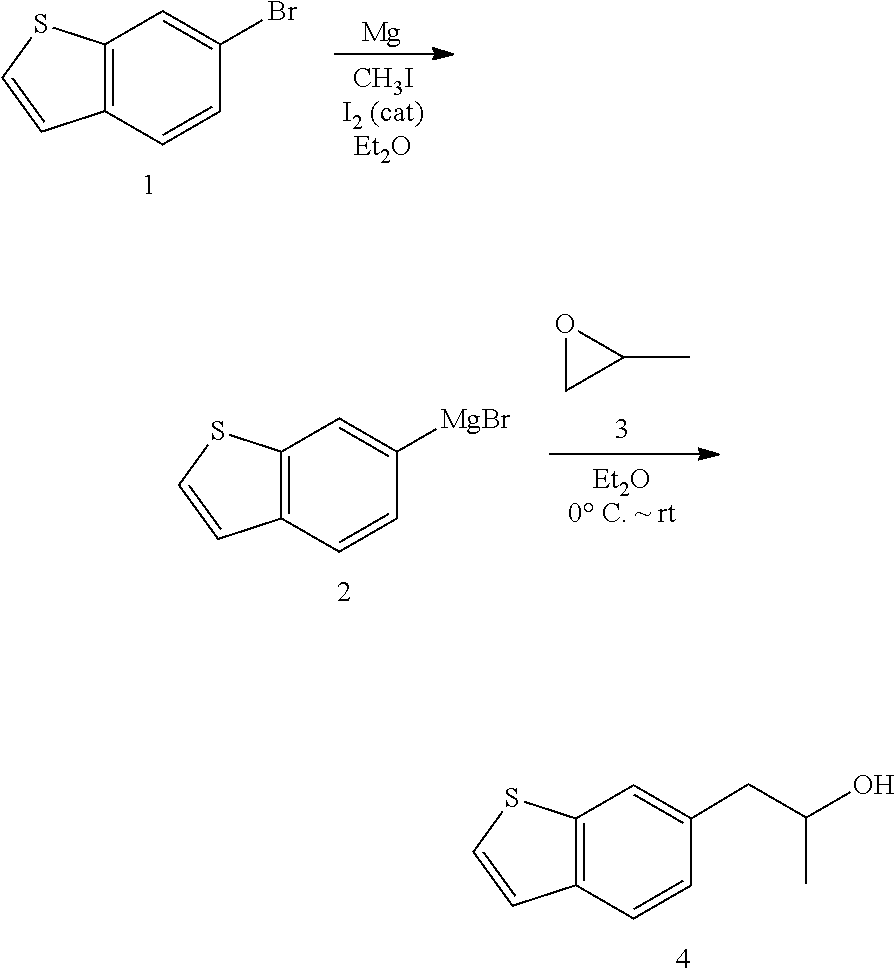


according to the following scheme:


according to the following scheme:


Claims (6)


Priority Applications (2)
| Application Number | Priority Date | Filing Date | Title |
|---|---|---|---|
| US18/209,334 US11896577B2 (en) | 2021-07-14 | 2023-06-13 | Short-acting psychoactive compounds of the MDMA class |
| US18/405,189 US20240197679A1 (en) | 2021-07-14 | 2024-01-05 | Novel short-acting psychoactive compounds of the mdma class |
Applications Claiming Priority (4)
| Application Number | Priority Date | Filing Date | Title |
|---|---|---|---|
| US202163221597P | 2021-07-14 | 2021-07-14 | |
| US202263322806P | 2022-03-23 | 2022-03-23 | |
| PCT/US2022/037193 WO2023288013A2 (en) | 2021-07-14 | 2022-07-14 | Novel short-acting psychoactive compounds of the mdma class |
| US18/209,334 US11896577B2 (en) | 2021-07-14 | 2023-06-13 | Short-acting psychoactive compounds of the MDMA class |
Related Parent Applications (1)
| Application Number | Title | Priority Date | Filing Date |
|---|---|---|---|
| PCT/US2022/037193 Continuation-In-Part WO2023288013A2 (en) | 2021-07-14 | 2022-07-14 | Novel short-acting psychoactive compounds of the mdma class |
Related Child Applications (1)
| Application Number | Title | Priority Date | Filing Date |
|---|---|---|---|
| US18/405,189 Continuation US20240197679A1 (en) | 2021-07-14 | 2024-01-05 | Novel short-acting psychoactive compounds of the mdma class |
Publications (2)
| Publication Number | Publication Date |
|---|---|
| US20230321034A1 US20230321034A1 (en) | 2023-10-12 |
| US11896577B2 true US11896577B2 (en) | 2024-02-13 |
Family
ID=84920516
Family Applications (2)
| Application Number | Title | Priority Date | Filing Date |
|---|---|---|---|
| US18/209,334 Active US11896577B2 (en) | 2021-07-14 | 2023-06-13 | Short-acting psychoactive compounds of the MDMA class |
| US18/405,189 Pending US20240197679A1 (en) | 2021-07-14 | 2024-01-05 | Novel short-acting psychoactive compounds of the mdma class |
Family Applications After (1)
| Application Number | Title | Priority Date | Filing Date |
|---|---|---|---|
| US18/405,189 Pending US20240197679A1 (en) | 2021-07-14 | 2024-01-05 | Novel short-acting psychoactive compounds of the mdma class |
Country Status (5)
| Country | Link |
|---|---|
| US (2) | US11896577B2 (en) |
| EP (1) | EP4370114A4 (en) |
| AU (1) | AU2022311812A1 (en) |
| CA (1) | CA3209813A1 (en) |
| WO (1) | WO2023288013A2 (en) |
Families Citing this family (2)
| Publication number | Priority date | Publication date | Assignee | Title |
|---|---|---|---|---|
| KR20230053611A (en) | 2020-08-18 | 2023-04-21 | 사이빈 아이알엘 리미티드 | Phenethylamine derivatives, compositions, and methods of use |
| EP4587423A1 (en) * | 2022-09-12 | 2025-07-23 | MiHKAL GmbH | Novel nootropic prodrugs of phenethylamine |
Citations (2)
| Publication number | Priority date | Publication date | Assignee | Title |
|---|---|---|---|---|
| US9649297B2 (en) | 2007-02-07 | 2017-05-16 | Gosforth Centre (Holdings) Pty Ltd. | Treatment of ADHD |
| WO2022010937A1 (en) * | 2020-07-06 | 2022-01-13 | Tactogen Inc | Advantageous benzothiophene compositions for mental disorders or enhancement |
Family Cites Families (4)
| Publication number | Priority date | Publication date | Assignee | Title |
|---|---|---|---|---|
| WO2021252538A2 (en) * | 2020-06-08 | 2021-12-16 | Tactogen Inc | Advantageous benzofuran compositions for mental disorders or enhancement |
| US20240277664A1 (en) * | 2021-05-28 | 2024-08-22 | Adamo Bioscience, Inc. | Compositions and methods for treatment of sexual dysfunction and related diseases, disorders, and conditions |
| AU2023222126A1 (en) * | 2022-02-15 | 2024-08-08 | Cybin Irl Limited | Phenethylamine derivatives, compositions, and methods of use |
| EP4486733A2 (en) * | 2022-02-28 | 2025-01-08 | Mydecine Innovations Group Inc. | Novel prodrug compounds of 3,4-methylenedioxymethamphetamine (mdma) and methods of synthesizing the same |
-
2022
- 2022-07-14 EP EP22842893.4A patent/EP4370114A4/en active Pending
- 2022-07-14 WO PCT/US2022/037193 patent/WO2023288013A2/en not_active Ceased
- 2022-07-14 CA CA3209813A patent/CA3209813A1/en active Pending
- 2022-07-14 AU AU2022311812A patent/AU2022311812A1/en active Pending
-
2023
- 2023-06-13 US US18/209,334 patent/US11896577B2/en active Active
-
2024
- 2024-01-05 US US18/405,189 patent/US20240197679A1/en active Pending
Patent Citations (2)
| Publication number | Priority date | Publication date | Assignee | Title |
|---|---|---|---|---|
| US9649297B2 (en) | 2007-02-07 | 2017-05-16 | Gosforth Centre (Holdings) Pty Ltd. | Treatment of ADHD |
| WO2022010937A1 (en) * | 2020-07-06 | 2022-01-13 | Tactogen Inc | Advantageous benzothiophene compositions for mental disorders or enhancement |
Non-Patent Citations (9)
| Title |
|---|
| Garcia-Garcia et al., 5-HT(1A) receptors in mood and anxiety: recent insights into autoreceptor versus heteroreceptor function. Psychopharmacology (Berl). Feb. 2014;231(4):623-36. |
| Gyllvik,‘The Therapeutic Potential of Psilocybin and 3,4-Methylenedioxymethamphetamine in the Treatment of Depression and Post-Traumatic Stress Di_sorder’, Bachelor Degree Project in Cognitive Neuroscience, University of Skovde, 2020, pp. 1-37; p. 8, para 2; Figure 1; p. 9, para 4 to p. 10, par? 3; p. 16, para 4 to p. 18, para 2; Table 3; p. 25, para 3. |
| International Search Report and Written Opinion dated Dec. 19, 2022, 12 pages. |
| Kirsten C. et al., Serotonin (1A) receptor involvement in acute 3,4-methylenedioxymethamphetamine (MDMA) facilitation of social interaction in the rat. Progress in Neuro-Psychopharmacology and Biological Psychiatry, vol. 29, Issue 5, 2005, pp. 648-657. |
| Mithoefer et al. (JournalofPsychopharmacology. 25(4): 439-452, 2010). * |
| Pubchem-SID:3.10504045 Deposit Date: Feb. 15, 2016 (Feb. 15, 2016) pp. 1-5; p. 2. |
| Pubchem-SID:395983706 Deposit Date: Dec. 6, 2019 (Dec. 6, 2019) pp. 1-5; p. 2. |
| Pubchem-SID:397275444 Deposit Date: Dec. 6, 2019 (Dec. 6, 2019) pp. 1-5; p. 2. |
| Wikipedia "Bioisostere" (https://en.wikipedia.org/wiki/Bioisostere-available online as of Sep. 27, 2015). * |
Also Published As
| Publication number | Publication date |
|---|---|
| WO2023288013A3 (en) | 2023-02-23 |
| EP4370114A4 (en) | 2025-12-24 |
| CA3209813A1 (en) | 2023-01-19 |
| WO2023288013A2 (en) | 2023-01-19 |
| US20240197679A1 (en) | 2024-06-20 |
| US20230321034A1 (en) | 2023-10-12 |
| EP4370114A2 (en) | 2024-05-22 |
| AU2022311812A1 (en) | 2023-08-24 |
Similar Documents
| Publication | Publication Date | Title |
|---|---|---|
| US20230271924A1 (en) | Novel Psilocin Analog Compositions And Methods of Synthesizing The Same | |
| US11896577B2 (en) | Short-acting psychoactive compounds of the MDMA class | |
| JP5833804B2 (en) | Substituted indole compounds having NOS inhibitory activity | |
| US6417218B1 (en) | Substituted imidazoles, their preparation and use | |
| CZ205994A3 (en) | Heterobicyclic compounds | |
| US20240092747A1 (en) | Short-acting 3,4-methylenedioxymethamphetamine (mdma) analogs incorporating benzothiazole | |
| WO1996025397A1 (en) | Indole derivatives with affinity for the cannabinoid receptor | |
| JP2010525024A (en) | Substituted 3- (4-hydroxyphenyl) -indoline-2-one compounds | |
| US6329366B1 (en) | Pharmaceutical compounds | |
| SK278705B6 (en) | 4 - [(2-BENZOTIAZOLYL) METHYLAMINO] -ALFA - [(3,4-DIFLUO | |
| CZ361292A3 (en) | Piperidylmethyl substituted derivatives of chroman | |
| WO2023219789A1 (en) | Novel psilocin prodrug compounds and methods of synthesizing the same | |
| US12064415B2 (en) | Psilocin prodrug compounds and methods of synthesizing the same | |
| JP4508531B2 (en) | Benzoxathiepine derivatives and their pharmaceutical use | |
| NZ314062A (en) | 4-[1-[2-(pyridin-2-ylaminopropyl)]-piperidin-4-yl]indole derivatives |
Legal Events
| Date | Code | Title | Description |
|---|---|---|---|
| FEPP | Fee payment procedure |
Free format text: ENTITY STATUS SET TO UNDISCOUNTED (ORIGINAL EVENT CODE: BIG.); ENTITY STATUS OF PATENT OWNER: SMALL ENTITY |
|
| FEPP | Fee payment procedure |
Free format text: ENTITY STATUS SET TO SMALL (ORIGINAL EVENT CODE: SMAL); ENTITY STATUS OF PATENT OWNER: SMALL ENTITY |
|
| STPP | Information on status: patent application and granting procedure in general |
Free format text: NON FINAL ACTION MAILED |
|
| STPP | Information on status: patent application and granting procedure in general |
Free format text: RESPONSE TO NON-FINAL OFFICE ACTION ENTERED AND FORWARDED TO EXAMINER |
|
| STPP | Information on status: patent application and granting procedure in general |
Free format text: PUBLICATIONS -- ISSUE FEE PAYMENT RECEIVED |
|
| STPP | Information on status: patent application and granting procedure in general |
Free format text: PUBLICATIONS -- ISSUE FEE PAYMENT VERIFIED |
|
| STCF | Information on status: patent grant |
Free format text: PATENTED CASE |
|
| AS | Assignment |
Owner name: MYDECINE INNOVATIONS GROUP INC., COLORADO Free format text: ASSIGNMENT OF ASSIGNOR'S INTEREST;ASSIGNOR:HOYER, DENTON W.;REEL/FRAME:072753/0531 Effective date: 20251031 Owner name: MYDECINE INNOVATIONS GROUP INC., COLORADO Free format text: ASSIGNMENT OF ASSIGNORS INTEREST;ASSIGNOR:HOYER, DENTON W.;REEL/FRAME:072753/0531 Effective date: 20251031 |
|
| AS | Assignment |
Owner name: MYDECINE INNOVATIONS GROUP INC., COLORADO Free format text: ASSIGNMENT OF ASSIGNOR'S INTEREST;ASSIGNOR:ROSCOW, ROBERT;REEL/FRAME:072768/0429 Effective date: 20251103 Owner name: MYDECINE INNOVATIONS GROUP INC., COLORADO Free format text: ASSIGNMENT OF ASSIGNORS INTEREST;ASSIGNOR:ROSCOW, ROBERT;REEL/FRAME:072768/0429 Effective date: 20251103 |
|
| AS | Assignment |
Owner name: APOAPSIS HOLDINGS, LLC, COLORADO Free format text: ASSIGNMENT OF ASSIGNOR'S INTEREST;ASSIGNOR:MYDECINE INNOVATIONS GROUP INC.;REEL/FRAME:073018/0907 Effective date: 20251119 Owner name: APOAPSIS HOLDINGS, LLC, COLORADO Free format text: ASSIGNMENT OF ASSIGNORS INTEREST;ASSIGNOR:MYDECINE INNOVATIONS GROUP INC.;REEL/FRAME:073018/0907 Effective date: 20251119 |
|
| AS | Assignment |
Owner name: APPLIED PHARMACEUTICAL INNOVATION, CANADA Free format text: ASSIGNMENT OF ASSIGNOR'S INTEREST;ASSIGNOR:LING, RONG;REEL/FRAME:073207/0519 Effective date: 20251210 Owner name: APPLIED PHARMACEUTICAL INNOVATION, CANADA Free format text: ASSIGNMENT OF ASSIGNORS INTEREST;ASSIGNOR:LING, RONG;REEL/FRAME:073207/0519 Effective date: 20251210 |