US11875784B2 - Methods and systems for optimized selection of data features for a neuro-linguistic cognitive artificial intelligence system - Google Patents
Methods and systems for optimized selection of data features for a neuro-linguistic cognitive artificial intelligence system Download PDFInfo
- Publication number
- US11875784B2 US11875784B2 US17/107,383 US202017107383A US11875784B2 US 11875784 B2 US11875784 B2 US 11875784B2 US 202017107383 A US202017107383 A US 202017107383A US 11875784 B2 US11875784 B2 US 11875784B2
- Authority
- US
- United States
- Prior art keywords
- sensor
- input data
- vector
- processor
- feature
- Prior art date
- Legal status (The legal status is an assumption and is not a legal conclusion. Google has not performed a legal analysis and makes no representation as to the accuracy of the status listed.)
- Active, expires
Links
Images


Classifications
-
- G—PHYSICS
- G10—MUSICAL INSTRUMENTS; ACOUSTICS
- G10L—SPEECH ANALYSIS TECHNIQUES OR SPEECH SYNTHESIS; SPEECH RECOGNITION; SPEECH OR VOICE PROCESSING TECHNIQUES; SPEECH OR AUDIO CODING OR DECODING
- G10L15/00—Speech recognition
- G10L15/08—Speech classification or search
- G10L15/16—Speech classification or search using artificial neural networks
-
- G—PHYSICS
- G06—COMPUTING OR CALCULATING; COUNTING
- G06F—ELECTRIC DIGITAL DATA PROCESSING
- G06F40/00—Handling natural language data
- G06F40/20—Natural language analysis
- G06F40/237—Lexical tools
-
- G—PHYSICS
- G06—COMPUTING OR CALCULATING; COUNTING
- G06N—COMPUTING ARRANGEMENTS BASED ON SPECIFIC COMPUTATIONAL MODELS
- G06N20/00—Machine learning
-
- G—PHYSICS
- G06—COMPUTING OR CALCULATING; COUNTING
- G06N—COMPUTING ARRANGEMENTS BASED ON SPECIFIC COMPUTATIONAL MODELS
- G06N3/00—Computing arrangements based on biological models
- G06N3/02—Neural networks
- G06N3/04—Architecture, e.g. interconnection topology
- G06N3/042—Knowledge-based neural networks; Logical representations of neural networks
-
- G—PHYSICS
- G06—COMPUTING OR CALCULATING; COUNTING
- G06N—COMPUTING ARRANGEMENTS BASED ON SPECIFIC COMPUTATIONAL MODELS
- G06N3/00—Computing arrangements based on biological models
- G06N3/02—Neural networks
- G06N3/04—Architecture, e.g. interconnection topology
- G06N3/047—Probabilistic or stochastic networks
-
- G—PHYSICS
- G06—COMPUTING OR CALCULATING; COUNTING
- G06N—COMPUTING ARRANGEMENTS BASED ON SPECIFIC COMPUTATIONAL MODELS
- G06N3/00—Computing arrangements based on biological models
- G06N3/02—Neural networks
- G06N3/08—Learning methods
- G06N3/088—Non-supervised learning, e.g. competitive learning
-
- G—PHYSICS
- G06—COMPUTING OR CALCULATING; COUNTING
- G06V—IMAGE OR VIDEO RECOGNITION OR UNDERSTANDING
- G06V20/00—Scenes; Scene-specific elements
- G06V20/50—Context or environment of the image
- G06V20/52—Surveillance or monitoring of activities, e.g. for recognising suspicious objects
-
- G—PHYSICS
- G06—COMPUTING OR CALCULATING; COUNTING
- G06V—IMAGE OR VIDEO RECOGNITION OR UNDERSTANDING
- G06V40/00—Recognition of biometric, human-related or animal-related patterns in image or video data
- G06V40/20—Movements or behaviour, e.g. gesture recognition
-
- G—PHYSICS
- G10—MUSICAL INSTRUMENTS; ACOUSTICS
- G10L—SPEECH ANALYSIS TECHNIQUES OR SPEECH SYNTHESIS; SPEECH RECOGNITION; SPEECH OR VOICE PROCESSING TECHNIQUES; SPEECH OR AUDIO CODING OR DECODING
- G10L15/00—Speech recognition
- G10L15/08—Speech classification or search
- G10L15/18—Speech classification or search using natural language modelling
- G10L15/183—Speech classification or search using natural language modelling using context dependencies, e.g. language models
- G10L15/19—Grammatical context, e.g. disambiguation of the recognition hypotheses based on word sequence rules
- G10L15/197—Probabilistic grammars, e.g. word n-grams
Definitions
- Embodiments of the present disclosure generally relate to data analysis systems. More specifically, some embodiments presented herein provide techniques to optimize feature selection in lexical feature word generation when building feature dictionaries of feature word collections based on input data to be used in a neuro-linguistic cognitive Artificial Intelligence system.
- a rules-only-based approach is too rigid. That is, unless a given behavior conforms to a predefined rule, an occurrence of the behavior can go undetected by the monitoring system. Even if the monitoring system trains itself to identify the behavior, the monitoring system requires rules to be defined in advance for what to identify.
- One embodiment of the present disclosure relates to a computer-implemented method to optimize feature selection to generate an adaptive linguistic model.
- the method includes receiving a sample vector of input data from a sensor.
- the sample vector of input data can indicate a type of the sensor.
- the method additionally includes, via a processor, identifying the sensor based on the sample vector of input data, generating a plurality of feature symbols by organizing the sample vector of input data into probabilistic clusters, determining optimization parameters based on the sensor identified, generating a plurality of feature words based at least in part on at least one of combinations of the plurality of feature symbols or combinations of optimization parameters, and generating the adaptive linguistic model based at least in part on combinations of the plurality of feature words.
- the sample vector of input data is a first sample vector of input data.
- the method further includes, receiving a second sample vector of input data from the sensor, generating a plurality of feature words for the second sample vector of input data via the processor, and updating the adaptive linguistic model based at least in part on the plurality of feature words generated for the second sample vector of input data.
- determining the optimization parameters further includes tuning a plurality of parameters based on the type of the sensor.
- the adaptive linguistic model can be generated at least in part on the plurality of parameters.
- the tuning is based on at least one of a maximum length of each feature word in the plurality of feature words, a maturity threshold for each feature word in the plurality of feature words, a statistical significance of each feature word in the plurality of feature words, or a feature dictionary.
- the feature dictionary is generated from the plurality of feature words.
- the senor is at least one of an image sensor, a video sensor, an audio sensor, or a SCADA sensor.
- the optimization parameters can differ based on the type of the sensor.
- generating the adaptive linguistic model includes determining a tunable strategy to generate the plurality of feature words based on the type of the sensor.
- inventions include, without limitation, a non-transitory computer-readable medium that includes instructions that enable a processing unit to implement one or more aspects of the disclosed methods as well as a system having a processor, memory, and application programs configured to implement one or more aspects of the disclosed methods.
- FIG. 1 illustrates an example computing environment, according to one embodiment.
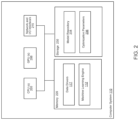
- FIG. 2 illustrates an example computing system configured to optimize feature selection in generating a feature dictionary beta collections for neuro-linguistic analysis, according to one embodiment.
- the cognitive Artificial Intelligence (AI) system may be configured with one or more data collector components that collect raw data values from different data sources (e.g., video data, building management data, SCADA data).
- a cognitive AI system may be configured for video surveillance.
- the cognitive AI system may include a data collector component that retrieves video frames in real-time, separates foreground objects from background objects, and tracks foreground objects from frame-to-frame.
- the data collector component may normalize objects identified in the video frame data into numerical values (e.g., falling within a range from 0 to 1 with respect to a given data type) and send samples corresponding to objects found in the video frame data to the neuro-linguistic module.
- the cognitive AI system includes a neuro-linguistic module that performs neural network-based linguistic analysis on the collected data. Specifically, for each type of data monitored by a sensor, the neuro-linguistic module creates and refines a linguistic model of the normalized data. That is, the neuro-linguistic module builds a feature syntax used to describe the normalized data.
- the linguistic model includes symbols that serve as building blocks for the feature syntax. Core symbols associated with base features in the data are called alphas. Collections of one or more alphas are called betas or feature words. Collections of betas are called gammas or feature syntax.
- the neuro-linguistic module identifies feature words (betas) to build a feature dictionary.
- the neuro-linguistic module identifies gammas that include various combinations of betas in the feature dictionary.
- the cognitive AI system uses such a linguistic model to describe what is being observed.
- the linguistic model allows the cognitive AI system to distinguish between normal and abnormal activity observed in the input data. As a result, the cognitive AI system can issue special event notifications whenever an abnormal activity occurs.
- the neuro-linguistic module receives normalized data values and organizes the data into probabilistic clusters.
- the neuro-linguistic module evaluates statistics of each cluster and identifies statistically relevant probabilistic clusters. Further, the neuro-linguistic module generates base symbols, e.g., alphas, corresponding to each statistically relevant probabilistic cluster.
- base symbols e.g., alphas
- the neuro-linguistic module generates a lexicon, i.e., builds a feature dictionary, of observed combinations of feature symbols, (i.e., feature words/betas) based on a statistical distribution of feature symbols identified in the input data. That is, the neuro-linguistic model generates feature words based on statistical distribution of feature symbols.
- a feature word is a collection of feature symbols.
- a beta is a collection of alphas.
- the neuro-linguistic module may identify patterns of feature symbols associated with the input data at different frequencies of occurrence. Further, the neuro-linguistic module can identify statistically relevant combinations of feature symbols at varying lengths (e.g., from one-symbol to collections of multiple symbol feature word length).
- the neuro-linguistic module may include such statistically relevant combinations of feature symbols in a feature-words (beta) dictionary used to identify the generative model of feature words (feature-combination rule set) for the linguistic model.
- the feature-combination rule set is generated based on statistically relevant combinations of feature symbols.
- the neuro-linguistic module uses feature words (betas) generated by applying the feature dictionary (also referred to as “feature-combination rule set”) to generate gammas based on probabilistic relationships of each feature word/beta occurring in sequence relative to other feature words as additional data is observed. For example, the neuro-linguistic module may identify a relationship between a given three-alpha beta pattern that frequently appears in sequence with a given four-alpha beta pattern, and so on. The neuro-linguistic module determines a feature syntax based on the identified betas.
- the feature syntax allows the cognitive AI system to learn, identify, and recognize patterns of behavior without the aid or guidance of predefined activities. Unlike a rules-based surveillance system, which contains predefined patterns of what to identify or observe, the cognitive AI system learns patterns by generalizing input and building behavior memories of what is observed. Over time, the cognitive AI system uses these memories to distinguish between normal and anomalous behavior reflected in observed data.
- the neuro-linguistic module builds alphas, betas (nouns, adjectives, verbs, etc.), gammas, and estimates an “unusualness score” for each identified alpha, beta, and gamma.
- the unusualness score indicates how infrequently the alpha, beta, or gamma has occurred relative to past observations.
- the cognitive AI system may use the unusualness scores to both identify and measure how unusual a current syntax is relative to—a semantic memory of feature symbols (also referred to as “alphas”), a semantic memory of feature words (also referred to as “betas”) built from the symbols (i.e., a feature dictionary), and a semantic memory of feature syntax (also referred to as “gammas”) built from the betas—collectively the neuro-linguistic model.
- a semantic memory of feature symbols also referred to as “alphas”
- a semantic memory of feature words also referred to as “betas”
- gammas semantic memory of feature syntax
- a machine learning engine such as the cognitive AI system may work with a variety of sensors, such as SCADA sensors, video sensors, audio sensors, etc. Consequently, when generating betas for a given sensor, some approaches may be more advantageous than those used in other sensors.
- SCADA data values to be evaluated are generally more primitive (e.g., temperature, pressure values), and thus fewer feature symbols are required to describe those values in betas. That is, fewer alphas are required to generate betas.
- betas may be described by a two alpha pattern or a three alpha pattern.
- more symbols may be required to describe a network address.
- a generic approach in the neuro-linguistic module may be to identify shorter collections by default. Such an approach would be effective for a SCADA sensor, but inefficient for an information security sensor.
- the neuro-linguistic module may be configured to receive a sample vector of input data from one or more sensors.
- the neuro-linguistic model evaluates sample vectors for sensor information. That is, the neuro-linguistic model identifies the sensor that a given sample vector corresponds to.
- the sample vector is a vector of input data stream such that each component of the vector corresponds to a specific feature value measured by one or more sensors. For example, for a sample vector including 32 components, each component corresponds to a particular attribute such as temperature, pressure, flow, etc.
- the neuro-linguistic module selects optimization parameters tuned to that sensor for feature modeling and beta generation. That is, the parameters and the strategies for modeling the neuro-linguistic model may be tuned based on the sensor information.
- optimization parameters include beta generation strategies (e.g., statistical significance of beta), maturity thresholding, and maximal beta length for samples corresponding to that sensor.
- the neuro-linguistic module may apply different strategies for samples having different corresponding sensors. Once selected, the neuro-linguistic applies those parameters to the incoming sample vector.
- embodiments provide a flexible approach for adjusting beta generation and modeling strategies, in turn allowing for optimal performance of the neuro-linguistic module and thus, the Cognitive AI System.
- FIG. 1 illustrates an example computing environment, according to one embodiment.
- the computing environment includes one or more data sources 105 and a computing system 110 , each interconnected via a network 115 (e.g., the Internet).
- the computing system 110 further includes one or more data drivers 117 and a machine learning engine 112 .
- the data drivers 117 obtain data from the data sources 105 .
- Each of the data drivers 117 may handle different data, such as SCADA data, information security data, video data, audio data, etc. That is, one or more sensors (not shown) corresponding to a data source 105 may measure and/or detect raw signals from the data sources 105 to forward to the corresponding data driver 117 .
- the data driver 117 may be a software program (stored in or executed by hardware) including sensor-modules to process data from the sensors and forward the processed metadata to the machine learning engine 112 .
- the one or more sensors may be devices configured to measure and/or detect raw signals from data sources 105 .
- a data driver 117 including a video sensor module may retrieve information from a sensor that measures and/or detects raw signals from a data source 105 such as camera. The data driver 117 may then process the data and forward the processed metadata to the machine learning engine 112 for further analysis.
- the sensor module may be a composite type module that can handle data from different types of sensor data. That is, a data driver 117 including a composite type module may retrieve data from different sensors and/or devices such as video sensors (e.g., camera), SCADA, audio sensors, and/or the like. The data driver 117 may then process this data from the different sensors/devices and finally forward metadata representing the heterogeneous data to the machine learning engine 112 . Each data driver 117 generates a sample vector that includes feature values and a sensor type. The data driver 117 may then forward the sample vector to the machine learning engine 112 for further analysis.
- FIG. 2 further illustrates the computing system 110 , according to one embodiment.
- the computing system 110 includes one or more CPUs 205 , one or more GPUs 206 , network and I/O interfaces 215 , a memory 220 , and a storage 230 .
- the CPU 205 retrieves and executes programming instructions stored in the memory 220 as well as stores and retrieves application data residing in the storage 230 .
- the GPU 206 implements a Compute Unified Device Architecture (CUDA). Further, the GPU 206 is configured to provide general purpose processing using the parallel throughput architecture of the GPU 206 to more efficiently retrieve and execute programming instructions stored in the memory 220 and also to store and retrieve application data residing in the storage 230 .
- CUDA Compute Unified Device Architecture
- the parallel throughput architecture provides thousands of cores for processing the application and input data.
- the GPU 206 leverages the thousands of cores to perform read and write operations in a massively parallel fashion.
- Taking advantage of the parallel computing elements of the GPU 206 allows the computing system 110 to better process large amounts of incoming data (e.g., input from a video and/or audio source). As a result, the computing system 110 may scale with relatively less difficulty.
- the data drivers 117 provides one or more data collector components. Each of the collector components is associated with a particular input data source, e.g., a video source, a SCADA (supervisory control and data acquisition) source, an audio source, etc.
- the collector components retrieve (or receive, depending on the sensor) input data from each source at specified intervals (e.g., once a minute, once every thirty minutes, once every thirty seconds, etc.).
- the data drivers 117 control the communications between the data sources. Further, the data drivers 117 normalize input data and send the normalized data to a sensory memory residing in the memory 220 .
- the normalized data may be packaged as a sample vector, which includes information such as feature values, sensor type, sensor id, and a sample id.
- the sensory memory is a data store that transfers large volumes of data from the data drivers 117 to the machine learning engine 112 .
- the sensory memory stores the data as records. Each record may include an identifier, a timestamp, and a data payload. Further, the sensory memory aggregates incoming data in a time-sorted fashion. Storing incoming data from each of the data collector components in a single location where the data may be aggregated allows the machine learning engine 112 to process the data efficiently. Further, the computing system 110 may reference data stored in the sensory memory in generating special event notifications for anomalous activity.
- the sensory memory may be implemented via a virtual memory file system in the memory 220 .
- the machine learning engine 112 receives data output from data drivers 117 . Generally, components of the machine learning engine 112 generate a linguistic representation of the normalized vectors. As described further below, to do so, the machine learning engine 112 clusters normalized values having similar features and assigns a distinct feature symbol/alpha to each probabilistic cluster, The machine learning engine 140 may then identify recurring combinations of feature symbols in the data to generate betas. The machine learning engine 112 then similarly identifies recurring combinations of betas in the data to generate feature syntax/gammas.
- the machine learning engine provides a lexical analyzer that builds a feature dictionary that includes combinations of co-occurring feature symbols/alphas.
- the feature dictionary may be built from the feature symbols transmitted by a symbolic analysis component (SBAC) that identifies the feature symbols using clustering techniques.
- SBAC symbolic analysis component
- the lexical analyzer identifies repeating co-occurrences of feature symbols/alphas output from the symbolic analysis component and calculates frequencies of the co-occurrences throughout the feature symbol stream.
- the combinations of feature symbols may semantically represent a particular activity, event, etc.
- the lexical analyzer limits the length of feature words/betas in the feature dictionary to allow the lexical analyzer to identify a number of possible combinations without adversely affecting the performance of the computing system 110 .
- the lexical analyzer may use level-based learning models to analyze symbol combinations and learn betas. The lexical analyzer learns betas up through a maximum symbol combination length at incremental levels, i.e., where one-alpha betas are learned at a first level, two-alpha betas are learned at a second level (i.e., betas generated by a combination of two alphas), and so on. In practice, limiting a beta to a maximum of five or six symbols (i.e., learning at a maximum of five or six levels) has shown to be effective.
- the lexical analyzer is adaptive. That is, the lexical analyzer component 219 may learn and generate betas in the feature dictionary over time. The lexical analyzer may also reinforce or decay the statistical significance of betas in the feature dictionary as the lexical analyzer receives subsequent streams of feature symbols over time. Further, the lexical analyzer may determine an unusualness score for each beta based on how frequently the beta recurs in the data. The unusualness score may increase or decrease over time as the neuro-linguistic module processes additional data.
- the lexical analyzer may determine that the beta model has matured. Once a beta model has matured, the lexical analyzer may output observations of those feature words/betas in the model to a Syntax Analysis Component (SXAC) module in the machine learning engine 112 that generates feature syntax/gammas.
- SXAC Syntax Analysis Component
- the lexical analyzer limits betas sent to the SXAC to the most statistically significant betas.
- the most frequently observed betas may change as the observations of incoming alphas change in frequency (or as new alphas emerge by the clustering of input data by the symbolic analysis component.
- the linguistic model that is generated is adaptive.
- the lexical analyzer may apply various optimization parameters for a given input sample vector of data, based on the sensor type associated with the sample, e.g., whether the sample corresponds to SCADA data, information security data, video data, and the like.
- the lexical analyzer evaluates the sample for the sample type and selects a set of optimization parameters based on the type.
- the optimization parameters are tunable. Because optimal tunable parameters of a given sensor may differ from parameters of another sensor, a generic set of optimization strategies may be inefficient for the sensor.
- the lexical analyzer selects the optimization parameters based on the type of sensor and performs the rules according to the selected optimization parameters, e.g., using a specified beta generation strategy that is specific to the type of sensor (e.g., based on statistical significance of beta, the model of feature symbols, etc.), applying a maximal beta length based on the sensor type, etc. In this manner, the lexical analyzer generates feature words from feature symbols based on the optimization parameters.
- the lexical analyzer Once the lexical analyzer has built the feature dictionary (i.e., identifies betas that have reached a predefined statistical significance), the lexical analyzer sends occurrences of betas subsequently observed in the input stream to the SXAC.
- the SXAC builds a feature syntax of gammas from the betas output by the lexical analyzer component.
- lexical analyzer may build a useful feature dictionary of betas after receiving approximately 15,000 observations (i.e., input alphas from the symbolic analysis component).
- optical As used herein, the terms “optimal,” “optimized,” “optimizing,” used in specification and claims are intended to generally cover, for example, best possible solution, most favorable solution, and/or merely an improved solution. For example, in some instances it is possible that “optimizing/optimal” described herein may generate a solution that may not be the best possible solution or most favorable solution, but instead an improved solution (that may fall short of the best possible solution).
- methods described herein may optionally generate the best possible solution, the most favorable solution or an improved solution, depending on one or more aspects such as one or more input data, model parameters, updated parameters, variables associated with the input data, the type of input source devices, other characteristics associated with the input source devices, and/or type of constraints involved in performing “optimization.”
- the best possible solution may not necessarily be an improved solution and vice versa.
- aspects presented herein may be embodied as a system, method or computer program product. Accordingly, aspects of the present disclosure may take the form of an entirely hardware embodiment, an entirely software embodiment (including firmware, resident software, micro-code, etc.) implemented in hardware, or an embodiment combining software and hardware aspects that may all generally be referred to herein as a “circuit,” “module” or “system.” Furthermore, aspects of the present disclosure may take the form of a computer program product embodied in one or more computer readable medium(s) having computer readable program code embodied thereon.
- the computer readable medium may be a computer readable signal medium or a computer readable storage medium.
- a computer readable storage medium may be, for example, but not limited to, an electronic, magnetic, optical, electromagnetic, infrared, or semiconductor system, apparatus, or device, or any suitable combination of the foregoing.
- a computer readable storage medium include: an electrical connection having one or more wires, a portable computer diskette, a hard disk, a random access memory (RAM), a read-only memory (ROM), an erasable programmable read-only memory (EPROM or Flash memory), an optical fiber, a portable compact disc read-only memory (CD-ROM), an optical storage device, a magnetic storage device, or any suitable combination of the foregoing.
- a computer readable storage medium may be any tangible medium that can contain, or store a program for use by or in connection with an instruction execution system, apparatus or device.
- each block in the flowchart or block diagrams may represent a module, segment or portion of code, which comprises one or more executable instructions for implementing the specified logical function(s).
- the functions noted in the block may occur out of the order noted in the figures.
- Cloud computing generally refers to the provision of scalable computing resources as a service over a network. More formally, cloud computing may be defined as a computing capability that provides an abstraction between the computing resource and its underlying technical architecture (e.g., servers, storage, networks), enabling convenient, on-demand network access to a shared pool of configurable computing resources that can be rapidly provisioned and released with minimal management effort or service provider interaction.
- cloud computing allows a user to access virtual computing resources (e.g., storage, data, applications, and even complete virtualized computing systems) in “the cloud,” without regard for the underlying physical systems (or locations of those systems) used to provide the computing resources.
- a computing system may be embodied in any of a number of forms, such as a rack-mounted computer, a desktop computer, a laptop computer, or a tablet computer. Additionally, a computing system may be embedded in a device not generally regarded as a computer but with suitable processing capabilities, including a Personal Digital Assistant (PDA), a smart phone or any other suitable portable or fixed electronic device.
- PDA Personal Digital Assistant
- a computing system may have one or more input and output devices. These devices can be used, among other things, to present a user interface. Examples of output devices that can be used to provide a user interface include printers or display screens for visual presentation of output and speakers or other sound generating devices for audible presentation of output. Examples of input devices that can be used for a user interface include keyboards, and pointing devices, such as mice, touch pads, and digitizing tablets. As another example, a computing system may receive input information through speech recognition or in other audible format.
- Such computing systems may be interconnected by one or more networks in any suitable form, including a local area network or a wide area network, such as an enterprise network, and intelligent network (IN) or the Internet.
- networks may be based on any suitable technology and may operate according to any suitable protocol and may include wireless networks, wired networks or fiber optic networks.
- the various methods or processes outlined herein may be coded as software that is executable on one or more processors that employ any one of a variety of operating systems or platforms. Additionally, such software may be written using any of a number of suitable programming languages and/or programming or scripting tools, and also may be compiled as executable machine language code or intermediate code that is executed on a framework or virtual machine.
- various disclosed concepts may be embodied as one or more methods, of which an example has been provided.
- the acts performed as part of the method may be ordered in any suitable way. Accordingly, embodiments may be constructed in which acts are performed in an order different than illustrated, which may include performing some acts simultaneously, even though shown as sequential acts in illustrative embodiments.
- a reference to “A and/or B”, when used in conjunction with open-ended language such as “comprising” can refer, in one embodiment, to A only (optionally including elements other than B); in another embodiment, to B only (optionally including elements other than A); in yet another embodiment, to both A and B (optionally including other elements); etc.
- the phrase “at least one,” in reference to a list of one or more elements, should be understood to mean at least one element selected from any one or more of the elements in the list of elements, but not necessarily including at least one of each and every element specifically listed within the list of elements and not excluding any combinations of elements in the list of elements.
- This definition also allows that elements may optionally be present other than the elements specifically identified within the list of elements to which the phrase “at least one” refers, whether related or unrelated to those elements specifically identified.
- “at least one of A and B” can refer, in one embodiment, to at least one, optionally including more than one, A, with no B present (and optionally including elements other than B); in another embodiment, to at least one, optionally including more than one, B, with no A present (and optionally including elements other than A); in yet another embodiment, to at least one, optionally including more than one, A, and at least one, optionally including more than one, B (and optionally including other elements); etc.
Landscapes
- Engineering & Computer Science (AREA)
- Physics & Mathematics (AREA)
- Theoretical Computer Science (AREA)
- Artificial Intelligence (AREA)
- Health & Medical Sciences (AREA)
- General Physics & Mathematics (AREA)
- Computational Linguistics (AREA)
- General Engineering & Computer Science (AREA)
- General Health & Medical Sciences (AREA)
- Multimedia (AREA)
- Evolutionary Computation (AREA)
- Audiology, Speech & Language Pathology (AREA)
- Software Systems (AREA)
- Human Computer Interaction (AREA)
- Computing Systems (AREA)
- Data Mining & Analysis (AREA)
- Mathematical Physics (AREA)
- Acoustics & Sound (AREA)
- Computer Vision & Pattern Recognition (AREA)
- Probability & Statistics with Applications (AREA)
- Biophysics (AREA)
- Molecular Biology (AREA)
- Life Sciences & Earth Sciences (AREA)
- Biomedical Technology (AREA)
- Medical Informatics (AREA)
- Psychiatry (AREA)
- Social Psychology (AREA)
- Information Retrieval, Db Structures And Fs Structures Therefor (AREA)
Abstract
Description
Claims (23)
Priority Applications (2)
| Application Number | Priority Date | Filing Date | Title |
|---|---|---|---|
| US17/107,383 US11875784B2 (en) | 2016-04-06 | 2020-11-30 | Methods and systems for optimized selection of data features for a neuro-linguistic cognitive artificial intelligence system |
| US18/413,354 US20240153497A1 (en) | 2016-04-06 | 2024-01-16 | Methods and systems for optimized selection of data features for a neuro-linguistic cognitive artificial intelligence system |
Applications Claiming Priority (6)
| Application Number | Priority Date | Filing Date | Title |
|---|---|---|---|
| US201662318999P | 2016-04-06 | 2016-04-06 | |
| US201662319170P | 2016-04-06 | 2016-04-06 | |
| US15/481,298 US20170293606A1 (en) | 2016-04-06 | 2017-04-06 | Methods and systems for optimized selection of data features for a neuro-linguistic cognitive artifical intelligence system |
| PCT/US2017/026419 WO2017177048A1 (en) | 2016-04-06 | 2017-04-06 | Methods and systems using cognitive artifical intelligence to implement adaptive linguistic models to process data |
| US16/120,943 US10853661B2 (en) | 2016-04-06 | 2018-09-04 | Methods and systems for optimized selection of data features for a neuro-linguistic cognitive artificial intelligence system |
| US17/107,383 US11875784B2 (en) | 2016-04-06 | 2020-11-30 | Methods and systems for optimized selection of data features for a neuro-linguistic cognitive artificial intelligence system |
Related Parent Applications (1)
| Application Number | Title | Priority Date | Filing Date |
|---|---|---|---|
| US16/120,943 Continuation US10853661B2 (en) | 2016-04-06 | 2018-09-04 | Methods and systems for optimized selection of data features for a neuro-linguistic cognitive artificial intelligence system |
Related Child Applications (1)
| Application Number | Title | Priority Date | Filing Date |
|---|---|---|---|
| US18/413,354 Continuation US20240153497A1 (en) | 2016-04-06 | 2024-01-16 | Methods and systems for optimized selection of data features for a neuro-linguistic cognitive artificial intelligence system |
Publications (2)
| Publication Number | Publication Date |
|---|---|
| US20210165958A1 US20210165958A1 (en) | 2021-06-03 |
| US11875784B2 true US11875784B2 (en) | 2024-01-16 |
Family
ID=66658479
Family Applications (3)
| Application Number | Title | Priority Date | Filing Date |
|---|---|---|---|
| US16/120,943 Active US10853661B2 (en) | 2016-04-06 | 2018-09-04 | Methods and systems for optimized selection of data features for a neuro-linguistic cognitive artificial intelligence system |
| US17/107,383 Active 2037-06-29 US11875784B2 (en) | 2016-04-06 | 2020-11-30 | Methods and systems for optimized selection of data features for a neuro-linguistic cognitive artificial intelligence system |
| US18/413,354 Abandoned US20240153497A1 (en) | 2016-04-06 | 2024-01-16 | Methods and systems for optimized selection of data features for a neuro-linguistic cognitive artificial intelligence system |
Family Applications Before (1)
| Application Number | Title | Priority Date | Filing Date |
|---|---|---|---|
| US16/120,943 Active US10853661B2 (en) | 2016-04-06 | 2018-09-04 | Methods and systems for optimized selection of data features for a neuro-linguistic cognitive artificial intelligence system |
Family Applications After (1)
| Application Number | Title | Priority Date | Filing Date |
|---|---|---|---|
| US18/413,354 Abandoned US20240153497A1 (en) | 2016-04-06 | 2024-01-16 | Methods and systems for optimized selection of data features for a neuro-linguistic cognitive artificial intelligence system |
Country Status (1)
| Country | Link |
|---|---|
| US (3) | US10853661B2 (en) |
Families Citing this family (5)
| Publication number | Priority date | Publication date | Assignee | Title |
|---|---|---|---|---|
| US10853661B2 (en) | 2016-04-06 | 2020-12-01 | Intellective Ai, Inc. | Methods and systems for optimized selection of data features for a neuro-linguistic cognitive artificial intelligence system |
| BR112021010468A2 (en) * | 2018-12-31 | 2021-08-24 | Intel Corporation | Security Systems That Employ Artificial Intelligence |
| CN114255259B (en) * | 2020-09-23 | 2025-12-05 | 西门子(中国)有限公司 | Object tracking methods, apparatus and computer-readable media |
| US20220121942A1 (en) | 2020-10-20 | 2022-04-21 | Intellective Ai, Inc. | Method and system for cognitive information processing using representation learning and decision learning on data |
| WO2022172348A1 (en) * | 2021-02-10 | 2022-08-18 | 日本電信電話株式会社 | Scene inference method, scene inference device, and program |
Citations (15)
| Publication number | Priority date | Publication date | Assignee | Title |
|---|---|---|---|---|
| US20030113017A1 (en) | 2001-06-07 | 2003-06-19 | Corinne Thomas | Process for the automatic creation of a database of images accessible by semantic features |
| US20050240629A1 (en) | 1998-09-10 | 2005-10-27 | Microsoft Corporation | Tracking semantic objects in vector image sequences |
| US7864980B2 (en) | 2002-08-15 | 2011-01-04 | Roke Manor Research Limited | Video motion anomaly detector |
| US20110043536A1 (en) | 2009-08-18 | 2011-02-24 | Wesley Kenneth Cobb | Visualizing and updating sequences and segments in a video surveillance system |
| US8411935B2 (en) | 2007-07-11 | 2013-04-02 | Behavioral Recognition Systems, Inc. | Semantic representation module of a machine-learning engine in a video analysis system |
| US20140279764A1 (en) | 2011-05-13 | 2014-09-18 | Orions Digital Systems, Inc. | Generating event definitions based on spatial and relational relationships |
| US20150100943A1 (en) | 2013-10-09 | 2015-04-09 | Viv Labs, Inc. | Dynamically evolving cognitive architecture system based on contributions from third-party developers |
| US20150379430A1 (en) | 2014-06-30 | 2015-12-31 | Amazon Technologies, Inc. | Efficient duplicate detection for machine learning data sets |
| US20160078361A1 (en) | 2014-09-11 | 2016-03-17 | Amazon Technologies, Inc. | Optimized training of linear machine learning models |
| US9501915B1 (en) | 2014-07-07 | 2016-11-22 | Google Inc. | Systems and methods for analyzing a video stream |
| US20160364963A1 (en) | 2015-06-12 | 2016-12-15 | Google Inc. | Method and System for Detecting an Audio Event for Smart Home Devices |
| US20170083764A1 (en) | 2015-09-23 | 2017-03-23 | Behavioral Recognition Systems, Inc. | Detected object tracker for a video analytics system |
| US9710727B2 (en) | 2012-11-29 | 2017-07-18 | Conduent Business Services, Llc | Anomaly detection using a kernel-based sparse reconstruction model |
| US20170293609A1 (en) | 2016-04-06 | 2017-10-12 | Omni Ai, Inc. | Methods and systems using cognitive artifical intelligence to implement adaptive linguistic models to process data |
| US20190172449A1 (en) | 2016-04-06 | 2019-06-06 | Omai Ai, Inc. | Methods and systems for optimized selection of data features for a neuro-linguistic cognitive artifical intelligence system |
-
2018
- 2018-09-04 US US16/120,943 patent/US10853661B2/en active Active
-
2020
- 2020-11-30 US US17/107,383 patent/US11875784B2/en active Active
-
2024
- 2024-01-16 US US18/413,354 patent/US20240153497A1/en not_active Abandoned
Patent Citations (19)
| Publication number | Priority date | Publication date | Assignee | Title |
|---|---|---|---|---|
| US20050240629A1 (en) | 1998-09-10 | 2005-10-27 | Microsoft Corporation | Tracking semantic objects in vector image sequences |
| US20030113017A1 (en) | 2001-06-07 | 2003-06-19 | Corinne Thomas | Process for the automatic creation of a database of images accessible by semantic features |
| US7864980B2 (en) | 2002-08-15 | 2011-01-04 | Roke Manor Research Limited | Video motion anomaly detector |
| US8411935B2 (en) | 2007-07-11 | 2013-04-02 | Behavioral Recognition Systems, Inc. | Semantic representation module of a machine-learning engine in a video analysis system |
| US20110043536A1 (en) | 2009-08-18 | 2011-02-24 | Wesley Kenneth Cobb | Visualizing and updating sequences and segments in a video surveillance system |
| US20140279764A1 (en) | 2011-05-13 | 2014-09-18 | Orions Digital Systems, Inc. | Generating event definitions based on spatial and relational relationships |
| US9710727B2 (en) | 2012-11-29 | 2017-07-18 | Conduent Business Services, Llc | Anomaly detection using a kernel-based sparse reconstruction model |
| US20150100943A1 (en) | 2013-10-09 | 2015-04-09 | Viv Labs, Inc. | Dynamically evolving cognitive architecture system based on contributions from third-party developers |
| US20150379430A1 (en) | 2014-06-30 | 2015-12-31 | Amazon Technologies, Inc. | Efficient duplicate detection for machine learning data sets |
| US9501915B1 (en) | 2014-07-07 | 2016-11-22 | Google Inc. | Systems and methods for analyzing a video stream |
| US20160078361A1 (en) | 2014-09-11 | 2016-03-17 | Amazon Technologies, Inc. | Optimized training of linear machine learning models |
| US20160364963A1 (en) | 2015-06-12 | 2016-12-15 | Google Inc. | Method and System for Detecting an Audio Event for Smart Home Devices |
| US20170083764A1 (en) | 2015-09-23 | 2017-03-23 | Behavioral Recognition Systems, Inc. | Detected object tracker for a video analytics system |
| US20170293609A1 (en) | 2016-04-06 | 2017-10-12 | Omni Ai, Inc. | Methods and systems using cognitive artifical intelligence to implement adaptive linguistic models to process data |
| US20170293606A1 (en) | 2016-04-06 | 2017-10-12 | Gang Xu | Methods and systems for optimized selection of data features for a neuro-linguistic cognitive artifical intelligence system |
| WO2017177048A1 (en) | 2016-04-06 | 2017-10-12 | Omni Ai, Inc. | Methods and systems using cognitive artifical intelligence to implement adaptive linguistic models to process data |
| US20190172449A1 (en) | 2016-04-06 | 2019-06-06 | Omai Ai, Inc. | Methods and systems for optimized selection of data features for a neuro-linguistic cognitive artifical intelligence system |
| US10853661B2 (en) | 2016-04-06 | 2020-12-01 | Intellective Ai, Inc. | Methods and systems for optimized selection of data features for a neuro-linguistic cognitive artificial intelligence system |
| US20200410164A1 (en) | 2016-04-06 | 2020-12-31 | Intellective Ai, Inc. | Methods and systems using cognitive artifical intelligence to implement adaptive linguistic models to process data |
Non-Patent Citations (8)
| Title |
|---|
| Angelopoulou, A., "A Simulation-Based Task Analysis using Agent-Based, Discrete Event and System Dynamics Simulation," Stars, University of Central Florida, Electronic Theses and Dissertations, 2015, 96 pages. |
| Asghar, M. Z., et al., "A Review of Feature Extraction in Sentiment Analysis", Journal of Basic and Applied Scientific Research (2014); 4(3): 181-186. |
| Gautam, J. V., et al., "A survey on job scheduling algorithms in big data processing", 2015 IEEE International Conference on Electrical, Computer and Communication Technologies (ICECCT), IEEE (Mar. 2015); 11 pages. |
| International Preliminary Report on Patentability for International Application No. PCT/US2017/026419, dated Oct. 18, 2018, 8 pages. |
| International Search Report and Written Opinion for International Application No. PCT/US2017/026419, dated Jul. 10, 2017, 8 pages. |
| Kumar, A., et al., "Design and management of flexible process variants using templates and rules," Computers in Industry (2012); 63: 112-130. |
| Office Action for U.S. Appl. No. 15/481,298, dated Mar. 2, 2018, 14 pages. |
| Zheng, R., et al., "A Framework for Authorship Identification of Online Messages: Writing-Style Features and Classification Techniques", Journal of the American Society For Information Science and Technology (2006); 57(3): 378-393. |
Also Published As
| Publication number | Publication date |
|---|---|
| US10853661B2 (en) | 2020-12-01 |
| US20190172449A1 (en) | 2019-06-06 |
| US20240153497A1 (en) | 2024-05-09 |
| US20210165958A1 (en) | 2021-06-03 |
Similar Documents
| Publication | Publication Date | Title |
|---|---|---|
| US20170293606A1 (en) | Methods and systems for optimized selection of data features for a neuro-linguistic cognitive artifical intelligence system | |
| US11875784B2 (en) | Methods and systems for optimized selection of data features for a neuro-linguistic cognitive artificial intelligence system | |
| US20240275805A1 (en) | Cognitive neuro-linguistic behavior recognition system for multi-sensor data fusion | |
| US20240071037A1 (en) | Mapper component for a neuro-linguistic behavior recognition system | |
| US12032909B2 (en) | Perceptual associative memory for a neuro-linguistic behavior recognition system | |
| US20240070388A1 (en) | Lexical analyzer for a neuro-linguistic behavior recognition system | |
| US20230237306A1 (en) | Anomaly score adjustment across anomaly generators | |
| CN114756401B (en) | Abnormal node detection method, device, equipment and medium based on log | |
| US20260011149A1 (en) | Context-aware video retrieval and inference system | |
| CN115080745A (en) | Multi-scene text classification method, device, equipment and medium based on artificial intelligence |
Legal Events
| Date | Code | Title | Description |
|---|---|---|---|
| FEPP | Fee payment procedure |
Free format text: ENTITY STATUS SET TO UNDISCOUNTED (ORIGINAL EVENT CODE: BIG.); ENTITY STATUS OF PATENT OWNER: SMALL ENTITY |
|
| FEPP | Fee payment procedure |
Free format text: ENTITY STATUS SET TO SMALL (ORIGINAL EVENT CODE: SMAL); ENTITY STATUS OF PATENT OWNER: SMALL ENTITY |
|
| STPP | Information on status: patent application and granting procedure in general |
Free format text: APPLICATION DISPATCHED FROM PREEXAM, NOT YET DOCKETED |
|
| AS | Assignment |
Owner name: OMNI AI, INC., TEXAS Free format text: ASSIGNMENT OF ASSIGNORS INTEREST;ASSIGNORS:XU, GANG;YANG, TAO;SEOW, MING-JUNG;REEL/FRAME:055415/0331 Effective date: 20170524 Owner name: INTELLECTIVE AI, INC., TEXAS Free format text: ASSIGNMENT OF ASSIGNORS INTEREST;ASSIGNOR:OMNI AI, INC.;REEL/FRAME:056391/0476 Effective date: 20200124 |
|
| STPP | Information on status: patent application and granting procedure in general |
Free format text: DOCKETED NEW CASE - READY FOR EXAMINATION |
|
| STPP | Information on status: patent application and granting procedure in general |
Free format text: NON FINAL ACTION MAILED |
|
| STPP | Information on status: patent application and granting procedure in general |
Free format text: DOCKETED NEW CASE - READY FOR EXAMINATION |
|
| STPP | Information on status: patent application and granting procedure in general |
Free format text: NOTICE OF ALLOWANCE MAILED -- APPLICATION RECEIVED IN OFFICE OF PUBLICATIONS |
|
| STPP | Information on status: patent application and granting procedure in general |
Free format text: NOTICE OF ALLOWANCE MAILED -- APPLICATION RECEIVED IN OFFICE OF PUBLICATIONS |
|
| STPP | Information on status: patent application and granting procedure in general |
Free format text: PUBLICATIONS -- ISSUE FEE PAYMENT VERIFIED |
|
| STCF | Information on status: patent grant |
Free format text: PATENTED CASE |