US11826358B2 - Locally-induced adipose tissue browning by microneedle patch for obesity treatment - Google Patents
Locally-induced adipose tissue browning by microneedle patch for obesity treatment Download PDFInfo
- Publication number
- US11826358B2 US11826358B2 US16/646,615 US201816646615A US11826358B2 US 11826358 B2 US11826358 B2 US 11826358B2 US 201816646615 A US201816646615 A US 201816646615A US 11826358 B2 US11826358 B2 US 11826358B2
- Authority
- US
- United States
- Prior art keywords
- agent
- adipose tissue
- microneedles
- browning
- subject
- Prior art date
- Legal status (The legal status is an assumption and is not a legal conclusion. Google has not performed a legal analysis and makes no representation as to the accuracy of the status listed.)
- Active, expires
Links
Images




Classifications
-
- A—HUMAN NECESSITIES
- A61—MEDICAL OR VETERINARY SCIENCE; HYGIENE
- A61B—DIAGNOSIS; SURGERY; IDENTIFICATION
- A61B17/00—Surgical instruments, devices or methods
- A61B17/20—Surgical instruments, devices or methods for vaccinating or cleaning the skin previous to the vaccination
- A61B17/205—Vaccinating by means of needles or other puncturing devices
-
- A—HUMAN NECESSITIES
- A61—MEDICAL OR VETERINARY SCIENCE; HYGIENE
- A61K—PREPARATIONS FOR MEDICAL, DENTAL OR TOILETRY PURPOSES
- A61K31/00—Medicinal preparations containing organic active ingredients
- A61K31/33—Heterocyclic compounds
- A61K31/395—Heterocyclic compounds having nitrogen as a ring hetero atom, e.g. guanethidine or rifamycins
- A61K31/435—Heterocyclic compounds having nitrogen as a ring hetero atom, e.g. guanethidine or rifamycins having six-membered rings with one nitrogen as the only ring hetero atom
- A61K31/44—Non condensed pyridines; Hydrogenated derivatives thereof
- A61K31/4427—Non condensed pyridines; Hydrogenated derivatives thereof containing further heterocyclic ring systems
- A61K31/4439—Non condensed pyridines; Hydrogenated derivatives thereof containing further heterocyclic ring systems containing a five-membered ring with nitrogen as a ring hetero atom, e.g. omeprazole
-
- A—HUMAN NECESSITIES
- A61—MEDICAL OR VETERINARY SCIENCE; HYGIENE
- A61M—DEVICES FOR INTRODUCING MEDIA INTO, OR ONTO, THE BODY; DEVICES FOR TRANSDUCING BODY MEDIA OR FOR TAKING MEDIA FROM THE BODY; DEVICES FOR PRODUCING OR ENDING SLEEP OR STUPOR
- A61M37/00—Other apparatus for introducing media into the body; Percutany, i.e. introducing medicines into the body by diffusion through the skin
- A61M37/0015—Other apparatus for introducing media into the body; Percutany, i.e. introducing medicines into the body by diffusion through the skin by using microneedles
-
- A—HUMAN NECESSITIES
- A61—MEDICAL OR VETERINARY SCIENCE; HYGIENE
- A61K—PREPARATIONS FOR MEDICAL, DENTAL OR TOILETRY PURPOSES
- A61K9/00—Medicinal preparations characterised by special physical form
- A61K9/0012—Galenical forms characterised by the site of application
- A61K9/0019—Injectable compositions; Intramuscular, intravenous, arterial, subcutaneous administration; Compositions to be administered through the skin in an invasive manner
- A61K9/0021—Intradermal administration, e.g. through microneedle arrays or needleless injectors
-
- A—HUMAN NECESSITIES
- A61—MEDICAL OR VETERINARY SCIENCE; HYGIENE
- A61K—PREPARATIONS FOR MEDICAL, DENTAL OR TOILETRY PURPOSES
- A61K9/00—Medicinal preparations characterised by special physical form
- A61K9/48—Preparations in capsules, e.g. of gelatin, of chocolate
- A61K9/50—Microcapsules having a gas, liquid or semi-solid filling; Solid microparticles or pellets surrounded by a distinct coating layer, e.g. coated microspheres, coated drug crystals
- A61K9/51—Nanocapsules; Nanoparticles
- A61K9/5107—Excipients; Inactive ingredients
- A61K9/513—Organic macromolecular compounds; Dendrimers
- A61K9/5161—Polysaccharides, e.g. alginate, chitosan, cellulose derivatives; Cyclodextrin
-
- A—HUMAN NECESSITIES
- A61—MEDICAL OR VETERINARY SCIENCE; HYGIENE
- A61M—DEVICES FOR INTRODUCING MEDIA INTO, OR ONTO, THE BODY; DEVICES FOR TRANSDUCING BODY MEDIA OR FOR TAKING MEDIA FROM THE BODY; DEVICES FOR PRODUCING OR ENDING SLEEP OR STUPOR
- A61M37/00—Other apparatus for introducing media into the body; Percutany, i.e. introducing medicines into the body by diffusion through the skin
- A61M37/0015—Other apparatus for introducing media into the body; Percutany, i.e. introducing medicines into the body by diffusion through the skin by using microneedles
- A61M2037/0023—Drug applicators using microneedles
-
- A—HUMAN NECESSITIES
- A61—MEDICAL OR VETERINARY SCIENCE; HYGIENE
- A61M—DEVICES FOR INTRODUCING MEDIA INTO, OR ONTO, THE BODY; DEVICES FOR TRANSDUCING BODY MEDIA OR FOR TAKING MEDIA FROM THE BODY; DEVICES FOR PRODUCING OR ENDING SLEEP OR STUPOR
- A61M37/00—Other apparatus for introducing media into the body; Percutany, i.e. introducing medicines into the body by diffusion through the skin
- A61M37/0015—Other apparatus for introducing media into the body; Percutany, i.e. introducing medicines into the body by diffusion through the skin by using microneedles
- A61M2037/0046—Solid microneedles
-
- B—PERFORMING OPERATIONS; TRANSPORTING
- B82—NANOTECHNOLOGY
- B82Y—SPECIFIC USES OR APPLICATIONS OF NANOSTRUCTURES; MEASUREMENT OR ANALYSIS OF NANOSTRUCTURES; MANUFACTURE OR TREATMENT OF NANOSTRUCTURES
- B82Y5/00—Nanobiotechnology or nanomedicine, e.g. protein engineering or drug delivery
Definitions
- Obesity has been classified as a disease by the American Medical Association in 2013 and recognized as one of the most serious public health problems in the 21 st century along with the rapid global socioeconomic development.
- Obesity-associated disorders such as type-2 diabetes, cardiovascular diseases, and cancer, have become a global threat to human health. Particularly in the United States, more than one-third of the adult population are obese, and the prevalence is going to roar in the next decades.
- Current treatments for obesity include restriction of calorie intake by diet programs, promoting energy expenditure through physical exercise, pharmacological therapy, as well as bariatric surgeries and liposuction.
- most therapeutics come with undesired side effects on human organs such as gastrointestine, liver, and kidney, and surgeries involve high risks. Therefore, there is an urgent requirement to exploit effective treatments for obesity.
- the compositions and methods disclosed herein address these and other needs.
- particles comprising: an adipose tissue browning agent and/or fat modulating agent.
- the adipose tissue browning agent can comprise rosiglitazone (Rosi), CL 316243, or any combination thereof.
- the particles of any preceding aspect can further comprising a pH-altering agent (such as for example, an agent that reduces pH), a peroxide-metabolizing enzyme (such as, for example catalase), and/or a pH-responsive matrix.
- a pH-altering agent such as for example, an agent that reduces pH
- a peroxide-metabolizing enzyme such as, for example catalase
- a pH-responsive matrix can comprise a glucose responsive enzyme (such as, for example, glucose oxidase (GOx).
- GOx glucose oxidase
- the pH-responsive matrix is degradable in a relatively acidic pH compared to physiological pH.
- the pH responsive matrix can comprise a polymer such as a polymer of dextran monomers (for example a polymer of m-dextran monomers).
- particles of any preceding aspect further comprising a encapsulating material (such as, for example, a surfactant or other polymer) that encapsulates the pH responsive matrix.
- a encapsulating material such as, for example, a surfactant or other polymer
- the encapsulating material can comprise alginate, a polysaccharide (for example chitosan) and/or polymers comprising polyvinylpyrrolidine.
- devices for the transport of a material across a biological barrier of a subject comprising the nanoparticle of any preceding aspect.
- devices for transport of a material across a biological barrier of a subject comprising a plurality of microneedles each having a base end and a tip; a substrate to which the base ends of the microneedles are attached or integrated; and a plurality of particles comprising an adipose tissue browning agent and/or fat modulating agent.
- the plurality of microneedles comprises a biocompatible polymer (such as, for example, methacrylated hyaluronic acid (m-HA)).
- biocompatible polymer can be crosslinked.
- the plurality of microneedles have a center-to-center interval of about 200 ⁇ m to about 800 ⁇ m and/or wherein the plurality of microneedles have a height of about 600 nm to 1.8 ⁇ m.
- an adipose tissue browning agent and/or fat modulating agent also referred to herein as a fat modulator
- a device for transport of a material across a biological barrier of a subject comprising: a plurality of microneedles each having a base end and a tip; a substrate to which the base ends of the microneedles are attached or integrated; and a plurality of particles comprising an adipose tissue browning and/or fat modulating agent; and administering the device to a subject in need of an adipose tissue browning and/or fat modulating agent.
- the delivery of the browning agent to white adipose tissue can convert at least a portion of the subdermal white adipose tissue to brown adipose tissue.
- delivery of the fat modulating agent can induce apoptosis, lipid uptake, lipolysis, or kill fat cells.
- adipose tissue browning agent and/or fat modulating agent of any preceding aspect wherein the device is administered to a location of the subject's body, the location comprising subdermal white adipose tissue. Also disclosed are methods of locally delivering an adipose tissue browning agent and/or fat modulating agent of any preceding aspect and/or fat modulating agent, wherein the administering step b) comprises inserting the plurality of microneedles into a biological barrier.
- disclosed herein are methods of locally delivering an adipose tissue browning agent and/or fat modulating agent of any preceding aspect, wherein the plurality of particles further comprises a pH altering agent and a pH-responsive matrix.
- the pH altering agent can decrease the pH within the nanoparticles, and wherein the decrease in pH degrades the pH-responsive matrix and releases the adipose tissue browning agent and/or fat modulating agent.
- disclosed herein are methods of locally delivering an adipose tissue browning agent and/or fat modulating agent of any preceding aspect wherein the device releases the adipose tissue browning agent and/or fat modulating agent in hyperglycemic conditions.
- the methods of treating a disease can reduce the subject's subdermal white adipose tissue.
- the administering step b) comprises inserting the plurality of microneedles into a biological barrier.
- the plurality of particles further comprises a pH altering agent and a pH-responsive matrix.
- the pH altering agent decreases the pH within the nanoparticles, and wherein the decrease in pH degrades the pH-responsive matrix and releases the adipose tissue browning agent and/or fat modulating agent.
- brown adipocyte genes such as, for example Ucp1, Dio1, Elovl3, Cidea, Pgc-1 ⁇ , Cox7a1, or Cox8b
- methods of treating of any preceding aspect wherein the method decreases expression of one or more white adipocyte genes. Also disclosed herein are methods of treating of any preceding aspect, wherein the method increases energy expenditure and fatty acid oxidation of the subject, increases insulin sensitivity and/or avoids significant skin lesions.
- FIG. 1 shows a schematic depicting a browning agents-loaded transcutaneous MN patch.
- Nanoparticles (NPs) encapsulating rosiglitazone (Rosi), glucose oxidase (GOx), and catalase (CAT) are prepared from pH-sensitive acetal-modified dextran and coated with alginate.
- NPs are further loaded into the microneedle-array patch made of crosslinked hyaluronic acid (HA) matrix for brown-remodeling of white fat.
- HA hyaluronic acid
- FIGS. 2 A- 2 K show a set of graphs and micrographs depicting fabrication and characterization of browning agent microneedles.
- FIG. 2 A shows the average hydrodynamic sizes of Rosi NPs determined by DLS.
- FIG. 2 E shows SEM images of Rosi NPs incubated in PBS buffer with 100 mg/dL glucose at 37° C. on day 0 and day 4 (scale bar: 2 ⁇ m), inserted pictures show the transparency change of the NPs suspension.
- FIG. 2 H shows SEM image of the MN array (scale bar: 200 ⁇ m).
- FIG. 2 I shows higher magnification of SEM imaging of MN tip confirmed that the MN was loaded with NPs (scale bar: 10 ⁇ m).
- FIG. 2 J shows SEM image of MNs 3 days post administration.
- FIG. 2 K shows trypan blue staining image of mouse skin administered with MN patch (scale bar: 1 mm). Error bars indicate standard deviation (SD), two-tailed Student's t-test, *P ⁇ 0.05, **P ⁇ 0.01.
- FIGS. 3 A and 3 B show a set of micrographs and bar charts depicting in vivo browning induction by MN patches in the lean mice.
- FIG. 3 A shows hematoxylin and eosin (H&E)-stained section of the cross-sectional mouse inguinal adipose tissue treated with HA empty MN patch (left), Rosi NP-loaded MN patch (middle), and CL 316243 NP-loaded MN patch (right) (scale bar: 25 ⁇ m).
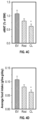
- FIGS. 4 A- 4 G show a set of bar charts and line graphs depicting indirect calorimetric analysis of healthy mice treated with HA empty MN patch (EV), Rosi NP-loaded MN patch (Rosi), or CL 316243 NP-loaded MN patch (CL).
- FIG. 4 A shows the body weight change after the 6-day treatment.
- FIG. 4 B shows normalized inguinal fat pad size.
- FIG. 4 C shows normalized epididymal fat pad size.
- FIG. 4 D shows the average food intake during the treatment.
- FIG. 4 E shows the locomotor activity during one 24-h dark/light cycle.
- the panel on the right is the area under curve (AUC).
- FIG. 4 F shows oxygen consumption and AUC.
- FIGS. 5 A- 5 J show set of photographs, line graphs, micrographs, and bar charts depicting in vivo anti-obesity and anti-diabetic effects of MN patches in an HFD-induced obese mouse model.
- FIG. 5 A shows a picture illustrating mice treated with browning agent patch on one inguinal side (red) and empty vehicle patch on the other side (blue).
- FIG. 5 B shows normalized body weight of mice without treatment or treated with browning agent patches.
- FIG. 5 C shows an IPGTT test in mice 2 weeks post-treatment.
- FIG. 5 D shows blood glucose levels of mice treated with browning agent patches or empty patches after 16 h fasting.
- FIG. 5 E shows normalized epididymal fat pad size in mice with different treatments.
- FIG. 5 A shows a picture illustrating mice treated with browning agent patch on one inguinal side (red) and empty vehicle patch on the other side (blue).
- FIG. 5 B shows normalized body weight of mice without treatment or treated with browning agent patches
- FIG. 5 F shows normalized weight of interscapular fat pad size in mice with different treatments.
- FIG. 5 G shows the ratio of the treated inguinal fat pad size to untreated side.
- FIG. 5 H shows photos of two sides of inguinal adipose tissues from obese mice 4-weeks post treatment.
- FIG. 5 I shows H&E staining of inguinal adipose tissues (scale bar: 50 ⁇ m).
- FIG. 5 J shows Q-PCR analysis of adipocyte gene expressions in inguinal tissues.
- FIG. 6 shows a schematic depicting the synthesis and dissociation routes of m-dextran.
- FIG. 7 shows a graph depicting the mechanical behavior of one NP-loaded MN.
- FIG. 8 shows a fluorescence microscopy image of inguinal adipose tissue section after treatment of fluorescein isothiocyanate (FITC)-encapsulated NP through the microneedle patch (scale bar: 200 ⁇ m).
- FITC fluorescein isothiocyanate
- FIG. 9 shows an image of in vivo fluorescence of a mouse treated with Cy5.5-labelled NPs-loaded MNs at different time points. Cy5.5-labelled non-degradable NPs without glucose specific enzyme (GOx) were loaded into crosslinked HA MNs.
- GOx glucose specific enzyme
- FIG. 10 shows an image of in vivo fluorescence of MN-treated mice at different time points.
- the fluorescent signal showed the MN patch loaded with free Cy5.5 (upper panel) or Cy5.5-entrapped NPs (lower panel).
- FIG. 11 shows a micrograph of H&E-stained skin sections administered empty, Rosi NP-loaded, and CL 316243 NP-loaded MNs (from left to right) with surrounding tissues after one month of treatment (scale bar: 100 ⁇ m).
- novel controlled-release nanoparticle compositions that provide physiologically relevant levels of therapeutic, prophylactic, locally to the site of administration.
- an agent includes a plurality of agents, including mixtures thereof.
- the terms “may,” “optionally,” and “may optionally” are used interchangeably and are meant to include cases in which the condition occurs as well as cases in which the condition does not occur.
- the statement that a formulation “may include an excipient” is meant to include cases in which the formulation includes an excipient as well as cases in which the formulation does not include an excipient.
- the terms “about” and “approximately” are defined as being “close to” as understood by one of ordinary skill in the art. In one non-limiting embodiment, the terms are defined to be within 10% of the associated value provided. In another non-limiting embodiment, the terms are defined to be within 5%. In still another non-limiting embodiment, the terms are defined to be within 1%.
- administering to a subject includes any route of introducing or delivering to a subject an agent. Administration can be carried out by any suitable route, including oral, topical, intravenous, subcutaneous, transcutaneous, transdermal, intramuscular, intra-joint, parenteral, intra-arteriole, intradermal, intraventricular, intracranial, intraperitoneal, intralesional, intranasal, rectal, vaginal, by inhalation, via an implanted reservoir, parenteral (e.g., subcutaneous, intravenous, intramuscular, intra-articular, intra-synovial, intrasternal, intrathecal, intraperitoneal, intrahepatic, intralesional, and intracranial injections or infusion techniques), and the like.
- parenteral e.g., subcutaneous, intravenous, intramuscular, intra-articular, intra-synovial, intrasternal, intrathecal, intraperitoneal, intrahepatic, intralesional, and intracranial injections or infusion techniques
- Constant administration means that the compounds are administered at the same point in time or essentially immediately following one another. In the latter case, the two compounds are administered at times sufficiently close that the results observed are indistinguishable from those achieved when the compounds are administered at the same point in time.
- Systemic administration refers to the introducing or delivering to a subject an agent via a route which introduces or delivers the agent to extensive areas of the subject's body (e.g. greater than 50% of the body), for example through entrance into the circulatory or lymph systems.
- local administration refers to the introducing or delivery to a subject an agent via a route which introduces or delivers the agent to the area or area immediately adjacent to the point of administration and does not introduce the agent systemically in a therapeutically significant amount.
- locally administered agents are easily detectable in the local vicinity of the point of administration, but are undetectable or detectable at negligible amounts in distal parts of the subject's body.
- Administration includes self-administration and the administration by another.
- Biocompatible generally refers to a material and any metabolites or degradation products thereof that are generally non-toxic to the recipient and do not cause significant adverse effects to the subject.
- compositions, methods, etc. include the recited elements, but do not exclude others.
- Consisting essentially of when used to define compositions and methods, shall mean including the recited elements, but excluding other elements of any essential significance to the combination. Thus, a composition consisting essentially of the elements as defined herein would not exclude trace contaminants from the isolation and purification method and pharmaceutically acceptable carriers, such as phosphate buffered saline, preservatives, and the like.
- Consisting of shall mean excluding more than trace elements of other ingredients and substantial method steps for administering the compositions of this invention. Embodiments defined by each of these transition terms are within the scope of this invention.
- module means to effectuate a change (either an increase or a decrease) in the amount of gene expression, protein expression, amount of a symptom, disease, composition, condition, or activity.
- An “increase” can refer to any change that results in a greater gene expression, protein expression, amount of a symptom, disease, composition, condition or activity.
- An increase can be any individual, median, or average increase in a condition, symptom, activity, composition in a statistically significant amount.
- the increase can be a 1, 2, 3, 4, 5, 6, 7, 8, 9, 10, 15, 20, 25, 30, 35, 40, 45, 50, 55, 60, 65, 70, 75, 80, 85, 90, 95, or 100% increase so long as the increase is statistically significant.
- a “decrease” can refer to any change that results in a smaller gene expression, protein expression, amount of a symptom, disease, composition, condition, or activity.
- a substance is also understood to decrease the genetic output of a gene when the genetic output of the gene product with the substance is less relative to the output of the gene product without the substance.
- a decrease can be a change in the symptoms of a disorder such that the symptoms are less than previously observed.
- a decrease can be any individual, median, or average decrease in a condition, symptom, activity, composition in a statistically significant amount.
- the decrease can be a 1, 2, 3, 4, 5, 6, 7, 8, 9, 10, 15, 20, 25, 30, 35, 40, 45, 50, 55, 60, 65, 70, 75, 80, 85, 90, 95, or 100% decrease so long as the decrease is statistically significant.
- control is an alternative subject or sample used in an experiment for comparison purposes.
- a control can be “positive” or “negative.”
- Controlled release or “sustained release” refers to release of an agent from a given dosage form in a controlled fashion in order to achieve the desired pharmacokinetic profile in vivo.
- An aspect of “controlled release” agent delivery is the ability to manipulate the formulation and/or dosage form in order to establish the desired kinetics of agent release.
- Effective amount of an agent refers to a sufficient amount of an agent to provide a desired effect.
- the amount of agent that is “effective” will vary from subject to subject, depending on many factors such as the age and general condition of the subject, the particular agent or agents, and the like. Thus, it is not always possible to specify a quantified “effective amount.” However, an appropriate “effective amount” in any subject case may be determined by one of ordinary skill in the art using routine experimentation. Also, as used herein, and unless specifically stated otherwise, an “effective amount” of an agent can also refer to an amount covering both therapeutically effective amounts and prophylactically effective amounts. An “effective amount” of an agent necessary to achieve a therapeutic effect may vary according to factors such as the age, sex, and weight of the subject. Dosage regimens can be adjusted to provide the optimum therapeutic response. For example, several divided doses may be administered daily or the dose may be proportionally reduced as indicated by the exigencies of the therapeutic situation.
- Protein “Peptide,” “protein,” and “polypeptide” are used interchangeably to refer to a natural or synthetic molecule comprising two or more amino acids linked by the carboxyl group of one amino acid to the alpha amino group of another.
- “Pharmaceutically acceptable” component can refer to a component that is not biologically or otherwise undesirable, i.e., the component may be incorporated into a pharmaceutical formulation of the invention and administered to a subject as described herein without causing significant undesirable biological effects or interacting in a deleterious manner with any of the other components of the formulation in which it is contained.
- the term When used in reference to administration to a human, the term generally implies the component has met the required standards of toxicological and manufacturing testing or that it is included on the Inactive Ingredient Guide prepared by the U.S. Food and Drug Administration.
- “Pharmaceutically acceptable carrier” (sometimes referred to as a “carrier”) means a carrier or excipient that is useful in preparing a pharmaceutical or therapeutic composition that is generally safe and non-toxic, and includes a carrier that is acceptable for veterinary and/or human pharmaceutical or therapeutic use.
- carrier or “pharmaceutically acceptable carrier” can include, but are not limited to, phosphate buffered saline solution, water, emulsions (such as an oil/water or water/oil emulsion) and/or various types of wetting agents.
- carrier encompasses, but is not limited to, any excipient, diluent, filler, salt, buffer, stabilizer, solubilizer, lipid, stabilizer, or other material well known in the art for use in pharmaceutical formulations and as described further herein.
- “Pharmacologically active” (or simply “active”), as in a “pharmacologically active” derivative or analog, can refer to a derivative or analog (e.g., a salt, ester, amide, conjugate, metabolite, isomer, fragment, etc.) having the same type of pharmacological activity as the parent compound and approximately equivalent in degree.
- Primer or “DNA primer” is a short polynucleotide, generally with a free 3′-0H group that binds to a target or “template” potentially present in a sample of interest by hybridizing with the target, and thereafter promoting polymerization of a polynucleotide complementary to the target.
- a “polymerase chain reaction” (“PCR”) is a reaction in which replicate copies are made of a target polynucleotide using a “pair of primers” or a “set of primers” consisting of an “upstream” and a “downstream” primer, and a catalyst of polymerization, such as a DNA polymerase, and typically a thermally-stable polymerase enzyme.
- PCR A PRACTICAL APPROACH
- All processes of producing replicate copies of a polynucleotide, such as PCR or gene cloning, are collectively referred to herein as “replication.”
- a primer can also be used as a probe in hybridization reactions, such as Southern or Northern blot analyses. Sambrook et al., supra.
- Polymer refers to a relatively high molecular weight organic compound, natural or synthetic, whose structure can be represented by a repeated small unit, the monomer.
- Non-limiting examples of polymers include polyethylene, rubber, cellulose. Synthetic polymers are typically formed by addition or condensation polymerization of monomers.
- copolymer refers to a polymer formed from two or more different repeating units (monomer residues). By way of example and without limitation, a copolymer can be an alternating copolymer, a random copolymer, a block copolymer, or a graft copolymer. It is also contemplated that, in certain aspects, various block segments of a block copolymer can themselves comprise copolymers.
- polymer encompasses all forms of polymers including, but not limited to, natural polymers, synthetic polymers, homopolymers, heteropolymers or copolymers, addition polymers, etc.
- “Therapeutic agent” refers to any composition that has a beneficial biological effect.
- Beneficial biological effects include both therapeutic effects, e.g., treatment of a disorder or other undesirable physiological condition, and prophylactic effects, e.g., prevention of a disorder or other undesirable physiological condition (e.g., Type 1 diabetes).
- the terms also encompass pharmaceutically acceptable, pharmacologically active derivatives of beneficial agents specifically mentioned herein, including, but not limited to, salts, esters, amides, proagents, active metabolites, isomers, fragments, analogs, and the like.
- therapeutic agent when used, then, or when a particular agent is specifically identified, it is to be understood that the term includes the agent per se as well as pharmaceutically acceptable, pharmacologically active salts, esters, amides, proagents, conjugates, active metabolites, isomers, fragments, analogs, etc.
- “Therapeutically effective amount” or “therapeutically effective dose” of a composition refers to an amount that is effective to achieve a desired therapeutic result.
- a desired therapeutic result is the control of type I diabetes.
- a desired therapeutic result is the control of obesity.
- Therapeutically effective amounts of a given therapeutic agent will typically vary with respect to factors such as the type and severity of the disorder or disease being treated and the age, gender, and weight of the subject. The term can also refer to an amount of a therapeutic agent, or a rate of delivery of a therapeutic agent (e.g., amount over time), effective to facilitate a desired therapeutic effect, such as pain relief.
- a desired therapeutic effect will vary according to the condition to be treated, the tolerance of the subject, the agent and/or agent formulation to be administered (e.g., the potency of the therapeutic agent, the concentration of agent in the formulation, and the like), and a variety of other factors that are appreciated by those of ordinary skill in the art.
- a desired biological or medical response is achieved following administration of multiple dosages of the composition to the subject over a period of days, weeks, or years.
- Ranges can be expressed herein as from “about” one particular value, and/or to “about” another particular value. When such a range is expressed, another embodiment includes from the one particular value and/or to the other particular value. Similarly, when values are expressed as approximations, by use of the antecedent “about,” it will be understood that the particular value forms another embodiment. It will be further understood that the endpoints of each of the ranges are significant both in relation to the other endpoint, and independently of the other endpoint. It is also understood that there are a number of values disclosed herein, and that each value is also herein disclosed as “about” that particular value in addition to the value itself. For example, if the value “10” is disclosed, then “about 10” is also disclosed.
- BAT brown adipose tissue
- WAT brown adipose tissue
- adipose tissue modulators and/or browning agents including but not limited to Thiazolidinediones (such as, for example, Rosiglitazone and/or Pioglitazone), sibutramine, lorcaserine, and/or orlistat or any other adipose tissue modulator or browning agent disclosed herein comprising providing a device for transport of a material across a biological barrier of a subject comprising: a plurality of microneedles each having a base end and a tip; a substrate to which the base ends of the microneedles are attached or integrated; and a plurality of particles comprising the adipose tissue browning agent and/or fat modulating agent.
- Thiazolidinediones such as, for example, Rosiglitazone and/or Pioglitazone
- sibutramine sibutramine
- lorcaserine lorcaserine
- orlistat or any other adipose tissue modulator or browning agent disclosed herein comprising
- adipose tissue browning agent refers to an agent that induces the conversion of WAT to BAT.
- adipose tissue browning agents include, but are not limited to ⁇ -adrenergic agonists, leptin, TLQP-21, brain-derived neurothrophic factor, prostaglandins, cardiac natriuretic peptides, PPARy ligands, PPARa ligands, retinoids, thyroid hormones, AMPK activators, Irisin, fibroblast growth factor 21, and bone morphogenetic protein (M. L.
- Preferred browning agents include PPARy activators (e.g. Rosiglitazone, (RS)-5-[4-(2-[methyl(pyridin-2-yl)amino]ethoxy)benzyl]thiazolidine-2,4-dione, Pioglitazone, (RS)-5-(4-[2-(5-ethylpyridin-2-yl)etlioxy]benzyi)thiazolidine-2,4-dione J Troglitazone, (RS)-5-(4-[(6-hydroxy-2,5,7,8-tetramethylchroman-2-yl)methoxy]benzyl)thiazolidine-2,4-dione etc.), prostagladin E2 analog (PGE2, (5Z,11a,13E,15S)-7-[3-hydroxy-2-(3-hydroxyoct-1-enyl)-5
- a fat modulating agent also referred to as a fat modulator or adipose tissue modulator
- a fat modulating agent can comprise any chemical, RNA, DNA, protein that can induce lipid uptake, lipolysis, and/or apoptosis to simply kill the fat cells locally.
- lipid modulators include, but are not limited to INVOKANA®, FARXIGA®, JARDIANCE®, STEGLATRO®, orlistat, Sibutramine, Diethylpropion, Phentermine, lorcaserin, Naltrexone, Liraglutide, niacin receptor agonists (including, but not limited to niacin, acipimox, aceifran, (D) ⁇ -hydroxybutyrate, 1-alkyl-benzotriazole-5-carboxylic acid, and xanthine derivatives), hormone sensitive lipase inhibitors (such as, for example, -phenyl-5-alkoxy-1,3,4-oxadiazol-2-ones, and 5-(2H)-isoxazolonyl) ureas), ⁇ -Adrenergic Receptors (such as, for example, Rafabegron (AJ-9677) and L-796568), A1 receptor agonists, phosphatidyl
- the particles can further comprising a pH-altering agent (such as for example, an agent that reduces pH), a peroxide-metabolizing enzyme (such as, for example catalase), and/or a pH-responsive matrix.
- a pH-altering agent such as for example, an agent that reduces pH
- a peroxide-metabolizing enzyme such as, for example catalase
- a pH-responsive matrix can comprise a glucose responsive enzyme (such as, for example, glucose oxidase (GOx).
- GOx glucose oxidase
- the particles may have any desired size for the intended use.
- the particles may have any diameter from 10 nm to 1,000 nm.
- the particle can have a diameter from 10 nm to 900 nm, from 10 nm to 800 nm, from 10 nm to 700 nm, from 10 nm to 600 nm, from 10 nm to 500 nm, from 20 nm from 500 nm, from 30 nm to 500 nm, from 40 nm to 500 nm, from 50 nm to 500 nm, from 50 nm to 400 nm, from 100 nm to 400 nm, from 150 nm to 400 nm, or from 175 nm to 400 nm.
- the particles can have a diameter less from about 200 nm to about 300 nm, more preferably from about 225 to about 275.
- the particles can have a diameter less than 275 nm, such as about 250 nm.
- the pH responsive matrix can comprise a polymer such as a polymer of dextran monomers (for example a polymer of m-dextran monomers).
- particles further comprising encapsulating material (such as, for example, a surfactant or other polymer) that encapsulates the pH responsive matrix.
- encapsulating material can comprise alginate, a polysaccharide (for example chitosan), and/or polymers comprising polyvinylpyrrolidine.
- devices for the transport of a material across a biological barrier of a subject comprising the nanoparticle disclosed herein.
- devices for transport of a material across a biological barrier of a subject comprising a plurality of microneedles each having a base end and a tip; a substrate to which the base ends of the microneedles are attached or integrated; and a plurality of particles comprising an adipose tissue browning agent and/or fat modulating agent.
- the adipose tissue browning agents and/or fat modulating agents, pH-altering agent (such as for example, an agent that reduces pH), a peroxide-metabolizing enzyme (such as, for example catalase), surfactants, and/or a pH-responsive matrix of the disclosed particles can each individually or in combination provide be toxic to the tissue of a subject contact with the particle. Accordingly, it is understood and herein contemplated that controlled release over time and limited release to the vicinity of administration (i.e., not systemic) can decrease the toxic effects of the particles.
- the plurality of particles are attached to the plurality of microneedles.
- plurality of microneedles can comprise a biocompatible polymer (such as, for example, methacrylated hyaluronic acid (m-HA)).
- biocompatible polymer such as, for example, methacrylated hyaluronic acid (m-HA)
- m-HA methacrylated hyaluronic acid
- biocompatible polymer can be crosslinked. Such polymers can also serve to slowly release the adipose browning agent and/or fat modulating agent into tissue.
- biocompatible polymers include, but are not limited to polysaccharides; hydrophilic polypeptides; poly(amino acids) such as poly-L-glutamic acid (PGS), gamma-polyglutamic acid, poly-L-aspartic acid, poly-L-serine, or poly-L-lysine; polyalkylene glycols and polyalkylene oxides such as polyethylene glycol (PEG), polypropylene glycol (PPG), and poly(ethylene oxide) (PEO); poly(oxyethylated polyol); poly(olefinic alcohol); polyvinylpyrrolidone); poly(hydroxyalkylmethacrylamide); poly(hydroxyalkylmethacrylate); poly(saccharides); poly(hydroxy acids); poly(vinyl alcohol), polyhydroxyacids such as poly(lactic acid), poly (glycolic acid), and poly (lactic acid-co-glycolic acids); polyhydroxyalkanoates such as poly3-hydroxybutyrate or poly
- Biocompatible polymers can also include polyamides, polycarbonates, polyalkylenes, polyalkylene glycols, polyalkylene oxides, polyalkylene terepthalates, polyvinyl alcohols, polyvinyl ethers, polyvinyl esters, polyvinyl halides, polyvinylpyrrolidone, polyglycolides, polysiloxanes, polyurethanes and copolymers thereof, alkyl cellulose, hydroxyalkyl celluloses, cellulose ethers, cellulose esters, nitro celluloses, polymers of acrylic and methacrylic esters, methyl cellulose, ethyl cellulose, hydroxypropyl cellulose, hydroxy-propyl methyl cellulose, hydroxybutyl methyl cellulose, cellulose acetate, cellulose propionate, cellulose acetate butyrate, cellulose acetate phthalate, carboxylethyl cellulose, cellulose triacetate, cellulose sulphate sodium salt, poly (methyl
- biodegradable polymers include polyesters, poly(ortho esters), poly(ethylene amines), poly(caprolactones), poly(hydroxybutyrates), poly(hydroxyvalerates), polyanhydrides, poly(acrylic acids), polyglycolides, poly(urethanes), polycarbonates, polyphosphate esters, polyphospliazenes, derivatives thereof, linear and branched copolymers and block copolymers thereof, and blends thereof.
- the particle contains biocompatible and/or biodegradable polyesters or polyanhydrides such as poly(lactic acid), poly(glycolic acid), and poly(lactic-co-glycolic acid).
- the particles can contain one more of the following polyesters: homopolymers including glycolic acid units, referred to herein as “PGA”, and lactic acid units, such as poly-L-lactic acid, poly-D-lactic acid, poly-D,L-lactic acid, poly-L-lactide, poly-D-lactide, and poly-D,L-lactide 5 collectively referred to herein as “PLA”, and caprolactone units, such as poly(e-caprolactone), collectively referred to herein as “PCL”; and copolymers including lactic acid and glycolic acid units, such as various forms of poly(lactic acid-co-glycolic acid) and poly(lactide-co-glycolide) characterized by the ratio of lactic acid:glycolic acid, collectively referred to herein as “PGA
- Exemplary polymers also include copolymers of polyethylene glycol (PEG) and the aforementioned polyesters, such as various forms of PLGA-PEG or PLA-PEG copolymers, collectively referred to herein as “PEGylated polymers”.
- PEG polyethylene glycol
- the PEG region can be covalently associated with polymer to yield “PEGylated polymers” by a cleavable linker.
- the polymer comprises at least 60, 65, 70, 75, 80, 85, 89, 90, 91, 92, 93, 94, 95, 96, 97, 98, or 99 percent acetal pendant groups.
- the disclosed devices can comprise a plurality of microneedles, wherein the plurality of microneedles have a center-to-center interval of about 200 ⁇ m to about 800 ⁇ m, for example a center to center interval of about 200, 225, 250, 275, 300, 325, 350, 375, 400, 425, 450, 475, 500, 525, 550, 575, 600, 625, 650, 675, 700, 725, 750, 775, or 800 ⁇ m.
- the disclosed plurality of microneedles in the disclosed devices is effective when the length of the needle is sufficiently long to reach desired tissues below the dermal layer.
- the plurality of microneedles have a height of about 600 nm to 1.8 ⁇ m.
- the plurality of microneedles can have a height of about 600, 650, 700, 750, 800, 850, 900, 950 nm, 1.0, 1.1, 1.2, 1.3, 1.4, 1.5, 1.6, 1.7, or 1.8 ⁇ m.
- a drug such as, for example, an adipose tissue browning agent and/or fat modulating agent
- adipose tissue browning agent and/or fat modulating agent a drug that modulates adipose tissue
- a device for transport of a material across a biological barrier of a subject comprising: a plurality of microneedles each having a base end and a tip; a substrate to which the base ends of the microneedles are attached or integrated; and a plurality of particles comprising an adipose tissue browning agent and/or fat modulating agent; and administering the device to a subject in need of an adipose tissue browning agent and/or fat modulating agent.
- the delivery of the browning agent to white adipose tissue can convert at least a portion of the subdermal white adipose tissue to brown adipose tissue.
- the fat modulating agent can induce lipolysis, lipid uptake, or apoptosis.
- a drug such as, for example, an adipose tissue browning agent and/or fat modulating agent
- the device is administered to a location of the subject's body, the location comprising subdermal white adipose tissue.
- the administering step b) comprises inserting the plurality of microneedles into a biological barrier.
- a drug such as, for example, an adipose tissue browning agent and/or fat modulating agent
- the plurality of particles further comprises a pH altering agent and a pH-responsive matrix.
- the pH altering agent can decrease the pH within the nanoparticles, and wherein the decrease in pH degrades the pH-responsive matrix and releases the adipose tissue browning agent and/or fat modulating agent.
- methods of locally delivering an adipose tissue browning agent and/or fat modulating agent wherein the device releases the adipose tissue browning agent and/or fat modulating agent in hyperglycemic conditions.
- the methods of treating a disease can reduce the subject's subdermal white adipose tissue.
- “obesity” refers to a body mass index (BMI) of 30 kg/m 2 or more (National Institute of Health, Clinical Guidelines on the Identification, Evaluation, and Treatment of Overweight and Obesity in Adults (1998)).
- BMI body mass index
- at least in part, is also intended to include a disease, disorder, or condition that is characterized by a body mass index (BMI) of 25 kg/m 2 or more, 26 kg/m 2 or more, 27 kg/m 2 or more, 28 kg/m 2 or more, 29 kg/m 2 or more, 29.5 kg m 2 or more, or 29.9 kg m or more, all of which are typically referred to as overweight (National Institute of Health, Clinical Guidelines on the Identification, Evaluation, and Treatment of Overweight and Obesity in Adults (1998)).
- treatment of obesity refers to preventing obesity or an obesity-associated disorder from occurring if the treatment is administered prior to the onset of the obese condition. Moreover, if treatment is commenced in subjects already suffering from or having symptoms of obesity or an obesity-associated disorder, such treatment is expected to prevent, or to prevent the progression of obesity or the obesity-associated disorder.
- obesity-associated disorder includes all disorders associated with or caused at least in part by obesity.
- Obesity-associated disorders include, for example, diabetes; cardiovascular disease; high blood pressure; deep vein thrombosis; osteoarthritis; obstructive sleep apnea; cancer and non-alcoholic fatty liver disease.
- Type I diabetes refers to the form of diabetes mellitus resulting from the autoimmune destruction of insulin-producing cells and reduction of the body's ability to produce insulin. The loss of insulin results in increased blood sugar.
- Treat,” “treating,” “treatment,” and grammatical variations thereof as used herein include the administration of a composition with the intent or purpose of partially or completely preventing, delaying, curing, healing, alleviating, relieving, altering, remedying, ameliorating, improving, stabilizing, mitigating, and/or reducing the intensity or frequency of one or more a diseases or conditions, a symptom of a disease or condition, or an underlying cause of a disease or condition. Treatments according to the invention may be applied preventively, prophylactically, pallatively or remedially.
- Prophylactic treatments are administered to a subject prior to onset (e.g., before obvious signs of cancer), during early onset (e.g., upon initial signs and symptoms of cancer), or after an established development of cancer. Prophylactic administration can occur for day(s) to years prior to the manifestation of symptoms of an infection.
- any disease disclosed herein such as, for example obesity or diabetes
- the administering step b) comprises inserting the plurality of microneedles into a biological barrier.
- the plurality of particles further comprises a pH altering agent and a pH-responsive matrix.
- the pH altering agent decreases the pH within the nanoparticles, and wherein the decrease in pH degrades the pH-responsive matrix and releases the adipose tissue browning agent and/or fat modulating agent.
- any disease disclosed herein such as, for example obesity or diabetes
- the administering step b) modulates (for example, increases) expression of one or more brown adipocyte genes (such as, for example Ucp1, Dio1, Elovl3, Cidea, Pgc-1 ⁇ , Cox7a1, or Cox8b), adiponectin, and/or PPAR ⁇ target aP2.
- brown adipocyte genes such as, for example Ucp1, Dio1, Elovl3, Cidea, Pgc-1 ⁇ , Cox7a1, or Cox8b
- disclosed herein are methods of treating any disease disclosed herein (such as, for example obesity or diabetes), wherein the method decreases expression of one or more white adipocyte genes. Also disclosed herein are methods of treating any disease disclosed herein (such as, for example obesity or diabetes), wherein the method increases energy expenditure and fatty acid oxidation of the subject, increases insulin sensitivity and/or avoids significant skin lesions.
- a locally induced browning technology which can include a degradable microneedle (MN) patch consisted of drug-loaded nanoparticles (NPs) and a crosslinked matrix ( FIG. 1 ). Rosiglitazone (Rosi) or CL 316243 was loaded in the NPs as the model browning agents.
- the NPs can be further integrated into a microneedle (MN)-array based transdermal device for sustained drug delivery into subcutaneous adipose tissue.
- MN patch provides a localized, convenient and painless administration method. In mouse models, the MN patch locally delivers browning agents in a safe and effective manner for inhibition of adipocyte hypertrophy and consequent improvement of metabolism.
- Degradable NPs were prepared using an acid-sensitive dextran derivative by a double emulsion method.
- the acid-sensitive dextran was synthesized through conjugation with ethoxypropene via an acid-catalyzed reaction, which rendered the derived dextran (m-dextran) with 89% substitution of hydroxyl to pendant acetals ( FIG. 6 ).
- Rosi an agonist of Peroxisome Proliferator-Activated Receptor gamma (PPAR ⁇ ), stimulates adipose tissue transformation by upregulating uncoupling proteins, VEGF, and angiopoietin-like 4. Rosi was encapsulated in dextran NPs for WAT browning.
- GOx glucose oxidase
- CAT catalase
- NPs were incubated in PBS buffer containing glucose at a normoglycemic level (100 mg/dL) in the human body. Then, NPs gradually disassociated in the enzyme-induced acidic environment, triggering release of the encapsulated drug ( FIG. 2 b ). NPs with GOx gradually degraded in 3 days, as shown by the reduction of UV absorbance at 400 nm ( FIG. 2 d ), and subsequently released the embedded drug ( FIG. 2 c, e ). To the contrary, insignificant drug was collected from NPs without GOx.
- Rosi NPs were as efficient as nude Rosi to induce adipocyte formation, as shown by the same induction of lipid droplet-binding protein genes aP2 and Perilipin ( FIG. 2 f ), both of which are canonical PPAR ⁇ target genes.
- Rosi NPs In addition to adipogenic potential, the browning capacity of Rosi NPs was also compared. In fully differentiated 3T3-L1 adipocytes, Rosi NPs behaved the same as nude Rosi to up-regulate brown adipocyte markers Elovl3 and Cidea as well as to repress white adipocyte genes Resistin and Adipsin ( FIG. 2 g ). Therefore, the disclosed nanoparticalization strategy can sustain a constant release of Rosi at physiological levels of glucose without affecting its efficiency.
- NPs were embedded into a polymeric MN-array patch for local delivery of browning agents. Briefly, NPs were first loaded into the tip region of a silicone MN-mold by centrifugation, followed by addition of base solution. Methacrylated HA (m-HA) was selected as the base material, considering its good biocompatibility and mechanical properties. The m-HA base solution was mixed with the crosslinker N,N′-methylenebis(acrylamide) (MBA), and a photoinitiator was further crosslinked through a polymerization reaction upon exposure to UV light (365 nm, 9 mW/cm 2 for 30 s). The crosslinked HA-based matrix can enhance the stiffness of the MNs ( FIG.
- the MN-array contained 121 needles in a 7 ⁇ 7 mm 2 patch with a center-to-center interval of 600 ⁇ m. Each MN had a conical shape, in which the MN had a base diameter of about 300 ⁇ m and a height of about 800 ⁇ m ( FIG. 2 h ). A zoomed SEM image showed the distribution of NPs in the tip ( FIG. 2 i ).
- MNs penetrated the mouse skin at the inguinal site efficiently, as shown by trypan blue staining of MN-treated tissue ( FIG. 2 k ). MN penetration into the skin exposed the MN tips to the inguinal adipose tissue and successfully delivered model drugs into adipocytes, as shown by fluorescence microscopy ( FIG.
- H&E staining of inguinal WAT depicted shrinkage of unilocular white adipocytes and appearance of paucilocular adipocytes, the typical morphology of beige adipocyte, in Rosi MN and CL 316243 MN treated groups, particularly the latter ( FIG. 3 a ).
- Gene expression analyses further showed browning transformation of inguinal WAT by MN delivery of browning agents ( FIG. 3 b ).
- the pan-adipocyte marker Adiponectin was not affected, showing a selective regulation on browning.
- the canonical PPAR ⁇ target aP2 was up-regulated by Rosi MN but not by CL 316243 MN, showing their distinct browning mechanisms.
- the gene Adiponectin was up-regulated in both Rosi MN and CL 316243 MN treated sites ( FIG. 5 j ), showing improved adipose health.
- the PPAR ⁇ downstream target aP2 was induced only by MN Rosi ( FIG. 5 j ), further showing a local effect of the MN patch.
- H&E stained histological images of mouse skin surrounding MN-treated areas after one-month administration showed insignificant lesions in the skin, demonstrating excellent biocompatibility of the MN patches ( FIG. 11 ).
- NP-integrated microneedle patch that facilitates local browning of WAT.
- the degradable NPs released browning agents into the subcutaneous region in the presence of glucose and facilitated transformation of WAT towards brown-like adipose tissue.
- MNs restricted browning agents to the treated region and thus minimize potential side effects on other organs of systemically (e.g. orally or intravenously) administered browning agents.
- systemically e.g. orally or intravenously
- systemically increased energy expenditure and fatty acid oxidation effective body weight control in diet-induced obese mice, and improved insulin sensitivity.
- DCM dichloromethane
- Rosi rosiglitazone
- the double emulsion was immediately transferred into 150 mL 0.2% alginate and stirred at room temperature for 2 h to evaporate DCM. Afterwards, nanoparticles were collected by centrifugation at 10,000 rpm and washed by distilled water three times.
- the loading capacity (LC) and encapsulation efficiency (EE) of Rosi were determined by measuring UV-Vis absorption of released Rosi from nanoparticles using a Nanodrop 2000C spectrometer (Thermo Scientific) at absorbance 317 nm.
- NPs morphology was investigated by a FEI Verios 460L field-emission scanning electron microscope (FESEM).
- the in vitro release profile of Rosi from dextran nanoparticles was evaluated through incubation of nanoparticles in 1 mL PBS buffer (NaCl, 137 mM; KCl, 2.7 mM; Na 2 HPO 4 , 10 mM; KH 2 PO 4 , 2 mM; pH 7.4) at 37° C. on an orbital shaker, to which 100 mg/dL glucose was added to reach normoglycemic level in human body. At predetermined time points, the sample was centrifuged (10,000 rpm, 1 min) and 10 ⁇ L the supernatant was taken out for analysis by measuring the UV-Vis absorbance at 317 nm using a Nanodrop 2000C spectrometer.
- Each MN was fabricated using the uniform silicone molds from Blueacre Technology Ltd. Each needle had a 300 ⁇ m by 300 ⁇ m round base tapering to a height of 800 ⁇ m. Needles were arranged in an 11 ⁇ 11 array with 600 ⁇ m tip-to-tip spacing.
- the prepared nanoparticle suspension was first deposited by pipet onto the MN mold surface (30 ⁇ L/array). Then, molds were placed under vacuum (600 mmHg) for 5 min to allow the solution filled the MN cavities. Afterwards, the covered molds were centrifuged using a Hettich Universal 32R centrifuge for 10 min at 2,000 rpm.
- MN-array patches were stored in a sealed six well container. Morphology of MNs was characterized via a FEI Verios 460L field-emission scanning electron microscope (FESEM).
- mice 8-week old male C57BL/6 mice ordered from Charles River (Raleigh, N.C., USA) or the Jackson Laboratory were used. The animal study protocols were approved by the Institutional Animal Care and Use Committee at North Carolina State University and University of North Carolina at Chapel Hill, or by the Columbia University Animal Care and Utilization Committee. Mice were caged at 22 ⁇ 1° C. with free access to water and regular chow diet on a 12 h light/dark cycle. Mice were given least one-week adaption before experiments.
- mice were subjected to the Comprehensive Lab Animal Monitoring System (CLAMS). Metabolic activities were monitored during treatment, including oxygen consumption, food intake, locomotor activity and body weight.
- CLAMS Comprehensive Lab Animal Monitoring System
- Metabolic activities were monitored during treatment, including oxygen consumption, food intake, locomotor activity and body weight.
- animals were sacrificed and inguinal adipose tissues were collected for histological and RNA analysis. Interscapular browning adipose tissues (BAT) and epididymal white adipose tissues (WAT) were weighted.
- mice Male C57BL/6 mice were fed a high-fat diet (HFD; 60% kcal from fat) for 8 weeks to induce obesity and insulin resistance. Three groups of five mice each were treated with empty HA, Rosi (10 mg/kg), or CL316243 (1 mg/kg) through a transdermal patch on one side of the inguinal areas under isoflurane anesthesia. The other side of inguinal tissue of each mouse was treated with an empty HA microneedle patch. Each patch was changed every 3 days for 4 weeks. Body weight was monitored during the treatment period. The glucose tolerance test was performed in mice 3-weeks post-treatment. Mice fasted for 16 h (overnight) before glucose administration.
- HFD high-fat diet
- mice were intraperitoneal injected with glucose (2 g/kg diluted in PBS) and blood glucose levels were monitored over time.
- mice were euthanized by CO 2 asphyxiation, and adipose tissues (inguinal WAT, epididymal WAT, and interscapular BAT) were collected for analyses. The skin tissues around the treated areas were also collected for biocompatibility evaluation of MN patches.
- MNs Mechanical strength of MNs was measured by pressing MNs against a stainless-steel plate. The speed of the top stainless-steel plate movement towards the MN-array patch was 1 ⁇ m/s.
- mice After administering the MN-array on skin at the inguinal site, mice were euthanized by CO 2 asphyxiation, and skin was excited and stained with trypan blue for imaging by optical microscopy (Leica EZ4 D stereo microscope).
- the tissue samples were fixed in 10% formalin for 18 h and then embedded in paraffin, cut into 50 ⁇ m sections, and stained using hematoxylin and eosin (H&E) for histological analysis.
- H&E hematoxylin and eosin
Landscapes
- Health & Medical Sciences (AREA)
- Life Sciences & Earth Sciences (AREA)
- Engineering & Computer Science (AREA)
- Veterinary Medicine (AREA)
- Public Health (AREA)
- General Health & Medical Sciences (AREA)
- Animal Behavior & Ethology (AREA)
- Chemical & Material Sciences (AREA)
- Medicinal Chemistry (AREA)
- Pharmacology & Pharmacy (AREA)
- Biomedical Technology (AREA)
- Epidemiology (AREA)
- Dermatology (AREA)
- Heart & Thoracic Surgery (AREA)
- Medical Informatics (AREA)
- Anesthesiology (AREA)
- Hematology (AREA)
- Surgery (AREA)
- Bioinformatics & Cheminformatics (AREA)
- Optics & Photonics (AREA)
- Nanotechnology (AREA)
- Nuclear Medicine, Radiotherapy & Molecular Imaging (AREA)
- Physics & Mathematics (AREA)
- Molecular Biology (AREA)
- Pharmaceuticals Containing Other Organic And Inorganic Compounds (AREA)
- Medicinal Preparation (AREA)
- Medicines That Contain Protein Lipid Enzymes And Other Medicines (AREA)
Abstract
Description
| TABLE 1 |
| List of Q-PCR DNA Primer sequences. |
| Gene | Q-PCR Primer sequence | Sequence ID NO: |
| Adipsin | Forward: CATGCTCGGCCCTACATGG | SEQ ID NO: 1 |
| Reverse: CACAGAGTCGTCATCCGTCAC | SEQ ID NO: 2 | |
| Adiponectin | Forward: GCACTGGCAAGTTCTACTGCAA | SEQ ID NO: 3 |
| Reverse: GTAGGTGAAGAGAACGGCCTTGT | SEQ ID NO: 4 | |
| aP2 | Forward: ACACCGAGATTTCCTTCAAACTG | SEQ ID NO: 5 |
| Reverse: CCATCTAGGGTTATGATGCTCTTCA | SEQ ID NO: 6 | |
| Cidea | Forward: TGCTCTTCTGTATCGCCCAGT | SEQ ID NO: 7 |
| Reverse: GCCGTGTTAAGGAATCTGCTG | SEQ ID NO: 8 | |
| Cox7a1 | Forward: CAGCGTCATGGTCAGTCTGT | SEQ ID NO: 9 |
| Reverse: AGAAAACCGTGTGGCAGAGA | SEQ ID NO: 10 | |
| Cox8b | Forward: GAACCATGAAGCCAACGACT | SEQ ID NO: 11 |
| Reverse: GCGAAGTTCACAGTGGTTCC | SEQ ID NO: 12 | |
| Cyclophilin A | Forward: TATCTGCACTGCCAAGACTGAGTG | SEQ ID NO: 13 |
| Reverse: CTTCTTGCTGGTCTTGCCATTCC | SEQ ID NO: 14 | |
| Dio2 | Forward: AGAGTGGAGGCGCATGCT | SEQ ID NO: 15 |
| Reverse: GGCATCTAGGAGGAAGCTGTTC | SEQ ID NO: 16 | |
| Elovl3 | Forward: CCAACAACGATGAGCAACAG | SEQ ID NO: 17 |
| Reverse: CGGGTTAAAAATGGACCTGA | SEQ ID NO: 18 | |
| IL-6 | Forward: TTCCATCCAGTTGCCTTCTT | SEQ ID NO: 19 |
| Reverse: ATTTCCACGATTTCCCAGAG | SEQ ID NO: 20 | |
| Perilipin | Forward: GGCCTGGACGACAAAACC | SEQ ID NO: 21 |
| Reverse: CAGGATGGGCTCCATGAC | SEQ ID NO: 22 | |
| Pgc-1α | Forward: CCCTGCCATTGTTAAGACC | SEQ ID NO: 23 |
| Reverse: TGCTGCTGTTCCTGTTTTC | SEQ ID NO: 24 | |
| Pparγ1 | Forward: AGAAGCGGTGAACCACTGAT | SEQ ID NO: 25 |
| Reverse: GAATGCGAGTGGTCTTCCAT | SEQ ID NO: 26 | |
| Pparγ2 | Forward: TCTGGGAGATTCTCCTGTTGA | SEQ ID NO: 27 |
| Reverse: GGTGGGCCAGAATGGCATCT | SEQ ID NO: 28 | |
| Prdm16 | Forward: TGGCCTTCATCACCTCTCTGAA | SEQ ID NO: 29 |
| Reverse: TTTCTGATCCACGGCTCCTGTGA | SEQ ID NO: 30 | |
| Resistin | Forward: AAGAACCTTTCATTTCCCCTCCT | SEQ ID NO: 31 |
| Reverse: GTCCAGCAATTTAAGCCAATGTT | SEQ ID NO: 32 | |
| Rpl23 | Forward: TGTCGAATTACCACTGCTGG | SEQ ID NO: 33 |
| Reverse: CTGTGAAGGGAATCAAGGGA | SEQ ID NO: 34 | |
| Ucp1 | Forward: ACTGCCACACCTCCAGTCATT | SEQ ID NO: 35 |
| Reverse: CTTTGCCTCACTCAGGATTGG | SEQ ID NO: 36 | |
- Au-Yong, I. T.; Thom, N.; Ganatra, R.; Perkins, A. C.; Symonds, M. E. Brown Adipose Tissue and Seasonal Variation in Humans. Diabetes 2009, 58, 2583-2587.
- Bakopanos, E.; Silva, J. E. Thiazolidinediones Inhibit the Expression of Beta3-Adrenergic Receptors at a Transcriptional Level. Diabetes 2000, 49, 2108-2115.
- Bartelt, A.; Heeren, J. Adipose Tissue Browning and Metabolic Health. Nat. Rev. Endocrinol. 2014, 10, 24-36.
- Bonet, M. L.; Oliver, P.; Palou, A. Pharmacological and Nutritional Agents Promoting Browning of White Adipose Tissue. Biochim Biophys. Acta, Mol. Cell. Biol. Lipids 2013, 1831, 969-985.
- Cai, X.; Jia, X.; Gao, W.; Zhang, K.; Ma, M.; Wang, S.; Zheng, Y.; Shi, J.; Chen, H. A Versatile Nanotheranostic Agent for Efficient Dual-Mode Imaging Guided Synergistic Chemo-Thermal Tumor Therapy. Adv. Funct. Mater. 2015, 25, 2520-2529.
- Chang, S.-H.; Stoll, C. R.; Song, J.; Varela, J. E.; Eagon, C. J.; Colditz, G. A. The Effectiveness and Risks of Bariatric Surgery: an Updated Systematic Review and Meta-Analysis, 2003-2012. JAMA Surg. 2014, 149, 275-287.
- Cipolletta, D.; Feuerer, M.; Li, A.; Kamei, N.; Lee, J.; Shoelson, S. E.; Benoist, C.; Mathis, D. PPARγ is a Major Driver of the Accumulation and Phenotype of Adipose Tissue Treg Cells. Nature 2012, 486, 549-553.
- Clapham, J. C.; Arch, J. R.; Tadayyon, M. Anti-Obesity Drugs: a Critical Review of Current Therapies and Future Opportunities. Pharmacol. Ther. 2001, 89, 81-121.
- Colman, E.; Golden, J.; Roberts, M.; Egan, A.; Weaver, J.; Rosebraugh, C. The FDA's Assessment of Two Drugs for Chronic Weight Management. New Engl. J. Med. 2012, 367, 1577-1579.
- Dietrich, M. O.; Horvath, T. L. Limitations in Anti-Obesity Drug Development: the Critical Role of Hunger-Promoting Neurons. Nat. Rev. Drug Discov. 2012, 11, 675-691.
- Friedman, J. M. Obesity: Causes and Control of Excess Body Fat. Nature 2009, 459, 340-342.
- Gu, Z.; Aimetti, A. A.; Wang, Q.; Dang, T. T.; Zhang, Y; Veiseh, O.; Cheng, H.; Langer, R. S.; Anderson, D. G. Injectable Nano-Network for Glucose-Mediated Insulin Delivery.
ACS Nano 2013, 7, 4194-4201. - Harms, M.; Seale, P. Brown and Beige Fat: Development, Function and Therapeutic Potential. Nat. Med. 2013, 19, 1252-1263.
- Heymsfield, S. B.; Wadden, T. A. Mechanisms, Pathophysiology, and Management of Obesity. New Engl. J. Med. 2017, 376, 254-266.
- Jiang, T.; Mo, R.; Bellotti, A.; Zhou, J.; Gu, Z. Gel-Liposome-Mediated Co-Delivery of Anticancer Membrane-Associated Proteins and Small-Molecule Drugs for Enhanced Therapeutic Efficacy. Adv. Funct. Mater. 2014, 24, 2295-2304.
- Kajimura, S.; Spiegelman, B. M.; Seale, P. Brown and Beige Fat: Physiological Roles Beyond Heat Generation. Cell Metab. 2015, 22, 546-559.
- Kalliokoski, O.; Jacobsen, K. R.; Darusman, H. S.; Henriksen, T.; Weimann, A.; Poulsen, H. E.; Hau, J.; Abelson, K. S. Mice Do Not Habituate to Metabolism Cage Housing—a Three Week Study of Male BALB/c Mice. PLoS One 2013, 8, e58460.
- Klein, J.; Fasshauer, M.; Ito, M.; Lowell, B. B.; Benito, M.; Kahn, C. R. β3-Adrenergic Stimulation Differentially Inhibits Insulin Signaling and Decreases Insulin-Induced Glucose Uptake in Brown Adipocytes. J. Biol. Chem. 1999, 274, 34795-34802.
- Kogan, G.; Šoltés, L.; Stern, R.; Gemeiner, P. Hyaluronic Acid: a Natural Biopolymer with a Broad Range of Biomedical and Industrial Applications. Biotechnol. Lett. 2007, 29, 17-25.
- Li, D.; Zhang, F.; Zhang, X.; Xue, C.; Namwanje, M.; Fan, L.; Reilly, M. P.; Hu, F.; Qiang, L. Distinct Functions of PPARγ Isoforms in Regulating Adipocyte Plasticity. Biochem. Biophys. Res. Commun. 2016, 481, 132-138.
- Lowell, M., PhD, BB; Flier, M., J S. Brown Adipose Tissue, β3-Adrenergic Receptors, and Obesity. Annu. Rev. Med. 1997, 48, 307-316.
- Lu, Y; Aimetti, A. A.; Langer, R.; Gu, Z. Bioresponsive Materials. Nat. Rev. Mater. 2016, 1, 16075.
- Mo, R.; Jiang, T.; Di, J.; Tai, W.; Gu, Z. Emerging Micro- and Nanotechnology Based Synthetic Approaches for Insulin Delivery. Chem. Soc. Rev. 2014, 43, 3595-3629.
- Nagy, T. R.; Krzywanski, D.; Li, J.; Meleth, S.; Desmond, R. Effect of Group vs. Single Housing on Phenotypic Variance in C57BL/6J Mice. Obesity Res. 2002, 10, 412-415.
- Nedergaard, J.; Cannon, B. The Browning of White Adipose Tissue: Some Burning Issues. Cell Metab. 2014, 20, 396-407.
- Ogden, C. L.; Carroll, M. D.; Fryar, C. D.; Flegal, K M. Prevalence of Obesity Among Adults and Youth: United States, 2011-2014. NCHS data brief 2015, 219, 1-8. Organization, W. H. Obesity and Overweight. Fact sheet No 311. 2015. Google Scholar 2015.
- Prausnitz, M. R.; Langer, R. Transdermal Drug Delivery. Nat. Biotechnol. 2008, 26, 1261-1268.
- Rucker, D.; Padwal, R.; Li, S. K.; Curioni, C.; Lau, D. C. Long Term Pharmacotherapy for Obesity and Overweight: Updated Meta-Analysis. BMJ 2007, 335, 1194-9.
- Sun, W; Hu, Q.; Ji, W.; Wright, G.; Gu, Z. Leveraging Physiology for Precision Drug Delivery. Physiol. Rev. 2017, 97, 189-225.
- Vemochet, C.; Peres, S. B.; Davis, K. E.; McDonald, M. E.; Qiang, L.; Wang, H.; Scherer, P. E.; Farmer, S. R. C/EBPα and the Corepressors CtBP1 and CtBP2 Regulate Repression of Select Visceral White Adipose Genes During Induction of the Brown Phenotype in White Adipocytes by Peroxisome Proliferator-Activated Receptor γ Agonists. Mol. Cell. Biol. 2009, 29, 4714-4728.
- Voikar, V.; Polus, A.; Vasar, E.; Rauvala, H. Long-Term Individual Housing in C57BL/6J and DBA/2 Mice: Assessment of Behavioral Consequences. Genes Brain Behav. 2005, 4, 240-252.
- Wang, C.; Ye, Y.; Hochu, G. M.; Sadeghifar, H.; Gu, Z. Enhanced Cancer Immunotherapy by Microneedle Patch-Assisted Delivery of Anti-PD1 Antibody. Nano Lett. 2016, 16, 2334-2340.
- Weyer, C.; de Souza, C. J. Development of β3-Adrenoceptor Agonists as Antiobesity and Antidiabetes Drugs in Humans: Current Status and Future Prospects. Drug Dev. Res. 2000, 51, 80-93.
- Weyer, C.; Gautier, J.; Danforth Jr, E. Development of Beta 3-Adrenoceptor Agonists for the Treatment of Obesity and Diabetes An Update. Diabetes Metab. 1999, 25, 11-21
- Whittle, A.; Relat-Pardo, J.; Vidal-Puig, A. Pharmacological Strategies for Targeting BAT Thermogenesis. Trends Pharmacol. Sci. 2013, 34, 347-355.
- Wu, J.; Cohen, P.; Spiegelman, B. M. Adaptive Thermogenesis in Adipocytes: Is Beige the New Brown? Genes Dev. 2013, 27, 234-250.
- Xue, Y.; Xu, X.; Zhang, X.-Q.; Farokhzad, 0. C.; Langer, R. Preventing Diet-Induced Obesity in Mice by Adipose Tissue Transformation and Angiogenesis Using Targeted Nanoparticles. Proc. Natl. Acad. Sci. U.S.A. 2016, 201603840.
- Ye, Y.; Yu, J.; Wang, C.; Nguyen, N. Y; Walker, G. M.; Buse, J. B.; Gu, Z. Microneedles Integrated with Pancreatic Cells and Synthetic Glucose-Signal Amplifiers for Smart Insulin Delivery. Adv. Mater. 2016, 28, 3115-3121.
- Yu, J.; Zhang, Y.; Bomba, H.; Gu, Z. Stimuli-Responsive Delivery of Therapeutics for Diabetes Treatment. Bioeng. Transl. Med. 2016, 1, 323-337.
- Yu, J.; Zhang, Y.; Ye, Y.; DiSanto, R.; Sun, W.; Ranson, D.; Ligler, F. S.; Buse, J. B.; Gu, Z. Microneedle-Array Patches Loaded with Hypoxia-Sensitive Vesicles Provide Fast Glucose-Responsive Insulin Delivery. Proc. Natl. Acad. Sci. U.S.A. 2015, 112, 8260-8265.
- Yu, S.; Gavrilova, O.; Chen, H.; Lee, R.; Liu, J.; Pacak, K.; Parlow, A.; Quon, M. J.; Reitman, M. L.; Weinstein, L. S. Paternal versus Maternal Transmission of a Stimulatory G-Protein a Subunit Knockout Produces Opposite Effects on Energy Metabolism. J. Clin. Invest. 2000, 105, 615-623.
- Zhang, Y; Yu, J.; Shen, Q.; Gu, Z. Glucose-Responsive Synthetic Closed-Loop Insulin Delivery Systems. Prog. Chem. 2015, 27, 11-26.
- Zhang, Y; Yu, J.; Wang, J.; Hanne, N. J.; Cui, Z.; Qian, C.; Wang, C.; Xin, H.; Cole, J. H.; Gallippi, C. M. Thrombin-Responsive Transcutaneous Patch for Auto-Anticoagulant Regulation. Adv. Mater. 2017, 29, 1604043.
Claims (19)
Priority Applications (1)
| Application Number | Priority Date | Filing Date | Title |
|---|---|---|---|
| US16/646,615 US11826358B2 (en) | 2017-09-13 | 2018-09-13 | Locally-induced adipose tissue browning by microneedle patch for obesity treatment |
Applications Claiming Priority (3)
| Application Number | Priority Date | Filing Date | Title |
|---|---|---|---|
| US201762558348P | 2017-09-13 | 2017-09-13 | |
| PCT/US2018/050800 WO2019055594A1 (en) | 2017-09-13 | 2018-09-13 | Locally-induced adipose tissue browning by microneedle patch for obesity treatment |
| US16/646,615 US11826358B2 (en) | 2017-09-13 | 2018-09-13 | Locally-induced adipose tissue browning by microneedle patch for obesity treatment |
Publications (2)
| Publication Number | Publication Date |
|---|---|
| US20200246321A1 US20200246321A1 (en) | 2020-08-06 |
| US11826358B2 true US11826358B2 (en) | 2023-11-28 |
Family
ID=65723860
Family Applications (1)
| Application Number | Title | Priority Date | Filing Date |
|---|---|---|---|
| US16/646,615 Active 2040-04-05 US11826358B2 (en) | 2017-09-13 | 2018-09-13 | Locally-induced adipose tissue browning by microneedle patch for obesity treatment |
Country Status (3)
| Country | Link |
|---|---|
| US (1) | US11826358B2 (en) |
| CN (1) | CN111343970A (en) |
| WO (1) | WO2019055594A1 (en) |
Families Citing this family (3)
| Publication number | Priority date | Publication date | Assignee | Title |
|---|---|---|---|---|
| CN115337255B (en) * | 2022-08-30 | 2024-10-22 | 兰州大学 | Self-generating electricity enzyme-linked micro-needle patch and preparation method and application thereof |
| CN115414470B (en) * | 2022-09-01 | 2025-08-08 | 国科温州研究院(温州生物材料与工程研究所) | A glucose-responsive insulin delivery system and its preparation method and application |
| CN116270420A (en) * | 2023-04-19 | 2023-06-23 | 沈阳药科大学 | Photo-thermal soluble microneedle patch with local lipid-lowering function and preparation method thereof |
Citations (47)
| Publication number | Priority date | Publication date | Assignee | Title |
|---|---|---|---|---|
| US6743211B1 (en) | 1999-11-23 | 2004-06-01 | Georgia Tech Research Corporation | Devices and methods for enhanced microneedle penetration of biological barriers |
| US20050261632A1 (en) | 2004-05-18 | 2005-11-24 | Bai Xu | High-Aspect-Ratio Microdevices and Methods for Transdermal Delivery and Sampling of Active Substances |
| US20070203061A1 (en) | 2004-03-31 | 2007-08-30 | Toudai Tlo, Ltd | Adiponectin expression-inducing agents and uses thereof |
| US20080014583A1 (en) | 2006-06-08 | 2008-01-17 | The Salk Institute For Biological Studies | Methods for identifying candidate fat-mobilizing agents |
| US7473247B2 (en) | 1999-10-14 | 2009-01-06 | Becton, Dickinson And Company | Intradermal delivery of vaccines and gene therapeutic agents via microcannula |
| US20100047332A1 (en) | 2005-06-24 | 2010-02-25 | Thomas Lavin | Treatments for burns using thyroid hormone compound in a human |
| WO2011006087A1 (en) | 2009-07-10 | 2011-01-13 | The Regents Of The University Of California | Inhibition of ppar gamma expression in preadipocyte cells by oxysterols |
| US8285390B2 (en) | 2007-08-21 | 2012-10-09 | Zeltiq Aesthetics, Inc. | Monitoring the cooling of subcutaneous lipid-rich cells, such as the cooling of adipose tissue |
| US20130122077A1 (en) | 2008-06-25 | 2013-05-16 | Us Worldmeds, Llc | Skin patches and sustained-release formulations comprising lofexidine for transdermal and oral delivery |
| US20130165861A1 (en) | 2010-04-28 | 2013-06-27 | Russell Frederick Ross | Composite microneedle array including nanostructures thereon |
| US8523927B2 (en) | 2007-07-13 | 2013-09-03 | Zeltiq Aesthetics, Inc. | System for treating lipid-rich regions |
| WO2013137826A1 (en) | 2012-03-12 | 2013-09-19 | National University Of Singapore | Generation of brown adipose tissue (bat) from mesenchymal cells |
| US8702774B2 (en) | 2009-04-30 | 2014-04-22 | Zeltiq Aesthetics, Inc. | Device, system and method of removing heat from subcutaneous lipid-rich cells |
| US8708966B2 (en) | 1998-06-10 | 2014-04-29 | Georgia Tech Research Corporation | Microneedle devices and methods of manufacture and use thereof |
| WO2014068296A1 (en) | 2012-10-29 | 2014-05-08 | Peter Kenny | Fat loss composition |
| US8834547B2 (en) | 2002-03-15 | 2014-09-16 | The General Hospital Corporation | Treatment systems for removing heat from subcutaneous lipid-rich cells |
| US8840608B2 (en) | 2002-03-15 | 2014-09-23 | The General Hospital Corporation | Methods and devices for selective disruption of fatty tissue by controlled cooling |
| WO2014179344A1 (en) | 2013-04-30 | 2014-11-06 | Massachusetts Institute Of Technology | Injectable nano-network gels for diabetes treatment |
| US20150037422A1 (en) | 2012-02-22 | 2015-02-05 | Trustees Of Tufts College | Compositions and methods for ocular delivery of a therapeutic agent |
| US9033950B2 (en) | 2003-10-24 | 2015-05-19 | Nitto Denko Corporation | Method for transdermal delivery of permeant substances |
| US9050251B2 (en) | 2008-10-31 | 2015-06-09 | The Invention Science Fund I, Llc | Compositions and methods for delivery of frozen particle adhesives |
| US20150250891A1 (en) | 2012-09-06 | 2015-09-10 | Nanyang Technological University | Hyaluronic acid-based drug delivery systems |
| US9132031B2 (en) | 2006-09-26 | 2015-09-15 | Zeltiq Aesthetics, Inc. | Cooling device having a plurality of controllable cooling elements to provide a predetermined cooling profile |
| US9325794B2 (en) | 2007-06-28 | 2016-04-26 | Google Technology Holdings LLC | Method and system for providing IMS session continuity to a user equipment across a plurality of communication networks |
| US9320782B2 (en) | 2010-04-28 | 2016-04-26 | Atyr Pharma, Inc. | Innovative discovery of therapeutic, diagnostic, and antibody compositions related to protein fragments of alanyl tRNA synthetases |
| US9322009B2 (en) | 2010-06-01 | 2016-04-26 | Atyr Pharma, Inc. | Innovative discovery of therapeutic, diagnostic, and antibody compositions related to protein fragments of Lysyl-tRNA synthetases |
| US9340780B2 (en) | 2010-05-03 | 2016-05-17 | Atyr Pharma, Inc. | Innovative discovery of therapeutic, diagnostic, and antibody compositions related to protein fragments of seryl-tRNA synthetases |
| US9347053B2 (en) | 2010-05-27 | 2016-05-24 | Atyr Pharma, Inc. | Innovative discovery of therapeutic, diagnostic, and antibody compositions related to protein fragments of glutaminyl-tRNA synthetases |
| US9394547B2 (en) | 2012-01-03 | 2016-07-19 | City University Of Hong Kong | Method and apparatus for delivery of molecules to cells |
| US9404104B2 (en) | 2010-05-04 | 2016-08-02 | Atyr Pharma, Inc. | Innovative discovery of therapeutic, diagnostic, and antibody compositions related to protein fragments of P38 multi-tRNA synthetase complex |
| US9422538B2 (en) | 2010-05-03 | 2016-08-23 | Atyr Pharma, Inc. | Innovative discovery of therapeutic, diagnostic, and antibody compositions related to protein fragments of methionyl-tRNA synthetasis |
| US9428743B2 (en) | 2010-08-25 | 2016-08-30 | Atyr Pharma, Inc. | Innovative discovery of therapeutic, diagnostic, and antibody compositions related to protein fragments of tyrosyl-trna synthetases |
| US9526884B2 (en) | 2012-11-16 | 2016-12-27 | City University Of Hong Kong | Mechanically robust fast-dissolving microneedles for transdermal drug and vaccine delivery |
| US20160377598A1 (en) | 2012-10-25 | 2016-12-29 | Bellamkonda K. Kishore | Composition and methods for the prevention and treatment of diet-induced obesity |
| US9540629B2 (en) | 2010-04-26 | 2017-01-10 | Atyr Pharma, Inc. | Innovative discovery of therapeutic, diagnostic, and antibody compositions related to protein fragments of Cysteinyl-tRNA synthetase |
| US9556425B2 (en) | 2010-04-29 | 2017-01-31 | Atyr Pharma, Inc. | Innovative discovery of therapeutic, diagnostic, and antibody compositions related to protein fragments of Valyl-tRNA synthetases |
| US9574187B2 (en) | 2010-05-04 | 2017-02-21 | Atyr Pharma, Inc. | Innovative discovery of therapeutic, diagnostic, and antibody compositions related to protein fragments of glutamyl-prolyl-tRNA synthetases |
| US9572800B2 (en) | 2012-11-08 | 2017-02-21 | Clearside Biomedical, Inc. | Methods and devices for the treatment of ocular diseases in human subjects |
| US9580706B2 (en) | 2010-04-27 | 2017-02-28 | Atyr Pharma, Inc. | Innovative discovery of therapeutic, diagnostic, and antibody compositions related to protein fragments of threonyl-tRNA synthetases |
| US9582103B2 (en) | 2012-09-17 | 2017-02-28 | Murata Manufacturing Co., Ltd. | Touch type input device having a piezoelectric sensor connected to a displacement detector and a sound emission controller by a switch |
| US9593323B2 (en) | 2010-05-03 | 2017-03-14 | Atyr Pharma, Inc. | Innovative discovery of therapeutic, diagnostic, and antibody compositions related to protein fragments of phenylalanyl-alpha-tRNA synthetases |
| US9593322B2 (en) | 2010-05-03 | 2017-03-14 | Atyr Pharma, Inc. | Innovative discovery of therapeutic, diagnostic, and antibody compositions related to protein fragments of arginyl-trna synthetases |
| US9623093B2 (en) | 2010-04-29 | 2017-04-18 | Atyr Pharma, Inc. | Innovative discovery of therapeutic, diagnostic, and antibody compositions related to protein fragments of asparaginyl tRNA synthetases |
| US9623112B2 (en) | 2012-03-21 | 2017-04-18 | Engene, Inc. | Dually derivatized chitosan nanoparticles and methods of making and using the same |
| US20170128707A1 (en) | 2011-10-27 | 2017-05-11 | Kimberly-Clark Worldwide, Inc. | Transdermal Delivery of High Viscosity Bioactive Agents |
| WO2017151727A1 (en) | 2016-03-01 | 2017-09-08 | North Carolina State University | Enhanced cancer immunotherapy by microneedle patch-assisted delivery |
| WO2018226160A1 (en) * | 2017-06-06 | 2018-12-13 | Pointed Biotech Pte Ltd | Microneedle patch loaded with a fat browning agent and a method for preparing the same |
-
2018
- 2018-09-13 WO PCT/US2018/050800 patent/WO2019055594A1/en not_active Ceased
- 2018-09-13 US US16/646,615 patent/US11826358B2/en active Active
- 2018-09-13 CN CN201880073636.5A patent/CN111343970A/en active Pending
Patent Citations (49)
| Publication number | Priority date | Publication date | Assignee | Title |
|---|---|---|---|---|
| US8708966B2 (en) | 1998-06-10 | 2014-04-29 | Georgia Tech Research Corporation | Microneedle devices and methods of manufacture and use thereof |
| US7473247B2 (en) | 1999-10-14 | 2009-01-06 | Becton, Dickinson And Company | Intradermal delivery of vaccines and gene therapeutic agents via microcannula |
| US6743211B1 (en) | 1999-11-23 | 2004-06-01 | Georgia Tech Research Corporation | Devices and methods for enhanced microneedle penetration of biological barriers |
| US8840608B2 (en) | 2002-03-15 | 2014-09-23 | The General Hospital Corporation | Methods and devices for selective disruption of fatty tissue by controlled cooling |
| US8834547B2 (en) | 2002-03-15 | 2014-09-16 | The General Hospital Corporation | Treatment systems for removing heat from subcutaneous lipid-rich cells |
| US9358149B2 (en) | 2002-03-15 | 2016-06-07 | The General Hospital Corporation | Systems for affecting subcutaneous lipid-rich cells, systems for removing heat from subcutaneous lipid-rich cells, and systems for reducing subcutaneous lipid-rich cells |
| US9033950B2 (en) | 2003-10-24 | 2015-05-19 | Nitto Denko Corporation | Method for transdermal delivery of permeant substances |
| US20070203061A1 (en) | 2004-03-31 | 2007-08-30 | Toudai Tlo, Ltd | Adiponectin expression-inducing agents and uses thereof |
| US20050261632A1 (en) | 2004-05-18 | 2005-11-24 | Bai Xu | High-Aspect-Ratio Microdevices and Methods for Transdermal Delivery and Sampling of Active Substances |
| US20100047332A1 (en) | 2005-06-24 | 2010-02-25 | Thomas Lavin | Treatments for burns using thyroid hormone compound in a human |
| US20080014583A1 (en) | 2006-06-08 | 2008-01-17 | The Salk Institute For Biological Studies | Methods for identifying candidate fat-mobilizing agents |
| US9375345B2 (en) | 2006-09-26 | 2016-06-28 | Zeltiq Aesthetics, Inc. | Cooling device having a plurality of controllable cooling elements to provide a predetermined cooling profile |
| US9132031B2 (en) | 2006-09-26 | 2015-09-15 | Zeltiq Aesthetics, Inc. | Cooling device having a plurality of controllable cooling elements to provide a predetermined cooling profile |
| US9325794B2 (en) | 2007-06-28 | 2016-04-26 | Google Technology Holdings LLC | Method and system for providing IMS session continuity to a user equipment across a plurality of communication networks |
| US8523927B2 (en) | 2007-07-13 | 2013-09-03 | Zeltiq Aesthetics, Inc. | System for treating lipid-rich regions |
| US8285390B2 (en) | 2007-08-21 | 2012-10-09 | Zeltiq Aesthetics, Inc. | Monitoring the cooling of subcutaneous lipid-rich cells, such as the cooling of adipose tissue |
| US20130122077A1 (en) | 2008-06-25 | 2013-05-16 | Us Worldmeds, Llc | Skin patches and sustained-release formulations comprising lofexidine for transdermal and oral delivery |
| US9050251B2 (en) | 2008-10-31 | 2015-06-09 | The Invention Science Fund I, Llc | Compositions and methods for delivery of frozen particle adhesives |
| US8702774B2 (en) | 2009-04-30 | 2014-04-22 | Zeltiq Aesthetics, Inc. | Device, system and method of removing heat from subcutaneous lipid-rich cells |
| WO2011006087A1 (en) | 2009-07-10 | 2011-01-13 | The Regents Of The University Of California | Inhibition of ppar gamma expression in preadipocyte cells by oxysterols |
| US9540629B2 (en) | 2010-04-26 | 2017-01-10 | Atyr Pharma, Inc. | Innovative discovery of therapeutic, diagnostic, and antibody compositions related to protein fragments of Cysteinyl-tRNA synthetase |
| US9580706B2 (en) | 2010-04-27 | 2017-02-28 | Atyr Pharma, Inc. | Innovative discovery of therapeutic, diagnostic, and antibody compositions related to protein fragments of threonyl-tRNA synthetases |
| US9320782B2 (en) | 2010-04-28 | 2016-04-26 | Atyr Pharma, Inc. | Innovative discovery of therapeutic, diagnostic, and antibody compositions related to protein fragments of alanyl tRNA synthetases |
| US20130165861A1 (en) | 2010-04-28 | 2013-06-27 | Russell Frederick Ross | Composite microneedle array including nanostructures thereon |
| US9623093B2 (en) | 2010-04-29 | 2017-04-18 | Atyr Pharma, Inc. | Innovative discovery of therapeutic, diagnostic, and antibody compositions related to protein fragments of asparaginyl tRNA synthetases |
| US9556425B2 (en) | 2010-04-29 | 2017-01-31 | Atyr Pharma, Inc. | Innovative discovery of therapeutic, diagnostic, and antibody compositions related to protein fragments of Valyl-tRNA synthetases |
| US9340780B2 (en) | 2010-05-03 | 2016-05-17 | Atyr Pharma, Inc. | Innovative discovery of therapeutic, diagnostic, and antibody compositions related to protein fragments of seryl-tRNA synthetases |
| US9593323B2 (en) | 2010-05-03 | 2017-03-14 | Atyr Pharma, Inc. | Innovative discovery of therapeutic, diagnostic, and antibody compositions related to protein fragments of phenylalanyl-alpha-tRNA synthetases |
| US9593322B2 (en) | 2010-05-03 | 2017-03-14 | Atyr Pharma, Inc. | Innovative discovery of therapeutic, diagnostic, and antibody compositions related to protein fragments of arginyl-trna synthetases |
| US9422538B2 (en) | 2010-05-03 | 2016-08-23 | Atyr Pharma, Inc. | Innovative discovery of therapeutic, diagnostic, and antibody compositions related to protein fragments of methionyl-tRNA synthetasis |
| US9574187B2 (en) | 2010-05-04 | 2017-02-21 | Atyr Pharma, Inc. | Innovative discovery of therapeutic, diagnostic, and antibody compositions related to protein fragments of glutamyl-prolyl-tRNA synthetases |
| US9404104B2 (en) | 2010-05-04 | 2016-08-02 | Atyr Pharma, Inc. | Innovative discovery of therapeutic, diagnostic, and antibody compositions related to protein fragments of P38 multi-tRNA synthetase complex |
| US9347053B2 (en) | 2010-05-27 | 2016-05-24 | Atyr Pharma, Inc. | Innovative discovery of therapeutic, diagnostic, and antibody compositions related to protein fragments of glutaminyl-tRNA synthetases |
| US9322009B2 (en) | 2010-06-01 | 2016-04-26 | Atyr Pharma, Inc. | Innovative discovery of therapeutic, diagnostic, and antibody compositions related to protein fragments of Lysyl-tRNA synthetases |
| US9428743B2 (en) | 2010-08-25 | 2016-08-30 | Atyr Pharma, Inc. | Innovative discovery of therapeutic, diagnostic, and antibody compositions related to protein fragments of tyrosyl-trna synthetases |
| US20170128707A1 (en) | 2011-10-27 | 2017-05-11 | Kimberly-Clark Worldwide, Inc. | Transdermal Delivery of High Viscosity Bioactive Agents |
| US9394547B2 (en) | 2012-01-03 | 2016-07-19 | City University Of Hong Kong | Method and apparatus for delivery of molecules to cells |
| US20150037422A1 (en) | 2012-02-22 | 2015-02-05 | Trustees Of Tufts College | Compositions and methods for ocular delivery of a therapeutic agent |
| WO2013137826A1 (en) | 2012-03-12 | 2013-09-19 | National University Of Singapore | Generation of brown adipose tissue (bat) from mesenchymal cells |
| US9623112B2 (en) | 2012-03-21 | 2017-04-18 | Engene, Inc. | Dually derivatized chitosan nanoparticles and methods of making and using the same |
| US20150250891A1 (en) | 2012-09-06 | 2015-09-10 | Nanyang Technological University | Hyaluronic acid-based drug delivery systems |
| US9582103B2 (en) | 2012-09-17 | 2017-02-28 | Murata Manufacturing Co., Ltd. | Touch type input device having a piezoelectric sensor connected to a displacement detector and a sound emission controller by a switch |
| US20160377598A1 (en) | 2012-10-25 | 2016-12-29 | Bellamkonda K. Kishore | Composition and methods for the prevention and treatment of diet-induced obesity |
| WO2014068296A1 (en) | 2012-10-29 | 2014-05-08 | Peter Kenny | Fat loss composition |
| US9572800B2 (en) | 2012-11-08 | 2017-02-21 | Clearside Biomedical, Inc. | Methods and devices for the treatment of ocular diseases in human subjects |
| US9526884B2 (en) | 2012-11-16 | 2016-12-27 | City University Of Hong Kong | Mechanically robust fast-dissolving microneedles for transdermal drug and vaccine delivery |
| WO2014179344A1 (en) | 2013-04-30 | 2014-11-06 | Massachusetts Institute Of Technology | Injectable nano-network gels for diabetes treatment |
| WO2017151727A1 (en) | 2016-03-01 | 2017-09-08 | North Carolina State University | Enhanced cancer immunotherapy by microneedle patch-assisted delivery |
| WO2018226160A1 (en) * | 2017-06-06 | 2018-12-13 | Pointed Biotech Pte Ltd | Microneedle patch loaded with a fat browning agent and a method for preparing the same |
Non-Patent Citations (54)
| Title |
|---|
| Au-Yong, I. T.; Thorn, N.; Ganatra, R.; Perkins, A. C.; Symonds, M. E. Brown Adipose Tissue and Seasonal Variation in Humans. Diabetes 2009, 58, 2583-2587. |
| Bakopanos, E.; Silva, J. E. Thiazolidinediones Inhibit the Expression of Beta3-Adrenergic Receptors at a Transcriptional Level. Diabetes 2000, 49, 2108-2115. |
| Bartelt, A.; Heeren, J. Adipose Tissue Browning and Metabolic Health. Nat. Rev. Endocrinol. 2014, 10, 24-36. |
| Bonet, M. L.; Oliver, P.; Palou, A. Pharmacological and Nutritional Agents Promoting Browning of White Adipose Tissue. Biochim. Biophys. Acta, Mol. Cell. Biol. Lipids 2013, 1831, 969-985. |
| Cai, X.; Jia, X.; Gao, W.; Zhang, K.; Ma, M.; Wang, S.; Zheng, Y.; Shi, J.; Chen, H. A Versatile Nanotherano Stic Agent for Efficient Dual-Mode Imaging Guided Synergistic Chemo-Thermal Tumor Therapy. Adv. Funct. Mater. 2015, 25, 2520-2529. |
| Chang, S.-H.; Stoll, C. R.; Song, J.; Varela, J. E.; Eagon, C. J.; Colditz, G. A. The Effectiveness and Risks of Bariatric Surgery: An Updated Systematic Review and Meta-Analysis, 2003-2012. JAMA Surg. 2014, 149, 275-287. |
| Cipolletta, D.; Feuerer, M.; Li, A.; Kamei, N.; Lee, J.; Shoelson, S. E.; Benoist, C. Mathis, D. PPARγ is a Major Driver of the Accumulation and Phenotype of Adipose Tissue Treg Cells. Nature 2012, 486, 549-553. |
| Clapham, J. C.; Arch, J. R.; Tadayyon, M. Anti-Obesity Drugs: a Critical Review of Current Therapies and Future Opportunities. Pharmacol. Ther. 2001, 89, 81-121. |
| Colman, E.; Golden, J.; Roberts, M.; Egan, A.; Weaver, J.; Rosebraugh, C. The FDA's Assessment of Two Drugs for Chronic Weight Management. New Engl. J. Med. 2012, 367, 1577-1579. |
| Coulman, Sion A., et al. "Minimally invasive cutaneous delivery of macromolecules and plasmid DNA via microneedles." Current drug delivery 3.1 (2006): 65-75. |
| Dangol, M., et al., "Anti-obesity effect of a novel caffeine-loaded dissolving microneedle patch in high-fat diet-induced obese C57BL/6J mice," Journal of Controlled Release, vol. 265, 2017, pp. 41-47. |
| Dietrich, M. O.; Horvath, T. L. Limitations in Anti-Obesity Drug Development: the Critical Role of Hunger-Promoting Neurons. Nat. Rev. Drug Discov. 2012, 11, 675-691. |
| Donnelly, Ryan F., et al. "Microneedle-mediated intradermal nanoparticle delivery: potential for enhanced local administration of hydrophobic pre-formed photosensitisers." Photodiagnosis and Photodynamic Therapy 7.4 (2010): 222-231. |
| Friedman, J. M. Obesity: Causes and Control of Excess Body Fat. Nature 2009, 459, 340-342. |
| Gu, Z.; Aimetti, A. A.; Wang, Q.; Dang, T. T.; Zhang, Y.; Veiseh, O.; Cheng, H.; Langer, R. S.; Anderson, D. G. Injectable Nano-Network for Glucose-Mediated Insulin Delivery. ACS Nano 2013, 7, 4194-4201. |
| Harms, M.; Seale, P. Brown and Beige Fat: Development, Function and Therapeutic Potential. Nat. Med. 2013, 19, 1252-1263. |
| Heymsfield, S. B.; Wadden, T. A. Mechanisms, Pathophysiology, and Management of Obesity. New Engl. J. Med. 2017, 376, 1490. |
| International Preliminary Report on Patentability issued for Application No. PCT/US2018/050800, dated Mar. 26, 2020. |
| International Search Report and Written Opinion issued in corresponding application No. PCT/US2018/050800, dated Nov. 19, 2018, 13 pages. |
| Jiang, T.; Mo, R.; Bellotti, A.; Zhou, J.; Gu, Z. Gel-Liposome-Mediated Co-Delivery of Anticancer Membrane-Associated Proteins and Small-Molecule Drugs for Enhanced Therapeutic Efficacy. Adv. Funct. Mater. 2014, 24, 2295-2304. |
| Kajimura, S.; Spiegelman, B. M.; Seale, P. Brown and Beige Fat: Physiological Roles Beyond Heat Generation. Cell Metab. 2015, 22, 546-559. |
| Kalliokoski, O.; Jacobsen, K. R.; Darusman, H. S.; Henriksen, T.; Weimann, A. Poulsen, H. E.; Hau, J.; Abelson, K. S. Mice Do Not Habituate to Metabolism Cage Housing—a Three Week Study of Male BALB/c Mice. PLoS One 2013, 8, e58460. |
| Kim, So Hun, and Jorge Plutzky. "Brown fat and browning for the treatment of obesity and related metabolic disorders." Diabetes & metabolism journal 40.1 (2016): 12-21. |
| Klein, J.; Fasshauer, M.; Ito, M.; Lowell, B. B.; Benito, M.; Kahn, C. R. β3-Adrenergic Stimulation Differentially Inhibits Insulin Signaling and Decreases Insulin-Induced Glucose Uptake in Brown Adipocytes. J. Biol. Chem. 1999, 274, 34795-34802. |
| Kogan, G.; {hacek over (S)}oltés, L.; Stern, R.; Gemeiner, P. Hyaluronic Acid: a Natural Biopolymer with a Broad Range of Biomedical and Industrial Applications. Biotechnol. Lett. 2007, 29, 17-25. |
| Larraneta, E. et al. Microneedle arrays as transdermal and intradermal drug delivery systems: Materials science, manufacture and commercial development. Materials Science 8nd Engineering R. 2016. vol. 104. |
| Li, D.; Zhang, F.; Zhang, X.; Xue, C.; Namwanje, M.; Fan, L.; Reilly, M. P.; Hu, F.; Qiang, L. Distinct Functions of PPARγ Isoforms in Regulating Adipocyte Plasticity. Biochem. Biophys. Res. Commun. 2016, 481, 132-138. |
| Lowell, M., PhD, BB; Flier, M., JS. Brown Adipose Tissue, β3-Adrenergic Receptors, and Obesity. Annu. Rev. Med. 1997, 48, 307-316. |
| Lu, Y.; Aimetti, A. A.; Langer, R.; Gu, Z. Bioresponsive Materials. Nat. Rev. Mater. 2016, 1, 16075. |
| Mo, R.; Jiang, T.; Di, J.; Tai, W.; Gu, Z. Emerging Micro-and Nanotechnology Based Synthetic Approaches for Insulin Delivery. Chem. Soc. Rev. 2014, 43, 3595-3629. |
| Nagy, T. R.; Krzywanski, D.; Li, J.; Meleth, S.; Desmond, R. Effect of Group vs. Single Housing on Phenotypic Variance in C57BL/6J Mice. Obesity Res. 2002, 10, 412-415. |
| Nedergaard, J.; Cannon, B. The Browning of White Adipose Tissue: Some Burning Issues. Cell Metab. 2014, 20, 396-407. |
| Office Action, dated Feb. 9, 2023, received in connection with corresponding CN Patent Application No. 201880073636.5 (and English translation). |
| Ogden, C. L.; Carroll, M. D.; Fryar, C. D.; Flegal, K. M. Prevalence of Obesity Among Adults and Youth: United States, 2011-2014. NCHS data brief 2015, 219, 1-8. |
| Prausnitz, M. R.; Langer, R. Transdermal Drug Delivery. Nat. Biotechnol. 2008, 26, 1261-1268. |
| Rucker, D.; Padwal, R.; Li, S. K.; Curioni, C.; Lau, D. C. Long Term Pharmacotherapy for Obesity and Overweight: Updated Meta-Analysis. BMJ 2007, 335, 1194-9. |
| Sun, W.; Hu, Q.; Ji, W.; Wright, G.; Gu, Z. Leveraging Physiology for Precision Drug Delivery. Physiol. Rev. 2017, 97, 189-225. |
| Vernochet, C.; Peres, S. B.; Davis, K. E.; McDonald, M. E.; Qiang, L.; Wang, H.; Scherer, P. E.; Farmer, S. R. C/EBPα and the Corepressors CtBP1 and CtBP2 Regulate Repression of Select Visceral White Adipose Genes During Induction of the Brown Phenotype in White Adipocytes by Peroxisome Proliferator-Activated Receptor γ Agonists. Mol. Cell. Biol. 2009, 29, 4714-4728. |
| Voikar, V.; Polus, A.; Vasar, E.; Rauvala, H. Long-Term Individual Housing in C57BL/6J and DBA/2 Mice: Assessment of Behavioral Consequences. Genes Brain Behav. 2005, 4, 240-252. |
| W. H.O. Obesity and Overweight. Fact sheet No. 311. 2015. Obesity and overweight. Fact sheet No. 311. Geneva: World Health Organization; Jan. 2015 (http://www.who.int/mediacentre/factsheets/fs311/en/index.html). |
| Wang, C.; Ye, Y.; Hochu, G. M.; Sadeghifar, H.; Gu, Z. Enhanced Cancer Immunotherapy by Microneedle Patch-Assisted Delivery of Anti-PD1 Antibody. Nano Lett. 2016, 16, 2334-2340. |
| Weyer, C.; de Souza, C. J. Development of β3-Adrenoceptor Agonists as Antiobesity and Antidiabetes Drugs in Humans: Current Status and Future Prospects. Drug Dev. Res. 2000, 51, 80-93. |
| Weyer, C.; Gautier, J.; Danforth Jr, E. Development of Beta 3-Adrenoceptor Agonists for the Treatment of Obesity and Diabetes An Update. Diabetes Metab. 1999, 25, 11-21. |
| Whittle, A.; Relat-Pardo, J.; Vidal-Puig, A. Pharmacological Strategies for Targeting BAT Thermogenesis. Trends Pharmacol. Sci. 2013, 34, 347-355. |
| Wu, J.; Cohen, P.; Spiegelman, B. M. Adaptive Thermogenesis in Adipocytes: Is Beige the New Brown? Genes Dev. 2013, 27, 234-250. |
| Xue, Y.; Xu, X.; Zhang, X.-Q.; Farokhzad, O. C.; Langer, R. Preventing Diet-Induced Obesity in Mice by Adipose Tissue Transformation and Angiogenesis Using Targeted Nanoparticles. Proc. Natl. Acad. Sci. U.S.A. 2016, 5552-5557. |
| Ye, Y.; Yu, J.; Wang, C.; Nguyen, N. Y.; Walker, G. M.; Buse, J. B.; Gu, Z. Microneedles Integrated with Pancreatic Cells and Synthetic Glucose-Signal Amplifiers for Smart Insulin Delivery. Adv. Mater. 2016, 28, 3115-3121. |
| Yu, J.; Zhang, Y.; Bomba, H.; Gu, Z. Stimuli-Responsive Delivery of Therapeutics for Diabetes Treatment. Bioeng. Transl. Med. 2016, 1, 323-337. |
| Yu, J.; Zhang, Y.; Ye, Y.; DiSanto, R.; Sun, W.; Ranson, D.; Ligler, F. S.; Buse, J. B.; Gu, Z. Microneedle-Array Patches Loaded with Hypoxia-Sensitive Vesicles Provide Fast Glucose-Responsive Insulin Delivery. Proc. Natl. Acad. Sci. U.S.A. 2015, 112, 8260-8265. |
| Yu, S.; Gavrilova, O.; Chen, H.; Lee, R.; Liu, J.; Pacak, K.; Parlow, A.; Quon, M. J.; Reitman, M. L.; Weinstein, L. S. Paternal versus Maternal Transmission of a Stimulatory G-Protein α Subunit Knockout Produces Opposite Effects on Energy Metabolism. J. Clin. Invest. 2000, 105, 615-623. |
| Zaric, Marija, et al. "Dissolving microneedle delivery of nanoparticle-encapsulated antigen elicits efficient cross-priming and Th1 immune responses by murine Langerhans cells." Journal of Investigative Dermatology 135.2 (2015): 425-434. |
| Zaric, Marija, et al. "Skin dendritic cell targeting via microneedle arrays laden with antigen-encapsulated poly-D, L-lactide-co-glycolide nanoparticles induces efficient antitumor and antiviral immune responses." ACS nano 7.3 (2013): 2042-2055. |
| Zhang, Y.; Yu, J.; Shen, Q.; Gu, Z. Glucose-Responsive Synthetic Closed-Loop Insulin Delivery Systems. Prog. Chem. 2015, 27, 11-26. English Abstract included in text. |
| Zhang, Y.; Yu, J.; Wang, J.; Hanne, N. J.; Cui, Z.; Qian, C.; Wang, C.; Xin, H.; Cole, J. H.; Gallippi, C. M. Thrombin-Responsive Transcutaneous Patch for Auto-Anticoagulant Regulation. Adv. Mater. 2017, 29, 1604043. |
Also Published As
| Publication number | Publication date |
|---|---|
| CN111343970A (en) | 2020-06-26 |
| WO2019055594A1 (en) | 2019-03-21 |
| US20200246321A1 (en) | 2020-08-06 |
Similar Documents
| Publication | Publication Date | Title |
|---|---|---|
| Zhou et al. | Improved therapeutic efficacy of quercetin-loaded polymeric nanoparticles on triple-negative breast cancer by inhibiting uPA | |
| CN104936620B (en) | Nanoparticle formulations that enhance mucosal penetration | |
| EP3368553B1 (en) | Polymer-based therapeutics for inductive browning of fat | |
| WO2015123576A2 (en) | Targeted nanoparticle compositions and methods of their use to treat obesity | |
| Zhang et al. | Nanomedicine for obesity treatment | |
| JP2020534285A (en) | Methods of administration and treatment | |
| JP7479287B2 (en) | Charge-switchable polymeric depots for glucose-triggered insulin delivery with ultrafast response | |
| JP2018521755A (en) | Better delivery of active agents to tumors | |
| CN107349175A (en) | A kind of microneedle patch for loading fatty brown stain agent and preparation method thereof | |
| CN110167624A (en) | Core-shell structure copolymer microneedle devices and application thereof | |
| US20210128738A1 (en) | Insulin-responsive glucagon delivery patch | |
| US12161749B2 (en) | Microneedle-array patches with glucose-responsive matrix for closed-loop insulin delivery | |
| US20240366921A1 (en) | Microneedle patch for immunostimulatory drug delivery | |
| AU2020264444A1 (en) | Method for the treatment of periodontal disease using characterized mesenchymal stem cell growth factors and exosomes | |
| US20200246321A1 (en) | Locally-induced adipose tissue browning by microneedle patch for obesity treatment | |
| JP2022169627A (en) | Methods of treating osmidrosis | |
| CN111479581B (en) | For H 2 O 2 Core-shell microneedle patches for insulin delivery triggered by PH cascade | |
| CN107073112A (en) | Composition and its application method for suppressing inflammation in the object with spinal cord injury | |
| US20240261552A1 (en) | Microneedle patch for immunostimulatory drug delivery | |
| CN106102773A (en) | Compositions | |
| US20240382543A1 (en) | Perilesional treatment of skin conditions | |
| CN121263229A (en) | Medicinal patch Shi Fuqi | |
| Pavlov et al. | Study of adhesive properties of new dosage forms for Nano-L-DOPA nasal delivery system based on PLGA nanoparticles | |
| Zhang | Bioresponsive Drug Delivery by Microneedle Patches | |
| Voronova | Nanotechnological and material science for diabetics and advanced transdermal delivery |
Legal Events
| Date | Code | Title | Description |
|---|---|---|---|
| FEPP | Fee payment procedure |
Free format text: ENTITY STATUS SET TO UNDISCOUNTED (ORIGINAL EVENT CODE: BIG.); ENTITY STATUS OF PATENT OWNER: SMALL ENTITY |
|
| FEPP | Fee payment procedure |
Free format text: ENTITY STATUS SET TO SMALL (ORIGINAL EVENT CODE: SMAL); ENTITY STATUS OF PATENT OWNER: SMALL ENTITY |
|
| AS | Assignment |
Owner name: NORTH CAROLINA STATE UNIVERSITY, NORTH CAROLINA Free format text: ASSIGNMENT OF ASSIGNORS INTEREST;ASSIGNORS:GU, ZHEN;ZHANG, YUQI;REEL/FRAME:052212/0089 Effective date: 20200324 |
|
| STPP | Information on status: patent application and granting procedure in general |
Free format text: APPLICATION DISPATCHED FROM PREEXAM, NOT YET DOCKETED |
|
| STPP | Information on status: patent application and granting procedure in general |
Free format text: DOCKETED NEW CASE - READY FOR EXAMINATION |
|
| STPP | Information on status: patent application and granting procedure in general |
Free format text: NON FINAL ACTION MAILED |
|
| STPP | Information on status: patent application and granting procedure in general |
Free format text: RESPONSE TO NON-FINAL OFFICE ACTION ENTERED AND FORWARDED TO EXAMINER |
|
| STPP | Information on status: patent application and granting procedure in general |
Free format text: NOTICE OF ALLOWANCE MAILED -- APPLICATION RECEIVED IN OFFICE OF PUBLICATIONS |
|
| AS | Assignment |
Owner name: THE TRUSTEES OF COLUMBIA UNIVERSITY IN THE CITY OF NEW YORK, NEW YORK Free format text: ASSIGNMENT OF ASSIGNORS INTEREST;ASSIGNOR:QIANG, LI;REEL/FRAME:064565/0939 Effective date: 20181026 |
|
| STPP | Information on status: patent application and granting procedure in general |
Free format text: PUBLICATIONS -- ISSUE FEE PAYMENT VERIFIED |
|
| STCF | Information on status: patent grant |
Free format text: PATENTED CASE |