US11821054B2 - Method for recovering valuable elements from precombustion coal-based materials - Google Patents
Method for recovering valuable elements from precombustion coal-based materials Download PDFInfo
- Publication number
- US11821054B2 US11821054B2 US16/832,157 US202016832157A US11821054B2 US 11821054 B2 US11821054 B2 US 11821054B2 US 202016832157 A US202016832157 A US 202016832157A US 11821054 B2 US11821054 B2 US 11821054B2
- Authority
- US
- United States
- Prior art keywords
- coal
- waste
- recovering
- valuable elements
- based materials
- Prior art date
- Legal status (The legal status is an assumption and is not a legal conclusion. Google has not performed a legal analysis and makes no representation as to the accuracy of the status listed.)
- Active, expires
Links
Images




Classifications
-
- C—CHEMISTRY; METALLURGY
- C22—METALLURGY; FERROUS OR NON-FERROUS ALLOYS; TREATMENT OF ALLOYS OR NON-FERROUS METALS
- C22B—PRODUCTION AND REFINING OF METALS; PRETREATMENT OF RAW MATERIALS
- C22B1/00—Preliminary treatment of ores or scrap
- C22B1/02—Roasting processes
-
- C—CHEMISTRY; METALLURGY
- C22—METALLURGY; FERROUS OR NON-FERROUS ALLOYS; TREATMENT OF ALLOYS OR NON-FERROUS METALS
- C22B—PRODUCTION AND REFINING OF METALS; PRETREATMENT OF RAW MATERIALS
- C22B1/00—Preliminary treatment of ores or scrap
- C22B1/14—Agglomerating; Briquetting; Binding; Granulating
- C22B1/24—Binding; Briquetting ; Granulating
-
- C—CHEMISTRY; METALLURGY
- C22—METALLURGY; FERROUS OR NON-FERROUS ALLOYS; TREATMENT OF ALLOYS OR NON-FERROUS METALS
- C22B—PRODUCTION AND REFINING OF METALS; PRETREATMENT OF RAW MATERIALS
- C22B3/00—Extraction of metal compounds from ores or concentrates by wet processes
- C22B3/04—Extraction of metal compounds from ores or concentrates by wet processes by leaching
-
- C—CHEMISTRY; METALLURGY
- C22—METALLURGY; FERROUS OR NON-FERROUS ALLOYS; TREATMENT OF ALLOYS OR NON-FERROUS METALS
- C22B—PRODUCTION AND REFINING OF METALS; PRETREATMENT OF RAW MATERIALS
- C22B3/00—Extraction of metal compounds from ores or concentrates by wet processes
- C22B3/04—Extraction of metal compounds from ores or concentrates by wet processes by leaching
- C22B3/06—Extraction of metal compounds from ores or concentrates by wet processes by leaching in inorganic acid solutions, e.g. with acids generated in situ; in inorganic salt solutions other than ammonium salt solutions
-
- C—CHEMISTRY; METALLURGY
- C22—METALLURGY; FERROUS OR NON-FERROUS ALLOYS; TREATMENT OF ALLOYS OR NON-FERROUS METALS
- C22B—PRODUCTION AND REFINING OF METALS; PRETREATMENT OF RAW MATERIALS
- C22B3/00—Extraction of metal compounds from ores or concentrates by wet processes
- C22B3/20—Treatment or purification of solutions, e.g. obtained by leaching
- C22B3/22—Treatment or purification of solutions, e.g. obtained by leaching by physical processes, e.g. by filtration, by magnetic means, or by thermal decomposition
-
- C—CHEMISTRY; METALLURGY
- C22—METALLURGY; FERROUS OR NON-FERROUS ALLOYS; TREATMENT OF ALLOYS OR NON-FERROUS METALS
- C22B—PRODUCTION AND REFINING OF METALS; PRETREATMENT OF RAW MATERIALS
- C22B3/00—Extraction of metal compounds from ores or concentrates by wet processes
- C22B3/20—Treatment or purification of solutions, e.g. obtained by leaching
- C22B3/44—Treatment or purification of solutions, e.g. obtained by leaching by chemical processes
-
- C—CHEMISTRY; METALLURGY
- C22—METALLURGY; FERROUS OR NON-FERROUS ALLOYS; TREATMENT OF ALLOYS OR NON-FERROUS METALS
- C22B—PRODUCTION AND REFINING OF METALS; PRETREATMENT OF RAW MATERIALS
- C22B59/00—Obtaining rare earth metals
-
- Y—GENERAL TAGGING OF NEW TECHNOLOGICAL DEVELOPMENTS; GENERAL TAGGING OF CROSS-SECTIONAL TECHNOLOGIES SPANNING OVER SEVERAL SECTIONS OF THE IPC; TECHNICAL SUBJECTS COVERED BY FORMER USPC CROSS-REFERENCE ART COLLECTIONS [XRACs] AND DIGESTS
- Y02—TECHNOLOGIES OR APPLICATIONS FOR MITIGATION OR ADAPTATION AGAINST CLIMATE CHANGE
- Y02P—CLIMATE CHANGE MITIGATION TECHNOLOGIES IN THE PRODUCTION OR PROCESSING OF GOODS
- Y02P10/00—Technologies related to metal processing
- Y02P10/20—Recycling
Definitions
- This document relates generally to the field of enhanced recovery of valuable elements, such as rare earth elements, from pre-combustion coal-based materials.
- “valuable elements” include rare earth elements (REEs), cerium (Ce), dysprosium (Dy), erbium (Er), europium (Eu), gadolinium (Gd), holmium (Ho), lanthanum (La), lutetium (Lu), neodymium (Nd), praseodynium (Pr), promethium (Pm), samarium (Sm), scandium (Sc), terbium (Tb), thulium (Tm), ytterbium (Yb) and yttrium (Y), as well as other elements including cobalt (Co), gallium (Ga), indium (In), tellurium (Te), lithium (Li), germanium (Ge) and vanadium (V).
- REEs rare earth elements
- Ce cerium
- Dy dysprosium
- Er Er
- Eu europium
- Gd gadolinium
- Ho holmium
- La lanthanum
- La
- pre-combustion coal-based materials include (a) run-of-mine material extracted from a coal seam, (b) associated mineral matter material within and immediately surrounding (roof and floor) a coal seam, (c) waste material generated during the mining process, (d) clean coal products produced in the process of upgrading coal in a processing plant or unit operation, (e) mixed-phase coal material, commonly referred to as ‘middlings’, (f) coarse coal waste from an active processing facility, (g) fine coal waste from an active processing facility, (h) coarse coal waste from legacy waste storage areas and (i) fine coal waste from a slurry impoundment, slurry cell, slurry pond or other fine waste storage facility.
- a new and improved method for the recovery of valuable elements from pre-combustion coal-based materials. That method includes the steps of: (a) grinding the pre-combustion coal-based materials to a predetermined size, (b) roasting the ground pre-combustion coal-based materials at a temperature of between 600° C.-700° C. for a predetermined residence time needed for mineral decomposition, (c) submerging the roasted pre-combustion coal-based materials in a solution of a lixiviant, (d) filtering the lixiviant solution to separate residual solids from a pregnant leach solution including the valuable elements and (e) recovering and concentrating the valuable elements from the pregnant leach solution.
- the method includes the additional step of using a lixiviant selected from a group of lixiviants consisting of ammonium sulfate, sulfuric acid, nitric acid, hydrochloric acid, mineral acid, organic acid, carboxyl acid and combinations thereof.
- a lixiviant selected from a group of lixiviants consisting of ammonium sulfate, sulfuric acid, nitric acid, hydrochloric acid, mineral acid, organic acid, carboxyl acid and combinations thereof.
- the method includes the additional step of using as the pre-combustion coal-based material a material selected from a group consisting of (a) run-of-mine material extracted from a coal seam, (b) associated mineral matter material within and immediately surrounding (roof and floor) a coal seam, (c) waste material generated during the mining process, (d) clean coal products produced in the process of upgrading coal in a processing plant or unit operation, (e) mixed-phase coal material, commonly referred to as ‘middlings’, (f) coarse coal waste from an active processing facility, (g) fine coal waste from an active processing facility, (h) coarse coal waste from legacy waste storage areas, (i) fine coal waste from a slurry impoundment, slurry cell, slurry pond or other fine waste storage facility and combinations thereof.
- the recovering and concentrating step includes selectively precipitating the valuable elements. In at least one of the many possible embodiments of the method, the recovering and concentrating step includes solvent extracting the valuable elements. In at least one of the many possible embodiments of the method, the recovering and concentrating step includes selectively precipitating and solvent extracting the valuable elements.
- the method for recovering valuable elements from pre-combustion coal-based materials comprises the steps of: (a) grinding the pre-combustion coal-based materials to a predetermined size, (b) adding a chemical additive to the ground pre-combustion coal-based materials to allow decomposition of the ground pre-combustion coal-based materials at a lower oxidation temperature, (c) roasting the ground pre-combustion coal-based materials at a temperature of between 600° C.-700° C.
- the method includes the additional step of using a lixiviant selected from a group of lixiviants consisting of ammonium sulfate, sulfuric acid, nitric acid, hydrochloric acid, mineral acid, organic acid, carboxyl acid and combinations thereof.
- a lixiviant selected from a group of lixiviants consisting of ammonium sulfate, sulfuric acid, nitric acid, hydrochloric acid, mineral acid, organic acid, carboxyl acid and combinations thereof.
- the method includes the additional step of using as the pre-combustion coal-based material a material selected from a group consisting of (a) run-of-mine material extracted from a coal seam, (b) associated mineral matter material within and immediately surrounding (roof and floor) a coal seam, (c) waste material generated during the mining process, (d) clean coal products produced in the process of upgrading coal in a processing plant or unit operation, (e) mixed-phase coal material, commonly referred to as ‘middlings’, (f) coarse coal waste from an active processing facility, (g) fine coal waste from an active processing facility, (h) coarse coal waste from legacy waste storage areas, (i) fine coal waste from a slurry impoundment, slurry cell, slurry pond or other fine waste storage facility and combinations thereof.
- the recovering and concentrating step includes selectively precipitating the valuable elements. In at least one of the many possible embodiments of the method, the recovering and concentrating step includes solvent extracting the valuable elements. In at least one of the many possible embodiments of the method, the recovering and concentrating step includes selectively precipitating and solvent extracting the valuable elements.
- FIG. 1 is a schematic box diagram of a first possible embodiment of the method.
- FIG. 2 is a schematic box diagram of a second possible embodiment of the method.
- FIG. 3 is a schematic block diagram showing the processing steps utilizing high temperature oxidation pretreatment to enhance the recovery of valuable elements.
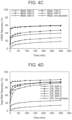
- FIGS. 4 A- 4 F illustrate leaching characteristics of total rare earth elements (REEs), light rare earth elements (LREEs) and heavy rare earth elements (HREEs) from the middlings (Mids) and coarse refuse (CR) as a function of reaction time and calcination temperature.
- FIGS. 4 A, 4 B and 4 C are the total REEs, LREEs and HREEs recovery values, respectively, for the Pocahontas No. 3 middlings sample and 4 D, 4 E and 4 F are likewise for the coarse refuse sample.
- FIG. 5 illustrates the effects of acid concentration on REE recovery from the 600° C. calcined middlings (Mids) and coarse refuse (CR).
- FIGS. 6 A- 6 D illustrate scandium leaching characteristics associated with the original ( FIG. 6 A ) middlings (Mids) and ( FIG. 6 B ) coarse refuse (CR) materials using 1.2 M HCl solution and the de-carbonized flotation tailings generated ( FIG. 6 C ) middlings and ( FIG. 6 D ) coarse refuse samples using 0.1M (NH 4 ) 2 SO 4 .
- FIGS. 7 A- 7 F illustrate the effects of calcination temperature on the leaching recoveries of ( FIG. 7 A ) total REEs (TREEs), ( FIG. 7 B ) light REEs (LREE), ( FIG. 7 C ) heavy REEs (HREE), ( FIG. 7 D ) cerium, ( FIG. 7 E ) neodymium and ( FIG. 7 F ) yttrium from the Baker material.
- TEEs total REEs
- LREE light REEs
- HREE heavy REEs
- FIG. 7 D cerium
- FIG. 7 E neodymium
- FIG. 7 F yttrium from the Baker material.
- FIGS. 8 A- 8 F illustrate the effects of calcination temperature on the leaching recoveries of other rare metals from the Baker coal seam 2.2 SG sink fraction.
- FIG. 9 is a graphic comparison of total and element leach recovery values obtained from Baker coarse refuse material treated by a continuous tube roaster with untreated material.
- FIG. 1 schematically illustrates a first possible embodiment 10 of the method for recovering valuable elements from pre-combustion coal-based materials. That method includes the step 12 of grinding the pre-combustion coal-based materials to a predetermined size.
- the grinding may be completed by any appropriate crusher or grinding apparatus known in the art to be useful for the purpose of grinding or crushing pre-combustion coal-based materials.
- the pre-combustion coal-based materials are ground to a top size between approximately 1.0 and 0.15 mm. In at least one possible embodiment of the method, the pre-combustion coal-based materials are ground to a top particle size of about 1 mm.
- the now ground pre-combustion coal-based materials are roasted at a temperature of between 600° C.-700° C. for a predetermined residence time needed for mineral decomposition (see step 14 of FIG. 1 ).
- the predetermined residence time may vary from as little as several minutes to as long as perhaps two hours depending upon the characteristics of the pre-combustion coal-based material being processed. In at least one possible embodiment of the method, that residence time is between 5 and 120 minutes.
- the roasted pre-combustion coal-based material is then submerged in a solution of a lixiviant as set forth in step 16 of FIG. 1 . More specifically, the roasted, ground pre-combustion coal-based material is placed into a reactor including the lixiviant. That lixiviant is of a type adapted to extract by leaching the valuable chemicals into a pregnant leach solution (PLS).
- PLS pregnant leach solution
- Lixiviants useful in the method include, but are not limited to ammonium sulfate sulfuric acid, nitric acid, hydrochloric acid, mineral acid, organic acid, carboxyl acid and combinations thereof.
- the method includes the step 18 of filtering the lixiviant solution to separate residual solids from the pregnant leach solution including the valuable elements. This step is then followed by the step 20 of recovering and concentrating the valuable elements from the pregnant leach solution.
- the recovering and concentrating step may include (a) selectively precipitating the valuable elements, (b) solvent extracting the valuable elements or (c) selectively precipitating and solvent extracting the valuable elements.
- the method may include the steps of: (a) using at least one of a thickener and a filter press to remove residual solids from the valuable elements held in the pregnant leach solution, (b) using solvent extraction in the concentrating of the valuable elements in the pregnant leach solution and (c) using staged precipitation, selective precipitation or staged and selective precipitation in the precipitating of the valuable elements.
- FIG. 2 schematically illustrates yet another possible embodiment 100 of the method for recovering valuable elements from pre-combustion coal-based materials where those materials, due to their characteristics, would otherwise require calcination temperatures above 700° C. for efficient and effective valuable element recovery.
- That method includes the step 102 of grinding the pre-combustion coal-based materials to a predetermined size.
- the grinding may be completed by any appropriate crusher or grinding apparatus known in the art to be useful for the purpose of grinding or crushing pre-combustion coal-based materials.
- the pre-combustion coal-based materials are ground to a size finer than 1 mm to a particle size smaller than a few micrometers. In at least one possible embodiment of the method, the pre-combustion coal-based materials are ground to a top particle size of 1 mm.
- a chemical additive is added to the ground pre-combustion coal-based materials to allow decomposition of the ground pre-combustion coal-based materials at a lower oxidation temperature (see step 104 in FIG. 2 ).
- Additives useful for this purpose include, but are not necessarily limited to calcium oxide, sodium hydroxide, sodium carbonate, ammonium chloride, mixture of calcium oxide and sodium chloride and combinations thereof.
- the ground pre-combustion coal-based materials are mixed with the additive for a period of time of about 1 to 3 minutes.
- the now ground and additive-treated pre-combustion coal-based materials are roasted at a temperature of between 600° C.-700° C. for a predetermined residence time needed for mineral decomposition (see step 106 of FIG. 2 ).
- the predetermined residence time may vary from as little as several minutes to as long as perhaps two hours depending upon the characteristics of the pre-combustion coal-based material being processed. This lower temperature functions to reduce the cost of the method embodiment 100 of FIG. 2 versus the method embodiment 10 of FIG. 1 by reducing the heat energy input into the process.
- the roasted pre-combustion coal-based material is then submerged in a solution of a lixiviant as set forth in step 108 of FIG. 2 . More specifically, the roasted, ground pre-combustion coal-based material is placed into a reactor including the lixiviant. That lixiviant is of a type adapted to extract by leaching the valuable chemicals into a pregnant leach solution.
- Lixiviants useful in the method include, but are not limited to ammonium sulfate sulfuric acid, nitric acid, hydrochloric acid, mineral acid, organic acid, carboxyl acid and combinations thereof.
- the method includes the step 110 of filtering the lixiviant solution to separate residual solids from a pregnant leach solution including the valuable elements. This step is then followed by the step 112 of recovering and concentrating the valuable elements from the pregnant leach solution.
- the recovering and concentrating step may include selectively precipitating the valuable elements, solvent extracting the valuable elements or selectively precipitating and solvent extracting the valuable elements.
- the method may include the steps of: (a) using at least one of a thickener and a filter press to remove residual solids from the valuable elements held in the pregnant leach solution, (b) using solvent extraction in the concentrating of the valuable elements in the pregnant leach solution and (c) using staged precipitation, selective precipitation or staged and selective precipitation in the precipitating of the valuable elements.
- middling and coarse refuse samples were collected from existing process streams of a preparation plant located near Beckley, W. Va., USA, which processed coal from the Pocahontas No. 3 seam.
- the coarse refuse sample was further processed in the lab using a dense medium bath comprised of ultrafine magnetite and water to obtain a 2.2 SG float fraction.
- Both the middlings and the 2.2 SG float fraction of the coarse refuse were dried at room temperature and pulverized to achieve a top particle size of 0.18 mm.
- a representative sample was directly leached in laboratory experiments using a 1.2 M HCl solution at a solids concentration of 1% by weight with a solution temperature of 75° C. Additional representative samples were roasted in a laboratory muffle furnace over a range of temperatures followed by leaching using the aforementioned conditions. The process followed the process steps depicted in FIG. 3 .
- Tests were conducted over a range in HCl concentrations from 0.006M to 1.2M on calcined samples prepared using a temperature of 600° C. As shown in FIG. 5 , there was minimal effect on leaching recovery when reducing the acid concentration to 0.6M for both the calcined coarse refuse and middling material. An order of magnitude reduction to 0.06M acid concentration resulted in a slight decrease in HREE and LREE recovery within the range of 6-8 percentage points. Another order of magnitude reduction in HCl concentration to 0.006 M provided a significant drop in the recovery of LREEs especially for the coarse refuse material where a 30-percentage point decrease was measured. The reduction in HREE recovery was in the range of 9 to 14 percentage points.
- FIG. 6 shows the leaching behavior of Sc under different calcination and leaching conditions.
- maximum Sc recovery was obtained using 600° C. calcination.
- the leaching kinetic curves can be divided into two parts: a relatively fast kinetic rate period within the first 5 min followed by very slow leaching kinetics.
- Sc leaching behavior is similar to HREEs. After 5 hours of reaction with 1.2 M HCl, 54% and 29% of Sc were leached from the 600° C. calcined middling and coarse refuse samples, respectively. In comparison, Sc recovery from samples not treated by high temperature oxidation was around 8% and 12%, respectively.
- a representative plant feed sample was collected from a coal preparation plant located in western Kentucky USA that processed the Baker (West Kentucky No. 13) seam coal.
- the coal is classified as high volatile, bituminous coal having a total sulfur content of around 5% of which approximately 50% is pyrite.
- the sample was air-dried and the material coarser than 10 mm was obtained by dry sieving.
- the oversize fraction was density fractionized using a dense medium bath of 2.2 specific gravity (SG). After separation, the resultant sink material (i.e., material denser than 2.2 times the density of water) was air-dried at room temperature and pulverized to a top particle size of 0.18 mm.
- Tests involving high temperature oxidation in a muffle furnace followed by acid leaching were performed in the same manner as described in Example No. 1.
- FIGS. 7 A- 7 F Leaching recoveries of total, light, and heavy REEs as well as individual REEs (Ce, Nd, and Y) are shown in FIGS. 7 A- 7 F .
- the total REE and light REE recoveries were significantly increased when the material was calcined under a temperature of around 600° C. For example, nearly 90% of LREEs were extracted from the 600° C. calcined material after 300 min of reaction, whereas only 21% of LREEs were extracted from the non-calcined material under the same conditions.
- leaching kinetics of the REEs were also improved after calcination. As show in FIG.
- FIGS. 8 A- 8 F The effects of high temperature oxidation on the leaching recoveries of other rare metals including Co, Cr, Li, Mn, Sr, and V are shown in FIGS. 8 A- 8 F .
- the highest recoveries of all the elements except Co occurred when the material was calcined in 600-750° C. which coincided with the optimum calcination temperature of the REEs. Therefore, an opportunity was created for a co-recovery of the REEs and the other rare metals from the material.
- leaching recoveries of Co, Li, Mn, and Sr reached as high as 65%, 70%, 90%, and 95% when the material was calcined at 600° C. for 2 hours.
- Continuous roasting tests were performed in a 15-cm diameter rotary tube furnace. The tests were performed on 75 ⁇ 12 mm coarse reject material produced for an operating coal preparation plant treating coal from the Baker seam in western Kentucky. The material was crushed and ground to a top particle size of around 1 mm prior to being fed to the continuous roaster. The material was fed to the roaster continuously at a rate of 4.5 kg/hr (10 lbs/hr) using a screw feeder. The retention time in the heat zone of the tube furnace was around 5 minutes. The inner tube temperature was controlled to achieve a constant value of 650° C. Representative samples of the feed and product streams were collected and subjected to acid leach tests in a 1M H2SO4 at a solid:liquid ratio of 1:5 at room temperature for 15 min.
- FIG. 9 shows a comparison of the element-by-element leach recovery values achieved from treated and untreated Baker coarse refuse material using the continuous tube roaster.
- the leaching characteristics of the light rare earth elements (La, Ce, Pr, Nd, Sm, Eu and Gd) improved significantly by the treatment through the rotary furnace while the leaching behavior of the heavy rare earth elements remained relatively unchanged.
- Overall, total rare earth recovery increased from around 9% to 34% as a result of the high-temperature oxidation treatment.
- the method alters the mode of occurrence of the valuable elements comprised in coal from a form that is difficult to recover to a state that is more readily recovered using mild acid/lixiviant solutions.
- the method also advantageously reduces the amount of the lixiviant needed to achieve a given recovery value for the valuable elements. Still further, the method increases the recovery of valuable elements when using a given lixiviant/acid dosage. This reduces the costs of the method.
Landscapes
- Chemical & Material Sciences (AREA)
- Engineering & Computer Science (AREA)
- Materials Engineering (AREA)
- Mechanical Engineering (AREA)
- Geology (AREA)
- General Life Sciences & Earth Sciences (AREA)
- Manufacturing & Machinery (AREA)
- Environmental & Geological Engineering (AREA)
- Life Sciences & Earth Sciences (AREA)
- Organic Chemistry (AREA)
- Metallurgy (AREA)
- Geochemistry & Mineralogy (AREA)
- Chemical Kinetics & Catalysis (AREA)
- General Chemical & Material Sciences (AREA)
- Inorganic Chemistry (AREA)
- Manufacture And Refinement Of Metals (AREA)
Abstract
Description
Claims (20)
Priority Applications (1)
| Application Number | Priority Date | Filing Date | Title |
|---|---|---|---|
| US16/832,157 US11821054B2 (en) | 2019-04-01 | 2020-03-27 | Method for recovering valuable elements from precombustion coal-based materials |
Applications Claiming Priority (2)
| Application Number | Priority Date | Filing Date | Title |
|---|---|---|---|
| US201962827361P | 2019-04-01 | 2019-04-01 | |
| US16/832,157 US11821054B2 (en) | 2019-04-01 | 2020-03-27 | Method for recovering valuable elements from precombustion coal-based materials |
Publications (2)
| Publication Number | Publication Date |
|---|---|
| US20200308667A1 US20200308667A1 (en) | 2020-10-01 |
| US11821054B2 true US11821054B2 (en) | 2023-11-21 |
Family
ID=72607022
Family Applications (1)
| Application Number | Title | Priority Date | Filing Date |
|---|---|---|---|
| US16/832,157 Active 2042-09-22 US11821054B2 (en) | 2019-04-01 | 2020-03-27 | Method for recovering valuable elements from precombustion coal-based materials |
Country Status (1)
| Country | Link |
|---|---|
| US (1) | US11821054B2 (en) |
Families Citing this family (3)
| Publication number | Priority date | Publication date | Assignee | Title |
|---|---|---|---|---|
| US20220074019A1 (en) * | 2020-09-04 | 2022-03-10 | United States Department Of Energy | Process for Extraction of Recoverable Rare Earth Elements (REE) Using Organic Acids and Chelating Compounds |
| CN113025836A (en) * | 2021-03-09 | 2021-06-25 | 中南大学 | Method for enhancing leaching of weathering crust elution-deposited rare earth ore by using additive |
| CN119464773A (en) * | 2024-10-09 | 2025-02-18 | 中国矿业大学 | A method for extracting and separating rare earth elements from coal-based solid waste |
-
2020
- 2020-03-27 US US16/832,157 patent/US11821054B2/en active Active
Non-Patent Citations (21)
Also Published As
| Publication number | Publication date |
|---|---|
| US20200308667A1 (en) | 2020-10-01 |
Similar Documents
| Publication | Publication Date | Title |
|---|---|---|
| Ji et al. | Leaching recovery of rare earth elements from the calcination product of a coal coarse refuse using organic acids | |
| Zhang et al. | Process development for the recovery of rare earth elements and critical metals from an acid mine leachate | |
| Peiravi et al. | A review of rare-earth elements extraction with emphasis on non-conventional sources: Coal and coal byproducts, iron ore tailings, apatite, and phosphate byproducts | |
| CA3008040C (en) | Rare earth ore processing methods by acid mixing, sulphating and decomposing | |
| US11821054B2 (en) | Method for recovering valuable elements from precombustion coal-based materials | |
| US8968688B2 (en) | Recovery of rare earth elements and compounds from coal ash | |
| Koleini et al. | Microwave heating applications in mineral processing | |
| Wang et al. | Enhanced green remediation and refinement disposal of electrolytic manganese residue using air-jet milling and horizontal-shaking leaching | |
| US9394586B2 (en) | Recovery of rare earth elements and compounds from coal ash | |
| CA1218961A (en) | Mineral separation | |
| CN107208177A (en) | The acidleach of rare earth element is carried | |
| CN106868307A (en) | A kind of pyrite cinder arsenic removal is enriched with the comprehensive utilization process of gold and silver | |
| US11186895B2 (en) | Continuous solvent extraction process for generation of high grade rare earth oxides from leachates generated from coal sources | |
| CN104962762A (en) | Processing method of fine bastnaesite | |
| US20220033932A1 (en) | Method of Processing a Pyrite-Containing Slurry | |
| Li et al. | Effects of calcination temperature on the occurrence modes of rare earth elements in coal | |
| CN107641723A (en) | Regulate and control the method for vanadium enrichment phase magnetic and magnetic separation separation vanadium enrichment phase in Rock coal containing alum | |
| Li et al. | Application of diagnostic roasting method in thermochemical treatment for Au recovery from gold-containing tailings in microwave field | |
| Liu et al. | Recovery of valuable elements from pyrite pyrolysis slag using magnetic separation-flotation technique | |
| Saveliev et al. | Current state and prospects of red mud utilisation: A review | |
| Kursun et al. | Solubility of Eskisehir thorium/rare earth ores in sulphuric and nitric acids | |
| Dreisinger et al. | The search minerals direct extraction process for rare earth element recovery | |
| CN106460090A (en) | Manganese ore beneficiation process | |
| Bisen et al. | Rare Earth elements occurrences in coal fly ash and methods of their extraction: a review | |
| CN112474715B (en) | A method for obtaining γ-Fe2O3 type iron concentrate by using copper beneficiation tailings |
Legal Events
| Date | Code | Title | Description |
|---|---|---|---|
| AS | Assignment |
Owner name: UNIVERSITY OF KENTUCKY RESEARCH FOUNDATION, KENTUCKY Free format text: ASSIGNMENT OF ASSIGNORS INTEREST;ASSIGNORS:HONAKER, RICK;ZHANG, WENCAI;REEL/FRAME:052243/0553 Effective date: 20200325 |
|
| FEPP | Fee payment procedure |
Free format text: ENTITY STATUS SET TO UNDISCOUNTED (ORIGINAL EVENT CODE: BIG.); ENTITY STATUS OF PATENT OWNER: SMALL ENTITY |
|
| FEPP | Fee payment procedure |
Free format text: ENTITY STATUS SET TO SMALL (ORIGINAL EVENT CODE: SMAL); ENTITY STATUS OF PATENT OWNER: SMALL ENTITY |
|
| STPP | Information on status: patent application and granting procedure in general |
Free format text: APPLICATION DISPATCHED FROM PREEXAM, NOT YET DOCKETED |
|
| STPP | Information on status: patent application and granting procedure in general |
Free format text: DOCKETED NEW CASE - READY FOR EXAMINATION |
|
| STPP | Information on status: patent application and granting procedure in general |
Free format text: RESPONSE TO NON-FINAL OFFICE ACTION ENTERED AND FORWARDED TO EXAMINER |
|
| STPP | Information on status: patent application and granting procedure in general |
Free format text: NOTICE OF ALLOWANCE MAILED -- APPLICATION RECEIVED IN OFFICE OF PUBLICATIONS |
|
| STPP | Information on status: patent application and granting procedure in general |
Free format text: PUBLICATIONS -- ISSUE FEE PAYMENT VERIFIED |
|
| STCF | Information on status: patent grant |
Free format text: PATENTED CASE |