US11814375B2 - Heterocyclic compounds - Google Patents
Heterocyclic compounds Download PDFInfo
- Publication number
- US11814375B2 US11814375B2 US17/017,200 US202017017200A US11814375B2 US 11814375 B2 US11814375 B2 US 11814375B2 US 202017017200 A US202017017200 A US 202017017200A US 11814375 B2 US11814375 B2 US 11814375B2
- Authority
- US
- United States
- Prior art keywords
- oxazin
- carbonyl
- azetidine
- hexahydropyrido
- phenyl
- Prior art date
- Legal status (The legal status is an assumption and is not a legal conclusion. Google has not performed a legal analysis and makes no representation as to the accuracy of the status listed.)
- Active, expires
Links
Classifications
-
- C—CHEMISTRY; METALLURGY
- C07—ORGANIC CHEMISTRY
- C07D—HETEROCYCLIC COMPOUNDS
- C07D413/00—Heterocyclic compounds containing two or more hetero rings, at least one ring having nitrogen and oxygen atoms as the only ring hetero atoms
- C07D413/02—Heterocyclic compounds containing two or more hetero rings, at least one ring having nitrogen and oxygen atoms as the only ring hetero atoms containing two hetero rings
- C07D413/12—Heterocyclic compounds containing two or more hetero rings, at least one ring having nitrogen and oxygen atoms as the only ring hetero atoms containing two hetero rings linked by a chain containing hetero atoms as chain links
-
- C—CHEMISTRY; METALLURGY
- C07—ORGANIC CHEMISTRY
- C07D—HETEROCYCLIC COMPOUNDS
- C07D498/00—Heterocyclic compounds containing in the condensed system at least one hetero ring having nitrogen and oxygen atoms as the only ring hetero atoms
- C07D498/02—Heterocyclic compounds containing in the condensed system at least one hetero ring having nitrogen and oxygen atoms as the only ring hetero atoms in which the condensed system contains two hetero rings
- C07D498/04—Ortho-condensed systems
-
- A—HUMAN NECESSITIES
- A61—MEDICAL OR VETERINARY SCIENCE; HYGIENE
- A61K—PREPARATIONS FOR MEDICAL, DENTAL OR TOILETRY PURPOSES
- A61K31/00—Medicinal preparations containing organic active ingredients
- A61K31/33—Heterocyclic compounds
- A61K31/395—Heterocyclic compounds having nitrogen as a ring hetero atom, e.g. guanethidine or rifamycins
- A61K31/535—Heterocyclic compounds having nitrogen as a ring hetero atom, e.g. guanethidine or rifamycins having six-membered rings with at least one nitrogen and one oxygen as the ring hetero atoms, e.g. 1,2-oxazines
- A61K31/5375—1,4-Oxazines, e.g. morpholine
- A61K31/5383—1,4-Oxazines, e.g. morpholine ortho- or peri-condensed with heterocyclic ring systems
-
- A—HUMAN NECESSITIES
- A61—MEDICAL OR VETERINARY SCIENCE; HYGIENE
- A61K—PREPARATIONS FOR MEDICAL, DENTAL OR TOILETRY PURPOSES
- A61K9/00—Medicinal preparations characterised by special physical form
- A61K9/20—Pills, tablets, discs, rods
- A61K9/2004—Excipients; Inactive ingredients
- A61K9/2009—Inorganic compounds
-
- A—HUMAN NECESSITIES
- A61—MEDICAL OR VETERINARY SCIENCE; HYGIENE
- A61K—PREPARATIONS FOR MEDICAL, DENTAL OR TOILETRY PURPOSES
- A61K9/00—Medicinal preparations characterised by special physical form
- A61K9/20—Pills, tablets, discs, rods
- A61K9/2004—Excipients; Inactive ingredients
- A61K9/2022—Organic macromolecular compounds
- A61K9/205—Polysaccharides, e.g. alginate, gums; Cyclodextrin
- A61K9/2054—Cellulose; Cellulose derivatives, e.g. hydroxypropyl methylcellulose
-
- A—HUMAN NECESSITIES
- A61—MEDICAL OR VETERINARY SCIENCE; HYGIENE
- A61K—PREPARATIONS FOR MEDICAL, DENTAL OR TOILETRY PURPOSES
- A61K9/00—Medicinal preparations characterised by special physical form
- A61K9/20—Pills, tablets, discs, rods
- A61K9/2004—Excipients; Inactive ingredients
- A61K9/2022—Organic macromolecular compounds
- A61K9/205—Polysaccharides, e.g. alginate, gums; Cyclodextrin
- A61K9/2059—Starch, including chemically or physically modified derivatives; Amylose; Amylopectin; Dextrin
-
- A—HUMAN NECESSITIES
- A61—MEDICAL OR VETERINARY SCIENCE; HYGIENE
- A61K—PREPARATIONS FOR MEDICAL, DENTAL OR TOILETRY PURPOSES
- A61K9/00—Medicinal preparations characterised by special physical form
- A61K9/48—Preparations in capsules, e.g. of gelatin, of chocolate
- A61K9/4841—Filling excipients; Inactive ingredients
- A61K9/485—Inorganic compounds
-
- A—HUMAN NECESSITIES
- A61—MEDICAL OR VETERINARY SCIENCE; HYGIENE
- A61K—PREPARATIONS FOR MEDICAL, DENTAL OR TOILETRY PURPOSES
- A61K9/00—Medicinal preparations characterised by special physical form
- A61K9/48—Preparations in capsules, e.g. of gelatin, of chocolate
- A61K9/4841—Filling excipients; Inactive ingredients
- A61K9/4858—Organic compounds
-
- A—HUMAN NECESSITIES
- A61—MEDICAL OR VETERINARY SCIENCE; HYGIENE
- A61K—PREPARATIONS FOR MEDICAL, DENTAL OR TOILETRY PURPOSES
- A61K9/00—Medicinal preparations characterised by special physical form
- A61K9/48—Preparations in capsules, e.g. of gelatin, of chocolate
- A61K9/4841—Filling excipients; Inactive ingredients
- A61K9/4866—Organic macromolecular compounds
-
- A—HUMAN NECESSITIES
- A61—MEDICAL OR VETERINARY SCIENCE; HYGIENE
- A61P—SPECIFIC THERAPEUTIC ACTIVITY OF CHEMICAL COMPOUNDS OR MEDICINAL PREPARATIONS
- A61P1/00—Drugs for disorders of the alimentary tract or the digestive system
-
- A—HUMAN NECESSITIES
- A61—MEDICAL OR VETERINARY SCIENCE; HYGIENE
- A61P—SPECIFIC THERAPEUTIC ACTIVITY OF CHEMICAL COMPOUNDS OR MEDICINAL PREPARATIONS
- A61P25/00—Drugs for disorders of the nervous system
-
- A—HUMAN NECESSITIES
- A61—MEDICAL OR VETERINARY SCIENCE; HYGIENE
- A61P—SPECIFIC THERAPEUTIC ACTIVITY OF CHEMICAL COMPOUNDS OR MEDICINAL PREPARATIONS
- A61P25/00—Drugs for disorders of the nervous system
- A61P25/18—Antipsychotics, i.e. neuroleptics; Drugs for mania or schizophrenia
-
- A—HUMAN NECESSITIES
- A61—MEDICAL OR VETERINARY SCIENCE; HYGIENE
- A61P—SPECIFIC THERAPEUTIC ACTIVITY OF CHEMICAL COMPOUNDS OR MEDICINAL PREPARATIONS
- A61P29/00—Non-central analgesic, antipyretic or antiinflammatory agents, e.g. antirheumatic agents; Non-steroidal antiinflammatory drugs [NSAID]
-
- A—HUMAN NECESSITIES
- A61—MEDICAL OR VETERINARY SCIENCE; HYGIENE
- A61P—SPECIFIC THERAPEUTIC ACTIVITY OF CHEMICAL COMPOUNDS OR MEDICINAL PREPARATIONS
- A61P35/00—Antineoplastic agents
-
- C—CHEMISTRY; METALLURGY
- C07—ORGANIC CHEMISTRY
- C07D—HETEROCYCLIC COMPOUNDS
- C07D265/00—Heterocyclic compounds containing six-membered rings having one nitrogen atom and one oxygen atom as the only ring hetero atoms
- C07D265/28—1,4-Oxazines; Hydrogenated 1,4-oxazines
Definitions
- the present invention relates to organic compounds useful for therapy or prophylaxis in a mammal, and in particular to monoacylglycerol lipase (MAGL) inhibitors for the treatment or prophylaxis of neuroinflammation, neurodegenerative diseases, pain, cancer, mental disorders, multiple sclerosis, Alzheimer's disease, Parkinson's disease, amyotrophic lateral sclerosis, traumatic brain injury, neurotoxicity, stroke, epilepsy, anxiety, migraine, depression, inflammatory bowel disease, abdominal pain, abdominal pain associated with irritable bowel syndrome and/or visceral pain in a mammal.
- MLM monoacylglycerol lipase
- Endocannabinoids are signaling lipids that exert their biological actions by interacting with cannabinoid receptors (CBRs), CB1 and CB2. They modulate multiple physiological processes including neuroinflammation, neurodegeneration and tissue regeneration (Iannotti, F. A., et al., Progress in lipid research 2016, 62, 107-28).
- CBRs cannabinoid receptors
- CB1 and CB2 cannabinoid receptors
- DAGL diacyglycerol lipases
- MAGL monoacylglycerol lipase
- MAGL is expressed throughout the brain and in most brain cell types, including neurons, astrocytes, oligodendrocytes and microglia cells (Chanda, P. K., et al., Molecular pharmacology 2010, 78, 996; Viader, A., et al., Cell reports 2015, 12, 798).
- 2-AG hydrolysis results in the formation of arachidonic acid (AA), the precursor of prostaglandins (PGs) and leukotrienes (LTs).
- Oxidative metabolism of AA is increased in inflamed tissues.
- the cyclo-oxygenase which produces PGs
- the 5-lipoxygenase which produces LTs.
- PGE2 is one of the most important. These products have been detected at sites of inflammation, e.g. in the cerebrospinal fluid of patients suffering from neurodegenerative disorders and are believed to contribute to inflammatory response and disease progression.
- mice lacking MAGL exhibit dramatically reduced 2-AG hydrolase activity and elevated 2-AG levels in the nervous system while other arachidonoyl-containing phospho- and neutral lipid species including anandamide (AEA), as well as other free fatty acids, are unaltered.
- AEA arachidonoyl-containing phospho- and neutral lipid species including anandamide
- levels of AA and AA-derived prostaglandins and other eicosanoids including prostaglandin E2 (PGE2), D2 (PGD2), F2 (PGF2), and thromboxane B2 (TXB2), are strongly decreased.
- Phospholipase A 2 (PLA 2 ) enzymes have been viewed as the principal source of AA, but cPLA 2 -deficient mice have unaltered AA levels in their brain, reinforcing the key role of MAGL in the brain for AA production and regulation of the brain inflammatory process.
- Neuroinflammation is a common pathological change characteristic of diseases of the brain including, but not restricted to, neurodegenerative diseases (e.g. multiple sclerosis, Alzheimer's disease, Parkinson disease, amyotrophic lateral sclerosis, traumatic brain injury, neurotoxicity, stroke, epilepsy and mental disorders such as anxiety and migraine).
- neurodegenerative diseases e.g. multiple sclerosis, Alzheimer's disease, Parkinson disease, amyotrophic lateral sclerosis, traumatic brain injury, neurotoxicity, stroke, epilepsy and mental disorders such as anxiety and migraine.
- LPS lipopolysaccharide
- LPS treatment also induces a widespread elevation in pro-inflammatory cytokines including interleukin-1-a (IL-1-a), IL-1b, IL-6, and tumor necrosis factor-a (TNF- ⁇ ) that is prevented in Mgll ⁇ / ⁇ mice.
- IL-1-a interleukin-1-a
- IL-1b interleukin-1-a
- IL-6 tumor necrosis factor-a
- TNF- ⁇ tumor necrosis factor-a
- Neuroinflammation is characterized by the activation of the innate immune cells of the central nervous system, the microglia and the astrocytes. It has been reported that anti-inflammatory drugs can suppress in preclinical models the activation of glia cells and the progression of disease including Alzheimer's disease and multiple sclerosis (Lleo A., Cell Mol Life Sci. 2007, 64, 1403). Importantly, genetic and/or pharmacological disruption of MAGL activity also blocks LPS-induced activation of microglial cells in the brain (Nomura, D. K., et al., Science 2011, 334, 809).
- MAGL activity was shown to be protective in several animal models of neurodegeneration including, but not restricted to, Alzheimer's disease, Parkinson's disease and multiple sclerosis.
- an irreversible MAGL inhibitor has been widely used in preclinical models of neuroinflammation and neurodegeneration (Long, J. Z., et al., Nature chemical biology 2009, 5, 37).
- Systemic injection of such inhibitor recapitulates the Mgll ⁇ / ⁇ mice phenotype in the brain, including an increase in 2-AG levels, a reduction in AA levels and related eicosanoids production, as well as the prevention of cytokines production and microglia activation following LPS-induced neuroinflammation (Nomura, D. K., et al., Science 2011, 334, 809), altogether confirming that MAGL is a druggable target.
- 2-AG has been reported to show beneficial effects on pain with, for example, anti-nociceptive effects in mice (Ignatowska-Jankowska B. et al., J Pharmacol. Exp. Ther. 2015, 353, 424) and on mental disorders, such as depression in chronic stress models (Zhong P. et al., Neuropsychopharmacology 2014, 39, 1763).
- oligodendrocytes (OLs), the myelinating cells of the central nervous system, and their precursors (OPCs) express the cannabinoid receptor 2 (CB2) on their membrane.
- CB2 cannabinoid receptor 2
- 2-AG is the endogenous ligand of CB1 and CB2 receptors. It has been reported that both cannabinoids and pharmacological inhibition of MAGL attenuate OLs's and OPCs's vulnerability to excitotoxic insults and therefore may be neuroprotective (Bemal-Chico, A., et al., Glia 2015, 63, 163).
- MAGL inhibition increases the number of myelinating OLs in the brain of mice, suggesting that MAGL inhibition may promote differentiation of OPCs in myelinating OLs in vivo (Alpar, A., et al., Nature communications 2014, 5, 4421). Inhibition of MAGL was also shown to promote remyelination and functional recovery in a mouse model of progressive multiple sclerosis (Feliu A. et al., Journal of Neuroscience 2017, 37 (35), 8385).
- MAGL as an important decomposing enzyme for both lipid metabolism and the endocannabinoids system, additionally as a part of a gene expression signature, contributes to different aspects of tumourigenesis, including in glioblastoma (Qin, H., et al., Cell Biochem. Biophys.
- CBRs cannabinoid receptors
- CB1 receptors are present throughout the GI tract of animals and healthy humans, especially in the enteric nervous system (ENS) and the epithelial lining, as well as smooth muscle cells of blood vessels in the colonic wall (Wright, Rooney et al. 2005), (Duncan, Davison et al. 2005).
- ENS enteric nervous system
- Activation of CB1 produces anti-emetic, anti-motility, and anti-inflammatory effect, and help to modulate pain (Perisetti, Rimu et al. 2020).
- CB2 receptors are expressed in immune cells such as plasma cells and macrophages, in the lamina intestinal tract (Wright, Rooney et al. 2005), and primarily on the epithelium of human colonic tissue associated with inflammatory bowel disease (IBD). Activation of CB2 exerts anti-inflammatory effect by reducing pro-inflammatory cytokines. Expression of MAGL is increased in colonic tissue in UC patients (Marquez, Suarez et al. 2009) and 2-AG levels are increased in plasma of IBD patients (Grill, Hogenauer et al. 2019). Several animal studies have demonstrated the potential of MAGL inhibitors for symptomatic treatment of IBD.
- MAGL inhibition prevents TNBS-induced mouse colitis and decreases local and circulating inflammatory markers via a CB1/CB2 MoA (Marquez, Suarez et al. 2009). Furthermore, MAGL inhibition improves gut wall integrity and intestinal permeability via a CBT driven MoA (Wang, Zhang et al. 2020).
- suppressing the action and/or the activation of MAGL is a promising new therapeutic strategy for the treatment or prevention of neuroinflammation, neurodegenerative diseases, pain, cancer, mental disorders, inflammatory bowel disease, abdominal pain and abdominal pain associated with irritable bowel syndrome. Furthermore, suppressing the action and/or the activation of MAGL is a promising new therapeutic strategy for providing neuroprotection and myelin regeneration. Accordingly, there is a high unmet medical need for new MAGL inhibitors.
- the present invention provides compounds of formula (I)
- the present invention provides a process of manufacturing the compounds of formula (I) as described herein, or pharmaceutically acceptable salts thereof, comprising:
- the present invention provides a compound of formula (I) as described herein, or a pharmaceutically acceptable salt thereof, when manufactured according to the processes described herein.
- the present invention provides a compound of formula (I) as described herein, or a pharmaceutically acceptable salt thereof, for use as therapeutically active substance.
- the present invention provides a pharmaceutical composition
- a pharmaceutical composition comprising a compound of formula (I) as described herein, or a pharmaceutically acceptable salt thereof, and a therapeutically inert carrier.
- the present invention provides a compound of formula (I) as described herein, or a pharmaceutically acceptable salt thereof, for use in a method of inhibiting monoacylglycerol lipase in a mammal.
- the present invention provides a compound of formula (I) as described herein, or a pharmaceutically acceptable salt thereof, for use in the treatment or prophylaxis of neuroinflammation, neurodegenerative diseases, pain, cancer and/or mental disorders in a mammal.
- the present invention provides a compound of formula (I) as described herein, or a pharmaceutically acceptable salt thereof, for use in the treatment or prophylaxis of multiple sclerosis, Alzheimer's disease, Parkinson's disease, amyotrophic lateral sclerosis, traumatic brain injury, neurotoxicity, stroke, epilepsy, anxiety, migraine, depression, hepatocellular carcinoma, colon carcinogenesis, ovarian cancer, neuropathic pain, chemotherapy induced neuropathy, acute pain, chronic pain and/or spasticity associated with pain in a mammal.
- multiple sclerosis Alzheimer's disease, Parkinson's disease, amyotrophic lateral sclerosis, traumatic brain injury, neurotoxicity, stroke, epilepsy, anxiety, migraine, depression, hepatocellular carcinoma, colon carcinogenesis, ovarian cancer, neuropathic pain, chemotherapy induced neuropathy, acute pain, chronic pain and/or spasticity associated with pain in a mammal.
- alkyl refers to a mono- or multivalent, e.g., a mono- or bivalent, linear or branched saturated hydrocarbon group of 1 to 12 carbon atoms.
- the alkyl group contains 1 to 6 carbon atoms (“C 1-6 -alkyl”), e.g., 1, 2, 3, 4, 5, or 6 carbon atoms.
- the alkyl group contains 1 to 3 carbon atoms, e.g., 1, 2 or 3 carbon atoms.
- alkyl examples include methyl, ethyl, propyl, 2-propyl (isopropyl), n-butyl, iso-butyl, sec-butyl, tert-butyl, and 2,2-dimethylpropyl. Particularly preferred, yet non-limiting examples of alkyl are methyl and 2,2-dimethylpropyl.
- alkoxy refers to an alkyl group, as previously defined, attached to the parent molecular moiety via an oxygen atom. Unless otherwise specified, the alkoxy group contains 1 to 12 carbon atoms. In some preferred embodiments, the alkoxy group contains 1 to 6 carbon atoms (“C 1-6 -alkoxy”).
- the alkoxy group contains 1 to 4 carbon atoms. In still other embodiments, the alkoxy group contains 1 to 3 carbon atoms.
- Some non-limiting examples of alkoxy groups include methoxy, ethoxy, n-propoxy, isopropoxy, n-butoxy, isobutoxy and tert-butoxy. A particularly preferred, yet non-limiting example of alkoxy is methoxy.
- halogen refers to fluoro (F), chloro (Cl), bromo (Br), or iodo (I).
- halogen refers to fluoro (F), chloro (Cl) or bromo (Br).
- Particularly preferred, yet non-limiting examples of “halogen” or “halo” are fluoro (F) and chloro (Cl).
- cycloalkyl refers to a saturated or partly unsaturated monocyclic or bicyclic hydrocarbon group of 3 to 10 ring carbon atoms (“C 3-10 -cycloalkyl”). In some preferred embodiments, the cycloalkyl group is a saturated monocyclic hydrocarbon group of 3 to 8 ring carbon atoms.
- “Bicyclic cycloalkyl” refers to cycloalkyl moieties consisting of two saturated carbocycles having two carbon atoms in common, i.e., the bridge separating the two rings is either a single bond or a chain of one or two ring atoms, and to spirocyclic moieties, i.e., the two rings are connected via one common ring atom.
- the cycloalkyl group is a saturated monocyclic hydrocarbon group of 3 to 6 ring carbon atoms, e.g., of 3, 4, 5 or 6 carbon atoms.
- cycloalkyl examples include cyclopropyl, cyclobutyl, cyclopentyl, cyclohexyl and cycloheptyl.
- a particularly preferred, yet non-limiting example of cycloalkyl is cyclopropyl.
- aryl refers to a monocyclic, bicyclic, or tricyclic carbocyclic ring system having a total of 6 to 14 ring members (“C 6 -C 14 -aryl”), preferably, 6 to 12 ring members, and more preferably 6 to 10 ring members, and wherein at least one ring in the system is aromatic.
- Some non-limiting examples of aryl include phenyl and 9H-fluorenyl (e.g. 9H-fluoren-9-yl).
- a particularly preferred, yet non-limiting example of aryl is phenyl.
- heteroaryl refers to a mono- or multivalent, monocyclic, bicyclic or tricyclic, preferably bicyclic ring system having a total of 5 to 14 ring members, preferably, 5 to 12 ring members, and more preferably 5 to 10 ring members, wherein at least one ring in the system is aromatic, and at least one ring in the system contains one or more heteroatoms.
- heteroaryl refers to a 5-10 membered heteroaryl comprising 1, 2, 3 or 4 heteroatoms independently selected from O, S and N.
- heteroaryl refers to a 5-10 membered heteroaryl comprising 1 to 2 heteroatoms independently selected from 0, S and N.
- heteroaryl examples include spiro[cyclopropane-1,3′-indoline](e.g., spiro[cyclopropane-1,3′-indoline]-1′-yl), 2-pyridyl, 3-pyridyl, 4-pyridyl, indol-1-yl, 1H-indol-2-yl, 1H-indol-3-yl, 1H-indol-4-yl, 1H-indol-5-yl, 1H-indol-6-yl, 1H-indol-7-yl, 1,2-benzoxazol-3-yl, 1,2-benzoxazol-4-yl, 1,2-benzoxazol-5-yl, 1,2-benzoxazol-6-yl, 1,2-benzoxazol-7-yl, 1H-indazol-3-yl, 1H-indazol-4-yl, 1H-indazol, 1H-
- hydroxy refers to an —OH group.
- cyano refers to a —CN (nitrile) group.
- amino refers to an —NH 2 group.
- alkylsulfonyl refers to a group alkyl-SO 2 —.
- carbamoyl refers to a group H 2 N—C(O)—.
- cycloalkylalkoxy refers to an alkoxy group, wherein at least one of the hydrogen atoms of the alkoxy group has been replaced by a cycloalkyl group.
- cycloalkylalkoxy refers to an alkoxy group wherein 1, 2 or 3 hydrogen atoms, most preferably 1 hydrogen atom of the alkoxy group have been replaced by a cycloalkyl group.
- a particularly preferred, yet non-limiting example of cycloalkylalkoxy is cyclopropylmethoxy.
- haloalkyl refers to an alkyl group, wherein at least one of the hydrogen atoms of the alkyl group has been replaced by a halogen atom, preferably fluoro.
- haloalkyl refers to an alkyl group wherein 1, 2 or 3 hydrogen atoms of the alkyl group have been replaced by a halogen atom, most preferably fluoro.
- Particularly preferred, yet non-limiting examples of haloalkyl are trifluoromethyl and trifluoroethyl.
- haloalkoxy refers to an alkoxy group, wherein at least one of the hydrogen atoms of the alkoxy group has been replaced by a halogen atom, preferably fluoro.
- haloalkoxy refers to an alkoxy group wherein 1, 2 or 3 hydrogen atoms of the alkoxy group have been replaced by a halogen atom, most preferably fluoro.
- a particularly preferred, yet non-limiting example of haloalkoxy is trifluoromethoxy (—OCF 3 ).
- cycloalkylalkoxy refers to an alkoxy group, wherein at least one of the hydrogen atoms of the alkoxy group has been replaced by a cycloalkyl group.
- cycloalkylalkoxy refers to an alkoxy group wherein 1, 2 or 3 hydrogen atoms, most preferably 1 hydrogen atom of the alkoxy group have been replaced by a cycloalkyl group.
- a particularly preferred, yet non-limiting example of cycloalkylalkoxy is cyclopropylmethoxy.
- hydroxyalkyl refers to an alkyl group, wherein at least one of the hydrogen atoms of the alkyl group has been replaced by a hydroxy group.
- hydroxyalkyl refers to an alkyl group wherein 1, 2 or 3 hydrogen atoms, most preferably 1 hydrogen atom of the alkyl group have been replaced by a hydroxy group.
- Preferred, yet non-limiting examples of hydroxyalkyl are hydroxymethyl and hydroxyethyl (e.g. 2-hydroxyethyl).
- a particularly preferred, yet non-limiting example of hydroxyalkyl is hydroxymethyl.
- aminoalkoxy refers to an alkoxy group, wherein at least one of the hydrogen atoms of the alkoxy group has been replaced by an amino group.
- aminoalkoxy refers to an alkoxy group wherein 1, 2 or 3 hydrogen atoms, most preferably 1 hydrogen atom of the alkoxy group have been replaced by an amino group.
- aminoalkoxy are aminomethoxy and aminoethoxy (e.g. 2-aminoethoxy).
- salts refers to those salts which retain the biological effectiveness and properties of the free bases or free acids, which are not biologically or otherwise undesirable.
- the salts are formed with inorganic acids such as hydrochloric acid, hydrobromic acid, sulfuric acid, nitric acid, phosphoric acid and the like, in particular hydrochloric acid, and organic acids such as acetic acid, propionic acid, glycolic acid, pyruvic acid, oxalic acid, maleic acid, malonic acid, succinic acid, fumaric acid, tartaric acid, citric acid, benzoic acid, cinnamic acid, mandelic acid, methanesulfonic acid, ethanesulfonic acid, p-toluenesulfonic acid, salicylic acid, N-acetylcystein and the like.
- salts derived from an inorganic base include, but are not limited to, the sodium, potassium, lithium, ammonium, calcium, magnesium salts and the like.
- Salts derived from organic bases include, but are not limited to salts of primary, secondary, and tertiary amines, substituted amines including naturally occurring substituted amines, cyclic amines and basic ion exchange resins, such as isopropylamine, trimethylamine, diethylamine, triethylamine, tripropylamine, ethanolamine, lysine, arginine, N-ethylpiperidine, piperidine, polyimine resins and the like.
- Particular pharmaceutically acceptable salts of compounds of formula (I) are hydrochloride salts.
- protective group denotes the group which selectively blocks a reactive site in a multifunctional compound such that a chemical reaction can be carried out selectively at another unprotected reactive site in the meaning conventionally associated with it in synthetic chemistry.
- Protective groups can be removed at the appropriate point.
- Exemplary protective groups are amino-protective groups, carboxy-protective groups or hydroxy-protective groups.
- Particular protective groups are the tert-butoxycarbonyl (Boc), benzyloxycarbonyl (Cbz), fluorenylmethoxycarbonyl (Fmoc) and benzyl (Bn).
- protective groups are the tert-butoxycarbonyl (Boc) and the fluorenylmethoxycarbonyl (Fmoc). More particular protective group is the tert-butoxycarbonyl (Boc).
- Exemplary protective groups and their application in organic synthesis are described, for example, in “Protective Groups in Organic Chemistry” by T. W. Greene and P. G. M. Wutts, 5th Ed., 2014, John Wiley & Sons, N.Y.
- urea forming reagent refers to a chemical compound that is able to render a first amine to a species that will react with a second amine, thereby forming an urea derivative.
- Non-limiting examples of a urea forming reagent include bis(trichloromethyl) carbonate, phosgene, trichloromethyl chloroformate, (4-nitrophenyl)carbonate, 1,1′-carbonyl-di-(1,2,4-triazole), and 1,1′-carbonyldiimidazole.
- the urea forming reagents described in G. Sartori et al., Green Chemistry 2000, 2, 140 are incorporated herein by reference.
- the compounds of formula (I) can contain several asymmetric centers and can be present in the form of optically pure enantiomers, mixtures of enantiomers such as, for example, racemates, optically pure diastereioisomers, mixtures of diastereoisomers, diastereoisomeric racemates or mixtures of diastereoisomeric racemates.
- the asymmetric carbon atom can be of the “R” or “S” configuration.
- MAGL refers to the enzyme monoacylglycerol lipase.
- the terms “MAGL” and “monoacylglycerol lipase” are used herein interchangeably.
- treatment includes: (1) inhibiting the state, disorder or condition (e.g. arresting, reducing or delaying the development of the disease, or a relapse thereof in case of maintenance treatment, of at least one clinical or subclinical symptom thereof); and/or (2) relieving the condition (i.e., causing regression of the state, disorder or condition or at least one of its clinical or subclinical symptoms).
- the benefit to a patient to be treated is either statistically significant or at least perceptible to the patient or to the physician.
- a medicament is administered to a patient to treat a disease, the outcome may not always be effective treatment.
- prophylaxis as used herein includes: preventing or delaying the appearance of clinical symptoms of the state, disorder or condition developing in a mammal and especially a human that may be afflicted with or predisposed to the state, disorder or condition but does not yet experience or display clinical or subclinical symptoms of the state, disorder or condition.
- neuroinflammation as used herein relates to acute and chronic inflammation of the nervous tissue, which is the main tissue component of the two parts of the nervous system; the brain and spinal cord of the central nervous system (CNS), and the branching peripheral nerves of the peripheral nervous system (PNS).
- Chronic neuroinflammation is associated with neurodegenerative diseases such as Alzheimer's disease, Parkinson's disease and multiple sclerosis.
- Acute neuroinflammation usually follows injury to the central nervous system immediately, e.g., as a result of traumatic brain injury (TBI).
- TBI traumatic brain injury
- TBI traumatic brain injury
- intracranial injury relates to damage to the brain resulting from external mechanical force, such as rapid acceleration or deceleration, impact, blast waves, or penetration by a projectile.
- neurodegenerative diseases relates to diseases that are related to the progressive loss of structure or function of neurons, including death of neurons.
- Examples of neurodegenerative diseases include, but are not limited to, multiple sclerosis, Alzheimer's disease, Parkinson's disease and amyotrophic lateral sclerosis.
- mental disorders also called mental illnesses or psychiatric disorders
- psychiatric disorders relates to behavioral or mental patterns that may cause suffering or a poor ability to function in life. Such features may be persistent, relapsing and remitting, or occur as a single episode. Examples of mental disorders include, but are not limited to, anxiety and depression.
- pain relates to an unpleasant sensory and emotional experience associated with actual or potential tissue damage.
- pain include, but are not limited to, nociceptive pain, chronic pain (including idiopathic pain), neuropathic pain including chemotherapy induced neuropathy, phantom pain and psychogenic pain.
- a particular example of pain is neuropathic pain, which is caused by damage or disease affecting any part of the nervous system involved in bodily feelings (i.e., the somatosensory system).
- “pain” is neuropathic pain resulting from amputation or thoracotomy.
- “pain” is chemotherapy induced neuropathy.
- neurotoxicity relates to toxicity in the nervous system. It occurs when exposure to natural or artificial toxic substances (neurotoxins) alter the normal activity of the nervous system in such a way as to cause damage to nervous tissue.
- neurotoxicity include, but are not limited to, neurotoxicity resulting from exposure to substances used in chemotherapy, radiation treatment, drug therapies, drug abuse, and organ transplants, as well as exposure to heavy metals, certain foods and food additives, pesticides, industrial and/or cleaning solvents, cosmetics, and some naturally occurring substances.
- cancer refers to a disease characterized by the presence of a neoplasm or tumor resulting from abnormal uncontrolled growth of cells (such cells being “cancer cells”).
- cancer explicitly includes, but is not limited to, hepatocellular carcinoma, colon carcinogenesis and ovarian cancer.
- mammal as used herein includes both humans and non-humans and includes but is not limited to humans, non-human primates, canines, felines, murines, bovines, equines, and porcines. In a particularly preferred embodiment, the term “mammal” refers to humans.
- the invention also provides the following enumerated Embodiments (E) of the first aspect (A1) of the invention:
- the present invention provides pharmaceutically acceptable salts of the compounds according to formula (I) as described herein, especially hydrochloride salts.
- the present invention provides compounds according to formula (I) as described herein as free bases.
- the compounds of formula (I) are isotopically-labeled by having one or more atoms therein replaced by an atom having a different atomic mass or mass number.
- isotopically-labeled (i.e., radiolabeled) compounds of formula (I) are considered to be within the scope of this disclosure.
- isotopes that can be incorporated into the compounds of formula (I) include isotopes of hydrogen, carbon, nitrogen, oxygen, phosphorous, sulfur, fluorine, chlorine, and iodine, such as, but not limited to, 2 H, 3 H, 11 C, 13 C, 14 C, 13 N, 15 N, 15 O, 17 O, 18 O, 31 P, 32 P, 35 S, 18 F, 36 C, 123 I, and 125 I, respectively.
- Certain isotopically-labeled compounds of formula (I) for example, those incorporating a radioactive isotope, are useful in drug and/or substrate tissue distribution studies.
- the radioactive isotopes tritium, i.e.
- a compound of formula (I) can be enriched with 1, 2, 5, 10, 25, 50, 75, 90, 95, or 99 percent of a given isotope.
- substitution with heavier isotopes such as deuterium, i.e. 2 H, may afford certain therapeutic advantages resulting from greater metabolic stability, for example, increased in vivo half-life or reduced dosage requirements.
- Isotopically-labeled compounds of formula (I) can generally be prepared by conventional techniques known to those skilled in the art or by processes analogous to those described in the Examples as set out below using an appropriate isotopically-labeled reagent in place of the non-labeled reagent previously employed.
- one of the starting materials, intermediates or compounds of formula (I) contain one or more functional groups which are not stable or are reactive under the reaction conditions of one or more reaction steps
- appropriate protective groups as described e.g., in “Protective Groups in Organic Chemistry” by T. W. Greene and P. G. M. Wutts, 5th Ed., 2014, John Wiley & Sons, N.Y.
- Such protective groups can be removed at a later stage of the synthesis using standard methods described in the literature.
- compounds of formula (I) can be obtained as mixtures of diastereomers or enantiomers, which can be separated by methods well known in the art e.g., chiral HPLC, chiral SFC or chiral crystallization. Racemic compounds can e.g., be separated into their antipodes via diastereomeric salts by crystallization with optically pure acids or by separation of the antipodes by specific chromatographic methods using either a chiral adsorbent or a chiral eluent. It is equally possible to separate starting materials and intermediates containing stereogenic centers to afford diastereomerically/enantiomerically enriched starting materials and intermediates. Using such diastereomerically/enantiomerically enriched starting materials and intermediates in the synthesis of compounds of formula (I) will typically lead to the respective diastereomerically/enantiomerically enriched compounds of formula (I).
- the compounds of formula (I) can be manufactured by the methods given below, by the methods given in the examples or by analogous methods.
- Appropriate reaction conditions for the individual reaction steps are known to a person skilled in the art.
- reaction conditions described in literature affecting the described reactions see for example: Comprehensive Organic Transformations: A Guide to Functional Group Preparations, 2nd Edition, Richard C. Larock. John Wiley & Sons, New York, NY 1999). It was found convenient to carry out the reactions in the presence or absence of a solvent. There is no particular restriction on the nature of the solvent to be employed, provided that it has no adverse effect on the reaction or the reagents involved and that it can dissolve the reagents, at least to some extent.
- the described reactions can take place over a wide range of temperatures, and the precise reaction temperature is not critical to the invention. It is convenient to carry out the described reactions in a temperature range between ⁇ 78° C. to reflux.
- the time required for the reaction may also vary widely, depending on many factors, notably the reaction temperature and the nature of the reagents. However, a period of from 0.5 hours to several days will usually suffice to yield the described intermediates and compounds.
- the reaction sequence is not limited to the one displayed in the schemes, however, depending on the starting materials and their respective reactivity, the sequence of reaction steps can be freely altered.
- urea forming reagent such as bis(trichloromethyl) carbonate using a suitable base and solvent such as, e.g. sodium bicarbonate in DCM, to give compounds of formula I (step a).
- a urea forming reagent such as bis(trichloromethyl) carbonate using a suitable base and solvent such as, e.g. sodium bicarbonate in DCM
- urea forming reagents include but are not limited to phosgene, trichloromethyl chloroformate, (4-nitrophenyl)carbonate or 1,1′-carbonyldiimidazole.
- solvent e.g. dioxane, dimethoxyethane, water, toluene, DMF or mixtures thereof
- a suitable base e.g. Na 2 CO 3 , NaHCO 3 , KF, K 2 CO 3 or TEA
- Suzuki reactions of this type are broadly described in literature (e.g. A. Suzuki, Pure Appl. Chem. 1991, 63, 419-422; A. Suzuki, N. Miyaura, Chem. Rev. 1995, 95, 2457-2483; A. Suzuki, J. Organomet. Chem. 1999, 576, 147-168; V. Polshettiwar et al., Chem. Sus. Chem. 2010, 3, 502-522) and are well known to those skilled in the art.
- aryl- or heteroaryl-trifluoroborates (7a with Y ⁇ BF 3 ) can be used in the cross-coupling reaction applying a palladium catalyst such as, e.g.
- a suitable base such as cesium carbonate or potassium phosphate
- solvents such as toluene, THF, dioxane, water or mixtures thereof
- intermediates 2a can be exchanged to a boronic acid or boronic ester group using for examples the methods described under step a) to give intermediates 2c (step b).
- Intermediates 2c can then be reacted with intermediates 7b in which FG is for example bromine, either commercially available to prepared in analogy to literature methods, applying the reaction conditions described before to furnish compounds IA (step c).
- FG is for example bromine
- intermediates 7b in which Y is preferably bromine can be subjected to a cross-electrophile coupling with intermediates 2a with FG preferably being bromine, prepared in analogy to scheme 1, under irradiation with a 420 nm blue light lamp using an appropriate photo catalyst such as [Ir ⁇ dF(CF 3 )ppy ⁇ 2 (dtbpy)]PF 6 ([4,4′-bis(1,1-dimethylethyl)-2,2′-bipyridine-N1,N1′]bis[3,5-difluoro-2-[5-(trifluoromethyl)-2-pyridinyl-N]phenyl-C]Iridium(III) hexafluorophosphate), a Nickel catalyst like NiCl 2 glyme (dichloro(dimethoxyethane)nickel), 4,4′-di-tert-butyl-2,2′-dipyridyl and tris(trimethylsilyl)silane
- intermediates 2b can be transformed to compound IB, by applying nucleophilic aromatic substitution reaction.
- a suitable heteroaryl compound 7b wherein Y is a suitable halogen such as fluorine, chlorine or bromine, preferably fluorine or chlorine, wherein R 6 and R 7 are described herein, such as 2-chloro-pyrimidine, 2-chloro-4-methylpyrimidine, 3-chloropyridazine, 3,4-dichloropyridazine, 2-chloro-4-methoxypyrimidine, 2-chloro-4-trifluoromethyl)pyrimidine, 3-fluoro-4-methylpyridine, 3,5-difluoropyridine, 3-chloro-5-fluoro-pyridine, 3-fluoropyridine, 2-fluorobenzonitrile, 2-fluoro-6-methylpyridine, 4-bromo-2-chloro-pyrimidine, 2-chlor
- intermediates 2a can be exchanged to a boronic acid group to give intermediates 2d (obtainable e.g. by the general procedure outlined in Scheme 4) (step b).
- Intermediates 2d can be then transformed to compound IB, by applying Chan-Lam cross coupling reaction.
- a suitable phenol compound 8 wherein R 6 and R 7 are described herein, such as 2-fluorophenol, 3-fluorophenol, 4-fluorophenol, 2,4-difluorophenol, 2-chlorophenol, 3-chlorophenol, 4-chlorophenol, 2-methylphenol and 3-trifluoromethylphenol, in presence of TEA, Cu(OAc) 2 and molecular sieves in a solvent like DCM, DCE or CH 3 CN at room temperature, yields compounds of formula IB (step c).
- 3-aminopiperidin-4-ol derivatives 3 in which “PG” signifies a suitable protective group such as a Cbz or Boc protective group can be acylated for example with acyl chlorides 4 in which R 1 is as defined herein and “LG” signifies a suitable leaving group (e.g., Cl or Br), using a suitable base such as sodium or potassium carbonate, sodium hydroxide or sodium acetate in an appropriate solvent such as THF, water, acetone or mixtures thereof, to provide intermediates 5 (step a).
- Intermediates 4 are either commercially available or can be prepared according to literature methods in achiral (R 1 ⁇ H) racemic (R 1 not H) or enantiomerically pure form (R 1 not H).
- Intermediates 5 can be cyclized to intermediates 6 using methods well known in the art, for example by treatment of 5 with sodium hydride in THF or potassium tert-butoxide in IPA and water (step b). Reactions of that type are described in literature (e.g. Z. Rafinski et al., J. Org. Chem. 2015, 80, 7468; S. Dugar et al., Synthesis 2015, 47(5), 712; WO2005/066187). Removal of the protective group in intermediates 6, applying methods known in the art (e.g., a Boc group using TFA in DCM at temperatures between 0° C.
- a suitable catalyst such as Pd or Pd(OH) 2 on charcoal
- a suitable solvent such as MeOH, EtOH, EtOAc or mixtures thereof and as described for example in “Protective Groups in Organic Chemistry” by T. W. Greene and P. G. M. Wuts, 4th Ed., 2006, Wiley N.Y.
- Intermediates 1 can be obtained as mixtures of diastereomers and enantiomers, respectively, or as single stereoisomers depending on whether racemic mixtures or enantiomerically pure forms of cis- or trans-3-aminopiperidin-4-ol derivatives 3 are employed in their syntheses.
- Intermediates 3 are commercially available and their synthesis has also been described in literature (e.g. WO2005/066187; WO2011/0059118; WO2016/185279).
- Optically pure cis-configured intermediates 1B and 1C can be obtained for example according to Scheme 3 by chiral separation of commercially available rac-(4aR,8aS)-4a,5,6,7,8,8a-hexahydro-4H-pyrido[4,3-b][1,4]oxazin-3-one (1A) (optionally in form of a salt such as, e.g. a hydrochloride salt) using methods known in the art, e.g. by diastereomeric salt crystallization or by chiral chromatography (step a).
- a salt such as, e.g. a hydrochloride salt
- intermediates 2 are intermediates of type 2b.
- Protected amines 10 either commercially available or prepared by methods known in the art, wherein LG is a suitable leaving group such as bromine or iodine, preferably bromine, m, n and R 3 are as described herein and PG is a suitable protecting group such as, e.g.
- a Boc, Cbz or Bn can be subjected to a cross-electrophile coupling with arylbromides 11, wherein X is bromine, R 4 and R 5 are as described herein, such as 4-bromophenol under irradiation with a 420 nm blue light lamp using an appropriate photo catalyst such as [Ir ⁇ dF(CF 3 )ppy ⁇ 2(dtbpy)]PF 6 ([4,4′-bis(1,1-dimethylethyl)-2,2′-bipyridine-N1,N1′]bis[3,5-difluoro-2-[5-(trifluoromethyl)-2-pyridinyl-N]phenyl-C]Iridium(III) hexafluorophosphate), a Nickel catalyst like NiCl 2 glyme (dichloro(dimethoxyethane)nickel), 4,4′-di-tert-butyl-2,2′-dipyridyl and tris(
- step a Removal of the protective group from intermediates 12 applying methods well known in the art and as described under Scheme 2, step c, furnishes intermediates 13 (step b). Amines 13 can be then coupled with intermediates 1 applying for example the conditions outlined under Scheme 1, step a, to give intermediates 2b (step c).
- intermediates 2 are intermediates of type 2a, 2c or 2d.
- Protected amines 10 either commercially available or prepared by methods known in the art, wherein LG is a suitable leaving group such as such bromine or iodine, preferably iodine, m, n and R 3 are as described herein and PG is a suitable protecting group such as, e.g.
- a Boc, Cbz or Bn can be subjected to Suzuki-Miyaura cross coupling reaction with arylboronic acids 14, such as 4-bromophenylboronic acid, using a suitable Nickel catalyst such as nickel(II) iodide in the presence of rac-(1R,2R)-2-aminocyclohexan-1-ol and a suitable base such as sodium bis(trimethylsilyl)amide in an appropriate solvent like iPrOH, dioxane, THF or DME, preferably iPrOH at temperatures between room temperature and the boiling point of the solvent, optionally applying microwave heating, to yield intermediates 15. Reactions of this type are described in literature, e.g. ChemistrySelect.
- step a Removal of the protective group from intermediates 15 applying methods well known in the art and as described under Scheme 2, step c, furnishes intermediates 16 (step b).
- Amines 16 can be then coupled with intermediates 1 applying for example the conditions outlined under Scheme 1, step a, to give intermediates 2a, in which FG is bromine (step c).
- the bromo substituent in intermediates 2a can be converted into a boronic acid or boronic ester (e.g. pinacol ester) according to literature procedures as described for example in “Boronic Acids—Preparation and Applications in Organic Synthesis and Medicine” by Dennis G.
- boronic acid ester intermediates 9 can be subjected to a Suzuki coupling reaction with intermediates 2a, prepared for example according to scheme 3, applying the reaction conditions as described under scheme 1a, step a, to provide compounds 31 (step a).
- Compounds 31 can be alkylated with an alkylating agent of type R 6a LG in which LG is a suitable leaving group such as chlorine, bromine, iodine, OSO 2 alkyl (e.g. mesylate (methanesulfonate), OSO 2 fluoroalkyl (e.g. triflate (trifluoromethanesulfonate) or OSO 2 aryl (e.g. tosylate (p-toluenesulfonate)), using a suitable base in an appropriate solvent (e.g. sodium hydride in DMF or cesium carbonate in DMF) at temperatures between 0° C. and the boiling temperature of the solvent to provide the regiosiomeric compounds 32a and 32b that can be separated for example by column chromatography (step b).
- LG is a suitable leaving group such as chlorine, bromine, iodine
- OSO 2 alkyl e.g. mesylate (methanesulfon
- the bromine in commercially available 2-bromo-3-chloro-pyridine 17 can be converted into a tri-n-butyltin group by methods known in the art, for example by first carrying out a bromo lithium exchange reaction with n-BuLi in a suitable solvent such as toluene in a temperature range from, e.g. ⁇ 78° C. to RT and reacting the intermediate lithium species with tri-N-butyltin chloride to provide intermediates 18 (step a).
- Intermediates 18 can be reacted with intermediates 2a using a suitable catalyst and solvent such as, e.g. tetrakis(triphenylphosphine)-palladium(0) in DMF at temperatures between room temperature and the boiling point of the solvent or solvent mixture to provide compounds 33 (step a).
- a suitable catalyst and solvent such as, e.g. tetrakis(triphenylphosphine)-palladium(0) in DMF at temperatures between room temperature and the boiling point of the solvent or solvent mixture to provide compounds 33 (step a).
- Stille reactions of that type are well known in the art and described in literature, e.g. Org. React. 1997, 50, 1-652 , ACS Catal. 2015, 5, 3040-3053.
- intermediates 2 are intermediates of type 2e.
- Intermediates of type 2e in which R 3 , R 4 , R 5 , R 8 , m and n are defined as herein, R 6a is C 1-6 -alkyl, L 1 is a covalent bond, A is phenyl and B is a 1-alkyl-substituted triazole 5-yl can be prepared by methods well known by a person skilled in the art and as exemplified by the general synthetic procedure outlined in Scheme 7.
- 4-nitroaniline can be converted into intermediate 20 by methods known in the art, for example using tert-butyl nitrite and trimethylsilylazide in an appropriate solvent such as ACN (step a).
- Intermediates 21 can be subjected to a cross-electrophile coupling reaction with commercially available intermediate 10, wherein LG is a suitable leaving group such as bromo or iodo, preferably bromo, m, n and R 3 are as described herein and PG is a suitable protecting group, such as Boc, applying for example the reaction conditions described under scheme 1a, step a, to provide intermediates 22 (step c).
- LG is a suitable leaving group such as bromo or iodo, preferably bromo, m, n and R 3 are as described herein and PG is a suitable protecting group, such as Boc, applying for example the reaction conditions described under scheme 1a, step a, to provide intermediates 22 (step c).
- intermediates 2 are intermediates of type 2f.
- Intermediates 23 can be prepared for example by cyclocondensation of 1,3-dicarbonyl compounds with commercially available and optionally substituted hydrazines (e.g., (4-bromophenyl)hydrazines) in the presence of copper(II) nitrate trihydrate in a suitable solvent such as ACN (step a).
- hydrazines e.g., (4-bromophenyl)hydrazines
- Intermediates 23 can be can be subjected to a cross-electrophile coupling reaction with intermediates of type 10 in which PG signifies a suitable protecting group such as Cbz or Boc, and LG refers to a suitable leaving group, such as a halogen, in particular bromo, applying for example the reaction conditions described under scheme 1a, step a, to provide intermediates 24 (step b).
- PG signifies a suitable protecting group such as Cbz or Boc
- LG refers to a suitable leaving group, such as a halogen, in particular bromo
- step d furnishes intermediates 2f (step c).
- intermediates 2 are intermediates of type 2g.
- Intermediates of type 2g in which R 3 , R 4 , R 5 , R, m and n are as defined herein, R 6a is C 1-6 -alkyl, L 1 is a covalent bond, A is phenyl and B is a 5-substituted-1,3,4-oxadiazol-2-yl can be prepared by methods known by a person skilled in the art and as exemplified by the general synthetic procedure outlined in Scheme 9.
- hydrazides e.g., 4-bromobenzoic hydrazide
- acid chlorides R 6a C(O)Cl can be reacted in the presence of a suitable base in an appropriate solvent such as DIPEA in DCM to yield intermediate 25 (step a).
- Intermediates 25, in which LG refers to a suitable leaving group, such as halogen, in particular bromo, can be dehydrated for example using pTsOH in toluene preferably at elevated temperatures up to the boiling point of the solvent to provide intermediates 26 (step b).
- LG refers to a suitable leaving group, such as halogen, in particular bromo
- Intermediates 26 can be can be subjected for example to a cross-electrophile coupling reaction with intermediates of type 10 applying for example the reaction conditions described under scheme 1a, step a, to provide intermediates 27 (step c).
- step d furnishes intermediates 2g (step d).
- intermediates 2 are intermediates of type 2h.
- Intermediates of type 2h in which in which R 3 , R 4 , R 5 , R 8 , m and n are as defined herein, R 6a is C 1-6 -alkyl, L 1 is a covalent bond, A is phenyl and B is a 5-substituted-1,2,4-oxadiazol-3-yl can be prepared by methods well known by a person skilled in the art and as exemplified by the general synthetic procedure outlined in Scheme 10.
- optionally substituted benzonitriles e.g., 4-bromobenzonitriles
- benzonitriles can be can be subjected to a cross-electrophile coupling reaction with intermediates of type 10 applying for example the reaction conditions described under scheme 1a, step a, to provide intermediates 28 (step a).
- Intermediates 29 can then be reacted with acid chlorides R 6a C(O)Cl in the presence of a suitable base and solvent such as DIPEA in toluene at temperatures ranging from RT to the boiling point of the solvent or solvent mixture to provide intermediates 30 (step c).
- a suitable base and solvent such as DIPEA in toluene at temperatures ranging from RT to the boiling point of the solvent or solvent mixture to provide intermediates 30 (step c).
- step d furnishes intermediates 2h (step d).
- the present invention provides a process of manufacturing the compounds of formula (I) as described herein, comprising:
- urea forming reagent is selected from bis(trichloromethyl) carbonate, phosgene, trichloromethyl chloroformate, (4-nitrophenyl)carbonate and 1,1′-carbonyldiimidazole, preferably wherein said urea forming reagent is bis(trichloromethyl) carbonate.
- the present invention provides a compound of formula (I) as described herein, when manufactured according to any one of the processes described herein.
- compositions of the present invention are MAGL inhibitors.
- the present invention provides the use of compounds of formula (I) as described herein for inhibiting MAGL in a mammal.
- the present invention provides compounds of formula (I) as described herein for use in a method of inhibiting MAGL in a mammal.
- the present invention provides the use of compounds of formula (I) as described herein for the preparation of a medicament for inhibiting MAGL in a mammal.
- the present invention provides a method for inhibiting MAGL in a mammal, which method comprises administering an effective amount of a compound of formula (I) as described herein to the mammal.
- the 2-AG assay was carried out in 384 well assay plates (PP, Greiner Cat #784201) in a total volume of 20 ⁇ L.
- Compound dilutions were made in 100% DMSO (VWR Chemicals 23500.297) in a polypropylene plate in 3-fold dilution steps to give a final concentration range in the assay from 12.5 ⁇ M to 0.8 ⁇ M.
- 0.25 ⁇ L compound dilutions (100% DMSO) were added to 9 ⁇ L MAGL in assay buffer (50 mM TRIS (GIBCO, 15567-027), 1 mM EDTA (Fluka, 03690-100 mL), 0.01% (v/v) Tween.
- the mass spectrometer was operated in negative electrospray mode following the mass transitions 303.1 ⁇ 259.1 for arachidonic acid and 311.1 ⁇ 267.0 for d8-arachidonic acid.
- the activity of the compounds was calculated based on the ratio of intensities [arachidonic acid/d8-arachidonic acid].
- the present invention provides compounds of formula (I) and their pharmaceutically acceptable salts or esters as described herein, wherein said compounds of formula (I) and their pharmaceutically acceptable salts or esters have IC 50 's for MAGL inhibition below 25 ⁇ M, preferably below 10 ⁇ M, more preferably below 5 ⁇ M as measured in the MAGL assay described herein.
- compounds of formula (I) and their pharmaceutically acceptable salts or esters as described herein have IC 50 (MAGL inhibition) values between 0.000001 ⁇ M and 25 ⁇ M, particular compounds have IC 50 values between 0.000005 ⁇ M and 10 ⁇ M, further particular compounds have IC 50 values between 0.00005 ⁇ M and 5 ⁇ M, as measured in the MAGL assay described herein.
- IC 50 MAGL inhibition
- the present invention provides compounds of formula (I), or pharmaceutically acceptable salts thereof, as described herein for use as therapeutically active substance.
- the present invention provides the use of compounds of formula (I), or pharmaceutically acceptable salts thereof, as described herein for the treatment or prophylaxis of neuroinflammation, neurodegenerative diseases, pain, cancer, mental disorders and/or inflammatory bowel disease in a mammal.
- the present invention provides the use of compounds of formula (I), or pharmaceutically acceptable salts thereof, as described herein for the treatment or prophylaxis of neuroinflammation and/or neurodegenerative diseases in a mammal.
- the present invention provides the use of compounds of formula (I), or pharmaceutically acceptable salts thereof, as described herein for the treatment or prophylaxis of neurodegenerative diseases in a mammal.
- the present invention provides the use of compounds of formula (I), or pharmaceutically acceptable salts thereof, as described herein for the treatment or prophylaxis of cancer in a mammal.
- the present invention provides the use of compounds of formula (I), or pharmaceutically acceptable salts thereof, as described herein for the treatment or prophylaxis of inflammatory bowel disease in a mammal.
- the present invention provides the use of compounds of formula (I), or pharmaceutically acceptable salts thereof, as described herein for the treatment or prophylaxis of pain in a mammal.
- the present invention provides the use of compounds of formula (I), or pharmaceutically acceptable salts thereof, as described herein for the treatment or prophylaxis of multiple sclerosis, Alzheimer's disease, Parkinson's disease, amyotrophic lateral sclerosis, traumatic brain injury, neurotoxicity, stroke, epilepsy, anxiety, migraine, depression, hepatocellular carcinoma, colon carcinogenesis, ovarian cancer, neuropathic pain, chemotherapy induced neuropathy, acute pain, chronic pain, spasticity associated with pain, abdominal pain, abdominal pain associated with irritable bowel syndrome and/or visceral pain in a mammal.
- multiple sclerosis Alzheimer's disease, Parkinson's disease, amyotrophic lateral sclerosis, traumatic brain injury, neurotoxicity, stroke, epilepsy, anxiety, migraine, depression, hepatocellular carcinoma, colon carcinogenesis, ovarian cancer, neuropathic pain, chemotherapy induced neuropathy, acute pain, chronic pain, spasticity associated with pain, abdominal pain, abdominal pain associated with irritable bowel syndrome and/
- the present invention provides the use of compounds of formula (I), or pharmaceutically acceptable salts thereof, as described herein for the treatment or prophylaxis of multiple sclerosis, Alzheimer's disease and/or Parkinson's disease in a mammal.
- the present invention provides the use of compounds of formula (I), or pharmaceutically acceptable salts thereof, as described herein for the treatment or prophylaxis of multiple sclerosis in a mammal.
- the present invention provides compounds of formula (I), or pharmaceutically acceptable salts thereof, as described herein for use in the treatment or prophylaxis of neuroinflammation, neurodegenerative diseases, pain, cancer, mental disorders and/or inflammatory bowel disease in a mammal.
- the present invention provides compounds of formula (I), or pharmaceutically acceptable salts thereof, as described herein for use in the treatment or prophylaxis of neuroinflammation and/or neurodegenerative diseases in a mammal.
- the present invention provides compounds of formula (I), or pharmaceutically acceptable salts thereof, as described herein for use in the treatment or prophylaxis of cancer in a mammal.
- the present invention provides compounds of formula (I), or pharmaceutically acceptable salts thereof, as described herein for use in the treatment or prophylaxis of neurodegenerative diseases in a mammal.
- the present invention provides compounds of formula (I), or pharmaceutically acceptable salts thereof, as described herein for use in the treatment or prophylaxis of inflammatory bowel disease in a mammal.
- the present invention provides compounds of formula (I), or pharmaceutically acceptable salts thereof, as described herein for use in the treatment or prophylaxis of pain in a mammal.
- the present invention provides compounds of formula (I), or pharmaceutically acceptable salts thereof, as described herein for use in the treatment or prophylaxis of multiple sclerosis, Alzheimer's disease, Parkinson's disease, amyotrophic lateral sclerosis, traumatic brain injury, neurotoxicity, stroke, epilepsy, anxiety, migraine, depression, hepatocellular carcinoma, colon carcinogenesis, ovarian cancer, neuropathic pain, chemotherapy induced neuropathy, acute pain, chronic pain, spasticity associated with pain, abdominal pain, abdominal pain associated with irritable bowel syndrome and/or visceral pain in a mammal.
- multiple sclerosis Alzheimer's disease, Parkinson's disease, amyotrophic lateral sclerosis, traumatic brain injury, neurotoxicity, stroke, epilepsy, anxiety, migraine, depression, hepatocellular carcinoma, colon carcinogenesis, ovarian cancer, neuropathic pain, chemotherapy induced neuropathy, acute pain, chronic pain, spasticity associated with pain, abdominal pain, abdominal pain associated with irritable bowel syndrome and/or
- the present invention provides compounds of formula (I), or pharmaceutically acceptable salts thereof, as described herein for use in the treatment or prophylaxis of multiple sclerosis, Alzheimer's disease and/or Parkinson's disease in a mammal.
- the present invention provides compounds of formula (I), or pharmaceutically acceptable salts thereof, as described herein for use in the treatment or prophylaxis of multiple sclerosis in a mammal.
- the present invention provides the use of compounds of formula (I), or pharmaceutically acceptable salts thereof, as described herein for the preparation of a medicament for the treatment or prophylaxis of neuroinflammation, neurodegenerative diseases, pain, cancer, mental disorders and/or inflammatory bowel disease in a mammal.
- the present invention provides the use of compounds of formula (I), or pharmaceutically acceptable salts thereof, as described herein for the preparation of a medicament for the treatment or prophylaxis of neuroinflammation and/or neurodegenerative diseases in a mammal.
- the present invention provides the use of compounds of formula (I), or pharmaceutically acceptable salts thereof, as described herein for the preparation of a medicament for the treatment or prophylaxis of neurodegenerative diseases in a mammal.
- the present invention provides the use of compounds of formula (I), or pharmaceutically acceptable salts thereof, as described herein for the preparation of a medicament for the treatment or prophylaxis of cancer in a mammal.
- the present invention provides the use of compounds of formula (I), or pharmaceutically acceptable salts thereof, as described herein for the preparation of a medicament for the treatment or prophylaxis of inflammatory bowel disease in a mammal.
- the present invention provides the use of compounds of formula (I), or pharmaceutically acceptable salts thereof, as described herein for the preparation of a medicament for the treatment or prophylaxis of pain in a mammal.
- the present invention provides the use of compounds of formula (I), or pharmaceutically acceptable salts thereof, as described herein for the preparation of a medicament for the treatment or prophylaxis of multiple sclerosis, Alzheimer's disease, Parkinson's disease, amyotrophic lateral sclerosis, traumatic brain injury, neurotoxicity, stroke, epilepsy, anxiety, migraine, depression, hepatocellular carcinoma, colon carcinogenesis, ovarian cancer, neuropathic pain, chemotherapy induced neuropathy, acute pain, chronic pain, spasticity associated with pain, abdominal pain, abdominal pain associated with irritable bowel syndrome and/or visceral pain in a mammal.
- multiple sclerosis Alzheimer's disease, Parkinson's disease, amyotrophic lateral sclerosis, traumatic brain injury, neurotoxicity, stroke, epilepsy, anxiety, migraine, depression, hepatocellular carcinoma, colon carcinogenesis, ovarian cancer, neuropathic pain, chemotherapy induced neuropathy, acute pain, chronic pain, spasticity associated with pain, abdominal pain, abdominal pain associated with
- the present invention provides the use of compounds of formula (I), or pharmaceutically acceptable salts thereof, as described herein for the preparation of a medicament for the treatment or prophylaxis of multiple sclerosis, Alzheimer's disease and/or Parkinson's disease in a mammal.
- the present invention provides the use of compounds of formula (I), or pharmaceutically acceptable salts thereof, as described herein for the preparation of a medicament for the treatment or prophylaxis of multiple sclerosis in a mammal.
- the present invention provides a method for the treatment or prophylaxis of neuroinflammation, neurodegenerative diseases, pain, cancer, mental disorders and/or inflammatory bowel disease in a mammal, which method comprises administering an effective amount of a compound of formula (I), or a pharmaceutically acceptable salt thereof, as described herein to the mammal.
- the present invention provides a method for the treatment or prophylaxis of neuroinflammation and/or neurodegenerative diseases in a mammal, which method comprises administering an effective amount of a compound of formula (I), or a pharmaceutically acceptable salt thereof, as described herein to the mammal.
- the present invention provides a method for the treatment or prophylaxis of neurodegenerative diseases in a mammal, which method comprises administering an effective amount of a compound of formula (I), or a pharmaceutically acceptable salt thereof, as described herein to the mammal.
- the present invention provides a method for the treatment or prophylaxis of cancer in a mammal, which method comprises administering an effective amount of a compound of formula (I), or a pharmaceutically acceptable salt thereof, as described herein to the mammal.
- the present invention provides a method for the treatment or prophylaxis of inflammatory bowel disease in a mammal, which method comprises administering an effective amount of a compound of formula (I), or a pharmaceutically acceptable salt thereof, as described herein to the mammal.
- the present invention provides a method for the treatment or prophylaxis of pain in a mammal, which method comprises administering an effective amount of a compound of formula (I), or a pharmaceutically acceptable salt thereof, as described herein to the mammal.
- the present invention provides a method for the treatment or prophylaxis of multiple sclerosis, Alzheimer's disease, Parkinson's disease, amyotrophic lateral sclerosis, traumatic brain injury, neurotoxicity, stroke, epilepsy, anxiety, migraine, depression, hepatocellular carcinoma, colon carcinogenesis, ovarian cancer, neuropathic pain, chemotherapy induced neuropathy, acute pain, chronic pain, spasticity associated with pain, abdominal pain, abdominal pain associated with irritable bowel syndrome and/or visceral pain in a mammal, which method comprises administering an effective amount of a compound of formula (I), or a pharmaceutically acceptable salt thereof, as described herein to the mammal.
- the present invention provides a method for the treatment or prophylaxis of multiple sclerosis, Alzheimer's disease and/or Parkinson's disease in a mammal, which method comprises administering an effective amount of a compound of formula (I), or a pharmaceutically acceptable salt thereof, as described herein to the mammal.
- the present invention provides a method for the treatment or prophylaxis of multiple sclerosis in a mammal, which method comprises administering an effective amount of a compound of formula (I), or a pharmaceutically acceptable salt thereof, as described herein to the mammal.
- the present invention provides a pharmaceutical composition
- a pharmaceutical composition comprising a compound of formula (I) as described herein and a therapeutically inert carrier.
- Example 47 or 48 there is provided a pharmaceutical composition according to Example 47 or 48.
- the compounds of formula (I) and their pharmaceutically acceptable salts and esters can be used as medicaments (e.g. in the form of pharmaceutical preparations).
- the pharmaceutical preparations can be administered internally, such as orally (e.g. in the form of tablets, coated tablets, dragées, hard and soft gelatin capsules, solutions, emulsions or suspensions), nasally (e.g. in the form of nasal sprays) or rectally (e.g. in the form of suppositories).
- the administration can also be effected parentally, such as intramuscularly or intravenously (e.g. in the form of injection solutions).
- the compounds of formula (I) and their pharmaceutically acceptable salts and esters can be processed with pharmaceutically inert, inorganic or organic adjuvants for the production of tablets, coated tablets, dragées and hard gelatin capsules.
- Lactose, corn starch or derivatives thereof, talc, stearic acid or its salts etc. can be used, for example, as such adjuvants for tablets, dragées and hard gelatin capsules.
- Suitable adjuvants for soft gelatin capsules are, for example, vegetable oils, waxes, fats, semi-solid substances and liquid polyols, etc.
- Suitable adjuvants for the production of solutions and syrups are, for example, water, polyols, saccharose, invert sugar, glucose, etc.
- Suitable adjuvants for injection solutions are, for example, water, alcohols, polyols, glycerol, vegetable oils, etc.
- Suitable adjuvants for suppositories are, for example, natural or hardened oils, waxes, fats, semi-solid or liquid polyols, etc.
- the pharmaceutical preparations can contain preservatives, solubilizers, viscosity-increasing substances, stabilizers, wetting agents, emulsifiers, sweeteners, colorants, flavorants, salts for varying the osmotic pressure, buffers, masking agents or antioxidants. They can also contain still other therapeutically valuable substances.
- the dosage can vary in wide limits and will, of course, be fitted to the individual requirements in each particular case.
- the pure enantiomers can be separated by methods described herein or by methods known to the man skilled in the art, such as e.g., chiral chromatography (e.g., chiral SFC) or crystallization.
- tert-butyl 3-bromoazetidine-1-carboxylate (329.08 mg, 1.39 mmol, CAS RN 1064194-10-0), 1-(4-bromophenyl)-3,5-dimethyl-pyrazole (350.0 mg, 1.39 mmol, CAS RN 62546-27-4), Ir[dF(CF 3 )ppy] 2 (dtbbpy)PF 6 (7.81 mg, 0.010 mmol), NiCl 2 ⁇ glyme (1.84 mg, 0.010 mmol), 4-tert-butyl-2-(4-tert-butyl-2-pyridyl)pyridine (2.24 mg, 0.010 mmol), bis(trimethylsilyl)silyl-trimethyl-silane (346.57 mg, 1.39 mmol), Na 2 CO 3 (295.45 mg, 2.79 mmol) and then DME (10 mL
- the vial was sealed and placed under nitrogen.
- the reaction mixture was stirred and irradiated with a 34 W blue LED lamp (7 cm distance), with cooling fan to keep the reaction temperature at 25° C. for 14 h.
- the mixture was filtered and the filtrate was concentrated.
- the residue was purified by reversed flash column chromatography (0.1% v/v FA in water and ACN) to give the desired product as a yellow oil (300 mg, 0.920 mmol, 65.7%).
- MS (ESI): m/z 328.1 [M+H] + .
- tert-Butyl 3-bromoazetidine-1-carboxylate (395 mg, 1.67 mmol, CAS RN 1064194-10-0), 5-(4-bromophenyl)-1-(2-fluoroethyl)pyrazole (450 mg, 1.67 mmol), [Ir ⁇ dF(CF 3 )ppy ⁇ 2 (dtbpy)]PF 6 (19 mg, 0.020 mmol, CAS RN 870987-63-6), dichloronickel 1,2-dimethoxyethane (2.0 mg, 0.010 mmol), 4-tert-butyl-2-(4-tert-butyl-2-pyridyl)pyridine (3.0 mg, 0.010 mmol), bis(trimethylsilyl)silyltrimethyl-silane (416 mg, 1.67 mmol) and sodium carbonate (355 mg, 3.35 mmol) were mixed in DME (15 mL).
- Step b) 5-[4-(Azetidin-3-yl)phenyl]-1-methyl-pyrazole; 4-methylbenzenesulfonic acid
- the mixture was stirred for 5 min with argon bubbling through the suspension.
- the reaction vessel was sealed.
- a separate vial was charged with Nickel(II) chloride ethylene glycol dimethyl ether complex (2.8 mg, 12.8 ⁇ mol, CAS RN 29046-78-4) and 4,4′-di-tert-butyl-2,2′-bipyridine (3.4 mg, 12.8 ⁇ mol).
- DME (616 ⁇ L) was added.
- the vial was sealed, purged with argon, sonicated for 5 min and then poured into the reaction vessel.
- the reaction mixture was stirred and irradiated with a 420 nm lamp under an argon atmosphere for 3 hours.
- a compound of formula (I) can be used in a manner known per se as the active ingredient for the production of tablets of the following composition:
- a compound of formula (I) can be used in a manner known per se as the active ingredient for the production of capsules of the following composition:
Landscapes
- Health & Medical Sciences (AREA)
- Chemical & Material Sciences (AREA)
- Organic Chemistry (AREA)
- Public Health (AREA)
- Veterinary Medicine (AREA)
- Medicinal Chemistry (AREA)
- Pharmacology & Pharmacy (AREA)
- Life Sciences & Earth Sciences (AREA)
- Animal Behavior & Ethology (AREA)
- General Health & Medical Sciences (AREA)
- Epidemiology (AREA)
- Nuclear Medicine, Radiotherapy & Molecular Imaging (AREA)
- General Chemical & Material Sciences (AREA)
- Chemical Kinetics & Catalysis (AREA)
- Engineering & Computer Science (AREA)
- Bioinformatics & Cheminformatics (AREA)
- Inorganic Chemistry (AREA)
- Biomedical Technology (AREA)
- Neurology (AREA)
- Neurosurgery (AREA)
- Rheumatology (AREA)
- Psychiatry (AREA)
- Pain & Pain Management (AREA)
- Pharmaceuticals Containing Other Organic And Inorganic Compounds (AREA)
- Nitrogen And Oxygen Or Sulfur-Condensed Heterocyclic Ring Systems (AREA)
Abstract

wherein A, B, L1, X, m, n, and R1 to R7 are as described herein, compositions including the compounds, processes of manufacturing the compounds and methods of using the compounds.
Description

-
- wherein A, B, L1, X, m, n, and R1 to R7 are as defined herein.
-
- reacting 4a,5,6,7,8,8a-hexahydro-4H-pyrido[4,3-b][1,4]oxazin-3-ones 1, wherein R1 and R2 are as defined herein,

-
- with a heterocyclic amine 2, wherein A, B, L1, X, m, n, and R3 to R7 are as defined herein

-
- in the presence of a base and a urea forming reagent,
to form said compounds of formula (I) or pharmaceutically acceptable salts thereof.
- in the presence of a base and a urea forming reagent,

-
- or pharmaceutically acceptable salts thereof, wherein:
- A is selected from C6-C14-aryl, 5- to 14-membered heteroaryl and 3- to 14-membered heterocyclyl;
- B is
- (i) C6-C14-aryl; and L1 is —O—; or
- (ii) 5- to 14-membered heteroaryl; and L1 is a covalent bond or —O—;
- m is 0, n is 0 or 1 and X is CR8; or
- m is 1, n is 1 or 2 and X is CR8 or N;
- R1, R2, and R3 are independently selected from hydrogen and C1-6-alkyl;
- R4, R5, R6 and R7 are independently selected from hydrogen, halogen, cyano, hydroxy, C1-6-alkoxy, halo-C1-6-alkoxy, amino-C1-6-alkoxy, C1-6-alkyl, halo-C1-6-alkyl, hydroxy-C1-6-alkyl, C1-6-alkylsulfonyl, SF5, carbamoyl, C3-10-cycloalkyl-C1-6-alkoxy-, C1-6-alkyl-NH—C(O)—, C1-6-alkyl-C(O)—NH—, and C3-10-cycloalkyl, wherein each C3-10-cycloalkyl is optionally substituted with 1-2 substituents selected from C1-6-alkyl and halo-C1-6-alkyl; and
- R8 is selected from hydrogen, halogen, hydroxy, halo-C1-6-alkyl, and C1-6-alkyl.
-
- E1. The compound of formula (I) according to A1, or a pharmaceutically acceptable salt thereof, wherein A is C6-C14-aryl or 5- to 14-membered heteroaryl.
- E2. The compound of formula (I) according to A1, or a pharmaceutically acceptable salt thereof, wherein A is phenyl or pyridyl.
- E3. The compound of formula (I) according to A1, or a pharmaceutically acceptable salt thereof, wherein A is C6-C14-aryl.
- E4. The compound of formula (I) according to A1, or a pharmaceutically acceptable salt thereof, wherein A is phenyl.
- E5. The compound of formula (I) according to anyone of Aland E1-E4, or a pharmaceutically acceptable salt thereof, wherein
- B is
- (i) phenyl; and L1 is —O—; or
- (ii) selected from oxadiazolyl, pyridazinyl, pyridyl, and thiazolyl; and L1 is a covalent bond or —O—.
- B is
- E6. The compound of formula (I) according to anyone of Aland E1-E5, wherein:
- m is 0, n is 0 and X is CR8; or
- m is 1, n is 1 and X is CR8 or N.
- E7. The compound of formula (I) according to any one of A1 and E1-E5, wherein m is 0, n is 0 and X is CR8.
- E8. The compound of formula (I) according to any one of A1 and E1-E7, wherein R1 is hydrogen.
- E9. The compound of formula (I) according to any one of A1 and E1-E8, wherein R2 is hydrogen.
- E10. The compound of formula (I) according to any one of A1 and E1-E9, wherein R3 is hydrogen.
- E11. The compound of formula (I) according to any one of A1 and E1-E10, wherein R4 is hydrogen.
- E12. The compound of formula (I) according to any one of A1 and E1-E11, wherein R5 is hydrogen.
- E13. The compound of formula (I) according to any one of A1 and E1-E12, wherein R6 is selected from hydrogen, halogen, cyano, C1-6-alkyl, C1-6-alkoxy, halo-C1-6-alkyl, C3-10-cycloalkyl, and C1-6-alkylsulfonyl.
- E14. The compound of formula (I) according to any one of A1 and E1-E12, wherein R6 is selected from hydrogen, halogen, cyano, and C1-6-alkyl.
- E15. The compound of formula (I) according to any one of A1 and E1-E12, wherein R6 is selected from hydrogen, fluoro, chloro, cyano, methyl, and 2,2-dimethylpropyl.
- E16. The compound of formula (I) according to any one of A1 and E1-E15, wherein R7 is selected from hydrogen, halogen, and C1-6-alkyl.
- E17. The compound of formula (I) according to any one of A1 and E1-E15, wherein R7 is selected from hydrogen, fluoro, and methyl.
- E18. The compound of formula (I) according to any one of A1 and E1-E15, wherein R7 is hydrogen or halogen.
- E19. The compound of formula (I) according to any one of A1 and E1-E15, wherein R7 is hydrogen or fluoro.
- E20. The compound of formula (I) according to any one of A1 and E1-E19, wherein R8 is hydrogen or hydroxy.
- E21. The compound of formula (I) according to any one of A1 and E1-E19, wherein R8 is hydrogen.
- E22. The compound of formula (I) according to A1, wherein the compound of formula (I) is a compound of formula (II), or a pharmaceutically acceptable salt thereof,

-
-
- wherein:
- A is C6-C14-aryl;
- B is
- (i) C6-C14-aryl; and L1 is —O—; or
- (ii) 5- to 14-membered heteroaryl; and L1 is a covalent bond or —O—;
- R6 is selected from hydrogen, halogen, cyano, C1-6-alkyl, C1-6-alkoxy, halo-C1-6-alkyl, C3-10-cycloalkyl, and C1-6-alkylsulfonyl; and
- R7 is selected from hydrogen, halogen, and C1-6-alkyl.
- E23. The compound of formula (I) according to A1, wherein the compound of formula (I) is a compound of formula (II), or a pharmaceutically acceptable salt thereof,
-

-
-
- wherein:
- A is C6-C14-aryl;
- B is
- (i) C6-C14-aryl; and L1 is —O—; or
- (ii) 5- to 14-membered heteroaryl; and L1 is a covalent bond or —O—;
- R6 is selected from hydrogen, halogen, cyano, and C1-6-alkyl; and
- R7 is selected from hydrogen, and halogen.
- E24. The compound of formula (I) according to A1, wherein the compound of formula (I) is a compound of formula (III), or a pharmaceutically acceptable salt thereof,
-

-
-
- wherein:
- B is
- (i) phenyl; and L1 is —O—; or
- (ii) selected from oxadiazolyl, pyridazinyl, pyridyl, and thiazolyl; and L1 is a covalent bond or —O—;
- R6 is selected from hydrogen, fluoro, chloro, cyano, methyl, and 2,2-dimethylpropyl; and
- R7 is selected from hydrogen, and fluoro.
- E25. The compound of formula (I) according to A1, wherein the compound of formula (I) is a compound of formula (IIa), or a pharmaceutically acceptable salt thereof,
-

-
-
- wherein:
- A is C6-C14-aryl or 5- to 14-membered heteroaryl;
- B is
- (i) C6-C14-aryl; and L1 is —O—; or
- (ii) 5- to 14-membered heteroaryl; and L1 is a covalent bond or —O—;
- m is 0, n is 0 and X is CR8; or
- m is 1, n is 1 and X is CR8 or N;
- R6 is selected from hydrogen, halogen, cyano, C1-6-alkyl, C1-6-alkoxy, halo-C1-6-alkyl, C3-10-cycloalkyl, and C1-6-alkylsulfonyl;
- R7 is selected from hydrogen, halogen, and C1-6-alkyl; and
- R8 is selected from hydrogen and hydroxy.
- E26. The compound of formula (I) according to A1, wherein the compound of formula (I) is a compound of formula (IIb), or a pharmaceutically acceptable salt thereof,
-

-
-
- wherein:
- A is C6-C14-aryl or 5- to 14-membered heteroaryl;
- B is
- (i) C6-C14-aryl; and L1 is —O—; or
- (ii) 5- to 14-membered heteroaryl; and L1 is a covalent bond or —O—;
- R6 is selected from hydrogen, halogen, cyano, and C1-6-alkyl;
- R7 is selected from hydrogen, C1-6-alkyl, and halogen; and
- R8 is selected from hydrogen and hydroxy.
- E27. The compound of formula (I) according to A1, wherein the compound of formula (I) is a compound of formula (IIb), or a pharmaceutically acceptable salt thereof,
-

-
-
- wherein:
- A is phenyl or pyridyl;
- B is
- (i) phenyl; and L1 is —O—; or
- (ii) selected from oxadiazolyl, pyridazinyl, pyridyl, and thiazolyl; and L1 is a covalent bond or —O—;
- R6 is selected from hydrogen, fluoro, chloro, cyano, methyl, and 2,2-dimethylpropyl;
- R7 is selected from hydrogen, methyl, and fluoro; and
- R8 is selected from hydrogen and hydroxy.
- E28. The compound of formula (I) according to any one of A1 and E1-E21, or a pharmaceutically acceptable salt thereof, wherein R1, R2, and R3 are all hydrogen.
- E29. The compound of formula (I) according to any one of A1 and E1-E21, or a pharmaceutically acceptable salt thereof, wherein A is C6-C14-aryl and R4 and R5 are both hydrogen.
- E30. The compound of formula (I) according to any one of A1 and E1-E21, or a pharmaceutically acceptable salt thereof, wherein A is phenyl and R4 and R5 are both hydrogen.
- E31. The compound of formula (I) according to any one of A1 and E1-E21, or a pharmaceutically acceptable salt thereof, wherein
- B is
- (i) C6-C14-aryl; and L1 is —O—; or
- (ii) 5- to 14-membered heteroaryl; and L1 is a covalent bond or —O—;
- R6 is selected from hydrogen, halogen, cyano, C1-6-alkyl, C1-6-alkoxy, halo-C1-6-alkyl, C3-10-cycloalkyl, and C1-6-alkylsulfonyl; and
- R7 is selected from hydrogen, halogen, and C1-6-alkyl.
- B is
- E32. The compound of formula (I) according to any one of A1 and E1-E21, or a pharmaceutically acceptable salt thereof, wherein
- B is
- (i) C6-C14-aryl; and L1 is —O—; or
- (ii) 5- to 14-membered heteroaryl; and L1 is a covalent bond or —O—;
- R6 is selected from hydrogen, halogen, cyano, and C1-6-alkyl; and
- R7 is selected from hydrogen, and halogen.
- B is
- E33. The compound of formula (I) according to any one of A1 and E1-E21, or a pharmaceutically acceptable salt thereof, wherein
- B is
- (i) phenyl; and L1 is —O—; or
- (ii) oxadiazolyl, pyridazinyl, pyridyl, and thiazolyl; and L1 is a covalent bond or —O—;
- R6 is selected from hydrogen, fluoro, chloro, cyano, methyl, and 2,2-dimethylpropyl; and
- R7 is selected from hydrogen, and fluoro.
- B is
- E34. The compound of formula (I) according to any one of A1 and E1-E33, or a pharmaceutically acceptable salt thereof, selected from:
-
- (4aR,8aS)-6-(3-(4-Phenoxyphenyl)azetidine-1-carbonyl)hexahydro-2H-pyrido[4,3-b][1,4]oxazin-3(4H)-one;
- (4aR,8aS)-6-[3-[4-(2-Chlorophenoxy)phenyl]azetidine-1-carbonyl]-4,4a,5,7,8,8a-hexahydropyrido[4,3-b][1,4]oxazin-3-one;
- (4aR,8aS)-6-[3-(4-Pyrimidin-2-yloxyphenyl)azetidine-1-carbonyl]-4,4a,5,7,8,8a-hexahydropyrido[4,3-b][1,4]oxazin-3-one;
- (4aR,8aS)-6-[3-[4-[(2-Methyl-3-pyridyl)oxy]phenyl]azetidine-1-carbonyl]-4,4a,5,7,8,8a-hexahydropyrido[4,3-b][1,4]oxazin-3-one;
- (4aR,8aS)-6-[3-[4-(4-Methylpyrimidin-2-yl)oxyphenyl]azetidine-1-carbonyl]-4,4a,5,7,8,8a-hexahydropyrido[4,3-b][1,4]oxazin-3-one;
- (4aR,8aS)-6-[3-(4-Pyridazin-3-yloxyphenyl)azetidine-1-carbonyl]-4,4a,5,7,8,8a-hexahydropyrido[4,3-b][1,4]oxazin-3-one;
- (4aR,8aS)-6-[3-[4-[(4-Methyl-3-pyridyl)oxy]phenyl]azetidine-1-carbonyl]-4,4a,5,7,8,8a-hexahydropyrido[4,3-b][1,4]oxazin-3-one;
- (4aR,8aS)-6-[3-[4-[(5-Fluoro-3-pyridyl)oxy]phenyl]azetidine-1-carbonyl]-4,4a,5,7,8,8a-hexahydropyrido[4,3-b][1,4]oxazin-3-one;
- (4aR,8aS)-6-[3-[4-[(5-Chloro-3-pyridyl)oxy]phenyl]azetidine-1-carbonyl]-4,4a,5,7,8,8a-hexahydropyrido[4,3-b][1,4]oxazin-3-one;
- (4aR,8aS)-6-[3-[4-(3-Pyridyloxy)phenyl]azetidine-1-carbonyl]-4,4a,5,7,8,8a-hexahydropyrido[4,3-b][1,4]oxazin-3-one;
- (4aR,8aS)-6-[3-[4-(4-Methylpyridazin-3-yl)oxyphenyl]azetidine-1-carbonyl]-4,4a,5,7,8,8a-hexahydropyrido[4,3-b][1,4]oxazin-3-one;
- (4aR,8aS)-6-[3-[4-(3-Chloropyridazin-4-yl)oxyphenyl]azetidine-1-carbonyl]-4,4a,5,7,8,8a-hexahydropyrido[4,3-b][1,4]oxazin-3-one;
- (4aR,8aS)-6-[3-[4-(4-Methoxypyrimidin-2-yl)oxyphenyl]azetidine-1-carbonyl]-4,4a,5,7,8,8a-hexahydropyrido[4,3-b][1,4]oxazin-3-one;
- (4aR,8aS)-6-[3-[4-[4-(Trifluoromethyl)pyrimidin-2-yl]oxyphenyl]azetidine-1-carbonyl]-4,4a,5,7,8,8a-hexahydropyrido[4,3-b][1,4]oxazin-3-one;
- (4aR,8aS)-6-[3-[4-(3-Fluorophenoxy)phenyl]azetidine-1-carbonyl]-4,4a,5,7,8,8a-hexahydropyrido[4,3-b][1,4]oxazin-3-one;
- (4aR,8aS)-6-[3-[4-(4-Fluorophenoxy)phenyl]azetidine-1-carbonyl]-4,4a,5,7,8,8a-hexahydropyrido[4,3-b][1,4]oxazin-3-one;
- (4aR,8aS)-6-[3-[4-(2,4-Difluorophenoxy)phenyl]azetidine-1-carbonyl]-4,4a,5,7,8,8a-hexahydropyrido[4,3-b][1,4]oxazin-3-one;
- (4aR,8aS)-6-[3-[4-(2-Fluorophenoxy)phenyl]azetidine-1-carbonyl]-4,4a,5,7,8,8a-hexahydropyrido[4,3-b][1,4]oxazin-3-one;
- (4aR,8aS)-6-[3-[4-(4-Chlorophenoxy)phenyl]azetidine-1-carbonyl]-4,4a,5,7,8,8a-hexahydropyrido[4,3-b][1,4]oxazin-3-one;
- (4aR,8aS)-6-[3-[4-(3-Chlorophenoxy)phenyl]azetidine-1-carbonyl]-4,4a,5,7,8,8a-hexahydropyrido[4,3-b][1,4]oxazin-3-one;
- (4aR,8aS)-6-[3-[4-(2-Methylphenoxy)phenyl]azetidine-1-carbonyl]-4,4a,5,7,8,8a-hexahydropyrido[4,3-b][1,4]oxazin-3-one;
- (4aR,8aS)-6-[3-[4-[3-(Trifluoromethyl)phenoxy]phenyl]azetidine-1-carbonyl]-4,4a,5,7,8,8a-hexahydropyrido[4,3-b][1,4]oxazin-3-one;
- 2-[4-[1-[(4aR,8aS)-3-Oxo-4,4a,5,7,8,8a-hexahydropyrido[4,3-b][1,4]oxazine-6-carbonyl]azetidin-3-yl]phenoxy]benzonitrile;
- (4aR,8aS)-6-[3-[4-(2-Chloropyrimidin-4-yl)oxyphenyl]azetidine-1-carbonyl]-4,4a,5,7,8,8a-hexahydropyrido[4,3-b][1,4]oxazin-3-one;
- (+)-(4aR,8aS)-6-[3-[4-(4-Cyclopropylpyrimidin-2-yl)oxyphenyl]azetidine-1-carbonyl]-4,4a,5,7,8,8a-hexahydropyrido[4,3-b][1,4]oxazin-3-one;
- (4aR,8aS)-6-[3-[4-[(6-Methyl-2-pyridyl)oxy]phenyl]azetidine-1-carbonyl]-4,4a,5,7,8,8a-hexahydropyrido[4,3-b][1,4]oxazin-3-one;
- (4aR,8aS)-6-[3-[4-[(4-chloro-3-pyridyl)oxy]phenyl]azetidine-1-carbonyl]-4,4a,5,7,8,8a-hexahydropyrido[4,3-b][1,4]oxazin-3-one;
- (4aR,8aS)-6-[3-[4-[(3-Fluoro-4-pyridyl)oxy]phenyl]azetidine-1-carbonyl]-4,4a,5,7,8,8a-hexahydropyrido[4,3-b][1,4]oxazin-3-one;
- (+)-(4aR,8aS)-6-[3-[4-(2-Methylsulfonylpyrimidin-4-yl)oxyphenyl]azetidine-1-carbonyl]-4,4a,5,7,8,8a-hexahydropyrido[4,3-b][1,4]oxazin-3-one;
- (4aR,8aS)-6-[3-[4-[(3,6-Dimethyl-2-pyridyl)oxy]phenyl]azetidine-1-carbonyl]-4,4a,5,7,8,8a-hexahydropyrido[4,3-b][1,4]oxazin-3-one;
- (4aR,8aS)-6-[3-[4-(1H-Pyrazol-5-yl)phenyl]azetidine-1-carbonyl]-4,4a,5,7,8,8a-hexahydropyrido[4,3-b][1,4]oxazin-3-one;
- (4aR,8aS)-6-[3-[4-[2-(2,2-Dimethylpropyl)pyrazol-3-yl]phenyl]azetidine-1-carbonyl]-4,4a,5,7,8,8a-hexahydropyrido[4,3-b][1,4]oxazin-3-one;
- (4aR,8aS)-6-[3-[4-[1-(2,2-Dimethylpropyl)pyrazol-3-yl]phenyl]azetidine-1-carbonyl]-4,4a,5,7,8,8a-hexahydropyrido[4,3-b][1,4]oxazin-3-one;
- (4aR,8aS)-6-[3-[4-(3-Chloro-2-pyridyl)phenyl]azetidine-1-carbonyl]-4,4a,5,7,8,8a-hexahydropyrido[4,3-b][1,4]oxazin-3-one;
- (4aR,8aS)-6-[3-[4-(2,4-Dimethyloxazol-5-yl)phenyl]azetidine-1-carbonyl]-4,4a,5,7,8,8a-hexahydropyrido[4,3-b][1,4]oxazin-3-one;
- (4aR,8aS)-6-[3-[4-(3,5-Dimethylpyrazol-1-yl)phenyl]azetidine-1-carbonyl]-4,4a,5,7,8,8a-hexahydropyrido[4,3-b][1,4]oxazin-3-one;
- (4aR,8aS)-6-[3-[4-[3-(2,2-Dimethylpropyl)triazol-4-yl]phenyl]azetidine-1-carbonyl]-4,4a,5,7,8,8a-hexahydropyrido[4,3-b][1,4]oxazin-3-one;
- (4aR,8aS)-6-[3-[4-[5-(2,2-Dimethylpropyl)-1,2,4-oxadiazol-3-yl]phenyl]azetidine-1-carbonyl]-4,4a,5,7,8,8a-hexahydropyrido[4,3-b][1,4]oxazin-3-one;
- (4aR,8aS)-6-[3-[4-[5-(2,2-Dimethylpropyl)-1,3,4-oxadiazol-2-yl]phenyl]azetidine-1-carbonyl]-4,4a,5,7,8,8a-hexahydropyrido[4,3-b][1,4]oxazin-3-one;
- (4aR,8aS)-6-[3-[4-[2-(2-Fluoroethyl)pyrazol-3-yl]phenyl]azetidine-1-carbonyl]-4,4a,5,7,8,8a-hexahydropyrido[4,3-b][1,4]oxazin-3-one;
- (4aR,8aS)-6-[3-[4-[1-(2-Fluoroethyl)pyrazol-4-yl]phenyl]azetidine-1-carbonyl]-4,4a,5,7,8,8a-hexahydropyrido[4,3-b][1,4]oxazin-3-one;
- (4aR,8aS)-6-[3-[4-(4-Methyl-1,3-thiazol-2-yl)phenyl]azetidine-1-carbonyl]-4,4a,5,7,8,8a-hexahydropyrido[4,3-b][1,4]oxazin-3-one;
- (4aR,8aS)-6-[3-[4-(1-Methylpyrazol-3-yl)phenyl]azetidine-1-carbonyl]-4,4a,5,7,8,8a-hexahydropyrido[4,3-b][1,4]oxazin-3-one;
- (4aR,8aS)-6-[3-[4-(6-Fluoropyridin-3-yl)phenyl]azetidine-1-carbonyl]-4,4a,5,7,8,8a-hexahydropyrido[4,3-b][1,4]oxazin-3-one;
- (4aR,8aS)-6-[3-[4-(2-Fluoropyridin-4-yl)phenyl]azetidine-1-carbonyl]-4,4a,5,7,8,8a-hexahydropyrido[4,3-b][1,4]oxazin-3-one;
- (4aR,8aS)-6-[3-[4-(1-Methylpyrazol-4-yl)phenyl]azetidine-1-carbonyl]-4,4a,5,7,8,8a-hexahydropyrido[4,3-b][1,4]oxazin-3-one;
- (4aR,8aS)-6-[3-[4-(2-Methylpyrazol-3-yl)phenyl]azetidine-1-carbonyl]-4,4a,5,7,8,8a-hexahydropyrido[4,3-b][1,4]oxazin-3-one;
- (4aR,8aS)-6-[3-[5-(4-Fluorophenoxy)-2-pyridyl]azetidine-1-carbonyl]-4,4a,5,7,8,8a-hexahydropyrido[4,3-b][1,4]oxazin-3-one;
- (4aR,8aS)-6-(3-(6-(4-Fluorophenoxy)pyridin-3-yl)azetidine-1-carbonyl)hexahydro-2H-pyrido[4,3-b][1,4]oxazin-3(4H)-one;
- (4aR,8aS)-6-(3-(6-(4-(Trifluoromethoxy)phenoxy)pyridin-3-yl)azetidine-1-carbonyl)hexahydro-2H-pyrido[4,3-b][1,4]oxazin-3(4H)-one;
- (4aR,8aS)-6-(3-(6-(4-Chlorophenoxy)pyridin-3-yl)azetidine-1-carbonyl)hexahydro-2H-pyrido[4,3-b][1,4]oxazin-3(4H)-one;
- (4aR,8aS)-6-[3-[4-(3,6-Dimethylpyridazin-4-yl)oxyphenyl]azetidine-1-carbonyl]-4,4a,5,7,8,8a-hexahydropyrido[4,3-b][1,4]oxazin-3-one;
- (4aR,8aS)-6-(3-(6-(2-Chlorophenoxy)pyridin-3-yl)azetidine-1-carbonyl)hexahydro-2H-pyrido[4,3-b][1,4]oxazin-3(4H)-one;
- (4aR,8aS)-6-(3-(6-(3-Chlorophenoxy)pyridin-3-yl)azetidine-1-carbonyl)hexahydro-2H-pyrido[4,3-b][1,4]oxazin-3(4H)-one;
- (4aR,8aS)-6-[4-[4-(4-Fluorophenoxy)phenyl]piperidine-1-carbonyl]-4,4a,5,7,8,8a-hexahydropyrido[4,3-b][1,4]oxazin-3-one;
- (4aR,8aS)-6-[3-Hydroxy-3-(4-phenoxyphenyl)azetidine-1-carbonyl]-4,4a,5,7,8,8a-hexahydropyrido[4,3-b][1,4]oxazin-3-one;
- (4aR,8aS)-6-[3-Hydroxy-3-(5-phenoxy-2-pyridyl)azetidine-1-carbonyl]-4,4a,5,7,8,8a-hexahydropyrido[4,3-b][1,4]oxazin-3-one;
- (4aR,8aS)-6-[4-(4-Phenoxyphenyl)piperidine-1-carbonyl]-4,4a,5,7,8,8a-hexahydropyrido[4,3-b][1,4]oxazin-3-one; and
- (4aR,8aS)-6-[4-(4-Phenoxyphenyl)piperazine-1-carbonyl]-4,4a,5,7,8,8a-hexahydropyrido[4,3-b][1,4]oxazin-3-one.
- E35. The compound of formula (I) according to E34, or a pharmaceutically acceptable salt thereof, selected from:
- (4aR,8aS)-6-(3-(4-Phenoxyphenyl)azetidine-1-carbonyl)hexahydro-2H-pyrido[4,3-b][1,4]oxazin-3(4H)-one;
- (4aR,8aS)-6-[3-[4-(3-Chloropyridazin-4-yl)oxyphenyl]azetidine-1-carbonyl]-4,4a,5,7,8,8a-hexahydropyrido[4,3-b][1,4]oxazin-3-one;
- (4aR,8aS)-6-[3-[4-(2,4-Difluorophenoxy)phenyl]azetidine-1-carbonyl]-4,4a,5,7,8,8a-hexahydropyrido[4,3-b][1,4]oxazin-3-one;
- (4aR,8aS)-6-[3-[4-(2-Fluorophenoxy)phenyl]azetidine-1-carbonyl]-4,4a,5,7,8,8a-hexahydropyrido[4,3-b][1,4]oxazin-3-one; 2-[4-[1-[(4aR,8aS)-3-Oxo-4,4a,5,7,8,8a-hexahydropyrido[4,3-b][1,4]oxazine-6-carbonyl]azetidin-3-yl]phenoxy]benzonitrile;
- (4aR,8aS)-6-[3-[4-(3-Chloro-2-pyridyl)phenyl]azetidine-1-carbonyl]-4,4a,5,7,8,8a-hexahydropyrido[4,3-b][1,4]oxazin-3-one;
- (4aR,8aS)-6-[3-[4-[5-(2,2-Dimethylpropyl)-1,2,4-oxadiazol-3-yl]phenyl]azetidine-1-carbonyl]-4,4a,5,7,8,8a-hexahydropyrido[4,3-b][1,4]oxazin-3-one;
- (4aR,8aS)-6-[3-[4-(4-Methyl-1,3-thiazol-2-yl)phenyl]azetidine-1-carbonyl]-4,4a,5,7,8,8a-hexahydropyrido[4,3-b][1,4]oxazin-3-one;
- (4aR,8aS)-6-[3-[5-(4-fluorophenoxy)-2-pyridyl]azetidine-1-carbonyl]-4,4a,5,7,8,8a-hexahydropyrido[4,3-b][1,4]oxazin-3-one;
- (4aR,8aS)-6-[3-[4-(3,6-dimethylpyridazin-4-yl)oxyphenyl]azetidine-1-carbonyl]-4,4a,5,7,8,8a-hexahydropyrido[4,3-b][1,4]oxazin-3-one;
- (4aR,8aS)-6-[3-[6-(2-chlorophenoxy)-3-pyridyl]azetidine-1-carbonyl]-4,4a,5,7,8,8a-hexahydropyrido[4,3-b][1,4]oxazin-3-one; and
- (4aR,8aS)-6-[3-hydroxy-3-(4-phenoxyphenyl)azetidine-1-carbonyl]-4,4a,5,7,8,8a-hexahydropyrido[4,3-b][1,4]oxazin-3-one.
- E36. The compound of formula (I) according to any one of A1 and E1-E21, or a pharmaceutically acceptable salt thereof, wherein R1 and R2 are both hydrogen.
- E37. The compound of formula (I) according to any one of A1 and E1-E21, or a pharmaceutically acceptable salt thereof, wherein:
- R3 is hydrogen;
- m is 0, n is 0 and X is CR8; or
- m is 1, n is 1 and X is CR8 or N; and
- R8 is hydrogen or hydroxy.
- E38. The compound of formula (I) according to any one of A1 and E1-E21, or a pharmaceutically acceptable salt thereof, wherein:
- R3 is hydrogen;
- m is 0, n is 0 and X is CR8; and
- R8 is hydrogen or hydroxy.
- E39. The compound of formula (I) according to any one of A1 and E1-E21, or a pharmaceutically acceptable salt thereof, wherein:
- A is C6-C14-aryl or 5- to 14-membered heteroaryl;
- B is
- (i) C6-C14-aryl; and L1 is —O—; or
- (ii) 5- to 14-membered heteroaryl; and L1 is a covalent bond or —O—;
- R4 and R5 are both hydrogen;
- R6 is selected from hydrogen, halogen, cyano, C1-6-alkyl, C1-6-alkoxy, halo-C1-6-alkyl, C3-10-cycloalkyl, and C1-6-alkylsulfonyl; and
- R7 is selected from hydrogen, halogen, and C1-6-alkyl.
- E40. The compound of formula (I) according to any one of A1 and E1-E21, or a pharmaceutically acceptable salt thereof, wherein:
- A is C6-C14-aryl or 5- to 14-membered heteroaryl;
- B is
- (i) C6-C14-aryl; and L1 is —O—; or
- (ii) 5- to 14-membered heteroaryl; and L1 is a covalent bond or —O—;
- R4 and R5 are both hydrogen;
- R6 is selected from hydrogen, halogen, cyano, and C1-6-alkyl; and
- R7 is selected from hydrogen, halogen, and C1-6-alkyl.
- E41. The compound of formula (I) according to any one of A1 and E1-E21, or a pharmaceutically acceptable salt thereof, wherein:
- A is phenyl or pyridyl;
- B is
- (i) phenyl; and L1 is —O—; or
- (ii) selected from oxadiazolyl, pyridazinyl, pyridyl, and thiazolyl; and L1 is a covalent bond or —O—;
- R4 and R5 are both hydrogen;
- R6 is selected from hydrogen, fluoro, chloro, cyano, methyl, and 2,2-dimethylpropyl; and
- R7 is selected from hydrogen, halogen, and methyl.


-
- reacting 4a,5,6,7,8,8a-hexahydro-4H-pyrido[4,3-b][1,4]oxazin-3-ones 1, wherein R1 and R2 are as defined herein,

-
- with a heterocyclic amine 2, wherein A, B, L1, X, m, n, and R3 to R7 are as defined herein

-
- in the presence of a base and a urea forming reagent,
to form said compounds of formula (I).
- in the presence of a base and a urea forming reagent,
| TABLE 1 | |||
| Example | IC50 MAGL [nM] | ||
| 1 | 0.2 | ||
| 2 | 0.02 | ||
| 3 | 75.4 | ||
| 4 | 2.5 | ||
| 5 | 23.8 | ||
| 6 | 132.8 | ||
| 7 | 0.5 | ||
| 8 | 4.3 | ||
| 9 | 0.9 | ||
| 10 | 2.3 | ||
| 11 | 42.9 | ||
| 12 | 23.5 | ||
| 13 | 12.7 | ||
| 14 | 13.4 | ||
| 15 | 0.11 | ||
| 16 | 0.05 | ||
| 17 | 0.10 | ||
| 18 | 0.05 | ||
| 19 | 0.01 | ||
| 20 | 0.06 | ||
| 21 | 0.03 | ||
| 22 | 0.06 | ||
| 23 | 0.2 | ||
| 24 | 0.04 | ||
| 25 | 4.2 | ||
| 26 | 3.9 | ||
| 27 | 0.3 | ||
| 28 | 6.3 | ||
| 29 | 90.9 | ||
| 30 | 0.7 | ||
| 31 | 91.9 | ||
| 32a | 0.2 | ||
| 32b | 6.5 | ||
| 33 | 2.7 | ||
| 34 | 22.9 | ||
| 35 | 17.4 | ||
| 36 | 0.9 | ||
| 37 | 2.4 | ||
| 38 | 8.5 | ||
| 39 | 6.7 | ||
| 40 | 73.1 | ||
| 41 | 24.6 | ||
| 42 | 153.2 | ||
| 43 | 19.3 | ||
| 44 | 67.7 | ||
| 45 | 133.7 | ||
| 46 | 17.5 | ||
| 47 | 1.4 | ||
| 48 | 31.5 | ||
| 49 | 2.4 | ||
| 50 | 4.3 | ||
| 51 | 123.8 | ||
| 52 | 1.3 | ||
| 53 | 12.9 | ||
| 54 | 10.4 | ||
| 55 | 10.3 | ||
| 56 | 15.5 | ||
| 57 | 17.8 | ||
| 58 | 1096.3 | ||


| TABLE 2 | ||||
| Ex. | Systematic Name/Structure | Building block | MS, m/z | Method |
| 5 | (+)-(4aR,8aS)-6-[3-[4-(4-Methylpyrimidin- 2-yl)oxyphenyl]azetidine-1-carbonyl]- 4,4a,5,7,8,8a-hexahydropyrido[4,3- b][1,4]oxazin-3-one | BB3 and 2-Chloro-4- methylpyrimidine CAS RN 13036-57-2 | 424.4 [M + H]+ | A3 |
 |
||||
| 6 | (+)-(4aR,8aS)-6-[3-(4-Pyridazin-3- yloxyphenyl)azetidine-1-carbonyl]- 4,4a,5,7,8,8a-hexahydropyrido[4,3- b][1,4]oxazin-3-one | BB3 and 3-Chloropyridazine hydrochloride CAS RN 1120-95-2 | 410.1 [M + H]+ | A3 |
 |
||||
| 7 | (+)-(4aR,8aS)-6-[3-[4-[(4-Methyl-3- pyridyl)oxy]phenyl]azetidine-1-carbonyl]- 4,4a,5,7,8,8a-hexahydropyrido[4,3- b][1,4]oxazin-3-one | BB3 and 3-Fluoro-4- methylpyridine | 423.1 [M + H]+ | A4 |
 |
||||
| 8 | (+)-(4aR,8aS)-6-[3-[4-[(5-Fluoro-3- pyridyl)oxy]phenyl]azetidine-1-carbonyl]- 4,4a,5,7,8,8a-hexahydropyrido[4,3- b][1,4]oxazin-3-one | BB3 and 3,5- Difluoropyridine | 427.1 [M + H]+ | A4 |
 |
||||
| 9 | (+)-(4aR,8aS)-6-[3-[4-[(5-Chloro-3- pyridyl)oxy]phenyl]azetidine-1-carbonyl]- 4,4a,5,7,8,8a-hexahydropyrido[4,3- b][1,4]oxazin-3-one | BB3 and 3-Chloro-5-fluoro- pyridine | 443.1 [M + H]+ | A4 |
 |
||||
| 10 | (+)-(4aR,8aS)-6-[3-[4-(3- Pyridyloxy)phenyl]azetidine-1-carbonyl]- 4,4a,5,7,8,8a-hexahydropyrido[4,3- b][1,4]oxazin-3-one | BB3 and 3-Fluoropyridine | 409.1 [M + H]+ | A4 |
 |
||||
| 11 | (+)-(4aR,8aS)-6-[3-[4-(4-Methylpyridazin- 3-yl)oxyphenyl]azetidine-1-carbonyl]- 4,4a,5,7,8,8a-hexahydropyrido[4,3- b][1,4]oxazin-3-one | BB3 and 3-Chloro-4-methyl- pyridazine CAS RN 68206-04-2 | 424.5 [M + H]+ | A3* *heated to 130° C. |
 |
||||
| 12 | (+)-(4aR,8aS)-6-[3-[4-(3-Chloropyridazin- 4-yl)oxyphenyl]azetidine-1-carbonyl]- 4,4a,5,7,8,8a-hexahydropyrido[4,3- b][1,4]oxazin-3-one | BB3 and 3,4- Dichloropyridazine CAS RN 1677-80-1 | 444.4 [M + H]+ | A3 |
 |
||||
| 13 | (+)-(4aR,8aS)-6-[3-[4-(4- Methoxypyrimidin-2- yl)oxyphenyl]azetidine-1-carbonyl]- 4,4a,5,7,8,8a-hexahydropyrido[4,3- b][1,4]oxazin-3-one | BB3 and 2-Chloro-4- methoxypyrimidine CAS RN 22536-63-6 | 440.4 [M + H]+ | A3 |
 |
||||
| 14 | (+)-(4aR,8aS)-6-[3-[4-[4- (Trifluoromethyl)pyrimidin-2- yl]oxyphenyl]azetidine-1-carbonyl]- 4,4a,5,7,8,8a-hexahydropyrido[4,3- b][1,4]oxazin-3-one | BB3 and 2-Chloro-4- trifluoromethyl) pyrimidine CAS RN 33034-67-2 | 478.3 [M + H]+ | A3 |
 |
||||
| 15 | (+)-(4aR,8aS)-6-[3-[4-(3- Fluorophenoxy)phenyl]azetidine-1- carbonyl]-4,4a,5,7,8,8a- hexahydropyrido[4,3-b][1,4]oxazin-3-one | BB4 and 3-Fluorophenol | 426.2 [M + H]+ | A2 |
 |
||||
| 16 | (+)-(4aR,8aS)-6-[3-[4-(4- Fluorophenoxy)phenyl]azetidine-1- carbonyl]-4,4a,5,7,8,8a- hexahydropyrido[4,3-b][1,4]oxazin-3-one | BB4 and 4-Fluorophenol | 426.1 [M + H]+ | A2 |
 |
||||
| 17 | (+)-(4aR,8aS)-6-[3-[4-(2,4- Difluorophenoxy)phenyl]azetidine-1- carbonyl]-4,4a,5,7,8,8a- hexahydropyrido[4,3-b][1,4]oxazin-3-one | BB4 and 2,4-Difluorophenol | 444.1 [M + H]+ | A2 |
 |
||||
| 18 | (+)-(4aR,8aS)-6-[3-[4-(2- fluorophenoxy)phenyl]azetidine-1- carbonyl]-4,4a,5,7,8,8a- hexahydropyrido[4,3-b][1,4]oxazin-3-one | BB4 and 2-Fluorophenol | 442.1 [M + H]+ | A2 |
 |
||||
| 19 | (+)-(4aR,8aS)-6-[3-[4-(4- Chlorophenoxy)phenyl]azetidine-1- carbonyl]-4,4a,5,7,8,8a- hexahydropyrido[4,3-b][1,4]oxazin-3-one | BB4 and 4-Chlorophenol | 426.1 [M + H]+ | A2 |
 |
||||
| 20 | (+)-(4aR,8aS)-6-[3-[4-(3- Chlorophenoxy)phenyl]azetidine-1- carbonyl]-4,4a,5,7,8,8a- hexahydropyrido[4,3-b][1,4]oxazin-3-one | BB4 and 3-Clorophenol | 442.1 [M + H]+ | A2 |
 |
||||
| 21 | (+)-(4aR,8aS)-6-[3-[4-(2- Methylphenoxy)phenyl]azetidine-1- carbonyl]-4,4a,5,7,8,8a- hexahydropyrido[4,3-b][1,4]oxazin-3-one | BB4 and 2-Methylphenol | 422.2 [M + H]+ | A2 |
 |
||||
| 22 | (+)-(4aR,8aS)-6-[3-[4-[3- (Trifluoromethyl)phenoxy]phenyl]azetidine- 1-carbonyl]-4,4a,5,7,8,8a- hexahydropyrido[4,3-b][1,4]oxazin-3-one | BB4 and 3- Trifluoromethylphenol | 476.2 [M + H]+ | A2 |
 |
||||
| 23 | (+)-2-[4-[1-[(4aR,8aS)-3-Oxo- 4,4a,5,7,8,8a-hexahydropyrido[4,3- b][1,4]oxazine-6-carbonyl]azetidin-3- yl]phenoxy]benzonitrile | BB3 and 2-Fluorobenzonitrile | 433.2 [M + H]+ | A4* *stirred at 25° C. no MW |
 |
||||
| 24 | (+)-(4aR,8aS)-6-[3-[4-(2-Chloropyrimidin- 4-yl)oxyphenyl]azetidine-1-carbonyl]- 4,4a,5,7,8,8a-hexahydropyrido[4,3- b][1,4]oxazin-3-one | BB3 and 4-Bromo-2-chloro- pyrimidine CAS RN 885702-34-1 | 444.2 [M + H]+ | A3* *stirred at 25° C. in DMF |
 |
||||
| 25 | (+)-(4aR,8aS)-6-[3-[4-(4- Cyclopropylpyrimidin-2- yl)oxyphenyl]azetidine-1-carbonyl]- 4,4a,5,7,8,8a-hexahydropyrido[4,3- b][1,4]oxazin-3-one | BB3 and 2-Chloro-4- cyclopropylpyrimidine CAS RN 954237-31-1 | 450.4 [M + H]+ | A3* *heated to 50° C. in DMF |
 |
||||
| 26 | (+)-(4aR,8aS)-6-[3-[4-[(6-Methyl-2- pyridyl)oxy]phenyl]azetidine-1-carbonyl]- 4,4a,5,7,8,8a-hexahydropyrido[4,3- b][1,4]oxazin-3-one | BB3 and 2-Fluoro-6- methylpyridine | 423.2 [M + H]+ | B1 step a) |
 |
||||
| 27 | (+)-(4aR,8aS)-6-[3-[4-[(4-chloro-3- pyridyl)oxy]phenyl]azetidine-1-carbonyl]- 4,4a,5,7,8,8a-hexahydropyrido[4,3- b][1,4]oxazin-3-one | BB3 and 4-Chloro-3- fluoropyridine | 443.1 [M + H]+ | A4* *heated to 100° C. |
 |
||||
| 28 | (+)-(4aR,8aS)-6-[3-[4-[(3-Fluoro-4- pyridyl)oxy]phenyl]azetidine-1-carbonyl]- 4,4a,5,7,8,8a-hexahydropyrido[4,3- b][1,4]oxazin-3-one | BB3 and 4-Chloro-3- fluoropyridine | 427.1 [M + H]+ | A4* *heated to 100° C. |
 |
||||
| 29 | (+)-(4aR,8aS)-6-[3-[4-(2-Methylsulfonylpyrimidin- 4-yl)oxyphenyl]azetidine-1-carbonyl]- 4,4a,5,7,8,8a-hexahydropyrido[4,3- b][1,4]oxazin-3-one | BB3 and 4-Chloro-2- (methylsulfonyl) pyrimidine CAS RN 97229-11-3 | 488.1 [M + H]+ | A3* *stirred at 0° C. in DMF |
 |
||||


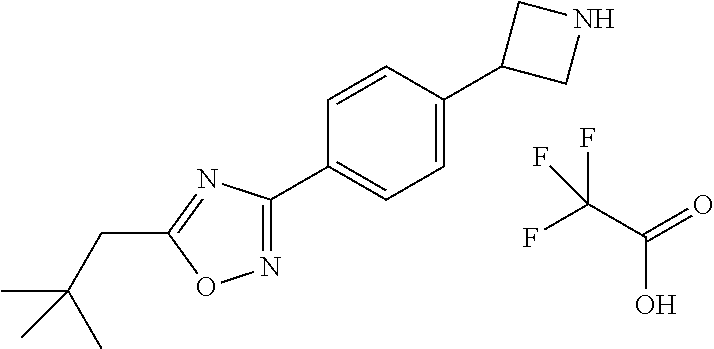


| Per tablet | ||
| Active ingredient | 200 | mg | ||
| Microcrystalline cellulose | 155 | mg | ||
| Corn starch | 25 | mg | ||
| Talc | 25 | mg | ||
| Hydroxypropylmethylcellulose | 20 | mg | ||
| 425 | mg | |||
| Per capsule | ||
| Active ingredient | 100.0 | mg | ||
| Corn starch | 20.0 | mg | ||
| Lactose | 95.0 | mg | ||
| Talc | 4.5 | mg | ||
| Magnesium stearate | 0.5 | mg | ||
| 220.0 | mg | |||
Claims (17)


Applications Claiming Priority (3)
| Application Number | Priority Date | Filing Date | Title |
|---|---|---|---|
| EP19196879 | 2019-09-12 | ||
| EP19196879.1 | 2019-09-12 | ||
| EP19196879 | 2019-09-12 |
Publications (2)
| Publication Number | Publication Date |
|---|---|
| US20210094943A1 US20210094943A1 (en) | 2021-04-01 |
| US11814375B2 true US11814375B2 (en) | 2023-11-14 |
Family
ID=67953598
Family Applications (1)
| Application Number | Title | Priority Date | Filing Date |
|---|---|---|---|
| US17/017,200 Active 2041-05-20 US11814375B2 (en) | 2019-09-12 | 2020-09-10 | Heterocyclic compounds |
Country Status (18)
| Country | Link |
|---|---|
| US (1) | US11814375B2 (en) |
| EP (1) | EP4028403B1 (en) |
| JP (1) | JP7609854B2 (en) |
| KR (1) | KR20220062515A (en) |
| CN (1) | CN114269755A (en) |
| AR (1) | AR119943A1 (en) |
| AU (1) | AU2020346350A1 (en) |
| BR (1) | BR112022002375A2 (en) |
| CA (1) | CA3151516A1 (en) |
| CL (1) | CL2022000556A1 (en) |
| CO (1) | CO2022001879A2 (en) |
| CR (1) | CR20220104A (en) |
| IL (1) | IL289186A (en) |
| MX (1) | MX2022002311A (en) |
| PE (1) | PE20220565A1 (en) |
| PH (1) | PH12022550339A1 (en) |
| TW (1) | TW202128706A (en) |
| WO (1) | WO2021048242A1 (en) |
Cited By (2)
| Publication number | Priority date | Publication date | Assignee | Title |
|---|---|---|---|---|
| US12281124B2 (en) | 2018-08-13 | 2025-04-22 | Hoffmann-La Roche Inc. | Heterocyclic compounds as monoacylglycerol lipase inhibitors |
| US12577257B2 (en) | 2018-11-22 | 2026-03-17 | Hoffmann-La Roche Inc. | Heterocyclic compounds |
Families Citing this family (13)
| Publication number | Priority date | Publication date | Assignee | Title |
|---|---|---|---|---|
| WO2018165520A1 (en) | 2017-03-10 | 2018-09-13 | Vps-3, Inc. | Metalloenzyme inhibitor compounds |
| AR114136A1 (en) | 2017-10-10 | 2020-07-29 | Hoffmann La Roche | HETEROCYCLIC COMPOUNDS |
| WO2019105915A1 (en) | 2017-11-28 | 2019-06-06 | F. Hoffmann-La Roche Ag | New heterocyclic compounds |
| WO2019134985A1 (en) | 2018-01-08 | 2019-07-11 | F. Hoffmann-La Roche Ag | Octahydropyrido[1,2-alpha]pyrazines as magl inhibitors |
| AU2020321955A1 (en) | 2019-07-30 | 2022-03-17 | Eikonizo Therapapeutics, Inc. | HDAC6 inhibitors and uses thereof |
| CN114269755A (en) | 2019-09-12 | 2022-04-01 | 豪夫迈·罗氏有限公司 | 4,4A,5,7,8, 8A-hexapyrido [4,3-B ] [1,4] oxazin-3-one compounds as MAGL inhibitors |
| MX2022007376A (en) | 2019-12-20 | 2022-09-02 | Tenaya Therapeutics Inc | FLUOROALQULL-OXADIAZOLES AND THEIR USES. |
| CA3190277A1 (en) | 2020-09-03 | 2022-03-10 | Joerg Benz | Heterocyclic compounds |
| US20240252502A1 (en) | 2021-05-04 | 2024-08-01 | Tenaya Therapeutics, Inc. | Hdac6 inhibitors for treatment of metabolic disease and hfpef |
| CA3242372A1 (en) | 2021-12-29 | 2023-07-06 | Psy Therapeutics, Inc. | Inhibiting monoacylglycerol lipase (magl) |
| TW202345813A (en) | 2022-04-08 | 2023-12-01 | 美商艾科尼佐療法股份有限公司 | Oxadiazole hdac6 inhibitors and uses thereof |
| CN116410483A (en) * | 2023-04-14 | 2023-07-11 | 沈阳工业大学 | Carbonyl biazacyclo supermolecular onium salt and its prepn and application |
| CN120040415A (en) * | 2023-11-24 | 2025-05-27 | 中国药科大学 | Compound containing quinolinone skeleton and application thereof |
Citations (51)
| Publication number | Priority date | Publication date | Assignee | Title |
|---|---|---|---|---|
| US5214038A (en) | 1991-04-15 | 1993-05-25 | Hoechst-Roussel Pharmaceuticals Inc. | 1-(pyrido[3,4-b]-1,4-oxazinyl-4-yl)-1H-indoles and intermediates for the preparation thereof |
| WO2005019215A1 (en) | 2003-08-22 | 2005-03-03 | Warner-Lambert Company Llc | [1,8]naphthyridin-2-ones and related compounds for the treatment of schizophrenia |
| WO2005066187A1 (en) | 2003-12-19 | 2005-07-21 | General Electric Company | Active ingredient-releasing cyclic siloxanes |
| WO2007002057A1 (en) | 2005-06-20 | 2007-01-04 | Schering Corporation | Carbon-linked substituted piperidines and derivatives thereof useful as histamine h3 antagonists |
| WO2007098418A1 (en) | 2006-02-17 | 2007-08-30 | Memory Pharmaceuticals Corporation | Compounds having 5-ht6 receptor affinity |
| WO2007117557A2 (en) | 2006-04-05 | 2007-10-18 | Vitae Pharmaceuticals, Inc. | Diaminopropanol renin inhibitors |
| WO2009097287A1 (en) | 2008-02-01 | 2009-08-06 | Irm Llc | Compounds and compositions as kinase inhibitors |
| WO2010049302A1 (en) | 2008-10-29 | 2010-05-06 | F. Hoffmann-La Roche Ag | Novel phenyl amide or pyridil amide derivatives and their use as gpbar1 agonists |
| WO2011059118A1 (en) | 2009-11-10 | 2011-05-19 | Kim Hyun Jeen | System for testing olfactory perception |
| WO2011058766A1 (en) | 2009-11-16 | 2011-05-19 | Raqualia Pharma Inc. | Aryl carboxamide derivatives as ttx-s blockers |
| US20110251169A1 (en) | 2010-04-13 | 2011-10-13 | Luke Green | Arylethynyl derivatives |
| WO2012155199A1 (en) | 2011-05-16 | 2012-11-22 | Bionomics Limited | Amine derivatives as potassium channel blockers |
| WO2013059118A1 (en) | 2011-10-19 | 2013-04-25 | The Trustees Of Columbia University In The City Of New York | Cyclopropenimine catalyst compositions and processes |
| US8431695B2 (en) | 2005-11-02 | 2013-04-30 | Bayer Intellectual Property Gmbh | Pyrrolo[2,1-f][1,2,4]triazin-4-ylamines IGF-1R kinase inhibitors for the treatment of cancer and other hyperproliferative diseases |
| WO2013093849A1 (en) | 2011-12-22 | 2013-06-27 | Novartis Ag | Dihydro-benzo-oxazine and dihydro-pyrido-oxazine derivatives |
| WO2013179024A1 (en) | 2012-05-30 | 2013-12-05 | Takeda Pharmaceutical Company Limited | Sulfonyl piperidine derivatives and their use for treating prokineticin mediated diseases |
| WO2014102630A1 (en) | 2012-11-26 | 2014-07-03 | Novartis Ag | Solid form of dihydro-pyrido-oxazine derivative |
| US20140309218A1 (en) | 2011-11-30 | 2014-10-16 | Actelion Pharmaceuticals Ltd. | 3,7-disubstituted octahydro-2h-pyrido[4,3-e][1,3]oxazin-2-one antibiotics |
| WO2014170821A1 (en) | 2013-04-16 | 2014-10-23 | Actelion Pharmaceuticals Ltd | Antibacterial biaromatic derivatives |
| US20150018335A1 (en) | 2012-01-06 | 2015-01-15 | Abide Therapeutics, Inc | Carbamate compounds and of making and using same |
| WO2016109501A1 (en) | 2014-12-30 | 2016-07-07 | Karos Pharmaceuticals, Inc. | Amide compounds as tryptophan hydroxylase inhibitors |
| WO2016180536A1 (en) | 2015-05-13 | 2016-11-17 | Selvita S.A. | Substituted quinoxaline derivatives |
| WO2016185279A1 (en) | 2015-05-21 | 2016-11-24 | Glaxosmithkline Intellectual Property Development Limited | Benzoimidazole derivatives as pad4 inhibitors |
| WO2016205590A1 (en) | 2015-06-18 | 2016-12-22 | Cephalon, Inc. | Substituted 4-benzyl and 4-benzoyl piperidine derivatives |
| WO2017087858A1 (en) | 2015-11-20 | 2017-05-26 | Abide Therapeutics, Inc. | Pyrazole compounds and methods of making and using same |
| WO2017087863A1 (en) | 2015-11-20 | 2017-05-26 | Abide Therapeutics, Inc. | Pyrazole compounds and methods of making and using same |
| WO2017171100A1 (en) | 2016-03-31 | 2017-10-05 | Takeda Pharmaceutical Company Limited | Heterocyclic compound |
| EP3279191A1 (en) | 2015-03-30 | 2018-02-07 | Takeda Pharmaceutical Company Limited | Heterocyclic compound |
| WO2018228934A1 (en) | 2017-06-12 | 2018-12-20 | Boehringer Ingelheim International Gmbh | Heteroaromatic compounds as vanin inhibitors |
| WO2019072785A1 (en) | 2017-10-10 | 2019-04-18 | F. Hoffmann-La Roche Ag | Piperazine derivatives as magl inhibitors |
| WO2019105915A1 (en) | 2017-11-28 | 2019-06-06 | F. Hoffmann-La Roche Ag | New heterocyclic compounds |
| WO2019115660A1 (en) | 2017-12-15 | 2019-06-20 | F. Hoffmann-La Roche Ag | Bezoxazine derivatives useful as monoacylglycerol lipase inhibitors |
| WO2019134985A1 (en) | 2018-01-08 | 2019-07-11 | F. Hoffmann-La Roche Ag | Octahydropyrido[1,2-alpha]pyrazines as magl inhibitors |
| WO2019180185A1 (en) | 2018-03-22 | 2019-09-26 | F. Hoffmann-La Roche Ag | Oxazine monoacylglycerol lipase (magl) inhibitors |
| WO2020035425A1 (en) | 2018-08-13 | 2020-02-20 | F. Hoffmann-La Roche Ag | New heterocyclic compounds as monoacylglycerol lipase inhibitors |
| WO2020035424A1 (en) | 2018-08-13 | 2020-02-20 | F. Hoffmann-La Roche Ag | New heterocyclic compounds as monoacylglycerol lipase inhibitors |
| US10610520B2 (en) | 2016-03-31 | 2020-04-07 | Takeda Pharmaceutical Company Limited | Heterocyclic compound |
| WO2020103815A1 (en) | 2018-11-22 | 2020-05-28 | Qilu Regor Therapeutics Inc. | Glp-1r agonists and uses thereof |
| WO2020104494A1 (en) | 2018-11-22 | 2020-05-28 | F. Hoffmann-La Roche Ag | New heterocyclic compounds |
| US20200255439A1 (en) | 2017-09-29 | 2020-08-13 | Takeda Pharmaceutical Company Limited | Heterocyclic compound |
| US20210094973A1 (en) | 2019-09-24 | 2021-04-01 | Hoffmann-La Roche Inc. | Heterocyclic compounds |
| US20210094943A1 (en) | 2019-09-12 | 2021-04-01 | Hoffmann-La Roche Inc. | Heterocyclic compounds |
| US20210094971A1 (en) | 2019-09-09 | 2021-04-01 | Hoffmann-La Roche Inc. | Heterocyclic compounds |
| US20210094972A1 (en) | 2019-09-24 | 2021-04-01 | Hoffmann-La Roche Inc. | Heterocyclic compounds |
| US20210107921A1 (en) | 2019-09-23 | 2021-04-15 | Hoffmann-La Roche Inc. | Heterocyclic compounds |
| US20220098176A1 (en) | 2020-09-03 | 2022-03-31 | Hoffmann-La Roche Inc. | Heterocyclic compounds |
| US20220135591A1 (en) | 2019-04-09 | 2022-05-05 | Hoffmann-La Roche Inc. | Heterocyclic compounds as inhibitors of monoacylglycerol lipase (magl) |
| US20220202963A1 (en) | 2019-09-12 | 2022-06-30 | Hoffmann-La Roche Inc. | Radiolabeled compounds |
| US20220213093A1 (en) | 2019-07-03 | 2022-07-07 | Hoffmann-La Roche Inc. | Heterocyclic monoacylglycerol lipase (magl) inhibitors |
| US20220220373A1 (en) | 2019-09-24 | 2022-07-14 | Hoffmann-La Roche Inc. | Fluorescent probes for monoacylglycerol lipase (magl) |
| US20220242876A1 (en) | 2019-07-09 | 2022-08-04 | Hoffmann-La Roche Inc. | Heterocyclic compounds |
Family Cites Families (2)
| Publication number | Priority date | Publication date | Assignee | Title |
|---|---|---|---|---|
| FR2915199B1 (en) | 2007-04-18 | 2010-01-22 | Sanofi Aventis | TRIAZOLOPYRIDINE-CARBOXAMIDE AND TRIAZOLOPYRIMIDINE-CARBOXAMIDE DERIVATIVES, THEIR PREPARATION AND THEIR THERAPEUTIC USE. |
| BR112013009828A2 (en) | 2010-10-22 | 2016-07-26 | Janssen Pharmaceutica Nv | amino pyrrolidine azetidine diamides as monoacylglycerol lipase inhibitors |
-
2020
- 2020-09-10 CN CN202080059190.8A patent/CN114269755A/en active Pending
- 2020-09-10 MX MX2022002311A patent/MX2022002311A/en unknown
- 2020-09-10 PE PE2022000245A patent/PE20220565A1/en unknown
- 2020-09-10 US US17/017,200 patent/US11814375B2/en active Active
- 2020-09-10 EP EP20774901.1A patent/EP4028403B1/en active Active
- 2020-09-10 PH PH1/2022/550339A patent/PH12022550339A1/en unknown
- 2020-09-10 CA CA3151516A patent/CA3151516A1/en active Pending
- 2020-09-10 AU AU2020346350A patent/AU2020346350A1/en not_active Abandoned
- 2020-09-10 WO PCT/EP2020/075260 patent/WO2021048242A1/en not_active Ceased
- 2020-09-10 JP JP2022516054A patent/JP7609854B2/en active Active
- 2020-09-10 BR BR112022002375A patent/BR112022002375A2/en not_active Application Discontinuation
- 2020-09-10 KR KR1020227007925A patent/KR20220062515A/en not_active Ceased
- 2020-09-10 CR CR20220104A patent/CR20220104A/en unknown
- 2020-09-11 AR ARP200102527A patent/AR119943A1/en not_active Application Discontinuation
- 2020-09-11 TW TW109131236A patent/TW202128706A/en unknown
-
2021
- 2021-12-20 IL IL289186A patent/IL289186A/en unknown
-
2022
- 2022-02-22 CO CONC2022/0001879A patent/CO2022001879A2/en unknown
- 2022-03-07 CL CL2022000556A patent/CL2022000556A1/en unknown
Patent Citations (65)
| Publication number | Priority date | Publication date | Assignee | Title |
|---|---|---|---|---|
| RU2042680C1 (en) | 1991-04-15 | 1995-08-27 | Хехст-Рассел Фармасьютикалз Инкорпорейтед | 1-[pyrido(3,4-b)-1,4-oxazinyl-4-yl]-1h-indoles, method of their synthesis, composition on their basis and derivative of n-(4-pyridinyl)-1h-indole-1-amine |
| US5214038A (en) | 1991-04-15 | 1993-05-25 | Hoechst-Roussel Pharmaceuticals Inc. | 1-(pyrido[3,4-b]-1,4-oxazinyl-4-yl)-1H-indoles and intermediates for the preparation thereof |
| WO2005019215A1 (en) | 2003-08-22 | 2005-03-03 | Warner-Lambert Company Llc | [1,8]naphthyridin-2-ones and related compounds for the treatment of schizophrenia |
| EA009645B1 (en) | 2003-08-22 | 2008-02-28 | Уорнер-Ламберт Компани Ллс | [1,8]naphthyridin-2-ones and related compounds for the treatment of schizophrenia |
| WO2005066187A1 (en) | 2003-12-19 | 2005-07-21 | General Electric Company | Active ingredient-releasing cyclic siloxanes |
| WO2007002057A1 (en) | 2005-06-20 | 2007-01-04 | Schering Corporation | Carbon-linked substituted piperidines and derivatives thereof useful as histamine h3 antagonists |
| US8431695B2 (en) | 2005-11-02 | 2013-04-30 | Bayer Intellectual Property Gmbh | Pyrrolo[2,1-f][1,2,4]triazin-4-ylamines IGF-1R kinase inhibitors for the treatment of cancer and other hyperproliferative diseases |
| WO2007098418A1 (en) | 2006-02-17 | 2007-08-30 | Memory Pharmaceuticals Corporation | Compounds having 5-ht6 receptor affinity |
| WO2007117557A2 (en) | 2006-04-05 | 2007-10-18 | Vitae Pharmaceuticals, Inc. | Diaminopropanol renin inhibitors |
| WO2009097287A1 (en) | 2008-02-01 | 2009-08-06 | Irm Llc | Compounds and compositions as kinase inhibitors |
| WO2010049302A1 (en) | 2008-10-29 | 2010-05-06 | F. Hoffmann-La Roche Ag | Novel phenyl amide or pyridil amide derivatives and their use as gpbar1 agonists |
| WO2011059118A1 (en) | 2009-11-10 | 2011-05-19 | Kim Hyun Jeen | System for testing olfactory perception |
| WO2011058766A1 (en) | 2009-11-16 | 2011-05-19 | Raqualia Pharma Inc. | Aryl carboxamide derivatives as ttx-s blockers |
| US20110251169A1 (en) | 2010-04-13 | 2011-10-13 | Luke Green | Arylethynyl derivatives |
| WO2012155199A1 (en) | 2011-05-16 | 2012-11-22 | Bionomics Limited | Amine derivatives as potassium channel blockers |
| WO2013059118A1 (en) | 2011-10-19 | 2013-04-25 | The Trustees Of Columbia University In The City Of New York | Cyclopropenimine catalyst compositions and processes |
| US20140309218A1 (en) | 2011-11-30 | 2014-10-16 | Actelion Pharmaceuticals Ltd. | 3,7-disubstituted octahydro-2h-pyrido[4,3-e][1,3]oxazin-2-one antibiotics |
| WO2013093849A1 (en) | 2011-12-22 | 2013-06-27 | Novartis Ag | Dihydro-benzo-oxazine and dihydro-pyrido-oxazine derivatives |
| US20150018335A1 (en) | 2012-01-06 | 2015-01-15 | Abide Therapeutics, Inc | Carbamate compounds and of making and using same |
| WO2013179024A1 (en) | 2012-05-30 | 2013-12-05 | Takeda Pharmaceutical Company Limited | Sulfonyl piperidine derivatives and their use for treating prokineticin mediated diseases |
| WO2014102630A1 (en) | 2012-11-26 | 2014-07-03 | Novartis Ag | Solid form of dihydro-pyrido-oxazine derivative |
| WO2014170821A1 (en) | 2013-04-16 | 2014-10-23 | Actelion Pharmaceuticals Ltd | Antibacterial biaromatic derivatives |
| WO2016109501A1 (en) | 2014-12-30 | 2016-07-07 | Karos Pharmaceuticals, Inc. | Amide compounds as tryptophan hydroxylase inhibitors |
| US10106556B2 (en) | 2015-03-30 | 2018-10-23 | Takeda Pharmaceutical Company Limited | Heterocyclic compound |
| EP3279191A1 (en) | 2015-03-30 | 2018-02-07 | Takeda Pharmaceutical Company Limited | Heterocyclic compound |
| WO2016180536A1 (en) | 2015-05-13 | 2016-11-17 | Selvita S.A. | Substituted quinoxaline derivatives |
| WO2016185279A1 (en) | 2015-05-21 | 2016-11-24 | Glaxosmithkline Intellectual Property Development Limited | Benzoimidazole derivatives as pad4 inhibitors |
| WO2016205590A1 (en) | 2015-06-18 | 2016-12-22 | Cephalon, Inc. | Substituted 4-benzyl and 4-benzoyl piperidine derivatives |
| WO2017087858A1 (en) | 2015-11-20 | 2017-05-26 | Abide Therapeutics, Inc. | Pyrazole compounds and methods of making and using same |
| WO2017087863A1 (en) | 2015-11-20 | 2017-05-26 | Abide Therapeutics, Inc. | Pyrazole compounds and methods of making and using same |
| WO2017171100A1 (en) | 2016-03-31 | 2017-10-05 | Takeda Pharmaceutical Company Limited | Heterocyclic compound |
| US10610520B2 (en) | 2016-03-31 | 2020-04-07 | Takeda Pharmaceutical Company Limited | Heterocyclic compound |
| WO2018228934A1 (en) | 2017-06-12 | 2018-12-20 | Boehringer Ingelheim International Gmbh | Heteroaromatic compounds as vanin inhibitors |
| US20200255439A1 (en) | 2017-09-29 | 2020-08-13 | Takeda Pharmaceutical Company Limited | Heterocyclic compound |
| WO2019072785A1 (en) | 2017-10-10 | 2019-04-18 | F. Hoffmann-La Roche Ag | Piperazine derivatives as magl inhibitors |
| US11390610B2 (en) | 2017-10-10 | 2022-07-19 | Hoffmann-La Roche Inc. | Piperazine derivatives as MAGL inhibitors |
| WO2019105915A1 (en) | 2017-11-28 | 2019-06-06 | F. Hoffmann-La Roche Ag | New heterocyclic compounds |
| US11420961B2 (en) | 2017-11-28 | 2022-08-23 | Hoffmann-La Roche Inc. | Heterocyclic compounds |
| WO2019115660A1 (en) | 2017-12-15 | 2019-06-20 | F. Hoffmann-La Roche Ag | Bezoxazine derivatives useful as monoacylglycerol lipase inhibitors |
| US20200308158A1 (en) | 2017-12-15 | 2020-10-01 | Hoffmann-La Roche Inc. | Bezoxazine derivatives useful as monoacylglycerol lipase inhibitors |
| US20210024546A1 (en) | 2018-01-08 | 2021-01-28 | Hoffmann-La Roche Inc. | Octahydropyrido[1,2-alpha]pyrazines as magl inhibitors |
| WO2019134985A1 (en) | 2018-01-08 | 2019-07-11 | F. Hoffmann-La Roche Ag | Octahydropyrido[1,2-alpha]pyrazines as magl inhibitors |
| WO2019180185A1 (en) | 2018-03-22 | 2019-09-26 | F. Hoffmann-La Roche Ag | Oxazine monoacylglycerol lipase (magl) inhibitors |
| US20210107920A1 (en) | 2018-03-22 | 2021-04-15 | Hoffmann-La Roche Inc. | Oxazine monoacylglycerol lipase (magl) inhibitors |
| US20210277020A1 (en) | 2018-08-13 | 2021-09-09 | Hoffmann-La Roche Inc. | Heterocyclic compounds as monoacylglycerol lipase inhibitors |
| WO2020035424A1 (en) | 2018-08-13 | 2020-02-20 | F. Hoffmann-La Roche Ag | New heterocyclic compounds as monoacylglycerol lipase inhibitors |
| US20200308190A1 (en) | 2018-08-13 | 2020-10-01 | Hoffmann-La Roche Inc. | Heterocyclic compounds as monoacylglycerol lipase inhibitors |
| WO2020035425A1 (en) | 2018-08-13 | 2020-02-20 | F. Hoffmann-La Roche Ag | New heterocyclic compounds as monoacylglycerol lipase inhibitors |
| WO2020103815A1 (en) | 2018-11-22 | 2020-05-28 | Qilu Regor Therapeutics Inc. | Glp-1r agonists and uses thereof |
| WO2020104494A1 (en) | 2018-11-22 | 2020-05-28 | F. Hoffmann-La Roche Ag | New heterocyclic compounds |
| US20210387999A1 (en) | 2018-11-22 | 2021-12-16 | Hoffmann-La Roche Inc. | Heterocyclic compounds |
| US20220135591A1 (en) | 2019-04-09 | 2022-05-05 | Hoffmann-La Roche Inc. | Heterocyclic compounds as inhibitors of monoacylglycerol lipase (magl) |
| US20220213093A1 (en) | 2019-07-03 | 2022-07-07 | Hoffmann-La Roche Inc. | Heterocyclic monoacylglycerol lipase (magl) inhibitors |
| US20220242876A1 (en) | 2019-07-09 | 2022-08-04 | Hoffmann-La Roche Inc. | Heterocyclic compounds |
| US20210094971A1 (en) | 2019-09-09 | 2021-04-01 | Hoffmann-La Roche Inc. | Heterocyclic compounds |
| US20220275005A1 (en) | 2019-09-09 | 2022-09-01 | Hoffmann-La Roche Inc. | Heterocyclic compounds |
| US20220202963A1 (en) | 2019-09-12 | 2022-06-30 | Hoffmann-La Roche Inc. | Radiolabeled compounds |
| US20210094943A1 (en) | 2019-09-12 | 2021-04-01 | Hoffmann-La Roche Inc. | Heterocyclic compounds |
| US20210107921A1 (en) | 2019-09-23 | 2021-04-15 | Hoffmann-La Roche Inc. | Heterocyclic compounds |
| US20220267349A1 (en) | 2019-09-23 | 2022-08-25 | Hoffmann-La Roche Inc. | Heterocyclic compounds |
| US20220106328A1 (en) * | 2019-09-24 | 2022-04-07 | Hoffmann-La Roche Inc. | Heterocyclic compounds |
| US20210094972A1 (en) | 2019-09-24 | 2021-04-01 | Hoffmann-La Roche Inc. | Heterocyclic compounds |
| US20220220373A1 (en) | 2019-09-24 | 2022-07-14 | Hoffmann-La Roche Inc. | Fluorescent probes for monoacylglycerol lipase (magl) |
| US20210094973A1 (en) | 2019-09-24 | 2021-04-01 | Hoffmann-La Roche Inc. | Heterocyclic compounds |
| US20220098176A1 (en) | 2020-09-03 | 2022-03-31 | Hoffmann-La Roche Inc. | Heterocyclic compounds |
Non-Patent Citations (96)
Cited By (2)
| Publication number | Priority date | Publication date | Assignee | Title |
|---|---|---|---|---|
| US12281124B2 (en) | 2018-08-13 | 2025-04-22 | Hoffmann-La Roche Inc. | Heterocyclic compounds as monoacylglycerol lipase inhibitors |
| US12577257B2 (en) | 2018-11-22 | 2026-03-17 | Hoffmann-La Roche Inc. | Heterocyclic compounds |
Also Published As
| Publication number | Publication date |
|---|---|
| PE20220565A1 (en) | 2022-04-13 |
| US20210094943A1 (en) | 2021-04-01 |
| EP4028403B1 (en) | 2023-11-22 |
| CN114269755A (en) | 2022-04-01 |
| CA3151516A1 (en) | 2021-03-18 |
| CL2022000556A1 (en) | 2022-10-21 |
| JP2022548028A (en) | 2022-11-16 |
| EP4028403C0 (en) | 2023-11-22 |
| PH12022550339A1 (en) | 2023-03-13 |
| KR20220062515A (en) | 2022-05-17 |
| AR119943A1 (en) | 2022-01-19 |
| CO2022001879A2 (en) | 2022-03-29 |
| JP7609854B2 (en) | 2025-01-07 |
| EP4028403A1 (en) | 2022-07-20 |
| IL289186A (en) | 2022-02-01 |
| TW202128706A (en) | 2021-08-01 |
| MX2022002311A (en) | 2022-03-25 |
| CR20220104A (en) | 2022-04-20 |
| WO2021048242A1 (en) | 2021-03-18 |
| AU2020346350A1 (en) | 2022-02-17 |
| BR112022002375A2 (en) | 2022-07-19 |
Similar Documents
| Publication | Publication Date | Title |
|---|---|---|
| US11814375B2 (en) | Heterocyclic compounds | |
| US12281124B2 (en) | Heterocyclic compounds as monoacylglycerol lipase inhibitors | |
| EP3953360B1 (en) | Heterocyclic compounds as inhibitors of monoacylglycerol lipase (magl) | |
| US12577257B2 (en) | Heterocyclic compounds | |
| US20230117324A1 (en) | Oxazine monoacylglycerol lipase (magl) inhibitors | |
| US20210277020A1 (en) | Heterocyclic compounds as monoacylglycerol lipase inhibitors | |
| US11981661B2 (en) | Heterocyclic compounds | |
| US20240199587A1 (en) | Heterocyclic compounds | |
| US20210094973A1 (en) | Heterocyclic compounds | |
| US20220213093A1 (en) | Heterocyclic monoacylglycerol lipase (magl) inhibitors | |
| US20220275005A1 (en) | Heterocyclic compounds | |
| US20220242876A1 (en) | Heterocyclic compounds | |
| US20240383904A1 (en) | Heterocyclic compounds | |
| US20250059185A1 (en) | Bicyclic heterocyclic compounds useful as monoacylglycerol lipase inhibitors | |
| HK40062310A (en) | 4,4a,5,7,8,8a-hexapyrido[4,3-b][1,4]oxazin-3-one compounds as magl inhibitors | |
| WO2024088922A1 (en) | Heterocyclic compounds as inhibitors of monoacylglycerol lipase (magl) | |
| US20260008758A1 (en) | Linear dipeptidyl peptidase 1 inhibitors and uses thereof | |
| HK40065118A (en) | New heterocyclic monoacylglycerol lipase (magl) inhibitors |
Legal Events
| Date | Code | Title | Description |
|---|---|---|---|
| FEPP | Fee payment procedure |
Free format text: ENTITY STATUS SET TO UNDISCOUNTED (ORIGINAL EVENT CODE: BIG.); ENTITY STATUS OF PATENT OWNER: LARGE ENTITY |
|
| AS | Assignment |
Owner name: F. HOFFMANN-LA ROCHE AG, SWITZERLAND Free format text: ASSIGNMENT OF ASSIGNORS INTEREST;ASSIGNORS:MARTIN, RAINER E.;PUELLMANN, BERND;RITTER, MARTIN;REEL/FRAME:054395/0805 Effective date: 20200824 Owner name: F. HOFFMANN-LA ROCHE AG, SWITZERLAND Free format text: ASSIGNMENT OF ASSIGNORS INTEREST;ASSIGNORS:BENZ, JOERG;GOBBI, LUCA;GRETHER, UWE;AND OTHERS;SIGNING DATES FROM 20190925 TO 20191010;REEL/FRAME:054392/0066 Owner name: HOFFMANN-LA ROCHE INC., NEW JERSEY Free format text: ASSIGNMENT OF ASSIGNORS INTEREST;ASSIGNOR:F. HOFFMANN-LA ROCHE AG;REEL/FRAME:054395/0903 Effective date: 20191028 Owner name: HOFFMANN-LA ROCHE INC., NEW JERSEY Free format text: ASSIGNMENT OF ASSIGNORS INTEREST;ASSIGNOR:F. HOFFMANN-LA ROCHE AG;REEL/FRAME:054395/0961 Effective date: 20200825 |
|
| STPP | Information on status: patent application and granting procedure in general |
Free format text: APPLICATION DISPATCHED FROM PREEXAM, NOT YET DOCKETED |
|
| STPP | Information on status: patent application and granting procedure in general |
Free format text: DOCKETED NEW CASE - READY FOR EXAMINATION |
|
| STPP | Information on status: patent application and granting procedure in general |
Free format text: NON FINAL ACTION MAILED |
|
| STPP | Information on status: patent application and granting procedure in general |
Free format text: NON FINAL ACTION MAILED |
|
| STPP | Information on status: patent application and granting procedure in general |
Free format text: RESPONSE TO NON-FINAL OFFICE ACTION ENTERED AND FORWARDED TO EXAMINER |
|
| STPP | Information on status: patent application and granting procedure in general |
Free format text: NOTICE OF ALLOWANCE MAILED -- APPLICATION RECEIVED IN OFFICE OF PUBLICATIONS |
|
| STPP | Information on status: patent application and granting procedure in general |
Free format text: PUBLICATIONS -- ISSUE FEE PAYMENT VERIFIED |
|
| STCF | Information on status: patent grant |
Free format text: PATENTED CASE |