US11798255B2 - Sign language video segmentation method by gloss for sign language sentence recognition, and training method therefor - Google Patents

Sign language video segmentation method by gloss for sign language sentence recognition, and training method therefor Download PDF

Info

Publication number
US11798255B2
US11798255B2 US17/563,205 US202117563205A US11798255B2 US 11798255 B2 US11798255 B2 US 11798255B2 US 202117563205 A US202117563205 A US 202117563205A US 11798255 B2 US11798255 B2 US 11798255B2
Authority
US
United States
Prior art keywords
video
sign language
segmentation
gloss
language sentence
Prior art date
Legal status (The legal status is an assumption and is not a legal conclusion. Google has not performed a legal analysis and makes no representation as to the accuracy of the status listed.)
Active
Application number
US17/563,205
Other versions
US20220415009A1 (en
Inventor
Han Mu PARK
Jin Yea JANG
Yoon Young JEONG
Sa Im SHIN
Current Assignee (The listed assignees may be inaccurate. Google has not performed a legal analysis and makes no representation or warranty as to the accuracy of the list.)
Korea Electronics Technology Institute
Original Assignee
Korea Electronics Technology Institute
Priority date (The priority date is an assumption and is not a legal conclusion. Google has not performed a legal analysis and makes no representation as to the accuracy of the date listed.)
Filing date
Publication date
Application filed by Korea Electronics Technology Institute filed Critical Korea Electronics Technology Institute
Assigned to KOREA ELECTRONICS TECHNOLOGY INSTITUTE reassignment KOREA ELECTRONICS TECHNOLOGY INSTITUTE ASSIGNMENT OF ASSIGNORS INTEREST (SEE DOCUMENT FOR DETAILS). Assignors: JANG, Jin Yea, JEONG, YOON YOUNG, PARK, HAN MU, SHIN, SA IM
Publication of US20220415009A1 publication Critical patent/US20220415009A1/en
Application granted granted Critical
Publication of US11798255B2 publication Critical patent/US11798255B2/en
Active legal-status Critical Current
Anticipated expiration legal-status Critical

Links

Images

Classifications

    • HELECTRICITY
    • H04ELECTRIC COMMUNICATION TECHNIQUE
    • H04NPICTORIAL COMMUNICATION, e.g. TELEVISION
    • H04N21/00Selective content distribution, e.g. interactive television or video on demand [VOD]
    • H04N21/80Generation or processing of content or additional data by content creator independently of the distribution process; Content per se
    • H04N21/83Generation or processing of protective or descriptive data associated with content; Content structuring
    • H04N21/845Structuring of content, e.g. decomposing content into time segments
    • H04N21/8455Structuring of content, e.g. decomposing content into time segments involving pointers to the content, e.g. pointers to the I-frames of the video stream
    • GPHYSICS
    • G06COMPUTING OR CALCULATING; COUNTING
    • G06VIMAGE OR VIDEO RECOGNITION OR UNDERSTANDING
    • G06V10/00Arrangements for image or video recognition or understanding
    • G06V10/40Extraction of image or video features
    • G06V10/42Global feature extraction by analysis of the whole pattern, e.g. using frequency domain transformations or autocorrelation
    • G06V10/421Global feature extraction by analysis of the whole pattern, e.g. using frequency domain transformations or autocorrelation by analysing segments intersecting the pattern
    • GPHYSICS
    • G06COMPUTING OR CALCULATING; COUNTING
    • G06NCOMPUTING ARRANGEMENTS BASED ON SPECIFIC COMPUTATIONAL MODELS
    • G06N20/00Machine learning
    • GPHYSICS
    • G06COMPUTING OR CALCULATING; COUNTING
    • G06NCOMPUTING ARRANGEMENTS BASED ON SPECIFIC COMPUTATIONAL MODELS
    • G06N7/00Computing arrangements based on specific mathematical models
    • G06N7/01Probabilistic graphical models, e.g. probabilistic networks
    • GPHYSICS
    • G06COMPUTING OR CALCULATING; COUNTING
    • G06VIMAGE OR VIDEO RECOGNITION OR UNDERSTANDING
    • G06V10/00Arrangements for image or video recognition or understanding
    • G06V10/70Arrangements for image or video recognition or understanding using pattern recognition or machine learning
    • G06V10/77Processing image or video features in feature spaces; using data integration or data reduction, e.g. principal component analysis [PCA] or independent component analysis [ICA] or self-organising maps [SOM]; Blind source separation
    • G06V10/774Generating sets of training patterns; Bootstrap methods, e.g. bagging or boosting
    • G06V10/7747Organisation of the process, e.g. bagging or boosting
    • GPHYSICS
    • G06COMPUTING OR CALCULATING; COUNTING
    • G06VIMAGE OR VIDEO RECOGNITION OR UNDERSTANDING
    • G06V10/00Arrangements for image or video recognition or understanding
    • G06V10/70Arrangements for image or video recognition or understanding using pattern recognition or machine learning
    • G06V10/84Arrangements for image or video recognition or understanding using pattern recognition or machine learning using probabilistic graphical models from image or video features, e.g. Markov models or Bayesian networks
    • GPHYSICS
    • G06COMPUTING OR CALCULATING; COUNTING
    • G06VIMAGE OR VIDEO RECOGNITION OR UNDERSTANDING
    • G06V40/00Recognition of biometric, human-related or animal-related patterns in image or video data
    • G06V40/20Movements or behaviour, e.g. gesture recognition
    • G06V40/28Recognition of hand or arm movements, e.g. recognition of deaf sign language
    • GPHYSICS
    • G09EDUCATION; CRYPTOGRAPHY; DISPLAY; ADVERTISING; SEALS
    • G09BEDUCATIONAL OR DEMONSTRATION APPLIANCES; APPLIANCES FOR TEACHING, OR COMMUNICATING WITH, THE BLIND, DEAF OR MUTE; MODELS; PLANETARIA; GLOBES; MAPS; DIAGRAMS
    • G09B21/00Teaching, or communicating with, the blind, deaf or mute
    • G09B21/009Teaching or communicating with deaf persons

Definitions

  • the present disclosure relates generally to artificial intelligence (AI) technology, and more particularly, to a method for segmenting a sign language video to recognize a sign language sentence, and a method for training an AI model used for segmentation.
  • AI artificial intelligence
  • AI artificial intelligence
  • this method requires training a neutral network by using many training videos and sign language data, and, even if this requirement is satisfied, the method does not show satisfactory recognition performance.
  • a sign language video segmentation method includes the steps of: receiving an input of a sign language sentence video; and segmenting the inputted sign language sentence video by gloss.
  • the step of segmenting may include the steps of: segmenting the inputted sign language sentence video into a plurality of video segments; with respect to the segmented video segments, estimating segmentation probability distributions indicating whether the video segments should be segmented; and confirming whether the video segments are segmented and confirming a segmentation position, based on the estimated segmentation probability distributions of the video segments, and generating a video sequence which is segmented by gloss.
  • the video segment may overlap other video segments in part.
  • the step of estimating may include estimating the segmentation probability distribution expressing whether each video segment should be segmented, by a probability distribution according to time.
  • the step of estimating may include estimating the segmentation probability distribution by using an AI model.
  • the AI model may be trained by using training video segments which are generated from a training sign language sentence video dataset in which a start point and an end point of a sign language sentence video and start points and end points of respective glosses are specified by labels.
  • the AI model may be trained by using training video segments which are generated from a virtual sign language sentence video, the virtual sign language sentence video being generated by connecting gloss videos constituting a training gloss video dataset established on a gloss basis.
  • the step of generating includes the steps of: detecting whether each video segment is segmented and a segmentation position, based on the estimated segmentation probability distribution; and generating a video sequence on a gloss basis with reference to the detected segmentation position.
  • the step of detecting may include the steps of: generating one probability distribution by collecting the estimated respective segmentation probability distributions of the video segments; and detecting whether the video segments are segmented and the segmentation position from the collected probability distributions.
  • a sign language video segmentation system includes: an input unit configured to receive an input of a sign language sentence video; and a segmentation unit configured to segment the inputted sign language sentence video by gloss.
  • a sign language video segmentation method incudes the steps of: training an AI model which receives an input of a sign language sentence video and outputs a video sequence which is segmented by gloss; and segmenting an inputted sign language sentence video by gloss by using the trained AI model.
  • a sign language video segmentation system includes: a training unit configured to train an AI model which receives an input of a sign language sentence video and outputs a video sequence which is segmented by gloss; and a segmentation unit configured to segment an inputted sign language sentence video by gloss by using the trained AI model.
  • a plurality of training data may be generated by themselves from a real sign language sentence video dataset, and also, plenty of training data of an AI model for segmenting a sign language sentence video by gloss may be acquired by generating virtual training data by virtually connecting gloss videos.
  • FIG. 1 is a view illustrating a sign language video segmentation system according to an embodiment of the present disclosure
  • FIG. 2 is a view illustrating a video segment generation method
  • FIG. 3 is a view illustrating a process of determining whether to segment
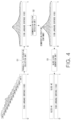
  • FIG. 4 is a view illustrating a process of confirming a segmentation position and segmenting a video
  • FIG. 5 is a view illustrating a hardware structure which is able to implement the sign language video segmentation system.
  • sign language is a separate language that has a different grammatical system from Korean language
  • a sign language sentence video is required to be analyzed on a gloss basis.
  • embodiments of the present disclosure suggest a method for segmenting a sign language video by gloss, by automatically extracting gloss sections which are semantic units in the video, in order to recognize a sign language sentence. This may be approached by a method of detecting a boundary between glosses by utilizing an AI model.
  • embodiments of the present disclosure may provide self-generation of a plurality of training data from a real sign language sentence video dataset, and generation of virtual training data by virtually connecting gloss videos, as a solution to acquire plenty of training data for an AI model for segmenting a sign language sentence video.
  • FIG. 1 is a block diagram of a sign language video segmentation system according to an embodiment of the present disclosure.
  • the sign language video segmentation system according to an embodiment is established by including a gloss-based sign language video segmentation unit 110 and a segmentation determination model training unit 200 as shown in the drawing.
  • the gloss-based sign language video segmentation unit 100 receives an input of a sign language sentence video, and generates a video sequence that is segmented by gloss, from the inputted sign language sentence video.
  • the gloss-based sign language video segmentation unit 100 which performs the above-described function may include a segment generation unit 110 , a segmentation determination unit 120 , and a segmentation position confirmation unit 130 .
  • the segment generation unit 110 receives the input of the sign language sentence video, and generates a plurality of video segments having a short length by segmenting the sign language sentence video into video segments having the same length.
  • the length of the video segments generated by the segment generation unit 110 may be arbitrarily determined, and each of the video segments may overlap other neighboring video segments in part as shown in FIG. 2 .
  • a range of overlapping in part is not limited to directly adjacent video segments. That is, as shown in FIG. 2 , video segment # 5 may overlap video segment # 3 and video segment # 4 which precede video segment # 5 in part, and may overlap video segment # 6 and video segment # 7 which follow video segment # 5 in part.
  • the segmentation method shown in FIG. 2 is merely an example, and the video may be segmented such that video segments in a wider range overlap each other in part.
  • the segmentation determination unit 120 is an AI model that receives the video segments generated at the segment generation unit 110 , and determines whether each of the video segments should be segmented, and outputs a segmentation probability distribution expressing a result of determination by a probability distribution according to time.
  • FIG. 3 schematically illustrates a concept of estimating a segmentation probability distribution regarding each video segment by the segmentation determination unit 120 .
  • the probability distribution may be a certain probability distribution defined by a user, in addition to a normal distribution.
  • the AI model of the segmentation determination unit 120 may be already trained by using training data which is provided through the segmentation determination model training unit 200 , which will be described below.
  • the segmentation position confirmation unit 130 may confirm whether the video segments are segmented, based on the segmentation probability distributions regarding the video segments estimated by the segmentation determination unit 120 , and may confirm a segmentation position regarding a video segment that is confirmed to be segmented. Accordingly, a video sequence which is segmented by gloss is generated at the segmentation position confirmation unit 130 .
  • the segmentation position confirmation unit 130 performing the above-described function may include a probability distribution collection unit 131 , a segmentation position detection unit 132 , and a gloss video generation unit 133 , as shown in FIG. 4 .
  • the probability distribution collection unit 131 generates one probability distribution by collecting all of the segmentation probability distributions regarding the respective video segments, which are estimated by the segmentation determination unit 120 .
  • the segmentation position detection unit 132 may detect segmentation positions from the one probability distribution collected by the probability distribution collection unit 131 . There may be two or more positions for segmenting according to an inputted sign language video. Of course, there may be one segmentation position or there may be no segmentation position.
  • the gloss video generation unit 133 may segment the sign language sentence video with reference to the segmentation positions detected by the segmentation position detection unit 132 , and may generate/output the video sequence which is segmented by gloss.
  • the segmentation determination model training unit 200 is a means for training the AI model which estimates the segmentation probability distribution at the segmentation determination unit 120 of the gloss-based sign language video segmentation unit 100 , and may include a training data conversion unit 210 and a training data generation unit 200 .
  • the training data conversion unit 210 generates training video segments of a defined length, from a ‘training sign language sentence video dataset’ in which start/end points of a sign language sentence video and each gloss are specified by labels.
  • the training data conversion unit 210 generates the training video segments in such a manner that, when a gloss change point is on a center of a video segment, it gives the video segment a highest probability.
  • the training data generation unit 220 generates a virtual sign language sentence video by connecting gloss videos of a ‘training gloss video dataset’ which is established on the gloss basis.
  • the gloss videos may be directly connected without modification, or may be naturally connected through modification such as motion blending, etc.
  • other virtual sign language sentence videos may further be generated by randomly changing the order of gloss videos constituting the generated virtual sign language sentence video.
  • the virtual sign language sentence video generated at the training data generation unit 220 may be processed at the training data conversion unit 210 in the same way as a real sign language sentence video, and may be utilized for training.
  • FIG. 5 is a view illustrating a hardware structure which is able to implement the sign language video segmentation system according to an embodiment of the present disclosure.
  • the sign language video segmentation system may be implemented by a computing system which is established by including a communication unit 310 , an output unit 320 , a processor 330 , an input unit 330 , and a storage unit 350 .
  • the communication unit 310 is a communication means for communicating with an external device and for accessing an external network.
  • the output unit 320 is a display that displays a result of executing by the processor 330
  • the input unit 340 is a user input means for transmitting a user command to the processor 330 .
  • the processor 330 is configured to perform functions of the means constituting the sign language video segmentation system shown in FIG. 1 , and includes a plurality of graphic processing units (GPUs) and a central processing unit (CPU).
  • GPUs graphic processing units
  • CPU central processing unit
  • the storage unit 350 provides a storage space necessary for operations and functions of the processor 330 .
  • the technical concept of the present disclosure may be applied to a computer-readable recording medium which records a computer program for performing the functions of the apparatus and the method according to the present embodiments.
  • the technical idea according to various embodiments of the present disclosure may be implemented in the form of a computer readable code recorded on the computer-readable recording medium.
  • the computer-readable recording medium may be any data storage device that can be read by a computer and can store data.
  • the computer-readable recording medium may be a read only memory (ROM), a random access memory (RAM), a CD-ROM, a magnetic tape, a floppy disk, an optical disk, a hard disk drive, or the like.
  • a computer readable code or program that is stored in the computer readable recording medium may be transmitted via a network connected between computers.

Landscapes

  • Engineering & Computer Science (AREA)
  • Theoretical Computer Science (AREA)
  • Physics & Mathematics (AREA)
  • General Physics & Mathematics (AREA)
  • Software Systems (AREA)
  • Multimedia (AREA)
  • Computer Vision & Pattern Recognition (AREA)
  • General Health & Medical Sciences (AREA)
  • Health & Medical Sciences (AREA)
  • Artificial Intelligence (AREA)
  • Evolutionary Computation (AREA)
  • Computing Systems (AREA)
  • Medical Informatics (AREA)
  • Databases & Information Systems (AREA)
  • Mathematical Physics (AREA)
  • Data Mining & Analysis (AREA)
  • General Engineering & Computer Science (AREA)
  • Probability & Statistics with Applications (AREA)
  • Psychiatry (AREA)
  • Business, Economics & Management (AREA)
  • Educational Technology (AREA)
  • Educational Administration (AREA)
  • Audiology, Speech & Language Pathology (AREA)
  • Human Computer Interaction (AREA)
  • Social Psychology (AREA)
  • Pure & Applied Mathematics (AREA)
  • Signal Processing (AREA)
  • Mathematical Optimization (AREA)
  • Mathematical Analysis (AREA)
  • Algebra (AREA)
  • Computational Mathematics (AREA)
  • Machine Translation (AREA)

Abstract

There are provided a method for segmenting a sign language video by gloss to recognize a sign language sentence, and a method for training. According to an embodiment, a sign language video segmentation method receives an input of a sign language sentence video, and segments the inputted sign language sentence video by gloss. Accordingly, there is suggested a method for segmenting a sign language sentence video by gloss, analyzing various gloss sequences from the linguistic perspective, understanding meanings robustly in spite of various changes in sentences, and translating sign language into appropriate Korean sentences.

Description

CROSS-REFERENCE TO RELATED APPLICATION(S) AND CLAIM OF PRIORITY
This application is based on and claims priority under 35 U.S.C. § 119 to Korean Patent Application No. 10-2021-84665, filed on Jun. 29, 2021, in the Korean Intellectual Property Office, the disclosure of which is herein incorporated by reference in its entirety.
BACKGROUND Field
The present disclosure relates generally to artificial intelligence (AI) technology, and more particularly, to a method for segmenting a sign language video to recognize a sign language sentence, and a method for training an AI model used for segmentation.
Description of Related Art
The repaid development of artificial intelligence (AI) technology enables automatic recognition of sign language from a sign language video. Current deep learning-based sign language recognition techniques follow the End-to-End training method which directly generates sign language from a video.
However, this method requires training a neutral network by using many training videos and sign language data, and, even if this requirement is satisfied, the method does not show satisfactory recognition performance.
This is because a sign language sentence is expressed by a continuous sequence of glosses, but existing methods recognize the sentence in the lump. Accordingly, there is a need for an attempt to recognize sign language with a new approach.
SUMMARY
To address the above-discussed deficiencies of the prior art, it is a primary object of the present disclosure to provide a method for segmenting a sign language sentence video by gloss, analyzing various gloss sequences from the linguistic perspective, understanding meanings robustly in spite of various changes in sentences, and translating sign language into appropriate Korean sentences.
According to an embodiment of the present disclosure to achieve the above-described object, a sign language video segmentation method includes the steps of: receiving an input of a sign language sentence video; and segmenting the inputted sign language sentence video by gloss.
The step of segmenting may include the steps of: segmenting the inputted sign language sentence video into a plurality of video segments; with respect to the segmented video segments, estimating segmentation probability distributions indicating whether the video segments should be segmented; and confirming whether the video segments are segmented and confirming a segmentation position, based on the estimated segmentation probability distributions of the video segments, and generating a video sequence which is segmented by gloss.
The video segment may overlap other video segments in part.
The step of estimating may include estimating the segmentation probability distribution expressing whether each video segment should be segmented, by a probability distribution according to time. The step of estimating may include estimating the segmentation probability distribution by using an AI model.
The AI model may be trained by using training video segments which are generated from a training sign language sentence video dataset in which a start point and an end point of a sign language sentence video and start points and end points of respective glosses are specified by labels.
The AI model may be trained by using training video segments which are generated from a virtual sign language sentence video, the virtual sign language sentence video being generated by connecting gloss videos constituting a training gloss video dataset established on a gloss basis.
The step of generating includes the steps of: detecting whether each video segment is segmented and a segmentation position, based on the estimated segmentation probability distribution; and generating a video sequence on a gloss basis with reference to the detected segmentation position.
The step of detecting may include the steps of: generating one probability distribution by collecting the estimated respective segmentation probability distributions of the video segments; and detecting whether the video segments are segmented and the segmentation position from the collected probability distributions.
According to another embodiment of the present disclosure, a sign language video segmentation system includes: an input unit configured to receive an input of a sign language sentence video; and a segmentation unit configured to segment the inputted sign language sentence video by gloss.
According to still another embodiment, a sign language video segmentation method incudes the steps of: training an AI model which receives an input of a sign language sentence video and outputs a video sequence which is segmented by gloss; and segmenting an inputted sign language sentence video by gloss by using the trained AI model.
According to yet another embodiment, a sign language video segmentation system includes: a training unit configured to train an AI model which receives an input of a sign language sentence video and outputs a video sequence which is segmented by gloss; and a segmentation unit configured to segment an inputted sign language sentence video by gloss by using the trained AI model.
According to various embodiments of the present disclosure as described above, there may be suggested a method for segmenting a sign language sentence video by gloss, analyzing various gloss sequences from the linguistic perspective, understanding meanings robustly in spite of various changes in sentences, and translating sign language into appropriate Korean sentences.
According to various embodiments of the present disclosure, a plurality of training data may be generated by themselves from a real sign language sentence video dataset, and also, plenty of training data of an AI model for segmenting a sign language sentence video by gloss may be acquired by generating virtual training data by virtually connecting gloss videos.
Other aspects, advantages, and salient features of the invention will become apparent to those skilled in the art from the following detailed description, which, taken in conjunction with the annexed drawings, discloses exemplary embodiments of the invention.
Before undertaking the DETAILED DESCRIPTION OF THE INVENTION below, it may be advantageous to set forth definitions of certain words and phrases used throughout this patent document: the terms “include” and “comprise,” as well as derivatives thereof, mean inclusion without limitation; the term “or,” is inclusive, meaning and/or; the phrases “associated with” and “associated therewith,” as well as derivatives thereof, may mean to include, be included within, interconnect with, contain, be contained within, connect to or with, couple to or with, be communicable with, cooperate with, interleave, juxtapose, be proximate to, be bound to or with, have, have a property of, or the like. Definitions for certain words and phrases are provided throughout this patent document, those of ordinary skill in the art should understand that in many, if not most instances, such definitions apply to prior, as well as future uses of such defined words and phrases.
BRIEF DESCRIPTION OF THE DRAWINGS
For a more complete understanding of the present disclosure and its advantages, reference is now made to the following description taken in conjunction with the accompanying drawings, in which like reference numerals represent like parts:
FIG. 1 is a view illustrating a sign language video segmentation system according to an embodiment of the present disclosure;
FIG. 2 is a view illustrating a video segment generation method;
FIG. 3 is a view illustrating a process of determining whether to segment;
FIG. 4 is a view illustrating a process of confirming a segmentation position and segmenting a video; and
FIG. 5 is a view illustrating a hardware structure which is able to implement the sign language video segmentation system.
DETAILED DESCRIPTION
Hereinafter, the present disclosure will be described in more detail with reference to the accompanying drawings.
Since sign language is a separate language that has a different grammatical system from Korean language, there may be various combinations of gloss sequences corresponding to a meaning of the same Korean sentence. In order to translate gloss sequences of various combinations, a sign language sentence video is required to be analyzed on a gloss basis.
To achieve this, a technique for segmenting a sign language video by gloss is needed. Accordingly, embodiments of the present disclosure suggest a method for segmenting a sign language video by gloss, by automatically extracting gloss sections which are semantic units in the video, in order to recognize a sign language sentence. This may be approached by a method of detecting a boundary between glosses by utilizing an AI model.
In addition, embodiments of the present disclosure may provide self-generation of a plurality of training data from a real sign language sentence video dataset, and generation of virtual training data by virtually connecting gloss videos, as a solution to acquire plenty of training data for an AI model for segmenting a sign language sentence video.
FIG. 1 is a block diagram of a sign language video segmentation system according to an embodiment of the present disclosure. The sign language video segmentation system according to an embodiment is established by including a gloss-based sign language video segmentation unit 110 and a segmentation determination model training unit 200 as shown in the drawing.
The gloss-based sign language video segmentation unit 100 receives an input of a sign language sentence video, and generates a video sequence that is segmented by gloss, from the inputted sign language sentence video.
The gloss-based sign language video segmentation unit 100 which performs the above-described function may include a segment generation unit 110, a segmentation determination unit 120, and a segmentation position confirmation unit 130.
The segment generation unit 110 receives the input of the sign language sentence video, and generates a plurality of video segments having a short length by segmenting the sign language sentence video into video segments having the same length.
The length of the video segments generated by the segment generation unit 110 may be arbitrarily determined, and each of the video segments may overlap other neighboring video segments in part as shown in FIG. 2 .
A range of overlapping in part is not limited to directly adjacent video segments. That is, as shown in FIG. 2 , video segment # 5 may overlap video segment # 3 and video segment # 4 which precede video segment # 5 in part, and may overlap video segment #6 and video segment # 7 which follow video segment # 5 in part. The segmentation method shown in FIG. 2 is merely an example, and the video may be segmented such that video segments in a wider range overlap each other in part.
The segmentation determination unit 120 is an AI model that receives the video segments generated at the segment generation unit 110, and determines whether each of the video segments should be segmented, and outputs a segmentation probability distribution expressing a result of determination by a probability distribution according to time.
FIG. 3 schematically illustrates a concept of estimating a segmentation probability distribution regarding each video segment by the segmentation determination unit 120. The probability distribution may be a certain probability distribution defined by a user, in addition to a normal distribution.
The AI model of the segmentation determination unit 120 may be already trained by using training data which is provided through the segmentation determination model training unit 200, which will be described below.
The segmentation position confirmation unit 130 may confirm whether the video segments are segmented, based on the segmentation probability distributions regarding the video segments estimated by the segmentation determination unit 120, and may confirm a segmentation position regarding a video segment that is confirmed to be segmented. Accordingly, a video sequence which is segmented by gloss is generated at the segmentation position confirmation unit 130.
The segmentation position confirmation unit 130 performing the above-described function may include a probability distribution collection unit 131, a segmentation position detection unit 132, and a gloss video generation unit 133, as shown in FIG. 4 .
The probability distribution collection unit 131 generates one probability distribution by collecting all of the segmentation probability distributions regarding the respective video segments, which are estimated by the segmentation determination unit 120.
The segmentation position detection unit 132 may detect segmentation positions from the one probability distribution collected by the probability distribution collection unit 131. There may be two or more positions for segmenting according to an inputted sign language video. Of course, there may be one segmentation position or there may be no segmentation position.
The gloss video generation unit 133 may segment the sign language sentence video with reference to the segmentation positions detected by the segmentation position detection unit 132, and may generate/output the video sequence which is segmented by gloss.
Referring back to 1, the present disclosure will be described.
The segmentation determination model training unit 200 is a means for training the AI model which estimates the segmentation probability distribution at the segmentation determination unit 120 of the gloss-based sign language video segmentation unit 100, and may include a training data conversion unit 210 and a training data generation unit 200.
The training data conversion unit 210 generates training video segments of a defined length, from a ‘training sign language sentence video dataset’ in which start/end points of a sign language sentence video and each gloss are specified by labels.
The training data conversion unit 210 generates the training video segments in such a manner that, when a gloss change point is on a center of a video segment, it gives the video segment a highest probability.
The training data generation unit 220 generates a virtual sign language sentence video by connecting gloss videos of a ‘training gloss video dataset’ which is established on the gloss basis. In this case, the gloss videos may be directly connected without modification, or may be naturally connected through modification such as motion blending, etc.
Furthermore, other virtual sign language sentence videos may further be generated by randomly changing the order of gloss videos constituting the generated virtual sign language sentence video.
The virtual sign language sentence video generated at the training data generation unit 220 may be processed at the training data conversion unit 210 in the same way as a real sign language sentence video, and may be utilized for training.
Up to now, the gloss-based sign language video segmentation and training methods for recognition of the sign language sentence have been described in detail.
In the above-described embodiments, a method for segmenting a sign language sentence video by gloss by utilizing an AI model is suggested.
Accordingly, there is suggested a method for segmenting a sign language sentence video by gloss, analyzing various gloss sequences from the linguistic perspective, understanding meanings robustly in spite of various changes in sentences, and translating sign language into appropriate Korean sentences.
In addition to a method for self-generation of a plurality of training data for an AI model from one sign language video data, there is suggested a method of adding training data by virtually connecting gloss videos.
Accordingly, plenty of training data for the AI model for segmenting the sign language sentence video by gloss may be acquired.
FIG. 5 is a view illustrating a hardware structure which is able to implement the sign language video segmentation system according to an embodiment of the present disclosure.
The sign language video segmentation system according to an embodiment may be implemented by a computing system which is established by including a communication unit 310, an output unit 320, a processor 330, an input unit 330, and a storage unit 350.
The communication unit 310 is a communication means for communicating with an external device and for accessing an external network. The output unit 320 is a display that displays a result of executing by the processor 330, and the input unit 340 is a user input means for transmitting a user command to the processor 330.
The processor 330 is configured to perform functions of the means constituting the sign language video segmentation system shown in FIG. 1 , and includes a plurality of graphic processing units (GPUs) and a central processing unit (CPU).
The storage unit 350 provides a storage space necessary for operations and functions of the processor 330.
The technical concept of the present disclosure may be applied to a computer-readable recording medium which records a computer program for performing the functions of the apparatus and the method according to the present embodiments. In addition, the technical idea according to various embodiments of the present disclosure may be implemented in the form of a computer readable code recorded on the computer-readable recording medium. The computer-readable recording medium may be any data storage device that can be read by a computer and can store data. For example, the computer-readable recording medium may be a read only memory (ROM), a random access memory (RAM), a CD-ROM, a magnetic tape, a floppy disk, an optical disk, a hard disk drive, or the like. A computer readable code or program that is stored in the computer readable recording medium may be transmitted via a network connected between computers.
In addition, while preferred embodiments of the present disclosure have been illustrated and described, the present disclosure is not limited to the above-described specific embodiments. Various changes can be made by a person skilled in the art without departing from the scope of the present disclosure claimed in claims, and also, changed embodiments should not be understood as being separate from the technical idea or prospect of the present disclosure.

Claims (13)

What is claimed is:
1. A sign language video segmentation method comprising:
receiving an input of a sign language sentence video;
segmenting the inputted sign language sentence video by gloss into a plurality of video segments; and
estimating segmentation probability distributions, each indicating whether inputted sign language sentence video should be segmented, using a neural network-based model;
confirming whether the plurality of video segments are segmented and confirming a respective segmentation position of a respective video segment, of the plurality of video segments, based on the estimated segmentation probability distributions associated with the plurality of video segments; and
generating a video sequence which is segmented by the gloss,
wherein the neural network-based model is trained by using training video segments which are generated from a training sign language sentence video dataset in which a start point and an end point of the training sign language sentence video and start points and end points of respective glosses are specified by labels, and
wherein the generating comprises:
detecting whether each video segment is segmented and the respective segmentation position has a highest probability from the estimated segmentation probability distributions; and
generating the video sequence with reference to the detected segmentation position having the highest probability.
2. The method of claim 1, wherein a video segment, of the plurality of video segments, overlaps at least some of the plurality of video segments in part.
3. The method of claim 1, wherein the estimating comprises estimating a segmentation probability distribution, of the segmentation probability distributions, expressing whether each video segment should be segmented, by a probability distribution according to time.
4. The method of claim 3, wherein the estimating comprises estimating the segmentation probability distribution by using the neural network-based model.
5. The method of claim 4, wherein the neural network-based model is trained by using the training video segments which are generated from a virtual sign language sentence video, the virtual sign language sentence video being generated by connecting gloss videos constituting a training gloss video dataset established on a gloss basis.
6. The method of claim 1, wherein the detecting comprises:
generating one probability distribution by collecting the estimated respective segmentation probability distributions of the video segments; and
detecting whether the video segments are segmented and the segmentation position from the collected probability distributions.
7. A sign language video segmentation system comprising:
one or more processors configured to:
receive an input of a sign language sentence video;
segment the inputted sign language sentence video by gloss into a plurality of video segments; and
estimate segmentation probability distributions, each indicating whether inputted sign language sentence video should be segmented, using a neural network-based model;
confirm whether the plurality of video segments are segmented and confirm a respective segmentation position of a respective video segment, of the plurality of video segments, based on the estimated segmentation probability distributions associated with the plurality of video segments; and
generate a video sequence which is segmented by the gloss,
wherein the neural network-based model is trained by using training video segments which are generated from a training sign language sentence video dataset in which a start point and an end point of the training sign language sentence video and start points and end points of respective glosses are specified by labels, and
wherein, for the generating, the one or more processors are configured to:
detect whether each video segment is segmented and the respective segmentation position has a highest probability from the estimated segmentation probability distributions; and
generate the video sequence with reference to the detected segmentation position having the highest probability.
8. The system of claim 7, wherein a video segment, of the plurality of video segments, overlaps at least some of the plurality of video segments in part.
9. The system of claim 7, wherein, for the estimating, the one or more processors are configured to estimate a segmentation probability distribution, of the segmentation probability distributions, expressing whether each video segment should be segmented, by a probability distribution according to time.
10. The system of claim 9, wherein, for the estimating, the one or more processors are configured to estimate the segmentation probability distribution by using the neural network-based model.
11. The system of claim 10, wherein the neural network-based model is trained by using the training video segments which are generated from a virtual sign language sentence video, the virtual sign language sentence video being generated by connecting gloss video constituting a training gloss video dataset established on a glass basis.
12. The system of claim 7, wherein, for the detecting, the one or more processors are configured to:
generate one probability distribution by collecting the estimated respective segmentation probability distributions of the video segments; and
detect whether the video segments are segmented and the segmentation position from the collected probability distributions.
13. A sign language video segmentation method comprising:
training a neural network-based model which receives an input of a sign langue sentence video and outputs a video sequence which is segmented by gloss;
segmenting the inputted sign language sentence video by the gloss into a plurality of video segments by using the neural network-based model;
estimating segmentation probability distributions, each indicating whether the inputted sign language sentence video should be segmented, using the neural network-based model;
confirming whether the plurality of video segments are segmented and confirming a respective segmentation position of a respective video segment, of the plurality of video segments, based on the estimated segmentation probability distributions associated with the plurality of video segments; and
generating a video sequence which is segmented by the gloss,
wherein the neural network-based model is trained by using training video segments which are generated from a training sign language sentence video dataset in which a start point and an end point of the training sign language sentence video and start points and end points of respective glosses are specified by labels, and
wherein the generating comprises:
detecting whether each video segment is segmented and the respective segmentation position has a highest probability from the estimated segmentation probability distributions; and
generating the video sequence with reference to the detected segmentation position having the highest probability.
US17/563,205 2021-06-29 2021-12-28 Sign language video segmentation method by gloss for sign language sentence recognition, and training method therefor Active US11798255B2 (en)

Applications Claiming Priority (2)

Application Number Priority Date Filing Date Title
KR10-2021-0084665 2021-06-29
KR1020210084665A KR102547101B1 (en) 2021-06-29 2021-06-29 Sign language video segmentation method by gloss for sign language sentence recognition and learning method therefor

Publications (2)

Publication Number Publication Date
US20220415009A1 US20220415009A1 (en) 2022-12-29
US11798255B2 true US11798255B2 (en) 2023-10-24

Family

ID=84541208

Family Applications (1)

Application Number Title Priority Date Filing Date
US17/563,205 Active US11798255B2 (en) 2021-06-29 2021-12-28 Sign language video segmentation method by gloss for sign language sentence recognition, and training method therefor

Country Status (2)

Country Link
US (1) US11798255B2 (en)
KR (1) KR102547101B1 (en)

Families Citing this family (3)

* Cited by examiner, † Cited by third party
Publication number Priority date Publication date Assignee Title
KR102713671B1 (en) * 2021-06-29 2024-10-07 한국전자기술연구원 Method and system for automatic augmentation of sign language translation data in gloss units
CN116246341B (en) * 2023-01-09 2025-08-22 上海应用技术大学 Sign language recognition method based on multi-level state feature optimization
CN116978122B (en) * 2023-07-25 2025-09-16 内蒙古大学 Continuous sign language identification method and device based on cross-modal context sequence transduction

Citations (7)

* Cited by examiner, † Cited by third party
Publication number Priority date Publication date Assignee Title
US5890120A (en) * 1997-05-20 1999-03-30 At&T Corp Matching, synchronization, and superposition on orginal speaking subject images of modified signs from sign language database corresponding to recognized speech segments
US6491523B1 (en) * 2000-04-28 2002-12-10 Janice Altman Sign language instruction system and method
KR20030030232A (en) 2001-10-09 2003-04-18 한국과학기술원 Method and System for recognizing continuous sign language based on computer vision
US20190251702A1 (en) * 2018-02-12 2019-08-15 Avodah Labs, Inc. Real-time gesture recognition method and apparatus
US20190354592A1 (en) * 2018-05-16 2019-11-21 Sharat Chandra Musham Automated systems and methods for providing bidirectional parallel language recognition and translation processing with machine speech production for two users simultaneously to enable gapless interactive conversational communication
KR102115551B1 (en) 2019-08-06 2020-05-26 전자부품연구원 Sign language translation apparatus using gloss and translation model learning apparatus
US20230005484A1 (en) * 2014-02-28 2023-01-05 Ultratec, Inc. Semiautomated relay method and apparatus

Patent Citations (7)

* Cited by examiner, † Cited by third party
Publication number Priority date Publication date Assignee Title
US5890120A (en) * 1997-05-20 1999-03-30 At&T Corp Matching, synchronization, and superposition on orginal speaking subject images of modified signs from sign language database corresponding to recognized speech segments
US6491523B1 (en) * 2000-04-28 2002-12-10 Janice Altman Sign language instruction system and method
KR20030030232A (en) 2001-10-09 2003-04-18 한국과학기술원 Method and System for recognizing continuous sign language based on computer vision
US20230005484A1 (en) * 2014-02-28 2023-01-05 Ultratec, Inc. Semiautomated relay method and apparatus
US20190251702A1 (en) * 2018-02-12 2019-08-15 Avodah Labs, Inc. Real-time gesture recognition method and apparatus
US20190354592A1 (en) * 2018-05-16 2019-11-21 Sharat Chandra Musham Automated systems and methods for providing bidirectional parallel language recognition and translation processing with machine speech production for two users simultaneously to enable gapless interactive conversational communication
KR102115551B1 (en) 2019-08-06 2020-05-26 전자부품연구원 Sign language translation apparatus using gloss and translation model learning apparatus

Non-Patent Citations (3)

* Cited by examiner, † Cited by third party
Title
Guo et al., "Hierarchical LSTM for Sign Language Translation," The Thirty-Second AAAI Conference on Artificial Intelligence (AAAI-18) (Year: 2018). *
Korean Office Action dated Dec. 19, 2022, in counterpart Korean Patent Application No. 10-2021-0084665 (2 pages in English, 4 pages in Korean).
Wei et al., "Semantic Boundary Detection With Reinforcement Learning for Continuous Sign Language Recognition," IEEE Transactions on Circuits and Systems for Video Technology, vol. 31, No. 3, Mar. 2021 (Year: 2021). *

Also Published As

Publication number Publication date
KR20230001739A (en) 2023-01-05
US20220415009A1 (en) 2022-12-29
KR102547101B1 (en) 2023-06-23

Similar Documents

Publication Publication Date Title
Sharma et al. Benchmarking deep neural network approaches for Indian Sign Language recognition
US11798255B2 (en) Sign language video segmentation method by gloss for sign language sentence recognition, and training method therefor
US10522136B2 (en) Method and device for training acoustic model, computer device and storage medium
KR20220122566A (en) Text recognition model training method, text recognition method, and apparatus
US11158206B2 (en) Assisting learners based on analytics of in-session cognition
US20180025121A1 (en) Systems and methods for finer-grained medical entity extraction
CN110162786B (en) Method and device for constructing configuration file and extracting structured information
CN109034069B (en) Method and apparatus for generating information
CN116982089A (en) Methods and systems for image semantic enhancement
CN114429566A (en) Image semantic understanding method, device, equipment and storage medium
CN114549557A (en) Portrait segmentation network training method, device, equipment and medium
US12299392B2 (en) Text processing method and apparatus for error correction of a plurality of types of non-words and real words
CN120448563A (en) A semantic understanding-driven cross-modal information fusion and retrieval method and system
CN111428448A (en) Text generation method and device, computer equipment and readable storage medium
CN114743030B (en) Image recognition method, device, storage medium and computer equipment
CN116561592B (en) Training method of text emotion recognition model, text emotion recognition method and device
CN111563381A (en) Text processing method and device
CN112801960B (en) Image processing method and device, storage medium and electronic equipment
CN113051914A (en) Enterprise hidden label extraction method and device based on multi-feature dynamic portrait
CN110188303A (en) Page fault recognition methods and device
US20240249558A1 (en) Method for segmenting sign language into morphemes, method for predicting morpheme positions, and method for augmenting data
CN115048906A (en) Document structuring method and device, electronic equipment and storage medium
CN115438170A (en) Dialog model generation method, dialog model application method, dialog model generation system, dialog model application system, dialog model generation equipment and dialog model application equipment
WO2023041452A1 (en) Smart seamless sign language conversation device
WO2024182161A1 (en) Training and using a model for content moderation of multimodal media

Legal Events

Date Code Title Description
AS Assignment

Owner name: KOREA ELECTRONICS TECHNOLOGY INSTITUTE, KOREA, REPUBLIC OF

Free format text: ASSIGNMENT OF ASSIGNORS INTEREST;ASSIGNORS:PARK, HAN MU;JANG, JIN YEA;JEONG, YOON YOUNG;AND OTHERS;REEL/FRAME:058487/0738

Effective date: 20211223

FEPP Fee payment procedure

Free format text: ENTITY STATUS SET TO UNDISCOUNTED (ORIGINAL EVENT CODE: BIG.); ENTITY STATUS OF PATENT OWNER: SMALL ENTITY

FEPP Fee payment procedure

Free format text: ENTITY STATUS SET TO SMALL (ORIGINAL EVENT CODE: SMAL); ENTITY STATUS OF PATENT OWNER: SMALL ENTITY

STPP Information on status: patent application and granting procedure in general

Free format text: DOCKETED NEW CASE - READY FOR EXAMINATION

STPP Information on status: patent application and granting procedure in general

Free format text: FINAL REJECTION MAILED

STPP Information on status: patent application and granting procedure in general

Free format text: NOTICE OF ALLOWANCE MAILED -- APPLICATION RECEIVED IN OFFICE OF PUBLICATIONS

STPP Information on status: patent application and granting procedure in general

Free format text: PUBLICATIONS -- ISSUE FEE PAYMENT VERIFIED

STCF Information on status: patent grant

Free format text: PATENTED CASE