US11758747B2 - Light emitting device and manufacturing method thereof and display panel - Google Patents

Light emitting device and manufacturing method thereof and display panel Download PDF

Info

Publication number
US11758747B2
US11758747B2 US17/412,460 US202117412460A US11758747B2 US 11758747 B2 US11758747 B2 US 11758747B2 US 202117412460 A US202117412460 A US 202117412460A US 11758747 B2 US11758747 B2 US 11758747B2
Authority
US
United States
Prior art keywords
layer
light emitting
charge generation
type charge
generation layer
Prior art date
Legal status (The legal status is an assumption and is not a legal conclusion. Google has not performed a legal analysis and makes no representation as to the accuracy of the status listed.)
Active, expires
Application number
US17/412,460
Other versions
US20220069247A1 (en
Inventor
Shu JING
Xiaobo Du
Current Assignee (The listed assignees may be inaccurate. Google has not performed a legal analysis and makes no representation or warranty as to the accuracy of the list.)
BOE Technology Group Co Ltd
Original Assignee
BOE Technology Group Co Ltd
Priority date (The priority date is an assumption and is not a legal conclusion. Google has not performed a legal analysis and makes no representation as to the accuracy of the date listed.)
Filing date
Publication date
Application filed by BOE Technology Group Co Ltd filed Critical BOE Technology Group Co Ltd
Assigned to BOE TECHNOLOGY GROUP CO., LTD. reassignment BOE TECHNOLOGY GROUP CO., LTD. ASSIGNMENT OF ASSIGNORS INTEREST (SEE DOCUMENT FOR DETAILS). Assignors: DU, Xiaobo, JING, Shu
Publication of US20220069247A1 publication Critical patent/US20220069247A1/en
Application granted granted Critical
Publication of US11758747B2 publication Critical patent/US11758747B2/en
Active legal-status Critical Current
Adjusted expiration legal-status Critical

Links

Images

Classifications

    • HELECTRICITY
    • H10SEMICONDUCTOR DEVICES; ELECTRIC SOLID-STATE DEVICES NOT OTHERWISE PROVIDED FOR
    • H10KORGANIC ELECTRIC SOLID-STATE DEVICES
    • H10K85/00Organic materials used in the body or electrodes of devices covered by this subclass
    • H10K85/60Organic compounds having low molecular weight
    • H10K85/611Charge transfer complexes
    • HELECTRICITY
    • H10SEMICONDUCTOR DEVICES; ELECTRIC SOLID-STATE DEVICES NOT OTHERWISE PROVIDED FOR
    • H10KORGANIC ELECTRIC SOLID-STATE DEVICES
    • H10K50/00Organic light-emitting devices
    • H10K50/10OLEDs or polymer light-emitting diodes [PLED]
    • H10K50/11OLEDs or polymer light-emitting diodes [PLED] characterised by the electroluminescent [EL] layers
    • HELECTRICITY
    • H10SEMICONDUCTOR DEVICES; ELECTRIC SOLID-STATE DEVICES NOT OTHERWISE PROVIDED FOR
    • H10KORGANIC ELECTRIC SOLID-STATE DEVICES
    • H10K50/00Organic light-emitting devices
    • H10K50/10OLEDs or polymer light-emitting diodes [PLED]
    • H10K50/11OLEDs or polymer light-emitting diodes [PLED] characterised by the electroluminescent [EL] layers
    • H10K50/12OLEDs or polymer light-emitting diodes [PLED] characterised by the electroluminescent [EL] layers comprising dopants
    • HELECTRICITY
    • H10SEMICONDUCTOR DEVICES; ELECTRIC SOLID-STATE DEVICES NOT OTHERWISE PROVIDED FOR
    • H10KORGANIC ELECTRIC SOLID-STATE DEVICES
    • H10K50/00Organic light-emitting devices
    • H10K50/10OLEDs or polymer light-emitting diodes [PLED]
    • H10K50/11OLEDs or polymer light-emitting diodes [PLED] characterised by the electroluminescent [EL] layers
    • H10K50/125OLEDs or polymer light-emitting diodes [PLED] characterised by the electroluminescent [EL] layers specially adapted for multicolour light emission, e.g. for emitting white light
    • H10K50/13OLEDs or polymer light-emitting diodes [PLED] characterised by the electroluminescent [EL] layers specially adapted for multicolour light emission, e.g. for emitting white light comprising stacked EL layers within one EL unit
    • H10K50/131OLEDs or polymer light-emitting diodes [PLED] characterised by the electroluminescent [EL] layers specially adapted for multicolour light emission, e.g. for emitting white light comprising stacked EL layers within one EL unit with spacer layers between the electroluminescent layers
    • HELECTRICITY
    • H10SEMICONDUCTOR DEVICES; ELECTRIC SOLID-STATE DEVICES NOT OTHERWISE PROVIDED FOR
    • H10KORGANIC ELECTRIC SOLID-STATE DEVICES
    • H10K71/00Manufacture or treatment specially adapted for the organic devices covered by this subclass
    • HELECTRICITY
    • H10SEMICONDUCTOR DEVICES; ELECTRIC SOLID-STATE DEVICES NOT OTHERWISE PROVIDED FOR
    • H10KORGANIC ELECTRIC SOLID-STATE DEVICES
    • H10K85/00Organic materials used in the body or electrodes of devices covered by this subclass
    • H10K85/60Organic compounds having low molecular weight
    • H10K85/615Polycyclic condensed aromatic hydrocarbons, e.g. anthracene
    • HELECTRICITY
    • H10SEMICONDUCTOR DEVICES; ELECTRIC SOLID-STATE DEVICES NOT OTHERWISE PROVIDED FOR
    • H10KORGANIC ELECTRIC SOLID-STATE DEVICES
    • H10K85/00Organic materials used in the body or electrodes of devices covered by this subclass
    • H10K85/60Organic compounds having low molecular weight
    • H10K85/615Polycyclic condensed aromatic hydrocarbons, e.g. anthracene
    • H10K85/623Polycyclic condensed aromatic hydrocarbons, e.g. anthracene containing five rings, e.g. pentacene
    • HELECTRICITY
    • H10SEMICONDUCTOR DEVICES; ELECTRIC SOLID-STATE DEVICES NOT OTHERWISE PROVIDED FOR
    • H10KORGANIC ELECTRIC SOLID-STATE DEVICES
    • H10K85/00Organic materials used in the body or electrodes of devices covered by this subclass
    • H10K85/60Organic compounds having low molecular weight
    • H10K85/615Polycyclic condensed aromatic hydrocarbons, e.g. anthracene
    • H10K85/624Polycyclic condensed aromatic hydrocarbons, e.g. anthracene containing six or more rings
    • HELECTRICITY
    • H10SEMICONDUCTOR DEVICES; ELECTRIC SOLID-STATE DEVICES NOT OTHERWISE PROVIDED FOR
    • H10KORGANIC ELECTRIC SOLID-STATE DEVICES
    • H10K85/00Organic materials used in the body or electrodes of devices covered by this subclass
    • H10K85/60Organic compounds having low molecular weight
    • H10K85/649Aromatic compounds comprising a hetero atom
    • H10K85/654Aromatic compounds comprising a hetero atom comprising only nitrogen as heteroatom
    • HELECTRICITY
    • H10SEMICONDUCTOR DEVICES; ELECTRIC SOLID-STATE DEVICES NOT OTHERWISE PROVIDED FOR
    • H10KORGANIC ELECTRIC SOLID-STATE DEVICES
    • H10K85/00Organic materials used in the body or electrodes of devices covered by this subclass
    • H10K85/60Organic compounds having low molecular weight
    • H10K85/649Aromatic compounds comprising a hetero atom
    • H10K85/657Polycyclic condensed heteroaromatic hydrocarbons
    • H10K85/6572Polycyclic condensed heteroaromatic hydrocarbons comprising only nitrogen in the heteroaromatic polycondensed ring system, e.g. phenanthroline or carbazole
    • HELECTRICITY
    • H10SEMICONDUCTOR DEVICES; ELECTRIC SOLID-STATE DEVICES NOT OTHERWISE PROVIDED FOR
    • H10KORGANIC ELECTRIC SOLID-STATE DEVICES
    • H10K2101/00Properties of the organic materials covered by group H10K85/00
    • H10K2101/30Highest occupied molecular orbital [HOMO], lowest unoccupied molecular orbital [LUMO] or Fermi energy values
    • HELECTRICITY
    • H10SEMICONDUCTOR DEVICES; ELECTRIC SOLID-STATE DEVICES NOT OTHERWISE PROVIDED FOR
    • H10KORGANIC ELECTRIC SOLID-STATE DEVICES
    • H10K2101/00Properties of the organic materials covered by group H10K85/00
    • H10K2101/40Interrelation of parameters between multiple constituent active layers or sublayers, e.g. HOMO values in adjacent layers
    • HELECTRICITY
    • H10SEMICONDUCTOR DEVICES; ELECTRIC SOLID-STATE DEVICES NOT OTHERWISE PROVIDED FOR
    • H10KORGANIC ELECTRIC SOLID-STATE DEVICES
    • H10K2102/00Constructional details relating to the organic devices covered by this subclass
    • H10K2102/301Details of OLEDs
    • H10K2102/351Thickness
    • HELECTRICITY
    • H10SEMICONDUCTOR DEVICES; ELECTRIC SOLID-STATE DEVICES NOT OTHERWISE PROVIDED FOR
    • H10KORGANIC ELECTRIC SOLID-STATE DEVICES
    • H10K2102/00Constructional details relating to the organic devices covered by this subclass
    • H10K2102/301Details of OLEDs
    • H10K2102/361Temperature
    • HELECTRICITY
    • H10SEMICONDUCTOR DEVICES; ELECTRIC SOLID-STATE DEVICES NOT OTHERWISE PROVIDED FOR
    • H10KORGANIC ELECTRIC SOLID-STATE DEVICES
    • H10K50/00Organic light-emitting devices
    • H10K50/10OLEDs or polymer light-emitting diodes [PLED]
    • H10K50/19Tandem OLEDs
    • HELECTRICITY
    • H10SEMICONDUCTOR DEVICES; ELECTRIC SOLID-STATE DEVICES NOT OTHERWISE PROVIDED FOR
    • H10KORGANIC ELECTRIC SOLID-STATE DEVICES
    • H10K85/00Organic materials used in the body or electrodes of devices covered by this subclass
    • H10K85/60Organic compounds having low molecular weight
    • HELECTRICITY
    • H10SEMICONDUCTOR DEVICES; ELECTRIC SOLID-STATE DEVICES NOT OTHERWISE PROVIDED FOR
    • H10KORGANIC ELECTRIC SOLID-STATE DEVICES
    • H10K85/00Organic materials used in the body or electrodes of devices covered by this subclass
    • H10K85/60Organic compounds having low molecular weight
    • H10K85/615Polycyclic condensed aromatic hydrocarbons, e.g. anthracene
    • H10K85/626Polycyclic condensed aromatic hydrocarbons, e.g. anthracene containing more than one polycyclic condensed aromatic rings, e.g. bis-anthracene
    • HELECTRICITY
    • H10SEMICONDUCTOR DEVICES; ELECTRIC SOLID-STATE DEVICES NOT OTHERWISE PROVIDED FOR
    • H10KORGANIC ELECTRIC SOLID-STATE DEVICES
    • H10K85/00Organic materials used in the body or electrodes of devices covered by this subclass
    • H10K85/60Organic compounds having low molecular weight
    • H10K85/631Amine compounds having at least two aryl rest on at least one amine-nitrogen atom, e.g. triphenylamine
    • HELECTRICITY
    • H10SEMICONDUCTOR DEVICES; ELECTRIC SOLID-STATE DEVICES NOT OTHERWISE PROVIDED FOR
    • H10KORGANIC ELECTRIC SOLID-STATE DEVICES
    • H10K85/00Organic materials used in the body or electrodes of devices covered by this subclass
    • H10K85/60Organic compounds having low molecular weight
    • H10K85/631Amine compounds having at least two aryl rest on at least one amine-nitrogen atom, e.g. triphenylamine
    • H10K85/633Amine compounds having at least two aryl rest on at least one amine-nitrogen atom, e.g. triphenylamine comprising polycyclic condensed aromatic hydrocarbons as substituents on the nitrogen atom

Definitions

  • the present disclosure relates to the field of display technology, and in particular relates to a light emitting device and a manufacturing method thereof, and a display panel.
  • OLEDs Organic electroluminescent devices
  • OLEDs have a series of advantages such as all-solid-state, white light emission, fast response, wide viewing angle, wide working temperature range, and have attracted more and more attention from academia and industry.
  • OLEDs organic electroluminescent devices
  • a light emitting device includes: a first electrode; a first light emitting layer on a side of the first electrode; an N-type charge generation layer on a side of the first light emitting layer distal to the first electrode; a P-type charge generation layer on a side of the N-type charge generation layer distal to the first light emitting layer; a second light emitting layer on a side of the P-type charge generation layer distal to the N-type charge generation layer; and a second electrode on a side of the second light emitting layer distal to the P-type charge generation layer, wherein the N-type charge generation layer includes a host material, and the host material of the N-type charge generation layer has a lowest unoccupied molecular orbital energy level less than or equal to ⁇ 2.9 and a glass transition temperature greater than 130° C.
  • the host material of the N-type charge generation layer includes an electron transport material having the following general formula:
  • R1, R2, R3 and R4 are respectively and independently selected from any one of hydrogen, fluorine, chlorine, bromine, alkyl, aryl, heteroalkyl or heteroaryl.
  • the N-type charge generation layer further includes a guest material, and the guest material of the N-type charge generation layer includes an N-type doped material.
  • the N-type doped material includes any one of ytterbium, cesium, or lithium.
  • a volume doped concentration of the guest material of the N-type charge generation layer is in a range from 0.8% to 1.2%.
  • the volume doped concentration of the guest material of the N-type charge generation layer is 1%.
  • the N-type charge generation layer has a thickness in a range from 100 angstroms to 250 angstroms in a direction perpendicular to the first electrode.
  • the P-type charge generation layer includes a host material and a guest material, and the host material of the P-type charge generation layer is selected from any one of hole transport materials of triphenylamines and biphenylamines.
  • the guest material of the P-type charge generation layer includes a P-type doped material.
  • the P-type doped material is any one selected from a radialene compound, tetracyanodimethyl-p-benzoquinone, and tetracyanoquinodimethane which have the following general formula:
  • R1 is selected from any one of aryl and heteroaryl.
  • a volume doped concentration of the P-type doped material is less than or equal to 5%.
  • the P-type charge generation layer has a thickness in a range from 50 angstroms to 120 angstroms in the direction perpendicular to the first electrode.
  • a color of light emitted by the first light emitting layer is the same as or different from a color of light emitted by the second light emitting layer.
  • the light emitting device further includes the following layers which are sequentially provided in a direction away from the first electrode:
  • a hole injection layer on a side of the first electrode a first hole transport layer on a side of the hole injection layer distal to the first electrode; a first electron blocking layer on a side of the first hole transport layer distal to the first hole injecting layer, and the first light emitting layer being on a side of the first electron blocking layer distal to the first hole transport layer; and a first hole blocking layer on a side of the first light emitting layer distal to the first electron blocking layer, and the N-type charge generation layer being on a side of the first hole blocking layer distal to the first light emitting layer.
  • the light emitting device further includes the following layers which are sequentially provided in a direction away from the P-type charge generation layer: a second hole transport layer on a side of the P-type charge generation layer distal to the N-type charge generation layer; a second electron blocking layer on a side of the second hole transport layer distal to the P-type charge generation layer, and the second light emitting layer being on a side of the second electron blocking layer distal to the second hole transport layer; a second hole blocking layer on a side of the second light emitting layer distal to the second electron blocking layer; a electron transport layer on a side of the second hole blocking layer distal to the second light emitting layer; and an electron injection layer on a side of the electron transport layer distal to the second hole blocking layer.
  • a display panel is further provided.
  • the display panel includes the above light emitting device and a driving circuit for driving the light emitting device.
  • a method of manufacturing the light emitting device includes: providing a base substrate, and forming a first electrode on the base substrate; forming a first light emitting layer on a side of the first electrode distal to the base substrate; forming an N-type charge generation layer on a side of the first light emitting layer distal to the first electrode, such that a host material of the N-type charge generation layer has a lowest unoccupied molecular orbital energy level less than or equal to ⁇ 2.9 and a glass transition temperature greater than 130° C.; forming a P-type charge generation layer on a side of the N-type charge generation layer distal to the first light emitting layer; forming a second light emitting layer on a side of the P-type charge generation layer distal to the N-type charge generation layer; and forming a second electrode on a side of the second light emitting layer distal to the P-type charge generation layer.
  • the host material of the N-type charge generation layer includes an electron transport material having the following general formula:
  • R1, R2, R3 and R4 are respectively and independently selected from any one of hydrogen, fluorine, chlorine, bromine, alkyl, aryl, heteroalkyl or heteroaryl.
  • the N-type charge generation layer further includes a guest material
  • the guest material of the N-type charge generation layer includes an N-type doped material
  • the N-type doped material includes any one of ytterbium, cesium, or lithium.
  • the guest material of the N-type charge generating layer has a volume doped concentration in a range from 0.8% to 1.2%.
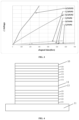
  • FIG. 1 is a schematic view illustrating a structure of a light emitting device according to an embodiment of the present disclosure
  • FIG. 2 is a graph illustrating comparison of high temperature experiments for different N-CGL host materials and different concentrations of doped materials according to an embodiment of the present disclosure
  • FIG. 3 is a graph illustrating comparison of high temperature experiments for different N-CGL host materials and different concentrations of doped materials according to an embodiment of the present disclosure
  • FIG. 4 is a schematic view illustrating a structure of a light emitting device according to an embodiment of the present disclosure.
  • FIG. 5 is a flow chart of a method of manufacturing a light emitting device according to an embodiment of the present disclosure.
  • FIG. 1 is a schematic view illustrating a structure of a light emitting device according to an embodiment of the present disclosure.
  • the light emitting device includes: a first electrode 11 , a first light emitting layer 12 , an N-CGL layer (N-type charge generation layer) 13 , a P-CGL layer (P-type charge generation layer) 14 , a second light emitting layer 15 , and a second electrode 16 .
  • the first light emitting layer 12 is on a side of the first electrode 11 .
  • the N-CGL layer 13 is on a side of the first light emitting layer 12 distal to the first electrode 11 .
  • the P-CGL layer 14 is on a side of the N-CGL layer 13 distal to the first light emitting layer 12 .
  • the second light emitting layer 15 is on a side of the P-CGL layer 14 distal to the N-CGL layer 13 .
  • the second electrode 16 is on a side of the second light emitting layer 15 distal to the P-CGL layer 14 .
  • a material of the N-CGL layer 13 includes a host material and a guest material.
  • the host material of the N-CGL layer has a lowest unoccupied molecular orbital (LUMO) energy level less than or equal to ⁇ 2.9 and a glass transition temperature greater than 130° C.
  • LUMO lowest unoccupied molecular orbital
  • the light emitting device may be a laminated organic electroluminescent display device (i.e., an organic electroluminescent display device with stacked layers).
  • the first electrode 11 may be an anode of the laminated organic electroluminescent display device
  • the second electrode 16 may be a cathode of the laminated organic electroluminescent display device.
  • the light emitting device may further include, for example, a hole injection layer, a hole transport layer, an electron transport layer, an electron injection layer, and the like sequentially stacked.
  • the hole transport layer is proximal to the anode of the organic electroluminescent display device
  • the electron transport layer is proximal to the cathode of the organic electroluminescent display device.
  • the first light emitting layer 12 and the second light emitting layer 15 are between the hole transport layer and the electron transport layer.
  • the first light emitting layer 12 emits light of the same color as the second light emitting layer 15 , or the first light emitting layer 12 emits light different from the color of the second light emitting layer 15 .
  • the light emitting device further includes a hole injection layer 121 on a side of the first electrode 11 , a first hole transport layer 122 on a side of the hole injection layer 121 distal to the first electrode 11 , a first electron blocking layer 123 on a side of the first hole transport layer 122 distal to the first hole injection layer 121 , a first light emitting layer 124 being on a side of the first electron blocking layer 123 distal to the first hole transport layer 122 , and a first hole blocking layer 125 on a side of the first light emitting layer 124 distal to the first electron blocking layer 123 , which are sequentially provided along a direction away from the first electrode.
  • the light emitting device further includes a second hole transport layer 151 on a side of the P-CGL layer distal to the N-CGL layer, a second electron blocking layer 152 on a side of the second hole transport layer 151 distal to the P-CGL layer, a second light emitting layer 153 being on a side of the second electron blocking layer 152 distal to the second hole transport layer 151 , a second hole blocking layer 154 on a side of the second light emitting layer 153 distal to the second electron blocking layer 152 , an electron transport layer 155 on a side of the second hole blocking layer 154 distal to the second light emitting layer 153 , and an electron injection layer 156 on a side of the electron transport layer 155 distal to the second hole blocking layer 152 , which are sequentially provided along the direction away from the first electrode.
  • the guest material of the N-CGL layer may include an N-type doped material.
  • the N-type doped material may be an implanting metal material, such as Yb (ytterbium), and the N-type doped material may be other metals or metal compounds, such as Cs (cesium), Li (lithium), or the like.
  • the guest material of the N-CGL layer has a volume doped concentration in a range from 0.8% to 1.2%. In one particular example, the guest material has a volume doped concentration of 1%.
  • a thickness of the N-CGL layer in a direction perpendicular to the first electrode 11 is in a range from 100 angstroms to 250 angstroms. The thickness herein denotes a dimension in a direction perpendicular to the first electrode or the second electrode.
  • the host material of the N-CGL layer may include an electron transport material selected from a group consisting of the following general formulas:
  • R1, R2, R3, and R4 are substituents, and the substituents may be respectively and independently selected from any one of hydrogen (H), fluorine (F), chlorine (Cl), bromine (Br), alkyl, aryl, heteroalkyl and heteroaryl.
  • a selective example of the host material of the N-CGL layer is selected from the following:
  • the P-CGL layer may be a single material film layer, i.e., the P-CGL layer is made of only one material, for example, the P-CGL layer is made of a P-type doped material (PD doped material).
  • the P-CGL layer is made of a P-type doped material (PD doped material).
  • the host material of the P-CGL layer is selected from any one of hole transport materials, such as triphenylamine and biphenyl.
  • the guest material of the P-CGL layer includes a P-type doped material.
  • the P-type doped material of the P-CGL layer is selected from any one of the group consisting of an radialene compound or Tetracyanodimethyl-p-benzoquinone (TCNQ) or tetracyanoquinodimethane (F4TCNQ), which have the following general formula:
  • R1 is a substituent, and the substituent may be any one of aryl and heteroaryl.
  • Examples of PD materials are as follows:
  • the P-CGL layer may be a mixed material film layer, that is, the P-CGL layer is made of at least two materials.
  • the P-CGL layer includes a host material and a guest material, and the host material of the P-CGL layer is selected from any one of hole transport materials, such as triphenylamines and biphenyls.
  • the P-type doped material is used as a guest material, and the volume doped concentration of the P-type doped material may be less than or equal to 5%.
  • P-CGL host materials are as follows:
  • the P-CGL layer has a thickness in a range from 50 angstroms to 120 angstroms.
  • the P-CGL layer is mainly used for generating charges
  • the N-CGL layer is mainly used for separating charges
  • the host material of the N-CGL layer is enabled to have a lowest unoccupied molecular orbital (LUMO) energy level of less than or equal to ⁇ 2.9 and a glass transition temperature greater than 130° C.
  • the light emitting device may be a bottom emission device with an emission wavelength in a range from 430 nm to 680 nm, or a top emission device with an emission wavelength in a range from 430 nm to 680 nm or a bidirectional emission device with an emission wavelength in a range from 430 nm to 680 nm.
  • the hole injection layer may be made of a single compound material or a combination of a plurality of compound materials.
  • the hole transport layer/electron blocking layer/hole blocking layer is made of a single compound material.
  • the electron transport layer may be made of a single compound material or a combination of a plurality of compound materials.
  • the first light emitting layer and the second light emitting layer each are made of a combination of a plurality of compound materials, and include, for example, a fluorescent or phosphorescent light emitting material.
  • the above compounds include all organic compounds having the above functions in the related art, which is not particularly limited herein.
  • a display panel includes the above light emitting device and a driving circuit for driving the light emitting device. Since the light emitting device capable of improving the high temperature reliability of the laminated device is adopted, the display quality of the display panel with the light emitting device can be improved.
  • a method of manufacturing the above light emitting device includes the following steps.
  • step S 100 a base substrate is provided, and a first electrode is formed on the base substrate.
  • step S 101 a first light emitting layer is formed on a side of the first electrode distal to the base substrate.
  • step S 102 an N-CGL layer is formed on a side of the first light emitting layer distal to the first electrode.
  • step S 103 a P-CGL layer is formed on a side of the N-CGL layer distal to the first light emitting layer.
  • step S 104 a second light emitting layer is formed on a side of the P-CGL layer distal to the N-CGL layer.
  • step S 105 a second electrode is formed on a side of the second light emitting layer distal to the N-CGL layer.
  • the lowest unoccupied molecular orbital energy level of the host material adopted when the N-CGL layer is formed is lower than or equal to ⁇ 2.9, and the glass transition temperature thereof is higher than 130° C.
  • the light emitting device shown in FIG. 1 can be manufactured.
  • forming the N-CGL layer and the P-CGL layer includes: respectively evaporating a mixed material of the host material and the guest material of the N-CGL layer in a preset volume proportion and a mixed material of the host material and the guest material of the P-CGL layer in a preset volume proportion in a vacuum environment (for example, under a pressure environment of less than 5*10 ⁇ 4 Pa) to form the corresponding N-CGL layer and the corresponding P-CGL layer.
  • a vacuum environment for example, under a pressure environment of less than 5*10 ⁇ 4 Pa
  • evaporation rates of the host materials of the N-CGL layer and the P-CGL layer are related to the temperature of the vacuum environment and related materials, and evaporation rates of the guest material of the N-CGL layer and the P-CGL layer may be determined by the evaporation rates of the host materials and the volume proportion of the host material to the guest material, for example, the evaporation rate of the host material may be 1 angstrom/sec.
  • the light emitting device of the present disclosure will be described by taking ITO (Indium tin oxide)/first light emitting layer/N-CGL layer (200 angstroms)/P-CGL layer (100 angstroms)/second light emitting layer/Al (1000 angstroms) as an example.
  • ITO Indium tin oxide
  • NPB is adopted as a host material
  • the doped concentration of a guest material can be expressed as x % PD
  • x is a concentration value.
  • the host material may be each of the above A, B, C, D and E, and the guest material is 1% Yb.
  • the PD (doped) concentrations are 3%, 4%, 5%, 7%, 10%, respectively; and the host material of the N-CGL is the above: A, B, C, D or E.
  • FIGS. 2 to 3 Graphs illustrating comparison of high temperature experiments for different N-CGL host materials and different concentrations of doped materials are shown in FIGS. 2 to 3 .
  • Table 1 shows the LUMO energy levels and Tg (glass transition temperature) of the above five N-CGL host materials A, B, C, D and E.
  • Table 2 and table 3 show examples of combined experiments for different N-CGL host materials and different P-type doped concentrations (PD concentrations) of P-CGL.
  • PD concentrations P-type doped concentrations

Landscapes

  • Physics & Mathematics (AREA)
  • Engineering & Computer Science (AREA)
  • Spectroscopy & Molecular Physics (AREA)
  • Chemical & Material Sciences (AREA)
  • Materials Engineering (AREA)
  • Optics & Photonics (AREA)
  • Manufacturing & Machinery (AREA)
  • Electroluminescent Light Sources (AREA)

Abstract

The present disclosure provides a light emitting device including: a first electrode; a first light emitting layer on a side of the first electrode; an N-type charge generation layer on a side of the first light emitting layer distal to the first electrode; a P-type charge generation layer on a side of the N-type charge generation layer distal to the first light emitting layer; a second light emitting layer on a side of the P-type charge generation layer distal to the N-type charge generation layer; and a second electrode on a side of the second light emitting layer distal to the P-type charge generation layer. The N-type charge generation layer includes a host material which has a lowest unoccupied molecular orbital energy level less than or equal to −2.9 and a glass transition temperature greater than 130° C.

Description

CROSS-REFERENCE TO RELATED APPLICATIONS
The present application claims the priority of the Chinese Patent Application No. 202010911623.X, filed on Sep. 2, 2020, the content of which is incorporated herein by reference in its entirety.
TECHNICAL FIELD
The present disclosure relates to the field of display technology, and in particular relates to a light emitting device and a manufacturing method thereof, and a display panel.
BACKGROUND
Organic electroluminescent devices (OLEDs) have a series of advantages such as all-solid-state, white light emission, fast response, wide viewing angle, wide working temperature range, and have attracted more and more attention from academia and industry. After years of continuous active exploration and further optimization of a structure of the devices, processes and related materials, organic electroluminescence has greatly been improved and has now achieved industrialization.
SUMMARY
According to one aspect of the present disclosure, a light emitting device is provided. The light emitting device includes: a first electrode; a first light emitting layer on a side of the first electrode; an N-type charge generation layer on a side of the first light emitting layer distal to the first electrode; a P-type charge generation layer on a side of the N-type charge generation layer distal to the first light emitting layer; a second light emitting layer on a side of the P-type charge generation layer distal to the N-type charge generation layer; and a second electrode on a side of the second light emitting layer distal to the P-type charge generation layer, wherein the N-type charge generation layer includes a host material, and the host material of the N-type charge generation layer has a lowest unoccupied molecular orbital energy level less than or equal to −2.9 and a glass transition temperature greater than 130° C.
In some embodiments, the host material of the N-type charge generation layer includes an electron transport material having the following general formula:
Figure US11758747-20230912-C00001
where R1, R2, R3 and R4 are respectively and independently selected from any one of hydrogen, fluorine, chlorine, bromine, alkyl, aryl, heteroalkyl or heteroaryl.
In some embodiments, the N-type charge generation layer further includes a guest material, and the guest material of the N-type charge generation layer includes an N-type doped material.
In some embodiments, the N-type doped material includes any one of ytterbium, cesium, or lithium.
In some embodiments, a volume doped concentration of the guest material of the N-type charge generation layer is in a range from 0.8% to 1.2%.
In some embodiments, the volume doped concentration of the guest material of the N-type charge generation layer is 1%.
In some embodiments, the N-type charge generation layer has a thickness in a range from 100 angstroms to 250 angstroms in a direction perpendicular to the first electrode.
In some embodiments, the P-type charge generation layer includes a host material and a guest material, and the host material of the P-type charge generation layer is selected from any one of hole transport materials of triphenylamines and biphenylamines.
In some embodiments, the guest material of the P-type charge generation layer includes a P-type doped material.
In some embodiments, the P-type doped material is any one selected from a radialene compound, tetracyanodimethyl-p-benzoquinone, and tetracyanoquinodimethane which have the following general formula:
Figure US11758747-20230912-C00002
where R1 is selected from any one of aryl and heteroaryl.
In some embodiments, a volume doped concentration of the P-type doped material is less than or equal to 5%.
In some embodiments, the P-type charge generation layer has a thickness in a range from 50 angstroms to 120 angstroms in the direction perpendicular to the first electrode.
In some embodiments, a color of light emitted by the first light emitting layer is the same as or different from a color of light emitted by the second light emitting layer.
In some embodiments, the light emitting device further includes the following layers which are sequentially provided in a direction away from the first electrode:
a hole injection layer on a side of the first electrode; a first hole transport layer on a side of the hole injection layer distal to the first electrode; a first electron blocking layer on a side of the first hole transport layer distal to the first hole injecting layer, and the first light emitting layer being on a side of the first electron blocking layer distal to the first hole transport layer; and a first hole blocking layer on a side of the first light emitting layer distal to the first electron blocking layer, and the N-type charge generation layer being on a side of the first hole blocking layer distal to the first light emitting layer.
In some embodiments, the light emitting device further includes the following layers which are sequentially provided in a direction away from the P-type charge generation layer: a second hole transport layer on a side of the P-type charge generation layer distal to the N-type charge generation layer; a second electron blocking layer on a side of the second hole transport layer distal to the P-type charge generation layer, and the second light emitting layer being on a side of the second electron blocking layer distal to the second hole transport layer; a second hole blocking layer on a side of the second light emitting layer distal to the second electron blocking layer; a electron transport layer on a side of the second hole blocking layer distal to the second light emitting layer; and an electron injection layer on a side of the electron transport layer distal to the second hole blocking layer.
According to another aspect of the present disclosure, a display panel is further provided. The display panel includes the above light emitting device and a driving circuit for driving the light emitting device.
According to another aspect of the present disclosure, a method of manufacturing the light emitting device is further provided. The method includes: providing a base substrate, and forming a first electrode on the base substrate; forming a first light emitting layer on a side of the first electrode distal to the base substrate; forming an N-type charge generation layer on a side of the first light emitting layer distal to the first electrode, such that a host material of the N-type charge generation layer has a lowest unoccupied molecular orbital energy level less than or equal to −2.9 and a glass transition temperature greater than 130° C.; forming a P-type charge generation layer on a side of the N-type charge generation layer distal to the first light emitting layer; forming a second light emitting layer on a side of the P-type charge generation layer distal to the N-type charge generation layer; and forming a second electrode on a side of the second light emitting layer distal to the P-type charge generation layer.
In some embodiments, the host material of the N-type charge generation layer includes an electron transport material having the following general formula:
Figure US11758747-20230912-C00003
where R1, R2, R3 and R4 are respectively and independently selected from any one of hydrogen, fluorine, chlorine, bromine, alkyl, aryl, heteroalkyl or heteroaryl.
In some embodiments, the N-type charge generation layer further includes a guest material, the guest material of the N-type charge generation layer includes an N-type doped material, and the N-type doped material includes any one of ytterbium, cesium, or lithium.
In some embodiments, the guest material of the N-type charge generating layer has a volume doped concentration in a range from 0.8% to 1.2%.
BRIEF DESCRIPTION OF THE DRAWINGS
In order to more clearly illustrate the technical solutions of the embodiments of the present disclosure, the drawings used in the embodiments or the related technical descriptions will be briefly introduced below, and it is obvious that the drawings in the following description only relate to some embodiments of the present disclosure and are not intended to limit the present disclosure.
FIG. 1 is a schematic view illustrating a structure of a light emitting device according to an embodiment of the present disclosure;
FIG. 2 is a graph illustrating comparison of high temperature experiments for different N-CGL host materials and different concentrations of doped materials according to an embodiment of the present disclosure;
FIG. 3 is a graph illustrating comparison of high temperature experiments for different N-CGL host materials and different concentrations of doped materials according to an embodiment of the present disclosure;
FIG. 4 is a schematic view illustrating a structure of a light emitting device according to an embodiment of the present disclosure; and
FIG. 5 is a flow chart of a method of manufacturing a light emitting device according to an embodiment of the present disclosure.
DETAILED DESCRIPTION
To make the objects, technical solutions and advantages of the embodiments of the present disclosure more apparent, the technical solutions of the embodiments of the present disclosure will be clearly and completely described below with reference to the drawings of the embodiments of the present disclosure.
The present disclosure provides a light emitting device, and FIG. 1 is a schematic view illustrating a structure of a light emitting device according to an embodiment of the present disclosure. As shown in FIG. 1 , the light emitting device includes: a first electrode 11, a first light emitting layer 12, an N-CGL layer (N-type charge generation layer) 13, a P-CGL layer (P-type charge generation layer) 14, a second light emitting layer 15, and a second electrode 16. The first light emitting layer 12 is on a side of the first electrode 11. The N-CGL layer 13 is on a side of the first light emitting layer 12 distal to the first electrode 11. The P-CGL layer 14 is on a side of the N-CGL layer 13 distal to the first light emitting layer 12. The second light emitting layer 15 is on a side of the P-CGL layer 14 distal to the N-CGL layer 13. The second electrode 16 is on a side of the second light emitting layer 15 distal to the P-CGL layer 14. In the present disclosure, a material of the N-CGL layer 13 includes a host material and a guest material. The host material of the N-CGL layer has a lowest unoccupied molecular orbital (LUMO) energy level less than or equal to −2.9 and a glass transition temperature greater than 130° C. The above structure can improve the energy level balance between the N-CGL layer and the P-CGL layer, and effectively improve the high temperature reliability of the laminated light emitting device.
As shown in FIG. 1 , the light emitting device may be a laminated organic electroluminescent display device (i.e., an organic electroluminescent display device with stacked layers). The first electrode 11 may be an anode of the laminated organic electroluminescent display device, and the second electrode 16 may be a cathode of the laminated organic electroluminescent display device. The light emitting device may further include, for example, a hole injection layer, a hole transport layer, an electron transport layer, an electron injection layer, and the like sequentially stacked. The hole transport layer is proximal to the anode of the organic electroluminescent display device, and the electron transport layer is proximal to the cathode of the organic electroluminescent display device. The first light emitting layer 12 and the second light emitting layer 15 are between the hole transport layer and the electron transport layer.
Optionally, the first light emitting layer 12 emits light of the same color as the second light emitting layer 15, or the first light emitting layer 12 emits light different from the color of the second light emitting layer 15.
Optionally, as shown in FIG. 4 , the light emitting device further includes a hole injection layer 121 on a side of the first electrode 11, a first hole transport layer 122 on a side of the hole injection layer 121 distal to the first electrode 11, a first electron blocking layer 123 on a side of the first hole transport layer 122 distal to the first hole injection layer 121, a first light emitting layer 124 being on a side of the first electron blocking layer 123 distal to the first hole transport layer 122, and a first hole blocking layer 125 on a side of the first light emitting layer 124 distal to the first electron blocking layer 123, which are sequentially provided along a direction away from the first electrode.
Optionally, as shown in FIG. 4 , the light emitting device further includes a second hole transport layer 151 on a side of the P-CGL layer distal to the N-CGL layer, a second electron blocking layer 152 on a side of the second hole transport layer 151 distal to the P-CGL layer, a second light emitting layer 153 being on a side of the second electron blocking layer 152 distal to the second hole transport layer 151, a second hole blocking layer 154 on a side of the second light emitting layer 153 distal to the second electron blocking layer 152, an electron transport layer 155 on a side of the second hole blocking layer 154 distal to the second light emitting layer 153, and an electron injection layer 156 on a side of the electron transport layer 155 distal to the second hole blocking layer 152, which are sequentially provided along the direction away from the first electrode.
Optionally, the guest material of the N-CGL layer may include an N-type doped material. The N-type doped material may be an implanting metal material, such as Yb (ytterbium), and the N-type doped material may be other metals or metal compounds, such as Cs (cesium), Li (lithium), or the like. And, optionally, the guest material of the N-CGL layer has a volume doped concentration in a range from 0.8% to 1.2%. In one particular example, the guest material has a volume doped concentration of 1%. A thickness of the N-CGL layer in a direction perpendicular to the first electrode 11 is in a range from 100 angstroms to 250 angstroms. The thickness herein denotes a dimension in a direction perpendicular to the first electrode or the second electrode.
Optionally, the host material of the N-CGL layer may include an electron transport material selected from a group consisting of the following general formulas:
Figure US11758747-20230912-C00004
Where R1, R2, R3, and R4 are substituents, and the substituents may be respectively and independently selected from any one of hydrogen (H), fluorine (F), chlorine (Cl), bromine (Br), alkyl, aryl, heteroalkyl and heteroaryl. A selective example of the host material of the N-CGL layer is selected from the following:
Figure US11758747-20230912-C00005
Optionally, the P-CGL layer may be a single material film layer, i.e., the P-CGL layer is made of only one material, for example, the P-CGL layer is made of a P-type doped material (PD doped material).
The host material of the P-CGL layer is selected from any one of hole transport materials, such as triphenylamine and biphenyl. The guest material of the P-CGL layer includes a P-type doped material.
Optionally, the P-type doped material of the P-CGL layer is selected from any one of the group consisting of an radialene compound or Tetracyanodimethyl-p-benzoquinone (TCNQ) or tetracyanoquinodimethane (F4TCNQ), which have the following general formula:
Figure US11758747-20230912-C00006
Where R1 is a substituent, and the substituent may be any one of aryl and heteroaryl.
Examples of PD materials are as follows:
Figure US11758747-20230912-C00007
Optionally, the P-CGL layer may be a mixed material film layer, that is, the P-CGL layer is made of at least two materials. For example, the P-CGL layer includes a host material and a guest material, and the host material of the P-CGL layer is selected from any one of hole transport materials, such as triphenylamines and biphenyls. The P-type doped material is used as a guest material, and the volume doped concentration of the P-type doped material may be less than or equal to 5%.
Examples of P-CGL host materials are as follows:
Figure US11758747-20230912-C00008
Figure US11758747-20230912-C00009
Optionally, the P-CGL layer has a thickness in a range from 50 angstroms to 120 angstroms.
In the present disclosure, by employing the above N-CGL layer and P-CGL layer, the P-CGL layer is mainly used for generating charges, the N-CGL layer is mainly used for separating charges, and the host material of the N-CGL layer is enabled to have a lowest unoccupied molecular orbital (LUMO) energy level of less than or equal to −2.9 and a glass transition temperature greater than 130° C., the energy level balance between the N-CGL layer and the P-CGL layer is improved, and the high temperature reliability of the laminated device is effectively improved. The light emitting device may be a bottom emission device with an emission wavelength in a range from 430 nm to 680 nm, or a top emission device with an emission wavelength in a range from 430 nm to 680 nm or a bidirectional emission device with an emission wavelength in a range from 430 nm to 680 nm.
In addition, in the present disclosure, the hole injection layer may be made of a single compound material or a combination of a plurality of compound materials. The hole transport layer/electron blocking layer/hole blocking layer is made of a single compound material. The electron transport layer may be made of a single compound material or a combination of a plurality of compound materials. The first light emitting layer and the second light emitting layer each are made of a combination of a plurality of compound materials, and include, for example, a fluorescent or phosphorescent light emitting material. The above compounds include all organic compounds having the above functions in the related art, which is not particularly limited herein.
According to an aspect of the present disclosure, a display panel is provided. The display panel includes the above light emitting device and a driving circuit for driving the light emitting device. Since the light emitting device capable of improving the high temperature reliability of the laminated device is adopted, the display quality of the display panel with the light emitting device can be improved.
According to an aspect of the present disclosure, a method of manufacturing the above light emitting device is provided. As shown in FIG. 5 , the method includes the following steps.
In step S100, a base substrate is provided, and a first electrode is formed on the base substrate.
In step S101, a first light emitting layer is formed on a side of the first electrode distal to the base substrate.
In step S102, an N-CGL layer is formed on a side of the first light emitting layer distal to the first electrode.
In step S103, a P-CGL layer is formed on a side of the N-CGL layer distal to the first light emitting layer.
In step S104, a second light emitting layer is formed on a side of the P-CGL layer distal to the N-CGL layer.
In step S105, a second electrode is formed on a side of the second light emitting layer distal to the N-CGL layer.
In the manufacturing method, the lowest unoccupied molecular orbital energy level of the host material adopted when the N-CGL layer is formed is lower than or equal to −2.9, and the glass transition temperature thereof is higher than 130° C. Thus, the light emitting device shown in FIG. 1 can be manufactured.
Optionally, forming the N-CGL layer and the P-CGL layer includes: respectively evaporating a mixed material of the host material and the guest material of the N-CGL layer in a preset volume proportion and a mixed material of the host material and the guest material of the P-CGL layer in a preset volume proportion in a vacuum environment (for example, under a pressure environment of less than 5*10−4 Pa) to form the corresponding N-CGL layer and the corresponding P-CGL layer.
Optionally, evaporation rates of the host materials of the N-CGL layer and the P-CGL layer are related to the temperature of the vacuum environment and related materials, and evaporation rates of the guest material of the N-CGL layer and the P-CGL layer may be determined by the evaporation rates of the host materials and the volume proportion of the host material to the guest material, for example, the evaporation rate of the host material may be 1 angstrom/sec.
Hereinafter, the light emitting device of the present disclosure will be described by taking ITO (Indium tin oxide)/first light emitting layer/N-CGL layer (200 angstroms)/P-CGL layer (100 angstroms)/second light emitting layer/Al (1000 angstroms) as an example. For the P-CGL layer, NPB is adopted as a host material, the doped concentration of a guest material can be expressed as x % PD, and x is a concentration value. For the N-CGL layer, the host material may be each of the above A, B, C, D and E, and the guest material is 1% Yb. As shown in tables 1 to 3 below, the PD (doped) concentrations are 3%, 4%, 5%, 7%, 10%, respectively; and the host material of the N-CGL is the above: A, B, C, D or E. Graphs illustrating comparison of high temperature experiments for different N-CGL host materials and different concentrations of doped materials are shown in FIGS. 2 to 3 .
TABLE 1
Material A B C D E
LUMO 2.66 2.7 2.9 2.96 2.95
Tg 120 146 145 161 132
TABLE 2
Condition
@10 mA/cm2 A/10% PD A/7% PD A/5% PD C/5% PD C/4% PD C/3% PD
Voltage 100.00% 100.73% 102.30% 100.00% 101.68% 105.67%
Efficiency 100.00% 99.42% 100.13% 100.00% 101.41% 101.59%
TABLE 3
Condition
@10 mA/cm2 A/10% PD C/10% PD B/10% PD C/5% PD D/5% PD E/5% PD
Voltage 100.00% 99.27% 98.18% 100.00% 102.66% 103.43%
Efficiency 100.00% 95.17% 99.96% 100.00% 97.30% 95.10%
Table 1 shows the LUMO energy levels and Tg (glass transition temperature) of the above five N-CGL host materials A, B, C, D and E. Table 2 and table 3 show examples of combined experiments for different N-CGL host materials and different P-type doped concentrations (PD concentrations) of P-CGL. As shown in FIG. 2 and FIG. 3 , in the test process of the combination examples, as the PD concentration decreases, the difference of the voltages of the light emitting device becomes smaller over time when the light emitting device of the present disclosure operates, so that the voltage increase phenomenon of the light emitting device at high temperature is reduced under the condition that other performances are kept substantially consistent, and the operating performance of the device at high temperature is effectively improved.
The above description is intended to be merely exemplary embodiments of the present disclosure and is not intended to limit the scope of the present disclosure, which is defined by the claims appended hereto.

Claims (20)

What is claimed is:
1. A light emitting device, comprising:
a first electrode;
a first light emitting layer on a side of the first electrode;
an N-type charge generation layer on a side of the first light emitting layer distal to the first electrode;
a P-type charge generation layer on a side of the N-type charge generation layer distal to the first light emitting layer;
a second light emitting layer on a side of the P-type charge generation layer distal to the N-type charge generation layer; and
a second electrode on a side of the second light emitting layer distal to the P-type charge generation layer,
wherein the N-type charge generation layer comprises a host material, and the host material of the N-type charge generation layer has a lowest unoccupied molecular orbital energy level less than or equal to −2.9 and a glass transition temperature greater than 130° C.
2. The light emitting device of claim 1, wherein the host material of the N-type charge generation layer comprises an electron transport material having the following general formula:
Figure US11758747-20230912-C00010
where R1, R2, R3 and R4 are respectively and independently selected from any one of hydrogen, fluorine, chlorine, bromine, alkyl, aryl, heteroalkyl or heteroaryl.
3. The light emitting device of claim 2, wherein the N-type charge generation layer further comprises a guest material, and the guest material of the N-type charge generation layer comprises an N-type doped material.
4. The light emitting device of claim 3, wherein the N-type doped material comprises any one of ytterbium, cesium, or lithium.
5. The light emitting device of claim 4, wherein a volume doped concentration of the guest material of the N-type charge generation layer is in a range from 0.8% to 1.2%.
6. The light emitting device of claim 5, wherein the volume doped concentration of the guest material of the N-type charge generation layer is 1%.
7. The light emitting device of claim 6, wherein the N-type charge generation layer has a thickness in a range from 100 angstroms to 250 angstroms in a direction perpendicular to the first electrode.
8. The light emitting device of claim 7, wherein the P-type charge generation layer comprises a host material and a guest material, and the host material of the P-type charge generation layer is selected from any one of hole transport materials of triphenylamines and biphenylamines.
9. The light emitting device of claim 8, wherein the guest material of the P-type charge generation layer comprises a P-type doped material.
10. The light emitting device of claim 9, wherein the P-type doped material is any one selected from a radialene compound, tetracyanodimethyl-p-benzoquinone, and tetracyanoquinodimethane which have the following general formula:
Figure US11758747-20230912-C00011
where R1 is selected from any one of aryl and heteroaryl.
11. The light emitting device of claim 10, wherein a volume doped concentration of the P-type doped material is less than or equal to 5%.
12. The light emitting device of claim 11, wherein the P-type charge generation layer has a thickness in a range from 50 angstroms to 120 angstroms in the direction perpendicular to the first electrode.
13. The light emitting device of claim 1, wherein a color of light emitted by the first light emitting layer is the same as or different from a color of light emitted by the second light emitting layer.
14. The light emitting device of claim 13, further comprising the following layers which are sequentially provided in a direction away from the first electrode:
a hole injection layer on a side of the first electrode;
a first hole transport layer on a side of the hole injection layer distal to the first electrode;
a first electron blocking layer on a side of the first hole transport layer distal to the first hole injecting layer, and the first light emitting layer being on a side of the first electron blocking layer distal to the first hole transport layer; and
a first hole blocking layer on a side of the first light emitting layer distal to the first electron blocking layer, and the N-type charge generation layer being on a side of the first hole blocking layer distal to the first light emitting layer.
15. The light emitting device of claim 13, further comprising the following layers which are sequentially provided in a direction away from the P-type charge generation layer:
a second hole transport layer on a side of the P-type charge generation layer distal to the N-type charge generation layer;
a second electron blocking layer on a side of the second hole transport layer distal to the P-type charge generation layer, and the second light emitting layer being on a side of the second electron blocking layer distal to the second hole transport layer;
a second hole blocking layer on a side of the second light emitting layer distal to the second electron blocking layer;
a electron transport layer on a side of the second hole blocking layer distal to the second light emitting layer; and
an electron injection layer on a side of the electron transport layer distal to the second hole blocking layer.
16. A display panel, comprising the light emitting device of claim 1 and a driving circuit for driving the light emitting device.
17. A method of manufacturing the light emitting device of claim 1, comprising:
providing a base substrate, and forming a first electrode on the base substrate;
forming a first light emitting layer on a side of the first electrode distal to the base substrate;
forming an N-type charge generation layer on a side of the first light emitting layer distal to the first electrode, such that a host material of the N-type charge generation layer has a lowest unoccupied molecular orbital energy level less than or equal to −2.9 and a glass transition temperature greater than 130° C.;
forming a P-type charge generation layer on a side of the N-type charge generation layer distal to the first light emitting layer;
forming a second light emitting layer on a side of the P-type charge generation layer distal to the N-type charge generation layer; and
forming a second electrode on a side of the second light emitting layer distal to the P-type charge generation layer.
18. The method of claim 17, wherein the host material of the N-type charge generation layer comprises an electron transport material having the following general formula:
Figure US11758747-20230912-C00012
where R1, R2, R3 and R4 are respectively and independently selected from any one of hydrogen, fluorine, chlorine, bromine, alkyl, aryl, heteroalkyl or heteroaryl.
19. The method of claim 18, wherein the N-type charge generation layer further comprises a guest material, the guest material of the N-type charge generation layer comprises an N-type doped material, and the N-type doped material comprises any one of ytterbium, cesium, or lithium.
20. The method of claim 19, wherein the guest material of the N-type charge generating layer has a volume doped concentration in a range from 0.8% to 1.2%.
US17/412,460 2020-09-02 2021-08-26 Light emitting device and manufacturing method thereof and display panel Active 2042-03-03 US11758747B2 (en)

Applications Claiming Priority (2)

Application Number Priority Date Filing Date Title
CN202010911623.XA CN111987236B (en) 2020-09-02 2020-09-02 Light emitting device
CN202010911623.X 2020-09-02

Publications (2)

Publication Number Publication Date
US20220069247A1 US20220069247A1 (en) 2022-03-03
US11758747B2 true US11758747B2 (en) 2023-09-12

Family

ID=73448641

Family Applications (1)

Application Number Title Priority Date Filing Date
US17/412,460 Active 2042-03-03 US11758747B2 (en) 2020-09-02 2021-08-26 Light emitting device and manufacturing method thereof and display panel

Country Status (2)

Country Link
US (1) US11758747B2 (en)
CN (1) CN111987236B (en)

Families Citing this family (1)

* Cited by examiner, † Cited by third party
Publication number Priority date Publication date Assignee Title
JP2024000850A (en) * 2022-06-21 2024-01-09 株式会社ジャパンディスプレイ Vapor deposition apparatus and vapor deposition method

Citations (1)

* Cited by examiner, † Cited by third party
Publication number Priority date Publication date Assignee Title
US20200295292A1 (en) * 2016-03-10 2020-09-17 Samsung Display Co., Ltd. Light-emitting device

Family Cites Families (5)

* Cited by examiner, † Cited by third party
Publication number Priority date Publication date Assignee Title
EP2752907B1 (en) * 2012-05-31 2019-07-17 LG Display Co., Ltd. Organic light emitting diode
KR102494249B1 (en) * 2015-11-30 2023-01-31 엘지디스플레이 주식회사 Organic light emitting device
KR102347450B1 (en) * 2017-09-12 2022-01-04 엘지디스플레이 주식회사 Organic light emitting diode and organic light emitting display device comprising the same
KR102632079B1 (en) * 2018-10-01 2024-01-31 엘지디스플레이 주식회사 Organic Light Emitting Device
KR20230101296A (en) * 2021-12-29 2023-07-06 엘지디스플레이 주식회사 Organic light emitting diode and organic light emitting display device including the same

Patent Citations (1)

* Cited by examiner, † Cited by third party
Publication number Priority date Publication date Assignee Title
US20200295292A1 (en) * 2016-03-10 2020-09-17 Samsung Display Co., Ltd. Light-emitting device

Also Published As

Publication number Publication date
CN111987236A (en) 2020-11-24
US20220069247A1 (en) 2022-03-03
CN111987236B (en) 2024-03-29

Similar Documents

Publication Publication Date Title
US9048447B2 (en) Organic light emitting display device having auxiliary charge generation layer
CN101375429B (en) Electronic device with a layer structure of organic layers
KR100650046B1 (en) High efficiency organic EL device
KR101429537B1 (en) Organic light emitting diodes
KR102104978B1 (en) Organic light emitting display and method for fabricating the same
US9276220B2 (en) Anthracene compound and organic light emitting diode including the same
US20140014927A1 (en) Organic light emitting device
US8460950B2 (en) Organic light-emitting diode
US10763449B2 (en) Organic light-emitting diode (OLED) display panel, fabrication method and electronic device thereof
US20180190928A1 (en) Organic Light-Emitting Diode, Display Panel and Display Device
KR20110032589A (en) Organic light emitting diode
CN111969119A (en) Organic electroluminescent device, display panel and display device
JP2011522391A (en) Organic electroluminescence device
KR20150078669A (en) White Organic Emitting Device
US20210249621A1 (en) Oled display device, display panel and manufacturing method of oled display device
WO2024022202A1 (en) Light-emitting device, display substrate and display apparatus
Kanno et al. High efficiency stacked organic light-emitting diodes employing Li2O as a connecting layer
WO2011148801A1 (en) Organic el element
KR20110027484A (en) Organic light emitting diode
US11758747B2 (en) Light emitting device and manufacturing method thereof and display panel
US10276801B2 (en) Triazine-based compound and light emitting device
US20180166645A1 (en) Organic light-emitting device and display panel
WO2021213144A1 (en) Organic light-emitting diode device and manufacturing method therefor, and display panel
WO2015192591A1 (en) Organic electroluminescence device and organic electroluminescence display apparatus
US8987726B2 (en) Organic electroluminescent element

Legal Events

Date Code Title Description
AS Assignment

Owner name: BOE TECHNOLOGY GROUP CO., LTD., CHINA

Free format text: ASSIGNMENT OF ASSIGNORS INTEREST;ASSIGNORS:JING, SHU;DU, XIAOBO;REEL/FRAME:057295/0357

Effective date: 20210727

FEPP Fee payment procedure

Free format text: ENTITY STATUS SET TO UNDISCOUNTED (ORIGINAL EVENT CODE: BIG.); ENTITY STATUS OF PATENT OWNER: LARGE ENTITY

STPP Information on status: patent application and granting procedure in general

Free format text: DOCKETED NEW CASE - READY FOR EXAMINATION

STPP Information on status: patent application and granting procedure in general

Free format text: NOTICE OF ALLOWANCE MAILED -- APPLICATION RECEIVED IN OFFICE OF PUBLICATIONS

STPP Information on status: patent application and granting procedure in general

Free format text: PUBLICATIONS -- ISSUE FEE PAYMENT VERIFIED

STCF Information on status: patent grant

Free format text: PATENTED CASE