US11749385B2 - Hand hygiene system and method - Google Patents
Hand hygiene system and method Download PDFInfo
- Publication number
- US11749385B2 US11749385B2 US16/503,829 US201916503829A US11749385B2 US 11749385 B2 US11749385 B2 US 11749385B2 US 201916503829 A US201916503829 A US 201916503829A US 11749385 B2 US11749385 B2 US 11749385B2
- Authority
- US
- United States
- Prior art keywords
- dispenser
- management program
- health management
- new
- sanitizer dispenser
- Prior art date
- Legal status (The legal status is an assumption and is not a legal conclusion. Google has not performed a legal analysis and makes no representation as to the accuracy of the status listed.)
- Active, expires
Links
Images


Classifications
-
- G—PHYSICS
- G16—INFORMATION AND COMMUNICATION TECHNOLOGY [ICT] SPECIALLY ADAPTED FOR SPECIFIC APPLICATION FIELDS
- G16H—HEALTHCARE INFORMATICS, i.e. INFORMATION AND COMMUNICATION TECHNOLOGY [ICT] SPECIALLY ADAPTED FOR THE HANDLING OR PROCESSING OF MEDICAL OR HEALTHCARE DATA
- G16H10/00—ICT specially adapted for the handling or processing of patient-related medical or healthcare data
- G16H10/60—ICT specially adapted for the handling or processing of patient-related medical or healthcare data for patient-specific data, e.g. for electronic patient records
-
- A61L2/0082—
-
- A—HUMAN NECESSITIES
- A61—MEDICAL OR VETERINARY SCIENCE; HYGIENE
- A61L—METHODS OR APPARATUS FOR STERILISING MATERIALS OR OBJECTS IN GENERAL; DISINFECTION, STERILISATION OR DEODORISATION OF AIR; CHEMICAL ASPECTS OF BANDAGES, DRESSINGS, ABSORBENT PADS OR SURGICAL ARTICLES; MATERIALS FOR BANDAGES, DRESSINGS, ABSORBENT PADS OR SURGICAL ARTICLES
- A61L2/00—Disinfection or sterilisation of materials or objects, in general; Accessories therefor
- A61L2/16—Disinfection or sterilisation of materials or objects, in general; Accessories therefor using chemical substances
-
- A—HUMAN NECESSITIES
- A61—MEDICAL OR VETERINARY SCIENCE; HYGIENE
- A61L—METHODS OR APPARATUS FOR STERILISING MATERIALS OR OBJECTS IN GENERAL; DISINFECTION, STERILISATION OR DEODORISATION OF AIR; CHEMICAL ASPECTS OF BANDAGES, DRESSINGS, ABSORBENT PADS OR SURGICAL ARTICLES; MATERIALS FOR BANDAGES, DRESSINGS, ABSORBENT PADS OR SURGICAL ARTICLES
- A61L2/00—Disinfection or sterilisation of materials or objects, in general; Accessories therefor
- A61L2/24—Apparatus using programmed or automatic operation
-
- G—PHYSICS
- G06—COMPUTING OR CALCULATING; COUNTING
- G06K—GRAPHICAL DATA READING; PRESENTATION OF DATA; RECORD CARRIERS; HANDLING RECORD CARRIERS
- G06K7/00—Methods or arrangements for sensing record carriers, e.g. for reading patterns
- G06K7/10—Methods or arrangements for sensing record carriers, e.g. for reading patterns by electromagnetic radiation, e.g. optical sensing; by corpuscular radiation
- G06K7/14—Methods or arrangements for sensing record carriers, e.g. for reading patterns by electromagnetic radiation, e.g. optical sensing; by corpuscular radiation using light without selection of wavelength, e.g. sensing reflected white light
- G06K7/1404—Methods for optical code recognition
- G06K7/1408—Methods for optical code recognition the method being specifically adapted for the type of code
- G06K7/1413—1D bar codes
-
- G—PHYSICS
- G08—SIGNALLING
- G08B—SIGNALLING SYSTEMS, e.g. PERSONAL CALLING SYSTEMS; ORDER TELEGRAPHS; ALARM SYSTEMS
- G08B21/00—Alarms responsive to a single specified undesired or abnormal condition and not otherwise provided for
- G08B21/18—Status alarms
- G08B21/182—Level alarms, e.g. alarms responsive to variables exceeding a threshold
-
- G—PHYSICS
- G08—SIGNALLING
- G08B—SIGNALLING SYSTEMS, e.g. PERSONAL CALLING SYSTEMS; ORDER TELEGRAPHS; ALARM SYSTEMS
- G08B21/00—Alarms responsive to a single specified undesired or abnormal condition and not otherwise provided for
- G08B21/18—Status alarms
- G08B21/24—Reminder alarms, e.g. anti-loss alarms
- G08B21/245—Reminder of hygiene compliance policies, e.g. of washing hands
-
- G—PHYSICS
- G16—INFORMATION AND COMMUNICATION TECHNOLOGY [ICT] SPECIALLY ADAPTED FOR SPECIFIC APPLICATION FIELDS
- G16H—HEALTHCARE INFORMATICS, i.e. INFORMATION AND COMMUNICATION TECHNOLOGY [ICT] SPECIALLY ADAPTED FOR THE HANDLING OR PROCESSING OF MEDICAL OR HEALTHCARE DATA
- G16H15/00—ICT specially adapted for medical reports, e.g. generation or transmission thereof
-
- G—PHYSICS
- G16—INFORMATION AND COMMUNICATION TECHNOLOGY [ICT] SPECIALLY ADAPTED FOR SPECIFIC APPLICATION FIELDS
- G16H—HEALTHCARE INFORMATICS, i.e. INFORMATION AND COMMUNICATION TECHNOLOGY [ICT] SPECIALLY ADAPTED FOR THE HANDLING OR PROCESSING OF MEDICAL OR HEALTHCARE DATA
- G16H40/00—ICT specially adapted for the management or administration of healthcare resources or facilities; ICT specially adapted for the management or operation of medical equipment or devices
- G16H40/20—ICT specially adapted for the management or administration of healthcare resources or facilities; ICT specially adapted for the management or operation of medical equipment or devices for the management or administration of healthcare resources or facilities, e.g. managing hospital staff or surgery rooms
-
- A—HUMAN NECESSITIES
- A61—MEDICAL OR VETERINARY SCIENCE; HYGIENE
- A61L—METHODS OR APPARATUS FOR STERILISING MATERIALS OR OBJECTS IN GENERAL; DISINFECTION, STERILISATION OR DEODORISATION OF AIR; CHEMICAL ASPECTS OF BANDAGES, DRESSINGS, ABSORBENT PADS OR SURGICAL ARTICLES; MATERIALS FOR BANDAGES, DRESSINGS, ABSORBENT PADS OR SURGICAL ARTICLES
- A61L2103/00—Materials or objects being the target of disinfection or sterilisation
- A61L2103/05—Living organisms or biological materials
-
- A—HUMAN NECESSITIES
- A61—MEDICAL OR VETERINARY SCIENCE; HYGIENE
- A61L—METHODS OR APPARATUS FOR STERILISING MATERIALS OR OBJECTS IN GENERAL; DISINFECTION, STERILISATION OR DEODORISATION OF AIR; CHEMICAL ASPECTS OF BANDAGES, DRESSINGS, ABSORBENT PADS OR SURGICAL ARTICLES; MATERIALS FOR BANDAGES, DRESSINGS, ABSORBENT PADS OR SURGICAL ARTICLES
- A61L2202/00—Aspects relating to methods or apparatus for disinfecting or sterilising materials or objects
- A61L2202/10—Apparatus features
- A61L2202/14—Means for controlling sterilisation processes, data processing, presentation and storage means, e.g. sensors, controllers, programs
Definitions
- the present invention relates to hand hygiene systems and methods. More specifically, the present invention relates to a system and method for monitoring and controlling hand hygiene.
- HAIs Health care-associated infections
- HAIs Health care-associated infections
- HAIs are considered an undesirable outcome, and at some are preventable. They are considered and indicator of the quality of patient care, and adverse event, and a patient safety issue.
- HAIs The true incidence of HAIs is likely to be underestimated as hospital stays may be shorter than the incubation period of the infecting microorganism (a developing infection), and symptoms may not manifest until days after patient discharge.
- Organisms are transferred through direct contact between an infected or colonized patient and a health care worker or another patient.
- a health care worker can transfer the infecting organism residing on his skin to a susceptible patient who develops an infection from that organism. This is called an indirect contact route of transmission from on patient to another.
- Microorganisms that can be spread by contact include many of the antibiotic-resistant organisms.
- the Center for Disease Control (CDC) defined 5 important moments to perform hand hygiene, 3 of them during regular patient care.
- the time interval between taking care of two patients is the most important in preventing transmission of pathogens from one patient to another.
- this interval is usually being utilized for patient's data recording using computerized health-care program.
- This data recording is done by both medical and nursing staff.
- the computers are positioned on mobile carts in the hospitals' departments and on the physician or nurse's desk in the ambulatory setting.
- Performing hand hygiene before entering the patient's data and before touching the next patient will reduce transmission of pathogens from one patient, through the health-care provider, to the next patient.
- a system and method in accordance with some embodiments of the present invention make the performance of hand hygiene an obligatory action in between patients.
- a hand hygiene system comprising:
- a health management program including a cleaning hand module implemented on a processor
- a sanitizer dispenser equipped with a sensing unit that is associated with said processor via wired communication or wireless communication;
- the sensing unit is configured to identify every time the dispenser is used and to transmit a signal to the health management program
- said health management program provides access to a new/consequent patient file only when receiving said signal.
- the sensing unit comprises one of a touch sensor, a motion sensor, a sound sensor, an acoustic sensor and an electrical or magnetic switch.
- the health management program pops-up a window notifying that said sanitizer dispenser must be used prior to opening a new patient's file.
- the health management program closes said window and opens a new medical file when receiving a signal from said sensing unit.
- the health management program maintains an open new file button unresponsive until receiving a signal from said sensing unit indicating that the sanitizer dispenser is used.
- the sanitizer dispenser further comprising identification means selected from a barcode or a scanner.
- the sanitizer dispenser further comprises a module that includes an increasing counter indicating the number of times of using the sanitizer dispenser.
- the module when said counter is above a predefined threshold, the module provides an alert to replace the dispenser, and when said dispenser is replaced, said counter starts over.
- the sanitizer dispenser comprises (a) a reservoir to hold a sanitizer and (b) a dispensing mechanism selected from a mechanical, electrical, or mechanical-electrical dispensing mechanism.
- a method implemented on a processor for using the hand hygiene system described above is and comprises the steps of:
- a method implemented on a processor of a public remote computer for using the hand hygiene system described above is and comprises the steps of: receiving an indication from a health management program that a user is trying to access a new/consequent patient file;
- the above method comprises sending request to the user to identify his/herself via identification means selected from a barcode or a scanner prior to activating said sanitizer dispenser.
- the above methods comprising maintaining an open new file button unresponsive and/or popping up a window notifying that a sanitizer dispenser must be used prior to opening a new/consequent patient's file.
- the above methods further comprising implementing a counter in said sanitizer dispenser for indicating the number of times of using the sanitizer dispenser.
- the above methods further comprising providing an alert to replace the dispenser when said counter above a predefined threshold.
- FIG. 1 A provides a first hand-hygiene system for controlling hand hygiene of one or more health-care providers
- FIG. 1 B provides a second hand-hygiene system for controlling hand hygiene in accordance with other embodiments of the present invention
- FIG. 2 illustrates a hand-hygiene system including a sanitizer dispenser with a manual dispensing mechanism in accordance with some embodiments of the present invention
- FIG. 3 shows a cleaning hands and authentication module in accordance with some embodiments of the present invention
- FIG. 4 shows health management software in accordance with some embodiments of the present invention.
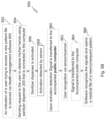
- FIGS. 5 A and 5 B illustrate flowcharts of procedures to be carried out for ensuring that a medical personnel cleanses his/her hands prior to approaching a new/consequent patient in personal clinics and in multi-user departments in accordance with some embodiments of the present invention.
- FIG. 1 A provides a first hand-hygiene system 100 for controlling hand hygiene of one or more health-care providers such as physicians, nurses or other healthcare personnel when treating patients in accordance with some embodiments of the present invention.
- Hand-hygiene system 100 of the present invention makes the performance of hand hygiene an obligatory action in between patients.
- Hand-hygiene system 100 comprises a sanitizer dispenser 200 equipped with a sensing unit/a miniature chicken-based micro-controller 300 , and a computer (a processor and associated memory) 500 equipped with a health management program 600 with a cleaning hand & authentication module 700 .
- Sensing unit 300 is associated with computer 500 via wired communication or wireless communication.
- Hand-hygiene system 100 may further include identification means 400 such as a barcode or a scanner.
- the computer receives a signal, indicating that the dispenser is used.
- an existing medical file program 600 may be modified to include a cleaning hand & authentication module 700 , and thus, to include commands for conditioning access to a new patient file with the use of a sanitizer dispenser 200 .
- the medical file program 600 may be modified to pop-up a window that notifies the user that he/she has to sanitize his/her hands in order to proceed and open a new patient's file.
- a signal from sanitizer dispenser 200 such notification window will close and the software may continue with opening of the new medical file only.
- the medical file program may be modified to keep the open new file button unresponsive until the software recognizes a signal from sanitizer dispenser 200 .
- module 700 may be either implemented in health management program 600 or compiled separately as illustrated and described in FIG. 1 B .
- FIG. 1 B provides a second hand-hygiene system 150 for controlling hand hygiene in accordance with other embodiments of the present invention.
- Hand-hygiene system 150 comprises a sanitizer dispenser 200 equipped with a sensing unit 300 , health management program 600 , and cleaning hand & authentication module 700 .
- Sanitizer dispenser 200 may further include identification means 400 such as a barcode or a scanner and/or a module 350 which may include an increasing counter indicating number of times of using the sanitizer dispenser 200 (i.e., the number of times pushing the lever, the number of times the motor is operated when sensing the presence of a hand below the dispenser etc.).
- sanitizer dispenser 200 may include a module 350 including an increasing counter which indicates number of times of using the sanitizer dispenser 200 (i.e., the number of time pushing the lever, the number of times the motor is operated when sensing the presence of a hand below the dispenser etc.).
- the counter is above a predefined threshold, the user is alerted to replace the dispenser, and after replacing the dispenser, the counter starts over.
- first hand-hygiene system 100 and second hand-hygiene system 150 ensure, to a certain extent, that health management program 600 may only use sanitizer dispenser 200 .
- the software pops-up a window notifying the physician/nurse to sanitize his/her hands by using the dispenser. Only after pressing the pump of the dispenser, this notification window will close and the software can continue with opening of the new medical file.
- an open new file button is unresponsive (disabled) until after the software recognizes a press on the dispenser.
- sanitizer dispenser 200 may include a module 350 as seen in FIG. 1 B .
- Module 350 may include an increasing counter which indicates the number of times of using the sanitizer dispenser 200 (i.e., the number of time pushing the lever, the number of times the motor is operated when sensing the presence of a hand below the dispenser etc.). When the counter is above a predefined threshold, the user is alerted to replace the dispenser.
- the present invention enables the integration of a medical file program (health software) with a sensor unit of the dispenser by combining a software component (e.g., driver) related to a dispenser sensor within the program.
- a software component e.g., driver
- the file management application may be able to detect the operation of the connected dispenser, at the correct stage, i.e., the stage of entering a new patient file.
- the “Open” button may be in a disabled state, so that the user cannot press it.
- the application may provide a notification informing the user that he/she has to use the dispenser.
- the “Open” button changes to an enabled state and the user is able to press it and open the file.
- the software may be updated by referencing the dispenser's driver (A Microsoft Windows DLL file) and using its API (Application Programming Interface).
- the application starts-up, it initializes the driver, and registers with the driver to receive a software event when the dispenser is used (pressed). Then, the software is able to detect the point in time at which the dispenser is used and may consider such event whenever the user needs to open a new patient file.
- a dispenser usage is identified via a dispenser sensor software source files installed in the dispenser module 350 , such software source files include the following:
- the reference record may be in the form of a DLL file.
- Initializing the driver which establishes communication with the dispensers' hardware, recognizes the existence of the hardware and its connection to the computer, and monitors the pressing on the dispenser.
- a programming event is initiated by the driver in order to identify a pressing event on the dispenser.
- sanitizer dispenser 200 includes a reservoir to hold the sanitizer and a dispensing mechanism, i.e., a mechanical, electrical, or mechanical-electrical device for the purpose of dispensing a sanitizer.
- a dispensing mechanism i.e., a mechanical, electrical, or mechanical-electrical device for the purpose of dispensing a sanitizer.
- FIG. 2 illustrates a hand-hygiene system 800 including a sanitizer dispenser 802 with a manual dispensing mechanism 803 , sensing unit 300 and health management program 600 in accordance with some embodiments of the present invention.
- Manual dispensing mechanism 803 comprises an arm/pump 804 connected to a tube 806 that runs into the sanitizer to be dispensed.
- every time dispensing mechanism 803 is activated e.g., every time arm/pump 804 is pressed, sensing unit 300 sends a signal indicating that dispenser 800 was in use to health management program 600 , 700 via wired communication, wireless communication, e.g., via Wi-Fi or Bluetooth, or a combination thereof.
- sanitizer dispenser 200 may be an automatic dispenser and as such the sensing unit 300 may include a touch sensor, a motion sensor, a sound sensor, an acoustic sensor or any other type of electrical or magnetic switch operable to activate the motor of dispenser 200 and to send a signal to the computer via wired communication, wireless communication, e.g., via Wi-Fi or Bluetooth, or a combination thereof.
- the sensing unit 300 may include a touch sensor, a motion sensor, a sound sensor, an acoustic sensor or any other type of electrical or magnetic switch operable to activate the motor of dispenser 200 and to send a signal to the computer via wired communication, wireless communication, e.g., via Wi-Fi or Bluetooth, or a combination thereof.
- sensing unit 300 detects the release of a sanitizer and sends a signal to health management program 600 , 700 .
- a touch sensor may be used for capturing a physical touch by a user, a motion sensor for sensing the presence of a hand below the dispenser, and a sound sensor for detecting human voices.
- An acoustical sensor may be associated with multiple predefined audio patterns such as (a) the audio of sanitizer drawn up the tube and (b) the audio of air drawn up the tube.
- an acoustic sensor provides a twofold advantage for indicating when a sanitizer is being released from the dispenser and for indicating when the dispenser is empt.
- FIG. 3 shows cleaning hands and authentication module 700 in accordance with some embodiments of the present invention.
- sanitizer dispenser 200 Upon receiving indication of a user trying to access a new patient file, the user is asked to cleanse his/her hands using sanitizer dispenser 200 that is connected to the computer [ 710 ].
- a signal detected by sensing unit 300 is received via health management program 700 and the user is allowed to get an access to a consequent/new patient [ 720 ].
- authenticating of said signal may include authenticating dispenser barcode or sensor ID number [ 730 ].
- FIG. 4 shows Health management software 600 in accordance with some embodiments of the present invention.
- Health management program 600 may enable the user to access into data files of consequent patients only after receiving a signal from cleaning hand & authentication module 700 indicating that the sanitizer dispenser 200 has been used, i.e., that the user has been washed his hands.
- health management software 600 receives an indication from either cleaning hands & authentication module 700 or sensing unit 300 that the sanitizer disperser was in use [ 610 ].
- health management software 600 Upon receiving such indication, health management software 600 enables the user to switch between patient records or start or end session of patient record [ 620 ].
- health management software 600 Upon receiving such indication, health management software 600 further enables the user to update information on patient file [ 630 ].
- health management program 600 is programmed so that no new patient file can be accessed (opened) for writing new data unless it receives a signal from sensing unit 300 indicating usage of sanitizer dispenser 200 . This way, the health-care provider is obligated to wash his/her hands between taking care of patients in order to use the medical record software.
- Hand-hygiene systems 100 , 150 may be easily connected to any dispenser, whether manually operated or automatic, and to any computer, both desk computer and laptop.
- hand-hygiene system 100 , 150 may be used in hospital departments, in which the patient's data is entered to the medical record immediately after the patient is examined, and also in an outpatient clinic or an ambulatory setting, in which the physician enters the data after examining the patient and before receiving another patient.
- hand-hygiene system 100 , 150 of the present invention may not only make the performance of hand hygiene an obligatory action in between patients, but may also identify the health-care provider.
- Such feature of hand-hygiene system 100 , 150 may be highly advantageous in hospital departments where numerous personnel use same computers.
- hand-hygiene system 100 , 150 may include at least one of the following:
- a voice recognition system operable to identify the health-care provider utilizing sanitizer dispenser 200 .
- the voice recognition system may be implemented in or near by sanitizer dispenser 200 and may transmit the detected signal to the corresponding computer for identifying and approving the health-care provider;
- Sanitizer dispenser 200 may include a barcode to be scanned by a smartphone. The user may capture the barcode via his/her smartphone and transmit it to the corresponding computer for identifying and approving the health-care provider;
- Sanitizer dispenser 200 may include a scanner for scanning the user's barcode. The scanner transmits the scanned name tag to the corresponding computer for identifying and approving the health-care provider.
- such sanitizers may be soaps, alcohol-based materials, or other antibacterial or germicidal materials.
- FIGS. 5 A and 5 B illustrate flowcharts 900 , 950 of procedures that may be carried out for ensuring that the medical personnel cleanses his/her hands prior to approaching a new/consequent patient in personal clinics and in multi-user departments, such as hospital departments where numerous personnel use same computers, respectively.
- the logic of flowchart 900 may be initiated when Health management software 600 receives an indication that a user is trying to access a new patient file, according to the block designated as 902 .
- the user is then asked to cleanse his/her hands using sanitizer dispenser 200 , according to the block designated as 904 .
- the user cleanses his/her hands, i.e., activates sanitizer dispenser 200 , according to the block designated as 906 .
- the activation is detected by sensing unit 300 , according to the block designated as 908 .
- the detected signal is transferred to the accompanied personal computer, according to the block designated as 910 , and then, upon recognizing the signal, the software opens the medical file of a new/consequent patient, according to the block designated as 912 .
- the logic of flowchart 950 may be initiated when Health management software 600 receives an indication that a user is trying to access a new patient file, according to the block designated as 952 .
- the user is then asked to cleanse his/her hands using sanitizer dispenser 200 , according to the block designated as 954 .
- the user cleanses his/her hands, i.e., activates sanitizer dispenser 200 , according to the block designated as 956 .
- the activation is detected by sensing unit 300 , according to the block designated as 958 .
- the detected signal is transferred to the accompanied public computer, according to the block designated as 960 , the user is being recognized via a sensor/scanner 400 , according to the block designated as 962 , sensor/scanner 400 transfers a signal to the accompanied public computer, according to the block designated as 964 , upon recognizing the signal, the software opens the medical file of a new/consequent patient, according to the block designated as 966 .
- the system of the present invention may include, according to certain embodiments of the invention, machine readable memory containing or otherwise storing a program of instructions which, when executed by the machine, implements some or all of the apparatus, methods, features and functionalities of the invention shown and described herein.
- the apparatus of the present invention may include, according to certain embodiments of the invention, a program as above which may be written in any conventional programming language, and optionally a machine for executing the program such as but not limited to a general purpose computer which may optionally be configured or activated in accordance with the teachings of the present invention. Any of the teachings incorporated herein may wherever suitable operate on signals representative of physical objects or substances.
- the term “computer” should be broadly construed to cover any kind of electronic device with data processing capabilities, including, by way of non-limiting example, personal computers, servers, computing system, communication devices, processors (e.g. digital signal processor (DSP), microcontrollers, field programmable gate array (FPGA), application specific integrated circuit (ASIC), etc.) and other electronic computing devices.
- processors e.g. digital signal processor (DSP), microcontrollers, field programmable gate array (FPGA), application specific integrated circuit (ASIC), etc.
- DSP digital signal processor
- FPGA field programmable gate array
- ASIC application specific integrated circuit
- software components of the present invention including programs and data may, if desired, be implemented in ROM (read only memory) form including CD-ROMs, EPROMs and EEPROMs, or may be stored in any other suitable typically non-transitory computer-readable medium such as but not limited to disks of various kinds, cards of various kinds and RAMs.
- ROM read only memory
- EEPROM electrically erasable programmable read-only memory
- Components described herein as software may, alternatively, be implemented wholly or partly in hardware, if desired, using conventional techniques.
- components described herein as hardware may, alternatively, be implemented wholly or partly in software, if desired, using conventional techniques.
- Any computer-readable or machine-readable media described herein is intended to include non-transitory computer- or machine-readable media.
- Any computations or other forms of analysis described herein may be performed by a suitable computerized method. Any step described herein may be computer-implemented.
- the invention shown and described herein may include (a) using a computerized method to identify a solution to any of the problems or for any of the objectives described herein, the solution optionally include at least one of a decision, an action, a product, a service or any other information described herein that impacts, in a positive manner, a problem or objectives described herein; and (b) outputting the solution.
- the scope of the present invention is not limited to structures and functions specifically described herein and is also intended to include devices which have the capacity to yield a structure, or perform a function, described herein, such that even though users of the device may not use the capacity, they are, if they so desire, able to modify the device to obtain the structure or function.
- a system embodiment is intended to include a corresponding process embodiment.
- each system embodiment is intended to include a server-centered “view” or client centered “view”, or “view” from any other node of the system, of the entire functionality of the system, computer-readable medium, apparatus, including only those functionalities performed at that server or client or node.
Landscapes
- Health & Medical Sciences (AREA)
- General Health & Medical Sciences (AREA)
- Engineering & Computer Science (AREA)
- Epidemiology (AREA)
- Public Health (AREA)
- Business, Economics & Management (AREA)
- Physics & Mathematics (AREA)
- Primary Health Care (AREA)
- General Physics & Mathematics (AREA)
- Medical Informatics (AREA)
- General Business, Economics & Management (AREA)
- Emergency Management (AREA)
- Animal Behavior & Ethology (AREA)
- Life Sciences & Earth Sciences (AREA)
- Veterinary Medicine (AREA)
- Biomedical Technology (AREA)
- Artificial Intelligence (AREA)
- Electromagnetism (AREA)
- Toxicology (AREA)
- Chemical & Material Sciences (AREA)
- Computer Vision & Pattern Recognition (AREA)
- Theoretical Computer Science (AREA)
- Chemical Kinetics & Catalysis (AREA)
- General Chemical & Material Sciences (AREA)
- Measuring And Recording Apparatus For Diagnosis (AREA)
- Medical Treatment And Welfare Office Work (AREA)
- Apparatus For Disinfection Or Sterilisation (AREA)
Abstract
- a health management program including a cleaning hand module implemented on said computer; and
- a sanitizer dispenser equipped with a sensor that is connected to said computer;
- wherein every time the dispenser is used, the computer receives a signal indicating that the dispenser was used, and
- wherein said health management program entails access to a new/consequent patient file only when receiving said signal,
- whereby said hand hygiene system makes the performance of hand hygiene an obligatory action in between patients.
Description
Claims (12)
Priority Applications (1)
| Application Number | Priority Date | Filing Date | Title |
|---|---|---|---|
| US16/503,829 US11749385B2 (en) | 2018-07-05 | 2019-07-05 | Hand hygiene system and method |
Applications Claiming Priority (2)
| Application Number | Priority Date | Filing Date | Title |
|---|---|---|---|
| US201862694233P | 2018-07-05 | 2018-07-05 | |
| US16/503,829 US11749385B2 (en) | 2018-07-05 | 2019-07-05 | Hand hygiene system and method |
Publications (3)
| Publication Number | Publication Date |
|---|---|
| US20210005291A1 US20210005291A1 (en) | 2021-01-07 |
| US11749385B2 true US11749385B2 (en) | 2023-09-05 |
| US20230307097A9 US20230307097A9 (en) | 2023-09-28 |
Family
ID=88096391
Family Applications (1)
| Application Number | Title | Priority Date | Filing Date |
|---|---|---|---|
| US16/503,829 Active 2041-09-03 US11749385B2 (en) | 2018-07-05 | 2019-07-05 | Hand hygiene system and method |
Country Status (1)
| Country | Link |
|---|---|
| US (1) | US11749385B2 (en) |
Citations (2)
| Publication number | Priority date | Publication date | Assignee | Title |
|---|---|---|---|---|
| US20120187146A1 (en) * | 2011-01-26 | 2012-07-26 | Sameer Chopra | Hand Sanitizer Dispenser with Informational Display and System Thereof |
| US20150134357A1 (en) | 2012-09-17 | 2015-05-14 | Sage Products, Llc | Method and system for ensuring and tracking hand hygiene compliance |
-
2019
- 2019-07-05 US US16/503,829 patent/US11749385B2/en active Active
Patent Citations (2)
| Publication number | Priority date | Publication date | Assignee | Title |
|---|---|---|---|---|
| US20120187146A1 (en) * | 2011-01-26 | 2012-07-26 | Sameer Chopra | Hand Sanitizer Dispenser with Informational Display and System Thereof |
| US20150134357A1 (en) | 2012-09-17 | 2015-05-14 | Sage Products, Llc | Method and system for ensuring and tracking hand hygiene compliance |
Non-Patent Citations (1)
| Title |
|---|
| Digital signage smart integrated hand sanitizer. (Nov. 22, 2018). [Video]. YouTube. https://www.youtube.com/watch?v=1oGxfDCymx0 (Year: 2018). * |
Also Published As
| Publication number | Publication date |
|---|---|
| US20230307097A9 (en) | 2023-09-28 |
| US20210005291A1 (en) | 2021-01-07 |
Similar Documents
| Publication | Publication Date | Title |
|---|---|---|
| US11238721B2 (en) | System and method for efficiently monitoring hand hygiene | |
| CN109523067B (en) | Cost prediction method and device based on prediction model, server and storage medium | |
| US20150199484A1 (en) | Using sensors and demographic data to automatically adjust medication doses | |
| US20100332250A1 (en) | Pre-examination medical data acquisition system | |
| US20090224907A1 (en) | Sanitation Tracking and Alerting System | |
| CA2780914C (en) | Context-aware method and system for facilitating the delivery of healthcare to patients within a clinical environment monitored by real-time locating apparatus | |
| US10282519B2 (en) | Method and apparatus for providing nursing service | |
| CN105874503A (en) | Devices, systems, and methods for automated medical product or service delivery | |
| CN102622662A (en) | Healthcare provider hygiene compliance monitoring system and method | |
| CN104603829A (en) | Method and apparatus for personal medical treatment using mobile terminal | |
| US20180052958A1 (en) | Patient-owned electronic health records system and method | |
| CN102298670A (en) | Biological information processing apparatus, biological information display apparatus, telemedical system, telemedical method, processing control program, and display control program | |
| CN112749321B (en) | Data processing method, client, server, system and storage medium | |
| JP2018109597A (en) | Health monitoring system, health monitoring method and health monitoring program | |
| JP2018117981A (en) | Hand hygiene management device, hand hygiene management system, and hand hygiene management method | |
| US20130300572A1 (en) | System and method for hand cleansing | |
| Wagner et al. | CareStore platform for seamless deployment of ambient assisted living applications and devices | |
| CN102034020A (en) | Implementation method for integrating health management system in television | |
| Andreão et al. | Raspcare: a telemedicine platform for the treatment and monitoring of patients with chronic diseases | |
| US11749385B2 (en) | Hand hygiene system and method | |
| WO2021086235A1 (en) | Sanitary control system | |
| WO2023092009A9 (en) | Remote health monitoring system | |
| US20150028054A1 (en) | Hand hygiene dispenser | |
| IL267837B2 (en) | Hand hygiene system and method | |
| KR102421017B1 (en) | Hospital Information System and Operation Method Thereof |
Legal Events
| Date | Code | Title | Description |
|---|---|---|---|
| FEPP | Fee payment procedure |
Free format text: ENTITY STATUS SET TO UNDISCOUNTED (ORIGINAL EVENT CODE: BIG.); ENTITY STATUS OF PATENT OWNER: MICROENTITY |
|
| FEPP | Fee payment procedure |
Free format text: ENTITY STATUS SET TO SMALL (ORIGINAL EVENT CODE: SMAL); ENTITY STATUS OF PATENT OWNER: MICROENTITY |
|
| FEPP | Fee payment procedure |
Free format text: ENTITY STATUS SET TO MICRO (ORIGINAL EVENT CODE: MICR); ENTITY STATUS OF PATENT OWNER: MICROENTITY |
|
| STPP | Information on status: patent application and granting procedure in general |
Free format text: NON FINAL ACTION MAILED |
|
| STPP | Information on status: patent application and granting procedure in general |
Free format text: FINAL REJECTION MAILED |
|
| STPP | Information on status: patent application and granting procedure in general |
Free format text: RESPONSE AFTER FINAL ACTION FORWARDED TO EXAMINER |
|
| STPP | Information on status: patent application and granting procedure in general |
Free format text: ADVISORY ACTION MAILED |
|
| STPP | Information on status: patent application and granting procedure in general |
Free format text: DOCKETED NEW CASE - READY FOR EXAMINATION |
|
| STPP | Information on status: patent application and granting procedure in general |
Free format text: NOTICE OF ALLOWANCE MAILED -- APPLICATION RECEIVED IN OFFICE OF PUBLICATIONS |
|
| FEPP | Fee payment procedure |
Free format text: ENTITY STATUS SET TO SMALL (ORIGINAL EVENT CODE: SMAL); ENTITY STATUS OF PATENT OWNER: MICROENTITY |
|
| STPP | Information on status: patent application and granting procedure in general |
Free format text: NOTICE OF ALLOWANCE MAILED -- APPLICATION RECEIVED IN OFFICE OF PUBLICATIONS |
|
| FEPP | Fee payment procedure |
Free format text: ENTITY STATUS SET TO MICRO (ORIGINAL EVENT CODE: MICR); ENTITY STATUS OF PATENT OWNER: MICROENTITY |
|
| FEPP | Fee payment procedure |
Free format text: PETITION RELATED TO MAINTENANCE FEES GRANTED (ORIGINAL EVENT CODE: PTGR); ENTITY STATUS OF PATENT OWNER: MICROENTITY |
|
| STCF | Information on status: patent grant |
Free format text: PATENTED CASE |
|
| CC | Certificate of correction |