US11739162B2 - Side chain modified peptoids useful as structure-stabilizing coatings for biomaterials - Google Patents
Side chain modified peptoids useful as structure-stabilizing coatings for biomaterials Download PDFInfo
- Publication number
- US11739162B2 US11739162B2 US17/015,532 US202017015532A US11739162B2 US 11739162 B2 US11739162 B2 US 11739162B2 US 202017015532 A US202017015532 A US 202017015532A US 11739162 B2 US11739162 B2 US 11739162B2
- Authority
- US
- United States
- Prior art keywords
- peptoid
- seq
- dna
- ocs
- staple
- Prior art date
- Legal status (The legal status is an assumption and is not a legal conclusion. Google has not performed a legal analysis and makes no representation as to the accuracy of the status listed.)
- Active, expires
Links
Images


Classifications
-
- C—CHEMISTRY; METALLURGY
- C07—ORGANIC CHEMISTRY
- C07K—PEPTIDES
- C07K17/00—Carrier-bound or immobilised peptides; Preparation thereof
- C07K17/02—Peptides being immobilised on, or in, an organic carrier
- C07K17/06—Peptides being immobilised on, or in, an organic carrier attached to the carrier via a bridging agent
-
- A—HUMAN NECESSITIES
- A61—MEDICAL OR VETERINARY SCIENCE; HYGIENE
- A61K—PREPARATIONS FOR MEDICAL, DENTAL OR TOILETRY PURPOSES
- A61K9/00—Medicinal preparations characterised by special physical form
- A61K9/48—Preparations in capsules, e.g. of gelatin, of chocolate
- A61K9/50—Microcapsules having a gas, liquid or semi-solid filling; Solid microparticles or pellets surrounded by a distinct coating layer, e.g. coated microspheres, coated drug crystals
- A61K9/51—Nanocapsules; Nanoparticles
- A61K9/5107—Excipients; Inactive ingredients
- A61K9/5115—Inorganic compounds
-
- A—HUMAN NECESSITIES
- A61—MEDICAL OR VETERINARY SCIENCE; HYGIENE
- A61K—PREPARATIONS FOR MEDICAL, DENTAL OR TOILETRY PURPOSES
- A61K47/00—Medicinal preparations characterised by the non-active ingredients used, e.g. carriers or inert additives; Targeting or modifying agents chemically bound to the active ingredient
- A61K47/30—Macromolecular organic or inorganic compounds, e.g. inorganic polyphosphates
- A61K47/42—Proteins; Polypeptides; Degradation products thereof; Derivatives thereof, e.g. albumin, gelatin or zein
-
- A—HUMAN NECESSITIES
- A61—MEDICAL OR VETERINARY SCIENCE; HYGIENE
- A61K—PREPARATIONS FOR MEDICAL, DENTAL OR TOILETRY PURPOSES
- A61K47/00—Medicinal preparations characterised by the non-active ingredients used, e.g. carriers or inert additives; Targeting or modifying agents chemically bound to the active ingredient
- A61K47/50—Medicinal preparations characterised by the non-active ingredients used, e.g. carriers or inert additives; Targeting or modifying agents chemically bound to the active ingredient the non-active ingredient being chemically bound to the active ingredient, e.g. polymer-drug conjugates
- A61K47/51—Medicinal preparations characterised by the non-active ingredients used, e.g. carriers or inert additives; Targeting or modifying agents chemically bound to the active ingredient the non-active ingredient being chemically bound to the active ingredient, e.g. polymer-drug conjugates the non-active ingredient being a modifying agent
- A61K47/54—Medicinal preparations characterised by the non-active ingredients used, e.g. carriers or inert additives; Targeting or modifying agents chemically bound to the active ingredient the non-active ingredient being chemically bound to the active ingredient, e.g. polymer-drug conjugates the non-active ingredient being a modifying agent the modifying agent being an organic compound
- A61K47/549—Sugars, nucleosides, nucleotides or nucleic acids
-
- A—HUMAN NECESSITIES
- A61—MEDICAL OR VETERINARY SCIENCE; HYGIENE
- A61K—PREPARATIONS FOR MEDICAL, DENTAL OR TOILETRY PURPOSES
- A61K47/00—Medicinal preparations characterised by the non-active ingredients used, e.g. carriers or inert additives; Targeting or modifying agents chemically bound to the active ingredient
- A61K47/50—Medicinal preparations characterised by the non-active ingredients used, e.g. carriers or inert additives; Targeting or modifying agents chemically bound to the active ingredient the non-active ingredient being chemically bound to the active ingredient, e.g. polymer-drug conjugates
- A61K47/51—Medicinal preparations characterised by the non-active ingredients used, e.g. carriers or inert additives; Targeting or modifying agents chemically bound to the active ingredient the non-active ingredient being chemically bound to the active ingredient, e.g. polymer-drug conjugates the non-active ingredient being a modifying agent
- A61K47/56—Medicinal preparations characterised by the non-active ingredients used, e.g. carriers or inert additives; Targeting or modifying agents chemically bound to the active ingredient the non-active ingredient being chemically bound to the active ingredient, e.g. polymer-drug conjugates the non-active ingredient being a modifying agent the modifying agent being an organic macromolecular compound, e.g. an oligomeric, polymeric or dendrimeric molecule
- A61K47/59—Medicinal preparations characterised by the non-active ingredients used, e.g. carriers or inert additives; Targeting or modifying agents chemically bound to the active ingredient the non-active ingredient being chemically bound to the active ingredient, e.g. polymer-drug conjugates the non-active ingredient being a modifying agent the modifying agent being an organic macromolecular compound, e.g. an oligomeric, polymeric or dendrimeric molecule obtained otherwise than by reactions only involving carbon-to-carbon unsaturated bonds, e.g. polyureas or polyurethanes
- A61K47/595—Polyamides, e.g. nylon
-
- A—HUMAN NECESSITIES
- A61—MEDICAL OR VETERINARY SCIENCE; HYGIENE
- A61K—PREPARATIONS FOR MEDICAL, DENTAL OR TOILETRY PURPOSES
- A61K47/00—Medicinal preparations characterised by the non-active ingredients used, e.g. carriers or inert additives; Targeting or modifying agents chemically bound to the active ingredient
- A61K47/50—Medicinal preparations characterised by the non-active ingredients used, e.g. carriers or inert additives; Targeting or modifying agents chemically bound to the active ingredient the non-active ingredient being chemically bound to the active ingredient, e.g. polymer-drug conjugates
- A61K47/51—Medicinal preparations characterised by the non-active ingredients used, e.g. carriers or inert additives; Targeting or modifying agents chemically bound to the active ingredient the non-active ingredient being chemically bound to the active ingredient, e.g. polymer-drug conjugates the non-active ingredient being a modifying agent
- A61K47/62—Medicinal preparations characterised by the non-active ingredients used, e.g. carriers or inert additives; Targeting or modifying agents chemically bound to the active ingredient the non-active ingredient being chemically bound to the active ingredient, e.g. polymer-drug conjugates the non-active ingredient being a modifying agent the modifying agent being a protein, peptide or polyamino acid
-
- A—HUMAN NECESSITIES
- A61—MEDICAL OR VETERINARY SCIENCE; HYGIENE
- A61K—PREPARATIONS FOR MEDICAL, DENTAL OR TOILETRY PURPOSES
- A61K47/00—Medicinal preparations characterised by the non-active ingredients used, e.g. carriers or inert additives; Targeting or modifying agents chemically bound to the active ingredient
- A61K47/50—Medicinal preparations characterised by the non-active ingredients used, e.g. carriers or inert additives; Targeting or modifying agents chemically bound to the active ingredient the non-active ingredient being chemically bound to the active ingredient, e.g. polymer-drug conjugates
- A61K47/51—Medicinal preparations characterised by the non-active ingredients used, e.g. carriers or inert additives; Targeting or modifying agents chemically bound to the active ingredient the non-active ingredient being chemically bound to the active ingredient, e.g. polymer-drug conjugates the non-active ingredient being a modifying agent
- A61K47/68—Medicinal preparations characterised by the non-active ingredients used, e.g. carriers or inert additives; Targeting or modifying agents chemically bound to the active ingredient the non-active ingredient being chemically bound to the active ingredient, e.g. polymer-drug conjugates the non-active ingredient being a modifying agent the modifying agent being an antibody, an immunoglobulin or a fragment thereof, e.g. an Fc-fragment
- A61K47/6835—Medicinal preparations characterised by the non-active ingredients used, e.g. carriers or inert additives; Targeting or modifying agents chemically bound to the active ingredient the non-active ingredient being chemically bound to the active ingredient, e.g. polymer-drug conjugates the non-active ingredient being a modifying agent the modifying agent being an antibody, an immunoglobulin or a fragment thereof, e.g. an Fc-fragment the modifying agent being an antibody or an immunoglobulin bearing at least one antigen-binding site
- A61K47/6851—Medicinal preparations characterised by the non-active ingredients used, e.g. carriers or inert additives; Targeting or modifying agents chemically bound to the active ingredient the non-active ingredient being chemically bound to the active ingredient, e.g. polymer-drug conjugates the non-active ingredient being a modifying agent the modifying agent being an antibody, an immunoglobulin or a fragment thereof, e.g. an Fc-fragment the modifying agent being an antibody or an immunoglobulin bearing at least one antigen-binding site the antibody targeting a determinant of a tumour cell
- A61K47/6855—Medicinal preparations characterised by the non-active ingredients used, e.g. carriers or inert additives; Targeting or modifying agents chemically bound to the active ingredient the non-active ingredient being chemically bound to the active ingredient, e.g. polymer-drug conjugates the non-active ingredient being a modifying agent the modifying agent being an antibody, an immunoglobulin or a fragment thereof, e.g. an Fc-fragment the modifying agent being an antibody or an immunoglobulin bearing at least one antigen-binding site the antibody targeting a determinant of a tumour cell the tumour determinant being from breast cancer cell
-
- A—HUMAN NECESSITIES
- A61—MEDICAL OR VETERINARY SCIENCE; HYGIENE
- A61K—PREPARATIONS FOR MEDICAL, DENTAL OR TOILETRY PURPOSES
- A61K47/00—Medicinal preparations characterised by the non-active ingredients used, e.g. carriers or inert additives; Targeting or modifying agents chemically bound to the active ingredient
- A61K47/50—Medicinal preparations characterised by the non-active ingredients used, e.g. carriers or inert additives; Targeting or modifying agents chemically bound to the active ingredient the non-active ingredient being chemically bound to the active ingredient, e.g. polymer-drug conjugates
- A61K47/69—Medicinal preparations characterised by the non-active ingredients used, e.g. carriers or inert additives; Targeting or modifying agents chemically bound to the active ingredient the non-active ingredient being chemically bound to the active ingredient, e.g. polymer-drug conjugates the conjugate being characterised by physical or galenical forms, e.g. emulsion, particle, inclusion complex, stent or kit
- A61K47/6921—Medicinal preparations characterised by the non-active ingredients used, e.g. carriers or inert additives; Targeting or modifying agents chemically bound to the active ingredient the non-active ingredient being chemically bound to the active ingredient, e.g. polymer-drug conjugates the conjugate being characterised by physical or galenical forms, e.g. emulsion, particle, inclusion complex, stent or kit the form being a particulate, a powder, an adsorbate, a bead or a sphere
- A61K47/6923—Medicinal preparations characterised by the non-active ingredients used, e.g. carriers or inert additives; Targeting or modifying agents chemically bound to the active ingredient the non-active ingredient being chemically bound to the active ingredient, e.g. polymer-drug conjugates the conjugate being characterised by physical or galenical forms, e.g. emulsion, particle, inclusion complex, stent or kit the form being a particulate, a powder, an adsorbate, a bead or a sphere the form being an inorganic particle, e.g. ceramic particles, silica particles, ferrite or synsorb
-
- A—HUMAN NECESSITIES
- A61—MEDICAL OR VETERINARY SCIENCE; HYGIENE
- A61K—PREPARATIONS FOR MEDICAL, DENTAL OR TOILETRY PURPOSES
- A61K47/00—Medicinal preparations characterised by the non-active ingredients used, e.g. carriers or inert additives; Targeting or modifying agents chemically bound to the active ingredient
- A61K47/50—Medicinal preparations characterised by the non-active ingredients used, e.g. carriers or inert additives; Targeting or modifying agents chemically bound to the active ingredient the non-active ingredient being chemically bound to the active ingredient, e.g. polymer-drug conjugates
- A61K47/69—Medicinal preparations characterised by the non-active ingredients used, e.g. carriers or inert additives; Targeting or modifying agents chemically bound to the active ingredient the non-active ingredient being chemically bound to the active ingredient, e.g. polymer-drug conjugates the conjugate being characterised by physical or galenical forms, e.g. emulsion, particle, inclusion complex, stent or kit
- A61K47/6921—Medicinal preparations characterised by the non-active ingredients used, e.g. carriers or inert additives; Targeting or modifying agents chemically bound to the active ingredient the non-active ingredient being chemically bound to the active ingredient, e.g. polymer-drug conjugates the conjugate being characterised by physical or galenical forms, e.g. emulsion, particle, inclusion complex, stent or kit the form being a particulate, a powder, an adsorbate, a bead or a sphere
- A61K47/6927—Medicinal preparations characterised by the non-active ingredients used, e.g. carriers or inert additives; Targeting or modifying agents chemically bound to the active ingredient the non-active ingredient being chemically bound to the active ingredient, e.g. polymer-drug conjugates the conjugate being characterised by physical or galenical forms, e.g. emulsion, particle, inclusion complex, stent or kit the form being a particulate, a powder, an adsorbate, a bead or a sphere the form being a solid microparticle having no hollow or gas-filled cores
- A61K47/6929—Medicinal preparations characterised by the non-active ingredients used, e.g. carriers or inert additives; Targeting or modifying agents chemically bound to the active ingredient the non-active ingredient being chemically bound to the active ingredient, e.g. polymer-drug conjugates the conjugate being characterised by physical or galenical forms, e.g. emulsion, particle, inclusion complex, stent or kit the form being a particulate, a powder, an adsorbate, a bead or a sphere the form being a solid microparticle having no hollow or gas-filled cores the form being a nanoparticle, e.g. an immuno-nanoparticle
-
- A—HUMAN NECESSITIES
- A61—MEDICAL OR VETERINARY SCIENCE; HYGIENE
- A61K—PREPARATIONS FOR MEDICAL, DENTAL OR TOILETRY PURPOSES
- A61K9/00—Medicinal preparations characterised by special physical form
- A61K9/48—Preparations in capsules, e.g. of gelatin, of chocolate
- A61K9/50—Microcapsules having a gas, liquid or semi-solid filling; Solid microparticles or pellets surrounded by a distinct coating layer, e.g. coated microspheres, coated drug crystals
- A61K9/51—Nanocapsules; Nanoparticles
- A61K9/5107—Excipients; Inactive ingredients
- A61K9/513—Organic macromolecular compounds; Dendrimers
- A61K9/5169—Proteins, e.g. albumin, gelatin
-
- C—CHEMISTRY; METALLURGY
- C07—ORGANIC CHEMISTRY
- C07K—PEPTIDES
- C07K1/00—General methods for the preparation of peptides, i.e. processes for the organic chemical preparation of peptides or proteins of any length
- C07K1/10—General methods for the preparation of peptides, i.e. processes for the organic chemical preparation of peptides or proteins of any length using coupling agents
-
- C—CHEMISTRY; METALLURGY
- C07—ORGANIC CHEMISTRY
- C07K—PEPTIDES
- C07K14/00—Peptides having more than 20 amino acids; Gastrins; Somatostatins; Melanotropins; Derivatives thereof
- C07K14/001—Peptides having more than 20 amino acids; Gastrins; Somatostatins; Melanotropins; Derivatives thereof by chemical synthesis
-
- C—CHEMISTRY; METALLURGY
- C07—ORGANIC CHEMISTRY
- C07K—PEPTIDES
- C07K7/00—Peptides having 5 to 20 amino acids in a fully defined sequence; Derivatives thereof
- C07K7/04—Linear peptides containing only normal peptide links
- C07K7/06—Linear peptides containing only normal peptide links having 5 to 11 amino acids
-
- B—PERFORMING OPERATIONS; TRANSPORTING
- B82—NANOTECHNOLOGY
- B82Y—SPECIFIC USES OR APPLICATIONS OF NANOSTRUCTURES; MEASUREMENT OR ANALYSIS OF NANOSTRUCTURES; MANUFACTURE OR TREATMENT OF NANOSTRUCTURES
- B82Y5/00—Nanobiotechnology or nanomedicine, e.g. protein engineering or drug delivery
Definitions
- This invention relates to stabilizing biomaterials for biomedical applications.
- DNA nanotechnology allows to program self-assembly of synthetic oligonucleotides into structures with prescribed topologies and spatial configurations.
- One of such approaches is called DNA origami.
- Advancement in DNA origami design and synthesis with high-precision structural controls has enabled potential biomedical applications, including smart drug/gene delivery carriers and biomolecular devices at the cellular level.
- DNA origamis designed with controlled shape, biocompatibility and responsiveness toward other biomolecules e.g., proteins, lipids, DNAs, and RNAs
- This technology applies a bottom-up approach in nanocarrier design and synthesis that may bring potential solutions in targeted drug/gene delivery and biomedical imaging and sensing, in which translation of nanoformulation carriers into clinical applications has remained challenging due to the difficulty to regulate interfaces between the nanocarriers and biological systems.
- the present invention relates to compositions and methods for the stabilization of biomaterials.
- the invention relates to a composition for stabilizing a biomaterial, said composition including a compound of Formula (I).
- the invention relates to a composition for stabilizing a biomaterial, said composition includes a compound of Formula (II). T 1 -[X b1 —Y b2 —Z b3 ] n -T 2 (II) wherein
- the invention relates to a composition for stabilizing a biomaterial, said composition including a compound of Formula (III).
- the invention relates to a drug delivery carrier having a pre-defined nucleic acid nanostructure and a compound of Formula (I), (II), or (III).
- the invention relates to a stabilized complex having a pre-defined nucleic acid nanostructure; a compound of Formula (I), (II), or (III); and a drug molecule or protein.
- the invention relates to a method of stabilizing a pre-defined nucleic acid nanostructure, said method including (i) complexing a pre-defined nucleic acid nanostructure with a composition comprising a compound of Formula (I), (II), or (III).
- the invention relates to a stabilized nanoparticle complex having a nanoparticle; and a compound according to Formula (I), (II), or (III).
- FIG. 1 (A) Chemical structures of peptoids designed to protect 3D octahedra-shaped DNA origamis (OC). Nae: (2-aminoethyl)glycine, Nte: N-2-(2-(2-methoxyethoxy)ethoxy)ethylglycine and Nme: N-(2-methoxyethyl)glycine.
- TEM Transmission electron microscope
- C Schematic view showing the different surface coating of the two types (“brush” and “block”) of peptoids on the OC structure proposed in this work, which leads to varied protection effect.
- FIG. 2 Fluorescence assay monitoring peptoid-stabilized duplex DNA (dsDNA).
- dsDNA peptoid-stabilized duplex DNA
- SG Real-time SYBR Green I
- SG fluorescence assay of a 15-bp dsDNA (500 ⁇ M) in the presence of peptoids at different ratios of peptoid amines to phosphate groups of the DNA (N/P).
- the fluorescence signals of (A) dsDNA/peptoid complexes at N/P of 4 and (B) dsDNA/PE2 complexes at different N/P are plotted against the increasing temperature.
- FIG. 3 Molecular dynamics (MD) simulations of the interactions of PE1 and PE4 with dsDNA. Molecular representation of the most visited binding sites and structures of (A) PE1 and (B) PE4 with dsDNA. The most visited binding sites represented as occupancy volume areas (shown as transparent white) where the peptoids were present for at least 6% of total contact time.
- C-F Radial distribution functions (RDF) of water near the (C, D) minor and (E, F) major grooves of the dsDNA. RDFs were calculated on the H (donor) atoms of water and the N and O (acceptor) atoms of (C, E) AT and (D, F) GC base-pairs. The structuring of water around DNA only is shown in FIG.
- FIG. 3 C-F lines labeled DNA, while for the dsDNA/PE1 and dsDNA/PE4 complexes are shown in FIG. 3 C-F , lines labeled PE1-DNA and PE4-DNA, where the AT and GC base-pairs are distinguished by light and dark colors respectively.
- FIG. 4 Analysis of peptoid-coated OCs in low Mg 2+ solution.
- A Schematic view showing peptoid-coated OCs (OC/peptoid) was protected against Mg 2+ depletion.
- B, C Agarose gel electrophoresis (AGE) was used to analyze the structural integrity of OCs in TAE buffer at MgCl 2 concentrations of 12.5 mM (+) and 1.25 mM ( ⁇ ).
- AGE Agarose gel electrophoresis
- D TEM imaging was performed on OCs extracted from the agarose gels (bands a and b in B).
- FIG. 5 Analysis of peptoid-coated OCs in the presence of deoxyribonuclease (DN).
- A Schematic view showing peptoid-coated OCs (OC/peptoid) were protected against DN (image obtained from PDB: 2DNJ) degradation.
- B TEM images show bare OCs and OC/peptoid (N/P: 0.5) in solution containing DN of 15 g/mL. Imaging was performed on samples extracted from the agarose gel (scale bars: 200 nm). The insets show magnified images of the OC structures (scale bars: 100 nm).
- FIG. 6 Analysis of peptoid-coated OCs in cell media and presence of serum nuclease.
- TEM images show (A, C) bare OCs and (B, D) PE2-coated OCs (OC/PE2) in (A, B) Roswell Park Memorial Institute (RPMI) 1640 medium and (C, D) Dulbecco's Modified Eagle Medium (DMEM) containing 0%, 5%, and 10% of fetal bovine serum (FBS) and incubated for 24 h at 37° C. The final concentrations of MgCl 2 were 1.25 mM. Imaging was performed on samples extracted from the agarose gels (scale bars: 200 nm). The insets show magnified images of the OC structures (scale bars: 50 nm).
- FIG. 7 Protection of protein-encapsulated in OCs by PE2 coating.
- A Schematic view showing that OC/PE2 reduce trypsin (image obtained from PDB: 1S0Q) digestion of fluorescein labeled BSA encapsulated in the OCs.
- FIG. 8 Surface functionalization of peptoid-stabilized OCs with antibody and fluorophore.
- A Schematic view showing alkyne-modified peptoids conjugates azide-modified cargos through click chemistry. Here, azide fluor 488 (AF) and Trastuzumab (Tz) were used as the presenting cargos (label 1).
- B Chemical structure of PE8 and PE9.
- D TEM images show surface coating of OCs with PE8-Tz and PE9-Tz. The samples were labeled with immunogold (label 2 in A) prior to TEM imaging (scale bars: 50 nm).
- FIG. 9 Stabilization of Au NPs by peptoid coating.
- A Schematic view showing the block-type peptoid Nae 6 -Nte 12 was used to stabilize 20 nm citrated-capped gold nanoparticles (Au NPs).
- B UV-visible spectroscopy (UV-vis) showing stable Au NPs (0.5 nM) after coating with Nae 6 -Nte 12 block at different concentrations.
- the buffer was 10 mM phosphate, pH 7.0.
- FIG. 10 Peptoid stabilizes Au NPs in solution containing high salt concentration. UV-vis showing that Au NPs remains stable in solution containing 200 mM of sodium chloride after coating with Nae 6 -Nte 12 block. Below 0.375 ⁇ M of Nae6-Nte12 block, the extent of Au NP aggregation is dependent on the peptoid concentration.
- FIG. 11 Cryogenic protection of peptoid stabilized Au NPs.
- A Pictures showing Nae 6 -Nte 12 block stabilizes the Au NPs at frozen (top) and melted (bottom) states.
- FIG. 12 UV-vis showing stable Au NPs in the melted state with Nae 6 -Nte 12 block coating. Higher concentration of peptoid enables higher Au NP stability.
- FIG. 13 Mass spectrometry of peptoids PE1-9 prepared by solid phase peptoid synthesis.
- FIG. 14 Real-time SYBR Green I (SG) fluorescence assay of the 15-bp dsDNA in the presence of peptoids (A, B) PE1, (C, D) PE3, (E, F) PE4 and (G, H) PE5 at different N/P. Derivatives of the fluorescence intensities were plotted against the increasing temperature.
- FIG. 15 Real-time SG fluorescence assay of peptoid only.
- A Fluorescence intensities and
- B derivatives of the fluorescence intensities were plotted against the increasing temperature.
- FIG. 16 Real-time SG fluorescence assay of 15-bp dsDNA in the presence of (A) PE1-5 at N/P of 4 (B) PE2 at different N/P as in FIGS. 2 A and 2 B , respectively. Derivatives of fluorescence intensities were plotted against the increasing temperature.
- FIG. 18 AGE shows the electrophoretic shift of dsDNA/peptoid complexes.
- A dsDNA/peptoid of 0.5;
- B dsDNA/PE2 at different N/P.
- FIG. 19 Atomistic structures of the peptoid and dsDNA models used in the MD simulations.
- the peptoids (A) PE1 and (B) PE4 are shown in FIG. 19 A and FIG. 19 B .
- (C) Molecular and (D) cartoon representation of the dsDNA model are shown in FIGS. 19 C and 19 D .
- FIG. 20 Negative-stained TEM images show peptoid-coated OCs at N/P of 0.5, 0.25 and 0.1 (scale bars: 200 nm). The insets show magnified images of the OC structures (scale bars: 100 nm).
- FIG. 21 (A) Chemical structure of the Nae6-Nte16 block peptoid and (B) negative-stained TEM images of Nae 6 -Nte 16 block-coated OCs at N/P of 0.5 (scale bar: 200 nm). The inset shows magnified image of the OC structures (scale bar: 100 nm).
- FIG. 22 Top: Molecular structure of PE6.
- FIG. 23 Top: molecular structure of PE7.
- the insets show magnified images of the OC structures (scale bars: 100 nm).
- FIG. 25 AGE of OC/peptoid in TAE buffer The final concentration of MgCl 2 was 1.25 mM. The result was used in the calculation of electrophoretic shift in FIG. 4 C .
- FIG. 26 Negative-stained TEM images of (A) bare OCs and OC/PE2 at (B) N/P of 0.1 and (C) N/P of 0.5.
- the final concentration of MgCl 2 in TAE buffer was 1.25 mM.
- TEM samples were extracted from the agarose gels (scale bars: 200 nm). The insets show magnified images of the OC structures (scale bars: 100 nm).
- FIG. 27 Negative-stained TEM images of peptoid (PE1, PE3, PE4, and PE5)-coated OCs in TAE buffer.
- the final concentrations of MgCl 2 were 12.5 mM (TAE-Mg 2+ ) and 1.25 mM (TAE low Mg 2+ ).
- TEM samples were extracted from the agarose gels (scale bars: 200 nm). The insets show magnified images of the OC structures (scale bars: 100 nm).
- FIG. 28 Real-time SG fluorescence assay of bare and peptoid-coated OCs (1 nM, N/P: 0.125) in PBS buffer. Derivatives of the fluorescence intensities were normalized to 0-1 range and plotted against the increasing temperature.
- FIG. 29 Negative-stained TEM images of OCs in the presence of different amounts of EDTA: (A) 12.5 mM, (B) 10 mM, (C) 6.25 mM, (D) 3.5 mM and (E) 0 mM.
- the concentration of MgCl 2 in TAE buffer was 12.5 mM.
- EDTA was added to the OC solution and left undisturbed for ⁇ 4 h at room temperature prior to TEM samples preparation (scale bars: 200 nm).
- the insets show magnified images of the OC structures (scale bars: 100 nm).
- FIG. 30 Kratky analysis of SAXS data in FIGS. 4 F and G. Bare OCs appeared to be more flexible upon treatment with EDTA and did not plateau at higher q compared to the PE2-coated OCs.
- FIG. 31 Left: AGE of bare and peptoid-coated OCs in PBS buffer. The final concentration of MgCl 2 was 1.25 mM.
- DN deoxyribonuclease I
- FIG. 33 TEM images of bare OCs and peptoid-coated OCs in the absence (left) and presence of DN (15 ⁇ g/mL, right).
- the samples were extracted from agarose gels.
- the concentration of MgCl 2 in TAE buffer was 12.5 mM (scale bars: 200 nm).
- the insets show magnified images of the OC structures (scale bars: 100 nm).
- OC/PE2 showed protection of the OC nanostructures.
- FIG. 34 DLS of (A) bare and (B) PE2-coated OCs (N/P: 0.5) in the presence of DN.
- the extent of size reduction represents degradation of the OC nanostructures by DN.
- FIG. 35 Negative-stained TEM images of (A) bare OCs and (B) PE2-coated OCs in DMEM cell media containing FBS (0%, 5%, and 10%). The final concentration of MgCl 2 was 1.25 mM. TEM samples were extracted from the agarose gels (scale bars: 200 nm). The insets show the magnified images of the OC structures (scale bars: 100 nm).
- FIG. 36 UV-vis spectra of step-wise functionalization of 10 nm gold nanoparticles (Au NPs) with Cys-Ala-Leu-Asp-Asp-Lys(N3) (SEQ ID NO: 127) (pep) and followed by a DBCO-modified single-stranded DNA (ssDNA, 5′-TATGAAGTGATGGATGAT/3DBCO/), (SEQ ID NO: 1) which complemented with the eight ssDNAs located in the OCs.
- FIG. 37 (A) AGE and (B) TEM images show PE2 coated and Au NP-encapsulated OCs in DMEM media containing FBS (0%, 5%, and 10%). AGE was performed and imaged by white light (top) and UV light (bottom). TEM samples were extracted from the agarose gels (scale bars: 200 nm). The insets show magnified images of the OC structures (scale bars: 50 nm).
- FIG. 38 (A) Fluorescence spectrum of doxorubicin (Dox, 100 ⁇ M) in PBS buffer. Excitation and emission wavelengths were measured at 485 nm and 510-800 nm, respectively. (B) Fluorescence signals at 597 nm were plotted against Dox concentrations ([Dox]). A linear relationship between fluorescence signal and [Dox] was observed below 3.2 ⁇ M.
- FIG. 40 Fluorescence enhancement of fluorescein labeled BSA (80 nM) in the presence and absence of trypsin (50 nM).
- concentration of MgCl 2 in TAE buffer was 12.5 mM.
- FIG. 42 TEM images of OC in the presence of different trypsin concentrations: (A) 5 ⁇ M, (B) 0.5 ⁇ M, (C) 0.1 ⁇ M and (D) 0 ⁇ M (scale bars: 200 nm).
- the insets show magnified images of the OC structures (scale bars: 100 nm).
- FIG. 43 Site-specific modification of Trastuzumab. Top: schematic view of the modification. Bottom: ESI-LC/MS analyses of the Trastuzumab-azide.
- the present invention relates to compositions and methods for the stabilization of biomaterials.
- compositions of the present invention for stabilization of biomaterials are referred to as “peptoids”.
- the peptoids of the present invention can also be referred to as a series of N-substituted glycines.
- Peptoids according to the present invention are exemplified by Formulas (I), (II), and (III) described herein.
- the composition of the invention includes a compound of Formula (I).
- alkyl refers to a fully saturated branched or unbranched hydrocarbon moieties having up to 12 carbon atoms. Unless otherwise provided, alkyl refers to hydrocarbon moieties having 1 to 12 carbon atoms, 1 to 8 carbon atoms, 1 to 6 carbon atoms (i.e., (C 1 -C 6 )alkyl), or 1 to 3 carbon atoms (i.e., (C 1 -C 3 )alkyl).
- alkyl include, but are not limited to, methyl, ethyl, n-propyl, i-propyl, n-butyl, i-butyl, s-butyl, t-butyl, n-pentyl, 1-methylbutyl, 2-methylbutyl, 3-methylbutyl, neopentyl, 3,3-dimethylpropyl, hexyl, 2-methylpentyl, and the like.
- alkylene or “alkylenyl” refers to a branched or unbranched alkyl (as defined herein) chain having two free radicals available for bonding.
- Alkylene refers to divalent alkyl group as defined herein above having 1 to 12 carbon atoms. Unless otherwise provided, alkylene refers to moieties having 1 to 12 carbon atoms, 1 to 8 carbon atoms, 1 to 6 carbon atoms, or 1 to 3 carbon atoms.
- methylene or methylenyl e.g, —CH 2 —
- ethylene or ethylenyl e.g, —CH 2 —CH 2 — or —CH(CH 3 )—
- propylene or propylenyl e.g., —CH 2 —CH 2 —CH 2 —, —CH(CH 3 )—CH 2 —, —CH 2 —CH(CH 3 )—, or —C(CH 3 ) 2 —.
- alkylene further include, but are not limited to (—CH 2 —CH 2 —CH 2 —CH 2 —, —CH(CH 3 )—CH 2 —CH 2 —, —CH 2 —CH(CH 3 )—CH 2 —, —C(CH 3 )(CH 3 )—CH 2 —), and the like.
- alkenyl refers to a monovalent group derived from a hydrocarbon having at least one carbon-carbon double bond.
- C 2 -C 6 -alkenyl refers to a monovalent group derived from a hydrocarbon having two to six carbon atoms and comprising at least one carbon-carbon double bond.
- the alkenyl group can be unbranched or branched. Representative examples of alkenyl include vinyl, 1-propenyl, 2-propenyl, 1-methyl-1-propenyl, 1-methyl-2-propenyl, 2-methyl-1-propenyl, 2-methyl-2-propenyl, 1-butenyl, 2-butenyl, 3-butenyl, and so on.
- alkynyl refers to a monovalent group derived from a hydrocarbon having at least one carbon-carbon triple bond.
- (C 2 -C 6 )alkynyl refers to a monovalent group derived from a hydrocarbon having 2 to 6 carbon atoms and comprising at least one carbon-carbon triple bond.
- the alkynyl group can be unbranched or branched. Representative examples include ethynyl, propynyl, butyn-1-yl, butyn-2-yl, and so on.
- alkoxy refers to —O-alkyl, wherein alkyl is as defined herein.
- Representative examples of alkoxy include, but are not limited to, methoxy, ethoxy, propoxy, 2-propoxy, butoxy, tert-butoxy, pentyloxy, hexyloxy, cyclopropyloxy-, cyclohexyloxy- and the like.
- alkoxy groups may have about 1 to 8 carbon atoms. Typically, alkoxy groups have about 1 to 6 carbons, and more preferably about 1 to 3 carbons.
- partially or fully saturated carbocyclic refers to nonaromatic rings that are either partially or fully hydrogenated and may exist as a single ring of 3 to 8 members or bicyclic ring of 9 to 14 members.
- the carbocyclic ring is generally a 3- to 8-membered ring. In another embodiment, the carbocyclic ring is a 3- to 6-membered ring.
- carbocyclic rings include groups such as cyclopropyl, cyclopropenyl, cyclobutyl, cyclobutenyl, cyclopentyl, cyclpentenyl, cyclopentadienyl, cyclohexyl, cyclohexenyl, cyclohexadienyl, norbornyl, norbornenyl, and the like.
- cycloalkylene refers to cycloalkyl as defined herein having two free radicals available for bonding.
- heteroaryl refers to a 5- to 14-membered monocyclic- or bicyclic- or tricyclic-aromatic ring system, having 1 to 8 heteroatoms selected from N, O, or S.
- the heteroaryl is a 5- to 10-membered ring system (e.g., 5- to 7-membered monocycle or an 8- to 10-membered bicycle).
- a 5-7 membered monocyclic ring system preferably contains 1 to 3 heteroatoms each independently selected from O, N, or S.
- heteroaryl groups include 2- or 3-thienyl, 2- or 3-furyl, 2- or 3-pyrrssolyl, 2-, 4-, or 5-imidazolyl, 3-, 4-, or 5-pyrazolyl, 2-, 4-, or 5-thiazolyl, 3-, 4-, or 5-isothiazolyl, 2-, 4-, or 5-oxazolyl, 3-, 4-, or 5-isoxazolyl, 3- or 5-1,2,4-triazolyl, 4- or 5-1,2, 3-triazolyl, tetrazolyl, 2-, 3-, or 4-pyridyl, 3- or 4-pyridazinyl, 3-, 4-, or 5-pyrazinyl, 2-pyrazinyl, and 2-, 4-, or 5-pyrimidinyl.
- heteroarylene refers to heteroaryl as defined herein having two free radicals available for bonding.
- halogen refers to fluoro, chloro, bromo, and iodo. It is to be understood that the terminology oxo or C(O) refers to a —C ⁇ O group, whether it be ketone, aldehyde or acid or acid derivative. Similarly, S(O) refers to a —S ⁇ O group.
- submonomer refers to a substituent that is covalently bonded to the amino group of the peptoid backbone of Formulas (I), (II), and (III). More specifically, in the case of Formula (I), submonomer refers to R 1 -R 8 (individually or collectively); in the case of Formula (II), submonomer refers to R 1 -R 6 (individually or collectively); and in the case of Formula (III), submonomer refers to the groups bound to the amino group of the peptoid backbone (individually or collectively). More specifically, submonomers of Formula (III) include —(CH 2 ) 2 NH 2 , and —(CH 2 ) 2 —O—(CH 2 ) 2 —O—(CH 2 ) 2 O—CH 3 .
- each of the submonomer moiety has a molecular weight of 1 to 250 daltons or 1 to 500 daltons.
- the submonomers can be positively charged, negatively charged, or neutrally charged.
- Submonomers may include functional groups that add functionality to the peptoid.
- the N-substitutions can include guanidoalkyl, alkylphenyl, indolylalkyl, alkoxyphenyl, hydroxyphenylalkyl, and halophenylalkyl and without limitation to (S, R)- ⁇ -methylbenzyl, benzyl, phenethyl, naphthylmethyl, methoxyethyl, (S)- ⁇ -methylnaphthylmethyl, N-pyrrolidinopropyl, furfurylmethyl, cyclohexylmethyl, 3,4,5-trimethoxybenzyl, phenylpropyl, 6-galactosyl, 3′-indolylethyl, p-methoxyphenylethyl, p-chlorophenylethyl, or p-hydroxyphenylethyl groups.
- the submonomers may be protected by tert-butyloxycarbonyl (Boc), fluorenylmethoxycarbonyl (Fmoc), or allyloxycarbonyl (Aloc) and cleaved after the peptoid synthesis.
- Boc tert-butyloxycarbonyl
- Fmoc fluorenylmethoxycarbonyl
- Aloc allyloxycarbonyl
- the positively charged submonomers are aminoalkyl groups having about 1-20 carbon atoms.
- the N-substitutions can include guanidoalkyl, alkylphenyl, halophenylalkyl, indolylalkyl, alkoxyphenyl, hydroxyphenylalkyl and without limitation to (S, R)- ⁇ -methylbenzyl, benzyl, phenethyl, naphthylmethyl, methoxyethyl, (S)- ⁇ -methylnaphthylmethyl, N-pyrrolidinopropyl, furfurylmethyl, cyclohexylmethyl, 3,4,5-trimethoxybenzyl, phenylpropyl, 6-galactosyl, 3′-indolylethyl, p-methoxyphenylethyl, p-chlorophenylethyl, or p-hydroxyphenylethyl groups.
- the cationic side chains can include the following: aminoethyl, aminopropyl, aminohexyl, 1,4-butadiamine (lysine mimic), (S)-1-methylethylenediamine, trimethylaminoethyl, quanidinoethyl, or quanidinopropyl.
- the positively charged submonomers can include functional groups discussed herein.
- n is an integer between 1 and 100.
- X represents the amino group of the peptoid backbone.
- negatively charged submonomers are carboxyalkyl groups having 1-20 carbon atoms.
- the anionic side chain can include carboxyl, carbonyl, sulfonic acid, sulfonamide, phosphate, and phosphonic acid-based submonomers. Similar to the positively charged submonomers, the N-substituted side chains can include functional groups discussed herein.
- the negatively charged submonomers can include functional groups discussed herein.
- n is an integer between 1 and 100.
- X represents the amino group of the peptoid backbone.
- oligo as in “oligo-ethylene glycol” includes without limitation to polymers, copolymers, and interpolymers of any length.
- the oligomers may consist of a single repeating monomer, two alternating monomer units, and two or more monomer units randomly or purposely spaced relative to each other.
- the oligo-ethylene glycol comprises at least 1 ethylene glycol unit (i.e., submonomer: methoxyethylamine) moiety, typically at least 2 repeating units (i.e., submonomer: 2-(2-methoxyethoxy)ethanamine) and preferably at least 3 repeating units (i.e., submonomer: 2-(2-(2-methoxyethoxy)ethoxy)ethanamine).
- the water-soluble motifs can also be substituted with oligomers or polymers composed of ⁇ -methylbenzylamine which typically comprise 2 to 13 repeating units. Examples can be found in works by Kirshenbaum (44), Zuckermann (45), Barron (46) and their co-workers. Carboxyamide, taurine- and phosphonate-based submonomers may also be used (47-49).
- n is an integer between 1 and 100.
- X represents the amino group of the peptoid backbone.
- the functional groups exhibit no net positive or negative charge.
- Functional groups include any group that allows for chemical conjugatison (or strong binding) to a chemical compound, imaging reagents, biomolecules, ligands, polymers, or glycans discussed above on the surfaces of DNA origami and nanoformulation carriers. Examples of a functional group includes alkyne, azide, sulfhydryl, maleimide biotinyl, cyano, hydrazido, carbodiimide, halo, succinimide, and maleimide.
- n is an integer between 1 and 100.
- X represents the amino group of the peptoid backbone.
- the composition of the invention includes a compound of Formula (II). T 1 -[X b1 —Y b2 —Z b3 ] n -T 2 (II) wherein
- the peptoid of Formula (I) or Formula (II) may include alternating submonomers across a portion of the peptoid sequence, or across the entirety of the peptoid sequence, excluding the terminal groups.
- the peptoid may include submonomers that alternate between any combination of positive submonomers, negative submonomers, and neutral submonomers.
- the peptoid may include submonomers that alternate between positive submonomers and neutral submonomers. In one embodiment, the peptoid may include submonomers that alternate between negative submonomers and neutral submonomers. In one embodiment, the peptoid may include submonomers that alternate between positive submonomers and negative submonomers. In one embodiment, the peptoid may include submonomers that alternate between two types of negative submonomers, two types of positive submonomers, or two types of neutral submonomers.
- the peptoid sequence may include semi-alternating submonomers.
- the peptoid sequence may alternate between one pair of submonomers for one portion of the peptoid sequence, and alternate between a second pair of submonomers for another portion of the peptoid sequence.
- repeat unit or “repeating unit” corresponds to the smallest constitutional unit, the repetition of which constitutes a regular macromolecule (or oligomer molecule or block).
- the repeat unit in the case of peptoid PE1, is —(CH 2 ) 2 —NH 2 and —((CH 2 ) 2 —O) 3 —CH 3 .
- the repeat unit in the case of peptoid PE3, is —(CH 2 ) 2 —NH 2 , —((CH 2 ) 2 —O) 3 —CH 3 , —(CH 2 ) 2 O—CH 3 , and —((CH 2 ) 2 —O) 3 —CH 3 , wherein one monomer is repeated in this repeat unit.
- the repeating unit may contain a sequence of four unique submonomers.
- the peptoid sequence may have alternating groups of submonomers, wherein each repeating unit includes a unique sequence of 2, 3, 4, 5, or 6 submonomers.
- group 1 includes two monomers, having the following submonomers —(CH 2 ) 2 —NH 2 , —((CH 2 ) 2 —O) 3 —CH 3 ; and group 2 includes two monomers having the following two submonomers —(CH 2 ) 2 O—CH 3 , and —((CH 2 ) 2 —O) 3 —CH 3 .
- peptoid PE3 alternates between group 1 and group 2 along its sequence.
- the peptoids of the present invention may have the charged submonomers distributed across the length of the peptoid.
- the charged submonomers may be sporadically, evenly, or periodically distributed across the length of the peptoid.
- This type of peptoid structure is herein referred to as a brush structure.
- the peptoids of the present invention may have an uneven distribution of charged submonomers across the length of the peptoid.
- positively-charged submonomers, negatively-charged submonomers, or neutrally-charged submonomers are clustered at the N-terminus, at the C-terminus, or internally, resulting in uneven charge distribution across the length of the peptoid.
- Such peptoids are referred to as having a block structure.
- positively-charged submonomers are clustered at the N-terminus.
- submonomers R 1 -R 4 include at least one positive submonomer and no more than four positive submonomers, and submonomers R 5 -R 8 include no positive submonomers, or less submonomers than submonomers R 1 -R 4 .
- negatively-charged submonomers are clustered at the C-terminus.
- FIG. 1 Examples of peptoids having a brush structure and block structure are shown in FIG. 1 . Accordingly, brush-type peptoids and block-type peptoids interact differently with the subject biomaterial. In the case of the brush-type peptoids, both termini of the peptoid are proximal to the biomaterial (e.g., pre-defined nucleic acid nanostructure). In the case of block-type peptoids, one terminus is proximal to the biomaterial (e.g., pre-defined nucleic acid nanostructure and one terminus is distal to the biomaterial (e.g., pre-defined nucleic acid nanostructure).
- biomaterial e.g., pre-defined nucleic acid nanostructure
- block-type peptoids one terminus is proximal to the biomaterial (e.g., pre-defined nucleic acid nanostructure and one terminus is distal to the biomaterial (e.g., pre-defined nucleic acid nanostructure).
- the peptoids described herein may have a net positive charge. Such peptoids can interact with nucleic acid to facilitate their binding thereto.
- 0-80%, 20-80%, 20-50%, 20-40%, 20-30%, 30-60%, 30-50%, or 30-40% of the submonomers are positively charged.
- 0-80%, 20-80%, 20-50%, 20-40%, 20-30%, 30-60%, 30-50%, or 30-40% of the submonomers are negatively charged.
- the ratio of positive:neutral, negative:neutral, or positive:negative submonomers is 0.001:1, 0.01:1, 0.1:1, 0.5:1; 1:1, 1:3, 1:5, 1:10, or a range in between.
- the ratio of neutral submonomers to charged submonomers is approximately 1:1. In some embodiments, the ratio of neutral submonomers to charged submonomers is approximately 2-5:1.
- out of the total submonomers present in a peptoid of the invention 20-80%, 30-80%, or 40-80% of the total submonomer content includes oligo-ethylene glycol.
- N-substituted glycine, L-amino acid, D-amino acid and analogue thereof are preferred to be incorporated as the charged motifs that facilitate peptoid interactions with the surfaces of drug/gene carriers.
- the positively charged submonomers are not limited to functional groups, including the amino, guanidino, hydrazido, and amidino groups. These functional groups can be aromatic or aliphatic and may include enantiomers (e.g., L-amino acid and D-amino acid).
- the peptoid sequences can be chemically conjugated with polyalkylene glycol, in particular, polyethylene glycol is preferred and typically has a molecular weight from 2 to 50 kDa.
- the peptoid sequences can also be chemically conjugated to mono-, di-, or polysaccharide. This may include chitosan, alginate, heparin, hyaluronic acid, chondroitin sulfate, cyclodextrin, pectin, amylose, dextran and analog thereof.
- the peptoid designs also permit crosslinking between the polymers, for example, through disulfide bond at the terminating group or side chains.
- the amount of neutrally charged functional groups in a peptoid sequence 12 repeating units can be less than 30% in order to ensure peptoid-DNA binding by the positively charged moieties and DNA origami stabilization by the oligo-ethylene glycol moieties. In some embodiments, a peptoid sequence having 12 repeating units the amount of neutrally charged functional groups is less than 35%. In some embodiments, a peptoid sequence having 12 repeating units the amount of neutrally charged functional groups is less than 25%.
- the composition of the invention includes a compound of Formula (III).
- r is 1, 2, 3, 4, 5, 6, 7, 8, 9, 10, 11, 12, 13, 14, 15, 20, 25, 50, 100, or 200;
- T 1 defines the N-terminus and T 2 defines the C-terminus.
- the peptoid includes 1, 2, 3, 4, or more functional groups.
- the functional groups may be located exclusively at a single terminus, both termini, internal to the peptoid sequence, or combinations thereof.
- the peptoid sequences of the present disclosure can be up to 200 monomer units in length.
- the length of the peptoid sequence is at least 2 monomers; at least 3 monomers; more usually 4 monomers, more usually 6-12 monomers and preferably 24-48 monomers.
- the typical repeating units of peptoid sequences comprise 2 monomers including 1 positively-charged and 1 neutrally-charged monomer, 3 monomers including 1 positively-charged and 2 neutrally-charged monomers, and 4 monomers including 2 positive-charged and 2 neutrally-charged monomers.
- a “monomer” means one N-substituted glycine unit.
- the present invention includes a peptoid according to Formula (I), (II), and (III), wherein a peptoid is conjugated to a chemical compound, imaging reagent, targeting ligand, protein, peptide, aptamer, peptide nucleic acid, dendrimer, oligomer, polymer, antibody, antibody fragment, another peptoid, a biomaterial as disclosed herein, or combinations thereof.
- suitable chemical compounds for conjugation include hormones, steroids, estrogens, androgens, thyroid hormone, vitamins, or folic acid.
- the conjugation may be by way of a functional group, as described herein and commonly known in the art.
- Peptoid synthesis follows the solid-phase peptoid synthesis which is well known in the art, see, e.g., reference nos. 25, 26; where the designed functionality is incorporated during synthesis, enabling controlled peptoid components and architectures.
- the peptoids disclosed herein can be prepared by solid-phase synthesis and polymerization methods.
- the solid-phase synthesis includes methods developed by 1) Merrifield (36), which involves coupling amino acid units (commonly protected by Fmoc) to the growing chain anchored on a resin; and 2) the “submonomer method” developed by Zuckermann (26), which builds peptoid sequences using acylation and nucleophilic displacement with bromoacetic acid and secondary amines.
- the polymerization method peptoids with high molecular weights can be synthesized through ring-opening polymerizations of N-substituted N-carboxyanhydride monomers (37-40) or N-thiocarboxyanhydrides (41-43).
- the full-length peptoids described herein may be produced by the same general procedure which includes repeating a two-step or three step cycle wherein a new monomer unit is added in each cycle until a desired length is obtained.
- the present invention provides a stabilized biomaterial and methods for generating the same.
- biomaterials include materials useful for biomedical applications.
- examples of biomaterials include nucleic acid (DNA and RNA) based nano-structures; lipid based nanostructures; and nanoparticles.
- the nucleic acid based nano-structure may be a pre-defined nucleic acid nanostructure.
- An example of a pre-defined nucleic acid nanostructure includes pre-defined DNA nanostructure.
- the terms “DNA origami” and “pre-defined DNA nanostructure” are used interchangeably herein.
- pre-defined nucleic acid nanostructure includes a polynucleotide molecule that has been rationally designed to self-assemble into a pre-defined shape or structure.
- the pre-defined nucleic acid nanostructure in accordance with the present disclosure has a size of 1 to 2000 nm, 1 to 1000 nm, 1 to 900 nm, 1 to 800 nm, 1 to 700 nm, 1 to 600 nm, 1 to 500 nm, 1 to 400 nm, 1 to 300 nm, 1 to 200 nm, 1 to 100 nm, or 1 to 50 nm.
- the size of the pre-defined nucleic acid nanostructure is determined by the longest length of the structure.
- self-assemble refers to the ability of a single-strand of nucleic acid to anneal to itself or another single-strand of nucleic acid, in a sequence-specific manner, in a predicted and non-arbitrary manner, and without external physical control.
- the nucleic acid based nanostructure is double stranded DNA.
- the pre-defined nucleic acid nanostructure is an octahedral-shaped DNA structure having a size of approximately ⁇ 60 nm. (29, 30)
- the pre-defined nucleic acid nanostructure is a lattice-based DNA structure that includes a template DNA and staple DNAs with defined shapes and sizes.
- the pre-defined nucleic acid nanostructure is a large-scale DNA structure formed by self-assembly of several smaller pre-defined DNA nanostructures.
- lipid refers to any suitable material resulting in a single to multi-layered structures such that a hydrophobic portion of the lipid material orients toward the inner lipid layer while a hydrophilic portion orients toward the aqueous phase.
- An example of a single layer lipid structure includes micelle.
- Lipids include highly hydrophobic compounds such as triglycerides, phospholipids, glycolipids, and sterols such as cholesterol and amphipathic lipids.
- An example of a lipid-based structure includes liposomes.
- liposome and “liposomes” refer to a spherical structure having at least one lipid bilayer.
- a liposome can be used for the administration of therapeutic agents.
- a liposome can comprise a combination of one or more phospholipids, an optional lipid that is not a phospholipid, such as sterols, glycolipids, amphipathic lipids, pegylated lipids, or a combination thereof.
- a liposome may have a diameter of about 20 nm to about 3,000 nm. In one embodiment, the diameter of the liposomes is about 75 nm to about 600 nm. In certain embodiments, the liposomes can have diameters precisely falling within 110 nm and 125 nm.
- the invention includes stabilized nanoparticles.
- the nanoparticles are metallic (e.g., monometallic, bimetallic, or polymetallic), and may be inorganic or organic.
- the nanoparticles comprise gold, silver, copper, iron oxide, titanium nanoparticles, or alloys thereof, ceramics, carbon, or silica nano- or microparticles.
- the nanoparticles are gold or silver nanoparticles.
- the present invention includes a composition having a compound of Formula (I), Formula (II), or Formula (III) and a biomaterial, wherein the compound of Formula (I), Formula (II), or Formula (III) is complexed with a biomaterial.
- the complex further includes a small molecule therapeutic or protein. Such a complex defines a drug carrier complex according to the present disclosure.
- the complex between the peptoid of Formula (I), Formula (II), or Formula (III) and the biomaterial can be characterized as having a molar ratio of peptoid amines to nucleic acid phosphates (N/P).
- N/P be combined in any manner to create a range with a minima and maxima for ratio necessary for a stable complex between the peptoid and nucleic acid biomaterial: 0.001, 0.01, 0.1, 0.125, 0.25, 0.5, 1, 2, 3, 4, 5, 8, and 10.
- the N/P may be between 0.001 and 3, 0.001 and 2, 0.01 and 2, or 0.1 and 2.
- the N/P is less than 4, less than 3, less than 2, or less than 1.
- the biomaterial is a pre-defined nucleic acid nanostructure and the complex with a peptoid of the present invention includes a N/P of less than 3 or less than 2.
- the peptoid sequences comprise 1 to 100 (or any range in between) of the repeating dimers, trimers or tetramers.
- the designs are not limited to peptoid sequences that contain only the positively-, negatively- or neutrally charged monomers, excluding the terminal groups for specific purposes.
- the submonomers and peptoids are referenced as having a charge.
- the net charges are also determined by the solution pH, in which the physiologically relevant pH is at least 4 and is no more than 8.5.
- the present invention includes a method of stabilizing a biomaterial, said method includes complexing with the biomaterial with a composition including a compound of Formula (I), (II), or (III), as described herein.
- complexing means forming a complex of two or more components.
- complex refers to a combination of two or more components having intramolecular or intermolecular covalent or noncovalent interactions.
- the complexed components are said to be stabilized.
- stabilized means that the component that is stabilized has improved properties as compared to properties of the non-stabilized or non-complexed component.
- a biomaterial is stabilized if it has increased nuclease resistance.
- a stabilized pre-defined DNA nanostructure has increased structural integrity in environments with low salt or low monovalent or bivalent ions.
- complexing includes (i) contacting the biomaterial with a composition with a compound of Formula (I), (II), or (III).
- the contacting conditions include with compound of Formula (I), (II), or (III) for between 0.5 and 20, 10 and 20, 8 and 12, or 0.5 and 4 hours; and at a temperature of between 1° C. and 4° C., 20° C. and 40° C., or 2° C. and 10° C.
- the method includes a method of stabilizing a pre-defined nucleic acid nanostructure.
- the contacting and complexing include a ratio of Formula (I), (II), or (III) amines to nucleic acid phosphates is less than 20, less than 15, less than 10, less than 8, less than 5, or less than 2.
- the contacting includes a ratio of Formula (I), (II), or (III) amines to nucleic acid phosphates of the pre-defined nucleic acid nanostructure is between 3 and 0.01, 3 and 0.1, or 2 and 0.2.
- origami nanostructures can include and without limitation to basically negatively charged “polynucleotide” or “nucleic acid”, which refers to DNA, RNA, peptide nucleic acids and their analogues thereof.
- nucleic acids may be single-stranded, double-stranded or combination of the two types of molecules.
- quantities are defined by ranges having a lower boundary and upper boundary, and by lower or upper boundaries.
- Each lower boundary can be combined with each upper boundary to define a range.
- Two lower boundary values can be combined to define a range, and two upper boundary values can be combined to define a range.
- the lower and upper boundaries should each be taken as a separate element.
- ssDNA single-stranded DNA sequences were purchased from Integrated DNA Technologies and the M13mp18 ssDNA scaffold was purchased from Bayou Biolabs.
- Rink Amide resin, 2-methoxyethylamine, propargylamine, magnesium chloride (MgCl 2 ), copper (II) sulphate (CuSO 4 ), aminoguanidine hydrochloride, DNase I, doxorubicin, agarose (medium EEO), bovine serum albumin, trypsin and phosphate buffer saline (PBS) were purchased from Sigma Aldrich.
- OCs octahedra-shaped DNA origamis
- OC-staple-1 (SEQ ID NO: 2) TCAAAGCGAACCAGACCGTTTTATATAGTC OC-staple-2 (SEQ ID NO: 3) GCTTTGAGGACTAAAGAGCAACGGGGAGTT OC-staple-3 (SEQ ID NO: 4) GTAAATCGTCGCTATTGAATAACTCAAGAA OC-staple-4 (SEQ ID NO: 5) AAGCCTTAAATCAAGACTTGCGGAGCAAAT OC-staple-5 (SEQ ID NO: 6) ATTTTAAGAACTGGCTTGAATTATCAGTGA OC-staple-6 (SEQ ID NO: 7) GTTAAAATTCGCATTATAAACGTAAACTAG OC-staple-7 (SEQ ID NO: 8) AGCACCATTACCATTACAGCAAATGACGGA OC-staple-8 (SEQ ID NO: 9) ATTGCGTAGATTTTCAAAACAGATTGTTTG OC-staple-9 (SEQ ID NO: 10) TAACCTGTTTAGCTATTTTCGCATT
- Peptoids were synthesized by solid phase peptoid synthesis on the Symphony X (Gyros Protein Technologies) and the synthesis procedure followed the method previously described (1). All solvents and reagents were purchased from commercial sources and used without further purification. Briefly, 200 mg of Rink amide polystyrene resin (0.61 mmol/g, Novabiochem) was swelled in DMF and the Fmoc group was deprotected in 20% (v/v) 4-methylpiperidine/DMF prior to the submonomer cycle.
- the acylation step was performed on the amino resin by the addition of 1.0 mL of 0.8 M bromoacetic acid and 1.0 mL of 0.8 M N,N′-diisopropylcarbodiimide in DMF and agitated with N2 for 20 min. Displacement of the bromide with the submonomers was performed by adding 1 M solution of the primary amine in N-methyl-2-pyrrolidone followed by agitation for 30 min.
- the peptoids were cleaved from the resin by the addition of trifluoroacetic acid/triisopropylsilane/deionized water (95:2.5:2.5, v/v/v) solution for ⁇ 2 h, followed by evaporation using the Biotage V10 Evapoator and precipitation with an excess of cold diethyl ether.
- the crude peptoids were re-dispersed in deionized water followed by lyophilization.
- the peptoids were purified by reverse-phase high-performance liquid chromatography (HPLC, Shimadzu) using a linear gradient of 5-95% acetonitrile in water with 0.1% TFA.
- the Phenomenex C18 Gemini NX column was 150 ⁇ 21.2 mm and had a 5 m pore size and 100 ⁇ particle size.
- peptoid-coated OCs Preparation of peptoid-coated OCs.
- the synthesized peptoids were dissolved in deionized water at a concentration of 10 mM and stored at 4° C.
- peptoids at different concentrations based on the target ratios between the free peptoid amine and DNA phosphate (N/P) were mixed with OCs (5-45 nM) and incubated overnight ( ⁇ 12 h) at 4° C. in TAE (1 ⁇ ) buffer.
- the buffer is TAE (1 ⁇ ) buffer composed of 40 mM tris base, 20 mM acetic acid and 1 mM of ethylenediaminetetraacetic acid (EDTA) sodium salt dihydrate, and containing 12.5 mM magnesium chloride.
- TAE TAE (1 ⁇ ) buffer composed of 40 mM tris base, 20 mM acetic acid and 1 mM of ethylenediaminetetraacetic acid (EDTA) sodium salt dihydrate, and containing 12.5 mM magnesium chloride.
- Negative-stained TEM imaging The peptoid-coated OC structures were typically confirmed using negative-stained TEM imaging.
- 5 L of the peptoid-coated OC (5-10 nM) solution was dropped on a carbon film for 1-3 min and the residual liquid was removed with a piece of filter paper. After that, the grid was washed with 5 L of deionized water followed by staining with 5 L of 2 wt % uranyl acetate for 15 sec. The excess liquid was removed with filter papers.
- TEM imaging was performed on a JEOL 1400 TEM with an acceleration voltage of 120 kV.
- agarose (0.8 wt %) was prepared in TBE (1 ⁇ ) buffer containing 12.5 mM MgCl 2 and 1 ⁇ SYBR Gold dye.
- OCs (4.3 nM, ⁇ 40 L) were mixed with 1 ⁇ BlueJuice gel loading buffer (Thermo Fisher Scientific) prior to loading into the gel.
- the gel electrophoresis was performed at 60 V on ice to prevent heating damage.
- SYBR Green I (SG) fluorescence assay of OCs OCs (1 nM) were mixed with peptoids in PBS (1 ⁇ ) buffer at an N/P of 0.125 and incubated overnight at room temperature. Prior to measuring fluorescence, 0.8 ⁇ SG was added to the peptoid-coated OC solutions for 2 h at room temperature. The fluorescence signal was recorded from 37° C. to 85° C. at a step of 0.03° C./sec by LightCycler 480 (Roche).
- A15-bp dsDNA was designed with a sequence of 5′-ATTACCGTATAGCAT-3′ (SEQ ID NO: 124) with a complementary sequence of 5′-ATGCTATACGGTAAT-3′ (SEQ ID NO: 125).
- the dsDNA 500 ⁇ M was formed in PBS (1 ⁇ ) buffer and cooled from 70° C. to room temperature over 11 h.
- the dsDNA (100 nM) solution was mixed with different peptoid solutions at varied concentrations in PBS overnight at room temperature.
- SG (1 ⁇ ) was added to the dsDNA/peptoid mixtures for 2 h at room temperature. The fluorescence signal was recorded from 37° C. to 85° C.
- the ParmBSC1 force field (8) was employed to model the dsDNA.
- the molecular structures of the dsDNA, PE1 and PE4 peptoids are shown in FIG. 19 .
- Each peptoid was placed in a triclinic simulation cell ⁇ 11 ⁇ away from the pre-equilibrated dsDNA structure to avoid any initial interactions.
- TIP3P explicit water
- Counter-ions Na + were included to neutralize the net negative charge of the system, and 150 mM NaCl to represent physiological environment.
- the different modes of interaction between the peptoids and dsDNA were investigated using contact analysis.
- the total time each peptoid was in contact with the dsDNA was determined, and these frames were extracted for further analysis.
- a contact was defined when any peptoid atom was within 4 ⁇ of any DNA atom.
- the number of positively charged (Nae) residues and ethylene glycol (Nte) chains interacting with DNA and their contact stabilities was calculated.
- the preference of binding to specific structural features of DNA was also determined by calculating the total time each peptoid was interacting exclusively with the major or minor groove, or with both simultaneously (atomic definition for the DNA grooves is provided in the caption of Table S1).
- the average contact area between each peptoid and DNA was also determined.
- the average solvent accessible surface area of each peptoid while bound to dsDNA was calculated using a probe radius of 1.4 ⁇ (water) and Lennard-Jones hard-shell radii for each atom to define the surface of the peptoid.
- the elongation or compactness of the peptoid was estimated by measuring the average distance between the outermost nitrogen atoms of the peptoid backbone. Visualization of the trajectories and analysis was performed using the VMD software (14).
- OCs and peptoid-coated OCs were diluted in TAE (1 ⁇ ) buffer, PBS (1 ⁇ ) buffer, Roswell Park Memorial Institute 1640 medium (RPMI, Thermo Fisher Scientific) and the Dulbecco's Modified Eagle Medium (DMEM, Gibco) such that the final concentrations of origami and MgCl 2 were 4.3 nM and 1.25 mM, respectively.
- the samples were incubated at 4° C. (TAE and PBS) or 37° C. (RPMI and DMEM) for 24 h and characterized by AGE and negative-stained TEM imaging.
- OCs were extracted from the agarose gels using the Freeze 'N SqueezeTM DNA Gel Extraction Spin Columns (Bio Rad) and centrifuged at 1000 rcf for 3 min at room temperature.
- TAE (1 ⁇ ) buffer containing 12.5 mM MgCl 2 was used as reference and was subtracted from the samples.
- Solid-phase peptide synthesis was performed to synthesize the azido peptide (CALDDK(N3)) for Au NP functionalization. Briefly, Rink Amide resins and the protected amino acids were added to the growing peptide chain with the activating reagent 2-(1H-benzotriazol-1-yl)-1,1,3,3-tetramethyluronium hexafluorophosphate (HBTU). Following addition of the submonomers, the Fmoc group was removed under 20% piperidine in DMF deprotection conditions. The peptides were cleaved by trifluoroacetic acid/triisopropylsilane/deionized water (95:2.5:2.5, v/v/v).
- the crude peptide was precipitated by cold ether several times and lyophilized.
- the as-synthesized peptides were purified by reverse-phase high-performance liquid chromatography (HPLC, Shimadzu).
- HPLC reverse-phase high-performance liquid chromatography
- the Phenomenex C18 Gemini NX column was 150 ⁇ 21.2 mm and had a 5 m pore size and 100 ⁇ particle size.
- 990 L of 10 nm Au NPs (9.5 nM, BBI solutions) were mixed with 10 L of peptide CALDDK(N3) (pep, 1 mM) overnight at room temperature ( ⁇ 12 h). The solution was washed 3 times with 10 mM phosphate buffer (pH 7.4) by centrifugation at 10,000 rcf and at 4° C.
- DBCO-modified single-stranded DNA (ssDNA, 5′-TATGAAGTGATGGATGAT/3DBCO/)) (SEQ ID NO: 1) was added to the Au NP-pep solution at concentration ratio of 300:1 in 10 mM phosphate buffer (pH 7.4) and incubated at least 4 h at room temperature.
- OCs 40 nM were mixed with the Au NP-pep-ssDNA (48 nM) and cooled from 50° C. to room temperature over a time course of 40 h.
- OCs (10 nM) were incubated with doxorubicin (Dox, 0.1 mM) at room temperature for 24 h and purified 3 times with TAE (1 ⁇ ) buffer containing 12.5 mM MgCl 2 using a 100 kDa filter and centrifuged at 400 rcf and at 15° C. OCs were concentrated to 50 nM in the final centrifugation.
- PE2-coated OCs were prepared by mixing PE2 (27.7 ⁇ M) with Dox-loaded OCs (50 nM) overnight ( ⁇ 12 h) at room temperature.
- Dox-loaded bare and PE2-coated OCs were diluted in PBS (1 ⁇ ) at pH 7 or 5.5 and incubated at 37° C. for 48 h, followed by centrifugation with 50 kDa filters at 1000 rcf for 30 min at room temperature, of which the supernatant solution was collected. Fluorescence spectra were measured in a 384 well plate (Corning) using the Spark microplate reader (Tecan). The ⁇ ex and ⁇ em were 485 nm and 515-800 nm, respectively with a step size of 2 nm.
- NHS-fluorescein (240 ⁇ M) and NHS-PEG-azide (60 ⁇ M) was mixed with BSA (10 ⁇ M) in PBS (1 ⁇ ) buffer for 3 h at room temperature.
- the solution was purified 8 times with PBS using a 50 kDa filter and centrifuged at 3000 rcf and at 4° C.
- the DBCO-modified single-stranded DNA (ssHy, 5′-TATGAAGTGATGGATGAT/3DBCO/, 250 ⁇ M) (SEQ ID NO: 1) was mixed with the BSA solution (10 ⁇ M) overnight ( ⁇ 12 h) at 4° C.
- the solution was purified 8 times with PBS using a 50 kDa filter and centrifuged at 3000 rcf at 4° C. Finally, the surface-modified BSA (200 nM) was added to the OCs (40 nM) and the solution was cooled down from 45° C. to room temperature over a time course of 60 h. The solution was purified 2 times with TAE (1 ⁇ ) buffer containing 12.5 mM MgCl 2 using a 100 kDa filter and centrifuged at 400 rcf and at 4° C.
- the fluorescence kinetics were measured at ⁇ ex and ⁇ em of 490 nm and 525 nm, respectively and time interval of 3 min. Fluorescence spectra were measured after 15 h at excitation and emission wavelengths of 490 nm and 510-800 nm, respectively and a step size of 2 nm. TAE (1 ⁇ ) buffer containing 12.5 mM MgCl 2 was used for both experiments.
- the peptoid-fluorophore (PE8-FL and PE9-FL) conjugates were dialyzed against deionized water with 0.2 mM EDTA for 12 h at room temperature using a 3,500 Da membrane, followed by dialysis against deionized water for 24 h at room temperature.
- trastuzumab expressed with two heavy chain C-terminal formylglycine residues was a gift from David Rabuka (Catalent) (15).
- a small molecule azide linker with a hydrazino moiety was synthesized in 9 steps as described previously (16, 17).
- the trastuzumab-aldehyde was reacted with the azide via the hydrazino-iso-Pictet Spengler ligation as described previously (17).
- trastuzumab with C-terminal heavy-chain formylglycine residues was buffer exchanged via PD-10 column (GE Life Sciences, 17085101) into 50 mM sodium citrate (Millipore Sigma C8532).
- Trastuzumab-azide was analyzed by mass spectrometry to confirm the azide addition, with no detected unmodified trastuzumab-azide remaining.
- Trastuzumab-azide (20 L in PBS was treated with 0.75 L PNGaseF (NEB, P0704S) at 37° C. overnight in an eppendorf tube. After 16 h, the DTT was added (30 mM, 0.6 L from frozen stock solution in water) (Thermo Fisher Scientific, 15508013), and the antibody was heated at 65° C. for 5 min using a Thermomixer.
- Antibody was placed on ice and analyzed in the same day at the SUMS facility at Stanford University by ESI-LC/MS on an Agilent 1260 HPLC and Bruker MicroTOF-Q II time-of-flight mass spectrometer.
- a Waters BioResolve RP mAb Polyphenyl 450 ⁇ 2.7 m 100 ⁇ 2.1 mm column was maintained at 50° C.
- Five microliters of reduced, de-glycosylated antibody conjugate were injected at a flow rate of 0.3 mL/min at 95% solvent A (0.05% trifluoroacetic acid in water) and 5% solvent B (0.1% formic acid in acetonitrile).
- the peptoid-Trastuzumab (PE8-Tz and PE9-Tz) conjugates were dialyzed against PBS (1 ⁇ ) buffer with 0.2 mM EDTA for 12 h at 4° C. using a 100-500 Da membrane for 2 times, followed by dialysis against PBS (1 ⁇ ) buffer for 24 h at 4° C.
- polycationic peptoids are proposed to electrostatically bind to the anionic phosphate backbone of the DNA and compensate charge repulsions between DNA strands.
- incorporation of neutral oligo-Nte is expected to prevent aggregation of the DNA origami structures.
- the anti-fouling oligo-Nte can also prevent adsorption of biomolecules in physiological environments (51, 52) and enzymatic degradation of DNA origamis triggered by protease and nuclease.
- dsDNA stabilizing duplex DNA
- SG SYBR Green I fluorescence assay
- Tm of the dsDNA increased 1-6° C.
- PE2 exhibited the highest performance in raising the Tm of the dsDNA, where the Tm shifted from 44° C. to 50° C. as the N/P increased from 0.125 to 8 ( FIGS. 2 B and 16 ).
- brush-type peptoids were observed to confer higher stability of the dsDNA compared to block-type peptoids, where Tm (dsDNA/PE2)>Tm (dsDNA/PE1)>Tm (dsDNA/PE4) and Tm (dsDNA/PE3)>Tm (dsDNA/PE5).
- Polycationic polymers and lipids often cause DNA to form polyplexes which can significantly quench the DNA-binding fluorophores (55).
- the oligo-Nte motifs are expected to inhibit DNA condensation and polyplex formation. Indeed, the fluorescence of SG intercalated inside the dsDNA remained unchanged after the addition of PE2 at room temperature (25° C.) ( FIG. 17 ). This was confirmed by agarose gel electrophoresis (AGE), where no aggregation of dsDNA/PE2 was noted at N/P from 0.125 to 8 ( FIG. 18 ). These indicated that the peptoid-dsDNA interactions did not induce DNA condensation at this level.
- AGE agarose gel electrophoresis
- Explicit solvent molecular dynamics (MD) simulations were performed to investigate the binding mechanisms of brush-type PE1 and block-type PE4 with dsDNA in solution ( FIG. 3 A, 3 B, 19 and FIG. 13 ).
- the peptoids experienced almost immediate binding to the dsDNA regardless of their starting structures in the simulations. This strong attraction was due to the electrostatic attractive forces between the positively charged Nae residues of the peptoids and negatively charged phosphate groups of the DNA backbone.
- PE1 and PE4 exhibited distinct differences in the binding mechanisms to dsDNA.
- PE1 demonstrated persistent interactions ( ⁇ 98% of the total contact time) with DNA via both the Nae and Nte motifs, where at least 58% (Nae) and 61% (Nte) of the time, 3 or more residues were in close contact with the dsDNA.
- the “brush” arrangement facilitated PE1 to spread across the DNA backbone where it interacted with both major and minor grooves concurrently (48.8% of the total contact time), while a preferred binding toward the minor groove (28.5%) exclusively over the major groove (6.1%) of the dsDNA was also observed.
- the PE4-dsDNA interactions dominated binding through the Nae moieties ( ⁇ 100% of the total contact time), where 4 or more Nae residues were in close contact with the dsDNA for more than 85% of the time.
- the Nte moieties exhibited significantly less persistent interactions with DNA, where only the closest two Nte residues were involved in binding for 55% of the total contact time.
- the “block” arrangement facilitated the Nte end of PE4 to be solvent exposed, and therefore PE4 was observed to embed in either the major (39.6%) or minor (24%) grooves of the dsDNA, while simultaneous interactions with both major and minor grooves (18.5%) were less favored.
- PE1 formed a larger contact area with dsDNA (2.88 ⁇ 1.11 nm 2 ) compared to PE4 (2.54 ⁇ 1.05 nm 2 ), whereas PE4 had lower average solvent accessible surface area than PE1 due to a more compact structure overall while bound to DNA (PE1: 18.82 ⁇ 1.47 nm 2 and PE4: 17.81 ⁇ 1.64 nm 2 ) (Table S).
- MD simulations showed the PE1 structure to be more flexible and dynamic while interacting with the dsDNA compared to PE4, which was frequently restrained due to the embedding of the Nae end within the DNA grooves (demonstrated by the larger occupancy volume areas adopted by PE4 compared to PE1 in FIGS. 3 A and 3 B ).
- FIG. 3 C-F showed a higher density of water molecules surrounding the AT base-pairs versus GC base-pairs with notable preference for the minor grooves of the AT base-pairs.
- the higher solvation of the minor groove vis-à-vis major groove of DNA was reported previously (56).
- the polycationic peptoids were then applied to protect OCs, which possessed six DNA bundles at each edge that confers rigidity of the 3D nanostructure ( FIG. 1 B ).
- the structural stability of OCs in the presence of peptoids was evaluated.
- TEM transmission electron microscopic
- FIG. 20 transmission electron microscopic (TEM) imaging showed that the morphology of OCs was maintained when N/P was not higher than 0.5. Higher N/P could lead to aggregation, while this was improved by increasing the number of Nte residues, of which PE2 (Nae 12 -Nte 12 brush) and PE3 (Nae 6 -Nte 12 brush) coated OCs exhibited less aggregation than PE1 (Nae 6 -Nte 6 brush).
- Mg 2+ is known to play the central role for the integrity of DNA origami nanostructures by stabilizing DNA base-pairing (28).
- a Mg 2+ depleted condition was generated by diluting the bare OCs and peptoid-coated OCs (OC/peptoid) so that the final concentration of magnesium chloride (MgCl2) in solution was 1.25 mM ( FIG. 4 ).
- MgCl2 magnesium chloride
- TEM imaging was further performed on bare OCs and OC/peptoid extracted from the agarose gel. As shown in FIG. 4 D and S14A, the structure of bare OCs in a low Mg 2+ condition was significantly distorted and expanded. At an N/P of 0.5, TEM imaging ensured the dense coating of PE2 did not comprise the structural integrity of OCs in the Mg 2+ depleted solution ( FIGS. 4 D and 26 ), while the protection effect was not observed in other peptoid sequences ( FIG. 27 ). This stronger PE2-DNA interaction was consistent with result obtained from the SG fluorescence assay ( FIG. 2 ). In fact, the assay was performed on OC/peptoid at an N/P of 0.125, in which only OC/PE2 exhibited a clear Tm shift from 48° C. to 52° C. ( FIG. 28 ).
- DLS Dynamic light scattering
- SAXS small angle X-ray scattering
- EDTA ethylenediaminetetraacetic acid
- FIG. 29 TEM images showed that the extent of damaged OCs increased with the concentration of EDTA ( FIG. 29 ).
- DLS revealed a broadened peak width when the bare OCs were treated with high concentration of EDTA (10 mM), indicating distorted OCs and increased structural heterogeneity.
- DN deoxyribonuclease I
- bare OCs could be degraded by DN at a concentration as low as 2.5 ⁇ g/mL, where the increased electrophoretic mobility indicated dissociation of staple strands from the OCs ( FIG. 32 ).
- bare OCs and OC/peptoid were incubated with DN (15 ⁇ g/mL) for 30 min at 37° C. and inspected by TEM imaging ( FIGS. 5 and 33 ).
- bare OC structures were degraded, and the octahedra shape was damaged after incubating with DN.
- the OC/PE2 structure remained intact and PE1, PE3, and PE4 show some extents of capability to preserve the origami structure.
- DLS also confirmed a smaller size reduction of the OC/PE2 at DN levels of 15 and 20 ⁇ g/mL compared to bare OCs ( FIG. 34 ).
- the stronger multivalent interactions in the OC/PE2 system is required to prevent DN adsorption and degradation.
- the oligo-Nte of the peptoid sequences is also likely to provide steric shielding to reduce DN binding to the DNA backbone.
- OC/PE2 Since PE2 exhibited the best protection of OC structures, the stability of OC/PE2 in cell media was investigated, including the Dulbecco's Modified Eagle Medium (DMEM) ( FIGS. 6 C, 6 D and 35 ) and Roswell Park Memorial Institute (RPMI) 1640 medium ( FIGS. 6 A and 6 B ) in a low Mg 2+ condition.
- DMEM Dulbecco's Modified Eagle Medium
- RPMI 1640 medium FIGS. 6 A and 6 B
- TEM images showed that OC/PE2 (N/P: 0.5) were protected after incubating in both the RPMI and DMEM media for 24 h at 37° C., while the OC structures were distorted without PE2 coating ( FIGS. 6 and 35 ).
- Au NPs gold nanoparticles
- ssDNAs single-stranded DNAs
- FIG. 37 the Au NPs remained encapsulated in the OC/PE2 after incubation in the DMEM and DMEM-FBS media for 24 h at 37° C., which supported the protection by PE2 coating.
- the resistance of OC/PE2 against Mg 2+ depletion, change in buffer component and nuclease degradation makes it an attractive candidate for biomedical applications.
- OC has a size of ⁇ 60 nm which is ideal for encapsulation/immobilization of biomolecules and drugs of a range of sizes.
- Doxorubicin a common anti-cancer drug used in chemotherapy, was loaded to bare OCs and OC/PE2 (N/P: 0.5) and measured its release from the OC structures.
- Dox-loaded DNA origamis have been reported in the literature, where the molecule intercalates the DNA backbone and releases from the origamis structures over time (24-26).
- the intrinsic Dox fluorescence can be used to measure the loading and release from the OCs (24-26), where the fluorescence intensity was proportional to the Dox concentration in the sub-micromolar range ( FIG. 38 ).
- bovine serum albumin (BSA) was modified with fluorescein and encapsulated in the bare OCs and OC/PE2 via DNA hybridization (see Method).
- the fluorescence signal was self-quenched due to multiple fluorescein labeled on a single BSA (60). Fluorescence recovery was attained in the presence of trypsin, which catalyzed hydrolysis of BSA preferentially at sites of lysine and arginine (61), and subsequently released the fluorescein-conjugated fragments ( FIG. 7 A ).
- Peptoid-protected OCs can be modified with different biological moieties by incorporating reactive groups into the peptoid sequences.
- two clickable peptoids brush and block types, PE8 and PE9 were synthesized ( FIG. 8 ) and used to stabilize OCs.
- Azide fluor 488 was then conjugated to OCs via copper-catalyzed click chemistry.
- FIG. 8 C the success of surface conjugation was confirmed by the increased fluorescence from OCs.
- the peptoid-protected OCs can also be functionalized with larger biomolecules such as Trastuzumab (Tz), an IgG1 monoclonal antibody used to treat breast cancers that are HER2 receptor positive.
- Tz Trastuzumab
- IgG1 monoclonal antibody used to treat breast cancers that are HER2 receptor positive.
- Trastuzumab was expressed with two azide linkers at the C-terminal fGly residue of the Tz sequence prior to peptoid conjugation (62, 63). This allows us to perform site-specific antibody-peptoid conjugation via alkyne-azide reaction ( FIG. 43 ), where the active antibody domains are presented in an orientated fashion.
- FIG. 8 D the conjugation of Trastuzumab on OCs was confirmed by immunogold labelling, where the Tz was stained by Au NP (6 nm)-modified protein G and visualized by TEM.
- the Tz-displaying property of OCs can be potentially combined with the capability of anti-cancer drug loading to provide a combinatory method toward cancer therapy.
Landscapes
- Health & Medical Sciences (AREA)
- Chemical & Material Sciences (AREA)
- Life Sciences & Earth Sciences (AREA)
- General Health & Medical Sciences (AREA)
- Medicinal Chemistry (AREA)
- Engineering & Computer Science (AREA)
- Organic Chemistry (AREA)
- Bioinformatics & Cheminformatics (AREA)
- Veterinary Medicine (AREA)
- Public Health (AREA)
- Animal Behavior & Ethology (AREA)
- Epidemiology (AREA)
- Pharmacology & Pharmacy (AREA)
- Proteomics, Peptides & Aminoacids (AREA)
- Molecular Biology (AREA)
- Biochemistry (AREA)
- Genetics & Genomics (AREA)
- Biophysics (AREA)
- Inorganic Chemistry (AREA)
- Nanotechnology (AREA)
- Ceramic Engineering (AREA)
- Physics & Mathematics (AREA)
- Analytical Chemistry (AREA)
- Cell Biology (AREA)
- Immunology (AREA)
- Optics & Photonics (AREA)
- Biomedical Technology (AREA)
- Gastroenterology & Hepatology (AREA)
- Chemical Kinetics & Catalysis (AREA)
- General Chemical & Material Sciences (AREA)
- Oncology (AREA)
- Medicines That Contain Protein Lipid Enzymes And Other Medicines (AREA)
- Peptides Or Proteins (AREA)
- Pharmaceuticals Containing Other Organic And Inorganic Compounds (AREA)
Abstract
Description
T1-[Am-En]b1-[Gp-Jq]b2-[Lr-Ms]b3-[Qt-Uu]b4-T2 (I)
wherein
-
- A is

-
- E is

-
- G is

-
- J is

-
- L is

-
- M is

-
- Q is

-
- U is

-
- m, n, p, q, r, s, t, and u are independently 0, 1, 2, 3, 4, or 5;
- b1, b2, b3, and b4 are independently 0, 1, 2, 3, 4, 5, 6, 7, 8, 9, 10, 15, or 20;
- R1, R2, R3, R4, R5, R6, R7, R8 are independently H, OH, (C1-C8)alkyl, (C2-C6)alkenyl, (C2-C6)alkynyl, (C1-C8)alkoxy, (C1-C6)alkylene-O—(C1-C6)alkyl, (C1-C6)alkylene-O—(C1-C6)alkylene-O—(C1-C6)alkyl, —((CH2)1-8—O)1-14—CH3, —((CH2)1-8—O)1-14-alkyl, (C1-C8)alkylene-C(O)OH, (C1-C8)alkylene-SO1-3H1-2, (C1-C8)alkylene-PO1-3H1-2, (C1-C8)alkylene-SO2—NH2, (C1-C8)alkoxy, (C1-C6)alkylene-(NH)NR10R11, (C1-C8)alkylene-NR12R13, (C1-C8)alkylene-C(O)NR14R15, or —(C1-C6)alkylene-R16, where alkyl, alkenyl, alkynyl, alkylene, and alkoxy are optionally substituted with one or more substituent each independently selected from (C1-C3)alkyl, oxo, NH2, —COOH, halogen, hydroxyl, methoxy, ethoxy, N3, biotinyl, sulfhydryl, cyano, hydrazido, carbodiimide, succinimide, or maleimide;
- T1 is

-
- or H;
- T2 is

-
- H, —OH, or NH2;
- T1.1, T1.2, T1.3, T2.1, and T2.2 are independently R1, R8, —(C1-C6)alkylene(NR17R18), —NR14R15, (C1-C6)alkylene-C(O)R16, —C(O)(C1-C6)alkyl, —C(O)NR17R18, SO2, —OH, —SH, —COOH, —(C1-C6)alkylene-N3, —(C2-C6)alkynyl, or alkyl, alkenyl, alkynyl, alkylene, or alkoxy that is substituted with at least one of biotinyl, sulfhydryl, cyano, hydrazido, carbodiimide, halo, succinimide, and maleimide;
- R16 is partially or fully saturated (C3-C8)carbocyclic, phenyl, 4- to 8-membered heterocycle containing 1 to 4 heteroatoms each independently selected from O, S, or N, 5- to 7-membered heteroaryl containing 1 to 3 heteroatoms each independently selected from O, N, or S, where R16 is optionally substituted with one or more substituents each independently selected from (C1-C3)alkyl, (C1-C3)alkyl-NH2, (C1-C3)alkoxy, halogen, hydroxyl, —C(O)NH2, —COOH, or —CN; and
- R10, R11, R12, R13, R14, R15, R16, R17, and R18 are each independently H, (C1-C6)alkyl, (C2-C6)alkenyl, (C2-C6)alkynyl, or halo-substituted (C1-C6)alkyl; wherein R1-R8, each defines a submonomer, and wherein Formula (I) defines a peptoid.
T1-[Xb1—Yb2—Zb3]n-T2 (II)
wherein
-
- X is

-
- Y is

-
- Z is

-
- T1 is

-
- or H; and
- T2 is

-
- H, —OH, or NH2;
- wherein,
- n is 1, 2, 3, 4, or 5;
- b1, b2, and b3 are independently 0, 1, 2, 3, 4, 5, 6, 7, 8, 9, 10, 15, and 20;
- R1, R2, R3, R4, R5, R6, are independently H, OH, (C1-C8)alkyl, (C2-C6)alkenyl, (C2-C6)alkynyl, (C1-C8)alkoxy, (C1-C6)alkylene-O—(C1-C6)alkyl, (C1-C6)alkylene-O—(C1-C6)alkylene-O—(C1-C6)alkyl, —((CH2)1-8—O)1-14—CH3, —((CH2)1-8—O)1-14-alkyl, (C1-C8)alkylene-C(O)OH, (C1-C8)alkylene-SO1-3H1-2, (C1-C8)alkylene-PO1-3H1-2, (C1-C8)alkylene-SO2—NH2, (C1-C8)alkoxy, (C1-C6)alkylene-(NH)NR10R11, (C1-C8)alkylene-NR12R13, (C1-C8)alkylene-C(O)NR14R15, or —(C1-C6)alkylene-R16, where alkyl, alkenyl, alkynyl, alkylene, and alkoxy are optionally substituted with one or more substituent each independently selected from (C1-C3)alkyl, oxo, NH2, —COOH, halogen, hydroxyl, methoxy, ethoxy, N3, biotinyl, sulfhydryl, cyano, hydrazido, carbodiimide, succinimide, or maleimide;
- R16 is partially or fully saturated (C3-C8)carbocyclic, phenyl, 4- to 8-membered heterocycle containing 1 to 4 heteroatoms each independently selected from O, S, or N, 5- to 7-membered heteroaryl containing 1 to 3 heteroatoms each independently selected from O, N, or S, where R16 is optionally substituted with one or more substituents each independently selected from (C1-C3)alkyl, (C1-C3)alkyl-NH2, (C1-C3)alkoxy, halogen, hydroxyl, —C(O)NH2, —COOH, or —CN;
- T1.1, T1.2, T1.3, T2.1, and T2.2 are independently R1, R6, —(C1-C6)alkylene(NR17R18), —NR14R15, (C1-C6)alkylene-C(O)R16, —C(O)(C1-C6)alkyl, —C(O)NR17R18, SO2, —OH, —SH, —COOH, —(C1-C6)alkyl azide, —(C2-C6)alkynyl, or alkyl, alkenyl, alkynyl, alkylene, or alkoxy that is substituted with at least one of biotinyl, sulfhydryl, cyano, hydrazido, carbodiimide, halo, succinimide, and maleimide; and
- R10, R11, R12, R13, R14, R15, R16, R17, and R18 are each independently H, (C1-C6)alkyl, (C2-C6)alkenyl, (C2-C6)alkynyl, or halo-substituted (C1-C6)alkyl; wherein R1-R6, each defines a submonomer, and wherein Formula (II) defines a peptoid.

-
- wherein r is 1, 2, 3, 4, 5, 6, 7, 8, 9, 10, 11, 12, 13, 14, 15, 20, 25, 50, 100, or 200;
- T1 is

-
- or H; and
- T2 is

-
- H, —OH, or NH2;
- wherein T1.1, T1.2, T1.3, T2.1, and T2.2 are independently —(CH2)—NH2, —((CH2)2—O)3—CH3, —(C1-C6)alkylene(NR17R18), —NR14R15, (C1-C6)alkylene-C(O)R16, —C(O)(C1-C6)alkyl, —C(O)NR17R18, SO2, —OH, —SH, —COOH, —(C1-C6)alkylene-azide, —(C2-C6)alkynyl, or alkyl, alkenyl, alkynyl, alkylene, or alkoxy that is substituted with at least one of biotinyl, sulfhydryl, cyano, hydrazido, carbodiimide, halo, succinimide, and maleimide; and
- R14, R15, R16, R17, and R18 are each independently H, (C1-C6)alkyl, (C2-C6)alkenyl, (C2-C6)alkynyl, or halo-substituted (C1-C6)alkyl; wherein formula (III) defines a peptoid.
T1-[Am-En]b1-[Gp-Jq]b2-[Lr-Ms]b3-[Qt-Uu]b4-T2 (I)
wherein
-
- A is

-
- E is

-
- G is

-
- J is

-
- L is

-
- M is

-
- Q is

-
- U is

-
- wherein m, n, p, q, r, s, t, and u are independently 0, 1, 2, 3, 4, or 5;
- b1, b2, b3, and b4 are independently 0, 1, 2, 3, 4, 5, 6, 7, 8, 9, 10, 15, or 20;
- R1, R2, R3, R4, R5, R6, R7, R8 are independently H, OH, (C1-C8)alkyl, (C2-C6)alkenyl, (C2-C6)alkynyl, (C1-C8)alkoxy, (C1-C6)alkylene-O—(C1-C6)alkyl, (C1-C6)alkylene-O—(C1-C6)alkylene-O—(C1-C6)alkyl, —((CH2)1-8—O)1-14—CH3, —((CH2)1-8—O)1-14-alkyl, (C1-C8)alkylene-C(O)OH, (C1-C8)alkylene-SO1-3H1-2, (C1-C8)alkylene-PO1-3H1-2, (C1-C8)alkylene-SO2—NH2, (C1-C8)alkoxy, (C1-C6)alkylene-(NH)NR10R11, (C1-C8)alkylene-NR12R13, (C1-C8)alkylene-C(O)NR14R15, or —(C1-C6)alkylene-R16, where alkyl, alkenyl, alkynyl, alkylene, and alkoxy are optionally substituted with one or more substituent each independently selected from (C1-C3)alkyl, oxo, NH2, —COOH, halogen, hydroxyl, methoxy, ethoxy, N3, biotinyl, sulfhydryl, cyano, hydrazido, carbodiimide, succinimide, or maleimide;
- T1 is

-
- or H;
- T2 is

-
- H, —OH, or NH2;
- T1.1, T1.2, T1.3, T2.1, and T2.2 are independently R1, R8, —(C1-C6)alkylene(NR17R18), —NR14R15, (C1-C6)alkylene-C(O)R16, —C(O)(C1-C6)alkyl, —C(O)NR17R18, SO2, —OH, —SH, —COOH, —(C1-C6)alkylene N3, —(C2-C6)alkynyl, or alkyl, alkenyl, alkynyl, alkylene, or alkoxy that is substituted with at least one of biotinyl, sulfhydryl, cyano, hydrazido, carbodiimide, halo, succinimide, and maleimide;
- wherein R1-R8, each defines a submonomer,
- R16 is partially or fully saturated (C3-C8)carbocyclic, phenyl, 4- to 8-membered heterocycle containing 1 to 4 heteroatoms each independently selected from O, S, or N, 5- to 7-membered heteroaryl containing 1 to 3 heteroatoms each independently selected from O, N, or S, where R16 is optionally substituted with one or more substituents each independently selected from (C1-C3)alkyl, (C1-C3)alkyl-NH2, (C1-C3)alkoxy, halogen, hydroxyl, —C(O)NH2, —COOH, or —CN; and
- R10, R11, R12, R13, R14, R15, R16, R17, and R18 are each independently H, (C1-C6)alkyl, (C2-C6)alkenyl, (C2-C6)alkynyl, or halo-substituted (C1-C6)alkyl;
- wherein Formula (I) defines a peptoid, and
- wherein T1 and T2 define terminal groups.
| TABLE 1 |
| Positively-charged submonomers |
 |
 |
 |
 |
 |
 |
 |
 |
 |
 |
 |
 |
| TABLE 2 |
| Negative submonomers |
 |
 |
 |
 |
 |
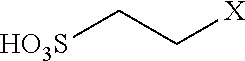 |
 |
 |
 |
 |
| TABLE 3 |
| Neutral submonomers |
 |
 |
| HO—X |
 |
 |
 |
 |
 |
 |
 |
 |
 |
 |
 |
 |
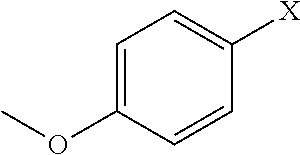 |
 |
 |
 |
 |
 |
 |
 |
 |
 |
 |
| TABLE 4 |
| Functional submonomers |
 |
 |
 |
 |
T1-[Xb1—Yb2—Zb3]n-T2 (II)
wherein
-
- X is

-
- Y is

-
- Z is

-
- T1 is

-
- or H; and
- T2 is

-
- H, —OH, or NH2;
wherein, - n is 1, 2, 3, 4, or 5;
- b1, b2, and b3 are independently 0, 1, 2, 3, 4, 5, 6, 7, 8, 9, 10, 15, or 20;
- T1.1, T1.2, T1.3, T2.1, and T2.2 are independently R1, R6, —(C1-C6)alkylene(NR17R18), —NR14R15, (C1-C6)alkylene-C(O)R16, —C(O)(C1-C6)alkyl, —C(O)NR17R18, SO2, —OH, —SH, —COOH, —(C1-C6)alkylene-N3, —(C2-C6)alkynyl, or alkyl, alkenyl, alkynyl, alkylene, or alkoxy that is substituted with at least one of biotinyl, sulfhydryl, cyano, hydrazido, carbodiimide, halo, succinimide, and maleimide;
- R1, R2, R3, R4, R5, R6, are independently H, OH, (C1-C8)alkyl, (C2-C6)alkenyl, (C2-C6)alkynyl, (C1-C8)alkoxy, (C1-C6)alkylene-O—(C1-C6)alkyl, (C1-C6)alkylene-O—(C1-C6)alkylene-O—(C1-C6)alkyl, —((CH2)1-8—O)1-14—CH3, —((CH2)1-8—O)1-14-alkyl, (C1-C8)alkylene-C(O)OH, (C1-C8)alkylene-SO1-3H1-2, (C1-C8)alkylene-PO1-3H1-2, (C1-C8)alkylene-SO2—NH2, (C1-C8)alkoxy, (C1-C6)alkylene-(NH)NR10R11, (C1-C8)alkylene-NR12R13, (C1-C8)alkylene-C(O)NR14R15, or —(C1-C6)alkylene-R16, where alkyl, alkenyl, alkynyl, alkylene, and alkoxy are optionally substituted with one or more substituent each independently selected from (C1-C3)alkyl, oxo, NH2, —COOH, halogen, hydroxyl, methoxy, ethoxy, N3, biotinyl, sulfhydryl, cyano, hydrazido, carbodiimide, succinimide, or maleimide;
- R16 is partially or fully saturated (C3-C8)carbocyclic, phenyl, 4- to 8-membered heterocycle containing 1 to 4 heteroatoms each independently selected from O, S, or N, 5- to 7-membered heteroaryl containing 1 to 3 heteroatoms each independently selected from O, N, or S, where R16 is optionally substituted with one or more substituents each independently selected from (C1-C3)alkyl, (C1-C3)alkyl-NH2, (C1-C3)alkoxy, halogen, hydroxyl, —C(O)NH2, —COOH, or —CN; and
- R10, R11, R12, R13, R14, R15, R16, R17, and R18 are each independently H, (C1-C6)alkyl, (C2-C6)alkenyl, (C2-C6)alkynyl, or halo-substituted (C1-C5)alkyl;
- wherein R1-R6, each defines a submonomer,
- wherein Formula (II) defines a peptoid, and
- wherein T1 and T2 define terminal groups.
- H, —OH, or NH2;

wherein r is 1, 2, 3, 4, 5, 6, 7, 8, 9, 10, 11, 12, 13, 14, 15, 20, 25, 50, 100, or 200;
-
- T1 is

or H; and
-
- T2 is

H, —OH, or NH2;
wherein
-
- T1.1, T1.2, T1.3, T2.1, and T2.2 are independently —(CH2)—NH2, —((CH2)2—O)3—CH3, —(C1-C6)alkylene(NR17R18), —NR14R15, (C1-C6)alkylene-C(O)R16, —C(O)(C1-C6)alkyl, —C(O)NR17R18, SO2, —OH, —SH, —COOH, —(C1-C6)alkylene-N3, —(C2-C6)alkynyl, or alkyl, alkenyl, alkynyl, alkylene, or alkoxy that is substituted with at least one of biotinyl, sulfhydryl, cyano, hydrazido, carbodiimide, halo, succinimide, and maleimide; and
- R14, R15, R16, R17, and R18 are each independently H, (C1-C6)alkyl, (C2-C6)alkenyl, (C2-C6)alkynyl, or halo-substituted (C1-C6)alkyl;
- wherein formula (III) defines a peptoid, and
- wherein T1 and T2 define terminal groups.
| OC-staple-1 |
| (SEQ ID NO: 2) |
| TCAAAGCGAACCAGACCGTTTTATATAGTC |
| OC-staple-2 |
| (SEQ ID NO: 3) |
| GCTTTGAGGACTAAAGAGCAACGGGGAGTT |
| OC-staple-3 |
| (SEQ ID NO: 4) |
| GTAAATCGTCGCTATTGAATAACTCAAGAA |
| OC-staple-4 |
| (SEQ ID NO: 5) |
| AAGCCTTAAATCAAGACTTGCGGAGCAAAT |
| OC-staple-5 |
| (SEQ ID NO: 6) |
| ATTTTAAGAACTGGCTTGAATTATCAGTGA |
| OC-staple-6 |
| (SEQ ID NO: 7) |
| GTTAAAATTCGCATTATAAACGTAAACTAG |
| OC-staple-7 |
| (SEQ ID NO: 8) |
| AGCACCATTACCATTACAGCAAATGACGGA |
| OC-staple-8 |
| (SEQ ID NO: 9) |
| ATTGCGTAGATTTTCAAAACAGATTGTTTG |
| OC-staple-9 |
| (SEQ ID NO: 10) |
| TAACCTGTTTAGCTATTTTCGCATTCATTC |
| OC-staple-10 |
| (SEQ ID NO: 11) |
| GTCAGAGGGTAATTGAGAACACCAAAATAG |
| OC-staple-11 |
| (SEQ ID NO: 12) |
| CTCCAGCCAGCTTTCCCCTCAGGACGTTGG |
| OC-staple-12 |
| (SEQ ID NO: 13) |
| GTCCACTATTAAAGAACCAGTTTTGGTTCC |
| OC-staple-13 |
| (SEQ ID NO: 14) |
| TAAAGGTGGCAACATAGTAGAAAATAATAA |
| OC-staple-14 |
| (SEQ ID NO: 15) |
| GATAAGTCCTGAACAACTGTTTAAAGAGAA |
| OC-staple-15 |
| (SEQ ID NO: 16) |
| GGTAATAGTAAAATGTAAGTTTTACACTAT |
| OC-staple-16 |
| (SEQ ID NO: 17) |
| TCAGAACCGCCACCCTCTCAGAGTATTAGC |
| OC-staple-17 |
| (SEQ ID NO: 18) |
| AAGGGAACCGAACTGAGCAGACGGTATCAT |
| OC-staple-18 |
| (SEQ ID NO: 19) |
| GTAAAGATTCAAAAGGCCTGAGTTGACCCT |
| OC-staple-19 |
| (SEQ ID NO: 20) |
| AGGCGTTAAATAAGAAGACCGTGTCGCAAG |
| OC-staple-20 |
| (SEQ ID NO: 21) |
| CAGGTCGACTCTAGAGCAAGCTTCAAGGCG |
| OC-staple-21 |
| (SEQ ID NO: 22) |
| CAGAGCCACCACCCTCTCAGAACTCGAGAG |
| OC-staple-22 |
| (SEQ ID NO: 23) |
| TTCACGTTGAAAATCTTGCGAATGGGATTT |
| OC-staple-23 |
| (SEQ ID NO: 24) |
| AAGTTTTAACGGGGTCGGAGTGTAGAATGG |
| OC-staple-24 |
| (SEQ ID NO: 25) |
| TTGCGTATTGGGCGCCCGCGGGGTGCGCTC |
| OC-staple-25 |
| (SEQ ID NO: 26) |
| GTCACCAGAGCCATGGTGAATTATCACCAATCAGAAAAGCCT |
| OC-staple-26 |
| (SEQ ID NO: 27) |
| GGACAGAGTTACTTTGTCGAAATCCGCGTGTATCACCGTACG |
| OC-staple-27 |
| (SEQ ID NO: 28) |
| CAACATGATTTACGAGCATGGAATAAGTAAGACGACAATAAA |
| OC-staple-28 |
| (SEQ ID NO: 29) |
| AACCAGACGCTACGTTAATAAAACGAACATACCACATTCAGG |
| OC-staple-29 |
| (SEQ ID NO: 30) |
| TGACCTACTAGAAAAAGCCCCAGGCAAAGCAATTTCATCTTC |
| OC-staple-30 |
| (SEQ ID NO: 31) |
| TGCCGGAAGGGGACTCGTAACCGTGCATTATATTTTAGTTCT |
| OC-staple-31 |
| (SEQ ID NO: 32) |
| AGAACCCCAAATCACCATCTGCGGAATCGAATAAAAATTTTT |
| OC-staple-32 |
| (SEQ ID NO: 33) |
| GCTCCATTGTGTACCGTAACACTGAGTTAGTTAGCGTAACCT |
| OC-staple-33 |
| (SEQ ID NO: 34) |
| AGTACCGAATAGGAACCCAAACGGTGTAACCTCAGGAGGTTT |
| OC-staple-34 |
| (SEQ ID NO: 35) |
| CAGTTTGAATGTTTAGTATCATATGCGTAGAATCGCCATAGC |
| OC-staple-35 |
| (SEQ ID NO: 36) |
| AAGATTGTTTTTTAACCAAGAAACCATCGACCCAAAAACAGG |
| OC-staple-36 |
| (SEQ ID NO: 37) |
| TCAGAGCGCCACCACATAATCAAAATCAGAACGAGTAGTATG |
| OC-staple-37 |
| (SEQ ID NO: 38) |
| GATGGTTGGGAAGAAAAATCCACCAGAAATAATTGGGCTTGA |
| OC-staple-38 |
| (SEQ ID NO: 39) |
| CTCCTTAACGTAGAAACCAATCAATAATTCATCGAGAACAGA |
| OC-staple-39 |
| (SEQ ID NO: 40) |
| AGACACCTTACGCAGAACTGGCATGATTTTCTGTCCAGACAA |
| OC-staple-40 |
| (SEQ ID NO: 41) |
| GCCAGCTAGGCGATAGCTTAGATTAAGACCTTTTTAACCTGT |
| OC-staple-41 |
| (SEQ ID NO: 42) |
| CCGACTTATTAGGAACGCCATCAAAAATGAGTAACAACCCCA |
| OC-staple-42 |
| (SEQ ID NO: 43) |
| GTCCAATAGCGAGAACCAGACGACGATATTCAACGCAAGGGA |
| OC-staple-43 |
| (SEQ ID NO: 44) |
| CCAAAATACAATATGATATTCAACCGTTAGGCTATCAGGTAA |
| OC-staple-44 |
| (SEQ ID NO: 45) |
| AACAGTACTTGAAAACATATGAGACGGGTCTTTTTTAATGGA |
| OC-staple-45 |
| (SEQ ID NO: 46) |
| TTTCACCGCATTAAAGTCGGGAAACCTGATTTGAATTACCCA |
| OC-staple-46 |
| (SEQ ID NO: 47) |
| GAGAATAGAGCCTTACCGTCTATCAAATGGAGCGGAATTAGA |
| OC-staple-47 |
| (SEQ ID NO: 48) |
| ATAATTAAATTTAAAAAACTTTTTCAAACTTTTAACAACGCC |
| OC-staple-48 |
| (SEQ ID NO: 49) |
| GCACCCAGCGTTTTTTATCCGGTATTCTAGGCGAATTATTCA |
| OC-staple-49 |
| (SEQ ID NO: 50) |
| GGAAGCGCCCACAAACAGTTAATGCCCCGACTCCTCAAGATA |
| OC-staple-50 |
| (SEQ ID NO: 51) |
| GTTTGCCTATTCACAGGCAGGTCAGACGCCACCACACCACCC |
| OC-staple-51 |
| (SEQ ID NO: 52) |
| CGCGAGCTTAGTTTTTCCCAATTCTGCGCAAGTGTAAAGCCT |
| OC-staple-52 |
| (SEQ ID NO: 53) |
| AGAAGCAACCAAGCCAAAAGAATACACTAATGCCAAAACTCC |
| OC-staple-53 |
| (SEQ ID NO: 54) |
| ATTAAGTATAAAGCGGCAAGGCAAAGAAACTAATAGGGTACC |
| OC-staple-54 |
| (SEQ ID NO: 55) |
| CAGTGCCTACATGGGAATTTACCGTTCCACAAGTAAGCAGAT |
| OC-staple-55 |
| (SEQ ID NO: 56) |
| ATAAGGCGCCAAAAGTTGAGATTTAGGATAACGGACCAGTCA |
| OC-staple-56 |
| (SEQ ID NO: 57) |
| TGCTAAACAGATGAAGAAACCACCAGAATTTAAAAAAAGGCT |
| OC-staple-57 |
| (SEQ ID NO: 58) |
| CAGCCTTGGTTTTGTATTAAGAGGCTGACTGCCTATATCAGA |
| OC-staple-58 |
| (SEQ ID NO: 59) |
| CGGAATAATTCAACCCAGCGCCAAAGACTTATTTTAACGCAA |
| OC-staple-59 |
| (SEQ ID NO: 60) |
| CGCCTGAATTACCCTAATCTTGACAAGACAGACCATGAAAGA |
| OC-staple-60 |
| (SEQ ID NO: 61) |
| ACGCGAGGCTACAACAGTACCTTTTACAAATCGCGCAGAGAA |
| OC-staple-61 |
| (SEQ ID NO: 62) |
| CAGCGAACATTAAAAGAGAGTACCTTTACTGAATATAATGAA |
| OC-staple-62 |
| (SEQ ID NO: 63) |
| GGACGTTTAATTTCGACGAGAAACACCACCACTAATGCAGAT |
| OC-staple-63 |
| (SEQ ID NO: 64) |
| AAAGCGCCAAAGTTTATCTTACCGAAGCCCAATAATGAGTAA |
| OC-staple-64 |
| (SEQ ID NO: 65) |
| GAGCTCGTTGTAAACGCCAGGGTTTTCCAAAGCAATAAAGCC |
| OC-staple-65 |
| (SEQ ID NO: 66) |
| AATTATTGTTTTCATGCCTTTAGCGTCAGATAGCACGGAAAC |
| OC-staple-66 |
| (SEQ ID NO: 67) |
| AAGTTTCAGACAGCCGGGATCGTCACCCTTCTGTAGCTCAAC |
| OC-staple-67 |
| (SEQ ID NO: 68) |
| ACAAAGAAATTTAGGTAGGGCTTAATTGTATACAACGGAATC |
| OC-staple-68 |
| (SEQ ID NO: 69) |
| AACAAAAATAACTAGGTCTGAGAGACTACGCTGAGTTTCCCT |
| OC-staple-69 |
| (SEQ ID NO: 70) |
| CATAACCTAAATCAACAGTTCAGAAAACGTCATAAGGATAGC |
| OC-staple-70 |
| (SEQ ID NO: 71) |
| CACGACGAATTCGTGTGGCATCAATTCTTTAGCAAAATTACG |
| OC-staple-71 |
| (SEQ ID NO: 72) |
| CCTACCAACAGTAATTTTATCCTGAATCAAACAGCCATATGA |
| OC-staple-72 |
| (SEQ ID NO: 73) |
| GATTATAAAGAAACGCCAGTTACAAAATTTACCAACGTCAGA |
| OC-staple-73 |
| (SEQ ID NO: 74) |
| AGTAGATTGAAAAGAATCATGGTCATAGCCGGAAGCATAAGT |
| OC-staple-74 |
| (SEQ ID NO: 75) |
| TAGAATCCATAAATCATTTAACAATTTCTCCCGGCTTAGGTT |
| OC-staple-75 |
| (SEQ ID NO: 76) |
| AAAGGCCAAATATGTTAGAGCTTAATTGATTGCTCCATGAGG |
| OC-staple-76 |
| (SEQ ID NO: 77) |
| CCAAAAGGAAAGGACAACAGTTTCAGCGAATCATCATATTCC |
| OC-staple-77 |
| (SEQ ID NO: 78) |
| GAAATCGATAACCGGATACCGATAGTTGTATCAGCTCCAACG |
| OC-staple-78 |
| (SEQ ID NO: 79) |
| TGAATATTATCAAAATAATGGAAGGGTTAATATTTATCCCAA |
| OC-staple-79 |
| (SEQ ID NO: 80) |
| GAGGAAGCAGGATTCGGGTAAAATACGTAAAACACCCCCCAG |
| OC-staple-80 |
| (SEQ ID NO: 81) |
| GGTTGATTTTCCAGCAGACAGCCCTCATTCGTCACGGGATAG |
| OC-staple-81 |
| (SEQ ID NO: 82) |
| CAAGCCCCCACCCTTAGCCCGGAATAGGACGATCTAAAGTTT |
| OC-staple-82 |
| (SEQ ID NO: 83) |
| TGTAGATATTACGCGGCGATCGGTGCGGGCGCCATCTTCTGG |
| OC-staple-83 |
| (SEQ ID NO: 84) |
| CATCCTATTCAGCTAAAAGGTAAAGTAAAAAGCAAGCCGTTT |
| OC-staple-84 |
| (SEQ ID NO: 85) |
| CAGCTCATATAAGCGTACCCCGGTTGATGTGTCGGATTCTCC |
| OC-staple-85 |
| (SEQ ID NO: 86) |
| CATGTCACAAACGGCATTAAATGTGAGCAATTCGCGTTAAAT |
| OC-staple-86 |
| (SEQ ID NO: 87) |
| AGCGTCACGTATAAGAATTGAGTTAAGCCCTTTTTAAGAAAG |
| OC-staple-87 |
| (SEQ ID NO: 88) |
| TATAAAGCATCGTAACCAAGTACCGCACCGGCTGTAATATCC |
| OC-staple-88 |
| (SEQ ID NO: 89) |
| ATAGCCCGCGAAAATAATTGTATCGGTTCGCCGACAATGAGT |
| OC-staple-89 |
| (SEQ ID NO: 90) |
| AGACAGTTCATATAGGAGAAGCCTTTATAACATTGCCTGAGA |
| OC-staple-90 |
| (SEQ ID NO: 91) |
| AACAGGTCCCGAAATTGCATCAAAAAGATCTTTGATCATCAG |
| OC-staple-91 |
| (SEQ ID NO: 92) |
| ACTGCCCTTGCCCCGTTGCAGCAAGCGGCAACAGCTTTTTCT |
| OC-staple-92 |
| (SEQ ID NO: 93) |
| TCAAAGGGAGATAGCCCTTATAAATCAAGACAACAACCATCG |
| OC-staple-93 |
| (SEQ ID NO: 94) |
| GTAATACGCAAACATGAGAGATCTACAACTAGCTGAGGCCGG |
| OC-staple-94 |
| (SEQ ID NO: 95) |
| GAGATAACATTAGAAGAATAACATAAAAAGGAAGGATTAGGA |
| OC-staple-95 |
| (SEQ ID NO: 96) |
| CAGATATTACCTGAATACCAAGTTACAATCGGGAGCTATTTT |
| OC-staple-96 |
| (SEQ ID NO: 97) |
| CATATAACTAATGAACACAACATACGAGCTGTTTCTTTGGGG |
| OC-staple-97 |
| (SEQ ID NO: 98) |
| ATGTTTTGCTTTTGATCGGAACGAGGGTACTTTTTCTTTTGATAAGAGGT |
| CATT |
| OC-staple-98 |
| (SEQ ID NO: 99) |
| GGGGTGCCAGTTGAGACCATTAGATACAATTTTCACTGTGTGAAATTGTT |
| ATCC |
| OC-staple-99 |
| (SEQ ID NO: 100) |
| CTTCGCTGGGCGCAGACGACAGTATCGGGGCACCGTCGCCATTCAGGCTG |
| CGCA |
| OC-staple-100 |
| (SEQ ID NO: 101) |
| TCAGAGCTGGGTAAACGACGGCCAGTGCGATCCCCGTAGTAGCATTAACA |
| TCCA |
| OC-staple-101 |
| (SEQ ID NO: 102) |
| TTAGCGGTACAGAGCGGGAGAATTAACTGCGCTAATTTCGGAACCTATTA |
| TTCT |
| OC-staple-102 |
| (SEQ ID NO: 103) |
| GATATTCTAAATTGAGCCGGAACGAGGCCCAACTTGGCGCATAGGCTGGC |
| TGAC |
| OC-staple-103 |
| (SEQ ID NO: 104) |
| TGTCGTCATAAGTACAGAACCGCCACCCATTTTCACAGTACAAACTACAA |
| CGCC |
| OC-staple-104 |
| (SEQ ID NO: 105) |
| CGATTATAAGCGGAGACTTCAAATATCGCGGAAGCCTACGAAGGCACCAA |
| CCTA |
| OC-staple-105 |
| (SEQ ID NO: 106) |
| AACATGTACGCGAGTGGTTTGAAATACCTAAACACATTCTTACCAGTATA |
| AAGC |
| OC-staple-106 |
| (SEQ ID NO: 107) |
| GTCTGGATTTTGCGTTTTAAATGCAATGGTGAGAAATAAATTAATGCCGG |
| AGAG |
| OC-staple-107 |
| (SEQ ID NO: 108) |
| GCCTTGAATCTTTTCCGGAACCGCCTCCCAGAGCCCAGAGCCGCCGCCAG |
| CATT |
| OC-staple-108 |
| (SEQ ID NO: 109) |
| CGCTGGTGCTTTCCTGAATCGGCCAACGAGGGTGGTGATTGCCCTTCACC |
| GCCT |
| OC-staple-109 |
| (SEQ ID NO: 110) |
| TGATTATCAACTTTACAACTAAAGGAATCCAAAAAGTTTGAGTAACATTA |
| TCAT |
| OC-staple-110 |
| (SEQ ID NO: 111) |
| ACATAACTTGCCCTAACTTTAATCATTGCATTATAACAACATTATTACAG |
| GTAG |
| 0C-staple-111 |
| (SEQ ID NO: 112) |
| GTAGCGCCATTAAATTGGGAATTAGAGCGCAAGGCGCACCGTAATCAGTA |
| GCGA |
| OC-staple-112 |
| (SEQ ID NO: 113) |
| TTATTTTTACCGACAATGCAGAACGCGCGAAAAATCTTTCCTTATCATTC |
| CAAG |
| OC-staple-113 |
| (SEQ ID NO: 114) |
| TTTCAATAGAAGGCAGCGAACCTCCCGATTAGTTGAAACAATAACGGATT |
| CGCC |
| OC-staple-114 |
| (SEQ ID NO: 115) |
| GGGCGACCCCAAAAGTATGTTAGCAAACTAAAAGAGTCACAATCAATAGA |
| AAAT |
| OC-staple-115 |
| (SEQ ID NO: 116) |
| AGCCGAAAGTCTCTCTTTTGATGATACAAGTGCCTTAAGAGCAAGAAACA |
| ATGA |
| OC-staple-116 |
| (SEQ ID NO: 117) |
| GTGGGAAATCATATAAATATTTAAATTGAATTTTTGTCTGGCCTTCCTGT |
| AGCC |
| OC-staple-117 |
| (SEQ ID NO: 118) |
| CCCACGCGCAAAATGGTTGAGTGTTGTTCGTGGACTTGCTTTCGAGGTGA |
| ATTT |
| OC-staple-118 |
| (SEQ ID NO: 119) |
| ATGACCACTCGTTTGGCTTTTGCAAAAGTTAGACTATATTCATTGAATCC |
| CCCT |
| OC-staple-119 |
| (SEQ ID NO: 120) |
| TCCAAATCTTCTGAATTATTTGCACGTAGGTTTAACGCTAACGAGCGTCT |
| TTCC |
| OC-staple-120 |
| (SEQ ID NO: 121) |
| GGGTTATTTAATTACAATATATGTGAGTAATTAATAAGAGTCAATAGTGA |
| ATTT |
| Note: |
| To encapsulate Au NPs and BSA inside the OCs, add |
| (SEQ ID NO: 122) |
| ‘ATCCATCACTTCATACTCTACGTTGTTGTT’ in front of the |
| red-marked sequences. |
M13mp18 scaffold DNA sequence.
| >FOUNDATION_ssDNA_7249 |
| (SEQ ID NO: 123) |
| TGATAGACGGTTTTTCGCCCTTTGACGTTGGAGTCCACGTTCTTTAATAGT |
| GGACTCTTGTTCCAAACTGGAACAACACTCAACCCTATCTCGGGCTATTCT |
| TTTGATTTATAAGGGATTTTGCCGATTTCGGAACCACCATCAAACAGGATT |
| TTCGCCTGCTGGGGCAAACCAGCGTGGACCGCTTGCTGCAACTCTCTCAGG |
| GCCAGGCGGTGAAGGGCAATCAGCTGTTGCCCGTCTCACTGGTGAAAAGAA |
| AAACCACCCTGGCGCCCAATACGCAAACCGCCTCTCCCCGCGCGTTGGCCG |
| ATTCATTAATGCAGCTGGCACGACAGGTTTCCCGACTGGAAAGCGGGCAGT |
| GAGCGCAACGCAATTAATGTGAGTTAGCTCACTCATTAGGCACCCCAGGCT |
| TTACACTTTATGCTTCCGGCTCGTATGTTGTGTGGAATTGTGAGCGGATAA |
| CAATTTCACACAGGAAACAGCTATGACCATGATTACGAATTCGAGCTCGGT |
| ACCCGGGGATCCTCTAGAGTCGACCTGCAGGCATGCAAGCTTGGCACTGGC |
| CGTCGTTTTACAACGTCGTGACTGGGAAAACCCTGGCGTTACCCAACTTAA |
| TCGCCTTGCAGCACATCCCCCTTTCGCCAGCTGGCGTAATAGCGAAGAGGC |
| CCGCACCGATCGCCCTTCCCAACAGTTGCGCAGCCTGAATGGCGAATGGCG |
| CTTTGCCTGGTTTCCGGCACCAGAAGCGGTGCCGGAAAGCTGGCTGGAGTG |
| CGATCTTCCTGAGGCCGATACTGTCGTCGTCCCCTCAAACTGGCAGATGCA |
| CGGTTACGATGCGCCCATCTACACCAACGTGACCTATCCCATTACGGTCAA |
| TCCGCCGTTTGTTCCCACGGAGAATCCGACGGGTTGTTACTCGCTCACATT |
| TAATGTTGATGAAAGCTGGCTACAGGAAGGCCAGACGCGAATTATTTTTGA |
| TGGCGTTCCTATTGGTTAAAAAATGAGCTGATTTAACAAAAATTTAATGCG |
| AATTTTAACAAAATATTAACGTTTACAATTTAAATATTTGCTTATACAATC |
| TTCCTGTTTTTGGGGCTTTTCTGATTATCAACCGGGGTACATATGATTGAC |
| ATGCTAGTTTTACGATTACCGTTCATCGATTCTCTTGTTTGCTCCAGACTC |
| TCAGGCAATGACCTGATAGCCTTTGTAGATCTCTCAAAAATAGCTACCCTC |
| TCCGGCATTAATTTATCAGCTAGAACGGTTGAATATCATATTGATGGTGAT |
| TTGACTGTCTCCGGCCTTTCTCACCCTTTTGAATCTTTACCTACACATTAC |
| TCAGGCATTGCATTTAAAATATATGAGGGTTCTAAAAATTTTTATCCTTGC |
| GTTGAAATAAAGGCTTCTCCCGCAAAAGTATTACAGGGTCATAATGTTTTT |
| GGTACAACCGATTTAGCTTTATGCTCTGAGGCTTTATTGCTTAATTTTGCT |
| AATTCTTTGCCTTGCCTGTATGATTTATTGGATGTTAATGCTACTACTATT |
| AGTAGAATTGATGCCACCTTTTCAGCTCGCGCCCCAAATGAAAATATAGCT |
| AAACAGGTTATTGACCATTTGCGAAATGTATCTAATGGTCAAACTAAATCT |
| ACTCGTTCGCAGAATTGGGAATCAACTGTTATATGGAATGAAACTTCCAGA |
| CACCGTACTTTAGTTGCATATTTAAAACATGTTGAGCTACAGCATTATATT |
| CAGCAATTAAGCTCTAAGCCATCCGCAAAAATGACCTCTTATCAAAAGGAG |
| CAATTAAAGGTACTCTCTAATCCTGACCTGTTGGAGTTTGCTTCCGGTCTG |
| GTTCGCTTTGAAGCTCGAATTAAAACGCGATATTTGAAGTCTTTCGGGCTT |
| CCTCTTAATCTTTTTGATGCAATCCGCTTTGCTTCTGACTATAATAGTCAG |
| GGTAAAGACCTGATTTTTGATTTATGGTCATTCTCGTTTTCTGAACTGTTT |
| AAAGCATTTGAGGGGGATTCAATGAATATTTATGACGATTCCGCAGTATTG |
| GACGCTATCCAGTCTAAACATTTTACTATTACCCCCTCTGGCAAAACTTCT |
| TTTGCAAAAGCCTCTCGCTATTTTGGTTTTTATCGTCGTCTGGTAAACGAG |
| GGTTATGATAGTGTTGCTCTTACTATGCCTCGTAATTCCTTTTGGCGTTAT |
| GTATCTGCATTAGTTGAATGTGGTATTCCTAAATCTCAACTGATGAATCTT |
| TCTACCTGTAATAATGTTGTTCCGTTAGTTCGTTTTATTAACGTAGATTTT |
| TCTTCCCAACGTCCTGACTGGTATAATGAGCCAGTTCTTAAAATCGCATAA |
| GGTAATTCACAATGATTAAAGTTGAAATTAAACCATCTCAAGCCCAATTTA |
| CTACTCGTTCTGGTGTTTCTCGTCAGGGCAAGCCTTATTCACTGAATGAGC |
| AGCTTTGTTACGTTGATTTGGGTAATGAATATCCGGTTCTTGTCAAGATTA |
| CTCTTGATGAAGGTCAGCCAGCCTATGCGCCTGGTCTGTACACCGTTCATC |
| TGTCCTCTTTCAAAGTTGGTCAGTTCGGTTCCCTTATGATTGACCGTCTGC |
| GCCTCGTTCCGGCTAAGTAACATGGAGCAGGTCGCGGATTTCGACACAATT |
| TATCAGGCGATGATACAAATCTCCGTTGTACTTTGTTTCGCGCTTGGTATA |
| ATCGCTGGGGGTCAAAGATGAGTGTTTTAGTGTATTCTTTTGCCTCTTTCG |
| TTTTAGGTTGGTGCCTTCGTAGTGGCATTACGTATTTTACCCGTTTAATGG |
| AAACTTCCTCATGAAAAAGTCTTTAGTCCTCAAAGCCTCTGTAGCCGTTGC |
| TACCCTCGTTCCGATGCTGTCTTTCGCTGCTGAGGGTGACGATCCCGCAAA |
| AGCGGCCTTTAACTCCCTGCAAGCCTCAGCGACCGAATATATCGGTTATGC |
| GTGGGCGATGGTTGTTGTCATTGTCGGCGCAACTATCGGTATCAAGCTGTT |
| TAAGAAATTCACCTCGAAAGCAAGCTGATAAACCGATACAATTAAAGGCTC |
| CTTTTGGAGCCTTTTTTTTGGAGATTTTCAACGTGAAAAAATTATTATTCG |
| CAATTCCTTTAGTTGTTCCTTTCTATTCTCACTCCGCTGAAACTGTTGAAA |
| GTTGTTTAGCAAAATCCCATACAGAAAATTCATTTACTAACGTCTGGAAAG |
| ACGACAAAACTTTAGATCGTTACGCTAACTATGAGGGCTGTCTGTGGAATG |
| CTACAGGCGTTGTAGTTTGTACTGGTGACGAAACTCAGTGTTACGGTACAT |
| GGGTTCCTATTGGGCTTGCTATCCCTGAAAATGAGGGTGGTGGCTCTGAGG |
| GTGGCGGTTCTGAGGGTGGCGGTTCTGAGGGTGGCGGTACTAAACCTCCTG |
| AGTACGGTGATACACCTATTCCGGGCTATACTTATATCAACCCTCTCGACG |
| GCACTTATCCGCCTGGTACTGAGCAAAACCCCGCTAATCCTAATCCTTCTC |
| TTGAGGAGTCTCAGCCTCTTAATACTTTCATGTTTCAGAATAATAGGTTCC |
| GAAATAGGCAGGGGGCATTAACTGTTTATACGGGCACTGTTACTCAAGGCA |
| CTGACCCCGTTAAAACTTATTACCAGTACACTCCTGTATCATCAAAAGCCA |
| TGTATGACGCTTACTGGAACGGTAAATTCAGAGACTGCGCTTTCCATTCTG |
| GCTTTAATGAGGATTTATTTGTTTGTGAATATCAAGGCCAATCGTCTGACC |
| TGCCTCAACCTCCTGTCAATGCTGGCGGCGGCTCTGGTGGTGGTTCTGGTG |
| GCGGCTCTGAGGGTGGTGGCTCTGAGGGTGGCGGTTCTGAGGGTGGCGGCT |
| CTGAGGGAGGCGGTTCCGGTGGTGGCTCTGGTTCCGGTGATTTTGATTATG |
| AAAAGATGGCAAACGCTAATAAGGGGGCTATGACCGAAAATGCCGATGAAA |
| ACGCGCTACAGTCTGACGCTAAAGGCAAACTTGATTCTGTCGCTACTGATT |
| ACGGTGCTGCTATCGATGGTTTCATTGGTGACGTTTCCGGCCTTGCTAATG |
| GTAATGGTGCTACTGGTGATTTTGCTGGCTCTAATTCCCAAATGGCTCAAG |
| TCGGTGACGGTGATAATTCACCTTTAATGAATAATTTCCGTCAATATTTAC |
| CTTCCCTCCCTCAATCGGTTGAATGTCGCCCTTTTGTCTTTGGCGCTGGTA |
| AACCATATGAATTTTCTATTGATTGTGACAAAATAAACTTATTCCGTGGTG |
| TCTTTGCGTTTCTTTTATATGTTGCCACCTTTATGTATGTATTTTCTACGT |
| TTGCTAACATACTGCGTAATAAGGAGTCTTAATCATGCCAGTTCTTTTGGG |
| TATTCCGTTATTATTGCGTTTCCTCGGTTTCCTTCTGGTAACTTTGTTCGG |
| CTATCTGCTTACTTTTCTTAAAAAGGGCTTCGGTAAGATAGCTATTGCTAT |
| TTCATTGTTTCTTGCTCTTATTATTGGGCTTAACTCAATTCTTGTGGGTTA |
| TCTCTCTGATATTAGCGCTCAATTACCCTCTGACTTTGTTCAGGGTGTTCA |
| GTTAATTCTCCCGTCTAATGCGCTTCCCTGTTTTTATGTTATTCTCTCTGT |
| AAAGGCTGCTATTTTCATTTTTGACGTTAAACAAAAAATCGTTTCTTATTT |
| GGATTGGGATAAATAATATGGCTGTTTATTTTGTAACTGGCAAATTAGGCT |
| CTGGAAAGACGCTCGTTAGCGTTGGTAAGATTCAGGATAAAATTGTAGCTG |
| GGTGCAAAATAGCAACTAATCTTGATTTAAGGCTTCAAAACCTCCCGCAAG |
| TCGGGAGGTTCGCTAAAACGCCTCGCGTTCTTAGAATACCGGATAAGCCTT |
| CTATATCTGATTTGCTTGCTATTGGGCGCGGTAATGATTCCTACGATGAAA |
| ATAAAAACGGCTTGCTTGTTCTCGATGAGTGCGGTACTTGGTTTAATACCC |
| GTTCTTGGAATGATAAGGAAAGACAGCCGATTATTGATTGGTTTCTACATG |
| CTCGTAAATTAGGATGGGATATTATTTTTCTTGTTCAGGACTTATCTATTG |
| TTGATAAACAGGCGCGTTCTGCATTAGCTGAACATGTTGTTTATTGTCGTC |
| GTCTGGACAGAATTACTTTACCTTTTGTCGGTACTTTATATTCTCTTATTA |
| CTGGCTCGAAAATGCCTCTGCCTAAATTACATGTTGGCGTTGTTAAATATG |
| GCGATTCTCAATTAAGCCCTACTGTTGAGCGTTGGCTTTATACTGGTAAGA |
| ATTTGTATAACGCATATGATACTAAACAGGCTTTTTCTAGTAATTATGATT |
| CCGGTGTTTATTCTTATTTAACGCCTTATTTATCACACGGTCGGTATTTCA |
| AACCATTAAATTTAGGTCAGAAGATGAAATTAACTAAAATATATTTGAAAA |
| AGTTTTCTCGCGTTCTTTGTCTTGCGATTGGATTTGCATCAGCATTTACAT |
| ATAGTTATATAACCCAACCTAAGCCGGAGGTTAAAAAGGTAGTCTCTCAGA |
| CCTATGATTTTGATAAATTCACTATTGACTCTTCTCAGCGTCTTAATCTAA |
| GCTATCGCTATGTTTTCAAGGATTCTAAGGGAAAATTAATTAATAGCGACG |
| ATTTACAGAAGCAAGGTTATTCACTCACATATATTGATTTATGTACTGTTT |
| CCATTAAAAAAGGTAATTCAAATGAAATTGTTAAATGTAATTAATTTTGTT |
| TTCTTGATGTTTGTTTCATCATCTTCTTTTGCTCAGGTAATTGAAATGAAT |
| AATTCGCCTCTGCGCGATTTTGTAACTTGGTATTCAAAGCAATCAGGCGAA |
| TCCGTTATTGTTTCTCCCGATGTAAAAGGTACTGTTACTGTATATTCATCT |
| GACGTTAAACCTGAAAATCTACGCAATTTCTTTATTTCTGTTTTACGTGCA |
| AATAATTTTGATATGGTAGGTTCTAACCCTTCCATTATTCAGAAGTATAAT |
| CCAAACAATCAGGATTATATTGATGAATTGCCATCATCTGATAATCAGGAA |
| TATGATGATAATTCCGCTCCTTCTGGTGGTTTCTTTGTTCCGCAAAATGAT |
| AATGTTACTCAAACTTTTAAAATTAATAACGTTCGGGCAAAGGATTTAATA |
| CGAGTTGTCGAATTGTTTGTAAAGTCTAATACTTCTAAATCCTCAAATGTA |
| TTATCTATTGACGGCTCTAATCTATTAGTTGTTAGTGCTCCTAAAGATATT |
| TTAGATAACCTTCCTCAATTCCTTTCAACTGTTGATTTGCCAACTGACCAG |
| ATATTGATTGAGGGTTTGATATTTGAGGTTCAGCAAGGTGATGCTTTAGAT |
| TTTTCATTTGCTGCTGGCTCTCAGCGTGGCACTGTTGCAGGCGGTGTTAAT |
| ACTGACCGCCTCACCTCTGTTTTATCTTCTGCTGGTGGTTCGTTCGGTATT |
| TTTAATGGCGATGTTTTAGGGCTATCAGTTCGCGCATTAAAGACTAATAGC |
| CATTCAAAAATATTGTCTGTGCCACGTATTCTTACGCTTTCAGGTCAGAAG |
| GGTTCTATCTCTGTTGGCCAGAATGTCCCTTTTATTACTGGTCGTGTGACT |
| GGTGAATCTGCCAATGTAAATAATCCATTTCAGACGATTGAGCGTCAAAAT |
| GTAGGTATTTCCATGAGCGTTTTTCCTGTTGCAATGGCTGGCGGTAATATT |
| GTTCTGGATATTACCAGCAAGGCCGATAGTTTGAGTTCTTCTACTCAGGCA |
| AGTGATGTTATTACTAATCAAAGAAGTATTGCTACAACGGTTAATTTGCGT |
| GATGGACAGACTCTTTTACTCGGTGGCCTCACTGATTATAAAAACACTTCT |
| CAGGATTCTGGCGTACCGTTCCTGTCTAAAATCCCTTTAATCGGCCTCCTG |
| TTTAGCTCCCGCTCTGATTCTAACGAGGAAAGCACGTTATACGTGCTCGTC |
| AAAGCAACCATAGTACGCGCCCTGTAGCGGCGCATTAAGCGCGGCGGGTGT |
| GGTGGTTACGCGCAGCGTGACCGCTACACTTGCCAGCGCCCTAGCGCCCGC |
| TCCTTTCGCTTTCTTCCCTTCCTTTCTCGCCACGTTCGCCGGCTTTCCCCG |
| TCAAGCTCTAAATCGGGGGCTCCCTTTAGGGTTCCGATTTAGTGCTTTACG |
| GCACCTCGACCCCAAAAAACTTGATTTGGGTGATGGTTCACGTAGTGGGCC |
| ATCGCCC |
Peptoid Synthesis and Purification.
| TABLE S1 |
| Peptoid-DNA interaction characterization and properties. |
| Properties | PE1 | PE4 |
| aPersistent Contact (%) | 98.2% | 98.7% |
| bMinor/Major groove interactions | ||
| cMinor Groove Contacts (%) | 28.5% | 24.0% |
| dMajor Groove Contacts (%) | 6.1% | 39.6% |
| Major and Minor Groove Contacts (%) | 48.8% | 18.5% |
| bNte/Nae residue interaction time | ||
| Nte Contact (%) | 98.01% | 70.39% |
| Nte (1 residue) | 12.55% | 30.45% |
| Nte (2 residues) | 74.75% | 24.94% |
| Nte (3 residues) | 31.79% | 11.82% |
| Nte (4 residues) | 20.19% | 2.90% |
| Nte (5 residues) | 8.07% | 0.28% |
| Nte (6 residues) | 0.67% | 0.00% |
| Nae Contact Time (%) | 98.08% | 99.90% |
| Nae (1 residue) | 14.79% | 0.66% |
| Nae (2 residues) | 25.53% | 3.87% |
| Nae (3 residues) | 31.53% | 12.74% |
| Nae (4 residues) | 19.87% | 28.43% |
| Nae (5 residues) | 6.45% | 35.86% |
| Nae (6 residues) | 0.41% | 18.33% |
| Average contact area (nm2) | 2.88 ± 1.11 | 2.54 ± 1.05 |
| Peptoid solvent accessible surface area | 18.82 ± 1.47 | 17.81 ± 1.64 |
| (nm2) | ||
| Average separation distance of outermost | 2.33 ± 0.6 | 2.20 ± 0.6 |
| nitrogens dN2-N19 (nm) | ||
- 1. Seeman N C (2003) DNA in a material world. Nature 421:427.
- 2. Lin C, Liu Y, Yan H (2009) Designer DNA Nanoarchitectures. Biochemistry 48:1663-1674.
- 3. Pinheiro A V, Han D, Shih W M, Yan H (2011) Challenges and opportunities for structural DNA nanotechnology. Nat Nanotechnol 6:763-772.
- 4. Rothemund PWK (2006) Folding DNA to create nanoscale shapes and patterns. Nature 440:297.
- 5. Mirkin C A, Letsinger R L, Mucic R C, Storhoff J J (1996) A DNA-based method for rationally assembling nanoparticles into macroscopic materials. Nature 382:607-609.
- 6. Niemeyer C M, Burger W, Peplies J (1998) Covalent DNA-Streptavidin Conjugates as Building Blocks for Novel Biometallic Nanostructures. Angew Chemie Int Ed 37:2265-2268.
- 7. Keren K, et al. (2002) Sequence-Specific Molecular Lithography on Single DNA Molecules. Science (80-) 297:72 LP-75.
- 8. Ford W E, Harnack O, Yasuda A, Wessels J M (2001) Platinated DNA as Precursors to Templated Chains of Metal Nanoparticles. Adv Mater 13:1793-1797.
- 9. Alivisatos A P, et al. (1996) Organization of “nanocrystal molecules” using DNA. Nature 382:609-611.
- 10. Nykypanchuk D, Maye M M, van der Lelie D, Gang O (2008) DNA-guided crystallization of colloidal nanoparticles. Nature 451:549.
- 11. Zhang Y, Lu F, Yager K G, van der Lelie D, Gang O (2013) A general strategy for the DNA-mediated self-assembly of functional nanoparticles into heterogeneous systems. Nat Nanotechnol 8:865.
- 12. Chandrasekaran A R, Levchenko O (2016) DNA Nanocages. Chem Mater 28:5569-5581.
- 13. Schneider A-K, Niemeyer C M (2018) DNA Surface Technology: From Gene Sensors to Integrated Systems for Life and Materials Sciences. Angew Chemie Int Ed 57:16959-16967.
- 14. Zhu B, Wang L, Li J, Fan C (2017) Precisely Tailored DNA Nanostructures and their Theranostic Applications. Chem Rec 17:1213-1230.
- 15. Zhang Y, et al. (2018) Programmable and Multifunctional DNA-Based Materials for Biomedical Applications. Adv Mater 30:1703658.
- 16. Fu J, Liu M, Liu Y, Yan H (2012) Spatially-Interactive Biomolecular Networks Organized by Nucleic Acid Nanostructures. Acc Chem Res 45:1215-1226.
- 17. Li J, Fan C, Pei H, Shi J, Huang Q (2013) Smart Drug Delivery Nanocarriers with Self-Assembled DNA Nanostructures. Adv Mater 25:4386-4396.
- 18. Amir Y, et al. (2014) Universal computing by DNA origami robots in a living animal.
Nat 20 Nanotechnol 9:353. - 19. Douglas S M, Bachelet I, Church G M (2012) A Logic-Gated Nanorobot for Targeted Transport of Molecular Payloads. Science (80-) 335:831 LP-834.
- 20. Bujold K E, Hsu JCC, Sleiman H F (2016) Optimized DNA “Nanosuitcases” for Encapsulation and Conditional Release of siRNA. J Am Chem Soc 138:14030-14038.
- 21. Schüller V J, et al. (2011) Cellular Immunostimulation by CpG-Sequence-Coated DNA Origami Structures. ACS Nano 5:9696-9702.
- 22. Grossi G, Dalgaard Ebbesen Jepsen M, Kjems J, Andersen E S (2017) Control of enzyme reactions by a reconfigurable DNA nanovault. Nat Commun 8:992.
- 23. Ora A, et al. (2016) Cellular delivery of enzyme-loaded DNA origami. Chem Commun 52:14161-14164.
- 24. Jiang Q, et al. (2012) DNA Origami as a Carrier for Circumvention of Drug Resistance. J Am Chem Soc 134:13396-13403.
- 25. Zhang Q, et al. (2014) DNA Origami as an In Vivo Drug Delivery Vehicle for Cancer Therapy. ACS Nano 8:6633-6643.
- 26. Sun W, et al. (2014) Cocoon-Like Self-Degradable DNA Nanoclew for Anticancer Drug Delivery. J Am Chem Soc 136:14722-14725.
- 27. Douglas S M, et al. (2009) Self-assembly of DNA into nanoscale three-dimensional shapes. Nature 459:414.
- 28. Hahn J, Wickham S F J, Shih W M, Perrault S D (2014) Addressing the Instability of DNA Nanostructures in Tissue Culture. ACS Nano 8:8765-8775.
- 29. Kielar C, et al. (2018) On the Stability of DNA Origami Nanostructures in Low-Magnesium Buffers. Angew Chemie Int Ed 57:9470-9474.
- 30. Kim H, Surwade S P, Powell A, O'Donnell C, Liu H (2014) Stability of DNA Origami Nanostructure under Diverse Chemical Environments. Chem Mater 26:5265-5273.
- 31. Benson E, et al. (2018) Effects of Design Choices on the Stiffness of Wireframe DNA Origami Structures. ACS Nano 12:9291-9299.
- 32. Benson E, et al. (2015) DNA rendering of polyhedral meshes at the nanoscale. Nature 523:441.
- 33. Veneziano R, et al. (2016) Designer nanoscale DNA assemblies programmed from the top down. Science (80-) 352:1534 LP-1534.
- 34. Gerling T, Kube M, Kick B, Dietz H (2018) Sequence-programmable covalent bonding of designed DNA assemblies. Sci Adv 4:eaau1157.
- 35. Cassinelli V, et al. (2015) One-Step Formation of “Chain-Armor”-Stabilized DNA Nanostructures. Angew Chemie Int Ed 54:7795-7798. 21
- 36. Ponnuswamy N, et al. (2017) Oligolysine-based coating protects DNA nanostructures from low-salt denaturation and nuclease degradation. Nat Commun 8:15654.
- 37. Kiviaho J K, et al. (2016) Cationic polymers for DNA origami coating—examining their binding efficiency and tuning the enzymatic reaction rates. Nanoscale 8:11674-11680.
- 38. Agarwal N P, Matthies M, Gur F N, Osada K, Schmidt T L (2017) Block Copolymer Micellization as a Protection Strategy for DNA Origami. Angew Chemie Int Ed 56:5460-5464.
- 39. Mikkilä J, et al. (2014) Virus-Encapsulated DNA Origami Nanostructures for Cellular Delivery. Nano Lett 14:2196-2200.
- 40. Auvinen H, et al. (2017) Protein Coating of DNA Nanostructures for Enhanced Stability and Immunocompatibility. Adv Healthc Mater 6:1700692.
- 41. Sun J, Zuckermann R N (2013) Peptoid Polymers: A Highly Designable Bioinspired Material. ACS Nano 7:4715-4732.
- 42. Figliozzi G M, Goldsmith R, Ng S C, Banville S C, Zuckermann RNBT-M in E (1996) [25] Synthesis of N-substituted glycine peptoid libraries. Combinatorial Chemistry (Academic Press), pp 437-447.
- 43. Webster A M, Cobb S L (2018) Recent Advances in the Synthesis of Peptoid Macrocycles. Chem—A Eur J 24:7560-7573.
- 44. Miller S M, et al. (1994) Proteolytic studies of homologous peptide and N-substituted glycine peptoid oligomers. Bioorg Med Chem Lett 4:2657-2662.
- 45. Wender P A, et al. (2000) The design, synthesis, and evaluation of molecules that enable or enhance cellular uptake: Peptoid molecular transporters. Proc Natl Acad Sci 97:13003-13008.
- 46. Rothbard J B, et al. (2002) Arginine-Rich Molecular Transporters for Drug Delivery: Role of Backbone Spacing in Cellular Uptake. J Med Chem 45:3612-3618.
- 47. Schröder T, et al. (2008) Peptoidic Amino- and Guanidinium-Carrier Systems: Targeted Drug Delivery into the Cell Cytosol or the Nucleus. J Med Chem 51:376-379.
- 48. Murphy J E, et al. (1998) A combinatorial approach to the discovery of efficient cationic peptoid reagents for gene delivery. Proc Natl Acad Sci 95:1517-1522.
- 49. Tian Y, et al. (2015) Prescribed nanoparticle cluster architectures and low-dimensional arrays built using octahedral DNA origami frames. Nat Nanotechnol 10:637.
- 50. Tian Y, et al. (2016) Lattice engineering through nanoparticle-DNA frameworks. Nat Mater 15:654.
- 51. Statz A R, Meagher R J, Barron A E, Messersmith P B (2005) New Peptidomimetic Polymers for Antifouling Surfaces. J Am Chem Soc 127:7972-7973.
- 52. Xuan S, et al. (2017) Synthesis and Characterization of Well-Defined PEGylated Polypeptoids as Protein-Resistant Polymers. Biomacromolecules 18:951-964.
- 53. Dragan, A. I.; Pavlovic, R.; McGivney, J. B.; Casas-Finet, J. R.; Bishop E. S.; Strouse, R. J.; Schenerman M A. GCD (2012) SYBR Green I: Fluorescence Properties and Interaction with DNA. J Fluoresc 22:1189-1199.
- 54. Zipper H, Brunner H, Bernhagen J, Vitzthum F (2004) Investigations on DNA intercalation and surface binding by SYBR Green I, its structure determination and methodological implications. Nucleic Acids Res 32:e103-e103.
- 55. Krishnamoorthy G, Duportail G, M61y Y (2002) Structure and Dynamics of Condensed DNA Probed by 1,1′-(4,4,8,8-Tetramethyl-4,8-diazaundecamethylene)bis[4-[[3-methylbenz-1,3-oxazol-2-yl]methylidine]-1,4-dihydroquinolinium] Tetraiodide Fluorescence. Biochemistry 41:15277-15287.
- 56. Guarnieri F, Mezei M (1996) Simulated Annealing of Chemical Potential: A General Procedure for Locating Bound Waters. Application to the Study of the Differential Hydration Propensities of the Major and Minor Grooves of DNA. J Am Chem Soc 118:8493-8494.
- 57. Spink C H, Chaires J B (1999) Effects of Hydration, Ion Release, and Excluded Volume on the Melting of Triplex and Duplex DNA. Biochemistry 38:496-508.
- 58. Tateishi-Karimta H, Sugimoto N (2014) Control of stability and structure of nucleic acids using cosolutes. Methods 67:151-158.
- 59. Miyoshi D, Karimata H, Sugimoto N (2006) Hydration Regulates Thermodynamics of G-Quadruplex Formation under Molecular Crowding Conditions. J Am Chem Soc 128:7957-7963.
- 60. Munkholm C, Parkinson D R, Walt D R (1990) Intramolecular fluorescence self-quenching of fluoresceinamine. J Am Chem Soc 112:2608-2612.
- 61. Hu L, et al. (2012) Highly sensitive fluorescent detection of trypsin based on BSA-stabilized gold nanoclusters. Biosens Bioelectron 32:297-299.
- 62. Xiao H, Woods E C, Vukojicic P, Bertozzi C R (2016) Precision glycocalyx editing as a strategy for cancer immunotherapy. Proc Nat Acad Sci 113:10304 LP-10309.
- 63. Gray, Melissa A.; Stanczak Michal A.; Xiao Han; Pijnenborg, Johan F. A.; Malaker, Stacy A.; Tanzo, Julia T.; Ahn, Green; Weidenbacher, Payton A.; Woods, Elliot C.; Laubli H, Bertozzi C R (2019) Targeted desialylation overcomes glyco-immune checkpoints and potentiates the anticancer immune response in vivo. https://doi.org/026434/chemrxiv8l87146.v1.
Claims (2)


Priority Applications (1)
| Application Number | Priority Date | Filing Date | Title |
|---|---|---|---|
| US17/015,532 US11739162B2 (en) | 2019-09-09 | 2020-09-09 | Side chain modified peptoids useful as structure-stabilizing coatings for biomaterials |
Applications Claiming Priority (2)
| Application Number | Priority Date | Filing Date | Title |
|---|---|---|---|
| US201962897451P | 2019-09-09 | 2019-09-09 | |
| US17/015,532 US11739162B2 (en) | 2019-09-09 | 2020-09-09 | Side chain modified peptoids useful as structure-stabilizing coatings for biomaterials |
Publications (2)
| Publication Number | Publication Date |
|---|---|
| US20210070886A1 US20210070886A1 (en) | 2021-03-11 |
| US11739162B2 true US11739162B2 (en) | 2023-08-29 |
Family
ID=74849369
Family Applications (1)
| Application Number | Title | Priority Date | Filing Date |
|---|---|---|---|
| US17/015,532 Active 2041-04-29 US11739162B2 (en) | 2019-09-09 | 2020-09-09 | Side chain modified peptoids useful as structure-stabilizing coatings for biomaterials |
Country Status (1)
| Country | Link |
|---|---|
| US (1) | US11739162B2 (en) |
Families Citing this family (2)
| Publication number | Priority date | Publication date | Assignee | Title |
|---|---|---|---|---|
| WO2022226426A1 (en) * | 2021-04-24 | 2022-10-27 | Universal Sequencing Technology Corporation | A nanotrain for single-molecule detection |
| CN113648430B (en) * | 2021-06-17 | 2023-03-28 | 四川大学华西医院 | Drug-loaded DNA origami raft and preparation method and application thereof |
Citations (4)
| Publication number | Priority date | Publication date | Assignee | Title |
|---|---|---|---|---|
| US8952127B2 (en) * | 2010-06-04 | 2015-02-10 | The Regents Of The University Of California | Peptoids useful for catalyzing the mineralization of calcium carbonate |
| US9073977B2 (en) * | 2008-08-06 | 2015-07-07 | The Regents Of The University Of California | Biomimetic peptoid polymers |
| US9764953B2 (en) * | 2013-03-20 | 2017-09-19 | The Regents Of The University Of California | Peptoids useful for the mineralization of apatite |
| WO2021030218A1 (en) * | 2019-08-09 | 2021-02-18 | Nutcracker Therapeutics, Inc. | Lipidated cationic peptide-peg compositions for nucleic acid delivery |
-
2020
- 2020-09-09 US US17/015,532 patent/US11739162B2/en active Active
Patent Citations (4)
| Publication number | Priority date | Publication date | Assignee | Title |
|---|---|---|---|---|
| US9073977B2 (en) * | 2008-08-06 | 2015-07-07 | The Regents Of The University Of California | Biomimetic peptoid polymers |
| US8952127B2 (en) * | 2010-06-04 | 2015-02-10 | The Regents Of The University Of California | Peptoids useful for catalyzing the mineralization of calcium carbonate |
| US9764953B2 (en) * | 2013-03-20 | 2017-09-19 | The Regents Of The University Of California | Peptoids useful for the mineralization of apatite |
| WO2021030218A1 (en) * | 2019-08-09 | 2021-02-18 | Nutcracker Therapeutics, Inc. | Lipidated cationic peptide-peg compositions for nucleic acid delivery |
Non-Patent Citations (63)
| Title |
|---|
| Agarwal, N.P., et al., "Block Copolymer Micellization as a Protection Strategy for DNA Origami," Angew Chemie Int Ed 56, pp. 5460-5464 (2017). |
| Alivisatos, A. Paul, et al. "Organization of ‘Nanocrystal Molecules’ using DNA," Nature 382.6592, pp. 609-611 (1996). |
| Amir, Yaniv, et al. "Universal Computing by DNA Origami Robots in a Living Animal," Nature Nanotechnology 9(5) pp. 353-357 (2014). |
| Auvinen H, et al. Protein Coating of DNA Nanostructures for Enhanced Stability and Immunocompatibility, Advanced Healthcare Materials, 6:1700692 (2017). |
| Benson E, et al. "Effects of Design Choices on the Stiffness of Wireframe DNA Origami Structures," ACS Nano 12, pp. 9291-9299 (2018). |
| Benson E, et al., "DNA Rendering of Polyhedral Meshes at the Nanoscale," Nature 523.7561, pp. 441-444 (2015). |
| Bujold, Katherine E., et al., "Optimized DNA "Nanosuitcases" for Encapsulation and Conditional Release of siRNA," Journal of the American Chemical Society 138(42), pp. 14030-14038 (2016). |
| Cassinelli, Valentina, et al. "One-Step Formation of "Chain-Armor"-Stabilized DNA Nanostructures," Angewandte Chemie International Edition 54.27, pp. 7795-7798 (2015). |
| Chandrasekaran, Arun Richard, et al., "DNA Nanocages," Chemistry of Materials 28(16), pp. 5569-5581 (2016). |
| Douglas S. M., et al. "Self-Assembly of DNA into Nanoscale Three-Dimensional Shapes," Nature 459.7245, pp. 414-418 (2009). |
| Douglas, Shawn M., et al., "A Logic-Gated Nanorobot for Targeted Transport of Molecular Payloads," Science 335.6070, pp. 831-834 (2012). |
| Dragan, A. I., et al. "SYBR Green I: Fluorescence Properties and Interaction with DNA," Journal of Fluorescence 22.4, pp. 1189-1199 (2012). |
| Figliozzi G.M., et al. "[25] Synthesis of N-Substituted Glycine Peptoid Libraries," Methods in Enzymology 267, pp. 437-447 (1996). |
| Ford, William E., et al. "Platinated DNA as Precursors to Templated Chains of Metal Nanoparticles," Advanced Materials 13(23) pp. 1793-1797 (2001). |
| Fu, Jinglin, et al. "Spatially-Interactive Biomolecular Networks Organized by Nucleic Acid Nanostructures," Accounts of Chemical Research 45(8) pp. 1215-1226 (2012). |
| Gerling T, et al., "Sequence-Programmable Covalent Bonding of Designed DNA Assemblies," Science Advances 4: eaau1157 (2018). |
| Grossi G, et al., "Control of Enzyme Reactions by a Reconfigurable DNA Nanovault," Nat Commun 8:992, pp. 1-8 (2017). |
| Guarnieri, Frank, et al., "Simulated Annealing of Chemical Potential: A General Procedure for Locating Bound Waters. Application to the Study of the Differential Hydration Propensities of the Major and Minor Grooves of DNA," Journal of the American Chemical Society 118.35, pp. 8493-8494 (1996). |
| Hahn, Jaeseung, et al. "Addressing the Instability of DNA Nanostructures in Tissue Culture," ACS Nano 8(9), pp. 8765-8775 (2014). |
| Hu, Lianzhe, et al. "Highly Sensitive Fluorescent Detection of Trypsin Based on BSA-Stabilized Gold Nanoclusters," Biosensors and Bioelectronics 32.1, pp. 297-299 (2012). |
| Jiang, Qiao, et al. "DNA Origami as a Carrier for Circumvention of Drug Resistance," Journal of the American Chemical Society 134(32) pp. 13396-13403 (2012). |
| Keren, Kinneret, et al. "Sequence-Specific Molecular Lithography on Single DNA Molecules," Science 297.5578, pp. 72-75 (2002). |
| Kielar C, et al. "On the Stability of DNA Origami Nanostructures in Low-Magnesium Buffers," Angew Chemie Int Ed 57, pp. 9470-9474 (2018). |
| Kim, Hyojeong, et al., "Stability of DNA Origami Nanostructure under Diverse Chemical Environments," Chem Mater 26, pp. 5265-5273 (2014). |
| Kiviaho J.K., et al. "Cationic Polymers for DNA Origami Coating—Examining Their Binding Efficiency and Tuning the Enzymatic Reaction Rates," Nanoscale 8, pp. 11674-11680 (2016). |
| Krishnamoorthy, G., et al., "Structure and Dynamics of Condensed DNA Probed by 1, 1 '-(4, 4, 8, 8-Tetramethyl-4, 8-Diazaundecamethylene) bis [4-[[3-Methylbenz-1, 3-Oxazol-2-yl] Methylidine]-1, 4-Dihydroquinolinium] Tetraiodide Fluorescence," Biochemistry 41.51, pp. 15277-15287 (2002). |
| Li, Jiang, et al. "Smart Drug Delivery Nanocarriers with Self-Assembled DNA Nanostructures," Advanced Materials 25(32) pp. 4386-4396 (2013). |
| Lin C, et al., "Designer DNA Nanoarchitectures," Biochemistry 48, pp. 1663-1674 (2009). |
| Mahmoudi, Neda et al; "PEG-mimetic peptoid reduces protein fouling of polysulfone hollow fibers." Colloids Surf. B (2017) 149 p. 23-29. * |
| Mikkila J, et al. "Virus-Encapsulated DNA Origami Nanostructures for Cellular Delivery," Nano Lett 14, pp. 2196-2200 (2014). |
| Miller, Susan M., et al. "Proteolytic Studies of Homologous Peptide and N-Substituted Glycine Peptoid Oligomers," Bioorganic & Medicinal Chemistry Letters 4.22, pp. 2657-2662 (1994). |
| Mirkin, Chad A., et al. "A DNA-Based Method for Rationally Assembling Nanoparticles into Macroscopic Materials," Nature 382.6592, pp. 607-609 (1996). |
| Miyoshi, Daisuke, et al. "Hydration Regulates Thermodynamics of G-Quadruplex Formation Under Molecular Crowding Conditions" Journal of the American Chemical Society 128.24, pp. 7957-7963 (2006). |
| Munkholm, Christiane, et al., "Intramolecular Fluorescence Self-Quenching of Fluoresceinamine," Journal of the American Chemical Society 112.7, pp. 2608-2612 (1990). |
| Murphy, John E., et al. "A Combinatorial Approach to the Discovery of Efficient Cationic Peptoid Reagents for Gene Delivery. " Proceedings of the National Academy of Sciences 95.4 (1998): 1517-1522. |
| Niemeyer, Christof M., et al., "Covalent DNA—Streptavidin Conjugates as Building Blocks for Novel Biometallic Nanostructures," Angewandte Chemie International Edition 37(16), pp. 2265-2268 (1998). |
| Nykypanchuk, Dmytro, et al. "DNA-Guided Crystallization of Colloidal Nanoparticles," Nature 451.7178, pp. 549-552 (2008). |
| Ora A, et al. (2016) Cellular delivery of enzyme-loaded DNA origami. Chem Commun 52:14161-14164. |
| Pinheiro A V, et al., "Challenges and Opportunities for Structural DNA Nanotechnology," Nature Nanotechnology 6, pp. 763-772 (2011). |
| Ponnuswamy N, et al. "Oligolysine-Based Coating Protects DNA Nanostructures from Low-Salt Denaturation and Nuclease Degradation," Nat Commun 8:15654 (2017). |
| Rothbard, Jonathan B., et al. "Arginine-Rich Molecular Transporters for Drug Delivery: Role of Backbone Spacing in Cellular Uptake," Journal of Medicinal Chemistry 45.17, pp. 3612-3618 (2002). |
| Rothemund, Paul WK. "Folding DNA to Create Nanoscale Shapes and Patterns," Nature 440.7082, pp. 297-302 (2006). |
| Schneider, Ann-Kathrin, et al., "DNA Surface Technology: From Gene Sensors to Integrated Systems for Life and Materials Sciences," Angewandte Chemie International Edition 57(52), pp. 16959-16967 (2018). |
| Schroder, Tina, et al. "Peptoidic Amino-and Guanidinium-Carrier Systems: Targeted Drug Delivery Into the Cell Cytosol or the Nucleus," Journal of Medicinal Chemistry 51.3, pp. 376-379 (2008). |
| Schuller, Verena J., et al. "Cellular Immunostimulation by CpG-Sequence-Coated DNA Origami Structures," ACS Nano 5(12) pp. 9696-9702 (2011). |
| Seeman, Nadrian C., "DNA in a Material World," Nature 421.6921, pp. 427-431 (2003). |
| Spink, Charles H., et al., "Effects of Hydration, Ion Release, and Excluded Volume on the Melting of Triplex and Duplex DNA," Biochemistry 38.1, pp. 496-508 (1999). |
| Statz, Andrea R., et al. "New Peptidomimetic Polymers for Antifouling Surfaces," Journal of the American Chemical Society 127.22, pp. 7972-7973 (2005). |
| Sun W, et al. "Cocoon-Like Self-Degradable DNA Nanoclew for Anticancer Drug Delivery," Journal of the American Chemical Society 136, pp. 14722-14725 (2014). |
| Sun, Jing, et al., "Peptoid Polymers: A Highly Designable Boinspired Material," ACS Nano 7.6, pp. 4715-4732 (2013). |
| Tateishi-Karimta, et al., "Control of Stability and Structure of Nucleic Acids Using Cosolutes," Methods 67.2, pp. 151-158 (2014). |
| Tian, Y, et al. "Prescribed Nanoparticle Cluster Architectures and Low-Dimensional Arrays Built Using Octahedral DNA Origami Frames," Nature Nanotechnology 10, pp. 637-644 (2015). |
| Tian, Ye, et al. "Lattice Engineering Through Nanoparticle-DNA Frameworks," Nature Materials 15.6, pp. 654-661 (2016). |
| Veneziano, R., et al. "Designer Nanoscale DNA Assemblies Programmed from the Top Down," Science 352.6293 pp. 1534-1534 (2016). |
| Webster A.M., et al. "Recent Advances in the Synthesis of Peptoid Macrocycles," Chemistry—A European Journal 24.30. pp. 7560-7573 (2018). |
| Wender, Paul A., et al. "The Design, Synthesis, and Evaluation of Molecules that Enable or Enhance Cellular Uptake: Peptoid Molecular Transporters." Proceedings of the National Academy of Sciences 97.24 pp. 13003-13008 (2000). |
| Xiao, Han, et al. "Precision Glycocalyx Editing as a Strategy for Cancer Immunotherapy" Proceedings of the National Academy of Sciences 113.37, pp. 10304-10309 (2016). |
| Xuan, Sunting, et al. "Synthesis and Characterization of Well-Defined PEGylated Polypeptoids as Protein-Resistant Polymers," Biomacromolecules 18.3, pp. 951-964 (2017). |
| Zhang, Qian, et al. "DNA Origami as an In Vivo Drug Delivery Vehicle for Cancer Therapy," ACS Nano 8(7), pp. 6633-6643 (2014). |
| Zhang, Yuezhou, et al. "Programmable and Multifunctional DNA-Based Materials for Biomedical Applications," Advanced Materials 30(24) 1703658 (2018). |
| Zhang, Yugang, et al. "A General Strategy for the DNA-Mediated Self-Assembly of Functional Nanoparticles into Heterogeneous Systems," Nature Nanotechnology 8(11), pp. 865-872 (2013). |
| Zhu, Bing, et al. "Precisely Tailored DNA Nanostructures and Their Theranostic Applications," The Chemical Record 17(12) pp. 1213-1230 (2017). |
| Zipper, Hubert, et al. "Investigations on DNA Intercalation and Surface Binding by SYBR Green I, its Structure Determination and Methodological Implications," Nucleic Acids Research 32.12, pp. e103-e103 (2004). |
Also Published As
| Publication number | Publication date |
|---|---|
| US20210070886A1 (en) | 2021-03-11 |
Similar Documents
| Publication | Publication Date | Title |
|---|---|---|
| AU2021378290B2 (en) | Affinity reagents having enhanced binding and detection characteristics | |
| Wamhoff et al. | Controlling nuclease degradation of wireframe DNA origami with minor groove binders | |
| Chakraborti et al. | Self-assembly of ferritin: structure, biological function and potential applications in nanotechnology | |
| US9775804B2 (en) | Internal structured self assembling liposomes | |
| Sun et al. | Advances in stimulus‐responsive polymeric materials for systemic delivery of nucleic acids | |
| Khoshnevisan et al. | The promising potentials of capped gold nanoparticles for drug delivery systems | |
| Nie et al. | Interactions in DNA condensation: an important factor for improving the efficacy of gene transfection | |
| Bian et al. | Awakening p53 in vivo by D-peptides-functionalized ultra-small nanoparticles: Overcoming biological barriers to D-peptide drug delivery | |
| KR20140103914A (en) | Porous nanoparticle-supported lipid bilayers (protocells) for targeted delivery including transdermal delivery of cargo and methods thereof | |
| Biswas et al. | Engineered histidine-enriched facial Lipopeptides for enhanced intracellular delivery of functional siRNA to triple negative breast Cancer cells | |
| Mugaka et al. | Surface modification of gold nanoparticles for targeted drug delivery | |
| US20080305038A1 (en) | Transport of Nano-and Macromolecular Structures Into Cytoplasm and Nucleus of Cells | |
| Zhan et al. | Diversity of DNA nanostructures and applications in oncotherapy | |
| US20210070886A1 (en) | Side chain modified peptoids useful as structure-stabilizing coatings for biomaterials | |
| Li et al. | A DNA-binding, albumin-targeting fusion protein promotes the cellular uptake and bioavailability of framework DNA nanostructures | |
| Bruckman et al. | Drug-loaded plant-virus based nanoparticles for cancer drug delivery | |
| Freitag et al. | Integration of functional peptides into nucleic acid-based nanostructures | |
| Yang et al. | Synthetic conjugated Oligoelectrolytes are effective siRNA transfection carriers: relevance to pancreatic cancer gene therapy | |
| JP7821155B2 (en) | BRK Peptides and Methods of Use | |
| Covarrubias-Zambrano et al. | Nano-inspired technologies for peptide delivery | |
| Lillo et al. | Conjugation of amphiphilic proteins to hydrophobic ligands in organic solvent | |
| Bucci et al. | Exploiting ultrashort α, β-peptides in the colloidal stabilization of gold nanoparticles | |
| US20240116986A1 (en) | Fusion peptides containing dimeric alpha-helices, peptide-molecularconjugates containing the same and nucleic acid delivery compositionscontaining the same | |
| Weber et al. | Multifunctional oligoaminoamides for the receptor-specific delivery of therapeutic RNA | |
| Kokotidou et al. | Protein-and Peptide-Inorganic Nanoparticles as Theranostic Vehicles |
Legal Events
| Date | Code | Title | Description |
|---|---|---|---|
| FEPP | Fee payment procedure |
Free format text: ENTITY STATUS SET TO UNDISCOUNTED (ORIGINAL EVENT CODE: BIG.); ENTITY STATUS OF PATENT OWNER: SMALL ENTITY |
|
| FEPP | Fee payment procedure |
Free format text: ENTITY STATUS SET TO SMALL (ORIGINAL EVENT CODE: SMAL); ENTITY STATUS OF PATENT OWNER: SMALL ENTITY |
|
| AS | Assignment |
Owner name: THE REGENTS OF THE UNIVERSITY OF CALIFORNIA, CALIFORNIA Free format text: ASSIGNMENT OF ASSIGNORS INTEREST;ASSIGNOR:ZUCKERMANN, RONALD N.;REEL/FRAME:054432/0531 Effective date: 20201119 |
|
| STPP | Information on status: patent application and granting procedure in general |
Free format text: APPLICATION DISPATCHED FROM PREEXAM, NOT YET DOCKETED |
|
| AS | Assignment |
Owner name: THE TRUSTEES OF COLUMBIA UNIVERSITY IN THE CITY OF NEW YORK, NEW YORK Free format text: ASSIGNMENT OF ASSIGNORS INTEREST;ASSIGNOR:GANG, OLEG;REEL/FRAME:056665/0059 Effective date: 20210623 |
|
| AS | Assignment |
Owner name: BROOKHAVEN SCIENCE ASSOCIATES, LLC, NEW YORK Free format text: ASSIGNMENT OF ASSIGNORS INTEREST;ASSIGNOR:WANG, SHIH-TING;REEL/FRAME:056902/0486 Effective date: 20191107 Owner name: HOWARD HUGHES MEDICAL INSTITUTE, MARYLAND Free format text: ASSIGNMENT OF ASSIGNORS INTEREST;ASSIGNOR:BERTOZZI, CAROLYN R.;REEL/FRAME:056903/0697 Effective date: 20210223 Owner name: THE BOARD OF TRUSTEES OF THE LELAND STANFORD JUNIOR UNIVERSITY, CALIFORNIA Free format text: ASSIGNMENT OF ASSIGNORS INTEREST;ASSIGNOR:HOWARD HUGHES MEDICAL INSTITUTE;REEL/FRAME:056904/0077 Effective date: 20210629 |
|
| STPP | Information on status: patent application and granting procedure in general |
Free format text: DOCKETED NEW CASE - READY FOR EXAMINATION |
|
| AS | Assignment |
Owner name: UNITED STATES DEPARTMENT OF ENERGY, DISTRICT OF COLUMBIA Free format text: CONFIRMATORY LICENSE;ASSIGNOR:COLUMBIA UNIV NEW YORK MORNINGSIDE;REEL/FRAME:060205/0648 Effective date: 20210827 |
|
| STPP | Information on status: patent application and granting procedure in general |
Free format text: NON FINAL ACTION MAILED |
|
| STPP | Information on status: patent application and granting procedure in general |
Free format text: RESPONSE TO NON-FINAL OFFICE ACTION ENTERED AND FORWARDED TO EXAMINER |
|
| STPP | Information on status: patent application and granting procedure in general |
Free format text: NON FINAL ACTION MAILED |
|
| AS | Assignment |
Owner name: UNITED STATES DEPARTMENT OF ENERGY, DISTRICT OF COLUMBIA Free format text: CONFIRMATORY LICENSE;ASSIGNOR:COLUMBIA UNIV NEW YORK MORNINGSIDE;REEL/FRAME:063449/0869 Effective date: 20221223 |
|
| STPP | Information on status: patent application and granting procedure in general |
Free format text: PUBLICATIONS -- ISSUE FEE PAYMENT RECEIVED |
|
| STCF | Information on status: patent grant |
Free format text: PATENTED CASE |