US11737462B2 - Methods for modulating plant response to environmentally-induced stress - Google Patents
Methods for modulating plant response to environmentally-induced stress Download PDFInfo
- Publication number
- US11737462B2 US11737462B2 US16/122,712 US201816122712A US11737462B2 US 11737462 B2 US11737462 B2 US 11737462B2 US 201816122712 A US201816122712 A US 201816122712A US 11737462 B2 US11737462 B2 US 11737462B2
- Authority
- US
- United States
- Prior art keywords
- alkyl
- alkoxy
- halo
- plant
- compound
- Prior art date
- Legal status (The legal status is an assumption and is not a legal conclusion. Google has not performed a legal analysis and makes no representation as to the accuracy of the status listed.)
- Active
Links
Images


Classifications
-
- A—HUMAN NECESSITIES
- A01—AGRICULTURE; FORESTRY; ANIMAL HUSBANDRY; HUNTING; TRAPPING; FISHING
- A01N—PRESERVATION OF BODIES OF HUMANS OR ANIMALS OR PLANTS OR PARTS THEREOF; BIOCIDES, e.g. AS DISINFECTANTS, AS PESTICIDES OR AS HERBICIDES; PEST REPELLANTS OR ATTRACTANTS; PLANT GROWTH REGULATORS
- A01N43/00—Biocides, pest repellants or attractants, or plant growth regulators containing heterocyclic compounds
- A01N43/64—Biocides, pest repellants or attractants, or plant growth regulators containing heterocyclic compounds having rings with three nitrogen atoms as the only ring hetero atoms
- A01N43/647—Triazoles; Hydrogenated triazoles
- A01N43/653—1,2,4-Triazoles; Hydrogenated 1,2,4-triazoles
-
- A—HUMAN NECESSITIES
- A01—AGRICULTURE; FORESTRY; ANIMAL HUSBANDRY; HUNTING; TRAPPING; FISHING
- A01N—PRESERVATION OF BODIES OF HUMANS OR ANIMALS OR PLANTS OR PARTS THEREOF; BIOCIDES, e.g. AS DISINFECTANTS, AS PESTICIDES OR AS HERBICIDES; PEST REPELLANTS OR ATTRACTANTS; PLANT GROWTH REGULATORS
- A01N43/00—Biocides, pest repellants or attractants, or plant growth regulators containing heterocyclic compounds
- A01N43/34—Biocides, pest repellants or attractants, or plant growth regulators containing heterocyclic compounds having rings with one nitrogen atom as the only ring hetero atom
- A01N43/36—Biocides, pest repellants or attractants, or plant growth regulators containing heterocyclic compounds having rings with one nitrogen atom as the only ring hetero atom five-membered rings
- A01N43/38—Biocides, pest repellants or attractants, or plant growth regulators containing heterocyclic compounds having rings with one nitrogen atom as the only ring hetero atom five-membered rings condensed with carbocyclic rings
Definitions
- the present inventions generally relate to compounds and to methods of modulating plant response to environmentally-induced stress.
- Scaffold protein RACK1 Receptor for Activating C Kinase 1 in metazoan plays a foremost role in regulating different signal transduction pathways ranging from cell division to ion channel regulation by interacting with diverse proteins (McCahill et al., Mol. Pharmacol, 62: 1261-1273 (2002); Alfarano, C. et al., Nucleic Acids Res., 33: D418-D424 (2005); Sklan, et al., Prog. Neurobiol, 78: 117-134 (2006)).
- RACK1 as an essential component of the eukaryotic 40S ribosomal subunit implies that its signaling role has the capacity to directly modulate the efficiency and specificity of translation as well (Link A J et al., Nat Biotechnol 17: 676-682 (1999); Coyle et al., Molecular Cellular Biology, 29:1626-1634 (2008); Guo et al., Plant Physiology, 155:370-383 (2011)).
- the protein was identified through its ability to perform as a scaffold protein, stabilizing signaling complexes involving protein kinase C (Mochly-Rosen et al., Science 268:247-251 (1995)).
- RACK1 proteins have seven WD-40 repeats.
- WD is a short structural motif of approximately 40 amino acids, often terminating in a tryptophan-aspartic acid (W-D) dipeptide. These repeats interact to create a protein domain called the WD domain.
- W-D tryptophan-aspartic acid
- WD-40 repeats are highly conserved (70-80% at the protein level) in wide range of species, including plants, humans, rats, chickens, flies, nematodes, algae, and yeast.
- Arabidopsis RACK1 is a WD-repeat family protein and is predicted to have a beta ( ⁇ )-propeller architecture with seven blades, similar to the heterotrimeric G-protein beta ( ⁇ ) subunit.
- the WD-repeat also known as the WD or beta-transducin repeat
- W-D tryptophan-aspartic acid
- WD-containing proteins have four to sixteen repeating units, all of which are thought to form a circularized beta-propeller structure.
- WD-repeat proteins are a large family found in all eukaryotes and are implicated in a variety of functions ranging from signal transduction and transcription regulation to cell cycle control and apoptosis.
- RACK1A The Arabidopsis thaliana genome maintains three different RACK1 genes termed RACK1A, RACK1B, and RACK1C.
- RACK1B and RACK1C share 87% and 93% sequence identity, respectively, to RACK1A.
- rack1a knock-out plants show a distinct phenotype (Chen et al., J. Exp. Bot., 57: 2697-2708 (2006); Ullah et al., Protein Sci, 17: 1771-1780 (2008)), it is expected that all three genes do not act redundantly—each gene can potentially regulate distinct signaling pathways (Ullah et al.).
- potential heterodimer formation exists among the three RACK1 proteins. It is expected that in silico targeted compounds can potentially regulate the RACK1 heterodimerization formation and effect physiological processes.
- RACK1A negatively regulates stress hormone abscisic acid (ABA) responses in Arabidopsis (Chen, et al. J. Exp. Bot., 57: 2697-2708 (2006).
- RACK1 in rice is believed to be involved with the small G-protein-Rac/Rop mediated innate immunity pathway (Nakashima et al., Plant Cell, 20:2265-2279 (2008)).
- ROS reactive oxygen species
- RACK1A protein has been reported from Arabidopsis thaliana at 2.4 ⁇ resolution. This is the first known RACK1A crystal structure from any organism (Ullah et al.). The structure revealed the surface residues that are implicated in critical roles in protein-protein interactions and identified the surface location of proposed post-translationally modified residues. The post-translational modifications of RACK1A in key residues (tyrosine phosphorylation and sumoylation) have been shown to play a key role in regulating the cellular oxidative stress responses through homodimerization of the proteins.
- the new approach should yield plants and/or seeds which are high salt resistant via RACK1A protein manipulation by chemical agents which can be applied to a plant to trigger the high salt resistant response with fewer side effects.
- agonist compounds of the RACK1A Tyr 248 phosphorylation would induce plant stress leading to accelerated plant death.
- FIG. 1 is a drawing of the docked model of RACK1A with SD-29 at the Y248 phosphorylation pocket.
- FIG. 2 includes photographs of plants showing that SD-29 induces resistance to salt stress.
- FIG. 3 includes a photograph of an SDS-PAGE gel showing that SD-29 prevents RACK1A Tyr 248 phosphorylation.
- FIG. 4 (A) includes a photograph of an SDS-PAGE gel showing that SD-29 and SD-29-9 prevents RACK1A Tyr 248 phosphorylation under heat stress and 4(B) includes photographs of plants showing that SD-29-12 induces resistance to heat stress.
- FIG. 5 includes photographs of rice leaves showing that SD-29 protects rice plants from salt-induced chlorosis.
- FIG. 6 includes photographs of tomato plants showing that SD-29 induces resistance to salt stress.
- FIG. 7 includes photographs of bean plants showing that SD-29 induces resistance to salt stress.
- FIG. 8 includes photographs of pepper plants showing that SD-29 induces resistance to salt stress and a photograph of a gel showing SD-29 upregulates both the cytoplasmic (lower band) and chloroplastic (upper band) Cu/Zn SOD enzyme activities activity in pepper plants.
- FIG. 9 includes a photograph of an SDS-PAGE gel showing that SD-29 prevents RACK1A Tyr 248 phosphorylation.
- FIG. 10 includes a photograph of an SDS-PAGE gel showing that SD-29 upregulates chloroplastic Cu—Zn SOD activity in rice leaves.
- FIG. 11 includes a chart showing that SD-29 prevent salt uptake from the incubation medium.
- FIG. 12 includes photographs of plants showing that SD-29 induces resistance to drought conditions.
- FIG. 13 includes photographs showing RACK1A:GFP expression is down regulated by SD-29.
- FIG. 14 includes fluorescent microscopy images showing that SD-29 prevents salt uptake through the salt glands on Arabidopsis leaves.
- FIG. 15 includes fluorescent microscopy images showing that SD-9-9 and SD-9-11 were effective to protect homodimerized RACK1A maintaining yeast cells from UV-B induced cell death.
- FIG. 16 includes fluorescent microscopy images showing that SD-29-12 was effective to prevent UV-B induced cell death in homodimerized RACK1A maintaining yeast cells.
- FIG. 17 includes fluorescent microscopy images showing that SD-29 treated protoplasts did not accumulate H 2 O 2 -induced reactive oxygen species.
- FIG. 18 includes photographs showing that SD-29 prevents H 2 O 2 (ROS) accumulation as indicated by dark spots on the leaves.
- ROS H 2 O 2
- FIG. 19 includes a photograph of a gel showing that SD-29 upregulates MnSOD activity in rice during salt stress conditions.
- FIG. 20 shows the sequence of Arabidopsis thaliana putative WD-40 repeat protein (At1g18080) mRNA, complete cds.
- FIG. 21 shows the amino acid sequence of putative WD-40 repeat protein ( Arabidopsis thaliana ).
- Environmental stresses include, for example, high light intensity (UV exposure), temperature (e.g., high heat), high soil salinity, and low soil moisture (e.g., drought).
- environmental stresses include any conditions that result in increased generation of reactive oxygen species (ROS) and accumulation of ROS in the plant cells.
- ROS reactive oxygen species
- Oxidative stress as a result of ROS accumulation, causes damage to a number of cellular components, including DNA, protein, and lipids, and can ultimately lead to cell and plant death.
- Each type of plant may be more or less susceptible to each of the various environmental stresses.
- modulation can result in resistance to the stress and prolong the plant's viability under the environmental conditions causing the stress or, in another approach, may result in promoting plant death by increasing the plant's susceptibility to the stress.
- the compounds described herein that are effective to modulate resistance to the stress is believed to be a result of the compound preventing, directly or indirectly, or increasing phosphorylation of Tyr 248 of the RACK1A protein.
- the mRNA and amino acid sequences for Arabidopsis thaliana RACK1A are shown in FIGS. 20 and 21 . Because RACK1A is highly conserved among plants, and even among other eukaryotes, the compounds and methods described herein are effective for a wide variety of plants.
- compounds described herein prevent Tyr 248 phosphorylation of the RACK1A protein, which interferes with RACK1A function.
- RACK1A regulates a wide range of cellular functions resulting from high salt environment, such as ion channel regulation, production/effect of reactive oxygen species (ROS), interaction with NADPH oxidase, and up-regulation of superoxide dismutase (SOD) activity.
- ROS reactive oxygen species
- SOD superoxide dismutase
- compounds in accordance with the present disclosure that are effective to induce resistance from stress caused by a high salt environment cause increased superoxide dismutase (SOD) activity, prevent accumulation of reactive oxygen species (ROS), and decrease the uptake of sodium ions from the high salt environment, particularly during seed germination.
- stress resistance or susceptibility in a plant concerns high salt resistance or susceptibility to high salt environments.
- a high salt concentration can induce production of ROS in plant root tips.
- compounds described herein that are effective to increase a plant's susceptibility to an environmental stress is believed to be a result of increasing Tyr 248 phosphorylation of the RACK1A protein, thereby affecting biochemical stress-related pathways which result in accelerated plant death (i.e., herbicidal effect).
- compounds described herein may be effective to increase a plant's susceptibility to one environmental stress while having the opposite effect (i.e., a resistance inducing effect) for another environmental stress.
- a resistance inducing effect for another environmental stress.
- SD-29-12 described herein induces salt sensitivity but does not induce heat sensitivity when applied to a plant.
- the compounds described herein advantageously include a triazole-containing ring structure having a hydrophobic group and a donor/acceptor group separated on the triazole-containing ring structure by a nitrogen substituted with a hydrophilic moiety.
- the compounds having a triazole-containing ring structure generally have one of the general formulas shown below:
- G 2 generally includes an aryl group, preferably C 5 or C 6 aryl group, optionally linked to an electron-withdrawing group positioned in the ortho, meta, or para positions of the aromatic group, or combination thereof.
- Aryl groups include phenyl, naphthyl, thienyl, indolyl as examples.
- the aryl group may include aromatic groups and may also include substituted aromatic groups, such as methyl benzene or dimethyl benzene, as examples.
- compounds effective to modulate susceptibility to environmental stress in plants include those represented by the formulae (1), (2), (3), (4), (5), (6) and (7) below.
- a compound useful herein has formula (1):
- R 1 is halogen; OH; lower alkyl comprising C 1 to C 10 alkyl, preferably a C 1 to C 6 alkyl; lower halo-alkyl comprising C 1 to C 10 halo-alkyl; lower alkoxy comprising C 1 to C 10 alkoxy, preferably a C 1 to C 6 alkoxy, more preferably methoxy; or lower halo-alkoxy, and R 2 is a lower alkyl comprising C 1 to C 10 alkyl, preferably a C 1 to C 6 alkyl; lower halo-alkyl comprising C 1 to C 10 halo-alkyl, preferably a C 1 to C 6 halo-alkyl, more preferably a halo-alkyl comprising —CF 3 , —C 2 F 5 , or —C 3 F 7 ; —SH; or —N(R 7 ) x , wherein x is 1 or 2 and R 7
- a compound useful for modulating susceptibility to environmental stress has formula (2):
- R 1 is a halogen; OH; lower alkyl comprising C 1 to C 10 alkyl, preferably a C 1 to C 6 alkyl; lower halo-alkyl comprising C 1 to C 10 halo-alkyl; lower alkoxy comprising C 1 to C 10 alkoxy, preferably a C 1 to C 6 alkoxy, more preferably methoxy; or lower halo-alkoxy;
- R 2 is a lower alkyl comprising C 1 to C 10 alkyl, preferably a C 1 to C 6 alkyl; lower halo-alkyl comprising C 1 to C 10 halo-alkyl, preferably a C 1 to C 6 halo-alkyl, more preferably a halo-alkyl comprising —CF 3 , —C 2 F 5 , or —C 3 F 7 ; —SH; or —N(R 7 ) x , wherein x is 1 or 2;
- R 1 is a
- R 7 is N, —OH, lower alkyl, lower halo-alkyl, lower alkoxy, lower halo-alkoxy; an aromatic group; —SCH 2 CONR 8 ; —SCH 2 COOR 8 ; or —SCH 2 COR 8 ; and R 8 is —H, lower alkyl, or lower halo-alkyl.
- R1 is a halogen, preferably Br, Cl, I, At, or F as shown below in formula (3):
- R 2 and R 6 are as defined above in formula (2).
- the compound has the following formula:
- R 2 and R 6 are as defined above in formula (2).
- the compound has the following formula:
- a compound useful for modulating susceptibility to environmental stress has formula (4):
- R 1 is halogen; OH; lower alkyl comprising C 1 to C 10 alkyl, preferably a C 1 to C 6 alkyl; lower alkoxy comprising C 1 to C 10 alkoxy, preferably a C 1 to C 6 alkoxy, more preferably methoxy; or lower halo-alkoxy.
- a compound useful for modulating susceptibility to environmental stress has formula (5):
- R 1 is halogen; OH; lower alkyl comprising C 1 to C 10 alkyl, preferably a C 1 to C 6 alkyl; lower alkoxy comprising C 1 to C 10 alkoxy, preferably a C 1 to C 6 alkoxy, more preferably methoxy; or lower halo-alkoxy.
- a compound useful for modulating susceptibility to environmental stress useful herein has formula (6):
- R 1 is a halogen, lower alkyl, or lower alkoxy.
- R 1 is fluorine.
- SD-29 such a compound is represented by formula (7) below and is referred to herein as “SD-29”:
- Agriculturally acceptable salts include any other salt form that retains the desired activity of the parent compound.
- the agriculturally acceptable salt may include a triethylamine salt form, a triisopropanolamine salt form, a triethanolamine salt form and combinations thereof.
- the agriculturally acceptable salt can include, for example, a potassium salt, a sodium salt, a lithium salt, and combinations thereof.
- R 1 may be halogen, such as fluorine (F), chlorine (Cl), bromine (Br), iodine (I), and astatine (At) (preferably fluorine (F), chlorine (Cl), bromine (Br); most preferably fluorine (F) or chlorine (Cl)); —OH; lower alkyl which comprises C 1 to C 10 alkyl (preferably a C 1 to C 6 alkyl (preferably methyl)); or lower alkoxy which comprises C 1 to C 10 alkoxy (preferably a C 1 to C 6 alkoxy, more preferably methoxy).
- R 1 can be positioned in the ortho, meta, or para positions of the aromatic ring. In principle, the aromatic ring may be substituted by one or more R 1 moieties.
- C 1 to C 10 alkyl includes linear, branched and cycloalkyl, including methyl, ethyl propyl isopropyl, butyl, iso-butyl, t-butyl, pentyl, neo-pentyl, cyclopentyl, hexyl, and cyclo hexyl, heptyl octyl, nonyl, and decyl, as examples.
- C 1 to C 10 halo-alkyl includes C 1 to C 10 alkyl having bromo, chloro, fluoro and/or iodo substitution.
- a C 1 to C 10 halo alkyl may include branched halo-alkyl, such as —CF(CF 3 ) 2 by way of example.
- C 1 to C 10 alkoxy includes methoxy, ethoxy, propoxy, butoxy, pentoxy, and nonoxy, by way of example.
- the group may also be halo-alkoxy.
- C 5 or C 6 aromatic group includes cyclopentadienyl and phenyl, as examples, and may optionally be substituted.
- the substituent(s) on an aromatic ring can also include moieties to enhance hydrophilicity of the compound. Suitable substituents include amides, esters, hydroxyl functional substituent and carboxylic acid (or carboxylates) as examples.
- lower includes a substituent including a C 1 -C 10 moiety, in another aspect a C 1 -C 6 moiety.
- R 7 is lower alkyl comprising C 1 to C 10 alkyl (preferably a C 1 to C 6 alkyl), lower halo-alkyl comprising C 1 to C 10 halo-alkyl (preferably a C 1 to C 6 halo-alkyl), lower alkoxy comprising C 1 to C 10 alkoxy (preferably a C 1 to C 6 alkoxy), lower halo-alkoxy which comprises C 1 to C 10 halo-alkoxy (preferably a C 1 to C 6 halo-alkoxy, more preferably —CF 3 , —C 2 F 5 , —C 3 F 7 ); —CH 2 R 8 , —NCOR 8 , —SCH 2 COR 8 , —SCH 2 CONR 8 , wherein R 8 is a lower alkyl, such as C 1 to C 10 alkyl (preferably a C 1 to C 6 alkyl), lower halo-alkyl comprising C 1 to C 10 halo-alkyl (
- Lower alkoxy includes C 1 to C 10 alkoxy (preferably a C 1 to C 6 alkoxy), by way of example, methoxy, ethoxy, n-propyloxy, isopropyloxy, isobutoxy, sec-butoxy, and tert-butoxy and the like.
- a method for increasing or inducing stress resistance in crop plants or seeds comprising applying one of more compounds described herein to the plant material or area of cultivation.
- the one or more compounds are applied in an amount effective to inducing resistance to an environmental stress.
- the one or more compounds are typically applied to the foliage of the plant but may also be applied to seeds or an area of cultivation.
- a method for increasing resistance to environmental and/or climate-associated stress in a plant comprising applying to the plant an effective amount of a compound effective to increase Tyr 248 phosphorylation of RACK1A in response to an environmental stress.
- the compound is at least one of SD-29-1, SD-29-2, SD-29-3, SD-29-4, SD-29-5, SD-29-9, SD-29-11, SD-29-12, sd-rack-75, sd-rack22, sd-rack-34, sd-rack-48, sd-rack-125, or agriculturally acceptable salt thereof.
- Exemplary plants treatable by the compounds described herein include, for example, a variety of crop plants.
- the environmental stress is a stress other than salt because SD-29-12 was shown to increase susceptibility to salt stress.
- compounds are provided that are effective to increase or artificially induce susceptibility to environmental and/or climate associated stress in a plant. These compounds may be advantageously used as a herbicide, particularly to induce environmental stresses in unwanted plants such as weeds.
- a method is provided for inducing susceptibility to environmental and/or climate-associated stress in a plant, the method comprising applying to the plant an effective amount of a compound effective to increase Tyr 248 phosphorylation of RACK1A in response to an environmental stress.
- one or more of the compounds having herbicidal effect may be applied in an herbicidally effective amount, which is the amount needed to reduce the rate of growth of a plant, or even cause the plant to die, when administered to the plant at a given application.
- the application of the compound results in plant death, such as within about one to two weeks.
- Compounds that are particularly useful for inducing environmental stress in a plant include SD-29-6, SD-29-7, SD-29-8, SD-29-10, and SD-29-12.
- the environmental stress is salt because SD-29-12 was not shown to induce susceptibility to heat stress.
- a liquid agricultural composition comprising: (i) any compound described herein, being present in a concentration that is biologically effective when the composition is diluted in a suitable volume of water and/or other liquid, and applied to a susceptible plant, particularly the foliage of the plant, or cultivation area.
- a suitable volume of water and/or other liquid for example, instead of water, another liquid, such as DMSO or other suitable medium can be used in formulating an agricultural composition or a concentrate.
- suitable media can be used that include an alkanol (methanol or ethanol) as an example.
- the liquid agricultural composition may be provided in concentrated or ready-to-use form. By one approach, the concentrated form should be diluted, such as in water, for application to the plant.
- the amount of the one or more compounds administered can be varied according to, for example, the type of plant, application time, soil conditions, formulation concentration, and the like.
- the method of application can include aerosol spray or other methods, such as adapting techniques used for applying fertilizers.
- a compound wherein R 1 is fluoro and R 2 is SH can be synthesized as follows.
- the hydrazide (0.04 mol) and KOH (0.04 mol) in 50 cm 3 MeOH were treated with CS 2 (0.04 mol), and the mixture was stirred for 16 h at room temperature.
- Diethyl ether (50 cm 3 ) was added, and the precipitated solid was filtered, washed with ether, and vacuum-dried at 78° C. in a drying pestle.
- the potassium salts of substituted dithiocarbazinic acids were used for the next step without further purification.
- the potassium salt of the substituted dithiocarbazinic acid (0.02 mol) and hydrazine hydrate (0.04 mol) in 2.0 cm 3 water were heated under reflux with stirring for 0.5-1.5 h.
- the color of the reaction mixture changed to green with the evolution of hydrogen sulfide, and a homogeneous solution was formed in half an hour.
- evolution of hydrogen sulfide ceased (lead acetate test)
- the reaction mixture was diluted with 50 cm 3 cold water and acidified with 6 N hydrochloric acid. The precipitated solid was filtered, washed with cold water, and recrystallized from aqueous EtOH.
- Compounds can also be synthesized by adapting procedures described in J. Medicinal Chemistry, 52(14), 4200-4209 (2009); Condensed heterocyclic systems containing bridgehead nitrogen atom: synthesis and antimicrobial activity of s-triazolo[3, 4-b][1, 3, 4] thiadiazines, thiazolo[3, 2-b]-s-triazoles and isomeric thiazolo[2, 3-c]-s-triazoles.
- Amide includes, by way of example, —N(CH 3 ) 2 .
- halogen includes chlorine and bromine, although other electronegative groups, such as fluoromethoxy, difluoromethoxy, trifuoromethoxy and trifluoromethyl as examples, can substitute for a halogen.
- halogen substitution is contemplated, such as bromine and chlorine, as are other electronegative groups, such as fluoromethoxy, difluoromethoxy, trifuoromethoxy and trifluoromethyl as examples.
- SCH 2 COOH, amide, ⁇ S and ⁇ O are alternatives to —SH.
- Amide includes, by way of example, —N(CH 3 ) 2 .
- Analogs include those where, besides fluorine substitution for R, other halogen substitutions are contemplated, such as bromine and chlorine, as well as electronegative groups, such as fluoromethoxy, difluoromethoxy, trifuoromethoxy and trifluoromethyl as examples.
- compositions and methods described herein are further illustrated by the following examples; however, the particular conditions, processing steps, materials, and amounts thereof recited in these examples, as well as other conditions and details, should not be construed to unduly limit the described methods and compositions. All percentages are by weight unless otherwise indicated.
- test compounds e.g., SD-29 or analogs thereof
- DMSO dimethyl sulfoxide
- Micromolar concentrations were then prepared as needed by addition to the water incubation media.
- the experimental plants were incubated with the roots immersed in the water containing the compound.
- the control plants received only DMSO in the same amount as that of the compound.
- Arabidopsis is a member of the mustard (Brassicaceae) family, which includes cultivated species such as cabbage and radish.
- Arabidopsis offers important advantages for basic research in genetics and molecular biology, such as: (1) approximately 115 Mb of the 125 Mb genome has been sequenced and annotated (Nature, 408:796-815; 2000); and, for example, (2) a short life cycle—about 6 weeks from germination to seed maturation. Seed production is prolific and the plant is easily cultivated in restricted space.
- Arabidopsis thaliana has been studied in the research community (academia, government and industry).
- FIG. 1 shows the docked model of RACK1A with SD-29 at the Y248 phosphorylation pocket.
- the right panel shows the detailed view of the SD-29 (carbon green) interaction with RACK1A binding site indicating that SD29 potentially hydrogen bonds with Ser244 and Trp249 and maintains hydrophobic interactions with Try248, Phe204, Leu263, and Trp249 residues.
- Arabidopsis thaliana is a small flowering plant that is widely used as a model in plant biology. Arabidopsis is well suited for light microscopy analysis. Young seedlings on the whole and their roots in particular, are relatively translucent. This, together with their small size allows live cell imaging using fluorescence and confocal laser scanning microscopy.
- FIG. 3 shows that SD29 prevents Arabidopsis RACK1A tyrosine phosphorylation (indicated by the arrow) during heat stress conditions.
- FIG. 4 (A) A similar experiment was carried out using analog SD-29-9 and SD-29 at 42° C. for three hours. As shown in FIG. 4 (A) , SD-29-9 and SD-29 were found to be effective to prevent Arabidopsis RACK1A tyrosine phosphorylation at increased temperature. A western blot was then performed using an antibody that was raised targeting phosphorylated Y248 residue of RACK1A.
- FIG. 4 (B) interestingly, an analog of SD29, named as SD29-12 has been found to be very effective in preventing high temperature stress induced deformations in the Arabidopsis plants that is evident in the vehicle control (DMSO) treated plant at 42° C.
- DMSO vehicle control
- Salt stress responses in rice, tomato, pepper, and bean plants were evaluated. As described in more detail below, the results indicate that the use of SD-29 (60 ⁇ M) can protect various plants from salt-induced growth arrest.
- the rice plant leaves were photographed directly after seven days. As shown in FIG. 5 , SD-29 was found to protect the rice leaves from salt stress-induced chlorosis (degradation of chlorophyll pigments). Much of the chlorophyll of plant A (salt treatment alone) was degraded, while SD-29 treated leaves (Leaf B) maintained the chlorophyll level even in the presence of the same amount of salt. Leaf D (SD-29 treatment alone) showed little difference from control Leaf C.
- Salt-induced stress was evaluated with tomato plants at room temperature (about 24° C.) for five days.
- the plants received sufficient incubation media to last through the five day experiment.
- Plant A received 60 ⁇ M SD-29 plus 250 mM NaCl and plant B received 250 mM NaCl (plus DMSO in the same volume as the volume of SD-29 received by plant A) in the incubation medium.
- the tomato plant treated with SD-29 thrived (did not wilt) in the high salt conditions while the tomato plant not treated with SD-29 did not.
- Salt-induced stress was evaluated with bean plants at room temperature (about 24° C.) for 96 hours. All plants received sufficient incubation media to last the seven days. Plant A received 60 ⁇ M SD-29 plus 250 mM NaCl and plant B received 250 mM NaCl in the incubation medium. As shown in FIG. 7 , the bean plant treated with SD-29 thrived (did not wilt) in the high salt conditions while the tomato plant not treated with SD-29 did not.
- Salt-induced stress was evaluated with pepper plants at room temperature (about 24° C.) for 48 hours. All plants received sufficient incubation media to last the seven days. Plant A received 60 ⁇ M SD-29 plus 250 mM NaCl and plant B received 250 mM NaCl in the incubation medium with DMSO. As shown in FIG. 8 , the pepper plant treated with SD-29 thrived in the high salt conditions (with no chlorosis) while the untreated plant was not protected from salt stress.
- the rice leaves were also analyzed by Western blot. Lysates were prepared from the leaves and western blot analysis was carried out using standard methods. 75 ⁇ g protein were loaded per lane. The membrane containing transferred proteins were probed with anti-pY248, which is an antibody raised to specifically detect phosphorylated tyrosine at residue 248 of RACK1A. As shown in FIG. 9 , the first lane (plant treated with salt and SD-29) shows that SD29 significantly inhibited rice RACK1A tyrosine phosphorylation under salt stress conditions. The lower panel of FIG. 9 shows the ponceau standing as loading control. It should be noted that lane 2 (+salt, +DMSO) has the lowest amount of protein loading yet the lane shows the highest level of Y248 phosphorylation.
- the wild-type rice plants were compared to a rice plant over-expressing rice RACK1 protein (referred to as “OX”).
- OX plants were treated as described in this example for the wild-type rice plant.
- Native gel assay was performed as described for FIG. 8 and the experimental set up was exactly the same as described for FIG. 5 .
- FIG. 10 it was found that SD-29 upregulates chloroplastic Cu—Zn SOD activity in rice leaves. This suggests that SD-29 may play a role in photosynthetic reactive oxygen species (ROS) detoxification generated in the leaves during salt stresses.
- ROS photosynthetic reactive oxygen species
- yeast cells were irradiated with UV-B light to analyze the effect of SD-29 analogs on UV-B induced cell death.
- the yeast cells were developed to assay for RACK1A homodimerization assays using split-ubiquitin technique.
- homodimerized RACK1A maintaining yeast cells (AA) were grown overnight in the presence of 60 ⁇ M of the indicated compounds.
- Yeast cells treated overnight with SD-29-7, SD-29-9, and SD-29-11 with and without exposure to UV-B were compared to a DMSO-only control.
- the cells were stained with Invitrogen's Live/dead cell assay system where dead cells appeared as intensely fluorescent with brightness under a fluorescent microscope.
- SD-9-9 and SD-9-11 were effective to protect yeast cells from UV-B induced cell death.
- analog SD29-7 did not protect the cells.
- yeast was treated with UV-B to analyze the effect of SD-29-12 on UV-B induced cell death.
- Two groups of yeast were used. One was the yeast used in Example 6 (“AA”) and the other (“YY”) is a Y248F mutant.
- AA yeast used in Example 6
- YY Y248F mutant
- the AA cells can homodimerize but YY cells cannot.
- SD-29-12 was effective to prevent UV-B induced cell death in yeast “AA.” But mutation of the drug target (Y248 residue) failed to provide protection from UV-B induced cell death.
Landscapes
- Life Sciences & Earth Sciences (AREA)
- Agronomy & Crop Science (AREA)
- Pest Control & Pesticides (AREA)
- Plant Pathology (AREA)
- Health & Medical Sciences (AREA)
- Engineering & Computer Science (AREA)
- Dentistry (AREA)
- General Health & Medical Sciences (AREA)
- Wood Science & Technology (AREA)
- Zoology (AREA)
- Environmental Sciences (AREA)
- Agricultural Chemicals And Associated Chemicals (AREA)
- Plural Heterocyclic Compounds (AREA)
Abstract
Description

where x is 1 or 2.

or an agriculturally acceptable salt thereof,
wherein
R1 is halogen; OH; lower alkyl comprising C1 to C10 alkyl, preferably a C1 to C6 alkyl; lower halo-alkyl comprising C1 to C10 halo-alkyl; lower alkoxy comprising C1 to C10 alkoxy, preferably a C1 to C6 alkoxy, more preferably methoxy; or lower halo-alkoxy, and
R2 is a lower alkyl comprising C1 to C10 alkyl, preferably a C1 to C6 alkyl; lower halo-alkyl comprising C1 to C10 halo-alkyl, preferably a C1 to C6 halo-alkyl, more preferably a halo-alkyl comprising —CF3, —C2F5, or —C3F7; —SH; or —N(R7)x,
wherein
x is 1 or 2 and
R7 is N, —OH, lower alkyl, lower halo-alkyl, lower alkoxy, lower halo-alkoxy; an aromatic group; —SCH2CONR8; —SCH2COOR8; or —SCH2COR8,
wherein
R8 is —H, lower alkyl, or lower halo-alkyl.

or an agriculturally acceptable salt thereof,
wherein
R1 is a halogen; OH; lower alkyl comprising C1 to C10 alkyl, preferably a C1 to C6 alkyl; lower halo-alkyl comprising C1 to C10 halo-alkyl; lower alkoxy comprising C1 to C10 alkoxy, preferably a C1 to C6 alkoxy, more preferably methoxy; or lower halo-alkoxy;
R2 is a lower alkyl comprising C1 to C10 alkyl, preferably a C1 to C6 alkyl; lower halo-alkyl comprising C1 to C10 halo-alkyl, preferably a C1 to C6 halo-alkyl, more preferably a halo-alkyl comprising —CF3, —C2F5, or —C3F7; —SH; or —N(R7)x,
wherein
x is 1 or 2;
R6 is lower alkyl or —CF3.
R7 is N, —OH, lower alkyl, lower halo-alkyl, lower alkoxy, lower halo-alkoxy; an aromatic group; —SCH2CONR8; —SCH2COOR8; or —SCH2COR8; and
R8 is —H, lower alkyl, or lower halo-alkyl.

where R2 and R6 are as defined above in formula (2).

where R2 and R6 are as defined above in formula (2).

or an agriculturally acceptable salt thereof.

or an agriculturally acceptable salt thereof,
wherein R1 is halogen; OH; lower alkyl comprising C1 to C10 alkyl, preferably a C1 to C6 alkyl; lower alkoxy comprising C1 to C10 alkoxy, preferably a C1 to C6 alkoxy, more preferably methoxy; or lower halo-alkoxy.

or an agriculturally acceptable salt thereof,
wherein R1 is halogen; OH; lower alkyl comprising C1 to C10 alkyl, preferably a C1 to C6 alkyl; lower alkoxy comprising C1 to C10 alkoxy, preferably a C1 to C6 alkoxy, more preferably methoxy; or lower halo-alkoxy.

or an agriculturally acceptable salt thereof,
wherein R1 is a halogen, lower alkyl, or lower alkoxy.
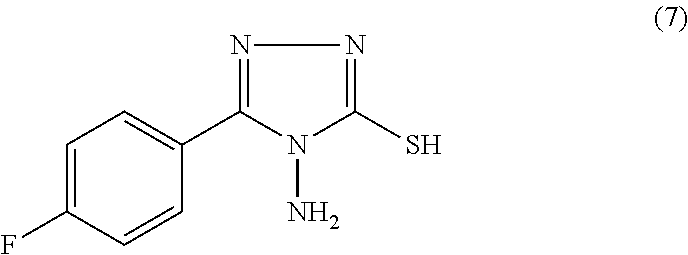
or an agriculturally acceptable salt thereof. The compound of formula (7) is described herein as “SD-29.” In formula (7), another halogen, such as Br or C1, can be used instead of F.
| Structure | Name |
 | SD-29-1 |
 | SD-29-2 |
 | SD-29-3 |
 | SD-29-4 |
 | SD-29-5 |
 | SD-29-6 |
 | SD-29-7 |
 | SD-29-8 |
 | SD-29-9 |
 | SD-29-10 |
 | SD-29-11 |
 | SD-29-12 |
 | SD-34 |
 | SD-125 |
 | sd-rack-75 |
 | sd-rack-22 |
 | sd-rack-34 |
 | sd-rack-48 |
or an agriculturally acceptable salt thereof.


Claims (12)


Priority Applications (1)
| Application Number | Priority Date | Filing Date | Title |
|---|---|---|---|
| US16/122,712 US11737462B2 (en) | 2012-04-05 | 2018-09-05 | Methods for modulating plant response to environmentally-induced stress |
Applications Claiming Priority (4)
| Application Number | Priority Date | Filing Date | Title |
|---|---|---|---|
| US201261620874P | 2012-04-05 | 2012-04-05 | |
| PCT/US2013/032496 WO2013151769A1 (en) | 2012-04-05 | 2013-03-15 | Methods for modulating plant response to environmentally-induced stress |
| US201414390743A | 2014-10-03 | 2014-10-03 | |
| US16/122,712 US11737462B2 (en) | 2012-04-05 | 2018-09-05 | Methods for modulating plant response to environmentally-induced stress |
Related Parent Applications (2)
| Application Number | Title | Priority Date | Filing Date |
|---|---|---|---|
| PCT/US2013/032496 Continuation WO2013151769A1 (en) | 2012-04-05 | 2013-03-15 | Methods for modulating plant response to environmentally-induced stress |
| US14/390,743 Continuation US20150119250A1 (en) | 2012-04-05 | 2013-03-15 | Methods for modulating plant response to environmentally-induced stress |
Publications (2)
| Publication Number | Publication Date |
|---|---|
| US20180360043A1 US20180360043A1 (en) | 2018-12-20 |
| US11737462B2 true US11737462B2 (en) | 2023-08-29 |
Family
ID=49300937
Family Applications (2)
| Application Number | Title | Priority Date | Filing Date |
|---|---|---|---|
| US14/390,743 Abandoned US20150119250A1 (en) | 2012-04-05 | 2013-03-15 | Methods for modulating plant response to environmentally-induced stress |
| US16/122,712 Active US11737462B2 (en) | 2012-04-05 | 2018-09-05 | Methods for modulating plant response to environmentally-induced stress |
Family Applications Before (1)
| Application Number | Title | Priority Date | Filing Date |
|---|---|---|---|
| US14/390,743 Abandoned US20150119250A1 (en) | 2012-04-05 | 2013-03-15 | Methods for modulating plant response to environmentally-induced stress |
Country Status (4)
| Country | Link |
|---|---|
| US (2) | US20150119250A1 (en) |
| EP (1) | EP2871959B1 (en) |
| CA (1) | CA2869567C (en) |
| WO (1) | WO2013151769A1 (en) |
Families Citing this family (5)
| Publication number | Priority date | Publication date | Assignee | Title |
|---|---|---|---|---|
| EP3210469A1 (en) * | 2016-02-23 | 2017-08-30 | Bayer Cropscience AG | Use of substituted thio-1,2,4-triazoles for increasing stress tolerance in plants |
| CN111533807A (en) * | 2019-01-22 | 2020-08-14 | 中国科学院分子植物科学卓越创新中心 | Application of AET1-RACK1A-eIF3h complex in plant environmental temperature adaptation |
| US12678425B2 (en) | 2019-04-26 | 2026-07-14 | Howard University | Methods for treating against viruses |
| CN116179588B (en) * | 2022-08-31 | 2023-10-13 | 四川农业大学 | Application of rice scaffold protein encoding gene OsRACK1A in improving rice resistance to rice smut |
| CN118077493B (en) * | 2024-02-02 | 2026-04-21 | 陕西省西安植物园(陕西省植物研究所) | A method for cultivating salt-tolerant magnolias |
Citations (6)
| Publication number | Priority date | Publication date | Assignee | Title |
|---|---|---|---|---|
| US6169057B1 (en) | 1997-09-04 | 2001-01-02 | The Regents Of The University Of California | Use of tryptophan and analogs as plant growth regulators |
| US20050288347A1 (en) | 2004-03-26 | 2005-12-29 | Hodge Carl N | Certain triazole-based compounds, compositions, and uses thereof |
| WO2006105477A1 (en) | 2005-03-31 | 2006-10-05 | Improcrop U.S.A., Inc. | Resistance to abiotic stress in plants |
| WO2009003953A2 (en) | 2007-06-29 | 2009-01-08 | Basf Se | Strobilurins for increasing the resistance of plants to abiotic stress |
| WO2010015337A2 (en) | 2008-08-02 | 2010-02-11 | Bayer Cropscience Ag | Use of azoles for increasing the abiotic stress resistance of plants or plant parts |
| US20110055979A1 (en) | 2000-04-07 | 2011-03-03 | Basf Plant Science Gmbh | Protein Kinase Stress-Related Proteins and Methods of Use in Plants |
-
2013
- 2013-03-15 WO PCT/US2013/032496 patent/WO2013151769A1/en not_active Ceased
- 2013-03-15 EP EP13772959.6A patent/EP2871959B1/en active Active
- 2013-03-15 CA CA2869567A patent/CA2869567C/en active Active
- 2013-03-15 US US14/390,743 patent/US20150119250A1/en not_active Abandoned
-
2018
- 2018-09-05 US US16/122,712 patent/US11737462B2/en active Active
Patent Citations (9)
| Publication number | Priority date | Publication date | Assignee | Title |
|---|---|---|---|---|
| US6169057B1 (en) | 1997-09-04 | 2001-01-02 | The Regents Of The University Of California | Use of tryptophan and analogs as plant growth regulators |
| US20110055979A1 (en) | 2000-04-07 | 2011-03-03 | Basf Plant Science Gmbh | Protein Kinase Stress-Related Proteins and Methods of Use in Plants |
| US20050288347A1 (en) | 2004-03-26 | 2005-12-29 | Hodge Carl N | Certain triazole-based compounds, compositions, and uses thereof |
| WO2006105477A1 (en) | 2005-03-31 | 2006-10-05 | Improcrop U.S.A., Inc. | Resistance to abiotic stress in plants |
| US20100144525A1 (en) | 2005-03-31 | 2010-06-10 | Improcrop U.S.A., Inc. | Resistance to abiotic stress in plants |
| WO2009003953A2 (en) | 2007-06-29 | 2009-01-08 | Basf Se | Strobilurins for increasing the resistance of plants to abiotic stress |
| US20100173900A1 (en) | 2007-06-29 | 2010-07-08 | Basf Se | Strobilurins for Increasing the Resistance of Plants to Abiotic Stress |
| WO2010015337A2 (en) | 2008-08-02 | 2010-02-11 | Bayer Cropscience Ag | Use of azoles for increasing the abiotic stress resistance of plants or plant parts |
| US20110195841A1 (en) | 2008-08-02 | 2011-08-11 | Bayer Cropscience Ag | Use of azoles for increasing the abiotic stress resistance of plants or plant parts |
Non-Patent Citations (19)
| Title |
|---|
| A. Yemets et al., "Effects of tyrosine kinase and phosphatase inhiibitors on microtubules in Arabidopsis root cells," Jan. 14, 2008; Cell Biology International, 32:630-637. |
| Berova et al., Bulgarian Journal of Plant Physiology, 28:75-84 (Jan. 1, 2002). |
| Cheeseright et al., J. Med. Chem., 52:4200-4209 (2009). |
| Colanceska-Ragenovic, K.; Dimova, V.; et al. "Synthesis, Antibacterial, and Antifungal activity of 4-substituted-5-Aryl-1,2,4-Triazoles" Molecules, 2001, v. 6, pp. 815-824. (Year: 2001). |
| Communication, dated Dec. 11, 2020, issued by the Canadian Intellectual Property Office in counterpart Canadian Patent Application No. 2,869,567. |
| H. Ullah et al., "Structure of a signal transduction regulator, RACK 1, from Arabidopsis thaliana," Jun. 25, 2008, Protein Science, 17:1771-1780. |
| H. Ullah et al., "Tyrosine Phosphorylation Based Summoylation of Arabidopsis RACK 1A Protein Potentially Dictates the Oxidative Stress Signaling Pathways," American Society of Plant Biologists; Sep. 16, 2011;http://www.biology.howard.edu/faculty/facultybios/Ullah.htm. |
| Hong et al., "Inhibition of trans-Cinnamate 4-Hydroxylase by 4-Amino-5-aryl-2,3=dihydro-3H-1,2,4-triazole-3-thiones," 2005; J. Pestic. Sci., 30(4):406-408. |
| International Search Report dated Jul. 10, 2013, issued in International Application PCT/US2013/032496. |
| Khan et al., Monatsh Chem., 141:479-484 (2010). |
| Lin et al., Botanical Studies, 49:9-18 (Jan. 1, 2008). |
| Ming-Xia Liu et al., Spectochimica Acta Part A, 79: 1837-1842 (2011). |
| Mohan, Indian Journal of Chemistry, 41 B:403-406 (Feb. 2002). |
| Slate "Root Causes" http://www.slate.com/articles/news_and_politics/gardening/2006/10/root_causes.html, Oct. 31, 2006, no pagination (Year: 2006), Casey, Constance. |
| Sung et al. "Synthesis of [(4,5-Disubstituted-4.H-1,2,4-triazol-3-yl)thio]alkanoic Acids and Their Analogues as Possible Antiinflammatory Agents" Journal of Heterocyclic Chemistry 1992. |
| Sung et al.. Synthesis of [(4,5-Disubstituted-4H-l,2,4-triazol-3-yl)thio]alkanoic Acids and Their Analogues as Possible Antiinflammatory Agents, J. Heterocyclic Chemistry, 29:1101-1109 (Aug.-Sep. 1992). |
| Supplementary European Search Report dated Apr. 16, 2016, issued re EP Application 13772959.6. |
| Written Opinion of the International Searching Authority dated Jul. 10, 2013, issued in International Application PCT/US2013/032496. |
| Yamada et al., 5-Aryl-1,3,4-oxadiazxole-2-thiols as a New Series of trans-Cinnamate 4-hydroxylase Inhibitors, J. Pest. Sci., 29(3):205-208 (2004). |
Also Published As
| Publication number | Publication date |
|---|---|
| CA2869567A1 (en) | 2013-10-10 |
| WO2013151769A1 (en) | 2013-10-10 |
| CA2869567C (en) | 2022-10-04 |
| EP2871959A4 (en) | 2016-05-25 |
| US20180360043A1 (en) | 2018-12-20 |
| US20150119250A1 (en) | 2015-04-30 |
| EP2871959A1 (en) | 2015-05-20 |
| EP2871959B1 (en) | 2024-09-04 |
Similar Documents
| Publication | Publication Date | Title |
|---|---|---|
| US20180360043A1 (en) | Methods for modulating plant response to environmentally-induced stress | |
| Waters et al. | Strigolactone signaling and evolution | |
| Wang et al. | Sophisticated crosstalk of tryptophan-derived metabolites in plant stress responses | |
| Liu et al. | The discovery of 3-(1-aminoethylidene) quinoline-2, 4 (1 H, 3 H)-dione derivatives as novel PSII electron transport inhibitors | |
| BR112014024379B1 (en) | agricultural formulation, method of increasing the tolerance of abiotic stress in a plant, method of inhibiting seed germination in a plant, method of producing a plant treated with said formulation and method of activating a pyr / pyl protein | |
| Roth et al. | Slow release of a synthetic auxin induces formation of adventitious roots in recalcitrant woody plants | |
| AU2006303545B2 (en) | Compounds and relative use for the control of phytopathogens | |
| US10842151B2 (en) | Small molecule compound for enhancing plant stress resistance | |
| Chkanikov et al. | Antidotes for reduction of phytotoxicity of the residues of sulfonylurea herbicides | |
| EP3398940A1 (en) | High stress resistant plant growth regulator and preparation method and use thereof | |
| Li et al. | Identification and application of CLE peptides for drought resistance in Solanaceae crops | |
| TW202339612A (en) | Method for cultivating transgenic plant having herbicide resistance, and method for imparting herbicide and environmental stress resistance | |
| Xiang et al. | Ethylene increases the NaHCO3 stress tolerance of grapevines partially via the VvERF1B‐VvMYC2‐VvPMA10 pathway | |
| Cui et al. | Design, synthesis, antibacterial activity, and mechanism of novel mesoionic compounds based on natural pyrazole isolated from an endophytic fungus Colletotrichum gloeosporioides | |
| He et al. | Loss of OsSPL8 function confers improved resistance to glufosinate and abiotic stresses in rice | |
| Ben‐Shushan et al. | Discovering new mode‐of‐action pesticide leads inhibiting protein–protein interactions: example targeting plant O‐acetylserine sulfhydrylase | |
| Wei et al. | Creation of new rice germplasm with cross-resistance to auxin herbicides picloram and dicamba by genome editing of OsAFB4 | |
| Tang et al. | Synthesis, plant growth regulatory activity, and transcriptome analysis of novel opabactin analogs | |
| Liu et al. | Investigation into the Synthesis, Bioactivity, and Mechanism of Action of the Novel 6-Pyrazolyl-2-picolinic Acid as a Herbicide | |
| US12161114B2 (en) | Overpowered ABA receptor agonists | |
| Demirkol | PopW improves salt stress tolerance of red clover (Trifolium pratense L.) via activating phytohormones and salinity related genes | |
| Sugeçti | Effects of quercetin and sabinene on antioxidant and detoxification enzymes of model pest Drosophila melanogaster (Diptera: Drosophilidae): Molecular docking investigation | |
| Scheys et al. | Protection of rice against Nilaparvata lugens by direct toxicity of sodium selenate | |
| Wu et al. | Discovery of Enantiopure (S)-Methoprene Derivatives as Potent Biochemical Pesticide Candidates | |
| Fennell et al. | Arabidopsis thaliana and Oryza sativa receptor for activated C kinase 1 (RACK1) mediated signaling pathway shows hypersensitivity to oxidative stress |
Legal Events
| Date | Code | Title | Description |
|---|---|---|---|
| FEPP | Fee payment procedure |
Free format text: ENTITY STATUS SET TO UNDISCOUNTED (ORIGINAL EVENT CODE: BIG.); ENTITY STATUS OF PATENT OWNER: SMALL ENTITY |
|
| FEPP | Fee payment procedure |
Free format text: ENTITY STATUS SET TO SMALL (ORIGINAL EVENT CODE: SMAL); ENTITY STATUS OF PATENT OWNER: SMALL ENTITY |
|
| STPP | Information on status: patent application and granting procedure in general |
Free format text: DOCKETED NEW CASE - READY FOR EXAMINATION |
|
| STPP | Information on status: patent application and granting procedure in general |
Free format text: NON FINAL ACTION MAILED |
|
| STPP | Information on status: patent application and granting procedure in general |
Free format text: RESPONSE TO NON-FINAL OFFICE ACTION ENTERED AND FORWARDED TO EXAMINER |
|
| STPP | Information on status: patent application and granting procedure in general |
Free format text: NON FINAL ACTION MAILED |
|
| STPP | Information on status: patent application and granting procedure in general |
Free format text: RESPONSE TO NON-FINAL OFFICE ACTION ENTERED AND FORWARDED TO EXAMINER |
|
| STPP | Information on status: patent application and granting procedure in general |
Free format text: FINAL REJECTION MAILED |
|
| STPP | Information on status: patent application and granting procedure in general |
Free format text: DOCKETED NEW CASE - READY FOR EXAMINATION |
|
| STPP | Information on status: patent application and granting procedure in general |
Free format text: NON FINAL ACTION MAILED |
|
| AS | Assignment |
Owner name: GEORGETOWN UNIVERSITY, DISTRICT OF COLUMBIA Free format text: ASSIGNMENT OF ASSIGNORS INTEREST;ASSIGNOR:DAKSHANAMURTHY, SIVANESAN;REEL/FRAME:056992/0616 Effective date: 20210708 |
|
| STPP | Information on status: patent application and granting procedure in general |
Free format text: RESPONSE TO NON-FINAL OFFICE ACTION ENTERED AND FORWARDED TO EXAMINER |
|
| AS | Assignment |
Owner name: HOWARD UNIVERSITY, DISTRICT OF COLUMBIA Free format text: ASSIGNMENT OF ASSIGNORS INTEREST;ASSIGNOR:ULLAH, HEMAYET;REEL/FRAME:058308/0150 Effective date: 20211204 |
|
| STPP | Information on status: patent application and granting procedure in general |
Free format text: NON FINAL ACTION MAILED |
|
| STPP | Information on status: patent application and granting procedure in general |
Free format text: RESPONSE TO NON-FINAL OFFICE ACTION ENTERED AND FORWARDED TO EXAMINER |
|
| STPP | Information on status: patent application and granting procedure in general |
Free format text: FINAL REJECTION MAILED |
|
| STPP | Information on status: patent application and granting procedure in general |
Free format text: NOTICE OF ALLOWANCE MAILED -- APPLICATION RECEIVED IN OFFICE OF PUBLICATIONS |
|
| STCF | Information on status: patent grant |
Free format text: PATENTED CASE |