US11732000B2 - Oxysterols and methods of use thereof - Google Patents
Oxysterols and methods of use thereof Download PDFInfo
- Publication number
- US11732000B2 US11732000B2 US17/396,034 US202117396034A US11732000B2 US 11732000 B2 US11732000 B2 US 11732000B2 US 202117396034 A US202117396034 A US 202117396034A US 11732000 B2 US11732000 B2 US 11732000B2
- Authority
- US
- United States
- Prior art keywords
- compound
- mmol
- alkyl
- formula
- mixture
- Prior art date
- Legal status (The legal status is an assumption and is not a legal conclusion. Google has not performed a legal analysis and makes no representation as to the accuracy of the status listed.)
- Active, expires
Links
Classifications
-
- C—CHEMISTRY; METALLURGY
- C07—ORGANIC CHEMISTRY
- C07J—STEROIDS
- C07J9/00—Normal steroids containing carbon, hydrogen, halogen or oxygen substituted in position 17 beta by a chain of more than two carbon atoms, e.g. cholane, cholestane, coprostane
-
- A—HUMAN NECESSITIES
- A61—MEDICAL OR VETERINARY SCIENCE; HYGIENE
- A61K—PREPARATIONS FOR MEDICAL, DENTAL OR TOILETRY PURPOSES
- A61K31/00—Medicinal preparations containing organic active ingredients
- A61K31/56—Compounds containing cyclopenta[a]hydrophenanthrene ring systems; Derivatives thereof, e.g. steroids
- A61K31/575—Compounds containing cyclopenta[a]hydrophenanthrene ring systems; Derivatives thereof, e.g. steroids substituted in position 17 beta by a chain of three or more carbon atoms, e.g. cholane, cholestane, ergosterol, sitosterol
-
- A—HUMAN NECESSITIES
- A61—MEDICAL OR VETERINARY SCIENCE; HYGIENE
- A61K—PREPARATIONS FOR MEDICAL, DENTAL OR TOILETRY PURPOSES
- A61K31/00—Medicinal preparations containing organic active ingredients
- A61K31/56—Compounds containing cyclopenta[a]hydrophenanthrene ring systems; Derivatives thereof, e.g. steroids
- A61K31/58—Compounds containing cyclopenta[a]hydrophenanthrene ring systems; Derivatives thereof, e.g. steroids containing heterocyclic rings, e.g. danazol, stanozolol, pancuronium or digitogenin
-
- A—HUMAN NECESSITIES
- A61—MEDICAL OR VETERINARY SCIENCE; HYGIENE
- A61P—SPECIFIC THERAPEUTIC ACTIVITY OF CHEMICAL COMPOUNDS OR MEDICINAL PREPARATIONS
- A61P1/00—Drugs for disorders of the alimentary tract or the digestive system
-
- A—HUMAN NECESSITIES
- A61—MEDICAL OR VETERINARY SCIENCE; HYGIENE
- A61P—SPECIFIC THERAPEUTIC ACTIVITY OF CHEMICAL COMPOUNDS OR MEDICINAL PREPARATIONS
- A61P1/00—Drugs for disorders of the alimentary tract or the digestive system
- A61P1/04—Drugs for disorders of the alimentary tract or the digestive system for ulcers, gastritis or reflux esophagitis, e.g. antacids, inhibitors of acid secretion, mucosal protectants
-
- A—HUMAN NECESSITIES
- A61—MEDICAL OR VETERINARY SCIENCE; HYGIENE
- A61P—SPECIFIC THERAPEUTIC ACTIVITY OF CHEMICAL COMPOUNDS OR MEDICINAL PREPARATIONS
- A61P1/00—Drugs for disorders of the alimentary tract or the digestive system
- A61P1/10—Laxatives
-
- A—HUMAN NECESSITIES
- A61—MEDICAL OR VETERINARY SCIENCE; HYGIENE
- A61P—SPECIFIC THERAPEUTIC ACTIVITY OF CHEMICAL COMPOUNDS OR MEDICINAL PREPARATIONS
- A61P23/00—Anaesthetics
-
- A—HUMAN NECESSITIES
- A61—MEDICAL OR VETERINARY SCIENCE; HYGIENE
- A61P—SPECIFIC THERAPEUTIC ACTIVITY OF CHEMICAL COMPOUNDS OR MEDICINAL PREPARATIONS
- A61P25/00—Drugs for disorders of the nervous system
-
- A—HUMAN NECESSITIES
- A61—MEDICAL OR VETERINARY SCIENCE; HYGIENE
- A61P—SPECIFIC THERAPEUTIC ACTIVITY OF CHEMICAL COMPOUNDS OR MEDICINAL PREPARATIONS
- A61P25/00—Drugs for disorders of the nervous system
- A61P25/04—Centrally acting analgesics, e.g. opioids
-
- A—HUMAN NECESSITIES
- A61—MEDICAL OR VETERINARY SCIENCE; HYGIENE
- A61P—SPECIFIC THERAPEUTIC ACTIVITY OF CHEMICAL COMPOUNDS OR MEDICINAL PREPARATIONS
- A61P25/00—Drugs for disorders of the nervous system
- A61P25/08—Antiepileptics; Anticonvulsants
-
- A—HUMAN NECESSITIES
- A61—MEDICAL OR VETERINARY SCIENCE; HYGIENE
- A61P—SPECIFIC THERAPEUTIC ACTIVITY OF CHEMICAL COMPOUNDS OR MEDICINAL PREPARATIONS
- A61P25/00—Drugs for disorders of the nervous system
- A61P25/14—Drugs for disorders of the nervous system for treating abnormal movements, e.g. chorea, dyskinesia
- A61P25/16—Anti-Parkinson drugs
-
- A—HUMAN NECESSITIES
- A61—MEDICAL OR VETERINARY SCIENCE; HYGIENE
- A61P—SPECIFIC THERAPEUTIC ACTIVITY OF CHEMICAL COMPOUNDS OR MEDICINAL PREPARATIONS
- A61P25/00—Drugs for disorders of the nervous system
- A61P25/18—Antipsychotics, i.e. neuroleptics; Drugs for mania or schizophrenia
-
- A—HUMAN NECESSITIES
- A61—MEDICAL OR VETERINARY SCIENCE; HYGIENE
- A61P—SPECIFIC THERAPEUTIC ACTIVITY OF CHEMICAL COMPOUNDS OR MEDICINAL PREPARATIONS
- A61P25/00—Drugs for disorders of the nervous system
- A61P25/20—Hypnotics; Sedatives
-
- A—HUMAN NECESSITIES
- A61—MEDICAL OR VETERINARY SCIENCE; HYGIENE
- A61P—SPECIFIC THERAPEUTIC ACTIVITY OF CHEMICAL COMPOUNDS OR MEDICINAL PREPARATIONS
- A61P25/00—Drugs for disorders of the nervous system
- A61P25/22—Anxiolytics
-
- A—HUMAN NECESSITIES
- A61—MEDICAL OR VETERINARY SCIENCE; HYGIENE
- A61P—SPECIFIC THERAPEUTIC ACTIVITY OF CHEMICAL COMPOUNDS OR MEDICINAL PREPARATIONS
- A61P25/00—Drugs for disorders of the nervous system
- A61P25/24—Antidepressants
-
- A—HUMAN NECESSITIES
- A61—MEDICAL OR VETERINARY SCIENCE; HYGIENE
- A61P—SPECIFIC THERAPEUTIC ACTIVITY OF CHEMICAL COMPOUNDS OR MEDICINAL PREPARATIONS
- A61P25/00—Drugs for disorders of the nervous system
- A61P25/28—Drugs for disorders of the nervous system for treating neurodegenerative disorders of the central nervous system, e.g. nootropic agents, cognition enhancers, drugs for treating Alzheimer's disease or other forms of dementia
-
- A—HUMAN NECESSITIES
- A61—MEDICAL OR VETERINARY SCIENCE; HYGIENE
- A61P—SPECIFIC THERAPEUTIC ACTIVITY OF CHEMICAL COMPOUNDS OR MEDICINAL PREPARATIONS
- A61P27/00—Drugs for disorders of the senses
- A61P27/02—Ophthalmic agents
-
- A—HUMAN NECESSITIES
- A61—MEDICAL OR VETERINARY SCIENCE; HYGIENE
- A61P—SPECIFIC THERAPEUTIC ACTIVITY OF CHEMICAL COMPOUNDS OR MEDICINAL PREPARATIONS
- A61P27/00—Drugs for disorders of the senses
- A61P27/16—Otologicals
-
- A—HUMAN NECESSITIES
- A61—MEDICAL OR VETERINARY SCIENCE; HYGIENE
- A61P—SPECIFIC THERAPEUTIC ACTIVITY OF CHEMICAL COMPOUNDS OR MEDICINAL PREPARATIONS
- A61P29/00—Non-central analgesic, antipyretic or antiinflammatory agents, e.g. antirheumatic agents; Non-steroidal antiinflammatory drugs [NSAID]
-
- A—HUMAN NECESSITIES
- A61—MEDICAL OR VETERINARY SCIENCE; HYGIENE
- A61P—SPECIFIC THERAPEUTIC ACTIVITY OF CHEMICAL COMPOUNDS OR MEDICINAL PREPARATIONS
- A61P3/00—Drugs for disorders of the metabolism
-
- A—HUMAN NECESSITIES
- A61—MEDICAL OR VETERINARY SCIENCE; HYGIENE
- A61P—SPECIFIC THERAPEUTIC ACTIVITY OF CHEMICAL COMPOUNDS OR MEDICINAL PREPARATIONS
- A61P3/00—Drugs for disorders of the metabolism
- A61P3/08—Drugs for disorders of the metabolism for glucose homeostasis
- A61P3/10—Drugs for disorders of the metabolism for glucose homeostasis for hyperglycaemia, e.g. antidiabetics
-
- A—HUMAN NECESSITIES
- A61—MEDICAL OR VETERINARY SCIENCE; HYGIENE
- A61P—SPECIFIC THERAPEUTIC ACTIVITY OF CHEMICAL COMPOUNDS OR MEDICINAL PREPARATIONS
- A61P35/00—Antineoplastic agents
-
- A—HUMAN NECESSITIES
- A61—MEDICAL OR VETERINARY SCIENCE; HYGIENE
- A61P—SPECIFIC THERAPEUTIC ACTIVITY OF CHEMICAL COMPOUNDS OR MEDICINAL PREPARATIONS
- A61P9/00—Drugs for disorders of the cardiovascular system
- A61P9/10—Drugs for disorders of the cardiovascular system for treating ischaemic or atherosclerotic diseases, e.g. antianginal drugs, coronary vasodilators, drugs for myocardial infarction, retinopathy, cerebrovascula insufficiency, renal arteriosclerosis
-
- A—HUMAN NECESSITIES
- A61—MEDICAL OR VETERINARY SCIENCE; HYGIENE
- A61P—SPECIFIC THERAPEUTIC ACTIVITY OF CHEMICAL COMPOUNDS OR MEDICINAL PREPARATIONS
- A61P9/00—Drugs for disorders of the cardiovascular system
- A61P9/14—Vasoprotectives; Antihaemorrhoidals; Drugs for varicose therapy; Capillary stabilisers
-
- C—CHEMISTRY; METALLURGY
- C07—ORGANIC CHEMISTRY
- C07J—STEROIDS
- C07J17/00—Normal steroids containing carbon, hydrogen, halogen or oxygen, having an oxygen-containing hetero ring not condensed with the cyclopenta(a)hydrophenanthrene skeleton
-
- C—CHEMISTRY; METALLURGY
- C07—ORGANIC CHEMISTRY
- C07J—STEROIDS
- C07J13/00—Normal steroids containing carbon, hydrogen, halogen or oxygen having a carbon-to-carbon double bond from or to position 17
- C07J13/005—Normal steroids containing carbon, hydrogen, halogen or oxygen having a carbon-to-carbon double bond from or to position 17 with double bond in position 16 (17)
-
- C—CHEMISTRY; METALLURGY
- C07—ORGANIC CHEMISTRY
- C07J—STEROIDS
- C07J13/00—Normal steroids containing carbon, hydrogen, halogen or oxygen having a carbon-to-carbon double bond from or to position 17
- C07J13/007—Normal steroids containing carbon, hydrogen, halogen or oxygen having a carbon-to-carbon double bond from or to position 17 with double bond in position 17 (20)
-
- C—CHEMISTRY; METALLURGY
- C07—ORGANIC CHEMISTRY
- C07J—STEROIDS
- C07J31/00—Normal steroids containing one or more sulfur atoms not belonging to a hetero ring
- C07J31/006—Normal steroids containing one or more sulfur atoms not belonging to a hetero ring not covered by C07J31/003
-
- C—CHEMISTRY; METALLURGY
- C07—ORGANIC CHEMISTRY
- C07J—STEROIDS
- C07J41/00—Normal steroids containing one or more nitrogen atoms not belonging to a hetero ring
- C07J41/0033—Normal steroids containing one or more nitrogen atoms not belonging to a hetero ring not covered by C07J41/0005
- C07J41/0055—Normal steroids containing one or more nitrogen atoms not belonging to a hetero ring not covered by C07J41/0005 the 17-beta position being substituted by an uninterrupted chain of at least three carbon atoms which may or may not be branched, e.g. cholane or cholestane derivatives, optionally cyclised, e.g. 17-beta-phenyl or 17-beta-furyl derivatives
- C07J41/0061—Normal steroids containing one or more nitrogen atoms not belonging to a hetero ring not covered by C07J41/0005 the 17-beta position being substituted by an uninterrupted chain of at least three carbon atoms which may or may not be branched, e.g. cholane or cholestane derivatives, optionally cyclised, e.g. 17-beta-phenyl or 17-beta-furyl derivatives one of the carbon atoms being part of an amide group
-
- C—CHEMISTRY; METALLURGY
- C07—ORGANIC CHEMISTRY
- C07J—STEROIDS
- C07J7/00—Normal steroids containing carbon, hydrogen, halogen or oxygen substituted in position 17 beta by a chain of two carbon atoms
- C07J7/0005—Normal steroids containing carbon, hydrogen, halogen or oxygen substituted in position 17 beta by a chain of two carbon atoms not substituted in position 21
- C07J7/001—Normal steroids containing carbon, hydrogen, halogen or oxygen substituted in position 17 beta by a chain of two carbon atoms not substituted in position 21 substituted in position 20 by a keto group
- C07J7/0015—Normal steroids containing carbon, hydrogen, halogen or oxygen substituted in position 17 beta by a chain of two carbon atoms not substituted in position 21 substituted in position 20 by a keto group not substituted in position 17 alfa
- C07J7/002—Normal steroids containing carbon, hydrogen, halogen or oxygen substituted in position 17 beta by a chain of two carbon atoms not substituted in position 21 substituted in position 20 by a keto group not substituted in position 17 alfa not substituted in position 16
-
- C—CHEMISTRY; METALLURGY
- C07—ORGANIC CHEMISTRY
- C07J—STEROIDS
- C07J9/00—Normal steroids containing carbon, hydrogen, halogen or oxygen substituted in position 17 beta by a chain of more than two carbon atoms, e.g. cholane, cholestane, coprostane
- C07J9/005—Normal steroids containing carbon, hydrogen, halogen or oxygen substituted in position 17 beta by a chain of more than two carbon atoms, e.g. cholane, cholestane, coprostane containing a carboxylic function directly attached or attached by a chain containing only carbon atoms to the cyclopenta[a]hydrophenanthrene skeleton
Definitions
- NMDA receptors are heteromeric complexes comprised of NR1, NR2, and/or NR3 subunits and possess distinct recognition sites for exogenous and endogenous ligands. These recognition sites include binding sites for glycine, and glutamate agonists and modulators. NMDA receptors are expressed in the peripheral tissues and the CNS, where they are involved in excitatory synaptic transmission. Activating these receptors contributes to synaptic plasticity in some circumstances and excitotoxicity in others. These receptors are ligand-gated ion channels that admit Ca2+ after binding of the glutamate and glycine, and are fundamental to excitatory neurotransmission and normal CNS function.
- Positive modulators may be useful as therapeutic agents with potential clinical uses as cognitive enhancers and in the treatment of psychiatric disorders in which glutamatergic transmission is reduced or defective (see, e.g., Horak et al., J. of Neuroscience, 2004, 24(46), 10318-10325).
- negative modulators may be useful as therapeutic agents with potential clinical uses in the treatment of psychiatric disorders in which glutamatergic transmission is pathologically increased (e.g., treatment resistant depression).
- Oxysterols are derived from cholesterol and have been shown to potently and selectively modulate NMDA receptor function. New and improved oxysterols are needed that modulate the NMDA receptor for the prevention and treatment of conditions associated with NMDA expression and function. Compounds, compositions, and methods described herein are directed toward this end.
- substituted oxysterols useful for preventing and/or treating a broad range of disorders, including, but not limited to, NMDA-mediated disorders. These compounds are expected to show improved in vivo potency, pharmacokinetic (PK) properties, oral bioavailability, formulatability, stability, and/or safety as compared to other oxysterols. Further provided are pharmaceutical compositions comprising the compounds of the present invention, and methods of their use and treatment.
- R 1 is hydrogen or C 1-6 alkyl
- R 2 is C 1-6 alkyl, carbocyclyl, or heterocyclyl
- R 5 is absent or hydrogen
- R 1 is hydrogen or C 1-6 alkyl
- R 2 is C 1-6 alkyl, carbocyclyl, or heterocyclyl
- R 5 is absent or hydrogen
- R 1 is hydrogen
- R 1 is C 1-6 alkyl. In some embodiments, R 1 is substituted C 1-6 alkyl. In some embodiments, R 1 is unsubstituted C 1-6 alkyl. In some embodiments, R 1 is methyl (e.g., —CH 3 , —CF 3 or —CH 2 OCH 3 ), ethyl, or isopropyl. In some embodiments, R 1 is methyl (e.g., —CH 3 ) or ethyl (e.g., —CH 2 CH 3 ).
- R 2 is C 1-6 alkyl or carbocyclyl. In some embodiments, R 2 is substituted C 1-6 alkyl. In some embodiments, R 2 is unsubstituted C 1-6 alkyl. In some embodiments, R 2 is C 1-4 alkyl. In some embodiments, R 2 is substituted C 1-4 alkyl. In some embodiments, R 2 is unsubstituted C 1-4 alkyl. In some embodiments, R 2 is C 1-3 alkyl. In some embodiments, R 2 is substituted C 1-3 alkyl. In some embodiments, R 2 is unsubstituted C 1-3 alkyl.
- R 2 is methyl, ethyl (e.g., —CH 2 CH 3 , —CH 2 CF 3 , —CH(CH 3 )(CF 3 )), isopropyl, tertbutyl, or cyclopropyl.
- R 2 is haloalkyl.
- R 2 is —CH 2 CF 3 or —CH(CH 3 )(CF 3 ).
- R 1 and R 2 are C 1-6 alkyl. In some embodiments, R 1 is C 1-6 alkyl and R 2 is C 1-6 alkyl, carbocyclyl, or heterocyclyl. In some embodiments, R 1 is methyl or ethyl, and R 2 is unsubstituted or substituted C 1-6 alkyl (e.g., haloalkyl). In some embodiments, R 1 is methyl or ethyl, and R 2 is carbocyclyl or heterocyclyl.
- the compound of Formula (I) is a compound of Formula (I-A) or Formula (I-B):
- the compound of Formula (I) is a compound of Formula (I-B-i) or Formula (I-B-ii):
- the compound of Formula (I) is a compound of Formula (I-C):
- the compound of Formula (I-C) is a compound of Formula (I-C-i) or (I-C-ii):
- the compound of Formula (I-C-i) is a compound of Formula (I-C-i-a) or (I-C-i-b):
- the compound of Formula (I-C-ii) is a compound of Formula (I-C-ii-a) or (I-C-ii-b):
- R 2 is C 1-6 alkyl. In some embodiments, R 2 is substituted C 1-6 alkyl. In some embodiments, R 2 is C 1-6 haloalkyl.
- the compound of Formula (I) is a compound of Formula (II:
- the compound of Formula (II) is a compound of Formula (II-A) or Formula (II-B):
- the compound of Formula (II) is a compound of Formula (II-C) or Formula (II-D):
- the compound of Formula (II) is a compound of Formula (II-E):
- the compound of Formula (II-E) is a compound of Formula (II-E-i) or Formula (II-E-ii):
- the compound of Formula (II-E-i) is a compound of Formula (II-E-i-a) or Formula (II-E-i-b):
- the compound of Formula (II-E-ii) is a compound of Formula (II-E-ii-a) or Formula (II-E-ii-b):
- the compound of Formula (I) is a compound of Formula (VII):
- the compound of Formula (VII) is a compound of Formula (VII-A) or Formula (VII-B):
- the compound of Formula (VII) is a compound of Formula (VII-C) or Formula (VII-D):
- the compound of Formula (VII) is a compound of Formula (VII-E):
- the compound of Formula (VII-E) is a compound of Formula (VII-E-i) or Formula (VII-E-ii):
- the compound of Formula (VII-E-i) is a compound of Formula (VII-E-i-a) or Formula (VII-E-i-b):
- the compound of Formula (VII-E-ii) is a compound of Formula (VII-E-ii-a) or Formula (VII-E-ii-b):
- the compound of Formula (I) is a compound of Formula (III):
- the compound of Formula (III) is a compound of Formula (III-A) or Formula (III-B):
- the compound of Formula (I) is a compound of Formula (IV):
- the compound of Formula (IV) is a compound of Formula (IV-A) or Formula (IV-B):
- R 2 is carbocyclyl or heterocyclyl. In some embodiments, R 2 is carbocyclyl (e.g., cyclopropyl, cyclobutyl, cyclopentyl, cyclohexyl).
- R 2 is heterocyclyl. In some embodiments, R 2 is an oxygen-containing heterocycle (e.g., tetrahydropyran).
- the compound of Formula (I) is a compound of Formula (V):
- X is —CH 2 —, —O—, —S—, or —NR A —, and m is an integer selected from 0, 1, 2, 3, 4, or 5; wherein R A is hydrogen, alkyl, —C(O)R C , —C(O)N(R C ) 2 , or —SO 2 N(R C ) 2 ; and each R C is independently hydrogen, alkyl, aryl, or heteroaryl.
- X is —CH 2 —, —O—, —S—, or —NH—.
- the compound of Formula (V) is a compound of Formula (V-A-i) or Formula (V-A-ii):
- the compound of Formula (V) is a compound of Formula (V-B):
- X is —CH 2 —.
- X is —O—.
- m is 0, 1, 2, or 3.
- the compound of Formula (V) is a compound of Formula (V-B-i):
- the compound of Formula (V) is a compound of Formula (V-C):
- the compound of Formula (I) is a compound of Formula (VI):
- the compound of Formula (I) is a compound of Formula (VI-A) or Formula (VI-B):
- R 1 is C 1-6 alkyl. In some embodiments, R 1 is methyl (e.g., —CH 3 , —CF 3 or —CH 2 OCH 3 ), ethyl, or isopropyl. In some embodiments, R 1 is methyl, ethyl or isopropyl. In some embodiments, R 1 is methyl (e.g., —CH 3 ). In some embodiments, R 1 is ethyl (e.g., —CH 2 CH 3 ).
- the compound of Formula (I) is selected from:
- a pharmaceutical composition comprising a compound described herein (e.g., a compound of Formula (I), or pharmaceutically acceptable salt thereof), and a pharmaceutically acceptable carrier.
- a method of inducing sedation or anesthesia comprising administering to a subject an effective amount of a compound described herein (e.g., a compound of Formula (I), or pharmaceutically acceptable salt thereof), or pharmaceutical composition thereof.
- a compound described herein e.g., a compound of Formula (I), or pharmaceutically acceptable salt thereof
- a method for treating or preventing a disorder described herein comprising administering to a subject in need thereof an effective amount of a compound described herein (e.g., a compound of Formula (I), or pharmaceutically acceptable salt thereof), or pharmaceutical composition thereof.
- a compound described herein e.g., a compound of Formula (I), or pharmaceutically acceptable salt thereof
- the disorder is a gastrointestinal (GI) disorder e.g., constipation, irritable bowel syndrome (IBS), inflammatory bowel disease (IBD) (e.g., ulcerative colitis, Crohn's disease), structural disorders affecting the GI, anal disorders (e.g., hemorrhoids, internal hemorrhoids, external hemorrhoids, anal fissures, perianal abscesses, anal fistula), colon polyps, cancer, colitis.
- GI gastrointestinal
- IBS irritable bowel syndrome
- IBD inflammatory bowel disease
- structural disorders affecting the GI e.g., anal disorders (e.g., hemorrhoids, internal hemorrhoids, external hemorrhoids, anal fissures, perianal abscesses, anal fistula), colon polyps, cancer, colitis.
- IBS irritable bowel syndrome
- IBD inflammatory bowel disease
- the disorder is inflammatory bowel disease.
- the disorder is cancer, diabetes, or a sterol synthesis disorder.
- a method for treating or preventing a CNS-related condition comprising administering to a subject in need thereof an effective amount of a compound described herein (e.g., a compound of Formula (I), or pharmaceutically acceptable salt thereof), or pharmaceutical composition thereof.
- a compound described herein e.g., a compound of Formula (I), or pharmaceutically acceptable salt thereof
- the CNS-related condition is an adjustment disorder, anxiety disorder (including obsessive-compulsive disorder, posttraumatic stress disorder, and social phobia), cognitive disorder (including Alzheimer's disease and other forms of dementia), dissociative disorder, eating disorder, mood disorder (including depression (e.g., postpartum depression), bipolar disorder, dysthymic disorder, suicidality), schizophrenia or other psychotic disorder (including schizoaffective disorder), sleep disorder (including insomnia), substance-related disorder, personality disorder (including obsessive-compulsive personality disorder), autism spectrum disorders (including those involving mutations to the Shank group of proteins (e.g., Shank3)), neurodevelopmental disorder (including Rett syndrome, Tuberous Sclerosis complex), multiple sclerosis, sterol synthesis disorders, pain (including acute and chronic pain), encephalopathy secondary to a medical condition (including hepatic encephalopathy and anti-NMDA receptor encephalitis), seizure disorder (including status epilepticus and monogenic forms of epilepsy such as
- the disorder is sterol synthesis disorder.
- Compounds described herein can comprise one or more asymmetric centers, and thus can exist in various isomeric forms, e.g., enantiomers and/or diastereomers.
- the compounds described herein can be in the form of an individual enantiomer, diastereomer or geometric isomer, or can be in the form of a mixture of stereoisomers, including racemic mixtures and mixtures enriched in one or more stereoisomer.
- Isomers can be isolated from mixtures by methods known to those skilled in the art, including chiral high pressure liquid chromatography (HPLC) and the formation and crystallization of chiral salts; or preferred isomers can be prepared by asymmetric syntheses.
- HPLC high pressure liquid chromatography
- Compound described herein may also comprise one or more isotopic substitutions.
- H may be in any isotopic form, including 1 H, 2 H (D or deuterium), and 3 H (T or tritium);
- C may be in any isotopic form, including 12 C, 13 C, and 14 C;
- O may be in any isotopic form, including 16 O and 18 O; and the like.
- C 1-6 alkyl is intended to encompass, C 1 , C 2 , C 3 , C 4 , C 5 , C 6 , C 1-6 , C 1-5 , C 1-4 , C 1-3 , C 1-2 , C 2-6 , C 2-5 , C 2-4 , C 2-3 , C 3-6 , C 3-5 , C 3-4 , C 4-6 , C 4-5 , and C 5-6 alkyl.
- analogue means one analogue or more than one analogue.
- Aliphatic refers to an alkyl, alkenyl, alkynyl, or carbocyclyl group, as defined herein.
- Alkyl refers to a radical of a straight-chain or branched saturated hydrocarbon group having from 1 to 20 carbon atoms (“C 1-20 alkyl”). In some embodiments, an alkyl group has 1 to 12 carbon atoms (“C 1-12 alkyl”). In some embodiments, an alkyl group has 1 to 10 carbon atoms (“C 1-10 alkyl”). In some embodiments, an alkyl group has 1 to 9 carbon atoms (“C 1-9 alkyl”). In some embodiments, an alkyl group has 1 to 8 carbon atoms (“C 1-8 alkyl”). In some embodiments, an alkyl group has 1 to 7 carbon atoms (“C 1-7 alkyl”).
- an alkyl group has 1 to 6 carbon atoms (“C 1-6 alkyl”, also referred to herein as “lower alkyl”). In some embodiments, an alkyl group has 1 to 5 carbon atoms (“C 1-5 alkyl”). In some embodiments, an alkyl group has 1 to 4 carbon atoms (“C 1-4 alkyl”). In some embodiments, an alkyl group has 1 to 3 carbon atoms (“C 1-3 alkyl”). In some embodiments, an alkyl group has 1 to 2 carbon atoms (“C 1-2 alkyl”). In some embodiments, an alkyl group has 1 carbon atom (“C 1 alkyl”). In some embodiments, an alkyl group has 2 to 6 carbon atoms (“C 2-6 alkyl”).
- C 1-6 alkyl groups include methyl (C 1 ), ethyl (C 2 ), n-propyl (C 3 ), isopropyl (C 3 ), n-butyl (C 4 ), tert-butyl (C 4 ), sec-butyl (C 4 ), iso-butyl (C 4 ), n-pentyl (C 5 ), 3-pentanyl (C 5 ), amyl (C 5 ), neopentyl (C 5 ), 3-methyl-2-butanyl (C 5 ), tertiary amyl (C 5 ), and n-hexyl (C 6 ).
- alkyl groups include n-heptyl (C 7 ), n-octyl (C 8 ) and the like.
- each instance of an alkyl group is independently optionally substituted, i.e., unsubstituted (an “unsubstituted alkyl”) or substituted (a “substituted alkyl”) with one or more substituents; e.g., for instance from 1 to 5 substituents, 1 to 3 substituents, or 1 substituent.
- the alkyl group is unsubstituted C 1-10 alkyl (e.g., —CH 3 ).
- the alkyl group is substituted C 1-10 alkyl.
- alkylene As used herein, “alkylene,” “alkenylene,” and “alkynylene,” refer to a divalent radical of an alkyl, alkenyl, and alkynyl group, respectively. When a range or number of carbons is provided for a particular “alkylene,” “alkenylene,” and “alkynylene” group, it is understood that the range or number refers to the range or number of carbons in the linear carbon divalent chain. “Alkylene,” “alkenylene,” and “alkynylene” groups may be substituted or unsubstituted with one or more substituents as described herein.
- Alkylene refers to an alkyl group wherein two hydrogens are removed to provide a divalent radical, and which may be substituted or unsubstituted.
- Unsubstituted alkylene groups include, but are not limited to, methylene (—CH 2 —), ethylene (—CH 2 CH 2 —), propylene (—CH 2 CH 2 CH 2 —), butylene (—CH 2 CH 2 CH 2 CH 2 —), pentylene (—CH 2 CH 2 CH 2 CH 2 CH 2 —), hexylene (—CH 2 CH 2 CH 2 CH 2 CH 2 CH 2 —), and the like.
- substituted alkylene groups e.g., substituted with one or more alkyl (methyl) groups, include but are not limited to, substituted methylene (—CH(CH 3 )—, (—C(CH 3 ) 2 —), substituted ethylene (—CH(CH 3 )CH 2 —, —CH 2 CH(CH 3 )—, —C(CH 3 ) 2 CH 2 —, —CH 2 C(CH 3 ) 2 —), substituted propylene (—CH(CH 3 )CH 2 CH 2 —, —CH 2 CH(CH 3 )CH 2 —, —CH 2 CH 2 CH(CH 3 )—, —C(CH 3 ) 2 CH 2 CH 2 —, —CH 2 C(CH 3 ) 2 CH 2 —, —CH 2 CH 2 C(CH 3 ) 2 —), and the like.
- substituted methylene —CH(CH 3 )—, (—C(CH 3 ) 2 —)
- substituted ethylene
- Alkenyl refers to a radical of a straight-chain or branched hydrocarbon group having from 2 to 20 carbon atoms, one or more carbon-carbon double bonds (e.g., 1, 2, 3, or 4 carbon-carbon double bonds), and optionally one or more carbon-carbon triple bonds (e.g., 1, 2, 3, or 4 carbon-carbon triple bonds) (“C 2-20 alkenyl”). In certain embodiments, alkenyl does not contain any triple bonds. In some embodiments, an alkenyl group has 2 to 10 carbon atoms (“C 2-10 alkenyl”). In some embodiments, an alkenyl group has 2 to 9 carbon atoms (“C 2-9 alkenyl”).
- an alkenyl group has 2 to 8 carbon atoms (“C 2-8 alkenyl”). In some embodiments, an alkenyl group has 2 to 7 carbon atoms (“C 2-7 alkenyl”). In some embodiments, an alkenyl group has 2 to 6 carbon atoms (“C 2-6 alkenyl”). In some embodiments, an alkenyl group has 2 to 5 carbon atoms (“C 2-5 alkenyl”). In some embodiments, an alkenyl group has 2 to 4 carbon atoms (“C 2-4 alkenyl”). In some embodiments, an alkenyl group has 2 to 3 carbon atoms (“C 2-3 alkenyl”). In some embodiments, an alkenyl group has 2 carbon atoms (“C 2 alkenyl”).
- the one or more carbon-carbon double bonds can be internal (such as in 2-butenyl) or terminal (such as in 1-butenyl).
- Examples of C 2-4 alkenyl groups include ethenyl (C 2 ), 1-propenyl (C 3 ), 2-propenyl (C 3 ), 1-butenyl (C 4 ), 2-butenyl (C 4 ), butadienyl (C 4 ), and the like.
- Examples of C 2 alkenyl groups include the aforementioned C 2-4 alkenyl groups as well as pentenyl (C 5 ), pentadienyl (C 5 ), hexenyl (C 6 ), and the like.
- alkenyl examples include heptenyl (C 7 ), octenyl (C 8 ), octatrienyl (C 8 ), and the like.
- each instance of an alkenyl group is independently optionally substituted, i.e., unsubstituted (an “unsubstituted alkenyl”) or substituted (a “substituted alkenyl”) with one or more substituents e.g., for instance from 1 to 5 substituents, 1 to 3 substituents, or 1 substituent.
- the alkenyl group is unsubstituted C 2-10 alkenyl.
- the alkenyl group is substituted C 2-10 alkenyl.
- Alkenylene refers to an alkenyl group wherein two hydrogens are removed to provide a divalent radical, and which may be substituted or unsubstituted.
- exemplary unsubstituted divalent alkenylene groups include, but are not limited to, ethenylene (—CH ⁇ CH—) and propenylene (e.g., —CH ⁇ CHCH 2 —, —CH 2 —CH ⁇ CH—).
- substituted alkenylene groups e.g., substituted with one or more alkyl (methyl) groups
- substituted ethylene —C(CH 3 ) ⁇ CH—, —CH ⁇ C(CH 3 )—
- substituted propylene e.g., —C(CH 3 ) ⁇ CHCH 2 —, —CH ⁇ C(CH 3 )CH 2 —, —CH ⁇ CHCH(CH 3 )—, —CH ⁇ CHC(CH 3 ) 2 —, —CH(CH 3 )—CH ⁇ CH—, —C(CH 3 ) 2 —CH ⁇ CH—, —CH 2 —C(CH 3 ) ⁇ CH—, —CH 2 —CH ⁇ C(CH 3 )—), and the like.
- Alkynyl refers to a radical of a straight-chain or branched hydrocarbon group having from 2 to 20 carbon atoms, one or more carbon-carbon triple bonds (e.g., 1, 2, 3, or 4 carbon-carbon triple bonds), and optionally one or more carbon-carbon double bonds (e.g., 1, 2, 3, or 4 carbon-carbon double bonds) (“C 2-20 alkynyl”). In certain embodiments, alkynyl does not contain any double bonds. In some embodiments, an alkynyl group has 2 to 10 carbon atoms (“C 2-10 alkynyl”). In some embodiments, an alkynyl group has 2 to 9 carbon atoms (“C 2-9 alkynyl”).
- an alkynyl group has 2 to 8 carbon atoms (“C 2-8 alkynyl”). In some embodiments, an alkynyl group has 2 to 7 carbon atoms (“C 2-7 alkynyl”). In some embodiments, an alkynyl group has 2 to 6 carbon atoms (“C 2 alkynyl”). In some embodiments, an alkynyl group has 2 to 5 carbon atoms (“C 2-5 alkynyl”). In some embodiments, an alkynyl group has 2 to 4 carbon atoms (“C 2-4 alkynyl”). In some embodiments, an alkynyl group has 2 to 3 carbon atoms (“C 2-3 alkynyl”).
- an alkynyl group has 2 carbon atoms (“C 2 alkynyl”).
- the one or more carbon-carbon triple bonds can be internal (such as in 2-butynyl) or terminal (such as in 1-butynyl).
- Examples of C 2-4 alkynyl groups include, without limitation, ethynyl (C 2 ), 1-propynyl (C 3 ), 2-propynyl (C 3 ), 1-butynyl (C 4 ), 2-butynyl (C 4 ), and the like.
- C 2-6 alkenyl groups include the aforementioned C 2-4 alkynyl groups as well as pentynyl (C 5 ), hexynyl (C 6 ), and the like. Additional examples of alkynyl include heptynyl (C 7 ), octynyl (C 8 ), and the like.
- each instance of an alkynyl group is independently optionally substituted, i.e., unsubstituted (an “unsubstituted alkynyl”) or substituted (a “substituted alkynyl”) with one or more substituents; e.g., for instance from 1 to 5 substituents, 1 to 3 substituents, or 1 substituent.
- the alkynyl group is unsubstituted C 2-10 alkynyl.
- the alkynyl group is substituted C 2-10 alkynyl.
- Alkynylene refers to a linear alkynyl group wherein two hydrogens are removed to provide a divalent radical, and which may be substituted or unsubstituted.
- Exemplary divalent alkynylene groups include, but are not limited to, substituted or unsubstituted ethynylene, substituted or unsubstituted propynylene, and the like.
- heteroalkyl refers to an alkyl group, as defined herein, which further comprises 1 or more (e.g., 1, 2, 3, or 4) heteroatoms (e.g., oxygen, sulfur, nitrogen, boron, silicon, phosphorus) within the parent chain, wherein the one or more heteroatoms is inserted between adjacent carbon atoms within the parent carbon chain and/or one or more heteroatoms is inserted between a carbon atom and the parent molecule, i.e., between the point of attachment.
- a heteroalkyl group refers to a saturated group having from 1 to 10 carbon atoms and 1, 2, 3, or 4 heteroatoms (“heteroC 1-10 alkyl”).
- a heteroalkyl group is a saturated group having 1 to 9 carbon atoms and 1, 2, 3, or 4 heteroatoms (“heteroC 1-9 alkyl”). In some embodiments, a heteroalkyl group is a saturated group having 1 to 8 carbon atoms and 1, 2, 3, or 4 heteroatoms (“heteroC 1-8 alkyl”). In some embodiments, a heteroalkyl group is a saturated group having 1 to 7 carbon atoms and 1, 2, 3, or 4 heteroatoms (“heteroC 1-7 alkyl”). In some embodiments, a heteroalkyl group is a group having 1 to 6 carbon atoms and 1, 2, or 3 heteroatoms (“heteroC 1-6 alkyl”).
- a heteroalkyl group is a saturated group having 1 to 5 carbon atoms and 1 or 2 heteroatoms (“heteroC 1-5 alkyl”). In some embodiments, a heteroalkyl group is a saturated group having 1 to 4 carbon atoms and for 2 heteroatoms (“heteroC 1-4 alkyl”). In some embodiments, a heteroalkyl group is a saturated group having 1 to 3 carbon atoms and 1 heteroatom (“heteroC 1-3 alkyl”). In some embodiments, a heteroalkyl group is a saturated group having 1 to 2 carbon atoms and 1 heteroatom (“heteroC 1-2 alkyl”).
- a heteroalkyl group is a saturated group having 1 carbon atom and 1 heteroatom (“heteroC 1 alkyl”). In some embodiments, a heteroalkyl group is a saturated group having 2 to 6 carbon atoms and 1 or 2 heteroatoms (“heteroC 2-6 alkyl”). Unless otherwise specified, each instance of a heteroalkyl group is independently unsubstituted (an “unsubstituted heteroalkyl”) or substituted (a “substituted heteroalkyl”) with one or more substituents. In certain embodiments, the heteroalkyl group is an unsubstituted heteroC 1-10 alkyl. In certain embodiments, the heteroalkyl group is a substituted heteroC 1-10 alkyl.
- heteroalkenyl refers to an alkenyl group, as defined herein, which further comprises one or more (e.g., 1, 2, 3, or 4) heteroatoms (e.g., oxygen, sulfur, nitrogen, boron, silicon, phosphorus) wherein the one or more heteroatoms is inserted between adjacent carbon atoms within the parent carbon chain and/or one or more heteroatoms is inserted between a carbon atom and the parent molecule, i.e., between the point of attachment.
- a heteroalkenyl group refers to a group having from 2 to 10 carbon atoms, at least one double bond, and 1, 2, 3, or 4 heteroatoms (“heteroC 2-10 alkenyl”).
- a heteroalkenyl group has 2 to 9 carbon atoms at least one double bond, and 1, 2, 3, or 4 heteroatoms (“heteroC 2-9 alkenyl”). In some embodiments, a heteroalkenyl group has 2 to 8 carbon atoms, at least one double bond, and 1, 2, 3, or 4 heteroatoms (“heteroC 2-8 alkenyl”). In some embodiments, a heteroalkenyl group has 2 to 7 carbon atoms, at least one double bond, and 1, 2, 3, or 4 heteroatoms (“heteroC 2-7 alkenyl”).
- a heteroalkenyl group has 2 to 6 carbon atoms, at least one double bond, and 1, 2, or 3 heteroatoms (“heteroC 2-6 alkenyl”). In some embodiments, a heteroalkenyl group has 2 to 5 carbon atoms, at least one double bond, and 1 or 2 heteroatoms (“heteroC 2-5 alkenyl”). In some embodiments, a heteroalkenyl group has 2 to 4 carbon atoms, at least one double bond, and for 2 heteroatoms (“heteroC 2-4 alkenyl”). In some embodiments, a heteroalkenyl group has 2 to 3 carbon atoms, at least one double bond, and 1 heteroatom (“heteroC 2-3 alkenyl”).
- a heteroalkenyl group has 2 to 6 carbon atoms, at least one double bond, and 1 or 2 heteroatoms (“heteroC 2-6 alkenyl”). Unless otherwise specified, each instance of a heteroalkenyl group is independently unsubstituted (an “unsubstituted heteroalkenyl”) or substituted (a “substituted heteroalkenyl”) with one or more substituents. In certain embodiments, the heteroalkenyl group is an unsubstituted heteroC 2-10 alkenyl. In certain embodiments, the heteroalkenyl group is a substituted heteroC 2-10 alkenyl.
- heteroalkynyl refers to an alkynyl group, as defined herein, which further comprises one or more (e.g., 1, 2, 3, or 4) heteroatoms (e.g., oxygen, sulfur, nitrogen, boron, silicon, phosphorus) wherein the one or more heteroatoms is inserted between adjacent carbon atoms within the parent carbon chain and/or one or more heteroatoms is inserted between a carbon atom and the parent molecule, i.e., between the point of attachment.
- one or more heteroatoms e.g., oxygen, sulfur, nitrogen, boron, silicon, phosphorus
- a heteroalkynyl group refers to a group having from 2 to 10 carbon atoms, at least one triple bond, and 1, 2, 3, or 4 heteroatoms (“heteroC 2-10 alkynyl”). In some embodiments, a heteroalkynyl group has 2 to 9 carbon atoms, at least one triple bond, and 1, 2, 3, or 4 heteroatoms (“heteroC 2-9 alkynyl”). In some embodiments, a heteroalkynyl group has 2 to 8 carbon atoms, at least one triple bond, and 1, 2, 3, or 4 heteroatoms (“heteroC 2-8 alkynyl”).
- a heteroalkynyl group has 2 to 7 carbon atoms, at least one triple bond, and 1, 2, 3, or 4 heteroatoms (“heteroC 2-7 alkynyl”). In some embodiments, a heteroalkynyl group has 2 to 6 carbon atoms, at least one triple bond, and 1, 2, or 3 heteroatoms (“heteroC 2-6 alkynyl”). In some embodiments, a heteroalkynyl group has 2 to 5 carbon atoms, at least one triple bond, and 1 or 2 heteroatoms (“heteroC 2-5 alkynyl”).
- a heteroalkynyl group has 2 to 4 carbon atoms, at least one triple bond, and for 2 heteroatoms (“heteroC 2-4 alkynyl”). In some embodiments, a heteroalkynyl group has 2 to 3 carbon atoms, at least one triple bond, and 1 heteroatom (“heteroC 2-3 alkynyl”). In some embodiments, a heteroalkynyl group has 2 to 6 carbon atoms, at least one triple bond, and 1 or 2 heteroatoms (“heteroC 2-6 alkynyl”).
- each instance of a heteroalkynyl group is independently unsubstituted (an “unsubstituted heteroalkynyl”) or substituted (a “substituted heteroalkynyl”) with one or more substituents.
- the heteroalkynyl group is an unsubstituted heteroC 2-10 alkynyl. In certain embodiments, the heteroalkynyl group is a substituted heteroC 2-10 alkynyl.
- alkylene As used herein, “alkylene,” “alkenylene,” “alkynylene,” “heteroalkylene,” “heteroalkenylene,” and “heteroalkynylene,” refer to a divalent radical of an alkyl, alkenyl, alkynyl group, heteroalkyl, heteroalkenyl, and heteroalkynyl group respectively.
- a range or number of carbons is provided for a particular “alkylene,” “alkenylene,” “alkynylene,” “heteroalkylene,” “heteroalkenylene,” or “heteroalkynylene,” group, it is understood that the range or number refers to the range or number of carbons in the linear carbon divalent chain.
- Alkylene, “alkenylene,” “alkynylene,” “heteroalkylene,” “heteroalkenylene,” and “heteroalkynylene” groups may be substituted or unsubstituted with one or more substituents as described herein.
- Aryl refers to a radical of a monocyclic or polycyclic (e.g., bicyclic or tricyclic) 4n+2 aromatic ring system (e.g., having 6, 10, or 14 ⁇ electrons shared in a cyclic array) having 6-14 ring carbon atoms and zero heteroatoms provided in the aromatic ring system (“C 6-14 aryl”).
- an aryl group has six ring carbon atoms (“C 6 aryl”; e.g., phenyl).
- an aryl group has ten ring carbon atoms (“C 10 aryl”; e.g., naphthyl such as 1-naphthyl and 2-naphthyl).
- an aryl group has fourteen ring carbon atoms (“C 14 aryl”; e.g., anthracyl).
- Aryl also includes ring systems wherein the aryl ring, as defined above, is fused with one or more carbocyclyl or heterocyclyl groups wherein the radical or point of attachment is on the aryl ring, and in such instances, the number of carbon atoms continue to designate the number of carbon atoms in the aryl ring system.
- Typical aryl groups include, but are not limited to, groups derived from aceanthrylene, acenaphthylene, acephenanthrylene, anthracene, azulene, benzene, chrysene, coronene, fluoranthene, fluorene, hexacene, hexaphene, hexalene, as-indacene, s-indacene, indane, indene, naphthalene, octacene, octaphene, octalene, ovalene, penta-2,4-diene, pentacene, pentalene, pentaphene, perylene, phenalene, phenanthrene, picene, pleiadene, pyrene, pyranthrene, rubicene, triphenylene, and trinaphthalene.
- aryl groups include phenyl, naphthyl, indenyl, and tetrahydronaphthyl.
- each instance of an aryl group is independently optionally substituted, i.e., unsubstituted (an “unsubstituted aryl”) or substituted (a “substituted aryl”) with one or more substituents.
- the aryl group is unsubstituted C 6-14 aryl.
- the aryl group is substituted C 6-14 aryl.
- R 56 and R 57 may be hydrogen and at least one of R 56 and R 57 is each independently selected from C 1 -C 8 alkyl, C 1 -C 8 haloalkyl, 4-10 membered heterocyclyl, alkanoyl, C 1 -C 8 alkoxy, heteroaryloxy, alkylamino, arylamino, heteroarylamino, NR 58 COR 59 , NR 58 SOR 59 NR 58 SO 2 R 59 , COOalkyl, COOaryl, CONR 58 R 59 , CONR 58 OR 59 , NR 58 R 59 , SO 2 NR 58 R 59 , S-alkyl, SOalkyl, SO 2 alkyl, Saryl, SOaryl, SO 2 aryl; or R 56 and R 57 may be joined to form a cyclic ring (saturated or unsaturated) from 5 to 8 atoms, optionally containing one or more heteroatoms
- R 60 and R 61 are independently hydrogen, C 1 -C 8 alkyl, C 1 -C 4 haloalkyl, C 3 -C 10 cycloalkyl, 4-10 membered heterocyclyl, C 6 -C 10 aryl, substituted C 6 -C 10 aryl, 5-10 membered heteroaryl, or substituted 5-10 membered heteroaryl.
- fused aryl refers to an aryl having two of its ring carbon in common with a second aryl or heteroaryl ring or with a carbocyclyl or heterocyclyl ring.
- Alkyl is a subset of alkyl and aryl, as defined herein, and refers to an optionally substituted alkyl group substituted by an optionally substituted aryl group.
- Heteroaryl refers to a radical of a 5-10 membered monocyclic or bicyclic 4n+2 aromatic ring system (e.g., having 6 or 10 ⁇ electrons shared in a cyclic array) having ring carbon atoms and 1-4 ring heteroatoms provided in the aromatic ring system, wherein each heteroatom is independently selected from nitrogen, oxygen and sulfur (“5-10 membered heteroaryl”).
- heteroaryl groups that contain one or more nitrogen atoms, the point of attachment can be a carbon or nitrogen atom, as valency permits.
- Heteroaryl bicyclic ring systems can include one or more heteroatoms in one or both rings.
- Heteroaryl includes ring systems wherein the heteroaryl ring, as defined above, is fused with one or more carbocyclyl or heterocyclyl groups wherein the point of attachment is on the heteroaryl ring, and in such instances, the number of ring members continue to designate the number of ring members in the heteroaryl ring system. “Heteroaryl” also includes ring systems wherein the heteroaryl ring, as defined above, is fused with one or more aryl groups wherein the point of attachment is either on the aryl or heteroaryl ring, and in such instances, the number of ring members designates the number of ring members in the fused (aryl/heteroaryl) ring system.
- Bicyclic heteroaryl groups wherein one ring does not contain a heteroatom e.g., indolyl, quinolinyl, carbazolyl, and the like
- the point of attachment can be on either ring, i.e., either the ring bearing a heteroatom (e.g., 2-indolyl) or the ring that does not contain a heteroatom (e.g., 5-indolyl).
- a heteroaryl group is a 5-10 membered aromatic ring system having ring carbon atoms and 1-4 ring heteroatoms provided in the aromatic ring system, wherein each heteroatom is independently selected from nitrogen, oxygen, and sulfur (“5-10 membered heteroaryl”).
- a heteroaryl group is a 5-8 membered aromatic ring system having ring carbon atoms and 1-4 ring heteroatoms provided in the aromatic ring system, wherein each heteroatom is independently selected from nitrogen, oxygen, and sulfur (“5-8 membered heteroaryl”).
- a heteroaryl group is a 5-6 membered aromatic ring system having ring carbon atoms and 1-4 ring heteroatoms provided in the aromatic ring system, wherein each heteroatom is independently selected from nitrogen, oxygen, and sulfur (“5-6 membered heteroaryl”).
- the 5-6 membered heteroaryl has 1-3 ring heteroatoms selected from nitrogen, oxygen, and sulfur.
- the 5-6 membered heteroaryl has 1-2 ring heteroatoms selected from nitrogen, oxygen, and sulfur.
- the 5-6 membered heteroaryl has 1 ring heteroatom selected from nitrogen, oxygen, and sulfur.
- each instance of a heteroaryl group is independently optionally substituted, i.e., unsubstituted (an “unsubstituted heteroaryl”) or substituted (a “substituted heteroaryl”) with one or more substituents.
- the heteroaryl group is unsubstituted 5-14 membered heteroaryl. In certain embodiments, the heteroaryl group is substituted 5-14 membered heteroaryl.
- Exemplary 5-membered heteroaryl groups containing one heteroatom include, without limitation, pyrrolyl, furanyl and thiophenyl.
- Exemplary 5-membered heteroaryl groups containing two heteroatoms include, without limitation, imidazolyl, pyrazolyl, oxazolyl, isoxazolyl, thiazolyl, and isothiazolyl.
- Exemplary 5-membered heteroaryl groups containing three heteroatoms include, without limitation, triazolyl, oxadiazolyl, and thiadiazolyl.
- Exemplary 5-membered heteroaryl groups containing four heteroatoms include, without limitation, tetrazolyl.
- Exemplary 6-membered heteroaryl groups containing one heteroatom include, without limitation, pyridinyl.
- Exemplary 6-membered heteroaryl groups containing two heteroatoms include, without limitation, pyridazinyl, pyrimidinyl, and pyrazinyl.
- Exemplary 6-membered heteroaryl groups containing three or four heteroatoms include, without limitation, triazinyl and tetrazinyl, respectively.
- Exemplary 7-membered heteroaryl groups containing one heteroatom include, without limitation, azepinyl, oxepinyl, and thiepinyl.
- Exemplary 5,6-bicyclic heteroaryl groups include, without limitation, indolyl, isoindolyl, indazolyl, benzotriazolyl, benzothiophenyl, isobenzothiophenyl, benzofuranyl, benzoisofuranyl, benzimidazolyl, benzoxazolyl, benzisoxazolyl, benzoxadiazolyl, benzthiazolyl, benzisothiazolyl, benzthiadiazolyl, indolizinyl, and purinyl.
- Exemplary 6,6-bicyclic heteroaryl groups include, without limitation, naphthyridinyl, pteridinyl, quinolinyl, isoquinolinyl, cinnolinyl, quinoxalinyl, phthalazinyl, and quinazolinyl.
- heteroaryls examples include the following:
- each Z is selected from carbonyl, N, NR 65 , O, and S; and R 65 is independently hydrogen, C 1 -C 8 alkyl, C 3 -C 10 cycloalkyl, 4-10 membered heterocyclyl, C 6 -C 10 aryl, and 5-10 membered heteroaryl.
- Heteroaralkyl is a subset of alkyl and heteroaryl, as defined herein, and refers to an optionally substituted alkyl group substituted by an optionally substituted heteroaryl group.
- Carbocyclyl or “carbocyclic” refers to a radical of a non-aromatic cyclic hydrocarbon group having from 3 to 10 ring carbon atoms (“C 3-10 carbocyclyl”) and zero heteroatoms in the non-aromatic ring system.
- a carbocyclyl group has 3 to 8 ring carbon atoms (“C 3-8 carbocyclyl”).
- a carbocyclyl group has 3 to 6 ring carbon atoms (“C 3-6 carbocyclyl”).
- a carbocyclyl group has 3 to 6 ring carbon atoms (“C 3-6 carbocyclyl”).
- a carbocyclyl group has 5 to 10 ring carbon atoms (“C 5-10 carbocyclyl”).
- Exemplary C 3-6 carbocyclyl groups include, without limitation, cyclopropyl (C 3 ), cyclopropenyl (C 3 ), cyclobutyl (C 4 ), cyclobutenyl (C 4 ), cyclopentyl (C 5 ), cyclopentenyl (C 5 ), cyclohexyl (C 6 ), cyclohexenyl (C 6 ), cyclohexadienyl (C 6 ), and the like.
- Exemplary C 3-8 carbocyclyl groups include, without limitation, the aforementioned C 3-6 carbocyclyl groups as well as cycloheptyl (C 7 ), cycloheptenyl (C 7 ), cycloheptadienyl (C 7 ), cycloheptatrienyl (C 7 ), cyclooctyl (C 8 ), cyclooctenyl (C 8 ), bicyclo[2.2.1]heptanyl (C 7 ), bicyclo[2.2.2]octanyl (C 8 ), and the like.
- Exemplary C 3-10 carbocyclyl groups include, without limitation, the aforementioned C 3-8 carbocyclyl groups as well as cyclononyl (C 9 ), cyclononenyl (C 9 ), cyclodecyl (C 10 ), cyclodecenyl (C 10 ), octahydro-1H-indenyl (C 9 ), decahydronaphthalenyl (C 10 ), spiro[4.5]decanyl (C 10 ), and the like.
- the carbocyclyl group is either monocyclic (“monocyclic carbocyclyl”) or contain a fused, bridged or spiro ring system such as a bicyclic system (“bicyclic carbocyclyl”) and can be saturated or can be partially unsaturated.
- “Carbocyclyl” also includes ring systems wherein the carbocyclyl ring, as defined above, is fused with one or more aryl or heteroaryl groups wherein the point of attachment is on the carbocyclyl ring, and in such instances, the number of carbons continue to designate the number of carbons in the carbocyclic ring system.
- each instance of a carbocyclyl group is independently optionally substituted, i.e., unsubstituted (an “unsubstituted carbocyclyl”) or substituted (a “substituted carbocyclyl”) with one or more substituents.
- the carbocyclyl group is unsubstituted C 3-10 carbocyclyl.
- the carbocyclyl group is a substituted C 3-10 carbocyclyl.
- “carbocyclyl” is a monocyclic, saturated carbocyclyl group having from 3 to 10 ring carbon atoms (“C 3-10 cycloalkyl”). In some embodiments, a cycloalkyl group has 3 to 8 ring carbon atoms (“C 3-8 cycloalkyl”). In some embodiments, a cycloalkyl group has 3 to 6 ring carbon atoms (“C 3-6 cycloalkyl”). In some embodiments, a cycloalkyl group has 5 to 6 ring carbon atoms (“C 5 cycloalkyl”). In some embodiments, a cycloalkyl group has 5 to 10 ring carbon atoms (“C 5-10 cycloalkyl”).
- C 5 cycloalkyl groups include cyclopentyl (C 5 ) and cyclohexyl (C 5 ).
- Examples of C 3-6 cycloalkyl groups include the aforementioned C 5-6 cycloalkyl groups as well as cyclopropyl (C 3 ) and cyclobutyl (C 4 ).
- Examples of C 3-8 cycloalkyl groups include the aforementioned C 3-6 cycloalkyl groups as well as cycloheptyl (C 7 ) and cyclooctyl (C 8 ).
- each instance of a cycloalkyl group is independently unsubstituted (an “unsubstituted cycloalkyl”) or substituted (a “substituted cycloalkyl”) with one or more substituents.
- the cycloalkyl group is unsubstituted C 3-10 cycloalkyl.
- the cycloalkyl group is substituted C 3-10 cycloalkyl.
- Heterocyclyl or “heterocyclic” refers to a radical of a 3- to 10-membered non-aromatic ring system having ring carbon atoms and 1 to 4 ring heteroatoms, wherein each heteroatom is independently selected from nitrogen, oxygen, sulfur, boron, phosphorus, and silicon (“3-10 membered heterocyclyl”).
- the point of attachment can be a carbon or nitrogen atom, as valency permits.
- a heterocyclyl group can either be monocyclic (“monocyclic heterocyclyl”) or a fused, bridged or spiro ring system such as a bicyclic system (“bicyclic heterocyclyl”), and can be saturated or can be partially unsaturated.
- Heterocyclyl bicyclic ring systems can include one or more heteroatoms in one or both rings.
- Heterocyclyl also includes ring systems wherein the heterocyclyl ring, as defined above, is fused with one or more carbocyclyl groups wherein the point of attachment is either on the carbocyclyl or heterocyclyl ring, or ring systems wherein the heterocyclyl ring, as defined above, is fused with one or more aryl or heteroaryl groups, wherein the point of attachment is on the heterocyclyl ring, and in such instances, the number of ring members continue to designate the number of ring members in the heterocyclyl ring system.
- each instance of heterocyclyl is independently optionally substituted, i.e., unsubstituted (an “unsubstituted heterocyclyl”) or substituted (a “substituted heterocyclyl”) with one or more substituents.
- the heterocyclyl group is unsubstituted 3-10 membered heterocyclyl.
- the heterocyclyl group is substituted 3-membered heterocyclyl.
- a heterocyclyl group is a 5-10 membered non-aromatic ring system having ring carbon atoms and 1-4 ring heteroatoms, wherein each heteroatom is independently selected from nitrogen, oxygen, sulfur, boron, phosphorus, and silicon (“5-10 membered heterocyclyl”).
- a heterocyclyl group is a 5-8 membered non-aromatic ring system having ring carbon atoms and 1-4 ring heteroatoms, wherein each heteroatom is independently selected from nitrogen, oxygen, and sulfur (“5-8 membered heterocyclyl”).
- a heterocyclyl group is a 5-6 membered non-aromatic ring system having ring carbon atoms and 1-4 ring heteroatoms, wherein each heteroatom is independently selected from nitrogen, oxygen, and sulfur (“5-6 membered heterocyclyl”).
- the 5-6 membered heterocyclyl has 1-3 ring heteroatoms selected from nitrogen, oxygen, and sulfur.
- the 5-6 membered heterocyclyl has 1-2 ring heteroatoms selected from nitrogen, oxygen, and sulfur.
- the 5-6 membered heterocyclyl has one ring heteroatom selected from nitrogen, oxygen, and sulfur.
- Exemplary 3-membered heterocyclyl groups containing one heteroatom include, without limitation, azirdinyl, oxiranyl, thiorenyl.
- Exemplary 4-membered heterocyclyl groups containing one heteroatom include, without limitation, azetidinyl, oxetanyl and thietanyl.
- Exemplary 5-membered heterocyclyl groups containing one heteroatom include, without limitation, tetrahydrofuranyl, dihydrofuranyl, tetrahydrothiophenyl, dihydrothiophenyl, pyrrolidinyl, dihydropyrrolyl and pyrrolyl-2,5-dione.
- Exemplary 5-membered heterocyclyl groups containing two heteroatoms include, without limitation, dioxolanyl, oxasulfuranyl, disulfuranyl, and oxazolidin-2-one.
- Exemplary 5-membered heterocyclyl groups containing three heteroatoms include, without limitation, triazolinyl, oxadiazolinyl, and thiadiazolinyl.
- Exemplary 6-membered heterocyclyl groups containing one heteroatom include, without limitation, piperidinyl, tetrahydropyranyl, dihydropyridinyl, and thianyl.
- Exemplary 6-membered heterocyclyl groups containing two heteroatoms include, without limitation, piperazinyl, morpholinyl, dithianyl, dioxanyl. Exemplary 6-membered heterocyclyl groups containing two heteroatoms include, without limitation, triazinanyl. Exemplary 7-membered heterocyclyl groups containing one heteroatom include, without limitation, azepanyl, oxepanyl and thiepanyl. Exemplary 8-membered heterocyclyl groups containing one heteroatom include, without limitation, azocanyl, oxecanyl and thiocanyl.
- Exemplary 5-membered heterocyclyl groups fused to a C 6 aryl ring include, without limitation, indolinyl, isoindolinyl, dihydrobenzofuranyl, dihydrobenzothienyl, benzoxazolinonyl, and the like.
- Exemplary 6-membered heterocyclyl groups fused to an aryl ring include, without limitation, tetrahydroquinolinyl, tetrahydroisoquinolinyl, and the like.
- Hetero when used to describe a compound or a group present on a compound means that one or more carbon atoms in the compound or group have been replaced by a nitrogen, oxygen, or sulfur heteroatom. Hetero may be applied to any of the hydrocarbyl groups described above such as alkyl, e.g., heteroalkyl, cycloalkyl, e.g., heterocyclyl, aryl, e.g,. heteroaryl, cycloalkenyl, e.g,. cycloheteroalkenyl, and the like having from 1 to 5, and particularly from 1 to 3 heteroatoms.
- alkyl e.g., heteroalkyl, cycloalkyl, e.g., heterocyclyl, aryl, e.g,. heteroaryl, cycloalkenyl, e.g,. cycloheteroalkenyl, and the like having from 1 to 5, and particularly from 1 to 3 heteroatoms.
- “Acyl” refers to a radical —C(O)R 20 , where R 20 is hydrogen, substituted or unsubstituted alkyl, substituted or unsubstituted alkenyl, substituted or unsubstituted alkynyl, substituted or unsubstituted carbocyclyl, substituted or unsubstituted heterocyclyl, substituted or unsubstituted aryl, or substituted or unsubstituted heteroaryl, as defined herein.
- “Alkanoyl” is an acyl group wherein R 20 is a group other than hydrogen.
- acyl groups include, but are not limited to, formyl (—CHO), acetyl (—C( ⁇ O)CH 3 ), cyclohexylcarbonyl, cyclohexylmethylcarbonyl, benzoyl (—C( ⁇ O)Ph), benzylcarbonyl (—C( ⁇ O)CH 2 Ph), —C(O)—C 1 -C 8 alkyl, —C(O)—(CH 2 ) t (C 6 -C 10 aryl), —C(O)—(CH 2 ) t (5-10 membered heteroaryl), —C(O)—(CH 2 ) t (C 3 -C 10 cycloalkyl), and —C(O)—(CH 2 ) t (4-10 membered heterocyclyl), wherein t is an integer from 0 to 4.
- R 21 is C 1 -C 8 alkyl, substituted with halo or hydroxy; or C 3 -C 10 cycloalkyl, 4-10 membered heterocyclyl, C 6 -C 10 aryl, arylalkyl, 5-10 membered heteroaryl or heteroarylalkyl, each of which is substituted with unsubstituted C 1 -C 4 alkyl, halo, unsubstituted C 1 -C 4 alkoxy, unsubstituted C 1 -C 4 haloalkyl, unsubstituted C 1 -C 4 hydroxyalkyl, or unsubstituted C 1 -C 4 haloalkoxy or hydroxy.
- Alkoxy refers to the group —OR 29 where R 29 is substituted or unsubstituted alkyl, substituted or unsubstituted alkenyl, substituted or unsubstituted alkynyl, substituted or unsubstituted carbocyclyl, substituted or unsubstituted heterocyclyl, substituted or unsubstituted aryl, or substituted or unsubstituted heteroaryl.
- Particular alkoxy groups are methoxy, ethoxy, n-propoxy, isopropoxy, n-butoxy, tert-butoxy, sec-butoxy, n-pentoxy, n-hexoxy, and 1,2-dimethylbutoxy.
- Particular alkoxy groups are lower alkoxy, i.e. with between 1 and 6 carbon atoms. Further particular alkoxy groups have between 1 and 4 carbon atoms.
- R 29 is a group that has 1 or more substituents, for instance from 1 to 5 substituents, and particularly from 1 to 3 substituents, in particular 1 substituent, selected from the group consisting of amino, substituted amino, C 6 -C 10 aryl, aryloxy, carboxyl, cyano, C 3 -C 10 cycloalkyl, 4-10 membered heterocyclyl, halogen, 5-10 membered heteroaryl, hydroxyl, nitro, thioalkoxy, thioaryloxy, thiol, alkyl-S(O)—, aryl-S(O)—, alkyl-S(O) 2 — and aryl-S(O) 2 —.
- substituents for instance from 1 to 5 substituents, and particularly from 1 to 3 substituents, in particular 1 substituent, selected from the group consisting of amino, substituted amino, C 6 -C 10 aryl, aryloxy, carboxyl, cyano, C 3 -
- Exemplary ‘substituted alkoxy’ groups include, but are not limited to, —O—(CH 2 ) t (C 6 -C 10 aryl), —O—(CH 2 ) t (5-10 membered heteroaryl), —O—(CH 2 ) t (C 3 -C 10 cycloalkyl), and —O—(CH 2 ) t (4-10 membered heterocyclyl), wherein t is an integer from 0 to 4 and any aryl, heteroaryl, cycloalkyl or heterocyclyl groups present, may themselves be substituted by unsubstituted C 1 -C 4 alkyl, halo, unsubstituted alkoxy, unsubstituted haloalkyl, unsubstituted C 1 -C 4 hydroxyalkyl, or unsubstituted C 1 -C 4 haloalkoxy or hydroxy.
- Particular exemplary ‘substituted alkoxy’ groups are —OCF 3 , —OCH 2 CF 3 , —OCH 2 Ph, —OCH 2 -cyclopropyl, —OCH 2 CH 2 OH, and —OCH 2 CH 2 NMe 2 .
- Amino refers to the radical —NH 2 .
- Substituted amino refers to an amino group of the formula —N(R 38 ) 2 wherein R 38 is hydrogen, substituted or unsubstituted alkyl, substituted or unsubstituted alkenyl, substituted or unsubstituted alkynyl, substituted or unsubstituted carbocyclyl, substituted or unsubstituted heterocyclyl, substituted or unsubstituted aryl, substituted or unsubstituted heteroaryl, or an amino protecting group, wherein at least one of R 38 is not a hydrogen.
- each R 38 is independently selected from hydrogen, C 1 -C 8 alkyl, C 3 -C 8 alkenyl, C 3 -C 8 alkynyl, C 6 -C 10 aryl, 5-10 membered heteroaryl, 4-10 membered heterocyclyl, or C 3 -C 10 cycloalkyl; or C 1 -C 8 alkyl, substituted with halo or hydroxy; C 3 -C 8 alkenyl, substituted with halo or hydroxy; C 3 -C 8 alkynyl, substituted with halo or hydroxy, or —(CH 2 ) t (C 6 -C 10 aryl), —(CH 2 ) t (5-10 membered heteroaryl), —(CH 2 ) t (C 3 -C 10 cycloalkyl), or —(CH 2 ) t (4-10 membered heterocyclyl), wherein t is an integer between 0 and 8, each of which is substituted by
- substituted amino groups include, but are not limited to, —NR 39 —C 1 -C 8 alkyl, —NR 39 —(CH 2 ) t (C 6 -C 10 aryl), —NR 39 —(CH 2 ) t (5-10 membered heteroaryl), —NR 39 —(CH 2 ) t (C 3 -C 10 cycloalkyl), and —NR 39 —(CH 2 ) t (4-10 membered heterocyclyl), wherein t is an integer from 0 to 4, for instance 1 or 2, each R 39 independently represents H or C 1 -C 8 alkyl; and any alkyl groups present, may themselves be substituted by halo, substituted or unsubstituted amino, or hydroxy; and any aryl, heteroaryl, cycloalkyl, or heterocyclyl groups present, may themselves be substituted by unsubstituted C 1 -C 4 alkyl, halo, unsubstituted C 1 -C
- substituted amino includes the groups alkylamino, substituted alkylamino, alkylarylamino, substituted alkylarylamino, arylamino, substituted arylamino, dialkylamino, and substituted dialkylamino as defined below.
- Substituted amino encompasses both monosubstituted amino and disubstituted amino groups.
- Carboxy refers to the radical —C(O)OH.
- “Cyano” refers to the radical —CN.
- Halo or “halogen” refers to fluoro (F), chloro (Cl), bromo (Br), and iodo (I). In certain embodiments, the halo group is either fluoro or chloro.
- Haldroxy refers to the radical —OH.
- Niro refers to the radical —NO 2 .
- Cycloalkylalkyl refers to an alkyl radical in which the alkyl group is substituted with a cycloalkyl group.
- Typical cycloalkylalkyl groups include, but are not limited to, cyclopropylmethyl, cyclobutylmethyl, cyclopentylmethyl, cyclohexylmethyl, cycloheptylmethyl, cyclooctylmethyl, cyclopropylethyl, cyclobutylethyl, cyclopentylethyl, cyclohexylethyl, cycloheptylethyl, and cyclooctylethyl, and the like.
- Heterocyclylalkyl refers to an alkyl radical in which the alkyl group is substituted with a heterocyclyl group.
- Typical heterocyclylalkyl groups include, but are not limited to, pyrrolidinylmethyl, piperidinylmethyl, piperazinylmethyl, morpholinylmethyl, pyrrolidinylethyl, piperidinylethyl, piperazinylethyl, morpholinylethyl, and the like.
- Nonrogen-containing heterocyclyl means a 4- to 7-membered non-aromatic cyclic group containing at least one nitrogen atom, for example, but without limitation, morpholine, piperidine (e.g. 2-piperidinyl, 3-piperidinyl and 4-piperidinyl), pyrrolidine (e.g. 2-pyrrolidinyl and 3-pyrrolidinyl), azetidine, pyrrolidone, imidazoline, imidazolidinone, 2-pyrazoline, pyrazolidine, piperazine, and N-alkyl piperazines such as N-methyl piperazine. Particular examples include azetidine, piperidone and piperazone.
- Thioketo refers to the group ⁇ S.
- Alkyl, alkenyl, alkynyl, carbocyclyl, heterocyclyl, aryl, and heteroaryl groups, as defined herein, are optionally substituted (e.g., “substituted” or “unsubstituted” alkyl, “substituted” or “unsubstituted” alkenyl, “substituted” or “unsubstituted” alkynyl, “substituted” or “unsubstituted” carbocyclyl, “substituted” or “unsubstituted” heterocyclyl, “substituted” or “unsubstituted” aryl or “substituted” or “unsubstituted” heteroaryl group).
- substituted means that at least one hydrogen present on a group (e.g., a carbon or nitrogen atom) is replaced with a permissible substituent, e.g., a substituent which upon substitution results in a stable compound, e.g., a compound which does not spontaneously undergo transformation such as by rearrangement, cyclization, elimination, or other reaction.
- a “substituted” group has a substituent at one or more substitutable positions of the group, and when more than one position in any given structure is substituted, the substituent is either the same or different at each position.
- substituted is contemplated to include substitution with all permissible substituents of organic compounds, any of the substituents described herein that results in the formation of a stable compound.
- the present invention contemplates any and all such combinations in order to arrive at a stable compound.
- heteroatoms such as nitrogen may have hydrogen substituents and/or any suitable substituent as described herein which satisfy the valencies of the heteroatoms and results in the formation of a stable moiety.
- Exemplary carbon atom substituents include, but are not limited to, halogen, —CN, —NO 2 , —N 3 , —SO 2 H, —SO 3 H, —OH, —OR aa , —ON(R bb ) 2 , —N(R bb ) 2 , —N(R bb ) 3 + X ⁇ , —N(OR cc )R bb , SH, —SR aa , —C( ⁇ O)R aa , —CO 2 H, —CHO, —C(OR aa ) 2 , —CO 2 R aa , —OC( ⁇ O)R aa , —OCO 2 R aa , —C( ⁇ O)N(R bb ) 2 , —OC( ⁇ O)N(R bb ) 2 , —NR bb C( ⁇ O)R aa ,
- each instance of R aa is, independently, selected from C 1-10 alkyl, C 1-10 perhaloalkyl, C 2-10 alkenyl, C 2-10 alkynyl, C 3-10 carbocyclyl, 3-14 membered heterocyclyl, C 6-14 aryl, and 5-14 membered heteroaryl, or two R aa groups are joined to form a 3-14 membered heterocyclyl or 5-14 membered heteroaryl ring, wherein each alkyl, alkenyl, alkynyl, carbocyclyl, heterocyclyl, aryl, and heteroaryl is independently substituted with 0, 1, 2, 3, 4, or 5 R dd groups;
- each instance of R bb is, independently, selected from hydrogen, —OH, —OR aa , —N(R cc ) 2 , —CN, —C( ⁇ O)R aa , —C( ⁇ O)N(R cc ) 2 , —CO 2 R aa , —SO 2 R aa , —C( ⁇ NR cc )OR aa , —C( ⁇ NR cc )N(R cc ) 2 , —SO 2 N(R cc ) 2 , —SO 2 R cc , —SO 2 OR cc , —SOR aa , —C( ⁇ S)N(R cc ) 2 , —C( ⁇ O)SR cc , —C( ⁇ S)SR cc , —P( ⁇ O) 2 R aa , —P( ⁇ O)(R aa ) 2 ,
- each instance of R cc is, independently, selected from hydrogen, C 1-10 alkyl, C 1-10 perhaloalkyl, C 2-10 alkenyl, C 2-10 alkynyl, C 3-10 carbocyclyl, 3-14 membered heterocyclyl, C 6-14 aryl, and 5-14 membered heteroaryl, or two R cc groups are joined to form a 3-14 membered heterocyclyl or 5-14 membered heteroaryl ring, wherein each alkyl, alkenyl, alkynyl, carbocyclyl, heterocyclyl, aryl, and heteroaryl is independently substituted with 0, 1, 2, 3, 4, or 5 R dd groups;
- each instance of R dd is, independently, selected from halogen, —CN, —NO 2 , —N 3 , —SO 2 H, —SO 3 H, —OH, —OR′′, —ON(R ff ) 2 , —N(R ff ) 2 , —N(R ff ) 3 + X ⁇ , —N(OR ee )R ff , —SH, —SR ee , —SSR ee , —C( ⁇ O)R ee , —CO 2 H, —CO 2 R ee , —OC( ⁇ O)R ee , —OCO 2 R ee , —C( ⁇ O)N(R ff ) 2 , —OC( ⁇ O)N(R ff ) 2 , —NR ff C( ⁇ O)R ee , —NR ff CO 2 R ee
- each instance of R ee is, independently, selected from C 1-6 alkyl, C 1-6 perhaloalkyl, C 2-6 alkenyl, C 2-6 alkynyl, C 3-10 carbocyclyl, C 6-10 aryl, 3-10 membered heterocyclyl, and 3-10 membered heteroaryl, wherein each alkyl, alkenyl, alkynyl, carbocyclyl, heterocyclyl, aryl, and heteroaryl is independently substituted with 0, 1, 2, 3, 4, or 5 R gg groups;
- each instance of R ff is, independently, selected from hydrogen, C 1-6 alkyl, C 1-6 perhaloalkyl, C 2-6 alkenyl, C 2-6 alkynyl, C 3-10 carbocyclyl, 3-10 membered heterocyclyl, C 6-10 aryl and 5-10 membered heteroaryl, or two R ff groups are joined to form a 3-14 membered heterocyclyl or 5-14 membered heteroaryl ring, wherein each alkyl, alkenyl, alkynyl, carbocyclyl, heterocyclyl, aryl, and heteroaryl is independently substituted with 0, 1, 2, 3, 4, or 5 R gg groups; and
- each instance of R gg is, independently, halogen, —CN, —NO 2 , —N 3 , —SO 2 H, —SO 3 H, —OH, —OC 1-6 alkyl, —ON(C 1-6 alkyl) 2 , —N(C 1-6 alkyl) 2 , —N(C 1-6 alkyl) 3 + X ⁇ , —NH(C 1-6 alkyl) 2 + X ⁇ , —NH 2 (C 1-6 alkyl) + X ⁇ , —N(OC 1-6 alkyl)(C 1-6 alkyl), —N(OH)(C 1-6 alkyl), —NH(OH), —SH, —SC 1-6 alkyl, —SS(C 1-6 alkyl), —C( ⁇ O)(C 1-6 alkyl), —CO 2 H, —CO 2 (C 1-6 alkyl), —OC( ⁇ O)(C 1-6 alkyl), —OC
- a “counterion” or “anionic counterion” is a negatively charged group associated with a cationic quaternary amino group in order to maintain electronic neutrality.
- exemplary counterions include halide ions (e.g., F ⁇ , Cl ⁇ , Br ⁇ , I ⁇ ), NO 3 ⁇ , ClO 4 ⁇ , OH ⁇ , H 2 PO 4 ⁇ , HSO 4 ⁇ , SO 4 ⁇ 2 sulfonate ions (e.g., methansulfonate, trifluoromethanesulfonate, p-toluenesulfonate, benzenesulfonate, 10-camphor sulfonate, naphthalene-2-sulfonate, naphthalene-1-sulfonic acid-5-sulfonate, ethan-1-sulfonic acid-2-sulfonate, and the like), and carboxylate ions (e.g.
- Nitrogen atoms can be substituted or unsubstituted as valency permits, and include primary, secondary, tertiary, and quarternary nitrogen atoms.
- Exemplary nitrogen atom substitutents include, but are not limited to, hydrogen, —OH, —OR aa , —N(R cc ) 2 , —CN, —C( ⁇ O)R aa , —C( ⁇ O)N(R cc ) 2 , —CO 2 R aa , —SO 2 R aa , —C( ⁇ NR bb )R aa , —C( ⁇ NR cc )OR aa , —C( ⁇ NR cc )N(R cc ) 2 , —SO 2 N(R cc ) 2 , —SO 2 R cc , —SO 2 OR cc , —SOR aa , —C( ⁇ S)N(R
- pharmaceutically acceptable salt refers to those salts which are, within the scope of sound medical judgment, suitable for use in contact with the tissues of humans and lower animals without undue toxicity, irritation, allergic response and the like, and are commensurate with a reasonable benefit/risk ratio.
- Pharmaceutically acceptable salts are well known in the art. For example, Berge et al., describes pharmaceutically acceptable salts in detail in J. Pharmaceutical Sciences (1977) 66:1-19.
- Pharmaceutically acceptable salts of the compounds of this invention include those derived from suitable inorganic and organic acids and bases.
- Examples of pharmaceutically acceptable, nontoxic acid addition salts are salts of an amino group formed with inorganic acids such as hydrochloric acid, hydrobromic acid, phosphoric acid, sulfuric acid and perchloric acid or with organic acids such as acetic acid, oxalic acid, maleic acid, tartaric acid, citric acid, succinic acid or malonic acid or by using other methods used in the art such as ion exchange.
- inorganic acids such as hydrochloric acid, hydrobromic acid, phosphoric acid, sulfuric acid and perchloric acid
- organic acids such as acetic acid, oxalic acid, maleic acid, tartaric acid, citric acid, succinic acid or malonic acid or by using other methods used in the art such as ion exchange.
- salts include adipate, alginate, ascorbate, aspartate, benzenesulfonate, benzoate, bisulfate, borate, butyrate, camphorate, camphorsulfonate, citrate, cyclopentanepropionate, digluconate, dodecylsulfate, ethanesulfonate, formate, fumarate, glucoheptonate, glycerophosphate, gluconate, hemisulfate, heptanoate, hexanoate, hydroiodide, 2-hydroxy-ethanesulfonate, lactobionate, lactate, laurate, lauryl sulfate, malate, maleate, malonate, methanesulfonate, 2-naphthalenesulfonate, nicotinate, nitrate, oleate, oxalate, palmitate, pamoate, pectinate,
- Pharmaceutically acceptable salts derived from appropriate bases include alkali metal, alkaline earth metal, ammonium and N + (C 1-4 alkyl) 4 salts.
- Representative alkali or alkaline earth metal salts include sodium, lithium, potassium, calcium, magnesium, and the like.
- Further pharmaceutically acceptable salts include, when appropriate, nontoxic ammonium, quaternary ammonium, and amine cations formed using counterions such as halide, hydroxide, carboxylate, sulfate, phosphate, nitrate, lower alkyl sulfonate, and aryl sulfonate.
- a “subject” to which administration is contemplated includes, but is not limited to, humans (i.e., a male or female of any age group, e.g., a pediatric subject (e.g, infant, child, adolescent) or adult subject (e.g., young adult, middle-aged adult or senior adult)) and/or a non-human animal, e.g., a mammal such as primates (e.g., cynomolgus monkeys, rhesus monkeys), cattle, pigs, horses, sheep, goats, rodents, cats, and/or dogs.
- the subject is a human.
- the subject is a non-human animal.
- the terms “human,” “patient,” and “subject” are used interchangeably herein.
- the terms “treat,” “treating” and “treatment” contemplate an action that occurs while a subject is suffering from the specified disease, disorder or condition, which reduces the severity of the disease, disorder or condition, or retards or slows the progression of the disease, disorder or condition (“therapeutic treatment”), and also contemplates an action that occurs before a subject begins to suffer from the specified disease, disorder or condition (“prophylactic treatment”).
- the “effective amount” of a compound refers to an amount sufficient to elicit the desired biological response.
- the effective amount of a compound of the invention may vary depending on such factors as the desired biological endpoint, the pharmacokinetics of the compound, the disease being treated, the mode of administration, and the age, health, and condition of the subject.
- An effective amount encompasses therapeutic and prophylactic treatment.
- a “therapeutically effective amount” of a compound is an amount sufficient to provide a therapeutic benefit in the treatment of a disease, disorder or condition, or to delay or minimize one or more symptoms associated with the disease, disorder or condition.
- a therapeutically effective amount of a compound means an amount of therapeutic agent, alone or in combination with other therapies, which provides a therapeutic benefit in the treatment of the disease, disorder or condition.
- the term “therapeutically effective amount” can encompass an amount that improves overall therapy, reduces or avoids symptoms or causes of disease or condition, or enhances the therapeutic efficacy of another therapeutic agent.
- a “prophylactically effective amount” of a compound is an amount sufficient to prevent a disease, disorder or condition, or one or more symptoms associated with the disease, disorder or condition, or prevent its recurrence.
- a prophylactically effective amount of a compound means an amount of a therapeutic agent, alone or in combination with other agents, which provides a prophylactic benefit in the prevention of the disease, disorder or condition.
- the term “prophylactically effective amount” can encompass an amount that improves overall prophylaxis or enhances the prophylactic efficacy of another prophylactic agent.
- the present invention provides oxysterols useful for preventing and/or treating a broad range of disorders, including, but not limited to, NMDA-mediated disorders. These compounds are expected to show improved in vivo potency, pharmacokinetic (PK) properties, oral bioavailability, formulatability, stability, and/or safety as compared to other oxysterols.
- PK pharmacokinetic
- the present invention features a compound of Formula (I):
- R 1 is hydrogen or C 1-6 alkyl
- R 2 is C 1-6 alkyl, carbocyclyl, or heterocyclyl
- R 5 is absent or hydrogen
- R 1 is hydrogen or C 1-6 alkyl
- R 2 is C 1-6 alkyl, carbocyclyl, or heterocyclyl
- R 5 is absent or hydrogen
- R 1 is hydrogen.
- the compound of Formula (I) is a compound of Formula (X):
- R 2 is C 1-6 alkyl, carbocyclyl, or heterocyclyl
- R 5 is absent or hydrogen
- R 1 is C 1-6 alkyl. In some embodiments, R 1 is substituted C 1-6 alkyl. In some embodiments, R 1 is unsubstituted C 1-6 alkyl. In some embodiments, R 1 is methyl (e.g., —CH 3 , —CF 3 or —CH 2 OCH 3 ), ethyl, or isopropyl.
- R 1 is methyl (e.g., —CH 3 ) or ethyl (e.g., —CH 2 CH 3 ).
- R 2 is C 1-6 alkyl or carbocyclyl. In some embodiments, R 2 is substituted C 1-6 alkyl. In some embodiments, R 2 is unsubstituted C 1-6 alkyl. In some embodiments, R 2 is methyl (e.g., —CH 3 ), ethyl (e.g., —CH 2 CH 3 , —CH 2 CF 3 , —CH(CH 3 )(CF 3 )), isopropyl, tertbutyl, or cyclopropyl. In some embodiments, R 2 is haloalkyl. In some embodiments, R 2 is —CH 2 CF 3 or —CH(CH 3 )(CF 3 ).
- R 1 and R 2 are C 1-6 alkyl. In some embodiments, R 1 is C 1-6 alkyl and R 2 is C 1-6 alkyl, carbocyclyl, or heterocyclyl. In some embodiments, R 1 is methyl or ethyl, and R 2 is unsubstituted or substituted C 1-6 alkyl (e.g., haloalkyl). In some embodiments, R 1 is methyl or ethyl, and R 2 is carbocyclyl, or heterocyclyl.
- the compound of Formula (I) is a compound of Formula (I-A) or Formula (I-B):
- the compound of Formula (I) is a compound of Formula (I-B-i) or Formula (I-B-ii):
- the compound of Formula (I) is a compound of Formula (I-C):
- the compound of Formula (I-C) is a compound of Formula (I-C-i) or (I-C-ii):
- the compound of Formula (I-C-i) is a compound of Formula (I-C-i-a) or (I-C-i-b):
- the compound of Formula (I-C-ii) is a compound of Formula (I-C-ii-a) or (I-C-ii-b):
- R 2 is C 1-6 alkyl. In some embodiments, R 2 is substituted C 1-6 alkyl. In some embodiments, the compound of Formula (I) is a compound of Formula (II):
- the compound of Formula (II) is a compound of Formula (II-A) or Formula (II-B):
- the compound of Formula (II) is a compound of Formula (II-C) or Formula (II-D):
- the compound of Formula (II) is a compound of Formula (II-E):
- the compound of Formula (II-E) is a compound of Formula (II-E-i) or Formula (II-E-ii):
- the compound of Formula (II-E-i) is a compound of Formula (II-E-i-a) or Formula (II-E-i-b):
- the compound of Formula (II-E-ii) is a compound of Formula (II-E-ii-a) or Formula (II-E-ii-b):
- the compound of Formula (I) is a compound of Formula (VII):
- the compound of Formula (VII) is a compound of Formula (VII-A) or Formula (VII-B):
- the compound of Formula (VII) is a compound of Formula (VII-C) or Formula (VII-D):
- the compound of Formula (VII) is a compound of Formula (VII-E):
- the compound of Formula (VII-E) is a compound of Formula (VII-E-i) or Formula (VII-E-ii):
- the compound of Formula (VII-E-i) is a compound of Formula (VII-E-i-a) or Formula (VII-E-i-b):
- the compound of Formula (VII-E-ii) is a compound of Formula (VII-E-ii-a) or Formula (VII-E-ii-b):
- the compound of Formula (I) is a compound of Formula (III):
- the compound of Formula (III) is a compound of Formula (III-A) or Formula (III-B):
- the compound of Formula (I) is a compound of Formula (IV):
- the compound of Formula (IV) is a compound of Formula (IV-A) or Formula (IV-B):
- R 2 is carbocyclyl or heterocyclyl. In some embodiments, R 2 is carbocyclyl (e.g., cyclopropyl, cyclobutyl, cyclopentyl, cyclohexyl).
- R 2 is heterocyclyl. In some embodiments, R 2 is an oxygen-containing heterocycle (e.g., tetrahydropyran).
- the compound of Formula (I) is a compound of Formula (V):
- X is —CH 2 —, —O—, —S—, or —NR A —, and m is an integer selected from 0, 1, 2, 3, 4, or 5; wherein R A is hydrogen, alkyl, —C(O)R C , —C(O)N(R C ) 2 , or —SO 2 N(R C ) 2 ; and each R C is independently hydrogen, alkyl, aryl, or heteroaryl.
- X is —CH 2 —, —O—, —S—, or —NH—.
- the compound of Formula (V) is a compound of Formula (V-A-i) or Formula (V-A-ii):
- the compound of Formula (V) is a compound of Formula (V-B):
- X is —CH 2 —.
- X is —O—.
- m is 0, 1, 2, or 3.
- the compound of Formula (V) is a compound of Formula (V-B-i):
- the compound of Formula (V) is a compound of Formula (V-C):
- the compound of Formula (I) is a compound of Formula (VI):
- the compound of Formula (VI) is a compound of Formula (VI-A) or Formula (VI-B):
- R 1 is C 1-6 alkyl. In some embodiments, R 1 is methyl (e.g., —CH 3 , —CF 3 or —CH 2 OCH 3 ), ethyl, or isopropyl.
- R 1 is methyl, ethyl, or isopropyl.
- the compound of Formula (I) is selected from:
- the compound of Formula (I) is selected from:
- the invention provides a pharmaceutical composition
- a pharmaceutical composition comprising a pharmaceutically acceptable carrier and a effective amount of a compound described herein (e.g., a compound of Formula (I).
- compositions When employed as pharmaceuticals, the compounds provided herein are typically administered in the form of a pharmaceutical composition.
- Such compositions can be prepared in a manner well known in the pharmaceutical art and comprise at least one active compound.
- the carrier is a parenteral carrier, oral or topical carrier.
- the present invention also relates to a compound described herein (e.g., a compound of Formula (I), or pharmaceutical composition thereof) for use as a pharmaceutical or a medicament.
- a compound described herein e.g., a compound of Formula (I), or pharmaceutical composition thereof
- the compounds provided herein are administered in a therapeutically effective amount.
- the amount of the compound actually administered will typically be determined by a physician, in the light of the relevant circumstances, including the condition to be treated, the chosen route of administration, the actual compound administered, the age, weight, and response of the individual patient, the severity of the patient's symptoms, and the like.
- compositions provided herein can be administered by a variety of routes including oral, rectal, transdermal, subcutaneous, intravenous, intramuscular, and intranasal.
- routes including oral, rectal, transdermal, subcutaneous, intravenous, intramuscular, and intranasal.
- the compounds provided herein are preferably formulated as either injectable or oral compositions or as salves, as lotions or as patches all for transdermal administration.
- compositions for oral administration can take the form of bulk liquid solutions or suspensions, or bulk powders. More commonly, however, the compositions are presented in unit dosage forms to facilitate accurate dosing.
- unit dosage forms refers to physically discrete units suitable as unitary dosages for human subjects and other mammals, each unit containing a predetermined quantity of active material calculated to produce the desired therapeutic effect, in association with a suitable pharmaceutical excipient.
- Typical unit dosage forms include prefilled, premeasured ampules or syringes of the liquid compositions or pills, tablets, capsules or the like in the case of solid compositions.
- the compound is usually a minor component (from about 0.1 to about 50% by weight or preferably from about 1 to about 40% by weight) with the remainder being various vehicles or carriers and processing aids helpful for forming the desired dosing form.
- Liquid forms suitable for oral administration may include a suitable aqueous or nonaqueous vehicle with buffers, suspending and dispensing agents, colorants, flavors and the like.
- Solid forms may include, for example, any of the following ingredients, or compounds of a similar nature: a binder such as microcrystalline cellulose, gum tragacanth or gelatin; an excipient such as starch or lactose, a disintegrating agent such as alginic acid, PRIMOGEL® (primrose oil), or corn starch; a lubricant such as magnesium stearate; a glidant such as colloidal silicon dioxide; a sweetening agent such as sucrose or saccharin; or a flavoring agent such as peppermint, methyl salicylate, or orange flavoring.
- a binder such as microcrystalline cellulose, gum tragacanth or gelatin
- an excipient such as starch or lactose, a disintegrating agent such as alginic acid, PRIMOGEL® (primrose
- Injectable compositions are typically based upon injectable sterile saline or phosphate-buffered saline or other injectable carriers known in the art.
- the active compound in such compositions is typically a minor component, often being from about 0.05 to 10% by weight with the remainder being the injectable carrier and the like.
- Transdermal compositions are typically formulated as a topical ointment or cream containing the active ingredient(s), generally in an amount ranging from about 0.01 to about 20% by weight, preferably from about 0.1 to about 20% by weight, preferably from about 0.1 to about 10% by weight, and more preferably from about 0.5 to about 15% by weight.
- the active ingredients When formulated as a ointment, the active ingredients will typically be combined with either a paraffinic or a water-miscible ointment base. Alternatively, the active ingredients may be formulated in a cream with, for example an oil-in-water cream base.
- Such transdermal formulations are well-known in the art and generally include additional ingredients to enhance the dermal penetration of stability of the active ingredients or the formulation. All such known transdermal formulations and ingredients are included within the scope provided herein.
- transdermal administration can be accomplished using a patch either of the reservoir or porous membrane type, or of a solid matrix variety.
- the compounds of this invention can also be administered in sustained release forms or from sustained release drug delivery systems.
- sustained release materials can be found in Remington's Pharmaceutical Sciences.
- the present invention also relates to the pharmaceutically acceptable formulations of a compound described herein (e.g., a compound of Formula (I)).
- the formulation comprises water.
- the formulation comprises a cyclodextrin derivative.
- the most common cyclodextrins are ⁇ -, ⁇ - and ⁇ -cyclodextrins consisting of 6, 7 and 8 ⁇ -1,4-linked glucose units, respectively, optionally comprising one or more substituents on the linked sugar moieties, which include, but are not limited to, methylated, hydroxyalkylated, acylated, and sulfoalkylether substitution.
- the cyclodextrin is a sulfoalkyl ether ⁇ -cyclodextrin, e.g., for example, CAPTISOL® (sulfobutylether- ⁇ -cyclodextrin). See, e.g., U.S. Pat. No. 5,376,645.
- the formulation comprises hexapropyl- ⁇ -cyclodextrin. In a more particular embodiment, the formulation comprises hexapropyl- ⁇ -cyclodextrin (10-50% in water).
- the present invention also relates to the pharmaceutically acceptable acid addition salt of a compound described herein (e.g., a compound of Formula (I)).
- the acid which may be used to prepare the pharmaceutically acceptable salt is that which forms a non-toxic acid addition salt, i.e., a salt containing pharmacologically acceptable anions such as the hydrochloride, hydroiodide, hydrobromide, nitrate, sulfate, bisulfate, phosphate, acetate, lactate, citrate, tartrate, succinate, maleate, fumarate, benzoate, para-toluenesulfonate, and the like.
- a non-toxic acid addition salt i.e., a salt containing pharmacologically acceptable anions such as the hydrochloride, hydroiodide, hydrobromide, nitrate, sulfate, bisulfate, phosphate, acetate, lactate, citrate, tartrate, succinate, maleate, fum
- Exemplary Formulation 1 Tablets: A compound described herein (e.g., a compound of Formula (I), or pharmaceutically acceptable salt thereof), may be admixed as a dry powder with a dry gelatin binder in an approximate 1:2 weight ratio. A minor amount of magnesium stearate is added as a lubricant. The mixture is formed into 240-270 mg tablets (80-90 mg of active compound per tablet) in a tablet press.
- a compound described herein e.g., a compound of Formula (I), or pharmaceutically acceptable salt thereof
- a dry powder e.g., a dry gelatin binder in an approximate 1:2 weight ratio.
- a minor amount of magnesium stearate is added as a lubricant.
- the mixture is formed into 240-270 mg tablets (80-90 mg of active compound per tablet) in a tablet press.
- Exemplary Formulation 2 Capsules: A compound described herein (e.g., a compound of Formula (I), or pharmaceutically acceptable salt thereof), may be admixed as a dry powder with a starch diluent in an approximate 1:1 weight ratio. The mixture is filled into 250 mg capsules (125 mg of active compound per capsule).
- a compound described herein e.g., a compound of Formula (I), or pharmaceutically acceptable salt thereof
- Exemplary Formulation 3 Liquid: A compound described herein (e.g., a compound of Formula (I), or pharmaceutically acceptable salt thereof), (125 mg) may be admixed with sucrose (1.75 g) and xanthan gum (4 mg) and the resultant mixture may be blended, passed through a No. 10 mesh U.S. sieve, and then mixed with a previously made solution of microcrystalline cellulose and sodium carboxymethyl cellulose (11:89, 50 mg) in water. Sodium benzoate (10 mg), flavor, and color are diluted with water and added with stirring. Sufficient water may then be added to produce a total volume of 5 mL.
- Exemplary Formulation 4 Tablets: A compound described herein (e.g., a compound of Formula (I) or pharmaceutically acceptable salt thereof), may be admixed as a dry powder with a dry gelatin binder in an approximate 1:2 weight ratio. A minor amount of magnesium stearate is added as a lubricant. The mixture is formed into 450-900 mg tablets (150-300 mg of active compound) in a tablet press.
- Exemplary Formulation 5 Injection: A compound described herein (e.g., a compound of Formula (I), or pharmaceutically acceptable salt thereof), may be dissolved or suspended in a buffered sterile saline injectable aqueous medium to a concentration of approximately 5 mg/mL.
- Exemplary Formulation 6 Tablets: A compound described herein (e.g., a compound of Formula (I) or pharmaceutically acceptable salt thereof), may be admixed as a dry powder with a dry gelatin binder in an approximate 1:2 weight ratio. A minor amount of magnesium stearate is added as a lubricant. The mixture is formed into 90-150 mg tablets (30-50 mg of active compound per tablet) in a tablet press.
- Exemplary Formulation 7 Tablets: A compound described herein (e.g., a compound of Formula (I) or pharmaceutically acceptable salt thereof), may be may be admixed as a dry powder with a dry gelatin binder in an approximate 1:2 weight ratio. A minor amount of magnesium stearate is added as a lubricant. The mixture is formed into 30-90 mg tablets (10-30 mg of active compound per tablet) in a tablet press.
- a compound described herein e.g., a compound of Formula (I) or pharmaceutically acceptable salt thereof
- a compound described herein may be may be admixed as a dry powder with a dry gelatin binder in an approximate 1:2 weight ratio.
- a minor amount of magnesium stearate is added as a lubricant.
- the mixture is formed into 30-90 mg tablets (10-30 mg of active compound per tablet) in a tablet press.
- Exemplary Formulation 8 Tablets: A compound described herein (e.g., a compound of Formula (I), or pharmaceutically acceptable salt thereof), may be admixed as a dry powder with a dry gelatin binder in an approximate 1:2 weight ratio. A minor amount of magnesium stearate is added as a lubricant. The mixture is formed into 0.3-30 mg tablets (0.1-10 mg of active compound per tablet) in a tablet press.
- Exemplary Formulation 9 Tablets: A compound described herein (e.g., a compound of Formula (I) or pharmaceutically acceptable salt thereof), may be admixed as a dry powder with a dry gelatin binder in an approximate 1:2 weight ratio. A minor amount of magnesium stearate is added as a lubricant. The mixture is formed into 150-240 mg tablets (50-80 mg of active compound per tablet) in a tablet press.
- Exemplary Formulation 10 Tablets: A compound described herein (e.g., a compound of Formula (I), or pharmaceutically acceptable salt thereof), may be admixed as a dry powder with a dry gelatin binder in an approximate 1:2 weight ratio. A minor amount of magnesium stearate is added as a lubricant. The mixture is formed into 270-450 mg tablets (90-150 mg of active compound per tablet) in a tablet press.
- a compound described herein e.g., a compound of Formula (I), or pharmaceutically acceptable salt thereof
- a dry powder e.g., a dry gelatin binder in an approximate 1:2 weight ratio.
- a minor amount of magnesium stearate is added as a lubricant.
- the mixture is formed into 270-450 mg tablets (90-150 mg of active compound per tablet) in a tablet press.
- Injection dose levels range from about 0.1 mg/kg/hour to at least 10 mg/kg/hour, all for from about 1 to about 120 hours and especially 24 to 96 hours.
- a preloading bolus of from about 0.1 mg/kg to about 10 mg/kg or more may also be administered to achieve adequate steady state levels.
- the maximum total dose is not expected to exceed about 2 g/day for a 40 to 80 kg human patient.
- each dose provides from about 0.01 to about 20 mg/kg of the compound provided herein, with preferred doses each providing from about 0.1 to about 10 mg/kg, and especially about 1 to about 5 mg/kg.
- Transdermal doses are generally selected to provide similar or lower blood levels than are achieved using injection doses.
- the compounds provided herein When used to prevent the onset of a CNS-disorder, the compounds provided herein will be administered to a subject at risk for developing the condition, typically on the advice and under the supervision of a physician, at the dosage levels described above.
- Subjects at risk for developing a particular condition generally include those that have a family history of the condition, or those who have been identified by genetic testing or screening to be particularly susceptible to developing the condition.
- Compounds of the present invention are generally designed to modulate NMDA function, and therefore to act as oxysterols for the treatment and prevention of, e.g., CNS-related conditions in a subject.
- the compounds described herein e.g., a compound of Formula (I), and pharmaceutically acceptable salts thereof, as described herein, are generally designed to penetrate the blood brain barrier (e.g., designed to be transported across the blood brain barrier). Modulation, as used herein, refers to, for example, the inhibition or potentiation of NMDA receptor function.
- the compound described herein may act as a negative allosteric modulator (NAM) of NMDA, and inhibit NMDA receptor function.
- the present invention e.g., a compound of Formula (I), or pharmaceutically acceptable salt thereof, may act as positive allosteric modulators (PAM) of NMDA, and potentiate NMDA receptor function.
- the compound described herein e.g., a compound of Formula (I), and pharmaceutically acceptable salts thereof
- modulates NMDA function but does not act as a negative allosteric modulator (NAM) or positive allosteric modulator (PAM) of NMDA.
- NAM negative allosteric modulator
- PAM positive allosteric modulator
- the disorder is cancer. In some embodiments, the disorder is diabetes. In some embodiments, the disorder is a sterol synthesis disorder. In some embodiments, the disorder is a gastrointestinal (GI) disorder, e.g., constipation, irritable bowel syndrome (IBS), inflammatory bowel disease (IBD) (e.g., ulcerative colitis, Crohn's disease), structural disorders affecting the GI, anal disorders (e.g., hemorrhoids, internal hemorrhoids, external hemorrhoids, anal fissures, perianal abscesses, anal fistula), colon polyps, cancer, colitis. In some embodiments, the disorder is inflammatory bowel disease.
- IBS irritable bowel syndrome
- IBD inflammatory bowel disease
- anal disorders e.g., hemorrhoids, internal hemorrhoids, external hemorrhoids, anal fissures, perianal abscesses, anal fistula
- the disorder is Smith-Lemli-Opitz Syndrome (SLOS). In some embodiments, the disorder is desmosterolosis. In some embodiments, the disorder is sitosterolemia. In some embodiments, the disorder is cerebrotendinous xanthomatosis (CTX). In some embodiments, the disorder is Mevalonate Kinase Deficiency (MKD). In some embodiments, the disorder is SC4MOL gene mutation (SMO Deficiency). In some embodiments, the disorder is Niemann-Pick disease. In some embodiments, the disorder is autism spectrum disorder (ASD). In some embodiments, the disorder is associated with phenylketomuria.
- SLOS Smith-Lemli-Opitz Syndrome
- the disorder is desmosterolosis. In some embodiments, the disorder is sitosterolemia. In some embodiments, the disorder is cerebrotendinous xanthomatosis (CTX). In some embodiments, the disorder is Mevalonate Kinase Deficiency (
- Exemplary conditions related to NMDA-modulation includes, but are not limited to, gastrointestinal (GI) disorder, e.g., constipation, irritable bowel syndrome (IBS), inflammatory bowel disease (IBD) (e.g., ulcerative colitis, Crohn's disease), structural disorders affecting the GI, anal disorders (e.g., hemorrhoids, internal hemorrhoids, external hemorrhoids, anal fissures, perianal abscesses, anal fistula), colon polyps, cancer, colitis, and CNS conditions, e.g., as described herein.
- GI gastrointestinal
- IBS irritable bowel syndrome
- IBD inflammatory bowel disease
- structural disorders affecting the GI e.g., anal disorders (e.g., hemorrhoids, internal hemorrhoids, external hemorrhoids, anal fissures, perianal abscesses, anal fistula), colon polyps, cancer
- Exemplary CNS conditions related to NMDA-modulation include, but are not limited to, adjustment disorders, anxiety disorders (including obsessive-compulsive disorder, posttraumatic stress disorder, social phobia, generalized anxiety disorder), cognitive disorders (including Alzheimer's disease and other forms of dementia (e.g., frontotemporal dementia)), dissociative disorders, eating disorders, mood disorders (including depression (e.g., postpartum depression), bipolar disorder, dysthymic disorder, suicidality), schizophrenia or other psychotic disorders (including schizoaffective disorder), sleep disorders (including insomnia), substance abuse-related disorders, personality disorders (including obsessive-compulsive personality disorder), autism spectrum disorders (including those involving mutations to the Shank group of proteins (e.g., Shank3)), neurodevelopmental disorders (including Rett syndrome), multiple sclerosis, sterol synthesis disorders, pain (including acute and chronic pain; headaches, e.g., migraine headaches), seizure disorders (including status epilepticus and monogenic forms of epilepsy
- the compound of the present invention e.g., a compound of Formula (I), and pharmaceutically acceptable salts thereof
- the compound described herein e.g., a compound of Formula (I), and pharmaceutically acceptable salts thereof
- the disorder is Huntington's disease.
- the disorder is Parkinson's disease.
- the disorder is an inflammatory disease (e.g., lupus).
- a method of treating or preventing brain excitability in a subject susceptible to or afflicted with a condition associated with brain excitability comprising administering to the subject an effective amount of a compound of the present invention, e.g., a compound of Formula (I) or a pharmaceutically acceptable salt thereof.
- a compound of the present invention e.g., a compound of Formula (I) or a pharmaceutically acceptable salt thereof.
- the present invention provides a combination of a compound of the present invention, e.g., a compound of Formula (I), or pharmaceutically acceptable salt thereof, and another pharmacologically active agent.
- a compound of the present invention e.g., a compound of Formula (I), or pharmaceutically acceptable salt thereof
- another pharmacologically active agent e.g., a compound of Formula (I), or pharmaceutically acceptable salt thereof.
- the compounds provided herein can be administered as the sole active agent or they can be administered in combination with other agents. Administration in combination can proceed by any technique apparent to those of skill in the art including, for example, separate, sequential, concurrent and alternating administration.
- Described herein are methods of treating a sterol synthesis disorder. Exemplary disorders are described herein. The methods include administering to a subject, e.g., a subject suffering from a sterol synthesis disorder such as SLOS, a NMDA receptor modulating compound. Exemplary compounds are described herein.
- Cholesterol has an essential rule in growth and development. It is a membrance lipid and a precursor to many molecules that play important roles in cellular growth and differentiation, protein glycosylation, and signaling pathways. Biosynthesis of cholesterol involves a number of enzymes and intermediates. Disorders resulting from a deficiency in any of the enzymes involved in cholesterol biosynthesis lead to the accumulation of intermediates and imbalance in biomolecules, resulting in disorders including congenital skeletal malformations, dysmorphic facial features, psychomotor retardation, and failure to thrive.
- a sterol synthesis disorder or symptom of a sterol synthesis disorder can be treated by administering to a subject suffering from a sterol synthesis disorder a compound described herein, such as a NMDA receptor modulating compound as described herein. Additional disorders are described below.
- SLOS Smith-Lemli-Opitz Syndrome
- SLOS 7-dehydrocholesterol reductase deficiency
- SLOS is an inborn error of cholesterol synthesis.
- microcephaly moderate to severe intellectual disability, sensory hypersensitivity, stereotyped behaviors, dysmorphic facial features, and syndactyly of the second/third toes
- a feature of the disease is reduced cerebrosterol (24(S)-hydroxycholesterol) levels.
- SLOS is an autosomal recessive genetic condition resulting from deficiency in the final enzyme of the cholesterol synthesis pathway, and causes low or low-normal plasma cholesterol levels and increased 7- and 8-dehydrocholesterol (DHC; 7DHC and 8DHC) levels.
- Common therapies currently used include dietary cholesterol supplementation, treatment with 3-hydroxy-3-methylglutaryl coenzyme A reductase inhibitors (HMG CoA reductase inhibitors, also known as statins), and treatment with agents that enhance cholesterol production and/or accretion; and to decrease the accumulation of 7DHC and 8DHC, the potentially toxic precursors of cholesterol.
- HMG CoA reductase inhibitors also known as statins
- Desmosterolosis is a deficiency in desmosterol reductase and has a similar phenotype to SLOS.
- described herein are methods for treating desmosterolosis with compounds described herein.
- Sitosterolemia is a rare autosomal recessive disorder caused by mutations in two ATP-binding cassette (ABC) transporter genes (ABCG5 and ABCG8). Sitosterolemia enhances the absorption of plant sterols and cholesterol from the intestines. Patients typically present with tendon and tuberous xanthomas and premature coronary artery disease. In one aspect, described herein are methods for treating sitosterolemia with compounds described herein.
- CTX can be caused by a mutation in the CYP27A1 gene, which produces the sterol 27-hydroxylase enzyme.
- Sterol 27-hydroxylase metabolizes cholesterol into bile acids (e.g., chenodeoxycholic acid) that are important in the absorption of fats in the intestine. Enzyme dysfunction can lead to cholesterol accumulation in tissues.
- CTX is characterized by childhood diarrhea, cataracts, tendon xanthomas, reduced mental capability and abnormal movements in adults.
- MKD Mevalonate Kinase Deficiency Syndromes
- Mevalonate Kinase Deficiency also referred to as mevalonic aciduria (a more severe form of MKD), or Hyper IgD Syndrome (HIDS, or hyperimmunoglobulinemia D) with period fever syndrome (a more benign form of MKD) causes an accumulation of mevalonic acid in the urine as a result of insufficient activity of mevalonate kinase.
- MKD can result in developmental delay, hypotonia, anemia, hepatosplenomegaly, dysmorphic features, mental retardation, and overall failure to thrive.
- Mevalonic aciduria is characterized by delayed physical and mental development, failure to thrive, recurrent episodes of fever with vomiting and diarrhea, enlarged liver, spleen and lymph nodes, microcephaly (small head size), cataract, low muscle tone, short statute, distinct facial features, ataxia, and anemia.
- HIDS is characterized by recurrent episodes of fever associated with swollen lymph nodes, joint pain, gastrointestinal issues and skin rash.
- described herein are methods for treating MKD with the compounds described herein.
- SC4MOL gene deficiency is a genetic disorder in the cholesterol biosynthesis pathway (e.g., mutations in the SC4MOL gene encoding a novel sterol oxidase).
- SC$MOL deficiency is characterized by the accumulation of dimethyl and monomethyl sterols that can be detected in blood, skin flakes or primary skin fibroblasts.
- described herein are methods for treating SMO deficiency with compounds described herein.
- Niemann-Pick disease is a lysosomal storage disease resulting from a genetic mutation that affects metabolism. Niemann-Pick disease leads to abnormal accumulation of cholesterol and other fatty substances (lipids) due to an inability of the body to transport the substances. The accumulation damages the affected areas.
- lipids fatty substances
- Autism spectrum disorder and autism refer to a group of complex disorders of brain development. Autism is typically characterized by difficulties in social interaction, for example in verbal and nonverbal communication. Repetitive behaviors are also often seen in individuals having autism. Autism can be associated with intellectual disability, difficulties in motor coordination and attention and physical health issues, e.g., sleep and gastrointestinal disturbances. Individuals having autism can also excel in visual skills, music, math and art. Autism can refer to autistic disorder, childhood disintegrative disorder, pervasive developmental disorder—not otherwise specified (PDD-NOS), and Asperger syndrome. Autism also refers to monogenetic causes of autism such as synaptophathy's, e.g., Rett syndrome, Fragile X syndrome, Angelman syndrome.
- synaptophathy's e.g., Rett syndrome, Fragile X syndrome, Angelman syndrome.
- Phenylketonuria can lead to hypochesterolemia and lowered vitamin D status.
- Total and low-density cholesterols and 25-hydroxy vitamin D have been found to be decreased in subjects suffering from phenylketonuria as compared with subjects not suffering from phenylketonuria ( Clin. Chim. Acta 2013, 416: 54-59).
- 24S-hydroxycholesterol and 27S-hydroxycholesterol and 7 ⁇ -hydroxycholesterol have been shown to be significantly decreased in subjects suffering from phenylketonuria, while 7 ⁇ -hydroxycholesterol (e.g., reflecting oxidative stress) was increased significantly in subjects suffering from phenylketonuria.
- Changes in the levels of 24S-OHC and 7 ⁇ -hydroxycholesterol correlate with phenylalanine level, and 27S-hydroxycholesterol levels may correlate with the 25-hydroxy vitamin D level in subjects suffering from phenylketonuria.
- stereochemistry assigned herein e.g., the assignment of “R” or “S” to the C24 position of the steroid
- a C24 position may be drawn in the “R” configuration when the absolute configuration is “S.”
- a C24 position may also be drawn in the “S” configuration when the absolute configuration is “R.”.
- Me methyl; Ac: acetyl; Bu: butyl; t-Bu: tert-butyl; Ph: phenyl; THF: tetrahydrofuran; Na 2 SO 4 : sodium sulfate; NaHCO 3 : sodium bicarbonate; Na 2 S 2 O 3 : sodium thiosulfate; PE: petroleum ether; DCM: dichloromethane; DMF: N,N-dimethylformamide; Et: ethyl; EtOAc: ethylacetate; EtOH: ethanol; MeOH: methyl alcohol; t-BuLi: tert-butyl lithium; MTBE: methyl tert-butyl ether; HMPA: hexamethylphosphoric triamide; n-BuLi: n-butyllithium; TsCl: 4-methylbenzene-1-sulfonyl chloride; Ph 3 PMeBr: methyltriphenylphosphonium bromide;
- Step 1 Synthesis of Intermediate A-1.
- t-BuOK 688 g, 6.14 mol
- the color of the suspension was turned to yellow.
- Pregnenolone 630 g, 2.05 mol was added at 50° C.
- the reaction mixture was stirred at 50° C. for 2 h.
- the mixture was treated with NH 4 Cl (10% aq., 5 L) and heptane (3.5 L), stirred for 15 minutes.
- Step 2 Synthesis of Intermediate A-2.
- A-1 184 g, 585 mmol
- DCM 2000 mL
- water 42 mL
- the mixture was stirred at 25° C. for 30 min the water (1500 mL) and NaHCO 3 (750 g) were added in portions with gas evolution.
- the mixture was then filtered through a pad of celite and the solid was washed with DCM (500 mL).
- the organic layer of the filtrate was separated, washed with Na 2 S 2 O 3 (1000 mL, sat.), dried over Na 2 SO 4 , filtered and concentrated in vacuum below 30° C. to give A-2 (250 g, crude) of a light yellow gum. The crude was used in the next step directly.
- Step 3 Synthesis of Intermediate A-3.
- BHT 769 g, 3.49 mol
- AlMe 3 870 mL, 2M in toluene, 1.74 mol
- the reaction mixture was cooled to ⁇ 78° C.
- a solution of A-2 250 g crude, theoretical mass: 182 g, 582 mmol
- MeMgBr 580 mL, 3 M in ether, 1.74 mmol
- Step 4 Synthesis of Intermediate A-4.
- A-3 (100 g, 304 mmol) was dissolved in 9-BBN (1.21 L, 0.5 M in THF, 608 mmol) at 0° C. under N 2 . The solution was stirred at 65° C. for 1 hour and re-cooled to 10° C. An off-white solid was precipitated.
- Ethanol (279 g, 6080 mmol) and aqueous NaOH (304 mL, 5 M, 1520 mmol) were added drop-wise to the mixture below 10° C. to give a clear solution.
- hydrogen peroxide (343 g, 30% in water, 3040 mmol) was added drop-wise below 10° C. The reaction mixture was stirred at 75° C.
- Step 5 Synthesis of Intermediate A-5.
- A-4 (124.5 g, 357 mmol) in chloroform (1 L) and pyridine (700 mL) was added TsCl (204 g, 1071 mmol) at 15° C. The mixture was stirred at 15° C. for 2 hrs. The mixture was concentrated under vacuum to remove most of the chloroform. The pyridine mixture was added into water (6 L). An off-white solid was produced and collected by filtration, which was washed with water (6 ⁇ 1 L). The off-white solid was dissolved in DCM (3.5 L), dried over Na 2 SO 4 , filtered and concentrated under vacuum to give A-5 (163 g, 92%) as an off-white solid.
- Step 6 Synthesis of Compound A-6.
- A-5 (163 g, 325 mmol) in DMF (1.7 L) was added KI (258 g, 1560 mmol) at 15° C. and the mixture was stirred at 60° C. for 2 hours.
- Sodium benzenesulfinate (195 g, 975 mmol) was added and the mixture was stirred at 60° C. for 2 hours.
- the reaction mixture was cooled to 25° C. and combined with another batch from 83 g of A-5.
- the combined mixture was poured into water (20 L) and some yellow solid was produced.
- the mixture was filtered and the filter cake was washed with water (3 ⁇ 2 L).
- Step 7 Synthesis of Compound 1-2.
- THF 2 mL
- n-BuLi 1.69 mL, 4.24 mmol
- A-6 500 mg, 1.06 mmol
- THF 5 mL
- a solution of Compound 1-1 212 mg, 2.12 mmol
- THF 2 mL
- the reaction was stirred at ⁇ 70° C. for 10 mins and stirred at 25° C. for 16 hrs.
- the reaction mixture was quenched with water (10 mL) and extracted with EtOAc (3 ⁇ 50 mL).
- Step 9 Compound 1 (0.83 g) was purified by SFC (Column: AD (250 mm*30 mm, 5 um), 0.1% NH 3 H 2 O ETOH, Gradient: from 30% to 100%, FlowRate (ml/min): 60 mL/min, 25° C.) to afford Compound 1-A (379 mg, 46%) and Compound 1-B (338 mg, 41%) as an off white solid.
- Compound 23 (54 mg, 129 ⁇ mol, impure) was purified by SFC (Column: AD (250 mm*30 mm, 5 um); Condition: Base-MEOH) to give a light yellow solid (34 mg), which was further purified by trituration from n-hexane to afford Compound 23 (8.5 mg, 16%) as an off-white solid.
- 1 H NMR 400 MHz, CDCl 3 ) ⁇ 5.32 (br. s., 1H), 3.51 (br.
- Step 1 To a solution of G1a-1 (1 g, 7.4 mmol) in THF (7 mL) under N 2 was added t- BuLi (9.25 mL, 1.6 M in pentanes, 14.8 mmol) dropwise at ⁇ 60° C. After addition, the mixture was warmed to ⁇ 40° C. slowly for 0.5 h to give a solution of G1a in THF, which was used for the next step directly.
- t- BuLi 9.25 mL, 1.6 M in pentanes, 14.8 mmol
- Step 3 Compound 41 (800 mg, 1.86 mmol) was separated by SFC (Column: AD (250 mm*30 mm, 5 um). condition: 0.1% NH 3 H 2 O ETOH. Gradient: 40% B. Flow rate: 40 mL/min) to give Compound 41-A (123 mg, 15%) as an off white solid and Compound 41-B (109 mg, 14%) as an off white solid.
- Step 1 To a vigorously stirred suspension of Mg turnings (602 mg, 24.8 mmol) and iodine (31.3 mg, 0.124 mmol) in THF (5 mL) under N 2 was added G5-1 (0.15 g, 1.24 mmol). The mixture was heated to 60° C. After the reaction was initiated, G5-1 (1.35 g, 11.16 mmol) in THF (6 mL) was added slowly. After addition, the mixture was stirred at 60° C. for 2 hrs to give a gray suspension of G5 in THF, which was used for the next step directly.
- Step 3 The product Compound 44 (830 mg, 1.80 mmol) was purified by SFC (Column: AD (250 mm*30 mm, 5 um); Condition: 0.1% NH 3 H 2 O IPA; Gradient 40% B; Gradient Time (min): 30; FlowRate (ml/min): 60.) to afford Compound 44-A (142 mg, 17%) as white solid and Compound 44-B (220 mg, 27%) as white solid.
- the impure product was further purified by SFC (Column: Chiralpak AD-3 150 ⁇ 4.6 mm I.D., 3 um Mobile phase: A: CO 2 B: methanol (0.05% DEA) Gradient: from 5% to 40% of B in 5 min and hold 40% for 2.5 min, then 5% of B for 2.5 min Flow rate: 2.5 mL/min Column temp.: 35° C.) to give Compound 45 (99.9 mg, 11%) and Compound 46 (84 mg, 10%).
- Step 1 To a solution of diisopropylamine (781 mg, 7.72 mmol) in THF (8 mL) was added a solution of n-BuLi (2.8 mL, 2.5 M in hexane, 7.10 mmol) dropwise under N 2 at ⁇ 78° C. The mixture was warmed to 0° C. To a suspension of 32-1 (1.5 g, 3.09 mmol) in THF (15 mL) was added the fresh prepared LDA solution dropwise under N 2 at ⁇ 78° C. The mixture was stirred at ⁇ 78° C. for 30 mins. A solution of 2-(2,2,2-trifluoroethyl)oxirane (583 mg, 4.63 mmol) in THF (6 mL) was added.
- 2-(2,2,2-trifluoroethyl)oxirane 583 mg, 4.63 mmol
- the mixture was stirred at ⁇ 78° C. for 30 mins and allowed to warm to 25° C. and stirred for 48 hrs.
- the mixture was extracted with EtOAc (500 mL).
- the separated organic phase was washed with brine, dried over Na 2 SO 4 , filtered and concentrated.
- the crude product was purified by flash column (10 ⁇ 50% of EtOAc in PE) to give 32-2 (1.4 g, 74%) as an off white solid, which was used directly.
- Step 1 To a suspension of Mg (1 g, 41.1 mmol) and 12 (10 mg) in THF (1 mL) was added a solution of bromocyclobutane (2.5 g, 18.5 mmol) in THF (4 mL) at 60° C. dropwise. The mixture was stirred at 60° C. for 1 h. The cyclobutylmagnesium bromide (18.55 mmol in 15 mL THF) solution was then added to a solution of 9-6 (0.5 g, 1.29 mmol) in THF (10 mL) at 0° C. The mixture was stirred at 0° C. for 1 h and quenched with NH 4 Cl (10 mL, sat. aq.).
- Step 2 440 mg of 35-1 was separated by SFC (Instrument: SFC-14; Method: Column: AD (250 mm*30 mm, 5 um); Condition: 0.1% NH 3 H 2 O EtOH; Begin B: 40%; End B: 40%; Gradient Time (min): 100% B Hold Time (min): FlowRate (ml/min): 60 ML/MIN; Injections: 160) to give Compound 57 (100 mg, 23%, 50 mg delivered) and Compound 58 (130 mg, SFC impure).
- the impure Compound 57 (130 mg) was purified by SFC (Column: AD (250 mm*30 mm, 5 um); Condition: 0.1% NH 3 H 2 O ETOH, 40% B; FlowRate (ml/min): 60) to give Compound 58 (112 mg, 26%) as a off-white solid.
- Example 36 Synthesis of Compounds 36-6, 59, 59-A, 59-B, 60, 60-A, and 60-B
- Step 1 To a solution of 16-1 (20 g, 51.4 mmol) in DCM (200 mL) was added DMP (43.2 g, 102 mmol) at 30° C. The reaction mixture was stirred at 30° C. for 1 h. The reaction mixture was quenched with Saturated NaHCO 3 aqueous (100 mL). The mixture was filtered. DCM layer was separated and the aqueous phase was extracted with DCM (100 mL). The combined organic phase was washed with saturated Na 2 S 2 O 3 aqueous (150 mL), brine (150 mL), dried over Na 2 SO 4 , filtered and concentrated to give 36-1 (20 g, crude) as a yellow solid.
- Step 2 To a solution of BHT (73.9 g, 336 mmol) in anhydrous toluene (100 mL) under N 2 at 0° C. was added trimethylaluminum (2 M in toluene, 77.5 mL, 155 mmol) drop-wise. The mixture was stirred at 15° C. for 1 hour and cooled to ⁇ 70° C. A solution of 36-1 (20 g, 51.7 mmol) in toluene (50 mL) was added below ⁇ 60° C. The resulting mixture was stirred at ⁇ 70° C. for 1 hour.
- Step 3 To a solution of 36-2 (25 g, 60.0 mmol) in THF (500 mL) under N 2 at 0° C. was added LiAlH 4 (3.41 g, 90.0 mmol) in portions. The reaction was stirred at 0° C. for 30 min. The reaction was quenched with 1 M HCl (300 mL) at 0° C. and extracted with EtOAc (3 ⁇ 300 mL). The combined organic phase was washed with brine (500 mL), dried over Na 2 SO 4 , filtered and concentrated.
- LiAlH 4 3.41 g, 90.0 mmol
- Step 4 To a solution of 36-3 (3 g, 7.71 mmol) in DCM (100 mL) was added DMP (6.52 g, 15.4 mmol) at 20° C. The reaction mixture was stirred at 20° C. for 10 min. The reaction mixture was quenched with Saturated NaHCO 3 aqueous (100 mL) at 20° C. The mixture was filtered. The DCM layer was separated and the aqueous phase was extracted with DCM (50 mL). The combined organic phase was washed with saturated Na 2 S 2 O 3 aqueous (150 mL), brine (150 mL), dried over Na 2 SO 4 , filtered and concentrated to give 36-4 (3 g, crude) as off-white solid.
- Step 5 To a vigorously stirred suspension of Mg (1.76 g, 72.8 mmol) turnings and iodine (46.1 mg, 0.182 mmol) in THF (2 mL) under N 2 was added 1,2-dibromoethane (68.3 mg, 0.364 mmol) and 10% of a solution of 4-chlorotetrahydro-2H-pyran (4.4 g, 36.4 mmol) in THF (18 mL). The mixture was heated to 60° C. and as the reaction mixture turned clear and Grignard initiated took place, the remainder of the solution of 4-chlorotetrahydro-2H-pyran in THF was added slowly over 30 min. The reaction mixture was stirred at 65° C.
- Step 5 (500 mg, 1.05 mmol) was purified by SEC (Column: AD (250 mm*30 mm, 5 um); Condition: 0.1% NH 3 H 2 O IPA; Gradient 40% B; Gradient Time (min): 30; FlowRate (ml/min): 60.) to afford Compound 59 (210 mg, 42%, 50 mg delivered) as off-white solid and Compound 60 (200 mg, 40%, 45 mg delivered) as off-white solid.
- SEC Column: AD (250 mm*30 mm, 5 um); Condition: 0.1% NH 3 H 2 O IPA; Gradient 40% B; Gradient Time (min): 30; FlowRate (ml/min): 60.
- Step 2 To a mixture of DMP (539 g, 1271 mmol) in DCM (800 mL) was added 37-1 (200 g, 636 mmol) in DCM (2.2 L) at 30° C. The reaction mixture was stirred at 40° C. for 1 h. The reaction mixture was quenched with saturated NaHCO 3 aqueous (1.2 L) at 10° C. The mixture was filtered.
- Step 3 To a mixture of BHT (405 g, 1839 mmol) in toluene (400 mL) was added AlMe 3 (459 mL, 2 M, 919 mmol) drop-wise at 0° C. The resulting mixture was stirred at 15° C. for 1 h. 37-2 (115 g, 368 mmol) in toluene (500 mL) was added dropwise at ⁇ 70° C. The mixture was stirred at ⁇ 70° C. for 1 h. EtMgBr (368 mL, 3 M, 1104 mmol) was added drop-wise at ⁇ 70° C. The reaction mixture was stirred at ⁇ 70° C. for 1 h.
- Step 4 To a mixture of 37-3 (97 g, 283 mmol) and 9-BBN dimer (79 g, 324 mmol) was added THF (650 mL) at 15° C. under N 2 . The reaction mixture was stirred at 30° C. for 1 h. The mixture was cooled to 15° C. Ethanol (129 g, 2.83 mmol) was added at 15° C. NaOH aqueous (478 mL, 5 M, 2390 mmol) was added drop-wise at 15° C. H 2 O 2 (320 g, 30%, 2.83 mmol) was added drop-wise at 15° C. The obtained mixture was stirred at 60° C. for 1 h. The reaction mixture was cooled to 20° C.
- Step 5 To a solution of 37-4 (91 g, 252 mmol) in chloroform (500 mL) and pyridine (350 mL) was added TsCl (132.2 g, 694 mmol) at 15° C. The mixture was stirred at 15° C. for 2 hrs. The reaction mixture combined was concentrated under vacuum to remove most of chloroform. To the obtained pyridine mixture was added water (3 L). A off-white solid was produced, and filtered to give a off-white solid, which was washed with water (6 ⁇ 4 L). The off-white solid was dissolved in DCM (3.5 L), dried over Na 2 SO 4 , filtered and concentrated under vacuum to give 37-5 (127 g, 98%) as a off-white solid.
- Step 6 To a solution of 37-5 (127 g, 246 mmol) in DMF (1 L) was added KI (196 g, 1.18 mol) at 15° C. The mixture was stirred at 50° C. for 1 h. To the resulting mixture was added PhSO 2 Na (148 g, 737 mmol). The mixture was stirred at 50° C. for 16 hrs. The reaction mixture was poured into water (4 L) and some yellow solid was produced. The mixture was filtered. The filter cake was washed with water (3 ⁇ 2 L).
- Step 7 To a solution of diisopropylamine (7.28 g, 72.1 mmol) in THF (20 mL) under N 2 at ⁇ 70° C., was added n-BuLi (27.1 mL, 2.5 M, 67.9 mmol). The resulting mixture was stirred at 0° C. for 30 min. The mixture was re-cooled to ⁇ 70° C. To the mixture was added 32-1 (10 g, 20.6 mmol) in THF (50 mL) at ⁇ 70° C. The reaction mixture was stirred at ⁇ 70° C. for 1 h. 2-isopropyloxirane (2.12 g, 24.7 mmol) in THF (10 mL) was added at ⁇ 70° C.
- Step 8 To a solution of 37-6 (12 g, 21.0 mmol) in 200 mL of anhydrous MeOH was added Mg powder (30.6 g, 1260 mmol) and NiCl 2 (27.0 mg, 0.21 mmol) with stirring under N 2 at 50° C. to initiate continuous hydrogen generation. The reaction mixture was quenched by 2 M HCl (100 mL) until solid was dissolved. The mixture was extracted with EtOAc (3 ⁇ 200 mL). The combined organic layer was washed with Sat. NaHCO 3 (50 mL), brine (50 mL), dried over Na 2 SO 4 , filtered and concentrated.
- Step 8A To a solution of Compound 10 (1.6 g, 3.71 mmol) in MeOH/THF (130 mL/20 mL) was added Pd/C (dry, 10%, 5 g) under Ar. After degassing for three times with N 2 , the reaction mixture was degassed for three times with H 2 . The reaction mixture was stirred for 16 h at 55° C. in H 2 atmosphere (50 Psi). The catalyst was removed by suction, and the filtrate was concentrated to give crude product which was purified by a silica gel column (EtOAc in PE, 5%-10%) to give Compound 13 (815 mg, 50%) as off-white solid.
- Pd/C dry, 10%, 5 g
- Step 2 A solution of 38-1 (0.6 g, 15.4 mmol) in MeOH (20 mL) was purified by prep-SFC to give the Compound 66 (180 mg, 30%) and Compound 67 (240 mg, 40%). The absolute configuration of Compound 66 and Compound 67 was confirmed by Mosher method.
- Step 3A To a solution of compound Compound 66 (140 mg, 0.36 mmol) in EtOAc (5 mL) was added 5% Pd/C (56 mg) under N 2 . The suspension was degassed under vacuum and purged with H 2 several times. Then the mixture was stirred under H 2 (50 psi) at 50° C. for 12 hours. The mixture was filtered through a pad of celite and the pad was washed with EtOAc (2 ⁇ 5 mL).
- Step 3B To a solution of compound Compound 67 (120 mg, 0.30 mmol) in EtOAc (5 mL) was added 5% Pd/C (48 mg) under N 2 . The suspension was degassed under vacuum and purged with H 2 several times. Then the mixture was stirred under H 2 (50 psi) at 50° C. for 12 hours. The mixture was filtered through a pad of celite and the pad was washed with EtOAc (2 ⁇ 5 mL).
- Step 1 nBuLi (2.06 mL, 2.5 M in hexane, 5.15 mmol) was added to THF (3 mL) dropwise under N 2 at ⁇ 70° C., followed by adding a suspension of 32-1 (1 g, 2.06 mmol) in THF (5 mL). After stirring at ⁇ 70° C. for 30 min, a solution of 2-(tert-butyl)oxirane (309 mg, 3.09 mmol) in THF (2 mL) was added dropwise. The mixture was stirred at ⁇ 70° C. for 30 min and allowed to warm to 20° C. and stirred at 20° C. for 16 hrs.
- Step 2 A solution of 39-1 (700 mg, 1.19 mmol) in MeOH (30 mL) was heated at 55° C. Mg powder (1.15 g, 47.5 mml) was added in one portion. The mixture was stirred at 55° C. for 2 hrs. The mixture was quenched with HCl (2 N, 100 mL) until the reaction became clear and extracted with DCM (3 ⁇ 50 mL). The combined organic phase was washed with sat ⁇ NaHCO 3 (100 mL), dried over Na 2 SO 4 , filtered, concentrated and purified by combi-flash (0-15% of EtOAc in PE) to give 39-2 (400 mg, 76%) as a off-white solid.
- Step 4 Synthesis of Compounds 74-A and 74-B.
- Pd/C dry, 200 mg.
- the mixture was stirred at 50° C. for 72 hrs under H 2 (50 psi).
- the mixture was filtered, concentrated and purified by combi-flash (0-15% of EtOAc in PE) to give Compound 74-A (19 mg, 17%) as a off-white solid and Compound 74-B (18 mg, 16%) as an off-white solid.
- Step 5 Synthesis of Compounds 75-A and 75-B.
- Pd/C dry, 150 mg.
- the mixture was stirred at 50° C. for 72 hrs under H 2 (50 psi).
- the mixture was filtered, concentrated and purified by combi-flash (0-15% of EtOAc in PE) to give Compound 75-A (10 mg, 14%) as an off-white solid and Compound 75-B (12 mg, 17%) as a off-white solid.
- the compounds provided herein can be prepared from readily available starting materials using the following general methods and procedures, for example, as described in WO 2013/036835 and WO 2014/160480. It will be appreciated that where typical or preferred process conditions (i.e., reaction temperatures, times, mole ratios of reactants, solvents, pressures, etc.) are given, other process conditions can also be used unless otherwise stated. Optimum reaction conditions may vary with the particular reactants or solvent used, but such conditions can be determined by one skilled in the art by routine optimization.
- protecting groups may be necessary to prevent certain functional groups from undergoing undesired reactions.
- the choice of a suitable protecting group for a particular functional group as well as suitable conditions for protection and deprotection are well known in the art. For example, numerous protecting groups, and their introduction and removal, are described in T. W. Greene and P. G. M. Wuts, Protecting Groups in Organic Synthesis , Second Edition, Wiley, New York, 1991, and references cited therein.
- the compounds provided herein may be isolated and purified by known standard procedures. Such procedures include (but are not limited to) recrystallization, column chromatography, HPLC, or supercritical fluid chromatography (SFC).
- SFC supercritical fluid chromatography
- the compounds provided herein may be prepared from known or commercially available starting materials and reagents by one skilled in the art of organic synthesis.
- Exemplary chiral columns available for use in the separation/purification of the enantiomers/diastereomers provided herein include, but are not limited to, CHIRALPAK® AD-10, CHIRALCEL® OB, CHIRALCEL® OB-H, CHIRALCEL® OD, CHIRALCEL® OD-H, CHIRALCEL® OF, CHIRALCEL® OG, CHIRALCEL® OJ and CHIRALCEL® OK.
- NMDA potentiation was assessed using either whole cell patch clamp of mammalian cells which expressed NMDA receptors.
- HEK293 cells were transformed with adenovirus 5 DNA and transfected with cDNA encoding the human GRIN1/GRIN2A genes.
- Stable transfectants were selected using G418 and ZEOCINTM (phleomycins)-resistance genes incorporated into the expression plasmid and selection pressure maintained with G418 and ZEOCINTM (phleomycins) in the medium.
- D-MEM/F-12 Dulbecco's Modified Eagle Medium/Nutrient Mixture
- fetal bovine serum 100 ⁇ g/ml penicillin G sodium, 100 ⁇ g/ml streptomycin sulphate, 100 ⁇ g/ml Zeocin, 5 ⁇ g/ml blasticidin and 500 ⁇ g/ml G418.
- Test article effects were evaluated in 8-point concentration-response format (4 replicate wells/concentration). All test and control solutions contained 0.3% DMSO and 0.01% KOLLIPHOR® (polyethoxylated castor oil) EL (C5135, Sigma). The test article formulations were loaded in a 384-well compound plate using an automated liquid handling system (SCICLONE® ALH3000, Caliper Life Sciences). The measurements were performed using IWB platform following this procedure:
- the first pre-application will consist of the addition of 20 ⁇ L of 2 ⁇ concentrated test article solution and, second, of 20 ⁇ L of 1 ⁇ concentrated test article and agonist at 10 ⁇ L/s (2 second total application time).
- the invention encompasses all variations, combinations, and permutations in which one or more limitations, elements, clauses, and descriptive terms from one or more of the listed claims is introduced into another claim.
- any claim that is dependent on another claim can be modified to include one or more limitations found in any other claim that is dependent on the same base claim.
- elements are presented as lists, e.g., in Markush group format, each subgroup of the elements is also disclosed, and any element(s) can be removed from the group. It should it be understood that, in general, where the invention, or aspects of the invention, is/are referred to as comprising particular elements and/or features, certain embodiments of the invention or aspects of the invention consist, or consist essentially of, such elements and/or features.
Landscapes
- Health & Medical Sciences (AREA)
- Chemical & Material Sciences (AREA)
- Organic Chemistry (AREA)
- General Health & Medical Sciences (AREA)
- Veterinary Medicine (AREA)
- Public Health (AREA)
- Animal Behavior & Ethology (AREA)
- Life Sciences & Earth Sciences (AREA)
- Pharmacology & Pharmacy (AREA)
- Medicinal Chemistry (AREA)
- Engineering & Computer Science (AREA)
- Bioinformatics & Cheminformatics (AREA)
- Chemical Kinetics & Catalysis (AREA)
- General Chemical & Material Sciences (AREA)
- Nuclear Medicine, Radiotherapy & Molecular Imaging (AREA)
- Biomedical Technology (AREA)
- Neurosurgery (AREA)
- Neurology (AREA)
- Diabetes (AREA)
- Anesthesiology (AREA)
- Psychiatry (AREA)
- Obesity (AREA)
- Hematology (AREA)
- Psychology (AREA)
- Pain & Pain Management (AREA)
- Epidemiology (AREA)
- Hospice & Palliative Care (AREA)
- Endocrinology (AREA)
- Heart & Thoracic Surgery (AREA)
- Cardiology (AREA)
- Emergency Medicine (AREA)
- Vascular Medicine (AREA)
- Urology & Nephrology (AREA)
- Ophthalmology & Optometry (AREA)
- Rheumatology (AREA)
- Steroid Compounds (AREA)
- Pharmaceuticals Containing Other Organic And Inorganic Compounds (AREA)
- Organic Low-Molecular-Weight Compounds And Preparation Thereof (AREA)
Abstract

Description

or a pharmaceutically acceptable salt thereof, wherein: R1 is hydrogen or C1-6 alkyl; R2 is C1-6 alkyl, carbocyclyl, or heterocyclyl; R5 is absent or hydrogen; and


or a pharmaceutically acceptable salt thereof.


or a pharmaceutically acceptable salt thereof.


or a pharmaceutically acceptable salt thereof.


or a pharmaceutically acceptable salt thereof.

or a pharmaceutically acceptable salt thereof.

or a pharmaceutically acceptable salt thereof, wherein X is —CH2—, —O—, —S—, or —NRA—, and m is an integer selected from 0, 1, 2, 3, 4, or 5; wherein RA is hydrogen, alkyl, —C(O)RC, —C(O)N(RC)2, or —SO2N(RC)2; and each RC is independently hydrogen, alkyl, aryl, or heteroaryl.


or a pharmaceutically acceptable salt thereof.


or a pharmaceutically acceptable salt thereof.

or a pharmaceutically acceptable salt thereof.


or a pharmaceutically acceptable salt thereof.

wherein one of R56 and R57 may be hydrogen and at least one of R56 and R57 is each independently selected from C1-C8 alkyl, C1-C8 haloalkyl, 4-10 membered heterocyclyl, alkanoyl, C1-C8 alkoxy, heteroaryloxy, alkylamino, arylamino, heteroarylamino, NR58COR59, NR58SOR59NR58SO2R59, COOalkyl, COOaryl, CONR58R59, CONR58OR59, NR58R59, SO2NR58R59, S-alkyl, SOalkyl, SO2alkyl, Saryl, SOaryl, SO2aryl; or R56 and R57 may be joined to form a cyclic ring (saturated or unsaturated) from 5 to 8 atoms, optionally containing one or more heteroatoms selected from the group N, O, or S. R60 and R61 are independently hydrogen, C1-C8 alkyl, C1-C4haloalkyl, C3-C10 cycloalkyl, 4-10 membered heterocyclyl, C6-C10 aryl, substituted C6-C10 aryl, 5-10 membered heteroaryl, or substituted 5-10 membered heteroaryl.

wherein each Z is selected from carbonyl, N, NR65, O, and S; and R65 is independently hydrogen, C1-C8 alkyl, C3-C10 cycloalkyl, 4-10 membered heterocyclyl, C6-C10 aryl, and 5-10 membered heteroaryl.

or a pharmaceutically acceptable salt thereof, wherein: R1 is hydrogen or C1-6 alkyl; R2 is C1-6 alkyl, carbocyclyl, or heterocyclyl; R5 is absent or hydrogen; and

or a pharmaceutically acceptable salt thereof, wherein: R2 is C1-6 alkyl, carbocyclyl, or heterocyclyl; R5 is absent or hydrogen; and


or a pharmaceutically acceptable salt thereof.


or a pharmaceutically acceptable salt thereof.


or a pharmaceutically acceptable salt thereof.


or a pharmaceutically acceptable salt thereof.

or a pharmaceutically acceptable salt thereof.

or a pharmaceutically acceptable salt thereof, wherein X is —CH2—, —O—, —S—, or —NRA—, and m is an integer selected from 0, 1, 2, 3, 4, or 5; wherein RA is hydrogen, alkyl, —C(O)RC, —C(O)N(RC)2, or —SO2N(RC)2; and each RC is independently hydrogen, alkyl, aryl, or heteroaryl. In some embodiments, X is —CH2—, —O—, —S—, or —NH—.


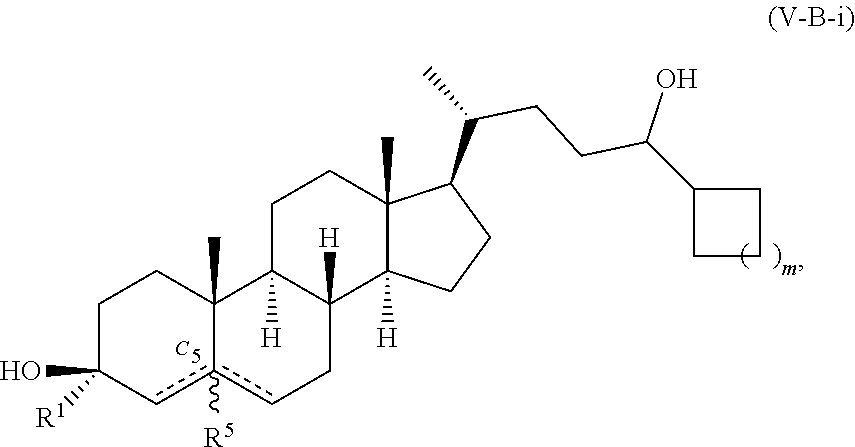
or a pharmaceutically acceptable salt thereof.


or a pharmaceutically acceptable salt thereof.

or a pharmaceutically acceptable salt thereof.


or a pharmaceutically acceptable salt thereof.


or a pharmaceutically acceptable salt thereof
Pharmaceutical Compositions


-
- a) Intracellular solution (mM): 50 mM CsCl, 90 mM CsF, 2 mM MgCl2, 5 mM EGTA, 10 mM HEPES. Adjust to pH 7.2 with CsOH.
- b) Extracellular solution, HB-PS (composition in mM): NaCl, 137; KCl, 1.0; CaCl2), 5; HEPES, 10; Glucose, 10; pH adjusted to 7.4 with NaOH (refrigerated until use).
- c) Holding potential: −70 mV, potential during agonist/PAM application: −40 mV.
Recording Procedure: - a) Extracellular buffer will be loaded into the PPC plate wells (11 μL per well). Cell suspension will be pipetted into the wells (9 μL per well) of the PPC planar electrode.
- b) Whole-cell recording configuration will be established via patch perforation with membrane currents recorded by on-board patch clamp amplifiers.
- c) Two recordings (scans) will be performed. First, during pre-application of test article alone (duration of pre-application −5 min) and second, during test articles and agonist (EC20 L-glutamate and 30 μM glycine) co-application to detect positive modulatory effects of the test article.
| TABLE 1 | |||
| GluN2A PCA | |||
| IWB Ephys % | |||
| Structure | potentiation at 3 μM | ||
| 1 | B | ||
| 1-A | B | ||
| 1-B | C | ||
| 2 | A | ||
| 3 | C | ||
| 4 | C | ||
| 6 | C | ||
| 7 | C | ||
| 8 | A | ||
| 9 | B | ||
| 10 | C | ||
| 11 | C | ||
| 12 | A | ||
| 13 | C | ||
| 14 | A | ||
| 15 | C | ||
| 16 | C | ||
| 17 | B | ||
| 18 | C | ||
| 19 | C | ||
| 20 | C | ||
| 21 | C | ||
| 22 | C | ||
| 23 | C | ||
| 23 | C | ||
| 25 | C | ||
| 26 | C | ||
| 28 | C | ||
| 29 | B | ||
| 30 | C | ||
| 31 | C | ||
| 32 | C | ||
| 33 | A | ||
| 34 | C | ||
| 35 | B | ||
| 36 | C | ||
| 37 | C | ||
| 38 | C | ||
| 39 | A | ||
| 40 | C | ||
| 41 | C | ||
| 41-A | C | ||
| 41-B | C | ||
| 42 | B | ||
| 43 | B | ||
| 44 | C | ||
| 44-A | C | ||
| 44-B | B | ||
| 45 | C | ||
| 46 | C | ||
| 47 | C | ||
| 48 | C | ||
| 50 | C | ||
| 51 | C | ||
| 52 | C | ||
| 53 | C | ||
| 54 | C | ||
| 55 | C | ||
| 56 | C | ||
| 66 | B | ||
| 67 | A | ||
| 68 | C | ||
| 70 | C | ||
For Table 1, “A” indicates 10 to 75%, “B” indicates potentiation of >75% to 150%; “C” indicates potentiation of >150%; and “ND” indicates not determinable or not determined.
Claims (12)


Priority Applications (2)
| Application Number | Priority Date | Filing Date | Title |
|---|---|---|---|
| US17/396,034 US11732000B2 (en) | 2015-07-06 | 2021-08-06 | Oxysterols and methods of use thereof |
| US18/216,057 US20240132535A1 (en) | 2015-07-06 | 2023-06-29 | Oxysterols and methods of use thereof |
Applications Claiming Priority (5)
| Application Number | Priority Date | Filing Date | Title |
|---|---|---|---|
| US201562189068P | 2015-07-06 | 2015-07-06 | |
| US201662332931P | 2016-05-06 | 2016-05-06 | |
| PCT/US2016/041175 WO2017007840A1 (en) | 2015-07-06 | 2016-07-06 | Oxysterols and methods of use thereof |
| US201815742424A | 2018-01-05 | 2018-01-05 | |
| US17/396,034 US11732000B2 (en) | 2015-07-06 | 2021-08-06 | Oxysterols and methods of use thereof |
Related Parent Applications (2)
| Application Number | Title | Priority Date | Filing Date |
|---|---|---|---|
| US15/742,424 Continuation US11117924B2 (en) | 2015-07-06 | 2016-07-06 | Oxysterols and methods of use thereof |
| PCT/US2016/041175 Continuation WO2017007840A1 (en) | 2015-07-06 | 2016-07-06 | Oxysterols and methods of use thereof |
Related Child Applications (1)
| Application Number | Title | Priority Date | Filing Date |
|---|---|---|---|
| US18/216,057 Continuation US20240132535A1 (en) | 2015-07-06 | 2023-06-29 | Oxysterols and methods of use thereof |
Publications (2)
| Publication Number | Publication Date |
|---|---|
| US20220048943A1 US20220048943A1 (en) | 2022-02-17 |
| US11732000B2 true US11732000B2 (en) | 2023-08-22 |
Family
ID=57686127
Family Applications (3)
| Application Number | Title | Priority Date | Filing Date |
|---|---|---|---|
| US15/742,424 Active US11117924B2 (en) | 2015-07-06 | 2016-07-06 | Oxysterols and methods of use thereof |
| US17/396,034 Active 2036-11-27 US11732000B2 (en) | 2015-07-06 | 2021-08-06 | Oxysterols and methods of use thereof |
| US18/216,057 Pending US20240132535A1 (en) | 2015-07-06 | 2023-06-29 | Oxysterols and methods of use thereof |
Family Applications Before (1)
| Application Number | Title | Priority Date | Filing Date |
|---|---|---|---|
| US15/742,424 Active US11117924B2 (en) | 2015-07-06 | 2016-07-06 | Oxysterols and methods of use thereof |
Family Applications After (1)
| Application Number | Title | Priority Date | Filing Date |
|---|---|---|---|
| US18/216,057 Pending US20240132535A1 (en) | 2015-07-06 | 2023-06-29 | Oxysterols and methods of use thereof |
Country Status (30)
| Country | Link |
|---|---|
| US (3) | US11117924B2 (en) |
| EP (3) | EP3319612B1 (en) |
| JP (4) | JP2018519328A (en) |
| KR (2) | KR102993541B1 (en) |
| CN (3) | CN108135911B (en) |
| AU (4) | AU2016289971C1 (en) |
| CA (1) | CA2991313C (en) |
| CO (1) | CO2018000589A2 (en) |
| CY (1) | CY1124620T1 (en) |
| DK (2) | DK3812392T3 (en) |
| ES (2) | ES3036110T3 (en) |
| FI (1) | FI3812392T3 (en) |
| HR (2) | HRP20250799T1 (en) |
| HU (2) | HUE071964T2 (en) |
| IL (3) | IL289976B2 (en) |
| LT (2) | LT3812392T (en) |
| MA (1) | MA54851A (en) |
| MD (1) | MD3319612T2 (en) |
| MX (3) | MX2021005052A (en) |
| MY (1) | MY197698A (en) |
| PE (1) | PE20180482A1 (en) |
| PH (2) | PH12020551586A1 (en) |
| PL (2) | PL3812392T3 (en) |
| PT (2) | PT3812392T (en) |
| RS (2) | RS62220B1 (en) |
| RU (1) | RU2742333C2 (en) |
| SG (1) | SG10202002655VA (en) |
| SI (2) | SI3812392T1 (en) |
| SM (2) | SMT202100476T1 (en) |
| WO (1) | WO2017007840A1 (en) |
Cited By (6)
| Publication number | Priority date | Publication date | Assignee | Title |
|---|---|---|---|---|
| US20240132535A1 (en) * | 2015-07-06 | 2024-04-25 | Sage Therapeutics, Inc. | Oxysterols and methods of use thereof |
| US12129276B2 (en) | 2014-06-18 | 2024-10-29 | Sage Therapeutics, Inc. | Oxysterols and methods of use thereof |
| US12180247B2 (en) | 2016-10-18 | 2024-12-31 | Sage Therapeutics, Inc. | Oxysterols and methods of use thereof |
| US12331070B2 (en) | 2016-09-30 | 2025-06-17 | Sage Therapeutics, Inc. | C7 substituted oxysterols and methods of use thereof |
| US12448409B2 (en) | 2016-04-01 | 2025-10-21 | Sage Therapeutics, Inc. | Oxysterols and methods of use thereof |
| US12540157B2 (en) | 2016-10-18 | 2026-02-03 | Sage Therapeutics, LLC | Oxysterols and methods of use thereof |
Families Citing this family (12)
| Publication number | Priority date | Publication date | Assignee | Title |
|---|---|---|---|---|
| HUE062616T2 (en) | 2011-09-08 | 2023-11-28 | Sage Therapeutics Inc | Neuroactive steroids, preparations and their applications |
| FI3932932T3 (en) | 2013-03-13 | 2025-10-15 | Sage Therapeutics Inc | Neuroactive steriods and methods of use thereof |
| WO2017007832A1 (en) * | 2015-07-06 | 2017-01-12 | Sage Therapeutics, Inc. | Oxysterols and methods of use thereof |
| PT3319611T (en) | 2015-07-06 | 2021-04-22 | Sage Therapeutics Inc | Oxysterols and methods of use thereof |
| WO2017193046A1 (en) | 2016-05-06 | 2017-11-09 | Sage Therapeutics, Inc. | Oxysterols and methods of use thereof |
| WO2018009867A1 (en) | 2016-07-07 | 2018-01-11 | Sage Therapeutics, Inc. | Oxysterols and methods of use thereof |
| US10857163B1 (en) | 2019-09-30 | 2020-12-08 | Athenen Therapeutics, Inc. | Compositions that preferentially potentiate subtypes of GABAA receptors and methods of use thereof |
| CN113121631B (en) * | 2021-03-25 | 2023-02-03 | 西北农林科技大学 | A lanostane ganoderma triterpenoid compound, preparation method and application |
| EP4351588A1 (en) | 2021-06-11 | 2024-04-17 | Sage Therapeutics, Inc. | Neuroactive steroid for the treatment of alzheimer's disease |
| US20250064833A1 (en) | 2021-12-13 | 2025-02-27 | Sage Therapeutics, Inc. | Combination of muscarinic receptor positive modulators and nmda positive allosteric modulators |
| WO2025020191A1 (en) * | 2023-07-27 | 2025-01-30 | 珂阑(上海)医药科技有限公司 | Steroid compound, preparation method therefor, and use thereof |
| CN121758535A (en) * | 2025-12-15 | 2026-03-31 | 北京工商大学 | Cholesterol derivative, preparation method and application thereof |
Citations (110)
| Publication number | Priority date | Publication date | Assignee | Title |
|---|---|---|---|---|
| US2259698A (en) | 1938-05-07 | 1941-10-21 | Rare Chemicals Inc | Physiologically effective substance and process of preparing same |
| US2594323A (en) | 1948-07-22 | 1952-04-29 | Upjohn Co | 24-substituted delta 5-cholene-3, 24-diols |
| US2673206A (en) | 1950-06-07 | 1954-03-23 | Schering Corp | 25-ethinyl steroids |
| US3079385A (en) | 1961-01-24 | 1963-02-26 | Roussel Uclaf | Novel process of preparation of polyhydroxylated pregnanes |
| US3206459A (en) | 1962-10-19 | 1965-09-14 | Syntex Corp | 10alpha-pregnan-19-ol derivatives |
| JPS50140435A (en) | 1974-04-30 | 1975-11-11 | ||
| US4071625A (en) | 1974-05-13 | 1978-01-31 | Richardson-Merrell Inc. | 19-Oxygenated-5α-androstanes for the enhancement of libido |
| JPS5382766A (en) | 1976-12-28 | 1978-07-21 | Teijin Ltd | Interconversion of hydroxycholesterole stereoisomers |
| US4174345A (en) | 1978-08-01 | 1979-11-13 | Kaiser Emil T | Synthesis of steroids |
| JPS54163565A (en) | 1978-06-09 | 1979-12-26 | Teijin Ltd | 24*255epoxyy3beta * 266 dihydroxyychlestoo55ene or protected derivative of hydroxyl group thereof and production |
| US4183852A (en) | 1977-07-18 | 1980-01-15 | Kaiser Emil T | Process for preparing 25-hydroxycholesterol |
| GB1564806A (en) | 1975-10-10 | 1980-04-16 | Hoffmann La Roche | Cholesterol derivatives |
| WO1980002562A1 (en) | 1979-05-21 | 1980-11-27 | Wisconsin Alumni Res Found | Isotopically labeled vitamin d derivatives and processes for preparing same |
| JPS5735597A (en) | 1980-08-13 | 1982-02-26 | Teijin Ltd | 25,26-epoxy-3beta,24-dihydroxycholest-5-ene or its hydroxyl- protected derivative and their preparation |
| JPS61254599A (en) | 1985-05-07 | 1986-11-12 | Sumitomo Pharmaceut Co Ltd | Fluorine derivative of cholesterol |
| JPS62187485A (en) | 1986-02-13 | 1987-08-15 | Teijin Ltd | Production of 24,25-epoxycholesterol or such |
| US4868165A (en) | 1985-05-30 | 1989-09-19 | Taisho Pharmaceutical Co., Ltd. | 24,24-difluoro-26,27-dimethylvitamin D3 derivatives |
| US5232917A (en) | 1987-08-25 | 1993-08-03 | University Of Southern California | Methods, compositions, and compounds for allosteric modulation of the GABA receptor by members of the androstane and pregnane series |
| WO1994027608A1 (en) | 1993-05-24 | 1994-12-08 | Cocensys, Inc. | Methods and compositions for inducing sleep |
| US5376645A (en) | 1990-01-23 | 1994-12-27 | University Of Kansas | Derivatives of cyclodextrins exhibiting enhanced aqueous solubility and the use thereof |
| WO1995002409A2 (en) | 1993-07-15 | 1995-01-26 | Board Of Trustees Of The University Of Kentucky | Use of vitamin d and derivatives thereof for the manufacture of a medicament for protection against neuron loss |
| WO1995021617A1 (en) | 1994-02-14 | 1995-08-17 | Cocensys, Inc. | Androstanes and pregnanes for allosteric modulation of gaba receptor |
| US5512570A (en) | 1994-03-04 | 1996-04-30 | Merck & Co., Inc. | Treatment of emesis with morpholine tachykinin receptor antagonists |
| WO1996012705A1 (en) | 1994-10-25 | 1996-05-02 | Merck & Co., Inc. | 7-substituted 4-aza cholanic acid derivatives and their use |
| WO1996016076A1 (en) | 1994-11-23 | 1996-05-30 | Cocensys, Inc. | Androstane and pregnane series for allosteric modulation of gaba receptor |
| JPH08268917A (en) | 1995-03-31 | 1996-10-15 | D D S Kenkyusho:Kk | Anticancer drug with high migration to cancer tissue |
| WO1996040151A1 (en) | 1995-06-07 | 1996-12-19 | Magainin Pharmaceuticals Inc. | Use of squalamine for the manufacture of a medicament for inhibiting nhe |
| WO1996040043A2 (en) | 1995-06-06 | 1996-12-19 | Cocensys, Inc. | Neuroactive steroids of the androstane and pregnane series |
| WO1997000884A1 (en) | 1995-06-23 | 1997-01-09 | Novo Nordisk A/S | Meiosis regulating compounds |
| WO1997003677A1 (en) | 1995-07-24 | 1997-02-06 | Trustees Of Boston University | Inhibition of nmda receptor activity by pregnenolone sulfate derivatives |
| WO1997042215A1 (en) | 1996-05-06 | 1997-11-13 | Bionumerik Pharmaceuticals, Inc. | Process for preparing 27-hydroxy cholesterol and related derivatives |
| JPH09328498A (en) | 1996-06-10 | 1997-12-22 | Teijin Ltd | Process for producing 24,25-dihydroxycholesterol and its synthetic intermediate |
| WO1998005337A1 (en) | 1996-08-01 | 1998-02-12 | Cocensys, Inc. | Use of gaba and nmda receptor ligands for the treatment of migraine headache |
| US5888996A (en) | 1995-07-26 | 1999-03-30 | Trustees Of Boston University | Inhibition of NMDA receptor activity and modulation of glutamate-mediated synaptic activity |
| WO1999058497A1 (en) | 1998-05-11 | 1999-11-18 | Novo Nordisk A/S | Substituted guanidines and diaminonitroethenes, their preparation and use |
| CN1254716A (en) | 1999-11-12 | 2000-05-31 | 中国科学院上海有机化学研究所 | High-stereoselectivity synthesization of 24R,25- and 24S, 25-dihydroxysteroid |
| CN1257077A (en) | 1999-10-22 | 2000-06-21 | 中国科学院上海有机化学研究所 | 3 beta-hydroxy-5-cholenic acid ester derivant, synthesis process and use thereof |
| WO2000068246A1 (en) | 1999-05-11 | 2000-11-16 | Marsden, John, Christopher | Steroid compounds with a c17-alkyl side chain and an aromatic a-ring for use in therapy |
| WO2001049703A2 (en) | 2000-01-06 | 2001-07-12 | Phytopharm Plc | Substituted sapogenins and their use |
| WO2002011708A2 (en) | 2000-08-04 | 2002-02-14 | Symphar S.A. | Methods for inducing apolipoprotein e secretion |
| US6407086B2 (en) | 1998-05-13 | 2002-06-18 | Novo Nordisk A/S | Meiosis regulating compounds |
| WO2002053577A2 (en) | 2000-12-29 | 2002-07-11 | Elpen S.A. | Gabaa modulating neurosteroids |
| WO2002079221A2 (en) | 2001-03-28 | 2002-10-10 | Phytotech Limited | Sapogenin derivatives, their synthesis and use |
| WO2002090375A2 (en) | 2001-05-03 | 2002-11-14 | The University Of Chicago | Liver x receptor agonists |
| WO2003039480A2 (en) | 2001-11-08 | 2003-05-15 | The University Of Chicago | Method of treating disorder related to high cholesterol concentration |
| WO2003049685A2 (en) | 2001-12-07 | 2003-06-19 | The Regents Of The University Of California | Treatment for age-related macular degeneration |
| WO2003082893A2 (en) | 2002-03-27 | 2003-10-09 | Phytopharm Plc | Theraputic methods and uses of sapogenins and their derivatives |
| US6645953B2 (en) | 1995-06-23 | 2003-11-11 | Novo Nordisk A/S | Meiosis regulating compounds |
| WO2004055201A2 (en) | 2002-12-13 | 2004-07-01 | Bayer Healthcare Ag | Cholesterol 24-hydroxylase (cyp46) as therapeutic target for the treatment of alzheimer's disease |
| FR2850023A1 (en) | 2003-01-17 | 2004-07-23 | Mapreg | Treating acute lesions or degenerative diseases of the nervous system, e.g. Alzheimer's disease, spinal-cerebral trauma or pain, using 3-methoxypregnenolone or derivatives having microtubule stabilizing action |
| US6933312B2 (en) | 2002-10-07 | 2005-08-23 | Agouron Pharmaceuticals, Inc. | Pyrazole derivatives |
| WO2005079810A1 (en) | 2004-02-21 | 2005-09-01 | University Court Of The University Of Edinburgh | USES OF ERβ MODULATORS |
| US20060142241A1 (en) | 2004-11-01 | 2006-06-29 | Yoo Seo H | Methods and compositions for reducing neurodegeneration in amyotrophic lateral sclerosis |
| US20070032464A1 (en) | 2004-10-08 | 2007-02-08 | Shutsung Liao | Methods of treating cancers |
| WO2008041003A2 (en) | 2006-10-06 | 2008-04-10 | Universitetet I Oslo | Hydroxycholesterols and its prodrugs for the treatment of insulin resistance and disorers asociated therewith |
| WO2008063128A1 (en) | 2006-11-21 | 2008-05-29 | Umecrine Ab | The use of pregnane and androstane steroids for the manufacture of a pharmaceutical composition for the treatment of cns disorders |
| US20080193423A1 (en) | 2006-11-02 | 2008-08-14 | Curis, Inc. | Small organic molecule regulators of cell proliferation |
| US20080269183A1 (en) | 2004-09-27 | 2008-10-30 | The Regents Of The University Of California | Novel Therapy for Treatment of Chronic Degenerative Brain Diseases and Nervous System Injury |
| US20080319026A1 (en) | 2007-06-20 | 2008-12-25 | Auspex Pharmaceuticals, Inc. | Substituted n-aryl pyridinones |
| WO2009001097A2 (en) | 2007-06-27 | 2008-12-31 | Isis Innovation Limited | Substrate reduction therapy |
| WO2009059961A2 (en) | 2007-11-06 | 2009-05-14 | N.V. Organon | A method of hormone suppression in humans |
| WO2009073186A1 (en) | 2007-12-03 | 2009-06-11 | The Regents Of The University Of California | Oxsterols for activation of hedgehog signaling, osteoinduction, antiadipogenesis, and wnt signaling |
| WO2009090063A1 (en) | 2008-01-16 | 2009-07-23 | Jado Technologies Gmbh | Steroid sapogenin, androstane and triterpenoid sapogenin derivatives for the treatment and prevention of infectious diseases |
| JP2009545535A (en) | 2006-08-03 | 2009-12-24 | 中山大学 | Application of marine steroid compounds in the preparation of therapeutic agents for nerve injury |
| US20100034781A1 (en) | 2006-02-27 | 2010-02-11 | The Regents Of The University Of California | Oxysterol Compounds and the Hedgehog Pathway |
| WO2010075282A1 (en) | 2008-12-22 | 2010-07-01 | University Of Washington | Molecular inhibitors of the wnt/beta-catenin pathway |
| WO2010088414A2 (en) | 2009-01-28 | 2010-08-05 | Emory University | Subunit selective nmda receptor potentiators for the treatment of neurological conditions |
| WO2011014661A2 (en) | 2009-07-29 | 2011-02-03 | The University Of Chicago | Liver x receptor agonists |
| WO2011028794A2 (en) | 2009-09-01 | 2011-03-10 | Lazarus Therapeutics, Inc. | Treatment of huntington's disease with cycloserine and an nmda receptor antagonist |
| US20110112077A1 (en) | 2008-01-25 | 2011-05-12 | Merck Sharp & Dohme Corp. | Quinolizidinone m1 Receptor Positive Allosteric Modulators |
| WO2011067501A1 (en) | 2009-12-02 | 2011-06-09 | Assistance Publique - Hopitaux De Marseille | Local topical application aminosteroid compounds for mucous/cutaneous decolonization of staphylococcus aureus |
| US20110160223A1 (en) | 2008-05-09 | 2011-06-30 | Dingledine Raymond J | NMDA Receptor Antagonists for the Treatment of Neuropsychiatric Disorders |
| US20110190249A1 (en) | 2002-03-27 | 2011-08-04 | Phytopharm Plc | Therapeutic methods and uses of sapogenins and their derivatives |
| US20120035156A1 (en) | 2010-08-09 | 2012-02-09 | Daniela Alberati | Combination of glyt1 compound with antipsychotics |
| US20120041016A1 (en) | 1998-11-24 | 2012-02-16 | Frincke James M | 11-Aza, 11-Thia and 11-Oxa Sterol Compounds and Compositions |
| US20120115169A1 (en) | 2010-11-09 | 2012-05-10 | Enzo Life Sciences, Inc. C/O Enzo Biochem, Inc. | Hydroxycholesterol immunoassay |
| US8247436B2 (en) | 2010-03-19 | 2012-08-21 | Novartis Ag | Pyridine and pyrazine derivative for the treatment of CF |
| WO2012142039A1 (en) | 2011-04-15 | 2012-10-18 | University Of North Dakota | Combination of liver x receptor modulator and estrogen receptor modulator for the treatment of age-related diseases |
| WO2013019711A2 (en) | 2011-07-29 | 2013-02-07 | The Regents Of The University Of California | NOVEL 17β-HETEROARYL-SUBSTITUTED STEROIDS AS MODULATORS OF GABAA RECEPTORS |
| WO2013036835A1 (en) | 2011-09-08 | 2013-03-14 | Sage Therapeutics, Inc. | Neuroactive steroids, compositions, and uses thereof |
| WO2013056181A1 (en) | 2011-10-14 | 2013-04-18 | Sage Therapeutics, Inc. | 3,3 disubstituted 19-nor pregnane compounds, compositions, and uses thereof |
| WO2013054822A1 (en) | 2011-10-07 | 2013-04-18 | Takeda Pharmaceutical Company Limited | 1 - arylcarbonyl - 4 - oxy - piperidine compounds useful for the treatment of neurodegenerative diseases |
| US20130210792A1 (en) | 2001-05-03 | 2013-08-15 | University Of Chicago | Method of treating disorder related to high cholesterol concentration |
| WO2013163455A2 (en) | 2012-04-25 | 2013-10-31 | The Regents Of The University Of California | A drug screening platform for rett syndrome |
| WO2014025942A1 (en) | 2012-08-09 | 2014-02-13 | Emory University | Nmda receptor modulators and uses related thereto |
| US20140045943A1 (en) | 2008-12-03 | 2014-02-13 | Naurex, Inc. | Hydroxamic Acid Derivatives, Preparation and Therapeutic Uses Thereof |
| US8673843B2 (en) | 2010-02-11 | 2014-03-18 | Northwestern University | NMDA receptors modulators and uses thereof |
| WO2014115167A2 (en) | 2013-01-23 | 2014-07-31 | Sphaera Pharma Pvt. Ltd. | Novel compounds of 11beta-hydroxy-steroids for use in mitochondria biogenesis and diseases associated with mitochondrial dysfunction or depletion |
| WO2014120786A1 (en) | 2013-01-29 | 2014-08-07 | Naurex, Inc. | Spiro-lactam nmda receptor modulators and uses thereof |
| US20140235600A1 (en) | 2012-12-18 | 2014-08-21 | Washington University | Neuroactive 19-alkoxy-17-substituted steroids, prodrugs thereof, and methods of treatment using same |
| WO2014160480A1 (en) | 2013-03-13 | 2014-10-02 | Sage Therapeutics, Inc. | Neuroactive steroids and methods of use thereof |
| WO2014160441A1 (en) | 2013-03-13 | 2014-10-02 | Sage Therapeutics, Inc. | Neuroactive steroids, compositions, and uses thereof |
| US20140335050A1 (en) | 2011-05-27 | 2014-11-13 | The General Hospital Corporation | Methods, compositions, and kits for the treatment of cancer |
| WO2015048316A1 (en) | 2013-09-25 | 2015-04-02 | Van Andel Research Institute | Highly potent glucocorticoids |
| WO2015195967A1 (en) | 2014-06-18 | 2015-12-23 | Sage Therapeutics, Inc. | Oxysterols and methods of use thereof |
| WO2016007762A1 (en) | 2014-07-09 | 2016-01-14 | Duke University | Compositions and methods for the repair of myelin |
| WO2016057713A1 (en) | 2014-10-07 | 2016-04-14 | Sage Therapeutics, Inc. | Neuroactive compounds and methods of use thereof |
| WO2017007836A1 (en) | 2015-07-06 | 2017-01-12 | Sage Therapeutics, Inc. | Oxysterols and methods of use thereof |
| WO2017007832A1 (en) | 2015-07-06 | 2017-01-12 | Sage Therapeutics, Inc. | Oxysterols and methods of use thereof |
| WO2017007840A1 (en) | 2015-07-06 | 2017-01-12 | Sage Therapeutics, Inc. | Oxysterols and methods of use thereof |
| WO2017037465A1 (en) | 2015-09-02 | 2017-03-09 | Swansea University | Diagnostic methods and kits |
| WO2018064649A1 (en) | 2016-09-30 | 2018-04-05 | Sage Therapeutics, Inc. | C7 substituted oxysterols and methods as nmda modulators |
| WO2018075698A1 (en) | 2016-10-18 | 2018-04-26 | Sage Therapeutics, Inc. | Oxysterols and methods of use thereof |
| WO2018075699A1 (en) | 2016-10-18 | 2018-04-26 | Sage Therapeutics, Inc. | Oxysterols and methods of use thereof |
| WO2018170336A1 (en) | 2017-03-15 | 2018-09-20 | Modernatx, Inc. | Lipid nanoparticle formulation |
| US20180371009A1 (en) | 2017-06-23 | 2018-12-27 | Intercept Pharmaceuticals, Inc. | Methods and intermediates for the preparation of bile acid derivatives |
| US20190160078A1 (en) | 2017-11-10 | 2019-05-30 | Marinus Pharmaceuticals, Inc. | Ganaxolone for use in treating genetic epileptic disorders |
| US20190233465A1 (en) | 2016-07-11 | 2019-08-01 | Sage Therapeutics, Inc. | C7, c12, and c16 substituted neuroactive steroids and their methods of use |
| US20190359646A1 (en) | 2016-05-06 | 2019-11-28 | Sage Therapeutics, Inc. | Oxysterols and methods of use thereof |
| US20200002371A1 (en) | 2016-07-07 | 2020-01-02 | Sage Therapeutics, Inc. | Oxysterols and methods of use thereof |
Family Cites Families (15)
| Publication number | Priority date | Publication date | Assignee | Title |
|---|---|---|---|---|
| US6780853B1 (en) * | 1995-06-06 | 2004-08-24 | Euro-Celtique S.A. | Neuroactive steroids of the androstane and pregnane series |
| US6122371A (en) | 1997-07-22 | 2000-09-19 | Atwell; Ronald C. | Apparatus for protecting coin-operated telephones from vandalism and larceny |
| US6376530B1 (en) * | 1999-05-10 | 2002-04-23 | Merck & Co., Inc. | Cyclic amidines useful as NMDA NR2B antagonists |
| GB0216621D0 (en) * | 2002-07-17 | 2002-08-28 | Imaging Res Solutions Ltd | Imaging compounds |
| US20060160853A1 (en) * | 2002-11-22 | 2006-07-20 | Mccauley John A | 2-[(4-Benzyl)-1-piperidinyl)methyl]benzimidazole-5-ol derivatives as nr2b receptor antagonists |
| TWI478709B (en) * | 2008-02-19 | 2015-04-01 | Earnest Medicine Co Ltd | A useful oral or enteral composition for the recovery of bodily functions |
| US8497122B2 (en) * | 2008-04-11 | 2013-07-30 | Washington University | Biomarkers for Niemann-pick C disease and related disorders |
| DK2444092T3 (en) * | 2008-05-28 | 2015-09-28 | Reveragen Biopharma Inc | Non-hormonal steroidmodulatorer of NF-? B for the treatment of disease |
| JP2011135864A (en) * | 2009-12-30 | 2011-07-14 | Korea Univ Research & Business Foundation | Composition for retrodifferentiating somatic cell to embryonic stem cell-like cell, by using oct4 in combination with bmi1 or upstream regulator thereof, and method for generating embryonic stem cell-like cell using the same |
| GB201008047D0 (en) * | 2010-05-14 | 2010-06-30 | Ge Healthcare Ltd | Method of synthesis |
| US20140149272A1 (en) | 2012-08-17 | 2014-05-29 | Trueex Group Llc | Interoffice bank offered rate financial product and implementation |
| CN104736176B (en) * | 2012-08-24 | 2017-10-13 | 英特格拉斯疗法有限公司 | Chemical compositions and methods for enhancing transdermal delivery of therapeutic agents |
| CN103655582B (en) * | 2013-11-30 | 2015-05-27 | 浙江大学 | Epoxide sterol composition, and preparation and application thereof |
| US10016095B2 (en) * | 2014-10-03 | 2018-07-10 | Progressive International Corporation | Salad spinner |
| ES2921010T3 (en) | 2016-04-01 | 2022-08-16 | Sage Therapeutics Inc | Oxysterols and procedures for their use |
-
2016
- 2016-07-06 DK DK20214736.9T patent/DK3812392T3/en active
- 2016-07-06 RS RS20211000A patent/RS62220B1/en unknown
- 2016-07-06 MA MA054851A patent/MA54851A/en unknown
- 2016-07-06 CN CN201680050744.1A patent/CN108135911B/en active Active
- 2016-07-06 RS RS20250662A patent/RS66996B1/en unknown
- 2016-07-06 CA CA2991313A patent/CA2991313C/en active Active
- 2016-07-06 MX MX2021005052A patent/MX2021005052A/en unknown
- 2016-07-06 SI SI201631911T patent/SI3812392T1/en unknown
- 2016-07-06 FI FIEP20214736.9T patent/FI3812392T3/en active
- 2016-07-06 EP EP16821926.9A patent/EP3319612B1/en active Active
- 2016-07-06 US US15/742,424 patent/US11117924B2/en active Active
- 2016-07-06 EP EP20214736.9A patent/EP3812392B1/en active Active
- 2016-07-06 RU RU2018104245A patent/RU2742333C2/en active
- 2016-07-06 ES ES20214736T patent/ES3036110T3/en active Active
- 2016-07-06 MX MX2020010690A patent/MX390271B/en unknown
- 2016-07-06 AU AU2016289971A patent/AU2016289971C1/en active Active
- 2016-07-06 WO PCT/US2016/041175 patent/WO2017007840A1/en not_active Ceased
- 2016-07-06 PH PH1/2020/551586A patent/PH12020551586A1/en unknown
- 2016-07-06 SM SM20210476T patent/SMT202100476T1/en unknown
- 2016-07-06 PT PT202147369T patent/PT3812392T/en unknown
- 2016-07-06 MX MX2018000280A patent/MX382122B/en unknown
- 2016-07-06 EP EP25170345.0A patent/EP4599887A3/en active Pending
- 2016-07-06 HU HUE20214736A patent/HUE071964T2/en unknown
- 2016-07-06 HR HRP20250799TT patent/HRP20250799T1/en unknown
- 2016-07-06 JP JP2017568203A patent/JP2018519328A/en not_active Withdrawn
- 2016-07-06 IL IL289976A patent/IL289976B2/en unknown
- 2016-07-06 CN CN202411074416.8A patent/CN118994288A/en active Pending
- 2016-07-06 MD MDE20180513T patent/MD3319612T2/en unknown
- 2016-07-06 SG SG10202002655VA patent/SG10202002655VA/en unknown
- 2016-07-06 HR HRP20211282TT patent/HRP20211282T1/en unknown
- 2016-07-06 SI SI201631298T patent/SI3319612T1/en unknown
- 2016-07-06 PE PE2018000037A patent/PE20180482A1/en unknown
- 2016-07-06 PL PL20214736.9T patent/PL3812392T3/en unknown
- 2016-07-06 KR KR1020247037600A patent/KR102993541B1/en active Active
- 2016-07-06 PL PL16821926T patent/PL3319612T3/en unknown
- 2016-07-06 SM SM20250264T patent/SMT202500264T1/en unknown
- 2016-07-06 IL IL282048A patent/IL282048B2/en unknown
- 2016-07-06 LT LTEP20214736.9T patent/LT3812392T/en unknown
- 2016-07-06 LT LTEP16821926.9T patent/LT3319612T/en unknown
- 2016-07-06 DK DK16821926.9T patent/DK3319612T3/en active
- 2016-07-06 PT PT168219269T patent/PT3319612T/en unknown
- 2016-07-06 MY MYPI2018000010A patent/MY197698A/en unknown
- 2016-07-06 CN CN202110635348.8A patent/CN113501855A/en active Pending
- 2016-07-06 KR KR1020187003209A patent/KR20180026742A/en not_active Ceased
- 2016-07-06 ES ES16821926T patent/ES2884086T3/en active Active
- 2016-07-06 HU HUE16821926A patent/HUE055199T2/en unknown
-
2017
- 2017-12-24 IL IL256531A patent/IL256531B/en active IP Right Grant
-
2018
- 2018-01-05 PH PH12018500061A patent/PH12018500061A1/en unknown
- 2018-01-22 CO CONC2018/0000589A patent/CO2018000589A2/en unknown
-
2020
- 2020-12-24 JP JP2020215040A patent/JP2021046444A/en not_active Withdrawn
-
2021
- 2021-08-06 US US17/396,034 patent/US11732000B2/en active Active
- 2021-08-13 CY CY20211100733T patent/CY1124620T1/en unknown
- 2021-08-20 AU AU2021218230A patent/AU2021218230B2/en active Active
-
2022
- 2022-06-03 JP JP2022091046A patent/JP7602512B2/en active Active
-
2023
- 2023-06-29 US US18/216,057 patent/US20240132535A1/en active Pending
-
2024
- 2024-01-15 AU AU2024200254A patent/AU2024200254B2/en active Active
- 2024-12-06 JP JP2024213248A patent/JP2025026574A/en active Pending
-
2026
- 2026-05-14 AU AU2026203707A patent/AU2026203707A1/en active Pending
Patent Citations (165)
| Publication number | Priority date | Publication date | Assignee | Title |
|---|---|---|---|---|
| US2259698A (en) | 1938-05-07 | 1941-10-21 | Rare Chemicals Inc | Physiologically effective substance and process of preparing same |
| US2594323A (en) | 1948-07-22 | 1952-04-29 | Upjohn Co | 24-substituted delta 5-cholene-3, 24-diols |
| US2673206A (en) | 1950-06-07 | 1954-03-23 | Schering Corp | 25-ethinyl steroids |
| US3079385A (en) | 1961-01-24 | 1963-02-26 | Roussel Uclaf | Novel process of preparation of polyhydroxylated pregnanes |
| US3206459A (en) | 1962-10-19 | 1965-09-14 | Syntex Corp | 10alpha-pregnan-19-ol derivatives |
| JPS50140435A (en) | 1974-04-30 | 1975-11-11 | ||
| US4071625A (en) | 1974-05-13 | 1978-01-31 | Richardson-Merrell Inc. | 19-Oxygenated-5α-androstanes for the enhancement of libido |
| GB1564806A (en) | 1975-10-10 | 1980-04-16 | Hoffmann La Roche | Cholesterol derivatives |
| JPS5382766A (en) | 1976-12-28 | 1978-07-21 | Teijin Ltd | Interconversion of hydroxycholesterole stereoisomers |
| US4183852A (en) | 1977-07-18 | 1980-01-15 | Kaiser Emil T | Process for preparing 25-hydroxycholesterol |
| JPS54163565A (en) | 1978-06-09 | 1979-12-26 | Teijin Ltd | 24*255epoxyy3beta * 266 dihydroxyychlestoo55ene or protected derivative of hydroxyl group thereof and production |
| US4174345A (en) | 1978-08-01 | 1979-11-13 | Kaiser Emil T | Synthesis of steroids |
| WO1980002562A1 (en) | 1979-05-21 | 1980-11-27 | Wisconsin Alumni Res Found | Isotopically labeled vitamin d derivatives and processes for preparing same |
| JPS5735597A (en) | 1980-08-13 | 1982-02-26 | Teijin Ltd | 25,26-epoxy-3beta,24-dihydroxycholest-5-ene or its hydroxyl- protected derivative and their preparation |
| JPS61254599A (en) | 1985-05-07 | 1986-11-12 | Sumitomo Pharmaceut Co Ltd | Fluorine derivative of cholesterol |
| US4868165A (en) | 1985-05-30 | 1989-09-19 | Taisho Pharmaceutical Co., Ltd. | 24,24-difluoro-26,27-dimethylvitamin D3 derivatives |
| JPS62187485A (en) | 1986-02-13 | 1987-08-15 | Teijin Ltd | Production of 24,25-epoxycholesterol or such |
| US5232917A (en) | 1987-08-25 | 1993-08-03 | University Of Southern California | Methods, compositions, and compounds for allosteric modulation of the GABA receptor by members of the androstane and pregnane series |
| US5376645A (en) | 1990-01-23 | 1994-12-27 | University Of Kansas | Derivatives of cyclodextrins exhibiting enhanced aqueous solubility and the use thereof |
| WO1994027608A1 (en) | 1993-05-24 | 1994-12-08 | Cocensys, Inc. | Methods and compositions for inducing sleep |
| WO1995002409A2 (en) | 1993-07-15 | 1995-01-26 | Board Of Trustees Of The University Of Kentucky | Use of vitamin d and derivatives thereof for the manufacture of a medicament for protection against neuron loss |
| WO1995021617A1 (en) | 1994-02-14 | 1995-08-17 | Cocensys, Inc. | Androstanes and pregnanes for allosteric modulation of gaba receptor |
| US5512570A (en) | 1994-03-04 | 1996-04-30 | Merck & Co., Inc. | Treatment of emesis with morpholine tachykinin receptor antagonists |
| US5595996A (en) | 1994-10-25 | 1997-01-21 | Merck & Co., Inc. | 7-substituted 4-aza cholanic acid derivatives and their use |
| WO1996012705A1 (en) | 1994-10-25 | 1996-05-02 | Merck & Co., Inc. | 7-substituted 4-aza cholanic acid derivatives and their use |
| WO1996016076A1 (en) | 1994-11-23 | 1996-05-30 | Cocensys, Inc. | Androstane and pregnane series for allosteric modulation of gaba receptor |
| JPH08268917A (en) | 1995-03-31 | 1996-10-15 | D D S Kenkyusho:Kk | Anticancer drug with high migration to cancer tissue |
| WO1996040043A2 (en) | 1995-06-06 | 1996-12-19 | Cocensys, Inc. | Neuroactive steroids of the androstane and pregnane series |
| US5925630A (en) | 1995-06-06 | 1999-07-20 | Cocensys, Inc. | Neuroactive steroids of the androstane and pregnane series |
| RU2194712C2 (en) | 1995-06-06 | 2002-12-20 | Коукенсис, Инк. | Neuroactive steroids, pharmaceutical preparation, method of treatment and prophylaxis of different disorders, method of sleep induction and method of anesthesia induction with their using, method of modulation of complex receptor gabaa-chloride ionophore |
| WO1996040151A1 (en) | 1995-06-07 | 1996-12-19 | Magainin Pharmaceuticals Inc. | Use of squalamine for the manufacture of a medicament for inhibiting nhe |
| WO1997000884A1 (en) | 1995-06-23 | 1997-01-09 | Novo Nordisk A/S | Meiosis regulating compounds |
| US20040048838A1 (en) | 1995-06-23 | 2004-03-11 | Gronvald Frederik Christian | Meiosis regulating compounds |
| US6645953B2 (en) | 1995-06-23 | 2003-11-11 | Novo Nordisk A/S | Meiosis regulating compounds |
| WO1997003677A1 (en) | 1995-07-24 | 1997-02-06 | Trustees Of Boston University | Inhibition of nmda receptor activity by pregnenolone sulfate derivatives |
| JPH11509844A (en) | 1995-07-24 | 1999-08-31 | トラスティーズ オブ ボストン ユニバーシティー | Pregnenolone sulfate derivative suppresses NMDA receptor activity |
| US5888996A (en) | 1995-07-26 | 1999-03-30 | Trustees Of Boston University | Inhibition of NMDA receptor activity and modulation of glutamate-mediated synaptic activity |
| WO1997042215A1 (en) | 1996-05-06 | 1997-11-13 | Bionumerik Pharmaceuticals, Inc. | Process for preparing 27-hydroxy cholesterol and related derivatives |
| JPH09328498A (en) | 1996-06-10 | 1997-12-22 | Teijin Ltd | Process for producing 24,25-dihydroxycholesterol and its synthetic intermediate |
| WO1998005337A1 (en) | 1996-08-01 | 1998-02-12 | Cocensys, Inc. | Use of gaba and nmda receptor ligands for the treatment of migraine headache |
| WO1999058497A1 (en) | 1998-05-11 | 1999-11-18 | Novo Nordisk A/S | Substituted guanidines and diaminonitroethenes, their preparation and use |
| US20050101573A1 (en) | 1998-05-13 | 2005-05-12 | Novo Nordisk A/S | Meiosis regulating compounds |
| US6407086B2 (en) | 1998-05-13 | 2002-06-18 | Novo Nordisk A/S | Meiosis regulating compounds |
| US6884796B2 (en) | 1998-05-13 | 2005-04-26 | Novonordisk A/S | Meiosis regulating compounds |
| US20120041016A1 (en) | 1998-11-24 | 2012-02-16 | Frincke James M | 11-Aza, 11-Thia and 11-Oxa Sterol Compounds and Compositions |
| WO2000068246A1 (en) | 1999-05-11 | 2000-11-16 | Marsden, John, Christopher | Steroid compounds with a c17-alkyl side chain and an aromatic a-ring for use in therapy |
| CN1257077A (en) | 1999-10-22 | 2000-06-21 | 中国科学院上海有机化学研究所 | 3 beta-hydroxy-5-cholenic acid ester derivant, synthesis process and use thereof |
| CN1254716A (en) | 1999-11-12 | 2000-05-31 | 中国科学院上海有机化学研究所 | High-stereoselectivity synthesization of 24R,25- and 24S, 25-dihydroxysteroid |
| WO2001049703A2 (en) | 2000-01-06 | 2001-07-12 | Phytopharm Plc | Substituted sapogenins and their use |
| US20100087411A1 (en) | 2000-01-06 | 2010-04-08 | Phytopharm Plc | Substituted sapogenins and their use |
| WO2002011708A2 (en) | 2000-08-04 | 2002-02-14 | Symphar S.A. | Methods for inducing apolipoprotein e secretion |
| WO2002053577A2 (en) | 2000-12-29 | 2002-07-11 | Elpen S.A. | Gabaa modulating neurosteroids |
| WO2002079221A2 (en) | 2001-03-28 | 2002-10-10 | Phytotech Limited | Sapogenin derivatives, their synthesis and use |
| WO2002090375A2 (en) | 2001-05-03 | 2002-11-14 | The University Of Chicago | Liver x receptor agonists |
| US20130210792A1 (en) | 2001-05-03 | 2013-08-15 | University Of Chicago | Method of treating disorder related to high cholesterol concentration |
| JP2005508368A (en) | 2001-11-08 | 2005-03-31 | ザ ユニバーシティー オブ シカゴ | Methods for treating diseases associated with high cholesterol levels |
| WO2003039480A2 (en) | 2001-11-08 | 2003-05-15 | The University Of Chicago | Method of treating disorder related to high cholesterol concentration |
| WO2003049685A2 (en) | 2001-12-07 | 2003-06-19 | The Regents Of The University Of California | Treatment for age-related macular degeneration |
| WO2003082893A2 (en) | 2002-03-27 | 2003-10-09 | Phytopharm Plc | Theraputic methods and uses of sapogenins and their derivatives |
| US20110190249A1 (en) | 2002-03-27 | 2011-08-04 | Phytopharm Plc | Therapeutic methods and uses of sapogenins and their derivatives |
| US6933312B2 (en) | 2002-10-07 | 2005-08-23 | Agouron Pharmaceuticals, Inc. | Pyrazole derivatives |
| WO2004055201A2 (en) | 2002-12-13 | 2004-07-01 | Bayer Healthcare Ag | Cholesterol 24-hydroxylase (cyp46) as therapeutic target for the treatment of alzheimer's disease |
| US8034798B2 (en) | 2003-01-17 | 2011-10-11 | Mapreg | Use of 3-methoxy-pregnenolone in the production of a medicament for treating neurodegenerative diseases |
| US20060199790A1 (en) | 2003-01-17 | 2006-09-07 | Etienne-Emile Baulieu | Use of 3-methoxy-pregnenolone in the production of a medicament for treating neurodegenerative diseases |
| FR2850023A1 (en) | 2003-01-17 | 2004-07-23 | Mapreg | Treating acute lesions or degenerative diseases of the nervous system, e.g. Alzheimer's disease, spinal-cerebral trauma or pain, using 3-methoxypregnenolone or derivatives having microtubule stabilizing action |
| WO2005079810A1 (en) | 2004-02-21 | 2005-09-01 | University Court Of The University Of Edinburgh | USES OF ERβ MODULATORS |
| US8604011B2 (en) | 2004-09-27 | 2013-12-10 | The Regents Of The University Of California | Therapy for treatment of chronic degenerative brain diseases and nervous system injury |
| US20080269183A1 (en) | 2004-09-27 | 2008-10-30 | The Regents Of The University Of California | Novel Therapy for Treatment of Chronic Degenerative Brain Diseases and Nervous System Injury |
| US20070032464A1 (en) | 2004-10-08 | 2007-02-08 | Shutsung Liao | Methods of treating cancers |
| US20060142241A1 (en) | 2004-11-01 | 2006-06-29 | Yoo Seo H | Methods and compositions for reducing neurodegeneration in amyotrophic lateral sclerosis |
| US20100034781A1 (en) | 2006-02-27 | 2010-02-11 | The Regents Of The University Of California | Oxysterol Compounds and the Hedgehog Pathway |
| JP2009545535A (en) | 2006-08-03 | 2009-12-24 | 中山大学 | Application of marine steroid compounds in the preparation of therapeutic agents for nerve injury |
| WO2008041003A2 (en) | 2006-10-06 | 2008-04-10 | Universitetet I Oslo | Hydroxycholesterols and its prodrugs for the treatment of insulin resistance and disorers asociated therewith |
| US20080193423A1 (en) | 2006-11-02 | 2008-08-14 | Curis, Inc. | Small organic molecule regulators of cell proliferation |
| RU2458065C2 (en) | 2006-11-21 | 2012-08-10 | Юмекрайн Аб | New steroid compounds showing higher water solubility and metabolism resistance, and methods for preparing them |
| WO2008063128A1 (en) | 2006-11-21 | 2008-05-29 | Umecrine Ab | The use of pregnane and androstane steroids for the manufacture of a pharmaceutical composition for the treatment of cns disorders |
| US20080319026A1 (en) | 2007-06-20 | 2008-12-25 | Auspex Pharmaceuticals, Inc. | Substituted n-aryl pyridinones |
| WO2009001097A2 (en) | 2007-06-27 | 2008-12-31 | Isis Innovation Limited | Substrate reduction therapy |
| WO2009059961A2 (en) | 2007-11-06 | 2009-05-14 | N.V. Organon | A method of hormone suppression in humans |
| WO2009073186A1 (en) | 2007-12-03 | 2009-06-11 | The Regents Of The University Of California | Oxsterols for activation of hedgehog signaling, osteoinduction, antiadipogenesis, and wnt signaling |
| WO2009090063A1 (en) | 2008-01-16 | 2009-07-23 | Jado Technologies Gmbh | Steroid sapogenin, androstane and triterpenoid sapogenin derivatives for the treatment and prevention of infectious diseases |
| US20110112077A1 (en) | 2008-01-25 | 2011-05-12 | Merck Sharp & Dohme Corp. | Quinolizidinone m1 Receptor Positive Allosteric Modulators |
| US20110160223A1 (en) | 2008-05-09 | 2011-06-30 | Dingledine Raymond J | NMDA Receptor Antagonists for the Treatment of Neuropsychiatric Disorders |
| US20140045943A1 (en) | 2008-12-03 | 2014-02-13 | Naurex, Inc. | Hydroxamic Acid Derivatives, Preparation and Therapeutic Uses Thereof |
| US20120040916A1 (en) | 2008-12-22 | 2012-02-16 | Massachusetts Institute Of Technology | Molecular inhibitors of the wnt/beta-catenin pathway |
| WO2010075282A1 (en) | 2008-12-22 | 2010-07-01 | University Of Washington | Molecular inhibitors of the wnt/beta-catenin pathway |
| WO2010088414A2 (en) | 2009-01-28 | 2010-08-05 | Emory University | Subunit selective nmda receptor potentiators for the treatment of neurological conditions |
| WO2011014661A2 (en) | 2009-07-29 | 2011-02-03 | The University Of Chicago | Liver x receptor agonists |
| US8829213B2 (en) | 2009-07-29 | 2014-09-09 | The University Of Chicago | Liver X receptor agonists |
| WO2011028794A2 (en) | 2009-09-01 | 2011-03-10 | Lazarus Therapeutics, Inc. | Treatment of huntington's disease with cycloserine and an nmda receptor antagonist |
| WO2011067501A1 (en) | 2009-12-02 | 2011-06-09 | Assistance Publique - Hopitaux De Marseille | Local topical application aminosteroid compounds for mucous/cutaneous decolonization of staphylococcus aureus |
| US8673843B2 (en) | 2010-02-11 | 2014-03-18 | Northwestern University | NMDA receptors modulators and uses thereof |
| US8247436B2 (en) | 2010-03-19 | 2012-08-21 | Novartis Ag | Pyridine and pyrazine derivative for the treatment of CF |
| US20120035156A1 (en) | 2010-08-09 | 2012-02-09 | Daniela Alberati | Combination of glyt1 compound with antipsychotics |
| US20120115169A1 (en) | 2010-11-09 | 2012-05-10 | Enzo Life Sciences, Inc. C/O Enzo Biochem, Inc. | Hydroxycholesterol immunoassay |
| WO2012064501A1 (en) | 2010-11-09 | 2012-05-18 | Enzo Biochem, Inc. | Hydroxycholesterol immunoassay |
| WO2012142039A1 (en) | 2011-04-15 | 2012-10-18 | University Of North Dakota | Combination of liver x receptor modulator and estrogen receptor modulator for the treatment of age-related diseases |
| US20140335050A1 (en) | 2011-05-27 | 2014-11-13 | The General Hospital Corporation | Methods, compositions, and kits for the treatment of cancer |
| WO2013019711A2 (en) | 2011-07-29 | 2013-02-07 | The Regents Of The University Of California | NOVEL 17β-HETEROARYL-SUBSTITUTED STEROIDS AS MODULATORS OF GABAA RECEPTORS |
| US20140148412A1 (en) | 2011-07-29 | 2014-05-29 | The Regents Of The University Of Claifornia | Novel 17b-heteroaryl-substituted steroids as modulators of gabaa receptors |
| US20180362573A1 (en) | 2011-09-08 | 2018-12-20 | Sage Therapeutics, Inc. | Neuroactive steroids, compositions, and uses thereof |
| WO2013036835A1 (en) | 2011-09-08 | 2013-03-14 | Sage Therapeutics, Inc. | Neuroactive steroids, compositions, and uses thereof |
| US20210147470A1 (en) | 2011-09-08 | 2021-05-20 | Sage Therapeutics, Inc. | Neuroactive steroids, compositions, and uses thereof |
| US10759828B2 (en) | 2011-09-08 | 2020-09-01 | Sage Therapeutics, Inc. | Neuroactive steroids, compositions, and uses thereof |
| US20150158903A1 (en) | 2011-09-08 | 2015-06-11 | Sage Therapeutics, Inc. | Neuroactive steroids, compositions, and uses thereof |
| WO2013054822A1 (en) | 2011-10-07 | 2013-04-18 | Takeda Pharmaceutical Company Limited | 1 - arylcarbonyl - 4 - oxy - piperidine compounds useful for the treatment of neurodegenerative diseases |
| WO2013056181A1 (en) | 2011-10-14 | 2013-04-18 | Sage Therapeutics, Inc. | 3,3 disubstituted 19-nor pregnane compounds, compositions, and uses thereof |
| US20150291654A1 (en) | 2011-10-14 | 2015-10-15 | Sage Therapeutics, Inc. | 3,3 disubstituted 19-nor pregnane compounds, compositions, and uses thereof |
| WO2013163455A2 (en) | 2012-04-25 | 2013-10-31 | The Regents Of The University Of California | A drug screening platform for rett syndrome |
| WO2014025942A1 (en) | 2012-08-09 | 2014-02-13 | Emory University | Nmda receptor modulators and uses related thereto |
| US20140235600A1 (en) | 2012-12-18 | 2014-08-21 | Washington University | Neuroactive 19-alkoxy-17-substituted steroids, prodrugs thereof, and methods of treatment using same |
| US20150376225A1 (en) | 2013-01-23 | 2015-12-31 | Sphaera Pharma Pvtd. Ltd. | Novel compounds of 11beta-hydroxy-steroids for use in mitochondria biogenesis and diseases associated with mitochondrial dysfunction or depletion |
| WO2014115167A2 (en) | 2013-01-23 | 2014-07-31 | Sphaera Pharma Pvt. Ltd. | Novel compounds of 11beta-hydroxy-steroids for use in mitochondria biogenesis and diseases associated with mitochondrial dysfunction or depletion |
| WO2014120786A1 (en) | 2013-01-29 | 2014-08-07 | Naurex, Inc. | Spiro-lactam nmda receptor modulators and uses thereof |
| US20170305960A1 (en) | 2013-03-13 | 2017-10-26 | Sage Therapeutics, Inc. | Neuroactive steroids and methods of use thereof |
| US11104701B2 (en) | 2013-03-13 | 2021-08-31 | Sage Therapeutics, Inc. | Neuroactive steroids and methods of use thereof |
| WO2014160441A1 (en) | 2013-03-13 | 2014-10-02 | Sage Therapeutics, Inc. | Neuroactive steroids, compositions, and uses thereof |
| US20160022701A1 (en) | 2013-03-13 | 2016-01-28 | Sage Therapeutics, Inc. | Neuroactive steroids, compositions, and uses thereof |
| US20160031930A1 (en) | 2013-03-13 | 2016-02-04 | Sage Therapeutics, Inc. | Neuroactive steroids and methods of use thereof |
| US20190127414A1 (en) | 2013-03-13 | 2019-05-02 | Sage Therapeutics, Inc. | Neuroactive steroids and methods of use thereof |
| US10227375B2 (en) | 2013-03-13 | 2019-03-12 | Sage Therapeutics, Inc. | Neuroactive steroids and methods of use thereof |
| WO2014160480A1 (en) | 2013-03-13 | 2014-10-02 | Sage Therapeutics, Inc. | Neuroactive steroids and methods of use thereof |
| US20180237470A1 (en) | 2013-03-13 | 2018-08-23 | Sage Therapeutics, Inc. | Neuroactive steroids and methods of use thereof |
| WO2015048316A1 (en) | 2013-09-25 | 2015-04-02 | Van Andel Research Institute | Highly potent glucocorticoids |
| US10723758B2 (en) | 2014-06-18 | 2020-07-28 | Sage Therapeutics, Inc. | Oxysterols and methods of use thereof |
| US10259840B2 (en) | 2014-06-18 | 2019-04-16 | Sage Therapeutics, Inc. | Oxysterols and methods of use thereof |
| WO2015195967A1 (en) | 2014-06-18 | 2015-12-23 | Sage Therapeutics, Inc. | Oxysterols and methods of use thereof |
| US20210040138A1 (en) | 2014-06-18 | 2021-02-11 | Sage Therapeutics, Inc. | Oxysterols and methods of use thereof |
| US20190135854A1 (en) | 2014-06-18 | 2019-05-09 | Sage Therapeutics, Inc. | Oxysterols and methods of use thereof |
| US20170247405A1 (en) | 2014-06-18 | 2017-08-31 | Sage Therapeutics, Inc. | Oxysterols and methods of use thereof |
| WO2016007762A1 (en) | 2014-07-09 | 2016-01-14 | Duke University | Compositions and methods for the repair of myelin |
| US20170304321A1 (en) | 2014-10-07 | 2017-10-26 | Sage Therapeutics, Inc. | Neuroactive compounds and methods of use thereof |
| WO2016057713A1 (en) | 2014-10-07 | 2016-04-14 | Sage Therapeutics, Inc. | Neuroactive compounds and methods of use thereof |
| US20210101925A1 (en) | 2015-07-06 | 2021-04-08 | Sage Therapeutics, Inc. | Oxysterols and methods of use thereof |
| US10696712B2 (en) | 2015-07-06 | 2020-06-30 | Sage Therapeutics, Inc. | Oxysterols and methods of use thereof |
| US10201550B2 (en) | 2015-07-06 | 2019-02-12 | Sage Therapeutics, Inc. | Oxysterols and methods of use thereof |
| WO2017007840A1 (en) | 2015-07-06 | 2017-01-12 | Sage Therapeutics, Inc. | Oxysterols and methods of use thereof |
| US20210145848A1 (en) | 2015-07-06 | 2021-05-20 | Sage Therapeutics, Inc. | Oxysterols and methods of use thereof |
| WO2017007832A1 (en) | 2015-07-06 | 2017-01-12 | Sage Therapeutics, Inc. | Oxysterols and methods of use thereof |
| US20190125764A1 (en) | 2015-07-06 | 2019-05-02 | Sage Therapeutics, Inc. | Oxysterols and methods of use thereof |
| US20180201643A1 (en) | 2015-07-06 | 2018-07-19 | Sage Therapeutics, Inc. | Oxysterols and methods of use thereof |
| US20180200267A1 (en) | 2015-07-06 | 2018-07-19 | Sage Therapeutics, Inc. | Oxysterols and methods of use thereof |
| US20180194797A1 (en) | 2015-07-06 | 2018-07-12 | Sage Therapeutics, Inc. | Oxysterols and methods of use thereof |
| WO2017007836A1 (en) | 2015-07-06 | 2017-01-12 | Sage Therapeutics, Inc. | Oxysterols and methods of use thereof |
| US20230047157A1 (en) | 2015-07-06 | 2023-02-16 | Sage Therapeutics, Inc. | Oxysterols and methods of use thereof |
| WO2017037465A1 (en) | 2015-09-02 | 2017-03-09 | Swansea University | Diagnostic methods and kits |
| US20190359646A1 (en) | 2016-05-06 | 2019-11-28 | Sage Therapeutics, Inc. | Oxysterols and methods of use thereof |
| US20230132707A1 (en) | 2016-05-06 | 2023-05-04 | Sage Therapeutics, Inc. | Oxysterols and methods of use thereof |
| US20210171567A1 (en) | 2016-05-06 | 2021-06-10 | Sage Therapeutics, Inc. | Oxysterols and methods of use thereof |
| US20200002371A1 (en) | 2016-07-07 | 2020-01-02 | Sage Therapeutics, Inc. | Oxysterols and methods of use thereof |
| US20210147468A1 (en) | 2016-07-07 | 2021-05-20 | Sage Therapeutics, Inc. | Oxysterols and methods of use thereof |
| US20190233465A1 (en) | 2016-07-11 | 2019-08-01 | Sage Therapeutics, Inc. | C7, c12, and c16 substituted neuroactive steroids and their methods of use |
| US20200024300A1 (en) | 2016-09-30 | 2020-01-23 | Sage Therapeutics, Inc. | C7 substituted oxysterols and methods of use thereof |
| WO2018064649A1 (en) | 2016-09-30 | 2018-04-05 | Sage Therapeutics, Inc. | C7 substituted oxysterols and methods as nmda modulators |
| US20220081465A1 (en) | 2016-09-30 | 2022-03-17 | Sage Therapeutics, Inc. | C7 substituted oxysterols and methods of use thereof |
| WO2018075699A1 (en) | 2016-10-18 | 2018-04-26 | Sage Therapeutics, Inc. | Oxysterols and methods of use thereof |
| WO2018075698A1 (en) | 2016-10-18 | 2018-04-26 | Sage Therapeutics, Inc. | Oxysterols and methods of use thereof |
| US11111266B2 (en) | 2016-10-18 | 2021-09-07 | Sage Therapeutics, Inc. | Oxysterols and methods of use thereof |
| US11149054B2 (en) | 2016-10-18 | 2021-10-19 | Sage Therapeutics, Inc. | Oxysterols and methods of use thereof |
| US20210380631A1 (en) | 2016-10-18 | 2021-12-09 | Sage Therapeutics, Inc. | Oxysterols and methods of use thereof |
| US20190248829A1 (en) | 2016-10-18 | 2019-08-15 | Sage Therapeutics, Inc. | Oxysterols and methods of use thereof |
| US20200123195A1 (en) | 2016-10-18 | 2020-04-23 | Sage Therapeutics, Inc. | Oxysterols and methods of use thereof |
| WO2018170336A1 (en) | 2017-03-15 | 2018-09-20 | Modernatx, Inc. | Lipid nanoparticle formulation |
| US20180371009A1 (en) | 2017-06-23 | 2018-12-27 | Intercept Pharmaceuticals, Inc. | Methods and intermediates for the preparation of bile acid derivatives |
| US20190160078A1 (en) | 2017-11-10 | 2019-05-30 | Marinus Pharmaceuticals, Inc. | Ganaxolone for use in treating genetic epileptic disorders |
Non-Patent Citations (185)
| Title |
|---|
| Berardelli et al., "EFNS/MDS-ES/ENS [corrected] recommendations for the diagnosis of Parkinson's disease," European Journal of Neurology, 20(1):16-34 (2013). |
| Berge et al., "Pharmaceutical salts," Journal of Pharmaceutical Sciences, 66(1):1-19 (1977). |
| Bjorkhem et al., "Oxysterols in the circulation of patients with the Smith-Lemli-Opitz syndrome: abnormal levels of 24S—and 27-hydroxycholesterol," Journal of Lipid Research, 42(3):366-371 (2001). |
| Bukelis et al., "Smith-Lemli-Opitz syndrome and autism spectrum disorder," American Journal of Psychiatry, 164(11):1655-1661 (2007). |
| Cais et al., "Temperature dependence of NRI/NR2B NMDA receptor channels," Neuroscience, 151(2):428-438 (2008). |
| Cancer [online], [retrieved on Jul. 6, 2007]. Retrieved from the internet, URL http://www.nlm.nih.gov/medlineplus/ cancer.html> (11 pages). |
| Chen et al., "The chemical biology of clinically tolerated NMDA receptor antagonists," Journal of Neurochemistry, 97(6):1611-1626 (2006). |
| Citraro et al., "Effects of some neurosteroids injected into some brain areas of WAG/Rij rats, an animal model of generalized absence epilepsy," Neuropharmacology, 50(8):1059-1071 (2006). |
| Collingridge et al., "The NMDA receptor as a target for cognitive enhancement," Neuropharmacology, 64:13-26 (2013). |
| Connick et al., "Program No. 613 1/B86," 2009 Neuroscience Meeting Planner, Chicago, IL: Society for Neuroscience (2009) (2 pages). |
| Cook et al., "24-hydroxycholesterol sulfation by human cytosolic sulfotransferases: formation of monosulfates and disulfates, molecular modeling, sulfatase sensitivity, and inhibition of liver X receptor activation," Drug Metabolism and Disposition, 37(10):2069-2078 (2009). |
| Corman et al., "Structure-activity relationships for side chain oxy sterol agonists of the hedgehog signaling pathway," ACS Medicinal Chemistry Letters, 3(10):828-833 (2012). |
| Costa et al., "A novel family of negative and positive allosteric modulators of NMDA receptors," Journal of Pharmacology and Experimental Therapeutics, 335(3):614-21 (2010). |
| Cross et al., "Steroids CCLXXIN1. Biologically-active labile ethers IV2. The synthesis of 22-oxa-25-azacholesterol and related compounds," Steroids, 5(5):585-598 (1965). |
| Dale et al., "Nuclear magnetic resonance enantiomer regents. Configurational correlations via nuclear magnetic resonance chemical shifts of diastereomeric mandelate, O-methylmandelate, and .alpha.-methoxy-.alpha.-trifluoromethylphenylacetate (MTPA) esters," Journal of the American Chemical Society, 95(2):512-519 (1973). |
| Dayal et al., "Stereospecific synthesis of 3 beta-hydroxylated bile alcohols," Journal of Lipid Research, 25(6):646-650 (1984). |
| Deng et al., "Fluoro analogs of bioactive oxy-steroids: Synthesis of an EBI2 agonist with enhanced metabolic stability," Bioorganic and Medicinal Chemistry Letters, 26:4888-4891 (2016). |
| Domasio, "Alzheimer's disease and related dementias," Cecil Textbook of Medicine, 20th edition, 2:1992-1996 (1996). |
| Dubois et al., "Research criteria for the diagnosis of Alzheimer's disease: revising the NINCDS-ADRDA criteria," Lancet Neurology, 6(8):734-736 (2007). |
| Dubois et al., "Revising the definition of Alzheimer's disease: a new lexicon," Lancet Neurology, 9(11):1118-27 (2010). |
| Elbarbry et al., "Cyclosporine-induced changes in drug metabolizing enzymes in hyperlipemic rabbit kidneys could explain its toxicity," Xenobiotica, 40(11):772-781 (2010). |
| European Search Partial Supplementary Report for European Application No. 14775126.7, dated Sep. 14, 2016 (7 pages). |
| Extended European Search Report for Application No. 15809462.3, dated Nov. 29, 2017 (8 pages). |
| Extended European Search Report for Application No. 16821920.2, dated Jan. 31, 2019 (12 pages). |
| Extended European Search Report for Application No. 16821924.4, dated Jan. 31, 2019 (12 pages). |
| Extended European Search Report for Application No. 16821926.9, dated Jan. 31, 2019 (10 pages). |
| Extended European Search Report for European Application No. 14774060.9, dated Aug. 17, 2016 (11 pages). |
| Extended European Search Report for European Application No. 14775126.7, Dec. 15, 2016 (6 pages). |
| Extended European Search Report for European Application No. 15849514.3, dated May 23, 2018 (7 pages). |
| FDA mulls drug to slow late-stage Alzheimer's [online] (cnn.com/health), [retrieved on Sep. 23, 2003]. Retrieved from the Internet, URL; http://www.cnn.com/2003/HEALTH/conditions/09/24/alzheimers.drug.ap/indexhtml> (2 pages). |
| Ferriz et al., "Prodrug Design of Phenolic Drugs", Current Pharmaceutical Designs, vol. 16, pp. 2033-2052 (2010). |
| Festa et al., "Exploitation of cholane scaffold for the discovery of potent and selective farnesoid X receptor (FXR) and G-protein coupled bile acid receptor 1 (GP-BAR1) ligands," Journal of Medicinal Chemistry, 57(20):8477-8495 (2014). |
| Foster et al., "Effect of steroids on beta-adrenoceptor-mediated relaxation of pig bronchus," British Journal of Pharmacology, 78(2):441-445 (1983). |
| Fukuto et al., "Determination of the Mechanism of Demethlenation of (methylenedioxy)phenyl compounds by cytochrome P450 using deuterium isotope effects," Journal of Medicinal Chemistry, 34(9):2871-2876 (1991). |
| Gee et al., "GABA-dependent modulation of the C1—ionophore by steroids in rat brain," European Journal of Pharmacology, 136(3):419-423 (1987). |
| Golub et al., "Molecular classification of cancer: class discovery and class prediction by gene expression monitoring," Science, 286(5439):531-537 (1999). |
| Groden et al., "Determination of Fura-2 dissociation constants following adjustment of the apparent Ca-EGTA association constant for temperature and ionic strength," Cell Calcium, 12:(4)279-287 (1991). |
| Grynkiewicz et at., "A new generation of Ca2+ indicators with greatly improved fluorescence properties," Journal of Biological Chemistry, 260(6):3440-3345 (1985). |
| Gunatilaka et al., "Bioactive ergost-5-ene-3 beta, 7 alpha-diol derivatives from Pseudobersama mossambicensis," Journal of Natural Products, 55(11):1648-1654 (1992). |
| Guthrie et al., "Morphological and biochemical differences expressed in separate dissociated cell cultures of dorsal and ventral halves of the mouse spinal cord," Brain Research, 420(2):313-323 (1987). |
| Hoeve et al., "The design of resolving agents. Chiral cyclic phosphoric acids," Journal of Organic Chemistiy, 50(23):4508-4514 (1985). |
| Hoffmeister et al., "Zur chemie des ecdysons, III: Vergleichende spektrometrische untersuchungen an a.b-ungesättigten steroidketonen," Chemische Berichte, 98(7):2361-2375 (1965). |
| Hogg et al., "An automated system for intracellular and intranuclear injection," Journal of Neuroscience, Methods, 169(1):65-75 (2008). |
| Hollmann et al., "Zinc potentiates agonist-induced currents at certain splice variants of the NMDA receptor," Neuron, 10(5):943-954 (1993). |
| Horak et al., "Molecular mechanism of pregnenolone sulfate action at NR1/NR2B receptors," Journal of Neuroscience, 24(46):10318-10325 (2004). |
| Huttunen et al., "Prodrugs-from serendipity to rational design," Pharmacological Reviews, 63(3):750-771 (2011). |
| Iida et al., "An improved method for the capillary gas chromatographic derivatization of polyhydroxylated steroids having tert-hydroxyl groups," Analytical Sciences, 19(9):1317-1321 (2003). |
| Irwin et al., "Steroid potentiation and inhibition of N-methyl-D-aspartate receptor-mediated intracellular Ca++ responses: structure-activity studies," Journal of Pharmacology and Experimental Therapeutics, 271(2):677-682 (1994). |
| Jack et al., "Hypothetical model of dynamic biomarkers of the Alzheimer's pathological cascade," Lancet Neurology, 9(1):119-128 (2010). |
| Jack et al., "Introduction to the recommendations from the National Institute on Aging-Alzheimer's Association workgroups on diagnostic guidelines for Alzheimer's disease," Alzheimer's & Dementia, 7(3):257-62 (2011). |
| Jurman et al., "Visual identification of individual transfected cells for electrophysiology using antibody-coated beads," Biotechniques, 17(5):876-881 (1994). |
| Karaki et al., "Structure-activity relationship studies of Niemann-Pick type C1-like 1 (NPC1L1) ligands identified by screening assay monitoring pharmacological chaperone effect," Bioorganic and Medicinal Chemistry, 21(17):5297-5309 (2013). |
| Khripach et al., "Synthesis of (24S)-hydroxy-and (24S)-24,25-epoxycholesterol analogues, potential agonists of nuclear LXR receptors," Russian Journal of Bioorganic Chemistiy, 32(6):586-594 (2006). |
| Knoppert et al., "Position paper: Paediatric age categories to be used in differentiating between listing on a model essential medicines list for children," pp. 1-5 (2007). |
| Kurosawa et al., "Synthesis of 19-hydroxylated bile acids and identification of 3 alpha,7 alpha,12 alpha,19-tetrahydroxy-5 beta-cholan-24oic acid in human neonatal urine," Chemical and Pharmaceutical Bulletin, 43(9):1551-1557 (1995). |
| Lakhan et al., " NMDA receptor activity in neuropsychiatric disorders," Frontiers in Psychiatry, 4:1-7 (2013). |
| Lala et al., "Role of nitric oxide in tumor progression: Lessons from experimental tumors," Cancer and Metastasis Reviews, 17(1):91-106 (1998). |
| Layzer, "Section five-degenerative diseases of the nervous system," Cecil Textbook of Medicine, 20th edition, 2:2050-2057 (1996). |
| Leoni et al., "Changes in human plasma levels of the brain specific oxysterol 24S-hydroxycholesterol during progression of multiple sclerosis," Neuroscience Letters, 331(3):163-166 (2002). |
| Leoni et al., "Oxysterols as biomarkers in neurodegenerative diseases," Chemistry and Physics of Lipids, 164(6):515-524 (2011). |
| Lettré et al., "Mehrwertige alkohole aus sterinen und sterinderivaten, VI Steroide mit strukturmerkmalen des ecdysons und der elatericine," Justus Liebigs Annalen der Chemie, 758:89-110 (1972) (English Abstract). |
| Li et al., "Synthesis of 7alpha-hydroxy derivatives of regulatory oxysterols," Steroids, 65(9):529-535 (2000). |
| Linsenbardt et al., "Different oxysterols have opposing actions at N-methyl-D-aspartate receptors," Neuropharmacology, 85:232-242 (2014). |
| Litvan et al., "Diagnostic criteria for mild cognitive impairment in Parkinson's disease: Movement Disorder Society Task Force guidelines," Movement Disorders, 27(3):349-56 (2012). |
| Litvan et al., "MDS Task Force on mild cognitive impairment in Parkinson's disease: critical review of PD-MCI," Movement Disorders, 26(10):1814-1824 (2011). |
| Lutjohann et al., "Cholesterol homeostasis in human brain: evidence for an age-dependent flux of 24S-hydroxycholesterol from the brain into the circulation," PNAS, 93(18):9799-804 (1996). |
| Luu et al., "Oxysterols: Old Tale, New Twists," Annual Review of Pharmacology and Toxicology, 56:447-467 (2016). |
| Madau et al, Program No. 613.2/B87. 2009 Neuroscience Meeting Planner. Chicago, IL: Society for Neuroscience (2009) (3 pages). |
| Mateos et al., "Activity-regulated cytoskeleton-associated protein in rodent brain is down regulated by high fat diet in vivo and by 27-hydroxycholesterol in vitro," Brain Pathology, 19(1):69-80 (2009). |
| Meljon et al., "Analysis by liquid chromatography-mass spectrometry of sterols and oxysterols in brain of the newborn Dhcr7(Δ3-5/T93M) mouse: a model of Smith-Lemli-Opitz syndrome," Biochemical Pharmacology, 86(1):43-55 (2013). |
| Monyer et al., "Heteromeric NMDA receptors: molecular and functional distinction of subtypes," Science, 256(5060):1217-1221 (1992). |
| Mourino et al., "Studies on vitamin D (calciferol) and its analogs. 15. 24-nor-1a,25-dihydroxyvitamin D3 and 24-nor-25¬hydroxy-5,6-trans-vitamin D3," Journal of Medicinal Chemistry, 21(10):1025-1029 (1978). |
| Nagano et al., "Chemistry and biochemistry of Chinese drugs. Part II. Hydroxylated sterols, cytotoxic towards cancerous cells: synthesis and testing," Journal of Chemical Research, 9:218 (1977). |
| Nagasaka et al. "Oxysterol changes along with cholesterol and vitamin D changes in adult phenylketonuric patients diagnosed by newborn mass-screening," Clinica Chimica Acta, 416: 54-59 (2013). |
| Nasreddine et al., "The Montreal Cognitive Assessment, MoCA: a brief screening tool for mild cognitive impairment," Journal of the American Geriatrics Society, 53(4):695-699 (2005). |
| Niemann-Pick diagnosis-treatment [online] retrieved from the internet on Jul. 17, 2021 (URL: https://www.mayoclinic.org/diseases-conditions/niemann-pick/diagnosis-treatment/drc-20355890). |
| Niemann-Pick overview [online] retrieved from the internet on Jul. 17, 2021 (URL: https://www.mayoclinic.org/diseases-conditions/niemann-pick/symptoms-causes/syc-20355887). |
| Olkkonen et al., "Oxysterols and their cellular effectors," Biomolecules, 2(1):76-103 (2012). |
| Papassotiropoulos et al., "Plasma 24S-hydroxycholesterol a peripheral indicator of neuronal degeneration and potential state marker for Alzheimer's disease," NeuroReport 11(9): 19591-1962 (2000). |
| Park-Chung et al., "Distinct sites for inverse modulation of N-methyl-D-aspartate receptors by sulfated steroids," Molecular Pharmacology, 52(6): 1113-1123 (1997). |
| Paul et al., "The major brain cholesterol metabolite 24(S)-hydroxycholesterol is a potent allosteric modulator of N-methyl-D-aspartate receptors," The Journal of Neuroscience, 33(44):17290-17300 (2013). |
| PCT International Search Report and Written Opinion for corresponding International Application No. PCT/US2012/054261, dated Nov. 28, 2012 (10 pages). |
| PCT International Search Report and Written Opinion for corresponding International Application No. PCT/US2014/026633, dated Jul. 14, 2014 (6 pages). |
| PCT International Search Report and Written Opinion for corresponding International Application No. PCT/US2014/026784, dated Jul. 8, 2014 (13 pages). |
| PCT International Search Report and Written Opinion for corresponding International Application No. PCT/US2015/036510, dated Sep. 15, 2015 (7 pages). |
| PCT International Search Report and Written Opinion for corresponding International Application No. PCT/US2015/054551, dated Jan. 8, 2016 (10 pages). |
| PCT International Search Report and Written Opinion for corresponding International Application No. PCT/US2016/041160, dated Oct. 28, 2016 (7 pages). |
| PCT International Search Report and Written Opinion for corresponding International Application No. PCT/US2016/041168, dated Sep. 15, 2016 (6 pages). |
| PCT International Search Report and Written Opinion for corresponding International Application No. PCT/US2016/041175, dated Sep. 16, 2016 (6 pages). |
| PCT International Search Report and Written Opinion for corresponding International Application No. PCT/US2017/025535, dated Jul. 3, 2017 (7 pages). |
| PCT International Search Report and Written Opinion for corresponding International Application No. PCT/US2017/031374, dated Jul. 17, 2017 (8 pages). |
| PCT International Search Report and Written Opinion for corresponding International Application No. PCT/US2017/041199, dated Aug. 29, 2017 (12 pages). |
| PCT International Search Report and Written Opinion for corresponding International Application No. PCT/US2017/054657, dated Nov. 21, 2017 (18 pages). |
| PCT International Search Report and Written Opinion for corresponding International Application No. PCT/US2017/057276, dated Nov. 12, 2017 (13 pages). |
| PCT International Search Report and Written Opinion for corresponding International Application No. PCT/US2017/057277, dated Feb. 20, 2018 (19 pages). |
| PCT Invitation to Correct Fees and Partial International Search Report and Provisional Opinion for corresponding International Application No. PCT/US2017/057277, dated Dec. 20, 2017 (13 pages). |
| Petrovic et al., "Pregnenolone sulfate modulation of N-methyl-D-aspartate receptors is phosphorylation dependent," Neuroscience, 160:616-628 (2009). |
| Pritchett et al., "Transient expression shows ligand gating and allosteric potentiation of GABAA receptor subunits," Science, 242(4883):1306-1308 (1988). |
| Pubchem, Cid 132021, Ergostan-3,24-diol, Mar. 5, 2018 (15 pages). |
| Pubchem, Cid 54083335, Schemb14961477, Nov. 8, 2016 (13 pages). |
| Pubchem, Cid 54160779, Schemb14961477, Nov. 8, 2016 (13 pages). |
| Pubchem, Cid 58455549, Schemb112198161, Nov. 8, 2016 (13 pages). |
| Pubchem, Cid 65094, 25-Hydroxycholesterol, Nov. 8, 2016 (17 pages). |
| Pubchem, Cid 66966798, Cholane-3alpha,24,-diol, Nov. 8, 2016 (11 pages). |
| Pubchem, Cid 70604305, Schemb11 1528874, Nov. 8, 2016 (13 pages). |
| Pubchem, Cid 71508953, Mar. 5, 2018 (13 pages). |
| Reddy, "Pharmacology of endogenous neuroactive steroids," Critical Reviews in Neurobiology, 15(3-4):197-234 (2013). |
| Registry (STN) [online] CAS Registration No. 1392266-35-1; 13392266-34-0; 1271523-00-2; 185138-08-3; 185138-00-5; 1851387-82-0; 66450-87-1 (2012). |
| Roh et al., "Neuroprotective effects of ginsenoside Rg3 against 24-OH-cholesterol-induced cytotoxicity in cortical neurons," Journal of Ginseng Research, 34(3):246-253 (2010). |
| Schmidt et al., "Inhibitory effect of oxygenated cholestan-3b-o1 derivatives on the growth of Mycobacterium tuberculosis," Bioorganic & Medicinal Chemistry Letters, 23(22):6111-6113(2013). |
| Segal, "Pat hippocampal Neurons in Culture: Responses to Electrical and Chemical Stimuli," Journal of Neurophysiology, 50(6):1249-1264 (1983). |
| Sepe et al., "Total synthesis and pharmacological characterization of solomonsterol A, a potent marine pregnane-X-receptor agonist endowed with anti-inflammatory activity," Journal of Medicinal Chemistry, 54:4590-4599 (2011). |
| Solomon et al., "Plasma levels of 24S-hydroxycholesterol reflect brain volumes in patients without objective cognitive impairment but not in those with Alzheimer's disease," Neuroscience Letters 462(1): 89-93 (2009). |
| Stamp et al., "Plasma levels and therapeutic effect of 25-hydroxycholecalciferol in epileptic patients taking anticonvulsant drugs," British Medical Journal, 4(5831):9-12 (1972). |
| Stastna et al., "Synthesis of C3, C5, and C7 pregnane derivatives and their effect on NMDA receptor responses in cultured rat hippocampal neurons," Steroids, 74(2):256-263 (2008). |
| Steinrauf et al., "Synthesis and evaluation of sulfur-containing steroids against methylmercuric chloride toxicity," Journal of Pharmaceutical Sciences, 67(12):1739-1743 (1978). |
| Svoboda et al., "Treatment of Smith-Lemli-Opitz syndrome and other sterol disorders," American Journal of Medical Genetics Part C: Seminars in Medical Genetics, 160C(4): 285-294 (2012). |
| Takahashi et al., "Stereochemistry of reduction of the C-24,25 double bond in the conversion of desmosterol into cholesterol," Tetrahedron Letters, 44(2):341-344 (2003). |
| Takano et al., "Simple synthesis of 3b,24-dihydroxychol-5-en-7-one by oxidative cleavage of the side chain of cholesterol," Chemistry Letters, 14(8):1265-1266 (1985). |
| Tierney et al., "Abnormalities of cholesterol metabolism in autism spectrum disorders," American Journal of Medical Genetics Part B: Neuropsychiatric Genetics, 141B(6):666-668 (2006). |
| Tomek et al., "NMDA receptor modulators in the treatment of drug addiction," Pharmaceuticals (Basel), 6(2):251-258 (2013). |
| U.S. Appl. No. 14/343,603, filed Nov. 25, 2014, Ravindra B. Upasani et al., Abandoned. |
| U.S. Appl. No. 14/775,401, filed Sep. 11, 2015, Kiran Reddy et al., Abandoned. |
| U.S. Appl. No. 14/775,678, filed Sep. 12, 2015, Gabriel Martinez Botella et al., Abandoned. |
| U.S. Appl. No. 15/319,504, filed Dec. 16, 2016, Boyd L. Harrison et al., Issued. |
| U.S. Appl. No. 15/517,886, filed Apr. 7, 2017, Michael C. Quirk et al., Abandoned. |
| U.S. Appl. No. 15/517,886, filed Apr. 7, 2017, Michael C. Quirk et al., Pending. |
| U.S. Appl. No. 15/588,305, filed May 5, 2017, Gabriel Martinez Botella et al., Abandoned. |
| U.S. Appl. No. 15/742,422, filed Jan. 5, 2018, Francesco G. Salituro et al., Issued. |
| U.S. Appl. No. 15/742,424, filed Jan. 5, 2018, Francesco G. Salituro et al., Issued. |
| U.S. Appl. No. 15/742,425, filed Jan. 5, 2018, Francesco G. Salituro et al., Issued. |
| U.S. Appl. No. 15/917,263, filed Mar. 9, 2018, Gabriel Martinez Botella et al., Issued. |
| U.S. Appl. No. 15/917,272, filed Mar. 9, 2018, Gabriel Martinez Botella et al., Abandoned. |
| U.S. Appl. No. 16/028,790, filed Jul. 6, 2018, Boyd L. Harrison et al., Issued. |
| U.S. Appl. No. 16/089,896, filed Sep. 28, 2018, Albert Jean Robichaud et al., Abandoned. |
| U.S. Appl. No. 16/099,122, filed Nov. 5, 2018, Gabriel Martinez Botella et al., Issued. |
| U.S. Appl. No. 16/114,791, filed Aug. 28, 2018, Ravindra B. Upasani et al., Issued. |
| U.S. Appl. No. 16/227,013, filed Dec. 20, 2018, Gabriel Martinez Botella et al., Issued. |
| U.S. Appl. No. 16/227,099, filed Dec. 20, 2018, Francesco G. Salituro et al., Issued. |
| U.S. Appl. No. 16/315,250, filed Jan. 4, 2019, Francesco G. Salituro et al., Issued. |
| U.S. Appl. No. 16/338,315, filed Mar. 29, 2019, Francesco G. Salituro et al., Issued. |
| U.S. Appl. No. 16/343,235, filed Apr. 18, 2019, Francesco G. Salituro et al., Issued. |
| U.S. Appl. No. 16/343,238, filed Apr. 18, 2019, Francesco G. Salituro et al., Issued. |
| U.S. Appl. No. 16/879,460, filed May 20, 2020, Francesco G. Salituro et al., Abandoned. |
| U.S. Appl. No. 16/879,460, filed May 20, 2020, Francesco G. Salituro et al., Pending. |
| U.S. Appl. No. 16/902,730, filed Jun. 16, 2020, Boyd L. Harrison et al., Abandoned. |
| U.S. Appl. No. 16/902,730, filed Jun. 16, 2020, Boyd L. Harrison et al., Pending. |
| U.S. Appl. No. 16/930,047, filed Jul. 15, 2020, Gabriel Martinez Botella et al., Allowed. |
| U.S. Appl. No. 16/930,047, filed Jul. 15, 2020, Gabriel Martinez Botella et al., Issued. |
| U.S. Appl. No. 16/930,047, filed Jul. 15, 2020, Gabriel Martinez Botella et al., Pending. |
| U.S. Appl. No. 16/938,348, filed Jul. 24, 2020, James J. Doherty, Abandoned. |
| U.S. Appl. No. 16/938,348, filed Jul. 24, 2020, James J. Doherty, Pending. |
| U.S. Appl. No. 16/942,235, filed Jul. 29, 2020, Ravindra B. Upasani et al., Abandoned. |
| U.S. Appl. No. 16/942,235, filed Jul. 29, 2020, Ravindra B. Upasani et al., Pending. |
| U.S. Appl. No. 16/942,245, filed Jul. 29, 2020, Francesco G. Salituro et al., Pending. |
| U.S. Appl. No. 16/943,649, filed Jul. 30, 2020, Francesco G. Salituro et al., Allowed. |
| U.S. Appl. No. 16/943,649, filed Jul. 30, 2020, Francesco G. Salituro et al., Issued. |
| U.S. Appl. No. 16/943,649, filed Jul. 30, 2020, Francesco G. Salituro et al., Pending. |
| U.S. Appl. No. 17/242,860, filed Apr. 28, 2021, Albert Jean Robichaud et al., Pending. |
| U.S. Appl. No. 17/381,829, filed Jul. 21, 2021, Gabriel Martinez Botella et al., Pending. |
| U.S. Appl. No. 17/386,364, filed Jul. 27, 2021, Francesco G. Salituro et al., Issued. |
| U.S. Appl. No. 17/386,364, filed Jul. 27, 2021, Francesco G. Salituro et al., Pending. |
| U.S. Appl. No. 17/395,155, filed Aug. 5, 2021, Francesco G. Salituro et al., Pending. |
| U.S. Appl. No. 17/476,153, filed Sep. 15, 2021, Francesco G. Salituro et al., Pending. |
| U.S. Appl. No. 17/707,303, filed Mar. 29, 2022, Ravindra B. Upasani et al., Pending. |
| U.S. Appl. No. 17/749,976, filed May 20, 2022, Francesco G. Salituro et al., Pending. |
| U.S. Appl. No. 17/860,816, filed Jul. 8, 2022, Gabriel Martinez Botella et al., Pending. |
| U.S. Appl. No. 17/947,844, filed Sep. 19, 2022, Michael C. Quirk et al., Pending. |
| U.S. Appl. No. 17/947,844, filed Sep. 19, 2022, Michael C. Quirk, Pending. |
| U.S. Appl. No. 18/077,031, filed Dec. 7, 2022, James J. Doherty, Pending. |
| U.S. Appl. No. 18/106,073, filed Feb. 6 ,2023, Francesco G. Salituro, Pending. |
| U.S. Appl. No. 18/106,073, filed Feb. 6, 2023, Francesco G. Salituro et al., Pending. |
| U.S. Appl. No. 18/116,557, filed Mar. 2, 2023, Boyd L. Harrison et al., Pending. |
| Verdoorn et al., "Functional properties of recombinant rat GABAA receptors depend upon subunit composition," Neuron, 4(6):919-928 (1990). |
| Vyklicky et al., "Calcium-mediated modulation of N-methyl-D-aspartate (NMDA) responses in cultured rat hippocampal neurones," Journal of Physiology, 470:575-600 (1993). |
| Wieland et al., "Comparative behavioral characterization of the neuroactive steroids 3 alpha-OH,5 alpha-pregnan-20-one and 3 alpha-OH,5 beta-pregnan-20-one in rodents," Psychopharmacology 118(1):65-71 (1995). |
| Wilen et al., "Strategies in Optical Resolutions," Tetrahedron 33:2725-2736 (1977). |
| Wolozin et al., "The cellular biochemistry of cholesterol and statins: Insights into the pathophysiology and therapy of Alzheimer's disease," CNS Drug Review, 10(2):127-146 (2004). |
| Wong et al., "An efficient and convenient transformation of a-haloketones to a-hydroxyketones using cesium formate," Journal of Organometallic Chemistry, 694(21):3452-3455 (2004). |
| Xiangdong et al., "Highly stereoselective synthesis of 24R,25—and 24S, 25-dihydroxysteroid," Database Chemical Abstracts Service, Database accession No. 2001:174431 (2000) (4 pages). |
| Xilouri et al., "Neuroprotective effects of steroid analogues on P19-N neurons," Neurochemistry International, 50(4):660-670 (2007). |
| Yan et al., "Characterization of a synthetic steroid 24-keto-cholest-5-en-3b,19-diol as a neuroprotectant," CNS Neuroscience & Therapeutics, 21(6):486-495 (2015). |
| Yang et al., "New cytotoxic oxygenated sterols from marine bryozoan Bugula neritina," Natural Product Research, 25(16):1505-1511 (2011). |
| Zhou et al., "Properties of HERG channels stably expressed in HEK 293 cells studied at physiological temperature," Biophysical Journal, 74(1):230-241 (1998). |
| Zuliani et al., "Plasma 24S-hydroxycholesterol levels in elderly subjects with late onset Alzheimer's disease or vascular dementia: a case-control study," BMC Neurology, 11(121):1-8 (2011). |
Cited By (6)
| Publication number | Priority date | Publication date | Assignee | Title |
|---|---|---|---|---|
| US12129276B2 (en) | 2014-06-18 | 2024-10-29 | Sage Therapeutics, Inc. | Oxysterols and methods of use thereof |
| US20240132535A1 (en) * | 2015-07-06 | 2024-04-25 | Sage Therapeutics, Inc. | Oxysterols and methods of use thereof |
| US12448409B2 (en) | 2016-04-01 | 2025-10-21 | Sage Therapeutics, Inc. | Oxysterols and methods of use thereof |
| US12331070B2 (en) | 2016-09-30 | 2025-06-17 | Sage Therapeutics, Inc. | C7 substituted oxysterols and methods of use thereof |
| US12180247B2 (en) | 2016-10-18 | 2024-12-31 | Sage Therapeutics, Inc. | Oxysterols and methods of use thereof |
| US12540157B2 (en) | 2016-10-18 | 2026-02-03 | Sage Therapeutics, LLC | Oxysterols and methods of use thereof |
Also Published As
Similar Documents
| Publication | Publication Date | Title |
|---|---|---|
| US11117924B2 (en) | Oxysterols and methods of use thereof | |
| US12448409B2 (en) | Oxysterols and methods of use thereof | |
| US12268697B2 (en) | Oxysterols and methods of use thereof | |
| US10696712B2 (en) | Oxysterols and methods of use thereof | |
| RU2850468C2 (en) | Oxysterols and methods for use thereof | |
| HK40051330A (en) | Oxysterols and methods of use thereof | |
| HK40051330B (en) | Oxysterols and methods of use thereof | |
| HK1247563B (en) | Oxysterols and methods of use thereof |
Legal Events
| Date | Code | Title | Description |
|---|---|---|---|
| FEPP | Fee payment procedure |
Free format text: ENTITY STATUS SET TO UNDISCOUNTED (ORIGINAL EVENT CODE: BIG.); ENTITY STATUS OF PATENT OWNER: SMALL ENTITY |
|
| FEPP | Fee payment procedure |
Free format text: ENTITY STATUS SET TO SMALL (ORIGINAL EVENT CODE: SMAL); ENTITY STATUS OF PATENT OWNER: SMALL ENTITY |
|
| STPP | Information on status: patent application and granting procedure in general |
Free format text: DOCKETED NEW CASE - READY FOR EXAMINATION |
|
| STPP | Information on status: patent application and granting procedure in general |
Free format text: PUBLICATIONS -- ISSUE FEE PAYMENT VERIFIED |
|
| STCF | Information on status: patent grant |
Free format text: PATENTED CASE |
|
| CC | Certificate of correction | ||
| CC | Certificate of correction | ||
| AS | Assignment |
Owner name: SAGE THERAPEUTICS, INC., MASSACHUSETTS Free format text: ASSIGNMENT OF ASSIGNORS INTEREST;ASSIGNORS:BOTELLA, GABRIEL MARTINEZ;HARRISON, BOYD L.;ROBICHAUD, ALBERT JEAN;AND OTHERS;REEL/FRAME:071510/0754 Effective date: 20160531 Owner name: SAGE THERAPEUTICS, INC., MASSACHUSETTS Free format text: ASSIGNMENT OF ASSIGNORS INTEREST;ASSIGNORS:SALITURO, FRANCESCO G.;ROBICHAUD, ALBERT JEAN;BOTELLA, GABRIEL MARTINEZ;REEL/FRAME:071340/0170 Effective date: 20150715 |
|
| AS | Assignment |
Owner name: SAGE THERAPEUTICS, LLC, DELAWARE Free format text: CHANGE OF NAME;ASSIGNOR:SAGE THERAPEUTICS, INC.;REEL/FRAME:075169/0407 Effective date: 20250820 |