US11727455B2 - Unpaid item risk management - Google Patents
Unpaid item risk management Download PDFInfo
- Publication number
- US11727455B2 US11727455B2 US16/561,302 US201916561302A US11727455B2 US 11727455 B2 US11727455 B2 US 11727455B2 US 201916561302 A US201916561302 A US 201916561302A US 11727455 B2 US11727455 B2 US 11727455B2
- Authority
- US
- United States
- Prior art keywords
- bid
- buyer
- item
- limit
- counter
- Prior art date
- Legal status (The legal status is an assumption and is not a legal conclusion. Google has not performed a legal analysis and makes no representation as to the accuracy of the status listed.)
- Active, expires
Links
Images




Classifications
-
- G—PHYSICS
- G06—COMPUTING OR CALCULATING; COUNTING
- G06Q—INFORMATION AND COMMUNICATION TECHNOLOGY [ICT] SPECIALLY ADAPTED FOR ADMINISTRATIVE, COMMERCIAL, FINANCIAL, MANAGERIAL OR SUPERVISORY PURPOSES; SYSTEMS OR METHODS SPECIALLY ADAPTED FOR ADMINISTRATIVE, COMMERCIAL, FINANCIAL, MANAGERIAL OR SUPERVISORY PURPOSES, NOT OTHERWISE PROVIDED FOR
- G06Q30/00—Commerce
- G06Q30/06—Buying, selling or leasing transactions
- G06Q30/0601—Electronic shopping [e-shopping]
- G06Q30/0609—Qualifying participants for shopping transactions
-
- G—PHYSICS
- G06—COMPUTING OR CALCULATING; COUNTING
- G06Q—INFORMATION AND COMMUNICATION TECHNOLOGY [ICT] SPECIALLY ADAPTED FOR ADMINISTRATIVE, COMMERCIAL, FINANCIAL, MANAGERIAL OR SUPERVISORY PURPOSES; SYSTEMS OR METHODS SPECIALLY ADAPTED FOR ADMINISTRATIVE, COMMERCIAL, FINANCIAL, MANAGERIAL OR SUPERVISORY PURPOSES, NOT OTHERWISE PROVIDED FOR
- G06Q30/00—Commerce
- G06Q30/06—Buying, selling or leasing transactions
- G06Q30/08—Auctions
Definitions
- This disclosure relates generally to the management of risk in an electronic commerce environment. More particularly, this disclosure relates to risk management with regards to unpaid items.
- ecommerce electronic commerce
- many transactions are conducted in a manner in which a buyer pays for an item (e.g., causes a credit card transaction to commence) at the same time as the buyer is committing to purchase the item.
- a buyer may place an item in a shopping cart and “check out”. The check out process can then involve both committing to purchase the item and establishing the payment for the item.
- the act of committing to purchase an item may be separate from the act of paying for an item.
- One example is in the realm of online auctions, where a buyer may enter a bid for an item without knowing whether or not the bid will be successful. A successful bid automatically can turn into a commitment to purchase when the auction closes, but the buyer may not pay for the item until later. Unfortunately this can create an opportunity for malicious and/or unreliable users to create havoc with the system by, either intentionally or unintentionally, committing to purchase items without ever paying for them.
- This problem can also occur in non-auction scenarios, where a seller will wind up holding the item and preventing other potential buyer from purchasing it while waiting for the “original buyer” to pay, causing potential lost sales.
- FIG. 1 is a network diagram depicting a client-server system, within which one example embodiment may be deployed.
- FIG. 2 is a block diagram illustrating marketplace and payment applications that, in one example embodiment, are provided as part of (an) application server(s) in the networked system.
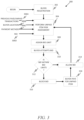
- FIG. 3 is a flow diagram illustrating a method, in accordance with an example embodiment, of limiting bids in an ecommerce system.
- FIG. 4 is a flow diagram illustrating a method, in accordance with another example embodiment, of limiting bids in an ecommerce system.
- FIG. 5 is a block diagram illustrating a mobile device, according to an example embodiment.
- FIG. 6 is a block diagram of machine in the example form of a computer system within which instructions may be executed for causing the machine to perform any one or more of the methodologies discussed herein.
- unpaid item risk exposure is reduced by taking a variety of actions in response to unpaid items.
- a risk analysis component can utilize information on the number of unpaid items for a buyer, as well as other information that aids in evaluating the risk of the buyer being malicious or otherwise not intending to pay for items. The risk analysis component can then identify one or more limits on the buyer to be implemented based on the evaluated risk.
- FIG. 1 is a network diagram depicting a client-server system 100 , within which one example embodiment may be deployed.
- a networked system 102 in the example form of a network-based marketplace or publication system, provides server-side functionality, via a network 104 (e.g., the Internet or a Wide Area Network (WAN)), to one or more clients.
- FIG. 1 illustrates, for example, a web client 106 (e.g., a browser, such as the Internet Explorer® browser developed by Microsoft® Corporation of Redmond, Washington State) and a programmatic client 108 executing on respective client machines 110 and 112 .
- a web client 106 e.g., a browser, such as the Internet Explorer® browser developed by Microsoft® Corporation of Redmond, Washington State
- programmatic client 108 executing on respective client machines 110 and 112 .
- An Application Program Interface (API) server 114 and a web server 116 are coupled to, and provide programmatic and web interfaces respectively to, one or more application servers 118 .
- the application servers 118 host one or more marketplace applications 120 and payment applications 122 .
- the application servers 118 are, in turn, shown to be coupled to one or more database servers 124 that facilitate access to one or more databases 126 .
- the marketplace applications 120 may provide a number of marketplace functions and services to users who access the networked system 102 .
- the payment applications 122 may likewise provide a number of payment services and functions to users.
- the payment applications 122 may allow users to accumulate value (e.g., in a commercial currency, such as the U.S. dollar, or a proprietary currency, such as “points”) accounts, and then later to redeem the accumulated value for products (e.g., goods or services) that are made available via the marketplace applications 120 . While the marketplace and payment applications 120 and 122 are shown in FIG. 1 to both form part of the networked system 102 , it will be appreciated that, in alternative embodiments, the payment applications 122 may form part of a payment service that is separate and distinct from the networked system 102 .
- system 100 shown in FIG. 1 employs a client-server architecture
- the embodiments are, of course, not limited to such an architecture, and could equally well find application in a distributed, or peer-to-peer, architecture system, for example.
- the various marketplace and payment applications 120 and 122 could also be implemented as standalone software programs, which do not necessarily have networking capabilities.
- the web client 106 accesses the various marketplace and payment applications 120 and 122 via the web interface supported by the web server 116 .
- the programmatic client 108 accesses the various services and functions provided by the marketplace and payment applications 120 and 122 via the programmatic interface provided by the API server 114 .
- the programmatic client 108 may, for example, be a seller application (e.g., the Turbo Lister application developed by eBay Inc., of San Jose, Calif.) to enable sellers to author and manage listings on the networked system 102 in an offline manner, and to perform batch-mode communications between the programmatic client 108 and the networked system 107 .
- FIG. 1 also illustrates a third-party application 128 , executing on a third-party server 130 , as having programmatic access to the networked system 102 via the programmatic interface provided by the API server 114 .
- the third-party application 128 may, utilizing information retrieved from the networked system 102 , support one or more features or functions on a website hosted by a third party.
- the third-party website may, for example, provide one or more promotional, marketplace, or payment functions that are supported by the relevant applications of the networked system 102 .
- FIG. 2 is a block diagram illustrating marketplace and payment applications 120 and 122 that, in one example embodiment, are provided as part of application server(s) 118 in the networked system 102 .
- the applications 120 and 122 may be hosted on dedicated or shared server machines (not shown) that are communicatively coupled to enable communications between server machines.
- the applications 120 and 122 themselves are communicatively coupled (e.g., via appropriate interfaces) to each other and to various data sources, so as to allow information to be passed between the applications 120 and 122 or so as to allow the applications 120 and 122 to share and access common data.
- the applications 120 and 122 may furthermore access one or more databases 126 via the database servers 124 .
- the networked system 102 may provide a number of publishing, listing, and price-setting mechanisms whereby a seller may list (or publish information concerning) goods or services for sale, a buyer can express interest in or indicate a desire to purchase such goods or services, and a price can be set for a transaction pertaining to the goods or services.
- the marketplace and payment applications 120 and 122 are shown to include at least one publication application 200 and one or more auction applications 202 , which support auction-format listing and price setting mechanisms (e.g., English, Dutch, Vickrey, Chinese, Double, Reverse auctions, etc.).
- the various auction applications 202 may also provide a number of features in support of such auction-format listings, such as a reserve price feature whereby a seller may specify a reserve price in connection with a listing, and a proxy-bidding feature whereby a bidder may invoke automated proxy bidding.
- a reserve price feature whereby a seller may specify a reserve price in connection with a listing
- a proxy-bidding feature whereby a bidder may invoke automated proxy bidding.
- a number of fixed-price applications 204 support fixed-price listing formats (e.g., the traditional classified advertisement-type listing or a catalogue listing) and buyout-type listings.
- buyout-type listings e.g., including the Buy-It-Now (BIN) technology developed by eBay Inc., of San Jose, Calif.
- BIN Buy-It-Now
- auction-format listings may be offered in conjunction with auction-format listings, and allow a buyer to purchase goods or services, which are also being offered for sale via an auction, for a fixed-price that is typically higher than the starting price of the auction.
- Store applications 206 allow a seller to group listings within a “virtual” store, which may be branded and otherwise personalized by and for the seller. Such a virtual store may also offer promotions, incentives, and features that are specific and personalized to a relevant seller.
- Reputation applications 208 allow users who transact, utilizing the networked system 102 , to establish, build, and maintain reputations, which may be made available and published to potential trading partners.
- the reputation applications 208 allow a user (for example, through feedback provided by other transaction partners) to establish a reputation within the networked system 102 over time. Other potential trading partners may then reference such a reputation for the purposes of assessing credibility and trustworthiness.
- Personalization applications 210 allow users of the networked system 102 to personalize various aspects of their interactions with the networked system 102 . For example, a user may, utilizing an appropriate personalization application 210 , create a personalized reference page at which information regarding transactions to which the user is (or has been) a party may be viewed. Further, a personalization application 210 may enable a user to personalize listings and other aspects of their interactions with the networked system 102 and other parties.
- the networked system 102 may support a number of marketplaces that are customized, for example, for specific geographic regions.
- a version of the networked system 102 may be customized liar the United Kingdom, whereas another version of the networked system 102 may be customized for the United States.
- Each of these versions may operate as an independent marketplace or may be customized (or internationalized) presentations of a common underlying marketplace.
- the networked system 102 may accordingly include a number of internationalization applications 212 that customize information (and/or the presentation of information by the networked system 102 ) according to predetermined criteria (e.g., geographic, demographic or marketplace criteria).
- predetermined criteria e.g., geographic, demographic or marketplace criteria.
- the internationalization applications 212 may be used to support the customization of information for a number of regional websites that are operated by the networked system 102 and that are accessible via respective web servers 116 .
- Navigation of the networked system 102 may be facilitated by one or more navigation applications 214 .
- a search application (as an example of a navigation application 214 ) may enable key word searches of listings published via the networked system 102 .
- a browse application may allow users to browse various category, catalogue, or inventory data structures according to which listings may be classified within the networked system 102 .
- Various other navigation applications 214 may be provided to supplement the search and browse applications.
- the applications 120 and 122 may include one or more imaging applications 216 , which users may utilize to upload images for inclusion within listings.
- An imaging application 216 also operates to incorporate images within viewed listings.
- the imaging applications 216 may also support one or more promotional features, such as image galleries that are presented to potential buyers. For example, sellers may pay an additional fee to have an image included within a gallery of images for promoted items.
- Listing creation applications 218 allow sellers to conveniently author listings pertaining to goods or services that they wish to transact via the networked system 102
- listing management applications 220 allow sellers to manage such listings. Specifically, where a particular seller has authored and/or published a large number of listings, the management of such listings may present a challenge.
- the listing management applications 220 provide a number of features (e.g., auto-relisting, inventory level monitors, etc.) to assist the seller in managing such listings.
- One or more post-listing management applications 222 also assist sellers with a number of activities that typically occur post-listing. For example, upon completion of an auction facilitated by one or more auction applications 202 , a seller may wish to leave feedback regarding a particular buyer. To this end, a post-listing management application 222 may provide an interface to one or more reputation applications 208 , so as to allow the seller conveniently to provide feedback regarding multiple buyers to the reputation applications 208 .
- Dispute resolution applications 224 provide mechanisms whereby disputes arising between transacting parties may be resolved.
- the dispute resolution applications 224 may provide guided procedures whereby the parties are guided through a number of steps in an attempt to settle a dispute. In the event that the dispute cannot be settled via the guided procedures, the dispute may be escalated to a third-party mediator or arbitrator.
- a number of fraud prevention applications 226 implement fraud detection and prevention mechanisms to reduce the occurrence of fraud within the networked system 102 .
- Messaging applications 228 are responsible for the generation and delivery of messages to users of the networked system 102 (such as, for example, messages advising users regarding the status of listings at the networked system 102 (e.g., providing “outbid” notices to bidders during an auction process or providing promotional and merchandising information to users)). Respective messaging applications 228 may utilize any one of a number of message delivery networks and platforms to deliver messages to users.
- messaging applications 228 may deliver electronic mail (e-mail), instant message (IM), Short Message Service (SMS), text, facsimile, or voice (e.g., Voice over IP (VoIP)) messages via the wired (e.g., the Internet), plain old telephone service (POTS), or wireless (e.g., mobile, cellular, WiFi, WiMAX) networks 104 .
- e-mail electronic mail
- IM instant message
- SMS Short Message Service
- SMS Short Message Service
- text e.g., facsimile
- voice e.g., Voice over IP (VoIP)
- POTS plain old telephone service
- wireless e.g., mobile, cellular, WiFi, WiMAX
- Merchandising applications 230 support various merchandising functions that are made available to sellers to enable sellers to increase sales via the networked system 102 .
- the merchandising applications 230 also operate the various merchandising features that may be invoked by sellers, and may monitor and track the success of merchandising strategies employed by sellers.
- the networked system 102 itself, or one or more parties that transact via the networked system 102 may operate loyalty programs that are supported by one or more loyalty/promotion applications 232 . For example, a buyer may earn loyalty or promotion points for each transaction established and/or concluded with a particular seller, and be offered a reward for which accumulated loyalty points can be redeemed.
- a risk analysis component 234 can be designed to evaluate the risk of a buyer not paying for an item that he or she has committed to (or will commit to) purchase.
- a rule set 236 may be used to identify one or more limits to place on the buyer's account based on the evaluated risk. These limits may then be passed to, for example, the auction application(s) 202 , the fixed-price application(s) 204 , or any other runtime system that has the ability to limit the buyer based on the identified limits.
- limits may be placed on a buyer based on an evaluation of the risk that the buyer will not pay for an item or items.
- This risk may be called the “unpaid item risk” and may be calculated at a variety of different granularities.
- the unpaid item risk may be calculated based on, for example, a risk that a particular buyer will not pay for a particular item, a risk that a particular buyer will not pay for a grouping of items (e.g., items in a particular category or above a certain price range), or a general risk that the particular buyer will not pay for items in general.
- the term “buyer” as used in this disclosure shall be interpreted broadly to cover all users who have committed to purchase (whether or not payment has ever been made from the user) as well as users who are going to be using an interface to attempt to commit to purchase an item.
- a first-time user of an ecommerce system who has never committed to purchase an item before, let alone paid for an item, will still be considered a “buyer” for purposes of this disclosure, as the system may wish to evaluate the risk of this first-time buyer not paying.
- FIG. 3 is a flow diagram illustrating a method 300 , in accordance with an example embodiment, of limiting bids in an ecommerce system.
- a buyer can register with the ecommerce system. This may include, for example, providing one or more pieces of profile information. In its simplest form, this registration may only provide anonymous identification information, such as a user name and password, which will not be very helpful in determining risk analysis, beyond linking the account with purchases made and thus allowing the system to track the number of unpaid items from the account. In other example embodiments, however, additional information is provided that may be used either directly or indirectly to determine an unpaid item risk.
- This may include, for example, identifying information such as a real name, social security number, credit card information, etc., or other information that could be used to search one or more databases for information related to the user (e.g., a credit check could be performed). It also could include, for example, profile information such as user age, gender, location, interests, etc. that could be used to make general risk assessments.
- unpaid item risk assessment is performed. As described above, a number of different pieces of input information could be utilized in making this assessment. In the example depicted in FIG. 3 , this may include previous paid/unpaid transactions 306 A, buyer location 306 B, payment method on file 306 C, and return on investment 306 D. Previous paid/unpaid transactions 306 A may be communicated in a number of different ways, such as an absolute value of the number of paid and/or unpaid transactions, as well as a percentage value indicating the relative ratio between paid and unpaid transactions.
- Buyer location 306 B may be determined in a number of different ways. In one example embodiment, the buyer location 306 B is retrieved from a user profile. In another example embodiment, the buyer location 306 B is determined dynamically via, for example, a global positioning system (GPS) module in a user device of the buyer, or via a reverse lookup of an Internet Protocol (IP) address being utilized by the buyer.
- GPS global positioning system
- IP Internet Protocol
- Payment method on file 306 C may indicate, for example, whether a credit card, a debit card, or bank account information (or none of the above) is on file for the user. It may also indicate additional information about the accounts. For example, the information may distinguish between credit cards from one (e.g., reliable) bank and credit cards from another (e.g., unreliable) bank.
- Return on investment 306 D may indicate, for example, a value associated with the buyer with regards to how valuable the buyer is to the ecommerce system. This may be based on, for example, the number and total value of purchases made by the user over a certain time frame (e.g., past 6 months).
- Some of these pieces of information are not really relevant to or otherwise don't pertain to an unpaid item risk assessment made when the buyer first registers for the ecommerce system. For example, a new buyer to the ecommerce system will not have paid or unpaid transaction, or a return on investment, yet. As will be seen later, however, the unpaid item risk assessment may be repeated on a periodic or ad hoc basis as the buyer utilizes the system, and thus these pieces of information may have more relevancy and/or data associated with them at a later time.
- Pieces of information not depicted may also be relevant to the unpaid item risk assessment. These may include, for example, overall usage history on the ecommerce system.
- a whitelist may be utilized to identify buyers who should have no bid limit despite any unpaid item risk assessment. These may include, for example, buyers who have a long-established record of payment.
- a blacklist may be utilized to identify buyers who should always have a bid limit despite any unpaid item risk assessment.
- a bid limit is assigned based on the unpaid item risk assessment.
- the term “bid” as used in this disclosure should be interpreted broadly to cover any commitment to purchase an item under any circumstances. This could cover, for example, a traditional “bid” in an auction, where the user is committing to purchase the item if the bid is accepted, but also non-auction commitments, such as “buy it now” items, offers to purchase, or other fixed-price offerings.
- the bid limit is any limitation placed on the user's ability to bid. In one example embodiment, this may be a limit on the number of unpaid items the buyer can have. For example, the system could determine that the buyer will be allowed no more than 5 unpaid items. If the buyer attempts to place a bid while having 5 unpaid items, the bid may be blocked until the buyer pays for one of the 5 unpaid items. A counter may be established for a buyer to track this value, such that the counter is incremented each time a successful bid occurs and is decremented each time a payment is made. A limit on unpaid items, however, is only one example of a bid limit that could be imposed. Other bid limits, such as limiting bids in certain categories, limiting bids over certain amounts, requiring immediate payment at bid time, etc., may be implemented either in addition to or in lieu of an unpaid item limit.
- the bid limit pertains to a limit on a number of unpaid items or is some other limit that is somehow mitigated by the act of the buyer making a payment on an unpaid item. If this is not the case, then operation 318 may not be present and the bid may simply be blocked, unless some other action is taken to mitigate the bid limit.
- FIG. 4 is a flow diagram illustrating a method 400 , in accordance with another example embodiment, of limiting bids in an ecommerce system.
- the unpaid item risk assessment is performed dynamically as bidding occurs.
- the buyer registers for the ecommerce system.
- the buyer attempts a bid on an item.
- an unpaid item risk assessment is performed on the buyer. Although they are not pictured, this operation may take as input any of the pieces of information described earlier, such as those described with respect to the risk assessment in operation 304 of FIG. 3 .
- a bid limit is assigned based on the unpaid item risk assessment.
- the bid is allowed. If not, then at operation 414 the bid is blocked.
- the buyer makes a payment on an unpaid item and thus the process proceeds to allow the bid at operation 412 .
- the bid limit pertains to a limit on a number of unpaid items or is some other limit that is somehow mitigated by the act of the buyer making a payment on an unpaid item. If this is not the case, then operation 416 may not be present and the bid may simply be blocked, unless some other action is taken to mitigate the bid limit.
- the memory 504 may be adapted to store an operating system (OS) 506 , as well as applications 508 , such as a mobile location-enabled application that may provide location-based services (LBSs) to a user.
- OS operating system
- applications 508 such as a mobile location-enabled application that may provide location-based services (LBSs) to a user.
- the processor 502 may be coupled, either directly or via appropriate intermediary hardware, to a display 510 and to one or more input/output (I/O) devices 512 , such as a keypad, a touch panel sensor, a microphone, and the like.
- the processor 502 may be coupled to a transceiver 514 that interfaces with an antenna 516 .
- the transceiver 514 may be configured to both transmit and receive cellular network signals, wireless data signals, or other types of signals via the antenna 516 , depending on the nature of the mobile device 500 . Further, in some configurations, a GPS receiver 518 may also make use of the antenna 516 to receive GPS signals.
- Modules may constitute either software modules (e.g., code embodied (1) on a non-transitory machine-readable medium or (2) in a transmission signal) or hardware-implemented modules.
- a hardware-implemented module is a tangible unit capable of performing certain operations and may be configured or arranged in a certain manner.
- one or more computer systems e.g., a standalone, client or server computer system
- one or more processors 502 may be configured by software (e.g., an application or application portion) as a hardware-implemented module that operates to perform certain operations as described herein.
- a hardware-implemented module may be implemented mechanically or electronically.
- a hardware-implemented module may comprise dedicated circuitry or logic that is permanently configured (e.g., as a special-purpose processor, such as a field-programmable gate array (FPGA) or an application-specific integrated circuit (ASIC)) to perform certain operations.
- a hardware-implemented module may also comprise programmable logic or circuitry (e.g., as encompassed within a general-purpose processor or other programmable processor) that is temporarily configured by software to perform certain operations. It will be appreciated that the decision to implement a hardware-implemented module mechanically, in dedicated and permanently configured circuitry, or in temporarily configured circuitry (e.g., configured by software) may be driven by cost and time considerations.
- the term “hardware-implemented module” should be understood to encompass a tangible entity, be that an entity that is physically constructed, permanently configured (e.g., hardwired) or temporarily or transitorily configured (e.g., programmed) to operate in a certain manner and/or to perform certain operations described herein.
- hardware-implemented modules are temporarily configured (e.g., programmed)
- each of the hardware-implemented modules need not be configured or instantiated at any one instance in time.
- the hardware-implemented modules comprise a general-purpose processor configured using software
- the general-purpose processor may be configured as respective different hardware-implemented modules at different times.
- Software may accordingly configure the processor 502 , for example, to constitute a particular hardware-implemented module at one instance of time and to constitute a different hardware-implemented module at a different instance of time.
- Hardware-implemented modules can provide information to, and receive information from, other hardware-implemented modules. Accordingly, the described hardware-implemented modules may be regarded as being communicatively coupled. Where multiple of such hardware-implemented modules exist contemporaneously, communications may be achieved through signal transmission (e.g., over appropriate circuits and buses that connect the hardware-implemented modules). In embodiments in which multiple hardware-implemented modules are configured or instantiated at different times, communications between such hardware-implemented modules may be achieved, for example, through the storage and retrieval of information in memory structures to which the multiple hardware-implemented modules have access. For example, one hardware-implemented module may perform an operation, and store the output of that operation in a memory device to which it is communicatively coupled.
- a further hardware-implemented module may then, at a later time, access the memory device to retrieve and process the stored output.
- Hardware-implemented modules may also initiate communications with input or output devices, and can operate on a resource (e.g., a collection of information).
- processors 502 may be temporarily configured (e.g., by software) or permanently configured to perform the relevant operations. Whether temporarily or permanently configured, such processors 502 may constitute processor-implemented modules that operate to perform one or more operations or functions.
- the modules referred to herein may, in some example embodiments, comprise processor-implemented modules.
- the methods described herein may be at least partially processor-implemented. For example, at least some of the operations of a method may be performed by one or more processors 502 or processor-implemented modules. The performance of certain of the operations may be distributed among the one or more processors 502 , not only residing within a single machine, but deployed across a number of machines. In some example embodiments, the processor 502 or processors 502 may be located in a single location (e.g., within a home environment, an office environment, or a server farm while in other embodiments the processors 502 may be distributed across a number of locations.
- Example embodiments may be implemented in digital electronic circuitry, or in computer hardware, firmware, software, or in combinations of them.
- Example embodiments may be implemented using a computer program product, e.g., a computer program tangibly embodied in an information carrier, e.g., in a machine-readable medium for execution by, or to control the operation of, data processing apparatus, e.g., a programmable processor 502 , a computer, or multiple computers.
- a computer program can be written in any form of programming language, including compiled or interpreted languages, and it can be deployed in any form, including as a standalone program or as a module, subroutine, or other unit suitable for use in a computing environment.
- a computer program can be deployed to be executed on one computer or on multiple computers at one site or distributed across multiple sites and interconnected by a communication network.
- operations may be performed by one or more programmable processors 502 executing a computer program to perform functions by operating on input data and generating output.
- Method operations can also be performed by, and apparatus of example embodiments may be implemented as, special-purpose logic circuitry, e.g., a field-programmable gate array (FPGA) or an application-specific integrated circuit (ASIC).
- FPGA field-programmable gate array
- ASIC application-specific integrated circuit
- the computing system can include clients and servers.
- a client and server are generally remote from each other and typically interact through a communication network. The relationship of client and server arises by virtue of computer programs running on the respective computers and having a client-server relationship to each other.
- both hardware and software architectures merit consideration. Specifically, it will be appreciated that the choice of whether to implement certain functionality in permanently configured hardware (e.g., an ASIC), in temporarily configured hardware (e.g., a combination of software and a programmable processor 502 ), or in a combination of permanently and temporarily configured hardware may be a design choice.
- hardware e.g., machine
- software architectures that may be deployed, in various example embodiments.
- FIG. 6 is a block diagram of a machine in the example form of a computer system 600 within which instructions 624 may be executed for causing the machine to perform any one or more of the methodologies discussed herein.
- the machine operates as a standalone device or may be connected (e.g., networked) to other machines.
- the machine may operate in the capacity of a server or a client machine in server-client network environment, or as a peer machine in a peer-to-peer (or distributed) network environment.
- the machine may be a personal computer (PC), a tablet PC, a set-top box (STB), a personal digital assistant (PDA), a cellular telephone, a web appliance, a network router, switch or bridge, or any machine capable of executing instructions (sequential or otherwise) that specify actions to be taken by that machine.
- PC personal computer
- PDA personal digital assistant
- STB set-top box
- WPA personal digital assistant
- cellular telephone a cellular telephone
- web appliance a web appliance
- network router switch or bridge
- machine any machine capable of executing instructions (sequential or otherwise) that specify actions to be taken by that machine.
- machine shall also be taken to include any collection of machines that individually or jointly execute a set (or multiple sets) f instructions to perform any one or more of the methodologies discussed herein.
- the example computer system 600 includes a processor 602 (e.g., a central processing unit (CPU), a graphics processing unit (GPU), or both), a main memory 604 and a static memory 606 , which communicate with each other via a bus 608 .
- the computer system 600 may further include a video display 610 (e.g., a liquid crystal display (LCD) or a cathode ray tube (CRT)).
- the drive unit 616 includes a computer-readable medium 622 on which is stored one or more sets of data structures and instructions 624 (e.g., software) embodying or utilized by any one or more of the methodologies or functions described herein.
- the instructions 624 may also reside, completely or at least partially, within the main memory 604 and/or within the processor 602 during execution thereof by the computer system 600 , the main memory 604 and the processor 602 also constituting computer-readable media 622 .
- While the computer-readable medium 622 is shown in an example embodiment to be a single medium, the term “computer-readable medium” may include a single medium or multiple media (e.g., a centralized or distributed database, and/or associated caches and servers) that store the one or more instructions 624 or data structures.
- the term “computer-readable medium” shall also be taken to include any tangible medium that is capable of storing, encoding or carrying instructions 624 for execution by the machine and that cause the machine to perform any one or more of the methodologies of the present disclosure, or that is capable of storing, encoding or carrying data structures utilized by or associated with such instructions 624 .
- the term “computer-readable medium” shall accordingly be taken to include, but not be limited to, solid-state memories, and optical and magnetic media.
- Non-volatile memory examples include non-volatile memory, including by way of example semiconductor memory devices, e.g., erasable programmable read-only memory (EPROM), electrically erasable programmable read-only memory (EEPROM), and flash memory devices; magnetic disks such as internal hard disks and removable disks; magneto-optical disks; and CD-ROM and DVD-ROM disks.
- semiconductor memory devices e.g., erasable programmable read-only memory (EPROM), electrically erasable programmable read-only memory (EEPROM), and flash memory devices
- EPROM erasable programmable read-only memory
- EEPROM electrically erasable programmable read-only memory
- flash memory devices e.g., electrically erasable programmable read-only memory (EEPROM), and flash memory devices
- magnetic disks such as internal hard disks and removable disks
- magneto-optical disks e.g., magneto-optical disks
- the instructions 624 may further be transmitted or received over a network 626 using a transmission medium.
- the instructions 624 may be transmitted using the network interface device 620 and any one of a number of well-known transfer protocols (e.g., HTTP).
- Examples of communication networks include a local area network (“LAN”), a wide area network (“WAN”), the Internet, mobile telephone networks, plain old telephone (POTS) networks, and wireless data networks (e.g., WiFi and WiMAX networks).
- POTS plain old telephone
- wireless data networks e.g., WiFi and WiMAX networks.
- transmission medium shall be taken to include any intangible medium that is capable of storing, encoding or carrying instructions 624 for execution by the machine, and includes digital or analog communications signals or other intangible media to facilitate communication of such software.
- inventive subject matter may be referred to herein, individually and/or collectively, by the term “invention” merely for convenience and without intending to voluntarily limit the scope of this application to any single invention or inventive concept if more than one is in fact disclosed.
- inventive concept merely for convenience and without intending to voluntarily limit the scope of this application to any single invention or inventive concept if more than one is in fact disclosed.
Landscapes
- Business, Economics & Management (AREA)
- Finance (AREA)
- Accounting & Taxation (AREA)
- Marketing (AREA)
- Development Economics (AREA)
- Economics (AREA)
- Strategic Management (AREA)
- Physics & Mathematics (AREA)
- General Business, Economics & Management (AREA)
- General Physics & Mathematics (AREA)
- Engineering & Computer Science (AREA)
- Theoretical Computer Science (AREA)
- Entrepreneurship & Innovation (AREA)
- Management, Administration, Business Operations System, And Electronic Commerce (AREA)
Abstract
Description
Claims (20)
Priority Applications (1)
| Application Number | Priority Date | Filing Date | Title |
|---|---|---|---|
| US16/561,302 US11727455B2 (en) | 2014-06-02 | 2019-09-05 | Unpaid item risk management |
Applications Claiming Priority (2)
| Application Number | Priority Date | Filing Date | Title |
|---|---|---|---|
| US14/293,799 US10423994B2 (en) | 2014-06-02 | 2014-06-02 | Unpaid item risk management |
| US16/561,302 US11727455B2 (en) | 2014-06-02 | 2019-09-05 | Unpaid item risk management |
Related Parent Applications (1)
| Application Number | Title | Priority Date | Filing Date |
|---|---|---|---|
| US14/293,799 Continuation US10423994B2 (en) | 2014-06-02 | 2014-06-02 | Unpaid item risk management |
Publications (2)
| Publication Number | Publication Date |
|---|---|
| US20190392497A1 US20190392497A1 (en) | 2019-12-26 |
| US11727455B2 true US11727455B2 (en) | 2023-08-15 |
Family
ID=54702339
Family Applications (2)
| Application Number | Title | Priority Date | Filing Date |
|---|---|---|---|
| US14/293,799 Active 2036-09-22 US10423994B2 (en) | 2014-06-02 | 2014-06-02 | Unpaid item risk management |
| US16/561,302 Active 2036-01-16 US11727455B2 (en) | 2014-06-02 | 2019-09-05 | Unpaid item risk management |
Family Applications Before (1)
| Application Number | Title | Priority Date | Filing Date |
|---|---|---|---|
| US14/293,799 Active 2036-09-22 US10423994B2 (en) | 2014-06-02 | 2014-06-02 | Unpaid item risk management |
Country Status (2)
| Country | Link |
|---|---|
| US (2) | US10423994B2 (en) |
| WO (1) | WO2015187672A1 (en) |
Families Citing this family (3)
| Publication number | Priority date | Publication date | Assignee | Title |
|---|---|---|---|---|
| US10423994B2 (en) | 2014-06-02 | 2019-09-24 | Ebay Inc. | Unpaid item risk management |
| JP2021125028A (en) * | 2020-02-06 | 2021-08-30 | 東芝テック株式会社 | Transaction processing system |
| CN113379258B (en) * | 2021-06-17 | 2025-03-21 | 北京沃东天骏信息技术有限公司 | Inventory management method and device |
Citations (6)
| Publication number | Priority date | Publication date | Assignee | Title |
|---|---|---|---|---|
| US20100043055A1 (en) | 2008-08-12 | 2010-02-18 | First Data Corporation | Methods and systems for online fraud protection |
| US20100100483A1 (en) | 2003-06-06 | 2010-04-22 | Ebay Inc. | Automatic restitution of transaction fees, punishment of non-paying bidders, and management of appeals |
| US20110106605A1 (en) | 2009-10-30 | 2011-05-05 | Raza Ali Malik | Methods and systems for dynamic coupon issuance |
| US8438068B2 (en) | 2007-12-07 | 2013-05-07 | Microsoft Corporation | Reputation in on-line consumer markets |
| US8583535B2 (en) | 1997-07-11 | 2013-11-12 | Asoid Network Facility, Llc | Operation of auctions over computer networks |
| US20150348150A1 (en) | 2014-06-02 | 2015-12-03 | Jonathan Michael Bullard | Unpaid item risk management |
-
2014
- 2014-06-02 US US14/293,799 patent/US10423994B2/en active Active
-
2015
- 2015-06-02 WO PCT/US2015/033751 patent/WO2015187672A1/en not_active Ceased
-
2019
- 2019-09-05 US US16/561,302 patent/US11727455B2/en active Active
Patent Citations (8)
| Publication number | Priority date | Publication date | Assignee | Title |
|---|---|---|---|---|
| US8583535B2 (en) | 1997-07-11 | 2013-11-12 | Asoid Network Facility, Llc | Operation of auctions over computer networks |
| US20100100483A1 (en) | 2003-06-06 | 2010-04-22 | Ebay Inc. | Automatic restitution of transaction fees, punishment of non-paying bidders, and management of appeals |
| US8438068B2 (en) | 2007-12-07 | 2013-05-07 | Microsoft Corporation | Reputation in on-line consumer markets |
| US20100043055A1 (en) | 2008-08-12 | 2010-02-18 | First Data Corporation | Methods and systems for online fraud protection |
| US20110106605A1 (en) | 2009-10-30 | 2011-05-05 | Raza Ali Malik | Methods and systems for dynamic coupon issuance |
| US20150348150A1 (en) | 2014-06-02 | 2015-12-03 | Jonathan Michael Bullard | Unpaid item risk management |
| WO2015187672A1 (en) | 2014-06-02 | 2015-12-10 | Ebay Inc. | Unpaid item risk management |
| US10423994B2 (en) | 2014-06-02 | 2019-09-24 | Ebay Inc. | Unpaid item risk management |
Non-Patent Citations (16)
| Title |
|---|
| "CyberSource introduces most sophisticated internet fraud tool for eCommerce", Retrieved from https://dialog .proquest.corn/professional/docview/668787734?accountid= 142257 (Year: 1999), 1999, 5 pages. |
| "CyberSource introduces most sophisticated internet fraud tool foreCommerce", Retrieved from https://dialog.proquest.corn/professional/docview/668787734?accountid= 142257. 1999, 5 pages. (Year: 1999). * |
| Advisory Action received for U.S. Appl. No. 14/293,799, dated Jun. 19, 2017, 5 pages. |
| Applicant-Initiated Interview Summary received for U.S. Appl. No. 14/293,799, dated Feb. 23, 2017, 3 pages. |
| Applicant-Initiated Interview Summary received for U.S. Appl. No. 14/293,799, dated May 19, 2017, 3 pages. |
| Final Office Action received for U.S. Appl. No. 14/293,799, dated Apr. 6, 2017, 9 pages. |
| International Preliminary Report on Patentability received for PCT Application No. PCT/US2015/033751, dated Dec. 15, 2016, 7 pages. |
| International Search Report received for PCT Application No. PCT/US2015/033751, dated Aug. 25, 2015, 2 pages. |
| Non-Final Office Action received for U.S. Appl. No. 14/293,799, dated Jun. 18, 2018, 9 pages. |
| Non-Final Office Action received for U.S. Appl. No. 14/293,799, dated Nov. 17, 2016, 22 pages. |
| Notice of Allowance Received for U.S. Appl. No. 14/293,799, dated Jan. 30, 2019, 9 pages. |
| Notice of Allowance received for U.S. Appl. No. 14/293,799, dated May 22, 2019, 7 pages. |
| Response to Final Office Action filed on Jun. 2, 2017, for U.S. Appl. No. 14/293,799, dated Apr. 6, 2017, 10 pages. |
| Response to Non-Final Office Action filed on Feb. 17, 2017, for U.S. Appl. No. 14/293,799, dated Nov. 17, 2017, 8 pages. |
| Response to Non-Final Office Action filed on Sep. 17, 2018, for U.S. Appl. No. 14/293,799, dated Jun. 18, 2018, 12 pages. |
| Written Opinion received for PCT Application No. PCT/US2015/033751, dated Aug. 25, 2015, 5 pages. |
Also Published As
| Publication number | Publication date |
|---|---|
| US20190392497A1 (en) | 2019-12-26 |
| US10423994B2 (en) | 2019-09-24 |
| US20150348150A1 (en) | 2015-12-03 |
| WO2015187672A1 (en) | 2015-12-10 |
Similar Documents
| Publication | Publication Date | Title |
|---|---|---|
| US8108278B2 (en) | Non-reversible payment processing | |
| US11645702B2 (en) | Time- and geolocation-limited marketplace | |
| AU2014290702B2 (en) | Generating recommendations based on transaction data | |
| US11727455B2 (en) | Unpaid item risk management | |
| US20150248715A1 (en) | Suspicion classifier for website activity | |
| US20190108565A1 (en) | Providing privileges and granting or denying a level of access to resources based on authentication by authentication sources | |
| US20150100500A1 (en) | Best offer immediate pay feature | |
| US20160162925A1 (en) | Dynamically offering a competing price during purchasing | |
| US11276108B2 (en) | User interfaces for managing listings in a secondary marketplace | |
| CA2935264C (en) | Collapsible ads and follow ads | |
| US9454292B2 (en) | Method and system for interface data utilization | |
| US9098853B2 (en) | Method, medium, and system for reducing product returns | |
| US20150356656A1 (en) | Marketplace listings on procurement tool | |
| US20140358714A1 (en) | Button enhancement for proxy bidding | |
| US20150227996A1 (en) | May ship handling | |
| US20140279256A1 (en) | Local product search based on photo sharing service actions | |
| US20150286999A1 (en) | Method and system for transaction processing |
Legal Events
| Date | Code | Title | Description |
|---|---|---|---|
| FEPP | Fee payment procedure |
Free format text: ENTITY STATUS SET TO UNDISCOUNTED (ORIGINAL EVENT CODE: BIG.); ENTITY STATUS OF PATENT OWNER: LARGE ENTITY |
|
| STPP | Information on status: patent application and granting procedure in general |
Free format text: DOCKETED NEW CASE - READY FOR EXAMINATION |
|
| AS | Assignment |
Owner name: EBAY INC., CALIFORNIA Free format text: ASSIGNMENT OF ASSIGNORS INTEREST;ASSIGNORS:BULLARD, JONATHAN MICHAEL;LINDBERG, SHAWN D;CHHABRA, ASHISH;REEL/FRAME:050787/0218 Effective date: 20140528 |
|
| STPP | Information on status: patent application and granting procedure in general |
Free format text: NON FINAL ACTION MAILED |
|
| STPP | Information on status: patent application and granting procedure in general |
Free format text: RESPONSE TO NON-FINAL OFFICE ACTION ENTERED AND FORWARDED TO EXAMINER |
|
| STPP | Information on status: patent application and granting procedure in general |
Free format text: FINAL REJECTION MAILED |
|
| STPP | Information on status: patent application and granting procedure in general |
Free format text: RESPONSE AFTER FINAL ACTION FORWARDED TO EXAMINER |
|
| STPP | Information on status: patent application and granting procedure in general |
Free format text: ADVISORY ACTION MAILED |
|
| STPP | Information on status: patent application and granting procedure in general |
Free format text: DOCKETED NEW CASE - READY FOR EXAMINATION |
|
| STPP | Information on status: patent application and granting procedure in general |
Free format text: NON FINAL ACTION MAILED |
|
| STPP | Information on status: patent application and granting procedure in general |
Free format text: NOTICE OF ALLOWANCE MAILED -- APPLICATION RECEIVED IN OFFICE OF PUBLICATIONS |
|
| STPP | Information on status: patent application and granting procedure in general |
Free format text: PUBLICATIONS -- ISSUE FEE PAYMENT VERIFIED |
|
| STCF | Information on status: patent grant |
Free format text: PATENTED CASE |