US11711451B2 - Connected gateway - Google Patents
Connected gateway Download PDFInfo
- Publication number
- US11711451B2 US11711451B2 US16/214,415 US201816214415A US11711451B2 US 11711451 B2 US11711451 B2 US 11711451B2 US 201816214415 A US201816214415 A US 201816214415A US 11711451 B2 US11711451 B2 US 11711451B2
- Authority
- US
- United States
- Prior art keywords
- data
- devices
- processor
- packet
- connectivity
- Prior art date
- Legal status (The legal status is an assumption and is not a legal conclusion. Google has not performed a legal analysis and makes no representation as to the accuracy of the status listed.)
- Active
Links
- 238000000034 method Methods 0.000 claims abstract description 60
- 230000001131 transforming effect Effects 0.000 claims abstract description 4
- 230000006854 communication Effects 0.000 claims description 44
- 238000004891 communication Methods 0.000 claims description 44
- 238000003860 storage Methods 0.000 claims description 43
- 230000006870 function Effects 0.000 claims description 26
- 238000013507 mapping Methods 0.000 claims description 19
- 230000004044 response Effects 0.000 claims description 16
- 230000007774 longterm Effects 0.000 claims description 6
- 230000006855 networking Effects 0.000 description 37
- 230000005540 biological transmission Effects 0.000 description 21
- 238000007726 management method Methods 0.000 description 20
- 238000012544 monitoring process Methods 0.000 description 19
- 238000005516 engineering process Methods 0.000 description 18
- 230000008569 process Effects 0.000 description 17
- 230000001413 cellular effect Effects 0.000 description 15
- 238000005070 sampling Methods 0.000 description 14
- 239000007788 liquid Substances 0.000 description 11
- 238000004458 analytical method Methods 0.000 description 10
- 238000006243 chemical reaction Methods 0.000 description 10
- 238000009826 distribution Methods 0.000 description 9
- 238000005259 measurement Methods 0.000 description 9
- 238000001514 detection method Methods 0.000 description 8
- 239000007789 gas Substances 0.000 description 8
- 238000000053 physical method Methods 0.000 description 8
- 238000012545 processing Methods 0.000 description 8
- 238000013473 artificial intelligence Methods 0.000 description 7
- 230000000116 mitigating effect Effects 0.000 description 7
- 230000000694 effects Effects 0.000 description 6
- 238000000605 extraction Methods 0.000 description 6
- 239000012530 fluid Substances 0.000 description 6
- 230000009471 action Effects 0.000 description 5
- 238000013528 artificial neural network Methods 0.000 description 5
- 238000004519 manufacturing process Methods 0.000 description 5
- MWUXSHHQAYIFBG-UHFFFAOYSA-N nitrogen oxide Inorganic materials O=[N] MWUXSHHQAYIFBG-UHFFFAOYSA-N 0.000 description 5
- 230000009466 transformation Effects 0.000 description 5
- QGZKDVFQNNGYKY-UHFFFAOYSA-N Ammonia Chemical compound N QGZKDVFQNNGYKY-UHFFFAOYSA-N 0.000 description 4
- CURLTUGMZLYLDI-UHFFFAOYSA-N Carbon dioxide Chemical compound O=C=O CURLTUGMZLYLDI-UHFFFAOYSA-N 0.000 description 4
- 230000006866 deterioration Effects 0.000 description 4
- 230000000977 initiatory effect Effects 0.000 description 4
- 230000000007 visual effect Effects 0.000 description 4
- WSFSSNUMVMOOMR-UHFFFAOYSA-N Formaldehyde Chemical compound O=C WSFSSNUMVMOOMR-UHFFFAOYSA-N 0.000 description 3
- 230000004913 activation Effects 0.000 description 3
- 238000004590 computer program Methods 0.000 description 3
- 238000010586 diagram Methods 0.000 description 3
- 230000005611 electricity Effects 0.000 description 3
- 238000005265 energy consumption Methods 0.000 description 3
- 238000009434 installation Methods 0.000 description 3
- 230000005055 memory storage Effects 0.000 description 3
- 238000012706 support-vector machine Methods 0.000 description 3
- 230000001360 synchronised effect Effects 0.000 description 3
- 238000009423 ventilation Methods 0.000 description 3
- UGFAIRIUMAVXCW-UHFFFAOYSA-N Carbon monoxide Chemical compound [O+]#[C-] UGFAIRIUMAVXCW-UHFFFAOYSA-N 0.000 description 2
- ZAMOUSCENKQFHK-UHFFFAOYSA-N Chlorine atom Chemical compound [Cl] ZAMOUSCENKQFHK-UHFFFAOYSA-N 0.000 description 2
- RWSOTUBLDIXVET-UHFFFAOYSA-N Dihydrogen sulfide Chemical compound S RWSOTUBLDIXVET-UHFFFAOYSA-N 0.000 description 2
- CBENFWSGALASAD-UHFFFAOYSA-N Ozone Chemical compound [O-][O+]=O CBENFWSGALASAD-UHFFFAOYSA-N 0.000 description 2
- 238000004378 air conditioning Methods 0.000 description 2
- 229910021529 ammonia Inorganic materials 0.000 description 2
- 230000008901 benefit Effects 0.000 description 2
- 230000007175 bidirectional communication Effects 0.000 description 2
- 239000001569 carbon dioxide Substances 0.000 description 2
- 229910002092 carbon dioxide Inorganic materials 0.000 description 2
- 229910002091 carbon monoxide Inorganic materials 0.000 description 2
- 239000000460 chlorine Substances 0.000 description 2
- 229910052801 chlorine Inorganic materials 0.000 description 2
- 239000000356 contaminant Substances 0.000 description 2
- 238000013461 design Methods 0.000 description 2
- 230000002542 deteriorative effect Effects 0.000 description 2
- 238000001914 filtration Methods 0.000 description 2
- 230000004927 fusion Effects 0.000 description 2
- 238000010438 heat treatment Methods 0.000 description 2
- 239000001257 hydrogen Substances 0.000 description 2
- 229910052739 hydrogen Inorganic materials 0.000 description 2
- 125000004435 hydrogen atom Chemical class [H]* 0.000 description 2
- 229910000037 hydrogen sulfide Inorganic materials 0.000 description 2
- 238000010801 machine learning Methods 0.000 description 2
- 239000000463 material Substances 0.000 description 2
- 238000012986 modification Methods 0.000 description 2
- 230000004048 modification Effects 0.000 description 2
- 230000003287 optical effect Effects 0.000 description 2
- 239000013618 particulate matter Substances 0.000 description 2
- 230000002093 peripheral effect Effects 0.000 description 2
- 229910052704 radon Inorganic materials 0.000 description 2
- SYUHGPGVQRZVTB-UHFFFAOYSA-N radon atom Chemical compound [Rn] SYUHGPGVQRZVTB-UHFFFAOYSA-N 0.000 description 2
- 238000005057 refrigeration Methods 0.000 description 2
- 238000012360 testing method Methods 0.000 description 2
- 230000001960 triggered effect Effects 0.000 description 2
- 239000012855 volatile organic compound Substances 0.000 description 2
- XLYOFNOQVPJJNP-UHFFFAOYSA-N water Substances O XLYOFNOQVPJJNP-UHFFFAOYSA-N 0.000 description 2
- 101100421200 Caenorhabditis elegans sep-1 gene Proteins 0.000 description 1
- RYGMFSIKBFXOCR-UHFFFAOYSA-N Copper Chemical compound [Cu] RYGMFSIKBFXOCR-UHFFFAOYSA-N 0.000 description 1
- 238000007792 addition Methods 0.000 description 1
- 239000000809 air pollutant Substances 0.000 description 1
- 231100001243 air pollutant Toxicity 0.000 description 1
- QVGXLLKOCUKJST-UHFFFAOYSA-N atomic oxygen Chemical compound [O] QVGXLLKOCUKJST-UHFFFAOYSA-N 0.000 description 1
- 230000006399 behavior Effects 0.000 description 1
- 230000000903 blocking effect Effects 0.000 description 1
- 238000011088 calibration curve Methods 0.000 description 1
- 230000001149 cognitive effect Effects 0.000 description 1
- 238000010276 construction Methods 0.000 description 1
- 229910052802 copper Inorganic materials 0.000 description 1
- 239000010949 copper Substances 0.000 description 1
- 230000002596 correlated effect Effects 0.000 description 1
- 230000000875 corresponding effect Effects 0.000 description 1
- 238000013500 data storage Methods 0.000 description 1
- 230000009849 deactivation Effects 0.000 description 1
- 230000002939 deleterious effect Effects 0.000 description 1
- 230000003292 diminished effect Effects 0.000 description 1
- 230000009977 dual effect Effects 0.000 description 1
- 239000000835 fiber Substances 0.000 description 1
- -1 formaldehyde, nitrogen oxides Chemical class 0.000 description 1
- 231100001261 hazardous Toxicity 0.000 description 1
- 238000010348 incorporation Methods 0.000 description 1
- 230000010354 integration Effects 0.000 description 1
- 238000012806 monitoring device Methods 0.000 description 1
- 239000001301 oxygen Substances 0.000 description 1
- 229910052760 oxygen Inorganic materials 0.000 description 1
- 230000000644 propagated effect Effects 0.000 description 1
- 239000002096 quantum dot Substances 0.000 description 1
- 238000011160 research Methods 0.000 description 1
- 230000000630 rising effect Effects 0.000 description 1
- 230000011664 signaling Effects 0.000 description 1
- 238000001228 spectrum Methods 0.000 description 1
- 230000002123 temporal effect Effects 0.000 description 1
- 238000012546 transfer Methods 0.000 description 1
- 230000007704 transition Effects 0.000 description 1
- 238000009424 underpinning Methods 0.000 description 1
Images



Classifications
-
- H—ELECTRICITY
- H04—ELECTRIC COMMUNICATION TECHNIQUE
- H04L—TRANSMISSION OF DIGITAL INFORMATION, e.g. TELEGRAPHIC COMMUNICATION
- H04L69/00—Network arrangements, protocols or services independent of the application payload and not provided for in the other groups of this subclass
- H04L69/18—Multiprotocol handlers, e.g. single devices capable of handling multiple protocols
-
- H—ELECTRICITY
- H04—ELECTRIC COMMUNICATION TECHNIQUE
- H04L—TRANSMISSION OF DIGITAL INFORMATION, e.g. TELEGRAPHIC COMMUNICATION
- H04L49/00—Packet switching elements
- H04L49/60—Software-defined switches
- H04L49/602—Multilayer or multiprotocol switching, e.g. IP switching
-
- H—ELECTRICITY
- H04—ELECTRIC COMMUNICATION TECHNIQUE
- H04L—TRANSMISSION OF DIGITAL INFORMATION, e.g. TELEGRAPHIC COMMUNICATION
- H04L69/00—Network arrangements, protocols or services independent of the application payload and not provided for in the other groups of this subclass
- H04L69/08—Protocols for interworking; Protocol conversion
-
- H—ELECTRICITY
- H04—ELECTRIC COMMUNICATION TECHNIQUE
- H04L—TRANSMISSION OF DIGITAL INFORMATION, e.g. TELEGRAPHIC COMMUNICATION
- H04L45/00—Routing or path finding of packets in data switching networks
- H04L45/02—Topology update or discovery
- H04L45/08—Learning-based routing, e.g. using neural networks or artificial intelligence
-
- H—ELECTRICITY
- H04—ELECTRIC COMMUNICATION TECHNIQUE
- H04W—WIRELESS COMMUNICATION NETWORKS
- H04W88/00—Devices specially adapted for wireless communication networks, e.g. terminals, base stations or access point devices
- H04W88/16—Gateway arrangements
Definitions
- the subject matter described and disclosed herein relates to networking products that provide lower level physical-layer functionality and upper-level application functionality.
- network devices such as gateways or protocol converters that convert transmission packets received in a first transmission protocol into one or more second transmission protocols for subsequent transmission, rebroadcast, or dispatch, have generally not allowed for the definition and/or customization of applications operational and/or executing on the network device.
- the underlying operating systems underpinning operation of many of these network devices have generally been proprietary and thus information as to the functional details of these operating systems has typically been inaccessible and/or unavailable to vendors and/or third parties.
- FIG. 1 illustrates a system for providing lower level physical-layer gateway functionalities and upper-level application functionalities in accordance with an aspect of the subject application.
- FIG. 2 provides a more detailed depiction of a system for providing lower level physical-layer gateway functionalities and upper-level application functionalities in accordance with an aspect of the subject application.
- FIG. 3 provides a further illustration of a system for providing lower level physical-layer gateway functionalities and upper-level application functionalities in accordance with an aspect of the subject application.
- FIG. 4 provides another depiction of a system for providing lower level physical-layer gateway functionalities and upper-level application functionalities in accordance with an aspect of the subject application.
- FIG. 5 illustrates a method for providing lower level physical-layer gateway functionalities and upper-level application functionalities.
- FIG. 6 illustrates a further method for providing lower level physical-layer gateway functionalities and upper-level application functionalities.
- FIG. 7 illustrates an additional method for providing lower level physical-layer gateway functionalities and upper-level application functionalities.
- FIG. 8 illustrates a further method for providing lower level physical-layer gateway functionalities and upper-level application functionalities.
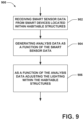
- FIG. 9 illustrates another method for providing lower level physical-layer gateway functionalities and upper-level application functionalities.
- FIG. 10 illustrates a block diagram of a computing system operable to execute the disclosed systems and methods, in accordance with an embodiment.
- the subject application describes and discloses a networking product, for instance a gateway device and/or a protocol converter device, which provides both lower level physical-layer gateway functionality as well as upper-level application functionality.
- the disclosed and described networking product is designed with flexible configurations in order to support a wide range of connected applications.
- the networking product provides extensive and reliable local connectivity through its Wi-Fi b/g/n radio with Bluetooth, ZigBeeTM HA/SE radio, 10/100/1000 MB Ethernet local area network (LAN) and expansion module slot, which can support Z-wave radios, Sub-GHz radios, and a multitude of additional wired and wireless interfaces.
- the networking product also provides modularity in its wireless local area network (WLAN) uplink options through its optional 5 th generation long term evolution (5G LTE), 4 th generation long term evolution (4G LTE) radio, Ethernet WAN and/or configuration in the Wi-Fi client mode.
- WLAN wireless local area network
- 5G LTE 5 th generation long term evolution
- 4G LTE 4 th generation long term evolution
- Ethernet WAN Ethernet WAN
- configuration in the Wi-Fi client mode e.g., a Wi-Fi client mode.
- the networking product provides a customized/customizable open-source operating system (e.g., a Linux distribution) with board support and cross compiler tool chain.
- the build environment of the networking product allows users to add front end business software and develop applications directly on top of the customized/customizable open-source operating system.
- the described networking product therefore is a software and hardware platform upon which extensive machine to machine (M2M) applications can be executed in order to provide specific end-user functionality.
- M2M machine to machine
- the described and disclosed networking product provides modularity in its wide area network (WAN) uplink options through cellular 5G LTE, 4G LTE, wired Ethernet, and/or configuration in Wi-Fi client mode.
- WAN wide area network
- the cellular interface also allows customers the ability to set up both a primary and secondary wireless access network ports.
- the wireless access network uplink allows users to export data in order to view usage and run applications remotely.
- the disclosed networking device is designed with flexible configurations in order to support a wide range of connected applications.
- the networking device provides extensive and reliable local connectivity through its standard Wi-Fi b/g/n radio with Bluetooth and optional ZigBeeTM HA, Z-Wave, and Sub-GHz radios.
- the networking device also has standard Ethernet local access network (LAN), RS-485, or CAN Bus connectivity for wired LAN solutions.
- the described networking device allows for the extraction, transformation, and loading of any existing data formats to local and/or remote databases and applications. This capability enables the networking device to support multiple protocols to seamlessly integrate into existing systems.
- the described and disclosed networking device provides an open architecture platform with an interpreted high-level programming language for general-purpose programming application-ready framework (e.g., Java, Python, . . . ) that allows for the rapid creation of custom applications. Additionally, the networking device includes a processor and ample internal memory to allow users to run applications directly on the device for local access and intelligence.
- general-purpose programming application-ready framework e.g., Java, Python, . . .
- the networking device provides facilities and functionalities that integrate multiple technologies that can facilitate implementation of a smart office that enables centralized control and/or monitoring of resources (e.g., heating, ventilation, air conditioning, lighting, safety, and/or access control).
- resources e.g., heating, ventilation, air conditioning, lighting, safety, and/or access control.
- the networking device thereby provides a scalable office infrastructure that accommodates changing workplace environments and can be adapted and/or granularly individuated for individual user requirements.
- the disclosed networking device can comprise an interconnected gateway device that can facilitate local computing, function as a smart office onsite controller, and perform functionalities associated with a cellular broadband information technology router.
- the interconnected gateway device can be adaptably and dynamically configured to be an internet of things (IoT) gateway, wherein various devices, such as consumer and/or industrial appliances, machinery, and/or equipment that can comprise and include at least one processor and that are capable of communication with a wired and/or wireless communications network can be grouped, by the interconnected gateway device, into an adhoc network of communicating devices.
- IoT internet of things
- the networking device and/or the interconnected gateway device can use open source standards based software in order to facilitate the foregoing functionalities.
- the networking device can provide facilities to allow for remote networking via bi-directional communication with the interconnected gateway device (e.g., should the interconnected gateway device be a separate individuated device communicatively couple to the networking device) and a Internet cloud.
- Bi-directional communication from the networking device, via the interconnected gateway device, to the Internet cloud can be secured using, for example, a secure cellular private network.
- the networking device can provide a remote management portal that can provide centralized management of resources, such as office space heating, ventilation, and air-conditioning (HVAC), lighting, physical building security, etc.
- HVAC office space heating, ventilation, and air-conditioning
- the networking device can provide facilities to monitor and manage HVAC and smart lighting within a building or other structure.
- the networking device can manage solar and battery storage of electricity and the smooth and seamless integration of generated and stored electricity to the wider electrical grid.
- the networking device can ensure food safety via refrigeration monitoring, whereby the networking device monitors refrigeration units coupled, for example via the gateway aspect, for fluctuations in temperatures that exceed defined optimal threshold values. Further, the networking device can seamlessly supply notification alerts via the interconnected gateway device aspect.
- the networking device can provide cellular broadband services such as facilitating primary and/or secondary connection services, cellular activation/deactivation services, installation services, data package services, customer service, technical support, remote management, real time usage notifications, billing services, and the like.
- the disclosed networking device in order to facilitate provision of the foregoing services, can comprise at least 4G LTE and/or 5G LTE modems and 4G and/or 5G LTE SIM cards.
- the networking device can provide capabilities to provide Wi-Fi and/or Ethernet wide area networking (WAN) and local area networking (LAN)
- the subject application discloses a machine, device, apparatus, and/or system, comprising: a processor; and a memory that stores executable instructions that, when executed by the processor, facilitate performance of operations.
- the operations can comprise: receiving, from a first device, a first packet representing first data formatted in a first protocol language; transforming the first data to second data formatted in a second protocol language; and transmitting a second packet representing the second data to a second device.
- Additional operations that can be performed can comprise, for instance, facilitating establishing a network connection between the first device and the second device; facilitating authentication between the first device and the second device; detecting a power outage as a function of a fluctuation in a flow of data, between the first device and the second device, traversing through the device; and/or detecting a power outage as a function of a cessation of input power to the device.
- the device can comprise a customizable radio module that facilitates wireless communication between the first device and the second device, wherein the customizable radio module implements a modular connectivity standard based on a connectivity protocol, for example: an implementation of a universal smart network access port technical standard; or a protocol independent modular communication interface technical standard.
- the customizable radio module in accordance with various embodiments can implement a fifth generation long term evolution wireless radio standard; a fourth generation long term evolution wireless radio standard; and/or an IEEE 802.15 technical standard.
- the customizable radio module in accordance with one or more embodiments, can be internally coupled with an expansion slot located within the device.
- the subject application describes a method or process, comprising: in response to receiving, by a system with a processor, first data formatted in a first protocol language from a first device; converting, by the system, the first data to second data formatted in a second protocol language; and sending, by the system, the second data to a second device.
- the method or process can comprise, for instance: facilitating establishing, by the system, a network connection between the first device and the second device; facilitating an authentication of authentication credentials between the first device and the second device; and in response to determining based on a diminution of a flow of data packets between the first device and the second device, detecting a commencement of a power outage.
- the subject application discloses and describes a machine-readable storage medium, comprising executable instructions that, when executed by the processor, facilitate performance of operations.
- the operations can comprise in response to receiving, from a first device, first packet data formatted in a first communication protocol language, transforming the first packet data to second packet data formatted in a second communication protocol language; and sending the second packet data to a second device.
- the first communication protocol language can be determined as a function of a first connectivity radio module coupled to the processor.
- the second communication protocol language can be determined as a function of a second connectivity radio module coupled to the processor.
- FIG. 1 illustrates a system 100 that provides both lower level physical-layer gateway functionality and upper-level application functionality.
- System 100 is designed with flexible configurations in order to support a wide range of connected applications.
- System 100 provides extensive and reliable local connectivity through implementation of wireless technology standards for: exchanging data over short distances, using short-wavelength microwave transmissions in the industrial, scientific, and/or medical (ISM) radio bands [e.g., from 2400-2480 MHz] from fixed and/an mobile devices, creating personal area networks (PANs) with high levels of security (e.g., Wi-Fi b/g/n radio with Bluetooth); a suite of high level communication protocols utilized to create personal area networks built from small, low power digital radios typically based in an IEEE 802.15 standard (e.g., ZigBeeTM HA/SE radio), 10/100/1000 MB Ethernet local area network (LAN), and one or more expansion module slots that can support wireless communications protocols designed for home automation to remotely control applications in residential and light commercial environments (e.g., Z-W
- System 100 can also provide modularity in its wireless local area network (WLAN) uplink options through its 5G LTE radio, 4G LTE radio, Ethernet wide area network (WAN) and/or configuration in Wi-Fi client mode.
- WLAN wireless local area network
- System 100 also provides a customized and/or customizable open-source operating system, such as a Linux operating system distribution, with board support and cross compiler tool chain.
- the build environment utilized by system 100 allows users to add front-end business software and/or develop applications directly on top of the customized and/or customizable open-source operating system.
- System 100 in accordance with an embodiment, can therefore be perceived as a software (e.g., software in execution) and/or hardware platform on which extensive machine to machine (M2M) applications can be executed in order to provide specific end-user functionalities.
- M2M machine to machine
- system 100 can include gateway engine 102 that can be coupled to processor 104 , memory 106 , and/or storage 108 .
- gateway engine 102 can be in communication with processor 104 for facilitating operation of computer executable instructions and components by gateway engine 102 , memory 106 for storing data and/or the computer executable instructions and components, and storage 108 for providing longer-term storage of data and/or computer executable instructions.
- system 100 can also receive input 110 (e.g., packets received in a first transmission protocol language) for use, manipulation, and/or transformation by gateway engine 102 to produce one or more useful, concrete, and/or tangible result and/or transform one or article to different states or things (e.g., packets that were received in a first transmission protocol language are transformed into packets in a distinguishable second transmission protocol language). Further, system 100 can also generate and output the useful, concrete, and tangible result and/or the transformed one or more articles produced by gateway engine 102 as output 112 (e.g., the packet transformed in the second transmission protocol language).
- input 110 e.g., packets received in a first transmission protocol language
- gateway engine 102 can also generate and output the useful, concrete, and tangible result and/or the transformed one or more articles produced by gateway engine 102 as output 112 (e.g., the packet transformed in the second transmission protocol language).
- Gateway engine 102 allows users to define the applications that can execute on system 100 . Additionally, system 100 , and in particular gateway engine 102 , employs an open-source operating system, albeit customized. The operating system operational and/or executing on system 100 , and thus used by gateway engine 102 to facilitate its purposes, is a non-proprietary operating system. System 100 , and gateway engine 102 , is more than a Wi-Fi to cellular gateway; it is an expandable/adaptable device that allows expanded functionalities and flexibility, providing functionalities and facilities greater the Ethernet, USB, and Wi-Fi.
- System 100 in conjunction with facilities provided by gateway engine 102 provides a modularity to allow installation of customized/customizable modules (e.g., radio modules that can effectuate and/or facilitate a modular connectivity standard that can be based upon the connector type/protocol utilized to connect to system 100 and software in execution or being performed, transacted, executed, and/or enacted by a processor (e.g., processor 104 )).
- customized/customizable modules e.g., radio modules that can effectuate and/or facilitate a modular connectivity standard that can be based upon the connector type/protocol utilized to connect to system 100 and software in execution or being performed, transacted, executed, and/or enacted by a processor (e.g., processor 104 )).
- Such software in execution can include protocol messaging that can be transacted between a first connecting transmitter device (e.g., cellular device, smart phone, laptop computer, a server computer, desktop computer, personal digital assistant (PDA), mobile devices, handheld devices, portable and/or stationary industrial and/or consumer appliances, industrial automation devices, tablet computers, actuator, controller, and the like), and system 100 , and/or a second connecting device (e.g., receiving device) that can utilize system 100 as an intermediary to communicate, via system 100 , with the first connecting device.
- a first connecting transmitter device e.g., cellular device, smart phone, laptop computer, a server computer, desktop computer, personal digital assistant (PDA), mobile devices, handheld devices, portable and/or stationary industrial and/or consumer appliances, industrial automation devices, tablet computers, actuator, controller, and the like
- PDA personal digital assistant
- the second connecting device e.g., receiving device
- PDAs personal digital assistants
- a technology standard that provides the foregoing modularity is one promulgated by the universal smart network access port (USNAP) alliance; the standard enables any home area network (HAN) or demand response (DR) device, present and future, to communicate with utility systems, energy gateways, or other devices within a home or industrial environment, for example.
- the standard also provides a protocol independent modular communication interface (MCI) that permits device manufacturers to produce intelligent energy aware industrial and/or consumer appliances that are able to interact with each other as well as with, for example, an electrical grid that utilizes information technology to gather and act on information, such as information about the behaviors of suppliers and consumers, in an automated fashion to improve the efficiency, reliability, economics, and sustainability of the production and distribution of electricity (e.g., a smart grid).
- MCI protocol independent modular communication interface
- System 100 in collaboration with gateway engine 102 , as noted earlier provides capabilities to include multiple interchangeable modular radio aspects, such as Ethernet, Wi-Fi, 5G LTE, 4G LTE, ZigBeeTM, Bluetooth, etc.
- System 100 can have a customizable expansion radio capability, wherein interchangeable modular radio aspects can be incorporated within the corpus of system 100 —through expansion slots.
- modules are not typically external to system 100 , though as will be appreciated by those of ordinary skill, system 100 is not necessarily so limited.
- system 100 can include internal ports for connectivity of additional capabilities/facilities; system 100 does not require additional aspects to be connected via or through external physical ports such as RS-232, Ethernet, LAN, etc.
- system 100 can connect to smart meter devices (e.g., ZigBeeTM SEP 1.X smart meter devices) that can enable electric utilities and/or end users to manage energy demand over an electric utility's advanced meter infrastructure (AMI) network.
- System 100 through aspects provided by gateway engine 102 , thus has the ability to connect and authentic with a smart meter device using a key establishment procedure.
- System 100 has the ability to automatically rejoin or re-establish connection, at a network level, to a previously associated smart meter device after a power failure that occurs to system 100 .
- system 100 has the capability to rejoin at a network level to a previously associated smart meter device after a general power outage (e.g., after a natural disaster, such as earth quake, hurricane, brownout, etc.).
- System 100 is also capable of reestablishing connection with the smart meter device should the smart meter device, rather than system 100 , be the subject to a power outage.
- system 100 is capable of being reconfigured and/or associated with a disparate smart meter device should the need arise and/or when the smart meter device becomes inoperable.
- System 100 also provides facilities that allow a smart meter device to decommission/disallow (temporarily and/or permanently) system 100 from being able to access the smart meter device, as circumstances dictate. It should nevertheless be comprehended that reinstatement of access to the smart meter device can be mutually facilitated should system 100 be powered off for a definable duration of time (e.g., 5 minutes, 10 minutes, 30 minutes, 1 hour, 6 hours, 12 hours, 24 hours, etc.) Additionally, system 100 has the facilities to re-associate with the smart meter device when there is a general system wide power failure, and system 100 is but one of many similar devices attempting to re-establish connectivity with the smart meter device.
- a decommission/disallow temporary and/or permanently
- System 100 can employ the smart meter device as a time server or time service (e.g., where the smart meter device sets the time) and system 100 can synchronize with the time signal propagated by the smart meter device.
- system 100 is also capable of automatically re-synchronizing with the smart meter device should the smart meter device undergo a soft reset; where system 100 itself experiences a connectivity failure (e.g., due to a power outage, having been disallowed connection by the smart meter device, communication failure, etc.); or where the smart meter device and system 100 both are subject to a general power outage and/or a communications failure.
- system 100 can support and/or display summation information recorded by the smart meter device using the formatting information from smart meter device with at least 1 decimal place precision.
- System 100 also provides support and/or display of current energy demand or energy consumption using formatting information from the smart meter device with at least 1 decimal place precision.
- system 100 provides support and/or display of historical energy consumption, wherein the historical energy consumption uses the formatting information from the smart meter device with at least 1 decimal place of precision. It should be noted that in the context of measuring units, system 100 does not have the usage value for this attribute hardcoded; the measuring units are configurable depending on usage case.
- System 100 can also support and/or display consumption information according to the smart meter's configuration. Further, system 100 uses the attribute from the smart meter to apply a correct divisor for energy usage as well as use the attribute from the smart meter to apply the correct multiplier for energy usage.
- system 100 is capable of changing to different wireless frequency channels as indicated by the smart meter device and after changing frequency channels is able to resume operation without error. Additionally, system 100 is capable of changing to any channel in a specified spectrum while establishing communication with a smart meter device.
- system 100 in addition to being able to connect to smart meter devices to deliver demand management services, system 100 can also connect to a grid of similar devices and utility demand management internet protocol based servers via a broadband network through technical standards and protocols promulgated by the Open Automated Demand Response (OpenADR) alliance.
- System 100 therefore in able to simultaneously connect to electric utilities both through the smart meter device as well as through the Internet (e.g., using protocols provided by the Open Automated Demand (OpenADR) alliance).
- This facility provides utilities (e.g., electric, water, gas, etc.), homeowners, and residential and/or commercial building owners unmatched flexibility in network architecture.
- system 100 can comprise or be associated with an uninterrupted power supply, as such when system 100 is situated between a router (e.g., home router) aspect and a wider local area network (LAN), system 100 can sense power outages and can configure and/or reconfigure itself to perform the additional facilities and/or functionalities generally provided by the router aspect.
- the configuration or reconfiguration of system 100 to perform the additional functionalities and facilities of the router aspect can be based on, or performed as a function of, a detection of a rapid diminution/cessation of a flow of data traversing through system 100 and/or a detection of a cessation or a fluctuation of input power to system 100 itself.
- system 100 can, for example, download, from a cloud storage service, a customized and/or a customizable operating system.
- the customized and/or customizable operating system can be a distribution of an open source operating system, such as a customized distribution of Linux.
- the download from the cloud from the cloud storage service can be performed on a push and/or a pull basis, wherein on a push basis, a cloud storage service detects that system 100 has connected, via a local area network, to the cloud in general and that an appropriate distribution should automatically be forwarded to system 100 .
- system 100 can request that the customized and/or customizable operating system be downloaded from the cloud storage service.
- system 100 can download an operating system that can be automatically and uniquely configured and/or adapted as a function of one or more modules that can have been included within system 100 at the point in time when system 100 connects to the cloud via a local area network.
- the operating system distribution can be downloaded to system 100 in response to a user prompt (e.g., where a user utilizes a dialog with a cloud storage service to download an appropriate operating system distribution).
- system 100 can be booted from a secure digital (SD) memory card.
- SD secure digital
- system 100 can be utilized in a network of air quality monitor devices, wherein the air quality monitor devices include a multitude of air quality sensors (e.g., particulate matter sensors, temperature sensors, relative humidity sensors, volatile organic compound sensors, nitrogen oxides sensors, carbon monoxide sensors, combustible/flammable gases sensors, carbon dioxide sensors, formaldehyde sensors, hydrogen sensors, oxygen and/or ozone sensors, ammonia sensors, chlorine sensors, hydrogen sulfide sensors, and the like), measuring devices (e.g., light meters, barometers, radon monitors, thermostats, and the like), controllers (e.g., based on, or as a function of, measurements received from one or more sensors and/or measuring devices, one or more absolute threshold or set point and/or one or more defined or dynamically determined variable threshold or set point with respect to the measurements, causing or initiating actuation of abatement devices such as: ventilators, air conditioners, humidifiers, extraction fans, heaters, coolers, chillers
- air quality sensors
- Each of the networked air quality monitor devices can also include facilities to disseminate notifications via email, telephonically, using a short message service (SMS), a multi message service (MMS), a paging service, or the like, to notify appropriate persons of the deterioration of the air quality within (or external to) a enclosed area (e.g., a residential home, a clean room, etc.).
- SMS short message service
- MMS multi message service
- paging service e.g., a paging service, or the like
- the facilities and/or functionalities to disseminate, send, or dispatch notifications by email, telephonically, using short message services, multi message services, paging services, to notify relevant parties of the deterioration of the air quality within confined areas can also be performed by system 100 , and in particular by gateway engine 102 .
- air quality monitor devices can also include facilities to cause the activation of one or more audio/visual warning indicators that can be associated with the networked air quality monitor devices or the one or more audio/visual warning indicators can be activated by system 100 (e.g., gateway engine 102 acting as a analytical and/or communication coordination nexus).
- Typical audio/visual warning indicators that can be activated by the air quality monitor devices on their own volition (or at the behest of system 100 and in particular by gateway engine 102 ) can include alarms, such as horns, buzzers, etc. and flashing light emitting diodes (LEDs).
- audio/visual warning indicators and/or dispatched notifications provide a method of informing relevant parties within, or external to, a confined space or area that the air quality has deteriorated or is deteriorating to deleterious levels because of rising levels in one or more measured air pollutant and/or humidity and/or temperature within the confined space, and that action needs to be taken to either abate the hazard (e.g., by ventilating the confined space) or by moving to a safer zone (such as moving outdoors, or to a pre-established clean room where the air quality is less hazardous or is subject to more robust air quality abatement or mitigation measures).
- a safer zone such as moving outdoors, or to a pre-established clean room where the air quality is less hazardous or is subject to more robust air quality abatement or mitigation measures.
- the aforementioned air quality monitor devices can be networked with one another and/or can be communicatively coupled to system 100 .
- the connecting communications technologies that can be utilized by the air quality monitor devices and/or system 100 to establish network communications between each other to form the network or grid can include utilization of: advanced metering infrastructure (AMI) technologies, Wi-Fi technologies, cellular broadcast standards (e.g., 3GPP and/or 4G LTE standards, IEEE protocols, etc.), FM radio, the Internet, paging services, power line carrier technologies, etc.
- AMI advanced metering infrastructure
- Wi-Fi Wireless Fidelity
- cellular broadcast standards e.g., 3GPP and/or 4G LTE standards, IEEE protocols, etc.
- FM radio e.g., FM radio, the Internet, paging services, power line carrier technologies, etc.
- Other technologies that can be utilized with equal facility and/or functionality to establish communication networks between the respective air quality monitor devices and/or system 100 can include, for instance, a suite of high level communication protocols utilized to create personal area networks built from small, low power digital radios (e.g., ZigBeeTM); wireless standards for exchanging data using short wave length microwave transmissions in the industrial, scientific, and medical (ISM) radio bands (e.g., from 2400-2480 MHz) from fixed and/or mobile devices, creating personal area networks with high levels of security (e.g., Bluetooth); and/or technologies that utilize message based protocols designed to be employed in vehicles such as: automobiles, buses, trains, industrial and/or agricultural vehicles, waterborne vessels, aircraft, etc. to allow microcontrollers and/or devices to communicate with each other within the vehicle without the necessity of a host computer (e.g., CAN Bus).
- ISM industrial, scientific, and medical
- system 100 and the functionality and/or facility provided or supplied by gateway engine 102 , in accordance with an embodiment, is as a device that converts packets received in a first transmission protocol language to packets formatted in a second transmission protocol language.
- the transformation that therefore takes place, is that a first packet received from a first device formatted in a first transmission protocol is transformed and/or formatted into a second packet in a second transmission protocol that can be transmitted to a second device.
- a useful concrete and tangible result or a transformation of an article to a different state or thing is thus resultant; from a packet configured for transmission by a first device in a first transmission protocol and comprehensible to the first device to a packet configured for reception by a second device in a second transmission protocol, wherein the packet received in the second transmission protocol is comprehensible to the second device.
- gateway engine 102 can also convert raw sensor data (e.g., data obtained and/or solicited from one or more sensor devices and/or one or more measurement devices included or associated with one or more air quality monitor device organized as a network of air quality monitor devices and/or a set of networked air quality monitor devices, wherein a set as utilized throughout this disclosure is a grouping of devices that includes at least one device and the grouping is not a null or empty set) to physical units.
- raw sensor data e.g., data obtained and/or solicited from one or more sensor devices and/or one or more measurement devices included or associated with one or more air quality monitor device organized as a network of air quality monitor devices and/or a set of networked air quality monitor devices, wherein a set as utilized throughout this disclosure is a grouping of devices that includes at least one device and the grouping is not a null or empty set
- system 100 and gateway engine 102 in particular can obtain and/or retrieve (e.g., from a server aspect situated in a network cloud), store (in memory 106 and/or in storage 108 ), and utilize calibration equations, graphs, tables, or charts, or other calibration mappings to convert raw sensor data to a physical measurement.
- the sensors and measuring instrumentation utilized and/or included within the air quality monitor devices at issue typically generate signals (analog and/or digital) that require one or more calibration equations, tables, graphs, charts, or other mapping or conversion techniques to convert a raw signal received from an air quality monitor device to an intelligible or comprehensible physical measurement that can be utilized to determine, in conjunction with various absolute and/or predetermined, contemporaneously ascertained and/or defined set point or thresholds, whether the air quality within a contained area or space has or is deteriorating.
- the physical measurements generated by system 100 through facilities provided, for instance, by gateway engine 102 and/or its associated components can thereafter be displayed, for instance in an application operating and/or operational on system 100 ; an application that can graph the physical measurements on an associated display device (e.g., monitor display device within a web browser, etc.).
- the display of physical measurements within an application operating and/or operational on system 100 and/or in a graphical application executing on system 100 can be effectuated locally and/or remotely.
- the graphical display generated by system 100 and projected onto a display surface can display thresholds or set points.
- system 100 can send alerts, alarms (audible and/or visible), notifications (e.g., via e-mail, text message, paging, etc.), activate extraction fans, actuate the opening/closing the windows/doors, actuate air conditioners, blowers, heaters, coolers etc. in order to mitigate the deterioration of the air quality.
- system 100 through use of gateway engine 102 , has the ability to virtualize the physical measurements pertaining, in this instance, to air quality measurement data obtained from one or more air quality monitor devices, and thereby provide a remote monitoring capability that allows remote monitoring devices, based on and/or as a function of the physical measurements representative of the air quality measurement data (e.g., the raw data captured by sensors or measuring instrumentation associated with a network of air quality monitor devices that was directed to system 100 for transformation to physical measurement data), one or more defined, pre-determined, dynamically determined (e.g., contemporaneously determined through use of one or more artificial intelligence and/or machine learning techniques and/or technologies that can be included within an artificial intelligence component, such as neural networks, expert systems, Bayesian belief networks, support vector machines (SVMs), Hidden Markov Models (HMMs), fuzzy logic, data fusion, collaborative filtering, and the like) thresholds or set points, absolute and/or variable, to dispatch alerts/notifications, activate alarms, actuate or set in motion a chain of
- Such abatement and/or mitigation activities can include actuating extraction fans, ventilators, humidifiers, dehumidifiers, sump pumps, atomizers, heaters, coolers, air conditioners, blowers, air pumps, air enrichment units, etc.
- System 100 in collaboration with gateway engine 102 can also include a smart sampling aspect, wherein data from one or more sensors and/or measuring devices is read as a continuous stream of data and thereafter is subject to a sampling technique that reduces the bandwidth necessary to transmit or convey the data to cloud storage and/or for analysis by an analytic engine associated with one or more research and/or medical institution.
- System 100 can employ an intelligent sampling process or algorithm that is applied to captured/collected raw or real data (e.g., data collected by deployed sensor devices situated in the field, such as air quality monitor devices, home energy management devices, devices employed by security facilities such as jails and/or secure facilities such as data centers, financial institutions, and the like) in order to reduce the amount of data that needs to be communicated over wired and/or wireless networks.
- captured/collected raw or real data e.g., data collected by deployed sensor devices situated in the field, such as air quality monitor devices, home energy management devices, devices employed by security facilities such as jails and/or secure facilities such as data centers, financial institutions, and the like
- the process or algorithm operational on gateway engine 102 operates in two sampling modes: (1) a quiescent mode (typically the default mode); and (2) a high-sample mode.
- a quiescent mode for example, raw data is stored to storage 108 at a low sampling rate (e.g. every five minutes).
- a high-sampling mode for instance, raw data is persisted to storage 108 at a highly sampling rate (e.g., every thirty seconds).
- the sampling mode can dynamically and/or automatically be changed from the quiescent mode to the high-sample mode. Conversely, where abatement, for example, in the airborne contaminant scenario, is successful, the sampling mode can return/revert to the quiescent state from the high-sample mode.
- the process as carried out by system 100 and/or gateway engine 102 determines a continuous moving average, wherein a user-defined parameter can be employed to determine the size of the sampling window over which the average is determined, as well as the overlap between subsequent average determinations.
- the sensor readings can be converted to physical units. Where the physical units fall outside a specified percentage above or below (1% above or below) the average, sensor readings are taken at an increased sampling rate for a defined or definable amount of time before the threshold test begins again.
- an upper limit e.g.
- the sampling rate is in quiescent mode and sensor readings are taken at a reduced periodicity (e.g. every 5 min. though periodicity can be adjusted based on or according to specific requirements and/or application).
- a reduced periodicity e.g. every 5 min. though periodicity can be adjusted based on or according to specific requirements and/or application.
- the sampling window can be repopulated and the process is reset. It should be appreciated that during population and repopulation, sensor readings are performed at the high sample-rate (e.g., every 30 seconds).
- window size the number of samples used to determine the average
- lag the number of samples to wait before a new average is determined, as new samples are populating the window
- upload limit variance defines an upper limit threshold value, specified as a function of (e.g., percentage) the most recent average determination
- lower limit variance defines a lower limit threshold value, specified as a function of (e.g., percentage) the most recent average determination
- time-limit if the amount of time that has elapsed since the last measurement is longer than the time-limit variable, the window is repopulated causing the process to start over
- average variance during periods when signals are within the band defined by the upper limit variance and the lower limit variance, the average variance defines how much deviation is allowed from the initial average value that was sent before a new average value is sent
- sample high time after a threshold test has been violated, sensor measurements are sent out every 30
- system 100 in conjunction with gateway engine 102 can be configured to be connected to the Internet through a wide area network (WAN) via wired Ethernet, such that should the wired wide area network connection fail or be severed for any reason, system 100 using facilities provided by gateway engine 102 can seamlessly “fail over” and switch connectivity to the Internet using a wireless or cellular network connectivity to ensure uninterrupted functionality to an end user, for example. Once wired wide area network connectivity is restored, system 100 , once again through functionality provided by gateway engine 102 , can “fall back” to being connected to the Ethernet via the wired wide area network connection. This feature enables end users to leverage the low cost of wired wide area networks while using wireless or cellular connectivity as a fail over as an assurance of connectivity.
- WAN wide area network
- system 100 in accordance with an embodiment can also include an onboard web server or web service wherein system 100 can be accessible and fully operational to any local browser and/or wireless/cellular device (e.g., smart phone device, handheld device, etc.) without the necessity of system 100 being connected via a wired wide area network.
- any local browser and/or wireless/cellular device e.g., smart phone device, handheld device, etc.
- System 100 in addition to the foregoing can also include a protocol stack that enables remote connectivity to a cloud service/server that provides remote network management facilities and/or functionalities, such as over the air software maintenance and/or upgrade capabilities, and the ability to download new applications over the air (e.g., wirelessly).
- a protocol stack that enables remote connectivity to a cloud service/server that provides remote network management facilities and/or functionalities, such as over the air software maintenance and/or upgrade capabilities, and the ability to download new applications over the air (e.g., wirelessly).
- a further application such as a “home energy management” application that can be employed to dynamically switch between one or more energy suppliers (e.g., grid power supplier, solar energy power supplier, wind energy power supplier, etc.) as a function of a unit cost to the home owner of consuming power.
- energy suppliers e.g., grid power supplier, solar energy power supplier, wind energy power supplier, etc.
- the purchase of the further subsequent application can initiate a chain of events that can culminate in the download and execution of the application on system 100 with no further user intervention.
- the foregoing protocol stack can also be employed by system 100 , and gateway engine 102 , to manage cellular connectivity usage to fit into most cost effective cellular rate packages, as well as to provide notification should any device connected to system 100 and/or should system 100 itself go offline for any reason.
- System 100 in addition to being powered through mains power (AC/DC power) can additionally and/or alternatively be operational using power over Ethernet (POE).
- POE power over Ethernet
- operating via power over Ethernet eliminates the need for a mains power outlet being located near system 100 .
- system 100 can include an uninterrupted data supply (UDS) functionality that can be analogous to an uninterruptible power supply (UPS) feature.
- the uninterrupted data supply feature can broadcast to a Wi-Fi network to which system 100 has/had established connection through a primary router in cases of power outages and/or when there are sensed primary router failures.
- the included uninterrupted data supply aspect can also be configured to provide high-priority devices operating crucial applications (e.g., email servers, application servers, etc.) the required bandwidth for continued operations, while concurrently blocking or limit lowering non-crucial low priority applications (e.g., Netflix, Youtube, and the like) from continued/continuous operation.
- the uninterrupted data supply features of system 100 can also be configured or programmed to shut off or terminate when data limits have been reached in order to avoid data plan overages.
- the uninterrupted data supply facilities associated with system 100 can typically be tied to ancillary power sources, such a battery power packs, these ancillary power sources can also be beneficially utilized to provide power to other associated devices crucial and/or necessary to maintain continued network connectivity during power outages.
- system 100 in accordance with an embodiment and in collaboration with gateway engine 102 can provide a business continuity aspect that provides functionalities and facilities for Internet failover.
- system 100 and in particular, gateway engine 102 , in response to detecting an Internet outage, for example, as a function of a diminution or cessation of data packet traffic traversing through facilities provided by system 100 , or as a function of a cessation or a fluctuation of input power to system 100 itself, can cause system 100 to undertake the added responsibilities and functionalities of performing as a router. In this manner, system 100 acting conjunction with gateway engine 102 can provide always on Internet access.
- system 100 and gateway engine 102 in the context of the business continuity aspect can provide a monitoring functionality as well as a energy management functionality.
- the monitoring functionality can, for instance, be triggered by gateway engine 102 based at least in part on gateway engine 102 initiating facilities associated with failover functionalities in response to detecting or determining that there has been a detectable diminution data packet traffic traversing through facilities provided by system 100 , or in response to identifying a fluctuation of input power to system 100 (or components or devices/sensors with which system 100 is in wired and/or wireless communication).
- gateway engine 102 can also be triggered by gateway engine 102 as a consequence of gateway engine 102 initiating facilities associated with failover functionalities as a function of identifying that there has been a cessation of data traffic traversing through system 100 , or in response to identifying cessation of input power to system 100 .
- gateway engine 102 can provide monitoring functionalities and facilities associated with occupancy, temperature/humidity, moisture, and power monitoring.
- gateway engine 102 can provide monitoring functionalities and facilities to determine occupancy within a defined habitable space within a habitable structure, unauthorized access and/or activity within the defined habitable space (or within the habitable structure), wherein gateway engine 102 can analyze changes, over defined or definable durations time, associated with, for instance, infrared sensors that generate heat mapping data, and/or pressure pad sensors that can generate pressure mapping data.
- Other sensor devices can also be utilized with equal facility and/or functionality to detect occupancy can include photo-electric eye sensor devices, tactile pressure sensor devices, proximity sensors, and the like.
- these sensors can strategically be positioned throughout the habitable space being monitored.
- these sensors can be installed over the floor of the habitable space being monitored and can detect or determine deflections or distortions in the floor structure caused by pressure being exerted directly on a pressure pad sensor or where pressure is exerted in close proximity to at least one or more pressure pad sensors positioned within the habitable space being monitored.
- gateway engine 102 can also monitor climate-sensitive goods and areas within the habitable structure in real time and can generate and dispatch trend-based alerts/notifications.
- gateway engine 102 can utilize temperature and/or humidity sensors situated or located throughout the habitable structure (or located in identified or identifiable areas within the habitable structure, such as, walk-in refrigerators, wine cellars, clean rooms, and the like) to identify areas within the habitable structure (or identified/defined portions thereof) and detect or determine whether temperatures and/or humidity within these areas exceed or fall below defined or definable set points and/or threshold values.
- gateway engine 102 can initiate abatement processes that can include generating and sending notification messages to human intermediaries, causing activation of abatement devices and/or mitigation devices such as chillers, heaters, air-conditioners, extractions fans, etc.
- gateway engine 102 in relation to the described monitoring functionality, in real-time and in conjunction with one or more liquid/fluid detection sensors (e.g., sensors that can detect the escape or release of liquids as well as detect the release or escape of gases) and/or humidity sensors dispersed throughout the habitable structure, can measure the ambient atmosphere within habitable structures in general, and/or selected areas within the habitable structures, for the unexpected or unforeseen escape of liquids and/or gases.
- liquid/fluid detection sensors e.g., sensors that can detect the escape or release of liquids as well as detect the release or escape of gases
- humidity sensors dispersed throughout the habitable structure
- gateway engine 102 in collaboration with one or more liquid/fluid detection sensors and/or humidity sensors can detect and identify the location of an escape of liquids and/or gases based at least in part on changes in data representative of a measured relative humidity detected by one or more humidity sensors and/or changes in sensor data associated with the one or more liquid/fluid detection sensors.
- Gateway engine 102 in response to detected changes in data representative of measured relative humidity and/or changes in sensor data associated with the one or more liquid/fluid detection sensors, can generate and transmit notification messages to one or more devices used by human intermediaries so that the notified human intermediaries can initiate appropriate mitigation and/or abatement measures.
- gateway engine 102 in response to detected changes in data representative of measured relative humidity and/or changes in sensor data associated with the one or more liquid/fluid detection sensors (e.g., exceeding defined or definable set points or falling below defined or definable thresholds), and through use of allied artificial intelligence functionalities/facilities and/or associated neural network devices/components, and based on disparate data received from a multiplicity of disparate other sensor devices can facilitate initiation one or more abatement devices and/or mitigation strategy, such as causing an actuator to turn off a valve associated with the flow of the escape of liquid or gas, or cause the actuator to reduce the flow of liquid/gas passing, through flow meters communicatively (wired and/or wirelessly) coupled or operably coupled to the valve, into the habitable structure or defined areas within the habitable structure.
- abatement devices and/or mitigation strategy such as causing an actuator to turn off a valve associated with the flow of the escape of liquid or gas, or cause the actuator to reduce the flow of liquid/gas passing, through flow
- gateway engine 102 can provide a power monitoring facility/functionality, wherein power consumption by system 100 and/or disparate and varied devices and sensors situated within the entirety of the habitable structure (or selected, identified, or identifiable devices and/or sensors powered by identified, determined, selected, or defined power circuits extant within the habitable structure) can be monitored.
- the power monitoring facility/functionality can be used to establish and/or gain insight into usage patterns, wherein data representative of usage pattern data can be used to reduce power consumption within the habitable structure as a whole, and thereafter affiliated artificial intelligence components and/or neural network devices using the usage pattern data can be employed to maintain a consistency of minimal power usage by the disparate and varied devices and sensors located within the habitable structure (or portions thereof).
- the power monitoring facility/functionality can also be used to set up alerts/notifications to be sent to human intermediaries, the alerts/notifications can provide indication of unusual power spikes and/or power usage patterns that do not comport with an established pattern of power usage.
- gateway engine 102 in conjunction with determinations made by an occupancy detection aspect and based on, or as a function of, changes, over defined or definable periods of time, associated with heat mapping data and/or pressure mapping data can provide day-lighting and/or light-level tuning functionalities wherein the lighting within a habitable structure can be dynamically adjusted throughout the day to effectuate power savings in the context of lighting the habitable structure (or portions of the habitable structure).
- Gateway engine 102 in the context of the energy management functionality can also provide, through actuators and/or wireless wall control devices (with or without manual override capabilities), seamless control of lighting within the habitable structure (or portions of the habitable structure).
- Gateway engine 102 in accordance with additional functionalities of the energy management aspect can also provide functionalities and facilities associated with wireless Wi-Fi or ZigBeeTM thermostats, wherein gateway engine 102 in response to determined fluctuations in temperatures beyond or below defined or definable thresholds can automatically and dynamically adjust the ambient temperature within habitable structures in their entirety, or within selected portions of the habitable structures, for example, by utilizing analysis of heat map data to determine which areas within the habitable structures are currently occupied and data received from the thermostats situated within the occupied areas.
- gateway engine 102 can also provide facilities and/or functionalities associated with wireless lighting/electric controls to actuate smart bulbs and smart electrical fixtures.
- gateway engine 102 through use and analysis of data received, for instance, from one or more sensors associated with determining occupancy (e.g., proximity sensors, pressure sensors, infrared cameras/sensors, motion sensors, tactile pressure sensors, photoelectric eye sensors, devices that scatter laser light in intersecting patterns, moisture/humidity sensors, and the like), and/or determining temperatures and/or humidity within habitable structures, can wirelessly activate and/or deactivate smart bulbs and smart electrical fixtures as a function of data received or generated while monitoring a particular habitable structure (or portions of the particular habitable structure).
- sensors associated with determining occupancy e.g., proximity sensors, pressure sensors, infrared cameras/sensors, motion sensors, tactile pressure sensors, photoelectric eye sensors, devices that scatter laser light in intersecting patterns, moisture/humidity sensors, and the like
- determining temperatures and/or humidity within habitable structures can wirelessly activate and/or deactivate smart bulbs and smart electrical fixtures as a function of data received or generated while monitoring a particular habitable structure (or portions of the particular habitable
- gateway engine 102 in conjunction with data received and analyzed in the context of monitoring activities performed by gateway 102 , can utilize relays and dimmers (e.g., that conform to: 0-10 volt (V) electronic lighting control signaling systems; and/or network-based systems that control lighting in building automation, such as Digital Addressable Lighting Interface (DALITM)) to control lighting.
- relays and dimmers e.g., that conform to: 0-10 volt (V) electronic lighting control signaling systems; and/or network-based systems that control lighting in building automation, such as Digital Addressable Lighting Interface (DALITM)
- gateway engine 102 using data gathered and analyzed during monitoring habitable structures for occupancy, temperature and/or humidity deviations, the escape of fluids and/or liquids, and fluctuations in power usage/consumption, can use ZigBeeTM and/or Wi-Fi smart plugs to both monitor and control plug loads.
- FIG. 2 provides further illustration of system 100 , wherein in addition to gateway engine 102 , processor 104 , memory 106 , and storage 108 , system 100 can also include interface component 202 .
- Interface component 202 can be operational in collaboration with gateway engine 102 and can provide interface support (hardware and/or software) for various radio and networking interfaces, such as: interface support for technologies that allow electronic devices to exchange data or connect to the Internet wirelessly using radio waves, and that can be based on IEEE 802.11 standards (e.g., Wi-Fi, wireless access network (WAN), wireless local area network (WLAN), . . .
- IEEE 802.11 standards e.g., Wi-Fi, wireless access network (WAN), wireless local area network (WLAN), . . .
- Interface component 202 can also provide interconnection and/or support for interfaces such as USB, ZigBeeTM (HA or SE), Bluetooth, CAN Bus, and the like.
- FIG. 3 depicts further aspects of system 100 , wherein in addition to gateway engine 102 , processor 104 , memory 106 , storage 108 , and interface component 202 , system 100 can further include expansion component 302 .
- Expansion component 302 provides support for non-standard wired and/or wireless interfaces.
- Expansion component 302 utilizes a form factor that supports a modular connectivity standard based on connector type and/or connector protocol.
- expansion component 302 can utilize a form factor based on standards set forth by the universal smart network access port (USNAP) alliance.
- USBAP universal smart network access port
- Expansion component 302 allows customized or customizable daughter cards to be created that can meet the communication needs of any network of end devices, such as air quality monitor devices, home/industrial energy management devices (e.g., devices, such as thermostats, water pump controllers, renewable resource energy generation [solar, wind, etc.] and storage facilities, etc. that when connected to system 100 permit utility resource management to be conducted from the central analytical nexus that is system 100 ), amongst others.
- end devices such as air quality monitor devices, home/industrial energy management devices (e.g., devices, such as thermostats, water pump controllers, renewable resource energy generation [solar, wind, etc.] and storage facilities, etc. that when connected to system 100 permit utility resource management to be conducted from the central analytical nexus that is system 100 ), amongst others.
- FIG. 4 illustrates further aspects of system 100 , wherein system 100 can also include antenna component 402 , in addition to gateway engine 102 , processor 104 , memory 106 , storage unit 108 , interface component 202 , and expansion component 302 .
- Antenna component 402 can be employed by system 100 to receive and/or transmit signals and data as necessary.
- Antenna component 402 can therefore include a receiver device that can receive signals from one or more disparate device (e.g., air quality monitor devices) through a plurality of receive antennas provided by a receive antenna array.
- the receiver device can receive information from the receive antenna and is operatively associated with a demodulator device that demodulates the received information.
- Demodulated symbols can be analyzed by a processor 104 that can be a processor dedicated to analyzing information received by the receiver device and/or generating information for transmission by a transmitter device, a processor that controls one or more components of systems 100 , and/or a processor that both analyzes information received by the system 100 , generates information for transmission by the transmitter device, and/or controls one or more components of systems 100 , and which is coupled to memory 106 that stores data to be transmitted to or received from the one or more disparate devices, and/or any other suitable information related to performing the various actions and functions set forth herein.
- a processor 104 can be a processor dedicated to analyzing information received by the receiver device and/or generating information for transmission by a transmitter device, a processor that controls one or more components of systems 100 , and/or a processor that both analyzes information received by the system 100 , generates information for transmission by the transmitter device, and/or controls one or more components of systems 100 , and which is coupled to memory 106 that stores data to be transmitted to or received from
- Antenna component 402 can also include a transmitter device that transmits data to the one or disparate devices through a transmit antenna array.
- the transmitter device is coupled to a modulator device that can multiplex frames for transmission by the transmitter device via the transmit antenna array to the one or more disparate devices.
- ком ⁇ онент can be a processor, a process running on a processor, an object, an executable, a program, a storage device, and/or a computer.
- an application running on a server and the server can be a component.
- One or more components can reside within a process, and a component can be localized on one computer and/or distributed between two or more computers.
- these components can execute from various computer readable media having various data structures stored thereon.
- the components can communicate via local and/or remote processes such as in accordance with a signal having one or more data packets (e.g., data from one component interacting with another component in a local system, distributed system, and/or across a network, e.g., the Internet, a local area network, a wide area network, etc. with other systems via the signal).
- a signal having one or more data packets (e.g., data from one component interacting with another component in a local system, distributed system, and/or across a network, e.g., the Internet, a local area network, a wide area network, etc. with other systems via the signal).
- a component can be an apparatus with specific functionality provided by mechanical parts operated by electric or electronic circuitry; the electric or electronic circuitry can be operated by a software application or a firmware application executed by one or more processors; the one or more processors can be internal or external to the apparatus and can execute at least a part of the software or firmware application.
- a component can be an apparatus that provides specific functionality through electronic components without mechanical parts; the electronic components can include one or more processors therein to execute software and/or firmware that confer(s), at least in part, the functionality of the electronic components.
- a component can emulate an electronic component via a virtual machine, e.g., within a cloud computing system.
- exemplary and/or “demonstrative” is used herein to mean serving as an example, instance, or illustration.
- the subject matter disclosed herein is not limited by such examples.
- any aspect or design described herein as “exemplary” and/or “demonstrative” is not necessarily to be construed as preferred or advantageous over other aspects or designs, nor is it meant to preclude equivalent exemplary structures and techniques known to those of ordinary skill in the art.
- the terms “includes,” “has,” “contains,” and other similar words are used in either the detailed description or the claims, such terms are intended to be inclusive—in a manner similar to the term “comprising” as an open transition word—without precluding any additional or other elements.
- an artificial intelligence system can be used to select appropriate relay stations for secondary transmitter and secondary receivers randomly situated within a cognitive radio network, wherein the secondary receiver and secondary transmitter can base their respective decisions as to which relay station is the most suitable relay station at least in part on links between the relay station and the secondary receiver and the secondary transmitter and the relay station.
- the term “infer” or “inference” refers generally to the process of reasoning about, or inferring states of, the system, environment, user, and/or intent from a set of observations as captured via events and/or data. Captured data and events can include user data, device data, environment data, data from sensors, sensor data, application data, implicit data, explicit data, etc. Inference can be employed to identify a specific context or action, or can generate a probability distribution over states of interest based on a consideration of data and events, for example.
- Inference can also refer to techniques employed for composing higher-level events from a set of events and/or data. Such inference results in the construction of new events or actions from a set of observed events and/or stored event data, whether the events are correlated in close temporal proximity, and whether the events and data come from one or several event and data sources.
- Various classification schemes and/or systems e.g., support vector machines, neural networks, expert systems, Bayesian belief networks, fuzzy logic, and data fusion engines
- the disclosed subject matter can be implemented as a method, apparatus, or article of manufacture using standard programming and/or engineering techniques to produce software, firmware, hardware, or any combination thereof to control a computer to implement the disclosed subject matter.
- article of manufacture as used herein is intended to encompass a computer program accessible from any computer-readable device, computer-readable carrier, or computer-readable media.
- computer-readable media can include, but are not limited to, a magnetic storage device, e.g., hard disk; floppy disk; magnetic strip(s); an optical disk (e.g., compact disk (CD), a digital video disc (DVD), a Blu-ray DiscTM (BD)); a smart card; a flash memory device (e.g., card, stick, key drive); and/or a virtual device that emulates a storage device and/or any of the above computer-readable media.
- a magnetic storage device e.g., hard disk; floppy disk; magnetic strip(s); an optical disk (e.g., compact disk (CD), a digital video disc (DVD), a Blu-ray DiscTM (BD)); a smart card; a flash memory device (e.g., card, stick, key drive); and/or a virtual device that emulates a storage device and/or any of the above computer-readable media.
- a magnetic storage device e.g., hard disk; floppy disk; magnetic
- FIGS. 5 - 9 illustrate methodologies in accordance with the disclosed subject matter.
- the methodologies are depicted and described as a series of acts. It is to be understood and appreciated that the subject application is not limited by the acts illustrated and/or by the order of acts. For example, acts can occur in various orders and/or concurrently, and with other acts not presented or described herein. Furthermore, not all illustrated acts may be required to implement the methodology in accordance with the disclosed subject matter.
- the methodologies could alternatively be represented as a series of interrelated states via a state diagram or events.
- the methodologies disclosed hereinafter and throughout this specification are capable of being stored on an article of manufacture to facilitate transporting and transferring such methodologies to computers.
- the term article of manufacture, as used herein, is intended to encompass a computer program accessible from any computer-readable device, carrier, or media.
- FIG. 5 provides an illustrative method 500 for providing lower level physical-layer gateway functionalities and upper-level application functionalities, in accordance with an embodiment.
- Method 500 can commence at 502 where sensor data can be received, wirelessly and/or through wire, from one or more sensors, such as sensors associated with air quality monitor devices located in a habitable building (e.g., residential building, apartment building, hospital, office, industrial building, etc.), or part thereof (e.g., bedroom, kitchen, dining room, office, clean room, operating room, datacenter, and the like).
- a habitable building e.g., residential building, apartment building, hospital, office, industrial building, etc.
- part thereof e.g., bedroom, kitchen, dining room, office, clean room, operating room, datacenter, and the like.
- the received data can be subjected to a conversion process, wherein the received sensor data (e.g., raw data) is converted to a physical unit of measure using a conversion equation, conversion table, or conversion graph (wherein the conversion equations, conversion tables, and/or conversion graphs are related or pertain to one or more of the sensors associated with the air quality monitor devices, such as calibration curves that relate how to convert sensor signals to units of measure, etc.).
- the physical units of measure can be utilized to activate an abatement device, such as an extraction fan, blower, ventilation system, and the like, in order to reduce the amount of contaminant detected by the sensors associated with the air quality monitor devices.
- FIG. 6 provides a further illustrative method 600 for providing lower level physical-layer gateway functionalities and upper-level application functionalities, in accordance with an embodiment.
- Method 600 can commence at 602 where data from a home energy management system can be received.
- the received data can be converted from a raw state to a measurement unit using one or more conversion equation, wherein the conversion equation is a function of calibration specifications for one or more sensors included in the home energy management system.
- the supplied electrical power to a structure within which the home energy management system is located can be switched from a first power source (e.g., power emanating from the standard electrical grid—mains power) to an alternate power source, such as power generated, for example, by solar panel associated with the structure.
- a first power source e.g., power emanating from the standard electrical grid—mains power
- an alternate power source such as power generated, for example, by solar panel associated with the structure.
- FIG. 7 depicts a method 700 for providing lower level physical-layer gateway functionalities and upper-level application functionalities, in accordance with an embodiment.
- Method 700 can commence at 702 wherein smart data from one or more smart sensor device, such as smart relays, wirelessly controllable thermostats with manual override capabilities, wirelessly controllable power outlets (e.g., switches and/or dimmers) with manual override capabilities, etc. can be received.
- smart data from one or more smart sensor device, such as smart relays, wirelessly controllable thermostats with manual override capabilities, wirelessly controllable power outlets (e.g., switches and/or dimmers) with manual override capabilities, etc.
- the received smart data can be utilized to generate analysis data, such as changes heat map data, changes in pressure pad or proximity sensor data, and the like.
- analysis data such as changes heat map data, changes in pressure pad or proximity sensor data, and the like.
- smart relays smart plugs, intelligent thermostats, etc.
- supplied electrical power to a habitable structure within which the home energy management system is located can be switched from a first power source (e.g., power emanating from the standard electrical grid—mains power) to an alternate power source, such as power generated, for example, by a solar panel associated with the structure.
- a first power source e.g., power emanating from the standard electrical grid—mains power
- an alternate power source such as power generated, for example, by a solar panel associated with the structure.
- FIG. 8 depicts a method 800 for providing lower level physical-layer gateway functionalities and upper-level application functionalities, in accordance with an embodiment.
- Method 800 can commence at 802 wherein smart data from one or more smart sensor device, such as smart relays, wirelessly controllable thermostats with manual override capabilities, wirelessly controllable power outlets (e.g., switches and/or dimmers) with manual override capabilities, heat sensing devices, proximity sensor devices, moisture sensing devices, and the like, can be received.
- the received smart data can be utilized to generate analysis data, such as differential changes in heat map data, changes in pressure pad or proximity sensor data, and the like.
- analysis data such as differential changes in heat map data, changes in pressure pad or proximity sensor data, and the like.
- smart relays smart plugs, intelligent thermostats, intelligent feedback devices, etc.
- the temperature within habitable structures or identified areas with habitable structures can be adjusted. For instance, where at 804 , analysis of the analysis data indicates that a selected area of a habitable structure has no human activity within it, the temperature can be reduced, at 806 , in order to reduce power consumption within the structure.
- FIG. 9 depicts a method 900 for providing lower level physical-layer gateway functionalities and upper-level application functionalities, in accordance with an embodiment.
- Method 900 can commence at 902 wherein smart data from one or more smart sensor device, such as smart relays, wirelessly controllable thermostats with manual override capabilities, wirelessly controllable power outlets (e.g., switches and/or dimmers) with manual override capabilities, heat sensing devices, proximity sensor devices, moisture sensing devices, and the like, can be received.
- the received smart data can be utilized to generate analysis data, such as differential changes in heat map data, changes in pressure pad or proximity sensor data, and the like.
- analysis data such as differential changes in heat map data, changes in pressure pad or proximity sensor data, and the like.
- 906 through use of smart relays, smart plugs, intelligent thermostats, intelligent feedback devices, etc.
- lighting within habitable structures or identified areas within habitable structures can be adjusted. For example, where at 904 , analysis of the analysis data (e.g., heat mapping data) indicates that a selected area of a habitable structure has no human activity within it, the lighting within the selected area can be dimmed or turned off, at 906 , in order to reduce power consumption within the habitable structure.
- analysis of the analysis data e.g., heat mapping data
- processor can refer to substantially any computing processing unit or device comprising, but not limited to comprising, single-core processors; single-processors with software multithread execution capability; multi-core processors; multi-core processors with software multithread execution capability; multi-core processors with hardware multithread technology; parallel platforms; and parallel platforms with distributed shared memory.
- a processor can refer to an integrated circuit, an application specific integrated circuit (ASIC), a digital signal processor (DSP), a field programmable gate array (FPGA), a programmable logic controller (PLC), a complex programmable logic device (CPLD), a discrete gate or transistor logic, discrete hardware components, or any combination thereof designed to perform the functions and/or processes described herein.
- ASIC application specific integrated circuit
- DSP digital signal processor
- FPGA field programmable gate array
- PLC programmable logic controller
- CPLD complex programmable logic device
- processors can exploit nano-scale architectures such as, but not limited to, molecular and quantum-dot based transistors, switches and gates, in order to optimize space usage or enhance performance of mobile devices.
- a processor may also be implemented as a combination of computing processing units.
- nonvolatile memory for example, can be included in storage systems described above, non-volatile memory 1022 (see below), disk storage 1024 (see below), and memory storage 1046 (see below). Further, nonvolatile memory can be included in read only memory (ROM), programmable ROM (PROM), electrically programmable ROM (EPROM), electrically erasable ROM (EEPROM), or flash memory. Volatile memory can include random access memory (RAM), which acts as external cache memory.
- RAM random access memory
- RAM is available in many forms such as synchronous RAM (SRAM), dynamic RAM (DRAM), synchronous DRAM (SDRAM), double data rate SDRAM (DDR SDRAM), enhanced SDRAM (ESDRAM), Synchlink DRAM (SLDRAM), and direct Rambus RAM (DRRAM).
- SRAM synchronous RAM
- DRAM dynamic RAM
- SDRAM synchronous DRAM
- DDR SDRAM double data rate SDRAM
- ESDRAM enhanced SDRAM
- SLDRAM Synchlink DRAM
- DRRAM direct Rambus RAM
- the disclosed memory components of systems or methods herein are intended to comprise, without being limited to comprising, these and any other suitable types of memory.
- FIG. 10 In order to provide a context for the various aspects of the disclosed subject matter, FIG. 10 , and the following discussion, are intended to provide a brief, general description of a suitable environment in which the various aspects of the disclosed subject matter can be implemented, e.g., various processes associated with FIGS. 1 - 14 . While the subject matter has been described above in the general context of computer-executable instructions of a computer program that runs on a computer and/or computers, those skilled in the art will recognize that the subject application also can be implemented in combination with other program modules. Generally, program modules include routines, programs, components, data structures, etc. that perform particular tasks and/or implement particular abstract data types.
- inventive systems can be practiced with other computer system configurations, including single-processor or multiprocessor computer systems, mini-computing devices, mainframe computers, as well as personal computers, hand-held computing devices (e.g., PDA, phone, watch), microprocessor-based or programmable consumer or industrial electronics, and the like.
- the illustrated aspects can also be practiced in distributed computing environments where tasks are performed by remote processing devices that are linked through a communications network; however, some if not all aspects of the subject disclosure can be practiced on stand-alone computers.
- program modules can be located in both local and remote memory storage devices.
- Computer 1012 includes a processing unit 1014 , a system memory 1016 , and a system bus 1018 .
- System bus 1018 couples system components including, but not limited to, system memory 1016 to processing unit 1014 .
- Processing unit 1014 can be any of various available processors. Dual microprocessors and other multiprocessor architectures also can be employed as processing unit 1014 .
- System bus 1018 can be any of several types of bus structure(s) including a memory bus or a memory controller, a peripheral bus or an external bus, and/or a local bus using any variety of available bus architectures including, but not limited to, Industrial Standard Architecture (ISA), Micro-Channel Architecture (MSA), Extended ISA (EISA), Intelligent Drive Electronics (IDE), VESA Local Bus (VLB), Peripheral Component Interconnect (PCI), Card Bus, Universal Serial Bus (USB), Advanced Graphics Port (AGP), Personal Computer Memory Card International Association bus (PCMCIA), Firewire (IEEE 1194), and Small Computer Systems Interface (SCSI).
- ISA Industrial Standard Architecture
- MSA Micro-Channel Architecture
- EISA Extended ISA
- IDE Intelligent Drive Electronics
- VLB VESA Local Bus
- PCI Peripheral Component Interconnect
- Card Bus Universal Serial Bus
- USB Universal Serial Bus
- AGP Advanced Graphics Port
- PCMCIA Personal Computer Memory Card International Association bus
- Firewire IEEE 1194
- SCSI Small
- System memory 1016 includes volatile memory 1020 and nonvolatile memory 1022 .
- a basic input/output system (BIOS) containing routines to transfer information between elements within computer 1012 , such as during start-up, can be stored in nonvolatile memory 1022 .
- nonvolatile memory 1022 can include ROM, PROM, EPROM, EEPROM, or flash memory.
- Volatile memory 1020 includes RAM, which acts as external cache memory.
- RAM is available in many forms such as SRAM, dynamic RAM (DRAM), synchronous DRAM (SDRAM), double data rate SDRAM (DDR SDRAM), enhanced SDRAM (ESDRAM), Synchlink DRAM (SLDRAM), Rambus direct RAM (RDRAM), direct Rambus dynamic RAM (DRDRAM), and Rambus dynamic RAM (RDRAM).
- DRAM dynamic RAM
- SDRAM synchronous DRAM
- DDR SDRAM double data rate SDRAM
- ESDRAM enhanced SDRAM
- SLDRAM Synchlink DRAM
- RDRAM Rambus direct RAM
- DRAM direct Rambus dynamic RAM
- RDRAM Rambus dynamic RAM
- Computer 1012 can also include removable/non-removable, volatile/non-volatile computer storage media, networked attached storage (NAS), e.g., SAN storage, etc.
- FIG. 10 illustrates, for example, disk storage 1024 .
- Disk storage 1024 includes, but is not limited to, devices like a magnetic disk drive, floppy disk drive, tape drive, Jaz drive, Zip drive, LS-100 drive, flash memory card, or memory stick.
- disk storage 1024 can include storage media separately or in combination with other storage media including, but not limited to, an optical disk drive such as a compact disk ROM device (CD-ROM), CD recordable drive (CD-R Drive), CD rewritable drive (CD-RW Drive) or a digital versatile disk ROM drive (DVD-ROM).
- an optical disk drive such as a compact disk ROM device (CD-ROM), CD recordable drive (CD-R Drive), CD rewritable drive (CD-RW Drive) or a digital versatile disk ROM drive (DVD-ROM).
- CD-ROM compact disk ROM device
- CD-R Drive CD recordable drive
- CD-RW Drive CD rewritable drive
- DVD-ROM digital versatile disk ROM drive
- interface 1026 a removable or non-removable interface
- FIG. 10 describes software that acts as an intermediary between users and computer resources described in suitable operating environment 1000 .
- Such software includes an operating system 1028 .
- Operating system 1028 which can be stored on disk storage 1024 , acts to control and allocate resources of computer 1012 .
- System applications 1030 take advantage of the management of resources by operating system 1028 through program modules 1032 and program data 1034 stored either in system memory 1016 or on disk storage 1024 . It is to be appreciated that the disclosed subject matter can be implemented with various operating systems or combinations of operating systems.
- a user can enter commands or information into computer 1012 through input device(s) 1036 .
- Input devices 1036 include, but are not limited to, a pointing device such as a mouse, trackball, stylus, touch pad, keyboard, microphone, joystick, game pad, satellite dish, scanner, TV tuner card, digital camera, digital video camera, web camera, and the like. These and other input devices connect to processing unit 1014 through system bus 1018 via interface port(s) 1038 .
- Interface port(s) 1038 include, for example, a serial port, a parallel port, a game port, and a universal serial bus (USB).
- Output device(s) 1040 use some of the same type of ports as input device(s) 1036 .
- a USB port can be used to provide input to computer 1012 and to output information from computer 1012 to an output device 1040 .
- Output adapter 1042 is provided to illustrate that there are some output devices 1040 like monitors, speakers, and printers, among other output devices 1040 , which use special adapters.
- Output adapters 1042 include, by way of illustration and not limitation, video and sound cards that provide means of connection between output device 1040 and system bus 1018 . It should be noted that other devices and/or systems of devices provide both input and output capabilities such as remote computer(s) 1044 .
- Computer 1012 can operate in a networked environment using logical connections to one or more remote computers, such as remote computer(s) 1044 .
- Remote computer(s) 1044 can be a personal computer, a server, a router, a network PC, a workstation, a microprocessor based appliance, a peer device, or other common network node and the like, and typically includes many or all of the elements described relative to computer 1012 .
- Network interface 1048 encompasses wire and/or wireless communication networks such as local-area networks (LAN) and/or wide-area networks (WAN).
- LAN technologies include Fiber Distributed Data Interface (FDDI), Copper Distributed Data Interface (CDDI), Ethernet, Token Ring and the like.
- WAN technologies include, but are not limited to, point-to-point links, circuit switching networks like Integrated Services Digital Networks (ISDN) and variations thereon, packet switching networks, and Digital Subscriber Lines (DSL).
- ISDN Integrated Services Digital Networks
- DSL Digital Subscriber Lines
- Communication connection(s) 1050 refer(s) to hardware/software employed to connect network interface 1048 to bus 1018 . While communication connection 1050 is shown for illustrative clarity inside computer 1012 , it can also be external to computer 1012 .
- the hardware/software for connection to network interface 1048 can include, for example, internal and external technologies such as modems, including regular telephone grade modems, cable modems and DSL modems, ISDN adapters, and Ethernet cards.
Landscapes
- Engineering & Computer Science (AREA)
- Computer Networks & Wireless Communication (AREA)
- Signal Processing (AREA)
- Computer Security & Cryptography (AREA)
- Small-Scale Networks (AREA)
- Mobile Radio Communication Systems (AREA)
Abstract
Description
Claims (20)
Priority Applications (3)
| Application Number | Priority Date | Filing Date | Title |
|---|---|---|---|
| US16/214,415 US11711451B2 (en) | 2018-12-10 | 2018-12-10 | Connected gateway |
| US18/225,181 US12166848B2 (en) | 2018-12-10 | 2023-07-24 | Connected gateway |
| US18/973,569 US20250106313A1 (en) | 2018-12-10 | 2024-12-09 | Connected gateway |
Applications Claiming Priority (1)
| Application Number | Priority Date | Filing Date | Title |
|---|---|---|---|
| US16/214,415 US11711451B2 (en) | 2018-12-10 | 2018-12-10 | Connected gateway |
Related Child Applications (1)
| Application Number | Title | Priority Date | Filing Date |
|---|---|---|---|
| US18/225,181 Continuation US12166848B2 (en) | 2018-12-10 | 2023-07-24 | Connected gateway |
Publications (2)
| Publication Number | Publication Date |
|---|---|
| US20200186626A1 US20200186626A1 (en) | 2020-06-11 |
| US11711451B2 true US11711451B2 (en) | 2023-07-25 |
Family
ID=70971330
Family Applications (2)
| Application Number | Title | Priority Date | Filing Date |
|---|---|---|---|
| US16/214,415 Active US11711451B2 (en) | 2018-12-10 | 2018-12-10 | Connected gateway |
| US18/225,181 Active US12166848B2 (en) | 2018-12-10 | 2023-07-24 | Connected gateway |
Family Applications After (1)
| Application Number | Title | Priority Date | Filing Date |
|---|---|---|---|
| US18/225,181 Active US12166848B2 (en) | 2018-12-10 | 2023-07-24 | Connected gateway |
Country Status (1)
| Country | Link |
|---|---|
| US (2) | US11711451B2 (en) |
Families Citing this family (7)
| Publication number | Priority date | Publication date | Assignee | Title |
|---|---|---|---|---|
| US11137163B2 (en) * | 2019-07-16 | 2021-10-05 | Airthinx, Inc | Environment monitoring and management systems and methods |
| AU2020386528B2 (en) | 2019-11-22 | 2023-06-01 | Qc Manufacturing, Inc. | Fresh air cooling and ventilating system |
| US11552839B2 (en) * | 2020-06-24 | 2023-01-10 | At&T Intellectual Property I, L.P. | Residential gateway with traffic scheduling |
| JP7367623B2 (en) * | 2020-06-25 | 2023-10-24 | 横河電機株式会社 | Data management system, data management method, and data management program |
| US12305867B2 (en) * | 2021-03-18 | 2025-05-20 | Research Products Corporation | System and method for nebulizer failure detection |
| US12072117B2 (en) | 2021-09-17 | 2024-08-27 | Airthinx, Inc | Environment management systems and methods |
| CN119652985A (en) * | 2025-02-19 | 2025-03-18 | 赛思科技(西安)有限公司 | A fusion communication method |
Citations (29)
| Publication number | Priority date | Publication date | Assignee | Title |
|---|---|---|---|---|
| US4146803A (en) | 1977-06-24 | 1979-03-27 | Hochiki Corporation | Fire-responsive control device utilizing thyristors |
| EP0571367A1 (en) | 1989-11-08 | 1993-12-01 | British Tech Group | Gas sensors and compounds suitable therefor. |
| US5511006A (en) | 1992-01-13 | 1996-04-23 | Matsushita Electric Industrial Co., Ltd. | Method and apparatus for determining an air quality level |
| US6288646B1 (en) | 1999-08-31 | 2001-09-11 | Air Advice.Com | Allergen detection and air/asthma advice provision |
| US20030200337A1 (en) * | 2002-03-12 | 2003-10-23 | Dilithium Networks, Inc. | Method and system for improved transcoding of information through a telecommunication network |
| US20040109473A1 (en) * | 2002-12-05 | 2004-06-10 | Gerald Lebizay | Interconnecting network processors with heterogeneous fabrics |
| US6774802B2 (en) | 2002-03-20 | 2004-08-10 | Hon Technology Inc. | Detection and air evacuation system |
| US20060261967A1 (en) | 2002-08-23 | 2006-11-23 | Marman Douglas H | Smoke detector and method of detecting smoke |
| US7265669B2 (en) | 2004-03-01 | 2007-09-04 | Mesosystems Technology, Inc. | Networks with sensors for air safety and security |
| US20080045156A1 (en) | 2006-08-21 | 2008-02-21 | Ketul Sakhpara | Mobile Handset with Air Pollution Meter and System |
| US7378954B2 (en) | 2005-10-21 | 2008-05-27 | Barry Myron Wendt | Safety indicator and method |
| US7417553B2 (en) | 2004-11-30 | 2008-08-26 | Young Scott G | Surface mount or low profile hazardous condition detector |
| US20080263189A1 (en) * | 2007-04-19 | 2008-10-23 | Microsoft Corporation | Secure identification of intranet network |
| US20090126382A1 (en) | 2006-01-20 | 2009-05-21 | Carrier Corporation | Electronic Indoor Air Quality Board For Air Conditoner Controller |
| US20090247110A1 (en) | 2008-03-27 | 2009-10-01 | At&T Mobility Ii Llc | Systems And Methods For Activating A Security System Upon Receipt Of Emergency Alert Messages |
| US20090273470A1 (en) | 2008-03-21 | 2009-11-05 | Vytas Sinkevicius | Environmental monitoring and control system |
| US20110090763A1 (en) | 2009-10-20 | 2011-04-21 | Hon Hai Precision Industry Co., Ltd. | Personal water safety device and method thereof |
| WO2011090763A2 (en) | 2009-12-29 | 2011-07-28 | The Regents Of The University Of California | Multimodal climate sensor network |
| US20110264276A1 (en) | 2009-10-30 | 2011-10-27 | Rudin Management Co. Inc. | Interconnected electrical network and building management system and method of operation |
| US20120303164A1 (en) * | 2008-12-30 | 2012-11-29 | Synapsense Corporation | APPARATUS AND METHOD FOR CONTROLLING COMPUTER ROOM AIR CONDITIONING UNITS (CRACs) IN DATA CENTERS |
| US20120314585A1 (en) * | 2011-06-09 | 2012-12-13 | Verizon Patent And Licensing Inc. | Management of fixed wireless devices through an ip network |
| US20140092742A1 (en) * | 2012-09-28 | 2014-04-03 | Joey Chou | Management apparatus and method to support wlan offloading |
| US8907803B2 (en) | 2012-01-09 | 2014-12-09 | Intwine Energy | Networked air quality monitoring |
| US20150194039A1 (en) * | 2014-01-03 | 2015-07-09 | Intwine Energy | Connected gateway |
| US20160174294A1 (en) * | 2014-12-12 | 2016-06-16 | Hong Fu Jin Precision Industry (Wuhan) Co., Ltd. | Router |
| US20170175367A1 (en) * | 2015-12-17 | 2017-06-22 | Inventec Corporation | Water Resource Control System At Home And Method Thereof |
| US9986509B1 (en) * | 2017-04-21 | 2018-05-29 | Cisco Technology, Inc. | Advance remote failure notification (ARFN) |
| US20190007311A1 (en) * | 2017-06-30 | 2019-01-03 | Intel Corporation | Device, Apparatus, Method and Computer Programs for a Network Gateway, Server, Server Apparatus, Server Method, System, Router, Mobile Device, Vehicular Gateway and Cloud Server |
| US20200098234A1 (en) * | 2018-09-22 | 2020-03-26 | Fedex Corporate Services, Inc. | Systems and methods for internal and external monitoring for an environmental anomaly within a shipping container and reporting to an external transceiver to initiate a mediation response |
Family Cites Families (4)
| Publication number | Priority date | Publication date | Assignee | Title |
|---|---|---|---|---|
| US8626951B2 (en) * | 2007-04-23 | 2014-01-07 | 4Dk Technologies, Inc. | Interoperability of network applications in a communications environment |
| US11293805B1 (en) * | 2015-02-13 | 2022-04-05 | Avery Dennison Corporation | Systems and methods for logging temperatures of food products |
| US9633197B2 (en) * | 2015-03-06 | 2017-04-25 | Verisign, Inc. | Systems and methods for device detection and authorization in a IOT framework |
| US10291690B1 (en) * | 2015-07-22 | 2019-05-14 | Activity Monitoring Technologies S.A. de C.V. | Heterogeneous device communication system |
-
2018
- 2018-12-10 US US16/214,415 patent/US11711451B2/en active Active
-
2023
- 2023-07-24 US US18/225,181 patent/US12166848B2/en active Active
Patent Citations (31)
| Publication number | Priority date | Publication date | Assignee | Title |
|---|---|---|---|---|
| US4146803A (en) | 1977-06-24 | 1979-03-27 | Hochiki Corporation | Fire-responsive control device utilizing thyristors |
| EP0571367A1 (en) | 1989-11-08 | 1993-12-01 | British Tech Group | Gas sensors and compounds suitable therefor. |
| US5511006A (en) | 1992-01-13 | 1996-04-23 | Matsushita Electric Industrial Co., Ltd. | Method and apparatus for determining an air quality level |
| US6288646B1 (en) | 1999-08-31 | 2001-09-11 | Air Advice.Com | Allergen detection and air/asthma advice provision |
| US20030200337A1 (en) * | 2002-03-12 | 2003-10-23 | Dilithium Networks, Inc. | Method and system for improved transcoding of information through a telecommunication network |
| US6774802B2 (en) | 2002-03-20 | 2004-08-10 | Hon Technology Inc. | Detection and air evacuation system |
| US20060261967A1 (en) | 2002-08-23 | 2006-11-23 | Marman Douglas H | Smoke detector and method of detecting smoke |
| US20040109473A1 (en) * | 2002-12-05 | 2004-06-10 | Gerald Lebizay | Interconnecting network processors with heterogeneous fabrics |
| US7265669B2 (en) | 2004-03-01 | 2007-09-04 | Mesosystems Technology, Inc. | Networks with sensors for air safety and security |
| US7417553B2 (en) | 2004-11-30 | 2008-08-26 | Young Scott G | Surface mount or low profile hazardous condition detector |
| US7378954B2 (en) | 2005-10-21 | 2008-05-27 | Barry Myron Wendt | Safety indicator and method |
| US20090126382A1 (en) | 2006-01-20 | 2009-05-21 | Carrier Corporation | Electronic Indoor Air Quality Board For Air Conditoner Controller |
| US20080045156A1 (en) | 2006-08-21 | 2008-02-21 | Ketul Sakhpara | Mobile Handset with Air Pollution Meter and System |
| US20080263189A1 (en) * | 2007-04-19 | 2008-10-23 | Microsoft Corporation | Secure identification of intranet network |
| US20090273470A1 (en) | 2008-03-21 | 2009-11-05 | Vytas Sinkevicius | Environmental monitoring and control system |
| US20090247110A1 (en) | 2008-03-27 | 2009-10-01 | At&T Mobility Ii Llc | Systems And Methods For Activating A Security System Upon Receipt Of Emergency Alert Messages |
| US20120303164A1 (en) * | 2008-12-30 | 2012-11-29 | Synapsense Corporation | APPARATUS AND METHOD FOR CONTROLLING COMPUTER ROOM AIR CONDITIONING UNITS (CRACs) IN DATA CENTERS |
| US20110090763A1 (en) | 2009-10-20 | 2011-04-21 | Hon Hai Precision Industry Co., Ltd. | Personal water safety device and method thereof |
| US20110264276A1 (en) | 2009-10-30 | 2011-10-27 | Rudin Management Co. Inc. | Interconnected electrical network and building management system and method of operation |
| WO2011090763A2 (en) | 2009-12-29 | 2011-07-28 | The Regents Of The University Of California | Multimodal climate sensor network |
| US20120314585A1 (en) * | 2011-06-09 | 2012-12-13 | Verizon Patent And Licensing Inc. | Management of fixed wireless devices through an ip network |
| US8907803B2 (en) | 2012-01-09 | 2014-12-09 | Intwine Energy | Networked air quality monitoring |
| US20140092742A1 (en) * | 2012-09-28 | 2014-04-03 | Joey Chou | Management apparatus and method to support wlan offloading |
| US20150194039A1 (en) * | 2014-01-03 | 2015-07-09 | Intwine Energy | Connected gateway |
| US9373243B2 (en) | 2014-01-03 | 2016-06-21 | Intwine Connect, Llc | Connected gateway for an abatement device processing raw data |
| US20160174294A1 (en) * | 2014-12-12 | 2016-06-16 | Hong Fu Jin Precision Industry (Wuhan) Co., Ltd. | Router |
| US20170175367A1 (en) * | 2015-12-17 | 2017-06-22 | Inventec Corporation | Water Resource Control System At Home And Method Thereof |
| US9986509B1 (en) * | 2017-04-21 | 2018-05-29 | Cisco Technology, Inc. | Advance remote failure notification (ARFN) |
| US20190007311A1 (en) * | 2017-06-30 | 2019-01-03 | Intel Corporation | Device, Apparatus, Method and Computer Programs for a Network Gateway, Server, Server Apparatus, Server Method, System, Router, Mobile Device, Vehicular Gateway and Cloud Server |
| US20200098234A1 (en) * | 2018-09-22 | 2020-03-26 | Fedex Corporate Services, Inc. | Systems and methods for internal and external monitoring for an environmental anomaly within a shipping container and reporting to an external transceiver to initiate a mediation response |
| US11223682B2 (en) * | 2018-09-22 | 2022-01-11 | Fedex Corporate Services Inc. | Systems and methods for internal and external monitoring for an environmental anomaly within a shipping container and reporting to an external transceiver to initiate a mediation response |
Non-Patent Citations (7)
| Title |
|---|
| Dearborn, et al., "Remote Sensing Technology for Indoor Air Quality Monitoring", Case Western Reserve University NCS Study Center Dept. Environmental Health Sciences, 24 pages. |
| Environmental Health Watch, "Remote Monitoring of Home Air Quality for Comparison of Energy Star and Deep Energy Retrofits", HUD Green & Healthy Homes Technical Studies Program, 2 pages. |
| Figaro "TGS 2602—for the detection of Air Contaminants", Figaro USA, Inc., Jan. 2005, 2 pages. |
| Honeywell "HIH-4030/31 Series, Humidity Sensors", Honeywell Sensing and Control, Mar. 2008, 8 pages. |
| International Search Report and Written Opinion for International Patent Application No. PCT/US2013/020779 dated Mar. 15, 2013, 14 pages. |
| Microchip TC77 "Thermal Sensor with SPI Interface", Microchip Technology Incorporated, 2002, 22 pages. |
| Synkera Technologies. Inc. "Low-Level NOx Data Sheet (P/N 706)", Synkera Technologies, Inc., 2 pages. |
Also Published As
| Publication number | Publication date |
|---|---|
| US20230370534A1 (en) | 2023-11-16 |
| US12166848B2 (en) | 2024-12-10 |
| US20200186626A1 (en) | 2020-06-11 |
Similar Documents
| Publication | Publication Date | Title |
|---|---|---|
| US12170018B2 (en) | Connected gateway | |
| US12166848B2 (en) | Connected gateway | |
| US8429435B1 (en) | Automation devices, systems, architectures, and methods for energy management and other applications | |
| KR101662507B1 (en) | Remote automatic control system based on IoT using data conversion | |
| US20120166115A1 (en) | Platform, system and method for energy profiling | |
| US20180253569A1 (en) | Internet-of-things (iot) gateway tampering detection and management | |
| CN106814676A (en) | System, method and device for building energy consumption monitoring and management | |
| Lee et al. | Design and implementation of intelligent HVAC system based on IoT and Bigdata platform | |
| Alsuhaym et al. | Toward home automation: An IoT based home automation system control and security | |
| KR101576433B1 (en) | Method and apparatus for detecting an abnormally operating device comparing to other devices | |
| Delinchant et al. | Standards and technologies from building sector, iot, and open-source trends | |
| US12130031B2 (en) | System and method for monitoring a home environment of utility devices | |
| US20250106313A1 (en) | Connected gateway | |
| Mataloto et al. | Full IoT Lora School Building Management System | |
| AU2020102301A4 (en) | FNUI-Real Time-Alert: FLOOD NOTIFICATION AND REAL TIME-ALERT USING IOT | |
| Di Zenobio et al. | An IoT platform integrated into an energy efficient DC lighting grid | |
| Khan et al. | IoT-based smart building management: a dual approach to automation and safety with real-time monitoring and ALERTS | |
| Omalla et al. | Development of an IoE Framework for a Low Energy House | |
| Střelec et al. | Integration of Smart IoT Sensors into the Home Environment in a ZigBee Network | |
| Al-Kanan et al. | EMERGING INTERNET-OF-THINGS APPROACH IN MONITORING AND AUTOMATION OF INDUSTRIAL ENVIRONMENT. | |
| Wani et al. | IoT-Based Smart Homes: A Review of Communication Technologies, Services, and Challenges | |
| Kadiyan et al. | IOT BASED SMART HOME AUTOMATION SYSTEM | |
| Tuly | A Survey on Novel Services in Smart Home (Optimized for Smart Electricity Grid) | |
| Huang et al. | Wireless sensor network for HVAC applications: a review | |
| Smith | Smart Homes and IoT: Leveraging Wireless Sensors for Automation |
Legal Events
| Date | Code | Title | Description |
|---|---|---|---|
| AS | Assignment |
Owner name: INTWINE CONNECT, LLC, OHIO Free format text: ASSIGNMENT OF ASSIGNORS INTEREST;ASSIGNOR:MARTIN, DAVID;REEL/FRAME:047724/0825 Effective date: 20181210 |
|
| FEPP | Fee payment procedure |
Free format text: ENTITY STATUS SET TO UNDISCOUNTED (ORIGINAL EVENT CODE: BIG.); ENTITY STATUS OF PATENT OWNER: SMALL ENTITY |
|
| FEPP | Fee payment procedure |
Free format text: ENTITY STATUS SET TO SMALL (ORIGINAL EVENT CODE: SMAL); ENTITY STATUS OF PATENT OWNER: SMALL ENTITY |
|
| STPP | Information on status: patent application and granting procedure in general |
Free format text: FINAL REJECTION MAILED |
|
| STPP | Information on status: patent application and granting procedure in general |
Free format text: DOCKETED NEW CASE - READY FOR EXAMINATION |
|
| STPP | Information on status: patent application and granting procedure in general |
Free format text: NON FINAL ACTION MAILED |
|
| STPP | Information on status: patent application and granting procedure in general |
Free format text: RESPONSE TO NON-FINAL OFFICE ACTION ENTERED AND FORWARDED TO EXAMINER |
|
| STPP | Information on status: patent application and granting procedure in general |
Free format text: FINAL REJECTION MAILED |
|
| STPP | Information on status: patent application and granting procedure in general |
Free format text: DOCKETED NEW CASE - READY FOR EXAMINATION |
|
| STPP | Information on status: patent application and granting procedure in general |
Free format text: NON FINAL ACTION MAILED |
|
| STPP | Information on status: patent application and granting procedure in general |
Free format text: RESPONSE TO NON-FINAL OFFICE ACTION ENTERED AND FORWARDED TO EXAMINER |
|
| STPP | Information on status: patent application and granting procedure in general |
Free format text: FINAL REJECTION MAILED |
|
| STPP | Information on status: patent application and granting procedure in general |
Free format text: PUBLICATIONS -- ISSUE FEE PAYMENT VERIFIED |
|
| STCF | Information on status: patent grant |
Free format text: PATENTED CASE |