US11684258B2 - Non-invasive intraocular pressure monitor - Google Patents

Non-invasive intraocular pressure monitor Download PDF

Info

Publication number
US11684258B2
US11684258B2 US17/020,211 US202017020211A US11684258B2 US 11684258 B2 US11684258 B2 US 11684258B2 US 202017020211 A US202017020211 A US 202017020211A US 11684258 B2 US11684258 B2 US 11684258B2
Authority
US
United States
Prior art keywords
lens
change
iop
markers
curvature
Prior art date
Legal status (The legal status is an assumption and is not a legal conclusion. Google has not performed a legal analysis and makes no representation as to the accuracy of the status listed.)
Active, expires
Application number
US17/020,211
Other versions
US20210093196A1 (en
Inventor
Yong Jun Lai
Kong Ying Xie
Robert James Campbell
Current Assignee (The listed assignees may be inaccurate. Google has not performed a legal analysis and makes no representation or warranty as to the accuracy of the list.)
Queens University at Kingston
Hotel Dieu Hospital
Kingston Health Sciences Centre
Original Assignee
Queens University at Kingston
Kingston Health Sciences Centre
Priority date (The priority date is an assumption and is not a legal conclusion. Google has not performed a legal analysis and makes no representation as to the accuracy of the date listed.)
Filing date
Publication date
Application filed by Queens University at Kingston, Kingston Health Sciences Centre filed Critical Queens University at Kingston
Priority to US17/020,211 priority Critical patent/US11684258B2/en
Publication of US20210093196A1 publication Critical patent/US20210093196A1/en
Assigned to Hotel Dieu Hospital, QUEEN'S UNIVERSITY AT KINGSTON reassignment Hotel Dieu Hospital ASSIGNMENT OF ASSIGNORS INTEREST (SEE DOCUMENT FOR DETAILS). Assignors: XIE, KONG YING, CAMPBELL, ROBERT JAMES, LAI, YONG JUN
Assigned to KINGSTON HEALTH SCIENCES CENTRE reassignment KINGSTON HEALTH SCIENCES CENTRE ASSIGNMENT OF ASSIGNORS INTEREST (SEE DOCUMENT FOR DETAILS). Assignors: RELIGIOUS HOSPITALLERS OF SAINT JOSEPH OF THE HOTEL DIEU OF KINGSON ("HOTEL DIEU HOSPITAL")
Priority to US18/213,356 priority patent/US12245817B2/en
Application granted granted Critical
Publication of US11684258B2 publication Critical patent/US11684258B2/en
Active legal-status Critical Current
Adjusted expiration legal-status Critical

Links

Images

Classifications

    • AHUMAN NECESSITIES
    • A61MEDICAL OR VETERINARY SCIENCE; HYGIENE
    • A61BDIAGNOSIS; SURGERY; IDENTIFICATION
    • A61B3/00Apparatus for testing the eyes; Instruments for examining the eyes
    • A61B3/10Objective types, i.e. instruments for examining the eyes independent of the patients' perceptions or reactions
    • A61B3/16Objective types, i.e. instruments for examining the eyes independent of the patients' perceptions or reactions for measuring intraocular pressure, e.g. tonometers
    • AHUMAN NECESSITIES
    • A61MEDICAL OR VETERINARY SCIENCE; HYGIENE
    • A61BDIAGNOSIS; SURGERY; IDENTIFICATION
    • A61B3/00Apparatus for testing the eyes; Instruments for examining the eyes
    • A61B3/10Objective types, i.e. instruments for examining the eyes independent of the patients' perceptions or reactions
    • A61B3/14Arrangements specially adapted for eye photography
    • AHUMAN NECESSITIES
    • A61MEDICAL OR VETERINARY SCIENCE; HYGIENE
    • A61BDIAGNOSIS; SURGERY; IDENTIFICATION
    • A61B5/00Measuring for diagnostic purposes; Identification of persons
    • A61B5/0059Measuring for diagnostic purposes; Identification of persons using light, e.g. diagnosis by transillumination, diascopy, fluorescence
    • A61B5/0077Devices for viewing the surface of the body, e.g. camera, magnifying lens
    • AHUMAN NECESSITIES
    • A61MEDICAL OR VETERINARY SCIENCE; HYGIENE
    • A61BDIAGNOSIS; SURGERY; IDENTIFICATION
    • A61B5/00Measuring for diagnostic purposes; Identification of persons
    • A61B5/68Arrangements of detecting, measuring or recording means, e.g. sensors, in relation to patient
    • A61B5/6801Arrangements of detecting, measuring or recording means, e.g. sensors, in relation to patient specially adapted to be attached to or worn on the body surface
    • A61B5/6813Specially adapted to be attached to a specific body part
    • A61B5/6814Head
    • A61B5/6821Eye
    • AHUMAN NECESSITIES
    • A61MEDICAL OR VETERINARY SCIENCE; HYGIENE
    • A61BDIAGNOSIS; SURGERY; IDENTIFICATION
    • A61B5/00Measuring for diagnostic purposes; Identification of persons
    • A61B5/68Arrangements of detecting, measuring or recording means, e.g. sensors, in relation to patient
    • A61B5/6887Arrangements of detecting, measuring or recording means, e.g. sensors, in relation to patient mounted on external non-worn devices, e.g. non-medical devices
    • A61B5/6898Portable consumer electronic devices, e.g. music players, telephones, tablet computers
    • AHUMAN NECESSITIES
    • A61MEDICAL OR VETERINARY SCIENCE; HYGIENE
    • A61BDIAGNOSIS; SURGERY; IDENTIFICATION
    • A61B90/00Instruments, implements or accessories specially adapted for surgery or diagnosis and not covered by any of the groups A61B1/00 - A61B50/00, e.g. for luxation treatment or for protecting wound edges
    • A61B90/39Markers, e.g. radio-opaque or breast lesions markers
    • A61B2090/3937Visible markers
    • AHUMAN NECESSITIES
    • A61MEDICAL OR VETERINARY SCIENCE; HYGIENE
    • A61BDIAGNOSIS; SURGERY; IDENTIFICATION
    • A61B2562/00Details of sensors; Constructional details of sensor housings or probes; Accessories for sensors
    • A61B2562/02Details of sensors specially adapted for in-vivo measurements
    • A61B2562/028Microscale sensors, e.g. electromechanical sensors [MEMS]

Definitions

  • This invention relates to non-invasive wearable devices for monitoring and measuring intraocular pressure.
  • Intraocular pressure is a critical factor that is used to monitor the health of the eyes.
  • High intraocular pressure (IOP) is associated with glaucoma, a leading cause of blindness.
  • Lowering IOP is currently the only evidence-based treatment for preventing the development of glaucoma or reducing the rate of its progression.
  • IOP IOP Planar Planar Planar Planar Planar Planar Planar Planar Planar Planar Planar Planar Planar Planar Planar Planar Planar Planar Planar Planar Planar Planar Planar Planar Planar Planar Planar Planar Planar Planar Planar Planar Planar Planar Planar Planar Planar Planar Planar Planar Planar Planar Planar Planar Planar Planar Planar Planar Planar Planar Planar Planar Planar Planarcoma treatment.
  • IOP measurements are typically conducted by professionals during eye examinations during regular business hours and only at relatively infrequent intervals, leading to a need for more accessible IOP measurement technology that provides frequently repeated IOP measurements.
  • a microelectromechanical system (MEMS)-based passive pressure sensor was designed to be implanted inside of the anterior chamber of the eye.
  • MEMS microelectromechanical system
  • a micromachined capacitive pressure sensor has also been proposed, which includes circuitry that produces a phase shift in a resonant frequency to detect a change in IOP.
  • this device also requires surgery to insert the device into the anterior chamber of the eye, and specialized equipment such as an inductive coil and impedance reader must be used to obtain the phase shift information to determine IOP.
  • a microfluidic device using a micro channel filled with gas surgically implanted in the anterior chamber of the eye was also proposed, whereby a mobile device such a smartphone could be used to take images of the aqueous humor position in the channel.
  • a contact lens with a micromachined strain gauge to measure IOP.
  • this design required an electrical wire connection from the strain gauge to measuring equipment.
  • a nano-structured sensor using piezoresistive film on a contact lens has been proposed, which also required an electrical wire connection from the piezoresistor to measuring equipment.
  • Another approach using a contact lens and telemetry detects circumferential changes in the area of the corneo-scleral junction of the eye.
  • a flexible adhesive antenna worn around the eye wirelessly receives a signal from the contact lens, which is provided to a portable recorder, such that information is continuously acquired. Consequently, users (patients) must wear the antenna and carry a specialized electronic device for data acquisition.
  • One aspect of the invention relates to a device for monitoring intraocular pressure (IOP) of a subject, comprising: a lens that is adapted to fit on the subject's eye; a microstructure disposed in or on the lens; at least one feature of the microstructure that exhibits a change in shape and/or geometry and/or position on the lens in response to a change in curvature of the lens; wherein the lens is adapted to change curvature in response to a change in IOP; wherein the change in shape and/or geometry and/or position of the feature is detectable in digital images of the lens, or of a part of the lens.
  • IOP intraocular pressure
  • the microstructure comprises: a sealed chamber; a sealed microchannel in communication with the chamber; an indicator solution disposed in the chamber; wherein the feature that is detectable is the indicator solution in the microchannel in response to a force applied to the chamber.
  • the force applied to the chamber results from a change in curvature of the lens.
  • the microstructure comprises: a motion amplifying mechanism including a free-moving arm; wherein a position of the arm is related to the curvature of the lens; wherein the feature that is detectable is a change in the position of a tip of the arm in response to a change in curvature of the lens.
  • the microstructure comprises: two or more markers disposed in a spaced relationship on the lens; wherein a distance between the two or more markers is related to curvature of the lens; wherein the feature that is detectable is a change in the distance between the two or more markers in response to a change in curvature of the lens.
  • the markers may be holes or divots in the lens, or the markers may comprise dye or pigment disposed on the lens, or a combination of any of these.
  • the embodiments may further comprise a reference structure; wherein the reference structure has a selected size and/or position and/or shape that is substantially constant irrespective of a change in curvature of the lens in response to a change in IOP.
  • the digital images may be captured using a digital camera of a personal or mobile electronic device, such as a smartphone.
  • Another aspect of the invention relates to a method for monitoring intraocular pressure (IOP) of a subject, comprising: disposing a microstructure in or on a lens that is adapted to fit on the subject's eye, the microstructure having at least one feature that exhibits a change in shape and/or geometry and/or position on the lens in response to a change in curvature of the lens, wherein the curvature of the lens changes in response to a change in IOP; obtaining two or more digital images of the lens, or a part of the lens, at two or more instants in time; detecting a change in shape and/or geometry and/or position of the at least one feature in the digital images; and correlating the change in shape and/or geometry and/or position of the at least one feature with IOP.
  • IOP intraocular pressure
  • the method comprises using a lens including any one of, or combination of, microstructures described herein.
  • the method may further comprise quantifying a change in shape and/or geometry and/or position of the at least one feature in the digital images using a reference structure; wherein the reference structure is embedded or integrated in the lens and has a selected size and/or position and/or shape that is substantially constant irrespective of a change in curvature of the lens in response to a change in IOP.
  • the method may include capturing the digital images using a digital camera of a personal or mobile computing device, such as a smartphone.
  • Another aspect of the invention relates to a non-transitory computer-readable medium, comprising instructions stored thereon, that when executed on a processor, direct the processor to perform one or more steps of an algorithm for acquiring and analyzing images of an IOP measuring device as described herein, and providing an output comprising an indication of the subject's IOP at a given time, and/or of a change in IOP over time.
  • FIGS. 1 A and 1 B are diagrams of an IOP measuring device according to one embodiment, wherein FIG. 1 A shows a lens with a microchannel, and FIG. 1 B is a cross-sectional view showing the device installed on an eye.
  • FIGS. 1 C- 1 H are diagrams of IOP measuring devices according to various embodiments.
  • FIG. 1 I is a plot showing results of tests of three sizes of a strain amplification mechanism for monitoring IOP, and a schematic of the mechanism is shown in the inset.
  • FIGS. 2 A- 2 D are diagrams showing preparation of a planar prototype of lens with a microstructure according to one embodiment, wherein FIG. 2 A shows a top seal membrane with a micro bump, FIG. 2 B shows a microchamber and microchannels on the lens, FIG. 2 C shows an assembled lens with normal IOP, and FIG. 2 D shows an assembled lens under increased IOP.
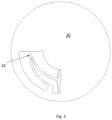
  • FIG. 3 is a diagram of a lens with a microstructure according to one embodiment.
  • FIG. 4 A is a diagram of a planar prototype used in a simulation, based on the embodiment such shown in FIG. 3
  • FIG. 4 B is a plot showing results of the simulation.
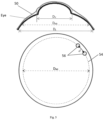
  • FIG. 5 is a diagram of a lens in cross-section (upper) and plan (lower) views, with a microstructure according to one embodiment.
  • FIGS. 6 A and 6 B are diagrams of lenses with microstructures according to various embodiments.
  • FIG. 7 is a flowchart of an algorithm for image acquisition and processing according to one embodiment.
  • Embodiments described herein address the drawbacks of prior IOP measuring approaches by providing non-invasive and low cost devices that are easily and conveniently interfaced with readily available equipment. Furthermore, the embodiments also address the need to obtain IOP data more frequently, and outside of regular office hours, since the embodiments allow subjects to obtain measurement data themselves using readily available equipment such as a smartphone or tablet computer.
  • embodiments are non-invasive and are based on a contact lens or cosmetic lens, in and/or on which is disposed a microstructure.
  • the microstructure has at least one feature that exhibits a change in shape and/or geometry and/or position on the lens in response to a change in IOP.
  • the change in shape and/or geometry and/or position of the one or more feature may be recorded by images captured by a camera. Analysis of the images provides a correlation of the change in shape and/or geometry to a change in IOP, and/or a measurement of IOP.
  • the images may be taken using a digital camera of a mobile device such as a smart phone, tablet, or laptop computer, etc., and therefore, the image may be easily taken by the subject without the need for specialized equipment and at any time of the day or night, without a professional's intervention.
  • an application running on the mobile device or remotely may include an algorithm that provides the image analysis, and may provide substantially instant feedback about the subject's IOP.
  • lens refers to any type of lens that may be fitted to and worn on the eye, such as, for example, a contact lens or a cosmetic lens.
  • a lens may fit substantially only on the cornea, or a lens may fit on the cornea and extend outwardly from the cornea to also fit over a portion of the conjunctiva and sclera.
  • Embodiments may be constructed using a flexible polymer material suitable for lens applications such as silicone (e.g., polydimethyl siloxane (PDMS)).
  • PDMS polydimethyl siloxane
  • PMMA polymethyl methacrylate
  • a readily available (i.e., off-the-shelf) lens is used, which is machined or modified to obtain the desired microstructure.
  • Embodiments may be constructed by one or more of: molding a lens including a microstructure; machining a microstructure into a lens; and applying a microstructure to a lens. Molding may include preparing a 3D mold with the microstructure features (e.g., a microchamber, microchannel, or motion amplifier) using a high-speed micromilling machine.
  • a microstructure that is applied to a lens may be an off-the-shelf structure, or it may be prepared with a micromachining process or with 3D printing technology using a material such as, but not limited to, NylonTM or a thermoplastic polymer such as acrylonitrile butadiene (ABS).
  • a material such as, but not limited to, NylonTM or a thermoplastic polymer such as acrylonitrile butadiene (ABS).
  • One or more features of the microstructure has a dimension that is selected such that the change in shape and/or geometry and/or position of the feature, in response to a selected amount of change in IOP, is detectable in an image captured by a digital camera. That is, to detect a change in IOP of, e.g., 1 mmHg, the corresponding change in shape and/or geometry and/or position of the feature must be large enough to be detected in a digital image taken by a camera in a typical device of a subject wearing the lens. For example, the change in shape and/or geometry and/or position of the feature is detectable by the image analysis software in images taken by a camera having a resolution typical of a smartphone camera.
  • detection may be improved by attaching an external magnifier to the camera.
  • external magnifier refers to a type of lens that is attached to the camera, and this term is used to avoid confusion with the term “lens”, defined above, that is worn on the eye.
  • the external magnifier may be custom made to provide the desired resolution. Such a configuration can provide a resolution of at least 2 ⁇ 3 ⁇ m/pixel.
  • An external magnifier may easily and inexpensively be prepared from a polymer such as polydimethylsiloxane (PDMS), and removably attached to a smartphone. For example, an external magnifier made from a drop of PDMS cured at 215.6° C.
  • PDMS polydimethylsiloxane
  • the microstructures described herein may be used to detect subtle changes in IOP (e.g., 1 mmHg or less) by observing a change in shape and/or geometry and/or position of a feature of the microstructure in images captured by a digital camera of a smartphone or other common device.
  • Another aspect of the invention provides a non-transitory computer-readable medium, comprising instructions stored thereon, that when executed on a processor, direct the processor to perform one or more steps of an algorithm for acquiring and analyzing images of an IOP measuring device as described herein, and providing an output comprising an indication of the subject's IOP at a given time, and/or of a change in IOP over time.
  • the software has two components: (1) an imaging processing algorithm; and (2) a data management algorithm.
  • the data management algorithm may communicate with a remote server located in a physicians' office or a hospital, to perform functions such as uploading data to the remote server.
  • the software may be implemented in Java, and Objective-C may be used to for Android® and iOS®-based mobile devices.
  • C# and asp.net may be used to develop data management programs on the server, and the database may be created and maintained using MS SQL.
  • the software may be executed on the processor of a mobile computing device such as a smartphone.
  • Embodiments may include a user interface (e.g., a graphical user interface (GUI)), and may include functions associated with setup, communications, acquiring images, calibration, measurement, and review, including outputting/displaying results/images on a display screen of the device, such as, for example, those shown FIG. 7 .
  • GUI graphical user interface
  • Executing instructions may include the processor prompting the user for input at various steps, some of which are shown in FIG. 7 .
  • the programmed instructions may be embodied in one or more hardware modules or software modules resident in the memory of a data processing system or elsewhere.
  • the programmed instructions may be embodied on a non-transitory computer readable storage medium or product (e.g., a compact disk (CD), etc.) which may be used for transporting the programmed instructions to the memory of a data processing system and/or for executing the programmed instructions.
  • the programmed instructions may be embedded in a computer-readable medium or product that is uploaded to a network by a vendor or supplier of the programmed instructions, and this medium may be downloaded through an interface to a data processing system from the network by an end user or buyer.
  • FIGS. 1 A and B An embodiment is shown diagrammatically in FIGS. 1 A and B.
  • the lens has a base 10 , which fits on the eye in the same manner as a typical contact lens or cosmetic lens.
  • the microstructure includes a chamber 12 with a microchannel 14 formed therein.
  • the base 10 may be made from an off-the-shelf contact lens or cosmetic lens, or it may be custom made.
  • the configuration of the chamber 12 and/or microchannel 14 shown is one example of a suitable design, and it will be appreciated that other configurations (i.e., geometries, shapes, locations etc.) may also be used.
  • FIGS. 1 C- 1 H Other embodiments are shown in FIGS. 1 C- 1 H , some of which may optionally include one or more mesh hole 16 .
  • the embodiments of FIGS. 1 D, 1 F, and 1 H feature a lens 18 with an open central area.
  • the open central area may substantially correspond to the cornea.
  • Such an embodiment is expected to reduce any negative impact related to protein deposition, corneal oxygenation, or subject's vision quality.
  • Multiple interconnected chambers 12 may be implemented as shown in the embodiments of FIGS. 1 G and 1 H .
  • a cover membrane (not shown) covers the base and seals the chamber and microchannel with an indicator solution (IS).
  • IS indicator solution
  • Other approaches and techniques may be used to implement the sealed chamber(s) and connected microchannel(s).
  • the IS may be transparent (e.g., water) or a semi-transparent solution dyed to a suitable colour (e.g., light blue).
  • the volume of the IS is calibrated to be about the same as the volume of the chamber when sealed.
  • the IS is hydrophobic to the microchannel, which depresses the capillary effect. When the device is put on the eye, it fits to the cornea of the eye tightly under significant surface tension force Fa induced by the postlens tear film between cornea and the lens (see FIG. 1 B ).
  • the cover membrane may be made using a spin coater. After the base 10 and membrane are cured and bonded, a drop of silicone or PDMS may be placed onto the membrane at the center of the chamber. This drop forms a semi-sphere and is cured as a micro bump which contacts the lens and transfers force to squeeze the cover membrane on the chamber.
  • the cornea and sclera exhibit approximately 3 ⁇ m and 10 ⁇ m change in curvature, respectively, for each 1 mmHg intraocular pressure (Pi) change.
  • This IOP induced curvature change creates a force applied on the chamber 12 which forces the IS in the chamber to disperse into the microchannel. Since the microchannel has a very small cross-sectional area, a small amount of IS forced out of the chamber due to the change of IOP fills the microchannel to a significant length.
  • a digital image may be captured using a camera, as may conveniently be found on common electronic devices, particularly mobile or portable devices such as a smart phone, tablet, or laptop computer.
  • a sequence of two or more images may be taken over time, and subjected to a comparison or analysis, which may employ an algorithm, to determine a change (i.e., a difference) in the position of the IS in the microchannel, relative to a reference position.
  • a change in the subject's IOP can then be determined from the difference.
  • Preliminary testing of embodiments was carried out with an apparatus that simulated curvature changes in response to pressure changes (i.e., induced linear deformation) and enabled a change in the microstructure to be viewed.
  • a set of PDMS films with sealed chambers (3, 4, and 5 mm in dia., 700 ⁇ m in height) and channels (300 ⁇ m wide and 700 ⁇ m high) was prepared to investigate strain amplification.
  • An exemplary film 72 with chamber 74 and channel 76 is shown schematically in the inset of FIG. 1 I .
  • Tensile testing was conducted for nine specimens (three for each chamber diameter). The IS travel distances were found to be over 100 times (107, 150, and 244 times, respectively) of the induced linear deformations of the chambers (see FIG. 1 I ).
  • FIG. 3 Another embodiment is shown in FIG. 3 .
  • a contact lens or cosmetic lens 30 is modified by machining a microstructure, generally indicated at 32 , into the lens.
  • a custom made lens may also be used, and the microstructure may be incorporated into the lens during manufacturing.
  • the microstructure which includes a free-moving arm 34 having an end or pointer 36 , behaves like a motion amplifying mechanism.
  • the position of the arm 34 at any instant in time is related to the curvature of the lens, which is determined by the corneal curvature at that instant in time.
  • the arm 34 moves according to a change in curvature of the lens, which is induced by a change in IOP.
  • the movement of the arm 34 causes the tip 36 to change its position on the lens; thus, displacement of the arm is significantly amplified at the tip 36 . Therefore, as in the embodiment described above, with the lens deployed on a subject's eye, digital images of lens may be captured using a camera of a smart phone or other device. A sequence of two or more images may be taken over time, and subjected to an algorithm to determine a change (i.e., a difference) in the position of the pointer 36 , relative to a reference position. A change in the patient's IOP can then be determined from the difference.
  • a change i.e., a difference
  • FIG. 3 is of course one example of many possible ways to implement a microstructure based on a motion amplifying mechanism. It will be appreciated that other configurations of the mechanism and the pointer (i.e., other geometries, shapes, locations, etc.) may also be used.
  • FIG. 4 A A planar prototype was fabricated to demonstrate functionality of this embodiment.
  • FIG. 4 B Results of the simulation are shown in FIG. 4 B . The results confirm that the embodiment is suitable for IOP monitoring.
  • FIG. 5 Another embodiment is shown in FIG. 5 .
  • a contact lens or cosmetic lens was modified by disposing a microstructure in or on the lens.
  • a custom made lens may also be used, and the microstructure may be incorporated into the lens during manufacturing.
  • various dimensions are recited for illustrative purposes. It will be appreciated that other dimensions may be used.
  • a lens 50 has an overall diameter D L of ⁇ 15 mm.
  • the lens has a vault (i.e., an outwardly extending portion) that substantially corresponds to the cornea of the eye.
  • the vault portion has a diameter D V that may be approximately one-half of the overall diameter of the lens D L , which provides ⁇ 3.5 mm wide area of the lens surrounding the vault.
  • the microstructure comprises a pair of markers 56 in the 3.5 mm wide area of the lens. In this embodiment the markers are holes; however, it will be appreciated that other markers could be used.
  • the holes are located along a motion indicator circle 54 having a diameter D MI of ⁇ 13.5 mm.
  • the center-to-center distance d between the adjacent holes on the motion indicator circle is ⁇ 1.3 mm.
  • the diameters D V , D MI , and D L may be substantially concentric.
  • the eye diameter is approximately 26 mm.
  • the distance d between two holes can be increased or decreased as desired for a given design, or to improve detection based on the resolution of a selected camera.
  • FIG. 6 A A further embodiment, shown in FIG. 6 A , was implemented in a soft contact lens 60 by creating a pattern in the lens with four markers (in this case, holes) 62 a - 62 d arranged in an outer ring 62 and four markers 64 a - 64 d arranged in an inner ring 64 .
  • the outer and inner rings 62 , 64 are analogous to the motion indicator circle 54 in the embodiment of FIG. 5 .
  • Preliminary tests were conducted by mounting the embodiment on a balloon, and analyzing changes in the distances between holes as the inflation of the balloon was varied. The distances were analyzed using imaging software. As expected, the increase in distance between holes, as balloon pressure increased, was greater for the holes in the outer ring than for holes in the inner ring. The results confirm the suitability of these embodiments for measuring and monitoring IOP.
  • features other than holes in the lens may also be employed.
  • markers created with dye or pigment may be disposed on the lens and would function similarly to holes as detectable features.
  • FIG. 6 B is similar to that shown in FIG. 6 A , except that a reference structure 66 or image is included to provide scale.
  • the reference structure 66 or image is of substantially constant size and/or shape and/or position regardless of the change in curvature of the lens 60 , so that a change in the lens curvature in response to a change in IOP can be quantified.
  • the reference structure may be made from a material with a Young's modulus that is much higher than that of the lens (e.g., PDMS, or silicone hydrogel).
  • the length of the wire or material will not vary significantly when the lens changes curvature due to a change in IOP, and therefore it can be used as a constant length reference to provide the scale (e.g., pixels, microns, etc.) during image processing. This avoids the need for a reference image and simplifies acquiring and processing images.
  • An application running on a mobile computing device such as a smartphone may be used to analyze images of an IOP measuring device as described herein, and provide an output comprising an indication of the subject's IOP at a given time, and/or of a change in in IOP over time.
  • the application includes software implemented on the mobile device.
  • the software has two components: (1) an imaging processing algorithm; and (2) a data management algorithm.
  • the data management algorithm may communicate with a remote server located in a physicians' office or a hospital, to perform functions such as uploading data to the remote server.
  • the software may be implemented in Java, and Objective-C may be used to for Android and iOS-based mobile devices.
  • C# and asp.net may be used to develop data management programs on the server, and the database may be created and maintained using MS SQL.
  • At least a part of the application may be implemented according to an algorithm such as the embodiment shown in FIG. 7 .
  • Image Processing Algorithm This algorithm may include several functions, such as setup, image taking, pattern searching, data managing, and graphical presentation.
  • the application may provide four tabs: Setup, Calibration, Measurement and Review.
  • the Setup tab allows the user (i.e., subject, patient) to setup their personal profile, such as, name, gender, age, personal IOP threshold value, remote server serial number, etc., which together with variables such as measured IOP, time stamp, activity at the time of measurement, are sent to the remote data server.
  • An encrypted format may be used to protect patient privacy.
  • the Calibration tab allows the user to take two or more images of the location of an indicator (e.g., water/air interface) in each IOP monitoring lens before wearing it and after wearing it for the first time.
  • an indicator e.g., water/air interface
  • the user is then asked to enter the corresponding IOP recently measured by a clinician (professional optometrist or vision care physician), and to define a pattern for searching, e.g., by drawing small square enclosing the indicator feature(s).
  • Markers for scale reference e.g., different shapes such as triangles and rectangles
  • the program determines dimension scales from the pixels between two adjacent markers.
  • a correlation between the indicator feature travel distance and IOP for the lens is calibrated based on these images. From these images, the program identifies the location of an indicator feature from a reference point at zero and the current IOP.
  • the ratio of indicator travel distance vs. IOP is identified and used to adjust a ratio table generated from pre-calibration data for better accuracy.
  • the pre-calibration data establishes the form of the relationship between indicator feature travel distance and IOP for use in combination with an observed calibration point.
  • additional data points may be added from further visits to an eye care clinician when the patient has a different IOP to further refine the measurement accuracy.
  • the Measurement tab a user is asked to take images with the IOP lens centered and focused in the target frame on the screen.
  • the algorithm searches for the position of the indicator feature and calculates the corresponding IOP value using the known adjustment ratio.
  • the user is then able to select activity from a drop list, or enter his/her activity.
  • the IOP value, measured time, and activity at the time is recorded in the mobile device locally, and together with the user's personal information is sent to the remote server after being confirmed by the patient through encrypted text message. If the measured IOP is higher than the threshold value in the setup, a warning signal will appear to warn the patient.
  • the user can browse all his/her measured IOP values in a tabular or graphic format with, e.g., 30 values plotted in the active window with their time stamps. However, the user can scroll back and forth to review the all the data, which gives the user direct observation of the IOP trend. This can even be helpful for users to form an interest in their vision health and enhance adherence to therapy.
  • the database may have several main tables, including a patient-information table, measured IOP table, physician-information table, medication table, etc. Each user is given a unique ID, used as a primary key in the patient-information table and measured IOP table. It is a foreign key for other tables.
  • a data receiving program and a GPRS message modem are used to receive messages from all patients. Received messages are passed to the data receiving program on the server. The program decodes and analyzes the sender's information and stores the data in the database accordingly.
  • a web-server program (e.g., using C#, B/S frame work) provides clinicians such as physicians or other authorized medical care professionals a login interface requiring user ID and password. When they login to the program, they are able to see their patients' data. They can select a patient from the list and review their IOP values in graphic format or table chart, as well as their medical history, including appointments, treatment etc.
  • the web program may be published on the server, so that physicians and medical professionals can remotely access it through an internet browser via a secure route.

Landscapes

  • Health & Medical Sciences (AREA)
  • Life Sciences & Earth Sciences (AREA)
  • Engineering & Computer Science (AREA)
  • Heart & Thoracic Surgery (AREA)
  • Molecular Biology (AREA)
  • Biophysics (AREA)
  • Veterinary Medicine (AREA)
  • Biomedical Technology (AREA)
  • Public Health (AREA)
  • Medical Informatics (AREA)
  • Physics & Mathematics (AREA)
  • Surgery (AREA)
  • Animal Behavior & Ethology (AREA)
  • General Health & Medical Sciences (AREA)
  • Ophthalmology & Optometry (AREA)
  • Pathology (AREA)
  • Multimedia (AREA)
  • Eyeglasses (AREA)
  • Eye Examination Apparatus (AREA)

Abstract

The invention provides devices and methods for non-invasive monitoring and measuring of intraocular pressure (IOP) of a subject. Embodiments include a lens that is adapted to fit on the subject's eye, a microstructure disposed in or on the lens, the microstructure having at least one feature that exhibits a change in shape and/or geometry and/or position on the lens in response to a change in curvature of the lens. When the curvature of the lens changes in response to a change in IOP, a corresponding change in shape and/or geometry and/or position of the feature may be used to determine the change in IOP. The change in the feature is detectable in digital images of the lens taken with a mobile electronic device such as a smartphone.

Description

RELATED APPLICATIONS
This application is a division of application Ser. No. 15/461,881, filed Mar. 17, 2017, now U.S. Pat. No. 10,772,502, issued Sep. 15, 2020, and claims the benefit of the filing date of Application No. 62/310,432, filed Mar. 18, 2016, the contents of which are incorporated herein by reference in their entirety.
FIELD
This invention relates to non-invasive wearable devices for monitoring and measuring intraocular pressure.
BACKGROUND
Intraocular pressure (IOP) is a critical factor that is used to monitor the health of the eyes. High intraocular pressure (IOP) is associated with glaucoma, a leading cause of blindness. Lowering IOP is currently the only evidence-based treatment for preventing the development of glaucoma or reducing the rate of its progression.
An individual's IOP may vary significantly throughout the day. There are considerable data showing that the IOP peaks of many glaucoma patients occur outside daytime hours when IOP is usually measured. As peak IOP is related to glaucoma progression, this suggests that IOP measurements outside office hours should be taken into account when clinicians plan and prescribe glaucoma treatment. However, IOP measurements are typically conducted by professionals during eye examinations during regular business hours and only at relatively infrequent intervals, leading to a need for more accessible IOP measurement technology that provides frequently repeated IOP measurements.
The need for IOP monitoring in the population is growing rapidly as recognition of the importance of IOP control grows. Moreover, the population living with glaucoma or with raised IOP and consequently at risk of glaucoma, is growing in many countries as a result of the link between IOP and age in combination with aging populations.
To address this need, implantable pressure sensors for IOP monitoring have been proposed. For example, a microelectromechanical system (MEMS)-based passive pressure sensor was designed to be implanted inside of the anterior chamber of the eye. However, deployment of such a device presents significant challenges in requiring invasive surgery, and careful selection of its location in the eye. A micromachined capacitive pressure sensor has also been proposed, which includes circuitry that produces a phase shift in a resonant frequency to detect a change in IOP. However, this device also requires surgery to insert the device into the anterior chamber of the eye, and specialized equipment such as an inductive coil and impedance reader must be used to obtain the phase shift information to determine IOP. A microfluidic device using a micro channel filled with gas surgically implanted in the anterior chamber of the eye was also proposed, whereby a mobile device such a smartphone could be used to take images of the aqueous humor position in the channel.
As a result less invasive approaches are desirable. One approach proposed a contact lens with a micromachined strain gauge to measure IOP. However, this design required an electrical wire connection from the strain gauge to measuring equipment. Another used a wireless ocular telemetry sensor to monitor IOP fluctuation over a 24 hour period. This sensor required sophisticated reading equipment, and only provided an indication of a fluctuation in IOP, rather than an actual measurement of the pressure. A nano-structured sensor using piezoresistive film on a contact lens has been proposed, which also required an electrical wire connection from the piezoresistor to measuring equipment. Another approach using a contact lens and telemetry detects circumferential changes in the area of the corneo-scleral junction of the eye. A flexible adhesive antenna worn around the eye wirelessly receives a signal from the contact lens, which is provided to a portable recorder, such that information is continuously acquired. Consequently, users (patients) must wear the antenna and carry a specialized electronic device for data acquisition.
Overall, the prior approaches are either invasive or require specialized electronic equipment to obtain the measurement data, which reduce the patient's comfort, and increase the complexity and cost of clinical implementation.
SUMMARY
One aspect of the invention relates to a device for monitoring intraocular pressure (IOP) of a subject, comprising: a lens that is adapted to fit on the subject's eye; a microstructure disposed in or on the lens; at least one feature of the microstructure that exhibits a change in shape and/or geometry and/or position on the lens in response to a change in curvature of the lens; wherein the lens is adapted to change curvature in response to a change in IOP; wherein the change in shape and/or geometry and/or position of the feature is detectable in digital images of the lens, or of a part of the lens.
In one embodiment, the microstructure comprises: a sealed chamber; a sealed microchannel in communication with the chamber; an indicator solution disposed in the chamber; wherein the feature that is detectable is the indicator solution in the microchannel in response to a force applied to the chamber. According to this embodiment, the force applied to the chamber results from a change in curvature of the lens.
In one embodiment, the microstructure comprises: a motion amplifying mechanism including a free-moving arm; wherein a position of the arm is related to the curvature of the lens; wherein the feature that is detectable is a change in the position of a tip of the arm in response to a change in curvature of the lens.
In one embodiment, the microstructure comprises: two or more markers disposed in a spaced relationship on the lens; wherein a distance between the two or more markers is related to curvature of the lens; wherein the feature that is detectable is a change in the distance between the two or more markers in response to a change in curvature of the lens. The markers may be holes or divots in the lens, or the markers may comprise dye or pigment disposed on the lens, or a combination of any of these.
The embodiments may further comprise a reference structure; wherein the reference structure has a selected size and/or position and/or shape that is substantially constant irrespective of a change in curvature of the lens in response to a change in IOP.
According to the embodiments, the digital images may be captured using a digital camera of a personal or mobile electronic device, such as a smartphone.
Another aspect of the invention relates to a method for monitoring intraocular pressure (IOP) of a subject, comprising: disposing a microstructure in or on a lens that is adapted to fit on the subject's eye, the microstructure having at least one feature that exhibits a change in shape and/or geometry and/or position on the lens in response to a change in curvature of the lens, wherein the curvature of the lens changes in response to a change in IOP; obtaining two or more digital images of the lens, or a part of the lens, at two or more instants in time; detecting a change in shape and/or geometry and/or position of the at least one feature in the digital images; and correlating the change in shape and/or geometry and/or position of the at least one feature with IOP.
In various embodiments, the method comprises using a lens including any one of, or combination of, microstructures described herein.
The method may further comprise quantifying a change in shape and/or geometry and/or position of the at least one feature in the digital images using a reference structure; wherein the reference structure is embedded or integrated in the lens and has a selected size and/or position and/or shape that is substantially constant irrespective of a change in curvature of the lens in response to a change in IOP.
The method may include capturing the digital images using a digital camera of a personal or mobile computing device, such as a smartphone.
Another aspect of the invention relates to a non-transitory computer-readable medium, comprising instructions stored thereon, that when executed on a processor, direct the processor to perform one or more steps of an algorithm for acquiring and analyzing images of an IOP measuring device as described herein, and providing an output comprising an indication of the subject's IOP at a given time, and/or of a change in IOP over time.
BRIEF DESCRIPTION OF THE DRAWINGS
For a greater understanding of the invention, and to show more clearly how it may be carried into effect, embodiments will be described, by way of example, with reference to the accompanying drawings, wherein:
FIGS. 1A and 1B are diagrams of an IOP measuring device according to one embodiment, wherein FIG. 1A shows a lens with a microchannel, and FIG. 1B is a cross-sectional view showing the device installed on an eye.
FIGS. 1C-1H are diagrams of IOP measuring devices according to various embodiments.
FIG. 1I is a plot showing results of tests of three sizes of a strain amplification mechanism for monitoring IOP, and a schematic of the mechanism is shown in the inset.
FIGS. 2A-2D are diagrams showing preparation of a planar prototype of lens with a microstructure according to one embodiment, wherein FIG. 2A shows a top seal membrane with a micro bump, FIG. 2B shows a microchamber and microchannels on the lens, FIG. 2C shows an assembled lens with normal IOP, and FIG. 2D shows an assembled lens under increased IOP.
FIG. 3 is a diagram of a lens with a microstructure according to one embodiment.
FIG. 4A is a diagram of a planar prototype used in a simulation, based on the embodiment such shown in FIG. 3 , and FIG. 4B is a plot showing results of the simulation.
FIG. 5 is a diagram of a lens in cross-section (upper) and plan (lower) views, with a microstructure according to one embodiment.
FIGS. 6A and 6B are diagrams of lenses with microstructures according to various embodiments.
FIG. 7 is a flowchart of an algorithm for image acquisition and processing according to one embodiment.
DETAILED DESCRIPTION OF EMBODIMENTS
Embodiments described herein address the drawbacks of prior IOP measuring approaches by providing non-invasive and low cost devices that are easily and conveniently interfaced with readily available equipment. Furthermore, the embodiments also address the need to obtain IOP data more frequently, and outside of regular office hours, since the embodiments allow subjects to obtain measurement data themselves using readily available equipment such as a smartphone or tablet computer.
In general, embodiments are non-invasive and are based on a contact lens or cosmetic lens, in and/or on which is disposed a microstructure. The microstructure has at least one feature that exhibits a change in shape and/or geometry and/or position on the lens in response to a change in IOP. The change in shape and/or geometry and/or position of the one or more feature may be recorded by images captured by a camera. Analysis of the images provides a correlation of the change in shape and/or geometry to a change in IOP, and/or a measurement of IOP. The images may be taken using a digital camera of a mobile device such as a smart phone, tablet, or laptop computer, etc., and therefore, the image may be easily taken by the subject without the need for specialized equipment and at any time of the day or night, without a professional's intervention. Further, an application running on the mobile device or remotely may include an algorithm that provides the image analysis, and may provide substantially instant feedback about the subject's IOP.
As used herein, the term “lens” refers to any type of lens that may be fitted to and worn on the eye, such as, for example, a contact lens or a cosmetic lens. A lens may fit substantially only on the cornea, or a lens may fit on the cornea and extend outwardly from the cornea to also fit over a portion of the conjunctiva and sclera. Embodiments may be constructed using a flexible polymer material suitable for lens applications such as silicone (e.g., polydimethyl siloxane (PDMS)). Other materials such as polymethyl methacrylate (PMMA) may be used in some embodiments, although such material is less flexible. In some embodiments a readily available (i.e., off-the-shelf) lens is used, which is machined or modified to obtain the desired microstructure. Embodiments may be constructed by one or more of: molding a lens including a microstructure; machining a microstructure into a lens; and applying a microstructure to a lens. Molding may include preparing a 3D mold with the microstructure features (e.g., a microchamber, microchannel, or motion amplifier) using a high-speed micromilling machine. A microstructure that is applied to a lens may be an off-the-shelf structure, or it may be prepared with a micromachining process or with 3D printing technology using a material such as, but not limited to, Nylon™ or a thermoplastic polymer such as acrylonitrile butadiene (ABS).
One or more features of the microstructure has a dimension that is selected such that the change in shape and/or geometry and/or position of the feature, in response to a selected amount of change in IOP, is detectable in an image captured by a digital camera. That is, to detect a change in IOP of, e.g., 1 mmHg, the corresponding change in shape and/or geometry and/or position of the feature must be large enough to be detected in a digital image taken by a camera in a typical device of a subject wearing the lens. For example, the change in shape and/or geometry and/or position of the feature is detectable by the image analysis software in images taken by a camera having a resolution typical of a smartphone camera.
In some cases detection may be improved by attaching an external magnifier to the camera. (As used herein, “external magnifier” refers to a type of lens that is attached to the camera, and this term is used to avoid confusion with the term “lens”, defined above, that is worn on the eye.) The external magnifier may be custom made to provide the desired resolution. Such a configuration can provide a resolution of at least 2˜3 μm/pixel. An external magnifier may easily and inexpensively be prepared from a polymer such as polydimethylsiloxane (PDMS), and removably attached to a smartphone. For example, an external magnifier made from a drop of PDMS cured at 215.6° C. has a focal length of approximately 7.23 mm, a radius of 2.875 mm and maximum cone angle of 44.48°, and a numerical aperture (NA) of 0.37, which is close to the NA (0.42) of a 20× microscope objective. In preliminary tests, a smartphone (iPhone® 6) had a resolution of 0.69 μm/pixel using such a PDMS external magnifier. Accordingly, the microstructures described herein may be used to detect subtle changes in IOP (e.g., 1 mmHg or less) by observing a change in shape and/or geometry and/or position of a feature of the microstructure in images captured by a digital camera of a smartphone or other common device.
Another aspect of the invention provides a non-transitory computer-readable medium, comprising instructions stored thereon, that when executed on a processor, direct the processor to perform one or more steps of an algorithm for acquiring and analyzing images of an IOP measuring device as described herein, and providing an output comprising an indication of the subject's IOP at a given time, and/or of a change in IOP over time. In one embodiment, the software has two components: (1) an imaging processing algorithm; and (2) a data management algorithm. The data management algorithm may communicate with a remote server located in a physicians' office or a hospital, to perform functions such as uploading data to the remote server. In one embodiment the software may be implemented in Java, and Objective-C may be used to for Android® and iOS®-based mobile devices. In one embodiment C# and asp.net may be used to develop data management programs on the server, and the database may be created and maintained using MS SQL. The software may be executed on the processor of a mobile computing device such as a smartphone. Embodiments may include a user interface (e.g., a graphical user interface (GUI)), and may include functions associated with setup, communications, acquiring images, calibration, measurement, and review, including outputting/displaying results/images on a display screen of the device, such as, for example, those shown FIG. 7 .
Executing instructions may include the processor prompting the user for input at various steps, some of which are shown in FIG. 7 . In one embodiment the programmed instructions may be embodied in one or more hardware modules or software modules resident in the memory of a data processing system or elsewhere. In one embodiment the programmed instructions may be embodied on a non-transitory computer readable storage medium or product (e.g., a compact disk (CD), etc.) which may be used for transporting the programmed instructions to the memory of a data processing system and/or for executing the programmed instructions. In one embodiment the programmed instructions may be embedded in a computer-readable medium or product that is uploaded to a network by a vendor or supplier of the programmed instructions, and this medium may be downloaded through an interface to a data processing system from the network by an end user or buyer.
Exemplary embodiments are described in the following non-limiting Examples.
Example 1
An embodiment is shown diagrammatically in FIGS. 1A and B. As shown in FIG. 1A, the lens has a base 10, which fits on the eye in the same manner as a typical contact lens or cosmetic lens. The microstructure includes a chamber 12 with a microchannel 14 formed therein. The base 10 may be made from an off-the-shelf contact lens or cosmetic lens, or it may be custom made. The configuration of the chamber 12 and/or microchannel 14 shown is one example of a suitable design, and it will be appreciated that other configurations (i.e., geometries, shapes, locations etc.) may also be used.
Other embodiments are shown in FIGS. 1C-1H, some of which may optionally include one or more mesh hole 16. In particular, the embodiments of FIGS. 1D, 1F, and 1H feature a lens 18 with an open central area. The open central area may substantially correspond to the cornea. Such an embodiment is expected to reduce any negative impact related to protein deposition, corneal oxygenation, or subject's vision quality. Multiple interconnected chambers 12 may be implemented as shown in the embodiments of FIGS. 1G and 1H.
In one embodiment, a cover membrane (not shown) covers the base and seals the chamber and microchannel with an indicator solution (IS). Other approaches and techniques may be used to implement the sealed chamber(s) and connected microchannel(s). The IS may be transparent (e.g., water) or a semi-transparent solution dyed to a suitable colour (e.g., light blue). The volume of the IS is calibrated to be about the same as the volume of the chamber when sealed. The IS is hydrophobic to the microchannel, which depresses the capillary effect. When the device is put on the eye, it fits to the cornea of the eye tightly under significant surface tension force Fa induced by the postlens tear film between cornea and the lens (see FIG. 1B).
In one embodiment the cover membrane may be made using a spin coater. After the base 10 and membrane are cured and bonded, a drop of silicone or PDMS may be placed onto the membrane at the center of the chamber. This drop forms a semi-sphere and is cured as a micro bump which contacts the lens and transfers force to squeeze the cover membrane on the chamber.
It is known that the cornea and sclera exhibit approximately 3 μm and 10 μm change in curvature, respectively, for each 1 mmHg intraocular pressure (Pi) change. This IOP induced curvature change creates a force applied on the chamber 12 which forces the IS in the chamber to disperse into the microchannel. Since the microchannel has a very small cross-sectional area, a small amount of IS forced out of the chamber due to the change of IOP fills the microchannel to a significant length. A digital image may be captured using a camera, as may conveniently be found on common electronic devices, particularly mobile or portable devices such as a smart phone, tablet, or laptop computer. A sequence of two or more images may be taken over time, and subjected to a comparison or analysis, which may employ an algorithm, to determine a change (i.e., a difference) in the position of the IS in the microchannel, relative to a reference position. A change in the subject's IOP can then be determined from the difference.
Preliminary testing of embodiments was carried out with an apparatus that simulated curvature changes in response to pressure changes (i.e., induced linear deformation) and enabled a change in the microstructure to be viewed. A set of PDMS films with sealed chambers (3, 4, and 5 mm in dia., 700 μm in height) and channels (300 μm wide and 700 μm high) was prepared to investigate strain amplification. An exemplary film 72 with chamber 74 and channel 76 is shown schematically in the inset of FIG. 1I. Tensile testing was conducted for nine specimens (three for each chamber diameter). The IS travel distances were found to be over 100 times (107, 150, and 244 times, respectively) of the induced linear deformations of the chambers (see FIG. 1I). These results confirm that a lens integrated with such a strain amplifying mechanism would be able to detect an IOP change of less than 1 mmHg. Therefore, the results confirm that the embodiments are suitable for IOP monitoring.
Example 2
Another embodiment is shown in FIG. 3 . In this embodiment a contact lens or cosmetic lens 30 is modified by machining a microstructure, generally indicated at 32, into the lens. A custom made lens may also be used, and the microstructure may be incorporated into the lens during manufacturing. The microstructure, which includes a free-moving arm 34 having an end or pointer 36, behaves like a motion amplifying mechanism. The position of the arm 34 at any instant in time is related to the curvature of the lens, which is determined by the corneal curvature at that instant in time. The arm 34 moves according to a change in curvature of the lens, which is induced by a change in IOP. The movement of the arm 34 causes the tip 36 to change its position on the lens; thus, displacement of the arm is significantly amplified at the tip 36. Therefore, as in the embodiment described above, with the lens deployed on a subject's eye, digital images of lens may be captured using a camera of a smart phone or other device. A sequence of two or more images may be taken over time, and subjected to an algorithm to determine a change (i.e., a difference) in the position of the pointer 36, relative to a reference position. A change in the patient's IOP can then be determined from the difference.
The embodiment of FIG. 3 is of course one example of many possible ways to implement a microstructure based on a motion amplifying mechanism. It will be appreciated that other configurations of the mechanism and the pointer (i.e., other geometries, shapes, locations, etc.) may also be used.
A planar prototype was fabricated to demonstrate functionality of this embodiment. A 3D simulation was also conducted (FIG. 4A). In the simulation, with 25 μm input, movement of the tip was 360 μm, giving about 14.4 times amplification. Results of the simulation are shown in FIG. 4B. The results confirm that the embodiment is suitable for IOP monitoring.
Example 3
Another embodiment is shown in FIG. 5 . In this embodiment a contact lens or cosmetic lens was modified by disposing a microstructure in or on the lens. A custom made lens may also be used, and the microstructure may be incorporated into the lens during manufacturing. In this example various dimensions are recited for illustrative purposes. It will be appreciated that other dimensions may be used.
Referring to FIG. 5 , a lens 50 has an overall diameter DL of ˜15 mm. The lens has a vault (i.e., an outwardly extending portion) that substantially corresponds to the cornea of the eye. The vault portion has a diameter DV that may be approximately one-half of the overall diameter of the lens DL, which provides ˜3.5 mm wide area of the lens surrounding the vault. The microstructure comprises a pair of markers 56 in the 3.5 mm wide area of the lens. In this embodiment the markers are holes; however, it will be appreciated that other markers could be used. The holes are located along a motion indicator circle 54 having a diameter DMI of ˜13.5 mm. The center-to-center distance d between the adjacent holes on the motion indicator circle is ˜1.3 mm. The diameters DV, DMI, and DL may be substantially concentric.
The eye diameter is approximately 26 mm. The curvature change rate of the sclera is about 100 μm/mmHg, which gives a strain of ε=100/13000 on the sclera. A distance d of 1.3 mm between the two holes yields a deformation Δd=d×ε=1300×100/13000=10 μm, i.e., the distance between the two holes will change at a rate of 10 μm/mmHg. If the distance d between the two holes is doubled to 2.6 mm, then the corresponding deformation rate will be 20 μm/mmHg. The distance d between two holes can be increased or decreased as desired for a given design, or to improve detection based on the resolution of a selected camera.
A further embodiment, shown in FIG. 6A, was implemented in a soft contact lens 60 by creating a pattern in the lens with four markers (in this case, holes) 62 a-62 d arranged in an outer ring 62 and four markers 64 a-64 d arranged in an inner ring 64. The outer and inner rings 62, 64 are analogous to the motion indicator circle 54 in the embodiment of FIG. 5 . Preliminary tests were conducted by mounting the embodiment on a balloon, and analyzing changes in the distances between holes as the inflation of the balloon was varied. The distances were analyzed using imaging software. As expected, the increase in distance between holes, as balloon pressure increased, was greater for the holes in the outer ring than for holes in the inner ring. The results confirm the suitability of these embodiments for measuring and monitoring IOP.
As noted above, features other than holes in the lens may also be employed. For example, markers created with dye or pigment may be disposed on the lens and would function similarly to holes as detectable features.
The embodiment of FIG. 6B is similar to that shown in FIG. 6A, except that a reference structure 66 or image is included to provide scale. The reference structure 66 or image is of substantially constant size and/or shape and/or position regardless of the change in curvature of the lens 60, so that a change in the lens curvature in response to a change in IOP can be quantified. The reference structure may be made from a material with a Young's modulus that is much higher than that of the lens (e.g., PDMS, or silicone hydrogel). For example, a fine gold wire or suture (e.g., diameter=0.03 mm) of selected length may be embedded in the lens as shown in FIG. 6B. The length of the wire or material will not vary significantly when the lens changes curvature due to a change in IOP, and therefore it can be used as a constant length reference to provide the scale (e.g., pixels, microns, etc.) during image processing. This avoids the need for a reference image and simplifies acquiring and processing images.
Example 4
An application running on a mobile computing device such as a smartphone may be used to analyze images of an IOP measuring device as described herein, and provide an output comprising an indication of the subject's IOP at a given time, and/or of a change in in IOP over time. The application includes software implemented on the mobile device. In one embodiment, the software has two components: (1) an imaging processing algorithm; and (2) a data management algorithm. The data management algorithm may communicate with a remote server located in a physicians' office or a hospital, to perform functions such as uploading data to the remote server. In one embodiment the software may be implemented in Java, and Objective-C may be used to for Android and iOS-based mobile devices. In one embodiment C# and asp.net may be used to develop data management programs on the server, and the database may be created and maintained using MS SQL.
At least a part of the application may be implemented according to an algorithm such as the embodiment shown in FIG. 7 .
(1) Image Processing Algorithm. This algorithm may include several functions, such as setup, image taking, pattern searching, data managing, and graphical presentation. When the application is launched, it may provide four tabs: Setup, Calibration, Measurement and Review. The Setup tab allows the user (i.e., subject, patient) to setup their personal profile, such as, name, gender, age, personal IOP threshold value, remote server serial number, etc., which together with variables such as measured IOP, time stamp, activity at the time of measurement, are sent to the remote data server. An encrypted format may be used to protect patient privacy. The Calibration tab allows the user to take two or more images of the location of an indicator (e.g., water/air interface) in each IOP monitoring lens before wearing it and after wearing it for the first time. The user is then asked to enter the corresponding IOP recently measured by a clinician (professional optometrist or vision care physician), and to define a pattern for searching, e.g., by drawing small square enclosing the indicator feature(s). Markers for scale reference (e.g., different shapes such as triangles and rectangles) may be registered automatically. For each image, the program determines dimension scales from the pixels between two adjacent markers. A correlation between the indicator feature travel distance and IOP for the lens is calibrated based on these images. From these images, the program identifies the location of an indicator feature from a reference point at zero and the current IOP. The ratio of indicator travel distance vs. IOP is identified and used to adjust a ratio table generated from pre-calibration data for better accuracy. The pre-calibration data establishes the form of the relationship between indicator feature travel distance and IOP for use in combination with an observed calibration point. Optionally, additional data points may be added from further visits to an eye care clinician when the patient has a different IOP to further refine the measurement accuracy.
In the Measurement tab, a user is asked to take images with the IOP lens centered and focused in the target frame on the screen. When a proper image is taken, the algorithm searches for the position of the indicator feature and calculates the corresponding IOP value using the known adjustment ratio. The user is then able to select activity from a drop list, or enter his/her activity. The IOP value, measured time, and activity at the time is recorded in the mobile device locally, and together with the user's personal information is sent to the remote server after being confirmed by the patient through encrypted text message. If the measured IOP is higher than the threshold value in the setup, a warning signal will appear to warn the patient.
In the Review tab, the user can browse all his/her measured IOP values in a tabular or graphic format with, e.g., 30 values plotted in the active window with their time stamps. However, the user can scroll back and forth to review the all the data, which gives the user direct observation of the IOP trend. This can even be helpful for users to form an interest in their vision health and enhance adherence to therapy.
(2) Data Management Algorithm. In this algorithm a user can setup multiple threshold values according to his/her physician's advice. If a warning message is triggered, it will be sent to the server for recording. On the server side, the database may have several main tables, including a patient-information table, measured IOP table, physician-information table, medication table, etc. Each user is given a unique ID, used as a primary key in the patient-information table and measured IOP table. It is a foreign key for other tables. On the server, a data receiving program and a GPRS message modem are used to receive messages from all patients. Received messages are passed to the data receiving program on the server. The program decodes and analyzes the sender's information and stores the data in the database accordingly. If a warning message is found, the server sends the information to the physician immediately so that the physician can take timely and proper medical action to help the user. On the server, a web-server program (e.g., using C#, B/S frame work) provides clinicians such as physicians or other authorized medical care professionals a login interface requiring user ID and password. When they login to the program, they are able to see their patients' data. They can select a patient from the list and review their IOP values in graphic format or table chart, as well as their medical history, including appointments, treatment etc. The web program may be published on the server, so that physicians and medical professionals can remotely access it through an internet browser via a secure route.
All cited documents are incorporated herein by reference in their entirety.
EQUIVALENTS
Those of ordinary skill in the art will recognize, or be able to ascertain through routine experimentation, equivalents to the embodiments described herein. Such equivalents are within the scope of the invention and are covered by the appended claims.

Claims (12)

The invention claimed is:
1. A device for monitoring intraocular pressure (IOP) of a subject, comprising:
a non-invasive lens that is adapted to fit on the subject's eye;
a microstructure disposed in or on the lens, including two or more markers disposed in a spaced relationship on the lens, a distance between the two or more markers being related to a curvature of the lens;
wherein the lens is adapted to change curvature in response to a change in IOP;
wherein the distance between the two or more markers changes according to the change in curvature of the lens;
wherein the change in distance between the two or more markers is detectable in digital images of the lens, or of a part of the lens, and indicates a change in IOP.
2. The device of claim 1, wherein the markers are holes in the lens.
3. The device of claim 1, wherein the markers comprise dye or pigment disposed on the lens.
4. The device of claim 1, further comprising a reference structure;
wherein the reference structure has a selected size and/or position and/or shape that is substantially constant irrespective of a change in curvature of the lens in response to a change in IOP.
5. The device of claim 1, wherein the digital images are captured using a digital camera of a personal electronic device.
6. The device of claim 5, wherein the personal electronic device is a smartphone.
7. A method for monitoring intraocular pressure (IOP) of a subject, comprising:
disposing a microstructure in or on a non-invasive lens that is adapted to fit on the subject's eye, the microstructure including two or more markers disposed in a spaced relationship on the lens, a distance between the two or more markers being related to a curvature of the lens, wherein the curvature of the lens changes in response to a change in IOP;
obtaining two or more digital images of the lens, or a part of the lens, at two or more instants in time;
detecting a change in distance between the two or more markers in the digital images; and
correlating the change in distance between the two or more markers with a change in IOP.
8. The method of claim 7, wherein the markers are holes in the lens.
9. The method of claim 7, wherein the markers comprise dye or pigment disposed on the lens.
10. The method of claim 7, further comprising quantifying a change in distance between the two or more markers in the digital images using a reference structure;
wherein the reference structure is embedded or integrated in the lens and has a selected size and/or position and/or shape that is substantially constant irrespective of a change in curvature of the lens in response to a change in IOP.
11. The method of claim 7, wherein the digital images are captured using a digital camera of a personal electronic device.
12. The method of claim 11, wherein the personal electronic device is a smartphone.
US17/020,211 2016-03-18 2020-09-14 Non-invasive intraocular pressure monitor Active 2038-06-16 US11684258B2 (en)

Priority Applications (2)

Application Number Priority Date Filing Date Title
US17/020,211 US11684258B2 (en) 2016-03-18 2020-09-14 Non-invasive intraocular pressure monitor
US18/213,356 US12245817B2 (en) 2016-03-18 2023-06-23 Non-invasive intraocular pressure monitor

Applications Claiming Priority (3)

Application Number Priority Date Filing Date Title
US201662310432P 2016-03-18 2016-03-18
US15/461,881 US10772502B2 (en) 2016-03-18 2017-03-17 Non-invasive intraocular pressure monitor
US17/020,211 US11684258B2 (en) 2016-03-18 2020-09-14 Non-invasive intraocular pressure monitor

Related Parent Applications (2)

Application Number Title Priority Date Filing Date
US15/461,881 Continuation US10772502B2 (en) 2016-03-18 2017-03-17 Non-invasive intraocular pressure monitor
US15/461,881 Division US10772502B2 (en) 2016-03-18 2017-03-17 Non-invasive intraocular pressure monitor

Related Child Applications (1)

Application Number Title Priority Date Filing Date
US18/213,356 Continuation US12245817B2 (en) 2016-03-18 2023-06-23 Non-invasive intraocular pressure monitor

Publications (2)

Publication Number Publication Date
US20210093196A1 US20210093196A1 (en) 2021-04-01
US11684258B2 true US11684258B2 (en) 2023-06-27

Family

ID=59895566

Family Applications (3)

Application Number Title Priority Date Filing Date
US15/461,881 Active 2039-01-12 US10772502B2 (en) 2016-03-18 2017-03-17 Non-invasive intraocular pressure monitor
US17/020,211 Active 2038-06-16 US11684258B2 (en) 2016-03-18 2020-09-14 Non-invasive intraocular pressure monitor
US18/213,356 Active US12245817B2 (en) 2016-03-18 2023-06-23 Non-invasive intraocular pressure monitor

Family Applications Before (1)

Application Number Title Priority Date Filing Date
US15/461,881 Active 2039-01-12 US10772502B2 (en) 2016-03-18 2017-03-17 Non-invasive intraocular pressure monitor

Family Applications After (1)

Application Number Title Priority Date Filing Date
US18/213,356 Active US12245817B2 (en) 2016-03-18 2023-06-23 Non-invasive intraocular pressure monitor

Country Status (2)

Country Link
US (3) US10772502B2 (en)
CA (1) CA2961142A1 (en)

Cited By (1)

* Cited by examiner, † Cited by third party
Publication number Priority date Publication date Assignee Title
US20240164638A1 (en) * 2016-03-18 2024-05-23 Queen's University At Kingston Non-Invasive Intraocular Pressure Monitor

Families Citing this family (14)

* Cited by examiner, † Cited by third party
Publication number Priority date Publication date Assignee Title
EP3334329B1 (en) 2015-08-14 2023-09-13 Alcon Inc. Ocular implant with pressure sensor
WO2017106517A1 (en) 2015-12-15 2017-06-22 Ivantis, Inc. Ocular implant and delivery system
EP3599992B1 (en) * 2017-03-22 2025-12-10 Board Of Trustees Of Michigan State University Intraocular pressure sensor
US10898074B2 (en) 2017-09-09 2021-01-26 Smartlens, Inc. Closed microfluidic network for strain sensing embedded in a contact lens to monitor intraocular pressure
EP4371535A3 (en) 2018-02-22 2024-08-14 Alcon Inc. Ocular implant
CN113439016B (en) 2018-12-14 2023-06-02 智能隐形眼镜公司 Method and apparatus for wearable contact lenses for monitoring intraocular pressure
JP2022526645A (en) * 2019-04-10 2022-05-25 スマートレンズ, インコーポレイテッド Intraocular pressure monitoring device and how to use it
US12268449B2 (en) * 2019-04-10 2025-04-08 Smartlens, Inc. Intraocular pressure monitoring devices and methods of using the same
US12245816B2 (en) 2019-05-31 2025-03-11 Queen's University At Kingston Intraocular pressure monitoring contact lens
US11550166B2 (en) 2019-06-05 2023-01-10 Coopervision International Limited Contact lenses with microchannels
US20230070316A1 (en) * 2020-02-13 2023-03-09 The University Of North Carolina At Chapel Hill Self-sensing cantilever-based devices for determining corneal biomechanics
CA3202776A1 (en) 2021-01-11 2022-07-14 Wayne A. Noda Systems and methods for viscoelastic delivery
CN120813295A (en) * 2023-03-10 2025-10-17 智能隐形眼镜公司 System and method for remote optical monitoring of intraocular pressure
CN121398736A (en) * 2023-05-03 2026-01-23 加利福尼亚大学董事会 Contact lens systems and methods for evaluating intraocular pressure

Citations (7)

* Cited by examiner, † Cited by third party
Publication number Priority date Publication date Assignee Title
US20110288395A1 (en) 2008-11-01 2011-11-24 University Of Dundee Pressure Measurement Device
US20150087953A1 (en) * 2013-09-26 2015-03-26 National Chiao Tung University Non-invasive intraocular pressure sensor
US20160015265A1 (en) 2013-03-07 2016-01-21 The Board Of Trustees Of The Leland Stanford Junior University Implantable Micro-Fluidic Device for Monitoring of Intra-Ocular Pressure
US9247877B2 (en) 2010-10-20 2016-02-02 University Of Dundee Device for monitoring intraocular pressure
CN105919551A (en) 2016-04-13 2016-09-07 华中科技大学 Micro-fluid technique based non-implantable intraocular pressure detection sensor
US10123701B2 (en) * 2015-12-23 2018-11-13 Industrial Technology Research Institute Intraocular pressure detecting device and detecting method thereof
US10772502B2 (en) 2016-03-18 2020-09-15 Queen's University At Kingston Non-invasive intraocular pressure monitor

Family Cites Families (8)

* Cited by examiner, † Cited by third party
Publication number Priority date Publication date Assignee Title
US8850895B2 (en) 2011-09-03 2014-10-07 John Yan Unpowered, wireless pressure sensor for point-of-care glaucoma diagnosis
TWI494638B (en) * 2012-12-12 2015-08-01 Univ Nat Taiwan Monitoring system for change in intraocular pressure (iop), method thereof, and contact lenses for sensing change in iop
US10213140B2 (en) 2013-05-17 2019-02-26 Johnson & Johnson Vision Care, Inc. Ophthalmic lens with a microfluidic system
US9289123B2 (en) 2013-12-16 2016-03-22 Verily Life Sciences Llc Contact lens for measuring intraocular pressure
US10085637B2 (en) 2015-03-11 2018-10-02 Smartlens, Inc. Contact lens with a microfluidic channel to monitor radius of curvature of cornea
CN105962887B (en) 2016-04-13 2017-09-12 华中科技大学 A kind of non-intrusion type detection of eyeball tension sensor based on micro-fluidic technologies
US10898074B2 (en) 2017-09-09 2021-01-26 Smartlens, Inc. Closed microfluidic network for strain sensing embedded in a contact lens to monitor intraocular pressure
US12245816B2 (en) 2019-05-31 2025-03-11 Queen's University At Kingston Intraocular pressure monitoring contact lens

Patent Citations (8)

* Cited by examiner, † Cited by third party
Publication number Priority date Publication date Assignee Title
US20110288395A1 (en) 2008-11-01 2011-11-24 University Of Dundee Pressure Measurement Device
US9247877B2 (en) 2010-10-20 2016-02-02 University Of Dundee Device for monitoring intraocular pressure
US20160015265A1 (en) 2013-03-07 2016-01-21 The Board Of Trustees Of The Leland Stanford Junior University Implantable Micro-Fluidic Device for Monitoring of Intra-Ocular Pressure
US20150087953A1 (en) * 2013-09-26 2015-03-26 National Chiao Tung University Non-invasive intraocular pressure sensor
US10123701B2 (en) * 2015-12-23 2018-11-13 Industrial Technology Research Institute Intraocular pressure detecting device and detecting method thereof
US10772502B2 (en) 2016-03-18 2020-09-15 Queen's University At Kingston Non-invasive intraocular pressure monitor
CN105919551A (en) 2016-04-13 2016-09-07 华中科技大学 Micro-fluid technique based non-implantable intraocular pressure detection sensor
CN105919551B (en) 2016-04-13 2017-07-18 华中科技大学 A kind of non-built-in mode detection of eyeball tension sensor based on micro-fluidic technologies

Non-Patent Citations (12)

* Cited by examiner, † Cited by third party
Title
Araci, I.E., et al.. "An implanable microfluidic device for self-monitoring of intraocular pressure". Nature Medicine, vol. 20, No. 9, pp. 1074-1079, (2014).
Bagga, H. et al., "Intraocular pressure measurements throughout the 24 h", Curr. Opin. Ophthalmol. vol. 20, Issue 2, pp. 79-83, (2009).
Chen, P. et al.. "Unpowered spiral-tube parylene pressure sensor for intraocular pressure sensing", Sensors and Actuators A 127 pp. 276-282, (2006).
Clark, R. A., et al., "Deformations and stresses in bourdon tubes", J Appl. Phys. 21(12) pp. 1340-1341, (1950).
Dimitrov, P.N. et al., "Five-year incidence of bilateral cause-specific visual impairment in the Melbourne visual impairment project", invest. Ophthalmol. Vis Sci. 44, pp. 5075-5081, (2003).
Lin. J. C-H. et al., "High Quality Factor Parylene-Based intraocular Pressure Sensor", NEMS 2012. Kyoto JAPAN, Mar. 5-8, 2012.
Liu, J.H.K. et al., "Monitoring intraocular pressure for 24", Br J Ophthalmol 95: pp. 599-600, (2011).
Molaei, A., et al., "Upcoming Methods and Specifications of Continuous Intraocular Pressure Monitoring Systems for Glaucoma", Journal of Opthalmic and Vision Research, vol. 3. Issue 1, pp. 66-71, (2018).
Shiose Y. "The aging effect on intraocular pressure in an apparently normal population". Arch Ophthalmol. Jun;102(6):883-7, (1984).
VanNewkirk. M.R. et al., "Cause-specific prevalence of bilateral visual impairment in Victoria, Australia; The visual impairment project", Ophthalmology, 108, pp. 960-967, (2001).
Weinreb, R.N. et al., "Nocturnal rhythms of intraooular pressure", Arch Ophthalmol, pp. 124:pp. 269-270, (2006).
Weinreb, R.N. et al.. "Intraocular Pressure" Reports and Consensus Statements of the 4th Global Aigs Consensus Meeting on Intraocular Pressure. The Hague, The Netherlands: Kugler, 2007,WGA Consensus Series 4 pp. 1-148.

Cited By (2)

* Cited by examiner, † Cited by third party
Publication number Priority date Publication date Assignee Title
US20240164638A1 (en) * 2016-03-18 2024-05-23 Queen's University At Kingston Non-Invasive Intraocular Pressure Monitor
US12245817B2 (en) * 2016-03-18 2025-03-11 Queen's University At Kingston Non-invasive intraocular pressure monitor

Also Published As

Publication number Publication date
US20210093196A1 (en) 2021-04-01
US10772502B2 (en) 2020-09-15
US20240164638A1 (en) 2024-05-23
US20170280997A1 (en) 2017-10-05
CA2961142A1 (en) 2017-09-18
US12245817B2 (en) 2025-03-11

Similar Documents

Publication Publication Date Title
US12245817B2 (en) Non-invasive intraocular pressure monitor
Araci et al. An implantable microfluidic device for self-monitoring of intraocular pressure
Maeng et al. Photonic crystal-based smart contact lens for continuous intraocular pressure monitoring
Kim et al. A soft and transparent contact lens for the wireless quantitative monitoring of intraocular pressure
US12262950B2 (en) Closed microfluidic network for strain sensing embedded in a contact lens to monitor intraocular pressure
EP3082570B1 (en) Contact lens for measuring intraocular pressure
Lee et al. A microscale optical implant for continuous in vivo monitoring of intraocular pressure
Zhang et al. High resolution non-invasive intraocular pressure monitoring by use of graphene woven fabrics on contact lens
US6746400B2 (en) Devices and methods for determining the inner pressure of an eye
JP7244631B2 (en) A Closed Microfluidic Network for Strain Sensing Embedded in a Contact Lens to Monitor Intraocular Pressure
JP2000517231A (en) Method and apparatus for measuring intraocular pressure by flattening and / or depression
US20170251921A1 (en) Optical intraocular sensor and sensing method
JP2024083553A (en) WEARABLE DEVICE FOR COMMUNICATION WITH AN OPHTHALMIC DEVICE - Patent application
Molaei et al. Upcoming methods and specifications of continuous intraocular pressure monitoring systems for glaucoma
Campigotto et al. A novel non‐invasive wearable sensor for intraocular pressure measurement
Xu et al. Recent progress of continuous intraocular pressure monitoring
CN114502060B (en) Eye biomechanical properties measurement and monitoring equipment
KR20220006730A (en) Portable IOP(IntraOcular Pressure) measurement based on cornea structural changes and its instrumentation
KR102042628B1 (en) Smart contact lens amplified the strain for quantitative monitoring the human intraocular pressure
US20240366086A1 (en) Contact Lens System and Method for Assessing Intraocular Pressure
CN113331783A (en) Full-time dynamic corneal curvature monitoring system and device
Kumuda et al. A Piezoresistive-Based Contact Lens for Non-invasive Intraocular Pressure Measurement
KR20250179703A (en) Bluetooth wireless earphones predicting life danger signals through EEG and vital sign
CN114585304A (en) Head position swing measuring device, head position swing measuring method, and biological information acquiring system using the same
Campigotto Novel Microfluidic Contact Lens for ContinuousIntraocular Pressure Monitoring

Legal Events

Date Code Title Description
FEPP Fee payment procedure

Free format text: ENTITY STATUS SET TO UNDISCOUNTED (ORIGINAL EVENT CODE: BIG.); ENTITY STATUS OF PATENT OWNER: SMALL ENTITY

FEPP Fee payment procedure

Free format text: ENTITY STATUS SET TO SMALL (ORIGINAL EVENT CODE: SMAL); ENTITY STATUS OF PATENT OWNER: SMALL ENTITY

AS Assignment

Owner name: KINGSTON HEALTH SCIENCES CENTRE, CANADA

Free format text: ASSIGNMENT OF ASSIGNORS INTEREST;ASSIGNOR:RELIGIOUS HOSPITALLERS OF SAINT JOSEPH OF THE HOTEL DIEU OF KINGSON ("HOTEL DIEU HOSPITAL");REEL/FRAME:056545/0193

Effective date: 20170401

Owner name: QUEEN'S UNIVERSITY AT KINGSTON, CANADA

Free format text: ASSIGNMENT OF ASSIGNORS INTEREST;ASSIGNORS:LAI, YONG JUN;XIE, KONG YING;CAMPBELL, ROBERT JAMES;SIGNING DATES FROM 20170615 TO 20170622;REEL/FRAME:056592/0975

Owner name: HOTEL DIEU HOSPITAL, CANADA

Free format text: ASSIGNMENT OF ASSIGNORS INTEREST;ASSIGNORS:LAI, YONG JUN;XIE, KONG YING;CAMPBELL, ROBERT JAMES;SIGNING DATES FROM 20170615 TO 20170622;REEL/FRAME:056592/0975

STPP Information on status: patent application and granting procedure in general

Free format text: DOCKETED NEW CASE - READY FOR EXAMINATION

STCF Information on status: patent grant

Free format text: PATENTED CASE