US1167340A - Collapsible life-boat. - Google Patents
Collapsible life-boat. Download PDFInfo
- Publication number
- US1167340A US1167340A US86798714A US1914867987A US1167340A US 1167340 A US1167340 A US 1167340A US 86798714 A US86798714 A US 86798714A US 1914867987 A US1914867987 A US 1914867987A US 1167340 A US1167340 A US 1167340A
- Authority
- US
- United States
- Prior art keywords
- boat
- vessel
- secured
- sides
- strips
- Prior art date
- Legal status (The legal status is an assumption and is not a legal conclusion. Google has not performed a legal analysis and makes no representation as to the accuracy of the status listed.)
- Expired - Lifetime
Links
- 239000004744 fabric Substances 0.000 description 5
- 239000000463 material Substances 0.000 description 5
- 238000010276 construction Methods 0.000 description 2
- 239000002184 metal Substances 0.000 description 2
- 230000002787 reinforcement Effects 0.000 description 2
- 208000027418 Wounds and injury Diseases 0.000 description 1
- 230000006378 damage Effects 0.000 description 1
- 208000014674 injury Diseases 0.000 description 1
- 238000007689 inspection Methods 0.000 description 1
- 230000003014 reinforcing effect Effects 0.000 description 1
- 239000010454 slate Substances 0.000 description 1
- 235000014101 wine Nutrition 0.000 description 1
- 239000002023 wood Substances 0.000 description 1
Images

Classifications
-
- B—PERFORMING OPERATIONS; TRANSPORTING
- B63—SHIPS OR OTHER WATERBORNE VESSELS; RELATED EQUIPMENT
- B63B—SHIPS OR OTHER WATERBORNE VESSELS; EQUIPMENT FOR SHIPPING
- B63B7/00—Collapsible, foldable, inflatable or like vessels
- B63B7/06—Collapsible, foldable, inflatable or like vessels having parts of non-rigid material
Definitions
- This invention relates to new and useful improvements in collapsible life boats.
- T he object of the invention is to provide a life boat of the character described, which may he collapsed, or rolled up, and detachahly secured along the side of a vessel, hutwhieh may be automatically uni-oiled and formed to receive passengers and detached from said vessel when it is desired to use the same.
- a further feature of the intention resides in the provision ot means for securing the boat in collapsed 'isition and means for releasing and securing means;
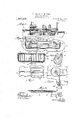
- Figure 1 shows a perspective view of the lite boat detached from the vessel.
- Fig. i shows a perspective view of the boat, par-- tially eollapsedl Fig. 3, shows a vessel equipped with my improved form of boat.
- Fig. l shows a side elevation of a boat co1npletely collapsed and secured to the side of the vessel. tional view of a life boat, in position for use.
- Fig. 6 shows an end view thereof in collapsed positionf
- Fig. 7 shows a tragmentary plan view of the wall of the boat.
- Fig. 8 shows a fragmentary cross sectional view thereof.
- Fig. 9 shows a fragmentary detail View of the means for unrolling the boat from its collapsed position.
- Fig. 10,- shows a. fragmentary view of one of the end stay rods employed, and, Fig. 11, shows a detail of the securing hooks, whereby the boat is attached to the vessel side.
- the numeral 1 designates the vessel to which the boats a re attached by means of Specification of Letters Patent.
- Fig. '5 shows a transverse sec- Application filed Qetober 22, 1914! Serial at. 887,98lr.
- the hooks may he. withdr wn ironi said eyes by a suitable if); .iipulation of the hook handles 3, 3, as is oli ious from an inspection of Fig. 1.
- the hoat is indicated by the numeral 1:, and its sides and bottom are formed of narrow lengthwise strip 5, formed at wood or metal, and the cent strips are hinged gcther so as to form close fitting); joints, as indicated in Figs"? and 9.
- the interior of the boat is lined with canvas or tough fabric, 6, and the ends i, 7, formed oi? lalr' ric, reinforced as will presently he dc scribed.
- the end .taorics are reinforced by means of slate 8, wliich are hinged at their lower ends to the curlondir ids of the res ⁇ eetive strips 7-, iorinin the bottom oi?
- the rods 10, 1.0 are unhooired from the l ll, and swung around to the side of the boat. T he end slats are then told-ed over on their hinges to the bottom of the heat and the edges of the boat. farthest from the verse then rolled aroui'ul the" containers 13, as shown in Fig 2.
- ii hen the boat has he 11 ely rolled up into the positionshown in r I i and (3, it secured in said position by the straps-1a, 14-. These straps are formed fit I 1,167,340
- A. rod 16 is provided which is slidable in the bearings 17, 17 secured to the side of the vessel and said rod carries the fingers 18, 18, which normally project through bearings in the free ends of the straps 14,14, and secure them around the boat.
- the fingers are secured in this position by means of the pull spring 19, Whose ends are attached to the respective lugs 20 and 21, the former of which is carried by the rod 16 and the latter of which projects from the vessel side.
- a cable attached at one end to the end of the rod 16 and said cable passes around the pulley 23 and on to the deck of the vessel.
- a pull may be exerted on the cable 23, which will operate to move the rod 16, lengthwise, overcome the pull of the spring 19, and withdraw the fln-gerslS, 18 from their bearings and thus release the straps 14, 14, from around the boat.
- a plurality of pull springs 2% are provided. These springs pass around the outer side of the boat, their-ends being secured directly to the edge thereof, on one side and to the pulleys 25, 25, on the other.
- Each pulley is equipped with a 1'acit-and-dog arrangement 26, of thewell known construction, and a craifle27.
- Sheets of canvas 28 and 29 are secured along the vessel side, above and below the boat, and their free edges are sewed. or otherwise secured, together around the boa t, when it is rolled up as shown in F 6, soas to protect the same from the weather and injury;
- the boat has been unrol :d r em "1 s 8
- a boat Whose bottom and sides are formed of strips of inflexible material, said strips being arrang side by side and hinged together at their e. 93, so that said bottom and sides may be formed into a roll; flexible ends for said boat and cross braces arranged at each end at the boat, the respective braces being pivoted at their ends to opposite sides of the boat and being hinged at their center.
- a boat Whose bottom and sides are formed of adjacent strips of inflexible material hinged together at their edges so that said sides and bottom may be formed into a roll; a flexible fabric secured to said strips and forming an inner lining for said boat; flexible ends for the boat; end braces formed of sections hinged together, the opposite ends of each of said braces being pivoted to the opposite sides of said boat.
- a boat Whose bottom and sides are formed of strips of inflexible material hinged together at their edges sothat said sides and b0 tom may be formed into a roll; a flexible fabric secured to said strips and forming an inner lining for said boat; flexible ends therefor; end braces formed of sections hinged together, the opposite ends of each of said braces being pivoted to the opposite sides of said'boat, and means for detachably securing said boat to a vessel.
- a boat whose bottom and sides are formed of strips of inflexible material, said strips being arranged side by side and hinged tpgether at their edges, so that said bottom and sides may be formed into a roll; flexible ends for said boat and cross braces arranged at each end of the boat, the respective braces being pivoted at their ends to opposite sides of the boat and being hinged at their center.
- a reinforcement for each end fabric formed of vertical slats hinged at their lower ends to the corresponding bottom strips and having their upper ends fixed relative to each other and a brace rod at each end of the boat,'said rods, each, being hinged at one end to one side of the boat and being detachably secured to the other side thereof, and securing said end reinforcement in vertical position.
- a boat Whose bottom and sides are formed of stripsfof inflexible material, said strips being arranged side by side and hinged together at their edges so that said bottom and sides may be formed into a roll; flexible ends for said bottom, reinforcing means for said ends hinged to the bottom of the boat at each end. and cross braces arranged at each end of the boat, the respective braces-being pivoted at their ends to opposite sides of the boat and being hinged at the center.
Landscapes
- Chemical & Material Sciences (AREA)
- Engineering & Computer Science (AREA)
- Combustion & Propulsion (AREA)
- Mechanical Engineering (AREA)
- Ocean & Marine Engineering (AREA)
- Respiratory Apparatuses And Protective Means (AREA)
Description
F. DOLEJSKA 61 L. M. HERZIK.
COLLAPSIBLE LlFE BOAT.
APPLICATION FILED 001.22, 1914.
1.,16734. Patented Jan;4,1916.
F. DOLEJSKA & L. M. HERIZIK.
COLLAPSIBLE LiFE BOAT.
APPLICATION FILED OCT. 22, 19M. Patented Jan. 4, 1916.
2 SHEETS -SHEEI 2.
' M/VE/VTUR ATTORNE- FRANK DOLEJSKA AND LOUIS M. HERZIK, OF HQUS'IOLN, TEXAS, ASSIGNORS 013 ONE TENTH TO FRANK HERE LE AND ONE-TINTH TO LOUIS SONOSKY.
connarsrenn urn-roar.
Kiddie sit United States, hoth residing), at Houston, in
the count of Harris and State of Texas have invented certain new and useful 1m provements in Collapsible Life-Boats, of
which the following is a specification. 10
This invention relates to new and useful improvements in collapsible life boats.
T he object of the invention is to provide a life boat of the character described, which may he collapsed, or rolled up, and detachahly secured along the side of a vessel, hutwhieh may be automatically uni-oiled and formed to receive passengers and detached from said vessel when it is desired to use the same.
A further feature of the intention resides in the provision ot means for securing the boat in collapsed 'isition and means for releasing and securing means;
With the above and other objects in view, the invention has particular relation to certain novel features of construction, operation and arrangements of parts, an example of which is given in this specification and illust'atcd-in the accompanying drawings, wherein:
Figure 1, shows a perspective view of the lite boat detached from the vessel. Fig. i ,'shows a perspective view of the boat, par-- tially eollapsedl Fig. 3, shows a vessel equipped with my improved form of boat. Fig. l, shows a side elevation of a boat co1npletely collapsed and secured to the side of the vessel. tional view of a life boat, in position for use. Fig. 6, shows an end view thereof in collapsed positionf Fig. 7, shows a tragmentary plan view of the wall of the boat. Fig. 8 shows a fragmentary cross sectional view thereof. Fig. 9 shows a fragmentary detail View of the means for unrolling the boat from its collapsed position. Fig. 10,- shows a. fragmentary view of one of the end stay rods employed, and, Fig. 11, shows a detail of the securing hooks, whereby the boat is attached to the vessel side.
Referring" now more particularly to the drawings, whereby like numerals of reference designate similar parts ineach of the figures, the numeral 1 designates the vessel to which the boats a re attached by means of Specification of Letters Patent.
Fig. '5, shows a transverse sec- Application filed Qetober 22, 1914! Serial at. 887,98lr.
the heels 2, These hooks engage in corresponding eyes (not shown) on the side.
of the, vessel and when it is desired to re lease ltl'ieboat, the hooks may he. withdr wn ironi said eyes by a suitable if); .iipulation of the hook handles 3, 3, as is oli ious from an inspection of Fig. 1.
The hoat is indicated by the numeral 1:, and its sides and bottom are formed of narrow lengthwise strip 5, formed at wood or metal, and the cent strips are hinged gcther so as to form close fitting); joints, as indicated in Figs"? and 9. The interior of the boat is lined with canvas or tough fabric, 6, and the ends i, 7, formed oi? lalr' ric, reinforced as will presently he dc scribed. The end .taorics are reinforced by means of slate 8, wliich are hinged at their lower ends to the curlondir ids of the res} eetive strips 7-, iorinin the bottom oi? the heat and heir free upper ends are cured in ii; relzition by the wines Tlhese slats are arranged within the corresponding; end fabrics 7, and o reinforce the same. f lnd brace rods ii) K are pro vided-J The corresponding e ds of thesei ido of the heat. End braces i 2, are also provided, whose res iectire cndsare pivoted to the sides of the Th 'e braces have central joints or hinges which permit said braces to yield, as illustrated in Figs. 2, i and 6, when the boat is collapsed, or rolled up, out which brace the boat ends when the boat is in use. The boat is usually equipped with a cylindrical container 3, for carrying provisions, and articles which would be requiredin cases of emergency,
ivhen it is desired to collapse the boat, the rods 10, 1.0 are unhooired from the l ll, and swung around to the side of the boat. T he end slats are then told-ed over on their hinges to the bottom of the heat and the edges of the boat. farthest from the verse then rolled aroui'ul the" containers 13, as shown in Fig 2. ii hen the boat has he 11 ely rolled up into the positionshown in r I i and (3, it secured in said position by the straps-1a, 14-. These straps are formed fit I 1,167,340
0 of flexible metal and are secured at one end to the vessel side underneath the boat and they pass around the boat, in'its collapsed form and their other ends pass through the stirrups 15, 15, which are secured to the vesselsidc above the boat. A. rod 16, is provided which is slidable in the bearings 17, 17 secured to the side of the vessel and said rod carries the fingers 18, 18, which normally project through bearings in the free ends of the straps 14,14, and secure them around the boat. The fingers are secured in this position by means of the pull spring 19, Whose ends are attached to the respective lugs 20 and 21, the former of which is carried by the rod 16 and the latter of which projects from the vessel side. A cable attached at one end to the end of the rod 16 and said cable passes around the pulley 23 and on to the deck of the vessel. When it is desired to unroll the boat a. pull may be exerted on the cable 23, which will operate to move the rod 16, lengthwise, overcome the pull of the spring 19, and withdraw the fln-gerslS, 18 from their bearings and thus release the straps 14, 14, from around the boat. A plurality of pull springs 2%, are provided. These springs pass around the outer side of the boat, their-ends being secured directly to the edge thereof, on one side and to the pulleys 25, 25, on the other. Each pulley is equipped with a 1'acit-and-dog arrangement 26, of thewell known construction, and a craifle27. Bythis mechanism, it is obvious that the tension on the springs 24, can be "aried at will. This tension is released when it is desired to roll the boat up, but is increased when it is desired to unroll the same, so that when the straps 14, 14, are released,
the pull of said springs 24; will operate to Y automatically unroll the boat. Sheets of canvas 28 and 29 are secured along the vessel side, above and below the boat, and their free edges are sewed. or otherwise secured, together around the boa t, when it is rolled up as shown in F 6, soas to protect the same from the weather and injury; When the boat has been unrol :d r em "1 s 8, may be secured in position i the rods 10, 10, and the boat released from the. vessel by the manipulation of the handles 3, as hereinbeiorc explained and it will then be in condition for'the reception of passengers.
What we claim is:
1. A boat Whose bottom and sides are formed of strips of inflexible material, said strips being arrang side by side and hinged together at their e. 93, so that said bottom and sides may be formed into a roll; flexible ends for said boat and cross braces arranged at each end at the boat, the respective braces being pivoted at their ends to opposite sides of the boat and being hinged at their center.
A boat Whose bottom and sides are formed of adjacent strips of inflexible material hinged together at their edges so that said sides and bottom may be formed into a roll; a flexible fabric secured to said strips and forming an inner lining for said boat; flexible ends for the boat; end braces formed of sections hinged together, the opposite ends of each of said braces being pivoted to the opposite sides of said boat.
3. A boat Whose bottom and sides are formed of strips of inflexible material hinged together at their edges sothat said sides and b0 tom may be formed into a roll; a flexible fabric secured to said strips and forming an inner lining for said boat; flexible ends therefor; end braces formed of sections hinged together, the opposite ends of each of said braces being pivoted to the opposite sides of said'boat, and means for detachably securing said boat to a vessel.
A boat whose bottom and sides are formed of strips of inflexible material, said strips being arranged side by side and hinged tpgether at their edges, so that said bottom and sides may be formed into a roll; flexible ends for said boat and cross braces arranged at each end of the boat, the respective braces being pivoted at their ends to opposite sides of the boat and being hinged at their center. a reinforcement for each end fabric formed of vertical slats hinged at their lower ends to the corresponding bottom strips and having their upper ends fixed relative to each other and a brace rod at each end of the boat,'said rods, each, being hinged at one end to one side of the boat and being detachably secured to the other side thereof, and securing said end reinforcement in vertical position.
5. A boat Whose bottom and sides are formed of stripsfof inflexible material, said strips being arranged side by side and hinged together at their edges so that said bottom and sides may be formed into a roll; flexible ends for said bottom, reinforcing means for said ends hinged to the bottom of the boat at each end. and cross braces arranged at each end of the boat, the respective braces-being pivoted at their ends to opposite sides of the boat and being hinged at the center.
In testimony whereof we have signed our names to this specification in the presence of two subscribing Witnesses.
FRANK DOLEJSKA, LOUIS M. HERZIK. Nitaeases:
F. J. Harms, War. Rosa. J. liloGmnIs.
Priority Applications (1)
| Application Number | Priority Date | Filing Date | Title |
|---|---|---|---|
| US86798714A US1167340A (en) | 1914-10-22 | 1914-10-22 | Collapsible life-boat. |
Applications Claiming Priority (1)
| Application Number | Priority Date | Filing Date | Title |
|---|---|---|---|
| US86798714A US1167340A (en) | 1914-10-22 | 1914-10-22 | Collapsible life-boat. |
Publications (1)
| Publication Number | Publication Date |
|---|---|
| US1167340A true US1167340A (en) | 1916-01-04 |
Family
ID=3235359
Family Applications (1)
| Application Number | Title | Priority Date | Filing Date |
|---|---|---|---|
| US86798714A Expired - Lifetime US1167340A (en) | 1914-10-22 | 1914-10-22 | Collapsible life-boat. |
Country Status (1)
| Country | Link |
|---|---|
| US (1) | US1167340A (en) |
-
1914
- 1914-10-22 US US86798714A patent/US1167340A/en not_active Expired - Lifetime
Similar Documents
| Publication | Publication Date | Title |
|---|---|---|
| US834287A (en) | Sectional cover for hatchways. | |
| US3183876A (en) | Ship preserver means | |
| US2233240A (en) | Safety device for boats | |
| US1177625A (en) | Life-boat. | |
| US2888690A (en) | Inflatable life-saving raft | |
| US1396420A (en) | Freight-car | |
| US534275A (en) | Bernhard ii | |
| US1070639A (en) | Life-saving device. | |
| US1103971A (en) | Life-boat-launching mechanism. | |
| US486597A (en) | Collapsible pneumatic boat | |
| US828072A (en) | Boat. | |
| US325374A (en) | Collapsible oe foldim boat | |
| US22175A (en) | Extensible liee-ras | |
| US396016A (en) | Leak-stopper for holds of vessels | |
| US629554A (en) | Dumping-scow. | |
| US684878A (en) | Folding life-raft. | |
| US1241385A (en) | Hatch-cover lift. | |
| US323520A (en) | Extension table | |
| US524243A (en) | Raising sunken vessels | |
| US669547A (en) | Life-saving device. | |
| US163020A (en) | Island | |
| US2408579A (en) | Foldable boat | |
| US1283766A (en) | Life-raft. | |
| US281689A (en) | Edwin a | |
| US669179A (en) | Apparatus for carrying and launching life-boats. |