US11652065B2 - Semiconductor device and method of embedding circuit pattern in encapsulant for SIP module - Google Patents
Semiconductor device and method of embedding circuit pattern in encapsulant for SIP module Download PDFInfo
- Publication number
- US11652065B2 US11652065B2 US17/307,727 US202117307727A US11652065B2 US 11652065 B2 US11652065 B2 US 11652065B2 US 202117307727 A US202117307727 A US 202117307727A US 11652065 B2 US11652065 B2 US 11652065B2
- Authority
- US
- United States
- Prior art keywords
- circuit pattern
- encapsulant
- electrical circuit
- openings
- electrical
- Prior art date
- Legal status (The legal status is an assumption and is not a legal conclusion. Google has not performed a legal analysis and makes no representation as to the accuracy of the status listed.)
- Active, expires
Links
Images




Classifications
-
- H01L23/552—
-
- H—ELECTRICITY
- H10—SEMICONDUCTOR DEVICES; ELECTRIC SOLID-STATE DEVICES NOT OTHERWISE PROVIDED FOR
- H10W—GENERIC PACKAGES, INTERCONNECTIONS, CONNECTORS OR OTHER CONSTRUCTIONAL DETAILS OF DEVICES COVERED BY CLASS H10
- H10W95/00—Packaging processes not covered by the other groups of this subclass
-
- H01L23/16—
-
- H01L23/3107—
-
- H01L23/5386—
-
- H01L25/105—
-
- H01L25/50—
-
- H—ELECTRICITY
- H10—SEMICONDUCTOR DEVICES; ELECTRIC SOLID-STATE DEVICES NOT OTHERWISE PROVIDED FOR
- H10W—GENERIC PACKAGES, INTERCONNECTIONS, CONNECTORS OR OTHER CONSTRUCTIONAL DETAILS OF DEVICES COVERED BY CLASS H10
- H10W42/00—Arrangements for protection of devices
- H10W42/20—Arrangements for protection of devices protecting against electromagnetic or particle radiation, e.g. light, X-rays, gamma-rays or electrons
-
- H—ELECTRICITY
- H10—SEMICONDUCTOR DEVICES; ELECTRIC SOLID-STATE DEVICES NOT OTHERWISE PROVIDED FOR
- H10W—GENERIC PACKAGES, INTERCONNECTIONS, CONNECTORS OR OTHER CONSTRUCTIONAL DETAILS OF DEVICES COVERED BY CLASS H10
- H10W42/00—Arrangements for protection of devices
- H10W42/20—Arrangements for protection of devices protecting against electromagnetic or particle radiation, e.g. light, X-rays, gamma-rays or electrons
- H10W42/261—Arrangements for protection of devices protecting against electromagnetic or particle radiation, e.g. light, X-rays, gamma-rays or electrons characterised by their shapes or dispositions
- H10W42/273—Arrangements for protection of devices protecting against electromagnetic or particle radiation, e.g. light, X-rays, gamma-rays or electrons characterised by their shapes or dispositions the arrangements being between laterally adjacent chips, e.g. walls between chips
-
- H—ELECTRICITY
- H10—SEMICONDUCTOR DEVICES; ELECTRIC SOLID-STATE DEVICES NOT OTHERWISE PROVIDED FOR
- H10W—GENERIC PACKAGES, INTERCONNECTIONS, CONNECTORS OR OTHER CONSTRUCTIONAL DETAILS OF DEVICES COVERED BY CLASS H10
- H10W42/00—Arrangements for protection of devices
- H10W42/20—Arrangements for protection of devices protecting against electromagnetic or particle radiation, e.g. light, X-rays, gamma-rays or electrons
- H10W42/261—Arrangements for protection of devices protecting against electromagnetic or particle radiation, e.g. light, X-rays, gamma-rays or electrons characterised by their shapes or dispositions
- H10W42/276—Arrangements for protection of devices protecting against electromagnetic or particle radiation, e.g. light, X-rays, gamma-rays or electrons characterised by their shapes or dispositions the arrangements being on an external surface of the package, e.g. on the outer surface of an encapsulation
-
- H—ELECTRICITY
- H10—SEMICONDUCTOR DEVICES; ELECTRIC SOLID-STATE DEVICES NOT OTHERWISE PROVIDED FOR
- H10W—GENERIC PACKAGES, INTERCONNECTIONS, CONNECTORS OR OTHER CONSTRUCTIONAL DETAILS OF DEVICES COVERED BY CLASS H10
- H10W70/00—Package substrates; Interposers; Redistribution layers [RDL]
- H10W70/60—Insulating or insulated package substrates; Interposers; Redistribution layers
- H10W70/611—Insulating or insulated package substrates; Interposers; Redistribution layers for connecting multiple chips together
-
- H—ELECTRICITY
- H10—SEMICONDUCTOR DEVICES; ELECTRIC SOLID-STATE DEVICES NOT OTHERWISE PROVIDED FOR
- H10W—GENERIC PACKAGES, INTERCONNECTIONS, CONNECTORS OR OTHER CONSTRUCTIONAL DETAILS OF DEVICES COVERED BY CLASS H10
- H10W70/00—Package substrates; Interposers; Redistribution layers [RDL]
- H10W70/60—Insulating or insulated package substrates; Interposers; Redistribution layers
- H10W70/611—Insulating or insulated package substrates; Interposers; Redistribution layers for connecting multiple chips together
- H10W70/614—Insulating or insulated package substrates; Interposers; Redistribution layers for connecting multiple chips together the multiple chips being integrally enclosed
-
- H—ELECTRICITY
- H10—SEMICONDUCTOR DEVICES; ELECTRIC SOLID-STATE DEVICES NOT OTHERWISE PROVIDED FOR
- H10W—GENERIC PACKAGES, INTERCONNECTIONS, CONNECTORS OR OTHER CONSTRUCTIONAL DETAILS OF DEVICES COVERED BY CLASS H10
- H10W70/00—Package substrates; Interposers; Redistribution layers [RDL]
- H10W70/60—Insulating or insulated package substrates; Interposers; Redistribution layers
- H10W70/62—Insulating or insulated package substrates; Interposers; Redistribution layers characterised by their interconnections
- H10W70/65—Shapes or dispositions of interconnections
-
- H—ELECTRICITY
- H10—SEMICONDUCTOR DEVICES; ELECTRIC SOLID-STATE DEVICES NOT OTHERWISE PROVIDED FOR
- H10W—GENERIC PACKAGES, INTERCONNECTIONS, CONNECTORS OR OTHER CONSTRUCTIONAL DETAILS OF DEVICES COVERED BY CLASS H10
- H10W74/00—Encapsulations, e.g. protective coatings
- H10W74/01—Manufacture or treatment
-
- H—ELECTRICITY
- H10—SEMICONDUCTOR DEVICES; ELECTRIC SOLID-STATE DEVICES NOT OTHERWISE PROVIDED FOR
- H10W—GENERIC PACKAGES, INTERCONNECTIONS, CONNECTORS OR OTHER CONSTRUCTIONAL DETAILS OF DEVICES COVERED BY CLASS H10
- H10W74/00—Encapsulations, e.g. protective coatings
- H10W74/10—Encapsulations, e.g. protective coatings characterised by their shape or disposition
- H10W74/111—Encapsulations, e.g. protective coatings characterised by their shape or disposition the semiconductor body being completely enclosed
-
- H—ELECTRICITY
- H10—SEMICONDUCTOR DEVICES; ELECTRIC SOLID-STATE DEVICES NOT OTHERWISE PROVIDED FOR
- H10W—GENERIC PACKAGES, INTERCONNECTIONS, CONNECTORS OR OTHER CONSTRUCTIONAL DETAILS OF DEVICES COVERED BY CLASS H10
- H10W76/00—Containers; Fillings or auxiliary members therefor; Seals
- H10W76/40—Fillings or auxiliary members in containers, e.g. centering rings
-
- H—ELECTRICITY
- H10—SEMICONDUCTOR DEVICES; ELECTRIC SOLID-STATE DEVICES NOT OTHERWISE PROVIDED FOR
- H10W—GENERIC PACKAGES, INTERCONNECTIONS, CONNECTORS OR OTHER CONSTRUCTIONAL DETAILS OF DEVICES COVERED BY CLASS H10
- H10W90/00—Package configurations
-
- H01L2225/1041—
-
- H—ELECTRICITY
- H10—SEMICONDUCTOR DEVICES; ELECTRIC SOLID-STATE DEVICES NOT OTHERWISE PROVIDED FOR
- H10W—GENERIC PACKAGES, INTERCONNECTIONS, CONNECTORS OR OTHER CONSTRUCTIONAL DETAILS OF DEVICES COVERED BY CLASS H10
- H10W42/00—Arrangements for protection of devices
- H10W42/20—Arrangements for protection of devices protecting against electromagnetic or particle radiation, e.g. light, X-rays, gamma-rays or electrons
- H10W42/261—Arrangements for protection of devices protecting against electromagnetic or particle radiation, e.g. light, X-rays, gamma-rays or electrons characterised by their shapes or dispositions
- H10W42/271—Arrangements for protection of devices protecting against electromagnetic or particle radiation, e.g. light, X-rays, gamma-rays or electrons characterised by their shapes or dispositions the arrangements being between stacked chips
-
- H—ELECTRICITY
- H10—SEMICONDUCTOR DEVICES; ELECTRIC SOLID-STATE DEVICES NOT OTHERWISE PROVIDED FOR
- H10W—GENERIC PACKAGES, INTERCONNECTIONS, CONNECTORS OR OTHER CONSTRUCTIONAL DETAILS OF DEVICES COVERED BY CLASS H10
- H10W44/00—Electrical arrangements for controlling or matching impedance
- H10W44/20—Electrical arrangements for controlling or matching impedance at high-frequency [HF] or radio frequency [RF]
- H10W44/241—Electrical arrangements for controlling or matching impedance at high-frequency [HF] or radio frequency [RF] for passive devices or passive elements
- H10W44/248—Electrical arrangements for controlling or matching impedance at high-frequency [HF] or radio frequency [RF] for passive devices or passive elements for antennas
-
- H—ELECTRICITY
- H10—SEMICONDUCTOR DEVICES; ELECTRIC SOLID-STATE DEVICES NOT OTHERWISE PROVIDED FOR
- H10W—GENERIC PACKAGES, INTERCONNECTIONS, CONNECTORS OR OTHER CONSTRUCTIONAL DETAILS OF DEVICES COVERED BY CLASS H10
- H10W70/00—Package substrates; Interposers; Redistribution layers [RDL]
- H10W70/01—Manufacture or treatment
- H10W70/05—Manufacture or treatment of insulating or insulated package substrates, or of interposers, or of redistribution layers
-
- H—ELECTRICITY
- H10—SEMICONDUCTOR DEVICES; ELECTRIC SOLID-STATE DEVICES NOT OTHERWISE PROVIDED FOR
- H10W—GENERIC PACKAGES, INTERCONNECTIONS, CONNECTORS OR OTHER CONSTRUCTIONAL DETAILS OF DEVICES COVERED BY CLASS H10
- H10W70/00—Package substrates; Interposers; Redistribution layers [RDL]
- H10W70/60—Insulating or insulated package substrates; Interposers; Redistribution layers
-
- H—ELECTRICITY
- H10—SEMICONDUCTOR DEVICES; ELECTRIC SOLID-STATE DEVICES NOT OTHERWISE PROVIDED FOR
- H10W—GENERIC PACKAGES, INTERCONNECTIONS, CONNECTORS OR OTHER CONSTRUCTIONAL DETAILS OF DEVICES COVERED BY CLASS H10
- H10W70/00—Package substrates; Interposers; Redistribution layers [RDL]
- H10W70/60—Insulating or insulated package substrates; Interposers; Redistribution layers
- H10W70/62—Insulating or insulated package substrates; Interposers; Redistribution layers characterised by their interconnections
- H10W70/63—Vias, e.g. via plugs
-
- H—ELECTRICITY
- H10—SEMICONDUCTOR DEVICES; ELECTRIC SOLID-STATE DEVICES NOT OTHERWISE PROVIDED FOR
- H10W—GENERIC PACKAGES, INTERCONNECTIONS, CONNECTORS OR OTHER CONSTRUCTIONAL DETAILS OF DEVICES COVERED BY CLASS H10
- H10W70/00—Package substrates; Interposers; Redistribution layers [RDL]
- H10W70/60—Insulating or insulated package substrates; Interposers; Redistribution layers
- H10W70/67—Insulating or insulated package substrates; Interposers; Redistribution layers characterised by their insulating layers or insulating parts
- H10W70/68—Shapes or dispositions thereof
- H10W70/685—Shapes or dispositions thereof comprising multiple insulating layers
-
- H—ELECTRICITY
- H10—SEMICONDUCTOR DEVICES; ELECTRIC SOLID-STATE DEVICES NOT OTHERWISE PROVIDED FOR
- H10W—GENERIC PACKAGES, INTERCONNECTIONS, CONNECTORS OR OTHER CONSTRUCTIONAL DETAILS OF DEVICES COVERED BY CLASS H10
- H10W72/00—Interconnections or connectors in packages
- H10W72/071—Connecting or disconnecting
- H10W72/072—Connecting or disconnecting of bump connectors
-
- H—ELECTRICITY
- H10—SEMICONDUCTOR DEVICES; ELECTRIC SOLID-STATE DEVICES NOT OTHERWISE PROVIDED FOR
- H10W—GENERIC PACKAGES, INTERCONNECTIONS, CONNECTORS OR OTHER CONSTRUCTIONAL DETAILS OF DEVICES COVERED BY CLASS H10
- H10W72/00—Interconnections or connectors in packages
- H10W72/071—Connecting or disconnecting
- H10W72/075—Connecting or disconnecting of bond wires
-
- H—ELECTRICITY
- H10—SEMICONDUCTOR DEVICES; ELECTRIC SOLID-STATE DEVICES NOT OTHERWISE PROVIDED FOR
- H10W—GENERIC PACKAGES, INTERCONNECTIONS, CONNECTORS OR OTHER CONSTRUCTIONAL DETAILS OF DEVICES COVERED BY CLASS H10
- H10W72/00—Interconnections or connectors in packages
- H10W72/20—Bump connectors, e.g. solder bumps or copper pillars; Dummy bumps; Thermal bumps
- H10W72/221—Structures or relative sizes
- H10W72/225—Bumps having a filler embedded in a matrix
-
- H—ELECTRICITY
- H10—SEMICONDUCTOR DEVICES; ELECTRIC SOLID-STATE DEVICES NOT OTHERWISE PROVIDED FOR
- H10W—GENERIC PACKAGES, INTERCONNECTIONS, CONNECTORS OR OTHER CONSTRUCTIONAL DETAILS OF DEVICES COVERED BY CLASS H10
- H10W72/00—Interconnections or connectors in packages
- H10W72/20—Bump connectors, e.g. solder bumps or copper pillars; Dummy bumps; Thermal bumps
- H10W72/251—Materials
- H10W72/252—Materials comprising solid metals or solid metalloids, e.g. PbSn, Ag or Cu
-
- H—ELECTRICITY
- H10—SEMICONDUCTOR DEVICES; ELECTRIC SOLID-STATE DEVICES NOT OTHERWISE PROVIDED FOR
- H10W—GENERIC PACKAGES, INTERCONNECTIONS, CONNECTORS OR OTHER CONSTRUCTIONAL DETAILS OF DEVICES COVERED BY CLASS H10
- H10W72/00—Interconnections or connectors in packages
- H10W72/20—Bump connectors, e.g. solder bumps or copper pillars; Dummy bumps; Thermal bumps
- H10W72/251—Materials
- H10W72/253—Materials not comprising solid metals or solid metalloids, e.g. polymers or ceramics
-
- H—ELECTRICITY
- H10—SEMICONDUCTOR DEVICES; ELECTRIC SOLID-STATE DEVICES NOT OTHERWISE PROVIDED FOR
- H10W—GENERIC PACKAGES, INTERCONNECTIONS, CONNECTORS OR OTHER CONSTRUCTIONAL DETAILS OF DEVICES COVERED BY CLASS H10
- H10W72/00—Interconnections or connectors in packages
- H10W72/20—Bump connectors, e.g. solder bumps or copper pillars; Dummy bumps; Thermal bumps
- H10W72/29—Bond pads specially adapted therefor
-
- H—ELECTRICITY
- H10—SEMICONDUCTOR DEVICES; ELECTRIC SOLID-STATE DEVICES NOT OTHERWISE PROVIDED FOR
- H10W—GENERIC PACKAGES, INTERCONNECTIONS, CONNECTORS OR OTHER CONSTRUCTIONAL DETAILS OF DEVICES COVERED BY CLASS H10
- H10W72/00—Interconnections or connectors in packages
- H10W72/30—Die-attach connectors
- H10W72/351—Materials of die-attach connectors
- H10W72/353—Materials of die-attach connectors not comprising solid metals or solid metalloids, e.g. ceramics
- H10W72/354—Materials of die-attach connectors not comprising solid metals or solid metalloids, e.g. ceramics comprising polymers
-
- H—ELECTRICITY
- H10—SEMICONDUCTOR DEVICES; ELECTRIC SOLID-STATE DEVICES NOT OTHERWISE PROVIDED FOR
- H10W—GENERIC PACKAGES, INTERCONNECTIONS, CONNECTORS OR OTHER CONSTRUCTIONAL DETAILS OF DEVICES COVERED BY CLASS H10
- H10W72/00—Interconnections or connectors in packages
- H10W72/50—Bond wires
- H10W72/551—Materials of bond wires
-
- H—ELECTRICITY
- H10—SEMICONDUCTOR DEVICES; ELECTRIC SOLID-STATE DEVICES NOT OTHERWISE PROVIDED FOR
- H10W—GENERIC PACKAGES, INTERCONNECTIONS, CONNECTORS OR OTHER CONSTRUCTIONAL DETAILS OF DEVICES COVERED BY CLASS H10
- H10W72/00—Interconnections or connectors in packages
- H10W72/50—Bond wires
- H10W72/59—Bond pads specially adapted therefor
-
- H—ELECTRICITY
- H10—SEMICONDUCTOR DEVICES; ELECTRIC SOLID-STATE DEVICES NOT OTHERWISE PROVIDED FOR
- H10W—GENERIC PACKAGES, INTERCONNECTIONS, CONNECTORS OR OTHER CONSTRUCTIONAL DETAILS OF DEVICES COVERED BY CLASS H10
- H10W72/00—Interconnections or connectors in packages
- H10W72/851—Dispositions of multiple connectors or interconnections
- H10W72/874—On different surfaces
- H10W72/884—Die-attach connectors and bond wires
-
- H—ELECTRICITY
- H10—SEMICONDUCTOR DEVICES; ELECTRIC SOLID-STATE DEVICES NOT OTHERWISE PROVIDED FOR
- H10W—GENERIC PACKAGES, INTERCONNECTIONS, CONNECTORS OR OTHER CONSTRUCTIONAL DETAILS OF DEVICES COVERED BY CLASS H10
- H10W72/00—Interconnections or connectors in packages
- H10W72/90—Bond pads, in general
- H10W72/951—Materials of bond pads
- H10W72/952—Materials of bond pads comprising metals or metalloids, e.g. PbSn, Ag or Cu
-
- H—ELECTRICITY
- H10—SEMICONDUCTOR DEVICES; ELECTRIC SOLID-STATE DEVICES NOT OTHERWISE PROVIDED FOR
- H10W—GENERIC PACKAGES, INTERCONNECTIONS, CONNECTORS OR OTHER CONSTRUCTIONAL DETAILS OF DEVICES COVERED BY CLASS H10
- H10W74/00—Encapsulations, e.g. protective coatings
- H10W74/10—Encapsulations, e.g. protective coatings characterised by their shape or disposition
-
- H—ELECTRICITY
- H10—SEMICONDUCTOR DEVICES; ELECTRIC SOLID-STATE DEVICES NOT OTHERWISE PROVIDED FOR
- H10W—GENERIC PACKAGES, INTERCONNECTIONS, CONNECTORS OR OTHER CONSTRUCTIONAL DETAILS OF DEVICES COVERED BY CLASS H10
- H10W90/00—Package configurations
- H10W90/20—Configurations of stacked chips
- H10W90/291—Configurations of stacked chips characterised by containers, encapsulations, or other housings for the stacked chips
-
- H—ELECTRICITY
- H10—SEMICONDUCTOR DEVICES; ELECTRIC SOLID-STATE DEVICES NOT OTHERWISE PROVIDED FOR
- H10W—GENERIC PACKAGES, INTERCONNECTIONS, CONNECTORS OR OTHER CONSTRUCTIONAL DETAILS OF DEVICES COVERED BY CLASS H10
- H10W90/00—Package configurations
- H10W90/701—Package configurations characterised by the relative positions of pads or connectors relative to package parts
-
- H—ELECTRICITY
- H10—SEMICONDUCTOR DEVICES; ELECTRIC SOLID-STATE DEVICES NOT OTHERWISE PROVIDED FOR
- H10W—GENERIC PACKAGES, INTERCONNECTIONS, CONNECTORS OR OTHER CONSTRUCTIONAL DETAILS OF DEVICES COVERED BY CLASS H10
- H10W90/00—Package configurations
- H10W90/701—Package configurations characterised by the relative positions of pads or connectors relative to package parts
- H10W90/721—Package configurations characterised by the relative positions of pads or connectors relative to package parts of bump connectors
- H10W90/722—Package configurations characterised by the relative positions of pads or connectors relative to package parts of bump connectors between stacked chips
-
- H—ELECTRICITY
- H10—SEMICONDUCTOR DEVICES; ELECTRIC SOLID-STATE DEVICES NOT OTHERWISE PROVIDED FOR
- H10W—GENERIC PACKAGES, INTERCONNECTIONS, CONNECTORS OR OTHER CONSTRUCTIONAL DETAILS OF DEVICES COVERED BY CLASS H10
- H10W90/00—Package configurations
- H10W90/701—Package configurations characterised by the relative positions of pads or connectors relative to package parts
- H10W90/721—Package configurations characterised by the relative positions of pads or connectors relative to package parts of bump connectors
- H10W90/724—Package configurations characterised by the relative positions of pads or connectors relative to package parts of bump connectors between a chip and a stacked insulating package substrate, interposer or RDL
-
- H—ELECTRICITY
- H10—SEMICONDUCTOR DEVICES; ELECTRIC SOLID-STATE DEVICES NOT OTHERWISE PROVIDED FOR
- H10W—GENERIC PACKAGES, INTERCONNECTIONS, CONNECTORS OR OTHER CONSTRUCTIONAL DETAILS OF DEVICES COVERED BY CLASS H10
- H10W90/00—Package configurations
- H10W90/701—Package configurations characterised by the relative positions of pads or connectors relative to package parts
- H10W90/731—Package configurations characterised by the relative positions of pads or connectors relative to package parts of die-attach connectors
- H10W90/734—Package configurations characterised by the relative positions of pads or connectors relative to package parts of die-attach connectors between a chip and a stacked insulating package substrate, interposer or RDL
-
- H—ELECTRICITY
- H10—SEMICONDUCTOR DEVICES; ELECTRIC SOLID-STATE DEVICES NOT OTHERWISE PROVIDED FOR
- H10W—GENERIC PACKAGES, INTERCONNECTIONS, CONNECTORS OR OTHER CONSTRUCTIONAL DETAILS OF DEVICES COVERED BY CLASS H10
- H10W90/00—Package configurations
- H10W90/701—Package configurations characterised by the relative positions of pads or connectors relative to package parts
- H10W90/731—Package configurations characterised by the relative positions of pads or connectors relative to package parts of die-attach connectors
- H10W90/736—Package configurations characterised by the relative positions of pads or connectors relative to package parts of die-attach connectors between a chip and a stacked lead frame, conducting package substrate or heat sink
-
- H—ELECTRICITY
- H10—SEMICONDUCTOR DEVICES; ELECTRIC SOLID-STATE DEVICES NOT OTHERWISE PROVIDED FOR
- H10W—GENERIC PACKAGES, INTERCONNECTIONS, CONNECTORS OR OTHER CONSTRUCTIONAL DETAILS OF DEVICES COVERED BY CLASS H10
- H10W90/00—Package configurations
- H10W90/701—Package configurations characterised by the relative positions of pads or connectors relative to package parts
- H10W90/751—Package configurations characterised by the relative positions of pads or connectors relative to package parts of bond wires
- H10W90/754—Package configurations characterised by the relative positions of pads or connectors relative to package parts of bond wires between a chip and a stacked insulating package substrate, interposer or RDL
Definitions
- the present invention relates in general to semiconductor devices and, more particularly, to a semiconductor device and method of embedding a circuit pattern in the encapsulant of a system-in-package (SIP) module.
- SIP system-in-package
- Semiconductor devices are commonly found in modern electronic products. Semiconductor devices perform a wide range of functions, such as signal processing, high-speed calculations, transmitting and receiving electromagnetic signals, controlling electronic devices, photo-electric, and creating visual images for television displays. Semiconductor devices are found in the fields of communications, power conversion, networks, computers, entertainment, and consumer products. Semiconductor devices are also found in military applications, aviation, automotive, industrial controllers, and office equipment.
- a common design goal for a semiconductor device is to reduce the footprint and profile, while gaining in functionality.
- the semiconductor devices need to accommodate a higher density of components in a smaller area.
- a bottom interconnect substrate provides mechanical and electrical connectivity with a circuit pattern or RDL formed on the substrate to support external electrical interconnect to the semiconductor device. It is desirable to have a constant or uniform thickness of the circuit pattern, although difficult to control. An irregular thickness of the circuit pattern may cause interconnect cracking and assembly problems.
- the interconnect substrate with its corresponding circuit pattern adds to the height of the overall semiconductor package, which is counter to design goals.
- FIGS. 1 a - 1 c illustrate a semiconductor wafer with a plurality of semiconductor die separated by a saw street
- FIGS. 2 a - 2 n illustrate a process of embedding a circuit pattern in the encapsulant of an SIP module
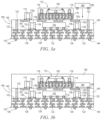
- FIGS. 3 a - 3 b illustrate mounting electrical components to the circuit pattern in the SIP module
- FIGS. 4 a - 4 f illustrate a process of embedding a shielding layer and circuit pattern in the encapsulant of an SIP module
- FIGS. 5 a - 5 b illustrate a process of mounting an electrical component to the shielding layer and circuit pattern in the SIP module
- FIG. 6 illustrates a printed circuit board (PCB) with different types of packages mounted to a surface of the PCB.
- PCB printed circuit board
- semiconductor die refers to both the singular and plural form of the words, and accordingly, can refer to both a single semiconductor device and multiple semiconductor devices.
- Front-end manufacturing involves the formation of a plurality of die on the surface of a semiconductor wafer.
- Each die on the wafer contains active and passive electrical components, which are electrically connected to form functional electrical circuits.
- Active electrical components such as transistors and diodes, have the ability to control the flow of electrical current.
- Passive electrical components such as capacitors, inductors, and resistors, create a relationship between voltage and current necessary to perform electrical circuit functions.
- Back-end manufacturing refers to cutting or singulating the finished wafer into the individual semiconductor die and packaging the semiconductor die for structural support, electrical interconnect, and environmental isolation.
- the wafer is scored and broken along non-functional regions of the wafer called saw streets or scribes.
- the wafer is singulated using a laser cutting tool or saw blade.
- the individual semiconductor die are mounted to a package substrate that includes pins or contact pads for interconnection with other system components.
- Contact pads formed over the semiconductor die are then connected to contact pads within the package.
- the electrical connections can be made with conductive layers, bumps, stud bumps, conductive paste, or wirebonds.
- An encapsulant or other molding material is deposited over the package to provide physical support and electrical isolation.
- the finished package is then inserted into an electrical system and the functionality of the semiconductor device is made available to the other system components.
- FIG. 1 a shows a semiconductor wafer 100 with a base substrate material 102 , such as silicon, germanium, aluminum phosphide, aluminum arsenide, gallium arsenide, gallium nitride, indium phosphide, silicon carbide, or other bulk material for structural support.
- a plurality of semiconductor die or components 104 is formed on wafer 100 separated by a non-active, inter-die wafer area or saw street 106 .
- Saw street 106 provides cutting areas to singulate semiconductor wafer 100 into individual semiconductor die 104 .
- semiconductor wafer 100 has a width or diameter of 100-450 millimeters (mm).
- FIG. 1 B shows a cross-sectional view of a portion of semiconductor wafer 100 .
- Each semiconductor die 104 has a back or non-active surface 108 and an active surface 110 containing analog or digital circuits implemented as active devices, passive devices, conductive layers, and dielectric layers formed within the die and electrically interconnected according to the electrical design and function of the die.
- the circuit may include one or more transistors, diodes, and other circuit elements formed within active surface 110 to implement analog circuits or digital circuits, such as digital signal processor (DSP), application specific integrated circuits (ASIC), memory, or other signal processing circuit.
- DSP digital signal processor
- ASIC application specific integrated circuits
- Semiconductor die 104 may also contain IPDs, such as inductors, capacitors, and resistors, for RF signal processing.
- An electrically conductive layer 112 is formed over active surface 110 using PVD, CVD, electrolytic plating, electroless plating process, or other suitable metal deposition process.
- Conductive layer 112 can be one or more layers of aluminum (Al), copper (Cu), tin (Sn), nickel (Ni), gold (Au), silver (Ag), or other suitable electrically conductive material.
- Conductive layer 112 operates as contact pads electrically connected to the circuits on active surface 110 .
- An electrically conductive bump material is deposited over conductive layer 112 using an evaporation, electrolytic plating, electroless plating, ball drop, or screen printing process.
- the bump material can be Al, Sn, Ni, Au, Ag, Pb, Bi, Cu, solder, and combinations thereof, with an optional flux solution.
- the bump material can be eutectic Sn/Pb, high-lead solder, or lead-free solder.
- the bump material is bonded to conductive layer 112 using a suitable attachment or bonding process. In one embodiment, the bump material is reflowed by heating the material above its melting point to form balls or bumps 114 .
- bump 114 is formed over an under bump metallization (UBM) having a wetting layer, barrier layer, and adhesive layer. Bump 114 can also be compression bonded or thermocompression bonded to conductive layer 112 . Bump 114 represents one type of interconnect structure that can be formed over conductive layer 112 . The interconnect structure can also use bond wires, conductive paste, stud bump, micro bump, or other electrical interconnect.
- UBM under bump metallization
- semiconductor wafer 100 is singulated through saw street 106 using a saw blade or laser cutting tool 118 into individual semiconductor die 104 .
- the individual semiconductor die 104 can be inspected and electrically tested for identification of KGD post singulation.
- FIGS. 2 a - 2 n illustrate a process of disposing electrical components over an interconnect substrate to form an SIP module or electric component assembly. An electrical circuit pattern is then embedded in the encapsulant of the SIP module.
- FIG. 2 a shows a cross-sectional view of interconnect substrate 120 including conductive layers 122 and insulating layer 124 .
- Conductive layer 122 can be one or more layers of Al, Cu, Sn, Ni, Au, Ag, or other suitable electrically conductive material.
- Conductive layer 122 provides horizontal electrical interconnect across substrate 120 and vertical electrical interconnect between top surface 126 and bottom surface 128 of substrate 120 . Portions of conductive layer 122 can be electrically common or electrically isolated depending on the design and function of semiconductor die 104 and other electrical components.
- Insulating layer 124 contains one or more layers of silicon dioxide (SiO2), silicon nitride (Si3N4), silicon oxynitride (SiON), tantalum pentoxide (Ta2O5), aluminum oxide (Al2O3), solder resist, polyimide, benzocyclobutene (BCB), polybenzoxazoles (PBO), and other material having similar insulating and structural properties. Insulating layer 124 provides isolation between conductive layers 122 .
- a plurality of electrical components 130 a - 130 c is mounted to surface 126 of interconnect substrate 120 and electrically and mechanically connected to conductive layers 122 .
- Electrical components 130 a - 130 c are each positioned over substrate 120 using a pick and place operation.
- electrical component 130 b can be semiconductor die 104 from FIG. 1 c with active surface 110 and bumps 114 oriented toward surface 126 of substrate 120 and electrically connected to conductive layer 122 .
- Electrical component 130 a and 130 c are discrete electrical devices or IPDs, such as a resistor, capacitor, and inductor.
- Electrical component 130 a uses terminals 132 and 134 to make electrical and mechanical connection to conductive layer 122 on interconnect substrate 120 .
- Electrical component 130 c uses terminals 136 and 138 to make electrical and mechanical connection to conductive layer 122 on interconnect substrate 120 .
- electrical components 130 a - 130 c can include other semiconductor die, semiconductor packages, surface mount devices, discrete electrical devices, or IPDs, such as a resistor, capacitor, and inductor.
- Electrical components 130 a - 130 d are mounted to interconnect substrate 120 , as shown in FIG. 2 c , with bumps 114 and terminals 132 - 138 making mechanical and electrical connection to conductive layer 122 .
- an encapsulant or molding compound 140 is deposited over and around electric components 130 a - 130 c and substrate 120 using a paste printing, compressive molding, transfer molding, liquid encapsulant molding, vacuum lamination, spin coating, or other suitable applicator.
- Encapsulant 140 can be polymer composite material, such as epoxy resin with filler, epoxy acrylate with filler, or polymer with proper filler.
- Encapsulant 140 is non-conductive, provides structural support, and environmentally protects the semiconductor device from external elements and contaminants.
- an electrically conductive bump material is deposited over conductive layer 122 on surface 128 of interconnect substrate 120 using an evaporation, electrolytic plating, electroless plating, ball drop, or screen printing process.
- the bump material can be Al, Sn, Ni, Au, Ag, Pb, Bi, Cu, solder, and combinations thereof, with an optional flux solution.
- the bump material can be eutectic Sn/Pb, high-lead solder, or lead-free solder.
- the bump material is bonded to conductive layer 122 using a suitable attachment or bonding process. In one embodiment, the bump material is reflowed by heating the material above its melting point to form balls or bumps 144 .
- bump 144 is formed over a UBM having a wetting layer, barrier layer, and adhesive layer. Bump 144 can also be compression bonded or thermocompression bonded to conductive layer 122 . Bump 144 represents one type of interconnect structure that can be formed over conductive layer 122 . The interconnect structure can also use bond wires, conductive paste, stud bump, micro bump, or other electrical interconnect.
- a plurality of vias 146 is formed into surface 148 of encapsulant 140 using etching, drilling, or laser direct ablation (LDA) with laser 150 .
- Vias 146 are aligned with and extend to portions of conductive layer 122 on interconnect substrate 120 .
- vias 146 are filled with Al, Cu, Sn, Ni, Au, Ag, Ti, W, poly-silicon, or other suitable electrically conductive material using paste printing and reflow, electrolytic plating, electroless plating process, or other suitable metal deposition process to form z-direction vertical conductive posts 152 .
- Conductive posts 152 are electrically connected to conductive layer 122 .
- FIG. 2 h a plurality of openings 154 is formed in surface 148 of encapsulant 140 using etching or LDA with laser 156 . Openings 154 are arranged in a circuit pattern designated to interconnect various electric components via traces, redistribution layer (RDL), contact pads, and other interconnect structure.
- FIG. 2 i shows a top view of openings 154 formed in surface 148 of encapsulant 140 as general circuit pattern 158 .
- opening 154 a will form a trace line
- opening 154 b will form a contact pad
- opening 154 c will form an RDL.
- Openings 154 are shown wide in FIGS. 2 h - 2 i for illustration purposes, i.e., the openings are not to scale. In practice, openings 154 correspond to a width of features in an actual semiconductor scale circuit pattern.
- a conductive material 160 is conformally applied to surface 148 using electrolytic plating, electroless plating process, sputtering, or other suitable metal deposition process.
- Conductive material 160 can be Al, Cu, Sn, Ni, Au, Ag, Ti, W, poly-silicon, or other suitable electrically conductive material.
- Conductive material 160 is disposed over or covers surface 148 and fills openings 154 , including all portions of circuit pattern 158 .
- Conductive material 160 contacts conductive posts 152 .
- FIG. 2 k shows a top view of conductive material 160 disposed over or covering surface 148 and filling openings 154 , including all portions of circuit pattern 158 .
- FIG. 2 l a portion of conductive layer 160 is removed by grinder 164 to expose surface 148 and the conductive material in openings 154 .
- the portion of conductive material in openings 154 remains in place.
- Grinder 164 planarizes surface 148 of encapsulant 140 and the surface of conductive material 160 .
- a portion of conductive material 160 is removed by chemical etching, chemical mechanical polishing (CMP), or LDA to expose surface 148 and the conductive material in openings 154 .
- FIG. 2 m shows SIP module or semiconductor component assembly 166 post-grinding with conductive material 160 in openings 154 .
- the grinding process exposes conductive material 160 in openings 154 to form an electrical circuit pattern 168 , as shown in FIG. 2 n .
- electrical circuit pattern 168 is embedded with encapsulant 140 .
- FIGS. 2 m - 2 n Various electrical components can be mounted to electrical circuit pattern 168 from FIGS. 2 m - 2 n .
- the electrical components are each positioned over encapsulant 140 and electrical circuit pattern 168 using a pick and place operation.
- the electrical components are mounted to electrical circuit pattern 168 .
- discrete semiconductor device 170 is mechanically and electrically connected to electrical circuit pattern 168 .
- the discrete semiconductor devices can be a capacitor, resistor, inductor, or discrete transistor.
- Semiconductor package 172 includes interconnect substrate 174 , semiconductor die 176 wire bonded to the interconnect substrate, and discrete semiconductor devices 178 mechanically and electrically connected to the interconnect substrate.
- Semiconductor die 176 , discrete semiconductor devices 178 , and interconnect substrate 174 are covered by encapsulant 180 .
- Semiconductor package 172 is mechanically and electrically connected to electrical circuit pattern 168 with bumps 184 .
- Semiconductor die 186 is mechanically and electrically connected to electrical circuit pattern 168 with bumps 188 .
- FIG. 3 b shows electrical components 170 , 172 , and 186 mounted to electrical circuit pattern 168 .
- An optional encapsulant 190 can be deposited over SIP module 166 and electrical components 170 , 172 , and 186 .
- the electrical circuit pattern 168 embedded within encapsulant 140 provides design flexibility, while reducing SIP module height.
- the thickness of electrical circuit pattern 168 within encapsulant 140 remains constant, due to precision of the laser cutting the initial openings and the planarization after depositing the conductive material in the openings.
- openings 200 and 202 are formed in surface 148 of encapsulant 140 using etching or LDA with laser 156 , as shown in FIG. 4 a .
- Opening 200 is configured as an electromagnetic shielding layer.
- Conductive posts 204 are formed through encapsulant 140 around opening 200 , similar to conductive post 152 in FIGS. 2 f - 2 g .
- Openings 202 are arranged in a circuit pattern designated to interconnect various electric components via traces, RDL, contact pads, and other interconnect structure.
- FIG. 4 b shows a top view of openings 200 and 202 formed in surface 148 of encapsulant 140 as general circuit pattern 208 .
- opening 202 a will form a trace line
- opening 202 b will form a contact pad
- opening 202 c will form an RDL.
- Openings 200 and 202 are shown wide in FIGS. 4 a - 4 b for illustration purposes, i.e., the openings are not to scale. In practice, openings 200 and 202 correspond to a width of features in an actual semiconductor scale circuit pattern.
- a conductive material 210 is conformally applied to surface 148 of encapsulant 140 .
- Conductive material 210 can be Al, Cu, Sn, Ni, Au, Ag, Ti, W, poly-silicon, or other suitable electrically conductive material.
- Conductive material 210 is disposed over or covers surface 148 and fills openings 200 and 202 , including all portions of circuit pattern 208 , similar to FIG. 2 k .
- Conductive material 210 contacts conductive posts 204 .
- FIG. 4 d a portion of conductive layer 210 is removed by grinder 164 to expose surface 148 and the conductive material in openings 200 and 202 .
- the portion of conductive material in openings 200 and 202 remains in place.
- Grinder 164 planarizes surface 148 of encapsulant 140 and the surface of conductive material 210 .
- a portion of conductive material 210 is removed by an etching process or LDA to expose surface 148 and the conductive material in openings 200 and 202 .
- FIG. 4 e shows SIP module or semiconductor component assembly 214 post-grinding with conductive material 210 in openings 200 and 202 .
- Electromagnetic shielding layer 216 can be grounded through conductive posts 204 .
- FIGS. 4 e - 4 f Various electrical components can be mounted to electrical circuit pattern 218 from FIGS. 4 e - 4 f .
- electrical component 220 is positioned over encapsulant 140 and electromagnetic shielding layer 216 using a pick and place operation.
- FIG. 5 b electrical component 220 is mounted to electromagnetic shielding layer 216 with die attach adhesive 222 .
- Electrical component 222 is electrically connected to electrical circuit pattern 218 with wire bonds 224 .
- SIP module 214 with electrical components 130 a - 130 c , and electrical component 220 may contain IPDs that are susceptible to or generate EMI, RFI, harmonic distortion, and inter-device interference.
- the IPDs contained within electrical component 220 provide the electrical characteristics needed for high-frequency applications, such as resonators, high-pass filters, low-pass filters, band-pass filters, symmetric Hi-Q resonant transformers, and tuning capacitors.
- electrical component 220 contain digital circuits switching at a high frequency, which could interfere with the operation of IPDs in SIP module 214 .
- Electromagnetic shielding layer 216 reduces or inhibits EMI, RFI, and other inter-device interference, for example as radiated by high-speed digital devices, from affecting neighboring devices within or adjacent to SIP module 214 or electrical component 220 .
- the electrical circuit patterns 218 embedded within encapsulant 140 provide design flexibility, while reducing SIP module height.
- the thickness of electrical circuit pattern 218 within encapsulant 140 remains constant, due to precision of the laser cutting the initial openings and the planarization after depositing the conductive material in the openings.
- Other circuit patterns can be formed within encapsulant 140 , such as an antenna pattern and connector electrodes.
- FIG. 6 illustrates electronic device 300 having a chip carrier substrate or PCB 302 with a plurality of semiconductor packages mounted on a surface of PCB 302 , including SIP modules 166 and 214 .
- Electronic device 300 can have one type of semiconductor package, or multiple types of semiconductor packages, depending on the application.
- Electronic device 300 can be a stand-alone system that uses the semiconductor packages to perform one or more electrical functions.
- electronic device 300 can be a subcomponent of a larger system.
- electronic device 300 can be part of a tablet, cellular phone, digital camera, communication system, or other electronic device.
- electronic device 300 can be a graphics card, network interface card, or other signal processing card that can be inserted into a computer.
- the semiconductor package can include microprocessors, memories, ASIC, logic circuits, analog circuits, RF circuits, discrete devices, or other semiconductor die or electrical components. Miniaturization and weight reduction are essential for the products to be accepted by the market. The distance between semiconductor devices may be decreased to achieve higher density.
- PCB 302 provides a general substrate for structural support and electrical interconnect of the semiconductor packages mounted on the PCB.
- Conductive signal traces 304 are formed over a surface or within layers of PCB 302 using evaporation, electrolytic plating, electroless plating, screen printing, or other suitable metal deposition process.
- Signal traces 304 provide for electrical communication between each of the semiconductor packages, mounted components, and other external system components. Traces 304 also provide power and ground connections to each of the semiconductor packages.
- a semiconductor device has two packaging levels.
- First level packaging is a technique for mechanically and electrically attaching the semiconductor die to an intermediate substrate.
- Second level packaging involves mechanically and electrically attaching the intermediate substrate to the PCB.
- a semiconductor device may only have the first level packaging where the die is mechanically and electrically mounted directly to the PCB.
- first level packaging including bond wire package 306 and flipchip 308
- second level packaging including ball grid array (BGA) 310 , bump chip carrier (BCC) 312 , land grid array (LGA) 316 , multi-chip module (MCM) or SIP module 318 , quad flat non-leaded package (QFN) 320 , quad flat package 322 , embedded wafer level ball grid array (eWLB) 324 , and wafer level chip scale package (WLCSP) 326 are shown mounted on PCB 302 .
- BGA ball grid array
- BCC bump chip carrier
- LGA land grid array
- MCM multi-chip module
- QFN quad flat non-leaded package
- eWLB embedded wafer level ball grid array
- WLCSP wafer level chip scale package
- eWLB 324 is a fan-out wafer level package (Fo-WLP) and WLCSP 326 is a fan-in wafer level package (Fi-WLP).
- Fo-WLP fan-out wafer level package
- WLCSP 326 is a fan-in wafer level package
- any combination of semiconductor packages configured with any combination of first and second level packaging styles, as well as other electronic components, can be connected to PCB 302 .
- electronic device 300 includes a single attached semiconductor package, while other embodiments call for multiple interconnected packages.
- manufacturers can incorporate pre-made components into electronic devices and systems. Because the semiconductor packages include sophisticated functionality, electronic devices can be manufactured using less expensive components and a streamlined manufacturing process. The resulting devices are less likely to fail and less expensive to manufacture resulting in a lower cost for consumers.
Landscapes
- Physics & Mathematics (AREA)
- Internal Circuitry In Semiconductor Integrated Circuit Devices (AREA)
- Geometry (AREA)
- Health & Medical Sciences (AREA)
- Electromagnetism (AREA)
- Toxicology (AREA)
- Engineering & Computer Science (AREA)
- Manufacturing & Machinery (AREA)
Abstract
Description
Claims (28)
Priority Applications (2)
| Application Number | Priority Date | Filing Date | Title |
|---|---|---|---|
| US17/307,727 US11652065B2 (en) | 2021-05-04 | 2021-05-04 | Semiconductor device and method of embedding circuit pattern in encapsulant for SIP module |
| CN202210325262.XA CN115295426A (en) | 2021-05-04 | 2022-03-30 | Semiconductor device and method for embedding circuit pattern in package for system-in-package module |
Applications Claiming Priority (1)
| Application Number | Priority Date | Filing Date | Title |
|---|---|---|---|
| US17/307,727 US11652065B2 (en) | 2021-05-04 | 2021-05-04 | Semiconductor device and method of embedding circuit pattern in encapsulant for SIP module |
Publications (2)
| Publication Number | Publication Date |
|---|---|
| US20220359418A1 US20220359418A1 (en) | 2022-11-10 |
| US11652065B2 true US11652065B2 (en) | 2023-05-16 |
Family
ID=83820818
Family Applications (1)
| Application Number | Title | Priority Date | Filing Date |
|---|---|---|---|
| US17/307,727 Active 2041-08-06 US11652065B2 (en) | 2021-05-04 | 2021-05-04 | Semiconductor device and method of embedding circuit pattern in encapsulant for SIP module |
Country Status (2)
| Country | Link |
|---|---|
| US (1) | US11652065B2 (en) |
| CN (1) | CN115295426A (en) |
Families Citing this family (4)
| Publication number | Priority date | Publication date | Assignee | Title |
|---|---|---|---|---|
| US11749668B2 (en) * | 2021-06-09 | 2023-09-05 | STATS ChipPAC Pte. Ltd | PSPI-based patterning method for RDL |
| TWI811764B (en) * | 2021-08-16 | 2023-08-11 | 恆勁科技股份有限公司 | Semiconductor emi shielding component, semiconductor package structure and manufacturing method thereof |
| US12564059B2 (en) | 2022-10-12 | 2026-02-24 | STATS ChipPAC Pte. Ltd. | Semiconductor device and method of forming graphene core shell embedded within shielding layer |
| US12581974B2 (en) | 2023-01-05 | 2026-03-17 | STATS ChipPAC Pte. Ltd. | Semiconductor device and method of making a semiconductor package with graphene-coated interconnects |
Citations (5)
| Publication number | Priority date | Publication date | Assignee | Title |
|---|---|---|---|---|
| US7633765B1 (en) * | 2004-03-23 | 2009-12-15 | Amkor Technology, Inc. | Semiconductor package including a top-surface metal layer for implementing circuit features |
| US8283205B2 (en) * | 2010-08-27 | 2012-10-09 | Stats Chippac, Ltd. | Semiconductor device and method of forming stepped interconnect layer for stacked semiconductor die |
| US9202742B1 (en) | 2014-01-15 | 2015-12-01 | Stats Chippac Ltd. | Integrated circuit packaging system with pattern-through-mold and method of manufacture thereof |
| US20210257337A1 (en) * | 2020-02-17 | 2021-08-19 | Samsung Electronics Co., Ltd. | Semiconductor package |
| US20210257227A1 (en) * | 2018-09-27 | 2021-08-19 | Taiwan Semiconductor Manufacturing Company, Ltd. | Semiconductor package and manufacturing method thereof |
Family Cites Families (7)
| Publication number | Priority date | Publication date | Assignee | Title |
|---|---|---|---|---|
| US11081370B2 (en) * | 2004-03-23 | 2021-08-03 | Amkor Technology Singapore Holding Pte. Ltd. | Methods of manufacturing an encapsulated semiconductor device |
| DE102005046975A1 (en) * | 2005-09-30 | 2007-04-05 | Advanced Micro Devices, Inc., Sunnyvale | Process to manufacture a semiconductor component with aperture cut through a dielectric material stack |
| US7759212B2 (en) * | 2007-12-26 | 2010-07-20 | Stats Chippac, Ltd. | System-in-package having integrated passive devices and method therefor |
| US8558392B2 (en) * | 2010-05-14 | 2013-10-15 | Stats Chippac, Ltd. | Semiconductor device and method of forming interconnect structure and mounting semiconductor die in recessed encapsulant |
| US9305854B2 (en) * | 2012-08-21 | 2016-04-05 | Stats Chippac, Ltd. | Semiconductor device and method of forming RDL using UV-cured conductive ink over wafer level package |
| US10636774B2 (en) * | 2017-09-06 | 2020-04-28 | STATS ChipPAC Pte. Ltd. | Semiconductor device and method of forming a 3D integrated system-in-package module |
| CN112018052A (en) * | 2019-05-31 | 2020-12-01 | 英飞凌科技奥地利有限公司 | Semiconductor package with laser activatable molding compound |
-
2021
- 2021-05-04 US US17/307,727 patent/US11652065B2/en active Active
-
2022
- 2022-03-30 CN CN202210325262.XA patent/CN115295426A/en active Pending
Patent Citations (5)
| Publication number | Priority date | Publication date | Assignee | Title |
|---|---|---|---|---|
| US7633765B1 (en) * | 2004-03-23 | 2009-12-15 | Amkor Technology, Inc. | Semiconductor package including a top-surface metal layer for implementing circuit features |
| US8283205B2 (en) * | 2010-08-27 | 2012-10-09 | Stats Chippac, Ltd. | Semiconductor device and method of forming stepped interconnect layer for stacked semiconductor die |
| US9202742B1 (en) | 2014-01-15 | 2015-12-01 | Stats Chippac Ltd. | Integrated circuit packaging system with pattern-through-mold and method of manufacture thereof |
| US20210257227A1 (en) * | 2018-09-27 | 2021-08-19 | Taiwan Semiconductor Manufacturing Company, Ltd. | Semiconductor package and manufacturing method thereof |
| US20210257337A1 (en) * | 2020-02-17 | 2021-08-19 | Samsung Electronics Co., Ltd. | Semiconductor package |
Also Published As
| Publication number | Publication date |
|---|---|
| US20220359418A1 (en) | 2022-11-10 |
| CN115295426A (en) | 2022-11-04 |
Similar Documents
| Publication | Publication Date | Title |
|---|---|---|
| KR102754340B1 (en) | Semiconductor device and method of forming partition fence and shielding layer around semiconductor components | |
| US11652065B2 (en) | Semiconductor device and method of embedding circuit pattern in encapsulant for SIP module | |
| US12211808B2 (en) | Semiconductor device and method of forming discrete antenna modules | |
| US12288754B2 (en) | Semiconductor device and method of stacking devices using support frame | |
| US12100663B2 (en) | Semiconductor device and method of integrating RF antenna interposer with semiconductor package | |
| US20250357286A1 (en) | Semiconductor Device and Method of Disposing Electrical Components Over Side Surfaces of Interconnect Substrate | |
| US12374593B2 (en) | Semiconductor device and method of forming electrical circuit pattern within encapsulant of sip module | |
| US12438099B2 (en) | Semiconductor device and method of forming EMI shielding material in two-step process to avoid contaminating electrical connector | |
| US11309193B2 (en) | Semiconductor device and method of forming SIP module over film layer | |
| US12009314B2 (en) | Semiconductor device and method of compartment shielding using bond wires | |
| US12538840B2 (en) | Semiconductor device and method of forming module-in-package structure using redistribution layer | |
| US20250343158A1 (en) | Semiconductor Device and Method of Forming C2W Package with EMI Shielding | |
| US20230402397A1 (en) | Semiconductor Device and Method of Selective Shielding Using FOD Material | |
| US20250329662A1 (en) | Semiconductor Device and Method of Forming Stacked SIP Structure with Single-Sided Mold | |
| US20260018525A1 (en) | Semiconductor Device and Method of Stacking Hybrid Substrates with Embedded Electric Components | |
| US20240096807A1 (en) | Semiconductor Device and Method of Stacking Hybrid Substrates |
Legal Events
| Date | Code | Title | Description |
|---|---|---|---|
| FEPP | Fee payment procedure |
Free format text: ENTITY STATUS SET TO UNDISCOUNTED (ORIGINAL EVENT CODE: BIG.); ENTITY STATUS OF PATENT OWNER: LARGE ENTITY |
|
| AS | Assignment |
Owner name: STATS CHIPPAC PTE. LTD., SINGAPORE Free format text: ASSIGNMENT OF ASSIGNORS INTEREST;ASSIGNORS:JUNG, JINHEE;KIM, CHANGOH;LEE, HEESOO;REEL/FRAME:056140/0897 Effective date: 20210505 |
|
| STPP | Information on status: patent application and granting procedure in general |
Free format text: RESPONSE TO NON-FINAL OFFICE ACTION ENTERED AND FORWARDED TO EXAMINER |
|
| STCF | Information on status: patent grant |
Free format text: PATENTED CASE |
|
| AS | Assignment |
Owner name: STATS CHIPPAC MANAGEMENT PTE. LTD., SINGAPORE Free format text: ASSIGNMENT OF ASSIGNORS INTEREST;ASSIGNOR:STATS CHIPPAC PTE. LTD.;REEL/FRAME:072788/0917 Effective date: 20250710 |