US11651223B2 - Systems and methods for block-sparse recurrent neural networks - Google Patents

Systems and methods for block-sparse recurrent neural networks Download PDF

Info

Publication number
US11651223B2
US11651223B2 US16/151,886 US201816151886A US11651223B2 US 11651223 B2 US11651223 B2 US 11651223B2 US 201816151886 A US201816151886 A US 201816151886A US 11651223 B2 US11651223 B2 US 11651223B2
Authority
US
United States
Prior art keywords
block
pruning
neural network
network model
computer
Prior art date
Legal status (The legal status is an assumption and is not a legal conclusion. Google has not performed a legal analysis and makes no representation as to the accuracy of the status listed.)
Active, expires
Application number
US16/151,886
Other versions
US20190130271A1 (en
Inventor
Sharan NARANG
Eric UNDERSANDER
Gregory DIAMOS
Current Assignee (The listed assignees may be inaccurate. Google has not performed a legal analysis and makes no representation or warranty as to the accuracy of the list.)
Baidu USA LLC
Original Assignee
Baidu USA LLC
Priority date (The priority date is an assumption and is not a legal conclusion. Google has not performed a legal analysis and makes no representation as to the accuracy of the date listed.)
Filing date
Publication date
Application filed by Baidu USA LLC filed Critical Baidu USA LLC
Priority to US16/151,886 priority Critical patent/US11651223B2/en
Assigned to BAIDU USA LLC reassignment BAIDU USA LLC ASSIGNMENT OF ASSIGNORS INTEREST (SEE DOCUMENT FOR DETAILS). Assignors: DIAMOS, GREGORY, NARANG, SHARAN, UNDERSANDER, ERIC
Priority to CN201811266435.5A priority patent/CN109726045B/en
Publication of US20190130271A1 publication Critical patent/US20190130271A1/en
Application granted granted Critical
Publication of US11651223B2 publication Critical patent/US11651223B2/en
Active legal-status Critical Current
Adjusted expiration legal-status Critical

Links

Images

Classifications

    • GPHYSICS
    • G06COMPUTING OR CALCULATING; COUNTING
    • G06NCOMPUTING ARRANGEMENTS BASED ON SPECIFIC COMPUTATIONAL MODELS
    • G06N3/00Computing arrangements based on biological models
    • G06N3/02Neural networks
    • G06N3/04Architecture, e.g. interconnection topology
    • G06N3/044Recurrent networks, e.g. Hopfield networks
    • GPHYSICS
    • G06COMPUTING OR CALCULATING; COUNTING
    • G06NCOMPUTING ARRANGEMENTS BASED ON SPECIFIC COMPUTATIONAL MODELS
    • G06N3/00Computing arrangements based on biological models
    • G06N3/02Neural networks
    • G06N3/04Architecture, e.g. interconnection topology
    • GPHYSICS
    • G06COMPUTING OR CALCULATING; COUNTING
    • G06NCOMPUTING ARRANGEMENTS BASED ON SPECIFIC COMPUTATIONAL MODELS
    • G06N3/00Computing arrangements based on biological models
    • G06N3/02Neural networks
    • G06N3/04Architecture, e.g. interconnection topology
    • G06N3/044Recurrent networks, e.g. Hopfield networks
    • G06N3/0442Recurrent networks, e.g. Hopfield networks characterised by memory or gating, e.g. long short-term memory [LSTM] or gated recurrent units [GRU]
    • GPHYSICS
    • G06COMPUTING OR CALCULATING; COUNTING
    • G06NCOMPUTING ARRANGEMENTS BASED ON SPECIFIC COMPUTATIONAL MODELS
    • G06N3/00Computing arrangements based on biological models
    • G06N3/02Neural networks
    • G06N3/04Architecture, e.g. interconnection topology
    • G06N3/045Combinations of networks
    • GPHYSICS
    • G06COMPUTING OR CALCULATING; COUNTING
    • G06NCOMPUTING ARRANGEMENTS BASED ON SPECIFIC COMPUTATIONAL MODELS
    • G06N3/00Computing arrangements based on biological models
    • G06N3/02Neural networks
    • G06N3/04Architecture, e.g. interconnection topology
    • G06N3/0495Quantised networks; Sparse networks; Compressed networks
    • GPHYSICS
    • G06COMPUTING OR CALCULATING; COUNTING
    • G06NCOMPUTING ARRANGEMENTS BASED ON SPECIFIC COMPUTATIONAL MODELS
    • G06N3/00Computing arrangements based on biological models
    • G06N3/02Neural networks
    • G06N3/08Learning methods
    • G06N3/082Learning methods modifying the architecture, e.g. adding, deleting or silencing nodes or connections
    • GPHYSICS
    • G06COMPUTING OR CALCULATING; COUNTING
    • G06NCOMPUTING ARRANGEMENTS BASED ON SPECIFIC COMPUTATIONAL MODELS
    • G06N3/00Computing arrangements based on biological models
    • G06N3/02Neural networks
    • G06N3/08Learning methods
    • G06N3/09Supervised learning

Definitions

  • the present disclosure relates generally to systems and methods for computer learning that can provide improved computer performance, features, and uses.
  • Recurrent Neural Networks are used in state-of-the-art models in domains such as speech recognition, machine translation, language modelling, etc. Sparsity is one technique to reduce compute and memory requirements of deep learning models. Sparse RNNs are easier to deploy on devices and high-end server processors. Even though sparse operations need less compute and memory relative to their dense counterparts, the speed-up observed by using sparse operations is less than expected on different hardware platforms. Sparse formats do not efficiently utilize the hardware resources due to storage overheads, irregular memory access, and inability to take advantage of array data-paths in modern processors.
  • FIG. 1 depicts a process for block pruning for one or more matrices in a recurrent neural network, according to embodiments of the present document.
  • FIG. 2 depicts a methodology for generating block-sparse masks from a weight matrix, according to embodiments of the present document.
  • FIG. 3 depicts a process for determining one or more parameters for establishing block pruning threshold, according to embodiments of the present document.
  • FIG. 4 depicts a threshold for implementing block pruning, according to embodiments of the present document.
  • FIG. 5 depicts a process for group lasso regularization, according to embodiments of the present document.
  • FIG. 6 depicts speech recognition models, including a RNN model and a GRU model, to run block sparsity experiments, according to embodiments of the present document.
  • FIG. 7 A and FIG. 7 B depict block-sparse matrices for RNN layers and GRU layers, respectively, achieving higher speed-up than unstructured sparsity for large batch sizes, according to embodiments of the present document.
  • FIG. 8 A depicts pruning schedules for two layers in the network for WP, GLP and BP models, according to embodiments of the present document.
  • FIG. 8 B depicts histograms of the number of output connections for all neurons in a network using block pruning with 4 ⁇ 4 blocks, according to embodiments of the present document.
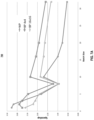
  • FIG. 9 A depicts relative accuracy for different block sizes (4 ⁇ 4, 16 ⁇ 16) and WP for varying sparsity on a RNN model, according to embodiments of the present document.
  • FIG. 9 B depicts sparsity of all recurrent layers in a network using Weight Pruning (WP) and Block Pruning (BP), according to embodiments of the present document.
  • WP Weight Pruning
  • BP Block Pruning
  • FIG. 10 depicts a simplified block diagram of a computing device/information handling system, in accordance with embodiments of the present document.
  • connections between components or systems within the figures are not intended to be limited to direct connections. Rather, data between these components may be modified, re-formatted, or otherwise changed by intermediary components. Also, additional or fewer connections may be used. It shall also be noted that the terms “coupled,” “connected,” or “communicatively coupled” shall be understood to include direct connections, indirect connections through one or more intermediary devices, and wireless connections.
  • a service, function, or resource is not limited to a single service, function, or resource; usage of these terms may refer to a grouping of related services, functions, or resources, which may be distributed or aggregated.
  • RNNs Recurrent Neural Networks
  • Pruning deep neural networks is an effective strategy to reduce the overall memory and compute requirements of these models.
  • these approaches induce random, unstructured sparsity in the weight matrices.
  • Speed-up obtained with random sparsity on various hardware platforms are lower than expected.
  • Sparse formats do not efficiently utilize the hardware resources due to storage overheads, irregular memory access, and inability to take advantage of array data-paths in modern processors.
  • Block sparsity may address these issues. Saving indices of non-zero blocks instead of indices for non-zero elements reduces the storage overhead by a factor of block size. Block-sparse formats store blocks contiguously in memory reducing irregular memory accesses. Block sparsity inherently allows the advantage of array-data-path in modern processors.
  • computer-implemented methods for computer learning are provided.
  • the methods may involve pruning a neural network model to reduce parameter numbers of the neural network model, thus reduce memory and computation requirements of the model for deployment.
  • at least one weight matrix of the neural network model is divided into a plurality of blocks with each block comprising a plurality of elements.
  • a representative weight e.g. the weight with maximum magnitude among the plurality of elements, is picked to represent an entire block.
  • all the weights in the block are set to zeros.
  • Block pruning and group lasso regularization with pruning are successful in creating block-sparse RNNs.
  • Inducing block sparsity with 4 ⁇ 4 blocks in vanilla RNNs and Gated Recurrent Units (GRUs) results in 9% to 17% loss in accuracy compared to the dense baseline.
  • Model size reduces by nearly 10 ⁇ .
  • block sizes may be scaled up to 32 ⁇ 32. Larger blocks require lower sparsity to maintain similar accuracy.
  • Accuracy loss may also be reduced by starting with a larger dense matrix than the baseline and then pruning it down while still reducing the number of parameters compared to the baseline.
  • the disclosed approach in this invention document is agnostic to the optimization algorithm and does not require any hyper-parameter retuning (besides pruning and regularization hyper-parameters). Furthermore, since this approach does not require re-training the model, training time remains the same.
  • FIG. 2 depicts a methodology for generating block-sparse masks from a weight matrix for a given threshold, according to embodiments of the present document.
  • the groups (A, B, C, and D) indicate blocks in a matrix, which, according to embodiments of the present disclosure, are transformed to produce a mask of 1's and 0's.
  • the N-dimension weight matrix 205 is permutated in a gather step to obtain a permutated matrix 210 , which is then collapsed from N-dimension into a one-dimension matrix 215 in a max reduce step. Based on comparison to a threshold, the one-dimension matrix 215 is transformed into the matrix 220 with elements in the matrix 215 replaced as 1 or 0.
  • the threshold (c) is monotonically growing to cause more blocks to be pruned as training progress. In one or more embodiments, pruning more blocks stops when a threshold is reached, e.g., after around a predetermined percentage (such as 40%) of training epochs has completed. Any blocks that had been zeroed out are held at zero even after pruning has ended resulting in a sparse model at the end of training.
  • one or more parameters are modified to take into account the number of elements in a block (N b ).
  • FIG. 3 depicts a process for determining one or more parameters for establishing block pruning threshold, according to embodiments of the present document.
  • start slope is first calculated ( 305 ) for weight pruning ( ⁇ w ) using the Equation 1.
  • ⁇ w Given ⁇ w , using Equation 2 is used to determine ( 310 ) the initial slope ( ⁇ b ) for block pruning. Based on empirical results, it has been found that using this approach allows achieving block sparsity ranging from 85% to 95%. Further tuning of these hyper-parameters is required to achieve desired block sparsity.
  • ⁇ b ⁇ w ⁇ N b 4 ( 2 )
  • the start slope ⁇ may be determined by aforementioned method using equations (1) and (2), and the ramp slope ⁇ may be chosen as a multiple of the start slope ⁇ , e.g. 1.5 ⁇ .
  • the threshold is initially set as zero such that those important elements, some of which may be small initially, within a weight matrix have enough training epochs to progress (grow or diminish) before block pruning starts.
  • the start iteration number is set as a first predetermined percentage, e.g. 20%, of total training iterations.
  • the ramp iteration number is set as a second predetermined percentage, e.g. 40%, of total training iterations.
  • all the recurrent and fully connected layers in the network are pruned using the same block size.
  • the pruning hyper-parameters are same for each type of layer in the network- recurrent weight layer and linear/fully connected layer.
  • Group lasso is a type of weight regularization that works on groups of weights and can zero out all the weights in a group.
  • FIG. 5 depicts a process for group lasso regularization, according to embodiments of the current disclosure.
  • one or more weight matrices in the RNN model are divided ( 505 ) into blocks.
  • a loss term proportional to a norm, such as the 2 norm, of the block is add ( 510 ) to implement group Lasso regularization.
  • Group lasso has the property that a large enough ⁇ g will drive all weights within certain groups to hard zeros. Thus, in one or more embodiments, group lasso regularization is explored to produce block-structured sparsity. In one or more embodiments, an appropriate constant ⁇ g is chosen for the duration of training.
  • weight regularization less important weights are driven towards zero and more important weights retain large absolute values.
  • group lasso is combined with block pruning, such that group lasso guides the selection of blocks to prune.
  • Group lasso regularization is applied to coincide with the pruning schedule.
  • regularization is turned off ( 515 ) when the pruning schedule ends or a pruning threshold is reached, which is typically after around 40% of training epochs. As discussed in Section C.1, weights that were already set to zero remain unchanged after this point.
  • Group lasso is related to the well-known 1 regularization. Exploration of 1 regularization combined with weight pruning is discussed in Section G.
  • FIG. 6 depicts speech recognition models, including a RNN model 605 and a GRU model 630 , to run block sparsity experiments.
  • the RNN model 605 consists of a convolutional layer 610 , followed by multiple, e.g. seven, bidirectional recurrent layers 615 , a fully connected layer 620 and a Connectionist Temporal Classification (CTC) layer 625 .
  • the baseline RNN model (RNN Dense 1760) consists of 1760 hidden units in each recurrent layer with nearly 67 million parameters.
  • the GRU model 630 consists of two convolutional layers 635 , three recurrent layers 640 with GRU cells, a fully connected layer 645 and a CTC layer 650 .
  • the baseline RNN and GRU models are pruned. Using BP and GLP, the parameter count for both these models are reduced by nearly 10 ⁇ . As shown in Table 2, the sparse RNN model with 1760 hidden units has an overall block sparsity of 89% with a relative loss in accuracy of 16.7%. The sparse GRU model achieves slightly higher sparsity (90%) while losing only 8.8% of accuracy. This indicates that the block-sparse GRU model retains most of the capacity of the dense model.
  • Table 3 highlights the results of GL and GLP experiments for two different models. For both RNN models with 1760 and 2560 hidden nodes, group lasso without any pruning does significantly worse than combining group lasso with the block pruning methodology.
  • ⁇ g is set to a relatively high value. For instance, experiments using GL required ⁇ g approximately 3 ⁇ larger than the GLP experiments. This high regularization factor hurts the model accuracy.
  • the dense baseline model is trained without any regularization. Even without regularization, the dense model does not overfit the training dataset. Group lasso experiments underfit the training data due to the high value of ⁇ g . Group lasso may be more successful in inducing sparsity where the dense model overfits the training dataset. In the GLP experiments, the regularization factor may be reduced since pruning forces smaller magnitude weights to zero. This combined approach results in improved accuracy while maintaining high levels of sparsity.
  • Table 4 shows the results of varying block size for pruning for RNN and GRU baseline models. Increasing the block size to 16 ⁇ 16 and 32 ⁇ 32 requires reducing the sparsity to 83.6% and 79.1% respectively for RNN models to obtain good accuracy. Similar results hold true for the GRU model as well. Large sparse blocks reduce memory overhead for storing non zero values and can take advantage of array data-paths in more modern processors. Therefore, even though large blocks achieve lower sparsity, they result in lower memory and compute requirements.
  • the primary advantage of a block-sparse format is to increase hardware efficiency by making the computation more regular.
  • Sparse formats incur at least three types of overhead: i) indexing overhead, ii) irregular memory accesses, and iii) incompatibility with array-data-paths, all of which are mitigated by using larger block sizes.
  • Sparse formats use extra memory to track the location of each non-zero value.
  • the compressed-sparse-row (CSR) format uses approximately two extra index values for each non-zero value.
  • the size of these extra index values depends on the maximum matrix size.
  • Using 16-bit indices incurs 32-bits of overhead per non-zero value and allows up to 64 k ⁇ 64 k matrices to be supported. Assuming that neural network weights are represented with 16-bits, this is a 200% overhead.
  • Block sparsity reduces this overhead by a factor of the block size because the index is shared over the entire block. For example, using a block size of 4 ⁇ 4 reduces the memory bloat to 12.5%, and using a block size of 16 ⁇ 16 reduces the overhead to less than 1%.
  • Irregular Memory Accesses Caches lines, DRAM row buffers, and TLBs provide the best performance when memory is accessed in relatively large contiguous units (e.g. 64 bytes for cache lines, 4 KB for a DRAM row) as opposed to in fine-grained random accesses.
  • Block-sparse formats store blocks contiguously in memory, resulting in large coalesced accesses.
  • Array Data-Paths Fine-grained sparsity cannot directly take advantage of array-data-paths, such as the 16 ⁇ 16 TensorCore units in the Volta GPU by NVIDIA or the 256 ⁇ 256 units in the Google TPU. There are significant advantages of using these units, for example, on the Volta V100 GPU, they enable up to 8 ⁇ higher throughput than the SIMD data-paths. In order to keep these units busy, the block size should be at least as large as the hardware data-path size (i.e. 16 ⁇ 16 or greater on V100).
  • FIG. 7 A and FIG. 7 B show that block-sparse matrices achieve higher speed-up than unstructured sparsity for large batch sizes.
  • FIG. 7 A shows speed-up for RNN 1760 layer matrix multiply
  • FIG. 7 B shows speed-up for GRU 2560 layer matrix multiply.
  • the speed-up is achieved due to reducing irregular memory accesses and improving load balance.
  • 4 ⁇ 4 blocks have higher speed-up than 16x16 blocks.
  • Benchmarks are run on TitanX Maxwell using the CuSparse library. Sparse matrices are represented in the CSR format.
  • RNN matrix sizes are (1760, 1760) with 90% sparsity and (1760, batch size).
  • GRU matrix sizes are (7680, 2560) with 95% sparsity and (2560, batch size). Results are shown for matrices from Weight Pruning (WP) and Block Pruning (BP).
  • WP Weight Pruning
  • BP Block Pruning
  • FIG. 8 A plots various pruning schedules of a recurrent and linear layer of the bidirectional model trained with BP and Weight Pruning (WP).
  • WP Weight Pruning
  • Curves 805 , 810 , 815 , 820 , 825 , and 830 correspond to WP recurrent layer, WP linear layer, BP recurrent layer, BP linear layer, GLP recurrent layer, and GLP affine layer respectively.
  • the BP and GLP models result in a sharper curve with more weights being set to zero in a short span of iterations.
  • the max function is used to reduce the blocks to a single value which may be the cause of the sharpness in pruning.
  • the GLP model reaches 90% sparsity just before 10,000 iterations which is significantly earlier than the BP model. GLP training encourages sparsity early on in the training run by pushing the blocks of weights towards zero.
  • FIG. 8 B shows the histogram of the number of output connections for all the neurons in a network for two models with different sparsity pruned with BP.
  • the 94% sparse model does significantly worse than the 89% sparse.
  • For the model with 89% sparsity only 180 neurons have all their output weights set to zero out of a total of 38270. This model produced good accuracy relative to the dense baseline.
  • increasing the sparsity to 94% for the layer results in 1620 neurons having all zero output weights. Additionally, a lot more neurons have a smaller number of non-zero output weights.
  • models pruned using WP with sparsity less than 95% have relative accuracy ranging from ⁇ 20% to ⁇ 27%. Increasing the sparsity for the model beyond 95% results in 30% or more accuracy loss. This accuracy “cliff” is earlier for models pruned with block sparsity. For block size 4 ⁇ 4, models with sparsity greater 90% yield a relative accuracy loss of 30% or higher. Similarly, for blocks of 16 ⁇ 16, models with sparsity greater than 86% have 30% or more accuracy loss. A similar trend is observed for block size 32 ⁇ 32. This indicates that there is a tradeoff between sparsity, block size and accuracy of the model.
  • 1 and 1/2 regularizers were considered to induce sparsity in the network. These regularizers act on individual weights and could aid in inducing unstructured sparsity in the network.
  • the Deep Speech 2 Bidirectional RNN baseline model described in Section D is used. These models are trained for 25 epochs on an internal training dataset of 2000 hours. The results are reported on an independent test set consisting of 2.9 hours.
  • block-sparse RNNs may be built as accurate as the dense baseline models.
  • the block-sparse models have significantly fewer parameters than the dense baselines reducing memory requirements.
  • Block-sparse models may take advantage of the underlying hardware efficiently.
  • aspects of the present patent document may be directed to, may include, or may be implemented on one or more information handling systems/computing systems.
  • a computing system may include any instrumentality or aggregate of instrumentalities operable to compute, calculate, determine, classify, process, transmit, receive, retrieve, originate, route, switch, store, display, communicate, manifest, detect, record, reproduce, handle, or utilize any form of information, intelligence, or data.
  • a computing system may be or may include a personal computer (e.g., laptop), tablet computer, phablet, personal digital assistant (PDA), smart phone, smart watch, smart package, server (e.g., blade server or rack server), a network storage device, camera, or any other suitable device and may vary in size, shape, performance, functionality, and price.
  • PDA personal digital assistant
  • the computing system may include random access memory (RAM), one or more processing resources such as a central processing unit (CPU) or hardware or software control logic, ROM, and/or other types of memory. Additional components of the computing system may include one or more disk drives, one or more network ports for communicating with external devices as well as various input and output (I/O) devices, such as a keyboard, a mouse, touchscreen and/or a video display.
  • RAM random access memory
  • processing resources such as a central processing unit (CPU) or hardware or software control logic, ROM, and/or other types of memory.
  • Additional components of the computing system may include one or more disk drives, one or more network ports for communicating with external devices as well as various input and output (I/O) devices, such as a keyboard, a mouse, touchscreen and/or a video display.
  • I/O input and output
  • the computing system may also include one or more buses operable to transmit communications between the various hardware components.
  • the computing system 1000 includes one or more central processing units (CPU) 1001 that provides computing resources and controls the computer.
  • CPU 1001 may be implemented with a microprocessor or the like, and may also include one or more graphics processing units (GPU) 1019 and/or a floating-point coprocessor for mathematical computations.
  • System 1000 may also include a system memory 1002 , which may be in the form of random-access memory (RAM), read-only memory (ROM), or both.
  • RAM random-access memory
  • ROM read-only memory
  • An input controller 1003 represents an interface to various input device(s) 1004 , such as a keyboard, mouse, touchscreen, and/or stylus.
  • the computing system 1000 may also include a storage controller 1007 for interfacing with one or more storage devices 1008 each of which includes a storage medium such as magnetic tape or disk, or an optical medium that might be used to record programs of instructions for operating systems, utilities, and applications, which may include embodiments of programs that implement various aspects of the present invention.
  • Storage device(s) 1008 may also be used to store processed data or data to be processed in accordance with the invention.
  • the system 1000 may also include a display controller 1009 for providing an interface to a display device 1011 , which may be a cathode ray tube (CRT), a thin film transistor (TFT) display, organic light-emitting diode, electroluminescent panel, plasma panel, or other type of display.
  • the computing system 1000 may also include one or more peripheral controllers or interfaces 1005 for one or more peripherals 1006 . Examples of peripherals may include one or more printers, scanners, input devices, output devices, sensors, and the like.
  • a communications controller 1014 may interface with one or more communication devices 1015 , which enables the system 1000 to connect to remote devices through any of a variety of networks including the Internet, a cloud resource (e.g., an Ethernet cloud, an Fiber Channel over Ethernet (FCoE)/Data Center Bridging (DCB) cloud, etc.), a local area network (LAN), a wide area network (WAN), a storage area network (SAN) or through any suitable electromagnetic carrier signals including infrared signals.
  • a cloud resource e.g., an Ethernet cloud, an Fiber Channel over Ethernet (FCoE)/Data Center Bridging (DCB) cloud, etc.
  • FCoE Fiber Channel over Ethernet
  • DCB Data Center Bridging
  • LAN local area network
  • WAN wide area network
  • SAN storage area network
  • electromagnetic carrier signals including infrared signals.
  • bus 1016 which may represent more than one physical bus.
  • various system components may or may not be in physical proximity to one another.
  • input data and/or output data may be remotely transmitted from one physical location to another.
  • programs that implement various aspects of the invention may be accessed from a remote location (e.g., a server) over a network.
  • Such data and/or programs may be conveyed through any of a variety of machine-readable medium including, but are not limited to: magnetic media such as hard disks, floppy disks, and magnetic tape; optical media such as CD-ROMs and holographic devices; magneto-optical media; and hardware devices that are specially configured to store or to store and execute program code, such as application specific integrated circuits (ASICs), programmable logic devices (PLDs), flash memory devices, and ROM and RAM devices.
  • ASICs application specific integrated circuits
  • PLDs programmable logic devices
  • flash memory devices ROM and RAM devices.
  • aspects of the present invention may be encoded upon one or more non-transitory computer-readable media with instructions for one or more processors or processing units to cause steps to be performed.
  • the one or more non-transitory computer-readable media shall include volatile and non-volatile memory.
  • alternative implementations are possible, including a hardware implementation or a software/hardware implementation.
  • Hardware-implemented functions may be realized using ASIC(s), programmable arrays, digital signal processing circuitry, or the like. Accordingly, the “means” terms in any claims are intended to cover both software and hardware implementations.
  • the term “computer-readable medium or media” as used herein includes software and/or hardware having a program of instructions embodied thereon, or a combination thereof.
  • embodiments of the present invention may further relate to computer products with a non-transitory, tangible computer-readable medium that have computer code thereon for performing various computer-implemented operations.
  • the media and computer code may be those specially designed and constructed for the purposes of the present invention, or they may be of the kind known or available to those having skill in the relevant arts.
  • Examples of tangible computer-readable media include, but are not limited to: magnetic media such as hard disks, floppy disks, and magnetic tape; optical media such as CD-ROMs and holographic devices; magneto-optical media; and hardware devices that are specially configured to store or to store and execute program code, such as application specific integrated circuits (ASICs), programmable logic devices (PLDs), flash memory devices, and ROM and RAM devices.
  • ASICs application specific integrated circuits
  • PLDs programmable logic devices
  • flash memory devices and ROM and RAM devices.
  • Examples of computer code include machine code, such as produced by a compiler, and files containing higher level code that are executed by a computer using an interpreter.
  • Embodiments of the present invention may be implemented in whole or in part as machine-executable instructions that may be in program modules that are executed by a processing device.
  • Examples of program modules include libraries, programs, routines, objects, components, and data structures. In distributed computing environments, program modules may be physically located in settings that are local, remote, or both.

Landscapes

  • Engineering & Computer Science (AREA)
  • Theoretical Computer Science (AREA)
  • Physics & Mathematics (AREA)
  • General Health & Medical Sciences (AREA)
  • Computing Systems (AREA)
  • Biomedical Technology (AREA)
  • Biophysics (AREA)
  • Computational Linguistics (AREA)
  • Data Mining & Analysis (AREA)
  • Evolutionary Computation (AREA)
  • Life Sciences & Earth Sciences (AREA)
  • Molecular Biology (AREA)
  • Artificial Intelligence (AREA)
  • General Engineering & Computer Science (AREA)
  • General Physics & Mathematics (AREA)
  • Mathematical Physics (AREA)
  • Software Systems (AREA)
  • Health & Medical Sciences (AREA)
  • Management, Administration, Business Operations System, And Electronic Commerce (AREA)
  • Information Retrieval, Db Structures And Fs Structures Therefor (AREA)
  • Complex Calculations (AREA)

Abstract

Described herein are systems and methods to prune deep neural network models in reducing the overall memory and compute requirements of these models. It is demonstrated that using block pruning and group lasso combined with pruning during training, block-sparse recurrent neural networks (RNNs) may be built as accurate as dense baseline models. Two different approaches are disclosed to induce block sparsity in neural network models: pruning blocks of weights in a layer and using group lasso regularization to create blocks of weights with zeros. Using these techniques, it is demonstrated that block-sparse RNNs with high sparsity can be created with small loss in accuracy. Block-sparse RNNs eliminate overheads related to data storage and irregular memory accesses while increasing hardware efficiency compared to unstructured sparsity.

Description

CROSS-REFERENCE TO RELATED APPLICATION
This application claims the priority benefit under 35 USC § 119(e) to U.S. Prov. Pat. App. Ser. No. 62/577,942 (Docket No. 28888-2179P), filed on 27 Oct. 2017, entitled “BLOCK-SPARSE RECURRENT NEURAL NETWORKS”, and listing Sharan Narang, Eric Undersander, and Gregory Diamos inventors. The aforementioned patent document is incorporated by reference herein in its entirety.
BACKGROUND A. Technical Field
The present disclosure relates generally to systems and methods for computer learning that can provide improved computer performance, features, and uses.
B. Background
Recurrent Neural Networks (RNNs) are used in state-of-the-art models in domains such as speech recognition, machine translation, language modelling, etc. Sparsity is one technique to reduce compute and memory requirements of deep learning models. Sparse RNNs are easier to deploy on devices and high-end server processors. Even though sparse operations need less compute and memory relative to their dense counterparts, the speed-up observed by using sparse operations is less than expected on different hardware platforms. Sparse formats do not efficiently utilize the hardware resources due to storage overheads, irregular memory access, and inability to take advantage of array data-paths in modern processors.
Accordingly, what is needed are systems and methods for neural networks to added these issues to improve efficiencies of computing devices for machine learning.
BRIEF DESCRIPTION OF THE DRAWINGS
References will be made to embodiments of the invention, examples of which may be illustrated in the accompanying figures. These figures are intended to be illustrative, not limiting. Although the invention is generally described in the context of these embodiments, it should be understood that it is not intended to limit the scope of the invention to these particular embodiments. Items in the figures are not to scale.
FIG. 1 depicts a process for block pruning for one or more matrices in a recurrent neural network, according to embodiments of the present document.
FIG. 2 depicts a methodology for generating block-sparse masks from a weight matrix, according to embodiments of the present document.
FIG. 3 depicts a process for determining one or more parameters for establishing block pruning threshold, according to embodiments of the present document.
FIG. 4 depicts a threshold for implementing block pruning, according to embodiments of the present document.
FIG. 5 depicts a process for group lasso regularization, according to embodiments of the present document.
FIG. 6 depicts speech recognition models, including a RNN model and a GRU model, to run block sparsity experiments, according to embodiments of the present document.
FIG. 7A and FIG. 7B depict block-sparse matrices for RNN layers and GRU layers, respectively, achieving higher speed-up than unstructured sparsity for large batch sizes, according to embodiments of the present document.
FIG. 8A depicts pruning schedules for two layers in the network for WP, GLP and BP models, according to embodiments of the present document.
FIG. 8B depicts histograms of the number of output connections for all neurons in a network using block pruning with 4×4 blocks, according to embodiments of the present document.
FIG. 9A depicts relative accuracy for different block sizes (4×4, 16×16) and WP for varying sparsity on a RNN model, according to embodiments of the present document.
FIG. 9B depicts sparsity of all recurrent layers in a network using Weight Pruning (WP) and Block Pruning (BP), according to embodiments of the present document.
FIG. 10 depicts a simplified block diagram of a computing device/information handling system, in accordance with embodiments of the present document.
DETAILED DESCRIPTION OF EMBODIMENTS
In the following description, for purposes of explanation, specific details are set forth in order to provide an understanding of the invention. It will be apparent, however, to one skilled in the art that the invention can be practiced without these details. Furthermore, one skilled in the art will recognize that embodiments of the present invention, described below, may be implemented in a variety of ways, such as a process, an apparatus, a system, a device, or a method on a tangible computer-readable medium.
Components, or modules, shown in diagrams are illustrative of exemplary embodiments of the invention and are meant to avoid obscuring the invention. It shall also be understood that throughout this discussion that components may be described as separate functional units, which may comprise sub-units, but those skilled in the art will recognize that various components, or portions thereof, may be divided into separate components or may be integrated together, including integrated within a single system or component. It should be noted that functions or operations discussed herein may be implemented as components. Components may be implemented in software, hardware, or a combination thereof.
Furthermore, connections between components or systems within the figures are not intended to be limited to direct connections. Rather, data between these components may be modified, re-formatted, or otherwise changed by intermediary components. Also, additional or fewer connections may be used. It shall also be noted that the terms “coupled,” “connected,” or “communicatively coupled” shall be understood to include direct connections, indirect connections through one or more intermediary devices, and wireless connections.
Reference in the specification to “one embodiment,” “preferred embodiment,” “an embodiment,” or “embodiments” means that a particular feature, structure, characteristic, or function described in connection with the embodiment is included in at least one embodiment of the invention and may be in more than one embodiment. Also, the appearances of the above-noted phrases in various places in the specification are not necessarily all referring to the same embodiment or embodiments.
The use of certain terms in various places in the specification is for illustration and should not be construed as limiting. A service, function, or resource is not limited to a single service, function, or resource; usage of these terms may refer to a grouping of related services, functions, or resources, which may be distributed or aggregated.
The terms “include,” “including,” “comprise,” and “comprising” shall be understood to be open terms and any lists the follow are examples and not meant to be limited to the listed items. Any headings used herein are for organizational purposes only and shall not be used to limit the scope of the description or the claims. Each reference mentioned in this patent document is incorporate by reference herein in its entirety.
Furthermore, one skilled in the art shall recognize that: (1) certain steps may optionally be performed; (2) steps may not be limited to the specific order set forth herein; (3) certain steps may be performed in different orders; and (4) certain steps may be done concurrently.
A. Introduction
Improvements in several applications such as speech recognition, language modeling, and machine translation are a result of large Recurrent Neural Networks (RNNs) trained on large scale datasets. As the datasets available to train these models have grown, so have model sizes. Deployment of such large models is compute and memory intensive.
Pruning deep neural networks is an effective strategy to reduce the overall memory and compute requirements of these models. However, these approaches induce random, unstructured sparsity in the weight matrices. Speed-up obtained with random sparsity on various hardware platforms are lower than expected. Sparse formats do not efficiently utilize the hardware resources due to storage overheads, irregular memory access, and inability to take advantage of array data-paths in modern processors.
Block sparsity may address these issues. Saving indices of non-zero blocks instead of indices for non-zero elements reduces the storage overhead by a factor of block size. Block-sparse formats store blocks contiguously in memory reducing irregular memory accesses. Block sparsity inherently allows the advantage of array-data-path in modern processors.
In order to induce block sparsity in RNNs, a block pruning approach that zeros out blocks of weights in the matrix while the network is training is disclosed in this invention document. A block-sparse RNN is created after training. In addition to this pruning technique, the efficacy of group lasso regularization is examined to induce block sparsity in the network. In this invention document, group lasso regularization combined with block pruning is also disclosed.
In one or more embodiments, computer-implemented methods for computer learning (including but not limited to speech recognition, machine translation, language modeling, etc.) are provided. The methods may involve pruning a neural network model to reduce parameter numbers of the neural network model, thus reduce memory and computation requirements of the model for deployment. Specifically, at least one weight matrix of the neural network model is divided into a plurality of blocks with each block comprising a plurality of elements. For each block, a representative weight, e.g. the weight with maximum magnitude among the plurality of elements, is picked to represent an entire block. In response to the representative weight below a threshold, all the weights in the block are set to zeros.
This invention document demonstrated that block pruning and group lasso regularization with pruning are successful in creating block-sparse RNNs. Inducing block sparsity with 4×4 blocks in vanilla RNNs and Gated Recurrent Units (GRUs) results in 9% to 17% loss in accuracy compared to the dense baseline. Model size reduces by nearly 10×. In one or more embodiments, block sizes may be scaled up to 32×32. Larger blocks require lower sparsity to maintain similar accuracy. Accuracy loss may also be reduced by starting with a larger dense matrix than the baseline and then pruning it down while still reducing the number of parameters compared to the baseline.
The disclosed approach in this invention document is agnostic to the optimization algorithm and does not require any hyper-parameter retuning (besides pruning and regularization hyper-parameters). Furthermore, since this approach does not require re-training the model, training time remains the same.
B. Some Related Work
There have been several approaches to reduce the network size by pruning the model. Several bias techniques were used to decay weights in a network. Hessian-based approaches have been used to prune weights below a certain threshold. Simpler approaches like sorting or thresholding may be used to prune a neural network. Some use a hard threshold to prune deep learning models. Some prune recurrent neural networks using gradual pruning during the initial training run with a small accuracy loss. Unlike techniques disclosed in this invention document, all of the above approaches induce random, unstructured sparsity in neural networks.
Several approaches exist to induce structured sparsity in neural networks. A simple threshold based technique has been used to create structurally sparse CNNs. Some propose Scalpel that prunes CNNs taking into account the underlying target hardware architecture. The structure of Long Short Term Memory (LSTM) has also been altered in order to create LSTMs with smaller memory footprint. It was demonstrated that this technique works for language modeling on the Penn Tree Bank dataset. The disclosed approach in this invention document works with both vanilla RNN and GRU models trained on a large-scale datasets for speech recognition.
Group lasso regularization has been used as an efficient method for generating sparse structures. Group lasso regularization was used to induce structured sparsity in convolutional neural networks. Regularization is a known method to induce sparsity in deep neural networks. However, it appears that none of these approaches have been used with RNNs trained on large-scale datasets.
Other approaches to reduce compute and memory footprint for deep learning models include quantization and low-rank factorization. The disclosed approach in this invention document is orthogonal to these methods and therefore may be combined with them.
C. Embodiments of Implementation
It shall be noted that these experiments and results are provided by way of illustration and were performed under specific conditions using a specific embodiment or embodiments; accordingly, neither these experiments nor their results shall be used to limit the scope of the disclosure of the current patent document.
1. Embodiments of Block Pruning
Weight pruning algorithm has been explored to prune individual weights. Such a weight pruning algorithm introduces random, unstructured sparsity in RNNs, which may cause less computation efficiency, especially for parallel or vector computing. Furthermore, this pruning strategy does not impose any structure on the weights.
One the contrary, weight pruning approach to prune blocks of a matrix instead of individual weights is disclosed in this invention document. FIG. 1 depicts a process for block pruning for one or more matrices in a recurrent neural network, according to embodiments of the present document. The recurrent neural network may comprise one or more recurrent layers and one or more fully connected layers. In one or more embodiments, the one or more matrices may be used for determining linear and/or recurrent weights in one or more recurrent layers and weights in one or more fully connected layers. Each matrix is divided (105) into a plurality of blocks with each block comprising a plurality of elements. In one or more embodiments, the block size is determined according to configuration of the hardware running the recurrent neural network. For example, the block size may be associated to the data-path size, e.g. 8×8 or 16×16, of the processers. In order to prune blocks, a representing weight is picked (110) to represent an entire block. In one or more embodiments, the representing weight is the weight with maximum magnitude among all elements, average weight of all elements, or square average of all weights, etc. If the representative weight of one block is below a current threshold, all the weights in the block are set (115) to zeros.
FIG. 2 depicts a methodology for generating block-sparse masks from a weight matrix for a given threshold, according to embodiments of the present document. The groups (A, B, C, and D) indicate blocks in a matrix, which, according to embodiments of the present disclosure, are transformed to produce a mask of 1's and 0's. The N-dimension weight matrix 205 is permutated in a gather step to obtain a permutated matrix 210, which is then collapsed from N-dimension into a one-dimension matrix 215 in a max reduce step. Based on comparison to a threshold, the one-dimension matrix 215 is transformed into the matrix 220 with elements in the matrix 215 replaced as 1 or 0. The matrix 220 is then unfolded into a matrix 225 in a broadcast step, which is the reverse of the max reduce step. Finally, the matrix 225 is scattered into the block-sparse mask 230 in a scatter step, which is the reverse of the gather step. The block-sparse mask is multiplied with the weights to generate a block-sparse weight matrix.
In one or more embodiments, the threshold (c) is monotonically growing to cause more blocks to be pruned as training progress. In one or more embodiments, pruning more blocks stops when a threshold is reached, e.g., after around a predetermined percentage (such as 40%) of training epochs has completed. Any blocks that had been zeroed out are held at zero even after pruning has ended resulting in a sparse model at the end of training.
TABLE 1
Heuristics to pick hyper-parameters for block-pruning
HYPER- HEURISTIC
PARAM DESCRIPTION VALUES
start_itr Iteration to start pruning Start of second epoch
ramp_itr Iteration to increase the rate of Start of 20% of total
pruning epochs
end_itr Iteration to stop pruning more Start of 40% of total
parameters epochs
start_slope Initial rate of increasing the See Equation 2
(θ) threshold
ramp_slope Rate of increasing threshold after 1.2θ to 1.7θ
(ϕ) ramp
iteration
freq Number of iterations after which ϵ 100
is updated
Various hyper-parameters have been used to determine a threshold at a given iteration. Table 1 provides the description and heuristics (adapted for block pruning) for these hyper-parameters in one or more embodiments of the present invention disclosure. The start slope and ramp slope determine the rate at which the threshold increases. In order to determine start slope, weights from an existing dense model may be used. To achieve a desired, e.g. 90% sparsity, q may be assigned to the weight at a pre-determined percentile, e.g. 90%, of the absolute values in a weight matrix. To determine a threshold to prune individual weights, Equation 1 has been used to determine θ assuming ϕ is 1.5θ.
θ = 2 × q × freq 2 × ( ramp itr - start itr ) + 3 × ( end itr - ramp itr ) ( 1 )
In one or more embodiments, for block pruning instead of individual weight pruning, one or more parameters, such as start slope, are modified to take into account the number of elements in a block (Nb). FIG. 3 depicts a process for determining one or more parameters for establishing block pruning threshold, according to embodiments of the present document. In one or more embodiments, start slope is first calculated (305) for weight pruning (θw) using the Equation 1. Given θw, using Equation 2 is used to determine (310) the initial slope (θb) for block pruning. Based on empirical results, it has been found that using this approach allows achieving block sparsity ranging from 85% to 95%. Further tuning of these hyper-parameters is required to achieve desired block sparsity.
θ b = θ w × N b 4 ( 2 )
In one or more embodiments, FIG. 4 depicts a threshold (∈) for implementing block pruning. The threshold (∈) is continuous and monotonically growing, comprising an initial section 405 with ∈ setting as zero for iterations below a start iteration number (Start_iter), a start section 410 with ∈ linearly increasing with a start slope θ for iterations between the start iteration number and a ramp iteration number (Ramp_iter), a ramp section 415 with ∈ linearly increasing with a ramp slope ϕ for iterations between the ramp iteration number and an end iteration number (End_iter). In one or more embodiments, the threshold (∈) may be kept constant in section 420 for iterations beyond the end iteration number. The start slope θ may be determined by aforementioned method using equations (1) and (2), and the ramp slope ϕ may be chosen as a multiple of the start slope θ, e.g. 1.5θ. The threshold is initially set as zero such that those important elements, some of which may be small initially, within a weight matrix have enough training epochs to progress (grow or diminish) before block pruning starts. In one or more embodiments, the start iteration number is set as a first predetermined percentage, e.g. 20%, of total training iterations. The ramp iteration number is set as a second predetermined percentage, e.g. 40%, of total training iterations.
In one or more embodiments, all the recurrent and fully connected layers in the network are pruned using the same block size. The pruning hyper-parameters are same for each type of layer in the network- recurrent weight layer and linear/fully connected layer.
2. Embodiments of Group LASSO Regularization
Group lasso is a type of weight regularization that works on groups of weights and can zero out all the weights in a group. FIG. 5 depicts a process for group lasso regularization, according to embodiments of the current disclosure. In one or more embodiments, in order to induce block sparsity in the network, one or more weight matrices in the RNN model are divided (505) into blocks. For each block, a loss term proportional to a norm, such as the
Figure US11651223-20230516-P00001
2 norm, of the block is add (510) to implement group Lasso regularization.
L=L traininggΣg=1 G ∥w (g)2   (3)
where w(g) is a block of weights, ∥w(g)2 is the
Figure US11651223-20230516-P00001
norm of the block, and G is the total number of block. In one or more embodiments, the
Figure US11651223-20230516-P00001
norm is a variant of the more general group lasso defined as ∥n∥K=(n′Kn)1/2.
Group lasso has the property that a large enough λg will drive all weights within certain groups to hard zeros. Thus, in one or more embodiments, group lasso regularization is explored to produce block-structured sparsity. In one or more embodiments, an appropriate constant λg is chosen for the duration of training.
In one or more embodiments of weight regularization, less important weights are driven towards zero and more important weights retain large absolute values. In one or more embodiments, group lasso is combined with block pruning, such that group lasso guides the selection of blocks to prune. Group lasso regularization is applied to coincide with the pruning schedule. In one or more embodiments, regularization is turned off (515) when the pruning schedule ends or a pruning threshold is reached, which is typically after around 40% of training epochs. As discussed in Section C.1, weights that were already set to zero remain unchanged after this point. Group lasso is related to the well-known
Figure US11651223-20230516-P00001
1 regularization. Exploration of
Figure US11651223-20230516-P00001
1 regularization combined with weight pruning is discussed in Section G.
D. Various Experiments
It shall be noted that these experiments and results provided in this patent document are provided by way of illustration and were performed under specific conditions using a specific embodiment or embodiments; accordingly, neither these experiments nor their results shall be used to limit the scope of the disclosure of the current patent document.
FIG. 6 depicts speech recognition models, including a RNN model 605 and a GRU model 630, to run block sparsity experiments. In one or more embodiments, the RNN model 605 consists of a convolutional layer 610, followed by multiple, e.g. seven, bidirectional recurrent layers 615, a fully connected layer 620 and a Connectionist Temporal Classification (CTC) layer 625. The baseline RNN model (RNN Dense 1760) consists of 1760 hidden units in each recurrent layer with nearly 67 million parameters. The GRU model 630 consists of two convolutional layers 635, three recurrent layers 640 with GRU cells, a fully connected layer 645 and a CTC layer 650. The baseline GRU model (GRU Dense 2560) consists of 2560 hidden units in each layer with a total of 115 million parameters. The dataset used for training these models consists of 2100 hours of English speech. A validation set consisting of 3.46 hours of data was used. The Character Error Rate (CER) results are reported on an independent test set, consisting of 2.9 hours of English data.
In order to introduce block sparsity in RNNs, three different types of experiments, Block Pruning (BP), Group Lasso (GL), and Group Lasso with block pruning (GLP), were run. In one or more embodiments, weights were pruned in the recurrent layers (both linear and recurrent weights) and fully connected layers. Biases, batch-normalization parameters and weights in the convolutional and CTC layers are not pruned since they account for a small portion of the total weights in the network. Besides pruning hyper-parameters and λg, no other hyper-parameter changes were required for sparse training runs. The models are trained using Nesterov Stochastic Gradient Descent (SGD) with momentum. All models are trained for 25 epochs. The dense models are trained without any regularization.
Section D.1 shows results for different sparse models pruned with 4×4 blocks. Section D.2 compares the results for the two different group lasso experiments. Section D.3 discusses the impact of varying the block size on the accuracy of the model.
1. Block Sparsity Embodiments
In one or more embodiments, three types of experiments are conducted for both RNN and GRU models: pruning the baseline model, training smaller dense models, and pruning a model larger than the baseline model.
Initially, the baseline RNN and GRU models are pruned. Using BP and GLP, the parameter count for both these models are reduced by nearly 10×. As shown in Table 2, the sparse RNN model with 1760 hidden units has an overall block sparsity of 89% with a relative loss in accuracy of 16.7%. The sparse GRU model achieves slightly higher sparsity (90%) while losing only 8.8% of accuracy. This indicates that the block-sparse GRU model retains most of the capacity of the dense model.
TABLE 2
GRU and bidirectional RNN model results with 4 × 4 blocks
# PARAMS RELA- PRUNING
(in SPAR- TIVE ALGO-
MODEL millions) SITY CER PERF RITHM
RNN Dense 1760 67  0.0% 15.36    0.0% N/A
RNN Dense 704 11.6  0.0% 18.95 −23.4% N/A
RNN Sparse 1760 7.3 89.2% 17.93 −16.7% BP
RNN Sparse 2560 12.9 90.8% 15.89  −3.4% GLP
RNN Sparse 3072 25.8 87.3% 15.66  −1.9% BP
GRU Dense 2560 115  0.0% 15.42    0.0% N/A
GRU Dense 704 11.0  0.0% 21.26 −37.9% N/A
GRU Sparse 2560 10.8 90.6% 16.78  −8.8% GLP
GRU Sparse 3584 25.6 88.4% 16.23  −5.2% BP
Secondly, dense models are trained with fewer parameters to determine if sparsity is reducing overfitting in the large dense baseline models. For both RNN and GRU models, a dense model with 704 hidden units in each layer is trained, resulting in approximately the same number of parameters as the final sparse models. Table 2 shows that these dense models perform worse than the sparse models for both RNN and GRU models. Large sparse models are a better approach to reduce parameter count than dense small models.
Finally, sparse models with more hidden units in each recurrent layers are trained to recover the accuracy. For RNN models, the hidden layer size is increased to 2560 and 3072. As shown in Table 2, the RNN sparse 3072 is only 1.9% worse than the dense baseline model. The 2560 and 3072 sparse RNN models reduce the overall parameter count by 5× and 2.5× respectively. Similarly, pruning the GRU model with 3584 hidden nodes reduces the accuracy loss to about 5% while still shrinking the model by 4.5×.
Evaluation show that inducing block sparsity in the baseline model allows the model size to be reduced by approximately 10× with a small loss in accuracy. Pruning a model larger than the baseline model allows to reduce the accuracy loss while reducing model size by nearly 5×. In the invention document, results also indicate that large sparse models result in better accuracy than small dense models.
2. Group Lasso Variants
Table 3 highlights the results of GL and GLP experiments for two different models. For both RNN models with 1760 and 2560 hidden nodes, group lasso without any pruning does significantly worse than combining group lasso with the block pruning methodology.
TABLE 3
Group lasso experiments for RNN models with 4 × 4 blocks
# PARAMS RELA- PRUNING
(in SPAR- TIVE ALGO-
MODEL millions) SITY CER PERF RITHM
RNN Sparse 1760 10.9 83.3% 30.14   −96% GL
RNN Sparse 1760 6.2 90.8% 19.24 −25.3% GLP
RNN Sparse 2560 24.4 82.8% 27.4 −78.4% GL
RNN Sparse 2560 12.9 90.8% 15.89  −3.4% GLP
TABLE 4
GRU and bidirectional RNN results for different block sizes using B
BLOCK # PARAMS RELATIVE
MODEL SIZE (in millions) SPARSITY CER PERF
RNN Sparse 1 × 1 7.3 89.2% 17.32 −12.8%
RNN Sparse 4 × 4 7.3 89.2% 17.93 −16.7%
RNN Sparse 12 × 2  10.8 84.1% 16.96 −9.99%
RNN Sparse 8 × 8 10.7 84.1% 17.66 −14.9%
RNN Sparse 16 × 16 11.1 83.6% 17.1 −11.3%
RNN Sparse 32 × 32 14.1 79.1% 16.67  −8.5%
GRU Sparse 1 × 1 13.1 88.7% 16.55  −7.3%
GRU Sparse 4 × 4 16.2 86.0% 16.97 −10.5%
GRU Sparse 16 × 16 20.8 81.9% 16.84  −9.2%
In one or more embodiments, in order to achieve high sparsity (80% or higher), λg is set to a relatively high value. For instance, experiments using GL required λg approximately 3× larger than the GLP experiments. This high regularization factor hurts the model accuracy. The dense baseline model is trained without any regularization. Even without regularization, the dense model does not overfit the training dataset. Group lasso experiments underfit the training data due to the high value of λg. Group lasso may be more successful in inducing sparsity where the dense model overfits the training dataset. In the GLP experiments, the regularization factor may be reduced since pruning forces smaller magnitude weights to zero. This combined approach results in improved accuracy while maintaining high levels of sparsity.
3. Block Size Variation
Table 4 shows the results of varying block size for pruning for RNN and GRU baseline models. Increasing the block size to 16×16 and 32×32 requires reducing the sparsity to 83.6% and 79.1% respectively for RNN models to obtain good accuracy. Similar results hold true for the GRU model as well. Large sparse blocks reduce memory overhead for storing non zero values and can take advantage of array data-paths in more modern processors. Therefore, even though large blocks achieve lower sparsity, they result in lower memory and compute requirements.
E. Performance
The primary advantage of a block-sparse format is to increase hardware efficiency by making the computation more regular. Sparse formats incur at least three types of overhead: i) indexing overhead, ii) irregular memory accesses, and iii) incompatibility with array-data-paths, all of which are mitigated by using larger block sizes.
Indexing Overheads. Sparse formats use extra memory to track the location of each non-zero value. For example, the compressed-sparse-row (CSR) format uses approximately two extra index values for each non-zero value. The size of these extra index values depends on the maximum matrix size. Using 16-bit indices incurs 32-bits of overhead per non-zero value and allows up to 64 k×64 k matrices to be supported. Assuming that neural network weights are represented with 16-bits, this is a 200% overhead. Block sparsity reduces this overhead by a factor of the block size because the index is shared over the entire block. For example, using a block size of 4×4 reduces the memory bloat to 12.5%, and using a block size of 16×16 reduces the overhead to less than 1%.
Irregular Memory Accesses. Caches lines, DRAM row buffers, and TLBs provide the best performance when memory is accessed in relatively large contiguous units (e.g. 64 bytes for cache lines, 4 KB for a DRAM row) as opposed to in fine-grained random accesses. Block-sparse formats store blocks contiguously in memory, resulting in large coalesced accesses.
Array Data-Paths. Fine-grained sparsity cannot directly take advantage of array-data-paths, such as the 16×16 TensorCore units in the Volta GPU by NVIDIA or the 256×256 units in the Google TPU. There are significant advantages of using these units, for example, on the Volta V100 GPU, they enable up to 8× higher throughput than the SIMD data-paths. In order to keep these units busy, the block size should be at least as large as the hardware data-path size (i.e. 16×16 or greater on V100).
FIG. 7A and FIG. 7B show that block-sparse matrices achieve higher speed-up than unstructured sparsity for large batch sizes. Specifically, FIG. 7A shows speed-up for RNN 1760 layer matrix multiply and FIG. 7B shows speed-up for GRU 2560 layer matrix multiply. In FIG. 7A and FIG. 7B, the speed-up is achieved due to reducing irregular memory accesses and improving load balance. 4×4 blocks have higher speed-up than 16x16 blocks. Benchmarks are run on TitanX Maxwell using the CuSparse library. Sparse matrices are represented in the CSR format. RNN matrix sizes are (1760, 1760) with 90% sparsity and (1760, batch size). GRU matrix sizes are (7680, 2560) with 95% sparsity and (2560, batch size). Results are shown for matrices from Weight Pruning (WP) and Block Pruning (BP).
F. Some Discussions
1. Pruning Characteristics
FIG. 8A plots various pruning schedules of a recurrent and linear layer of the bidirectional model trained with BP and Weight Pruning (WP). For all three algorithms, pruning begins just after the first epoch at 2700 iterations. Curves 805, 810, 815, 820, 825, and 830 correspond to WP recurrent layer, WP linear layer, BP recurrent layer, BP linear layer, GLP recurrent layer, and GLP affine layer respectively. The BP and GLP models result in a sharper curve with more weights being set to zero in a short span of iterations. In these experiments, the max function is used to reduce the blocks to a single value which may be the cause of the sharpness in pruning. Also the GLP model reaches 90% sparsity just before 10,000 iterations which is significantly earlier than the BP model. GLP training encourages sparsity early on in the training run by pushing the blocks of weights towards zero.
FIG. 8B shows the histogram of the number of output connections for all the neurons in a network for two models with different sparsity pruned with BP. The 94% sparse model does significantly worse than the 89% sparse. For the model with 89% sparsity, only 180 neurons have all their output weights set to zero out of a total of 38270. This model produced good accuracy relative to the dense baseline. However, increasing the sparsity to 94% for the layer results in 1620 neurons having all zero output weights. Additionally, a lot more neurons have a smaller number of non-zero output weights.
2. Impact of Sparsity on Accuracy
In one or more embodiments, using a baseline RNN model, many weight and block pruning experiments, with varying hyper-parameters, were run to produce a spectrum of results ranging from 70% to 97% sparsity. For these experiments, the models are trained for 20 epochs and the accuracy is measured on the validation set instead of the test set. Therefore, the relative accuracy for these models is slightly different from the results reported in Section D.1. FIG. 9A shows relative accuracy for different block sizes (4×4, 16×16) and WP for varying sparsity on the RNN 1760 model. Any models with relative accuracy worse than −75% are capped at 75%. As shown in FIG. 9A, models pruned using WP with sparsity less than 95% have relative accuracy ranging from −20% to −27%. Increasing the sparsity for the model beyond 95% results in 30% or more accuracy loss. This accuracy “cliff” is earlier for models pruned with block sparsity. For block size 4×4, models with sparsity greater 90% yield a relative accuracy loss of 30% or higher. Similarly, for blocks of 16×16, models with sparsity greater than 86% have 30% or more accuracy loss. A similar trend is observed for block size 32×32. This indicates that there is a tradeoff between sparsity, block size and accuracy of the model.
3. Sparsity vs Layers
FIG. 9B shows sparsity of different recurrent layers in the network in the RNN model, pruned using BP and WP. All recurrent layers have the same pruning hyper-parameters. Layer 1 is the first recurrent layer and layer 14 is the final recurrent layer before the CTC cost layer. For both block pruning and weight pruning, it can be seen that the initial layers are pruned more aggressively compared to the final layers. Increasing sparsity in the layers closer to the output results in poor accuracy. Additionally, the variance in sparsity across the layers increases with the block size. This increasing variance makes it harder to increase the block size beyond 32×32 with the same pruning hyper-parameters for all recurrent layers.
G.
Figure US11651223-20230516-P00001
1 and
Figure US11651223-20230516-P00001
1/2 Regularization Embodiments
In one or more embodiments, besides group lasso regularization,
Figure US11651223-20230516-P00001
1 and
Figure US11651223-20230516-P00001
1/2 regularizers were considered to induce sparsity in the network. These regularizers act on individual weights and could aid in inducing unstructured sparsity in the network.
Figure US11651223-20230516-P00001
1 regularization is defined as:
L=L training+λΣi=1 k |w i|  (4)
where |wi| is the absolute value of a weight and k is the total number of weights. Note the gradient expression for each weight wj:
w j i = 1 k w i = sgn ( w j ) ( 5 )
As with the group lasso experiments described in section C.2,
Figure US11651223-20230516-P00001
1 regularization is explored with and without pruning. Weight pruning (WP) algorithm is used along with regularization. The motivation is the same as group lasso block sparsity experiments: either to guide pruning or to produce sparsity directly.
In one or more embodiments,
Figure US11651223-20230516-P00001
1/2 regularization is defined as:
L=L training+λΣi=1 k |w i|1/2   (6)
For
Figure US11651223-20230516-P00001
1/2 regularization used to produce sparsity directly, the gradient for
Figure US11651223-20230516-P00001
1/2 regularization is 1/2|wi|−1/2. This term is smaller for weights with larger magnitude. It is expected that
Figure US11651223-20230516-P00001
1/2 will drive unimportant weights towards zero while leaving large weights relatively unaffected, thus avoiding the accuracy loss associated with excessive regularization.
In one or more embodiments, for
Figure US11651223-20230516-P00001
1 and
Figure US11651223-20230516-P00001
1/2 experiments in this invention document, the Deep Speech 2 Bidirectional RNN baseline model described in Section D is used. These models are trained for 25 epochs on an internal training dataset of 2000 hours. The results are reported on an independent test set consisting of 2.9 hours.
TABLE 5
Figure US11651223-20230516-P00002
1 and  
Figure US11651223-20230516-P00002
1/2 results with the bidirectional RNN model
with 1760 hidden units
# PARAMS RELA- PRUNING
(in SPAR- TIVE ALGO-
MODEL millions) SITY CER PERF RITHM
RNN Dense 67  0.0% 15.36    0.0% N/A
RNN Sparse 7.3 89.2% 17.32 −12.8% Weight pruning
RNN Sparse 11.2 83.6% 24.8 −61.5%
Figure US11651223-20230516-P00002
1
RNN Sparse 7.4 89.1% 17.28 −12.5%
Figure US11651223-20230516-P00002
1 with
pruning
RNN Sparse 6.6 90.3% 18.50 −20.4%
Figure US11651223-20230516-P00002
1/2 with
pruning
As shown in Table 5, without pruning,
Figure US11651223-20230516-P00001
1 model results in significantly worse accuracy compared to the dense baseline. Combining
Figure US11651223-20230516-P00001
1 with weight pruning allows recovering the loss in accuracy with similar sparsity. The
Figure US11651223-20230516-P00001
1/2 with pruning model performs worse than the
Figure US11651223-20230516-P00001
1 with pruning model. Comparing the two regularizers, this result indicates that
Figure US11651223-20230516-P00001
1 is better at guiding pruning than
Figure US11651223-20230516-P00001
1/2, more suitable as a regularizer, or both.
Similar to group lasso experiments,
Figure US11651223-20230516-P00001
1 regularization experiments require a significantly higher λ to achieve high sparsity without any pruning. It is suspected that these regularizers would be more successful in inducing sparsity for models that overfit the training dataset.
H. Some Conclusions
It is demonstrated that using block pruning and group lasso combined with pruning during training, block-sparse RNNs may be built as accurate as the dense baseline models. The block-sparse models have significantly fewer parameters than the dense baselines reducing memory requirements. Block-sparse models may take advantage of the underlying hardware efficiently.
I. System Embodiments
In embodiments, aspects of the present patent document may be directed to, may include, or may be implemented on one or more information handling systems/computing systems. A computing system may include any instrumentality or aggregate of instrumentalities operable to compute, calculate, determine, classify, process, transmit, receive, retrieve, originate, route, switch, store, display, communicate, manifest, detect, record, reproduce, handle, or utilize any form of information, intelligence, or data. For example, a computing system may be or may include a personal computer (e.g., laptop), tablet computer, phablet, personal digital assistant (PDA), smart phone, smart watch, smart package, server (e.g., blade server or rack server), a network storage device, camera, or any other suitable device and may vary in size, shape, performance, functionality, and price. The computing system may include random access memory (RAM), one or more processing resources such as a central processing unit (CPU) or hardware or software control logic, ROM, and/or other types of memory. Additional components of the computing system may include one or more disk drives, one or more network ports for communicating with external devices as well as various input and output (I/O) devices, such as a keyboard, a mouse, touchscreen and/or a video display. The computing system may also include one or more buses operable to transmit communications between the various hardware components.
FIG. 10 depicts a simplified block diagram of a computing device/information handling system (or computing system) according to embodiments of the present disclosure. It will be understood that the functionalities shown for system 1000 may operate to support various embodiments of a computing system—although it shall be understood that a computing system may be differently configured and include different components, including having fewer or more components as depicted in FIG. 10 .
As illustrated in FIG. 10 , the computing system 1000 includes one or more central processing units (CPU) 1001 that provides computing resources and controls the computer. CPU 1001 may be implemented with a microprocessor or the like, and may also include one or more graphics processing units (GPU) 1019 and/or a floating-point coprocessor for mathematical computations. System 1000 may also include a system memory 1002, which may be in the form of random-access memory (RAM), read-only memory (ROM), or both.
A number of controllers and peripheral devices may also be provided, as shown in FIG. 10 . An input controller 1003 represents an interface to various input device(s) 1004, such as a keyboard, mouse, touchscreen, and/or stylus. The computing system 1000 may also include a storage controller 1007 for interfacing with one or more storage devices 1008 each of which includes a storage medium such as magnetic tape or disk, or an optical medium that might be used to record programs of instructions for operating systems, utilities, and applications, which may include embodiments of programs that implement various aspects of the present invention. Storage device(s) 1008 may also be used to store processed data or data to be processed in accordance with the invention. The system 1000 may also include a display controller 1009 for providing an interface to a display device 1011, which may be a cathode ray tube (CRT), a thin film transistor (TFT) display, organic light-emitting diode, electroluminescent panel, plasma panel, or other type of display. The computing system 1000 may also include one or more peripheral controllers or interfaces 1005 for one or more peripherals 1006. Examples of peripherals may include one or more printers, scanners, input devices, output devices, sensors, and the like. A communications controller 1014 may interface with one or more communication devices 1015, which enables the system 1000 to connect to remote devices through any of a variety of networks including the Internet, a cloud resource (e.g., an Ethernet cloud, an Fiber Channel over Ethernet (FCoE)/Data Center Bridging (DCB) cloud, etc.), a local area network (LAN), a wide area network (WAN), a storage area network (SAN) or through any suitable electromagnetic carrier signals including infrared signals.
In the illustrated system, all major system components may connect to a bus 1016, which may represent more than one physical bus. However, various system components may or may not be in physical proximity to one another. For example, input data and/or output data may be remotely transmitted from one physical location to another. In addition, programs that implement various aspects of the invention may be accessed from a remote location (e.g., a server) over a network. Such data and/or programs may be conveyed through any of a variety of machine-readable medium including, but are not limited to: magnetic media such as hard disks, floppy disks, and magnetic tape; optical media such as CD-ROMs and holographic devices; magneto-optical media; and hardware devices that are specially configured to store or to store and execute program code, such as application specific integrated circuits (ASICs), programmable logic devices (PLDs), flash memory devices, and ROM and RAM devices.
Aspects of the present invention may be encoded upon one or more non-transitory computer-readable media with instructions for one or more processors or processing units to cause steps to be performed. It shall be noted that the one or more non-transitory computer-readable media shall include volatile and non-volatile memory. It shall be noted that alternative implementations are possible, including a hardware implementation or a software/hardware implementation. Hardware-implemented functions may be realized using ASIC(s), programmable arrays, digital signal processing circuitry, or the like. Accordingly, the “means” terms in any claims are intended to cover both software and hardware implementations. Similarly, the term “computer-readable medium or media” as used herein includes software and/or hardware having a program of instructions embodied thereon, or a combination thereof. With these implementation alternatives in mind, it is to be understood that the figures and accompanying description provide the functional information one skilled in the art would require to write program code (i.e., software) and/or to fabricate circuits (i.e., hardware) to perform the processing required.
It shall be noted that embodiments of the present invention may further relate to computer products with a non-transitory, tangible computer-readable medium that have computer code thereon for performing various computer-implemented operations. The media and computer code may be those specially designed and constructed for the purposes of the present invention, or they may be of the kind known or available to those having skill in the relevant arts. Examples of tangible computer-readable media include, but are not limited to: magnetic media such as hard disks, floppy disks, and magnetic tape; optical media such as CD-ROMs and holographic devices; magneto-optical media; and hardware devices that are specially configured to store or to store and execute program code, such as application specific integrated circuits (ASICs), programmable logic devices (PLDs), flash memory devices, and ROM and RAM devices. Examples of computer code include machine code, such as produced by a compiler, and files containing higher level code that are executed by a computer using an interpreter. Embodiments of the present invention may be implemented in whole or in part as machine-executable instructions that may be in program modules that are executed by a processing device. Examples of program modules include libraries, programs, routines, objects, components, and data structures. In distributed computing environments, program modules may be physically located in settings that are local, remote, or both.
One skilled in the art will recognize no computing system or programming language is critical to the practice of the present invention. One skilled in the art will also recognize that a number of the elements described above may be physically and/or functionally separated into sub-modules or combined together.
It will be appreciated to those skilled in the art that the preceding examples and embodiments are exemplary and not limiting to the scope of the present disclosure. It is intended that all permutations, enhancements, equivalents, combinations, and improvements thereto that are apparent to those skilled in the art upon a reading of the specification and a study of the drawings are included within the true spirit and scope of the present disclosure. It shall also be noted that elements of any claims may be arranged differently including having multiple dependencies, configurations, and combinations.

Claims (20)

What is claimed is:
1. A computer-implemented method for computer learning, the method comprising:
dividing at least one weight matrix of a neural network model into a plurality of blocks with each block comprising a plurality of elements, the block comprising a block size associated with data-path size of one or more processors running the neural network model; and
pruning a neural network model in a training process to reduce parameter numbers of the neural network model for reduced memory and computation requirements, pruning the neural network model comprising at least one from the following steps:
applying block pruning by setting all weights in a block to zeros in response to a representative weight representing the block being below a threshold; or
applying a group lasso regularization for each block by adding a loss term proportional to
Figure US11651223-20230516-P00001
2 norm of the block to drive one or more blocks towards zeros.
2. The computer-implemented method of claim 1 wherein the threshold is initially set as zero for an initial training iteration or iterations to allow the weights in the at least one weight matrix to progress.
3. The computer-implemented method of claim 2 wherein the threshold has a start slope starting at a start iteration after the initial training iteration or iterations.
4. The computer-implemented method of claim 3 the start slope is determined by one or more hyper-parameters including the number of elements in each block.
5. The computer-implemented method of claim 3 wherein the at least one weight matrix comprises one or more recurrent weight matrices for one or more recurrent layers within the neural network model, and one or more non-recurrent weight matrices for one or more fully connected layer within the neural network model, and wherein one or more hyper-parameters are the same for each type of weight matrices.
6. The computer-implemented method of claim 3 wherein the threshold has a ramp slope starting at a ramp iteration, which occurs after the start iteration.
7. The computer-implemented method of claim 6 wherein the ramp slope is a multiple of the start slope.
8. The computer-implemented method of claim 1 wherein the proportion to the
Figure US11651223-20230516-P00001
2 norm of the block is constant during the training process.
9. The computer-implemented method of claim 1 wherein the group lasso regularization is applied in combination with block pruning.
10. A system for computer learning, the system comprising:
a neural network model to implement one or more computer learning tasks, the neural network model network comprises one or more recurrent layers and one or more non-recurrent layers; and
one or more processors configured to train the neural network model in a training process to reduce parameter numbers of the neural network model for reduced memory and computation requirements, the training process comprising:
dividing at least one weight matrix of the neural network model into a plurality of blocks of a same block size with each block comprising a plurality of elements, the block size is associated with structure of the one or more processors running the neural network model;
pruning the neural network model by at least one of the following:
applying block pruning by setting all weights in a block to zeros in response to a representative weight representing the block being below a threshold; or
applying a weight regularization for each block by adding a loss term proportional to a norm of the block to drive one or more blocks towards zeros; and
stopping pruning the neural network model when a desired percentage of block sparsity or a predetermined percentage of a total training iterations is reached.
11. The system of claim 10 wherein the norm of the block is a
Figure US11651223-20230516-P00001
2 norm of the block, the weight regularization is a group lasso regularization.
12. The system of claim 11 wherein the proportion to the
Figure US11651223-20230516-P00001
2 norm of the block is constant during the training of the neural network model.
13. The system of claim 10 wherein the threshold is initially set as zero for an initial set of one or more training iterations to allow weights in the at least one weight matrix to progress, the threshold then monotonically grows to prune the at least one weight matrix.
14. The system of claim 13 wherein the threshold monotonically grows with a slope associated with the block size.
15. A non-transitory computer-readable medium or media comprising one or more sequences of instructions which, when executed by one or more processors, causes the steps to be performed comprising:
dividing each of a plurality of weight matrices in a neural network model into a plurality of blocks with each block comprising a plurality of elements and comprising a block size that is associated with data-path size of one or more processors running the neural network model; and
pruning the neural network model to reduce parameter numbers of the neural network model for reduced memory and computation requirements by implementing at least one of the following:
applying block pruning by setting all weights in a block to zeros in response to a representative weight representing the block being below a threshold; or
applying a weight regularization for each block by adding a loss term proportional to a norm of the block to drive one or more blocks towards zeros.
16. The non-transitory computer-readable medium or media of claim 15 wherein the threshold is initially set as zero for an initial training iteration or training iterations to allow weights in at least one weight matrix to grow, the threshold then monotonically grows to prune the at least one weight matrix.
17. The non-transitory computer-readable medium or media of claim 16 wherein the threshold monotonically grows with a slope associated with the block size.
18. The non-transitory computer-readable medium or media of claim 15 wherein the norm of the block is a
Figure US11651223-20230516-P00001
2 norm of the block, and wherein the weight regularization is a group lasso regularization.
19. The non-transitory computer-readable medium or media of claim 18 wherein the group lasso regularization is applied in combination with block pruning.
20. The non-transitory computer-readable medium or media of claim 15 wherein the steps further comprising:
stopping pruning the neural network model when a desired percentage of block sparsity or a percentage of total training iterations is reached.
US16/151,886 2017-10-27 2018-10-04 Systems and methods for block-sparse recurrent neural networks Active 2041-11-11 US11651223B2 (en)

Priority Applications (2)

Application Number Priority Date Filing Date Title
US16/151,886 US11651223B2 (en) 2017-10-27 2018-10-04 Systems and methods for block-sparse recurrent neural networks
CN201811266435.5A CN109726045B (en) 2017-10-27 2018-10-29 System and method for block sparse recurrent neural network

Applications Claiming Priority (2)

Application Number Priority Date Filing Date Title
US201762577942P 2017-10-27 2017-10-27
US16/151,886 US11651223B2 (en) 2017-10-27 2018-10-04 Systems and methods for block-sparse recurrent neural networks

Publications (2)

Publication Number Publication Date
US20190130271A1 US20190130271A1 (en) 2019-05-02
US11651223B2 true US11651223B2 (en) 2023-05-16

Family

ID=66244074

Family Applications (1)

Application Number Title Priority Date Filing Date
US16/151,886 Active 2041-11-11 US11651223B2 (en) 2017-10-27 2018-10-04 Systems and methods for block-sparse recurrent neural networks

Country Status (2)

Country Link
US (1) US11651223B2 (en)
CN (1) CN109726045B (en)

Families Citing this family (49)

* Cited by examiner, † Cited by third party
Publication number Priority date Publication date Assignee Title
US10409614B2 (en) 2017-04-24 2019-09-10 Intel Corporation Instructions having support for floating point and integer data types in the same register
US10474458B2 (en) 2017-04-28 2019-11-12 Intel Corporation Instructions and logic to perform floating-point and integer operations for machine learning
US11315019B2 (en) * 2017-11-15 2022-04-26 Google Llc Learning neural network structure
US11250325B2 (en) * 2017-12-12 2022-02-15 Samsung Electronics Co., Ltd. Self-pruning neural networks for weight parameter reduction
US12165064B2 (en) * 2018-08-23 2024-12-10 Samsung Electronics Co., Ltd. Method and system with deep learning model generation
US10929503B2 (en) * 2018-12-21 2021-02-23 Intel Corporation Apparatus and method for a masked multiply instruction to support neural network pruning operations
US11934342B2 (en) 2019-03-15 2024-03-19 Intel Corporation Assistance for hardware prefetch in cache access
KR102894763B1 (en) 2019-03-15 2025-12-03 인텔 코포레이션 Graphics processors and graphics processing units having dot product accumulate instruction for hybrid floating point format
US12182035B2 (en) 2019-03-15 2024-12-31 Intel Corporation Systems and methods for cache optimization
KR102838677B1 (en) 2019-03-15 2025-07-25 인텔 코포레이션 Sparse Optimization for Matrix Accelerator Architectures
CN110414565B (en) * 2019-05-06 2021-06-08 北京邮电大学 Group Lasso-based neural network cutting method for power amplifier
KR102782971B1 (en) * 2019-05-08 2025-03-18 삼성전자주식회사 A computing device for training an artificial neural network model, a method for training an artificial neural network model, and a memory system for storing the same
EP3748545A1 (en) * 2019-06-07 2020-12-09 Tata Consultancy Services Limited Sparsity constraints and knowledge distillation based learning of sparser and compressed neural networks
US11755903B2 (en) * 2019-07-24 2023-09-12 Alibaba Group Holding Limited Systems and methods for providing block-wise sparsity in a neural network
CN110598731B (en) * 2019-07-31 2021-08-20 浙江大学 An efficient image classification method based on structured pruning
CN110472735A (en) * 2019-08-14 2019-11-19 北京中科寒武纪科技有限公司 The Sparse methods and Related product of neural network
US11158303B2 (en) * 2019-08-27 2021-10-26 International Business Machines Corporation Soft-forgetting for connectionist temporal classification based automatic speech recognition
CN110687906A (en) * 2019-09-20 2020-01-14 江汉大学 Intelligent automatic rudder of ship based on pruning technology
CN110807514A (en) * 2019-10-25 2020-02-18 中国科学院计算技术研究所 A neural network pruning method based on LO regularization
US11816574B2 (en) 2019-10-25 2023-11-14 Alibaba Group Holding Limited Structured pruning for machine learning model
US11861761B2 (en) 2019-11-15 2024-01-02 Intel Corporation Graphics processing unit processing and caching improvements
US11663746B2 (en) 2019-11-15 2023-05-30 Intel Corporation Systolic arithmetic on sparse data
CN113159312B (en) * 2020-01-23 2023-08-18 腾讯美国有限责任公司 Method, computer system and storage medium for compressing neural network model
US12169770B2 (en) * 2020-01-23 2024-12-17 Tencent America LLC Neural network model compression with structured weight unification
CN111382839B (en) * 2020-02-23 2024-05-07 华为技术有限公司 Method and device for pruning neural network
CN113365072B (en) * 2020-03-06 2022-07-01 腾讯美国有限责任公司 Feature map compression method and device, computing equipment and storage medium
US12001929B2 (en) * 2020-04-01 2024-06-04 Samsung Electronics Co., Ltd. Mixed-precision neural processing unit (NPU) using spatial fusion with load balancing
CN113516237B (en) * 2020-04-09 2024-01-09 黑芝麻智能科技(重庆)有限公司 Methods for pruning convolutional neural networks
CN113762493B (en) * 2020-06-01 2025-09-09 阿里巴巴集团控股有限公司 Compression method and device of neural network model, acceleration unit and computing system
US20210397963A1 (en) * 2020-06-17 2021-12-23 Tencent America LLC Method and apparatus for neural network model compression with micro-structured weight pruning and weight unification
CN111783962B (en) * 2020-07-24 2024-08-02 Oppo广东移动通信有限公司 Data processing method, data processing device, storage medium and electronic device
US11765376B2 (en) 2020-10-08 2023-09-19 Tencent America LLC Pruning methods and apparatuses for neural network based video coding
CN112149829B (en) * 2020-10-23 2024-05-14 北京百度网讯科技有限公司 Method, device, equipment and storage medium for determining pruning strategy of network model
CN113409757B (en) * 2020-12-23 2025-04-22 腾讯科技(深圳)有限公司 Audio generation method, device, equipment and storage medium based on artificial intelligence
CN112734036B (en) * 2021-01-14 2023-06-02 西安电子科技大学 Target detection method based on pruning convolutional neural network
KR20220116656A (en) 2021-02-15 2022-08-23 삼성전자주식회사 Neural network based inference method and apparatus
US12141438B2 (en) 2021-02-25 2024-11-12 Alibaba Group Holding Limited Zero skipping techniques for reducing data movement
CN112861549B (en) * 2021-03-12 2023-10-20 云知声智能科技股份有限公司 Method and equipment for training translation model
CN112861997B (en) * 2021-03-15 2024-11-01 北京小米移动软件有限公司 Information processing method and device, storage medium and electronic equipment
US12002453B2 (en) 2021-03-25 2024-06-04 Beijing Transtreams Technology Co. Ltd. Methods and devices for irregular pruning for automatic speech recognition
US12462794B2 (en) * 2021-03-25 2025-11-04 Beijing Transtreams Technology Co. Ltd. Methods and devices for structured pruning for automatic speech recognition
JP7551577B2 (en) * 2021-08-18 2024-09-17 株式会社東芝 Learning device, method and program
CN114378812B (en) * 2021-12-13 2023-09-05 扬州大学 Parallel mechanical arm prediction control method based on discrete recurrent neural network model
CN114429206B (en) * 2021-12-31 2025-08-29 中国科学院计算技术研究所 Online training method and system based on fine-grained structured sparsity
CN114861867B (en) * 2022-03-28 2026-01-16 阿里云计算有限公司 Network model calculation method, electronic device, and storage medium
CN115952846B (en) * 2022-12-14 2023-07-11 北京登临科技有限公司 Device for realizing AI algorithm architecture, sparse convolution operation method and related equipment
CN116976419A (en) * 2023-07-07 2023-10-31 重庆大学 Deep learning model pruning and calculation optimization method, device, terminal and medium
CN119276416B (en) * 2024-09-13 2025-09-16 东莞理工学院 A short packet data transmission method and system based on hybrid sparse vector code
CN119513032A (en) * 2024-10-15 2025-02-25 北京航空航天大学 Static random access memory in-memory computing system and method

Citations (15)

* Cited by examiner, † Cited by third party
Publication number Priority date Publication date Assignee Title
US20100312735A1 (en) 2009-06-04 2010-12-09 Honda Research Institute Europe Gmbh Implementing a neural associative memory based on non-linear learning of discrete synapses
US20110218950A1 (en) * 2008-06-02 2011-09-08 New York University Method, system, and computer-accessible medium for classification of at least one ictal state
CN105513591A (en) 2015-12-21 2016-04-20 百度在线网络技术(北京)有限公司 Method and device for speech recognition by use of LSTM recurrent neural network model
US20160358070A1 (en) 2015-06-04 2016-12-08 Samsung Electronics Co., Ltd. Automatic tuning of artificial neural networks
CN106355248A (en) 2016-08-26 2017-01-25 深圳先进技术研究院 Deep convolution neural network training method and device
US20170046614A1 (en) 2015-08-11 2017-02-16 Oracle International Corporation Accelerated tr-l-bfgs algorithm for neural network
US20170103300A1 (en) 2015-10-08 2017-04-13 Via Alliance Semiconductor Co., Ltd. Tri-configuration neural network unit
CN106779075A (en) 2017-02-16 2017-05-31 南京大学 The improved neutral net of pruning method is used in a kind of computer
US20170228638A1 (en) 2016-02-05 2017-08-10 Google Inc. Augmenting neural networks with sparsely-accessed external memory
CN107239825A (en) 2016-08-22 2017-10-10 北京深鉴智能科技有限公司 Consider the deep neural network compression method of load balancing
CN107247991A (en) 2017-06-15 2017-10-13 北京图森未来科技有限公司 A method and device for constructing a neural network
CN107273899A (en) 2016-04-07 2017-10-20 富士通株式会社 Object classification method and object sorting device
US20180357302A1 (en) * 2015-12-11 2018-12-13 Beijing Gridsum Technology Co., Ltd. Method and device for processing a topic
US20190164538A1 (en) * 2016-07-29 2019-05-30 Arizona Board Of Regents On Behalf Of Arizona State University Memory compression in a deep neural network
US20200234137A1 (en) * 2017-08-18 2020-07-23 Intel Corporation Efficient neural networks with elaborate matrix structures in machine learning environments

Patent Citations (15)

* Cited by examiner, † Cited by third party
Publication number Priority date Publication date Assignee Title
US20110218950A1 (en) * 2008-06-02 2011-09-08 New York University Method, system, and computer-accessible medium for classification of at least one ictal state
US20100312735A1 (en) 2009-06-04 2010-12-09 Honda Research Institute Europe Gmbh Implementing a neural associative memory based on non-linear learning of discrete synapses
US20160358070A1 (en) 2015-06-04 2016-12-08 Samsung Electronics Co., Ltd. Automatic tuning of artificial neural networks
US20170046614A1 (en) 2015-08-11 2017-02-16 Oracle International Corporation Accelerated tr-l-bfgs algorithm for neural network
US20170103300A1 (en) 2015-10-08 2017-04-13 Via Alliance Semiconductor Co., Ltd. Tri-configuration neural network unit
US20180357302A1 (en) * 2015-12-11 2018-12-13 Beijing Gridsum Technology Co., Ltd. Method and device for processing a topic
CN105513591A (en) 2015-12-21 2016-04-20 百度在线网络技术(北京)有限公司 Method and device for speech recognition by use of LSTM recurrent neural network model
US20170228638A1 (en) 2016-02-05 2017-08-10 Google Inc. Augmenting neural networks with sparsely-accessed external memory
CN107273899A (en) 2016-04-07 2017-10-20 富士通株式会社 Object classification method and object sorting device
US20190164538A1 (en) * 2016-07-29 2019-05-30 Arizona Board Of Regents On Behalf Of Arizona State University Memory compression in a deep neural network
CN107239825A (en) 2016-08-22 2017-10-10 北京深鉴智能科技有限公司 Consider the deep neural network compression method of load balancing
CN106355248A (en) 2016-08-26 2017-01-25 深圳先进技术研究院 Deep convolution neural network training method and device
CN106779075A (en) 2017-02-16 2017-05-31 南京大学 The improved neutral net of pruning method is used in a kind of computer
CN107247991A (en) 2017-06-15 2017-10-13 北京图森未来科技有限公司 A method and device for constructing a neural network
US20200234137A1 (en) * 2017-08-18 2020-07-23 Intel Corporation Efficient neural networks with elaborate matrix structures in machine learning environments

Non-Patent Citations (34)

* Cited by examiner, † Cited by third party
Title
Amodei et al.,"Deep speech 2: End-to-end speech recognition inenglish and Mandarin," In Proceedings of The 33rd International Conference on Machine Learning, 2016. (10pgs).
Chinese Office Action dated Nov. 29, 2022, in Chinese Application No. 201811266435.5A. (11 pgs).
Cho et al.,"Learning phrase representations using rnn encoder-decoder for statisticalmachine translation," arXiv preprint arXiv:1406.1078, 2014. (15pgs).
Denil et al.,"Predicting parameters in deep learning," arXiv preprint arXiv:1306.0543, 2014. (8pgs).
Denton et al.,"Exploiting linear structure within convolutional networks for efficient evaluation," arXiv preprint arXiv:1404.0736, 2014. (11 pgs).
Fan et al.,"Convergence of batch gradient learning with smoothing regularization and adaptive momentum for neural networks," SpringerPlus, 5(1):295, 2016. (17pgs).
Faraone et al.,"Compressing low precision deep neural networks using sparsity-induced regularization in ternary networks," arXiv preprint arXiv:1709.06262, 2017. (10pgs).
Graves et al.,"Connectionist temporal classification:labelling unsegmented sequence data with recurrent neural networks," In Proceedings of the 23rd international conference on Machine learning, pp. 369-376. ACM, 2006. (8pgs).
Gupta et al.,"Deep learning with limited numerical precision," In Proceedings of the 32nd International Conference on Machine Learning (ICML-15), pp. 1737-1746, 2015. (10pgs).
Han et al.,"Deep compression: Compressing deep neural networks with pruning, trained quantization and huffman coding," arXiv preprint arXiv:1510.00149, 2016.(5 pgs).
Han et al.,"EIE: Efficient Inference Engine on Compressed Deep Neural Network," arXiv preprint arXiv: 1602.01528, 2016. (12pgs).
Hanson et al.,"Comparing Biases for Minimal Network Construction With Back-Propagation," [online], [Retrieved Sep. 12, 2019]. Retrieved from Internet <URL: https://papers.nips.cc/paper/156-comparing-biases-for-minimal-network-construction-with-back-propagation.pdf>, 1989. (9pgs).
Hassibi et al.,"Optimal brain surgeon and general network pruning," In Neural Networks, 1993., IEEE International Conference on, pp. 293-299. IEEE, 1993. (7pgs).
Hochreiter et al.,"Long Short-Term Memory," [online], [Retrieved Sep. 12, 2019], Retrieved from Internet <URL: https://www.mitpressjournals.org/doi/10.1162/neco.1997.9.8.1735>. (2pgs).
Jouppi et al.,"In-Datacenter Performance Analysis of a Tensor Processing Unit," [online], [Retrieved Sep. 12, 2019], Retrieved from Internet <URL: https://arxiv.org/ftp/arxiv/papers/1704/1704.04760.pdf>. (17pgs).
Jozefowicz et al.,"Exploring the limits of language modeling," arXiv preprint arXiv:1602.02410, 2016. (11 pgs).
Kim et al.,"Tree-guided group lasso for multi-task regression with structured sparsity," In Proceedings of The 27th International Confer-ence on Machine Learning, 2010.(8 pgs).
LeCun et al.,"Optimal Brain Damage," In NIPs, vol. 2, pp. 598-605, 1989. (8 pgs).
Liu et al,."Sparse convolutional neural networks," In Proceedings of the IEEE Conference on Computer Vision and Pattern Recognition, pp. 806-814, 2015. (9pgs).
Mao et al.,"Exploring the regularity of sparse structure in convolutional neural networks," arXiv preprint arXiv:1705.08922, 2017. (10 pgs).
Micikevicius & Narang et al.,"Mixed Precision Training," arXiv preprint arXiv:1710.03740, 2017. (14 pgs).
Narang et al.,"An update to DeepBench with a focus on deep learning inference," [online], [Retrieved Sep. 12, 2019], Retrieved from Internet <URL: https://svail.github.io/DeepBench-update/> 2017. (11 pgs).
Narang et al.,"Exploring sparsity in recurrent neural networks," arXiv preprint arXiv:1704.05119, 2017. (10pgs).
Nvidia, Nvidia Tesla V100 GPU Architecture. Technical report, 2017. [online], [Retrieved Sep. 12, 2019], Retrieved from Internet <URL: https://images.nvidia.com/content/volta-architecture/pdf/volta-architecture-whitepaper.pdf> (58 pgs).
Rastegari et al.,"XNOR-Net: ImageNet Classification Using Binary Convolutional Neural Networks," Springer International Publishing, Cham, 2016, [online], [Retrieved Sep. 12, 2019], Retrieved from Internet <URL: https://link.springer.com/chapter/10.1007%2F978-3-319-46493-0_32> (10pgs).
Srinvas et al., "Data-free Parameter Pruning for Deep Neural Networks", arXiv:1507.06149v1 [cs.CV] Jul. 24, 2015 (Year: 2015). *
Vanhoucke et al.,"Improving the speed of neural networks on CPUs," In Deep Learning & Unsupervised Feature Learning Workshop, NIPS 2011, 2011. (8 pgs).
Wen et al.,"Learning intrinsic sparse structures within long short-term memory," arXiv preprint arXiv:1709.05027, 2017. (11pgs).
Wen et al.,"Learning structured sparsity in deep neural networks," In Advances in Neural Information Processing Systems, 2016. (9 pgs).
Wu et al.,"Google's neural machine translation system: Bridging the gap between human and machine translation," arXiv preprint arXiv:1609.08144, 2016. (23pgs).
Yu et al.,"Exploiting sparseness in deep neural networks for large vocabulary speech recognition," In 2012 IEEE International Conference on Acoustics, Speech and Signal Processing (ICASSP), pp. 4409-4412. IEEE, 2012. (4pgs).
Yu et al.,"Scalpel:Customizing dnn pruning to the underlying hardware parallelism," In Proceedings of the 44th Annual International Symposium on Computer Architecture, pp. 548-560. ACM, 2017. (13pgs).
Yuan et al.,"Model selection and estimation in regression with grouped variables," [online], [Retrieved Sep. 12, 2019], Retrieved from Internet <URL: http://pages.stat.wisc.edu/˜myuan/papers/glasso.final.pdf>, 2006. (19pgs).
Zhu et al.,"To prune, or not to prune: exploring the efficacy of pruning for model compression," arXiv preprint arXiv:1710.01878, 2017. (11 pgs).

Also Published As

Publication number Publication date
CN109726045A (en) 2019-05-07
CN109726045B (en) 2023-07-25
US20190130271A1 (en) 2019-05-02

Similar Documents

Publication Publication Date Title
US11651223B2 (en) Systems and methods for block-sparse recurrent neural networks
US11574195B2 (en) Operation method
EP3583553B1 (en) Neural architecture search for convolutional neural networks
US12423384B2 (en) Noise tolerant ensemble RCNN for semi-supervised object detection
US11475298B2 (en) Using quantization in training an artificial intelligence model in a semiconductor solution
US11741342B2 (en) Resource-efficient neural architects
US11657285B2 (en) Methods, systems, and media for random semi-structured row-wise pruning in neural networks
US10460230B2 (en) Reducing computations in a neural network
Narang et al. Exploring sparsity in recurrent neural networks
US20200143227A1 (en) Neural Architecture Search with Factorized Hierarchical Search Space
CN112836787B (en) Reducing deep neural network training times through efficient hybrid parallelization
EP3564865A1 (en) Neural network circuit device, neural network, neural network processing method, and neural network execution program
US12175368B2 (en) Training sparse networks with discrete weight values
US11494613B2 (en) Fusing output of artificial intelligence networks
US11775832B2 (en) Device and method for artificial neural network operation
CN113837376B (en) Neural network pruning method based on dynamic coding convolution kernel fusion
US12061988B1 (en) Decomposition of ternary weight tensors
US20230124054A1 (en) Method and device for generating neuron network compensated for loss due to pruning
CN115331106A (en) A SAR Image Target Recognition Method Based on Fully Convolutional Lightweight Neural Network
US20240020517A1 (en) Real-time inference of temporal down-sampling convolutional networks
US20230186077A1 (en) Adaptive token depth adjustment in transformer neural networks
CN115148292B (en) DNA motif prediction method, device, equipment and medium based on artificial intelligence
CN117456335A (en) A lightweight target detection method based on reinforcement learning pruning and quantification
US20220398506A1 (en) Systems and Methods for Implicit Rate-Constrained Optimization of Non-Decomposable Objectives
KR102727565B1 (en) Selective convolutional units for efficient design of convolutional neural networks

Legal Events

Date Code Title Description
FEPP Fee payment procedure

Free format text: ENTITY STATUS SET TO UNDISCOUNTED (ORIGINAL EVENT CODE: BIG.); ENTITY STATUS OF PATENT OWNER: LARGE ENTITY

AS Assignment

Owner name: BAIDU USA LLC, CALIFORNIA

Free format text: ASSIGNMENT OF ASSIGNORS INTEREST;ASSIGNORS:NARANG, SHARAN;UNDERSANDER, ERIC;DIAMOS, GREGORY;SIGNING DATES FROM 20180910 TO 20181002;REEL/FRAME:047153/0111

STPP Information on status: patent application and granting procedure in general

Free format text: APPLICATION DISPATCHED FROM PREEXAM, NOT YET DOCKETED

STPP Information on status: patent application and granting procedure in general

Free format text: DOCKETED NEW CASE - READY FOR EXAMINATION

STPP Information on status: patent application and granting procedure in general

Free format text: NON FINAL ACTION MAILED

STPP Information on status: patent application and granting procedure in general

Free format text: RESPONSE TO NON-FINAL OFFICE ACTION ENTERED AND FORWARDED TO EXAMINER

STPP Information on status: patent application and granting procedure in general

Free format text: FINAL REJECTION MAILED

STPP Information on status: patent application and granting procedure in general

Free format text: NOTICE OF ALLOWANCE MAILED -- APPLICATION RECEIVED IN OFFICE OF PUBLICATIONS

STPP Information on status: patent application and granting procedure in general

Free format text: DOCKETED NEW CASE - READY FOR EXAMINATION

STCF Information on status: patent grant

Free format text: PATENTED CASE