US11624106B2 - Carburized steel component and carburization process - Google Patents

Carburized steel component and carburization process Download PDF

Info

Publication number
US11624106B2
US11624106B2 US16/822,753 US202016822753A US11624106B2 US 11624106 B2 US11624106 B2 US 11624106B2 US 202016822753 A US202016822753 A US 202016822753A US 11624106 B2 US11624106 B2 US 11624106B2
Authority
US
United States
Prior art keywords
carburized
carburized layer
depth
steel component
layer
Prior art date
Legal status (The legal status is an assumption and is not a legal conclusion. Google has not performed a legal analysis and makes no representation as to the accuracy of the status listed.)
Active, expires
Application number
US16/822,753
Other versions
US20210292880A1 (en
Inventor
Michael A. Pershing
Curtis A. Henning
Robert J. PICKERILL
Scott A. Johnston
Current Assignee (The listed assignees may be inaccurate. Google has not performed a legal analysis and makes no representation or warranty as to the accuracy of the list.)
Caterpillar Inc
Original Assignee
Caterpillar Inc
Priority date (The priority date is an assumption and is not a legal conclusion. Google has not performed a legal analysis and makes no representation as to the accuracy of the date listed.)
Filing date
Publication date
Application filed by Caterpillar Inc filed Critical Caterpillar Inc
Priority to US16/822,753 priority Critical patent/US11624106B2/en
Assigned to CATERPILLAR INC. reassignment CATERPILLAR INC. ASSIGNMENT OF ASSIGNORS INTEREST (SEE DOCUMENT FOR DETAILS). Assignors: Henning, Curtis A., JOHNSTON, SCOTT A., PERSHING, MICHAEL A., PICKERILL, ROBERT J.
Priority to CN202110263839.4A priority patent/CN113493883A/en
Publication of US20210292880A1 publication Critical patent/US20210292880A1/en
Priority to US18/180,318 priority patent/US12098466B2/en
Application granted granted Critical
Publication of US11624106B2 publication Critical patent/US11624106B2/en
Active legal-status Critical Current
Adjusted expiration legal-status Critical

Links

Images

Classifications

    • CCHEMISTRY; METALLURGY
    • C22METALLURGY; FERROUS OR NON-FERROUS ALLOYS; TREATMENT OF ALLOYS OR NON-FERROUS METALS
    • C22CALLOYS
    • C22C38/00Ferrous alloys, e.g. steel alloys
    • C22C38/04Ferrous alloys, e.g. steel alloys containing manganese
    • CCHEMISTRY; METALLURGY
    • C21METALLURGY OF IRON
    • C21DMODIFYING THE PHYSICAL STRUCTURE OF FERROUS METALS; GENERAL DEVICES FOR HEAT TREATMENT OF FERROUS OR NON-FERROUS METALS OR ALLOYS; MAKING METAL MALLEABLE, e.g. BY DECARBURISATION OR TEMPERING
    • C21D1/00General methods or devices for heat treatment, e.g. annealing, hardening, quenching or tempering
    • C21D1/18Hardening; Quenching with or without subsequent tempering
    • CCHEMISTRY; METALLURGY
    • C21METALLURGY OF IRON
    • C21DMODIFYING THE PHYSICAL STRUCTURE OF FERROUS METALS; GENERAL DEVICES FOR HEAT TREATMENT OF FERROUS OR NON-FERROUS METALS OR ALLOYS; MAKING METAL MALLEABLE, e.g. BY DECARBURISATION OR TEMPERING
    • C21D9/00Heat treatment, e.g. annealing, hardening, quenching or tempering, adapted for particular articles; Furnaces therefor
    • C21D9/46Heat treatment, e.g. annealing, hardening, quenching or tempering, adapted for particular articles; Furnaces therefor for sheet metals
    • CCHEMISTRY; METALLURGY
    • C22METALLURGY; FERROUS OR NON-FERROUS ALLOYS; TREATMENT OF ALLOYS OR NON-FERROUS METALS
    • C22CALLOYS
    • C22C38/00Ferrous alloys, e.g. steel alloys
    • C22C38/02Ferrous alloys, e.g. steel alloys containing silicon
    • CCHEMISTRY; METALLURGY
    • C22METALLURGY; FERROUS OR NON-FERROUS ALLOYS; TREATMENT OF ALLOYS OR NON-FERROUS METALS
    • C22CALLOYS
    • C22C38/00Ferrous alloys, e.g. steel alloys
    • C22C38/18Ferrous alloys, e.g. steel alloys containing chromium
    • CCHEMISTRY; METALLURGY
    • C22METALLURGY; FERROUS OR NON-FERROUS ALLOYS; TREATMENT OF ALLOYS OR NON-FERROUS METALS
    • C22CALLOYS
    • C22C38/00Ferrous alloys, e.g. steel alloys
    • C22C38/18Ferrous alloys, e.g. steel alloys containing chromium
    • C22C38/22Ferrous alloys, e.g. steel alloys containing chromium with molybdenum or tungsten
    • CCHEMISTRY; METALLURGY
    • C22METALLURGY; FERROUS OR NON-FERROUS ALLOYS; TREATMENT OF ALLOYS OR NON-FERROUS METALS
    • C22CALLOYS
    • C22C38/00Ferrous alloys, e.g. steel alloys
    • C22C38/18Ferrous alloys, e.g. steel alloys containing chromium
    • C22C38/26Ferrous alloys, e.g. steel alloys containing chromium with niobium or tantalum
    • CCHEMISTRY; METALLURGY
    • C22METALLURGY; FERROUS OR NON-FERROUS ALLOYS; TREATMENT OF ALLOYS OR NON-FERROUS METALS
    • C22CALLOYS
    • C22C38/00Ferrous alloys, e.g. steel alloys
    • C22C38/18Ferrous alloys, e.g. steel alloys containing chromium
    • C22C38/40Ferrous alloys, e.g. steel alloys containing chromium with nickel
    • CCHEMISTRY; METALLURGY
    • C22METALLURGY; FERROUS OR NON-FERROUS ALLOYS; TREATMENT OF ALLOYS OR NON-FERROUS METALS
    • C22CALLOYS
    • C22C38/00Ferrous alloys, e.g. steel alloys
    • C22C38/18Ferrous alloys, e.g. steel alloys containing chromium
    • C22C38/40Ferrous alloys, e.g. steel alloys containing chromium with nickel
    • C22C38/44Ferrous alloys, e.g. steel alloys containing chromium with nickel with molybdenum or tungsten
    • CCHEMISTRY; METALLURGY
    • C22METALLURGY; FERROUS OR NON-FERROUS ALLOYS; TREATMENT OF ALLOYS OR NON-FERROUS METALS
    • C22CALLOYS
    • C22C38/00Ferrous alloys, e.g. steel alloys
    • C22C38/18Ferrous alloys, e.g. steel alloys containing chromium
    • C22C38/40Ferrous alloys, e.g. steel alloys containing chromium with nickel
    • C22C38/48Ferrous alloys, e.g. steel alloys containing chromium with nickel with niobium or tantalum
    • CCHEMISTRY; METALLURGY
    • C23COATING METALLIC MATERIAL; COATING MATERIAL WITH METALLIC MATERIAL; CHEMICAL SURFACE TREATMENT; DIFFUSION TREATMENT OF METALLIC MATERIAL; COATING BY VACUUM EVAPORATION, BY SPUTTERING, BY ION IMPLANTATION OR BY CHEMICAL VAPOUR DEPOSITION, IN GENERAL; INHIBITING CORROSION OF METALLIC MATERIAL OR INCRUSTATION IN GENERAL
    • C23CCOATING METALLIC MATERIAL; COATING MATERIAL WITH METALLIC MATERIAL; SURFACE TREATMENT OF METALLIC MATERIAL BY DIFFUSION INTO THE SURFACE, BY CHEMICAL CONVERSION OR SUBSTITUTION; COATING BY VACUUM EVAPORATION, BY SPUTTERING, BY ION IMPLANTATION OR BY CHEMICAL VAPOUR DEPOSITION, IN GENERAL
    • C23C8/00Solid state diffusion of only non-metal elements into metallic material surfaces; Chemical surface treatment of metallic material by reaction of the surface with a reactive gas, leaving reaction products of surface material in the coating, e.g. conversion coatings, passivation of metals
    • C23C8/06Solid state diffusion of only non-metal elements into metallic material surfaces; Chemical surface treatment of metallic material by reaction of the surface with a reactive gas, leaving reaction products of surface material in the coating, e.g. conversion coatings, passivation of metals using gases
    • C23C8/08Solid state diffusion of only non-metal elements into metallic material surfaces; Chemical surface treatment of metallic material by reaction of the surface with a reactive gas, leaving reaction products of surface material in the coating, e.g. conversion coatings, passivation of metals using gases only one element being applied
    • C23C8/20Carburising
    • C23C8/22Carburising of ferrous surfaces
    • CCHEMISTRY; METALLURGY
    • C23COATING METALLIC MATERIAL; COATING MATERIAL WITH METALLIC MATERIAL; CHEMICAL SURFACE TREATMENT; DIFFUSION TREATMENT OF METALLIC MATERIAL; COATING BY VACUUM EVAPORATION, BY SPUTTERING, BY ION IMPLANTATION OR BY CHEMICAL VAPOUR DEPOSITION, IN GENERAL; INHIBITING CORROSION OF METALLIC MATERIAL OR INCRUSTATION IN GENERAL
    • C23CCOATING METALLIC MATERIAL; COATING MATERIAL WITH METALLIC MATERIAL; SURFACE TREATMENT OF METALLIC MATERIAL BY DIFFUSION INTO THE SURFACE, BY CHEMICAL CONVERSION OR SUBSTITUTION; COATING BY VACUUM EVAPORATION, BY SPUTTERING, BY ION IMPLANTATION OR BY CHEMICAL VAPOUR DEPOSITION, IN GENERAL
    • C23C8/00Solid state diffusion of only non-metal elements into metallic material surfaces; Chemical surface treatment of metallic material by reaction of the surface with a reactive gas, leaving reaction products of surface material in the coating, e.g. conversion coatings, passivation of metals
    • C23C8/80After-treatment
    • CCHEMISTRY; METALLURGY
    • C21METALLURGY OF IRON
    • C21DMODIFYING THE PHYSICAL STRUCTURE OF FERROUS METALS; GENERAL DEVICES FOR HEAT TREATMENT OF FERROUS OR NON-FERROUS METALS OR ALLOYS; MAKING METAL MALLEABLE, e.g. BY DECARBURISATION OR TEMPERING
    • C21D2211/00Microstructure comprising significant phases
    • C21D2211/001Austenite
    • CCHEMISTRY; METALLURGY
    • C21METALLURGY OF IRON
    • C21DMODIFYING THE PHYSICAL STRUCTURE OF FERROUS METALS; GENERAL DEVICES FOR HEAT TREATMENT OF FERROUS OR NON-FERROUS METALS OR ALLOYS; MAKING METAL MALLEABLE, e.g. BY DECARBURISATION OR TEMPERING
    • C21D2211/00Microstructure comprising significant phases
    • C21D2211/008Martensite
    • CCHEMISTRY; METALLURGY
    • C22METALLURGY; FERROUS OR NON-FERROUS ALLOYS; TREATMENT OF ALLOYS OR NON-FERROUS METALS
    • C22CALLOYS
    • C22C2204/00End product comprising different layers, coatings or parts of cermet

Definitions

  • Steel articles and components such as gears, shafts, and those acting as bearings, are often implemented in various machineries, mechanical devices, systems, etc. Constant engagement between the surfaces of these various steel components and ordinary wear may result in surface contact fatigue, resulting in damage, e.g., pitting, spalling, etc., to contacting surfaces.
  • steel components may undergo a process of carburization.
  • Carburization is an effective method of increasing surface hardness of low carbon steels by increasing the carbon content in the exposed steel surfaces. Thus, carburization may result in steel components having harder, wear resistant cases/layers.
  • Carburization generally entails steel being placed in an atmosphere containing carbon in an amount greater than the base carbon content of the steel, and heated to a temperature above the austenite transformation temperature of steel. After the desired amount of carbon has been diffused into the steel to a predetermined depth, hardness is induced by cooling the steel, e.g., quenching.
  • the carburized steel components and carburization process of the present disclosure may solve one or more of the problems in the art.
  • the scope of the current disclosure is defined by the attached claims, and not by the ability to solve any specific problem.
  • a carburized steel component may comprise a steel base including, by weight percent, from 0.08% to 0.35% carbon, 0.5% to 1.3% manganese, 0% to 0.35% silicon, 0.2% to 2.0% chromium, 0% to 4% nickel, 0% to 0.50% molybdenum, 0% to 0.06% niobium, and a remaining weight percent of iron and a carburized layer of above 0.35% by weight carbon from a surface of the carburized layer to a carburized layer depth, wherein the carburized layer depth is from 0.5 mm to 3.0 mm.
  • the carburized layer may comprise a microstructure including martensite, retained austenite, carbide, and less than 2% by volume non-martensitic transformation products (NMTP), and may include a prior austenite average grain size of 3.0-8.0 microns from the surface to a depth of at least 0.2 mm.
  • NMTP non-martensitic transformation products
  • the carburized layer may further include a carbide particle count over 350 per a 200 square micron field from the surface of the carburized layer to the depth of 0.2 mm.
  • the carburized layer may further include a carbide particle count from 400 to 500 per a 200 square micron field as measured at a depth of 0.1 mm from the surface.
  • the carburized layer may further include a carbide area fraction over 7.5% from the surface of the carburized layer to the depth of 0.2 mm.
  • the carburized layer may further include a carbide area fraction from 7.5% to 15% from the surface of the carburized layer to a depth from 0.1 mm to 0.2 mm.
  • the carburized layer may have a HRC surface hardness of at least 63, and a microhardness (HV), taken on a cross-section, of at least 772 from the surface of the carburized layer to the depth of 0.2 mm.
  • 70% of carbides of the carburized layer may have a minimum area of 0.01 ⁇ m 2 to 0.10 ⁇ m 2 from the surface of the carburized layer to a depth from 0.05 mm to 0.2 mm.
  • the steel base may include, by weight percent, from 0.18% to 0.23% carbon, 0.8% to 1.20% manganese, 0% to 0.35% silicon, 0.65% to 1.0% chromium, 0.15% to 0.45% nickel, 0.02% to 0.08% molybdenum, 0% to 0.06% niobium, and a remaining weight percent of iron.
  • a carburized steel component may comprise a steel base including, by weight percent, from 0.08% to 0.35% carbon, 0.5% to 1.3% manganese, 0% to 0.35% silicon, 0.2% to 2.0% chromium, 0% to 4% nickel, 0% to 0.50% molybdenum, 0% to 0.06% niobium, and a remaining weight percent of iron, and a carburized layer, wherein the carburized layer comprises a microstructure including martensite, retained austenite, carbide, and less than 2% by volume non-martensitic transformation products (NMTP), and wherein the martensite has a needle length of 1 to 5 microns.
  • NMTP non-martensitic transformation products
  • a method of manufacturing a carburized steel component may comprise selecting a steel material having, by weight percent, from 0.08% to 0.35% carbon, 0.5% to 1.3% manganese, 0% to 0.35% silicon, 0.2% to 2.0% chromium, 0% to 4% nickel, 0% to 0.50% molybdenum, 0% to 0.06% niobium, and a remaining weight percent of iron, shaping the steel material to form a component, carburizing the steel component in the temperature range of 900° C. to 1000° C.
  • carburized layer 0.5-3.0 mm deep, and the carburized layer has a carbon content above 0.35%, by weight, of carbon, cooling the carburized component to below 100° C., reheating the cooled carburized component at a temperature above 760° C., and re-cooling the carburized steel component via quenching.
  • the cooling after the carburizing may be via quenching, and the carburized layer may have a hardness of at least HRC 57 prior to the reheating.
  • the reheating may be at a temperature from 760° C. to 830° C.
  • the carburizing may be in an atmosphere with a carbon potential above 1.00.
  • the reheating may be in an atmosphere with a carbon potential from 0.95 to 1.05.
  • the atmosphere may be an endothermic generated atmosphere with a composition including H 2 , N 2 , CO, CO2, and water vapor.
  • FIG. 2 provides a flowchart depicting an exemplary process for carburizing a steel component, according to aspects of this disclosure.
  • aspects of this disclosure also describe features, e.g. carbide particle count, and area fraction of carbide, which were measured via the use of a Scanning Electron Microscope (SEM).
  • SEM Scanning Electron Microscope
  • the use of a SEM to determine the aforementioned features entails the following procedures: 1) The sample is sectioned and mounted in electrically conductive metallographic mounting compound. 2) The mounted sample is metallographically prepared through a sequence of grinding and polishing operations ending with a 1 ⁇ m suspension polish. 3) The mounted and polished sample is etched using ⁇ 2% nital solution in a manner comparable to that needed to evaluate a standard carburized and hardened microstructure. 4) The sample is evaluated in a SEM using secondary electron detection with parameters adjusted to provide maximum contrast between carbide particles and the surrounding matrix material.
  • a series of SEM images are taken from the sample surface to a depth of 300 ⁇ m in steps of 50 ⁇ m and then to a depth of 600 ⁇ m in steps of 100 ⁇ m. Magnification on each image is such that it shows a field of ⁇ 17 ⁇ m ⁇ 11.9 ⁇ m (202 ⁇ m 2 ).
  • Image analysis software e.g., ImageJ or other conventional image analysis software
  • This analysis includes a particle size threshold to exclude particles with an area of less than 0.01 ⁇ m 2 .
  • the particle analysis report include the “Show Outlines” option to generate an image showing the particles counted, and that this image be compared back to the original SEM image to verify that the proper particles are being counted. 7) Steps 3)-5) are repeated in a second location on the mounted sample. 8) An average of the two evaluated locations is used for determining the carbide count and volume fraction.
  • the above-described technique may also be applied in determining the proportion of the fine grain microstructure composition, e.g., an amount of non-martensitic transformation products (NMTP).
  • NMTP non-martensitic transformation products
  • a polished cut cross-section from the surface of the carburized layer may be evaluated via a SEM, as described above.
  • the carburized layer sample is not limited to being evaluated via a SEM, and any suitable optical microscope may be used as well.
  • Image analysis software e.g., ImageJ or other conventional image analysis software
  • an area percentage of NMTP may be synonymous with a weight percentage of the NMTP, or a volume percentage of the NMTP.
  • less than 2% by volume NMTP may also mean less than 2% by weight NMTP, or less than 2% by area NMTP.
  • FIG. 1 A illustrates a perspective view of an exemplary carburized steel component 1 , for example, a gear, according to the present disclosure.
  • Component 1 includes a body 16 , and a plurality of teeth 12 circumferentially arranged around body 16 .
  • Body 16 is annular and includes a central opening 10 , through which a central axis A may extend.
  • Component 1 further includes a plurality of gaps 14 in between each of teeth 12 .
  • component 1 comprises a carburized steel layer 20 and a steel base 22 .
  • component 1 exhibits enhanced properties, e.g., higher surface contact fatigue performance, as further discussed below when referring to FIG. 3 .
  • steel base 22 may have a composition, by weight percentage, within about the following ranges:
  • the base steel material may have a composition, by weight percent, from 0.18% to 0.23% carbon, 0.8% to 1.20% manganese, 0% to 0.35% silicon, 0.65% to 1.0% chromium, 0.15% to 0.45% nickel, 0.15% to 0.45% molybdenum, 0.02% to 0.08% aluminum, 0% to 0.06% niobium, and a remaining weight percent of iron.
  • a steel composition may include a steel composition such as steel composition 4120 or 4130 .
  • Carburized layer 20 of component 1 may be of a thickness that is predetermined during the carburization process.
  • carburized layer 20 may be defined by a depth of a layer that is equal to 0.35% C or above.
  • carburized layer 20 may be defined by a depth of a layer that is equal to 0.35% C or above, if base carbon is also below 0.25% C. Such a depth may result in a carburized layer thickness of approximately 0.5-3.0 mm.
  • the composition of carburized layer 20 may vary from that of aforementioned steel base 22 .
  • carburized layer 20 may include a carbon content, in weight percentage, within about 0.9%-1.60% from the surface of component 1 through a depth of 0.3 mm. Additionally, in other exemplary embodiments, carburized layer 20 may further include a nitrogen content, in weight percentage, within about 0%-0.5% from the surface of component 1 through a depth of 0.1 mm. However, it is noted that the contents of carbon and nitrogen within carburized layer 20 may vary if carburized layer 20 is grinded into a ground state. For example, in some embodiments, carburized layer 20 may be ground, thereby removing a surface layer of about 0.1 mm.
  • carburized layer 20 may have a carbon content within about 0.9%-1.10% from the new surface of component 1 through a depth of 0.2 mm-0.3 mm. Additionally, in such exemplary embodiments, carburized layer 20 may have a negligible nitrogen content due to the ground removal of about 0.1 mm from the surface of layer 20 . It is also noted that carburized layer 20 is not limited to the aforementioned elements and contents, and may include additional elements in varying contents as well. This variation in carbon content between carburized layer 20 and base 22 may be attributed to the carbon potential that exists during carburization, between the heating atmosphere and steel. Further detail concerning the carbon potential and heating atmosphere are discussed below, when referring to FIG. 2 .
  • Carburized layer 20 of component 1 may further exhibit a fine grain microstructure including martensite, retained austenite, and carbide.
  • the fine grain microstructure may include a proportion of at least 7% carbide, 70-90% martensite, some retained austenite, and less than 2% by volume of non-martensitic transformation products (typically bainite and pearlite). Said percentages by volume (e.g., area percentage or weight percentage) may be obtained via the use of a SEM or optical microscope, as discussed in further detail above.
  • the fine grain microstructure may include a proportion of 7-25% carbide, or 7.5-15% carbide.
  • the average prior austenite grain diameter may be about 3-8 microns, as defined by the mean grain diameter (d) using the Heyn Lineal Intercept Procedure defined in ASTM E112. This procedure may be performed on a component specimen etched with the Prior Austenite Grain Size (PAGS) etch procedure that includes 1-6% picric acid in water with overetch and backpolish techniques to reveal prior austenite grains well enough to count intercepts with the Heyn Lineal Intercept Procedure.
  • PAGS Prior Austenite Grain Size
  • the 3-8 micron prior austenite grain diameter may produce a martensite having a finer needle length of 1-5 microns.
  • about 70% of carbides may show individual sectioned areas of 0.01-0.10 ⁇ m 2 within a depth range of 0.05 mm-0.2 mm.
  • carburized layer 20 may demonstrate a finer microstructure, relative to the steel grain size before heat treatment and relative to conventional carburizing processes.
  • carburized layer 20 may exhibit a minimal amount of retained austenite and non-marten
  • the carbides precipitated in carburized layer 20 may be dispersed uniformly or sporadically throughout the martensitic matrix.
  • the carbides may be dispersed such that the carbide particle count per a 200 square micron field is, for example, greater than 350.
  • the carbide particle count may vary along a gradient.
  • the carbide particle count per a 200 square micron field may be 400-500 at a 0.1-0.3 mm depth, and 450-650 at a 0.05 mm depth from the surface of layer 20 .
  • layer 20 may be in a ground state.
  • the carbide particle count of a ground layer 20 may be reduced in accordance with the degree by which layer 20 is grounded, e.g., 0.1 mm.
  • the carbide particle count of layer 20 grounded by an amount of 0.1 mm, may be 400-500 at about a 0.2 mm-0.3 mm depth from the grounded surface of layer 20 .
  • the carbides may also be dispersed such that an area fraction of the carbides, from the surface to a depth of 300 microns, may be above 7.5%.
  • the area fraction of the carbides may be about 7.5%-12.5%, although it may exceed 15% at the surface of layer 20 .
  • the area fraction of carbide in which layer 20 is ground so that 0.1 mm-0.2 mm of the surface is removed, the area fraction of carbide may be 7.5%-12.5% at the ground surface, and 3%-10% at depths of 100-300 microns.
  • the aforementioned carbide features may be detected and determined via the use of a SEM, as described in detail above.
  • carburized layer 20 may demonstrate enhanced surface hardness.
  • the surface of carburized layer 20 may exhibit a Rockwell hardness (HRC) of at least 63.
  • HRC Rockwell hardness
  • the HRC may be from about HRC 64-67.
  • carburized layer 20 may also exhibit a Vickers pyramid number (HV), i.e., microhardness, of at least 772.
  • the microhardness (HV) may be taken on a polished cut cross-section from the surface of the carburized layer to a depth of at least 0.2 mm.
  • the HV may be from about 800-940.
  • the HV may be taken on a polished cross-section of the first 0.2 mm depth of carburized layer 20 .
  • FIG. 2 is a flow diagram portraying an exemplary carburization process 100 that may be performed to carburize a steel component or article, such as component 1 of FIG. 1 .
  • carburization process 100 said steel component or article becomes carburized, having the composition and characteristics of the above-described component 1 .
  • Process 100 includes a step 102 , in which an initial, base steel material is selected.
  • the base steel material may have a composition, by weight percentage, within about the following ranges:
  • the base steel material may have a composition, by weight percent, from 0.18% to 0.23% carbon, 0.8% to 1.20% manganese, 0% to 0.35% silicon, 0.65% to 1.0% chromium, 0.15% to 0.45% nickel, 0.15% to 0.45% molybdenum, 0.02% to 0.08% aluminum, 0% to 0.06% niobium, and a remaining weight percent of iron.
  • a steel composition may include a steel composition such as steel composition 4120 or 4130 .
  • Process 100 also includes a step 104 , in which the steel material is shaped to form a component.
  • the manner or mechanism by which the steel material is shaped is not particularly limited.
  • the component to which the steel material is shaped into is not limited as well.
  • the steel component a shaft, cylinder, roller, sleeve, joint, and any other steel part that may be used or implemented in devices or machinery.
  • process 100 includes a step 106 of carburizing the steel component at a temperature above 900° C., or in some examples, from about 900° C. to 1000° C.
  • the manner or method by which the steel component is carburized is not particularly limited, so long as the carburization imparts a suitable amount of carbon onto the steel component, e.g., vacuum carburization, gas carburization, etc.
  • carburization step 106 may entail the steel component being heated in an atmosphere with carbon potential. As a result, the carbon from the atmosphere may diffuse into the surface to a depth of 0.5 mm to 3.0 mm such that a weight percent of carbon is 0.35% C or above at the “carburized depth”.
  • the atmosphere, in which the steel component is carburized may be, for example, a hydrocarbon atmosphere.
  • the hydrocarbon atmosphere may include, but is not limited to, carbon monoxide, hydrogen, carbon dioxide, and hydrocarbons, such as methane, nitrogen, and water vapor.
  • the hydrocarbon atmosphere an endothermic generated atmosphere including about 40% H 2 , 40% N 2 , 20% CO, with trace CO 2 , 0.1-2.0% CH 4 , and trace water vapor.
  • the carbon potential of the hydrocarbon atmosphere may be above 1.00 CP.
  • the atmosphere could be low pressure carburizing hydrocarbons such as acetylene (LPC processing).
  • an initial carburized layer of the steel component may be formed, and said layer may include a carbon content, in weight percentage, within about 0.9-1.3 wt. % from the surface of through a depth of 0.3 mm to 0.4 mm.
  • Process 100 includes a subsequent step 108 of cooling the carburized steel component.
  • the manner by which the carburized steel component is cooled is not particularly limited, and may be, for example, via quenching.
  • the carburized steel component may be cooled, e.g., quenched, until it achieves a hardness of at least HRC 57 from the surface to a depth of 0.5 mm to 3.0 mm.
  • an initial carburized layer having a depth of 0.5 mm to 3.0 mm, may have a weight percent of carbon that is at least 0.35% C.
  • Process 100 additionally includes a step 110 of reheating the cooled component.
  • the cooled carburized component may be reheated at a temperature from about 760° C. to 830° C.
  • the manner or method by which the steel component is again reheated is not particularly limited, so long as the reheating is done in a manner that minimizes the loss of surface carbon, e.g., the surface carbon does not fall below a weight percent of 0.8% and is sufficient to transform the carburized layer to austenite.
  • ammonia may also be added to the atmosphere during reheating.
  • the ammonia may be a source of nitrogen that is imparted onto a surface of the carburized layer, for example, 0.1-0.4%, by weight.
  • the austenite grain size (average prior austenite grain diameter) of the carburized layer may be about 3-8 microns, as defined by the mean grain diameter (d) using the Heyn Lineal Intercept Procedure discussed above.
  • the carburized layer may have a prior austenite average grain size of 3.0-8.0 microns from the surface to at least a depth of 0.2 mm.
  • the carburized layer of the steel component may have an increased carbon content, in weight percentage, within about 0.9%-1.60% from the surface through a depth of 0.3 mm. Additionally, the carburized layer may further include a nitrogen content, in weight percentage, within about 0%-0.5% from the surface of component 1 through a depth of 0.1 mm. Additionally, due to the reheating, carbides may be further precipitated such that the carbide particle count per a 200 square micron field is greater than 350. Furthermore, an area fraction of the carbides, from the surface to a depth of 300 microns, may be over 10%.
  • the carburized layer may also exhibit a fine grain microstructure including martensite, retained austenite, and carbide.
  • the fine grain microstructure may include a proportion of at least 7% carbide, 70-90% martensite, some retained austenite, and less than 2% by volume of non-martensitic transformation products (typically bainite and pearlite). Said percentages by volume (e.g., area percentage or weight percentage) may be obtained via the use of a SEM or optical microscope, as discussed in further detail above.
  • the fine grain microstructure may include a proportion of 7-25% carbide, or 7.5-15% carbide.
  • the 3-8 micron prior austenite grain diameter may result in a finer martensite having a needle length of 1-5 microns.
  • Carbides, meanwhile, may show individual sectioned areas of 0.01-0.20 ⁇ m 2 .
  • the carburized layer may also exhibit a fine grain microstructure, and a minimal amount of retained austenite and non-martensitic transformation products.
  • process 100 After reheating, process 100 includes a step 112 of quenching and tempering the carburized steel component at a temperature from about 0° C. to around 200° C.
  • process 100 may provide the steel component a carburized layer having a plurality of characteristics and properties that enhances the layer's functionality, e.g., hardness, surface contact fatigue lifespan.
  • a carburized steel component, resulting from process 100 may be subject to a grinding process.
  • the grinding process may remove a surface layer from the carburized layer of the steel component.
  • the amount of surface layer removed via grinding is not particularly limited, and may be any suitable amount, e.g., 0.1 mm.
  • the contents of carbon, nitrogen, and carbide particles in a carburized layer may vary, as detailed above in the discussion of carburized layer 20 of FIGS. 1 A- 1 B .
  • condition in the examples is an example condition employed to confirm the operability and the effects, e.g., surface contact fatigue performance, of the present disclosure, so that the present disclosure is not limited to the examples further described below.
  • the present disclosure can employ various types of conditions as long as the conditions do not depart from the scope of the present disclosure and can achieve the object(s) of the present disclosure.
  • 4122 grade steel components were carburized in a hydrocarbon atmosphere with carbon potential above 1.00 CP for enough time to develop the desired carburized case depth (thickness) of approximately 1.5 mm.
  • the carburized steel rollers were subsequently cooled to room temperature.
  • the steel rollers were reheated to a constant temperature in the range of 760° C.-830° C. in a hydrocarbon atmosphere with carbon potential near 1.00 CP. Subsequently thereafter, the steel rollers were quenched in oil.
  • the carburized case of the steel rollers of Example 1 exhibited a mean grain diameter of 5-6 microns, a carbide count above 350 in a 200 micron square area, and an area fraction of carbides, from the surface to a depth of 300 microns, over 10%.
  • 4122 grade steel components were carburized in a hydrocarbon atmosphere with carbon potential above 1.00 CP for enough time to develop the desired carburized case depth (thickness) of approximately 1.5 mm.
  • the carburized steel rollers were gas cooled to room temperature.
  • the steel rollers were subsequently reheated at a temperature of 850° C. in a hydrocarbon atmosphere with a carbon potential near 0.80 CP, Subsequently thereafter, the steel rollers were quenched in oil.
  • the carburized case of the steel rollers of Comparative Example 1 exhibited a mean grain diameter of 12-14 microns.
  • the steel rollers exhibited a carbide count of below 250 in a 200 square micron area and the area % carbide was less than 10%.
  • the comparative testing process involved running a large diameter, e.g., approximately 125 mm, load roller made from hardened 52100 steel against smaller diameter, e.g., approximately 25 mm, test rollers of Example 1 and Comparative Example 1. After heat treatment, both rollers of Example 1 and Comparative Example 1 were ground to achieve a consistent surface finish. The rollers were then put on a test machine that ran the load roller against the rollers of Example 1 and Comparative Example 1. The test machine ran until the test machine detected a surface contact fatigue (pitting) failure develop on the rollers. After detection, the test machine shut down, while also logging the number of cycles needed to reach the detected failure. This process was repeated until sufficient data points were generated and a Weibull plot was produced from the data.
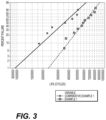
  • the rollers of Example 1 exhibited greater surface contact fatigue lifespans, relative to the rollers of Comparative Example 1.
  • the rollers of Comparative Example 1 exhibited approximately 25% failure at about 22,500,000 life (cycles), whereas the roller of Example 1 exhibited approximately 25% failure at about 46,000,000 life (cycles).
  • This improvement in surface contact fatigue performance may be attributed to the reheating conditions of the rollers of Example 1.
  • Such reheating conditions helped yield rollers (Example 1) having finer grain diameters and increased carbide content, relative to the rollers of Comparative Example 1.
  • Such features contribute to the improvement of surface contact fatigue performance, as shown in FIG. 3 .
  • carburized steel components that may better withstand forces that cause unfavorable wear, pitting, spalling, etc.
  • the dense carbide precipitation, fine prior austenite grain structure, and increased carbon content, among other characteristics of the carburized layer may be of particular benefit in steel components that commonly have contact fatigue applications such as gears, shafts, and those acting as bearings. This is because the aforementioned characteristics help enhance surface contact fatigue performances of carburized steel components relative to steel components utilizing conventional carburizing techniques or other conventional heat treatment techniques.
  • carburized steel components may have longer surface contact fatigue lifespans, despite being exposed to similar wear forces. Furthermore, carburized steel components of the present disclosure may also decrease the likelihood of mechanical failure of machineries and devices employing such components. Accordingly, the present disclosure has significant industrial applicability.

Landscapes

  • Chemical & Material Sciences (AREA)
  • Engineering & Computer Science (AREA)
  • Materials Engineering (AREA)
  • Mechanical Engineering (AREA)
  • Metallurgy (AREA)
  • Organic Chemistry (AREA)
  • Chemical Kinetics & Catalysis (AREA)
  • Physics & Mathematics (AREA)
  • Thermal Sciences (AREA)
  • Crystallography & Structural Chemistry (AREA)
  • Solid-Phase Diffusion Into Metallic Material Surfaces (AREA)
  • Heat Treatment Of Articles (AREA)

Abstract

A carburized steel component, comprising a steel base including, by weight percent, from 0.08% to 0.35% carbon, 0.5% to 1.3% manganese, 0% to 0.35% silicon, 0.2% to 2.0% chromium, 0% to 4% nickel, 0% to 0.50% molybdenum, 0% to 0.06% niobium, and a remaining weight percent of iron, and a carburized layer of above 0.35% by weight carbon from a surface of the carburized layer to a carburized layer depth, wherein the carburized layer depth is from 0.5 mm to 3.0 mm, wherein the carburized layer comprises a microstructure including martensite, retained austenite, carbide, and less than 2% by volume non-martensitic transformation products (NMTP), and wherein the carburized layer includes a prior austenite average grain size of 3.0-8.0 microns from the surface to a depth of at least 0.2 mm.

Description

TECHNICAL FIELD
The present disclosure relates generally to heat treated steel components, and more particularly, to carburized steel components having fine grain carburized layers that improve surface contact fatigue performances, and to a carburization process yielding such components.
BACKGROUND
Steel articles and components, such as gears, shafts, and those acting as bearings, are often implemented in various machineries, mechanical devices, systems, etc. Constant engagement between the surfaces of these various steel components and ordinary wear may result in surface contact fatigue, resulting in damage, e.g., pitting, spalling, etc., to contacting surfaces. To improve the surface contact fatigue lives, steel components may undergo a process of carburization. Carburization is an effective method of increasing surface hardness of low carbon steels by increasing the carbon content in the exposed steel surfaces. Thus, carburization may result in steel components having harder, wear resistant cases/layers. Carburization generally entails steel being placed in an atmosphere containing carbon in an amount greater than the base carbon content of the steel, and heated to a temperature above the austenite transformation temperature of steel. After the desired amount of carbon has been diffused into the steel to a predetermined depth, hardness is induced by cooling the steel, e.g., quenching.
U.S. Pat. No. 4,921,025, filed by Tipton et al. (“the '025 patent”), describes a carburized low silicon steel article having no more than 0.1% silicon, and a carbon content of 0.08 to 0.35%. There are various carburized steel articles/parts and prior carburization processes of said articles/parts, such as those disclosed in the aforementioned patent. Nevertheless, there remains a need for additional development in this area. In furtherance of this need, the present disclosure describes a carburized steel component and the carburization process thereof.
The carburized steel components and carburization process of the present disclosure may solve one or more of the problems in the art. The scope of the current disclosure, however, is defined by the attached claims, and not by the ability to solve any specific problem.
SUMMARY
According to an example, a carburized steel component may comprise a steel base including, by weight percent, from 0.08% to 0.35% carbon, 0.5% to 1.3% manganese, 0% to 0.35% silicon, 0.2% to 2.0% chromium, 0% to 4% nickel, 0% to 0.50% molybdenum, 0% to 0.06% niobium, and a remaining weight percent of iron and a carburized layer of above 0.35% by weight carbon from a surface of the carburized layer to a carburized layer depth, wherein the carburized layer depth is from 0.5 mm to 3.0 mm. The carburized layer may comprise a microstructure including martensite, retained austenite, carbide, and less than 2% by volume non-martensitic transformation products (NMTP), and may include a prior austenite average grain size of 3.0-8.0 microns from the surface to a depth of at least 0.2 mm.
In another example, the carburized layer may further include a carbide particle count over 350 per a 200 square micron field from the surface of the carburized layer to the depth of 0.2 mm. The carburized layer may further include a carbide particle count from 400 to 500 per a 200 square micron field as measured at a depth of 0.1 mm from the surface. The carburized layer may further include a carbide area fraction over 7.5% from the surface of the carburized layer to the depth of 0.2 mm. The carburized layer may further include a carbide area fraction from 7.5% to 15% from the surface of the carburized layer to a depth from 0.1 mm to 0.2 mm.
In another example, the carburized layer may have a HRC surface hardness of at least 63, and a microhardness (HV), taken on a cross-section, of at least 772 from the surface of the carburized layer to the depth of 0.2 mm. Furthermore, 70% of carbides of the carburized layer may have a minimum area of 0.01 μm2 to 0.10 μm2 from the surface of the carburized layer to a depth from 0.05 mm to 0.2 mm.
According to another example, the steel base may include, by weight percent, from 0.18% to 0.23% carbon, 0.8% to 1.20% manganese, 0% to 0.35% silicon, 0.65% to 1.0% chromium, 0.15% to 0.45% nickel, 0.02% to 0.08% molybdenum, 0% to 0.06% niobium, and a remaining weight percent of iron.
According to an example, a carburized steel component may comprise a steel base including, by weight percent, from 0.08% to 0.35% carbon, 0.5% to 1.3% manganese, 0% to 0.35% silicon, 0.2% to 2.0% chromium, 0% to 4% nickel, 0% to 0.50% molybdenum, 0% to 0.06% niobium, and a remaining weight percent of iron, and a carburized layer, wherein the carburized layer comprises a microstructure including martensite, retained austenite, carbide, and less than 2% by volume non-martensitic transformation products (NMTP), and wherein the martensite has a needle length of 1 to 5 microns.
According to an example, a method of manufacturing a carburized steel component may comprise selecting a steel material having, by weight percent, from 0.08% to 0.35% carbon, 0.5% to 1.3% manganese, 0% to 0.35% silicon, 0.2% to 2.0% chromium, 0% to 4% nickel, 0% to 0.50% molybdenum, 0% to 0.06% niobium, and a remaining weight percent of iron, shaping the steel material to form a component, carburizing the steel component in the temperature range of 900° C. to 1000° C. until forming a carburized layer 0.5-3.0 mm deep, and the carburized layer has a carbon content above 0.35%, by weight, of carbon, cooling the carburized component to below 100° C., reheating the cooled carburized component at a temperature above 760° C., and re-cooling the carburized steel component via quenching.
In another example, the cooling after the carburizing may be via quenching, and the carburized layer may have a hardness of at least HRC 57 prior to the reheating. The reheating may be at a temperature from 760° C. to 830° C. The carburizing may be in an atmosphere with a carbon potential above 1.00. The reheating may be in an atmosphere with a carbon potential from 0.95 to 1.05. The atmosphere may be an endothermic generated atmosphere with a composition including H2, N2, CO, CO2, and water vapor.
BRIEF DESCRIPTION OF THE DRAWINGS
FIGS. 1A and 1B are, respectively, a perspective view and a cross-sectional view of an exemplary fine grain carburized steel gear, according to aspects of this disclosure.
FIG. 2 provides a flowchart depicting an exemplary process for carburizing a steel component, according to aspects of this disclosure.
FIG. 3 is a graph illustrating comparative data of surface contact fatigue performance between examples of steel components subjected to varying carburization processes.
DETAILED DESCRIPTION
Both the foregoing general description and the following detailed description are exemplary and explanatory only and are not restrictive of the features, as claimed. As used herein, the terms “comprises,” “comprising,” “having,” “including,” or other variations thereof, are intended to cover a non-exclusive inclusion such that a process, method, article, or apparatus that comprises a list of elements does not include only those elements, but may include other elements not expressly listed or inherent to such a process, method, article, or apparatus.
In this disclosure, relative terms, such as, for example, “about,” “substantially,” and “approximately” are used to indicate a possible variation of ±10% in a stated value. Although the current disclosure will be described with reference to a carburized steel gear, this is only exemplary. In general, the current disclosure can be applied as to any carburized steel article or component, such as, for example, a shaft, cylinder, roller, sleeve, joint, and any other steel part that may be used or implemented in devices or machinery.
Aspects of this disclosure also describe features, e.g. carbide particle count, and area fraction of carbide, which were measured via the use of a Scanning Electron Microscope (SEM). The use of a SEM to determine the aforementioned features entails the following procedures: 1) The sample is sectioned and mounted in electrically conductive metallographic mounting compound. 2) The mounted sample is metallographically prepared through a sequence of grinding and polishing operations ending with a 1 μm suspension polish. 3) The mounted and polished sample is etched using ˜2% nital solution in a manner comparable to that needed to evaluate a standard carburized and hardened microstructure. 4) The sample is evaluated in a SEM using secondary electron detection with parameters adjusted to provide maximum contrast between carbide particles and the surrounding matrix material. 5) A series of SEM images are taken from the sample surface to a depth of 300 μm in steps of 50 μm and then to a depth of 600 μm in steps of 100 μm. Magnification on each image is such that it shows a field of ˜17 μm×11.9 μm (202 μm2). 6) Image analysis software (e.g., ImageJ or other conventional image analysis software) is used to pick carbide particles out from the surrounding matrix material and to perform a particle analysis to determine the count and area fraction of carbides in the field of view. This analysis includes a particle size threshold to exclude particles with an area of less than 0.01 μm2. Depending on image quality and contrast, it may be necessary to adjust image sharpness, “enhance local contrast,” or “de-speckle” in order for the particle analysis function in ImageJ to correctly identify all carbides. In certain cases, it may be necessary to manually “fill in” larger carbides or “erase” spots in the matrix in order for the particle analysis to correctly identify all carbides. It is recommended that the particle analysis report include the “Show Outlines” option to generate an image showing the particles counted, and that this image be compared back to the original SEM image to verify that the proper particles are being counted. 7) Steps 3)-5) are repeated in a second location on the mounted sample. 8) An average of the two evaluated locations is used for determining the carbide count and volume fraction.
The above-described technique may also be applied in determining the proportion of the fine grain microstructure composition, e.g., an amount of non-martensitic transformation products (NMTP). For example, a polished cut cross-section from the surface of the carburized layer may be evaluated via a SEM, as described above. However, the carburized layer sample is not limited to being evaluated via a SEM, and any suitable optical microscope may be used as well. Image analysis software (e.g., ImageJ or other conventional image analysis software) may be used to pick non-martensitic transformation products, e.g., bainite or pearlite, out from the surrounding matrix material and to perform an analysis to determine the area percentage of NMTP in the field of view. It is further noted that an area percentage of NMTP may be synonymous with a weight percentage of the NMTP, or a volume percentage of the NMTP. For example, less than 2% by volume NMTP may also mean less than 2% by weight NMTP, or less than 2% by area NMTP.
FIG. 1A illustrates a perspective view of an exemplary carburized steel component 1, for example, a gear, according to the present disclosure. Component 1 includes a body 16, and a plurality of teeth 12 circumferentially arranged around body 16. Body 16 is annular and includes a central opening 10, through which a central axis A may extend. Component 1 further includes a plurality of gaps 14 in between each of teeth 12.
As shown in FIG. 1B, component 1 comprises a carburized steel layer 20 and a steel base 22. As a result of its steel base composition and its carburized layer having a fine grain microstructure, component 1 exhibits enhanced properties, e.g., higher surface contact fatigue performance, as further discussed below when referring to FIG. 3 . For example, steel base 22 may have a composition, by weight percentage, within about the following ranges:
Carbon (C) 0.08%-0.35%
Manganese (Mn) 0.5%-1.3%
Silicon (Si)    0%-0.35%
Chromium (Cr) 0.2%-2.0%
Nickel (Ni) 0%-4%
Molybdenum (Mo)  0.0%-0.50%
Niobium (Nb)    0%-0.06%
Aluminum (Al)    0%-0.08%
Iron (Fe) Balance
In some other exemplary embodiments, the base steel material may have a composition, by weight percent, from 0.18% to 0.23% carbon, 0.8% to 1.20% manganese, 0% to 0.35% silicon, 0.65% to 1.0% chromium, 0.15% to 0.45% nickel, 0.15% to 0.45% molybdenum, 0.02% to 0.08% aluminum, 0% to 0.06% niobium, and a remaining weight percent of iron. Such a steel composition may include a steel composition such as steel composition 4120 or 4130.
Carburized layer 20 of component 1 may be of a thickness that is predetermined during the carburization process. In some exemplary embodiments, carburized layer 20 may be defined by a depth of a layer that is equal to 0.35% C or above. In some other exemplary embodiments, carburized layer 20 may be defined by a depth of a layer that is equal to 0.35% C or above, if base carbon is also below 0.25% C. Such a depth may result in a carburized layer thickness of approximately 0.5-3.0 mm. As a result of carburization, the composition of carburized layer 20 may vary from that of aforementioned steel base 22. For example, carburized layer 20 may include a carbon content, in weight percentage, within about 0.9%-1.60% from the surface of component 1 through a depth of 0.3 mm. Additionally, in other exemplary embodiments, carburized layer 20 may further include a nitrogen content, in weight percentage, within about 0%-0.5% from the surface of component 1 through a depth of 0.1 mm. However, it is noted that the contents of carbon and nitrogen within carburized layer 20 may vary if carburized layer 20 is grinded into a ground state. For example, in some embodiments, carburized layer 20 may be ground, thereby removing a surface layer of about 0.1 mm. In such exemplary embodiments, carburized layer 20 may have a carbon content within about 0.9%-1.10% from the new surface of component 1 through a depth of 0.2 mm-0.3 mm. Additionally, in such exemplary embodiments, carburized layer 20 may have a negligible nitrogen content due to the ground removal of about 0.1 mm from the surface of layer 20. It is also noted that carburized layer 20 is not limited to the aforementioned elements and contents, and may include additional elements in varying contents as well. This variation in carbon content between carburized layer 20 and base 22 may be attributed to the carbon potential that exists during carburization, between the heating atmosphere and steel. Further detail concerning the carbon potential and heating atmosphere are discussed below, when referring to FIG. 2 .
Carburized layer 20 of component 1 may further exhibit a fine grain microstructure including martensite, retained austenite, and carbide. For example, the fine grain microstructure may include a proportion of at least 7% carbide, 70-90% martensite, some retained austenite, and less than 2% by volume of non-martensitic transformation products (typically bainite and pearlite). Said percentages by volume (e.g., area percentage or weight percentage) may be obtained via the use of a SEM or optical microscope, as discussed in further detail above. In some other exemplary embodiments, the fine grain microstructure may include a proportion of 7-25% carbide, or 7.5-15% carbide. The average prior austenite grain diameter may be about 3-8 microns, as defined by the mean grain diameter (d) using the Heyn Lineal Intercept Procedure defined in ASTM E112. This procedure may be performed on a component specimen etched with the Prior Austenite Grain Size (PAGS) etch procedure that includes 1-6% picric acid in water with overetch and backpolish techniques to reveal prior austenite grains well enough to count intercepts with the Heyn Lineal Intercept Procedure. By undergoing fine grain carburization, the 3-8 micron prior austenite grain diameter may produce a martensite having a finer needle length of 1-5 microns. Meanwhile, about 70% of carbides may show individual sectioned areas of 0.01-0.10 μm2 within a depth range of 0.05 mm-0.2 mm. Thus, carburized layer 20 may demonstrate a finer microstructure, relative to the steel grain size before heat treatment and relative to conventional carburizing processes. Furthermore, carburized layer 20 may exhibit a minimal amount of retained austenite and non-martensitic transformation products.
The carbides precipitated in carburized layer 20 may be dispersed uniformly or sporadically throughout the martensitic matrix. The carbides may be dispersed such that the carbide particle count per a 200 square micron field is, for example, greater than 350. In other exemplary embodiments, the carbide particle count, may vary along a gradient. For example, the carbide particle count per a 200 square micron field may be 400-500 at a 0.1-0.3 mm depth, and 450-650 at a 0.05 mm depth from the surface of layer 20. However, as noted above, layer 20 may be in a ground state. Thus, the carbide particle count of a ground layer 20 may be reduced in accordance with the degree by which layer 20 is grounded, e.g., 0.1 mm. For example, in some embodiments, the carbide particle count of layer 20, grounded by an amount of 0.1 mm, may be 400-500 at about a 0.2 mm-0.3 mm depth from the grounded surface of layer 20.
The carbides may also be dispersed such that an area fraction of the carbides, from the surface to a depth of 300 microns, may be above 7.5%. In some exemplary embodiments, the area fraction of the carbides may be about 7.5%-12.5%, although it may exceed 15% at the surface of layer 20. In some other exemplary embodiments, in which layer 20 is ground so that 0.1 mm-0.2 mm of the surface is removed, the area fraction of carbide may be 7.5%-12.5% at the ground surface, and 3%-10% at depths of 100-300 microns. The aforementioned carbide features (particle count and area fraction) may be detected and determined via the use of a SEM, as described in detail above.
As a result of carburized layer 20 having such composition and characteristics, carburized layer 20 may demonstrate enhanced surface hardness. For example, the surface of carburized layer 20 may exhibit a Rockwell hardness (HRC) of at least 63. In other exemplary embodiments, the HRC may be from about HRC 64-67. In another example, carburized layer 20 may also exhibit a Vickers pyramid number (HV), i.e., microhardness, of at least 772. The microhardness (HV) may be taken on a polished cut cross-section from the surface of the carburized layer to a depth of at least 0.2 mm. In other exemplary embodiments, the HV may be from about 800-940. The HV may be taken on a polished cross-section of the first 0.2 mm depth of carburized layer 20.
FIG. 2 is a flow diagram portraying an exemplary carburization process 100 that may be performed to carburize a steel component or article, such as component 1 of FIG. 1 . As a result of carburization process 100, said steel component or article becomes carburized, having the composition and characteristics of the above-described component 1.
Process 100 includes a step 102, in which an initial, base steel material is selected. For example, the base steel material may have a composition, by weight percentage, within about the following ranges:
Carbon (C) 0.08%-0.35%
Manganese (Mn) 0.5%-1.3%
Silicon (Si)    0%-0.35%
Chromium (Cr) 0.2%-2.0%
Nickel (Ni) 0%-4%
Molybdenum (Mo)  0.0%-0.50%
Niobium (Nb)    0%-0.06%
Aluminum (Al)    0%-0.08%
Iron (Fe) Balance
In some other exemplary embodiments, the base steel material may have a composition, by weight percent, from 0.18% to 0.23% carbon, 0.8% to 1.20% manganese, 0% to 0.35% silicon, 0.65% to 1.0% chromium, 0.15% to 0.45% nickel, 0.15% to 0.45% molybdenum, 0.02% to 0.08% aluminum, 0% to 0.06% niobium, and a remaining weight percent of iron. Such a steel composition may include a steel composition such as steel composition 4120 or 4130.
Process 100 also includes a step 104, in which the steel material is shaped to form a component. The manner or mechanism by which the steel material is shaped is not particularly limited. Furthermore, the component to which the steel material is shaped into is not limited as well. As discussed above, the steel component a shaft, cylinder, roller, sleeve, joint, and any other steel part that may be used or implemented in devices or machinery.
After step 104, process 100 includes a step 106 of carburizing the steel component at a temperature above 900° C., or in some examples, from about 900° C. to 1000° C. The manner or method by which the steel component is carburized is not particularly limited, so long as the carburization imparts a suitable amount of carbon onto the steel component, e.g., vacuum carburization, gas carburization, etc. For example, carburization step 106 may entail the steel component being heated in an atmosphere with carbon potential. As a result, the carbon from the atmosphere may diffuse into the surface to a depth of 0.5 mm to 3.0 mm such that a weight percent of carbon is 0.35% C or above at the “carburized depth”. The atmosphere, in which the steel component is carburized, may be, for example, a hydrocarbon atmosphere. The hydrocarbon atmosphere may include, but is not limited to, carbon monoxide, hydrogen, carbon dioxide, and hydrocarbons, such as methane, nitrogen, and water vapor. For example, the hydrocarbon atmosphere an endothermic generated atmosphere including about 40% H2, 40% N2, 20% CO, with trace CO2, 0.1-2.0% CH4, and trace water vapor. In some examples, the carbon potential of the hydrocarbon atmosphere may be above 1.00 CP. However, it is noted that the atmosphere could be low pressure carburizing hydrocarbons such as acetylene (LPC processing). As a result of step 106, an initial carburized layer of the steel component may be formed, and said layer may include a carbon content, in weight percentage, within about 0.9-1.3 wt. % from the surface of through a depth of 0.3 mm to 0.4 mm.
Process 100 includes a subsequent step 108 of cooling the carburized steel component. The manner by which the carburized steel component is cooled is not particularly limited, and may be, for example, via quenching. The carburized steel component may be cooled, e.g., quenched, until it achieves a hardness of at least HRC 57 from the surface to a depth of 0.5 mm to 3.0 mm. As a result of the cooling, an initial carburized layer, having a depth of 0.5 mm to 3.0 mm, may have a weight percent of carbon that is at least 0.35% C.
Process 100 additionally includes a step 110 of reheating the cooled component. Specifically, the cooled carburized component may be reheated at a temperature from about 760° C. to 830° C. The manner or method by which the steel component is again reheated is not particularly limited, so long as the reheating is done in a manner that minimizes the loss of surface carbon, e.g., the surface carbon does not fall below a weight percent of 0.8% and is sufficient to transform the carburized layer to austenite. In some examples, ammonia may also be added to the atmosphere during reheating. The ammonia may be a source of nitrogen that is imparted onto a surface of the carburized layer, for example, 0.1-0.4%, by weight. At the end of reheating step 110, the austenite grain size (average prior austenite grain diameter) of the carburized layer may be about 3-8 microns, as defined by the mean grain diameter (d) using the Heyn Lineal Intercept Procedure discussed above. For example, the carburized layer may have a prior austenite average grain size of 3.0-8.0 microns from the surface to at least a depth of 0.2 mm.
As a result of additional carbon diffusion in steps 106 and 110, the carburized layer of the steel component may have an increased carbon content, in weight percentage, within about 0.9%-1.60% from the surface through a depth of 0.3 mm. Additionally, the carburized layer may further include a nitrogen content, in weight percentage, within about 0%-0.5% from the surface of component 1 through a depth of 0.1 mm. Additionally, due to the reheating, carbides may be further precipitated such that the carbide particle count per a 200 square micron field is greater than 350. Furthermore, an area fraction of the carbides, from the surface to a depth of 300 microns, may be over 10%.
Furthermore, as a result of the above discussed steps, the carburized layer may also exhibit a fine grain microstructure including martensite, retained austenite, and carbide. For example, the fine grain microstructure may include a proportion of at least 7% carbide, 70-90% martensite, some retained austenite, and less than 2% by volume of non-martensitic transformation products (typically bainite and pearlite). Said percentages by volume (e.g., area percentage or weight percentage) may be obtained via the use of a SEM or optical microscope, as discussed in further detail above. In some exemplary embodiments, the fine grain microstructure may include a proportion of 7-25% carbide, or 7.5-15% carbide. The 3-8 micron prior austenite grain diameter may result in a finer martensite having a needle length of 1-5 microns. Carbides, meanwhile, may show individual sectioned areas of 0.01-0.20 μm2. Thus, in addition to the carbide particle count discussed above, the carburized layer may also exhibit a fine grain microstructure, and a minimal amount of retained austenite and non-martensitic transformation products.
After reheating, process 100 includes a step 112 of quenching and tempering the carburized steel component at a temperature from about 0° C. to around 200° C.
Thus, process 100, as disclosed above, may provide the steel component a carburized layer having a plurality of characteristics and properties that enhances the layer's functionality, e.g., hardness, surface contact fatigue lifespan.
It is further noted that a carburized steel component, resulting from process 100, may be subject to a grinding process. The grinding process may remove a surface layer from the carburized layer of the steel component. The amount of surface layer removed via grinding is not particularly limited, and may be any suitable amount, e.g., 0.1 mm. As a result of the grinding, it is noted that the contents of carbon, nitrogen, and carbide particles in a carburized layer may vary, as detailed above in the discussion of carburized layer 20 of FIGS. 1A-1B.
Hereinafter, the effects of an aspect of the present disclosure will be described in detail with reference to the following examples and FIG. 3 . However, the condition in the examples is an example condition employed to confirm the operability and the effects, e.g., surface contact fatigue performance, of the present disclosure, so that the present disclosure is not limited to the examples further described below. The present disclosure can employ various types of conditions as long as the conditions do not depart from the scope of the present disclosure and can achieve the object(s) of the present disclosure.
Example 1
4122 grade steel components (steel rollers) were carburized in a hydrocarbon atmosphere with carbon potential above 1.00 CP for enough time to develop the desired carburized case depth (thickness) of approximately 1.5 mm. The carburized steel rollers were subsequently cooled to room temperature. The steel rollers were reheated to a constant temperature in the range of 760° C.-830° C. in a hydrocarbon atmosphere with carbon potential near 1.00 CP. Subsequently thereafter, the steel rollers were quenched in oil. The carburized case of the steel rollers of Example 1 exhibited a mean grain diameter of 5-6 microns, a carbide count above 350 in a 200 micron square area, and an area fraction of carbides, from the surface to a depth of 300 microns, over 10%.
Comparative Example 1
4122 grade steel components (steel rollers) were carburized in a hydrocarbon atmosphere with carbon potential above 1.00 CP for enough time to develop the desired carburized case depth (thickness) of approximately 1.5 mm. The carburized steel rollers were gas cooled to room temperature. The steel rollers were subsequently reheated at a temperature of 850° C. in a hydrocarbon atmosphere with a carbon potential near 0.80 CP, Subsequently thereafter, the steel rollers were quenched in oil. The carburized case of the steel rollers of Comparative Example 1 exhibited a mean grain diameter of 12-14 microns. The steel rollers exhibited a carbide count of below 250 in a 200 square micron area and the area % carbide was less than 10%.
Testing and Results
The comparative testing process involved running a large diameter, e.g., approximately 125 mm, load roller made from hardened 52100 steel against smaller diameter, e.g., approximately 25 mm, test rollers of Example 1 and Comparative Example 1. After heat treatment, both rollers of Example 1 and Comparative Example 1 were ground to achieve a consistent surface finish. The rollers were then put on a test machine that ran the load roller against the rollers of Example 1 and Comparative Example 1. The test machine ran until the test machine detected a surface contact fatigue (pitting) failure develop on the rollers. After detection, the test machine shut down, while also logging the number of cycles needed to reach the detected failure. This process was repeated until sufficient data points were generated and a Weibull plot was produced from the data.
As shown in the Weibull plot of FIG. 3 , the rollers of Example 1 exhibited greater surface contact fatigue lifespans, relative to the rollers of Comparative Example 1. The rollers of Comparative Example 1 exhibited approximately 25% failure at about 22,500,000 life (cycles), whereas the roller of Example 1 exhibited approximately 25% failure at about 46,000,000 life (cycles). This improvement in surface contact fatigue performance may be attributed to the reheating conditions of the rollers of Example 1. Such reheating conditions helped yield rollers (Example 1) having finer grain diameters and increased carbide content, relative to the rollers of Comparative Example 1. Such features, in turn, contribute to the improvement of surface contact fatigue performance, as shown in FIG. 3 .
INDUSTRIAL APPLICABILITY
In view of the above aspects of the present disclosure, it is possible to manufacture carburized steel components that may better withstand forces that cause unfavorable wear, pitting, spalling, etc. The dense carbide precipitation, fine prior austenite grain structure, and increased carbon content, among other characteristics of the carburized layer may be of particular benefit in steel components that commonly have contact fatigue applications such as gears, shafts, and those acting as bearings. This is because the aforementioned characteristics help enhance surface contact fatigue performances of carburized steel components relative to steel components utilizing conventional carburizing techniques or other conventional heat treatment techniques.
As a result, the above described carburized steel components may have longer surface contact fatigue lifespans, despite being exposed to similar wear forces. Furthermore, carburized steel components of the present disclosure may also decrease the likelihood of mechanical failure of machineries and devices employing such components. Accordingly, the present disclosure has significant industrial applicability.
It will be apparent to those skilled in the art that various modifications and variations can be made to the disclosed machine without departing from the scope of the disclosure. Other embodiments of the control system for a machine will be apparent to those skilled in the art from consideration of the specification and practice of the control system for a machine disclosed herein. It is intended that the specification and examples be considered as exemplary only, with a true scope of the disclosure being indicated by the following claims and their equivalents.

Claims (19)

The invention claimed is:
1. A carburized steel component, comprising:
a steel base including, by weight percent, from 0.18% to 0.23% carbon, 0.8% to 1.20% manganese, 0% to 0.35% silicon, 0.65% to 1.0% chromium, 0.15% to 0.45% nickel, 0.15% to 0.45% molybdenum, 0% to 0.06% niobium, and a remaining weight percent of iron; and
a carburized layer of above 0.35% by weight carbon from a surface of the carburized layer to a carburized layer depth, wherein the carburized layer depth is from 0.5 mm to 3.0 mm,
wherein the carburized layer comprises a microstructure including martensite, retained austenite, carbide, and less than 2% by volume non-martensitic transformation products (NMTP), and wherein the carburized layer includes a prior austenite average grain size of 3.0-8.0 microns from the surface to a depth of at least 0.2 mm,
wherein the carburized layer further includes a carbide particle count over 350 per a 200 square micron field from the surface of the carburized layer to the depth of 0.2 mm.
2. The carburized steel component of claim 1, wherein the carburized layer further includes a carbide particle count from 400 to 500 per a 200 square micron field as measured at a depth of 0.1 mm from the surface.
3. The carburized steel component of claim 1, wherein the carburized layer further includes a carbide area fraction over 7.5% from the surface of the carburized layer to the depth of 0.2 mm.
4. The carburized steel component of claim 1, wherein the carburized layer further includes a carbide area fraction from 7.5% to 15% from the surface of the carburized layer to a depth from 0.1 mm to 0.2 mm.
5. The carburized steel component of claim 1, wherein the carburized layer has a HRC surface hardness of at least 63, and a microhardness (HV) of at least 772, taken on a cross-section from the surface of the carburized layer to the depth of 0.2 mm.
6. The carburized steel component of claim 1, wherein 70% of carbides of the carburized layer have a minimum area of 0.01 μm2 to 0.10 μm2 from the surface of the carburized layer to a depth from 0.05 mm to 0.2 mm.
7. A carburized steel component, comprising:
a steel base including, by weight percent, from 0.18% to 0.23% carbon, 0.8% to 1.20% manganese, 0% to 0.35% silicon, 0.65% to 1.0% chromium, 0.15% to 0.45% nickel, 0.15% to 0.45% molybdenum, 0% to 0.06% niobium, and a remaining weight percent of iron; and
a carburized layer, wherein the carburized layer extends from a surface of the carburized layer to a depth from 0.5 mm to 3.0 mm,
wherein the carburized layer comprises a microstructure including 70-90% by volume of martensite, retained austenite, at least 7% by volume of carbide, and less than 2% by volume non-martensitic transformation products (NMTP), wherein the carburized layer further includes a carbide area fraction over 10% from the surface of the carburized layer to a depth of 300 microns, and wherein the martensite has a needle length of 1 to 5 microns.
8. The carburized steel component of claim 7, wherein the carburized layer includes a prior austenite average grain size of 3.0-8.0 microns from the surface to a depth of at least 0.2 mm.
9. The carburized steel component of claim 7, wherein the carburized layer further includes a carbide particle count over 350 per a 200 square micron field from the surface of the carburized layer to the depth of 0.2 mm.
10. The carburized steel component of claim 7, wherein the carburized layer further includes a carbide area fraction over 7.5% from the surface of the carburized layer to the depth of 0.2 mm.
11. The carburized steel component of claim 7, wherein the carburized layer has a HRC surface hardness of at least 63, and a microhardness (HV) of at least 772 from the surface of the carburized layer to the depth of 0.2 mm.
12. A method of manufacturing a carburized steel component, the method comprising:
selecting a steel material having, by weight percent, from 0.18% to 0.23% carbon, 0.8% to 1.20% manganese, 0% to 0.35% silicon, 0.65% to 1.0% chromium, 0.15% to 0.45% nickel, 0.15% to 0.45% molybdenum, 0% to 0.06% niobium, and a remaining weight percent of iron;
shaping the steel material to form a component;
carburizing the steel component in the temperature range of 900° C. to 1000° C. until forming a carburized layer 0.5-3.0 mm deep, and the carburized layer has a carbon content above 0.35%, by weight, of carbon, wherein the carburizing is in a hydrocarbon atmosphere with a carbon potential above 1.00;
cooling the carburized component to below 100° C.;
reheating the cooled carburized component at a temperature from 760° C. to 830° C., wherein the reheating is in a hydrocarbon atmosphere with a carbon potential near 1.00; and
re-cooling the carburized steel component via quenching,
wherein the carburized steel component is reheated and re-cooled so that the carburized layer includes a mean grain diameter of 5 microns to 6 microns.
13. The method of claim 12, wherein the cooling after the carburizing is via quenching, and wherein the carburized layer has a hardness of at least HRC 57 prior to the reheating.
14. The method of claim 12, wherein the atmosphere is an endothermic generated atmosphere with a composition including H2, N2, CO, CO2, and water vapor.
15. The method of claim 12, wherein the carburized steel component is reheated and re-cooled so that the carburized layer includes a carbide particle count over 350 per a 200 square micron field from a surface of the carburized layer to a depth of 0.2 mm.
16. The method of claim 15, wherein the carburized steel component is reheated and re-cooled so that the carburized layer further includes a carbide area fraction over 10% from a surface of the carburized layer to a depth of 300 microns.
17. The method of claim 12, wherein the carburized steel component is reheated without surface carbon falling below, by weight percent, 0.8%.
18. The method of claim 12, wherein the quenching is at a temperature from 0° C. to 200°.
19. The method of claim 12, wherein ammonia is added to the atmosphere during the reheating.
US16/822,753 2020-03-18 2020-03-18 Carburized steel component and carburization process Active 2040-06-30 US11624106B2 (en)

Priority Applications (3)

Application Number Priority Date Filing Date Title
US16/822,753 US11624106B2 (en) 2020-03-18 2020-03-18 Carburized steel component and carburization process
CN202110263839.4A CN113493883A (en) 2020-03-18 2021-03-11 Carburized steel part and carburization process
US18/180,318 US12098466B2 (en) 2020-03-18 2023-03-08 Carburized steel component and carburization process

Applications Claiming Priority (1)

Application Number Priority Date Filing Date Title
US16/822,753 US11624106B2 (en) 2020-03-18 2020-03-18 Carburized steel component and carburization process

Related Child Applications (1)

Application Number Title Priority Date Filing Date
US18/180,318 Continuation US12098466B2 (en) 2020-03-18 2023-03-08 Carburized steel component and carburization process

Publications (2)

Publication Number Publication Date
US20210292880A1 US20210292880A1 (en) 2021-09-23
US11624106B2 true US11624106B2 (en) 2023-04-11

Family

ID=77747577

Family Applications (2)

Application Number Title Priority Date Filing Date
US16/822,753 Active 2040-06-30 US11624106B2 (en) 2020-03-18 2020-03-18 Carburized steel component and carburization process
US18/180,318 Active US12098466B2 (en) 2020-03-18 2023-03-08 Carburized steel component and carburization process

Family Applications After (1)

Application Number Title Priority Date Filing Date
US18/180,318 Active US12098466B2 (en) 2020-03-18 2023-03-08 Carburized steel component and carburization process

Country Status (2)

Country Link
US (2) US11624106B2 (en)
CN (1) CN113493883A (en)

Cited By (1)

* Cited by examiner, † Cited by third party
Publication number Priority date Publication date Assignee Title
US20230220532A1 (en) * 2020-03-18 2023-07-13 Caterpillar Inc. Carburized steel component and carburization process

Citations (17)

* Cited by examiner, † Cited by third party
Publication number Priority date Publication date Assignee Title
EP0033403A1 (en) 1980-01-31 1981-08-12 Ford Motor Company Method of treating the surfaces of high carbon steel bodies and bodies of high carbon steel
US4921025A (en) 1987-12-21 1990-05-01 Caterpillar Inc. Carburized low silicon steel article and process
US4971634A (en) 1988-07-25 1990-11-20 Mazda Motor Corporation Method of carburizing spheroidizing and quenching
US5595610A (en) 1991-06-07 1997-01-21 Kabushiki Kaisha Kobe Seiko Sho Method of manufacturing case-hardened parts with little distortion in heat treatment and superior strength in bending fatigue
US5658082A (en) 1994-06-21 1997-08-19 Ntn Corporation Rolling contact bearing and a method of producing thereof
US5910223A (en) 1997-11-25 1999-06-08 Caterpillar Inc. Steel article having high hardness and improved toughness and process for forming the article
US5944916A (en) 1996-11-14 1999-08-31 Hyundai Motor Company, Ltd. Method of heat treatment for steel
US6149734A (en) 1997-11-27 2000-11-21 Aisin Seiki, Kabushiki Kaisha Method for heat treatment of steel
US6258179B1 (en) * 1997-08-11 2001-07-10 Komatsu Ltd. Carburized parts, method for producing same and carburizing system
US6309475B1 (en) 1998-01-30 2001-10-30 Komatsu Ltd. Rolling element and producing method
US6325867B1 (en) 1993-05-31 2001-12-04 Nsk Ltd. Rolling bearing and heat treatment method therefor
US6447619B1 (en) 1996-12-17 2002-09-10 Komatsu Ltd. High surface pressure resistant steel parts and methods of producing same
US20040170348A1 (en) 2003-02-28 2004-09-02 Ntn Corporation Transmission component, method of manufacturing the same, and tapered roller bearing
US20050257860A1 (en) * 2004-05-24 2005-11-24 Takemori Takayama Rolling member and producing method thereof
US7169238B2 (en) 2003-12-22 2007-01-30 Caterpillar Inc Carbide method and article for hard finishing resulting in improved wear resistance
US20130146181A1 (en) * 2011-02-10 2013-06-13 Nippon Steel & Sumitomo Metal Corporation Steel for carburizing, carburized steel component, and method of producing the same
US10344801B2 (en) 2013-02-13 2019-07-09 Ntn Corporation Bearing part and rolling bearing

Family Cites Families (4)

* Cited by examiner, † Cited by third party
Publication number Priority date Publication date Assignee Title
EP0393137B1 (en) * 1987-12-21 1996-09-11 Caterpillar Inc. Carburized low silicon steel article and process
CN100463997C (en) * 2007-05-30 2009-02-25 太原理工大学 A super saturated carburized steel
CN104583438B (en) * 2012-09-03 2016-10-12 新日铁住金株式会社 Carburized component
US11624106B2 (en) * 2020-03-18 2023-04-11 Caterpillar Inc. Carburized steel component and carburization process

Patent Citations (17)

* Cited by examiner, † Cited by third party
Publication number Priority date Publication date Assignee Title
EP0033403A1 (en) 1980-01-31 1981-08-12 Ford Motor Company Method of treating the surfaces of high carbon steel bodies and bodies of high carbon steel
US4921025A (en) 1987-12-21 1990-05-01 Caterpillar Inc. Carburized low silicon steel article and process
US4971634A (en) 1988-07-25 1990-11-20 Mazda Motor Corporation Method of carburizing spheroidizing and quenching
US5595610A (en) 1991-06-07 1997-01-21 Kabushiki Kaisha Kobe Seiko Sho Method of manufacturing case-hardened parts with little distortion in heat treatment and superior strength in bending fatigue
US6325867B1 (en) 1993-05-31 2001-12-04 Nsk Ltd. Rolling bearing and heat treatment method therefor
US5658082A (en) 1994-06-21 1997-08-19 Ntn Corporation Rolling contact bearing and a method of producing thereof
US5944916A (en) 1996-11-14 1999-08-31 Hyundai Motor Company, Ltd. Method of heat treatment for steel
US6447619B1 (en) 1996-12-17 2002-09-10 Komatsu Ltd. High surface pressure resistant steel parts and methods of producing same
US6258179B1 (en) * 1997-08-11 2001-07-10 Komatsu Ltd. Carburized parts, method for producing same and carburizing system
US5910223A (en) 1997-11-25 1999-06-08 Caterpillar Inc. Steel article having high hardness and improved toughness and process for forming the article
US6149734A (en) 1997-11-27 2000-11-21 Aisin Seiki, Kabushiki Kaisha Method for heat treatment of steel
US6309475B1 (en) 1998-01-30 2001-10-30 Komatsu Ltd. Rolling element and producing method
US20040170348A1 (en) 2003-02-28 2004-09-02 Ntn Corporation Transmission component, method of manufacturing the same, and tapered roller bearing
US7169238B2 (en) 2003-12-22 2007-01-30 Caterpillar Inc Carbide method and article for hard finishing resulting in improved wear resistance
US20050257860A1 (en) * 2004-05-24 2005-11-24 Takemori Takayama Rolling member and producing method thereof
US20130146181A1 (en) * 2011-02-10 2013-06-13 Nippon Steel & Sumitomo Metal Corporation Steel for carburizing, carburized steel component, and method of producing the same
US10344801B2 (en) 2013-02-13 2019-07-09 Ntn Corporation Bearing part and rolling bearing

Non-Patent Citations (1)

* Cited by examiner, † Cited by third party
Title
Ooki, C. et al., "Improving Rolling Contact Fatigue Life of Bearing Steels Through Grain Refinement," NTN Technical Review, vol. 71, pp. 2-7 (2004).

Cited By (2)

* Cited by examiner, † Cited by third party
Publication number Priority date Publication date Assignee Title
US20230220532A1 (en) * 2020-03-18 2023-07-13 Caterpillar Inc. Carburized steel component and carburization process
US12098466B2 (en) * 2020-03-18 2024-09-24 Caterpillar Inc. Carburized steel component and carburization process

Also Published As

Publication number Publication date
CN113493883A (en) 2021-10-12
US12098466B2 (en) 2024-09-24
US20230220532A1 (en) 2023-07-13
US20210292880A1 (en) 2021-09-23

Similar Documents

Publication Publication Date Title
CN105026602B (en) The semi-finished product and its manufacture method of high-frequency quenching component
EP1512761A1 (en) Contact pressure-resistant member and method of making the same
US5626974A (en) Rolling bearing for use under high temperature conditions
JP3905429B2 (en) Heat treatment method for bearing parts and bearing parts
WO2011114836A1 (en) Steel for case-hardening treatment, case-hardened steel component, and method for producing same
JPH0578814A (en) Rolling bearing
EP1725693B1 (en) Method for carburizing a steel article with improved wear resistance
US12098466B2 (en) Carburized steel component and carburization process
WO2021206049A1 (en) Raceway ring, raceway ring manufacturing method, and rolling bearing
JP2002180203A (en) Needle bearing components, and method for producing the components
JP2018141218A (en) Component and manufacturing method thereof
EP1258644A2 (en) Bearing pressure-resistant member and process for making the same
WO2018159840A1 (en) Bearing component, rolling bearing, and bearing component manufacturing method
JP2018141216A (en) Parts and manufacturing method thereof
JP2020111804A (en) Carbonitrided steel component
JPWO2006085549A1 (en) High concentration carburizing / low strain quenching member and method of manufacturing the same
JP6772769B2 (en) Rolling sliding members, their manufacturing methods, carburized steel materials and rolling bearings
JP2019039044A (en) Rolling sliding member and rolling bearing
JP3987023B2 (en) Steel heat treatment method and steel
US20210348247A1 (en) Steel material for sliding members and method of manufacturing the same
JP2016065296A (en) Steel ball for game and method for producing the same
US20240035515A1 (en) Bearing part and rolling bearing
JP2018141217A (en) Component and method for producing the same
JP2020033638A (en) Parts and manufacturing method thereof
JP2022052334A (en) Bearing ring

Legal Events

Date Code Title Description
FEPP Fee payment procedure

Free format text: ENTITY STATUS SET TO UNDISCOUNTED (ORIGINAL EVENT CODE: BIG.); ENTITY STATUS OF PATENT OWNER: LARGE ENTITY

AS Assignment

Owner name: CATERPILLAR INC., ILLINOIS

Free format text: ASSIGNMENT OF ASSIGNORS INTEREST;ASSIGNORS:PERSHING, MICHAEL A.;JOHNSTON, SCOTT A.;HENNING, CURTIS A.;AND OTHERS;REEL/FRAME:052168/0406

Effective date: 20200317

STPP Information on status: patent application and granting procedure in general

Free format text: NON FINAL ACTION MAILED

STPP Information on status: patent application and granting procedure in general

Free format text: RESPONSE TO NON-FINAL OFFICE ACTION ENTERED AND FORWARDED TO EXAMINER

STPP Information on status: patent application and granting procedure in general

Free format text: FINAL REJECTION MAILED

STPP Information on status: patent application and granting procedure in general

Free format text: ADVISORY ACTION MAILED

STPP Information on status: patent application and granting procedure in general

Free format text: DOCKETED NEW CASE - READY FOR EXAMINATION

STPP Information on status: patent application and granting procedure in general

Free format text: NON FINAL ACTION MAILED

STPP Information on status: patent application and granting procedure in general

Free format text: RESPONSE TO NON-FINAL OFFICE ACTION ENTERED AND FORWARDED TO EXAMINER

STPP Information on status: patent application and granting procedure in general

Free format text: NOTICE OF ALLOWANCE MAILED -- APPLICATION RECEIVED IN OFFICE OF PUBLICATIONS

STCF Information on status: patent grant

Free format text: PATENTED CASE