US11620382B2 - Targeting and security audit for digital content - Google Patents
Targeting and security audit for digital content Download PDFInfo
- Publication number
- US11620382B2 US11620382B2 US16/793,305 US202016793305A US11620382B2 US 11620382 B2 US11620382 B2 US 11620382B2 US 202016793305 A US202016793305 A US 202016793305A US 11620382 B2 US11620382 B2 US 11620382B2
- Authority
- US
- United States
- Prior art keywords
- processing system
- user profile
- simulated
- simulated user
- advertisement
- Prior art date
- Legal status (The legal status is an assumption and is not a legal conclusion. Google has not performed a legal analysis and makes no representation as to the accuracy of the status listed.)
- Active, expires
Links
Images


Classifications
-
- G—PHYSICS
- G06—COMPUTING OR CALCULATING; COUNTING
- G06F—ELECTRIC DIGITAL DATA PROCESSING
- G06F21/00—Security arrangements for protecting computers, components thereof, programs or data against unauthorised activity
- G06F21/50—Monitoring users, programs or devices to maintain the integrity of platforms, e.g. of processors, firmware or operating systems
- G06F21/57—Certifying or maintaining trusted computer platforms, e.g. secure boots or power-downs, version controls, system software checks, secure updates or assessing vulnerabilities
- G06F21/577—Assessing vulnerabilities and evaluating computer system security
-
- G—PHYSICS
- G06—COMPUTING OR CALCULATING; COUNTING
- G06F—ELECTRIC DIGITAL DATA PROCESSING
- G06F21/00—Security arrangements for protecting computers, components thereof, programs or data against unauthorised activity
- G06F21/50—Monitoring users, programs or devices to maintain the integrity of platforms, e.g. of processors, firmware or operating systems
- G06F21/55—Detecting local intrusion or implementing counter-measures
- G06F21/56—Computer malware detection or handling, e.g. anti-virus arrangements
- G06F21/562—Static detection
- G06F21/565—Static detection by checking file integrity
-
- G—PHYSICS
- G06—COMPUTING OR CALCULATING; COUNTING
- G06F—ELECTRIC DIGITAL DATA PROCESSING
- G06F16/00—Information retrieval; Database structures therefor; File system structures therefor
- G06F16/90—Details of database functions independent of the retrieved data types
- G06F16/95—Retrieval from the web
- G06F16/955—Retrieval from the web using information identifiers, e.g. uniform resource locators [URL]
- G06F16/9558—Details of hyperlinks; Management of linked annotations
-
- G—PHYSICS
- G06—COMPUTING OR CALCULATING; COUNTING
- G06F—ELECTRIC DIGITAL DATA PROCESSING
- G06F21/00—Security arrangements for protecting computers, components thereof, programs or data against unauthorised activity
- G06F21/50—Monitoring users, programs or devices to maintain the integrity of platforms, e.g. of processors, firmware or operating systems
- G06F21/55—Detecting local intrusion or implementing counter-measures
- G06F21/56—Computer malware detection or handling, e.g. anti-virus arrangements
- G06F21/562—Static detection
- G06F21/563—Static detection by source code analysis
-
- G—PHYSICS
- G06—COMPUTING OR CALCULATING; COUNTING
- G06Q—INFORMATION AND COMMUNICATION TECHNOLOGY [ICT] SPECIALLY ADAPTED FOR ADMINISTRATIVE, COMMERCIAL, FINANCIAL, MANAGERIAL OR SUPERVISORY PURPOSES; SYSTEMS OR METHODS SPECIALLY ADAPTED FOR ADMINISTRATIVE, COMMERCIAL, FINANCIAL, MANAGERIAL OR SUPERVISORY PURPOSES, NOT OTHERWISE PROVIDED FOR
- G06Q30/00—Commerce
- G06Q30/02—Marketing; Price estimation or determination; Fundraising
- G06Q30/0241—Advertisements
- G06Q30/0242—Determining effectiveness of advertisements
- G06Q30/0244—Optimization
-
- G—PHYSICS
- G06—COMPUTING OR CALCULATING; COUNTING
- G06Q—INFORMATION AND COMMUNICATION TECHNOLOGY [ICT] SPECIALLY ADAPTED FOR ADMINISTRATIVE, COMMERCIAL, FINANCIAL, MANAGERIAL OR SUPERVISORY PURPOSES; SYSTEMS OR METHODS SPECIALLY ADAPTED FOR ADMINISTRATIVE, COMMERCIAL, FINANCIAL, MANAGERIAL OR SUPERVISORY PURPOSES, NOT OTHERWISE PROVIDED FOR
- G06Q30/00—Commerce
- G06Q30/02—Marketing; Price estimation or determination; Fundraising
- G06Q30/0241—Advertisements
- G06Q30/0251—Targeted advertisements
- G06Q30/0269—Targeted advertisements based on user profile or attribute
-
- G—PHYSICS
- G06—COMPUTING OR CALCULATING; COUNTING
- G06Q—INFORMATION AND COMMUNICATION TECHNOLOGY [ICT] SPECIALLY ADAPTED FOR ADMINISTRATIVE, COMMERCIAL, FINANCIAL, MANAGERIAL OR SUPERVISORY PURPOSES; SYSTEMS OR METHODS SPECIALLY ADAPTED FOR ADMINISTRATIVE, COMMERCIAL, FINANCIAL, MANAGERIAL OR SUPERVISORY PURPOSES, NOT OTHERWISE PROVIDED FOR
- G06Q30/00—Commerce
- G06Q30/02—Marketing; Price estimation or determination; Fundraising
- G06Q30/0241—Advertisements
- G06Q30/0277—Online advertisement
-
- G—PHYSICS
- G06—COMPUTING OR CALCULATING; COUNTING
- G06V—IMAGE OR VIDEO RECOGNITION OR UNDERSTANDING
- G06V30/00—Character recognition; Recognising digital ink; Document-oriented image-based pattern recognition
- G06V30/40—Document-oriented image-based pattern recognition
- G06V30/41—Analysis of document content
- G06V30/413—Classification of content, e.g. text, photographs or tables
-
- G—PHYSICS
- G06—COMPUTING OR CALCULATING; COUNTING
- G06F—ELECTRIC DIGITAL DATA PROCESSING
- G06F2221/00—Indexing scheme relating to security arrangements for protecting computers, components thereof, programs or data against unauthorised activity
- G06F2221/21—Indexing scheme relating to G06F21/00 and subgroups addressing additional information or applications relating to security arrangements for protecting computers, components thereof, programs or data against unauthorised activity
- G06F2221/2119—Authenticating web pages, e.g. with suspicious links
Definitions
- the present disclosure relates generally to cyber security, and relates more particularly to devices, non-transitory computer-readable media, and methods for auditing digital content to validate that the digital content is authentic, secure, and reaching the intended audience.
- Digital advertising provides many opportunities to target advertising material to the consumers who are most likely to purchase the advertised goods or services, thereby minimizing wasted advertising. For instance, a consumer's Internet search or browsing history, cookies, social media activity, purchasing history, and/or other data may provide an indication of the consumer's demographic and/or psychographic traits. Providers of goods and services may then pay to have their advertising materials presented to the consumers whose traits and/or purchasing histories are most closely associated with the goods and services.
- the advertisements that are displayed to the consumer may include advertisements for cars.
- a consumer who has not searched for information on cars or has not otherwise indicated an interest in cars
- a consumer whose purchasing history indicates multiple previous purchases from a specific retailer may be more likely to be presented with advertisements for that retailer than a consumer who has never purchased from the retailer.
- FIG. 1 illustrates an example network related to the present disclosure
- FIG. 2 illustrates a flowchart of an example method for auditing digital content to validate that the digital content is authentic, secure, and reaching the intended audience, in accordance with the present disclosure
- FIG. 3 illustrates one example of an audit log that may be generated in accordance with the method of FIG. 2 ;
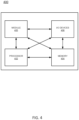
- FIG. 4 illustrates an example of a computing device, or computing system, specifically programmed to perform the steps, functions, blocks, and/or operations described herein.
- a method performed by a processing system including at least one processor includes launching a web browser application, wherein the launching includes instantiating a simulated user profile, and wherein the simulated user profile includes a simulated web browsing history, detecting, by the processing system, an item of digital content that is presented to the web browser application in response to the simulated user profile, determining, by the processing system, a relevance of the item of digital content to the simulated user profile, and generating, by the processing system, a report that indicates the relevance of the item of digital content to the user profile.
- a non-transitory computer-readable medium may store instructions which, when executed by a processing system in a communications network, cause the processing system to perform operations.
- the operations may include launching a web browser application, wherein the launching includes instantiating a simulated user profile, and wherein the simulated user profile includes a simulated web browsing history, detecting, by the processing system, an item of digital content that is presented to the web browser application in response to the simulated user profile, determining, by the processing system, a relevance of the item of digital content to the simulated user profile, and generating, by the processing system, a report that indicates the relevance of the item of digital content to the user profile.
- a device may include a processing system including at least one processor and a non-transitory computer-readable medium storing instructions which, when executed by the processing system when deployed in a communications network, cause the processing system to perform operations.
- the operations may include launching a web browser application, wherein the launching includes instantiating a simulated user profile, and wherein the simulated user profile includes a simulated web browsing history, detecting, by the processing system, an item of digital content that is presented to the web browser application in response to the simulated user profile, determining, by the processing system, a relevance of the item of digital content to the simulated user profile, and generating, by the processing system, a report that indicates the relevance of the item of digital content to the user profile.
- digital advertising provides many opportunities to target advertising material to the consumers who are most likely to purchase the advertised goods or services, thereby minimizing wasted advertising.
- a consumer's Internet search or browsing history, cookies, social media activity, and/or other data may provide an indication of the consumer's demographic and/or psychographic traits.
- Providers of goods and services may then pay to have their advertising materials presented to the consumers whose traits are most closely associated with the goods and services.
- targeted advertising techniques do not always work perfectly. For instance, some techniques rely on first testing advertising material by showing the advertising material to a small population of consumers (e.g., a sample group of users of a particular social media platform). The consumers who react positively to the advertising material may be identified, and the traits of these consumers may be examined in order to try to detect a correlation between certain traits and the positive reaction. It may be difficult, however, to identify which traits of the consumers contributed to the positive reaction and which traits did not contribute. For instance, just because a large number of the consumers who reacted positively to a dog food advertisement are football fans, this does not necessarily mean that the advertisement should be targeted to football fans. The consumers who reacted positively may simply have enjoyed an image of a cute dog.
- conventional techniques for determining the relevance of advertising materials to different consumers may sometimes result in the advertising materials mistakenly being presented to consumers who do not have any interest in the advertised goods (e.g., an advertisement for dog food being presented to a consumer who does not own a dog).
- an advertiser i.e., the source of the goods and services being advertised
- Digital advertising materials may be susceptible to compromise by unauthorized parties.
- DNS domain name server
- the malicious website may even be designed to look like an authentic website for the advertiser, which may fool the consumer into providing personal and/or financial information (e.g., home address, credit card or bank account numbers, authentication information, or the like). This type of manipulation may be referred to as DNS hijacking or DNS redirection.
- malware malicious software
- adware adware
- spyware foreign cookies
- additional session links or registry changes of code injection
- the advertising materials may “look” safe (e.g., images may appear to be unaltered, hyperlinks may appear to be resolved correctly, etc.).
- malicious software may have been downloaded to the consumer's computing device in the background, unseen by the consumer.
- Compromise of digital advertising materials may not only put the security of sensitive consumer data at risk, but may also damage the reputation of the advertiser and/or the advertising agency who may have been hired by the advertiser to generate and distribute the advertising materials. For instance, a consumer who unwittingly downloads malware when clicking on an advertisement for an advertiser's goods may be less likely to trust or purchase from that advertiser, even if the compromise of the advertisement was not the advertiser's fault. This may cause significant damage to the advertiser's brand. For instance, digital security compromises that affect a large number of consumers are often highly publicized, and the effects of the negative publicity may take years to overcome. Similarly, if the advertiser worked with an advertising agency, the advertiser (and other advertisers) may be more reluctant to work with the advertising agency in the future.
- Examples of the present disclosure provide a way to audit digital content, such as digital advertising material, in order to validate that the digital content is authentic, secure, and reaching the intended audience.
- a plurality of simulated user profiles may be generated.
- Each simulated user profile may include, for instance, a simulated Internet search history, a simulated cookie history, a simulated Web browser cache, and/or a simulated history of advertisement selections (e.g., click throughs) that collectively are designed to represent a hypothetical user of a Web browser application, where the hypothetical user has a specific set of demographic and/or psychographic traits.
- Each simulated user profile may be designed to represent a different user (e.g., having a different combination of demographic and/or psychographic traits).
- the simulated user profiles may be instantiated in a Web browser application and may function as proxies for actual human users.
- a Web browser application may function as proxies for actual human users.
- simulated is understood to mean artificial or contrived.
- a “simulated” user profile does not represent a real user of a Web browser application (e.g., is not constructed from the activities, interests, or data of an actual person), but rather is constructed artificially in order to present the appearance of a specific, desired set of user traits.
- a “simulated” Internet search history, cookie history, Web browser cache, or history of advertisement selections is constructed artificially to present the Internet search history, cookie history, Web browser cache, or history of advertisement click selections that a hypothetical user having specific traits might build, but does not represent the actual activities of any one real user.
- Further examples of the present disclosure may also provide a way to audit the authenticity and security of the digital content, e.g., to ensure that the digital content has not been tampered with in a manner that may put sensitive consumer information or resources at risk.
- an image associated with a digital advertisement may be compared to a stored (e.g., trusted) image in order to verify that the image being displayed to consumers is the image intended by the advertiser.
- a communication session e.g., a transmission control protocol/Internet protocol (TCP/IP) session or a user datagram protocol (UDP) session
- TCP/IP transmission control protocol/Internet protocol
- UDP user datagram protocol
- a communication session may be tracked, e.g., to determine the ports and/or devices (DNS servers, Web servers, routers, and/or other network devices) traversed and to further determine whether a connection to any of these devices resulted in the download of unintended or unauthorized content (e.g., malware, adware, spyware, foreign cookies, additional session links, code injection, etc.) that may put sensitive consumer data or resources at risk.
- unintended or unauthorized content e.g., malware, adware, spyware, foreign cookies, additional session links, code injection, etc.
- the proxy device may be scanned for newly downloaded files.
- Any newly downloaded file that is detected may be evaluated in order to verify whether the newly downloaded file should have been (e.g., was expected to be) downloaded by the proxy device. This may allow an advertiser to detect when a hyperlink embedded in digital advertising materials, or a device in the supply and distribution chain of the digital advertising materials, has been compromised (e.g., hijacked).
- FIG. 1 illustrates an example system 100 in which examples of the present disclosure for auditing digital content to validate that the digital content is authentic, secure, and reaching the intended audience may operate.
- the system 100 may include any one or more types of communication networks, such as a traditional circuit switched network (e.g., a public switched telephone network (PSTN)) or a packet network such as an Internet Protocol (IP) network (e.g., an IP Multimedia Subsystem (IMS) network), an asynchronous transfer mode (ATM) network, a wired network, a wireless network, and/or a cellular network (e.g., 2G-5G, a long term evolution (LTE) network, and the like) related to the current disclosure.
- IP network is broadly defined as a network that uses Internet Protocol to exchange data packets.
- Additional example IP networks include Voice over IP (VoIP) networks, Service over IP (SoIP) networks, the World Wide Web, and the like.
- the system 100 may comprise a network 102 .
- the network 102 may be in communication with one or more access networks 120 and 122 , and with the Internet 124 .
- network 102 may combine core network components of a wired or cellular network with components of a triple play service network; where triple-play services include telephone services, Internet services and television services to subscribers.
- network 102 may functionally comprise a fixed mobile convergence (FMC) network, e.g., an IP Multimedia Subsystem (IMS) network.
- FMC fixed mobile convergence
- IMS IP Multimedia Subsystem
- network 102 may functionally comprise a telephony network, e.g., an Internet Protocol/Multi-Protocol Label Switching (IP/MPLS) backbone network utilizing Session Initiation Protocol (SIP) for circuit-switched and Voice over Internet Protocol (VoIP) telephony services.
- IP/MPLS Internet Protocol/Multi-Protocol Label Switching
- SIP Session Initiation Protocol
- VoIP Voice over Internet Protocol
- Network 102 may further comprise a broadcast television network, e.g., a traditional cable provider network or an Internet Protocol Television (IPTV) network, as well as an Internet Service Provider (ISP) network.
- IPTV Internet Protocol Television
- ISP Internet Service Provider
- network 102 may include a plurality of television (TV) servers (e.g., a broadcast server, a cable head-end), a plurality of content servers, an advertising server (AS), an interactive TV/video on demand (VoD) server, and so forth (not shown).
- TV television
- AS advertising server
- VoD interactive TV/video on demand
- network 102 may include at least one domain name (DNS) server 104 , a plurality of Web servers 1081 - 108 n (hereinafter individually referred to as a “Web server 108 ” or collectively referred to as “Web servers 108 ”), and a plurality of edge routers 126 - 128 .
- DNS domain name
- the access networks 120 and 122 may comprise Digital Subscriber Line (DSL) networks, public switched telephone network (PSTN) access networks, broadband cable access networks, Local Area Networks (LANs), wireless access networks (e.g., an IEEE 802.11/Wi-Fi network and the like), cellular access networks, 3rd party networks, and the like.
- DSL Digital Subscriber Line
- PSTN public switched telephone network
- LANs Local Area Networks
- wireless access networks e.g., an IEEE 802.11/Wi-Fi network and the like
- cellular access networks e.g., 3rd party networks, and the like.
- the operator of network 102 may provide a cable television service, an IPTV service, or any other types of telecommunication services to subscribers via access networks 120 and 122 .
- the access networks 120 and 122 may comprise different types of access networks, may comprise the same type of access network, or some access networks may be the same type of access network and other may be different types of access networks.
- the network 102 may be operated by a telecommunication network service provider.
- the network 102 and the access networks 120 and 122 may be operated by different service providers, the same service provider or a combination thereof, or the access networks 120 and/or 122 may be operated by entities having core businesses that are not related to telecommunications services, e.g., corporate, governmental, or educational institution LANs, and the like.
- the access network 120 may be in communication with one or more user endpoint devices 110 and 112 .
- access network 122 may be in communication with one or more user endpoint devices, e.g., user endpoint device 114 .
- Access networks 120 and 122 may transmit and receive communications between user endpoint devices 110 , 112 , and 114 , between user endpoint devices 110 , 112 , and 114 , server(s) 118 , DNS server(s) 104 , web servers 108 , other components of network 102 , devices reachable via the Internet in general, and so forth.
- each of user endpoint devices 110 , 112 , and 114 may comprise any single device or combination of devices that may comprise a user endpoint device.
- the user endpoint devices 110 , 112 , and 114 may each comprise a mobile device, a cellular smart phone, a gaming console, a set top box, a laptop computer, a tablet computer, a desktop computer, an application server, a bank or cluster of such devices, and the like.
- any of the user endpoint devices 110 , 112 , and 114 may comprise sensor devices with wireless networking hardware, e.g., Internet of Things (IoT) devices, for gathering measurements of an environment, uploading the measurements to one or more servers or other devices, and so forth.
- IoT Internet of Things
- one or more servers 118 may be accessible to user endpoint devices 110 , 112 , and 114 , to processing system 116 , and so forth via Internet 124 in general.
- Each of the one or more servers 118 may be associated with one or more IP addresses to enable communications with other devices via one or more networks.
- Each of the server(s) 118 may be associated with, for example, a merchant, a service business, a news source, a weather source, a school, a college or university, or other educational content providers, a social media site, a content distribution network, a cloud storage provider, a cloud computing application host, and so forth.
- a DNS system (which may include the DNS servers 104 as well as a client that may be built into the Web browser application of a user endpoint device 110 , 112 , 114 , a server 118 , or the processing system 116 ) may receive queries from the user endpoint devices 110 , 112 , 114 , servers 118 , and/or processing system 116 .
- the queries may comprise uniform resource locators (URLs) for websites.
- An example URL may comprise, for instance, a word or a string of words that is easy for a human to remember, such as examplebank.com.
- the URLs may be typed by a user into a search bar of a search engine.
- the URLs may be associated with hyperlinks that are followed using the user endpoint devices 110 , 112 , 114 , servers 118 , and/or processing system 116 (e.g., hyperlinks that are presented by Web browser applications running on the user endpoint devices 110 , 112 , 114 , servers 118 , and/or processing system 116 ).
- the DNS system may resolve the URLs into corresponding IP addresses (e.g., strings of numbers that are less easy for humans to remember, such as 151.101.129.121).
- IP addresses e.g., strings of numbers that are less easy for humans to remember, such as 151.101.129.121.
- Each IP address may be associated with a different one of the Web servers 108 , and each Web server 108 may store component files (e.g., hypertext markup language (HTML) documents, images, JavaScript files, and the like) for one or more websites.
- component files e.g., hypertext markup language (HTML) documents, images, JavaScript files, and the like
- Some of the one or more websites may be commercial in nature, such that an advertiser may advertise and/or sell goods and services via the websites.
- the corresponding IP address may be provided to the client (which may reside on the user endpoint device 110 , 112 , 114 , server 118 , and/or processing system 116 , as discussed above). The client may then connect directly to an associated Web server 108 to access a website, using the corresponding IP address. In other examples, the corresponding IP address may direct the client to multiple Web servers or to a load balancer. Thus the DNS system may be used to resolve an IP address to connect a consumer to a website that the consumer wishes to visit (e.g., a website for which the consumer has entered a URL or clicked on an embedded hyperlink).
- the processing system 116 may comprise a computing system or server, such as computing system 400 depicted in FIG. 4 , and may be configured to provide one or more operations or functions in connection with examples of the present disclosure for auditing digital content to validate that the digital content is authentic, secure, and reaching the intended audience, as described herein.
- the processing system 116 may act as a proxy for a user endpoint device.
- the processing system 116 may comprise any hardware platform and operating system that has Internet connectivity and is capable of running a software application for auditing digital content to validate that the digital content is authentic, secure, and reaching the intended audience.
- the processing system 116 may include one or more commercial components (e.g., a Web browser application, an antivirus scanner, a registry change detector, a file storage system, a database). For instance, the processing system 116 may operate a Web browser application that is instantiated with a simulated user profile, described in further detail below. The processing system 116 may track the targeted content that is presented within the Web browser application in response to the simulated user profile.
- a Web browser application e.g., an antivirus scanner, a registry change detector, a file storage system, a database
- the processing system 116 may track the targeted content that is presented within the Web browser application in response to the simulated user profile.
- the processing system 116 may track connections made to other devices in the network (e.g., DNS servers 104 , Web servers 108 , other servers 118 , edge routers 126 and/or 128 , and/or other devices) as a result of following or selecting (e.g., clicking) a hyperlink that is embedded in the targeted content. For instance, the processing system 116 may track the communication session that results from following the hyperlink, where the communication session may traverse a plurality of network devices. Tracking of the communication session may, in one example, also involve tracking the origin of any file that is downloaded during the communication session.
- other devices in the network e.g., DNS servers 104 , Web servers 108 , other servers 118 , edge routers 126 and/or 128 , and/or other devices
- Tracking of the communication session may, in one example, also involve tracking the origin of any file that is downloaded during the communication session.
- the processing system 116 may record information about the network device (e.g., uniform resource locator (URL), IP address, and/or other identifying information).
- the processing system 116 may also determine whether the connection to the network device resulted in any files (e.g., cookies, malware, injected code, etc.) being downloaded by the processing system 116 . When the processing system 116 downloads a file that is not expected to be downloaded, this may indicate that the targeted content has been compromised.
- the processing system may additionally or alternatively track the ports involved in the communications with the other devices. For instance, a single session between a pair of IP addresses could be conducted using TCP or UDP, and within the TCP or UDP protocols, specific ports may be utilized. For instance, port 80 is typically associated with hypertext transfer protocol (HTTP), port 443 is typically associated with secure HTTP (HTTPS), port 21 is typically associated with file transfer protocol (FTP), and so on. Ports may also be referred to as applications. Logging and analyzing the ports may help the processing system to detect when multiple sessions (some perhaps not intended by the consumer) exist between the same source and destination IP addresses, or when a port that is not expected to be active is accessed.
- HTTP hypertext transfer protocol
- HTTPS secure HTTP
- FTP file transfer protocol
- Ports may also be referred to as applications. Logging and analyzing the ports may help the processing system to detect when multiple sessions (some perhaps not intended by the consumer) exist between the same source and destination IP addresses, or when a port that is not expected to be active is
- a malicious website may try to log into a consumer's computing device in order to steal files from the computing device.
- the malicious website may try to log into the computing device via a port not typically used for TCP or UDP.
- a firewall or proper system configuration could prevent access by deactivating unused ports, the average consumer may not be utilize such precautions.
- the processing system 116 may have access to at least one database (DB) 106 , where the DB 106 may store simulated user profiles that allow the processing system 116 to function as a proxy for a user endpoint device of a user with particular demographic and/or psychographic traits.
- DB database
- demographic traits may refer, for example, to age, gender, economic status, nationality, level of education, type of employment, area of residence, or the like.
- Psychographic” traits may refer, for example, to values, personality, attitudes, opinions, interests, purchasing history, brand loyalty, and the like.
- a simulated user profile may comprise a simulated Internet search or browsing history (e.g., a history of websites visited, search terms entered in a search engine, etc.).
- the simulated user profile may additionally or alternatively comprise simulated cookies (i.e., data sent by websites and stored on user endpoint devices, such as tracking cookies used to tracking browsing history), a simulated browser cache for the Web browser application (e.g., images, text, and/or the like from previously visited websites), a simulated purchasing history, and/or a simulated history of advertisement selections (e.g., followed hyperlinks associated with advertising materials).
- simulated cookies i.e., data sent by websites and stored on user endpoint devices, such as tracking cookies used to tracking browsing history
- a simulated browser cache for the Web browser application e.g., images, text, and/or the like from previously visited websites
- a simulated purchasing history e.g., followed hyperlinks associated with advertising materials.
- the DB 106 may store a plurality of different simulated user profiles, where each simulated user profile may comprise a different combination of simulated Internet search history, simulated browsing history, simulated cookies, simulated browser cache, and/or simulated history of advertisement selections.
- each simulated user profile may be tailored to function as a proxy for a different set of demographic and/or psychographic traits (e.g., to represent a different “user”). For instance, one simulated user profile may be tailored to represent a female user, over the age of thirty, with an income above $80,000, and a search history relating to new cars. Another simulated user profile may be tailored to represent a male user, over the age of twenty, with a search history relating to organic dog food products.
- the DB 106 may store other information to assist in auditing the security and authenticity of digital content.
- the DB 106 may store trusted images of the digital content, which may be compared to images that are presented to consumers in order to validate the images that are presented to the consumers (e.g., to verify that the images have not been tampered with).
- the trusted images may include metadata, watermarks, and/or hashes to assist in validation.
- the DB 106 may store a list of websites to be validated, where the websites are websites on which the digital content is expected to be presented.
- a website may include designated areas where brokered digital content (e.g., digital content for which the website collects a fee to display) may be displayed. Examples of the present disclosure may examine each such website to validate that the website is displaying the appropriate digital content.
- the list of websites may change dynamically and frequently, e.g., as real-time data updates are received from brokers.
- the DB 106 may store results of audits that are performed on digital content. For instance, the DB 106 may store audits whose results were “good” (e.g., validated to be secure, authentic, and presented to the intended audience), for the purposes of reporting. As an example, an advertising agency may provide a portion of the “good” results to partners or prospective partners in order to demonstrate the security and/or efficacy of their services. The DB 106 may also store audits whose results were “bad” (e.g., possible compromises were detected), for the purposes of alarming and reporting. As an example, the “bad” results may be provided to sources of the digital content associated with the “bad” results, in order to notify the sources of possible compromises in the digital content.
- “good” e.g., validated to be secure, authentic, and presented to the intended audience
- an advertising agency may provide a portion of the “good” results to partners or prospective partners in order to demonstrate the security and/or efficacy of their services.
- the DB 106 may also store
- the DB 106 may store one or more transaction templates, which may define URLs, network devices, software, images, and the like which are expected to be encountered when following a hyperlink embedded in an item of digital content.
- an image may include an embedded hyperlink such that, when a consumer clicks on the image, the Web browser application of the consumer's computing device is directed to a specific website.
- a transaction template may define the expected series of connections and events (e.g., file downloads) for a specific item of digital content or a specific type of transaction, and the transaction template may be relied on to determine when a connection or event resulting from following a hyperlink is unexpected.
- a transaction template may store both expected session data (e.g., expected IP addresses, ports, byte counts, and/or the like) and expected results (e.g., expected new cookies, new malware, new trackers, new registry configurations, new system configurations (closed ports are opened for later exploitation), and/or the like) for each item of digital content or transaction type.
- expected session data e.g., expected IP addresses, ports, byte counts, and/or the like
- expected results e.g., expected new cookies, new malware, new trackers, new registry configurations, new system configurations (closed ports are opened for later exploitation), and/or the like
- the DB 106 may comprise multiple databases, where each database of the multiple databases stores different data. For instance, a first database may store the simulated user profiles, a second database may store trusted images, a third database may store a list of websites to be validated, a fourth database may store “good” validation results, a fifth database may store “bad” validation results, a sixth database may store transaction templates, and a seventh database may store other audit-related data. In some examples, any two or more of these multiple databases may be combined into a single database. For instance, all validation results, “good” or “bad,” may be stored in a single database.
- the databases may store data locally (e.g., on local disks), or the databases may be distributed across a plurality of hosts (as long as network connectivity allows).
- the network 102 may not include a database at all; for instance, the stored data may be stored locally by the processing system 116 .
- the processing system 116 and/or DB 106 may be operated by an advertising agency seeking to ensure that advertising materials the agency is responsible for creating and/or distributing remain secure, authentic, and are targeted to the intended consumers.
- the processing system 116 may instantiate a simulated user profile from the DB 106 and may observe the advertisements that are presented in a Web browser application in response to the simulated user profile.
- the processing system 116 may verify that the advertisements are of an expected nature, based on the simulated user profile that was instantiated.
- the processing system 116 may follow (e.g., click) one of the advertisements, with an expectation that the selection of the advertisement will have some specific result (e.g., a connection to a specific URL, a traversal of a specific series of network devices, a download of a specific cookie).
- the processing system 116 may further detect when the actual result deviates from the expected result. For instance, the processing system 116 may detect when the URL returned by the DNS servers 104 does not match an expected URL for a selected hyperlink (which may indicate an instance of DNS hijacking).
- the processing system 116 may also detect when one or more unexpected network devices (e.g., Web servers 108 ) are traversed in the process of connecting to an expected URL (which may indicate a “man in the middle” attack).
- the processing system 116 may also detect when an unexpected file is downloaded in the process of connecting to an expected URL (which may indicate “drive by” malware).
- the processing system may also detect when an image (e.g., of advertising material) that is presented does not match a stored or trusted image that is expected to be presented.
- the processing system 116 may comprise one or more physical devices, e.g., one or more computing systems or servers, such as computing system 400 depicted in FIG. 4 , and may be configured to provide one or more operations for auditing digital content to validate that the digital content is authentic, secure, and reaching the intended audience, as described herein.
- the terms “configure,” and “reconfigure” may refer to programming or loading a processing system with computer-readable/computer-executable instructions, code, and/or programs, e.g., in a distributed or non-distributed memory, which when executed by a processor, or processors, of the processing system within a same device or within distributed devices, may cause the processing system to perform various functions.
- processing system may comprise a computing device including one or more processors, or cores (e.g., as illustrated in FIG. 4 and discussed below) or multiple computing devices collectively configured to perform various steps, functions, and/or operations in accordance with the present disclosure.
- processing system 116 may be implemented as a standalone system, in an enterprise data center, in a public or private data center, in a public or private hosting center, and/or in any one or more other systems for running applications in the cloud.
- DB 106 may comprise a physical storage device integrated with the processing system 116 (e.g., a database server or a file server), or attached or coupled to the processing system 116 , to store simulated user profiles, in accordance with the present disclosure.
- the processing system 116 may load instructions into a memory, or one or more distributed memory units, and execute the instructions for auditing digital content to validate that the digital content is authentic, secure, and reaching the intended audience, as described herein. An example method for auditing digital content to validate that the digital content is authentic, secure, and reaching the intended audience is described in greater detail below in connection with FIG. 2 .
- examples of the present disclosure may operate from almost any location in a network.
- the system embodied in the processing system 116 may operate from a source premises (e.g., a source of advertising materials, such as an advertising agency), an advertiser's premises, or a third party premises (where the third party may offer support services for auditing digital content).
- a source premises e.g., a source of advertising materials, such as an advertising agency
- an advertiser's premises e.g., an advertiser's premises
- third party premises where the third party may offer support services for auditing digital content.
- Access to the World Wide Web may have little effect except for instances in which good bandwidth connectivity is desired.
- Examples of the present disclosure may also be implemented in a hosting center or in cloud services in a variety of mechanisms (e.g., virtual machines, containers, virtual private servers, and/or the like).
- system 100 has been simplified. Thus, those skilled in the art will realize that the system 100 may be implemented in a different form than that which is illustrated in FIG. 1 , or may be expanded by including additional endpoint devices, access networks, network elements, application servers, etc. without altering the scope of the present disclosure.
- system 100 may be altered to omit various elements, substitute elements for devices that perform the same or similar functions, combine elements that are illustrated as separate devices, and/or implement network elements as functions that are spread across several devices that operate collectively as the respective network elements.
- the system 100 may include other network elements (not shown) such as border elements, routers, switches, policy servers, security devices, gateways, a content distribution network (CDN) and the like.
- CDN content distribution network
- portions of network 102 , access networks 120 and 122 , and/or Internet 124 may comprise a content distribution network (CDN) having ingest servers, edge servers, and the like for packet-based streaming of video, audio, or other content.
- CDN content distribution network
- access networks 120 and/or 122 may each comprise a plurality of different access networks that may interface with network 102 independently or in a chained manner.
- user endpoint devices 110 , 112 , and 114 and processing system 116 may communicate with network 102 via different access networks
- user endpoint devices 110 and 112 may communicate with network 102 via different access networks, and so forth.
- one or more of DNS servers 104 and/or Web servers 108 may be deployed external to network 102 (e.g., a public DNS server), or the system 100 may include one or more additional DNS servers or Web servers external to network 102 .
- network 102 e.g., a public DNS server
- the system 100 may include one or more additional DNS servers or Web servers external to network 102 .
- FIG. 2 illustrates a flowchart of an example method 200 for auditing digital content to validate that the digital content is authentic, secure, and reaching the intended audience, in accordance with the present disclosure.
- steps, functions and/or operations of the method 200 may be performed by a device as illustrated in FIG. 1 , e.g., processing system 116 or any one or more components thereof.
- the steps, functions, or operations of method 200 may be performed by a computing device or system 400 , and/or a processing system 402 as described in connection with FIG. 4 below.
- the computing device 400 may represent at least a portion of the processing system 116 in accordance with the present disclosure.
- the method 200 is described in greater detail below in connection with an example performed by a processing system, such as processing system 402 .
- the processing system may run through a system preparation process prior to start of the method 200 .
- the system preparation process assumes that the processing system is running application software for auditing digital content, as disclosed herein, and that the processing system has Internet connectivity.
- the system preparation process may begin by loading the digital content to be audited.
- the digital content to be audited may include digital advertisements to be displayed on websites.
- the digital content to be audited may be loaded to the processing system from a media or file transfer.
- the processing system may load a list that indicates, for each item of digital content that is to be audited, the correct destination (e.g., URL) associated with the item of digital content. For instance, if an item of digital content comprises an advertisement for Brand X dog food, then the correct destination associated with the item of digital content may be the website for Brand X.
- the processing system may create a separate repository for each item of digital content, where the repository for a given item of digital content stores the audit results for the given item of digital content.
- the system preparation process may also load at least one simulated user profile for each item of digital content that is to be audited.
- the simulated user profiles may be loaded to the processing system from a media or file transfer.
- a simulated user profile for an item of digital content may comprise a simulated user profile that is designed to emulate certain traits associated with the item of digital content. For instance, continuing the example in which the item of digital content is an advertisement for Brand X dog food, the simulated user profile for the item of digital content may be designed to emulate traits of a dog owner.
- a simulated user profile that is loaded includes a simulated Internet search history
- the processing system may connect a local Web browser application to the Internet, and may perform the searches in the simulated Internet search history in order to build the Internet search history in the local system and on the Internet.
- the system preparation process may also load at least one website on which at least one of item of the digital content is to be displayed.
- the website(s) may be loaded to the processing system from a media or file transfer.
- the website on which an item of digital content is to be displayed may be a website that displays sponsored content.
- the website on which the advertisement is displayed may be a blog or online publication for dog owners, where the blog or online publication may include areas in which advertisements can be displayed (e.g., along the side of the page, at the bottom of the page, etc.).
- the processing system may include an application programming interface (API) to the broker.
- API application programming interface
- the list of websites that display the digital content may change dynamically and frequently (e.g., updated every x seconds) in this case.
- the method 200 may begin.
- the method 200 begins in step 202 and proceeds to step 204 .
- the processing system may launch a Web browser application (i.e., an application designed to allow users to retrieve information from the World Wide Web).
- the processing system may include an executive routine which calls the Web browser application and any other commercial tools (e.g., antivirus scanners, registry change detectors, file storage systems, databases, etc.) that may be utilized in performance of the method 200 .
- Launch of the Web browser application in step 204 may include instantiating a simulated user profile.
- the simulated user profile may be one of a plurality of simulated user profiles that is accessible to the processing system.
- Each simulated user profile, including the simulated user profile that is instantiated, may be designed to function as a proxy for a user having predefined demographic and/or psychographic traits.
- the predefined demographic and/or psychographic traits may be emulated through a simulated Web browsing history.
- a simulated Web browsing history associated with the simulated user profile may include a plurality of websites relating to dog care (e.g., places to buy dog products, dog-friendly travel destinations, dog walking services, etc.).
- the predefined demographic and/or psychographic traits may be emulated through a simulated Internet search history, a simulated cookie history, a simulated browser cache, a simulated purchase history, and/or a simulated history of advertisement selections (clicks).
- a simulated Internet search history may include a plurality of simulated keyword searches for entry in a Web search engine (e.g., “best organic dog foods,” “dog-friendly hotels in New York City,” “how to house train a puppy,” etc.).
- a simulated cookie history may include cookies storing user names (e.g., a user name for logging into a veterinarian's patient portal or an account with a pet store website) and/or tracking cookies storing information about visited websites, products viewed, and the like (e.g., dog toys viewed on a pet store website).
- a simulated purchase history may include a plurality of simulated purchases from ecommerce websites (e.g., a pet store website, the website for a specific brand of dog care products, etc.).
- a simulated history of advertisement selections may include products associated with hypothetical advertisements presented to a user (e.g., dog toys, dog food, dog training services, etc.).
- the simulated user profile may be called by the same executive routine that calls the Web browser application.
- the processing system may detect an item of digital content that is presented to the Web browser application in response to the simulated user profile. That is, the item of digital content may be targeted to the simulated user profile. For instance, as discussed above, some websites may display advertising material or other types of targeted digital content in certain regions of a webpage (e.g., along the side, at the bottom, etc.).
- the item of digital content that is detected in step 206 may comprise an image, a video, text, and/or other types of media displayed on a website that is presented to the Web browser application.
- the website may be selected from a list of websites loaded by the processing system prior to performance of the method 200 .
- the item of digital content may comprise an advertisement for a particular brand of dog food, where the advertisement comprises an image with some text superimposed over the image (e.g., “Buy Brand X dog food!”).
- the advertisement may be presented in a sidebar of a news website.
- the processing system may whether the item of digital content is an item of digital content that is expected to be presented based on the simulated user profile (e.g., whether the “right” digital content is presented).
- one or more of the items of digital content that are loaded to the processing system may be expected to be presented when a specific simulated user profile is instantiated in step 204 .
- Expected items of digital content may be items of digital content that are considered to be relevant to the traits emulated in the simulated user profile.
- step 208 may serve to validate that the item of digital content reaches users who exhibit appropriate traits (e.g., a dog food advertisement is reaching dog owners).
- the items of digital content that are expected to be presented based on a specific simulated user profile are predefined (e.g., for simulated user profile A, items B and C are expected).
- the processing system may validate the item of digital content by comparing the item of digital content to a stored (e.g., trusted) item of digital content.
- the item of digital content may be determined to be valid (e.g., authentic) if the item of digital content matches the stored item of digital content. For instance, if the item of digital content comprises an advertising image, and the advertising image matches an image provided by the advertiser or advertising agency (e.g., an image of the “correct” or authentic advertisement), then the advertising image may be more likely to be valid (conversely, if the advertising image does not match the image provided, then the advertising image may be less likely to be valid, or more likely to have been tampered with).
- a likelihood of the item of digital content being valid may be expressed as a function of any differences between the item of digital content and the stored item of digital content. For instance, for each detected difference between the item of digital content and the stored item of digital content, a counter may be incremented. The higher the value of the counter in this instance, the less likely the item of digital content is to be valid. As an example, the counter value would be zero for an item of digital content that is identical to the item of stored digital content. In one example, if the counter value exceeds a predefined threshold, then the item of digital content may be considered to be likely not valid. Conversely, if the counter value is equal to or falls below the predefined threshold, then the item of digital content may be considered to be likely valid.
- the processing system may generate a report indicating the whether the item of digital content was expected to be presented based on the simulated user profile, and optionally additionally indicating the validation status of the item of digital content (if the validation step 210 was performed).
- the indication as to whether the item of digital content was expected to be presented may help an advertiser whose goods or services are advertised in the item of digital content to determine whether the item of digital content is reaching the target audience (e.g., is an advertisement for dog food reaching consumers who are likely to purchase dog food, such as dog owners?).
- the validation status of the item of digital content may help the advertiser to determine whether the specific instance of the item of digital content that is presented to potential consumers has been compromised (e.g., altered by unauthorized parties).
- the processing system may follow a hyperlink that is embedded in the item of digital content.
- the item of digital content may comprise an image, video, text, and/or other media.
- a hyperlink may be embedded in the item of digital content, such that when a user clicks on the image, video, text, and/or other media, the embedded hyperlink is followed.
- the hyperlink that is embedded in the item of digital content may comprise a hyperlink associated with a website that sells goods or services that relate to the traits emulated in the simulated user profile.
- the hyperlink embedded in the item of digital content may be associated with a website that sells dog food, dog toys, kennel services, training services, and the like.
- the processing system may connect to a remote network device via the hyperlink that was followed in step 214 .
- followed of the hyperlink may cause a request to be sent to a DNS server, where the request comprises a request to translate a URL associated with the hyperlink into an IP address.
- the IP address may then be returned to the processing system, which may use the IP address to connect to the remote network device.
- the remote network device may be a Web server.
- the Web server in this case may present a website to the processing system via the Web browser application, where the website may advertise or provide an opportunity for a user to purchase goods and services from the advertiser.
- the following of a hyperlink may initiate a communication session between the processing system and one or more network devices including the remote network device.
- the communication session may traverse a plurality of network devices (e.g., routers, servers, and the like) in order to connect the processing system to the remote network device. For instance, a connection to a first network device may cause the processing system to be redirected to a second, different network device in some cases.
- network devices e.g., routers, servers, and the like
- the processing system may record the connection to the remote network device. For instance, in one example, each time the processing system connects to a network device as a result of following the hyperlink, the network device may be recorded in an audit log.
- FIG. 3 illustrates one example of an audit log 300 that may be generated in accordance with the method 200 .
- the audit log may specify, for each network device (e.g., X, Y, Z, etc.) to which the processing system connects after following the hyperlink (for example Advertisement A), an IP address e.g., 123 . 4 . 567 . 89 , 234 . 5 . 678 . 91 , 345 . 6 . 789 . 12 , etc.), a URL, or another identifier, as well as a time (e.g., t, t+1, t+2, etc.) of the connection.
- a network device e.g., X, Y, Z, etc.
- the processing system connects after following the hyperlink (for example Advertisement A)
- IP address e.g., 123 . 4 . 567 . 89 , 234 . 5 . 678 . 91 , 345 . 6
- the audit log may also identify any files (e.g., file x, file z, etc.) downloaded to the processing system as a result of the connection, and whether the files are believed to be secure (e.g., able to be opened or executed without jeopardizing sensitive consumer data or resources). This may allow the processing system to detect when any unexpected background processes are occurring (e.g., malware or spyware that was automatically downloaded upon connecting to a network device).
- any unexpected background processes e.g., malware or spyware that was automatically downloaded upon connecting to a network device.
- the audit log may also allow the processing system to detect when a URL of the remote network device does not match an expected URL of the remote network device. For instance, if the audit log records a URL that is known to be compromised, or a URL that is different from an expected URL based on the item of digital content (e.g., the item of digital content is an image of Brand X dog food, but the URL that to which the processing system connects when the item of digital content is clicked is a URL for Brand Y dog food), then the processing system may determine that the hyperlink may have been compromised.
- the processing system may determine whether any file was downloaded by the processing system from the remote network device, e.g., as a result of the connection. For instance, in one example, each time the processing system connects to a new network device after following the hyperlink, the processing system may perform a self-check.
- the self-check may involve, for example, scanning a session file for the connection, which may include scanning a downloads folder in a memory of the processing system for any files downloaded since a last scan, detecting any new processes or threads that have begun to execute since a last scan, or other techniques.
- Potentially downloaded files may include, for example, images, cookies, executable files (e.g., malware, adware, spyware, viruses, etc.), code injection, and other types of files.
- step 220 the processing system may determine whether the downloaded file is likely to be valid (e.g., whether the presence of the downloaded file on a user endpoint device would be likely to put sensitive data or resources at risk).
- the downloaded file may be determined to be not likely to be valid if the downloaded file matches or is similar to a file that is known to be malicious or dangerous. For instance, if the downloaded file is an executable file with a filename or extension that matches the filename or extension of a known computer virus, then the downloaded file may be determined to be not likely to be valid.
- the downloaded file may be determined to be not likely to be valid.
- content of the downloaded file is similar to content that is known to be valid (or at least, not malicious or dangerous)
- the downloaded file may be determined to be likely valid. For instance, if the downloaded file appears to be a conventional cookie, the downloaded file may be likely to be valid (or at least not malicious or dangerous).
- step 224 the processing system may identify the downloaded file as likely not valid. For instance, the processing system may record, in the audit log described above, that the downloaded file is likely not valid. The likely validity of the downloaded file may be recorded, for example, as a binary yes or no indicator (as illustrated in FIG. 3 ), as a likelihood (e.g., percentage) of security, or in another manner.
- a downloaded file that is not likely to be valid may indicate that the hyperlink (or one of the network devices to which the hyperlink connects) may have been compromised.
- the report may further indicate that the communication session or path (e.g., network devices traversed) may have been compromised.
- the audit log indicates from which network device a file was downloaded, it may be easier to identify the specific portion of the session or path that was compromised (e.g., which network device was hijacked).
- identifying the downloaded file as likely not valid may include generating an alarm or alert. For instance, an audible or visible alarm may be triggered by the processing system (e.g., a dialog may appear on a display connected to the processing system).
- an audible or visible alarm may be triggered by the processing system (e.g., a dialog may appear on a display connected to the processing system).
- step 222 the processing system may proceed to optional step 226 .
- step 226 the processing system may identify the downloaded file as likely valid. For instance, as discussed above, the processing system may record, in the audit log described above, that the downloaded file is likely valid. The likely validity of the downloaded file may be recorded, for example, as a binary yes or no indicator (as illustrated in FIG. 3 ), as a likelihood (e.g., percentage) of validity, or in another manner.
- a downloaded file that is likely to be valid may indicate that the hyperlink (and the network devices to which the hyperlink connects) are functioning properly and have not been compromised.
- a goal of steps 214 - 116 is to verify several things, namely: (1) that following the hyperlink led to the expected “destination” (e.g., website); and (2) that the connection to the destination is not suspicious. If the hyperlink does not lead to the expected destination, this may indicate that the hyperlink has been hijacked (e.g., manipulated to misdirect users who follow the hyperlink, possibly to a malicious website).
- the expected “destination” e.g., website
- the connection to the destination is not suspicious. If the hyperlink does not lead to the expected destination, this may indicate that the hyperlink has been hijacked (e.g., manipulated to misdirect users who follow the hyperlink, possibly to a malicious website).
- One factor that may be cause for suspicion with respect to the connection may include whether the connection was direct (e.g., the hyperlink was followed, the processing system was connected to a website, and now a new communication session with a new website has been established).
- two or more communication sessions may be open at the same time. For instance, a consumer may be browsing a website for a car dealership during a first communication session, and an advertisement for dog food may be displayed. If the consumer clicks on the dog food advertisement, the click may result in a second, concurrent communication session being established with the website to which the dog food advertisement directs (e.g., in a separate window or tab from the first communication session).
- a second communication session may be established within a first communication session, rather than independently from the first communication session. This scenario may be less likely, since many modern Web browsing applications allow for multiple concurrent communication sessions and will simply create a new window or tab for each communication session to be displayed. However, for any pair of communication sessions between which there should be no processing occurring in the background of the processing system, this processing in the background may be identified as suspicious. For instance, the processing may indicate that a man in the middle attack is occurring (e.g., an unseen third party is recording or otherwise observing the communication session).
- the method 200 may end in step 228 . Additionally, if the processing system determines in step 220 that no files were downloaded by the processing system from the remote network device, then the method 200 may bypass steps 224 - 226 and proceed directly to step 228 .
- the report may be sent to a human operator for review and action.
- the report may be sent to an email address or a user endpoint device associated with the human operator.
- the human operator may use the report to identify possible points of compromise in the supply and distribution chain for the item of digital content.
- the human operator may also use the report to guide modifications to an algorithm that is used to target the item of digital content.
- the method 200 represents a process of auditing one item of digital content for one simulated user profile.
- the method 200 may be repeated any number of times for any number of items of digital content and/or simulated user profiles.
- the method 200 may be repeated, using the same simulated user profile, for a plurality of items of digital content.
- a new simulated user profile may be instantiated, and the method 200 may be repeated for the plurality of items of digital content using the new simulated user profile.
- this process may repeat for any number of simulated user profiles.
- the method 200 may be repeated for the same item of digital content, using multiple simulated user profiles. For instance, an item of digital content may be targeted to multiple different types of consumers (and, consequently, may be displayed on multiple different websites)
- the method 200 may be performed simultaneously for multiple different combinations of simulated user profiles, websites, and items of digital content. That is, each combination of item of digital content and simulated user profile to be audited need not necessarily be performed in series, or one at a time.
- An executive routine that is part of the processing system may control the simultaneous audit for the multiple different combinations. The executive routine in this case may also monitor the progress of the audit and may fetch the next website to be audited when appropriate. The executive routine may push the URL of the next website to the Web browser application.
- the method 200 may validate that an item of digital content, such as an online advertisement, is shown to consumers who are likely to engage with the item of digital content (e.g., consumers who exhibit traits associated with the advertised goods or services).
- the method 200 may further validate that the item of digital content has not been compromised at any point in the supply and distribution chains, and that, if a hyperlink is embedded in the item of digital content, the hyperlink directs a consumer to the proper website.
- the report may be used to determine when a transaction or session initiated by clicking the item of digital content matches a template of an expected transaction or session. For instance, if the transaction or session initiated by the clicking of the item of digital content deviates from the template (e.g., traverses an unexpected network device, downloads an unexpected file, etc.), this may indicate a possible compromise somewhere in the supply and distribution chain.
- Examples of the present disclosure may operate independently of all other systems in the content supply and distribution chain.
- examples of the present disclosure may be implemented by an advertiser (e.g., a provider of goods or services) to ensure that the advertising material does not put the information or resources of the advertiser's targeted consumers at risk.
- examples of the present disclosure may be implemented by an advertising agency (e.g., an agency which creates and/or distributes advertising material on behalf of an advertiser) to ensure that the advertising agency's work product does not put the information or resources of their client's potential customers at risk.
- examples of the present disclosure may be implemented by a repository of digital advertising material or a website that displays advertising material, in order to ensure that the information or resources of users who interact with the advertising material or the website are not put at risk.
- examples of the present disclosure may be implemented by a third party advertising server, where the third party makes decisions regarding the targeting of advertising materials. In this case, examples of the present disclosure may validate the efficacy of any targeting algorithms used by the third party.
- examples of the present disclosure may be implemented as a service by a party who is not a part of the supply and distribution chain at all.
- Examples of the present disclosure may operate in any Internet connected platform (e.g., a private server, a private cloud, a public cloud, a hybrid cloud, etc.) and may be capable of auditing digital content in any Internet connected websites (e.g., private cloud, public cloud, enterprise, or hybrid, etc.).
- any Internet connected platform e.g., a private server, a private cloud, a public cloud, a hybrid cloud, etc.
- any Internet connected websites e.g., private cloud, public cloud, enterprise, or hybrid, etc.
- the method 200 may be expanded to include additional steps or may be modified to include additional operations with respect to the steps outlined above.
- one or more steps, functions, or operations of the method 200 may include a storing, displaying, and/or outputting step as required for a particular application.
- any data, records, fields, and/or intermediate results discussed in the method can be stored, displayed, and/or outputted either on the device executing the method or to another device, as required for a particular application.
- steps, blocks, functions or operations in FIG. 2 that recite a determining operation or involve a decision do not necessarily require that both branches of the determining operation be practiced.
- one of the branches of the determining operation can be deemed as an optional step.
- steps, blocks, functions or operations of the above described method can be combined, separated, and/or performed in a different order from that described above, without departing from the examples of the present disclosure.
- FIG. 4 depicts a high-level block diagram of a computing device or processing system specifically programmed to perform the functions described herein.
- the processing system 400 comprises one or more hardware processor elements 402 (e.g., a central processing unit (CPU), a microprocessor, or a multi-core processor), a memory 404 (e.g., random access memory (RAM) and/or read only memory (ROM)), a module 405 for auditing digital content to validate that the digital content is authentic, secure, and reaching the intended audience, and various input/output devices 406 (e.g., storage devices, including but not limited to, a tape drive, a floppy drive, a hard disk drive or a compact disk drive, a receiver, a transmitter, a speaker, a display, a speech synthesizer, an output port, an input port and a user input device (such as a keyboard, a keypad, a mouse, a microphone and the like)).
- hardware processor elements 402 e.g., a central
- the computing device may employ a plurality of processor elements.
- the computing device may employ a plurality of processor elements.
- the method 200 as discussed above is implemented in a distributed or parallel manner fora particular illustrative example, i.e., the steps of the above method 200 , or the entire method 200 is implemented across multiple or parallel computing devices, e.g., a processing system, then the computing device of this figure is intended to represent each of those multiple computing devices.
- one or more hardware processors can be utilized in supporting a virtualized or shared computing environment.
- the virtualized computing environment may support one or more virtual machines representing computers, servers, or other computing devices.
- hardware components such as hardware processors and computer-readable storage devices may be virtualized or logically represented.
- the hardware processor 402 can also be configured or programmed to cause other devices to perform one or more operations as discussed above. In other words, the hardware processor 402 may serve the function of a central controller directing other devices to perform the one or more operations as discussed above.
- the present disclosure can be implemented in software and/or in a combination of software and hardware, e.g., using application specific integrated circuits (ASIC), a programmable gate array (PGA) including a Field PGA, or a state machine deployed on a hardware device, a computing device or any other hardware equivalents, e.g., computer readable instructions pertaining to the method discussed above can be used to configure a hardware processor to perform the steps, functions and/or operations of the above disclosed method 200 .
- ASIC application specific integrated circuits
- PGA programmable gate array
- Field PGA programmable gate array
- a state machine deployed on a hardware device e.g., a hardware device or any other hardware equivalents, e.g., computer readable instructions pertaining to the method discussed above can be used to configure a hardware processor to perform the steps, functions and/or operations of the above disclosed method 200 .
- instructions and data for the present module or process 405 for auditing digital content to validate that the digital content is authentic, secure, and reaching the intended audience can be loaded into memory 404 and executed by hardware processor element 402 to implement the steps, functions, or operations as discussed above in connection with the illustrative method 200 .
- a hardware processor executes instructions to perform “operations,” this could include the hardware processor performing the operations directly and/or facilitating, directing, or cooperating with another hardware device or component (e.g., a co-processor and the like) to perform the operations.
- the processor executing the computer readable or software instructions relating to the above described method can be perceived as a programmed processor or a specialized processor.
- the present module 405 for auditing digital content to validate that the digital content is authentic, secure, and reaching the intended audience (including associated data structures) of the present disclosure can be stored on a tangible or physical (broadly non-transitory) computer-readable storage device or medium, e.g., volatile memory, non-volatile memory, ROM memory, RAM memory, magnetic or optical drive, device or diskette, and the like.
- a “tangible” computer-readable storage device or medium comprises a physical device, a hardware device, or a device that is discernible by the touch. More specifically, the computer-readable storage device may comprise any physical devices that provide the ability to store information such as data and/or instructions to be accessed by a processor or a computing device such as a computer or an application server.
Landscapes
- Engineering & Computer Science (AREA)
- Theoretical Computer Science (AREA)
- Computer Security & Cryptography (AREA)
- General Engineering & Computer Science (AREA)
- Physics & Mathematics (AREA)
- General Physics & Mathematics (AREA)
- Computer Hardware Design (AREA)
- Software Systems (AREA)
- Business, Economics & Management (AREA)
- Accounting & Taxation (AREA)
- Finance (AREA)
- Strategic Management (AREA)
- Development Economics (AREA)
- Virology (AREA)
- General Health & Medical Sciences (AREA)
- Health & Medical Sciences (AREA)
- Databases & Information Systems (AREA)
- Economics (AREA)
- Computer Vision & Pattern Recognition (AREA)
- General Business, Economics & Management (AREA)
- Marketing (AREA)
- Game Theory and Decision Science (AREA)
- Entrepreneurship & Innovation (AREA)
- Data Mining & Analysis (AREA)
- Multimedia (AREA)
- Artificial Intelligence (AREA)
- Computing Systems (AREA)
- Information Transfer Between Computers (AREA)
- Management, Administration, Business Operations System, And Electronic Commerce (AREA)
Abstract
Description
Claims (20)
Priority Applications (1)
| Application Number | Priority Date | Filing Date | Title |
|---|---|---|---|
| US16/793,305 US11620382B2 (en) | 2020-02-18 | 2020-02-18 | Targeting and security audit for digital content |
Applications Claiming Priority (1)
| Application Number | Priority Date | Filing Date | Title |
|---|---|---|---|
| US16/793,305 US11620382B2 (en) | 2020-02-18 | 2020-02-18 | Targeting and security audit for digital content |
Publications (2)
| Publication Number | Publication Date |
|---|---|
| US20210256124A1 US20210256124A1 (en) | 2021-08-19 |
| US11620382B2 true US11620382B2 (en) | 2023-04-04 |
Family
ID=77272863
Family Applications (1)
| Application Number | Title | Priority Date | Filing Date |
|---|---|---|---|
| US16/793,305 Active 2040-05-02 US11620382B2 (en) | 2020-02-18 | 2020-02-18 | Targeting and security audit for digital content |
Country Status (1)
| Country | Link |
|---|---|
| US (1) | US11620382B2 (en) |
Families Citing this family (1)
| Publication number | Priority date | Publication date | Assignee | Title |
|---|---|---|---|---|
| WO2022101909A1 (en) * | 2020-11-11 | 2022-05-19 | B. G. Negev Technologies And Applications Ltd., At Ben-Gurion University | Methods and systems for trusted unknown malware detection and classification in linux cloud environments |
Citations (7)
| Publication number | Priority date | Publication date | Assignee | Title |
|---|---|---|---|---|
| US20030212902A1 (en) * | 2002-05-13 | 2003-11-13 | Van Der Made Peter A.J. | Computer immune system and method for detecting unwanted code in a P-code or partially compiled native-code program executing within a virtual machine |
| US20100077483A1 (en) * | 2007-06-12 | 2010-03-25 | Stolfo Salvatore J | Methods, systems, and media for baiting inside attackers |
| US20140164351A1 (en) * | 2009-03-20 | 2014-06-12 | Ad-Vantage Networks, Llc | Methods and systems for processing and displaying content |
| US20170048280A1 (en) * | 2014-10-08 | 2017-02-16 | Google Inc. | Network-assisted fabric pairing |
| US20180350144A1 (en) * | 2018-07-27 | 2018-12-06 | Yogesh Rathod | Generating, recording, simulating, displaying and sharing user related real world activities, actions, events, participations, transactions, status, experience, expressions, scenes, sharing, interactions with entities and associated plurality types of data in virtual world |
| US20190052651A1 (en) * | 2017-08-08 | 2019-02-14 | Sonicwall Inc. | Real-time prevention of malicious content via dynamic analysis |
| US10909576B1 (en) * | 2015-10-01 | 2021-02-02 | Sprint Communications Company L.P. | Virtual environment creation, scaling, and population with multiple display opportunities |
-
2020
- 2020-02-18 US US16/793,305 patent/US11620382B2/en active Active
Patent Citations (7)
| Publication number | Priority date | Publication date | Assignee | Title |
|---|---|---|---|---|
| US20030212902A1 (en) * | 2002-05-13 | 2003-11-13 | Van Der Made Peter A.J. | Computer immune system and method for detecting unwanted code in a P-code or partially compiled native-code program executing within a virtual machine |
| US20100077483A1 (en) * | 2007-06-12 | 2010-03-25 | Stolfo Salvatore J | Methods, systems, and media for baiting inside attackers |
| US20140164351A1 (en) * | 2009-03-20 | 2014-06-12 | Ad-Vantage Networks, Llc | Methods and systems for processing and displaying content |
| US20170048280A1 (en) * | 2014-10-08 | 2017-02-16 | Google Inc. | Network-assisted fabric pairing |
| US10909576B1 (en) * | 2015-10-01 | 2021-02-02 | Sprint Communications Company L.P. | Virtual environment creation, scaling, and population with multiple display opportunities |
| US20190052651A1 (en) * | 2017-08-08 | 2019-02-14 | Sonicwall Inc. | Real-time prevention of malicious content via dynamic analysis |
| US20180350144A1 (en) * | 2018-07-27 | 2018-12-06 | Yogesh Rathod | Generating, recording, simulating, displaying and sharing user related real world activities, actions, events, participations, transactions, status, experience, expressions, scenes, sharing, interactions with entities and associated plurality types of data in virtual world |
Also Published As
| Publication number | Publication date |
|---|---|
| US20210256124A1 (en) | 2021-08-19 |
Similar Documents
| Publication | Publication Date | Title |
|---|---|---|
| US8826154B2 (en) | System, method, and computer program product for presenting an indicia of risk associated with search results within a graphical user interface | |
| US8566726B2 (en) | Indicating website reputations based on website handling of personal information | |
| US8516377B2 (en) | Indicating Website reputations during Website manipulation of user information | |
| US7765481B2 (en) | Indicating website reputations during an electronic commerce transaction | |
| US7756987B2 (en) | Cybersquatter patrol | |
| US9384345B2 (en) | Providing alternative web content based on website reputation assessment | |
| US7984500B1 (en) | Detecting fraudulent activity by analysis of information requests | |
| Li et al. | Knowing your enemy: understanding and detecting malicious web advertising | |
| US8626935B1 (en) | Identifying use of software applications | |
| US20060253584A1 (en) | Reputation of an entity associated with a content item | |
| US20140331119A1 (en) | Indicating website reputations during user interactions | |
| US20060253582A1 (en) | Indicating website reputations within search results | |
| US20060253458A1 (en) | Determining website reputations using automatic testing | |
| Gandhi et al. | Badvertisements: Stealthy click-fraud with unwitting accessories | |
| US11620382B2 (en) | Targeting and security audit for digital content | |
| Liu et al. | Traffickstop: Detecting and measuring illicit traffic monetization through large-scale dns analysis | |
| Mischinger et al. | Ioc stalker: Early detection of indicators of compromise | |
| Sénécal | The Reign of Botnets: Defending Against Abuses, Bots and Fraud on the Internet | |
| Urban et al. | Analyzing leakage of personal information by malware | |
| Walgampaya | Click fraud: how to spot it, how to stop it? | |
| Amarasekara | Improving the robustness and privacy of HTTP cookie-based tracking systems within an affiliate marketing context: a thesis presented in fulfilment of the requirements for the degree of Doctor of Philosophy at Massey University, Albany, New Zealand | |
| Rafique et al. | Advances in Defense against Cybercrime | |
| Marquez-Andrade et al. | CSRF and Big Data: Rethinking Cross-Site Request Forgery in Light of Big Data | |
| Chen | Improving Robustness of DNS Graph Clustering Against Noise | |
| Marquez-Andrade et al. | Emerging Trends in ICT Security: Chapter 20. CSRF and Big Data: Rethinking Cross-Site Request Forgery in Light of Big Data |
Legal Events
| Date | Code | Title | Description |
|---|---|---|---|
| AS | Assignment |
Owner name: AT&T TECHNICAL SERVICES COMPANY, INC., VIRGINIA Free format text: ASSIGNMENT OF ASSIGNORS INTEREST;ASSIGNOR:STRINGER, FRED;REEL/FRAME:051845/0631 Effective date: 20200211 |
|
| FEPP | Fee payment procedure |
Free format text: ENTITY STATUS SET TO UNDISCOUNTED (ORIGINAL EVENT CODE: BIG.); ENTITY STATUS OF PATENT OWNER: LARGE ENTITY |
|
| STPP | Information on status: patent application and granting procedure in general |
Free format text: NON FINAL ACTION MAILED |
|
| STPP | Information on status: patent application and granting procedure in general |
Free format text: RESPONSE TO NON-FINAL OFFICE ACTION ENTERED AND FORWARDED TO EXAMINER |
|
| STPP | Information on status: patent application and granting procedure in general |
Free format text: FINAL REJECTION MAILED |
|
| STPP | Information on status: patent application and granting procedure in general |
Free format text: NON FINAL ACTION MAILED |
|
| STPP | Information on status: patent application and granting procedure in general |
Free format text: RESPONSE TO NON-FINAL OFFICE ACTION ENTERED AND FORWARDED TO EXAMINER |
|
| STPP | Information on status: patent application and granting procedure in general |
Free format text: NOTICE OF ALLOWANCE MAILED -- APPLICATION RECEIVED IN OFFICE OF PUBLICATIONS |
|
| STCF | Information on status: patent grant |
Free format text: PATENTED CASE |