US11618821B2 - Electrically conducting poly(pyrazoles) - Google Patents

Electrically conducting poly(pyrazoles) Download PDF

Info

Publication number
US11618821B2
US11618821B2 US16/950,905 US202016950905A US11618821B2 US 11618821 B2 US11618821 B2 US 11618821B2 US 202016950905 A US202016950905 A US 202016950905A US 11618821 B2 US11618821 B2 US 11618821B2
Authority
US
United States
Prior art keywords
poly
apcn
anp
oligo
aminopyrazole
Prior art date
Legal status (The legal status is an assumption and is not a legal conclusion. Google has not performed a legal analysis and makes no representation as to the accuracy of the status listed.)
Active
Application number
US16/950,905
Other versions
US20210070998A1 (en
Inventor
Brett D. Martin
Ian D. Giles
Jawad Naciri
Paul T. Charles
Scott A. Trammell
Jeffrey R. Deschamps
Jeffrey C. DePriest
Current Assignee (The listed assignees may be inaccurate. Google has not performed a legal analysis and makes no representation or warranty as to the accuracy of the list.)
US Department of Navy
Original Assignee
US Department of Navy
Priority date (The priority date is an assumption and is not a legal conclusion. Google has not performed a legal analysis and makes no representation as to the accuracy of the date listed.)
Filing date
Publication date
Application filed by US Department of Navy filed Critical US Department of Navy
Priority to US16/950,905 priority Critical patent/US11618821B2/en
Publication of US20210070998A1 publication Critical patent/US20210070998A1/en
Priority to US17/972,968 priority patent/US11920035B2/en
Assigned to THE GOVERNMENT OF THE UNITED STATES OF AMERICA, AS REPRESENTED BY THE SECRETARY OF THE NAVY reassignment THE GOVERNMENT OF THE UNITED STATES OF AMERICA, AS REPRESENTED BY THE SECRETARY OF THE NAVY ASSIGNMENT OF ASSIGNORS INTEREST (SEE DOCUMENT FOR DETAILS). Assignors: GILES, Ian, DEPRIEST, JEFFREY, CHARLES, PAUL, DESCHAMPS, Jeffrey, MARTIN, BRETT, NACIRI, JAWAD, TRAMMELL, SCOTT
Application granted granted Critical
Publication of US11618821B2 publication Critical patent/US11618821B2/en
Priority to US18/435,961 priority patent/US12291639B2/en
Active legal-status Critical Current
Anticipated expiration legal-status Critical

Links

Images

Classifications

    • CCHEMISTRY; METALLURGY
    • C08ORGANIC MACROMOLECULAR COMPOUNDS; THEIR PREPARATION OR CHEMICAL WORKING-UP; COMPOSITIONS BASED THEREON
    • C08LCOMPOSITIONS OF MACROMOLECULAR COMPOUNDS
    • C08L79/00Compositions of macromolecular compounds obtained by reactions forming in the main chain of the macromolecule a linkage containing nitrogen with or without oxygen or carbon only, not provided for in groups C08L61/00 - C08L77/00
    • C08L79/04Polycondensates having nitrogen-containing heterocyclic rings in the main chain; Polyhydrazides; Polyamide acids or similar polyimide precursors
    • CCHEMISTRY; METALLURGY
    • C07ORGANIC CHEMISTRY
    • C07DHETEROCYCLIC COMPOUNDS
    • C07D231/00Heterocyclic compounds containing 1,2-diazole or hydrogenated 1,2-diazole rings
    • C07D231/02Heterocyclic compounds containing 1,2-diazole or hydrogenated 1,2-diazole rings not condensed with other rings
    • C07D231/10Heterocyclic compounds containing 1,2-diazole or hydrogenated 1,2-diazole rings not condensed with other rings having two or three double bonds between ring members or between ring members and non-ring members
    • C07D231/14Heterocyclic compounds containing 1,2-diazole or hydrogenated 1,2-diazole rings not condensed with other rings having two or three double bonds between ring members or between ring members and non-ring members with hetero atoms or with carbon atoms having three bonds to hetero atoms with at the most one bond to halogen, e.g. ester or nitrile radicals, directly attached to ring carbon atoms
    • C07D231/38Nitrogen atoms
    • CCHEMISTRY; METALLURGY
    • C08ORGANIC MACROMOLECULAR COMPOUNDS; THEIR PREPARATION OR CHEMICAL WORKING-UP; COMPOSITIONS BASED THEREON
    • C08GMACROMOLECULAR COMPOUNDS OBTAINED OTHERWISE THAN BY REACTIONS ONLY INVOLVING UNSATURATED CARBON-TO-CARBON BONDS
    • C08G73/00Macromolecular compounds obtained by reactions forming a linkage containing nitrogen with or without oxygen or carbon in the main chain of the macromolecule, not provided for in groups C08G12/00 - C08G71/00
    • C08G73/06Polycondensates having nitrogen-containing heterocyclic rings in the main chain of the macromolecule
    • C08G73/0605Polycondensates containing five-membered rings, not condensed with other rings, with nitrogen atoms as the only ring hetero atoms
    • C08G73/0616Polycondensates containing five-membered rings, not condensed with other rings, with nitrogen atoms as the only ring hetero atoms with only two nitrogen atoms in the ring
    • CCHEMISTRY; METALLURGY
    • C08ORGANIC MACROMOLECULAR COMPOUNDS; THEIR PREPARATION OR CHEMICAL WORKING-UP; COMPOSITIONS BASED THEREON
    • C08LCOMPOSITIONS OF MACROMOLECULAR COMPOUNDS
    • C08L65/00Compositions of macromolecular compounds obtained by reactions forming a carbon-to-carbon link in the main chain; Compositions of derivatives of such polymers
    • CCHEMISTRY; METALLURGY
    • C08ORGANIC MACROMOLECULAR COMPOUNDS; THEIR PREPARATION OR CHEMICAL WORKING-UP; COMPOSITIONS BASED THEREON
    • C08LCOMPOSITIONS OF MACROMOLECULAR COMPOUNDS
    • C08L2203/00Applications
    • C08L2203/20Applications use in electrical or conductive gadgets
    • C08L2203/204Applications use in electrical or conductive gadgets use in solar cells
    • HELECTRICITY
    • H01ELECTRIC ELEMENTS
    • H01BCABLES; CONDUCTORS; INSULATORS; SELECTION OF MATERIALS FOR THEIR CONDUCTIVE, INSULATING OR DIELECTRIC PROPERTIES
    • H01B1/00Conductors or conductive bodies characterised by the conductive materials; Selection of materials as conductors
    • H01B1/06Conductors or conductive bodies characterised by the conductive materials; Selection of materials as conductors mainly consisting of other non-metallic substances
    • H01B1/12Conductors or conductive bodies characterised by the conductive materials; Selection of materials as conductors mainly consisting of other non-metallic substances organic substances
    • H01B1/124Intrinsically conductive polymers
    • H01B1/127Intrinsically conductive polymers comprising five-membered aromatic rings in the main chain, e.g. polypyrroles, polythiophenes
    • YGENERAL TAGGING OF NEW TECHNOLOGICAL DEVELOPMENTS; GENERAL TAGGING OF CROSS-SECTIONAL TECHNOLOGIES SPANNING OVER SEVERAL SECTIONS OF THE IPC; TECHNICAL SUBJECTS COVERED BY FORMER USPC CROSS-REFERENCE ART COLLECTIONS [XRACs] AND DIGESTS
    • Y02TECHNOLOGIES OR APPLICATIONS FOR MITIGATION OR ADAPTATION AGAINST CLIMATE CHANGE
    • Y02EREDUCTION OF GREENHOUSE GAS [GHG] EMISSIONS, RELATED TO ENERGY GENERATION, TRANSMISSION OR DISTRIBUTION
    • Y02E10/00Energy generation through renewable energy sources
    • Y02E10/50Photovoltaic [PV] energy
    • Y02E10/549Organic PV cells

Definitions

  • This disclosure concerns electrically conducting poly(pyrazoles).
  • This disclosure concerns the specific chemistries needed for the synthesis of a pyrazole monomer used in the polymer synthesis.
  • This disclosure concerns the concept of using these types of heteroatom-rich, electron-deficient oligomers or polymers as n-dopable or p-dopable electron acceptors in photovoltaic cells.
  • This disclosure concerns synthesizing the starting monomer compounds and polypyrazoles.
  • This invention is expected to have a significant military and commercial interest, because it is desirable to develop renewable energy sources given that world petroleum reserves are finite and not replaceable. Solar power is clean, readily available, and renewable.
  • Silicon-based solar cells are considered to be the state of the art at present and have a relatively high efficiency, but they are expensive to manufacture. Polymer-based solar cells are somewhat less expensive but the polymers used are often expensive to synthesize and the resulting solar cell efficiencies are low.
  • the present Invention will enable increases in efficiency, and will cost much less to synthesize than virtually all of the commercially available solar cell polymers (Table 1).
  • the starting material for the carbonitrile-based polypyrazole described herein has a cost of only ⁇ $2.00 per gram in bulk.
  • This disclosure teaches electrically conducting poly(pyrazoles).
  • This invention also concerns the procedure used for blending the novel polypyrazoles with other compounds needed for construction of solar cells for testing.
  • This disclosure teaches the concept of using these types of heteroatom-rich, electron-deficient oligomers or polymers as n-dopable or p-dopable electron acceptors in photovoltaic cells.
  • FIG. 1 illustrates Synthesis of Poly(ANP).
  • FIG. 2 illustrates Synthesis of Poly(APCN).
  • FIG. 3 illustrates construction of solar cell using POTP as electron donor and Oligo(APCN) as electron acceptor.
  • FIG. 4 illustrates construction of solar cell using Poly(ANP) as electron donor and Oligo(APCN) as electron acceptor.
  • FIG. 5 illustrates the short-circuit current for the photocell based on Poly(ANP)/OAPCN.
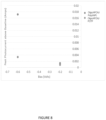
  • FIG. 6 illustrates photocurrent generation by the Poly(ANP)/Oligo(APCN) cell when a bias of ⁇ 0.2 volts is used.
  • FIG. 7 illustrates summary of photocurrents at biases of ⁇ 0.2V and ⁇ 0.6V.
  • FIG. 8 illustrates Cyclic voltammetry of Poly(ANP), 50 mV/sec scan rate.
  • FIG. 9 illustrates Electrochemical impedance spectroscopy of Poly(ANP) at 1.2 V Bias
  • FIG. 10 illustrates Electrochemical impedance spectroscopy of Poly(ANP) at 1.2 V Bias.
  • FIG. 11 illustrates photocurrent generation by the Poly(ANP)/Oligo(APCN) cell when a bias of ⁇ 0.6 volts is used.
  • FIG. 12 illustrates chemical structure of Oligo(ANP).
  • FIG. 13 illustrates electrochemical impedance spectroscopy of Oligo(ANP) at 1.2 V Bias.
  • FIG. 14 illustrates Cyclic Voltammetry of Poly(APCN), 50 mV/sec scan rate
  • FIG. 15 illustrates electrochemical impedance spectroscopy of Poly(APCN) at ⁇ 1.2 V Bias.
  • FIG. 16 illustrates electrochemical impedance spectroscopy of Oligo(APCN) at ⁇ 1.2 V Bias.
  • FIG. 17 illustrates FTIR spectrum of Poly(ANP).
  • FIG. 18 illustrates FTIR spectrum of Poly(APCN).
  • FIG. 19 illustrates Fluorescence spectrum of Oligo(APCN).
  • FIG. 20 illustrates Fluorescence spectrum of Poly(APCN).
  • FIG. 21 illustrates Poly(ANP), MS data, negatively charged fragments, high MW.
  • FIG. 22 illustrates Poly(ANP), MS data, negatively charged fragments, intermediate MW.
  • FIG. 23 illustrates Poly(ANP), proposed negatively charged fragments, high MW.
  • FIG. 24 illustrates Poly(ANP), MS-MS data, negatively charged fragment, MW 1806.
  • FIG. 25 illustrates Poly(ANP), proposed negatively charged products from MW 1806 fragment.
  • FIG. 26 illustrates Poly(ANP), proposed negatively charged products from MW 1806 fragment.
  • FIG. 27 illustrates Poly(APCN), MS data, negatively charged fragments, high MW.
  • FIG. 28 illustrates Poly(APCN), MS data, negatively charged fragments, intermediate MW.
  • FIG. 29 illustrates Poly(APCN), proposed negatively charged fragments, high MW.
  • FIG. 30 illustrates Poly(APCN), proposed negatively charged fragments, intermediate MW.
  • This disclosure teaches electrically conducting photoactive poly(pyrazoles).
  • This invention enables increases in efficiency, and costs much less to synthesize than virtually all of the commercially available solar cell polymers (Table 1).
  • the starting material for our carbonitrile-based polypyrazole described herein has a cost of only ⁇ $2.00 per gram in bulk.
  • Electron donor or Name Acronym acceptor Amount Cost () Poly(3- P3HT donor 1 gram 395 hexylthiophene) Poly(cyclopentyl Si-PCPDTBT donor 1 gram 1195 dithiophene-Si- benzothiadiazole Poly(thienothiophene- PTB7 donor 1 gram 1895 benzodithiophene) C 61 fullerene phenyl PC 61 BM acceptor 1 gram 325 butyric acid methyl ester C 60 fullerene PCBM acceptor 1 gram 59
  • solar cells constructed using the Invented polymers When illuminated with a sun-simulating lamp, solar cells constructed using the Invented polymers produce a photocurrent up to 5.1 times higher than similar cells made using commercially available polymers.
  • the responsivity (in Amps/Watt) of the cells constructed using the Invented polymers is from 2.9 to 70-fold higher than the latter.
  • Schemes 1 and 2 illustrated in FIGS. 1 and 2 depict the single step synthesis used to form poly(3-amino-4-nitropyrazole) “Poly(ANP)” and poly(3-aminopyrazole-4-carbonitrile) “Poly(APCN)”.
  • the reaction is allowed to proceed for an additional 2 hours at 70° C.-75° C.
  • the flask is then removed and allowed to cool at ⁇ 20° C. overnight.
  • the polymer Under UV excitation at 365 nm, the polymer glowed green when dissolved in DMF or N-methyl pyrrolidone. This is in contrast to our previously synthesized oligo(3-aminopyrazole-4-carbonitrile), which glowed light blue under the same conditions.
  • polymer chain lengths are significantly longer than those synthesized earlier and described in an earlier patent application by our group (see mass spectral data herein).
  • the supernatant was also dark purple, and it was dried in an oven at 85° C., under nitrogen flow.
  • FIGS. 3 and 4 To test the light-harvesting abilities of the polymers, we constructed two mostly-organic solar cells using a standard architecture ( FIGS. 3 and 4 ).
  • the interface between the POTP/Oligo(APCN) and PEDOT/PSS was composed of the ionic liquid 1-ethyl-2-methyl imidazolium bis-triflate (EmIm-bT) in a 50/50 v/v mixture with propylene carbonate (PC) solvent.
  • EmIm-bT ionic liquid 1-ethyl-2-methyl imidazolium bis-triflate
  • PC propylene carbonate
  • FIG. 4 shows the construction of a closely similar cell that uses Poly(ANP) as the electron donor instead of POTP.
  • FIGS. 5 through 8 show photocurrents arising from the Poly(ANP)/Oligo(APCN) cell when illuminated at zero, ⁇ 0.2, and ⁇ 0.6 V bias.
  • the current is nearly three times larger than that of a top-performing polymer photocell based on a donor-acceptor combination given in Table 1.
  • FIG. 5 shows the light-induced current for the photocell based on Poly(ANP)/Oligo(APCN) which equals the value of the current above baseline, 4.82 ⁇ 10 ⁇ 3 A, which was reached under illumination with zero volts bias.
  • FIG. 6 shows the photocurrent generation when a bias of ⁇ 0.2 volts is used.
  • FIG. 7 shows the photocurrent generation when a bias of ⁇ 0.6 volts is used.
  • FIG. 8 summarizes the photocurrents at both bias voltages, and compares them to the values found for our original cell based on POTP/Oligo(APCN).
  • the Poly(ANP) cell photocurrent is ⁇ 1.4 times higher than that of the POTP cell, and at ⁇ 0.6 V bias, the Poly(ANP) cell photocurrent is ⁇ 5.1 times higher than that of POTP cell.
  • the Poly(ANP)/Oligo(APCN) cell exhibits values of 0.144 and 1.13 A/W at applied voltages of ⁇ 0.2 and ⁇ 0.6 V, respectively. The latter is much higher (from 2.9 to 70-fold) higher than those of the other three cell constructions.
  • the cost of the starting materials is dramatically higher than that for our Poly(ANP)/Oligo(APCN) cell (Table 1).
  • FIG. 9 shows cyclic voltammetry for Poly(ANP) in electrolyte acetonitrile containing 0.1 M tetrabutylammonium tetrafluoroborate, scan rate 50 mV/second.
  • the shape of the trace indicates that Poly(ANP) is an effective electron donor, showing a high oxidation current at a 1.0 volt bias.
  • FIG. 10 shows the Nyquist plot resulting from the spectroscopy of Poly(ANP) at 1.2 V Bias.
  • the capacitive component of the AC impedance (Z′′) is plotted vs. the resistive component (Z′). Its resistance ranges from ⁇ 1.0 ⁇ 10 4 to ⁇ 1.3 ⁇ 10 4 Ohms over the most relevant frequency range of 10 to 1 Hz.
  • FIG. 11 shows the structure of Oligo(ANP), synthesized by us previously.
  • FIG. 12 shows the corresponding Nyquist plot for Oligo(ANP) at 1.2 V Bias.
  • the resistance (Z′) ranges from ⁇ 4.0 ⁇ 10 4 to ⁇ 5.0 ⁇ 10 4 Ohms over the same frequency range. The comparison indicates that Poly(ANP) has a 4-fold higher conductivity than Oligo(ANP).
  • FIG. 13 shows the cyclic voltammogram for Poly(APCN), synthesis method given in Scheme 2 FIG. 2 .
  • the shape of the trace indicates Poly(APCN) is an effective electron acceptor and transporter—a high reduction current is seen at ⁇ 1.0 Volt bias.
  • the peak current is 2.7 times higher than that of Oligo(APCN) subjected to cyclic voltammetry under the same conditions.
  • Impedance spectroscopy shows that its resistance (Z′) ranges from ⁇ 4.0 ⁇ 10 3 to ⁇ 5.0 ⁇ 10 3 Ohms over the most relevant frequency range of 10 to 1 Hz ( FIG. 14 ).
  • the Oligo(APCN) resistance (Z′) ranges from ⁇ 8.0 ⁇ 10 3 to ⁇ 9.5 ⁇ 10 3 Ohms over the same frequency range ( FIG. 15 ).
  • Poly(APCN) has roughly a 2-fold higher conductivity than Oligo(APCN).
  • FIGS. 16 and 17 show FTIR spectra for Poly(ANP) and Poly(APCN).
  • FIG. 16 indicates the presence of the nitro group in conjugation (peaks at 1519 and 1398 cm ⁇ 1 ) and secondary amines (3451 and 3125 cm ⁇ 1 ).
  • FIG. 17 shows the presence of the carbonitrile group in conjugation (peak at 2229 cm-1) and secondary amines (3316 cm-1). This provides evidence that the functional group at the 4-position of the pyrazole ring is maintained during the polymerization process.
  • the Oligo(APCN) and Poly(APCN) derivatives are fluorescent.
  • the spectra of the former and latter are given in FIGS. 18 and 19 .
  • excitation wavelengths of 320 nm to 400 nm for Oligo(APCN) it was found that the maximum emission wavelengths appeared in the range 440 nm to 460 nm.
  • the Poly(APCN) it was found that they appeared in the range 470 nm to 490 nm.
  • the longer wavelengths characteristic of the Poly(APCN) are evidence of its higher MW.
  • FIGS. 20 to 29 give mass spectral data for Poly(ANP) and Poly(APCN). Negative ion mode was used. The data indicates that the polymers exist as a mixture of different chain lengths. The high MW fragments give clear evidence of the length of the longest polymers. For the Poly(ANP), the maximum length indicated is a 13-mer (Scheme 1 FIG. 1 ). For the Poly(APCN) the maximum is a 15-mer. Chemical structures are listed that correspond to the MWs that were detected.
  • 3-aminopyrazole derivatives having an electron withdrawing group at the 4-position.
  • Such groups may be carboxylate, trifluoromethane, halogen, or sulfonate. These derivatives can be used as starting materials for polymers having structures closely similar to Poly(ANP) and Poly(APCN), and have similar photoactive properties.

Landscapes

  • Chemical & Material Sciences (AREA)
  • Organic Chemistry (AREA)
  • Health & Medical Sciences (AREA)
  • Chemical Kinetics & Catalysis (AREA)
  • Medicinal Chemistry (AREA)
  • Polymers & Plastics (AREA)
  • Photovoltaic Devices (AREA)
  • Polyoxymethylene Polymers And Polymers With Carbon-To-Carbon Bonds (AREA)
  • Macromolecular Compounds Obtained By Forming Nitrogen-Containing Linkages In General (AREA)

Abstract

This disclosure concerns electrically conducting poly(pyrazoles). The concept of oligomerizing and polymerizing substituted aminopyrazole derivatives combined with a monomer activation procedure involving base-mediated conversion of the protonated pyrazole ring nitrogen to amine salt was developed. This disclosure concerns the specific chemistries needed for the synthesis of a pyrazole monomer used in the polymer synthesis. The procedure used for blending the novel polypyrazoles with other compounds needed for construction of solar cells for testing was developed. This disclosure concerns the concept of using these types of heteroatom-rich, electron-deficient oligomers or polymers as n-dopable or p-dopable electron acceptors in photovoltaic cells. This disclosure concerns synthesizing the starting monomer compounds and polypyrazoles.

Description

REFERENCE TO RELATED APPLICATION
This application is a non-provisional of, and claims priority to and the benefits of, U.S. patent application Ser. No. 16/218,446 filed on Dec. 12, 2018 and U.S. Patent Application No. 62/598,546 filed on Dec. 14, 2017, the entirety of each is hereby incorporated by reference.
BACKGROUND
This disclosure concerns electrically conducting poly(pyrazoles).
The concept of oligomerizing and polymerizing substituted aminopyrazole derivatives combined with a monomer activation procedure involving base-mediated conversion of the protonated pyrazole ring nitrogen to amine salt was developed.
This disclosure concerns the specific chemistries needed for the synthesis of a pyrazole monomer used in the polymer synthesis.
The procedure used for blending the novel polypyrazoles with other compounds needed for construction of solar cells for testing was developed.
This disclosure concerns the concept of using these types of heteroatom-rich, electron-deficient oligomers or polymers as n-dopable or p-dopable electron acceptors in photovoltaic cells.
This disclosure concerns synthesizing the starting monomer compounds and polypyrazoles.
This invention is expected to have a significant military and commercial interest, because it is desirable to develop renewable energy sources given that world petroleum reserves are finite and not replaceable. Solar power is clean, readily available, and renewable.
Silicon-based solar cells are considered to be the state of the art at present and have a relatively high efficiency, but they are expensive to manufacture. Polymer-based solar cells are somewhat less expensive but the polymers used are often expensive to synthesize and the resulting solar cell efficiencies are low.
If incorporated into these types of cells, it is anticipated that the present Invention will enable increases in efficiency, and will cost much less to synthesize than virtually all of the commercially available solar cell polymers (Table 1). For example, the starting material for the carbonitrile-based polypyrazole described herein has a cost of only˜$2.00 per gram in bulk.
The high electron transport rates of the polypyrazoles, their versatile redox behavior, and their simple one-step synthesis using low-cost starting materials allow derivatives of the material to be produced and investigated easily and quickly.
SUMMARY OF DISCLOSURE Description
This disclosure teaches electrically conducting poly(pyrazoles).
The concept of oligomerizing and polymerizing substituted aminopyrazole derivatives combined with a monomer activation procedure involving base-mediated conversion of the protonated pyrazole ring nitrogen to amine salt was developed.
The specific chemistries needed for the synthesis of one of the pyrazole monomers used in the polymer synthesis was developed.
This invention also concerns the procedure used for blending the novel polypyrazoles with other compounds needed for construction of solar cells for testing.
This disclosure teaches the concept of using these types of heteroatom-rich, electron-deficient oligomers or polymers as n-dopable or p-dopable electron acceptors in photovoltaic cells.
We developed the starting monomer compounds and polypyrazoles.
DESCRIPTION OF THE DRAWINGS
The following description and drawings set forth certain illustrative implementations of the disclosure in detail, which are indicative of several exemplary ways in which the various principles of the disclosure may be carried out. The illustrated examples, however, are not exhaustive of the many possible embodiments of the disclosure. Other objects, advantages and novel features of the disclosure will be set forth in the following detailed description when considered in conjunction with the drawings.
FIG. 1 illustrates Synthesis of Poly(ANP).
FIG. 2 illustrates Synthesis of Poly(APCN).
FIG. 3 illustrates construction of solar cell using POTP as electron donor and Oligo(APCN) as electron acceptor.
FIG. 4 illustrates construction of solar cell using Poly(ANP) as electron donor and Oligo(APCN) as electron acceptor.
FIG. 5 illustrates the short-circuit current for the photocell based on Poly(ANP)/OAPCN.
FIG. 6 illustrates photocurrent generation by the Poly(ANP)/Oligo(APCN) cell when a bias of −0.2 volts is used.
FIG. 7 illustrates summary of photocurrents at biases of −0.2V and −0.6V.
FIG. 8 illustrates Cyclic voltammetry of Poly(ANP), 50 mV/sec scan rate.
FIG. 9 illustrates Electrochemical impedance spectroscopy of Poly(ANP) at 1.2 V Bias
FIG. 10 illustrates Electrochemical impedance spectroscopy of Poly(ANP) at 1.2 V Bias.
FIG. 11 illustrates photocurrent generation by the Poly(ANP)/Oligo(APCN) cell when a bias of −0.6 volts is used.
FIG. 12 illustrates chemical structure of Oligo(ANP).
FIG. 13 illustrates electrochemical impedance spectroscopy of Oligo(ANP) at 1.2 V Bias.
FIG. 14 illustrates Cyclic Voltammetry of Poly(APCN), 50 mV/sec scan rate
FIG. 15 illustrates electrochemical impedance spectroscopy of Poly(APCN) at −1.2 V Bias.
FIG. 16 illustrates electrochemical impedance spectroscopy of Oligo(APCN) at −1.2 V Bias.
FIG. 17 illustrates FTIR spectrum of Poly(ANP).
FIG. 18 illustrates FTIR spectrum of Poly(APCN).
FIG. 19 illustrates Fluorescence spectrum of Oligo(APCN).
FIG. 20 illustrates Fluorescence spectrum of Poly(APCN).
FIG. 21 illustrates Poly(ANP), MS data, negatively charged fragments, high MW.
FIG. 22 illustrates Poly(ANP), MS data, negatively charged fragments, intermediate MW.
FIG. 23 illustrates Poly(ANP), proposed negatively charged fragments, high MW.
FIG. 24 illustrates Poly(ANP), MS-MS data, negatively charged fragment, MW 1806.
FIG. 25 illustrates Poly(ANP), proposed negatively charged products from MW 1806 fragment.
FIG. 26 illustrates Poly(ANP), proposed negatively charged products from MW 1806 fragment.
FIG. 27 illustrates Poly(APCN), MS data, negatively charged fragments, high MW.
FIG. 28 illustrates Poly(APCN), MS data, negatively charged fragments, intermediate MW.
FIG. 29 illustrates Poly(APCN), proposed negatively charged fragments, high MW.
FIG. 30 illustrates Poly(APCN), proposed negatively charged fragments, intermediate MW.
DETAILED DESCRIPTION OF THE INVENTION
This disclosure teaches electrically conducting photoactive poly(pyrazoles).
The concept of oligomerizing and polymerizing substituted aminopyrazole derivatives using chemistry akin to that used for polyaniline and polyacrylate synthesis, combined with a monomer activation procedure involving base-mediated conversion of the protonated pyrazole ring nitrogen to amine salt was developed.
We developed the specific chemistries needed for the synthesis of one of the pyrazole monomers used in the polymer synthesis.
The procedure used for blending the novel polypyrazoles with other compounds needed for construction of solar cells for testing was developed.
Also taught herein is the concept of using these types of heteroatom-rich, electron-deficient oligomers or polymers as n-dopable or p-dopable electron acceptors in photovoltaic cells.
We synthesized the starting monomer compounds and polypyrazoles.
The high electron transport rates of the polypyrazoles, their versatile redox behavior, and their simple one-step synthesis using low-cost starting materials allow derivatives of the material to be produced and investigated easily and quickly.
This invention enables increases in efficiency, and costs much less to synthesize than virtually all of the commercially available solar cell polymers (Table 1).
For example, the starting material for our carbonitrile-based polypyrazole described herein has a cost of only˜$2.00 per gram in bulk.
TABLE 1
Examples and Costs of Current Prominent Polymer Solar Cell
Donors and Acceptors.
Electron
donor or
Name Acronym acceptor Amount Cost ($)
Poly(3- P3HT donor 1 gram 395
hexylthiophene)
Poly(cyclopentyl Si-PCPDTBT donor 1 gram 1195
dithiophene-Si-
benzothiadiazole
Poly(thienothiophene- PTB7 donor 1 gram 1895
benzodithiophene)
C61 fullerene phenyl PC61BM acceptor 1 gram 325
butyric acid methyl
ester
C60 fullerene PCBM acceptor 1 gram 59
Example 1
When illuminated with a sun-simulating lamp, solar cells constructed using the Invented polymers produce a photocurrent up to 5.1 times higher than similar cells made using commercially available polymers.
As a result, the responsivity (in Amps/Watt) of the cells constructed using the Invented polymers is from 2.9 to 70-fold higher than the latter.
Schemes 1 and 2 illustrated in FIGS. 1 and 2 depict the single step synthesis used to form poly(3-amino-4-nitropyrazole) “Poly(ANP)” and poly(3-aminopyrazole-4-carbonitrile) “Poly(APCN)”.
Example 2
For Poly(ANP) synthesis, 90 mL DI water is added to a 250 mL Erlenmeyer flask then 2000 mg potassium hydroxide is dissolved while stirring at room temperature (RT).
Next, 4.72 g 4-nitro 3-aminopyrazole is added and allowed to dissolve at 70° C. (heating in a mineral oil bath).
As for the Poly(APCN), this allows a 1:1 molar complex to form between potassium and the deprotonated nitrogen of the pyrazole ring.
Over the next 1 hour, with the flask kept at 70° C., sodium (or potassium) persulfate was gradually added to give a final molar ratio of 1.2 moles persulfate to 1.0 moles 4-nitro-3-aminopyrazole.
In the case of the sodium persulfate, the amount added was 10.8 grams.
The reaction was allowed to proceed for an additional 2 hours at 70° C.-75° C.
During this time, most of the product precipitated, and was collected.
The flask was then removed and allowed to cool overnight at 4° C.
During this time, an additional portion of the product precipitated, and was collected.
The product fractions (brick red powder) were then combined.
The overall yield of product was 76%.
Example 3
For Poly(APCN), in a typical procedure 90 mL DI water is added to a 250 mL Erlenmeyer flask, then 2.0 g potassium hydroxide is dissolved while stirring at RT.
Next, 4.0 g 3-aminopyrazole-4-carbonitrile is added and allowed to dissolve at 70° C. (heating in a mineral oil bath).
This allows a 1:1 molar complex to form between potassium and the deprotonated nitrogen of the pyrazole ring.
Over the next 1 hour, with the flask kept at 70° C., sodium (or potassium) persulfate is gradually added to give a final molar ratio of 1.2 moles persulfate to 1.0 moles 3-aminopyrazole-4-carbonitrile.
In the case of the sodium persulfate, the amount added was 10.8 grams.
The reaction is allowed to proceed for an additional 2 hours at 70° C.-75° C.
The flask is then removed and allowed to cool at −20° C. overnight.
During this time, the major portion of the product will precipitate, and can be collected. It was dark purple in color, in contrast to the dark red oligo(3-aminopyrazole-4-carbonitrile) we have synthesized previously.
After drying and weighing the expected product, poly(3-aminopyrazole-4-carbonitrile), the yield is generally found to be ˜85%.
Example 4
Under UV excitation at 365 nm, the polymer glowed green when dissolved in DMF or N-methyl pyrrolidone. This is in contrast to our previously synthesized oligo(3-aminopyrazole-4-carbonitrile), which glowed light blue under the same conditions.
The polymer chain lengths are significantly longer than those synthesized earlier and described in an earlier patent application by our group (see mass spectral data herein).
Thus their extent of conjugation may be higher.
This can account for the change in emission color and bulk color.
The supernatant was also dark purple, and it was dried in an oven at 85° C., under nitrogen flow.
This yields additional dark purple product that contained flecks of lighter-colored salt, presumably sodium sulfate byproduct.
Example 5
To test the light-harvesting abilities of the polymers, we constructed two mostly-organic solar cells using a standard architecture (FIGS. 3 and 4 ).
Their performance was compared to a previous cell developed by us, that used oligo(3-aminopyrazole-4-carbonitrile) “Oligo(APCN)” as the electron acceptor, poly(3-octylthiophene) (POTP) as the electron donor, and PEDOT-PSS on indium tin oxide (ITO) as the hole transporter (FIG. 3 ).
The interface between the POTP/Oligo(APCN) and PEDOT/PSS was composed of the ionic liquid 1-ethyl-2-methyl imidazolium bis-triflate (EmIm-bT) in a 50/50 v/v mixture with propylene carbonate (PC) solvent.
Its purpose was to facilitate hole transport between the Oligo(APCN)/POTP blend and the PEDOT-PSS layer. As the incident light caused exciton formation within the POTP, the electrons were passed out of the cell via transport through the Oligo(APCN) and gold support layer.
FIG. 4 shows the construction of a closely similar cell that uses Poly(ANP) as the electron donor instead of POTP.
Example 6
FIGS. 5 through 8 show photocurrents arising from the Poly(ANP)/Oligo(APCN) cell when illuminated at zero, −0.2, and −0.6 V bias.
It is demonstrated that the largest bias used generates a photocurrent that is ˜5-fold larger than our previous cell based on Oligo(APCN)/POTP.
In addition, the current is nearly three times larger than that of a top-performing polymer photocell based on a donor-acceptor combination given in Table 1.
FIG. 5 shows the light-induced current for the photocell based on Poly(ANP)/Oligo(APCN) which equals the value of the current above baseline, 4.82×10⁻³ A, which was reached under illumination with zero volts bias.
FIG. 6 shows the photocurrent generation when a bias of −0.2 volts is used. The current is 1.4×10⁻³ A above baseline, and shows a relatively rapid response to illumination (rate of increase=2.5×10⁻⁵ A/Sec).
FIG. 7 shows the photocurrent generation when a bias of −0.6 volts is used. The current is 1.72×10⁻² A above baseline, (more than a factor of ten above that of FIG. 6 ) and shows a relatively rapid response to illumination (rate of increase=1.46×10⁻⁴ A/Sec).
FIG. 8 summarizes the photocurrents at both bias voltages, and compares them to the values found for our original cell based on POTP/Oligo(APCN). At −0.2 V bias, the Poly(ANP) cell photocurrent is ˜1.4 times higher than that of the POTP cell, and at −0.6 V bias, the Poly(ANP) cell photocurrent is ˜5.1 times higher than that of POTP cell.
These relatively large photocurrents lead to high values of cell responsivity (defined as photocurrent above baseline (Amps)/lamp illumination power (W/cm2), which is a key parameter in solar cell and photodiode construction.
These values compare very favorably to both those of our original cell based on POTP/Oligo(APCN), and those of similar devices reported in the literature based on C60 fullerene/poly(2-methoxy-5-(2-ethylhexyloxy)-1,4-phenylenevinylene) (MEH-PPV), and Poly(3-hexylthiophene)/Phenyl C61 BM (Table 2).
For responsivity, the Poly(ANP)/Oligo(APCN) cell exhibits values of 0.144 and 1.13 A/W at applied voltages of −0.2 and −0.6 V, respectively. The latter is much higher (from 2.9 to 70-fold) higher than those of the other three cell constructions. For the cell type from the reference, the cost of the starting materials is dramatically higher than that for our Poly(ANP)/Oligo(APCN) cell (Table 1).
TABLE 2
BM = butyric acid methyl ester
Responsivity Responsivity
(A/W) (A/W) Responsivity
@ −0.2 V @ @ −1.0 V (A/W)
−0.6 V to 1.0 V @ −5.0 V
POTP/Oligo(APCN)  5.5 × 10⁻²
2.10 × 10⁻¹
Poly(ANP)/Oligo 1.44 × 10⁻¹ 1.13
(APCN)
C60/MEH-PPV (ref. 3) 1.63 × 10⁻²
Poly(3-hexylthiophene)/ 3.90 × 10⁻¹
Phenyl
C61 BM (ref. 4)
Example 7
At this point we can compare Poly(ANP) to Oligo(ANP), in terms of electrochemical behavior and conductivity.
FIG. 9 shows cyclic voltammetry for Poly(ANP) in electrolyte acetonitrile containing 0.1 M tetrabutylammonium tetrafluoroborate, scan rate 50 mV/second. The shape of the trace indicates that Poly(ANP) is an effective electron donor, showing a high oxidation current at a 1.0 volt bias.
We also subjected the materials to analysis using electrochemical impedance spectroscopy. In this type of characterization, the sample is subjected to a small sinusoidal voltage (˜5 mV in amplitude) over a wide range of frequencies, and the response of the material in terms of capacitance and resistance is recorded.
Example 8
FIG. 10 shows the Nyquist plot resulting from the spectroscopy of Poly(ANP) at 1.2 V Bias. In this type of plot, the capacitive component of the AC impedance (Z″) is plotted vs. the resistive component (Z′). Its resistance ranges from ˜1.0×10⁴ to ˜1.3×10⁴ Ohms over the most relevant frequency range of 10 to 1 Hz. FIG. 11 shows the structure of Oligo(ANP), synthesized by us previously. FIG. 12 shows the corresponding Nyquist plot for Oligo(ANP) at 1.2 V Bias. The resistance (Z′) ranges from ˜4.0×10⁴ to ˜5.0×10⁴ Ohms over the same frequency range. The comparison indicates that Poly(ANP) has a 4-fold higher conductivity than Oligo(ANP).
FIG. 13 shows the cyclic voltammogram for Poly(APCN), synthesis method given in Scheme 2 FIG. 2 .
The shape of the trace indicates Poly(APCN) is an effective electron acceptor and transporter—a high reduction current is seen at −1.0 Volt bias.
The peak current is 2.7 times higher than that of Oligo(APCN) subjected to cyclic voltammetry under the same conditions. Impedance spectroscopy shows that its resistance (Z′) ranges from ˜4.0×10³ to ˜5.0×10³ Ohms over the most relevant frequency range of 10 to 1 Hz (FIG. 14 ). The Oligo(APCN) resistance (Z′) ranges from ˜8.0×10³ to ˜9.5×10³ Ohms over the same frequency range (FIG. 15 ). Thus, Poly(APCN) has roughly a 2-fold higher conductivity than Oligo(APCN).
FIGS. 16 and 17 show FTIR spectra for Poly(ANP) and Poly(APCN). For the former, FIG. 16 indicates the presence of the nitro group in conjugation (peaks at 1519 and 1398 cm−1) and secondary amines (3451 and 3125 cm−1). For Poly(APCN), FIG. 17 shows the presence of the carbonitrile group in conjugation (peak at 2229 cm-1) and secondary amines (3316 cm-1). This provides evidence that the functional group at the 4-position of the pyrazole ring is maintained during the polymerization process.
Example 9
The Oligo(APCN) and Poly(APCN) derivatives are fluorescent. The spectra of the former and latter are given in FIGS. 18 and 19 . Using excitation wavelengths of 320 nm to 400 nm, for Oligo(APCN) it was found that the maximum emission wavelengths appeared in the range 440 nm to 460 nm. For the Poly(APCN), it was found that they appeared in the range 470 nm to 490 nm. The longer wavelengths characteristic of the Poly(APCN) are evidence of its higher MW.
FIGS. 20 to 29 give mass spectral data for Poly(ANP) and Poly(APCN). Negative ion mode was used. The data indicates that the polymers exist as a mixture of different chain lengths. The high MW fragments give clear evidence of the length of the longest polymers. For the Poly(ANP), the maximum length indicated is a 13-mer (Scheme 1 FIG. 1 ). For the Poly(APCN) the maximum is a 15-mer. Chemical structures are listed that correspond to the MWs that were detected.
Other examples include 3-aminopyrazole derivatives having an electron withdrawing group at the 4-position. Such groups may be carboxylate, trifluoromethane, halogen, or sulfonate. These derivatives can be used as starting materials for polymers having structures closely similar to Poly(ANP) and Poly(APCN), and have similar photoactive properties.
The above examples are merely illustrative of several possible embodiments of various aspects of the present disclosure, wherein equivalent alterations and/or modifications will occur to others skilled in the art upon reading and understanding this specification and the annexed drawings. In addition, although a particular feature of the disclosure may have been illustrated and/or described with respect to only one of several implementations, such feature may be combined with one or more other features of the other implementations as may be desired and advantageous for any given or particular application. Also, to the extent that the terms “including”, “includes”, “having”, “has”, “with”, or variants thereof are used in the detailed description and/or in the claims, such terms are intended to be inclusive in a manner similar to the term “comprising”.

Claims (2)

What we claim is:
1. A poly(3-aminopyrazole-4-carbonitrile) compound represented by the formula:
Figure US11618821-20230404-C00001
wherein the length of the polymer is a 15-mer.
2. A poly(3-aminopyrazole-4-carbonitrile) made from the steps comprising:
adding water to a flask;
adding potassium hydroxide to the water in the flask;
stirring the potassium hydroxide and the water in the flask;
dissolving the potassium hydroxide in the water in the flask and making a first solution;
adding 3-aminopyrazole-4-carbonitrile to the first solution;
heating the 3-aminopyrazole-4-carbonitrile in the first solution;
dissolving the 3-aminopyrazole-4-carbonitrile in the first solution and forming a second solution;
adding sodium or potassium persulfate to the second solution;
forming an electrically conducting poly(pyrazole); and
allowing a 1:1 molar complex to form between potassium and deprotonated nitrogen of the pyrazole ring;
wherein the electrically conducting poly(pyrazole) comprises poly(3-aminopyrazole-4-carbonitrile); and
wherein the length of the polymer is a 15-mer.
US16/950,905 2017-12-14 2020-11-18 Electrically conducting poly(pyrazoles) Active US11618821B2 (en)

Priority Applications (3)

Application Number Priority Date Filing Date Title
US16/950,905 US11618821B2 (en) 2017-12-14 2020-11-18 Electrically conducting poly(pyrazoles)
US17/972,968 US11920035B2 (en) 2017-12-14 2022-10-25 Electrically conducting poly(pyrazoles)
US18/435,961 US12291639B2 (en) 2017-12-14 2024-02-07 Electrically conducting poly(pyrazoles)

Applications Claiming Priority (3)

Application Number Priority Date Filing Date Title
US201762598546P 2017-12-14 2017-12-14
US16/218,446 US11028265B2 (en) 2017-12-14 2018-12-12 Electrically conducting poly(pyrazoles)
US16/950,905 US11618821B2 (en) 2017-12-14 2020-11-18 Electrically conducting poly(pyrazoles)

Related Parent Applications (1)

Application Number Title Priority Date Filing Date
US16/218,446 Division US11028265B2 (en) 2017-12-14 2018-12-12 Electrically conducting poly(pyrazoles)

Related Child Applications (1)

Application Number Title Priority Date Filing Date
US17/972,968 Division US11920035B2 (en) 2017-12-14 2022-10-25 Electrically conducting poly(pyrazoles)

Publications (2)

Publication Number Publication Date
US20210070998A1 US20210070998A1 (en) 2021-03-11
US11618821B2 true US11618821B2 (en) 2023-04-04

Family

ID=66814238

Family Applications (4)

Application Number Title Priority Date Filing Date
US16/218,446 Active 2039-01-21 US11028265B2 (en) 2017-12-14 2018-12-12 Electrically conducting poly(pyrazoles)
US16/950,905 Active US11618821B2 (en) 2017-12-14 2020-11-18 Electrically conducting poly(pyrazoles)
US17/972,968 Active US11920035B2 (en) 2017-12-14 2022-10-25 Electrically conducting poly(pyrazoles)
US18/435,961 Active US12291639B2 (en) 2017-12-14 2024-02-07 Electrically conducting poly(pyrazoles)

Family Applications Before (1)

Application Number Title Priority Date Filing Date
US16/218,446 Active 2039-01-21 US11028265B2 (en) 2017-12-14 2018-12-12 Electrically conducting poly(pyrazoles)

Family Applications After (2)

Application Number Title Priority Date Filing Date
US17/972,968 Active US11920035B2 (en) 2017-12-14 2022-10-25 Electrically conducting poly(pyrazoles)
US18/435,961 Active US12291639B2 (en) 2017-12-14 2024-02-07 Electrically conducting poly(pyrazoles)

Country Status (4)

Country Link
US (4) US11028265B2 (en)
EP (1) EP3724257A4 (en)
JP (1) JP2021507015A (en)
WO (1) WO2019118648A1 (en)

Cited By (1)

* Cited by examiner, † Cited by third party
Publication number Priority date Publication date Assignee Title
US20230054994A1 (en) * 2017-12-14 2023-02-23 The Government Of The United States Of America, As Represented By The Secretary Of The Navy Electrically Conducting Poly(pyrazoles)

Families Citing this family (1)

* Cited by examiner, † Cited by third party
Publication number Priority date Publication date Assignee Title
CN116507144B (en) * 2023-05-10 2024-01-26 莆田市威特电子有限公司 Novel solar cell with amorphous silicon film and perovskite laminated and preparation method thereof

Citations (1)

* Cited by examiner, † Cited by third party
Publication number Priority date Publication date Assignee Title
US9302995B2 (en) * 2013-06-10 2016-04-05 The United States Of America, As Represented By The Secretary Of The Navy Electrically conducting oligo(pyrazoles)

Family Cites Families (13)

* Cited by examiner, † Cited by third party
Publication number Priority date Publication date Assignee Title
CH577005A5 (en) * 1972-12-19 1976-06-30 Labofina Sa
JPS5776030A (en) * 1980-10-30 1982-05-12 Nitto Electric Ind Co Ltd Polypyrazole and its preparation
JPS61224A (en) 1984-06-13 1986-01-06 Showa Denko Kk Production of alpha-pyrrolenine polymer
JPS62156137A (en) * 1985-12-28 1987-07-11 Nissha Printing Co Ltd Production of electrically conductive polymer film
FR2748274B1 (en) * 1996-05-03 1998-06-12 Oreal NOVEL DIAMINO PYRAZOLES, SYNTHESIS THEREOF, DYE COMPOSITIONS FOR KERATIN FIBERS CONTAINING THE SAME, METHOD FOR DYEING KERATIN FIBERS
DE19919881A1 (en) 1999-04-30 2000-11-02 Univ Stuttgart Thermally stable proton conductive composite, for use in e.g. fuel cells, membrane separation, catalysis, electrolysis or electrochemical processes, comprises acid and/or organic base and layered and/or framework silicate
SG98056A1 (en) 2001-06-13 2003-08-20 Sumitomo Chemical Co Catalyst for addition polymerization and process for producing and addition polymer
DK1518282T3 (en) 2002-04-25 2011-01-03 Basf Fuel Cell Res Gmbh Multilayer electrolyte membrane
US20050269555A1 (en) 2004-05-11 2005-12-08 Suck-Hyun Lee Conductive polymers having highly enhanced solubility in organic solvent and electrical conductivity and synthesizing process thereof
DE102004034139A1 (en) 2004-07-15 2006-02-02 Pemeas Gmbh Process for the preparation of membrane-electrode assemblies
US7399571B2 (en) 2005-05-06 2008-07-15 General Electric Company Multilayered articles and method of manufacture thereof
CN103981693B (en) 2014-06-03 2016-03-09 陕西科技大学 Polyaniline-alkali aramid fiber composite conducting fiber and preparation method thereof
JP2021507015A (en) * 2017-12-14 2021-02-22 アメリカ合衆国 Conductive poly (pyrazole)

Patent Citations (4)

* Cited by examiner, † Cited by third party
Publication number Priority date Publication date Assignee Title
US9302995B2 (en) * 2013-06-10 2016-04-05 The United States Of America, As Represented By The Secretary Of The Navy Electrically conducting oligo(pyrazoles)
US9738609B2 (en) * 2013-06-10 2017-08-22 The United States Of America, As Represented By The Secretary Of The Navy Electrically conducting oligo(pyrazoles)
US10336705B2 (en) * 2013-06-10 2019-07-02 The United States Of America, As Represented By The Secretary Of The Navy Electrically conducting oligo(pyrazoles)
US11028053B2 (en) * 2013-06-10 2021-06-08 The Government Of The United States Of America, As Represented By The Secretary Of The Navy Electrically conducting oligo(pyrazoles)

Non-Patent Citations (1)

* Cited by examiner, † Cited by third party
Title
Ovejero, Paloma, et al. "The 3, 5-dimethyl-4-nitropyrazole ligand in the construction of supramolecular networks of silver (I) complexes." Journal of Organometallic Chemistry 692.19 (2007): 4093-4105.

Cited By (4)

* Cited by examiner, † Cited by third party
Publication number Priority date Publication date Assignee Title
US20230054994A1 (en) * 2017-12-14 2023-02-23 The Government Of The United States Of America, As Represented By The Secretary Of The Navy Electrically Conducting Poly(pyrazoles)
US11920035B2 (en) * 2017-12-14 2024-03-05 The Government Of The United States Of America, As Represented By The Secretary Of The Navy Electrically conducting poly(pyrazoles)
US20240182714A1 (en) * 2017-12-14 2024-06-06 The Government Of The United States Of America, As Represented By The Secretary Of The Navy Electrically Conducting Poly(pyrazoles)
US12291639B2 (en) * 2017-12-14 2025-05-06 The Government Of The United States Of America, As Represented By The Secretary Of The Navy Electrically conducting poly(pyrazoles)

Also Published As

Publication number Publication date
EP3724257A1 (en) 2020-10-21
US20210070998A1 (en) 2021-03-11
EP3724257A4 (en) 2021-08-25
US12291639B2 (en) 2025-05-06
US20190185670A1 (en) 2019-06-20
US11920035B2 (en) 2024-03-05
WO2019118648A1 (en) 2019-06-20
US11028265B2 (en) 2021-06-08
JP2021507015A (en) 2021-02-22
US20230054994A1 (en) 2023-02-23
US20240182714A1 (en) 2024-06-06

Similar Documents

Publication Publication Date Title
Aldrich et al. Suppressing defect formation pathways in the direct C–H arylation polymerization of photovoltaic copolymers
Roncali Linear π-conjugated systems derivatized with C 60-fullerene as molecular heterojunctions for organic photovoltaics
Wang et al. Photoinduced charge transfer and efficient solar energy conversion in a blend of a red polyfluorene copolymer with CdSe nanoparticles
Mikroyannidis et al. A novel alternating phenylenevinylene copolymer with perylene bisimide units: synthesis, photophysical, electrochemical, and photovoltaic properties
Hou et al. Branched poly (thienylene vinylene) s with absorption spectra covering the whole visible region
Randell et al. Effect of acceptor unit length and planarity on the optoelectronic properties of isoindigo–thiophene donor–acceptor polymers
US12291639B2 (en) Electrically conducting poly(pyrazoles)
Ates et al. Carbazole derivative synthesis and their electropolymerization
Damas et al. On the design of donor–acceptor conjugated polymers for photocatalytic hydrogen evolution reaction: first-principles theory-based assessment
Dai et al. Fabrication of high V OC organic solar cells with a non-halogenated solvent and the effect of substituted groups for “Same-A-Strategy” material combinations
Wang et al. Solution-processable small molecules for high-performance organic solar cells with rigidly fluorinated 2, 2′-bithiophene central cores
Lee et al. Defect-passivating organic/inorganic bicomponent hole-transport layer for high efficiency metal-halide perovskite device
US8901258B2 (en) Copolymers for solar cells based on acridonic units
Bucher et al. Nonfullerene polymer solar cells reaching a 9.29% efficiency using a BODIPY-thiophene backboned donor material
Li et al. The utilization of post-synthetic modification in opto-electronic polymers: an effective complementary approach but not a competitive one to the traditional direct polymerization process
Wojtkiewicz et al. Towards designing polymers for photovoltaic applications: A DFT and experimental study of polyazomethines with various chemical structures
US11370878B2 (en) Systems and methods for production of artificial eumelanin
Ganguly et al. Effect of cross-conjugation on derivatives of benzoisoindigo, an isoindigo analogue with an extended π-system
Yassin et al. Evaluation of bis-dicyanovinyl short-chain conjugated systems as donor materials for organic solar cells
Aivali et al. Electron transporting perylene diimide-based random terpolymers with variable co-monomer feed ratio: a route to all-polymer-based photodiodes
Moudou et al. Exploring the role of π-Spacers in six novel Push-Pull photovoltaic systems based on N-Methylarylamine: A theoretical DFT Investigation
Del-Oso et al. New polythiophene derivatives and enhanced photovoltaic effect by a boron compound blended with them in OPVs cells
Dimitriev et al. Probing of charge and energy transfer in hybrid systems of Aniline− 3-Methylthiophene copolymer with CdS and CdSe nanoparticles
Sun et al. 5, 6-Difluorobenzothiazole-based conjugated polymers with large band gaps and deep highest occupied molecular orbital levels
KR100931676B1 (en) C70 fullerene derivative and organic photovoltaic device using the same

Legal Events

Date Code Title Description
FEPP Fee payment procedure

Free format text: ENTITY STATUS SET TO UNDISCOUNTED (ORIGINAL EVENT CODE: BIG.); ENTITY STATUS OF PATENT OWNER: LARGE ENTITY

STPP Information on status: patent application and granting procedure in general

Free format text: APPLICATION DISPATCHED FROM PREEXAM, NOT YET DOCKETED

STPP Information on status: patent application and granting procedure in general

Free format text: DOCKETED NEW CASE - READY FOR EXAMINATION

STPP Information on status: patent application and granting procedure in general

Free format text: NON FINAL ACTION MAILED

STPP Information on status: patent application and granting procedure in general

Free format text: RESPONSE TO NON-FINAL OFFICE ACTION ENTERED AND FORWARDED TO EXAMINER

STPP Information on status: patent application and granting procedure in general

Free format text: NON FINAL ACTION MAILED

STPP Information on status: patent application and granting procedure in general

Free format text: RESPONSE TO NON-FINAL OFFICE ACTION ENTERED AND FORWARDED TO EXAMINER

STPP Information on status: patent application and granting procedure in general

Free format text: FINAL REJECTION MAILED

STPP Information on status: patent application and granting procedure in general

Free format text: RESPONSE AFTER FINAL ACTION FORWARDED TO EXAMINER

STPP Information on status: patent application and granting procedure in general

Free format text: ADVISORY ACTION MAILED

STPP Information on status: patent application and granting procedure in general

Free format text: NON FINAL ACTION MAILED

STPP Information on status: patent application and granting procedure in general

Free format text: RESPONSE TO NON-FINAL OFFICE ACTION ENTERED AND FORWARDED TO EXAMINER

STPP Information on status: patent application and granting procedure in general

Free format text: NOTICE OF ALLOWANCE MAILED -- APPLICATION RECEIVED IN OFFICE OF PUBLICATIONS

STCF Information on status: patent grant

Free format text: PATENTED CASE

AS Assignment

Owner name: THE GOVERNMENT OF THE UNITED STATES OF AMERICA, AS REPRESENTED BY THE SECRETARY OF THE NAVY, VIRGINIA

Free format text: ASSIGNMENT OF ASSIGNORS INTEREST;ASSIGNORS:TRAMMELL, SCOTT;DEPRIEST, JEFFREY;GILES, IAN;AND OTHERS;SIGNING DATES FROM 20181119 TO 20181212;REEL/FRAME:063017/0328