US11575443B2 - Optical transmission system and output adjustment apparatus - Google Patents
Optical transmission system and output adjustment apparatus Download PDFInfo
- Publication number
- US11575443B2 US11575443B2 US17/426,817 US202017426817A US11575443B2 US 11575443 B2 US11575443 B2 US 11575443B2 US 202017426817 A US202017426817 A US 202017426817A US 11575443 B2 US11575443 B2 US 11575443B2
- Authority
- US
- United States
- Prior art keywords
- signal
- optical
- optical signal
- unit
- wavelength
- Prior art date
- Legal status (The legal status is an assumption and is not a legal conclusion. Google has not performed a legal analysis and makes no representation as to the accuracy of the status listed.)
- Active
Links
Images




Classifications
-
- H—ELECTRICITY
- H04—ELECTRIC COMMUNICATION TECHNIQUE
- H04B—TRANSMISSION
- H04B10/00—Transmission systems employing electromagnetic waves other than radio-waves, e.g. infrared, visible or ultraviolet light, or employing corpuscular radiation, e.g. quantum communication
- H04B10/25—Arrangements specific to fibre transmission
- H04B10/2575—Radio-over-fibre, e.g. radio frequency signal modulated onto an optical carrier
- H04B10/25751—Optical arrangements for CATV or video distribution
-
- H—ELECTRICITY
- H04—ELECTRIC COMMUNICATION TECHNIQUE
- H04B—TRANSMISSION
- H04B10/00—Transmission systems employing electromagnetic waves other than radio-waves, e.g. infrared, visible or ultraviolet light, or employing corpuscular radiation, e.g. quantum communication
- H04B10/29—Repeaters
- H04B10/291—Repeaters in which processing or amplification is carried out without conversion of the main signal from optical form
- H04B10/293—Signal power control
-
- H—ELECTRICITY
- H04—ELECTRIC COMMUNICATION TECHNIQUE
- H04B—TRANSMISSION
- H04B10/00—Transmission systems employing electromagnetic waves other than radio-waves, e.g. infrared, visible or ultraviolet light, or employing corpuscular radiation, e.g. quantum communication
- H04B10/50—Transmitters
- H04B10/564—Power control
-
- H—ELECTRICITY
- H04—ELECTRIC COMMUNICATION TECHNIQUE
- H04B—TRANSMISSION
- H04B10/00—Transmission systems employing electromagnetic waves other than radio-waves, e.g. infrared, visible or ultraviolet light, or employing corpuscular radiation, e.g. quantum communication
- H04B10/50—Transmitters
- H04B10/572—Wavelength control
Definitions
- the present invention relates to an optical transmission system and an output adjustment device.
- An FTTH (Fiber to the Home) CATV (cable television) system is known as a network system for distributing videos to subscribers' houses, for example.
- FIG. 7 shows an example of a network configuration of a conventional FTTH CATV system.
- the conventional FTTH CATV system includes, for example, a headend, an optical transmitting unit, relay amplifiers, an access amplifier, and an optical receiving unit installed in each subscriber's house.
- the headend receives a radio wave that carries a video signal transmitted from a broadcasting station via a transmission tower on the ground, an artificial satellite, or the like, and adjusts, e.g. amplifies the received radio wave.
- the headend then outputs an electrical signal based on this video signal to the optical transmitting unit.
- the optical transmitting unit converts the acquired electrical signal to an optical signal, and sends out this optical signal to an optical transmission path, which is constituted by an optical fiber.
- the optical transmission path is divided into a relay network (hereinafter “relay NW”) section and an access network (hereinafter “access NW”) section.
- the relay NW is a communication network that connects the optical transmitting unit to the access NW.
- relay NW multiple amplifiers (hereinafter “relay amplifiers”) are provided in the case where, for example, the transmission distance is long.
- Each of the relay amplifiers sends out an amplified optical signal to another downstream relay amplifier or to a device in the access NW section, or splits an optical signal using an optical coupler and sends out the split optical signals to both another downstream relay amplifier and a device in the access NW section.
- the access NW is a communication network that connects the relay NW to each of the optical receiving units that terminate optical signals.
- a PON (Passive Optical Network) configuration is applied to the access NW in order to distribute optical signals output from the relay NW to optical receiving units installed in a plurality of subscribers' houses.
- an amplifier hereinafter “access amplifier” is also used in the access NW for the purpose of compensating loss caused by distribution of optical signals using the PON configuration, loss due to the relay amplifiers splitting optical signals, and the like, as shown in FIG. 7 .
- an FM (Frequency Modulation) batch conversion method is used as an optical transmission method (see NPL 1).
- the optical transmitting unit receives a frequency-multiplexed electrical signal of multi-channel videos that is output from the headend, and collectively converts this electrical signal to a single-channel broadband FM signal. Furthermore, the optical transmitting unit converts the converted FM signal to an optical signal with a single wavelength ⁇ by means of intensity modulation, and sends out the optical signal to the optical transmission path. Meanwhile, the optical receiving unit, upon receiving this optical signal with the wavelength ⁇ , converts the optical signal to a broadband FM signal by conversion to an electrical signal and demodulates the signal. Thus, the optical receiving unit can extract the frequency-multiplexed electrical signal of the multi-channel videos from the received optical signal.
- FIG. 8 shows an example of a network configuration in the case of using this method.
- a headend, an optical transmitting unit, relay amplifiers, and a WDM (Wavelength Division Multiplexing) filter that support the new 4K/8K satellite broadcasts are newly installed in addition to the network configuration shown in FIG. 7 .
- WDM Widelength Division Multiplexing
- the WDM filter multiplexes an optical signal output from a relay amplifier for the existing broadcasts and an optical signal output from a relay amplifier that supports the new 4K/8K satellite broadcasts, and sends out the multiplexed optical signal (hereinafter “multiplexed signal”) to the existing access amplifier.
- multiplexed signal the multiplexed optical signal
- the wavelength of an output beam that is output from the relay amplifier for the existing broadcasts is a wavelength ⁇ 1
- the wavelength of an optical beam that is output from the relay amplifier that supports the new 4K/8K satellite broadcasts is a wavelength ⁇ 2
- the wavelength ⁇ 1 and the wavelength ⁇ 2 are different wavelengths.
- the optical receiving unit for the existing broadcasts can receive the optical signal with the wavelength ⁇ 1 but cannot receive the optical signal with the wavelength ⁇ 2 .
- an optical receiving unit capable of receiving the optical signal with the wavelength ⁇ 2 needs to be newly installed. Note that, if an optical receiving unit capable of receiving optical signal with the wavelength ⁇ 1 as well as the optical signal with the wavelength ⁇ 2 is used as the newly-installed optical receiving unit, the viewer can watch both the existing broadcasts and the new 4K/8K satellite broadcasts by only using the newly-installed optical receiving unit.
- the network equipment for the existing broadcasts can also be used for the new 4K/8K satellite broadcasts, and thus, the device installation cost required to realize distribution and viewing of the new 4K/8K satellite broadcasts can be reduced.
- Amplifiers that are commonly used in optical communication include an optical fiber amplifier such as an EDFA (Erbium-Doped Fiber Amplifier), for example.
- the optical fiber amplifier has characteristics that, even if optical signals with different wavelengths are input, as in the case of an access amplifier in a network configuration shown in FIG. 8 , for example, the optical fiber amplifier can collectively amplify the optical signals as-is. Also, even if the input level of the optical signals input to the optical fiber amplifier varies, an optical fiber amplifier equipped with an APC (Automatic Power Control) function can perform control to maintain the output level of the optical signals at a constant level if the variation is within an allowable range.
- APC Automatic Power Control
- this APC function only performs control to make the output level of this multiplexed signal constant. That is to say, if, for example, an optical signal input to the access amplifier is a multiplexed signal of an optical signal with a wavelength ⁇ 1 and act optical signal with a wavelength ⁇ 2 , as shown in FIG. 8 , the APC function only performs control to make the optical level of this multiplexed signal constant, and does not perform control to separately make the output level of the optical signal with the wavelength ⁇ 1 and the optical signal with the wavelength ⁇ 2 constant.
- the access amplifier in the network configuration for the existing broadcasts shown in FIG. 7 is used.
- the output level of the multiplexed signal output from the access amplifier shown in FIG. 8 is equal to the output level of the optical signal output from the access amplifier in FIG. 7 .
- the network equipment in the network configuration shown in FIG. 7 is also used in the network configuration shown in FIG. 8 .
- the input level corresponding to the optical signal with the wavelength ⁇ 1 of the input level of the multiplexed signal input to the access amplifier in the network configuration shown in FIG.
- the output level corresponding to the optical signal with the wavelength ⁇ 1 (for the existing broadcasts), of the output level of the optical signal (multiplexed signal) output from the access amplifier in the network configuration in FIG. 8 necessarily takes a smaller value than the value of the output level of the optical signal (for the existing broadcasts) output from the access amplifier in the network configuration shown in FIG. 7 .
- the input level corresponding to the optical signal with the wavelength ⁇ 1 and the input level corresponding to the optical signal with the wavelength ⁇ 2 that are included in the input level of the multiplexed signal input to the access amplifier in the network configuration shown in FIG. 8 are not always constant, and may temporally vary. Even if these input levels thus vary, if the total value of these input levels (i.e. the input level of the multiplexed signal) is within the allowable range on the specifications of the access amplifier, the access amplifier can keep the output level of the optical signals (multiplexed signal) constant.
- the ratio between the input level corresponding to the optical signal with the wavelength ⁇ 1 and the input level corresponding to the optical signal with the wavelength ⁇ 2 included in the input level of the multiplexed signal input to the access amplifier varying with the aforementioned variation of the input levels
- the ratio between the respective output levels corresponding to the optical signal with the wavelength ⁇ 1 and the optical signal with the wavelength ⁇ 2 included in the multiplexed signal output from the access amplifier also varies similarly.
- the input of the optical signal with the wavelength ⁇ 2 (for the new 4K/8K satellite broadcasts) is newly added to the access amplifier, and also because the input level corresponding to the optical signal with the wavelength ⁇ 1 and the input level corresponding to the optical signal with the wavelength ⁇ 2 that are included in the input level of the multiplexed signal input to the access amplifier may vary.
- the reception level of the optical signal with the wavelength ⁇ 1 and the reception level of the optical signal with the wavelength ⁇ 2 does not reach a reception level that enables viewing at the optical receiving unit installed at each subscriber's house, and the viewer cannot watch a desired video.
- the present invention has been made in view of the foregoing technical background, and an object of the invention is to provide a technique that enables viewing of the existing broadcasts and newly-added broadcasts while suppressing installation costs.
- One mode of the present invention is an optical transmission system including: a first optical transmitting unit for transmitting a first optical signal having a first wavelength; a second optical transmitting unit for transmitting a second optical signal having a second wavelength different from the first wavelength; an output adjustment unit for acquiring the first optical signal and the second optical signal, adjusting signal intensities of the acquired optical signals, and outputting the optical signals; a multiplexer for multiplexing the first optical signal and the second optical signal that have been subjected to signal intensity adjustment by the output adjustment unit, and outputting a multiplexed signal; an amplifier for amplifying the multiplexed signal; a first optical receiving unit for receiving the first optical signal included in the multiplexed signal that has been amplified by the amplifier; and a second optical receiving unit for receiving the second optical signal included in the multiplexed signal that has been amplified by the amplifier, wherein the output adjustment unit adjusts the signal intensities of the acquired first optical signal and second optical signal such that the signal intensity of the first optical signal received by the first optical receiving unit is
- One mode of the present invention is the above optical transmission system in which the output adjustment unit adjusts the signal intensities of the first optical signal and the second optical signal such that a signal intensity of the multiplexed signal output from the amplifier is a third predetermined value.
- One mode of the present invention is the above optical transmission system in which the output adjustment unit adjusts the signal intensities of the first optical signal and the second optical signal based on insertion loss that occurs in the multiplexer, and transmission loss that occurs between the amplifier and the first optical receiving unit and between the amplifier and the second optical receiving unit.
- One mode of the present invention is the above optical transmission system further including: a first filter for allowing only the first wavelength to pass through; and a second filter for allowing only the second wavelength to pass through, wherein the output adjustment unit acquires the first optical signal that has passed through the first filter and the second optical signal that has passed through the second filter, adjusts the signal intensities of the acquired optical signals, and outputs the optical signals.
- One mode of the present invention is the above optical transmission system further including a second multiplexer for multiplexing the first optical signal transmitted from the first optical transmitting unit and the second optical signal transmitted from the second optical transmitting unit, wherein the output adjustment unit acquires an optical signal multiplexed by the second multiplexer, demultiplexes the acquired optical signal into the first optical signal and the second optical signal, adjusts signal intensities of the demultiplexed first optical signal and second optical signal, and outputs the first optical signal and the second optical signal.
- One mode of the present invention is the above optical transmission system in which the output adjustment unit calculates a first necessary signal intensity that is a signal intensity that the first optical signal included in the multiplexed signal output from the amplifier is required to have, based on the first predetermined value, insertion loss that occurs in the multiplexer, and transmission loss that occurs between the amplifier and the first optical receiving unit, calculates a second necessary signal intensity that is a signal intensity that the second optical signal included in the multiplexed signal output from the amplifier is required to have, based on the second predetermined value, insertion loss that occurs in the multiplexer, and transmission loss that occurs between the amplifier and the second optical receiving unit, calculates respective output signal intensities of the first optical signal and the second optical signal that are included in the multiplexed signal output from the amplifier so as to satisfy the first necessary signal intensity and the second necessary signal intensity, respectively, calculates respective input signal intensities of the first optical signal and the second optical signal that are included in the multiplexed signal input to the amplifier, the input signal intensities being required to achieve the calculated output signal
- One mode of the present invention is an output adjustment device that adjusts signal intensities of a first optical signal having a first wavelength and a second optical signal having a second wavelength different from the first wavelength that are to be transmitted respectively to a first optical receiving unit and a second optical receiving unit, the first optical signal and the second optical signal being included in a multiplexed signal to be input to an amplifier for amplifying the first optical signal and the second optical signal
- the output adjustment device including: a first acquisition unit for acquiring the first optical signal; a second acquisition unit for acquiring the second optical signal; a first measurement unit for measuring a signal intensity of the first optical signal acquired by the first acquisition unit; a second measurement unit for measuring a signal intensity of the second optical signal acquired by the second acquisition unit; an adjustment amount calculation unit for calculating respective adjustment amounts for the signal intensity of the first optical signal acquired by the first acquisition unit and the signal intensity of the second optical signal acquired by the second acquisition unit, based on a measurement result of the measurement performed by the first measurement unit and a measurement result of the measurement performed by the second measurement
- a technique can be provided that enables viewing of the existing broadcasts and newly-added broadcasts while suppressing installation costs.
- FIG. 1 is a block diagram showing a network configuration of an FTTH CATV system that supports the new 4K/8K satellite broadcasts according so a first embodiment of the present invention.
- FIG. 2 is a block diagram showing a functional configuration of an output adjustment device according to the first embodiment of the present invention.
- FIG. 3 is a block diagram showing a functional configuration of an output adjustment device according to a second embodiment of the present invention.
- FIG. 4 is a block diagram showing an example of a network configuration of an FTTH CATV system that supports the new 4K/8K satellite broadcasts.
- FIG. 5 is a block diagram showing a network configuration of an FTTH CATV system that supports the new 4K/8K satellite broadcasts according to a third embodiment of the present invention.
- FIG. 6 is a block diagram showing a functional configuration of an output adjustment device according to the third embodiment of the present invention.
- FIG. 7 is a block diagram showing an example of a network configuration of a conventional FTTH CATV system.
- FIG. 8 is a block diagram showing an example of a network configuration of an FTTH CATV system that supports the new 4K/8K broadcasts.
- FIG. 1 is a block diagram showing an example of the network configuration.
- the FTTH CATV system 1 optical transmission system
- the FTTH CATV system 1 includes a headend 11 , an optical transmitting unit 12 , and relay amplifiers 13 for the existing broadcasts, a headend 21 , an optical transmitting unit 22 , and relay amplifiers 23 that support the new 4K/8K satellite broadcasts, an output adjustment device 30 , a WDM filter 40 , an access amplifier 50 , optical receiving units 61 for the existing broadcasts, and optical receiving units 62 that support the new 4K/8K satellite broadcasts.
- the headend 11 receives a radio wave that carries a video signal for the existing broadcasts transmitted from a broadcasting station via a transmission tower on the ground, an artificial satellite, or the like, and adjusts, e.g. amplifies the received radio wave. Then, the headend 11 sends out an electrical signal based on the video signal to the optical transmitting unit 12 .
- the optical transmitting unit 12 (first optical transmitting unit) converts the received electrical signal to an optical signal with a wavelength ⁇ 1 , and sends out this optical signal to an optical transmission path 70 , which is constituted by an optical fiber.
- the headend 21 receives a radio wave that carries a video signal for the new 4K/8K satellite broadcasts transmitted from a broadcasting station via a transmission tower on the ground, an artificial satellite, or the like, and adjusts, e.g. amplifies the received radio wave. Then, the headend 21 sends out an electrical signal based on the video signal to the optical transmitting unit 22 .
- the optical transmitting unit 22 (second optical transmitting unit) converts the received electrical signal to an optical signal with a wavelength ⁇ 2 , and sends out this optical signal to an optical transmission path 70 .
- the wavelength ⁇ 1 and the wavelength ⁇ 2 are different wavelengths.
- the optical transmission path 70 is divided into a section of a relay NW 71 and a section of an access NW 72 .
- the relay NW 71 is a communication network that connects the optical transmitting unit 12 and the optical transmitting unit 22 to the access NW.
- multiple relay amplifiers 13 for the existing broadcasts and multiple relay amplifiers 23 for the new 4K/8K satellite broadcasts are provided.
- a relay amplifier 13 at the first stage receives input of the optical signal with the wavelength ⁇ 1 sent out from the optical transmitting unit 12 .
- Each of the relay amplifiers 13 sends out an amplified optical signal to another downstream relay amplifier 13 or to the output adjustment device 30 in the section of the access NW 72 .
- a relay amplifier 23 at the first stage receives input of the optical signal with the wavelength ⁇ 2 sent out from the optical transmitting unit 22 .
- Each of the relay amplifiers 23 sends out an amplified optical signal to another downstream relay amplifier 23 or to the output adjustment device 30 in the section of the access NW 72 .
- a PON configuration is applied to the access NW in order to distribute optical signals received from the relay amplifiers 13 and the relay amplifiers 23 to a plurality of subscribers' houses.
- the output adjustment device 30 acquires the optical signal with the wavelength ⁇ 1 sent out from the relay amplifier 13 , and the optical signal with the wavelength ⁇ 2 sent out from the relay amplifier 23 .
- the output adjustment device 30 adjusts the signal level (signal intensity) of the acquired optical signals as required, and outputs these optical signals at the adjusted output level to the WDM filter 40 .
- the WDM filter 40 multiplexes the optical signal with the wavelength ⁇ 1 and the optical signal with the wavelengths ⁇ 2 that are output from the output adjustment device 30 , and sends out the multiplexed signals to the access amplifier 50 .
- the access amplifier 50 is an amplifier that is installed for the purpose of, for example, compensating loss caused by distribution of optical signals due to the PON configuration.
- the access amplifier 50 amplifies the optical signal (multiplexed signals) sent out from the WDM filter 40 .
- the access amplifier 50 then sends out the amplified optical signal to the optical receiving units 61 and the optical receiving units 62 via the PON, which is constructed on the downstream side of the access amplifier 50 .
- the optical receiving units 61 and the optical receiving units 62 are installed at subscribers' houses, for example, and terminate the optical signals with the wavelength ⁇ 1 and the wavelength ⁇ 2 , respectively.
- Each of the optical receiving units 61 can receive the optical signal (first optical signal) with the wavelength ⁇ 1 (first wavelength) output from the relay amplifier 13 for the existing broadcasts.
- the optical receiving units 62 can receive the optical signal (second optical signal) with the wavelength ⁇ 2 (second wavelength) output from the relay amplifier 23 that supports the new 4K/8K satellite broadcasts.
- FIG. 1 shows one optical receiving unit 61 and one optical receiving unit 62 for ease of viewing the diagram, in reality, at least one of the optical receiving unit 61 and the optical receiving unit 62 is installed at each of the plurality of subscribers' houses.
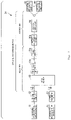
- FIG. 2 is a block diagram showing the functional configuration of the output adjustment device 30 .
- the output adjustment device 30 includes an optical signal splitting unit 311 and a light reception level measurement unit 312 for the existing broadcasts, an optical signal splitting unit 321 and a light reception level measurement unit 322 for the new 4K/8K satellite broadcasts, a setting table storing unit 330 , an output level calculation unit 340 , and an output level adjustment unit 350 .
- the optical signal splitting unit 311 (first acquisition unit) acquires an optical signal with the wavelength ⁇ 1 for the existing broadcasts that has been sent out from the relay amplifier 13 .
- the optical signal splitting unit 311 outputs the acquired optical signal to the optical reception level measurement unit 312 and the output level adjustment unit 350 .
- the optical signal splitting unit 311 includes an optical coupler, for example.
- the optical reception level measurement unit 312 (first measurement unit) acquires the optical signal with the wavelength ⁇ 1 for the existing broadcasts that is output from the optical signal splitting unit 311 .
- the optical reception level measurement unit 312 measures the optical reception level of the acquired optical signal.
- the optical reception level measurement unit 312 then outputs information indicating the measurement result to the output level calculation unit 340 .
- the optical signal splitting unit 321 (second acquisition unit) acquires an optical signal with the wavelength ⁇ 2 for the new 4K/8K satellite broadcasts that has been sent out from the relay amplifier 23 .
- the optical signal splitting unit 321 outputs the acquired optical signal to the optical reception level measurement unit 322 and the output level adjustment unit 350 respectively.
- the optical signal branching unit 321 includes an optical coupler, for example.
- the optical reception level measurement unit 322 acquires the optical signal with the wavelength ⁇ 2 for the new 4K/8K satellite broadcasts that is output from the optical signal splitting unit 321 .
- the optical reception level measurement unit measures the optical reception level of the acquired optical signal.
- the optical reception level measurement unit 322 then outputs information indicating the measurement result to the output level calculation unit 340 .
- the setting table storing unit 330 stores a setting table.
- the setting table storing unit 330 is constituted by, for example, a storage medium such as a RAM (Random Access Memory), a flash memory, an EEPROM (Electrically Erasable Programmable Read Only Memory), or an HDD (Hard Disk Drive), or any combination of these storage media.
- a storage medium such as a RAM (Random Access Memory), a flash memory, an EEPROM (Electrically Erasable Programmable Read Only Memory), or an HDD (Hard Disk Drive), or any combination of these storage media.
- the setting table is information that includes parameter values of various parameters required to adjust the output level (calculation and determination of the adjustment amount). Note that the aforementioned parameters include (A) to (E) below, for example.
- the settings may be configured via an external control device (not shown) connected to the output adjustment device 30 .
- this configuration may be such that, for example, a control frame for giving an instruction of settings of the parameter values to the setting table is defined in advance, and the settings are configured due to the control frame being transmitted from a host network device to the output adjustment device 30 via a transmission path.
- the parameter values of the parameters (B) to (E) for the optical signal with the wavelength ⁇ 1 and the optical signal with the wavelength ⁇ 2 are set in the setting table.
- the parameter values for these optical signals with three types of wavelengths are set in the setting table.
- the output level calculation unit 340 (adjustment amount calculation unit) acquires information that is output from the optical reception level measurement unit 312 and indicates the result of measuring the optical reception level of the optical signal with the wavelength ⁇ 1 for the existing broadcasts.
- the output level calculation unit 340 also acquires information that is output from the optical reception level measurement unit 322 and indicates the result of measuring the optical reception level of the optical signal with the wavelength ⁇ 2 for the new 4K/8K satellite broadcasts.
- the output level calculation unit 340 also acquires the parameter values set in the setting table stored in the setting table storing unit 330 .
- the output level calculation unit 340 then calculates the adjustment amount for the output level of the optical signal with the wavelength ⁇ 1 and the adjustment amount for the output level of the optical signal with the wavelength ⁇ 2 , based on the information indicating the measurement result acquired from the optical reception level measurement unit 312 , the information indicating the measurement result acquired from the optical reception level measurement unit 322 , and the parameter values acquired from the setting table storing unit 330 . Note that the method for calculating these adjustment amounts will be described later.
- the output level calculation unit 340 outputs, to the output level adjustment unit 350 , information indicating the results of calculating the adjustment amounts for the output levels of the optical signal with the wavelength ⁇ 1 and the optical signal with the wavelength ⁇ 2 .
- the output level adjustment unit 350 acquires information that is output from the output level calculation unit 340 and indicates the results of calculating the adjustment amounts for the output levels of the optical signal with the wavelength ⁇ 1 and the optical signal with the wavelength ⁇ 2 .
- the output level adjustment unit 350 recognizes the adjustment amount for the output level of the optical signal with the wavelength ⁇ 1 and the adjustment amount for the output level of the optical signal with the wavelength ⁇ 2 .
- the output level adjustment unit 350 also acquires the optical signal with the wavelength ⁇ 1 for the existing broadcasts that is output from the optical signal splitting unit 311 , and outputs the acquired optical signal to the WDM filter 40 .
- the output level adjustment unit 350 adjusts the output level of the optical signal with the wavelength ⁇ 1 to be output to the WDM filter 40 so as to amplify or attenuate the output level in accordance with the above-recognized adjustment amount.
- the output level adjustment unit 350 also acquires the optical signal with the wavelength ⁇ 2 for the new 4K/8K satellite broadcasts that is output from the optical signal splitting unit 321 , and outputs the acquired optical signal to the WDM filter 40 .
- the output level adjustment unit 350 adjusts the output level of the optical signal with the wavelength ⁇ 2 to be output to the WDM filter 40 so as to amplify or attenuate the output level in accordance with the above-recognized adjustment amount.
- the output level calculation unit 340 performs calculation in accordance with the following steps 1 to 4.
- Step 1 Calculation of the Necessary Output Level for Each Wavelength for the Output from the Access Amplifier 50
- the output level calculation unit 340 calculates the necessary output level of the optical signal with the wavelength ⁇ 1 (first necessary signal intensity) at the access amplifier 50 .
- the necessary output level is necessary for the optical reception level of the optical signal with the wavelength ⁇ 1 at the optical receiving unit 61 to be larger than or equal to the minimum optical sensitivity for the optical signal wish the wavelength ⁇ 1 at the optical receiving unit 61 .
- the output level calculation unit 340 calculates the necessary output level of the optical signal with the wavelength ⁇ 2 (second necessary signal intensity) at the access amplifier 50 .
- the necessary output level is necessary for the optical reception level of the optical signal with the wavelength ⁇ 2 at the optical receiving unit 62 to be larger than or equal to the minimum optical sensitivity for the optical signal with the wavelength ⁇ 2 at the optical receiving unit 62 .
- the output level calculation unit 340 calculates the necessary output levels based on the parameter values of the parameters (B) and (C) that are set in the setting table, while giving consideration to the minimum optical sensitivity at the respective optical receiving units (the optical receiving unit 61 and the optical receiving unit 62 ) and transmission loss corresponding to the distances between the access amplifier 50 and the respective optical receiving units.
- Step 2 Determination of the Output Level for Each Wavelength for the Output from the Access Amplifier 50
- the output level calculation unit 340 determines the output level (which is denoted as “X [mW]” here) of the optical signal with the wavelength ⁇ 1 and the output level (which is denoted as “Y [mW]” here) of the optical signal with the wavelength ⁇ 2 at the access amplifier 50 .
- the sum of the output level of the optical signal with the wavelength ⁇ 1 and the output level of the optical signal with the wavelength ⁇ 2 that is, the output level of the optical signal (multiplexed signal) to be output from the access amplifier 50 is made equal to the parameter value (which is denoted as “Z [mW (milliwatt)]” here) of the parameter (A) that is set in the setting table.
- the output level calculation unit 340 determines the respective output levels (output signal intensities) so as to satisfy the following condition.
- the aforementioned condition refers to a condition that the output level of the optical signal with the wavelength ⁇ 1 is larger than or equal to the necessary output level of the optical signal with the wavelength ⁇ 1 calculated in the above step 1, and the output level of the optical signal with the wavelength ⁇ 2 is larger than or equal to the necessary output level of the optical signal with the wavelength ⁇ 2 calculated in the above step 1.
- the values of X and Y are determined such that the ratio between the necessary output level (which is denoted as “X′ [mW]” here) of the optical signal with the wavelength ⁇ 1 and the necessary output level (which is denoted as “Y′ [mW]” here) of the optical signal with the wavelength ⁇ 2 that are calculated in the step 1 matches the ratio between the Values of X and Y.
- the Values of X and Y are determined by the following formula (1).
- the following method is another example of the method for determining the combination of the values of X and Y to be used.
- the value of Y is denoted as Y′, which indicates the necessary output level of the optical signal with the wavelength ⁇ 2
- a minimum output level i.e. necessary output level
- a relatively larger output level is assigned to the output level of the optical signal with the wavelength ⁇ 1 .
- the output level corresponding to the optical signal with the wavelength ⁇ 1 in the output level of the multiplexed signal output from the access amplifier 50 necessarily decreases compared with the case of the conventional network configuration ( FIG. 7 ).
- the conventional network configuration is extended to the network configuration according to the present embodiment (i.e. when the network configuration is modified to support the new 4K/8K satellite broadcasts)
- the latter determination method is effective for minimizing the occurrence of the aforementioned viewers.
- Step 3 Determination of the Input Level for Each Wavelength for the Input to the Access Amplifier 50
- the output level calculation unit 340 determines the input levels of the optical signal with the wavelength ⁇ 1 and the optical signal with the wavelength ⁇ 2 that are included in the multiplexed signal to be input to the access amplifier 50 . At this time, the output level calculation unit 340 determines the input levels (input signal intensities) of the optical signal with the wavelength ⁇ 1 and the optical signal with the wavelength ⁇ 2 to be input to the access amplifier 50 . Here, the determination is made such that the output levels of the optical signal with the wavelength ⁇ 1 and the optical signal with the wavelength ⁇ 2 to be output from the access amplifier 50 take the values of X and Y, respectively, that are determined by the above step 2.
- the output level calculation unit 340 can control the output levels of the optical signal with the wavelength ⁇ 1 and the optical signal with the wavelength ⁇ 2 to be output from the access amplifier 50 to desired values of X and Y.
- the aforementioned control is performed by the output level calculation unit 340 controlling the ratio between the output level of the optical signal with the wavelength ⁇ 1 and the output level of the optical signal with the wavelength ⁇ 2 such that this ratio matches the ratio between the input level of the optical signal with the wavelength ⁇ 1 and the input level of the optical signal with the wavelength ⁇ 2 .
- adjustment processing using amplification or attenuation of received optical signals can be used as the adjustment processing, but if adjustment using amplification is required, it is necessary to equip the output adjustment device 30 with an amplification function whose device configuration is generally relatively more complex than an attenuation function. Accordingly, it is desirable to use a combination of the values of x and y that enables the above adjustment processing to be performed only using signal attenuation.
- the following method can be used as a specific method for determining a combination of the values of x and y that enables the above adjustment processing to be performed only using signal attenuation.
- the determination is made such that a condition is satisfied that the sum (X+Y) of the output level X of the optical signal with the wavelength ⁇ 1 and the output level Y of the optical signal with the wavelength ⁇ 2 is a parameter value Z of the parameter (A) that is set in the aforementioned setting table, and such that the value of x+y takes the minimum value of the input level on the specifications at the access amplifier 50 .
- the output levels of the optical signals with the wavelength ⁇ 1 and the wavelength ⁇ 2 can be adjusted by only using the attenuation function, and thus, the device configuration of the output adjustment device 30 can be readily prevented from becoming more complex.
- the output level calculation unit 340 calculates the adjustment amount for the signal level of the optical signal with the wavelength ⁇ 1 and the adjustment amount for the signal level of the optical signal with the wavelength ⁇ 2 . These two adjustment amounts are required in order to make the input levels of the optical signal with the wavelength ⁇ 1 and the optical signal with the wavelength ⁇ 2 to be input to the access amplifier 50 equal, respectively, to the value of x and the value of y determined in the above step 3.
- the output level calculation unit 340 calculates the adjustment amounts using the value of the optical reception level of the optical signal with the wavelength ⁇ 1 acquired from the optical reception level measurement unit 312 , the value of the optical reception level of the wavelength ⁇ 2 acquired from the optical reception level measurement unit 322 , and the parameter values of the aforementioned parameters (D) and (E) acquired from the setting table storing unit 330 .
- the output level calculation unit 340 outputs, to the output level adjustment unit 350 , information indicating the adjustment amount for the signal level of the optical signal with the wavelength ⁇ 1 and the adjustment amount for the signal level of the optical signal with the wavelength ⁇ 2 that are calculated above.
- the output level calculation unit 340 can calculate the adjustment amount that is to be applied to the optical signal with the wavelength ⁇ 1 to be input to the output level adjustment unit 350 via the optical signal splitting unit 311 , and the adjustment amount that is to be applied to the optical signal with the wavelength ⁇ 2 to be input to the output level adjustment unit 350 via the optical signal splitting unit 321 .
- the present embodiment envisions a configuration in which the optical signals with the wavelength ⁇ 1 and the wavelength ⁇ 2 for broadcasts are continuously transmitted from the optical transmitting unit 12 and the optical transmitting unit 22 to the FTTH CATV system 1 .
- the optical reception level of the optical signal with the wavelength ⁇ 1 and the optical reception level of the optical signal with the wavelength ⁇ 2 at the output adjustment device 30 are not always constant and, in general, at least minute variations in the optical reception level occur constantly. Recalculating the adjustment amounts and controlling the adjustment processing performed by the output level adjustment unit 350 so as to follow such a minute variation every time the variation occurs is not realistic from the viewpoint of loads or the like in the output adjustment device 30 .
- the output level calculation unit 340 may regard some degree of variations as being within the margin of error and allow it, and continue the adjustment based on the adjustment amounts that have been applied thus far (e.g. before the variation occurred).
- the value of the variation amount to serve as an allowable range is set in advance in the setting table storing unit 330 or a storage medium (not shown) or the like that is provided in the output level calculation unit 340 , for example.
- a value of ⁇ P [mW] is set in advance as the allowable range.
- the output level calculation unit 340 calculates the adjustment amounts while using, as reference levels, the optical reception level (which is denoted as “P 1 [mW]” here) of the optical signal with the wavelength ⁇ 1 and the optical reception level (which is denoted as “P 2 [mW]”) of the optical signal with the wavelength ⁇ 2 that are notified first from the optical reception level measurement unit 312 and the optical reception level measurement unit 322 .
- the output level calculation unit 340 regards a variation in the optical reception level regarding the wavelengths as being an allowable variation as long as the variation is within the respective ranges that satisfy “P 1 ⁇ P” and “P 2 ⁇ P”, and does not perform the aforementioned processing for calculating the adjustment amounts. Only if a variation in the optical reception level exceeds the allowable range, the output level calculation unit 340 may update the reference level with the value of the optical reception level at this point (i.e. updates the aforementioned values of P 1 and P 2 ), and recalculate the adjustment amounts using the updated values of the optical reception levels.
- the signal levels are appropriately adjusted for each of the input optical signals with the wavelength ⁇ 1 and the wavelength ⁇ 2 , and then these optical signals are output.
- the optical signals at the signal levels that are the aforementioned combination of the desired values of x and y are input to the access amplifier 50 . Since the optical signals are input to the access amplifier 50 at the signal levels corresponding to this combination of the values of x and y, the optical signal with the wavelength ⁇ 1 and the optical signal with the wavelength ⁇ 2 are output from the access amplifier 50 at the respective output levels that take the aforementioned desired values of X and Y.
- the output adjustment device 30 enables viewers to watch both the existing broadcasts and the new 4K/8K satellite broadcasts.
- the output adjustment device 30 may alternatively contain the WDM filter 40 .
- a functional unit that corresponds to the function that the WDM filter 40 has i.e. the function of multiplexing the optical signal with the wavelength ⁇ 1 and the optical signal with the wavelength ⁇ 2
- the multiplexed signal obtained by the WDM filter 40 is output from the output adjustment device 30 to the access amplifier 50 .
- optical signal with the wavelength ⁇ 1 and the optical signal with the wavelength ⁇ 2 sent out from the relay amplifier 13 and the relay amplifier 23 to the output adjustment device 30 shown in FIG. 1 contain broadband ASE (Amplified Spontaneous Emission) noise that accompanies signal amplification at the relay amplifier 13 and the relay amplifier 23 .
- the optical reception level measurement unit 312 and the optical reception level measurement unit 322 perform measurement while including the noise level in a wavelength band that is solely constituted by ASE components in the optical reception level of the optical signal with the wavelength ⁇ 1 or the wavelength ⁇ 2 .
- the aforementioned case refers to the case where the wavelength band that is to be subjected to the measurement by the optical reception level measurement unit 312 and the optical reception level measurement unit 322 shown in FIG. 2 is a broad wavelength band that includes not only the wavelength band of the wavelength ⁇ 1 or the wavelength ⁇ 2 but also wavelength bands around that wavelength band.
- the optical reception level measurement unit 312 and the optical reception level measurement unit 322 cannot accurately measure the signal level of the optical signal with the wavelength ⁇ 1 or the wavelength ⁇ 2 .
- the values of the optical reception levels of the optical signals with the wavelength ⁇ 1 and the wavelength ⁇ 2 that are notified to the output level calculation unit 340 shown in FIG. 2 are values that are excessive due to containing the ASE components in wavelength bands other than the wavelength ⁇ 1 and the wavelength ⁇ 2 .
- the output level calculation unit 340 calculates the adjustment amounts based on those excessive values.
- the output level adjustment unit 350 shown in FIG. 2 adjusts the signal levels of the optical signals with the wavelength ⁇ 1 and the wavelength ⁇ 2 that contain the ASE components in wavelength bands other than the wavelength ⁇ 1 and the wavelength ⁇ 2 , based on the calculated adjustment amounts.
- the ASE components in the adjusted optical signals are removed by the WDM filter 40 shown in FIG. 1 .
- noise (ASE components) in wavelength bands other than the wavelength ⁇ 1 and the wavelength ⁇ 2 is removed in advance before the optical reception level is measured by the optical reception level measurement unit 312 and the optical reception level measurement unit 322 .
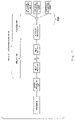
- FIG. 3 is a block diagram showing a functional configuration of the output adjustment device 30 b .
- the functional configuration of the output adjustment device 30 b differs from the functional configuration of the output adjustment device 30 according to the first embodiment shown in FIG. 2 in that the output adjustment device 30 b further includes a noise removing unit 310 and a noise removing unit 320 .
- the functions of the other functional blocks included in the output adjustment device 30 b are equal to the functions of the functional blocks included in the output adjustment device 30 , and are therefore assigned the same signs, and descriptions thereof is omitted.
- Each of the noise removing unit 310 and the noise removing unit 320 includes a filter circuit, such as a band pass filter, capable of allowing only optical signals in a desired frequency band to pass through and removing optical signals in the other frequency band.
- a filter circuit such as a band pass filter
- the noise removing unit 310 (first filter) allows only the optical signal with the wavelength ⁇ 1 to pass through and removes noise (ASE components) in frequency bands other than the wavelength ⁇ 1 , with respect to the optical signals for the existing broadcasts sent out from the relay amplifier 13 .
- the optical signal from which the ASE components have been removed by the noise removing unit 310 is input so the optical signal splitting unit 311 .
- the noise removing unit 320 (second filter) allows only the optical signal with the wavelength ⁇ 2 to pass through and removes noise (ASE components) in frequency bands other than the wavelength ⁇ 2 , with respect to the optical signals for the new 4K/8K satellite broadcasts sent out from the relay amplifier 23 .
- the optical signal from which the ASE components have been removed by the noise removing unit 320 is input to the optical signal splitting unit 321 .
- the optical signals with the wavelength ⁇ 1 and the wavelength ⁇ 2 from which noise (ASE components) in unnecessary wavelength bands has been removed are input respectively to the optical signal splitting unit 311 and the optical signal splitting unit 321 .
- the optical reception level measurement unit 312 and the optical reception level measurement unit 322 can measure the optical reception level more accurately
- the output level calculation unit 340 can calculate more appropriate adjustment amounts
- the output level adjustment unit 350 can perform more appropriate adjustment.
- the present embodiment employs a configuration in which the output adjustment device 30 b includes the noise removing unit 310 and the noise removing unit 320 , the present embodiment is not limited thereto.
- a filter circuit such as a band pass filter may alternatively be provided outside the output adjustment device 30 b .
- filter circuits are installed between the relay amplifier 13 and the output adjustment device 30 b and between the relay amplifier 23 and the output adjustment device 30 b.
- a network configuration shown in FIG. 8 is assumed as a network configuration for realizing distribution and viewing of the new 4K/8K satellite broadcasts in addition to the existing broadcasts.
- the output adjustment device 30 and the output adjustment device 30 b for solving the aforementioned problem in that network configuration have been described.
- the network configuration shown in FIG. 8 is a network configuration capable of realizing distribution and viewing of the new 4K/8K satellite broadcasts in addition to the existing broadcasts even if the existing relay amplifier 13 does not support the new 4K/8K satellite broadcasts (i.e. does not support the optical signal with the wavelength ⁇ 2 ).
- the present embodiment envisions a network configuration in which the existing relay amplifiers support both the optical signal with the wavelength ⁇ 1 and the optical signal with the wavelength ⁇ 2 , and both optical signals can reach the access amplifier at a desired signal level over an existing optical transmission path.
- a description will be given of an FTTH CATV system that enables distribution and viewing of the new 4K/8K satellite broadcasts in addition to the existing broadcasts in the above network configuration.
- FIG. 4 is a block diagram showing an example of the network configuration envisioned in the present embodiment.
- the relay amplifiers support both the optical signal with the wavelength ⁇ 1 and the optical signal with the wavelength ⁇ 2 , unlike the network configuration shown in FIG. 8 .
- the WDM filter can be installed on the upstream side of the relay amplifiers.
- an optical signal (multiplexed signal) multiplexed by the WDM filter is input to the relay amplifiers, as shown in FIG. 4 .
- no new relay amplifier needs to be installed to support the new 4K/8K satellite broadcasts.
- the installation cost or the like of the device to be newly installed is reduced compared with the network configuration shown in FIG. 8 .
- the present embodiment will describe the case of installing an output adjustment device for the network configuration shown in FIG. 4 in order to solve this problem.
- FIG. 5 is a block diagram showing an example of this network configuration.
- An output adjustment device 30 c is installed on the upstream side of the access amplifier 50 , similarly to the above-described first and second embodiments.
- a multiplexed signal obtained by multiplexing the optical signal with the wavelength ⁇ 1 and the optical signal with the wavelength ⁇ 2 in the relay NW is transmitted to the output adjustment device 30 c .
- all of the optical signals that are input to and output from the output adjustment device 30 c are multiplexed signals obtained by multiplexing the optical signals with the wavelength ⁇ 1 and the optical signals with the wavelength ⁇ 2 .
- FIG. 6 is a block diagram showing a functional configuration of the output adjustment device 30 c .
- the functional configuration of the output adjustment device 30 c differs from the functional configuration of the output adjustment device 30 according to the first embodiment shown in FIG. 2 in that a demultiplexing unit 300 and a multiplexing unit 360 are further provided.
- functions of the other functional blocks included in the output adjustment device 30 c are equal to the functions of the functional blocks included in the output adjustment device 30 according to the first embodiment, and are therefore assigned the same signs, and description thereof is omitted.
- the demultiplexing unit 300 includes a filter circuit capable of demultiplexing an optical signal, such as a WDM filter, for example.
- the demultiplexing unit 300 demultiplexes a multiplexed signal sent out from a relay amplifier 13 c into the optical signal with the wavelength ⁇ 1 and the optical signal with the wavelength ⁇ 2 . Then, the demultiplexing unit 300 sends out the optical signal with the wavelength ⁇ 1 to the optical signal splitting unit 311 , and sends out the optical signal with the wavelength ⁇ 2 to the optical signal splitting unit 321 .
- the multiplexing unit 360 includes a filter circuit capable of multiplexing optical signals, such as a WDM filter, for example.
- the multiplexing unit 360 multiplexes an adjusted optical signal with the wavelength ⁇ 1 and an adjusted optical signal with the wavelength ⁇ 2 that are sent out from the output level adjustment unit 350 .
- the multiplexing unit 360 then sends out the multiplexed signal to the access amplifier 50 .
- the output adjustment device 30 c first demultiplexes the input multiplexed signal into the optical signal with the wavelength ⁇ 1 and the optical signal with the wavelength ⁇ 2 using the demultiplexing unit 300 (e.g. a WDM filter). The output adjustment device 30 c adjusts the signal levels of the demultiplexed optical signals. Then, the output adjustment device 30 c multiplexes the adjusted optical signals again using the multiplexing unit 360 (e.g. a WDM filter), and outputs the multiplexed signal.
- the demultiplexing unit 300 e.g. a WDM filter
- the FTTH CATV system includes an output adjustment device that acquires the optical signal with the wavelength ⁇ 1 and the optical signal with the wavelength ⁇ 2 , adjusts the signal levels of these optical signals, and outputs the optical signals.
- the output adjustment device grasps respective desired output levels of the optical signal with the wavelength ⁇ 1 and the optical signal with the wavelength ⁇ 2 to be output from the access amplifier.
- the output adjustment device determines desired input levels of the optical signals with the wavelength ⁇ 1 and the wavelength ⁇ 2 to be input to the access amplifier such that the output level of the optical signal with the wavelength ⁇ 1 and the output level of the optical signal with the wavelength ⁇ 2 at the access amplifier are the desired output levels.
- the output adjustment device monitors the signal levels of the optical signals with the wavelength ⁇ 1 and the wavelength ⁇ 2 from the relay amplifiers such that the input levels of the optical signals input to the access amplifier are the desired input levels, adjusts the signal levels as required, and outputs the optical signals to the access amplifier.
- the access amplifier can output an optical signal (multiplexed signal) at a constant total output level that is obtained by multiplexing the optical signals with the wavelength ⁇ 1 and the wavelength ⁇ 2 that have the respective desired output levels. Since the respective desired output levels of the optical signals with the wavelength ⁇ 1 and the wavelength ⁇ 2 are controlled so as to be sufficient output levels for appropriately receiving the optical signals at the optical receiving unit at each subscriber's house, it is ensured that the viewer can watch both the existing broadcasts and the new 4K/8K satellite broadcasts.)
- the present invention envisions that the optical signal (with the wavelength ⁇ 2 ) for the new 4K/8K satellite broadcasts is newly and additionally input to the existing access amplifier. For this reason, as mentioned above, it is inevitable that the output level corresponding to the optical signal with the wavelength ⁇ 1 output from the access amplifier decreases to a level lower than conventional (i.e. than when only the existing broadcasts are watched). Accordingly, the present invention assumes that the output level corresponding to the optical signal with the wavelength ⁇ 1 decreases to a level lower than conventional regardless of whether the adjustment is performed by the output adjustment device.
- Part of or the entire setting table storing unit 330 and output level calculation unit 340 included in the output adjustment device 30 ( 30 b , 30 c ) according to the above-described embodiments may be realized by a computer.
- these units may be realized by recording a program for realizing these functions in a computer-readable recording medium, and loading the program recorded in this recording medium to a computer system and executing the loaded program.
- the “computer system” here includes an OS and hardware such as peripheral devices.
- the “computer-readable recording medium” refers to a storage device that is any of portable media such as a flexible disk, a magneto-optical disk, a ROM, and a CD-ROM, a hard disk contained in the computer system, or the like.
- the “computer-readable recording medium” may also include one that dynamically holds the program for a short period, such as a communication line used in the case of transmitting a program via a network such as a the Internet or a communication line such as a telephone line, and one that holds the program for a fixed period, such as a volatile memory in a computer system that serves as a server or a client in that case.
- the aforementioned program may be one that realize some of the above-described functions, or may be one that can realize the above-described functions by being combined with a program that is already recorded in the computer system, or may be one that is realized using hardware such as a PLD (Programmable Logic Device) or an FPGA (Field Programmable Gate Array).
Landscapes
- Engineering & Computer Science (AREA)
- Physics & Mathematics (AREA)
- Electromagnetism (AREA)
- Computer Networks & Wireless Communication (AREA)
- Signal Processing (AREA)
- Multimedia (AREA)
- Optical Communication System (AREA)
Abstract
Description
- [NPL 1] “ITU-T J.185: Transmission equipment for transferring multi-channel television signals over optical access networks by frequency modulation conversion,” International Telecommunication Union, June 2012.
(C) Transmission loss of the optical signal with the wavelength λ1 during optical fiber transmission between the
(D) Insertion loss of the optical signal with the wavelength λ1 and the insertion loss of the optical signal with the wavelength λ2 at the
(E) Splitting loss of the optical signal with the wavelength λ1 at the optical
X=Z×(X′/(X′+Y′))
Y=Z×(Y′/(X′+Y′)) (1)
X:Y=x:y (2)
- 1, 1 c FTTH CATV system
- 11, 21 Headend
- 12, 22 Optical transmitting unit
- 13, 13 c, 23 Relay amplifier
- 30, 30 b, 30 c Output adjustment device
- 40 WDM filter
- 50 Access amplifier
- 61, 62 Optical receiving unit
- 70 Optical transmission path
- 71 Relay NW
- 72 Access NW
- 300 Demultiplexing unit
- 310, 320 Noise removing unit
- 311, 321 Optical signal splitting unit
- 312, 322 Optical reception level measurement unit
- 330 Setting table storing unit
- 340 Output level calculation unit
- 350 Output level adjustment unit
- 360 Multiplexing unit
Claims (7)
Applications Claiming Priority (4)
| Application Number | Priority Date | Filing Date | Title |
|---|---|---|---|
| JPJP2019-016850 | 2019-02-01 | ||
| JP2019016850A JP7239812B2 (en) | 2019-02-01 | 2019-02-01 | Optical transmission system and output adjustment device |
| JP2019-016850 | 2019-07-29 | ||
| PCT/JP2020/003345 WO2020158846A1 (en) | 2019-02-01 | 2020-01-30 | Optical transmission system and output adjusting device |
Publications (2)
| Publication Number | Publication Date |
|---|---|
| US20220140906A1 US20220140906A1 (en) | 2022-05-05 |
| US11575443B2 true US11575443B2 (en) | 2023-02-07 |
Family
ID=71842201
Family Applications (1)
| Application Number | Title | Priority Date | Filing Date |
|---|---|---|---|
| US17/426,817 Active US11575443B2 (en) | 2019-02-01 | 2020-01-30 | Optical transmission system and output adjustment apparatus |
Country Status (3)
| Country | Link |
|---|---|
| US (1) | US11575443B2 (en) |
| JP (1) | JP7239812B2 (en) |
| WO (1) | WO2020158846A1 (en) |
Families Citing this family (2)
| Publication number | Priority date | Publication date | Assignee | Title |
|---|---|---|---|---|
| JP2025021316A (en) * | 2023-07-31 | 2025-02-13 | 富士通株式会社 | Optical transmission device and transmission optical power control method |
| JP2026053174A (en) * | 2024-09-12 | 2026-03-25 | 国立研究開発法人産業技術総合研究所 | Control device, optical transmission system, and control method |
Citations (11)
| Publication number | Priority date | Publication date | Assignee | Title |
|---|---|---|---|---|
| JP2001053686A (en) | 1999-08-12 | 2001-02-23 | Fujitsu Ltd | Composite optical amplifier, n-wavelength band WDM optical signal transmitter, optical transmission system, and optical amplification method |
| US20070077066A1 (en) * | 2005-09-30 | 2007-04-05 | Fujitsu Limited | Optical wavelength controlling method and a system thereof |
| US20100315273A1 (en) * | 2009-06-11 | 2010-12-16 | University Of Seoul Industry Cooperation Foundation | Digital-to-analog converter |
| WO2012119495A1 (en) * | 2011-07-29 | 2012-09-13 | 华为技术有限公司 | Method and device for regulating optical power |
| EP2784961A2 (en) * | 2013-03-25 | 2014-10-01 | Fujitsu Limited | Optical transmission apparatus and dummy light inserting method |
| US20160248513A1 (en) * | 2015-02-20 | 2016-08-25 | Fujitsu Limited | Optical transmission apparatus and method for controlling optical power |
| JP2016174298A (en) * | 2015-03-17 | 2016-09-29 | 学校法人慶應義塾 | Wavelength demultiplexing apparatus, optical communication system, and wavelength demultiplexing method |
| US10291327B1 (en) * | 2017-11-29 | 2019-05-14 | Electronics And Telecommunications Research Institute | Optical signal generating apparatus and operating method thereof |
| US10567105B2 (en) * | 2016-02-02 | 2020-02-18 | Nec Corporation | Band identifying circuit, wavelength-multiplexed optical signal transmission device, wavelength-multiplexed optical signal transmission system, and band identifying method |
| US10735091B2 (en) * | 2016-03-10 | 2020-08-04 | Nec Corporation | Optical transmission system, control apparatus of wavelength selective switch, and insertion loss correction method |
| US10841035B2 (en) * | 2019-01-11 | 2020-11-17 | Fujitsu Limited | Transmission device, control device, and transmission method |
Family Cites Families (4)
| Publication number | Priority date | Publication date | Assignee | Title |
|---|---|---|---|---|
| JPH1168707A (en) * | 1997-08-13 | 1999-03-09 | Nec Corp | Optical communication system |
| JP4340567B2 (en) | 2004-03-17 | 2009-10-07 | 富士通株式会社 | Terminal station apparatus, optical output power control method, and optical output power control program |
| JP4568159B2 (en) | 2005-04-25 | 2010-10-27 | 中部電力株式会社 | Bidirectional WDM optical analog transmission system |
| JP5058075B2 (en) | 2008-06-09 | 2012-10-24 | 中国電力株式会社 | PON broadcasting method |
-
2019
- 2019-02-01 JP JP2019016850A patent/JP7239812B2/en active Active
-
2020
- 2020-01-30 US US17/426,817 patent/US11575443B2/en active Active
- 2020-01-30 WO PCT/JP2020/003345 patent/WO2020158846A1/en not_active Ceased
Patent Citations (12)
| Publication number | Priority date | Publication date | Assignee | Title |
|---|---|---|---|---|
| JP2001053686A (en) | 1999-08-12 | 2001-02-23 | Fujitsu Ltd | Composite optical amplifier, n-wavelength band WDM optical signal transmitter, optical transmission system, and optical amplification method |
| US6885499B1 (en) | 1999-08-12 | 2005-04-26 | Fujitsu Limited | Optical amplifying apparatus for amplifying wide-wavelength-band light, optical sending apparatus, optical transmission system, and optical amplifying method |
| US20070077066A1 (en) * | 2005-09-30 | 2007-04-05 | Fujitsu Limited | Optical wavelength controlling method and a system thereof |
| US20100315273A1 (en) * | 2009-06-11 | 2010-12-16 | University Of Seoul Industry Cooperation Foundation | Digital-to-analog converter |
| WO2012119495A1 (en) * | 2011-07-29 | 2012-09-13 | 华为技术有限公司 | Method and device for regulating optical power |
| EP2784961A2 (en) * | 2013-03-25 | 2014-10-01 | Fujitsu Limited | Optical transmission apparatus and dummy light inserting method |
| US20160248513A1 (en) * | 2015-02-20 | 2016-08-25 | Fujitsu Limited | Optical transmission apparatus and method for controlling optical power |
| JP2016174298A (en) * | 2015-03-17 | 2016-09-29 | 学校法人慶應義塾 | Wavelength demultiplexing apparatus, optical communication system, and wavelength demultiplexing method |
| US10567105B2 (en) * | 2016-02-02 | 2020-02-18 | Nec Corporation | Band identifying circuit, wavelength-multiplexed optical signal transmission device, wavelength-multiplexed optical signal transmission system, and band identifying method |
| US10735091B2 (en) * | 2016-03-10 | 2020-08-04 | Nec Corporation | Optical transmission system, control apparatus of wavelength selective switch, and insertion loss correction method |
| US10291327B1 (en) * | 2017-11-29 | 2019-05-14 | Electronics And Telecommunications Research Institute | Optical signal generating apparatus and operating method thereof |
| US10841035B2 (en) * | 2019-01-11 | 2020-11-17 | Fujitsu Limited | Transmission device, control device, and transmission method |
Non-Patent Citations (1)
| Title |
|---|
| Transmission equipment for transferring multi-channel television signals over optical access networks by frequency modulation conversion, Recommendation ITU-T J.185, Jun. 2012. |
Also Published As
| Publication number | Publication date |
|---|---|
| JP2020127072A (en) | 2020-08-20 |
| WO2020158846A1 (en) | 2020-08-06 |
| US20220140906A1 (en) | 2022-05-05 |
| JP7239812B2 (en) | 2023-03-15 |
Similar Documents
| Publication | Publication Date | Title |
|---|---|---|
| US7831118B2 (en) | Coarse wavelength division multiplexing optical transmission system, and coarse wavelength division multiplexing optical transmission method | |
| US6907195B2 (en) | Terminals having sub-band substitute signal control in optical communication systems | |
| US9723370B2 (en) | Smart receivers and transmitters for CATV networks | |
| US20220140906A1 (en) | Optical transmission system and output adjustment apparatus | |
| EP3051720B1 (en) | Transport apparatus, transport system, transport method, and storage medium on which program has been stored | |
| JP2023180636A (en) | Optical communication device, optical communication system, and optical power control method | |
| US11095388B2 (en) | Optical amplification device and light amplification method | |
| CN115118340A (en) | Power compensation method, device and communication system | |
| US12224795B2 (en) | Optical transmission system and transmission quality monitoring method | |
| US20230104053A1 (en) | Optical transmission apparatus and control method of optical transmission apparatus | |
| US6944399B2 (en) | Methods of signal substitution for maintenance of amplifier saturation | |
| US11444716B2 (en) | Optical transmission system and carrier monitoring apparatus | |
| US11444717B2 (en) | Multi-band optical network interface | |
| US11929787B2 (en) | Optical transmission apparatus and optical transmission method | |
| US20060177221A1 (en) | Transmitter and method for transmitting messages on an optical fiber | |
| JP2015192127A (en) | Optical amplifier | |
| JP5535384B2 (en) | OPTICAL TERMINAL DEVICE, TRANSMISSION DEVICE, AND OPTICAL TRANSMISSION SYSTEM | |
| US12155411B2 (en) | Optical transmission apparatus and optical transmission method | |
| JP7733345B2 (en) | Transmitting device, receiving device, communication system, transmitting method, and receiving method | |
| JP2000312185A (en) | Optical repeating amplifier for wavelength multiplex optical transmission, and wavelength multiplex optical transmission device using the same | |
| US20250080223A1 (en) | Optical receiving apparatus, optical receiving method and optical transmission system | |
| US12267151B2 (en) | Communication network terminating device, communication system, signal jamming method and signal jamming program | |
| JP2017195525A (en) | Optical transmission device, optical reception device, transmission system, and transmission method |
Legal Events
| Date | Code | Title | Description |
|---|---|---|---|
| AS | Assignment |
Owner name: NIPPON TELEGRAPH AND TELEPHONE CORPORATION, JAPAN Free format text: ASSIGNMENT OF ASSIGNORS INTEREST;ASSIGNORS:MITSUI, TAKASHI;SHITABA, TOSHIAKI;TANABE, AKIHIRO;AND OTHERS;SIGNING DATES FROM 20210209 TO 20210507;REEL/FRAME:057021/0401 |
|
| FEPP | Fee payment procedure |
Free format text: ENTITY STATUS SET TO UNDISCOUNTED (ORIGINAL EVENT CODE: BIG.); ENTITY STATUS OF PATENT OWNER: LARGE ENTITY |
|
| STPP | Information on status: patent application and granting procedure in general |
Free format text: DOCKETED NEW CASE - READY FOR EXAMINATION |
|
| STPP | Information on status: patent application and granting procedure in general |
Free format text: NON FINAL ACTION MAILED |
|
| STPP | Information on status: patent application and granting procedure in general |
Free format text: RESPONSE TO NON-FINAL OFFICE ACTION ENTERED AND FORWARDED TO EXAMINER |
|
| STPP | Information on status: patent application and granting procedure in general |
Free format text: NOTICE OF ALLOWANCE MAILED -- APPLICATION RECEIVED IN OFFICE OF PUBLICATIONS |
|
| STPP | Information on status: patent application and granting procedure in general |
Free format text: PUBLICATIONS -- ISSUE FEE PAYMENT VERIFIED |
|
| STCF | Information on status: patent grant |
Free format text: PATENTED CASE |