US11567934B2 - Consistent client-side caching for fine grained invalidations - Google Patents
Consistent client-side caching for fine grained invalidations Download PDFInfo
- Publication number
- US11567934B2 US11567934B2 US15/958,517 US201815958517A US11567934B2 US 11567934 B2 US11567934 B2 US 11567934B2 US 201815958517 A US201815958517 A US 201815958517A US 11567934 B2 US11567934 B2 US 11567934B2
- Authority
- US
- United States
- Prior art keywords
- client
- query
- cached
- server
- database
- Prior art date
- Legal status (The legal status is an assumption and is not a legal conclusion. Google has not performed a legal analysis and makes no representation as to the accuracy of the status listed.)
- Active, expires
Links
Images




Classifications
-
- G—PHYSICS
- G06—COMPUTING OR CALCULATING; COUNTING
- G06F—ELECTRIC DIGITAL DATA PROCESSING
- G06F16/00—Information retrieval; Database structures therefor; File system structures therefor
- G06F16/20—Information retrieval; Database structures therefor; File system structures therefor of structured data, e.g. relational data
- G06F16/24—Querying
- G06F16/245—Query processing
- G06F16/2453—Query optimisation
- G06F16/24534—Query rewriting; Transformation
- G06F16/24539—Query rewriting; Transformation using cached or materialised query results
-
- G—PHYSICS
- G06—COMPUTING OR CALCULATING; COUNTING
- G06F—ELECTRIC DIGITAL DATA PROCESSING
- G06F12/00—Accessing, addressing or allocating within memory systems or architectures
- G06F12/02—Addressing or allocation; Relocation
- G06F12/08—Addressing or allocation; Relocation in hierarchically structured memory systems, e.g. virtual memory systems
- G06F12/0802—Addressing of a memory level in which the access to the desired data or data block requires associative addressing means, e.g. caches
- G06F12/0891—Addressing of a memory level in which the access to the desired data or data block requires associative addressing means, e.g. caches using clearing, invalidating or resetting means
-
- G—PHYSICS
- G06—COMPUTING OR CALCULATING; COUNTING
- G06F—ELECTRIC DIGITAL DATA PROCESSING
- G06F16/00—Information retrieval; Database structures therefor; File system structures therefor
- G06F16/20—Information retrieval; Database structures therefor; File system structures therefor of structured data, e.g. relational data
- G06F16/23—Updating
- G06F16/2379—Updates performed during online database operations; commit processing
-
- G—PHYSICS
- G06—COMPUTING OR CALCULATING; COUNTING
- G06F—ELECTRIC DIGITAL DATA PROCESSING
- G06F2212/00—Indexing scheme relating to accessing, addressing or allocation within memory systems or architectures
- G06F2212/10—Providing a specific technical effect
- G06F2212/1041—Resource optimization
- G06F2212/1044—Space efficiency improvement
Definitions
- Embodiments of the invention relate to database systems and, more particularly, to a client-side cache in computer systems.
- a cache refers to a fast-access storage mechanism (such as memory) that holds data so that future requests for that data may be served faster from cache.
- the data stored in the cache may be the result of an earlier computation, or the duplicate of data stored elsewhere.
- a data or data item of which a copy is stored in cache is referred to as a source data item.
- the copy of the source item in the cache is referred to as a cache copy.
- Caches are particularly helpful when the original data is expensive to fetch or expensive to compute relative to retrieval from a cache.
- the process of managing a cache is referred to as cache management.
- Cache management includes retrieving copies of source data items and storing them in a cache, providing valid cache copies to clients that request copies of a source data item, and maintaining and optimizing the use of a cache.
- a cache management system may include modules which may be composed of specialized software dedicated to managing one or more caches and may be executed by clients of a cache or servers of the source data, or a combination thereof.
- database caching can substantially improve the efficiency and throughput of database operations/applications, e.g., while processing indexes, data dictionaries and frequently used subsets of data.
- Database caches greatly improve the scalability and performance of applications that access databases by caching frequently used data.
- a client-side query cache is a cache that is located at the database client.
- the client-side cache There are numerous advantages provided by the client-side cache. For example, if the requested data is located at the cache on the client, the requested data may be retrieved from the cache and thus eliminate the cost and expense of sending the request to the server and receiving the response from the server to retrieve query results. Client machines may also be added horizontally to provide caching capabilities in client memory and reduce the expense of setting up additional servers in supporting caching query results. Furthermore, storage on the client side offers the benefit of not only having the queries closer to the client but also ensure that the client's most relevant query results are stored at that client.
- Embodiments of the present invention provide a method, system, and a computer product for registering queries and various objects within a system that are tied to that query and tracking query registrations based on partition and sub partition ids, columns in select query, and bind variables.
- the data manipulation language commands (DMLs) will not invalidate all cached queries on tables, but only those queries with matching partition info, columns, and bind variables.
- DMLs data manipulation language commands
- a fine grained invalidation based consistent client cache is described where cache invalidations are pruned by looking at partition information, column names, or bind values.
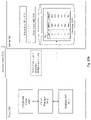
- FIG. 1 depicts an architecture for implementing consistent client-side cache.
- FIG. 2 is a flowchart of a process for implementing a consistent client-side cache.
- FIG. 3 is a flowchart of a process for implementing a consistent client-side cache for partition-based registrations according to some embodiments of the invention.
- FIGS. 4 A- 4 F illustrates an example directed toward receiving a query with partitioning according to some embodiments of the invention
- FIG. 5 is a flowchart for invalidating partition-based queries according to some embodiments of the invention.
- FIGS. 6 A- 6 D illustrates an example of invalidating a registered query with an update according to some embodiments of the invention.
- FIG. 7 is a flowchart for piggybacking an invalidation message according to some embodiments of the invention.
- FIGS. 8 A- 8 E illustrates an example of piggybacking an invalidation response according to some embodiments of the invention.
- FIG. 9 is a flowchart of a process for implementing a consistent client-side cache for column-based invalidations according to some embodiments of the invention.
- FIGS. 10 A- 10 M illustrates an example of registering queries that rely on column-based invalidations according to some embodiments of the invention.
- FIG. 11 is a flowchart of a process for implementing a consistent client-side cache for bind-variable based invalidations according to some embodiments of the invention.
- FIGS. 12 A- 12 R illustrate an example of implementing a consistent client-side cache for bind-variable based invalidations according to some embodiments of the invention.
- FIG. 13 is a block diagram of a computing system suitable for implementing an embodiment of the present invention.
- Embodiments of the present invention provide methods, systems, and a computer product for efficiently managing invalidations of cached data within database client-side caches.
- embodiments of the present invention provide an approach to implement fine-grained invalidation of client-side cached data that provides a much more accurate and efficient approach to identify the data in a client-side cache that needs to be invalidated.
- invalidation of client-side cached data is implemented by registering queries and various objects within a system that are tied to a given query and tracking query registrations based on partition and sub partition ids, columns in select query, and/or bind variables.
- FIG. 1 illustrates components of a system used for registering queries and various objects within a system that are tied to that query and tracking query registrations based on partition and sub partition ids, columns in select query, and bind variables.
- FIG. 1 shows a client 200 that communicates a query request that is received at server 300 .
- the client 200 may communicate additional queries to the server 300 .
- conventional components of data processing systems and clients such as detailed API layers, and the like are not shown so as to not obscure the components of the data processing system to be discussed with regard to FIG. 1 .
- database queries that have been previously requested by the client 200 using a Database Application Programming Interface (Database API) 214 are stored in a client-side cache 208 .
- the client-side cache 208 has stored multiple query results, as depicted by Q1: cached results, Q2: cached results, . . . QN: cached results.
- the client-side cache 208 reflects the contents of cached results from queries applied to one or more tables at the database server, such as table T1 from Database 306 on the Database Server 300 .
- the Database Server 300 may access or consist of the database 306 to fulfill SQL query requests or DML commands from the Client 200 .
- the Database Server 300 could access or consist of a cluster of databases and within the cluster broadcast received transactions to the other database instances within the cluster.
- the Database Server 300 will return one or more result sets generated upon execution of the SQL query by the Database 306 .
- the server 300 maintains a Registration Table 302 to track the queries for which results are cached at a client.
- Each entry in this table corresponds to a different query, and includes at least three columns: (a) a first column holding the identifier for a specific query; (b) a second column to track any underlying dependencies relied upon to generate the query results for the registered query, where at least some of the underlying dependencies are at a fine-grained level of granularity (e.g., at levels smaller than an entire table); and (c) a time/commit number of the last change to a dependent data/structure/object for that query.
- the dependencies tracked by the Registration Table 300 can be at a level of granularity smaller than the table level.
- the Registration Table 300 may track specific partitions that are relied upon and/or associated by a given query.
- the Registration Table 300 may track one or more columns relied upon and/or associated with a query.
- some embodiments may track one or more bind variables associated with a query. It is noted that these examples of tracked fine-grained dependencies are merely illustrative, and other types of fine-grained dependency levels may be tracked as well according to various embodiments of the invention.
- a record of the state of the database can typically be created when a transaction is executed as of a given state of the database.
- SCN System Commit Number
- a unique number assigned at the time of commit of a transaction where the number monotonically increases within the database system.
- SCN will be used throughout this document to refer to identifiers for such committed changes within a database system.
- the database system also includes a Client Status Table 304 that tracks the last time a given client was notified of possible invalidations of query results data cached at that client.
- Each entry in this table corresponds to a specific client, and each row in the table includes at least three columns: (a) a first column holding the identifier for a given client; (b) a second column to keep track of query IDs related to the client; and (c) a third column that identifies the latest SCN check for the client.
- FIG. 2 shows a flowchart of an approach to implement some embodiments of the invention, where the structures shown in FIG. 1 are employed to generate cache invalidations for registered queries that are pertinent to client 200 .
- a client 200 sends a database request to the server, e.g., to execute a SQL query where the SQL query is delivered to the database server via the Database API 214 .
- the server 300 receives the query request from the client.
- the database server executes the query.
- the server 300 sends the query results back to the client 200 . If the query is deemed “cacheworthy”, then the query is registered within the registration table 302 . It is noted that not all query results are determined to have the correct criteria to be cached. For example, queries that are not likely to be repeated should not have its results cached. As another example, queries corresponding to results that are likely to be invalid very quickly should not be cached, e.g., where the queried tables undergo rapid/constant changes. For at least some of the entries within the registration table, the level of granularity for the registration is less than the granularity of a table (e.g., partition-based, column-based, bind variable based, or any other specific granularity smaller than a table).
- a table e.g., partition-based, column-based, bind variable based, or any other specific granularity smaller than a table.
- the query results sent by the database server are stored in a caching mechanism at the client (e.g., in a memory device located at the client).
- the client can thereafter continue to access those cached query results while they are still valid, instead of being required to repeatedly send the query to the server to be re-processed to re-generate the query results.
- a request may be received by the server to update one or more objects within the database.
- an update operation may be received by the database server from another client to update one or more rows within a table managed by the database server.
- the server checks whether there are any registered queries that have been affected by the update operation (that was performed at 211 ). If so, then at 217 , the server updates the affected entries within the registration table with the current SCN of the transaction that made the update.
- the client may send a request/communication to the server.
- the general idea is that any request that is received at the server at 219 from the client will require a response that can be usefully utilized to “piggyback” additional invalidation information from the server to the client. Therefore, the request may pertain to any type of request for any topic or object of interest, whether or not the request is related to the data currently cached in the client-side cache—it does not matter since the response message is being used as a vehicle for notifying the client of invalidations without requiring a separate/dedicated roundtrip between the entities just for the invalidation message.
- the client 200 receives the response and piggybacked invalidation message. Thereafter, at 225 , the client will invalidate the cached results that are stored in the client-side cache identified in the invalidation message.
- Partitioning addresses key issues in supporting large database tables and indexes by decomposing them into smaller and more manageable pieces called partitions. SQL queries and DML, statements do not need to be modified to access partitioned tables. This allows partitioning to be transparent to an application.
- each partition is stored in its own data (or index) segment, with its own set of extents.
- a partitioned object typically has a partitioning key, which consists of one or more columns that determine the partition where each row is stored.
- a database may automatically perform insert, update, and delete operations to the appropriate partition using the partitioning key.
- the results can be achieved by accessing a subset of partitions, rather than the entire table.
- Partitioning can use several different methods to distribute the data into partitions.
- HASH partitioning maps data to partitions by hashing the value of the partition key; RANGE partitioning associates a range or partition key values with each partition; and LIST partitioning associates a list of discrete partition key values with each partition.
- An object can be composite partitioned where it is partitioned by one key and data distribution method and then each partition is further subdivided into subpartitions using a second key and data distribution method.
- FIG. 3 shows a flowchart of an approach to implement a consistent client-side cache for partition-based registrations of queries according to some embodiments of the invention.
- the flowchart begins by receiving a query at the server 301 .
- a determination is made whether the query corresponds to a subset of partitions at 303 . If the query does not correspond to a subset of partitions, then the query is executed at 313 .
- the server will obtain the result of the query at 315 and register the query in the registration table without identifying specific partition(s) at 317 .
- the server prunes unused partitions at 305 .
- the server executes the query against the remaining partitions.
- the server will obtain the result of the query at 309 and register the query in the registration table along with the depended-upon partition(s) at 311 .
- the system stores the subpartition IDs that the query is dependent on. When a DML operation occurs, the system is able to see the subpartition IDs mapped to those extent/segments where data impacted by DML resides in.
- the set of partitions and subpartitions accessed by a query may be known when the query is compiled by the relational database management system (rdbms) and this is called static pruning.
- the set of partitions and subpartitions may not be known until the query is executed by the rdbms, and this is called “dynamic partition pruning.”
- dynamic partition pruning happens when there is a query that contains a predicate which involve a subquery, where the system does not know the results of the subquery until the query is executed.
- the system tracks which partitions are accessed during query execution and uses those partition and subpartition IDs for query registration.
- query registration stores the object IDs for the table as part of a coarse grain registration. If each partition or sub-partition has a unique object ID, the system can include these sub-partition object IDs also in the query registration.
- the system can visit all queries relying on that partitioned table and modify their dependent partition IDs. The system them sends the invalidations to all clients. In another embodiment, the system drops the registered queries forcing the client caches to come to the server to re-execute and re-register the queries.
- FIGS. 4 A- 4 F illustrates an example of processing a query with partitioning according to some embodiments of the invention.
- the Server 300 receives the following query 401 : “SELECT*FROM t1 WHERE Date BETWEEN ‘MARCH’ AND ‘JUNE’”
- the server 300 has made a determination that the query corresponds to a subset of partitions due to the nature of the two partitions T1-P1 and T1-P2, as shown in FIG. 4 B , and determined that the query 401 is directed to a range-partitioned table and that the query 401 is capable of partition-wise execution.
- FIG. 4 C shows the server pruning the unused partitioned table (e.g., T1-P1).
- the query 401 is executed against the remaining partition (T1-P1), as shown in FIG. 4 D .
- Database transactions executed against the database may be assigned a Commit Snapshot having a respective SCN upon commit of a transaction.
- Each transaction may have its own database wide unique transaction ID and the Commit Snapshot is typically recorded in persistent journals (e.g., a registration table) atomically with the commit. It is possible with a transaction id to read the corresponding registration table and retrieve the transaction Commit Snapshot. In general, even if the Commit Snapshot cannot be accurately determined, it may be possible to determine an upper bound on the Commit Snapshot. Queries executed against the database may pick up a consistent Snapshot (i.e., the query result set may be guaranteed to contain the effects of all transactions that have a Commit Snapshot less than or equal to the Query Snapshot and no others.)
- the server then registers query 401 corresponding to the partition in the registration table 414 and client status table 416 and sends the result of the query back to the client 200 , as shown in FIG. 4 E .
- FIG. 4 F shows the client 200 storing the results of the query 401 in the client-side cache 408 .
- FIG. 5 is a flowchart for updating the registration table according to some embodiments of the invention.
- the server receives an update for one or more database objects within the database.
- the server executes the update to update the specific objects identified in the update statement. For example, one or more partitions may be updated by the update operation.
- the server will then check the registration table to see if any registered queries are affected by the update. This action is performed to check whether there are any queries that have been registered which correspond to a partition that has been updated by the update operation. If there are no registered queries that are affected by the update then the process is finished at 508 .
- the server will update the specific entries for those queries.
- the SCN corresponding to the update operation is included into the affected entries within the registration table.
- FIGS. 6 A- 6 D illustrates an example of updating the registration table according to some embodiments of the invention.
- the Server 300 receives the following request 601 : “INSERT INTO T1 VALUES (7, MARCH).” This update operation is requested by another client that is not shown in the figure.
- FIG. 6 B depicts the server executing the update by inserting a new row into T1-P1 of Database 418 .
- FIG. 6 C shows the server checking the registration table 414 to see if any registered queries are affected.
- the Registration Table 414 reveals that Q1 and Q2 has a reliance upon partition T1-P1 that was affected by the latest update operation. Therefore, as shown in FIG. 6 D , the server updates the SCN of last change for the affected query (e.g., Q1) in the registration table 414 (from the previous SCN 31 to the new SCN 32 ).
- FIG. 7 is a flowchart for piggybacking an invalidation message to the client according to some embodiments of the invention.
- the server receives a request from the client at 702 .
- the request will be associated with an incoming-SCN (i.e., associated with the last SCN/snapshot associated with the client for data accessed previously by the client).
- the server handles the request.
- the server checks the status table to identify any queries associated with the client.
- the server will also check the registration table whether, for any queries associated with the client, if incoming SCN is lower than the SCN recorded @ invalidation for the client's registered quer(ies). If the incoming SCN is not lower than the SCN recorded @ invalidation for the query then the server sends a response to the request to the client at 708 .
- the server sends both: (1) response to request and (2) an invalidation message for the identified query.
- the client knows to invalidate the cached result for that query.
- FIGS. 8 A- 8 E illustrates an example of piggybacking an invalidation response according to some embodiments of the invention.
- the client sends a communication request (e.g., Query 3 801 ) to the server.
- the query is associated with an In-SCN of 31 based upon the snapshot number corresponding to the data that is currently cached at that client.
- the server handles the request, as shown in FIG. 8 B .
- the server checks whether the incoming SCN is lower than the SCN recorded for any query associated with the client.
- the client is associated with Q1 as identified by checking the client status table.
- the registration table is then checked for the latest SCN for Q1, which is “32”.
- the in-SCN for the client is compared against the Q1 SCN number, as shown in FIG. 3 C .
- the in-SCN of 31 is less than the SCN 32 recorded for Q1. Therefore, this means that a subsequent update has occurred for a dependent object relied upon by Q1. As such, an invalidation message needs to be sent to the client.
- FIG. 8 D shows the server sending back both (1) update results and (2) indication of invalidation 803 to the client 200 .
- the client 200 now knows that that the client-side cache 808 is no longer valid and thus the client invalidates the cache results, as shown in FIG. 8 E .
- a cache manager 810 at the client performed the invalidations for the identified cached result sets corresponding to the query ids included in the cache invalidations for the client 200 .
- FIG. 9 shows a flowchart of an approach to implement a consistent client-side cache for column-based registrations of queries according to some embodiments of the invention.
- the flowchart begins by first receiving a query at the server 902 .
- the server executes the query against a database at the server at 904 and then obtain the results of the query at 906 .
- FIGS. 10 A- 10 M illustrates an example of processing a query that relies on column-based invalidations according to some embodiments of the invention.
- the server 300 receives the following query 1001 : “SELECT col. 1, col. 3 FROM foo WHERE col. 3 ⁇ 110.”
- the query 1001 is executed against the database 1018 , as shown in FIG. 10 B .
- the query 1001 is executed against the foo table to select the first and third columns that have a value of less than 110 from database 1018 .
- the server registers the query 1001 along with information regarding the columns relied upon (e.g., foo: col. 1, col. 3) and the SCN number of the last change to the database (e.g., 50 ) in both the registration table 1014 and client status table 1016 and sends the results of the query back to the client 200 , as shown in FIG.
- database transactions executed against the database are all assigned a respective SCN number upon commit of a transaction such that each transaction has its own unique transaction ID.
- the transaction ID may be used at a later time to read the corresponding registration table and retrieve the transaction Commit snapshot.
- the client 200 storing the results of the query in the client cache 1008 at FIG. 10 D .
- the server 300 executes the query 1002 against the database 1018 , as depicted in FIG. 10 F .
- the query 1002 is executed against the foo table to select the first and second columns that have a date of June from database 1018 .
- FIG. 10 G shows the server sending the results of query 2 1013 to the client 200 and registering the query in the registration table 1014 and client status table 1016 .
- the server 300 registers the query 1013 along with information regarding the columns relied upon (e.g., foo: col. 1, col.
- the client 200 then stores the query 1013 in the client-side cache 1008 at FIG. 10 H .
- FIG. 10 I depicts the server 300 receiving an update from any client to update the database 1018 .
- FIG. 10 K shows the server checking the registration table 1014 to see if any registered queries rely on col. 3 of table foo.
- the registration table 1014 reveals that query 1 (e.g., Q1) has a reliance upon col. 3 that was affected by the latest update operation. Therefore, as shown in FIG. 10 L , the server updates the SCN of last change for the affected query (e.g., Q1) in the registration table 1014 (from the previous SCN 50 to the new SCN 60 ) and the client status table 1016 .
- a piggybacked invalidation message can be sent to the client for Q1 by piggybacking the next call to the server.
- the client 200 is now aware that the client-side cache 1008 is no longer valid and, thus, the client invalidates the cache results (e.g., ID 4 from foo which previously had a value of 70 is now updated to have a value of 100 by the update), as shown in FIG. 10 M .
- a cache manager 1010 at the client may perform the invalidations for the identified cached result sets corresponding to the query ids in the cache invalidations for the client 200 .
- FIG. 11 shows a flowchart of an approach to implement a consistent client-side cache for bind-variable registrations of a query according to some embodiments of the invention.
- the flowchart in FIG. 11 is broken down into two parts—steps of the flow chart within 1101 depicts storing a cache in the client-side for a registered query and steps of the flow chart within 1103 depicts a later point in time when a DML statement is sent to the server.
- the flowchart begins by receiving and executing a query having bind variables against a database on the server 301 .
- the server will obtain the results of the query at 1106 .
- the server registers the query along with the depended-upon bind variable(s) in the registration table and client status table at 1108 .
- the system stores the depended-upon bind variable(s) that the query is dependent on.
- the server adds the query ID to a predicate/query tracking structure.
- the predicate/query tracking structure may be stored as an index AVL tree.
- the server receives and executes an update for one or more database objects within the database. For example, one or more bind variables may be updated by the update operation.
- the server checks the predicate/query tracking structure to determine whether any queries are affected. The server then determines if the update affected any registered queries at 1116 . This action is performed to check whether there are any queries that have been registered which correspond to a bind variable that has been updated by the update operation. If there are no registered queries that are affected by the update then the process is finished at 1120 . However, if there are any registered queries that are affected by the update, then the server identifies and invalidates query ID(s) affected by the update at 1118 . In particular, the SCN corresponding to the update operation is included into the affected entries within the registration table.
- FIGS. 12 A- 12 Q illustrate an example of processing a query with bind-variable according to some embodiments of the invention.
- the server 300 executes the query 1201 against the database 1220 which will obtain any entries in table foo that contain the value 100.
- the server 300 then registers query 1 1201 corresponding to the bind-variable relied upon in registration table 1214 and client status table 1216 , as shown in FIG. 12 b .
- the server then stores the results of query 1 at the client-side cache 1208 at the client 200 , as shown in FIG. 12 c .
- the server 300 updates the predicate/query tracking structure with the query ID. For example, one or more bind-variables may be updated by the update operation.
- the server 300 executes the query against the database 1220 which will obtain any entries in table foo that contain the value 70.
- the server 300 then registers the results of the query in the registration table 1214 and client status table 1216 and updates the predicate list with the second query, as shown in FIG. 12 F .
- the server 300 executes the query against the database 1220 which will obtain any entries in table foo that contain the value 250.
- the server 300 then registers the results of the query in the registration table 1214 and client status table 1216 and updates the predicate list with the third query, as shown in FIG. 12 H .
- FIG. 12 I shows the server 300 receiving an update request from another client that is not pictured.
- the server 300 executes the fourth SQL to update the registration table 1214 and the client status table 1216 , as shown in FIG. 12 J .
- the table foo from database 1220 is updated such that the “Date” in col. 2 is now updated to December from November.
- FIG. 12 K shows the server 300 checking the registration table 1214 to see if any registered queries are affected by the update.
- the predicate/query tracking structure 1218 reveals that Q3 has a particular reliance on 250 (e.g., associated with ID 5) that was affected by the latest update operation.
- the registration table 1214 and client status table 1216 is checked to see which entries are affected by Q3.
- the server compares incoming SCN against the SCN recorded for the query, as shown in FIG. 12 L . If there are any registered queries that are affected by the update, as is the case here, then the server will update the specific entries for those queries. In particular, the SCN corresponding to the update operation is included into the affected entries within the registration table.
- FIG. 12 M shows invalidating the entry related to the affected query ID at the client-side cache 1208 and FIG. 12 N shows the server 300 sending an invalidation message to the client 200 .
- FIGS. 12 O- 12 R shows mixing techniques of relying on column-based invalidations and bind-variable value based invalidations.
- FIG. 12 O depicts the server 300 executing a query that relies on column-based invalidations.
- the server 300 executes the query, sends the result of query to the client cache, and registers the query to the registration table, as depicted in FIG. 12 P .
- the client 200 stores the query results in client cache, as shown in FIG. 12 R .
- the system stores the snapshot SCN of cached result-set and, only if it is less than the invalidation SCN, does the system invalidate the result-set. Otherwise, the system ignores that invalidation.
- Call-2 returns from server and tries to re-invalidate result-set with invalidation SCN 30 .
- FIG. 13 is a block diagram of an illustrative computing system 1500 suitable for implementing an embodiment of the present invention.
- Computer system 1500 includes a bus 1506 or other communication mechanism for communicating information, which interconnects subsystems and devices, such as processor 1507 , system memory 1508 (e.g., RAM), static storage device 1509 (e.g., ROM), disk drive 1510 (e.g., magnetic or optical), communication interface 1514 (e.g., modem or Ethernet card), display 1511 (e.g., CRT or LCD), input device 1512 (e.g., keyboard), and cursor control.
- processor 1507 e.g., system memory 1508 (e.g., RAM), static storage device 1509 (e.g., ROM), disk drive 1510 (e.g., magnetic or optical), communication interface 1514 (e.g., modem or Ethernet card), display 1511 (e.g., CRT or LCD), input device 1512 (e.g., keyboard), and cursor control.
- computer system 1500 performs specific operations by processor 1507 executing one or more sequences of one or more instructions contained in system memory 1508 .
- Such instructions may be read into system memory 1508 from another computer readable/usable medium, such as static storage device 1509 or disk drive 1510 .
- static storage device 1509 or disk drive 1510 may be used in place of or in combination with software instructions to implement the invention.
- hard-wired circuitry may be used in place of or in combination with software instructions to implement the invention.
- embodiments of the invention are not limited to any specific combination of hardware circuitry and/or software.
- the term “logic” shall mean any combination of software or hardware that is used to implement all or part of the invention.
- Non-volatile media includes, for example, optical or magnetic disks, such as disk drive 1510 .
- Volatile media includes dynamic memory, such as system memory 1508 .
- Computer readable media include, for example, floppy disk, flexible disk, hard disk, magnetic tape, any other magnetic medium, CD-ROM, any other optical medium, punch cards, paper tape, any other physical medium with patterns of holes, RAM, PROM, EPROM, FLASH-EPROM, any other memory chip or cartridge, or any other medium from which a computer can read.
- execution of the sequences of instructions to practice the invention is performed by a single computer system 1500 .
- two or more computer systems 1500 coupled by communication link 1510 may perform the sequence of instructions required to practice the invention in coordination with one another.
- Computer system 1500 may transmit and receive messages, data, and instructions, including program, i.e., application code, through communication link 1515 and communication interface 1514 .
- Received program code may be executed by processor 1507 as it is received, and/or stored in disk drive 1510 , or other non-volatile storage for later execution.
- a database 1532 in a storage medium 1531 may be used to store data accessible by the system 1500 .
Landscapes
- Engineering & Computer Science (AREA)
- Theoretical Computer Science (AREA)
- Physics & Mathematics (AREA)
- General Engineering & Computer Science (AREA)
- General Physics & Mathematics (AREA)
- Databases & Information Systems (AREA)
- Data Mining & Analysis (AREA)
- Computational Linguistics (AREA)
- Information Retrieval, Db Structures And Fs Structures Therefor (AREA)
Abstract
Description
Claims (20)
Priority Applications (1)
| Application Number | Priority Date | Filing Date | Title |
|---|---|---|---|
| US15/958,517 US11567934B2 (en) | 2018-04-20 | 2018-04-20 | Consistent client-side caching for fine grained invalidations |
Applications Claiming Priority (1)
| Application Number | Priority Date | Filing Date | Title |
|---|---|---|---|
| US15/958,517 US11567934B2 (en) | 2018-04-20 | 2018-04-20 | Consistent client-side caching for fine grained invalidations |
Publications (2)
| Publication Number | Publication Date |
|---|---|
| US20190325052A1 US20190325052A1 (en) | 2019-10-24 |
| US11567934B2 true US11567934B2 (en) | 2023-01-31 |
Family
ID=68237874
Family Applications (1)
| Application Number | Title | Priority Date | Filing Date |
|---|---|---|---|
| US15/958,517 Active 2040-01-02 US11567934B2 (en) | 2018-04-20 | 2018-04-20 | Consistent client-side caching for fine grained invalidations |
Country Status (1)
| Country | Link |
|---|---|
| US (1) | US11567934B2 (en) |
Families Citing this family (9)
| Publication number | Priority date | Publication date | Assignee | Title |
|---|---|---|---|---|
| US10673943B2 (en) | 2018-05-02 | 2020-06-02 | Commvault Systems, Inc. | Network storage backup using distributed media agents |
| US11086840B2 (en) | 2018-12-07 | 2021-08-10 | Snowflake Inc. | Transactional streaming of change tracking data |
| US11481391B1 (en) * | 2019-11-25 | 2022-10-25 | Amazon Technologies, Inc. | Query language operations using a scalable key-item data store |
| CN111324607B (en) * | 2020-02-04 | 2021-09-14 | 中科驭数(北京)科技有限公司 | SQL statement multiplexing method and device |
| US12405896B2 (en) * | 2023-04-28 | 2025-09-02 | Ocient Holdings LLC | Processing instructions to invalidate cached resultant data in a database system |
| US11741093B1 (en) | 2021-07-21 | 2023-08-29 | T-Mobile Usa, Inc. | Intermediate communication layer to translate a request between a user of a database and the database |
| US12517792B2 (en) | 2021-11-29 | 2026-01-06 | Commvault Systems, Inc. | Providing status of data storage operations within an information management system |
| US12197443B2 (en) * | 2023-03-30 | 2025-01-14 | Oracle International Corporation | Using statement caching when implementing server based or proxy based pooling solutions |
| US12093254B1 (en) * | 2023-04-28 | 2024-09-17 | Ocient Holdings LLC | Query execution during storage formatting updates |
Citations (47)
| Publication number | Priority date | Publication date | Assignee | Title |
|---|---|---|---|---|
| US5544345A (en) | 1993-11-08 | 1996-08-06 | International Business Machines Corporation | Coherence controls for store-multiple shared data coordinated by cache directory entries in a shared electronic storage |
| US5581704A (en) * | 1993-12-06 | 1996-12-03 | Panasonic Technologies, Inc. | System for maintaining data coherency in cache memory by periodically broadcasting invalidation reports from server to client |
| US5864854A (en) | 1996-01-05 | 1999-01-26 | Lsi Logic Corporation | System and method for maintaining a shared cache look-up table |
| US5963959A (en) | 1997-05-30 | 1999-10-05 | Oracle Corporation | Fast refresh of snapshots |
| US6026413A (en) | 1997-08-01 | 2000-02-15 | International Business Machines Corporation | Determining how changes to underlying data affect cached objects |
| US20010034736A1 (en) | 1998-07-22 | 2001-10-25 | Dan Eylon | Method and system for executing network streamed application |
| US20020064149A1 (en) | 1996-11-18 | 2002-05-30 | Elliott Isaac K. | System and method for providing requested quality of service in a hybrid network |
| US20020087798A1 (en) | 2000-11-15 | 2002-07-04 | Vijayakumar Perincherry | System and method for adaptive data caching |
| US20020107835A1 (en) | 2001-02-08 | 2002-08-08 | Coram Michael T. | System and method for adaptive result set caching |
| US20020116457A1 (en) | 2001-02-22 | 2002-08-22 | John Eshleman | Systems and methods for managing distributed database resources |
| US20030004952A1 (en) | 1999-10-18 | 2003-01-02 | Mark Nixon | Accessing and updating a configuration database from distributed physical locations within a process control system |
| US20030009431A1 (en) | 1998-05-28 | 2003-01-09 | Benny Souder | Data replication for front office automation |
| US20030046286A1 (en) | 2001-08-30 | 2003-03-06 | Jacobs Dean Bernard | Cluster caching with concurrency checking |
| US6549917B1 (en) | 1999-04-29 | 2003-04-15 | Waveware Communications, Inc. | Synchronization of host computers and handheld remote computers |
| US20030204517A1 (en) | 1998-05-29 | 2003-10-30 | Brian Skinner | Method and apparatus of performing active update notification |
| US20030217081A1 (en) | 2002-05-14 | 2003-11-20 | Ken White | System and method of maintaining functional client side data cache coherence |
| US20040015504A1 (en) | 2002-07-17 | 2004-01-22 | Rafiul Ahad | System and method for caching data for a mobile application |
| US20040054643A1 (en) | 2002-09-16 | 2004-03-18 | Oracle Corporation | Method and mechanism for batch processing transaction logging records |
| US20040054644A1 (en) | 2002-09-16 | 2004-03-18 | Oracle Corporation | Method and mechanism for implementing in-memory transaction logging records |
| US6728747B1 (en) | 1997-05-30 | 2004-04-27 | Oracle International Corporation | Method and system for implementing failover for database cursors |
| US20040085980A1 (en) | 2002-10-31 | 2004-05-06 | Lg Electronics Inc. | System and method for maintaining transaction cache consistency in mobile computing environment |
| US20040193653A1 (en) * | 2003-03-28 | 2004-09-30 | Howard Robert M. | Systems and methods for employing a trigger-based mechanism to detect a database table change and registering to receive notification of the change |
| US20040205057A1 (en) * | 2003-04-08 | 2004-10-14 | International Business Machines Corporation | Method and system for executing a database query |
| US20040220961A1 (en) | 2003-04-30 | 2004-11-04 | Oracle International Corporation | Flashback database |
| US6823514B1 (en) | 2000-11-14 | 2004-11-23 | International Business Machines Corporation | Method and system for caching across multiple contexts |
| US20040267824A1 (en) | 2003-06-25 | 2004-12-30 | Microsoft Corporation | Registering for and retrieving database table change information that can be used to invalidate cache entries |
| US20050055672A1 (en) | 2003-09-05 | 2005-03-10 | Oracle International Corporation | Time model |
| US20050055384A1 (en) | 2003-09-04 | 2005-03-10 | Amit Ganesh | Query based invalidation subscription |
| US20050055673A1 (en) | 2003-09-05 | 2005-03-10 | Oracle International Corporation | Automatic database diagnostic monitor architecture |
| US20050086195A1 (en) | 2003-09-04 | 2005-04-21 | Leng Leng Tan | Self-managing database architecture |
| US20050108203A1 (en) | 2003-11-13 | 2005-05-19 | Chunqiang Tang | Sample-directed searching in a peer-to-peer system |
| US6912562B1 (en) | 2002-12-04 | 2005-06-28 | At&T Corp. | Cache invalidation technique with spurious resource change indications |
| US6917976B1 (en) | 2000-05-09 | 2005-07-12 | Sun Microsystems, Inc. | Message-based leasing of resources in a distributed computing environment |
| US6950823B2 (en) | 2002-12-23 | 2005-09-27 | International Business Machines Corporation | Transparent edge-of-network data cache |
| US6957236B1 (en) | 2002-05-10 | 2005-10-18 | Oracle International Corporation | Providing a useable version of a data item |
| US20050240943A1 (en) | 2001-07-10 | 2005-10-27 | Microsoft Corporation | Application program interface for network software platform |
| US20060036676A1 (en) | 2004-08-13 | 2006-02-16 | Cardone Richard J | Consistent snapshots of dynamic heterogeneously managed data |
| US20060136508A1 (en) | 2004-12-16 | 2006-06-22 | Sam Idicula | Techniques for providing locks for file operations in a database management system |
| US20060271510A1 (en) | 2005-05-25 | 2006-11-30 | Terracotta, Inc. | Database Caching and Invalidation using Database Provided Facilities for Query Dependency Analysis |
| US20070143344A1 (en) | 2005-12-15 | 2007-06-21 | International Business Machines Corporation | Cache maintenance in a distributed environment with functional mismatches between the cache and cache maintenance |
| US7240091B1 (en) | 1999-10-04 | 2007-07-03 | Microsoft Corporation | Method and system for supporting off-line mode of operation and synchronization |
| US20080098173A1 (en) * | 2006-10-20 | 2008-04-24 | Lakshminarayanan Chidambaran | Consistent client-side cache |
| US20080098041A1 (en) * | 2006-10-20 | 2008-04-24 | Lakshminarayanan Chidambaran | Server supporting a consistent client-side cache |
| US20080235291A1 (en) | 2007-01-29 | 2008-09-25 | Tirthankar Lahiri | Readable physical storage replica and standby database system |
| US7523342B1 (en) | 2005-10-28 | 2009-04-21 | Sun Microsystems, Inc. | Data and control integrity for transactions in a computer system |
| US9305056B1 (en) * | 2013-05-24 | 2016-04-05 | Amazon Technologies, Inc. | Results cache invalidation |
| US20190102297A1 (en) * | 2017-09-29 | 2019-04-04 | Open Text Sa Ulc | System and method for broadcast cache invalidation |
-
2018
- 2018-04-20 US US15/958,517 patent/US11567934B2/en active Active
Patent Citations (61)
| Publication number | Priority date | Publication date | Assignee | Title |
|---|---|---|---|---|
| US5544345A (en) | 1993-11-08 | 1996-08-06 | International Business Machines Corporation | Coherence controls for store-multiple shared data coordinated by cache directory entries in a shared electronic storage |
| US5581704A (en) * | 1993-12-06 | 1996-12-03 | Panasonic Technologies, Inc. | System for maintaining data coherency in cache memory by periodically broadcasting invalidation reports from server to client |
| US5864854A (en) | 1996-01-05 | 1999-01-26 | Lsi Logic Corporation | System and method for maintaining a shared cache look-up table |
| US20020064149A1 (en) | 1996-11-18 | 2002-05-30 | Elliott Isaac K. | System and method for providing requested quality of service in a hybrid network |
| US20090109959A1 (en) | 1996-11-18 | 2009-04-30 | Mci Communications Corporation | System and method for providing requested quality of service in a hybrid network |
| US20080095339A1 (en) | 1996-11-18 | 2008-04-24 | Mci Communications Corporation | System and method for providing requested quality of service in a hybrid network |
| US5963959A (en) | 1997-05-30 | 1999-10-05 | Oracle Corporation | Fast refresh of snapshots |
| US6728747B1 (en) | 1997-05-30 | 2004-04-27 | Oracle International Corporation | Method and system for implementing failover for database cursors |
| US6026413A (en) | 1997-08-01 | 2000-02-15 | International Business Machines Corporation | Determining how changes to underlying data affect cached objects |
| US20030009431A1 (en) | 1998-05-28 | 2003-01-09 | Benny Souder | Data replication for front office automation |
| US20030204517A1 (en) | 1998-05-29 | 2003-10-30 | Brian Skinner | Method and apparatus of performing active update notification |
| US20010034736A1 (en) | 1998-07-22 | 2001-10-25 | Dan Eylon | Method and system for executing network streamed application |
| US6549917B1 (en) | 1999-04-29 | 2003-04-15 | Waveware Communications, Inc. | Synchronization of host computers and handheld remote computers |
| US7240091B1 (en) | 1999-10-04 | 2007-07-03 | Microsoft Corporation | Method and system for supporting off-line mode of operation and synchronization |
| US20030004952A1 (en) | 1999-10-18 | 2003-01-02 | Mark Nixon | Accessing and updating a configuration database from distributed physical locations within a process control system |
| US6917976B1 (en) | 2000-05-09 | 2005-07-12 | Sun Microsystems, Inc. | Message-based leasing of resources in a distributed computing environment |
| US6823514B1 (en) | 2000-11-14 | 2004-11-23 | International Business Machines Corporation | Method and system for caching across multiple contexts |
| US20020087798A1 (en) | 2000-11-15 | 2002-07-04 | Vijayakumar Perincherry | System and method for adaptive data caching |
| US20020107835A1 (en) | 2001-02-08 | 2002-08-08 | Coram Michael T. | System and method for adaptive result set caching |
| US20020116457A1 (en) | 2001-02-22 | 2002-08-22 | John Eshleman | Systems and methods for managing distributed database resources |
| US20050240943A1 (en) | 2001-07-10 | 2005-10-27 | Microsoft Corporation | Application program interface for network software platform |
| US20050246716A1 (en) | 2001-07-10 | 2005-11-03 | Microsoft Corporation | Application program interface for network software platform |
| US20030046286A1 (en) | 2001-08-30 | 2003-03-06 | Jacobs Dean Bernard | Cluster caching with concurrency checking |
| US6957236B1 (en) | 2002-05-10 | 2005-10-18 | Oracle International Corporation | Providing a useable version of a data item |
| US20030217081A1 (en) | 2002-05-14 | 2003-11-20 | Ken White | System and method of maintaining functional client side data cache coherence |
| US20040015504A1 (en) | 2002-07-17 | 2004-01-22 | Rafiul Ahad | System and method for caching data for a mobile application |
| US6976022B2 (en) | 2002-09-16 | 2005-12-13 | Oracle International Corporation | Method and mechanism for batch processing transaction logging records |
| US6981004B2 (en) | 2002-09-16 | 2005-12-27 | Oracle International Corporation | Method and mechanism for implementing in-memory transaction logging records |
| US20040054644A1 (en) | 2002-09-16 | 2004-03-18 | Oracle Corporation | Method and mechanism for implementing in-memory transaction logging records |
| US20040054643A1 (en) | 2002-09-16 | 2004-03-18 | Oracle Corporation | Method and mechanism for batch processing transaction logging records |
| US20040085980A1 (en) | 2002-10-31 | 2004-05-06 | Lg Electronics Inc. | System and method for maintaining transaction cache consistency in mobile computing environment |
| US6912562B1 (en) | 2002-12-04 | 2005-06-28 | At&T Corp. | Cache invalidation technique with spurious resource change indications |
| US6950823B2 (en) | 2002-12-23 | 2005-09-27 | International Business Machines Corporation | Transparent edge-of-network data cache |
| US20040193653A1 (en) * | 2003-03-28 | 2004-09-30 | Howard Robert M. | Systems and methods for employing a trigger-based mechanism to detect a database table change and registering to receive notification of the change |
| US20040205057A1 (en) * | 2003-04-08 | 2004-10-14 | International Business Machines Corporation | Method and system for executing a database query |
| US20040220961A1 (en) | 2003-04-30 | 2004-11-04 | Oracle International Corporation | Flashback database |
| US20070244918A1 (en) | 2003-04-30 | 2007-10-18 | Lee J W | Flashback database |
| US7181476B2 (en) | 2003-04-30 | 2007-02-20 | Oracle International Corporation | Flashback database |
| US20040267824A1 (en) | 2003-06-25 | 2004-12-30 | Microsoft Corporation | Registering for and retrieving database table change information that can be used to invalidate cache entries |
| US7526508B2 (en) | 2003-09-04 | 2009-04-28 | Oracle International Corporation | Self-managing database architecture |
| US20050086195A1 (en) | 2003-09-04 | 2005-04-21 | Leng Leng Tan | Self-managing database architecture |
| US20050055381A1 (en) | 2003-09-04 | 2005-03-10 | Amit Ganesh | Active queries filter extraction |
| US20050055384A1 (en) | 2003-09-04 | 2005-03-10 | Amit Ganesh | Query based invalidation subscription |
| US20050055673A1 (en) | 2003-09-05 | 2005-03-10 | Oracle International Corporation | Automatic database diagnostic monitor architecture |
| US20050055672A1 (en) | 2003-09-05 | 2005-03-10 | Oracle International Corporation | Time model |
| US7376682B2 (en) | 2003-09-05 | 2008-05-20 | Oracle International Corporation | Time model |
| US20050108203A1 (en) | 2003-11-13 | 2005-05-19 | Chunqiang Tang | Sample-directed searching in a peer-to-peer system |
| US20060036676A1 (en) | 2004-08-13 | 2006-02-16 | Cardone Richard J | Consistent snapshots of dynamic heterogeneously managed data |
| US20060136508A1 (en) | 2004-12-16 | 2006-06-22 | Sam Idicula | Techniques for providing locks for file operations in a database management system |
| US20060271557A1 (en) * | 2005-05-25 | 2006-11-30 | Terracotta, Inc. | Database Caching and Invalidation Based on Detected Database Updates |
| US20060271511A1 (en) | 2005-05-25 | 2006-11-30 | Terracotta, Inc. | Database Caching and Invalidation for Stored Procedures |
| US20060271510A1 (en) | 2005-05-25 | 2006-11-30 | Terracotta, Inc. | Database Caching and Invalidation using Database Provided Facilities for Query Dependency Analysis |
| US7523342B1 (en) | 2005-10-28 | 2009-04-21 | Sun Microsystems, Inc. | Data and control integrity for transactions in a computer system |
| US20070143344A1 (en) | 2005-12-15 | 2007-06-21 | International Business Machines Corporation | Cache maintenance in a distributed environment with functional mismatches between the cache and cache maintenance |
| US20080098041A1 (en) * | 2006-10-20 | 2008-04-24 | Lakshminarayanan Chidambaran | Server supporting a consistent client-side cache |
| US20080098173A1 (en) * | 2006-10-20 | 2008-04-24 | Lakshminarayanan Chidambaran | Consistent client-side cache |
| US9697253B2 (en) * | 2006-10-20 | 2017-07-04 | Oracle International Corporation | Consistent client-side cache |
| US10296629B2 (en) * | 2006-10-20 | 2019-05-21 | Oracle International Corporation | Server supporting a consistent client-side cache |
| US20080235291A1 (en) | 2007-01-29 | 2008-09-25 | Tirthankar Lahiri | Readable physical storage replica and standby database system |
| US9305056B1 (en) * | 2013-05-24 | 2016-04-05 | Amazon Technologies, Inc. | Results cache invalidation |
| US20190102297A1 (en) * | 2017-09-29 | 2019-04-04 | Open Text Sa Ulc | System and method for broadcast cache invalidation |
Non-Patent Citations (22)
| Title |
|---|
| Advisory Action dated Feb. 24, 2014, for U.S. Pat. No. 9,697,253. |
| Advisory Action for U.S. Pat. No. 10,296,629 dated Aug. 5, 2010. |
| Advisory Action for U.S. Pat. No. 10,296,629 dated Oct. 16, 2012. |
| Advisory Action for U.S. Pat. No. 9,697,253 dated Feb. 23, 2011. |
| Creekbaum et al., "Snapshot Concepts & Architecture", Oracle8i Replication, Release 2 (8.1.6), A76959-01, Oracle Corporation (Feb. 1999). |
| Fielding et al., "Method Definitions", Hypertext Transfer Protocol, HTTP/1.1 RFC 2616, Copyright (C) The Internet Society (Jun. 1999), 5 pages. |
| Final Office Action dated Aug. 25, 2015, for related U.S. Pat. No. 10,296,629. |
| Final Office Action dated Nov. 15, 2013, for U.S. Pat. No. 9,697,253. |
| Final Office Action for U.S. Pat. No. 10,296,629 dated Aug. 6, 2012. |
| Final Office Action for U.S. Pat. No. 10,296,629 dated May 26, 2010. |
| Final Office Action for U.S. Pat. No. 9,697,253 dated Dec. 14, 2010. |
| Non-final Office action dated Aug. 31, 2016 for related U.S. Pat. No. 9,697,253. |
| Non-final Office Action dated Jan. 30, 2015 for U.S. Pat. No. 10,296,629. |
| Non-Final Office Action dated May 3, 2018, for related U.S. Pat. No. 10,296,629. |
| Non-final Office Action dated Nov. 5, 2015, for related U.S. Pat. No. 9,697,253. |
| Non-Final Office Action for U.S. Pat. No. 10,296,629 dated Feb. 27, 2012. |
| Non-Final Office Action for U.S. Pat. No. 10,296,629 dated Nov. 16, 2009. |
| Non-Final Office Action for U.S. Pat. No. 9,697,253 dated Jul. 21, 2010. |
| Non-Final Office Action for U.S. Pat. No. 9,697,253 dated May 2, 2013. |
| Notice of Allowance and Fee(s) due dated Feb. 17, 2017 for related U.S. Pat. No. 9,697,253. |
| Notice of Allowance dated Jan. 4, 2019, for related U.S. Pat. No. 10,296,629. |
| Oracle, "Oracle Database Development Guide", Jul. 2014 (Year: 2014). * |
Also Published As
| Publication number | Publication date |
|---|---|
| US20190325052A1 (en) | 2019-10-24 |
Similar Documents
| Publication | Publication Date | Title |
|---|---|---|
| US20190325052A1 (en) | Consistent client-side caching for fine grained invalidations | |
| US11119997B2 (en) | Lock-free hash indexing | |
| US10853343B2 (en) | Runtime data persistency for in-memory database systems | |
| US9684682B2 (en) | Sharding of in-memory objects across NUMA nodes | |
| US9378232B2 (en) | Framework for numa affinitized parallel query on in-memory objects within the RDBMS | |
| US11226955B2 (en) | Techniques for enabling and integrating in-memory semi-structured data and text document searches with in-memory columnar query processing | |
| JP7547707B2 (en) | Database implementations for different application versions | |
| US6950823B2 (en) | Transparent edge-of-network data cache | |
| US8386431B2 (en) | Method and system for determining database object associated with tenant-independent or tenant-specific data, configured to store data partition, current version of the respective convertor | |
| EP3047400B1 (en) | Multi-version concurrency control on in-memory snapshot store of oracle in-memory database | |
| US10120899B2 (en) | Selective materialized view refresh | |
| US9529881B2 (en) | Difference determination in a database environment | |
| US11176105B2 (en) | System and methods for providing a schema-less columnar data store | |
| US20160378826A1 (en) | Caching views on historical data | |
| US20160267132A1 (en) | Abstraction layer between a database query engine and a distributed file system | |
| US20180081767A1 (en) | Enhancing consistent read performance for in-memory databases | |
| CN106354732B (en) | A kind of off-line data version conflict solution for supporting concurrently to cooperate with | |
| US20210081434A1 (en) | Autonomous caching for views | |
| US20190324676A1 (en) | Paging and disk storage for document store | |
| US20160092507A1 (en) | Optimizing a query with extrema function using in-memory data summaries on the storage server | |
| US11423003B2 (en) | Optimistic concurrency control for database transactions | |
| US11526513B2 (en) | SQL interface for embedded graph subqueries | |
| US9286303B1 (en) | Unified catalog service | |
| EP4141686B1 (en) | Using self-maintaining structure information for faster data access | |
| US10970275B2 (en) | System and methods for providing a data store having linked differential data structures |
Legal Events
| Date | Code | Title | Description |
|---|---|---|---|
| FEPP | Fee payment procedure |
Free format text: ENTITY STATUS SET TO UNDISCOUNTED (ORIGINAL EVENT CODE: BIG.); ENTITY STATUS OF PATENT OWNER: LARGE ENTITY |
|
| AS | Assignment |
Owner name: ORACLE INTERNATIONAL CORPORATION, CALIFORNIA Free format text: ASSIGNMENT OF ASSIGNORS INTEREST;ASSIGNORS:BASTAWALA, MEHUL;MULLICK, ATRAYEE;EADON, GEORGE;AND OTHERS;REEL/FRAME:047647/0636 Effective date: 20180326 |
|
| STPP | Information on status: patent application and granting procedure in general |
Free format text: RESPONSE TO NON-FINAL OFFICE ACTION ENTERED AND FORWARDED TO EXAMINER |
|
| STPP | Information on status: patent application and granting procedure in general |
Free format text: FINAL REJECTION MAILED |
|
| STPP | Information on status: patent application and granting procedure in general |
Free format text: NON FINAL ACTION MAILED |
|
| STPP | Information on status: patent application and granting procedure in general |
Free format text: NON FINAL ACTION MAILED |
|
| STPP | Information on status: patent application and granting procedure in general |
Free format text: RESPONSE TO NON-FINAL OFFICE ACTION ENTERED AND FORWARDED TO EXAMINER |
|
| STPP | Information on status: patent application and granting procedure in general |
Free format text: FINAL REJECTION MAILED |
|
| STPP | Information on status: patent application and granting procedure in general |
Free format text: DOCKETED NEW CASE - READY FOR EXAMINATION |
|
| STPP | Information on status: patent application and granting procedure in general |
Free format text: NOTICE OF ALLOWANCE MAILED -- APPLICATION RECEIVED IN OFFICE OF PUBLICATIONS |
|
| STPP | Information on status: patent application and granting procedure in general |
Free format text: PUBLICATIONS -- ISSUE FEE PAYMENT VERIFIED |
|
| STCF | Information on status: patent grant |
Free format text: PATENTED CASE |
|
| CC | Certificate of correction |