US11564176B2 - Wireless communication device, electronic timepiece, wireless communication method, and storage medium - Google Patents
Wireless communication device, electronic timepiece, wireless communication method, and storage medium Download PDFInfo
- Publication number
- US11564176B2 US11564176B2 US16/145,327 US201816145327A US11564176B2 US 11564176 B2 US11564176 B2 US 11564176B2 US 201816145327 A US201816145327 A US 201816145327A US 11564176 B2 US11564176 B2 US 11564176B2
- Authority
- US
- United States
- Prior art keywords
- wireless communication
- communication device
- sending
- advertisements
- time
- Prior art date
- Legal status (The legal status is an assumption and is not a legal conclusion. Google has not performed a legal analysis and makes no representation as to the accuracy of the status listed.)
- Active
Links
- 238000000034 method Methods 0.000 title claims description 8
- 230000005540 biological transmission Effects 0.000 claims description 61
- 230000001960 triggered effect Effects 0.000 claims description 6
- 238000004904 shortening Methods 0.000 claims description 3
- 238000012545 processing Methods 0.000 description 24
- 230000006870 function Effects 0.000 description 10
- 230000015654 memory Effects 0.000 description 7
- 230000010355 oscillation Effects 0.000 description 6
- 238000010586 diagram Methods 0.000 description 2
- 238000005401 electroluminescence Methods 0.000 description 2
- HBBGRARXTFLTSG-UHFFFAOYSA-N Lithium ion Chemical compound [Li+] HBBGRARXTFLTSG-UHFFFAOYSA-N 0.000 description 1
- 239000013078 crystal Substances 0.000 description 1
- 230000001186 cumulative effect Effects 0.000 description 1
- 238000010030 laminating Methods 0.000 description 1
- 239000004973 liquid crystal related substance Substances 0.000 description 1
- 229910001416 lithium ion Inorganic materials 0.000 description 1
- 230000003068 static effect Effects 0.000 description 1
- 230000003936 working memory Effects 0.000 description 1
Images


Classifications
-
- H—ELECTRICITY
- H04—ELECTRIC COMMUNICATION TECHNIQUE
- H04W—WIRELESS COMMUNICATION NETWORKS
- H04W52/00—Power management, e.g. Transmission Power Control [TPC] or power classes
- H04W52/02—Power saving arrangements
- H04W52/0209—Power saving arrangements in terminal devices
- H04W52/0261—Power saving arrangements in terminal devices managing power supply demand, e.g. depending on battery level
- H04W52/0287—Power saving arrangements in terminal devices managing power supply demand, e.g. depending on battery level changing the clock frequency of a controller in the equipment
-
- H—ELECTRICITY
- H04—ELECTRIC COMMUNICATION TECHNIQUE
- H04W—WIRELESS COMMUNICATION NETWORKS
- H04W52/00—Power management, e.g. Transmission Power Control [TPC] or power classes
- H04W52/04—Transmission power control [TPC]
- H04W52/18—TPC being performed according to specific parameters
- H04W52/22—TPC being performed according to specific parameters taking into account previous information or commands
-
- G—PHYSICS
- G04—HOROLOGY
- G04G—ELECTRONIC TIME-PIECES
- G04G21/00—Input or output devices integrated in time-pieces
- G04G21/04—Input or output devices integrated in time-pieces using radio waves
-
- G—PHYSICS
- G04—HOROLOGY
- G04R—RADIO-CONTROLLED TIME-PIECES
- G04R20/00—Setting the time according to the time information carried or implied by the radio signal
- G04R20/26—Setting the time according to the time information carried or implied by the radio signal the radio signal being a near-field communication signal
-
- H—ELECTRICITY
- H04—ELECTRIC COMMUNICATION TECHNIQUE
- H04W—WIRELESS COMMUNICATION NETWORKS
- H04W52/00—Power management, e.g. Transmission Power Control [TPC] or power classes
- H04W52/04—Transmission power control [TPC]
- H04W52/18—TPC being performed according to specific parameters
- H04W52/28—TPC being performed according to specific parameters using user profile, e.g. mobile speed, priority or network state, e.g. standby, idle or non-transmission
- H04W52/281—TPC being performed according to specific parameters using user profile, e.g. mobile speed, priority or network state, e.g. standby, idle or non-transmission taking into account user or data type priority
-
- H—ELECTRICITY
- H04—ELECTRIC COMMUNICATION TECHNIQUE
- H04W—WIRELESS COMMUNICATION NETWORKS
- H04W52/00—Power management, e.g. Transmission Power Control [TPC] or power classes
- H04W52/04—Transmission power control [TPC]
- H04W52/18—TPC being performed according to specific parameters
- H04W52/28—TPC being performed according to specific parameters using user profile, e.g. mobile speed, priority or network state, e.g. standby, idle or non-transmission
- H04W52/288—TPC being performed according to specific parameters using user profile, e.g. mobile speed, priority or network state, e.g. standby, idle or non-transmission taking into account the usage mode, e.g. hands-free, data transmission or telephone
-
- H—ELECTRICITY
- H04—ELECTRIC COMMUNICATION TECHNIQUE
- H04W—WIRELESS COMMUNICATION NETWORKS
- H04W88/00—Devices specially adapted for wireless communication networks, e.g. terminals, base stations or access point devices
- H04W88/02—Terminal devices
-
- H—ELECTRICITY
- H04—ELECTRIC COMMUNICATION TECHNIQUE
- H04W—WIRELESS COMMUNICATION NETWORKS
- H04W4/00—Services specially adapted for wireless communication networks; Facilities therefor
- H04W4/80—Services using short range communication, e.g. near-field communication [NFC], radio-frequency identification [RFID] or low energy communication
-
- H—ELECTRICITY
- H04—ELECTRIC COMMUNICATION TECHNIQUE
- H04W—WIRELESS COMMUNICATION NETWORKS
- H04W52/00—Power management, e.g. Transmission Power Control [TPC] or power classes
- H04W52/02—Power saving arrangements
- H04W52/0209—Power saving arrangements in terminal devices
- H04W52/0212—Power saving arrangements in terminal devices managed by the network, e.g. network or access point is leader and terminal is follower
- H04W52/0216—Power saving arrangements in terminal devices managed by the network, e.g. network or access point is leader and terminal is follower using a pre-established activity schedule, e.g. traffic indication frame
-
- Y—GENERAL TAGGING OF NEW TECHNOLOGICAL DEVELOPMENTS; GENERAL TAGGING OF CROSS-SECTIONAL TECHNOLOGIES SPANNING OVER SEVERAL SECTIONS OF THE IPC; TECHNICAL SUBJECTS COVERED BY FORMER USPC CROSS-REFERENCE ART COLLECTIONS [XRACs] AND DIGESTS
- Y02—TECHNOLOGIES OR APPLICATIONS FOR MITIGATION OR ADAPTATION AGAINST CLIMATE CHANGE
- Y02D—CLIMATE CHANGE MITIGATION TECHNOLOGIES IN INFORMATION AND COMMUNICATION TECHNOLOGIES [ICT], I.E. INFORMATION AND COMMUNICATION TECHNOLOGIES AIMING AT THE REDUCTION OF THEIR OWN ENERGY USE
- Y02D30/00—Reducing energy consumption in communication networks
- Y02D30/70—Reducing energy consumption in communication networks in wireless communication networks
Definitions
- This application relates generally to a wireless communication device, an electronic timepiece, a wireless communication method, and a storage medium.
- one objective is to smoothly establish a connection between a master and a slave with low power consumption.
- the master is trained to learn in advance the sending interval of identification information to be sent by the slave, thereby determining a suitable size of a receive window (see, for example, Unexamined Japanese Patent Application Kokai Publication No. 2012-142877).
- connection control such as that described in Unexamined Japanese Patent Application Kokai Publication No. 2012-142877, there are cases in which it is difficult to smoothly establish a connection between the master and the slave, depending on the connection environment such as the presence of ambient noise and the state of the device to be connected to. If the slave continues to send the identification information in such cases, power is needlessly consumed.
- a wireless communication device an electronic timepiece, a wireless communication method, and a non-transitory computer-readable storage medium are described.
- a wireless communication device includes a communicator that wirelessly communicates with another wireless communication device, and a processor.
- the processor controls the communicator to send an advertisement to the another wireless communication device at a predetermined time interval.
- the advertisement includes identification information that identifies the wireless communication device.
- the processor changes sending settings on the basis of elapsed time from a start of the sending of the identification information.
- FIG. 1 is a drawing illustrating a configuration example of a wireless communication system according to an embodiment
- FIG. 2 is a block diagram illustrating a configuration of an electronic timepiece according to an embodiment
- FIG. 3 A is a table illustrating an example of data representing the advertising interval and the transmission power, for the connection category being manual connection or KEY time synchronization;
- FIG. 3 B is a table illustrating an example of data representing the advertising interval and the transmission power, for the connection category being automatic time synchronization;
- FIG. 3 C is a table illustrating an example of data representing the advertising interval and the transmission power, for the connection category being FIND ME;
- FIG. 4 is a flowchart illustrating an example of operations of advertising processing, executed by the CPU of the electronic timepiece, according to an embodiment
- FIG. 5 is a flowchart illustrating an example of operations of a first advertising processing, executed by the CPU of the electronic timepiece, according to an embodiment
- FIG. 6 is a flowchart illustrating an example of operations of a second advertising processing, executed by the CPU of the electronic timepiece, according to an embodiment
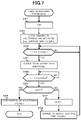
- FIG. 7 is a flowchart illustrating an example of operations of a third advertising processing, executed by the CPU of the electronic timepiece, according to an embodiment.
- FIG. 1 is a drawing illustrating a configuration example of a wireless communication system 1 according to the present embodiment.
- the wireless communication system 1 includes an electronic timepiece 100 and a wireless communication device 200 .
- the electronic timepiece 100 is an electronic device that is provided with time keeping functions and wireless communication functions, and wirelessly communicates with the wireless communication device 200 on the basis of a wireless communication standard such as Bluetooth (registered trademark) Low Energy (hereinafter referred to as “BLE”).
- BLE Bluetooth (registered trademark) Low Energy
- the wireless communication device 200 is a portable electronic device provided with wireless communication functions. Examples of the wireless communication device 200 include a mobile phone, a smartphone, a personal computer (PC), a personal digital assistant (PDA), and a smart watch or other wearable device.
- PC personal computer
- PDA personal digital assistant
- FIG. 2 is a block diagram illustrating a configuration example of the electronic timepiece 100 according to the present embodiment.
- the electronic timepiece 100 includes a microcomputer 101 , read-only memory (ROM) 102 , a communicator 103 , an antenna 104 , a power supply 105 , a display 106 , a display driver 107 , an operation receiver 108 , and an oscillator 109 .
- ROM read-only memory
- the microcomputer 101 includes a central processing unit (CPU) 110 as a processor, random access memory (RAM) 111 as a storage unit, an oscillation circuit 112 , a frequency dividing circuit 113 , and a clock circuit 114 .
- CPU central processing unit
- RAM random access memory
- the RAM 111 , the oscillation circuit 112 , the frequency dividing circuit 113 , and the clock circuit 114 are not limited to being provided in the microcomputer 101 and may be provided outside the microcomputer 101 .
- the ROM 102 , the communicator 103 , the power supply 105 , the display driver 107 , and the oscillator 109 are not limited to being provided outside the microcomputer 101 and may be provided in the microcomputer 101 .
- the CPU 110 is a processor that carries out various types of arithmetic processing and overall control of all operations of the electronic timepiece 100 .
- the CPU 110 reads control programs from the ROM 102 and loads the control programs into the RAM 111 to carry out arithmetic controlling related to displaying and various types of functions, and various types of operation processing such as the display of the time. Additionally, the CPU 110 controls the communicator 103 to establish a connection with the wireless communication device 200 and carry out data communication.
- the RAM 111 is volatile memory such as static random access memory (SRAM) or dynamic random access memory (DRAM).
- SRAM static random access memory
- DRAM dynamic random access memory
- the RAM 111 provides working memory space to the CPU 110 store temporary data and store various types of setting data.
- the oscillation circuit 112 causes the oscillator 109 to oscillate, thereby generating and outputting a predetermined frequency signal (clock signal).
- a crystal oscillator is used as the oscillation circuit 112 .
- the frequency dividing circuit 113 divides the frequency signal input from the oscillation circuit 112 into signals of frequencies to be used by the clock circuit 114 and the CPU 110 , and outputs these signals.
- the frequencies of the output signals may be changed on the basis of settings set by the CPU 110 .
- the clock circuit 114 keeps the current time by counting the number of times a predetermined clock signal is input from the frequency dividing circuit 113 , and adding this number to an initial value.
- the clock circuit 114 may be configured by software that changes a value stored in the RAM 111 , or may be configured by a dedicated counter circuit.
- the time kept by the clock circuit 114 may be any of cumulative time from a predetermined timing, coordinated universal time (UTC), a preset local time, or the like. Additionally, the time kept by the clock circuit 114 need not be in a year-month-day-hour-minute-second format. Moreover, the time kept by the clock circuit 114 may be corrected by a time externally obtained by Wi-Fi (registered trademark) or the like.
- a timer includes the oscillation circuit 112 , the frequency dividing circuit 113 , and the clock circuit 114 .
- Examples of the ROM 102 include mask ROM and rewritable nonvolatile memory. Control programs, initial setting data, and the like are stored in the ROM 102 .
- the control programs include a program 115 related to the control of various types of processing described later.
- the communicator 103 includes a radio frequency (RF) circuit and a baseband (BB) circuit, and a memory circuit.
- the communicator 103 demodulates and/or decrypts the radio signals received via the antenna 104 , and sends these radio signals to the CPU 110 .
- the communicator 103 encrypts and/or modulates signals sent from the CPU 110 and sends these signals out via the antenna 104 .
- the power supply 105 includes a battery and supplies, to the components of the electronic timepiece 100 , power for the operations of the electronic timepiece 100 at the operating voltage of the components.
- a secondary battery such as a lithium-ion battery is used as the battery of the power supply 105 .
- a wireless communication device 10 includes the microcomputer 101 , the ROM 102 , the communicator 103 , the antenna 104 , the power supply 105 , and the oscillator 109 .
- a display 106 includes a display screen such as a liquid crystal display (LCD) or an organic electro luminescence (EL) display.
- the display driver 107 outputs, to the display 106 , a driving signal corresponding to the type of display screen on the basis of a control signal from the CPU 110 , and carries out displays on the display screen.
- LCD liquid crystal display
- EL organic electro luminescence
- the operation receiver 108 includes keys or buttons, and receives input operations from a user and outputs electronic signals corresponding to the input operations to the CPU 110 as input signals. Additionally, a configuration is possible in which the operation receiver 108 is provided by laminating a touch sensor on the display screen of the display 106 , thereby providing both a display screen and a touch panel. In this case, the touch sensor detects a contact position and/or a contact mode involved in a contact operation by the user on the touch sensor, and outputs an operation signal corresponding to the detected contact position and/or contact mode to the CPU 110 .
- the CPU 110 functions as a sending controller 121 and a changer 122 .
- the functions of the sending controller 121 and the changer 122 may be realized by a single CPU or may be each realized by its independent CPU.
- the functions of the sending controller 121 and the changer 122 may be realized by a processor other than that of the microcomputer 101 .
- the functions of the sending controller 121 and the changer 122 may be realized by a CPU of the communicator 103 or the like.
- the CPU 110 as the sending controller 121 controls the communicator 103 to send an advertising packet to the wireless communication device 200 at a predetermined time interval (advertising interval).
- the advertising packet includes a device address, which is an example of identification information that identifies the device that sends the advertising packet.
- the advertising interval and the transmission power used in the sending of the advertising packet are set as described later, and the CPU 110 controls the communicator 103 to send the advertising packet to the wireless communication device 200 at the set advertising interval and transmission power.
- the CPU 110 receives, from the communicator 103 , a notification indicating that a connection request has been received from the wireless communication device 200 , the CPU 110 establishes a connection with the wireless communication device 200 .
- the communicator 103 does not receive a connection request from the wireless communication device 200 within a set time, the sending of the advertising packet is terminated.
- the CPU 110 as the changer 122 changes, for example, the advertising interval and the transmission power (the sending settings) on the basis of the elapsed time from the start of the sending of the advertising packet.
- the CPU 110 determines the connection category indicating the purpose of connecting to the wireless communication device 200 , on the basis of an operation received from the user or a predetermined timing, and changes the advertising interval and the transmission power on the basis of the determined connection category and the elapsed time.
- the following four connection categories are preset:
- the CPU 110 determines which of the connection categories (1) to (4) the connection category is, on the basis of an operation received from the user or a predetermined timing. For example, when the user presses and holds a button of the electronic timepiece 100 , the CPU 110 determines that the connection category is manual connection, and when the user presses and immediately releases the button, the CPU 110 determines that the connection category is KEY time synchronization. In another example, when the start of a connection sequence is triggered by the arrival of the predetermined time, the CPU 110 determines that the connection category is automatic time synchronization.
- the CPU 110 sets the advertising interval and the transmission power as illustrated in FIGS. 3 A, 3 B, and 3 C according to the determined connection category and the elapsed time from the start of the sending of the advertising packet.
- FIG. 3 A is an example of data representing the advertising interval and the transmission power, for the connection category being manual connection or KEY time synchronization.
- longer elapsed times result in longer advertising intervals and smaller transmission power.
- the user selects manual connection or KEY time synchronization, it is likely that the user desires to establish a connection between the electronic timepiece 100 and the wireless communication device 200 as quickly as possible and synchronize the time, and/or desires to operate the settings of the electronic timepiece 100 . Accordingly, rapid and smooth connection is enabled by sending the advertising packet at as great a transmission power and as short an advertising interval as possible at the initial stage, that is, at the start of the sending of the advertising packet.
- the sending of the advertising packet is continued at low power.
- the electronic timepiece 100 does not receive a connection request from the wireless communication device 200 even when the elapsed time exceeds 60 [s] due to the wireless communication device 200 not being located near the electronic timepiece 100 or the wireless communication device 200 being powered off, the electronic timepiece 100 stops the sending of the advertising packet.
- FIG. 3 B is an example of data representing the advertising interval and the transmission power, for the connection category being automatic time synchronization.
- the automatic time synchronization is a feature that does not involve the user and, as such, it is preferable that the connection be established with the lowest power consumption possible, even if a longer amount of time is required. Accordingly, connection with lower power consumption is enabled by sending the advertising packet at as low a transmission power and as long an advertising interval as possible at the initial stage, that is, at the start of the sending of the advertising packet, and gradually increasing the transmission power and shortening the advertising interval.
- the electronic timepiece 100 stops the sending of the advertising packet.
- FIG. 3 C is an example of data representing the advertising interval and the transmission power, for the connection category being FIND ME.
- a first pattern and a second pattern are changed in an alternating manner every 5 [s] (predetermined period).
- the advertising interval is 500 [ms] (first time interval) and the transmission power is ⁇ 15 [dBm] (first power)
- the advertising interval is 50 [ms] (second time interval) that is shorter than the first time interval and the transmission power is 0 [dBm] (second power) that is greater than the first power.
- the advertising interval and the transmission power are changed in an alternating manner for 180 [s] between the first pattern where 5 ⁇ 2 n[s] ⁇ t ⁇ 5 ⁇ (2n+1) [s] and the second pattern where 5 ⁇ (2n+1) [s] ⁇ t ⁇ 5 ⁇ (2n+2) [s], where n is an integer of 0 to 17.
- FIND ME it is expected that the user will carry the electronic timepiece 100 around while searching for the wireless communication device 200 .
- the electronic timepiece 100 sends the advertising packet, alternating between the first pattern in which the transmission power is low and the advertising interval is long and the second pattern in which the transmission power is high and the advertising interval is short.
- FIND ME is not a function that is used on a daily basis
- advertising is carried out for an extended period of time.
- the electronic timepiece 100 when the electronic timepiece 100 does not receive a connection request from the wireless communication device 200 even when the elapsed time exceeds 180 [s], the electronic timepiece 100 stops the sending of the advertising packet.
- FIGS. 3 A, 3 B, and 3 C may be stored, in advance, in the ROM 102 or the like of the electronic timepiece 100 , or may be acquired, in advance, from the wireless communication device 200 .
- the various setting values are not limited to those illustrated in the drawings and may be set as desired.
- FIG. 4 is a flowchart illustrating an example of operations of advertising processing, executed by the CPU 110 of the electronic timepiece 100 , according to the present embodiment.
- the CPU 110 of the electronic timepiece 100 starts the advertising processing illustrated in FIG. 4 upon the receipt, via the operation receiver 108 , of an advertising start command or when triggered by the arrival of a predetermined time.
- the CPU 110 determines whether the connection category of the connection sequence currently being executed is manual connection or KEY time synchronization (step S 101 ). When the connection category is manual connection or KEY time synchronization (step S 101 ; Yes), the CPU 110 executes a first advertising processing (step S 102 ).
- FIG. 5 is a flowchart illustrating an example of operations of the first advertising processing, executed by the CPU 110 of the electronic timepiece 100 , according to the present embodiment.
- the CPU 110 controls the communicator 103 to start the sending of the advertising packet at an advertising interval of 50 [ms] and a transmission power of 0 [dBm] (step S 201 ).
- the CPU 110 starts the count of an elapsed time t together with the starting of the sending of the advertising packet.
- the CPU 110 determines whether the elapsed time t is greater than 10 [s] (step S 202 ). When the elapsed time t is less than or equal to 10 [s] (step S 202 ; No), the CPU 110 waits until the elapsed time t exceeds 10 [s]. When the elapsed time t is greater than 10 [s] (step S 202 ; Yes), the CPU 110 controls the communicator 103 to change the advertising interval to 200 [ms] and the transmission power to ⁇ 5 [dBm] (step S 203 ).
- the CPU 110 determines whether the elapsed time t is greater than 20 [s] (step S 204 ). When the elapsed time t is less than or equal to 20 [s] (step S 204 ; No), the CPU 110 waits until the elapsed time t exceeds 20 [s]. When the elapsed time t is greater than 20 [s] (step S 204 ; Yes), the CPU 110 controls the communicator 103 to change the advertising interval to 500 [ms] and the transmission power to ⁇ 10 [dBm] (step S 205 ).
- the CPU 110 determines whether the elapsed time t is greater than 30 [s] (step S 206 ). When the elapsed time t is less than or equal to 30 [s] (step S 206 ; No), the CPU 110 waits until the elapsed time t exceeds 30 [s]. When the elapsed time t is greater than 30 [s] (step S 206 ; Yes), the CPU 110 controls the communicator 103 to change the advertising interval to 1 [s] and the transmission power to ⁇ 15 [dBm] (step S 207 ).
- the CPU 110 determines whether the elapsed time t is greater than 60 [s] (step S 208 ). When the elapsed time t is less than or equal to 60 [s] (step S 208 ; No), the CPU 110 waits until the elapsed time t exceeds 60 [s]. When the elapsed time t is greater than 60 [s] (step S 208 ; Yes), the CPU 110 stops the sending of the advertising packet (step S 209 ) and ends the processing.
- step S 101 when the connection category is not manual connection or KEY time synchronization (step S 101 ; No), the CPU 110 determines whether the connection category of the connection sequence currently being executed is automatic time synchronization (step S 103 ). When the connection category is automatic time synchronization (step S 103 ; Yes), the CPU 110 executes a second advertising processing (step S 104 ).
- FIG. 6 is a flowchart illustrating an example of operations of the second advertising processing, executed by the CPU 110 of the electronic timepiece 100 , according to the present embodiment.
- the CPU 110 controls the communicator 103 to start the sending of the advertising packet at an advertising interval of 500 [ms] and a transmission power of ⁇ 15 [dBm] (step S 301 ).
- the CPU 110 starts the count of an elapsed time t together with the starting of the sending of the advertising packet.
- the CPU 110 determines whether the elapsed time t is greater than 10 [s] (step S 302 ). When the elapsed time t is less than or equal to 10 [s] (step S 302 ; No), the CPU 110 waits until the elapsed time t exceeds 10 [s]. When the elapsed time t is greater than 10 [s] (step S 302 ; Yes), the CPU 110 controls the communicator 103 to change the advertising interval to 200 [ms] and the transmission power to ⁇ 5 [dBm] (step S 303 ).
- the CPU 110 determines whether the elapsed time t is greater than 20 [s] (step S 304 ). When the elapsed time t is less than or equal to 20 [s] (step S 304 ; No), the CPU 110 waits until the elapsed time t exceeds 20 [s]. When the elapsed time t is greater than 20 [s] (step S 204 ; Yes), the CPU 110 controls the communicator 103 to change the advertising interval to 50 [ms] and the transmission power to 0 [dBm] (step S 305 ).
- the CPU 110 determines whether the elapsed time t is greater than 30 [s] (step S 306 ). When the elapsed time t is less than or equal to 30 [s] (step S 306 ; No), the CPU 110 waits until the elapsed time t exceeds 30 [s]. When the elapsed time t is greater than 30 [s] (step S 306 ; Yes), the CPU 110 stops the sending of the advertising packet (step S 307 ) and ends the processing.
- step S 103 when the connection category is not automatic time synchronization (step S 103 ; No), the CPU 110 determines that the connection category of the connection sequence currently being executed is FIND ME, and executes a third advertising processing (step S 105 ).
- FIG. 7 is a flowchart illustrating an example of operations of the third advertising processing, executed by the CPU 110 of the electronic timepiece 100 , according to the present embodiment.
- the CPU 110 sets an initial value of the counter n to 0 (step S 401 ).
- the counter n is for counting the number of repetitions of the first pattern and the second pattern.
- the CPU 110 controls the communicator 103 to start the sending of the advertising packet at an advertising interval of 500 [ms] and a transmission power of ⁇ 15 [dBm] (step S 402 ).
- the CPU 110 starts the count of an elapsed time t together with the starting of the sending of the advertising packet.
- the CPU 110 determines whether the elapsed time t is greater than 5 ⁇ (2n+1) [s] (step S 403 ). When the elapsed time t is less than or equal to 5 ⁇ (2n+1) [s] (step S 403 ; No), the CPU 110 waits until the elapsed time t exceeds 5 ⁇ (2n+1) [s]. When the elapsed time t is greater than 5 ⁇ (2n+1) [s] (step S 403 ; Yes), the CPU 110 controls the communicator 103 to change the advertising interval to 50 [ms] and the transmission power to 0 [dBm] (step S 404 ).
- the CPU 110 determines whether the elapsed time t is greater than 5 ⁇ (2n+2) [s] (step S 405 ).
- the CPU 110 waits until the elapsed time t exceeds 5 ⁇ (2n+2) [s].
- the CPU 110 determines whether the counter n is 17 (step S 406 ).
- step S 406 When the counter n is not 17 (step S 406 ; No), the CPU 110 increments the n (step S 407 ) and controls the communicator 103 to change the advertising interval to 500 [ms] and the transmission power to ⁇ 15 [dBm] (step S 408 ). Thereafter, the CPU 110 returns to the processing of step S 403 .
- step S 406 Yes
- the CPU 110 stops the sending of the advertising packet and ends the first to third advertising processings.
- the CPU 110 of the electronic timepiece 100 changes the advertising interval and the transmission power on the basis of the elapsed time from the start of the sending of the advertising packet.
- the connection environment of the wireless communication device 200 it is possible to establish a connection with the wireless communication device 200 in a smoother and more power efficient manner.
- the CPU 110 of the electronic timepiece 100 determines the connection category indicating the purpose of connecting to the wireless communication device 200 , on the basis of an operation received from the user or a predetermined timing, and changes the advertising interval and the transmission power on the basis of the determined connection category and the elapsed time. As such, it is possible determine the appropriate advertising interval and transmission power according to the connection category desired by the user and, therefore it is possible to establish a connection with the wireless communication device 200 in a smoother and more power efficient manner.
- connection category is manual connection or KEY time synchronization
- such a connection is enabled by sending the advertising packet at as great a transmission power and as short an advertising interval as possible at the initial stage, that is, at the start of the sending of the advertising packet.
- the sending of the advertising packet can be continued at low power.
- the CPU 110 of the electronic timepiece 100 when the electronic timepiece 100 automatically connects to the wireless communication device 200 at the predetermined timing without involving the user as in a case in which the connection category is automatic time synchronization, a connection to the wireless communication device 200 can be established with lower power consumption by sending the advertising packet at as low a transmission power and as long an advertising interval as possible at the initial stage, that is, at the start of the sending of the advertising packet, and gradually increasing the transmission power and shortening the advertising interval.
- the CPU 110 of the electronic timepiece 100 changes between the first pattern and the second pattern in an alternating manner every predetermined period.
- the advertising interval is the first time interval and the transmission power is the first power
- the advertising interval is the second time interval that is shorter than the first time interval and the transmission power is the second power that is greater than the first power.
- the electronic timepiece 100 and the wireless communication device 200 communicate with each other via Bluetooth (registered trademark).
- the electronic timepiece 100 and the wireless communication device 200 may communicate with each other via a different communication method such as, for example, a wireless local area network (LAN) or Wi-Fi (registered trademark).
- LAN wireless local area network
- Wi-Fi registered trademark
- the present disclosure is not limited thereto and any electronic device capable of wireless communication may be used.
- the present disclosure is particularly suitable for a portable electronic device that has a battery with a comparatively small capacity, such as the electronic timepiece 100 .
- control operations are not limited to software control by the CPU. Part or all of the control operations may be realized using hardware components such as dedicated logic circuits.
- the ROM 102 that is nonvolatile memory such as flash memory, is used as the computer-readable medium on which the program related to the data communication processing and the program related to the advertising processings of the present disclosure are stored.
- the computer-readable medium is not limited thereto, and a portable recording medium such as a hard disk drive (HDD), a compact disc read-only memory (CD-ROM), or a digital versatile disc (DVD) may be used.
- a carrier wave may be used in the present disclosure as the medium to provide, over a communication line, the data of the program of the present disclosure.
Landscapes
- Engineering & Computer Science (AREA)
- Computer Networks & Wireless Communication (AREA)
- Signal Processing (AREA)
- Physics & Mathematics (AREA)
- General Physics & Mathematics (AREA)
- Electric Clocks (AREA)
- Mobile Radio Communication Systems (AREA)
- Telephone Function (AREA)
Abstract
Description
- (1) Manual connection: Connection for when the user operates the
electronic timepiece 100 to connect to thewireless communication device 200, or for when the user operates thewireless communication device 200 to connect to theelectronic timepiece 100; - (2) KEY time synchronization: Connection for synchronizing the time by correcting the time of the
electronic timepiece 100 to the time of thewireless communication device 200, wherein the synchronization is triggered by a operation received from the user; - (3) Automatic time synchronization: Connection for synchronizing the time by correcting the time of the
electronic timepiece 100 to the time of thewireless communication device 200 at a preset timing (for example, at a predetermined time of each day); and - (4) FIND ME (mobile search function): Connection in which the user operates the
electronic timepiece 100 to search for awireless communication device 200 located nearby.
Claims (4)
Applications Claiming Priority (3)
| Application Number | Priority Date | Filing Date | Title |
|---|---|---|---|
| JPJP2017-192660 | 2017-10-02 | ||
| JP2017-192660 | 2017-10-02 | ||
| JP2017192660A JP7006102B2 (en) | 2017-10-02 | 2017-10-02 | Wireless communication devices, electronic clocks, wireless communication methods, and programs |
Publications (2)
| Publication Number | Publication Date |
|---|---|
| US20190104479A1 US20190104479A1 (en) | 2019-04-04 |
| US11564176B2 true US11564176B2 (en) | 2023-01-24 |
Family
ID=63708130
Family Applications (1)
| Application Number | Title | Priority Date | Filing Date |
|---|---|---|---|
| US16/145,327 Active US11564176B2 (en) | 2017-10-02 | 2018-09-28 | Wireless communication device, electronic timepiece, wireless communication method, and storage medium |
Country Status (4)
| Country | Link |
|---|---|
| US (1) | US11564176B2 (en) |
| EP (1) | EP3462254B1 (en) |
| JP (1) | JP7006102B2 (en) |
| CN (1) | CN109618396B (en) |
Families Citing this family (2)
| Publication number | Priority date | Publication date | Assignee | Title |
|---|---|---|---|---|
| JP7215055B2 (en) * | 2018-10-04 | 2023-01-31 | カシオ計算機株式会社 | Wireless communication device, wireless communication method, and program |
| JP7156323B2 (en) * | 2020-02-25 | 2022-10-19 | カシオ計算機株式会社 | Electronic clock, time adjustment method, and program |
Citations (19)
| Publication number | Priority date | Publication date | Assignee | Title |
|---|---|---|---|---|
| JP2012142877A (en) | 2011-01-06 | 2012-07-26 | Panasonic Corp | Radio communication apparatus |
| US20140328210A1 (en) * | 2013-05-03 | 2014-11-06 | Bluegiga Technologies Oy | Method and technical equipment for short range data transmission |
| US20140365953A1 (en) * | 2013-06-09 | 2014-12-11 | Apple Inc. | Device, method, and graphical user interface for displaying application status information |
| US20150085726A1 (en) * | 2012-03-28 | 2015-03-26 | Kyocera Corporation | Communication device, power management system having communication device and control method of communication device |
| US20150341971A1 (en) * | 2012-11-14 | 2015-11-26 | Telefonaktiebolaget L M Ericsson (Publ) | Methods and apparatuses for enabling direct mode communication between user equipments |
| JP2016012852A (en) | 2014-06-30 | 2016-01-21 | カシオ計算機株式会社 | Radio communication device and program |
| KR101606039B1 (en) | 2015-01-20 | 2016-03-25 | 경북대학교 산학협력단 | Bluetooth Low Energy Network having the setting function of scanning period and method for thereof |
| JP2016174304A (en) | 2015-03-17 | 2016-09-29 | 株式会社リコー | System, device and method for radio communication |
| US9462623B2 (en) * | 2014-07-29 | 2016-10-04 | Em Microelectronic Marin S.A. | Method and system for optimized bluetooth low energy communications using dynamic broadcasting schedule |
| US9532312B1 (en) * | 2013-11-25 | 2016-12-27 | Amazon Technologies, Inc. | Locating user device using beacon signal |
| JP2017022644A (en) | 2015-07-14 | 2017-01-26 | 富士通株式会社 | Program, channel sharing method, and network system |
| JP2017118325A (en) | 2015-12-24 | 2017-06-29 | カシオ計算機株式会社 | Wireless communication apparatus, electronic timepiece, wireless communication method and program |
| US20170280276A1 (en) * | 2016-03-24 | 2017-09-28 | Canon Kabushiki Kaisha | Printing apparatus configured to transmit bluetooth low energy advertise packet |
| US9848457B1 (en) * | 2016-10-19 | 2017-12-19 | Hyundai Motor Company | Wireless connection system and method of controlling same |
| US20180006746A1 (en) * | 2016-06-30 | 2018-01-04 | Canon Kabushiki Kaisha | Communication apparatus, control method, and non-transitory computer-readable storage medium |
| US10082554B1 (en) * | 2017-07-01 | 2018-09-25 | Tile, Inc. | Dynamic selection and modification of tracking device behavior models |
| US20190014366A1 (en) * | 2015-09-18 | 2019-01-10 | Tatsuya Igarashi | Transmission apparatus, reception apparatus, and data processing method |
| US20190098445A1 (en) * | 2017-09-22 | 2019-03-28 | Peng Hu | Systems and methods for real-time user engagement and interactions |
| US20190387473A1 (en) * | 2017-03-02 | 2019-12-19 | Carrier Corporation | Access control system with dynamic performance tuning |
Family Cites Families (2)
| Publication number | Priority date | Publication date | Assignee | Title |
|---|---|---|---|---|
| CN104865919A (en) * | 2015-03-20 | 2015-08-26 | 四川长虹电器股份有限公司 | Smart home control system, method using smart home control system to control household equipment and method using smart home control system to perform positioning |
| JP6608204B2 (en) | 2015-07-14 | 2019-11-20 | 株式会社イーアールアイ | Information distribution device |
-
2017
- 2017-10-02 JP JP2017192660A patent/JP7006102B2/en active Active
-
2018
- 2018-09-27 EP EP18197288.6A patent/EP3462254B1/en active Active
- 2018-09-28 US US16/145,327 patent/US11564176B2/en active Active
- 2018-10-08 CN CN201811167390.6A patent/CN109618396B/en active Active
Patent Citations (19)
| Publication number | Priority date | Publication date | Assignee | Title |
|---|---|---|---|---|
| JP2012142877A (en) | 2011-01-06 | 2012-07-26 | Panasonic Corp | Radio communication apparatus |
| US20150085726A1 (en) * | 2012-03-28 | 2015-03-26 | Kyocera Corporation | Communication device, power management system having communication device and control method of communication device |
| US20150341971A1 (en) * | 2012-11-14 | 2015-11-26 | Telefonaktiebolaget L M Ericsson (Publ) | Methods and apparatuses for enabling direct mode communication between user equipments |
| US20140328210A1 (en) * | 2013-05-03 | 2014-11-06 | Bluegiga Technologies Oy | Method and technical equipment for short range data transmission |
| US20140365953A1 (en) * | 2013-06-09 | 2014-12-11 | Apple Inc. | Device, method, and graphical user interface for displaying application status information |
| US9532312B1 (en) * | 2013-11-25 | 2016-12-27 | Amazon Technologies, Inc. | Locating user device using beacon signal |
| JP2016012852A (en) | 2014-06-30 | 2016-01-21 | カシオ計算機株式会社 | Radio communication device and program |
| US9462623B2 (en) * | 2014-07-29 | 2016-10-04 | Em Microelectronic Marin S.A. | Method and system for optimized bluetooth low energy communications using dynamic broadcasting schedule |
| KR101606039B1 (en) | 2015-01-20 | 2016-03-25 | 경북대학교 산학협력단 | Bluetooth Low Energy Network having the setting function of scanning period and method for thereof |
| JP2016174304A (en) | 2015-03-17 | 2016-09-29 | 株式会社リコー | System, device and method for radio communication |
| JP2017022644A (en) | 2015-07-14 | 2017-01-26 | 富士通株式会社 | Program, channel sharing method, and network system |
| US20190014366A1 (en) * | 2015-09-18 | 2019-01-10 | Tatsuya Igarashi | Transmission apparatus, reception apparatus, and data processing method |
| JP2017118325A (en) | 2015-12-24 | 2017-06-29 | カシオ計算機株式会社 | Wireless communication apparatus, electronic timepiece, wireless communication method and program |
| US20170280276A1 (en) * | 2016-03-24 | 2017-09-28 | Canon Kabushiki Kaisha | Printing apparatus configured to transmit bluetooth low energy advertise packet |
| US20180006746A1 (en) * | 2016-06-30 | 2018-01-04 | Canon Kabushiki Kaisha | Communication apparatus, control method, and non-transitory computer-readable storage medium |
| US9848457B1 (en) * | 2016-10-19 | 2017-12-19 | Hyundai Motor Company | Wireless connection system and method of controlling same |
| US20190387473A1 (en) * | 2017-03-02 | 2019-12-19 | Carrier Corporation | Access control system with dynamic performance tuning |
| US10082554B1 (en) * | 2017-07-01 | 2018-09-25 | Tile, Inc. | Dynamic selection and modification of tracking device behavior models |
| US20190098445A1 (en) * | 2017-09-22 | 2019-03-28 | Peng Hu | Systems and methods for real-time user engagement and interactions |
Non-Patent Citations (3)
| Title |
|---|
| Extended European Search Report dated Feb. 28, 2019 received in European Patent Application No. EP 18197288.6. |
| Notice of Reasons for Refusal dated May 18, 2021 received in Japanese Patent Application No. JP 2017-192660 together with an English language translation. |
| Townsend, K. et al., "Getting Started with Bluetooth Low Energy", O'Reilly Media, May 12, 2014, pp. 15-50. |
Also Published As
| Publication number | Publication date |
|---|---|
| JP2019068292A (en) | 2019-04-25 |
| CN109618396B (en) | 2021-12-03 |
| CN109618396A (en) | 2019-04-12 |
| EP3462254A1 (en) | 2019-04-03 |
| US20190104479A1 (en) | 2019-04-04 |
| EP3462254B1 (en) | 2021-02-17 |
| JP7006102B2 (en) | 2022-01-24 |
Similar Documents
| Publication | Publication Date | Title |
|---|---|---|
| EP3169135B1 (en) | Radio communication apparatus and radio communication method | |
| US11368923B2 (en) | Wireless communication apparatus, electronic timepiece, transmission power control method, and storage medium | |
| US10972964B2 (en) | Communication device, scanner terminal, communication system, communication method, and storage medium | |
| JP5010745B1 (en) | RADIO UNIT AND MOBILE COMMUNICATION TERMINAL DEVICE PROVIDED WITH THIS RADIO UNIT | |
| CN111010671B (en) | Wireless communication device, wireless communication method, and storage medium | |
| EP3462254B1 (en) | Wireless communication device, electronic timepiece, wireless communication method, and storage medium | |
| JP2010093612A (en) | Radio terminal device, radio relay device, and program | |
| JP6375657B2 (en) | Wireless communication apparatus, wireless communication system, and wireless communication method | |
| EP3544338A1 (en) | Wireless communication device, wireless communication method, and program | |
| JP2021141428A (en) | Communication device, communication connection control method, and program | |
| US11397411B2 (en) | Electronic timepiece, processing selection method, and storage medium | |
| US11523451B2 (en) | Wireless communication device, terminal, wireless communication system, connection control method and recording medium | |
| JP2019062445A (en) | Wireless communication device, electronic watch, transmission power setting method and wireless communication program | |
| JP2018185148A (en) | Communication device, electronic timepiece, method for changing time, method for generating notification signal, and program | |
| CN108632447B (en) | Wireless communication device, electronic watch, wireless communication method, and recording medium | |
| US20210263480A1 (en) | Electronic timepiece, wireless device, wireless communication system, time correction method, and non-transitory recording medium | |
| JP2026002222A (en) | Electronic device, electronic device control method, program, communication system, and communication device | |
| KR20060057465A (en) | Apparatus and method for controlling power of mobile communication terminal | |
| JP2012165472A (en) | Mobile communication terminal apparatus | |
| JP2019067187A (en) | Wireless communication device, electronic watch, wireless communication method, and program | |
| JP2013229710A (en) | Communication terminal device, terminal communication method and program |
Legal Events
| Date | Code | Title | Description |
|---|---|---|---|
| AS | Assignment |
Owner name: CASIO COMPUTER CO., LTD., JAPAN Free format text: ASSIGNMENT OF ASSIGNORS INTEREST;ASSIGNOR:KYOU, KAZUHO;REEL/FRAME:047002/0220 Effective date: 20180927 |
|
| FEPP | Fee payment procedure |
Free format text: ENTITY STATUS SET TO UNDISCOUNTED (ORIGINAL EVENT CODE: BIG.); ENTITY STATUS OF PATENT OWNER: LARGE ENTITY |
|
| STPP | Information on status: patent application and granting procedure in general |
Free format text: DOCKETED NEW CASE - READY FOR EXAMINATION |
|
| STPP | Information on status: patent application and granting procedure in general |
Free format text: NON FINAL ACTION MAILED |
|
| STPP | Information on status: patent application and granting procedure in general |
Free format text: RESPONSE TO NON-FINAL OFFICE ACTION ENTERED AND FORWARDED TO EXAMINER |
|
| STPP | Information on status: patent application and granting procedure in general |
Free format text: FINAL REJECTION MAILED |
|
| STPP | Information on status: patent application and granting procedure in general |
Free format text: RESPONSE AFTER FINAL ACTION FORWARDED TO EXAMINER |
|
| STPP | Information on status: patent application and granting procedure in general |
Free format text: DOCKETED NEW CASE - READY FOR EXAMINATION |
|
| STPP | Information on status: patent application and granting procedure in general |
Free format text: NON FINAL ACTION MAILED |
|
| STPP | Information on status: patent application and granting procedure in general |
Free format text: RESPONSE TO NON-FINAL OFFICE ACTION ENTERED AND FORWARDED TO EXAMINER |
|
| STPP | Information on status: patent application and granting procedure in general |
Free format text: FINAL REJECTION MAILED |
|
| STPP | Information on status: patent application and granting procedure in general |
Free format text: RESPONSE AFTER FINAL ACTION FORWARDED TO EXAMINER |
|
| STPP | Information on status: patent application and granting procedure in general |
Free format text: DOCKETED NEW CASE - READY FOR EXAMINATION |
|
| STPP | Information on status: patent application and granting procedure in general |
Free format text: NON FINAL ACTION MAILED |
|
| STPP | Information on status: patent application and granting procedure in general |
Free format text: RESPONSE TO NON-FINAL OFFICE ACTION ENTERED AND FORWARDED TO EXAMINER |
|
| STPP | Information on status: patent application and granting procedure in general |
Free format text: NOTICE OF ALLOWANCE MAILED -- APPLICATION RECEIVED IN OFFICE OF PUBLICATIONS |
|
| STPP | Information on status: patent application and granting procedure in general |
Free format text: PUBLICATIONS -- ISSUE FEE PAYMENT VERIFIED |
|
| STCF | Information on status: patent grant |
Free format text: PATENTED CASE |