US11535840B2 - Method for recyclably using an enzyme - Google Patents
Method for recyclably using an enzyme Download PDFInfo
- Publication number
- US11535840B2 US11535840B2 US17/284,186 US201917284186A US11535840B2 US 11535840 B2 US11535840 B2 US 11535840B2 US 201917284186 A US201917284186 A US 201917284186A US 11535840 B2 US11535840 B2 US 11535840B2
- Authority
- US
- United States
- Prior art keywords
- enzyme
- polymer
- solvent
- conjugate
- lipa
- Prior art date
- Legal status (The legal status is an assumption and is not a legal conclusion. Google has not performed a legal analysis and makes no representation as to the accuracy of the status listed.)
- Active
Links
Images


Classifications
-
- C—CHEMISTRY; METALLURGY
- C12—BIOCHEMISTRY; BEER; SPIRITS; WINE; VINEGAR; MICROBIOLOGY; ENZYMOLOGY; MUTATION OR GENETIC ENGINEERING
- C12N—MICROORGANISMS OR ENZYMES; COMPOSITIONS THEREOF; PROPAGATING, PRESERVING, OR MAINTAINING MICROORGANISMS; MUTATION OR GENETIC ENGINEERING; CULTURE MEDIA
- C12N9/00—Enzymes; Proenzymes; Compositions thereof; Processes for preparing, activating, inhibiting, separating or purifying enzymes
- C12N9/96—Stabilising an enzyme by forming an adduct or a composition; Forming enzyme conjugates
-
- C—CHEMISTRY; METALLURGY
- C12—BIOCHEMISTRY; BEER; SPIRITS; WINE; VINEGAR; MICROBIOLOGY; ENZYMOLOGY; MUTATION OR GENETIC ENGINEERING
- C12N—MICROORGANISMS OR ENZYMES; COMPOSITIONS THEREOF; PROPAGATING, PRESERVING, OR MAINTAINING MICROORGANISMS; MUTATION OR GENETIC ENGINEERING; CULTURE MEDIA
- C12N9/00—Enzymes; Proenzymes; Compositions thereof; Processes for preparing, activating, inhibiting, separating or purifying enzymes
- C12N9/14—Hydrolases (3)
- C12N9/16—Hydrolases (3) acting on ester bonds (3.1)
- C12N9/18—Carboxylic ester hydrolases (3.1.1)
- C12N9/20—Triglyceride splitting, e.g. by means of lipase
Definitions
- the invention relates generally to the use of enzymes as biocatalysts in solvents, and particularly to modified enzymes having improved solubility, catalytic activity, recoverability, and/or recyclability, and methods of making and using such enzymes.
- enzymes are typically used as heterogeneous catalysts to facilitate their separation and recycling.
- One approach for using enzymes as heterogenous catalysts is immobilization of the enzyme on a solid support, such as a particle or resin, which may also stabilize the enzyme against chemical and/or thermal denaturation.
- immobilization may improve the recyclability of the enzyme
- the attachment of the enzyme to a solid support often has a severe negative effect on the enzyme's catalytic activity; by way of non-limiting example, the activity of an immobilized enzyme may be significantly affected by reduced active site accessibility and mass transfer and diffusional limitations. Furthermore, the cost of producing these supported enzymes may be prohibitive.
- the enzyme may, by way of non-limiting example, comprise an oxidoreductase, e.g. an alcohol oxidoreductase, an aldehyde/oxo oxidoreductase, a CH—CH oxidoreductase, a CH—NH 2 oxidoreductase (such as an amino acid oxidoreductase), a CH—NH oxidoreductase, an NADH or NADPH oxidoreductase, a nitrogenous donor oxidoreductase, a sulfur oxidoreductase, a diphenol family oxidoreductase, a peroxidase, a monooxygenase, or a dioxygenase (such as a steroid hydroxylase); a transferase, e.g.
- a one carbon transferase an aldehyde-ketone transferase, an acyltransferase, a glycosyltransferase, an alkyl or aryl transferase, a nitrogenous transferase, a phosphorous-containing transferase, a sulfur-containing transferase, or a selenium-containing transferase; a hydrolase, e.g. an esterase, a sugar hydrolase, an ether bond hydrolase, a protease, a carbon-nitrogen non-peptide hydrolase, an acid anhydride hydrolase, or a carbon-carbon hydrolase; a lyase, e.g.
- a carbon-carbon lyase a carbon-oxygen lyase (such as a dehydratase), a carbon-nitrogen lyase, a carbon-sulfur lyase, a carbon-halide lyase, or a phosphorus-oxygen lyase
- an isomerase e.g. an epimerase or racemase, a geometric isomerase, an intramolecular oxidoreductase, a mutase, an intramolecular lyase, or a topoisomerase
- a ligase e.g.
- the enzyme may be lipase.
- the solvent can be an aqueous solvent or a non-aqueous solvent.
- the solvent may, by way of non-limiting example, comprise an alcohol, e.g. tert-amyl alcohol, benzyl alcohol, 1,4-butanediol, 1,2,4-butanetriol, butanol (such as 2-butanol, N-butanol, or tert-butanol), di(propylene glycol) methyl ether, diethylene glycol, ethanol, ethylene glycol, 2-ethylhexanol, furfuryl alcohol, glycerol, isobutanol, isopropyl alcohol, methanol, 2-(2-methoxyethoxy)ethanol, 2-methyl-1-butanol, 2-methyl-1-pentanol, 3-methyl-2-butanol, neopentyl alcohol, 2-pentanol, 1,3-propanediol, 1-propanol, propylene glycol,
- N-vinylacetamide or N-vinylpyrrolidone
- an amine e.g. collidine, diethylenetriamine, ethylenediamine, morpholine, piperidine, pyridine, pyrrolidine, quinoline, tetrahydroquinoline, or tributylamine
- an aromatic solvent e.g.
- benzene benzonitrile, benzyl alcohol, chlorobenzene, dibenzyl ether, 1,2-dichlorobenzene, 1,2-difluorobenzene, hexafluorobenzene, mesitylene, nitrobenzene, pyridine, tetralin, toluene, 1,2,4-trichlorobenzene, trifluorotoluene, or xylene; an ester, e.g.
- benzyl benzoate bis(2-ethylhexyl) adipate, bis(2-ethylhexyl) phthalate, 2-butoxyethanol acetate, butyl acetate (such as sec-butyl acetate or tert-butyl acetate), diethyl carbonate, dimethyl adipate, dioctyl terephthalate, ethyl acetate, ethyl acetoacetate, ethyl butyrate, ethyl lactate, ethylene carbonate, hexyl acetate, isoamyl acetate, isobutyl acetate, isopropyl acetate, methyl acetate, methyl lactate, methyl phenylacetate, methyl propionate, propyl acetate, propylene carbonate, or triacetin; an ether, e.g.
- tert-amyl ethyl ether cyclopentyl methyl ether, di-tert-butyl ether, di(propylene glycol) methyl ether, dibutyl ether, diethyl ether, diisopropyl ether, dimethoxyethane, dimethoxymethane, 1,4-dioxane, ethyl tert-butyl ether, methoxyethane, 2-(2-methoxyethoxy)ethanol, methyl tert-butyl ether, 2-methyltetrahydrofuran, morpholine, polyethylene glycol, propylene glycol methyl ether, tetrahydrofuran, tetrahydrofuryl alcohol, tetrahydropyran, or 2,2,5,5-tetramethyltetrahydrofuran; a halogenated solvent, e.g.
- ammonia carbon dioxide, carbon disulfide, carbon tetrachloride, hydrogen fluoride, a molten salt, phosphorus tribromide, sulfur dioxide, sulfuric acid, sulfuryl chloride fluoride, or water; an ionic liquid, e.g.
- Aliquat 336 1-butyl-3-methylimidazolium hexafluorophosphate, 1-butyl-3-methylimidazolium tetrachloroferrate, a deep eutectic solvent, 1-ethyl-3-methylimidazolium chloride, ethylammonium nitrate, fluoroantimonic acid, methylpridinium, a molten salt, or trioctylmethylammonium bis(trifluoromethylsulfonyl)imide; a ketone, e.g.
- the solvent may be 1-butyl-3-methylimidazolium hexafluorophosphate.
- Both the enzyme and the solvent can be determined based on the reaction utilizing the enzyme.
- the method may further comprise purifying the enzyme-polymer conjugate.
- the enzyme-polymer conjugate may, but need not, be purified by a method selected from the group consisting of affinity chromatography, ammonium sulfate precipitation, dialysis, and size exclusion chromatography.
- the polymer may be a copolymer.
- the polymer may be an alternating copolymer, a block copolymer, a gradient copolymer, a periodic copolymer, a random copolymer, or a statistical copolymer.
- monomers present in the polymer may, by way of non-limiting example, comprise one or more selected from the group consisting of acrylamide, 2-acrylamido-2-methylpropane sulfonic acid, acrylate, acrylic acid, acrylonitrile, acrylophenone, acryloyl chloride, actin nucleation core, adipic acid, adipoyl chloride, biphenyl-tetracarboxylic acid dianhydride, butadiene, 1,2,4-butanetriol, butene, butyl acrylate, butyl cyanoacrylate, butyl methacrylate, caprolactam, caprolactone, chloroprene, cyanoacrylate, cyclobutene, cycloheptene, cyclohexanedimethanol, cyclopentene, diamine, 2,4-diaminotoluene, 2,5-diaminotoluene, 2,3-dichlorobuta
- the copolymer may comprise at least one monomer that is highly soluble, freely soluble, or soluble in the solvent and at least one monomer that is insoluble, poorly soluble, very slightly soluble, or slightly soluble in the solvent.
- the chemical reaction may be selected from the group consisting of a transesterification reaction, an oxidation/reduction reaction, a group transfer reaction, a hydrolysis reaction, an isomerization reaction, and a dehydration reaction.
- step d) may comprise changing a temperature of the solution to precipitate the enzyme-polymer conjugate.
- step d) may comprise extracting the enzyme-polymer conjugate with an extractant.
- the enzyme-polymer conjugate may exhibit upper critical solution temperature (UCST) behavior in the solvent and lower critical solution temperature (LCST) behavior in the extractant.
- the enzyme-polymer conjugate may exhibit LCST behavior in the solvent and UCST behavior in the extractant.
- the enzyme may be lipase.
- the organic solvent or ionic liquid may be 1-butyl-3-methylimidazolium hexafluorophosphate.
- the polymer may be a copolymer, and may, but need not, be a random copolymer.
- the copolymer may, but need not, comprise at least one monomer that is highly soluble, freely soluble, or soluble in the organic solvent or ionic liquid and at least one monomer that is insoluble, poorly soluble, very slightly soluble, or slightly soluble in the organic solvent or ionic liquid.
- the polymer may comprise at least one monomer selected from the group consisting of acryloylmorpholine and N-isopropyl acrylamide.
- the molar ratio of the first monomer to the second monomer may be between about 0.01:0.99 and about 0.99:0.01, or between about 0.58:0.42 and about 0.88:0.12.
- the cloud point of the enzyme-polymer conjugate in the solvent may be between about 4° C. and about 78° C.
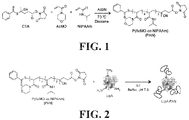
- FIG. 1 is an illustration of a scheme for synthesizing N-hydroxysuccinimide ester (NHS)-terminated poly(acryloylmorpholine-ran-N-isopropyl acrylamide) (PAN) polymers by reversible addition-fragmentation chain-transfer polymerization (RAFT).
- NHS N-hydroxysuccinimide ester
- PAN poly(acryloylmorpholine-ran-N-isopropyl acrylamide)
- FIG. 2 is an illustration of a scheme for conjugation of the NETS-terminated PAN polymers synthesized by the method illustrated in FIG. 1 to unmodified lipase (“LipA”) by NETS-amine coupling.
- LipA unmodified lipase
- FIGS. 3 A and 3 B are sodium dodecyl sulfate polyacrylamide gel electrophoresis (SDS-PAGE) analyses of LipA and lipase-poly(acryloylmorpholine-ran-N-isopropyl acrylamide) (“LipA-PAN”) conjugates.
- SDS-PAGE sodium dodecyl sulfate polyacrylamide gel electrophoresis
- FIG. 4 A illustrates relative transmittance as a function of precipitation cycling of a LipA-PAN conjugate at a 1 mg/mL enzyme concentration in 1-butyl-3-methylimidazolium hexafluorophosphate (“[BMIM][PF 6 ]”) containing 1 M ethanol.
- [BMIM][PF 6 ] 1-butyl-3-methylimidazolium hexafluorophosphate
- FIG. 4 B illustrates initial rate activity for the transesterification of 4-nitrophenyl butyrate with ethanol, catalyzed by a LipA-PAN conjugate, as a function of cycle number.
- FIG. 5 A illustrates cloud point curves for three LipA-PAN conjugates in [BMIM][PF 6 ] containing 1 M ethanol.
- FIG. 5 B illustrates the dependence of LipA-PAN cloud point on the mole fraction of N-isopropyl acrylamide (NIPAAm) in the poly(acryloylmorpholine-ran-N-isopropyl acrylamide) (“PAN”).
- NIPAAm N-isopropyl acrylamide
- FIG. 6 A illustrates relative transmittance of a LipA-PAN conjugate in aqueous buffer, with (circles) and without (diamonds) ethanol, as a function of temperature.
- FIG. 6 B illustrates extraction efficiency of a LipA-PAN conjugate from [BMIM][PF 6 ] containing 1 M ethanol into aqueous buffer, as a function of temperature.
- FIG. 7 is a generalized schematic illustrating thermoreversible shuttling of a LipA-PAN conjugate between [BMIM][PF 6 ] and aqueous solutions.
- the present invention provides novel methods and systems for rationally tuning the interactions of an enzyme (e.g. lipase (“LipA”)) and a solvent (e.g. 1-butyl-3-methylimidazolium hexafluorophosphate (“[BMIM][PF 6 ]”) in a thermoresponsive manner within a desired temperature range.
- This tuning is accomplished by modifying the enzyme with a polymer, e.g. an acryloylmorpholine (“AcMO”)-co-N-isopropyl acrylamide (“NIPAAm”) polymer, which imparts an upper critical solution temperature (“UCST”)-type phase behavior and/or a lower critical solution temperature (“LCST”)-type phase behavior to the enzyme-polymer conjugate in the desired temperature range.
- a polymer e.g. an acryloylmorpholine (“AcMO”)-co-N-isopropyl acrylamide (“NIPAAm”) polymer, which imparts an upper critical solution temperature (“UCST”)-type phase behavior
- the cloud point of the resulting enzyme-polymer conjugate in the solvent can be reliably controlled.
- a copolymer e.g. a poly(acryloylmorpholine-co-N-isopropyl acrylamide) (“PAN”) copolymer
- the interactions of an enzyme and a solvent may be tuned in a thermoresponsive manner by modifying the enzyme with a polymer to impart UCST- and/or LCST-type phase behavior to the enzyme-polymer conjugate within a desired temperature range.
- the polymer e.g. one or more monomers, and the relative molar amounts thereof in the polymer, may be selected based on the enzyme to be modified and the solvent in which the enzyme-catalyzed reaction will be carried out.
- the polymer can be a homopolymer where the homopolymer-enzyme conjugate is miscible in the solvent at an operational temperature, but immiscible either above or below the operating temperature, which allows the enzyme of the homopolymer-enzyme conjugate to be recycled.
- the monomers may be selected such that one or more monomers of the copolymer is highly soluble, freely soluble, or soluble in the preselected solvent and one or more other monomers is poorly soluble or insoluble, slightly soluble, or very slightly soluble in the preselected solvent.
- the terms highly soluble, poorly soluble, insoluble, etc. are to be understood as set forth below:
- the solubility of a monomer in the preselected solvent may be estimated, in the first instance, by any suitable metric or method familiar to those skilled in the art, including but not limited to Hildebrand solubility parameters and Hansen solubility parameters.
- the desired or preselected solvent has a relatively low Hildebrand solubility parameter, e.g. n-pentane
- the monomers of the polymer may comprise one or more monomers that form polymers having relatively low Hildebrand solubility parameters (and are thus likely to be highly soluble in the solvent), e.g.
- the monomers of the polymer may comprise one or more monomers that form polymers having relatively high Hildebrand solubility parameters (and are thus likely to be highly soluble in the solvent), e.g.
- the monomers of the polymer may comprise one or more monomers that form polymers having intermediate Hildebrand solubility parameters (and are thus likely to be highly soluble in the solvent), e.g.
- phenylene oxide or methyl methacrylate and one or more monomers that form polymers having relatively low or high Hildebrand solubility parameters (and are thus likely to poorly soluble or insoluble in the solvent), e.g. tetrafluoroethylene or ethylene glycol.
- the thermodynamic favorability of interactions between the polymer and the solvent may be made highly sensitive to temperature by varying the relative molar amounts of each monomer in the polymer.
- the composition of the polymer will also depend on whether the polymer is likely to exhibit UCST-type behavior (i.e. the polymer is soluble at temperatures above the cloud point and insoluble at temperatures below the cloud point) or LCST-type behavior (i.e. the polymer is soluble at temperatures below the cloud point and insoluble at temperatures above the cloud point) in the desired or preselected solvent.
- the cloud point is dependent on the composition of the polymer
- varying the relative amounts of monomer provides a simple method for tuning the cloud point of the polymer in the solvent.
- the total thermodynamic favorability of the interactions between the enzyme-polymer conjugates and the solvent are also highly temperature-dependent; specifically, the present inventors have found that modification of enzymes with appropriate polymers facilitates dissolution of the enzyme above the cloud point of the conjugate and separation of the enzyme below the cloud point (i.e. UCST-type behavior), or vice versa (i.e. LCST-type behavior).
- An aspect of the invention is a copolymer-enzyme, wherein the copolymer of the copolymer-enzyme comprises a first monomer and a second monomer.
- the first monomer is highly soluble, soluble, or freely soluble in a reaction solvent.
- the second monomer is insoluble, slightly soluble, or very slightly soluble in the solvent.
- the enzyme and solvent can be selected based on the end use (i.e. the reaction) utilizing the system.
- the first monomer is present in the copolymer in an amount between about 1 vol. % and about 99 vol. %.
- the second monomer is present in the copolymer in an amount between about 1 vol. % and about 99 vol. %, or the balance of the system.
- Incidental materials can be present in the copolymer in an amount not to exceed about 99 vol. %.
- the copolymer can be present in the system in an amount of between about 1 vol. % and about 99 vol. %.
- the enzyme can be present in the system in an amount between about 1 vol. % and about 99 vol. %.
- the solvent can be present in an amount between about 1 vol. % and about 99 vol. %; in some embodiments, the balance can be the solvent.
- Incidental materials can be present in the system in an amount not to exceed about 99 vol. % of the system. It is to be expressly understood that the values described in this paragraph may take any value that is about any whole number within the described range.
- the molecular weight of the enzyme-polymer conjugate can be any suitable molecular weight and fall within any suitable range of molecular weights.
- the molecular weight of the enzyme-polymer conjugate may be at least about 1 kDa, at least about 10 kDa, at least about 20 kDa, at least about 30 kDa, at least about 40 kDa, at least about 50 kDa, at least about 60 kDa, at least about 70 kDa, at least about 80 kDa, at least about 90 kDa, at least about 100 kDa, at least about 110 kDa, at least about 120 kDa, at least about 130 kDa, at least about 140 kDa, at least about 150 kDa, at least about 160 kDa, at least about 170 kDa, at least about 180 kDa, at least about 190 kDa, at least about 200 kDa, at least about 210
- the molecular weight of the enzyme-polymer conjugate may be no more than about 360 kDa, no more than about 350 kDa, no more than about 340 kDa, no more than about 330 kDa, no more than about 320 kDa, no more than about 310 kDa, no more than about 300 kDa, no more than about 290 kDa, no more than about 280 kDa, no more than about 270 kDa, no more than about 260 kDa, no more than about 250 kDa, no more than about 240 kDa, no more than about 230 kDa, no more than about 220 kDa, no more than about 210 kDa, no more than about 200 kDa, no more than about 190 kDa, no more than about 180 kDa, no more than about 170 kDa, no more than about 160 kDa, no
- Enzyme-polymer conjugates of the present invention may be further characterized as having other properties, such a desired or preselected site of attachment of the polymer to the enzyme, a desired or preselected hydrodynamic radius (e.g. about any number of hundredths of a nanometer between about 0.01 nm and about 50 nm), and/or a desired or preselected zeta potential (e.g. about any number of tenths of millivolts between about ⁇ 75 mV and 75 mV).
- a desired or preselected site of attachment of the polymer to the enzyme e.g. about any number of hundredths of a nanometer between about 0.01 nm and about 50 nm
- a desired or preselected zeta potential e.g. about any number of tenths of millivolts between about ⁇ 75 mV and 75 mV.
- the enzyme may, by way of non-limiting example, comprise an oxidoreductase, e.g. an alcohol oxidoreductase, an aldehyde/oxo oxidoreductase, a CH—CH oxidoreductase, a CH—NH 2 oxidoreductase (such as an amino acid oxidoreductase), a CH—NH oxidoreductase, an NADH or NADPH oxidoreductase, a nitrogenous donor oxidoreductase, a sulfur oxidoreductase, a diphenol family oxidoreductase, a peroxidase, a monooxygenase, or a dioxygenase (such as a steroid hydroxylase); a transferase, e.g.
- a one carbon transferase an aldehyde-ketone transferase, an acyltransferase, a glycosyltransferase, an alkyl or aryl transferase, a nitrogenous transferase, a phosphorous-containing transferase, a sulfur-containing transferase, or a selenium-containing transferase; a hydrolase, e.g. an esterase, a sugar hydrolase, an ether bond hydrolase, a protease, a carbon-nitrogen non-peptide hydrolase, an acid anhydride hydrolase, or a carbon-carbon hydrolase; a lyase, e.g.
- a carbon-carbon lyase a carbon-oxygen lyase (such as a dehydratase), a carbon-nitrogen lyase, a carbon-sulfur lyase, a carbon-halide lyase, or a phosphorus-oxygen lyase
- an isomerase e.g. an epimerase or racemase, a geometric isomerase, an intramolecular oxidoreductase, a mutase, an intramolecular lyase, or a topoisomerase
- a ligase e.g.
- the enzyme may be lipase.
- the enzyme-polymer can be provided in a solvent, which is the same solvent used in the reaction that the enzyme is supporting.
- the solvent may, by way of non-limiting example, comprise an alcohol, e.g. tert-amyl alcohol, benzyl alcohol, 1,4-butanediol, 1,2,4-butanetriol, butanol (such as 2-butanol, N-butanol, or tert-butanol), di(propylene glycol) methyl ether, diethylene glycol, ethanol, ethylene glycol, 2-ethylhexanol, furfuryl alcohol, glycerol, isobutanol, isopropyl alcohol, methanol, 2-(2-methoxyethoxy)ethanol, 2-methyl-1-butanol, 2-methyl-1-pentanol, 3-methyl-2-butanol, neopentyl alcohol, 2-pentanol, 1,3-propanediol, 1-propan
- N-vinylacetamide or N-vinylpyrrolidone
- an amine e.g. collidine, diethylenetriamine, ethylenediamine, morpholine, piperidine, pyridine, pyrrolidine, quinoline, tetrahydroquinoline, or tributylamine
- an aromatic solvent e.g.
- benzene benzonitrile, benzyl alcohol, chlorobenzene, dibenzyl ether, 1,2-dichlorobenzene, 1,2-difluorobenzene, hexafluorobenzene, mesitylene, nitrobenzene, pyridine, tetralin, toluene, 1,2,4-trichlorobenzene, trifluorotoluene, or xylene; an ester, e.g.
- benzyl benzoate bis(2-ethylhexyl) adipate, bis(2-ethylhexyl) phthalate, 2-butoxyethanol acetate, butyl acetate (such as sec-butyl acetate or tert-butyl acetate), diethyl carbonate, dimethyl adipate, dioctyl terephthalate, ethyl acetate, ethyl acetoacetate, ethyl butyrate, ethyl lactate, ethylene carbonate, hexyl acetate, isoamyl acetate, isobutyl acetate, isopropyl acetate, methyl acetate, methyl lactate, methyl phenylacetate, methyl propionate, propyl acetate, propylene carbonate, or triacetin; an ether, e.g.
- tert-amyl ethyl ether cyclopentyl methyl ether, di-tert-butyl ether, di(propylene glycol) methyl ether, dibutyl ether, diethyl ether, diisopropyl ether, dimethoxyethane, dimethoxymethane, 1,4-dioxane, ethyl tert-butyl ether, methoxyethane, 2-(2-methoxyethoxy)ethanol, methyl tert-butyl ether, 2-methyltetrahydrofuran, morpholine, polyethylene glycol, propylene glycol methyl ether, tetrahydrofuran, tetrahydrofuryl alcohol, tetrahydropyran, or 2,2,5,5-tetramethyltetrahydrofuran; a halogenated solvent, e.g.
- ammonia carbon dioxide, carbon disulfide, carbon tetrachloride, hydrogen fluoride, a molten salt, phosphorus tribromide, sulfur dioxide, sulfuric acid, sulfuryl chloride fluoride, or water; an ionic liquid, e.g.
- Aliquat 336 1-butyl-3-methylimidazolium hexafluorophosphate, 1-butyl-3-methylimidazolium tetrachloroferrate, a deep eutectic solvent, 1-ethyl-3-methylimidazolium chloride, ethylammonium nitrate, fluoroantimonic acid, methylpridinium, a molten salt, or trioctylmethylammonium bis(trifluoromethylsulfonyl)imide; a ketone, e.g.
- the solvent may be 1-butyl-3-methylimidazolium hexafluorophosphate.
- the polymer may be a copolymer.
- the polymer may be an alternating copolymer, a block copolymer, a gradient copolymer, a periodic copolymer, a random copolymer, or a statistical copolymer.
- Monomers present in the polymer may, by way of non-limiting example, comprise one or more selected from the group consisting of acrylamide, 2-acrylamido-2-methylpropane sulfonic acid, acrylate, acrylic acid, acrylonitrile, acrylophenone, acryloyl chloride, actin nucleation core, adipic acid, adipoyl chloride, biphenyl-tetracarboxylic acid dianhydride, butadiene, 1,2,4-butanetriol, butene, butyl acrylate, butyl cyanoacrylate, butyl methacrylate, caprolactam, caprolactone, chloroprene, cyanoacrylate, cyclobutene, cycloheptene, cyclohexanedimethanol, cyclopentene, diamine, 2,4-diaminotoluene, 2,5-diaminotoluene, 2,3-dichlorobutadiene,
- An aspect of the invention is a method of forming the polymer-enzyme solvent system.
- the method includes combining a copolymer, wherein the copolymer comprises a first monomer and a second monomer.
- the first monomer is highly soluble, soluble, or freely soluble in the solvent.
- the second monomer is insoluble, slightly soluble, or very slightly soluble in the solvent.
- the enzyme and solvent can be selected based on the end use (i.e. the reaction) utilizing the system.
- Between about 1 vol. % and about 99 vol. % of the first polymer is combined with the second monomer in an amount between about 1 vol. % and about 99 vol. %, or the balance of the system.
- Incidental materials can be present in the copolymer in an amount not to exceed about 99 vol. %.
- the copolymer can be formed in a buffer solution at a pH between about 0 and about 14, in some embodiments about 7.9. The pH can be adjusted as required with an acid or base as would be known to one skilled in the art.
- the copolymer can be mixed at a temperature between about 0° C. and about 100° C., in some embodiments about 25° C., for between about one minute and about 24 hours.
- the polymer in an amount of between about 1 vol. % and about 99 vol. % can be combined with one or more enzymes, where the total amount of the enzyme in the system is between about 1 vol. % and about 99 vol. %.
- Excess enzyme can be removed by passing the enzyme-polymer conjugate over a suitable cartridge (for example a nickel cartridge) to remove the excess enzyme.
- the solvent can be mixed with the polymer and enzyme in an amount between about 1 vol. % and about 99 vol. %; in some embodiments, the balance can be the solvent.
- Incidental materials can be present in the system in an amount not to exceed about 99 vol. % of the system.
- the solution of the enzyme-polymer conjugate in the solvent may, but need not, further comprise one or more additives.
- the solution may comprise a salt that contains counterions that bind to the enzyme and increase its hydration, e.g. to improve the activity of the enzyme.
- the solution may comprise a salt hydrate, e.g. to control the amount of water that is available to the enzyme, which can impact the activity of the enzyme.
- the solution may comprise a co-solvent, e.g. to increase the solubility of a reaction substrate and/or product.
- the enzyme may, by way of non-limiting example, comprise an oxidoreductase, e.g. an alcohol oxidoreductase, an aldehyde/oxo oxidoreductase, a CH—CH oxidoreductase, a CH—NH 2 oxidoreductase (such as an amino acid oxidoreductase), a CH—NH oxidoreductase, an NADH or NADPH oxidoreductase, a nitrogenous donor oxidoreductase, a sulfur oxidoreductase, a diphenol family oxidoreductase, a peroxidase, a monooxygenase, or a dioxygenase (such as a steroid hydroxylase); a transferase, e.g.
- a one carbon transferase an aldehyde-ketone transferase, an acyltransferase, a glycosyltransferase, an alkyl or aryl transferase, a nitrogenous transferase, a phosphorous-containing transferase, a sulfur-containing transferase, or a selenium-containing transferase; a hydrolase, e.g. an esterase, a sugar hydrolase, an ether bond hydrolase, a protease, a carbon-nitrogen non-peptide hydrolase, an acid anhydride hydrolase, or a carbon-carbon hydrolase; a lyase, e.g.
- a carbon-carbon lyase a carbon-oxygen lyase (such as a dehydratase), a carbon-nitrogen lyase, a carbon-sulfur lyase, a carbon-halide lyase, or a phosphorus-oxygen lyase
- an isomerase e.g. an epimerase or racemase, a geometric isomerase, an intramolecular oxidoreductase, a mutase, an intramolecular lyase, or a topoisomerase
- a ligase e.g.
- the enzyme may be lipase.
- the enzyme-polymer can be provided in a solvent, which is the same solvent used in the reaction that the enzyme is supporting.
- the solvent may, by way of non-limiting example, comprise an alcohol, e.g. tert-amyl alcohol, benzyl alcohol, 1,4-butanediol, 1,2,4-butanetriol, butanol (such as 2-butanol, N-butanol, or tert-butanol), di(propylene glycol) methyl ether, diethylene glycol, ethanol, ethylene glycol, 2-ethylhexanol, furfuryl alcohol, glycerol, isobutanol, isopropyl alcohol, methanol, 2-(2-methoxyethoxy)ethanol, 2-methyl-1-butanol, 2-methyl-1-pentanol, 3-methyl-2-butanol, neopentyl alcohol, 2-pentanol, 1,3-propanediol, 1-propan
- N-vinylacetamide or N-vinylpyrrolidone
- an amine e.g. collidine, diethylenetriamine, ethylenediamine, morpholine, piperidine, pyridine, pyrrolidine, quinoline, tetrahydroquinoline, or tributylamine
- an aromatic solvent e.g.
- benzene benzonitrile, benzyl alcohol, chlorobenzene, dibenzyl ether, 1,2-dichlorobenzene, 1,2-difluorobenzene, hexafluorobenzene, mesitylene, nitrobenzene, pyridine, tetralin, toluene, 1,2,4-trichlorobenzene, trifluorotoluene, or xylene; an ester, e.g.
- benzyl benzoate bis(2-ethylhexyl) adipate, bis(2-ethylhexyl) phthalate, 2-butoxyethanol acetate, butyl acetate (such as sec-butyl acetate or tert-butyl acetate), diethyl carbonate, dimethyl adipate, dioctyl terephthalate, ethyl acetate, ethyl acetoacetate, ethyl butyrate, ethyl lactate, ethylene carbonate, hexyl acetate, isoamyl acetate, isobutyl acetate, isopropyl acetate, methyl acetate, methyl lactate, methyl phenylacetate, methyl propionate, propyl acetate, propylene carbonate, or triacetin; an ether, e.g.
- tert-amyl ethyl ether cyclopentyl methyl ether, di-tert-butyl ether, di(propylene glycol) methyl ether, dibutyl ether, diethyl ether, diisopropyl ether, dimethoxyethane, dimethoxymethane, 1,4-dioxane, ethyl tert-butyl ether, methoxyethane, 2-(2-methoxyethoxy)ethanol, methyl tert-butyl ether, 2-methyltetrahydrofuran, morpholine, polyethylene glycol, propylene glycol methyl ether, tetrahydrofuran, tetrahydrofuryl alcohol, tetrahydropyran, or 2,2,5,5-tetramethyltetrahydrofuran; a halogenated solvent, e.g.
- ammonia carbon dioxide, carbon disulfide, carbon tetrachloride, hydrogen fluoride, a molten salt, phosphorus tribromide, sulfur dioxide, sulfuric acid, sulfuryl chloride fluoride, or water; an ionic liquid, e.g.
- Aliquat 336 1-butyl-3-methylimidazolium hexafluorophosphate, 1-butyl-3-methylimidazolium tetrachloroferrate, a deep eutectic solvent, 1-ethyl-3-methylimidazolium chloride, ethylammonium nitrate, fluoroantimonic acid, methylpridinium, a molten salt, or trioctylmethylammonium bis(trifluoromethylsulfonyl)imide; a ketone, e.g.
- the solvent may be 1-butyl-3-methylimidazolium hexafluorophosphate.
- the polymer may be a copolymer.
- the polymer may be an alternating copolymer, a block copolymer, a gradient copolymer, a periodic copolymer, a random copolymer, or a statistical copolymer.
- Monomers present in the polymer may, by way of non-limiting example, comprise one or more selected from the group consisting of acrylamide, 2-acrylamido-2-methylpropane sulfonic acid, acrylate, acrylic acid, acrylonitrile, acrylophenone, acryloyl chloride, actin nucleation core, adipic acid, adipoyl chloride, biphenyl-tetracarboxylic acid dianhydride, butadiene, 1,2,4-butanetriol, butene, butyl acrylate, butyl cyanoacrylate, butyl methacrylate, caprolactam, caprolactone, chloroprene, cyanoacrylate, cyclobutene, cycloheptene, cyclohexanedimethanol, cyclopentene, diamine, 2,4-diaminotoluene, 2,5-diaminotoluene, 2,3-dichlorobutadiene,
- An aspect of the invention is a method of using the enzyme-polymer solvent system.
- the system can be provided to a reaction.
- the enzyme and solvent can be determined by the reaction.
- the polymer can be a copolymer and can be selected such that one monomer of the copolymer is soluble (freely soluble, soluble or very soluble) in the solvent, while the second polymer is insoluble (insoluble, slightly soluble, or very insoluble) in the solvent.
- the system is soluble at the reaction temperature. In some embodiments, the system can be provided in excess.
- An aspect of the invention is a method of recycling the enzyme-polymer.
- the method includes providing a solution comprising the enzyme-polymer, and then decreasing the temperature of the solution to below an upper critical solution temperature (UCST) or increasing the temperature of the solution to above a lower critical solution temperature (LCST) to form a precipitate comprising the enzyme.
- the precipitate can subsequently be filtered from the solvent and recycled.
- the recycled enzyme-polymer can have a catalytic activity that is at least about 75% of the catalytic activity of a non-recycled enzyme-polymer. In some embodiments, the catalytic activity can be between 75% and about 100% of a non-recycled enzyme-polymer.
- the polymer can be selected such that the transition point between a soluble and insoluble polymer in the system is near (within about 50 degrees, in some embodiments between about 10 degrees and about 50 degrees) of the reaction temperature.
- the cloud temperature range can be between about 4° C. and about 78° C.
- LipA expression was induced via addition of isopropyl ⁇ -D-1-thiogalactopyranoside (IPTG) to BL21 DE3 Escherichia coli cells that harbored the gene for LipA in a pET-21B plasmid.
- IPTG isopropyl ⁇ -D-1-thiogalactopyranoside
- the enzyme was purified from crude lysate using a Ni 2+ -charged Bio-Scale Mini cartridge. The concentration of the resulting purified LipA was quantified using the bicinchoninic acid assay.
- N-hydroxysuccinimide ester (NHS)-terminated PAN polymers were synthesized by reversible addition-fragmentation chain-transfer polymerization (RAFT), as illustrated in FIG. 1 , where x and y represent the number of AcMO units and NIPAAm units, respectively, in the PAN polymer.
- the AcMO and NIPAAm monomers were purified before use, and copolymer compositions were controlled by varying the ratio of AcMO to NIPAAm in the reaction solution between 0.58 and 0.88, while keeping the total monomer concentration constant at 2 M in 1,4-dioxane; at NIPAAm mole fractions below 0.58 the cloud point of LipA-PAN is below the 4° C.
- the polymer molecular weight and polydispersity index (PDI) were kept constant or near-constant (44.4 to 55.7 kg/mol and less than 1.25, respectively) by maintaining the same ratios of total monomer to chain transfer agent and chain transfer agent to radical initiator.
- LipA-PAN conjugates were prepared by reacting the terminal NHS group on the PAN polymers with free amines on the surface of LipA, as illustrated in FIG. 2 , in aqueous buffer (3 vol % glycerol, 200 mM sodium chloride, 50 mM sodium phosphate; pH 7.9) for one hour at room temperature with 100 rpm mixing on a shaking table incubator.
- aqueous buffer 3 vol % glycerol, 200 mM sodium chloride, 50 mM sodium phosphate; pH 7.9
- Analysis of the crystal structure of LipA by Swiss-PDB Viewer revealed that although there are a total of twelve total amines (eleven primary amines from lysine residues, plus the N-terminal amine) in the primary sequence of the enzyme, only seven have greater than 30% of their surface area accessible to the solvent.
- LipA-PAN58 3.6 ⁇ 0.2 220 ⁇ 10 LipA-PAN61 3.2 ⁇ 0.3 190 ⁇ 20 LipA-PAN62 3.3 ⁇ 0.4 200 ⁇ 20 LipA-PAN63 2.9 ⁇ 0.1 180 ⁇ 10 LipA-PAN65 3.0 ⁇ 0.1 180 ⁇ 10 LipA-PAN68 2.9 ⁇ 0.1 180 ⁇ 10 LipA-PAN72 2.9 ⁇ 0.4 180 ⁇ 20 LipA-PAN76 2.8 ⁇ 0.4 170 ⁇ 20 LipA-PAN77 3.0 ⁇ 0.4 180 ⁇ 20 LipA-PAN78 2.3 ⁇ 0.1 140 ⁇ 10 LipA-PAN79 2.8 ⁇ 0.5 180 ⁇ 30 LipA-PAN80 2.5 ⁇ 0.2 150 ⁇ 10 LipA-PAN82 3.3 ⁇ 0.4 190 ⁇ 20 LipA-PAN86 3.5 ⁇ 0.6 180 ⁇ 30 LipA-PAN87 3.7
- the concentration of enzyme for the conjugates was similarly determined using the bicinchoninic acid assay, which was insensitive to the presence of free PAN in solution.
- Sodium dodecyl sulfate polyacrylamide gel electrophoresis (SDS-PAGE) analysis was performed under denaturing and reducing conditions on a 4-15% acrylamide gradient gel using Mini-PROTEAN® TGXTM Precast Gels with Coomassie staining.
- the LipA used for modification was more than 95% pure, as determined by densitometry of the lane with unmodified LipA. Additionally, based on analysis of solvent accessibility, amines on the side chains of Lys44, Lys61, Lys69, Lys88, and Lys112 were the most likely to be modified; these sites, which have solvent accessibilities of at least about 50%, are randomly distributed around the surface of the enzyme, rather than concentrated on one face. The N-terminal ⁇ -amino group is also presumably highly accessible and thus reactive, because the N-terminus of LipA protrudes outwardly from the enzyme.
- the polymer chains are significantly larger (about 2.5 times, by mass) than the enzyme, it is likely that the polymer chains can wrap around the enzyme, and it is therefore not to be expected that the location of attachment of the polymer plays a significant role in the solubility behavior of the enzyme-polymer conjugates.
- thermodynamic favorability of copolymer-IL interactions is made highly sensitive to temperature by introducing NIPAAm into AcMO polymers to form PAN copolymers.
- NIPAAm NIPAAm
- PAN has UCST-type behavior, i.e. the polymer is soluble at temperatures above the cloud point and insoluble at temperatures below the cloud point. Because the cloud point is dependent on the composition of the copolymer, varying the ratio of AcMO units to NIPAAm units provides a simple method for tuning the cloud point of PAN in [BMIM][PF 6 ].
- LipA-PAN61 conjugate was first dissolved in the ionic liquid (IL) at a concentration equivalent to 1 mg/mL of enzyme by vigorously mixing the lyophilized powder in the IL solution at 95° C. for three minutes on a heat block. Samples were then diluted to a final concentration equivalent to 0.25 mg/mL of enzyme before measuring the activity.
- IL ionic liquid
- LipA-PAN61 was dissolved at a concentration equivalent to 1 mg/mL of enzyme in [BMIM][PF 6 ] as described above. Stock solutions were cooled to 40° C., and aliquots were diluted to an equivalent of 0.25 mg/mL of enzyme for measurement of initial (cycle 0) activity at 40° C. The stock solutions were then cooled to 4° C. for five minutes to precipitate the LipA-PAN61 conjugate, and subsequently heated back to 40° C. and incubated for five minutes to re-dissolve the LipA-PAN61 conjugate.
- the conjugate Upon redissolution, the conjugate was diluted to an equivalent of 0.25 mg/mL of enzyme and assayed at 40° C., as described above. The process of cycling the conjugate between the dissolved state and the precipitated state was repeated a maximum of ten times.
- data points illustrated as circles represent the relative transmittance of the LipA-PAN61 conjugate at 40° C. (above the cloud point), and data points illustrated as squares represent the relative transmittance of the LipA-PAN61 conjugate at 4° C. (at which temperature the conjugate is insoluble).
- Cycle number represents the number of times the temperature was switched from 40° C. to 4° C. and back to 40° C.; cycle 0 represents relative transmittance at 40° C. before cooling to 4° C. for the first time, i.e. before the first precipitation of the conjugate from the IL).
- initial rate activity for the transesterification of 0.1 M 4-nitrophenyl butyrate with 1 M ethanol, catalyzed by LipA-PAN61 is illustrated as a function of cycle number. Transesterification activity was normalized such that the apparent activity for cycle 0 is represented as 100%. Error bars represent one standard deviation across at least four distinct experiments.
- LipA-PAN conjugates display a UCST-type phase behavior in the IL, which is evident by repeatedly dissolving and precipitating the conjugates in the IL; LipA-PAN61 was chosen as exemplary because it has a convenient cloud point of 20° C.
- the relative transmittance of the conjugate in the IL is approximately 100%, as illustrated in FIG. 4 A , which indicates that the conjugate is almost completely dissolved; after cooling to 4° C., the relative transmittance of the conjugate is approximately 0% due to precipitation of the conjugate.
- the relative transmittances at 40° C. and 4° C. are unchanged, suggesting that the process is completely reversible, i.e.
- the conjugate remarkably retains essentially all of its catalytic activity even after ten cycles.
- LipA-PAN61 appears not to lose any catalytic activity between cycles, it may be concluded that any unfolding of the enzyme due to precipitation at 4° C. is fully reversible.
- the activity of the residual soluble conjugate in the IL after precipitation as measured by removing the precipitated conjugate by centrifugation and assaying the activity of the remaining soluble conjugate at 40° C., is just 7% of the initial activity of the dissolved conjugate, confirming that very little of the conjugate remains soluble after cooling.
- the activity of the LipA-PAN61 in catalyzing transesterification at 40° C. is 21 ⁇ 2 times greater than the activity of unmodified LipA in anhydrous [BMIM][PF 6 ].
- the cloud points of the LipA-PAN conjugates of Example 1 were determined by measuring the transmittance at 658 nm as a function of temperature using a Litesizer 500. Measurements of the cloud point were obtained in aqueous buffer (5 mM sodium phosphate; pH 8.0) and [BMIM][PF 6 ] with or without 1 M ethanol, at a concentration equivalent to 1 mg/mL of enzyme. The raw transmittance values over the range of temperatures analyzed were fit to a sigmoidal function of the form
- FIG. 5 A illustrates cloud point data for three representative samples: LipA-PAN58 (leftmost curve), LipA-PAN63 (middle curve), and LipA-PAN68 (rightmost curve).
- Analysis of the cloud points shows that, for the range of mole fractions of NIPAAm used in preparing PAN, the cloud point in [BMIM][PF 6 ] varies between 16° C. and 76° C., as illustrated in FIG. 5 B .
- the cloud point is linearly dependent on the mole fraction of NIPAAm in the LipA-PAN conjugates over the relevant range of NIPAAm mole fractions (0.58 to 0.88).
- the composition of the PAN copolymer for use in the enzyme-polymer conjugates of the present invention can easily be altered to yield a desired cloud point.
- the present inventors have also contemplated that the use of block, rather than random, copolymers may be another parameter in controlling solubility behavior, and the use of block rather than random copolymers in enzyme-polymer conjugates is within the scope of the present invention.
- the relationship between cloud point and the mole fraction of NIPAAm is affected by the presence of ethanol, as represented by the data points illustrated as triangles in FIG. 5 B .
- the cloud point increases by 10 to 25° C., and the slope of the relationship is reduced (i.e. the cloud point is less sensitive to polymer composition).
- Imidazolium-type ILs are known to have highly complex hydrogen bonding networks that significantly impact the physical and chemical properties of the IL, and lower critical solution temperature (LCST)-type behavior of poly(NIPAAm) in water is known to be the result of a balance between favorable hydrogen bonding of the amide group with water and unfavorable interactions between the hydrophobic isopropyl group and water.
- the behavior of the conjugate/IL solution may be complex as a result of the diverse molecular-level interactions between the copolymer units, LipA (or other enzyme), and the IL solvent.
- Additives, including ethanol or other reaction substrates, may also change the effective solvent quality and further complicate the system by introducing additional interactions, including new hydrogen bonds of different strengths and temperature dependence.
- the IL solution and the buffer were pre-equilibrated separately at the temperature at which the LipA-PAN61 was extracted, which varied between 10° C. and 60° C.
- the biphasic IL-aqueous mixture was settled by centrifugation at 2000 g for 30 seconds to achieve rapid phase separation.
- the extraction efficiency was defined as the percentage of LipA-PAN61 recovered in the aqueous phase after mixing.
- the concentration of the conjugate in the buffer was determined using the bicinchoninic acid assay, which was unaffected by the presence of trace amounts of [BMIM][PF 6 ].
- the extraction efficiency shows a strong temperature-dependence, as illustrated in FIG. 6 B ; notably, the extraction efficiency is greater than 90% at low temperatures but drops precipitously at about 40° C. and is near zero at temperatures at or above 45° C.
- the solid lines in FIGS. 6 A and 6 B represent sigmoidal fits of the data; error bars represent one standard deviation across at least three distinct trials.
- PAN exhibits a UCST-type behavior in [BMIM][PF 6 ] but an LCST-type behavior in aqueous solutions, due to the presence of the NIPAAm units.
- this LCST-type behavior has the result that the LipA-PAN61 conjugate is soluble in buffer at temperatures below the cloud point of 39° C. but phase-separates at temperatures above the cloud point (as reflected by a decrease in optical transmission).
- LipA-PAN61 has a cloud point of 20° C. in the IL phase, i.e. [BMIM][PF 6 ] with 1 M ethanol, and a cloud point of 39° C. in the buffer.
- the conjugate is insoluble in the IL phase and partitions completely into the aqueous phase in which it is soluble, and at temperatures above 39° C. the conjugate is insoluble in the aqueous phase and remains in the IL phase in which it is soluble; these disparate responses explain the transition between high and low extraction efficiencies into the buffer that are illustrated in FIG. 6 B .
- FIG. 6 B At temperatures between 20° C.
- the conjugate is soluble in both phases, and partial segregation of the conjugate may be anticipated.
- a high extraction efficiency was observed in this temperature range, suggesting that the interactions between LipA-PAN and water are more thermodynamically favorable than the interactions between LipA-PAN and [BMIM][PF 6].
- the temperature dependence of the extraction efficiency is thus primarily dictated by the LCST-type behavior of the conjugates in buffer, and the inflection point in the extraction efficiency curve corresponds to the aqueous cloud point.
- Ethanol which was initially present in the IL phase at a concentration of 1 M, may partition between the aqueous and IL phases during mixing. Transfer of the ethanol out of the IL phase lowers the UCST-type cloud point of the conjugate in IL, but may also impact the LCST-type cloud point in the aqueous phase.
- the aqueous cloud point was measured in buffer containing 0.1 M ethanol; the presence of this quantity of ethanol had a negligible effect (less than 1° C.) on the aqueous cloud point, indicating that the thermoresponsive extraction behavior is insensitive to the presence of ethanol in the system.
- LipA-PAN61 at a concentration equivalent to 1 mg/mL of enzyme was initially dissolved in [BMIM][PF 6 ] containing 1 M ethanol.
- Sodium phosphate buffer (5 mM; pH 8.0) was added to the conjugate-containing IL solution at a 1:10 volume ratio of IL solution to buffer; this immiscible system was equilibrated at 45° C., as illustrated in step (a) of FIG. 7 .
- the IL/buffer mixture was then cooled to 4° C., whereupon the conjugate became insoluble in the IL phase and caused the IL phase to appear cloudy, as illustrated in step (b) of FIG. 7 .
- both phases once again become transparent, as illustrated in step (c) of FIG. 7 .
- the biphasic system is reheated to 45° C., the conjugate becomes insoluble in the aqueous phase and can be selectively extracted back into the IL phase, as illustrated in step (d) of FIG. 7 , thereby completing the thermoresponsive shuttling cycle.
- Embodiments of the present invention may be extended to other enzyme/solvent systems, and such embodiments are within the scope of the present invention.
- the methods and systems described herein may readily be used to recycle enzymes from other ILs (e.g. [BMIM][BF 4 ], [BMIM][NTf 2 ], [BMPy][Ntf 2 ], etc.), as well as a broad range of organic solvents commonly used for non-aqueous biocatalysis, such as hexane and acetonitrile.
- the thermoresponsive shuttling aspect of the present invention may also be used as a switch to activate or deactivate enzymes in a particular phase.
- Enzymes and other proteins that are modified with polymers to exhibit UCST and/or LCST behavior may also have utility as surfactants for transferring protein cargoes between immiscible solvents.
- the reversible assembly of proteins into hierarchical three-dimensional nanostructures by modulating the solubility of the protein in a solvent in response to changes in temperature may also be controlled by methods and systems of the present invention. Further applications include modifying enzymes or other proteins with polymers that are responsive to parameters other than temperature (e.g. light, pH, ionic strength, etc.) to mediate the interaction of the protein with the solvent in response to different triggers.
- features/components of one embodiment may be combined with features/components of another embodiment.
- features/components of one embodiment can be combined with features/components of another embodiment or features/components of multiple embodiments.
- every different combination of features has not been described herein, but the different combinations are within the scope of this disclosure.
- details including additives, properties, dimensions, etc.
Landscapes
- Life Sciences & Earth Sciences (AREA)
- Chemical & Material Sciences (AREA)
- Health & Medical Sciences (AREA)
- Genetics & Genomics (AREA)
- Organic Chemistry (AREA)
- Engineering & Computer Science (AREA)
- Bioinformatics & Cheminformatics (AREA)
- Zoology (AREA)
- Wood Science & Technology (AREA)
- Molecular Biology (AREA)
- Microbiology (AREA)
- Biotechnology (AREA)
- Biomedical Technology (AREA)
- Biochemistry (AREA)
- General Engineering & Computer Science (AREA)
- General Health & Medical Sciences (AREA)
- Medicinal Chemistry (AREA)
- Preparation Of Compounds By Using Micro-Organisms (AREA)
- Enzymes And Modification Thereof (AREA)
Abstract
Description
- Zhao, H. Methods for Stabilizing and Activating Enzymes in Ionic Liquids—A Review. J. Chem. Technol. Biotechnol. 2010, 85 (7), 891-907.
- Pace, C. N.; Trevino, S.; Prabhakaran, E.; Scholtz, J. M. Protein Structure, Stability and Solubility in Water and Other Solvents. Philos. Trans. R. Soc. London Ser. B—Biological Sci. 2004, 359 (1448), 1225-1234.
- Carrea, G.; Riva, S. Properties and Synthetic Applications of Enzymes in Organic Solvents. Angew. Chem. Int. Ed. Engl. 2000, 39 (13), 2226-2254.
- Akbar, U.; Aschenbrenner, C. D.; Harper, M. R.; Johnson, H. R.; Dordick, J. S.; Clark, D. S. Direct Solubilization of Enzyme Aggregates with Enhanced Activity in Nonaqueous Media. Biotechnol. Bioeng. 2007, 96 (6), 1030-1039.
- Panganiban, B.; Qiao, B.; Jiang, T.; DelRe, C.; Obadia, M. M.; Nguyen, T. D.; Smith, A. A. A.; Hall, A.; Sit, I.; Crosby, M. G.; et al. Random Heteropolymers Preserve Protein Function in Foreign Environments. Science (80-.). 2018, 359 (6381), 1239-1243.
- Sheldon, R. A. Enzyme Immobilization: The Quest for Optimum Performance. Adv. Synth. Catal. 2007, 349 (8-9), 1289-1307.
- Rodrigues, R. C.; Ortiz, C.; Berenguer-Murcia, Á.; Torres, R.; Fernández-Lafuente, R. Modifying Enzyme Activity and Selectivity by Immobilization. Chem. Soc. Rev. 2013, 42 (15), 6290-6307.
- Hanefeld, U.; Gardossi, L.; Magner, E. Understanding Enzyme Immobilisation. Chem. Soc. Rev. 2009, 38 (2), 453-468.
- Grazú, V.; López-Gallego, F.; Montes, T.; Abian, O.; González, R.; Hermoso, J. A.; García, J. L.; Mateo, C.; Guisán, J. M. Promotion of Multipoint Covalent Immobilization through Different Regions of Genetically Modified Penicillin G Acylase from E. Coli. Process Biochem. 2010, 45 (3), 390-398.
- Tischer, W.; Kasche, V. Immobilized Enzymes: Crystals or Carriers? Trends Biotechnol. 1999, 17 (8), 326-335.
- Liu, H.; Zhang, J.; Luo, X.; Kong, N.; Cui, L.; Liu, J. Preparation of Biodegradable and Thermoresponsive Enzyme-Polymer Conjugates with Controllable Bioactivity via RAFT Polymerization. Eur. Polym. J. 2013, 49 (10), 2949-2960.
- Lou, L.-L.; Qu, H.; Yu, W.; Wang, B.; Ouyang, L.; Liu, S.; Zhou, W. Covalently Immobilized Lipase on a Thermoresponsive Polymer with an Upper Critical Solution Temperature as an Efficient and Recyclable Asymmetric Catalyst in Aqueous Media. Chem Cat Chem 2018, 10 (5), 1166-1172.
- Limadinata, P. A.; Li, A.; Li, Z. Temperature-Responsive Nanobiocatalysts with an Upper Critical Solution Temperature for High Performance Biotransformation and Easy Catalyst Recycling: Efficient Hydrolysis of Cellulose to Glucose. Green Chem. 2015, 17 (2), 1194-1203.
- Cummings, C.; Murata, H.; Koepsel, R.; Russell, A. J. Tailoring Enzyme Activity and Stability Using Polymer-Based Protein Engineering. Biomaterials 2013, 34 (30), 7437-7443.
- Hoffman, A. S.; Stayton, P. S. Conjugates of Stimuli-Responsive Polymers and Proteins. Prog. Polym. Sci. 2007, 32 (8-9), 922-932.
- Mackenzie, K. J.; Francis, M. B. Recyclable Thermoresponsive Polymer-Cellulase Bioconjugates for Biomass Depolymerization. J. Am. Chem. Soc. 2013, 135 (1), 293-300.
- De, P.; Li, M.; Gondi, S. R.; Sumerlin, B. S. Temperature-Regulated Activity of Responsive Polymer-Protein Conjugates Prepared by Grafting—from via RAFT Polymerization. J. Am. Chem. Soc. 2008, 130 (34), 11288-11289.
- Cobo, I.; Li, M.; Sumerlin, B. S.; Perrier, S. Smart Hybrid Materials by Conjugation of Responsive Polymers to Biomacromolecules. Nat. Mater. 2015, 14 (2), 143-149.
- Zhang, Y.; Dai, Y.; Hou, M.; Li, T.; Ge, J.; Liu, Z. Chemo-Enzymatic Synthesis of Valrubicin Using Pluronic Conjugated Lipase with Temperature Responsiveness in Organic Media. RSC Adv. 2013, 3 (45), 22963-22966.
- Zhu, J.; Zhang, Y.; Lu, D.; Zare, R. N.; Ge, J.; Liu, Z. Temperature-Responsive Enzyme-Polymer Nanoconjugates with Enhanced Catalytic Activities in Organic Media. Chem. Commun. 2013, 49 (54), 6090-6092.
- Wu, X.; Ge, J.; Zhu, J.; Zhang, Y.; Yong, Y.; Liu, Z. A General Method for Synthesizing Enzyme-Polymer Conjugates in Reverse Emulsions Using Pluronic as a Reactive Surfactant. Chem. Commun. 2015, 51 (47), 9674-9677.
- Behr, A.; Henze, G.; Schomäcker, R. Thermoregulated Liquid/Liquid Catalyst Separation and Recycling. Adv. Synth. Catal. 2006, 348 (12-13), 1485-1495.
- Liu, C.; Jiang, J.; Wang, Y.; Cheng, F.; Jin, Z. Thermoregulated Phase Transfer Ligands and Catalysis XVIII: Synthesis of N,N-Dipolyoxyethylene-Substituted-2-(Diphenylphosphino)Phenylamine (PEO-DPPPA) and the Catalytic Activity of Its Rhodium Complex in the Aqueous-Organic Biphasic Hydroformylation of 1. J. Mol. Catal. A Chem. 2003, 198 (1-2), 23-27.
- Jin, Z.; Zheng, X.; Fell, B. Thermoregulated Phase Transfer Ligands and Catalysis. I. Synthesis of Novel Polyether-Substituted Triphenylphosphines and Application of Their Rhodium Complexes in Two-Phase Hydroformylation. J. Mol. Catal. A Chem. 1997, 116 (1-2), 55-58.
- Zheng, X.; Jiang, J.; Liu, X.; Jin, Z. Thermoregulated Phase Transfer Ligands and Catalysis. III. Aqueous/Organic Two-Phase Hydroformylation of Higher Olefins by Thermoregulated Phase-Transfer Catalysis. Catal. Today 1998, 44 (1-4), 175-182.
- Chado, G. R.; Holland, E. N.; Tice, A. K.; Stoykovich, M. P.; Kaar, J. L. Modification of Lipase with Poly(4-Acryloylmorpholine) Enhances Solubility and Transesterification Activity in Anhydrous Ionic Liquids. Biomacromolecules 2018, 19 (4), 1324-1332.
- Niskanen, J.; Tenhu, H. How to Manipulate the Upper Critical Solution Temperature (UCST)? Polym. Chem. 2017, 8 (1), 220-232.
- Seuring, J.; Agarwal, S. Polymers with Upper Critical Solution Temperature in Aqueous Solution. Macromol. Rapid Commun. 2012, 33 (22), 1898-1920.
- Seuring, J.; Agarwal, S. First Example of a Universal and Cost-Effective Approach: Polymers with Tunable Upper Critical Solution Temperature in Water and Electrolyte Solution. Macromolecules 2012, 45 (9), 3910-3918.
- Asai, H.; Fujii, K.; Ueki, T.; Sawamura, S.; Nakamura, Y.; Kitazawa, Y.; Watanabe, M.; Han, Y. S.; Kim, T. H.; Shibayama, M. Structural Study on the UCST-Type Phase Separation of Poly(N-Isopropylacrylamide) in Ionic Liquid. Macromolecules 2013, 46 (3), 1101-1106.
- Hunt, P. A.; Ashworth, C. R.; Matthews, R. P. Hydrogen Bonding in Ionic Liquids. Chem. Soc. Rev. 2015, 44 (5), 1257-1288.
- Cummings, C. S.; Murata, H.; Matyjaszewski, K.; Russell, A. J. Polymer-Based Protein Engineering Enables Molecular Dissolution of Chymotrypsin in Acetonitrile. ACS Macro Lett. 2016, 5, 493-497.
- Ueki, T. Stimuli-Responsive Polymers in Ionic Liquids. Polym. J. 2014, 46 (10), 646-655.
- Depp, V.; Kaar, J. L.; Russell, A. J.; Lele, B. S. Enzyme Sheathing Enables Nanoscale Solubilization of Biocatalyst and Dramatically Increases Activity in Organic Solvent. Biomacromolecules 2008, 9 (4), 1348-1351.
- Brogan, A. P. S.; Hallett, J. P. Solubilizing and Stabilizing Proteins in Anhydrous Ionic Liquids through Formation of Protein-Polymer Surfactant Nanoconstructs. J. Am. Chem. Soc. 2016, 138 (13), 4494-4501.
- Brogan, A. P. S.; Bui-Le, L.; Hallett, J. P. Non-Aqueous Homogenous Biocatalytic Conversion of Polysaccharides in Ionic Liquids Using Chemically Modified Glucosidase. Nat. Chem. 2018, 10 (8), 859-865.
- Panza, J. L.; Russell, A. J.; Beckman, E. J. Fluorinated NAD as an Affinity Surfactant. Chem. Commun. 2002, 0 (9), 928-929.
- Dong, X. H.; Obermeyer, A. C.; Olsen, B. D. Three-Dimensional Ordered Antibody Arrays Through Self-Assembly of Antibody-Polymer Conjugates. Angew. Chemie—Int. Ed. 2017, 56 (5), 1273-1277.
- Lam, C. N.; Kim, M.; Thomas, C. S.; Chang, D.; Sanoja, G. E.; Okwara, C. U.; Olsen, B. D. The Nature of Protein Interactions Governing Globular Protein-Polymer Block Copolymer Self-Assembly. Biomacromolecules 2014, 15 (4), 1248-1258.
- Obermeyer, A. C.; Olsen, B. D. Synthesis and Application of Protein-Containing Block Copolymers. ACS Macro Lett. 2015, 101-110.
- Shimoboji, T.; Ding, Z. L.; Stayton, P. S.; Hoffman, A. S. Photoswitching of Ligand Association with a Photoresponsive Polymer-Protein Conjugate. Bioconjug. Chem. 2002, 13 (5), 915-919.
- Ueki, T.; Nakamura, Y.; Yamaguchi, A.; Niitsuma, K.; Lodge, T. P.; Watanabe, M. UCST Phase Transition of Azobenzene-Containing Random Copolymer in an Ionic Liquid. Macromolecules 2011, 44 (17), 6908-6914.
- Shimoboji, T.; Larenas, E.; Fowler, T.; Kulkarni, S.; Hoffman, A. S.; Stayton, P. S. Photoresponsive Polymer-Enzyme Switches. Proc. Natl. Acad. Sci. U.S.A 2002, 99 (26), 16592-16596.
- Murata, H.; Cummings, C. S.; Koepsel, R. R.; Russell, A. J. Polymer-Based Protein Engineering Can Rationally Tune Enzyme Activity, PH-Dependence, and Stability. Biomacromolecules 2013, 14 (6), 1919-1926.
- Bulmus, V.; Ding, Z.; Long, C. J.; Stayton, P. S.; Hoffman, A. S. Site-Specific Polymer-Streptavidin Bioconjugate for PH-Controlled Binding and Triggered Release of Biotin. Bioconjug. Chem. 2000, 11 (1), 78-83.
- Chen, L.; Honma, Y.; Mizutani, T.; Liaw, D.-J.; Gong, J.; Osada, Y. Effects of Polyelectrolyte Complexation on the UCST of Zwitterionic Polymer. Polymer (Guildf). 2000, 41 (1), 141-147.
- Cassano, R.; Mellace, S.; Trombino, S. Responsive Polymer-Biomacromolecule Conjugates for Drug Delivery. Stimuli Responsive Polym. Nanocarriers Drug Deliv. Appl. Vol. 1 2018, 433-452.
- U.S. Patent Application Publication 2018/0051271, entitled “Non-aqueous enzyme-polymer conjugate solutions and related methods,” published 22 Feb. 2018 to Russell et al. (“Russell”).
| Mass parts of solvent | |||
| required to dissolve 1 | |||
| Term | mass part of solute | ||
| Highly soluble | <1 | ||
| Freely soluble | 1 to 10 | ||
| Soluble | 10 to 30 | ||
| Sparingly soluble | 30 to 100 | ||
| Slightly soluble | 100 to 1000 | ||
| Very slightly soluble | 1000 to 10,000 | ||
| Poorly insoluble or insoluble | ≥10,000 | ||
| TABLE 1 |
| Characterization of PAN used in the |
| preparation of LipA-PAN conjugates |
| Polymer Mn | |||||
| Sample ID | NIPAAm mole fraction | (kg/mol) | PDI | ||
| PAN-58 | 0.583 | 55.3 | 1.22 | ||
| PAN-61 | 0.614 | 54.5 | 1.20 | ||
| PAN-62 | 0.623 | 55.7 | 1.20 | ||
| PAN-63 | 0.630 | 54.2 | 1.15 | ||
| PAN-65 | 0.651 | 52.2 | 1.18 | ||
| PAN-68 | 0.679 | 54.4 | 1.21 | ||
| PAN-72 | 0.723 | 55.2 | 1.24 | ||
| PAN-76 | 0.759 | 52.8 | 1.18 | ||
| PAN-77 | 0.774 | 54.0 | 1.24 | ||
| PAN-78 | 0.783 | 53.3 | 1.15 | ||
| PAN-79 | 0.790 | 55.4 | 1.21 | ||
| PAN-80 | 0.801 | 52.4 | 1.17 | ||
| PAN-82 | 0.824 | 52.5 | 1.11 | ||
| PAN-86 | 0.860 | 45.8 | 1.18 | ||
| PAN-87 | 0.872 | 44.4 | 1.14 | ||
| PAN-88 | 0.882 | 46.4 | 1.25 | ||
| Theoretical total | ||||
| molecular weight | ||||
| Sample ID | Polymers per enzyme | (kDa) | ||
| LipA-PAN58 | 3.6 ± 0.2 | 220 ± 10 | ||
| LipA-PAN61 | 3.2 ± 0.3 | 190 ± 20 | ||
| LipA-PAN62 | 3.3 ± 0.4 | 200 ± 20 | ||
| LipA-PAN63 | 2.9 ± 0.1 | 180 ± 10 | ||
| LipA-PAN65 | 3.0 ± 0.1 | 180 ± 10 | ||
| LipA-PAN68 | 2.9 ± 0.1 | 180 ± 10 | ||
| LipA-PAN72 | 2.9 ± 0.4 | 180 ± 20 | ||
| LipA-PAN76 | 2.8 ± 0.4 | 170 ± 20 | ||
| LipA-PAN77 | 3.0 ± 0.4 | 180 ± 20 | ||
| LipA-PAN78 | 2.3 ± 0.1 | 140 ± 10 | ||
| LipA-PAN79 | 2.8 ± 0.5 | 180 ± 30 | ||
| LipA-PAN80 | 2.5 ± 0.2 | 150 ± 10 | ||
| LipA-PAN82 | 3.3 ± 0.4 | 190 ± 20 | ||
| LipA-PAN86 | 3.5 ± 0.6 | 180 ± 30 | ||
| LipA-PAN87 | 3.7 ± 0.6 | 180 ± 30 | ||
| LipA-PAN88 | 3.5 ± 0.2 | 180 ± 10 | ||
where A1, A2, X, X0, and dX represent the minimum transmittance value, maximum transmittance value, mole fraction of NIPAAm, mole fraction of NIPAAm at the inflection point of the sigmoid, and a constant related to the width of the sigmoid, respectively. The cloud point of the LipA-PAN conjugate was defined as the temperature at the inflection point of the sigmoid (T0).
Claims (11)
Priority Applications (1)
| Application Number | Priority Date | Filing Date | Title |
|---|---|---|---|
| US17/284,186 US11535840B2 (en) | 2018-10-10 | 2019-10-09 | Method for recyclably using an enzyme |
Applications Claiming Priority (3)
| Application Number | Priority Date | Filing Date | Title |
|---|---|---|---|
| US201862744075P | 2018-10-10 | 2018-10-10 | |
| US17/284,186 US11535840B2 (en) | 2018-10-10 | 2019-10-09 | Method for recyclably using an enzyme |
| PCT/US2019/055416 WO2020076963A1 (en) | 2018-10-10 | 2019-10-09 | Thermoresponsive solubility of proteins in aqueous and non-native solvents by tuning molecular interactions via polymer modification |
Publications (2)
| Publication Number | Publication Date |
|---|---|
| US20210332346A1 US20210332346A1 (en) | 2021-10-28 |
| US11535840B2 true US11535840B2 (en) | 2022-12-27 |
Family
ID=70163872
Family Applications (1)
| Application Number | Title | Priority Date | Filing Date |
|---|---|---|---|
| US17/284,186 Active US11535840B2 (en) | 2018-10-10 | 2019-10-09 | Method for recyclably using an enzyme |
Country Status (2)
| Country | Link |
|---|---|
| US (1) | US11535840B2 (en) |
| WO (1) | WO2020076963A1 (en) |
Cited By (2)
| Publication number | Priority date | Publication date | Assignee | Title |
|---|---|---|---|---|
| US12144862B2 (en) | 2022-05-23 | 2024-11-19 | The Board Of Trustees Of The Leland Stanford Junior University | Antibody biopharmaceutical formulations including polymer excipients |
| US12187828B2 (en) | 2020-04-17 | 2025-01-07 | The Board Of Trustees Of The Leland Stanford Junior Univeristy | Polymer excipients for biopharmaceutical formulations |
Families Citing this family (2)
| Publication number | Priority date | Publication date | Assignee | Title |
|---|---|---|---|---|
| US11535840B2 (en) * | 2018-10-10 | 2022-12-27 | The Regents Of The University Of Colorado, A Body Corporate | Method for recyclably using an enzyme |
| CN111041014B (en) * | 2019-12-31 | 2022-03-18 | 浙江工业大学 | A kind of magnetic immobilized lipase and its application in splitting 1-methyl-3-amphetamine |
Citations (6)
| Publication number | Priority date | Publication date | Assignee | Title |
|---|---|---|---|---|
| US6433078B1 (en) | 2000-10-23 | 2002-08-13 | Polium Technologies, Inc. | Reversibly soluble enzyme-polymer conjugates |
| US20070123646A1 (en) | 2005-09-13 | 2007-05-31 | Lele Bhalchandra S | Protein-polymer conjugates and synthesis thereof |
| CN103468768A (en) | 2013-09-22 | 2013-12-25 | 清华大学 | A kind of method that catalyzes the synthesis of valrubicin with lipase nanometer conjugate |
| US20160101190A1 (en) | 2013-04-22 | 2016-04-14 | Alan J. Russell | POLYMER-BASED PROTEIN ENGINEERING METHODS TO RATIONALLY TUNE ENZYME ACTIVITY, pH-DEPENDENCE AND STABILITY |
| US20180051271A1 (en) | 2015-02-10 | 2018-02-22 | Carnegie Mellon University | Non-aqueous enzyme-polymer conjugate solutions and related methods |
| WO2020076963A1 (en) | 2018-10-10 | 2020-04-16 | The Regents Of The University Of Colorado, A Body Corporate | Thermoresponsive solubility of proteins in aqueous and non-native solvents by tuning molecular interactions via polymer modification |
-
2019
- 2019-10-09 US US17/284,186 patent/US11535840B2/en active Active
- 2019-10-09 WO PCT/US2019/055416 patent/WO2020076963A1/en not_active Ceased
Patent Citations (7)
| Publication number | Priority date | Publication date | Assignee | Title |
|---|---|---|---|---|
| US6433078B1 (en) | 2000-10-23 | 2002-08-13 | Polium Technologies, Inc. | Reversibly soluble enzyme-polymer conjugates |
| US20070123646A1 (en) | 2005-09-13 | 2007-05-31 | Lele Bhalchandra S | Protein-polymer conjugates and synthesis thereof |
| US20160101190A1 (en) | 2013-04-22 | 2016-04-14 | Alan J. Russell | POLYMER-BASED PROTEIN ENGINEERING METHODS TO RATIONALLY TUNE ENZYME ACTIVITY, pH-DEPENDENCE AND STABILITY |
| CN103468768A (en) | 2013-09-22 | 2013-12-25 | 清华大学 | A kind of method that catalyzes the synthesis of valrubicin with lipase nanometer conjugate |
| US20180051271A1 (en) | 2015-02-10 | 2018-02-22 | Carnegie Mellon University | Non-aqueous enzyme-polymer conjugate solutions and related methods |
| WO2020076963A1 (en) | 2018-10-10 | 2020-04-16 | The Regents Of The University Of Colorado, A Body Corporate | Thermoresponsive solubility of proteins in aqueous and non-native solvents by tuning molecular interactions via polymer modification |
| US20210332346A1 (en) * | 2018-10-10 | 2021-10-28 | The Regents Of The University Of Colorado, A Body Corporate | Thermoresponsive solubility of proteins in aqueous and non-native solvents by tuning molecular interactions via polymer modification |
Non-Patent Citations (47)
Cited By (3)
| Publication number | Priority date | Publication date | Assignee | Title |
|---|---|---|---|---|
| US12187828B2 (en) | 2020-04-17 | 2025-01-07 | The Board Of Trustees Of The Leland Stanford Junior Univeristy | Polymer excipients for biopharmaceutical formulations |
| US12144862B2 (en) | 2022-05-23 | 2024-11-19 | The Board Of Trustees Of The Leland Stanford Junior University | Antibody biopharmaceutical formulations including polymer excipients |
| US12472260B2 (en) | 2022-05-23 | 2025-11-18 | The Board Of Trustees Of The Leland Stanford Junior University | Antibody biopharmaceutical formulations including polymer excipients |
Also Published As
| Publication number | Publication date |
|---|---|
| US20210332346A1 (en) | 2021-10-28 |
| WO2020076963A1 (en) | 2020-04-16 |
Similar Documents
| Publication | Publication Date | Title |
|---|---|---|
| US11535840B2 (en) | Method for recyclably using an enzyme | |
| Mackenzie et al. | Recyclable thermoresponsive polymer–cellulase bioconjugates for biomass depolymerization | |
| Xia et al. | End group effect on the thermal response of narrow-disperse poly (N-isopropylacrylamide) prepared by atom transfer radical polymerization | |
| Lu et al. | Room-temperature grafting from synthesis of protein–polydisulfide conjugates via aggregation-induced polymerization | |
| Konieczny et al. | Investigations on the activity of poly (2-oxazoline) enzyme conjugates dissolved in organic solvents | |
| Konieczny et al. | Organosoluble enzyme conjugates with poly (2-oxazoline) s via pyromellitic acid dianhydride | |
| Shakya et al. | An update on smart biocatalysts for industrial and biomedical applications | |
| Mukherjee et al. | Recyclable thermoresponsive polymer− β-glucosidase conjugate with intact hydrolysis activity | |
| Ishizuka et al. | Polymeric nanocapsules for enzyme stabilization in organic solvents | |
| Evans et al. | Organocatalytic tunable amino acid polymers prepared by controlled radical polymerization | |
| Li et al. | Chiral gating for size-and shape-selective asymmetric catalysis | |
| Gau et al. | Enzymatic synthesis of temperature-responsive poly (N-vinylcaprolactam) microgels with glucose oxidase | |
| Wang et al. | One-step purification of target enzymes using interaction-and structure-based design of aptamer-affinity responsive polymers: Selective immobilization and enhanced stability | |
| CN112480340B (en) | UCST type nonionic water-soluble polymer and preparation method and application thereof | |
| Ma et al. | Novel recyclable UCST-type immobilized glucose isomerase biocatalyst with excellent performance for isomerization of glucose to fructose | |
| Fu et al. | Controlled RAFT polymerization facilitated by a nanostructured enzyme mimic | |
| Qu et al. | Hemin-micelles immobilized in alginate hydrogels as artificial enzymes with peroxidase-like activity and substrate selectivity | |
| Ji et al. | Enzyme-polymer hybrid nanogels fabricated by thiol-disulfide exchange reaction | |
| Chado et al. | Exploiting the benefits of homogeneous and heterogeneous biocatalysis: Tuning the molecular interaction of enzymes with solvents via polymer modification | |
| Wang et al. | Grafting through method for implanting of lysozyme enzyme in molecular brush for improved biocatalytic activity and thermal stability | |
| Scheibel et al. | Unprecedented enzymatic synthesis of perfectly structured alternating copolymers via “green” reaction cocatalyzed by laccase and lipase compartmentalized within supramolecular complexes | |
| Scheibel et al. | Polymer-assisted biocatalysis: Effects of macromolecular architectures on the stability and catalytic activity of immobilized enzymes toward water-soluble and water-insoluble substrates | |
| Medina-Castillo et al. | Hydrophilic nonwoven nanofiber membranes as nanostructured supports for enzyme immobilization | |
| Acet | Design of enhanced smart delivery systems for therapeutic enzymes: kinetic and release performance of dual effected Enzyme-Loaded nanopolymers | |
| Bisirri et al. | Tuning polymer composition leads to activity–stability tradeoff in enzyme-polymer conjugates |
Legal Events
| Date | Code | Title | Description |
|---|---|---|---|
| FEPP | Fee payment procedure |
Free format text: ENTITY STATUS SET TO UNDISCOUNTED (ORIGINAL EVENT CODE: BIG.); ENTITY STATUS OF PATENT OWNER: SMALL ENTITY |
|
| AS | Assignment |
Owner name: THE REGENTS OF THE UNIVERSITY OF COLORADO, A BODY CORPORATE, COLORADO Free format text: ASSIGNMENT OF ASSIGNORS INTEREST;ASSIGNORS:KAAR, JOEL L.;CHADO, GARRETT;SIGNING DATES FROM 20181030 TO 20181119;REEL/FRAME:055888/0158 Owner name: THE UNIVERSITY OF CHICAGO, ILLINOIS Free format text: ASSIGNMENT OF ASSIGNORS INTEREST;ASSIGNOR:STOYKOVICH, MARK;REEL/FRAME:055888/0125 Effective date: 20190821 |
|
| FEPP | Fee payment procedure |
Free format text: ENTITY STATUS SET TO SMALL (ORIGINAL EVENT CODE: SMAL); ENTITY STATUS OF PATENT OWNER: SMALL ENTITY |
|
| STPP | Information on status: patent application and granting procedure in general |
Free format text: DOCKETED NEW CASE - READY FOR EXAMINATION |
|
| STPP | Information on status: patent application and granting procedure in general |
Free format text: NON FINAL ACTION MAILED |
|
| STPP | Information on status: patent application and granting procedure in general |
Free format text: EX PARTE QUAYLE ACTION MAILED |
|
| STPP | Information on status: patent application and granting procedure in general |
Free format text: RESPONSE TO EX PARTE QUAYLE ACTION ENTERED AND FORWARDED TO EXAMINER |
|
| STPP | Information on status: patent application and granting procedure in general |
Free format text: NOTICE OF ALLOWANCE MAILED -- APPLICATION RECEIVED IN OFFICE OF PUBLICATIONS |
|
| STPP | Information on status: patent application and granting procedure in general |
Free format text: PUBLICATIONS -- ISSUE FEE PAYMENT VERIFIED |
|
| STCF | Information on status: patent grant |
Free format text: PATENTED CASE |
|
| AS | Assignment |
Owner name: NATIONAL SCIENCE FOUNDATION, VIRGINIA Free format text: CONFIRMATORY LICENSE;ASSIGNOR:UNIVERSITY OF COLORADO;REEL/FRAME:066176/0992 Effective date: 20210409 |