US11535627B2 - Pyrimidine derivative compound, pharmaceutically acceptable salt thereof, preparation process thereof, and pharmaceutical composition using the same - Google Patents
Pyrimidine derivative compound, pharmaceutically acceptable salt thereof, preparation process thereof, and pharmaceutical composition using the same Download PDFInfo
- Publication number
- US11535627B2 US11535627B2 US16/338,139 US201716338139A US11535627B2 US 11535627 B2 US11535627 B2 US 11535627B2 US 201716338139 A US201716338139 A US 201716338139A US 11535627 B2 US11535627 B2 US 11535627B2
- Authority
- US
- United States
- Prior art keywords
- compound
- reaction
- solution
- mmol
- group
- Prior art date
- Legal status (The legal status is an assumption and is not a legal conclusion. Google has not performed a legal analysis and makes no representation as to the accuracy of the status listed.)
- Active, expires
Links
- 0 *.[1*]N1Cc2c[nH+]cnc2N([3*])CC1[2*] Chemical compound *.[1*]N1Cc2c[nH+]cnc2N([3*])CC1[2*] 0.000 description 53
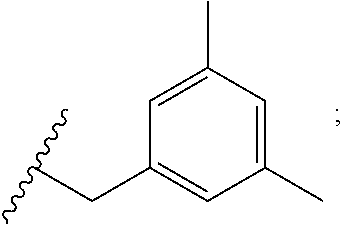
- PNSJTHITWUNZIL-UHFFFAOYSA-N Cc1cc(C)cc(CC(C)C)c1 Chemical compound Cc1cc(C)cc(CC(C)C)c1 PNSJTHITWUNZIL-UHFFFAOYSA-N 0.000 description 19
- ZNGABJJRUKMZBJ-UHFFFAOYSA-N CC(C)=O.CS(C)(=O)=O Chemical compound CC(C)=O.CS(C)(=O)=O ZNGABJJRUKMZBJ-UHFFFAOYSA-N 0.000 description 5
- BQNBRHCVDLUYPU-SMTGJRQGSA-N C=C(C)C(C)C.C=CCCN(CCc1ccc(OC)cc1)C(C)C.CC(C)N(C)Cc1ccccc1.CC(C)N1CCC[C@@H]1COCc1ccccc1.CC(C)N1CCC[C@H]1COCc1ccccc1.CCC[C@@H]1CCCN1C(C)C Chemical compound C=C(C)C(C)C.C=CCCN(CCc1ccc(OC)cc1)C(C)C.CC(C)N(C)Cc1ccccc1.CC(C)N1CCC[C@@H]1COCc1ccccc1.CC(C)N1CCC[C@H]1COCc1ccccc1.CCC[C@@H]1CCCN1C(C)C BQNBRHCVDLUYPU-SMTGJRQGSA-N 0.000 description 2
- FHLKEYLPXVGLAB-LOJHWDHBSA-N *.*.B.C.CN(Cc1ccccc1)c1ncnc2c1[C@@H](Cc1ccccc1)N(C)C[C@@H](N=[N+]=[N-])CN2S(=O)(=O)C(F)(F)F.S[I-8].[H][C@@]1(CO)CNc2ncnc(N(C)Cc3ccccc3)c2[C@@H](Cc2ccccc2)N1C.[H][C@@]1(CO[Si](C(C)C)(C(C)C)C(C)C)CNc2ncnc(N(C)Cc3ccccc3)c2C=N1.[H][C@@]12CNc3ncnc(N(C)Cc4ccccc4)c3[C@@H](Cc3ccccc3)[N+]1(C)C2.[H][C@]1(CN=[N+]=[N-])CN(C)[C@H](Cc2ccccc2)c2c(N(C)Cc3ccccc3)ncnc2N(S(=O)(=O)C(F)(F)F)C1.[N-]=[N+]=N Chemical compound *.*.B.C.CN(Cc1ccccc1)c1ncnc2c1[C@@H](Cc1ccccc1)N(C)C[C@@H](N=[N+]=[N-])CN2S(=O)(=O)C(F)(F)F.S[I-8].[H][C@@]1(CO)CNc2ncnc(N(C)Cc3ccccc3)c2[C@@H](Cc2ccccc2)N1C.[H][C@@]1(CO[Si](C(C)C)(C(C)C)C(C)C)CNc2ncnc(N(C)Cc3ccccc3)c2C=N1.[H][C@@]12CNc3ncnc(N(C)Cc4ccccc4)c3[C@@H](Cc3ccccc3)[N+]1(C)C2.[H][C@]1(CN=[N+]=[N-])CN(C)[C@H](Cc2ccccc2)c2c(N(C)Cc3ccccc3)ncnc2N(S(=O)(=O)C(F)(F)F)C1.[N-]=[N+]=N FHLKEYLPXVGLAB-LOJHWDHBSA-N 0.000 description 1
- SCYYXFAUFKUONG-MRWCDOMZSA-N C#C[C@@H]1c2c(ncnc2N(C)Cc2ccccc2)NC[C@@H](CO[Si](C(C)C)(C(C)C)C(C)C)N1Cc1ccccc1.C#C[C@H]1c2c(ncnc2N(C)Cc2ccccc2)NC[C@@H](CO[Si](C(C)C)(C(C)C)C(C)C)N1Cc1ccccc1.CC(C)[Si](OC[C@@H]1CNc2ncnc(N(Cc3ccccc3)Cc3ccccc3)c2C2NC(=O)CN21)(C(C)C)C(C)C.COc1ccc(CCN2CC/C=C\CN3Cc4c(ncnc42)NC[C@H]3CO[Si](C(C)C)(C(C)C)C(C)C)cc1.[H][C@@]12c3c(ncnc3N(C)Cc3ccccc3)NC[C@@H](CO[Si](C(C)C)(C(C)C)C(C)C)N1C(=O)C2c1ccc(OC)cc1.[H][C@@]12c3c(ncnc3N(C)Cc3ccccc3)NC[C@@H](CO[Si](C(C)C)(C(C)C)C(C)C)N1C(=O)C2c1ccccc1 Chemical compound C#C[C@@H]1c2c(ncnc2N(C)Cc2ccccc2)NC[C@@H](CO[Si](C(C)C)(C(C)C)C(C)C)N1Cc1ccccc1.C#C[C@H]1c2c(ncnc2N(C)Cc2ccccc2)NC[C@@H](CO[Si](C(C)C)(C(C)C)C(C)C)N1Cc1ccccc1.CC(C)[Si](OC[C@@H]1CNc2ncnc(N(Cc3ccccc3)Cc3ccccc3)c2C2NC(=O)CN21)(C(C)C)C(C)C.COc1ccc(CCN2CC/C=C\CN3Cc4c(ncnc42)NC[C@H]3CO[Si](C(C)C)(C(C)C)C(C)C)cc1.[H][C@@]12c3c(ncnc3N(C)Cc3ccccc3)NC[C@@H](CO[Si](C(C)C)(C(C)C)C(C)C)N1C(=O)C2c1ccc(OC)cc1.[H][C@@]12c3c(ncnc3N(C)Cc3ccccc3)NC[C@@H](CO[Si](C(C)C)(C(C)C)C(C)C)N1C(=O)C2c1ccccc1 SCYYXFAUFKUONG-MRWCDOMZSA-N 0.000 description 1
- XVIMILXHIRRQJY-GLQPGLCVSA-N C.C=C(C)c1ncnc2c1C=N[C@H](CO[Si](C(C)C)(C(C)C)C(C)C)CN2.S[I-2].S[I-4].[H]C(=O)c1c(Cl)ncnc1NC[C@@H](CO[Si](C(C)C)(C(C)C)C(C)C)NC(=O)OC(C)(C)C.[H]C(=O)c1c(NC[C@@H](CO[Si](C(C)C)(C(C)C)C(C)C)NC(=O)OC(C)(C)C)ncnc1C(=C)C Chemical compound C.C=C(C)c1ncnc2c1C=N[C@H](CO[Si](C(C)C)(C(C)C)C(C)C)CN2.S[I-2].S[I-4].[H]C(=O)c1c(Cl)ncnc1NC[C@@H](CO[Si](C(C)C)(C(C)C)C(C)C)NC(=O)OC(C)(C)C.[H]C(=O)c1c(NC[C@@H](CO[Si](C(C)C)(C(C)C)C(C)C)NC(=O)OC(C)(C)C)ncnc1C(=C)C XVIMILXHIRRQJY-GLQPGLCVSA-N 0.000 description 1
- CFYFCSMOQUNBRR-ZMOBYIPJSA-N C.CN(Cc1ccccc1)c1ncnc2c1CN1C[C@]1(C)CN2Cc1ccccc1.Cc1cc(C)cc(CN2C[C@@]3(C)CN3Cc3c(N(C)Cc4ccccc4)ncnc32)c1.[H][C@]12CCC(=O)N1Cc1c(N(C)Cc3ccccc3)ncnc1N(CC=C)C2.[H][C@]12CCCC(=O)N1Cc1c(ncnc1N(C)Cc1ccccc1)NC2.[H][C@]12CCCS(=O)(=O)N1Cc1c(ncnc1N(C)Cc1ccccc1)NC2 Chemical compound C.CN(Cc1ccccc1)c1ncnc2c1CN1C[C@]1(C)CN2Cc1ccccc1.Cc1cc(C)cc(CN2C[C@@]3(C)CN3Cc3c(N(C)Cc4ccccc4)ncnc32)c1.[H][C@]12CCC(=O)N1Cc1c(N(C)Cc3ccccc3)ncnc1N(CC=C)C2.[H][C@]12CCCC(=O)N1Cc1c(ncnc1N(C)Cc1ccccc1)NC2.[H][C@]12CCCS(=O)(=O)N1Cc1c(ncnc1N(C)Cc1ccccc1)NC2 CFYFCSMOQUNBRR-ZMOBYIPJSA-N 0.000 description 1
- ZXOXXUJSLCHZGE-KRWDZBQOSA-N C=C(C)c1ncnc2c1C=N[C@H](CO[Si](C(C)C)(C(C)C)C(C)C)CN2 Chemical compound C=C(C)c1ncnc2c1C=N[C@H](CO[Si](C(C)C)(C(C)C)C(C)C)CN2 ZXOXXUJSLCHZGE-KRWDZBQOSA-N 0.000 description 1
- ASSOIVMZVGOTBV-SANMLTNESA-N C=CCCN(CCc1ccc(OC)cc1)c1ncnc2c1C=N[C@H](CO[Si](C(C)C)(C(C)C)C(C)C)CN2 Chemical compound C=CCCN(CCc1ccc(OC)cc1)c1ncnc2c1C=N[C@H](CO[Si](C(C)C)(C(C)C)C(C)C)CN2 ASSOIVMZVGOTBV-SANMLTNESA-N 0.000 description 1
- IHBJASNBYXGCGM-WUFINQPMSA-N C=CCC[C@@H]1c2c(ncnc2C(=C)C)NC[C@@H](CO[Si](C(C)C)(C(C)C)C(C)C)N1Cc1ccccc1 Chemical compound C=CCC[C@@H]1c2c(ncnc2C(=C)C)NC[C@@H](CO[Si](C(C)C)(C(C)C)C(C)C)N1Cc1ccccc1 IHBJASNBYXGCGM-WUFINQPMSA-N 0.000 description 1
- UPFUUZDNPGPNDW-RRPNLBNLSA-N C=CC[C@@H]1c2c(ncnc2C(=C)C)NC[C@@H](CO[Si](C(C)C)(C(C)C)C(C)C)N1Cc1ccccc1 Chemical compound C=CC[C@@H]1c2c(ncnc2C(=C)C)NC[C@@H](CO[Si](C(C)C)(C(C)C)C(C)C)N1Cc1ccccc1 UPFUUZDNPGPNDW-RRPNLBNLSA-N 0.000 description 1
- WFMUJLWWGDJDBF-UHFFFAOYSA-N CC(C)N(C)Cc1ccccc1 Chemical compound CC(C)N(C)Cc1ccccc1 WFMUJLWWGDJDBF-UHFFFAOYSA-N 0.000 description 1
- KTEFRFJMSALKHH-QFIPXVFZSA-N CC(C)[Si](OC[C@@H]1CNc2ncnc(N(C)Cc3ccccc3)c2C=N1)(C(C)C)C(C)C Chemical compound CC(C)[Si](OC[C@@H]1CNc2ncnc(N(C)Cc3ccccc3)c2C=N1)(C(C)C)C(C)C KTEFRFJMSALKHH-QFIPXVFZSA-N 0.000 description 1
- WJVABWGBKPPOEB-QHCPKHFHSA-N CC(C)[Si](OC[C@@H]1CNc2ncnc(N(C)Cc3ccccc3)c2CN1S(=O)(=O)CCl)(C(C)C)C(C)C Chemical compound CC(C)[Si](OC[C@@H]1CNc2ncnc(N(C)Cc3ccccc3)c2CN1S(=O)(=O)CCl)(C(C)C)C(C)C WJVABWGBKPPOEB-QHCPKHFHSA-N 0.000 description 1
- FZVZSBURXZYIBC-IZZNHLLZSA-N CC(C)[Si](OC[C@@H]1CNc2ncnc(N3CCC[C@@H]3COCc3ccccc3)c2C=N1)(C(C)C)C(C)C Chemical compound CC(C)[Si](OC[C@@H]1CNc2ncnc(N3CCC[C@@H]3COCc3ccccc3)c2C=N1)(C(C)C)C(C)C FZVZSBURXZYIBC-IZZNHLLZSA-N 0.000 description 1
- KQHIXKAPASNCJZ-SVBPBHIXSA-N CC(C)[Si](OC[C@@H]1CNc2ncnc(N3CCC[C@H]3CCOCc3ccccc3)c2C=N1)(C(C)C)C(C)C Chemical compound CC(C)[Si](OC[C@@H]1CNc2ncnc(N3CCC[C@H]3CCOCc3ccccc3)c2C=N1)(C(C)C)C(C)C KQHIXKAPASNCJZ-SVBPBHIXSA-N 0.000 description 1
- FZVZSBURXZYIBC-UIOOFZCWSA-N CC(C)[Si](OC[C@@H]1CNc2ncnc(N3CCC[C@H]3COCc3ccccc3)c2C=N1)(C(C)C)C(C)C Chemical compound CC(C)[Si](OC[C@@H]1CNc2ncnc(N3CCC[C@H]3COCc3ccccc3)c2C=N1)(C(C)C)C(C)C FZVZSBURXZYIBC-UIOOFZCWSA-N 0.000 description 1
- XIWCSTSOPAXOBK-INIZCTEOSA-N CC[C@@H](CO[Si](C(C)C)(C(C)C)C(C)C)NC(=O)OC(C)(C)C Chemical compound CC[C@@H](CO[Si](C(C)C)(C(C)C)C(C)C)NC(=O)OC(C)(C)C XIWCSTSOPAXOBK-INIZCTEOSA-N 0.000 description 1
- NOAHCSDKCJRBNZ-IBULPXDKSA-N CC[C@@H](CO[Si](C(C)C)(C(C)C)C(C)C)NC(=O)OC(C)(C)C.CC[C@H](NC(=O)OC(C)(C)C)C(=O)OC.S[I-2].S[IH-].[H]C(=O)c1c(Cl)ncnc1NC[C@@H](CO[Si](C(C)C)(C(C)C)C(C)C)NC(=O)OC(C)(C)C Chemical compound CC[C@@H](CO[Si](C(C)C)(C(C)C)C(C)C)NC(=O)OC(C)(C)C.CC[C@H](NC(=O)OC(C)(C)C)C(=O)OC.S[I-2].S[IH-].[H]C(=O)c1c(Cl)ncnc1NC[C@@H](CO[Si](C(C)C)(C(C)C)C(C)C)NC(=O)OC(C)(C)C NOAHCSDKCJRBNZ-IBULPXDKSA-N 0.000 description 1
- MEDLYALAZJVBSS-NYRJJRHWSA-N CN(Cc1ccccc1)c1ncnc2c1C1OC[C@@H](CN2)N1C(=O)OC(C)(C)C Chemical compound CN(Cc1ccccc1)c1ncnc2c1C1OC[C@@H](CN2)N1C(=O)OC(C)(C)C MEDLYALAZJVBSS-NYRJJRHWSA-N 0.000 description 1
- ZDTWOXCFDQQUEK-NHCUHLMSSA-N CN(Cc1ccccc1)c1ncnc2c1[C@@H](Cc1ccccc1)N(C)C[C@@H](N=[N+]=[N-])CN2S(=O)(=O)C(F)(F)F Chemical compound CN(Cc1ccccc1)c1ncnc2c1[C@@H](Cc1ccccc1)N(C)C[C@@H](N=[N+]=[N-])CN2S(=O)(=O)C(F)(F)F ZDTWOXCFDQQUEK-NHCUHLMSSA-N 0.000 description 1
- PDOQVXRGSLGILL-UDVHJAMYSA-N CN(Cc1ccccc1)c1ncnc2c1[C@@H](Cc1ccccc1)N(C)C[C@@H](N=[N+]=[N-])CN2S(=O)(=O)C(F)(F)F.CN(Cc1ccccc1)c1ncnc2c1[C@@H]1N[C@H](CN2)CC(C(=O)NC(=O)OC(C)(C)C)O1.CN(Cc1ccccc1)c1ncnc2c1[C@@H]1N[C@H](CN2)CC(S(=O)(=O)c2cccc([N+](=O)[O-])c2)O1.CN(Cc1ccccc1)c1ncnc2c1[C@@H]1N[C@H](CN2)CO1.[H][C@@]1(CO[Si](C(C)C)(C(C)C)C(C)C)CNc2ncnc(N(C)Cc3ccccc3)c2/C=C/CON1C.[H][C@@]12CNc3ncnc(N(C)Cc4ccccc4)c3CN1S(=O)(=O)COC2 Chemical compound CN(Cc1ccccc1)c1ncnc2c1[C@@H](Cc1ccccc1)N(C)C[C@@H](N=[N+]=[N-])CN2S(=O)(=O)C(F)(F)F.CN(Cc1ccccc1)c1ncnc2c1[C@@H]1N[C@H](CN2)CC(C(=O)NC(=O)OC(C)(C)C)O1.CN(Cc1ccccc1)c1ncnc2c1[C@@H]1N[C@H](CN2)CC(S(=O)(=O)c2cccc([N+](=O)[O-])c2)O1.CN(Cc1ccccc1)c1ncnc2c1[C@@H]1N[C@H](CN2)CO1.[H][C@@]1(CO[Si](C(C)C)(C(C)C)C(C)C)CNc2ncnc(N(C)Cc3ccccc3)c2/C=C/CON1C.[H][C@@]12CNc3ncnc(N(C)Cc4ccccc4)c3CN1S(=O)(=O)COC2 PDOQVXRGSLGILL-UDVHJAMYSA-N 0.000 description 1
- NDKABNXIBCROPG-NHCUHLMSSA-N CN(Cc1ccccc1)c1ncnc2c1[C@@H](Cc1ccccc1)N(C)[C@H](CN=[N+]=[N-])CN2S(=O)(=O)C(F)(F)F Chemical compound CN(Cc1ccccc1)c1ncnc2c1[C@@H](Cc1ccccc1)N(C)[C@H](CN=[N+]=[N-])CN2S(=O)(=O)C(F)(F)F NDKABNXIBCROPG-NHCUHLMSSA-N 0.000 description 1
- LHHYDMJRRCRCCN-CVDCTZTESA-N CN(Cc1ccccc1)c1ncnc2c1[C@@H]1OC[C@H](CN2)N1C(=O)NCc1ccccc1 Chemical compound CN(Cc1ccccc1)c1ncnc2c1[C@@H]1OC[C@H](CN2)N1C(=O)NCc1ccccc1 LHHYDMJRRCRCCN-CVDCTZTESA-N 0.000 description 1
- RMJXGZZQAMHOOM-JTSKRJEESA-N CN(Cc1ccccc1)c1ncnc2c1[C@@H]1OC[C@H](CN2)N1S(=O)(=O)c1cccc([N+](=O)[O-])c1 Chemical compound CN(Cc1ccccc1)c1ncnc2c1[C@@H]1OC[C@H](CN2)N1S(=O)(=O)c1cccc([N+](=O)[O-])c1 RMJXGZZQAMHOOM-JTSKRJEESA-N 0.000 description 1
- MKECFLZOTWVTAR-VQYRCLTMSA-N COc1ccc(CCN2CC/C=C\CN3Cc4c(ncnc42)NC[C@H]3CO[Si](C(C)C)(C(C)C)C(C)C)cc1 Chemical compound COc1ccc(CCN2CC/C=C\CN3Cc4c(ncnc42)NC[C@H]3CO[Si](C(C)C)(C(C)C)C(C)C)cc1 MKECFLZOTWVTAR-VQYRCLTMSA-N 0.000 description 1
- ILCKOOIACFJEEW-UHFFFAOYSA-N Cc1cc(C)cc(CC(C)(C)C)c1 Chemical compound Cc1cc(C)cc(CC(C)(C)C)c1 ILCKOOIACFJEEW-UHFFFAOYSA-N 0.000 description 1
- WTNHODVJNVMCKV-IWSVUOGXSA-O O=C(O)c1cccc(Cl)c1.[H][C@@]1(CO[Si](C(C)C)(C(C)C)C(C)C)CNc2ncnc(N(C)Cc3ccccc3)c2/C=C/CO[N+]1([H])C Chemical compound O=C(O)c1cccc(Cl)c1.[H][C@@]1(CO[Si](C(C)C)(C(C)C)C(C)C)CNc2ncnc(N(C)Cc3ccccc3)c2/C=C/CO[N+]1([H])C WTNHODVJNVMCKV-IWSVUOGXSA-O 0.000 description 1
- FJULIZFJLOIAGW-KRWDZBQOSA-N [H]C(=O)c1c(Cl)ncnc1NC[C@@H](CO[Si](C(C)C)(C(C)C)C(C)C)NC(=O)OC(C)(C)C Chemical compound [H]C(=O)c1c(Cl)ncnc1NC[C@@H](CO[Si](C(C)C)(C(C)C)C(C)C)NC(=O)OC(C)(C)C FJULIZFJLOIAGW-KRWDZBQOSA-N 0.000 description 1
- HJZUWNBEXZNZDP-LEWJYISDSA-N [H][C@@]1(CO)CNc2ncnc(N(C)Cc3ccccc3)c2[C@@H](Cc2ccccc2)N1C Chemical compound [H][C@@]1(CO)CNc2ncnc(N(C)Cc3ccccc3)c2[C@@H](Cc2ccccc2)N1C HJZUWNBEXZNZDP-LEWJYISDSA-N 0.000 description 1
- KZCVMEFKZWYFBW-FHWWYNCCSA-N [H][C@@]1(CO[Si](C(C)C)(C(C)C)C(C)C)CNc2ncnc(N(C)Cc3ccccc3)c2/C=C/CON1C Chemical compound [H][C@@]1(CO[Si](C(C)C)(C(C)C)C(C)C)CNc2ncnc(N(C)Cc3ccccc3)c2/C=C/CON1C KZCVMEFKZWYFBW-FHWWYNCCSA-N 0.000 description 1
- KXYWSILQDZLOFS-SKCDSABHSA-N [H][C@@]1(CO[Si](C(C)C)(C(C)C)C(C)C)CNc2ncnc(N(C)Cc3ccccc3)c2C(C=C)N1C Chemical compound [H][C@@]1(CO[Si](C(C)C)(C(C)C)C(C)C)CNc2ncnc(N(C)Cc3ccccc3)c2C(C=C)N1C KXYWSILQDZLOFS-SKCDSABHSA-N 0.000 description 1
- DEEFYDKEBWJTCN-MIXNXMPVSA-N [H][C@@]1(CO[Si](C(C)C)(C(C)C)C(C)C)CNc2ncnc(N(C)Cc3ccccc3)c2C2N(Cc3ccccc3)C(=[IH])CN21 Chemical compound [H][C@@]1(CO[Si](C(C)C)(C(C)C)C(C)C)CNc2ncnc(N(C)Cc3ccccc3)c2C2N(Cc3ccccc3)C(=[IH])CN21 DEEFYDKEBWJTCN-MIXNXMPVSA-N 0.000 description 1
- OHMAZMCDTWTSDZ-IOWSJCHKSA-N [H][C@@]1(CO[Si](C(C)C)(C(C)C)C(C)C)CNc2ncnc(N(C)Cc3ccccc3)c2[C@@]([H])(C#C)N1Cc1ccccc1 Chemical compound [H][C@@]1(CO[Si](C(C)C)(C(C)C)C(C)C)CNc2ncnc(N(C)Cc3ccccc3)c2[C@@]([H])(C#C)N1Cc1ccccc1 OHMAZMCDTWTSDZ-IOWSJCHKSA-N 0.000 description 1
- OHMAZMCDTWTSDZ-CONSDPRKSA-N [H][C@@]1(CO[Si](C(C)C)(C(C)C)C(C)C)CNc2ncnc(N(C)Cc3ccccc3)c2[C@]([H])(C#C)N1Cc1ccccc1 Chemical compound [H][C@@]1(CO[Si](C(C)C)(C(C)C)C(C)C)CNc2ncnc(N(C)Cc3ccccc3)c2[C@]([H])(C#C)N1Cc1ccccc1 OHMAZMCDTWTSDZ-CONSDPRKSA-N 0.000 description 1
- XDXUWACBDAOLFC-DEDOGFMKSA-N [H][C@@]1(CO[Si](C(C)C)(C(C)C)C(C)C)CNc2ncnc(N(C)Cc3ccccc3)c2[C@]2([H])N1C(=O)[C@@]2([H])c1ccc(OC)cc1 Chemical compound [H][C@@]1(CO[Si](C(C)C)(C(C)C)C(C)C)CNc2ncnc(N(C)Cc3ccccc3)c2[C@]2([H])N1C(=O)[C@@]2([H])c1ccc(OC)cc1 XDXUWACBDAOLFC-DEDOGFMKSA-N 0.000 description 1
- GTCXFNHFIXZEAV-TWLDFKIOSA-N [H][C@@]1(CO[Si](C(C)C)(C(C)C)C(C)C)CNc2ncnc(N(C)Cc3ccccc3)c2[C@]2([H])N1C(=O)[C@@]2([H])c1ccccc1 Chemical compound [H][C@@]1(CO[Si](C(C)C)(C(C)C)C(C)C)CNc2ncnc(N(C)Cc3ccccc3)c2[C@]2([H])N1C(=O)[C@@]2([H])c1ccccc1 GTCXFNHFIXZEAV-TWLDFKIOSA-N 0.000 description 1
- SSTBYQTUUCATAG-FPWXTWRBSA-N [H][C@@]1(CO[Si](C(C)C)(C(C)C)C(C)C)CNc2ncnc3c2[C@@]([H])(CC/C=C\CCN3CCc2ccc(OC)cc2)N1Cc1ccccc1 Chemical compound [H][C@@]1(CO[Si](C(C)C)(C(C)C)C(C)C)CNc2ncnc3c2[C@@]([H])(CC/C=C\CCN3CCc2ccc(OC)cc2)N1Cc1ccccc1 SSTBYQTUUCATAG-FPWXTWRBSA-N 0.000 description 1
- WLCKTQJCAIKLFX-JTGIGXABSA-N [H][C@@]1(CO[Si](C(C)C)(C(C)C)C(C)C)CNc2ncnc3c2[C@@]([H])(CC=CC3C)N1C(=O)OC(C)(C)C Chemical compound [H][C@@]1(CO[Si](C(C)C)(C(C)C)C(C)C)CNc2ncnc3c2[C@@]([H])(CC=CC3C)N1C(=O)OC(C)(C)C WLCKTQJCAIKLFX-JTGIGXABSA-N 0.000 description 1
- LGZBQEVBCZCKNB-GOSISDBHSA-N [H][C@@]12C=CCN(C1)c1ncnc(N(C)Cc3ccccc3)c1CN2C(=O)OC(C)(C)C Chemical compound [H][C@@]12C=CCN(C1)c1ncnc(N(C)Cc3ccccc3)c1CN2C(=O)OC(C)(C)C LGZBQEVBCZCKNB-GOSISDBHSA-N 0.000 description 1
- QKZOCGHQITXBJQ-DEDVIOHNSA-N [H][C@@]12C=CCN(C1)c1ncnc(N(C)Cc3ccccc3)c1CN2C(=O)OC(C)(C)C.[H][C@@]12CN(Cc3cc(C)cc(C)c3)c3ncnc(N(C)Cc4ccccc4)c3CN1C2.[H][C@@]12CN(Cc3ccccc3)c3ncnc(N(C)Cc4ccccc4)c3CN1C2.[H][C@@]12CNc3ncnc(N(C)Cc4ccccc4)c3CN1C(=O)COC2.[H][C@]12COC(=O)N1Cc1c(N(C)Cc3ccccc3)ncnc1N(CC=C)C2 Chemical compound [H][C@@]12C=CCN(C1)c1ncnc(N(C)Cc3ccccc3)c1CN2C(=O)OC(C)(C)C.[H][C@@]12CN(Cc3cc(C)cc(C)c3)c3ncnc(N(C)Cc4ccccc4)c3CN1C2.[H][C@@]12CN(Cc3ccccc3)c3ncnc(N(C)Cc4ccccc4)c3CN1C2.[H][C@@]12CNc3ncnc(N(C)Cc4ccccc4)c3CN1C(=O)COC2.[H][C@]12COC(=O)N1Cc1c(N(C)Cc3ccccc3)ncnc1N(CC=C)C2 QKZOCGHQITXBJQ-DEDVIOHNSA-N 0.000 description 1
- DGXILJHMYKISDX-LOSJGSFVSA-N [H][C@@]12CC=C(C)c3ncnc(c31)NC[C@@H](CO[Si](C(C)C)(C(C)C)C(C)C)N2Cc1ccccc1 Chemical compound [H][C@@]12CC=C(C)c3ncnc(c31)NC[C@@H](CO[Si](C(C)C)(C(C)C)C(C)C)N2Cc1ccccc1 DGXILJHMYKISDX-LOSJGSFVSA-N 0.000 description 1
- YRZIXEWPVPLGJU-DMDVIOLWSA-N [H][C@@]12CN(Cc3cc(C)cc(C)c3)c3ncnc(N(C)Cc4ccccc4)c3CN1C2 Chemical compound [H][C@@]12CN(Cc3cc(C)cc(C)c3)c3ncnc(N(C)Cc4ccccc4)c3CN1C2 YRZIXEWPVPLGJU-DMDVIOLWSA-N 0.000 description 1
- IKKLKGUUACHLHM-ACVCQEAVSA-N [H][C@@]12CN(Cc3ccccc3)c3ncnc(N(C)Cc4ccccc4)c3CN1C2 Chemical compound [H][C@@]12CN(Cc3ccccc3)c3ncnc(N(C)Cc4ccccc4)c3CN1C2 IKKLKGUUACHLHM-ACVCQEAVSA-N 0.000 description 1
- YXTUHKINYLVVCM-AWEZNQCLSA-N [H][C@@]12CNc3ncnc(N(C)Cc4ccccc4)c3CN1C(=O)COC2 Chemical compound [H][C@@]12CNc3ncnc(N(C)Cc4ccccc4)c3CN1C(=O)COC2 YXTUHKINYLVVCM-AWEZNQCLSA-N 0.000 description 1
- GLHIGNFRVXRENR-AWEZNQCLSA-N [H][C@@]12CNc3ncnc(N(C)Cc4ccccc4)c3CN1S(=O)(=O)COC2 Chemical compound [H][C@@]12CNc3ncnc(N(C)Cc4ccccc4)c3CN1S(=O)(=O)COC2 GLHIGNFRVXRENR-AWEZNQCLSA-N 0.000 description 1
- JFMOHRRISJIASN-INIZCTEOSA-N [H][C@]12COC(=O)N1Cc1c(N(C)Cc3ccccc3)ncnc1N(CC=C)C2 Chemical compound [H][C@]12COC(=O)N1Cc1c(N(C)Cc3ccccc3)ncnc1N(CC=C)C2 JFMOHRRISJIASN-INIZCTEOSA-N 0.000 description 1
Images


Classifications
-
- C—CHEMISTRY; METALLURGY
- C07—ORGANIC CHEMISTRY
- C07D—HETEROCYCLIC COMPOUNDS
- C07D487/00—Heterocyclic compounds containing nitrogen atoms as the only ring hetero atoms in the condensed system, not provided for by groups C07D451/00 - C07D477/00
- C07D487/22—Heterocyclic compounds containing nitrogen atoms as the only ring hetero atoms in the condensed system, not provided for by groups C07D451/00 - C07D477/00 in which the condensed system contains four or more hetero rings
-
- A—HUMAN NECESSITIES
- A61—MEDICAL OR VETERINARY SCIENCE; HYGIENE
- A61K—PREPARATIONS FOR MEDICAL, DENTAL OR TOILETRY PURPOSES
- A61K31/00—Medicinal preparations containing organic active ingredients
- A61K31/33—Heterocyclic compounds
- A61K31/395—Heterocyclic compounds having nitrogen as a ring hetero atom, e.g. guanethidine or rifamycins
- A61K31/55—Heterocyclic compounds having nitrogen as a ring hetero atom, e.g. guanethidine or rifamycins having seven-membered rings, e.g. azelastine, pentylenetetrazole
- A61K31/551—Heterocyclic compounds having nitrogen as a ring hetero atom, e.g. guanethidine or rifamycins having seven-membered rings, e.g. azelastine, pentylenetetrazole having two nitrogen atoms, e.g. dilazep
- A61K31/5513—1,4-Benzodiazepines, e.g. diazepam or clozapine
- A61K31/5517—1,4-Benzodiazepines, e.g. diazepam or clozapine condensed with five-membered rings having nitrogen as a ring hetero atom, e.g. imidazobenzodiazepines, triazolam
-
- A—HUMAN NECESSITIES
- A61—MEDICAL OR VETERINARY SCIENCE; HYGIENE
- A61P—SPECIFIC THERAPEUTIC ACTIVITY OF CHEMICAL COMPOUNDS OR MEDICINAL PREPARATIONS
- A61P35/00—Antineoplastic agents
-
- C—CHEMISTRY; METALLURGY
- C07—ORGANIC CHEMISTRY
- C07D—HETEROCYCLIC COMPOUNDS
- C07D471/00—Heterocyclic compounds containing nitrogen atoms as the only ring hetero atoms in the condensed system, at least one ring being a six-membered ring with one nitrogen atom, not provided for by groups C07D451/00 - C07D463/00
- C07D471/12—Heterocyclic compounds containing nitrogen atoms as the only ring hetero atoms in the condensed system, at least one ring being a six-membered ring with one nitrogen atom, not provided for by groups C07D451/00 - C07D463/00 in which the condensed system contains three hetero rings
- C07D471/18—Bridged systems
-
- C—CHEMISTRY; METALLURGY
- C07—ORGANIC CHEMISTRY
- C07D—HETEROCYCLIC COMPOUNDS
- C07D487/00—Heterocyclic compounds containing nitrogen atoms as the only ring hetero atoms in the condensed system, not provided for by groups C07D451/00 - C07D477/00
- C07D487/02—Heterocyclic compounds containing nitrogen atoms as the only ring hetero atoms in the condensed system, not provided for by groups C07D451/00 - C07D477/00 in which the condensed system contains two hetero rings
- C07D487/04—Ortho-condensed systems
-
- C—CHEMISTRY; METALLURGY
- C07—ORGANIC CHEMISTRY
- C07D—HETEROCYCLIC COMPOUNDS
- C07D487/00—Heterocyclic compounds containing nitrogen atoms as the only ring hetero atoms in the condensed system, not provided for by groups C07D451/00 - C07D477/00
- C07D487/12—Heterocyclic compounds containing nitrogen atoms as the only ring hetero atoms in the condensed system, not provided for by groups C07D451/00 - C07D477/00 in which the condensed system contains three hetero rings
- C07D487/14—Ortho-condensed systems
-
- C—CHEMISTRY; METALLURGY
- C07—ORGANIC CHEMISTRY
- C07D—HETEROCYCLIC COMPOUNDS
- C07D487/00—Heterocyclic compounds containing nitrogen atoms as the only ring hetero atoms in the condensed system, not provided for by groups C07D451/00 - C07D477/00
- C07D487/12—Heterocyclic compounds containing nitrogen atoms as the only ring hetero atoms in the condensed system, not provided for by groups C07D451/00 - C07D477/00 in which the condensed system contains three hetero rings
- C07D487/16—Peri-condensed systems
-
- C—CHEMISTRY; METALLURGY
- C07—ORGANIC CHEMISTRY
- C07D—HETEROCYCLIC COMPOUNDS
- C07D487/00—Heterocyclic compounds containing nitrogen atoms as the only ring hetero atoms in the condensed system, not provided for by groups C07D451/00 - C07D477/00
- C07D487/12—Heterocyclic compounds containing nitrogen atoms as the only ring hetero atoms in the condensed system, not provided for by groups C07D451/00 - C07D477/00 in which the condensed system contains three hetero rings
- C07D487/18—Bridged systems
-
- C—CHEMISTRY; METALLURGY
- C07—ORGANIC CHEMISTRY
- C07D—HETEROCYCLIC COMPOUNDS
- C07D498/00—Heterocyclic compounds containing in the condensed system at least one hetero ring having nitrogen and oxygen atoms as the only ring hetero atoms
- C07D498/02—Heterocyclic compounds containing in the condensed system at least one hetero ring having nitrogen and oxygen atoms as the only ring hetero atoms in which the condensed system contains two hetero rings
- C07D498/04—Ortho-condensed systems
-
- C—CHEMISTRY; METALLURGY
- C07—ORGANIC CHEMISTRY
- C07D—HETEROCYCLIC COMPOUNDS
- C07D498/00—Heterocyclic compounds containing in the condensed system at least one hetero ring having nitrogen and oxygen atoms as the only ring hetero atoms
- C07D498/02—Heterocyclic compounds containing in the condensed system at least one hetero ring having nitrogen and oxygen atoms as the only ring hetero atoms in which the condensed system contains two hetero rings
- C07D498/08—Bridged systems
-
- C—CHEMISTRY; METALLURGY
- C07—ORGANIC CHEMISTRY
- C07D—HETEROCYCLIC COMPOUNDS
- C07D498/00—Heterocyclic compounds containing in the condensed system at least one hetero ring having nitrogen and oxygen atoms as the only ring hetero atoms
- C07D498/12—Heterocyclic compounds containing in the condensed system at least one hetero ring having nitrogen and oxygen atoms as the only ring hetero atoms in which the condensed system contains three hetero rings
- C07D498/14—Ortho-condensed systems
-
- C—CHEMISTRY; METALLURGY
- C07—ORGANIC CHEMISTRY
- C07D—HETEROCYCLIC COMPOUNDS
- C07D498/00—Heterocyclic compounds containing in the condensed system at least one hetero ring having nitrogen and oxygen atoms as the only ring hetero atoms
- C07D498/12—Heterocyclic compounds containing in the condensed system at least one hetero ring having nitrogen and oxygen atoms as the only ring hetero atoms in which the condensed system contains three hetero rings
- C07D498/18—Bridged systems
-
- C—CHEMISTRY; METALLURGY
- C07—ORGANIC CHEMISTRY
- C07D—HETEROCYCLIC COMPOUNDS
- C07D515/00—Heterocyclic compounds containing in the condensed system at least one hetero ring having nitrogen, oxygen, and sulfur atoms as the only ring hetero atoms, not provided for in groups C07D463/00, C07D477/00 or C07D499/00 - C07D507/00
- C07D515/12—Heterocyclic compounds containing in the condensed system at least one hetero ring having nitrogen, oxygen, and sulfur atoms as the only ring hetero atoms, not provided for in groups C07D463/00, C07D477/00 or C07D499/00 - C07D507/00 in which the condensed system contains three hetero rings
- C07D515/14—Ortho-condensed systems
-
- C—CHEMISTRY; METALLURGY
- C07—ORGANIC CHEMISTRY
- C07F—ACYCLIC, CARBOCYCLIC OR HETEROCYCLIC COMPOUNDS CONTAINING ELEMENTS OTHER THAN CARBON, HYDROGEN, HALOGEN, OXYGEN, NITROGEN, SULFUR, SELENIUM OR TELLURIUM
- C07F7/00—Compounds containing elements of Groups 4 or 14 of the Periodic Table
- C07F7/02—Silicon compounds
- C07F7/08—Compounds having one or more C—Si linkages
- C07F7/18—Compounds having one or more C—Si linkages as well as one or more C—O—Si linkages
- C07F7/1804—Compounds having Si-O-C linkages
Definitions
- the present invention is related to a novel pyrimidine derivative compound or a pharmaceutically acceptable salt thereof, a process for preparing the same, and a pharmaceutical composition using the same.
- LRS Leucyl-tRNA synthetase
- mTORC1 rapamycin complex pathway—a dominant effector that regulates cellular growth, metabolism, proliferation, and survival.
- mTORC1 rapamycin complex pathway
- mTORC1 rapamycin complex pathway
- mTORC1 Upon activation of mTORC1 by multiple upstream inputs such as growth factors, energy status, and amino acids, particularly the branched-chain amino acid, leucine (Leu), mTORC1 plays a crucial role in triggering eukaryotic cell growth and proliferation through stimulating protein biosynthesis and other anabolic processes while suppressing a catabolic process, for example, autophagy. Consequently, the dysregulation of mTORC1 accelerates biological pathways that could lead to cancer cell growth, survival, and proliferation. Accordingly, to find a specific and selective inhibitor of mTORC1 is a very important purpose for treating a cancer.
- Target-oriented synthesis Traditional synthetic organic chemistry has been advanced with the development of target-oriented synthesis. Many organic chemists have conceived and developed various new reactions through the synthesis of diverse natural products. Since the target-oriented synthesis is configured to target and synthesize a specific natural product, the obtained compound may be represented as one point in view of a compound structure space. Thus, target oriented synthesis seems to be very limited in terms of the diversity of compound.
- Combinatorial chemical synthesis is a new synthetic method for the development of new materials. Whereas conventional organic synthesis methods can require a single reaction for the synthesis of one kind of compound, combinatorial chemical synthesis is a highly efficient chemical synthesis to synthesize more various and numerous compounds at the same time or to automate the multi-step synthetic process. With the introduction of combinatorial chemical synthesis, it has become easier to screen biological hit and lead compounds of new structures and to optimize the structure and activity thereof. Combinatorial chemical synthesis has been mainly studied in medicinal chemistry, particularly greatly contributing to the study of structure-activity relationship, and also has allowed for various substitution reactions in a specific skeletal structure, ensuring diversity of compounds.
- diversity-oriented synthesis is configured to synthesize a collection of structurally-diverse compounds distributed in a wide range of the compound structure space and then to search for new various physiologically active compounds through high throughput screening (HTS).
- HTS high throughput screening
- compounds having different core skeletons can be prepared at the same time, and can be constructed into a library, whereby various different active compounds can be identified by various screening methods.
- Korean patent publication No. 10-2012-0093940 discloses a compound having a structure of pyrimidodiazepine. However, this is silent on the inhibition activity of the binding between LRS and RagD.
- the present inventors have synthesized a new pyrimidine derivative compound having an activity inhibiting the binding between LRS and RagD to arrive in the present invention.
- the purpose of the present invention is to provide a novel pyrimidine derivative compound or a pharmaceutically acceptable salt thereof.
- the purpose of the present invention is to provide a process for preparing the novel pyrimidine derivative compound or a pharmaceutically acceptable salt thereof.
- the purpose of the present invention is to provide a pharmaceutical composition using the novel pyrimidine derivative compound or a pharmaceutically acceptable salt thereof.
- the present invention provides a pyrimidine derivative compound represented by any one of formulas I to IX:
- A forms a heterobicyclic ring together with adjacent N and C atoms wherein the heterobicyclic ring is an 8- to 9-membered bicyclic ring which may contain 1 to 3 nitrogen atoms;
- R 1 is -Boc (tert-butyloxycarbonyl) or a benzyl group (Bn);
- R 2 is —CH 2 —O-TIPS;
- R 3 is hydrogen, a C 1 to C 3 alkyl group, an allyl group, -Tf, a C 1 to C 3 alkyl benzyl, or
- B forms a 6- to 10-membered ring together with adjacent 2 to 3 C atoms wherein the ring may contain 1 to 3 nitrogen atoms;
- R 1 is -Boc or a benzyl group;
- R 2 is —CH 2 —O-TIPS;
- R 3 is hydrogen, a C 1 to C 3 alkyl group, an allyl group, -Tf, a C 1 to C 3 alkyl benzyl group, or
- R 4 is a C 1 to C 3 alkyl group or —CH 2 -PMB;
- C forms a 10- to 14-membered ring together with adjacent N and C atoms wherein the ring may contain 1 to 3 nitrogen atoms;
- R 2 is —CH 2 —O-TIPS;
- R 3 is hydrogen, a C 1 to C 3 alkyl group, an allyl group, -Tf, a C 1 to C 3 alkyl benzyl group, or
- R 5 is a C 1 to C 3 alkyl group or —CH 2 -PMB;
- D forms a 4- to 6-membered cyclic imide together with adjacent N and C atoms wherein the cyclic imide is a ring which may contain 1 to 3 nitrogen atoms;
- R 2 is —CH 2 —O-TIPS;
- R 3 is hydrogen, a —C 1 to C 3 alkyl group, an allyl group, -Tf, a C 1 to C 3 alkyl benzyl group, or
- R and R′ are each independently a benzyl group or a C 1 to C 3 alkyl group; and R 7 is a benzyl group, a phenyl group, or
- R 1 is -Boc or a benzyl group
- R 2 is —CH 2 —O-TIPS
- R 3 is hydrogen, a C 1 to C 3 alkyl group, an allyl group, -Tf, a C 1 to C 3 alkyl benzyl group, or
- R and R′ are each independently a benzyl group or a C 1 to C 3 alkyl group; and R 8 is an acetylene group;
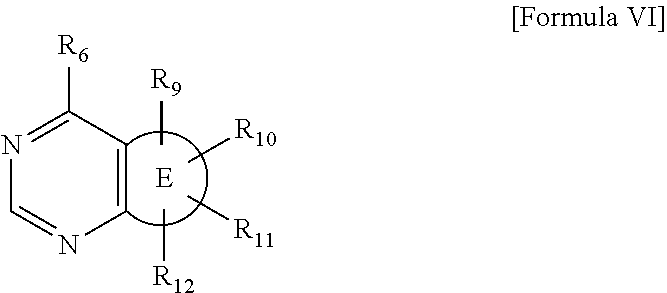
- E forms an 8- to 10-membered heterocyclic ring together with adjacent two C atoms wherein the heterocyclic ring is a saturated or unsaturated ring which contains at least two of 2 to 4 nitrogen atoms and 1 to 3 oxygen atoms;
- R 6 is
- R and R′ are each independently a benzyl group or a C 1 to C 3 alkyl group; and R 9 to R 12 are each independently hydrogen, a methyl group, an azide group, a benzyl group, —CH 2 —O-TIPS or -Tf;
- R 3 is hydrogen, a —C 1 to C 3 alkyl group, an allyl group, -Tf, a C 1 to C 3 alkyl benzyl group, or
- R and R′ are each independently a benzyl group or a C 1 to C 3 alkyl group; and R 13 is -Boc, —CONHBn, -m-Ns;
- F is —X—(CH 2 )n-(O—CH 2 )m- and forms a 3- to 6-membered heterocyclic ring together with adjacent N and C atoms wherein X is
- R 3 is hydrogen, a —C 1 to C 3 alkyl group, an allyl group, -Tf, a C 1 to C 3 alkyl benzyl group, or
- R and R′ are each independently a benzyl group or a C 1 to C 3 alkyl group
- G forms a 6- to 9-membered heterocyclic ring together with adjacent N and C atoms wherein the heterocyclic ring is an unsaturated heterocyclic ring which contains 2 to 3 nitrogen atoms;
- R 1 is -Boc or a benzyl group; and
- R 6 is
- R and R′ are each independently a benzyl group or a C 1 to C 3 alkyl group
- the present invention provides a process for preparing the pyrimidine derivative compound of formulas I to IX or a pharmaceutically acceptable salt thereof, characterized in comprising:
- step 1 for preparing an intermediate substance, tert-(S)-(1-(6-chloro-5-formylpyrimidin-4-yl)amino)-3-((triisopropylsilyl)oxy)propan-2-yl)carbamate;
- step 1a for preparing a starting material represented by formula 1 by reacting the intermediate substance prepared in step 1 with cyclic amine or tetrakis palladium;
- R 2 is —CH 2 —O-TIPS
- step 2 for preparing a desired compound from the starting material prepared in step 1a.
- the present invention provides a composition for treating cancer comprising the pyrimidine derivative compound of formulas I to IX or a pharmaceutically acceptable salt thereof as an active ingredient.
- novel pyrimidine derivative compound of the present invention exerts excellent toxicity against cancer cells, based on which it can be used as a treating agent for cancer diseases. Further, the compound can be synthesized based on the preparation process according to the present invention in a relatively simple manner.
- FIG. 1 shows diversity-oriented synthetic strategy with pyrimidine as a privileged structure.
- a) shows pyrimidine-containing bioactive compounds.
- c) shows synthetic strategy of pyrimidodiazepine- or pyrimidine-containing pyrimidine derivative.
- FIG. 2 shows chemoinformatic analysis for structural diversity and complexity of 3D of pDOS library.
- a) depicts 16 core skeletons containing pyrimidine- or pyrimidodiazepine.
- c) is a PMI analysis drawing.
- the 3D structure of pDOS library in red squares was quantitatively compared with that of 15 FDA-approved drugs containing pyrimidine moiety in blue squares and bioactive natural products in grey dots.
- FIG. 3 shows X-ray structure of compound 16f (Deposition number in Cambridge Structural Database: CCDC1500586).
- FIG. 4 shows pyrimidine diversity-oriented synthesis (pDOS) library used in PMI analysis.
- FIG. 5 shows FDA-approved drugs embedded with pyrimidine moieties.
- FIGS. 6 A, 6 B, 6 C, 7 A, 7 B, 8 A, 8 B, 9 A, 9 B, 9 C, 10 A, 10 B, 10 C, 11 A, 11 B, 12 A, 12 B, 13 A, 13 B, 13 C, 14 A , and 14 B depict analysis on COSY, HSQC and NOE spectra for some of desired compounds (i.e., compounds 5d, 6d, 7e, 9f, 10f, 12f, 12f, 17f, 17f).
- FIG. 15 relate to experiments on discovery of chemical modulator for LRS-RagD interaction
- a) is a diagram relevant to experiments on discovery of chemical modulator for LRS-RagD interaction. It shows noncanonical role of LRS and Leucine-loaded LRS binds to RagD, which promotes the translocation of mTORC1 to lysosomal surface and subsequent activation.
- HEK293Tcells were treated with 20, 10, 5 and 1 ⁇ M of compound 21f for 3 h. Cells deprived of leucine for 3 h and cells treated with 200 nM of rapamycin for 3 h were used as a control. Phospho-T389 S6K1, phospho-S757 ULK1, and phospho-S65 4E-BP1 were reduced in cells treated with 21f in a dose-dependent manner, which shows that 21f well inhibits mTORC1.
- FIG. 16 shows autophagic activation of compound 21f and its inhibition activity of cell division.
- a) Western blot analysis of LC3 and p62 HeLa cells were treated with 200 nM of rapamycin (Rap), 10 nM of bafilomycin (Baf), or 20 ⁇ M of 21f for 6 h, followed by western blotting.
- the graph shows analysis results of western blotting of experimental and control groups based on LC3 I/LC3 II ratio and p62 level of the DMSO group. The results represent the mean of at least three replicates. Comparing with the DMSO group, rapamycin activates autophagic activity, lowering LC3 I/LC3 II ratio and reducing p62 level.
- Bafilomycin is a compound inhibiting autophagic activity by preventing formation of autolysosome. Similarly to rapamycin, 21f activates autophagic activity, lowering LC3 I/LC3 II ratio and reducing p62 level.
- c) depicts mCherry and GFP fluorescence images.
- mCherry-GFP-LC3 genes are expressed in HeLa cells, treated with 200 nM of Rap, 10 nM of Baf, or 20 ⁇ M of 21f for 6 h, followed by obtaining an image through fluorescence microscope. Scale bar is 15 mm. Rapamycin activates autophagic activity, which results in combining lysosome with autophagosome to lower pH and lose GFP fluorescence, whereby red fluorescence of mCherry fluorescence alone remained.
- Bafilomycin inhibits combining lysosome with autophagosome, which results in maintaining pH and then GFP fluorescence, whereby mCherry fluorescence overlaps with GFP fluorescence to exert yellow color. Similarly to rapamycin, 21f exerts red fluorescence.
- d shows the results where cellular division level in HEK293T cells was measured by BrdU assay.
- the Leu-deprived cells were used as a control.
- cellular division was inhibited as treatment time passed.
- FIG. 17 shows dose-dependent graphs in ELISA with compounds 14f, 15f, 18f, 19f, 22f and 23f.
- Compounds embedded with pyrimidodiazepine skeleton other than 20f and 21f did not inhibit the LRS-RagD interaction in a dose-dependent manner.
- FIG. 18 shows the results of western blotting of DMSO and Rapamycin (Rap) as a control and compound 21f.
- the results from the two cancer cell lines were same as those from HEK293T cells.
- FIGS. 19 A, 19 B, and 19 C depict SPR analysis results showing concentration-dependent binding of compounds 14f, 19f, and 21f to purified LRS. 14f and 19f did not bind to LRS in a concentration-dependent manner, which is different from 21f.
- FIG. 63 shows crystal structure data of compound 16f.
- FIG. 64 shows bond lengths ( ⁇ ) and bond angles)(°) for compound 16f.
- FIG. 65 shows anisotropic atomic displacement parameters ( ⁇ 2 ) for compound 16f.
- the anisotropic atomic displacement factor was applied for the function: ⁇ 2 ⁇ 2 [h 2 a* 2 U 11 + . . . +2 h k a*b*U 12 ].
- FIG. 66 shows hydrogen atomic coordinates and isotropic atomic displacement parameters ( ⁇ 2 ) for compound 16f.
- FIGS. 67 , 68 , and 69 show normalized PMI ratios of pDOS library, natural products and FDA-approved drugs embedded with pyrimidine moieties.
- FIGS. 70 and 71 depict a reaction scheme (Scheme 1) and another reaction scheme (Scheme 2), respectively, of a preparation process of an embodiment of the present invention.
- the present invention is related to a novel pyrimidine derivative compound, a process for preparing the novel pyrimidine derivative compound, and a pharmaceutical composition using the novel pyrimidine derivative compound.
- a pyrimidine derivative compound of the present invention comprises a pyrimidine derivative compound represented by any one of formulas I to IX:
- A forms a heterobicyclic ring together with adjacent N and C atoms wherein the heterobicyclic ring is an 8- to 9-membered bicyclic ring which may contain 1 to 3 nitrogen atoms;
- R 1 is -Boc (tert-butyloxycarbonyl) or a benzyl group (Bn);
- R 2 is —CH 2 —O-TIPS;
- R 3 is hydrogen, a C 1 to C 3 alkyl group, an allyl group, -Tf, a C 1 to C 3 alkyl benzyl, or
- B forms a 6- to 10-membered ring together with adjacent 2 to 3 C atoms wherein the ring may contain 1 to 3 nitrogen atoms;
- R 1 is -Boc or a benzyl group;
- R 2 is —CH 2 —O-TIPS;
- R 3 is hydrogen, a C 1 to C 3 alkyl group, an allyl group, -Tf, a C 1 to C 3 alkyl benzyl group, or
- R 4 is a C 1 to C 3 alkyl group or —CH 2 -PMB;
- C forms a 10- to 14-membered ring together with adjacent N and C atoms wherein the ring may contain 1 to 3 nitrogen atoms;
- R 2 is —CH 2 —O-TIPS;
- R 3 is hydrogen, a C 1 to C 3 alkyl group, an allyl group, -Tf, a C 1 to C 3 alkyl benzyl group, or
- R 5 is a C 1 to C 3 alkyl group or —CH 2 -PMB;
- D forms a 4- to 6-membered cyclic imide together with adjacent N and C atoms wherein the cyclic imide is a ring which may contain 1 to 3 nitrogen atoms;
- R 2 is —CH 2 —O-TIPS;
- R 3 is hydrogen, a —C 1 to C 3 alkyl group, an allyl group, -Tf, a C 1 to C 3 alkyl benzyl group, or
- R and R′ are each independently a benzyl group or a C 1 to C 3 alkyl group; and R 7 is a benzyl group, a phenyl group, or
- R 1 is -Boc or a benzyl group
- R 2 is —CH 2 —O-TIPS
- R 3 is hydrogen, a C 1 to C 3 alkyl group, an allyl group, -Tf, a C 1 to C 3 alkyl benzyl group, or
- R and R′ are each independently a benzyl group or a C 1 to C 3 alkyl group; and R 8 is an acetylene group;
- E forms an 8- to 10-membered heterocyclic ring together with adjacent two C atoms wherein the heterocyclic ring is a saturated or unsaturated ring which contains at least two of 2 to 4 nitrogen atoms and 1 to 3 oxygen atoms;
- R 6 is
- R and R′ are each independently a benzyl group or a C 1 to C 3 alkyl group; and R 9 to R 12 are each independently hydrogen, a methyl group, an azide group, a benzyl group, —CH 2 —O-TIPS or -Tf;
- R 3 is hydrogen, a —C 1 to C 3 alkyl group, an allyl group, -Tf, a C 1 to C 3 alkyl benzyl group, or
- R and R′ are each independently a benzyl group or a C 1 to C 3 alkyl group; and R 13 is -Boc, —CONHBn, -m-Ns;
- F is —X—(CH 2 )n-(O—CH 2 )m- and forms a 3- to 6-membered heterocyclic ring together with adjacent N and C atoms wherein X is
- R 3 is hydrogen, a —C 1 to C 3 alkyl group, an allyl group, -Tf, a C 1 to C 3 alkyl benzyl group, or
- R and R′ are each independently a benzyl group or a C 1 to C 3 alkyl group
- G forms a 6- to 9-membered heterocyclic ring together with adjacent N and C atoms wherein the heterocyclic ring is an unsaturated heterocyclic ring which contains 2 to 3 nitrogen atoms;
- R 1 is -Boc or a benzyl group; and
- R 6 is
- R and R′ are each independently a benzyl group or a C 1 to C 3 alkyl group
- the present invention comprises a compound represented by any one of formulas I-1 to IX-1:
- A forms a heterobicyclic ring together with adjacent N and C atoms wherein the heterobicyclic ring is an 8- to 9-membered bicyclic ring which may contain 1 to 3 nitrogen atoms;
- R 1 is -Boc or a benzyl group;
- R 2 is —CH 2 —O-TIPS;
- R 3 is hydrogen, a C 1 to C 3 alkyl group, an allyl group, -Tf, a C 1 to C 3 alkyl benzyl, or
- B forms a 6- to 10-membered ring together with adjacent 2 to 3 C atoms wherein the ring may contain 1 to 3 nitrogen atoms;
- R 1 is -Boc or a benzyl group;
- R 2 is —CH 2 —O-TIPS;
- R 3 is hydrogen, a C 1 to C 3 alkyl group, an allyl group, -Tf, a C 1 to C 3 alkyl benzyl group, or
- R 4 is C 1 to C 3 alkyl group or —CH 2 -PMB;
- a C forms a 10- to 14-membered ring together with adjacent N and C atoms wherein the ring may contain 1 to 3 nitrogen atoms;
- R 2 is —CH 2 —O-TIPS;
- R 3 is hydrogen, a C 1 to C 3 alkyl group, an allyl group, -Tf, a C 1 to C 3 alkyl benzyl group, or
- R 5 is C 1 to C 3 alkyl group or —CH 2 -PMB;
- D forms a 4- to 6-membered cyclic imide together with adjacent N and C atoms wherein the cyclic imide is a ring which may contain 1 to 3 nitrogen atoms;
- R 2 is —CH 2 —O-TIPS;
- R 3 is hydrogen, a —C 1 to C 3 alkyl group, an allyl group, -Tf, a C 1 to C 3 alkyl benzyl group, or
- R and R′ are each independently a benzyl group or a C 1 to C 3 alkyl group;
- R 7 is a benzyl group, a phenyl group, or
- R 1 is -Boc or a benzyl group
- R 2 is —CH 2 —O-TIPS
- R 3 is hydrogen, a —C 1 to C 3 alkyl group, an allyl group, -Tf, a C 1 to C 3 alkyl benzyl group, or
- R and R′ are each independently a benzyl group or a C 1 to C 3 alkyl group; and R 8 is an acetylene group;
- R 3 is hydrogen, a —C 1 to C 3 alkyl group, an allyl group, -Tf, a C 1 to C 3 alkyl benzyl group, or
- R and R′ are each independently a benzyl group or a C 1 to C 3 alkyl group; and R 13 is -Boc, —CONHBn, -m-Ns;
- F is —X—(CH 2 )n-(O—CH 2 )m- and forms a 3- to 6-membered heterocyclic ring together with adjacent N and C atoms wherein X is
- R 3 is hydrogen, a —C 1 to C 3 alkyl group, an allyl group, -Tf, a C 1 to C 3 alkyl benzyl group, or
- R and R′ are each independently a benzyl group or a C 1 to C 3 alkyl group
- G forms a 6- to 9-membered heterocyclic ring together with adjacent N and C atoms wherein the heterocyclic ring is an unsaturated heterocyclic ring which contains 2 to 3 nitrogen atoms;
- R 1 is -Boc or a benzyl group; and
- R 6 is
- R and R′ are each independently a benzyl group or a C 1 to C 3 alkyl group
- the compound of the present invention comprises a compound represented by any one of the formulas:
- a to G comprise at least one atom selected from C, N, S and O, and comprise all substituents to form a structure of a compound of formulas I to IX. Specifically, they comprise all substituents to form a structure of compounds 2a, 3b, 4c, 5d to 6d, 7e to 8e, and/or 9f to 23f.
- the pyrimidine moiety is commonly present in various bioactive small molecules ( FIGS. 5 and 67 ), and it plays a critical role as a nucleoside analogue in various kinase inhibitors or adenosine receptor modulators due to its hydrogen bonding ability ( FIG. 1 a ). Therefore, many synthetic efforts towards pyrimidine-containing species have been focused on aromatic monocyclic or bicyclic skeletons, which limits the structural diversity of the pyrimidine-containing core skeletons. In addition, the 3D structural complexity of the core skeletons ( FIG. 2 ) became important because planar frameworks less frequently constitute FDA-approved chemical entities, especially in regard to undruggable targets.
- the present invention developed a new pDOS strategy towards the divergent synthesis of natural product-like polyheterocycles containing pyrimidodiazepine or pyrimidine.
- Diazepine is also often found in complex natural products that exhibit a wide range of biological activities, and is known to be a prominent privileged structure that can improve the bioavailability and bioactivity of compounds.
- seven-membered rings that are fused to aromatic rings generally have higher conformational flexibility and a greater number of reactive sites than five- or six-membered fused ring systems, as confirmed by the direct comparison of pyrimidine-embedded tricyclic 6/6/6 and 6/7/6 systems by overlaying the energy-minimized conformational isomers aligned along the pyrimidine substructure ( FIG. 1 b ).
- pyrimidodiazepine can serve as a versatile intermediate to access highly diverse and complex polyheterocycles through the incorporation of additional ring systems, which forms the basis of a new pyrimidodiazepine-based pDOS pathway.
- formula 1 comprising highly functionalized pyrimidodiazepine containing five reactive sites (A-E).
- A-E highly functionalized pyrimidodiazepine containing five reactive sites
- the compound of formula 1 as a starting material can be transformed into nine distinct pyrimidodiazepine- or pyrimidine-containing pyrimidine derivatives via pairing with different functional groups at each reactive site ( FIG. 1 c ).
- the pyrimidine derivative compounds of the present invention represented by formulas I to IX exhibit much higher structural complexity and skeletal diversity than existing pyrimidine-based drugs, as demonstrated by PMI analysis of the working examples and experiments of the present invention.
- the pDOS synthetic pathway provides unique library of polyheterocyclic compounds with superior biological relevancy.
- a process for preparing the pyrimidine derivative compound of the present invention may comprise:
- R 2 is —CH 2 —O-TIPS
- step 1a which, more specifically, further comprises at least one of the following reactions on a compound having formula 1 as a starting material prepared in step 1a: N-alkylation, debenzylation, intramolecular substitution reaction, ring-closing metathesis, nucleophilic addition reaction, allylation reaction of amine, Grubbs' catalyst condensation reaction, alcohol deprotection reaction, intramolecular nucleophilic addition reaction, aziridinium intermediate formation reaction, nucleophilic ring expansion reaction, and bridge head ring formation reaction.
- the derived compound in the present invention means a compound represented by formulas I to IX, more specifically, compounds 2a, 3b, 4c, 5d to 6d, 7e to 8e, and 9f to 23f.
- step 2 in the preparation process of the present invention may comprise the steps of Scheme 1 depicted in FIG. 70 or Scheme 2 depicted in FIG. 71 :
- Step 2A Pairing at the A and B Positions of the Starting Materials
- Starting materials 1a to 1e to be discussed below can readily be synthesized through a series of transformations (Scheme 2).
- starting materials 1a to 1c are treated with sodium borohydride (NaBH4) to afford secondary amines on R1; the resulting secondary amines are protected with -Boc and aniline is N-alkylated, which allows for the formation of intermediates A.
- Compound 2a, 3b, and 4c can efficiently be generated via A-B pairing through an intramolecular substitution reaction, when intermediates A are subjected to debenzylation and the resultant alcohols are subsequently activated with methanesulfonyl chloride (MsCl). Consequently, compounds 2a, 3b and 4c having stereochemically tetracycles, containing a pyrimidinium moiety, can be obtained in moderate yields.
- MsCl methanesulfonyl chloride
- Step 2B Pairing at the B and C Positions of the Starting Materials
- RCM ring-closing metathesis
- a vinyl group is important and is introduced as a substituent at the C position of the starting materials shown in the scheme above.
- Starting materials 1d and 1e are subjected to N-alkylation with benzyl bromide to afford iminium ions.
- Diastereoselective nucleophilic addition of allyl or homoallyl Grignard reagents to the iminium ions generates intermediates B and C.
- RCM with addition of Grubbs' second-generation catalyst provides the synthesis of compounds 5d, 6d and 7e.
- 6-, 7- and 10-membered rings are formed by condensation where the condensation reaction through RCM exerted good to excellent diastereoselectivity.
- this diastereoselectivity without chiral auxiliaries or catalysts could be rationalized by the preferential approach of Grignard reagents towards the less hindered re-face of the imine in 1d and 1e.
- the stereochemistry of each product was confirmed by nuclear Overhauser effect (NOE) spectroscopy ( FIGS. 6 A, 6 B, 6 C, 7 A, 7 B, 8 A, and 8 B ).
- starting material 1e was treated with NaBH 4 to start the synthesis. Allylation of the secondary amine resulting from the treatment reaction with NaBH 4 and subsequent RCM with Grubbs' second-generation catalyst yielded compound 8e. 10-membered rings are obtained by condensation in 44% overall yield.
- Step 2C Pairing at the C and D Positions of the Starting Materials
- Step 2D Pairing at the D and E Positions of the Starting Materials
- the compounds of the present invention exert excellent cytotoxicity against cancer cells and thus can be used as an inhibitor against cancer cell growth, whereby being useful as a treating agent for cancer diseases.
- the present invention provides a composition for treating cancer comprising a pyrimidine derivative compound represented by any one of formulas I to IX as an active ingredient, which is effective for cancer diseases.
- the cancer diseases comprise at least one selected from the group consisting of cervical cancer, lung cancer, pancreatic cancer, non-small cell lung cancer, liver cancer, colon cancer, bone cancer, skin cancer, head or neck cancer, melanoma in skin or eye, uterine cancer, ovarian cancer, rectal cancer, gastric cancer, cancer around anal, colon cancer, breast cancer, fallopian tube carcinoma, endometrial carcinoma, vaginal carcinoma, vulva carcinoma, esophageal cancer, small intestine cancer, endocrine gland cancer, thyroid cancer, parathyroid cancer, adrenal cancer, soft tissues sarcoma, urethral cancer, penile cancer, prostate cancer, bladder cancer, cancer of renal or ureter, renal cell carcinoma, and renal pelvis carcinoma; preferably, lung cancer, liver cancer, skin cancer, or skin melanoma.
- the treating agent of the present invention may be formulated as a pharmaceutically conventional formulation for an oral or parenteral administration, for example, a tablet, capsule, troche, solution, suspension, etc., by adding appropriate non-toxic carrier, excipients, adjuvants as generally used into a pyrimidine derivative compound of the present invention.
- dosage to human of a compound according to the present invention depends on ages, weight, and sex of patients, administration route, health condition, and severity of disease. Based on an adult patient, the dosage is generally from 0.0001 to 1000 mg/kg/day, which may be divided and administered into once or several times per day over a certain interval according to the determination of a doctor or pharmacist. As such, the dosage is not construed to limit the claimed scope at any aspect.
- the compound of the present invention may be administered to mammals such as rat, mouse, livestock, or human via different routes. All potential administration routes may be expected, for example, oral, rectal, intravenous, muscular, subcutaneous, intrauterine, intracerebroventricular injection.
- the filtrate was evaporated under reduced pressure to be condensed and dried.
- the compound was dissolved in dry dichloromethane (570.0 ml) under argon atmosphere. To this solution were sequentially added triethylamine (15.8 ml, 113.5 mmol) and then TIPS-OTf (22.88 ml, 85.14 mmol) at 0° C. The resulting mixture was left to stir at r.t. After completion of the reaction as indicated by TLC, the mixture was quenched with a saturated ammonium chloride solution. The solution was extracted twice with dichloromethane. The extracted organic solution was dried over anhydrous sodium sulfate and filtered. The filtrate was condensed under reduced pressure, followed by being purified using silica-gel flash column chromatography to afford the desired product SI-1 (22.37 g, 82% yield) as a light colorless oil.
- SI-2 500 mg, 1.026 mmol
- potassium carbonate 283.6 mg, 2.052 mmol
- dimethylformamide 10.0 ml
- cyclic amine 1.539 mmol
- stirring at 40° C 40° C.
- the mixture was quenched with a saturated ammonium chloride solution.
- the reaction solution was extracted twice with ethyl acetate.
- the extracted organic solution was dried over anhydrous sodium sulfate and filtered.
- the filtrate was condensed under reduced pressure and the product was purified by silica-gel flash column chromatography to afford desired compound SI-3.
- SI-2 500 mg, 1.026 mmol
- isopropenyl boronic acid pinacol ester (0.290 ml, 1.539 mmol)
- sodium carbonate 380.6 mg, 3.591 mmol
- To the stirring solution was added tetrakis palladium (palladium tetrakis; i.e., triphenylphosphine; Pd((PPh) 3 )) 4 ), 119.0 mg, 0.103 mmol, 10 mol %) at r.t.
- the compound was heated and stirred at 80° C., followed by the completion of the reaction as indicated by TLC.
- the reactant was dissolved with ethyl acetate, washed with brine, and then dried over anhydrous magnesium sulfate and filtered. The filtrate was condensed under reduced pressure and the reaction mixture was purified by silica-gel flash column chromatography to obtain SI-4 (379.2 mg, 75% yield).
- SI-5 (260.3 mg, 0.416 mmol) was dissolved in DMF (4.0 ml), adding sodium hydride (60% dispersion in mineral oil, 33.28 mg, 0.832 mmol) under argon atmosphere at 0° C. and left to stir. After stirring over 30 min, ethyl iodide (0.067 ml, 0.832 mmol) was added and stirred at r.t. After completion of the reaction as indicated by TLC, the reaction was quenched with a saturated ammonium chloride solution. The reaction solution was extracted twice with ethyl acetate. The extracted organic solution was dried over anhydrous sodium sulfate and filtered.
- Compound 3b was prepared based on Example 1, provided that 1b was used in place of 1a.
- Compound 4c was prepared based on Example 1, provided that 1c was used in place of 1a.
- the diastereomeric ratio was determined by LC-MS analysis of crude compound, while 1H NMR was analyzed after silica-gel column ( FIGS. 22 , 37 A, and 37 B ).
- the compound was dissolved in DMF (2.2 ml), followed sequentially adding triethylamine (TEA, 0.055 ml, 0.396 mmol) and allyl bromide (0.025 ml, 0.290 mmol) at 0° C. and stirring between 0° C. and 25° C. After completion of the reaction as indicated by TLC, the mixture was quenched with addition of ammonium chloride (NH 4 Cl) solution. The reaction solution was extracted twice with ethyl acetate (EA) and the extracted organic solution was dried over anhydrous sodium sulfate (Na 2 SO 4 ) and filtered. The filtrate was then condensed under reduced pressure and the product was purified with silica-gel flash column chromatography to obtain compound SI-6 (81.47 mg, 63% yield).
- TEA triethylamine
- allyl bromide 0.025 ml, 0.290 mmol
- the diastereomeric ratio was determined by LC-MS analysis of crude compound ( FIGS. 20 A and 20 B ).
- the diastereomeric ratio was determined by LC-MS analysis of crude compound ( FIGS. 21 A, 21 B, and 21 C ).
- reaction solution was extracted twice with ethyl acetate (EA) and the extracted organic solution was dried over anhydrous sodium sulfate (Na2SO4) and filtered. The filtrate was then evaporated under reduced pressure, condensed, and dried.
- the product was purified by HPLC to obtain 11f (72.57 mg, 61%, d.r. 6:1 (diastereomeric ratio)) as a pale yellow oil.
- the diastereomeric ratio was determined by 1H HMR analysis after silica-gel column ( FIGS. 45 A and 45 B ).
- the compound was dissolved in anhydrous THF (40.0 ml) under argon atmosphere, followed by adding ethynylmagnesium bromide solution (0.5 M solution in THF, 3.970 ml, 1.985 mmol) dropwise with a syringe over 30 minutes at ⁇ 78° C. and stirring over 18 hours between ⁇ 78° C. and 25° C. After 18 hours, the mixture was quenched with addition of ammonium chloride (NH 4 Cl) solution. The reaction solution was extracted twice with dichloromethane (DCM) and the extracted organic solution was dried over anhydrous sodium sulfate (Na2SO4) and filtered. The filtrate was then condensed under reduced pressure and the product was purified with silica-gel flash column chromatography to obtain compounds 12f (major product) and 12f′ (minor product).
- ethynylmagnesium bromide solution 0.5 M solution in THF, 3.970 ml, 1.985 mmol
- the compound was prepared based on Example 12, provided that benzyl isocyanate was used in place of Boc 2 O.
- Example 12 The compound was prepared based on Example 12, provided that 3-nitrobenzene sulfonyl chloride (m-NsCl) was used in place of Boc 2 O.
- the product was purified with silica-gel flash column chromatography to obtain compound 16f.
- the structure 16f was confirmed by X-ray crystallographic analysis ( FIGS. 3 and 64 , a CCDC number 1500586).
- SI-8 (121.8 mg, 0.302 mmol) was dissolved, under argon atmosphere, in anhydrous toluene (3.0 ml), sequentially adding triethylamine (Et3N, 0.126 ml, 0.906 mmol) and trifluoromethanesulfonic anhydride (Tf 2 O) (0.112 ml, 0.664 mmol) at ⁇ 40° C. and stirring at ⁇ 40° C. over 1 hour. After 1 hour, NaN 3 (58.9 mg, 0.906 mmol) was added at ⁇ 78° C. and stirred between ⁇ 78° C. and 25° C. over 18 hours.
- Et3N triethylamine
- Tf 2 O trifluoromethanesulfonic anhydride
- the compound was dissolved in dichloromethane (DCM, 2 ml), followed by adding, at 0° C., triethylamine (TEA, 0.055 ml, 0.396 mmol) and then chloromethane sulfonyl chloride (0.023 ml, 0.257 mmol), and stirring between 0° C. and 25° C. After completion of the reaction as indicated by TLC, the mixture was quenched with addition of ammonium chloride (NH 4 Cl) solution. The reaction solution was extracted twice with dichloromethane (DCM) and the extracted organic solution was dried over anhydrous sodium sulfate (Na2SO4) and filtered. The filtrate was then condensed under reduced pressure and the product was purified with silica-gel flash column chromatography to obtain compound SI-9 (97.89 mg, 87% yield).
- DCM dichloromethane
- Na2SO4 anhydrous sodium sulfate
- Compound 19f was prepared based on Example 18, provided that chloroacetic anhydride was used in place of chloromethane sulfonyl chloride.
- the compound was dissolved in dichloromethane (DCM, 3 ml), followed by sequentially adding, at 0° C., triethylamine (TEA, 0.083 ml, 0.596 mmol) and Boc 2 O (Di-tert-butyl dicarbonate, 84.55 mg, 0.387 mmol), and stirring between 0° C. and 25° C. After completion of the reaction as indicated by TLC, the mixture was quenched with addition of ammonium chloride (NH 4 Cl) solution. The reaction solution was extracted twice with dichloromethane (DCM) and the extracted organic solution was dried over anhydrous sodium sulfate (Na2SO4) and filtered.
- DCM dichloromethane
- Na2SO4 anhydrous sodium sulfate
- Boc-protected compound (162.3 mg, 98% yield).
- Boc-protected compound (162.3 mg, 0.292 mmol) was dissolved, under argon atmosphere, in anhydrous DMF solution (3.0 ml), treated with sodium hydride (NaH, 60% dispersion in mineral oil, 23.36 mg, 0.584 mmol) at 0° C., and stirred at 0° C. over 30 minutes. After 30 minutes, the mixture was slowly treated with benzyl bromide (0.052 ml, 0.438 mmol) at 0° C. and stirred between 0° C. and 25° C.
- reaction solution was extracted twice with dichloromethane (DCM) and the extracted organic solution was dried over anhydrous sodium sulfate (Na2SO4) and filtered. The filtrate was then condensed under reduced pressure and the product was purified with silica-gel flash column chromatography to obtain compound SI-10 (73.21 mg, 74% yield).
- Compound 21f was prepared based on Example 18, provided that 3,5-dimethylbenzyl bromide was used in place of benzyl bromide.
- the compound was dissolved in dichloromethane (DCM 3 ml), followed by sequentially adding, at 0° C., triethylamine (TEA, 0.083 ml, 0.596 mmol) and Boc 2 O (Di-tert-butyl dicarbonate, 84.55 mg, 0.387 mmol), and stirring between 0° C. and 25° C. After completion of the reaction as indicated by TLC, the mixture was quenched with addition of ammonium chloride (NH4Cl) solution. The reaction solution was extracted twice with dichloromethane (DCM) and the extracted organic solution was dried over anhydrous sodium sulfate (Na2SO4) and filtered. The filtrate was then condensed under reduced pressure and the product was purified with silica-gel flash column chromatography to obtain Boc-protected compound (162.3 mg, 98% yield).
- TEA triethylamine
- Boc 2 O Di-tert-butyl dicarbonate
- the Boc-protected compound (162.3 mg, 0.292 mmol) was dissolved, under argon atmosphere, in anhydrous DMF solution (3.0 ml), treating with sodium hydride (NaH (60% dispersion in mineral oil, 23.36 mg, 0.584 mmol)) at 0° C., and stirring at 0° C. over 30 minutes. After 30 minutes, the mixture was slowly treated with allyl bromide (0.038 ml, 0.438 mmol) at 0° C. and stirred between 0° C. and 25° C. After completion of the reaction as indicated by TLC, the mixture was quenched with addition of ammonium chloride (NH4Cl) solution.
- sodium hydride NaH (60% dispersion in mineral oil, 23.36 mg, 0.584 mmol
- the compound was dissolved, under argon atmosphere, in anhydrous THF (2.5 ml), treating with sodium hydride (NaH (60% dispersion in mineral oil, 14.22 mg, 0.356 mmol)) at 0° C., and stirring between 0° C. and 25° C. After completion of the reaction as indicated by TLC, the mixture was quenched with addition of ammonium chloride (NH4Cl) solution. The reaction solution was extracted twice with dichloromethane (DCM) and the extracted organic solution was dried over anhydrous sodium sulfate (Na2SO4) and filtered. The filtrate was then condensed under reduced pressure and the product was purified with silica-gel flash column chromatography to obtain 22f (56.30 mg, 65% yield, 53% overall yield) as white powder.
- sodium hydride NaH (60% dispersion in mineral oil, 14.22 mg, 0.356 mmol)
- the compound was dissolved in dichloromethane (8.2 ml), treating with Dess-Martin periodinane (259.6 mg, 0.612 mmol) and stirred at r.t. After completion of the reaction as indicated by TLC, the mixture was quenched with addition of sodium bicarbonate (NaHCO3) solution. The reaction solution was extracted twice with dichloromethane (DCM) and the extracted organic solution was dried over anhydrous sodium sulfate (Na2SO4) and filtered. The filtrate was then condensed under reduced pressure and the product was purified with silica-gel flash column chromatography to obtain aldehyde compound (148.3 mg, 83% yield).
- methyltriphenylphosphonium bromide 363.3 mg, 1.017 mmol
- MeLi 1.6 M in diethyl ether, 0.530 ml, 0.848 mmol
- ammonium chloride solution was added to quench the reaction.
- reaction solution was extracted twice with ethyl acetate (EA) and the extracted organic solution was dried over anhydrous sodium sulfate (Na2SO4) and filtered. The filtrate was then condensed under reduced pressure and the product was purified with silica-gel flash column chromatography to obtain compound SI-11 (130.0 mg, 88% yield).
- HEK293T cell was cultured in Dulbecco modified eagle medium (DMEM) with 10% (v/v) fetal bovine serum (FBS) and 1% (v/v) antibiotic-antimycotic solution.
- DMEM Dulbecco modified eagle medium
- FBS fetal bovine serum
- RPMI 1640 medium 10% (v/v) FBS and 1% (v/v) antibiotic-antimycotic solution.
- the cells were cultured in 100-mm culture dish in an incubator at 37° C., in 5% CO 2 .
- His-tagged human LRS proteins were diluted in carbonate buffer (100 mM, pH 9.6) to the concentration of 0.5 ng ⁇ l ⁇ 1 .
- the proteins were distributed to the plate (half-bottom 96 well clear plate) from CORNING 3690 and subjected to incubation overnight at 4° C. refrigerator under sealed. Protein from each well was removed and washed three times with PBS mixed with 0.05% Tweed® 20 (PBST), subjected to blocking with PBS containing 5% bovine serum albumin (BSA) for 2 hours. Each well was washed with PBST, followed by the treatment of a compound and GST-tagged human RagD protein simultaneously for 3 hours. GST protein itself was used as a negative control.
- Each well was treated with GST antibody diluted in PBST and incubated at room temperature for 1 h. After washing with PBST, the HRP-conjugated anti-horse IgG secondary antibody was incubated at room temperature for 1 h. TMB was added to each well for colorimetric development. Blue color was found in positive wells. To stop the chemical reaction, the treatment with 1 m H 3 PO 4 was done. Finally, absorbance at 450 nm were measured.
- the experiment result shows that compound 21f inhibits the LRS-RagD interaction in a dose-dependent manner ( FIG. 15 ).
- Radio-ImmunoPrecipitation Assay (RIPA) buffer (50 mM Tris, pH 7.8, 150 mM NaCl, 0.5% deoxycholate, 1% IGEPAL CA-630, protease inhibitor cocktail, and phosphatase inhibitors). Protein was obtained by transferring supernatant after centrifugation at 15000 rpm for 20 min. Protein concentration was measured with Micro BCATM protein assay kit. Overall protein sampling procedure was done at 4° C. Prepared protein samples were analyzed with SDS-PAGE. Protein after electrophoresis was transferred into nitrocellulose membrane. Membrane was blocked with TBST mixed with 2% BSA over at least 1 h at r.t.
- RIPA Radio-ImmunoPrecipitation Assay
- Anti-LC3B (ab51520); 1:1000, anti-S6K1 (ab32359); 1:1000, anti-phospho-T389 S6K1 (ab2571); 1:800, anti-p62 (CST 5114); 1:1000, anti-glyceraldehyde-3-phosphate dehydrogenase (GAPDH) (CST 2118); 1:1000, anti-phospho-S65 4E-BP1 (CST 9451); 1:1000, anti-phospho-S757 ULK1 (CST 6888); 1:800, anti-phospho-S473 Akt (CST 4058); 1:1000, anti-phospho-T172 AMPK ⁇ (CST 2531).
- rapamycin The effect of rapamycin on mTORC1 within cells was reviewed over 0 to 24 hours.
- HEK293T cells were treated with 500 nM of rapamycin.
- Phospho-T389 S6K1 and phospho-S65 4E-BP1 were reduced as the time passed wherein the effect lasted for at least about 12 hours. This is similar to the result with 21f.
- phospho-S757 ULK1 it was confirmed that 21f exerted high inhibition degree, while rapamycin not so high. This shows that 21f functions in a different mechanism from rapamycin ( FIG. 18 ).
- the dissociation rate constant (K D ) toward His-LRS proteins was determined by using SPR instrument (Biacore T100) at the national center for inter-university research facilities (NCIRF) in Seoul National University.
- the carboxyl group on the surface of CMS chip was able to be replaced with protein by forming reactive succinimide ester with 1-ethyl-3-(3-dimethylaminopropyl)-carbodiimide (EDC) and N-hydroxysuccinimide (NHS).
- EDC 1-ethyl-3-(3-dimethylaminopropyl)-carbodiimide
- NHS N-hydroxysuccinimide
- the residual NHS ester was quenched with 1 M ethanolamine-HCl (pH 8.0). Amide bond formation alone, without any protein t, was performed on flow cell 1 as a control.
- the immobilization process was proceeded on PBS buffer. After the immobilization of hLRS, compounds were flowed for 60 s at a flow rate of 20 ⁇ l min ⁇ 1 in various concentrations from 1 ⁇ M to 15 Buffer was then flowed at the same flow rate for 200 s for dissociation of compounds.
- As a running buffer 1 ⁇ PBS (pH 7.3) containing 3% DMSO and 0.005% P 2 O was used. The experiment was performed at 25° C. Data analysis was done by using Biacore T100 Evaluation software. Final sensorgrams were obtained after the elimination of results from flow cell control and buffer-only control.
- the dissociation constant (K D ) was calculated by fitting to the 1:1 binding model.
- HeLa cells were seeded in chambered coverglass from Nunc and incubated for 24 h.
- mCherry-GFP-LC3 plasmid was transfected to the cells using LipofectamineTM 2000 solution. Transfection was proceeded according to manufacturer's protocol.
- DeltaVision Elite imaging system was used for the imaging of mCherry-GFP-LC3 transfected HeLa cell.
- chamber was maintained at 37° C. and in 5% CO 2 .
- Cells were observed with 60 ⁇ scale, using mCherry/mCherry, GFP/GFP (Excitation/Emission) filter sets.
- the wavelength range of the used filters is as follows: mCherry (Excitation: 575/25 nm, Emission: 625/45 nm); GFP (Excitation: 475/28 nm, Emission: 525/48 nm). Images were processed and analyzed with SoftWorks deconvolution software.
- HEK293T cells were seeded in 96-well plate from CORNING. 24 h after seeding, the compound diluted with DMEM at 5 ⁇ M of final concentration was treated in cells while leucine-free DMEM was treated in cells as a control. Cell division assay was done with WSTs assay and BrdU colorimetric kit, following the manufacturer's protocol.
- LRS can play a noncanonical role of in amino acid-dependent mTORC1 activation by sensing intracellular Leu concentration.
- LRS can mediate Leu signalling to mTORC1 via direct binding to RagD-GTP protein and form an LRS-RagD protein complex in a Leu-dependent manner, which leads to the translocation of mTORC1 to the lysosome cellular membrane and subsequent activation of mTORC1 ( FIG. 15 a ).
- LRS-RagD interactions could serve as a Leu-sensing mechanism in the nutrition-dependent activation of mTORC1.
- novel small-molecule PPI inhibitors could serve as lead compounds for the development of potential therapeutic agents with new modes of action to treat human diseases linked to the oncogenic activation of mTORC1.
- the pDOS library was subjected to ELISA-based HTS using purified LRS and GST (glutathione-S-transferase) where aziridine-containing 20f and 21f were identified as dose-dependent inhibitors of the LRS-RagD interaction ( FIG. 15 b ).
- LRS and GST glutthione-S-transferase
- compound 21f downregulated the phosphorylation of S6K1 in a dose-dependent manner. Further, compound 21f directly bound to LRS with 4.5( ⁇ 0.78) of K D when measured by SPR. This clearly supported that 21f directly binds to LRS and disrupts the interaction between LRS and RagD ( FIG. 15 ).
- Baf is a known inhibitor of vacuolar-type H+-ATPase, which inhibits the autolysosomal degradation of cellular contents as well as autophagosomal-lysosomal fusion through the inhibition of acidification, thereby blocking the final-stage flux of autophagy.
- the treatment with Baf resulted in an increased ratio of LC3 I/LC3 II, and accumulation of p62 compared with the DMSO control.
- the treatment with Rap or 21f as an inhibitor of mTORC1 increased the cellular level of LC3 II and stimulated the degradation of p62, which was consistent with their suppressive effects on mTORC1 activity.
- mCherry-green fluorescent protein (GFP)-LC3 To monitor autophagy in living cells, we performed the mCherry-green fluorescent protein (GFP)-LC3 assay. Because of the difference in acid sensitivity of mCherry (acid-stable) and GFP (acid-sensitive), the entire autophagy process from autophagosome to autolysosome formation could be differentiated by the fluorescence emission pattern ( FIG. 16 b ). For instance, cells expression of mCherry-GFP-LC3 show yellow puncta when autophagosomes are formed. In contrast, the formation of autolysosome via autophagosomal-autolysosomal fusion results in red puncta because the acidic environment of autolysosomes quenches GFP fluorescence. As shown in FIG.
Landscapes
- Chemical & Material Sciences (AREA)
- Organic Chemistry (AREA)
- Health & Medical Sciences (AREA)
- General Health & Medical Sciences (AREA)
- Veterinary Medicine (AREA)
- Medicinal Chemistry (AREA)
- Public Health (AREA)
- Pharmacology & Pharmacy (AREA)
- Life Sciences & Earth Sciences (AREA)
- Animal Behavior & Ethology (AREA)
- Chemical Kinetics & Catalysis (AREA)
- Nuclear Medicine, Radiotherapy & Molecular Imaging (AREA)
- General Chemical & Material Sciences (AREA)
- Epidemiology (AREA)
- Pharmaceuticals Containing Other Organic And Inorganic Compounds (AREA)
Abstract
Description


and R4 is a C1 to C3 alkyl group or —CH2-PMB;


and R5 is a C1 to C3 alkyl group or —CH2-PMB;


R6 is

wherein R and R′ are each independently a benzyl group or a C1 to C3 alkyl group; and R7 is a benzyl group, a phenyl group, or


R6 is

wherein R and R′ are each independently a benzyl group or a C1 to C3 alkyl group; and R8 is an acetylene group;


wherein R and R′ are each independently a benzyl group or a C1 to C3 alkyl group; and R9 to R12 are each independently hydrogen, a methyl group, an azide group, a benzyl group, —CH2—O-TIPS or -Tf;


R6 is

wherein R and R′ are each independently a benzyl group or a C1 to C3 alkyl group; and R13 is -Boc, —CONHBn, -m-Ns;


or —CH2—, and n and m are respectively an integer from 0 to 2; R3 is hydrogen, a —C1 to C3 alkyl group, an allyl group, -Tf, a C1 to C3 alkyl benzyl group, or

and R6 is

wherein R and R′ are each independently a benzyl group or a C1 to C3 alkyl group;


wherein R and R′ are each independently a benzyl group or a C1 to C3 alkyl group;


R2 is —CH2—O-TIPS;


and R4 is a C1 to C3 alkyl group or —CH2-PMB;


and R5 is a C1 to C3 alkyl group or —CH2-PMB;


R6 is

wherein R and R′ are each independently a benzyl group or a C1 to C3 alkyl group; and R7 is a benzyl group, a phenyl group, or


R6 is

wherein R and R′ are each independently a benzyl group or a C1 to C3 alkyl group; and R8 is an acetylene group;

wherein R and R′ are each independently a benzyl group or a C1 to C3 alkyl group; and R9 to R12 are each independently hydrogen, a methyl group, an azide group, a benzyl group, —CH2—O-TIPS or -Tf;


R6 is

wherein R and R′ are each independently a benzyl group or a C1 to C3 alkyl group; and R13 is -Boc, —CONHBn, -m-Ns;


or —CH2—, and n and m are respectively an integer from 0 to 2; R3 is hydrogen, a —C1 to C3 alkyl group, an allyl group, -Tf, a C1 to C3 alkyl benzyl group, or

and R6 is

wherein R and R′ are each independently a benzyl group or a C1 to C3 alkyl group;


wherein R and R′ are each independently a benzyl group or a C1 to C3 alkyl group;


and R4 is C1 to C3 alkyl group or —CH2-PMB;


and R5 is C1 to C3 alkyl group or —CH2-PMB;


R6 is

wherein R and R′ are each independently a benzyl group or a C1 to C3 alkyl group; R7 is a benzyl group, a phenyl group, or


R6 is

wherein R and R′ are each independently a benzyl group or a C1 to C3 alkyl group; and R8 is an acetylene group;


R6 is

wherein R and R′ are each independently a benzyl group or a C1 to C3 alkyl group; and R13 is -Boc, —CONHBn, -m-Ns;


or —CH2—, and n and m are respectively an integer from 0 to 2; R3 is hydrogen, a —C1 to C3 alkyl group, an allyl group, -Tf, a C1 to C3 alkyl benzyl group, or

and R6 is

wherein R and R′ are each independently a benzyl group or a C1 to C3 alkyl group;


wherein R and R′ are each independently a benzyl group or a C1 to C3 alkyl group;


and R2 is —CH2—O-TIPS;


Claims (6)


Applications Claiming Priority (3)
| Application Number | Priority Date | Filing Date | Title |
|---|---|---|---|
| KR1020160127045A KR102801643B1 (en) | 2016-09-30 | 2016-09-30 | Novel pyrimidine derivative, pharmaceutically acceptable salt thereof, manufacturing method thereof and pharmaceutical compositions using the same |
| KR10-2016-0127045 | 2016-09-30 | ||
| PCT/KR2017/010120 WO2018062732A1 (en) | 2016-09-30 | 2017-09-15 | Novel pyridine derivative compound or pharmaceutically acceptable salts thereof, preparation method thereof, and pharmaceutical composition using same |
Publications (2)
| Publication Number | Publication Date |
|---|---|
| US20200190099A1 US20200190099A1 (en) | 2020-06-18 |
| US11535627B2 true US11535627B2 (en) | 2022-12-27 |
Family
ID=61763550
Family Applications (1)
| Application Number | Title | Priority Date | Filing Date |
|---|---|---|---|
| US16/338,139 Active 2037-10-22 US11535627B2 (en) | 2016-09-30 | 2017-09-15 | Pyrimidine derivative compound, pharmaceutically acceptable salt thereof, preparation process thereof, and pharmaceutical composition using the same |
Country Status (4)
| Country | Link |
|---|---|
| US (1) | US11535627B2 (en) |
| EP (1) | EP3524608B1 (en) |
| KR (1) | KR102801643B1 (en) |
| WO (1) | WO2018062732A1 (en) |
Families Citing this family (1)
| Publication number | Priority date | Publication date | Assignee | Title |
|---|---|---|---|---|
| US20230322805A1 (en) * | 2020-09-09 | 2023-10-12 | Spark Biopharma, Inc. | Novel pyrimidodiazepine derivatives or uses thereof |
Citations (3)
| Publication number | Priority date | Publication date | Assignee | Title |
|---|---|---|---|---|
| WO1993008171A1 (en) | 1991-10-24 | 1993-04-29 | American Home Products Corporation | Pyrimidocycloalkanes as angiotensin ii antagonists |
| WO2004030635A2 (en) | 2002-10-03 | 2004-04-15 | Targegen, Inc. | Vasculostatic agents and methods of use thereof |
| WO2013064231A1 (en) | 2011-10-31 | 2013-05-10 | Phenex Pharmaceuticals Ag | SEVEN-MEMBERED SULFONAMIDES AS MODULATORS OF RAR-RELATED ORPHAN RECEPTOR-GAMMA (RORγ, NR1F3) |
Family Cites Families (1)
| Publication number | Priority date | Publication date | Assignee | Title |
|---|---|---|---|---|
| CU20090172A7 (en) | 2009-10-09 | 2011-10-05 | Ct De Investigación Y Desarrollo De Medicamentos | TRICYCLIC AND TETRACYCLIC SYSTEMS WITH ACTIVITY ON THE CENTRAL AND VASCULAR NERVOUS SYSTEM |
-
2016
- 2016-09-30 KR KR1020160127045A patent/KR102801643B1/en active Active
-
2017
- 2017-09-15 US US16/338,139 patent/US11535627B2/en active Active
- 2017-09-15 EP EP17856618.8A patent/EP3524608B1/en active Active
- 2017-09-15 WO PCT/KR2017/010120 patent/WO2018062732A1/en not_active Ceased
Patent Citations (3)
| Publication number | Priority date | Publication date | Assignee | Title |
|---|---|---|---|---|
| WO1993008171A1 (en) | 1991-10-24 | 1993-04-29 | American Home Products Corporation | Pyrimidocycloalkanes as angiotensin ii antagonists |
| WO2004030635A2 (en) | 2002-10-03 | 2004-04-15 | Targegen, Inc. | Vasculostatic agents and methods of use thereof |
| WO2013064231A1 (en) | 2011-10-31 | 2013-05-10 | Phenex Pharmaceuticals Ag | SEVEN-MEMBERED SULFONAMIDES AS MODULATORS OF RAR-RELATED ORPHAN RECEPTOR-GAMMA (RORγ, NR1F3) |
Non-Patent Citations (3)
| Title |
|---|
| Heaney, F. et al, "Pyrimidine Annelated Heterocycles-synthesis and Cycloaddition of the First Pyrimido[1,4] diazepine N-oxides", Perkin1: An International Journal of Organic and Bio-organic Chemistry, 2001, vol. 6, pp. 622-632.** |
| Huddleston, N. E. et al., "Synthesis of 2-amino-4-chloro-6,9-bis-(2,4-dimethoxy benzyl)-6,7,8,9-tetrahydro-5H-pyrimido [4,5-e][1,4]diazepine. A Potentially Useful Intermediate to Pyrimido[4,5-e][1,4]diazepine-based Folates", Heterocyclic Communications, 2004, vol. 10, No. 6, pp. 405-406.** |
| Kim, J. et al., "Diversity-oriented Synthetic Strategy for Developing a Chemical Modulator of Protein-protein Interaction", Nature Communications, Oct. 24, 2016, vol. 7, Article No. 13196, inner pp. 1-10.** |
Also Published As
| Publication number | Publication date |
|---|---|
| EP3524608A4 (en) | 2020-04-22 |
| EP3524608B1 (en) | 2020-12-30 |
| WO2018062732A1 (en) | 2018-04-05 |
| KR102801643B1 (en) | 2025-04-30 |
| US20200190099A1 (en) | 2020-06-18 |
| KR20180036426A (en) | 2018-04-09 |
| EP3524608A1 (en) | 2019-08-14 |
Similar Documents
| Publication | Publication Date | Title |
|---|---|---|
| TWI680970B (en) | Heteroaryl compounds useful as inhibitors of sumo activating enzyme | |
| US8946223B2 (en) | Substituted hydroxamic acids and uses thereof | |
| KR20130113950A (en) | MTHR Selective Kinase Inhibitor | |
| AU2015314184B2 (en) | Tetrahydroquinoline derivatives as bromodomain inhibitors | |
| TWI669300B (en) | Pyrimidine derivatives, its preparation method, its pharmaceutical composition and its use in medicine | |
| US20170233395A1 (en) | 2,4-disubstituted 7h-pyrrolo[2,3-d]pyrimidine derivative, preparation method and medicinal use thereof | |
| TWI823420B (en) | Compounds useful as CDK kinase inhibitors and uses thereof | |
| US10807959B2 (en) | WDR5-MLL1 inhibitors and modulators | |
| KR20180095054A (en) | Antitumor effect enhancer by pyrrolopyrimidine compound | |
| CN106008369A (en) | Substituted bicyclic dihydropyrimidinones and their use as inhibitors of neutrophil elastase activity | |
| CA3023765A1 (en) | Pyridine dicarboxamide derivatives as bromodomain inhibitors | |
| US20230026466A1 (en) | Wdr5 inhibitors and modulators | |
| US20200190099A1 (en) | Novel pyrimidine derivative compound, pharmaceutically acceptable salt thereof, preparation process thereof, and pharmaceutical composition using the same | |
| JP5221131B2 (en) | Benzenoid ansamycin derivatives | |
| US12577227B2 (en) | WDR5 inhibitors and modulators | |
| WO2018188785A1 (en) | Compound, compound for use in the treatment of a pathological condition, a pharmaceutical composition and a method for preparing said compound | |
| US20210346336A1 (en) | Furan derivatives as bromodomain inhibitors | |
| US11319307B2 (en) | 2,3-dihydrobenzohurans as bromodomain inhibitors | |
| CN107428682A (en) | Amide derivatives, its preparation method and its purposes in medicine | |
| WO2023233994A1 (en) | Pharmaceutical composition and autophagy activator | |
| HK40092810A (en) | 1-(2-(4-cyclopropyl-1h-1,2,3-triazol-1-yl)acetyl)-4-hydroxy-n-(benzyl)pyrrolidine-2-carboxamide derivatives as vhl inhibitors for the treatment of anemia and cancer | |
| HK1240210A1 (en) | Amide derivative, and preparation method and pharmaceutical use thereof | |
| HK1233643B (en) | Tetrahydroquinoline derivatives as bromodomain inhibitors |
Legal Events
| Date | Code | Title | Description |
|---|---|---|---|
| FEPP | Fee payment procedure |
Free format text: ENTITY STATUS SET TO UNDISCOUNTED (ORIGINAL EVENT CODE: BIG.); ENTITY STATUS OF PATENT OWNER: SMALL ENTITY |
|
| FEPP | Fee payment procedure |
Free format text: ENTITY STATUS SET TO SMALL (ORIGINAL EVENT CODE: SMAL); ENTITY STATUS OF PATENT OWNER: SMALL ENTITY |
|
| AS | Assignment |
Owner name: SPARK BIOPHARM, INC., KOREA, REPUBLIC OF Free format text: ASSIGNMENT OF ASSIGNORS INTEREST;ASSIGNORS:PARK, SEUNG BUM;KIM, JONGHOON;SIGNING DATES FROM 20190403 TO 20190404;REEL/FRAME:048855/0446 |
|
| STPP | Information on status: patent application and granting procedure in general |
Free format text: NON FINAL ACTION MAILED |
|
| STPP | Information on status: patent application and granting procedure in general |
Free format text: RESPONSE TO NON-FINAL OFFICE ACTION ENTERED AND FORWARDED TO EXAMINER |
|
| STPP | Information on status: patent application and granting procedure in general |
Free format text: FINAL REJECTION MAILED |
|
| STPP | Information on status: patent application and granting procedure in general |
Free format text: RESPONSE AFTER FINAL ACTION FORWARDED TO EXAMINER |
|
| STPP | Information on status: patent application and granting procedure in general |
Free format text: NOTICE OF ALLOWANCE MAILED -- APPLICATION RECEIVED IN OFFICE OF PUBLICATIONS |
|
| STPP | Information on status: patent application and granting procedure in general |
Free format text: EX PARTE QUAYLE ACTION MAILED |
|
| STPP | Information on status: patent application and granting procedure in general |
Free format text: RESPONSE TO EX PARTE QUAYLE ACTION ENTERED AND FORWARDED TO EXAMINER |
|
| STPP | Information on status: patent application and granting procedure in general |
Free format text: NON FINAL ACTION MAILED |
|
| STPP | Information on status: patent application and granting procedure in general |
Free format text: NOTICE OF ALLOWANCE MAILED -- APPLICATION RECEIVED IN OFFICE OF PUBLICATIONS |
|
| STPP | Information on status: patent application and granting procedure in general |
Free format text: AWAITING TC RESP., ISSUE FEE NOT PAID |
|
| STPP | Information on status: patent application and granting procedure in general |
Free format text: NOTICE OF ALLOWANCE MAILED -- APPLICATION RECEIVED IN OFFICE OF PUBLICATIONS |
|
| STPP | Information on status: patent application and granting procedure in general |
Free format text: NOTICE OF ALLOWANCE MAILED -- APPLICATION RECEIVED IN OFFICE OF PUBLICATIONS |
|
| STPP | Information on status: patent application and granting procedure in general |
Free format text: PUBLICATIONS -- ISSUE FEE PAYMENT VERIFIED |
|
| STCF | Information on status: patent grant |
Free format text: PATENTED CASE |
|
| MAFP | Maintenance fee payment |
Free format text: PAYMENT OF MAINTENANCE FEE, 4TH YR, SMALL ENTITY (ORIGINAL EVENT CODE: M2551); ENTITY STATUS OF PATENT OWNER: SMALL ENTITY Year of fee payment: 4 |