US11534443B2 - Quinazoline compounds, preparation method, use, and pharmaceutical composition thereof - Google Patents
Quinazoline compounds, preparation method, use, and pharmaceutical composition thereof Download PDFInfo
- Publication number
- US11534443B2 US11534443B2 US16/473,901 US201716473901A US11534443B2 US 11534443 B2 US11534443 B2 US 11534443B2 US 201716473901 A US201716473901 A US 201716473901A US 11534443 B2 US11534443 B2 US 11534443B2
- Authority
- US
- United States
- Prior art keywords
- compound
- alkyl
- amino
- methoxy
- dmso
- Prior art date
- Legal status (The legal status is an assumption and is not a legal conclusion. Google has not performed a legal analysis and makes no representation as to the accuracy of the status listed.)
- Active, expires
Links
- 0 [1*]*Oc1cc(-c2cnc([2*])c(NS([3*])(=O)=O)c2)cc2c([4*])nc([5*])nc12 Chemical compound [1*]*Oc1cc(-c2cnc([2*])c(NS([3*])(=O)=O)c2)cc2c([4*])nc([5*])nc12 0.000 description 12
- PVGVRJIIPYISCC-KTIJKRPRSA-N *.B.C.C.C.COc1cc(Br)cc(C(=O)N(C)OC)c1N.COc1cc(Br)cc(C(=O)O)c1N.COc1cc(Br)cc(C(C)=O)c1N.COc1cc(Br)cc2c(=O)oc(=O)[nH]c12.COc1cc(Br)cc2c(C)nc(-n3c(C)ccc3C)nc12.COc1cc(Br)cc2c(C)nc(N)nc12.COc1cccc(C(=O)O)c1N.Cc1nc(-n2c(C)ccc2C)nc2c(O)cc(Br)cc12.F.[2HH].[HH] Chemical compound *.B.C.C.C.COc1cc(Br)cc(C(=O)N(C)OC)c1N.COc1cc(Br)cc(C(=O)O)c1N.COc1cc(Br)cc(C(C)=O)c1N.COc1cc(Br)cc2c(=O)oc(=O)[nH]c12.COc1cc(Br)cc2c(C)nc(-n3c(C)ccc3C)nc12.COc1cc(Br)cc2c(C)nc(N)nc12.COc1cccc(C(=O)O)c1N.Cc1nc(-n2c(C)ccc2C)nc2c(O)cc(Br)cc12.F.[2HH].[HH] PVGVRJIIPYISCC-KTIJKRPRSA-N 0.000 description 4
- SOGSIXQQLLVCJX-UHFFFAOYSA-N C1COCCN1.CC.CC.CC.CC.CC.CC.CC.CC.CC(C)(C)C1CCNCC1.CC(C)(C)C1CCOC1.CC(C)(C)C1CCOC1.CC(C)(C)C1CCOCC1.CC(C)(C)C1COC1.CC(C)(C)N1CCCC1.CC(C)(C)n1cccn1.CC(C)C.[HH] Chemical compound C1COCCN1.CC.CC.CC.CC.CC.CC.CC.CC.CC(C)(C)C1CCNCC1.CC(C)(C)C1CCOC1.CC(C)(C)C1CCOC1.CC(C)(C)C1CCOCC1.CC(C)(C)C1COC1.CC(C)(C)N1CCCC1.CC(C)(C)n1cccn1.CC(C)C.[HH] SOGSIXQQLLVCJX-UHFFFAOYSA-N 0.000 description 4
- FCGAKDBIECGBHN-UHFFFAOYSA-N CC.CC.CC.CC.CC(C)(C)C1CCOC1.CC(C)(C)C1CCOC1.CC(C)(C)C1CCOC1.CC(C)(C)C1CCOCC1 Chemical compound CC.CC.CC.CC.CC(C)(C)C1CCOC1.CC(C)(C)C1CCOC1.CC(C)(C)C1CCOC1.CC(C)(C)C1CCOCC1 FCGAKDBIECGBHN-UHFFFAOYSA-N 0.000 description 4
- RRUZQOUBKNSSQO-UHFFFAOYSA-N CC.CC.CC.CC.CC(C)(C)C1CCOC1.CC(C)(C)C1CCOC1.CC(C)(C)C1CCOCC1.CC(C)(C)C1COC1 Chemical compound CC.CC.CC.CC.CC(C)(C)C1CCOC1.CC(C)(C)C1CCOC1.CC(C)(C)C1CCOCC1.CC(C)(C)C1COC1 RRUZQOUBKNSSQO-UHFFFAOYSA-N 0.000 description 4
- OYAUOBVAFAKIGF-MLBLZYBWSA-N CC.CC.CC.CC.CC.CC.CC.CC(C)(C)C1CCCO1.CC(C)(C)C1CCOC1.CC(C)(C)C1CCOCC1.C[C@@H]1CCOC1.C[C@@H]1CCOC1 Chemical compound CC.CC.CC.CC.CC.CC.CC.CC(C)(C)C1CCCO1.CC(C)(C)C1CCOC1.CC(C)(C)C1CCOCC1.C[C@@H]1CCOC1.C[C@@H]1CCOC1 OYAUOBVAFAKIGF-MLBLZYBWSA-N 0.000 description 4
- CBAOPIOAFUZMKL-UHFFFAOYSA-N CCNc1nc(C)c2cc(-c3cnc(OC)c(NS(=O)(=O)c4ccc(F)cc4F)c3)cc(OC3CCOCC3)c2n1 Chemical compound CCNc1nc(C)c2cc(-c3cnc(OC)c(NS(=O)(=O)c4ccc(F)cc4F)c3)cc(OC3CCOCC3)c2n1 CBAOPIOAFUZMKL-UHFFFAOYSA-N 0.000 description 2
- WCFYEDNZSHMOBJ-UHFFFAOYSA-N CNc1nc(C)c2cc(-c3cnc(OC)c(NS(=O)(=O)c4ccc(F)cc4F)c3)cc(OC3CCC3)c2n1 Chemical compound CNc1nc(C)c2cc(-c3cnc(OC)c(NS(=O)(=O)c4ccc(F)cc4F)c3)cc(OC3CCC3)c2n1 WCFYEDNZSHMOBJ-UHFFFAOYSA-N 0.000 description 2
- BZPVJYOEDUIYGW-UHFFFAOYSA-N CNc1nc(C)c2cc(-c3cnc(OC)c(NS(=O)(=O)c4ccc(F)cc4F)c3)cc(OC3CCCC3)c2n1 Chemical compound CNc1nc(C)c2cc(-c3cnc(OC)c(NS(=O)(=O)c4ccc(F)cc4F)c3)cc(OC3CCCC3)c2n1 BZPVJYOEDUIYGW-UHFFFAOYSA-N 0.000 description 2
- JUJKZVYPOONFKZ-UHFFFAOYSA-N CNc1nc(C)c2cc(-c3cnc(OC)c(NS(=O)(=O)c4ccc(F)cc4F)c3)cc(OC3CCCCC3)c2n1 Chemical compound CNc1nc(C)c2cc(-c3cnc(OC)c(NS(=O)(=O)c4ccc(F)cc4F)c3)cc(OC3CCCCC3)c2n1 JUJKZVYPOONFKZ-UHFFFAOYSA-N 0.000 description 2
- RGSJELCNZVZCLI-UHFFFAOYSA-N CNc1nc(C)c2cc(-c3cnc(OC)c(NS(=O)(=O)c4ccc(F)cc4F)c3)cc(OC3CCOC(C)(C)C3)c2n1 Chemical compound CNc1nc(C)c2cc(-c3cnc(OC)c(NS(=O)(=O)c4ccc(F)cc4F)c3)cc(OC3CCOC(C)(C)C3)c2n1 RGSJELCNZVZCLI-UHFFFAOYSA-N 0.000 description 2
- IEDGFXCUFJCEAP-UHFFFAOYSA-N CNc1nc(C)c2cc(-c3cnc(OC)c(NS(=O)(=O)c4ccc(F)cc4F)c3)cc(OC3CCOCC3)c2n1 Chemical compound CNc1nc(C)c2cc(-c3cnc(OC)c(NS(=O)(=O)c4ccc(F)cc4F)c3)cc(OC3CCOCC3)c2n1 IEDGFXCUFJCEAP-UHFFFAOYSA-N 0.000 description 2
- SSQLNSGGUMJLAL-UHFFFAOYSA-N CNc1nc(C)c2cc(-c3cnc(OC)c(NS(=O)(=O)c4ccc(F)cc4F)c3)cc(OCC3CCOC3)c2n1 Chemical compound CNc1nc(C)c2cc(-c3cnc(OC)c(NS(=O)(=O)c4ccc(F)cc4F)c3)cc(OCC3CCOC3)c2n1 SSQLNSGGUMJLAL-UHFFFAOYSA-N 0.000 description 2
- NAUZHEXCXBVBFU-UHFFFAOYSA-N CNc1nc(C)c2cc(-c3cnc(OC)c(NS(=O)(=O)c4ccc(F)cc4F)c3)cc(OCC3CCOCC3)c2n1 Chemical compound CNc1nc(C)c2cc(-c3cnc(OC)c(NS(=O)(=O)c4ccc(F)cc4F)c3)cc(OCC3CCOCC3)c2n1 NAUZHEXCXBVBFU-UHFFFAOYSA-N 0.000 description 2
- DVLVYFPEVHXTKT-GOSISDBHSA-N CNc1nc(C)c2cc(-c3cnc(OC)c(NS(=O)(=O)c4ccc(F)cc4F)c3)cc(O[C@@H]3CCOC3)c2n1 Chemical compound CNc1nc(C)c2cc(-c3cnc(OC)c(NS(=O)(=O)c4ccc(F)cc4F)c3)cc(O[C@@H]3CCOC3)c2n1 DVLVYFPEVHXTKT-GOSISDBHSA-N 0.000 description 2
- DVLVYFPEVHXTKT-SFHVURJKSA-N CNc1nc(C)c2cc(-c3cnc(OC)c(NS(=O)(=O)c4ccc(F)cc4F)c3)cc(O[C@H]3CCOC3)c2n1 Chemical compound CNc1nc(C)c2cc(-c3cnc(OC)c(NS(=O)(=O)c4ccc(F)cc4F)c3)cc(O[C@H]3CCOC3)c2n1 DVLVYFPEVHXTKT-SFHVURJKSA-N 0.000 description 2
- YHSZNUBPVWCMDZ-UHFFFAOYSA-N COCCOc1cc(-c2cnc(OC)c(NS(=O)(=O)c3ccc(F)cc3F)c2)cc2c(C)nc(N)nc12 Chemical compound COCCOc1cc(-c2cnc(OC)c(NS(=O)(=O)c3ccc(F)cc3F)c2)cc2c(C)nc(N)nc12 YHSZNUBPVWCMDZ-UHFFFAOYSA-N 0.000 description 2
- JWVKJIWDNLLIHI-UHFFFAOYSA-N COc1ncc(-c2cc(OC(C)C)c3nc(N)nc(C)c3c2)cc1NS(=O)(=O)c1ccc(F)cc1F Chemical compound COc1ncc(-c2cc(OC(C)C)c3nc(N)nc(C)c3c2)cc1NS(=O)(=O)c1ccc(F)cc1F JWVKJIWDNLLIHI-UHFFFAOYSA-N 0.000 description 2
- TXSXEPQFXLQJNW-UHFFFAOYSA-N COc1ncc(-c2cc(OC(C)C)c3ncnc(C)c3c2)cc1NS(=O)(=O)c1ccc(F)cc1F Chemical compound COc1ncc(-c2cc(OC(C)C)c3ncnc(C)c3c2)cc1NS(=O)(=O)c1ccc(F)cc1F TXSXEPQFXLQJNW-UHFFFAOYSA-N 0.000 description 2
- UYOIRNOXDKRDHY-UHFFFAOYSA-N COc1ncc(-c2cc(OC(F)F)c3ncnc(C)c3c2)cc1NS(=O)(=O)c1ccc(F)cc1F Chemical compound COc1ncc(-c2cc(OC(F)F)c3ncnc(C)c3c2)cc1NS(=O)(=O)c1ccc(F)cc1F UYOIRNOXDKRDHY-UHFFFAOYSA-N 0.000 description 2
- CWSKWYKUUUZDCL-UHFFFAOYSA-N COc1ncc(-c2cc(OC3CCC(F)(F)CC3)c3nc(N)nc(C)c3c2)cc1NS(=O)(=O)c1ccc(F)cc1F Chemical compound COc1ncc(-c2cc(OC3CCC(F)(F)CC3)c3nc(N)nc(C)c3c2)cc1NS(=O)(=O)c1ccc(F)cc1F CWSKWYKUUUZDCL-UHFFFAOYSA-N 0.000 description 2
- IAOIPHOLUHRSFG-UHFFFAOYSA-N COc1ncc(-c2cc(OC3CCC(F)(F)CC3)c3ncnc(C)c3c2)cc1NS(=O)(=O)c1ccc(F)cc1F Chemical compound COc1ncc(-c2cc(OC3CCC(F)(F)CC3)c3ncnc(C)c3c2)cc1NS(=O)(=O)c1ccc(F)cc1F IAOIPHOLUHRSFG-UHFFFAOYSA-N 0.000 description 2
- OEZASBKKYFBCDF-UHFFFAOYSA-N COc1ncc(-c2cc(OC3CCC3)c3nc(N)nc(C)c3c2)cc1NS(=O)(=O)c1ccc(F)cc1F Chemical compound COc1ncc(-c2cc(OC3CCC3)c3nc(N)nc(C)c3c2)cc1NS(=O)(=O)c1ccc(F)cc1F OEZASBKKYFBCDF-UHFFFAOYSA-N 0.000 description 2
- QYMOZGDUAHTCOX-UHFFFAOYSA-N COc1ncc(-c2cc(OC3CCC3)c3ncnc(C)c3c2)cc1NS(=O)(=O)c1ccc(F)cc1F Chemical compound COc1ncc(-c2cc(OC3CCC3)c3ncnc(C)c3c2)cc1NS(=O)(=O)c1ccc(F)cc1F QYMOZGDUAHTCOX-UHFFFAOYSA-N 0.000 description 2
- LCKPXRGDNVKPOQ-UHFFFAOYSA-N COc1ncc(-c2cc(OC3CCCC3)c3nc(N)nc(C)c3c2)cc1NS(=O)(=O)c1ccc(F)cc1F Chemical compound COc1ncc(-c2cc(OC3CCCC3)c3nc(N)nc(C)c3c2)cc1NS(=O)(=O)c1ccc(F)cc1F LCKPXRGDNVKPOQ-UHFFFAOYSA-N 0.000 description 2
- DFNYCHSSWGMVBA-UHFFFAOYSA-N COc1ncc(-c2cc(OC3CCCC3)c3ncnc(C)c3c2)cc1NS(=O)(=O)c1ccc(F)cc1F Chemical compound COc1ncc(-c2cc(OC3CCCC3)c3ncnc(C)c3c2)cc1NS(=O)(=O)c1ccc(F)cc1F DFNYCHSSWGMVBA-UHFFFAOYSA-N 0.000 description 2
- OJWASAGOPPOBGC-UHFFFAOYSA-N COc1ncc(-c2cc(OC3CCCCC3)c3nc(N)nc(C)c3c2)cc1NS(=O)(=O)c1ccc(F)cc1F Chemical compound COc1ncc(-c2cc(OC3CCCCC3)c3nc(N)nc(C)c3c2)cc1NS(=O)(=O)c1ccc(F)cc1F OJWASAGOPPOBGC-UHFFFAOYSA-N 0.000 description 2
- LKTSHGKACAJSQF-UHFFFAOYSA-N COc1ncc(-c2cc(OC3CCCCC3)c3ncnc(C)c3c2)cc1NS(=O)(=O)c1ccc(F)cc1F Chemical compound COc1ncc(-c2cc(OC3CCCCC3)c3ncnc(C)c3c2)cc1NS(=O)(=O)c1ccc(F)cc1F LKTSHGKACAJSQF-UHFFFAOYSA-N 0.000 description 2
- QNWUWGJORUNQBH-UHFFFAOYSA-N COc1ncc(-c2cc(OC3CCN(C)CC3)c3nc(N)nc(C)c3c2)cc1NS(=O)(=O)c1ccc(F)cc1F Chemical compound COc1ncc(-c2cc(OC3CCN(C)CC3)c3nc(N)nc(C)c3c2)cc1NS(=O)(=O)c1ccc(F)cc1F QNWUWGJORUNQBH-UHFFFAOYSA-N 0.000 description 2
- JZUROTPIGWBWRG-UHFFFAOYSA-N COc1ncc(-c2cc(OC3CCN(C)CC3)c3ncnc(C)c3c2)cc1NS(=O)(=O)c1ccc(F)cc1F Chemical compound COc1ncc(-c2cc(OC3CCN(C)CC3)c3ncnc(C)c3c2)cc1NS(=O)(=O)c1ccc(F)cc1F JZUROTPIGWBWRG-UHFFFAOYSA-N 0.000 description 2
- WGDAYSZXELMOHH-UHFFFAOYSA-N COc1ncc(-c2cc(OC3CCOC(C)(C)C3)c3nc(N)nc(C)c3c2)cc1NS(=O)(=O)c1ccc(F)cc1F Chemical compound COc1ncc(-c2cc(OC3CCOC(C)(C)C3)c3nc(N)nc(C)c3c2)cc1NS(=O)(=O)c1ccc(F)cc1F WGDAYSZXELMOHH-UHFFFAOYSA-N 0.000 description 2
- LHWJYPWCWCUOCY-UHFFFAOYSA-N COc1ncc(-c2cc(OC3CCOC(C)(C)C3)c3ncnc(C)c3c2)cc1NS(=O)(=O)c1ccc(F)cc1F Chemical compound COc1ncc(-c2cc(OC3CCOC(C)(C)C3)c3ncnc(C)c3c2)cc1NS(=O)(=O)c1ccc(F)cc1F LHWJYPWCWCUOCY-UHFFFAOYSA-N 0.000 description 2
- FEHPMLVVSQNYOF-UHFFFAOYSA-N COc1ncc(-c2cc(OC3CCOCC3)c3nc(N)nc(C)c3c2)cc1NS(=O)(=O)c1ccc(F)cc1F Chemical compound COc1ncc(-c2cc(OC3CCOCC3)c3nc(N)nc(C)c3c2)cc1NS(=O)(=O)c1ccc(F)cc1F FEHPMLVVSQNYOF-UHFFFAOYSA-N 0.000 description 2
- ICBJQGXKICJHEP-UHFFFAOYSA-N COc1ncc(-c2cc(OC3CCOCC3)c3nc(NC(C)=O)nc(C)c3c2)cc1NS(=O)(=O)c1ccc(F)cc1F Chemical compound COc1ncc(-c2cc(OC3CCOCC3)c3nc(NC(C)=O)nc(C)c3c2)cc1NS(=O)(=O)c1ccc(F)cc1F ICBJQGXKICJHEP-UHFFFAOYSA-N 0.000 description 2
- DBTUXAQQDZKWMP-UHFFFAOYSA-N COc1ncc(-c2cc(OC3CCOCC3)c3nc(NCC4CC4)nc(C)c3c2)cc1NS(=O)(=O)c1ccc(F)cc1F Chemical compound COc1ncc(-c2cc(OC3CCOCC3)c3nc(NCC4CC4)nc(C)c3c2)cc1NS(=O)(=O)c1ccc(F)cc1F DBTUXAQQDZKWMP-UHFFFAOYSA-N 0.000 description 2
- HLTLYKPFSSMNIF-UHFFFAOYSA-N COc1ncc(-c2cc(OC3CCOCC3)c3ncnc(C)c3c2)cc1NS(=O)(=O)c1ccc(F)cc1F Chemical compound COc1ncc(-c2cc(OC3CCOCC3)c3ncnc(C)c3c2)cc1NS(=O)(=O)c1ccc(F)cc1F HLTLYKPFSSMNIF-UHFFFAOYSA-N 0.000 description 2
- CPUXOJVJEJZOSP-UHFFFAOYSA-N COc1ncc(-c2cc(OCC3(C)COC3)c3ncnc(C)c3c2)cc1NS(=O)(=O)c1ccc(F)cc1F Chemical compound COc1ncc(-c2cc(OCC3(C)COC3)c3ncnc(C)c3c2)cc1NS(=O)(=O)c1ccc(F)cc1F CPUXOJVJEJZOSP-UHFFFAOYSA-N 0.000 description 2
- MIIMBOHCWWMAIP-UHFFFAOYSA-N COc1ncc(-c2cc(OCC3CC3)c3nc(N)nc(C)c3c2)cc1NS(=O)(=O)c1ccc(F)cc1F Chemical compound COc1ncc(-c2cc(OCC3CC3)c3nc(N)nc(C)c3c2)cc1NS(=O)(=O)c1ccc(F)cc1F MIIMBOHCWWMAIP-UHFFFAOYSA-N 0.000 description 2
- SMNLEJPURJQOPX-UHFFFAOYSA-N COc1ncc(-c2cc(OCC3CC3)c3ncnc(C)c3c2)cc1NS(=O)(=O)c1ccc(F)cc1F Chemical compound COc1ncc(-c2cc(OCC3CC3)c3ncnc(C)c3c2)cc1NS(=O)(=O)c1ccc(F)cc1F SMNLEJPURJQOPX-UHFFFAOYSA-N 0.000 description 2
- GWPDIUMFLITIDY-UHFFFAOYSA-N COc1ncc(-c2cc(OCC3CCCO3)c3nc(N)nc(C)c3c2)cc1NS(=O)(=O)c1ccc(F)cc1F Chemical compound COc1ncc(-c2cc(OCC3CCCO3)c3nc(N)nc(C)c3c2)cc1NS(=O)(=O)c1ccc(F)cc1F GWPDIUMFLITIDY-UHFFFAOYSA-N 0.000 description 2
- HVODEZYWIAVGKQ-UHFFFAOYSA-N COc1ncc(-c2cc(OCC3CCCO3)c3ncnc(C)c3c2)cc1NS(=O)(=O)c1ccc(F)cc1F Chemical compound COc1ncc(-c2cc(OCC3CCCO3)c3ncnc(C)c3c2)cc1NS(=O)(=O)c1ccc(F)cc1F HVODEZYWIAVGKQ-UHFFFAOYSA-N 0.000 description 2
- IGXAFEIHWNLFBZ-UHFFFAOYSA-N COc1ncc(-c2cc(OCC3CCN(C)CC3)c3ncnc(C)c3c2)cc1NS(=O)(=O)c1ccc(F)cc1F Chemical compound COc1ncc(-c2cc(OCC3CCN(C)CC3)c3ncnc(C)c3c2)cc1NS(=O)(=O)c1ccc(F)cc1F IGXAFEIHWNLFBZ-UHFFFAOYSA-N 0.000 description 2
- RGXYXEURNXNTPI-UHFFFAOYSA-N COc1ncc(-c2cc(OCC3CCOC3)c3nc(N)nc(C)c3c2)cc1NS(=O)(=O)c1ccc(F)cc1F Chemical compound COc1ncc(-c2cc(OCC3CCOC3)c3nc(N)nc(C)c3c2)cc1NS(=O)(=O)c1ccc(F)cc1F RGXYXEURNXNTPI-UHFFFAOYSA-N 0.000 description 2
- VOAMFTLRNNKOOY-UHFFFAOYSA-N COc1ncc(-c2cc(OCC3CCOC3)c3ncnc(C)c3c2)cc1NS(=O)(=O)c1ccc(F)cc1F Chemical compound COc1ncc(-c2cc(OCC3CCOC3)c3ncnc(C)c3c2)cc1NS(=O)(=O)c1ccc(F)cc1F VOAMFTLRNNKOOY-UHFFFAOYSA-N 0.000 description 2
- ORLRMKPNSOWEHM-UHFFFAOYSA-N COc1ncc(-c2cc(OCC3CCOCC3)c3nc(N)nc(C)c3c2)cc1NS(=O)(=O)c1ccc(F)cc1F Chemical compound COc1ncc(-c2cc(OCC3CCOCC3)c3nc(N)nc(C)c3c2)cc1NS(=O)(=O)c1ccc(F)cc1F ORLRMKPNSOWEHM-UHFFFAOYSA-N 0.000 description 2
- PVSWNNSQKWFCQR-UHFFFAOYSA-N COc1ncc(-c2cc(OCC3CCOCC3)c3ncnc(C)c3c2)cc1NS(=O)(=O)c1ccc(F)cc1F Chemical compound COc1ncc(-c2cc(OCC3CCOCC3)c3ncnc(C)c3c2)cc1NS(=O)(=O)c1ccc(F)cc1F PVSWNNSQKWFCQR-UHFFFAOYSA-N 0.000 description 2
- JTKNTUYEJKSRDB-UHFFFAOYSA-N COc1ncc(-c2cc(OCCN(C)C)c3ncnc(C)c3c2)cc1NS(=O)(=O)c1ccc(F)cc1F Chemical compound COc1ncc(-c2cc(OCCN(C)C)c3ncnc(C)c3c2)cc1NS(=O)(=O)c1ccc(F)cc1F JTKNTUYEJKSRDB-UHFFFAOYSA-N 0.000 description 2
- CWUWUTZYVVHSIQ-UHFFFAOYSA-N COc1ncc(-c2cc(OCCN3CCCC3)c3ncnc(C)c3c2)cc1NS(=O)(=O)c1ccc(F)cc1F Chemical compound COc1ncc(-c2cc(OCCN3CCCC3)c3ncnc(C)c3c2)cc1NS(=O)(=O)c1ccc(F)cc1F CWUWUTZYVVHSIQ-UHFFFAOYSA-N 0.000 description 2
- PQWNEGGMCKZRSX-UHFFFAOYSA-N COc1ncc(-c2cc(OCCN3CCOCC3)c3nc(N)nc(C)c3c2)cc1NS(=O)(=O)c1ccc(F)cc1F Chemical compound COc1ncc(-c2cc(OCCN3CCOCC3)c3nc(N)nc(C)c3c2)cc1NS(=O)(=O)c1ccc(F)cc1F PQWNEGGMCKZRSX-UHFFFAOYSA-N 0.000 description 2
- BEGSHQOQJPHHLL-UHFFFAOYSA-N COc1ncc(-c2cc(OCCN3CCOCC3)c3ncnc(C)c3c2)cc1NS(=O)(=O)c1ccc(F)cc1F Chemical compound COc1ncc(-c2cc(OCCN3CCOCC3)c3ncnc(C)c3c2)cc1NS(=O)(=O)c1ccc(F)cc1F BEGSHQOQJPHHLL-UHFFFAOYSA-N 0.000 description 2
- WFYCBMSCWNGPOO-UHFFFAOYSA-N COc1ncc(-c2cc(OCCn3cccn3)c3ncnc(C)c3c2)cc1NS(=O)(=O)c1ccc(F)cc1F Chemical compound COc1ncc(-c2cc(OCCn3cccn3)c3ncnc(C)c3c2)cc1NS(=O)(=O)c1ccc(F)cc1F WFYCBMSCWNGPOO-UHFFFAOYSA-N 0.000 description 2
- YLPQMLSKPUQHLB-QGZVFWFLSA-N COc1ncc(-c2cc(O[C@@H]3CCOC3)c3nc(N)nc(C)c3c2)cc1NS(=O)(=O)c1ccc(F)cc1F Chemical compound COc1ncc(-c2cc(O[C@@H]3CCOC3)c3nc(N)nc(C)c3c2)cc1NS(=O)(=O)c1ccc(F)cc1F YLPQMLSKPUQHLB-QGZVFWFLSA-N 0.000 description 2
- NMZOQFREGVBPSH-GOSISDBHSA-N COc1ncc(-c2cc(O[C@@H]3CCOC3)c3ncnc(C)c3c2)cc1NS(=O)(=O)c1ccc(F)cc1F Chemical compound COc1ncc(-c2cc(O[C@@H]3CCOC3)c3ncnc(C)c3c2)cc1NS(=O)(=O)c1ccc(F)cc1F NMZOQFREGVBPSH-GOSISDBHSA-N 0.000 description 2
- YLPQMLSKPUQHLB-KRWDZBQOSA-N COc1ncc(-c2cc(O[C@H]3CCOC3)c3nc(N)nc(C)c3c2)cc1NS(=O)(=O)c1ccc(F)cc1F Chemical compound COc1ncc(-c2cc(O[C@H]3CCOC3)c3nc(N)nc(C)c3c2)cc1NS(=O)(=O)c1ccc(F)cc1F YLPQMLSKPUQHLB-KRWDZBQOSA-N 0.000 description 2
- NMZOQFREGVBPSH-SFHVURJKSA-N COc1ncc(-c2cc(O[C@H]3CCOC3)c3ncnc(C)c3c2)cc1NS(=O)(=O)c1ccc(F)cc1F Chemical compound COc1ncc(-c2cc(O[C@H]3CCOC3)c3ncnc(C)c3c2)cc1NS(=O)(=O)c1ccc(F)cc1F NMZOQFREGVBPSH-SFHVURJKSA-N 0.000 description 2
- ISWQICXXOFNFRN-ULVISBJFSA-N COc1ncc(-c2cc(O[C@H]3CC[C@@H](OC)CC3)c3nc(N)nc(C)c3c2)cc1NS(=O)(=O)c1ccc(F)cc1F.COc1ncc(-c2cc(O[C@H]3CC[C@H](OC)CC3)c3nc(N)nc(C)c3c2)cc1NS(=O)(=O)c1ccc(F)cc1F Chemical compound COc1ncc(-c2cc(O[C@H]3CC[C@@H](OC)CC3)c3nc(N)nc(C)c3c2)cc1NS(=O)(=O)c1ccc(F)cc1F.COc1ncc(-c2cc(O[C@H]3CC[C@H](OC)CC3)c3nc(N)nc(C)c3c2)cc1NS(=O)(=O)c1ccc(F)cc1F ISWQICXXOFNFRN-ULVISBJFSA-N 0.000 description 2
- UQUUVKDCMHFAET-UHFFFAOYSA-N *.CC.CC(C)(C)C Chemical compound *.CC.CC(C)(C)C UQUUVKDCMHFAET-UHFFFAOYSA-N 0.000 description 1
- LGJFNRDGGPYNPC-UHFFFAOYSA-N C.C=S(=O)(Nc1cc(-c2cc(OC(C)C)c3nc(N)nc(C)c3c2)cnc1OC)c1ccc(F)cc1F.C=S(=O)(Nc1cc(-c2cc(OC)c3nc(N)nc(C)c3c2)cnc1OC)c1ccc(F)cc1F.C=S(=O)(Nc1cc(-c2cc(OCC3CC3)c3nc(N)nc(C)c3c2)cnc1OC)c1ccc(F)cc1F.C=S(=O)(Nc1cc(-c2cc(OCCOC)c3nc(N)nc(C)c3c2)cnc1OC)c1ccc(F)cc1F Chemical compound C.C=S(=O)(Nc1cc(-c2cc(OC(C)C)c3nc(N)nc(C)c3c2)cnc1OC)c1ccc(F)cc1F.C=S(=O)(Nc1cc(-c2cc(OC)c3nc(N)nc(C)c3c2)cnc1OC)c1ccc(F)cc1F.C=S(=O)(Nc1cc(-c2cc(OCC3CC3)c3nc(N)nc(C)c3c2)cnc1OC)c1ccc(F)cc1F.C=S(=O)(Nc1cc(-c2cc(OCCOC)c3nc(N)nc(C)c3c2)cnc1OC)c1ccc(F)cc1F LGJFNRDGGPYNPC-UHFFFAOYSA-N 0.000 description 1
- VLDMFZZTVPQWQK-UHFFFAOYSA-N C.C=S(=O)(Nc1cc(-c2cc(OC(C)C)c3ncnc(C)c3c2)cnc1OC)c1ccc(F)cc1F.C=S(=O)(Nc1cc(-c2cc(OC(F)F)c3ncnc(C)c3c2)cnc1OC)c1ccc(F)cc1F.C=S(=O)(Nc1cc(-c2cc(OC)c3ncnc(C)c3c2)cnc1OC)c1ccc(F)cc1F.C=S(=O)(Nc1cc(-c2cc(OC3CCC3)c3ncnc(C)c3c2)cnc1OC)c1ccc(F)cc1F.C=S(=O)(Nc1cc(-c2cc(OC3CCOCC3)c3ncnc(C)c3c2)cnc1Cl)c1ccc(F)cc1F Chemical compound C.C=S(=O)(Nc1cc(-c2cc(OC(C)C)c3ncnc(C)c3c2)cnc1OC)c1ccc(F)cc1F.C=S(=O)(Nc1cc(-c2cc(OC(F)F)c3ncnc(C)c3c2)cnc1OC)c1ccc(F)cc1F.C=S(=O)(Nc1cc(-c2cc(OC)c3ncnc(C)c3c2)cnc1OC)c1ccc(F)cc1F.C=S(=O)(Nc1cc(-c2cc(OC3CCC3)c3ncnc(C)c3c2)cnc1OC)c1ccc(F)cc1F.C=S(=O)(Nc1cc(-c2cc(OC3CCOCC3)c3ncnc(C)c3c2)cnc1Cl)c1ccc(F)cc1F VLDMFZZTVPQWQK-UHFFFAOYSA-N 0.000 description 1
- CPNKORNYYQYBNS-UHFFFAOYSA-N C.C=S(=O)(Nc1cc(-c2cc(OC)c3ncnc(C)c3c2)cnc1OC)c1ccc(F)cc1F.C=S(=O)(Nc1cc(-c2cc(OC3CCOCC3)c3ncnc(C)c3c2)cnc1Cl)c1ccc(F)cc1.Cc1ncc(-c2cc(OC3CCOCC3)c3ncnc(C)c3c2)cc1NS(=O)(=O)c1ccc(F)cc1F Chemical compound C.C=S(=O)(Nc1cc(-c2cc(OC)c3ncnc(C)c3c2)cnc1OC)c1ccc(F)cc1F.C=S(=O)(Nc1cc(-c2cc(OC3CCOCC3)c3ncnc(C)c3c2)cnc1Cl)c1ccc(F)cc1.Cc1ncc(-c2cc(OC3CCOCC3)c3ncnc(C)c3c2)cc1NS(=O)(=O)c1ccc(F)cc1F CPNKORNYYQYBNS-UHFFFAOYSA-N 0.000 description 1
- IGBDSXNWSJSMKH-LUWSDZGBSA-N C.CC.CC.CC.CC.CC.CC.CC.CC.CC(C)(C)C1CCNCC1.CC(C)(C)C1CCOCC1.CC(C)(C)C1COC1.CC(C)(C)N1CCCC1.CC(C)(C)N1CCOCC1.CC(C)(C)n1cccn1.C[C@@H]1CCOC1.C[C@@H]1CCOC1 Chemical compound C.CC.CC.CC.CC.CC.CC.CC.CC.CC(C)(C)C1CCNCC1.CC(C)(C)C1CCOCC1.CC(C)(C)C1COC1.CC(C)(C)N1CCCC1.CC(C)(C)N1CCOCC1.CC(C)(C)n1cccn1.C[C@@H]1CCOC1.C[C@@H]1CCOC1 IGBDSXNWSJSMKH-LUWSDZGBSA-N 0.000 description 1
- RPHKAOCHZVJBEN-UHFFFAOYSA-N C=S(=O)(Nc1cc(-c2cc(OC(C)C)c3ncnc(C)c3c2)cnc1OC)c1ccc(F)cc1F.C=S(=O)(Nc1cc(-c2cc(OC(F)F)c3ncnc(C)c3c2)cnc1OC)c1ccc(F)cc1F.C=S(=O)(Nc1cc(-c2cc(OC3CCC3)c3ncnc(C)c3c2)cnc1OC)c1ccc(F)cc1F.C=S(=O)(Nc1cc(-c2cc(OCC3CC3)c3ncnc(C)c3c2)cnc1OC)c1ccc(F)cc1F Chemical compound C=S(=O)(Nc1cc(-c2cc(OC(C)C)c3ncnc(C)c3c2)cnc1OC)c1ccc(F)cc1F.C=S(=O)(Nc1cc(-c2cc(OC(F)F)c3ncnc(C)c3c2)cnc1OC)c1ccc(F)cc1F.C=S(=O)(Nc1cc(-c2cc(OC3CCC3)c3ncnc(C)c3c2)cnc1OC)c1ccc(F)cc1F.C=S(=O)(Nc1cc(-c2cc(OCC3CC3)c3ncnc(C)c3c2)cnc1OC)c1ccc(F)cc1F RPHKAOCHZVJBEN-UHFFFAOYSA-N 0.000 description 1
- BFFWLKZHNBTGKV-UHFFFAOYSA-N C=S(=O)(Nc1cc(-c2cc(OC)c3nc(N)nc(C)c3c2)cnc1OC)c1ccc(F)cc1F.COCCOc1cc(-c2cnc(OC)c(NS(=O)(=O)c3ccc(F)cc3F)c2)cc2c(C)nc(N)nc12.COc1ncc(-c2cc(OC(C)C)c3nc(N)nc(C)c3c2)cc1NS(=O)(=O)c1ccc(F)cc1F.COc1ncc(-c2cc(OC3CC3)c3nc(N)nc(C)c3c2)cc1NS(=O)(=O)c1ccc(F)cc1F Chemical compound C=S(=O)(Nc1cc(-c2cc(OC)c3nc(N)nc(C)c3c2)cnc1OC)c1ccc(F)cc1F.COCCOc1cc(-c2cnc(OC)c(NS(=O)(=O)c3ccc(F)cc3F)c2)cc2c(C)nc(N)nc12.COc1ncc(-c2cc(OC(C)C)c3nc(N)nc(C)c3c2)cc1NS(=O)(=O)c1ccc(F)cc1F.COc1ncc(-c2cc(OC3CC3)c3nc(N)nc(C)c3c2)cc1NS(=O)(=O)c1ccc(F)cc1F BFFWLKZHNBTGKV-UHFFFAOYSA-N 0.000 description 1
- XHZMMGRIZYVJGO-VKYPPTLXSA-N C=S(=O)(Nc1cc(-c2cc(OC3CCC(F)(F)CC3)c3nc(N)nc(C)c3c2)cnc1OC)c1ccc(F)cc1F.C=S(=O)(Nc1cc(-c2cc(OC3CCOC(C)(C)C3)c3nc(N)nc(C)c3c2)cnc1OC)c1ccc(F)cc1F.C=S(=O)(Nc1cc(-c2cc(OCCN3CCOCC3)c3nc(N)nc(C)c3c2)cnc1OC)c1ccc(F)cc1F.C=S(=O)(Nc1cc(-c2cc(O[C@H]3CC[C@@H](OC)CC3)c3nc(N)nc(C)c3c2)cnc1OC)c1ccc(F)cc1F.C=S(=O)(Nc1cc(-c2cc(O[C@H]3CC[C@H](OC)CC3)c3nc(N)nc(C)c3c2)cnc1OC)c1ccc(F)cc1F Chemical compound C=S(=O)(Nc1cc(-c2cc(OC3CCC(F)(F)CC3)c3nc(N)nc(C)c3c2)cnc1OC)c1ccc(F)cc1F.C=S(=O)(Nc1cc(-c2cc(OC3CCOC(C)(C)C3)c3nc(N)nc(C)c3c2)cnc1OC)c1ccc(F)cc1F.C=S(=O)(Nc1cc(-c2cc(OCCN3CCOCC3)c3nc(N)nc(C)c3c2)cnc1OC)c1ccc(F)cc1F.C=S(=O)(Nc1cc(-c2cc(O[C@H]3CC[C@@H](OC)CC3)c3nc(N)nc(C)c3c2)cnc1OC)c1ccc(F)cc1F.C=S(=O)(Nc1cc(-c2cc(O[C@H]3CC[C@H](OC)CC3)c3nc(N)nc(C)c3c2)cnc1OC)c1ccc(F)cc1F XHZMMGRIZYVJGO-VKYPPTLXSA-N 0.000 description 1
- PVGMGRJILQHTQF-UHFFFAOYSA-N C=S(=O)(Nc1cc(-c2cc(OC3CCC(F)(F)CC3)c3ncnc(C)c3c2)cnc1OC)c1ccc(F)cc1F.C=S(=O)(Nc1cc(-c2cc(OC3CCCC3)c3ncnc(C)c3c2)cnc1OC)c1ccc(F)cc1F.C=S(=O)(Nc1cc(-c2cc(OC3CCCCC3)c3ncnc(C)c3c2)cnc1OC)c1ccc(F)cc1F.C=S(=O)(Nc1cc(-c2cc(OC3CCOC(C)(C)C3)c3ncnc(C)c3c2)cnc1OC)c1ccc(F)cc1F.C=S(C)(=O)Nc1cc(-c2cc(OCC3CCOCC3)c3ncnc(C)c3c2)cnc1OC Chemical compound C=S(=O)(Nc1cc(-c2cc(OC3CCC(F)(F)CC3)c3ncnc(C)c3c2)cnc1OC)c1ccc(F)cc1F.C=S(=O)(Nc1cc(-c2cc(OC3CCCC3)c3ncnc(C)c3c2)cnc1OC)c1ccc(F)cc1F.C=S(=O)(Nc1cc(-c2cc(OC3CCCCC3)c3ncnc(C)c3c2)cnc1OC)c1ccc(F)cc1F.C=S(=O)(Nc1cc(-c2cc(OC3CCOC(C)(C)C3)c3ncnc(C)c3c2)cnc1OC)c1ccc(F)cc1F.C=S(C)(=O)Nc1cc(-c2cc(OCC3CCOCC3)c3ncnc(C)c3c2)cnc1OC PVGMGRJILQHTQF-UHFFFAOYSA-N 0.000 description 1
- KLXVBNGYJQYPOV-UHFFFAOYSA-N C=S(=O)(Nc1cc(-c2cc(OC3CCC(F)(F)CC3)c3ncnc(C)c3c2)cnc1OC)c1ccc(F)cc1F.C=S(=O)(Nc1cc(-c2cc(OC3CCCC3)c3ncnc(C)c3c2)cnc1OC)c1ccc(F)cc1F.C=S(=O)(Nc1cc(-c2cc(OC3CCOC(C)(C)C3)c3ncnc(C)c3c2)cnc1OC)c1ccc(F)cc1F.C=S(=O)(Nc1cc(-c2cc(OCC3(C)COC3)c3ncnc(C)c3c2)cnc1OC)c1ccc(F)cc1F Chemical compound C=S(=O)(Nc1cc(-c2cc(OC3CCC(F)(F)CC3)c3ncnc(C)c3c2)cnc1OC)c1ccc(F)cc1F.C=S(=O)(Nc1cc(-c2cc(OC3CCCC3)c3ncnc(C)c3c2)cnc1OC)c1ccc(F)cc1F.C=S(=O)(Nc1cc(-c2cc(OC3CCOC(C)(C)C3)c3ncnc(C)c3c2)cnc1OC)c1ccc(F)cc1F.C=S(=O)(Nc1cc(-c2cc(OCC3(C)COC3)c3ncnc(C)c3c2)cnc1OC)c1ccc(F)cc1F KLXVBNGYJQYPOV-UHFFFAOYSA-N 0.000 description 1
- LYXCHBAKRPTQNK-UHFFFAOYSA-N C=S(=O)(Nc1cc(-c2cc(OC3CCC3)c3nc(N)nc(C)c3c2)cnc1OC)c1ccc(F)cc1F.C=S(=O)(Nc1cc(-c2cc(OC3CCCC3)c3nc(N)nc(C)c3c2)cnc1OC)c1ccc(F)cc1F.C=S(=O)(Nc1cc(-c2cc(OC3CCCCC3)c3nc(N)nc(C)c3c2)cnc1OC)c1ccc(F)cc1F.C=S(=O)(Nc1cc(-c2cc(OCC3CCCO3)c3nc(N)nc(C)c3c2)cnc1OC)c1ccc(F)cc1F.C=S(=O)(Nc1cc(-c2cc(OCC3CCOC3)c3nc(N)nc(C)c3c2)cnc1OC)c1ccc(F)cc1F Chemical compound C=S(=O)(Nc1cc(-c2cc(OC3CCC3)c3nc(N)nc(C)c3c2)cnc1OC)c1ccc(F)cc1F.C=S(=O)(Nc1cc(-c2cc(OC3CCCC3)c3nc(N)nc(C)c3c2)cnc1OC)c1ccc(F)cc1F.C=S(=O)(Nc1cc(-c2cc(OC3CCCCC3)c3nc(N)nc(C)c3c2)cnc1OC)c1ccc(F)cc1F.C=S(=O)(Nc1cc(-c2cc(OCC3CCCO3)c3nc(N)nc(C)c3c2)cnc1OC)c1ccc(F)cc1F.C=S(=O)(Nc1cc(-c2cc(OCC3CCOC3)c3nc(N)nc(C)c3c2)cnc1OC)c1ccc(F)cc1F LYXCHBAKRPTQNK-UHFFFAOYSA-N 0.000 description 1
- IKABZAFEYCXCPW-UHFFFAOYSA-N C=S(=O)(Nc1cc(-c2cc(OC3CCC3)c3nc(NC)nc(C)c3c2)cnc1OC)c1ccc(F)cc1F.C=S(=O)(Nc1cc(-c2cc(OC3CCCC3)c3nc(NC)nc(C)c3c2)cnc1OC)c1ccc(F)cc1F.C=S(=O)(Nc1cc(-c2cc(OC3CCCCC3)c3nc(NC)nc(C)c3c2)cnc1OC)c1ccc(F)cc1F.C=S(=O)(Nc1cc(-c2cc(OC3CCOCC3)c3nc(NC(C)=O)nc(C)c3c2)cnc1OC)c1ccc(F)cc1F.C=S(C)(=O)Nc1cc(-c2cc(OC3CCOCC3)c3nc(NC(C)=O)nc(C)c3c2)cnc1OC Chemical compound C=S(=O)(Nc1cc(-c2cc(OC3CCC3)c3nc(NC)nc(C)c3c2)cnc1OC)c1ccc(F)cc1F.C=S(=O)(Nc1cc(-c2cc(OC3CCCC3)c3nc(NC)nc(C)c3c2)cnc1OC)c1ccc(F)cc1F.C=S(=O)(Nc1cc(-c2cc(OC3CCCCC3)c3nc(NC)nc(C)c3c2)cnc1OC)c1ccc(F)cc1F.C=S(=O)(Nc1cc(-c2cc(OC3CCOCC3)c3nc(NC(C)=O)nc(C)c3c2)cnc1OC)c1ccc(F)cc1F.C=S(C)(=O)Nc1cc(-c2cc(OC3CCOCC3)c3nc(NC(C)=O)nc(C)c3c2)cnc1OC IKABZAFEYCXCPW-UHFFFAOYSA-N 0.000 description 1
- IQSDMQMAKNVUOG-WRYQJWGPSA-N C=S(=O)(Nc1cc(-c2cc(OC3CCCCC3)c3ncnc(C)c3c2)cnc1OC)c1ccc(F)cc1F.C=S(=O)(Nc1cc(-c2cc(OCC3CCOCC3)c3ncnc(C)c3c2)cnc1OC)c1ccc(F)cc1F.C=S(C)(=O)Nc1cc(-c2cc(OCC3CCOCC3)c3ncnc(C)c3c2)cnc1OC.C=S(C)(=O)Nc1cc(-c2cc(O[C@H]3CCOC3)c3ncnc(C)c3c2)cnc1OC Chemical compound C=S(=O)(Nc1cc(-c2cc(OC3CCCCC3)c3ncnc(C)c3c2)cnc1OC)c1ccc(F)cc1F.C=S(=O)(Nc1cc(-c2cc(OCC3CCOCC3)c3ncnc(C)c3c2)cnc1OC)c1ccc(F)cc1F.C=S(C)(=O)Nc1cc(-c2cc(OCC3CCOCC3)c3ncnc(C)c3c2)cnc1OC.C=S(C)(=O)Nc1cc(-c2cc(O[C@H]3CCOC3)c3ncnc(C)c3c2)cnc1OC IQSDMQMAKNVUOG-WRYQJWGPSA-N 0.000 description 1
- ZFCKWNTZBGYJEI-UFEUZDRTSA-N C=S(=O)(Nc1cc(-c2cc(OC3CCN(C)CC3)c3nc(N)nc(C)c3c2)cnc1OC)c1ccc(F)cc1F.C=S(=O)(Nc1cc(-c2cc(OCC3CCOCC3)c3nc(N)nc(C)c3c2)cnc1OC)c1ccc(F)cc1F.C=S(=O)(Nc1cc(-c2cc(O[C@H]3CCOC3)c3nc(N)nc(C)c3c2)cnc1OC)c1ccc(F)cc1F.C=S(C)(=O)Nc1cc(-c2cc(OCC3CCOCC3)c3nc(N)nc(C)c3c2)cnc1OC.C=S(C)(=O)Nc1cc(-c2cc(O[C@H]3CCOC3)c3nc(N)nc(C)c3c2)cnc1OC Chemical compound C=S(=O)(Nc1cc(-c2cc(OC3CCN(C)CC3)c3nc(N)nc(C)c3c2)cnc1OC)c1ccc(F)cc1F.C=S(=O)(Nc1cc(-c2cc(OCC3CCOCC3)c3nc(N)nc(C)c3c2)cnc1OC)c1ccc(F)cc1F.C=S(=O)(Nc1cc(-c2cc(O[C@H]3CCOC3)c3nc(N)nc(C)c3c2)cnc1OC)c1ccc(F)cc1F.C=S(C)(=O)Nc1cc(-c2cc(OCC3CCOCC3)c3nc(N)nc(C)c3c2)cnc1OC.C=S(C)(=O)Nc1cc(-c2cc(O[C@H]3CCOC3)c3nc(N)nc(C)c3c2)cnc1OC ZFCKWNTZBGYJEI-UFEUZDRTSA-N 0.000 description 1
- KYTQZAAGQUBKGY-UHFFFAOYSA-N C=S(=O)(Nc1cc(-c2cc(OC3CCN(C)CC3)c3ncnc(C)c3c2)cnc1OC)c1ccc(F)cc1F.C=S(=O)(Nc1cc(-c2cc(OCC3(C)COC3)c3ncnc(C)c3c2)cnc1OC)c1ccc(F)cc1F.C=S(=O)(Nc1cc(-c2cc(OCC3CCCO3)c3ncnc(C)c3c2)cnc1OC)c1ccc(F)cc1F.C=S(=O)(Nc1cc(-c2cc(OCC3CCOC3)c3ncnc(C)c3c2)cnc1OC)c1ccc(F)cc1F.C=S(=O)(Nc1cc(-c2cc(OCCN3CCCC3)c3ncnc(C)c3c2)cnc1OC)c1ccc(F)cc1F Chemical compound C=S(=O)(Nc1cc(-c2cc(OC3CCN(C)CC3)c3ncnc(C)c3c2)cnc1OC)c1ccc(F)cc1F.C=S(=O)(Nc1cc(-c2cc(OCC3(C)COC3)c3ncnc(C)c3c2)cnc1OC)c1ccc(F)cc1F.C=S(=O)(Nc1cc(-c2cc(OCC3CCCO3)c3ncnc(C)c3c2)cnc1OC)c1ccc(F)cc1F.C=S(=O)(Nc1cc(-c2cc(OCC3CCOC3)c3ncnc(C)c3c2)cnc1OC)c1ccc(F)cc1F.C=S(=O)(Nc1cc(-c2cc(OCCN3CCCC3)c3ncnc(C)c3c2)cnc1OC)c1ccc(F)cc1F KYTQZAAGQUBKGY-UHFFFAOYSA-N 0.000 description 1
- MNBNUERCRCNPAF-UHFFFAOYSA-N C=S(=O)(Nc1cc(-c2cc(OC3CCN(C)CC3)c3ncnc(C)c3c2)cnc1OC)c1ccc(F)cc1F.C=S(=O)(Nc1cc(-c2cc(OCC3CCCO3)c3ncnc(C)c3c2)cnc1OC)c1ccc(F)cc1F.C=S(=O)(Nc1cc(-c2cc(OCC3CCOC3)c3ncnc(C)c3c2)cnc1OC)c1ccc(F)cc1F.C=S(=O)(Nc1cc(-c2cc(OCCN3CCCC3)c3ncnc(C)c3c2)cnc1OC)c1ccc(F)cc1F Chemical compound C=S(=O)(Nc1cc(-c2cc(OC3CCN(C)CC3)c3ncnc(C)c3c2)cnc1OC)c1ccc(F)cc1F.C=S(=O)(Nc1cc(-c2cc(OCC3CCCO3)c3ncnc(C)c3c2)cnc1OC)c1ccc(F)cc1F.C=S(=O)(Nc1cc(-c2cc(OCC3CCOC3)c3ncnc(C)c3c2)cnc1OC)c1ccc(F)cc1F.C=S(=O)(Nc1cc(-c2cc(OCCN3CCCC3)c3ncnc(C)c3c2)cnc1OC)c1ccc(F)cc1F MNBNUERCRCNPAF-UHFFFAOYSA-N 0.000 description 1
- ZSMRKQWKDXQCQP-UFDMYVKVSA-N C=S(=O)(Nc1cc(-c2cc(OC3CCOCC3)c3nc(N)nc(C)c3c2)cnc1C)c1ccc(F)cc1F.C=S(=O)(Nc1cc(-c2cc(OC3CCOCC3)c3nc(N)nc(C)c3c2)cnc1Cl)c1ccc(F)cc1.C=S(=O)(Nc1cc(-c2cc(OC3CCOCC3)c3nc(N)nc(C)c3c2)cnc1OC)C1CC1.C=S(=O)(Nc1cc(-c2cc(O[C@@H]3CCOC3)c3nc(N)nc(C)c3c2)cnc1OC)c1ccc(F)cc1F.C=S(C)(=O)Nc1cc(-c2cc(O[C@@H]3CCOC3)c3nc(N)nc(C)c3c2)cnc1OC Chemical compound C=S(=O)(Nc1cc(-c2cc(OC3CCOCC3)c3nc(N)nc(C)c3c2)cnc1C)c1ccc(F)cc1F.C=S(=O)(Nc1cc(-c2cc(OC3CCOCC3)c3nc(N)nc(C)c3c2)cnc1Cl)c1ccc(F)cc1.C=S(=O)(Nc1cc(-c2cc(OC3CCOCC3)c3nc(N)nc(C)c3c2)cnc1OC)C1CC1.C=S(=O)(Nc1cc(-c2cc(O[C@@H]3CCOC3)c3nc(N)nc(C)c3c2)cnc1OC)c1ccc(F)cc1F.C=S(C)(=O)Nc1cc(-c2cc(O[C@@H]3CCOC3)c3nc(N)nc(C)c3c2)cnc1OC ZSMRKQWKDXQCQP-UFDMYVKVSA-N 0.000 description 1
- CCUPMULWFKBJIW-UHFFFAOYSA-N C=S(=O)(Nc1cc(-c2cc(OC3CCOCC3)c3nc(N)nc(C)c3c2)cnc1OC)c1ccc(Cl)s1.C=S(=O)(Nc1cc(-c2cc(OC3CCOCC3)c3nc(N)nc(C)c3c2)cnc1OC)c1ccc(F)cc1.C=S(=O)(Nc1cc(-c2cc(OC3CCOCC3)c3nc(N)nc(C)c3c2)cnc1OC)c1ccc(F)cc1Cl.C=S(=O)(Nc1cc(-c2cc(OC3CCOCC3)c3nc(N)nc(C)c3c2)cnc1OC)c1ccc(F)cc1F.C=S(C)(=O)Nc1cc(-c2cc(OC3CCOCC3)c3nc(N)nc(C)c3c2)cnc1OC Chemical compound C=S(=O)(Nc1cc(-c2cc(OC3CCOCC3)c3nc(N)nc(C)c3c2)cnc1OC)c1ccc(Cl)s1.C=S(=O)(Nc1cc(-c2cc(OC3CCOCC3)c3nc(N)nc(C)c3c2)cnc1OC)c1ccc(F)cc1.C=S(=O)(Nc1cc(-c2cc(OC3CCOCC3)c3nc(N)nc(C)c3c2)cnc1OC)c1ccc(F)cc1Cl.C=S(=O)(Nc1cc(-c2cc(OC3CCOCC3)c3nc(N)nc(C)c3c2)cnc1OC)c1ccc(F)cc1F.C=S(C)(=O)Nc1cc(-c2cc(OC3CCOCC3)c3nc(N)nc(C)c3c2)cnc1OC CCUPMULWFKBJIW-UHFFFAOYSA-N 0.000 description 1
- JYVNHYGKCHWMAV-JVKGFHCBSA-N C=S(=O)(Nc1cc(-c2cc(OC3CCOCC3)c3nc(NC)nc(C)c3c2)cnc1OC)c1ccc(F)cc1F.C=S(=O)(Nc1cc(-c2cc(OC3CCOCC3)c3nc(NCC)nc(C)c3c2)cnc1OC)c1ccc(F)cc1F.C=S(=O)(Nc1cc(-c2cc(OC3CCOCC3)c3nc(NCC4CC4)nc(C)c3c2)cnc1OC)c1ccc(F)cc1F.C=S(=O)(Nc1cc(-c2cc(O[C@@H]3CCOC3)c3nc(NC)nc(C)c3c2)cnc1OC)c1ccc(F)cc1Cl.C=S(=O)(Nc1cc(-c2cc(O[C@@H]3CCOC3)c3nc(NC)nc(C)c3c2)cnc1OC)c1ccc(F)cc1F Chemical compound C=S(=O)(Nc1cc(-c2cc(OC3CCOCC3)c3nc(NC)nc(C)c3c2)cnc1OC)c1ccc(F)cc1F.C=S(=O)(Nc1cc(-c2cc(OC3CCOCC3)c3nc(NCC)nc(C)c3c2)cnc1OC)c1ccc(F)cc1F.C=S(=O)(Nc1cc(-c2cc(OC3CCOCC3)c3nc(NCC4CC4)nc(C)c3c2)cnc1OC)c1ccc(F)cc1F.C=S(=O)(Nc1cc(-c2cc(O[C@@H]3CCOC3)c3nc(NC)nc(C)c3c2)cnc1OC)c1ccc(F)cc1Cl.C=S(=O)(Nc1cc(-c2cc(O[C@@H]3CCOC3)c3nc(NC)nc(C)c3c2)cnc1OC)c1ccc(F)cc1F JYVNHYGKCHWMAV-JVKGFHCBSA-N 0.000 description 1
- IEMAVACJSOQNDG-UHFFFAOYSA-N C=S(=O)(Nc1cc(-c2cc(OC3CCOCC3)c3ncnc(C)c3c2)cnc1Cl)c1ccc(F)cc1F Chemical compound C=S(=O)(Nc1cc(-c2cc(OC3CCOCC3)c3ncnc(C)c3c2)cnc1Cl)c1ccc(F)cc1F IEMAVACJSOQNDG-UHFFFAOYSA-N 0.000 description 1
- ILQRQQKQWJLEMY-UHFFFAOYSA-N C=S(=O)(Nc1cc(-c2cc(OC3CCOCC3)c3ncnc(C)c3c2)cnc1OC)C1CC1.C=S(=O)(Nc1cc(-c2cc(OC3CCOCC3)c3ncnc(C)c3c2)cnc1OC)c1ccc(Cl)s1.C=S(=O)(Nc1cc(-c2cc(OC3CCOCC3)c3ncnc(C)c3c2)cnc1OC)c1ccc(F)cc1Cl.C=S(=O)(Nc1cc(-c2cc(OC3CCOCC3)c3ncnc(C)c3c2)cnc1OC)c1ccc(F)cc1F.C=S(C)(=O)Nc1cc(-c2cc(OC3CCOCC3)c3ncnc(C)c3c2)cnc1OC Chemical compound C=S(=O)(Nc1cc(-c2cc(OC3CCOCC3)c3ncnc(C)c3c2)cnc1OC)C1CC1.C=S(=O)(Nc1cc(-c2cc(OC3CCOCC3)c3ncnc(C)c3c2)cnc1OC)c1ccc(Cl)s1.C=S(=O)(Nc1cc(-c2cc(OC3CCOCC3)c3ncnc(C)c3c2)cnc1OC)c1ccc(F)cc1Cl.C=S(=O)(Nc1cc(-c2cc(OC3CCOCC3)c3ncnc(C)c3c2)cnc1OC)c1ccc(F)cc1F.C=S(C)(=O)Nc1cc(-c2cc(OC3CCOCC3)c3ncnc(C)c3c2)cnc1OC ILQRQQKQWJLEMY-UHFFFAOYSA-N 0.000 description 1
- WJPKYWVDDLQADH-IQOMZBPWSA-N C=S(=O)(Nc1cc(-c2cc(OC3CCOCC3)c3ncnc(C)c3c2)cnc1OC)C1CC1.C=S(=O)(Nc1cc(-c2cc(O[C@@H]3CCOC3)c3ncnc(C)c3c2)cnc1OC)c1ccc(F)cc1F.C=S(=O)(Nc1cc(-c2cc(O[C@H]3CCOC3)c3ncnc(C)c3c2)cnc1OC)c1ccc(F)cc1F.C=S(C)(=O)Nc1cc(-c2cc(O[C@@H]3CCOC3)c3ncnc(C)c3c2)cnc1OC Chemical compound C=S(=O)(Nc1cc(-c2cc(OC3CCOCC3)c3ncnc(C)c3c2)cnc1OC)C1CC1.C=S(=O)(Nc1cc(-c2cc(O[C@@H]3CCOC3)c3ncnc(C)c3c2)cnc1OC)c1ccc(F)cc1F.C=S(=O)(Nc1cc(-c2cc(O[C@H]3CCOC3)c3ncnc(C)c3c2)cnc1OC)c1ccc(F)cc1F.C=S(C)(=O)Nc1cc(-c2cc(O[C@@H]3CCOC3)c3ncnc(C)c3c2)cnc1OC WJPKYWVDDLQADH-IQOMZBPWSA-N 0.000 description 1
- AVSZSMFICHHVMZ-UHFFFAOYSA-N C=S(=O)(Nc1cc(-c2cc(OC3CCOCC3)c3ncnc(C)c3c2)cnc1OC)c1ccc(Cl)s1.C=S(=O)(Nc1cc(-c2cc(OC3CCOCC3)c3ncnc(C)c3c2)cnc1OC)c1ccc(F)cc1Cl.C=S(=O)(Nc1cc(-c2cc(OC3CCOCC3)c3ncnc(C)c3c2)cnc1OC)c1ccc(F)cc1F.C=S(C)(=O)Nc1cc(-c2cc(OC3CCOCC3)c3ncnc(C)c3c2)cnc1OC Chemical compound C=S(=O)(Nc1cc(-c2cc(OC3CCOCC3)c3ncnc(C)c3c2)cnc1OC)c1ccc(Cl)s1.C=S(=O)(Nc1cc(-c2cc(OC3CCOCC3)c3ncnc(C)c3c2)cnc1OC)c1ccc(F)cc1Cl.C=S(=O)(Nc1cc(-c2cc(OC3CCOCC3)c3ncnc(C)c3c2)cnc1OC)c1ccc(F)cc1F.C=S(C)(=O)Nc1cc(-c2cc(OC3CCOCC3)c3ncnc(C)c3c2)cnc1OC AVSZSMFICHHVMZ-UHFFFAOYSA-N 0.000 description 1
- JXNKLHAWLKLSOZ-UHFFFAOYSA-N C=S(=O)(Nc1cc(-c2cc(OCC3CC3)c3ncnc(C)c3c2)cnc1OC)c1ccc(F)cc1F.C=S(=O)(Nc1cc(-c2cc(OCC3CCN(C)CC3)c3ncnc(C)c3c2)cnc1OC)c1ccc(F)cc1F.C=S(=O)(Nc1cc(-c2cc(OCCN(C)C)c3ncnc(C)c3c2)cnc1OC)c1ccc(F)cc1F.C=S(=O)(Nc1cc(-c2cc(OCCN3CCOCC3)c3ncnc(C)c3c2)cnc1OC)c1ccc(F)cc1F.C=S(=O)(Nc1cc(-c2cc(OCCn3cccn3)c3ncnc(C)c3c2)cnc1OC)c1ccc(F)cc1F Chemical compound C=S(=O)(Nc1cc(-c2cc(OCC3CC3)c3ncnc(C)c3c2)cnc1OC)c1ccc(F)cc1F.C=S(=O)(Nc1cc(-c2cc(OCC3CCN(C)CC3)c3ncnc(C)c3c2)cnc1OC)c1ccc(F)cc1F.C=S(=O)(Nc1cc(-c2cc(OCCN(C)C)c3ncnc(C)c3c2)cnc1OC)c1ccc(F)cc1F.C=S(=O)(Nc1cc(-c2cc(OCCN3CCOCC3)c3ncnc(C)c3c2)cnc1OC)c1ccc(F)cc1F.C=S(=O)(Nc1cc(-c2cc(OCCn3cccn3)c3ncnc(C)c3c2)cnc1OC)c1ccc(F)cc1F JXNKLHAWLKLSOZ-UHFFFAOYSA-N 0.000 description 1
- UTPLFJAVCSXDRR-UHFFFAOYSA-N C=S(=O)(Nc1cc(-c2cc(OCC3CCN(C)CC3)c3ncnc(C)c3c2)cnc1OC)c1ccc(F)cc1F.C=S(=O)(Nc1cc(-c2cc(OCCN(C)C)c3ncnc(C)c3c2)cnc1OC)c1ccc(F)cc1F.C=S(=O)(Nc1cc(-c2cc(OCCN3CCOCC3)c3ncnc(C)c3c2)cnc1OC)c1ccc(F)cc1F.C=S(=O)(Nc1cc(-c2cc(OCCn3cccn3)c3ncnc(C)c3c2)cnc1OC)c1ccc(F)cc1F Chemical compound C=S(=O)(Nc1cc(-c2cc(OCC3CCN(C)CC3)c3ncnc(C)c3c2)cnc1OC)c1ccc(F)cc1F.C=S(=O)(Nc1cc(-c2cc(OCCN(C)C)c3ncnc(C)c3c2)cnc1OC)c1ccc(F)cc1F.C=S(=O)(Nc1cc(-c2cc(OCCN3CCOCC3)c3ncnc(C)c3c2)cnc1OC)c1ccc(F)cc1F.C=S(=O)(Nc1cc(-c2cc(OCCn3cccn3)c3ncnc(C)c3c2)cnc1OC)c1ccc(F)cc1F UTPLFJAVCSXDRR-UHFFFAOYSA-N 0.000 description 1
- CKDUYCBPWMPUQJ-ABUDAXRSSA-N C=S(=O)(Nc1cc(-c2cc(OCC3CCOC(C)(C)C3)c3nc(NC)nc(C)c3c2)cnc1OC)c1ccc(F)cc1F.C=S(=O)(Nc1cc(-c2cc(OCC3CCOC3)c3nc(NC)nc(C)c3c2)cnc1OC)c1ccc(F)cc1F.C=S(=O)(Nc1cc(-c2cc(OCC3CCOCC3)c3nc(NC)nc(C)c3c2)cnc1OC)c1ccc(F)cc1F.C=S(=O)(Nc1cc(-c2cc(O[C@@H]3CCOC3)c3nc(NC)nc(C)c3c2)cnc1OC)c1ccc(Cl)s1.C=S(=O)(Nc1cc(-c2cc(O[C@H]3CCOC3)c3nc(NC)nc(C)c3c2)cnc1OC)c1ccc(F)cc1F Chemical compound C=S(=O)(Nc1cc(-c2cc(OCC3CCOC(C)(C)C3)c3nc(NC)nc(C)c3c2)cnc1OC)c1ccc(F)cc1F.C=S(=O)(Nc1cc(-c2cc(OCC3CCOC3)c3nc(NC)nc(C)c3c2)cnc1OC)c1ccc(F)cc1F.C=S(=O)(Nc1cc(-c2cc(OCC3CCOCC3)c3nc(NC)nc(C)c3c2)cnc1OC)c1ccc(F)cc1F.C=S(=O)(Nc1cc(-c2cc(O[C@@H]3CCOC3)c3nc(NC)nc(C)c3c2)cnc1OC)c1ccc(Cl)s1.C=S(=O)(Nc1cc(-c2cc(O[C@H]3CCOC3)c3nc(NC)nc(C)c3c2)cnc1OC)c1ccc(F)cc1F CKDUYCBPWMPUQJ-ABUDAXRSSA-N 0.000 description 1
- JNMAGMZUEBGQBR-FLINBVMPSA-N C=S(=O)(Nc1cc(-c2cc(OCC3CCOCC3)c3ncnc(C)c3c2)cnc1OC)c1ccc(F)cc1F.C=S(=O)(Nc1cc(-c2cc(O[C@@H]3CCOC3)c3ncnc(C)c3c2)cnc1OC)c1ccc(F)cc1F.C=S(=O)(Nc1cc(-c2cc(O[C@H]3CCOC3)c3ncnc(C)c3c2)cnc1OC)c1ccc(F)cc1F.C=S(C)(=O)Nc1cc(-c2cc(O[C@@H]3CCOC3)c3ncnc(C)c3c2)cnc1OC.C=S(C)(=O)Nc1cc(-c2cc(O[C@H]3CCOC3)c3ncnc(C)c3c2)cnc1OC Chemical compound C=S(=O)(Nc1cc(-c2cc(OCC3CCOCC3)c3ncnc(C)c3c2)cnc1OC)c1ccc(F)cc1F.C=S(=O)(Nc1cc(-c2cc(O[C@@H]3CCOC3)c3ncnc(C)c3c2)cnc1OC)c1ccc(F)cc1F.C=S(=O)(Nc1cc(-c2cc(O[C@H]3CCOC3)c3ncnc(C)c3c2)cnc1OC)c1ccc(F)cc1F.C=S(C)(=O)Nc1cc(-c2cc(O[C@@H]3CCOC3)c3ncnc(C)c3c2)cnc1OC.C=S(C)(=O)Nc1cc(-c2cc(O[C@H]3CCOC3)c3ncnc(C)c3c2)cnc1OC JNMAGMZUEBGQBR-FLINBVMPSA-N 0.000 description 1
- FNUPAMNXHKHCRY-UHFFFAOYSA-N CC(=O)Nc1nc(C)c2cc(Br)cc(OC3CCOCC3)c2n1 Chemical compound CC(=O)Nc1nc(C)c2cc(Br)cc(OC3CCOCC3)c2n1 FNUPAMNXHKHCRY-UHFFFAOYSA-N 0.000 description 1
- HBWBJEHVEMJKSR-LKSMIKPRSA-N CC.CC.CC.CC.CC.CC(C)(C)C1CCOCC1.C[C@@H]1CCOC1.C[C@@H]1CCOC1 Chemical compound CC.CC.CC.CC.CC.CC(C)(C)C1CCOCC1.C[C@@H]1CCOC1.C[C@@H]1CCOC1 HBWBJEHVEMJKSR-LKSMIKPRSA-N 0.000 description 1
- MBHPXQNSNDYHFX-UHFFFAOYSA-N CCNc1nc(C)c2cc(Br)cc(OC3CCOCC3)c2n1 Chemical compound CCNc1nc(C)c2cc(Br)cc(OC3CCOCC3)c2n1 MBHPXQNSNDYHFX-UHFFFAOYSA-N 0.000 description 1
- OYPDDBMZDDTYMW-MRXNPFEDSA-N CNc1nc(C)c2cc(-c3cnc(OC)c(NS(=O)(=O)c4ccc(Cl)s4)c3)cc(O[C@@H]3CCOC3)c2n1 Chemical compound CNc1nc(C)c2cc(-c3cnc(OC)c(NS(=O)(=O)c4ccc(Cl)s4)c3)cc(O[C@@H]3CCOC3)c2n1 OYPDDBMZDDTYMW-MRXNPFEDSA-N 0.000 description 1
- ZAQLSTIFINHCNJ-GOSISDBHSA-N CNc1nc(C)c2cc(-c3cnc(OC)c(NS(=O)(=O)c4ccc(F)cc4Cl)c3)cc(O[C@@H]3CCOC3)c2n1 Chemical compound CNc1nc(C)c2cc(-c3cnc(OC)c(NS(=O)(=O)c4ccc(F)cc4Cl)c3)cc(O[C@@H]3CCOC3)c2n1 ZAQLSTIFINHCNJ-GOSISDBHSA-N 0.000 description 1
- GPYLHXDLFPFCQW-UHFFFAOYSA-N CNc1nc(C)c2cc(Br)cc(OC3CCC3)c2n1 Chemical compound CNc1nc(C)c2cc(Br)cc(OC3CCC3)c2n1 GPYLHXDLFPFCQW-UHFFFAOYSA-N 0.000 description 1
- GLQFRXPXPLSTDY-UHFFFAOYSA-N CNc1nc(C)c2cc(Br)cc(OC3CCCC3)c2n1 Chemical compound CNc1nc(C)c2cc(Br)cc(OC3CCCC3)c2n1 GLQFRXPXPLSTDY-UHFFFAOYSA-N 0.000 description 1
- ANBCSILAKYUTJQ-UHFFFAOYSA-N CNc1nc(C)c2cc(Br)cc(OC3CCCCC3)c2n1 Chemical compound CNc1nc(C)c2cc(Br)cc(OC3CCCCC3)c2n1 ANBCSILAKYUTJQ-UHFFFAOYSA-N 0.000 description 1
- KHJHNXKCGMGYFX-UHFFFAOYSA-N CNc1nc(C)c2cc(Br)cc(OC3CCOC(C)(C)C3)c2n1 Chemical compound CNc1nc(C)c2cc(Br)cc(OC3CCOC(C)(C)C3)c2n1 KHJHNXKCGMGYFX-UHFFFAOYSA-N 0.000 description 1
- IZIKGKMMZNBMSN-UHFFFAOYSA-N CNc1nc(C)c2cc(Br)cc(OC3CCOCC3)c2n1 Chemical compound CNc1nc(C)c2cc(Br)cc(OC3CCOCC3)c2n1 IZIKGKMMZNBMSN-UHFFFAOYSA-N 0.000 description 1
- SVFRMAIKWQJBMA-UHFFFAOYSA-N CNc1nc(C)c2cc(Br)cc(OCC3CCOC3)c2n1 Chemical compound CNc1nc(C)c2cc(Br)cc(OCC3CCOC3)c2n1 SVFRMAIKWQJBMA-UHFFFAOYSA-N 0.000 description 1
- AXBOBFPUDXPJHD-UHFFFAOYSA-N CNc1nc(C)c2cc(Br)cc(OCC3CCOCC3)c2n1 Chemical compound CNc1nc(C)c2cc(Br)cc(OCC3CCOCC3)c2n1 AXBOBFPUDXPJHD-UHFFFAOYSA-N 0.000 description 1
- FTICFHFKNWMLIU-SNVBAGLBSA-N CNc1nc(C)c2cc(Br)cc(O[C@@H]3CCOC3)c2n1 Chemical compound CNc1nc(C)c2cc(Br)cc(O[C@@H]3CCOC3)c2n1 FTICFHFKNWMLIU-SNVBAGLBSA-N 0.000 description 1
- FTICFHFKNWMLIU-JTQLQIEISA-N CNc1nc(C)c2cc(Br)cc(O[C@H]3CCOC3)c2n1 Chemical compound CNc1nc(C)c2cc(Br)cc(O[C@H]3CCOC3)c2n1 FTICFHFKNWMLIU-JTQLQIEISA-N 0.000 description 1
- UNPBCXORYDBIKG-UHFFFAOYSA-N COC1=C(N)C(C(C)=O)=CCC(Br)=C1 Chemical compound COC1=C(N)C(C(C)=O)=CCC(Br)=C1 UNPBCXORYDBIKG-UHFFFAOYSA-N 0.000 description 1
- BEVSVBRWVXOTIR-UHFFFAOYSA-N COC1CCC(Oc2cc(Br)cc3c(C)nc(-n4c(C)ccc4C)nc23)CC1 Chemical compound COC1CCC(Oc2cc(Br)cc3c(C)nc(-n4c(C)ccc4C)nc23)CC1 BEVSVBRWVXOTIR-UHFFFAOYSA-N 0.000 description 1
- BBDPEPLJAICEEF-UHFFFAOYSA-N COCCOc1cc(Br)cc2c(C)nc(-n3c(C)ccc3C)nc12 Chemical compound COCCOc1cc(Br)cc2c(C)nc(-n3c(C)ccc3C)nc12 BBDPEPLJAICEEF-UHFFFAOYSA-N 0.000 description 1
- XIVCWJSJMSRFCN-UHFFFAOYSA-N COCCOc1cc(Br)cc2c(C)nc(N)nc12 Chemical compound COCCOc1cc(Br)cc2c(C)nc(N)nc12 XIVCWJSJMSRFCN-UHFFFAOYSA-N 0.000 description 1
- QEDMWEMINOYGLL-OCCKVYMESA-N CO[C@H]1CC[C@@H](Oc2cc(Br)cc3c(C)nc(N)nc23)CC1.CO[C@H]1CC[C@H](Oc2cc(Br)cc3c(C)nc(N)nc23)CC1 Chemical compound CO[C@H]1CC[C@@H](Oc2cc(Br)cc3c(C)nc(N)nc23)CC1.CO[C@H]1CC[C@H](Oc2cc(Br)cc3c(C)nc(N)nc23)CC1 QEDMWEMINOYGLL-OCCKVYMESA-N 0.000 description 1
- PBIRZEMKSFIZCS-UHFFFAOYSA-N COc1cc(Br)cc(C(=O)N(C)OC)c1N Chemical compound COc1cc(Br)cc(C(=O)N(C)OC)c1N PBIRZEMKSFIZCS-UHFFFAOYSA-N 0.000 description 1
- YSBGYQUUOKRQAT-UHFFFAOYSA-N COc1cc(Br)cc(C(=O)O)c1N Chemical compound COc1cc(Br)cc(C(=O)O)c1N YSBGYQUUOKRQAT-UHFFFAOYSA-N 0.000 description 1
- LQXWHFBMEDXRAE-UHFFFAOYSA-N COc1cc(Br)cc2c(=O)oc(=O)[nH]c12 Chemical compound COc1cc(Br)cc2c(=O)oc(=O)[nH]c12 LQXWHFBMEDXRAE-UHFFFAOYSA-N 0.000 description 1
- IYKZIEIQADKNQH-UHFFFAOYSA-N COc1cc(Br)cc2c(C)nc(-n3c(C)ccc3C)nc12 Chemical compound COc1cc(Br)cc2c(C)nc(-n3c(C)ccc3C)nc12 IYKZIEIQADKNQH-UHFFFAOYSA-N 0.000 description 1
- APQZAGXYTZHBOD-UHFFFAOYSA-N COc1cc(Br)cc2c(C)nc(N)nc12 Chemical compound COc1cc(Br)cc2c(C)nc(N)nc12 APQZAGXYTZHBOD-UHFFFAOYSA-N 0.000 description 1
- SUGGSJSZYHEYDH-UHFFFAOYSA-N COc1cc(Br)cc2c(C)ncnc12 Chemical compound COc1cc(Br)cc2c(C)ncnc12 SUGGSJSZYHEYDH-UHFFFAOYSA-N 0.000 description 1
- LCMMFSOTAUQSFR-UHFFFAOYSA-N COc1ncc(-c2cc(OC)c3nc(N)nc(C)c3c2)cc1NS(=O)(=O)c1ccc(F)cc1F Chemical compound COc1ncc(-c2cc(OC)c3nc(N)nc(C)c3c2)cc1NS(=O)(=O)c1ccc(F)cc1F LCMMFSOTAUQSFR-UHFFFAOYSA-N 0.000 description 1
- CQXNKRDLKVOXKL-UHFFFAOYSA-N COc1ncc(-c2cc(OC)c3ncnc(C)c3c2)cc1NS(=O)(=O)c1ccc(F)cc1F Chemical compound COc1ncc(-c2cc(OC)c3ncnc(C)c3c2)cc1NS(=O)(=O)c1ccc(F)cc1F CQXNKRDLKVOXKL-UHFFFAOYSA-N 0.000 description 1
- VBTKXOKJICKIPR-UHFFFAOYSA-N COc1ncc(-c2cc(OC3CCC3)c3nc(N)nc(C)c3c2)cc1NS(=O)(=O)c1ccc(F)cc1F.COc1ncc(-c2cc(OC3CCCC3)c3nc(N)nc(C)c3c2)cc1NS(=O)(=O)c1ccc(F)cc1F.COc1ncc(-c2cc(OC3CCCCC3)c3nc(N)nc(C)c3c2)cc1NS(=O)(=O)c1ccc(F)cc1F.COc1ncc(-c2cc(OC3CCOC3)c3nc(N)nc(C)c3c2)cc1NS(=O)(=O)c1ccc(F)cc1F Chemical compound COc1ncc(-c2cc(OC3CCC3)c3nc(N)nc(C)c3c2)cc1NS(=O)(=O)c1ccc(F)cc1F.COc1ncc(-c2cc(OC3CCCC3)c3nc(N)nc(C)c3c2)cc1NS(=O)(=O)c1ccc(F)cc1F.COc1ncc(-c2cc(OC3CCCCC3)c3nc(N)nc(C)c3c2)cc1NS(=O)(=O)c1ccc(F)cc1F.COc1ncc(-c2cc(OC3CCOC3)c3nc(N)nc(C)c3c2)cc1NS(=O)(=O)c1ccc(F)cc1F VBTKXOKJICKIPR-UHFFFAOYSA-N 0.000 description 1
- ATWVCAADDAUCNW-UHFFFAOYSA-N COc1ncc(-c2cc(OC3CCOCC3)c3nc(N)nc(C)c3c2)cc1NS(=O)(=O)C1CC1 Chemical compound COc1ncc(-c2cc(OC3CCOCC3)c3nc(N)nc(C)c3c2)cc1NS(=O)(=O)C1CC1 ATWVCAADDAUCNW-UHFFFAOYSA-N 0.000 description 1
- JCRXQCMCFXOERV-UHFFFAOYSA-N COc1ncc(-c2cc(OC3CCOCC3)c3nc(N)nc(C)c3c2)cc1NS(=O)(=O)c1ccc(Cl)s1 Chemical compound COc1ncc(-c2cc(OC3CCOCC3)c3nc(N)nc(C)c3c2)cc1NS(=O)(=O)c1ccc(Cl)s1 JCRXQCMCFXOERV-UHFFFAOYSA-N 0.000 description 1
- CJBQWRITBDWUOS-UHFFFAOYSA-N COc1ncc(-c2cc(OC3CCOCC3)c3nc(N)nc(C)c3c2)cc1NS(=O)(=O)c1ccc(F)cc1 Chemical compound COc1ncc(-c2cc(OC3CCOCC3)c3nc(N)nc(C)c3c2)cc1NS(=O)(=O)c1ccc(F)cc1 CJBQWRITBDWUOS-UHFFFAOYSA-N 0.000 description 1
- RDOPNBUYMXCSHN-UHFFFAOYSA-N COc1ncc(-c2cc(OC3CCOCC3)c3nc(N)nc(C)c3c2)cc1NS(=O)(=O)c1ccc(F)cc1Cl Chemical compound COc1ncc(-c2cc(OC3CCOCC3)c3nc(N)nc(C)c3c2)cc1NS(=O)(=O)c1ccc(F)cc1Cl RDOPNBUYMXCSHN-UHFFFAOYSA-N 0.000 description 1
- UZVHGBFQKRNLCL-UHFFFAOYSA-N COc1ncc(-c2cc(OC3CCOCC3)c3nc(N)nc(C)c3c2)cc1NS(C)(=O)=O Chemical compound COc1ncc(-c2cc(OC3CCOCC3)c3nc(N)nc(C)c3c2)cc1NS(C)(=O)=O UZVHGBFQKRNLCL-UHFFFAOYSA-N 0.000 description 1
- RPKDUGMYXORHGJ-UHFFFAOYSA-N COc1ncc(-c2cc(OC3CCOCC3)c3nc(NC(C)=O)nc(C)c3c2)cc1NS(C)(=O)=O Chemical compound COc1ncc(-c2cc(OC3CCOCC3)c3nc(NC(C)=O)nc(C)c3c2)cc1NS(C)(=O)=O RPKDUGMYXORHGJ-UHFFFAOYSA-N 0.000 description 1
- IRIMYGNYTKLOLE-UHFFFAOYSA-N COc1ncc(-c2cc(OC3CCOCC3)c3ncnc(C)c3c2)cc1NS(=O)(=O)C1CC1 Chemical compound COc1ncc(-c2cc(OC3CCOCC3)c3ncnc(C)c3c2)cc1NS(=O)(=O)C1CC1 IRIMYGNYTKLOLE-UHFFFAOYSA-N 0.000 description 1
- GBPNPIDANUNWMR-UHFFFAOYSA-N COc1ncc(-c2cc(OC3CCOCC3)c3ncnc(C)c3c2)cc1NS(=O)(=O)c1ccc(Cl)s1 Chemical compound COc1ncc(-c2cc(OC3CCOCC3)c3ncnc(C)c3c2)cc1NS(=O)(=O)c1ccc(Cl)s1 GBPNPIDANUNWMR-UHFFFAOYSA-N 0.000 description 1
- IVVLJPSAYUZANZ-UHFFFAOYSA-N COc1ncc(-c2cc(OC3CCOCC3)c3ncnc(C)c3c2)cc1NS(=O)(=O)c1ccc(F)cc1Cl Chemical compound COc1ncc(-c2cc(OC3CCOCC3)c3ncnc(C)c3c2)cc1NS(=O)(=O)c1ccc(F)cc1Cl IVVLJPSAYUZANZ-UHFFFAOYSA-N 0.000 description 1
- KTBOCYPWMNVAQJ-UHFFFAOYSA-N COc1ncc(-c2cc(OC3CCOCC3)c3ncnc(C)c3c2)cc1NS(C)(=O)=O Chemical compound COc1ncc(-c2cc(OC3CCOCC3)c3ncnc(C)c3c2)cc1NS(C)(=O)=O KTBOCYPWMNVAQJ-UHFFFAOYSA-N 0.000 description 1
- RTVOQRXGQRKXFI-UHFFFAOYSA-N COc1ncc(-c2cc(OCC3CCOCC3)c3nc(N)nc(C)c3c2)cc1NS(C)(=O)=O Chemical compound COc1ncc(-c2cc(OCC3CCOCC3)c3nc(N)nc(C)c3c2)cc1NS(C)(=O)=O RTVOQRXGQRKXFI-UHFFFAOYSA-N 0.000 description 1
- ZRZHTBZXKPKSRK-UHFFFAOYSA-N COc1ncc(-c2cc(OCC3CCOCC3)c3ncnc(C)c3c2)cc1NS(C)(=O)=O Chemical compound COc1ncc(-c2cc(OCC3CCOCC3)c3ncnc(C)c3c2)cc1NS(C)(=O)=O ZRZHTBZXKPKSRK-UHFFFAOYSA-N 0.000 description 1
- ISDUKDWSSBFJJJ-CQSZACIVSA-N COc1ncc(-c2cc(O[C@@H]3CCOC3)c3nc(N)nc(C)c3c2)cc1NS(C)(=O)=O Chemical compound COc1ncc(-c2cc(O[C@@H]3CCOC3)c3nc(N)nc(C)c3c2)cc1NS(C)(=O)=O ISDUKDWSSBFJJJ-CQSZACIVSA-N 0.000 description 1
- KVTBOJKGDRMOBN-OAHLLOKOSA-N COc1ncc(-c2cc(O[C@@H]3CCOC3)c3ncnc(C)c3c2)cc1NS(C)(=O)=O Chemical compound COc1ncc(-c2cc(O[C@@H]3CCOC3)c3ncnc(C)c3c2)cc1NS(C)(=O)=O KVTBOJKGDRMOBN-OAHLLOKOSA-N 0.000 description 1
- ISDUKDWSSBFJJJ-AWEZNQCLSA-N COc1ncc(-c2cc(O[C@H]3CCOC3)c3nc(N)nc(C)c3c2)cc1NS(C)(=O)=O Chemical compound COc1ncc(-c2cc(O[C@H]3CCOC3)c3nc(N)nc(C)c3c2)cc1NS(C)(=O)=O ISDUKDWSSBFJJJ-AWEZNQCLSA-N 0.000 description 1
- KVTBOJKGDRMOBN-HNNXBMFYSA-N COc1ncc(-c2cc(O[C@H]3CCOC3)c3ncnc(C)c3c2)cc1NS(C)(=O)=O Chemical compound COc1ncc(-c2cc(O[C@H]3CCOC3)c3ncnc(C)c3c2)cc1NS(C)(=O)=O KVTBOJKGDRMOBN-HNNXBMFYSA-N 0.000 description 1
- MCSKZEPPQFFHKE-UHFFFAOYSA-N Cc1nc(-n2c(C)ccc2C)nc2c(O)cc(Br)cc12 Chemical compound Cc1nc(-n2c(C)ccc2C)nc2c(O)cc(Br)cc12 MCSKZEPPQFFHKE-UHFFFAOYSA-N 0.000 description 1
- HCVGCLMQCMIBRG-UHFFFAOYSA-N Cc1nc(-n2c(C)ccc2C)nc2c(OC(C)C)cc(Br)cc12 Chemical compound Cc1nc(-n2c(C)ccc2C)nc2c(OC(C)C)cc(Br)cc12 HCVGCLMQCMIBRG-UHFFFAOYSA-N 0.000 description 1
- WZBVUCHVMDHYLT-UHFFFAOYSA-N Cc1nc(-n2c(C)ccc2C)nc2c(OC3CCC(F)(F)CC3)cc(Br)cc12 Chemical compound Cc1nc(-n2c(C)ccc2C)nc2c(OC3CCC(F)(F)CC3)cc(Br)cc12 WZBVUCHVMDHYLT-UHFFFAOYSA-N 0.000 description 1
- BXYOUYQGPAFSGM-UHFFFAOYSA-N Cc1nc(-n2c(C)ccc2C)nc2c(OC3CCC3)cc(Br)cc12 Chemical compound Cc1nc(-n2c(C)ccc2C)nc2c(OC3CCC3)cc(Br)cc12 BXYOUYQGPAFSGM-UHFFFAOYSA-N 0.000 description 1
- OAGIBHVVIINGPC-UHFFFAOYSA-N Cc1nc(-n2c(C)ccc2C)nc2c(OC3CCCC3)cc(Br)cc12 Chemical compound Cc1nc(-n2c(C)ccc2C)nc2c(OC3CCCC3)cc(Br)cc12 OAGIBHVVIINGPC-UHFFFAOYSA-N 0.000 description 1
- CYYILQNVBMASBH-UHFFFAOYSA-N Cc1nc(-n2c(C)ccc2C)nc2c(OC3CCCCC3)cc(Br)cc12 Chemical compound Cc1nc(-n2c(C)ccc2C)nc2c(OC3CCCCC3)cc(Br)cc12 CYYILQNVBMASBH-UHFFFAOYSA-N 0.000 description 1
- NBQGBJJCNOTBRU-UHFFFAOYSA-N Cc1nc(-n2c(C)ccc2C)nc2c(OC3CCN(C)CC3)cc(Br)cc12 Chemical compound Cc1nc(-n2c(C)ccc2C)nc2c(OC3CCN(C)CC3)cc(Br)cc12 NBQGBJJCNOTBRU-UHFFFAOYSA-N 0.000 description 1
- ANRGVBVDHLDJHI-UHFFFAOYSA-N Cc1nc(-n2c(C)ccc2C)nc2c(OC3CCOC(C)(C)C3)cc(Br)cc12 Chemical compound Cc1nc(-n2c(C)ccc2C)nc2c(OC3CCOC(C)(C)C3)cc(Br)cc12 ANRGVBVDHLDJHI-UHFFFAOYSA-N 0.000 description 1
- FXBCFVQHOZBMIR-UHFFFAOYSA-N Cc1nc(-n2c(C)ccc2C)nc2c(OC3CCOCC3)cc(Br)cc12 Chemical compound Cc1nc(-n2c(C)ccc2C)nc2c(OC3CCOCC3)cc(Br)cc12 FXBCFVQHOZBMIR-UHFFFAOYSA-N 0.000 description 1
- CBGKWUAHBZTBTP-UHFFFAOYSA-N Cc1nc(-n2c(C)ccc2C)nc2c(OCC3CC3)cc(Br)cc12 Chemical compound Cc1nc(-n2c(C)ccc2C)nc2c(OCC3CC3)cc(Br)cc12 CBGKWUAHBZTBTP-UHFFFAOYSA-N 0.000 description 1
- AYGJWSPGYZBXQK-UHFFFAOYSA-N Cc1nc(-n2c(C)ccc2C)nc2c(OCC3CCCO3)cc(Br)cc12 Chemical compound Cc1nc(-n2c(C)ccc2C)nc2c(OCC3CCCO3)cc(Br)cc12 AYGJWSPGYZBXQK-UHFFFAOYSA-N 0.000 description 1
- PALUFGWIAILNLM-UHFFFAOYSA-N Cc1nc(-n2c(C)ccc2C)nc2c(OCC3CCOC3)cc(Br)cc12 Chemical compound Cc1nc(-n2c(C)ccc2C)nc2c(OCC3CCOC3)cc(Br)cc12 PALUFGWIAILNLM-UHFFFAOYSA-N 0.000 description 1
- OXAREFRIQHSURU-UHFFFAOYSA-N Cc1nc(-n2c(C)ccc2C)nc2c(OCC3CCOCC3)cc(Br)cc12 Chemical compound Cc1nc(-n2c(C)ccc2C)nc2c(OCC3CCOCC3)cc(Br)cc12 OXAREFRIQHSURU-UHFFFAOYSA-N 0.000 description 1
- QPOHVYFZLIQKAG-UHFFFAOYSA-N Cc1nc(-n2c(C)ccc2C)nc2c(OCCN3CCOCC3)cc(Br)cc12 Chemical compound Cc1nc(-n2c(C)ccc2C)nc2c(OCCN3CCOCC3)cc(Br)cc12 QPOHVYFZLIQKAG-UHFFFAOYSA-N 0.000 description 1
- BIKPHPIRCZKABP-OAHLLOKOSA-N Cc1nc(-n2c(C)ccc2C)nc2c(O[C@@H]3CCOC3)cc(Br)cc12 Chemical compound Cc1nc(-n2c(C)ccc2C)nc2c(O[C@@H]3CCOC3)cc(Br)cc12 BIKPHPIRCZKABP-OAHLLOKOSA-N 0.000 description 1
- BIKPHPIRCZKABP-HNNXBMFYSA-N Cc1nc(-n2c(C)ccc2C)nc2c(O[C@H]3CCOC3)cc(Br)cc12 Chemical compound Cc1nc(-n2c(C)ccc2C)nc2c(O[C@H]3CCOC3)cc(Br)cc12 BIKPHPIRCZKABP-HNNXBMFYSA-N 0.000 description 1
- UWEOXZZLPYFLNU-UHFFFAOYSA-N Cc1nc(N)nc2c(OC(C)C)cc(Br)cc12 Chemical compound Cc1nc(N)nc2c(OC(C)C)cc(Br)cc12 UWEOXZZLPYFLNU-UHFFFAOYSA-N 0.000 description 1
- KQYLRTDCUFPSBY-UHFFFAOYSA-N Cc1nc(N)nc2c(OC3CCC(F)(F)CC3)cc(Br)cc12 Chemical compound Cc1nc(N)nc2c(OC3CCC(F)(F)CC3)cc(Br)cc12 KQYLRTDCUFPSBY-UHFFFAOYSA-N 0.000 description 1
- LXULULQVHBMMOJ-UHFFFAOYSA-N Cc1nc(N)nc2c(OC3CCC3)cc(Br)cc12 Chemical compound Cc1nc(N)nc2c(OC3CCC3)cc(Br)cc12 LXULULQVHBMMOJ-UHFFFAOYSA-N 0.000 description 1
- KAUPWXALJOEFGV-UHFFFAOYSA-N Cc1nc(N)nc2c(OC3CCCC3)cc(Br)cc12 Chemical compound Cc1nc(N)nc2c(OC3CCCC3)cc(Br)cc12 KAUPWXALJOEFGV-UHFFFAOYSA-N 0.000 description 1
- GEHDRKJNTMSNBB-UHFFFAOYSA-N Cc1nc(N)nc2c(OC3CCCCC3)cc(Br)cc12 Chemical compound Cc1nc(N)nc2c(OC3CCCCC3)cc(Br)cc12 GEHDRKJNTMSNBB-UHFFFAOYSA-N 0.000 description 1
- UNTMNZHQEAECGF-UHFFFAOYSA-N Cc1nc(N)nc2c(OC3CCN(C)CC3)cc(Br)cc12 Chemical compound Cc1nc(N)nc2c(OC3CCN(C)CC3)cc(Br)cc12 UNTMNZHQEAECGF-UHFFFAOYSA-N 0.000 description 1
- YCWKPKQXPWMOIU-UHFFFAOYSA-N Cc1nc(N)nc2c(OC3CCOC(C)(C)C3)cc(Br)cc12 Chemical compound Cc1nc(N)nc2c(OC3CCOC(C)(C)C3)cc(Br)cc12 YCWKPKQXPWMOIU-UHFFFAOYSA-N 0.000 description 1
- UBTCFPBWLDOPTP-UHFFFAOYSA-N Cc1nc(N)nc2c(OC3CCOCC3)cc(-c3cnc(Cl)c(NS(=O)(=O)c4ccc(F)cc4)c3)cc12 Chemical compound Cc1nc(N)nc2c(OC3CCOCC3)cc(-c3cnc(Cl)c(NS(=O)(=O)c4ccc(F)cc4)c3)cc12 UBTCFPBWLDOPTP-UHFFFAOYSA-N 0.000 description 1
- YYZGQNFMGJQIMS-UHFFFAOYSA-N Cc1nc(N)nc2c(OC3CCOCC3)cc(Br)cc12 Chemical compound Cc1nc(N)nc2c(OC3CCOCC3)cc(Br)cc12 YYZGQNFMGJQIMS-UHFFFAOYSA-N 0.000 description 1
- JMPXUUDJJYZNOF-UHFFFAOYSA-N Cc1nc(N)nc2c(OCC3CC3)cc(Br)cc12 Chemical compound Cc1nc(N)nc2c(OCC3CC3)cc(Br)cc12 JMPXUUDJJYZNOF-UHFFFAOYSA-N 0.000 description 1
- NMJKSPVXMRNVKW-UHFFFAOYSA-N Cc1nc(N)nc2c(OCC3CCCO3)cc(Br)cc12 Chemical compound Cc1nc(N)nc2c(OCC3CCCO3)cc(Br)cc12 NMJKSPVXMRNVKW-UHFFFAOYSA-N 0.000 description 1
- ADDTYTBKRJKTOP-UHFFFAOYSA-N Cc1nc(N)nc2c(OCC3CCOC3)cc(Br)cc12 Chemical compound Cc1nc(N)nc2c(OCC3CCOC3)cc(Br)cc12 ADDTYTBKRJKTOP-UHFFFAOYSA-N 0.000 description 1
- IFVWQRYCRGDJGL-UHFFFAOYSA-N Cc1nc(N)nc2c(OCC3CCOCC3)cc(Br)cc12 Chemical compound Cc1nc(N)nc2c(OCC3CCOCC3)cc(Br)cc12 IFVWQRYCRGDJGL-UHFFFAOYSA-N 0.000 description 1
- VGPBKZUMYFGJPX-UHFFFAOYSA-N Cc1nc(N)nc2c(OCCN3CCOCC3)cc(Br)cc12 Chemical compound Cc1nc(N)nc2c(OCCN3CCOCC3)cc(Br)cc12 VGPBKZUMYFGJPX-UHFFFAOYSA-N 0.000 description 1
- OZEVDKSHVDRRQR-SECBINFHSA-N Cc1nc(N)nc2c(O[C@@H]3CCOC3)cc(Br)cc12 Chemical compound Cc1nc(N)nc2c(O[C@@H]3CCOC3)cc(Br)cc12 OZEVDKSHVDRRQR-SECBINFHSA-N 0.000 description 1
- OZEVDKSHVDRRQR-VIFPVBQESA-N Cc1nc(N)nc2c(O[C@H]3CCOC3)cc(Br)cc12 Chemical compound Cc1nc(N)nc2c(O[C@H]3CCOC3)cc(Br)cc12 OZEVDKSHVDRRQR-VIFPVBQESA-N 0.000 description 1
- FRGWZDLGZGEJOF-UHFFFAOYSA-N Cc1nc(NCC2CC2)nc2c(OC3CCOCC3)cc(Br)cc12 Chemical compound Cc1nc(NCC2CC2)nc2c(OC3CCOCC3)cc(Br)cc12 FRGWZDLGZGEJOF-UHFFFAOYSA-N 0.000 description 1
- KYQCUZUJBXRUPX-UHFFFAOYSA-N Cc1ncc(-c2cc(OC3CCOCC3)c3nc(N)nc(C)c3c2)cc1NS(=O)(=O)c1ccc(F)cc1F Chemical compound Cc1ncc(-c2cc(OC3CCOCC3)c3nc(N)nc(C)c3c2)cc1NS(=O)(=O)c1ccc(F)cc1F KYQCUZUJBXRUPX-UHFFFAOYSA-N 0.000 description 1
- MGHIDELVNNLMEF-UHFFFAOYSA-N Cc1ncc(-c2cc(OC3CCOCC3)c3ncnc(C)c3c2)cc1NS(=O)(=O)c1ccc(F)cc1F Chemical compound Cc1ncc(-c2cc(OC3CCOCC3)c3ncnc(C)c3c2)cc1NS(=O)(=O)c1ccc(F)cc1F MGHIDELVNNLMEF-UHFFFAOYSA-N 0.000 description 1
- WEOYSCFJWTYDMF-UHFFFAOYSA-N Cc1ncnc2c(O)cc(Br)cc12 Chemical compound Cc1ncnc2c(O)cc(Br)cc12 WEOYSCFJWTYDMF-UHFFFAOYSA-N 0.000 description 1
- QHUXAGFKVVFBHZ-UHFFFAOYSA-N Cc1ncnc2c(OC(C)C)cc(Br)cc12 Chemical compound Cc1ncnc2c(OC(C)C)cc(Br)cc12 QHUXAGFKVVFBHZ-UHFFFAOYSA-N 0.000 description 1
- MFCQQYDMPPORNL-UHFFFAOYSA-N Cc1ncnc2c(OC(F)F)cc(Br)cc12 Chemical compound Cc1ncnc2c(OC(F)F)cc(Br)cc12 MFCQQYDMPPORNL-UHFFFAOYSA-N 0.000 description 1
- NSICMUVRTJOUBM-UHFFFAOYSA-N Cc1ncnc2c(OC3CCC(F)(F)CC3)cc(Br)cc12 Chemical compound Cc1ncnc2c(OC3CCC(F)(F)CC3)cc(Br)cc12 NSICMUVRTJOUBM-UHFFFAOYSA-N 0.000 description 1
- KDAGIIRNYUTRHY-UHFFFAOYSA-N Cc1ncnc2c(OC3CCC3)cc(Br)cc12 Chemical compound Cc1ncnc2c(OC3CCC3)cc(Br)cc12 KDAGIIRNYUTRHY-UHFFFAOYSA-N 0.000 description 1
- RALSHYUSISVWHX-UHFFFAOYSA-N Cc1ncnc2c(OC3CCCC3)cc(Br)cc12 Chemical compound Cc1ncnc2c(OC3CCCC3)cc(Br)cc12 RALSHYUSISVWHX-UHFFFAOYSA-N 0.000 description 1
- QLCDXNJAHXYUSY-UHFFFAOYSA-N Cc1ncnc2c(OC3CCCCC3)cc(Br)cc12 Chemical compound Cc1ncnc2c(OC3CCCCC3)cc(Br)cc12 QLCDXNJAHXYUSY-UHFFFAOYSA-N 0.000 description 1
- PZPXVVJAVYDDNL-UHFFFAOYSA-N Cc1ncnc2c(OC3CCN(C)CC3)cc(Br)cc12 Chemical compound Cc1ncnc2c(OC3CCN(C)CC3)cc(Br)cc12 PZPXVVJAVYDDNL-UHFFFAOYSA-N 0.000 description 1
- NRNPYJMRKPTJMH-UHFFFAOYSA-N Cc1ncnc2c(OC3CCOC(C)(C)C3)cc(Br)cc12 Chemical compound Cc1ncnc2c(OC3CCOC(C)(C)C3)cc(Br)cc12 NRNPYJMRKPTJMH-UHFFFAOYSA-N 0.000 description 1
- WBANUNKNVKGRGV-UHFFFAOYSA-N Cc1ncnc2c(OC3CCOCC3)cc(-c3cnc(Cl)c(NS(=O)(=O)c4ccc(F)cc4)c3)cc12 Chemical compound Cc1ncnc2c(OC3CCOCC3)cc(-c3cnc(Cl)c(NS(=O)(=O)c4ccc(F)cc4)c3)cc12 WBANUNKNVKGRGV-UHFFFAOYSA-N 0.000 description 1
- VGPBHVRUIVDVON-UHFFFAOYSA-N Cc1ncnc2c(OC3CCOCC3)cc(Br)cc12 Chemical compound Cc1ncnc2c(OC3CCOCC3)cc(Br)cc12 VGPBHVRUIVDVON-UHFFFAOYSA-N 0.000 description 1
- KLSXGYHWVLFTFY-UHFFFAOYSA-N Cc1ncnc2c(OCC3(C)COC3)cc(Br)cc12 Chemical compound Cc1ncnc2c(OCC3(C)COC3)cc(Br)cc12 KLSXGYHWVLFTFY-UHFFFAOYSA-N 0.000 description 1
- YJZMKIXUCOZALX-UHFFFAOYSA-N Cc1ncnc2c(OCC3CC3)cc(Br)cc12 Chemical compound Cc1ncnc2c(OCC3CC3)cc(Br)cc12 YJZMKIXUCOZALX-UHFFFAOYSA-N 0.000 description 1
- CPCCTLQKQXCSJR-UHFFFAOYSA-N Cc1ncnc2c(OCC3CCCO3)cc(Br)cc12 Chemical compound Cc1ncnc2c(OCC3CCCO3)cc(Br)cc12 CPCCTLQKQXCSJR-UHFFFAOYSA-N 0.000 description 1
- NOPMTZWKOUIWHY-UHFFFAOYSA-N Cc1ncnc2c(OCC3CCN(C)CC3)cc(Br)cc12 Chemical compound Cc1ncnc2c(OCC3CCN(C)CC3)cc(Br)cc12 NOPMTZWKOUIWHY-UHFFFAOYSA-N 0.000 description 1
- VUUGNPAMQSTRKU-UHFFFAOYSA-N Cc1ncnc2c(OCC3CCOC3)cc(Br)cc12 Chemical compound Cc1ncnc2c(OCC3CCOC3)cc(Br)cc12 VUUGNPAMQSTRKU-UHFFFAOYSA-N 0.000 description 1
- OJZLYQZZTMOIOK-UHFFFAOYSA-N Cc1ncnc2c(OCC3CCOCC3)cc(Br)cc12 Chemical compound Cc1ncnc2c(OCC3CCOCC3)cc(Br)cc12 OJZLYQZZTMOIOK-UHFFFAOYSA-N 0.000 description 1
- RSXZGNRXWNNQTD-UHFFFAOYSA-N Cc1ncnc2c(OCCN(C)C)cc(Br)cc12 Chemical compound Cc1ncnc2c(OCCN(C)C)cc(Br)cc12 RSXZGNRXWNNQTD-UHFFFAOYSA-N 0.000 description 1
- ATKMHENYUCKSQX-UHFFFAOYSA-N Cc1ncnc2c(OCCN3CCCC3)cc(Br)cc12 Chemical compound Cc1ncnc2c(OCCN3CCCC3)cc(Br)cc12 ATKMHENYUCKSQX-UHFFFAOYSA-N 0.000 description 1
- KAOYAVWDMWDLEC-UHFFFAOYSA-N Cc1ncnc2c(OCCN3CCOCC3)cc(Br)cc12 Chemical compound Cc1ncnc2c(OCCN3CCOCC3)cc(Br)cc12 KAOYAVWDMWDLEC-UHFFFAOYSA-N 0.000 description 1
- AECPMSKMDSBROG-UHFFFAOYSA-N Cc1ncnc2c(OCCn3cccn3)cc(Br)cc12 Chemical compound Cc1ncnc2c(OCCn3cccn3)cc(Br)cc12 AECPMSKMDSBROG-UHFFFAOYSA-N 0.000 description 1
- OGEZORQIEAVSFS-SNVBAGLBSA-N Cc1ncnc2c(O[C@@H]3CCOC3)cc(Br)cc12 Chemical compound Cc1ncnc2c(O[C@@H]3CCOC3)cc(Br)cc12 OGEZORQIEAVSFS-SNVBAGLBSA-N 0.000 description 1
- OGEZORQIEAVSFS-JTQLQIEISA-N Cc1ncnc2c(O[C@H]3CCOC3)cc(Br)cc12 Chemical compound Cc1ncnc2c(O[C@H]3CCOC3)cc(Br)cc12 OGEZORQIEAVSFS-JTQLQIEISA-N 0.000 description 1
Images


Classifications
-
- C—CHEMISTRY; METALLURGY
- C07—ORGANIC CHEMISTRY
- C07D—HETEROCYCLIC COMPOUNDS
- C07D405/00—Heterocyclic compounds containing both one or more hetero rings having oxygen atoms as the only ring hetero atoms, and one or more rings having nitrogen as the only ring hetero atom
- C07D405/14—Heterocyclic compounds containing both one or more hetero rings having oxygen atoms as the only ring hetero atoms, and one or more rings having nitrogen as the only ring hetero atom containing three or more hetero rings
-
- A—HUMAN NECESSITIES
- A61—MEDICAL OR VETERINARY SCIENCE; HYGIENE
- A61K—PREPARATIONS FOR MEDICAL, DENTAL OR TOILETRY PURPOSES
- A61K31/00—Medicinal preparations containing organic active ingredients
- A61K31/33—Heterocyclic compounds
- A61K31/395—Heterocyclic compounds having nitrogen as a ring hetero atom, e.g. guanethidine or rifamycins
- A61K31/495—Heterocyclic compounds having nitrogen as a ring hetero atom, e.g. guanethidine or rifamycins having six-membered rings with two or more nitrogen atoms as the only ring heteroatoms, e.g. piperazine or tetrazines
- A61K31/505—Pyrimidines; Hydrogenated pyrimidines, e.g. trimethoprim
- A61K31/517—Pyrimidines; Hydrogenated pyrimidines, e.g. trimethoprim ortho- or peri-condensed with carbocyclic ring systems, e.g. quinazoline, perimidine
-
- A—HUMAN NECESSITIES
- A61—MEDICAL OR VETERINARY SCIENCE; HYGIENE
- A61K—PREPARATIONS FOR MEDICAL, DENTAL OR TOILETRY PURPOSES
- A61K31/00—Medicinal preparations containing organic active ingredients
- A61K31/33—Heterocyclic compounds
- A61K31/395—Heterocyclic compounds having nitrogen as a ring hetero atom, e.g. guanethidine or rifamycins
- A61K31/535—Heterocyclic compounds having nitrogen as a ring hetero atom, e.g. guanethidine or rifamycins having six-membered rings with at least one nitrogen and one oxygen as the ring hetero atoms, e.g. 1,2-oxazines
- A61K31/5375—1,4-Oxazines, e.g. morpholine
- A61K31/5377—1,4-Oxazines, e.g. morpholine not condensed and containing further heterocyclic rings, e.g. timolol
-
- A—HUMAN NECESSITIES
- A61—MEDICAL OR VETERINARY SCIENCE; HYGIENE
- A61K—PREPARATIONS FOR MEDICAL, DENTAL OR TOILETRY PURPOSES
- A61K45/00—Medicinal preparations containing active ingredients not provided for in groups A61K31/00 - A61K41/00
- A61K45/06—Mixtures of active ingredients without chemical characterisation, e.g. antiphlogistics and cardiaca
-
- A—HUMAN NECESSITIES
- A61—MEDICAL OR VETERINARY SCIENCE; HYGIENE
- A61P—SPECIFIC THERAPEUTIC ACTIVITY OF CHEMICAL COMPOUNDS OR MEDICINAL PREPARATIONS
- A61P35/00—Antineoplastic agents
-
- C—CHEMISTRY; METALLURGY
- C07—ORGANIC CHEMISTRY
- C07D—HETEROCYCLIC COMPOUNDS
- C07D401/00—Heterocyclic compounds containing two or more hetero rings, having nitrogen atoms as the only ring hetero atoms, at least one ring being a six-membered ring with only one nitrogen atom
- C07D401/02—Heterocyclic compounds containing two or more hetero rings, having nitrogen atoms as the only ring hetero atoms, at least one ring being a six-membered ring with only one nitrogen atom containing two hetero rings
- C07D401/04—Heterocyclic compounds containing two or more hetero rings, having nitrogen atoms as the only ring hetero atoms, at least one ring being a six-membered ring with only one nitrogen atom containing two hetero rings directly linked by a ring-member-to-ring-member bond
-
- C—CHEMISTRY; METALLURGY
- C07—ORGANIC CHEMISTRY
- C07D—HETEROCYCLIC COMPOUNDS
- C07D401/00—Heterocyclic compounds containing two or more hetero rings, having nitrogen atoms as the only ring hetero atoms, at least one ring being a six-membered ring with only one nitrogen atom
- C07D401/14—Heterocyclic compounds containing two or more hetero rings, having nitrogen atoms as the only ring hetero atoms, at least one ring being a six-membered ring with only one nitrogen atom containing three or more hetero rings
-
- C—CHEMISTRY; METALLURGY
- C07—ORGANIC CHEMISTRY
- C07D—HETEROCYCLIC COMPOUNDS
- C07D405/00—Heterocyclic compounds containing both one or more hetero rings having oxygen atoms as the only ring hetero atoms, and one or more rings having nitrogen as the only ring hetero atom
- C07D405/02—Heterocyclic compounds containing both one or more hetero rings having oxygen atoms as the only ring hetero atoms, and one or more rings having nitrogen as the only ring hetero atom containing two hetero rings
- C07D405/12—Heterocyclic compounds containing both one or more hetero rings having oxygen atoms as the only ring hetero atoms, and one or more rings having nitrogen as the only ring hetero atom containing two hetero rings linked by a chain containing hetero atoms as chain links
-
- C—CHEMISTRY; METALLURGY
- C07—ORGANIC CHEMISTRY
- C07D—HETEROCYCLIC COMPOUNDS
- C07D409/00—Heterocyclic compounds containing two or more hetero rings, at least one ring having sulfur atoms as the only ring hetero atoms
- C07D409/14—Heterocyclic compounds containing two or more hetero rings, at least one ring having sulfur atoms as the only ring hetero atoms containing three or more hetero rings
Definitions
- This invention belongs to the technical field of pharmacy, and relates to a series of quinazoline compounds, their preparation method, use, and pharmaceutical composition.
- Phosphatidylinositol 3-kinases belong to lipid kinases family and can be divided into three classes (I, II and III) according to differences of their structure, regulating effect and lipid substrate specificities.
- class I PI3Ks which are heterodimers consisting of a regulatory subunit (p85) and a catalytic subunit (p110).
- Class I PI3Ks include 4 subtypes.
- PI3K ⁇ and PI3K ⁇ are widely existed in various cells, while the other two subtypes PI3K ⁇ and PI3K ⁇ are mainly distributed in leukocytes (Vanhaesebroeck, et al., Trends Biochem Sci., 2005, 30(4):194-204).
- PI3K As a main downstream effector of receptor tyrosine kinase (RTK) and G protein coupled receptor (GPCR), PI3K generates phosphatidylinositol 3,4,5-triphosphate (PIP3) by catalyzing phosphatidylinositol 4,5-diphosphate (PIP2), thereby transducting signals of various growth factors and cytokines into cells. Then PIP3, as intracellular second messenger, can activate serine/threonine protein kinase B (AKT) and downstream effectors including mammalian target of rapamycin (mTOR), thereby regulating multiple cell functions.
- RTK receptor tyrosine kinase
- GPCR G protein coupled receptor
- PI3K signaling pathway is one of the most common abnormal signaling pathways in tumor cells, and has key influence on the occurrence and development of tumors.
- amplification and mutation of the PIK3CA gene, which encoding the p110 ⁇ have frequently occurred in most tumors such as breast cancer, lung cancer, intestinal cancer, ovarian cancer, head and neck cancer, stomach cancer, prostate cancer, brain cancer, liver cancer, gastrointestinal tumor and leukemia (Zhao, et al. Nat. Drug Discov. 2009, 8:627-644).
- PI3K and other related nodes in its pathway such as AKT and mTOR have become popular targets for targeting anti-tumor drugs.
- PI3K inhibitors with various structural skeleton types have been reported and all exhibited excellent antitumor effect in cellular and animal models, and many compounds have entered clinical trials as monotherapy or combination therapy for solid tumor and hematologic tumor, such as BKM120 (Novartis, phase III clinical trial), BEZ235 (Novartis, phase II clinical trial), PF-05212384 (Pfizer, phase II clinical trial), BAY 80-6946 (Bayer, phase III clinical trial), XL147 (Exelixis, phase I/II clinical trial), etc.
- PI3K the first PI3K inhibitor, Idelalisib (Gilead, PI3K ⁇ selective inhibitor), was approved by FDA for the treatment of chronic lymphocytic leukemia (CLL), recurrent follicular B cell non-hodgkin's lymphoma (FL) and recurrent small lymphocytic lymphoma (SLL).
- CLL chronic lymphocytic leukemia
- FL recurrent follicular B cell non-hodgkin's lymphoma
- SLL small lymphocytic lymphoma
- PI3K also plays an important role in regulating inflammation, immune diseases, cardiovascular diseases, viral infections, metabolism/endocrine function disorders or neurological diseases.
- GSK2269557 chronic obstructive pulmonary disease, phase II clinical trial
- GSK2126458 idiopathic pulmonary fibrosis, phase I clinical trial
- UCB-5857 primary sjogren's syndrome, phase II clinical trial
- RV-1729 chronic obstructive pulmonary disease, phase I clinical trial
- PI3K has become a very attractive drug target.
- PI3K inhibitors for prevention and/or treatment of cancers, immune diseases, cardiovascular diseases, viral infections, inflammation, metabolism/endocrine function disorders or neurological diseases.
- the technical problem to be solved by the present invention is to provide a novel PI3K inhibitor, and a preparation method, a pharmaceutical composition and use thereof.
- the PI3K inhibitor has a strong inhibitory activity against Class I PI3K, including PI3K ⁇ , PI3K ⁇ , PI3K ⁇ and/or PI3K ⁇ , especially PI3K ⁇ , resulting a better prevention and/or treatment effect on PI3K-mediated diseases such as cancer, autoimmune diseases, cardiovascular diseases, viral infections, inflammation, metabolism/endocrine function disorders or neurological diseases.
- the present invention provides the following technical solutions.
- the first aspect of the present invention is to provide a compound represented by Formula (I), or a stereoisomer, a geometric isomer, a tautomer or a pharmaceutically acceptable salt thereof:
- R 4 is C 1-3 alkyl
- L is selected from a single bond or C 1-3 alkylene, wherein the C 1-3 alkylene is optionally substituted with one or more Ra;
- Ra is selected from hydrogen, halogen or C 1-3 alkyl
- R 1 is selected from hydrogen, C 1-3 alkyl, C 1-3 alkoxy, 3- to 7-membered cycloalkyl, 3- to 7-membered heterocycloalkyl or 5- to 6-membered heteroaryl; when said R 1 is not hydrogen, it is optionally substituted with m R 6 ;
- n 0, 1, 2, 3 or 4;
- each R 6 is independently selected from halogen, cyano, hydroxyl, trifluoromethyl, C 1-3 alkyl, C 1-3 alkoxy, C 1-3 hydroxyalkyl, C 1-3 alkylamino or di(C 1-3 alkyl)amino;
- R 2 is selected from C 1-3 alkoxy, halogen or C 1-3 alkyl
- R 3 is selected from C 1-3 alkyl, 3- to 7-membered cycloalkyl, 6- to 10-membered aryl or 5- to 6-membered heteroaryl, wherein 6- to 10-membered aryl and 5- to 6-membered heteroaryl are optionally substituted with one or more groups that are independently selected from hydrogen, halogen, C 1-3 alkyl, amino, C 1-3 alkylamino, di(C 1-3 alkyl)amino, trifluoromethyl, difluoromethyl, cyano or C 1-3 alkoxy;
- R 5 is selected from hydrogen, amino, C 1-3 alkylamino, C 1-3 alkylcarbonylamino or cyclopropylmethylamino.
- the present invention provides a compound represented by Formula (II), or a stereoisomer, a geometric isomer, a tautomer or a pharmaceutically acceptable salt thereof:
- L is selected from a single bond or C 1-3 alkylene, wherein the C 1-3 alkylene is optionally substituted with one or more Ra;
- Ra is selected from hydrogen, halogen or C 1-3 alkyl, preferably C 1-3 alkyl;
- R 1 is selected from hydrogen, C 1-3 alkyl, C 1-3 alkoxy, 3- to 7-membered cycloalkyl or 3- to 7-membered heterocycloalkyl; when R 1 is not hydrogen, it is optionally substituted with m R 6 ;
- n 0, 1, 2, 3 or 4;
- each R 6 is independently selected from halogen, cyano, hydroxyl, trifluoromethyl, C 1-3 alkyl, C 1-3 alkoxy, C 1-3 hydroxyalkyl, C 1-3 alkylamino or di(C 1-3 alkyl)amino;
- R 2 is selected from C 1-3 alkoxy, halogen or C 1-3 alkyl;
- R 3 is selected from C 1-3 alkyl, 3- to 7-membered cycloalkyl, 6- to 10-membered aryl or 5- to 6-membered heteroaryl, wherein 6- to 10-membered aryl and 5- to 6-membered heteroaryl are optionally substituted with one or more groups that are independently selected from hydrogen, halogen, C 1-3 alkyl, amino, C 1-3 alkylamino, di(C 1-3 alkyl)amino, trifluoromethyl, difluoromethyl, cyano or C 1-3 alkoxy.
- the present invention provides a compound represented by Formula (II), or a stereoisomer, a geometric isomer, a tautomer or a pharmaceutically acceptable salt thereof,
- L is selected from a single bond or C 1-3 alkylene, wherein C 1-3 alkylene is optionally substituted with one or more Ra;
- Ra is selected from hydrogen, halogen or C 1-3 alkyl, preferably C 1-3 alkyl;
- R 1 is selected from cyclopropyl, cyclobutyl, cyclopentyl and cyclohexyl; optionally, R 1 is substituted with m R 6 ;
- n 0, 1, 2, 3 or 4;
- each R 6 is independently selected from halogen, cyano, hydroxyl, trifluoromethyl, C 1-3 alkyl, C 1-3 alkoxy, C 1-3 hydroxyalkyl, C 1-3 alkylamino or di(C 1-3 alkyl)amino;
- R 2 is selected from C 1-3 alkoxy, halogen or C 1-3 alkyl
- R 3 is selected from C 1-3 alkyl, 3- to 7-membered cycloalkyl, 6- to 10-membered aryl or 5- to 6-membered heteroaryl, wherein 6- to 10-membered aryl and 5- to 6-membered heteroaryl are optionally substituted with one or more groups that are independently selected from hydrogen, halogen, C 1-3 alkyl, amino, C 1-3 alkylamino, di(C 1-3 alkyl)amino, trifluoromethyl, difluoromethyl, cyano or C 1-3 alkoxy.
- the present invention provides a compound represented by formula (II), or a stereoisomer, a geometric isomer, a tautomer or a pharmaceutically acceptable salt thereof,
- L is selected from a single bond or C 1-3 alkylene, wherein C 1-3 alkylene is optionally substituted with one or more Ra;
- Ra is selected from hydrogen, halogen or C 1-3 alkyl, preferably C 1-3 alkyl;
- R 1 is 3- to 7-membered heterocycloalkyl containing oxygen, and R 1 is optionally substituted with m R 6 .
- n 0, 1, 2, 3 or 4;
- R 2 is selected from C 1-3 alkoxy, halogen or C 1-3 alkyl
- R 3 is selected from C 1-3 alkyl, 3- to 7-membered cycloalkyl, 6- to 10-membered aryl or 5- to 6-membered heteroaryl, wherein 6- to 10-membered aryl and 5- to 6-membered heteroaryl are optionally substituted with one or more groups that are independently selected from hydrogen, halogen, C 1-3 alkyl, amino, C 1-3 alkylamino, di(C 1-3 alkyl)amino, trifluoromethyl, difluoromethyl, cyano or C 1-3 alkoxy.
- R 1 is selected from:
- n 0, 1, 2, 3 or 4;
- each R 6 is independently selected from halogen, cyano, hydroxyl, trifluoromethyl, C 1-3 alkyl, C 1-3 alkoxy, C 1-3 hydroxyalkyl, C 1-3 alkylamino or di(C 1-3 alkyl)amino.
- R 1 is selected from:
- n 0, 1, 2, 3 or 4;
- each R 6 is independently selected from halogen, cyano, hydroxyl, trifluoromethyl, C 1-3 alkyl, C 1-3 alkoxy, C 1-3 hydroxyalkyl, C 1-3 alkylamino or di(C 1-3 alkyl)amino.
- each R 6 is independently selected from F, methyl or methoxy.
- the present invention provides a compound represented by formula (II), or a stereoisomer, a geometric isomer, a tautomer or a pharmaceutically acceptable salt thereof,
- L is selected from a single bond or —CH 2 —
- R 1 is selected from hydrogen, C 1-3 alkyl, C 1-3 alkoxy, 3- to 7-membered cycloalkyl or 3- to 7-membered heterocycloalkyl; preferably, R 1 is selected from 3- to 7-membered cycloalkyl, including but not limited to cyclopropyl, cyclobutyl, cyclopentyl and cyclohexyl; or preferably, R 1 is selected from 3- to 7-membered heterocycloalkyl and further preferably, 3- to 7-membered oxygen-containing heterocycloalkyl, including but not limited to
- R 1 when R 1 is not hydrogen, it is optionally substituted with m R 6 ;
- n 0, 1, 2, 3 or 4;
- each R 6 is independently selected from halogen, cyano, hydroxyl, trifluoromethyl, C 1-3 alkyl, C 1-3 alkoxy, C 1-3 hydroxyalkyl, C 1-3 alkylamino or di(C 1-3 alkyl)amino; preferably, each R 6 is independently selected from F, methyl or methoxy;
- R 2 is selected from C 1-3 alkoxy, halogen or C 1-3 alkyl
- R 3 is selected from C 1-3 alkyl, 3- to 7-membered cycloalkyl, 6- to 10-membered aryl or 5- to 6-membered heteroaryl, wherein 6- to 10-membered aryl and 5- to 6-membered heteroaryl are optionally substituted with one or more groups that are independently selected from hydrogen, halogen, C 1-3 alkyl, amino, C 1-3 alkylamino, di(C 1-3 alkyl)amino, trifluoromethyl, difluoromethyl, cyano or C 1-3 alkoxy.
- the present invention provides a compound represented by formula (II), or a stereoisomer, a geometric isomer, a tautomer or a pharmaceutically acceptable salt thereof,
- L is selected from a single bond or C 1-3 alkylene, wherein C 1-3 alkylene is optionally substituted with one or more Ra; preferably, L is selected from a single bond or —CH 2 —;
- Ra is selected from hydrogen, halogen or C 1-3 alkyl, preferably, C 1-3 alkyl;
- R 1 is selected from hydrogen, C 1-3 alkyl, C 1-3 alkoxy, 3- to 7-membered cycloalkyl or 3- to 7-membered heterocycloalkyl; preferably, R 1 is selected from 3- to 7-membered cycloalkyl, including but not limited to cyclopropyl, cyclobutyl, cyclopentyl and cyclohexyl; or preferably, R 1 is selected from 3- to 7-membered heterocycloalkyl and further preferably 3- to 7-membered heterocycloalkyl containing oxygen, including but not limited to
- R 1 when R 1 is not hydrogen, it is optionally substituted with m R 6 ;
- n 0, 1, 2, 3 or 4;
- each R 6 is independently selected from halogen, cyano, hydroxyl, trifluoromethyl, C 1-3 alkyl, C 1-3 alkoxy, C 1-3 hydroxyalkyl, C 1-3 alkylamino or di(C 1-3 alkyl)amino; preferably, each R 6 is independently selected from from F, methyl or methoxy;
- R 2 is selected from methoxy, chloro or methyl.
- R 3 is selected from C 1-3 alkyl, 3- to 7-membered cycloalkyl, 6- to 10-membered aryl or 5- to 6-membered heteroaryl, wherein 6- to 10-membered aryl and 5- to 6-membered heteroaryl are optionally substituted with one or more groups that are independently selected from hydrogen, halogen, C 1-3 alkyl, amino, C 1-3 alkylamino, di(C 1-3 alkyl)amino, trifluoromethyl, difluoromethyl, cyano or C 1-3 alkoxy.
- the present invention provides a compound represented by formula (II), a stereoisomer, a geometric isomer, a tautomer or a pharmaceutically acceptable salt thereof,
- L is selected from a single bond or C 1-3 alkylene, wherein C 1-3 alkylene is optionally substituted with one or more Ra; preferably, L is selected from a single bond or —CH 2 —;
- Ra is selected from hydrogen, halogen or C 1-3 alkyl, preferably, C 1-3 alkyl;
- R 1 is selected from hydrogen, C 1-3 alkyl, C 1-3 alkoxy, 3- to 7-membered cycloalkyl or 3- to 7-membered heterocycloalkyl; preferably, R 1 is selected from 3- to 7-membered cycloalkyl, including but not limited to cyclopropyl, cyclobutyl, cyclopentyl and cyclohexyl; or preferably, R 1 is selected from 3- to 7-membered heterocycloalkyl and further preferably 3- to 7-membered heterocycloalkyl containing oxygen, including but not limited to
- R 1 when R 1 is not hydrogen, it is optionally substituted with m R 6 ;
- n 0, 1, 2, 3 or 4;
- each R 6 is independently selected from halogen, cyano, hydroxyl, trifluoromethyl, C 1-3 alkyl, C 1-3 alkoxy, C 1-3 hydroxyalkyl, C 1-3 alkylamino or di(C 1-3 alkyl)amino; preferably, each R 6 is independently selected from F, methyl or methoxy;
- R 2 is selected from C 1-3 alkoxy, halogen or C 1-3 alkyl; preferably, R 2 is selected from methoxy, chloro or methyl;
- R 3 is selected from C 1-3 alkyl, 3- to 7-membered cycloalkyl, phenyl or thienyl, wherein phenyl or thienyl are optionally substituted with one or more groups that are independently selected from hydrogen, halogen, C 1-3 alkyl, amino, C 1-3 alkylamino, di(C 1-3 alkyl)amino, trifluoromethyl, difluoromethyl, cyano or C 1-3 alkoxy.
- R 3 is selected from phenyl or thienyl, wherein phenyl or thienyl is optionally substituted with one or more substitutents that are independently selected from fluoro or chloro.
- the compounds preferred according to the present invention are as follows:
- the present invention provides a compound represented by formula (III), or a stereoisomer, a geometric isomer, a tautomer or a pharmaceutically acceptable salt thereof,
- R 7 is selected from C 1-3 alkyl, C 1-3 alkylcarbonyl or cyclopropylmethyl;
- L is selected from a single bond or C 1-3 alkylene, wherein C 1-3 alkylene is optionally substituted with one or more Ra;
- Ra is selected from hydrogen, halogen or C 1-3 alkyl
- R 3 is selected from C 1-3 alkyl, 3- to 7-membered cycloalkyl, 6- to 10-membered aryl or 5- to 6-membered heteroaryl, wherein 6- to 10-membered aryl and 5- to 6-membered heteroaryl are optionally substituted with at least one group that is selected from hydrogen, halogen, C 1-3 alkyl, amino, C 1-3 alkylamino, di(C 1-3 alkyl)amino, trifluoromethyl, difluoromethyl, cyano or C 1-3 alkoxy;
- ring A is selected from 3- to 7-membered cycloalkyl or 3-7 heterocycloalkyl;
- each R 6 is independently selected from hydrogen, C 1-3 alkyl, halogen, cyano, trifluoromethyl, C 1-3 alkoxy, C 1-3 alkyl substituted with hydroxyl, C 1-3 alkylamino, or di(C 1-3 alkyl)amino;
- n 0, 1, 2, 3 or 4.
- the present invention provides a compound represented by formula (III), or a stereoisomer, a geometric isomer, a tautomer or a pharmaceutically acceptable salt thereof, wherein,
- R 7 is selected from C 1-3 alkyl, C 1-3 alkylcarbonyl or cyclopropylmethyl;
- L is selected from a single bond or C 1-3 alkylene, wherein C 1-3 alkylene is optionally substituted with one or more Ra;
- Ra is selected from hydrogen, halogen or C 1-3 alkyl
- R 3 is selected from C 1-3 alkyl, 3- to 7-membered cycloalkyl, 6- to 10-membered aryl or 5- to 6-membered heteroaryl, wherein 6- to 10-membered aryl and 5- to 6-membered heteroaryl are optionally substituted with at least one group that is selected from hydrogen, halogen, C 1-3 alkyl, amino, C 1-3 alkylamino, di(C 1-3 alkyl)amino, trifluoromethyl, difluoromethyl, cyano or C 1-3 alkoxy;
- ring A is selected from cyclopropyl, cyclobutyl, cyclopentyl and cyclohexyl;
- each R 6 is independently selected from hydrogen, C 1-3 alkyl, halogen, cyano, trifluoromethyl, C 1-3 alkoxy, C 1-3 alkyl substituted with hydroxyl, C 1-3 alkylamino or di(C 1-3 alkyl)amino;
- n 0, 1, 2, 3 or 4.
- the present invention provides a compound represented by formula (III), or a stereoisomer, a geometric isomer, a tautomer or a pharmaceutically acceptable salt thereof,
- R 7 is selected from C 1-3 alkyl, C 1-3 alkylcarbonyl or cyclopropylmethyl;
- L is selected from a single bond or C 1-3 alkylene, wherein C 1-3 alkylene is optionally substituted with one or more Ra;
- Ra is selected from hydrogen, halogen or C 1-3 alkyl
- R 3 is selected from hydrogen, C 1-3 alkyl, 3- to 7-membered cycloalkyl, 6- to 10-membered aryl or 5- to 6-membered heteroaryl, wherein 6- to 10-membered aryl and 5- to 6-membered heteroaryl are optionally substituted with at least one group that is selected from halogen, C 1-3 alkyl, amino, C 1-3 alkylamino, di(C 1-3 alkyl)amino, trifluoromethyl, difluoromethyl, cyano or C 1-3 alkoxy;
- ring A is 3- to 7-membered heterocycloalkyl containing oxygen
- each R 6 is independently selected from hydrogen, C 1-3 alkyl, halogen, cyano, trifluoromethyl, C 1-3 alkoxy, hydroxyl-substituted C 1-3 alkyl, C 1-3 alkylamino, or di(C 1-3 alkyl)amino;
- n 0, 1, 2, 3 or 4.
- ring A is selected from:
- each R 6 is independently selected from hydrogen, C 1-3 alkyl, halogen, cyano, trifluoromethyl, C 1-3 alkoxy, C 1-3 alkyl substituted with hydroxyl, C 1-3 alkylamino or di(C 1-3 alkyl)amino;
- n 0, 1, 2, 3 or 4.
- each R 6 is independently selected from methyl.
- the present invention provides a compound represented by formula (III), or a stereoisomer, a geometric isomer, a tautomer or pharmaceutically acceptable salt,
- R 7 is selected from C 1-3 alkyl, C 1-3 alkylcarbonyl or cyclopropylmethyl; L is selected from a single bond or —CH 2 —;
- R 3 is selected from C 1-3 alkyl, 3- to 7-membered cycloalkyl, 6- to 10-membered aryl or 5- to 6-membered heteroaryl, wherein 6- to 10-membered aryl and 5- to 6-membered heteroaryl are optionally substituted with at least one group that is selected from hydrogen, halogen, C 1-3 alkyl, amino, C 1-3 alkylamino, di(C 1-3 alkyl)amino, trifluoromethyl, difluoromethyl, cyano or C 1-3 alkoxy;
- ring A is selected from 3- to 7-membered cycloalkyl or 3- to 7-membered heterocycloalkyl; preferably, ring A is selected from 3- to 7-membered cycloalkyl, including but not limited to cyclopropyl, cyclobutyl, cyclopentyl and cyclohexyl; or preferably, ring A is selected from 3- to 7-membered heterocycloalkyl and further preferably 3- to 7-membered heterocycloalkyl containing oxygen, including but not
- each R 6 is independently selected from hydrogen, C 1-3 alkyl, halogen, cyano, trifluoromethyl, C 1-3 alkoxy, hydroxyl-substituted C 1-3 alkyl, C 1-3 alkylamino or di(C 1-3 alkyl)amino;
- n 0, 1, 2, 3 or 4.
- the present invention provides a compound represented by formula (III), or a stereoisomer, a geometric isomer, a tautomer or a pharmaceutically acceptable salt thereof.
- R 7 is selected from methyl, ethyl, cyclopropylmethyl or acetyl
- L is selected from a single bond or C 1-3 alkylene, wherein the C 1-3 alkylene is optionally substituted with one or more Ra; preferably, L is selected from a single bond or —CH 2 —.
- Ra is selected from hydrogen, halogen or C 1-3 alkyl; preferably, C 1-3 alkyl;
- R 3 is selected from C 1-3 alkyl, 3- to 7-membered cycloalkyl, 6- to 10-membered aryl or 5- to 6-membered heteroaryl, wherein 6- to 10-membered aryl and 5- to 6-membered heteroaryl are optionally substituted with at least one group that is selected from hydrogen, halogen, C 1-3 alkyl, amino, C 1-3 alkylamino, di(C 1-3 alkyl)amino, trifluoromethyl, difluoromethyl, cyano or C 1-3 alkoxy;
- ring A is selected from 3- to 7-membered cycloalkyl or 3- to 7-membered heterocycloalkyl; preferably, ring A is selected from 3- to 7-membered cycloalkyl, including but not limited to cyclopropyl, cyclobutyl, cyclopentyl and cyclohexyl; or preferably, ring A is selected from 3- to 7-membered heterocycloalkyl and further preferably 3- to 7-membered heterocycloalkyl containing oxygen, including but not limited to
- each R 6 is independently selected from hydrogen, C 1-3 alkyl, halogen, cyano, trifluoromethyl, C 1-3 alkoxy, C 1-3 alkyl substituted with hydroxyl, C 1-3 alkylamino or di(C 1-3 alkyl)amino;
- n 0, 1, 2, 3 or 4.
- the present invention provides a compound represented by formula (III), or a stereoisomer, a geometric isomer, a tautomer or a pharmaceutically acceptable salt thereof, wherein,
- R 7 is selected from C 1-3 alkyl, C 1-3 alkylcarbonyl or cyclopropylmethyl; preferably, R 1 is selected from methyl, ethyl, cyclopropylmethyl or acetyl;
- L is selected from a single bond or C 1-3 alkylene, wherein the C 1-3 alkylene is optionally substituted with one or more Ra; preferably, L is selected from a single bond or —CH 2 —; Ra is selected from hydrogen, halogen or C 1-3 alkyl; preferably C 1-3 alkyl;
- R 3 is selected from C 1-3 alkyl, 3- to 7-membered cycloalkyl, phenyl or thienyl, wherein the phenyl and thienyl are optionally substituted with one or more groups that are independently selected from hydrogen, halogen, C 1-3 alkyl, amino, C 1-3 alkylamino, di(C 1-3 alkyl)amino, trifluoromethyl, difluoromethyl, cyano or C 1-3 alkoxy; ring A is selected from 3- to 7-membered cycloalkyl or 3- to 7-membered heterocycloalkyl; preferably, ring A is selected from 3- to 7-membered cycloalkyl, including but not limited to cyclopropyl, cyclobutyl, cyclopentyl and cyclohexyl; or preferably, ring A is selected from 3- to 7-membered heterocycloalkyl and further preferably 3- to 7-membered heterocycloal
- each R 6 is independently selected from hydrogen, C 1-3 alkyl, halogen, cyano, trifluoromethyl, C 1-3 alkoxy, hydroxyl-substituted C 1-3 alkyl, C 1-3 alkylamino or di(C 1-3 alkyl)amino;
- n 0, 1, 2, 3 or 4.
- R 3 is selected from phenyl or thienyl, wherein phenyl and thienyl are optionally substituted with one or more substitutents that are independently selected from fluoro or chloro.
- the present invention provides a compound represented by formula (IV), or a stereoisomer, a geometric isomer, a tautomer or a pharmaceutically acceptable salt thereof,
- R 4 is C 1-3 alkyl, preferably methyl
- L is selected from a single bond or C 1-3 alkylene, wherein the C 1-3 alkylene is optionally substituted with one or more Ra;
- Ra is selected from hydrogen, halogen or C 1-3 alkyl
- R 1 is selected from hydrogen, C 1-3 alkyl, C 1-3 alkoxy, 3- to 7-membered cycloalkyl, 3- to 7-membered heterocycloalkyl or 5- to 6-membered heteroaryl. When R 1 is not hydrogen, it is optionally substituted with m R 6 ;
- n 0, 1, 2, 3 or 4;
- each R 6 is independently selected from halogen, cyano, hydroxyl, trifluoromethyl, C 1-3 alkyl, C 1-3 alkoxy, C 1-3 hydroxyalkyl, C 1-3 alkylamino or di(C 1-3 alkyl)amino;
- R 2 is selected from C 1-3 alkoxy, halogen or C 1-3 alkyl
- R 3 is selected from C 1-3 alkyl, 3- to 7-membered cycloalkyl, 6- to 10-membered aryl or 5- to 6-membered heteroaryl, wherein 6- to 10-membered aryl and 5- to 6-membered heteroaryl are optionally substituted with one or more groups that are independently selected from hydrogen, halogen, C 1-3 alkyl, amino, C 1-3 alkylamino, di(C 1-3 alkyl)amino, trifluoromethyl, difluoromethyl, cyano or C 1-3 alkoxy.
- the present invention provides a compound represented by formula (IV), or a stereoisomer, a geometric isomer, a tautomer or a pharmaceutically acceptable salt thereof,
- R 4 is C 1-3 alkyl, preferably methyl
- L is selected from a single bond or C 1-3 alkylene, wherein the C 1-3 alkylene is optionally substituted with one or more Ra;
- Ra is selected from hydrogen, halogen or C 1-3 alkyl
- R 1 is selected from cyclopropyl, cyclobutyl, cyclopentyl and cyclohexyl; R 1 is optionally substituted with m R 6 ;
- n 0, 1, 2, 3 or 4;
- each R 6 is independently selected from halogen, cyano, hydroxyl, trifluoromethyl, C 1-3 alkyl, C 1-3 alkoxy, C 1-3 hydroxyalkyl, C 1-3 alkylamino or di(C 1-3 alkyl)amino;
- R 2 is selected from C 1-3 alkoxy, halogen or C 1-3 alkyl
- R 3 is selected from C 1-3 alkyl, 3- to 7-membered cycloalkyl, 6- to 10-membered aryl or 5- to 6-membered heteroaryl, wherein 6- to 10-membered aryl and 5- to 6-membered heteroaryl are optionally substituted with one or more groups that are independently selected from hydrogen, halogen, C 1-3 alkyl, amino, C 1-3 alkylamino, di(C 1-3 alkyl)amino, trifluoromethyl, difluoromethyl, cyano or C 1-3 alkoxy.
- the present invention provides a compound represented by formula (IV), or a stereoisomer, a geometric isomer, a tautomer or a pharmaceutically acceptable salt,
- R 4 is C 1-3 alkyl, preferably methyl
- L is selected from a single bond or C 1-3 alkylene, wherein the C 1-3 alkylene is optionally substituted with one or more Ra;
- Ra is selected from hydrogen, halogen or C 1-3 alkyl
- R 1 is 3- to 7-membered heterocycloalkyl containing oxygen, and R 2 is optionally substituted with m R 6 ;
- n 0, 1, 2, 3 or 4;
- each R 6 is independently selected from halogen, cyano, hydroxyl, trifluoromethyl, C 1-3 alkyl, C 1-3 alkoxy, C 1-3 hydroxyalkyl, C 1-3 alkylamino or di(C 1-3 alkyl)amino;
- R 2 is selected from C 1-3 alkoxy, halogen or C 1-3 alkyl
- R 3 is selected from C 1-3 alkyl, 3- to 7-membered cycloalkyl, 6- to 10-membered aryl or 5- to 6-membered heteroaryl, wherein 6- to 10-membered aryl and 5- to 6-membered heteroaryl are optionally substituted with one or more groups that are independently selected from hydrogen, halogen, C 1-3 alkyl, amino, C 1-3 alkylamino, di(C 1-3 alkyl)amino, trifluoromethyl, difluoromethyl, cyano or C 1-3 alkoxy.
- R 1 is selected from:
- n 0, 1, 2, 3 or 4;
- each R 6 is independently selected from halogen, cyano, hydroxyl, trifluoromethyl, C 1-3 alkyl, C 1-3 alkoxy, C 1-3 hydroxyalkyl, C 1-3 alkylamino or di(C 1-3 alkyl)amino.
- R 2 is selected from:
- n 0, 1, 2, 3 or 4;
- each R 6 is independently selected from halogen, cyano, hydroxyl, trifluoromethyl, C 1-3 alkyl, C 1-3 alkoxy, C 1-3 hydroxyalkyl, C 1-3 alkylamino or di(C 1-3 alkyl)amino.
- R 6 is independently selected from F or methyl.
- the present invention provides a compound represented by formula (IV), or a stereoisomer, a geometric isomer, a tautomer or a pharmaceutically acceptable salt thereof,
- R 4 is C 1-3 alkyl, preferably methyl
- L is selected from a single bond or —CH 2 —
- R 1 is selected from hydrogen, C 1-3 alkyl, C 1-3 alkoxy, 3- to 7-membered cycloalkyl, 3- to 7-membered heterocycloalkyl or 5- to 6-membered heteroaryl; preferably, R 1 is selected from 3- to 7-membered cycloalkyl, including but not limited to cyclopropyl, cyclobutyl, cyclopentyl and cyclohexyl; or preferably, R 1 is 3- to 7-membered heterocycloalkyl and further preferably 3- to 7-membered heterocycloalkyl containing oxygen, including but not limited to
- R 1 when R 1 is not hydrogen, it is optionally substituted with m R 6 .
- n 0, 1, 2, 3 or 4;
- each R 6 is independently selected from halogen, cyano, hydroxyl, trifluoromethyl, C 1-3 alkyl, C 1-3 alkoxy, C 1-3 hydroxyalkyl, C 1-3 alkylamino or di(C 1-3 alkyl)amino; preferably, Rb is independently selected from F or methyl;
- R 2 is selected from C 1-3 alkoxy, halogen or C 1-3 alkyl
- R 3 is selected from C 1-3 alkyl, 3- to 7-membered cycloalkyl, 6- to 10-membered aryl or 5- to 6-membered heteroaryl, wherein 6- to 10-membered aryl and 5- to 6-membered heteroaryl are optionally substituted with one or more groups that are independently selected from hydrogen, halogen, C 1-3 alkyl, amino, C 1-3 alkylamino, di(C 1-3 alkyl)amino, trifluoromethyl, difluoromethyl, cyano or C 1-3 alkoxy.
- the present invention provides a compound represented by formula (IV), or a stereoisomer, a geometric isomer, a tautomer or a pharmaceutically acceptable salt thereof,
- R 4 is C 1-3 alkyl, preferably methyl
- L is selected from a single bond or C 1-3 alkylene, wherein the C 1-3 alkylene is optionally substituted with one or more Ra; preferably, L is selected from a single bond or —CH 2 —;
- R 1 is selected from hydrogen, C 1-3 alkyl, C 1-3 alkoxy, 3- to 7-membered cycloalkyl, 3- to 7-membered heterocycloalkyl or 5- to 6-membered heteroaryl; preferably, R 1 is selected from 3- to 7-membered cycloalkyl, including but not limited to cyclopropyl, cyclobutyl, cyclopentyl and cyclohexyl; or preferably, R 1 is 3- to 7-membered heterocycloalkyl and further preferably 3- to 7-membered heterocycloalkyl containing oxygen, including but not limited to
- R 1 when R 1 is not hydrogen, it is optionally substituted with m R 6 ;
- n 0, 1, 2, 3 or 4;
- each R 6 is independently selected from halogen, cyano, hydroxyl, trifluoromethyl, C 1-3 alkyl, C 1-3 alkoxy, C 1-3 hydroxyalkyl, C 1-3 alkylamino or di(C 1-3 alkyl)amino; preferably, Rb is independently selected from F or methyl;
- R 2 is selected from methoxy, chloro or methyl
- R 3 is selected from C 1-3 alkyl, 3- to 7-membered cycloalkyl, 6- to 10-membered aryl or 5- to 6-membered heteroaryl, wherein 6- to 10-membered aryl and 5- to 6-membered heteroaryl are optionally substituted with one or more groups that are independently selected from hydrogen, halogen, C 1-3 alkyl, amino, C 1-3 alkylamino, di(C 1-3 alkyl)amino, trifluoromethyl, difluoromethyl, cyano or C 1-3 alkoxy.
- the present invention provides a compound represented by formula (IV), or a stereoisomer, a geometric isomer, a tautomer or a pharmaceutically acceptable salt thereof,
- R 4 is C 1-3 alkyl, preferably methyl
- L is selected from a single bond or C 1-3 alkylene, wherein the C 1-3 alkylene is optionally substituted with one or more Ra; preferably, L is selected from a single bond or —CH 2 —;
- R 1 is selected from hydrogen, C 1-3 alkyl, C 1-3 alkoxy, 3- to 7-membered cycloalkyl, 3- to 7-membered heterocycloalkyl or 5- to 6-membered heteroaryl; preferably, R 1 is selected from 3- to 7-membered cycloalkyl, including but not limited to cyclopropyl, cyclobutyl, cyclopentyl and cyclohexyl; or preferably, R 1 is 3- to 7-membered heterocycloalkyl and further preferably 3- to 7-membered heterocycloalkyl containing oxygen, including but not limited to
- R 1 when R 1 is not hydrogen, it is optionally substituted with m R 6 .
- n 0, 1, 2, 3 or 4;
- each R 6 is independently selected from halogen, cyano, hydroxyl, trifluoromethyl, C 1-3 alkyl, C 1-3 alkoxy, C 1-3 hydroxyalkyl, C 1-3 alkylamino or di(C 1-3 alkyl)amino; preferably, Rb is independently selected from F or methyl;
- R 2 is selected from C 1-3 alkoxy, halogen or C 1-3 alkyl; preferably, R 2 is selected from methoxy, chloro or methyl;
- R 3 is selected from hydrogen, C 1-3 alkyl, 3- to 7-membered cycloalkyl, phenyl or thienyl, wherein the phenyl or thienyl are optionally substituted with one or more groups that are independently selected from halogen, C 1-3 alkyl, amino, C 1-3 alkylamino, di(C 1-3 alkyl)amino, trifluoromethyl, difluoromethyl, cyano or C 1-3 alkoxy.
- R 3 is selected from phenyl or thienyl, wherein phenyl and thienyl are optionally substituted with one or more substitutents independently selected from fluoro or chloro.
- the second aspect of the present invention provides a method for preparing the said compound, or a stereoisomer, a geometric isomer, a tautomer or a pharmaceutically acceptable salt thereof, which includes the following steps of:
- the second aspect of the present invention also provides another method for preparing the said compound, or a stereoisomer, a geometric isomer, a tautomer or a pharmaceutically acceptable salt thereof, which includes the following steps of:
- the second aspect of the present invention also provides another method for preparing the said compound, or a stereoisomer, a geometric isomer, a tautomer or a pharmaceutically acceptable salt thereof, which includes the following steps of:
- the third aspect of the present invention provides a pharmaceutical composition, which comprise an above-mentioned compound, or a stereoisomer, a geometric isomer, a tautomer or a pharmaceutically acceptable salt thereof, as well as an optional pharmaceutically acceptable carrier and/or excipient.
- the pharmaceutical composition further comprises one or more active pharmaceutical ingredients for prevention and/or treatment of cancer, immune diseases, cardiovascular diseases, viral infections, inflammation, metabolism/endocrine function disorders or neurological diseases in addition to the above-mentioned compound, or the stereoisomer, the geometric isomer, the tautomer or the pharmaceutically acceptable salt thereof.
- the pharmaceutical composition is a pharmaceutically acceptable pharmaceutical preparation for prevention and/or treatment of cancer, immune diseases, cardiovascular diseases, viral infections, inflammation, metabolism/endocrine function disorders or neurological diseases.
- the present invention also provides a pharmaceutical preparation, which comprises at least one compound mentioned above, or a stereoisomer, a geometric isomer, a tautomer or a pharmaceutically acceptable salt thereof, and optionally a pharmaceutically acceptable carrier and/or excipient.
- the pharmaceutical preparation is selected from the following preparations: parenteral preparation, such as solution for injection or suspension; enteral preparation, such as oral preparation, e.g. tablet or capsule; topical preparation such as lotion, gel, ointment, emulsion, nasal preparation, suppository, transdermal preparation or ophthalmic preparation.
- the present invention also provides use of the compound, or a stereoisomer, a geometric isomer, a tautomer or a pharmaceutically acceptable salt thereof, or the pharmaceutical composition in the preparation of a medicament for preventing and/or treating cancer, immune diseases, cardiovascular diseases, viral infections, inflammation, metabolism/endocrine function disorders or neurological diseases.
- the present invention provides a method for prevention and/or treatment of cancer, immune diseases, cardiovascular diseases, viral infections, inflammation, metabolism/endocrine function disorders or neurological diseases.
- the method includes administering a prophylactically and/or therapeutically effective amount of the compound, the stereoisomer, the geometric isomer, the tautomer or the pharmaceutically acceptable salt thereof, or the pharmaceutical composition to a subject in need thereof.
- Halogen refers to fluorine, chlorine, bromine or iodine.
- C 1-3 alkylene refers to a straight or branched bivalent saturated hydrocarbon radical having 1 to 3 carbon atoms. Examples of such groups include, but are not limited to: methylene (—CH 2 —), ethylene (—CH 2 CH 2 —), and propylene (—CH 2 CH 2 CH 2 —).
- C 1-3 alkyl refers to a straight or branched saturated aliphatic hydrocarbon radical having 1 to 3 carbon atoms. Examples of such groups include, but are not limited to: methyl, ethyl, propyl, isopropyl.
- 3- To 7-membered cycloalkyl refers to a saturated monocyclic, fused, spirolcyclic or polycyclic structure having 3 to 7 carbon ring atoms.
- Examples of such groups include, but are not limited to: cyclopropyl, cyclobutyl, cyclopentyl, cyclopentenyl, cyclohexyl and cycloheptyl.
- 3- To 7-membered heterocycloalkyl refers to a saturated or partially unsaturated (i.e. having one or more double bonds and/or triple bonds in ring) carbon ring group having 3 to 7 ring atoms, wherein one or more ring atoms are heteroatoms selected from nitrogen, oxygen or S(O)m (m is an integer of 0-2), but not including —O—O—, —O—S— or —S—S— as part of the ring, and the rest of ring atoms are carbon.
- 3- to 7-membered saturated heterocycloalkyl include but are not limited to: oxiranyl, aziridinyl, azetidinyl, oxetanyl, thiacyclobutyl, dihydrofuranyl, tetrahydrofuranyl, tetrahydrothienyl, pyrrolidinyl, imidazolidinyl, pyrazolidinyl, oxazolidinyl, isoxazolidinyl, thiazolidinyl, isothiazolidinyl, 1,4-dioxanyl, 1,3-dioxanyl, 1,3-dithiacyclohexyl, piperidyl, morpholinyl, piperazinyl, dihydropyranyl, tetrahydropyranyl, tetrahydrothiopyranyl, etc.; preferably, oxacyclobutyl, tetrahydrofuranyl, etc.
- C 1-3 alkoxy refers to —O-alkyl, wherein the alkyl contains 1 to 3 carbon atoms and is straight, branched or cyclic. Examples of such groups include, but are not limited to: methoxy, ethoxy, n-propoxy, iso-propoxy, or cyclopropoxy.
- Aryl refers to a monocyclic or bicyclic aromatic carbon ring group, which usually has 6 to 10 carbon atoms, such as phenyl or naphthyl, preferably phenyl.
- Heteroaryl refers to 5- or 6-membered aromatic heterocyclic group of a single ring, including but not limited to: 5-membered heteroaryl: furyl, thienyl, pyrrolyl, oxazolyl, isoxazolyl, thiazolyl, isothiazolyl, imidazolyl, pyrazolyl, triazolyl (1,2,4-triazolyl, 1,3,4-triazolyl or 1,2,3-triazolyl), thiadiazolyl (1,3,4-thiadiazolyl, 1,2,5-thiadiazolyl, 1,2,3-thiadiazolyl or 1,2,4-thiadiazolyl) and oxadiazolyl (1,3,4-oxadiazolyl, 1,2,5-oxadiazolyl, 1,2,3-oxadiazolyl or 1,2,4-oxadiazolyl), and 6-membered heteroaryl: pyridinyl, pyrimidinyl, pyraziny
- a single bond refers to direct connection of two groups, for example, in O-L-R, when L is a single bond, actually the structure is O—R.
- alkyl optionally substituted with halogen means that halogen can but does not have to exist.
- the description includes situation of alkyl substituted with halogen and situation of alkyl unsubstituted with halogen.
- R 6 may reside on any atom of the ring system, and is considered as replacement of a depicted, implied or clearly defined hydrogen on one of the ring atoms, as long as a stable structure is formed.
- the compound of the present invention may contain one or more chiral centers, which exist in different stereoisomeric forms. All stereoisomeric forms of the compound of the present invention, including but not limited to diastereomer, enantiomer and atropisomer and their mixture (such as racemic mixture) are included in the scope of the present invention.
- the compound of the present invention includes its geometrical isomer.
- the compound of the present invention contains double bond or fused ring, these compounds can have geometrical isomers, and their cis-form and trans-form and mixture of cis-forms and trans-forms are included in the scope of the present invention.
- the compound of the present invention includes its tautomer.
- Tautomer refers to structural isomers of different energies that are mutually converted via low energy barriers, such as ketone-enol and imine-enamine tautomerizations.
- the compound of the present invention also includes its isotopically-labelled compound, wherein one or more atoms are replaced by an atom having the same atomic number but different atomic mass or mass number usually found in nature.
- Examples include but are not limited to: hydrogen isotopes 2 H and 3 H; carbon isotopes 11 C, 13 C and 14 C; chlorine isotope 36 Cl; fluorine isotope 18 F; iodine isotopes 123 I and 121 I; nitrogen isotopes 3 N and 15 N; oxygen isotopes 15 O, 17 O and 18 O; phosphorus isotope 32 P and sulfur isotope 35 S.
- the prodrug of the compound of the present invention is also included in the scope of the present invention.
- Some derivatives of the compound of the present invention have weak or no pharmacological activity themselves, but when these derivatives are administered in vivo or to body, they can be converted into the compound of the present invention having pharmacological activity by means of such as hydrolytic cleavage, and these derivatives are referred to as prodrugs. Further information on prodrug use can be found in Pro-drugs as Novel Delivery Systems, Vol. 14, ACS Symposium Series (T. Higuchi and W. Stella) and Bioreversible Carriers in Drug Design, Pergamon Press, 1987 (ed. E. b. Roche, American Pharmaceutical Association).
- the compound of the present invention includes pharmaceutically acceptable salt.
- Pharmaceutically acceptable salt refers to a salt that is pharmaceutically acceptable and has pharmacological activity required by the parent compound.
- the pharmaceutically acceptable salt was described in detail by Berge et al. in J. Pharma. Sci., 1977, 66, 1-19, and the literature is hereby incorporated by reference.
- the compound of the present invention can include sufficient acidic groups, sufficient alkaline groups or functional groups with both acidic and alkaline properties, and react with corresponding inorganic or organic bases, or inorganic and organic acids to form pharmaceutically acceptable salt.
- Examples of pharmaceutically acceptable salt include sulfate salt, pyrosulfate salt, bisulfate salt, sulfite salt, bisulfite salt, phosphate salt, monohydrogen phosphate salt, dihydrogen phosphate salt, metaphosphate salt, pyrophosphate salt, hydrochloride, hydrobromide, hydriodate salt, acetate salt, propionate salt, decanoate salt, caprylate salt, acrylate salt, formate salt, isobutyrate salt, caproate salt, enanthate salt, propiolate salt, oxalate salt, malonate salt, succinate salt, suberate salt, sebacate salt, fumarate salt, maleate salt, acetylene-1,4-dicarboxylate salt, butyne-1,6-dicarboxylate salt, benzoate salt, chlorinated benzoate salt, methylbenzoate salt, dinitrobenzoate salt, hydroxybenzoate salt, methoxybenzoate salt
- composition comprising the compound of the present invention and pharmaceutically acceptable carriers, diluents or excipients is also included in the scope of the invention.
- the carriers, auxiliaries and excipients used herein include any and all solvents, diluents or other liquid excipients, dispersants or suspending agents, surfactants, isotonic agents, thickeners or emulsifiers, preservatives, solid binders, lubricants, etc. suitable for the desired specific preparation.
- Various carriers for preparing pharmaceutically acceptable compositions and known technique for their preparation are disclosed in Remington: The Science and Practice of Pharmacy, 21′ edition, 2005, ed. D.
- composition of the present invention can be administered in any route suitable for diseases to be treated, in particular administration routes as follows: parenterally, such as in injection solution or suspension form; transenterally, such as orally, for example in tablet or capsule form; topically, such as in lotion, gel, ointment or emulsion form or in nasal or suppository form.
- Topical administration is for example applied to the skin. Another form of topical administration is administration to eye.
- composition can be administered in solid, semi-solid, liquid or gaseous form, or can be as dried powder, such as in freeze-drying form.
- Pharmaceutical composition can be packaged in transportable form, including, for example, solid preparation such as capsule, medicine capsule, cachet, gelatin, paper, tablet, suppository, pellet, pill, lozenge and pastille.
- solid preparation such as capsule, medicine capsule, cachet, gelatin, paper, tablet, suppository, pellet, pill, lozenge and pastille.
- the packaging type generally depends on administration route.
- Implantable sustained release preparations as well as transdermal preparations are also included.
- materials as pharmaceutically acceptable carrier include, but are not limited to: ion exchanger, alumina, aluminum stearate, lecithin, serum protein (e.g. human serum albumin), buffering substance (e.g., phosphate salt), glycine, sorbic acid and potassium sorbate, partial glyceride mixture of saturated fatty acids, water, salt or electrolyte (for example, protamine sulfate, disodium hydrogen phosphate, potassium hydrogen phosphate, sodium chloride, zinc salt), colloidal silicon dioxide, magnesium trisilicate, polyvinylpyrrolidone, polyacrylate, wax, polyethylene-polyoxypropylene block copolymer, lanolin, sugar (e.g.
- lactose glucose and sucrose
- starch such as corn starch and potato starch
- cellulose and its derivatives such as sodium carboxymethyl cellulose, ethyl cellulose and cellulose acetate
- Tragacanth powder malt
- gelatin gelatin
- talc powder excipient such as cocoa butter and wax for suppository
- oil such as peanut oil, cottonseed oil, safflower oil, sesame oil, olive oil, corn oil and soybean oil
- glycol such as propylene glycol or polyethylene glycol
- ester such as ethyl oleate and ethyl laurate
- agar buffer agent such as magnesium hydroxide and aluminum hydroxide
- alginic acid pyrogen-free water
- isotonic brine Ringer's liquid
- ethanol and phosphate buffer, and other non-toxic and compatible lubricants
- sodium lauryl sulfate and magnesium stearate According to the judge of preparation preparing personnel, colorant
- the compound of the present invention can be used alone or in combination with other therapeutic agents for treating the diseases or symptoms (such as cancer) described in the invention.
- the compound of the present invention is combined in pharmaceutical combination preparation or combined in administration scheme as combination therapy with a second compound having high-proliferation resistance or for treating highly proliferative diseases (such as cancer).
- the second compound in the pharmaceutical combination preparation or quantitative administration scheme preferably has activity complementary to the compound of the present invention, so that they do not adversely affect each other.
- Such compounds appropriately exist in combination with quantity that is effective for planning purpose.
- the compound of the present invention is combined with other anti-tumor drugs.
- the antitumor drugs include: alkylating agents including but not limited to cyclophosphamide, nitrogen mustard, melphalan, chlorambucil, carmostine; platinum metals including but not limited to carboplatin, cisplatin, oxaliplatin; topoisomerase inhibitors including but not limited to topotecan, camptothecin, topotecan, irinotecan; antibiotics including but not limited to anisomycin, actinomycin D, daunorubicin, doxorubicin, mitoxantrone, bleomycin and mithramycin; anti-microtubule or anti-mitotic agents including but not limited to paclitaxel, vinorelbine, docetaxel, doxorubicin; antimetabolites including but not limited to fluorouracil, methotrexate, cytarabine, mecaptopurine, thioguanine and gemcitabine; antibodies including but not limited to herceptin and bevaci
- PI3K-mediated diseases include cancer, immune diseases, cardiovascular diseases, viral infections, inflammation, metabolism/endocrine function disorders or neurological diseases.
- the compound of the present invention has high inhibitory activity against PI3KC, and has strong anti-proliferative activity against human lung cancer cell NCI-H460 with high expression of PI3K ⁇ in vitro.
- Efficacy study in vivo shows that the compound of the present invention has significant inhibitory effect on growth of human lung cancer cell line NCI-H460 and human gastric cancer cell line HGC-27 in subcutaneous xenograft tumor in nude mice, both in tumor volume and tumor weight.
- FIG. 1 is a tumor growth curve, which shows growth inhibitory effect of Example 9 on human lung cancer NCI-H460 subcutaneous xenograft tumor in nude mice.
- FIG. 2 is a tumor growth curve, which shows growth inhibitory effect of Example 44 on human lung cancer NCI-H460 subcutaneous xenograft tumor in nude mice.
- FIG. 3 is a tumor growth curve, which shows growth inhibitory effect of Example 32 on human gastric cancer HGC-27 subcutaneous xenograft tumor in nude mice.
- molecule with single chiral center exists in the form of racemic mixture unless structural formula or chemical name is specified otherwise.
- Molecules with two or more chiral centers exist in form of diastereomer racemic mixture unless structural formula or chemical name is specified otherwise.
- Single enantiomer/diastereomer can be obtained by methods known to those skilled in the art.
- the compounds of the present invention can be synthesized according to the synthetic scheme in the present invention and/or techniques well known in the art.
- the compounds provided by the invention can be prepared according to the following general synthetic method.
- the quinazoline compounds of the present invention can be prepared by 10-step reactions.
- the starting material A was converted to compound B by bromination reaction, which was reacted with triphosgene to afford compound C.
- Compound C was reacted with N,O-dimethylhydroxylamine hydrochloride to afford compound D, which was attacked with methylmagnesium bromide to give compound E.
- Compound E was reacted with 50% cyanamide in water to obtain compound F containing a quinazoline skeleton, whose amino group was protected by cyclization with 2,5-hexanedione.
- the obtained compound G was reacted with aluminum trichloride to remove the methyl group to afford the general intermediate H.
- the quinazoline compounds of the present invention can be prepared by 11-step reactions.
- the starting material A was converted to compound B by bromination reaction, which was reacted with triphosgene to afford compound C.
- Compound C was reacted with N,O-dimethylhydroxylamine hydrochloride to afford compound D, which was attacked by methylmagnesium bromide to give compound E.
- Compound E was reacted with 50% cyanamide in water to obtain compound F containing a quinazoline skeleton, whose amino group was protected by cyclization with 2,5-hexanedione.
- the obtained compound G was reacted with aluminum trichloride to remove the methyl group to afford the general intermediate H.
- the quinazoline compounds of the present invention can be prepared by 8-step reactions.
- the starting material A was converted to compound B by bromination reaction, which was reacted with triphosgene to afford compound C.
- Compound C was reacted with N,O-dimethylhydroxylamine hydrochloride to afford compound D, which was attacked with methylmagnesium bromide to give compound E.
- Compound E was reacted with ammonium formate and formamide obtain compound L containing a quinazoline skeleton, which was reacted with aluminum trichloride to remove the methyl group to afford the general intermediate M.
- the intermediate M was reacted with various alcohol via Mitsunobu reaction, or reacted with halide to obtain compound N.
- the compounds of the present invention can be synthesized according to one or more synthetic schemes and/or techniques well known in the art. Those skilled in the art should realize that the synthetic method of some embodiments described in detail in the present invention can be easily applied to other embodiments.
- the compound described herein can be prepared by appropriate combinations of synthetic methods known in the art. Many starting materials and other reagents can be purchased from commercial suppliers, such as Alfa aesar (China) chemical co., LTD., or easily prepared by synthetic methods commonly used in the art.
- 1 H NMR spectra were recorded on instruments operated at 400 MHz or 500 MHz. 1 H NMR spectra were obtained in solution form (reported as ppm), using CDCl 3 (7.26 ppm) or DMSO-d 6 (2.50 ppm) or internal standard tetramethylsilane (0.00 ppm) as reference standard. When reporting peak multiplicity, the following abbreviations are used: s (singlet), d (doublet), t (triplet), q (quartet), m (multiplet), br (broad peak), dd (double-doublet), dt (double-triplet). The given coupling constant is measured in Hertz (Hz).
- (R)- and (S)-isomers of non-restrictive exemplary compounds can be separated by methods known by those skilled in the art if needed, such as can be separated by, for example, crystallization through forming diastereomeric salts or complexes; can be separated by, for example, crystallization or chromatography through forming diastereomeric derivatives; by allowing one enantiomer to selectively react with an enantiomer specific reagent, then separating the modified and unmodified enantiomers; or through chromatographic separation in chiral environment such as chiral chromatographic column.
- specific enantiomers can be prepared by asymmetric synthesis using optically-active reagents, substrates, catalysts or solvents, or prepared by converting one enantiomer into another one through asymmetric conversion.
- NBS (28.04 g, 157.5 mmol) was added to a solution of 2-amino-3-methoxylbenzoic acid (25.08 g, 150 mmol) in DMF (200 mL) in five portions over 20 minutes. The mixture was stirred at r.t. for 2 h. The reaction mixture was diluted with water (2 L) and extracted with EtOAc (500 mL ⁇ 4). The combined organic layers were washed with water (500 mL ⁇ 3) and brine (500 mL), dried over anhydrous Na 2 SO 4 , filtered and concentrated to afford the crude product (B) as a black brown solid (35 g, 95% yield), which was used in the next step without purification.
- Step 1 Preparation of 6-bromo-2-(2,5-dimethyl-1H-pyrrol-1-yl)-4-methyl-8-((tetrahydro-2H-pyran-4-yl)oxy)quinazoline (I-1)
- Step 3 Preparation of N-(5-(2-amino-4-methyl-8-((tetrahydro-2H-pyran-4-yl)oxy)quinazolin-6-yl)-2-methoxypyridin-3-yl)-2,4-difluorobenzenesulfonamide (1)
- Compound (2) was prepared from compound (J-1) and N-(2-methoxy-5-(4,4,5,5-tetramethyl-1,3,2-dioxaborolan-2-yl)pyridin-3-yl)-2-chloro-4-fluorobenzenesulfonamide, according to the method of step 3 in Example 1.
- Compound (3) was prepared from compound (J-1) and N-(2-methoxy-5-(4,4,5,5-tetramethyl-1,3,2-dioxaborolan-2-yl)pyridin-3-yl)-4-fluorobenzenesulfonamide, according to the method of step 3 in Example 1.
- N-(5-bromo-2-methylpyridin-3-yl)-2,4-difluorobenzenesulfonamide 91 mg, 0.25 mmol
- 2M aqueous potassium carbonate solution 0.44 mL, 0.88 mmol
- PdCl 2 (dppf) 16 mg, 0.022 mmol
- the resulting reaction mixture was degassed and backfilled with argon (three cycles), and then stirred at 100° C. under Ar atmosphere for 5 h.
- N-(5-bromo-2-chloropyridin-3-yl)-4-fluorobenzenesulfonamide 91 mg, 0.25 mmol
- 2 M aqueous potassium carbonate solution 0.44 mL, 0.88 mmol
- PdCl 2 (dppf) 16 mg, 0.022 mmol
- the resulting mixture was degassed and backfilled with argon (three cycles) and then stirred at 100° C. under Ar atmosphere for 5 h.
- Step 1 Preparation of (R)-6-bromo-2-(2,5-dimethyl-1H-pyrrol-1-yl)-4-methyl-8-((tetrahydrofuran-3-yl)oxy)quinazoline (I-9)
- compound (I-9) was prepared from compound (H) and (S)-tetrahydrofuran-3-ol.
- step 2 in Example 1 compound (J-9) was prepared from compound (I-9).
- Step 3 Preparation of (R)—N-(5-(2-amino-4-methyl-8-((tetrahydrofuran-3-yl)oxy)quinazolin-6-yl)-2-methoxypyridin-3-yl)-2,4-difluorobenzenesulfonamide (9)
- Compound (9) was prepared from compound (J-9) and N-(2-methoxy-5-(4,4,5,5-tetramethyl-1,3,2-dioxaborolan-2-yl)pyridin-3-yl)-2,4-difluorobenzenesulfonamide, according to the method of step 3 in Example 1.
- Compound (10) was prepared from compound (J-9) and N-(2-methoxy-5-(4,4,5,5-tetramethyl-1,3,2-dioxaborolan-2-yl)pyridin-3-yl)methanesulfonamide, according to the method of step 3 in Example 1.
- Step 1 Preparation of (S)-6-bromo-2-(2,5-dimethyl-1H-pyrrol-1-yl)-4-methyl-8-((tetrahydrofuran-3-yl)oxy)quinazoline (I-11)
- step 1 in Example 1 compound (I-11) was prepared from compound (H) and (R)-tetrahydrofuran-3-ol.
- Step 3 Preparation of (S)—N-(5-(2-amino-4-methyl-8-((tetrahydrofuran-3-yl)oxy)quinazolin-6-yl)-2-methoxypyridin-3-yl)-2,4-difluorobenzenesulfonamide (11)
- Compound (11) was prepared from compound (J-11) and N-(2-methoxy-5-(4,4,5,5-tetramethyl-1,3,2-dioxaborolan-2-yl)pyridin-3-yl)2,4-difluorobenzenesulfonamide, according to the method of step 3 in Example 1.
- Compound (12) was prepared from compound (J-11) and N-(2-methoxy-5-(4,4,5,5-tetramethyl-1,3,2-dioxaborolan-2-yl)pyridin-3-yl)methanesulfonamide, according to the method of step 3 in Example 1.
- Step 1 Preparation of 6-bromo-2-(2,5-dimethyl-1H-pyrrol-1-yl)-4-methyl-8-((tetrahydro-2H-pyran-4-yl)methoxy)quinazoline (I-13)
- step 1 in Example 1 compound (I-13) was prepared from compound (H) and (tetrahydro-2H-pyran-4-yl)methanol.
- step 2 in Example 1 compound (J-13) was prepared from compound (I-13).
- Step 3 Preparation of N-(5-(2-amino-4-methyl-8-((tetrahydro-2H-pyran-4-yl)methoxy)quinazolin-6-yl)-2-methoxypyridin-3-yl)-2,4-difluorobenzenesulfonamide (13)
- Compound (13) was prepared from compound (J-13) and N-(2-methoxy-5-(4,4,5,5-tetramethyl-1,3,2-dioxaborolan-2-yl)pyridin-3-yl)-2,4-difluorobenzenesulfonamide, according to the method of step 3 in Example 1.
- Compound (14) was prepared from compound (J-13) and N-(2-methoxy-5-(4,4,5,5-tetramethyl-1,3,2-dioxaborolan-2-yl)pyridin-3-yl)methanesulfonamide, according to the method of step 3 in Example 1.
- Step 1 Preparation of 6-bromo-2-(2,5-dimethyl-1H-pyrrol-1-yl)-4-methyl-8-((1-methylpiperidin-4-yl)oxy)quinazoline (I-15)
- compound (I-15) was prepared from compound (H) and 1-methylpiperidin-4-ol.
- step 2 in Example 1 compound (J-15) was prepared from compound (I-15).
- Step 3 Preparation of N-(5-(2-amino-4-methyl-8-((1-methylpiperidin-4-yl)oxy)quinazolin-6-yl)-2-methoxypyridin-3-yl)-2,4-difluorobenzenesulfonamide (15)
- Compound (15) was prepared from compound (J-15) and N-(2-methoxy-5-(4,4,5,5-tetramethyl-1,3,2-dioxaborolan-2-yl)pyridin-3-yl)-2,4-difluorobenzenesulfonamide, according to the method of step 3 in Example 1.
- Step 1 Preparation of 4-(2-((6-bromo-2-(2,5-dimethyl-1H-pyrrol-1-yl)-4-methylquinazolin-8-yl)oxy)ethyl)morpholine (I-16)
- step 1 in Example 1 compound (I-16) was prepared from compound (H) and 2-(morpholinyl)-ethanol.
- step 2 in Example 1 compound (J-16) was prepared from compound (I-16).
- Step 3 Preparation of N-(5-(2-amino-4-methyl-8-(2-morpholinoethoxy)quinazolin-6-yl)-2-methoxypyridin-3-yl)-2 4-difluorobenzenesulfonamide (16)
- Compound (16) was prepared from compound (J-16) and N-(2-methoxy-5-(4,4,5,5-tetramethyl-1,3,2-dioxaborolan-2-yl)pyridin-3-yl)-2,4-difluorobenzenesulfonamide, according to the method of step 3 in Example 1.
- Step 1 Preparation of 6-bromo-8-((4,4-difluorocyclohexyl)oxy)-2-(2,5-dimethyl-1H-pyrrol-1-yl)-4-methylquinazoline (I-17)
- compound (I-17) was prepared from compound (H) and 4,4-difluorocyclohexanol.
- step 2 in Example 1 compound (J-17) was prepared from compound (I-17).
- Step 3 Preparation of N-(5-(2-amino-8-((4,4-difluorocyclohexyl)oxy)-4-methylquinazolin-6-yl)-2-methoxypyridin-3-yl)-2,4-difluorobenzenesulfonamide (17)
- Compound (17) was prepared from compound (J-17) and N-(2-methoxy-5-(4,4,5,5-tetramethyl-1,3,2-dioxaborolan-2-yl)pyridin-3-yl)-2,4-difluorobenzenesulfonamide, according to the method of step 3 in Example 1.
- Step 1 Preparation of 6-bromo-2-(2,5-dimethyl-1H-pyrrol-1-yl)-8-((4-methoxycyclohexyl)oxy)-4-methylquinazoline (I-18)
- step 1 in Example 1 compound (I-18) was prepared from compound (H) and 4-methoxycyclohexyl-1-ol.
- step 2 in Example 1 compound (J-18) was prepared from compound (I-18), obtaining two new spots with similar polarity.
- Step 3 N-(5-(2-amino-8-((4-methoxycyclohexyl)oxy)-4-methylquinazolin-6-yl)-2-methoxypyridin-3-yl)-2,4-difluorobenzenesulfonamide (18)
- Compound 18-1 prepared from the spot of lower polarity in step 2, according to the method of step 3 in Example 1.
- Compound 18-2 prepared from the spot of higher polarity in step 2, according to the method of step 3 in Example 1.
- Step 1 Preparation of 6-bromo-2-(2,5-dimethyl-1H-pyrrol-1-yl)-8-((2,2-dimethyltetrahydro-2H-pyran-4-yl)oxy)-4-methylquinazoline (I-19)
- step 1 in Example 1 compound (I-19) was prepared from compound (H) and 2,2-dimethyl-tetrahydro-2H-pyran-4-ol.
- step 2 in Example 1 compound (J-19) was prepared from compound (I-19).
- Step 3 Preparation of N-(5-(2-amino-8-((2,2-dimethyltetrahydro-2H-pyran-4-yl)oxy)-4-methylquinazolin-6-yl)-2-methoxypyridin-3-yl)-2,4-difluorobenzenesulfonamide (19)
- Compound (19) was prepared from compound (J-19) and N-(2-methoxy-5-(4,4,5,5-tetramethyl-1,3,2-dioxaborolan-2-yl)pyridin-3-yl)-2,4-difluorobenzenesulfonamide, according to the method of step 3 in Example 1.
- Step 1 Preparation of 6-bromo-2-(2,5-dimethyl-1H-pyrrol-1-yl)-4-methyl-8-((tetrahydrofuran-2-yl)methoxy)quinazoline (I-20)
- compound (I-20) was prepared from compound (H) and tetrahydrofurfuryl alcohol.
- step 2 in Example 1 compound (J-20) was prepared from compound (I-20).
- Step 3 Preparation of N-(5-(2-amino-4-methyl-8-((tetrahydrofuran-2-yl)methoxy)quinazolin-6-yl)-2-methoxypyridin-3-yl)-2,4-difluorobenzenesulfonamide (20)
- Step 1 Preparation of 6-bromo-2-(2,5-dimethyl-1H-pyrrol-1-yl)-4-methyl-8-((tetrahydrofuran-3-yl)methoxy)quinazoline (I-21)
- compound (I-21) was prepared from compound (H) and (tetrahydrofuran-3-yl) methanol.
- step 2 in Example 1 compound (J-21) was prepared from compound (I-21).
- Step 3 Preparation of N-(5-(2-amino-4-methyl-8-((tetrahydrofuran-3-yl)methoxy)quinazolin-6-yl)-2-methoxypyridin-3-yl)-2,4-difluorobenzenesulfonamide (21)
- Step 1 Preparation of 6-bromo-8-(cyclohexyloxy)-2-(2,5-dimethyl-1H-pyrrol-1-yl)-4-methylquinazoline (I-22)
- step 2 in Example 1 compound (J-22) was prepared from compound (I-22).
- Step 3 Preparation of N-(5-(2-amino-8-(cyclohexyloxy)-4-methylquinazolin-6-yl)-2-methoxypyridin-3-yl)-2,4-difluorobenzenesulfonamide (22)
- Step 1 Preparation of 6-bromo-8-(cyclopentyloxy)-2-(2,5-dimethyl-1H-pyrrol-1-yl)-4-methylquinazoline (I-23)
- compound (I-23) was prepared from compound (H) and cyclopentyl bromide.
- step 2 in Example 1 compound (J-23) was prepared from compound (I-23).
- Step 3 Preparation of N-(5-(2-amino-8-(cyclopentyloxy)-4-methylquinazolin-6-yl)-2-methoxypyridin-3-yl)-2,4-difluorobenzenesulfonamide (23)
- step 1 in Example 22 compound (I-24) was prepared from compound (H) and cyclobutyl bromide.
- step 2 in Example 1 compound (J-24) was prepared from compound (I-24).
- Step 3 Preparation of N-(5-(2-amino-8-cyclobutoxy-4-methylquinazolin-6-yl)-2-methoxypyridin-3-yl)-2,4-difluorobenzenesulfonamide (24)
- Step 1 Preparation of 6-bromo-2-(2,5-dimethyl-1H-pyrrol-1-yl)-8-(2-methoxyethoxy)-4-methylquinazoline (I-25)
- step 1 in Example 22 compound (I-25) was prepared from compound (H) and 2-chloroethyl methyl ether.
- step 2 in Example 1 compound (J-25) was prepared from compound (I-25).
- Step 3 Preparation of N-(5-(2-amino-8-(2-methoxyethoxy)-4-methylquinazolin-6-yl)-2-methoxypyridin-3-yl)-2,4-difluorobenzenesulfonamide (25)
- Step 1 Preparation of 6-bromo-2-(2,5-dimethyl-1H-pyrrol-1-yl)-8-(2-methoxyethoxy)-4-methylquinazoline (I-26)
- step 1 in Example 22 compound (1-26) was prepared from compound (H) and isopropyl bromide.
- step 2 in Example 22 compound (J-26) was prepared from compound (I-26).
- Step 3 Preparation of N-(5-(2-amino-8-isopropoxy-4-methylquinazolin-6-yl)-2-methoxypyridin-3-yl)-2,4-difluorobenzenesulfonamide (26)
- Step 1 Preparation of 6-bromo-8-(cyclopropylmethoxy)-2-(2,5-dimethyl-1H-pyrrol-1-yl)-4-methylquinazoline (I-27)
- step 1 in Example 22 compound (I-27) was prepared from compound (H) and cyclopropylmethylbromide.
- step 2 in Example 22 compound (J-27) was prepared from compound (I-27).
- Step 3 Preparation of N-(5-(2-amino-8-(cyclopropylmethoxy)-4-methylquinazolin-6-yl)-2-methoxypyridin-3-yl)-2,4-difluorobenzenesulfonamide (27)
- Compound (27) was prepared from compound (J-27) and N-(2-methoxy-5-(4,4,5,5-tetramethyl-1,3,2-dioxaborolan-2-yl)pyridin-3-yl)-2,4-difluorobenzenesulfonamide, according to the method of step 3 in Example 1.
- Compound (28) was prepared from compound (F) and N-(2-methoxy-5-(4,4,5,5-tetramethyl-1,3,2-dioxaborolan-2-yl)pyridin-3-yl)-2,4-difluorobenzenesulfonamide, according to the method of step 3 in Example 1.
- Step 1 Preparation of 6-bromo-N,4-dimethyl-8-((tetrahydro-2H-pyran-4-yl)oxy)quinazolin-2-amine (K-1)
- Step 2 N-(2-methoxy-5-(4-methyl-2-(methylamino)-8-((tetrahydro-2H-pyran-4-yl)oxy)quinazolin-6-yl)pyridin-3-yl)-2,4-difluorobenzenesulfonamide (29)
- Step 1 Preparation of 6-bromo-N-ethyl-4-methyl-8-((tetrahydro-2H-pyran-4-yl)oxy)quinazolin-2-amine (K-2)
- step 1 in Example 29 compound (K-2) was prepared from compound (J-1) and iodoethane.
- Step 2 Preparation of N-(5-(2-(ethylamino)-4-methyl-8-((tetrahydro-2H-pyran-4-yl)oxy)quinazolin-6-yl)-2-methoxypyridin-3-yl)-2,4-difluorobenzenesulfonamide (30)
- Compound (30) was prepared from compound (K-2) and N-(2-methoxy-5-(4,4,5,5-tetramethyl-1,3,2-dioxaborolan-2-yl)pyridin-3-yl)-2,4-difluorobenzenesulfonamide, according to the method of step 2 in Example 29.
- Step 1 Preparation of 6-bromo-N-(cyclopropylmethyl)-4-methyl-8-((tetrahydro-2H-pyran-4-yl)oxy)quinazolin-2-amine (K-3)
- step 1 in Example 29 compound (K-3) was prepared from compound (J-1) and cyclopropylmethyl bromide.
- Step 2 Preparation of N-(5-(2-((cyclopropylmethyl)amino)-4-methyl-8-((tetrahydro-2H-pyran-4-yl)oxy)quinazolin-6-yl)-2-methoxypyridin-3-yl)-2,4-difluorobenzenesulfonamide (31)
- Compound (31) was prepared from compound (K-3) and N-(2-methoxy-5-(4,4,5,5-tetramethyl-1,3,2-dioxaborolan-2-yl)pyridin-3-yl)-2,4-difluorobenzenesulfonamide, according to the method of step 2 in Example 29.
- step 1 in Example 29 compound (K-4) was prepared from compound (J-9).
- Step 2 (R)—N-(2-methoxy-5-(4-methyl-2-(methylamino)-8-((tetrahydrofuran-3-yl)oxy)quinazolin-6-yl)pyridin-3-yl)-2,4-difluorobenzenesulfonamide (32)
- Compound (32) was prepared from compound (K-4) and N-(2-methoxy-5-(4,4,5,5-tetramethyl-1,3,2-dioxaborolan-2-yl)pyridin-3-yl)-2,4-difluorobenzenesulfonamide, according to the method of step 2 in Example 29.
- Compound (33) was prepared from compound (K-4) and N-(2-methoxy-5-(4,4,5,5-tetramethyl-1,3,2-dioxaborolan-2-yl)pyridin-3-yl)-2-chloro-4-fluorobenzenesulfonamide, according to the method of step 2 in Example 29.
- Compound (34) was prepared from compound (K-4) and N-(2-methoxy-5-(4,4,5,5-tetramethyl-1,3,2-dioxaborolan-2-yl)pyridin-3-yl)-5-chlorothiophene-2-sulfonamide, according to the method of step 2 in Example 29.
- Step 1 Preparation of (S)-6-bromo-N,4-dimethyl-8-((tetrahydrofuran-3-yl)oxy)quinazolin-2-amine (K-7)
- step 1 in Example 29 compound (K-7) was prepared from compound (J-11).
- Step 2 Preparation of(S)—N-(2-methoxy-5-(4-methyl-2-(methylamino)-8-((tetrahydrofuran-3-yl)oxy)quinazolin-6-yl)pyridin-3-yl)-2,4-difluoro-benzenesulfonamide (35)
- Step 1 Preparation of 6-bromo-N,4-dimethyl-8-((tetrahydro-2H-pyran-4-yl)methoxy)quinazolin-2-amine (K-8)
- step 1 in Example 29 compound (K-8) was prepared from compound (J-13).
- Step 2 Preparation of N-(2-methoxy-5-(4-methyl-2-(methylamino)-8-((tetrahydro-2H-pyran-4-yl)methoxy)quinazolin-6-yl)pyridin-3-yl)-2,4-difluorobenzenesulfonamide (36)
- Compound (36) was prepared from compound (K-8) and N-(2-methoxy-5-(4,4,5,5-tetramethyl-1,3,2-dioxaborolan-2-yl)pyridin-3-yl)-2,4-difluorobenzenesulfonamide, according to the method of step 2 in Example 29.
- Step 1 Preparation of 6-bromo-8-((2,2-dimethyltetrahydro-2H-pyran-4-yl)oxy)-N,4-dimethylquinazolin-2-amine (K-9)
- step 1 in Example 29 compound (K-9) was prepared from compound (J-19).
- Step 2 Preparation of N-(5-(8-((2,2-dimethyltetrahydro-2H-pyran-4-yl)oxy)-4-methyl-2-(methylamino)quinazolin-6-yl)-2-methoxypyridin-3-yl)-2,4-difluorobenzenesulfonamide (37)
- Compound (37) was prepared from compound (K-9) and N-(2-methoxy-5-(4,4,5,5-tetramethyl-1,3,2-dioxaborolan-2-yl)pyridin-3-yl)-2,4-difluorobenzenesulfonamide, according to the method of step 2 in Example 29.
- Step 1 Preparation of 6-bromo-N,4-dimethyl-8-((tetrahydrofuran-3-yl)methoxy)quinazolin-2-amine (K-10)
- step 1 in Example 29 compound (K-10) was prepared from compound (J-21).
- Step 2 Preparation of N-(2-methoxy-5-(4-methyl-2-(methylamino)-8-((tetrahydrofuran-3-yl)methoxy)quinazolin-6-yl)pyridin-3-yl)-2,4-difluorobenzenesulfonamide (38)
- step 1 in Example 29 compound (K-11) was prepared from compound (J-22).
- Step 2 Preparation of N-(5-(8-(cyclohexyloxy)-4-methyl-2-(methylamino)quinazolin-6-yl)-2-methoxypyridin-3-yl)-2,4-difluorobenzenesulfonamide (39)
- Compound (39) was prepared from compound (K-11) and N-(2-methoxy-5-(4,4,5,5-tetramethyl-1,3,2-dioxaborolan-2-yl)pyridin-3-yl)-2,4-difluorobenzenesulfonamide, according to the method of step 2 in Example 29.
- step 1 in Example 29 compound (K-12) was prepared from compound (J-23).
- Step 2 Preparation of N-(5-(8-(cyclopentyloxy)-4-methyl-2-(methylamino)quinazolin-6-yl)-2-methoxypyridin-3-yl)-2,4-difluorobenzenesulfonamide (40)
- step 2 in Example 29 compound (40) was prepared from compound (K-12).
- step 1 in Example 29 compound (K-13) was prepared from compound (J-24).
- Step 2 N-(5-(8-cyclobutoxy-4-methyl-2-(methylamino)quinazolin-6-yl)-2-methoxypyridin-3-yl)-2,4-difluorobenzenesulfonamide (41)
- Compound (41) was prepared from compound (K-13) and N-(2-methoxy-5-(4,4,5,5-tetramethyl-1,3,2-dioxaborolan-2-yl)pyridin-3-yl)-2,4-difluorobenzenesulfonamide, according to the method of step 2 in Example 29.
- Step 1 Preparation of N-(6-bromo-4-methyl-8-((tetrahydro-2H-pyran-4-yl)oxy)quinazolin-2-yl)acetamide (K-14)
- Step 2 Preparation of N-(6-(5-(2,4-difluorophenylsulfonamido)-6-methoxypyridin-3-yl)-4-methyl-8-((tetrahydro-2H-pyran-4-yl)oxy)quinazolin-2-yl)acetamide (42)
- Compound (42) was prepared from compound (K-14) and N-(2-methoxy-5-(4,4,5,5-tetramethyl-1,3,2-dioxaborolan-2-yl)pyridin-3-yl)-2,4-difluorobenzenesulfonamide, according to the method of step 3 in Example 1.
- Compound (43) was prepared from compound (K-14) and N-(2-methoxy-5-(4,4,5,5-tetramethyl-1,3,2-dioxaborolan-2-yl)pyridin-3-yl)methanesulfonamide, according to the method of step 3 in Example 1.
- Step 2 Preparation of N-(2-methoxy-5-(4-methyl-8-((tetrahydro-2H-pyran-4-yl)oxy)quinazolin-6-yl)pyridin-3-yl)-2,4-difluorobenzenesulfonamide (44)
- Compound (45) was prepared from compound (N-1) and N-(2-methoxy-5-(4,4,5,5-tetramethyl-1,3,2-dioxaborolan-2-yl)pyridin-3-yl)-2-chloro-4-fluorobenzenesulfonamide, according to the method of step 2 in Example 44.
- Compound (46) was prepared from compound (N-1) and N-(2-methoxy-5-(4,4,5,5-tetramethyl-1,3,2-dioxaborolan-2-yl)pyridin-3-yl)-5-chlorothiophene-2-sulfonamide, according to the method of step 2 in Example 44.
- Compound (47) was prepared from compound (N-1) and N-(2-methoxy-5-(4,4,5,5-tetramethyl-1,3,2-dioxaborolan-2-yl)pyridin-3-yl)methanesulfonamide, according to the method of step 2 in Example 44.
- Compound (48) was prepared from compound (N-1) and N-(2-methoxy-5-(4,4,5,5-tetramethyl-1,3,2-dioxaborolan-2-yl)pyridin-3-yl)cyclopropanesulfonamide, according to the method of step 2 in Example 44.
- compound (N-6) was prepared from compound (M) and (S)-tetrahydrofuran-3-ol.
- Step 2 Preparation of (R)—N-(2-methoxy-5-(4-methyl-8-((tetrahydrofuran-3-yl)oxy)quinazolin-6-yl)pyridin-3-yl)-2,4-difluorobenzenesulfonamide (49)
- Compound (49) was prepared from compound (N-6) and N-(2-methoxy-5-(4,4,5,5-tetramethyl-1,3,2-dioxaborolan-2-yl)pyridin-3-yl)-2,4-difluorobenzenesulfonamide, according to the method of step 2 in Example 44.
- Compound (50) was prepared from compound (N-6) and N-(2-methoxy-5-(4,4,5,5-tetramethyl-1,3,2-dioxaborolan-2-yl)pyridin-3-yl)methanesulfonamide, according to the method of step 2 in Example 44.
- compound (N-8) was prepared from compound (M) and (R)-tetrahydrofuran-3-ol.
- Step 2 Preparation of (S)—N-(2-methoxy-5-(4-methyl-8-((tetrahydrofuran-3-yl)oxy)quinazolin-6-yl)pyridin-3-yl)-2,4-difluorobenzenesulfonamide (51)
- Compound (51) was prepared from compound (N-8) and N-(2-methoxy-5-(4,4,5,5-tetramethyl-1,3,2-dioxaborolan-2-yl)pyridin-3-yl)-2,4-difluorobenzenesulfonamide, according to the method of step 2 in Example 44.
- Compound (52) was prepared from compound (N-8) and N-(2-methoxy-5-(4,4,5,5-tetramethyl-1,3,2-dioxaborolan-2-yl)pyridin-3-yl)methanesulfonamide, according to the method of step 2 in Example 44.
- compound (N-10) was prepared from compound (M) and (tetrahydro-2H-pyran-4-yl)methanol.
- Step 2 Preparation of N-(2-methoxy-5-(4-methyl-8-((tetrahydro-2H-pyran-4-yl)methoxy)quinazolin-6-yl)pyridin-3-yl)-2,4-difluorobenzenesulfonamide (53)
- Compound (53) was prepared from compound (N-10) and N-(2-methoxy-5-(4,4,5,5-tetramethyl-1,3,2-dioxaborolan-2-yl)pyridin-3-yl)-2,4-difluorobenzenesulfonamide, according to the method of step 2 in Example 44.
- Compound (54) was prepared from compound (N-10) and N-(2-methoxy-5-(4,4,5,5-tetramethyl-1,3,2-dioxaborolan-2-yl)pyridin-3-yl)methanesulfonamide, according to the method of step 2 in Example 44.
- compound (N-12) was prepared from compound (M) and cyclohexanol.
- Step 2 Preparation of N-(5-(8-(cyclohexyloxy)-4-methylquinazolin-6-yl)-2-methoxypyridin-3-yl)-2,4-difluorobenzenesulfonamide (55)
- Compound (55) was prepared from compound (N-12) and N-(2-methoxy-5-(4,4,5,5-tetramethyl-1,3,2-dioxaborolan-2-yl)pyridin-3-yl)-2,4-difluorobenzenesulfonamide, according to the method of step 2 in Example 44.
- compound (N-13) was prepared from compound (M) and cyclopentanol.
- Step 2 Preparation of N-(5-(8-(cyclopentyloxy)-4-methylquinazolin-6-yl)-2-methoxypyridin-3-yl)-2,4-difluorobenzenesulfonamide (56)
- Compound (56) was prepared from compound (N-13) and N-(2-methoxy-5-(4,4,5,5-tetramethyl-1,3,2-dioxaborolan-2-yl)pyridin-3-yl)-2,4-difluorobenzenesulfonamide, according to the method of step 2 in Example 44.
- compound (N-14) was prepared from compound (M) and 4,4-difluorocyclohexanol.
- Step 2 Preparation of N-(5-(8-((4,4-difluorocyclohexyl)oxy)-4-methylquinazolin-6-yl)-2-methoxypyridin-3-yl)-2,4-difluorobenzenesulfonamide (57)
- Compound (57) was prepared from compound (N-14) and N-(2-methoxy-5-(4,4,5,5-tetramethyl-1,3,2-dioxaborolan-2-yl)pyridin-3-yl)-2,4-difluorobenzenesulfonamide, according to the method of step 2 in Example 44.
- compound (N-15) was prepared from compound (M) and 2,2-dimethyltetrahydro-2H-pyran-4-ol.
- Step 2 Preparation of N-(5-(8-((2,2-dimethyltetrahydro-2H-pyran-4-yl)oxy)-4-methylquinazolin-6-yl)-2-methoxypyridin-3-yl)-2,4-difluorobenzenesulfonamide (58)
- Compound (58) was prepared from compound (N-15) and N-(2-methoxy-5-(4,4,5,5-tetramethyl-1,3,2-dioxaborolan-2-yl)pyridin-3-yl)-2,4-difluorobenzenesulfonamide, according to the method of step 2 in Example 44.
- Step 1 Preparation of 6-bromo-4-methyl-8-((3-methyloxetan-3-yl)methoxy)quinazoline (N-16)
- compound (N-16) was prepared from compound (M) and (3-methyloxetan-3-yl)methanol.
- Step 2 Preparation of N-(2-methoxy-5-(4-methyl-8-((3-methyloxetan-3-yl)methoxy)quinazolin-6-yl)pyridin-3-yl)-2,4-difluoro-benzenesulfonamide (59)
- Compound (59) was prepared from compound (N-16) and N-(2-methoxy-5-(4,4,5,5-tetramethyl-1,3,2-dioxaborolan-2-yl)pyridin-3-yl)-2,4-difluorobenzenesulfonamide, according to the method of step 2 in Example 44.
- compound (N-17) was prepared from compound (M) and tetrahydrofurfuryl alcohol.
- Step 2 Preparation of N-(2-methoxy-5-(4-methyl-8-((tetrahydrofuran-2-yl)methoxy)quinazolin-6-yl)pyridin-3-yl)-2,4-difluoro-benzenesulfonamide (60)
- Compound (60) was prepared from compound (N-17) and N-(2-methoxy-5-(4,4,5,5-tetramethyl-1,3,2-dioxaborolan-2-yl)pyridin-3-yl)-2,4-difluorobenzenesulfonamide, according to the method of step 2 in Example 44.
- compound (N-18) was prepared from compound (M) and (tetrahydrofuran-3-yl)methanol.
- Step 2 Preparation of N-(2-methoxy-5-(4-methyl-8-((tetrahydrofuran-3-yl)methoxy)quinazolin-6-yl)pyridin-3-yl)-2,4-difluoro-benzenesulfonamide (61)
- Compound (61) was prepared from compound (N-18) and N-(2-methoxy-5-(4,4,5,5-tetramethyl-1,3,2-dioxaborolan-2-yl)pyridin-3-yl)-2,4-difluorobenzenesulfonamide, according to the method of step 2 in Example 44.
- compound (N-19) was prepared from compound (M) and 1-methylpiperidin-4-ol.
- Step 2 Preparation of N-(2-methoxy-5-(4-methyl-8-((1-methylpiperidin-4-yl)oxy)quinazolin-6-yl)pyridin-3-yl)-2,4-difluorobenzenesulfonamide (62)
- Compound (62) was prepared from compound (N-19) and N-(2-methoxy-5-(4,4,5,5-tetramethyl-1,3,2-dioxaborolan-2-yl)pyridin-3-yl)-2,4-difluorobenzenesulfonamide, according to the method of step 2 in Example 44.
- compound (N-20) was prepared from compound (M) and 2-(pyrrolidin-1-yl)ethan-1-ol.
- Step 2 Preparation of N-(2-methoxy-5-(4-methyl-8-(2-(pyrrolidin-1-yl)ethoxy)quinazolin-6-yl)pyridin-3-yl)-2,4-difluorobenzenesulfonamide (63)
- Compound (63) was prepared from compound (N-20) and N-(2-methoxy-5-(4,4,5,5-tetramethyl-1,3,2-dioxaborolan-2-yl)pyridin-3-yl)-2,4-difluorobenzenesulfonamide, according to the method of step 2 in Example 44.
- Compound (N-21) was prepared from compound (M) and 2-(1H-pyrazol-1-yl) ethan-1-ol.
- Step 2 Preparation of N-(5-(8-(2-(1H-pyrazol-1-yl)ethoxy)-4-methylquinazolin-6-yl)-2-methoxypyridin-3-yl)-2,4-difluorobenzenesulfonamide (64)
Landscapes
- Chemical & Material Sciences (AREA)
- Organic Chemistry (AREA)
- Health & Medical Sciences (AREA)
- Veterinary Medicine (AREA)
- General Health & Medical Sciences (AREA)
- Medicinal Chemistry (AREA)
- Public Health (AREA)
- Pharmacology & Pharmacy (AREA)
- Life Sciences & Earth Sciences (AREA)
- Animal Behavior & Ethology (AREA)
- Epidemiology (AREA)
- General Chemical & Material Sciences (AREA)
- Nuclear Medicine, Radiotherapy & Molecular Imaging (AREA)
- Chemical Kinetics & Catalysis (AREA)
- Pharmaceuticals Containing Other Organic And Inorganic Compounds (AREA)
- Plural Heterocyclic Compounds (AREA)
- Medicines That Contain Protein Lipid Enzymes And Other Medicines (AREA)
Abstract

Description


-
- each R6 is independently selected from halogen, cyano, hydroxyl, trifluoromethyl, C1-3 alkyl, C1-3 alkoxy, C1-3 hydroxyalkyl, C1-3 alkylamino or di(C1-3 alkyl)amino;


when R1 is not hydrogen, it is optionally substituted with m R6;

when R1 is not hydrogen, it is optionally substituted with m R6;


it means that “R6” may reside on any atom of the ring system, and is considered as replacement of a depicted, implied or clearly defined hydrogen on one of the ring atoms, as long as a stable structure is formed.


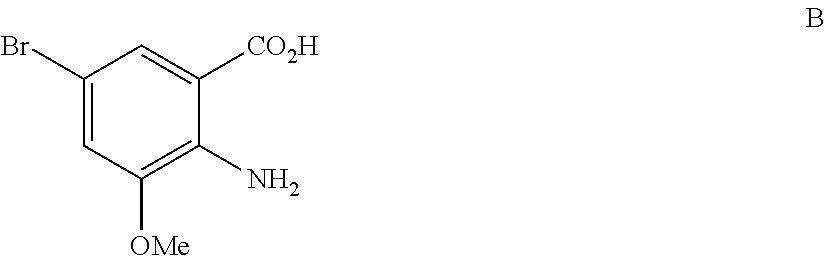


Inhibition %=100−(max−sample RLU)/(max−min)*100
| TABLE 1 |
| The inhibitory activity of PI3Kα |
| Example | PI3Kα IC50 (nM) | ||
| 1 | 0.80 | ||
| 2 | 0.72 | ||
| 3 | 1.1 | ||
| 4 | 0.74 | ||
| 5 | 2.7 | ||
| 6 | 2.3 | ||
| 7 | 1.1 | ||
| 8 | 1.0 | ||
| 9 | 0.86 | ||
| 10 | 3.8 | ||
| 11 | 0.94 | ||
| 12 | 4.5 | ||
| 13 | 0.84 | ||
| 14 | 3.3 | ||
| 15 | 5.5 | ||
| 16 | 4.1 | ||
| 17 | 2.3 | ||
| 18-1 | 1.1 | ||
| 18-2 | 0.8 | ||
| 19 | 1.0 | ||
| 20 | 1.3 | ||
| 21 | 1.0 | ||
| 22 | 0.6 | ||
| 23 | 1.1 | ||
| 24 | 0.8 | ||
| 25 | 1.6 | ||
| 26 | 0.79 | ||
| 27 | 1.7 | ||
| 28 | 1.2 | ||
| 29 | 1.1 | ||
| 30 | 1.3 | ||
| 31 | 3.8 | ||
| 32 | 0.82 | ||
| 33 | 1.7 | ||
| 34 | 1.6 | ||
| 35 | 1.8 | ||
| 36 | 2.2 | ||
| 37 | 2.3 | ||
| 38 | 2.3 | ||
| 39 | 15 | ||
| 40 | 8.5 | ||
| 41 | 5.0 | ||
| 42 | 1.1 | ||
| 43 | 10 | ||
| 44 | 0.65 | ||
| 45 | 0.92 | ||
| 46 | 0.70 | ||
| 47 | 1.4 | ||
| 48 | 2.1 | ||
| 49 | 0.76 | ||
| 50 | 2.2 | ||
| 51 | 0.72 | ||
| 52 | 2.1 | ||
| 53 | 0.73 | ||
| 54 | 1.6 | ||
| 55 | 1.7 | ||
| 56 | 0.92 | ||
| 57 | 1.7 | ||
| 58 | 1.0 | ||
| 59 | 0.74 | ||
| 60 | 1.3 | ||
| 61 | 1.0 | ||
| 62 | 2.5 | ||
| 63 | 10 | ||
| 64 | 1.5 | ||
| 65 | 2.7 | ||
| 66 | 1.7 | ||
| 67 | 6.1 | ||
| 68 | 1.6 | ||
| 69 | 2.2 | ||
| 70 | 0.90 | ||
| 71 | 1.9 | ||
| 72 | 0.70 | ||
| 73 | 1.3 | ||
| 74 | 1.1 | ||
Inhibitory rate (%)=(ODcontrol−ODcompound)/ODcontroix×100%
Wherein ODcontrol was the average OD value of the control group, and ODcompound was the average OD value of the test compound group at a given concentration.
| TABLE 2 |
| Antiproliferative activity against human lung cancer cell NCI-H460 |
| Example | H460 IC50 (μM) | ||
| 1 | 0.029 | ||
| 2 | 0.017 | ||
| 3 | 0.096 | ||
| 4 | 0.025 | ||
| 5 | 0.86 | ||
| 6 | 0.93 | ||
| 7 | 2.1 | ||
| 8 | 1.2 | ||
| 9 | 0.093 | ||
| 10 | 2.2 | ||
| 11 | 0.094 | ||
| 12 | 2.3 | ||
| 13 | 0.021 | ||
| 14 | 2.0 | ||
| 15 | 0.66 | ||
| 16 | 1.1 | ||
| 17 | 0.083 | ||
| 18-1 | 0.030 | ||
| 18-2 | 0.057 | ||
| 19 | 0.041 | ||
| 20 | 0.24 | ||
| 21 | 0.063 | ||
| 22 | 0.096 | ||
| 23 | 0.094 | ||
| 24 | 0.063 | ||
| 25 | 0.20 | ||
| 26 | 0.14 | ||
| 27 | 0.20 | ||
| 28 | 0.28 | ||
| 29 | 0.059 | ||
| 30 | 0.24 | ||
| 31 | 0.41 | ||
| 32 | 0.10 | ||
| 33 | 0.10 | ||
| 34 | 0.11 | ||
| 35 | 0.10 | ||
| 36 | 0.40 | ||
| 37 | 0.25 | ||
| 38 | 0.31 | ||
| 39 | 1.7 | ||
| 40 | 2.0 | ||
| 41 | 1.4 | ||
| 42 | 0.53 | ||
| 43 | 4.0 | ||
| 44 | 0.029 | ||
| 45 | 0.045 | ||
| 46 | 0.029 | ||
| 47 | 0.57 | ||
| 48 | 0.28 | ||
| 49 | 0.034 | ||
| 50 | 0.79 | ||
| 51 | 0.032 | ||
| 52 | 0.67 | ||
| 53 | 0.038 | ||
| 54 | 0.40 | ||
| 55 | 0.097 | ||
| 56 | 0.073 | ||
| 57 | 0.45 | ||
| 58 | 0.056 | ||
| 59 | 0.017 | ||
| 60 | 0.24 | ||
| 61 | 0.045 | ||
| 62 | 0.26 | ||
| 63 | 2.1 | ||
| 64 | 0.39 | ||
| 65 | 0.63 | ||
| 66 | 0.23 | ||
| 67 | 3.5 | ||
| 68 | 0.34 | ||
| 69 | 0.050 | ||
| 70 | 0.022 | ||
| 71 | 1.0 | ||
| 72 | 0.50 | ||
| 73 | 0.74 | ||
| 74 | 0.87 | ||
Tumor volume=(a×b 2)/2,
where a and b represented the length and width of the tumor.
Tumor growth inhibition (%)=(1−T/C)×100,
where T was the final volume of the tumor in the test compound group and C was the final volume of the tumor in the solvent control group.
| TABLE 3 |
| Growth inhibition of Example 9 on human lung cancer |
| NCI-H460 in subcutaneous xenografts in nude mice |
| Initial | Growth | |||
| tumor volume | Dose | inhibition | ||
| Cell line | Tumor type | (mm3) | (mg/kg/day) | (%) |
| NCI-H460 | Lung cancer | 220.8 | 0 | |
| 287.2 | 5 | 39.2 | ||
| 171.5 | 10 | 56.3 | ||
| 266.2 | 20 | 77.0 | ||
| TABLE 4 |
| Growth inhibition of Example 44 on human lung cancer |
| NCI-H460 in subcutaneous xenografts in nude mice |
| Initial | Growth | |||
| tumor volume | Dose | inhibition | ||
| Cell line | Tumor type | (mm3) | (mg/kg/day) | (%) |
| NC1-H460 | Lung cancer | 220.8 | 0 | |
| 222.2 | 1 | 60.3 | ||
Tumor volume=(a×b 2)/2,
where a and b represented the length and width of the tumor.
Tumor growth inhibition (%)=(1−T/C)×100,
where T was the final volume of the tumor in the test compound group and C was the final volume of the tumor in the solvent control group.
| TABLE 5 |
| Growth inhibition of Example 32 on human gastric cancer HGC-27 in |
| subcutaneous xenografts in nude mice |
| Initial | |||||
| tumor | Growth | ||||
| Cell | Tumor | volume | Dose | inhibition | Regression |
| line | type | (mm3) | (mg/kg/day) | (%) | (%) |
| HGC-27 | Gastric | 107.0 | 0 | ||
| cancer | 99.3 | 2.5 | 62.3 | ||
| 104.6 | 5 | 76.9 | |||
| 103.3 | 10 | 70.5 | |||
Claims (13)


Applications Claiming Priority (7)
| Application Number | Priority Date | Filing Date | Title |
|---|---|---|---|
| CN201611211589.5A CN108239075B (en) | 2016-12-26 | 2016-12-26 | Quinazoline compound and its preparation method, use and pharmaceutical composition |
| CN201611211589.5 | 2016-12-26 | ||
| CN201611204309.8A CN108239074B (en) | 2016-12-26 | 2016-12-26 | Quinazoline compound and its preparation method, use and pharmaceutical composition |
| CN201611204309.8 | 2016-12-26 | ||
| CN201611214102.9 | 2016-12-26 | ||
| CN201611214102.9A CN108239076B (en) | 2016-12-26 | 2016-12-26 | Quinazoline compound and its preparation method, use and pharmaceutical composition |
| PCT/CN2017/118771 WO2018121550A1 (en) | 2016-12-26 | 2017-12-26 | Quinazoline compound and preparation method, application, and pharmaceutical compostion thereof |
Related Parent Applications (1)
| Application Number | Title | Priority Date | Filing Date |
|---|---|---|---|
| PCT/CN2017/118771 A-371-Of-International WO2018121550A1 (en) | 2016-12-26 | 2017-12-26 | Quinazoline compound and preparation method, application, and pharmaceutical compostion thereof |
Related Child Applications (2)
| Application Number | Title | Priority Date | Filing Date |
|---|---|---|---|
| US17/944,151 Division US12508264B2 (en) | 2016-12-26 | 2022-09-13 | Quinazoline compounds, preparation method, use, and pharmaceutical composition thereof |
| US17/944,149 Division US12508263B2 (en) | 2016-12-26 | 2022-09-13 | Quinazoline compounds, preparation method, use, and pharmaceutical composition thereof |
Publications (2)
| Publication Number | Publication Date |
|---|---|
| US20210128559A1 US20210128559A1 (en) | 2021-05-06 |
| US11534443B2 true US11534443B2 (en) | 2022-12-27 |
Family
ID=62707834
Family Applications (3)
| Application Number | Title | Priority Date | Filing Date |
|---|---|---|---|
| US16/473,901 Active 2038-02-22 US11534443B2 (en) | 2016-12-26 | 2017-12-26 | Quinazoline compounds, preparation method, use, and pharmaceutical composition thereof |
| US17/944,149 Active 2039-01-28 US12508263B2 (en) | 2016-12-26 | 2022-09-13 | Quinazoline compounds, preparation method, use, and pharmaceutical composition thereof |
| US17/944,151 Active 2038-12-23 US12508264B2 (en) | 2016-12-26 | 2022-09-13 | Quinazoline compounds, preparation method, use, and pharmaceutical composition thereof |
Family Applications After (2)
| Application Number | Title | Priority Date | Filing Date |
|---|---|---|---|
| US17/944,149 Active 2039-01-28 US12508263B2 (en) | 2016-12-26 | 2022-09-13 | Quinazoline compounds, preparation method, use, and pharmaceutical composition thereof |
| US17/944,151 Active 2038-12-23 US12508264B2 (en) | 2016-12-26 | 2022-09-13 | Quinazoline compounds, preparation method, use, and pharmaceutical composition thereof |
Country Status (7)
| Country | Link |
|---|---|
| US (3) | US11534443B2 (en) |
| EP (3) | EP4169918B8 (en) |
| JP (3) | JP7077323B2 (en) |
| CN (1) | CN110382490A (en) |
| AU (3) | AU2017389818B2 (en) |
| CA (3) | CA3048546A1 (en) |
| WO (1) | WO2018121550A1 (en) |
Families Citing this family (6)
| Publication number | Priority date | Publication date | Assignee | Title |
|---|---|---|---|---|
| EP4169918B8 (en) * | 2016-12-26 | 2025-09-24 | Institute of Materia Medica, Chinese Academy of Medical Sciences | Quinazoline derivatives as inhibitors of pi3k for the treatment of cancer |
| WO2021088787A1 (en) * | 2019-11-07 | 2021-05-14 | 南京正大天晴制药有限公司 | Quinazoline compound used as axl inhibitor |
| CN113620976B (en) * | 2020-05-09 | 2023-09-26 | 中国医学科学院药物研究所 | Thiazolopyrimidine compounds and preparation methods, uses and pharmaceutical compositions thereof |
| JP2023549540A (en) | 2020-11-18 | 2023-11-27 | デシフェラ・ファーマシューティカルズ,エルエルシー | GCN2 and PERK Kinase Inhibitors and Methods of Their Use |
| JP2024544632A (en) | 2021-12-03 | 2024-12-03 | デシフェラ・ファーマシューティカルズ,エルエルシー | Heterocyclic Compounds as GCN2 and PERK Kinase Inhibitors |
| TW202416953A (en) * | 2022-08-26 | 2024-05-01 | 日商衛材R&D企管股份有限公司 | Antibody-drug complex |
Citations (9)
| Publication number | Priority date | Publication date | Assignee | Title |
|---|---|---|---|---|
| WO2001081346A2 (en) | 2000-04-25 | 2001-11-01 | Icos Corporation | Inhibitors of human phosphatidyl-inositol 3-kinase delta |
| WO2008157191A2 (en) | 2007-06-14 | 2008-12-24 | Smithkline Beecham Corporation | Quinazoline derivatives as pi3 kinase inhibitors |
| JP2010526823A (en) | 2007-05-10 | 2010-08-05 | グラクソスミスクライン・リミテッド・ライアビリティ・カンパニー | Quinoxaline derivatives as PI3 kinase inhibitors |
| JP2010528027A (en) | 2007-05-18 | 2010-08-19 | グラクソスミスクライン・リミテッド・ライアビリティ・カンパニー | Quinoline derivatives as PI3 kinase inhibitors |
| JP2011500823A (en) | 2007-10-22 | 2011-01-06 | グラクソスミスクライン・リミテッド・ライアビリティ・カンパニー | Pyridosulfonamide derivatives as PI3 kinase inhibitors |
| WO2014169167A1 (en) | 2013-04-12 | 2014-10-16 | Asana Biosciences, Llc | Quinazolines and azaquinazolines as dual inhibitors of ras/raf/mek/erk and pi3k/akt/pten/mtor pathways |
| CN108239075A (en) | 2016-12-26 | 2018-07-03 | 中国医学科学院药物研究所 | Quinazoline compounds and preparation method thereof, purposes and pharmaceutical composition |
| CN108239074A (en) | 2016-12-26 | 2018-07-03 | 中国医学科学院药物研究所 | Quinazoline compounds and preparation method thereof, purposes and pharmaceutical composition |
| CN108239076A (en) | 2016-12-26 | 2018-07-03 | 中国医学科学院药物研究所 | Quinazoline compounds and preparation method thereof, purposes and pharmaceutical composition |
Family Cites Families (2)
| Publication number | Priority date | Publication date | Assignee | Title |
|---|---|---|---|---|
| KR960008781B1 (en) * | 1993-08-05 | 1996-07-03 | 김하운 | Improvement apparatus for combustion efficiency |
| EP4169918B8 (en) * | 2016-12-26 | 2025-09-24 | Institute of Materia Medica, Chinese Academy of Medical Sciences | Quinazoline derivatives as inhibitors of pi3k for the treatment of cancer |
-
2017
- 2017-12-26 EP EP22213594.9A patent/EP4169918B8/en active Active
- 2017-12-26 CA CA3048546A patent/CA3048546A1/en active Pending
- 2017-12-26 US US16/473,901 patent/US11534443B2/en active Active
- 2017-12-26 EP EP22213583.2A patent/EP4169917B1/en active Active
- 2017-12-26 JP JP2019534817A patent/JP7077323B2/en active Active
- 2017-12-26 AU AU2017389818A patent/AU2017389818B2/en active Active
- 2017-12-26 EP EP17886474.0A patent/EP3560921B1/en active Active
- 2017-12-26 CA CA3174890A patent/CA3174890A1/en active Pending
- 2017-12-26 CN CN201780075753.0A patent/CN110382490A/en active Pending
- 2017-12-26 CA CA3174865A patent/CA3174865A1/en active Pending
- 2017-12-26 WO PCT/CN2017/118771 patent/WO2018121550A1/en not_active Ceased
-
2022
- 2022-04-30 AU AU2022202885A patent/AU2022202885B2/en active Active
- 2022-04-30 AU AU2022202886A patent/AU2022202886B2/en active Active
- 2022-05-18 JP JP2022081736A patent/JP7384535B2/en active Active
- 2022-05-18 JP JP2022081738A patent/JP7384536B2/en active Active
- 2022-09-13 US US17/944,149 patent/US12508263B2/en active Active
- 2022-09-13 US US17/944,151 patent/US12508264B2/en active Active
Patent Citations (11)
| Publication number | Priority date | Publication date | Assignee | Title |
|---|---|---|---|---|
| WO2001081346A2 (en) | 2000-04-25 | 2001-11-01 | Icos Corporation | Inhibitors of human phosphatidyl-inositol 3-kinase delta |
| CN1440408A (en) | 2000-04-25 | 2003-09-03 | 艾科斯有限公司 | Inhibitor of human phosphatidylinositol 3-kinase delta |
| JP2010526823A (en) | 2007-05-10 | 2010-08-05 | グラクソスミスクライン・リミテッド・ライアビリティ・カンパニー | Quinoxaline derivatives as PI3 kinase inhibitors |
| JP2010528027A (en) | 2007-05-18 | 2010-08-19 | グラクソスミスクライン・リミテッド・ライアビリティ・カンパニー | Quinoline derivatives as PI3 kinase inhibitors |
| WO2008157191A2 (en) | 2007-06-14 | 2008-12-24 | Smithkline Beecham Corporation | Quinazoline derivatives as pi3 kinase inhibitors |
| JP2010532320A (en) | 2007-06-14 | 2010-10-07 | グラクソスミスクライン・リミテッド・ライアビリティ・カンパニー | Quinazoline derivatives as PI3 kinase inhibitors |
| JP2011500823A (en) | 2007-10-22 | 2011-01-06 | グラクソスミスクライン・リミテッド・ライアビリティ・カンパニー | Pyridosulfonamide derivatives as PI3 kinase inhibitors |
| WO2014169167A1 (en) | 2013-04-12 | 2014-10-16 | Asana Biosciences, Llc | Quinazolines and azaquinazolines as dual inhibitors of ras/raf/mek/erk and pi3k/akt/pten/mtor pathways |
| CN108239075A (en) | 2016-12-26 | 2018-07-03 | 中国医学科学院药物研究所 | Quinazoline compounds and preparation method thereof, purposes and pharmaceutical composition |
| CN108239074A (en) | 2016-12-26 | 2018-07-03 | 中国医学科学院药物研究所 | Quinazoline compounds and preparation method thereof, purposes and pharmaceutical composition |
| CN108239076A (en) | 2016-12-26 | 2018-07-03 | 中国医学科学院药物研究所 | Quinazoline compounds and preparation method thereof, purposes and pharmaceutical composition |
Non-Patent Citations (2)
| Title |
|---|
| Fu, Wei; International Search Report; ISA/CN; 7 pages; PCT/CN2017/118771; dated Mar. 23, 2018. |
| Jn, Songwen et al. 2014. "Identification of novel 7-amino-5-methyl-1,6-naphthyridin-2(1H)-one derivatives as potent 13K/mTOR dual inhibitors". Bioorganic & Medicinal Chemistry Letters, vol. 24. pp. 790-793. |
Also Published As
| Publication number | Publication date |
|---|---|
| US12508264B2 (en) | 2025-12-30 |
| CA3048546A1 (en) | 2018-07-05 |
| JP7384536B2 (en) | 2023-11-21 |
| JP2022119853A (en) | 2022-08-17 |
| AU2017389818A1 (en) | 2019-08-08 |
| EP4169918A1 (en) | 2023-04-26 |
| EP4169917A1 (en) | 2023-04-26 |
| AU2017389818B2 (en) | 2022-04-07 |
| US20230110550A1 (en) | 2023-04-13 |
| EP3560921B1 (en) | 2024-08-14 |
| EP4169918B8 (en) | 2025-09-24 |
| US20230113478A1 (en) | 2023-04-13 |
| JP2022119852A (en) | 2022-08-17 |
| AU2022202886A1 (en) | 2022-05-26 |
| JP2020503321A (en) | 2020-01-30 |
| US12508263B2 (en) | 2025-12-30 |
| CN110382490A (en) | 2019-10-25 |
| EP4169918B1 (en) | 2025-07-30 |
| EP4169917B1 (en) | 2025-07-30 |
| US20210128559A1 (en) | 2021-05-06 |
| AU2022202885A1 (en) | 2022-05-26 |
| EP3560921A4 (en) | 2020-07-29 |
| CA3174890A1 (en) | 2018-07-05 |
| JP7384535B2 (en) | 2023-11-21 |
| WO2018121550A1 (en) | 2018-07-05 |
| JP7077323B2 (en) | 2022-05-30 |
| AU2022202886B2 (en) | 2023-04-13 |
| EP3560921A1 (en) | 2019-10-30 |
| CA3174865A1 (en) | 2018-07-05 |
| AU2022202885B2 (en) | 2022-10-13 |
Similar Documents
| Publication | Publication Date | Title |
|---|---|---|
| US12508263B2 (en) | Quinazoline compounds, preparation method, use, and pharmaceutical composition thereof | |
| JP7089061B2 (en) | 2-Amino-pyridine or 2-amino-pyrimidine derivative as a cyclin-dependent kinase inhibitor | |
| US11465981B2 (en) | Heterocyclic compounds as immunomodulators | |
| ES2928169T3 (en) | 4-(3H-indol-5-yl)-N-(pyridin-2-yl)pyrimidin-2-amine derivatives as protein kinase inhibitors, and method of preparation and medical use thereof | |
| UA127968C2 (en) | Kras g12c inhibitors and methods of using the same | |
| TWI580679B (en) | Heteroaryl-pyrimidine derivatives, preparation process and pharmaceutical use thereof | |
| WO2019011228A1 (en) | Imidazo[1,2-b]pyrimido[4,5-d]pyridazin-5(6h)-one compound and use thereof | |
| AU2023368676A1 (en) | Compounds and uses thereof | |
| EP4378943A1 (en) | 8-oxo-3-azabicyclo[3.2.1]octane compound or salt thereof, and preparation method therefor and use thereof | |
| CN108239074A (en) | Quinazoline compounds and preparation method thereof, purposes and pharmaceutical composition | |
| CN108239075A (en) | Quinazoline compounds and preparation method thereof, purposes and pharmaceutical composition | |
| TWI894448B (en) | Ctla-4 small molecule inhibitor and its application | |
| HK1213242A1 (en) | Pi3k and/or mtor inhibitor prodrug | |
| HK1213242B (en) | Pi3k and/or mtor inhibitor prodrug |
Legal Events
| Date | Code | Title | Description |
|---|---|---|---|
| FEPP | Fee payment procedure |
Free format text: ENTITY STATUS SET TO UNDISCOUNTED (ORIGINAL EVENT CODE: BIG.); ENTITY STATUS OF PATENT OWNER: SMALL ENTITY |
|
| AS | Assignment |
Owner name: INSTITUTE OF MATERIA MEDICA, CHINESE ACADEMY OF MEDICAL SCIENCES, CHINA Free format text: ASSIGNMENT OF ASSIGNORS INTEREST;ASSIGNORS:XU, HENG;CHEN, XIAOGUANG;LIN, SONGWEN;AND OTHERS;REEL/FRAME:050252/0220 Effective date: 20190626 |
|
| FEPP | Fee payment procedure |
Free format text: ENTITY STATUS SET TO SMALL (ORIGINAL EVENT CODE: SMAL); ENTITY STATUS OF PATENT OWNER: SMALL ENTITY |
|
| STPP | Information on status: patent application and granting procedure in general |
Free format text: RESPONSE TO NON-FINAL OFFICE ACTION ENTERED AND FORWARDED TO EXAMINER |
|
| STPP | Information on status: patent application and granting procedure in general |
Free format text: NON FINAL ACTION MAILED |
|
| STPP | Information on status: patent application and granting procedure in general |
Free format text: RESPONSE TO NON-FINAL OFFICE ACTION ENTERED AND FORWARDED TO EXAMINER |
|
| STPP | Information on status: patent application and granting procedure in general |
Free format text: NON FINAL ACTION MAILED |
|
| STPP | Information on status: patent application and granting procedure in general |
Free format text: RESPONSE TO NON-FINAL OFFICE ACTION ENTERED AND FORWARDED TO EXAMINER |
|
| STPP | Information on status: patent application and granting procedure in general |
Free format text: NOTICE OF ALLOWANCE MAILED -- APPLICATION RECEIVED IN OFFICE OF PUBLICATIONS |
|
| STPP | Information on status: patent application and granting procedure in general |
Free format text: AWAITING TC RESP., ISSUE FEE NOT PAID |
|
| STPP | Information on status: patent application and granting procedure in general |
Free format text: NOTICE OF ALLOWANCE MAILED -- APPLICATION RECEIVED IN OFFICE OF PUBLICATIONS |
|
| STPP | Information on status: patent application and granting procedure in general |
Free format text: AWAITING TC RESP, ISSUE FEE PAYMENT VERIFIED |
|
| STPP | Information on status: patent application and granting procedure in general |
Free format text: AWAITING TC RESP, ISSUE FEE PAYMENT VERIFIED |
|
| STPP | Information on status: patent application and granting procedure in general |
Free format text: AWAITING TC RESP, ISSUE FEE PAYMENT VERIFIED |
|
| STPP | Information on status: patent application and granting procedure in general |
Free format text: DOCKETED NEW CASE - READY FOR EXAMINATION |
|
| STPP | Information on status: patent application and granting procedure in general |
Free format text: PUBLICATIONS -- ISSUE FEE PAYMENT RECEIVED |
|
| STCF | Information on status: patent grant |
Free format text: PATENTED CASE |