US11514048B2 - Computing domain cardinality estimates for optimizing database query execution - Google Patents
Computing domain cardinality estimates for optimizing database query execution Download PDFInfo
- Publication number
- US11514048B2 US11514048B2 US17/088,439 US202017088439A US11514048B2 US 11514048 B2 US11514048 B2 US 11514048B2 US 202017088439 A US202017088439 A US 202017088439A US 11514048 B2 US11514048 B2 US 11514048B2
- Authority
- US
- United States
- Prior art keywords
- data
- query
- computed
- respective data
- database
- Prior art date
- Legal status (The legal status is an assumption and is not a legal conclusion. Google has not performed a legal analysis and makes no representation as to the accuracy of the status listed.)
- Active, expires
Links
Images




Classifications
-
- G—PHYSICS
- G06—COMPUTING OR CALCULATING; COUNTING
- G06F—ELECTRIC DIGITAL DATA PROCESSING
- G06F16/00—Information retrieval; Database structures therefor; File system structures therefor
- G06F16/20—Information retrieval; Database structures therefor; File system structures therefor of structured data, e.g. relational data
- G06F16/24—Querying
- G06F16/245—Query processing
- G06F16/2453—Query optimisation
- G06F16/24534—Query rewriting; Transformation
- G06F16/24542—Plan optimisation
- G06F16/24545—Selectivity estimation or determination
-
- G—PHYSICS
- G06—COMPUTING OR CALCULATING; COUNTING
- G06F—ELECTRIC DIGITAL DATA PROCESSING
- G06F16/00—Information retrieval; Database structures therefor; File system structures therefor
- G06F16/20—Information retrieval; Database structures therefor; File system structures therefor of structured data, e.g. relational data
- G06F16/24—Querying
- G06F16/245—Query processing
- G06F16/2455—Query execution
- G06F16/24553—Query execution of query operations
- G06F16/24554—Unary operations; Data partitioning operations
- G06F16/24556—Aggregation; Duplicate elimination
-
- G—PHYSICS
- G06—COMPUTING OR CALCULATING; COUNTING
- G06N—COMPUTING ARRANGEMENTS BASED ON SPECIFIC COMPUTATIONAL MODELS
- G06N3/00—Computing arrangements based on biological models
- G06N3/02—Neural networks
- G06N3/08—Learning methods
-
- G—PHYSICS
- G06—COMPUTING OR CALCULATING; COUNTING
- G06N—COMPUTING ARRANGEMENTS BASED ON SPECIFIC COMPUTATIONAL MODELS
- G06N3/00—Computing arrangements based on biological models
- G06N3/02—Neural networks
- G06N3/08—Learning methods
- G06N3/09—Supervised learning
-
- G—PHYSICS
- G06—COMPUTING OR CALCULATING; COUNTING
- G06N—COMPUTING ARRANGEMENTS BASED ON SPECIFIC COMPUTATIONAL MODELS
- G06N5/00—Computing arrangements using knowledge-based models
- G06N5/01—Dynamic search techniques; Heuristics; Dynamic trees; Branch-and-bound
Definitions
- the disclosed implementations relate generally to database systems, and more specifically to system features that improve query execution performance.
- a database engine receives queries, and retrieves data from one or more database tables to provide the data requested by the query.
- a database query is expressed in a specific query language, such as SQL.
- a database query specifies the desired data without specifying a detailed execution plan about how to retrieve the data. It is up to the database engine to parse each query, build an execution plan, and execute the plan to retrieve the requested results. This gives the database engine substantial flexibility.
- different execution plans for the same query can have enormously different execution times to retrieve the results. For example, one execution plan may retrieve the results in less than a second, whereas a second plan may take minutes to retrieve exactly the same results.
- database engines typically include one or more optimization layers to improve execution performance.
- Database engines approximate an arbitrarily large database in a constant amount of space, and employ cost-based query optimizations based on cardinality estimation.
- a cardinality estimate predicts how many rows a query is likely to return. For example, to obtain an efficient query plan with a good join order, a query optimizer enumerates a subset of valid join orders using dynamic programming.
- a cost model selects the cheapest alternative from semantically equivalent plans based on cardinality estimates. Cardinality estimates can thus considerably influence the query execution performance of a database system.
- existing cardinality estimation algorithms produce large errors for real-word datasets, which lead to slow queries and unpredictable performance.
- the database engine described here uses estimates from a training or learning phase in an offline mode, using a large variety of table sizes and samples, to improve the accuracy of cardinality estimates during real-time processing of database queries. Moreover, because full-scale calculations are performed offline, the computation time is not part of the query processing time.
- a database engine When a query is received by a database engine, the query is parsed and translated into an abstract syntax tree. Semantic analysis turns the syntax tree into an operator tree. Building the operator tree combines the syntax tree with schema information, resolves table and column names, and resolves internal references within the query. During logical optimization, the database engine employs an array of optimization techniques, including join reordering, which leverage the more accurate cardinality estimates. Thus, the database engine described herein is able to better optimize complex database queries, and thereby improves query execution performance.
- a method for optimizing database query execution by computing domain cardinality estimates is performed at a computer having one or more processors and memory storing one or more programs.
- the one or more programs are configured for execution by the one or more processors.
- the process receives a database query from a client device.
- the process parses the query to identify a plurality of data columns specified in the query. For each of the plurality of data columns, the process computes a respective lower bound l and a respective upper bound u of distinct data values for the respective database column using a respective pre-computed table size t for the respective data column.
- the process also computes a respective patch factor p for the respective data column by applying a pre-computed function f to a respective ratio r between a number of distinct data values that appear exactly once in a respective data sample for the respective data column and a number of distinct data values in the respective data sample. Based on the respective patch factor p, the respective lower bound l, and the respective upper bound u, the process computes a respective estimate e of distinct values for the respective data column. The process subsequently generates an execution plan for the query according to the computed estimates, and executes the execution plan to retrieve a result set from the database corresponding to the query, and returns the result set to the client.
- the process calculates the pre-computed function f by fitting a curve to plotted data points of table domain sizes versus ratio values for a respective pre-determined set of tables and a respective pre-determined set of data samples corresponding to the respective data column.
- the process computes the pre-computed function f in an offline mode, before receiving the database query from the client.
- the process computes the pre-computed function f in the offline mode, using a machine learning technique by training a neural network using various table sizes corresponding to the respective data column.
- the process computes the respective pre-computed table size t according to a size of the respective data sample and a number of rows in the respective data sample that have been deleted. In some implementations, the process reads the respective pre-computed table size t from stored metadata for the respective table corresponding to the respective data column.
- the process pre-selects the respective data sample for the respective data column in an offline mode, before receiving the database query from the client.
- the process updates the respective data sample when a respective table corresponding to the respective data column changes by at least 10% (e.g., when the total number of rows added or deleted exceeds 10% of the number of rows).
- the process computes the respective upper bound u and the respective lower bound l of distinct data values based on the respective pre-computed table size t, the number of distinct data values that appear exactly once in the respective data sample, the number of distinct data values in the respective data sample, and the size of the respective data sample.
- the respective upper bound u and the respective lower bound l of distinct data values correspond to upper and lower bounds computed using Guaranteed Error Estimator (GEE).
- GEE Guaranteed Error Estimator
- the lower bound l is defined by the formula:
- sample Domain Size is the number of distinct data values in the respective data sample
- [F1] is the number of distinct data values that appear exactly once in the respective data sample
- t is the respective pre-computed table size for the respective data column
- [Sample Size] is the size of the respective data sample.
- a system for retrieving data from a database includes a display, one or more processors, memory, and one or more programs stored in the memory.
- the programs are configured for execution by the one or more processors.
- the programs include instructions for performing any of the methods described herein.
- a non-transitory computer-readable storage medium stores one or more programs configured for execution by a computer system having a display, one or more processors and memory.
- the one or more programs include instructions for performing any of the methods described herein.
- FIG. 1 illustrates the context for a database system in accordance with some implementations.
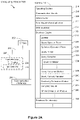
- FIG. 2A is a block diagram of a computing device according to some implementations.
- FIG. 2B is a block diagram of a cardinality estimation module of the computing device shown in FIG. 2A according to some implementations.
- FIGS. 3A and 3C are block diagrams of query execution systems implemented by a computer system in accordance with some implementations.
- FIG. 3B illustrates an example graph plot of patch factor percentile values versus ratio values for a set of tables and data samples according to some implementations.
- FIGS. 4A-4I provide a flowchart of a process for optimizing database queries by computing domain cardinality estimates according to some implementations.
- FIG. 1 illustrates a context in which some implementations operate.
- a user 100 interacts with a personal device 102 , such as a desktop computer, a laptop computer, a tablet computer, or a mobile computing device.
- a personal device 102 is an example of a computing device 200 .
- the term “computing device” also includes server computers, which may be significantly more powerful than a personal device used by a single user, and are generally accessed by a user only indirectly.
- An example computing device 200 is described below with respect to FIG. 2 , including various software programs or modules that execute on the device 200 .
- the personal device 102 includes one or more desktop data sources 224 (e.g., CSV files or spreadsheet files).
- the personal device 102 includes a database engine 120 , which provides access to one or more relational databases 122 (e.g., SQL databases).
- the personal device includes a data visualization application 222 , which the user 100 uses to create data visualizations from the desktop data sources 224 and/or the relational databases 122 . In this way, some implementations enable a user to visualize data that is stored locally on the personal device 102 .
- the personal device 102 connects over one or more communications networks 108 to one or more external database servers 106 and/or a data visualization server 104 .
- the communication networks 108 may include local area networks and/or wide area networks, such as the Internet.
- the data visualization server 104 provides a data visualization web application that runs within a web browser 220 on the personal device 102 .
- data visualization functionality is provided by both a local application 222 and certain functions provided by the data visualization server 104 .
- the data visualization server 104 may be used for resource intensive operations.
- the one or more database servers 106 include a database engine 120 , which provides access to one or more databases 122 that are stored at the database server 106 . As illustrated in FIG.
- a database engine 120 and corresponding databases 122 may reside on either a local personal device 102 or on a database server 106 .
- the data visualization server 104 includes a database engine 120 and one or more databases 122 .
- FIG. 2A is a block diagram illustrating a computing device 200 in accordance with some implementations.
- the term “computing device” includes both personal devices 102 and servers, such as a database server 106 or a data visualization server 104 .
- a computing device 200 typically includes one or more processing units/cores (CPUs) 202 for executing modules, programs, and/or instructions stored in the memory 214 and thereby performing processing operations; one or more network or other communications interfaces 204 ; memory 214 ; and one or more communication buses 212 for interconnecting these components.
- CPUs processing units/cores
- the communication buses 212 may include circuitry that interconnects and controls communications between system components.
- a computing device 200 may include a user interface 206 comprising a display device 208 and one or more input devices or mechanisms 210 .
- the input device/mechanism 210 includes a keyboard.
- the input device/mechanism includes a “soft” keyboard, which is displayed as needed on the display device 208 , enabling a user to “press keys” that appear on the display 208 .
- the display 208 and input device/mechanism 210 comprise a touch screen display (also called a touch sensitive display).
- the memory 214 includes high-speed random-access memory, such as DRAM, SRAM, DDR RAM, or other random access solid state memory devices.
- the memory 214 includes non-volatile memory, such as one or more magnetic disk storage devices, optical disk storage devices, flash memory devices, or other non-volatile solid-state storage devices.
- the memory 214 includes one or more storage devices remotely located from the CPU(s) 202 .
- the memory 214 or alternatively the non-volatile memory device(s) within the memory 214 , comprises a non-transitory computer readable storage medium.
- the memory 214 , or the computer readable storage medium of the memory 214 stores the following programs, modules, and data structures, or a subset thereof:
- Each of the above identified executable modules, applications, or sets of procedures may be stored in one or more of the previously mentioned memory devices, and corresponds to a set of instructions for performing a function described above.
- the above identified modules or programs i.e., sets of instructions
- the memory 214 stores a subset of the modules and data structures identified above.
- the memory 214 stores additional modules or data structures not described above.
- FIG. 2A shows a computing device 200
- FIG. 2A is intended more as a functional description of the various features that may be present rather than as a structural schematic of the implementations described herein. In practice, and as recognized by those of ordinary skill in the art, items shown separately could be combined and some items could be separated.
- Standard relational database query engines rely on relational algebra trees (e.g., an operator tree 228 ) for evaluating logically optimized plans.
- a typical algebra tree 228 has the nice property that its leaves correspond to base relations and each node in the tree 228 can be evaluated based solely on nodes of its subtree.
- To evaluate a node in the tree a typical “iterator engine” works by pulling intermediate results from the subtrees corresponding to children of the node.
- Some database engines choose access paths as part of the logical optimization.
- the existence of an index on a joined column can enable the usage of index-nested loop joins and thereby influences the optimality of different join orders. Because of this, access paths are typically chosen as part of join reordering.
- the database engine chooses a physical implementation for each of the algebraic operators in the operator tree. In some implementations, during this phase, the database engine also chooses the appropriate access path and indices to retrieve the requested data as fast as possible.
- the optimized operator tree is compiled to native machine code, according to some implementations. This compiled code is then loaded and linked with the database engine at runtime and executed.
- the database engine functions essentially as an optimizing JIT compiler for database queries.
- implementations use a produce-consume execution model.
- this execution model the code for all operators is fused together, enabling the system to push one tuple at a time through the whole operator tree up to the next pipeline breaker.
- the database engine uses “Morsel-driven parallelism.”
- work is dynamically balanced between worker threads. Tuples are handed out to the worker threads in so-called morsels, which are chunks of a few thousand tuples. Worker threads take thread-locality into account when picking up morsels for processing.
- the database engine's optimizer and query engine are decoupled from the database storage layer. This enables the database engine to work on a large set of different storage formats.
- FIG. 2B is a block diagram of the cardinality estimation module 242 shown in FIG. 2A according to some implementations.
- the memory 214 or the computer readable storage medium of the memory 214 , stores the following modules, and/or data structures of the cardinality estimation module 242 , or a subset thereof:
- FIGS. 3A and 3C are block diagrams of query execution systems 300 implemented by a computer system 200 in accordance with some implementations.
- the dashed line 302 indicates a division between computations performed in an offline mode 304 (e.g., before the database engine 120 has received a database query) and computations performed in a real-time processing mode 306 (e.g., after the database engine 120 has received a database query).
- the database engine 120 samples data (e.g., using the sampling module 244 ) to select samples 258 .
- the database engine 120 creates samples of tables in the background so that samples are already selected before queries are received.
- database rows that are deleted are marked but not physically removed until a garbage collection operation is performed (commit time).
- the deleted rows can include some rows from the selected samples.
- new samples are constructed if there has been sufficient change to the table.
- the database engine 120 uses a limit on the number of values for a sample for one or more columns.
- the database engine 120 has a limit on the number of values (e.g., 20,000 values) for samples for all columns in the table. In this case, larger tables have fewer sampled values per column.
- the database engine 120 samples at least 100 and up to 1000 values for each column.
- a sample is drawn from the whole table without replacement for improved statistical confidence.
- the database engine 120 draws samples in clusters, trading, via the cluster size, speed of access for the quality of samples. For example, some implementations sample up to 50 clusters that have 512 tuples without replacement.
- the database engine 120 creates statistically significant samples for tables with more than 1 billion tuples or thousands of columns with only marginal impact on extract sizes.
- sample creation time accounts for less than 5% of the extract creation time without impacting user experience.
- the samples created reflect the characteristics of the whole table and not just local patterns in the table.
- the database engine 120 creates samples that hold up to 5% of the tuples (e.g., at least 1,000 and up 100 million tuples). A lower bound on the number of tuples guarantees exact results for small tables. An upper bound on the tuples allows the database engine to handle large tables (e.g., with more than 20 billion tuples) by storing the sample in a single data block. In some implementations, the database engine 120 uses large samples for domain-size estimations while continuing to persist (e.g., store) small samples (e.g., samples with 1000 rows or less). In some implementations, a persisted sample stores less than 5% of the table rows to stay within file size limits.
- the database engine 120 creates a sample that has a fixed size of 5% of the table size from up to 10% of the data blocks. In some implementations, the database engine 120 uses whole data blocks as clusters. In some implementations, the database engine 120 aligns the clusters to the beginning of data blocks for improved sample quality for very large tables. For example, when data in the data blocks is skewed, a fixed number of blocks does not statistically reflect the global distribution.
- the sampling module 244 also re-computes the samples to obtain updated samples 258 . 4 , which is also input to the domain cardinality estimation module 242 , according to some implementations.
- the database engine 120 creates samples of tables at commit time (e.g., while performing garbage collection), and updates the samples when the table size changes by at least 10%.
- the query execution system 300 calculates ( 246 ) table domain sizes and ratio values in the offline mode 304 , in accordance with some implementations.
- the offline computation module 246 performs these calculations for a large variety of tables and sample sizes, according to some implementations.
- the database engine 120 selects tables and samples that are representative of database queries in the real-time processing mode 306 .
- the database engine 120 selects table sizes that are representative of database queries in the real-time processing mode 306 .
- the offline computation module 246 computes domain sizes for the selected tables.
- Sample domain size ([Sample Domain Size]) is defined as the number of distinct data values that appear at least once in a respective sample for a respective column of a table.
- the offline computation module 246 also computes [F1], the number of distinct values that appear exactly once in the respective column of the table. Based on [Sample Domain Size] and [F1] values, the offline computation module 246 computes ratios [F1 Ratio] for each of the columns of the selected tables according to the formula:
- the offline computation module 246 computes a Guaranteed Error Estimator [GEE] according to the formula:
- [Table Size] is the size of the table
- [Sample Size] is the size of the data sample, in addition to the quantities [Sample Domain Size] and [F1] that are defined above.
- the offline computation module 246 also computes an upper bound [GEE Max] according to the formula:
- the offline computation module 246 computes a patch factor [GEE Patch Factor] for each database column according to the formula:
- the offline computation module 246 subsequently plots a graph of [GEE Patch Factor] for various values of [F1 Ratio], and fits a curve to this plotted data, according to some implementations.
- the curve defines a function f that computes the [GEE Patch Factor] in terms of [F1 Ratio].
- the offline computation module 246 computes functions f 256 for input to the domain cardinality estimation module 242 in the real-time processing mode 306 .
- a single function f is used for all database columns. In other implementations, a separate function f is computed and used for each distinct database column.
- FIG. 3B illustrates an example graph plot of patch factor percentile values 294 versus ratio values 292 for a set of tables and data samples according to some implementations.
- the marks represent the data points, while the line 290 plots a fitted curve that codifies the correlation between [GEE Patch Factor] and [F1 Ratio].
- the graph plot shows values for a specific data set, similar plots are obtained for other data sets.
- the offline computation module 246 uses different values of
- the execution system 300 includes a query parser 232 , which receives database queries 226 (e.g., SQL queries).
- the query parser 232 parses each database query 226 to form a query operator tree 228 and identifies a list of data columns 248 specified in the database query 226 .
- the domain cardinality estimation module 242 processes the list of data columns 248 , and estimates domain cardinality 260 for the data columns, according to some implementations.
- a query optimizer 236 performs one or more optimization passes to optimize the query operator tree 228 , in accordance with the domain cardinality estimates 260 , to produce an optimized execution plan 230 , according to some implementations.
- a compiler e.g., the query compiler 234 described above in reference to FIG. 2A
- performs one or more optimization passes as part of an optimizer e.g., the optimizer 236
- the compiler produces an optimized execution plan (sometimes called a query execution plan or code).
- an execution module 238 executes the code or optimized execution plan 230 to produce query results 308 , according to some implementations.
- an intermediate compiler compiles the query operator tree output by the optimization passes to form an intermediate representation, which is subsequently compiled to an optimized execution plan 230 .
- This step typically includes some logical optimization as well.
- an execution selector is coupled to the intermediate compiler. The execution selector identifies one or more query characteristics and one or more database characteristics to determine how to execute the query. In some implementations, the execution selector selects one of a plurality of execution options to process the intermediate representation. In some implementations, the plurality of execution options includes direct interpretation without compilation, compilation with no or little code optimization (e.g., “cheap” optimizations), and compilation with a more significant level of code optimization.
- FIG. 3C is a block diagram illustrating a domain cardinality estimation module 242 in accordance with some implementations.
- the domain cardinality estimation module 242 includes a module to compute ( 242 . 2 ) a lower bound and an upper bound of distinct data values for a data column 248 identified by the parser (as described above in reference to FIG. 3A ).
- the module 242 also stores the computed bounds in memory 214 (e.g., as bounds of estimates 262 ).
- the module 242 also computes ( 242 .
- the module 242 also stores the computed patch factors in memory 214 as patch factors 264 . Based on the computed bounds 262 and patch factors 264 , the module 242 computes ( 242 . 6 ) an estimate of distinct data values for the data column. In some implementations, the module 242 also stores the computed estimate in memory 214 as estimates 260 .
- FIGS. 4A-4I provide a flowchart of a process 400 for optimizing database queries by computing domain cardinality estimates according to some implementations.
- the process 400 is performed ( 404 ) at a database engine 120 having one or more computing devices, each having one or more processors and memory.
- the memory stores ( 404 ) one or more programs configured for execution by the one or more processors.
- the one or more programs execute ( 402 ) to retrieve data from a database (e.g., an SQL database).
- a database e.g., an SQL database
- the database engine 120 receives ( 406 ) a database query 226 from a client device.
- the database engine 120 parses ( 408 ) the query 226 to identify a plurality of data columns 248 specified in the query. For each ( 410 ) of the plurality of data columns, the database engine 120 computes ( 412 ) a respective lower bound l and a respective upper bound u of distinct data values 262 using a respective pre-computed table size t 254 for the respective data column.
- the database engine 120 also computes ( 414 ) a respective patch factor p 264 for the respective data column by applying a pre-computed function f 256 to a respective ratio r between a number of distinct data values that appear exactly once in a respective data sample 258 for the respective data column and a number of distinct data values in the respective data sample. Based on the respective patch factor p 264 , the respective lower bound l, and the respective upper bound u, the database engine 120 computes ( 416 ) a respective estimate e of distinct values (e.g., estimate 260 ) for the respective data column.
- a respective estimate e of distinct values e.g., estimate 260
- the database engine 120 subsequently generates ( 418 ) an execution plan (e.g., execution plan 230 ) for the query according to the computed estimates 260 , and executes ( 420 ) the execution plan to retrieve a result set from the database corresponding to the query, and returns the result set to the client.
- an execution plan e.g., execution plan 230
- the database engine 120 subsequently generates ( 418 ) an execution plan (e.g., execution plan 230 ) for the query according to the computed estimates 260 , and executes ( 420 ) the execution plan to retrieve a result set from the database corresponding to the query, and returns the result set to the client.
- the database engine 120 computes ( 422 ) the respective pre-computed table size t according to a size of the respective data sample and a number of rows in the respective data sample that have been deleted.
- the process reads ( 424 ) the respective pre-computed table size t from stored metadata 252 for the respective table 250 corresponding to the respective data column.
- the database engine 120 pre-selects ( 438 ) the respective data sample for the respective data column in an offline mode 304 , before receiving a database query from the client.
- the database engine 120 updates ( 440 ) the respective data sample when a respective table 250 corresponding to the respective data column changes by at least 10%.
- the database engine 120 calculates ( 432 ) the pre-computed function f 256 by fitting a curve to plotted data points of table domain sizes versus ratio values for a respective pre-determined set of tables 250 and a respective pre-determined set of data samples 258 corresponding to the respective data column.
- the database engine 120 computes ( 434 ) the pre-computed function f in an offline mode 304 , before receiving the database query from the client.
- the process computes ( 436 ) the pre-computed function f in the offline mode, using a machine learning technique by training a neural network using various table sizes for tables 250 corresponding to the respective data column.
- the database engine 120 computes ( 426 ) the respective upper bound u and the respective lower bound l of distinct data values (the bound estimates 262 ) based on the respective pre-computed table size t 254 , the number of distinct data values that appear exactly once in the respective data sample, the number of distinct data values in the respective data sample, and the size of the respective data sample (as computed by the database engine 120 ).
- the respective upper bound u and the respective lower bound l of distinct data values correspond ( 428 ) to upper and lower bounds of Guaranteed Error Estimator (GEE), respectively.
- GEE Guaranteed Error Estimator
- the lower bound l is defined ( 430 ) by the formula:
- [Sample Domain Size] is the number of distinct data values in the respective data sample
- [F1] is the number of distinct data values that appear exactly once in the respective data sample
- t is the respective pre-computed table size for the respective data column
- [Sample Size] is the size of the respective data sample.
Landscapes
- Engineering & Computer Science (AREA)
- Theoretical Computer Science (AREA)
- Physics & Mathematics (AREA)
- Computational Linguistics (AREA)
- General Physics & Mathematics (AREA)
- General Engineering & Computer Science (AREA)
- Data Mining & Analysis (AREA)
- General Health & Medical Sciences (AREA)
- Life Sciences & Earth Sciences (AREA)
- Evolutionary Computation (AREA)
- Biomedical Technology (AREA)
- Molecular Biology (AREA)
- Computing Systems (AREA)
- Artificial Intelligence (AREA)
- Biophysics (AREA)
- Mathematical Physics (AREA)
- Software Systems (AREA)
- Health & Medical Sciences (AREA)
- Databases & Information Systems (AREA)
- Operations Research (AREA)
- Information Retrieval, Db Structures And Fs Structures Therefor (AREA)
Abstract
Description
-
- an
operating system 216, which includes procedures for handling various basic system services and for performing hardware dependent tasks; - a
communications module 218, which is used for connecting thecomputing device 200 to other computers and devices via the one or more communication network interfaces 204 (wired or wireless) and one ormore communication networks 108, such as the Internet, other wide area networks, local area networks, metropolitan area networks, and so on; - a web browser 220 (or other client application), which enables a
user 100 to communicate over a network with remote computers or devices. In some implementations, theweb browser 220 executes a data visualization web application (not shown) downloaded from adata visualization server 104. In some implementations, a data visualization web application (not shown) is an alternative to storing adata visualization application 222 locally; - a
data visualization application 222, which enables users to construct data visualizations from various data sources. Thedata visualization application 222 retrieves data from one or more data sources, such as data source 224 (e.g., a CSV file or flat file), a relational database stored locally 122, or a data source or relational database stored on another device (such as database server 106). The data visualization application then generates and displays the retrieved information in one or more data visualizations; - one or
more data sources 224, which have data that may be used and displayed by thedata visualization application 222.Data sources 224 can be formatted in many different ways, such as spreadsheets, XML files, flat files, CSV files, text files, JSON files, or desktop database files. Typically, thedata sources 224 are used by other applications as well (e.g., a spreadsheet application); - a
database engine 120, which receives database queries 226 (e.g., a query from a data visualization application) and returns corresponding data. Thedatabase engine 120 typically includes a plurality of executable modules; - the
database engine 120 invokes aquery parser 232 which parses each received query 226 (e.g., SQL database query) to form aquery operator tree 228. An operator tree is sometimes referred to as an algebra tree. In some implementations, thequery parser 232 is contained within thequery compiler 234. In some implementations, thequery parser 232 also identifies one or more data columns specified in thedatabase query 226; - the
database engine 120 includes aquery compiler 234, which translates eachquery operator tree 228 into executable code. For brevity, thequery compiler 234 is also referred to as the compiler. In some implementations, thecompiler 234 includes anoptimizer 236, which modifies aquery operator tree 228 to produce an optimizedexecution plan 230. Theoptimizer 236 is generally capable of identifying multiple types of optimization based on the structure of the query operator tree and the data requested. For example, some implementations identify when to hoist subexpressions, such as a conditional subexpression, outside of a conditional expression. In some implementations, thecompiler 234 and/or theoptimizer 236 store data structures, such as hash maps and lists of the dependencies between query operators in thememory 214, to support or guide the optimization passes; - the
database engine 120 includes aquery execution module 238, which executes a query execution plan (e.g., an optimized execution plan 230) generated by thequery compiler 234; - the
database engine 120 includes aquery memory manager 240, which tracks memory utilization by each of the processes, and dynamically allocates memory as needed; - the
database engine 120 includes acardinality estimation module 242, which computes domain cardinality estimates for one or more data columns identified by thequery parser 232; - the
database engine 120 includes asampling module 244, which builds samples used by thecardinality estimation module 242; and - the
database engine 120 also includes anoffline computation module 246, which computes various data structures used by thecardinality estimation module 242 in an offline mode (e.g., before thedatabase engine 120 receives database queries).
- an
-
- one or more
data column identifiers 248; - one or
more table identifiers 250 corresponding to thedata column identifiers 248. In some implementations, thememory 214 also storesmetadata 252 corresponding to the tables 250 as identified by theoffline computation module 246; - one or more
pre-computed table sizes 254, as computed by theoffline computation module 246; - one or more
pre-computed functions 256, as computed by theoffline computation module 246. A pre-computed function is used to compute patch factors as described below with respect toFIGS. 3A-3C ; - one or
more data samples 258, built by thesampling module 244; - one or more cardinality estimates 260, for the
data columns 248, computed by thecardinality estimation module 242; - one or more bounds 262 (e.g., lower bounds or upper bounds of cardinality estimates) of estimates computed by the
cardinality estimation module 242; and - one or
more patch factors 264 computed by thecardinality estimation module 242.
- one or more
to vary the location of the
Claims (20)
e:=p*u+(1−p)*l
e:=p*u+(1−p)*l
e:=p*u+(1−p)*l
Priority Applications (1)
| Application Number | Priority Date | Filing Date | Title |
|---|---|---|---|
| US17/088,439 US11514048B2 (en) | 2018-12-28 | 2020-11-03 | Computing domain cardinality estimates for optimizing database query execution |
Applications Claiming Priority (2)
| Application Number | Priority Date | Filing Date | Title |
|---|---|---|---|
| US16/236,183 US10824625B1 (en) | 2018-12-28 | 2018-12-28 | Computing domain cardinality estimates for optimizing database query execution |
| US17/088,439 US11514048B2 (en) | 2018-12-28 | 2020-11-03 | Computing domain cardinality estimates for optimizing database query execution |
Related Parent Applications (1)
| Application Number | Title | Priority Date | Filing Date |
|---|---|---|---|
| US16/236,183 Continuation US10824625B1 (en) | 2018-12-28 | 2018-12-28 | Computing domain cardinality estimates for optimizing database query execution |
Publications (2)
| Publication Number | Publication Date |
|---|---|
| US20210049176A1 US20210049176A1 (en) | 2021-02-18 |
| US11514048B2 true US11514048B2 (en) | 2022-11-29 |
Family
ID=73019870
Family Applications (2)
| Application Number | Title | Priority Date | Filing Date |
|---|---|---|---|
| US16/236,183 Active 2039-04-24 US10824625B1 (en) | 2018-12-28 | 2018-12-28 | Computing domain cardinality estimates for optimizing database query execution |
| US17/088,439 Active 2039-02-08 US11514048B2 (en) | 2018-12-28 | 2020-11-03 | Computing domain cardinality estimates for optimizing database query execution |
Family Applications Before (1)
| Application Number | Title | Priority Date | Filing Date |
|---|---|---|---|
| US16/236,183 Active 2039-04-24 US10824625B1 (en) | 2018-12-28 | 2018-12-28 | Computing domain cardinality estimates for optimizing database query execution |
Country Status (1)
| Country | Link |
|---|---|
| US (2) | US10824625B1 (en) |
Families Citing this family (7)
| Publication number | Priority date | Publication date | Assignee | Title |
|---|---|---|---|---|
| US11068558B2 (en) * | 2018-12-21 | 2021-07-20 | Business Objects Software Ltd | Managing data for rendering visualizations |
| US11409743B2 (en) * | 2019-08-01 | 2022-08-09 | Teradata Us, Inc. | Property learning for analytical functions |
| US11734274B2 (en) * | 2020-04-10 | 2023-08-22 | Microsoft Technology Licensing, Llc | Transforming queries using bitvector aware optimization |
| CN112749191A (en) * | 2021-01-19 | 2021-05-04 | 成都信息工程大学 | Intelligent cost estimation method and system applied to database and electronic equipment |
| CN112883066B (en) * | 2021-03-29 | 2022-07-08 | 电子科技大学 | Method for estimating multi-dimensional range query cardinality on database |
| CN116795865B (en) * | 2023-06-26 | 2026-02-24 | 平安银行股份有限公司 | Database query method and device, electronic equipment and storage medium |
| CN121614493B (en) * | 2026-02-02 | 2026-04-17 | 杭州量算科技有限公司 | Method and system for realizing low-code platform form combined query condition |
Citations (4)
| Publication number | Priority date | Publication date | Assignee | Title |
|---|---|---|---|---|
| US6738755B1 (en) * | 1999-05-19 | 2004-05-18 | International Business Machines Corporation | Query optimization method for incrementally estimating the cardinality of a derived relation when statistically correlated predicates are applied |
| US20050223019A1 (en) | 2004-03-31 | 2005-10-06 | Microsoft Corporation | Block-level sampling in statistics estimation |
| US20150254330A1 (en) * | 2013-04-11 | 2015-09-10 | Oracle International Corporation | Knowledge-intensive data processing system |
| US20200125568A1 (en) | 2018-10-18 | 2020-04-23 | Oracle International Corporation | Automated provisioning for database performance |
-
2018
- 2018-12-28 US US16/236,183 patent/US10824625B1/en active Active
-
2020
- 2020-11-03 US US17/088,439 patent/US11514048B2/en active Active
Patent Citations (4)
| Publication number | Priority date | Publication date | Assignee | Title |
|---|---|---|---|---|
| US6738755B1 (en) * | 1999-05-19 | 2004-05-18 | International Business Machines Corporation | Query optimization method for incrementally estimating the cardinality of a derived relation when statistically correlated predicates are applied |
| US20050223019A1 (en) | 2004-03-31 | 2005-10-06 | Microsoft Corporation | Block-level sampling in statistics estimation |
| US20150254330A1 (en) * | 2013-04-11 | 2015-09-10 | Oracle International Corporation | Knowledge-intensive data processing system |
| US20200125568A1 (en) | 2018-10-18 | 2020-04-23 | Oracle International Corporation | Automated provisioning for database performance |
Non-Patent Citations (2)
| Title |
|---|
| Hofstetter, Notice of Allowance, U.S. Appl. No. 16/236,183, dated Jul. 30, 2020, 9 pgs. |
| Hofstetter, Preinterview First Office Action, U.S. Appl. No. 16/236,183, dated Jun. 24, 2020, 4 pgs. |
Also Published As
| Publication number | Publication date |
|---|---|
| US10824625B1 (en) | 2020-11-03 |
| US20210049176A1 (en) | 2021-02-18 |
Similar Documents
| Publication | Publication Date | Title |
|---|---|---|
| US10824625B1 (en) | Computing domain cardinality estimates for optimizing database query execution | |
| US10831753B2 (en) | Query plan generation and execution in a relational database management system with a temporal-relational database | |
| US11704347B2 (en) | Adaptive interpretation and compilation of database queries | |
| US8359305B1 (en) | Query metadata engine | |
| US10534775B2 (en) | Cardinality estimation for database query planning | |
| US10372707B2 (en) | Query execution pipelining with pump operators | |
| US20060195416A1 (en) | Method and system for providing a learning optimizer for federated database systems | |
| US12153573B2 (en) | Cost-based query optimization for untyped fields in database systems | |
| EP3834095B1 (en) | Automated real-time index management | |
| US11803545B1 (en) | Runtime statistics feedback for query plan cost estimation | |
| US7899839B2 (en) | Query rewrite with a remote object | |
| US11132366B2 (en) | Transforming directed acyclic graph shaped sub plans to enable late materialization | |
| US11468061B2 (en) | Incremental simplification and optimization of complex queries using dynamic result feedback | |
| US11314736B2 (en) | Group-by efficiency though functional dependencies and non-blocking aggregation functions | |
| CN113874832A (en) | Query processing using logical query steps having canonical forms | |
| Sellami et al. | Complex queries optimization and evaluation over relational and NoSQL data stores in cloud environments | |
| Guo et al. | In-database query optimization on SQL with ML predicates | |
| Bondiombouy et al. | Multistore big data integration with CloudMdsQL | |
| US20200320069A1 (en) | Hybrid compilation framework for arbitrary ad-hoc imperative functions in database queries | |
| Kolev et al. | Benchmarking polystores: the CloudMdsQL experience | |
| EP3293645B1 (en) | Iterative evaluation of data through simd processor registers | |
| US9135302B2 (en) | Query rewrite with a nested materialized view | |
| US10042942B2 (en) | Transforms using column dictionaries | |
| Atzeni et al. | Executable schema mappings for statistical data processing | |
| US20250139092A1 (en) | Histogram-augment dynamic sampling for join cardinality estimation |
Legal Events
| Date | Code | Title | Description |
|---|---|---|---|
| FEPP | Fee payment procedure |
Free format text: ENTITY STATUS SET TO UNDISCOUNTED (ORIGINAL EVENT CODE: BIG.); ENTITY STATUS OF PATENT OWNER: LARGE ENTITY |
|
| STPP | Information on status: patent application and granting procedure in general |
Free format text: APPLICATION DISPATCHED FROM PREEXAM, NOT YET DOCKETED |
|
| STPP | Information on status: patent application and granting procedure in general |
Free format text: DOCKETED NEW CASE - READY FOR EXAMINATION |
|
| STPP | Information on status: patent application and granting procedure in general |
Free format text: NON FINAL ACTION MAILED |
|
| STPP | Information on status: patent application and granting procedure in general |
Free format text: RESPONSE TO NON-FINAL OFFICE ACTION ENTERED AND FORWARDED TO EXAMINER |
|
| STPP | Information on status: patent application and granting procedure in general |
Free format text: NOTICE OF ALLOWANCE MAILED -- APPLICATION RECEIVED IN OFFICE OF PUBLICATIONS |
|
| STPP | Information on status: patent application and granting procedure in general |
Free format text: AWAITING TC RESP., ISSUE FEE NOT PAID |
|
| STPP | Information on status: patent application and granting procedure in general |
Free format text: PUBLICATIONS -- ISSUE FEE PAYMENT VERIFIED |
|
| STCF | Information on status: patent grant |
Free format text: PATENTED CASE |
|
| MAFP | Maintenance fee payment |
Free format text: PAYMENT OF MAINTENANCE FEE, 4TH YEAR, LARGE ENTITY (ORIGINAL EVENT CODE: M1551); ENTITY STATUS OF PATENT OWNER: LARGE ENTITY Year of fee payment: 4 |