US11491228B2 - Hydrogels and uses thereof - Google Patents
Hydrogels and uses thereof Download PDFInfo
- Publication number
- US11491228B2 US11491228B2 US16/502,551 US201916502551A US11491228B2 US 11491228 B2 US11491228 B2 US 11491228B2 US 201916502551 A US201916502551 A US 201916502551A US 11491228 B2 US11491228 B2 US 11491228B2
- Authority
- US
- United States
- Prior art keywords
- approximately
- certain embodiments
- optionally substituted
- formula
- agent
- Prior art date
- Legal status (The legal status is an assumption and is not a legal conclusion. Google has not performed a legal analysis and makes no representation as to the accuracy of the status listed.)
- Active, expires
Links
- 0 */C=C/C(=O)OCCOCC(COCCOC(=O)/C=C/*)(COCCOC(=O)/C=C/*)COCCOC(=O)/C=C/* Chemical compound */C=C/C(=O)OCCOCC(COCCOC(=O)/C=C/*)(COCCOC(=O)/C=C/*)COCCOC(=O)/C=C/* 0.000 description 44
- GJTOJQFGHIWLIS-YCIJDZKWSA-N C/C=C/C(=O)OCCOCC(COCCOC(=O)/C=C/C)(COCCOC(=O)/C=C/C)COCCOC(=O)/C=C/C(C)C Chemical compound C/C=C/C(=O)OCCOCC(COCCOC(=O)/C=C/C)(COCCOC(=O)/C=C/C)COCCOC(=O)/C=C/C(C)C GJTOJQFGHIWLIS-YCIJDZKWSA-N 0.000 description 14
- ZGLVMYRQARXBRS-UHFFFAOYSA-N [H]N(C)CCN(CCN([H])C)CCN(C)C(C)C Chemical compound [H]N(C)CCN(CCN([H])C)CCN(C)C(C)C ZGLVMYRQARXBRS-UHFFFAOYSA-N 0.000 description 13
- MNGXKKDKMQTWJQ-BIDHLLRRSA-N [H]N(C)CCN(CCNC)CCN(C)/C=C/C(=O)OCCOCC(COCCOC(=O)/C=C/N(C)CCN(CCCC)CCNC)(COCCOC(=O)/C=C/N(C)CCN(CCCC)CCNC)COCCOC(=O)/C=C/N(C)CCN(CCNC)CCNC Chemical compound [H]N(C)CCN(CCNC)CCN(C)/C=C/C(=O)OCCOCC(COCCOC(=O)/C=C/N(C)CCN(CCCC)CCNC)(COCCOC(=O)/C=C/N(C)CCN(CCCC)CCNC)COCCOC(=O)/C=C/N(C)CCN(CCNC)CCNC MNGXKKDKMQTWJQ-BIDHLLRRSA-N 0.000 description 8
- VSFPWDWOTCUIFE-UHFFFAOYSA-N [H]N(C)CCN(CCN([H])C)CCN(C)C Chemical compound [H]N(C)CCN(CCN([H])C)CCN(C)C VSFPWDWOTCUIFE-UHFFFAOYSA-N 0.000 description 6
- KQGUCUNDZLEFKR-UHFFFAOYSA-N C#CC(=O)OCCOCC(COCCOC(=O)C#C)(COCCOC(=O)C#C)COCCOC(=O)C#C Chemical compound C#CC(=O)OCCOCC(COCCOC(=O)C#C)(COCCOC(=O)C#C)COCCOC(=O)C#C KQGUCUNDZLEFKR-UHFFFAOYSA-N 0.000 description 5
- RRLIAUODQCCKHC-UHFFFAOYSA-N [H]N([H])CCN(CCN([H])C)CCN(C)C Chemical compound [H]N([H])CCN(CCN([H])C)CCN(C)C RRLIAUODQCCKHC-UHFFFAOYSA-N 0.000 description 4
- GCHWNXIUOORIQI-UHFFFAOYSA-N [H]N([H])CCN(CCN([H])C)CCN(C)C(C)C Chemical compound [H]N([H])CCN(CCN([H])C)CCN(C)C(C)C GCHWNXIUOORIQI-UHFFFAOYSA-N 0.000 description 4
- QBPPRVHXOZRESW-UHFFFAOYSA-N C1CNCCNCCNCCN1 Chemical compound C1CNCCNCCNCCN1 QBPPRVHXOZRESW-UHFFFAOYSA-N 0.000 description 3
- VMGSQCIDWAUGLQ-UHFFFAOYSA-N CN(C)CCN(CCN(C)C)CCN(C)C Chemical compound CN(C)CCN(CCN(C)C)CCN(C)C VMGSQCIDWAUGLQ-UHFFFAOYSA-N 0.000 description 3
- FVOFRVBSUADHKF-UHFFFAOYSA-N [H]N(C)CCN(CCN(C)C)CCN(C)C Chemical compound [H]N(C)CCN(CCN(C)C)CCN(C)C FVOFRVBSUADHKF-UHFFFAOYSA-N 0.000 description 3
- YNRJXZIFEASKHG-UHFFFAOYSA-N CCC(=O)OCCOCC(COCCOC(=O)CC)(COCCOC(=O)CC)COCCOC(=O)CC Chemical compound CCC(=O)OCCOCC(COCCOC(=O)CC)(COCCOC(=O)CC)COCCOC(=O)CC YNRJXZIFEASKHG-UHFFFAOYSA-N 0.000 description 2
- QBGRMZMKCRWVLT-UHFFFAOYSA-N [H]N(C)CCN(CCN(C)C)CCN(C)C(C)C Chemical compound [H]N(C)CCN(CCN(C)C)CCN(C)C(C)C QBGRMZMKCRWVLT-UHFFFAOYSA-N 0.000 description 2
- FYXXEWOGHVSOGS-UHFFFAOYSA-N [H]N([H])CCN(CCN([H])[H])CCN([H])C Chemical compound [H]N([H])CCN(CCN([H])[H])CCN([H])C FYXXEWOGHVSOGS-UHFFFAOYSA-N 0.000 description 2
- FZHOZFHOVXFKOK-UHFFFAOYSA-N C#CC(=O)O.C#CC(=O)OCCOCCOCC(COCCOCCOC(=O)C#C)(COCCOCCOC(=O)C#C)COCCOCCOC(=O)C#C.OCCOCCOCC(COCCOCCO)(COCCOCCO)COCCOCCO Chemical compound C#CC(=O)O.C#CC(=O)OCCOCCOCC(COCCOCCOC(=O)C#C)(COCCOCCOC(=O)C#C)COCCOCCOC(=O)C#C.OCCOCCOCC(COCCOCCO)(COCCOCCO)COCCOCCO FZHOZFHOVXFKOK-UHFFFAOYSA-N 0.000 description 1
- WDTCMYUFBNCSKK-UHFFFAOYSA-N CC(C)C1CCCC(C(C)C)C1 Chemical compound CC(C)C1CCCC(C(C)C)C1 WDTCMYUFBNCSKK-UHFFFAOYSA-N 0.000 description 1
- URBDMEXIUOHRKE-UHFFFAOYSA-N CC(C)C1CCCC(C(C)C)C1.CC(C)C1CCCC(C(C)C)C1.CC(C)C1CNCC(C(C)C)C1.CC(C)c1cccc(C(C)C)c1.CC(C)c1cccc(C(C)C)n1.CC(C)c1cncc(C(C)C)c1 Chemical compound CC(C)C1CCCC(C(C)C)C1.CC(C)C1CCCC(C(C)C)C1.CC(C)C1CNCC(C(C)C)C1.CC(C)c1cccc(C(C)C)c1.CC(C)c1cccc(C(C)C)n1.CC(C)c1cncc(C(C)C)c1 URBDMEXIUOHRKE-UHFFFAOYSA-N 0.000 description 1
- DRAHNDJXTYGZHI-UHFFFAOYSA-N CC(C)C1CNCC(C(C)C)C1.CC(C)c1cncc(C(C)C)n1 Chemical compound CC(C)C1CNCC(C(C)C)C1.CC(C)c1cncc(C(C)C)n1 DRAHNDJXTYGZHI-UHFFFAOYSA-N 0.000 description 1
- SZNYYWIUQFZLLT-UHFFFAOYSA-N CC(C)COCC(C)C Chemical compound CC(C)COCC(C)C SZNYYWIUQFZLLT-UHFFFAOYSA-N 0.000 description 1
- LIPZYPGSBTVJJY-UHFFFAOYSA-N CC(C)N(C)CCN(CCN(C)C)CCN(C)C Chemical compound CC(C)N(C)CCN(CCN(C)C)CCN(C)C LIPZYPGSBTVJJY-UHFFFAOYSA-N 0.000 description 1
- LGAQJENWWYGFSN-UHFFFAOYSA-N CC=CC(C)C Chemical compound CC=CC(C)C LGAQJENWWYGFSN-UHFFFAOYSA-N 0.000 description 1
- WBKQMEHFCPIMGE-UHFFFAOYSA-N [H]N(CCN(CCN(C)C)CCN(C)C)C(C)C Chemical compound [H]N(CCN(CCN(C)C)CCN(C)C)C(C)C WBKQMEHFCPIMGE-UHFFFAOYSA-N 0.000 description 1
Images


Classifications
-
- C—CHEMISTRY; METALLURGY
- C08—ORGANIC MACROMOLECULAR COMPOUNDS; THEIR PREPARATION OR CHEMICAL WORKING-UP; COMPOSITIONS BASED THEREON
- C08G—MACROMOLECULAR COMPOUNDS OBTAINED OTHERWISE THAN BY REACTIONS ONLY INVOLVING UNSATURATED CARBON-TO-CARBON BONDS
- C08G65/00—Macromolecular compounds obtained by reactions forming an ether link in the main chain of the macromolecule
- C08G65/02—Macromolecular compounds obtained by reactions forming an ether link in the main chain of the macromolecule from cyclic ethers by opening of the heterocyclic ring
- C08G65/32—Polymers modified by chemical after-treatment
- C08G65/329—Polymers modified by chemical after-treatment with organic compounds
- C08G65/333—Polymers modified by chemical after-treatment with organic compounds containing nitrogen
- C08G65/33303—Polymers modified by chemical after-treatment with organic compounds containing nitrogen containing amino group
-
- A—HUMAN NECESSITIES
- A61—MEDICAL OR VETERINARY SCIENCE; HYGIENE
- A61K—PREPARATIONS FOR MEDICAL, DENTAL OR TOILETRY PURPOSES
- A61K47/00—Medicinal preparations characterised by the non-active ingredients used, e.g. carriers or inert additives; Targeting or modifying agents chemically bound to the active ingredient
- A61K47/06—Organic compounds, e.g. natural or synthetic hydrocarbons, polyolefins, mineral oil, petrolatum or ozokerite
- A61K47/08—Organic compounds, e.g. natural or synthetic hydrocarbons, polyolefins, mineral oil, petrolatum or ozokerite containing oxygen, e.g. ethers, acetals, ketones, quinones, aldehydes, peroxides
- A61K47/10—Alcohols; Phenols; Salts thereof, e.g. glycerol; Polyethylene glycols [PEG]; Poloxamers; PEG/POE alkyl ethers
-
- A—HUMAN NECESSITIES
- A61—MEDICAL OR VETERINARY SCIENCE; HYGIENE
- A61K—PREPARATIONS FOR MEDICAL, DENTAL OR TOILETRY PURPOSES
- A61K49/00—Preparations for testing in vivo
- A61K49/001—Preparation for luminescence or biological staining
- A61K49/0013—Luminescence
- A61K49/0017—Fluorescence in vivo
- A61K49/0019—Fluorescence in vivo characterised by the fluorescent group, e.g. oligomeric, polymeric or dendritic molecules
- A61K49/0021—Fluorescence in vivo characterised by the fluorescent group, e.g. oligomeric, polymeric or dendritic molecules the fluorescent group being a small organic molecule
- A61K49/0032—Methine dyes, e.g. cyanine dyes
-
- A—HUMAN NECESSITIES
- A61—MEDICAL OR VETERINARY SCIENCE; HYGIENE
- A61K—PREPARATIONS FOR MEDICAL, DENTAL OR TOILETRY PURPOSES
- A61K49/00—Preparations for testing in vivo
- A61K49/001—Preparation for luminescence or biological staining
- A61K49/0013—Luminescence
- A61K49/0017—Fluorescence in vivo
- A61K49/005—Fluorescence in vivo characterised by the carrier molecule carrying the fluorescent agent
- A61K49/0054—Macromolecular compounds, i.e. oligomers, polymers, dendrimers
-
- A—HUMAN NECESSITIES
- A61—MEDICAL OR VETERINARY SCIENCE; HYGIENE
- A61K—PREPARATIONS FOR MEDICAL, DENTAL OR TOILETRY PURPOSES
- A61K9/00—Medicinal preparations characterised by special physical form
- A61K9/0012—Galenical forms characterised by the site of application
- A61K9/0019—Injectable compositions; Intramuscular, intravenous, arterial, subcutaneous administration; Compositions to be administered through the skin in an invasive manner
- A61K9/0024—Solid, semi-solid or solidifying implants, which are implanted or injected in body tissue
-
- A—HUMAN NECESSITIES
- A61—MEDICAL OR VETERINARY SCIENCE; HYGIENE
- A61K—PREPARATIONS FOR MEDICAL, DENTAL OR TOILETRY PURPOSES
- A61K9/00—Medicinal preparations characterised by special physical form
- A61K9/06—Ointments; Bases therefor; Other semi-solid forms, e.g. creams, sticks, gels
-
- A—HUMAN NECESSITIES
- A61—MEDICAL OR VETERINARY SCIENCE; HYGIENE
- A61L—METHODS OR APPARATUS FOR STERILISING MATERIALS OR OBJECTS IN GENERAL; DISINFECTION, STERILISATION OR DEODORISATION OF AIR; CHEMICAL ASPECTS OF BANDAGES, DRESSINGS, ABSORBENT PADS OR SURGICAL ARTICLES; MATERIALS FOR BANDAGES, DRESSINGS, ABSORBENT PADS OR SURGICAL ARTICLES
- A61L27/00—Materials for grafts or prostheses or for coating grafts or prostheses
- A61L27/14—Macromolecular materials
- A61L27/18—Macromolecular materials obtained otherwise than by reactions only involving carbon-to-carbon unsaturated bonds
-
- A—HUMAN NECESSITIES
- A61—MEDICAL OR VETERINARY SCIENCE; HYGIENE
- A61L—METHODS OR APPARATUS FOR STERILISING MATERIALS OR OBJECTS IN GENERAL; DISINFECTION, STERILISATION OR DEODORISATION OF AIR; CHEMICAL ASPECTS OF BANDAGES, DRESSINGS, ABSORBENT PADS OR SURGICAL ARTICLES; MATERIALS FOR BANDAGES, DRESSINGS, ABSORBENT PADS OR SURGICAL ARTICLES
- A61L27/00—Materials for grafts or prostheses or for coating grafts or prostheses
- A61L27/36—Materials for grafts or prostheses or for coating grafts or prostheses containing ingredients of undetermined constitution or reaction products thereof, e.g. transplant tissue, natural bone, extracellular matrix
- A61L27/38—Materials for grafts or prostheses or for coating grafts or prostheses containing ingredients of undetermined constitution or reaction products thereof, e.g. transplant tissue, natural bone, extracellular matrix containing added animal cells
- A61L27/3804—Materials for grafts or prostheses or for coating grafts or prostheses containing ingredients of undetermined constitution or reaction products thereof, e.g. transplant tissue, natural bone, extracellular matrix containing added animal cells characterised by specific cells or progenitors thereof, e.g. fibroblasts, connective tissue cells, kidney cells
-
- A—HUMAN NECESSITIES
- A61—MEDICAL OR VETERINARY SCIENCE; HYGIENE
- A61L—METHODS OR APPARATUS FOR STERILISING MATERIALS OR OBJECTS IN GENERAL; DISINFECTION, STERILISATION OR DEODORISATION OF AIR; CHEMICAL ASPECTS OF BANDAGES, DRESSINGS, ABSORBENT PADS OR SURGICAL ARTICLES; MATERIALS FOR BANDAGES, DRESSINGS, ABSORBENT PADS OR SURGICAL ARTICLES
- A61L27/00—Materials for grafts or prostheses or for coating grafts or prostheses
- A61L27/50—Materials characterised by their function or physical properties, e.g. injectable or lubricating compositions, shape-memory materials, surface modified materials
- A61L27/52—Hydrogels or hydrocolloids
-
- C—CHEMISTRY; METALLURGY
- C08—ORGANIC MACROMOLECULAR COMPOUNDS; THEIR PREPARATION OR CHEMICAL WORKING-UP; COMPOSITIONS BASED THEREON
- C08G—MACROMOLECULAR COMPOUNDS OBTAINED OTHERWISE THAN BY REACTIONS ONLY INVOLVING UNSATURATED CARBON-TO-CARBON BONDS
- C08G18/00—Polymeric products of isocyanates or isothiocyanates
- C08G18/06—Polymeric products of isocyanates or isothiocyanates with compounds having active hydrogen
- C08G18/28—Polymeric products of isocyanates or isothiocyanates with compounds having active hydrogen characterised by the compounds used containing active hydrogen
- C08G18/40—High-molecular-weight compounds
- C08G18/64—Macromolecular compounds not provided for by groups C08G18/42 - C08G18/63
- C08G18/6415—Macromolecular compounds not provided for by groups C08G18/42 - C08G18/63 having nitrogen
- C08G18/6423—Polyalkylene polyamines; polyethylenimines; Derivatives thereof
-
- C—CHEMISTRY; METALLURGY
- C08—ORGANIC MACROMOLECULAR COMPOUNDS; THEIR PREPARATION OR CHEMICAL WORKING-UP; COMPOSITIONS BASED THEREON
- C08G—MACROMOLECULAR COMPOUNDS OBTAINED OTHERWISE THAN BY REACTIONS ONLY INVOLVING UNSATURATED CARBON-TO-CARBON BONDS
- C08G65/00—Macromolecular compounds obtained by reactions forming an ether link in the main chain of the macromolecule
-
- C—CHEMISTRY; METALLURGY
- C08—ORGANIC MACROMOLECULAR COMPOUNDS; THEIR PREPARATION OR CHEMICAL WORKING-UP; COMPOSITIONS BASED THEREON
- C08G—MACROMOLECULAR COMPOUNDS OBTAINED OTHERWISE THAN BY REACTIONS ONLY INVOLVING UNSATURATED CARBON-TO-CARBON BONDS
- C08G65/00—Macromolecular compounds obtained by reactions forming an ether link in the main chain of the macromolecule
- C08G65/02—Macromolecular compounds obtained by reactions forming an ether link in the main chain of the macromolecule from cyclic ethers by opening of the heterocyclic ring
- C08G65/32—Polymers modified by chemical after-treatment
- C08G65/329—Polymers modified by chemical after-treatment with organic compounds
- C08G65/331—Polymers modified by chemical after-treatment with organic compounds containing oxygen
- C08G65/332—Polymers modified by chemical after-treatment with organic compounds containing oxygen containing carboxyl groups, or halides, or esters thereof
- C08G65/3322—Polymers modified by chemical after-treatment with organic compounds containing oxygen containing carboxyl groups, or halides, or esters thereof acyclic
-
- C—CHEMISTRY; METALLURGY
- C08—ORGANIC MACROMOLECULAR COMPOUNDS; THEIR PREPARATION OR CHEMICAL WORKING-UP; COMPOSITIONS BASED THEREON
- C08J—WORKING-UP; GENERAL PROCESSES OF COMPOUNDING; AFTER-TREATMENT NOT COVERED BY SUBCLASSES C08B, C08C, C08F, C08G or C08H
- C08J3/00—Processes of treating or compounding macromolecular substances
- C08J3/02—Making solutions, dispersions, lattices or gels by other methods than by solution, emulsion or suspension polymerisation techniques
- C08J3/03—Making solutions, dispersions, lattices or gels by other methods than by solution, emulsion or suspension polymerisation techniques in aqueous media
- C08J3/075—Macromolecular gels
-
- C—CHEMISTRY; METALLURGY
- C08—ORGANIC MACROMOLECULAR COMPOUNDS; THEIR PREPARATION OR CHEMICAL WORKING-UP; COMPOSITIONS BASED THEREON
- C08L—COMPOSITIONS OF MACROMOLECULAR COMPOUNDS
- C08L71/00—Compositions of polyethers obtained by reactions forming an ether link in the main chain; Compositions of derivatives of such polymers
- C08L71/02—Polyalkylene oxides
-
- A—HUMAN NECESSITIES
- A61—MEDICAL OR VETERINARY SCIENCE; HYGIENE
- A61K—PREPARATIONS FOR MEDICAL, DENTAL OR TOILETRY PURPOSES
- A61K47/00—Medicinal preparations characterised by the non-active ingredients used, e.g. carriers or inert additives; Targeting or modifying agents chemically bound to the active ingredient
- A61K47/30—Macromolecular organic or inorganic compounds, e.g. inorganic polyphosphates
- A61K47/34—Macromolecular compounds obtained otherwise than by reactions only involving carbon-to-carbon unsaturated bonds, e.g. polyesters, polyamino acids, polysiloxanes, polyphosphazines, copolymers of polyalkylene glycol or poloxamers
-
- C—CHEMISTRY; METALLURGY
- C08—ORGANIC MACROMOLECULAR COMPOUNDS; THEIR PREPARATION OR CHEMICAL WORKING-UP; COMPOSITIONS BASED THEREON
- C08G—MACROMOLECULAR COMPOUNDS OBTAINED OTHERWISE THAN BY REACTIONS ONLY INVOLVING UNSATURATED CARBON-TO-CARBON BONDS
- C08G2650/00—Macromolecular compounds obtained by reactions forming an ether link in the main chain of the macromolecule
- C08G2650/28—Macromolecular compounds obtained by reactions forming an ether link in the main chain of the macromolecule characterised by the polymer type
- C08G2650/30—Macromolecular compounds obtained by reactions forming an ether link in the main chain of the macromolecule characterised by the polymer type branched
-
- C—CHEMISTRY; METALLURGY
- C08—ORGANIC MACROMOLECULAR COMPOUNDS; THEIR PREPARATION OR CHEMICAL WORKING-UP; COMPOSITIONS BASED THEREON
- C08G—MACROMOLECULAR COMPOUNDS OBTAINED OTHERWISE THAN BY REACTIONS ONLY INVOLVING UNSATURATED CARBON-TO-CARBON BONDS
- C08G65/00—Macromolecular compounds obtained by reactions forming an ether link in the main chain of the macromolecule
- C08G65/02—Macromolecular compounds obtained by reactions forming an ether link in the main chain of the macromolecule from cyclic ethers by opening of the heterocyclic ring
- C08G65/26—Macromolecular compounds obtained by reactions forming an ether link in the main chain of the macromolecule from cyclic ethers by opening of the heterocyclic ring from cyclic ethers and other compounds
- C08G65/2603—Macromolecular compounds obtained by reactions forming an ether link in the main chain of the macromolecule from cyclic ethers by opening of the heterocyclic ring from cyclic ethers and other compounds the other compounds containing oxygen
- C08G65/2606—Macromolecular compounds obtained by reactions forming an ether link in the main chain of the macromolecule from cyclic ethers by opening of the heterocyclic ring from cyclic ethers and other compounds the other compounds containing oxygen containing hydroxyl groups
- C08G65/2609—Macromolecular compounds obtained by reactions forming an ether link in the main chain of the macromolecule from cyclic ethers by opening of the heterocyclic ring from cyclic ethers and other compounds the other compounds containing oxygen containing hydroxyl groups containing aliphatic hydroxyl groups
-
- C—CHEMISTRY; METALLURGY
- C08—ORGANIC MACROMOLECULAR COMPOUNDS; THEIR PREPARATION OR CHEMICAL WORKING-UP; COMPOSITIONS BASED THEREON
- C08J—WORKING-UP; GENERAL PROCESSES OF COMPOUNDING; AFTER-TREATMENT NOT COVERED BY SUBCLASSES C08B, C08C, C08F, C08G or C08H
- C08J2371/00—Characterised by the use of polyethers obtained by reactions forming an ether link in the main chain; Derivatives of such polymers
- C08J2371/02—Polyalkylene oxides
Definitions
- Hydrogels water-swollen cross-linked polymer networks
- Hydrogels are one class of biomaterials that can be engineered from the bottom up for application in areas including controlled release, wound healing, and three-dimensional cell culture.
- the material properties of hydrogels should be tunable (so as to properly mimic a variety of biological environments), 9-13 and in the ideal scenario, should also be easy-to-access and simple to formulate for the majority of researchers. In meeting these requirements, it is possible to broadly implement a new hydrogel platform within the biomaterials research community, no matter how nuanced or commonplace a given application may be.
- click hydrogels can form upon simple mixing of two aqueous solutions (a process which occurs when the reactive termini on end-functionalized polymers react together to form cross-linking bonds).
- 16-29 Despite their operational simplicity, however, current click hydrogel systems can be difficult for the average researcher to acquire and implement due to one or more of the following reasons: i. synthetic difficulty (including multi-step or low yielding monomer syntheses, as well as a need to synthesize multiple types of monomers), ii. inefficient scalability (on the hundreds of milligram scale), iii. high cost, and iv. inefficient post-polymerization modifications, amongst others.
- Described herein is the development of a water-compatible variant of a “click”-like polymerization between alkynoates and secondary amines to form ⁇ -aminoacrylate synthetic polyethylene glycol (PEG)-based hydrogels. See FIGS. 1A-1B .
- the starting materials are easy to access—PEG alkynoate was synthesized on a 100 gram scale, and the amines are available commercially.
- the hydrogels disclosed herein are operationally simple to formulate—gel formation occurs upon simple mixing of precursor solutions with no need for catalysts, initiators, nor specialized equipment. Materials characterization indicated tunable gelation rates (from seconds to hours) and rheological properties (as a function of weight percent of polymer in solution and PEG molecular weight).
- agents e.g., for therapeutic, diagnostic, prophylactic, imaging, ophthalmic, intraoperative, or cosmetic use
- the present disclosure provides polymers of Formula (I):
- the present disclosure provides polymers of Formula (I), which is further cross-linked.
- Exemplary polymers of Formula (I) include, but are not limited to:
- n is between 25-135; and pharmaceutically acceptable salts, co-crystals, tautomers, stereoisomers, and isotopically labeled derivatives.
- compositions e.g., pharmaceutical compositions, cosmetic compositions
- a polymer described herein and optionally another component (e.g., water), and optionally an agent (e.g., therapeutic agent (e.g., a small molecule, nucleic acid, protein, peptide, polynucleotide, biologic), cosmetic agent, diagnostic agent, prophylactic agent)) to a subject in need thereof or to a biological sample (e.g., cell, tissue).
- the composition is a scaffold for tissue engineering.
- the composition comprises wound dressing (e.g., a bandage (e.g., a liquid spray-on bandage, a viscoelastic bandage)).
- the composition is delivered using different methods (e.g., ocular delivery, transdermal delivery, intravenous delivery).
- the compositions may be useful in delivering an agent described herein (e.g., a therapeutic agent (e.g., a small molecule, nucleic acid, protein, peptide, polynucleotide, biologic), cosmetic agent, diagnostic agent, prophylactic agent)), to a subject in need thereof or to a biological sample (e.g., cell, tissue).
- a therapeutic agent e.g., a small molecule, nucleic acid, protein, peptide, polynucleotide, biologic
- cosmetic agent e.g., a small molecule, nucleic acid, protein, peptide, polynucleotide, biologic
- diagnostic agent e.g., prophylactic agent
- compositions may be useful in coatings (e.g., surface coatings), bulking agents, sealants, additives (e.g., food additives, pharmaceutical additives, product additives), diagnostics, barrier materials, separators of biomolecules and/or cells, biosensors, agricultural applications, and/or hygienic products (e.g., towels, tissue papers, diapers).
- coatings e.g., surface coatings
- sealants e.g., sealants, additives (e.g., food additives, pharmaceutical additives, product additives), diagnostics, barrier materials, separators of biomolecules and/or cells, biosensors, agricultural applications, and/or hygienic products (e.g., towels, tissue papers, diapers).
- kits including a container with a polymer or composition described herein.
- a kit described herein may include a single dose or multiple doses of the polymer or composition.
- a kit described herein may include one or more of the starting materials (e.g., a tetra-arm polyethylene glycol alkynoate compound of Formula (A); and/or a compound of Formula (B)) for synthesizing the polymer or composition.
- kits may be useful in delivering an agent (e.g., therapeutic agent (e.g., a small molecule, nucleic acid, protein, peptide, polynucleotide, biologic), cosmetic agent, diagnostic agent, prophylactic agent)) to a subject in need thereof or to a biological sample (e.g., cell, tissue).
- agent e.g., therapeutic agent (e.g., a small molecule, nucleic acid, protein, peptide, polynucleotide, biologic), cosmetic agent, diagnostic agent, prophylactic agent)
- a subject e.g., cell, tissue
- the described kits may be useful in coatings (e.g., surface coatings), bulking agents, sealants, additives (e.g., food additives, pharmaceutical additives, product additives), diagnostics, barrier materials, separators of biomolecules and/or cells, biosensors, agricultural applications, and/or hygienic products (e.g., towels, tissue papers, diapers).
- the compositions are useful in delivering an agent (e.g., therapeutic agent (e.g., a small molecule, nucleic acid, protein, peptide, polynucleotide, biologic), cosmetic agent, diagnostic agent, prophylactic agent) to a subject in need thereof or to a biological sample (e.g., cell, tissue).
- an agent e.g., therapeutic agent (e.g., a small molecule, nucleic acid, protein, peptide, polynucleotide, biologic), cosmetic agent, diagnostic agent, prophylactic agent) to a subject in need thereof or to a biological sample (e.g., cell, tissue).
- the compositions are used in material (e.g., biodegradable materials, biocompatible materials, wound dressing (e.g., bandages), drug depots, coatings).
- the compositions are scaffolds for tissue engineering.
- the compositions comprise wound dressing (e.g., a bandage (e.g., a liquid spray-on bandage, a viscoelastic bandage)).
- wound dressing e.g., a bandage (e.g., a liquid spray-on bandage, a viscoelastic bandage)
- the compositions are used in an intraoperative setting.
- the compositions are delivered using different methods (e.g., ocular delivery, transdermal delivery, intravenous delivery).
- a therapeutic agent e.g., a small molecule, nucleic acid, protein, peptide, biologic.
- the present disclosure provides methods for preparing polymers of Formula (I).
- the present disclosure provides polymers of Formula (I), synthesized by methods described herein, by reacting a tetra-arm polyethylene glycol alkynoate compound of Formula (A):
- amine X e.g., a compound of Formula (B):
- the present disclosure provides polymers described herein, synthesized by reacting a protein (e.g., gelatin, collagen) derivatized with an electrophile, a carbohydrate (e.g., glycosaminoglycan (e.g., hyaluronic acid)) derivatized with an electrophile, or a tetra-arm polyethylene glycol alkynoate compound of Formula (A):
- a protein e.g., gelatin, collagen
- a carbohydrate e.g., glycosaminoglycan (e.g., hyaluronic acid)
- the amine used in synthesizing polymers described herein is selected from the group consisting of: linear amines, branched amines, polyamines, cyclic amines, matrix metalloproteinase (MMP) degradable amines, redox sensitive amines, photocleavable amines, and compounds of Formula (B):
- the present disclosure provides polymers and compositions described herein for use in a method of the disclosure (e.g., a method of delivering an agent (e.g., therapeutic agent (e.g., a small molecule, nucleic acid, protein, peptide, polynucleotide, biologic)), cosmetic agent, diagnostic agent, prophylactic agent)) to a subject or to a biological sample (e.g., cell, tissue), as part of a material (e.g., biodegradable materials, biocompatible materials, wound dressing (e.g., bandages)), drug depots, coatings, or as scaffolds for tissue engineering.
- an agent e.g., therapeutic agent (e.g., a small molecule, nucleic acid, protein, peptide, polynucleotide, biologic)
- a biological sample e.g., cell, tissue
- a material e.g., biodegradable materials, biocompatible materials, wound dressing (e.g., bandages)
- the polymers and compositions described herein may be useful in coatings (e.g., surface coatings), bulking agents, sealants, additives (e.g., food additives, pharmaceutical additives, product additives), diagnostics, barrier materials, separators of biomolecules and/or cells, biosensors, agricultural applications, and/or hygienic products (e.g., towels, tissue papers, diapers).
- coatings e.g., surface coatings
- sealants e.g., sealants, additives (e.g., food additives, pharmaceutical additives, product additives), diagnostics, barrier materials, separators of biomolecules and/or cells, biosensors, agricultural applications, and/or hygienic products (e.g., towels, tissue papers, diapers).
- Compounds described herein can comprise one or more asymmetric centers, and thus can exist in various isomeric forms, e.g., enantiomers and/or diastereomers.
- the compounds described herein can be in the form of an individual enantiomer, diastereomer or geometric isomer, or can be in the form of a mixture of stereoisomers, including racemic mixtures and mixtures enriched in one or more stereoisomer.
- Isomers can be isolated from mixtures by methods known to those skilled in the art, including chiral high pressure liquid chromatography (HPLC) and the formation and crystallization of chiral salts; or preferred isomers can be prepared by asymmetric syntheses.
- HPLC high pressure liquid chromatography
- C 1-6 is intended to encompass, C 1 , C 2 , C 3 , C 4 , C 5 , C 6 , C 1-6 , C 1-5 , C 1-4 , C 1-3 , C 1-2 , C 2-6 , C 2-5 , C 2-4 , C 2-3 , C 3-6 , C 3-5 , C 3-4 , C 4-6 , C 4-5 , and C 5 -6.
- aliphatic includes both saturated and unsaturated, straight chain (i.e., unbranched), branched, acyclic, cyclic, or polycyclic aliphatic hydrocarbons, which are optionally substituted with one or more functional groups.
- “aliphatic” is intended herein to include, but is not limited to, alkyl, alkenyl, alkynyl, cycloalkyl, cycloalkenyl, and cycloalkynyl moieties.
- alkyl includes straight, branched and cyclic alkyl groups. An analogous convention applies to other generic terms such as “alkenyl”, “alkynyl”, and the like.
- alkyl encompass both substituted and unsubstituted groups.
- lower alkyl is used to indicate those alkyl groups (cyclic, acyclic, substituted, unsubstituted, branched or unbranched) having 1-6 carbon atoms.
- the alkyl, alkenyl, and alkynyl groups employed in the disclosure contain 1-20 aliphatic carbon atoms. In certain other embodiments, the alkyl, alkenyl, and alkynyl groups employed in the disclosure contain 1-10 aliphatic carbon atoms. In yet other embodiments, the alkyl, alkenyl, and alkynyl groups employed in the disclosure contain 1-8 aliphatic carbon atoms. In still other embodiments, the alkyl, alkenyl, and alkynyl groups employed in the disclosure contain 1-6 aliphatic carbon atoms. In yet other embodiments, the alkyl, alkenyl, and alkynyl groups employed in the disclosure contain 1-4 carbon atoms.
- Illustrative aliphatic groups thus include, but are not limited to, for example, methyl, ethyl, n-propyl, isopropyl, cyclopropyl, —CH 2 -cyclopropyl, vinyl, allyl, n-butyl, sec-butyl, isobutyl, tert-butyl, cyclobutyl, —CH 2 -cyclobutyl, n-pentyl, sec-pentyl, isopentyl, tert-pentyl, cyclopentyl, —CH 2 -cyclopentyl, n-hexyl, sec-hexyl, cyclohexyl, —CH 2 -cyclohexyl moieties and the like, which again, may bear one or more substituents.
- Alkenyl groups include, but are not limited to, for example, ethenyl, propenyl, butenyl, 1-methyl-2-buten-1-yl, and the like.
- Representative alkynyl groups include, but are not limited to, ethynyl, 2-propynyl (propargyl), 1-propynyl, and the like.
- alkyl refers to a radical of a straight-chain or branched saturated hydrocarbon group having from 1 to 10 carbon atoms (“C 1-10 alkyl”). In some embodiments, an alkyl group has 1 to 9 carbon atoms (“C 1-9 alkyl”). In some embodiments, an alkyl group has 1 to 8 carbon atoms (“C 1-8 alkyl”). In some embodiments, an alkyl group has 1 to 7 carbon atoms (“C 1-7 alkyl”). In some embodiments, an alkyl group has 1 to 6 carbon atoms (“C 1-6 alkyl”). In some embodiments, an alkyl group has 1 to 5 carbon atoms (“C 1-5 alkyl”).
- an alkyl group has 1 to 4 carbon atoms (“C 1-4 alkyl”). In some embodiments, an alkyl group has 1 to 3 carbon atoms (“C 1-3 alkyl”). In some embodiments, an alkyl group has 1 to 2 carbon atoms (“C 1-2 alkyl”). In some embodiments, an alkyl group has 1 carbon atom (“C 1 alkyl”). In some embodiments, an alkyl group has 2 to 6 carbon atoms (“C 2-6 alkyl”).
- C 1-6 alkyl groups include methyl (C 1 ), ethyl (C 2 ), propyl (C 3 ) (e.g., n-propyl, isopropyl), butyl (C 4 ) (e.g., n-butyl, tert-butyl, sec-butyl, iso-butyl), pentyl (C 5 ) (e.g., n-pentyl, 3-pentanyl, amyl, neopentyl, 3-methyl-2-butanyl, tertiary amyl), and hexyl (C 6 ) (e.g., n-hexyl).
- alkyl groups include n-heptyl (C 7 ), n-octyl (C 8 ), and the like. Unless otherwise specified, each instance of an alkyl group is independently unsubstituted (an “unsubstituted alkyl”) or substituted (a “substituted alkyl”) with one or more substituents (e.g., halogen, such as F).
- substituents e.g., halogen, such as F
- the alkyl group is an unsubstituted C 1-10 alkyl (such as unsubstituted C 1-6 alkyl, e.g., —CH 3 (Me), unsubstituted ethyl (Et), unsubstituted propyl (Pr, e.g., unsubstituted n-propyl (n-Pr), unsubstituted isopropyl (i-Pr)), unsubstituted butyl (Bu, e.g., unsubstituted n-butyl (n-Bu), unsubstituted tert-butyl (tert-Bu or t-Bu), unsubstituted sec-butyl (sec-Bu), unsubstituted isobutyl (i-Bu)).
- the alkyl group is a substituted C 1-10 alkyl (such as substituted C 1-6 alkyl, e.g.,
- Alkenyl refers to a radical of a straight-chain or branched hydrocarbon group having from 2 to 20 carbon atoms, one or more carbon-carbon double bonds, and no triple bonds (“C 2-20 alkenyl”). In some embodiments, an alkenyl group has 2 to 10 carbon atoms (“C 2-10 alkenyl”). In some embodiments, an alkenyl group has 2 to 9 carbon atoms (“C 2-9 alkenyl”). In some embodiments, an alkenyl group has 2 to 8 carbon atoms (“C 2-8 alkenyl”). In some embodiments, an alkenyl group has 2 to 7 carbon atoms (“C 2-7 alkenyl”).
- an alkenyl group has 2 to 6 carbon atoms (“C 2-6 ”). In some embodiments, an alkenyl group has 2 to 5 carbon atoms (“C 2-5 alkenyl”). In some embodiments, an alkenyl group has 2 to 4 carbon atoms (“C 2-4 alkenyl”). In some embodiments, an alkenyl group has 2 to 3 carbon atoms (“C 2-3 alkenyl”). In some embodiments, an alkenyl group has 2 carbon atoms (“C 2 alkenyl”). The one or more carbon-carbon double bonds can be internal (such as in 2-butenyl) or terminal (such as in 1-butenyl).
- Examples of C 2-4 alkenyl groups include ethenyl (C 2 ), 1-propenyl (C 3 ), 2-propenyl (C 3 ), 1-butenyl (C 4 ), 2-butenyl (C 4 ), butadienyl (C 4 ), and the like.
- Examples of C 2-6 alkenyl groups include the aforementioned C 2-4 alkenyl groups as well as pentenyl (C 5 ), pentadienyl (C 5 ), hexenyl (C 6 ), and the like. Additional examples of alkenyl include heptenyl (C 7 ), octenyl (C 8 ), octatrienyl (C 8 ), and the like.
- each instance of an alkenyl group is independently optionally substituted, i.e., unsubstituted (an “unsubstituted alkenyl”) or substituted (a “substituted alkenyl”) with one or more substituents.
- the alkenyl group is unsubstituted C 2-10 alkenyl.
- the alkenyl group is substituted C 2-10 alkenyl.
- a C ⁇ C double bond for which the stereochemistry is not specified e.g., —CH ⁇ CHCH 3 or
- Alkynyl refers to a radical of a straight-chain or branched hydrocarbon group having from 2 to 20 carbon atoms, one or more carbon-carbon triple bonds, and optionally one or more double bonds (“C 2-20 alkynyl”).
- an alkynyl group has 2 to 10 carbon atoms (“C 2-10 alkynyl”).
- an alkynyl group has 2 to 9 carbon atoms (“C 2-9 alkynyl”).
- an alkynyl group has 2 to 8 carbon atoms (“C 2-8 alkynyl”).
- an alkynyl group has 2 to 7 carbon atoms (“C 2-7 alkynyl”).
- an alkynyl group has 2 to 6 carbon atoms (“C 2-6 alkynyl”). In some embodiments, an alkynyl group has 2 to 5 carbon atoms (“C 2-5 alkynyl”). In some embodiments, an alkynyl group has 2 to 4 carbon atoms (“C 2-4 alkynyl”). In some embodiments, an alkynyl group has 2 to 3 carbon atoms (“C 2-3 alkynyl”). In some embodiments, an alkynyl group has 2 carbon atoms (“C 2 alkynyl”). The one or more carbon-carbon triple bonds can be internal (such as in 2-butynyl) or terminal (such as in 1-butynyl).
- Examples of C 2-4 alkynyl groups include, without limitation, ethynyl (C 2 ), 1-propynyl (C 3 ), 2-propynyl (C 3 ), 1-butynyl (C 4 ), 2-butynyl (C 4 ), and the like.
- Examples of C 2-6 alkenyl groups include the aforementioned C 2-4 alkynyl groups as well as pentynyl (C 5 ), hexynyl (C 6 ), and the like. Additional examples of alkynyl include heptynyl (C 7 ), octynyl (C 8 ), and the like.
- each instance of an alkynyl group is independently optionally substituted, i.e., unsubstituted (an “unsubstituted alkynyl”) or substituted (a “substituted alkynyl”) with one or more substituents.
- the alkynyl group is unsubstituted C 2-10 alkynyl.
- the alkynyl group is substituted C 2-10 alkynyl.
- Carbocyclyl or “carbocyclic” refers to a radical of a non-aromatic cyclic hydrocarbon group having from 3 to 10 ring carbon atoms (“C 3-10 carbocyclyl”) and zero heteroatoms in the non-aromatic ring system.
- a carbocyclyl group has 3 to 8 ring carbon atoms (“C 3-8 carbocyclyl”).
- a carbocyclyl group has 3 to 6 ring carbon atoms (“C 3-6 carbocyclyl”).
- a carbocyclyl group has 3 to 6 ring carbon atoms (“C 3-6 carbocyclyl”).
- a carbocyclyl group has 5 to 10 ring carbon atoms (“C 5 -10 carbocyclyl”).
- Exemplary C 3-6 carbocyclyl groups include, without limitation, cyclopropyl (C 3 ), cyclopropenyl (C 3 ), cyclobutyl (C 4 ), cyclobutenyl (C 4 ), cyclopentyl (C 5 ), cyclopentenyl (C 5 ), cyclohexyl (C 6 ), cyclohexenyl (C 6 ), cyclohexadienyl (C 6 ), and the like.
- Exemplary C 3-8 carbocyclyl groups include, without limitation, the aforementioned C 3-6 carbocyclyl groups as well as cycloheptyl (C 7 ), cycloheptenyl (C 7 ), cycloheptadienyl (C 7 ), cycloheptatrienyl (C 7 ), cyclooctyl (C 8 ), cyclooctenyl (C 8 ), bicyclo[2.2.1]heptanyl (C 7 ), bicyclo[2.2.2]octanyl (C 8 ), and the like.
- Exemplary C 3-10 carbocyclyl groups include, without limitation, the aforementioned C 3-8 carbocyclyl groups as well as cyclononyl (C 9 ), cyclononenyl (C 9 ), cyclodecyl (C 10 ), cyclodecenyl (C 10 ), octahydro-1H-indenyl (C 9 ), decahydronaphthalenyl (C 10 ), spiro[4.5]decanyl (C 10 ), and the like.
- the carbocyclyl group is either monocyclic (“monocyclic carbocyclyl”) or contain a fused, bridged or spiro ring system such as a bicyclic system (“bicyclic carbocyclyl”) and can be saturated or can be partially unsaturated.
- “Carbocyclyl” also includes ring systems wherein the carbocyclic ring, as defined above, is fused with one or more aryl or heteroaryl groups wherein the point of attachment is on the carbocyclic ring, and in such instances, the number of carbons continue to designate the number of carbons in the carbocyclic ring system.
- each instance of a carbocyclyl group is independently optionally substituted, i.e., unsubstituted (an “unsubstituted carbocyclyl”) or substituted (a “substituted carbocyclyl”) with one or more substituents.
- the carbocyclyl group is unsubstituted C 3-10 carbocyclyl.
- the carbocyclyl group is substituted C 3-10 carbocyclyl.
- “carbocyclyl” is a monocyclic, saturated carbocyclyl group having from 3 to 10 ring carbon atoms (“C 3-10 cycloalkyl”). In some embodiments, a cycloalkyl group has 3 to 8 ring carbon atoms (“C 3-8 cycloalkyl”). In some embodiments, a cycloalkyl group has 3 to 6 ring carbon atoms (“C 3-6 cycloalkyl”). In some embodiments, a cycloalkyl group has 5 to 6 ring carbon atoms (“C 5 -6 cycloalkyl”). In some embodiments, a cycloalkyl group has 5 to 10 ring carbon atoms (“C 5 -10 cycloalkyl”).
- Examples of C 5 -6 cycloalkyl groups include cyclopentyl (C 5 ) and cyclohexyl (C 5 ).
- Examples of C 3-6 cycloalkyl groups include the aforementioned C 5 -6 cycloalkyl groups as well as cyclopropyl (C 3 ) and cyclobutyl (C 4 ).
- Examples of C 3-8 cycloalkyl groups include the aforementioned C 3-6 cycloalkyl groups as well as cycloheptyl (C 7 ) and cyclooctyl (C 8 ).
- each instance of a cycloalkyl group is independently unsubstituted (an “unsubstituted cycloalkyl”) or substituted (a “substituted cycloalkyl”) with one or more substituents.
- the cycloalkyl group is unsubstituted C 3-10 cycloalkyl.
- the cycloalkyl group is substituted C 3-10 cycloalkyl.
- Heterocyclyl or “heterocyclic” refers to a radical of a 3-to 10-membered non-aromatic ring system having ring carbon atoms and 1 to 4 ring heteroatoms, wherein each heteroatom is independently selected from nitrogen, oxygen, sulfur, boron, phosphorus, and silicon (“3-10 membered heterocyclyl”).
- the point of attachment can be a carbon or nitrogen atom, as valency permits.
- a heterocyclyl group can either be monocyclic (“monocyclic heterocyclyl”) or a fused, bridged, or spiro ring system, such as a bicyclic system (“bicyclic heterocyclyl”), and can be saturated or can be partially unsaturated.
- Heterocyclyl bicyclic ring systems can include one or more heteroatoms in one or both rings.
- Heterocyclyl also includes ring systems wherein the heterocyclic ring, as defined above, is fused with one or more carbocyclyl groups wherein the point of attachment is either on the carbocyclyl or heterocyclic ring, or ring systems wherein the heterocyclic ring, as defined above, is fused with one or more aryl or heteroaryl groups, wherein the point of attachment is on the heterocyclic ring, and in such instances, the number of ring members continue to designate the number of ring members in the heterocyclic ring system.
- each instance of heterocyclyl is independently optionally substituted, i.e., unsubstituted (an “unsubstituted heterocyclyl”) or substituted (a “substituted heterocyclyl”) with one or more substituents.
- the heterocyclyl group is unsubstituted 3-10 membered heterocyclyl. In certain embodiments, the heterocyclyl group is substituted 3-10 membered heterocyclyl.
- a heterocyclyl group is a 5-10 membered non-aromatic ring system having ring carbon atoms and 1-4 ring heteroatoms, wherein each heteroatom is independently selected from nitrogen, oxygen, sulfur, boron, phosphorus, and silicon (“5-10 membered heterocyclyl”).
- a heterocyclyl group is a 5-8 membered non-aromatic ring system having ring carbon atoms and 1-4 ring heteroatoms, wherein each heteroatom is independently selected from nitrogen, oxygen, and sulfur (“5-8 membered heterocyclyl”).
- a heterocyclyl group is a 5-6 membered non-aromatic ring system having ring carbon atoms and 1-4 ring heteroatoms, wherein each heteroatom is independently selected from nitrogen, oxygen, and sulfur (“5-6 membered heterocyclyl”).
- the 5-6 membered heterocyclyl has 1-3 ring heteroatoms selected from nitrogen, oxygen, and sulfur.
- the 5-6 membered heterocyclyl has 1-2 ring heteroatoms selected from nitrogen, oxygen, and sulfur.
- the 5-6 membered heterocyclyl has one ring heteroatom selected from nitrogen, oxygen, and sulfur.
- Exemplary 3-membered heterocyclyl groups containing one heteroatom include, without limitation, azirdinyl, oxiranyl, and thiiranyl.
- Exemplary 4-membered heterocyclyl groups containing one heteroatom include, without limitation, azetidinyl, oxetanyl, and thietanyl.
- Exemplary 5-membered heterocyclyl groups containing one heteroatom include, without limitation, tetrahydrofuranyl, dihydrofuranyl, tetrahydrothiophenyl, dihydrothiophenyl, pyrrolidinyl, dihydropyrrolyl, and pyrrolyl-2,5-dione.
- Exemplary 5-membered heterocyclyl groups containing two heteroatoms include, without limitation, dioxolanyl, oxasulfuranyl, disulfuranyl, and oxazolidin-2-one.
- Exemplary 5-membered heterocyclyl groups containing three heteroatoms include, without limitation, triazolinyl, oxadiazolinyl, and thiadiazolinyl.
- Exemplary 6-membered heterocyclyl groups containing one heteroatom include, without limitation, piperidinyl, tetrahydropyranyl, dihydropyridinyl, and thianyl.
- Exemplary 6-membered heterocyclyl groups containing two heteroatoms include, without limitation, piperazinyl, morpholinyl, dithianyl, and dioxanyl. Exemplary 6-membered heterocyclyl groups containing two heteroatoms include, without limitation, triazinanyl. Exemplary 7-membered heterocyclyl groups containing one heteroatom include, without limitation, azepanyl, oxepanyl and thiepanyl. Exemplary 8-membered heterocyclyl groups containing one heteroatom include, without limitation, azocanyl, oxecanyl and thiocanyl.
- Exemplary 5-membered heterocyclyl groups fused to a C 6 aryl ring include, without limitation, indolinyl, isoindolinyl, dihydrobenzofuranyl, dihydrobenzothienyl, benzoxazolinonyl, and the like.
- Exemplary 6-membered heterocyclyl groups fused to an aryl ring include, without limitation, tetrahydroquinolinyl, tetrahydroisoquinolinyl, and the like.
- Aryl refers to a radical of a monocyclic or polycyclic (e.g., bicyclic or tricyclic) 4n+2 aromatic ring system (e.g., having 6,10, or 14 pi electrons shared in a cyclic array) having 6-14 ring carbon atoms and zero heteroatoms provided in the aromatic ring system (“C 6-14 aryl”).
- an aryl group has six ring carbon atoms (“C 6 aryl”; e.g., phenyl).
- an aryl group has ten ring carbon atoms (“C 10 aryl”; e.g., naphthyl such as 1-naphthyl and 2-naphthyl).
- an aryl group has fourteen ring carbon atoms (“C 14 aryl”; e.g., anthracyl).
- Aryl also includes ring systems wherein the aryl ring, as defined above, is fused with one or more carbocyclyl or heterocyclyl groups wherein the radical or point of attachment is on the aryl ring, and in such instances, the number of carbon atoms continue to designate the number of carbon atoms in the aryl ring system.
- each instance of an aryl group is independently optionally substituted, i.e., unsubstituted (an “unsubstituted aryl”) or substituted (a “substituted aryl”) with one or more substituents.
- the aryl group is unsubstituted C 6-14 aryl.
- the aryl group is substituted C 6-14 aryl.
- Alkyl is a subset of alkyl and aryl and refers to an optionally substituted alkyl group substituted by an optionally substituted aryl group. In certain embodiments, the aralkyl is optionally substituted benzyl. In certain embodiments, the aralkyl is benzyl. In certain embodiments, the aralkyl is optionally substituted phenethyl. In certain embodiments, the aralkyl is phenethyl.
- Heteroaryl refers to a radical of a 5-10 membered monocyclic or bicyclic 4n+2 aromatic ring system (e.g., having 6 or 10 pi electrons shared in a cyclic array) having ring carbon atoms and 1-4 ring heteroatoms provided in the aromatic ring system, wherein each heteroatom is independently selected from nitrogen, oxygen and sulfur (“5-10 membered heteroaryl”).
- heteroaryl groups that contain one or more nitrogen atoms, the point of attachment can be a carbon or nitrogen atom, as valency permits.
- Heteroaryl bicyclic ring systems can include one or more heteroatoms in one or both rings.
- Heteroaryl includes ring systems wherein the heteroaryl ring, as defined above, is fused with one or more carbocyclyl or heterocyclyl groups wherein the point of attachment is on the heteroaryl ring, and in such instances, the number of ring members continue to designate the number of ring members in the heteroaryl ring system. “Heteroaryl” also includes ring systems wherein the heteroaryl ring, as defined above, is fused with one or more aryl groups wherein the point of attachment is either on the aryl or heteroaryl ring, and in such instances, the number of ring members designates the number of ring members in the fused (aryl/heteroaryl) ring system.
- Bicyclic heteroaryl groups wherein one ring does not contain a heteroatom e.g., indolyl, quinolinyl, carbazolyl, and the like
- the point of attachment can be on either ring, i.e., either the ring bearing a heteroatom (e.g., 2-indolyl) or the ring that does not contain a heteroatom (e.g., 5-indolyl).
- a heteroaryl group is a 5-10 membered aromatic ring system having ring carbon atoms and 1-4 ring heteroatoms provided in the aromatic ring system, wherein each heteroatom is independently selected from nitrogen, oxygen, and sulfur (“5-10 membered heteroaryl”).
- a heteroaryl group is a 5-8 membered aromatic ring system having ring carbon atoms and 1-4 ring heteroatoms provided in the aromatic ring system, wherein each heteroatom is independently selected from nitrogen, oxygen, and sulfur (“5-8 membered heteroaryl”).
- a heteroaryl group is a 5-6 membered aromatic ring system having ring carbon atoms and 1-4 ring heteroatoms provided in the aromatic ring system, wherein each heteroatom is independently selected from nitrogen, oxygen, and sulfur (“5-6 membered heteroaryl”).
- the 5-6 membered heteroaryl has 1-3 ring heteroatoms selected from nitrogen, oxygen, and sulfur.
- the 5-6 membered heteroaryl has 1-2 ring heteroatoms selected from nitrogen, oxygen, and sulfur.
- the 5-6 membered heteroaryl has 1 ring heteroatom selected from nitrogen, oxygen, and sulfur.
- each instance of a heteroaryl group is independently optionally substituted, i.e., unsubstituted (an “unsubstituted heteroaryl”) or substituted (a “substituted heteroaryl”) with one or more substituents.
- the heteroaryl group is unsubstituted 5-14 membered heteroaryl. In certain embodiments, the heteroaryl group is substituted 5-14 membered heteroaryl.
- Exemplary 5-membered heteroaryl groups containing one heteroatom include, without limitation, pyrrolyl, furanyl, and thiophenyl.
- Exemplary 5-membered heteroaryl groups containing two heteroatoms include, without limitation, imidazolyl, pyrazolyl, oxazolyl, isoxazolyl, thiazolyl, and isothiazolyl.
- Exemplary 5-membered heteroaryl groups containing three heteroatoms include, without limitation, triazolyl, oxadiazolyl, and thiadiazolyl.
- Exemplary 5-membered heteroaryl groups containing four heteroatoms include, without limitation, tetrazolyl.
- Exemplary 6-membered heteroaryl groups containing one heteroatom include, without limitation, pyridinyl.
- Exemplary 6-membered heteroaryl groups containing two heteroatoms include, without limitation, pyridazinyl, pyrimidinyl, and pyrazinyl.
- Exemplary 6-membered heteroaryl groups containing three or four heteroatoms include, without limitation, triazinyl and tetrazinyl, respectively.
- Exemplary 7-membered heteroaryl groups containing one heteroatom include, without limitation, azepinyl, oxepinyl, and thiepinyl.
- Exemplary 5,6-bicyclic heteroaryl groups include, without limitation, indolyl, isoindolyl, indazolyl, benzotriazolyl, benzothiophenyl, isobenzothiophenyl, benzofuranyl, benzoisofuranyl, benzimidazolyl, benzoxazolyl, benzisoxazolyl, benzoxadiazolyl, benzthiazolyl, benzisothiazolyl, benzthiadiazolyl, indolizinyl, and purinyl.
- Exemplary 6,6-bicyclic heteroaryl groups include, without limitation, naphthyridinyl, pteridinyl, quinolinyl, isoquinolinyl, cinnolinyl, quinoxalinyl, phthalazinyl, and quinazolinyl.
- Heteroaralkyl is a subset of alkyl and heteroaryl and refers to an optionally substituted alkyl group substituted by an optionally substituted heteroaryl group.
- “Unsaturated” or “partially unsaturated” refers to a group that includes at least one double or triple bond.
- a “partially unsaturated” ring system is further intended to encompass rings having multiple sites of unsaturation, but is not intended to include aromatic groups (e.g., aryl or heteroaryl groups).
- “saturated” refers to a group that does not contain a double or triple bond, i.e., contains all single bonds.
- Alkyl, alkenyl, alkynyl, carbocyclyl, heterocyclyl, aryl, and heteroaryl groups, which are divalent bridging groups, are further referred to using the suffix -ene, e.g., alkylene, alkenylene, alkynylene, carbocyclylene, heterocyclylene, arylene, and heteroarylene.
- Alkynoate refers to a salt or ester of an alkynoic acid. In certain embodiments, the term “alkynoate” refers to an ester of an alkynoic acid.
- An atom, moiety, or group described herein may be unsubstituted or substituted, as valency permits, unless otherwise provided expressly.
- the term “optionally substituted” refers to substituted or unsubstituted.
- alkyl, alkenyl, alkynyl, carbocyclyl, heterocyclyl, aryl, and heteroaryl groups are optionally substituted (e.g.,“substituted” or “unsubstituted” alkyl, “substituted” or “unsubstituted” alkenyl, “substituted” or “unsubstituted” alkynyl, “substituted” or “unsubstituted” carbocyclyl, “substituted” or “unsubstituted” heterocyclyl, “substituted” or “unsubstituted” aryl or “substituted” or “unsubstituted” heteroaryl group).
- substituted means that at least one hydrogen present on a group (e.g., a carbon or nitrogen atom) is replaced with a permissible substituent, e.g., a substituent which upon substitution results in a stable compound, e.g., a compound which does not spontaneously undergo transformation such as by rearrangement, cyclization, elimination, or other reaction.
- a “substituted” group has a substituent at one or more substitutable positions of the group, and when more than one position in any given structure is substituted, the substituent is either the same or different at each position.
- substituted is contemplated to include substitution with all permissible substituents of organic compounds, any of the substituents described herein that results in the formation of a stable compound.
- the present disclosure contemplates any and all such combinations in order to arrive at a stable compound.
- heteroatoms such as nitrogen may have hydrogen substituents and/or any suitable substituent as described herein which satisfy the valencies of the heteroatoms and results in the formation of a stable moiety.
- the substituent is a carbon atom substituent.
- the substituent is a nitrogen atom substituent.
- the substituent is an oxygen atom substituent.
- the substituent is a sulfur atom substituent.
- Exemplary carbon atom substituents include, but are not limited to, halogen, —CN, —NO 2 , —N 3 , —SO 2 H, —SO 3 H, —OH, —OR aa , —ON(R bb ) 2 , —N(R bb ) 2 , —N(R bb ) 3 + X ⁇ , —N(OR cc )R bb , —SH, —SR aa , —SSR cc , —C( ⁇ O)R aa , —CO 2 H, —CHO, —C(OR cc ) 2 , —CO 2 R aa , —OC( ⁇ O)R aa , —OCO 2 R aa , —C( ⁇ O)N(R bb ) 2 , —OC( ⁇ O)N(R bb ) 2 , —NR bb C
- each instance of R aa is, independently, selected from C 1-10 alkyl, C 1-10 perhaloalkyl, C 2-10 alkenyl, C 2-10 alkynyl, heteroC 1-10 alkyl, heteroC 2-10 alkenyl, heteroC 2-10 alkynyl, C 3-10 carbocyclyl, 3-14 membered heterocyclyl, C 6-14 aryl, and 5-14 membered heteroaryl, or two R aa group are joined to form a 3-14 membered heterocyclyl or 5-14 membered heteroaryl ring, wherein each alkyl, alkenyl, alkynyl, heteroalkyl, heteroalkenyl, heteroalkynyl, carbocyclyl, heterocyclyl, aryl, and heteroaryl is independently substituted with 0, 1, 2, 3, 4, or 5 R dd groups;
- each instance of R bb is, independently, selected from hydrogen, —OH, —OR aa , —N(R cc ) 2 , —CN, —C( ⁇ O)R aa , —C( ⁇ O)N(R cc ) 2 , —CO 2 R aa , —SO 2 R aa , —C( ⁇ NR cc )OR aa , —C( ⁇ NR cc )N(R cc ) 2 , —SO 2 N(R cc ) 2 , —SO 2 R cc , —SO 2 OR cc , —SOR aa , —C( ⁇ S)N(R cc ) 2 , —C( ⁇ O)SR cc , —C( ⁇ S)SR cc , —P( ⁇ O)(R aa ) 2 , —P( ⁇ O)(OR cc ) 2
- each instance of R cc is, independently, selected from hydrogen, C 1-10 alkyl, C 1-10 perhaloalkyl, C 2-10 alkenyl, C 2-10 alkynyl, heteroC 1-10 alkyl, heteroC 2-10 alkenyl, heteroC 2-10 alkynyl, C 3-10 carbocyclyl, 3-14 membered heterocyclyl, C 6-14 aryl, and 5-14 membered heteroaryl, or two R cc groups are joined to form a 3-14 membered heterocyclyl or 5-14 membered heteroaryl ring, wherein each alkyl, alkenyl, alkynyl, heteroalkyl, heteroalkenyl, heteroalkynyl, carbocyclyl, heterocyclyl, aryl, and heteroaryl is independently substituted with 0, 1, 2, 3, 4, or 5 R dd groups;
- each instance of R dd is, independently, selected from halogen, —CN, —NO 2 , —N 3 , —SO 2 H, —SO 3 H, —OH, —OR ee , —ON(R ff ) 2 , —N(R ff ) 2 , —N(R ff ) 3 + X ⁇ , —N(OR ee )R ff , —SH, —SR ee , —SSR ee , —C( ⁇ O)R ee , —CO 2 H, —CO 2 R ee , —OC( ⁇ O)R ee , —OCO 2 R ee , —C( ⁇ O)N(R ff ) 2 , —OC( ⁇ O)N(R ff ) 2 , —NR ff C( ⁇ O)R ee , —N ff CO 2 R
- each instance of R ee is, independently, selected from C 1-6 alkyl, C 1-6 perhaloalkyl, C 2-6 alkenyl, C 2-6 alkynyl, heteroC 1-6 alkyl, heteroC 2-6 alkenyl, heteroC 2-6 alkynyl, C 3-10 carbocyclyl, C 6-10 aryl, 3-10 membered heterocyclyl, and 3-10 membered heteroaryl, wherein each alkyl, alkenyl, alkynyl, heteroalkyl, heteroalkenyl, heteroalkynyl, carbocyclyl, heterocyclyl, aryl, and heteroaryl is independently substituted with 0, 1, 2, 3, 4, or 5 R gg groups;
- each instance of R ff is, independently, selected from hydrogen, C 1-6 alkyl, C 1-6 perhaloalkyl, C 2-6 alkenyl, C 2-6 alkynyl, heteroC 1-6 alkyl, heteroC 2-6 alkenyl, heteroC 2-6 alkynyl, C 3-10 carbocyclyl, 3-10 membered heterocyclyl, C 6-10 aryl and 5-10 membered heteroaryl, or two R ff groups are joined to form a 3-10 membered heterocyclyl or 5-10 membered heteroaryl ring, wherein each alkyl, alkenyl, alkynyl, heteroalkyl, heteroalkenyl, heteroalkynyl, carbocyclyl, heterocyclyl, aryl, and heteroaryl is independently substituted with 0, 1, 2, 3, 4, or 5 R gg groups; and
- each instance of R gg is, independently, halogen, —CN, —NO 2 , —N 3 , —SO 2 H, —SO 3 H, —OH, —OC 1-6 alkyl, —ON(C 1-6 alkyl) 2 , —N(C 1-6 alkyl) 2 , —N(C 1-6 alkyl) 3 + X ⁇ , —NH(C 1-6 alkyl) 2 + X ⁇ , —NH 2 (C 1-6 alkyl) + X ⁇ , —NH 3 + X ⁇ , —N(OC 1-6 alkyl)(C 1-6 alkyl), —N(OH)(C 1-6 alkyl), —NH(OH), —SH, —SC 1-6 alkyl, —SS(C 1-6 alkyl), —C( ⁇ O)(C 1-6 alkyl), —CO 2 H, —CO 2 (C 1-6 alkyl), —OC( ⁇ O)
- a “counterion” or “anionic counterion” is a negatively charged group associated with a positively charged group in order to maintain electronic neutrality.
- An anionic counterion may be monovalent (i.e., including one formal negative charge).
- An anionic counterion may also be multivalent (i.e., including more than one formal negative charge), such as divalent or trivalent.
- Exemplary counterions include halide ions (e.g., F ⁇ , Cl ⁇ , Br ⁇ , I ⁇ ), NO 3 ⁇ , ClO 4 ⁇ , OH ⁇ , H 2 PO 4 ⁇ , HCO 3 ⁇ , HSO 4 ⁇ , sulfonate ions (e.g., methansulfonate, trifluoromethanesulfonate, p-toluenesulfonate, benzenesulfonate, 10-camphor sulfonate, naphthalene-2-sulfonate, naphthalene-1-sulfonic acid-5-sulfonate, ethan-1-sulfonic acid-2-sulfonate, and the like), carboxylate ions (e.g., acetate, propanoate, benzoate, glycerate, lactate, tartrate, glycolate, gluconate, and the like), BF 4
- Exemplary counterions which may be multivalent include CO 3 2 ⁇ , HPO 4 2 ⁇ , PO 4 3 ⁇ , B 4 O 7 2 ⁇ , SO 4 2 ⁇ , S 2 O 3 2 ⁇ , carboxylate anions (e.g., tartrate, citrate, fumarate, maleate, malate, malonate, gluconate, succinate, glutarate, adipate, pimelate, suberate, azelate, sebacate, salicylate, phthalates, aspartate, glutamate, and the like), and carboranes.
- carboxylate anions e.g., tartrate, citrate, fumarate, maleate, malate, malonate, gluconate, succinate, glutarate, adipate, pimelate, suberate, azelate, sebacate, salicylate, phthalates, aspartate, glutamate, and the like
- carboranes e.g., tartrate, citrate, fumarate, maleate, mal
- Halo or “halogen” refers to fluorine (fluoro, —F), chlorine (chloro, —Cl), bromine (bromo, —Br), or iodine (iodo, —I).
- “Acyl” refers to a moiety of the formula: —C( ⁇ O)R aa , —CHO, —CO 2 R aa , —C( ⁇ O)N(R bb ) 2 , —C( ⁇ NR bb )R aa , —C( ⁇ NR bb )OR aa , —C( ⁇ NR bb )N(R bb ) 2 , —C( ⁇ O)NR bb SO 2 R aa , —C( ⁇ S)N(R bb ) 2 , —C( ⁇ O)SR aa , or —C( ⁇ S)SR aa , wherein R aa and R bb are as defined herein.
- Nitrogen atoms can be substituted or unsubstituted as valency permits, and include primary, secondary, tertiary, and quaternary nitrogen atoms.
- Exemplary nitrogen atom substituents include, but are not limited to, hydrogen, —OH, —OR aa , —N(R cc ) 2 , —CN, —C( ⁇ O)R aa , —C( ⁇ O)N(R cc ) 2 , —CO 2 R aa , —SO 2 R aa , —C( ⁇ NR bb )R aa , —C( ⁇ NR cc )OR aa , —C( ⁇ NR cc )N(R cc ) 2 , —SO 2 N(R cc ) 2 , —SO 2 R cc , —SOR aa , —C( ⁇ S)N(R cc ) 2 , —
- the substituent present on the nitrogen atom is an nitrogen protecting group (also referred to herein as an “amino protecting group”).
- Nitrogen protecting groups include, but are not limited to, —OH, —OR aa , —N(R cc ) 2 , —C( ⁇ O)R aa , —C( ⁇ O)N(R cc ) 2 , —CO 2 R aa , —SO 2 R aa , —C( ⁇ NR cc )R aa , —C( ⁇ NR cc )OR aa , —C( ⁇ NR cc )N(R cc ) 2 , —SO 2 N(R cc ) 2 , —SO 2 R cc , —SO 2 OR cc , —SOR aa , —C( ⁇ S)N(R cc ) 2 , —C( ⁇ O)SR cc , ,
- Nitrogen protecting groups are well known in the art and include those described in detail in Protecting Groups in Organic Synthesis , T. W. Greene and P. G. M. Wuts, 3 rd edition, John Wiley & Sons, 1999, incorporated herein by reference.
- nitrogen protecting groups such as amide groups (e.g., —C( ⁇ O)R aa ) include, but are not limited to, formamide, acetamide, chloroacetamide, trichloroacetamide, trifluoroacetamide, phenylacetamide, 3-phenylpropanamide, picolinamide, 3-pyridylcarboxamide, N-benzoylphenylalanyl derivative, benzamide, p-phenylbenzamide, o-nitophenylacetamide, o-nitrophenoxyacetamide, acetoacetamide, (N′-dithiobenzyloxyacylamino)acetamide, 3-(p-hydroxyphenyl)propanamide, 3-(o-nitrophenyl)propanamide, 2-methyl-2-(o-nitrophenoxy)propanamide, 2-methyl-2-(o-phenylazophenoxy)propanamide, 4-chlorobutanamide, 3-methyl-3-nitrobutanamide, o-nitro
- Nitrogen protecting groups such as carbamate groups include, but are not limited to, methyl carbamate, ethyl carbamate, 9-fluorenylmethyl carbamate (Fmoc), 9-(2-sulfo)fluorenylmethyl carbamate, 9-(2,7-dibromo)fluoroenylmethyl carbamate, 2,7-di-t-butyl-[9-(10,10-dioxo-10,10,10,10-tetrahydrothioxanthyl)]methyl carbamate (DBD-Tmoc), 4-methoxyphenacyl carbamate (Phenoc), 2,2,2-trichloroethyl carbamate (Troc), 2-trimethylsilylethyl carbamate (Teoc), 2-phenyl ethyl carbamate (hZ), 1-(1-adamantyl)-1-methylethyl
- Nitrogen protecting groups such as sulfonamide groups (e.g., —S( ⁇ O) 2 R aa ) include, but are not limited to, p-toluenesulfonamide (Ts), benzenesulfonamide, 2,3,6-trimethyl-4-methoxybenzenesulfonamide (Mtr), 2,4,6-trimethoxybenzenesulfonamide (Mtb), 2,6-dimethyl-4-methoxybenzenesulfonamide (Pme), 2,3,5,6-tetramethyl-4-methoxybenzenesulfonamide (Mte), 4-methoxybenzenesulfonamide (Mbs), 2,4,6-trimethylbenzenesulfonamide (Mts), 2,6-dimethoxy-4-methylbenzenesulfonamide (iMds), 2,2,5,7,8-pentamethylchroman-6-sulfonamide (Pmc), methanesulf
- nitrogen protecting groups include, but are not limited to, phenothiazinyl-(10)-acyl derivative, N′-p-toluenesulfonylaminoacyl derivative, N′-phenylaminothioacyl derivative, N-benzoylphenylalanyl derivative, N-acetylmethionine derivative, 4,5-diphenyl-3-oxazolin-2-one, N-phthalimide, N-dithiasuccinimide (Dts), N-2,3-diphenylmaleimide, N-2,5-dimethylpyrrole, N-1,1,4,4-tetramethyldisilylazacyclopentane adduct (STABASE), 5-substituted 1,3-dimethyl-1,3,5-triazacyclohexan-2-one, 5-substituted 1,3-dibenzyl-1,3,5-triazacyclohexan-2-one, 1-substituted 3,5-dinitro-4
- the substituent present on an oxygen atom is an oxygen protecting group (also referred to herein as an “hydroxyl protecting group”).
- Oxygen protecting groups include, but are not limited to, —R aa , —N(R bb ) 2 , —C( ⁇ O)SR aa , —C( ⁇ O)R aa , —CO 2 R aa , —C( ⁇ O)N(R bb ) 2 , —C( ⁇ NR bb )R aa , —C( ⁇ NR bb )OR aa , —C( ⁇ NR bb )N(R bb ) 2 , —S( ⁇ O)R aa , —SO 2 R aa , —Si(R aa ) 3 , —P(R cc ) 2 , —P(R cc ) 3 + X ⁇ , —P(OR cc
- Oxygen protecting groups are well known in the art and include those described in detail in Protecting Groups in Organic Synthesis , T. W. Greene and P. G. M. Wuts, 3 rd edition, John Wiley & Sons, 1999, incorporated herein by reference.
- oxygen protecting groups include, but are not limited to, methyl, methoxylmethyl (MOM), methylthiomethyl (MTM), t-butylthiomethyl, (phenyldimethylsilyl)methoxymethyl (SMOM), benzyloxymethyl (BOM), p-methoxybenzyloxymethyl (PMBM), (4-methoxyphenoxy)methyl (p-AOM), guaiacolmethyl (GUM), t-butoxymethyl, 4-pentenyloxymethyl (POM), siloxymethyl, 2-methoxyethoxymethyl (MEM), 2,2,2-trichloroethoxymethyl, bis(2-chloroethoxy)methyl, 2-(trimethylsilyl)ethoxymethyl (SEMOR), tetrahydropyranyl (THP), 3-bromotetrahydropyranyl, tetrahydrothiopyranyl, 1-methoxycyclohexyl, 4-methoxytetrahydropyranyl (MTHP), 4-meth
- a “hydrocarbon chain” refers to a substituted or unsubstituted divalent alkyl, alkenyl, or alkynyl group.
- a hydrocarbon chain includes (1) one or more chains of carbon atoms immediately between the two radicals of the hydrocarbon chain; (2) optionally one or more hydrogen atoms on the chain(s) of carbon atoms; and (3) optionally one or more substituents (“non-chain substituents,” which are not hydrogen) on the chain(s) of carbon atoms.
- a chain of carbon atoms consists of consecutively connected carbon atoms (“chain atoms”) and does not include hydrogen atoms or heteroatoms.
- a non-chain substituent of a hydrocarbon chain may include any atoms, including hydrogen atoms, carbon atoms, and heteroatoms.
- hydrocarbon chain —C A H(C B H 2 C C H 3 )— includes one chain atom C A , one hydrogen atom on C A , and non-chain substituent —(C B H 2 C C H 3 ).
- C x hydrocarbon chain wherein x is a positive integer, refers to a hydrocarbon chain that includes x number of chain atom(s) between the two radicals of the hydrocarbon chain. If there is more than one possible value of x, the smallest possible value of x is used for the definition of the hydrocarbon chain.
- —CH(C 2 H 5 )— is a C 1 hydrocarbon chain
- a C 3-10 hydrocarbon chain refers to a hydrocarbon chain where the number of chain atoms of the shortest chain of carbon atoms immediately between the two radicals of the hydrocarbon chain is 3, 4, 5, 6, 7, 8, 9, or 10.
- a hydrocarbon chain may be saturated (e.g., —(CH 2 ) 4 —).
- a hydrocarbon chain may also be unsaturated and include one or more C ⁇ C and/or C ⁇ C bonds anywhere in the hydrocarbon chain.
- —CH ⁇ CH—(CH 2 ) 2 —, —CH 2 —C ⁇ C—CH 2 —, and —C ⁇ C—CH ⁇ CH— are all examples of a unsubstituted and unsaturated hydrocarbon chain.
- the hydrocarbon chain is unsubstituted (e.g., —C ⁇ C— or —(CH 2 ) 4 —).
- the hydrocarbon chain is substituted (e.g., —CH(C 2 H 5 )— and —CF 2 —). Any two substituents on the hydrocarbon chain may be joined to form an optionally substituted carbocyclyl, optionally substituted heterocyclyl, optionally substituted aryl, or optionally substituted heteroaryl ring.
- any two substituents on the hydrocarbon chain may be joined to form an optionally substituted carbocyclyl, optionally substituted heterocyclyl, optionally substituted aryl, or optionally substituted heteroaryl ring.
- pharmaceutically acceptable salt refers to those salts which are, within the scope of sound medical judgment, suitable for use in contact with the tissues of humans and lower animals without undue toxicity, irritation, allergic response, and the like, and are commensurate with a reasonable benefit/risk ratio.
- Pharmaceutically acceptable salts are well known in the art. For example, Berge et al., describe pharmaceutically acceptable salts in detail in J. Pharmaceutical Sciences, 1977, 66, 1-19, incorporated herein by reference.
- Pharmaceutically acceptable salts of the polymers and/or compounds described herein include those derived from suitable inorganic and organic acids and bases.
- Examples of pharmaceutically acceptable, nontoxic acid addition salts are salts of an amino group formed with inorganic acids such as hydrochloric acid, hydrobromic acid, phosphoric acid, sulfuric acid, and perchloric acid or with organic acids such as acetic acid, oxalic acid, maleic acid, tartaric acid, citric acid, succinic acid, or malonic acid or by using other methods known in the art such as ion exchange.
- inorganic acids such as hydrochloric acid, hydrobromic acid, phosphoric acid, sulfuric acid, and perchloric acid
- organic acids such as acetic acid, oxalic acid, maleic acid, tartaric acid, citric acid, succinic acid, or malonic acid or by using other methods known in the art such as ion exchange.
- salts include adipate, alginate, ascorbate, aspartate, benzenesulfonate, benzoate, bisulfate, borate, butyrate, camphorate, camphorsulfonate, citrate, cyclopentanepropionate, digluconate, dodecylsulfate, ethanesulfonate, formate, fumarate, glucoheptonate, glycerophosphate, gluconate, hemisulfate, heptanoate, hexanoate, hydroiodide, 2-hydroxy-ethanesulfonate, lactobionate, lactate, laurate, lauryl sulfate, malate, maleate, malonate, methanesulfonate, 2-naphthalenesulfonate, nicotinate, nitrate, oleate, oxalate, palmitate, pamoate, pectinate,
- Salts derived from appropriate bases include alkali metal, alkaline earth metal, ammonium and N + (C 1-4 alkyl) 4 ⁇ salts.
- Representative alkali or alkaline earth metal salts include sodium, lithium, potassium, calcium, magnesium, and the like.
- Further pharmaceutically acceptable salts include, when appropriate, nontoxic ammonium, quaternary ammonium, and amine cations formed using counterions such as halide, hydroxide, carboxylate, sulfate, phosphate, nitrate, lower alkyl sulfonate, and aryl sulfonate.
- At least one instance refers to 1, 2, 3, 4, or more instances, but also encompasses a range, e.g., for example, from 1 to 4, from 1 to 3, from 1 to 2, from 2 to 4, from 2 to 3, or from 3 to 4 instances, inclusive.
- non-hydrogen group refers to any group that is defined for a particular variable that is not hydrogen.
- tautomers or “tautomeric” refers to two or more interconvertible compounds resulting from at least one formal migration of a hydrogen atom and at least one change in valency (e.g., a single bond to a double bond, a triple bond to a single bond, or vice versa).
- the exact ratio of the tautomers depends on several factors, including temperature, solvent, and pH. Tautomerizations (i.e., the reaction providing a tautomeric pair) may catalyzed by acid or base.
- Exemplary tautomerizations include keto-to-enol, amide-to-imide, lactam-to-lactim, enamine-to-imine, and enamine-to-(a different enamine) tautomerizations.
- stereoisomers that are not mirror images of one another are termed “diastereomers” and those that are non-superimposable mirror images of each other are termed “enantiomers”.
- enantiomers When a compound has an asymmetric center, for example, it is bonded to four different groups, a pair of enantiomers is possible.
- An enantiomer can be characterized by the absolute configuration of its asymmetric center and is described by the R- and S-sequencing rules of Cahn and Prelog, or by the manner in which the molecule rotates the plane of polarized light and designated as dextrorotatory or levorotatory (i.e., as (+) or ( ⁇ )-isomers respectively).
- a chiral compound can exist as either individual enantiomer or as a mixture thereof. A mixture containing equal proportions of the enantiomers is called a “racemic mixture”.
- prodrugs refers to compounds that have cleavable groups and become by solvolysis or under physiological conditions the compounds described herein, which are pharmaceutically active in vivo. Such examples include, but are not limited to, choline ester derivatives and the like, N-alkylmorpholine esters and the like. Other derivatives of the compounds described herein have activity in both their acid and acid derivative forms, but in the acid sensitive form often offer advantages of solubility, tissue compatibility, or delayed release in the mammalian organism (see, Bundgard, H., Design of Prodrugs, pp. 7-9, 21-24, Elsevier, Amsterdam 1985).
- Prodrugs include acid derivatives well known to practitioners of the art, such as, for example, esters prepared by reaction of the parent acid with a suitable alcohol, or amides prepared by reaction of the parent acid compound with a substituted or unsubstituted amine, or acid anhydrides, or mixed anhydrides. Simple aliphatic or aromatic esters, amides, and anhydrides derived from acidic groups pendant on the compounds described herein are particular prodrugs. In some cases it is desirable to prepare double ester type prodrugs such as (acyloxy)alkyl esters or ((alkoxycarbonyl)oxy)alkylesters.
- C 1 -C 8 alkyl, C 2 -C 8 alkenyl, C 2 -C 8 alkynyl, aryl, C 7 -C 12 substituted aryl, and C 7 -C 12 arylalkyl esters of the compounds described herein may be preferred.
- interstructural refers to a polymer directly attached to one or more instances of a different polymer.
- intrastructural or “intrastructurally” refers to a polymer directly covalently attached to one or more instances of the same polymer.
- composition and “formulation” are used interchangeably.
- a “compound” described herein refers to a “polymer.”
- a “subject” to which administration is contemplated refers to a human (i.e., male or female of any age group, e.g., pediatric subject (e.g., infant, child, or adolescent) or adult subject (e.g., young adult, middle-aged adult, or senior adult)) or non-human animal.
- the non-human animal is a mammal (e.g., primate (e.g., cynomolgus monkey or rhesus monkey), commercially relevant mammal (e.g., cattle, pig, horse, sheep, goat, cat, or dog), or bird (e.g., commercially relevant bird, such as chicken, duck, goose, or turkey)).
- primate e.g., cynomolgus monkey or rhesus monkey
- commercially relevant mammal e.g., cattle, pig, horse, sheep, goat, cat, or dog
- bird e.g., commercially relevant bird, such as
- the non-human animal is a fish, reptile, or amphibian.
- the non-human animal may be a male or female at any stage of development.
- the non-human animal may be a transgenic animal or genetically engineered animal.
- a “patient” refers to a human subject in need of treatment of a disease.
- the subject may also be a plant.
- the plant is a land plant.
- the plant is a non-vascular land plant.
- the plant is a vascular land plant.
- the plant is a seed plant.
- the plant is a cultivated plant.
- the plant is a dicot.
- the plant is a monocot.
- the plant is a flowering plant.
- the plant is a cereal plant, e.g., maize, corn, wheat, rice, oat, barley, rye, or millet.
- the plant is a legume, e.g., a bean plant, e.g., soybean plant.
- the plant is a tree or shrub.
- tissue sample refers to any sample including tissue samples (such as tissue sections and needle biopsies of a tissue); cell samples (e.g., cytological smears (such as Pap or blood smears) or samples of cells obtained by microdissection); samples of whole organisms (such as samples of yeasts or bacteria); or cell fractions, fragments, or organelles (such as obtained by lysing cells and separating the components thereof by centrifugation or otherwise).
- tissue samples such as tissue sections and needle biopsies of a tissue
- cell samples e.g., cytological smears (such as Pap or blood smears) or samples of cells obtained by microdissection) or samples of cells obtained by microdissection
- samples of whole organisms such as samples of yeasts or bacteria
- cell fractions, fragments, or organelles such as obtained by lysing cells and separating the components thereof by centrifugation or otherwise.
- biological samples include blood, serum, urine, semen, fecal matter, cerebrospinal fluid, interstitial fluid, mucous, tears, sweat, pus, biopsied tissue (e.g., obtained by a surgical biopsy or needle biopsy), nipple aspirates, milk, vaginal fluid, saliva, swabs (such as buccal swabs), or any material containing biomolecules that is derived from a biological sample.
- biopsied tissue e.g., obtained by a surgical biopsy or needle biopsy
- nipple aspirates milk, vaginal fluid, saliva, swabs (such as buccal swabs), or any material containing biomolecules that is derived from a biological sample.
- tissue refers to any biological tissue of a subject (including a group of cells, a body part, or an organ) or a part thereof, including blood and/or lymph vessels, which is the object to which a polymer, particle, and/or composition of the invention is delivered.
- a tissue may be an abnormal or unhealthy tissue, which may need to be treated.
- a tissue may also be a normal or healthy tissue that is under a higher than normal risk of becoming abnormal or unhealthy, which may need to be prevented.
- the tissue is the central nervous system.
- the tissue is the brain.
- administer refers to implanting, absorbing, ingesting, injecting, inhaling, or otherwise introducing a polymer described herein, or a composition thereof, in or on a subject.
- treatment refers to reversing, alleviating, delaying the onset of, or inhibiting the progress of a disease described herein.
- treatment may be administered after one or more signs or symptoms of the disease have developed or have been observed.
- treatment may be administered in the absence of signs or symptoms of the disease.
- treatment may be administered to a susceptible subject prior to the onset of symptoms (e.g., in light of a history of symptoms). Treatment may also be continued after symptoms have resolved, for example, to delay or prevent recurrence.
- an “effective amount” of a polymer or composition (e.g., a polymer) described herein refers to an amount sufficient to elicit the desired biological response.
- An effective amount of a polymer or composition described herein may vary depending on such factors as the desired biological endpoint, the pharmacokinetics of the polymer or composition, the condition being treated, the mode of administration, and the age and health of the subject.
- an effective amount is a therapeutically effective amount.
- an effective amount is a prophylactic treatment.
- an effective amount is the amount of a composition described herein in a single dose.
- an effective amount is the combined amounts of a composition described herein in multiple doses.
- a “therapeutically effective amount” of a composition (e.g., a polymer) described herein is an amount sufficient to provide a therapeutic benefit in the treatment of a condition or to delay or minimize one or more symptoms associated with the condition.
- a therapeutically effective amount of a polymer means an amount of a composition, alone or in combination with other therapies, which provides a therapeutic benefit in the treatment of the condition.
- the term “therapeutically effective amount” can encompass an amount that improves overall therapy, reduces, or avoids symptoms, signs, or causes of the condition, and/or enhances the therapeutic efficacy of another therapeutic agent.
- a therapeutically effective amount is an amount sufficient for treating a disease.
- a “prophylactically effective amount” of a composition (e.g., a polymer) described herein is an amount sufficient to prevent a condition, or one or more signs or symptoms associated with the condition, or prevent its recurrence.
- a prophylactically effective amount of a composition means an amount of a composition (e.g., a polymer), alone or in combination with other compositions (e.g., polymers), which provides a prophylactic benefit in the prevention of the condition.
- the term “prophylactically effective amount” can encompass an amount that improves overall prophylaxis or enhances the prophylactic efficacy of another prophylactic agent.
- a prophylactically effective amount is an amount sufficient for delivering an agent in preventing and/or treating a disease (e.g., a proliferative disease (e.g., cancer)).
- proliferative disease refers to a disease that occurs due to abnormal growth or extension by the multiplication of cells (Walker, Cambridge Dictionary of Biology ; Cambridge University Press: Cambridge, UK, 1990).
- a proliferative disease may be associated with: 1) the pathological proliferation of normally quiescent cells; 2) the pathological migration of cells from their normal location (e.g., metastasis of neoplastic cells); 3) the pathological expression of proteolytic enzymes such as the matrix metalloproteinases (e.g., collagenases, gelatinases, and elastases); or 4) the pathological angiogenesis as in proliferative retinopathy and tumor metastasis.
- Exemplary proliferative diseases include cancers (i.e., “malignant neoplasms”), benign neoplasms, angiogenesis, inflammatory diseases, and autoimmune diseases.
- neoplasm and “tumor” are used herein interchangeably and refer to an abnormal mass of tissue wherein the growth of the mass surpasses and is not coordinated with the growth of a normal tissue.
- a neoplasm or tumor may be “benign” or “malignant,” depending on the following characteristics: degree of cellular differentiation (including morphology and functionality), rate of growth, local invasion, and metastasis.
- a “benign neoplasm” is generally well differentiated, has characteristically slower growth than a malignant neoplasm, and remains localized to the site of origin.
- a benign neoplasm does not have the capacity to infiltrate, invade, or metastasize to distant sites.
- Exemplary benign neoplasms include, but are not limited to, lipoma, chondroma, adenomas, acrochordon, senile angiomas, seborrheic keratoses, lentigos, and sebaceous hyperplasias.
- certain “benign” tumors may later give rise to malignant neoplasms, which may result from additional genetic changes in a subpopulation of the tumor's neoplastic cells, and these tumors are referred to as “pre-malignant neoplasms.”
- An exemplary pre-malignant neoplasm is a teratoma.
- a “malignant neoplasm” is generally poorly differentiated (anaplasia) and has characteristically rapid growth accompanied by progressive infiltration, invasion, and destruction of the surrounding tissue. Furthermore, a malignant neoplasm generally has the capacity to metastasize to distant sites.
- the term “metastasis,” “metastatic,” or “metastasize” refers to the spread or migration of cancerous cells from a primary or original tumor to another organ or tissue and is typically identifiable by the presence of a “secondary tumor” or “secondary cell mass” of the tissue type of the primary or original tumor and not of that of the organ or tissue in which the secondary (metastatic) tumor is located.
- a prostate cancer that has migrated to bone is said to be metastasized prostate cancer and includes cancerous prostate cancer cells growing in bone tissue.
- cancer refers to a class of diseases characterized by the development of abnormal cells that proliferate uncontrollably and have the ability to infiltrate and destroy normal body tissues. See, e.g., Stedman's Medical Dictionary, 25th ed.; Hensyl ed.; Williams & Wilkins: Philadelphia, 1990.
- Exemplary cancers include, but are not limited to, hematological malignancies. Additional exemplary cancers include, but are not limited to, lung cancer (e.g., bronchogenic carcinoma, small cell lung cancer (SCLC), non-small cell lung cancer (NSCLC), adenocarcinoma of the lung); kidney cancer (e.g., nephroblastoma, a.k.a.
- Wilms' tumor, renal cell carcinoma acoustic neuroma; adenocarcinoma; adrenal gland cancer; anal cancer; angiosarcoma (e.g., lymphangiosarcoma, lymphangioendotheliosarcoma, hemangiosarcoma); appendix cancer; benign monoclonal gammopathy; biliary cancer (e.g., cholangiocarcinoma); bladder cancer; breast cancer (e.g., adenocarcinoma of the breast, papillary carcinoma of the breast, mammary cancer, medullary carcinoma of the breast); brain cancer (e.g., meningioma, glioblastomas, glioma (e.g., astrocytoma, oligodendroglioma), medulloblastoma); bronchus cancer; carcinoid tumor; cervical cancer (e.g., cervical adenocarcinoma); choriocarcinoma
- myelofibrosis MF
- chronic idiopathic myelofibrosis chronic myelocytic leukemia (CML), chronic neutrophilic leukemia (CNL), hypereosinophilic syndrome (HES)
- neuroblastoma e.g., neurofibromatosis (NF) type 1 or type 2, schwannomatosis
- neuroendocrine cancer e.g., gastroenteropancreatic neuroendoctrine tumor (GEP-NET), carcinoid tumor
- osteosarcoma e.g., bone cancer
- ovarian cancer e.g., cystadenocarcinoma, ovarian embryonal carcinoma, ovarian adenocarcinoma
- papillary adenocarcinoma pancreatic cancer
- pancreatic cancer e.g., pancreatic andenocarcinoma, intraductal papillary mucinous neoplasm (IPMN), Islet cell tumors
- an “inflammatory disease” refers to a disease caused by, resulting from, or resulting in inflammation.
- the term “inflammatory disease” may also refer to a dysregulated inflammatory reaction that causes an exaggerated response by macrophages, granulocytes, and/or T-lymphocytes leading to abnormal tissue damage and/or cell death.
- An inflammatory disease can be either an acute or chronic inflammatory condition and can result from infections or non-infectious causes.
- Inflammatory diseases include, without limitation, atherosclerosis, arteriosclerosis, autoimmune disorders, multiple sclerosis, systemic lupus erythematosus, polymyalgia rheumatica (PMR), gouty arthritis, degenerative arthritis, tendonitis, bursitis, psoriasis, cystic fibrosis, arthrosteitis, rheumatoid arthritis, inflammatory arthritis, Sjogren's syndrome, giant cell arteritis, progressive systemic sclerosis (scleroderma), ankylosing spondylitis, polymyositis, dermatomyositis, pemphigus, pemphigoid, diabetes (e.g., Type I), myasthenia gravis, Hashimoto's thyroiditis, Graves' disease, Goodpasture's disease, mixed connective tissue disease, sclerosing cholangitis, inflammatory bowel disease, Crohn's disease, ulcerative colitis, per
- autoimmune disease refers to a disease arising from an inappropriate immune response of the body of a subject against substances and tissues normally present in the body. In other words, the immune system mistakes some part of the body as a pathogen and attacks its own cells. This may be restricted to certain organs (e.g., in autoimmune thyroiditis) or involve a particular tissue in different places (e.g., Goodpasture's disease which may affect the basement membrane in both the lung and kidney).
- the treatment of autoimmune diseases is typically with immunosuppression, e.g., medications which decrease the immune response.
- Exemplary autoimmune diseases include, but are not limited to, glomerulonephritis, Goodpasture's syndrome, necrotizing vasculitis, lymphadenitis, peri-arteritis nodosa, systemic lupus erythematosis, rheumatoid, arthritis, psoriatic arthritis, systemic lupus erythematosis, psoriasis, ulcerative colitis, systemic sclerosis, dermatomyositis/polymyositis, anti-phospholipid antibody syndrome, scleroderma, pemphigus vulgaris, ANCA-associated vasculitis (e.g., Wegener's granulomatosis, microscopic polyangiitis), uveitis, Sjogren's syndrome, Crohn's disease, Reiter's syndrome, ankylosing spondylitis, Lyme arthritis, Guillain-Barré syndrome, Hashimoto's thyroiditis, and
- autoinflammatory disease refers to a category of diseases that are similar but different from autoimmune diseases. Autoinflammatory and autoimmune diseases share common characteristics in that both groups of disorders result from the immune system attacking a subject's own tissues and result in increased inflammation. In autoinflammatory diseases, a subject's innate immune system causes inflammation for unknown reasons. The innate immune system reacts even though it has never encountered autoantibodies or antigens in the subject. Autoinflammatory disorders are characterized by intense episodes of inflammation that result in such symptoms as fever, rash, or joint swelling. These diseases also carry the risk of amyloidosis, a potentially fatal buildup of a blood protein in vital organs.
- Autoinflammatory diseases include, but are not limited to, familial Mediterranean fever (FMF), neonatal onset multisystem inflammatory disease (NOMID), tumor necrosis factor (TNF) receptor-associated periodic syndrome (TRAPS), deficiency of the interleukin-1 receptor antagonist (DIRA), and Behcet's disease.
- FMF familial Mediterranean fever
- NOMID neonatal onset multisystem inflammatory disease
- TNF tumor necrosis factor
- TRAPS tumor necrosis factor receptor-associated periodic syndrome
- DIRA deficiency of the interleukin-1 receptor antagonist
- Behcet's disease Behcet's disease.
- nucleic acid refers to a series of nucleotide bases (also called “nucleotides”) in DNA and RNA, and mean any chain of two or more nucleotides.
- the polynucleotides can be chimeric mixtures or derivatives or modified versions thereof, single-stranded or double-stranded.
- the oligonucleotide can be modified at the base moiety, sugar moiety, or phosphate backbone, for example, to improve stability of the molecule, its hybridization parameters, etc.
- the antisense oligonuculeotide may comprise a modified base moiety which is selected from the group including, but not limited to, 5-fluorouracil, 5-bromouracil, 5-chlorouracil, 5-iodouracil, hypoxanthine, xanthine, 4-acetylcytosine, 5-(carboxyhydroxylmethyl) uracil, 5-carboxymethylaminomethyl-2-thiouridine, 5-carboxymethylaminomethyluracil, dihydrouracil, beta-D-galactosylqueosine, inosine, N6-isopentenyladenine, 1-methylguanine, 1-methylinosine, 2,2-dimethylguanine, 2-methyladenine, 2-methylguanine, 3-methylcytosine, 5-methylcytosine, N6-adenine, 7-methylguanine, 5-methylaminomethyluracil, 5-methoxyaminomethyl-2-thiouracil, beta-D-mannosyl
- a nucleotide sequence typically carries genetic information, including the information used by cellular machinery to make proteins and enzymes. These terms include double-or single-stranded genomic and cDNA, RNA, any synthetic and genetically manipulated polynucleotide, and both sense and antisense polynucleotides. This includes single- and double-stranded molecules, i.e., DNA-DNA, DNA-RNA and RNA-RNA hybrids, as well as “protein nucleic acids” (PNAs) formed by conjugating bases to an amino acid backbone. This also includes nucleic acids containing carbohydrate or lipids.
- PNAs protein nucleic acids
- Exemplary DNAs include single-stranded DNA (ssDNA), double-stranded DNA (dsDNA), plasmid DNA (pDNA), genomic DNA (gDNA), complementary DNA (cDNA), antisense DNA, chloroplast DNA (ctDNA or cpDNA), microsatellite DNA, mitochondrial DNA (mtDNA or mDNA), kinetoplast DNA (kDNA), provirus, lysogen, repetitive DNA, satellite DNA, and viral DNA.
- RNAs include single-stranded RNA (ssRNA), double-stranded RNA (dsRNA), small interfering RNA (siRNA), messenger RNA (mRNA), precursor messenger RNA (pre-mRNA), small hairpin RNA or short hairpin RNA (shRNA), microRNA (miRNA), guide RNA (gRNA), transfer RNA (tRNA), antisense RNA (asRNA), heterogeneous nuclear RNA (hnRNA), coding RNA, non-coding RNA (ncRNA), long non-coding RNA (long ncRNA or lncRNA), satellite RNA, viral satellite RNA, signal recognition particle RNA, small cytoplasmic RNA, small nuclear RNA (snRNA), ribosomal RNA (rRNA), Piwi-interacting RNA (piRNA), polyinosinic acid, ribozyme, flexizyme, small nucleolar RNA (snoRNA), spliced leader RNA, viral RNA, and viral satellite RNA
- Polynucleotides described herein may be synthesized by standard methods known in the art, e.g., by use of an automated DNA synthesizer (such as those that are commercially available from Biosearch, Applied Biosystems, etc.).
- an automated DNA synthesizer such as those that are commercially available from Biosearch, Applied Biosystems, etc.
- phosphorothioate oligonucleotides may be synthesized by the method of Stein et al., Nucl. Acids Res., 16, 3209, (1988)
- methylphosphonate oligonucleotides can be prepared by use of controlled pore glass polymer supports (Sarin et al., Proc. Natl. Acad. Sci. U.S.A. 85, 7448-7451, (1988)).
- antisense molecules can be injected directly into the tissue site, or modified antisense molecules, designed to target the desired cells (antisense linked to peptides or antibodies that specifically bind receptors or antigens expressed on the target cell surface) can be administered systemically.
- RNA molecules may be generated by in vitro and in vivo transcription of DNA sequences encoding the antisense RNA molecule. Such DNA sequences may be incorporated into a wide variety of vectors that incorporate suitable RNA polymerase promoters such as the T7 or SP6 polymerase promoters.
- antisense cDNA constructs that synthesize antisense RNA constitutively or inducibly, depending on the promoter used, can be introduced stably into cell lines.
- a preferred approach utilizes a recombinant DNA construct in which the antisense oligonucleotide is placed under the control of a strong promoter. The use of such a construct to transfect target cells in the subject will result in the transcription of sufficient amounts of single stranded RNAs that will form complementary base pairs with the endogenous target gene transcripts and thereby prevent translation of the target gene mRNA.
- a vector can be introduced in vivo such that it is taken up by a cell and directs the transcription of an antisense RNA.
- a vector can remain episomal or become chromosomally integrated, as long as it can be transcribed to produce the desired antisense RNA.
- Such vectors can be constructed by recombinant DNA technology methods standard in the art.
- Vectors can be plasmid, viral, or others known in the art, used for replication and expression in mammalian cells.
- Expression of the sequence encoding the antisense RNA can be by any promoter known in the art to act in mammalian, preferably human, cells. Such promoters can be inducible or constitutive.
- Such promoters include, but are not limited to: the SV40 early promoter region (Bernoist et al., Nature, 290, 304-310, (1981); Yamamoto et al., Cell, 22, 787-797, (1980); Wagner et al., Proc. Natl. Acad. Sci. U.S.A. 78, 1441-1445, (1981); Brinster et al., Nature 296, 39-42, (1982)).
- Any type of plasmid, cosmid, yeast artificial chromosome, or viral vector can be used to prepare the recombinant DNA construct that can be introduced directly into the tissue site.
- viral vectors can be used which selectively infect the desired tissue, in which case administration may be accomplished by another route (e.g., systemically).
- the polynucleotides may be flanked by natural regulatory (expression control) sequences or may be associated with heterologous sequences, including promoters, internal ribosome entry sites (IRES) and other ribosome binding site sequences, enhancers, response elements, suppressors, signal sequences, polyadenylation sequences, introns, 5′- and 3′-non-coding regions, and the like.
- the nucleic acids may also be modified by many means known in the art.
- Non-limiting examples of such modifications include methylation, “caps”, substitution of one or more of the naturally occurring nucleotides with an analog, and internucleotide modifications, such as, for example, those with uncharged linkages (e.g., methyl phosphonates, phosphotriesters, phosphoroamidates, carbamates, etc.) and with charged linkages (e.g., phosphorothioates, phosphorodithioates, etc.).
- uncharged linkages e.g., methyl phosphonates, phosphotriesters, phosphoroamidates, carbamates, etc.
- charged linkages e.g., phosphorothioates, phosphorodithioates, etc.
- Polynucleotides may contain one or more additional covalently linked moieties, such as, for example, proteins (e.g., nucleases, toxins, antibodies, signal peptides, poly-L-lysine, etc.), intercalators (e.g., acridine, psoralen, etc.), chelators (e.g., metals, radioactive metals, iron, oxidative metals, etc.), and alkylators.
- the polynucleotides may be derivatized by formation of a methyl or ethyl phosphotriester or an alkyl phosphoramidate linkage.
- polynucleotides herein may also be modified with a label capable of providing a detectable signal, either directly or indirectly.
- exemplary labels include radioisotopes, fluorescent molecules, isotopes (e.g., radioactive isotopes), biotin, and the like.
- mRNA or “mRNA molecule” refers to messenger RNA, or the RNA that serves as a template for protein synthesis in a cell.
- sequence of a strand of mRNA is based on the sequence of a complementary strand of DNA comprising a sequence coding for the protein to be synthesized.
- a “protein,” “peptide,” or “polypeptide” comprises a polymer of amino acid residues linked together by peptide bonds.
- the term refers to proteins, polypeptides, and peptides of any size, structure, or function. Typically, a protein will be at least three amino acids long.
- a protein may refer to an individual protein or a collection of proteins. Inventive proteins preferably contain only natural amino acids, although non-natural amino acids (i.e., compounds that do not occur in nature but that can be incorporated into a polypeptide chain) and/or amino acid analogs as are known in the art may alternatively be employed.
- amino acids in a protein may be modified, for example, by the addition of a chemical entity such as a carbohydrate group, a hydroxyl group, a phosphate group, a farnesyl group, an isofarnesyl group, a fatty acid group, a linker for conjugation or functionalization, or other modification.
- a protein may also be a single molecule or may be a multi-molecular complex.
- a protein may be a fragment of a naturally occurring protein or peptide.
- a protein may be naturally occurring, recombinant, synthetic, or any combination of these.
- therapeutic agent refers to any substance having therapeutic properties that produce a desired, usually beneficial, effect.
- therapeutic agents may treat, ameliorate, and/or prevent disease.
- therapeutic agents, as disclosed herein, may be biologics or small molecule therapeutics.
- prophylactic agent refers to any substance having prophylactic properties that produces a desired, usually beneficial, effect in improving overall prophylaxis (preventing a condition and/or disease, one or more symptoms associated with the condition and/or prevent its recurrence), or enhancing the prophylactic efficacy of another prophylactic agent.
- Prophylactic agents, as disclosed herein, may be biologics or small molecules.
- cosmetic agent refers to any substance having properties used to apply to the subject for cleansing, beautifying, promoting attractiveness, or altering the appearance of the subject.
- exemplary cosmetic agents include, but are not limited to, hair products (e.g., shampoo, conditioner), creams, lotions, thickeners, moisturizers (e.g., hyaluronic acid), and personal care products (e.g., anti-acne products (e.g., salicylic acid).
- diagnostic agent refers to any substance used for diagnosis of a condition and/or disease in a subject or identifying a condition in a biological sample (e.g., tissue, cell), which does not affect the physiological function of the subject and/or biological sample (e.g., tissue, cell).
- diagnostic agents include, but are not limited to, X-ray contrast agents, organ function diagnosis agents, radioactive diagnostic agents (e.g., diagnostic radiopharmaceutical agents), and fluorescent probes (e.g., fluorophore), radionuclide imaging agents (e.g., agents for gamma scintigraphy, positron emission tomography (PET)). optical imaging agents (e.g., fluorophores).
- nutraceutical agent refers to any substance that is a food or a part thereof, and/or conferring extra health benefits in addition to the basic nutritional value found in foods.
- nutraceutical agents may contain components from food sources.
- Exemplary nutraceutical agents include, but are not limited to, antioxidants, dietary supplements, fortified dairy products, and citrus fruits, and vitamins, minerals, herbals, milk, and cereals.
- polymer refers to a compound comprising three or more, four or more, five or more, six or more, seven or more, eight or more, nine or more, ten or more, or eleven or more covalently connected repeating units.
- a polymer is synthetic (i.e., not naturally occurring).
- a polymer can be a linear, branched, cross-linked, star, brush, or brush-arm star polymer.
- a polymer can form gels (e.g., hydrogels).
- Polymers comprise macromolecules, and have molecular weights ranging from thousands of grams/mole to millions of grams/mole.
- gel is a nonfluid colloidal network or nonfluid polymer network that is expanded throughout its whole volume by a fluid (e.g., a solvent, such as water).
- a gel has a finite, usually rather small, yield stress.
- a gel may contain: (i) a covalent molecular network (e.g., polymer network), e.g., a network formed by crosslinking molecules (e.g., polymers) or by nonlinear polymerization; (ii) a molecular network (e.g., polymer network) formed through non-covalent aggregation of molecules (e.g., polymers), caused by complexation (e.g., coordination bond formation), electrostatic interactions, hydrophobic interactions, hydrogen bonding, van der Waals interactions, ⁇ - ⁇ stacking stacking, or a combination thereof, that results in regions of local order acting as the network junction points.
- a covalent molecular network e.g., polymer network
- crosslinking molecules e.g
- hydrogel refers to a gel, in which the fluid is water.
- a hydrogel can be a colloidal gel.
- a hydrogel can be a homopolymeric hydrogel, which is a polymer network derived from a single species of monomer, a basic structural unit comprising of any polymer network.
- a hydrogel can be a copolymeric hydrogel that is comprised of two or more different monomer species with at least one hydrophilic component.
- a hydrogel can be a Multipolymer Interpenetrating polymeric hydrogel (IPN), which comprises two independent cross-linked synthetic and/or natural polymer components, within a network form.
- IPN Multipolymer Interpenetrating polymeric hydrogel
- particle refers to a small object, fragment, or piece of a substance that may be a single element, inorganic material, organic material, or mixture thereof.
- particles include polymeric particles, single-emulsion particles, double-emulsion particles, coacervates, liposomes, microparticles, nanoparticles, macroscopic particles, pellets, crystals, aggregates, composites, pulverized, milled or otherwise disrupted matrices, and cross-linked protein or polysaccharide particles, each of which have an average characteristic dimension of about less than about 1 mm and at least 1 nm, where the characteristic dimension, or “critical dimension,” of the particle is the smallest cross-sectional dimension of the particle.
- a particle may be composed of a single substance or multiple substances.
- the particle is not a viral particle.
- the particle is not a liposome.
- the particle is not a micelle.
- the particle is substantially solid throughout.
- the particle is a nanoparticle.
- the particle is a microparticle.
- the particle comprises a polymer and/or composition thereof described herein.
- nanoparticle refers to a particle having an average (e.g., mean) dimension (e.g., diameter) of between about 1 nanometer (nm) and about 1 micrometer ( ⁇ m) (e.g., between about 1 nm and about 300 nm, between about 1 nm and about 100 nm, between about 1 nm and about 30 nm, between about 1 nm and about 10 nm, or between about 1 nm and about 3 nm), inclusive.
- the nanoparticle comprises a polymer and/or composition thereof described herein.
- FIG. 1A is a schematic showing that easy to access and operationally simple to formulate ⁇ -aminoacrylate hydrogels can be formed in water, PBS, or media, without the need for initiators, catalysts, or specialized equipment.
- FIG. 1B shows ⁇ -aminoacrylates are formed via the 1,4-addition of amines onto terminal alkynoates.
- FIG. 2A shows the chemical structures of primary, secondary, and tertiary terminated Tren amine ligands (“Tren amines”) used in this study.
- FIG. 2B shows the synthesis and structure of PEG tetra-alkynoates of varying molecular weights.
- FIG. 2C is an image of the Dean-Stark Fischer esterification of 20000 g/mol PEG alkynoate on a 100 gram scale.
- FIG. 2D is a graph showing 1 h NMR of representative 20000 g/mol PEG tetra-alkynoate.
- FIG. 2E is a graph of the Fourier Transform Infrared Spectrum of representative 20000 g/mol PEG tetra-alkynoate.
- FIG. 2A shows the chemical structures of primary, secondary, and tertiary terminated Tren amine ligands (“Tren amines”) used in this study.
- FIG. 2B shows the synthesis and structure of PEG
- FIG. 2F is a table of the gel permeation chromatography data of representative PEG tetra-alkynoates relative to PEG tetra-alcohol starting materials.
- FIG. 2G is an image of isolated solid PEG tetra-alkynoate on a scale.
- FIG. 3A is a gelation heat map studying hydrogel formation between Tren amines, PEG tetra alkynoates, and control PEGs at different weight percentages.
- FIG. 3C is a graph showing gelation times between secondary Tren amine and varied molecular weight PEG tetra-alkynoates at different weight percentages.
- FIG. 3A is a gelation heat map studying hydrogel formation between Tren amines, PEG tetra alkynoates, and control PEGs at different weight percentages.
- FIG. 3D is a schematic demonstrating thiol modification of the PEG tetraalkynoates to incorporate biomolecules into the ⁇ -aminoacrylate hydrogel network.
- FIG. 3E is an image of a representative inverted vial test for 20000 g/mol hydrogels with covalently modified Cy5.5-2k-PEGs.
- FIG. 4A is a graph showing strain sweep rheological properties as a function of weight % for 20000 g/mol PEG tetra-alkynoate/secondary Tren amine ⁇ -aminoacrylate hydrogels.
- FIG. 4B is a graph showing frequency sweep rheological properties as a function of weight % for 20000 g/mol PEG tetra-alkynoate/secondary Tren amine ⁇ -aminoacrylate hydrogels.
- FIG. 4C is a graph showing strain sweep rheological properties as a function of PEG tetra-alkynoate molecular weight at 10 weight %.
- FIG. 4D is a graph showing frequency sweep rheological properties as a function of PEG tetra-alkynoate molecular weight at 10 weight %.
- FIG. 5A shows representative merged confocal images at 24, 48, and 72 hours for THP-1 cells (human monocytic leukemia cell line used to model blood disorders or immune responses of monocyte infiltration into hydrogel networks) entrapped within a secondary Tren amine/20000 g/mol PEG tetra-alkynoate ⁇ -aminoacrylate formulation (1 million cells/mL).
- 5C is a graph showing percent live THP-1 and NIH/3T3 cells (shown as “esterase active” using a live/dead cell imaging kit, where the live cells show esterase activity) within the secondary Tren amine/20000 g/mol PEG tetra-alkynoate ⁇ -aminoacrylate formulation (1 million cells/mL).
- FIGS. 6A-6C are 1 H NMR spectrum of PEG tetra-alkynoates derived from PEGs of various molecular weights.
- FIG. 6A is an 1 H NMR spectrum of PEG tetra-alkynoates derived from a PEG of 5000 g/mol.
- FIG. 6B is an 1 H NMR spectrum of PEG tetra-alkynoates derived from a PEG of 10000 g/mol.
- FIG. 6C is an 1 H NMR spectrum of PEG tetra-alkynoates derived from a PEG of 20000 g/mol.
- FIGS. 7A-7C are infrared spectra of PEG tetra-alkynoates derived from PEGs of various molecular weights.
- FIG. 7A is an infrared spectrum of a PEG tetra-alkynoate derived from PEG of 5000 g/mol.
- FIG. 7B is an infrared spectrum of a PEG tetra-alkynoate derived from a PEG of 10000 g/mol.
- FIG. 7C is an infrared spectrum of PEG tetra-alkynoates derived from a PEG of 20000 g/mol.
- FIG. 8 is an image of representative inverted vial tests indicating generality in hydrogel formulation with secondary amines of different structure.
- Vial 1 PEG tetraalkynoates of designated molecular weights.
- Vial 2a/2b Secondary amines of designated structure.
- Vial 3 Resultant hydrogels of designated combinations.
- FIG. 9A shows the hydrogels with entrapped THP-1 cells.
- FIG. 9B shows the hydrogels with entrapped NIH/3T3 cells.
- FIG. 10A shows THP-1 cells.
- FIG. 10B shows NIH/3T3 cells.
- FIGS. 11A-11B are graphs showing standard curves ( FIG. 11A ) and standard curves for low concentrations ( FIG. 11B ) for polymers of Formula (I) formed using 20 kDA ( ⁇ 20,000 g/mol) PEG alkynoate and secondary TREN amine, as discussed in Example 2.
- FIGS. 12A-12B are graphs showing the taxane docetaxel released from PEG alkynoate in TREN gel ( FIG. 12A ) and the taxane paclitaxel released from PEG alkynoate in TREN gel ( FIG. 12B ).
- FIGS. 13A-13C are graphs showing docetaxel released from PEG alkynoate in TREN gel ( FIG. 13A ), paclitaxel released from PEG alkynoate in TREN gel ( FIG. 13B ), and a close-up section of FIG. 13B , showing a shorter time period (between 0 hours and 30 hours) of paclitaxel released from PEG alkynoate in TREN gel ( FIG. 13C ).
- polymers of Formula (I), and pharmaceutically acceptable salts, co-crystals, tautomers, stereoisomers, and isotopically labeled derivatives thereof compositions, kits, and methods of using the polymers described herein (e.g., methods of using polymers described herein for delivering agents (e.g., for therapeutic, diagnostic, prophylactic, ophthalmic, intraoperative, or cosmetic use) to a subject, cell, tissue, or biological sample.
- agents e.g., for therapeutic, diagnostic, prophylactic, ophthalmic, intraoperative, or cosmetic use
- the polymers described herein are also used as part of a material (e.g., biodegradable materials, biocompatible materials, wound dressing (e.g., bandages)), drug depots, coatings, or as scaffolds for tissue engineering.
- the polymers may be useful in coatings (e.g., surface coatings), bulking agents, sealants, additives (e.g., food additives, pharmaceutical additives, product additives), diagnostics, barrier materials, separators of biomolecules and/or cells, biosensors, agricultural applications, and/or hygienic products (e.g., towels, tissue papers, diapers).
- the polymers are non-toxic, biodegradable, water-compatible, commercially scalable (e.g., to a multi-gram scale) from commercially available materials, and operationally simple to formulate, where gel formation occurs upon simple mixing of precursor solutions without any need for catalysts, initiators, nor specialized equipment.
- each A independently is an amine
- each n independently is between 10-150.
- polymers (“gels” or “hydrogels”) formed by the cross-linking of polymers of Formula (I).
- at least about 50%, at least about 60%, at least about 70%, at least about 80%, or at least about 90% of all instances of Formula (I) included in a gel described herein are interstructurally cross-linked.
- at least about 40%, at least about 50%, at least about 60%, at least about 70%, at least about 80%, of all instances of Formula (I) included in a gel described herein are interstructurally cross-linked.
- At least about 50%, at least about 60%, at least about 70%, at least about 80%, or at least about 90% of all instances of Formula (I) included in a gel described herein are intrastructurally cross-linked.
- at least about 40%, at least about 50%, at least about 60%, at least about 70%, at least about 80%, of all instances of Formula (I) included in a gel described herein are intrastructurally cross-linked.
- at least about 50%, at least about 60%, at least about 70%, at least about 80%, or at least about 90% of all instances of Formula (I) included in a gel described herein have stoichiometric cross-linking.
- At least about 50%, at least about 60%, at least about 70%, at least about 80%, or at least about 90%, or at least about 90-100% of all instances of Formula (I) included in a gel described herein have stoichiometric cross-linking. In certain embodiments, at least about 90-100% of all instances of Formula (I) included in a gel described herein have stoichiometric cross-linking.
- the structure of a gel (hydrogel) described herein includes the primary structure (e.g., the structure of the primary moieties of the gel) (e.g., polymers of Formula (I)) and secondary structure (e.g., the way how different instances of the primary moieties are connected to one another (e.g., interstructurally or intrastructurally).
- primary structure e.g., the structure of the primary moieties of the gel
- secondary structure e.g., the way how different instances of the primary moieties are connected to one another (e.g., interstructurally or intrastructurally).
- Formula (I) includes one or more instances of substituent A.
- Formula (I) includes four or more instances of substituent A.
- at least one instance of A is a primary, secondary, or tertiary amine.
- at least one instance of A is a terminal “end-cap” amine.
- Formula (I) includes approximately 25-65%, approximately 30-60%, approximately 30-50%, approximately 30-45%, or approximately 25-40% end-cap amines.
- at least one instance of A is a straight-chain amine or branched amine.
- at least one instance of A is a straight-chain amine.
- at least one instance of A is a linear amine.
- At least one instance of A is a branched amine. In certain embodiments, at least one instance of A is an alkylamine. In certain embodiments, the amine is selected from the group consisting of dodecyl amine, 3-amino-1,2-propanediol, 5-amino-pentanol, N,N-dimethylethylenediamine, 2-morpholinoethylamine, and 2,2′-((oxybis(ethane-2,1-diyl))bis(oxy))diethanamine.
- At least one instance of A is a primary amine (e.g., —NH 2 ). In certain embodiments, at least one instance of A is —NH 2 . In certain embodiments, at least one instance of A is a secondary amine (e.g., —NH(optionally substituted alkyl)). In certain embodiments, at least one instance of A is of formula —NH(R a2 ), wherein R a2 is optionally substituted alkyl, optionally substituted alkenyl, or optionally substituted alkynyl. In certain embodiments, at least one instance of A is a tertiary amine.
- At least one instance of A is of formula —N(R a2 ) 2 , wherein each instance of R a2 is independently optionally substituted alkyl, optionally substituted alkenyl, or optionally substituted alkynyl.
- at least one instance of A is a cyclic amine.
- a “cyclic amine” refers to a cyclic heterocyclic group containing one or more nitrogen atoms as part of the cyclic ring.
- at least one instance of A is aziridine.
- at least one instance of A is azetidine, pyrrolidine, pipiridine, piperazine, morpholine, or thiomorpholine.
- at least one instance of A is piperidine.
- at least one instance of A is of the formula:
- At least one instance of A is a matrix metalloproteinase (MMP) degradable amine.
- MMP matrix metalloproteinase
- a “matrix metalloproteinase (MMP) degradable amine” refers to an amine degradable by the enzyme matrix metalloproteinase (MMP) (e.g., MMP-1, MMP-2).
- MMP matrix metalloproteinase
- MMP-2 degradable amine e.g., MMP-2 degradable amine
- at least one instance of A is a redox sensitive amine.
- a “redox sensitive amine” refers to an amine sensitive to or activated by “redox” (reduction and/or oxidation reactions), or an amine capable of being reduced and/or oxidized.
- a “photocleavable amine” refers to an amine that may be cleaved or degraded by light, in the presence and/or absence of a catalyst (e.g., a photoactive catalyst). In certain embodiments, at least one instance of A is a photocleavable amine.
- At least one instance of A is of the formula
- each R independently is hydrogen, optionally substituted alkyl, optionally substituted alkenyl, or optionally substituted alkynyl; each Z independently is hydrogen, optionally substituted alkyl, optionally substituted alkenyl, optionally substituted alkynyl, or of the Formula (I-Z):
- At least one instance of x1 is 2 or 3. In certain embodiments, at least one instance of x1 is 2. In certain embodiments, at least one instance of x1 is 3. In certain embodiments, at least one instance of x1 is 4. In certain embodiments, at least one instance of x1 is 5. In certain embodiments, at least one instance of A is of the Formula (I-A):
- At least one instance of A is of the Formula (I-A):
- each R independently is hydrogen, optionally substituted alkyl, optionally substituted alkenyl, or optionally substituted alkynyl, or nitrogen protecting group; each Z independently is hydrogen, optionally substituted alkyl, optionally substituted alkenyl, optionally substituted alkynyl, or of the Formula (I-Z):
- each A1 independently is an amine; and each n independently is between 10-150.
- at least one instance of A is of the Formula (I-A):
- each R independently is hydrogen, optionally substituted alkyl, optionally substituted alkenyl, or optionally substituted alkynyl, or nitrogen protecting group; each Z independently is hydrogen, optionally substituted alkyl, optionally substituted alkenyl, optionally substituted alkynyl, or of the Formula (I-Z):
- each A1 independently is an amine; and each n independently is between 10-150.
- At least one instance of A is of the Formula (I-A):
- each R independently is hydrogen or optionally substituted alkyl; and each Z independently is hydrogen or optionally substituted alkyl.
- At least one instance of A is of the Formula (I-A):
- each R independently is hydrogen or of the Formula (I-Z):
- each Z independently is hydrogen or optionally substituted alkyl; and each Al independently is an amine of Formula (I-B)
- each instance of R is optionally substituted C 1-6 alkyl; each Z1 independently is hydrogen, optionally substituted alkyl, optionally substituted alkenyl, or optionally substituted alkynyl; and at least one instance of Z1 is hydrogen.
- approximately 25-65%, approximately 30-60%, approximately 30-50%, approximately 30-45%, approximately 40-50%, or approximately 25-40% of the instances of A are of Formula (I-A):
- each R independently is hydrogen or of the Formula (I-Z):
- each Z independently is hydrogen or optionally substituted alkyl; and each A1 independently is an amine described herein (e.g., of Formula (I-B)).
- approximately 25-90%, approximately 25-80%, approximately 25-70%, approximately 25-60%, approximately 25-50%, approximately 25-40%, approximately 25-30%, approximately 50-90%, approximately 60-90%, approximately 70-90%, or approximately 80-90%, of the instances of A are of the formula:
- At least one instance of A is of the formula:
- each R independently is hydrogen, optionally substituted alkyl, optionally substituted alkenyl, or optionally substituted alkynyl; each Z independently is hydrogen, optionally substituted alkyl, optionally substituted alkenyl, optionally substituted alkynyl, or of the Formula (I-Z):
- each A1 independently is an amine; and each n independently is between 10-150.
- at least one instance of A is of the formula:
- At least one instance of A is of the formula:
- At least one instance of A is of the formula:
- At least one instance of A is of the formula:
- At least one instance of A is of the formula:
- At least one instance of A is of the formula:
- At least one instance of A is of the formula:
- approximately 25-65%, approximately 30-60%, approximately 30-50%, approximately 30-45%, approximately 40-50%, or approximately 25-40% of the instances of A are of the formula:
- approximately 25-90%, approximately 25-80%, approximately 25-70%, approximately 25-60%, approximately 25-50%, approximately 25-40%, approximately 25-30%, approximately 50-90%, approximately 60-90%, approximately 70-90%, or approximately 80-90%, of the instances of A are of the formula:
- Formula (I) includes four or more instances of substituent A1. In certain embodiments, Formula (I) includes four or more instances of A; A is of Formula (I-A); Z is of Formula (I-Z):
- Formula (I) includes 24 or more instances of substituent A1.
- Formula (I-Z) includes 3 or more instances of sub stituent A1.
- Formula (I-Z) includes 4 or more instances of substituent A1.
- Formula (I-Z) includes 5 or more instances of substituent A1.
- Formula (I-Z) includes 6 or more instances of substituent A1.
- Formula (I-Z) includes 7 or more instances, 8 or more instances, 9 or more instances, 10 or more instances, 11 or more instances, 12 or more instances, 13 or more instances, 14 or more instances, 15 or more instances, 16 or more instances, 17 or more instances, 18 or more instances, 19 or more instances, 20 or more instances, 21 or more instances, 22 or more instances, 23 or more instances, or 24 or more instances, of substituent A1.
- Formula (I-Z) includes three or more instances of substituent A1.
- at least one instance of A1 is a primary, secondary, or tertiary amine.
- at least one instance of A1 is a terminal “end-cap” amine.
- Formula (I-Z) includes approximately 25-65%, approximately 30-60%, approximately 30-50%, approximately 30-45%, or approximately 25-40% end-cap amines.
- at least one instance of A1 is a straight-chain amine or branched amine.
- at least one instance of A1 is a straight-chain amine.
- At least one instance of A1 is a linear amine. In certain embodiments, in Formula (I-Z), at least one instance of A1 is a branched amine. In certain embodiments, in Formula (I-Z), at least one instance of A1 is an alkylamine.
- the amine of A1 is selected from the group consisting of dodecyl amine, 3-amino-1,2-propanediol, 5-amino-pentanol, N,N-dimethylethylenediamine, 2-morpholinoethylamine, and 2,2′-((oxybis(ethane-2,1-diyl))bis(oxy))diethanamine.
- At least one instance of A1 is a primary amine (e.g., —NH 2 ). In certain embodiments, in Formula (I-Z), at least one instance of A1 is —NH 2 . In certain embodiments, in Formula (I-Z), at least one instance of A1 is a secondary amine (e.g., —NH(optionally substituted alkyl)). In certain embodiments, in Formula (I-Z), at least one instance of A1 is of formula —NH(R a2 ), wherein R a2 is optionally substituted alkyl, optionally substituted alkenyl, or optionally substituted alkynyl.
- At least one instance of A1 is a tertiary amine. In certain embodiments, in Formula (I-Z), at least one instance of A1 is of formula —N(R a2 ) 2 , wherein each instance of R a2 is independently optionally substituted alkyl, optionally substituted alkenyl, or optionally substituted alkynyl. In certain embodiments, in Formula (I-Z), at least one instance of A1 is a cyclic amine. In certain embodiments, at least one instance of A1 is aziridine.
- At least one instance of A1 is azetidine, pyrrolidine, pipiridine, piperazine, morpholine, or thiomorpholine. In certain embodiments, at least one instance of A is piperidine. In certain embodiments, at least one instance of A is of the formula:
- At least one instance of A1 is of the Formula (I-B):
- each instance of R is optionally substituted C 1-6 alkyl or nitrogen protecting group; each Z1 independently is hydrogen, optionally substituted alkyl, optionally substituted alkenyl, or optionally substituted alkynyl; and at least one instance of Z1 is hydrogen.
- at least one instance of A1 is of the Formula (I-B):
- each instance of R is optionally substituted C 1-6 alkyl; each Z1 independently is hydrogen, optionally substituted alkyl, optionally substituted alkenyl, or optionally substituted alkynyl; and at least one instance of Z1 is hydrogen.
- at least one instance of A1 is of the Formula (I-B):
- each Z1 independently is hydrogen, optionally substituted alkyl, optionally substituted alkenyl, or optionally substituted alkynyl; and at least one instance of Z1 is hydrogen.
- At least one instance of A1 is of the Formula (I-B):
- each instance of R is optionally substituted C 1-6 alkyl; each Z1 independently is hydrogen or optionally substituted alkyl; and at least one instance of Z1 is hydrogen.
- approximately 25-65%, approximately 30-60%, approximately 30-50%, approximately 30-45%, approximately 40-50%, or approximately 25-40% of the instances of A1 are of Formula (I-B):
- each instance of R is optionally substituted C 1-6 alkyl; each Z1 independently is hydrogen or optionally substituted alkyl; and at least one instance of Z1 is hydrogen.
- approximately 25-65%, approximately 30-60%, approximately 30-50%, approximately 30-45%, approximately 40-50%, approximately 25-40%, or approximately 50-60%, approximately 60-70%, approximately 70-80%, approximately 80-90%, approximately 90-95%, or approximately 90-100%, of the instances of A1 are of Formula (I-B):
- each instance of R is optionally substituted C 1-6 alkyl; each Z1 independently is hydrogen or optionally substituted alkyl; and at least one instance of Z1 is hydrogen.
- approximately 25-90%, approximately 25-80%, approximately 25-70%, approximately 25-60%, approximately 25-50%, approximately 25-40%, approximately 25-30%, approximately 50-90%, approximately 60-90%, approximately 70-90%, or approximately 80-90%, of the instances of A1 are of the formula:
- approximately 25-90%, approximately 25-80%, approximately 25-70%, approximately 25-60%, approximately 25-50%, approximately 25-40%, approximately 25-30%, approximately 50-90%, approximately 60-90%, approximately 70-90%, approximately 70-80%, approximately 80-90%, approximately 90-95%, or approximately 90-100%, of the instances of A1 are of the formula:
- At least one instance of A1 is of the formula:
- At least one instance of A1 is of the formula:
- At least one instance of A1 is of the formula:
- At least one instance of A1 is of the formula:
- At least one instance of A1 is of the formula:
- approximately 25-65%, approximately 30-60%, approximately 30-50%, approximately 30-45%, approximately 40-50%, or approximately 25-40% of the instances Al are of the formula:
- approximately 25-90%, approximately 25-80%, approximately 25-70%, approximately 25-60%, approximately 25-50%, approximately 25-40%, approximately 25-30%, approximately 50-90%, approximately 60-90%, approximately 70-90%, or approximately 80-90%, of the instances of A1 are of the formula:
- all instances of A1 are of the formula:
- Formulae (I-A), (I-B), and (B) each include one or more instances of substituent R.
- at least one instance of R in Formulae (I-A) or (I-B) is hydrogen (H).
- approximately 25-65%, approximately 30-60%, approximately 30-50%, approximately 30-45%, approximately 40-50%, or approximately 25-40%, of the instances of R are hydrogen.
- approximately 25-90%, approximately 25-80%, approximately 25-70%, approximately 25-60%, approximately 25-50%, approximately 25-40%, approximately 25-30%, approximately 50-90%, approximately 60-90%, approximately 70-90%, or approximately 80-90%, of the instances of R are hydrogen.
- no instances of R are hydrogen and approximately 90-100% of the instances of R are methyl.
- no instances of R are hydrogen and approximately 80-90% or approximately 90-100% of the instances of R are methyl.
- no instances of R are hydrogen and approximately 90-100% of the instances of R are methyl. In certain embodiments, in Formulae (I-A) or (I-B), no instances of R are hydrogen and approximately 80-90% or approximately 90-100% of the instances of R are methyl. In certain embodiments, in Formulae (I-A) or (B), no instances of R are hydrogen and approximately 90-100% of the instances of R are methyl. In certain embodiments, in Formulae (I-A) or (I-B), no instances of R are hydrogen and approximately 80-90% or approximately 90-100% of the instances of R are methyl.
- approximately 25-65%, approximately 30-60%, approximately 30-50%, approximately 30-45%, approximately 40-50%, or approximately 25-40%, of the instances of R are optionally substituted alkyl.
- approximately 25-90%, approximately 25-80%, approximately 25-70%, approximately 25-60%, approximately 25-50%, approximately 25-40%, approximately 25-30%, approximately 50-90%, approximately 60-90%, approximately 70-90%, or approximately 80-90%, of the instances of R are optionally substituted alkyl.
- approximately 25-65%, approximately 30-60%, approximately 30-50%, approximately 30-45%, approximately 40-50%, or approximately 25-40%, of the instances of R are unsubstituted alkyl.
- approximately 25-90%, approximately 25-80%, approximately 25-70%, approximately 25-60%, approximately 25-50%, approximately 25-40%, approximately 25-30%, approximately 50-90%, approximately 60-90%, approximately 70-90%, or approximately 80-90%, of the instances of R are unsubstituted alkyl.
- approximately 25-65%, approximately 30-60%, approximately 30-50%, approximately 30-45%, approximately 40-50%, or approximately 25-40%, of the instances of R are unsubstituted C 1-6 alkyl.
- approximately 25-90%, approximately 25-80%, approximately 25-70%, approximately 25-60%, approximately 25-50%, approximately 25-40%, approximately 25-30%, approximately 50-90%, approximately 60-90%, approximately 70-90%, or approximately 80-90%, of the instances of R are unsubstituted C 1-6 alkyl.
- approximately 25-65%, approximately 30-60%, approximately 30-50%, approximately 30-45%, approximately 40-50%, or approximately 25-40%, of the instances of R are methyl.
- approximately 25-90%, approximately 25-80%, approximately 25-70%, approximately 25-60%, approximately 25-50%, approximately 25-40%, approximately 25-30%, approximately 50-90%, approximately 60-90%, approximately 70-90%, or approximately 80-90%, of the instances of R are methyl.
- approximately 25-90%, approximately 25-80%, approximately 25-70%, approximately 25-60%, approximately 25-50%, approximately 25-40%, approximately 25-30%, approximately 50-90%, approximately 60-90%, approximately 70-90%, approximately 80-90%, or approximately 90-100%, of the instances of R are methyl.
- At least one instance of R in Formulae (I-A) or (I-B) is hydrogen.
- approximately 25-65%, approximately 30-60%, approximately 30-50%, approximately 30-45%, approximately 40-50%, or approximately 25-40%, of the instances of R are hydrogen.
- approximately 25-90%, approximately 25-80%, approximately 25-70%, approximately 25-60%, approximately 25-50%, approximately 25-40%, approximately 25-30%, approximately 50-90%, approximately 60-90%, approximately 70-90%, or approximately 80-90%, of the instances of R are hydrogen.
- At least one instance of R is optionally substituted alkyl (e.g., substituted or unsubstituted C 1-6 alkyl). In certain embodiments, in Formulae (I-A) or (I-B), at least one instance of R is optionally substituted C 1-6 alkyl. In certain embodiments, in Formulae (I-A) or (I-B), at least one instance of R is optionally substituted methyl. In certain embodiments, in Formulae (I-A) or (A I-B at least one instance of R is unsubstituted methyl.
- approximately 25-65%, approximately 30-60%, approximately 30-50%, approximately 30-45%, approximately 40-50%, or approximately 25-40%, of the instances of R are methyl.
- approximately 25-90%, approximately 25-80%, approximately 25-70%, approximately 25-60%, approximately 25-50%, approximately 25-40%, approximately 25-30%, approximately 50-90%, approximately 60-90%, approximately 70-90%, or approximately 80-90%, of the instances of R are methyl.
- at least one instance of R is optionally substituted ethyl.
- At least one instance of R is unsubstituted ethyl. In certain embodiments, in Formulae (I-A) or (I-B), at least one instance of R is optionally substituted methyl, optionally substituted ethyl, optionally substituted n-propyl, unsubstituted isopropyl, optionally substituted n-butyl, optionally substituted t-butyl, or optionally substituted n-pentyl.
- At least one instance of R is unsubstituted methyl, unsubstituted ethyl, unsubstituted n-propyl, unsubstituted isopropyl, unsubstituted n-butyl, unsubstituted t-butyl, or unsubstituted n-pentyl.
- at least one instance of R is optionally substituted alkenyl (e.g., substituted or unsubstituted C 2-6 alkenyl).
- At least one instance of R is optionally substituted alkynyl (e.g., substituted or unsubstituted C 2-6 alkynyl).
- all instances of R are hydrogen.
- all instances of R are optionally substituted C 1-6 alkyl.
- all instances of R are unsubstituted C 1-6 alkyl.
- all instances of R are unsubstituted methyl.
- one instance of R is hydrogen and the remaining instances of R are optionally substituted alkyl. In certain embodiments, in Formulae (I-A) or (I-B), one instance of R is hydrogen and the remaining instances of R are optionally substituted C 1-6 alkyl. In certain embodiments, in Formulae (I-A) or (I-B), one instance of R is hydrogen and the remaining instances of R are unsubstituted C 1-6 alkyl. In certain embodiments, in Formulae (I-A) or (I-B), one instance of R is hydrogen and the remaining instances of R are unsubstituted methyl.
- At least one instance of R is optionally substituted ethyl. In certain embodiments, in Formulae (I-A) or (I-B), at least one instance of R is unsubstituted ethyl. In certain embodiments, in Formulae (I-A) or (I-B), at least one instance of R is optionally substituted methyl, optionally substituted ethyl, optionally substituted n-propyl, unsubstituted isopropyl, optionally substituted n-butyl, optionally substituted t-butyl, or optionally substituted n-pentyl.
- At least one instance of R is unsubstituted methyl, unsubstituted ethyl, unsubstituted n-propyl, unsubstituted isopropyl, unsubstituted n-butyl, unsubstituted t-butyl, or unsubstituted n-pentyl.
- at least one instance of R is optionally substituted alkenyl (e.g., substituted or unsubstituted C 2-6 alkenyl).
- at least one instance of R is optionally substituted alkynyl (e.g., substituted or unsubstituted C 2-6 alkynyl).
- Formulae (I-A) and (B) each include one or more instances of substituent Z.
- at least one instance of Z in Formulae (I-A) or (B) is hydrogen (H).
- at least one instance of Z in Formula (I-A) is hydrogen.
- approximately 25-65%, approximately 30-60%, approximately 30-50%, approximately 30-45%, approximately 40-50%, or approximately 25-40%, of the instances of Z are hydrogen.
- approximately 25-90%, approximately 25-80%, approximately 25-70%, approximately 25-60%, approximately 25-50%, approximately 25-40%, approximately 25-30%, approximately 50-90%, approximately 60-90%, approximately 70-90%, approximately 80-90%, or approximately 90-100%, of the instances of Z are hydrogen.
- approximately 25-65%, approximately 30-60%, approximately 30-50%, approximately 30-45%, approximately 40-50%, or approximately 25-40%, of the instances of Z are optionally substituted alkyl.
- approximately 25-90%, approximately 25-80%, approximately 25-70%, approximately 25-60%, approximately 25-50%, approximately 25-40%, approximately 25-30%, approximately 50-90%, approximately 60-90%, approximately 70-90%, or approximately 80-90%, of the instances of Z are optionally substituted alkyl.
- approximately 25-65%, approximately 30-60%, approximately 30-50%, approximately 30-45%, approximately 40-50%, or approximately 25-40%, of the instances of Z are unsubstituted alkyl.
- approximately 25-90%, approximately 25-80%, approximately 25-70%, approximately 25-60%, approximately 25-50%, approximately 25-40%, approximately 25-30%, approximately 50-90%, approximately 60-90%, approximately 70-90%, or approximately 80-90%, of the instances of Z are unsubstituted C 1-6 alkyl.
- approximately 25-65%, approximately 30-60%, approximately 30-50%, approximately 30-45%, approximately 40-50%, or approximately 25-40%, of the instances of Z are methyl.
- approximately 25-90%, approximately 25-80%, approximately 25-70%, approximately 25-60%, approximately 25-50%, approximately 25-40%, approximately 25-30%, approximately 50-90%, approximately 60-90%, approximately 70-90%, or approximately 80-90%, of the instances of Z are methyl.
- approximately 25-90%, approximately 25-80%, approximately 25-70%, approximately 25-60%, approximately 25-50%, approximately 25-40%, approximately 25-30%, approximately 50-90%, approximately 60-90%, approximately 70-90%, approximately 80-90%, or approximately 90-100%, of the instances of Z are hydrogen; and approximately 25-90%, approximately 25-80%, approximately 25-70%, approximately 25-60%, approximately 25-50%, approximately 25-40%, approximately 25-30%, approximately 50-90%, approximately 60-90%, approximately 70-90%, approximately 80-90%, or approximately 90-100%, of the instances of Z are methyl.
- approximately 70-90%, approximately 80-90%, or approximately 90-100%, of the instances of Z are hydrogen; and approximately 60-90%, approximately 70-90%, approximately 80-90%, or approximately 90-100%, of the instances of R are methyl.
- approximately 70-90%, approximately 80-90%, or approximately 90-100%, of the instances of Z1 are hydrogen; and approximately 60-90%, approximately 70-90%, approximately 80-90%, or approximately 90-100%, of the instances of R are methyl.
- approximately 70-90%, approximately 80-90%, or approximately 90-100%, of the instances of Z are hydrogen; and approximately 60-90%, approximately 70-90%, approximately 80-90%, or approximately 90-100%, of the instances of R are ethyl.
- approximately 70-90%, approximately 80-90%, or approximately 90-100%, of the instances of Z1 are hydrogen; and approximately 60-90%, approximately 70-90%, approximately 80-90%, or approximately 90-100%, of the instances of R are ethyl.
- At least one instance of Z in Formula (I-A) is hydrogen.
- approximately 25-65%, approximately 30-60%, approximately 30-50%, approximately 30-45%, approximately 40-50%, or approximately 25-40%, of the instances of Z are hydrogen.
- approximately 25-90%, approximately 25-80%, approximately 25-70%, approximately 25-60%, approximately 25-50%, approximately 25-40%, approximately 25-30%, approximately 50-90%, approximately 60-90%, approximately 70-90%, or approximately 80-90%, of the instances of Z are hydrogen.
- at least one instance of Z is optionally substituted alkyl (e.g., substituted or unsubstituted C 1-6 alkyl).
- At least one instance of Z is optionally substituted C 1-6 alkyl. In certain embodiments, at least one instance of R is optionally substituted methyl. In certain embodiments, at least one instance of Z is unsubstituted methyl. In certain embodiments, in Formula (I-A), approximately 25-65%, approximately 30-60%, approximately 30-50%, approximately 30-45%, approximately 40-50%, or approximately 25-40%, of the instances of Z are methyl. In certain embodiments, in Formula (I-A), approximately 25-90%, approximately 25-80%, approximately 25-70%, approximately 25-60%, approximately 25-50%, approximately 25-40%, approximately 25-30%, approximately 50-90%, approximately 60-90%, approximately 70-90%, or approximately 80-90%, of the instances of Z are methyl.
- all instances of Z are hydrogen. In certain embodiments, in Formula (I), all instances of Z are optionally substituted C 1-6 alkyl. In certain embodiments, in Formula (I), all instances of Z are unsubstituted C 1-6 alkyl. In certain embodiments, in Formula (I), all instances of Z are unsubstituted methyl. In certain embodiments, in Formula (I), one instance of Z is hydrogen and the remaining instances of Z are optionally substituted alkyl. In certain embodiments, in Formula (I), one instance of Z is hydrogen and the remaining instances of Z are optionally substituted C 1-6 alkyl.
- one instance of Z is hydrogen and the remaining instances of Z are unsubstituted C 1-6 alkyl. In certain embodiments, in Formula (I), one instance of Z is hydrogen and the remaining instances of Z are unsubstituted methyl.
- At least one instance of Z is optionally substituted ethyl. In certain embodiments, in Formula (I-A), at least one instance of Z is unsubstituted ethyl. In certain embodiments, in Formula (I-A), at least one instance of Z is optionally substituted methyl, optionally substituted ethyl, optionally substituted n-propyl, unsubstituted isopropyl, optionally substituted n-butyl, optionally substituted t-butyl, or optionally substituted n-pentyl.
- At least one instance of Z is unsubstituted methyl, unsubstituted ethyl, unsubstituted n-propyl, unsubstituted isopropyl, unsubstituted n-butyl, unsubstituted t-butyl, or unsubstituted n-pentyl.
- at least one instance of Z is optionally substituted alkenyl (e.g., substituted or unsubstituted C 2-6 alkenyl).
- at least one instance of Z is optionally substituted alkynyl (e.g., substituted or unsubstituted C 2-6 alkynyl).
- At least one instance of Z is optionally substituted alkyl (e.g., optionally substituted C 1-6 alkyl). In certain embodiments, in Formulae (I) or (B), at least one instance of Z is optionally substituted C 1-6 alkyl. In certain embodiments, in Formulae (I) or (B), at least one instance of Z is optionally substituted methyl. In certain embodiments, in Formulae (I) or (B), at least one instance of Z is unsubstituted methyl. In certain embodiments, in Formulae (I) or (B), at least one instance of Z is optionally substituted ethyl.
- At least one instance of Z is optionally substituted methyl, optionally substituted ethyl, optionally substituted n-propyl, unsubstituted isopropyl, optionally substituted n-butyl, optionally substituted t-butyl, or optionally substituted n-pentyl.
- At least one instance of Z is unsubstituted methyl, unsubstituted ethyl, unsubstituted n-propyl, unsubstituted isopropyl, unsubstituted n-butyl, unsubstituted t-butyl, or unsubstituted n-pentyl.
- at least one instance of Z is optionally substituted alkenyl (e.g., substituted or unsubstituted C 2-6 alkenyl).
- at least one instance of Z is optionally substituted alkynyl (e.g., substituted or unsubstituted C 2-6 alkynyl).
- At least one instance of R is optionally substituted alkyl; and at least one instance of Z is hydrogen, attached to the same nitrogen.
- approximately 25-65%, approximately 30-60%, approximately 30-50%, approximately 30-45%, approximately 40-50%, or approximately 25-40%, of the instances of R are optionally substituted alkyl; and approximately 25-65%, approximately 30-60%, approximately 30-50%, approximately 30-45%, approximately 40-50%, or approximately 25-40%, of the instances of Z are hydrogen, where R and Z are attached to the same nitrogen.
- approximately 25-65%, approximately 30-60%, approximately 30-50%, approximately 30-45%, approximately 40-50%, or approximately 25-40%, of the instances of R are optionally substituted alkyl; and approximately 25-65%, approximately 30-60%, approximately 30-50%, approximately 30-45%, approximately 40-50%, approximately 25-40%, approximately 50-90%, approximately 60-90%, approximately 70-90%, approximately 80-90%, or approximately 90-100%, of the instances of Z are hydrogen, where R and Z are attached to the same nitrogen.
- approximately 25-90%, approximately 25-80%, approximately 25-70%, approximately 25-60%, approximately 25-50%, approximately 25-40%, approximately 25-30%, approximately 50-90%, approximately 60-90%, approximately 70-90%, or approximately 80-90%, of the instances of R are optionally substituted alkyl; and approximately 25-90%, approximately 25-80%, approximately 25-70%, approximately 25-60%, approximately 25-50%, approximately 25-40%, approximately 25-30%, approximately 50-90%, approximately 60-90%, approximately 70-90%, or approximately 80-90%, of the instances of Z are hydrogen, where R and Z are attached to the same nitrogen.
- At least one instance of R is optionally substituted C 1-6 alkyl; and at least one instance of Z is hydrogen, where R and Z are attached to the same nitrogen.
- at least one instance of R is optionally substituted methyl; and at least one instance of Z is hydrogen, where R and Z are attached to the same nitrogen.
- approximately 25-65%, approximately 30-60%, approximately 30-50%, approximately 30-45%, approximately 40-50%, or approximately 25-40%, of the instances of R are optionally substituted methyl; in Formulae (I-A) or (B), approximately 25-65%, approximately 30-60%, approximately 30-50%, approximately 30-45%, approximately 40-50%, or approximately 25-40%, of the instances of Z are hydrogen, where R and Z are attached to the same nitrogen.
- approximately 25-90%, approximately 25-80%, approximately 25-70%, approximately 25-60%, approximately 25-50%, approximately 25-40%, approximately 25-30%, approximately 50-90%, approximately 60-90%, approximately 70-90%, or approximately 80-90%, of the instances of R are optionally substituted C 1-6 alkyl; and approximately 25-90%, approximately 25-80%, approximately 25-70%, approximately 25-60%, approximately 25-50%, approximately 25-40%, approximately 25-30%, approximately 50-90%, approximately 60-90%, approximately 70-90%, or approximately 80-90%, of the instances of Z are hydrogen, where R and Z are attached to the same nitrogen.
- approximately 25-90%, approximately 25-80%, approximately 25-70%, approximately 25-60%, approximately 25-50%, approximately 25-40%, approximately 25-30%, approximately 50-90%, approximately 60-90%, approximately 70-90%, or approximately 80-90%, of the instances of R are optionally substituted methyl; and approximately 25-90%, approximately 25-80%, approximately 25-70%, approximately 25-60%, approximately 25-50%, approximately 25-40%, approximately 25-30%, approximately 50-90%, approximately 60-90%, approximately 70-90%, or approximately 80-90%, of the instances of Z are hydrogen, where R and Z are attached to the same nitrogen.
- approximately 25-90%, approximately 25-80%, approximately 25-70%, approximately 25-60%, approximately 25-50%, approximately 25-40%, approximately 25-30%, approximately 50-90%, approximately 60-90%, approximately 70-90%, or approximately 80-90%, of the instances of R are unsubstituted methyl; and approximately 25-90%, approximately 25-80%, approximately 25-70%, approximately 25-60%, approximately 25-50%, approximately 25-40%, approximately 25-30%, approximately 50-90%, approximately 60-90%, approximately 70-90%, or approximately 80-90%, of the instances of Z are hydrogen, where R and Z are attached to the same nitrogen.
- Formula (I-B) includes one or more instances of Zl. In certain embodiments, in Formula (I-B), at least one instance of Z1 is hydrogen. In certain embodiments, in Formula (I), at least one instance of Z1 is hydrogen.
- approximately 25-65%, approximately 30-60%, approximately 30-50%, approximately 30-45%, approximately 40-50%, or approximately 25-40%, of the instances of Z1 are hydrogen.
- approximately 25-90%, approximately 25-80%, approximately 25-70%, approximately 25-60%, approximately 25-50%, approximately 25-40%, approximately 25-30%, approximately 50-90%, approximately 60-90%, approximately 70-90%, or approximately 80-90%, of the instances of Z1 are hydrogen.
- approximately 25-65%, approximately 30-60%, approximately 30-50%, approximately 30-45%, approximately 40-50%, or approximately 25-40%, of the instances of Z1 are optionally substituted alkyl.
- approximately 25-90%, approximately 25-80%, approximately 25-70%, approximately 25-60%, approximately 25-50%, approximately 25-40%, approximately 25-30%, approximately 50-90%, approximately 60-90%, approximately 70-90%, or approximately 80-90%, of the instances of Z1 are optionally substituted alkyl.
- approximately 25-65%, approximately 30-60%, approximately 30-50%, approximately 30-45%, approximately 40-50%, or approximately 25-40%, of the instances of Z1 are unsubstituted alkyl.
- approximately 25-90%, approximately 25-80%, approximately 25-70%, approximately 25-60%, approximately 25-50%, approximately 25-40%, approximately 25-30%, approximately 50-90%, approximately 60-90%, approximately 70-90%, or approximately 80-90%, of the instances of Z1 are unsubstituted alkyl.
- approximately 25-65%, approximately 30-60%, approximately 30-50%, approximately 30-45%, approximately 40-50%, or approximately 25-40%, of the instances of Z1 are unsubstituted C 1-6 alkyl.
- approximately 25-90%, approximately 25-80%, approximately 25-70%, approximately 25-60%, approximately 25-50%, approximately 25-40%, approximately 25-30%, approximately 50-90%, approximately 60-90%, approximately 70-90%, or approximately 80-90%, of the instances of Z1 are unsubstituted C 1-6 alkyl.
- approximately 25-65%, approximately 30-60%, approximately 30-50%, approximately 30-45%, approximately 40-50%, or approximately 25-40%, of the instances of Z1 are methyl.
- approximately 25-90%, approximately 25-80%, approximately 25-70%, approximately 25-60%, approximately 25-50%, approximately 25-40%, approximately 25-30%, approximately 50-90%, approximately 60-90%, approximately 70-90%, or approximately 80-90%, of the instances of Z1 are methyl.
- At least one instance of Z1 in Formula (I-B) is hydrogen.
- approximately 25-65%, approximately 30-60%, approximately 30-50%, approximately 30-45%, approximately 40-50%, or approximately 25-40%, of the instances of Z1 are hydrogen.
- approximately 25-90%, approximately 25-80%, approximately 25-70%, approximately 25-60%, approximately 25-50%, approximately 25-40%, approximately 25-30%, approximately 50-90%, approximately 60-90%, approximately 70-90%, or approximately 80-90%, of the instances of Z1 are hydrogen.
- At least one instance of Z1 is optionally substituted alkyl (e.g., optionally substituted C 1-6 alkyl). In certain embodiments, at least one instance of Z1 is optionally substituted C 1-6 alkyl. In certain embodiments, at least one instance of Z1 is optionally substituted methyl. In certain embodiments, in Formula (I), approximately 25-65%, approximately 30-60%, approximately 30-50%, approximately 30-45%, approximately 40-50%, or approximately 25-40%, of the instances of Z1 are methyl.
- approximately 25-90%, approximately 25-80%, approximately 25-70%, approximately 25-60%, approximately 25-50%, approximately 25-40%, approximately 25-30%, approximately 50-90%, approximately 60-90%, approximately 70-90%, or approximately 80-90%, of the instances of Z1 are methyl.
- at least one instance of Z1 is unsubstituted methyl.
- at least one instance of Z1 is unsubstituted methyl.
- at least one instance of Z1 is optionally substituted ethyl.
- at least one instance of Z1 is optionally substituted ethyl.
- At least one instance of Z1 is optionally substituted alkenyl (e.g., substituted or unsubstituted C 2-6 alkenyl).
- at least one instance of Z1 is optionally substituted alkenyl (e.g., substituted or unsubstituted C 2-6 alkenyl).
- at least one instance of Z1 is optionally substituted alkynyl (e.g., substituted or unsubstituted C 2-6 alkynyl).
- At least one instance of Z1 is optionally substituted alkynyl (e.g., substituted or unsubstituted C 2-6 alkynyl).
- at least one instance of Z1 is H; and the other instance of Z1 is optionally substituted alkyl (e.g., optionally substituted C 1-6 alkyl).
- at least one instance of Z1 is H; and the other instances of Z1 are optionally substituted alkyl (e.g., optionally substituted C 1-6 alkyl).
- At least one instance of Z1 is H; and the other instances of Zlare optionally substituted C 1-6 alkyl.
- at least one instance of Z1 is H; and the other instances of Z1 are optionally substituted C 1-6 alkyl.
- Formulae (I) and (I-Z) each include variable n.
- each n independently is between 5-200.
- each n independently is between 5-200, 100-200, 5-100, 15-100, 10-100, 15-100, or 15-150.
- each n independently is between 5-10, 10-20, 20-30, 30-40, 40-50, 50-60, 25-50, 50-75, 60-70, 70-80, 75-100, 80-90, 90-100, 100-110, 110-120, 120-130, 130-140, 140-150, 100-125, or 125-150.
- each n independently is between 15-140.
- each n independently independently is between 10-150.
- At least one instance of n is between 15-135. In certain embodiments, at least one instance of n is between 25-140. In certain embodiments, at least one instance of n is between 30-140. In certain embodiments, at least one instance of n is between 35-140. In certain embodiments, at least one instance of n is between 40-140. In certain embodiments, at least one instance of n is between 45-140. In certain embodiments, at least one instance of n is between 50-140. In certain embodiments, at least one instance of n is between 50-135. In certain embodiments, at least one instance of n is between 20-135. In certain embodiments, at least one instance of n is between 25-135.
- At least one instance of n is between 20-140. In certain embodiments, at least one instance of n is between 25-130. In certain embodiments, at least one instance of n is between 30-135. In certain embodiments, each instance of n is between 25-135. In certain embodiments, at least one instance of n is between 20-140.
- n is between 15-140, 15-135, 15-130, 15-125, 15-130, 15-125, 15-120, 15-110, 25-140, 25-135, 25-130, 25-125, 25-130, 25-125, 25-120, 25-110, 30-140, 30-135, 30-130, 30-125, 30-130, 30-125, 30-120, 30-110, 35-140, 35-135, 35-130, 35-125, 35-130, 35-125, 35-120, 35-110, 40-140, 40-135, 40-130, 40-125, 40-130, 40-125, 40-120, 40-110, 45-140, 45-135, 45-130, 45-125, 45-130, 45-125, 45-120, 45-110, 50-140, 50-135, 50-130, 50-125, 50-130, 50-125, 50-120, or 50-110.
- the starting tetra-arm PEG-OH is polydisperse.
- approximately 10-20%, approximately 20-30%, approximately 30-40%, approximately 40-50%, or approximately 50-60%, of the instances of n are between 15-140, 15-135, 15-130, 15-125, 15-130, 15-125, 15-120, 15-110, 25-140, 25-135, 25-130, 25-125, 25-130, 25-125, 25-120, 25-110, 30-140, 30-135, 30-130, 30-125, 30-130, 30-125, 30-120, 30-110, 35-140, 35-135, 35-130, 35-125, 35-130, 35-125, 35-120, 35-110, 40-140, 40-135, 40-130, 40-125, 40-130, 40-125, 40-120, 40-110, 45-140, 45-135, 45-130, 45-125, 45-130, 45-125, 45-120, 45-110, 50-140, 50-13
- n for each arm of the PEG, approximately 10-20%, approximately 20-30%, approximately 30-40%, approximately 40-50%, or approximately 50-60%, of the instances of n are between 20-140.
- the starting tetra-arm PEG-OH is monodisperse.
- approximately 60-90%, approximately 70-90%, approximately 80-90%, or approximately 90-100%, of the instances of n are between 15-140, 15-135, 15-130, 15-125, 15-130, 15-125, 15-120, 15-110, 25-140, 25-135, 25-130, 25-125, 25-130, 25-125, 25-120, 25-110, 30-140, 30-135, 30-130, 30-125, 30-130, 30-125, 30-120, 30-110, 35-140, 35-135, 35-130, 35-125, 35-130, 35-125, 35-120, 35-110, 40-140, 40-135, 40-130, 40-125, 40-130, 40-125, 40-120, 40-110, 45-140, 45-135, 45-130, 45-125, 45-130, 45-125, 45-120, 45-110, 50-140, 50-135, 50-130, 50-125, 50-130, 50-125, 50-120, or 50-110.
- n are between 20-140. In certain embodiments, for each arm of the PEG, all the instances of n are between 15-140, 15-135, 15-130, 15-125, 15-130, 15-125, 15-120, 15-110, 25-140, 25-135, 25-130, 25-125, 25-130, 25-125, 25-120, 25-110, 30-140, 30-135, 30-130, 30-125, 30-130, 30-125, 30-120, 30-110, 35-140, 35-135, 35-130, 35-125, 35-130, 35-125, 35-120, 35-110, 40-140, 40-135, 40-130, 40-125, 40-130, 40-125, 40-120, 40-110, 45-140, 45-135, 45-130, 45-125, 45-130, 45-125, 45-120, 45-110, 50-140, 50-135, 50-140, 50-135, 50-140, 50-135, 50-140, 50-135, 50-140, 50-135, 50-140, 50-135, 50-140,
- all the instances of n are between 20-140. In certain embodiments, for each arm of the PEG, all the instances of n are approximately the same. In certain embodiments, for each arm of the PEG, all the instances of n are approximately the same and approximately 80-90%, or approximately 90-100%, of the instances of n are between 20-140. In certain embodiments, in Formulae (I) or (I-Z), approximately 25-65%, approximately 30-60%, approximately 30-50%, approximately 30-45%, approximately 40-50%, or approximately 25-40%, of the instances of n are between 5-200, 100-200, 5-100, 15-100, 10-100, 15-100, or 15-150.
- approximately 25-90%, approximately 25-80%, approximately 25-70%, approximately 25-60%, approximately 25-50%, approximately 25-40%, approximately 25-30%, approximately 50-90%, approximately 60-90%, approximately 70-90%, or approximately 80-90%, of the instances of n are between 5-200, 100-200, 5-100, 15-100, 10-100, 15-100, or 15-150.
- approximately 25-90%, approximately 25-80%, approximately 25-70%, approximately 25-60%, approximately 25-50%, approximately 25-40%, approximately 25-30%, approximately 50-90%, approximately 60-90%, approximately 70-90%, or approximately 80-90%, of the instances of n are between 15-140.
- approximately 25-65%, approximately 30-60%, approximately 30-50%, approximately 30-45%, approximately 40-50%, or approximately 25-40%, of the instances of n are 80-90, 90-100, 100-110, or 110-120.
- approximately 25-90%, approximately 25-80%, approximately 25-70%, approximately 25-60%, approximately 25-50%, approximately 25-40%, approximately 25-30%, approximately 50-90%, approximately 60-90%, approximately 70-90%, or approximately 80-90%, of the instances of n are between 80-90, 90-100, 100-110, or 110-120.
- approximately 25-90%, approximately 25-80%, approximately 25-70%, approximately 25-60%, approximately 25-50%, approximately 25-40%, approximately 25-30%, approximately 50-90%, approximately 60-90%, approximately 70-90%, or approximately 80-90%, of the instances of n are between 15-50, 50-100, or 100-120.
- approximately 25-90%, approximately 25-80%, approximately 25-70%, approximately 25-60%, approximately 25-50%, approximately 25-40%, approximately 25-30%, approximately 50-90%, approximately 60-90%, approximately 70-90%, or approximately 80-90%, of the instances of n are between 15-50.
- approximately 25-90%, approximately 25-80%, approximately 25-70%, approximately 25-60%, approximately 25-50%, approximately 25-40%, approximately 25-30%, approximately 50-90%, approximately 60-90%, approximately 70-90%, or approximately 80-90%, of the instances of n are between 15-75.
- approximately 25-90%, approximately 25-80%, approximately 25-70%, approximately 25-60%, approximately 25-50%, approximately 25-40%, approximately 25-30%, approximately 50-90%, approximately 60-90%, approximately 70-90%, or approximately 80-90%, of the instances of n are between 50-100.
- approximately 25-90%, approximately 25-80%, approximately 25-70%, approximately 25-60%, approximately 25-50%, approximately 25-40%, approximately 25-30%, approximately 50-90%, approximately 60-90%, approximately 70-90%, or approximately 80-90%, of the instances of n are between 100-120.
- the polymer is of formula:
- n is between 5-10, 10-20, 20-30, 30-40, 40-50, 50-60, 25-50, 50-75, 60-70, 70-80, 75-100, 80-90, 90-100, 100-110, 110-120, 120-130, 130-140, 140-150, 100-125, or 125-150.
- the polymer is of formula:
- each R independently is optionally substituted alkyl; and each instance of n is between 5-10, 10-20, 20-30, 30-40, 40-50, 50-60, 25-50, 50-75, 60-70, 70-80, 75-100, 80-90, 90-100, 100-110, 110-120, 120-130, 130-140, 140-150, 100-125, or 125-150.
- the polymer is of formula:
- each R independently is optionally substituted alkyl; and each instance of n is between 25-135.
- the polymer is of formula:
- n is between 25-135.
- the polymer is of formula:
- n is between 25-135, which is further cross-linked.
- the polymer is of Formula (X): , wherein each instance of is a polymer of Formula (I):
- the polymer is of Formula (X): , wherein each instance of is a polymer of the formula:
- n is between 25-135; and each instance of is an amine A.
- the polymer is biodegradable or biocompatible. In certain embodiments, the polymer is biodegradable. In certain embodiments, the polymer is biocompatible.
- biodegradable polymers are those that, when introduced into cells, are broken down by the cellular machinery or by hydrolysis into components that the cells can either reuse or dispose of without significant toxic effect on the cells (i.e., fewer than about 20% of the cells are killed when the components are added to cells in vitro). The components preferably do not induce inflammation or other adverse effects in vivo. In certain embodiments, the chemical reactions relied upon to break down the biodegradable polymers are uncatalyzed.
- the half-life of the biodegradable polymers in a subject is between about 1 month to 6 months. In certain embodiments, the half-life of the biodegradable polymers in a subject is between about 2 months to 6 months. In certain embodiments, the half-life of the biodegradable polymers in a subject is between about 2 months to 6 months, 6 months to 12 months, or 12 months to 18 months.
- biocompatible as used herein is intended to describe compounds that are not toxic to cells. Polymers are “biocompatible” if their addition to cells in vitro results in less than or equal to 20% cell death, and their administration in vivo does not induce inflammation or other such adverse effects.
- polymers are biocompatible in a subject tested within an enzymatic (e.g., esterase) live/dead assay, if their addition to cells in vitro results in less than or equal to 20% cell death, and their administration in vivo does not induce inflammation or other such adverse effects.
- enzymatic e.g., esterase
- the polymer is a hydrogel. In certain embodiments, the polymer is a hydrogel, which is a gel in which the fluid is water. In certain embodiments, the polymer of Formula (I) forms a ⁇ -aminoacrylate hydrogel upon the mixing of the tetra-arm polyethylene glycol alkynoate compound of Formula (A) and an amine of Formula (B) under suitable conditions described below.
- the polymer of Formula (I) is a polymer provided in any one of the Examples below. In certain embodiments, the polymer of Formula (I) is a polymer provided in Examples 1 or 2 below.
- the polymer of Formula (I) is a product of the synthesis disclosed in Example 1 or Example 2 by reacting the tetra-arm polyethylene glycol alkynoate compound of Formula (A) and an amine of Formula (B) under suitable conditions described below.
- compositions comprising a polymer described herein, and an excipient.
- the composition is a pharmaceutical composition comprising a polymer described herein, and an excipient, and a therapeutic agent or pharmaceutical agent.
- a composition described herein may further comprise a solvent (e.g., a suitable solvent described herein, such as water).
- the excipient included in a composition described herein may be a pharmaceutically acceptable excipient, cosmetically acceptable excipient, dietarily acceptable excipient, or nutraceutically acceptable excipient.
- a composition described herein may further comprise a fluid (e.g., a solvent, e.g., water, a biocompatible solvent, or a mixture thereof).
- the composition is used for delivering one or more agents (e.g., pharmaceutical agents, cosmetic agents, diagnostic agent).
- agents e.g., pharmaceutical agents, cosmetic agents, diagnostic agent.
- the composition is used as part of a material (e.g., biodegradable materials, biocompatible materials, wound dressing (e.g., bandages), drug depots, coatings), for or as scaffolds for tissue engineering.
- a composition described herein is in the form of gels.
- the gels result from self-assembly of the components of the composition.
- the agent to be delivered by the gel may be in the form of a gas, liquid, or solid.
- the compositions described herein may be combined with polymers (synthetic or natural), surfactants, cholesterol, carbohydrates, proteins, lipids, lipidoids, etc. to form gels.
- the gels may be further combined with an excipient to form the composition. The gels are described in more detail herein.
- the polymers and compositions may also be able to absorb a large amount of a fluid (e.g., absorb at least 100 times by weight of the fluid, compared to the weight of the supramolecular complex or the dry weight of the composition (weight of the composition minus the weight of the fluid included in the composition) and, therefore, may be useful as super-absorbent materials.
- a fluid e.g., absorb at least 100 times by weight of the fluid, compared to the weight of the supramolecular complex or the dry weight of the composition (weight of the composition minus the weight of the fluid included in the composition) and, therefore, may be useful as super-absorbent materials.
- the composition further comprises water. In certain embodiments, the composition further comprises water and comprises a hydrogel. In certain embodiments, the excipient is a pharmaceutically acceptable excipient. In certain embodiments, the composition further comprises an active ingredient.
- the pharmaceutical composition is a sustained-release formulation, in which a therapeutic agent (e.g., a small molecule, nucleic acid, protein, peptide, polynucleotide, biologic) is slowly released into the body of a subject at a controlled rate of agent release over an extended period of time.
- a therapeutic agent e.g., a small molecule, nucleic acid, protein, peptide, polynucleotide, biologic
- the pharmaceutical composition is a controlled-release formulation, in which predictably constant plasma concentrations of a therapeutic agent are maintained, via a controlled rate and dose of release of the agent over a specific, extended period of time.
- the controlled-release formulation releases a therapeutic agent (e.g., a small molecule, nucleic acid, protein, peptide, polynucleotide, biologic), cosmetic agent, diagnostic agent, and/or prophylactic agent, at a controlled rate and at a controlled dose of release of the agent over a specific, extended period of time.
- a therapeutic agent e.g., a small molecule, nucleic acid, protein, peptide, polynucleotide, biologic
- cosmetic agent e.g., a small molecule, nucleic acid, protein, peptide, polynucleotide, biologic
- cosmetic agent e.g., a small molecule, nucleic acid, protein, peptide, polynucleotide, biologic
- diagnostic agent e.g., a therapeutic agent that is included in the controlled-release formulation.
- prophylactic agent e.g., a small molecule, nucleic acid, protein, peptide, polynucleotide,
- the anti-cancer agent is an agent for treating leukemia, multiple myeloma, lymphoma, pancreatic cancer, lung cancer, prostate cancer, breast cancer, ovarian cancer, kidney cancer, liver cancer, Ewing's sarcoma, myeloma, Waldenstrom's macroglobulinemia, myelodysplastic syndrome (MDS), osteosarcoma, brain cancer, neuroblastoma, or colorectal cancer.
- leukemia multiple myeloma, lymphoma, pancreatic cancer, lung cancer, prostate cancer, breast cancer, ovarian cancer, kidney cancer, liver cancer, Ewing's sarcoma, myeloma, Waldenstrom's macroglobulinemia, myelodysplastic syndrome (MDS), osteosarcoma, brain cancer, neuroblastoma, or colorectal cancer.
- the anti-cancer agent is an agent for treating leukemia (e.g., chronic lymphocytic leukemia (CLL), acute lymphoblastic leukemia (ALL),T-cell acute lymphoblastic leukemia (T-ALL), chronic myelogenous leukemia (CIVIL), acute myeloid leukemia (AML), acute monocytic leukemia (AMoL)).
- leukemia e.g., chronic lymphocytic leukemia (CLL), acute lymphoblastic leukemia (ALL),T-cell acute lymphoblastic leukemia (T-ALL), chronic myelogenous leukemia (CIVIL), acute myeloid leukemia (AML), acute monocytic leukemia (AMoL)
- the anti-cancer agent is an agent for treating chronic lymphocytic leukemia (CLL).
- the anti-cancer agent is an agent for treating acute lymphoblastic leukemia (ALL).
- T-ALL T-cell acute lymphoblastic leukemia
- the anti-cancer agent is an agent for treating chronic myelogenous leukemia (CML). In certain embodiments, the anti-cancer agent is an agent for treating acute myeloid leukemia (AML). In certain embodiments, the anti-cancer agent is an agent for treating acute monocytic leukemia (AMoL). In certain embodiments, the anti-cancer agent is an agent for treating Waldenstrom's macroglobulinemia. In certain embodiments, the anti-cancer agent is an agent for treating Waldenstrom's macroglobulinemia associated with the MYD88 L265P somatic mutation. In certain embodiments, the anti-cancer agent is an agent for treating myelodysplastic syndrome (MDS).
- MDS myelodysplastic syndrome
- the anti-cancer agent is an agent for treating lymphoma (e.g., Burkitt's lymphoma, Hodgkin's lymphoma, non-Hodgkin's lymphoma). In some embodiments, the anti-cancer agent is an agent for treating Burkitt's lymphoma. In certain embodiments, the anti-cancer agent is an agent for treating Hodgkin's lymphoma. In certain embodiments, the anti-cancer agent is an agent for treating non-Hodgkin's lymphoma. In certain embodiments, the anti-cancer agent is an agent for treating multiple myeloma. In certain embodiments, the anti-cancer agent is an agent for treating melanoma.
- lymphoma e.g., Burkitt's lymphoma, Hodgkin's lymphoma, non-Hodgkin's lymphoma.
- the anti-cancer agent is an agent for treating Burkitt's lymphoma.
- the anti-cancer agent is an agent for treating colorectal cancer. In certain embodiments, the anti-cancer agent is an agent for treating breast cancer (e.g., recurring breast cancer, mutant breast cancer, HER2+ breast cancer, HER2-breast cancer, triple-negative breast cancer). In certain embodiments, the anti-cancer agent is an agent for treating recurring breast cancer. In certain embodiments, the anti-cancer agent is an agent for treating mutant breast cancer. In certain embodiments, the anti-cancer agent is an agent for treating HER2+ breast cancer. In certain embodiments, the anti-cancer agent is an agent for treating HER2-breast cancer. In certain embodiments, the anti-cancer agent is an agent for treating triple-negative breast cancer (TNBC).
- TNBC triple-negative breast cancer
- the anti-cancer agent is an agent for treating breast cancer.
- the anti-cancer agent is a taxane.
- the taxane is docetaxel.
- the taxane is paclitaxel.
- the taxane is cabazitaxel.
- the taxane is abraxane.
- the taxane is taxotere.
- the anti-cancer agent is an anthracycline (e.g., doxorubicin, epirubicin).
- the anti-cancer agent is an alkylating agent (e.g., a cytoxan).
- the anti-cancer agent is an agent for treating a bone cancer. In certain embodiments, the anti-cancer agent is an agent for treating osteosarcoma. In certain embodiments, the anti-cancer agent is an agent for treating Ewing's sarcoma. In some embodiments, the anti-cancer agent is an agent for treating brain cancer. In some embodiments, the anti-cancer agent is an agent for treating neuroblastoma. In some embodiments, the anti-cancer agent is an agent for treating lung cancer (e.g., small cell lung cancer (SCLC), non-small cell lung cancer). In some embodiments, the anti-cancer agent is an agent for treating small cell lung cancer (SCLC).
- SCLC small cell lung cancer
- the anti-cancer agent is an agent for treating non-small cell lung cancer.
- the controlled-release formulation releases the anti-cancer therapeutic agent (e.g., taxane (e.g., docetaxel, paclitaxel)) over an extended period of time.
- the composition is a cosmetic composition, comprising a cosmetic agent.
- the composition is a cosmetic composition, comprising a cosmetic agent that is a polymer described herein.
- the composition is a nutraceutical composition, comprising a food, vitamin, mineral, nutraceutical, and/or nutritional agent.
- the composition is a composition with a non-medical application.
- the composition further comprises an agent (e.g., therapeutic agent (e.g., a small molecule, nucleic acid, protein, peptide, polynucleotide, biologic), cosmetic agent, diagnostic agent, and/or prophylactic agent), as described herein.
- agent e.g., therapeutic agent (e.g., a small molecule, nucleic acid, protein, peptide, polynucleotide, biologic), cosmetic agent, diagnostic agent, and/or prophylactic agent), as described herein.
- the composition is used in human applications (e.g., medical, industrial, research uses). In certain embodiments, the composition is used in non-human veterinary applications (e.g., used for non-human animals (e.g., farm animals, companion animals)). In certain embodiments, the non-human animal is a mammal (e.g., primate (e.g., cynomolgus monkey or rhesus monkey), commercially relevant mammal (e.g., cattle, pig, horse, sheep, goat, cat, or dog), or bird (e.g., commercially relevant bird, such as chicken, duck, goose, or turkey)).
- primate e.g., cynomolgus monkey or rhesus monkey
- commercially relevant mammal e.g., cattle, pig, horse, sheep, goat, cat, or dog
- bird e.g., commercially relevant bird, such as chicken, duck, goose, or turkey
- the non-human animal is a research animal (e.g., primate, rat, mouse, dog, fish). In certain embodiments, the non-human animal is a fish, reptile, or amphibian. The non-human animal may be male or female at any stage of development. In certain embodiments, the non-human companion animal is a dog. In certain embodiments, the non-human companion animal is a cat. In certain embodiments, the non-human companion animal is a bird.
- a research animal e.g., primate, rat, mouse, dog, fish
- the non-human animal is a fish, reptile, or amphibian.
- the non-human animal may be male or female at any stage of development.
- the non-human companion animal is a dog. In certain embodiments, the non-human companion animal is a cat. In certain embodiments, the non-human companion animal is a bird.
- the composition is used in human applications. In certain embodiments, the composition is used in human medical applications. In certain embodiments, the composition is used in human surgical applications. In certain embodiments, the composition is used in topical applications. In certain embodiments, the composition is or is part of a bandage. In certain embodiments, the composition is a liquid spray-on bandage. In certain embodiments, the composition is a liquid spray-on bandage, in which the bandage forms into a gel on the skin of the subject once the liquid components of the polymers described herein are sprayed onto the skin.
- the composition is or is part of a viscoelastic bandage.
- the composition is used in an intraoperative setting (e.g., laparascopic or open surgical setting).
- the composition is used as part of a drug depot comprising polymers described herein, in a tumor resection.
- the composition is used in a tumor resection.
- the composition is used to prevent peritoneal adhesion.
- the composition is used in an intraoperative setting to prevent post-operative peritoneal adhesion.
- the composition is applied to tissue at risk of a peritoneal adhesion after surgery, in an intraoperative setting to prevent post-operative peritoneal adhesion.
- the composition comprises polymers described herein for delivering one or more pharmaceutical agents to the peritoneum to prevent a peritoneal adhesion.
- the composition comprises a drug depot used in an intraoperative setting, and implanted during surgery.
- the composition comprises one or more pharmaceutical agents mixed with polymers described herein, and injected into a subject for later extended release of the one or more pharmaceutical agents during surgery.
- the composition comprises polymers described herein combined with a medical device implant for supporting the implant.
- the medical device implant is an orthopedic implant.
- the composition comprises polymers described herein used as a surgical mesh.
- the composition comprises polymers described herein used as a surgical mesh, wherein the pore size of the mesh is less than 1 mm.
- the composition comprises polymers described herein used as a tissue adhesive during surgery.
- the composition comprises polymers described herein used as biomaterial scaffolds for ligament and/or tendon repair, implanted during surgery.
- the composition comprises polymers described herein used as supports for installing vascular stents and/or vascular grafts, and are implanted during surgery.
- the composition comprises polymers described herein used as supports for installing implants during plastic, cosmetic, and/or reconstructive surgery.
- the composition comprises polymers described herein used as composites in dental surgery.
- the composition comprises polymers described herein used as composites in dental surgery, in combination with an inorganic filler with particle size in nanometers or micrometers.
- the composition is delivered to a subject orally, rectally, parenterally, intracisternally, intravaginally, intranasally, intraperitoneally, topically (as by powders, creams, ointments, or drops), bucally, or as an oral or nasal spray.
- the composition is delivered by topical delivery.
- the composition is delivered by ocular delivery.
- the ocular delivery comprises delivery to the front of the eye.
- the ocular delivery comprises delivery to the back of the eye.
- the composition is a scaffold for tissue engineering. In certain embodiments, the composition is a scaffold for tissue engineering, in research. In certain embodiments, the composition is a scaffold for tissue engineering comprising cells, growth factors, proteins, peptides, nucleic acids, small molecules, nutrients, saccharides, and/or cell binding domains (e.g., protein domains, sugars, amino acids, vitamins, minerals). In certain embodiments, saccharides comprise multiple saccharide units (e.g., polysaccharides, oligosaccharides). In certain embodiments, the composition comprises polymers described herein used as a tissue adhesive. In certain embodiments, the composition comprises polymers described herein used as scaffolds for orthopedic implants.
- the composition comprises polymers described herein used as biomaterial scaffolds for ligament and/or tendon repair. In certain embodiments, the composition comprises polymers described herein used as supports for installing vascular stents and/or vascular grafts. In certain embodiments, the composition comprises polymers described herein used as composites in dentistry. In certain embodiments, the composition comprises scaffolds used for nerve guidance conduits.
- the composition is in the form of a particle. In certain embodiments, provided are compositions in the form of a plurality of particles. In certain embodiments, the particle is a nanoparticle or a microparticle. In certain embodiments, the particle are nanoparticle or microparticles. In certain embodiments, the particle is a micelle, liposome, or lipoplex. In certain embodiments, the particle encapsulates an agent, as described herein. In certain embodiments, the particle facilitates delivery of the agent (e.g., into a cell). In certain embodiments, the particle facilitates delivery of the agent to a subject, e.g., a human. In certain embodiments, the composition comprises the polymers and/or hydrogels described herein.
- the composition comprises the starting materials (e.g., a compound of Formula (A); and a compound of Formula (B)) for preparing the polymers and/or hydrogels described herein.
- the composition comprises the starting materials (e.g., a protein derivatized with an electrophile, a carbohydrate derivatized with an electrophile, or a compound of Formula (A); and a cyclic amine, an matrix metalloproteinase (MMP) degradable amine, a redox sensitive amine, a photocleavable amine, or a compound of Formula (B)) for preparing the polymers and/or hydrogels described herein.
- MMP matrix metalloproteinase
- compositions described herein can be prepared by any method known in the art.
- preparatory methods include bringing the polymer described herein into association with one or more excipients, and may include one or more agents (e.g., therapeutic agent (e.g., a small molecule, nucleic acid, protein, peptide, polynucleotide, biologic), cosmetic agent, diagnostic agent, and/or prophylactic agent) and then, if necessary and/or desirable, shaping, and/or packaging the product into a desired single-or multi-dose unit.
- therapeutic agent e.g., a small molecule, nucleic acid, protein, peptide, polynucleotide, biologic
- cosmetic agent e.g., a small molecule, nucleic acid, protein, peptide, polynucleotide, biologic
- diagnostic agent e.g., a small molecule, nucleic acid, protein, peptide, polynucleotide, biologic
- prophylactic agent e.g.
- the agent e.g., therapeutic agent (e.g., a small molecule, nucleic acid, protein, peptide, polynucleotide, biologic), cosmetic agent, diagnostic agent, and/or prophylactic agent) and the polymer of the composition are not covalently attached.
- therapeutic agent e.g., a small molecule, nucleic acid, protein, peptide, polynucleotide, biologic
- cosmetic agent e.g., a small molecule, nucleic acid, protein, peptide, polynucleotide, biologic
- cosmetic agent e.g., a small molecule, nucleic acid, protein, peptide, polynucleotide, biologic
- diagnostic agent e.g., a small molecule, nucleic acid, protein, peptide, polynucleotide, biologic
- prophylactic agent e.g., a small molecule, nucleic acid, protein, peptide, polynucleotide, biologic
- compositions further comprise an agent and are useful for delivering said agent (e.g., to a subject or cell).
- the compositions are pharmaceutical compositions which are useful for treating a disease in a subject in need thereof.
- the pharmaceutical compositions are useful for preventing a disease in a subject.
- the compositions comprise prophylactic compositions.
- the compositions comprise diagnostic compositions.
- a composition as described herein may further comprise, or can be administered in combination with, one or more additional agents.
- the composition further comprises an agent (e.g., therapeutic agent, prophylactic agent, cosmetic agent, diagnostic agent, nutraceutical agent), as described herein.
- the agent is a protein, a peptide, a polynucleotide, or a small molecule.
- the agent is a therapeutic agent.
- the agent is a cosmetic agent.
- the agent is a diagnostic agent.
- the agent is a pharmaceutical agent (e.g., therapeutically and/or prophylactically active agent).
- the agent is a prophylactic agent.
- Pharmaceutical agents include therapeutically active agents. Pharmaceutical agents also include prophylactically active agents. In certain embodiments, the prophylactic agent is an antigen, antibody, or vaccine. Pharmaceutical agents include small organic molecules such as drug compounds (e.g., compounds approved for human or veterinary use by the U.S.
- the agent is a biologic.
- the agent is a small molecule.
- the agent is a small molecule therapeutic agent.
- the small molecule is a marker.
- the small molecule is a small molecule label of biotin, radioactive isotopes, enzymes, luminescent agents, precipitating agents, fluorophores, or dyes.
- the small molecule label is a tag (e.g., a biotin derivative, radiometric label, or fluorophore).
- the fluorophore is a non-protein, organic fluorophore (e.g., a derivative of xanthine, cyanine, squaraine rotaxane, naphthalene, coumarin, oxadiazole, anthracene, pyrene, oxazine, acridine, arylmethine, tetrapyrrole).
- the small molecule is a fluorophore (e.g., a cyanine fluorophore (e.g., a Cy5.5 fluorophore)).
- the fluorophore is a cyanine derivative fluorophore.
- the small molecule is a diagnostic agent.
- the diagnostic agent is an organ function diagnosis agent, or radioactive diagnostic agent (e.g., diagnostic radiopharmaceutical agents).
- the small molecule is an imaging agent.
- the imaging agent is an X-ray contrast agent, fluorescent probes (e.g., fluorophore), radionuclide imaging agents (e.g., agents for gamma scintigraphy, positron emission tomography (PET)), or optical imaging agents (e.g., fluorophores).
- the small molecule therapeutic agent is an antibiotic, anesthetic, steroidal agent, anti-proliferative agent, anti-inflammatory agent, anti-angiogenesis agent, anti-neoplastic agent, anti-cancer agent, anti-diabetic agent, decongestant, antihypertensive, sedative, anti-cholinergic, analgesic, immunosuppressant, anti-depressant, anti-psychotic, ⁇ -adrenergic blocking agent, diuretic, cardiovascular active agent, vasoactive agent, non-steroidal, nutritional agent, anti-allergic agent, or pain-relieving agent.
- the small molecule is an ophthalmic agent.
- the small molecule is a therapeutic ophthalmic agent.
- the small molecule therapeutic agent is an anti-cancer agent (e.g., taxane).
- the anti-cancer agent is an agent for treating breast cancer.
- the anti-cancer agent is a taxane.
- the taxane is docetaxel.
- the taxane is paclitaxel.
- the taxane is cabazitaxel.
- the taxane is abraxane.
- the taxane is taxotere.
- the anti-cancer agent is an anthracycline (e.g., doxorubicin, epirubicin). In certain embodiments, the anti-cancer agent is an alkylating agent (e.g., a cytoxan).
- compositions can be prepared, packaged, and/or sold in bulk, as a single unit dose, and/or as a plurality of single unit doses.
- a “unit dose” is a discrete amount of the composition comprising a predetermined amount of the agent.
- the amount of the agent is generally equal to the dosage of the agent which would be administered to a subject and/or a convenient fraction of such a dosage, such as one-half or one-third of such a dosage.
- the composition comprises a drug depot, comprising one or more pharmaceutical agents, in which the one or more pharmaceutical agents are released over an extended period of time.
- compositions described herein will vary, depending upon the identity, size, and/or condition of the subject treated and further depending upon the route by which the composition is to be administered (e.g., ocular delivery, transdermal delivery, intravenous delivery).
- the composition may comprise between 0.1% and 100% (w/w) agent.
- the composition may include no agent.
- Excipients and accessory ingredients used in the manufacture of provided compositions include inert diluents, dispersing and/or granulating agents, surface active agents and/or emulsifiers, disintegrating agents, binding agents, preservatives, buffering agents, lubricating agents, and/or oils. Excipients and accessory ingredients, such as cocoa butter, PEGylated lipids, phospholipids, suppository waxes, coloring agents, coating agents, sweetening, flavoring, and perfuming agents, may also be present in the composition.
- the excipient comprises a filler (e.g., an inorganic filler).
- the excipient comprises a plant protein.
- the excipient comprises a polysaccharide (e.g., a plant polysaccharide).
- the excipient comprises a biodegradable excipient.
- Exemplary diluents include calcium carbonate, sodium carbonate, calcium phosphate, dicalcium phosphate, calcium sulfate, calcium hydrogen phosphate, sodium phosphate lactose, sucrose, cellulose, microcrystalline cellulose, kaolin, mannitol, sorbitol, inositol, sodium chloride, dry starch, cornstarch, powdered sugar, and mixtures thereof.
- Exemplary granulating and/or dispersing agents include potato starch, corn starch, tapioca starch, sodium starch glycolate, clays, alginic acid, guar gum, citrus pulp, agar, bentonite, cellulose, and wood products, natural sponge, cation-exchange resins, calcium carbonate, silicates, sodium carbonate, cross-linked poly(vinyl-pyrrolidone) (crospovidone), sodium carboxymethyl starch (sodium starch glycolate), carboxymethyl cellulose, cross-linked sodium carboxymethyl cellulose (croscarmellose), methylcellulose, pregelatinized starch (starch 1500), microcrystalline starch, water insoluble starch, calcium carboxymethyl cellulose, magnesium aluminum silicate (Veegum), sodium lauryl sulfate, quaternary ammonium compounds, and mixtures thereof.
- crospovidone cross-linked poly(vinyl-pyrrolidone)
- sodium carboxymethyl starch sodium starch glycolate
- Exemplary surface active agents and/or emulsifiers include natural emulsifiers (e.g., acacia, agar, alginic acid, sodium alginate, tragacanth, chondrux, xanthan, pectin, gelatin, egg yolk, casein, wool fat, cholesterol, wax, and lecithin), colloidal clays (e.g., bentonite (aluminum silicate) and Veegum (magnesium aluminum silicate)), long chain amino acid derivatives, high molecular weight alcohols (e.g., stearyl alcohol, cetyl alcohol, oleyl alcohol, triacetin monostearate, ethylene glycol distearate, glyceryl monostearate, and propylene glycol monostearate, polyvinyl alcohol), carbomers (e.g., carboxy polymethylene, polyacrylic acid, acrylic acid polymer, and carboxyvinyl polymer), carrageenan, cellulosic derivative
- Exemplary binding agents include starch (e.g., cornstarch and starch paste), gelatin, sugars (e.g., sucrose, glucose, dextrose, dextrin, molasses, lactose, lactitol, mannitol, etc.), natural and synthetic gums (e.g., acacia, sodium alginate, extract of Irish moss, panwar gum, ghatti gum, mucilage of isapol husks, carboxymethylcellulose, methylcellulose, ethylcellulose, hydroxyethylcellulose, hydroxypropyl cellulose, hydroxypropyl methylcellulose, microcrystalline cellulose, cellulose acetate, poly(vinyl-pyrrolidone), magnesium aluminum silicate (Veegum®), and larch arabogalactan), alginates, polyethylene oxide, polyethylene glycol, inorganic calcium salts, silicic acid, polymethacrylates, waxes, water, alcohol, and/or mixtures
- Exemplary preservatives include antioxidants, chelating agents, antimicrobial preservatives, antifungal preservatives, antiprotozoan preservatives, alcohol preservatives, acidic preservatives, and other preservatives.
- the preservative is an antioxidant.
- the preservative is a chelating agent.
- antioxidants include alpha tocopherol, ascorbic acid, acorbyl palmitate, butylated hydroxyanisole, butylated hydroxytoluene, monothioglycerol, potassium metabisulfite, propionic acid, propyl gallate, sodium ascorbate, sodium bisulfite, sodium metabisulfite, and sodium sulfite.
- Exemplary chelating agents include ethylenediaminetetraacetic acid (EDTA) and salts and hydrates thereof (e.g., sodium edetate, disodium edetate, trisodium edetate, calcium disodium edetate, dipotassium edetate, and the like), citric acid and salts and hydrates thereof (e.g., citric acid monohydrate), fumaric acid and salts and hydrates thereof, malic acid and salts and hydrates thereof, phosphoric acid and salts and hydrates thereof, and tartaric acid and salts and hydrates thereof.
- EDTA ethylenediaminetetraacetic acid
- salts and hydrates thereof e.g., sodium edetate, disodium edetate, trisodium edetate, calcium disodium edetate, dipotassium edetate, and the like
- citric acid and salts and hydrates thereof e.g., citric acid mono
- antimicrobial preservatives include benzalkonium chloride, benzethonium chloride, benzyl alcohol, bronopol, cetrimide, cetylpyridinium chloride, chlorhexidine, chlorobutanol, chlorocresol, chloroxylenol, cresol, ethyl alcohol, glycerin, hexetidine, imidurea, phenol, phenoxyethanol, phenylethyl alcohol, phenylmercuric nitrate, propylene glycol, and thimerosal.
- antifungal preservatives include butyl paraben, methyl paraben, ethyl paraben, propyl paraben, benzoic acid, hydroxybenzoic acid, potassium benzoate, potassium sorbate, sodium benzoate, sodium propionate, and sorbic acid.
- Exemplary alcohol preservatives include ethanol, polyethylene glycol, phenol, phenolic compounds, bisphenol, chlorobutanol, hydroxybenzoate, and phenylethyl alcohol.
- Exemplary acidic preservatives include vitamin A, vitamin C, vitamin E, beta-carotene, citric acid, acetic acid, dehydroacetic acid, ascorbic acid, sorbic acid, and phytic acid.
- preservatives include tocopherol, tocopherol acetate, deteroxime mesylate, cetrimide, butylated hydroxyanisol (BHA), butylated hydroxytoluened (BHT), ethylenediamine, sodium lauryl sulfate (SLS), sodium lauryl ether sulfate (SLES), sodium bisulfite, sodium metabisulfite, potassium sulfite, potassium metabisulfite, Glydant® Plus Phenonip®, methylparaben, Germall® 115, Germaben® II, Neolone®, Kathon®, and Euxyl®.
- Exemplary buffering agents include citrate buffer solutions, acetate buffer solutions, phosphate buffer solutions, ammonium chloride, calcium carbonate, calcium chloride, calcium citrate, calcium glubionate, calcium gluceptate, calcium gluconate, D-gluconic acid, calcium glycerophosphate, calcium lactate, propanoic acid, calcium levulinate, pentanoic acid, dibasic calcium phosphate, phosphoric acid, tribasic calcium phosphate, calcium hydroxide phosphate, potassium acetate, potassium chloride, potassium gluconate, potassium mixtures, dibasic potassium phosphate, monobasic potassium phosphate, potassium phosphate mixtures, sodium acetate, sodium bicarbonate, sodium chloride, sodium citrate, sodium lactate, dibasic sodium phosphate, monobasic sodium phosphate, sodium phosphate mixtures, tromethamine, magnesium hydroxide, aluminum hydroxide, alginic acid, pyrogen-free water, isotonic saline, Ringer
- Exemplary lubricating agents include magnesium stearate, calcium stearate, stearic acid, silica, talc, malt, glyceryl behanate, hydrogenated vegetable oils, polyethylene glycol, sodium benzoate, sodium acetate, sodium chloride, leucine, magnesium lauryl sulfate, sodium lauryl sulfate, and mixtures thereof.
- Exemplary natural oils include almond, apricot kernel, avocado, babassu, bergamot, black current seed, borage, cade, camomile, canola, caraway, carnauba, castor, cinnamon, cocoa butter, coconut, cod liver, coffee, corn, cotton seed, emu, eucalyptus, evening primrose, fish, flaxseed, geraniol, gourd, grape seed, hazel nut, hyssop, isopropyl myristate, jojoba, kukui nut, lavandin, lavender, lemon, litsea cubeba, macademia nut, mallow, mango seed, meadowfoam seed, mink, nutmeg, olive, orange, orange roughy, palm, palm kernel, peach kernel, peanut, poppy seed, pumpkin seed, rapeseed, rice bran, rosemary, safflower, sandalwood, sasquana, savoury, sea buckt
- Exemplary synthetic oils include butyl stearate, caprylic triglyceride, capric triglyceride, cyclomethicone, diethyl sebacate, dimethicone 360, isopropyl myristate, mineral oil, octyldodecanol, oleyl alcohol, silicone oil, and mixtures thereof.
- compositions may be formulated into liquid dosage forms for oral and parenteral administration include pharmaceutically acceptable emulsions, microemulsions, solutions, suspensions, syrups, and elixirs.
- the liquid dosage forms may comprise inert diluents commonly used in the art such as, for example, water or other solvents, solubilizing agents and emulsifiers such as ethyl alcohol, isopropyl alcohol, ethyl carbonate, ethyl acetate, benzyl alcohol, benzyl benzoate, propylene glycol, 1,3-butylene glycol, dimethylformamide, oils (e.g., cottonseed, groundnut, corn, germ, olive, castor, and sesame oils), glycerol, tetrahydrofurfuryl alcohol, polyethylene glycols and fatty acid esters of sorbitan, and mixtures thereof.
- inert diluents commonly used in the art such as, for example, water
- the oral compositions can include adjuvants, such as wetting agents, emulsifying and suspending agents, sweetening, flavoring, and perfuming agents.
- adjuvants such as wetting agents, emulsifying and suspending agents, sweetening, flavoring, and perfuming agents.
- the particles described herein are mixed with solubilizing agents, such as Cremophor , alcohols, oils, modified oils, glycols, polysorbates, cyclodextrins, polymers, and mixtures thereof.
- sterile injectable aqueous or oleaginous suspensions can be formulated according to the known art using suitable dispersing or wetting agents and suspending agents.
- the sterile injectable preparation can be a sterile injectable solution, suspension, or emulsion in a nontoxic parenterally acceptable diluent or solvent, for example, as a solution in 1,3-butanediol.
- acceptable vehicles and solvents that can be employed are water, Ringer's solution, U.S.P., and isotonic sodium chloride solution.
- sterile, fixed oils are conventionally employed as a solvent or suspending medium.
- any bland fixed oil can be employed including synthetic mono-or di-glycerides.
- fatty acids such as oleic acid, are used in the preparation of injectables.
- the injectable formulations can be sterilized, for example, by filtration through a bacterial-retaining filter, or by incorporating sterilizing agents in the form of sterile solid compositions which can be dissolved or dispersed in sterile water or other sterile injectable medium prior to use.
- Dosage forms for topical and/or transdermal administration of a composition described herein may include ointments, pastes, creams, lotions, gels, powders, solutions, sprays, inhalants, and/or patches.
- the agent is admixed under sterile conditions with a pharmaceutically acceptable carrier or excipient and/or any needed preservatives and/or buffers as can be required.
- the present disclosure contemplates the use of transdermal patches, which often have the added advantage of providing controlled delivery of an agent to the body.
- Such dosage forms can be prepared, for example, by dissolving and/or dispensing the agent in the proper medium.
- the rate can be controlled by either providing a rate controlling membrane and/or by dispersing the agent in a polymer matrix and/or gel.
- Suitable devices for use in delivering intradermal compositions described herein include short needle devices.
- Intradermal compositions can be administered by devices which limit the effective penetration length of a needle into the skin.
- conventional syringes can be used in the classical mantoux method of intradermal administration.
- Jet injection devices which deliver liquid formulations to the dermis via a liquid jet injector and/or via a needle which pierces the stratum corneum and produces a jet which reaches the dermis are suitable.
- Ballistic powder/particle delivery devices which use compressed gas to accelerate the polymer in powder form through the outer layers of the skin to the dermis are suitable.
- Formulations suitable for topical administration include liquid and/or semi-liquid preparations, such as liniments, lotions, oil-in-water, and/or water-in-oil emulsions, such as creams, ointments, and/or pastes, and/or solutions, and/or suspensions.
- Topically administrable formulations may, for example, comprise from about 1% to about 10% (w/w) agent, although the concentration of the agent can be as high as the solubility limit of the agent in the solvent.
- Formulations for topical administration may further comprise one or more of the additional ingredients described herein.
- a composition described herein can be prepared, packaged, and/or sold in a formulation suitable for pulmonary administration via the buccal cavity.
- a formulation may comprise dry particles which comprise the agent and which have a diameter in the range from about 0.5 to about 7 nanometers, or from about 1 to about 6 nanometers.
- Such compositions are conveniently in the form of dry powders for administration using a device comprising a dry powder reservoir to which a stream of propellant can be directed to disperse the powder and/or using a self-propelling solvent/powder dispensing container such as a device comprising the agent dissolved and/or suspended in a low-boiling propellant in a sealed container.
- Such powders comprise particles wherein at least 98% of the particles by weight have a diameter greater than 0.5 nanometers and at least 95% of the particles by number have a diameter less than 7 nanometers. Alternatively, at least 95% of the particles by weight have a diameter greater than 1 nanometer and at least 90% of the particles by number have a diameter less than 6 nanometers.
- Dry powder compositions may include a solid fine powder diluent such as sugar and are conveniently provided in a unit dose form.
- Low boiling propellants generally include liquid propellants having a boiling point of below 65° F. at atmospheric pressure.
- the propellant may constitute 50 to 99.9% (w/w) of the composition, and the agent may constitute 0.1 to 20% (w/w) of the composition.
- the propellant may further comprise additional ingredients such as a liquid non-ionic and/or solid anionic surfactant and/or a solid diluent (which may have a particle size of the same order as particles comprising the agent).
- compositions described herein formulated for pulmonary delivery may provide the agent in the form of droplets of a solution and/or suspension.
- Such formulations can be prepared, packaged, and/or sold as aqueous and/or dilute alcoholic solutions and/or suspensions, optionally sterile, comprising the agent, and may conveniently be administered using any nebulization and/or atomization device.
- Such formulations may further comprise one or more additional ingredients including a flavoring agent such as saccharin sodium, a volatile oil, a buffering agent, a surface active agent, and/or a preservative such as methylhydroxybenzoate.
- Formulations described herein as being useful for pulmonary delivery are useful for intranasal delivery of a pharmaceutical composition described herein.
- Another formulation suitable for intranasal administration is a coarse powder comprising the agent and having an average particle from about 0.2 to 500 micrometers. Such a formulation is administered by rapid inhalation through the nasal passage from a container of the powder held close to the nares.
- Formulations for nasal administration may, for example, comprise from about as little as 0.1% (w/w) to as much as 100% (w/w) of the agent, and may comprise one or more of the additional ingredients described herein.
- a pharmaceutical composition described herein can be prepared, packaged, and/or sold in a formulation for buccal administration.
- Such formulations may, for example, be in the form of tablets and/or lozenges made using conventional methods, and may contain, for example, 0.1 to 20% (w/w) agent, the balance comprising an orally dissolvable and/or degradable composition and, optionally, one or more of the additional ingredients described herein.
- formulations for buccal administration may comprise a powder and/or an aerosolized and/or atomized solution and/or suspension comprising the agent.
- Such powdered, aerosolized, and/or aerosolized formulations, when dispersed may have an average particle and/or droplet size in the range from about 0.1 to about 200 nanometers, and may further comprise one or more of the additional ingredients described here
- compositions described herein can be prepared, packaged, and/or sold in a formulation for ophthalmic administration.
- Such compositions may, for example, be in the form of eye drops including, for example, a 0.1-1.0% (w/w) solution and/or suspension of the agent in an aqueous or oily liquid carrier or excipient.
- Such drops may further comprise buffering agents, salts, and/or one or more other of the additional ingredients described herein.
- Other opthalmically-administrable formulations which are useful include those which comprise the agent in microcrystalline form and/or in a liposomal preparation. Ear drops and/or eye drops are also contemplated as being within the scope of this disclosure.
- the composition comprises a drug depot used in an intraoperative setting, and implanted during ocular surgery.
- the composition comprises an opthalmic composition (e.g., artificial tears, ocular lubricants).
- the composition comprises an ophthalmic composition delivered to the front of the eye.
- the composition comprises an ophthalmic composition comprising a drug depot, delivered to the front of the eye, for extended and/or controlled release.
- the composition comprises an ophthalmic composition comprising one or more pharmaceutical agents, delivered to the front of the eye, for extended and/or controlled release.
- the composition comprises an ophthalmic composition delivered to the back of the eye.
- the composition comprises an ophthalmic composition comprising a drug depot, delivered to the back of the eye, for extended and/or controlled release.
- the composition comprises an ophthalmic composition comprising one or more pharmaceutical agents, delivered to the back of the eye, for extended and/or controlled release.
- the composition comprises an ophthalmic composition implanted into the eye.
- the ophthalmic composition comprises one or more pharmaceutical agents mixed with polymers described herein, and injected into a subject for later extended release of the one or more pharmaceutical agents.
- compositions provided herein are principally directed to compositions which are suitable for administration to humans, it will be understood by the skilled artisan that such compositions are generally suitable for administration to animals of all sorts. Modification of compositions suitable for administration to humans in order to render the compositions suitable for administration to various animals is well understood, and the ordinarily skilled veterinary pharmacologist can design and/or perform such modification with ordinary experimentation.
- compositions provided herein are typically formulated in dosage unit form for ease of administration and uniformity of dosage. It will be understood, however, that the total daily usage of the compositions described herein will be decided by a physician within the scope of sound medical judgment.
- the specific therapeutically effective dose level for any particular subject or organism will depend upon a variety of factors including the disease being treated and the severity of the disorder; the activity of the specific agent employed; the specific composition employed; the age, body weight, general health, sex, and diet of the subject; the time of administration, route of administration, and rate of excretion of the specific agent employed; the duration of the treatment; drugs used in combination or coincidental with the specific agent employed; and like factors well known in the medical arts.
- compositions provided herein can be administered by any route, including enteral (e.g., oral), parenteral, intravenous, intramuscular, intra-arterial, intramedullary, intrathecal, subcutaneous, intraventricular, transdermal, interdermal, rectal, intravaginal, intraperitoneal, topical (as by powders, ointments, creams, and/or drops), mucosal, nasal, bucal, sublingual; by intratracheal instillation, bronchial instillation, and/or inhalation; and/or as an oral spray, nasal spray, and/or aerosol.
- enteral e.g., oral
- parenteral intravenous, intramuscular, intra-arterial, intramedullary
- intrathecal subcutaneous, intraventricular, transdermal, interdermal, rectal, intravaginal, intraperitoneal
- topical as by powders, ointments, creams, and/or drops
- mucosal nasal, bucal,
- Specifically contemplated routes are oral administration, intravenous administration (e.g., systemic intravenous injection), regional administration via blood and/or lymph supply, and/or direct administration to an affected site.
- intravenous administration e.g., systemic intravenous injection
- regional administration via blood and/or lymph supply e.g., via blood and/or lymph supply
- direct administration e.g., direct administration to an affected site.
- the most appropriate route of administration will depend upon a variety of factors including the nature of the agent (e.g., its stability in the environment of the gastrointestinal tract), and/or the condition of the subject (e.g., whether the subject is able to tolerate oral administration).
- the composition described herein is suitable for topical administration to the eye of a subject.
- the composition described herein is suitable for administration via ocular delivery, transdermal delivery, and/or intravenous delivery (e.g., intravenous injection).
- the composition described herein is suitable for administration to the eye (e.g., back of the eye, front of the eye) of a subject. In certain embodiments, the composition described herein is suitable for topical administration to the eye (e.g., back of the eye, front of the eye) of a subject.
- a polymer e.g. polymer which includes an agent required to achieve an effective amount
- an effective amount may be included in a single dose (e.g., single oral dose) or multiple doses (e.g., multiple oral doses).
- any two doses of the multiple doses include different or substantially the same amounts of a polymer (e.g. polymer which includes an agent) described herein.
- the frequency of administering the multiple doses to the subject or applying the multiple doses to the tissue or cell is three doses a day, two doses a day, one dose a day, one dose every other day, one dose every third day, one dose every week, one dose every two weeks, one dose every three weeks, or one dose every four weeks.
- the frequency of administering the multiple doses to the subject or applying the multiple doses to the tissue or cell is one dose per day. In certain embodiments, the frequency of administering the multiple doses to the subject or applying the multiple doses to the tissue or cell is two doses per day.
- the frequency of administering the multiple doses to the subject or applying the multiple doses to the tissue or cell is three doses per day.
- the duration between the first dose and last dose of the multiple doses is one day, two days, four days, one week, two weeks, three weeks, one month, two months, three months, four months, six months, nine months, one year, two years, three years, four years, five years, seven years, ten years, fifteen years, twenty years, or the lifetime of the subject, tissue, or cell.
- the duration between the first dose and last dose of the multiple doses is three months, six months, or one year.
- the duration between the first dose and last dose of the multiple doses is the lifetime of the subject, tissue, or cell.
- a dose e.g., a single dose, or any dose of multiple doses described herein includes independently between 0.1 ⁇ g and 1 ⁇ g, between 0.001 mg and 0.01 mg, between 0.01 mg and 0.1 mg, between 0.1 mg and 1 mg, between 1 mg and 3 mg, between 3 mg and 10 mg, between 10 mg and 30 mg, between 30 mg and 100 mg, between 100 mg and 300 mg, between 300 mg and 1,000 mg, or between 1 g and 10 g, inclusive, of a polymer (e.g. polymer which includes an agent) described herein.
- a polymer e.g. polymer which includes an agent
- a dose described herein includes independently between 1 mg and 3 mg, inclusive, of a polymer (e.g. polymer which includes an agent) described herein. In certain embodiments, a dose described herein includes independently between 3 mg and 10 mg, inclusive, of a polymer (e.g. polymer which includes an agent) described herein. In certain embodiments, a dose described herein includes independently between 10 mg and 30 mg, inclusive, of a polymer (e.g. polymer which includes an agent) described herein. In certain embodiments, a dose described herein includes independently between 30 mg and 100 mg, inclusive, of a polymer (e.g. polymer which includes an agent) described herein.
- Dose ranges as described herein provide guidance for the administration of provided compositions to an adult.
- the amount to be administered to, for example, a child or an adolescent can be determined by a medical practitioner or person skilled in the art and can be lower or the same as that administered to an adult.
- a dose described herein is a dose to an adult human whose body weight is 70 kg.
- the polymer e.g. polymer which includes an agent
- Pharmaceutical agents include therapeutically active agents.
- Pharmaceutical agents also include prophylactically active agents.
- Pharmaceutical agents include small organic molecules such as drug compounds (e.g., compounds approved for human or veterinary use by the U.S.
- CFR Code of Federal Regulations
- proteins proteins, carbohydrates, monosaccharides, oligosaccharides, polysaccharides, nucleoproteins, mucoproteins, lipoproteins, synthetic polypeptides or proteins, small molecules linked to proteins, glycoproteins, steroids, nucleic acids, DNAs, RNAs, nucleotides, nucleosides, oligonucleotides, antisense oligonucleotides, lipids, hormones, vitamins, and cells.
- CFR Code of Federal Regulations
- the additional pharmaceutical agent is a pharmaceutical agent useful for treating and/or preventing a disease (e.g., genetic disease, proliferative disease, hematological disease, neurological disease, painful condition, psychiatric disorder, metabolic disorder, long-term medical condition, inflammatory disease, autoinflammatory disease, liver disease, lung disease, spleen disease, familial amyloid neuropathy, cardiovascular disease, viral infection, infectious disease, fibrotic condition, or autoimmune disease).
- a disease e.g., genetic disease, proliferative disease, hematological disease, neurological disease, painful condition, psychiatric disorder, metabolic disorder, long-term medical condition, inflammatory disease, autoinflammatory disease, liver disease, lung disease, spleen disease, familial amyloid neuropathy, cardiovascular disease, viral infection, infectious disease, fibrotic condition, or autoimmune disease.
- a disease e.g., genetic disease, proliferative disease, hematological disease, neurological disease, painful condition, psychiatric disorder, metabolic disorder, long-term medical condition,
- the particular combination to employ in a regimen will take into account compatibility of the polymer (e.g. polymer which includes an agent) described herein with the additional pharmaceutical agent(s) and/or the desired therapeutic and/or prophylactic effect to be achieved.
- the additional pharmaceutical agent(s) in combination be utilized at levels that do not exceed the levels at which they are utilized individually. In some embodiments, the levels utilized in combination will be lower than those utilized individually.
- the additional pharmaceutical agents include anti-proliferative agents, anti-cancer agents, cytotoxic agents, anti-angiogenesis agents, anti-inflammatory agents, immunosuppressants, anti-bacterial agents, anti-viral agents, cardiovascular agents, cholesterol-lowering agents, anti-diabetic agents, anti-allergic agents, contraceptive agents, and pain-relieving agents.
- the additional pharmaceutical agent is an anti-proliferative agent.
- the additional pharmaceutical agent is an anti-cancer agent.
- the additional pharmaceutical agent is an anti-viral agent.
- the additional pharmaceutical agent is a binder or inhibitor of a protein kinase.
- the additional pharmaceutical agent is selected from the group consisting of epigenetic or transcriptional modulators (e.g., DNA methyltransferase inhibitors, histone deacetylase inhibitors (HDAC inhibitors), lysine methyltransferase inhibitors), antimitotic drugs (e.g., taxanes and vinca alkaloids), hormone receptor modulators (e.g., estrogen receptor modulators and androgen receptor modulators), cell signaling pathway inhibitors (e.g., tyrosine protein kinase inhibitors), modulators of protein stability (e.g., proteasome inhibitors), Hsp90 inhibitors, glucocorticoids, all-trans retinoic acids, and other agents that promote differentiation.
- epigenetic or transcriptional modulators e.g., DNA methyltransferase inhibitors, histone deacetylase inhibitors (HDAC inhibitors), lysine methyltransferase inhibitors
- antimitotic drugs e.g., taxanes and vinca
- the polymers e.g. polymers which include an agent
- compositions e.g., pharmaceutical compositions
- an anti-cancer therapy including surgery, radiation therapy, transplantation (e.g., stem cell transplantation, bone marrow transplantation), immunotherapy, and chemotherapy.
- the particle (e.g., a nanoparticle) comprises the polymer.
- the particle is substantially soluble in water (e.g., hydrophilic).
- the particle is substantially insoluble in water (e.g., hydrophobic).
- the particle is substantially insoluble in water and greater than about 10,000 parts water are required to dissolve 1 part compound.
- the particle is amphiphilic.
- the particle comprises a segment that is hydrophobic and a segment that is hydrophilic.
- the particle (e.g., a nanoparticle) comprises a composition comprising a polymer.
- the composition comprising a polymer described herein is a hydrogel.
- the percentage of the particle that comprises a polymer is between about 1 and about 100% (e.g., about 1%, about 2%, about 3%, about 4%, about 5%, about 10%, about 15%, about 20%, about 30%, about 40%, about 50%, about 60%, about 70%, about 80%, about 90%, or about 100%). In some embodiments, the percentage of the particle that comprises a polymer is less than about 50%, e.g., less than about 40%, less than about 35%, less than about 30%, less than about 25%, less than about 20%, less than about 15%, or less than about 10%.
- the percentage of the particles that comprises a polymer is between about 5% and about 50%, about 5% and about 40%, about 5% and about 30%, about 5% and about 25%, or about 5% and about 20%. In some embodiments, the percentage of the particle that comprises a polymer is between about 5% and 90%. In some embodiments, the percentage of the particles that comprises a polymer is between about 5% and about 75%. In some embodiments, the percentage of particle that comprises a polymer is between about 5% and about 50%. In some embodiments, the percentage of the particle that comprises a polymer is between about 10% and about 25%.
- the total amount of the polymer present in the particle is greater than about 5% (e.g., about 6%, about 7%, about 8%, about 9%, about 10%, about 12%, about 15%, about 20%, about 25%, about 30%, or more) of the total size or weight of the conjugate or particle. In some embodiments, the total amount of the polymer present in the conjugate or particle is greater than about 10% (e.g., about 12%, about 15%, about 20%, about 25%, about 30%, or more) of the total size or weight of the conjugate or particle.
- kits including a first container comprising a polymer or composition described herein and instructions for use.
- the kits may further comprise a container (e.g., a vial, ampule, bottle, syringe, and/or dispenser package, or other suitable container).
- a container e.g., a vial, ampule, bottle, syringe, and/or dispenser package, or other suitable container.
- provided kits may optionally further include a second container comprising an excipient for dilution or suspension of a polymer or composition described herein.
- the polymers e.g., polymer starting materials of Formula (A) and Formula (B)
- the compositions described herein provided in the first container and the second container are combined to form one unit dosage form.
- kits with separate vials containing each of the starting materials e.g., a vial with a compound of Formula (A) and a vial with a compound of Formula (B) for forming the polymers described herein.
- kits with separate vials containing each of the starting materials e.g., a vial with a protein derivatized with an electrophile, a carbohydrate derivatized with an electrophile or a compound of Formula (A) and a vial with a cyclic amine, an matrix metalloproteinase (MMP) degradable amine, a redox sensitive amine, a photocleavable amine, or a compound of Formula (B)
- MMP matrix metalloproteinase
- kits are useful for delivering a polymer (e.g., polymer comprising an agent) (e.g., to a subject, cell, tissue, or biological sample).
- a kit described herein further includes instructions for using the kit (e.g., instructions for administering to a subject or contacting a cell, tissue, or biological sample with the polymer or the composition thereof).
- a kit described herein may also include information as required by a regulatory agency such as the U.S. Food and Drug Administration (FDA).
- the information included in the kits is prescribing information.
- the kits and instructions provide for delivering a polymer (e.g., polymer comprising an agent.
- kits and instructions provide for uses of the polymer described herein (e.g., for therapeutic, ophthalmic, intraoperative, or cosmetic use; as part of materials (e.g., biodegradable materials, biocompatible materials, wound dressing (e.g., bandages)), drug depots, coatings, or as scaffolds for tissue engineering.
- a kit described herein may include one or more additional pharmaceutical agents described herein as a separate composition.
- the present disclosure provides methods for making a polymer of Formula (I):
- each n independently is between 10-150;
- each R independently is hydrogen, optionally substituted alkyl, optionally substituted alkenyl, or optionally substituted alkynyl;
- each Z independently is hydrogen, optionally substituted alkyl, optionally substituted alkenyl, optionally substituted alkynyl, or of the Formula (I-Z):
- each Al independently is an amine; under suitable conditions to form a polymer of Formula (I).
- the present disclosure provides methods for making a polymer of Formula (I):
- each n independently is between 10-150;
- each R independently is hydrogen, optionally substituted alkyl, optionally substituted alkenyl, or optionally substituted alkynyl;
- each Z independently is hydrogen, optionally substituted alkyl, optionally substituted alkenyl, optionally substituted alkynyl, or of the Formula (I-Z):
- each A1 independently is an amine
- the present disclosure provides methods for making a polymer described herein, comprising:
- each n independently is between 10-150;
- each R independently is hydrogen, optionally substituted alkyl, optionally substituted alkenyl, or optionally substituted alkynyl;
- each Z independently is hydrogen, optionally substituted alkyl, optionally substituted alkenyl, optionally substituted alkynyl, or of the Formula (I-Z):
- each A1 independently is an amine
- the amine X is of the formula
- each R independently is hydrogen, optionally substituted alkyl, optionally substituted alkenyl, or optionally substituted alkynyl; each Z independently is hydrogen, optionally substituted alkyl, optionally substituted alkenyl, or optionally substituted alkynyl; each x1 is independently 2, 3, 4, or 5; and each n independently is 15-140.
- the amine X is of the formula
- amine X is a compound of Formula (B):
- the amine X is a compound of Formula (B):
- each instance of R is independently optionally substituted alkyl; wherein each instance of Z is independently hydrogen.
- the amine X is a compound of Formula (B)
- each instance of R is independently optionally substituted C 1-6 alkyl; wherein each instance of Z is independently hydrogen.
- the amine X is a compound of Formula (B):
- each instance of R is independently unsubstituted C 1-6 alkyl
- amine X is a compound of Formula (B):
- the amine X is of the formula:
- the amine X is of the formula:
- the amine X is of the formula:
- the amine X is of the formula:
- the amine X is of the formula:
- the amine X is of the formula:
- the amine X is of the formula:
- the amine X is of the formula:
- the amine X is of the formula:
- the amine is a compound of Formula (B):
- each instance of R is independently optionally substituted alkyl; wherein each instance of Z is independently hydrogen.
- the amine is a compound of Formula (B):
- each instance of R is independently optionally substituted C 1-6 alkyl; wherein each instance of Z is independently hydrogen.
- the amine is a compound of Formula (B):
- each instance of R is independently unsubstituted C 1-6 alkyl; wherein each instance of Z is independently hydrogen.
- the amine is a compound of Formula (B):
- the amine is a compound of Formula (B) of the formula:
- the amine is a compound of Formula (B) of the formula:
- the amine is a compound of Formula (B) of the formula:
- the amine is a compound of Formula (B) of the formula:
- the amine is a compound of Formula (B) of the formula:
- the amine is a compound of Formula (B) of the formula:
- the amine is a compound of Formula (B) of the formula:
- the amine is a compound of Formula (B) of the formula:
- the amine is a compound of Formula (B) of the formula:
- the protein used in the methods of synthesizing polymers described herein is any type of protein.
- the protein used in the methods of synthesizing polymers described herein is a plant protein. In certain embodiments, the protein used in the methods of synthesizing polymers described herein is an animal protein. In certain embodiments, the protein used in the methods of synthesizing polymers described herein is a fibrous protein (e.g., collagen). In certain embodiments, the protein is a fibrous protein in the extracellular matrix. In certain embodiments, the protein is a fibrous protein in connective tissue. In certain embodiments, the protein used in the method of synthesizing polymers described herein is collagen. In certain embodiments, the protein used in the method of synthesizing polymers described herein is a product produced by processing collagen.
- a fibrous protein e.g., collagen
- the protein is a fibrous protein in the extracellular matrix.
- the protein is a fibrous protein in connective tissue.
- the protein used in the method of synthesizing polymers described herein is collagen. In certain embodiments, the protein used in the method of synthe
- the protein used in the methods of synthesizing polymers described herein is gelatin. In certain embodiments, the protein used in the methods of synthesizing polymers described herein is a globular protein (e.g., myoglobin). In certain embodiments, the protein used in the methods of synthesizing polymers described herein is a membrane protein (e.g., rhodopsin).
- the carbohydrate (derivatized with an electrophile) used in the method of synthesizing polymers described herein is a polysaccharide.
- the polysaccharide is a plant polysaccharide.
- the polysaccharide is a linear polysaccharide.
- the carbohydrate (derivatized with an electrophile) used in the method of synthesizing polymers described herein is a linear polysaccharide.
- the linear polysaccharide is glycosaminoglycan.
- the linear polysaccharide with an amino sugar and uronic acid where the linear polysaccharide derivatized with an electrophile, that is used in the method of synthesizing polymers described herein is glycosaminoglycan.
- the linear polysaccharide that is derivatized with an electrophile has an amino sugar and uronic acid.
- the glycosaminoglycan is chondroitin.
- the glycosaminoglycan is dermatan.
- the glycosaminoglycan is heparin and/or heparan.
- the glycosaminoglycan is keratin.
- the glycosaminoglycan used in the method of synthesizing polymers described herein is hyaluronic acid.
- the amine used in the method of synthesizing polymers described herein is selected from the group consisting of: linear amines, branched amines, polyamines, cyclic amines, matrix metalloproteinase (MMP) degradable amines, redox sensitive amines, photocleavable amines, and compounds of Formula (B):
- each R independently is hydrogen, optionally substituted alkyl, optionally substituted alkenyl, or optionally substituted alkynyl; each Z independently is hydrogen, optionally substituted alkyl, optionally substituted alkenyl, optionally substituted alkynyl, or of the Formula (I-Z):
- each A1 independently is an amine.
- R, Z, A1, and n are as discussed above.
- the amine used in the method of synthesizing polymers described herein is a linear amine. In certain embodiments, the amine used in the method of synthesizing polymers described herein is a branched amine. In certain embodiments, the amine used in the method of synthesizing polymers described herein is a straight-chain amine or branched amine. In certain embodiments, the amine used in the method of synthesizing polymers described herein is a straight-chain amine. In certain embodiments, the amine used in the method of synthesizing polymers described herein is a linear amine. In certain embodiments, the amine used in the method of synthesizing polymers described herein is a branched amine.
- the amine used in the method of synthesizing polymers described herein is an alkylamine. In certain embodiments, the amine used in the method of synthesizing polymers described herein is selected from the group consisting of dodecyl amine, 3-amino-1,2-propanediol, 5-amino-pentanol, N,N-dimethylethylenediamine, 2-morpholinoethylamine, and 2,2′-((oxybis(ethane-2,1-diyl))bis(oxy))diethanamine. In certain embodiments, the amine used in the method of synthesizing polymers described herein is a primary amine (e.g., —NH 2 ).
- a primary amine e.g., —NH 2
- the amine used in the method of synthesizing polymers described herein is —NH 2 .
- the amine used in the method of synthesizing polymers described herein is a secondary amine (e.g., —NH(optionally substituted alkyl)).
- the amine used in the method of synthesizing polymers described herein is of formula —NH(R a2 ), wherein R a2 is optionally substituted alkyl, optionally substituted alkenyl, or optionally substituted alkynyl.
- the amine used in the method of synthesizing polymers described herein is a tertiary amine.
- the amine used in the method of synthesizing polymers described herein is of formula —N(R a2 ) 2 , wherein each instance of R a2 is independently optionally substituted alkyl, optionally substituted alkenyl, or optionally substituted alkynyl.
- the cyclic amine used in the method of synthesizing polymers described herein is of the formula:
- the cyclic amine is aziridine. In certain embodiments, the cyclic amine is azetidine, pyrrolidine, pipiridine, piperazine, morpholine, or thiomorpholine. In certain embodiments, the cyclic amine is piperidine.
- the amine used in the method of synthesizing polymers described herein is a polyamine.
- a “polyamine” refers to a compound with more than one amine moiety.
- the amine used in the method of synthesizing polymers described herein is a MMP-degradable amine.
- the amine used in the method of synthesizing polymers described herein is a MMP-1 degradable amine.
- the amine used in the method of synthesizing polymers described herein is a MMP-2 degradable amine.
- the amine used in the method of synthesizing polymers described herein is a redox sensitive amine.
- the amine used in the method of synthesizing polymers described herein is a photocleavable amine. In certain embodiments, the amine used in the method of synthesizing polymers described herein is a compound of Formula (B):
- the suitable conditions for preparing a polymer of Formula (I) do not include a catalyst or initiator. In certain embodiments, the suitable conditions do not include the formation of radicals. In certain embodiments, the suitable conditions do not include buffers. In certain embodiments, the suitable conditions do not include specific thermal conditions. In certain embodiments, the suitable conditions are the conditions during “the step of reacting” disclosed below.
- the step of reacting is performed in a protic solvent. In certain embodiments, the step of reacting is performed in a polar solvent. In certain embodiments, the step of reacting is performed in a polar protic solvent. In certain embodiments, the step of reacting is performed in water. For example, the solvent used for the step of reacting is performed in a protic solvent, or a mixture of protic and aprotic solvents. In certain embodiments, the step of reacting is performed in phosphate-buffered saline solution (PBS). In certain embodiments, step of reacting is performed in a buffer solution. In certain embodiments, the step of reacting is performed in a buffer solution comprising salts (e.g., sodium chloride, potassium chloride).
- PBS phosphate-buffered saline solution
- step of reacting is performed in a buffer solution. In certain embodiments, the step of reacting is performed in a buffer solution comprising salts (e.g., sodium chloride, potassium chloride).
- the step of reacting is performed in a saline solution. In certain embodiments, the step of reacting is performed in a buffer solution comprising sodium hydrogen phosphate. In certain embodiments, the step of reacting is performed in the body. In certain embodiments, the step of reacting is performed under physiological conditions (e.g., at physiological temperature, at physiological pH).
- the step of reacting is performed at room temperature (e.g., 20-25° C.). In certain embodiments, the step of reacting is performed at a non-human (e.g., mammal) physiological temperature. In certain embodiments, the step of reacting is performed at human physiological temperature (e.g., 36-37.5° C.). In certain embodiments, the step of reacting is performed at approximately 30-37° C. In certain embodiments, the step of reacting is performed at approximately 30° C., 31° C., 32° C., 33° C., 34° C., 35° C., 36° C., or 37° C. In certain embodiments, the step of reacting is performed at approximately 35° C.
- the step of reacting is performed at approximately 36° C. In certain embodiments, the step of reacting is performed at approximately 37° C. In certain embodiments, the step of reacting is performed for about 0.5-3.0 hours. In certain embodiments, the step of reacting is performed for about 0.5-2.0 hours. In certain embodiments, the step of reacting is performed for about 0.5-1.5 hours. In certain embodiments, the step of reacting is performed for about 0.5-1.0 hours. In certain embodiments, the step of reacting is performed for about 1.0 hour. In certain embodiments, the step of reacting is performed for about 0.5-3.0 hours, about 0.5-2.0 hours, about 0.5-1.5 hours, or 0.5-1.0 hours, while stirring.
- the suitable conditions comprise a molar ratio of Formula (A): amine X of about 6:4. In certain embodiments, the suitable conditions comprise a molar ratio of Formula (A): amine X of about 3:2. In certain embodiments, the suitable conditions comprise a molar ratio of Formula (A): amine X of about 1:1, leading to approximately 100% cross-linking. In certain embodiments, the suitable conditions comprise a molar ratio of Formula (A): amine X of about 20:1, 10:1, 10:2, 10:3, 10:4, 6:1, 6:2, 6:3, 6:4, 6:5, or 1:1.
- the suitable conditions comprise a molar ratio of Formula (A): amine X of about 1:20, 1:10, 1:5, 1:3, 1:2, 20:1, 10:1, 10:2, 10:3, 10:4, 6:1, 6:2, 6:3, 6:4, 6:5, or 1:1.
- the suitable conditions comprise a molar ratio of Formula (A): amine X of about 10:1, 10:2, 10:3, 10:4, 6:1, 6:2, 6:3, 6:4, 6:5, or 1:1.
- the suitable conditions comprise a molar ratio of Formula (A): amine X of about 6:2.
- the suitable conditions comprise a molar ratio of Formula (A): amine X of about 5:2.
- the suitable conditions comprise a molar ratio of Formula (A): amine X of about 6:5. In certain embodiments, the suitable conditions comprise a molar ratio of Formula (A): amine X of about 5:1, 5:2, 5:3, 5:4, or 1:1. In certain embodiments, the suitable conditions comprise a molar ratio of Formula (A): amine X of about 5:3. In certain embodiments, the suitable conditions comprise a molar ratio of Formula (A): amine X of about 1:1. In certain embodiments, the suitable conditions comprise a molar ratio of Formula (A): amine X of about 1:1.5. In certain embodiments, the suitable conditions comprise a molar ratio of Formula (A): amine X of about 1.5:1.
- the suitable conditions comprise a molar ratio of Formula (A): amine X of about 3:1, 3:2, 3:2.5, 3:2.25, or 3:2.1. In certain embodiments, the suitable conditions comprise a molar ratio of Formula (A): amine X of about 2.0:1.5. In certain embodiments, the suitable conditions comprise a molar ratio of Formula (A): amine X of about 1:1,
- the suitable conditions comprise a molar ratio of Formula (A): Formula (B) of about 6:4. In certain embodiments, the suitable conditions comprise a molar ratio of Formula (A): Formula (B) of about 3:2. In certain embodiments, the suitable conditions comprise a molar ratio of Formula (A): Formula (B) of about 1:1, leading to approximately 100% cross-linking. In certain embodiments, the suitable conditions comprise a molar ratio of Formula (A): Formula (B) of about 20:1, 10:1, 10:2, 10:3, 10:4, 6:1, 6:2, 6:3, 6:4, 6:5, or 1:1.
- the suitable conditions comprise a molar ratio of Formula (A): Formula (B) of about 1:20, 1:10, 1:5, 1:3, 1:2, 20:1, 10:1, 10:2, 10:3, 10:4, 6:1, 6:2, 6:3, 6:4, 6:5, or 1:1.
- the suitable conditions comprise a molar ratio of Formula (A): Formula (B) of about 10:1, 10:2, 10:3, 10:4, 6:1, 6:2, 6:3, 6:4, 6:5, or 1:1.
- the suitable conditions comprise a molar ratio of Formula (A): Formula (B) of about 6:2.
- the suitable conditions comprise a molar ratio of Formula (A): Formula (B) of about 5:2.
- the suitable conditions comprise a molar ratio of Formula (A): Formula (B) of about 6:5. In certain embodiments, the suitable conditions comprise a molar ratio of Formula (A): Formula (B) of about 5:1, 5:2, 5:3, 5:4, or 1:1. In certain embodiments, the suitable conditions comprise a molar ratio of Formula (A): Formula (B) of about 5:3. In certain embodiments, the suitable conditions comprise a molar ratio of Formula (A): Formula (B) of about 1:1. In certain embodiments, the suitable conditions comprise a molar ratio of Formula (A): Formula (B) of about 1:1.5. In certain embodiments, the suitable conditions comprise a molar ratio of Formula (A): Formula (B) of about 1.5:1.
- the suitable conditions comprise a molar ratio of Formula (A): Formula (B) of about 3:1, 3:2, 3:2.5, 3:2.25, or 3:2.1. In certain embodiments, the suitable conditions comprise a molar ratio of Formula (A): Formula (B) of about 2.0:1.5. In certain embodiments, the suitable conditions comprise a molar ratio of Formula (A): Formula (B) of about 1:1.
- the compound of Formula (A) is first dissolved in an aqueous solvent to achieve a solution of approximately 2.0-50.0% weight %, approximately 2.0-10.0% weight %, approximately 10.0-20.0% weight %, approximately 20.0-30.0% weight %, approximately 30.0-40.0% weight %, approximately 40.0-50.0% weight %, or approximately 5.0-30.0% weight %.
- the aqueous solvent is water.
- the compound of Formula (A) is first dissolved in water to achieve an approximately 5.0-30.0% weight % solution.
- the compound of amine X is first diluted in an aqueous solvent to form an amine solution. In certain embodiments, the compound of amine X is first diluted in water to form an amine solution.
- the polymers of Formula (I) are synthesized by first preparing aqueous solutions of Formula (A) and amine X, combining the solutions of Formula (A) and amine X under suitable conditions for about 0.25 hours, about 0.5 hours, about 1 hour, about 1.25 hours, about 1.5 hours, about 2.0 hours, about 2.25 hours, about 2.5 hours, about 3.0 hours, about 4.0 hours, or about 5.0 hours.
- the polymers of Formula (I) are synthesized by first preparing aqueous solutions of Formula (A) and amine X, combining the solutions of Formula (A) and amine X under suitable conditions for about 0.25 hours, about 0.5 hours, about 1 hour, about 1.25 hours, about 1.5 hours, about 2.0 hours, about 2.25 hours, about 2.5 hours, about 3.0 hours, about 4.0 hours, or about 5.0 hours, and stirring.
- the polymers of Formula (I) are synthesized by first preparing aqueous solutions of Formula (A) and amine X, combining the solutions of Formula (A) and amine X under suitable conditions for about 1 hour, and stirring.
- the compound of Formula (B) is first diluted in an aqueous solvent to form an amine solution. In certain embodiments, the compound of Formula (B) is first diluted in water to form an amine solution.
- the polymers of Formula (I) are synthesized by first preparing aqueous solutions of Formula (A) and Formula (B), combining the solutions of Formula (A) and Formula (B) under suitable conditions for about 0.25 hours, about 0.5 hours, about 1 hour, about 1.25 hours, about 1.5 hours, about 2.0 hours, about 2.25 hours, about 2.5 hours, about 3.0 hours, about 4.0 hours, or about 5.0 hours.
- the polymers of Formula (I) are synthesized by first preparing aqueous solutions of Formula (A) and Formula (B), combining the solutions of Formula (A) and Formula (B) under suitable conditions for about 0.25 hours, about 0.5 hours, about 1 hour, about 1.25 hours, about 1.5 hours, about 2.0 hours, about 2.25 hours, about 2.5 hours, about 3.0 hours, about 4.0 hours, or about 5.0 hours, and stirring.
- the polymers of Formula (I) are synthesized by first preparing aqueous solutions of Formula (A) and Formula (B), combining the solutions of Formula (A) and Formula (B) under suitable conditions for about 1 hour, and stirring.
- the polymers of Formula (I) are synthesized by adding the components of the compound of Formula (A) with the compound of amine X together at room temperature for about 0.5-15.0 hours, about 0.5-1.0 hours, about 1-2 hours, about 2-3 hours, about 3-4 hours, about 4-5 hours, about 5-6 hours, about 6-7 hours, about 7-8 hours, about 8-9 hours, or about 9-10 hours.
- the polymers of Formula (I) are synthesized by adding the components of the compound of Formula (A) with the compound of amine X together at physiological temperature for about 0.5-15.0 hours, about 0.5-1.0 hours, about 1-2 hours, about 2-3 hours, about 3-4 hours, about 4-5 hours, about 5-6 hours, about 6-7 hours, about 7-8 hours, about 8-9 hours, or about 9-10 hours.
- the polymers of Formula (I) are synthesized by adding the components of the compound of Formula (A) with the compound of amine X together at room temperature for about 0.5-15.0 hours, about 0.5-1.0 hours, about 1-2 hours, about 2-3 hours, about 3-4 hours, about 4-5 hours, about 5-6 hours, about 6-7 hours, about 7-8 hours, about 8-9 hours, or about 9-10 hours. and stirring.
- the polymers of Formula (I) are synthesized by adding the components of the compound of Formula (A) with the compound of amine X together at room temperature for about 0.5-2.0 hours, and stirring.
- the polymers of Formula (I) are synthesized by adding the components of the compound of Formula (A) with the compound of amine X together at room temperature for about 1.0-2.0 hours, and stirring. In certain embodiments, the polymers of Formula (I) are synthesized by adding the components of the compound of Formula (A) with the compound of amine X together at room temperature for about 1.0-1.5 hours, and stirring. In certain embodiments, the polymers of Formula (I) are synthesized by adding the components of the compound of Formula (A) with the compound of amine X together at room temperature for about 1.0-1.25 hours, and stirring. In certain embodiments, the polymers of Formula (I) are synthesized by adding the components of the compound of Formula (A) with the compound of amine X together at room temperature for about 1.0 hour, and stirring.
- the polymers of Formula (I) are synthesized by adding the components of the compound of Formula (A) with the compound of Formula (B) together at room temperature for about 0.5-15.0 hours, about 0.5-1.0 hours, about 1-2 hours, about 2-3 hours, about 3-4 hours, about 4-5 hours, about 5-6 hours, about 6-7 hours, about 7-8 hours, about 8-9 hours, or about 9-10 hours.
- the polymers of Formula (I) are synthesized by adding the components of the compound of Formula (A) with the compound of Formula (B) together at physiological temperature for about 0.5-15.0 hours, about 0.5-1.0 hours, about 1-2 hours, about 2-3 hours, about 3-4 hours, about 4-5 hours, about 5-6 hours, about 6-7 hours, about 7-8 hours, about 8-9 hours, or about 9-10 hours.
- the polymers of Formula (I) are synthesized by adding the components of the compound of Formula (A) with the compound of Formula (B) together at room temperature for about 0.5-15.0 hours, about 0.5-1.0 hours, about 1-2 hours, about 2-3 hours, about 3-4 hours, about 4-5 hours, about 5-6 hours, about 6-7 hours, about 7-8 hours, about 8-9 hours, or about 9-10 hours. and stirring.
- the polymers of Formula (I) are synthesized by adding the components of the compound of Formula (A) with the compound of Formula (B) together at room temperature for about 0.5-2.0 hours, and stirring.
- the polymers of Formula (I) are synthesized by adding the components of the compound of Formula (A) with the compound of Formula (B) together at room temperature for about 1.0-2.0 hours, and stirring. In certain embodiments, the polymers of Formula (I) are synthesized by adding the components of the compound of Formula (A) with the compound of Formula (B) together at room temperature for about 1.0-1.5 hours, and stirring. In certain embodiments, the polymers of Formula (I) are synthesized by adding the components of the compound of Formula (A) with the compound of Formula (B) together at room temperature for about 1.0-1.25 hours, and stirring. In certain embodiments, the polymers of Formula (I) are synthesized by adding the components of the compound of Formula (A) with the compound of Formula (B) together at room temperature for about 1.0 hour, and stirring.
- the polymers of Formula (I) are synthesized by adding the components of the compound of Formula (A) with the compound of amine X together at about 37.0° C. for about 0.5-2.0 hours, and stirring. In certain embodiments, the polymers of Formula (I) are synthesized by adding the components of the compound of Formula (A) with the compound of amine X together at about 37.0° C. for about 1.0-2.0 hours, and stirring. In certain embodiments, the polymers of Formula (I) are synthesized by adding the components of the compound of Formula (A) with the compound of amine X together at about 37.0° C. for about 1.0-1.5 hours, and stirring.
- the polymers of Formula (I) are synthesized by adding the components of the compound of Formula (A) with the compound of amine X together at about 37.0° C. for about 1.0-1.25 hours, and stirring. In certain embodiments, the polymers of Formula (I) are synthesized by adding the components of the compound of Formula (A) with the compound of amine X together at about 37.0° C. for about 1.0 hour, and stirring. In certain embodiments, polymers of Formula (I) are synthesized according to the conditions described in Example 1 or Example 2. In certain embodiments, polymers of Formula (I) are synthesized under suitable conditions in situ in the body of the subject.
- polymers of Formula (I) are synthesized by adding the components of the compound of Formula (A) with the compound of amine X at physiological conditions in situ in the body of the subject.
- the polymers of Formula (I) are synthesized by adding the components of the compound of Formula (A) with the compound of Formula (B) together at about 37.0° C. for about 0.5-2.0 hours, and stirring.
- the polymers of Formula (I) are synthesized by adding the components of the compound of Formula (A) with the compound of Formula (B) together at about 37.0° C. for about 1.0-2.0 hours, and stirring.
- the polymers of Formula (I) are synthesized by adding the components of the compound of Formula (A) with the compound of Formula (B) together at about 37.0° C. for about 1.0-1.5 hours, and stirring. In certain embodiments, the polymers of Formula (I) are synthesized by adding the components of the compound of Formula (A) with the compound of Formula (B) together at about 37.0° C. for about 1.0-1.25 hours, and stirring. In certain embodiments, the polymers of Formula (I) are synthesized by adding the components of the compound of Formula (A) with the compound of Formula (B) together at about 37.0° C. for about 1.0 hour, and stirring.
- polymers of Formula (I) are synthesized according to the conditions described in Example 1 or Example 2. In certain embodiments, polymers of Formula (I) are synthesized under suitable conditions in situ in the body of the subject. In certain embodiments, polymers of Formula (I) are synthesized by adding the components of the compound of Formula (A) with the compound of Formula (B) at physiological conditions in situ in the body of the subject. In certain embodiments, the polymers of Formula (I) are synthesized under suitable conditions, which involve any combination of the reaction conditions, reaction temperatures, ratios of starting materials, and/or stoichiometries of starting materials.
- the tetra-arm polyethylene glycol alkynoate compound of Formula (A) is prepared under suitable conditions.
- the reaction for preparing the compound of Formula (A) is a Dean-Star Fischer esterification.
- the reaction for preparing the compound of Formula (A) is a Dean-Star Fischer esterification performed by dissolving tetra-arm PEG-OH in solvent, adding one or more types of acid, refluxing with excess of the solvent, and cooling.
- the tetra-arm PEG-OH has an average molecular weight (M n ) of 5,000 g.
- the tetra-arm PEG-OH has an average molecular weight (M n ) of 10,000 g. In certain embodiments, the tetra-arm PEG-OH has an average molecular weight (M n ) of 15,000 g. In certain embodiments, the tetra-arm PEG-OH has an average molecular weight (M n ) of 20,000 g. In certain embodiments, the tetra-arm PEG-OH has an average molecular weight (M n ) of 25,000 g.
- the reaction for preparing the compound of Formula (A) is a Dean-Star Fischer esterification performed by dissolving tetra-arm PEG-OH in toluene, adding propiolic acid and para-toluenesulfonic acid, refluxing under Dean-Stark conditions using an excess of toluene in the trap and a trap; followed by cooling to room temperature; and optionally, isolation.
- the tetra-arm polyethylene glycol alkynoate compound of Formula (A) is prepared according to the conditions described in Example 1 or Example 2.
- the tetra-arm PEG-OH is monodisperse, and in Formulae (I) or (I-Z), approximately 50-90%, approximately 60-90%, approximately 70-90%, approximately 80-90%, or approximately 90-100%, of the instances of n are between 5-200, 100-200, 5-100, 15-100, 10-100, 15-100, or 15-150.
- the tetra-arm PEG-OH is highly monodisperse with approximately 70-90%, approximately 80-90%, or approximately 90-100%, of the instances of n are between 5-200, 100-200, 5-100, 15-100, 10-100, 15-100, or 15-150.
- the tetra-arm PEG-OH is polydisperse, and in Formulae (I) or (I-Z), approximately 40-50%, approximately 50-60%, or approximately 60-70%, of the instances of n are between 5-200, 100-200, 5-100, 15-100, 10-100, 15-100, or 15-150.
- the tetra-arm PEG-OH is highly polydisperse, and in Formulae (I) or (I-Z), approximately 10-20%, approximately 20-30%, or approximately 30-40%, of the instances of n are between 5-200, 100-200, 5-100, 15-100, 10-100, 15-100, or 15-150.
- the present disclosure also provides methods of using the polymers described herein, or compositions (e.g., pharmaceutical compositions) or formulations thereof, for delivering an agent (e.g., a small molecule, biologic), cosmetic agent, diagnostic agent, prophylactic agent)) to a subject or to a biological sample (e.g., cell, tissue), as part of a material (e.g., a biodegradable or biocompatible material; wound dressing (e.g., bandages)), drug depots, coatings, or as a biomaterial (e.g., as a scaffold for tissue engineering).
- an agent e.g., a small molecule, biologic
- cosmetic agent e.g., cosmetic agent, diagnostic agent, prophylactic agent
- a biological sample e.g., cell, tissue
- a material e.g., a biodegradable or biocompatible material
- wound dressing e.g., bandages
- drug depots e.g., coatings, or as a biomaterial (e.
- compositions e.g., pharmaceutical compositions
- the composition optionally comprises water, and comprises an agent (e.g., a small molecule, biologic), cosmetic agent, diagnostic agent, prophylactic agent)).
- agents e.g., a small molecule, biologic
- cosmetic agent e.g., a small molecule, cosmetic agent, diagnostic agent, prophylactic agent
- a therapeutic agent e.g., a small molecule, nucleic acid, protein, peptide, polynucleotide, biologic
- cosmetic agent e.g., a small molecule, nucleic acid
- the agent is a cosmetic agent. In certain embodiments, the agent is a diagnostic agent. In certain embodiments, the agent is an imaging agent. In certain embodiments, the agent is a prophylactic agent. In certain embodiments, the agent is a therapeutic agent. In certain embodiments, the therapeutic agent is an antigen, antibody, or a vaccine. In certain embodiments, the therapeutic agent is a biologic (e.g., a protein). In certain embodiments, the therapeutic agent is a small molecule. In certain embodiments, the therapeutic agent is a prodrug of a small molecule.
- the small molecule is an antibiotic, anesthetic, steroidal agent, anti-proliferative agent, anti-inflammatory agent, anti-angiogenesis agent, anti-neoplastic agent, anti-cancer agent, anti-diabetic agent, decongestant, antihypertensive, sedative, anti-cholinergic, analgesic, immunosuppressant, anti-depressant, anti-psychotic, ⁇ -adrenergic blocking agent, diuretic, cardiovascular active agent, vasoactive agent, non-steroidal, nutritional agent, anti-allergic agent, or pain-relieving agent.
- the anti-inflammatory agent is an agent for treating an acute inflammatory disease (e.g., rheumatoid arthritis, Crohn's disease, or fibrosis). In certain embodiments, the anti-inflammatory agent is an agent for treating an autoinflammatory disease. In certain embodiments, the anti-inflammatory agent is an agent for treating an autoimmune disease. In certain embodiments, the anti-cancer agent is an anti-leukemia agent.
- an acute inflammatory disease e.g., rheumatoid arthritis, Crohn's disease, or fibrosis
- the anti-inflammatory agent is an agent for treating an autoinflammatory disease.
- the anti-inflammatory agent is an agent for treating an autoimmune disease.
- the anti-cancer agent is an anti-leukemia agent.
- the anti-cancer agent is ABITREXATE (methotrexate), ADE, Adriamycin RDF (doxorubicin hydrochloride), Ambochlorin (chlorambucil), ARRANON (nelarabine), ARZERRA (ofatumumab), BOSULIF (bosutinib), BUSULFEX (busulfan), CAMPATH (alemtuzumab), CERUBIDINE (daunorubicin hydrochloride), CLAFEN (cyclophosphamide), CLOFAREX (clofarabine), CLOLAR (clofarabine), CVP, CYTOSAR-U (cytarabine), CYTOXAN (cyclophosphamide), ERWINAZE (Asparaginase Erwinia Chrysanthemi), FLUDARA (fludarabine phosphate), FOLEX (methotrexate), FOLEX PFS (methotrexate), GAZ
- the additional pharmaceutical agent is an anti-lymphoma agent.
- the additional pharmaceutical agent is ABITREXATE (methotrexate), ABVD, ABVE, ABVE-PC, ADCETRIS (brentuximab vedotin), ADRIAMYCIN PFS (doxorubicin hydrochloride), ADRIAMYCIN RDF (doxorubicin hydrochloride), AMBOCHLORIN (chlorambucil), AMBOCLORIN (chlorambucil), ARRANON (nelarabine), BEACOPP, BECENUM (carmustine), BELEODAQ (belinostat), BEXXAR (tositumomab and iodine I 131 tositumomab), BICNU (carmustine), BLENOXANE (bleomycin), CARMUBRIS (carmustine), CHOP, CLAFEN (cyclophosphamide), COPP, COPP-ABV,
- the additional pharmaceutical agent is REVLIMID (lenalidomide), DACOGEN (decitabine), VIDAZA (azacitidine), CYTOSAR-U (cytarabine), IDAMYCIN (idarubicin), CERUBIDINE (daunorubicin), LEUKERAN (chlorambucil), NEOSAR (cyclophosphamide), FLUDARA (fludarabine), LEUSTATIN (cladribine), or a combination thereof.
- REVLIMID lacalidomide
- DACOGEN decitabine
- VIDAZA azacitidine
- CYTOSAR-U cytarabine
- IDAMYCIN idarubicin
- CERUBIDINE dounorubicin
- LEUKERAN chlorambucil
- NEOSAR cyclophosphamide
- FLUDARA fludarabine
- LEUSTATIN cladribine
- the additional pharmaceutical agent is ABITREXATE (methotrexate), ABRAXANE (paclitaxel albumin-stabilized nanoparticle formulation), AC, AC-T, ADE, ADRIAMYCIN PFS (doxorubicin hydrochloride), ADRUCIL (fluorouracil), AFINITOR (everolimus), AFINITOR DISPERZ (everolimus), ALDARA (imiquimod), ALIMTA (pemetrexed disodium), AREDIA (pamidronate disodium), ARIMIDEX (anastrozole), AROMASIN (exemestane), AVASTIN (bevacizumab), BECENUM (carmustine), BEP, BICNU (carmustine), BLENOXANE (bleomycin), CAF, CAMPTOSAR (irinotecan hydrochloride), CAPDX, CAPRELSA (vandetanib), CARBOPLATIN-TAXOL, CARMUBRIS (carmustine), CASODE
- the additional pharmaceutical agent is ibrutinib.
- the small molecule e.g., small molecule therapeutic agent
- the anti-cancer agent is an agent for treating breast cancer.
- the anti-cancer agent is a taxane.
- the taxane is docetaxel.
- the taxane is paclitaxel.
- the taxane is cabazitaxel.
- the taxane is abraxane.
- the taxane is taxotere.
- the anti-cancer agent is an anthracycline (e.g., doxorubicin, epirubicin). In certain embodiments, the anti-cancer agent is an alkylating agent (e.g., a cytoxan).
- the small molecule is a “small molecule label.”
- small molecule label refers to a small molecule that is capable of being detected, or a radical of such a small molecule.
- Exemplary small molecule labels include, but are not limited to, biotin, radioactive isotopes, enzymes, luminescent agents, precipitating agents, fluorophores, and dyes.
- the small molecule label is a tag (e.g., a biotin derivative, radiometric label, or fluorophore).
- the small molecule is a fluorophore (e.g., a Cy5.5).
- the fluorophore is a non-protein, organic fluorophore (e.g., a derivative of xanthine, cyanine, squaraine rotaxane, naphthalene, coumarin, oxadiazole, anthracene, pyrene, oxazine, acridine, arylmethine, tetrapyrrole).
- a non-protein, organic fluorophore e.g., a derivative of xanthine, cyanine, squaraine rotaxane, naphthalene, coumarin, oxadiazole, anthracene, pyrene, oxazine, acridine, arylmethine, tetrapyrrole.
- the fluorophore is a cyanine fluorophore. In certain embodiments, the fluorophore is a cyanine derivative fluorophore. In certain embodiments, the fluorophore is Cy3.5. In certain embodiments, the fluorophore is Cy5. In certain embodiments, the fluorophore is Cy5.5.
- compositions e.g., pharmaceutical, cosmetic, diagnostic, prophylactic compositions
- formulations thereof as a biomaterial (e.g., as scaffolds for tissue engineering).
- the polymers are used in human applications (e.g., medical, industrial, research uses).
- the composition is used in non-human veterinary applications (e.g., used for non-human animals (e.g., farm animals, companion animals)).
- the polymers are used in human applications. In certain embodiments, the polymers are used in human medical applications. In certain embodiments, the polymers are used in human surgical applications. In certain embodiments, the polymers are used in topical applications. In certain embodiments, the polymers comprise or are part of a bandage. In certain embodiments, the polymers comprise a liquid spray-on bandage. In certain embodiments, the polymers comprise a liquid spray-on bandage, in which the bandage forms into a gel on the skin of the subject once the liquid components of the polymers described herein are sprayed onto the skin.
- polymers are used in or are part of a viscoelastic bandage.
- polymers are used in an intraoperative setting (e.g., laparascopic or open surgical setting).
- polymers are used to prevent peritoneal adhesion.
- polymers are used in an intraoperative setting to prevent post-operative peritoneal adhesion.
- polymers are applied to tissue at risk of a peritoneal adhesion after surgery, in an intraoperative setting to prevent post-operative peritoneal adhesion.
- the polymers described herein are used for delivering one or more pharmaceutical agents to the peritoneum to prevent a peritoneal adhesion.
- the polymers described herein are used as part of a drug depot used in an intraoperative setting, and implanted during surgery.
- one or more pharmaceutical agents are mixed with polymers described herein, and injected into a subject for later extended release of the one or more pharmaceutical agents during surgery.
- polymers described herein are combined with a medical device implant for supporting the implant.
- the medical device implant is an orthopedic implant.
- polymers described herein are used as a surgical mesh.
- polymers described herein are used as a surgical mesh, wherein the pore size of the mesh is less than 1 mm.
- polymers described herein are used as a tissue adhesive during surgery.
- polymers described herein are used as biomaterial scaffolds for ligament and/or tendon repair, implanted during surgery.
- polymers described herein are used as supports for installing vascular stents and/or vascular grafts, and are implanted during surgery.
- polymers described herein are used as supports for installing implants during plastic, cosmetic, and/or reconstructive surgery.
- polymers described herein are used as composites in dental surgery.
- polymers described herein are used as composites in dental surgery, in combination with an inorganic filler with particle size in nanometers or micrometers.
- polymers described herein are delivered to a subject orally, rectally, parenterally, intracisternally, intravaginally, intranasally, intraperitoneally, topically (as by powders, creams, ointments, or drops), bucally, or as an oral or nasal spray.
- polymers described herein are delivered by topical delivery.
- polymers described herein are delivered by ocular delivery.
- the ocular delivery comprises delivery to the front of the eye.
- the ocular delivery comprises delivery to the back of the eye.
- polymers described herein are used in scaffolds for tissue engineering that comprise cells, growth factors, proteins, peptides, nucleic acids, small molecules, nutrients, saccharides, and/or cell binding domains (e.g., protein domains, sugars, amino acids, vitamins, minerals).
- saccharides comprise multiple saccharide units (e.g., polysaccharides, oligosaccharides).
- the scaffolds for tissue engineering comprise cells.
- the cells comprise nonadherent cells.
- the cells comprise adherent cells.
- the cells are mammalian cells.
- the cells comprise human cells.
- the cells comprise human cells.
- the cells comprise human monocyte cells. In certain embodiments, the cells comprise autologous, allogeneic, xenogenic, syngenic, primary, secondary cells, or stem cells. In certain embodiments, the cells comprise myocytes, endothelial cells, nerve cells, or epithelial cells. In certain embodiments, the cells comprise cancer cells. In certain embodiments, the cells comprise leukemia cells. In certain embodiments, the cells comprise human leukemia monocyte cells. In certain embodiments, the cells comprise embryonic stem cells, bone marrow-derived mesenchymal stem cells, or cord-derived mesenchymal stem cells. In certain embodiments, the cells comprise stem cells and/or progenitor cells. In certain embodiments, the cells comprise THP-1 cells.
- the cells comprise mouse cells. In certain embodiments, the cells comprise connective tissue cells. In certain embodiments, the cells comprise fibroblast cells. In certain embodiments, the cells comprise NIH/3T3 cells. In certain embodiments, the scaffolds for tissue engineering comprise growth factors. In certain embodiments, the scaffolds for tissue engineering comprise peptides. In certain embodiments, the scaffolds for tissue engineering comprise cell binding domains. In certain embodiments, the scaffolds for tissue engineering comprise collagen, laminin, or fibronectin. In certain embodiments, the scaffolds for tissue engineering comprise the RGD motif of fibronectin.
- polymers described herein are used as a tissue adhesive. In certain embodiments, polymers described herein are used as scaffolds for orthopedic implants. In certain embodiments, polymers described herein are used as biomaterial scaffolds for ligament and/or tendon repair. In certain embodiments, polymers described herein are used as supports for installing vascular stents and/or vascular grafts. In certain embodiments, polymers described herein are used as composites in dentistry. In certain embodiments, polymers described herein are used for nerve guidance conduits.
- the present disclosure also provides methods of using the polymers described herein, in compositions (e.g., pharmaceutical compositions (e.g., sustained-release, controlled-release formulations), cosmetic compositions, nutraceutical compositions).
- compositions e.g., pharmaceutical compositions (e.g., sustained-release, controlled-release formulations), cosmetic compositions, nutraceutical compositions).
- methods of using the polymers described herein, in compositions e.g., pharmaceutical compositions (e.g., sustained-release, controlled-release formulations), cosmetic compositions, nutraceutical compositions)
- an agent e.g., a therapeutic agent (e.g., a small molecule, nucleic acid, protein, peptide, polynucleotide, biologic), cosmetic agent, diagnostic agent, and/or prophylactic agent), cosmetic agent, diagnostic agent, prophylactic agent)
- a biological sample e.g., cell, tissue.
- the controlled-release and/or sustained-release formulations release the therapeutic agent.
- the released therapeutic agent is an anti-cancer agent.
- the anti-cancer agent is an anti-leukemia agent.
- the anti-cancer agent is ABITREXATE (methotrexate), ADE, Adriamycin RDF (doxorubicin hydrochloride), Ambochlorin (chlorambucil), ARRANON (nelarabine), ARZERRA (ofatumumab), BOSULIF (bosutinib), BUSULFEX (busulfan), CAMPATH (alemtuzumab), CERUBIDINE (daunorubicin hydrochloride), CLAFEN (cyclophosphamide), CLOFAREX (clofarabine), CLOLAR (clofarabine), CVP, CYTOSAR-U (cytarabine), CYTOXAN (cyclophosphamide),
- the additional pharmaceutical agent is an anti-lymphoma agent.
- the additional pharmaceutical agent is ABITREXATE (methotrexate), ABVD, ABVE, ABVE-PC, ADCETRIS (brentuximab vedotin), ADRIAMYCIN PFS (doxorubicin hydrochloride), ADRIAMYCIN RDF (doxorubicin hydrochloride), AMBOCHLORIN (chlorambucil), AMBOCLORIN (chlorambucil), ARRANON (nelarabine), BEACOPP, BECENUM (carmustine), BELEODAQ (belinostat), BEXXAR (tositumomab and iodine I 131 tositumomab), BICNU (carmustine), BLENOXANE (bleomycin), CARMUBRIS (carmustine), CHOP, CLAFEN (cyclophosphamide), COPP, COPP-ABV,
- the additional pharmaceutical agent is REVLIMID (lenalidomide), DACOGEN (decitabine), VIDAZA (azacitidine), CYTOSAR-U (cytarabine), IDAMYCIN (idarubicin), CERUBIDINE (daunorubicin), LEUKERAN (chlorambucil), NEOSAR (cyclophosphamide), FLUDARA (fludarabine), LEUSTATIN (cladribine), or a combination thereof.
- REVLIMID lacalidomide
- DACOGEN decitabine
- VIDAZA azacitidine
- CYTOSAR-U cytarabine
- IDAMYCIN idarubicin
- CERUBIDINE dounorubicin
- LEUKERAN chlorambucil
- NEOSAR cyclophosphamide
- FLUDARA fludarabine
- LEUSTATIN cladribine
- the additional pharmaceutical agent is ABITREXATE (methotrexate), ABRAXANE (paclitaxel albumin-stabilized nanoparticle formulation), AC, AC-T, ADE, ADRIAMYCIN PFS (doxorubicin hydrochloride), ADRUCIL (fluorouracil), AFINITOR (everolimus), AFINITOR DISPERZ (everolimus), ALDARA (imiquimod), ALIMTA (pemetrexed disodium), AREDIA (pamidronate disodium), ARIMIDEX (anastrozole), AROMASIN (exemestane), AVASTIN (bevacizumab), BECENUM (carmustine), BEP, BICNU (carmustine), BLENOXANE (bleomycin), CAF, CAMPTOSAR (irinotecan hydrochloride), CAPDX, CAPRELSA (vandetanib), CARBOPLATIN-TAXOL, CARMUBRIS (carmustine), CASODE
- the additional pharmaceutical agent is ibrutinib.
- the anti-cancer agent is an agent for treating breast cancer.
- the anti-cancer agent is a taxane.
- the taxane is docetaxel.
- the taxane is paclitaxel.
- the taxane is cabazitaxel.
- the taxane is abraxane.
- the taxane is taxotere.
- the anti-cancer agent is an anthracycline (e.g., doxorubicin, epirubicin).
- the anti-cancer agent is an alkylating agent (e.g., a cytoxan).
- the controlled-release and/or sustained-release formulation releases the anti-cancer therapeutic agent (e.g., taxane (e.g., docetaxel, paclitaxel)) over an extended period of time.
- the present disclosure also provides methods of using the polymers described herein, or compositions (e.g., pharmaceutical compositions) or formulations thereof, in human medical applications (e.g., medical, industrial, research uses), or in topical applications.
- compositions e.g., pharmaceutical compositions, cosmetic compositions, nutraceutical compositions
- formulations thereof as part of a material (e.g., biodegradable materials, biocompatible materials, wound dressing (e.g., bandages (e.g., liquid spray-on bandages, viscoelastic bandages)), drug depots), drug depots, coatings, for or as scaffolds for tissue engineering).
- a material e.g., biodegradable materials, biocompatible materials, wound dressing (e.g., bandages (e.g., liquid spray-on bandages, viscoelastic bandages)), drug depots), drug depots, coatings, for or as scaffolds for tissue engineering).
- the polymers and compositions described herein may be useful in coatings (e.g., surface coatings), bulking agents, sealants, additives (e.g., food additives, pharmaceutical additives, product additives), diagnostics, barrier materials, separators of biomolecules and/or cells, biosensors, agricultural applications, and/or hygienic products (e.g., towels, tissue papers, diapers).
- coatings e.g., surface coatings
- sealants e.g., sealants, additives (e.g., food additives, pharmaceutical additives, product additives), diagnostics, barrier materials, separators of biomolecules and/or cells, biosensors, agricultural applications, and/or hygienic products (e.g., towels, tissue papers, diapers).
- compositions e.g., pharmaceutical compositions
- formulations comprising delivery methods (e.g., topical delivery, ocular delivery (e.g., delivery to the front of the eye, delivery to the back of the eye).
- delivery methods e.g., topical delivery, ocular delivery (e.g., delivery to the front of the eye, delivery to the back of the eye).
- the polymers described herein are delivered to a subject orally, rectally, parenterally, intracisternally, intravaginally, intranasally, intraperitoneally, topically (as by powders, creams, ointments, or drops), bucally, or as an oral or nasal spray.
- polymers described herein are delivered by topical delivery.
- polymers described herein are delivered by ocular delivery.
- the ocular delivery comprises delivery to the front of the eye. In certain embodiments, the ocular delivery comprises delivery to the back of the eye. In certain embodiments, the methods described herein include administering to a subject a composition described herein. In certain embodiments, the methods described herein include contacting a cell with a composition described herein. In certain embodiments, the cell is in vitro. In certain embodiments, the cell is in vivo. In certain embodiments, the cell is ex vivo.
- the present disclosure also provides the polymers described herein, or compositions (e.g., pharmaceutical compositions) or formulations thereof, for use in delivering agent(s) (e.g., for therapeutic, ophthalmic, intraoperative, or cosmetic use) to a subject, cell, tissue, or biological sample.
- agent(s) e.g., for therapeutic, ophthalmic, intraoperative, or cosmetic use
- the present disclosure also provides the polymers described herein, or compositions (e.g., pharmaceutical compositions, cosmetic compositions, diagnostic compositions) or formulations thereof, for use in human medical applications (e.g., medical (e.g., surgical), industrial, research uses).
- the polymers described herein, or compositions e.g., pharmaceutical compositions, cosmetic compositions, diagnostic compositions
- non-human applications e.g., veterinary, research, industrial applications
- the polymers described herein, or compositions e.g., pharmaceutical compositions, cosmetic compositions, diagnostic compositions
- for use as part of a material e.g., biodegradable materials, biocompatible materials, wound dressing (e.g., bandages (e.g., liquid spray-on bandages, viscoelastic bandages)), drug depots, coatings.
- the polymers described herein, or compositions thereof are for use as a scaffold for tissue engineering.
- compositions e.g., pharmaceutical compositions
- formulations thereof for use in an intraoperative setting (e.g., as part of a drug depot comprising polymers described herein, in a tumor resection), or in preventing a peritoneal adhesion.
- compositions e.g., pharmaceutical compositions
- formulations for use in delivering agents (e.g., a protein, a peptide, a polynucleotide, a small molecule, therapeutic agent (e.g., a small molecule, biologic), e.g., via topical delivery, ocular delivery (e.g., delivery to the front of the eye, delivery to the back of the eye).
- agents e.g., a protein, a peptide, a polynucleotide, a small molecule, therapeutic agent (e.g., a small molecule, biologic)
- ocular delivery e.g., delivery to the front of the eye, delivery to the back of the eye.
- non-aqueous solvents for the synthesis of linear (i.e. non-cross linked) polymers.
- a water-compatible cross-linking reaction between amines and alkynoates was designed in order to provide synthetic access to the proposed ⁇ -aminoacrylate hydrogel platform.
- Tren molecules with primary, secondary, and tertiary amine termini were sourced from Sigma-Aldrich ( FIG. 2A ).
- PEG tetra-alkynoates with molecular weights of 5000, 10000, and 20000 g/mol were then synthesized using a modified Fischer esterification protocol in a single step ( FIG. 2B ).
- 16 Tetra arm PEG derivatives were briefly dissolved in toluene with propiolic acid and catalytic tosic acid at reflux; a Dean-Stark trap was used to drive off the water which was liberated during the course of the reaction ( FIG. 2C ).
- the next step was to verify the possible formation of ⁇ -aminoacrylate hydrogels using the proposed strategy of a simple mixing of the amine and alkynoate molecules.
- Aqueous solutions of the three Tren molecules (with primary, secondary, and tertiary amine termini) were prepared alongside aqueous solutions of the 5000, 10000, and 20000 g/mol PEG tetra-alkynoates.
- Each amine solution was then mixed with each respective PEG tetra-alkynoate solution at a molar ratio of 3:4 alkynoate to amines (such that the stoichiometry between alkynoate and amine reactive termini was 1:1).
- hydrogel formation is specific to amine/PEG-alkynoate cross-linking, as no hydrogel formation was observed by substituting PEG-acrylate or the unfunctionalized PEG-alcohol, ii. tunable gelation times could be achieved by varying the weight percentage of the hydrogel, with lower weight percentages requiring longer gelation times independent of PEG-tetra-alkynoate molecular weight ( FIG. 3C ), and iii. primary and secondary amines can react to form hydrogels, while tertiary amines cannot.
- the network forms more slowly from primary amines than secondary amines, and will only form hydrogels when using a 6:4 alkynoate to amine molar stoichiometry (such that the stoichiometry of the amine to the alkynoate reactive termini was 1:2).
- this may at first seem contradictory to the Flory-Stockmayer theory (given that deviations from 1:1 stoichiometry typically slow network formation), primary amines can react as nucleophiles twice and still remain a neutral species (whereas secondary amines can only react once and remain a neutral species).
- hydrogels can be engineered from the bottom up to incorporate biomolecules within the scaffold.
- This process for example, has been used to incorporate peptides, cell binding domains, and therapeutics, amongst others. 4, 19, 35 Keeping operational simplicity in mind, this goal could be achieved by first modifying the PEG tetra-alkynoate with a thiol modified biomolecule in aqueous media. This solution could then be taken directly (without the need for further purification or isolation) and cross-linked with the secondary tren ligand to form labeled ⁇ -aminoacrylate hydrogels ( FIG. 3D ).
- hydrogel system consists of a covalent network with tunable material properties as a function of weight percent loading or PEG molecular weights that also dissipates stress predominantly via a storage (G′) rather than loss (G′′) type mechanism at the strain and frequency parameters studied.
- hydrogels can be used as cell carriers for tissue engineering applications and implantation in vivo. 2, 4 Towards this end, there is interest in developing platform biomaterials that can maintain cell viability in three-dimensions over time.
- the ⁇ -aminoacrylate hydrogel may be an ideal representative platform for this application given its operational simplicity (with its formulation only requiring simple mixing), its potential for covalent modification of the scaffold (with the potential to conjugate cell growth factors or target small molecules into the network via partial modification of the alkynoate termini), and its accessibility (with the PEG component being synthesized on 100 gram scale in a single step, and the amine being commercially available). Additionally, the system is chemically defined (unlike some naturally occurring hydrogels whose batch-to-batch inconsistency and limited tunability can limit their in vivo application as cell carriers). 4 If successful, it was envisioned that the user-friendly nature of the hydrogel could encourage researchers to perform three-dimensional cell culture experiments in scenarios where more traditional two-dimensional cell culture would normally be explored.
- THP-1 and NIH/3T3 cells entrapped within the 10 weight % hydrogel consisting of the secondary Tren molecules and the 20000 g/mol PEG tetra-alkynoate were studied. THP-1 and NIH/3T3 cells were selected as model cell lines because they are nonadherent and adherent respectively.
- THP-1 cells are a human monocyte line that could be used to model blood disorders or immune responses of monocyte infiltration into hydrogel networks
- 43 NIH/3T3 cells are a mouse derived fibroblast cell line that could be used to model cell repopulation of cartilage mimicking hydrogels.
- a three-dimensional cell culture study was performed. Briefly, a solution of the 20000 g/mol PEG tetra-alkynoate was then prepared in either RPMI (supplemented with 10% FBS, 1% penicillin streptomycin, and 0.05 mM 2-mercaptoethanol for THP-1 cells) or DMEM (supplemented with 10% FBS and 1% penicillin streptomycin for NIH/3T3 cells). A solution of the secondary Tren amine was also prepared in the appropriate media for each cell line. The cells were then suspended in the PEG solution, and an appropriate amount of the Tren amine solution was then added to the requisite volume of the amine solution to afford a gel with a final cell density of 1 million cells/mL.
- FIGS. 5A-5B Representative merge images (that combine both the live [green] and dead [red] channels) were then processed ( FIGS. 5A-5B ).
- the percent of live cells (defined as esterase active cells by the Live/Dead kit) was also quantified using ImageJ ( FIG. 5C ).
- a negative 3D control was also studied, in which cells were killed after entrapment within the gel ( FIGS. 9A-9B ). 2D controls were also evaluated ( FIGS. 10A-10B ). In analyzing this data, three trends emerge: i.
- THP-1 cells and NIH/3T3 cells remain viable over a 72 hour time course with little to no reduction occurring during this time frame ii. THP-1 cells retain their natural spherical morphology, and iii. NIH/3T3 cells do not adhere to the substrate. Nevertheless, these findings indicate that the platform can indeed recapitulate viable cell populations in 3-dimensions, highlighting the potential of the scaffold as a synthetic hydrogel for biomaterial applications.
- Respective proton magnetic resonance spectra were conducted using an inverse probe (Varian INOVA-500) in the Department of Chemistry Instrumentation Facility (DCIF) at MIT. Results are reported in parts per million (ppm) on a ⁇ scale referenced to the deuterated solvent (CDCl 3 : 7.26 ppm).
- Gel permeation chromatography (GPC) experiments were conducted on a Viscotek TDA 305 utilizing an Agilent 1200 series binary pump and injector. Rheological characterization experiments were performed on a TA Instruments Advanced Rheometer 2000 in the Nanotechnology Materials Core at Koch Institute for Integrated Cancer Research at MIT.
- PEG-alkynoates (5000, 10000, and 20000 g/mol) were synthesized according to a modified Fisher-esterification protocol outlined by Li et al. (Efficient In Situ Nucleophilic Thiol-Yne Click Chemistry for the Synthesis of Strong Hydrogel Materials with Tunable Properties, ACS Macro Letters, Vol. 6. Issue 2. Pages 93-97. Tetra-arm PEG-OH (5 mmol, 1 equivalent (“equiv.”) was briefly dissolved in toluene (0.007 M). Propiolic acid (200 mmol, 40 equiv.) and para-toluenesulfonic acid (6.67 mmol, 1.33 equiv.) was added to the solution.
- the reaction was then refluxed under Dean-Stark conditions using an excess of toluene in the trap and a Findenser Air Reflux Condenser (Radleys). After 5 days, the reaction was cooled to room temperature and was then concentrated under reduced pressure. The concentrated product was then dissolved in dichloromethane, and this solution was then added drop-wise to dry-ice cooled diethyl ether. The solid was isolated, and then the dichloromethane/diethyl ether crash out protocol was repeated once more. The solid PEG tetraalkynoates were then isolated, dried under reduced pressure, and then were used without further purification.
- Dry PEG tetra-alkynoate was dissolved in UltraPure Distilled Water (Invitrogen) at varying concentrations in order to achieve the desired final weight percentage of 5-30%.
- Tren amine solutions were prepared by diluting the appropriate amine in UltraPure Distilled Water (Invitrogen).
- Gels were prepared by adding the diluted amine solutions directly to the PEG alkynoate solutions, followed by immediate vortexing for approximately 5 seconds to thoroughly mix. Reagents were combined to achieve a 1:1 stoichiometric ratio of functional groups (e.g. alkynoate:amine), requiring a 3:4 molar ratio of tetra-alkynoate:amine in their respective precursor solutions. Gels were allowed to set at room temperature and monitored over time.
- Gels were prepared to create a final gel volume of 200 ⁇ L formed in 1.5 mL microcentrifuge tubes. As stated above, all gels were formed by combining precursor PEG tetra-alkynoate at the required concentrations to achieve a final weight percentage of 5-30% and diluted amine solutions at a 1:1 stoichiometric ratio of functional groups (e.g. alkynoate:amine). In the case of the primary amine ligands, the ratios were also adjusted to account for the ability of each primary amine to form two bonds through the polymerization reaction. Upon combination of the precursors, a timer was immediately started and the solution was vortexed for 5 seconds and then allowed to set at room temperature.
- precursor PEG tetra-alkynoate at the required concentrations to achieve a final weight percentage of 5-30%
- diluted amine solutions at a 1:1 stoichiometric ratio of functional groups (e.g. alkynoate:amine).
- the ratios were also adjusted to
- Gelation time was determined by inverting the microcentrifuge tube containing the combined reagents and gentle agitation of the microcentrifuge tube. Gels were determined to have formed completely when no solution was observed to flow during the inversion of the tube. Experiments were completed in triplicate and times were recorded and averaged.
- Gel samples were prepared by combining dissolved precursors in a microcentrifuge tube at a 1:1 stoichiometric ratio as described above. Upon mixing, gels were immediately transferred into space between two glass slides separated by 1 mm of rubber. Samples were then left at room temperature to gel for 90 minutes. An 8 mm biopsy punch was used to create a circular sample that was transferred to the Peltier plate of the rheometer equilibrated at 25° C. for testing. All measurements were conducted using an eight-millimeter stainless steel geometry. Dynamic oscillatory strain amplitude sweeps were conducted at a frequency of 10 radians/second with strain increased logarithmically from 0.1% to 100%. Dynamic oscillatory frequency sweeps were conducted at a constant strain of 2.5% with the frequency increased logarithmically from 0.1 radians/second to 100 radians/second.
- Dry PEG tetra-alkynoate was dissolved in UltraPure Distilled Water (Invitrogen) at varying concentrations in order to achieve the desired final weight percentage of 10%.
- Cy5.5-PEG-Thiol (2K, Nanocs Inc.) was dissolved in UltraPure Distilled Water (Invitrogen) to achieve a final concentration of 20 mg/mL (0.007 M).
- the aqueous Cy5.5-PEG-Thiol was added to the PEG tetra-alkynoate solution in a molar ratio of 1:32, equivalent to the conjugation of Cy5.5 to one arm of PEG tetra-alkynoate for every eight available PEG tetra-alkynoate.
- the solution was mixed by vortexing for approximately 5 seconds and allowed to react at room temperature for 1 hour prior to hydrogel network formation.
- Tren amine solutions were prepared by diluting the appropriate amine in UltraPure Distilled Water (Invitrogen). Gels were prepared by adding the diluted amine solutions directly to the Cy5.5-conjugated PEG alkynoate solutions, followed by immediate vortexing for approximately 5 seconds to thoroughly mix. Reagents were combined to achieve a 1:1 stoichiometric ratio of functional groups (e.g. alkynoate:amine), effectively equivalent to 31 of every 32 available alkynoate groups in solution. Conjugated gels were allowed to sit at room temperature for 1 hour prior to inverted vial testing.
- Conjugated Cy5.5-PEG-tetra-alkynoate was prepared as described above. Gels were prepared for a final volume of 500 uL and prepared in 4 mL scintillation vials to ensure consistent gel structure and allowed to gel for at least 30 minutes. Gels were then transferred to a transwell membrane in a 12-well transwell plate (Corning). Gels were surrounded with 2 mL of PBS 1 ⁇ and 400 uL was removed and replaced with fresh PBS 1 ⁇ at desired timepoints. Naked gels without Cy5.5-PEG-SH were also analyzed.
- Cells were purchased from the ATCC (Manassas, Va.), Cell culture media, fetal bovine serum (FBS), penicillin-streptomycin, Live/Dead Viability/Cytotoxicity Assay were purchased from Thermo Fisher Scientific (Waltham, Mass., USA). All other reagents were purchased from Sigma-Aldrich Co. (St Louis, Mo., USA) unless otherwise specified.
- THP1 a nonadherent cell line
- NIH/3T3 cells fibroblasts
- Precursor solution containing amine was prepared by sterile filtering (0.2 ⁇ m PVDF) a solution of Tren amine diluted with PBS 1 ⁇ pH 7.4 (Invitrogen).
- a precursor solution containing UV-sterilized PEG-alkynoate was prepared by first dissolving the sterile polymer using appropriate cell culture media (e.g. RPMI 1640 for THP1, DMEM for NIH/3T3) to 2 ⁇ the required concentration.
- PEG-alkynoate was further diluted with a suspension of the requisite cells at a concentration of 2 ⁇ 10 6 cells/mL and gently mixed by pipetting. The required amount of amine solution for a 1:1 stoichiometric ratio of functional groups was then added to the cell suspension and quickly mixed by pipetting.
- Encapsulated cells were incubated with the Live/Dead stain for 30 minutes before the stain was removed and gels were washed with sterile PBS 1 ⁇ (Invitrogen). Encapsulated cells were then imaged on an Olympus FV 1200 laser scanning confocal microscope using the filters for calcein (488 nm) and ethidium homodimer-1 (546 nm). Images were taken in 5 ⁇ m steps from the bottom of the gel through a 450 ⁇ m Z-section of the gel. Images were processed using ImageJ to create a Z-projection of a 400 ⁇ m section of the gel using maximum intensity projections which were then quantified using the particle analyzer tool in the program. Viability was calculated by determining the number of esterase-active cells divided by the total number of identified cells.
- THP1 and NIH/3T3 cells were encapsulated as described in the procedure above at a final concentration of 1 ⁇ 10 6 cells/mL. Encapsulated cells were not treated with additional media but were instead placed directly in an incubator at 37° C., 5% CO 2 and incubated for 2, 6, or 24 hours. Additionally, a sample of encapsulated cells was treated immediately post-gelation with the calcein/ethidium homodimer-1 assay as described above and observed via confocal microscope. Viability was determined through ImageJ using the same procedure outlined previously.
- Beta-aminoacrylate synthetic gels (“gels”) were formed in 24 well plates. 453 uL of PEG alkynoate were mixed 500 uL of PBS and 50 uL of either PBS, or taxane and left to react at room temperature for 20 minutes. 94 uL of TREN were added to each well and mixed vigorously for a few seconds. Beta-aminoacrylate synthetic gels were allowed to form by incubation at room temperature for about 20 minutes. 1 mL of PBS was added on top of the gel to each well. The plates were then placed in an incubator at 37° C.
- Beta-aminoacrylate synthetic gel (“gel”) aspect For the conditions with paclitaxel, the formed gels appeared blurry, whereas for conditions with docetaxel and control conditions, the gels were clear. Gels with paclitaxel swelled less (at longer timepoints) than gels formed with other conditions. For all conditions except paclitaxel, gels swelled by about 70% after 24 hours, having a final volume of about 1.5 times their initial volume. Gels formed with paclitaxel swelled by about 50%. For all conditions except paclitaxel, gels swelled by about 100% after 48 hours, having a final volume of about 2 times their initial volume. Gels formed with paclitaxel swelled by about 80%. These observations were repeatable.
- Table 1 below indicates the results of the standard curves of the PEG alkynoate-TREN gels (beta-aminoacrylate synthetic gels) with docetaxel and paclitaxel, respectively, shown in FIGS. 11A-11B , as concentration of each taxane compared to the area under the curve for each taxane.
- Table 2 below indicates the concentrations of taxanes docetaxel and paclitaxel following the release of taxanes docetaxel and paclitaxel from the PEG alkynoate-TREN gels (beta-aminoacrylate synthetic gels), shown in FIGS. 12A-12B .
- Tables 3 and 4 below indicate the percentages of taxanes docetaxel and paclitaxel following the release of taxanes docetaxel and paclitaxel from the PEG alkynoate-TREN gels (beta-aminoacrylate synthetic gels), over time, shown in FIGS. 13A-13C .
- the disclosure encompasses all variations, combinations, and permutations in which one or more limitations, elements, clauses, and descriptive terms from one or more of the listed claims is introduced into another claim.
- any claim that is dependent on another claim can be modified to include one or more limitations found in any other claim that is dependent on the same base claim.
- elements are presented as lists, e.g., in Markush group format, each subgroup of the elements is also disclosed, and any element(s) can be removed from the group. It should it be understood that, in general, where the disclosure, or aspects described herein, is/are referred to as comprising particular elements and/or features, certain embodiments described herein or aspects described herein consist, or consist essentially of, such elements and/or features.
Landscapes
- Health & Medical Sciences (AREA)
- Chemical & Material Sciences (AREA)
- Medicinal Chemistry (AREA)
- Life Sciences & Earth Sciences (AREA)
- Epidemiology (AREA)
- Animal Behavior & Ethology (AREA)
- General Health & Medical Sciences (AREA)
- Public Health (AREA)
- Veterinary Medicine (AREA)
- Chemical Kinetics & Catalysis (AREA)
- Engineering & Computer Science (AREA)
- Biomedical Technology (AREA)
- Polymers & Plastics (AREA)
- Organic Chemistry (AREA)
- Dermatology (AREA)
- Pharmacology & Pharmacy (AREA)
- Transplantation (AREA)
- Oral & Maxillofacial Surgery (AREA)
- Dispersion Chemistry (AREA)
- General Chemical & Material Sciences (AREA)
- Botany (AREA)
- Zoology (AREA)
- Cell Biology (AREA)
- Urology & Nephrology (AREA)
- Proteomics, Peptides & Aminoacids (AREA)
- Inorganic Chemistry (AREA)
- Oil, Petroleum & Natural Gas (AREA)
- Neurosurgery (AREA)
- Pharmaceuticals Containing Other Organic And Inorganic Compounds (AREA)
- Medicinal Preparation (AREA)
Abstract
Description

and pharmaceutically acceptable salts, co-crystals, tautomers, stereoisomers, and isotopically labeled derivatives thereof, wherein A, and n are as defined herein. In one aspect, the present disclosure provides polymers of Formula (I), which is further cross-linked.

wherein each instance of n is between 25-135; and pharmaceutically acceptable salts, co-crystals, tautomers, stereoisomers, and isotopically labeled derivatives.

or a pharmaceutically acceptable salt, co-crystal, tautomer, stereoisomer, or isotopically labeled derivative thereof; with an amine X (e.g., a compound of Formula (B):

or a pharmaceutically acceptable salt, co-crystal, tautomer, stereoisomer, or isotopically labeled derivative thereof; under suitable conditions. In another aspect, the present disclosure provides polymers described herein, synthesized by reacting a protein (e.g., gelatin, collagen) derivatized with an electrophile, a carbohydrate (e.g., glycosaminoglycan (e.g., hyaluronic acid)) derivatized with an electrophile, or a tetra-arm polyethylene glycol alkynoate compound of Formula (A):

or a pharmaceutically acceptable salt, co-crystal, tautomer, stereoisomer, or isotopically labeled derivative thereof; with an amine. In certain embodiments, the amine used in synthesizing polymers described herein is selected from the group consisting of: linear amines, branched amines, polyamines, cyclic amines, matrix metalloproteinase (MMP) degradable amines, redox sensitive amines, photocleavable amines, and compounds of Formula (B):

or a pharmaceutically acceptable salt, co-crystal, tautomer, stereoisomer, or isotopically labeled derivative thereof; under suitable conditions.

may be an (E)-or (Z)-double bond.

is a C3 hydrocarbon chain. When a range of values is used, the meaning of the range is as described herein. For example, a C3-10 hydrocarbon chain refers to a hydrocarbon chain where the number of chain atoms of the shortest chain of carbon atoms immediately between the two radicals of the hydrocarbon chain is 3, 4, 5, 6, 7, 8, 9, or 10. A hydrocarbon chain may be saturated (e.g., —(CH2)4—). A hydrocarbon chain may also be unsaturated and include one or more C═C and/or C≡C bonds anywhere in the hydrocarbon chain. For instance, —CH═CH—(CH2)2—, —CH2—C≡C—CH2—, and —C≡C—CH═CH— are all examples of a unsubstituted and unsaturated hydrocarbon chain. In certain embodiments, the hydrocarbon chain is unsubstituted (e.g., —C≡C— or —(CH2)4—). In certain embodiments, the hydrocarbon chain is substituted (e.g., —CH(C2H5)— and —CF2—). Any two substituents on the hydrocarbon chain may be joined to form an optionally substituted carbocyclyl, optionally substituted heterocyclyl, optionally substituted aryl, or optionally substituted heteroaryl ring. For instance,

are all examples of a hydrocarbon chain. In contrast, in certain embodiments,

are not within the scope of the hydrocarbon chains described herein. When a chain atom of a Cx hydrocarbon chain is replaced with a heteroatom, the resulting group is referred to as a Cx hydrocarbon chain wherein a chain atom is replaced with a heteroatom, as opposed to a Cx-1 hydrocarbon chain. For example,

is a C3 hydrocarbon chain wherein one chain atom is replaced with an oxygen atom.

and pharmaceutically acceptable salts, co-crystals, tautomers, stereoisomers, and isotopically labeled derivatives thereof,
- wherein:

and pharmaceutically acceptable salts thereof. In one aspect, disclosed are polymers (“gels” or “hydrogels”) formed by the cross-linking of polymers of Formula (I). In certain embodiments, at least about 50%, at least about 60%, at least about 70%, at least about 80%, or at least about 90% of all instances of Formula (I) included in a gel described herein are interstructurally cross-linked. In certain embodiments, at least about 40%, at least about 50%, at least about 60%, at least about 70%, at least about 80%, of all instances of Formula (I) included in a gel described herein are interstructurally cross-linked. In certain embodiments, at least about 50%, at least about 60%, at least about 70%, at least about 80%, or at least about 90% of all instances of Formula (I) included in a gel described herein are intrastructurally cross-linked. In certain embodiments, at least about 40%, at least about 50%, at least about 60%, at least about 70%, at least about 80%, of all instances of Formula (I) included in a gel described herein are intrastructurally cross-linked. In certain embodiments, at least about 50%, at least about 60%, at least about 70%, at least about 80%, or at least about 90% of all instances of Formula (I) included in a gel described herein have stoichiometric cross-linking. In certain embodiments, at least about 50%, at least about 60%, at least about 70%, at least about 80%, or at least about 90%, or at least about 90-100% of all instances of Formula (I) included in a gel described herein have stoichiometric cross-linking. In certain embodiments, at least about 90-100% of all instances of Formula (I) included in a gel described herein have stoichiometric cross-linking.

In certain embodiments, at least one instance of A is a matrix metalloproteinase (MMP) degradable amine. A “matrix metalloproteinase (MMP) degradable amine” refers to an amine degradable by the enzyme matrix metalloproteinase (MMP) (e.g., MMP-1, MMP-2). In certain embodiments, at least one instance of A is a MMP-1 degradable amine. In certain embodiments, at least one instance of A is a MMP-2 degradable amine. In certain embodiments, at least one instance of A is a redox sensitive amine. A “redox sensitive amine” refers to an amine sensitive to or activated by “redox” (reduction and/or oxidation reactions), or an amine capable of being reduced and/or oxidized. A “photocleavable amine” refers to an amine that may be cleaved or degraded by light, in the presence and/or absence of a catalyst (e.g., a photoactive catalyst). In certain embodiments, at least one instance of A is a photocleavable amine.

wherein each R independently is hydrogen, optionally substituted alkyl, optionally substituted alkenyl, or optionally substituted alkynyl; each Z independently is hydrogen, optionally substituted alkyl, optionally substituted alkenyl, optionally substituted alkynyl, or of the Formula (I-Z):

each A1 independently is an amine; each x1 is independently 2, 3, 4, or 5; and each n independently is 15-140. In certain embodiments, at least one instance of A is of the Formula

and at least one instance of x1 is 2 or 3. In certain embodiments, at least one instance of x1 is 2. In certain embodiments, at least one instance of x1 is 3. In certain embodiments, at least one instance of x1 is 4. In certain embodiments, at least one instance of x1 is 5. In certain embodiments, at least one instance of A is of the Formula (I-A):

wherein R and Z are as described below. In certain embodiments, at least one instance of A is of the Formula (I-A):

wherein each R independently is hydrogen, optionally substituted alkyl, optionally substituted alkenyl, or optionally substituted alkynyl, or nitrogen protecting group; each Z independently is hydrogen, optionally substituted alkyl, optionally substituted alkenyl, optionally substituted alkynyl, or of the Formula (I-Z):

each A1 independently is an amine; and each n independently is between 10-150. In certain embodiments, at least one instance of A is of the Formula (I-A):

wherein each R independently is hydrogen, optionally substituted alkyl, optionally substituted alkenyl, or optionally substituted alkynyl, or nitrogen protecting group; each Z independently is hydrogen, optionally substituted alkyl, optionally substituted alkenyl, optionally substituted alkynyl, or of the Formula (I-Z):

each A1 independently is an amine; and each n independently is between 10-150.

wherein each R independently is hydrogen or optionally substituted alkyl; and each Z independently is hydrogen or optionally substituted alkyl.

wherein each R independently is hydrogen or of the Formula (I-Z):

each Z independently is hydrogen or optionally substituted alkyl; and each Al independently is an amine of Formula (I-B)

wherein each instance of R is optionally substituted C1-6 alkyl; each Z1 independently is hydrogen, optionally substituted alkyl, optionally substituted alkenyl, or optionally substituted alkynyl; and at least one instance of Z1 is hydrogen.

wherein each R independently is hydrogen or of the Formula (I-Z):

each Z independently is hydrogen or optionally substituted alkyl; and each A1 independently is an amine described herein (e.g., of Formula (I-B)). In certain embodiments, approximately 25-90%, approximately 25-80%, approximately 25-70%, approximately 25-60%, approximately 25-50%, approximately 25-40%, approximately 25-30%, approximately 50-90%, approximately 60-90%, approximately 70-90%, or approximately 80-90%, of the instances of A are of the formula:

In certain embodiments, at least one instance of A is of the formula:

wherein each R independently is hydrogen, optionally substituted alkyl, optionally substituted alkenyl, or optionally substituted alkynyl; each Z independently is hydrogen, optionally substituted alkyl, optionally substituted alkenyl, optionally substituted alkynyl, or of the Formula (I-Z):

each A1 independently is an amine; and each n independently is between 10-150. In certain embodiments, at least one instance of A is of the formula:

In certain embodiments, at least one instance of A is of the formula:

In certain embodiments, at least one instance of A is of the formula:

In certain embodiments, at least one instance of A is of the formula:

In certain embodiments, at least one instance of A is of the formula:

In certain embodiments, at least one instance of A is of the formula:

In certain embodiments, at least one instance of A is of the formula:

In certain embodiments, approximately 25-65%, approximately 30-60%, approximately 30-50%, approximately 30-45%, approximately 40-50%, or approximately 25-40% of the instances of A are of the formula:

In certain embodiments, approximately 25-90%, approximately 25-80%, approximately 25-70%, approximately 25-60%, approximately 25-50%, approximately 25-40%, approximately 25-30%, approximately 50-90%, approximately 60-90%, approximately 70-90%, or approximately 80-90%, of the instances of A are of the formula:

In certain embodiments, all instances of A are of the formula:


and Formula (I) includes 24 or more instances of substituent A1. In certain embodiments, Formula (I-Z) includes 3 or more instances of sub stituent A1. In certain embodiments, Formula (I-Z) includes 4 or more instances of substituent A1. In certain embodiments, Formula (I-Z) includes 5 or more instances of substituent A1. In certain embodiments, Formula (I-Z) includes 6 or more instances of substituent A1. In certain embodiments, Formula (I-Z) includes 7 or more instances, 8 or more instances, 9 or more instances, 10 or more instances, 11 or more instances, 12 or more instances, 13 or more instances, 14 or more instances, 15 or more instances, 16 or more instances, 17 or more instances, 18 or more instances, 19 or more instances, 20 or more instances, 21 or more instances, 22 or more instances, 23 or more instances, or 24 or more instances, of substituent A1.


wherein each instance of R is optionally substituted C1-6 alkyl or nitrogen protecting group; each Z1 independently is hydrogen, optionally substituted alkyl, optionally substituted alkenyl, or optionally substituted alkynyl; and at least one instance of Z1 is hydrogen. In certain embodiments, in Formula (I-Z), at least one instance of A1 is of the Formula (I-B):

wherein each instance of R is optionally substituted C1-6 alkyl; each Z1 independently is hydrogen, optionally substituted alkyl, optionally substituted alkenyl, or optionally substituted alkynyl; and at least one instance of Z1 is hydrogen. In certain embodiments, in Formula (I-Z), at least one instance of A1 is of the Formula (I-B):

wherein each Z1 independently is hydrogen, optionally substituted alkyl, optionally substituted alkenyl, or optionally substituted alkynyl; and at least one instance of Z1 is hydrogen.

wherein each instance of R is optionally substituted C1-6 alkyl; each Z1 independently is hydrogen or optionally substituted alkyl; and at least one instance of Z1 is hydrogen.

wherein each instance of R is optionally substituted C1-6 alkyl; each Z1 independently is hydrogen or optionally substituted alkyl; and at least one instance of Z1 is hydrogen. In certain embodiments, approximately 25-65%, approximately 30-60%, approximately 30-50%, approximately 30-45%, approximately 40-50%, approximately 25-40%, or approximately 50-60%, approximately 60-70%, approximately 70-80%, approximately 80-90%, approximately 90-95%, or approximately 90-100%, of the instances of A1 are of Formula (I-B):

wherein each instance of R is optionally substituted C1-6 alkyl; each Z1 independently is hydrogen or optionally substituted alkyl; and at least one instance of Z1 is hydrogen. In certain embodiments, approximately 25-90%, approximately 25-80%, approximately 25-70%, approximately 25-60%, approximately 25-50%, approximately 25-40%, approximately 25-30%, approximately 50-90%, approximately 60-90%, approximately 70-90%, or approximately 80-90%, of the instances of A1 are of the formula:

In certain embodiments, approximately 25-90%, approximately 25-80%, approximately 25-70%, approximately 25-60%, approximately 25-50%, approximately 25-40%, approximately 25-30%, approximately 50-90%, approximately 60-90%, approximately 70-90%, approximately 70-80%, approximately 80-90%, approximately 90-95%, or approximately 90-100%, of the instances of A1 are of the formula:


In certain embodiments, at least one instance of A1 is of the formula:

In certain embodiments, at least one instance of A1 is of the formula:

In certain embodiments, at least one instance of A1 is of the formula:

In certain embodiments, at least one instance of A1 is of the formula:

In certain embodiments, approximately 25-65%, approximately 30-60%, approximately 30-50%, approximately 30-45%, approximately 40-50%, or approximately 25-40% of the instances Al are of the formula:

In certain embodiments, approximately 25-90%, approximately 25-80%, approximately 25-70%, approximately 25-60%, approximately 25-50%, approximately 25-40%, approximately 25-30%, approximately 50-90%, approximately 60-90%, approximately 70-90%, or approximately 80-90%, of the instances of A1 are of the formula:

In certain embodiments, all instances of A1 are of the formula:
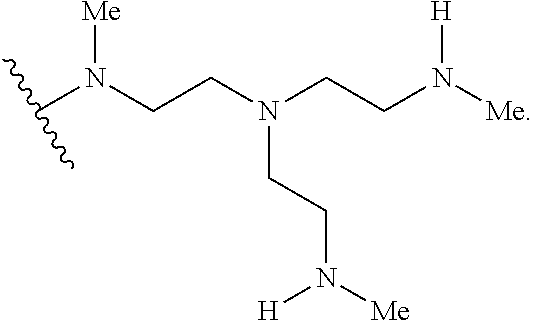

wherein approximately 50-90%, approximately 60-90%, approximately 70-90%, or approximately 80-90%, of the instances R are optionally substituted alkyl; and each instance of n is between 5-10, 10-20, 20-30, 30-40, 40-50, 50-60, 25-50, 50-75, 60-70, 70-80, 75-100, 80-90, 90-100, 100-110, 110-120, 120-130, 130-140, 140-150, 100-125, or 125-150.


wherein each R independently is optionally substituted alkyl; and each instance of n is between 25-135.

wherein each instance of n is between 25-135.

wherein each instance of n is between 25-135, which is further cross-linked.


and each instance of


wherein each instance of n is between 25-135; and each instance of


or a pharmaceutically acceptable salt, co-crystal, tautomer, stereoisomer, or isotopically labeled derivative thereof, comprising:

or a pharmaceutically acceptable salt, co-crystal, tautomer, stereoisomer, or isotopically labeled derivative thereof,
- with an amine X;
- or a pharmaceutically acceptable salt, co-crystal, tautomer, stereoisomer, or isotopically labeled derivative thereof,


or a pharmaceutically acceptable salt, co-crystal, tautomer, stereoisomer, or isotopically labeled derivative thereof, comprising:

or a pharmaceutically acceptable salt, co-crystal, tautomer, stereoisomer, or isotopically labeled derivative thereof, with a compound of Formula (B):

or a pharmaceutically acceptable salt, co-crystal, tautomer, stereoisomer, or isotopically labeled derivative thereof,

- under suitable conditions to form a polymer of Formula (I).

or a pharmaceutically acceptable salt, co-crystal, tautomer, stereoisomer, or isotopically labeled derivative thereof,
- with an amine selected from the group consisting of: linear amines, branched amines, polyamines, cyclic amines, matrix metalloproteinase (MMP) degradable amines, redox sensitive amines, photocleavable amines, and compounds of Formula (B):

or a pharmaceutically acceptable salt, co-crystal, tautomer, stereoisomer, or isotopically labeled derivative thereof;
- wherein:

- under suitable conditions.

wherein each R independently is hydrogen, optionally substituted alkyl, optionally substituted alkenyl, or optionally substituted alkynyl; each Z independently is hydrogen, optionally substituted alkyl, optionally substituted alkenyl, or optionally substituted alkynyl; each x1 is independently 2, 3, 4, or 5; and each n independently is 15-140. In certain embodiments, the amine Xis of the formula

and at least one instance of x1 is 2 or 3. In certain embodiments, at least one instance of x1 is 2. In certain embodiments, at least one instance of x1 is 3. In certain embodiments, at least one instance of x1 is 4. In certain embodiments, at least one instance of x1 is 5. In certain embodiments, the amine X is a compound of Formula (B):

In certain embodiments, the amine X is a compound of Formula (B):

wherein each instance of R is independently optionally substituted alkyl; wherein each instance of Z is independently hydrogen. In certain embodiments, the amine X is a compound of Formula (B)

wherein each instance of R is independently optionally substituted C1-6 alkyl; wherein each instance of Z is independently hydrogen. In certain embodiments, the amine X is a compound of Formula (B):

wherein each instance of R is independently unsubstituted C1-6 alkyl;

wherein all instances of R are unsubstituted methyl; wherein all instances of Z are independently hydrogen.

In certain embodiments, the amine X is of the formula:

In certain embodiments, the amine X is of the formula:

In certain embodiments, the amine X is of the formula:

In certain embodiments, the amine X is of the formula:

In certain embodiments, the amine X is of the formula:

In certain embodiments, the amine X is of the formula:

In certain embodiments, the amine X is of the formula:

In certain embodiments, the amine X is of the formula:


each instance of R is independently optionally substituted alkyl; wherein each instance of Z is independently hydrogen. In certain embodiments, in methods of preparing a polymer described herein, the amine is a compound of Formula (B):

wherein each instance of R is independently optionally substituted C1-6 alkyl; wherein each instance of Z is independently hydrogen. In certain embodiments, in methods of preparing a polymer described herein, the amine is a compound of Formula (B):

wherein each instance of R is independently unsubstituted C1-6 alkyl; wherein each instance of Z is independently hydrogen. In certain embodiments, in methods of preparing a polymer described herein, the amine is a compound of Formula (B):

wherein all instances of R are unsubstituted methyl; wherein all instances of Z are independently hydrogen.

In certain embodiments, in methods of preparing a polymer described herein, the amine is a compound of Formula (B) of the formula:

In certain embodiments, in methods of preparing a polymer described herein, the amine is a compound of Formula (B) of the formula:

In certain embodiments, in methods of preparing a polymer described herein, the amine is a compound of Formula (B) of the formula:

In certain embodiments, in methods of preparing a polymer described herein, the amine is a compound of Formula (B) of the formula:

In certain embodiments, in methods of preparing a polymer described herein, the amine is a compound of Formula (B) of the formula:

In certain embodiments, in methods of preparing a polymer described herein, the amine is a compound of Formula (B) of the formula:

In certain embodiments, in methods of preparing a polymer described herein, the amine is a compound of Formula (B) of the formula:

In certain embodiments, in methods of preparing a polymer described herein, the amine is a compound of Formula (B) of the formula:


wherein each R independently is hydrogen, optionally substituted alkyl, optionally substituted alkenyl, or optionally substituted alkynyl; each Z independently is hydrogen, optionally substituted alkyl, optionally substituted alkenyl, optionally substituted alkynyl, or of the Formula (I-Z):

wherein each A1 independently is an amine. The definitions of R, Z, A1, and n are as discussed above.

In certain embodiments, the cyclic amine is aziridine. In certain embodiments, the cyclic amine is azetidine, pyrrolidine, pipiridine, piperazine, morpholine, or thiomorpholine. In certain embodiments, the cyclic amine is piperidine.

as described above.

| TABLE 1 |
| Results of the standard curves of the PEG alkynoate-TREN |
| gels with docetaxel and paclitaxel (shown in FIGS. 11A-11B) |
| AUC | AUC | |
| Docetaxel | Paclitaxel | |
| peak 15.8 | peak 16.4 | |
| [Taxane] | mn | mn |
| ug/ml | (mAU * s) | (mAU * s) |
| 150 | 6602 | 6870 |
| 15 | 2264 | 2284 |
| 1.5 | 74 | 90 |
| 0.15 | 22 | 24 |
| 0.015 | 0 | 0 |
| TABLE 2 |
| Concentrations of taxanes docetaxel and paclitaxel |
| following the release of taxanes docetaxel and |
| paclitaxel from the PEG alkynoate-TREN gels |
| shown in FIGS. 12A-12B) |
| Concentrations (ug/mL) |
| Docetaxel | Paclitaxel | ||
| AUC 1 h A | −0.15226 | −0.12532 | |
| AUC 1 h B | 0.422391 | −0.12532 | |
| AUC 1 h C | −0.15226 | −0.12532 | |
| AUC 1 h average | 0.039292 | −0.12532 | |
| AUC 2 h A | −0.15226 | −0.12532 | |
| AUC 2 h B | 0.555003 | 0.304354 | |
| AUC 2 h C | 0.201373 | 0.196935 | |
| AUC 2 h average | 0.201373 | 0.125322 | |
| AUC 5 h A | 1.041244 | 1.700802 | |
| AUC 5 h B | 0.201373 | 0.322257 | |
| AUC 5 h C | −0.15226 | −0.12532 | |
| AUC 5 h average | 0.363453 | 0.632579 | |
| AUC 20 h A | 0.64341 | 0.73403 | |
| AUC 20 h B | 0.311882 | 0.859353 | |
| AUC 20 h C | −0.15226 | 0.125322 | |
| AUC 20 h average | 0.267678 | 0.572902 |
| |
0.984675 | ||
| |
1.002578 | ||
| |
1.396448 | ||
| |
1.1279 | ||
| TABLE 3 |
| Percentages of taxanes docetaxel and paclitaxel following |
| the release of taxanes docetaxel and paclitaxel from the |
| PEG alkynoate-TREN gels (shown in FIGS. 13A-13C) |
| % released |
| Docetaxel | Paclitaxel | ||
| AUC 1 h A | −0.20301 | −0.1671 | |
| AUC 1 h B | 0.563189 | −0.1671 | |
| AUC 1 h C | −0.20301 | −0.1671 | |
| AUC 1 h | 0.052389 | −0.1671 | |
| average | |||
| AUC 2 h A | −0.20301 | −0.1671 | |
| AUC 2 h B | 0.740004 | 0.405805 | |
| AUC 2 h C | 0.268497 | 0.26258 | |
| AUC 2 h | 0.268497 | 0.167096 | |
| average | |||
| AUC 5 h A | 1.388326 | 2.267736 | |
| AUC 5 h B | 0.268497 | 0.429676 | |
| AUC 5 h C | −0.20301 | −0.1671 | |
| AUC 5 h | 0.484604 | 0.843439 | |
| average | |||
| AUC 20 h A | 0.85788 | 0.978707 | |
| AUC 20 h B | 0.415843 | 1.145803 | |
| AUC 20 h C | −0.20301 | 0.167096 | |
| AUC 20 h | 0.356904 | 0.763869 | |
| |
| AUC |
| 48 h A | 1.3129 | |
| |
1.336771 | |
| |
1.861931 | |
| |
1.503867 | |
| TABLE 4 |
| Percentages of taxanes docetaxel and paclitaxel following |
| the release of taxanes docetaxel and paclitaxel from the |
| PEG alkynoate-TREN gels (shown in FIGS. 13A-13C) |
| % released |
| Docetaxel | Paclitaxel | ||
| AUC 1 h A | 2.465425 | 0.923804 | ||
| AUC 1 h B | 2.016019 | 0.824024 | ||
| AUC 1 h C | 1.741367 | 0.687005 | ||
| AUC 1 h average | 2.07427 | 0.811611 | ||
| AUC 6 h A | 6.19475 | 1.412919 | ||
| AUC 6 h B | 4.946435 | 1.607706 | ||
| AUC 6 h C | 3.317968 | 1.70295 | ||
| AUC 6 h average | 4.819718 | 1.574525 | ||
| |
11.23133 | 2.140265 | ||
| |
7.325188 | 1.137449 | ||
| |
3.031822 | 1.796047 | ||
| |
7.196113 | 1.691254 | ||
| AUC 96 h A | 8.246395 | 6.021675 | ||
| AUC 96 h B | 9.349132 | 7.865225 | ||
| AUC 96 h C | 19.31944 | 3.116824 | ||
| AUC 96 h average | 12.30499 | 5.667908 | ||
- 1. Peppas, N. A.; Langer, R., New challenges in biomaterials. Science 1994, 263 (5154), 1715-20.
- 2. Fenton, O. S., Olafson, K. N., Pillai, P. S., Mitchell, M. J., Langer, R., Advances in Biomaterials for Drug Delivery.
Advanced Materials 2018, 30, 1705328. - 3. Langer, R.; Tirrell, D. A., Designing materials for biology and medicine. Nature 2004, 428 (6982), 487-92.
- 4. Tibbitt, M. W.; Anseth, K. S., Hydrogels as extracellular matrix mimics for 3D cell culture. Biotechnol Bioeng 2009, 103 (4), 655-63.
- 5. Peppas, N. A.; Hilt, J. Z.; Khademhosseini, A.; Langer, R., Hydrogels in biology and medicine: From molecular principles to bionanotechnology. Advanced Materials 2006, 18 (11), 1345-1360.
- 6. Nguyen, K. T.; West, J. L., Photopolymerizable hydrogels for tissue engineering applications. Biomaterials 2002, 23 (22), 4307-14.
- 7. Lutolf, M. P.; Hubbell, J. A., Synthetic biomaterials as instructive extracellular microenvironments for morphogenesis in tissue engineering. Nat Biotechnol 2005, 23 (1), 47-55.
- 8. Sawhney, A. S.; Pathak, C. P.; Hubbell, J. A., Interfacial photopolymerization of poly(ethylene glycol)-based hydrogels upon alginate-poly(l-lysine) microcapsules for enhanced biocompatibility. Biomaterials 1993, 14 (13), 1008-16.
- 9. Annabi, N.; Tamayol, A.; Uquillas, J. A.; Akbari, M.; Bertassoni, L. E.; Cha, C.; Camci-Unal, G.; Dokmeci, M. R.; Peppas, N. A.; Khademhosseini, A., 25th anniversary article: Rational design and applications of hydrogels in regenerative medicine. Adv Mater 2014, 26 (1), 85-123.
- 10. Langer, R., Biomaterials: Status, challenges, and perspectives. AiChE Journal 46 (7), 1286-1289.
- 11. Tibbitt, M. W.; Dahlman, J. E.; Langer, R., Emerging Frontiers in Drug Delivery. J Am Chem Soc 2016, 138 (3), 704-17.
- 12. Knipe, J. M.; Peppas, N. A., Multi-responsive hydrogels for drug delivery and tissue engineering applications. Regenertive Biomaterials 2014, 57-65.
- 13. Zander, Z. K.; Hua, G.; Wiener, C. G.; Vogt, B. D.; Becker, M. L., Control of Mesh Size and Modulus by Kinetically Dependent Cross-Linking in Hydrogels. Adv Mater 2015, 27 (40), 6283-8.
- 14. Azagarsamy, M. A.; Anseth, K. S., Bioorthogonal Click Chemistry: An Indispensable Tool to Create Multifaceted Cell Culture Scaffolds. ACS Macro Lett 2013, 2 (1), 5-9.
- 15. Kharkar, P. M.; Kiick, K. L.; Kloxin, A. M., Designing degradable hydrogels for orthogonal control of cell microenvironments. Chem Soc Rev 2013, 42 (17), 7335-72.
- 16. Macdougall, L. J. T., V. X.; Dove, A. P., Efficient In Situ Nucleophilic Thiol-yne Click Chemnistry for the Synthesis of Strong Hydrogel Materials with Tunable Properties. ACS Macro Lett 2017, 6 (2), 93-97.
- 17. Agard, N. J.; Prescher, J. A.; Bertozzi, C. R., A strain-promoted [3+2] azide-alkyne cycloaddition for covalent modification of biomolecules in living systems. J Am Chem Soc 2004, 126 (46), 15046-7.
- 18. DeForest, C. A.; Anseth, K. S., Cytocompatible click-based hydrogels with dynamically tunable properties through orthogonal photoconjugation and photocleavage reactions. Nat Chem 2011, 3 (12), 925-31.
- 19. Deforest, C. A.; Sims, E. A.; Anseth, K. S., Peptide-Functionalized Click Hydrogels with Independently Tunable Mechanics and Chemical Functionality for 3D Cell Culture. Chem Mater 2010, 22 (16), 4783-4790.
- 20. Steinhilber, D.; Rossow, T.; Wedepohl, S.; Paulus, F.; Seiffert, S.; Haag, R., A microgel construction kit for bioorthogonal encapsulation and pH-controlled release of living cells. Angew Chem Int Ed Engl 2013, 52 (51), 13538-43.
- 21. Truong, V. X.; Ablett, M. P.; Gilbert, H. T. J.; Bowen, J.; Richardson, S. M.; Hoyland, J. A.; Dove, A. P., Biomater. Sci. 2014, 2, 167-175.
- 22. Blackman, M. L.; Royzen, M.; Fox, J. M., Tetrazine ligation: fast bioconjugation based on inverse-electron-demand Diels-Alder reactivity. J Am Chem Soc 2008, 130 (41), 13518-9.
- 23. Hansell, C. F.; Espeel, P.; Stamenovic, M. M.; Barker, I. A.; Dove, A. P.; Du Prez, F. E.; O'Reilly, R. K., Additive-free clicking for polymer functionalization and coupling by tetrazine-norbornene chemistry. J Am Chem Soc 2011, 133 (35), 13828-31.
- 24. Alge, D. L.; Azagarsamy, M. A.; Donohue, D. F.; Anseth, K. S., Synthetically tractable click hydrogels for three-dimensional cell culture formed using tetrazine-norbornene chemistry. Biomacromolecules 2013, 14 (4), 949-53.
- 25. Grover, G. N.; Braden, R. L.; Christman, K. L., Oxime cross-linked injectable hydrogels for catheter delivery. Adv Mater 2013, 25 (21), 2937-42.
- 26. Grover, G. N.; Lam, J.; Nguyen, T. H.; Segura, T.; Maynard, H. D., Biocompatible hydrogels by oxime Click chemistry. Biomacromolecules 2012, 13 (10), 3013-7.
- 27. Lin, F.; Yu, J.; Tang, W.; Zheng, J.; Defante, A.; Guo, K.; Wesdemiotis, C.; Becker, M. L., Peptide-functionalized oxime hydrogels with tunable mechanical properties and gelation behavior. Biomacromolecules 2013, 14 (10), 3749-58.
- 28. van de Wetering, P.; Metters, A. T.; Schoenmakers, R. G.; Hubbell, J. A., Poly(ethylene glycol) hydrogels formed by conjugate addition with controllable swelling, degradation, and release of pharmaceutically active proteins. J Control Release 2005, 102 (3), 619-27.
- 29. Kharkar, P. M.; Rehmann, M. S.; Skeens, K. M.; Maverakis, E.; Kloxin, A. M., Thiol-ene click hydrogels for therapeutic delivery. ACS Biomater Sci Eng 2016, 2 (2), 165-179.
- 30. He, B.; Su, H.; Bai, T.; Wu, Y.; Li, S.; Gao, M.; Hu, R.; Zhao, Z.; Qin, A.; Ling, J.; Tang, B. Z., Spontaneous Amino-yne Click Polymerization: A Powerful Tool toward Regio- and Stereospecific Poly(beta-aminoacrylate)s. J Am Chem Soc 2017, 139 (15), 5437-5443.
- 31. Huang, D.; Liu, Y.; Qin, A.; Tang, B. Z., Recent advances in alkyne-based click polymerizations.
Polymer Chemistry 2018, 9, 2853. - 32. Blackman, A. G., The coordination chemistry of tripodal tetraamine ligands.
Polyhedron 2005, 24, 1-39. - 33. Flory, P. J., Molecular Size Distribution in Three Dimensional Polymers I. Gelation. Journal of the American Chemical Society 1941, 63, 3083.
- 34. Stockmayer, W. H., Theory of Molecular Size Distribution and Gel Formation in Branched Polymers II. General Cross Linking. Journal of Chemical Physics 1944, 12 (4), 125.
- 35. DeForest, C. A.; Anseth, K. S., Photoreversible patterning of biomolecules within click-based hydrogels. Angew Chem Int Ed Engl 2012, 51 (8), 1816-9.
- 36. Abbott, A., Cell culture: biology's new dimension. Nature 2003, 424 (6951), 870-2.
- 37. Petersen, 0. W.; Ronnovjessen, L.; Howlett, A. R.; Bissell, M. J., Interaction with basement-membrane serves to rapidly distinguish growth and differentiation pattern of normal and malignant human breast epithelial cells. Proc Natl Acad Sci USA 1992, 89 (19), 9064-9068.
- 38. Tanaka, H.; Murphy, C. L.; Murphy, C.; Kimura, M.; Kawai, S.; Polak, J. M., Chondrogenic differentiation of murine embryonic stem cells: effects of culture conditions and dexamethasone. J Cell Biochem 2004, 93 (3), 454-62.
- 39. Zhang, S.; Zhao, X.; Spirio, L., PuraMatrix: Self-assembling peptide nanofiber scaffolds. Ma P. and Elisseeff, J., eds. Scaffolding in tissue engineering 2005, 217-238.
- 40. Saha, K.; Pollock, J. F.; Schaffer, D. V.; Healy, K. E., Designing synthetic materials to control stem cell phenotype. Curr Opin Chem Biol 2007, 11 (4), 381-7.
- 41. Tsuchiya, S.; Yamabe, M.; Yamaguchi, Y.; Kobayashi, Y.; Konno, T.; Tada, K., Establishment and characterization of a human acute monocytic leukemia cell line (THP-1). Int J Cancer 1980, 26 (2), 171-6.
- 42. Jainchill, J. L.; Aaronson, S. A.; Todaro, G. J., Murine sarcoma and leukemia viruses: assay using clonal lines of contact-inhibited mouse cells. J Virol 1969, 4 (5), 549-53.
- 43. Tsuchiya, S.; Kobayashi, Y.; Goto, Y.; Okumura, H.; Nakae, S.; Konno, T.; Tada, K., Induction of maturation in cultured human monocytic leukemia cells by a phorbol diester. Cancer Res 1982, 42 (4), 1530-6.
- 44. Westerman, K. A.; Leboulch, P., Reversible immortalization of mammalian cells mediated by retroviral transfer and site-specific recombination. Proc Natl Acad Sci USA 1996, 93 (17), 8971-6.
- 45. DeForest, C. A.; Polizzotti, B. D.; Anseth, K. S., Sequential click reactions for synthesizing and patterning three-dimensional cell microenvironments. Nat Mater 2009, 8 (8), 659-64.
- 46. Rydholm, A. E.; Reddy, S. K.; Anseth, K. S.; Bowman, C. N., Controlling network structure in degradable thiol-acrylate biomaterials to tune mass loss behavior. Biomacromolecules 2006, 7 (10), 2827-36.
Claims (23)


Priority Applications (1)
| Application Number | Priority Date | Filing Date | Title |
|---|---|---|---|
| US16/502,551 US11491228B2 (en) | 2018-07-05 | 2019-07-03 | Hydrogels and uses thereof |
Applications Claiming Priority (3)
| Application Number | Priority Date | Filing Date | Title |
|---|---|---|---|
| US201862694287P | 2018-07-05 | 2018-07-05 | |
| US201962836835P | 2019-04-22 | 2019-04-22 | |
| US16/502,551 US11491228B2 (en) | 2018-07-05 | 2019-07-03 | Hydrogels and uses thereof |
Publications (2)
| Publication Number | Publication Date |
|---|---|
| US20200009256A1 US20200009256A1 (en) | 2020-01-09 |
| US11491228B2 true US11491228B2 (en) | 2022-11-08 |
Family
ID=67480296
Family Applications (1)
| Application Number | Title | Priority Date | Filing Date |
|---|---|---|---|
| US16/502,551 Active 2040-12-11 US11491228B2 (en) | 2018-07-05 | 2019-07-03 | Hydrogels and uses thereof |
Country Status (2)
| Country | Link |
|---|---|
| US (1) | US11491228B2 (en) |
| WO (1) | WO2020010193A1 (en) |
Families Citing this family (5)
| Publication number | Priority date | Publication date | Assignee | Title |
|---|---|---|---|---|
| CN111617318B (en) * | 2020-05-26 | 2021-12-10 | 南京市儿童医院 | Preparation method of injectable epiphyseal plate regeneration hydrogel for children |
| CN113181424B (en) * | 2021-04-01 | 2022-03-25 | 中国科学院兰州化学物理研究所 | Preparation method of supermolecule hydrogel composite lubricating antibacterial coating material |
| EP4373533A1 (en) * | 2021-07-20 | 2024-05-29 | Boston Scientific Scimed Inc. | Gel compositions, systems, and methods |
| CN118994698B (en) * | 2024-10-23 | 2025-08-08 | 宁波大学 | Preparation method of broad bean protein and starch foaming hydrogel and application of the same in preparing vibration-damping packaging |
| CN121177567B (en) * | 2025-11-27 | 2026-02-24 | 重庆医科大学附属口腔医院(重庆市口腔医院) | Controlled release nano-enzyme hydrogel for promoting healing of chronic wound surface of diabetes and preparation method and application thereof |
Citations (2)
| Publication number | Priority date | Publication date | Assignee | Title |
|---|---|---|---|---|
| WO2007035296A2 (en) | 2005-09-15 | 2007-03-29 | University Of Utah Research Foundation | Polymeric compositions and methods of making and using thereof |
| US20180049977A1 (en) | 2016-08-22 | 2018-02-22 | Washington University | Hydrogel microparticle scaffold with gradients of degradability and methods thereof |
-
2019
- 2019-07-03 US US16/502,551 patent/US11491228B2/en active Active
- 2019-07-03 WO PCT/US2019/040487 patent/WO2020010193A1/en not_active Ceased
Patent Citations (2)
| Publication number | Priority date | Publication date | Assignee | Title |
|---|---|---|---|---|
| WO2007035296A2 (en) | 2005-09-15 | 2007-03-29 | University Of Utah Research Foundation | Polymeric compositions and methods of making and using thereof |
| US20180049977A1 (en) | 2016-08-22 | 2018-02-22 | Washington University | Hydrogel microparticle scaffold with gradients of degradability and methods thereof |
Non-Patent Citations (21)
| Title |
|---|
| Alge et al., Synthetically tractable click hydrogels for three-dimensional cell culture formed using tetrazine-norbornene chemistry. Biomacromolecules 2013;14 (4):949-53. |
| Annabi et al., 25th anniversary article: Rational design and applications of hydrogels in regenerative medicine. Adv Mater 2014;26 (1):85-123. |
| Azagarsamy et al., Bioorthogonal click chemistry: an indispensable tool to create multifaceted cell culture scaffolds. ACS Macro Lett. Jan. 15, 2013;2(1):5-9. Epub Dec. 14, 2012. |
| Cong True Huynh et al., "Biodegradable star-shaped poly(ethylene glycol)-poly (-amino ester) cationic pH/temperature-sensitive copolymer hydrogels" in Colloid Polym Sci (2011) 289-308. (Year: 2011). * |
| Deforest et al., Sequential click reactions for synthesizing and patterning three-dimensional cell microenvironments. Nat Mater 2009, 8 (8):659-64. |
| Fenton et al., "-Aminoacrylate Synthetic hydrogels: Easily Accessible and Operationally Simple Biomaterials Networks" in Angew Chem Int. Ed Engl, 2018 (epublished Nov. 8, 2018) filed by applicant on form 1449). (Year: 2018). * |
| Fenton et al., Advances in Biomaterials for Drug Delivery. Advanced Materials 2018, 30, 1705328. |
| Fenton et al., β-Aminoacrylate Synthetic Hydrogels: Easily Accessible and Operationally Simple Biomaterials Networks. Angew Chem Int Ed Engl. Dec. 3, 2018;57(49):16026-16029. doi:10.1002/anie.201808452. Epub Nov. 8, 2018. |
| Fenton et al., β-Aminoacrylate synthetic hydrogels: easily accessible and operationally simple biomaterials networks. Angew Chem Int Ed. Sep. 12, 2018;57(49):1-5. doi: 10.1002/anie.201808452. |
| Grover et al., Biocompatible hydrogels by oxime Click chemistry. Biomacromolecules 2012, 13 (10):3013-7. |
| He et al., Spontaneous Amino-yne Click Polymerization: A Powerful Tool toward Regio- and Stereospecific Poly(beta-aminoacrylate)s. J Am Chem Soc 2017, 139 (15):5437-5443. |
| Huang et al., Recent advances in alkyne-based click polymerizations. Polymer Chemistry 2018, 9, 2853. |
| International Search Report and Written Opinion dated Oct. 18, 2019 for Application No. PCT/US2019/040487. |
| Kharkar et al., Designing degradable hydrogels for orthogonal control of cell microenvironments. Chem Soc Rev. Sep. 7, 2013;42(17):7335-72. Epub Apr. 22, 2013. |
| MacDougall et al., Efficient In Situ Nucleophilic Thiol-yne Click Chemnistry for the Synthesis of Strong Hydrogel Materials with Tunable Properties. ACS Macro Lett 2017;6 (2):93-97. |
| MacDougall et al., Nonswelling thiol-yne cross-linked hydrogel materiasl as cytocompatible soft tissue scaffolds. Biomacromolecules. Nov. 10, 2017;19(5):1378-88. |
| PCT/US2019/040487, Oct. 18, 2019, International Search Report and Written Opinion. |
| Tibbitt et al., Emerging Frontiers in Drug Delivery. J Am Chem Soc 2016;138 (3):704-17. |
| Truong et al., Simultaneous orthogonal dual-click approach to tough, in-situ-forming hydrogels for cell encapsulation. J Am Chem Soc. Feb. 4, 2015;137(4):1618-22. Epub Jan. 26, 2015. |
| Van De Wetering et al., Poly( ethylene glycol) hydrogels formed by conjugate addition with controllable swelling, degradation, and release of pharmaceutically active proteins. J Control Release 2005;102(3):619-27. |
| Vinh X. Truong et al., "Simultaneous Orthogonal Dual-Click Approach to Tough, In-Situ-Forming Hydrogels for Cell Encapsulation" in the Journal of American Chemical Society, Jan. 26, 2015, pp. 1618-1622 (submitted by applicant in 1449). (Year: 2015). * |
Also Published As
| Publication number | Publication date |
|---|---|
| WO2020010193A1 (en) | 2020-01-09 |
| US20200009256A1 (en) | 2020-01-09 |
Similar Documents
| Publication | Publication Date | Title |
|---|---|---|
| US10792373B2 (en) | Drug delivery polymers and uses thereof | |
| US10799594B2 (en) | Drug delivery polymer and uses thereof | |
| US20200009256A1 (en) | Hydrogels and uses thereof | |
| US10633371B2 (en) | EZH2 inhibitors and uses thereof | |
| EP4074694B1 (en) | Amino acid-, peptide- an polypeptide-lipids, isomers, compositions, an uses thereof | |
| US11696953B2 (en) | Poly(beta-amino esters) and uses thereof | |
| US11673891B2 (en) | Imidazopyrimidine compounds and uses thereof | |
| US11634450B2 (en) | DOT1L degraders and uses thereof | |
| US12084415B2 (en) | Biomolecule-polymer-pharmaceutical agent conjugates for delivering the pharmaceutical agent | |
| JP7389749B2 (en) | Small molecules that block proteasome-related ubiquitin receptor RPN13 function and their use | |
| US11939408B2 (en) | Hyaluronic acid derivatives | |
| US20240270898A1 (en) | Latent-fluoride containing polymers for triggered degradation | |
| US20180353435A1 (en) | Polymer-lipid materials for delivery of nucleic acids | |
| US20230201339A1 (en) | Use of thiazole amide compounds for modulating human immune response | |
| EA040020B1 (en) | AMINO ACID DERIVATIVES FUNCTIONALIZED AT THE N-TERMINAL, CAPABLE OF FORMING DRUG ENCAPSULATED MICROSPHERES |
Legal Events
| Date | Code | Title | Description |
|---|---|---|---|
| FEPP | Fee payment procedure |
Free format text: ENTITY STATUS SET TO UNDISCOUNTED (ORIGINAL EVENT CODE: BIG.); ENTITY STATUS OF PATENT OWNER: LARGE ENTITY |
|
| STPP | Information on status: patent application and granting procedure in general |
Free format text: APPLICATION DISPATCHED FROM PREEXAM, NOT YET DOCKETED |
|
| AS | Assignment |
Owner name: MASSACHUSETTS INSTITUTE OF TECHNOLOGY, MASSACHUSETTS Free format text: ASSIGNMENT OF ASSIGNORS INTEREST;ASSIGNORS:LANGER, ROBERT S.;FENTON, OWEN SHEA;ANDRESEN, JASON;AND OTHERS;REEL/FRAME:051101/0175 Effective date: 20191121 Owner name: MASSACHUSETTS INSTITUTE OF TECHNOLOGY, MASSACHUSET Free format text: ASSIGNMENT OF ASSIGNORS INTEREST;ASSIGNORS:LANGER, ROBERT S.;FENTON, OWEN SHEA;ANDRESEN, JASON;AND OTHERS;REEL/FRAME:051101/0175 Effective date: 20191121 |
|
| STPP | Information on status: patent application and granting procedure in general |
Free format text: DOCKETED NEW CASE - READY FOR EXAMINATION |
|
| STPP | Information on status: patent application and granting procedure in general |
Free format text: NON FINAL ACTION MAILED |
|
| STPP | Information on status: patent application and granting procedure in general |
Free format text: RESPONSE TO NON-FINAL OFFICE ACTION ENTERED AND FORWARDED TO EXAMINER |
|
| STPP | Information on status: patent application and granting procedure in general |
Free format text: NOTICE OF ALLOWANCE MAILED -- APPLICATION RECEIVED IN OFFICE OF PUBLICATIONS |
|
| STPP | Information on status: patent application and granting procedure in general |
Free format text: PUBLICATIONS -- ISSUE FEE PAYMENT VERIFIED |
|
| STPP | Information on status: patent application and granting procedure in general |
Free format text: AWAITING TC RESP, ISSUE FEE PAYMENT VERIFIED |
|
| STPP | Information on status: patent application and granting procedure in general |
Free format text: PUBLICATIONS -- ISSUE FEE PAYMENT VERIFIED |
|
| STCF | Information on status: patent grant |
Free format text: PATENTED CASE |
|
| CC | Certificate of correction | ||
| MAFP | Maintenance fee payment |
Free format text: PAYMENT OF MAINTENANCE FEE, 4TH YEAR, LARGE ENTITY (ORIGINAL EVENT CODE: M1551); ENTITY STATUS OF PATENT OWNER: LARGE ENTITY Year of fee payment: 4 |