US11489873B2 - Security policy deployment method and apparatus - Google Patents
Security policy deployment method and apparatus Download PDFInfo
- Publication number
- US11489873B2 US11489873B2 US16/359,753 US201916359753A US11489873B2 US 11489873 B2 US11489873 B2 US 11489873B2 US 201916359753 A US201916359753 A US 201916359753A US 11489873 B2 US11489873 B2 US 11489873B2
- Authority
- US
- United States
- Prior art keywords
- vnf
- security policy
- policy
- access control
- network
- Prior art date
- Legal status (The legal status is an assumption and is not a legal conclusion. Google has not performed a legal analysis and makes no representation as to the accuracy of the status listed.)
- Active
Links
Images


Classifications
-
- H—ELECTRICITY
- H04—ELECTRIC COMMUNICATION TECHNIQUE
- H04L—TRANSMISSION OF DIGITAL INFORMATION, e.g. TELEGRAPHIC COMMUNICATION
- H04L63/00—Network architectures or network communication protocols for network security
- H04L63/20—Network architectures or network communication protocols for network security for managing network security; network security policies in general
-
- G—PHYSICS
- G06—COMPUTING OR CALCULATING; COUNTING
- G06F—ELECTRIC DIGITAL DATA PROCESSING
- G06F9/00—Arrangements for program control, e.g. control units
- G06F9/06—Arrangements for program control, e.g. control units using stored programs, i.e. using an internal store of processing equipment to receive or retain programs
- G06F9/44—Arrangements for executing specific programs
- G06F9/455—Emulation; Interpretation; Software simulation, e.g. virtualisation or emulation of application or operating system execution engines
- G06F9/45533—Hypervisors; Virtual machine monitors
- G06F9/45558—Hypervisor-specific management and integration aspects
-
- H—ELECTRICITY
- H04—ELECTRIC COMMUNICATION TECHNIQUE
- H04L—TRANSMISSION OF DIGITAL INFORMATION, e.g. TELEGRAPHIC COMMUNICATION
- H04L12/00—Data switching networks
- H04L12/66—Arrangements for connecting between networks having differing types of switching systems, e.g. gateways
-
- H—ELECTRICITY
- H04—ELECTRIC COMMUNICATION TECHNIQUE
- H04L—TRANSMISSION OF DIGITAL INFORMATION, e.g. TELEGRAPHIC COMMUNICATION
- H04L41/00—Arrangements for maintenance, administration or management of data switching networks, e.g. of packet switching networks
- H04L41/08—Configuration management of networks or network elements
- H04L41/0803—Configuration setting
- H04L41/0806—Configuration setting for initial configuration or provisioning, e.g. plug-and-play
-
- H—ELECTRICITY
- H04—ELECTRIC COMMUNICATION TECHNIQUE
- H04L—TRANSMISSION OF DIGITAL INFORMATION, e.g. TELEGRAPHIC COMMUNICATION
- H04L41/00—Arrangements for maintenance, administration or management of data switching networks, e.g. of packet switching networks
- H04L41/08—Configuration management of networks or network elements
- H04L41/0894—Policy-based network configuration management
-
- H—ELECTRICITY
- H04—ELECTRIC COMMUNICATION TECHNIQUE
- H04L—TRANSMISSION OF DIGITAL INFORMATION, e.g. TELEGRAPHIC COMMUNICATION
- H04L41/00—Arrangements for maintenance, administration or management of data switching networks, e.g. of packet switching networks
- H04L41/08—Configuration management of networks or network elements
- H04L41/0895—Configuration of virtualised networks or elements, e.g. virtualised network function or OpenFlow elements
-
- H—ELECTRICITY
- H04—ELECTRIC COMMUNICATION TECHNIQUE
- H04L—TRANSMISSION OF DIGITAL INFORMATION, e.g. TELEGRAPHIC COMMUNICATION
- H04L65/00—Network arrangements, protocols or services for supporting real-time applications in data packet communication
-
- H—ELECTRICITY
- H04—ELECTRIC COMMUNICATION TECHNIQUE
- H04L—TRANSMISSION OF DIGITAL INFORMATION, e.g. TELEGRAPHIC COMMUNICATION
- H04L67/00—Network arrangements or protocols for supporting network services or applications
- H04L67/01—Protocols
- H04L67/10—Protocols in which an application is distributed across nodes in the network
-
- H—ELECTRICITY
- H04—ELECTRIC COMMUNICATION TECHNIQUE
- H04L—TRANSMISSION OF DIGITAL INFORMATION, e.g. TELEGRAPHIC COMMUNICATION
- H04L67/00—Network arrangements or protocols for supporting network services or applications
- H04L67/34—Network arrangements or protocols for supporting network services or applications involving the movement of software or configuration parameters
-
- H—ELECTRICITY
- H04—ELECTRIC COMMUNICATION TECHNIQUE
- H04L—TRANSMISSION OF DIGITAL INFORMATION, e.g. TELEGRAPHIC COMMUNICATION
- H04L67/00—Network arrangements or protocols for supporting network services or applications
- H04L67/50—Network services
- H04L67/56—Provisioning of proxy services
-
- G—PHYSICS
- G06—COMPUTING OR CALCULATING; COUNTING
- G06F—ELECTRIC DIGITAL DATA PROCESSING
- G06F9/00—Arrangements for program control, e.g. control units
- G06F9/06—Arrangements for program control, e.g. control units using stored programs, i.e. using an internal store of processing equipment to receive or retain programs
- G06F9/44—Arrangements for executing specific programs
- G06F9/455—Emulation; Interpretation; Software simulation, e.g. virtualisation or emulation of application or operating system execution engines
- G06F9/45533—Hypervisors; Virtual machine monitors
- G06F9/45558—Hypervisor-specific management and integration aspects
- G06F2009/45587—Isolation or security of virtual machine instances
-
- G—PHYSICS
- G06—COMPUTING OR CALCULATING; COUNTING
- G06F—ELECTRIC DIGITAL DATA PROCESSING
- G06F9/00—Arrangements for program control, e.g. control units
- G06F9/06—Arrangements for program control, e.g. control units using stored programs, i.e. using an internal store of processing equipment to receive or retain programs
- G06F9/44—Arrangements for executing specific programs
- G06F9/455—Emulation; Interpretation; Software simulation, e.g. virtualisation or emulation of application or operating system execution engines
- G06F9/45533—Hypervisors; Virtual machine monitors
- G06F9/45558—Hypervisor-specific management and integration aspects
- G06F2009/45595—Network integration; Enabling network access in virtual machine instances
Definitions
- Embodiments of this application relate to the network field, and in particular, to a security policy deployment method and apparatus.
- a conventional network system is a system that interconnects a plurality of network devices with different geographic locations and independent functions to share resources or transfer information. After deployment, network devices included in the conventional network system and a network connection relationship between the network devices are relatively fixed. Consequently, it is extremely difficult to adjust a network service (NS) provided by the conventional network system.
- NS network service
- NFV network functions virtualization
- NFVI network functions virtualization infrastructure
- VNFM virtualized network function manager
- NFVO network functions virtualization orchestrator
- a corresponding security policy needs to be configured for a network device in the conventional network system, and the network device may perform access control based on the security policy.
- the network devices included in the conventional network and the network connection relationship between the network devices are relatively fixed. Therefore, when a security policy is configured for a network device in the conventional network system, a skilled person may consider designing a corresponding security policy for each network device based on a network device type and a network device connection relationship in planning and design stages of the network system. Then a skilled person manually delivers the security policies to corresponding network devices when each network device is installed and deployed, so as to implement security policy configuration of the network devices.
- each VNF has a specific lifecycle. In a lifecycle management process, it is determined that the VNF may continually change. For example, a component included in the VNF, a connection relationship between components included in the VNF, and a connection relationship between VNFs may continually change in the lifecycle management process.
- This application provides a security policy deployment method and apparatus, so as to resolve a problem that a bug easily occurs in a security policy of a VNF in a network system when the security policy is configured for the VNF in a conventional manner.
- this application provides a security policy deployment method, and the method includes: when a lifecycle state of a virtualized network function VNF changes, generating, by a management network element, a security policy of the VNF, where the security policy of the VNF is used to perform access control on the VNF; and sending, by the management network element, the security policy of the VNF to a control device, where the control device is configured to implement access control on the VNF.
- the management network element may include a VNFM or an NFVO, and the control device may include the VNF or a gateway device configured to provide the VNF with network access.
- the security policy when the VNF is deployed on at least two virtual components, the security policy includes a first security policy, and the first security policy is used to perform access control or security isolation between the at least two virtual components.
- the management network element can adjust the security policy of the VNF in time when the VNF changes, thereby reducing a possibility that a bug occurs in the security policy of the VNF because the VNF changes.
- the generating, by a management network element, a security policy of the VNF includes: determining, by the management network element, a network isolation requirement of the virtual component based on a function that needs to be implemented by the virtual component, and generating the first security policy that matches the network isolation requirement of the virtual component; or determining, by the management network element, an access control requirement of the virtual component based on a function that needs to be implemented by the virtual component, and generating the first security policy that matches the access control requirement; or obtaining, by the management network element, configuration information of the VNF, and selecting a security policy that matches the configuration information from preset alternative security policies, to serve as the first security policy.
- the management network element can accurately generate the security policy required by the VNF after the lifecycle state changes, thereby reducing a possibility that a bug occurs in the security policy of the VNF.
- the control device is the VNF
- the sending, by the management network element, the security policy of the VNF to a control device includes: sending, by the management network element, the first security policy to the VNF by using a virtualized infrastructure manager VIM; or sending, by the management network element, the first security policy to the VNF by using an element management system EMS.
- the security policy includes a second security policy
- the second security policy is used to perform access control or security isolation between the VNF and an associated network element
- the associated network element is a network element other than the VNF in a network to which the VNF belongs.
- that the management network element generates the second security policy includes: determining, by the management network element, a network isolation requirement of the VNF based on a function that needs to be implemented by the VNF, and generating the second security policy that matches the network isolation requirement of the VNF; or determining, by the management network element, an access control requirement of the VNF based on a function that needs to be implemented by the VNF, and generating the second security policy that matches the access control requirement.
- the control device is a gateway device that provides the VNF with a network service
- the sending, by the management network element, the security policy of the VNF to a control device includes: sending, by the management network element, the second security policy to the gateway device by using the VIM; or sending, by the management network element, the second security policy to the gateway device by using the EMS.
- this application further provides a security policy deployment apparatus, and the apparatus may include unit modules configured to perform the method steps in the first aspect and the implementations of the first aspect.
- this application further provides another management network element, and the management network element may be configured to perform the method steps in the first aspect or the implementations of the first aspect.
- the management network element may be a VNFM, an NFVO, a VIM, or another network element.
- the security policy of the VNF can be adjusted in time when the lifecycle state of the VNF changes, thereby greatly reducing a possibility that a bug occurs in the security policy of the VNF because the VNF changes.
- FIG. 1 is a schematic structural diagram of a network system according to this application.
- FIG. 2 is a schematic flowchart of an embodiment of a security policy configuration method according to this application.
- FIG. 3 is a schematic flowchart of another embodiment of a security policy configuration method according to this application.
- FIG. 4 is a schematic flowchart of another embodiment of a security policy configuration method according to this application.
- FIG. 5 is a schematic structural diagram of an embodiment of a security policy configuration apparatus according to this application.
- FIG. 6 is a schematic structural diagram of an embodiment of a management network element according to this application.
- a network system in the embodiments of this application may be a network system built by using a network functions virtualization infrastructure (NFVI) managed by a device such as a virtualized infrastructure manager (VIM).
- NFVI network functions virtualization infrastructure
- VIP virtualized infrastructure manager
- a virtualized network function manager may generate a specific quantity of virtualized network functions (VNF) by using the NFVI, and perform lifecycle management on the VNF.
- a network functions virtualization orchestrator may deploy, operate, manage, and coordinate the VNF and a corresponding NFVI by using the VNFM, so as to implement a specific network service (NS).
- the VNF may be deployed on one or more components, and the components may independently or cooperatively implement a specific function.
- the components may independently or cooperatively implement functions such as data processing and data storage, so that the VNF may implement a specific network service (NS).
- NS network service
- each NS may be implemented by at least one VNF, and a same VNF may be used to implement different NSs. Therefore, it may be considered that each NS includes at least one VNF or each NS is formed by the at least one VNF.
- the component may be an entity component, such as a server; or may be a virtual component, such as a virtual machine (VM).
- VM virtual machine
- a change of a lifecycle state of the VNF may include: VNF instantiation, VNF scale-in, VNF scale-out, VNF termination, and the like.
- the VNF may be created, or may be changed, or may be rearranged.
- the VNF instantiation may indicate that the VNF is created.
- the VNF is created by the VNFM by using the NFVI.
- the VNF scale-in and the VNF scale-out indicate that the VNF is changed.
- components in the VNF are increased, reduced, or adjusted; or an NS that needs to be implemented by the VNF is adjusted; or a relationship between the VNF and another network element is adjusted.
- the component in the VNF may be a component configured to deploy the VNF.
- FIG. 1 is a schematic structural diagram of an embodiment of a network system according to this application.
- the network system may include a first VNF, a second VNF, and a third VNF, and all the first VNF, the second VNF, and the third VNF are connected to a gateway device.
- the gateway device is configured to provide the VNFs with a network service, and may be a virtual gateway device or an entity gateway device.
- the network service may include a virtual local area network (VLAN) service, a virtual private network (VPN) service, or a firewall service.
- the virtual gateway device may generally include a virtual switch, a virtual router, a virtual firewall, or the like.
- the VNF in the network system may be deployed on a plurality of virtual devices or entity devices.
- the VNF in FIG. 1 is deployed on a first component, a second component, and a third component.
- the first component and the second component cooperate to implement an internal function of the VNF, and the third component is configured to provide an external service. Therefore, the first component and the second component may form a first subnet, and the third component may form a second subnet. All of the first component, the second component, and the third component may be virtual components; or some of the first component, the second component, and the third component may be virtual components, and the other may be entity components.
- the network system may further include more or fewer VNFs and gateway devices.
- the network system may further include another network element such as a management network element (VIM), or an element management system (EMS).
- VIP management network element
- EMS element management system
- the management network element may be any network element that can learn of a lifecycle state change of a VNF.
- the management network element may be a VNFM, an NFVO, a VIM, or another network element.
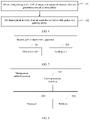
- FIG. 2 is a flowchart of an embodiment of a security policy deployment method according to this application.
- Step 201 When a lifecycle state of a VNF changes, a management network element generates a security policy of the VNF, where the security policy of the VNF is used to perform access control on the VNF.
- the management network element may monitor the lifecycle state of the VNF, or may perform lifecycle management on the VNF.
- the management network element may perform lifecycle management on the VNF, so as to change the lifecycle state of the VNF. For example, when the management network element creates a first VNF by using an NFVI, or the management network element replaces a fourth component in the first VNF with a third component, a lifecycle state of the first VNF changes. For another example, when the management network element replaces a second VNF with a third VNF to be served by a first VNF, all lifecycle states of the first VNF, the second VNF, and the third VNF change.
- the management network element may generate the security policy of the VNF when the lifecycle state of the VNF changes.
- the security policy of the VNF may include various policies and rules used to prevent the VNF from various network attacks.
- the management network element may generate the security policy of the VNF when the lifecycle state of the VNF changes, so as to meet the security policy requirement of the VNF.
- the security policy of the VNF may include a first security policy and/or a second security policy.
- the first security policy is used to perform, when the VNF is deployed on at least two components, access control or security isolation between the components.
- the second security policy is used to perform access control or security isolation between the VNF and an associated network element.
- the associated network element is a network element other than the VNF in a network to which the VNF belongs.
- the first security policy is used to perform access control or security isolation between the first component, the second component, and the third component
- the second security policy is used to perform access control or security isolation between the first VNF, the second VNF, and the third VNF.
- the first security policy may include an access control list (ACL) or the like.
- the second security policy may include a layer-2 VLAN policy based on an open systems interconnection (OSI) model, a layer-3 VPN policy based on an OSI model, an access control policy used to control access between a VNF and another network element, or the like.
- Step 202 The management network element sends the security policy of the VNF to a control device, where the control device is a network element configured to implement access control on the VNF.
- the control device may include the VNF or a gateway device.
- the gateway device is a gateway device that provides the VNF with a network service, namely, a serving gateway of the VNF.
- the control device may include the first VNF and the gateway device.
- the management network element may send the security policy of the VNF to a corresponding control device in different ways. For example, when the security policy of the VNF includes the first security policy, the management network element may send the first security policy to the VNF after generating the first security policy; or when the security policy of the VNF includes the second security policy, the management network element may send the second security policy to the gateway device after generating the second security policy.
- the management network element can adjust the security policy of the VNF in time when the lifecycle state of the VNF changes, thereby greatly reducing a possibility that a bug occurs in the security policy of the VNF because the VNF changes.
- the change of the lifecycle state of the VNF may include the following cases: The component in the VNF changes; or a service provided by the VNF or an object served by the VNF changes; or the like. Different changes of the lifecycle state of the VNF result in different specific security policy deployment implementations in this application. With reference to other accompanying drawings, the following further describes the security policy deployment method in this application by using two example cases in which the security policy of the VNF includes the first security policy and the security policy includes the second security policy.
- FIG. 3 is a schematic flowchart of another embodiment of a security policy deployment method according to this application. As shown in FIG. 3 , this embodiment may include the following steps.
- Step 301 When a lifecycle state of a VNF changes, a management network element generates a first security policy.
- the change of the lifecycle state of the VNF may include only a component change in the VNF.
- the component change in the VNF may include the following cases: A function that needs to be implemented by the component changes; or a component used to deploy the VNF changes; or the like.
- FIG. 1 is used as an example.
- the component change in the first VNF may include the following cases: A fourth component is replaced with a third component, or functions that need to be implemented by a first component and a second component are exchanged, or the like.
- a security policy requirement of the VNF changes because of the component change in the VNF.
- the management network element may generate the first security policy after the lifecycle state of the VNF changes.
- the first security policy may include content such as a first network isolation policy and/or a first access control policy.
- the first network isolation policy implements network isolation between components in the VNF, and the first access control policy is used to perform access control on an access request whose access target is the component.
- the management network element may determine a network isolation requirement of the component based on a function that needs to be implemented by the component in the VNF; and then generate the first network isolation policy that matches the network isolation requirement of the component.
- the management network element may determine an access control requirement of the component based on a function that needs to be implemented by the component in the VNF; and then generate the first access control policy that matches the access control requirement of the component. It should be noted herein that the management network element may generate only the first access control policy; or the management network element may generate only the first network isolation policy; or the management network element may generate both the first access control policy and the first network isolation policy. Both the first access control policy and the first network isolation policy are the first security policy.
- FIG. 1 is used as an example. If the first component and the second component cooperate to implement an internal function of the first VNF, and the third component is used to provide an external service, the third component needs to be isolated from the other two components, so as to form a first subnet and a second subnet that are isolated from each other inside the first VNF.
- the first subnet may include the first component and the second component, and the second subnet may accordingly include only the third component. Therefore, the first security policy may include a first isolation policy used to isolate the third component from the other two components to form different subnets.
- the access control policy may include a first ACL and a second ACL.
- the first ACL is used to control traffic between the first component and the second component to be transmitted only through the first port
- the second ACL is used to control the third component to perform data transmission with the another network element only through the second port.
- the network isolation requirement and/or the access control requirement between the components may be determined based on first configuration information.
- the first configuration information may include all or a part of the following information: an IP address configured on an internal interface or an external interface of the VNF, a service provided on the internal interface or the external interface, and a connection relationship of the internal interface or the external interface, or the like.
- the management network element In actual use, the management network element usually needs to perform lifecycle management on the VNF based on configuration information. VNFs of a same type usually correspond to same configuration information, and usually require a same first security policy. Therefore, the management network element or another network element may pre-generate alternative security policies corresponding to various types of configuration information. When the lifecycle state of the VNF changes, the management network element obtains configuration information of the VNF, and then selects a security policy that matches the configuration information from the preset alternative security policies, to serve as the first security policy.
- Step 302 The management network element sends the first security policy to the VNF.
- the management network element may not be directly connected to the VNF through a network interface or an internal interface, the management network element may send the first security policy to a VIM after generating the first security policy, and then the VIM sends the first security policy to the VNF.
- the management network element may send the first security policy to the EMS, and then the EMS sends the first security policy to the VNF, so as to implement deployment of the first security policy.
- the EMS may be configured to manage each network element.
- the management network element can adjust the security policy of the VNF in time when the VNF changes, thereby reducing a possibility that a bug occurs in the security policy of the VNF because the VNF changes.
- FIG. 4 is a schematic flowchart of another embodiment of a security policy deployment method according to this application. As shown in FIG. 4 , this embodiment may include the following steps.
- Step 401 When a lifecycle state of a VNF changes, a management network element generates a second security policy.
- the change of the lifecycle state of the VNF may include the following cases: Only a service provided by the VNF or an object served by the VNF changes, or the like.
- FIG. 1 is used as an example.
- a change of a lifecycle state of a first VNF may include the following cases: A service provided by the first VNF changes, or the first VNF is served by a third VNF, instead of a second VNF, or the like.
- a security policy requirement of the VNF changes because the service provided by the VNF or the object served by the VNF changes.
- the management network element may generate the second security policy after the lifecycle state of the VNF changes.
- the second security policy may include content such as a second network isolation policy and/or a second access control policy.
- the second network isolation policy implements network isolation between the VNF and an associated network element, and the second access control policy is used to perform access control on an access request whose access target is the VNF.
- the management network element may determine a network isolation requirement of the VNF based on a function that needs to be implemented by the VNF; and then generate the second security policy that matches the network isolation requirement of the VNF.
- the management network element may determine an access control requirement of the VNF based on a function that needs to be implemented by the VNF; and then generate the second security policy that matches the access control requirement.
- the management network element may generate only the second access control policy; or the management network element may generate only the second network isolation policy; or the management network element may generate both the second access control policy and the second network isolation policy. Both the second access control policy and the second network isolation policy are the second security policy.
- the second security policy needs to include a third ACL.
- the third ACL is used to control the first VNF to perform data transmission with only the second VNF.
- the management network element may generate a VLAN policy or a VPN policy to allow only the second VNF to communicate with the first VNF.
- Step 402 The management network element sends the second security policy to a gateway device.
- the management network element may send the second security policy to the gateway device after generating the second security policy.
- the gateway device may include a network device that provides the VNF with a network service, and there may be one or more network devices. When there are at least two gateway devices, different types of provided network services result in different types of gateway devices.
- the management network element may not be directly connected to the gateway device, the management network element may send the second security policy to a VIM after generating the second security policy, and then the VIM sends the second security policy to the gateway device.
- the management network element may send the second security policy to the EMS, and then the EMS sends the second security policy to the gateway device, so as to implement deployment of the second security policy.
- the EMS may be configured to manage each network element.
- the management network element can adjust the security policy of the VNF in time when the lifecycle state of the VNF changes, thereby greatly reducing a possibility that a bug occurs in the security policy of the VNF because the VNF changes.
- the management network element may only need to generate the first security policy; or may only need to generate the second security policy; or may need to generate both the first security policy and the second security policy.
- the two policies may be independently generated, and a generation sequence is not limited in this application.
- the management network element can adjust the security policy of the VNF in time when a relationship between the VNF and the associated network element changes, thereby reducing a possibility that a bug occurs in the security policy of the VNF because the relationship between the VNF and the associated network element changes.
- FIG. 5 is a schematic structural diagram of an embodiment of a security policy deployment apparatus according to this application.
- the apparatus may be the management network element in the foregoing embodiments or a part of the management network element.
- the security policy deployment apparatus may include a generation unit 501 and a sending unit 502 .
- the generation unit 501 is configured to: when a lifecycle state of a virtualized network function VNF changes, generate a security policy of the VNF.
- the security policy of the VNF is used to perform access control on the VNF.
- the sending unit 502 is configured to send the security policy of the VNF to a control device.
- the generation unit 501 is specifically configured to generate a first security policy when the VNF includes at least two virtual components.
- the first security policy is used to perform access control or security isolation between the virtual components.
- the generation unit 501 is specifically configured to determine a network isolation requirement of the virtual component based on a function that needs to be implemented by the virtual component, and generate the first security policy that matches the network isolation requirement of the virtual component; or determine an access control requirement of the virtual component based on a function that needs to be implemented by the virtual component, and generate the first security policy that matches the access control requirement; or select a security policy that matches configuration information of the VNF from preset alternative security policies, to serve as the first security policy.
- the sending unit 502 is specifically configured to: send the first security policy to the VNF by using a virtualized infrastructure manager VIM; or send the first security policy to the VNF by using an element management system EMS.
- the generation unit 501 is specifically configured to generate a second security policy.
- the second security policy is used to perform access control or security isolation between the VNF and an associated network element.
- the associated network element is a network element other than the VNF in a network to which the VNF belongs.
- the generation unit 501 is specifically configured to determine a network isolation requirement of the VNF based on a function that needs to be implemented by the VNF, and generate the second security policy that matches the network isolation requirement of the VNF; or determine an access control requirement of the VNF based on a function that needs to be implemented by the VNF, and generate the second security policy that matches the access control requirement.
- the sending unit 502 is specifically configured to: send, by using a VIM, the second security policy to a gateway device configured to provide the VNF with a network service; or send the second security policy to a gateway device by using an EMS.
- FIG. 6 is a schematic structural diagram of an embodiment of a management network element according to this application.
- the management network element may be an NFVO or a VNFM.
- the management network element may include a processor 601 , a memory 602 , and a communications interface 603 .
- the processor 601 is a control center of the management network element and is connected to each part of the entire management network element by using various interfaces and lines.
- the processor performs various functions and/or data processing of the management network element by running or executing a software program and/or a module stored in the memory and by invoking data stored in the memory.
- the processor may be a central processing unit (CPU), a network processor (NP), or a combination of a CPU and an NP.
- the processor may further include a hardware chip.
- the hardware chip may be an application-specific integrated circuit (ASIC), a programmable logic device (PLD), or a combination thereof.
- the PLD may be a complex programmable logical device (CPLD), a field-programmable gate array (FPGA), generic array logic (GAL), or any combination thereof.
- the management element may implement all or a part of the steps of the security policy configuration method in the foregoing embodiments by reading the data from the memory 602 or invoking the communications interface 603 .
- the memory 602 may include a volatile memory, such as a random access memory (RAM); or may include a nonvolatile memory, such as a flash memory, a hard disk drive (HDD), or a solid-state drive (SSD).
- RAM random access memory
- nonvolatile memory such as a flash memory, a hard disk drive (HDD), or a solid-state drive (SSD).
- the memory may alternatively include a combination of the foregoing types of memories.
- the memory may store a program or code, and the processor in the management network element may implement a function of the management network element by executing the program or code.
- the communications interface 603 may be configured to receive or send data.
- the communications interface may send data to a terminal device or another management network element under control of the processor; or the communications interface receives, under control of the processor, data sent by a terminal device or another management network element.
- the processor 601 may be configured to: when a lifecycle state of a virtualized network function VNF changes, generate a security policy of the VNF.
- the security policy of the VNF is used to perform access control on the VNF.
- the communications interface 603 may be configured to send the security policy of the VNF to a control device.
- the processor 601 may be further configured to generate a first security policy when the VNF includes at least two virtual components, where the first security policy is used to perform access control or security isolation between the virtual components.
- the processor 601 may be further configured to determine a network isolation requirement of the virtual component based on a function that needs to be implemented by the virtual component, and generate the first security policy that matches the network isolation requirement of the virtual component; or determine an access control requirement of the virtual component based on a function that needs to be implemented by the virtual component, and generate the first security policy that matches the access control requirement; or select a security policy that matches configuration information of the VNF from preset alternative security policies, to serve as the first security policy.
- the communications interface 603 may be further configured to: send the first security policy to the VNF by using a VIM; or send the first security policy to the VNF by using an EMS.
- the processor 601 may be further configured to generate a second security policy.
- the second security policy is used to perform access control or security isolation between the VNF and an associated network element.
- the associated network element is a network element other than the VNF in a network to which the VNF belongs.
- the processor 601 may be further configured to determine a network isolation requirement of the VNF based on a function that needs to be implemented by the VNF, and generate the second security policy that matches the network isolation requirement of the VNF; or determine an access control requirement of the VNF based on a function that needs to be implemented by the VNF, and generate the second security policy that matches the access control requirement.
- the communications interface 603 may be further configured to: send, by using a VIM, the second security policy to a gateway device configured to provide the VNF with a network service; or send the second security policy to a gateway device by using an EMS.
- this application further provides a computer storage medium, and the computer storage medium may store a program.
- the storage medium may include a magnetic disk, an optical disc, a read-only memory (ROM), or a random access memory (RAM).
- the software product is stored in a storage medium, such as a ROM/RAM, a hard disk, or an optical disc, and includes several instructions for instructing a computer device (which may be a personal computer, a server, or a network device) to perform the methods described in the embodiments or some parts of the embodiments of this application.
- a computer device which may be a personal computer, a server, or a network device
Landscapes
- Engineering & Computer Science (AREA)
- Computer Networks & Wireless Communication (AREA)
- Signal Processing (AREA)
- Computer Security & Cryptography (AREA)
- Software Systems (AREA)
- General Engineering & Computer Science (AREA)
- Theoretical Computer Science (AREA)
- Computing Systems (AREA)
- Computer Hardware Design (AREA)
- Multimedia (AREA)
- Physics & Mathematics (AREA)
- General Physics & Mathematics (AREA)
- Data Exchanges In Wide-Area Networks (AREA)
Abstract
Description
Claims (9)
Applications Claiming Priority (1)
| Application Number | Priority Date | Filing Date | Title |
|---|---|---|---|
| PCT/CN2016/099455 WO2018053686A1 (en) | 2016-09-20 | 2016-09-20 | Method and device for deploying security policy |
Related Parent Applications (1)
| Application Number | Title | Priority Date | Filing Date |
|---|---|---|---|
| PCT/CN2016/099455 Continuation WO2018053686A1 (en) | 2016-09-20 | 2016-09-20 | Method and device for deploying security policy |
Publications (2)
| Publication Number | Publication Date |
|---|---|
| US20190222611A1 US20190222611A1 (en) | 2019-07-18 |
| US11489873B2 true US11489873B2 (en) | 2022-11-01 |
Family
ID=61689286
Family Applications (1)
| Application Number | Title | Priority Date | Filing Date |
|---|---|---|---|
| US16/359,753 Active US11489873B2 (en) | 2016-09-20 | 2019-03-20 | Security policy deployment method and apparatus |
Country Status (5)
| Country | Link |
|---|---|
| US (1) | US11489873B2 (en) |
| EP (2) | EP3506582B1 (en) |
| CN (1) | CN108370368B (en) |
| ES (1) | ES2870457T3 (en) |
| WO (1) | WO2018053686A1 (en) |
Cited By (2)
| Publication number | Priority date | Publication date | Assignee | Title |
|---|---|---|---|---|
| US20210133004A1 (en) * | 2018-06-18 | 2021-05-06 | Orange | Method for installing a virtualised network function |
| US12034609B2 (en) * | 2020-10-28 | 2024-07-09 | Telefonaktiebolaget Lm Ericsson | Methods and apparatuses for instantiation of NS or VNF |
Families Citing this family (10)
| Publication number | Priority date | Publication date | Assignee | Title |
|---|---|---|---|---|
| GB2573283B (en) * | 2018-04-26 | 2020-04-29 | Metaswitch Networks Ltd | Improvements relating to network functions virtualization |
| CN110868371B (en) * | 2018-08-27 | 2022-03-01 | 中国电信股份有限公司 | Security policy processing method and system, cloud management platform and subnet management device |
| CN109525601B (en) * | 2018-12-28 | 2021-04-27 | 杭州迪普科技股份有限公司 | Method and device for isolating transverse flow between terminals in intranet |
| GB2583904B (en) * | 2019-04-23 | 2023-03-08 | Metaswitch Networks Ltd | Commissioning a virtualised network function |
| CN111857941B (en) * | 2019-04-30 | 2021-09-03 | 华为技术有限公司 | Security policy management method and device |
| US11520615B1 (en) * | 2020-03-31 | 2022-12-06 | Equinix, Inc. | Virtual network function virtual domain isolation |
| CN113726541B (en) * | 2020-05-25 | 2023-11-07 | 中移(苏州)软件技术有限公司 | A method, device, electronic device and storage medium for network element configuration |
| CN111835715B (en) * | 2020-06-03 | 2021-06-04 | 北京邮电大学 | Method and device for determining security value of virtual network function |
| CN113660131B (en) * | 2021-10-18 | 2022-01-07 | 武汉绿色网络信息服务有限责任公司 | Method, device, controller and storage medium for switching virtual network function units |
| CN114666161B (en) * | 2022-04-29 | 2024-04-09 | 深信服科技股份有限公司 | Component security policy management method, device, equipment and storage medium |
Citations (22)
| Publication number | Priority date | Publication date | Assignee | Title |
|---|---|---|---|---|
| CN105376246A (en) | 2015-11-30 | 2016-03-02 | 中国电子科技网络信息安全有限公司 | Adaptive generation management system and method of security strategy based on SDN |
| WO2016079046A1 (en) | 2014-11-19 | 2016-05-26 | British Telecommunications Public Limited Company | Diagnostic testing in networks |
| US20160149774A1 (en) * | 2014-11-25 | 2016-05-26 | At&T Intellectual Property I, L.P. | Deep Packet Inspection Virtual Function |
| WO2016082143A1 (en) | 2014-11-27 | 2016-06-02 | 华为技术有限公司 | Virtual network policy configuration method and system, as well as virtual network element and network management system thereof |
| US20160182567A1 (en) * | 2014-12-23 | 2016-06-23 | Intel Corporation | Techniques to Deliver Security and Network Policies to a Virtual Network Function |
| US20160226913A1 (en) * | 2015-02-04 | 2016-08-04 | Kapil Sood | Technologies for scalable security architecture of virtualized networks |
| CN105847237A (en) | 2016-03-15 | 2016-08-10 | 中国联合网络通信集团有限公司 | Safety management method and device based on NFV (Network Function Virtualization) |
| US20160337329A1 (en) * | 2015-05-11 | 2016-11-17 | Kapil Sood | Technologies for secure bootstrapping of virtual network functions |
| US20160366014A1 (en) * | 2015-06-09 | 2016-12-15 | Kt Corporation | Method and apparatus for network function virtualization |
| US20160373474A1 (en) * | 2015-06-16 | 2016-12-22 | Intel Corporation | Technologies for secure personalization of a security monitoring virtual network function |
| US20170048200A1 (en) * | 2015-08-11 | 2017-02-16 | At&T Intellectual Property I, L.P. | Providing a Basic Firewall Using a Virtual Networking Function |
| US20170048165A1 (en) * | 2015-08-10 | 2017-02-16 | Futurewei Technologies, Inc. | System and Method for Resource Management |
| US20170214694A1 (en) * | 2014-08-22 | 2017-07-27 | Nokia Technologies Oy | A Security and Trust Framework for Virtualized Networks |
| US20170329639A1 (en) * | 2014-12-04 | 2017-11-16 | Nokia Solutions And Networks Management International Gmbh | Steering of virtualized resources |
| US20170353494A1 (en) * | 2016-06-01 | 2017-12-07 | AT&T Intellectual Propety I, L.P. | Virtual infrastructure perimeter regulator |
| US20180004576A1 (en) * | 2015-01-23 | 2018-01-04 | Nec Corporation | Network functions virtualization management and orchestration method, network functions virtualization management and orchestration system, and program |
| US20180026992A1 (en) * | 2016-07-21 | 2018-01-25 | Sprint Communications Company L.P. | Virtual network function (vnf) hardware trust in a network function virtualization (nfv) software defined network (sdn) |
| US20180034781A1 (en) * | 2015-02-13 | 2018-02-01 | Nokia Solutions And Networks Oy | Security mechanism for hybrid networks |
| US20180213402A1 (en) * | 2015-07-15 | 2018-07-26 | Nokia Solutions And Networks Oy | Security aware instantiation of network services and/or virtualized network functions |
| US20180316730A1 (en) * | 2015-10-22 | 2018-11-01 | Nokia Solutions And Networks Oy | Security mechanism for communication network including virtual network functions |
| US20190104442A1 (en) * | 2016-03-29 | 2019-04-04 | Telefonaktiebolaget Lm Ericsson (Publ) | Service delivery to handed over user equipment (ue) using a software-defined networking (sdn) controller |
| US20190199760A1 (en) * | 2016-06-29 | 2019-06-27 | Telefonaktiebolaget Lm Ericsson (Publ) | Network function virtualization |
-
2016
- 2016-09-20 WO PCT/CN2016/099455 patent/WO2018053686A1/en not_active Ceased
- 2016-09-20 ES ES16916427T patent/ES2870457T3/en active Active
- 2016-09-20 CN CN201680073792.2A patent/CN108370368B/en active Active
- 2016-09-20 EP EP16916427.4A patent/EP3506582B1/en active Active
- 2016-09-20 EP EP21152227.1A patent/EP3866435A1/en not_active Withdrawn
-
2019
- 2019-03-20 US US16/359,753 patent/US11489873B2/en active Active
Patent Citations (24)
| Publication number | Priority date | Publication date | Assignee | Title |
|---|---|---|---|---|
| US20170214694A1 (en) * | 2014-08-22 | 2017-07-27 | Nokia Technologies Oy | A Security and Trust Framework for Virtualized Networks |
| WO2016079046A1 (en) | 2014-11-19 | 2016-05-26 | British Telecommunications Public Limited Company | Diagnostic testing in networks |
| US20160149774A1 (en) * | 2014-11-25 | 2016-05-26 | At&T Intellectual Property I, L.P. | Deep Packet Inspection Virtual Function |
| WO2016082143A1 (en) | 2014-11-27 | 2016-06-02 | 华为技术有限公司 | Virtual network policy configuration method and system, as well as virtual network element and network management system thereof |
| US20170250870A1 (en) | 2014-11-27 | 2017-08-31 | Huawei Technologies Co., Ltd. | Virtual network policy configuration method and system, and virtual network element and network administration system thereof |
| US20170329639A1 (en) * | 2014-12-04 | 2017-11-16 | Nokia Solutions And Networks Management International Gmbh | Steering of virtualized resources |
| US20160182567A1 (en) * | 2014-12-23 | 2016-06-23 | Intel Corporation | Techniques to Deliver Security and Network Policies to a Virtual Network Function |
| WO2016105770A1 (en) | 2014-12-23 | 2016-06-30 | Intel Corporation | Techniques to deliver security and network policies to a virtual network function |
| US20180004576A1 (en) * | 2015-01-23 | 2018-01-04 | Nec Corporation | Network functions virtualization management and orchestration method, network functions virtualization management and orchestration system, and program |
| US20160226913A1 (en) * | 2015-02-04 | 2016-08-04 | Kapil Sood | Technologies for scalable security architecture of virtualized networks |
| US20180034781A1 (en) * | 2015-02-13 | 2018-02-01 | Nokia Solutions And Networks Oy | Security mechanism for hybrid networks |
| US20160337329A1 (en) * | 2015-05-11 | 2016-11-17 | Kapil Sood | Technologies for secure bootstrapping of virtual network functions |
| US20160366014A1 (en) * | 2015-06-09 | 2016-12-15 | Kt Corporation | Method and apparatus for network function virtualization |
| US20160373474A1 (en) * | 2015-06-16 | 2016-12-22 | Intel Corporation | Technologies for secure personalization of a security monitoring virtual network function |
| US20180213402A1 (en) * | 2015-07-15 | 2018-07-26 | Nokia Solutions And Networks Oy | Security aware instantiation of network services and/or virtualized network functions |
| US20170048165A1 (en) * | 2015-08-10 | 2017-02-16 | Futurewei Technologies, Inc. | System and Method for Resource Management |
| US20170048200A1 (en) * | 2015-08-11 | 2017-02-16 | At&T Intellectual Property I, L.P. | Providing a Basic Firewall Using a Virtual Networking Function |
| US20180316730A1 (en) * | 2015-10-22 | 2018-11-01 | Nokia Solutions And Networks Oy | Security mechanism for communication network including virtual network functions |
| CN105376246A (en) | 2015-11-30 | 2016-03-02 | 中国电子科技网络信息安全有限公司 | Adaptive generation management system and method of security strategy based on SDN |
| CN105847237A (en) | 2016-03-15 | 2016-08-10 | 中国联合网络通信集团有限公司 | Safety management method and device based on NFV (Network Function Virtualization) |
| US20190104442A1 (en) * | 2016-03-29 | 2019-04-04 | Telefonaktiebolaget Lm Ericsson (Publ) | Service delivery to handed over user equipment (ue) using a software-defined networking (sdn) controller |
| US20170353494A1 (en) * | 2016-06-01 | 2017-12-07 | AT&T Intellectual Propety I, L.P. | Virtual infrastructure perimeter regulator |
| US20190199760A1 (en) * | 2016-06-29 | 2019-06-27 | Telefonaktiebolaget Lm Ericsson (Publ) | Network function virtualization |
| US20180026992A1 (en) * | 2016-07-21 | 2018-01-25 | Sprint Communications Company L.P. | Virtual network function (vnf) hardware trust in a network function virtualization (nfv) software defined network (sdn) |
Non-Patent Citations (2)
| Title |
|---|
| "Network Functions Virtualisation (NFV); Management and Orchestration," ETSI GS NFV-MAN 001 V1.1.1, pp. 1-184, European Telecommunications Standards Institute, Sophia Antipolis, France (Dec. 2014). |
| Network Functions Virtualisation—Introductory White Paper Don Clarke et al., "Network Functions Virtualisation—An Introduction, Benefits, Enablers, Challenges and Call for Action",dated Oct. 22-24, 2012 ,total 16 pages. |
Cited By (3)
| Publication number | Priority date | Publication date | Assignee | Title |
|---|---|---|---|---|
| US20210133004A1 (en) * | 2018-06-18 | 2021-05-06 | Orange | Method for installing a virtualised network function |
| US11922224B2 (en) * | 2018-06-18 | 2024-03-05 | Orange | Method for installing a virtualised network function |
| US12034609B2 (en) * | 2020-10-28 | 2024-07-09 | Telefonaktiebolaget Lm Ericsson | Methods and apparatuses for instantiation of NS or VNF |
Also Published As
| Publication number | Publication date |
|---|---|
| EP3506582A1 (en) | 2019-07-03 |
| ES2870457T3 (en) | 2021-10-27 |
| EP3506582A4 (en) | 2019-09-04 |
| US20190222611A1 (en) | 2019-07-18 |
| WO2018053686A1 (en) | 2018-03-29 |
| EP3506582B1 (en) | 2021-03-03 |
| CN108370368A (en) | 2018-08-03 |
| EP3866435A1 (en) | 2021-08-18 |
| CN108370368B (en) | 2020-04-21 |
Similar Documents
| Publication | Publication Date | Title |
|---|---|---|
| US11489873B2 (en) | Security policy deployment method and apparatus | |
| US12126596B2 (en) | Configuring network security based on device management characteristics | |
| US10616133B2 (en) | Resource configuration method and network device thereof | |
| US11451509B2 (en) | Data transmission method and computer system | |
| US9923732B2 (en) | Virtual gateways and implicit routing in distributed overlay virtual environments | |
| US9690605B2 (en) | Configuration of an edge switch downlink port with a network policy of a published network configuration service type | |
| US10397352B2 (en) | Network infrastructure management | |
| US11748132B2 (en) | Apparatus and method for configuring and enabling virtual applications | |
| EP3367638A1 (en) | Load balancing method, device and system | |
| US11271899B2 (en) | Implementing a multi-regional cloud based network using network address translation | |
| US20180212788A1 (en) | Multicast helper to link virtual extensible lans | |
| AU2015256010A1 (en) | Migration of applications between an enterprise-based network and a multi-tenant network | |
| US9686237B2 (en) | Secure communication channel using a blade server | |
| US9590855B2 (en) | Configuration of transparent interconnection of lots of links (TRILL) protocol enabled device ports in edge virtual bridging (EVB) networks | |
| CN113872922A (en) | Firewall virtualization deployment method, system, server and storage medium | |
| US20260039695A1 (en) | Protocol Switching and Secure Sockets Layer (SSL) Cross-Wiring to Enable Inter-Network Resource Connectivity | |
| CN116319296A (en) | A method and device for cross-SD-WAN converged deployment of data centers | |
| WO2022118142A1 (en) | Authenticity assessment of a requestor based on a communication request | |
| Mechtri et al. | Inter-cloud networking gateway architecture | |
| US20260044360A1 (en) | Secure application management using virtual network segments | |
| US20260128983A1 (en) | Cloud service-based data forwarding method and system | |
| EP4723586A1 (en) | Data forwarding method based on cloud service, and system |
Legal Events
| Date | Code | Title | Description |
|---|---|---|---|
| FEPP | Fee payment procedure |
Free format text: ENTITY STATUS SET TO UNDISCOUNTED (ORIGINAL EVENT CODE: BIG.); ENTITY STATUS OF PATENT OWNER: LARGE ENTITY |
|
| AS | Assignment |
Owner name: HUAWEI TECHNOLOGIES CO., LTD., CHINA Free format text: ASSIGNMENT OF ASSIGNORS INTEREST;ASSIGNORS:LIN, QINGCHUN;JIN, TAO;WANG, JIANGSHENG;REEL/FRAME:050670/0331 Effective date: 20190610 |
|
| STPP | Information on status: patent application and granting procedure in general |
Free format text: NON FINAL ACTION MAILED |
|
| STPP | Information on status: patent application and granting procedure in general |
Free format text: NON FINAL ACTION MAILED |
|
| STPP | Information on status: patent application and granting procedure in general |
Free format text: RESPONSE TO NON-FINAL OFFICE ACTION ENTERED AND FORWARDED TO EXAMINER |
|
| STPP | Information on status: patent application and granting procedure in general |
Free format text: FINAL REJECTION MAILED |
|
| STPP | Information on status: patent application and granting procedure in general |
Free format text: RESPONSE AFTER FINAL ACTION FORWARDED TO EXAMINER |
|
| STPP | Information on status: patent application and granting procedure in general |
Free format text: ADVISORY ACTION MAILED |
|
| STPP | Information on status: patent application and granting procedure in general |
Free format text: NON FINAL ACTION MAILED |
|
| STPP | Information on status: patent application and granting procedure in general |
Free format text: RESPONSE TO NON-FINAL OFFICE ACTION ENTERED AND FORWARDED TO EXAMINER |
|
| STPP | Information on status: patent application and granting procedure in general |
Free format text: NOTICE OF ALLOWANCE MAILED -- APPLICATION RECEIVED IN OFFICE OF PUBLICATIONS Free format text: AWAITING TC RESP., ISSUE FEE NOT PAID |
|
| STPP | Information on status: patent application and granting procedure in general |
Free format text: NOTICE OF ALLOWANCE MAILED -- APPLICATION RECEIVED IN OFFICE OF PUBLICATIONS |
|
| STPP | Information on status: patent application and granting procedure in general |
Free format text: PUBLICATIONS -- ISSUE FEE PAYMENT RECEIVED |
|
| STPP | Information on status: patent application and granting procedure in general |
Free format text: PUBLICATIONS -- ISSUE FEE PAYMENT VERIFIED |
|
| STCF | Information on status: patent grant |
Free format text: PATENTED CASE |
|
| MAFP | Maintenance fee payment |
Free format text: PAYMENT OF MAINTENANCE FEE, 4TH YEAR, LARGE ENTITY (ORIGINAL EVENT CODE: M1551); ENTITY STATUS OF PATENT OWNER: LARGE ENTITY Year of fee payment: 4 |