US11478164B2 - Water and salt resistant solid super-acid catalysts - Google Patents
Water and salt resistant solid super-acid catalysts Download PDFInfo
- Publication number
- US11478164B2 US11478164B2 US15/021,308 US201415021308A US11478164B2 US 11478164 B2 US11478164 B2 US 11478164B2 US 201415021308 A US201415021308 A US 201415021308A US 11478164 B2 US11478164 B2 US 11478164B2
- Authority
- US
- United States
- Prior art keywords
- acid
- optical sensor
- membrane
- psa
- acetone
- Prior art date
- Legal status (The legal status is an assumption and is not a legal conclusion. Google has not performed a legal analysis and makes no representation as to the accuracy of the status listed.)
- Active, expires
Links
Images



Classifications
-
- A—HUMAN NECESSITIES
- A61—MEDICAL OR VETERINARY SCIENCE; HYGIENE
- A61B—DIAGNOSIS; SURGERY; IDENTIFICATION
- A61B5/00—Measuring for diagnostic purposes; Identification of persons
- A61B5/08—Measuring devices for evaluating the respiratory organs
- A61B5/082—Evaluation by breath analysis, e.g. determination of the chemical composition of exhaled breath
-
- A—HUMAN NECESSITIES
- A61—MEDICAL OR VETERINARY SCIENCE; HYGIENE
- A61B—DIAGNOSIS; SURGERY; IDENTIFICATION
- A61B5/00—Measuring for diagnostic purposes; Identification of persons
- A61B5/145—Measuring characteristics of blood in vivo, e.g. gas concentration or pH-value ; Measuring characteristics of body fluids or tissues, e.g. interstitial fluid or cerebral tissue
- A61B5/14532—Measuring characteristics of blood in vivo, e.g. gas concentration or pH-value ; Measuring characteristics of body fluids or tissues, e.g. interstitial fluid or cerebral tissue for measuring glucose, e.g. by tissue impedance measurement
-
- B—PERFORMING OPERATIONS; TRANSPORTING
- B01—PHYSICAL OR CHEMICAL PROCESSES OR APPARATUS IN GENERAL
- B01J—CHEMICAL OR PHYSICAL PROCESSES, e.g. CATALYSIS OR COLLOID CHEMISTRY; THEIR RELEVANT APPARATUS
- B01J31/00—Catalysts comprising hydrides, coordination complexes or organic compounds
- B01J31/02—Catalysts comprising hydrides, coordination complexes or organic compounds containing organic compounds or metal hydrides
- B01J31/06—Catalysts comprising hydrides, coordination complexes or organic compounds containing organic compounds or metal hydrides containing polymers
- B01J31/08—Ion-exchange resins
- B01J31/10—Ion-exchange resins sulfonated
-
- B01J35/065—
-
- B—PERFORMING OPERATIONS; TRANSPORTING
- B01—PHYSICAL OR CHEMICAL PROCESSES OR APPARATUS IN GENERAL
- B01J—CHEMICAL OR PHYSICAL PROCESSES, e.g. CATALYSIS OR COLLOID CHEMISTRY; THEIR RELEVANT APPARATUS
- B01J35/00—Catalysts, in general, characterised by their form or physical properties
- B01J35/50—Catalysts, in general, characterised by their form or physical properties characterised by their shape or configuration
- B01J35/58—Fabrics or filaments
- B01J35/59—Membranes
-
- B—PERFORMING OPERATIONS; TRANSPORTING
- B01—PHYSICAL OR CHEMICAL PROCESSES OR APPARATUS IN GENERAL
- B01J—CHEMICAL OR PHYSICAL PROCESSES, e.g. CATALYSIS OR COLLOID CHEMISTRY; THEIR RELEVANT APPARATUS
- B01J37/00—Processes, in general, for preparing catalysts; Processes, in general, for activation of catalysts
- B01J37/02—Impregnation, coating or precipitation
- B01J37/0201—Impregnation
- B01J37/0203—Impregnation the impregnation liquid containing organic compounds
-
- G—PHYSICS
- G01—MEASURING; TESTING
- G01N—INVESTIGATING OR ANALYSING MATERIALS BY DETERMINING THEIR CHEMICAL OR PHYSICAL PROPERTIES
- G01N21/00—Investigating or analysing materials by the use of optical means, i.e. using sub-millimetre waves, infrared, visible or ultraviolet light
- G01N21/75—Systems in which material is subjected to a chemical reaction, the progress or the result of the reaction being investigated
- G01N21/77—Systems in which material is subjected to a chemical reaction, the progress or the result of the reaction being investigated by observing the effect on a chemical indicator
- G01N21/78—Systems in which material is subjected to a chemical reaction, the progress or the result of the reaction being investigated by observing the effect on a chemical indicator producing a change of colour
- G01N21/783—Systems in which material is subjected to a chemical reaction, the progress or the result of the reaction being investigated by observing the effect on a chemical indicator producing a change of colour for analysing gases
-
- G—PHYSICS
- G01—MEASURING; TESTING
- G01N—INVESTIGATING OR ANALYSING MATERIALS BY DETERMINING THEIR CHEMICAL OR PHYSICAL PROPERTIES
- G01N33/00—Investigating or analysing materials by specific methods not covered by groups G01N1/00 - G01N31/00
- G01N33/48—Biological material, e.g. blood, urine; Haemocytometers
- G01N33/483—Physical analysis of biological material
- G01N33/497—Physical analysis of biological material of gaseous biological material, e.g. breath
- G01N33/4975—Physical analysis of biological material of gaseous biological material, e.g. breath other than oxygen, carbon dioxide or alcohol, e.g. organic vapours
-
- G—PHYSICS
- G01—MEASURING; TESTING
- G01N—INVESTIGATING OR ANALYSING MATERIALS BY DETERMINING THEIR CHEMICAL OR PHYSICAL PROPERTIES
- G01N33/00—Investigating or analysing materials by specific methods not covered by groups G01N1/00 - G01N31/00
- G01N33/48—Biological material, e.g. blood, urine; Haemocytometers
- G01N33/50—Chemical analysis of biological material, e.g. blood, urine; Testing involving biospecific ligand binding methods; Immunological testing
- G01N33/64—Chemical analysis of biological material, e.g. blood, urine; Testing involving biospecific ligand binding methods; Immunological testing involving ketones
-
- G—PHYSICS
- G01—MEASURING; TESTING
- G01N—INVESTIGATING OR ANALYSING MATERIALS BY DETERMINING THEIR CHEMICAL OR PHYSICAL PROPERTIES
- G01N21/00—Investigating or analysing materials by the use of optical means, i.e. using sub-millimetre waves, infrared, visible or ultraviolet light
- G01N21/75—Systems in which material is subjected to a chemical reaction, the progress or the result of the reaction being investigated
- G01N2021/757—Systems in which material is subjected to a chemical reaction, the progress or the result of the reaction being investigated using immobilised reagents
-
- G01N2033/4975—
Definitions
- PSA polymers such as the commercially available compounds Amberlyst® and Nafion®, respectively, have been of long-standing interest as sustainable solid acid catalyst alternatives to toxic, non-reusable homogeneous acid catalysts in the production of high-volume specialty chemicals such as methyl tert-butyl ether (MTBE) and Bisphenol-A.
- MTBE methyl tert-butyl ether
- Bisphenol-A Bisphenol-A.
- these materials are also attracting renewed attention as heterogeneous biodiesel synthesis catalysts in place of homogenous alkali for renewable energy applications.
- These materials eliminate the extensive work-up procedures required to introduce acidity into more typical zeolite and mixed metal oxide catalysts, yet retain the advantage of clean product separation afforded by heterogeneous catalysts.
- these materials have exhibited significant activity in the presence of fatty acid impurities, which are common in low-cost vegetable oil feedstock.
- PSA polymer catalysts can be used a broad range of technologically important organic synthesis reactions.
- PSA polymer membranes can be used as both solid acid catalysts and durable scaffold materials in the preparation of optical sensors.
- Earlier work resulted in the discovery that by immobilizing a dihydroxy-benzene reagent, into a PSA polymer membrane; a controlled organic synthesis occurs and a selective product of this reaction (e.g., a flavan in the case of acetone and various quinones in the case of anhydrides) is found to produce a visible spectrum color change which could be employed to measure target molecule concentrations to less than parts per billion (ppb).
- ppb parts per billion
- a key drawback, however, to the use of solid acid polymers as catalysts is that they can be readily deactivated by the presence of water as well as salt impurities present in the environment. Without being bound by theory, it is believed that cations such as K + and Ca ++ can exchange with protons in the polymer and reduce or ultimately eliminate polymer acidity. The same super-acidic nature that makes these materials highly active catalysts also results in their ready de-protonation by salts. Furthermore, water incorporation can dilute local acidity within the membrane. For example, an ambient relative humidity less than 15% has been found sufficient to completely deactivate an 1100 Equivalent Weight sample of Nafion for acetone condensation with resorcinol in an optical sensing device of the prior art.
- PSA polymer catalysts capable of retaining catalytic activity in humid environments.
- portable non-invasive optical sensors capable of reliably measuring concentration of volatile organic compounds in high-humidity and/or high-salt environments associated with medical diagnostics and fuel cell efficiency determinations.
- one broad embodiment of the invention provides PSA polymer membranes reformulated to maintain their catalytic activity even in high-humidity and potentially high-salt environments.
- Further embodiments provide optical sensing devices comprising certain inventive PSA membranes designed to produce a color-shift reaction product in the presence of target compounds in humid environments.
- Specific clinical and environmental applications of optical sensing device according to the invention designed to detect, for example, acetone in exhaled human breath and formaldehyde in fuel cell effluent are also described.
- an embodiment directed to a method of preserving the catalytic activity of a solid sulfonic acid catalyst polymer in a humid environment comprises immobilizing an organic acid in the solid sulfonic acid catalyst polymer, wherein the pKa of the immobilized acid is greater than the pKa of the solid sulfonic acid catalyst polymer.
- optical sensors for detecting target compounds in a humid environment.
- the optical sensor comprises a PSA polymer catalyst membrane comprising an immobilized organic acid having a pKa greater than the pKa of the PSA polymer membrane, and an immobilized organic reagent.
- the organic reagent is capable of reacting with the target compound to produce a color shifted product such that exposure of the optical sensor to the target compound in a humid environment produces a detectable color shift on the optical sensor.
- the optical sensor may be fabricated into a portable optical sensing device. Specific embodiments with utility in medical diagnostics, detection of environmental contamination, and analysis of fuel cell efficiency are disclosed.
- a further embodiment provides a real-time non-invasive method for estimating blood glucose concentration in a human based on a calculated concentration of acetone in exhaled breath of the human in accordance with particular aspects of the invention.
- the method comprises: providing a PSA membrane comprising immobilized organic reagent and at least one immobilized organic acid having a pKa greater than the pKa of the PSA polymer membrane, the immobilized reagent selected such that a reaction occurs between the organic reagent and acetone to produce a detectable color-shifted product; exposing the PSA polymer membrane to a volume of exhaled breath; measuring concentration of a product of the reaction based on a detected color shift; calculating the concentration of acetone in the volume of exhaled breath from the concentration of product measured; and correlating the concentration of acetone to a standard blood glucose concentration.
- the inventive methods, sensors and membranes may be used as part of a treatment regimen for diabetic patients in the monitoring of blood glucose levels in the patient across a time frame
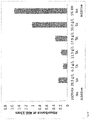
- FIG. 1 Compares absorbance of PSA membrane comprising immobilized resorcinol with VA additive and TA additive at varying concentrations, and absorbance of control membranes without additive under low and high humidity conditions.
- FIG. 2 Depicts absorption spectra of PSA membrane comprising immobilized resorcinol with and without TA additive in low and high relative humidity.
- FIG. 3 Depicts absorption spectra of PSA membrane comprising immobilized resorcinol and TA additive in the presence of acetone, water, and cesium and the effect of cesium concentration on the performance of the TA additive in retention of catalytic activity.
- FIG. 4 Illustrates correlation between exhaled breath acetone concentration as measured by a resorcinol and TA imbibed PSA membrane-based optical sensor and simultaneously measured blood glucose concentration.
- FIG. 5 Depicts absorption spectra of PSA membrane comprising immobilized resorcinol and TA additive versus formaldehyde concentration at 100% RH.
- FIG. 6 Illustrates correlation between absorbance spectra of PSA membrane comprising immobilized resorcinol with additive and concentration of formaldehyde in a humid environment.
- FIG. 7 Sets forth absorbance responses of resorcinol and additive-imbibed membranes at 532.23 nm after exposure to formaldehyde with concentration extension to 500 ppmv and 1250 ppmv to show the ability to shift the dynamic range.
- FIG. 8 Table 1. Sets forth patient characteristics and blood glucose concentrations for patients in exhaled breath study.
- FIG. 9 Table 2. Sets forth compiled data derived from investigation of a variety of possible organic acid additives suitable in resorcinol-imbibed PFSA catalytic membranes.
- FIG. 10 Depicts organic acid pKa trend for purposes of optimizing selection of organic acid additive in resorcinol-imbibed PFSA catalytic membranes. Trend is based on interpolation of data from Table 2 at 0.063 M solution concentration.
- the present investigators have developed PSA catalytic polymer membranes, and methods and devices employing them, that overcome deficiencies in the art relating to loss of catalytic activity in humid environments.
- the inventive PSA catalytic polymer membranes surprisingly exhibit retention of catalytic activity in high-humidity and high-salt environments by immobilization of proton donating compounds such as organic acids within the hydrophilic cluster network of the PSA polymers.
- the organic acid components are selected to increase the pKa of the PSA in a manner analogous to mixed solvent effects in homogeneous liquid-phase systems.
- the phenomenon has not been previously observed in high molecular weight, heterogeneous-phase systems.
- PA proton affinity
- PA(Y) is the proton affinity of the respective compound Y and AH* is the immobilized form of the proton-donating compound AH within the PSA cluster network.
- Suitable exemplary compounds AH that have been identified as fulfilling this criterion in the case of 1100 equivalent weight Nafion® include vanillic acid, tiglic acid and ferulic acid (see e.g. Table 2/ FIG. 9 ). Extensions to identification of other effective compounds may be readily made in light equation (1). Although identification of effective compounds is relatively simple, empirical validation is needed to assess suitability for a particular reagent-imbibed PSA catalytic membrane and contemplated detectable synthetic reaction. FIG.
- FIG. 10 illustrates a pKa trend graph for a very particular embodiment of a resorcinol-imbibed PSA catalytic membrane compiled from the data set forth in Table 2 ( FIG. 9 ) and illustrates the principle for selection optimization of the organic acid additive.
- PSA polymer catalysts may be reformulated so as to maintain their catalytic activity even in such high-humidity and potentially high-salt environments.
- Embodiments of the invention provide methods of preserving the catalytic activity of a solid sulfonic acid catalyst polymer in a humid environment, and unique PSA polymer membranes that exhibit retention of catalytic activity in high-humidity and high-salt environments.
- Particular method embodiments comprise immobilizing an organic acid in the solid sulfonic acid catalyst polymer.
- the organic acid additive is selected such that the pKa of the immobilized acid is greater than the pKa of the solid sulfonic acid catalyst polymer.
- the polymer is a PSA polymer membrane and in more specific embodiments the membrane is a dihroxy benzene imbibed PSA membrane. According to very specific embodiments the membrane is a resorcinol imbibed PSA polymer membrane. Highly specific embodiments include resorcinol imbibed Nafion® PSA membranes comprising immobilized additive.
- Non-limiting examples of synthetic reactions which may be benefited by the instant invention include Alkylation and acylation of aromatics with olefins, alcohols, allyl halides, and alkyl esters, condensation with ketones (illustrated herein with acetone), and aldehydes (illustrated herein with formaldehyde), oligomerization of olefins, Isomerization, transalkylation, and disproportionation of alkyl benzenes, nitration of aromatics, sulfonation, phosphorylation, and ether/ester synthesis.
- the instant invention relates specifically to retention of catalytic activity of the PSA polymer catalysis, which is the commonality.
- the instant disclosure illustrates and validates the inventive principle with specific synthetic reactions, the methods for retention of catalytic activity in humid environments is generalizable.
- organic acid additive that demonstrates the selection criterion with respect to pKa relative to the membrane is readily determinable by a person of ordinary skill in the art, and is dependent upon the desired end-use of the membrane and the specific membrane property profile.
- small organic acid additives are particularly suitable.
- Non-limiting examples include benzoic, vanillic, tiglic and ferulic acid.
- the acid additive comprises vanillic or tiglic acid, and in very specific embodiments the acid comprises tiglic acid.
- the additive may be immobilized in the membrane by soaking in an imbibing solvent and suitability may vary with characteristics of the acid and the membrane.
- An exemplary imbibing solvent for small organic acid additive in a PFSA membrane comprising immobilized dihydroxy-benzene reagent comprises a mineral oil composition.
- the imbibing composition comprises mineral oil and solubility-adjusting agents such as ethanol or ethyl acetate where needed.
- the optical sensing technique utilizes ultraviolet/visible light spectrophotometry. This method detects changes in absorption of ultraviolet or visible light within a medium due to the presence of a chemical compound of interest.
- a Nafion® membrane also referred to as a perfluorosulfonic acid (PSA) membrane, is used as the medium.
- PSA membrane is a copolymer membrane consisting of dispersed hydrophilic PSA regions within a hydrophobic tetrafluoroethylene matrix. Because of this morphology, it has transport properties that allow movement of cations and the immobilization of many dye molecules such as resorcinol.
- the hydrophilic PSA regions can act as acid catalysts. Consequently, in the presence of different volatile organic compounds, such as formaldehyde and acetone, the immobilized resorcinol will react, producing a color change, providing a visible detection of these compounds.
- VOCs volatile organic compounds
- Chemicals such as nitrous oxide and acetone can be used to help detect and diagnose lung cancer and diabetes mellitus respectively.
- Acetone is produced by the liver as it breaks down fat molecules. In patients with diabetes mellitus, this process results in the production of ketone bodies which are further metabolized to acetone.
- the acetone is then excreted through urine as well as exhaled breath.
- Diabetics excrete acetone breath concentrations well in excess of that of a healthy individual (usually 1 to 4 parts per million by volume (ppmv) compared to the 0 to 0.5 ppmv seen in healthy individuals).
- ppmv parts per million by volume
- the addition of immobilized organic acids into the ionic clusters of PSA membranes is used in heterogeneous gas-solid systems to successfully mitigate the interference of water in the detection of acetone.
- immobilizing various organic acids within the ionic clusters of the membrane it is possible to lower the effective pKa of the sulfonic acid groups within the clusters and maintain the acid catalyst activity.
- the solution is novel both with respect to mitigation of water interference in a chemical sensing device as well as the utilization of a weak acid to lower the pKa of a strong acid in a heterogeneous system.
- Loss of catalytic activity in a Nafion® PFSA membrane in the presence of high humidity is believed to occur due to introduction of significant concentrations of water vapor in the ionic clusters that impede the reaction by diluting the acidity of the sulfonic groups due to the highly rapid dissociation of the sulfonic acid groups within the cluster.
- the reaction of acetone and resorcinol can occur using other strong acids in aqueous environments, it is clearly a problem with the membrane support.
- the present investigators confirmed this hypothesis by employing several weak organic acids to shift the pKa of the sulfonic acid groups enough to lower the dissociation rate but not enough to significantly alter the catalytic activity of the ionic clusters as detailed above.
- FIG. 1 shows a comparison of vanillic acid and several concentrations of tiglic acid used on PSA membranes containing resorcinol exposed to 4 ppmv acetone in the presence of 100% relative humidity (RH).
- the concentration values are for the amount of the organic acid observed in the membrane, which was determined by conducting a series of extractions from the membrane to determine the partition coefficient of the acids with the PSA membrane.
- the absorbance value for membranes without the presence of an organic acid additive in ambient humidity (which at 60° C. is reduced to ⁇ 5% RH) and 100% RH are included. It was found that in the presence of high concentrations of tigilic acid the water interference was significantly reduced allowing for a strong signal response at 100% RH.
- vanillic acid did not have as significant an effect on signal response even at the membrane saturation concentration. This is possibly due to the difference in acid strength for the two acids, as vanillic acid has a pKa of 4.50 and tiglic acid has a pKa of 4.96 in water at 25° C. With a higher pKa, tiglic acid would allow the sulfonic acid groups to retain more acidity than the vanillic acid.
- tiglic acid features a strong resonance structure which would allow for stronger H-bonding within the ionic cluster further protecting the sulfonic acid groups from rapid dissociation in the presence of water.
- FIG. 2 shows spectra from sample membranes used to produce FIG. 1 . From the plot it is clear that the addition of tiglic acid produces a significant bathochromatic shift due to the change in the local environment in the ionic clusters of the membrane.
- FIG. 3 shows the effects of cesium uptake on membranes exposed to 4 ppmv acetone with and without 50.0 g/L tiglic acid. Without the tiglic acid, the reaction does not occur due to the replacement of the H+ ions, but with the tiglic acid present the membranes show significant resistance to the Cs+ ions allowing for a signal response over a range of cesium concentrations. This indicates that the tiglic acid is actively protecting the sulfonic acid groups allowing for the condensation reaction to occur even in the presence of significant interferences.
- FIG. 8 sets forth Table 1 showing the characteristics for both diabetic and control patients.
- an optical sensor capable of detecting a volatile organic compound in exhaled human breath.
- the target volatile organic compound comprises acetone and the PSA membrane (which may be a PFSA polymer membrane such as Nafion® PFSA catalyst membrane) comprises immobilized organic reagent that reacts with acetone to produce a detectable color-shifted product.
- the organic reagent may comprise a dihydroxybenzene such as resorcinol, which undergoes a condensation reaction with acetone, a reaction catalyzed by the PSA catalyst polymer.
- the immobilized organic acid is any organic acid possessing a pKa greater than the pKa of the PSA polymer membrane.
- the immobilized organic acid is selected from vanillic acid, benzoic acid, ferulic acid and tiglic acid, and in more specific embodiments the immobilized organic acid is tiglic acid.
- the optical sensor may be fabricated into an optical sensing device, and is particularly suitable for a portable optical sensing device, such as a handheld device. As depicted in FIG. 4 and detailed in Example 4, the concentration of acetone in exhaled breath of a patient correlates to blood glucose concentration in the patient, providing a simple, easy to use, non-invasive method for monitoring blood glucose levels in the patient.
- Specific embodiments of the invention are directed to a real-time non-invasive method for estimating blood glucose concentration in a patient based on a calculated concentration of acetone in exhaled breath of the human.
- the method comprises: providing a PSA membrane comprising immobilized organic reagent and at least one immobilized organic acid having a pKa greater than the pKa of the PSA polymer membrane, the immobilized reagent selected such that a reaction occurs between the organic reagent and acetone to produce a detectable color-shifted product; exposing the PSA polymer membrane to a volume of exhaled breath; measuring concentration of a product of the reaction based on a detected color shift; calculating the concentration of acetone in the volume of exhaled breath from the concentration of product measured; and correlating the concentration of acetone to a standard blood glucose concentration.
- the standard blood glucose concentration may be an external standard based on a function of exhaled breath acetone concentration versus blood glucose concentration derived from a population of diabetic humans or it may be derived as an internal standard based on a function of exhaled breath acetone concentration versus blood glucose concentration longitudinally across a time frame from the human.
- the membrane comprises a PFSA membrane.
- Diabetic patients may employ the specific methods and optical sensors or portable optical sensing devices to monitor blood glucose levels across a time frame, and to adjust insulin levels accordingly.
- Formaldehyde is a volatile organic compound made by the oxidation of methanol.
- the US National toxicology Program recognizes formaldehyde as a carcinogen. It is also a compound used in the manufacturing of many household products, such as cleaning solutions, cosmetics, and wood fixatives (Sun et al. 2007).
- Formaldehyde is also a by-product of alcohol fuel cells, which convert chemical energy into electricity through an oxidation-reduction reaction. The production of aldehydes from alcohol fuel cells is a symptom of inefficiency of the cell, as well as a contaminant in the environment.
- formaldehyde in the effluent of a direct alcohol fuel cell has been previously shown to indicate efficiency loss in the fuel cell energy process.
- Formaldehyde is also recognized as a carcinogen and therefore is a hazardous air pollutant that raises public health concerns. It is known that immobilized resorcinol dye molecules in a perfluorosulfonic acid membrane react with gaseous formaldehyde, and that the product of this reaction produces a color change seen in the visible spectrum of light, providing a detection method for formaldehyde.
- the present investigators previously developed an optical sensor based on this mechanism; however the application of the sensor is limited because the reaction fails to occur in the presence of water.
- PSA catalyst polymer membranes may be reformulated to detect formaldehyde in humid environments.
- Specific embodiments of the invention provide methods for mitigation of the observed water interference by retention of the PSA polymer membrane catalytic activity in the presence of water.
- optical sensing devices comprising embodiments of the inventive PSA polymer membrane allow for the detection of formaldehyde in a water-abundant environment of direct alcohol fuel cell effluent.
- a PSA (or PFSA) catalyst polymer membrane comprising an immobilized organic reagent capable of undergoing a synthetic reaction with an aldehyde, such as formaldehyde to produce a detectable color-shifted product is constructed as exemplified (see Example 6) herein.
- the organic reagent is a dihydroxybenzene and in very specific embodiments the dihydroxybenzene comprises resorcinol.
- the immobilized organic acid is selected from the group consisting of tiglic acid, benzoic acid, vanillic acid, and ferulic acid; however it is understood that selection of the acid additive is guided by the desired pKa character, that is, the immobilized organic acid possesses a pKa greater than the pKa of the PSA polymer membrane.
- the immobilized organic acid comprises tiglic acid.
- Optical sensors and portable optical sensing devices may be fabricated utilizing the inventive membranes and based on the inventive methods. FIGS.
- Examples 6 and 7 illustrate a specific PSA membrane formulation that enables detection of formaldehyde below 25 ppmv or above 100 ppmv at 100% relative humidity. The system was therefore very sensitive within a small dynamic range. As illustrated by FIG. 7 , which sets for absorbanc responses at a different resorcinol concentration, the dynamic range for detection may be shifted.
- Example 1 illustrates that a PSA polymer membrane comprising immobilized resorcinol known in the art, reformulated to further comprise an additive comprising a small organic acid, retains its ability to catalyze a condensation reaction between the resorcinol and acetone present in the environment in a humid environment.
- Nafion® membrane (The Fuel Cell Store, Nafion® 117, protonated, 0.007 in. thickness) is immersed in a 12 g/L solution of resorcinol (Acros Organics, 98%) in ethanol (Acros Organics, ACS spectroscopic grade, >95% purity) for 31 min. (See Ayyadurai, S. M.; Worrall, A. D.; Bernstein, J. A.; Angelopoulos, A. P. Analytical Chemistry 2010, 82, 6265 and Angelopoulos, A.; Berstein, J.
- Mineral oil is utilized to avoid loss of the resorcinol in the membrane during the organic acid uptake.
- the membranes soak in the solution for 1 hour to 24 hours depending on the rate of uptake observed and then excess oil solution is rinsed off and the membrane is allowed to air dry.
- the membranes are then suspended in a sealed nitrogen purged flask with a known concentration of acetone (Acros Organics, ACS spectroscopic grade, 99% purity).
- acetone Acros Organics, ACS spectroscopic grade, 99% purity.
- Ambient conditions are measured prior to addition of water to account for the water content of the air in the flask which varied between 35% and 50% RH at 22° C. ensuring that the proper RH level is present in the flask when heated.
- the flask is then submersed in a water bath at 60° C. for 15 minutes.
- the membrane is removed and the signal response is observed ex-situ using an ultra-violet/visible spectrometer (Ocean Optics HR 2000+ CG-UV-NIR High Resolution Spectrometer).
- An ultra-violet/visible spectrometer (Ocean Optics HR 2000+ CG-UV-NIR High Resolution Spectrometer).
- a bare Nafion membrane is used as the background for the spectroscopy software, SpectraSuiteTM.
- a water uptake study was performed to determine whether or not the oil imbibing solvent was preventing catalyst de-activation by preventing water from entering the membrane, or whether the mechanism involves the immobilized organic acid component.
- the uptake of water in a bare membrane was compared to the uptake of water in an oil additive soaked membrane using weight measurement. It was observed that there was no significant change in weight uptake between the membranes, confirming that the additive is not excluding water. This supports the mechanistic theory that the additive is preventing the sulfonic acid group de-protonation in the presence of water.
- Example illustrates the correlation between measurement of acetone in exhaled human breath in accordance with embodiments of the invention, and simultaneously derived blood glucose concentration measured with a glucometer.
- Breath samples were collected using nitrogen purged resealable 250 mL mylar bags with an attached mouthpiece. Each subject was instructed to take a deep breath, exhale out the first third of their breath and then blow the remaining air into two sample bags making sure that each is filled to capacity before going on to the next sample bag. This was done to ensure that the analysis sample contained the majority of the acetone present, which is found primarily in the last portion of exhalation. Blood glucose measurements were taken using a One Touch blood glucometer. Subjects were not restricted to fasting but had not eaten within an hour prior to testing.
- Light absorption by the sensing membrane is plotted on the y-axis and results from synthesis of a colored product, a flavan, due to the PSA-catalyzed condensation of acetone and resorcinol even in the presence of water.
- Light absorption is directly correlated to acetone concentration, as needed, using ex-situ calibration data (see FIG. 4 ).
- Blood glucose concentration was simultaneously measured in the blood samples using a glucometer and the corresponding reading was recorded on the x-axis.
- the equation on the chart is a linear fit to the patient data and the associated correlation coefficient for the linear regression is also shown (r2).
- Square data points represent patients with known diabetes (whether controlled or not). Data points at the low end of the blood glucose readings represent random control subjects without diabetes.
- the only restriction on the patients with respect to fasting is that required by the glucometer (minimum 2 hours after meals). Sample exhaled breath volumes in every case consisted of 500 ml collected after an initial 500 ml exhal
- PSA catalyst membranes saturated with resorcinol yielded negligible flavan synthesis and associated light absorption.
- the sensing element became inoperative at human breath relative humidity levels due to the deactivation of the PSA functional groups. Ion-exchange of protons by cations such as K + , Ca ++ , and Ce ++ has been observed to yield similar de-activation.
- Example 1 illustrates calibration of ambient acetone concentrations in the presence of 100% relative humidity using an optical sensor comprising a PSA polymer membrane comprising resorcinol and other exemplary immobilized organic acids.
- Example 2 The procedure of Example 2 is repeated by immobilizing Ferulic acid and Benzoic acid in the PSA membrane rather than tiglic acid. Benzoic acid gave substantially lower intensities, consistent with its higher proton affinity.
- a PSA polymer membrane comprising immobilized resorcinol and immobilized organic acid is prepared in accordance with the method set forth in Example 1, above.
- the membrane is suspended in a 500 mL round bottom flask using Teflon tape and a piece of gold plated stainless steel.
- Working under a fume hood 40 micro-liters of formaldehyde solution at varying concentrations of 25 ppmv, 50 ppmv, and 100 ppmv and 0.12 mL of water was injected into the flask and the flask was capped with a Teflon seal. These volumes are needed in order to reach a desired formaldehyde exposure level at a relative humidity of 100% in a 500 mL flask at 75° C. for 40 minutes to allow for the formaldehyde to completely volatize.
- the membrane is removed from the flask for measurement of the response.
- Formaldehyde concentrations of 25 ppmv, 50 ppmv, and 100 ppmv were chosen because the concentrations greater than this saturated the visible spectrum and the concentrations less than this failed to generate a consistent peak.
- the specific membrane embodiment was unable to detect presence of formaldehyde below 25 ppmv or above 100 ppmv, the system was very sensitive within a small dynamic range ( FIG. 6 ).
- the resorcinol concentration in the resorcinol imbibing composition was decreased to 1g/L.
- Results of exposing this membrane to two formaldehyde concentrations substantially higher than those in FIG. 6 are shown in FIG. 7 .
- the data in FIG. 6 is repeated in FIG. 7 to highlight the contrast in the dynamic range of the two membrane formulations.
- Claims or descriptions that include “or” between one or more members of a group are considered satisfied if one, more than one, or all of the group members are present in, employed in, or otherwise relevant to a given product or process unless indicated to the contrary or otherwise evident from the context.
- the invention includes embodiments in which exactly one member of the group is present in, employed in, or otherwise relevant to a given product or process.
- the invention also includes embodiments in which more than one, or all of the group members are present in, employed in, or otherwise relevant to a given product or process.
- the invention encompasses all variations, combinations, and permutations in which one or more limitations, elements, clauses, descriptive terms, etc., from one or more of the listed claims or from the description above is introduced into another claim.
- any claim that is dependent on another claim can be modified to include one or more elements, limitations, clauses, or descriptive terms, found in any other claim that is dependent on the same base claim.
- claims recite a composition, it is to be understood that methods of using the composition for any of the purposes disclosed herein are included within the scope of the invention, and methods of making the composition according to any of the methods of making disclosed herein are included within the scope of the invention, unless otherwise indicated or unless it would be evident to one of ordinary skill in the art that a contradiction or inconsistency would arise.
Landscapes
- Health & Medical Sciences (AREA)
- Life Sciences & Earth Sciences (AREA)
- Chemical & Material Sciences (AREA)
- Engineering & Computer Science (AREA)
- Physics & Mathematics (AREA)
- Molecular Biology (AREA)
- Biomedical Technology (AREA)
- Pathology (AREA)
- General Health & Medical Sciences (AREA)
- Immunology (AREA)
- Organic Chemistry (AREA)
- Chemical Kinetics & Catalysis (AREA)
- Biophysics (AREA)
- Hematology (AREA)
- Urology & Nephrology (AREA)
- General Physics & Mathematics (AREA)
- Biochemistry (AREA)
- Analytical Chemistry (AREA)
- Heart & Thoracic Surgery (AREA)
- Public Health (AREA)
- Veterinary Medicine (AREA)
- Animal Behavior & Ethology (AREA)
- Surgery (AREA)
- Medical Informatics (AREA)
- Materials Engineering (AREA)
- Medicinal Chemistry (AREA)
- Food Science & Technology (AREA)
- Pulmonology (AREA)
- Physiology (AREA)
- Cell Biology (AREA)
- Microbiology (AREA)
- Biotechnology (AREA)
- Plasma & Fusion (AREA)
- Emergency Medicine (AREA)
- Optics & Photonics (AREA)
- Investigating Or Analysing Materials By The Use Of Chemical Reactions (AREA)
- Diabetes (AREA)
- Investigating Or Analysing Biological Materials (AREA)
Abstract
Description
PA(AH*)−PA(PSA)>0 Eq. (1)
Claims (10)
Priority Applications (1)
| Application Number | Priority Date | Filing Date | Title |
|---|---|---|---|
| US15/021,308 US11478164B2 (en) | 2013-09-11 | 2014-09-11 | Water and salt resistant solid super-acid catalysts |
Applications Claiming Priority (4)
| Application Number | Priority Date | Filing Date | Title |
|---|---|---|---|
| US201361876739P | 2013-09-11 | 2013-09-11 | |
| US201462018216P | 2014-06-27 | 2014-06-27 | |
| US15/021,308 US11478164B2 (en) | 2013-09-11 | 2014-09-11 | Water and salt resistant solid super-acid catalysts |
| PCT/US2014/055248 WO2015038814A1 (en) | 2013-09-11 | 2014-09-11 | Water and salt resistant solid super-acid catalysts |
Publications (2)
| Publication Number | Publication Date |
|---|---|
| US20160220146A1 US20160220146A1 (en) | 2016-08-04 |
| US11478164B2 true US11478164B2 (en) | 2022-10-25 |
Family
ID=52666287
Family Applications (1)
| Application Number | Title | Priority Date | Filing Date |
|---|---|---|---|
| US15/021,308 Active 2038-05-07 US11478164B2 (en) | 2013-09-11 | 2014-09-11 | Water and salt resistant solid super-acid catalysts |
Country Status (2)
| Country | Link |
|---|---|
| US (1) | US11478164B2 (en) |
| WO (1) | WO2015038814A1 (en) |
Citations (5)
| Publication number | Priority date | Publication date | Assignee | Title |
|---|---|---|---|---|
| US6465120B1 (en) | 1999-09-20 | 2002-10-15 | Honda Giken Kogyo Kabushiki Kaisha | Composite polymer membrane, method for producing the same and solid polymer electrolyte membrane |
| US6893552B1 (en) | 1997-12-29 | 2005-05-17 | Arrowhead Center, Inc. | Microsensors for glucose and insulin monitoring |
| US6936365B2 (en) * | 2000-09-29 | 2005-08-30 | Kabushiki Kaisha Toshiba | Ion conductive film and fuel cell using the same |
| US20090081427A1 (en) | 2007-09-21 | 2009-03-26 | Fujifilm Corporation | Method for producing an immobilization substrate and immobilization substrate produced by the method |
| US20110160319A1 (en) | 2009-12-31 | 2011-06-30 | Industrial Technology Research Institute | Organic/inorganic hybrid composite proton exchange membrane |
-
2014
- 2014-09-11 US US15/021,308 patent/US11478164B2/en active Active
- 2014-09-11 WO PCT/US2014/055248 patent/WO2015038814A1/en not_active Ceased
Patent Citations (6)
| Publication number | Priority date | Publication date | Assignee | Title |
|---|---|---|---|---|
| US6893552B1 (en) | 1997-12-29 | 2005-05-17 | Arrowhead Center, Inc. | Microsensors for glucose and insulin monitoring |
| US6465120B1 (en) | 1999-09-20 | 2002-10-15 | Honda Giken Kogyo Kabushiki Kaisha | Composite polymer membrane, method for producing the same and solid polymer electrolyte membrane |
| US6936365B2 (en) * | 2000-09-29 | 2005-08-30 | Kabushiki Kaisha Toshiba | Ion conductive film and fuel cell using the same |
| US7538169B2 (en) | 2000-09-29 | 2009-05-26 | Kabushiki Kaisha Toshiba | Ion conductive film and fuel cell using the same |
| US20090081427A1 (en) | 2007-09-21 | 2009-03-26 | Fujifilm Corporation | Method for producing an immobilization substrate and immobilization substrate produced by the method |
| US20110160319A1 (en) | 2009-12-31 | 2011-06-30 | Industrial Technology Research Institute | Organic/inorganic hybrid composite proton exchange membrane |
Non-Patent Citations (3)
| Title |
|---|
| Adam D. Worrall et al., "Portable Method of Measuring Gaseous Acetone Concentrations"; Talanta 112 (2013) 26-30. |
| Ayyadurai et al. "Perfluorosulfonic acid membrane catalysts for optical sensing of anhydrides in the gas phase" Anal. Chem. 2010, 82, 14, 6265-6272, Jun. 18, 2010 (Year: 2010). * |
| Chuji Wang et al., "A Study on Breath Acetone in Diabetic Patients Using a Cavity Ringdown Breath Analyzer Exploring Correlations of Breath Acetone with Blood Glucose and Glycohemoglobin A1C"; IEEE Sensors Journal, vol. 10, No. 1, Jan. 2010, pp. 54-63. |
Also Published As
| Publication number | Publication date |
|---|---|
| WO2015038814A1 (en) | 2015-03-19 |
| US20160220146A1 (en) | 2016-08-04 |
Similar Documents
| Publication | Publication Date | Title |
|---|---|---|
| Park et al. | Gas sensor array using a hybrid structure based on zeolite and oxide semiconductors for multiple bio-gas detection | |
| Alizadeh et al. | A novel potentiometric sensor for promethazine based on a molecularly imprinted polymer (MIP): The role of MIP structure on the sensor performance | |
| Pourbasheer et al. | Design of a novel optical sensor for determination of trace amounts of copper by UV/vis spectrophotometry in the real samples | |
| JP7046138B2 (en) | Improved magnesium ion selection membrane | |
| Afkhami et al. | A novel cyanide sensing phase based on immobilization of methyl violet on a triacetylcellulose membrane | |
| Grigorieva et al. | Measurement of plasma hemoglobin peroxidase activity | |
| Zhou et al. | Bi-MOF-based point-of-care testing paper for dual-mode detection of H2S | |
| Li et al. | Vitreous humor: a review of biochemical constituents in postmortem interval estimation | |
| US20160220146A1 (en) | Water and Salt Resistant Solid Super-Acid Catalysts | |
| Çubuk et al. | Development of photopolymerized fluorescence sensor for glucose analysis | |
| Borah et al. | An indolium ion-based colorimetric sensor for naked-eye detection of cyanide and ammonia: on-site detection technique for cyanide in natural sources and day-to-day monitoring of food spoilage | |
| CN109856068A (en) | A kind of formaldehyde detection reagent and detection method based on Mannich reaction | |
| CN119959196A (en) | Fluorescence sensor array and its application in rapid detection and dynamic monitoring of typical perfluorinated pollutants in fire protection equipment | |
| US8846405B2 (en) | Method and apparatus for the identification of aldehydes | |
| WO2006126011A2 (en) | Spectral nose | |
| CN113533291B (en) | Rare earth ion fluorescence detection method of bisphenol S | |
| RU2605965C1 (en) | Method for solid phase extraction of toluidine blue dye | |
| CN111624242B (en) | Method for detecting formaldehyde in environmental water by using carbon-foam copper material as working electrode | |
| CN114397259A (en) | Method for determining catalase activity based on Fenton-methylene blue system fading photometry | |
| Worrall | Immobilization of organic molecules within perfluorosulfonic acid membranes for optical sensing in humid environments | |
| Qian | The impact of humidity on an optical chemical sensing device for non-invasive exhaled gas monitoring | |
| US20160041105A1 (en) | Optical Sensor | |
| Dai et al. | The determination of trace lead in drinking water by flow injection spectrophotometry | |
| Ravi | Continuous monitoring and removal of formaldehyde vapor in ambient air using polymer catalyst membranes | |
| Qiang et al. | Determination of nitric oxide using horseradish peroxidase by UV second-order derivative spectrometry |
Legal Events
| Date | Code | Title | Description |
|---|---|---|---|
| AS | Assignment |
Owner name: UNIVERSITY OF CINCINNATI, KENTUCKY Free format text: ASSIGNMENT OF ASSIGNORS INTEREST;ASSIGNORS:ANGELOPOULOS, ANASTASIOS P;BERNSTEIN, JONATHAN A;REEL/FRAME:037981/0170 Effective date: 20140911 |
|
| STPP | Information on status: patent application and granting procedure in general |
Free format text: RESPONSE TO NON-FINAL OFFICE ACTION ENTERED AND FORWARDED TO EXAMINER |
|
| STPP | Information on status: patent application and granting procedure in general |
Free format text: NON FINAL ACTION MAILED |
|
| STPP | Information on status: patent application and granting procedure in general |
Free format text: RESPONSE TO NON-FINAL OFFICE ACTION ENTERED AND FORWARDED TO EXAMINER |
|
| STPP | Information on status: patent application and granting procedure in general |
Free format text: NON FINAL ACTION MAILED |
|
| STPP | Information on status: patent application and granting procedure in general |
Free format text: RESPONSE TO NON-FINAL OFFICE ACTION ENTERED AND FORWARDED TO EXAMINER |
|
| STPP | Information on status: patent application and granting procedure in general |
Free format text: FINAL REJECTION MAILED |
|
| STPP | Information on status: patent application and granting procedure in general |
Free format text: RESPONSE AFTER FINAL ACTION FORWARDED TO EXAMINER |
|
| STPP | Information on status: patent application and granting procedure in general |
Free format text: DOCKETED NEW CASE - READY FOR EXAMINATION |
|
| STPP | Information on status: patent application and granting procedure in general |
Free format text: NON FINAL ACTION MAILED |
|
| STPP | Information on status: patent application and granting procedure in general |
Free format text: RESPONSE TO NON-FINAL OFFICE ACTION ENTERED AND FORWARDED TO EXAMINER |
|
| STPP | Information on status: patent application and granting procedure in general |
Free format text: FINAL REJECTION MAILED |
|
| STPP | Information on status: patent application and granting procedure in general |
Free format text: DOCKETED NEW CASE - READY FOR EXAMINATION |
|
| STPP | Information on status: patent application and granting procedure in general |
Free format text: NOTICE OF ALLOWANCE MAILED -- APPLICATION RECEIVED IN OFFICE OF PUBLICATIONS |
|
| AS | Assignment |
Owner name: UNIVERSITY OF CINCINNATI, OHIO Free format text: CORRECTIVE ASSIGNMENT TO CORRECT THE CORRECT CITY AND STATE OF RECEIVING PARTY DATA SHOULD BE CINCINNATI, OHIO NOT LOUSIVILLE, KENTUCKY PREVIOUSLY RECORDED AT REEL: 037981 FRAME: 0170. ASSIGNOR(S) HEREBY CONFIRMS THE ASSIGNMENT;ASSIGNORS:ANGELOPOULOS, ANASTASIOS P.;BERNSTEIN, JONATHAN A.;REEL/FRAME:060918/0042 Effective date: 20140911 |
|
| STPP | Information on status: patent application and granting procedure in general |
Free format text: PUBLICATIONS -- ISSUE FEE PAYMENT VERIFIED |
|
| STCF | Information on status: patent grant |
Free format text: PATENTED CASE |
|
| FEPP | Fee payment procedure |
Free format text: SURCHARGE FOR LATE PAYMENT, SMALL ENTITY (ORIGINAL EVENT CODE: M2554); ENTITY STATUS OF PATENT OWNER: SMALL ENTITY |
|
| MAFP | Maintenance fee payment |
Free format text: PAYMENT OF MAINTENANCE FEE, 4TH YR, SMALL ENTITY (ORIGINAL EVENT CODE: M2551); ENTITY STATUS OF PATENT OWNER: SMALL ENTITY Year of fee payment: 4 |