US11468267B2 - Apparatus and method for classifying image - Google Patents
Apparatus and method for classifying image Download PDFInfo
- Publication number
- US11468267B2 US11468267B2 US16/662,424 US201916662424A US11468267B2 US 11468267 B2 US11468267 B2 US 11468267B2 US 201916662424 A US201916662424 A US 201916662424A US 11468267 B2 US11468267 B2 US 11468267B2
- Authority
- US
- United States
- Prior art keywords
- classification
- primary
- value
- classifier
- learning
- Prior art date
- Legal status (The legal status is an assumption and is not a legal conclusion. Google has not performed a legal analysis and makes no representation as to the accuracy of the status listed.)
- Active, expires
Links
Images




Classifications
-
- G—PHYSICS
- G06—COMPUTING OR CALCULATING; COUNTING
- G06N—COMPUTING ARRANGEMENTS BASED ON SPECIFIC COMPUTATIONAL MODELS
- G06N3/00—Computing arrangements based on biological models
- G06N3/02—Neural networks
- G06N3/08—Learning methods
-
- G—PHYSICS
- G06—COMPUTING OR CALCULATING; COUNTING
- G06V—IMAGE OR VIDEO RECOGNITION OR UNDERSTANDING
- G06V20/00—Scenes; Scene-specific elements
- G06V20/40—Scenes; Scene-specific elements in video content
- G06V20/41—Higher-level, semantic clustering, classification or understanding of video scenes, e.g. detection, labelling or Markovian modelling of sport events or news items
-
- G06K9/6262—
-
- G—PHYSICS
- G06—COMPUTING OR CALCULATING; COUNTING
- G06F—ELECTRIC DIGITAL DATA PROCESSING
- G06F16/00—Information retrieval; Database structures therefor; File system structures therefor
- G06F16/50—Information retrieval; Database structures therefor; File system structures therefor of still image data
- G06F16/51—Indexing; Data structures therefor; Storage structures
-
- G—PHYSICS
- G06—COMPUTING OR CALCULATING; COUNTING
- G06F—ELECTRIC DIGITAL DATA PROCESSING
- G06F18/00—Pattern recognition
- G06F18/20—Analysing
- G06F18/21—Design or setup of recognition systems or techniques; Extraction of features in feature space; Blind source separation
- G06F18/211—Selection of the most significant subset of features
- G06F18/2113—Selection of the most significant subset of features by ranking or filtering the set of features, e.g. using a measure of variance or of feature cross-correlation
-
- G—PHYSICS
- G06—COMPUTING OR CALCULATING; COUNTING
- G06F—ELECTRIC DIGITAL DATA PROCESSING
- G06F18/00—Pattern recognition
- G06F18/20—Analysing
- G06F18/21—Design or setup of recognition systems or techniques; Extraction of features in feature space; Blind source separation
- G06F18/217—Validation; Performance evaluation; Active pattern learning techniques
-
- G—PHYSICS
- G06—COMPUTING OR CALCULATING; COUNTING
- G06F—ELECTRIC DIGITAL DATA PROCESSING
- G06F18/00—Pattern recognition
- G06F18/20—Analysing
- G06F18/24—Classification techniques
- G06F18/243—Classification techniques relating to the number of classes
- G06F18/2431—Multiple classes
-
- G—PHYSICS
- G06—COMPUTING OR CALCULATING; COUNTING
- G06F—ELECTRIC DIGITAL DATA PROCESSING
- G06F18/00—Pattern recognition
- G06F18/20—Analysing
- G06F18/285—Selection of pattern recognition techniques, e.g. of classifiers in a multi-classifier system
-
- G06K9/623—
-
- G06K9/628—
-
- G—PHYSICS
- G06—COMPUTING OR CALCULATING; COUNTING
- G06N—COMPUTING ARRANGEMENTS BASED ON SPECIFIC COMPUTATIONAL MODELS
- G06N20/00—Machine learning
-
- G—PHYSICS
- G06—COMPUTING OR CALCULATING; COUNTING
- G06N—COMPUTING ARRANGEMENTS BASED ON SPECIFIC COMPUTATIONAL MODELS
- G06N3/00—Computing arrangements based on biological models
- G06N3/02—Neural networks
- G06N3/04—Architecture, e.g. interconnection topology
- G06N3/045—Combinations of networks
-
- G06N3/0454—
-
- G—PHYSICS
- G06—COMPUTING OR CALCULATING; COUNTING
- G06N—COMPUTING ARRANGEMENTS BASED ON SPECIFIC COMPUTATIONAL MODELS
- G06N3/00—Computing arrangements based on biological models
- G06N3/02—Neural networks
- G06N3/04—Architecture, e.g. interconnection topology
- G06N3/0464—Convolutional networks [CNN, ConvNet]
-
- G—PHYSICS
- G06—COMPUTING OR CALCULATING; COUNTING
- G06N—COMPUTING ARRANGEMENTS BASED ON SPECIFIC COMPUTATIONAL MODELS
- G06N3/00—Computing arrangements based on biological models
- G06N3/02—Neural networks
- G06N3/08—Learning methods
- G06N3/09—Supervised learning
-
- G—PHYSICS
- G06—COMPUTING OR CALCULATING; COUNTING
- G06N—COMPUTING ARRANGEMENTS BASED ON SPECIFIC COMPUTATIONAL MODELS
- G06N5/00—Computing arrangements using knowledge-based models
- G06N5/04—Inference or reasoning models
-
- G—PHYSICS
- G06—COMPUTING OR CALCULATING; COUNTING
- G06V—IMAGE OR VIDEO RECOGNITION OR UNDERSTANDING
- G06V10/00—Arrangements for image or video recognition or understanding
- G06V10/40—Extraction of image or video features
-
- G—PHYSICS
- G06—COMPUTING OR CALCULATING; COUNTING
- G06V—IMAGE OR VIDEO RECOGNITION OR UNDERSTANDING
- G06V10/00—Arrangements for image or video recognition or understanding
- G06V10/70—Arrangements for image or video recognition or understanding using pattern recognition or machine learning
- G06V10/764—Arrangements for image or video recognition or understanding using pattern recognition or machine learning using classification, e.g. of video objects
-
- G—PHYSICS
- G06—COMPUTING OR CALCULATING; COUNTING
- G06V—IMAGE OR VIDEO RECOGNITION OR UNDERSTANDING
- G06V10/00—Arrangements for image or video recognition or understanding
- G06V10/70—Arrangements for image or video recognition or understanding using pattern recognition or machine learning
- G06V10/77—Processing image or video features in feature spaces; using data integration or data reduction, e.g. principal component analysis [PCA] or independent component analysis [ICA] or self-organising maps [SOM]; Blind source separation
- G06V10/774—Generating sets of training patterns; Bootstrap methods, e.g. bagging or boosting
- G06V10/7747—Organisation of the process, e.g. bagging or boosting
-
- G—PHYSICS
- G06—COMPUTING OR CALCULATING; COUNTING
- G06V—IMAGE OR VIDEO RECOGNITION OR UNDERSTANDING
- G06V10/00—Arrangements for image or video recognition or understanding
- G06V10/70—Arrangements for image or video recognition or understanding using pattern recognition or machine learning
- G06V10/77—Processing image or video features in feature spaces; using data integration or data reduction, e.g. principal component analysis [PCA] or independent component analysis [ICA] or self-organising maps [SOM]; Blind source separation
- G06V10/776—Validation; Performance evaluation
-
- G—PHYSICS
- G06—COMPUTING OR CALCULATING; COUNTING
- G06V—IMAGE OR VIDEO RECOGNITION OR UNDERSTANDING
- G06V10/00—Arrangements for image or video recognition or understanding
- G06V10/70—Arrangements for image or video recognition or understanding using pattern recognition or machine learning
- G06V10/87—Arrangements for image or video recognition or understanding using pattern recognition or machine learning using selection of the recognition techniques, e.g. of a classifier in a multiple classifier system
-
- G—PHYSICS
- G06—COMPUTING OR CALCULATING; COUNTING
- G06N—COMPUTING ARRANGEMENTS BASED ON SPECIFIC COMPUTATIONAL MODELS
- G06N20/00—Machine learning
- G06N20/20—Ensemble learning
-
- G—PHYSICS
- G06—COMPUTING OR CALCULATING; COUNTING
- G06N—COMPUTING ARRANGEMENTS BASED ON SPECIFIC COMPUTATIONAL MODELS
- G06N5/00—Computing arrangements using knowledge-based models
- G06N5/01—Dynamic search techniques; Heuristics; Dynamic trees; Branch-and-bound
Definitions
- the disclosed embodiments relate to a technique of classifying high-resolution images.
- Image classification is a technique of analyzing an image and determining a class that the image belongs to. For example, in the case of a medical image of a patient, whether a specific disease exists may be determined through the image classification. Recently, the cases of using an algorithm of machine learning or deep learning for image classification are increasing.
- the disclosed embodiments are for providing a technical means for enhancing accuracy of an image classification technique based on machine learning using image segmentation.
- an image classification apparatus comprising: an image segmentation module for segmenting a learning image into a plurality of segment images; a primary classification module configured to perform machine learning on a primary classifier using the plurality of segment images; and a secondary classification module configured to calculate a weight value combination for creating a secondary classification estimation value for the learning image from a plurality of primary classification estimation values generated by passing the plurality of segment images to the trained primary classifier, or a machine learning-based learning parameter.
- the primary classification module may be further configured to perform machine learning on the primary classifier by individually inputting the plurality of segment images into the primary classifier.
- a classification value of each of the plurality of segment images inputted into the primary classifier may be set to be equal to a classification value of the learning image.
- the primary classification estimation value may be any one among a regression value, a score value and a class value of each classification target class.
- the secondary classification module may be further configured to receive an initial weight value and a weight value search range for each of the plurality of primary classification estimation values, and search for an optimum weight value combination satisfying a preset condition while changing the initial weight value within the inputted weight value search range.
- the secondary classification module may be further configured to determine the specific weight value combination as the optimum weight value combination.
- the secondary classification module may be further configured to perform machine learning on a secondary classifier by simultaneously inputting the plurality of primary classification estimation values into the secondary classifier.
- the secondary classification module may be further configured to update a learning parameter of the secondary classifier so that a loss of the secondary classification estimation value generated by the trained secondary classifier may be smaller than a preset threshold value.
- an image classification method performed in a computing device including one or more processors and a memory for storing one or more programs executed by the one or more processors, the method comprising: a step of segmenting a learning image into a plurality of segment images; a primary learning step of performing machine learning on a primary classifier using the plurality of segment images; and a secondary learning step of calculating a weight value combination for creating a secondary classification estimation value for the learning image from a plurality of primary classification estimation values generated by passing the plurality of segment images to the trained primary classifier, or a machine learning-based learning parameter.
- the primary learning step may comprise performing machine learning on the primary classifier by individually inputting the plurality of segment images into the primary classifier.
- a classification value of each of the plurality of segment images inputted into the primary classifier may be set to be equal to a classification value of the learning image.
- the primary classification estimation value may be any one among a regression value, a score value and a class value of each classification target class.
- the secondary learning step may comprise: receiving an initial weight value and a weight value search range for each of the plurality of primary classification estimation values; and searching for an optimum weight value combination satisfying a preset condition while changing the initial weight value within the inputted weight value search range.
- the secondary learning step may further comprise determining the specific weight value combination as the optimum weight value combination.
- the secondary learning step may comprise performing machine learning on a secondary classifier by simultaneously inputting the plurality of primary classification estimation values into the secondary classifier.
- the secondary learning step may further comprise updating a learning parameter of the secondary classifier so that a loss of the secondary classification estimation value generated by the trained secondary classifier may be smaller than a preset threshold value.
- FIG. 1 is a block diagram showing an image classification apparatus 100 according to an embodiment.
- FIG. 2 is an exemplary view showing a primary classifier training procedure in a primary classification module 104 according to an embodiment.
- FIG. 3 is an exemplary view showing an optimum weight value combination search procedure in a secondary classification module 106 according to an embodiment.
- FIG. 4 is an exemplary view showing an example of searching for an optimum weight value combination through a weight value recombination method in an image classification apparatus 100 according to another embodiment.
- FIG. 5 an exemplary view showing an optimum weight value combination search procedure in a secondary classification module 106 according to another embodiment.
- FIG. 6 is a flowchart illustrating an image classification method 600 according to an embodiment.
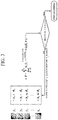
- FIG. 7 is a block diagram showing an example of a computing environment 10 including a computing device appropriate to be used in exemplary embodiments.
- FIG. 1 is a block diagram showing an image classification apparatus 100 according to an embodiment. As shown in the figure, the image classification apparatus 100 according to an embodiment includes an image segmentation module 102 , a primary classification module 104 , and a secondary classification module 106 .
- the image segmentation module 102 segments an inputted original learning image into a plurality of segment images.
- the image segmentation module 102 may segment the original image into a plurality of segment images in various methods.
- the segmented images may have various sizes, and there may be areas where the images are overlapped with each other. That is, it should be noted that the disclosed embodiments are not limited to a specific segmentation algorithm for images.
- the primary classification module 104 performs machine learning on a primary classifier using the plurality of segment images.
- the primary classification module 104 may perform machine learning on the primary classifier by individually inputting the plurality of segment images into the primary classifier. That is, the disclosed embodiments are configured to segment an image into a plurality of segment images and perform individual learning on the segmented images through the primary classification module 104 to solve the classification problem on a high-resolution image.
- the primary classification module 104 is configured to perform training by inputting the segment images into the primary classifier in a supervised learning method. At this point, the classification value (label) of each of the plurality of segment images inputted into the primary classifier may be set to be equal to the classification value of the original learning image.
- the primary classification module 104 trains the primary classifier under the condition as shown below in Equation 1.
- FIG. 2 is an exemplary view showing a primary classifier training procedure in a primary classification module 104 according to an embodiment.
- the primary classification module 104 inputs each segment image into the machine learning-based primary classifier and passes forward a result thereof to the secondary classification module 106 .
- a machine learning method based on diverse supervised learning including a deep convolutional neural network may be applied as an algorithm for the primary classifier.
- the primary classifier receiving one of the segmented segment images x k creates a primary classification estimation value ⁇ k of the segment image.
- the classification function of the primary classifier is f
- the classification function may be expressed as shown below in Equation 2.
- the primary classification module 104 calculates a loss between the created primary classification estimation value and the classification value y k of the segment image.
- the primary classification module 104 determines whether the loss is smaller than a preset threshold value, and updates the learning parameter ( ⁇ ) of the primary classifier when the loss is greater than or equal to the preset threshold value as a result of the determination.
- the secondary classification module 106 calculates a weight value combination for creating a classification estimation value of the learning image from a plurality of primary classification estimation values generated by passing the plurality of segment images to the trained primary classifier, or a machine learning-based learning parameter. That is, in the disclosed embodiment, classification of an input image is performed by connecting the primary classification module 104 and the secondary classification module 106 in series.
- the secondary classification module 106 is trained using the estimation value (primary classification estimation value) of each segment image outputted from the trained primary classifier as an input.
- the primary classification estimation value ⁇ k is a set of estimation values of each classification target class to be classified by the image classification apparatus 100 , which may be any one among a regression value in the range of real number, a score value calculated in the form of probability between 0 and 1, and a result class value calculated in the form of an integer like 0 or 1, calculated by the primary classifier just before the final classification.
- the disclosed embodiment is configured to calculate the weight value combination or the learning parameter using any one among the three cases as an input of the secondary classifier training.
- FIG. 3 is an exemplary view showing an optimum weight value combination search procedure in a secondary classification module 106 according to an embodiment.
- the secondary classification module 106 is trained to finally classify the input of the secondary classification module 106 by integrating the results of passing forward the segment images to the trained primary classifier using a weight value combination (a weighted composition or a weight value matrix) and is configured to enhance accuracy of the classification of the original image.
- a weight value combination a weighted composition or a weight value matrix
- H [h 1 , h 2 , . . . , h n ] is a weight value matrix used for calculating the secondary classification estimation value
- the secondary classification estimation value may be calculated as shown below in Equation 4.
- the weight value matrix H may be determined from a previously defined initial value in a grid search method within the search range R k of each previously defined weight value (weight value recombination method).
- the secondary classification module 106 receives an initial weight value h k and a weight value search range R k for a plurality of primary classification estimation values ⁇ k and first calculates a secondary classification estimation value by applying the initial weight value.
- the secondary classification module 106 calculates a loss between the calculated secondary classification estimation value ⁇ and the classification value Y of the original learning image.
- the loss may be calculated as shown below in Equation 5.
- loss L ( ⁇ ,Y ) [Equation 5]
- the secondary classification module 106 determines whether the loss is smaller than the preset threshold value and repeatedly calculates the classification estimation value and the loss when the loss is greater than or equal to the threshold value as a result of the determination by changing some of the initial weight values included in the weight value matrix within the weight value search range. This process is repeatedly performed until the loss at normal times becomes smaller than the preset threshold value.
- FIG. 4 is an exemplary view showing an example of searching for an optimum weight value combination through a weight value recombination method in an image classification apparatus 100 according to another embodiment.
- an original image is divided into sixteen areas and a plurality of segment images is created by combining 3 ⁇ 3 areas among the areas as shown in the figure, the weight values calculated for the segment images are as shown below in Table 1.
- FIG. 5 an exemplary view showing an optimum weight value combination search procedure in a secondary classification module 106 according to another embodiment.
- the secondary classification module 106 may use logistic regression, a random forest based on decision tree, a neural network based on dense layer or the like as the secondary classifier.
- the secondary classification module 106 simultaneously inputs a plurality of primary classification estimation values ⁇ k passing the segment images to the trained primary classifier into the secondary classifier.
- the secondary classification module 106 calculates a loss between the calculated secondary classification estimation value ⁇ and the classification value Y of the original learning image.
- the loss may be calculated as shown below in Equation 7.
- loss L ( ⁇ ,Y ) [Equation 7]
- the secondary classification module 106 determines whether the loss is smaller than a preset threshold value, and updates the learning parameter ( ⁇ ) of the secondary classifier when the loss is greater than or equal to the preset threshold value as a result of the determination.
- the image classification apparatus 100 may classify the inputted classification target image as described below.
- the image segmentation module 102 segments an inputted original classification target image into a plurality of segment images.
- the primary classification module 104 creates a primary classification estimation value ⁇ k for each of the segmented segment images using the trained primary classifier.
- the secondary classification module 106 calculates a secondary classification estimation value ⁇ , which is the final classification value of the classification target image, by applying a previously calculated optimum weight value matrix to the primary classification estimation value ⁇ k or using a secondary classifier based on machine learning.
- FIG. 6 is a flowchart illustrating an image classification method 600 according to an embodiment.
- the flowchart shown in the figure may be executed by a computing device including one or more processors and a memory for storing one or more programs executed by the one or more processors, for example, the image classification apparatus 100 described above.
- the method or the procedure is described as being divided in a plurality of steps in the flowchart shown in the figure, at least some of the steps may be performed in a different order or in combination and together with the other steps, omitted, divided into detailed steps, or performed in accompany with one or more steps not shown in the figure.
- the image segmentation module 102 segments an inputted original learning image into a plurality of segment images.
- the primary classification module 104 performs machine learning on the primary classifier using the plurality of segment images.
- the secondary classification module 106 calculates a weight value combination for creating a classification estimation value of the learning image from a plurality of primary classification estimation values generated by passing the plurality of segment images to the trained primary classifier, or a machine learning-based learning parameter.
- FIG. 7 is a block diagram showing an example of a computing environment 10 including a computing device appropriate to be used in exemplary embodiments.
- each of the components may have a different function and ability in addition to those described below and may include additional components other than those described below.
- the computing environment 10 shown in the figure includes a computing device 12 .
- the computing device 12 may be the image classification apparatus 100 according to the embodiments of the present disclosure.
- the computing device 12 includes at least a processor 14 , a computer-readable storage medium 16 , and a communication bus 18 .
- the processor 14 may have the computing device 12 operate according to the exemplary embodiments described above.
- the processor 14 may execute one or more programs stored in the computer-readable storage medium 16 .
- the one or more programs may include one or more computer executable commands, and the computer executable commands may be configured to have the computing device 12 perform operations according to the exemplary embodiment when the commands are executed by the processor 14 .
- the computer-readable storage medium 16 is configured to store computer-executable commands and program codes, program data and/or information of other appropriate forms.
- the programs 20 stored in the computer-readable storage medium 16 include a set of commands that can be executed by the processor 14 .
- the computer-readable storage medium 16 may be memory (volatile memory such as random access memory, non-volatile memory, or an appropriate combination of these), one or more magnetic disk storage devices, optical disk storage devices, flash memory devices, other forms of storage media that can be accessed by the computing device 12 and is capable of storing desired information, or an appropriate combination of these.
- the communication bus 18 interconnects various different components of the computing device 12 , including the processor 14 and the computer-readable storage medium 16 .
- the computing device 12 may also include one or more input and output interfaces 22 and one or more network communication interfaces 26 , which provide an interface for one or more input and output devices 24 .
- the input and output interfaces 22 and the network communication interfaces 26 are connected to the communication bus 18 .
- the input and output devices 24 may be connected to other components of the computing device 12 through the input and output interfaces 22 .
- Exemplary input and output devices 24 may include input devices such as a pointing device (a mouse, a track pad, etc.), a keyboard, a touch input device (a touch pad, a touch screen, etc.), a voice or sound input device, various kinds of sensor devices and/or photographing devices, and/or output devices such as a display device, a printer, a speaker and/or a network card.
- the exemplary input and output devices 24 may be included inside the computing device 12 as a component configuring the computing device 12 or may be connected to the computing device 12 as a separate apparatus distinguished from the computing device 12 .
- the embodiments of the present disclosure may include programs for performing the methods described in this specification on a computer and computer-readable recording media including the programs.
- the computer-readable recording media may store program commands, local data files, local data structures and the like independently or in combination.
- the media may be specially designed and configured for the present disclosure or may be commonly used in the field of computer software.
- Examples of the computer-readable recording media include magnetic media such as a hard disk, a floppy disk and a magnetic tape, optical recording media such as CD-ROM and DVD, and hardware devices specially configured to store and execute program commands, such as ROM, RAM, flash memory and the like.
- An example of the program may include a high-level language code that can be executed by a computer using an interpreter or the like, as well as a machine code created by a compiler.
- accuracy of classification may be enhanced in the machine learning-based image classification techniques using image segmentation.
Landscapes
- Engineering & Computer Science (AREA)
- Theoretical Computer Science (AREA)
- Physics & Mathematics (AREA)
- General Physics & Mathematics (AREA)
- Software Systems (AREA)
- Evolutionary Computation (AREA)
- Artificial Intelligence (AREA)
- Data Mining & Analysis (AREA)
- Computing Systems (AREA)
- Computer Vision & Pattern Recognition (AREA)
- General Engineering & Computer Science (AREA)
- General Health & Medical Sciences (AREA)
- Health & Medical Sciences (AREA)
- Multimedia (AREA)
- Medical Informatics (AREA)
- Life Sciences & Earth Sciences (AREA)
- Mathematical Physics (AREA)
- Databases & Information Systems (AREA)
- Computational Linguistics (AREA)
- Biophysics (AREA)
- Molecular Biology (AREA)
- Biomedical Technology (AREA)
- Bioinformatics & Cheminformatics (AREA)
- Bioinformatics & Computational Biology (AREA)
- Evolutionary Biology (AREA)
- Image Analysis (AREA)
- Information Retrieval, Db Structures And Fs Structures Therefor (AREA)
Abstract
Description
f(x k;θ) for k=(1,2, . . . ,n) [Equation 2]
loss=L(ŷ k ,y k) [Equation 3]
Ŷ=[h 1 h 2 Λh n][ŷ 1 ŷ 2 Λŷ n]T h 1 h 2 Λh n][f(x 1)f(x 2)Λf(x n)]T [Equation 4]
loss=L(Ŷ,Y) [Equation 5]
| TABLE 1 | ||||
| Segment name | Segment image configuration area | Weight value | ||
| Original image | All areas | 0.05 | ||
| NW | 1a + 1b + 2a + 2b | 0.10 | ||
| NE | 3a + 3b + 4a + 4b | 0.05 | ||
| SW | 1c + 1d + 2c + 2d | 0.10 | ||
| SE | 3c + 3d + 4c + 4d | 0.05 | ||
| C | 2b + 2c + 3b + 3c | 0.15 | ||
| N | 2a + 2b + 3a + 3b | 0.05 | ||
| S | 2c + 2d + 3c + 3d | 0.05 | ||
| W | 1b + 1c + 2b + 2c | 0.20 | ||
| E | 3b + 3c + 4b + 4c | 0.20 | ||
Ŷ=h(ŷ 1 ,ŷ 2 , . . . ,ŷ n;ω)=h(f(x 1),f(x 2), . . . ,f(x n);ω)
or
Ŷ=h(f(X);ω) given that f(X)

loss=L(Ŷ,Y) [Equation 7]
Claims (16)
Applications Claiming Priority (2)
| Application Number | Priority Date | Filing Date | Title |
|---|---|---|---|
| KR1020180127705A KR102534936B1 (en) | 2018-10-24 | 2018-10-24 | Apparatus and method for classifying image |
| KR10-2018-0127705 | 2018-10-24 |
Publications (2)
| Publication Number | Publication Date |
|---|---|
| US20200134386A1 US20200134386A1 (en) | 2020-04-30 |
| US11468267B2 true US11468267B2 (en) | 2022-10-11 |
Family
ID=70326315
Family Applications (1)
| Application Number | Title | Priority Date | Filing Date |
|---|---|---|---|
| US16/662,424 Active 2040-09-14 US11468267B2 (en) | 2018-10-24 | 2019-10-24 | Apparatus and method for classifying image |
Country Status (2)
| Country | Link |
|---|---|
| US (1) | US11468267B2 (en) |
| KR (1) | KR102534936B1 (en) |
Families Citing this family (5)
| Publication number | Priority date | Publication date | Assignee | Title |
|---|---|---|---|---|
| KR102925769B1 (en) * | 2020-05-19 | 2026-02-10 | 삼성에스디에스 주식회사 | Method for few-shot learning and apparatus for executing the method |
| KR20220049754A (en) | 2020-10-15 | 2022-04-22 | 삼성에스디에스 주식회사 | Apparatus and method for training image classification model |
| CN113989294B (en) * | 2021-12-29 | 2022-07-05 | 北京航空航天大学 | Cell segmentation and typing method, device, equipment and medium based on machine learning |
| JP7782320B2 (en) * | 2022-03-08 | 2025-12-09 | 富士通株式会社 | Information processing program, information processing method, and information processing device |
| CN118245855B (en) * | 2024-05-30 | 2024-07-26 | 山东天意机械股份有限公司 | Artificial intelligence-based building board quality classification method |
Citations (1)
| Publication number | Priority date | Publication date | Assignee | Title |
|---|---|---|---|---|
| US20060018521A1 (en) * | 2004-07-23 | 2006-01-26 | Shmuel Avidan | Object classification using image segmentation |
Family Cites Families (4)
| Publication number | Priority date | Publication date | Assignee | Title |
|---|---|---|---|---|
| KR102238672B1 (en) * | 2014-03-03 | 2021-04-09 | 에스케이플래닛 주식회사 | Multiclass classification apparatus, method thereof and computer readable medium having computer program recorded therefor |
| KR102445468B1 (en) * | 2014-09-26 | 2022-09-19 | 삼성전자주식회사 | Apparatus for data classification based on boost pooling neural network, and method for training the appatratus |
| KR101876397B1 (en) * | 2016-11-23 | 2018-07-09 | 세종대학교산학협력단 | Apparatus and method for diagonising disease and insect pest of crops |
| KR101848321B1 (en) | 2017-10-27 | 2018-04-20 | 주식회사 뷰노 | Method for facilitating dignosis of subject based on fovea image thereof and apparatus using the same |
-
2018
- 2018-10-24 KR KR1020180127705A patent/KR102534936B1/en active Active
-
2019
- 2019-10-24 US US16/662,424 patent/US11468267B2/en active Active
Patent Citations (1)
| Publication number | Priority date | Publication date | Assignee | Title |
|---|---|---|---|---|
| US20060018521A1 (en) * | 2004-07-23 | 2006-01-26 | Shmuel Avidan | Object classification using image segmentation |
Non-Patent Citations (3)
| Title |
|---|
| Guo, J., Zhou, H. and Zhu, C., 2013. Cascaded classification of high resolution remote sensing images using multiple contexts. Information Sciences, 221, pp. 84-97. * |
| Nagi, J., Di Caro, G.A., Giusti, A., Nagi, F. and Gambardella, L.M., Dec. 2012. Convolutional neural support vector machines: hybrid visual pattern classifiers for multi-robot systems. In 2012 11th International Conference on Machine Learning and Applications (vol. 1, pp. 27-32). IEEE. * |
| Suykens, J.A. and Vandewalle, J., 1999. Training multilayer perceptron classifiers based on a modified support vector method. IEEE transactions on Neural Networks, 10(4), pp. 907-911. * |
Also Published As
| Publication number | Publication date |
|---|---|
| US20200134386A1 (en) | 2020-04-30 |
| KR102534936B1 (en) | 2023-05-22 |
| KR20200052411A (en) | 2020-05-15 |
Similar Documents
| Publication | Publication Date | Title |
|---|---|---|
| US20200134386A1 (en) | Apparatus and method for classifying image | |
| US10846524B2 (en) | Table layout determination using a machine learning system | |
| CN112784954B (en) | Method and device for determining neural network | |
| CN112529026B (en) | Provide methods, AI platforms, computing devices and storage media for AI models | |
| CN110874841A (en) | Object detection method and device with reference to edge image | |
| US20200134454A1 (en) | Apparatus and method for training deep learning model | |
| US11875512B2 (en) | Attributionally robust training for weakly supervised localization and segmentation | |
| US20160035078A1 (en) | Image assessment using deep convolutional neural networks | |
| US10949615B2 (en) | Apparatus and method for verifying sentence | |
| KR102543698B1 (en) | Computing system and method for data labeling thereon | |
| US11106942B2 (en) | Method and apparatus for generating learning data required to learn animation characters based on deep learning | |
| KR20210149530A (en) | Method for training image classification model and apparatus for executing the same | |
| CN109255382B (en) | Neural network system, method and device for image matching and positioning | |
| KR20200052439A (en) | System and method for optimization of deep learning model | |
| US11468294B2 (en) | Projecting images to a generative model based on gradient-free latent vector determination | |
| US20200320165A1 (en) | Techniques for generating templates from reference single page graphic images | |
| US12293555B2 (en) | Method and device of inputting annotation of object boundary information | |
| US11715197B2 (en) | Image segmentation method and device | |
| JP7262290B2 (en) | A system for generating feature vectors | |
| CN111373418A (en) | Learning device and learning method, identification device and identification method, program and recording medium | |
| KR102310595B1 (en) | Annotation method of setting object properties using proposed information, and computer program recorded on record-medium for executing method thereof | |
| KR20230053275A (en) | Method of designating an object area and detecting an object, and a computer program recorded on a recording medium to execute the same | |
| KR102864472B1 (en) | Apparatus and method for image processing for machine learning | |
| KR102408189B1 (en) | Method for preprocessing tabular data for training of artificial neural network | |
| KR20240025522A (en) | Hierarchical supervised training for neural networks |
Legal Events
| Date | Code | Title | Description |
|---|---|---|---|
| AS | Assignment |
Owner name: SAMSUNG SDS CO., LTD., KOREA, REPUBLIC OF Free format text: ASSIGNMENT OF ASSIGNORS INTEREST;ASSIGNORS:LEE, JOONHO;SONG, HYOSEOB;SONG, JIEUN;REEL/FRAME:050814/0365 Effective date: 20191018 |
|
| FEPP | Fee payment procedure |
Free format text: ENTITY STATUS SET TO UNDISCOUNTED (ORIGINAL EVENT CODE: BIG.); ENTITY STATUS OF PATENT OWNER: LARGE ENTITY |
|
| STPP | Information on status: patent application and granting procedure in general |
Free format text: NON FINAL ACTION MAILED |
|
| STPP | Information on status: patent application and granting procedure in general |
Free format text: RESPONSE TO NON-FINAL OFFICE ACTION ENTERED AND FORWARDED TO EXAMINER |
|
| STPP | Information on status: patent application and granting procedure in general |
Free format text: FINAL REJECTION MAILED |
|
| STPP | Information on status: patent application and granting procedure in general |
Free format text: NOTICE OF ALLOWANCE MAILED -- APPLICATION RECEIVED IN OFFICE OF PUBLICATIONS |
|
| STPP | Information on status: patent application and granting procedure in general |
Free format text: PUBLICATIONS -- ISSUE FEE PAYMENT VERIFIED |
|
| STCF | Information on status: patent grant |
Free format text: PATENTED CASE |
|
| MAFP | Maintenance fee payment |
Free format text: PAYMENT OF MAINTENANCE FEE, 4TH YEAR, LARGE ENTITY (ORIGINAL EVENT CODE: M1551); ENTITY STATUS OF PATENT OWNER: LARGE ENTITY Year of fee payment: 4 |