US11460952B2 - Apparatus and method for automatically calibrating capacitance per channel - Google Patents

Apparatus and method for automatically calibrating capacitance per channel Download PDF

Info

Publication number
US11460952B2
US11460952B2 US16/840,833 US202016840833A US11460952B2 US 11460952 B2 US11460952 B2 US 11460952B2 US 202016840833 A US202016840833 A US 202016840833A US 11460952 B2 US11460952 B2 US 11460952B2
Authority
US
United States
Prior art keywords
capacitance
channel
calibration
parasitic
parasitic capacitance
Prior art date
Legal status (The legal status is an assumption and is not a legal conclusion. Google has not performed a legal analysis and makes no representation as to the accuracy of the status listed.)
Active, expires
Application number
US16/840,833
Other versions
US20200371144A1 (en
Inventor
Young Jin Seo
Young Gun Heo
Current Assignee (The listed assignees may be inaccurate. Google has not performed a legal analysis and makes no representation or warranty as to the accuracy of the list.)
Abov Semiconductor Co Ltd
Original Assignee
Abov Semiconductor Co Ltd
Priority date (The priority date is an assumption and is not a legal conclusion. Google has not performed a legal analysis and makes no representation as to the accuracy of the date listed.)
Filing date
Publication date
Application filed by Abov Semiconductor Co Ltd filed Critical Abov Semiconductor Co Ltd
Assigned to ABOV SEMICONDUCTOR CO., LTD. reassignment ABOV SEMICONDUCTOR CO., LTD. ASSIGNMENT OF ASSIGNORS INTEREST (SEE DOCUMENT FOR DETAILS). Assignors: HEO, YOUNG GUN, SEO, YOUNG JIN
Publication of US20200371144A1 publication Critical patent/US20200371144A1/en
Application granted granted Critical
Publication of US11460952B2 publication Critical patent/US11460952B2/en
Active legal-status Critical Current
Adjusted expiration legal-status Critical

Links

Images

Classifications

    • GPHYSICS
    • G06COMPUTING OR CALCULATING; COUNTING
    • G06FELECTRIC DIGITAL DATA PROCESSING
    • G06F3/00Input arrangements for transferring data to be processed into a form capable of being handled by the computer; Output arrangements for transferring data from processing unit to output unit, e.g. interface arrangements
    • G06F3/01Input arrangements or combined input and output arrangements for interaction between user and computer
    • G06F3/03Arrangements for converting the position or the displacement of a member into a coded form
    • G06F3/041Digitisers, e.g. for touch screens or touch pads, characterised by the transducing means
    • G06F3/0416Control or interface arrangements specially adapted for digitisers
    • G06F3/0418Control or interface arrangements specially adapted for digitisers for error correction or compensation, e.g. based on parallax, calibration or alignment
    • GPHYSICS
    • G01MEASURING; TESTING
    • G01RMEASURING ELECTRIC VARIABLES; MEASURING MAGNETIC VARIABLES
    • G01R27/00Arrangements for measuring resistance, reactance, impedance, or electric characteristics derived therefrom
    • G01R27/02Measuring real or complex resistance, reactance, impedance, or other two-pole characteristics derived therefrom, e.g. time constant
    • G01R27/26Measuring inductance or capacitance; Measuring quality factor, e.g. by using the resonance method; Measuring loss factor; Measuring dielectric constants ; Measuring impedance or related variables
    • G01R27/2605Measuring capacitance
    • GPHYSICS
    • G06COMPUTING OR CALCULATING; COUNTING
    • G06FELECTRIC DIGITAL DATA PROCESSING
    • G06F3/00Input arrangements for transferring data to be processed into a form capable of being handled by the computer; Output arrangements for transferring data from processing unit to output unit, e.g. interface arrangements
    • G06F3/01Input arrangements or combined input and output arrangements for interaction between user and computer
    • G06F3/03Arrangements for converting the position or the displacement of a member into a coded form
    • G06F3/041Digitisers, e.g. for touch screens or touch pads, characterised by the transducing means
    • G06F3/044Digitisers, e.g. for touch screens or touch pads, characterised by the transducing means by capacitive means
    • GPHYSICS
    • G06COMPUTING OR CALCULATING; COUNTING
    • G06FELECTRIC DIGITAL DATA PROCESSING
    • G06F3/00Input arrangements for transferring data to be processed into a form capable of being handled by the computer; Output arrangements for transferring data from processing unit to output unit, e.g. interface arrangements
    • G06F3/01Input arrangements or combined input and output arrangements for interaction between user and computer
    • G06F3/03Arrangements for converting the position or the displacement of a member into a coded form
    • G06F3/041Digitisers, e.g. for touch screens or touch pads, characterised by the transducing means
    • G06F3/044Digitisers, e.g. for touch screens or touch pads, characterised by the transducing means by capacitive means
    • G06F3/0447Position sensing using the local deformation of sensor cells
    • HELECTRICITY
    • H03ELECTRONIC CIRCUITRY
    • H03KPULSE TECHNIQUE
    • H03K17/00Electronic switching or gating, i.e. not by contact-making and –breaking
    • H03K17/94Electronic switching or gating, i.e. not by contact-making and –breaking characterised by the way in which the control signals are generated
    • H03K17/96Touch switches
    • H03K17/962Capacitive touch switches

Definitions

  • the present disclosure relates to an apparatus and method for automatically calibrating capacitance per channel, and more particularly, to an apparatus and method for automatically calibrating capacitance per channel, for measuring parasitic capacitance values of respective channels due to a difference in a length of a wiring of each capacitance sensing channel when a circuit is designed and adding a unique calibration capacitance value of each channel such that all channels have the same reference capacitance value that is preset.
  • FIG. 1 is a diagram for explaining formation of a parasitic capacitance depending on a length of a wiring for each capacitance sensing channel.
  • a printed circuit board (PCB)
  • channels are connected through wirings (trace or route) according to arrangement of touch sensor integrated circuits (ICs) and touch electrodes.
  • the length of a wiring connected to the touch electrode from the touch sensor IC is changed according to arrangement of touch electrodes. That is, as shown in the drawing, arrangement positions of capacitance sensing patterns KEY1 and KEY2 on the PCB are inevitably designed with different distances from a touch sensor IC chip.
  • a capacitance value with a surrounding ground (GND) pattern is formed in an electric wiring (trace or route), which is referred to as a parasitic capacitance C p .
  • the touch electrodes may be a copper film pattern on the PCB and may also be assembled using a separate conductive device (metal gasket or spring pin).
  • an entire parasitic capacitance (C) value based on a channel pin having the shortest wiring length is lowest (CS 0 and KEY0), and an entire parasitic capacitance value based on a channel pin having the longest wiring length is highest (CS 2 and KEY2).
  • FIG. 2 is a diagram for explaining a value of sensitivity of a conventional capacitance sensing touch sensor.
  • FIGS. 2A and 2B show a digital change value (delta or difference data) related to sensitivity measured by a touch sensor IC.
  • FIG. 2A is a graph showing a value that is measured using touch sticks with a diameter of 5 mm, 8 mm, and 10 mm, which are sequentially used, over time with respect to a corresponding channel, and it may be seen that the sensitivity of a channel CS 0 (KEY0) with the lowest parasite C is measured to be higher than other channels.
  • a ratio of sensitivity to a predetermined C value change may be changed depending on different parasitic capacitance (C) values for respective channels in a conventional touch sensor IC.
  • the smallest parasite C value may be formed, the highest sensitivity value may be formed during touch.
  • the largest parasite C value may be formed, and the lowest sensitivity value may be formed during touch. This is because a ratio of variation of capacitance formed in an electrode CS 0 by a touch stick to an originally formed parasite C value (total C P_CS0 ) is higher than other channels CS 1 and CS 2 .
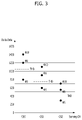
  • FIG. 3 is a diagram for explaining setting of a threshold (THD) level based on the sensitivity of a conventional capacitance sensing touch sensor.
  • TDD threshold
  • a ratio of sensitivity to a predetermined C value change (finger capacitance (CF)) during an external touch is entirely changed depending on a parasite C value that is different for each channel in a conventional touch sensor IC.
  • a threshold level is required.
  • a target object needs not to be touched under a condition of a touch stick with a diameter of 5 ⁇ and needs to be pressed under a condition of a touch stick with a diameter of 10 ⁇ .
  • a THD level may be formed at a diameter of about 7 ⁇ .
  • a sensitivity value level of each channel is different, and thus, a THD level for each channel is differently set. This causes serious inconvenience because a sensitivity value needs to be checked and set for each channel during development related to sensitivity tuning.
  • the present disclosure is directed to an apparatus and method for automatically calibrating capacitance per channel, for automatically calibrating a capacitance value of each channel to a preset reference capacitance value in order to simplify a sensitivity tuning development procedure due to a difference in a parasitic capacitance value due to a difference in a length of a wiring of each capacitance sensing channel when a circuit is designed.
  • an apparatus for automatically calibrating a capacitance per channel includes a touch sensing device including a plurality of touch sensing regions, and a capacitance measurement and calibration device configured to measure parasitic capacitances of channels connected to the plurality of touch sensing regions, respectively, and to add a unique calibration capacitance of each channel to a corresponding channel to acquire a preset reference capacitance when each channel is connected to the parasitic capacitance.
  • the capacitance measurement and calibration device may be connected in parallel to the parasitic capacitance.
  • the capacitance measurement and calibration device may include a calibration controller configured to measure a parasitic capacitance of each channel, to compare the measured parasitic capacitance of each channel with the reference capacitance, and to generate a calibration control signal for each channel corresponding to a comparison result, and a capacitance calibration circuit including a plurality of capacitance calibration modules configured to add calibration capacitances for respective corresponding channels to the respective channels in response to the calibration control signal for each channel.
  • a method of automatically calibrating a capacitance per channel performed by the apparatus for automatically calibrating capacitance per channel includes measuring a parasitic capacitance per channel, for measuring the parasitic capacitance for each channel of the touch sensing device, detecting a maximum parasitic capacitance, for detecting a largest parasitic capacitance of the measured parasitic capacitances for respective channels, generating a calibration control signal, for comparing the maximum parasitic capacitance with the parasitic capacitance of each channel and generating a calibration control signal for each channel in response to a difference in capacitance, and adding a calibration capacitance, for adding each calibration capacitance to a corresponding channel in response to a corresponding control signal of the calibration control signal, wherein the measuring the parasitic capacitance per channel, the detecting the maximum parasitic capacitance, and the generating the calibration control signal are performed by the capacitance measurement and calibration device, and wherein the adding the calibration capacitance is performed by the plurality of capacitance calibration modules.
  • a method performed by the apparatus for automatically calibrating capacitance per channel includes measuring a parasitic capacitance per channel, for measuring the parasitic capacitance for each channel of the touch sensing device, detecting a maximum parasitic capacitance, for detecting a largest parasitic capacitance of the measured parasitic capacitances for respective channels, generating a calibration control signal, for comparing the maximum parasitic capacitance with the parasitic capacitance of each channel and generating a calibration control signal for each channel in response to a difference in capacitance, and adding a calibration capacitance, for adding each calibration capacitance to a corresponding channel in response to a corresponding control signal of the calibration control signal, wherein the measuring the parasitic capacitance per channel, the detecting the maximum parasitic capacitance, and the generating the calibration control signal are performed by the capacitance measurement and calibration device, and wherein the adding the calibration capacitance is performed by the plurality of capacitance calibration modules.
  • FIG. 1 is a diagram for explaining formation of a parasitic capacitance depending on a length of a wiring for each capacitance sensing channel;
  • FIGS. 2A and 2B are diagrams for explaining a value of sensitivity of a conventional capacitance sensing touch sensor
  • FIG. 3 is a diagram for explaining setting of a threshold (THD) level based on the sensitivity of a conventional capacitance sensing touch sensor;
  • FIG. 4 is a diagram showing a concept of an apparatus for automatically calibrating a capacitance per channel according to an embodiment of the present disclosure
  • FIG. 5 is a diagram showing a concept of auto-calibration of a channel capacitance C according to an embodiment of the present disclosure
  • FIGS. 6A and 6B are diagrams for explaining setting of a threshold (THD) level according to the present disclosure
  • FIG. 7 is a diagram showing a configuration of a method of automatically calibrating a capacitance per channel according to an embodiment of the present disclosure
  • FIG. 8 is a diagram for explaining an algorithm of a method of automatically calibrating a capacitance according to an embodiment of the present disclosure.
  • FIG. 9 is a diagram showing a configuration of a method of automatically calibrating a capacitance per channel according to another embodiment of the present disclosure.
  • FIG. 4 is a diagram showing a concept of an apparatus for automatically calibrating a capacitance per channel according to an embodiment of the present disclosure.
  • FIG. 5 is a diagram showing a concept of auto-calibration of a channel capacitance C according to an embodiment of the present disclosure.
  • the apparatus for automatically calibrating a capacitance per channel may include a touch sensing device 10 and a capacitance measurement and calibration device 20 , in which case basic connection and configuration states may be understood with reference to FIG. 1 together.
  • the touch sensing device 10 may include a plurality of touch sensing regions. That is, the touch sensing device 10 may include a plurality of touch electrodes 11 , i.e., (N+1) touch electrodes 11 to ‘KEY N’ from ‘KEY 0 ’.
  • the touch electrodes 11 may be formed as a copper film pattern on a printed circuit board (PCB) and may also be assembled using a separate conductive device such as a metal gasket or a spring pin. Positions of the touch electrodes 11 that correspond to a capacitance sensing pattern may has the same distance or different distances from the capacitance measurement and calibration device 20 . Thus, referring to FIG.
  • parasitic capacitances C p_CS0 , C p_CS1 , and C p_CS2 may be inevitably different depending on the length of a wiring, and it may be seen that a parasitic capacitance of the touch electrode 11 that is farthest from the capacitance measurement and calibration device 20 is highest.
  • the capacitance measurement and calibration device 20 may measure parasitic capacitances of channels that are connected to the plurality of touch electrodes 11 , respectively, and may add a unique calibration capacitance of each channel to a corresponding channel and may equalize the capacitances of the channels to acquire a preset reference capacitance when each channel is connected to the parasitic capacitance.
  • the reference capacitance may be a maximum value, a minimum value, or a preset different value.
  • the capacitance measurement and calibration device 20 may include a calibration controller 21 and a capacitance calibration circuit 22 .
  • the calibration controller 21 may be connected to each of the touch electrodes 11 and may measure a parasitic capacitance of each connected channel.
  • the calibration controller 21 may compare the reference capacitance with the measured parasitic capacitance of each channel. After comparison, a calibration control signal S 1 for each channel corresponding to the comparison result may be generated.
  • the calibration control signal S 1 may be, for example, a control command for automatically calibrating capacitance values of different channels based on a channel reference value formed with the largest value to acquire the same value.
  • the capacitance calibration circuit 22 may include a plurality of capacitance calibration modules for adding calibration capacitances for respective corresponding channels to the respective channels in response to the calibration control signal S 1 for each channel.
  • a touch sensor IC that is the capacitance measurement and calibration device 20 may read all capacitance (C) values formed in respective channels and may calibrate internal capacitance values for the respective channels. That is, calibration capacitances for respective channels may be added to respective channels through the capacitance calibration circuit 22 according to the calibration control signal S 1 , and in this regard, based on a channel capacitance reference value formed with the largest value, capacitance values of other channels may be automatically calibrated. For example, all capacitance values may be equalized to 20 pF by calibrating CS 0 to add 16p F and calibrating CS 1 to add 10 pF based on 20 pF that is an entire capacitance value of CS 2 .
  • the capacitance measurement and calibration device 20 may be connected in parallel to the parasitic capacitance. That is, the capacitance calibration module may be configured as a circuit including a plurality of capacitors that are each connected in parallel to the parasitic capacitance. For example, referring to FIG. 5 , parasitic capacitances ‘C p_CS0 ’, ‘C p_CS1 ’, and ‘C p_CS2 ’ may each be connected in parallel to 20 capacitors, an on/off switch may be connected to each capacitor, and each capacitor may have a capacitance of 1 pF.
  • the on/off switch may be operated according to the calibration control signal S 1 , and with regard to the capacitors that are connected in parallel to each other, capacitance values of the connected capacitors may be summed.
  • a parasitic capacitance value of 4 pF and a calibration capacitance value of 16 pF may be summed to automatically calibrate ‘CS 0 ’ to 20 pF while 16 on/off switches are connected.
  • ‘CS 1 ’ may be automatically calibrated to 20 pF while 10 on/off switches are connected, and ‘CS 2 ’ may be maintained without connected switch.
  • a capacitor that is connected in parallel to a parasitic capacitance may be configured to have a decimal point but not an integer, for example, 1.1, 1.2, 1.3, . . . to enable more precious calibration.
  • FIG. 6 is a diagram for explaining setting of a threshold (THD) level according to the present disclosure.
  • FIG. 6A shows sensitivity values for respective channels CS 0 , CS 1 , and CS 2 using a touch stick with a diameter of 5 ⁇ , 8 ⁇ , and 10 ⁇ and differently set THD levels for the respective channels in a conventional configuration illustrated in FIG. 1 .
  • This causes serious inconvenience because a sensitivity value needs to be checked and set for each channel during development related to sensitivity tuning.
  • FIG. 6B shows sensitivity values and THD levels that are measured through auto-calibration related to a C value of a touch sensor IC according to the present disclosure, and the configuration of FIG. 1 is applied without changes.
  • the channels CS 0 , CS 1 , and CS 2 may have the same capacitance value through a capacitance value automatic calibration function, and thus, THD Levels may be managed as one level, as shown in FIG. 6B .
  • THD Levels may be managed as one level, as shown in FIG. 6B .
  • operations related thereto may also be easily performed.
  • FIG. 7 is a diagram showing a configuration of a method of automatically calibrating a capacitance per channel according to an embodiment of the present disclosure.
  • FIG. 8 is a diagram for explaining an algorithm of a method of automatically calibrating a capacitance according to an embodiment of the present disclosure. Basic configurations and states are understood with reference to the description of FIGS. 1 and 4 to 6 together.
  • the method of automatically calibrating a capacitance per channel may be performed using the aforementioned apparatus for automatically calibrating capacitance per channel and may include measuring a parasitic capacitance per channel (S 10 ), detecting a maximum parasitic capacitance (S 20 ), generating a calibration control signal (S 30 ), and adding a calibration capacitance (S 40 ).
  • the capacitance measurement and calibration device 20 may measure a parasitic capacitance of each channel of the touch sensing device 10 .
  • the capacitance measurement and calibration device 20 may detect the largest parasitic capacitance of the measured parasitic capacitances for respective channels.
  • the capacitance measurement and calibration device 20 may compare the maximum parasitic capacitance with the parasitic capacitance per channel and generate the calibration control signal S 1 for each channel in response to a difference in the capacitance.
  • a plurality of calibration modules may add each calibration capacitance to a corresponding channel in response to a corresponding control signal of the calibration control signal S 1 , and the adding the calibration capacitance (S 40 ) may be performed by the aforementioned plurality of capacitance calibration modules.
  • FIG. 8 The algorithm of a method of automatically calibrating a capacitance per channel according to an embodiment is illustrated in FIG. 8 , and referring to FIG. 8 , a first touch sensing channel may be checked. Parasite parasitic capacitance values of respective sensed channels may be measured. A channel of the largest parasitic capacitance value among the measured parasitic capacitance values may be recognized. Then, like in the description of FIG. 5 , capacitance values of all touch sensing channels may be adjusted to the largest parasitic capacitance value and then a THD level may be set based on the adjusted value and touch sensing may be performed as shown in FIG. 6B .
  • FIG. 9 is a diagram showing a configuration of a method of automatically calibrating a capacitance per channel according to another embodiment of the present disclosure, and the present embodiment will be described with reference to the drawing.
  • the method of automatically calibrating a capacitance per channel may be performed by the aforementioned apparatus for automatically calibrating capacitance per channel and may include measuring a parasitic capacitance per channel (S 10 ), generating a calibration control signal (S 30 ), and adding a calibration capacitance (S 40 ).
  • the capacitance measurement and calibration device 20 may measure a parasitic capacitance of each channel of the touch sensing device 10 .
  • the capacitance measurement and calibration device 20 may compare the measured parasitic capacitance of each channel with a preset reference capacitance and may generate the calibration control signal S 1 for each channel in response to a difference in the capacitance.
  • a plurality of calibration modules may add each calibration capacitance to a corresponding channel in response to a corresponding control signal of the calibration control signal S 1 , and the adding the calibration capacitance (S 40 ) may be performed by the aforementioned plurality of capacitance calibration modules.
  • a preset reference capacitance value may be used instead of the largest parasitic capacitance value as a reference.
  • the reference capacitance value may be a minimum value or may be another capacitance values that is set depending on an operation environment.
  • all channels may have the same capacitance value by automatically calibrating capacitance values for respective channels irrespective of a difference in parasitic capacitance values depending on a length of a wiring between channels, and thus, as well as a THD level setting operation, operations related thereto may also be easily performed.
  • the aforementioned apparatus and method for automatically calibrating capacitance per channel according to the present disclosure may have the following effects.
  • Parasite Parasitic capacitances of respective channels connected to a plurality of touch sensing regions may be measured, and a C value-related auto-calibration function of adding a unique calibration capacitance of each channel to a corresponding channel to acquire a preset reference capacitance when each channel is connected to the parasitic capacitance may be used, and thus, the same sensitivity value may be formed for the channels irrespective of touch sensors having wirings with different lengths and the same single THD level is set.
  • a procedure of developing sensitivity tuning may be simplified, sensitivity tuning may be easily developed, and a development period thereof may be reduced.

Landscapes

  • Engineering & Computer Science (AREA)
  • General Engineering & Computer Science (AREA)
  • Theoretical Computer Science (AREA)
  • Physics & Mathematics (AREA)
  • General Physics & Mathematics (AREA)
  • Human Computer Interaction (AREA)
  • Electronic Switches (AREA)
  • Measurement Of Resistance Or Impedance (AREA)
  • Investigating Or Analyzing Materials By The Use Of Electric Means (AREA)

Abstract

Disclosed herein are an apparatus and method for automatically calibrating capacitance per channel, for measuring parasitic capacitance values of respective channels due to a difference in a length of a wiring of each capacitance sensing channel when a circuit is designed and adding a unique calibration capacitance value of each channel such that all channels have the same reference capacitance value that is preset, and in detail, the apparatus for automatically calibrating a capacitance per channel includes a touch sensing device including a plurality of touch sensing regions, and a capacitance measurement and calibration device configured to measure parasitic capacitances of channels connected to the plurality of touch sensing regions, respectively, and to add a unique calibration capacitance of each channel to a corresponding channel to acquire a preset reference capacitance when each channel is connected to the parasitic capacitance.

Description

This application claims the benefit of Korean Patent Application No. 10-2019-0059827, filed on May 22, 2019, which is hereby incorporated by reference as if fully set forth herein.
BACKGROUND OF THE INVENTION Field of the Invention
The present disclosure relates to an apparatus and method for automatically calibrating capacitance per channel, and more particularly, to an apparatus and method for automatically calibrating capacitance per channel, for measuring parasitic capacitance values of respective channels due to a difference in a length of a wiring of each capacitance sensing channel when a circuit is designed and adding a unique calibration capacitance value of each channel such that all channels have the same reference capacitance value that is preset.
Discussion of the Related Art
Recently, various types of electronic devices have been developed and manufactured using a capacitance touch sensor integrated circuit (IC). Thus, a sensitivity measurement operation, and tuning and threshold (THD) level operations need to be performed for each sensing channel whenever the touch sensor IC is mounted and developed, and accordingly, there is a problem in that a development time is lengthened and a development method is inconvenient.
FIG. 1 is a diagram for explaining formation of a parasitic capacitance depending on a length of a wiring for each capacitance sensing channel.
Referring to FIG. 1, when a printed circuit board (PCB) is designed, channels are connected through wirings (trace or route) according to arrangement of touch sensor integrated circuits (ICs) and touch electrodes. In this case, the length of a wiring connected to the touch electrode from the touch sensor IC is changed according to arrangement of touch electrodes. That is, as shown in the drawing, arrangement positions of capacitance sensing patterns KEY1 and KEY2 on the PCB are inevitably designed with different distances from a touch sensor IC chip. In this case, a capacitance value with a surrounding ground (GND) pattern is formed in an electric wiring (trace or route), which is referred to as a parasitic capacitance Cp. Parasitic capacitances formed in KEY1 to KEY3 based on the touch sensor IC are different, and a Cp value CP_CS0 of KEY0 is lowest and a Cp value CP_CS2 of KEY2 is highest. The touch electrodes may be a copper film pattern on the PCB and may also be assembled using a separate conductive device (metal gasket or spring pin).
As a result, an entire parasitic capacitance (C) value based on a channel pin having the shortest wiring length is lowest (CS0 and KEY0), and an entire parasitic capacitance value based on a channel pin having the longest wiring length is highest (CS2 and KEY2).
FIG. 2 is a diagram for explaining a value of sensitivity of a conventional capacitance sensing touch sensor.
First, FIGS. 2A and 2B show a digital change value (delta or difference data) related to sensitivity measured by a touch sensor IC. FIG. 2A is a graph showing a value that is measured using touch sticks with a diameter of 5 mm, 8 mm, and 10 mm, which are sequentially used, over time with respect to a corresponding channel, and it may be seen that the sensitivity of a channel CS0 (KEY0) with the lowest parasite C is measured to be higher than other channels. A ratio of sensitivity to a predetermined C value change (finger capacitance (CF)) may be changed depending on different parasitic capacitance (C) values for respective channels in a conventional touch sensor IC. In the case of a channel pin CS0 with the shortest wiring length like the measurement result of FIG. 2, the smallest parasite C value may be formed, the highest sensitivity value may be formed during touch. In contrast, in the case of a channel pin CS2 with the longest wiring length, the largest parasite C value may be formed, and the lowest sensitivity value may be formed during touch. This is because a ratio of variation of capacitance formed in an electrode CS0 by a touch stick to an originally formed parasite C value (total CP_CS0) is higher than other channels CS1 and CS2.
FIG. 3 is a diagram for explaining setting of a threshold (THD) level based on the sensitivity of a conventional capacitance sensing touch sensor.
It is seen above that a ratio of sensitivity to a predetermined C value change (finger capacitance (CF)) during an external touch is entirely changed depending on a parasite C value that is different for each channel in a conventional touch sensor IC. For determination of press & release, a threshold level is required. In general, a target object needs not to be touched under a condition of a touch stick with a diameter of 5π and needs to be pressed under a condition of a touch stick with a diameter of 10π. In general, a THD level may be formed at a diameter of about 7π. In the graph of FIG. 3, a sensitivity value level of each channel is different, and thus, a THD level for each channel is differently set. This causes serious inconvenience because a sensitivity value needs to be checked and set for each channel during development related to sensitivity tuning.
CITED REFERENCE Patent Document
Korean Patent No. 10-0974637
SUMMARY OF THE INVENTION
Accordingly, the present disclosure is directed to an apparatus and method for automatically calibrating capacitance per channel, for automatically calibrating a capacitance value of each channel to a preset reference capacitance value in order to simplify a sensitivity tuning development procedure due to a difference in a parasitic capacitance value due to a difference in a length of a wiring of each capacitance sensing channel when a circuit is designed.
The technical problems solved by the embodiments are not limited to the above technical problems and other technical problems which are not described herein will become apparent to those skilled in the art from the following description.
To achieve these objects and other advantages and in accordance with the purpose of the invention, as embodied and broadly described herein, an apparatus for automatically calibrating a capacitance per channel includes a touch sensing device including a plurality of touch sensing regions, and a capacitance measurement and calibration device configured to measure parasitic capacitances of channels connected to the plurality of touch sensing regions, respectively, and to add a unique calibration capacitance of each channel to a corresponding channel to acquire a preset reference capacitance when each channel is connected to the parasitic capacitance.
The capacitance measurement and calibration device may be connected in parallel to the parasitic capacitance.
The capacitance measurement and calibration device may include a calibration controller configured to measure a parasitic capacitance of each channel, to compare the measured parasitic capacitance of each channel with the reference capacitance, and to generate a calibration control signal for each channel corresponding to a comparison result, and a capacitance calibration circuit including a plurality of capacitance calibration modules configured to add calibration capacitances for respective corresponding channels to the respective channels in response to the calibration control signal for each channel.
In another aspect of the present disclosure, a method of automatically calibrating a capacitance per channel performed by the apparatus for automatically calibrating capacitance per channel includes measuring a parasitic capacitance per channel, for measuring the parasitic capacitance for each channel of the touch sensing device, detecting a maximum parasitic capacitance, for detecting a largest parasitic capacitance of the measured parasitic capacitances for respective channels, generating a calibration control signal, for comparing the maximum parasitic capacitance with the parasitic capacitance of each channel and generating a calibration control signal for each channel in response to a difference in capacitance, and adding a calibration capacitance, for adding each calibration capacitance to a corresponding channel in response to a corresponding control signal of the calibration control signal, wherein the measuring the parasitic capacitance per channel, the detecting the maximum parasitic capacitance, and the generating the calibration control signal are performed by the capacitance measurement and calibration device, and wherein the adding the calibration capacitance is performed by the plurality of capacitance calibration modules.
In another aspect of the present disclosure, a method performed by the apparatus for automatically calibrating capacitance per channel includes measuring a parasitic capacitance per channel, for measuring the parasitic capacitance for each channel of the touch sensing device, detecting a maximum parasitic capacitance, for detecting a largest parasitic capacitance of the measured parasitic capacitances for respective channels, generating a calibration control signal, for comparing the maximum parasitic capacitance with the parasitic capacitance of each channel and generating a calibration control signal for each channel in response to a difference in capacitance, and adding a calibration capacitance, for adding each calibration capacitance to a corresponding channel in response to a corresponding control signal of the calibration control signal, wherein the measuring the parasitic capacitance per channel, the detecting the maximum parasitic capacitance, and the generating the calibration control signal are performed by the capacitance measurement and calibration device, and wherein the adding the calibration capacitance is performed by the plurality of capacitance calibration modules.
BRIEF DESCRIPTION OF THE DRAWINGS
The accompanying drawings, which are included to provide a further understanding of the invention and are incorporated in and constitute a part of this application, illustrate embodiment(s) of the invention and together with the description serve to explain the principle of the invention. In the drawings:
FIG. 1 is a diagram for explaining formation of a parasitic capacitance depending on a length of a wiring for each capacitance sensing channel;
FIGS. 2A and 2B are diagrams for explaining a value of sensitivity of a conventional capacitance sensing touch sensor;
FIG. 3 is a diagram for explaining setting of a threshold (THD) level based on the sensitivity of a conventional capacitance sensing touch sensor;
FIG. 4 is a diagram showing a concept of an apparatus for automatically calibrating a capacitance per channel according to an embodiment of the present disclosure;
FIG. 5 is a diagram showing a concept of auto-calibration of a channel capacitance C according to an embodiment of the present disclosure;
FIGS. 6A and 6B are diagrams for explaining setting of a threshold (THD) level according to the present disclosure;
FIG. 7 is a diagram showing a configuration of a method of automatically calibrating a capacitance per channel according to an embodiment of the present disclosure;
FIG. 8 is a diagram for explaining an algorithm of a method of automatically calibrating a capacitance according to an embodiment of the present disclosure; and
FIG. 9 is a diagram showing a configuration of a method of automatically calibrating a capacitance per channel according to another embodiment of the present disclosure.
DETAILED DESCRIPTION OF THE INVENTION
Hereinafter, at least one embodiment of the present disclosure will be described in detail with reference to the accompanying drawings. In the following description, like reference numerals designate like elements although the elements are shown in different drawings. Further, in the following description of the at least one embodiment, a detailed description of known functions and configurations incorporated herein will be omitted for the purpose of clarity and for brevity.
It will be understood that, although the terms first, second, A, B, (a), (b), etc. may be used herein to describe various elements of the present disclosure, these terms are only used to distinguish one element from another element and essential, order, or sequence of corresponding elements are not limited by these terms. It will be understood that when one element is referred to as being “connected to”, “coupled to”, or “access” another element, one element may be “connected to”, “coupled to”, or “access” another element via a further element although one element may be directly connected to or directly access another element.
FIG. 4 is a diagram showing a concept of an apparatus for automatically calibrating a capacitance per channel according to an embodiment of the present disclosure. FIG. 5 is a diagram showing a concept of auto-calibration of a channel capacitance C according to an embodiment of the present disclosure.
With reference to FIGS. 4 and 5, the apparatus for automatically calibrating a capacitance per channel according to the present disclosure will be described below.
First, referring to FIG. 4, the apparatus for automatically calibrating a capacitance per channel according to the present disclosure may include a touch sensing device 10 and a capacitance measurement and calibration device 20, in which case basic connection and configuration states may be understood with reference to FIG. 1 together.
The touch sensing device 10 may include a plurality of touch sensing regions. That is, the touch sensing device 10 may include a plurality of touch electrodes 11, i.e., (N+1) touch electrodes 11 to ‘KEY N’ from ‘KEY 0’. The touch electrodes 11 may be formed as a copper film pattern on a printed circuit board (PCB) and may also be assembled using a separate conductive device such as a metal gasket or a spring pin. Positions of the touch electrodes 11 that correspond to a capacitance sensing pattern may has the same distance or different distances from the capacitance measurement and calibration device 20. Thus, referring to FIG. 1, parasitic capacitances Cp_CS0, Cp_CS1, and Cp_CS2 may be inevitably different depending on the length of a wiring, and it may be seen that a parasitic capacitance of the touch electrode 11 that is farthest from the capacitance measurement and calibration device 20 is highest.
The capacitance measurement and calibration device 20 may measure parasitic capacitances of channels that are connected to the plurality of touch electrodes 11, respectively, and may add a unique calibration capacitance of each channel to a corresponding channel and may equalize the capacitances of the channels to acquire a preset reference capacitance when each channel is connected to the parasitic capacitance. The reference capacitance may be a maximum value, a minimum value, or a preset different value.
In more detail, the capacitance measurement and calibration device 20 may include a calibration controller 21 and a capacitance calibration circuit 22.
The calibration controller 21 may be connected to each of the touch electrodes 11 and may measure a parasitic capacitance of each connected channel. The calibration controller 21 may compare the reference capacitance with the measured parasitic capacitance of each channel. After comparison, a calibration control signal S1 for each channel corresponding to the comparison result may be generated. The calibration control signal S1 may be, for example, a control command for automatically calibrating capacitance values of different channels based on a channel reference value formed with the largest value to acquire the same value.
The capacitance calibration circuit 22 may include a plurality of capacitance calibration modules for adding calibration capacitances for respective corresponding channels to the respective channels in response to the calibration control signal S1 for each channel.
Referring to FIG. 5 together, a touch sensor IC that is the capacitance measurement and calibration device 20 may read all capacitance (C) values formed in respective channels and may calibrate internal capacitance values for the respective channels. That is, calibration capacitances for respective channels may be added to respective channels through the capacitance calibration circuit 22 according to the calibration control signal S1, and in this regard, based on a channel capacitance reference value formed with the largest value, capacitance values of other channels may be automatically calibrated. For example, all capacitance values may be equalized to 20 pF by calibrating CS0 to add 16p F and calibrating CS1 to add 10 pF based on 20 pF that is an entire capacitance value of CS2.
The capacitance measurement and calibration device 20 may be connected in parallel to the parasitic capacitance. That is, the capacitance calibration module may be configured as a circuit including a plurality of capacitors that are each connected in parallel to the parasitic capacitance. For example, referring to FIG. 5, parasitic capacitances ‘Cp_CS0’, ‘Cp_CS1’, and ‘Cp_CS2’ may each be connected in parallel to 20 capacitors, an on/off switch may be connected to each capacitor, and each capacitor may have a capacitance of 1 pF. The on/off switch may be operated according to the calibration control signal S1, and with regard to the capacitors that are connected in parallel to each other, capacitance values of the connected capacitors may be summed. Thus, in the case of ‘CS0’, a parasitic capacitance value of 4 pF and a calibration capacitance value of 16 pF may be summed to automatically calibrate ‘CS0’ to 20 pF while 16 on/off switches are connected. ‘CS1’ may be automatically calibrated to 20 pF while 10 on/off switches are connected, and ‘CS2’ may be maintained without connected switch. A capacitor that is connected in parallel to a parasitic capacitance may be configured to have a decimal point but not an integer, for example, 1.1, 1.2, 1.3, . . . to enable more precious calibration.
FIG. 6 is a diagram for explaining setting of a threshold (THD) level according to the present disclosure.
FIG. 6A shows sensitivity values for respective channels CS0, CS1, and CS2 using a touch stick with a diameter of 5π, 8π, and 10π and differently set THD levels for the respective channels in a conventional configuration illustrated in FIG. 1. This causes serious inconvenience because a sensitivity value needs to be checked and set for each channel during development related to sensitivity tuning.
In contrast, FIG. 6B shows sensitivity values and THD levels that are measured through auto-calibration related to a C value of a touch sensor IC according to the present disclosure, and the configuration of FIG. 1 is applied without changes. According to the present disclosure, the channels CS0, CS1, and CS2 may have the same capacitance value through a capacitance value automatic calibration function, and thus, THD Levels may be managed as one level, as shown in FIG. 6B. Thus, as well as a THD level setting operation, operations related thereto may also be easily performed.
FIG. 7 is a diagram showing a configuration of a method of automatically calibrating a capacitance per channel according to an embodiment of the present disclosure. FIG. 8 is a diagram for explaining an algorithm of a method of automatically calibrating a capacitance according to an embodiment of the present disclosure. Basic configurations and states are understood with reference to the description of FIGS. 1 and 4 to 6 together.
Referring to FIG. 7, the method of automatically calibrating a capacitance per channel according to the present disclosure may be performed using the aforementioned apparatus for automatically calibrating capacitance per channel and may include measuring a parasitic capacitance per channel (S10), detecting a maximum parasitic capacitance (S20), generating a calibration control signal (S30), and adding a calibration capacitance (S40).
In the measuring the parasitic capacitance per channel (S10), the capacitance measurement and calibration device 20 may measure a parasitic capacitance of each channel of the touch sensing device 10.
In the detecting the maximum parasitic capacitance (S20), the capacitance measurement and calibration device 20 may detect the largest parasitic capacitance of the measured parasitic capacitances for respective channels.
In the generating the calibration control signal (S30), the capacitance measurement and calibration device 20 may compare the maximum parasitic capacitance with the parasitic capacitance per channel and generate the calibration control signal S1 for each channel in response to a difference in the capacitance.
In the adding the calibration capacitance (S40), a plurality of calibration modules may add each calibration capacitance to a corresponding channel in response to a corresponding control signal of the calibration control signal S1, and the adding the calibration capacitance (S40) may be performed by the aforementioned plurality of capacitance calibration modules.
The algorithm of a method of automatically calibrating a capacitance per channel according to an embodiment is illustrated in FIG. 8, and referring to FIG. 8, a first touch sensing channel may be checked. Parasite parasitic capacitance values of respective sensed channels may be measured. A channel of the largest parasitic capacitance value among the measured parasitic capacitance values may be recognized. Then, like in the description of FIG. 5, capacitance values of all touch sensing channels may be adjusted to the largest parasitic capacitance value and then a THD level may be set based on the adjusted value and touch sensing may be performed as shown in FIG. 6B.
The aforementioned algorithm correspond to a state in which a parasitic capacitance value according to an embodiment is adjusted to a maximum value, and in the case of actual development, a reference capacitance value may be differently set as necessary. FIG. 9 is a diagram showing a configuration of a method of automatically calibrating a capacitance per channel according to another embodiment of the present disclosure, and the present embodiment will be described with reference to the drawing.
That is, the method of automatically calibrating a capacitance per channel according to another embodiment of the present disclosure may be performed by the aforementioned apparatus for automatically calibrating capacitance per channel and may include measuring a parasitic capacitance per channel (S10), generating a calibration control signal (S30), and adding a calibration capacitance (S40).
In the measuring the parasitic capacitance per channel (S10), the capacitance measurement and calibration device 20 may measure a parasitic capacitance of each channel of the touch sensing device 10.
In generating the calibration control signal (S30), the capacitance measurement and calibration device 20 may compare the measured parasitic capacitance of each channel with a preset reference capacitance and may generate the calibration control signal S1 for each channel in response to a difference in the capacitance.
In the adding the calibration capacitance (S40), a plurality of calibration modules may add each calibration capacitance to a corresponding channel in response to a corresponding control signal of the calibration control signal S1, and the adding the calibration capacitance (S40) may be performed by the aforementioned plurality of capacitance calibration modules.
That is, according to another embodiment of the present disclosure, a preset reference capacitance value may be used instead of the largest parasitic capacitance value as a reference. The reference capacitance value may be a minimum value or may be another capacitance values that is set depending on an operation environment.
According to the aforementioned embodiments of the present disclosure, all channels may have the same capacitance value by automatically calibrating capacitance values for respective channels irrespective of a difference in parasitic capacitance values depending on a length of a wiring between channels, and thus, as well as a THD level setting operation, operations related thereto may also be easily performed.
The aforementioned apparatus and method for automatically calibrating capacitance per channel according to the present disclosure may have the following effects.
Parasite Parasitic capacitances of respective channels connected to a plurality of touch sensing regions may be measured, and a C value-related auto-calibration function of adding a unique calibration capacitance of each channel to a corresponding channel to acquire a preset reference capacitance when each channel is connected to the parasitic capacitance may be used, and thus, the same sensitivity value may be formed for the channels irrespective of touch sensors having wirings with different lengths and the same single THD level is set.
As such, a procedure of developing sensitivity tuning may be simplified, sensitivity tuning may be easily developed, and a development period thereof may be reduced.
Although all elements constituting the embodiments of the present disclosure are described as integrated into a single one or to be operated as a single one, the present disclosure is not necessarily limited to such embodiments. According to embodiments, all of the elements may be selectively integrated into one or more and be operated as one or more within the scope of the present disclosure. The term “comprises”, “includes”, or “has” described herein should be interpreted not to exclude other elements but to further include such other elements since the corresponding elements may be included unless mentioned otherwise. All terms including technical or scientific terms have the same meanings as generally understood by a person having ordinary skill in the art to which the present disclosure pertains unless mentioned otherwise. Generally used terms, such as terms defined in a dictionary, should be interpreted to coincide with meanings of the related art from the context. Unless differently defined in the present disclosure, such terms should not be interpreted in an ideal or excessively formal manner.
Although a few embodiments of the present disclosure have been shown and described, it would be appreciated by those skilled in the art that changes may be made in these exemplary embodiments without departing from the principles and spirit of the invention, the scope of which is defined in the claims and their equivalents. Accordingly, the above embodiments are therefore to be construed in all aspects as illustrative and not restrictive. The scope of the invention should be determined by the appended claims and their legal equivalents, not by the above description, and all changes coming within the meaning and equivalency range of the appended claims are intended to be embraced therein.

Claims (1)

What is claimed is:
1. A method of automatically calibrating a capacitance per channel performed by an apparatus for automatically calibrating capacitance per channel that comprises a touch sensing device including a plurality of touch sensing regions; and a capacitance measurement and calibration device configured to measure parasitic capacitances of channels connected to the plurality of touch sensing regions, respectively, and to add a unique calibration capacitance of each channel to a corresponding channel to acquire a preset reference capacitance when each channel is connected to the parasitic capacitance, the method comprising:
measuring the parasitic capacitance per channel, for measuring the parasitic capacitance for each channel of the touch sensing device;
detecting a maximum parasitic capacitance, for detecting a largest parasitic capacitance of the measured parasitic capacitances for the respective channels;
generating a calibration control signal, for comparing the maximum parasitic capacitance with the parasitic capacitance of each of the channels and generating the calibration control signal for each channel in response to a difference in capacitance; and
adding the calibration capacitance, for adding each calibration capacitance to a corresponding channel in response to the corresponding control signal of the calibration control signal,
wherein the measuring the parasitic capacitance per channel, the detecting the maximum parasitic capacitance, and the generating the calibration control signal are performed by the capacitance measurement and calibration device; and
wherein the adding the calibration capacitance is performed by a plurality of capacitance calibration modules.
US16/840,833 2019-05-22 2020-04-06 Apparatus and method for automatically calibrating capacitance per channel Active 2041-02-17 US11460952B2 (en)

Applications Claiming Priority (2)

Application Number Priority Date Filing Date Title
KR10-2019-0059827 2019-05-22
KR1020190059827A KR102302879B1 (en) 2019-05-22 2019-05-22 Apparatus and method for automatically calibrating capacitance per channel

Publications (2)

Publication Number Publication Date
US20200371144A1 US20200371144A1 (en) 2020-11-26
US11460952B2 true US11460952B2 (en) 2022-10-04

Family

ID=70277215

Family Applications (1)

Application Number Title Priority Date Filing Date
US16/840,833 Active 2041-02-17 US11460952B2 (en) 2019-05-22 2020-04-06 Apparatus and method for automatically calibrating capacitance per channel

Country Status (4)

Country Link
US (1) US11460952B2 (en)
EP (1) EP3742266B1 (en)
KR (1) KR102302879B1 (en)
CN (1) CN111984143A (en)

Families Citing this family (4)

* Cited by examiner, † Cited by third party
Publication number Priority date Publication date Assignee Title
CN112649777B (en) * 2020-11-27 2022-12-16 杨新芳 Dynamic calibration method, device and computer readable storage medium
WO2022170590A1 (en) * 2021-02-10 2022-08-18 深圳市汇顶科技股份有限公司 Method for determining capacitance reference, apparatus for determining capacitance reference, and device
CN115328338A (en) * 2021-05-10 2022-11-11 法雷奥汽车内部控制(深圳)有限公司 Method and device for steering wheel touch detection
CN115493626A (en) * 2021-06-18 2022-12-20 上海复旦微电子集团股份有限公司 Sensing sensitivity testing device and method, and capacitance sensing equipment

Citations (8)

* Cited by examiner, † Cited by third party
Publication number Priority date Publication date Assignee Title
US20090153152A1 (en) 2007-12-14 2009-06-18 Cypress Semiconductor Corporation Compensation circuit for a tx-rx capacitive sensor
KR100974637B1 (en) 2008-04-07 2010-08-06 서울대학교산학협력단 Capacitive detection device and capacitive sensor comprising the same
KR20110091380A (en) 2010-02-05 2011-08-11 삼성전자주식회사 Noise compensation method and device of touch panel
KR20140141111A (en) 2013-05-31 2014-12-10 엘지디스플레이 주식회사 Apparatus for driving touch screen
US9019220B1 (en) 2012-03-14 2015-04-28 Cypress Semiconductor Corporation Baseline charge compensation
US20180173366A1 (en) 2016-05-30 2018-06-21 Boe Technology Group Co., Ltd. Apparatus and method for capacitance calibration, and touch display screen
WO2018157595A1 (en) 2017-03-02 2018-09-07 京东方科技集团股份有限公司 Apparatus and method for calibrating frequency points of touch screen, touch screen, and display apparatus
US10719182B2 (en) * 2018-02-27 2020-07-21 Kabushiki Kaisha Tokai Rika Denki Seisakusho Touch sensor device and capacitance calibration method

Family Cites Families (10)

* Cited by examiner, † Cited by third party
Publication number Priority date Publication date Assignee Title
US7777501B2 (en) * 2005-06-03 2010-08-17 Synaptics Incorporated Methods and systems for sigma delta capacitance measuring using shared component
KR20110112128A (en) * 2010-04-06 2011-10-12 삼성전자주식회사 Parasitic capacitance compensation method and apparatus of touch panel
KR101885815B1 (en) * 2012-05-25 2018-08-08 엘지디스플레이 주식회사 Touch sensing apparatus and display device using the same
CN103235672B (en) * 2013-04-11 2016-05-11 深圳市天微电子股份有限公司 Capacitance touch screen automatic calibrating method and system
CN103633984B (en) * 2013-12-13 2017-09-26 深圳芯邦科技股份有限公司 A kind of touch key-press chip and its sensitivity correction method and electronic equipment
JP2015141556A (en) * 2014-01-29 2015-08-03 シナプティクス・ディスプレイ・デバイス合同会社 Touch detection circuit and semiconductor integrated circuit having the same
EP2902888B1 (en) * 2014-02-04 2022-10-05 Semtech Corporation Touch panel calibration system
JP6223233B2 (en) * 2014-03-04 2017-11-01 三菱電機株式会社 Capacitance type detection device and capacitance type detection program
KR20150109890A (en) * 2014-03-21 2015-10-02 크루셜텍 (주) Touch detecting three dimensional display apparatus comprising parasitic capacitance compensation circuit
CN109495100A (en) * 2018-11-15 2019-03-19 西安中颖电子有限公司 A kind of adaptive key touch detecting system and method

Patent Citations (8)

* Cited by examiner, † Cited by third party
Publication number Priority date Publication date Assignee Title
US20090153152A1 (en) 2007-12-14 2009-06-18 Cypress Semiconductor Corporation Compensation circuit for a tx-rx capacitive sensor
KR100974637B1 (en) 2008-04-07 2010-08-06 서울대학교산학협력단 Capacitive detection device and capacitive sensor comprising the same
KR20110091380A (en) 2010-02-05 2011-08-11 삼성전자주식회사 Noise compensation method and device of touch panel
US9019220B1 (en) 2012-03-14 2015-04-28 Cypress Semiconductor Corporation Baseline charge compensation
KR20140141111A (en) 2013-05-31 2014-12-10 엘지디스플레이 주식회사 Apparatus for driving touch screen
US20180173366A1 (en) 2016-05-30 2018-06-21 Boe Technology Group Co., Ltd. Apparatus and method for capacitance calibration, and touch display screen
WO2018157595A1 (en) 2017-03-02 2018-09-07 京东方科技集团股份有限公司 Apparatus and method for calibrating frequency points of touch screen, touch screen, and display apparatus
US10719182B2 (en) * 2018-02-27 2020-07-21 Kabushiki Kaisha Tokai Rika Denki Seisakusho Touch sensor device and capacitance calibration method

Non-Patent Citations (2)

* Cited by examiner, † Cited by third party
Title
European Search Report dated Sep. 30, 2020 issued in Application No. 20168761.3.
Korean Office Action dated Aug. 19, 2020 issued in Application No. 10-2019-0059827.

Also Published As

Publication number Publication date
KR20200134416A (en) 2020-12-02
CN111984143A (en) 2020-11-24
EP3742266B1 (en) 2024-05-01
EP3742266C0 (en) 2024-05-01
US20200371144A1 (en) 2020-11-26
KR102302879B1 (en) 2021-09-17
EP3742266A1 (en) 2020-11-25

Similar Documents

Publication Publication Date Title
US11460952B2 (en) Apparatus and method for automatically calibrating capacitance per channel
US9495038B2 (en) Detection of a conductive object during an initialization process of a touch-sensing device
KR101473186B1 (en) Touch detecting apparatus and method
EP3640842B1 (en) Fingerprint detecting apparatus
US8704586B2 (en) Capacitance detecting apparatus and capacitive touch control system using the same
US20080047764A1 (en) Temperature compensation method for capacitive sensors
TWI730035B (en) Fingerprint sensing system with sensing reference potential providing circuitry
CN111947691B (en) Grip sensing method and apparatus
KR102016932B1 (en) Fingerprinter sensor module and fingerprinter recognition device
KR101829647B1 (en) Touch panel calibration system
CN103324366A (en) Capacitor detection device and capacitive touch system applying same
US12474185B2 (en) Capacitive sensor device with drift compensation
KR20210012132A (en) High sensitivity touch sensor
US8170822B2 (en) Compensation method for touch sensor system
KR102052697B1 (en) Capacitive fingerprint sensing unit, capacitance measuring circuit of a fingerprint sensor and fingerprint sensing device having the same
US8053687B2 (en) Semiconductor device and touch sensor device
JP7290404B2 (en) capacitive switch controller, capacitive switch, electronics
KR20140045378A (en) Capacitive sensor and method for detecting a number of objects
US11847854B2 (en) Optical fingerprint sensing system with common mode compensation
US9989432B2 (en) Impedance sensor and electronic apparatus using the same
US6157045A (en) Semiconductor device evaluation pattern and evaluation method
US11500504B1 (en) Touch controlling mechanism capable of calibrating variations of sensor cells of touch sensor array
KR102719929B1 (en) Tester for FPCB
CN115493626A (en) Sensing sensitivity testing device and method, and capacitance sensing equipment
CN117288233A (en) Capacitive sensor device

Legal Events

Date Code Title Description
AS Assignment

Owner name: ABOV SEMICONDUCTOR CO., LTD., KOREA, REPUBLIC OF

Free format text: ASSIGNMENT OF ASSIGNORS INTEREST;ASSIGNORS:SEO, YOUNG JIN;HEO, YOUNG GUN;SIGNING DATES FROM 20200302 TO 20200309;REEL/FRAME:052320/0410

FEPP Fee payment procedure

Free format text: ENTITY STATUS SET TO UNDISCOUNTED (ORIGINAL EVENT CODE: BIG.); ENTITY STATUS OF PATENT OWNER: SMALL ENTITY

FEPP Fee payment procedure

Free format text: ENTITY STATUS SET TO SMALL (ORIGINAL EVENT CODE: SMAL); ENTITY STATUS OF PATENT OWNER: SMALL ENTITY

STPP Information on status: patent application and granting procedure in general

Free format text: DOCKETED NEW CASE - READY FOR EXAMINATION

STPP Information on status: patent application and granting procedure in general

Free format text: NON FINAL ACTION MAILED

STPP Information on status: patent application and granting procedure in general

Free format text: NOTICE OF ALLOWANCE MAILED -- APPLICATION RECEIVED IN OFFICE OF PUBLICATIONS

STPP Information on status: patent application and granting procedure in general

Free format text: PUBLICATIONS -- ISSUE FEE PAYMENT VERIFIED

STCF Information on status: patent grant

Free format text: PATENTED CASE