US11458149B1 - TEAD inhibitors and uses thereof - Google Patents
TEAD inhibitors and uses thereof Download PDFInfo
- Publication number
- US11458149B1 US11458149B1 US16/887,083 US202016887083A US11458149B1 US 11458149 B1 US11458149 B1 US 11458149B1 US 202016887083 A US202016887083 A US 202016887083A US 11458149 B1 US11458149 B1 US 11458149B1
- Authority
- US
- United States
- Prior art keywords
- ring
- compound
- aliphatic
- substituted
- pharmaceutically acceptable
- Prior art date
- Legal status (The legal status is an assumption and is not a legal conclusion. Google has not performed a legal analysis and makes no representation as to the accuracy of the status listed.)
- Active
Links
- 0 *.B.C*[W].CCC Chemical compound *.B.C*[W].CCC 0.000 description 35
- NCUGIRWXCRKERB-UHFFFAOYSA-N C.C1=CCCC1.CC.CC(C)C Chemical compound C.C1=CCCC1.CC.CC(C)C NCUGIRWXCRKERB-UHFFFAOYSA-N 0.000 description 6
- WYRZROQHOUVVEG-UHFFFAOYSA-N C1=CCC=C1.C1=CCN=C1.C1=CN=CC1.C1=NC=NC1.CC.CC.CC.CC.CC.CC.CC.CC.CC.CC.CC.CC.CC.CC.CC.CC.CC(C)(C)n1cccc1.CC(C)(C)n1cccn1.CC(C)(C)n1ccnc1.CC(C)(C)n1cncn1.CC(C)C.CC(C)C.CC(C)C.CC(C)C.CC(C)C.CC(C)C.CC(C)C.CC(C)C.CC(C)C.CC(C)C.CC(C)C.CC(C)C.c1ccoc1.c1ccsc1.c1cnoc1.c1cnsc1.c1cocn1.c1cscn1.c1ncon1.c1ncsn1 Chemical compound C1=CCC=C1.C1=CCN=C1.C1=CN=CC1.C1=NC=NC1.CC.CC.CC.CC.CC.CC.CC.CC.CC.CC.CC.CC.CC.CC.CC.CC.CC(C)(C)n1cccc1.CC(C)(C)n1cccn1.CC(C)(C)n1ccnc1.CC(C)(C)n1cncn1.CC(C)C.CC(C)C.CC(C)C.CC(C)C.CC(C)C.CC(C)C.CC(C)C.CC(C)C.CC(C)C.CC(C)C.CC(C)C.CC(C)C.c1ccoc1.c1ccsc1.c1cnoc1.c1cnsc1.c1cocn1.c1cscn1.c1ncon1.c1ncsn1 WYRZROQHOUVVEG-UHFFFAOYSA-N 0.000 description 6
- XEEXQHVQSICJEZ-UHFFFAOYSA-N CC.CC.CC.CC.CC.CC(C)C.CC(C)C.CC(C)C.CC(C)C.CC(C)C.c1ccccc1.c1ccncc1.c1ccnnc1.c1cnccn1.c1cncnc1 Chemical compound CC.CC.CC.CC.CC.CC(C)C.CC(C)C.CC(C)C.CC(C)C.CC(C)C.c1ccccc1.c1ccncc1.c1ccnnc1.c1cnccn1.c1cncnc1 XEEXQHVQSICJEZ-UHFFFAOYSA-N 0.000 description 6
- USCSRAJGJYMJFZ-UHFFFAOYSA-N C#CC(C)C Chemical compound C#CC(C)C USCSRAJGJYMJFZ-UHFFFAOYSA-N 0.000 description 4
- VTBOMWBGWKLXGM-UHFFFAOYSA-N C#CC1=NCC=C1C(C)(C)C Chemical compound C#CC1=NCC=C1C(C)(C)C VTBOMWBGWKLXGM-UHFFFAOYSA-N 0.000 description 4
- RMGCKSAEBMQFTE-UHFFFAOYSA-N C=CC1=NC(C(C)(C)C)=CC1 Chemical compound C=CC1=NC(C(C)(C)C)=CC1 RMGCKSAEBMQFTE-UHFFFAOYSA-N 0.000 description 4
- XOSFEFGATBCELD-UHFFFAOYSA-N C=CC1=NCC=C1C(C)(C)C Chemical compound C=CC1=NCC=C1C(C)(C)C XOSFEFGATBCELD-UHFFFAOYSA-N 0.000 description 4
- MDNBDEZTOXVKBU-UHFFFAOYSA-N CC1=NCC=C1C(C)(C)C Chemical compound CC1=NCC=C1C(C)(C)C MDNBDEZTOXVKBU-UHFFFAOYSA-N 0.000 description 4
- KZXPMPMUMGPGPD-TUCYNEBQSA-N C=CC(=O)C(C)C.CC(=O)CCCSC1=NOC(C(C)C)C1.CC(C)/C=C/C(N)=O.CC(C)C1(C)CC(Br)=NO1.CC(C)C1CC(Br)=NO1.CC(C)C1CC(Cl)=NO1.CC(C)C1CC(Oc2cccnc2)=NO1.CC(C)C1CC(Oc2cncnc2)=NO1.CC(C)C1CC(n2ccnc2)=NO1.CC(C)C1CC(n2ccnn2)=NO1.CC(C)C1CC(n2cncn2)=NO1.CC(C)C1CC(n2nccn2)=NO1 Chemical compound C=CC(=O)C(C)C.CC(=O)CCCSC1=NOC(C(C)C)C1.CC(C)/C=C/C(N)=O.CC(C)C1(C)CC(Br)=NO1.CC(C)C1CC(Br)=NO1.CC(C)C1CC(Cl)=NO1.CC(C)C1CC(Oc2cccnc2)=NO1.CC(C)C1CC(Oc2cncnc2)=NO1.CC(C)C1CC(n2ccnc2)=NO1.CC(C)C1CC(n2ccnn2)=NO1.CC(C)C1CC(n2cncn2)=NO1.CC(C)C1CC(n2nccn2)=NO1 KZXPMPMUMGPGPD-TUCYNEBQSA-N 0.000 description 3
- ARBFVMJNZRMYIH-UHFFFAOYSA-N C=CC(=O)CC(C)C.CC(C)C(=O)CCl.CC(C)C1CC(Br)=NO1.CC(C)CC1(C#N)CC1.CC(C)OS(=O)(=O)F Chemical compound C=CC(=O)CC(C)C.CC(C)C(=O)CCl.CC(C)C1CC(Br)=NO1.CC(C)CC1(C#N)CC1.CC(C)OS(=O)(=O)F ARBFVMJNZRMYIH-UHFFFAOYSA-N 0.000 description 3
- CJEWEWLZFUHGHN-CYBMUJFWSA-N C=CC(=O)N1CC[C@@H](NCc2cccc(C(F)(F)F)c2)C1 Chemical compound C=CC(=O)N1CC[C@@H](NCc2cccc(C(F)(F)F)c2)C1 CJEWEWLZFUHGHN-CYBMUJFWSA-N 0.000 description 3
- BOJMUJOJDAWTNV-UHFFFAOYSA-N C=CC(=O)NC1CCN(C(=O)c2ccc(C(F)(F)F)cc2)CC1 Chemical compound C=CC(=O)NC1CCN(C(=O)c2ccc(C(F)(F)F)cc2)CC1 BOJMUJOJDAWTNV-UHFFFAOYSA-N 0.000 description 3
- IJLJDZOLZATUFK-UHFFFAOYSA-N C=CC(=O)OCC(C)(C)C Chemical compound C=CC(=O)OCC(C)(C)C IJLJDZOLZATUFK-UHFFFAOYSA-N 0.000 description 3
- OAGTWOAEPNSOJA-UHFFFAOYSA-N CC(C)=CC(=O)C(C)(C)C Chemical compound CC(C)=CC(=O)C(C)(C)C OAGTWOAEPNSOJA-UHFFFAOYSA-N 0.000 description 3
- QYOSUFGWQDQDSN-UHFFFAOYSA-N CC(C)=CC(=O)CC(C)(C)C Chemical compound CC(C)=CC(=O)CC(C)(C)C QYOSUFGWQDQDSN-UHFFFAOYSA-N 0.000 description 3
- HSAWPCNJLDNOEM-UHFFFAOYSA-N CC(C)Oc1cccnc1 Chemical compound CC(C)Oc1cccnc1 HSAWPCNJLDNOEM-UHFFFAOYSA-N 0.000 description 3
- WHXCIRYFEDTNKZ-UHFFFAOYSA-N Cc1ccc(OC(C)C)cn1 Chemical compound Cc1ccc(OC(C)C)cn1 WHXCIRYFEDTNKZ-UHFFFAOYSA-N 0.000 description 3
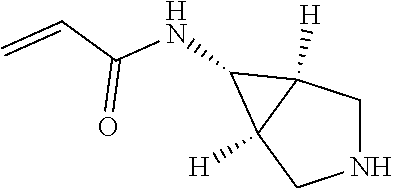
- NDGLCGDSRJCCFY-VVJOLFOZSA-N *.*.C=CC(=O)NC1C2CN(CC)CC21.[H][C@@]12CN(CC)C[C@]1([H])C2CC(=O)C=C Chemical compound *.*.C=CC(=O)NC1C2CN(CC)CC21.[H][C@@]12CN(CC)C[C@]1([H])C2CC(=O)C=C NDGLCGDSRJCCFY-VVJOLFOZSA-N 0.000 description 2
- UHRJWMLBAWUJNU-UHFFFAOYSA-N *.C=CC(=O)CC1CCN(Cc2ccc(C(F)(F)F)cc2)c2ccccc21 Chemical compound *.C=CC(=O)CC1CCN(Cc2ccc(C(F)(F)F)cc2)c2ccccc21 UHRJWMLBAWUJNU-UHFFFAOYSA-N 0.000 description 2
- DLRHTHZUOKEYHX-CYBMUJFWSA-N *.FC(F)(F)c1cccc(Oc2cc([C@H]3CC(Br)=NO3)cc3ncsc23)c1 Chemical compound *.FC(F)(F)c1cccc(Oc2cc([C@H]3CC(Br)=NO3)cc3ncsc23)c1 DLRHTHZUOKEYHX-CYBMUJFWSA-N 0.000 description 2
- JWZCYUWKVYGDOM-UHFFFAOYSA-N BrC1=NCCC1 Chemical compound BrC1=NCCC1 JWZCYUWKVYGDOM-UHFFFAOYSA-N 0.000 description 2
- MYDABAFFYOTWEW-KRWDZBQOSA-N BrC1=NO[C@H](C2CCN(Cc3ccc(C4CC4)cc3)CC2)C1 Chemical compound BrC1=NO[C@H](C2CCN(Cc3ccc(C4CC4)cc3)CC2)C1 MYDABAFFYOTWEW-KRWDZBQOSA-N 0.000 description 2
- JCLPXISVXCSLIE-UHFFFAOYSA-N C#CC1=NC(C(C)(C)C)=CC1 Chemical compound C#CC1=NC(C(C)(C)C)=CC1 JCLPXISVXCSLIE-UHFFFAOYSA-N 0.000 description 2
- ISFRYACAIQNKDV-UHFFFAOYSA-N C#CC1=NCC(C(C)(C)C)=C1 Chemical compound C#CC1=NCC(C(C)(C)C)=C1 ISFRYACAIQNKDV-UHFFFAOYSA-N 0.000 description 2
- SKKIQOQIVJMGEI-UHFFFAOYSA-N C#Cc1cc(C(C)(C)C)ccn1 Chemical compound C#Cc1cc(C(C)(C)C)ccn1 SKKIQOQIVJMGEI-UHFFFAOYSA-N 0.000 description 2
- PUKRNYGYCOOVJC-UHFFFAOYSA-N C#Cc1cc(C(C)(C)C)ncn1 Chemical compound C#Cc1cc(C(C)(C)C)ncn1 PUKRNYGYCOOVJC-UHFFFAOYSA-N 0.000 description 2
- JWMZJCAKOZNZEG-UHFFFAOYSA-N C#Cc1cc(C(C)(C)C)on1 Chemical compound C#Cc1cc(C(C)(C)C)on1 JWMZJCAKOZNZEG-UHFFFAOYSA-N 0.000 description 2
- IPPTVZWWFPISIL-UHFFFAOYSA-N C#Cc1cc(C(C)(C)C)sn1 Chemical compound C#Cc1cc(C(C)(C)C)sn1 IPPTVZWWFPISIL-UHFFFAOYSA-N 0.000 description 2
- BSAVCUZYWNKWJD-UHFFFAOYSA-N C#Cc1cccc(C(C)(C)C)n1 Chemical compound C#Cc1cccc(C(C)(C)C)n1 BSAVCUZYWNKWJD-UHFFFAOYSA-N 0.000 description 2
- KBYHXJMBKSJGME-UHFFFAOYSA-N C#Cc1ccn(C(C)(C)C)n1 Chemical compound C#Cc1ccn(C(C)(C)C)n1 KBYHXJMBKSJGME-UHFFFAOYSA-N 0.000 description 2
- TVPNEKWUHVOVDX-UHFFFAOYSA-N C#Cc1ccnc(C(C)(C)C)n1 Chemical compound C#Cc1ccnc(C(C)(C)C)n1 TVPNEKWUHVOVDX-UHFFFAOYSA-N 0.000 description 2
- DEDHGHXZMJFNFP-UHFFFAOYSA-N C#Cc1nc(C(C)(C)C)co1 Chemical compound C#Cc1nc(C(C)(C)C)co1 DEDHGHXZMJFNFP-UHFFFAOYSA-N 0.000 description 2
- LCHYQGPVYDXEGL-UHFFFAOYSA-N C#Cc1nc(C(C)(C)C)cs1 Chemical compound C#Cc1nc(C(C)(C)C)cs1 LCHYQGPVYDXEGL-UHFFFAOYSA-N 0.000 description 2
- ORRPYRVRDOQIIK-UHFFFAOYSA-N C#Cc1ncc(C(C)(C)C)[nH]1 Chemical compound C#Cc1ncc(C(C)(C)C)[nH]1 ORRPYRVRDOQIIK-UHFFFAOYSA-N 0.000 description 2
- IAVRQYNEJNBHOB-UHFFFAOYSA-N C#Cc1ncc(C(C)(C)C)o1 Chemical compound C#Cc1ncc(C(C)(C)C)o1 IAVRQYNEJNBHOB-UHFFFAOYSA-N 0.000 description 2
- WAHJCQDABNGCLC-UHFFFAOYSA-N C#Cc1ncc(C(C)(C)C)s1 Chemical compound C#Cc1ncc(C(C)(C)C)s1 WAHJCQDABNGCLC-UHFFFAOYSA-N 0.000 description 2
- MPIIYMITHGPJTA-UHFFFAOYSA-N C#Cc1nccc(C(C)(C)C)n1 Chemical compound C#Cc1nccc(C(C)(C)C)n1 MPIIYMITHGPJTA-UHFFFAOYSA-N 0.000 description 2
- JCDJCUKYEYZTQY-UHFFFAOYSA-N C#Cc1ncccc1C(C)(C)C Chemical compound C#Cc1ncccc1C(C)(C)C JCDJCUKYEYZTQY-UHFFFAOYSA-N 0.000 description 2
- GDIVJSKLNBFGTF-UHFFFAOYSA-N C#Cc1nccn1C(C)(C)C Chemical compound C#Cc1nccn1C(C)(C)C GDIVJSKLNBFGTF-UHFFFAOYSA-N 0.000 description 2
- NWBBSJLICOWNCG-UHFFFAOYSA-N C#Cc1nocc1C(C)(C)C Chemical compound C#Cc1nocc1C(C)(C)C NWBBSJLICOWNCG-UHFFFAOYSA-N 0.000 description 2
- MYQOIGGIVNYABZ-UHFFFAOYSA-N C#Cc1nscc1C(C)(C)C Chemical compound C#Cc1nscc1C(C)(C)C MYQOIGGIVNYABZ-UHFFFAOYSA-N 0.000 description 2
- BSISGLSTYYYBJI-AATRIKPKSA-N C/C=C/C(=O)C(C)(C)C Chemical compound C/C=C/C(=O)C(C)(C)C BSISGLSTYYYBJI-AATRIKPKSA-N 0.000 description 2
- MUOKXXOKLLKNIE-UHFFFAOYSA-N C=CC(=O)C(C)(C)C Chemical compound C=CC(=O)C(C)(C)C MUOKXXOKLLKNIE-UHFFFAOYSA-N 0.000 description 2
- DIQMEAVWISMHSR-UHFFFAOYSA-N C=CC(=O)CC1CCC(Oc2ccc(C(F)(F)F)cc2)CC1 Chemical compound C=CC(=O)CC1CCC(Oc2ccc(C(F)(F)F)cc2)CC1 DIQMEAVWISMHSR-UHFFFAOYSA-N 0.000 description 2
- RGMBFSUCKCXPNC-UHFFFAOYSA-N C=CC(=O)N1CCC(C(C)(C)C)C1 Chemical compound C=CC(=O)N1CCC(C(C)(C)C)C1 RGMBFSUCKCXPNC-UHFFFAOYSA-N 0.000 description 2
- CJEWEWLZFUHGHN-UHFFFAOYSA-N C=CC(=O)N1CCC(NCc2cccc(C(F)(F)F)c2)C1 Chemical compound C=CC(=O)N1CCC(NCc2cccc(C(F)(F)F)c2)C1 CJEWEWLZFUHGHN-UHFFFAOYSA-N 0.000 description 2
- FDOTWLSLWIDUHQ-LBPRGKRZSA-N C=CC(=O)N1CCC(N[C@@H](C)c2ccc(C(F)(F)F)cc2)CC1 Chemical compound C=CC(=O)N1CCC(N[C@@H](C)c2ccc(C(F)(F)F)cc2)CC1 FDOTWLSLWIDUHQ-LBPRGKRZSA-N 0.000 description 2
- XVIIOGVWLLBFCT-UHFFFAOYSA-N C=CC(=O)N1CCCC(CCc2cccc(C(F)(F)F)c2)C1 Chemical compound C=CC(=O)N1CCCC(CCc2cccc(C(F)(F)F)c2)C1 XVIIOGVWLLBFCT-UHFFFAOYSA-N 0.000 description 2
- OPWHWMMDPHCXTF-ZCFIWIBFSA-N C=CC(=O)N1CC[C@@H](N)C1 Chemical compound C=CC(=O)N1CC[C@@H](N)C1 OPWHWMMDPHCXTF-ZCFIWIBFSA-N 0.000 description 2
- IAWFHHYAIADTIL-CYBMUJFWSA-N C=CC(=O)N1CC[C@@H](NCc2ccc(C(F)(F)F)cc2)C1 Chemical compound C=CC(=O)N1CC[C@@H](NCc2ccc(C(F)(F)F)cc2)C1 IAWFHHYAIADTIL-CYBMUJFWSA-N 0.000 description 2
- BGLWZAYVIFWTSG-UHFFFAOYSA-N C=CC(=O)NC1CCN(Cc2ccc(C(F)(F)F)cc2)C(C(=O)N(C)C)C1 Chemical compound C=CC(=O)NC1CCN(Cc2ccc(C(F)(F)F)cc2)C(C(=O)N(C)C)C1 BGLWZAYVIFWTSG-UHFFFAOYSA-N 0.000 description 2
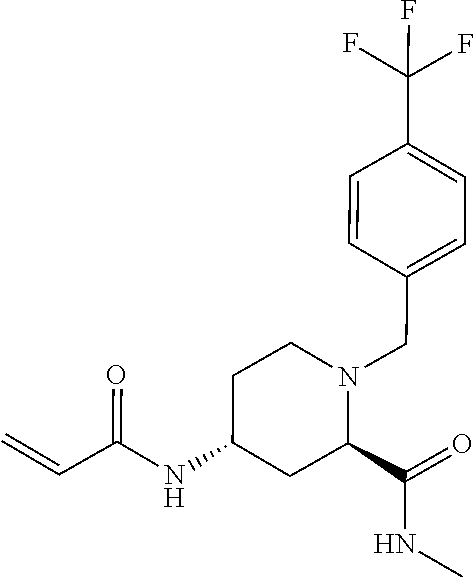
- JHLGOZWRHWMCQA-UHFFFAOYSA-N C=CC(=O)NC1CCN(Cc2ccc(C(F)(F)F)cc2)C(C(=O)NC)C1 Chemical compound C=CC(=O)NC1CCN(Cc2ccc(C(F)(F)F)cc2)C(C(=O)NC)C1 JHLGOZWRHWMCQA-UHFFFAOYSA-N 0.000 description 2
- FPOYQCKQCKCCOP-KRWDZBQOSA-N C=CC(=O)N[C@H]1CCN(Cc2ccc(C(F)(F)F)cc2)c2ccccc21 Chemical compound C=CC(=O)N[C@H]1CCN(Cc2ccc(C(F)(F)F)cc2)c2ccccc21 FPOYQCKQCKCCOP-KRWDZBQOSA-N 0.000 description 2
- APTGBFDAPSPNSM-UHFFFAOYSA-N C=CC(=O)Nc1cccc(C)c1Oc1ccc(Cl)cc1 Chemical compound C=CC(=O)Nc1cccc(C)c1Oc1ccc(Cl)cc1 APTGBFDAPSPNSM-UHFFFAOYSA-N 0.000 description 2
- PKXHXOTZMFCXSH-UHFFFAOYSA-N C=CC(C)(C)C Chemical compound C=CC(C)(C)C PKXHXOTZMFCXSH-UHFFFAOYSA-N 0.000 description 2
- WXQGKODWUOAWIH-UHFFFAOYSA-N C=CC1=NCC(C(C)(C)C)=C1 Chemical compound C=CC1=NCC(C(C)(C)C)=C1 WXQGKODWUOAWIH-UHFFFAOYSA-N 0.000 description 2
- GQOHGDNUTDFBBN-UHFFFAOYSA-N C=Cc1cc(C(C)(C)C)[nH]n1 Chemical compound C=Cc1cc(C(C)(C)C)[nH]n1 GQOHGDNUTDFBBN-UHFFFAOYSA-N 0.000 description 2
- VQBSYYXWSMMYJL-UHFFFAOYSA-N C=Cc1cc(C(C)(C)C)ccn1 Chemical compound C=Cc1cc(C(C)(C)C)ccn1 VQBSYYXWSMMYJL-UHFFFAOYSA-N 0.000 description 2
- OJBJBULBRVPDAA-UHFFFAOYSA-N C=Cc1cc(C(C)(C)C)ncn1 Chemical compound C=Cc1cc(C(C)(C)C)ncn1 OJBJBULBRVPDAA-UHFFFAOYSA-N 0.000 description 2
- SRZRLKUXZHADGZ-UHFFFAOYSA-N C=Cc1cc(C(C)(C)C)on1 Chemical compound C=Cc1cc(C(C)(C)C)on1 SRZRLKUXZHADGZ-UHFFFAOYSA-N 0.000 description 2
- QRHVOWCNLYLLDA-UHFFFAOYSA-N C=Cc1cc(C(C)(C)C)sn1 Chemical compound C=Cc1cc(C(C)(C)C)sn1 QRHVOWCNLYLLDA-UHFFFAOYSA-N 0.000 description 2
- RXSLNFHLOCSKPO-UHFFFAOYSA-N C=Cc1cccc(C(C)(C)C)n1 Chemical compound C=Cc1cccc(C(C)(C)C)n1 RXSLNFHLOCSKPO-UHFFFAOYSA-N 0.000 description 2
- YQGJCPVZCRYUGS-UHFFFAOYSA-N C=Cc1ccn(C(C)(C)C)n1 Chemical compound C=Cc1ccn(C(C)(C)C)n1 YQGJCPVZCRYUGS-UHFFFAOYSA-N 0.000 description 2
- JTROGGLBLDCCIR-UHFFFAOYSA-N C=Cc1ccnc(C(C)(C)C)n1 Chemical compound C=Cc1ccnc(C(C)(C)C)n1 JTROGGLBLDCCIR-UHFFFAOYSA-N 0.000 description 2
- LIDIRNYYHPMBIS-UHFFFAOYSA-N C=Cc1nc(C(C)(C)C)co1 Chemical compound C=Cc1nc(C(C)(C)C)co1 LIDIRNYYHPMBIS-UHFFFAOYSA-N 0.000 description 2
- MPHXNXLLOKVFTR-UHFFFAOYSA-N C=Cc1nc(C(C)(C)C)cs1 Chemical compound C=Cc1nc(C(C)(C)C)cs1 MPHXNXLLOKVFTR-UHFFFAOYSA-N 0.000 description 2
- DYMOFEPTWRLZQV-UHFFFAOYSA-N C=Cc1ncc(C(C)(C)C)o1 Chemical compound C=Cc1ncc(C(C)(C)C)o1 DYMOFEPTWRLZQV-UHFFFAOYSA-N 0.000 description 2
- BLQAAUBQURJVLB-UHFFFAOYSA-N C=Cc1ncc(C(C)(C)C)s1 Chemical compound C=Cc1ncc(C(C)(C)C)s1 BLQAAUBQURJVLB-UHFFFAOYSA-N 0.000 description 2
- CCFTVARXFXKOMT-UHFFFAOYSA-N C=Cc1nccc(C(C)(C)C)n1 Chemical compound C=Cc1nccc(C(C)(C)C)n1 CCFTVARXFXKOMT-UHFFFAOYSA-N 0.000 description 2
- LLUSWVJWVCUJPO-UHFFFAOYSA-N C=Cc1ncccc1C(C)(C)C Chemical compound C=Cc1ncccc1C(C)(C)C LLUSWVJWVCUJPO-UHFFFAOYSA-N 0.000 description 2
- ZHBXSTAKURKVLP-UHFFFAOYSA-N C=Cc1nccn1C(C)(C)C Chemical compound C=Cc1nccn1C(C)(C)C ZHBXSTAKURKVLP-UHFFFAOYSA-N 0.000 description 2
- YNGHLPRROBJZMG-UHFFFAOYSA-N C=Cc1nocc1C(C)(C)C Chemical compound C=Cc1nocc1C(C)(C)C YNGHLPRROBJZMG-UHFFFAOYSA-N 0.000 description 2
- IUKJGQJFSZTEKQ-UHFFFAOYSA-N C=Cc1nscc1C(C)(C)C Chemical compound C=Cc1nscc1C(C)(C)C IUKJGQJFSZTEKQ-UHFFFAOYSA-N 0.000 description 2
- YTUYWTBIUUZGRW-UHFFFAOYSA-N CC(C)(C)C1C=CC(=O)O1 Chemical compound CC(C)(C)C1C=CC(=O)O1 YTUYWTBIUUZGRW-UHFFFAOYSA-N 0.000 description 2
- HKCXYOVZUYHZRL-UHFFFAOYSA-N CC(C)(C)C1CC=CC(=O)C1 Chemical compound CC(C)(C)C1CC=CC(=O)C1 HKCXYOVZUYHZRL-UHFFFAOYSA-N 0.000 description 2
- NFNAYWKRSZMFRJ-UHFFFAOYSA-N CC(C)(C)C1CC=CC(=O)O1 Chemical compound CC(C)(C)C1CC=CC(=O)O1 NFNAYWKRSZMFRJ-UHFFFAOYSA-N 0.000 description 2
- FZJSHUBPGQYDRI-UHFFFAOYSA-N CC(C)(C)C1CCC=CC1=O Chemical compound CC(C)(C)C1CCC=CC1=O FZJSHUBPGQYDRI-UHFFFAOYSA-N 0.000 description 2
- HEAYDCIZOFDHRM-UHFFFAOYSA-N CC(C)(C)C1CO1 Chemical compound CC(C)(C)C1CO1 HEAYDCIZOFDHRM-UHFFFAOYSA-N 0.000 description 2
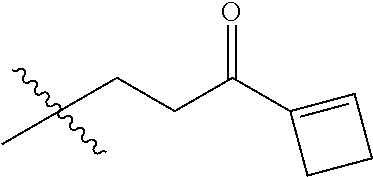
- XDZDPFXYUAGCTD-UHFFFAOYSA-N CC(C)(C)CCC(=O)C1=CCC1 Chemical compound CC(C)(C)CCC(=O)C1=CCC1 XDZDPFXYUAGCTD-UHFFFAOYSA-N 0.000 description 2
- YZVWWCZARLAXRB-UHFFFAOYSA-N CC(C)(C)N1CC=CC1=O Chemical compound CC(C)(C)N1CC=CC1=O YZVWWCZARLAXRB-UHFFFAOYSA-N 0.000 description 2
- ZAMCODPURLQLMQ-UHFFFAOYSA-N CC(C)(C)N1CCC=CC1=O Chemical compound CC(C)(C)N1CCC=CC1=O ZAMCODPURLQLMQ-UHFFFAOYSA-N 0.000 description 2
- IYXYRUPBYNCTNU-UHFFFAOYSA-N CC(C)Oc1cncnc1 Chemical compound CC(C)Oc1cncnc1 IYXYRUPBYNCTNU-UHFFFAOYSA-N 0.000 description 2
- DMEYGFICTLWGIS-UHFFFAOYSA-N CC1=NC(C(C)(C)C)=CC1 Chemical compound CC1=NC(C(C)(C)C)=CC1 DMEYGFICTLWGIS-UHFFFAOYSA-N 0.000 description 2
- ODBIPKBUFLAQGC-UHFFFAOYSA-N CC1=NCC(C(C)(C)C)=C1 Chemical compound CC1=NCC(C(C)(C)C)=C1 ODBIPKBUFLAQGC-UHFFFAOYSA-N 0.000 description 2
- ILSZXVWLMXRKKT-VOTSOKGWSA-N CN(C)C/C=C/C(=O)C(C)(C)C Chemical compound CN(C)C/C=C/C(=O)C(C)(C)C ILSZXVWLMXRKKT-VOTSOKGWSA-N 0.000 description 2
- DGNSVMCWBSQEKC-ZBFHGGJFSA-N CNC(=O)[C@H](c1ccc(C(F)(F)F)cc1)N1CCC([C@H]2CC(Br)=NO2)CC1 Chemical compound CNC(=O)[C@H](c1ccc(C(F)(F)F)cc1)N1CCC([C@H]2CC(Br)=NO2)CC1 DGNSVMCWBSQEKC-ZBFHGGJFSA-N 0.000 description 2
- CUJNZTKYZLLKBY-UHFFFAOYSA-N Cc1cc(C(C)(C)C)[nH]n1 Chemical compound Cc1cc(C(C)(C)C)[nH]n1 CUJNZTKYZLLKBY-UHFFFAOYSA-N 0.000 description 2
- IZDMRLFXYJMCNI-UHFFFAOYSA-N Cc1cc(C(C)(C)C)ccn1 Chemical compound Cc1cc(C(C)(C)C)ccn1 IZDMRLFXYJMCNI-UHFFFAOYSA-N 0.000 description 2
- CSJUHRGRYRNHBV-UHFFFAOYSA-N Cc1cc(C(C)(C)C)ncn1 Chemical compound Cc1cc(C(C)(C)C)ncn1 CSJUHRGRYRNHBV-UHFFFAOYSA-N 0.000 description 2
- OQOBRDQSZTZETG-UHFFFAOYSA-N Cc1cc(C(C)(C)C)on1 Chemical compound Cc1cc(C(C)(C)C)on1 OQOBRDQSZTZETG-UHFFFAOYSA-N 0.000 description 2
- BNVXADMXXFNJHY-UHFFFAOYSA-N Cc1cc(C(C)(C)C)sn1 Chemical compound Cc1cc(C(C)(C)C)sn1 BNVXADMXXFNJHY-UHFFFAOYSA-N 0.000 description 2
- MUQHIJYJMZBODE-OAHLLOKOSA-N Cc1cc(C(F)(F)F)ccc1CN1CCC([C@H]2CC(Br)=NO2)CC1 Chemical compound Cc1cc(C(F)(F)F)ccc1CN1CCC([C@H]2CC(Br)=NO2)CC1 MUQHIJYJMZBODE-OAHLLOKOSA-N 0.000 description 2
- DGQMHGGAOSHPDX-OAHLLOKOSA-N Cc1ccc(CN2CCC([C@H]3CC(Br)=NO3)CC2)cc1 Chemical compound Cc1ccc(CN2CCC([C@H]3CC(Br)=NO3)CC2)cc1 DGQMHGGAOSHPDX-OAHLLOKOSA-N 0.000 description 2
- ROGDZYMBQCBLLX-UHFFFAOYSA-N Cc1cccc(C(C)(C)C)n1 Chemical compound Cc1cccc(C(C)(C)C)n1 ROGDZYMBQCBLLX-UHFFFAOYSA-N 0.000 description 2
- WJXYODQMKYMABB-UHFFFAOYSA-N Cc1ccnc(C(C)(C)C)n1 Chemical compound Cc1ccnc(C(C)(C)C)n1 WJXYODQMKYMABB-UHFFFAOYSA-N 0.000 description 2
- VEMIMPWULAWUOM-UHFFFAOYSA-N Cc1nc(C(C)(C)C)co1 Chemical compound Cc1nc(C(C)(C)C)co1 VEMIMPWULAWUOM-UHFFFAOYSA-N 0.000 description 2
- IHLQWPDUYYFCSQ-UHFFFAOYSA-N Cc1nc(C(C)(C)C)cs1 Chemical compound Cc1nc(C(C)(C)C)cs1 IHLQWPDUYYFCSQ-UHFFFAOYSA-N 0.000 description 2
- IZIAUIRLQYCNAM-UHFFFAOYSA-N Cc1ncc(C(C)(C)C)[nH]1 Chemical compound Cc1ncc(C(C)(C)C)[nH]1 IZIAUIRLQYCNAM-UHFFFAOYSA-N 0.000 description 2
- UHRWTZYVLNXVTC-UHFFFAOYSA-N Cc1ncc(C(C)(C)C)o1 Chemical compound Cc1ncc(C(C)(C)C)o1 UHRWTZYVLNXVTC-UHFFFAOYSA-N 0.000 description 2
- RGSNDIIBOZGFLF-UHFFFAOYSA-N Cc1ncc(C(C)(C)C)s1 Chemical compound Cc1ncc(C(C)(C)C)s1 RGSNDIIBOZGFLF-UHFFFAOYSA-N 0.000 description 2
- GFHOPICCJIELSI-UHFFFAOYSA-N Cc1nccc(C(C)(C)C)n1 Chemical compound Cc1nccc(C(C)(C)C)n1 GFHOPICCJIELSI-UHFFFAOYSA-N 0.000 description 2
- FLAVWRKXIYPOCS-UHFFFAOYSA-N Cc1ncccc1C(C)(C)C Chemical compound Cc1ncccc1C(C)(C)C FLAVWRKXIYPOCS-UHFFFAOYSA-N 0.000 description 2
- ZTGIGMGFUCVJMO-UHFFFAOYSA-N Cc1nocc1C(C)(C)C Chemical compound Cc1nocc1C(C)(C)C ZTGIGMGFUCVJMO-UHFFFAOYSA-N 0.000 description 2
- JWDQETWCSMLSRN-UHFFFAOYSA-N Cc1nscc1C(C)(C)C Chemical compound Cc1nscc1C(C)(C)C JWDQETWCSMLSRN-UHFFFAOYSA-N 0.000 description 2
- LJBLITYFRQCTGP-UHFFFAOYSA-N Clc1ccc(CN2CCC(C3CC(Br)=NO3)CC2)cc1 Chemical compound Clc1ccc(CN2CCC(C3CC(Br)=NO3)CC2)cc1 LJBLITYFRQCTGP-UHFFFAOYSA-N 0.000 description 2
- LJBLITYFRQCTGP-AWEZNQCLSA-N Clc1ccc(CN2CCC([C@@H]3CC(Br)=NO3)CC2)cc1 Chemical compound Clc1ccc(CN2CCC([C@@H]3CC(Br)=NO3)CC2)cc1 LJBLITYFRQCTGP-AWEZNQCLSA-N 0.000 description 2
- DRQHBAGPOLYXFP-JJMXQKMNSA-N Cn1cnc(-c2ccc([C@@H]3CC(Br)=NO3)cc2Nc2cccc(C(F)(F)F)c2)c1.Cn1cnc(-c2ccc([C@H]3CC(Br)=NO3)cc2Nc2cccc(C(F)(F)F)c2)c1 Chemical compound Cn1cnc(-c2ccc([C@@H]3CC(Br)=NO3)cc2Nc2cccc(C(F)(F)F)c2)c1.Cn1cnc(-c2ccc([C@H]3CC(Br)=NO3)cc2Nc2cccc(C(F)(F)F)c2)c1 DRQHBAGPOLYXFP-JJMXQKMNSA-N 0.000 description 2
- GXGNQNOBBGDUMO-CQSZACIVSA-N FC(F)(F)C(F)(F)c1ccc(CN2CCC([C@H]3CC(Br)=NO3)CC2)cc1 Chemical compound FC(F)(F)C(F)(F)c1ccc(CN2CCC([C@H]3CC(Br)=NO3)CC2)cc1 GXGNQNOBBGDUMO-CQSZACIVSA-N 0.000 description 2
- DDUFYYSEIARNRK-CYBMUJFWSA-N FC(F)(F)c1ccc(CN2CCC([C@H]3CC(Br)=NO3)CC2)nc1 Chemical compound FC(F)(F)c1ccc(CN2CCC([C@H]3CC(Br)=NO3)CC2)nc1 DDUFYYSEIARNRK-CYBMUJFWSA-N 0.000 description 2
- LWRWFONVVNUYKN-AFYYWNPRSA-N NC(=O)C(c1ccc(C(F)(F)F)cc1)N1CCC([C@H]2CC(Br)=NO2)CC1 Chemical compound NC(=O)C(c1ccc(C(F)(F)F)cc1)N1CCC([C@H]2CC(Br)=NO2)CC1 LWRWFONVVNUYKN-AFYYWNPRSA-N 0.000 description 2
- LWRWFONVVNUYKN-HIFRSBDPSA-N NC(=O)[C@H](c1ccc(C(F)(F)F)cc1)N1CCC([C@H]2CC(Br)=NO2)CC1 Chemical compound NC(=O)[C@H](c1ccc(C(F)(F)F)cc1)N1CCC([C@H]2CC(Br)=NO2)CC1 LWRWFONVVNUYKN-HIFRSBDPSA-N 0.000 description 2
- HOUVBAVXMFCMRJ-UHFFFAOYSA-N O=S(=O)(c1ccc(CBr)cc1)C(F)(F)F Chemical compound O=S(=O)(c1ccc(CBr)cc1)C(F)(F)F HOUVBAVXMFCMRJ-UHFFFAOYSA-N 0.000 description 2
- PFUZDSXLXXLTQJ-CQSZACIVSA-N O=S(=O)(c1ccc(CN2CCC([C@H]3CC(Br)=NO3)CC2)cc1)C(F)(F)F Chemical compound O=S(=O)(c1ccc(CN2CCC([C@H]3CC(Br)=NO3)CC2)cc1)C(F)(F)F PFUZDSXLXXLTQJ-CQSZACIVSA-N 0.000 description 2
- ACKNUYPWNZCXAP-LWOQYNTDSA-N [H][C@@]1(C2CC(Br)=NO2)CCNC1 Chemical compound [H][C@@]1(C2CC(Br)=NO2)CCNC1 ACKNUYPWNZCXAP-LWOQYNTDSA-N 0.000 description 2
- AIWBHQLFAKSRML-SECBINFHSA-N [H][C@@]1(C=C)CCN(C(=O)OC(C)(C)C)C1 Chemical compound [H][C@@]1(C=C)CCN(C(=O)OC(C)(C)C)C1 AIWBHQLFAKSRML-SECBINFHSA-N 0.000 description 2
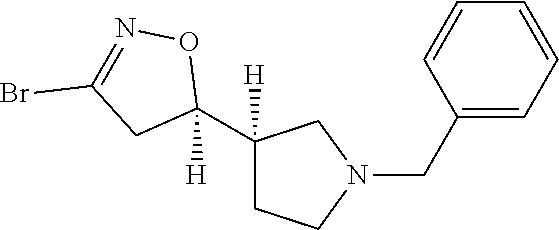
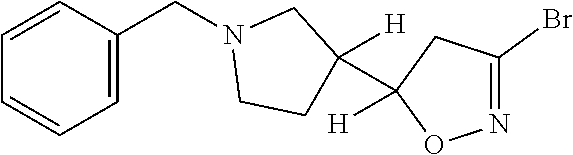
- MBWVGHBBAJPVKC-CHWSQXEVSA-N [H][C@@]1([C@@]2([H])CC(Br)=NO2)CCN(Cc2ccccc2)C1 Chemical compound [H][C@@]1([C@@]2([H])CC(Br)=NO2)CCN(Cc2ccccc2)C1 MBWVGHBBAJPVKC-CHWSQXEVSA-N 0.000 description 2
- IVTUIFQTEQOPKN-YPMHNXCESA-N [H][C@@]1([C@]2([H])CCN(Cc3cccc(C(F)(F)F)c3)C2)CC(Br)=NO1 Chemical compound [H][C@@]1([C@]2([H])CCN(Cc3cccc(C(F)(F)F)c3)C2)CC(Br)=NO1 IVTUIFQTEQOPKN-YPMHNXCESA-N 0.000 description 2
- YPTWEOXJZRWRRM-QAPCUYQASA-N [H][C@@]1([C@]2([H])Cc3ccccc3N(Cc3cccc(C(F)(F)F)c3)C2)CC(Br)=NO1 Chemical compound [H][C@@]1([C@]2([H])Cc3ccccc3N(Cc3cccc(C(F)(F)F)c3)C2)CC(Br)=NO1 YPTWEOXJZRWRRM-QAPCUYQASA-N 0.000 description 2
- KDYRBFOVBNJFRJ-ZBFHGGJFSA-N [H][C@@]12CCN(C(=O)C=C)C[C@]1([H])N(Cc1ccc(C(F)(F)F)cc1)CC2 Chemical compound [H][C@@]12CCN(C(=O)C=C)C[C@]1([H])N(Cc1ccc(C(F)(F)F)cc1)CC2 KDYRBFOVBNJFRJ-ZBFHGGJFSA-N 0.000 description 2
- YPTWEOXJZRWRRM-MAUKXSAKSA-N [H][C@]1([C@@]2([H])CC(Br)=NO2)Cc2ccccc2N(Cc2cccc(C(F)(F)F)c2)C1 Chemical compound [H][C@]1([C@@]2([H])CC(Br)=NO2)Cc2ccccc2N(Cc2cccc(C(F)(F)F)c2)C1 YPTWEOXJZRWRRM-MAUKXSAKSA-N 0.000 description 2
- UJDZKZNUJPKYCU-XRSUUMJRSA-N *.*.B.CC.CCN1CC2C(C)C2C1.CCc1ccc(C)cc1.[H][C@@]12CN(CC)C[C@]1([H])C2C Chemical compound *.*.B.CC.CCN1CC2C(C)C2C1.CCc1ccc(C)cc1.[H][C@@]12CN(CC)C[C@]1([H])C2C UJDZKZNUJPKYCU-XRSUUMJRSA-N 0.000 description 1
- QFRQJARUUNZFQY-OPZYXJLOSA-N *.*.CCN1CC2C(C)C2C1.[H][C@@]12CN(CC)C[C@]1([H])C2C Chemical compound *.*.CCN1CC2C(C)C2C1.[H][C@@]12CN(CC)C[C@]1([H])C2C QFRQJARUUNZFQY-OPZYXJLOSA-N 0.000 description 1
- AEBCNMCBIWJGSW-TZMCWYRMSA-N *.*.[H][C@@]1([C@@]2([H])CC(Br)=NO2)CCCN(Cc2cccc(C(F)(F)F)c2)C1 Chemical compound *.*.[H][C@@]1([C@@]2([H])CC(Br)=NO2)CCCN(Cc2cccc(C(F)(F)F)c2)C1 AEBCNMCBIWJGSW-TZMCWYRMSA-N 0.000 description 1
- VXYNLHKEQLGOGW-AAEUAGOBSA-N *.*.[H][C@]1([C@]2([H])CC(Br)=NO2)CCN(Cc2ccc(C(F)(F)F)cc2)C1 Chemical compound *.*.[H][C@]1([C@]2([H])CC(Br)=NO2)CCN(Cc2ccc(C(F)(F)F)cc2)C1 VXYNLHKEQLGOGW-AAEUAGOBSA-N 0.000 description 1
- YBKOLJJADUCTAZ-UHFFFAOYSA-N *.B.C=CC(=O)CC.C=CC(=O)CC1C2CNCC21.CCC.CCc1ccc(C)cc1 Chemical compound *.B.C=CC(=O)CC.C=CC(=O)CC1C2CNCC21.CCC.CCc1ccc(C)cc1 YBKOLJJADUCTAZ-UHFFFAOYSA-N 0.000 description 1
- JEPNOSZUQCMIBO-UHFFFAOYSA-N *.B.C=CC(=O)CC.CCC Chemical compound *.B.C=CC(=O)CC.CCC JEPNOSZUQCMIBO-UHFFFAOYSA-N 0.000 description 1
- UUBHNSLUCKLJMW-UHFFFAOYSA-N *.B.CC.CC1C2CNCC12.CCC.CCc1ccc(C)cc1 Chemical compound *.B.CC.CC1C2CNCC12.CCC.CCc1ccc(C)cc1 UUBHNSLUCKLJMW-UHFFFAOYSA-N 0.000 description 1
- ODGOFUGOZCZPRA-UHFFFAOYSA-N *.B.CC.CCC Chemical compound *.B.CC.CCC ODGOFUGOZCZPRA-UHFFFAOYSA-N 0.000 description 1
- DGCVZSHUWAFHRD-UHFFFAOYSA-N *.C=CC(=O)CC1C2CNCC21.CCC Chemical compound *.C=CC(=O)CC1C2CNCC21.CCC DGCVZSHUWAFHRD-UHFFFAOYSA-N 0.000 description 1
- UGKQIRLITBWAND-UHFFFAOYSA-N *.C=CC(=O)CC1Cc2ccccc2N(Cc2cccc(C(F)(F)F)c2)C1 Chemical compound *.C=CC(=O)CC1Cc2ccccc2N(Cc2cccc(C(F)(F)F)c2)C1 UGKQIRLITBWAND-UHFFFAOYSA-N 0.000 description 1
- IAWFHHYAIADTIL-ZDUSSCGKSA-N *.C=CC(=O)N1CC[C@H](NCc2ccc(C(F)(F)F)cc2)C1 Chemical compound *.C=CC(=O)N1CC[C@H](NCc2ccc(C(F)(F)F)cc2)C1 IAWFHHYAIADTIL-ZDUSSCGKSA-N 0.000 description 1
- AGUJPRCSAORCQL-LBPRGKRZSA-N *.C=CC(=O)NC1CCN([C@@H](C)c2ccc(C(F)(F)F)cc2)CC1 Chemical compound *.C=CC(=O)NC1CCN([C@@H](C)c2ccc(C(F)(F)F)cc2)CC1 AGUJPRCSAORCQL-LBPRGKRZSA-N 0.000 description 1
- AGUJPRCSAORCQL-GFCCVEGCSA-N *.C=CC(=O)NC1CCN([C@H](C)c2ccc(C(F)(F)F)cc2)CC1 Chemical compound *.C=CC(=O)NC1CCN([C@H](C)c2ccc(C(F)(F)F)cc2)CC1 AGUJPRCSAORCQL-GFCCVEGCSA-N 0.000 description 1
- HFLGDQOTTKANCN-CQSZACIVSA-N *.C=CC(=O)N[C@@H]1CCCN(Cc2cccc(C(F)(F)F)c2)C1 Chemical compound *.C=CC(=O)N[C@@H]1CCCN(Cc2cccc(C(F)(F)F)c2)C1 HFLGDQOTTKANCN-CQSZACIVSA-N 0.000 description 1
- HFVALVYYMMKWOK-CYBMUJFWSA-N *.C=CC(=O)N[C@@H]1CCN(Cc2ccc(C(F)(F)F)cc2)C1 Chemical compound *.C=CC(=O)N[C@@H]1CCN(Cc2ccc(C(F)(F)F)cc2)C1 HFVALVYYMMKWOK-CYBMUJFWSA-N 0.000 description 1
- HFLGDQOTTKANCN-AWEZNQCLSA-N *.C=CC(=O)N[C@H]1CCCN(Cc2cccc(C(F)(F)F)c2)C1 Chemical compound *.C=CC(=O)N[C@H]1CCCN(Cc2cccc(C(F)(F)F)c2)C1 HFLGDQOTTKANCN-AWEZNQCLSA-N 0.000 description 1
- HFVALVYYMMKWOK-ZDUSSCGKSA-N *.C=CC(=O)N[C@H]1CCN(Cc2ccc(C(F)(F)F)cc2)C1 Chemical compound *.C=CC(=O)N[C@H]1CCN(Cc2ccc(C(F)(F)F)cc2)C1 HFVALVYYMMKWOK-ZDUSSCGKSA-N 0.000 description 1
- OBSGMSSSOSFJKM-KRWDZBQOSA-N *.C=CC(=O)N[C@H]1Cc2ccccc2N(Cc2cccc(C(F)(F)F)c2)C1 Chemical compound *.C=CC(=O)N[C@H]1Cc2ccccc2N(Cc2cccc(C(F)(F)F)c2)C1 OBSGMSSSOSFJKM-KRWDZBQOSA-N 0.000 description 1
- MBNLXRUXQKBJJA-LJQANCHMSA-N *.CC(=O)NCCSC1=NO[C@@H](c2ccc(C)c(Oc3cccc(C(F)(F)F)c3)c2)C1 Chemical compound *.CC(=O)NCCSC1=NO[C@@H](c2ccc(C)c(Oc3cccc(C(F)(F)F)c3)c2)C1 MBNLXRUXQKBJJA-LJQANCHMSA-N 0.000 description 1
- SSQPLWLLEPHLBF-KRWDZBQOSA-N *.CC(C)(C)c1ccc([C@@H]2CC(Br)=NO2)cc1Nc1cccc(C(F)(F)F)c1 Chemical compound *.CC(C)(C)c1ccc([C@@H]2CC(Br)=NO2)cc1Nc1cccc(C(F)(F)F)c1 SSQPLWLLEPHLBF-KRWDZBQOSA-N 0.000 description 1
- SSQPLWLLEPHLBF-QGZVFWFLSA-N *.CC(C)(C)c1ccc([C@H]2CC(Br)=NO2)cc1Nc1cccc(C(F)(F)F)c1 Chemical compound *.CC(C)(C)c1ccc([C@H]2CC(Br)=NO2)cc1Nc1cccc(C(F)(F)F)c1 SSQPLWLLEPHLBF-QGZVFWFLSA-N 0.000 description 1
- UOZZSSWTCHNHOV-UHFFFAOYSA-N *.CC.CCc1ccc(C(F)(F)F)cc1 Chemical compound *.CC.CCc1ccc(C(F)(F)F)cc1 UOZZSSWTCHNHOV-UHFFFAOYSA-N 0.000 description 1
- CWSSUGPXZOIEJR-UHFFFAOYSA-N *.CC1C2C=NCC12.CCC Chemical compound *.CC1C2C=NCC12.CCC CWSSUGPXZOIEJR-UHFFFAOYSA-N 0.000 description 1
- IFPUSMINYPOHFZ-CMLQSMHESA-N *.CC1C2CN(Cc3ccc(C(F)(F)F)cc3)CC12.Cc1ccc(C(F)(F)F)cc1.[H][C@@]12CN(CC)C[C@]1([H])C2C Chemical compound *.CC1C2CN(Cc3ccc(C(F)(F)F)cc3)CC12.Cc1ccc(C(F)(F)F)cc1.[H][C@@]12CN(CC)C[C@]1([H])C2C IFPUSMINYPOHFZ-CMLQSMHESA-N 0.000 description 1
- GPFWMJVSAVYGHY-UHFFFAOYSA-N *.CCC1CC(C)Cc2ccccc21 Chemical compound *.CCC1CC(C)Cc2ccccc21 GPFWMJVSAVYGHY-UHFFFAOYSA-N 0.000 description 1
- PQXAPVOKLYINEI-UHFFFAOYSA-N *.CCC1CCC(C)C1 Chemical compound *.CCC1CCC(C)C1 PQXAPVOKLYINEI-UHFFFAOYSA-N 0.000 description 1
- CYISMTMRBPPERU-UHFFFAOYSA-N *.CCC1CCC(C)CC1 Chemical compound *.CCC1CCC(C)CC1 CYISMTMRBPPERU-UHFFFAOYSA-N 0.000 description 1
- VEWZKXIEEMGTMQ-UHFFFAOYSA-N *.CCC1CCC(C)c2ccccc21 Chemical compound *.CCC1CCC(C)c2ccccc21 VEWZKXIEEMGTMQ-UHFFFAOYSA-N 0.000 description 1
- UDDVMPHNQKRNNS-UHFFFAOYSA-N *.CCC1CCCC(C)C1 Chemical compound *.CCC1CCCC(C)C1 UDDVMPHNQKRNNS-UHFFFAOYSA-N 0.000 description 1
- AMKVUWUDOXLATE-GOSISDBHSA-N *.CNS(=O)(=O)c1cc2c(c([C@@]3(C)CC(Br)=NO3)c1)Nc1cc(C(F)(F)F)ccc1C2 Chemical compound *.CNS(=O)(=O)c1cc2c(c([C@@]3(C)CC(Br)=NO3)c1)Nc1cc(C(F)(F)F)ccc1C2 AMKVUWUDOXLATE-GOSISDBHSA-N 0.000 description 1
- XTIJTJCPPVQZLO-INIZCTEOSA-N *.CNS(=O)(=O)c1ccc(NCc2ccccc2)c([C@@H]2CC(Br)=NO2)c1 Chemical compound *.CNS(=O)(=O)c1ccc(NCc2ccccc2)c([C@@H]2CC(Br)=NO2)c1 XTIJTJCPPVQZLO-INIZCTEOSA-N 0.000 description 1
- XTIJTJCPPVQZLO-MRXNPFEDSA-N *.CNS(=O)(=O)c1ccc(NCc2ccccc2)c([C@H]2CC(Br)=NO2)c1 Chemical compound *.CNS(=O)(=O)c1ccc(NCc2ccccc2)c([C@H]2CC(Br)=NO2)c1 XTIJTJCPPVQZLO-MRXNPFEDSA-N 0.000 description 1
- KEHPOUCZKRCETJ-HNNXBMFYSA-N *.CNS(=O)(=O)c1ccc(Nc2ccc(C(F)(F)F)cc2)c([C@@H]2CC(Br)=NO2)c1 Chemical compound *.CNS(=O)(=O)c1ccc(Nc2ccc(C(F)(F)F)cc2)c([C@@H]2CC(Br)=NO2)c1 KEHPOUCZKRCETJ-HNNXBMFYSA-N 0.000 description 1
- KEHPOUCZKRCETJ-OAHLLOKOSA-N *.CNS(=O)(=O)c1ccc(Nc2ccc(C(F)(F)F)cc2)c([C@H]2CC(Br)=NO2)c1 Chemical compound *.CNS(=O)(=O)c1ccc(Nc2ccc(C(F)(F)F)cc2)c([C@H]2CC(Br)=NO2)c1 KEHPOUCZKRCETJ-OAHLLOKOSA-N 0.000 description 1
- CVBYWPQBZNJLSY-KRWDZBQOSA-N *.CNS(=O)(=O)c1ccc(Nc2cccc(C(F)(F)F)c2)c([C@]2(C)CC(Br)=NO2)c1 Chemical compound *.CNS(=O)(=O)c1ccc(Nc2cccc(C(F)(F)F)c2)c([C@]2(C)CC(Br)=NO2)c1 CVBYWPQBZNJLSY-KRWDZBQOSA-N 0.000 description 1
- RJAJEYBRVPNQHH-HNNXBMFYSA-N *.COc1ccc([C@@H]2CC(Br)=NO2)cc1Nc1cccc(C(F)(F)F)c1 Chemical compound *.COc1ccc([C@@H]2CC(Br)=NO2)cc1Nc1cccc(C(F)(F)F)c1 RJAJEYBRVPNQHH-HNNXBMFYSA-N 0.000 description 1
- RJAJEYBRVPNQHH-OAHLLOKOSA-N *.COc1ccc([C@H]2CC(Br)=NO2)cc1Nc1cccc(C(F)(F)F)c1 Chemical compound *.COc1ccc([C@H]2CC(Br)=NO2)cc1Nc1cccc(C(F)(F)F)c1 RJAJEYBRVPNQHH-OAHLLOKOSA-N 0.000 description 1
- UWQANLNZFKDCPX-OTKFKWBMSA-N *.C[C@@H](c1ccc(C(F)(F)F)cc1)N1CCC([C@H]2CC(Br)=NO2)CC1.S Chemical compound *.C[C@@H](c1ccc(C(F)(F)F)cc1)N1CCC([C@H]2CC(Br)=NO2)CC1.S UWQANLNZFKDCPX-OTKFKWBMSA-N 0.000 description 1
- RSFSLGYFRKACTN-MRXNPFEDSA-N *.C[C@]1(C2CCN(Cc3ccc(C(F)(F)F)cc3)CC2)CC(Br)=NO1 Chemical compound *.C[C@]1(C2CCN(Cc3ccc(C(F)(F)F)cc3)CC2)CC(Br)=NO1 RSFSLGYFRKACTN-MRXNPFEDSA-N 0.000 description 1
- NSVHOFHFAGRZKU-HNNXBMFYSA-N *.Cc1cc(F)c([C@@H]2CC(Br)=NO2)cc1Oc1cccc(C(F)(F)F)c1 Chemical compound *.Cc1cc(F)c([C@@H]2CC(Br)=NO2)cc1Oc1cccc(C(F)(F)F)c1 NSVHOFHFAGRZKU-HNNXBMFYSA-N 0.000 description 1
- NSVHOFHFAGRZKU-OAHLLOKOSA-N *.Cc1cc(F)c([C@H]2CC(Br)=NO2)cc1Oc1cccc(C(F)(F)F)c1 Chemical compound *.Cc1cc(F)c([C@H]2CC(Br)=NO2)cc1Oc1cccc(C(F)(F)F)c1 NSVHOFHFAGRZKU-OAHLLOKOSA-N 0.000 description 1
- GWITVVKDVLZALA-HNNXBMFYSA-N *.Cc1ccc([C@@H]2CC(Br)=NO2)cc1Nc1cccc(C(F)(F)F)c1 Chemical compound *.Cc1ccc([C@@H]2CC(Br)=NO2)cc1Nc1cccc(C(F)(F)F)c1 GWITVVKDVLZALA-HNNXBMFYSA-N 0.000 description 1
- OXLWKBYCQPAXIW-AWEZNQCLSA-N *.Cc1ccc([C@@H]2CC(Br)=NO2)cc1Nc1cncc(C(F)(F)F)c1 Chemical compound *.Cc1ccc([C@@H]2CC(Br)=NO2)cc1Nc1cncc(C(F)(F)F)c1 OXLWKBYCQPAXIW-AWEZNQCLSA-N 0.000 description 1
- PAOSNYZOIXBRGY-ZDUSSCGKSA-N *.Cc1ccc([C@@H]2CC(Br)=NO2)cc1Oc1cc(C(F)(F)F)ccn1 Chemical compound *.Cc1ccc([C@@H]2CC(Br)=NO2)cc1Oc1cc(C(F)(F)F)ccn1 PAOSNYZOIXBRGY-ZDUSSCGKSA-N 0.000 description 1
- YHXGPXSNMGAYSC-HNNXBMFYSA-N *.Cc1ccc([C@@H]2CC(Br)=NO2)cc1Oc1cccc(C(F)(F)F)c1 Chemical compound *.Cc1ccc([C@@H]2CC(Br)=NO2)cc1Oc1cccc(C(F)(F)F)c1 YHXGPXSNMGAYSC-HNNXBMFYSA-N 0.000 description 1
- VCXWAHWLILDVPY-ZDUSSCGKSA-N *.Cc1ccc([C@@H]2CC(Br)=NO2)nc1Nc1cccc(C(F)(F)F)c1 Chemical compound *.Cc1ccc([C@@H]2CC(Br)=NO2)nc1Nc1cccc(C(F)(F)F)c1 VCXWAHWLILDVPY-ZDUSSCGKSA-N 0.000 description 1
- UDFHCMBIUISBGF-ZDUSSCGKSA-N *.Cc1ccc([C@@H]2CC(Br)=NO2)nc1Oc1cccc(C(F)(F)F)c1 Chemical compound *.Cc1ccc([C@@H]2CC(Br)=NO2)nc1Oc1cccc(C(F)(F)F)c1 UDFHCMBIUISBGF-ZDUSSCGKSA-N 0.000 description 1
- DEJMPTGUNGUMNX-HNNXBMFYSA-N *.Cc1ccc([C@@H]2CC(Cl)=NO2)cc1Oc1cccc(C(F)(F)F)c1 Chemical compound *.Cc1ccc([C@@H]2CC(Cl)=NO2)cc1Oc1cccc(C(F)(F)F)c1 DEJMPTGUNGUMNX-HNNXBMFYSA-N 0.000 description 1
- JJKXDHRCTQEACB-FQEVSTJZSA-N *.Cc1ccc([C@@H]2CC(Oc3cccnc3)=NO2)cc1Oc1cccc(C(F)(F)F)c1 Chemical compound *.Cc1ccc([C@@H]2CC(Oc3cccnc3)=NO2)cc1Oc1cccc(C(F)(F)F)c1 JJKXDHRCTQEACB-FQEVSTJZSA-N 0.000 description 1
- GLXVJLVAHMKCTF-SFHVURJKSA-N *.Cc1ccc([C@@H]2CC(n3ccnc3)=NO2)cc1Oc1cccc(C(F)(F)F)c1 Chemical compound *.Cc1ccc([C@@H]2CC(n3ccnc3)=NO2)cc1Oc1cccc(C(F)(F)F)c1 GLXVJLVAHMKCTF-SFHVURJKSA-N 0.000 description 1
- JZGHOZXIIRESQF-KRWDZBQOSA-N *.Cc1ccc([C@@H]2CC(n3ccnn3)=NO2)cc1Oc1cccc(C(F)(F)F)c1 Chemical compound *.Cc1ccc([C@@H]2CC(n3ccnn3)=NO2)cc1Oc1cccc(C(F)(F)F)c1 JZGHOZXIIRESQF-KRWDZBQOSA-N 0.000 description 1
- LOWDDKJMKVOHLK-GOSISDBHSA-N *.Cc1ccc([C@@]2(C)CC(Br)=NO2)cc1Cc1cccc(C(F)(F)F)c1 Chemical compound *.Cc1ccc([C@@]2(C)CC(Br)=NO2)cc1Cc1cccc(C(F)(F)F)c1 LOWDDKJMKVOHLK-GOSISDBHSA-N 0.000 description 1
- AFZCHIQOELYQPI-CYBMUJFWSA-N *.Cc1ccc([C@H]2CC(Br)=NO2)cc1Nc1cc(C(F)(F)F)ccn1 Chemical compound *.Cc1ccc([C@H]2CC(Br)=NO2)cc1Nc1cc(C(F)(F)F)ccn1 AFZCHIQOELYQPI-CYBMUJFWSA-N 0.000 description 1
- GWITVVKDVLZALA-OAHLLOKOSA-N *.Cc1ccc([C@H]2CC(Br)=NO2)cc1Nc1cccc(C(F)(F)F)c1 Chemical compound *.Cc1ccc([C@H]2CC(Br)=NO2)cc1Nc1cccc(C(F)(F)F)c1 GWITVVKDVLZALA-OAHLLOKOSA-N 0.000 description 1
- OXLWKBYCQPAXIW-CQSZACIVSA-N *.Cc1ccc([C@H]2CC(Br)=NO2)cc1Nc1cncc(C(F)(F)F)c1 Chemical compound *.Cc1ccc([C@H]2CC(Br)=NO2)cc1Nc1cncc(C(F)(F)F)c1 OXLWKBYCQPAXIW-CQSZACIVSA-N 0.000 description 1
- PAOSNYZOIXBRGY-CYBMUJFWSA-N *.Cc1ccc([C@H]2CC(Br)=NO2)cc1Oc1cc(C(F)(F)F)ccn1 Chemical compound *.Cc1ccc([C@H]2CC(Br)=NO2)cc1Oc1cc(C(F)(F)F)ccn1 PAOSNYZOIXBRGY-CYBMUJFWSA-N 0.000 description 1
- YHXGPXSNMGAYSC-OAHLLOKOSA-N *.Cc1ccc([C@H]2CC(Br)=NO2)cc1Oc1cccc(C(F)(F)F)c1 Chemical compound *.Cc1ccc([C@H]2CC(Br)=NO2)cc1Oc1cccc(C(F)(F)F)c1 YHXGPXSNMGAYSC-OAHLLOKOSA-N 0.000 description 1
- VCXWAHWLILDVPY-CYBMUJFWSA-N *.Cc1ccc([C@H]2CC(Br)=NO2)nc1Nc1cccc(C(F)(F)F)c1 Chemical compound *.Cc1ccc([C@H]2CC(Br)=NO2)nc1Nc1cccc(C(F)(F)F)c1 VCXWAHWLILDVPY-CYBMUJFWSA-N 0.000 description 1
- UDFHCMBIUISBGF-CYBMUJFWSA-N *.Cc1ccc([C@H]2CC(Br)=NO2)nc1Oc1cccc(C(F)(F)F)c1 Chemical compound *.Cc1ccc([C@H]2CC(Br)=NO2)nc1Oc1cccc(C(F)(F)F)c1 UDFHCMBIUISBGF-CYBMUJFWSA-N 0.000 description 1
- DEJMPTGUNGUMNX-OAHLLOKOSA-N *.Cc1ccc([C@H]2CC(Cl)=NO2)cc1Oc1cccc(C(F)(F)F)c1 Chemical compound *.Cc1ccc([C@H]2CC(Cl)=NO2)cc1Oc1cccc(C(F)(F)F)c1 DEJMPTGUNGUMNX-OAHLLOKOSA-N 0.000 description 1
- JJKXDHRCTQEACB-HXUWFJFHSA-N *.Cc1ccc([C@H]2CC(Oc3cccnc3)=NO2)cc1Oc1cccc(C(F)(F)F)c1 Chemical compound *.Cc1ccc([C@H]2CC(Oc3cccnc3)=NO2)cc1Oc1cccc(C(F)(F)F)c1 JJKXDHRCTQEACB-HXUWFJFHSA-N 0.000 description 1
- KEMQASZIQMVHSN-LJQANCHMSA-N *.Cc1ccc([C@H]2CC(Oc3cncnc3)=NO2)cc1Oc1cccc(C(F)(F)F)c1 Chemical compound *.Cc1ccc([C@H]2CC(Oc3cncnc3)=NO2)cc1Oc1cccc(C(F)(F)F)c1 KEMQASZIQMVHSN-LJQANCHMSA-N 0.000 description 1
- GLXVJLVAHMKCTF-GOSISDBHSA-N *.Cc1ccc([C@H]2CC(n3ccnc3)=NO2)cc1Oc1cccc(C(F)(F)F)c1 Chemical compound *.Cc1ccc([C@H]2CC(n3ccnc3)=NO2)cc1Oc1cccc(C(F)(F)F)c1 GLXVJLVAHMKCTF-GOSISDBHSA-N 0.000 description 1
- JZGHOZXIIRESQF-QGZVFWFLSA-N *.Cc1ccc([C@H]2CC(n3ccnn3)=NO2)cc1Oc1cccc(C(F)(F)F)c1 Chemical compound *.Cc1ccc([C@H]2CC(n3ccnn3)=NO2)cc1Oc1cccc(C(F)(F)F)c1 JZGHOZXIIRESQF-QGZVFWFLSA-N 0.000 description 1
- CSSDYXZEQYLZTI-QGZVFWFLSA-N *.Cc1ccc([C@H]2CC(n3cncn3)=NO2)cc1Oc1cccc(C(F)(F)F)c1 Chemical compound *.Cc1ccc([C@H]2CC(n3cncn3)=NO2)cc1Oc1cccc(C(F)(F)F)c1 CSSDYXZEQYLZTI-QGZVFWFLSA-N 0.000 description 1
- YDWCRDKXFZWJDJ-QGZVFWFLSA-N *.Cc1ccc([C@H]2CC(n3nccn3)=NO2)cc1Oc1cccc(C(F)(F)F)c1 Chemical compound *.Cc1ccc([C@H]2CC(n3nccn3)=NO2)cc1Oc1cccc(C(F)(F)F)c1 YDWCRDKXFZWJDJ-QGZVFWFLSA-N 0.000 description 1
- SJVNPAVEMZJBKB-AWEZNQCLSA-N *.Cc1cnc([C@@H]2CC(Br)=NO2)cc1Nc1cccc(C(F)(F)F)c1 Chemical compound *.Cc1cnc([C@@H]2CC(Br)=NO2)cc1Nc1cccc(C(F)(F)F)c1 SJVNPAVEMZJBKB-AWEZNQCLSA-N 0.000 description 1
- GALHQZPMOVHXQT-AWEZNQCLSA-N *.Cc1cnc([C@@H]2CC(Br)=NO2)cc1Oc1cccc(C(F)(F)F)c1 Chemical compound *.Cc1cnc([C@@H]2CC(Br)=NO2)cc1Oc1cccc(C(F)(F)F)c1 GALHQZPMOVHXQT-AWEZNQCLSA-N 0.000 description 1
- SJVNPAVEMZJBKB-CQSZACIVSA-N *.Cc1cnc([C@H]2CC(Br)=NO2)cc1Nc1cccc(C(F)(F)F)c1 Chemical compound *.Cc1cnc([C@H]2CC(Br)=NO2)cc1Nc1cccc(C(F)(F)F)c1 SJVNPAVEMZJBKB-CQSZACIVSA-N 0.000 description 1
- GALHQZPMOVHXQT-CQSZACIVSA-N *.Cc1cnc([C@H]2CC(Br)=NO2)cc1Oc1cccc(C(F)(F)F)c1 Chemical compound *.Cc1cnc([C@H]2CC(Br)=NO2)cc1Oc1cccc(C(F)(F)F)c1 GALHQZPMOVHXQT-CQSZACIVSA-N 0.000 description 1
- DWNXCAOZJNLRPY-AWEZNQCLSA-N *.Cc1ncc([C@@H]2CC(Br)=NO2)cc1Oc1cccc(C(F)(F)F)c1 Chemical compound *.Cc1ncc([C@@H]2CC(Br)=NO2)cc1Oc1cccc(C(F)(F)F)c1 DWNXCAOZJNLRPY-AWEZNQCLSA-N 0.000 description 1
- DWNXCAOZJNLRPY-CQSZACIVSA-N *.Cc1ncc([C@H]2CC(Br)=NO2)cc1Oc1cccc(C(F)(F)F)c1 Chemical compound *.Cc1ncc([C@H]2CC(Br)=NO2)cc1Oc1cccc(C(F)(F)F)c1 DWNXCAOZJNLRPY-CQSZACIVSA-N 0.000 description 1
- PGYSFRYXGVNVIO-CQSZACIVSA-N *.FC(F)(F)c1ccc(CN2CCC([C@H]3CC(Br)=NO3)CC2)cc1 Chemical compound *.FC(F)(F)c1ccc(CN2CCC([C@H]3CC(Br)=NO3)CC2)cc1 PGYSFRYXGVNVIO-CQSZACIVSA-N 0.000 description 1
- AJTHNKSHSDZHIR-CQSZACIVSA-N *.FC(F)(F)c1ccc(CN2CCC[C@@]3(CC(Br)=NO3)C2)cc1 Chemical compound *.FC(F)(F)c1ccc(CN2CCC[C@@]3(CC(Br)=NO3)C2)cc1 AJTHNKSHSDZHIR-CQSZACIVSA-N 0.000 description 1
- GHTVCEWPSHCGCP-KRWDZBQOSA-N *.FC(F)(F)c1cccc(Oc2cc([C@@H]3CC(Br)=NO3)c3cccnc3c2)c1 Chemical compound *.FC(F)(F)c1cccc(Oc2cc([C@@H]3CC(Br)=NO3)c3cccnc3c2)c1 GHTVCEWPSHCGCP-KRWDZBQOSA-N 0.000 description 1
- NWUXOZMUUAXBAL-INIZCTEOSA-N *.FC(F)(F)c1cccc(Oc2cc([C@@H]3CC(Br)=NO3)cc3ncccc23)c1 Chemical compound *.FC(F)(F)c1cccc(Oc2cc([C@@H]3CC(Br)=NO3)cc3ncccc23)c1 NWUXOZMUUAXBAL-INIZCTEOSA-N 0.000 description 1
- DLRHTHZUOKEYHX-ZDUSSCGKSA-N *.FC(F)(F)c1cccc(Oc2cc([C@@H]3CC(Br)=NO3)cc3ncsc23)c1 Chemical compound *.FC(F)(F)c1cccc(Oc2cc([C@@H]3CC(Br)=NO3)cc3ncsc23)c1 DLRHTHZUOKEYHX-ZDUSSCGKSA-N 0.000 description 1
- GHTVCEWPSHCGCP-QGZVFWFLSA-N *.FC(F)(F)c1cccc(Oc2cc([C@H]3CC(Br)=NO3)c3cccnc3c2)c1 Chemical compound *.FC(F)(F)c1cccc(Oc2cc([C@H]3CC(Br)=NO3)c3cccnc3c2)c1 GHTVCEWPSHCGCP-QGZVFWFLSA-N 0.000 description 1
- NWUXOZMUUAXBAL-MRXNPFEDSA-N *.FC(F)(F)c1cccc(Oc2cc([C@H]3CC(Br)=NO3)cc3ncccc23)c1 Chemical compound *.FC(F)(F)c1cccc(Oc2cc([C@H]3CC(Br)=NO3)cc3ncccc23)c1 NWUXOZMUUAXBAL-MRXNPFEDSA-N 0.000 description 1
- HXOINKUGARLGBZ-AWEZNQCLSA-N *.FC(F)(F)c1cccc(Oc2cccc([C@@H]3CC(Br)=NO3)c2)c1 Chemical compound *.FC(F)(F)c1cccc(Oc2cccc([C@@H]3CC(Br)=NO3)c2)c1 HXOINKUGARLGBZ-AWEZNQCLSA-N 0.000 description 1
- HXOINKUGARLGBZ-CQSZACIVSA-N *.FC(F)(F)c1cccc(Oc2cccc([C@H]3CC(Br)=NO3)c2)c1 Chemical compound *.FC(F)(F)c1cccc(Oc2cccc([C@H]3CC(Br)=NO3)c2)c1 HXOINKUGARLGBZ-CQSZACIVSA-N 0.000 description 1
- QGBMBWVWILHWIL-OJMBIDBESA-N *.S.[H][C@@]1([C@]2([H])CCCN(Cc3cccc(C(F)(F)F)c3)C2)CC(Br)=NO1 Chemical compound *.S.[H][C@@]1([C@]2([H])CCCN(Cc3cccc(C(F)(F)F)c3)C2)CC(Br)=NO1 QGBMBWVWILHWIL-OJMBIDBESA-N 0.000 description 1
- WRDHHDBXQBZTGH-YLAFAASESA-N *.S.[H][C@@]1([C@]2([H])CCN(Cc3ccc(C(F)(F)F)cc3)C2)CC(Br)=NO1 Chemical compound *.S.[H][C@@]1([C@]2([H])CCN(Cc3ccc(C(F)(F)F)cc3)C2)CC(Br)=NO1 WRDHHDBXQBZTGH-YLAFAASESA-N 0.000 description 1
- QGBMBWVWILHWIL-DSHXVJGRSA-N *.S.[H][C@]1([C@@]2([H])CC(Br)=NO2)CCCN(Cc2cccc(C(F)(F)F)c2)C1 Chemical compound *.S.[H][C@]1([C@@]2([H])CC(Br)=NO2)CCCN(Cc2cccc(C(F)(F)F)c2)C1 QGBMBWVWILHWIL-DSHXVJGRSA-N 0.000 description 1
- WRDHHDBXQBZTGH-STEACBGWSA-N *.S.[H][C@]1([C@@]2([H])CC(Br)=NO2)CCN(Cc2ccc(C(F)(F)F)cc2)C1 Chemical compound *.S.[H][C@]1([C@@]2([H])CC(Br)=NO2)CCN(Cc2ccc(C(F)(F)F)cc2)C1 WRDHHDBXQBZTGH-STEACBGWSA-N 0.000 description 1
- ZMYJSNRXYAHCMO-DZMCVEQBSA-N B.C.CC(=O)c1cccc(C(F)(F)F)c1.CC(O)c1cccc(C(F)(F)F)c1.CC(OS(C)(=O)=O)c1cccc(C(F)(F)F)c1.CO.CSF.[2H]CC.[H][C@@]1([C@]2([H])CCCN(C(C)c3cccc(C(F)(F)F)c3)C2)CC(Br)=NO1.[H][C@@]1([C@]2([H])CCCN([C@@H](C)c3cccc(C(F)(F)F)c3)C2)CC(Br)=NO1.[H][C@@]1([C@]2([H])CCCN([C@H](C)c3cccc(C(F)(F)F)c3)C2)CC(Br)=NO1.[H][C@@]1([C@]2([H])CCCNC2)CC(Br)=NO1.[NaH] Chemical compound B.C.CC(=O)c1cccc(C(F)(F)F)c1.CC(O)c1cccc(C(F)(F)F)c1.CC(OS(C)(=O)=O)c1cccc(C(F)(F)F)c1.CO.CSF.[2H]CC.[H][C@@]1([C@]2([H])CCCN(C(C)c3cccc(C(F)(F)F)c3)C2)CC(Br)=NO1.[H][C@@]1([C@]2([H])CCCN([C@@H](C)c3cccc(C(F)(F)F)c3)C2)CC(Br)=NO1.[H][C@@]1([C@]2([H])CCCN([C@H](C)c3cccc(C(F)(F)F)c3)C2)CC(Br)=NO1.[H][C@@]1([C@]2([H])CCCNC2)CC(Br)=NO1.[NaH] ZMYJSNRXYAHCMO-DZMCVEQBSA-N 0.000 description 1
- GPYNWGPZBAIZIK-UHFFFAOYSA-N B.C=CC(=O)CC.CCc1ccc(C(F)(F)F)cc1 Chemical compound B.C=CC(=O)CC.CCc1ccc(C(F)(F)F)cc1 GPYNWGPZBAIZIK-UHFFFAOYSA-N 0.000 description 1
- JQZWOTGFJMCJOL-UHFFFAOYSA-N B.CC.CCc1ccc(C(F)(F)F)cc1 Chemical compound B.CC.CCc1ccc(C(F)(F)F)cc1 JQZWOTGFJMCJOL-UHFFFAOYSA-N 0.000 description 1
- IVFQXAXQSZHPEH-UHFFFAOYSA-N BrC1=NOC(C2CCN(Cc3ccc(-c4ccccc4)cc3)CC2)C1 Chemical compound BrC1=NOC(C2CCN(Cc3ccc(-c4ccccc4)cc3)CC2)C1 IVFQXAXQSZHPEH-UHFFFAOYSA-N 0.000 description 1
- NDAHBCNDKMZDPD-VZNWRGHUSA-N BrC1=NOC(C2CCN(Cc3ccc(-c4ccccc4)cc3)CC2)C1.BrC1=NOC(C2CCNCC2)C1.BrC1=NO[C@@H](C2CCN(Cc3ccc(-c4ccccc4)cc3)CC2)C1.BrC1=NO[C@H](C2CCN(Cc3ccc(-c4ccccc4)cc3)CC2)C1.BrCc1ccc(-c2ccccc2)cc1 Chemical compound BrC1=NOC(C2CCN(Cc3ccc(-c4ccccc4)cc3)CC2)C1.BrC1=NOC(C2CCNCC2)C1.BrC1=NO[C@@H](C2CCN(Cc3ccc(-c4ccccc4)cc3)CC2)C1.BrC1=NO[C@H](C2CCN(Cc3ccc(-c4ccccc4)cc3)CC2)C1.BrCc1ccc(-c2ccccc2)cc1 NDAHBCNDKMZDPD-VZNWRGHUSA-N 0.000 description 1
- MYDABAFFYOTWEW-UHFFFAOYSA-N BrC1=NOC(C2CCN(Cc3ccc(C4CC4)cc3)CC2)C1 Chemical compound BrC1=NOC(C2CCN(Cc3ccc(C4CC4)cc3)CC2)C1 MYDABAFFYOTWEW-UHFFFAOYSA-N 0.000 description 1
- OXDXMIKGCAMKQI-VCPBINOTSA-N BrC1=NOC(C2CCN(Cc3ccc(C4CC4)cc3)CC2)C1.BrC1=NOC(C2CCNCC2)C1.BrC1=NO[C@H](C2CCN(Cc3ccc(C4CC4)cc3)CC2)C1.CCc1ccc(C2CC2)cc1.CS(=O)(=O)Cl.OCc1ccc(C2CC2)cc1 Chemical compound BrC1=NOC(C2CCN(Cc3ccc(C4CC4)cc3)CC2)C1.BrC1=NOC(C2CCNCC2)C1.BrC1=NO[C@H](C2CCN(Cc3ccc(C4CC4)cc3)CC2)C1.CCc1ccc(C2CC2)cc1.CS(=O)(=O)Cl.OCc1ccc(C2CC2)cc1 OXDXMIKGCAMKQI-VCPBINOTSA-N 0.000 description 1
- IKIOGGACTAQTSQ-UHFFFAOYSA-N BrC1=NOC(C2CCN(Cc3ccc4scnc4c3)CC2)C1 Chemical compound BrC1=NOC(C2CCN(Cc3ccc4scnc4c3)CC2)C1 IKIOGGACTAQTSQ-UHFFFAOYSA-N 0.000 description 1
- QVBZROKMWPZFJL-UHFFFAOYSA-N BrC1=NOC(C2CCN(Cc3cccc4ncsc34)CC2)C1 Chemical compound BrC1=NOC(C2CCN(Cc3cccc4ncsc34)CC2)C1 QVBZROKMWPZFJL-UHFFFAOYSA-N 0.000 description 1
- FODOXVRRGUIDRH-UHFFFAOYSA-N BrC1=NOC(C2CCN(Cc3ccccc3)CC2)C1 Chemical compound BrC1=NOC(C2CCN(Cc3ccccc3)CC2)C1 FODOXVRRGUIDRH-UHFFFAOYSA-N 0.000 description 1
- AGALTVDWJAKULX-JDLDALKLSA-M BrC1=NOC(C2CCNCC2)C1.BrC1=NO[C@@H](C2CCNCC2)C1.C.C=CC1CCN(C(=O)OC(C)(C)C)CC1.CC(C)(C)OC(=O)N1CCC(C2CC(Br)=NO2)CC1.Cc1ccc(CBr)cc1.Cc1ccc(CN2CCC([C@H]3CC(Br)=NO3)CC2)cc1.O=COO[Na].ON=C(Br)Br Chemical compound BrC1=NOC(C2CCNCC2)C1.BrC1=NO[C@@H](C2CCNCC2)C1.C.C=CC1CCN(C(=O)OC(C)(C)C)CC1.CC(C)(C)OC(=O)N1CCC(C2CC(Br)=NO2)CC1.Cc1ccc(CBr)cc1.Cc1ccc(CN2CCC([C@H]3CC(Br)=NO3)CC2)cc1.O=COO[Na].ON=C(Br)Br AGALTVDWJAKULX-JDLDALKLSA-M 0.000 description 1
- FBWRPTGXDQMZLI-POMOXLBYSA-N BrC1=NOC(C2CCNCC2)C1.CC(C)(C)c1ccc(CBr)cc1.CC(C)(C)c1ccc(CN2CCC(C3CC(Br)=NO3)CC2)cc1.CC(C)(C)c1ccc(CN2CCC([C@@H]3CC(Br)=NO3)CC2)cc1.CC(C)(C)c1ccc(CN2CCC([C@H]3CC(Br)=NO3)CC2)cc1 Chemical compound BrC1=NOC(C2CCNCC2)C1.CC(C)(C)c1ccc(CBr)cc1.CC(C)(C)c1ccc(CN2CCC(C3CC(Br)=NO3)CC2)cc1.CC(C)(C)c1ccc(CN2CCC([C@@H]3CC(Br)=NO3)CC2)cc1.CC(C)(C)c1ccc(CN2CCC([C@H]3CC(Br)=NO3)CC2)cc1 FBWRPTGXDQMZLI-POMOXLBYSA-N 0.000 description 1
- HGTZCJYUFZUGRP-RTARLUIISA-N BrC1=NOC(C2CCNCC2)C1.CC(C)c1ccc(C(F)(F)F)cc1.C[C@H](O)c1ccc(C(F)(F)F)cc1.C[C@H](OS(C)(=O)=O)c1ccc(C(F)(F)F)cc1.C[C@H](c1ccc(C(F)(F)F)cc1)N1CCC(C2CC(Br)=NO2)CC1.C[C@H](c1ccc(C(F)(F)F)cc1)N1CCC([C@@H]2CC(Br)=NO2)CC1.C[C@H](c1ccc(C(F)(F)F)cc1)N1CCC([C@H]2CC(Br)=NO2)CC1 Chemical compound BrC1=NOC(C2CCNCC2)C1.CC(C)c1ccc(C(F)(F)F)cc1.C[C@H](O)c1ccc(C(F)(F)F)cc1.C[C@H](OS(C)(=O)=O)c1ccc(C(F)(F)F)cc1.C[C@H](c1ccc(C(F)(F)F)cc1)N1CCC(C2CC(Br)=NO2)CC1.C[C@H](c1ccc(C(F)(F)F)cc1)N1CCC([C@@H]2CC(Br)=NO2)CC1.C[C@H](c1ccc(C(F)(F)F)cc1)N1CCC([C@H]2CC(Br)=NO2)CC1 HGTZCJYUFZUGRP-RTARLUIISA-N 0.000 description 1
- ZZLSHLZSGKVWQJ-YGOMUOKZSA-N BrC1=NOC(C2CCNCC2)C1.C[C@@H](c1ccc(C(F)(F)F)cc1)N1CCC(C2CC(Br)=NO2)CC1.C[C@@H](c1ccc(C(F)(F)F)cc1)N1CCC([C@@H]2CC(Br)=NO2)CC1.C[C@@H](c1ccc(C(F)(F)F)cc1)N1CCC([C@H]2CC(Br)=NO2)CC1.[2H]CF Chemical compound BrC1=NOC(C2CCNCC2)C1.C[C@@H](c1ccc(C(F)(F)F)cc1)N1CCC(C2CC(Br)=NO2)CC1.C[C@@H](c1ccc(C(F)(F)F)cc1)N1CCC([C@@H]2CC(Br)=NO2)CC1.C[C@@H](c1ccc(C(F)(F)F)cc1)N1CCC([C@H]2CC(Br)=NO2)CC1.[2H]CF ZZLSHLZSGKVWQJ-YGOMUOKZSA-N 0.000 description 1
- NRZCMFQFXNJZSR-UQEZSFNJSA-N BrC1=NOC(C2CCNCC2)C1.FC(F)(F)Sc1ccc(CBr)cc1.FC(F)(F)Sc1ccc(CN2CCC(C3CC(Br)=NO3)CC2)cc1.FC(F)(F)Sc1ccc(CN2CCC([C@@H]3CC(Br)=NO3)CC2)cc1.FC(F)(F)Sc1ccc(CN2CCC([C@H]3CC(Br)=NO3)CC2)cc1 Chemical compound BrC1=NOC(C2CCNCC2)C1.FC(F)(F)Sc1ccc(CBr)cc1.FC(F)(F)Sc1ccc(CN2CCC(C3CC(Br)=NO3)CC2)cc1.FC(F)(F)Sc1ccc(CN2CCC([C@@H]3CC(Br)=NO3)CC2)cc1.FC(F)(F)Sc1ccc(CN2CCC([C@H]3CC(Br)=NO3)CC2)cc1 NRZCMFQFXNJZSR-UQEZSFNJSA-N 0.000 description 1
- JRBRCRASVIFZDY-UIAVTYMDSA-M BrC1=NOC2(CCCNC2)C1.C=C1CCCN(C(=O)OC(C)(C)C)C1.CC(C)(C)OC(=O)N1CCCC2(CC(Br)=NO2)C1.FC(F)(F)c1ccc(CBr)cc1.FC(F)(F)c1ccc(CN2CCCC3(CC(Br)=NO3)C2)cc1.FC(F)(F)c1ccc(CN2CCC[C@@]3(CC(Br)=NO3)C2)cc1.FC(F)(F)c1ccc(CN2CCC[C@]3(CC(Br)=NO3)C2)cc1.O=COO[Na].ON=C(Br)Br Chemical compound BrC1=NOC2(CCCNC2)C1.C=C1CCCN(C(=O)OC(C)(C)C)C1.CC(C)(C)OC(=O)N1CCCC2(CC(Br)=NO2)C1.FC(F)(F)c1ccc(CBr)cc1.FC(F)(F)c1ccc(CN2CCCC3(CC(Br)=NO3)C2)cc1.FC(F)(F)c1ccc(CN2CCC[C@@]3(CC(Br)=NO3)C2)cc1.FC(F)(F)c1ccc(CN2CCC[C@]3(CC(Br)=NO3)C2)cc1.O=COO[Na].ON=C(Br)Br JRBRCRASVIFZDY-UIAVTYMDSA-M 0.000 description 1
- GYIPTWXKWIBSFV-UHFFFAOYSA-N BrC1=NOC2(CCNCC2)C1.C=C1CCN(C(=O)OC(C)(C)C)CC1.CC(C)(C)OC(=O)N1CCC2(CC1)CC(Br)=NO2.FC(F)(F)c1ccc(CBr)cc1.FC(F)(F)c1ccc(CN2CCC3(CC2)CC(Br)=NO3)cc1.ON=C(Br)Br Chemical compound BrC1=NOC2(CCNCC2)C1.C=C1CCN(C(=O)OC(C)(C)C)CC1.CC(C)(C)OC(=O)N1CCC2(CC1)CC(Br)=NO2.FC(F)(F)c1ccc(CBr)cc1.FC(F)(F)c1ccc(CN2CCC3(CC2)CC(Br)=NO3)cc1.ON=C(Br)Br GYIPTWXKWIBSFV-UHFFFAOYSA-N 0.000 description 1
- IVFQXAXQSZHPEH-HXUWFJFHSA-N BrC1=NO[C@@H](C2CCN(Cc3ccc(-c4ccccc4)cc3)CC2)C1 Chemical compound BrC1=NO[C@@H](C2CCN(Cc3ccc(-c4ccccc4)cc3)CC2)C1 IVFQXAXQSZHPEH-HXUWFJFHSA-N 0.000 description 1
- MYDABAFFYOTWEW-QGZVFWFLSA-N BrC1=NO[C@@H](C2CCN(Cc3ccc(C4CC4)cc3)CC2)C1 Chemical compound BrC1=NO[C@@H](C2CCN(Cc3ccc(C4CC4)cc3)CC2)C1 MYDABAFFYOTWEW-QGZVFWFLSA-N 0.000 description 1
- XVCWBJGGWLXYHX-CQSZACIVSA-N BrC1=NO[C@@H](C2CCN(Cc3ccc4ncsc4c3)CC2)C1 Chemical compound BrC1=NO[C@@H](C2CCN(Cc3ccc4ncsc4c3)CC2)C1 XVCWBJGGWLXYHX-CQSZACIVSA-N 0.000 description 1
- IKIOGGACTAQTSQ-CQSZACIVSA-N BrC1=NO[C@@H](C2CCN(Cc3ccc4scnc4c3)CC2)C1 Chemical compound BrC1=NO[C@@H](C2CCN(Cc3ccc4scnc4c3)CC2)C1 IKIOGGACTAQTSQ-CQSZACIVSA-N 0.000 description 1
- QVBZROKMWPZFJL-CQSZACIVSA-N BrC1=NO[C@@H](C2CCN(Cc3cccc4ncsc34)CC2)C1 Chemical compound BrC1=NO[C@@H](C2CCN(Cc3cccc4ncsc34)CC2)C1 QVBZROKMWPZFJL-CQSZACIVSA-N 0.000 description 1
- FODOXVRRGUIDRH-CQSZACIVSA-N BrC1=NO[C@@H](C2CCN(Cc3ccccc3)CC2)C1 Chemical compound BrC1=NO[C@@H](C2CCN(Cc3ccccc3)CC2)C1 FODOXVRRGUIDRH-CQSZACIVSA-N 0.000 description 1
- OONJEPOPVQTFFM-SSDOTTSWSA-N BrC1=NO[C@@H](C2CCNCC2)C1 Chemical compound BrC1=NO[C@@H](C2CCNCC2)C1 OONJEPOPVQTFFM-SSDOTTSWSA-N 0.000 description 1
- AWYOXAWMJKWZAC-AHVJKQLFSA-M BrC1=NO[C@@H](C2CCNCC2)C1.C.FC(F)(F)C(F)(F)c1ccc(CN2CCC([C@H]3CC(Br)=NO3)CC2)cc1.O=C(O[Na])C(F)(F)C(F)(F)F.O=Cc1ccc(C(F)(F)C(F)(F)F)cc1.[C-]#[N+]c1ccc(C(F)(F)C(F)(F)F)cc1.[C-]#[N+]c1ccc(I)cc1 Chemical compound BrC1=NO[C@@H](C2CCNCC2)C1.C.FC(F)(F)C(F)(F)c1ccc(CN2CCC([C@H]3CC(Br)=NO3)CC2)cc1.O=C(O[Na])C(F)(F)C(F)(F)F.O=Cc1ccc(C(F)(F)C(F)(F)F)cc1.[C-]#[N+]c1ccc(C(F)(F)C(F)(F)F)cc1.[C-]#[N+]c1ccc(I)cc1 AWYOXAWMJKWZAC-AHVJKQLFSA-M 0.000 description 1
- LRJJYKYYNGIAHV-POOVAKSUSA-N BrC1=NO[C@@H](C2CCNCC2)C1.Cc1cc(C(F)(F)F)ccc1C=O.Cc1cc(C(F)(F)F)ccc1CN1CCC([C@H]2CC(Br)=NO2)CC1 Chemical compound BrC1=NO[C@@H](C2CCNCC2)C1.Cc1cc(C(F)(F)F)ccc1C=O.Cc1cc(C(F)(F)F)ccc1CN1CCC([C@H]2CC(Br)=NO2)CC1 LRJJYKYYNGIAHV-POOVAKSUSA-N 0.000 description 1
- FXMSCRZYQROLOO-DXKKXHIOSA-N BrC1=NO[C@@H](C2CCNCC2)C1.FC(F)(F)Sc1ccc(CBr)cc1.O=S(=O)(c1ccc(CBr)cc1)C(F)(F)F.O=S(=O)(c1ccc(CN2CCC([C@H]3CC(Br)=NO3)CC2)cc1)C(F)(F)F Chemical compound BrC1=NO[C@@H](C2CCNCC2)C1.FC(F)(F)Sc1ccc(CBr)cc1.O=S(=O)(c1ccc(CBr)cc1)C(F)(F)F.O=S(=O)(c1ccc(CN2CCC([C@H]3CC(Br)=NO3)CC2)cc1)C(F)(F)F FXMSCRZYQROLOO-DXKKXHIOSA-N 0.000 description 1
- OIFXVXBINZSDRP-BXWYITRNSA-N BrC1=NO[C@@H](C2CCNCC2)C1.FC(F)(F)c1ccc(CCl)nc1.FC(F)(F)c1ccc(CN2CCC([C@H]3CC(Br)=NO3)CC2)nc1.O=S(Cl)Cl.OCc1ccc(C(F)(F)F)cn1 Chemical compound BrC1=NO[C@@H](C2CCNCC2)C1.FC(F)(F)c1ccc(CCl)nc1.FC(F)(F)c1ccc(CN2CCC([C@H]3CC(Br)=NO3)CC2)nc1.O=S(Cl)Cl.OCc1ccc(C(F)(F)F)cn1 OIFXVXBINZSDRP-BXWYITRNSA-N 0.000 description 1
- IVFQXAXQSZHPEH-FQEVSTJZSA-N BrC1=NO[C@H](C2CCN(Cc3ccc(-c4ccccc4)cc3)CC2)C1 Chemical compound BrC1=NO[C@H](C2CCN(Cc3ccc(-c4ccccc4)cc3)CC2)C1 IVFQXAXQSZHPEH-FQEVSTJZSA-N 0.000 description 1
- FODOXVRRGUIDRH-AWEZNQCLSA-N BrC1=NO[C@H](C2CCN(Cc3ccccc3)CC2)C1 Chemical compound BrC1=NO[C@H](C2CCN(Cc3ccccc3)CC2)C1 FODOXVRRGUIDRH-AWEZNQCLSA-N 0.000 description 1
- IKLHUNBWDSUGAE-UHFFFAOYSA-N BrCc1ccccc1.C=CC(=O)CC1CCN(C(=O)OC(C)(C)C)CC1.C=CC(=O)CC1CCN(Cc2ccccc2)CC1.C=CC(=O)CC1CCNCC1.C=CC(C)Cl.CC(C)(C)OC(=O)N1CCC(N)CC1.[I-54] Chemical compound BrCc1ccccc1.C=CC(=O)CC1CCN(C(=O)OC(C)(C)C)CC1.C=CC(=O)CC1CCN(Cc2ccccc2)CC1.C=CC(=O)CC1CCNCC1.C=CC(C)Cl.CC(C)(C)OC(=O)N1CCC(N)CC1.[I-54] IKLHUNBWDSUGAE-UHFFFAOYSA-N 0.000 description 1
- CLFKCBDLPSXXJT-HYQTXYEISA-M BrCc1ccccc1.CP(Br)(c1ccccc1)(c1ccccc1)c1ccccc1.O=COO[Na].ON=C(Br)Br.[H][C@@]1(C2CC(Br)=NO2)CCN(C(=O)OC(C)(C)C)C1.[H][C@@]1(C2CC(Br)=NO2)CCN(Cc2ccccc2)C1.[H][C@@]1(C2CC(Br)=NO2)CCNC1.[H][C@@]1(C=C)CCN(C(=O)OC(C)(C)C)C1.[H][C@@]1(C=O)CCN(C(=O)OC(C)(C)C)C1.[H][C@@]1(CO)CCN(C(=O)OC(C)(C)C)C1.[H][C@@]1([C@@]2([H])CC(Br)=NO2)CCN(Cc2ccccc2)C1.[Li]CCCC Chemical compound BrCc1ccccc1.CP(Br)(c1ccccc1)(c1ccccc1)c1ccccc1.O=COO[Na].ON=C(Br)Br.[H][C@@]1(C2CC(Br)=NO2)CCN(C(=O)OC(C)(C)C)C1.[H][C@@]1(C2CC(Br)=NO2)CCN(Cc2ccccc2)C1.[H][C@@]1(C2CC(Br)=NO2)CCNC1.[H][C@@]1(C=C)CCN(C(=O)OC(C)(C)C)C1.[H][C@@]1(C=O)CCN(C(=O)OC(C)(C)C)C1.[H][C@@]1(CO)CCN(C(=O)OC(C)(C)C)C1.[H][C@@]1([C@@]2([H])CC(Br)=NO2)CCN(Cc2ccccc2)C1.[Li]CCCC CLFKCBDLPSXXJT-HYQTXYEISA-M 0.000 description 1
- XRWYQSOYUZOEQH-UHFFFAOYSA-N C#CC(=O)C(C)(C)C Chemical compound C#CC(=O)C(C)(C)C XRWYQSOYUZOEQH-UHFFFAOYSA-N 0.000 description 1
- PWVWCMILXKUUDH-UHFFFAOYSA-N C#CC(=O)CC(C)(C)C Chemical compound C#CC(=O)CC(C)(C)C PWVWCMILXKUUDH-UHFFFAOYSA-N 0.000 description 1
- JHLXTOKTQVJFDI-UHFFFAOYSA-N C#CC(=O)NC(C)(C)C Chemical compound C#CC(=O)NC(C)(C)C JHLXTOKTQVJFDI-UHFFFAOYSA-N 0.000 description 1
- ZNBFCEBISWSZLQ-UHFFFAOYSA-N C#CC(=O)OCC(C)(C)C Chemical compound C#CC(=O)OCC(C)(C)C ZNBFCEBISWSZLQ-UHFFFAOYSA-N 0.000 description 1
- PPWNCLVNXGCGAF-UHFFFAOYSA-N C#CC(C)(C)C Chemical compound C#CC(C)(C)C PPWNCLVNXGCGAF-UHFFFAOYSA-N 0.000 description 1
- QIRWTINLOBMLEH-UHFFFAOYSA-N C#Cc1cc(C(C)(C)C)[nH]n1 Chemical compound C#Cc1cc(C(C)(C)C)[nH]n1 QIRWTINLOBMLEH-UHFFFAOYSA-N 0.000 description 1
- ANJVUPJESIWXIS-UHFFFAOYSA-N C#Cc1ccc(C(C)C)cc1.C#Cc1cccc(C(C)C)c1.CC(C)c1cc(C(F)(F)F)ccc1Br.CC(C)c1ccc(-c2ccccc2)cc1.CC(C)c1ccc(C(C)(C)C)cc1.CC(C)c1ccc(C(C)F)cc1.CC(C)c1ccc(C(F)(F)C(C)(F)F)cc1.CC(C)c1ccc(C2CC2)cc1.CC(C)c1ccc(N(C)C)cc1.CC(C)c1ccc(OC(F)(F)F)cc1.CC(C)c1ccc(SC(F)(F)F)cc1.CC(C)c1ccccc1C(F)(F)F.COc1ccc(C(F)(F)F)cc1C(C)C.Cc1cc(C(F)(F)F)ccc1C(C)C.Cc1ccc(C(C)C)cc1.Cc1ccc(C(C)C)cc1.Cc1ccc(C(C)C)cc1.Cc1ccc(C(C)C)cc1.Cc1cccc(C(C)C)c1.Cc1cccc(C)c1C(C)C.Cc1ccccc1C(C)C.O=S(=O)(c1ccc(C2CC2)cc1)C(F)(F)F Chemical compound C#Cc1ccc(C(C)C)cc1.C#Cc1cccc(C(C)C)c1.CC(C)c1cc(C(F)(F)F)ccc1Br.CC(C)c1ccc(-c2ccccc2)cc1.CC(C)c1ccc(C(C)(C)C)cc1.CC(C)c1ccc(C(C)F)cc1.CC(C)c1ccc(C(F)(F)C(C)(F)F)cc1.CC(C)c1ccc(C2CC2)cc1.CC(C)c1ccc(N(C)C)cc1.CC(C)c1ccc(OC(F)(F)F)cc1.CC(C)c1ccc(SC(F)(F)F)cc1.CC(C)c1ccccc1C(F)(F)F.COc1ccc(C(F)(F)F)cc1C(C)C.Cc1cc(C(F)(F)F)ccc1C(C)C.Cc1ccc(C(C)C)cc1.Cc1ccc(C(C)C)cc1.Cc1ccc(C(C)C)cc1.Cc1ccc(C(C)C)cc1.Cc1cccc(C(C)C)c1.Cc1cccc(C)c1C(C)C.Cc1ccccc1C(C)C.O=S(=O)(c1ccc(C2CC2)cc1)C(F)(F)F ANJVUPJESIWXIS-UHFFFAOYSA-N 0.000 description 1
- WVYXEXFZSHFYIG-UHFFFAOYSA-N C#Cc1ccc(C(C)C)cc1.C#Cc1cccc(C(C)C)c1.CC(C)c1ccc(OC(F)(F)F)cc1 Chemical compound C#Cc1ccc(C(C)C)cc1.C#Cc1cccc(C(C)C)c1.CC(C)c1ccc(OC(F)(F)F)cc1 WVYXEXFZSHFYIG-UHFFFAOYSA-N 0.000 description 1
- LHXAGNCUKFLCKC-UHFFFAOYSA-N C#Cc1ccc(CN2CCC(C3CC(Br)=NO3)CC2)cc1 Chemical compound C#Cc1ccc(CN2CCC(C3CC(Br)=NO3)CC2)cc1 LHXAGNCUKFLCKC-UHFFFAOYSA-N 0.000 description 1
- NUXVHZSIOPULHR-UHFFFAOYSA-N C#Cc1ccc(CN2CCC(NC(=O)C=C)CC2)cc1 Chemical compound C#Cc1ccc(CN2CCC(NC(=O)C=C)CC2)cc1 NUXVHZSIOPULHR-UHFFFAOYSA-N 0.000 description 1
- LHXAGNCUKFLCKC-MRXNPFEDSA-N C#Cc1ccc(CN2CCC([C@H]3CC(Br)=NO3)CC2)cc1 Chemical compound C#Cc1ccc(CN2CCC([C@H]3CC(Br)=NO3)CC2)cc1 LHXAGNCUKFLCKC-MRXNPFEDSA-N 0.000 description 1
- APPVXGHOASREHF-UHFFFAOYSA-N C#Cc1ccc(Oc2cc(C3CC(Br)=NO3)ccc2C)cc1 Chemical compound C#Cc1ccc(Oc2cc(C3CC(Br)=NO3)ccc2C)cc1 APPVXGHOASREHF-UHFFFAOYSA-N 0.000 description 1
- OWGMZWBPZZAJOA-UHFFFAOYSA-N C#Cc1ccc(Oc2cc(C=C)ccc2C)cc1 Chemical compound C#Cc1ccc(Oc2cc(C=C)ccc2C)cc1 OWGMZWBPZZAJOA-UHFFFAOYSA-N 0.000 description 1
- APPVXGHOASREHF-KRWDZBQOSA-N C#Cc1ccc(Oc2cc([C@@H]3CC(Br)=NO3)ccc2C)cc1 Chemical compound C#Cc1ccc(Oc2cc([C@@H]3CC(Br)=NO3)ccc2C)cc1 APPVXGHOASREHF-KRWDZBQOSA-N 0.000 description 1
- CBPMYJXOZKJOPU-QAOGLABXSA-N C#Cc1ccc(Oc2cc([C@@H]3CC(Br)=NO3)ccc2C)cc1.C#Cc1ccc(Oc2cc([C@H]3CC(Br)=NO3)ccc2C)cc1 Chemical compound C#Cc1ccc(Oc2cc([C@@H]3CC(Br)=NO3)ccc2C)cc1.C#Cc1ccc(Oc2cc([C@H]3CC(Br)=NO3)ccc2C)cc1 CBPMYJXOZKJOPU-QAOGLABXSA-N 0.000 description 1
- APPVXGHOASREHF-QGZVFWFLSA-N C#Cc1ccc(Oc2cc([C@H]3CC(Br)=NO3)ccc2C)cc1 Chemical compound C#Cc1ccc(Oc2cc([C@H]3CC(Br)=NO3)ccc2C)cc1 APPVXGHOASREHF-QGZVFWFLSA-N 0.000 description 1
- IGAAQXLTIIDHFE-UHFFFAOYSA-N C#Cc1cccc(Nc2ccc(S(=O)(=O)CC)cc2C2CC(Br)=NO2)c1 Chemical compound C#Cc1cccc(Nc2ccc(S(=O)(=O)CC)cc2C2CC(Br)=NO2)c1 IGAAQXLTIIDHFE-UHFFFAOYSA-N 0.000 description 1
- OROMFIPGFQFIKP-KRWDZBQOSA-N C#Cc1cccc(Nc2ccc(S(=O)(=O)NC)cc2[C@@H]2CC(Br)=NO2)c1 Chemical compound C#Cc1cccc(Nc2ccc(S(=O)(=O)NC)cc2[C@@H]2CC(Br)=NO2)c1 OROMFIPGFQFIKP-KRWDZBQOSA-N 0.000 description 1
- OROMFIPGFQFIKP-QGZVFWFLSA-N C#Cc1cccc(Nc2ccc(S(=O)(=O)NC)cc2[C@H]2CC(Br)=NO2)c1 Chemical compound C#Cc1cccc(Nc2ccc(S(=O)(=O)NC)cc2[C@H]2CC(Br)=NO2)c1 OROMFIPGFQFIKP-QGZVFWFLSA-N 0.000 description 1
- YPELEHUSTKNQHK-OCIJJHCOSA-N C.C.C.C.C.C.C.C.C.C=C(CCl)C(C)C.C=CC(=C)C(C)C.C=CC(=O)CC(C)C.CC(=O)NCCSC1=NOC(C(C)C)C1.CC(C)/C=C/C(N)=O.CC(C)C1(C)CC(Br)=NO1.CC(C)C1CC(Br)=NO1.CC(C)C1CC(Br)=NO1.CC(C)C1CC(Cl)=NO1.CC(C)CC1(C#N)CC1 Chemical compound C.C.C.C.C.C.C.C.C.C=C(CCl)C(C)C.C=CC(=C)C(C)C.C=CC(=O)CC(C)C.CC(=O)NCCSC1=NOC(C(C)C)C1.CC(C)/C=C/C(N)=O.CC(C)C1(C)CC(Br)=NO1.CC(C)C1CC(Br)=NO1.CC(C)C1CC(Br)=NO1.CC(C)C1CC(Cl)=NO1.CC(C)CC1(C#N)CC1 YPELEHUSTKNQHK-OCIJJHCOSA-N 0.000 description 1
- KSULLLXZUYLCOY-UHFFFAOYSA-M C.C.C.C.C=CC.C=Cc1cc(S(=O)(=O)NC)ccc1Nc1cccc(C(F)(F)F)c1.CC(=O)Nc1ccc(S(=O)(=O)Cl)cc1Br.CC(=O)Nc1ccccc1Br.CN.CNS(=O)(=O)c1ccc(N)c(Br)c1.CNS(=O)(=O)c1ccc(NC(C)=O)c(Br)c1.CNS(=O)(=O)c1ccc(Nc2cccc(C(F)(F)F)c2)c(Br)c1.CNS(=O)(=O)c1ccc(Nc2cccc(C(F)(F)F)c2)c(C2CC(Br)=NO2)c1.Cl.O=COO[Na].O=S(=O)(O)Cl.OB(O)c1cccc(C(F)(F)F)c1.ON=C(Br)Br Chemical compound C.C.C.C.C=CC.C=Cc1cc(S(=O)(=O)NC)ccc1Nc1cccc(C(F)(F)F)c1.CC(=O)Nc1ccc(S(=O)(=O)Cl)cc1Br.CC(=O)Nc1ccccc1Br.CN.CNS(=O)(=O)c1ccc(N)c(Br)c1.CNS(=O)(=O)c1ccc(NC(C)=O)c(Br)c1.CNS(=O)(=O)c1ccc(Nc2cccc(C(F)(F)F)c2)c(Br)c1.CNS(=O)(=O)c1ccc(Nc2cccc(C(F)(F)F)c2)c(C2CC(Br)=NO2)c1.Cl.O=COO[Na].O=S(=O)(O)Cl.OB(O)c1cccc(C(F)(F)F)c1.ON=C(Br)Br KSULLLXZUYLCOY-UHFFFAOYSA-M 0.000 description 1
- ZXBARVPKDWGVIC-UHFFFAOYSA-N C.C.C.C.CC(=O)C(C(C)C)C(C)C.CC(C)C(C(=O)N(C)C)C(C)C.CC(C)C1(C(C)C)CC1.CCC(=O)C(C(C)C)C(C)C.CCC(C(C)C)C(C)C.CCC(C(C)C)C(C)C Chemical compound C.C.C.C.CC(=O)C(C(C)C)C(C)C.CC(C)C(C(=O)N(C)C)C(C)C.CC(C)C1(C(C)C)CC1.CCC(=O)C(C(C)C)C(C)C.CCC(C(C)C)C(C)C.CCC(C(C)C)C(C)C ZXBARVPKDWGVIC-UHFFFAOYSA-N 0.000 description 1
- LGRWDZUEENSTFF-KWWVDDMNSA-M C.C.C1CCOC1.C=CC.C=Cc1cc(S(=O)(=O)NC)ccc1NC1CCCCC1.CNS(=O)(=O)c1ccc(F)c(Br)c1.CNS(=O)(=O)c1ccc(NC2CCCCC2)c(Br)c1.CNS(=O)(=O)c1ccc(NC2CCCCC2)c(C2CC(Br)=NO2)c1.CNS(=O)(=O)c1ccc(NC2CCCCC2)c([C@@H]2CC(Br)=NO2)c1.CNS(=O)(=O)c1ccc(NC2CCCCC2)c([C@H]2CC(Br)=NO2)c1.NC1CCCCC1.O=COO[Na].O=S(=O)(Cl)c1ccc(F)c(Br)c1.ON=C(Br)Br.[I-18].[I-19] Chemical compound C.C.C1CCOC1.C=CC.C=Cc1cc(S(=O)(=O)NC)ccc1NC1CCCCC1.CNS(=O)(=O)c1ccc(F)c(Br)c1.CNS(=O)(=O)c1ccc(NC2CCCCC2)c(Br)c1.CNS(=O)(=O)c1ccc(NC2CCCCC2)c(C2CC(Br)=NO2)c1.CNS(=O)(=O)c1ccc(NC2CCCCC2)c([C@@H]2CC(Br)=NO2)c1.CNS(=O)(=O)c1ccc(NC2CCCCC2)c([C@H]2CC(Br)=NO2)c1.NC1CCCCC1.O=COO[Na].O=S(=O)(Cl)c1ccc(F)c(Br)c1.ON=C(Br)Br.[I-18].[I-19] LGRWDZUEENSTFF-KWWVDDMNSA-M 0.000 description 1
- HTPFGTKRVSJLEF-DMTPGRCZSA-M C.C.C=CC.C=Cc1ccccc1Nc1cccc(C(F)(F)F)c1.FC(F)(F)c1cccc(Nc2ccccc2Br)c1.FC(F)(F)c1cccc(Nc2ccccc2C2CC(Br)=NO2)c1.FC(F)(F)c1cccc(Nc2ccccc2[C@@H]2CC(Br)=NO2)c1.FC(F)(F)c1cccc(Nc2ccccc2[C@H]2CC(Br)=NO2)c1.Nc1ccccc1Br.O=COO[Na].OB(O)c1cccc(C(F)(F)F)c1.ON=C(Br)Br.[I-20].[I-21] Chemical compound C.C.C=CC.C=Cc1ccccc1Nc1cccc(C(F)(F)F)c1.FC(F)(F)c1cccc(Nc2ccccc2Br)c1.FC(F)(F)c1cccc(Nc2ccccc2C2CC(Br)=NO2)c1.FC(F)(F)c1cccc(Nc2ccccc2[C@@H]2CC(Br)=NO2)c1.FC(F)(F)c1cccc(Nc2ccccc2[C@H]2CC(Br)=NO2)c1.Nc1ccccc1Br.O=COO[Na].OB(O)c1cccc(C(F)(F)F)c1.ON=C(Br)Br.[I-20].[I-21] HTPFGTKRVSJLEF-DMTPGRCZSA-M 0.000 description 1
- MPMKVZIBLNCDBR-BFBAMXMISA-M C.C=CC.C=Cc1ccc(C)c(Oc2ccc(Cl)cc2)c1.Cc1ccc(Br)cc1O.Cc1ccc(Br)cc1Oc1ccc(Cl)cc1.Cc1ccc(C2CC(Br)=NO2)cc1Oc1ccc(Cl)cc1.Cc1ccc([C@@H]2CC(Br)=NO2)cc1Oc1ccc(Cl)cc1.Cc1ccc([C@H]2CC(Br)=NO2)cc1Oc1ccc(Cl)cc1.Clc1ccc(I)cc1.O=COO[Na].ON=C(Br)Br.[I-23].[I-24] Chemical compound C.C=CC.C=Cc1ccc(C)c(Oc2ccc(Cl)cc2)c1.Cc1ccc(Br)cc1O.Cc1ccc(Br)cc1Oc1ccc(Cl)cc1.Cc1ccc(C2CC(Br)=NO2)cc1Oc1ccc(Cl)cc1.Cc1ccc([C@@H]2CC(Br)=NO2)cc1Oc1ccc(Cl)cc1.Cc1ccc([C@H]2CC(Br)=NO2)cc1Oc1ccc(Cl)cc1.Clc1ccc(I)cc1.O=COO[Na].ON=C(Br)Br.[I-23].[I-24] MPMKVZIBLNCDBR-BFBAMXMISA-M 0.000 description 1
- RQAWZYYZPUXTDM-UHFFFAOYSA-M C.CC(=O)c1cc(Br)ccc1Cc1cccc(C(F)(F)F)c1.CC1(C)OB(c2ccc(Cc3cccc(C(F)(F)F)c3)c(C(=O)CCl)c2)OC1(C)C.CNOC.CON(C)C(=O)c1cc(Br)ccc1Cc1cccc(C(F)(F)F)c1.CON(C)C(=O)c1cc(Br)ccc1N.C[Mg]Br.C[Si](C)(C)OS(=O)(=O)C(F)(F)F.FC(F)(F)c1cccc(I)c1.Nc1ccc(Br)cc1C(=O)O.O=C(CCl)c1cc(Br)ccc1Cc1cccc(C(F)(F)F)c1.[O-][I+3]([O-])([O-])O[Na] Chemical compound C.CC(=O)c1cc(Br)ccc1Cc1cccc(C(F)(F)F)c1.CC1(C)OB(c2ccc(Cc3cccc(C(F)(F)F)c3)c(C(=O)CCl)c2)OC1(C)C.CNOC.CON(C)C(=O)c1cc(Br)ccc1Cc1cccc(C(F)(F)F)c1.CON(C)C(=O)c1cc(Br)ccc1N.C[Mg]Br.C[Si](C)(C)OS(=O)(=O)C(F)(F)F.FC(F)(F)c1cccc(I)c1.Nc1ccc(Br)cc1C(=O)O.O=C(CCl)c1cc(Br)ccc1Cc1cccc(C(F)(F)F)c1.[O-][I+3]([O-])([O-])O[Na] RQAWZYYZPUXTDM-UHFFFAOYSA-M 0.000 description 1
- KJFDAMLLFKSCCG-UHFFFAOYSA-M C.CC(=O)c1cc(Br)ccc1Nc1cccc(C(F)(F)F)c1.CNOC.CON(C)C(=O)c1cc(Br)ccc1N.CON(C)C(=O)c1cc(Br)ccc1Nc1cccc(C(F)(F)F)c1.C[Mg]Br.C[Si](C)(C)OS(=O)(=O)C(F)(F)F.Cl.FC(F)(F)c1cccc(I)c1.Nc1ccc(Br)cc1C(=O)O.O=C(CCl)c1cc(Br)ccc1Nc1cccc(C(F)(F)F)c1.[I-13] Chemical compound C.CC(=O)c1cc(Br)ccc1Nc1cccc(C(F)(F)F)c1.CNOC.CON(C)C(=O)c1cc(Br)ccc1N.CON(C)C(=O)c1cc(Br)ccc1Nc1cccc(C(F)(F)F)c1.C[Mg]Br.C[Si](C)(C)OS(=O)(=O)C(F)(F)F.Cl.FC(F)(F)c1cccc(I)c1.Nc1ccc(Br)cc1C(=O)O.O=C(CCl)c1cc(Br)ccc1Nc1cccc(C(F)(F)F)c1.[I-13] KJFDAMLLFKSCCG-UHFFFAOYSA-M 0.000 description 1
- HFKFTJSFVFUBMZ-UHFFFAOYSA-N C.CNS(=O)(=O)c1ccc(Cc2cccc(C(F)(F)F)c2)c(C(=O)CCl)c1.CNS(=O)(=O)c1ccc(Cc2cccc(C(F)(F)F)c2)c(C(C)=O)c1.C[Si](C)(C)OS(=O)(=O)C(F)(F)F Chemical compound C.CNS(=O)(=O)c1ccc(Cc2cccc(C(F)(F)F)c2)c(C(=O)CCl)c1.CNS(=O)(=O)c1ccc(Cc2cccc(C(F)(F)F)c2)c(C(C)=O)c1.C[Si](C)(C)OS(=O)(=O)C(F)(F)F HFKFTJSFVFUBMZ-UHFFFAOYSA-N 0.000 description 1
- KHOCYSFYYHQYIH-UHFFFAOYSA-N C.CNS(=O)(=O)c1ccc(Nc2cccc(C(F)(F)F)c2)c(C(=O)CCl)c1.CNS(=O)(=O)c1ccc(Nc2cccc(C(F)(F)F)c2)c(C(C)=O)c1.C[Si](C)(C)OS(=O)(=O)C(F)(F)F.[I-3] Chemical compound C.CNS(=O)(=O)c1ccc(Nc2cccc(C(F)(F)F)c2)c(C(=O)CCl)c1.CNS(=O)(=O)c1ccc(Nc2cccc(C(F)(F)F)c2)c(C(C)=O)c1.C[Si](C)(C)OS(=O)(=O)C(F)(F)F.[I-3] KHOCYSFYYHQYIH-UHFFFAOYSA-N 0.000 description 1
- IUEVHJDDDNKIIU-SREVYHEPSA-N C/C(F)=C(\C)C(=O)NC(C)(C)C Chemical compound C/C(F)=C(\C)C(=O)NC(C)(C)C IUEVHJDDDNKIIU-SREVYHEPSA-N 0.000 description 1
- ASTLONTXBUJVGD-WAYWQWQTSA-N C/C(F)=C/C(=O)C(C)(C)C Chemical compound C/C(F)=C/C(=O)C(C)(C)C ASTLONTXBUJVGD-WAYWQWQTSA-N 0.000 description 1
- IHCOKEONEVOJNJ-AATRIKPKSA-N C/C=C/C(=O)CCC(C)(C)C Chemical compound C/C=C/C(=O)CCC(C)(C)C IHCOKEONEVOJNJ-AATRIKPKSA-N 0.000 description 1
- GVDWMDIMGKSQJZ-AATRIKPKSA-N C/C=C/C(=O)NCC(C)(C)C Chemical compound C/C=C/C(=O)NCC(C)(C)C GVDWMDIMGKSQJZ-AATRIKPKSA-N 0.000 description 1
- CXGLAMYYJPNIMU-BQYQJAHWSA-N C/C=C/C(=O)OC(C)(C)C(C)(C)C Chemical compound C/C=C/C(=O)OC(C)(C)C(C)(C)C CXGLAMYYJPNIMU-BQYQJAHWSA-N 0.000 description 1
- MLHCJFRDSBFWFI-VOTSOKGWSA-N C/C=C/C(=O)OC(C)C(C)(C)C Chemical compound C/C=C/C(=O)OC(C)C(C)(C)C MLHCJFRDSBFWFI-VOTSOKGWSA-N 0.000 description 1
- NQDQHUYEVLPMMP-AATRIKPKSA-N C/C=C/C(=O)OCC(C)(C)C Chemical compound C/C=C/C(=O)OCC(C)(C)C NQDQHUYEVLPMMP-AATRIKPKSA-N 0.000 description 1
- FERJLQPLVASNSO-UHFFFAOYSA-N C1=CCC2CCCC2C1.C1CC2(CCN1)COC2.C1CC2CCCC2C1.C1CC2CNCCN2C1.C1CCC2(C1)CCNC2.C1CCC2(CC1)CCCC2.C1CCC2CC2C1.C1CCC2CCCCC2CC1 Chemical compound C1=CCC2CCCC2C1.C1CC2(CCN1)COC2.C1CC2CCCC2C1.C1CC2CNCCN2C1.C1CCC2(C1)CCNC2.C1CCC2(CC1)CCCC2.C1CCC2CC2C1.C1CCC2CCCCC2CC1 FERJLQPLVASNSO-UHFFFAOYSA-N 0.000 description 1
- VYGWXSVCDDKWDA-UHFFFAOYSA-N C1CC1.CC.CC(C)(C)C Chemical compound C1CC1.CC.CC(C)(C)C VYGWXSVCDDKWDA-UHFFFAOYSA-N 0.000 description 1
- ALRXVVNADZTQMD-UHFFFAOYSA-N C1CC2CC1CN2.C1CC2CCC(C1)C2.C1CC2CCC(C1)N2.C1CC2CCC(C2)N1.C1CC2CCC1C2.C1CC2CCC1CC2.C1CC2CCC1CN2.C1CC2CCC1CO2.C1CC2CCC1CS2.C1CC2CCC1N2.C1CC2CCC1O2.C1CC2CCN(C1)C2.C1CC2CNC(C1)C2.C1CC2CNCC1C2.C1CC2CNCC1N2.C1CC2CNCC1O2.C1CC2COCC1N2.C1CC2OCC1O2.C1CN2CCC(C2)O1.C1CN2CCC1CC2.C1NC2CNC1C2.C1OC2CNC1C2.c1ccc2c(c1)C1CCC2CC1.c1ccc2c(c1)C1CCC2NC1.c1ccc2c(c1)C1CCC2OC1.c1ccc2c(c1)C1CCC2SC1 Chemical compound C1CC2CC1CN2.C1CC2CCC(C1)C2.C1CC2CCC(C1)N2.C1CC2CCC(C2)N1.C1CC2CCC1C2.C1CC2CCC1CC2.C1CC2CCC1CN2.C1CC2CCC1CO2.C1CC2CCC1CS2.C1CC2CCC1N2.C1CC2CCC1O2.C1CC2CCN(C1)C2.C1CC2CNC(C1)C2.C1CC2CNCC1C2.C1CC2CNCC1N2.C1CC2CNCC1O2.C1CC2COCC1N2.C1CC2OCC1O2.C1CN2CCC(C2)O1.C1CN2CCC1CC2.C1NC2CNC1C2.C1OC2CNC1C2.c1ccc2c(c1)C1CCC2CC1.c1ccc2c(c1)C1CCC2NC1.c1ccc2c(c1)C1CCC2OC1.c1ccc2c(c1)C1CCC2SC1 ALRXVVNADZTQMD-UHFFFAOYSA-N 0.000 description 1
- BYCLFAGLGGAAGO-UHFFFAOYSA-N C=C(C#N)C(O)C(C)(C)C Chemical compound C=C(C#N)C(O)C(C)(C)C BYCLFAGLGGAAGO-UHFFFAOYSA-N 0.000 description 1
- URSMAHFWHQQPIP-UHFFFAOYSA-N C=C(C#N)C(O)CC(C)(C)C Chemical compound C=C(C#N)C(O)CC(C)(C)C URSMAHFWHQQPIP-UHFFFAOYSA-N 0.000 description 1
- KTTYYVOGXLGNSF-UHFFFAOYSA-N C=C(C(=O)NCC(C)(C)C)C(F)(F)F Chemical compound C=C(C(=O)NCC(C)(C)C)C(F)(F)F KTTYYVOGXLGNSF-UHFFFAOYSA-N 0.000 description 1
- AVCBUEJDPOGWCF-UHFFFAOYSA-N C=C(C(=O)OCC)C(O)C(C)(C)C Chemical compound C=C(C(=O)OCC)C(O)C(C)(C)C AVCBUEJDPOGWCF-UHFFFAOYSA-N 0.000 description 1
- MSUIUDTYFXVXCV-UHFFFAOYSA-N C=C(C)C(=O)NC1CCN(Cc2ccc(C(F)(F)F)cc2)CC1 Chemical compound C=C(C)C(=O)NC1CCN(Cc2ccc(C(F)(F)F)cc2)CC1 MSUIUDTYFXVXCV-UHFFFAOYSA-N 0.000 description 1
- FOMXZPONTPOGEN-UHFFFAOYSA-N C=C(C)C(=O)NCC(C)(C)C Chemical compound C=C(C)C(=O)NCC(C)(C)C FOMXZPONTPOGEN-UHFFFAOYSA-N 0.000 description 1
- QFVDWKHNGPVSKD-FETFDZDUSA-M C=C(C)C.C=C(C)c1cc(S(=O)(=O)NC)ccc1N.C=C(C)c1cc(S(=O)(=O)NC)ccc1Nc1cccc(C(F)(F)F)c1.CNS(=O)(=O)c1ccc(N)c(Br)c1.CNS(=O)(=O)c1ccc(Nc2cccc(C(F)(F)F)c2)c(C2(C)CC(Br)=NO2)c1.CNS(=O)(=O)c1ccc(Nc2cccc(C(F)(F)F)c2)c([C@@]2(C)CC(Br)=NO2)c1.CNS(=O)(=O)c1ccc(Nc2cccc(C(F)(F)F)c2)c([C@]2(C)CC(Br)=NO2)c1.O=COO[Na].OB(O)c1cccc(C(F)(F)F)c1.ON=C(Br)Br Chemical compound C=C(C)C.C=C(C)c1cc(S(=O)(=O)NC)ccc1N.C=C(C)c1cc(S(=O)(=O)NC)ccc1Nc1cccc(C(F)(F)F)c1.CNS(=O)(=O)c1ccc(N)c(Br)c1.CNS(=O)(=O)c1ccc(Nc2cccc(C(F)(F)F)c2)c(C2(C)CC(Br)=NO2)c1.CNS(=O)(=O)c1ccc(Nc2cccc(C(F)(F)F)c2)c([C@@]2(C)CC(Br)=NO2)c1.CNS(=O)(=O)c1ccc(Nc2cccc(C(F)(F)F)c2)c([C@]2(C)CC(Br)=NO2)c1.O=COO[Na].OB(O)c1cccc(C(F)(F)F)c1.ON=C(Br)Br QFVDWKHNGPVSKD-FETFDZDUSA-M 0.000 description 1
- AETYVAUXUBBURQ-JGFROMFFSA-M C=C(C)C.C=C(C)c1ccc(C)c(Cc2cccc(C(F)(F)F)c2)c1.Cc1ccc(Br)cc1Cc1cccc(C(F)(F)F)c1.Cc1ccc(Br)cc1N.Cc1ccc(C2(C)CC(Br)=NO2)cc1Cc1cccc(C(F)(F)F)c1.Cc1ccc([C@@]2(C)CC(Br)=NO2)cc1Cc1cccc(C(F)(F)F)c1.Cc1ccc([C@]2(C)CC(Br)=NO2)cc1Cc1cccc(C(F)(F)F)c1.O=COO[Na].OB(O)c1cccc(C(F)(F)F)c1.ON=C(Br)Br Chemical compound C=C(C)C.C=C(C)c1ccc(C)c(Cc2cccc(C(F)(F)F)c2)c1.Cc1ccc(Br)cc1Cc1cccc(C(F)(F)F)c1.Cc1ccc(Br)cc1N.Cc1ccc(C2(C)CC(Br)=NO2)cc1Cc1cccc(C(F)(F)F)c1.Cc1ccc([C@@]2(C)CC(Br)=NO2)cc1Cc1cccc(C(F)(F)F)c1.Cc1ccc([C@]2(C)CC(Br)=NO2)cc1Cc1cccc(C(F)(F)F)c1.O=COO[Na].OB(O)c1cccc(C(F)(F)F)c1.ON=C(Br)Br AETYVAUXUBBURQ-JGFROMFFSA-M 0.000 description 1
- KXEFQAFPRUVQRG-XKUTVSHUSA-M C=C(C)C1CCN(C(=O)OC(C)(C)C)CC1.CC(=O)C1CCN(C(=O)OC(C)(C)C)CC1.CC(C)(C)OC(=O)N1CCC(C2(C)CC(Br)=NO2)CC1.CC1(C2CCN(Cc3ccc(C(F)(F)F)cc3)CC2)CC(Br)=NO1.CC1(C2CCNCC2)CC(Br)=NO1.CP(Br)(c1ccccc1)(c1ccccc1)c1ccccc1.C[C@@]1(C2CCN(Cc3ccc(C(F)(F)F)cc3)CC2)CC(Br)=NO1.C[C@]1(C2CCN(Cc3ccc(C(F)(F)F)cc3)CC2)CC(Br)=NO1.FC(F)(F)c1ccc(CBr)cc1.O=COO[Na].ON=C(Br)Br.[Li]CCCC Chemical compound C=C(C)C1CCN(C(=O)OC(C)(C)C)CC1.CC(=O)C1CCN(C(=O)OC(C)(C)C)CC1.CC(C)(C)OC(=O)N1CCC(C2(C)CC(Br)=NO2)CC1.CC1(C2CCN(Cc3ccc(C(F)(F)F)cc3)CC2)CC(Br)=NO1.CC1(C2CCNCC2)CC(Br)=NO1.CP(Br)(c1ccccc1)(c1ccccc1)c1ccccc1.C[C@@]1(C2CCN(Cc3ccc(C(F)(F)F)cc3)CC2)CC(Br)=NO1.C[C@]1(C2CCN(Cc3ccc(C(F)(F)F)cc3)CC2)CC(Br)=NO1.FC(F)(F)c1ccc(CBr)cc1.O=COO[Na].ON=C(Br)Br.[Li]CCCC KXEFQAFPRUVQRG-XKUTVSHUSA-M 0.000 description 1
- XXAVMQANCPBBOM-UHFFFAOYSA-N C=C(COC(C)C)C(=O)OCC Chemical compound C=C(COC(C)C)C(=O)OCC XXAVMQANCPBBOM-UHFFFAOYSA-N 0.000 description 1
- LCZSUNUEPGTSOY-BEXFYQGBSA-K C=CB1OC(C)(C)C(C)(C)O1.C=Cc1ccc(Cc2cccc(C(F)(F)F)c2)c(-c2cn(C)cn2)c1.C=Cc1ccc(Cc2cccc(C(F)(F)F)c2)c(Br)c1.CC(=O)O[Cu]OC(C)=O.Cc1cn(C)cn1.Cn1cnc(-c2cc(C3CC(Br)=NO3)ccc2Cc2cccc(C(F)(F)F)c2)c1.Cn1cnc(-c2cc([C@@H]3CC(Br)=NO3)ccc2Cc2cccc(C(F)(F)F)c2)c1.FC(F)(F)c1cccc(Cc2ccc(I)cc2Br)c1.Nc1ccc(I)cc1Br.O=COO[Na].OBOc1cccc(C(F)(F)F)c1.ON=C(Br)Br Chemical compound C=CB1OC(C)(C)C(C)(C)O1.C=Cc1ccc(Cc2cccc(C(F)(F)F)c2)c(-c2cn(C)cn2)c1.C=Cc1ccc(Cc2cccc(C(F)(F)F)c2)c(Br)c1.CC(=O)O[Cu]OC(C)=O.Cc1cn(C)cn1.Cn1cnc(-c2cc(C3CC(Br)=NO3)ccc2Cc2cccc(C(F)(F)F)c2)c1.Cn1cnc(-c2cc([C@@H]3CC(Br)=NO3)ccc2Cc2cccc(C(F)(F)F)c2)c1.FC(F)(F)c1cccc(Cc2ccc(I)cc2Br)c1.Nc1ccc(I)cc1Br.O=COO[Na].OBOc1cccc(C(F)(F)F)c1.ON=C(Br)Br LCZSUNUEPGTSOY-BEXFYQGBSA-K 0.000 description 1
- SNOYUTZWILESAI-UHFFFAOYSA-N C=CC(=O)C(C)C Chemical compound C=CC(=O)C(C)C SNOYUTZWILESAI-UHFFFAOYSA-N 0.000 description 1
- QUGBJNCSVBTVBJ-XEYFOIJRSA-N C=CC(=O)C(C)C.C=CC(=O)CC(C)C.CC(=O)CCCSC1=NOC(C(C)C)C1.CC(C)/C=C/C(N)=O.CC(C)C(=O)CCl.CC(C)C1(C)CC(Br)=NO1.CC(C)C1CC(Br)=NO1.CC(C)C1CC(Br)=NO1.CC(C)C1CC(Cl)=NO1.CC(C)C1CC(Oc2cccnc2)=NO1.CC(C)C1CC(Oc2cncnc2)=NO1.CC(C)C1CC(n2ccnc2)=NO1.CC(C)C1CC(n2ccnn2)=NO1.CC(C)C1CC(n2cncn2)=NO1.CC(C)C1CC(n2nccn2)=NO1.CC(C)CC1(C#N)CC1.CC(C)OS(=O)(=O)F Chemical compound C=CC(=O)C(C)C.C=CC(=O)CC(C)C.CC(=O)CCCSC1=NOC(C(C)C)C1.CC(C)/C=C/C(N)=O.CC(C)C(=O)CCl.CC(C)C1(C)CC(Br)=NO1.CC(C)C1CC(Br)=NO1.CC(C)C1CC(Br)=NO1.CC(C)C1CC(Cl)=NO1.CC(C)C1CC(Oc2cccnc2)=NO1.CC(C)C1CC(Oc2cncnc2)=NO1.CC(C)C1CC(n2ccnc2)=NO1.CC(C)C1CC(n2ccnn2)=NO1.CC(C)C1CC(n2cncn2)=NO1.CC(C)C1CC(n2nccn2)=NO1.CC(C)CC1(C#N)CC1.CC(C)OS(=O)(=O)F QUGBJNCSVBTVBJ-XEYFOIJRSA-N 0.000 description 1
- CIVQRCGKGDRUNK-UHFFFAOYSA-N C=CC(=O)CC(C)(C)C Chemical compound C=CC(=O)CC(C)(C)C CIVQRCGKGDRUNK-UHFFFAOYSA-N 0.000 description 1
- MDWYRKCPQDCGGF-XSEGPNBXSA-N C=CC(=O)CC1C2CN(Cc3ccc(C(F)(F)F)cc3)CC12.[H][C@@]12CN(Cc3ccc(C(F)(F)F)cc3)C[C@]1([H])C2CC(=O)C=C Chemical compound C=CC(=O)CC1C2CN(Cc3ccc(C(F)(F)F)cc3)CC12.[H][C@@]12CN(Cc3ccc(C(F)(F)F)cc3)C[C@]1([H])C2CC(=O)C=C MDWYRKCPQDCGGF-XSEGPNBXSA-N 0.000 description 1
- HMEDUGBXQNXAFJ-DQSQQHOZSA-N C=CC(=O)CC1C2CN(Cc3ccc(C(F)(F)F)cc3)CC12.[H][C@@]12CN(Cc3ccc(C)cc3)C[C@]1([H])C2CC(=O)C=C Chemical compound C=CC(=O)CC1C2CN(Cc3ccc(C(F)(F)F)cc3)CC12.[H][C@@]12CN(Cc3ccc(C)cc3)C[C@]1([H])C2CC(=O)C=C HMEDUGBXQNXAFJ-DQSQQHOZSA-N 0.000 description 1
- QUJWHCSPNRQDLA-UHFFFAOYSA-N C=CC(=O)CC1C2CNCC21.CCc1ccc(C(F)(F)F)cc1 Chemical compound C=CC(=O)CC1C2CNCC21.CCc1ccc(C(F)(F)F)cc1 QUJWHCSPNRQDLA-UHFFFAOYSA-N 0.000 description 1
- QZSAXWDLPKGMGV-UHFFFAOYSA-N C=CC(=O)CC1C2CNCC21.CCc1ccc(C)cc1 Chemical compound C=CC(=O)CC1C2CNCC21.CCc1ccc(C)cc1 QZSAXWDLPKGMGV-UHFFFAOYSA-N 0.000 description 1
- CQJUWWZIJGRUOA-DQSIVEHISA-N C=CC(=O)CC1CCN(C(C)c2ccc(C(F)(F)F)cc2)CC1.C=CC(=O)CC1CCN([C@@H](C)c2ccc(C(F)(F)F)cc2)CC1.C=CC(=O)CC1CCN([C@H](C)c2ccc(C(F)(F)F)cc2)CC1.C=CC(=O)CC1CCNCC1.CC(C)c1ccc(C(F)(F)F)cc1.CC(O)c1ccc(C(F)(F)F)cc1.[I-62].[I-63] Chemical compound C=CC(=O)CC1CCN(C(C)c2ccc(C(F)(F)F)cc2)CC1.C=CC(=O)CC1CCN([C@@H](C)c2ccc(C(F)(F)F)cc2)CC1.C=CC(=O)CC1CCN([C@H](C)c2ccc(C(F)(F)F)cc2)CC1.C=CC(=O)CC1CCNCC1.CC(C)c1ccc(C(F)(F)F)cc1.CC(O)c1ccc(C(F)(F)F)cc1.[I-62].[I-63] CQJUWWZIJGRUOA-DQSIVEHISA-N 0.000 description 1
- BYMLPEOTLODPPW-NALJCTPVSA-N C=CC(=O)CC1CCN(C(CC)c2ccc(C(F)(F)F)cc2)CC1.C=CC(=O)CC1CCN([C@@H](CC)c2ccc(C(F)(F)F)cc2)CC1.C=CC(=O)CC1CCN([C@H](CC)c2ccc(C(F)(F)F)cc2)CC1.C=CC(=O)Cl.CC(C)(C)OC(=O)CC1CCNCC1.CCC(=O)c1ccc(C(F)(F)F)cc1.CCC(c1ccc(C(F)(F)F)cc1)N1CCC(CC(=O)OC(C)(C)C)CC1.CCC(c1ccc(C(F)(F)F)cc1)N1CCC(N)CC1 Chemical compound C=CC(=O)CC1CCN(C(CC)c2ccc(C(F)(F)F)cc2)CC1.C=CC(=O)CC1CCN([C@@H](CC)c2ccc(C(F)(F)F)cc2)CC1.C=CC(=O)CC1CCN([C@H](CC)c2ccc(C(F)(F)F)cc2)CC1.C=CC(=O)Cl.CC(C)(C)OC(=O)CC1CCNCC1.CCC(=O)c1ccc(C(F)(F)F)cc1.CCC(c1ccc(C(F)(F)F)cc1)N1CCC(CC(=O)OC(C)(C)C)CC1.CCC(c1ccc(C(F)(F)F)cc1)N1CCC(N)CC1 BYMLPEOTLODPPW-NALJCTPVSA-N 0.000 description 1
- MHVMXUYILMCOQX-UHFFFAOYSA-N C=CC(=O)CC1CCN(Cc2ccc(-c3ccccc3)cc2)CC1 Chemical compound C=CC(=O)CC1CCN(Cc2ccc(-c3ccccc3)cc2)CC1 MHVMXUYILMCOQX-UHFFFAOYSA-N 0.000 description 1
- PFSBIUWPZPDHJQ-UHFFFAOYSA-N C=CC(=O)CC1CCN(Cc2ccc(C(F)(F)F)cc2)CC1.C=CC(=O)Cl.CC(C)(C)OC(=O)CC1CCN(Cc2ccc(C(F)(F)F)cc2)CC1.CC(C)(C)OC(=O)CC1CCNCC1.FC(F)(F)c1ccc(CBr)cc1.NC1CCN(Cc2ccc(C(F)(F)F)cc2)CC1.[I-46] Chemical compound C=CC(=O)CC1CCN(Cc2ccc(C(F)(F)F)cc2)CC1.C=CC(=O)Cl.CC(C)(C)OC(=O)CC1CCN(Cc2ccc(C(F)(F)F)cc2)CC1.CC(C)(C)OC(=O)CC1CCNCC1.FC(F)(F)c1ccc(CBr)cc1.NC1CCN(Cc2ccc(C(F)(F)F)cc2)CC1.[I-46] PFSBIUWPZPDHJQ-UHFFFAOYSA-N 0.000 description 1
- WYFZBLIPKSFFQV-UHFFFAOYSA-N C=CC(=O)CC1CCN(Cc2ccc(S(=O)(=O)C(F)(F)F)cc2)CC1 Chemical compound C=CC(=O)CC1CCN(Cc2ccc(S(=O)(=O)C(F)(F)F)cc2)CC1 WYFZBLIPKSFFQV-UHFFFAOYSA-N 0.000 description 1
- ANOIJYWKEDCRRN-UHFFFAOYSA-N C=CC(=O)CC1CCN(Cc2ccc(S(=O)(=O)C(F)(F)F)cc2)CC1.C=CC(=O)CC1CCNCC1.Cl.FC(F)(F)Sc1ccc(CBr)cc1.O=S(=O)(c1ccc(CBr)cc1)C(F)(F)F Chemical compound C=CC(=O)CC1CCN(Cc2ccc(S(=O)(=O)C(F)(F)F)cc2)CC1.C=CC(=O)CC1CCNCC1.Cl.FC(F)(F)Sc1ccc(CBr)cc1.O=S(=O)(c1ccc(CBr)cc1)C(F)(F)F ANOIJYWKEDCRRN-UHFFFAOYSA-N 0.000 description 1
- FYBGSLWCZAFCIN-UHFFFAOYSA-N C=CC(=O)CC1CCN(Cc2cccc(C(F)(F)F)c2)CC1.C=CC(=O)CC1CCNCC1.FC(F)(F)c1cccc(CBr)c1.[I-51] Chemical compound C=CC(=O)CC1CCN(Cc2cccc(C(F)(F)F)c2)CC1.C=CC(=O)CC1CCNCC1.FC(F)(F)c1cccc(CBr)c1.[I-51] FYBGSLWCZAFCIN-UHFFFAOYSA-N 0.000 description 1
- PJUYECGKAJGZIB-UHFFFAOYSA-N C=CC(=O)CC1CCN(Cc2ccccc2C(F)(F)F)CC1.C=CC(=O)CC1CCNCC1.FC(F)(F)c1ccccc1CBr.[I-49] Chemical compound C=CC(=O)CC1CCN(Cc2ccccc2C(F)(F)F)CC1.C=CC(=O)CC1CCNCC1.FC(F)(F)c1ccccc1CBr.[I-49] PJUYECGKAJGZIB-UHFFFAOYSA-N 0.000 description 1
- CLBNQGLYTLCZRX-UHFFFAOYSA-N C=CC(=O)CC1CCN(S(=O)(=O)c2ccc(C(F)(F)F)cc2)CC1.C=CC(=O)CC1CCNCC1.O=S(=O)(Cl)c1ccc(C(F)(F)F)cc1.[I-50] Chemical compound C=CC(=O)CC1CCN(S(=O)(=O)c2ccc(C(F)(F)F)cc2)CC1.C=CC(=O)CC1CCNCC1.O=S(=O)(Cl)c1ccc(C(F)(F)F)cc1.[I-50] CLBNQGLYTLCZRX-UHFFFAOYSA-N 0.000 description 1
- DJLKSWNJIOCFIM-VGSZBJPSSA-N C=CC(=O)CC1CCN([C@@H](C)c2ccc(C(F)(F)F)cc2)CC1.C=CC(=O)CC1CCNCC1.CC(C)c1ccc(C(F)(F)F)cc1.C[C@@H](O)c1ccc(C(F)(F)F)cc1.[I-63] Chemical compound C=CC(=O)CC1CCN([C@@H](C)c2ccc(C(F)(F)F)cc2)CC1.C=CC(=O)CC1CCNCC1.CC(C)c1ccc(C(F)(F)F)cc1.C[C@@H](O)c1ccc(C(F)(F)F)cc1.[I-63] DJLKSWNJIOCFIM-VGSZBJPSSA-N 0.000 description 1
- JRKSKVCNTSFSOY-JJMXQKMNSA-N C=CC(=O)CC1CCN([C@@H](CC)c2ccc(C(F)(F)F)cc2)CC1.C=CC(=O)CC1CCN([C@H](CC)c2ccc(C(F)(F)F)cc2)CC1 Chemical compound C=CC(=O)CC1CCN([C@@H](CC)c2ccc(C(F)(F)F)cc2)CC1.C=CC(=O)CC1CCN([C@H](CC)c2ccc(C(F)(F)F)cc2)CC1 JRKSKVCNTSFSOY-JJMXQKMNSA-N 0.000 description 1
- LMRCAWWQXFLOHO-UHFFFAOYSA-N C=CC(=O)CCC(C)(C)C Chemical compound C=CC(=O)CCC(C)(C)C LMRCAWWQXFLOHO-UHFFFAOYSA-N 0.000 description 1
- JZLGEDNYUGLVSD-UHFFFAOYSA-N C=CC(=O)CCCC(C)(C)C Chemical compound C=CC(=O)CCCC(C)(C)C JZLGEDNYUGLVSD-UHFFFAOYSA-N 0.000 description 1
- QOEXOLBGVLPUSU-JTHWLANNSA-N C=CC(=O)C[C@@H]1CCCN(C(=O)OC(C)(C)C)C1.C=CC(=O)C[C@@H]1CCCN(Cc2cccc(C(F)(F)F)c2)C1.C=CC(=O)C[C@@H]1CCCNC1.C=CC(=O)Cl.CC(C)(C)OC(=O)N1CCC[C@@H](N)C1.FC(F)(F)c1cccc(CBr)c1.[I-47] Chemical compound C=CC(=O)C[C@@H]1CCCN(C(=O)OC(C)(C)C)C1.C=CC(=O)C[C@@H]1CCCN(Cc2cccc(C(F)(F)F)c2)C1.C=CC(=O)C[C@@H]1CCCNC1.C=CC(=O)Cl.CC(C)(C)OC(=O)N1CCC[C@@H](N)C1.FC(F)(F)c1cccc(CBr)c1.[I-47] QOEXOLBGVLPUSU-JTHWLANNSA-N 0.000 description 1
- PNQNCZJJKYFAPM-WFMIZRRQSA-N C=CC(=O)C[C@@H]1CCN(C(=O)OC(C)(C)C)C1.C=CC(=O)C[C@@H]1CCN(Cc2ccc(C(F)(F)F)cc2)C1.C=CC(=O)C[C@@H]1CCNC1.C=CC(=O)Cl.CC(C)(C)OC(=O)N1CC[C@@H](N)C1.Cc1ccc(CBr)cc1.[I-55] Chemical compound C=CC(=O)C[C@@H]1CCN(C(=O)OC(C)(C)C)C1.C=CC(=O)C[C@@H]1CCN(Cc2ccc(C(F)(F)F)cc2)C1.C=CC(=O)C[C@@H]1CCNC1.C=CC(=O)Cl.CC(C)(C)OC(=O)N1CC[C@@H](N)C1.Cc1ccc(CBr)cc1.[I-55] PNQNCZJJKYFAPM-WFMIZRRQSA-N 0.000 description 1
- QOEXOLBGVLPUSU-GNVWHTRLSA-N C=CC(=O)C[C@H]1CCCN(C(=O)OC(C)(C)C)C1.C=CC(=O)C[C@H]1CCCN(Cc2cccc(C(F)(F)F)c2)C1.C=CC(=O)C[C@H]1CCCNC1.C=CC(=O)Cl.CC(C)(C)OC(=O)N1CCC[C@H](N)C1.FC(F)(F)c1cccc(CBr)c1.[I-48] Chemical compound C=CC(=O)C[C@H]1CCCN(C(=O)OC(C)(C)C)C1.C=CC(=O)C[C@H]1CCCN(Cc2cccc(C(F)(F)F)c2)C1.C=CC(=O)C[C@H]1CCCNC1.C=CC(=O)Cl.CC(C)(C)OC(=O)N1CCC[C@H](N)C1.FC(F)(F)c1cccc(CBr)c1.[I-48] QOEXOLBGVLPUSU-GNVWHTRLSA-N 0.000 description 1
- RVLQWSFTLLDMFT-DZVKCEGESA-N C=CC(=O)C[C@H]1CCN(C(=O)OC(C)(C)C)C1.C=CC(=O)C[C@H]1CCN(Cc2ccc(C(F)(F)F)cc2)C1.C=CC(=O)C[C@H]1CCNC1.C=CC(=O)Cl.CC(C)(C)OC(=O)N1CC[C@H](N)C1.CO.Cc1ccc(CBr)cc1.[I-57] Chemical compound C=CC(=O)C[C@H]1CCN(C(=O)OC(C)(C)C)C1.C=CC(=O)C[C@H]1CCN(Cc2ccc(C(F)(F)F)cc2)C1.C=CC(=O)C[C@H]1CCNC1.C=CC(=O)Cl.CC(C)(C)OC(=O)N1CC[C@H](N)C1.CO.Cc1ccc(CBr)cc1.[I-57] RVLQWSFTLLDMFT-DZVKCEGESA-N 0.000 description 1
- IAMNEWXTXRTJDU-DGTAUBJWSA-N C=CC(=O)C[C@H]1CC[C@H](Nc2ccc(C(F)(F)F)cc2)CC1.C=CC(=O)Cl.C[C@H]1CC[C@H](N)CC1.C[C@H]1CC[C@H](Nc2ccc(C(F)(F)F)cc2)CC1.N[C@H]1CC[C@H](Nc2ccc(C(F)(F)F)cc2)CC1.OB(O)c1ccc(C(F)(F)F)cc1.[I-56] Chemical compound C=CC(=O)C[C@H]1CC[C@H](Nc2ccc(C(F)(F)F)cc2)CC1.C=CC(=O)Cl.C[C@H]1CC[C@H](N)CC1.C[C@H]1CC[C@H](Nc2ccc(C(F)(F)F)cc2)CC1.N[C@H]1CC[C@H](Nc2ccc(C(F)(F)F)cc2)CC1.OB(O)c1ccc(C(F)(F)F)cc1.[I-56] IAMNEWXTXRTJDU-DGTAUBJWSA-N 0.000 description 1
- VGNDMBQKBQIMAS-JPLJSMPXSA-N C=CC(=O)C[C@H]1Cc2ccccc2N(Cc2cccc(C(F)(F)F)c2)C1.C=CC(=O)Cl.CC1Cc2ccccc2N(Cc2cccc(C(F)(F)F)c2)C1.CSF.FC(F)(F)c1cccc(CBr)c1.NC1Cc2ccccc2N(Cc2cccc(C(F)(F)F)c2)C1.OC1CNc2ccccc2C1.OC1Cc2ccccc2N(Cc2cccc(C(F)(F)F)c2)C1.[I-60].[N-]=[N+]=NC1Cc2ccccc2N(Cc2cccc(C(F)(F)F)c2)C1.[N-]=[N+]=N[Na].c1ccc(P(c2ccccc2)c2ccccc2)cc1 Chemical compound C=CC(=O)C[C@H]1Cc2ccccc2N(Cc2cccc(C(F)(F)F)c2)C1.C=CC(=O)Cl.CC1Cc2ccccc2N(Cc2cccc(C(F)(F)F)c2)C1.CSF.FC(F)(F)c1cccc(CBr)c1.NC1Cc2ccccc2N(Cc2cccc(C(F)(F)F)c2)C1.OC1CNc2ccccc2C1.OC1Cc2ccccc2N(Cc2cccc(C(F)(F)F)c2)C1.[I-60].[N-]=[N+]=NC1Cc2ccccc2N(Cc2cccc(C(F)(F)F)c2)C1.[N-]=[N+]=N[Na].c1ccc(P(c2ccccc2)c2ccccc2)cc1 VGNDMBQKBQIMAS-JPLJSMPXSA-N 0.000 description 1
- BRUDSJKQUCRQDY-UHFFFAOYSA-N C=CC(=O)Cc1cc(Oc2cccc(C(F)(F)F)c2)c2ccccc2c1 Chemical compound C=CC(=O)Cc1cc(Oc2cccc(C(F)(F)F)c2)c2ccccc2c1 BRUDSJKQUCRQDY-UHFFFAOYSA-N 0.000 description 1
- HLSPHVYREYEBIH-UHFFFAOYSA-N C=CC(=O)Cc1cc(Oc2cccc(C(F)(F)F)c2)c2cccnc2c1.C=CC(=O)Cl.CC(C)(C)OC(N)=O.COc1cc(Br)cc2ncccc12.Cc1cc(Oc2cccc(C(F)(F)F)c2)c2cccnc2c1.FC(F)(F)c1cccc(Oc2cc(Br)cc3ncccc23)c1.Nc1cc(Oc2cccc(C(F)(F)F)c2)c2cccnc2c1.OBOc1cccc(C(F)(F)F)c1.Oc1cc(Br)cc2ncccc12.[I-44] Chemical compound C=CC(=O)Cc1cc(Oc2cccc(C(F)(F)F)c2)c2cccnc2c1.C=CC(=O)Cl.CC(C)(C)OC(N)=O.COc1cc(Br)cc2ncccc12.Cc1cc(Oc2cccc(C(F)(F)F)c2)c2cccnc2c1.FC(F)(F)c1cccc(Oc2cc(Br)cc3ncccc23)c1.Nc1cc(Oc2cccc(C(F)(F)F)c2)c2cccnc2c1.OBOc1cccc(C(F)(F)F)c1.Oc1cc(Br)cc2ncccc12.[I-44] HLSPHVYREYEBIH-UHFFFAOYSA-N 0.000 description 1
- SXSFIOVZGARWEQ-UHFFFAOYSA-N C=CC(=O)Cc1cc(Oc2cccc(C)c2)cc2ncccc12.C=CC(=O)Cl.CC(C)(C)OC(N)=O.Cc1cccc(Oc2cc(Br)c3cccnc3c2)c1.Cc1cccc(Oc2cc(N)c3cccnc3c2)c1.[I-42] Chemical compound C=CC(=O)Cc1cc(Oc2cccc(C)c2)cc2ncccc12.C=CC(=O)Cl.CC(C)(C)OC(N)=O.Cc1cccc(Oc2cc(Br)c3cccnc3c2)c1.Cc1cccc(Oc2cc(N)c3cccnc3c2)c1.[I-42] SXSFIOVZGARWEQ-UHFFFAOYSA-N 0.000 description 1
- YPBCBEVNEOFKRK-UHFFFAOYSA-N C=CC(=O)Cc1ccc(Br)c(Cc2cccc(C(F)(F)F)c2)c1 Chemical compound C=CC(=O)Cc1ccc(Br)c(Cc2cccc(C(F)(F)F)c2)c1 YPBCBEVNEOFKRK-UHFFFAOYSA-N 0.000 description 1
- CSTFANAADDDLDT-UHFFFAOYSA-N C=CC(=O)Cc1ccc(C)c(Br)c1.C=CC(=O)Cc1ccc(C)c(Cc2ccc(Cl)cc2)c1.C=CC(=O)Cl.Cc1ccc(N)cc1Br.Nc1ccc(Cl)cc1.[I-27] Chemical compound C=CC(=O)Cc1ccc(C)c(Br)c1.C=CC(=O)Cc1ccc(C)c(Cc2ccc(Cl)cc2)c1.C=CC(=O)Cl.Cc1ccc(N)cc1Br.Nc1ccc(Cl)cc1.[I-27] CSTFANAADDDLDT-UHFFFAOYSA-N 0.000 description 1
- QVEBRRULBINYNY-UHFFFAOYSA-N C=CC(=O)Cc1ccc(C)c(Cc2ccc(Cl)cc2)c1 Chemical compound C=CC(=O)Cc1ccc(C)c(Cc2ccc(Cl)cc2)c1 QVEBRRULBINYNY-UHFFFAOYSA-N 0.000 description 1
- ZSCVHFGRESOFEE-UHFFFAOYSA-N C=CC(=O)Cc1ccc(C)c(Cc2cccc(C(F)(F)F)c2)c1 Chemical compound C=CC(=O)Cc1ccc(C)c(Cc2cccc(C(F)(F)F)c2)c1 ZSCVHFGRESOFEE-UHFFFAOYSA-N 0.000 description 1
- HMKYURZIVWDXQR-UHFFFAOYSA-N C=CC(=O)Cc1ccc(C)c(Cc2cccc(C(F)(F)F)c2)c1.C=CC(=O)Cc1ccc(C)c(N(C)c2cccc(C(F)(F)F)c2)c1.[IH2-35] Chemical compound C=CC(=O)Cc1ccc(C)c(Cc2cccc(C(F)(F)F)c2)c1.C=CC(=O)Cc1ccc(C)c(N(C)c2cccc(C(F)(F)F)c2)c1.[IH2-35] HMKYURZIVWDXQR-UHFFFAOYSA-N 0.000 description 1
- HILLDWBHVCLEHR-UHFFFAOYSA-N C=CC(=O)Cc1ccc(C)c(N(C)c2cccc(C(F)(F)F)c2)c1 Chemical compound C=CC(=O)Cc1ccc(C)c(N(C)c2cccc(C(F)(F)F)c2)c1 HILLDWBHVCLEHR-UHFFFAOYSA-N 0.000 description 1
- BQOMCVCHEAZMHU-UHFFFAOYSA-N C=CC(=O)Cc1ccc(C)c(O)c1.C=CC(=O)Cc1ccc(C)c(Oc2cccc(C(F)(F)F)c2)c1.C=CC(=O)Cl.Cc1ccc(N)cc1O.FC(F)(F)c1cccc(I)c1 Chemical compound C=CC(=O)Cc1ccc(C)c(O)c1.C=CC(=O)Cc1ccc(C)c(Oc2cccc(C(F)(F)F)c2)c1.C=CC(=O)Cl.Cc1ccc(N)cc1O.FC(F)(F)c1cccc(I)c1 BQOMCVCHEAZMHU-UHFFFAOYSA-N 0.000 description 1
- YTJLADJQWZUJJX-UHFFFAOYSA-N C=CC(=O)Cc1ccc(C)c(Oc2cc(C(F)(F)F)ccc2OC)c1 Chemical compound C=CC(=O)Cc1ccc(C)c(Oc2cc(C(F)(F)F)ccc2OC)c1 YTJLADJQWZUJJX-UHFFFAOYSA-N 0.000 description 1
- GUTKTQBNAAHOBC-UHFFFAOYSA-N C=CC(=O)Cc1ccc(C)c(Oc2cc(C(F)(F)F)ccn2)c1 Chemical compound C=CC(=O)Cc1ccc(C)c(Oc2cc(C(F)(F)F)ccn2)c1 GUTKTQBNAAHOBC-UHFFFAOYSA-N 0.000 description 1
- BBURUKQXXDPRID-UHFFFAOYSA-N C=CC(=O)Cc1ccc(C)c(Oc2ccc(Cl)cc2)c1.C=CC(=O)Cc1ccc(C)c(Oc2cccc(C(F)(F)F)c2)c1.C=CC(=O)Cc1ccc(C)c(Oc2ccccc2)c1.C=CC(=O)Cc1cccc(Oc2ccc(Cl)cc2)c1.C=CC(=O)Cc1cccc(Oc2cccc(C(F)(F)F)c2)c1.C=CC(=O)Cc1cccc(Oc2ccccc2)c1.CN(C)C(=O)c1ccc(Nc2cccc(C(F)(F)F)c2)c(-c2nnn(C)n2)c1.CNC(=O)c1ccc(Nc2cccc(C(F)(F)F)c2)c(-c2nnn(C)n2)c1 Chemical compound C=CC(=O)Cc1ccc(C)c(Oc2ccc(Cl)cc2)c1.C=CC(=O)Cc1ccc(C)c(Oc2cccc(C(F)(F)F)c2)c1.C=CC(=O)Cc1ccc(C)c(Oc2ccccc2)c1.C=CC(=O)Cc1cccc(Oc2ccc(Cl)cc2)c1.C=CC(=O)Cc1cccc(Oc2cccc(C(F)(F)F)c2)c1.C=CC(=O)Cc1cccc(Oc2ccccc2)c1.CN(C)C(=O)c1ccc(Nc2cccc(C(F)(F)F)c2)c(-c2nnn(C)n2)c1.CNC(=O)c1ccc(Nc2cccc(C(F)(F)F)c2)c(-c2nnn(C)n2)c1 BBURUKQXXDPRID-UHFFFAOYSA-N 0.000 description 1
- CLWKAJXTUQGGAY-UHFFFAOYSA-N C=CC(=O)Cc1ccc(C)c(Oc2cccc(C(F)(F)F)c2)c1 Chemical compound C=CC(=O)Cc1ccc(C)c(Oc2cccc(C(F)(F)F)c2)c1 CLWKAJXTUQGGAY-UHFFFAOYSA-N 0.000 description 1
- WHXTYYOOORVHER-UHFFFAOYSA-N C=CC(=O)Cc1ccc(C)c(Oc2cncc(C(F)(F)F)c2)c1 Chemical compound C=CC(=O)Cc1ccc(C)c(Oc2cncc(C(F)(F)F)c2)c1 WHXTYYOOORVHER-UHFFFAOYSA-N 0.000 description 1
- YNYCTGCTWODYOE-UHFFFAOYSA-N C=CC(=O)Cc1ccc2c(c1)N(c1ccc(C(F)(F)F)cc1)CCC2 Chemical compound C=CC(=O)Cc1ccc2c(c1)N(c1ccc(C(F)(F)F)cc1)CCC2 YNYCTGCTWODYOE-UHFFFAOYSA-N 0.000 description 1
- BVTWAEJJJCFDAD-UHFFFAOYSA-N C=CC(=O)Cc1ccc2c(c1)N(c1ccc(C(F)(F)F)cc1)CCC2.C=CC(=O)Cl.Cc1ccc(I)cc1.Nc1ccc2c(c1)N(c1ccc(C(F)(F)F)cc1)CCC2.O=[N+]([O-])c1ccc2c(c1)CCCC2.O=[N+]([O-])c1ccc2c(c1)N(c1ccc(C(F)(F)F)cc1)CCC2.[IH-34] Chemical compound C=CC(=O)Cc1ccc2c(c1)N(c1ccc(C(F)(F)F)cc1)CCC2.C=CC(=O)Cl.Cc1ccc(I)cc1.Nc1ccc2c(c1)N(c1ccc(C(F)(F)F)cc1)CCC2.O=[N+]([O-])c1ccc2c(c1)CCCC2.O=[N+]([O-])c1ccc2c(c1)N(c1ccc(C(F)(F)F)cc1)CCC2.[IH-34] BVTWAEJJJCFDAD-UHFFFAOYSA-N 0.000 description 1
- PLIYVPBIVNYTFN-UHFFFAOYSA-N C=CC(=O)Cc1ccc2c(c1)N(c1cccc(C(F)(F)F)c1)CCC2.C=CC(=O)Cl.Cc1cccc(I)c1.Nc1ccc2c(c1)N(c1cccc(C(F)(F)F)c1)CCC2.O=[N+]([O-])c1ccc2c(c1)CCCC2.O=[N+]([O-])c1ccc2c(c1)N(c1cccc(C(F)(F)F)c1)CCC2.[I-37] Chemical compound C=CC(=O)Cc1ccc2c(c1)N(c1cccc(C(F)(F)F)c1)CCC2.C=CC(=O)Cl.Cc1cccc(I)c1.Nc1ccc2c(c1)N(c1cccc(C(F)(F)F)c1)CCC2.O=[N+]([O-])c1ccc2c(c1)CCCC2.O=[N+]([O-])c1ccc2c(c1)N(c1cccc(C(F)(F)F)c1)CCC2.[I-37] PLIYVPBIVNYTFN-UHFFFAOYSA-N 0.000 description 1
- VOPUNKLHSUHTHJ-UHFFFAOYSA-N C=CC(=O)Cc1cccc(Br)c1.C=CC(=O)Cc1cccc(N2CCCc3cc(C(F)(F)F)ccc32)c1.FC(F)(F)c1ccc2ncccc2c1.FC(F)(F)c1ccc2ncccc2c1.Nc1ccc(C(F)(F)F)cc1.OCC(O)CO.[I-43] Chemical compound C=CC(=O)Cc1cccc(Br)c1.C=CC(=O)Cc1cccc(N2CCCc3cc(C(F)(F)F)ccc32)c1.FC(F)(F)c1ccc2ncccc2c1.FC(F)(F)c1ccc2ncccc2c1.Nc1ccc(C(F)(F)F)cc1.OCC(O)CO.[I-43] VOPUNKLHSUHTHJ-UHFFFAOYSA-N 0.000 description 1
- OAYZEEJZXLNQDW-UHFFFAOYSA-N C=CC(=O)Cc1cccc(Br)c1.C=CC(=O)Cc1cccc(N2CCCc3ccc(C)cc32)c1.C=CC(=O)Cl.Cc1ccc2c(c1)NCCC2.Nc1cccc(Br)c1.[I-38] Chemical compound C=CC(=O)Cc1cccc(Br)c1.C=CC(=O)Cc1cccc(N2CCCc3ccc(C)cc32)c1.C=CC(=O)Cl.Cc1ccc2c(c1)NCCC2.Nc1cccc(Br)c1.[I-38] OAYZEEJZXLNQDW-UHFFFAOYSA-N 0.000 description 1
- CKQZDTHSKGDUEV-ANKCQQENSA-N C=CC(=O)Cl.C=CC(=O)N(C)CC1CCCN1Cc1ccc(C(F)(F)F)cc1.C=CC(=O)N1CCC2CCCC2C1.C=CC(=O)N1CCC2CCN(C(=O)OC(C)(C)C)C2C1.CC(C)(C)OC(=O)N1CCC2CCNCC21.FC(F)(F)c1ccc(CBr)cc1.[H][C@@]12CCN(C(=O)C=C)C[C@]1([H])N(Cc1ccc(C(F)(F)F)cc1)CC2 Chemical compound C=CC(=O)Cl.C=CC(=O)N(C)CC1CCCN1Cc1ccc(C(F)(F)F)cc1.C=CC(=O)N1CCC2CCCC2C1.C=CC(=O)N1CCC2CCN(C(=O)OC(C)(C)C)C2C1.CC(C)(C)OC(=O)N1CCC2CCNCC21.FC(F)(F)c1ccc(CBr)cc1.[H][C@@]12CCN(C(=O)C=C)C[C@]1([H])N(Cc1ccc(C(F)(F)F)cc1)CC2 CKQZDTHSKGDUEV-ANKCQQENSA-N 0.000 description 1
- ZMFQGRBPOWBPMS-JRUCBVEOSA-N C=CC(=O)Cl.C=CC(=O)N1CC2CCCCC2C1.C=CC(=O)N1CC2CCCN(C(=O)OC(C)(C)C)C2C1.CC(C)(C)OC(=O)N1CCCC2CNCC21.FC(F)(F)c1ccc(CBr)cc1.[H]C12CCCN(Cc3ccc(C(F)(F)F)cc3)C1([H])CN(C(=O)C=C)C2.[H][C@@]12CCCN(Cc3ccc(C(F)(F)F)cc3)[C@]1([H])CN(C(=O)C=C)C2.[H][C@]12CCCN(Cc3ccc(C(F)(F)F)cc3)[C@@]1([H])CN(C(=O)C=C)C2 Chemical compound C=CC(=O)Cl.C=CC(=O)N1CC2CCCCC2C1.C=CC(=O)N1CC2CCCN(C(=O)OC(C)(C)C)C2C1.CC(C)(C)OC(=O)N1CCCC2CNCC21.FC(F)(F)c1ccc(CBr)cc1.[H]C12CCCN(Cc3ccc(C(F)(F)F)cc3)C1([H])CN(C(=O)C=C)C2.[H][C@@]12CCCN(Cc3ccc(C(F)(F)F)cc3)[C@]1([H])CN(C(=O)C=C)C2.[H][C@]12CCCN(Cc3ccc(C(F)(F)F)cc3)[C@@]1([H])CN(C(=O)C=C)C2 ZMFQGRBPOWBPMS-JRUCBVEOSA-N 0.000 description 1
- CXYAEORCUAQOCF-GABBZPFTSA-N C=CC(=O)Cl.C=CC(=O)N1CCC(=O)CC1.C=CC(=O)N1CCC(N[C@@H](C)c2ccc(C(F)(F)F)cc2)CC1.CC(C)(C)OC(=O)N1CCC(=O)CC1.C[C@H](N)c1ccc(C(F)(F)F)cc1.Cl.O=C1CCNCC1 Chemical compound C=CC(=O)Cl.C=CC(=O)N1CCC(=O)CC1.C=CC(=O)N1CCC(N[C@@H](C)c2ccc(C(F)(F)F)cc2)CC1.CC(C)(C)OC(=O)N1CCC(=O)CC1.C[C@H](N)c1ccc(C(F)(F)F)cc1.Cl.O=C1CCNCC1 CXYAEORCUAQOCF-GABBZPFTSA-N 0.000 description 1
- HAVXZKFSDNENLW-UHFFFAOYSA-N C=CC(=O)Cl.C=CC(=O)N1CCC(N)CC1.C=CC(=O)N1CCC(NC(=O)OC(C)(C)C)CC1.C=CC(=O)N1CCC(NCc2cccc(C(F)(F)F)c2)CC1.CC(C)(C)OC(=O)NC1CCNCC1.FC(F)(F)c1cccc(CBr)c1.[I-61] Chemical compound C=CC(=O)Cl.C=CC(=O)N1CCC(N)CC1.C=CC(=O)N1CCC(NC(=O)OC(C)(C)C)CC1.C=CC(=O)N1CCC(NCc2cccc(C(F)(F)F)c2)CC1.CC(C)(C)OC(=O)NC1CCNCC1.FC(F)(F)c1cccc(CBr)c1.[I-61] HAVXZKFSDNENLW-UHFFFAOYSA-N 0.000 description 1
- YTKIHFKSAMGNCK-UHFFFAOYSA-N C=CC(=O)Cl.C=CC(=O)N1CCC(Nc2ccc(C(F)(F)F)cc2)CC1.FC(F)(F)c1ccc(NC2CCCCC2)cc1.FC(F)(F)c1ccc(NC2CCNCC2)cc1.NC1CCCCC1.OB(O)c1ccc(C(F)(F)F)cc1.[I-59] Chemical compound C=CC(=O)Cl.C=CC(=O)N1CCC(Nc2ccc(C(F)(F)F)cc2)CC1.FC(F)(F)c1ccc(NC2CCCCC2)cc1.FC(F)(F)c1ccc(NC2CCNCC2)cc1.NC1CCCCC1.OB(O)c1ccc(C(F)(F)F)cc1.[I-59] YTKIHFKSAMGNCK-UHFFFAOYSA-N 0.000 description 1
- RNHYVJKQOXXFCD-DJEBIODHSA-N C=CC(=O)Cl.C=CC(=O)N1CC[C@@H](N)C1.C=CC(=O)N1CC[C@@H](NC(=O)OC(C)(C)C)C1.C=CC(=O)N1CC[C@@H](NCc2cccc(C(F)(F)F)c2)C1.CC(C)(C)OC(=O)N[C@@H]1CCNC1.FC(F)(F)c1cccc(CBr)c1 Chemical compound C=CC(=O)Cl.C=CC(=O)N1CC[C@@H](N)C1.C=CC(=O)N1CC[C@@H](NC(=O)OC(C)(C)C)C1.C=CC(=O)N1CC[C@@H](NCc2cccc(C(F)(F)F)c2)C1.CC(C)(C)OC(=O)N[C@@H]1CCNC1.FC(F)(F)c1cccc(CBr)c1 RNHYVJKQOXXFCD-DJEBIODHSA-N 0.000 description 1
- RNHYVJKQOXXFCD-IKXORBAQSA-N C=CC(=O)Cl.C=CC(=O)N1CC[C@H](N)C1.C=CC(=O)N1CC[C@H](NC(=O)OC(C)(C)C)C1.C=CC(=O)N1CC[C@H](NCc2cccc(C(F)(F)F)c2)C1.CC(C)(C)OC(=O)N[C@H]1CCNC1.FC(F)(F)c1cccc(CBr)c1.[I-65] Chemical compound C=CC(=O)Cl.C=CC(=O)N1CC[C@H](N)C1.C=CC(=O)N1CC[C@H](NC(=O)OC(C)(C)C)C1.C=CC(=O)N1CC[C@H](NCc2cccc(C(F)(F)F)c2)C1.CC(C)(C)OC(=O)N[C@H]1CCNC1.FC(F)(F)c1cccc(CBr)c1.[I-65] RNHYVJKQOXXFCD-IKXORBAQSA-N 0.000 description 1
- BMWBSWBTOUYGBT-UHFFFAOYSA-N C=CC(=O)Cl.C=CC(=O)Nc1cc(Oc2cccc(C(F)(F)F)c2)c(C)cn1.Cc1cnc(Cl)cc1Br.Cc1cnc(Cl)cc1Oc1cccc(C(F)(F)F)c1.Cc1cnc(N)cc1Oc1cccc(C(F)(F)F)c1.Oc1cccc(C(F)(F)F)c1.[I-45] Chemical compound C=CC(=O)Cl.C=CC(=O)Nc1cc(Oc2cccc(C(F)(F)F)c2)c(C)cn1.Cc1cnc(Cl)cc1Br.Cc1cnc(Cl)cc1Oc1cccc(C(F)(F)F)c1.Cc1cnc(N)cc1Oc1cccc(C(F)(F)F)c1.Oc1cccc(C(F)(F)F)c1.[I-45] BMWBSWBTOUYGBT-UHFFFAOYSA-N 0.000 description 1
- AJQAUZHONNGJQQ-UHFFFAOYSA-N C=CC(=O)Cl.C=CC(=O)Nc1cc(Oc2cccc(C(F)(F)F)c2)c2ccccc2c1.CC(C)(C)O.CC(C)(C)OC(=O)Nc1cc(O)c2ccccc2c1.CC(C)(C)OC(=O)Nc1cc(Oc2cccc(C(F)(F)F)c2)c2ccccc2c1.FC(F)(F)c1cccc(I)c1.Nc1cc(Oc2cccc(C(F)(F)F)c2)c2ccccc2c1.O=C(O)c1cc(O)c2ccccc2c1.[IH2-29] Chemical compound C=CC(=O)Cl.C=CC(=O)Nc1cc(Oc2cccc(C(F)(F)F)c2)c2ccccc2c1.CC(C)(C)O.CC(C)(C)OC(=O)Nc1cc(O)c2ccccc2c1.CC(C)(C)OC(=O)Nc1cc(Oc2cccc(C(F)(F)F)c2)c2ccccc2c1.FC(F)(F)c1cccc(I)c1.Nc1cc(Oc2cccc(C(F)(F)F)c2)c2ccccc2c1.O=C(O)c1cc(O)c2ccccc2c1.[IH2-29] AJQAUZHONNGJQQ-UHFFFAOYSA-N 0.000 description 1
- URKUPVBLSFQQIO-UHFFFAOYSA-N C=CC(=O)Cl.C=CC(=O)Nc1ccc(Br)c(Cc2cccc(C(F)(F)F)c2)c1.C=CC(=O)Nc1ccc(Br)c(N)c1.C=CC(=O)Nc1ccc(Br)c([N+](=O)[O-])c1.Nc1ccc(Br)c([N+](=O)[O-])c1.OBOc1cccc(C(F)(F)F)c1.[I-36] Chemical compound C=CC(=O)Cl.C=CC(=O)Nc1ccc(Br)c(Cc2cccc(C(F)(F)F)c2)c1.C=CC(=O)Nc1ccc(Br)c(N)c1.C=CC(=O)Nc1ccc(Br)c([N+](=O)[O-])c1.Nc1ccc(Br)c([N+](=O)[O-])c1.OBOc1cccc(C(F)(F)F)c1.[I-36] URKUPVBLSFQQIO-UHFFFAOYSA-N 0.000 description 1
- BOTGHNBCWJUIOC-UHFFFAOYSA-N C=CC(=O)Cl.C=CC(=O)Nc1ccc(C)c(N)c1.C=CC(=O)Nc1ccc(C)c(Nc2cccc(C(F)(F)F)c2)c1.C=CC(=O)Nc1ccc(C)c([N+](=O)[O-])c1.Cc1ccc(N)cc1[N+](=O)[O-].OB(O)c1cccc(C(F)(F)F)c1.[I-33] Chemical compound C=CC(=O)Cl.C=CC(=O)Nc1ccc(C)c(N)c1.C=CC(=O)Nc1ccc(C)c(Nc2cccc(C(F)(F)F)c2)c1.C=CC(=O)Nc1ccc(C)c([N+](=O)[O-])c1.Cc1ccc(N)cc1[N+](=O)[O-].OB(O)c1cccc(C(F)(F)F)c1.[I-33] BOTGHNBCWJUIOC-UHFFFAOYSA-N 0.000 description 1
- MKJAWDAUASXABE-UHFFFAOYSA-N C=CC(=O)Cl.C=CC(=O)Nc1ccc(C)c(O)c1.C=CC(=O)Nc1ccc(C)c(Oc2cc(C(F)(F)F)ccn2)c1.Cc1ccc(N)cc1O.FC(F)(F)c1ccnc(Br)c1.[IH2-31] Chemical compound C=CC(=O)Cl.C=CC(=O)Nc1ccc(C)c(O)c1.C=CC(=O)Nc1ccc(C)c(Oc2cc(C(F)(F)F)ccn2)c1.Cc1ccc(N)cc1O.FC(F)(F)c1ccnc(Br)c1.[IH2-31] MKJAWDAUASXABE-UHFFFAOYSA-N 0.000 description 1
- JIGPNGCTWOECQT-UHFFFAOYSA-N C=CC(=O)Cl.C=CC(=O)Nc1ccc(C)c(Oc2cc(C(F)(F)F)ccc2OC)c1.COc1ccc(C(F)(F)F)cc1O.COc1ccc(C(F)(F)F)cc1Oc1cc(N)ccc1C.Cc1ccc(N)cc1I.[IH-32] Chemical compound C=CC(=O)Cl.C=CC(=O)Nc1ccc(C)c(Oc2cc(C(F)(F)F)ccc2OC)c1.COc1ccc(C(F)(F)F)cc1O.COc1ccc(C(F)(F)F)cc1Oc1cc(N)ccc1C.Cc1ccc(N)cc1I.[IH-32] JIGPNGCTWOECQT-UHFFFAOYSA-N 0.000 description 1
- AYLYMVHPCOFHFN-UHFFFAOYSA-N C=CC(=O)Cl.C=CC(=O)Nc1cccc(C)c1Oc1ccc(Cl)cc1.Cc1cccc(N)c1Oc1ccc(Cl)cc1.Cc1cccc([N+](=O)[O-])c1F.Cc1cccc([N+](=O)[O-])c1Oc1ccc(Cl)cc1.Oc1ccc(Cl)cc1.[I-28] Chemical compound C=CC(=O)Cl.C=CC(=O)Nc1cccc(C)c1Oc1ccc(Cl)cc1.Cc1cccc(N)c1Oc1ccc(Cl)cc1.Cc1cccc([N+](=O)[O-])c1F.Cc1cccc([N+](=O)[O-])c1Oc1ccc(Cl)cc1.Oc1ccc(Cl)cc1.[I-28] AYLYMVHPCOFHFN-UHFFFAOYSA-N 0.000 description 1
- DEXLQGFCPHAZDB-UHFFFAOYSA-N C=CC(=O)N(C)CC(C)(C)C Chemical compound C=CC(=O)N(C)CC(C)(C)C DEXLQGFCPHAZDB-UHFFFAOYSA-N 0.000 description 1
- RIYRZLRKOCQHES-UHFFFAOYSA-N C=CC(=O)N(C)CCC(C)(C)C Chemical compound C=CC(=O)N(C)CCC(C)(C)C RIYRZLRKOCQHES-UHFFFAOYSA-N 0.000 description 1
- QHOUWXVFKBSLHO-UHFFFAOYSA-N C=CC(=O)N(CC)CC(C)(C)C Chemical compound C=CC(=O)N(CC)CC(C)(C)C QHOUWXVFKBSLHO-UHFFFAOYSA-N 0.000 description 1
- AGEFETMDGSGOLL-UHFFFAOYSA-N C=CC(=O)N(CC)CCC(C)(C)C Chemical compound C=CC(=O)N(CC)CCC(C)(C)C AGEFETMDGSGOLL-UHFFFAOYSA-N 0.000 description 1
- LTOLHQJHOBICTQ-UHFFFAOYSA-N C=CC(=O)N1CC2CCCCC2C1 Chemical compound C=CC(=O)N1CC2CCCCC2C1 LTOLHQJHOBICTQ-UHFFFAOYSA-N 0.000 description 1
- KKGAWHWCOCRCID-UHFFFAOYSA-N C=CC(=O)N1CC2CCCN(C(=O)OC(C)(C)C)C2C1 Chemical compound C=CC(=O)N1CC2CCCN(C(=O)OC(C)(C)C)C2C1 KKGAWHWCOCRCID-UHFFFAOYSA-N 0.000 description 1
- XUZOTORSRZQIJN-UHFFFAOYSA-N C=CC(=O)N1CCC(=O)CC1 Chemical compound C=CC(=O)N1CCC(=O)CC1 XUZOTORSRZQIJN-UHFFFAOYSA-N 0.000 description 1
- ALUIZQLZQIMAIW-UHFFFAOYSA-N C=CC(=O)N1CCC(CCc2ccc(C(F)(F)F)cc2)C1 Chemical compound C=CC(=O)N1CCC(CCc2ccc(C(F)(F)F)cc2)C1 ALUIZQLZQIMAIW-UHFFFAOYSA-N 0.000 description 1
- OSRZOOCCIGHMKY-UHFFFAOYSA-N C=CC(=O)N1CCC(N)CC1.C=CC(=O)N1CCC(NC(=O)OC(C)(C)C)CC1.C=CC(=O)N1CCC(NCc2ccc(C(F)(F)F)cc2)CC1.C=CC(C)Cl.CC(C)(C)OC(=O)NC1CCNCC1.FC(F)(F)c1ccc(CBr)cc1.[I-53] Chemical compound C=CC(=O)N1CCC(N)CC1.C=CC(=O)N1CCC(NC(=O)OC(C)(C)C)CC1.C=CC(=O)N1CCC(NCc2ccc(C(F)(F)F)cc2)CC1.C=CC(C)Cl.CC(C)(C)OC(=O)NC1CCNCC1.FC(F)(F)c1ccc(CBr)cc1.[I-53] OSRZOOCCIGHMKY-UHFFFAOYSA-N 0.000 description 1
- FDOTWLSLWIDUHQ-UHFFFAOYSA-N C=CC(=O)N1CCC(NC(C)c2ccc(C(F)(F)F)cc2)CC1 Chemical compound C=CC(=O)N1CCC(NC(C)c2ccc(C(F)(F)F)cc2)CC1 FDOTWLSLWIDUHQ-UHFFFAOYSA-N 0.000 description 1
- IAWFHHYAIADTIL-UHFFFAOYSA-N C=CC(=O)N1CCC(NCc2ccc(C(F)(F)F)cc2)C1 Chemical compound C=CC(=O)N1CCC(NCc2ccc(C(F)(F)F)cc2)C1 IAWFHHYAIADTIL-UHFFFAOYSA-N 0.000 description 1
- INOROOHQCXMYNO-UHFFFAOYSA-N C=CC(=O)N1CCC(NCc2ccc(C(F)(F)F)cc2)CC1 Chemical compound C=CC(=O)N1CCC(NCc2ccc(C(F)(F)F)cc2)CC1 INOROOHQCXMYNO-UHFFFAOYSA-N 0.000 description 1
- PQIZJGDFUPDJJU-UHFFFAOYSA-N C=CC(=O)N1CCC(NCc2cccc(C(F)(F)F)c2)CC1 Chemical compound C=CC(=O)N1CCC(NCc2cccc(C(F)(F)F)c2)CC1 PQIZJGDFUPDJJU-UHFFFAOYSA-N 0.000 description 1
- FDOTWLSLWIDUHQ-GFCCVEGCSA-N C=CC(=O)N1CCC(N[C@H](C)c2ccc(C(F)(F)F)cc2)CC1 Chemical compound C=CC(=O)N1CCC(N[C@H](C)c2ccc(C(F)(F)F)cc2)CC1 FDOTWLSLWIDUHQ-GFCCVEGCSA-N 0.000 description 1
- ZAVQYLVSJCKAOQ-UHFFFAOYSA-N C=CC(=O)N1CCC(Nc2ccc(C(F)(F)F)cc2)CC1 Chemical compound C=CC(=O)N1CCC(Nc2ccc(C(F)(F)F)cc2)CC1 ZAVQYLVSJCKAOQ-UHFFFAOYSA-N 0.000 description 1
- INGSALPYEBANJT-UHFFFAOYSA-N C=CC(=O)N1CCC2CCCC2C1 Chemical compound C=CC(=O)N1CCC2CCCC2C1 INGSALPYEBANJT-UHFFFAOYSA-N 0.000 description 1
- YPXRZIUQUUHLQU-UHFFFAOYSA-N C=CC(=O)N1CCC2CCN(C(=O)OC(C)(C)C)C2C1 Chemical compound C=CC(=O)N1CCC2CCN(C(=O)OC(C)(C)C)C2C1 YPXRZIUQUUHLQU-UHFFFAOYSA-N 0.000 description 1
- PUAKUOQZHCXKSA-UHFFFAOYSA-N C=CC(=O)N1CCCC(CCc2ccc(C(F)(F)F)cc2)C1 Chemical compound C=CC(=O)N1CCCC(CCc2ccc(C(F)(F)F)cc2)C1 PUAKUOQZHCXKSA-UHFFFAOYSA-N 0.000 description 1
- YIPARVXCQGBNEZ-UHFFFAOYSA-N C=CC(=O)N1CCCC1C(C)C Chemical compound C=CC(=O)N1CCCC1C(C)C YIPARVXCQGBNEZ-UHFFFAOYSA-N 0.000 description 1
- PUAKUOQZHCXKSA-AWEZNQCLSA-N C=CC(=O)N1CCC[C@@H](CCc2ccc(C(F)(F)F)cc2)C1 Chemical compound C=CC(=O)N1CCC[C@@H](CCc2ccc(C(F)(F)F)cc2)C1 PUAKUOQZHCXKSA-AWEZNQCLSA-N 0.000 description 1
- XVIIOGVWLLBFCT-AWEZNQCLSA-N C=CC(=O)N1CCC[C@@H](CCc2cccc(C(F)(F)F)c2)C1 Chemical compound C=CC(=O)N1CCC[C@@H](CCc2cccc(C(F)(F)F)c2)C1 XVIIOGVWLLBFCT-AWEZNQCLSA-N 0.000 description 1
- PUAKUOQZHCXKSA-CQSZACIVSA-N C=CC(=O)N1CCC[C@H](CCc2ccc(C(F)(F)F)cc2)C1 Chemical compound C=CC(=O)N1CCC[C@H](CCc2ccc(C(F)(F)F)cc2)C1 PUAKUOQZHCXKSA-CQSZACIVSA-N 0.000 description 1
- XVIIOGVWLLBFCT-CQSZACIVSA-N C=CC(=O)N1CCC[C@H](CCc2cccc(C(F)(F)F)c2)C1 Chemical compound C=CC(=O)N1CCC[C@H](CCc2cccc(C(F)(F)F)c2)C1 XVIIOGVWLLBFCT-CQSZACIVSA-N 0.000 description 1
- ALUIZQLZQIMAIW-CYBMUJFWSA-N C=CC(=O)N1CC[C@@H](CCc2ccc(C(F)(F)F)cc2)C1 Chemical compound C=CC(=O)N1CC[C@@H](CCc2ccc(C(F)(F)F)cc2)C1 ALUIZQLZQIMAIW-CYBMUJFWSA-N 0.000 description 1
- BUICJDVXKUWRNM-FPRVBWSNSA-N C=CC(=O)N1CC[C@@H](N)C1.C=CC(=O)N1CC[C@@H](NC(=O)OC(C)(C)C)C1.C=CC(=O)N1CC[C@@H](NCc2ccc(C(F)(F)F)cc2)C1.FC(F)(F)c1ccc(CBr)cc1 Chemical compound C=CC(=O)N1CC[C@@H](N)C1.C=CC(=O)N1CC[C@@H](NC(=O)OC(C)(C)C)C1.C=CC(=O)N1CC[C@@H](NCc2ccc(C(F)(F)F)cc2)C1.FC(F)(F)c1ccc(CBr)cc1 BUICJDVXKUWRNM-FPRVBWSNSA-N 0.000 description 1
- YEGPPKOCJRTTDV-SECBINFHSA-N C=CC(=O)N1CC[C@@H](NC(=O)OC(C)(C)C)C1 Chemical compound C=CC(=O)N1CC[C@@H](NC(=O)OC(C)(C)C)C1 YEGPPKOCJRTTDV-SECBINFHSA-N 0.000 description 1
- SSYVRVBKBKOJSG-VSUAMMBWSA-N C=CC(=O)N1CC[C@H](N)C1.C=CC(=O)N1CC[C@H](NCc2ccc(C(F)(F)F)cc2)C1.FC(F)(F)c1ccc(CBr)cc1.[I-64] Chemical compound C=CC(=O)N1CC[C@H](N)C1.C=CC(=O)N1CC[C@H](NCc2ccc(C(F)(F)F)cc2)C1.FC(F)(F)c1ccc(CBr)cc1.[I-64] SSYVRVBKBKOJSG-VSUAMMBWSA-N 0.000 description 1
- HYHFULSSQDAVJL-ZOWNYOTGSA-N C=CC(=O)N1CC[C@H](NCc2cccc(C(F)(F)F)c2)C1.S Chemical compound C=CC(=O)N1CC[C@H](NCc2cccc(C(F)(F)F)c2)C1.S HYHFULSSQDAVJL-ZOWNYOTGSA-N 0.000 description 1
- XFHJDMUEHUHAJW-UHFFFAOYSA-N C=CC(=O)NC(C)(C)C Chemical compound C=CC(=O)NC(C)(C)C XFHJDMUEHUHAJW-UHFFFAOYSA-N 0.000 description 1
- KRQOJQBTPWDWGC-UHFFFAOYSA-N C=CC(=O)NC1CCC(Nc2ccc(C(F)(F)F)cc2)CC1 Chemical compound C=CC(=O)NC1CCC(Nc2ccc(C(F)(F)F)cc2)CC1 KRQOJQBTPWDWGC-UHFFFAOYSA-N 0.000 description 1
- PYDFZDFDUNEMDQ-UHFFFAOYSA-N C=CC(=O)NC1CCC(Oc2ccc(C(F)(F)F)cc2)CC1 Chemical compound C=CC(=O)NC1CCC(Oc2ccc(C(F)(F)F)cc2)CC1 PYDFZDFDUNEMDQ-UHFFFAOYSA-N 0.000 description 1
- HFLGDQOTTKANCN-UHFFFAOYSA-N C=CC(=O)NC1CCCN(Cc2cccc(C(F)(F)F)c2)C1 Chemical compound C=CC(=O)NC1CCCN(Cc2cccc(C(F)(F)F)c2)C1 HFLGDQOTTKANCN-UHFFFAOYSA-N 0.000 description 1
- ZNDFUFUKFCZHEB-UHFFFAOYSA-N C=CC(=O)NC1CCN(C(CC)c2ccc(C(F)(F)F)cc2)CC1 Chemical compound C=CC(=O)NC1CCN(C(CC)c2ccc(C(F)(F)F)cc2)CC1 ZNDFUFUKFCZHEB-UHFFFAOYSA-N 0.000 description 1
- RFBZRLZTJPBRPG-UHFFFAOYSA-N C=CC(=O)NC1CCN(C2(c3ccc(C(F)(F)F)cc3)CC2)CC1 Chemical compound C=CC(=O)NC1CCN(C2(c3ccc(C(F)(F)F)cc3)CC2)CC1 RFBZRLZTJPBRPG-UHFFFAOYSA-N 0.000 description 1
- DMBQPTJOXSTZFF-UHFFFAOYSA-N C=CC(=O)NC1CCN(Cc2ccc(C#N)cc2)CC1 Chemical compound C=CC(=O)NC1CCN(Cc2ccc(C#N)cc2)CC1 DMBQPTJOXSTZFF-UHFFFAOYSA-N 0.000 description 1
- TXQHVLHPOPXEBT-UHFFFAOYSA-N C=CC(=O)NC1CCN(Cc2ccc(C(C)(C)C)cc2)CC1 Chemical compound C=CC(=O)NC1CCN(Cc2ccc(C(C)(C)C)cc2)CC1 TXQHVLHPOPXEBT-UHFFFAOYSA-N 0.000 description 1
- HFVALVYYMMKWOK-UHFFFAOYSA-N C=CC(=O)NC1CCN(Cc2ccc(C(F)(F)F)cc2)C1 Chemical compound C=CC(=O)NC1CCN(Cc2ccc(C(F)(F)F)cc2)C1 HFVALVYYMMKWOK-UHFFFAOYSA-N 0.000 description 1
- FLFYKFJLHORKBS-UHFFFAOYSA-N C=CC(=O)NC1CCN(Cc2ccc(C(F)(F)F)cc2)CC1 Chemical compound C=CC(=O)NC1CCN(Cc2ccc(C(F)(F)F)cc2)CC1 FLFYKFJLHORKBS-UHFFFAOYSA-N 0.000 description 1
- TYUYSIGRUUQGSE-UHFFFAOYSA-N C=CC(=O)NC1CCN(Cc2ccc(C3CC3)cc2)CC1 Chemical compound C=CC(=O)NC1CCN(Cc2ccc(C3CC3)cc2)CC1 TYUYSIGRUUQGSE-UHFFFAOYSA-N 0.000 description 1
- DTAPKQDIAINXIF-UHFFFAOYSA-N C=CC(=O)NC1CCN(Cc2ccc(Cl)cc2)CC1 Chemical compound C=CC(=O)NC1CCN(Cc2ccc(Cl)cc2)CC1 DTAPKQDIAINXIF-UHFFFAOYSA-N 0.000 description 1
- ZEPYXJZAULDOSV-UHFFFAOYSA-N C=CC(=O)NC1CCN(Cc2ccc(OC(F)(F)F)cc2)CC1 Chemical compound C=CC(=O)NC1CCN(Cc2ccc(OC(F)(F)F)cc2)CC1 ZEPYXJZAULDOSV-UHFFFAOYSA-N 0.000 description 1
- NZPPYTQAEHMOKX-UHFFFAOYSA-N C=CC(=O)NC1CCN(Cc2ccc(S(=O)(=O)C(F)(F)F)cc2)CC1 Chemical compound C=CC(=O)NC1CCN(Cc2ccc(S(=O)(=O)C(F)(F)F)cc2)CC1 NZPPYTQAEHMOKX-UHFFFAOYSA-N 0.000 description 1
- FMUBAFOAHVXXML-UHFFFAOYSA-N C=CC(=O)NC1CCN(Cc2ccc(SC(F)(F)F)cc2)CC1 Chemical compound C=CC(=O)NC1CCN(Cc2ccc(SC(F)(F)F)cc2)CC1 FMUBAFOAHVXXML-UHFFFAOYSA-N 0.000 description 1
- FKRHETPVQAWYJF-UHFFFAOYSA-N C=CC(=O)NC1CCN(Cc2cccc(C(F)(F)F)c2)CC1 Chemical compound C=CC(=O)NC1CCN(Cc2cccc(C(F)(F)F)c2)CC1 FKRHETPVQAWYJF-UHFFFAOYSA-N 0.000 description 1
- SPAOXUGEMDXMGZ-UHFFFAOYSA-N C=CC(=O)NC1CCN(Cc2ccccc2)CC1 Chemical compound C=CC(=O)NC1CCN(Cc2ccccc2)CC1 SPAOXUGEMDXMGZ-UHFFFAOYSA-N 0.000 description 1
- RZBHKQDNZHXWNU-UHFFFAOYSA-N C=CC(=O)NC1CCN(Cc2ccccc2C(F)(F)F)CC1 Chemical compound C=CC(=O)NC1CCN(Cc2ccccc2C(F)(F)F)CC1 RZBHKQDNZHXWNU-UHFFFAOYSA-N 0.000 description 1
- AHUWFXISEBEMPD-UHFFFAOYSA-N C=CC(=O)NC1CCN(S(=O)(=O)c2ccc(C(F)(F)F)cc2)CC1 Chemical compound C=CC(=O)NC1CCN(S(=O)(=O)c2ccc(C(F)(F)F)cc2)CC1 AHUWFXISEBEMPD-UHFFFAOYSA-N 0.000 description 1
- ZNDFUFUKFCZHEB-INIZCTEOSA-N C=CC(=O)NC1CCN([C@@H](CC)c2ccc(C(F)(F)F)cc2)CC1 Chemical compound C=CC(=O)NC1CCN([C@@H](CC)c2ccc(C(F)(F)F)cc2)CC1 ZNDFUFUKFCZHEB-INIZCTEOSA-N 0.000 description 1
- ZNDFUFUKFCZHEB-MRXNPFEDSA-N C=CC(=O)NC1CCN([C@H](CC)c2ccc(C(F)(F)F)cc2)CC1 Chemical compound C=CC(=O)NC1CCN([C@H](CC)c2ccc(C(F)(F)F)cc2)CC1 ZNDFUFUKFCZHEB-MRXNPFEDSA-N 0.000 description 1
- ZWPXBHPPGWMTNN-UHFFFAOYSA-N C=CC(=O)NC1CCN(c2cccc3ccccc23)CC1 Chemical compound C=CC(=O)NC1CCN(c2cccc3ccccc23)CC1 ZWPXBHPPGWMTNN-UHFFFAOYSA-N 0.000 description 1
- OBSGMSSSOSFJKM-UHFFFAOYSA-N C=CC(=O)NC1Cc2ccccc2N(Cc2cccc(C(F)(F)F)c2)C1 Chemical compound C=CC(=O)NC1Cc2ccccc2N(Cc2cccc(C(F)(F)F)c2)C1 OBSGMSSSOSFJKM-UHFFFAOYSA-N 0.000 description 1
- VDFVKDXMMMUNBZ-UHFFFAOYSA-N C=CC(=O)NCC(C)(C)C Chemical compound C=CC(=O)NCC(C)(C)C VDFVKDXMMMUNBZ-UHFFFAOYSA-N 0.000 description 1
- BGLWZAYVIFWTSG-HZPDHXFCSA-N C=CC(=O)N[C@@H]1CCN(Cc2ccc(C(F)(F)F)cc2)[C@@H](C(=O)N(C)C)C1 Chemical compound C=CC(=O)N[C@@H]1CCN(Cc2ccc(C(F)(F)F)cc2)[C@@H](C(=O)N(C)C)C1 BGLWZAYVIFWTSG-HZPDHXFCSA-N 0.000 description 1
- JHLGOZWRHWMCQA-HUUCEWRRSA-N C=CC(=O)N[C@@H]1CCN(Cc2ccc(C(F)(F)F)cc2)[C@@H](C(=O)NC)C1 Chemical compound C=CC(=O)N[C@@H]1CCN(Cc2ccc(C(F)(F)F)cc2)[C@@H](C(=O)NC)C1 JHLGOZWRHWMCQA-HUUCEWRRSA-N 0.000 description 1
- BGLWZAYVIFWTSG-CVEARBPZSA-N C=CC(=O)N[C@@H]1CCN(Cc2ccc(C(F)(F)F)cc2)[C@H](C(=O)N(C)C)C1 Chemical compound C=CC(=O)N[C@@H]1CCN(Cc2ccc(C(F)(F)F)cc2)[C@H](C(=O)N(C)C)C1 BGLWZAYVIFWTSG-CVEARBPZSA-N 0.000 description 1
- JHLGOZWRHWMCQA-CABCVRRESA-N C=CC(=O)N[C@@H]1CCN(Cc2ccc(C(F)(F)F)cc2)[C@H](C(=O)NC)C1 Chemical compound C=CC(=O)N[C@@H]1CCN(Cc2ccc(C(F)(F)F)cc2)[C@H](C(=O)NC)C1 JHLGOZWRHWMCQA-CABCVRRESA-N 0.000 description 1
- BGLWZAYVIFWTSG-JKSUJKDBSA-N C=CC(=O)N[C@H]1CCN(Cc2ccc(C(F)(F)F)cc2)[C@@H](C(=O)N(C)C)C1 Chemical compound C=CC(=O)N[C@H]1CCN(Cc2ccc(C(F)(F)F)cc2)[C@@H](C(=O)N(C)C)C1 BGLWZAYVIFWTSG-JKSUJKDBSA-N 0.000 description 1
- JHLGOZWRHWMCQA-LSDHHAIUSA-N C=CC(=O)N[C@H]1CCN(Cc2ccc(C(F)(F)F)cc2)[C@@H](C(=O)NC)C1 Chemical compound C=CC(=O)N[C@H]1CCN(Cc2ccc(C(F)(F)F)cc2)[C@@H](C(=O)NC)C1 JHLGOZWRHWMCQA-LSDHHAIUSA-N 0.000 description 1
- BGLWZAYVIFWTSG-HOTGVXAUSA-N C=CC(=O)N[C@H]1CCN(Cc2ccc(C(F)(F)F)cc2)[C@H](C(=O)N(C)C)C1 Chemical compound C=CC(=O)N[C@H]1CCN(Cc2ccc(C(F)(F)F)cc2)[C@H](C(=O)N(C)C)C1 BGLWZAYVIFWTSG-HOTGVXAUSA-N 0.000 description 1
- JHLGOZWRHWMCQA-GJZGRUSLSA-N C=CC(=O)N[C@H]1CCN(Cc2ccc(C(F)(F)F)cc2)[C@H](C(=O)NC)C1 Chemical compound C=CC(=O)N[C@H]1CCN(Cc2ccc(C(F)(F)F)cc2)[C@H](C(=O)NC)C1 JHLGOZWRHWMCQA-GJZGRUSLSA-N 0.000 description 1
- RWWPWZSMFSVZFI-UHFFFAOYSA-N C=CC(=O)Nc1cc(Oc2cccc(C(F)(F)F)c2)c(C)cn1 Chemical compound C=CC(=O)Nc1cc(Oc2cccc(C(F)(F)F)c2)c(C)cn1 RWWPWZSMFSVZFI-UHFFFAOYSA-N 0.000 description 1
- QYLONNHUSCTQKR-UHFFFAOYSA-N C=CC(=O)Nc1cc(Oc2cccc(C(F)(F)F)c2)c2cccnc2c1 Chemical compound C=CC(=O)Nc1cc(Oc2cccc(C(F)(F)F)c2)c2cccnc2c1 QYLONNHUSCTQKR-UHFFFAOYSA-N 0.000 description 1
- FZDLGECXTVCYES-UHFFFAOYSA-N C=CC(=O)Nc1cc(Oc2cccc(C(F)(F)F)c2)cc2ncccc12 Chemical compound C=CC(=O)Nc1cc(Oc2cccc(C(F)(F)F)c2)cc2ncccc12 FZDLGECXTVCYES-UHFFFAOYSA-N 0.000 description 1
- VBTDRZJYRNOTRS-UHFFFAOYSA-N C=CC(=O)Nc1ccc(-c2cn(C)cn2)c(Cc2cccc(C(F)(F)F)c2)c1 Chemical compound C=CC(=O)Nc1ccc(-c2cn(C)cn2)c(Cc2cccc(C(F)(F)F)c2)c1 VBTDRZJYRNOTRS-UHFFFAOYSA-N 0.000 description 1
- YEGBTWDVEGYNEN-UHFFFAOYSA-N C=CC(=O)Nc1ccc(-c2cn(C)cn2)c(Cc2cccc(C(F)(F)F)c2)c1.C=CC(=O)Nc1ccc(B2OC(C)(C)C(C)(C)O2)c(Cc2cccc(C(F)(F)F)c2)c1.C=CC(=O)Nc1ccc(Br)c(Cc2cccc(C(F)(F)F)c2)c1.CC1(C)OB(B2OC(C)(C)C(C)(C)O2)OC1(C)C.Cn1cnc(Br)c1.[I-40] Chemical compound C=CC(=O)Nc1ccc(-c2cn(C)cn2)c(Cc2cccc(C(F)(F)F)c2)c1.C=CC(=O)Nc1ccc(B2OC(C)(C)C(C)(C)O2)c(Cc2cccc(C(F)(F)F)c2)c1.C=CC(=O)Nc1ccc(Br)c(Cc2cccc(C(F)(F)F)c2)c1.CC1(C)OB(B2OC(C)(C)C(C)(C)O2)OC1(C)C.Cn1cnc(Br)c1.[I-40] YEGBTWDVEGYNEN-UHFFFAOYSA-N 0.000 description 1
- NHKGOKRMNNUHHW-UHFFFAOYSA-N C=CC(=O)Nc1ccc(C)c(O)c1.C=CC(=O)Nc1ccc(C)c(Oc2cc(C)ccc2Br)c1.C=CC(C)Cl.Cc1ccc(Br)c(I)c1.Cc1ccc(N)cc1O.[I-41] Chemical compound C=CC(=O)Nc1ccc(C)c(O)c1.C=CC(=O)Nc1ccc(C)c(Oc2cc(C)ccc2Br)c1.C=CC(C)Cl.Cc1ccc(Br)c(I)c1.Cc1ccc(N)cc1O.[I-41] NHKGOKRMNNUHHW-UHFFFAOYSA-N 0.000 description 1
- MXCFXSXTIXUSIB-UHFFFAOYSA-N C=CC(=O)Nc1ccc(C)c(O)c1.C=CC(=O)Nc1ccc(C)c(Oc2cncc(C(F)(F)F)c2)c1.FC(F)(F)c1cncc(Br)c1.[IH3-30] Chemical compound C=CC(=O)Nc1ccc(C)c(O)c1.C=CC(=O)Nc1ccc(C)c(Oc2cncc(C(F)(F)F)c2)c1.FC(F)(F)c1cncc(Br)c1.[IH3-30] MXCFXSXTIXUSIB-UHFFFAOYSA-N 0.000 description 1
- LTYZFFPHYDHZIH-UHFFFAOYSA-N C=CC(=O)Nc1ccc(C)c(Oc2cc(C(F)(F)F)ccc2Br)c1 Chemical compound C=CC(=O)Nc1ccc(C)c(Oc2cc(C(F)(F)F)ccc2Br)c1 LTYZFFPHYDHZIH-UHFFFAOYSA-N 0.000 description 1
- MESRJDGAFJCUCU-UHFFFAOYSA-N C=CC(=O)Nc1ccc(C)c(Oc2ccc(C)cc2)c1 Chemical compound C=CC(=O)Nc1ccc(C)c(Oc2ccc(C)cc2)c1 MESRJDGAFJCUCU-UHFFFAOYSA-N 0.000 description 1
- GUENCCSXKXYGEM-UHFFFAOYSA-N C=CC(=O)Nc1ccc(C)c(Oc2ccccc2)c1 Chemical compound C=CC(=O)Nc1ccc(C)c(Oc2ccccc2)c1 GUENCCSXKXYGEM-UHFFFAOYSA-N 0.000 description 1
- PECFKMOIQRGZCI-UHFFFAOYSA-N C=CC(=O)Nc1ccc2c(c1)N(c1cccc(C(F)(F)F)c1)CCC2 Chemical compound C=CC(=O)Nc1ccc2c(c1)N(c1cccc(C(F)(F)F)c1)CCC2 PECFKMOIQRGZCI-UHFFFAOYSA-N 0.000 description 1
- PEOLIJWLXPVFJQ-UHFFFAOYSA-N C=CC(=O)Nc1cccc(N2CCCc3cc(C(F)(F)F)ccc32)c1 Chemical compound C=CC(=O)Nc1cccc(N2CCCc3cc(C(F)(F)F)ccc32)c1 PEOLIJWLXPVFJQ-UHFFFAOYSA-N 0.000 description 1
- NIYQUDXNZNSIMU-UHFFFAOYSA-N C=CC(=O)Nc1cccc(N2CCCc3ccc(C)cc32)c1 Chemical compound C=CC(=O)Nc1cccc(N2CCCc3ccc(C)cc32)c1 NIYQUDXNZNSIMU-UHFFFAOYSA-N 0.000 description 1
- JFJRXISKQZLREM-UHFFFAOYSA-N C=CC(=O)Nc1cccc(Oc2ccc(Cl)cc2)c1 Chemical compound C=CC(=O)Nc1cccc(Oc2ccc(Cl)cc2)c1 JFJRXISKQZLREM-UHFFFAOYSA-N 0.000 description 1
- ZMKPTIKLEYKBBQ-UHFFFAOYSA-N C=CC(=O)Nc1cccc(Oc2cccc(C(F)(F)F)c2)c1 Chemical compound C=CC(=O)Nc1cccc(Oc2cccc(C(F)(F)F)c2)c1 ZMKPTIKLEYKBBQ-UHFFFAOYSA-N 0.000 description 1
- ZZUYCNJVIYYMAH-UHFFFAOYSA-N C=CC(=O)Nc1cccc(Oc2ccccc2)c1 Chemical compound C=CC(=O)Nc1cccc(Oc2ccccc2)c1 ZZUYCNJVIYYMAH-UHFFFAOYSA-N 0.000 description 1
- LSMMPNJVETUZFD-UHFFFAOYSA-N C=CC(=O)OC(C)(C)C(C)(C)C Chemical compound C=CC(=O)OC(C)(C)C(C)(C)C LSMMPNJVETUZFD-UHFFFAOYSA-N 0.000 description 1
- HJESVTJHPLATNR-UHFFFAOYSA-N C=CC(=O)OC(C)C(C)(C)C Chemical compound C=CC(=O)OC(C)C(C)(C)C HJESVTJHPLATNR-UHFFFAOYSA-N 0.000 description 1
- MNZJCSCQDKVHAR-UHFFFAOYSA-N C=CC(=O)OC(C=C)C(C)(C)C Chemical compound C=CC(=O)OC(C=C)C(C)(C)C MNZJCSCQDKVHAR-UHFFFAOYSA-N 0.000 description 1
- INQYQQKSLPEQAX-INLINGQWSA-N C=CC(N)=O.COc1cc(Br)c2cccnc2c1.COc1cc(Br)c2cccnc2c1.COc1cc(Br)cc([N+](=O)[O-])c1.COc1cc(Br)cc2ncccc12.COc1cc(N)cc(Br)c1.Cc1cccc(Oc2cc(/C=C/C(N)=O)c3cccnc3c2)c1.Cc1cccc(Oc2cc(Br)c3cccnc3c2)c1.Cl.FC(F)(F)c1cccc(I)c1.N.OCC(O)CO.Oc1cc(Br)c2cccnc2c1.[I-39].[Zn] Chemical compound C=CC(N)=O.COc1cc(Br)c2cccnc2c1.COc1cc(Br)c2cccnc2c1.COc1cc(Br)cc([N+](=O)[O-])c1.COc1cc(Br)cc2ncccc12.COc1cc(N)cc(Br)c1.Cc1cccc(Oc2cc(/C=C/C(N)=O)c3cccnc3c2)c1.Cc1cccc(Oc2cc(Br)c3cccnc3c2)c1.Cl.FC(F)(F)c1cccc(I)c1.N.OCC(O)CO.Oc1cc(Br)c2cccnc2c1.[I-39].[Zn] INQYQQKSLPEQAX-INLINGQWSA-N 0.000 description 1
- KNPYZBLBHPEBEE-KCMNWAJBSA-M C=CC.C=Cc1cc(Cc2cccc(C(F)(F)F)c2)c(C)cn1.Cc1cnc(Br)cc1Cc1cccc(C(F)(F)F)c1.Cc1cnc(Br)cc1N.Cc1cnc(C2CC(Br)=NO2)cc1Cc1cccc(C(F)(F)F)c1.Cc1cnc([C@@H]2CC(Br)=NO2)cc1Cc1cccc(C(F)(F)F)c1.Cc1cnc([C@H]2CC(Br)=NO2)cc1Cc1cccc(C(F)(F)F)c1.O=COO[Na].OB(O)c1cccc(C(F)(F)F)c1.ON=C(Br)Br Chemical compound C=CC.C=Cc1cc(Cc2cccc(C(F)(F)F)c2)c(C)cn1.Cc1cnc(Br)cc1Cc1cccc(C(F)(F)F)c1.Cc1cnc(Br)cc1N.Cc1cnc(C2CC(Br)=NO2)cc1Cc1cccc(C(F)(F)F)c1.Cc1cnc([C@@H]2CC(Br)=NO2)cc1Cc1cccc(C(F)(F)F)c1.Cc1cnc([C@H]2CC(Br)=NO2)cc1Cc1cccc(C(F)(F)F)c1.O=COO[Na].OB(O)c1cccc(C(F)(F)F)c1.ON=C(Br)Br KNPYZBLBHPEBEE-KCMNWAJBSA-M 0.000 description 1
- UVZKRPBBSADPIG-QCNOKSRMSA-M C=CC.C=Cc1cc(O)c2scnc2c1.C=Cc1cc(Oc2cccc(C(F)(F)F)c2)c2scnc2c1.CC(=O)O.COc1cc(Br)cc([N+](=O)[O-])c1O.COc1cc(Br)cc([N+](=O)[O-])c1OS(=O)(=O)c1ccc(C)cc1.COc1cc(Br)cc([N+](=O)[O-])c1S.COc1cc(Br)cc2ncsc12.COc1cc(Br)cc2ncsc12.COc1cc(Br)ccc1O.CSF.Cc1ccc(S(=O)(=O)Cl)cc1.FC(F)(F)c1cccc(Oc2cc(C3CC(Br)=NO3)cc3ncsc23)c1.FC(F)(F)c1cccc(Oc2cc([C@@H]3CC(Br)=NO3)cc3ncsc23)c1.O=COO[Na].OB(O)c1cccc(C(F)(F)F)c1.ON=C(Br)Br.S.[2H]CF.[Na][Na].[Zn] Chemical compound C=CC.C=Cc1cc(O)c2scnc2c1.C=Cc1cc(Oc2cccc(C(F)(F)F)c2)c2scnc2c1.CC(=O)O.COc1cc(Br)cc([N+](=O)[O-])c1O.COc1cc(Br)cc([N+](=O)[O-])c1OS(=O)(=O)c1ccc(C)cc1.COc1cc(Br)cc([N+](=O)[O-])c1S.COc1cc(Br)cc2ncsc12.COc1cc(Br)cc2ncsc12.COc1cc(Br)ccc1O.CSF.Cc1ccc(S(=O)(=O)Cl)cc1.FC(F)(F)c1cccc(Oc2cc(C3CC(Br)=NO3)cc3ncsc23)c1.FC(F)(F)c1cccc(Oc2cc([C@@H]3CC(Br)=NO3)cc3ncsc23)c1.O=COO[Na].OB(O)c1cccc(C(F)(F)F)c1.ON=C(Br)Br.S.[2H]CF.[Na][Na].[Zn] UVZKRPBBSADPIG-QCNOKSRMSA-M 0.000 description 1
- HINKQVDZSKMRKD-BFBAMXMISA-M C=CC.C=Cc1cc(Oc2cccc(C(F)(F)F)c2)c(C)cc1F.Cc1cc(F)c(Br)cc1I.Cc1cc(F)c(Br)cc1N.Cc1cc(F)c(Br)cc1Oc1cccc(C(F)(F)F)c1.Cc1cc(F)c(C2CC(Br)=NO2)cc1Oc1cccc(C(F)(F)F)c1.Cc1cc(F)c([C@@H]2CC(Br)=NO2)cc1Oc1cccc(C(F)(F)F)c1.Cc1cc(F)c([C@H]2CC(Br)=NO2)cc1Oc1cccc(C(F)(F)F)c1.O=COO[Na].ON=C(Br)Br.Oc1cccc(C(F)(F)F)c1 Chemical compound C=CC.C=Cc1cc(Oc2cccc(C(F)(F)F)c2)c(C)cc1F.Cc1cc(F)c(Br)cc1I.Cc1cc(F)c(Br)cc1N.Cc1cc(F)c(Br)cc1Oc1cccc(C(F)(F)F)c1.Cc1cc(F)c(C2CC(Br)=NO2)cc1Oc1cccc(C(F)(F)F)c1.Cc1cc(F)c([C@@H]2CC(Br)=NO2)cc1Oc1cccc(C(F)(F)F)c1.Cc1cc(F)c([C@H]2CC(Br)=NO2)cc1Oc1cccc(C(F)(F)F)c1.O=COO[Na].ON=C(Br)Br.Oc1cccc(C(F)(F)F)c1 HINKQVDZSKMRKD-BFBAMXMISA-M 0.000 description 1
- BPGFOMHMXAHAIX-KGAQCBCGSA-M C=CC.C=Cc1cc(Oc2cccc(C(F)(F)F)c2)c2cccnc2c1.FC(F)(F)c1cccc(Oc2cc(Br)cc3ncccc23)c1.FC(F)(F)c1cccc(Oc2cc(C3CC(Br)=NO3)cc3ncccc23)c1.FC(F)(F)c1cccc(Oc2cc([C@@H]3CC(Br)=NO3)cc3ncccc23)c1.FC(F)(F)c1cccc(Oc2cc([C@H]3CC(Br)=NO3)cc3ncccc23)c1.O=COO[Na].ON=C(Br)Br Chemical compound C=CC.C=Cc1cc(Oc2cccc(C(F)(F)F)c2)c2cccnc2c1.FC(F)(F)c1cccc(Oc2cc(Br)cc3ncccc23)c1.FC(F)(F)c1cccc(Oc2cc(C3CC(Br)=NO3)cc3ncccc23)c1.FC(F)(F)c1cccc(Oc2cc([C@@H]3CC(Br)=NO3)cc3ncccc23)c1.FC(F)(F)c1cccc(Oc2cc([C@H]3CC(Br)=NO3)cc3ncccc23)c1.O=COO[Na].ON=C(Br)Br BPGFOMHMXAHAIX-KGAQCBCGSA-M 0.000 description 1
- MRULTURPWNLEOY-FOZYRPIKSA-M C=CC.C=Cc1cc(Oc2cccc(C(F)(F)F)c2)cc2ncccc12.CSF.FC(F)(F)c1cccc(Oc2cc(Br)c3cccnc3c2)c1.FC(F)(F)c1cccc(Oc2cc(C3CC(Br)=NO3)c3cccnc3c2)c1.FC(F)(F)c1cccc(Oc2cc([C@@H]3CC(Br)=NO3)c3cccnc3c2)c1.FC(F)(F)c1cccc(Oc2cc([C@H]3CC(Br)=NO3)c3cccnc3c2)c1.O=COO[Na].ON=C(Br)Br Chemical compound C=CC.C=Cc1cc(Oc2cccc(C(F)(F)F)c2)cc2ncccc12.CSF.FC(F)(F)c1cccc(Oc2cc(Br)c3cccnc3c2)c1.FC(F)(F)c1cccc(Oc2cc(C3CC(Br)=NO3)c3cccnc3c2)c1.FC(F)(F)c1cccc(Oc2cc([C@@H]3CC(Br)=NO3)c3cccnc3c2)c1.FC(F)(F)c1cccc(Oc2cc([C@H]3CC(Br)=NO3)c3cccnc3c2)c1.O=COO[Na].ON=C(Br)Br MRULTURPWNLEOY-FOZYRPIKSA-M 0.000 description 1
- JZALPJWEUVFWLE-UMRONONDSA-M C=CC.C=Cc1cc(S(=O)(=O)NC)ccc1CC1CCCCC1.CNS(=O)(=O)c1ccc(CC2CCCCC2)c(Br)c1.CNS(=O)(=O)c1ccc(CC2CCCCC2)c(C2CC(Br)=NO2)c1.CNS(=O)(=O)c1ccc(CC2CCCCC2)c([C@@H]2CC(Br)=NO2)c1.CNS(=O)(=O)c1ccc(CC2CCCCC2)c([C@H]2CC(Br)=NO2)c1.CNS(=O)(=O)c1ccc(F)c(Br)c1.NC1CCCCC1.O=COO[Na].ON=C(Br)Br Chemical compound C=CC.C=Cc1cc(S(=O)(=O)NC)ccc1CC1CCCCC1.CNS(=O)(=O)c1ccc(CC2CCCCC2)c(Br)c1.CNS(=O)(=O)c1ccc(CC2CCCCC2)c(C2CC(Br)=NO2)c1.CNS(=O)(=O)c1ccc(CC2CCCCC2)c([C@@H]2CC(Br)=NO2)c1.CNS(=O)(=O)c1ccc(CC2CCCCC2)c([C@H]2CC(Br)=NO2)c1.CNS(=O)(=O)c1ccc(F)c(Br)c1.NC1CCCCC1.O=COO[Na].ON=C(Br)Br JZALPJWEUVFWLE-UMRONONDSA-M 0.000 description 1
- KXSQABDPCKKFLO-UMRONONDSA-M C=CC.C=Cc1cc(S(=O)(=O)NC)ccc1Cc1ccc(C(F)(F)F)cc1.C=Cc1cc(S(=O)(=O)NC)ccc1N.CNS(=O)(=O)c1ccc(Cc2ccc(C(F)(F)F)cc2)c(C2CC(Br)=NO2)c1.CNS(=O)(=O)c1ccc(Cc2ccc(C(F)(F)F)cc2)c([C@@H]2CC(Br)=NO2)c1.CNS(=O)(=O)c1ccc(Cc2ccc(C(F)(F)F)cc2)c([C@H]2CC(Br)=NO2)c1.CNS(=O)(=O)c1ccc(N)c(Br)c1.O=COO[Na].OB(O)c1ccc(C(F)(F)F)cc1.ON=C(Br)Br Chemical compound C=CC.C=Cc1cc(S(=O)(=O)NC)ccc1Cc1ccc(C(F)(F)F)cc1.C=Cc1cc(S(=O)(=O)NC)ccc1N.CNS(=O)(=O)c1ccc(Cc2ccc(C(F)(F)F)cc2)c(C2CC(Br)=NO2)c1.CNS(=O)(=O)c1ccc(Cc2ccc(C(F)(F)F)cc2)c([C@@H]2CC(Br)=NO2)c1.CNS(=O)(=O)c1ccc(Cc2ccc(C(F)(F)F)cc2)c([C@H]2CC(Br)=NO2)c1.CNS(=O)(=O)c1ccc(N)c(Br)c1.O=COO[Na].OB(O)c1ccc(C(F)(F)F)cc1.ON=C(Br)Br KXSQABDPCKKFLO-UMRONONDSA-M 0.000 description 1
- NCXGGKJQNMSPCQ-UHFFFAOYSA-M C=CC.C=Cc1cc(S(=O)(=O)NC)ccc1Cc1cccc(C(F)(F)F)c1.CC(=O)Nc1ccc(S(=O)(=O)Cl)cc1Br.CC(=O)Nc1ccccc1Br.CN.CNS(=O)(=O)c1ccc(Cc2cccc(C(F)(F)F)c2)c(Br)c1.CNS(=O)(=O)c1ccc(N)c(Br)c1.CNS(=O)(=O)c1ccc(NC(C)=O)c(Br)c1.Cl.O=COO[Na].OB(O)c1cccc(C(F)(F)F)c1.ON=C(Br)Br Chemical compound C=CC.C=Cc1cc(S(=O)(=O)NC)ccc1Cc1cccc(C(F)(F)F)c1.CC(=O)Nc1ccc(S(=O)(=O)Cl)cc1Br.CC(=O)Nc1ccccc1Br.CN.CNS(=O)(=O)c1ccc(Cc2cccc(C(F)(F)F)c2)c(Br)c1.CNS(=O)(=O)c1ccc(N)c(Br)c1.CNS(=O)(=O)c1ccc(NC(C)=O)c(Br)c1.Cl.O=COO[Na].OB(O)c1cccc(C(F)(F)F)c1.ON=C(Br)Br NCXGGKJQNMSPCQ-UHFFFAOYSA-M 0.000 description 1
- HMRXZRIMWVGTLD-UMRONONDSA-M C=CC.C=Cc1cc(S(=O)(=O)NC)ccc1NCc1ccccc1.CNS(=O)(=O)c1ccc(F)c(Br)c1.CNS(=O)(=O)c1ccc(NCc2ccccc2)c(Br)c1.CNS(=O)(=O)c1ccc(NCc2ccccc2)c(C2CC(Br)=NO2)c1.CNS(=O)(=O)c1ccc(NCc2ccccc2)c([C@@H]2CC(Br)=NO2)c1.CNS(=O)(=O)c1ccc(NCc2ccccc2)c([C@H]2CC(Br)=NO2)c1.NCc1ccccc1.O=COO[Na].ON=C(Br)Br Chemical compound C=CC.C=Cc1cc(S(=O)(=O)NC)ccc1NCc1ccccc1.CNS(=O)(=O)c1ccc(F)c(Br)c1.CNS(=O)(=O)c1ccc(NCc2ccccc2)c(Br)c1.CNS(=O)(=O)c1ccc(NCc2ccccc2)c(C2CC(Br)=NO2)c1.CNS(=O)(=O)c1ccc(NCc2ccccc2)c([C@@H]2CC(Br)=NO2)c1.CNS(=O)(=O)c1ccc(NCc2ccccc2)c([C@H]2CC(Br)=NO2)c1.NCc1ccccc1.O=COO[Na].ON=C(Br)Br HMRXZRIMWVGTLD-UMRONONDSA-M 0.000 description 1
- XKVWEWNCILWKRN-UHFFFAOYSA-M C=CC.C=Cc1ccc(-c2cn(C)cn2)c(Nc2cccc(C(F)(F)F)c2)c1.CCCC[Sn](CCCC)(CCCC)c1cn(C)cn1.CSF.Cn1cnc(-c2ccc(Br)cc2Nc2cccc(C(F)(F)F)c2)c1.Cn1cnc(-c2ccc(C3CC(Br)=NO3)cc2Nc2cccc(C(F)(F)F)c2)c1.FC(F)(F)c1cccc(Nc2cc(Br)ccc2I)c1.Nc1cc(Br)ccc1I.O=COO[Na].O=[N+]([O-])c1cc(Br)ccc1I.OBOc1cccc(C(F)(F)F)c1.ON=C(Br)Br.[Pd].c1ccc(P(c2ccccc2)c2ccccc2)cc1.c1ccc(P(c2ccccc2)c2ccccc2)cc1.c1ccc(P(c2ccccc2)c2ccccc2)cc1.c1ccc(P(c2ccccc2)c2ccccc2)cc1 Chemical compound C=CC.C=Cc1ccc(-c2cn(C)cn2)c(Nc2cccc(C(F)(F)F)c2)c1.CCCC[Sn](CCCC)(CCCC)c1cn(C)cn1.CSF.Cn1cnc(-c2ccc(Br)cc2Nc2cccc(C(F)(F)F)c2)c1.Cn1cnc(-c2ccc(C3CC(Br)=NO3)cc2Nc2cccc(C(F)(F)F)c2)c1.FC(F)(F)c1cccc(Nc2cc(Br)ccc2I)c1.Nc1cc(Br)ccc1I.O=COO[Na].O=[N+]([O-])c1cc(Br)ccc1I.OBOc1cccc(C(F)(F)F)c1.ON=C(Br)Br.[Pd].c1ccc(P(c2ccccc2)c2ccccc2)cc1.c1ccc(P(c2ccccc2)c2ccccc2)cc1.c1ccc(P(c2ccccc2)c2ccccc2)cc1.c1ccc(P(c2ccccc2)c2ccccc2)cc1 XKVWEWNCILWKRN-UHFFFAOYSA-M 0.000 description 1
- MMEUIMGULGFLNW-UHFFFAOYSA-L C=CC.C=Cc1ccc(C(C)(C)C)c(Nc2cccc(C(F)(F)F)c2)c1.CC(C)(C)c1ccc(I)cc1Nc1cccc(C(F)(F)F)c1.CC(C)(C)c1ccc(N)cc1Nc1cccc(C(F)(F)F)c1.CC(C)(C)c1ccc([N+](=O)[O-])cc1N.CC(C)(C)c1ccc([N+](=O)[O-])cc1Nc1cccc(C(F)(F)F)c1.CC(C)(C)c1ccccc1N.FC(F)(F)c1cccc(I)c1.O=COO[Na].O=NOO[K].O=S(=O)(O)O.ON=C(Br)Br Chemical compound C=CC.C=Cc1ccc(C(C)(C)C)c(Nc2cccc(C(F)(F)F)c2)c1.CC(C)(C)c1ccc(I)cc1Nc1cccc(C(F)(F)F)c1.CC(C)(C)c1ccc(N)cc1Nc1cccc(C(F)(F)F)c1.CC(C)(C)c1ccc([N+](=O)[O-])cc1N.CC(C)(C)c1ccc([N+](=O)[O-])cc1Nc1cccc(C(F)(F)F)c1.CC(C)(C)c1ccccc1N.FC(F)(F)c1cccc(I)c1.O=COO[Na].O=NOO[K].O=S(=O)(O)O.ON=C(Br)Br MMEUIMGULGFLNW-UHFFFAOYSA-L 0.000 description 1
- XQNULIMPRLNHIJ-KCMNWAJBSA-M C=CC.C=Cc1ccc(C)c(Cc2ccc(C(F)(F)F)cn2)c1.Cc1ccc(Br)cc1Cc1ccc(C(F)(F)F)cn1.Cc1ccc(Br)cc1I.Cc1ccc(C2CC(Br)=NO2)cc1Cc1ccc(C(F)(F)F)cn1.Cc1ccc([C@@H]2CC(Br)=NO2)cc1Cc1ccc(C(F)(F)F)cn1.Cc1ccc([C@H]2CC(Br)=NO2)cc1Cc1ccc(C(F)(F)F)cn1.Nc1ccc(C(F)(F)F)cn1.O=COO[Na].ON=C(Br)Br Chemical compound C=CC.C=Cc1ccc(C)c(Cc2ccc(C(F)(F)F)cn2)c1.Cc1ccc(Br)cc1Cc1ccc(C(F)(F)F)cn1.Cc1ccc(Br)cc1I.Cc1ccc(C2CC(Br)=NO2)cc1Cc1ccc(C(F)(F)F)cn1.Cc1ccc([C@@H]2CC(Br)=NO2)cc1Cc1ccc(C(F)(F)F)cn1.Cc1ccc([C@H]2CC(Br)=NO2)cc1Cc1ccc(C(F)(F)F)cn1.Nc1ccc(C(F)(F)F)cn1.O=COO[Na].ON=C(Br)Br XQNULIMPRLNHIJ-KCMNWAJBSA-M 0.000 description 1
- QAWVSGVXIRTRBN-YQBSFOKSSA-M C=CC.C=Cc1ccc(C)c(Oc2ccc(Cl)cc2)c1.Cc1ccc(Br)cc1Oc1ccc(Cl)cc1.Cc1ccc(C2CC(Br)=NO2)cc1Oc1ccc(Cl)cc1.Cc1ccc([C@@H]2CC(Br)=NO2)cc1Oc1ccc(Cl)cc1.Cc1ccc([C@H]2CC(Br)=NO2)cc1Oc1ccc(Cl)cc1.O=COO[Na].ON=C(Br)Br Chemical compound C=CC.C=Cc1ccc(C)c(Oc2ccc(Cl)cc2)c1.Cc1ccc(Br)cc1Oc1ccc(Cl)cc1.Cc1ccc(C2CC(Br)=NO2)cc1Oc1ccc(Cl)cc1.Cc1ccc([C@@H]2CC(Br)=NO2)cc1Oc1ccc(Cl)cc1.Cc1ccc([C@H]2CC(Br)=NO2)cc1Oc1ccc(Cl)cc1.O=COO[Na].ON=C(Br)Br QAWVSGVXIRTRBN-YQBSFOKSSA-M 0.000 description 1
- QYWRIWBVJAVMKW-JWFVTDLVSA-M C=CC.C=Cc1ccc(OC)c(Cc2cccc(C(F)(F)F)c2)c1.COc1ccc(Br)cc1Cc1cccc(C(F)(F)F)c1.COc1ccc(Br)cc1N.COc1ccc([C@@H]2CC(Br)=NO2)cc1Cc1cccc(C(F)(F)F)c1.COc1ccc([C@H]2CC(Br)=NO2)cc1Cc1cccc(C(F)(F)F)c1.O=COO[Na].OBOc1cccc(C(F)(F)F)c1.ON=C(Br)Br Chemical compound C=CC.C=Cc1ccc(OC)c(Cc2cccc(C(F)(F)F)c2)c1.COc1ccc(Br)cc1Cc1cccc(C(F)(F)F)c1.COc1ccc(Br)cc1N.COc1ccc([C@@H]2CC(Br)=NO2)cc1Cc1cccc(C(F)(F)F)c1.COc1ccc([C@H]2CC(Br)=NO2)cc1Cc1cccc(C(F)(F)F)c1.O=COO[Na].OBOc1cccc(C(F)(F)F)c1.ON=C(Br)Br QYWRIWBVJAVMKW-JWFVTDLVSA-M 0.000 description 1
- RGLWTEMNXUSCQL-KCMNWAJBSA-M C=CC.C=Cc1ccccc1Cc1cccc(C(F)(F)F)c1.FC(F)(F)c1cccc(Cc2ccccc2Br)c1.FC(F)(F)c1cccc(Cc2ccccc2C2CC(Br)=NO2)c1.FC(F)(F)c1cccc(Cc2ccccc2[C@@H]2CC(Br)=NO2)c1.FC(F)(F)c1cccc(Cc2ccccc2[C@H]2CC(Br)=NO2)c1.Nc1ccccc1Br.O=COO[Na].OB(O)c1cccc(C(F)(F)F)c1.ON=C(Br)Br Chemical compound C=CC.C=Cc1ccccc1Cc1cccc(C(F)(F)F)c1.FC(F)(F)c1cccc(Cc2ccccc2Br)c1.FC(F)(F)c1cccc(Cc2ccccc2C2CC(Br)=NO2)c1.FC(F)(F)c1cccc(Cc2ccccc2[C@@H]2CC(Br)=NO2)c1.FC(F)(F)c1cccc(Cc2ccccc2[C@H]2CC(Br)=NO2)c1.Nc1ccccc1Br.O=COO[Na].OB(O)c1cccc(C(F)(F)F)c1.ON=C(Br)Br RGLWTEMNXUSCQL-KCMNWAJBSA-M 0.000 description 1
- KMXCZKNAOUBTSA-MCRRBLLOSA-M C=CC.C=Cc1cnc(C)c(Oc2cccc(C(F)(F)F)c2)c1.Cc1ncc(Br)cc1O.Cc1ncc(Br)cc1Oc1cccc(C(F)(F)F)c1.Cc1ncc(C2CC(Br)=NO2)cc1Oc1cccc(C(F)(F)F)c1.Cc1ncc([C@@H]2CC(Br)=NO2)cc1Oc1cccc(C(F)(F)F)c1.Cc1ncc([C@H]2CC(Br)=NO2)cc1Oc1cccc(C(F)(F)F)c1.FC(F)(F)c1cccc(I)c1.O=COO[Na].ON=C(Br)Br Chemical compound C=CC.C=Cc1cnc(C)c(Oc2cccc(C(F)(F)F)c2)c1.Cc1ncc(Br)cc1O.Cc1ncc(Br)cc1Oc1cccc(C(F)(F)F)c1.Cc1ncc(C2CC(Br)=NO2)cc1Oc1cccc(C(F)(F)F)c1.Cc1ncc([C@@H]2CC(Br)=NO2)cc1Oc1cccc(C(F)(F)F)c1.Cc1ncc([C@H]2CC(Br)=NO2)cc1Oc1cccc(C(F)(F)F)c1.FC(F)(F)c1cccc(I)c1.O=COO[Na].ON=C(Br)Br KMXCZKNAOUBTSA-MCRRBLLOSA-M 0.000 description 1
- CKBSFPJORQLCQC-OASLVWGMSA-N C=CC1Cc2ccccc2N(Cc2cccc(C(F)(F)F)c2)C1.C=C[C@@H]1Cc2ccccc2N(Cc2cccc(C(F)(F)F)c2)C1.C=C[C@H]1Cc2ccccc2N(Cc2cccc(C(F)(F)F)c2)C1.COC(=O)C1CNc2ccccc2C1.COC(=O)C1Cc2ccccc2N(Cc2cccc(C(F)(F)F)c2)C1.COC(=O)c1cnc2ccccc2c1.COC1Cc2ccccc2N(Cc2cccc(C(F)(F)F)c2)C1.CP(Br)(c1ccccc1)(c1ccccc1)c1ccccc1.FC(F)(F)c1cccc(CBr)c1.O=C(O)c1cnc2ccccc2c1.OCC1Cc2ccccc2N(Cc2cccc(C(F)(F)F)c2)C1.[Li]CCCC Chemical compound C=CC1Cc2ccccc2N(Cc2cccc(C(F)(F)F)c2)C1.C=C[C@@H]1Cc2ccccc2N(Cc2cccc(C(F)(F)F)c2)C1.C=C[C@H]1Cc2ccccc2N(Cc2cccc(C(F)(F)F)c2)C1.COC(=O)C1CNc2ccccc2C1.COC(=O)C1Cc2ccccc2N(Cc2cccc(C(F)(F)F)c2)C1.COC(=O)c1cnc2ccccc2c1.COC1Cc2ccccc2N(Cc2cccc(C(F)(F)F)c2)C1.CP(Br)(c1ccccc1)(c1ccccc1)c1ccccc1.FC(F)(F)c1cccc(CBr)c1.O=C(O)c1cnc2ccccc2c1.OCC1Cc2ccccc2N(Cc2cccc(C(F)(F)F)c2)C1.[Li]CCCC CKBSFPJORQLCQC-OASLVWGMSA-N 0.000 description 1
- AXIYOVIOMJSGHY-CMDGGOBGSA-N C=CCN(CC(C)(C)C)C(=O)/C=C/CN(C)C Chemical compound C=CCN(CC(C)(C)C)C(=O)/C=C/CN(C)C AXIYOVIOMJSGHY-CMDGGOBGSA-N 0.000 description 1
- DWZUZZPQVJAHEU-UHFFFAOYSA-N C=CCN(CC(C)(C)C)C(=O)C=C Chemical compound C=CCN(CC(C)(C)C)C(=O)C=C DWZUZZPQVJAHEU-UHFFFAOYSA-N 0.000 description 1
- OTGKOXVBVXMUSG-UHFFFAOYSA-N C=CCN(CCC(C)(C)C)C(=O)C=C Chemical compound C=CCN(CCC(C)(C)C)C(=O)C=C OTGKOXVBVXMUSG-UHFFFAOYSA-N 0.000 description 1
- WWSRTAZVNIIQSD-UHFFFAOYSA-N C=CS(=O)(=O)C(C)(C)C Chemical compound C=CS(=O)(=O)C(C)(C)C WWSRTAZVNIIQSD-UHFFFAOYSA-N 0.000 description 1
- MKPZSFSMUGHTME-UHFFFAOYSA-N C=CS(=O)(=O)C(C)C Chemical compound C=CS(=O)(=O)C(C)C MKPZSFSMUGHTME-UHFFFAOYSA-N 0.000 description 1
- NLUKZLDJYHTUFK-UHFFFAOYSA-N C=CS(=O)(=O)NC(C)(C)C Chemical compound C=CS(=O)(=O)NC(C)(C)C NLUKZLDJYHTUFK-UHFFFAOYSA-N 0.000 description 1
- CYAGQBOMNAOHGD-IKFJUQJOSA-N C=C[C@@H]1Cc2ccccc2N(Cc2cccc(C(F)(F)F)c2)C1.C=C[C@H]1Cc2ccccc2N(Cc2cccc(C(F)(F)F)c2)C1 Chemical compound C=C[C@@H]1Cc2ccccc2N(Cc2cccc(C(F)(F)F)c2)C1.C=C[C@H]1Cc2ccccc2N(Cc2cccc(C(F)(F)F)c2)C1 CYAGQBOMNAOHGD-IKFJUQJOSA-N 0.000 description 1
- WQIUVTZEXGXGPC-GKRYRKEGSA-L C=C[C@@H]1Cc2ccccc2N(Cc2cccc(C(F)(F)F)c2)C1.C=C[C@H]1Cc2ccccc2N(Cc2cccc(C(F)(F)F)c2)C1.O=COO[Na].O=COO[Na].ON=C(Br)Br.ON=C(Br)Br.[H][C@@]1(C2CC(Br)=NO2)Cc2ccccc2N(Cc2cccc(C(F)(F)F)c2)C1.[H][C@@]1([C@]2([H])Cc3ccccc3N(Cc3cccc(C(F)(F)F)c3)C2)CC(Br)=NO1.[H][C@]1(C2CC(Br)=NO2)Cc2ccccc2N(Cc2cccc(C(F)(F)F)c2)C1.[H][C@]1([C@@]2([H])CC(Br)=NO2)Cc2ccccc2N(Cc2cccc(C(F)(F)F)c2)C1 Chemical compound C=C[C@@H]1Cc2ccccc2N(Cc2cccc(C(F)(F)F)c2)C1.C=C[C@H]1Cc2ccccc2N(Cc2cccc(C(F)(F)F)c2)C1.O=COO[Na].O=COO[Na].ON=C(Br)Br.ON=C(Br)Br.[H][C@@]1(C2CC(Br)=NO2)Cc2ccccc2N(Cc2cccc(C(F)(F)F)c2)C1.[H][C@@]1([C@]2([H])Cc3ccccc3N(Cc3cccc(C(F)(F)F)c3)C2)CC(Br)=NO1.[H][C@]1(C2CC(Br)=NO2)Cc2ccccc2N(Cc2cccc(C(F)(F)F)c2)C1.[H][C@]1([C@@]2([H])CC(Br)=NO2)Cc2ccccc2N(Cc2cccc(C(F)(F)F)c2)C1 WQIUVTZEXGXGPC-GKRYRKEGSA-L 0.000 description 1
- XOUXDXMSVFMBOR-UHFFFAOYSA-N C=Cc1ccc(-c2cn(C)cn2)c(Nc2cccc(C(F)(F)F)c2)c1 Chemical compound C=Cc1ccc(-c2cn(C)cn2)c(Nc2cccc(C(F)(F)F)c2)c1 XOUXDXMSVFMBOR-UHFFFAOYSA-N 0.000 description 1
- YGZXEJNTNBYUNI-YQBSFOKSSA-M C=Cc1ccc(C)c(Cc2cc(C(F)(F)F)ccn2)c1.C=Cc1ccc(C)c(N)c1.Cc1ccc(C2CC(Br)=NO2)cc1Cc1cc(C(F)(F)F)ccn1.Cc1ccc([C@@H]2CC(Br)=NO2)cc1Cc1cc(C(F)(F)F)ccn1.Cc1ccc([C@H]2CC(Br)=NO2)cc1Cc1cc(C(F)(F)F)ccn1.FC(F)(F)c1ccnc(Br)c1.O=COO[Na].ON=C(Br)Br Chemical compound C=Cc1ccc(C)c(Cc2cc(C(F)(F)F)ccn2)c1.C=Cc1ccc(C)c(N)c1.Cc1ccc(C2CC(Br)=NO2)cc1Cc1cc(C(F)(F)F)ccn1.Cc1ccc([C@@H]2CC(Br)=NO2)cc1Cc1cc(C(F)(F)F)ccn1.Cc1ccc([C@H]2CC(Br)=NO2)cc1Cc1cc(C(F)(F)F)ccn1.FC(F)(F)c1ccnc(Br)c1.O=COO[Na].ON=C(Br)Br YGZXEJNTNBYUNI-YQBSFOKSSA-M 0.000 description 1
- GPPRKVIVKLQXJM-UHFFFAOYSA-N C=Cc1ccc(C)c(Cc2ccc(C(F)(F)F)cn2)c1 Chemical compound C=Cc1ccc(C)c(Cc2ccc(C(F)(F)F)cn2)c1 GPPRKVIVKLQXJM-UHFFFAOYSA-N 0.000 description 1
- BJQNGKPKARBVJQ-AZYRSEALSA-M C=Cc1ccc(C)c(O)c1.C=Cc1ccc(C)c(Oc2cccc(C(F)(F)F)c2)c1.Cc1ccc(C2CC(Br)=NO2)cc1Oc1cccc(C(F)(F)F)c1.Cc1ccc(C2CC(Cl)=NO2)cc1Oc1cccc(C(F)(F)F)c1.Cc1ccc([C@@H]2CC(Cl)=NO2)cc1Oc1cccc(C(F)(F)F)c1.Cc1ccc([C@H]2CC(Cl)=NO2)cc1Oc1cccc(C(F)(F)F)c1.FC(F)(F)c1cccc(I)c1.O=COO[Na].ON=C(Br)Br Chemical compound C=Cc1ccc(C)c(O)c1.C=Cc1ccc(C)c(Oc2cccc(C(F)(F)F)c2)c1.Cc1ccc(C2CC(Br)=NO2)cc1Oc1cccc(C(F)(F)F)c1.Cc1ccc(C2CC(Cl)=NO2)cc1Oc1cccc(C(F)(F)F)c1.Cc1ccc([C@@H]2CC(Cl)=NO2)cc1Oc1cccc(C(F)(F)F)c1.Cc1ccc([C@H]2CC(Cl)=NO2)cc1Oc1cccc(C(F)(F)F)c1.FC(F)(F)c1cccc(I)c1.O=COO[Na].ON=C(Br)Br BJQNGKPKARBVJQ-AZYRSEALSA-M 0.000 description 1
- QSCVGLHXCXZOAQ-UHFFFAOYSA-N C=Cc1ccc(C)c(Oc2ccc(C=O)cc2)c1 Chemical compound C=Cc1ccc(C)c(Oc2ccc(C=O)cc2)c1 QSCVGLHXCXZOAQ-UHFFFAOYSA-N 0.000 description 1
- PWXPHAISQRVXAT-UHFFFAOYSA-N C=Cc1ccc(Cc2cccc(C(F)(F)F)c2)c(-c2cn(C)cn2)c1 Chemical compound C=Cc1ccc(Cc2cccc(C(F)(F)F)c2)c(-c2cn(C)cn2)c1 PWXPHAISQRVXAT-UHFFFAOYSA-N 0.000 description 1
- VAGUYRNPBMTECE-UHFFFAOYSA-N C=Cc1ccc(Cc2cccc(C(F)(F)F)c2)c(Br)c1 Chemical compound C=Cc1ccc(Cc2cccc(C(F)(F)F)c2)c(Br)c1 VAGUYRNPBMTECE-UHFFFAOYSA-N 0.000 description 1
- RVPDVRNVYRTCAF-UHFFFAOYSA-N C=Cc1ncc(C(C)(C)C)n1C Chemical compound C=Cc1ncc(C(C)(C)C)n1C RVPDVRNVYRTCAF-UHFFFAOYSA-N 0.000 description 1
- YPJGSBOZLICJTC-UHFFFAOYSA-N C=Cc1nccn1CC(C)(C)C Chemical compound C=Cc1nccn1CC(C)(C)C YPJGSBOZLICJTC-UHFFFAOYSA-N 0.000 description 1
- FKQGNLKSQCQSJN-UHFFFAOYSA-N CC(=O)C(C(C)C)C(C)C.CC(C)C(C(=O)N(C)C)C(C)C.CC(C)C1(C(C)C)CC1.CCC(=O)C(C(C)C)C(C)C.CCC(C(C)C)C(C)C.CCC(C(C)C)C(C)C Chemical compound CC(=O)C(C(C)C)C(C)C.CC(C)C(C(=O)N(C)C)C(C)C.CC(C)C1(C(C)C)CC1.CCC(=O)C(C(C)C)C(C)C.CCC(C(C)C)C(C)C.CCC(C(C)C)C(C)C FKQGNLKSQCQSJN-UHFFFAOYSA-N 0.000 description 1
- RTRUVFYEUGYQLK-UHFFFAOYSA-N CC(=O)C1(C(=O)OCC(C)(C)C)CC1 Chemical compound CC(=O)C1(C(=O)OCC(C)(C)C)CC1 RTRUVFYEUGYQLK-UHFFFAOYSA-N 0.000 description 1
- LCLCVVVHIPPHCG-UHFFFAOYSA-N CC(=O)CC(=O)C(C)(C)C Chemical compound CC(=O)CC(=O)C(C)(C)C LCLCVVVHIPPHCG-UHFFFAOYSA-N 0.000 description 1
- GEVYMTLQOCNOHV-UHFFFAOYSA-N CC(=O)CCc1ccc(OC(C)C)cn1 Chemical compound CC(=O)CCc1ccc(OC(C)C)cn1 GEVYMTLQOCNOHV-UHFFFAOYSA-N 0.000 description 1
- WMLPOFFQECNTQN-UHFFFAOYSA-N CC(=O)Cc1ccc(OC(C)C)cn1 Chemical compound CC(=O)Cc1ccc(OC(C)C)cn1 WMLPOFFQECNTQN-UHFFFAOYSA-N 0.000 description 1
- SHOAXAPAQGDFAA-DZXWATMVSA-N CC(=O)NCCS.CC(=O)NCCSC1=NO[C@@H](c2ccc(C)c(Oc3cccc(C(F)(F)F)c3)c2)C1.CC(=O)NCCSC1=NO[C@H](c2ccc(C)c(Oc3cccc(C(F)(F)F)c3)c2)C1.Cc1ccc(C2CC(Br)=NO2)cc1Oc1cccc(C(F)(F)F)c1 Chemical compound CC(=O)NCCS.CC(=O)NCCSC1=NO[C@@H](c2ccc(C)c(Oc3cccc(C(F)(F)F)c3)c2)C1.CC(=O)NCCSC1=NO[C@H](c2ccc(C)c(Oc3cccc(C(F)(F)F)c3)c2)C1.Cc1ccc(C2CC(Br)=NO2)cc1Oc1cccc(C(F)(F)F)c1 SHOAXAPAQGDFAA-DZXWATMVSA-N 0.000 description 1
- MBNLXRUXQKBJJA-UHFFFAOYSA-N CC(=O)NCCSC1=NOC(c2ccc(C)c(Oc3cccc(C(F)(F)F)c3)c2)C1 Chemical compound CC(=O)NCCSC1=NOC(c2ccc(C)c(Oc3cccc(C(F)(F)F)c3)c2)C1 MBNLXRUXQKBJJA-UHFFFAOYSA-N 0.000 description 1
- VMGHCDUYMNBTSX-FYZYNONXSA-N CC(=O)NCCSC1=NO[C@H](c2ccc(C)c(Oc3cccc(C(F)(F)F)c3)c2)C1.S Chemical compound CC(=O)NCCSC1=NO[C@H](c2ccc(C)c(Oc3cccc(C(F)(F)F)c3)c2)C1.S VMGHCDUYMNBTSX-FYZYNONXSA-N 0.000 description 1
- JMMWKPVZQRWMSS-UHFFFAOYSA-N CC(=O)OC(C)C Chemical compound CC(=O)OC(C)C JMMWKPVZQRWMSS-UHFFFAOYSA-N 0.000 description 1
- IYTVSNYVMDOPHA-UHFFFAOYSA-N CC(=O)OCC(=O)CC(C)(C)C Chemical compound CC(=O)OCC(=O)CC(C)(C)C IYTVSNYVMDOPHA-UHFFFAOYSA-N 0.000 description 1
- LFZACARSXJQFAB-VWISFNNASA-M CC(=O)c1ccc(C(F)(F)F)cc1.CP(Br)(c1ccccc1)(c1ccccc1)c1ccccc1.O=COO[Na].ON=C(Br)Br.[H][C@@]1(C2CC(Br)=NO2)CCN(C(=O)OC(C)(C)C)C1.[H][C@@]1(C=C)CCN(C(=O)OC(C)(C)C)C1.[H][C@@]1(C=O)CCN(C(=O)OC(C)(C)C)C1.[H][C@@]1([C@@]2([H])CC(Br)=NO2)CCN(C(=O)OC(C)(C)C)C1.[H][C@@]1([C@]2([H])CCN(C(=O)OC(C)(C)C)C2)CC(Br)=NO1.[H][C@@]1([C@]2([H])CCN(C(C)c3ccc(C(F)(F)F)cc3)C2)CC(Br)=NO1.[H][C@@]1([C@]2([H])CCN([C@@H](C)c3ccc(C(F)(F)F)cc3)C2)CC(Br)=NO1.[H][C@@]1([C@]2([H])CCN([C@H](C)c3ccc(C(F)(F)F)cc3)C2)CC(Br)=NO1.[H][C@@]1([C@]2([H])CCNC2)CC(Br)=NO1.[Li]CCCC Chemical compound CC(=O)c1ccc(C(F)(F)F)cc1.CP(Br)(c1ccccc1)(c1ccccc1)c1ccccc1.O=COO[Na].ON=C(Br)Br.[H][C@@]1(C2CC(Br)=NO2)CCN(C(=O)OC(C)(C)C)C1.[H][C@@]1(C=C)CCN(C(=O)OC(C)(C)C)C1.[H][C@@]1(C=O)CCN(C(=O)OC(C)(C)C)C1.[H][C@@]1([C@@]2([H])CC(Br)=NO2)CCN(C(=O)OC(C)(C)C)C1.[H][C@@]1([C@]2([H])CCN(C(=O)OC(C)(C)C)C2)CC(Br)=NO1.[H][C@@]1([C@]2([H])CCN(C(C)c3ccc(C(F)(F)F)cc3)C2)CC(Br)=NO1.[H][C@@]1([C@]2([H])CCN([C@@H](C)c3ccc(C(F)(F)F)cc3)C2)CC(Br)=NO1.[H][C@@]1([C@]2([H])CCN([C@H](C)c3ccc(C(F)(F)F)cc3)C2)CC(Br)=NO1.[H][C@@]1([C@]2([H])CCNC2)CC(Br)=NO1.[Li]CCCC LFZACARSXJQFAB-VWISFNNASA-M 0.000 description 1
- KUGDZWZAYSXTOB-JTVMRUQTSA-N CC(=O)c1ccc(C)cc1.[H][C@@]12CN(C(=O)OC(C)(C)C)C[C@]1([H])[C@H]2CC(=O)C=C.[H][C@@]12CN(C(C)c3ccc(C(F)(F)F)cc3)C[C@]1([H])[C@H]2CC(=O)C=C.[H][C@@]12CN([C@@H](C)c3ccc(C(F)(F)F)cc3)C[C@]1([H])[C@H]2CC(=O)C=C.[H][C@@]12CN([C@H](C)c3ccc(C(F)(F)F)cc3)C[C@]1([H])[C@H]2CC(=O)C=C.[H][C@@]12CNC[C@]1([H])[C@H]2CC(=O)C=C Chemical compound CC(=O)c1ccc(C)cc1.[H][C@@]12CN(C(=O)OC(C)(C)C)C[C@]1([H])[C@H]2CC(=O)C=C.[H][C@@]12CN(C(C)c3ccc(C(F)(F)F)cc3)C[C@]1([H])[C@H]2CC(=O)C=C.[H][C@@]12CN([C@@H](C)c3ccc(C(F)(F)F)cc3)C[C@]1([H])[C@H]2CC(=O)C=C.[H][C@@]12CN([C@H](C)c3ccc(C(F)(F)F)cc3)C[C@]1([H])[C@H]2CC(=O)C=C.[H][C@@]12CNC[C@]1([H])[C@H]2CC(=O)C=C KUGDZWZAYSXTOB-JTVMRUQTSA-N 0.000 description 1
- SQRDBBCFBVATOI-UHFFFAOYSA-L CC(=O)c1ccccc1Oc1cccc(C(F)(F)F)c1.CNOC.CON(C)C(=O)c1ccccc1Oc1cccc(C(F)(F)F)c1.C[Mg]Br.Cl.N#Cc1ccccc1F.N#Cc1ccccc1Oc1cccc(C(F)(F)F)c1.O=C(CCl)c1ccccc1Oc1cccc(C(F)(F)F)c1.O=C(O)c1ccccc1Oc1cccc(C(F)(F)F)c1.O[Na].Oc1cccc(C(F)(F)F)c1.[I-15] Chemical compound CC(=O)c1ccccc1Oc1cccc(C(F)(F)F)c1.CNOC.CON(C)C(=O)c1ccccc1Oc1cccc(C(F)(F)F)c1.C[Mg]Br.Cl.N#Cc1ccccc1F.N#Cc1ccccc1Oc1cccc(C(F)(F)F)c1.O=C(CCl)c1ccccc1Oc1cccc(C(F)(F)F)c1.O=C(O)c1ccccc1Oc1cccc(C(F)(F)F)c1.O[Na].Oc1cccc(C(F)(F)F)c1.[I-15] SQRDBBCFBVATOI-UHFFFAOYSA-L 0.000 description 1
- BFEIJHQEXGYTFA-UHFFFAOYSA-N CC(C)(C)C(=O)C1(C#N)CC1 Chemical compound CC(C)(C)C(=O)C1(C#N)CC1 BFEIJHQEXGYTFA-UHFFFAOYSA-N 0.000 description 1
- FWCRYZJFTBZGMZ-UHFFFAOYSA-N CC(C)(C)C(=O)C1=CCC1 Chemical compound CC(C)(C)C(=O)C1=CCC1 FWCRYZJFTBZGMZ-UHFFFAOYSA-N 0.000 description 1
- WFPHPXKAJRCLMY-UHFFFAOYSA-N CC(C)(C)C(=O)C1=CCCC1 Chemical compound CC(C)(C)C(=O)C1=CCCC1 WFPHPXKAJRCLMY-UHFFFAOYSA-N 0.000 description 1
- IQSNBAPCLIPCGG-UHFFFAOYSA-N CC(C)(C)C(=O)C1=CCCCC1 Chemical compound CC(C)(C)C(=O)C1=CCCCC1 IQSNBAPCLIPCGG-UHFFFAOYSA-N 0.000 description 1
- RGHVQZYKDFMVOW-UHFFFAOYSA-N CC(C)(C)C1(C#N)CC1 Chemical compound CC(C)(C)C1(C#N)CC1 RGHVQZYKDFMVOW-UHFFFAOYSA-N 0.000 description 1
- KUUSITOHZZQFLX-UHFFFAOYSA-N CC(C)(C)C1(C(C)(C)C)CC1 Chemical compound CC(C)(C)C1(C(C)(C)C)CC1 KUUSITOHZZQFLX-UHFFFAOYSA-N 0.000 description 1
- JFNMDOCPBNQNQR-UHFFFAOYSA-N CC(C)(C)CC1CO1 Chemical compound CC(C)(C)CC1CO1 JFNMDOCPBNQNQR-UHFFFAOYSA-N 0.000 description 1
- OONRLJXYSYPGQK-UHFFFAOYSA-N CC(C)(C)CCC(=O)C1=CCCC1 Chemical compound CC(C)(C)CCC(=O)C1=CCCC1 OONRLJXYSYPGQK-UHFFFAOYSA-N 0.000 description 1
- VJWSBDWZUPPIHF-UHFFFAOYSA-N CC(C)(C)CCC(=O)C1=CCCCC1 Chemical compound CC(C)(C)CCC(=O)C1=CCCCC1 VJWSBDWZUPPIHF-UHFFFAOYSA-N 0.000 description 1
- DPCZYKNDYZUGFK-UHFFFAOYSA-N CC(C)(C)CCCC(=O)CCl Chemical compound CC(C)(C)CCCC(=O)CCl DPCZYKNDYZUGFK-UHFFFAOYSA-N 0.000 description 1
- KTDKLLSBVMUBFC-UHFFFAOYSA-N CC(C)(C)CNC(=O)C1(C#N)CC1 Chemical compound CC(C)(C)CNC(=O)C1(C#N)CC1 KTDKLLSBVMUBFC-UHFFFAOYSA-N 0.000 description 1
- BZLCOPPHWJLLPJ-UHFFFAOYSA-N CC(C)(C)CNC(=O)CCl Chemical compound CC(C)(C)CNC(=O)CCl BZLCOPPHWJLLPJ-UHFFFAOYSA-N 0.000 description 1
- XNVMEGSUBZXJPK-UHFFFAOYSA-N CC(C)(C)Cn1sc2ccccc2c1=O Chemical compound CC(C)(C)Cn1sc2ccccc2c1=O XNVMEGSUBZXJPK-UHFFFAOYSA-N 0.000 description 1
- XCQRZQPBBJRFMT-UHFFFAOYSA-N CC(C)(C)NC(=O)C1=C(F)CCC1 Chemical compound CC(C)(C)NC(=O)C1=C(F)CCC1 XCQRZQPBBJRFMT-UHFFFAOYSA-N 0.000 description 1
- KYRJBHBVIDETES-UHFFFAOYSA-N CC(C)(C)NC(=O)C1=C(F)CCCC1 Chemical compound CC(C)(C)NC(=O)C1=C(F)CCCC1 KYRJBHBVIDETES-UHFFFAOYSA-N 0.000 description 1
- DJQFYUGPSVVJGE-UHFFFAOYSA-N CC(C)(C)OC(=O)N1CCC(C2CC(Br)=NO2)CC1 Chemical compound CC(C)(C)OC(=O)N1CCC(C2CC(Br)=NO2)CC1 DJQFYUGPSVVJGE-UHFFFAOYSA-N 0.000 description 1
- SSQPLWLLEPHLBF-UHFFFAOYSA-N CC(C)(C)c1ccc(C2CC(Br)=NO2)cc1Nc1cccc(C(F)(F)F)c1 Chemical compound CC(C)(C)c1ccc(C2CC(Br)=NO2)cc1Nc1cccc(C(F)(F)F)c1 SSQPLWLLEPHLBF-UHFFFAOYSA-N 0.000 description 1
- CIGNPSZIKLMJQE-WQBAGHMLSA-N CC(C)(C)c1ccc(CBr)cc1.[H][C@@]12CN(Cc3ccc(C(C)(C)C)cc3)C[C@]1([H])[C@H]2NC(=O)C=C.[H][C@@]12CNC[C@]1([H])[C@H]2NC(=O)C=C Chemical compound CC(C)(C)c1ccc(CBr)cc1.[H][C@@]12CN(Cc3ccc(C(C)(C)C)cc3)C[C@]1([H])[C@H]2NC(=O)C=C.[H][C@@]12CNC[C@]1([H])[C@H]2NC(=O)C=C CIGNPSZIKLMJQE-WQBAGHMLSA-N 0.000 description 1
- ABBMAEMCXREDPS-UHFFFAOYSA-N CC(C)(C)c1ccc(CN2CCC(C3CC(Br)=NO3)CC2)cc1 Chemical compound CC(C)(C)c1ccc(CN2CCC(C3CC(Br)=NO3)CC2)cc1 ABBMAEMCXREDPS-UHFFFAOYSA-N 0.000 description 1
- ABBMAEMCXREDPS-KRWDZBQOSA-N CC(C)(C)c1ccc(CN2CCC([C@@H]3CC(Br)=NO3)CC2)cc1 Chemical compound CC(C)(C)c1ccc(CN2CCC([C@@H]3CC(Br)=NO3)CC2)cc1 ABBMAEMCXREDPS-KRWDZBQOSA-N 0.000 description 1
- ZPRCYMNKTLKXIC-QAOGLABXSA-N CC(C)(C)c1ccc(CN2CCC([C@@H]3CC(Br)=NO3)CC2)cc1.CC(C)(C)c1ccc(CN2CCC([C@H]3CC(Br)=NO3)CC2)cc1 Chemical compound CC(C)(C)c1ccc(CN2CCC([C@@H]3CC(Br)=NO3)CC2)cc1.CC(C)(C)c1ccc(CN2CCC([C@H]3CC(Br)=NO3)CC2)cc1 ZPRCYMNKTLKXIC-QAOGLABXSA-N 0.000 description 1
- ABBMAEMCXREDPS-QGZVFWFLSA-N CC(C)(C)c1ccc(CN2CCC([C@H]3CC(Br)=NO3)CC2)cc1 Chemical compound CC(C)(C)c1ccc(CN2CCC([C@H]3CC(Br)=NO3)CC2)cc1 ABBMAEMCXREDPS-QGZVFWFLSA-N 0.000 description 1
- QQQXPXZPPLZXCG-QAOGLABXSA-N CC(C)(C)c1ccc([C@@H]2CC(Br)=NO2)cc1Nc1cccc(C(F)(F)F)c1.CC(C)(C)c1ccc([C@H]2CC(Br)=NO2)cc1Nc1cccc(C(F)(F)F)c1 Chemical compound CC(C)(C)c1ccc([C@@H]2CC(Br)=NO2)cc1Nc1cccc(C(F)(F)F)c1.CC(C)(C)c1ccc([C@H]2CC(Br)=NO2)cc1Nc1cccc(C(F)(F)F)c1 QQQXPXZPPLZXCG-QAOGLABXSA-N 0.000 description 1
- QWLKKTGCDMDCNQ-UHFFFAOYSA-N CC(C)(C)c1cnc(C#N)o1 Chemical compound CC(C)(C)c1cnc(C#N)o1 QWLKKTGCDMDCNQ-UHFFFAOYSA-N 0.000 description 1
- ZLHOAXRFLPQNSA-UHFFFAOYSA-N CC(C)(C)c1cnc(F)nc1 Chemical compound CC(C)(C)c1cnc(F)nc1 ZLHOAXRFLPQNSA-UHFFFAOYSA-N 0.000 description 1
- MKWRDFNWMPCKKE-UHFFFAOYSA-N CC(C)(C)c1nnc(C#N)o1 Chemical compound CC(C)(C)c1nnc(C#N)o1 MKWRDFNWMPCKKE-UHFFFAOYSA-N 0.000 description 1
- MALUSSVCLSXMET-UHFFFAOYSA-N CC(C)(C)c1noc(C#N)n1 Chemical compound CC(C)(C)c1noc(C#N)n1 MALUSSVCLSXMET-UHFFFAOYSA-N 0.000 description 1
- VQWWEYWOFFMEQD-UHFFFAOYSA-N CC(C)(C)n1ccc(F)n1 Chemical compound CC(C)(C)n1ccc(F)n1 VQWWEYWOFFMEQD-UHFFFAOYSA-N 0.000 description 1
- NYGBCCZAIAZJFZ-UHFFFAOYSA-N CC(C)(C)n1sc2ccccc2c1=O Chemical compound CC(C)(C)n1sc2ccccc2c1=O NYGBCCZAIAZJFZ-UHFFFAOYSA-N 0.000 description 1
- LCVQXLIQFRSPCM-UHFFFAOYSA-N CC(C)=CC(=O)CCC(C)(C)C Chemical compound CC(C)=CC(=O)CCC(C)(C)C LCVQXLIQFRSPCM-UHFFFAOYSA-N 0.000 description 1
- VKZGTORDNRVMIN-UHFFFAOYSA-N CC(C)C(=O)CC#N Chemical compound CC(C)C(=O)CC#N VKZGTORDNRVMIN-UHFFFAOYSA-N 0.000 description 1
- GGTWUPLPAPTFAR-UHFFFAOYSA-N CC(C)C(=O)CCl Chemical compound CC(C)C(=O)CCl GGTWUPLPAPTFAR-UHFFFAOYSA-N 0.000 description 1
- JRNBHHFRTJEARZ-UHFFFAOYSA-N CC(C)C(=O)CF Chemical compound CC(C)C(=O)CF JRNBHHFRTJEARZ-UHFFFAOYSA-N 0.000 description 1
- JLULINPKHGIZKV-UHFFFAOYSA-N CC(C)C.CC(C)C.CC(C)C.CC(C)C.CC(C)C.CC(C)C.CC(C)C.CC(C)C.CC(C)C.CC(C)C.CC(C)C.CC(C)C.CC(C)C.CC(C)C.CC(C)C.CC(C)C1C2CNCC21.CC(C)C1CCCCC1.CC(C)C1CCNC1.CC(C)C1CCNCC1.CC(C)N1CC2CC2C1.CC(C)N1CCCC1.CC(C)N1CCCCC1.CC(C)c1ccc2cccnc2c1.CC(C)c1cccc2ccccc12.CC(C)c1cccc2ccccc12.CC(C)c1cccc2ncsc12.CC(C)c1ccccc1.CC(C)c1ccccn1.CC(C)c1cccnc1.CC(C)c1ccncc1 Chemical compound CC(C)C.CC(C)C.CC(C)C.CC(C)C.CC(C)C.CC(C)C.CC(C)C.CC(C)C.CC(C)C.CC(C)C.CC(C)C.CC(C)C.CC(C)C.CC(C)C.CC(C)C.CC(C)C1C2CNCC21.CC(C)C1CCCCC1.CC(C)C1CCNC1.CC(C)C1CCNCC1.CC(C)N1CC2CC2C1.CC(C)N1CCCC1.CC(C)N1CCCCC1.CC(C)c1ccc2cccnc2c1.CC(C)c1cccc2ccccc12.CC(C)c1cccc2ccccc12.CC(C)c1cccc2ncsc12.CC(C)c1ccccc1.CC(C)c1ccccn1.CC(C)c1cccnc1.CC(C)c1ccncc1 JLULINPKHGIZKV-UHFFFAOYSA-N 0.000 description 1
- YVGRBVPTWXQPEZ-UHFFFAOYSA-N CC(C)C.CC(C)C.CC(C)C1C2CNCC21.CC(C)N1CC2CC2C1 Chemical compound CC(C)C.CC(C)C.CC(C)C1C2CNCC21.CC(C)N1CC2CC2C1 YVGRBVPTWXQPEZ-UHFFFAOYSA-N 0.000 description 1
- XHMFHTACWYGHMF-UHFFFAOYSA-N CC(C)C.CC(C)C.CC(C)N1CCCc2ccccc21.CC(C)c1cccc2ncccc12 Chemical compound CC(C)C.CC(C)C.CC(C)N1CCCc2ccccc21.CC(C)c1cccc2ncccc12 XHMFHTACWYGHMF-UHFFFAOYSA-N 0.000 description 1
- HBGZWPUXQXQTCT-UHFFFAOYSA-N CC(C)C.CC(C)N1CC2CC2C1 Chemical compound CC(C)C.CC(C)N1CC2CC2C1 HBGZWPUXQXQTCT-UHFFFAOYSA-N 0.000 description 1
- UWWQJTSMKVPLEY-UHFFFAOYSA-N CC(C)C.NC(=O)c1csc(F)n1 Chemical compound CC(C)C.NC(=O)c1csc(F)n1 UWWQJTSMKVPLEY-UHFFFAOYSA-N 0.000 description 1
- LXDJZHJNRCZPNX-UHFFFAOYSA-N CC(C)C1C2CCN(C(C)C)CC21.CC(C)N1CC2CCCN(C(C)C)C2C1.CC(C)N1CCC2CCN(C(C)C)C2C1 Chemical compound CC(C)C1C2CCN(C(C)C)CC21.CC(C)N1CC2CCCN(C(C)C)C2C1.CC(C)N1CCC2CCN(C(C)C)C2C1 LXDJZHJNRCZPNX-UHFFFAOYSA-N 0.000 description 1
- KKZSOARLCIEACM-UHFFFAOYSA-N CC(C)C1C2CN(C(C)C)CC21 Chemical compound CC(C)C1C2CN(C(C)C)CC21 KKZSOARLCIEACM-UHFFFAOYSA-N 0.000 description 1
- IPXMQZXVZYEHEL-UHFFFAOYSA-N CC(C)C1C2CN(C(C)C)CC21.CC(C)C1C2CN(C(C)C)CC21.CC(C)C1CC2C=CC=CC2N(C(C)C)C1.CC(C)C1CCN(C(C)C)C2C=CC=CC12.CC(C)c1cc2c(c(C(C)C)c1)CC=N2.CC(C)c1ccc2c(c1)N(C(C)C)CCC2 Chemical compound CC(C)C1C2CN(C(C)C)CC21.CC(C)C1C2CN(C(C)C)CC21.CC(C)C1CC2C=CC=CC2N(C(C)C)C1.CC(C)C1CCN(C(C)C)C2C=CC=CC12.CC(C)c1cc2c(c(C(C)C)c1)CC=N2.CC(C)c1ccc2c(c1)N(C(C)C)CCC2 IPXMQZXVZYEHEL-UHFFFAOYSA-N 0.000 description 1
- KVPVOQSVYXZDKG-UHFFFAOYSA-N CC(C)C1CC(C(C)C)c2ccccc21.CC(C)C1CCCC(C(C)C)C1.CC(C)C1CCCN(C(C)C)C1.CC(C)c1cccc(C(C)C)c1C(=O)O.CC(C)c1ccccc1C(C)C Chemical compound CC(C)C1CC(C(C)C)c2ccccc21.CC(C)C1CCCC(C(C)C)C1.CC(C)C1CCCN(C(C)C)C1.CC(C)c1cccc(C(C)C)c1C(=O)O.CC(C)c1ccccc1C(C)C KVPVOQSVYXZDKG-UHFFFAOYSA-N 0.000 description 1
- AXNLYOOKLLAEBD-UHFFFAOYSA-N CC(C)C1CCCCC1.CC(C)N1CCCc2ccccc21.CC(C)c1cccc2ccccc12.CC(C)c1ccccc1.CC(C)c1ccccc1.CC(C)c1ccccc1.CC(C)c1ccccn1 Chemical compound CC(C)C1CCCCC1.CC(C)N1CCCc2ccccc21.CC(C)c1cccc2ccccc12.CC(C)c1ccccc1.CC(C)c1ccccc1.CC(C)c1ccccc1.CC(C)c1ccccn1 AXNLYOOKLLAEBD-UHFFFAOYSA-N 0.000 description 1
- CWWDFFWXYGCNRR-UHFFFAOYSA-N CC(C)C1CCN(C#N)C1 Chemical compound CC(C)C1CCN(C#N)C1 CWWDFFWXYGCNRR-UHFFFAOYSA-N 0.000 description 1
- DKLLSAKYOMXLRY-UHFFFAOYSA-N CC(C)C1OC1C(C)(C)C Chemical compound CC(C)C1OC1C(C)(C)C DKLLSAKYOMXLRY-UHFFFAOYSA-N 0.000 description 1
- RMLIHPQMHVOHNZ-UHFFFAOYSA-N CC(C)N(C)CC(=O)O Chemical compound CC(C)N(C)CC(=O)O RMLIHPQMHVOHNZ-UHFFFAOYSA-N 0.000 description 1
- PMYJAIDNTNOJKJ-UHFFFAOYSA-N CC(C)N1C(=O)C(Cl)=C(Cl)C1=O Chemical compound CC(C)N1C(=O)C(Cl)=C(Cl)C1=O PMYJAIDNTNOJKJ-UHFFFAOYSA-N 0.000 description 1
- JEXYXMRPIAIYNN-UHFFFAOYSA-N CC(C)N1C(=O)C=C(Cl)C1=O Chemical compound CC(C)N1C(=O)C=C(Cl)C1=O JEXYXMRPIAIYNN-UHFFFAOYSA-N 0.000 description 1
- NQDOCLXQTQYUDH-UHFFFAOYSA-N CC(C)N1C(=O)C=CC1=O Chemical compound CC(C)N1C(=O)C=CC1=O NQDOCLXQTQYUDH-UHFFFAOYSA-N 0.000 description 1
- LVPRQFFHHCDYAI-UHFFFAOYSA-N CC(C)N1CCC2(CC1)CC(Br)=NO2.CC(C)N1CCCC2(CC(Br)=NO2)C1 Chemical compound CC(C)N1CCC2(CC1)CC(Br)=NO2.CC(C)N1CCCC2(CC(Br)=NO2)C1 LVPRQFFHHCDYAI-UHFFFAOYSA-N 0.000 description 1
- YQOPNAOQGQSUHF-UHFFFAOYSA-N CC(C)N1CCCC1 Chemical compound CC(C)N1CCCC1 YQOPNAOQGQSUHF-UHFFFAOYSA-N 0.000 description 1
- KUFKLDSAPPKPDG-UHFFFAOYSA-N CC(C)N1CCCc2cc(C(F)(F)F)ccc21.CC(C)c1cc(C(F)(F)F)ccc1Br.CC(C)c1cc(C(F)(F)F)ccn1.CC(C)c1cccc(C(F)(F)F)c1.CC(C)c1ccccc1C(F)(F)F.COc1ccc(C(F)(F)F)cc1C(C)C.Cc1ccc(C(C)C)cc1.Cc1ccc(C(C)C)cc1.Cc1ccc2c(c1)N(C(C)C)CCC2.Cc1cccc(C(C)C)c1.Cc1cccc(C)c1C(C)C Chemical compound CC(C)N1CCCc2cc(C(F)(F)F)ccc21.CC(C)c1cc(C(F)(F)F)ccc1Br.CC(C)c1cc(C(F)(F)F)ccn1.CC(C)c1cccc(C(F)(F)F)c1.CC(C)c1ccccc1C(F)(F)F.COc1ccc(C(F)(F)F)cc1C(C)C.Cc1ccc(C(C)C)cc1.Cc1ccc(C(C)C)cc1.Cc1ccc2c(c1)N(C(C)C)CCC2.Cc1cccc(C(C)C)c1.Cc1cccc(C)c1C(C)C KUFKLDSAPPKPDG-UHFFFAOYSA-N 0.000 description 1
- RILLZYSZSDGYGV-UHFFFAOYSA-N CC(C)NCCO Chemical compound CC(C)NCCO RILLZYSZSDGYGV-UHFFFAOYSA-N 0.000 description 1
- YANYGOBZUASRHR-LLVKDONJSA-N CC(C)NC[C@@H](O)c1ccccc1 Chemical compound CC(C)NC[C@@H](O)c1ccccc1 YANYGOBZUASRHR-LLVKDONJSA-N 0.000 description 1
- FRCFWPVMFJMNDP-UHFFFAOYSA-N CC(C)Nc1ccccc1 Chemical compound CC(C)Nc1ccccc1 FRCFWPVMFJMNDP-UHFFFAOYSA-N 0.000 description 1
- IRIWDZVZQNSJEF-UHFFFAOYSA-N CC(C)Oc1ccc(C(=O)N(C)C)nc1 Chemical compound CC(C)Oc1ccc(C(=O)N(C)C)nc1 IRIWDZVZQNSJEF-UHFFFAOYSA-N 0.000 description 1
- SACPLOLXMOORDP-UHFFFAOYSA-N CC(C)Oc1ccc(CCC(=O)O)nc1 Chemical compound CC(C)Oc1ccc(CCC(=O)O)nc1 SACPLOLXMOORDP-UHFFFAOYSA-N 0.000 description 1
- SQQADWVWARLONB-UHFFFAOYSA-N CC(C)Oc1ccc(CCC(N)=O)nc1 Chemical compound CC(C)Oc1ccc(CCC(N)=O)nc1 SQQADWVWARLONB-UHFFFAOYSA-N 0.000 description 1
- UBEUYDKJBMOGRP-UHFFFAOYSA-N CC(C)Oc1ccc(F)c(C(F)(F)F)c1 Chemical compound CC(C)Oc1ccc(F)c(C(F)(F)F)c1 UBEUYDKJBMOGRP-UHFFFAOYSA-N 0.000 description 1
- CQNOLDRFHJLOPA-UHFFFAOYSA-N CC(C)Oc1ccc(F)cc1 Chemical compound CC(C)Oc1ccc(F)cc1 CQNOLDRFHJLOPA-UHFFFAOYSA-N 0.000 description 1
- PMUFHKXRJSXARI-UHFFFAOYSA-N CC(C)Oc1ccc(N)nc1 Chemical compound CC(C)Oc1ccc(N)nc1 PMUFHKXRJSXARI-UHFFFAOYSA-N 0.000 description 1
- DFNRRSXUIFGBCX-UHFFFAOYSA-N CC(C)Oc1ccc(S(C)(=O)=O)cc1 Chemical compound CC(C)Oc1ccc(S(C)(=O)=O)cc1 DFNRRSXUIFGBCX-UHFFFAOYSA-N 0.000 description 1
- UCISCTHFOHHSGO-UHFFFAOYSA-N CC(C)Oc1ccc(S(C)(=O)=O)nc1 Chemical compound CC(C)Oc1ccc(S(C)(=O)=O)nc1 UCISCTHFOHHSGO-UHFFFAOYSA-N 0.000 description 1
- YXCVEVBSFYRSMF-UHFFFAOYSA-N CC(C)Oc1ccc(S(N)(=O)=O)cc1 Chemical compound CC(C)Oc1ccc(S(N)(=O)=O)cc1 YXCVEVBSFYRSMF-UHFFFAOYSA-N 0.000 description 1
- GSOJVDNLACMALV-UHFFFAOYSA-N CC(C)Oc1ccc([N+](=O)[O-])cc1 Chemical compound CC(C)Oc1ccc([N+](=O)[O-])cc1 GSOJVDNLACMALV-UHFFFAOYSA-N 0.000 description 1
- NYEOAEXWEZVPLB-UHFFFAOYSA-N CC(C)Oc1ccc2c(ccn2C)c1 Chemical compound CC(C)Oc1ccc2c(ccn2C)c1 NYEOAEXWEZVPLB-UHFFFAOYSA-N 0.000 description 1
- OYUCWSBVVRRERP-UHFFFAOYSA-N CC(C)Oc1cccc(C#N)c1 Chemical compound CC(C)Oc1cccc(C#N)c1 OYUCWSBVVRRERP-UHFFFAOYSA-N 0.000 description 1
- QPVBLLQBUNVSJT-UHFFFAOYSA-N CC(C)Oc1cccc(C(=O)O)c1 Chemical compound CC(C)Oc1cccc(C(=O)O)c1 QPVBLLQBUNVSJT-UHFFFAOYSA-N 0.000 description 1
- INDGWZOOYLDIPO-UHFFFAOYSA-N CC(C)Oc1cccc(F)c1 Chemical compound CC(C)Oc1cccc(F)c1 INDGWZOOYLDIPO-UHFFFAOYSA-N 0.000 description 1
- PDMLXFALBCYCPX-UHFFFAOYSA-N CC(C)Oc1cccc(S(C)(=O)=O)c1 Chemical compound CC(C)Oc1cccc(S(C)(=O)=O)c1 PDMLXFALBCYCPX-UHFFFAOYSA-N 0.000 description 1
- XMMCXUAZFXLZQQ-UHFFFAOYSA-N CC(C)Oc1cccc(S(N)(=O)=O)c1 Chemical compound CC(C)Oc1cccc(S(N)(=O)=O)c1 XMMCXUAZFXLZQQ-UHFFFAOYSA-N 0.000 description 1
- ZYNMJJNWXVKJJV-UHFFFAOYSA-N CC(C)Oc1ccccc1 Chemical compound CC(C)Oc1ccccc1 ZYNMJJNWXVKJJV-UHFFFAOYSA-N 0.000 description 1
- MSFGJJZPHGNGCY-UHFFFAOYSA-N CC(C)Oc1ccccc1C#N Chemical compound CC(C)Oc1ccccc1C#N MSFGJJZPHGNGCY-UHFFFAOYSA-N 0.000 description 1
- KMDIOSJJYCFHRM-UHFFFAOYSA-N CC(C)Oc1ccccc1F Chemical compound CC(C)Oc1ccccc1F KMDIOSJJYCFHRM-UHFFFAOYSA-N 0.000 description 1
- IHELYFQSNOJLTC-UHFFFAOYSA-N CC(C)Oc1ccncc1 Chemical compound CC(C)Oc1ccncc1 IHELYFQSNOJLTC-UHFFFAOYSA-N 0.000 description 1
- ULLPPMYFFWFPAP-UHFFFAOYSA-N CC(C)Oc1cnc2[nH]ccc2c1 Chemical compound CC(C)Oc1cnc2[nH]ccc2c1 ULLPPMYFFWFPAP-UHFFFAOYSA-N 0.000 description 1
- JAQNNBLAFIZFEP-UHFFFAOYSA-N CC(C)Oc1cnc2cc[nH]c2c1 Chemical compound CC(C)Oc1cnc2cc[nH]c2c1 JAQNNBLAFIZFEP-UHFFFAOYSA-N 0.000 description 1
- PKQVODMRBXDLHO-UHFFFAOYSA-N CC(C)Oc1cnc2ccccc2c1 Chemical compound CC(C)Oc1cnc2ccccc2c1 PKQVODMRBXDLHO-UHFFFAOYSA-N 0.000 description 1
- LDGYJYPRDVKIEB-UHFFFAOYSA-N CC(C)Oc1cnc2ccoc2c1 Chemical compound CC(C)Oc1cnc2ccoc2c1 LDGYJYPRDVKIEB-UHFFFAOYSA-N 0.000 description 1
- UKRBRNAIQRKFMI-UHFFFAOYSA-N CC(C)Oc1cncc(C(N)=O)c1 Chemical compound CC(C)Oc1cncc(C(N)=O)c1 UKRBRNAIQRKFMI-UHFFFAOYSA-N 0.000 description 1
- YAQPOOAPIBEDCB-UHFFFAOYSA-N CC(C)Oc1cncc(F)c1 Chemical compound CC(C)Oc1cncc(F)c1 YAQPOOAPIBEDCB-UHFFFAOYSA-N 0.000 description 1
- JFEUHLGIGFCQMY-UHFFFAOYSA-N CC(C)c1c(F)c(F)cc(F)c1F Chemical compound CC(C)c1c(F)c(F)cc(F)c1F JFEUHLGIGFCQMY-UHFFFAOYSA-N 0.000 description 1
- VZGJTPQNVMZGCJ-UHFFFAOYSA-N CC(C)c1cc(C#N)ccc1F Chemical compound CC(C)c1cc(C#N)ccc1F VZGJTPQNVMZGCJ-UHFFFAOYSA-N 0.000 description 1
- YHAQYTBKDNROLS-UHFFFAOYSA-N CC(C)c1cc([N+](=O)[O-])ccc1F Chemical compound CC(C)c1cc([N+](=O)[O-])ccc1F YHAQYTBKDNROLS-UHFFFAOYSA-N 0.000 description 1
- ZLWYZAJQJYGYNQ-UHFFFAOYSA-N CC(C)c1ccc(-c2ccccc2)cc1.CC(C)c1ccc(C(C)(C)C)cc1.CC(C)c1ccc(C(F)(F)C(C)(F)F)cc1.CC(C)c1ccc(N(C)C)cc1.CC(C)c1ccc(SC(C)(F)F)cc1.CC(C)c1ccc2c(c1)ncn2C.CC(C)c1ccc2ncn(C)c2c1.CC(C)c1ccc2ncsc2c1.CC(C)c1ccc2scnc2c1.CC(C)c1cccc(C(C)F)c1.CC(C)c1cccc2ncsc12.CC(F)(F)S(=O)(=O)c1ccc(C2CC2)cc1.Cc1ccc(C(C)C)c(C)c1.Cc1ccc(C(C)C)cc1.Cc1ccc(C(C)C)cc1.Cc1ccc(C(C)C)cc1.Cc1ccc(C(C)C)nc1.Cc1ccccc1C(C)C Chemical compound CC(C)c1ccc(-c2ccccc2)cc1.CC(C)c1ccc(C(C)(C)C)cc1.CC(C)c1ccc(C(F)(F)C(C)(F)F)cc1.CC(C)c1ccc(N(C)C)cc1.CC(C)c1ccc(SC(C)(F)F)cc1.CC(C)c1ccc2c(c1)ncn2C.CC(C)c1ccc2ncn(C)c2c1.CC(C)c1ccc2ncsc2c1.CC(C)c1ccc2scnc2c1.CC(C)c1cccc(C(C)F)c1.CC(C)c1cccc2ncsc12.CC(F)(F)S(=O)(=O)c1ccc(C2CC2)cc1.Cc1ccc(C(C)C)c(C)c1.Cc1ccc(C(C)C)cc1.Cc1ccc(C(C)C)cc1.Cc1ccc(C(C)C)cc1.Cc1ccc(C(C)C)nc1.Cc1ccccc1C(C)C ZLWYZAJQJYGYNQ-UHFFFAOYSA-N 0.000 description 1
- RLAZUIWGLXWKES-UHFFFAOYSA-N CC(C)c1ccc(C2CC(Br)=NO2)cc1Nc1cccc(C(F)(F)F)c1 Chemical compound CC(C)c1ccc(C2CC(Br)=NO2)cc1Nc1cccc(C(F)(F)F)c1 RLAZUIWGLXWKES-UHFFFAOYSA-N 0.000 description 1
- DNJROFGCOSDKIL-UHFFFAOYSA-N CC(C)c1ccc(Cl)nc1 Chemical compound CC(C)c1ccc(Cl)nc1 DNJROFGCOSDKIL-UHFFFAOYSA-N 0.000 description 1
- RLAZUIWGLXWKES-KRWDZBQOSA-N CC(C)c1ccc([C@@H]2CC(Br)=NO2)cc1Nc1cccc(C(F)(F)F)c1 Chemical compound CC(C)c1ccc([C@@H]2CC(Br)=NO2)cc1Nc1cccc(C(F)(F)F)c1 RLAZUIWGLXWKES-KRWDZBQOSA-N 0.000 description 1
- RLAZUIWGLXWKES-QGZVFWFLSA-N CC(C)c1ccc([C@H]2CC(Br)=NO2)cc1Nc1cccc(C(F)(F)F)c1 Chemical compound CC(C)c1ccc([C@H]2CC(Br)=NO2)cc1Nc1cccc(C(F)(F)F)c1 RLAZUIWGLXWKES-QGZVFWFLSA-N 0.000 description 1
- TWELAVBVGJALBG-UHFFFAOYSA-N CC(C)c1cccc(C#N)c1F Chemical compound CC(C)c1cccc(C#N)c1F TWELAVBVGJALBG-UHFFFAOYSA-N 0.000 description 1
- OCJXOPNZHPMZKV-UHFFFAOYSA-N CC(C)c1cccc([N+](=O)[O-])c1F Chemical compound CC(C)c1cccc([N+](=O)[O-])c1F OCJXOPNZHPMZKV-UHFFFAOYSA-N 0.000 description 1
- PKWDSORGGFNLJY-UHFFFAOYSA-N CC(C)c1cn(C)cn1 Chemical compound CC(C)c1cn(C)cn1 PKWDSORGGFNLJY-UHFFFAOYSA-N 0.000 description 1
- YYUSNOKRYBVVET-UHFFFAOYSA-N CC(C)c1cnccc1Cl Chemical compound CC(C)c1cnccc1Cl YYUSNOKRYBVVET-UHFFFAOYSA-N 0.000 description 1
- PCJQCHRLHNGUNW-UHFFFAOYSA-N CC(C)c1cnccc1F Chemical compound CC(C)c1cnccc1F PCJQCHRLHNGUNW-UHFFFAOYSA-N 0.000 description 1
- GTIQMQODNINJDI-UHFFFAOYSA-N CC(C)n1ccccc1=O Chemical compound CC(C)n1ccccc1=O GTIQMQODNINJDI-UHFFFAOYSA-N 0.000 description 1
- ANMVTDVBEDVFRB-UHFFFAOYSA-N CC(C)n1cccn1 Chemical compound CC(C)n1cccn1 ANMVTDVBEDVFRB-UHFFFAOYSA-N 0.000 description 1
- RDTUDLGSHURRHY-UHFFFAOYSA-N CC(C)n1cncn1 Chemical compound CC(C)n1cncn1 RDTUDLGSHURRHY-UHFFFAOYSA-N 0.000 description 1
- PYVJITMLNCZBOO-UHFFFAOYSA-N CC(Cl)C(=O)NCC(C)(C)C Chemical compound CC(Cl)C(=O)NCC(C)(C)C PYVJITMLNCZBOO-UHFFFAOYSA-N 0.000 description 1
- YNVXCOKNHXMBQC-UHFFFAOYSA-N CC(O)c1cccc(C(F)(F)F)c1 Chemical compound CC(O)c1cccc(C(F)(F)F)c1 YNVXCOKNHXMBQC-UHFFFAOYSA-N 0.000 description 1
- KEGBTXDKTZYFGD-UHFFFAOYSA-N CC(OS(C)(=O)=O)c1cccc(C(F)(F)F)c1 Chemical compound CC(OS(C)(=O)=O)c1cccc(C(F)(F)F)c1 KEGBTXDKTZYFGD-UHFFFAOYSA-N 0.000 description 1
- AIGGUXGOTVJIBW-UHFFFAOYSA-N CC(c1ccc(C(F)(F)F)cc1)N1CCC(C2CC(Br)=NO2)CC1 Chemical compound CC(c1ccc(C(F)(F)F)cc1)N1CCC(C2CC(Br)=NO2)CC1 AIGGUXGOTVJIBW-UHFFFAOYSA-N 0.000 description 1
- RSFSLGYFRKACTN-UHFFFAOYSA-N CC1(C2CCN(Cc3ccc(C(F)(F)F)cc3)CC2)CC(Br)=NO1 Chemical compound CC1(C2CCN(Cc3ccc(C(F)(F)F)cc3)CC2)CC(Br)=NO1 RSFSLGYFRKACTN-UHFFFAOYSA-N 0.000 description 1
- KMQWZTSLBFCCDZ-UHFFFAOYSA-N CC1=C(C)C(=O)N(C(C)C)C1=O Chemical compound CC1=C(C)C(=O)N(C(C)C)C1=O KMQWZTSLBFCCDZ-UHFFFAOYSA-N 0.000 description 1
- CFQLUSSNTFQXIU-UHFFFAOYSA-N CC1=CC(=O)N(C(C)C)C1=O Chemical compound CC1=CC(=O)N(C(C)C)C1=O CFQLUSSNTFQXIU-UHFFFAOYSA-N 0.000 description 1
- CETCMFCNCZKVTM-UHFFFAOYSA-N CC1=NOC(C)C1C Chemical compound CC1=NOC(C)C1C CETCMFCNCZKVTM-UHFFFAOYSA-N 0.000 description 1
- IHIJXAJCPTUQRC-UHFFFAOYSA-N CC1C2CNCC12.CCc1ccc(C(F)(F)F)cc1 Chemical compound CC1C2CNCC12.CCc1ccc(C(F)(F)F)cc1 IHIJXAJCPTUQRC-UHFFFAOYSA-N 0.000 description 1
- UVQKTOAAZLVFSC-UHFFFAOYSA-N CC1C2CNCC12.CCc1ccc(C)cc1 Chemical compound CC1C2CNCC12.CCc1ccc(C)cc1 UVQKTOAAZLVFSC-UHFFFAOYSA-N 0.000 description 1
- CXSSHNKTSIHEFZ-UHFFFAOYSA-N CC1OC1C(C)(C)C Chemical compound CC1OC1C(C)(C)C CXSSHNKTSIHEFZ-UHFFFAOYSA-N 0.000 description 1
- VLNUTKMHYLQCQB-UHFFFAOYSA-N CCC(=O)C(C)(C)C Chemical compound CCC(=O)C(C)(C)C VLNUTKMHYLQCQB-UHFFFAOYSA-N 0.000 description 1
- LJGFOMNNTRSTMI-PYUWXLGESA-N CCC(=O)C(c1ccc(C(F)(F)F)cc1)N1CCC([C@H]2CC(Br)=NO2)CC1 Chemical compound CCC(=O)C(c1ccc(C(F)(F)F)cc1)N1CCC([C@H]2CC(Br)=NO2)CC1 LJGFOMNNTRSTMI-PYUWXLGESA-N 0.000 description 1
- BGELOOKHXCZWFG-UHFFFAOYSA-N CCC(c1ccc(C(F)(F)F)cc1)N1CCC(CC(=O)OC(C)(C)C)CC1 Chemical compound CCC(c1ccc(C(F)(F)F)cc1)N1CCC(CC(=O)OC(C)(C)C)CC1 BGELOOKHXCZWFG-UHFFFAOYSA-N 0.000 description 1
- JVTAIFJOKYHMHT-UHFFFAOYSA-N CCC(c1ccc(C(F)(F)F)cc1)N1CCC(N)CC1 Chemical compound CCC(c1ccc(C(F)(F)F)cc1)N1CCC(N)CC1 JVTAIFJOKYHMHT-UHFFFAOYSA-N 0.000 description 1
- ASARXOPXRGTPGD-UHFFFAOYSA-N CCC.CN(C)C(=O)c1ccc(Cc2cccc(C(F)(F)F)c2)c(-c2nnn(C)n2)c1.Cn1nnc(-c2cc(C(=O)O)ccc2Cc2cccc(C(F)(F)F)c2)n1.[P-7] Chemical compound CCC.CN(C)C(=O)c1ccc(Cc2cccc(C(F)(F)F)c2)c(-c2nnn(C)n2)c1.Cn1nnc(-c2cc(C(=O)O)ccc2Cc2cccc(C(F)(F)F)c2)n1.[P-7] ASARXOPXRGTPGD-UHFFFAOYSA-N 0.000 description 1
- ZOSDPABWMVRMJL-CMDGGOBGSA-N CCN(CC(C)(C)C)C(=O)/C=C/CN(C)C Chemical compound CCN(CC(C)(C)C)C(=O)/C=C/CN(C)C ZOSDPABWMVRMJL-CMDGGOBGSA-N 0.000 description 1
- QWEPDWNBBPQCQK-VOTSOKGWSA-N CCOC(=O)/C=C/COC(C)(C)C Chemical compound CCOC(=O)/C=C/COC(C)(C)C QWEPDWNBBPQCQK-VOTSOKGWSA-N 0.000 description 1
- SKKUKKIKFWNRDK-UHFFFAOYSA-N CCS(=O)(=O)c1ccc(NC2CCCCC2)c(-c2nnn(C)n2)c1.CCS(=O)(=O)c1ccc(Nc2cccc(C(F)(F)F)c2)c(-c2nnn(C)n2)c1.Cc1cccc(C)c1-c1ccc(NC(=O)CSC2=NN=CC2)cc1.Cn1nnc(-c2cc(Br)ccc2Nc2cccc(C(F)(F)F)c2)n1 Chemical compound CCS(=O)(=O)c1ccc(NC2CCCCC2)c(-c2nnn(C)n2)c1.CCS(=O)(=O)c1ccc(Nc2cccc(C(F)(F)F)c2)c(-c2nnn(C)n2)c1.Cc1cccc(C)c1-c1ccc(NC(=O)CSC2=NN=CC2)cc1.Cn1nnc(-c2cc(Br)ccc2Nc2cccc(C(F)(F)F)c2)n1 SKKUKKIKFWNRDK-UHFFFAOYSA-N 0.000 description 1
- IPAVXWZYBAJQRI-UHFFFAOYSA-N CCS(=O)(=O)c1ccc(Nc2cccc(C(F)(F)F)c2)c(-c2cn(C)cn2)c1.COC(=O)c1ccc(Nc2cccc(C(F)(F)F)c2)c(-c2nnn(C)n2)c1.Cn1nnc(-c2cc(C(=O)O)ccc2Nc2cccc(C(F)(F)F)c2)n1.O=C(CSc1nnc[nH]1)Nc1ccc(C23CC4CC(CC(C4)C2)C3)cc1.OB(O)c1cccc(Oc2cccc(C(F)(F)F)c2)c1 Chemical compound CCS(=O)(=O)c1ccc(Nc2cccc(C(F)(F)F)c2)c(-c2cn(C)cn2)c1.COC(=O)c1ccc(Nc2cccc(C(F)(F)F)c2)c(-c2nnn(C)n2)c1.Cn1nnc(-c2cc(C(=O)O)ccc2Nc2cccc(C(F)(F)F)c2)n1.O=C(CSc1nnc[nH]1)Nc1ccc(C23CC4CC(CC(C4)C2)C3)cc1.OB(O)c1cccc(Oc2cccc(C(F)(F)F)c2)c1 IPAVXWZYBAJQRI-UHFFFAOYSA-N 0.000 description 1
- WSTRBMJPNRWUEK-UHFFFAOYSA-N CCc1ccc(C2CC2)cc1 Chemical compound CCc1ccc(C2CC2)cc1 WSTRBMJPNRWUEK-UHFFFAOYSA-N 0.000 description 1
- KXNZUXHREPFJLZ-UHFFFAOYSA-N CN(C)C(=O)C(c1ccc(C(F)(F)F)cc1)N1CCC(C2CC(Br)=NO2)CC1 Chemical compound CN(C)C(=O)C(c1ccc(C(F)(F)F)cc1)N1CCC(C2CC(Br)=NO2)CC1 KXNZUXHREPFJLZ-UHFFFAOYSA-N 0.000 description 1
- KXNZUXHREPFJLZ-LDCVWXEPSA-N CN(C)C(=O)C(c1ccc(C(F)(F)F)cc1)N1CCC([C@H]2CC(Br)=NO2)CC1 Chemical compound CN(C)C(=O)C(c1ccc(C(F)(F)F)cc1)N1CCC([C@H]2CC(Br)=NO2)CC1 KXNZUXHREPFJLZ-LDCVWXEPSA-N 0.000 description 1
- KXNZUXHREPFJLZ-NVXWUHKLSA-N CN(C)C(=O)[C@@H](c1ccc(C(F)(F)F)cc1)N1CCC([C@H]2CC(Br)=NO2)CC1 Chemical compound CN(C)C(=O)[C@@H](c1ccc(C(F)(F)F)cc1)N1CCC([C@H]2CC(Br)=NO2)CC1 KXNZUXHREPFJLZ-NVXWUHKLSA-N 0.000 description 1
- KXNZUXHREPFJLZ-WBVHZDCISA-N CN(C)C(=O)[C@H](c1ccc(C(F)(F)F)cc1)N1CCC([C@H]2CC(Br)=NO2)CC1 Chemical compound CN(C)C(=O)[C@H](c1ccc(C(F)(F)F)cc1)N1CCC([C@H]2CC(Br)=NO2)CC1 KXNZUXHREPFJLZ-WBVHZDCISA-N 0.000 description 1
- RDTLDXXIXKWVBD-VOTSOKGWSA-N CN(C)C/C=C/C(=O)CCC(C)(C)C Chemical compound CN(C)C/C=C/C(=O)CCC(C)(C)C RDTLDXXIXKWVBD-VOTSOKGWSA-N 0.000 description 1
- ZVVDTTYQUGYPTC-BQYQJAHWSA-N CN(C)C/C=C/C(=O)N(C)CC(C)(C)C Chemical compound CN(C)C/C=C/C(=O)N(C)CC(C)(C)C ZVVDTTYQUGYPTC-BQYQJAHWSA-N 0.000 description 1
- QYQIYDLDKLRBIE-VOTSOKGWSA-N CN(C)C/C=C/C(=O)NC(C)(C)C Chemical compound CN(C)C/C=C/C(=O)NC(C)(C)C QYQIYDLDKLRBIE-VOTSOKGWSA-N 0.000 description 1
- VKCWGNSHFKMNGK-ONEGZZNKSA-N CN(C)C/C=C/C(=O)NC1CCN(Cc2ccc(C(F)(F)F)cc2)CC1 Chemical compound CN(C)C/C=C/C(=O)NC1CCN(Cc2ccc(C(F)(F)F)cc2)CC1 VKCWGNSHFKMNGK-ONEGZZNKSA-N 0.000 description 1
- WXEZKFWHGSYTSM-VOTSOKGWSA-N CN(C)C/C=C/C(=O)NCC(C)(C)C Chemical compound CN(C)C/C=C/C(=O)NCC(C)(C)C WXEZKFWHGSYTSM-VOTSOKGWSA-N 0.000 description 1
- ZNHMTCRPKYBHBR-CMDGGOBGSA-N CN(C)C/C=C/C(=O)OC(C)(C)C(C)(C)C Chemical compound CN(C)C/C=C/C(=O)OC(C)(C)C(C)(C)C ZNHMTCRPKYBHBR-CMDGGOBGSA-N 0.000 description 1
- CFMDWZIRTWZAHU-MRXNPFEDSA-N CN(C)c1ccc(CN2CCC([C@H]3CC(Br)=NO3)CC2)cc1 Chemical compound CN(C)c1ccc(CN2CCC([C@H]3CC(Br)=NO3)CC2)cc1 CFMDWZIRTWZAHU-MRXNPFEDSA-N 0.000 description 1
- LCKGXJNWFXAAFZ-UHFFFAOYSA-N CN(CCC(C)(C)C)C(=O)CCl Chemical compound CN(CCC(C)(C)C)C(=O)CCl LCKGXJNWFXAAFZ-UHFFFAOYSA-N 0.000 description 1
- DGNSVMCWBSQEKC-UHFFFAOYSA-N CNC(=O)C(c1ccc(C(F)(F)F)cc1)N1CCC(C2CC(Br)=NO2)CC1 Chemical compound CNC(=O)C(c1ccc(C(F)(F)F)cc1)N1CCC(C2CC(Br)=NO2)CC1 DGNSVMCWBSQEKC-UHFFFAOYSA-N 0.000 description 1
- DGNSVMCWBSQEKC-IURRXHLWSA-N CNC(=O)C(c1ccc(C(F)(F)F)cc1)N1CCC([C@H]2CC(Br)=NO2)CC1 Chemical compound CNC(=O)C(c1ccc(C(F)(F)F)cc1)N1CCC([C@H]2CC(Br)=NO2)CC1 DGNSVMCWBSQEKC-IURRXHLWSA-N 0.000 description 1
- DGNSVMCWBSQEKC-GDBMZVCRSA-N CNC(=O)[C@@H](c1ccc(C(F)(F)F)cc1)N1CCC([C@H]2CC(Br)=NO2)CC1 Chemical compound CNC(=O)[C@@H](c1ccc(C(F)(F)F)cc1)N1CCC([C@H]2CC(Br)=NO2)CC1 DGNSVMCWBSQEKC-GDBMZVCRSA-N 0.000 description 1
- LQQJYVUDKIEOJX-UHFFFAOYSA-N CNS(=O)(=O)c1ccc(CC2CCCCC2)c(-c2nnn(CCF)n2)c1 Chemical compound CNS(=O)(=O)c1ccc(CC2CCCCC2)c(-c2nnn(CCF)n2)c1 LQQJYVUDKIEOJX-UHFFFAOYSA-N 0.000 description 1
- SCKMMMLNUYBHGK-CQYLEEIWSA-N CNS(=O)(=O)c1ccc(Cc2cccc(C(F)(F)F)c2)c(C2CC(Br)=NO2)c1.CNS(=O)(=O)c1ccc(Cc2cccc(C(F)(F)F)c2)c([C@@H]2CC(Br)=NO2)c1.CNS(=O)(=O)c1ccc(Cc2cccc(C(F)(F)F)c2)c([C@H]2CC(Br)=NO2)c1 Chemical compound CNS(=O)(=O)c1ccc(Cc2cccc(C(F)(F)F)c2)c(C2CC(Br)=NO2)c1.CNS(=O)(=O)c1ccc(Cc2cccc(C(F)(F)F)c2)c([C@@H]2CC(Br)=NO2)c1.CNS(=O)(=O)c1ccc(Cc2cccc(C(F)(F)F)c2)c([C@H]2CC(Br)=NO2)c1 SCKMMMLNUYBHGK-CQYLEEIWSA-N 0.000 description 1
- AWPUBUKDRRHLOB-INIZCTEOSA-N CNS(=O)(=O)c1ccc(Cc2cccc(C(F)(F)F)c2)c([C@@H]2CC(Br)=NO2)c1 Chemical compound CNS(=O)(=O)c1ccc(Cc2cccc(C(F)(F)F)c2)c([C@@H]2CC(Br)=NO2)c1 AWPUBUKDRRHLOB-INIZCTEOSA-N 0.000 description 1
- AWPUBUKDRRHLOB-MRXNPFEDSA-N CNS(=O)(=O)c1ccc(Cc2cccc(C(F)(F)F)c2)c([C@H]2CC(Br)=NO2)c1 Chemical compound CNS(=O)(=O)c1ccc(Cc2cccc(C(F)(F)F)c2)c([C@H]2CC(Br)=NO2)c1 AWPUBUKDRRHLOB-MRXNPFEDSA-N 0.000 description 1
- KUOYOQRLLGXQIT-UHFFFAOYSA-N CNS(=O)(=O)c1ccc(NC2CCCCC2)c(C2CC(Br)=NO2)c1 Chemical compound CNS(=O)(=O)c1ccc(NC2CCCCC2)c(C2CC(Br)=NO2)c1 KUOYOQRLLGXQIT-UHFFFAOYSA-N 0.000 description 1
- KUOYOQRLLGXQIT-HNNXBMFYSA-N CNS(=O)(=O)c1ccc(NC2CCCCC2)c([C@@H]2CC(Br)=NO2)c1 Chemical compound CNS(=O)(=O)c1ccc(NC2CCCCC2)c([C@@H]2CC(Br)=NO2)c1 KUOYOQRLLGXQIT-HNNXBMFYSA-N 0.000 description 1
- KUOYOQRLLGXQIT-OAHLLOKOSA-N CNS(=O)(=O)c1ccc(NC2CCCCC2)c([C@H]2CC(Br)=NO2)c1 Chemical compound CNS(=O)(=O)c1ccc(NC2CCCCC2)c([C@H]2CC(Br)=NO2)c1 KUOYOQRLLGXQIT-OAHLLOKOSA-N 0.000 description 1
- XTIJTJCPPVQZLO-UHFFFAOYSA-N CNS(=O)(=O)c1ccc(NCc2ccccc2)c(C2CC(Br)=NO2)c1 Chemical compound CNS(=O)(=O)c1ccc(NCc2ccccc2)c(C2CC(Br)=NO2)c1 XTIJTJCPPVQZLO-UHFFFAOYSA-N 0.000 description 1
- KEHPOUCZKRCETJ-UHFFFAOYSA-N CNS(=O)(=O)c1ccc(Nc2ccc(C(F)(F)F)cc2)c(C2CC(Br)=NO2)c1 Chemical compound CNS(=O)(=O)c1ccc(Nc2ccc(C(F)(F)F)cc2)c(C2CC(Br)=NO2)c1 KEHPOUCZKRCETJ-UHFFFAOYSA-N 0.000 description 1
- YGQHTSVZANEWBM-UHFFFAOYSA-N CNS(=O)(=O)c1ccc(Nc2cccc(C(F)(F)F)c2)c(C(=O)CCl)c1 Chemical compound CNS(=O)(=O)c1ccc(Nc2cccc(C(F)(F)F)c2)c(C(=O)CCl)c1 YGQHTSVZANEWBM-UHFFFAOYSA-N 0.000 description 1
- CVBYWPQBZNJLSY-UHFFFAOYSA-N CNS(=O)(=O)c1ccc(Nc2cccc(C(F)(F)F)c2)c(C2(C)CC(Br)=NO2)c1 Chemical compound CNS(=O)(=O)c1ccc(Nc2cccc(C(F)(F)F)c2)c(C2(C)CC(Br)=NO2)c1 CVBYWPQBZNJLSY-UHFFFAOYSA-N 0.000 description 1
- PWOQMXUGGUJNNO-UHFFFAOYSA-N CNS(=O)(=O)c1ccc(Nc2cccc(C(F)(F)F)c2)c(C2CC(Br)=NO2)c1 Chemical compound CNS(=O)(=O)c1ccc(Nc2cccc(C(F)(F)F)c2)c(C2CC(Br)=NO2)c1 PWOQMXUGGUJNNO-UHFFFAOYSA-N 0.000 description 1
- IBBVPBMVMIXSIA-ZWZQDMJTSA-N CNS(=O)(=O)c1ccc(Nc2cccc(C(F)(F)F)c2)c([C@@H]2CC(Br)=NO2)c1.CNS(=O)(=O)c1ccc(Nc2cccc(C(F)(F)F)c2)c([C@H]2CC(Br)=NO2)c1.[I-25].[I-26] Chemical compound CNS(=O)(=O)c1ccc(Nc2cccc(C(F)(F)F)c2)c([C@@H]2CC(Br)=NO2)c1.CNS(=O)(=O)c1ccc(Nc2cccc(C(F)(F)F)c2)c([C@H]2CC(Br)=NO2)c1.[I-25].[I-26] IBBVPBMVMIXSIA-ZWZQDMJTSA-N 0.000 description 1
- IMAAKSDFSVUEPX-AATRIKPKSA-N COC(=O)/C=C/COC(C)(C)C Chemical compound COC(=O)/C=C/COC(C)(C)C IMAAKSDFSVUEPX-AATRIKPKSA-N 0.000 description 1
- UZHYSRFTDJBAHL-UHFFFAOYSA-N COC(=O)C(Br)c1ccc(C(F)(F)F)cc1 Chemical compound COC(=O)C(Br)c1ccc(C(F)(F)F)cc1 UZHYSRFTDJBAHL-UHFFFAOYSA-N 0.000 description 1
- ANLYXIOQZYHUAE-UHFFFAOYSA-N COC(=O)C(O)c1ccc(C(F)(F)F)cc1 Chemical compound COC(=O)C(O)c1ccc(C(F)(F)F)cc1 ANLYXIOQZYHUAE-UHFFFAOYSA-N 0.000 description 1
- ARAIDTMLOPPTPE-UHFFFAOYSA-N COC(=O)C1CNc2ccccc2C1 Chemical compound COC(=O)C1CNc2ccccc2C1 ARAIDTMLOPPTPE-UHFFFAOYSA-N 0.000 description 1
- XEKZQVFOKWPDEQ-UHFFFAOYSA-N COC(=O)C1Cc2ccccc2N(Cc2cccc(C(F)(F)F)c2)C1 Chemical compound COC(=O)C1Cc2ccccc2N(Cc2cccc(C(F)(F)F)c2)C1 XEKZQVFOKWPDEQ-UHFFFAOYSA-N 0.000 description 1
- VDEBYJAZFKHUSH-PAHSYFRJSA-N COC(=O)[C@@H](c1ccc(C(F)(F)F)cc1)N1CCC([C@H]2CC(Br)=NO2)CC1.COC(=O)[C@H](c1ccc(C(F)(F)F)cc1)N1CCC([C@H]2CC(Br)=NO2)CC1 Chemical compound COC(=O)[C@@H](c1ccc(C(F)(F)F)cc1)N1CCC([C@H]2CC(Br)=NO2)CC1.COC(=O)[C@H](c1ccc(C(F)(F)F)cc1)N1CCC([C@H]2CC(Br)=NO2)CC1 VDEBYJAZFKHUSH-PAHSYFRJSA-N 0.000 description 1
- GKWWRXCPQAQURQ-UHFFFAOYSA-N COC(=O)c1cccc(OC(C)C)c1 Chemical compound COC(=O)c1cccc(OC(C)C)c1 GKWWRXCPQAQURQ-UHFFFAOYSA-N 0.000 description 1
- CWRATHCADZOYAT-UHFFFAOYSA-N COC(=O)c1cnc2ccccc2c1 Chemical compound COC(=O)c1cnc2ccccc2c1 CWRATHCADZOYAT-UHFFFAOYSA-N 0.000 description 1
- SVFIKZMGXRUJJY-UHFFFAOYSA-N COC1Cc2ccccc2N(Cc2cccc(C(F)(F)F)c2)C1 Chemical compound COC1Cc2ccccc2N(Cc2cccc(C(F)(F)F)c2)C1 SVFIKZMGXRUJJY-UHFFFAOYSA-N 0.000 description 1
- RJAJEYBRVPNQHH-UHFFFAOYSA-N COc1ccc(C2CC(Br)=NO2)cc1Nc1cccc(C(F)(F)F)c1 Chemical compound COc1ccc(C2CC(Br)=NO2)cc1Nc1cccc(C(F)(F)F)c1 RJAJEYBRVPNQHH-UHFFFAOYSA-N 0.000 description 1
- KSWZZSRUKRUYES-RQBFLOIPSA-M CP(Br)(c1ccccc1)(c1ccccc1)c1ccccc1.FC(F)(F)c1ccc(CBr)cc1.O=COO[Na].ON=C(Br)Br.[H][C@@]1(C2CC(Br)=NO2)CCN(C(=O)OC(C)(C)C)C1.[H][C@@]1(C2CC(Br)=NO2)CCN(Cc2ccc(C(F)(F)F)cc2)C1.[H][C@@]1(C2CC(Br)=NO2)CCNC1.[H][C@@]1(C=C)CCN(C(=O)OC(C)(C)C)C1.[H][C@@]1(C=O)CCN(C(=O)OC(C)(C)C)C1.[H][C@@]1(CO)CCN(C(=O)OC(C)(C)C)C1.[H][C@@]1([C@@]2([H])CC(Br)=NO2)CCN(Cc2ccc(C(F)(F)F)cc2)C1.[H][C@@]1([C@]2([H])CCN(Cc3ccc(C(F)(F)F)cc3)C2)CC(Br)=NO1.[Li]CCCC Chemical compound CP(Br)(c1ccccc1)(c1ccccc1)c1ccccc1.FC(F)(F)c1ccc(CBr)cc1.O=COO[Na].ON=C(Br)Br.[H][C@@]1(C2CC(Br)=NO2)CCN(C(=O)OC(C)(C)C)C1.[H][C@@]1(C2CC(Br)=NO2)CCN(Cc2ccc(C(F)(F)F)cc2)C1.[H][C@@]1(C2CC(Br)=NO2)CCNC1.[H][C@@]1(C=C)CCN(C(=O)OC(C)(C)C)C1.[H][C@@]1(C=O)CCN(C(=O)OC(C)(C)C)C1.[H][C@@]1(CO)CCN(C(=O)OC(C)(C)C)C1.[H][C@@]1([C@@]2([H])CC(Br)=NO2)CCN(Cc2ccc(C(F)(F)F)cc2)C1.[H][C@@]1([C@]2([H])CCN(Cc3ccc(C(F)(F)F)cc3)C2)CC(Br)=NO1.[Li]CCCC KSWZZSRUKRUYES-RQBFLOIPSA-M 0.000 description 1
- KSWZZSRUKRUYES-YHPRHCNCSA-M CP(Br)(c1ccccc1)(c1ccccc1)c1ccccc1.FC(F)(F)c1ccc(CBr)cc1.O=COO[Na].ON=C(Br)Br.[H][C@]1(C2CC(Br)=NO2)CCN(C(=O)OC(C)(C)C)C1.[H][C@]1(C2CC(Br)=NO2)CCN(Cc2ccc(C(F)(F)F)cc2)C1.[H][C@]1(C2CC(Br)=NO2)CCNC1.[H][C@]1(C=C)CCN(C(=O)OC(C)(C)C)C1.[H][C@]1(C=O)CCN(C(=O)OC(C)(C)C)C1.[H][C@]1(CO)CCN(C(=O)OC(C)(C)C)C1.[H][C@]1([C@@]2([H])CC(Br)=NO2)CCN(Cc2ccc(C(F)(F)F)cc2)C1.[H][C@]1([C@]2([H])CC(Br)=NO2)CCN(Cc2ccc(C(F)(F)F)cc2)C1.[Li]CCCC Chemical compound CP(Br)(c1ccccc1)(c1ccccc1)c1ccccc1.FC(F)(F)c1ccc(CBr)cc1.O=COO[Na].ON=C(Br)Br.[H][C@]1(C2CC(Br)=NO2)CCN(C(=O)OC(C)(C)C)C1.[H][C@]1(C2CC(Br)=NO2)CCN(Cc2ccc(C(F)(F)F)cc2)C1.[H][C@]1(C2CC(Br)=NO2)CCNC1.[H][C@]1(C=C)CCN(C(=O)OC(C)(C)C)C1.[H][C@]1(C=O)CCN(C(=O)OC(C)(C)C)C1.[H][C@]1(CO)CCN(C(=O)OC(C)(C)C)C1.[H][C@]1([C@@]2([H])CC(Br)=NO2)CCN(Cc2ccc(C(F)(F)F)cc2)C1.[H][C@]1([C@]2([H])CC(Br)=NO2)CCN(Cc2ccc(C(F)(F)F)cc2)C1.[Li]CCCC KSWZZSRUKRUYES-YHPRHCNCSA-M 0.000 description 1
- STZYUXMXNCXTRE-LTEOZXFYSA-M CP(Br)(c1ccccc1)(c1ccccc1)c1ccccc1.FC(F)(F)c1cccc(CBr)c1.O=COO[Na].ON=C(Br)Br.[H][C@@]1(C2CC(Br)=NO2)CCCN(C(=O)OC(C)(C)C)C1.[H][C@@]1(C2CC(Br)=NO2)CCCN(Cc2cccc(C(F)(F)F)c2)C1.[H][C@@]1(C2CC(Br)=NO2)CCCNC1.[H][C@@]1(C=C)CCCN(C(=O)OC(C)(C)C)C1.[H][C@@]1(C=O)CCCN(C(=O)OC(C)(C)C)C1.[H][C@@]1(CO)CCCN(C(=O)OC(C)(C)C)C1.[H][C@@]1([C@@]2([H])CC(Br)=NO2)CCCN(Cc2cccc(C(F)(F)F)c2)C1.[H][C@@]1([C@]2([H])CCCN(Cc3cccc(C(F)(F)F)c3)C2)CC(Br)=NO1.[Li]CCCC Chemical compound CP(Br)(c1ccccc1)(c1ccccc1)c1ccccc1.FC(F)(F)c1cccc(CBr)c1.O=COO[Na].ON=C(Br)Br.[H][C@@]1(C2CC(Br)=NO2)CCCN(C(=O)OC(C)(C)C)C1.[H][C@@]1(C2CC(Br)=NO2)CCCN(Cc2cccc(C(F)(F)F)c2)C1.[H][C@@]1(C2CC(Br)=NO2)CCCNC1.[H][C@@]1(C=C)CCCN(C(=O)OC(C)(C)C)C1.[H][C@@]1(C=O)CCCN(C(=O)OC(C)(C)C)C1.[H][C@@]1(CO)CCCN(C(=O)OC(C)(C)C)C1.[H][C@@]1([C@@]2([H])CC(Br)=NO2)CCCN(Cc2cccc(C(F)(F)F)c2)C1.[H][C@@]1([C@]2([H])CCCN(Cc3cccc(C(F)(F)F)c3)C2)CC(Br)=NO1.[Li]CCCC STZYUXMXNCXTRE-LTEOZXFYSA-M 0.000 description 1
- FSXXPRDZSGLMLW-NQBDAEICSA-M CP(Br)(c1ccccc1)(c1ccccc1)c1ccccc1.FC(F)(F)c1cccc(CBr)c1.O=COO[Na].ON=C(Br)Br.[H][C@]1(C=C)CCCN(C(=O)OC(C)(C)C)C1.[H][C@]1(C=O)CCCN(C(=O)OC(C)(C)C)C1.[H][C@]1(CO)CCCN(C(=O)OC(C)(C)C)C1.[H][C@]1([C@@]2([H])CC(Br)=NO2)CCCN(C(=O)OC(C)(C)C)C1.[H][C@]1([C@@]2([H])CC(Br)=NO2)CCCN(C(=O)OC(C)(C)C)C1.[H][C@]1([C@@]2([H])CC(Br)=NO2)CCCN(Cc2cccc(C(F)(F)F)c2)C1.[H][C@]1([C@@]2([H])CC(Br)=NO2)CCCNC1.[H][C@]1([C@]2([H])CC(Br)=NO2)CCCN(C(=O)OC(C)(C)C)C1.[Li]CCCC Chemical compound CP(Br)(c1ccccc1)(c1ccccc1)c1ccccc1.FC(F)(F)c1cccc(CBr)c1.O=COO[Na].ON=C(Br)Br.[H][C@]1(C=C)CCCN(C(=O)OC(C)(C)C)C1.[H][C@]1(C=O)CCCN(C(=O)OC(C)(C)C)C1.[H][C@]1(CO)CCCN(C(=O)OC(C)(C)C)C1.[H][C@]1([C@@]2([H])CC(Br)=NO2)CCCN(C(=O)OC(C)(C)C)C1.[H][C@]1([C@@]2([H])CC(Br)=NO2)CCCN(C(=O)OC(C)(C)C)C1.[H][C@]1([C@@]2([H])CC(Br)=NO2)CCCN(Cc2cccc(C(F)(F)F)c2)C1.[H][C@]1([C@@]2([H])CC(Br)=NO2)CCCNC1.[H][C@]1([C@]2([H])CC(Br)=NO2)CCCN(C(=O)OC(C)(C)C)C1.[Li]CCCC FSXXPRDZSGLMLW-NQBDAEICSA-M 0.000 description 1
- PYVJITMLNCZBOO-ZCFIWIBFSA-N C[C@@H](Cl)C(=O)NCC(C)(C)C Chemical compound C[C@@H](Cl)C(=O)NCC(C)(C)C PYVJITMLNCZBOO-ZCFIWIBFSA-N 0.000 description 1
- AIGGUXGOTVJIBW-VPHXOMNUSA-N C[C@@H](c1ccc(C(F)(F)F)cc1)N1CCC(C2CC(Br)=NO2)CC1 Chemical compound C[C@@H](c1ccc(C(F)(F)F)cc1)N1CCC(C2CC(Br)=NO2)CC1 AIGGUXGOTVJIBW-VPHXOMNUSA-N 0.000 description 1
- RSTVVAYOBZTPOV-TYKVKQJJSA-N C[C@@H](c1ccc(C(F)(F)F)cc1)N1CCC([C@@H]2CC(Br)=NO2)CC1.S.S Chemical compound C[C@@H](c1ccc(C(F)(F)F)cc1)N1CCC([C@@H]2CC(Br)=NO2)CC1.S.S RSTVVAYOBZTPOV-TYKVKQJJSA-N 0.000 description 1
- PVOHPVMCKSKYJO-NTISSMGPSA-N C[C@@]1(C2CCN(Cc3ccc(C(F)(F)F)cc3)CC2)CC(Br)=NO1.S Chemical compound C[C@@]1(C2CCN(Cc3ccc(C(F)(F)F)cc3)CC2)CC(Br)=NO1.S PVOHPVMCKSKYJO-NTISSMGPSA-N 0.000 description 1
- PYVJITMLNCZBOO-LURJTMIESA-N C[C@H](Cl)C(=O)NCC(C)(C)C Chemical compound C[C@H](Cl)C(=O)NCC(C)(C)C PYVJITMLNCZBOO-LURJTMIESA-N 0.000 description 1
- AIGGUXGOTVJIBW-ABAIWWIYSA-N C[C@H](c1ccc(C(F)(F)F)cc1)N1CCC([C@@H]2CC(Br)=NO2)CC1 Chemical compound C[C@H](c1ccc(C(F)(F)F)cc1)N1CCC([C@@H]2CC(Br)=NO2)CC1 AIGGUXGOTVJIBW-ABAIWWIYSA-N 0.000 description 1
- AIGGUXGOTVJIBW-IAQYHMDHSA-N C[C@H](c1ccc(C(F)(F)F)cc1)N1CCC([C@H]2CC(Br)=NO2)CC1 Chemical compound C[C@H](c1ccc(C(F)(F)F)cc1)N1CCC([C@H]2CC(Br)=NO2)CC1 AIGGUXGOTVJIBW-IAQYHMDHSA-N 0.000 description 1
- MUQHIJYJMZBODE-UHFFFAOYSA-N Cc1cc(C(F)(F)F)ccc1CN1CCC(C2CC(Br)=NO2)CC1 Chemical compound Cc1cc(C(F)(F)F)ccc1CN1CCC(C2CC(Br)=NO2)CC1 MUQHIJYJMZBODE-UHFFFAOYSA-N 0.000 description 1
- NSVHOFHFAGRZKU-UHFFFAOYSA-N Cc1cc(F)c(C2CC(Br)=NO2)cc1Oc1cccc(C(F)(F)F)c1 Chemical compound Cc1cc(F)c(C2CC(Br)=NO2)cc1Oc1cccc(C(F)(F)F)c1 NSVHOFHFAGRZKU-UHFFFAOYSA-N 0.000 description 1
- YAFZVDFEEVVTJL-UEWDSPRVSA-N Cc1cc(F)c(C2CC(Br)=NO2)cc1Oc1cccc(C(F)(F)F)c1.Cc1ccc(C2CC(Oc3cncnc3)=NO2)cc1Oc1cccc(C(F)(F)F)c1.Cc1ccc([C@@H]2CC(Oc3cncnc3)=NO2)cc1Oc1cccc(C(F)(F)F)c1.Cc1ccc([C@H]2CC(Oc3cncnc3)=NO2)cc1Oc1cccc(C(F)(F)F)c1.Oc1cncnc1 Chemical compound Cc1cc(F)c(C2CC(Br)=NO2)cc1Oc1cccc(C(F)(F)F)c1.Cc1ccc(C2CC(Oc3cncnc3)=NO2)cc1Oc1cccc(C(F)(F)F)c1.Cc1ccc([C@@H]2CC(Oc3cncnc3)=NO2)cc1Oc1cccc(C(F)(F)F)c1.Cc1ccc([C@H]2CC(Oc3cncnc3)=NO2)cc1Oc1cccc(C(F)(F)F)c1.Oc1cncnc1 YAFZVDFEEVVTJL-UEWDSPRVSA-N 0.000 description 1
- IIWJEWLJDOSXIS-UHFFFAOYSA-N Cc1cc(OC(C)C)n(C)n1 Chemical compound Cc1cc(OC(C)C)n(C)n1 IIWJEWLJDOSXIS-UHFFFAOYSA-N 0.000 description 1
- AVCHCOFCJWMKQY-UHFFFAOYSA-N Cc1ccc(Br)cc1Cc1ccc(C(F)(F)F)cn1 Chemical compound Cc1ccc(Br)cc1Cc1ccc(C(F)(F)F)cn1 AVCHCOFCJWMKQY-UHFFFAOYSA-N 0.000 description 1
- XJYLMNBWXBDUBP-UHFFFAOYSA-N Cc1ccc(Br)cc1O.Cc1ccc(Br)cc1Oc1ccc(Cl)cc1.Cc1ccc(CC2(C#N)CC2)cc1Oc1ccc(Cl)cc1.Cl.Clc1ccc(I)cc1.N#CC1(N)CC1 Chemical compound Cc1ccc(Br)cc1O.Cc1ccc(Br)cc1Oc1ccc(Cl)cc1.Cc1ccc(CC2(C#N)CC2)cc1Oc1ccc(Cl)cc1.Cl.Clc1ccc(I)cc1.N#CC1(N)CC1 XJYLMNBWXBDUBP-UHFFFAOYSA-N 0.000 description 1
- YDLYIGPCZMRTHE-UHFFFAOYSA-N Cc1ccc(Br)cc1Oc1ccc(C=O)cc1 Chemical compound Cc1ccc(Br)cc1Oc1ccc(C=O)cc1 YDLYIGPCZMRTHE-UHFFFAOYSA-N 0.000 description 1
- LZJODXPXDUBXIU-UHFFFAOYSA-N Cc1ccc(C2(C)CC(Br)=NO2)cc1Oc1cccc(C(F)(F)F)c1 Chemical compound Cc1ccc(C2(C)CC(Br)=NO2)cc1Oc1cccc(C(F)(F)F)c1 LZJODXPXDUBXIU-UHFFFAOYSA-N 0.000 description 1
- AFZCHIQOELYQPI-UHFFFAOYSA-N Cc1ccc(C2CC(Br)=NO2)cc1Nc1cc(C(F)(F)F)ccn1 Chemical compound Cc1ccc(C2CC(Br)=NO2)cc1Nc1cc(C(F)(F)F)ccn1 AFZCHIQOELYQPI-UHFFFAOYSA-N 0.000 description 1
- YSEKCDMAUKELNC-UHFFFAOYSA-N Cc1ccc(C2CC(Br)=NO2)cc1Nc1ccc(C(F)(F)F)cn1 Chemical compound Cc1ccc(C2CC(Br)=NO2)cc1Nc1ccc(C(F)(F)F)cn1 YSEKCDMAUKELNC-UHFFFAOYSA-N 0.000 description 1
- GWITVVKDVLZALA-UHFFFAOYSA-N Cc1ccc(C2CC(Br)=NO2)cc1Nc1cccc(C(F)(F)F)c1 Chemical compound Cc1ccc(C2CC(Br)=NO2)cc1Nc1cccc(C(F)(F)F)c1 GWITVVKDVLZALA-UHFFFAOYSA-N 0.000 description 1
- OXLWKBYCQPAXIW-UHFFFAOYSA-N Cc1ccc(C2CC(Br)=NO2)cc1Nc1cncc(C(F)(F)F)c1 Chemical compound Cc1ccc(C2CC(Br)=NO2)cc1Nc1cncc(C(F)(F)F)c1 OXLWKBYCQPAXIW-UHFFFAOYSA-N 0.000 description 1
- PAOSNYZOIXBRGY-UHFFFAOYSA-N Cc1ccc(C2CC(Br)=NO2)cc1Oc1cc(C(F)(F)F)ccn1 Chemical compound Cc1ccc(C2CC(Br)=NO2)cc1Oc1cc(C(F)(F)F)ccn1 PAOSNYZOIXBRGY-UHFFFAOYSA-N 0.000 description 1
- OBLJAFGZXSWEBJ-UHFFFAOYSA-N Cc1ccc(C2CC(Br)=NO2)cc1Oc1ccc(Cl)cc1 Chemical compound Cc1ccc(C2CC(Br)=NO2)cc1Oc1ccc(Cl)cc1 OBLJAFGZXSWEBJ-UHFFFAOYSA-N 0.000 description 1
- YHXGPXSNMGAYSC-UHFFFAOYSA-N Cc1ccc(C2CC(Br)=NO2)cc1Oc1cccc(C(F)(F)F)c1 Chemical compound Cc1ccc(C2CC(Br)=NO2)cc1Oc1cccc(C(F)(F)F)c1 YHXGPXSNMGAYSC-UHFFFAOYSA-N 0.000 description 1
- UKRLUTVAUDAOIL-UXLFMEPXSA-N Cc1ccc(C2CC(Br)=NO2)cc1Oc1cccc(C(F)(F)F)c1.Cc1ccc(C2CC(Cl)=NO2)cc1Oc1cccc(C(F)(F)F)c1.Cc1ccc(C2CC(n3ccnn3)=NO2)cc1Oc1cccc(C(F)(F)F)c1.Cc1ccc([C@@H]2CC(n3ccnn3)=NO2)cc1Oc1cccc(C(F)(F)F)c1.Cc1ccc([C@@H]2CC(n3nccn3)=NO2)cc1Oc1cccc(C(F)(F)F)c1.Cc1ccc([C@H]2CC(n3ccnn3)=NO2)cc1Oc1cccc(C(F)(F)F)c1.Cc1ccc([C@H]2CC(n3nccn3)=NO2)cc1Oc1cccc(C(F)(F)F)c1.c1c[nH]nn1 Chemical compound Cc1ccc(C2CC(Br)=NO2)cc1Oc1cccc(C(F)(F)F)c1.Cc1ccc(C2CC(Cl)=NO2)cc1Oc1cccc(C(F)(F)F)c1.Cc1ccc(C2CC(n3ccnn3)=NO2)cc1Oc1cccc(C(F)(F)F)c1.Cc1ccc([C@@H]2CC(n3ccnn3)=NO2)cc1Oc1cccc(C(F)(F)F)c1.Cc1ccc([C@@H]2CC(n3nccn3)=NO2)cc1Oc1cccc(C(F)(F)F)c1.Cc1ccc([C@H]2CC(n3ccnn3)=NO2)cc1Oc1cccc(C(F)(F)F)c1.Cc1ccc([C@H]2CC(n3nccn3)=NO2)cc1Oc1cccc(C(F)(F)F)c1.c1c[nH]nn1 UKRLUTVAUDAOIL-UXLFMEPXSA-N 0.000 description 1
- ZNQUFDBMRXFTGO-LDQRTPSOSA-N Cc1ccc(C2CC(Br)=NO2)cc1Oc1cccc(C(F)(F)F)c1.Cc1ccc(C2CC(n3ccnc3)=NO2)cc1Oc1cccc(C(F)(F)F)c1.Cc1ccc([C@@H]2CC(n3ccnc3)=NO2)cc1Oc1cccc(C(F)(F)F)c1.Cc1ccc([C@H]2CC(n3ccnc3)=NO2)cc1Oc1cccc(C(F)(F)F)c1.c1c[nH]cn1 Chemical compound Cc1ccc(C2CC(Br)=NO2)cc1Oc1cccc(C(F)(F)F)c1.Cc1ccc(C2CC(n3ccnc3)=NO2)cc1Oc1cccc(C(F)(F)F)c1.Cc1ccc([C@@H]2CC(n3ccnc3)=NO2)cc1Oc1cccc(C(F)(F)F)c1.Cc1ccc([C@H]2CC(n3ccnc3)=NO2)cc1Oc1cccc(C(F)(F)F)c1.c1c[nH]cn1 ZNQUFDBMRXFTGO-LDQRTPSOSA-N 0.000 description 1
- XCMUFJWGKKTYMX-SELFCDHXSA-M Cc1ccc(C2CC(Br)=NO2)cc1Oc1cccc(C(F)(F)F)c1.Cc1ccc(C2CC(n3cncn3)=NO2)cc1Oc1cccc(C(F)(F)F)c1.Cc1ccc([C@@H]2CC(n3cncn3)=NO2)cc1Oc1cccc(C(F)(F)F)c1.Cc1ccc([C@H]2CC(n3cncn3)=NO2)cc1Oc1cccc(C(F)(F)F)c1.O=COO[Cs].[CsH].c1nnc[nH]1 Chemical compound Cc1ccc(C2CC(Br)=NO2)cc1Oc1cccc(C(F)(F)F)c1.Cc1ccc(C2CC(n3cncn3)=NO2)cc1Oc1cccc(C(F)(F)F)c1.Cc1ccc([C@@H]2CC(n3cncn3)=NO2)cc1Oc1cccc(C(F)(F)F)c1.Cc1ccc([C@H]2CC(n3cncn3)=NO2)cc1Oc1cccc(C(F)(F)F)c1.O=COO[Cs].[CsH].c1nnc[nH]1 XCMUFJWGKKTYMX-SELFCDHXSA-M 0.000 description 1
- VCXWAHWLILDVPY-UHFFFAOYSA-N Cc1ccc(C2CC(Br)=NO2)nc1Nc1cccc(C(F)(F)F)c1 Chemical compound Cc1ccc(C2CC(Br)=NO2)nc1Nc1cccc(C(F)(F)F)c1 VCXWAHWLILDVPY-UHFFFAOYSA-N 0.000 description 1
- UDFHCMBIUISBGF-UHFFFAOYSA-N Cc1ccc(C2CC(Br)=NO2)nc1Oc1cccc(C(F)(F)F)c1 Chemical compound Cc1ccc(C2CC(Br)=NO2)nc1Oc1cccc(C(F)(F)F)c1 UDFHCMBIUISBGF-UHFFFAOYSA-N 0.000 description 1
- DEJMPTGUNGUMNX-UHFFFAOYSA-N Cc1ccc(C2CC(Cl)=NO2)cc1Oc1cccc(C(F)(F)F)c1 Chemical compound Cc1ccc(C2CC(Cl)=NO2)cc1Oc1cccc(C(F)(F)F)c1 DEJMPTGUNGUMNX-UHFFFAOYSA-N 0.000 description 1
- JJKXDHRCTQEACB-UHFFFAOYSA-N Cc1ccc(C2CC(Oc3cccnc3)=NO2)cc1Oc1cccc(C(F)(F)F)c1 Chemical compound Cc1ccc(C2CC(Oc3cccnc3)=NO2)cc1Oc1cccc(C(F)(F)F)c1 JJKXDHRCTQEACB-UHFFFAOYSA-N 0.000 description 1
- KEMQASZIQMVHSN-UHFFFAOYSA-N Cc1ccc(C2CC(Oc3cncnc3)=NO2)cc1Oc1cccc(C(F)(F)F)c1 Chemical compound Cc1ccc(C2CC(Oc3cncnc3)=NO2)cc1Oc1cccc(C(F)(F)F)c1 KEMQASZIQMVHSN-UHFFFAOYSA-N 0.000 description 1
- GLXVJLVAHMKCTF-UHFFFAOYSA-N Cc1ccc(C2CC(n3ccnc3)=NO2)cc1Oc1cccc(C(F)(F)F)c1 Chemical compound Cc1ccc(C2CC(n3ccnc3)=NO2)cc1Oc1cccc(C(F)(F)F)c1 GLXVJLVAHMKCTF-UHFFFAOYSA-N 0.000 description 1
- JZGHOZXIIRESQF-UHFFFAOYSA-N Cc1ccc(C2CC(n3ccnn3)=NO2)cc1Oc1cccc(C(F)(F)F)c1 Chemical compound Cc1ccc(C2CC(n3ccnn3)=NO2)cc1Oc1cccc(C(F)(F)F)c1 JZGHOZXIIRESQF-UHFFFAOYSA-N 0.000 description 1
- CSSDYXZEQYLZTI-UHFFFAOYSA-N Cc1ccc(C2CC(n3cncn3)=NO2)cc1Oc1cccc(C(F)(F)F)c1 Chemical compound Cc1ccc(C2CC(n3cncn3)=NO2)cc1Oc1cccc(C(F)(F)F)c1 CSSDYXZEQYLZTI-UHFFFAOYSA-N 0.000 description 1
- YDWCRDKXFZWJDJ-UHFFFAOYSA-N Cc1ccc(C2CC(n3nccn3)=NO2)cc1Oc1cccc(C(F)(F)F)c1 Chemical compound Cc1ccc(C2CC(n3nccn3)=NO2)cc1Oc1cccc(C(F)(F)F)c1 YDWCRDKXFZWJDJ-UHFFFAOYSA-N 0.000 description 1
- BBWYNCQKRHOCOF-UHFFFAOYSA-N Cc1ccc(CN2CC3C(C)C3C2)cc1 Chemical compound Cc1ccc(CN2CC3C(C)C3C2)cc1 BBWYNCQKRHOCOF-UHFFFAOYSA-N 0.000 description 1
- DGQMHGGAOSHPDX-UHFFFAOYSA-N Cc1ccc(CN2CCC(C3CC(Br)=NO3)CC2)cc1 Chemical compound Cc1ccc(CN2CCC(C3CC(Br)=NO3)CC2)cc1 DGQMHGGAOSHPDX-UHFFFAOYSA-N 0.000 description 1
- SWQAOSUOYKCZOL-UHFFFAOYSA-N Cc1ccc(NC2(C#N)CC2)cc1Oc1ccc(Cl)cc1 Chemical compound Cc1ccc(NC2(C#N)CC2)cc1Oc1ccc(Cl)cc1 SWQAOSUOYKCZOL-UHFFFAOYSA-N 0.000 description 1
- BREZLWBSCODCEY-UHFFFAOYSA-N Cc1ccc(OC(C)C)cc1.O=C=O Chemical compound Cc1ccc(OC(C)C)cc1.O=C=O BREZLWBSCODCEY-UHFFFAOYSA-N 0.000 description 1
- QJJFCSGASYAWQA-UHFFFAOYSA-N Cc1ccc(OC(C)C)cc1F Chemical compound Cc1ccc(OC(C)C)cc1F QJJFCSGASYAWQA-UHFFFAOYSA-N 0.000 description 1
- OMFGRWWNPBBWHZ-UHFFFAOYSA-N Cc1ccc(OC(C)C)cn1.O=C=O Chemical compound Cc1ccc(OC(C)C)cn1.O=C=O OMFGRWWNPBBWHZ-UHFFFAOYSA-N 0.000 description 1
- NKHZEOSQKVLZAO-RSAXXLAASA-N Cc1ccc([C@@H]2CC(Br)=NO2)cc1Cc1cc(C(F)(F)F)ccn1.S Chemical compound Cc1ccc([C@@H]2CC(Br)=NO2)cc1Cc1cc(C(F)(F)F)ccn1.S NKHZEOSQKVLZAO-RSAXXLAASA-N 0.000 description 1
- WPHLXYKMOVPGRJ-ZWZQDMJTSA-N Cc1ccc([C@@H]2CC(Br)=NO2)cc1Cc1ccc(C(F)(F)F)cn1.Cc1ccc([C@H]2CC(Br)=NO2)cc1Cc1ccc(C(F)(F)F)cn1 Chemical compound Cc1ccc([C@@H]2CC(Br)=NO2)cc1Cc1ccc(C(F)(F)F)cn1.Cc1ccc([C@H]2CC(Br)=NO2)cc1Cc1ccc(C(F)(F)F)cn1 WPHLXYKMOVPGRJ-ZWZQDMJTSA-N 0.000 description 1
- YSEKCDMAUKELNC-ZDUSSCGKSA-N Cc1ccc([C@@H]2CC(Br)=NO2)cc1Nc1ccc(C(F)(F)F)cn1 Chemical compound Cc1ccc([C@@H]2CC(Br)=NO2)cc1Nc1ccc(C(F)(F)F)cn1 YSEKCDMAUKELNC-ZDUSSCGKSA-N 0.000 description 1
- OBLJAFGZXSWEBJ-HNNXBMFYSA-N Cc1ccc([C@@H]2CC(Br)=NO2)cc1Oc1ccc(Cl)cc1 Chemical compound Cc1ccc([C@@H]2CC(Br)=NO2)cc1Oc1ccc(Cl)cc1 OBLJAFGZXSWEBJ-HNNXBMFYSA-N 0.000 description 1
- LBLCCRVFXOGJEU-FYZYNONXSA-N Cc1ccc([C@@H]2CC(Oc3cncnc3)=NO2)cc1Oc1cccc(C(F)(F)F)c1.S Chemical compound Cc1ccc([C@@H]2CC(Oc3cncnc3)=NO2)cc1Oc1cccc(C(F)(F)F)c1.S LBLCCRVFXOGJEU-FYZYNONXSA-N 0.000 description 1
- ILAHZKNNHJYBLF-LMOVPXPDSA-N Cc1ccc([C@@H]2CC(n3cncn3)=NO2)cc1Oc1cccc(C(F)(F)F)c1.S Chemical compound Cc1ccc([C@@H]2CC(n3cncn3)=NO2)cc1Oc1cccc(C(F)(F)F)c1.S ILAHZKNNHJYBLF-LMOVPXPDSA-N 0.000 description 1
- ITSPHXDNEVWOCK-LMOVPXPDSA-N Cc1ccc([C@@H]2CC(n3nccn3)=NO2)cc1Oc1cccc(C(F)(F)F)c1.S Chemical compound Cc1ccc([C@@H]2CC(n3nccn3)=NO2)cc1Oc1cccc(C(F)(F)F)c1.S ITSPHXDNEVWOCK-LMOVPXPDSA-N 0.000 description 1
- YSEKCDMAUKELNC-CYBMUJFWSA-N Cc1ccc([C@H]2CC(Br)=NO2)cc1Nc1ccc(C(F)(F)F)cn1 Chemical compound Cc1ccc([C@H]2CC(Br)=NO2)cc1Nc1ccc(C(F)(F)F)cn1 YSEKCDMAUKELNC-CYBMUJFWSA-N 0.000 description 1
- OBLJAFGZXSWEBJ-OAHLLOKOSA-N Cc1ccc([C@H]2CC(Br)=NO2)cc1Oc1ccc(Cl)cc1 Chemical compound Cc1ccc([C@H]2CC(Br)=NO2)cc1Oc1ccc(Cl)cc1 OBLJAFGZXSWEBJ-OAHLLOKOSA-N 0.000 description 1
- LMXZBSVAJPMFTA-FERBBOLQSA-N Cc1ccc([C@]2(C)CC(Br)=NO2)cc1Cc1cccc(C(F)(F)F)c1.S Chemical compound Cc1ccc([C@]2(C)CC(Br)=NO2)cc1Cc1cccc(C(F)(F)F)c1.S LMXZBSVAJPMFTA-FERBBOLQSA-N 0.000 description 1
- FRCQUQVFRKNOPH-UHFFFAOYSA-N Cc1cccc(C(=O)CCl)c1Nc1cccc(C(F)(F)F)c1 Chemical compound Cc1cccc(C(=O)CCl)c1Nc1cccc(C(F)(F)F)c1 FRCQUQVFRKNOPH-UHFFFAOYSA-N 0.000 description 1
- ZQHZTCDCZHMYFR-UHFFFAOYSA-N Cc1cccc(Nc2ccccc2C(=O)CCl)c1 Chemical compound Cc1cccc(Nc2ccccc2C(=O)CCl)c1 ZQHZTCDCZHMYFR-UHFFFAOYSA-N 0.000 description 1
- HZLKLSRFTPNXMY-UHFFFAOYSA-N Cc1cccc(OC(C)C)c1 Chemical compound Cc1cccc(OC(C)C)c1 HZLKLSRFTPNXMY-UHFFFAOYSA-N 0.000 description 1
- VIYCBQWMXNJPMT-UHFFFAOYSA-N Cc1ccccc1CN1CCC(C2CC(Br)=NO2)CC1 Chemical compound Cc1ccccc1CN1CCC(C2CC(Br)=NO2)CC1 VIYCBQWMXNJPMT-UHFFFAOYSA-N 0.000 description 1
- VIYCBQWMXNJPMT-OAHLLOKOSA-N Cc1ccccc1CN1CCC([C@H]2CC(Br)=NO2)CC1 Chemical compound Cc1ccccc1CN1CCC([C@H]2CC(Br)=NO2)CC1 VIYCBQWMXNJPMT-OAHLLOKOSA-N 0.000 description 1
- MQSBVYINPUYVMT-UHFFFAOYSA-N Cc1ccn(C(C)(C)C)n1 Chemical compound Cc1ccn(C(C)(C)C)n1 MQSBVYINPUYVMT-UHFFFAOYSA-N 0.000 description 1
- SJVNPAVEMZJBKB-UHFFFAOYSA-N Cc1cnc(C2CC(Br)=NO2)cc1Nc1cccc(C(F)(F)F)c1 Chemical compound Cc1cnc(C2CC(Br)=NO2)cc1Nc1cccc(C(F)(F)F)c1 SJVNPAVEMZJBKB-UHFFFAOYSA-N 0.000 description 1
- GALHQZPMOVHXQT-UHFFFAOYSA-N Cc1cnc(C2CC(Br)=NO2)cc1Oc1cccc(C(F)(F)F)c1 Chemical compound Cc1cnc(C2CC(Br)=NO2)cc1Oc1cccc(C(F)(F)F)c1 GALHQZPMOVHXQT-UHFFFAOYSA-N 0.000 description 1
- ZVQDUQHMWPNWJF-UHFFFAOYSA-N Cc1cncc(OC(C)C)c1 Chemical compound Cc1cncc(OC(C)C)c1 ZVQDUQHMWPNWJF-UHFFFAOYSA-N 0.000 description 1
- WJAPMTQUQBQLAN-UHFFFAOYSA-N Cc1cncc(OC(C)C)c1.O=C=O Chemical compound Cc1cncc(OC(C)C)c1.O=C=O WJAPMTQUQBQLAN-UHFFFAOYSA-N 0.000 description 1
- BZFFMDZPJMQESH-UHFFFAOYSA-N Cc1nc(C(C)C)ns1 Chemical compound Cc1nc(C(C)C)ns1 BZFFMDZPJMQESH-UHFFFAOYSA-N 0.000 description 1
- YCLHYRKAUMATLM-UHFFFAOYSA-N Cc1ncc(C(C)(C)C)n1C Chemical compound Cc1ncc(C(C)(C)C)n1C YCLHYRKAUMATLM-UHFFFAOYSA-N 0.000 description 1
- DWNXCAOZJNLRPY-UHFFFAOYSA-N Cc1ncc(C2CC(Br)=NO2)cc1Oc1cccc(C(F)(F)F)c1 Chemical compound Cc1ncc(C2CC(Br)=NO2)cc1Oc1cccc(C(F)(F)F)c1 DWNXCAOZJNLRPY-UHFFFAOYSA-N 0.000 description 1
- XSFXPESYYVJSPN-UHFFFAOYSA-N Cc1ncc(OC(C)C)cn1 Chemical compound Cc1ncc(OC(C)C)cn1 XSFXPESYYVJSPN-UHFFFAOYSA-N 0.000 description 1
- BSKMIAVJTPDWTJ-UHFFFAOYSA-N Cc1nnc(-c2ccc(OC(C)C)cc2)o1 Chemical compound Cc1nnc(-c2ccc(OC(C)C)cc2)o1 BSKMIAVJTPDWTJ-UHFFFAOYSA-N 0.000 description 1
- HEDDHOXELOCJJU-UHFFFAOYSA-N Cc1nnc(-c2ccc(OC(C)C)cn2)o1 Chemical compound Cc1nnc(-c2ccc(OC(C)C)cn2)o1 HEDDHOXELOCJJU-UHFFFAOYSA-N 0.000 description 1
- ZBRKNNMFJNQTFB-UHFFFAOYSA-N Cc1nnc(-c2cccc(OC(C)C)c2)o1 Chemical compound Cc1nnc(-c2cccc(OC(C)C)c2)o1 ZBRKNNMFJNQTFB-UHFFFAOYSA-N 0.000 description 1
- CHCNJGDPVHNILI-FWIHBDPJSA-N ClCc1ccc(Cl)cc1.[H][C@@]12CN(Cc3ccc(Cl)cc3)C[C@]1([H])[C@H]2CC(=O)C=C.[H][C@@]12CNC[C@]1([H])[C@H]2CC(=O)C=C Chemical compound ClCc1ccc(Cl)cc1.[H][C@@]12CN(Cc3ccc(Cl)cc3)C[C@]1([H])[C@H]2CC(=O)C=C.[H][C@@]12CNC[C@]1([H])[C@H]2CC(=O)C=C CHCNJGDPVHNILI-FWIHBDPJSA-N 0.000 description 1
- LJBLITYFRQCTGP-CQSZACIVSA-N Clc1ccc(CN2CCC([C@H]3CC(Br)=NO3)CC2)cc1 Chemical compound Clc1ccc(CN2CCC([C@H]3CC(Br)=NO3)CC2)cc1 LJBLITYFRQCTGP-CQSZACIVSA-N 0.000 description 1
- RSITWCPYFXZLOF-UHFFFAOYSA-N Cn1cnc(-c2cc(C3CC(Br)=NO3)ccc2Nc2cccc(C(F)(F)F)c2)c1 Chemical compound Cn1cnc(-c2cc(C3CC(Br)=NO3)ccc2Nc2cccc(C(F)(F)F)c2)c1 RSITWCPYFXZLOF-UHFFFAOYSA-N 0.000 description 1
- AYSGCZHOHOFZQY-OYPHMNEHSA-N Cn1cnc(-c2cc([C@@H]3CC(Br)=NO3)ccc2Cc2cccc(C(F)(F)F)c2)c1.Cn1cnc(-c2cc([C@H]3CC(Br)=NO3)ccc2Cc2cccc(C(F)(F)F)c2)c1 Chemical compound Cn1cnc(-c2cc([C@@H]3CC(Br)=NO3)ccc2Cc2cccc(C(F)(F)F)c2)c1.Cn1cnc(-c2cc([C@H]3CC(Br)=NO3)ccc2Cc2cccc(C(F)(F)F)c2)c1 AYSGCZHOHOFZQY-OYPHMNEHSA-N 0.000 description 1
- RSITWCPYFXZLOF-SFHVURJKSA-N Cn1cnc(-c2cc([C@@H]3CC(Br)=NO3)ccc2Nc2cccc(C(F)(F)F)c2)c1 Chemical compound Cn1cnc(-c2cc([C@@H]3CC(Br)=NO3)ccc2Nc2cccc(C(F)(F)F)c2)c1 RSITWCPYFXZLOF-SFHVURJKSA-N 0.000 description 1
- UWEMFNJNOXZJKE-LJQANCHMSA-N Cn1cnc(-c2cc([C@H]3CC(Br)=NO3)ccc2Cc2cccc(C(F)(F)F)c2)c1 Chemical compound Cn1cnc(-c2cc([C@H]3CC(Br)=NO3)ccc2Cc2cccc(C(F)(F)F)c2)c1 UWEMFNJNOXZJKE-LJQANCHMSA-N 0.000 description 1
- RSITWCPYFXZLOF-GOSISDBHSA-N Cn1cnc(-c2cc([C@H]3CC(Br)=NO3)ccc2Nc2cccc(C(F)(F)F)c2)c1 Chemical compound Cn1cnc(-c2cc([C@H]3CC(Br)=NO3)ccc2Nc2cccc(C(F)(F)F)c2)c1 RSITWCPYFXZLOF-GOSISDBHSA-N 0.000 description 1
- IOKAWDFZDYKBOK-UHFFFAOYSA-N Cn1cnc(-c2ccc(Br)cc2Nc2cccc(C(F)(F)F)c2)c1 Chemical compound Cn1cnc(-c2ccc(Br)cc2Nc2cccc(C(F)(F)F)c2)c1 IOKAWDFZDYKBOK-UHFFFAOYSA-N 0.000 description 1
- IKTHDXLXNBGLSW-UHFFFAOYSA-N Cn1cnc(-c2ccc(C3CC(Br)=NO3)cc2Nc2cccc(C(F)(F)F)c2)c1 Chemical compound Cn1cnc(-c2ccc(C3CC(Br)=NO3)cc2Nc2cccc(C(F)(F)F)c2)c1 IKTHDXLXNBGLSW-UHFFFAOYSA-N 0.000 description 1
- IKTHDXLXNBGLSW-SFHVURJKSA-N Cn1cnc(-c2ccc([C@@H]3CC(Br)=NO3)cc2Nc2cccc(C(F)(F)F)c2)c1 Chemical compound Cn1cnc(-c2ccc([C@@H]3CC(Br)=NO3)cc2Nc2cccc(C(F)(F)F)c2)c1 IKTHDXLXNBGLSW-SFHVURJKSA-N 0.000 description 1
- IKTHDXLXNBGLSW-GOSISDBHSA-N Cn1cnc(-c2ccc([C@H]3CC(Br)=NO3)cc2Nc2cccc(C(F)(F)F)c2)c1 Chemical compound Cn1cnc(-c2ccc([C@H]3CC(Br)=NO3)cc2Nc2cccc(C(F)(F)F)c2)c1 IKTHDXLXNBGLSW-GOSISDBHSA-N 0.000 description 1
- VIOUNGMBCYDWDC-UHFFFAOYSA-N Cn1cnc2cc(CN3CCC(C4CC(Br)=NO4)CC3)ccc21 Chemical compound Cn1cnc2cc(CN3CCC(C4CC(Br)=NO4)CC3)ccc21 VIOUNGMBCYDWDC-UHFFFAOYSA-N 0.000 description 1
- VIOUNGMBCYDWDC-MRXNPFEDSA-N Cn1cnc2cc(CN3CCC([C@H]4CC(Br)=NO4)CC3)ccc21 Chemical compound Cn1cnc2cc(CN3CCC([C@H]4CC(Br)=NO4)CC3)ccc21 VIOUNGMBCYDWDC-MRXNPFEDSA-N 0.000 description 1
- RQAXRYVLRQPBCR-MRXNPFEDSA-N Cn1cnc2ccc(CN3CCC([C@H]4CC(Br)=NO4)CC3)cc21 Chemical compound Cn1cnc2ccc(CN3CCC([C@H]4CC(Br)=NO4)CC3)cc21 RQAXRYVLRQPBCR-MRXNPFEDSA-N 0.000 description 1
- GNJSEJXIARKPSE-UHFFFAOYSA-N Cn1nnc(-c2cc(Br)ccc2Cc2cccc(C(F)(F)F)c2)n1.Cn1nnc(-c2cc(S(=O)(=O)F)ccc2Cc2cccc(C(F)(F)F)c2)n1 Chemical compound Cn1nnc(-c2cc(Br)ccc2Cc2cccc(C(F)(F)F)c2)n1.Cn1nnc(-c2cc(S(=O)(=O)F)ccc2Cc2cccc(C(F)(F)F)c2)n1 GNJSEJXIARKPSE-UHFFFAOYSA-N 0.000 description 1
- KDQHBRJTDOBMLA-UHFFFAOYSA-N Cn1nnc(-c2cc(Br)ccc2Nc2cccc(C(F)(F)F)c2)n1.Cn1nnc(-c2cc(S(=O)(=O)F)ccc2Nc2cccc(C(F)(F)F)c2)n1.[I-5] Chemical compound Cn1nnc(-c2cc(Br)ccc2Nc2cccc(C(F)(F)F)c2)n1.Cn1nnc(-c2cc(S(=O)(=O)F)ccc2Nc2cccc(C(F)(F)F)c2)n1.[I-5] KDQHBRJTDOBMLA-UHFFFAOYSA-N 0.000 description 1
- CXFGYGDMEXTLAJ-UHFFFAOYSA-N Cn1nnc(-c2cc(S(=O)(=O)F)ccc2Nc2cccc(C(F)(F)F)c2)n1 Chemical compound Cn1nnc(-c2cc(S(=O)(=O)F)ccc2Nc2cccc(C(F)(F)F)c2)n1 CXFGYGDMEXTLAJ-UHFFFAOYSA-N 0.000 description 1
- GXGNQNOBBGDUMO-UHFFFAOYSA-N FC(F)(F)C(F)(F)c1ccc(CN2CCC(C3CC(Br)=NO3)CC2)cc1 Chemical compound FC(F)(F)C(F)(F)c1ccc(CN2CCC(C3CC(Br)=NO3)CC2)cc1 GXGNQNOBBGDUMO-UHFFFAOYSA-N 0.000 description 1
- MWJWEWNJTVCHSI-UHFFFAOYSA-N FC(F)(F)Oc1ccc(CN2CCC(C3CC(Br)=NO3)CC2)cc1 Chemical compound FC(F)(F)Oc1ccc(CN2CCC(C3CC(Br)=NO3)CC2)cc1 MWJWEWNJTVCHSI-UHFFFAOYSA-N 0.000 description 1
- MWJWEWNJTVCHSI-AWEZNQCLSA-N FC(F)(F)Oc1ccc(CN2CCC([C@@H]3CC(Br)=NO3)CC2)cc1 Chemical compound FC(F)(F)Oc1ccc(CN2CCC([C@@H]3CC(Br)=NO3)CC2)cc1 MWJWEWNJTVCHSI-AWEZNQCLSA-N 0.000 description 1
- MWJWEWNJTVCHSI-CQSZACIVSA-N FC(F)(F)Oc1ccc(CN2CCC([C@H]3CC(Br)=NO3)CC2)cc1 Chemical compound FC(F)(F)Oc1ccc(CN2CCC([C@H]3CC(Br)=NO3)CC2)cc1 MWJWEWNJTVCHSI-CQSZACIVSA-N 0.000 description 1
- PHEYWHVBHYNXRD-FWIHBDPJSA-N FC(F)(F)Sc1ccc(CBr)cc1.[H][C@@]12CN(Cc3ccc(SC(F)(F)F)cc3)C[C@]1([H])[C@H]2CC(=O)C=C.[H][C@@]12CNC[C@]1([H])[C@H]2CC(=O)C=C Chemical compound FC(F)(F)Sc1ccc(CBr)cc1.[H][C@@]12CN(Cc3ccc(SC(F)(F)F)cc3)C[C@]1([H])[C@H]2CC(=O)C=C.[H][C@@]12CNC[C@]1([H])[C@H]2CC(=O)C=C PHEYWHVBHYNXRD-FWIHBDPJSA-N 0.000 description 1
- MBNRPGFGIGLZIY-UHFFFAOYSA-N FC(F)(F)Sc1ccc(CN2CCC(C3CC(Br)=NO3)CC2)cc1 Chemical compound FC(F)(F)Sc1ccc(CN2CCC(C3CC(Br)=NO3)CC2)cc1 MBNRPGFGIGLZIY-UHFFFAOYSA-N 0.000 description 1
- MBNRPGFGIGLZIY-AWEZNQCLSA-N FC(F)(F)Sc1ccc(CN2CCC([C@@H]3CC(Br)=NO3)CC2)cc1 Chemical compound FC(F)(F)Sc1ccc(CN2CCC([C@@H]3CC(Br)=NO3)CC2)cc1 MBNRPGFGIGLZIY-AWEZNQCLSA-N 0.000 description 1
- AEUGHNOVDNRTMD-IKFJUQJOSA-N FC(F)(F)Sc1ccc(CN2CCC([C@@H]3CC(Br)=NO3)CC2)cc1.FC(F)(F)Sc1ccc(CN2CCC([C@H]3CC(Br)=NO3)CC2)cc1 Chemical compound FC(F)(F)Sc1ccc(CN2CCC([C@@H]3CC(Br)=NO3)CC2)cc1.FC(F)(F)Sc1ccc(CN2CCC([C@H]3CC(Br)=NO3)CC2)cc1 AEUGHNOVDNRTMD-IKFJUQJOSA-N 0.000 description 1
- MBNRPGFGIGLZIY-CQSZACIVSA-N FC(F)(F)Sc1ccc(CN2CCC([C@H]3CC(Br)=NO3)CC2)cc1 Chemical compound FC(F)(F)Sc1ccc(CN2CCC([C@H]3CC(Br)=NO3)CC2)cc1 MBNRPGFGIGLZIY-CQSZACIVSA-N 0.000 description 1
- HINBWBINEKMTIH-LKQHFRPBSA-N FC(F)(F)c1ccc(CBr)cc1.[H][C@@]12CN(Cc3ccc(OC(F)(F)F)cc3)C[C@]1([H])[C@H]2NC(=O)C=C.[H][C@@]12CNC[C@]1([H])[C@H]2NC(=O)C=C Chemical compound FC(F)(F)c1ccc(CBr)cc1.[H][C@@]12CN(Cc3ccc(OC(F)(F)F)cc3)C[C@]1([H])[C@H]2NC(=O)C=C.[H][C@@]12CNC[C@]1([H])[C@H]2NC(=O)C=C HINBWBINEKMTIH-LKQHFRPBSA-N 0.000 description 1
- XOVKMILMYFEUMK-UHFFFAOYSA-N FC(F)(F)c1ccc(CCl)nc1 Chemical compound FC(F)(F)c1ccc(CCl)nc1 XOVKMILMYFEUMK-UHFFFAOYSA-N 0.000 description 1
- PGYSFRYXGVNVIO-UHFFFAOYSA-N FC(F)(F)c1ccc(CN2CCC(C3CC(Br)=NO3)CC2)cc1 Chemical compound FC(F)(F)c1ccc(CN2CCC(C3CC(Br)=NO3)CC2)cc1 PGYSFRYXGVNVIO-UHFFFAOYSA-N 0.000 description 1
- POEMHCCXRPONNT-UHFFFAOYSA-N FC(F)(F)c1ccc(CN2CCC(C3CC(Br)=NO3)CC2)cn1 Chemical compound FC(F)(F)c1ccc(CN2CCC(C3CC(Br)=NO3)CC2)cn1 POEMHCCXRPONNT-UHFFFAOYSA-N 0.000 description 1
- DDUFYYSEIARNRK-UHFFFAOYSA-N FC(F)(F)c1ccc(CN2CCC(C3CC(Br)=NO3)CC2)nc1 Chemical compound FC(F)(F)c1ccc(CN2CCC(C3CC(Br)=NO3)CC2)nc1 DDUFYYSEIARNRK-UHFFFAOYSA-N 0.000 description 1
- OGTNPXYJKFCYKE-UQKRIMTDSA-N FC(F)(F)c1ccc(CN2CCC([C@@H]3CC(Br)=NO3)CC2)cc1.S Chemical compound FC(F)(F)c1ccc(CN2CCC([C@@H]3CC(Br)=NO3)CC2)cc1.S OGTNPXYJKFCYKE-UQKRIMTDSA-N 0.000 description 1
- POEMHCCXRPONNT-GFCCVEGCSA-N FC(F)(F)c1ccc(CN2CCC([C@H]3CC(Br)=NO3)CC2)cn1 Chemical compound FC(F)(F)c1ccc(CN2CCC([C@H]3CC(Br)=NO3)CC2)cn1 POEMHCCXRPONNT-GFCCVEGCSA-N 0.000 description 1
- NUNCUJRSZAOXFU-UHFFFAOYSA-N FC(F)(F)c1ccc(CN2CCC3(CC2)CC(Br)=NO3)cc1 Chemical compound FC(F)(F)c1ccc(CN2CCC3(CC2)CC(Br)=NO3)cc1 NUNCUJRSZAOXFU-UHFFFAOYSA-N 0.000 description 1
- AJTHNKSHSDZHIR-UHFFFAOYSA-N FC(F)(F)c1ccc(CN2CCCC3(CC(Br)=NO3)C2)cc1 Chemical compound FC(F)(F)c1ccc(CN2CCCC3(CC(Br)=NO3)C2)cc1 AJTHNKSHSDZHIR-UHFFFAOYSA-N 0.000 description 1
- ZQYRSTQCXAESFW-UQKRIMTDSA-N FC(F)(F)c1ccc(CN2CCC[C@]3(CC(Br)=NO3)C2)cc1.S Chemical compound FC(F)(F)c1ccc(CN2CCC[C@]3(CC(Br)=NO3)C2)cc1.S ZQYRSTQCXAESFW-UQKRIMTDSA-N 0.000 description 1
- FHKLJXWRXFQZBE-UTZMGZPCSA-N FC(F)(F)c1cccc(CBr)c1.[H][C@@]1(C2CC(Br)=NO2)CCN(C(=O)OC(C)(C)C)C1.[H][C@@]1(C2CC(Br)=NO2)CCN(Cc2cccc(C(F)(F)F)c2)C1.[H][C@@]1(C2CC(Br)=NO2)CCNC1.[H][C@@]1([C@]2([H])CCN(Cc3cccc(C(F)(F)F)c3)C2)CC(Br)=NO1 Chemical compound FC(F)(F)c1cccc(CBr)c1.[H][C@@]1(C2CC(Br)=NO2)CCN(C(=O)OC(C)(C)C)C1.[H][C@@]1(C2CC(Br)=NO2)CCN(Cc2cccc(C(F)(F)F)c2)C1.[H][C@@]1(C2CC(Br)=NO2)CCNC1.[H][C@@]1([C@]2([H])CCN(Cc3cccc(C(F)(F)F)c3)C2)CC(Br)=NO1 FHKLJXWRXFQZBE-UTZMGZPCSA-N 0.000 description 1
- ZPAFIWIVQUTSBY-LKQHFRPBSA-N FC(F)(F)c1cccc(CBr)c1.[H][C@@]12CN(Cc3cccc(C(F)(F)F)c3)C[C@]1([H])[C@H]2NC(=O)C=C.[H][C@@]12CNC[C@]1([H])[C@H]2NC(=O)C=C Chemical compound FC(F)(F)c1cccc(CBr)c1.[H][C@@]12CN(Cc3cccc(C(F)(F)F)c3)C[C@]1([H])[C@H]2NC(=O)C=C.[H][C@@]12CNC[C@]1([H])[C@H]2NC(=O)C=C ZPAFIWIVQUTSBY-LKQHFRPBSA-N 0.000 description 1
- FBYPTUUVAUVASQ-AKISIAFQSA-N FC(F)(F)c1cccc(CBr)c1.[H][C@]1([C@@]2([H])CC(Br)=NO2)CCCN(C(=O)OC(C)(C)C)C1.[H][C@]1([C@]2([H])CC(Br)=NO2)CCCN(Cc2cccc(C(F)(F)F)c2)C1.[H][C@]1([C@]2([H])CC(Br)=NO2)CCCNC1 Chemical compound FC(F)(F)c1cccc(CBr)c1.[H][C@]1([C@@]2([H])CC(Br)=NO2)CCCN(C(=O)OC(C)(C)C)C1.[H][C@]1([C@]2([H])CC(Br)=NO2)CCCN(Cc2cccc(C(F)(F)F)c2)C1.[H][C@]1([C@]2([H])CC(Br)=NO2)CCCNC1 FBYPTUUVAUVASQ-AKISIAFQSA-N 0.000 description 1
- UOQCCMDDEZOYLJ-UHFFFAOYSA-N FC(F)(F)c1cccc(CN2CCC(C3CC(Br)=NO3)CC2)c1 Chemical compound FC(F)(F)c1cccc(CN2CCC(C3CC(Br)=NO3)CC2)c1 UOQCCMDDEZOYLJ-UHFFFAOYSA-N 0.000 description 1
- UOQCCMDDEZOYLJ-AWEZNQCLSA-N FC(F)(F)c1cccc(CN2CCC([C@@H]3CC(Br)=NO3)CC2)c1 Chemical compound FC(F)(F)c1cccc(CN2CCC([C@@H]3CC(Br)=NO3)CC2)c1 UOQCCMDDEZOYLJ-AWEZNQCLSA-N 0.000 description 1
- UOQCCMDDEZOYLJ-CQSZACIVSA-N FC(F)(F)c1cccc(CN2CCC([C@H]3CC(Br)=NO3)CC2)c1 Chemical compound FC(F)(F)c1cccc(CN2CCC([C@H]3CC(Br)=NO3)CC2)c1 UOQCCMDDEZOYLJ-CQSZACIVSA-N 0.000 description 1
- AYAWBXXVXGBXOQ-UHFFFAOYSA-N FC(F)(F)c1cccc(Cc2ccc(I)cc2Br)c1 Chemical compound FC(F)(F)c1cccc(Cc2ccc(I)cc2Br)c1 AYAWBXXVXGBXOQ-UHFFFAOYSA-N 0.000 description 1
- GAGZVYNGUGFYKN-UHFFFAOYSA-N FC(F)(F)c1cccc(I)c1.O=S(=O)(F)Oc1cccc(Oc2cccc(C(F)(F)F)c2)c1.Oc1cccc(O)c1.Oc1cccc(Oc2cccc(C(F)(F)F)c2)c1.[I-9] Chemical compound FC(F)(F)c1cccc(I)c1.O=S(=O)(F)Oc1cccc(Oc2cccc(C(F)(F)F)c2)c1.Oc1cccc(O)c1.Oc1cccc(Oc2cccc(C(F)(F)F)c2)c1.[I-9] GAGZVYNGUGFYKN-UHFFFAOYSA-N 0.000 description 1
- GKDPCDMOUWLPQC-UHFFFAOYSA-N FC(F)(F)c1cccc(Nc2cc(Br)ccc2I)c1 Chemical compound FC(F)(F)c1cccc(Nc2cc(Br)ccc2I)c1 GKDPCDMOUWLPQC-UHFFFAOYSA-N 0.000 description 1
- LTSZBRUIARMAAL-UHFFFAOYSA-N FC(F)(F)c1cccc(Nc2ccccc2C2CC(Br)=NO2)c1 Chemical compound FC(F)(F)c1cccc(Nc2ccccc2C2CC(Br)=NO2)c1 LTSZBRUIARMAAL-UHFFFAOYSA-N 0.000 description 1
- LTSZBRUIARMAAL-AWEZNQCLSA-N FC(F)(F)c1cccc(Nc2ccccc2[C@@H]2CC(Br)=NO2)c1 Chemical compound FC(F)(F)c1cccc(Nc2ccccc2[C@@H]2CC(Br)=NO2)c1 LTSZBRUIARMAAL-AWEZNQCLSA-N 0.000 description 1
- LTSZBRUIARMAAL-CQSZACIVSA-N FC(F)(F)c1cccc(Nc2ccccc2[C@H]2CC(Br)=NO2)c1 Chemical compound FC(F)(F)c1cccc(Nc2ccccc2[C@H]2CC(Br)=NO2)c1 LTSZBRUIARMAAL-CQSZACIVSA-N 0.000 description 1
- GHTVCEWPSHCGCP-UHFFFAOYSA-N FC(F)(F)c1cccc(Oc2cc(C3CC(Br)=NO3)c3cccnc3c2)c1 Chemical compound FC(F)(F)c1cccc(Oc2cc(C3CC(Br)=NO3)c3cccnc3c2)c1 GHTVCEWPSHCGCP-UHFFFAOYSA-N 0.000 description 1
- NWUXOZMUUAXBAL-UHFFFAOYSA-N FC(F)(F)c1cccc(Oc2cc(C3CC(Br)=NO3)cc3ncccc23)c1 Chemical compound FC(F)(F)c1cccc(Oc2cc(C3CC(Br)=NO3)cc3ncccc23)c1 NWUXOZMUUAXBAL-UHFFFAOYSA-N 0.000 description 1
- DLRHTHZUOKEYHX-UHFFFAOYSA-N FC(F)(F)c1cccc(Oc2cc(C3CC(Br)=NO3)cc3ncsc23)c1 Chemical compound FC(F)(F)c1cccc(Oc2cc(C3CC(Br)=NO3)cc3ncsc23)c1 DLRHTHZUOKEYHX-UHFFFAOYSA-N 0.000 description 1
- HXOINKUGARLGBZ-UHFFFAOYSA-N FC(F)(F)c1cccc(Oc2cccc(C3CC(Br)=NO3)c2)c1 Chemical compound FC(F)(F)c1cccc(Oc2cccc(C3CC(Br)=NO3)c2)c1 HXOINKUGARLGBZ-UHFFFAOYSA-N 0.000 description 1
- ONDUTYWGXFBWKF-UHFFFAOYSA-N FC(F)(F)c1ccccc1CN1CCC(C2CC(Br)=NO2)CC1 Chemical compound FC(F)(F)c1ccccc1CN1CCC(C2CC(Br)=NO2)CC1 ONDUTYWGXFBWKF-UHFFFAOYSA-N 0.000 description 1
- ONDUTYWGXFBWKF-CQSZACIVSA-N FC(F)(F)c1ccccc1CN1CCC([C@H]2CC(Br)=NO2)CC1 Chemical compound FC(F)(F)c1ccccc1CN1CCC([C@H]2CC(Br)=NO2)CC1 ONDUTYWGXFBWKF-CQSZACIVSA-N 0.000 description 1
- FZVQNIJPADBCFT-UHFFFAOYSA-N FC(F)c1ccc(CN2CCC(C3CC(Br)=NO3)CC2)cc1 Chemical compound FC(F)c1ccc(CN2CCC(C3CC(Br)=NO3)CC2)cc1 FZVQNIJPADBCFT-UHFFFAOYSA-N 0.000 description 1
- FZVQNIJPADBCFT-CQSZACIVSA-N FC(F)c1ccc(CN2CCC([C@H]3CC(Br)=NO3)CC2)cc1 Chemical compound FC(F)c1ccc(CN2CCC([C@H]3CC(Br)=NO3)CC2)cc1 FZVQNIJPADBCFT-CQSZACIVSA-N 0.000 description 1
- MVZLGNVXYQSDHU-OAHLLOKOSA-N N#Cc1ccc(CN2CCC([C@H]3CC(Br)=NO3)CC2)cc1 Chemical compound N#Cc1ccc(CN2CCC([C@H]3CC(Br)=NO3)CC2)cc1 MVZLGNVXYQSDHU-OAHLLOKOSA-N 0.000 description 1
- LKMJSFYTVCODAZ-UHFFFAOYSA-M N#Cc1ccccc1F.N#Cc1ccccc1Oc1cccc(C(F)(F)F)c1.O=C(CCl)c1ccccc1Oc1cccc(C(F)(F)F)c1.O=C(O)c1ccccc1Oc1cccc(C(F)(F)F)c1.O[Na].Oc1cccc(C(F)(F)F)c1 Chemical compound N#Cc1ccccc1F.N#Cc1ccccc1Oc1cccc(C(F)(F)F)c1.O=C(CCl)c1ccccc1Oc1cccc(C(F)(F)F)c1.O=C(O)c1ccccc1Oc1cccc(C(F)(F)F)c1.O[Na].Oc1cccc(C(F)(F)F)c1 LKMJSFYTVCODAZ-UHFFFAOYSA-M 0.000 description 1
- ZIDCZTVDKDDDMW-VOTSOKGWSA-N NC(=O)/C=C/c1cc(Oc2cccc(C(F)(F)F)c2)cc2ncccc12 Chemical compound NC(=O)/C=C/c1cc(Oc2cccc(C(F)(F)F)c2)cc2ncccc12 ZIDCZTVDKDDDMW-VOTSOKGWSA-N 0.000 description 1
- LWRWFONVVNUYKN-UHFFFAOYSA-N NC(=O)C(c1ccc(C(F)(F)F)cc1)N1CCC(C2CC(Br)=NO2)CC1 Chemical compound NC(=O)C(c1ccc(C(F)(F)F)cc1)N1CCC(C2CC(Br)=NO2)CC1 LWRWFONVVNUYKN-UHFFFAOYSA-N 0.000 description 1
- LWRWFONVVNUYKN-UKRRQHHQSA-N NC(=O)[C@@H](c1ccc(C(F)(F)F)cc1)N1CCC([C@H]2CC(Br)=NO2)CC1 Chemical compound NC(=O)[C@@H](c1ccc(C(F)(F)F)cc1)N1CCC([C@H]2CC(Br)=NO2)CC1 LWRWFONVVNUYKN-UKRRQHHQSA-N 0.000 description 1
- KISIGYZVSJKAEK-UHFFFAOYSA-N Nc1cc(Br)ccc1I Chemical compound Nc1cc(Br)ccc1I KISIGYZVSJKAEK-UHFFFAOYSA-N 0.000 description 1
- WJNHQMMHGGESEP-UHFFFAOYSA-N O=C(CCl)c1cc(B(O)O)ccc1Cc1cccc(C(F)(F)F)c1 Chemical compound O=C(CCl)c1cc(B(O)O)ccc1Cc1cccc(C(F)(F)F)c1 WJNHQMMHGGESEP-UHFFFAOYSA-N 0.000 description 1
- HYZMNGKZIYUICQ-UHFFFAOYSA-N O=C(CCl)c1cc(Br)ccc1Nc1cccc(C(F)(F)F)c1 Chemical compound O=C(CCl)c1cc(Br)ccc1Nc1cccc(C(F)(F)F)c1 HYZMNGKZIYUICQ-UHFFFAOYSA-N 0.000 description 1
- CUJFKYFYXAJUJB-UHFFFAOYSA-N O=C(CCl)c1cc(OBO)ccc1Nc1cccc(C(F)(F)F)c1 Chemical compound O=C(CCl)c1cc(OBO)ccc1Nc1cccc(C(F)(F)F)c1 CUJFKYFYXAJUJB-UHFFFAOYSA-N 0.000 description 1
- JPVDFGYNLUBCSD-UHFFFAOYSA-N O=C(CCl)c1ccccc1Nc1cccc(C(F)(F)F)c1 Chemical compound O=C(CCl)c1ccccc1Nc1cccc(C(F)(F)F)c1 JPVDFGYNLUBCSD-UHFFFAOYSA-N 0.000 description 1
- WDLRMLQRSSJWSF-UKRRQHHQSA-N O=C(O)[C@@H](c1ccc(C(F)(F)F)cc1)N1CCC([C@H]2CC(Br)=NO2)CC1 Chemical compound O=C(O)[C@@H](c1ccc(C(F)(F)F)cc1)N1CCC([C@H]2CC(Br)=NO2)CC1 WDLRMLQRSSJWSF-UKRRQHHQSA-N 0.000 description 1
- WDLRMLQRSSJWSF-HIFRSBDPSA-N O=C(O)[C@H](c1ccc(C(F)(F)F)cc1)N1CCC([C@H]2CC(Br)=NO2)CC1 Chemical compound O=C(O)[C@H](c1ccc(C(F)(F)F)cc1)N1CCC([C@H]2CC(Br)=NO2)CC1 WDLRMLQRSSJWSF-HIFRSBDPSA-N 0.000 description 1
- VRJHQPZVIGNGMX-UHFFFAOYSA-N O=C1CCNCC1 Chemical compound O=C1CCNCC1 VRJHQPZVIGNGMX-UHFFFAOYSA-N 0.000 description 1
- IUDGNAKHUOSIFS-UHFFFAOYSA-N O=C=O.[H]c1ccc(OC(C)C)cc1 Chemical compound O=C=O.[H]c1ccc(OC(C)C)cc1 IUDGNAKHUOSIFS-UHFFFAOYSA-N 0.000 description 1
- SCWDDUOEHXKRGD-UHFFFAOYSA-N O=C=O.[H]c1ccc(OC(C)C)cn1 Chemical compound O=C=O.[H]c1ccc(OC(C)C)cn1 SCWDDUOEHXKRGD-UHFFFAOYSA-N 0.000 description 1
- HZUOUAVIYNXFBB-UHFFFAOYSA-N O=Cc1ccc(C(F)(F)C(F)(F)F)cc1 Chemical compound O=Cc1ccc(C(F)(F)C(F)(F)F)cc1 HZUOUAVIYNXFBB-UHFFFAOYSA-N 0.000 description 1
- IUUUHHPLHHKLFT-UHFFFAOYSA-N O=S(=O)(F)Oc1cccc(Oc2cccc(C(F)(F)F)c2)c1 Chemical compound O=S(=O)(F)Oc1cccc(Oc2cccc(C(F)(F)F)c2)c1 IUUUHHPLHHKLFT-UHFFFAOYSA-N 0.000 description 1
- UAIPNZFWQSTRLL-FWIHBDPJSA-N O=S(=O)(c1ccc(CCl)cc1)C(F)(F)F.[H][C@@]12CN(Cc3ccc(S(=O)(=O)C(F)(F)F)cc3)C[C@]1([H])[C@H]2CC(=O)C=C.[H][C@@]12CNC[C@]1([H])[C@H]2CC(=O)C=C Chemical compound O=S(=O)(c1ccc(CCl)cc1)C(F)(F)F.[H][C@@]12CN(Cc3ccc(S(=O)(=O)C(F)(F)F)cc3)C[C@]1([H])[C@H]2CC(=O)C=C.[H][C@@]12CNC[C@]1([H])[C@H]2CC(=O)C=C UAIPNZFWQSTRLL-FWIHBDPJSA-N 0.000 description 1
- PFUZDSXLXXLTQJ-UHFFFAOYSA-N O=S(=O)(c1ccc(CN2CCC(C3CC(Br)=NO3)CC2)cc1)C(F)(F)F Chemical compound O=S(=O)(c1ccc(CN2CCC(C3CC(Br)=NO3)CC2)cc1)C(F)(F)F PFUZDSXLXXLTQJ-UHFFFAOYSA-N 0.000 description 1
- ZTMWNAYPFSVNQL-YSSOQSIOSA-N OCC(c1ccc(C(F)(F)F)cc1)N1CCC([C@H]2CC(Br)=NO2)CC1 Chemical compound OCC(c1ccc(C(F)(F)F)cc1)N1CCC([C@H]2CC(Br)=NO2)CC1 ZTMWNAYPFSVNQL-YSSOQSIOSA-N 0.000 description 1
- AXDLDDKFJJYPOG-UHFFFAOYSA-N OCC1Cc2ccccc2N(Cc2cccc(C(F)(F)F)c2)C1 Chemical compound OCC1Cc2ccccc2N(Cc2cccc(C(F)(F)F)c2)C1 AXDLDDKFJJYPOG-UHFFFAOYSA-N 0.000 description 1
- ZTMWNAYPFSVNQL-LSDHHAIUSA-N OC[C@@H](c1ccc(C(F)(F)F)cc1)N1CCC([C@H]2CC(Br)=NO2)CC1 Chemical compound OC[C@@H](c1ccc(C(F)(F)F)cc1)N1CCC([C@H]2CC(Br)=NO2)CC1 ZTMWNAYPFSVNQL-LSDHHAIUSA-N 0.000 description 1
- ZTMWNAYPFSVNQL-HUUCEWRRSA-N OC[C@H](c1ccc(C(F)(F)F)cc1)N1CCC([C@H]2CC(Br)=NO2)CC1 Chemical compound OC[C@H](c1ccc(C(F)(F)F)cc1)N1CCC([C@H]2CC(Br)=NO2)CC1 ZTMWNAYPFSVNQL-HUUCEWRRSA-N 0.000 description 1
- ARSOKVWXNBIPIR-FVAFFMJJSA-N S.S.[H][C@]1([C@]2(C)CCN(Cc3ccc(C(F)(F)F)cc3)C2)CC(Br)=NO1 Chemical compound S.S.[H][C@]1([C@]2(C)CCN(Cc3ccc(C(F)(F)F)cc3)C2)CC(Br)=NO1 ARSOKVWXNBIPIR-FVAFFMJJSA-N 0.000 description 1
- DYLWVWNMGNOXHF-FORAGAHYSA-N S.S.[H][C@]1([C@]2([H])CC(Br)=NO2)CCCN(Cc2cccc(C(F)(F)F)c2)C1 Chemical compound S.S.[H][C@]1([C@]2([H])CC(Br)=NO2)CCCN(Cc2cccc(C(F)(F)F)c2)C1 DYLWVWNMGNOXHF-FORAGAHYSA-N 0.000 description 1
- SAQBETUAOUTPPH-UHFFFAOYSA-N [C-]#[N+]c1ccc(C(F)(F)C(F)(F)F)cc1 Chemical compound [C-]#[N+]c1ccc(C(F)(F)C(F)(F)F)cc1 SAQBETUAOUTPPH-UHFFFAOYSA-N 0.000 description 1
- RYLXQCBBUGDOAA-UHFFFAOYSA-N [C-]#[N+]c1ccc(OC(C)C)cc1 Chemical compound [C-]#[N+]c1ccc(OC(C)C)cc1 RYLXQCBBUGDOAA-UHFFFAOYSA-N 0.000 description 1
- PGQLBVVCGRCKBG-UHFFFAOYSA-N [H]C1(C2([H])CC(Br)=NO2)CCCN(C(C)c2cccc(C(F)(F)F)c2)C1 Chemical compound [H]C1(C2([H])CC(Br)=NO2)CCCN(C(C)c2cccc(C(F)(F)F)c2)C1 PGQLBVVCGRCKBG-UHFFFAOYSA-N 0.000 description 1
- CTBBFFROWIEUEU-UHFFFAOYSA-N [H]C1(C2([H])CC(Br)=NO2)CCN(C(C)c2ccc(C(F)(F)F)cc2)C1 Chemical compound [H]C1(C2([H])CC(Br)=NO2)CCN(C(C)c2ccc(C(F)(F)F)cc2)C1 CTBBFFROWIEUEU-UHFFFAOYSA-N 0.000 description 1
- IVTUIFQTEQOPKN-UHFFFAOYSA-N [H]C1(C2([H])CC(Br)=NO2)CCN(Cc2cccc(C(F)(F)F)c2)C1 Chemical compound [H]C1(C2([H])CC(Br)=NO2)CCN(Cc2cccc(C(F)(F)F)c2)C1 IVTUIFQTEQOPKN-UHFFFAOYSA-N 0.000 description 1
- MBWVGHBBAJPVKC-UHFFFAOYSA-N [H]C1(C2([H])CC(Br)=NO2)CCN(Cc2ccccc2)C1 Chemical compound [H]C1(C2([H])CC(Br)=NO2)CCN(Cc2ccccc2)C1 MBWVGHBBAJPVKC-UHFFFAOYSA-N 0.000 description 1
- YPTWEOXJZRWRRM-UHFFFAOYSA-N [H]C1(C2([H])CC(Br)=NO2)Cc2ccccc2N(Cc2cccc(C(F)(F)F)c2)C1 Chemical compound [H]C1(C2([H])CC(Br)=NO2)Cc2ccccc2N(Cc2cccc(C(F)(F)F)c2)C1 YPTWEOXJZRWRRM-UHFFFAOYSA-N 0.000 description 1
- CTBBFFROWIEUEU-KSGYAGIASA-N [H]C1([C@]2([H])CCN(C(C)c3ccc(C(F)(F)F)cc3)C2)CC(Br)=NO1 Chemical compound [H]C1([C@]2([H])CCN(C(C)c3ccc(C(F)(F)F)cc3)C2)CC(Br)=NO1 CTBBFFROWIEUEU-KSGYAGIASA-N 0.000 description 1
- IVTUIFQTEQOPKN-JTDNENJMSA-N [H]C1([C@]2([H])CCN(Cc3cccc(C(F)(F)F)c3)C2)CC(Br)=NO1 Chemical compound [H]C1([C@]2([H])CCN(Cc3cccc(C(F)(F)F)c3)C2)CC(Br)=NO1 IVTUIFQTEQOPKN-JTDNENJMSA-N 0.000 description 1
- MBWVGHBBAJPVKC-PZORYLMUSA-N [H]C1([C@]2([H])CCN(Cc3ccccc3)C2)CC(Br)=NO1 Chemical compound [H]C1([C@]2([H])CCN(Cc3ccccc3)C2)CC(Br)=NO1 MBWVGHBBAJPVKC-PZORYLMUSA-N 0.000 description 1
- VSTJPYGSUBBFTD-UHFFFAOYSA-N [H]C12CCCN(Cc3ccc(C(F)(F)F)cc3)C1([H])CN(C(=O)C=C)C2 Chemical compound [H]C12CCCN(Cc3ccc(C(F)(F)F)cc3)C1([H])CN(C(=O)C=C)C2 VSTJPYGSUBBFTD-UHFFFAOYSA-N 0.000 description 1
- WHAFZCAVDFAWEQ-UHFFFAOYSA-N [H]C12CCCN(Cc3cccc(C(F)(F)F)c3)C1([H])CN(C(=O)C=C)C2 Chemical compound [H]C12CCCN(Cc3cccc(C(F)(F)F)c3)C1([H])CN(C(=O)C=C)C2 WHAFZCAVDFAWEQ-UHFFFAOYSA-N 0.000 description 1
- HAZBCGFZSPMPIG-UHFFFAOYSA-N [H]C12CCN(C(=O)C=C)CC1([H])C2NCc1cccc(C(F)(F)F)c1 Chemical compound [H]C12CCN(C(=O)C=C)CC1([H])C2NCc1cccc(C(F)(F)F)c1 HAZBCGFZSPMPIG-UHFFFAOYSA-N 0.000 description 1
- KDYRBFOVBNJFRJ-UHFFFAOYSA-N [H]C12CCN(C(=O)C=C)CC1([H])N(Cc1ccc(C(F)(F)F)cc1)CC2 Chemical compound [H]C12CCN(C(=O)C=C)CC1([H])N(Cc1ccc(C(F)(F)F)cc1)CC2 KDYRBFOVBNJFRJ-UHFFFAOYSA-N 0.000 description 1
- BGFXXHFKWQBVHY-UHFFFAOYSA-N [H]C12CCN(C(=O)C=C)CC1([H])N(Cc1cccc(C(F)(F)F)c1)CC2 Chemical compound [H]C12CCN(C(=O)C=C)CC1([H])N(Cc1cccc(C(F)(F)F)c1)CC2 BGFXXHFKWQBVHY-UHFFFAOYSA-N 0.000 description 1
- WNBFWCAGGOPMOM-UHFFFAOYSA-N [H]C12CCN(Cc3ccc(C(F)(F)F)cc3)CC1([H])C2NC(=O)C=C Chemical compound [H]C12CCN(Cc3ccc(C(F)(F)F)cc3)CC1([H])C2NC(=O)C=C WNBFWCAGGOPMOM-UHFFFAOYSA-N 0.000 description 1
- PPLWWPXIBZSQKZ-UHFFFAOYSA-N [H]C12CN(C(=O)C=C)CC1([H])C2NCc1cccc(C(F)(F)F)c1 Chemical compound [H]C12CN(C(=O)C=C)CC1([H])C2NCc1cccc(C(F)(F)F)c1 PPLWWPXIBZSQKZ-UHFFFAOYSA-N 0.000 description 1
- WCYLYPFCVQOSTL-BLZFDEKBSA-N [H]C12CN(C(=O)C=C)CC1([H])C2NCc1cccc(C(F)(F)F)c1.[H][C@@]12CN(C(=O)C=C)C[C@]1([H])C2NCc1cccc(C(F)(F)F)c1.[H][C@@]12CN(C(C)c3ccc(C(F)(F)F)cc3)C[C@]1([H])[C@H]2NC(=O)C=C.[H][C@@]12CN(Cc3ccc(S(=O)(=O)C(F)(F)F)cc3)C[C@]1([H])[C@H]2NC(=O)C=C.[H][C@]12CN(C(=O)C=C)C[C@]1([H])C2NCc1cccc(C(F)(F)F)c1 Chemical compound [H]C12CN(C(=O)C=C)CC1([H])C2NCc1cccc(C(F)(F)F)c1.[H][C@@]12CN(C(=O)C=C)C[C@]1([H])C2NCc1cccc(C(F)(F)F)c1.[H][C@@]12CN(C(C)c3ccc(C(F)(F)F)cc3)C[C@]1([H])[C@H]2NC(=O)C=C.[H][C@@]12CN(Cc3ccc(S(=O)(=O)C(F)(F)F)cc3)C[C@]1([H])[C@H]2NC(=O)C=C.[H][C@]12CN(C(=O)C=C)C[C@]1([H])C2NCc1cccc(C(F)(F)F)c1 WCYLYPFCVQOSTL-BLZFDEKBSA-N 0.000 description 1
- JPOXOMFFKOJXMA-UHFFFAOYSA-N [H]C12CN(C(C)c3ccc(C(F)(F)F)cc3)CC1([H])C2NC(=O)C=C Chemical compound [H]C12CN(C(C)c3ccc(C(F)(F)F)cc3)CC1([H])C2NC(=O)C=C JPOXOMFFKOJXMA-UHFFFAOYSA-N 0.000 description 1
- GMTLXMDZGOGSJS-FHLQEACJSA-N [H]C12CN(C(C)c3ccc(C(F)(F)F)cc3)CC1([H])C2NC(=O)C=C.[H]C12CN(Cc3ccc(Cl)cc3)CC1([H])C2NC(=O)C=C.[H]C12CN(Cc3ccc(S(=O)(=O)C(F)(F)F)cc3)CC1([H])C2NC(=O)C=C.[H]C12CN(Cc3ccc(SC(F)(F)F)cc3)CC1([H])C2NC(=O)C=C.[H][C@@]12CN(C(=O)C=C)C[C@]1([H])[C@H]2NCc1cccc(C(F)(F)F)c1.[H][C@@]12CN(Cc3ccc(C(F)(F)F)cc3)C[C@]1([H])[C@H]2CC(=O)C=C Chemical compound [H]C12CN(C(C)c3ccc(C(F)(F)F)cc3)CC1([H])C2NC(=O)C=C.[H]C12CN(Cc3ccc(Cl)cc3)CC1([H])C2NC(=O)C=C.[H]C12CN(Cc3ccc(S(=O)(=O)C(F)(F)F)cc3)CC1([H])C2NC(=O)C=C.[H]C12CN(Cc3ccc(SC(F)(F)F)cc3)CC1([H])C2NC(=O)C=C.[H][C@@]12CN(C(=O)C=C)C[C@]1([H])[C@H]2NCc1cccc(C(F)(F)F)c1.[H][C@@]12CN(Cc3ccc(C(F)(F)F)cc3)C[C@]1([H])[C@H]2CC(=O)C=C GMTLXMDZGOGSJS-FHLQEACJSA-N 0.000 description 1
- DHHVHGJYZXDZFY-UHFFFAOYSA-N [H]C12CN(Cc3ccc(-c4ccccc4)cc3)CC1([H])C2NC(=O)C=C Chemical compound [H]C12CN(Cc3ccc(-c4ccccc4)cc3)CC1([H])C2NC(=O)C=C DHHVHGJYZXDZFY-UHFFFAOYSA-N 0.000 description 1
- PRNIKRIVWZZKBL-UHFFFAOYSA-N [H]C12CN(Cc3ccc(-c4ccccc4)cc3)CC1([H])C2NC(=O)C=C.[H]C12CN(Cc3ccc(C#N)cc3)CC1([H])C2NC(=O)C=C.[H]C12CN(Cc3ccc(C(C)(C)C)cc3)CC1([H])C2NC(=O)C=C.[H]C12CN(Cc3ccc(C(F)(F)F)cc3)CC1([H])C2CC(=O)C=C.[H]C12CN(Cc3ccc(OC(F)(F)F)cc3)CC1([H])C2NC(=O)C=C.[H]C12CN(Cc3cccc(C(F)(F)F)c3)CC1([H])C2NC(=O)C=C Chemical compound [H]C12CN(Cc3ccc(-c4ccccc4)cc3)CC1([H])C2NC(=O)C=C.[H]C12CN(Cc3ccc(C#N)cc3)CC1([H])C2NC(=O)C=C.[H]C12CN(Cc3ccc(C(C)(C)C)cc3)CC1([H])C2NC(=O)C=C.[H]C12CN(Cc3ccc(C(F)(F)F)cc3)CC1([H])C2CC(=O)C=C.[H]C12CN(Cc3ccc(OC(F)(F)F)cc3)CC1([H])C2NC(=O)C=C.[H]C12CN(Cc3cccc(C(F)(F)F)c3)CC1([H])C2NC(=O)C=C PRNIKRIVWZZKBL-UHFFFAOYSA-N 0.000 description 1
- AVSQZIDEHUDEMO-UHFFFAOYSA-N [H]C12CN(Cc3ccc(C#N)cc3)CC1([H])C2NC(=O)C=C Chemical compound [H]C12CN(Cc3ccc(C#N)cc3)CC1([H])C2NC(=O)C=C AVSQZIDEHUDEMO-UHFFFAOYSA-N 0.000 description 1
- KVBMBJMBEFZCLO-UHFFFAOYSA-N [H]C12CN(Cc3ccc(C(C)(C)C)cc3)CC1([H])C2NC(=O)C=C Chemical compound [H]C12CN(Cc3ccc(C(C)(C)C)cc3)CC1([H])C2NC(=O)C=C KVBMBJMBEFZCLO-UHFFFAOYSA-N 0.000 description 1
- GHNNCPLSCNYUFF-UHFFFAOYSA-N [H]C12CN(Cc3ccc(C(F)(F)F)cc3)CC1([H])C2NC(=O)C=C Chemical compound [H]C12CN(Cc3ccc(C(F)(F)F)cc3)CC1([H])C2NC(=O)C=C GHNNCPLSCNYUFF-UHFFFAOYSA-N 0.000 description 1
- SAMPIKCJRSHRLS-UHFFFAOYSA-N [H]C12CN(Cc3ccc(Cl)cc3)CC1([H])C2NC(=O)C=C Chemical compound [H]C12CN(Cc3ccc(Cl)cc3)CC1([H])C2NC(=O)C=C SAMPIKCJRSHRLS-UHFFFAOYSA-N 0.000 description 1
- JHOUVUVHTUINNJ-UHFFFAOYSA-N [H]C12CN(Cc3ccc(OC(F)(F)F)cc3)CC1([H])C2NC(=O)C=C Chemical compound [H]C12CN(Cc3ccc(OC(F)(F)F)cc3)CC1([H])C2NC(=O)C=C JHOUVUVHTUINNJ-UHFFFAOYSA-N 0.000 description 1
- OGZXOLVUUKLBIR-UHFFFAOYSA-N [H]C12CN(Cc3ccc(S(=O)(=O)C(F)(F)F)cc3)CC1([H])C2NC(=O)C=C Chemical compound [H]C12CN(Cc3ccc(S(=O)(=O)C(F)(F)F)cc3)CC1([H])C2NC(=O)C=C OGZXOLVUUKLBIR-UHFFFAOYSA-N 0.000 description 1
- STPBVZTWKDRQAI-UHFFFAOYSA-N [H]C12CN(Cc3ccc(SC(F)(F)F)cc3)CC1([H])C2NC(=O)C=C Chemical compound [H]C12CN(Cc3ccc(SC(F)(F)F)cc3)CC1([H])C2NC(=O)C=C STPBVZTWKDRQAI-UHFFFAOYSA-N 0.000 description 1
- ZHHXQCLZKOFEIM-UHFFFAOYSA-N [H]C12CN(Cc3cccc(C(F)(F)F)c3)CC1([H])C2NC(=O)C=C Chemical compound [H]C12CN(Cc3cccc(C(F)(F)F)c3)CC1([H])C2NC(=O)C=C ZHHXQCLZKOFEIM-UHFFFAOYSA-N 0.000 description 1
- HGOQLYCYVRBLAP-MBHSVXNSSA-N [H][C@@]1(C2CC(Br)=NO2)CCC(Cc2ccc(C(F)(F)F)cc2)C1 Chemical compound [H][C@@]1(C2CC(Br)=NO2)CCC(Cc2ccc(C(F)(F)F)cc2)C1 HGOQLYCYVRBLAP-MBHSVXNSSA-N 0.000 description 1
- AEBCNMCBIWJGSW-PUODRLBUSA-N [H][C@@]1(C2CC(Br)=NO2)CCCN(Cc2cccc(C(F)(F)F)c2)C1 Chemical compound [H][C@@]1(C2CC(Br)=NO2)CCCN(Cc2cccc(C(F)(F)F)c2)C1 AEBCNMCBIWJGSW-PUODRLBUSA-N 0.000 description 1
- MVNDRMLUKYVAFV-VEDVMXKPSA-N [H][C@@]1(C2CC(Br)=NO2)CCN(C(=O)OC(C)(C)C)C1 Chemical compound [H][C@@]1(C2CC(Br)=NO2)CCN(C(=O)OC(C)(C)C)C1 MVNDRMLUKYVAFV-VEDVMXKPSA-N 0.000 description 1
- DWLADVOODHZCFV-MRVPVSSYSA-N [H][C@@]1(C=O)CCN(C(=O)OC(C)(C)C)C1 Chemical compound [H][C@@]1(C=O)CCN(C(=O)OC(C)(C)C)C1 DWLADVOODHZCFV-MRVPVSSYSA-N 0.000 description 1
- PGQLBVVCGRCKBG-IIWDCPNDSA-N [H][C@@]1([C@@]2([H])CC(Br)=NO2)CCCN(C(C)c2cccc(C(F)(F)F)c2)C1 Chemical compound [H][C@@]1([C@@]2([H])CC(Br)=NO2)CCCN(C(C)c2cccc(C(F)(F)F)c2)C1 PGQLBVVCGRCKBG-IIWDCPNDSA-N 0.000 description 1
- JKZJCBMWVSHPAP-GPZNDTQBSA-N [H][C@@]1([C@@]2([H])CC(Br)=NO2)CCN(C(=O)OC(C)(C)C)C1.[H][C@@]1([C@]2([H])CCN(C(=O)OC(C)(C)C)C2)CC(Br)=NO1 Chemical compound [H][C@@]1([C@@]2([H])CC(Br)=NO2)CCN(C(=O)OC(C)(C)C)C1.[H][C@@]1([C@]2([H])CCN(C(=O)OC(C)(C)C)C2)CC(Br)=NO1 JKZJCBMWVSHPAP-GPZNDTQBSA-N 0.000 description 1
- IVTUIFQTEQOPKN-DGCLKSJQSA-N [H][C@@]1([C@@]2([H])CC(Br)=NO2)CCN(Cc2cccc(C(F)(F)F)c2)C1 Chemical compound [H][C@@]1([C@@]2([H])CC(Br)=NO2)CCN(Cc2cccc(C(F)(F)F)c2)C1 IVTUIFQTEQOPKN-DGCLKSJQSA-N 0.000 description 1
- CTBBFFROWIEUEU-ZKYQVNSYSA-N [H][C@@]1([C@@]2([H])CC(Br)=NO2)CCN([C@@H](C)c2ccc(C(F)(F)F)cc2)C1 Chemical compound [H][C@@]1([C@@]2([H])CC(Br)=NO2)CCN([C@@H](C)c2ccc(C(F)(F)F)cc2)C1 CTBBFFROWIEUEU-ZKYQVNSYSA-N 0.000 description 1
- CTBBFFROWIEUEU-MPKXVKKWSA-N [H][C@@]1([C@@]2([H])CC(Br)=NO2)CCN([C@H](C)c2ccc(C(F)(F)F)cc2)C1 Chemical compound [H][C@@]1([C@@]2([H])CC(Br)=NO2)CCN([C@H](C)c2ccc(C(F)(F)F)cc2)C1 CTBBFFROWIEUEU-MPKXVKKWSA-N 0.000 description 1
- YPTWEOXJZRWRRM-CRAIPNDOSA-N [H][C@@]1([C@@]2([H])CC(Br)=NO2)Cc2ccccc2N(Cc2cccc(C(F)(F)F)c2)C1 Chemical compound [H][C@@]1([C@@]2([H])CC(Br)=NO2)Cc2ccccc2N(Cc2cccc(C(F)(F)F)c2)C1 YPTWEOXJZRWRRM-CRAIPNDOSA-N 0.000 description 1
- PGQLBVVCGRCKBG-ICSQTIAXSA-N [H][C@@]1([C@]2([H])CCCN(C(C)c3cccc(C(F)(F)F)c3)C2)CC(Br)=NO1 Chemical compound [H][C@@]1([C@]2([H])CCCN(C(C)c3cccc(C(F)(F)F)c3)C2)CC(Br)=NO1 PGQLBVVCGRCKBG-ICSQTIAXSA-N 0.000 description 1
- PGQLBVVCGRCKBG-LNSITVRQSA-N [H][C@@]1([C@]2([H])CCCN([C@@H](C)c3cccc(C(F)(F)F)c3)C2)CC(Br)=NO1 Chemical compound [H][C@@]1([C@]2([H])CCCN([C@@H](C)c3cccc(C(F)(F)F)c3)C2)CC(Br)=NO1 PGQLBVVCGRCKBG-LNSITVRQSA-N 0.000 description 1
- MBMQVKJPHBVOQE-ICTTVZFGSA-N [H][C@@]1([C@]2([H])CCCN([C@@H](C)c3cccc(C(F)(F)F)c3)C2)CC(Br)=NO1.[H][C@@]1([C@]2([H])CCCN([C@H](C)c3cccc(C(F)(F)F)c3)C2)CC(Br)=NO1 Chemical compound [H][C@@]1([C@]2([H])CCCN([C@@H](C)c3cccc(C(F)(F)F)c3)C2)CC(Br)=NO1.[H][C@@]1([C@]2([H])CCCN([C@H](C)c3cccc(C(F)(F)F)c3)C2)CC(Br)=NO1 MBMQVKJPHBVOQE-ICTTVZFGSA-N 0.000 description 1
- PGQLBVVCGRCKBG-KYOSRNDESA-N [H][C@@]1([C@]2([H])CCCN([C@H](C)c3cccc(C(F)(F)F)c3)C2)CC(Br)=NO1 Chemical compound [H][C@@]1([C@]2([H])CCCN([C@H](C)c3cccc(C(F)(F)F)c3)C2)CC(Br)=NO1 PGQLBVVCGRCKBG-KYOSRNDESA-N 0.000 description 1
- MBWVGHBBAJPVKC-OLZOCXBDSA-N [H][C@@]1([C@]2([H])CCN(Cc3ccccc3)C2)CC(Br)=NO1 Chemical compound [H][C@@]1([C@]2([H])CCN(Cc3ccccc3)C2)CC(Br)=NO1 MBWVGHBBAJPVKC-OLZOCXBDSA-N 0.000 description 1
- CTBBFFROWIEUEU-SUHUHFCYSA-N [H][C@@]1([C@]2([H])CCN([C@@H](C)c3ccc(C(F)(F)F)cc3)C2)CC(Br)=NO1 Chemical compound [H][C@@]1([C@]2([H])CCN([C@@H](C)c3ccc(C(F)(F)F)cc3)C2)CC(Br)=NO1 CTBBFFROWIEUEU-SUHUHFCYSA-N 0.000 description 1
- MTELUTMSLRJZIL-HOIIMXNNSA-N [H][C@@]1([C@]2([H])CCN([C@@H](C)c3ccc(C(F)(F)F)cc3)C2)CC(Br)=NO1.[H][C@@]1([C@]2([H])CCN([C@H](C)c3ccc(C(F)(F)F)cc3)C2)CC(Br)=NO1 Chemical compound [H][C@@]1([C@]2([H])CCN([C@@H](C)c3ccc(C(F)(F)F)cc3)C2)CC(Br)=NO1.[H][C@@]1([C@]2([H])CCN([C@H](C)c3ccc(C(F)(F)F)cc3)C2)CC(Br)=NO1 MTELUTMSLRJZIL-HOIIMXNNSA-N 0.000 description 1
- CTBBFFROWIEUEU-QKCSRTOESA-N [H][C@@]1([C@]2([H])CCN([C@H](C)c3ccc(C(F)(F)F)cc3)C2)CC(Br)=NO1 Chemical compound [H][C@@]1([C@]2([H])CCN([C@H](C)c3ccc(C(F)(F)F)cc3)C2)CC(Br)=NO1 CTBBFFROWIEUEU-QKCSRTOESA-N 0.000 description 1
- ACKNUYPWNZCXAP-RITPCOANSA-N [H][C@@]1([C@]2([H])CCNC2)CC(Br)=NO1 Chemical compound [H][C@@]1([C@]2([H])CCNC2)CC(Br)=NO1 ACKNUYPWNZCXAP-RITPCOANSA-N 0.000 description 1
- PNTAWGJKWLLAAW-ZMONIFLSSA-N [H][C@@]12CCCC[C@]1([H])[C@H]2C(=O)O Chemical compound [H][C@@]12CCCC[C@]1([H])[C@H]2C(=O)O PNTAWGJKWLLAAW-ZMONIFLSSA-N 0.000 description 1
- HEMMSWMOEFGELR-BRPSZJMVSA-N [H][C@@]12CCCC[C@]1([H])[C@H]2C(=O)OCC Chemical compound [H][C@@]12CCCC[C@]1([H])[C@H]2C(=O)OCC HEMMSWMOEFGELR-BRPSZJMVSA-N 0.000 description 1
- VSTJPYGSUBBFTD-GOEBONIOSA-N [H][C@@]12CCCN(Cc3ccc(C(F)(F)F)cc3)[C@]1([H])CN(C(=O)C=C)C2 Chemical compound [H][C@@]12CCCN(Cc3ccc(C(F)(F)F)cc3)[C@]1([H])CN(C(=O)C=C)C2 VSTJPYGSUBBFTD-GOEBONIOSA-N 0.000 description 1
- CDOPJHKCBKQWRZ-PTMVTKKISA-N [H][C@@]12CCCN(Cc3ccc(C(F)(F)F)cc3)[C@]1([H])CN(C(=O)C=C)C2.[H][C@]12CCCN(Cc3ccc(C(F)(F)F)cc3)[C@@]1([H])CN(C(=O)C=C)C2 Chemical compound [H][C@@]12CCCN(Cc3ccc(C(F)(F)F)cc3)[C@]1([H])CN(C(=O)C=C)C2.[H][C@]12CCCN(Cc3ccc(C(F)(F)F)cc3)[C@@]1([H])CN(C(=O)C=C)C2 CDOPJHKCBKQWRZ-PTMVTKKISA-N 0.000 description 1
- WHAFZCAVDFAWEQ-GOEBONIOSA-N [H][C@@]12CCCN(Cc3cccc(C(F)(F)F)c3)[C@]1([H])CN(C(=O)C=C)C2 Chemical compound [H][C@@]12CCCN(Cc3cccc(C(F)(F)F)c3)[C@]1([H])CN(C(=O)C=C)C2 WHAFZCAVDFAWEQ-GOEBONIOSA-N 0.000 description 1
- BGFXXHFKWQBVHY-ZBFHGGJFSA-N [H][C@@]12CCN(C(=O)C=C)C[C@]1([H])N(Cc1cccc(C(F)(F)F)c1)CC2 Chemical compound [H][C@@]12CCN(C(=O)C=C)C[C@]1([H])N(Cc1cccc(C(F)(F)F)c1)CC2 BGFXXHFKWQBVHY-ZBFHGGJFSA-N 0.000 description 1
- HAZBCGFZSPMPIG-YCPHGPKFSA-N [H][C@@]12CCN(C(=O)C=C)C[C@]1([H])[C@H]2NCc1cccc(C(F)(F)F)c1 Chemical compound [H][C@@]12CCN(C(=O)C=C)C[C@]1([H])[C@H]2NCc1cccc(C(F)(F)F)c1 HAZBCGFZSPMPIG-YCPHGPKFSA-N 0.000 description 1
- WDGSGIZRTHHHSE-LEWSCRJBSA-N [H][C@@]12CCN(Cc3ccc(C(F)(F)F)cc3)C[C@]1([H])[C@H]2C Chemical compound [H][C@@]12CCN(Cc3ccc(C(F)(F)F)cc3)C[C@]1([H])[C@H]2C WDGSGIZRTHHHSE-LEWSCRJBSA-N 0.000 description 1
- JDHQRGPSYAONOK-ULQDDVLXSA-N [H][C@@]12CCN(Cc3ccc(C(F)(F)F)cc3)C[C@]1([H])[C@H]2CC(=O)C=C Chemical compound [H][C@@]12CCN(Cc3ccc(C(F)(F)F)cc3)C[C@]1([H])[C@H]2CC(=O)C=C JDHQRGPSYAONOK-ULQDDVLXSA-N 0.000 description 1
- YIFQEWPYVKDEFK-AGIUHOORSA-N [H][C@@]12CCN(Cc3ccc(C(F)(F)F)cc3)C[C@]1([H])[C@H]2N Chemical compound [H][C@@]12CCN(Cc3ccc(C(F)(F)F)cc3)C[C@]1([H])[C@H]2N YIFQEWPYVKDEFK-AGIUHOORSA-N 0.000 description 1
- WNBFWCAGGOPMOM-YCPHGPKFSA-N [H][C@@]12CCN(Cc3ccc(C(F)(F)F)cc3)C[C@]1([H])[C@H]2NC(=O)C=C Chemical compound [H][C@@]12CCN(Cc3ccc(C(F)(F)F)cc3)C[C@]1([H])[C@H]2NC(=O)C=C WNBFWCAGGOPMOM-YCPHGPKFSA-N 0.000 description 1
- NZVPILRXDYDLPE-LYFYHCNISA-N [H][C@@]12CCNC[C@]1([H])[C@H]2C Chemical compound [H][C@@]12CCNC[C@]1([H])[C@H]2C NZVPILRXDYDLPE-LYFYHCNISA-N 0.000 description 1
- PPLWWPXIBZSQKZ-AGGWBTHJSA-N [H][C@@]12CN(C(=O)C=C)C[C@]1([H])[C@@H]2NCc1cccc(C(F)(F)F)c1 Chemical compound [H][C@@]12CN(C(=O)C=C)C[C@]1([H])[C@@H]2NCc1cccc(C(F)(F)F)c1 PPLWWPXIBZSQKZ-AGGWBTHJSA-N 0.000 description 1
- PPLWWPXIBZSQKZ-NHAGDIPZSA-N [H][C@@]12CN(C(=O)C=C)C[C@]1([H])[C@H]2NCc1cccc(C(F)(F)F)c1 Chemical compound [H][C@@]12CN(C(=O)C=C)C[C@]1([H])[C@H]2NCc1cccc(C(F)(F)F)c1 PPLWWPXIBZSQKZ-NHAGDIPZSA-N 0.000 description 1
- JPOXOMFFKOJXMA-XXDPSDNCSA-N [H][C@@]12CN(C(C)c3ccc(C(F)(F)F)cc3)C[C@]1([H])[C@H]2NC(=O)C=C Chemical compound [H][C@@]12CN(C(C)c3ccc(C(F)(F)F)cc3)C[C@]1([H])[C@H]2NC(=O)C=C JPOXOMFFKOJXMA-XXDPSDNCSA-N 0.000 description 1
- DHHVHGJYZXDZFY-KXTWHKPSSA-N [H][C@@]12CN(Cc3ccc(-c4ccccc4)cc3)C[C@]1([H])[C@H]2NC(=O)C=C Chemical compound [H][C@@]12CN(Cc3ccc(-c4ccccc4)cc3)C[C@]1([H])[C@H]2NC(=O)C=C DHHVHGJYZXDZFY-KXTWHKPSSA-N 0.000 description 1
- SMQJJTAQHXMABB-RUWHSHHYSA-N [H][C@@]12CN(Cc3ccc(-c4ccccc4)cc3)C[C@]1([H])[C@H]2NC(=O)C=C.[H][C@@]12CN(Cc3ccc(C(C)(C)C)cc3)C[C@]1([H])[C@H]2NC(=O)C=C.[H][C@@]12CN(Cc3ccc(C(F)(F)F)cc3)C[C@@]1([H])C2CC(=O)C=C.[H][C@@]12CN(Cc3ccc(C(F)(F)F)cc3)C[C@]1([H])[C@@H]2CC(=O)C=C.[H][C@@]12CN(Cc3ccc(OC(F)(F)F)cc3)C[C@]1([H])[C@H]2NC(=O)C=C.[H][C@@]12CN(Cc3cccc(C(F)(F)F)c3)C[C@]1([H])[C@H]2NC(=O)C=C Chemical compound [H][C@@]12CN(Cc3ccc(-c4ccccc4)cc3)C[C@]1([H])[C@H]2NC(=O)C=C.[H][C@@]12CN(Cc3ccc(C(C)(C)C)cc3)C[C@]1([H])[C@H]2NC(=O)C=C.[H][C@@]12CN(Cc3ccc(C(F)(F)F)cc3)C[C@@]1([H])C2CC(=O)C=C.[H][C@@]12CN(Cc3ccc(C(F)(F)F)cc3)C[C@]1([H])[C@@H]2CC(=O)C=C.[H][C@@]12CN(Cc3ccc(OC(F)(F)F)cc3)C[C@]1([H])[C@H]2NC(=O)C=C.[H][C@@]12CN(Cc3cccc(C(F)(F)F)c3)C[C@]1([H])[C@H]2NC(=O)C=C SMQJJTAQHXMABB-RUWHSHHYSA-N 0.000 description 1
- AVSQZIDEHUDEMO-FOLVSLTJSA-N [H][C@@]12CN(Cc3ccc(C#N)cc3)C[C@]1([H])[C@H]2NC(=O)C=C Chemical compound [H][C@@]12CN(Cc3ccc(C#N)cc3)C[C@]1([H])[C@H]2NC(=O)C=C AVSQZIDEHUDEMO-FOLVSLTJSA-N 0.000 description 1
- BNPPWIBFEWWYRU-BBYWWNILSA-N [H][C@@]12CN(Cc3ccc(C#N)cc3)C[C@]1([H])[C@H]2NC(=O)C=C.[H][C@@]12CN(Cc3ccc(Cl)cc3)C[C@]1([H])[C@H]2NC(=O)C=C.[H][C@@]12CN(Cc3ccc(SC(F)(F)F)cc3)C[C@]1([H])[C@H]2NC(=O)C=C.[H][C@@]12CN([C@@H](C)c3ccc(C(F)(F)F)cc3)C[C@]1([H])[C@H]2NC(=O)C=C.[H][C@@]12CN([C@H](C)c3ccc(C(F)(F)F)cc3)C[C@]1([H])[C@H]2NC(=O)C=C Chemical compound [H][C@@]12CN(Cc3ccc(C#N)cc3)C[C@]1([H])[C@H]2NC(=O)C=C.[H][C@@]12CN(Cc3ccc(Cl)cc3)C[C@]1([H])[C@H]2NC(=O)C=C.[H][C@@]12CN(Cc3ccc(SC(F)(F)F)cc3)C[C@]1([H])[C@H]2NC(=O)C=C.[H][C@@]12CN([C@@H](C)c3ccc(C(F)(F)F)cc3)C[C@]1([H])[C@H]2NC(=O)C=C.[H][C@@]12CN([C@H](C)c3ccc(C(F)(F)F)cc3)C[C@]1([H])[C@H]2NC(=O)C=C BNPPWIBFEWWYRU-BBYWWNILSA-N 0.000 description 1
- SHRBUDJZXHMBJN-LDLYASANSA-N [H][C@@]12CN(Cc3ccc(C(C)(C)C)cc3)C[C@]1([H])[C@H]2CC(=O)C=C Chemical compound [H][C@@]12CN(Cc3ccc(C(C)(C)C)cc3)C[C@]1([H])[C@H]2CC(=O)C=C SHRBUDJZXHMBJN-LDLYASANSA-N 0.000 description 1
- KVBMBJMBEFZCLO-VQFNDLOPSA-N [H][C@@]12CN(Cc3ccc(C(C)(C)C)cc3)C[C@]1([H])[C@H]2NC(=O)C=C Chemical compound [H][C@@]12CN(Cc3ccc(C(C)(C)C)cc3)C[C@]1([H])[C@H]2NC(=O)C=C KVBMBJMBEFZCLO-VQFNDLOPSA-N 0.000 description 1
- GHNNCPLSCNYUFF-CHWSQXEVSA-N [H][C@@]12CN(Cc3ccc(C(F)(F)F)cc3)C[C@@]1([H])C2NC(=O)C=C Chemical compound [H][C@@]12CN(Cc3ccc(C(F)(F)F)cc3)C[C@@]1([H])C2NC(=O)C=C GHNNCPLSCNYUFF-CHWSQXEVSA-N 0.000 description 1
- AIDCKFIKPVZCHC-MQVJKMGUSA-N [H][C@@]12CN(Cc3ccc(C(F)(F)F)cc3)C[C@]1([H])C2CC(=O)C=C Chemical compound [H][C@@]12CN(Cc3ccc(C(F)(F)F)cc3)C[C@]1([H])C2CC(=O)C=C AIDCKFIKPVZCHC-MQVJKMGUSA-N 0.000 description 1
- GHNNCPLSCNYUFF-AGGWBTHJSA-N [H][C@@]12CN(Cc3ccc(C(F)(F)F)cc3)C[C@]1([H])[C@@H]2NC(=O)C=C Chemical compound [H][C@@]12CN(Cc3ccc(C(F)(F)F)cc3)C[C@]1([H])[C@@H]2NC(=O)C=C GHNNCPLSCNYUFF-AGGWBTHJSA-N 0.000 description 1
- LUBAZBZZIUMDSR-PHZGNYQRSA-N [H][C@@]12CN(Cc3ccc(Cl)cc3)C[C@]1([H])[C@H]2CC(=O)C=C Chemical compound [H][C@@]12CN(Cc3ccc(Cl)cc3)C[C@]1([H])[C@H]2CC(=O)C=C LUBAZBZZIUMDSR-PHZGNYQRSA-N 0.000 description 1
- SAMPIKCJRSHRLS-NHAGDIPZSA-N [H][C@@]12CN(Cc3ccc(Cl)cc3)C[C@]1([H])[C@H]2NC(=O)C=C Chemical compound [H][C@@]12CN(Cc3ccc(Cl)cc3)C[C@]1([H])[C@H]2NC(=O)C=C SAMPIKCJRSHRLS-NHAGDIPZSA-N 0.000 description 1
- BUPRWJNEDNJTRP-PHZGNYQRSA-N [H][C@@]12CN(Cc3ccc(OC(F)(F)F)cc3)C[C@]1([H])[C@H]2CC(=O)C=C Chemical compound [H][C@@]12CN(Cc3ccc(OC(F)(F)F)cc3)C[C@]1([H])[C@H]2CC(=O)C=C BUPRWJNEDNJTRP-PHZGNYQRSA-N 0.000 description 1
- JHOUVUVHTUINNJ-NHAGDIPZSA-N [H][C@@]12CN(Cc3ccc(OC(F)(F)F)cc3)C[C@]1([H])[C@H]2NC(=O)C=C Chemical compound [H][C@@]12CN(Cc3ccc(OC(F)(F)F)cc3)C[C@]1([H])[C@H]2NC(=O)C=C JHOUVUVHTUINNJ-NHAGDIPZSA-N 0.000 description 1
- RYSZNYMUMQAKOJ-PHZGNYQRSA-N [H][C@@]12CN(Cc3ccc(S(=O)(=O)C(F)(F)F)cc3)C[C@]1([H])[C@H]2CC(=O)C=C Chemical compound [H][C@@]12CN(Cc3ccc(S(=O)(=O)C(F)(F)F)cc3)C[C@]1([H])[C@H]2CC(=O)C=C RYSZNYMUMQAKOJ-PHZGNYQRSA-N 0.000 description 1
- OGZXOLVUUKLBIR-NHAGDIPZSA-N [H][C@@]12CN(Cc3ccc(S(=O)(=O)C(F)(F)F)cc3)C[C@]1([H])[C@H]2NC(=O)C=C Chemical compound [H][C@@]12CN(Cc3ccc(S(=O)(=O)C(F)(F)F)cc3)C[C@]1([H])[C@H]2NC(=O)C=C OGZXOLVUUKLBIR-NHAGDIPZSA-N 0.000 description 1
- ZDTKYJUBACEJRC-PHZGNYQRSA-N [H][C@@]12CN(Cc3ccc(SC(F)(F)F)cc3)C[C@]1([H])[C@H]2CC(=O)C=C Chemical compound [H][C@@]12CN(Cc3ccc(SC(F)(F)F)cc3)C[C@]1([H])[C@H]2CC(=O)C=C ZDTKYJUBACEJRC-PHZGNYQRSA-N 0.000 description 1
- STPBVZTWKDRQAI-NHAGDIPZSA-N [H][C@@]12CN(Cc3ccc(SC(F)(F)F)cc3)C[C@]1([H])[C@H]2NC(=O)C=C Chemical compound [H][C@@]12CN(Cc3ccc(SC(F)(F)F)cc3)C[C@]1([H])[C@H]2NC(=O)C=C STPBVZTWKDRQAI-NHAGDIPZSA-N 0.000 description 1
- OATHRJVSGJYTHM-PHZGNYQRSA-N [H][C@@]12CN(Cc3cccc(C(F)(F)F)c3)C[C@]1([H])[C@H]2CC(=O)C=C Chemical compound [H][C@@]12CN(Cc3cccc(C(F)(F)F)c3)C[C@]1([H])[C@H]2CC(=O)C=C OATHRJVSGJYTHM-PHZGNYQRSA-N 0.000 description 1
- ZHHXQCLZKOFEIM-NHAGDIPZSA-N [H][C@@]12CN(Cc3cccc(C(F)(F)F)c3)C[C@]1([H])[C@H]2NC(=O)C=C Chemical compound [H][C@@]12CN(Cc3cccc(C(F)(F)F)c3)C[C@]1([H])[C@H]2NC(=O)C=C ZHHXQCLZKOFEIM-NHAGDIPZSA-N 0.000 description 1
- KFAJVMMDROJYCU-IMKQOQOYSA-N [H][C@@]12CN([C@@H](C)c3ccc(C(F)(F)F)cc3)C[C@]1([H])[C@H]2CC(=O)C=C.[H][C@@]12CN([C@H](C)c3ccc(C(F)(F)F)cc3)C[C@]1([H])[C@H]2CC(=O)C=C Chemical compound [H][C@@]12CN([C@@H](C)c3ccc(C(F)(F)F)cc3)C[C@]1([H])[C@H]2CC(=O)C=C.[H][C@@]12CN([C@H](C)c3ccc(C(F)(F)F)cc3)C[C@]1([H])[C@H]2CC(=O)C=C KFAJVMMDROJYCU-IMKQOQOYSA-N 0.000 description 1
- JPOXOMFFKOJXMA-YZOIGVHSSA-N [H][C@@]12CN([C@@H](C)c3ccc(C(F)(F)F)cc3)C[C@]1([H])[C@H]2NC(=O)C=C Chemical compound [H][C@@]12CN([C@@H](C)c3ccc(C(F)(F)F)cc3)C[C@]1([H])[C@H]2NC(=O)C=C JPOXOMFFKOJXMA-YZOIGVHSSA-N 0.000 description 1
- JPOXOMFFKOJXMA-ADDUCUOXSA-N [H][C@@]12CN([C@H](C)c3ccc(C(F)(F)F)cc3)C[C@]1([H])[C@H]2NC(=O)C=C Chemical compound [H][C@@]12CN([C@H](C)c3ccc(C(F)(F)F)cc3)C[C@]1([H])[C@H]2NC(=O)C=C JPOXOMFFKOJXMA-ADDUCUOXSA-N 0.000 description 1
- TZAINUHTONSWKC-PSVAKVPMSA-N [H][C@@]12CNC[C@]1([H])[C@H]2CC(=O)C=C Chemical compound [H][C@@]12CNC[C@]1([H])[C@H]2CC(=O)C=C TZAINUHTONSWKC-PSVAKVPMSA-N 0.000 description 1
- HGOQLYCYVRBLAP-LXVYMNJGSA-N [H][C@]1(C2CC(Br)=NO2)CCC(Cc2ccc(C(F)(F)F)cc2)C1 Chemical compound [H][C@]1(C2CC(Br)=NO2)CCC(Cc2ccc(C(F)(F)F)cc2)C1 HGOQLYCYVRBLAP-LXVYMNJGSA-N 0.000 description 1
- AEBCNMCBIWJGSW-NBFOIZRFSA-N [H][C@]1(C2CC(Br)=NO2)CCCN(Cc2cccc(C(F)(F)F)c2)C1 Chemical compound [H][C@]1(C2CC(Br)=NO2)CCCN(Cc2cccc(C(F)(F)F)c2)C1 AEBCNMCBIWJGSW-NBFOIZRFSA-N 0.000 description 1
- YPTWEOXJZRWRRM-YJBOKZPZSA-N [H][C@]1([C@]2([H])CC(Br)=NO2)Cc2ccccc2N(Cc2cccc(C(F)(F)F)c2)C1 Chemical compound [H][C@]1([C@]2([H])CC(Br)=NO2)Cc2ccccc2N(Cc2cccc(C(F)(F)F)c2)C1 YPTWEOXJZRWRRM-YJBOKZPZSA-N 0.000 description 1
- YPAWFWBEKKCYTR-MYJAWHEDSA-N [H][C@]12CCCC[C@@]1([H])[C@@H]2NC(=O)OC(C)(C)C Chemical compound [H][C@]12CCCC[C@@]1([H])[C@@H]2NC(=O)OC(C)(C)C YPAWFWBEKKCYTR-MYJAWHEDSA-N 0.000 description 1
- VSTJPYGSUBBFTD-ZBFHGGJFSA-N [H][C@]12CCCN(Cc3ccc(C(F)(F)F)cc3)[C@@]1([H])CN(C(=O)C=C)C2 Chemical compound [H][C@]12CCCN(Cc3ccc(C(F)(F)F)cc3)[C@@]1([H])CN(C(=O)C=C)C2 VSTJPYGSUBBFTD-ZBFHGGJFSA-N 0.000 description 1
- WHAFZCAVDFAWEQ-ZBFHGGJFSA-N [H][C@]12CCCN(Cc3cccc(C(F)(F)F)c3)[C@@]1([H])CN(C(=O)C=C)C2 Chemical compound [H][C@]12CCCN(Cc3cccc(C(F)(F)F)c3)[C@@]1([H])CN(C(=O)C=C)C2 WHAFZCAVDFAWEQ-ZBFHGGJFSA-N 0.000 description 1
- KDYRBFOVBNJFRJ-GOEBONIOSA-N [H][C@]12CCN(C(=O)C=C)C[C@@]1([H])N(Cc1ccc(C(F)(F)F)cc1)CC2 Chemical compound [H][C@]12CCN(C(=O)C=C)C[C@@]1([H])N(Cc1ccc(C(F)(F)F)cc1)CC2 KDYRBFOVBNJFRJ-GOEBONIOSA-N 0.000 description 1
- BGFXXHFKWQBVHY-GOEBONIOSA-N [H][C@]12CCN(C(=O)C=C)C[C@@]1([H])N(Cc1cccc(C(F)(F)F)c1)CC2 Chemical compound [H][C@]12CCN(C(=O)C=C)C[C@@]1([H])N(Cc1cccc(C(F)(F)F)c1)CC2 BGFXXHFKWQBVHY-GOEBONIOSA-N 0.000 description 1
- PPLWWPXIBZSQKZ-STQMWFEESA-N [H][C@]12CN(C(=O)C=C)C[C@]1([H])C2NCc1cccc(C(F)(F)F)c1 Chemical compound [H][C@]12CN(C(=O)C=C)C[C@]1([H])C2NCc1cccc(C(F)(F)F)c1 PPLWWPXIBZSQKZ-STQMWFEESA-N 0.000 description 1
Images
Classifications
-
- A—HUMAN NECESSITIES
- A61—MEDICAL OR VETERINARY SCIENCE; HYGIENE
- A61K—PREPARATIONS FOR MEDICAL, DENTAL OR TOILETRY PURPOSES
- A61K31/00—Medicinal preparations containing organic active ingredients
- A61K31/63—Compounds containing para-N-benzenesulfonyl-N-groups, e.g. sulfanilamide, p-nitrobenzenesulfonyl hydrazide
- A61K31/635—Compounds containing para-N-benzenesulfonyl-N-groups, e.g. sulfanilamide, p-nitrobenzenesulfonyl hydrazide having a heterocyclic ring, e.g. sulfadiazine
-
- A—HUMAN NECESSITIES
- A61—MEDICAL OR VETERINARY SCIENCE; HYGIENE
- A61K—PREPARATIONS FOR MEDICAL, DENTAL OR TOILETRY PURPOSES
- A61K31/00—Medicinal preparations containing organic active ingredients
- A61K31/075—Ethers or acetals
- A61K31/085—Ethers or acetals having an ether linkage to aromatic ring nuclear carbon
- A61K31/09—Ethers or acetals having an ether linkage to aromatic ring nuclear carbon having two or more such linkages
-
- A—HUMAN NECESSITIES
- A61—MEDICAL OR VETERINARY SCIENCE; HYGIENE
- A61K—PREPARATIONS FOR MEDICAL, DENTAL OR TOILETRY PURPOSES
- A61K31/00—Medicinal preparations containing organic active ingredients
- A61K31/13—Amines
- A61K31/135—Amines having aromatic rings, e.g. ketamine, nortriptyline
- A61K31/136—Amines having aromatic rings, e.g. ketamine, nortriptyline having the amino group directly attached to the aromatic ring, e.g. benzeneamine
-
- A—HUMAN NECESSITIES
- A61—MEDICAL OR VETERINARY SCIENCE; HYGIENE
- A61K—PREPARATIONS FOR MEDICAL, DENTAL OR TOILETRY PURPOSES
- A61K31/00—Medicinal preparations containing organic active ingredients
- A61K31/33—Heterocyclic compounds
- A61K31/395—Heterocyclic compounds having nitrogen as a ring hetero atom, e.g. guanethidine or rifamycins
- A61K31/40—Heterocyclic compounds having nitrogen as a ring hetero atom, e.g. guanethidine or rifamycins having five-membered rings with one nitrogen as the only ring hetero atom, e.g. sulpiride, succinimide, tolmetin, buflomedil
-
- A—HUMAN NECESSITIES
- A61—MEDICAL OR VETERINARY SCIENCE; HYGIENE
- A61K—PREPARATIONS FOR MEDICAL, DENTAL OR TOILETRY PURPOSES
- A61K31/00—Medicinal preparations containing organic active ingredients
- A61K31/33—Heterocyclic compounds
- A61K31/395—Heterocyclic compounds having nitrogen as a ring hetero atom, e.g. guanethidine or rifamycins
- A61K31/41—Heterocyclic compounds having nitrogen as a ring hetero atom, e.g. guanethidine or rifamycins having five-membered rings with two or more ring hetero atoms, at least one of which being nitrogen, e.g. tetrazole
-
- A—HUMAN NECESSITIES
- A61—MEDICAL OR VETERINARY SCIENCE; HYGIENE
- A61K—PREPARATIONS FOR MEDICAL, DENTAL OR TOILETRY PURPOSES
- A61K31/00—Medicinal preparations containing organic active ingredients
- A61K31/33—Heterocyclic compounds
- A61K31/395—Heterocyclic compounds having nitrogen as a ring hetero atom, e.g. guanethidine or rifamycins
- A61K31/41—Heterocyclic compounds having nitrogen as a ring hetero atom, e.g. guanethidine or rifamycins having five-membered rings with two or more ring hetero atoms, at least one of which being nitrogen, e.g. tetrazole
- A61K31/4164—1,3-Diazoles
-
- A—HUMAN NECESSITIES
- A61—MEDICAL OR VETERINARY SCIENCE; HYGIENE
- A61K—PREPARATIONS FOR MEDICAL, DENTAL OR TOILETRY PURPOSES
- A61K31/00—Medicinal preparations containing organic active ingredients
- A61K31/33—Heterocyclic compounds
- A61K31/395—Heterocyclic compounds having nitrogen as a ring hetero atom, e.g. guanethidine or rifamycins
- A61K31/41—Heterocyclic compounds having nitrogen as a ring hetero atom, e.g. guanethidine or rifamycins having five-membered rings with two or more ring hetero atoms, at least one of which being nitrogen, e.g. tetrazole
- A61K31/42—Oxazoles
-
- A—HUMAN NECESSITIES
- A61—MEDICAL OR VETERINARY SCIENCE; HYGIENE
- A61K—PREPARATIONS FOR MEDICAL, DENTAL OR TOILETRY PURPOSES
- A61K31/00—Medicinal preparations containing organic active ingredients
- A61K31/33—Heterocyclic compounds
- A61K31/395—Heterocyclic compounds having nitrogen as a ring hetero atom, e.g. guanethidine or rifamycins
- A61K31/435—Heterocyclic compounds having nitrogen as a ring hetero atom, e.g. guanethidine or rifamycins having six-membered rings with one nitrogen as the only ring hetero atom
- A61K31/44—Non condensed pyridines; Hydrogenated derivatives thereof
-
- A—HUMAN NECESSITIES
- A61—MEDICAL OR VETERINARY SCIENCE; HYGIENE
- A61K—PREPARATIONS FOR MEDICAL, DENTAL OR TOILETRY PURPOSES
- A61K31/00—Medicinal preparations containing organic active ingredients
- A61K31/33—Heterocyclic compounds
- A61K31/395—Heterocyclic compounds having nitrogen as a ring hetero atom, e.g. guanethidine or rifamycins
- A61K31/435—Heterocyclic compounds having nitrogen as a ring hetero atom, e.g. guanethidine or rifamycins having six-membered rings with one nitrogen as the only ring hetero atom
- A61K31/44—Non condensed pyridines; Hydrogenated derivatives thereof
- A61K31/445—Non condensed piperidines, e.g. piperocaine
- A61K31/4468—Non condensed piperidines, e.g. piperocaine having a nitrogen directly attached in position 4, e.g. clebopride, fentanyl
-
- A—HUMAN NECESSITIES
- A61—MEDICAL OR VETERINARY SCIENCE; HYGIENE
- A61K—PREPARATIONS FOR MEDICAL, DENTAL OR TOILETRY PURPOSES
- A61K31/00—Medicinal preparations containing organic active ingredients
- A61K31/33—Heterocyclic compounds
- A61K31/395—Heterocyclic compounds having nitrogen as a ring hetero atom, e.g. guanethidine or rifamycins
- A61K31/435—Heterocyclic compounds having nitrogen as a ring hetero atom, e.g. guanethidine or rifamycins having six-membered rings with one nitrogen as the only ring hetero atom
- A61K31/47—Quinolines; Isoquinolines
-
- A—HUMAN NECESSITIES
- A61—MEDICAL OR VETERINARY SCIENCE; HYGIENE
- A61P—SPECIFIC THERAPEUTIC ACTIVITY OF CHEMICAL COMPOUNDS OR MEDICINAL PREPARATIONS
- A61P35/00—Antineoplastic agents
-
- A—HUMAN NECESSITIES
- A61—MEDICAL OR VETERINARY SCIENCE; HYGIENE
- A61P—SPECIFIC THERAPEUTIC ACTIVITY OF CHEMICAL COMPOUNDS OR MEDICINAL PREPARATIONS
- A61P35/00—Antineoplastic agents
- A61P35/04—Antineoplastic agents specific for metastasis
-
- C—CHEMISTRY; METALLURGY
- C07—ORGANIC CHEMISTRY
- C07C—ACYCLIC OR CARBOCYCLIC COMPOUNDS
- C07C225/00—Compounds containing amino groups and doubly—bound oxygen atoms bound to the same carbon skeleton, at least one of the doubly—bound oxygen atoms not being part of a —CHO group, e.g. amino ketones
- C07C225/22—Compounds containing amino groups and doubly—bound oxygen atoms bound to the same carbon skeleton, at least one of the doubly—bound oxygen atoms not being part of a —CHO group, e.g. amino ketones having amino groups bound to carbon atoms of six-membered aromatic rings of the carbon skeleton
-
- C—CHEMISTRY; METALLURGY
- C07—ORGANIC CHEMISTRY
- C07C—ACYCLIC OR CARBOCYCLIC COMPOUNDS
- C07C233/00—Carboxylic acid amides
- C07C233/01—Carboxylic acid amides having carbon atoms of carboxamide groups bound to hydrogen atoms or to acyclic carbon atoms
- C07C233/16—Carboxylic acid amides having carbon atoms of carboxamide groups bound to hydrogen atoms or to acyclic carbon atoms having the nitrogen atom of at least one of the carboxamide groups bound to a carbon atom of a hydrocarbon radical substituted by singly-bound oxygen atoms
- C07C233/24—Carboxylic acid amides having carbon atoms of carboxamide groups bound to hydrogen atoms or to acyclic carbon atoms having the nitrogen atom of at least one of the carboxamide groups bound to a carbon atom of a hydrocarbon radical substituted by singly-bound oxygen atoms with the substituted hydrocarbon radical bound to the nitrogen atom of the carboxamide group by a carbon atom of a six-membered aromatic ring
- C07C233/27—Carboxylic acid amides having carbon atoms of carboxamide groups bound to hydrogen atoms or to acyclic carbon atoms having the nitrogen atom of at least one of the carboxamide groups bound to a carbon atom of a hydrocarbon radical substituted by singly-bound oxygen atoms with the substituted hydrocarbon radical bound to the nitrogen atom of the carboxamide group by a carbon atom of a six-membered aromatic ring having the carbon atom of the carboxamide group bound to a carbon atom of an acyclic unsaturated carbon skeleton
-
- C—CHEMISTRY; METALLURGY
- C07—ORGANIC CHEMISTRY
- C07C—ACYCLIC OR CARBOCYCLIC COMPOUNDS
- C07C255/00—Carboxylic acid nitriles
- C07C255/45—Carboxylic acid nitriles having cyano groups bound to carbon atoms of rings other than six-membered aromatic rings
- C07C255/46—Carboxylic acid nitriles having cyano groups bound to carbon atoms of rings other than six-membered aromatic rings to carbon atoms of non-condensed rings
-
- C—CHEMISTRY; METALLURGY
- C07—ORGANIC CHEMISTRY
- C07C—ACYCLIC OR CARBOCYCLIC COMPOUNDS
- C07C305/00—Esters of sulfuric acids
- C07C305/26—Halogenosulfates, i.e. monoesters of halogenosulfuric acids
-
- C—CHEMISTRY; METALLURGY
- C07—ORGANIC CHEMISTRY
- C07C—ACYCLIC OR CARBOCYCLIC COMPOUNDS
- C07C311/00—Amides of sulfonic acids, i.e. compounds having singly-bound oxygen atoms of sulfo groups replaced by nitrogen atoms, not being part of nitro or nitroso groups
- C07C311/30—Sulfonamides, the carbon skeleton of the acid part being further substituted by singly-bound nitrogen atoms, not being part of nitro or nitroso groups
- C07C311/37—Sulfonamides, the carbon skeleton of the acid part being further substituted by singly-bound nitrogen atoms, not being part of nitro or nitroso groups having the sulfur atom of at least one of the sulfonamide groups bound to a carbon atom of a six-membered aromatic ring
- C07C311/38—Sulfonamides, the carbon skeleton of the acid part being further substituted by singly-bound nitrogen atoms, not being part of nitro or nitroso groups having the sulfur atom of at least one of the sulfonamide groups bound to a carbon atom of a six-membered aromatic ring having sulfur atoms of sulfonamide groups and amino groups bound to carbon atoms of six-membered rings of the same carbon skeleton
- C07C311/39—Sulfonamides, the carbon skeleton of the acid part being further substituted by singly-bound nitrogen atoms, not being part of nitro or nitroso groups having the sulfur atom of at least one of the sulfonamide groups bound to a carbon atom of a six-membered aromatic ring having sulfur atoms of sulfonamide groups and amino groups bound to carbon atoms of six-membered rings of the same carbon skeleton having the nitrogen atom of at least one of the sulfonamide groups bound to hydrogen atoms or to an acyclic carbon atom
-
- C—CHEMISTRY; METALLURGY
- C07—ORGANIC CHEMISTRY
- C07C—ACYCLIC OR CARBOCYCLIC COMPOUNDS
- C07C49/00—Ketones; Ketenes; Dimeric ketenes; Ketonic chelates
- C07C49/76—Ketones containing a keto group bound to a six-membered aromatic ring
- C07C49/84—Ketones containing a keto group bound to a six-membered aromatic ring containing ether groups, groups, groups, or groups
-
- C—CHEMISTRY; METALLURGY
- C07—ORGANIC CHEMISTRY
- C07D—HETEROCYCLIC COMPOUNDS
- C07D207/00—Heterocyclic compounds containing five-membered rings not condensed with other rings, with one nitrogen atom as the only ring hetero atom
- C07D207/02—Heterocyclic compounds containing five-membered rings not condensed with other rings, with one nitrogen atom as the only ring hetero atom with only hydrogen or carbon atoms directly attached to the ring nitrogen atom
- C07D207/04—Heterocyclic compounds containing five-membered rings not condensed with other rings, with one nitrogen atom as the only ring hetero atom with only hydrogen or carbon atoms directly attached to the ring nitrogen atom having no double bonds between ring members or between ring members and non-ring members
- C07D207/10—Heterocyclic compounds containing five-membered rings not condensed with other rings, with one nitrogen atom as the only ring hetero atom with only hydrogen or carbon atoms directly attached to the ring nitrogen atom having no double bonds between ring members or between ring members and non-ring members with hetero atoms or with carbon atoms having three bonds to hetero atoms with at the most one bond to halogen, e.g. ester or nitrile radicals, directly attached to ring carbon atoms
- C07D207/14—Nitrogen atoms not forming part of a nitro radical
-
- C—CHEMISTRY; METALLURGY
- C07—ORGANIC CHEMISTRY
- C07D—HETEROCYCLIC COMPOUNDS
- C07D209/00—Heterocyclic compounds containing five-membered rings, condensed with other rings, with one nitrogen atom as the only ring hetero atom
- C07D209/02—Heterocyclic compounds containing five-membered rings, condensed with other rings, with one nitrogen atom as the only ring hetero atom condensed with one carbocyclic ring
-
- C—CHEMISTRY; METALLURGY
- C07—ORGANIC CHEMISTRY
- C07D—HETEROCYCLIC COMPOUNDS
- C07D209/00—Heterocyclic compounds containing five-membered rings, condensed with other rings, with one nitrogen atom as the only ring hetero atom
- C07D209/02—Heterocyclic compounds containing five-membered rings, condensed with other rings, with one nitrogen atom as the only ring hetero atom condensed with one carbocyclic ring
- C07D209/52—Heterocyclic compounds containing five-membered rings, condensed with other rings, with one nitrogen atom as the only ring hetero atom condensed with one carbocyclic ring condensed with a ring other than six-membered
-
- C—CHEMISTRY; METALLURGY
- C07—ORGANIC CHEMISTRY
- C07D—HETEROCYCLIC COMPOUNDS
- C07D211/00—Heterocyclic compounds containing hydrogenated pyridine rings, not condensed with other rings
- C07D211/04—Heterocyclic compounds containing hydrogenated pyridine rings, not condensed with other rings with only hydrogen or carbon atoms directly attached to the ring nitrogen atom
- C07D211/06—Heterocyclic compounds containing hydrogenated pyridine rings, not condensed with other rings with only hydrogen or carbon atoms directly attached to the ring nitrogen atom having no double bonds between ring members or between ring members and non-ring members
- C07D211/36—Heterocyclic compounds containing hydrogenated pyridine rings, not condensed with other rings with only hydrogen or carbon atoms directly attached to the ring nitrogen atom having no double bonds between ring members or between ring members and non-ring members with hetero atoms or with carbon atoms having three bonds to hetero atoms with at the most one bond to halogen, e.g. ester or nitrile radicals, directly attached to ring carbon atoms
- C07D211/56—Nitrogen atoms
-
- C—CHEMISTRY; METALLURGY
- C07—ORGANIC CHEMISTRY
- C07D—HETEROCYCLIC COMPOUNDS
- C07D211/00—Heterocyclic compounds containing hydrogenated pyridine rings, not condensed with other rings
- C07D211/04—Heterocyclic compounds containing hydrogenated pyridine rings, not condensed with other rings with only hydrogen or carbon atoms directly attached to the ring nitrogen atom
- C07D211/06—Heterocyclic compounds containing hydrogenated pyridine rings, not condensed with other rings with only hydrogen or carbon atoms directly attached to the ring nitrogen atom having no double bonds between ring members or between ring members and non-ring members
- C07D211/36—Heterocyclic compounds containing hydrogenated pyridine rings, not condensed with other rings with only hydrogen or carbon atoms directly attached to the ring nitrogen atom having no double bonds between ring members or between ring members and non-ring members with hetero atoms or with carbon atoms having three bonds to hetero atoms with at the most one bond to halogen, e.g. ester or nitrile radicals, directly attached to ring carbon atoms
- C07D211/56—Nitrogen atoms
- C07D211/58—Nitrogen atoms attached in position 4
-
- C—CHEMISTRY; METALLURGY
- C07—ORGANIC CHEMISTRY
- C07D—HETEROCYCLIC COMPOUNDS
- C07D213/00—Heterocyclic compounds containing six-membered rings, not condensed with other rings, with one nitrogen atom as the only ring hetero atom and three or more double bonds between ring members or between ring members and non-ring members
- C07D213/02—Heterocyclic compounds containing six-membered rings, not condensed with other rings, with one nitrogen atom as the only ring hetero atom and three or more double bonds between ring members or between ring members and non-ring members having three double bonds between ring members or between ring members and non-ring members
- C07D213/04—Heterocyclic compounds containing six-membered rings, not condensed with other rings, with one nitrogen atom as the only ring hetero atom and three or more double bonds between ring members or between ring members and non-ring members having three double bonds between ring members or between ring members and non-ring members having no bond between the ring nitrogen atom and a non-ring member or having only hydrogen or carbon atoms directly attached to the ring nitrogen atom
- C07D213/60—Heterocyclic compounds containing six-membered rings, not condensed with other rings, with one nitrogen atom as the only ring hetero atom and three or more double bonds between ring members or between ring members and non-ring members having three double bonds between ring members or between ring members and non-ring members having no bond between the ring nitrogen atom and a non-ring member or having only hydrogen or carbon atoms directly attached to the ring nitrogen atom with hetero atoms or with carbon atoms having three bonds to hetero atoms with at the most one bond to halogen, e.g. ester or nitrile radicals, directly attached to ring carbon atoms
- C07D213/62—Oxygen or sulfur atoms
- C07D213/63—One oxygen atom
- C07D213/64—One oxygen atom attached in position 2 or 6
- C07D213/643—2-Phenoxypyridines; Derivatives thereof
-
- C—CHEMISTRY; METALLURGY
- C07—ORGANIC CHEMISTRY
- C07D—HETEROCYCLIC COMPOUNDS
- C07D213/00—Heterocyclic compounds containing six-membered rings, not condensed with other rings, with one nitrogen atom as the only ring hetero atom and three or more double bonds between ring members or between ring members and non-ring members
- C07D213/02—Heterocyclic compounds containing six-membered rings, not condensed with other rings, with one nitrogen atom as the only ring hetero atom and three or more double bonds between ring members or between ring members and non-ring members having three double bonds between ring members or between ring members and non-ring members
- C07D213/04—Heterocyclic compounds containing six-membered rings, not condensed with other rings, with one nitrogen atom as the only ring hetero atom and three or more double bonds between ring members or between ring members and non-ring members having three double bonds between ring members or between ring members and non-ring members having no bond between the ring nitrogen atom and a non-ring member or having only hydrogen or carbon atoms directly attached to the ring nitrogen atom
- C07D213/60—Heterocyclic compounds containing six-membered rings, not condensed with other rings, with one nitrogen atom as the only ring hetero atom and three or more double bonds between ring members or between ring members and non-ring members having three double bonds between ring members or between ring members and non-ring members having no bond between the ring nitrogen atom and a non-ring member or having only hydrogen or carbon atoms directly attached to the ring nitrogen atom with hetero atoms or with carbon atoms having three bonds to hetero atoms with at the most one bond to halogen, e.g. ester or nitrile radicals, directly attached to ring carbon atoms
- C07D213/62—Oxygen or sulfur atoms
- C07D213/63—One oxygen atom
- C07D213/65—One oxygen atom attached in position 3 or 5
-
- C—CHEMISTRY; METALLURGY
- C07—ORGANIC CHEMISTRY
- C07D—HETEROCYCLIC COMPOUNDS
- C07D215/00—Heterocyclic compounds containing quinoline or hydrogenated quinoline ring systems
- C07D215/02—Heterocyclic compounds containing quinoline or hydrogenated quinoline ring systems having no bond between the ring nitrogen atom and a non-ring member or having only hydrogen atoms or carbon atoms directly attached to the ring nitrogen atom
- C07D215/04—Heterocyclic compounds containing quinoline or hydrogenated quinoline ring systems having no bond between the ring nitrogen atom and a non-ring member or having only hydrogen atoms or carbon atoms directly attached to the ring nitrogen atom with only hydrogen atoms or radicals containing only hydrogen and carbon atoms, directly attached to the ring carbon atoms
-
- C—CHEMISTRY; METALLURGY
- C07—ORGANIC CHEMISTRY
- C07D—HETEROCYCLIC COMPOUNDS
- C07D215/00—Heterocyclic compounds containing quinoline or hydrogenated quinoline ring systems
- C07D215/02—Heterocyclic compounds containing quinoline or hydrogenated quinoline ring systems having no bond between the ring nitrogen atom and a non-ring member or having only hydrogen atoms or carbon atoms directly attached to the ring nitrogen atom
- C07D215/16—Heterocyclic compounds containing quinoline or hydrogenated quinoline ring systems having no bond between the ring nitrogen atom and a non-ring member or having only hydrogen atoms or carbon atoms directly attached to the ring nitrogen atom with hetero atoms or with carbon atoms having three bonds to hetero atoms with at the most one bond to halogen, e.g. ester or nitrile radicals, directly attached to ring carbon atoms
- C07D215/38—Nitrogen atoms
-
- C—CHEMISTRY; METALLURGY
- C07—ORGANIC CHEMISTRY
- C07D—HETEROCYCLIC COMPOUNDS
- C07D233/00—Heterocyclic compounds containing 1,3-diazole or hydrogenated 1,3-diazole rings, not condensed with other rings
- C07D233/54—Heterocyclic compounds containing 1,3-diazole or hydrogenated 1,3-diazole rings, not condensed with other rings having two double bonds between ring members or between ring members and non-ring members
- C07D233/56—Heterocyclic compounds containing 1,3-diazole or hydrogenated 1,3-diazole rings, not condensed with other rings having two double bonds between ring members or between ring members and non-ring members with only hydrogen atoms or radicals containing only hydrogen and carbon atoms, attached to ring carbon atoms
-
- C—CHEMISTRY; METALLURGY
- C07—ORGANIC CHEMISTRY
- C07D—HETEROCYCLIC COMPOUNDS
- C07D257/00—Heterocyclic compounds containing rings having four nitrogen atoms as the only ring hetero atoms
- C07D257/02—Heterocyclic compounds containing rings having four nitrogen atoms as the only ring hetero atoms not condensed with other rings
- C07D257/04—Five-membered rings
-
- C—CHEMISTRY; METALLURGY
- C07—ORGANIC CHEMISTRY
- C07D—HETEROCYCLIC COMPOUNDS
- C07D257/00—Heterocyclic compounds containing rings having four nitrogen atoms as the only ring hetero atoms
- C07D257/02—Heterocyclic compounds containing rings having four nitrogen atoms as the only ring hetero atoms not condensed with other rings
- C07D257/04—Five-membered rings
- C07D257/06—Five-membered rings with nitrogen atoms directly attached to the ring carbon atom
-
- C—CHEMISTRY; METALLURGY
- C07—ORGANIC CHEMISTRY
- C07D—HETEROCYCLIC COMPOUNDS
- C07D261/00—Heterocyclic compounds containing 1,2-oxazole or hydrogenated 1,2-oxazole rings
- C07D261/02—Heterocyclic compounds containing 1,2-oxazole or hydrogenated 1,2-oxazole rings not condensed with other rings
- C07D261/04—Heterocyclic compounds containing 1,2-oxazole or hydrogenated 1,2-oxazole rings not condensed with other rings having one double bond between ring members or between a ring member and a non-ring member
-
- C—CHEMISTRY; METALLURGY
- C07—ORGANIC CHEMISTRY
- C07D—HETEROCYCLIC COMPOUNDS
- C07D413/00—Heterocyclic compounds containing two or more hetero rings, at least one ring having nitrogen and oxygen atoms as the only ring hetero atoms
- C07D413/02—Heterocyclic compounds containing two or more hetero rings, at least one ring having nitrogen and oxygen atoms as the only ring hetero atoms containing two hetero rings
- C07D413/04—Heterocyclic compounds containing two or more hetero rings, at least one ring having nitrogen and oxygen atoms as the only ring hetero atoms containing two hetero rings directly linked by a ring-member-to-ring-member bond
-
- C—CHEMISTRY; METALLURGY
- C07—ORGANIC CHEMISTRY
- C07D—HETEROCYCLIC COMPOUNDS
- C07D413/00—Heterocyclic compounds containing two or more hetero rings, at least one ring having nitrogen and oxygen atoms as the only ring hetero atoms
- C07D413/02—Heterocyclic compounds containing two or more hetero rings, at least one ring having nitrogen and oxygen atoms as the only ring hetero atoms containing two hetero rings
- C07D413/10—Heterocyclic compounds containing two or more hetero rings, at least one ring having nitrogen and oxygen atoms as the only ring hetero atoms containing two hetero rings linked by a carbon chain containing aromatic rings
-
- C—CHEMISTRY; METALLURGY
- C07—ORGANIC CHEMISTRY
- C07D—HETEROCYCLIC COMPOUNDS
- C07D413/00—Heterocyclic compounds containing two or more hetero rings, at least one ring having nitrogen and oxygen atoms as the only ring hetero atoms
- C07D413/02—Heterocyclic compounds containing two or more hetero rings, at least one ring having nitrogen and oxygen atoms as the only ring hetero atoms containing two hetero rings
- C07D413/12—Heterocyclic compounds containing two or more hetero rings, at least one ring having nitrogen and oxygen atoms as the only ring hetero atoms containing two hetero rings linked by a chain containing hetero atoms as chain links
-
- C—CHEMISTRY; METALLURGY
- C07—ORGANIC CHEMISTRY
- C07D—HETEROCYCLIC COMPOUNDS
- C07D417/00—Heterocyclic compounds containing two or more hetero rings, at least one ring having nitrogen and sulfur atoms as the only ring hetero atoms, not provided for by group C07D415/00
- C07D417/02—Heterocyclic compounds containing two or more hetero rings, at least one ring having nitrogen and sulfur atoms as the only ring hetero atoms, not provided for by group C07D415/00 containing two hetero rings
- C07D417/04—Heterocyclic compounds containing two or more hetero rings, at least one ring having nitrogen and sulfur atoms as the only ring hetero atoms, not provided for by group C07D415/00 containing two hetero rings directly linked by a ring-member-to-ring-member bond
-
- C—CHEMISTRY; METALLURGY
- C07—ORGANIC CHEMISTRY
- C07D—HETEROCYCLIC COMPOUNDS
- C07D417/00—Heterocyclic compounds containing two or more hetero rings, at least one ring having nitrogen and sulfur atoms as the only ring hetero atoms, not provided for by group C07D415/00
- C07D417/14—Heterocyclic compounds containing two or more hetero rings, at least one ring having nitrogen and sulfur atoms as the only ring hetero atoms, not provided for by group C07D415/00 containing three or more hetero rings
-
- C—CHEMISTRY; METALLURGY
- C07—ORGANIC CHEMISTRY
- C07D—HETEROCYCLIC COMPOUNDS
- C07D471/00—Heterocyclic compounds containing nitrogen atoms as the only ring hetero atoms in the condensed system, at least one ring being a six-membered ring with one nitrogen atom, not provided for by groups C07D451/00 - C07D463/00
- C07D471/02—Heterocyclic compounds containing nitrogen atoms as the only ring hetero atoms in the condensed system, at least one ring being a six-membered ring with one nitrogen atom, not provided for by groups C07D451/00 - C07D463/00 in which the condensed system contains two hetero rings
- C07D471/04—Ortho-condensed systems
-
- C—CHEMISTRY; METALLURGY
- C07—ORGANIC CHEMISTRY
- C07D—HETEROCYCLIC COMPOUNDS
- C07D498/00—Heterocyclic compounds containing in the condensed system at least one hetero ring having nitrogen and oxygen atoms as the only ring hetero atoms
- C07D498/02—Heterocyclic compounds containing in the condensed system at least one hetero ring having nitrogen and oxygen atoms as the only ring hetero atoms in which the condensed system contains two hetero rings
- C07D498/10—Spiro-condensed systems
-
- C—CHEMISTRY; METALLURGY
- C07—ORGANIC CHEMISTRY
- C07F—ACYCLIC, CARBOCYCLIC OR HETEROCYCLIC COMPOUNDS CONTAINING ELEMENTS OTHER THAN CARBON, HYDROGEN, HALOGEN, OXYGEN, NITROGEN, SULFUR, SELENIUM OR TELLURIUM
- C07F5/00—Compounds containing elements of Groups 3 or 13 of the Periodic Table
- C07F5/02—Boron compounds
- C07F5/025—Boronic and borinic acid compounds
-
- C—CHEMISTRY; METALLURGY
- C07—ORGANIC CHEMISTRY
- C07C—ACYCLIC OR CARBOCYCLIC COMPOUNDS
- C07C2601/00—Systems containing only non-condensed rings
- C07C2601/02—Systems containing only non-condensed rings with a three-membered ring
-
- C—CHEMISTRY; METALLURGY
- C07—ORGANIC CHEMISTRY
- C07C—ACYCLIC OR CARBOCYCLIC COMPOUNDS
- C07C2601/00—Systems containing only non-condensed rings
- C07C2601/12—Systems containing only non-condensed rings with a six-membered ring
- C07C2601/14—The ring being saturated
Definitions
- the present invention relates to compounds and methods useful for inhibition of Transcriptional Enhancer Associate Domain (TEAD).
- the invention also provides pharmaceutically acceptable compositions comprising compounds of the present invention and methods of using said compositions in the treatment of various diseases, disorders, and conditions as described herein.
- Yes-associated protein YAP
- transcriptional co-activator with PDZ-binding motif TAZ
- TAZ transcriptional co-activator with PDZ-binding motif
- the Hippo signaling cascade is an important pathway for cancer biogenesis and tumor maintenance.
- the Hippo pathway is heavily mutated across many cancer indications through loss of function mutations in genes such as NF2.
- These pro-tumor mutations lead to the constitutive activation of the downstream transcriptional coactivators YAP and TAZ that drive the expression of many pro-survival and proliferation genes through the essential interaction with a TEAD protein family member.
- this unrestrained transcriptional program drives enhanced immune suppression in the tumor microenvironment.
- novel small molecule inhibitors were identified that selectively bind to TEAD and disrupt their interaction with YAP and TAZ, thereby downregulating YAP- and TAZ-dependent transcription.
- these TEAD inhibitors prevent TEAD palmitoylation, which is critical for the interaction between YAP and TEAD.
- the TEAD inhibitors described herein inhibit in vitro proliferation of YAP-dependent (i.e., Hippo pathway-deficient cancer cell lines), but not Hippo pathway wild type cancer cell lines.
- the TEAD inhibitor compounds of the present invention did not affect survival of a differentiated mouse podocyte cell line or compromise mouse kidney histology. Subsequent experiments in vivo demonstrate the TEAD inhibitors described herein downregulate YAP-dependent genes in human tumor xenografts after oral dosing.
- the TEAD inhibitors described herein exhibit single agent tumor growth inhibition of human tumor xenografts in mice at well tolerated oral doses.
- the data described herein demonstrate the ability of the small molecule TEAD inhibitors provided herein for targeting the Hippo pathway in cancers.
- the present invention provides a compound of Formula I′:
- the present invention provides a compound of Formula I:
- Such diseases, disorders, or conditions include cellular proliferative disorders (e.g., cancer as described herein).
- FIG. 1 depicts a schematic of Hippo pathway signaling.
- FIG. 2 demonstrates inhibition of cell growth of an NF2 mutant cell line by isomer 2 of compound I-12.
- the effect of isomer 2 of compound I-12 on cell proliferation is dependent on the presence of a Hippo/NF2 mutation. No effect is seen by isomer 2 of compound I-12 on the NF2 wild-type H28 cell line.
- FIG. 3 shows anti-proliferative effects of isomer 2 of compound I-12 as evaluated in a 3-day Cell TITERGLOTM assay.
- the cell lines were chosen based on Cancer Dependency score and a sampling of known interacting oncogenes. Cell lines with an EC50 ⁇ 0.2 ⁇ M or ⁇ 1.0 ⁇ M are indicated by boxes. EC50 values were calculated from inflection points.
- FIG. 4 depicts pharmacokinetic (PK) properties of isomer 1 of compound I-186 following dosing in BALB/c mice.
- FIG. 5 depicts pharmacodynamic (PD) properties of isomer 2 of compound I-12 and isomer 1 of compound I-186 using real-time PCR.
- FIGS. 6A-6B demonstrate anti-tumor activities of isomer 2 of compound I-12 ( 6 A) and isomer 1 of compound I-186 ( 6 B) in an H226 mesothelioma xenograft model. No effects were observed on body weights throughout studies. Kidneys at end of studies showed no signs of damage by histopathology.
- FIG. 7 demonstrates anti-tumor activities of isomer 2 of compound I-12 and isomer 1 of compound I-186 in an MSTO-211H mesothelioma xenograft model. No effects were observed on body weights throughout studies. Kidneys at end of studies showed no signs of damage by histopathology.
- the present invention provides a compound of Formula I′:
- the present invention provides a compound of Formula I:
- aliphatic or “aliphatic group”, as used herein, means a straight-chain (i.e., unbranched) or branched, substituted or unsubstituted hydrocarbon chain that is completely saturated or that contains one or more units of unsaturation, or a monocyclic hydrocarbon or bicyclic hydrocarbon that is completely saturated or that contains one or more units of unsaturation, but which is not aromatic (also referred to herein as “carbocycle,” “cycloaliphatic” or “cycloalkyl”), that has a single point of attachment to the rest of the molecule.
- aliphatic groups contain 1-6 aliphatic carbon atoms.
- aliphatic groups contain 1-5 aliphatic carbon atoms. In other embodiments, aliphatic groups contain 1-4 aliphatic carbon atoms. In still other embodiments, aliphatic groups contain 1-3 aliphatic carbon atoms, and in yet other embodiments, aliphatic groups contain 1-2 aliphatic carbon atoms.
- “cycloaliphatic” (or “carbocycle” or “cycloalkyl”) refers to a monocyclic C 3 -C 6 hydrocarbon that is completely saturated or that contains one or more units of unsaturation, but which is not aromatic, that has a single point of attachment to the rest of the molecule.
- Suitable aliphatic groups include, but are not limited to, linear or branched, substituted or unsubstituted alkyl, alkenyl, alkynyl groups and hybrids thereof such as (cycloalkyl)alkyl, (cycloalkenyl)alkyl or (cycloalkyl)alkenyl.
- bicyclic ring or “bicyclic ring system” refers to any bicyclic ring system, i.e. carbocyclic or heterocyclic, saturated or having one or more units of unsaturation, having one or more atoms in common between the two rings of the ring system.
- the term includes any permissible ring fusion, such as ortho-fused or spirocyclic.
- heterocyclic is a subset of “bicyclic” that requires that one or more heteroatoms are present in one or both rings of the bicycle.
- Such heteroatoms may be present at ring junctions and are optionally substituted, and may be selected from nitrogen (including N-oxides), oxygen, sulfur (including oxidized forms such as sulfones and sulfonates), phosphorus (including oxidized forms such as phosphates), boron, etc.
- a bicyclic group has 7-12 ring members and 0-4 heteroatoms independently selected from nitrogen, oxygen, or sulfur.
- the term “bridged bicyclic” refers to any bicyclic ring system, i.e. carbocyclic or heterocyclic, saturated or partially unsaturated, having at least one bridge.
- a “bridge” is an unbranched chain of atoms or an atom or a valence bond connecting two bridgeheads, where a “bridgehead” is any skeletal atom of the ring system which is bonded to three or more skeletal atoms (excluding hydrogen).
- a bridged bicyclic group has 7-12 ring members and 0-4 heteroatoms independently selected from nitrogen, oxygen, or sulfur.
- Such bridged bicyclic groups are well known in the art and include those groups set forth below where each group is attached to the rest of the molecule at any substitutable carbon or nitrogen atom.
- a bridged bicyclic group is optionally substituted with one or more substituents as set forth for aliphatic groups. Additionally or alternatively, any substitutable nitrogen of a bridged bicyclic group is optionally substituted.
- Exemplary bicyclic rings include:
- Exemplary bridged bicyclics include:
- lower alkyl refers to a C 1-4 straight or branched alkyl group.
- exemplary lower alkyl groups are methyl, ethyl, propyl, isopropyl, butyl, isobutyl, and tert-butyl.
- lower haloalkyl refers to a C 1-4 straight or branched alkyl group that is substituted with one or more halogen atoms.
- heteroatom means one or more of oxygen, sulfur, nitrogen, phosphorus, or silicon (including, any oxidized form of nitrogen, sulfur, phosphorus, or silicon; the quaternized form of any basic nitrogen or; a substitutable nitrogen of a heterocyclic ring, for example N (as in 3,4-dihydro-2H-pyrrolyl), NH (as in pyrrolidinyl) or NR + (as in N-substituted pyrrolidinyl)).
- unsaturated means that a moiety has one or more units of unsaturation.
- bivalent C 1-8 (or C 1-6 ) saturated or unsaturated, straight or branched, hydrocarbon chain refers to bivalent alkylene, alkenylene, and alkynylene chains that are straight or branched as defined herein.
- alkylene refers to a bivalent alkyl group.
- An “alkylene chain” is a polymethylene group, i.e., —(CH 2 ) n —, wherein n is a positive integer, preferably from 1 to 6, from 1 to 4, from 1 to 3, from 1 to 2, or from 2 to 3.
- a substituted alkylene chain is a polymethylene group in which one or more methylene hydrogen atoms are replaced with a substituent. Suitable substituents include those described below for a substituted aliphatic group.
- alkenylene refers to a bivalent alkenyl group.
- a substituted alkenylene chain is a polymethylene group containing at least one double bond in which one or more hydrogen atoms are replaced with a substituent. Suitable substituents include those described below for a substituted aliphatic group.
- cyclopropylenyl refers to a bivalent cyclopropyl group of the following structure:
- halogen means F, Cl, Br, or I.
- aryl used alone or as part of a larger moiety as in “aralkyl,” “aralkoxy,” or “aryloxyalkyl,” refers to monocyclic or bicyclic ring systems having a total of five to fourteen ring members, wherein at least one ring in the system is aromatic and wherein each ring in the system contains 3 to 7 ring members.
- aryl may be used interchangeably with the term “aryl ring.”
- aryl refers to an aromatic ring system which includes, but not limited to, phenyl, biphenyl, naphthyl, anthracyl and the like, which may bear one or more substituents.
- aryl is a group in which an aromatic ring is fused to one or more non-aromatic rings, such as indanyl, phthalimidyl, naphthimidyl, phenanthridinyl, or tetrahydronaphthyl, and the like.
- heteroaryl and “heteroar-,” used alone or as part of a larger moiety, e.g., “heteroaralkyl,” or “heteroaralkoxy,” refer to groups having 5 to 10 ring atoms, preferably 5, 6, or 9 ring atoms; having 6, 10, or 14 ⁇ electrons shared in a cyclic array; and having, in addition to carbon atoms, from one to five heteroatoms.
- heteroatom refers to nitrogen, oxygen, or sulfur, and includes any oxidized form of nitrogen or sulfur, and any quaternized form of a basic nitrogen.
- Heteroaryl groups include, without limitation, thienyl, furanyl, pyrrolyl, imidazolyl, pyrazolyl, triazolyl, tetrazolyl, oxazolyl, isoxazolyl, oxadiazolyl, thiazolyl, isothiazolyl, thiadiazolyl, pyridyl, pyridazinyl, pyrimidinyl, pyrazinyl, indolizinyl, purinyl, naphthyridinyl, and pteridinyl.
- heteroaryl and “heteroar-”, as used herein, also include groups in which a heteroaromatic ring is fused to one or more aryl, cycloaliphatic, or heterocyclyl rings, where the radical or point of attachment is on the heteroaromatic ring.
- Nonlimiting examples include indolyl, isoindolyl, benzothienyl, benzofuranyl, dibenzofuranyl, indazolyl, benzimidazolyl, benzthiazolyl, quinolyl, isoquinolyl, cinnolinyl, phthalazinyl, quinazolinyl, quinoxalinyl, 4H-quinolizinyl, carbazolyl, acridinyl, phenazinyl, phenothiazinyl, phenoxazinyl, tetrahydroquinolinyl, tetrahydroisoquinolinyl, and pyrido[2,3-b]-1,4-oxazin-3(4H)-one.
- heteroaryl group may be mono- or bicyclic.
- heteroaryl may be used interchangeably with the terms “heteroaryl ring,” “heteroaryl group,” or “heteroaromatic,” any of which terms include rings that are optionally substituted.
- heteroarylkyl refers to an alkyl group substituted by a heteroaryl, wherein the alkyl and heteroaryl portions independently are optionally substituted.
- heterocycle As used herein, the terms “heterocycle,” “heterocyclyl,” “heterocyclic radical,” and “heterocyclic ring” are used interchangeably and refer to a stable 5- to 7-membered monocyclic or 7-10-membered bicyclic heterocyclic moiety that is either saturated or partially unsaturated, and having, in addition to carbon atoms, one or more, preferably one to four, heteroatoms, as defined above.
- nitrogen includes a substituted nitrogen.
- the nitrogen may be N (as in 3,4-dihydro-2H-pyrrolyl), NH (as in pyrrolidinyl), or + NR (as in N-substituted pyrrolidinyl).
- a heterocyclic ring can be attached to its pendant group at any heteroatom or carbon atom that results in a stable structure and any of the ring atoms can be optionally substituted.
- saturated or partially unsaturated heterocyclic radicals include, without limitation, tetrahydrofuranyl, tetrahydrothiophenyl, pyrrolidinyl, piperidinyl, pyrrolinyl, tetrahydroquinolinyl, tetrahydroisoquinolinyl, decahydroquinolinyl, oxazolidinyl, piperazinyl, dioxanyl, dioxolanyl, diazepinyl, oxazepinyl, thiazepinyl, morpholinyl, and quinuclidinyl.
- heterocycle refers to an alkyl group substituted by a heterocyclyl, wherein the alkyl and heterocyclyl portions independently are optionally substituted.
- partially unsaturated refers to a ring moiety that includes at least one double or triple bond.
- partially unsaturated is intended to encompass rings having multiple sites of unsaturation, but is not intended to include aryl or heteroaryl moieties, as herein defined.
- compounds of the invention may contain “optionally substituted” moieties.
- substituted whether preceded by the term “optionally” or not, means that one or more hydrogens of the designated moiety are replaced with a suitable substituent.
- an “optionally substituted” group may have a suitable substituent at each substitutable position of the group, and when more than one position in any given structure may be substituted with more than one substituent selected from a specified group, the substituent may be either the same or different at every position.
- Combinations of substituents envisioned by this invention are preferably those that result in the formation of stable or chemically feasible compounds.
- stable refers to compounds that are not substantially altered when subjected to conditions to allow for their production, detection, and, in certain embodiments, their recovery, purification, and use for one or more of the purposes disclosed herein.
- Each optional substituent on a substitutable carbon is a monovalent substituent independently selected from halogen; —(CH 2 ) 0-4 R o ; —(CH 2 ) 0-4 R o ; —O(CH 2 ) 0-4 R o , —O—(CH 2 ) 0-4 C(O)OR o ; —(CH 2 ) 0-4 CH(R o ) 2 ; —(CH 2 ) 0-4 SR o ; —(CH 2 ) 0-4 Ph, which may be substituted with R o ; —(CH 2 ) 0-4 O(CH 2 ) 0-1 Ph which may be substituted with R o ; —CH ⁇ CHPh, which may be substituted with R o ; —(CH 2 ) 0-4 (CH 2 ) 0-1 -pyridyl which may be substituted with R o ; —NO 2 ; —CN; —N 3 ; —
- Each R o is independently hydrogen, C 1-6 aliphatic, —CH 2 Ph, —O(CH 2 ) 0-1 Ph, —CH 2 -(5-6 membered heteroaryl ring), or a 5-6-membered saturated, partially unsaturated, or aryl ring having 0-4 heteroatoms independently selected from nitrogen, oxygen, or sulfur, or, notwithstanding the definition above, two independent occurrences of R o , taken together with their intervening atom(s), form a 3-12-membered saturated, partially unsaturated, or aryl mono- or bicyclic ring having 0-4 heteroatoms independently selected from nitrogen, oxygen, or sulfur, which may be substituted by a divalent substituent on a saturated carbon atom of R o selected from ⁇ O and ⁇ S; or each R o is optionally substituted with a monovalent substituent independently selected from halogen, —(CH 2 ) 0-2 R • , -(haloR • ), —(CH 2
- Each R • is independently selected from C 1-4 aliphatic, —CH 2 Ph, —O(CH 2 ) 0-1 Ph, or a 5-6-membered saturated, partially unsaturated, or aryl ring having 0-4 heteroatoms independently selected from nitrogen, oxygen, or sulfur, and wherein each R • is unsubstituted or where preceded by halo is substituted only with one or more halogens; or wherein an optional substituent on a saturated carbon is a divalent substituent independently selected from ⁇ O, ⁇ S, ⁇ NNR • 2 —, ⁇ NNHC(O)R*, ⁇ NNHC(O)OR*, ⁇ NNHS(O) 2 R*, ⁇ NR*, ⁇ NOR*, —O(C(R • 2 )) 2-3 O—, or —S(C(R • 2 )) 2-3 S—, or a divalent substituent bound to vicinal substitutable carbons of an “optionally substituted” group is —O(CR • 2
- R* is C 1-6 aliphatic
- R* is optionally substituted with halogen, —R • , -(haloR • ), —OH, —OR • , —O(haloR • ), —CN, —C(O)OH, —C(O)OR • , —NH 2 —, —NHR • , —NR • 2 —, or —NO 2 —, wherein each R • is independently selected from C 1-4 aliphatic, —CH 2 Ph, —O(CH 2 ) 0-1 Ph, or a 5-6-membered saturated, partially unsaturated, or aryl ring having 0-4 heteroatoms independently selected from nitrogen, oxygen, or sulfur, and wherein each R • is unsubstituted or where preceded by halo is substituted only with one or more halogens.
- An optional substituent on a substitutable nitrogen is independently —R ⁇ , —NR ⁇ 2 —, —C(O)R ⁇ , —C(O)OR ⁇ , —C(O)C(O)R ⁇ , —C(O)CH 2 C(O)R ⁇ , —S(O) 2 R, —S(O) 2 NR 2 —, —C(S)NR ⁇ 2 —, —C(NH)NR ⁇ 2 —, or —N(R ⁇ )S(O) 2 R; wherein each R is independently hydrogen, C 1-6 aliphatic, unsubstituted —OPh, or an unsubstituted 5-6-membered saturated, partially unsaturated, or aryl ring having 0-4 heteroatoms independently selected from nitrogen, oxygen, or sulfur, or, two independent occurrences of R, taken together with their intervening atom(s) form an unsubstituted 3-12-membered saturated
- the term “pharmaceutically acceptable salt” refers to those salts which are, within the scope of sound medical judgment, suitable for use in contact with the tissues of humans and lower animals without undue toxicity, irritation, allergic response and the like, and are commensurate with a reasonable benefit/risk ratio.
- Pharmaceutically acceptable salts are well known in the art. For example, S. M. Berge et al., describe pharmaceutically acceptable salts in detail in J. Pharmaceutical Sciences, 1977, 66, 1-19, incorporated herein by reference.
- Pharmaceutically acceptable salts of the compounds of this invention include those derived from suitable inorganic and organic acids and bases.
- Examples of pharmaceutically acceptable, nontoxic acid addition salts are salts of an amino group formed with inorganic acids such as hydrochloric acid, hydrobromic acid, phosphoric acid, sulfuric acid and perchloric acid or with organic acids such as acetic acid, oxalic acid, maleic acid, tartaric acid, citric acid, succinic acid or malonic acid or by using other methods used in the art such as ion exchange.
- inorganic acids such as hydrochloric acid, hydrobromic acid, phosphoric acid, sulfuric acid and perchloric acid
- organic acids such as acetic acid, oxalic acid, maleic acid, tartaric acid, citric acid, succinic acid or malonic acid or by using other methods used in the art such as ion exchange.
- salts include adipate, alginate, ascorbate, aspartate, benzenesulfonate, benzoate, bisulfate, borate, butyrate, camphorate, camphorsulfonate, citrate, cyclopentanepropionate, digluconate, dodecylsulfate, ethanesulfonate, formate, fumarate, glucoheptonate, glycerophosphate, gluconate, hemisulfate, heptanoate, hexanoate, hydroiodide, 2-hydroxy-ethanesulfonate, lactobionate, lactate, laurate, lauryl sulfate, malate, maleate, malonate, methanesulfonate, 2-naphthalenesulfonate, nicotinate, nitrate, oleate, oxalate, palmitate, pamoate, pectinate,
- Salts derived from appropriate bases include alkali metal, alkaline earth metal, ammonium and N + (C 1-4 alkyl) 4 salts.
- Representative alkali or alkaline earth metal salts include sodium, lithium, potassium, calcium, magnesium, and the like.
- Further pharmaceutically acceptable salts include, when appropriate, nontoxic ammonium, quaternary ammonium, and amine cations formed using counterions such as halide, hydroxide, carboxylate, sulfate, phosphate, nitrate, loweralkyl sulfonate and aryl sulfonate.
- structures depicted herein are also meant to include all isomeric (e.g., enantiomeric, diastereomeric, and geometric (or conformational)) forms of the structure; for example, the R and S configurations for each asymmetric center, Z and E double bond isomers, and Z and E conformational isomers. Therefore, single stereochemical isomers as well as enantiomeric, diastereomeric, and geometric (or conformational) mixtures of the present compounds are within the scope of the invention. Unless otherwise stated, all tautomeric forms of the compounds of the invention are within the scope of the invention.
- structures depicted herein are also meant to include compounds that differ only in the presence of one or more isotopically enriched atoms.
- compounds having the present structures including the replacement of hydrogen by deuterium or tritium, or the replacement of a carbon by a 13 C- or 14 C-enriched carbon are within the scope of this invention.
- Such compounds are useful, for example, as analytical tools, as probes in biological assays, or as therapeutic agents in accordance with the present invention.
- a warhead moiety of a provided compound comprises one or more deuterium atoms.
- inhibitor or “TEAD inhibitor” or “TEAD antagonist” are defined as a compound that binds to and/or inhibits TEAD with measurable affinity. In some embodiments, inhibition in the presence of the inhibitor is observed in a dose-dependent manner.
- the measured signal (e.g., signaling activity or biological activity) is at least about 5%, at least about 10%, at least about 15%, at least about 20%, at least about 25%, at least about 30%, at least about 35%, at least about 40%, at least about 45%, at least about 50%, at least about 55%, at least about 60%, at least about 65%, at least about 70%, at least about 75%, at least about 80%, at least about 85%, at least about 90%, at least about 95%, at least about 96%, at least about 97%, at least about 98%, at least about 99%, or at least about 100% lower than the signal measured with a negative control under comparable conditions.
- an inhibitor has an IC 50 and/or binding constant of less than about 100 ⁇ M, less than about 50 ⁇ M, less than about 1 ⁇ M, less than about 500 nM, less than about 100 nM, less than about 10 nM, or less than about 1 nM.
- measurable affinity and “measurably inhibit,” as used herein, means a measurable change or inhibition in TEAD activity between a sample comprising a compound of the present invention, or composition thereof, and TEAD, and an equivalent sample comprising TEAD, in the absence of said compound, or composition thereof.
- the present invention provides a compound of Formula I′:
- the present invention provides a compound of Formula I:
- L 1 is C 1-6 bivalent straight or branched hydrocarbon chain wherein 1, 2, or 3 methylene units of the chain are independently and optionally replaced with —O—, —CH(OR)—, —CH(SR)—, —CH(N(R) 2 )—, —C(O)—, —C(O)O—, —OC(O)—, —N(R)—, —C(O)N(R)—, —(R)NC(O)—, —OC(O)N(R)—, —(R)NC(O)O—, —N(R)C(O)N(R)—, —S—, —SO—, —SO 2 —, —SO 2 N(R)—, —(R)NSO 2 —, —C(S)—, —C(S)O—, —OC(S)—, —C(S)N(R)—, —(R)NC(S)
- L 1 is a covalent bond, or a C 1-6 bivalent straight or branched hydrocarbon chain wherein 1, 2, or 3 methylene units of the chain are independently and optionally replaced with —O—, —CH(OR)—, —CH(SR)—, —CH(N(R) 2 )—, —C(O)—, —C(O)O—, —OC(O)—, —N(R)—, —C(O)N(R)—, —(R)NC(O)—, —OC(O)N(R)—, —(R)NC(O)O—, —N(R)C(O)N(R)—, —S—, —SO—, —SO 2 —, —SO 2 N(R)—, —(R)NSO 2 —, —C(S)—, —C(S)O—, —OC(S)—, —C(S)N(R)—, —S—
- L 1 is a covalent bond.
- L 1 is C 1-6 bivalent straight or branched hydrocarbon chain wherein 1, 2, or 3 methylene units of the chain are independently and optionally replaced with —O—, —CH(OR)—, —CH(N(R) 2 )—, —C(O)—, —C(O)O—, —OC(O)—, —N(R)—, —C(O)N(R)—, —(R)NC(O)—, —OC(O)N(R)—, —(R)NC(O)O—, or —N(R)C(O)N(R)—.
- L 1 is C 1-6 bivalent straight or branched hydrocarbon chain wherein 1, 2, or 3 methylene units of the chain are optionally replaced with —CH(SR)—, —S—, —SO—, —SO 2 —, —SO 2 N(R)—, —(R)NSO 2 —, —C(S)—, —C(S)O—, —OC(S)—, —C(S)N(R)—, —(R)NC(S)—, or —(R)NC(S)N(R)—.
- L 1 is C 1-6 bivalent straight or branched hydrocarbon chain wherein 1, 2, or 3 methylene units of the chain are independently and optionally replaced with —O—, —S—, or —N(R)—.
- L 1 is C 1-6 bivalent straight or branched hydrocarbon chain wherein 1, 2, or 3 methylene units of the chain are independently and optionally replaced with —CH(OR)—, —CH(SR)—, or —CH(N(R) 2 )—.
- L 1 is C 1-6 bivalent straight or branched hydrocarbon chain wherein 1, 2, or 3 methylene units of the chain are independently and optionally replaced with —(O)—, —C(O)O—, —OC(O)—, —SO—, —SO 2 —, —C(S)—, —C(S)O—, or —OC(S)—.
- L 1 is C 1-6 bivalent straight or branched hydrocarbon chain wherein 1, 2, or 3 methylene units of the chain are independently and optionally replaced with —(O)N(R)—, —(R)NC(O)—, —OC(O)N(R)—, —(R)NC(O)O—, —N(R)C(O)N(R)—, —SO 2 N(R)—, —(R)NSO 2 —, —C(S)N(R)—, —(R)NC(S)—, or —(R)NC(S)N(R)—.
- L 1 is —O—, —CH(OR)—, —CH(SR)—, —CH(N(R) 2 )—, —C(O)—, —C(O)O—, —OC(O)—, —N(R)—, —C(O)N(R)—, —(R)NC(O)—, —OC(O)N(R)—, —(R)NC(O)O—, —N(R)C(O)N(R)—, —S—, —SO—, —SO 2 —, —SO 2 N(R)—, —(R)NSO 2 —, —C(S)—, —C(S)O—, —OC(S)—, —C(S)N(R)—, —(R)NC(S)—, or —(R)NC(S)N(R)—.
- L 1 is —O—, —CH(OR)—, —CH(N(R) 2 )—, —C(O)—, —C(O)O—, —OC(O)—, —N(R)—, —C(O)N(R)—, —(R)NC(O)—, —OC(O)N(R)—, —(R)NC(O)O—, or —N(R)C(O)N(R)—.
- L 1 is —CH(SR)—, —S—, —SO—, —SO 2 —, —SO 2 N(R)—, —(R)NSO 2 —, —C(S)—, —C(S)O—, —OC(S)—, —C(S)N(R)—, —(R)NC(S)—, or —(R)NC(S)N(R)—.
- L 1 is —O—, —S—, or —N(R)—. In some embodiments, L 1 is —O—. In some embodiments, L 1 is —S—. In some embodiments, L 1 is —N(R)—. In some embodiments, L 1 is —NH—.
- L 1 is —CH(OR)—, —CH(SR)—, or —CH(N(R) 2 )—. In some embodiments, L 1 is —CH(OR)—. In some embodiments, L 1 is —CH(SR)—. In some embodiments, L 1 is —CH(N(R) 2 )—.
- L 1 is —C(O)—, —C(O)O—, —OC(O)—, —SO—, —SO 2 —, —C(S)—, —C(S)O—, or —OC(S)—.
- L 1 is —C(O)—.
- L 1 is —C(O)O—.
- L 1 is —OC(O)—.
- L 1 is —SO—.
- L 1 is —SO 2 —.
- L 1 is —C(S)—.
- L 1 is —C(S)O—.
- L 1 is —OC(S)—.
- L 1 is —C(O)N(R)—, —(R)NC(O)—, —OC(O)N(R)—, —(R)NC(O)O—, —N(R)C(O)N(R)—, —SO 2 N(R)—, —(R)NSO 2 —, —C(S)N(R)—, —(R)NC(S)—, or —(R)NC(S)N(R)—.
- L 1 is —C(O)N(R)—.
- L 1 is —(R)NC(O)—.
- L 1 is —OC(O)N(R)—.
- L 1 is —(R)NC(O)O—. In some embodiments, L 1 is —N(R)C(O)N(R)—. In some embodiments, L 1 is —SO 2 N(R)—. In some embodiments, L 1 is —(R)NSO 2 —. In some embodiments, L 1 is —C(S)N(R)—. In some embodiments, L 1 is —(R)NC(S)—, or In some embodiments, L 1 is —(R)NC(S)N(R)—.
- L 1 is —CH 2 —, —CH(CH 3 )—, —NH—CH 2 —, —NH—CH(CH 3 )—, —C(O)—NH—, or —N(CH 3 )—.
- L 1 is N
- L 1 is selected from the corresponding L 1 moieties in those compounds depicted in Table 1, below.
- Ring A is a 4-, 5-, or 6-membered saturated or partially unsaturated monocyclic carbocyclic ring, phenyl, a 4-, 5-, or 6-membered saturated or partially unsaturated monocyclic heterocyclic ring having 1-2 heteroatoms independently selected from nitrogen, oxygen, or sulfur, or a 5-6 membered monocyclic heteroaromatic ring having 1, 2, 3, or 4 heteroatoms independently selected from nitrogen, oxygen, or sulfur, wherein Ring A is optionally substituted 1-2 times by halogen, —CN, —NO 2 —, or —C 1-6 aliphatic substituted 0-6 times by halogen, —CN, or —NO 2 .
- Ring A is an optionally substituted ring selected from phenyl, a 4-, 5-, or 6-membered saturated or partially unsaturated monocyclic carbocyclic ring, a 4-, 5-, or 6-membered saturated or partially unsaturated monocyclic heterocyclic ring having 1-2 heteroatoms independently selected from nitrogen, oxygen, or sulfur, a 5-6 membered monocyclic heteroaromatic ring having 1, 2, 3, or 4 heteroatoms independently selected from nitrogen, oxygen, or sulfur, a 8-10 membered bicyclic aromatic ring, or a 8-10 membered bicyclic heteroaromatic ring having 1-5 heteroatoms independently selected from nitrogen, oxygen, or sulfur.
- Ring A is optionally substituted phenyl. In some embodiments, Ring A is optionally substituted 4-, 5-, or 6-membered saturated or partially unsaturated monocyclic carbocyclic ring. In some embodiments, Ring A is optionally substituted 4-, 5-, or 6-membered saturated or partially unsaturated monocyclic heterocyclic ring having 1-2 heteroatoms independently selected from nitrogen, oxygen, or sulfur. In some embodiments, Ring A is optionally substituted 5-6 membered monocyclic heteroaromatic ring having 1, 2, 3, or 4 heteroatoms independently selected from nitrogen, oxygen, or sulfur. In some embodiments, Ring A is optionally substituted 8-10 membered bicyclic aromatic ring. In some embodiments, Ring A is optionally substituted 8-10 membered bicyclic heteroaromatic ring having 1-5 heteroatoms independently selected from nitrogen, oxygen, or sulfur.
- Ring A is optionally substituted phenyl, a 6-membered monocyclic heteroaromatic ring having 1 or 2 nitrogen, or a 10-membered bicyclic heteroaromatic ring having 1-2 nitrogen.
- Ring A is optionally substituted
- Ring A is optionally substituted 1-2 times by -halogen, —CN, —NO 2 —, —C 1-6 aliphatic, or —O—C 1-6 aliphatic, wherein each of —C 1-6 aliphatic and —O—C 1-6 aliphatic is independently substituted 0-6 times by -halogen, —CN, or —NO 2 .
- Ring A is optionally substituted 1-2 times by halogen, —CN, —NO 2 —, —C 1-6 aliphatic, or —O—C 1-6 aliphatic, wherein each of —C 1-6 aliphatic and —O—C 1-6 aliphatic is independently substituted 0, 1, 2, 3, 4, 5, or 6 times by halogen, —CN, or —NO 2 .
- Ring A is optionally substituted 1-2 times by halogen, —C 1-6 aliphatic, or —O—C 1-6 aliphatic, wherein each of —C 1-6 aliphatic and —O—C 1-6 aliphatic is independently substituted 1, 2, 3, 4, 5, or 6 times by halogen.
- Ring A is a 4-, 5-, or 6-membered saturated or partially unsaturated monocyclic carbocyclic ring. In some embodiments, Ring A is cyclohexyl. In some embodiments, Ring A is phenyl. In some embodiments, Ring A is a 4-, 5-, or 6-membered saturated or partially unsaturated monocyclic heterocyclic ring having 1-2 heteroatoms independently selected from nitrogen, oxygen, or sulfur. In some embodiments, Ring A is a 5-6 membered monocyclic heteroaromatic ring having 1, 2, 3, or 4 heteroatoms independently selected from nitrogen, oxygen, or sulfur.
- Ring A is a 8-10 membered bicyclic aromatic ring. In some embodiments, Ring A is a 8-10 membered bicyclic heteroaromatic ring having 1-5 heteroatoms independently selected from nitrogen, oxygen, or sulfur.
- Ring A is optionally substituted 1-2 times by halogen, —CN, —NO 2 —, or —C 1-6 aliphatic substituted 0, 1, 2, 3, 4, 5, or 6 times by halogen, —CN, or —NO 2 . In some embodiments, Ring A is optionally substituted 1-2 times by halogen, or —C 1-6 aliphatic substituted 0, 1, 2, 3, 4, 5, or 6 times by halogen.
- Ring A is selected from
- R 1 and R 7 are independently as described herein.
- Ring A is selected from
- R 1 is —H, -halogen, —CN, —NO 2 —, —C 1-6 aliphatic, or —O—C 1-6 aliphatic, wherein each of —C 1-6 aliphatic and —O—C 1-6 aliphatic is substituted 0, 1, 2, 3, 4, 5, or 6 times by -halogen, —CN, or —NO 2 .
- R 1 is unsubstituted —O—C 1-6 aliphatic.
- R 1 is —OCH 3 .
- R 1 is —O—C 1-6 aliphatic substituted 1, 2, 3, 4, 5, or 6 times by -halogen.
- R 1 is —O—C 1-3 aliphatic substituted 1, 2, 3, 4, 5, or 6 times by -halogen. In some embodiments, R 1 is —O—C 1-6 aliphatic substituted 1, 2, 3, 4, 5, or 6 times by —F.
- R 1 is —H, -halogen, —CN, —NO 2 —, or —C 1-6 aliphatic substituted 0, 1, 2, 3, 4, 5, or 6 times by -halogen, —CN, or —NO 2 .
- R 1 is —H.
- R 1 is -halogen.
- R 1 is —F.
- R 1 is —Cl.
- R 1 is —Br.
- R 1 is —CN.
- R 1 is —NO 2 .
- R 1 is unsubstituted —C 1-6 aliphatic.
- R 1 is —CH 3 . In some embodiments, R 1 is —C 1-6 aliphatic substituted 1, 2, 3, 4, 5, or 6 times by -halogen. In some embodiments, R 1 is —C 1-3 aliphatic substituted 1, 2, 3, 4, 5, or 6 times by -halogen. In some embodiments, R 1 is —C 1-6 aliphatic substituted 1, 2, 3, 4, 5, or 6 times by —F. In some embodiments, R 1 is —C 1-3 aliphatic substituted 1, 2, 3, 4, 5, or 6 times by —F. In some embodiments, R 1 is —CF 3 . In some embodiments, R 1 is —C 1-6 aliphatic substituted 1, 2, 3, 4, 5, or 6 times by —CN. In some embodiments, R 1 is —C 1-6 aliphatic substituted 1, 2, 3, 4, 5, or 6 times by —NO 2 .
- R 1 is phenyl. In some embodiments, R 1 is —C(CH 3 ) 3 . In some embodiments, R 1 is —SCF 3 . In some embodiments, R 1 is —S(O) 2 CF 3 . In some embodiments, R 1 is —N(CH 3 ) 2 . In some embodiments, R 1 is —CHF 2 . In some embodiments, R 1 is cyclopropyl. In some embodiments, R 1 is —CF 2 CF 3 . In some embodiments, R 1 is
- R 7 is —H, -halogen, —CN, —NO 2 —, —C 1-6 aliphatic, or —O—C 1-6 aliphatic, wherein each of —C 1-6 aliphatic and —O—C 1-6 aliphatic is substituted 0, 1, 2, 3, 4, 5, or 6 times by -halogen, —CN, or —NO 2 .
- R 7 is unsubstituted —O—C 1-6 aliphatic.
- R 7 is —OCH 3 .
- R 7 is —O—C 1-6 aliphatic substituted 1, 2, 3, 4, 5, or 6 times by -halogen.
- R 7 is —O—C 1-3 aliphatic substituted 1, 2, 3, 4, 5, or 6 times by -halogen. In some embodiments, R 7 is —O—C 1-6 aliphatic substituted 1, 2, 3, 4, 5, or 6 times by —F.
- R 7 is —H, -halogen, —CN, —NO 2 —, or —C 1-6 aliphatic substituted 0, 1, 2, 3, 4, 5, or 6 times by -halogen, —CN, or —NO 2 .
- R 7 is —H.
- R 7 is -halogen.
- R 7 is —F.
- R 7 is —Cl.
- R 7 is —Br.
- R 7 is —CN.
- R 7 is —NO 2 .
- R 7 is unsubstituted —C 1-6 aliphatic.
- R 1 is —CH 3 .
- R 7 is —C 1-6 aliphatic substituted 1, 2, 3, 4, 5, or 6 times by -halogen.
- R 7 is —C 1-3 aliphatic substituted 1, 2, 3, 4, 5, or 6 times by -halogen.
- R 7 is —C 1-6 aliphatic substituted 1, 2, 3, 4, 5, or 6 times by —F.
- R 7 is —C 1-3 aliphatic substituted 1, 2, 3, 4, 5, or 6 times by —F.
- R 7 is —CF 3 .
- R 7 is —C 1-6 aliphatic substituted 1, 2, 3, 4, 5, or 6 times by —CN.
- R 7 is —C 1-6 aliphatic substituted 1, 2, 3, 4, 5, or 6 times by —NO 2 .
- R 7 is phenyl. In some embodiments, R 7 is —C(CH 3 ) 3 . In some embodiments, R 7 is —SCF 3 . In some embodiments, R 7 is —S(O) 2 CF 3 . In some embodiments, R 7 is —N(CH 3 ) 2 . In some embodiments, R 7 is —CHF 2 . In some embodiments, R 7 is cyclopropyl. In some embodiments, R 7 is —CF 2 CF 3 . In some embodiments, R 7 is
- Ring A is N-(2-aminoethyl)-2-aminoethyl-N-(2-aminoethyl)-2-aminoethyl-N-(2-aminoethyl)-2-aminoethyl-N-(2-aminoethyl)-2-aminoethyl-N-(2-aminoethyl)-2-aminoethyl
- Ring A is selected from the corresponding Ring A moieties in those compounds depicted in Table 1, below.
- Ring B is an optionally substituted ring selected from phenyl, a 4-, 5-, or 6-membered saturated or partially unsaturated monocyclic carbocyclic ring, a 4-, 5-, or 6-membered saturated or partially unsaturated monocyclic heterocyclic ring having 1-2 heteroatoms independently selected from nitrogen, oxygen, or sulfur, a 5-6 membered monocyclic heteroaromatic ring having 1, 2, 3, or 4 heteroatoms independently selected from nitrogen, oxygen, or sulfur, a 8-10 membered bicyclic aromatic ring, a 8-10 membered bicyclic heteroaromatic ring having 1-5 heteroatoms independently selected from nitrogen, oxygen, or sulfur.
- Ring B is optionally substituted phenyl. In some embodiments, Ring B is optionally substituted 4-, 5-, or 6-membered saturated or partially unsaturated monocyclic carbocyclic ring. In some embodiments, Ring B is optionally substituted 4-, 5-, or 6-membered saturated or partially unsaturated monocyclic heterocyclic ring having 1-2 heteroatoms independently selected from nitrogen, oxygen, or sulfur. In some embodiments, Ring B is optionally substituted 5-6 membered monocyclic heteroaromatic ring having 1, 2, 3, or 4 heteroatoms independently selected from nitrogen, oxygen, or sulfur. In some embodiments, Ring B is optionally substituted 8-10 membered bicyclic aromatic ring. In some embodiments, Ring B is optionally substituted 8-10 membered bicyclic heteroaromatic ring having 1-5 heteroatoms independently selected from nitrogen, oxygen, or sulfur.
- Ring B is an optionally substituted 6-, 7-, 8-, 9-, or 10-membered bicyclic carbocyclic ring. In some embodiments, Ring B is an optionally substituted 6-, 7-, 8-, 9-, or 10-membered bicyclic heterocyclic ring having 1, 2, 3, 4, or 5 heteroatoms independently selected from nitrogen, oxygen, or sulfur. In some embodiments, Ring B is an optionally substituted 6-membered bicyclic heterocyclic ring having 1 nitrogen.
- Ring B is optionally substituted phenyl or a 6-membered monocyclic heteroaromatic ring having 1 or 2 nitrogen.
- Ring B is optionally substituted
- Ring B is optionally substituted 1-4 times by halogen, —S(O) 2 N(R) 2 —, —S(O)N(R) 2 —, —C(O)N(R) 2 —, —C(O)OR, —C 1-6 aliphatic, or —O—C 1-6 aliphatic, wherein each of —C 1-6 aliphatic and —O—C 1-6 aliphatic is independently substituted 0-6 times by halogen, —CN, or —NO 2 .
- Ring B is optionally substituted 1-4 times by —F, —Cl, —Br—, —S(O) 2 NHCH 3 , —S(O)NHCH 3 , —C(O)N(CH 3 ) 2 —, —C(O)NHCH 3 , —C(O)OH, —C(O)OCH 3 , —CH 3 , —OCH 3 , or —C(CH 3 ) 3 .
- Ring B is
- Ring B is
- Ring B is selected from the corresponding Ring B moieties in those compounds depicted in Table 1, below.
- R 2 is —H, or a warhead group.
- R 2 is —H.
- R 2 is a warhead group. In some embodiments, R 2 is
- R 2 is
- R 2 is selected from the corresponding R 2 moieties in those compounds depicted in Table 1, below.
- R 3 is —H or a warhead group.
- R 3 is —H.
- R 3 is a warhead group. In some embodiments, R 3 is
- R 3 is
- R 3 is selected from the corresponding R 3 moieties in those compounds depicted in Table 1, below.
- R 4 is —H, halogen, —S(O) 2 N(R) 2 —, —S(O)N(R) 2 —, —C(O)N(R) 2 —, or a warhead group.
- R 4 is —H, halogen, —S(O) 2 N(R) 2 —, —S(O)N(R) 2 —, —C(O)N(R) 2 —, —C(O)OR, or a warhead group.
- R 4 is —H.
- R 4 is halogen. In some embodiments, R 4 is —F. In some embodiments, R 4 is —Cl. In some embodiments, R 4 is —Br.
- R 4 is —S(O) 2 N(R) 2 —, —S(O)N(R) 2 —, or —C(O)N(R) 2 . In some embodiments, R 4 is —S(O) 2 N(R) 2 . In some embodiments, R 4 is —S(O)N(R) 2 . In some embodiments, R 4 is —C(O)N(R) 2 . In some embodiments, R 4 is —S(O) 2 NHCH 3 .
- R 4 is —S(O)NHCH 3 , —C(O)N(CH 3 ) 2 , —C(O)NHCH 3 , —C(O)OH, or —C(O)OCH 3 .
- R 4 is a warhead group. In some embodiments, R 4 is
- R 4 is
- R 4 is selected from the corresponding R 4 moieties in those compounds depicted in Table 1, below.
- R 6 is —H or —C 1-6 aliphatic substituted 0, 1, 2, 3, 4, 5, or 6 times by -halogen, —CN, or —NO 2 .
- R 6 is —H, -halogen, —CN, —NO 2 —, —C 1-6 aliphatic, —OC 1-6 aliphatic, or a 4-, 5-, or 6-membered ring having 1, 2, 3, or 4 heteroatoms independently selected from nitrogen, oxygen, or sulfur optionally substituted 1-3 times by —C 1-6 aliphatic or —OC 1-6 aliphatic, wherein each of —C 1-6 aliphatic and —OC 1-6 aliphatic is independently substituted 0, 1, 2, 3, 4, 5, or 6 times by -halogen, —CN, or —NO 2 .
- R 6 is —H. In some embodiments, R 6 is —F. In some embodiments, R 6 is —Cl. In some embodiments, R 6 is —Br. In some embodiments, R 6 is —CN. In some embodiments, R 6 is —NO 2 .
- R 6 is —C 1-6 aliphatic, substituted 0, 1, 2, 3, 4, 5, or 6 times by -halogen, —CN, or —NO 2 . In some embodiments, R 6 is unsubstituted —C 1-6 aliphatic. In some embodiments, R 6 is —CH 3 . In some embodiments, R 6 is —C 1-6 aliphatic substituted 1, 2, 3, 4, 5, or 6 times by -halogen, —CN, or —NO 2 . In some embodiments, R 6 is —C 1-6 aliphatic substituted 1, 2, 3, 4, 5, or 6 times by —F. In some embodiments, R 6 is —C 1-3 aliphatic substituted 1, 2, 3, 4, 5, or 6 times by —F. In some embodiments, R 6 is —CF 3 .
- R 6 is —OC 1-6 aliphatic, substituted 0, 1, 2, 3, 4, 5, or 6 times by -halogen, —CN, or —NO 2 . In some embodiments, R 6 is unsubstituted —OC 1-6 aliphatic. In some embodiments, R 6 is —OCH 3 . In some embodiments, R 6 is —OC 1-6 aliphatic substituted 1, 2, 3, 4, 5, or 6 times by -halogen, —CN, or —NO 2 . In some embodiments, R 6 is —OC 1-6 aliphatic substituted 1, 2, 3, 4, 5, or 6 times by —F. In some embodiments, R 6 is —OC 1-3 aliphatic substituted 1, 2, 3, 4, 5, or 6 times by —F. In some embodiments, R 6 is —OCF 3 .
- R 6 is a 4-, 5-, or 6-membered ring having 1, 2, 3, or 4 heteroatoms independently selected from nitrogen, oxygen, or sulfur optionally substituted 1-3 times by —C 1-6 aliphatic or —OC 1-6 aliphatic, wherein each of —C 1-6 aliphatic and —OC 1-6 aliphatic is independently substituted 0, 1, 2, 3, 4, 5, or 6 times by -halogen, —CN, or —NO 2 .
- R 6 is a 5-membered ring having 1, 2, 3, or 4 nitrogen optionally substituted 1-3 times by —C 1-6 aliphatic.
- R 6 is
- R 6 is selected from the corresponding R 6 moieties in those compounds depicted in Table 1, below.
- R w is a warhead group; wherein when R w is a saturated or partially unsaturated monocyclic carbocyclic or heterocyclic ring, it optionally forms a spiro bicyclic ring with Ring B.
- R w is a warhead group.
- R w is
- R w is a saturated or partially unsaturated monocyclic carbocyclic or heterocyclic ring
- R w forms a spiro bicyclic ring with Ring B.
- R w is a saturated or partially unsaturated 4-, 5-, or 6-membered carbocyclic or heterocyclic ring
- R w forms a spiro bicyclic ring with Ring B.
- R w is optionally substituted
- Ring B it forms a spiro bicyclic ring with Ring B.
- R w is optionally substituted
- Ring B it forms a spiro bicyclic ring with Ring B, for example
- R w is selected from the corresponding R W moieties in those compounds depicted in Table 1, below.
- R is independently —H or optionally substituted —C 1-6 aliphatic.
- R is —H.
- R is optionally substituted —C 1-6 aliphatic. In some embodiments, R is unsubstituted —C 1-6 aliphatic. In some embodiments, R is —C 1-6 aliphatic substituted 1, 2, 3, 4, 5, or 6 times by -halogen, —CN, or —NO 2 . In some embodiments, R is —C 1-6 aliphatic substituted 1, 2, 3, 4, 5, or 6 times by —F. In some embodiments, R is —C 1-3 aliphatic substituted 1, 2, 3, 4, 5, or 6 times by —F. In some embodiments, R is —CF 3 .
- R is —CH 3 , —C(CH 3 ) 3 , —CHF 2 —, cyclopropyl, —CF 2 CF 3 , or
- R is selected from the corresponding R moieties in those compounds depicted in Table 1, below.
- a “warhead group,” as used herein, is capable of covalently binding to an amino acid residue (such as cysteine, lysine, histidine, or other residues capable of being covalently modified) present in the binding pocket of a target protein, for example, TEAD, thereby irreversibly inhibiting the protein.
- a warhead group is capable of covalently binding to cysteine.
- a warhead group is capable of covalently binding to serine.
- a warhead group is capable of covalently binding to lysine.
- a warhead group is capable of covalently binding to Cys359 of hTEAD1, Cys405 of hTEAD1, Cys380 of hTEAD2, Cys368 of hTEAD3, and/or Cys367 of hTEAD4. In some embodiments, a warhead group is capable of covalently binding to Ser356 of hTEAD1, Ser345 and/or Ser377 of hTEAD2, Ser365 of hTEAD3, and/or Ser364 of hTEAD4.
- a warhead group is capable of covalently binding to Lys336 of hTEAD1, Lys357 of hTEAD2, Lys345 of hTEAD3, and/or Lys344 of hTEAD4.
- Representative reference amino acid sequences of human TEAD1, human TEAD2, human TEAD3, and human TEAD4 include UniProt KB ID P28347-1 (SEQ ID NO: 1), UniProtKB ID Q15562 (SEQ IDNO: 2), UniProtKB ID Q99594 (SEQ ID NO: 3), and UniProtKB ID Q15561 (SEQ ID NO: 4), respectively.
- TEAD coactivator binding domains which is shown in Table 1 of “Targeting Transcriptional Enhanced Associate Domains (TEADs),” J. Med. Chem. 2018, 61, 5057-5072, the entire content of which is incorporated herein by reference.
- SEQ ID hTEAD1 206 WQGRSIGTTKLRLNEFSAFLEQQRDPDSYNKHLFVHIGHANHSYSDPLLESNDIRQTYDKFPEKKGGLKE 275 NO: 5
- SEQ ID hTEAD2 218 WQARGLGTARLQLVEFSAFVEPPDAVDSYQRHLFVHISQHCPSPGAPPLESVDVRQIYDKFPEKKGGLRE 287 NO: 6
- SEQ ID hTEAD3 215 WQDRTIASSRLRLLEYSAFMEVQRDPDTYSKHLFVHIGQTNPAFSDPPLEAVDVRQIYDKFPEKKGGLKE 284 NO: 7
- SEQ ID hTEAD4 214 WQGRSVASSKLWMLEFSAFLEQQQDPDTYNKHLFVHIGQSSPSYSDPYLEAVDIRQIYDKFPEKKGGLKD 283 NO: 8 SEQ ID hTEAD1 276 LFGK
- a warhead group is -L-Y, wherein:
- L is a covalent bond
- L is a bivalent C 1-8 saturated or unsaturated, straight or branched, hydrocarbon chain. In certain embodiments, L is —CH 2 —.
- L is a covalent bond, —CH 2 —, —NH—, —CH 2 NH—, —NHCH 2 —, —NHC(O)—, —NHC(O)CH 2 OC(O)—, —CH 2 NHC(O)—, —NHSO 2 —, —NHSO 2 CH 2 —, —NHC(O)CH 2 OC(O)—, or —SO 2 NH—.
- L is a bivalent C 2-8 straight or branched, hydrocarbon chain wherein L has at least one double bond and one or two additional methylene units of L are optionally and independently replaced by —NRC(O)—, —C(O)NR—, —N(R)SO 2 —, —SO 2 N(R)—, —S—, —S(O)—, —SO 2 —, —OC(O)—, —C(O)O—, cyclopropylene, —O—, —N(R)—, or —C(O)—.
- L is a bivalent C 2-8 straight or branched, hydrocarbon chain wherein L has at least one double bond and at least one methylene unit of L is replaced by —C(O)—, —NRC(O)—, —C(O)NR—, —N(R)SO 2 —, —SO 2 N(R)—, —S—, —S(O)—, —SO 2 —, —OC(O)—, or —C(O)O—, and one or two additional methylene units of L are optionally and independently replaced by cyclopropylene, —O—, —N(R)—, or —C(O)—.
- L is a bivalent C 2-8 straight or branched, hydrocarbon chain wherein L has at least one double bond and at least one methylene unit of L is replaced by —C(O)—, and one or two additional methylene units of L are optionally and independently replaced by cyclopropylene, —O—, —N(R)—, or —C(O)—.
- L is a bivalent C 2-8 straight or branched, hydrocarbon chain wherein L has at least one double bond.
- a double bond may exist within the hydrocarbon chain backbone or may be “exo” to the backbone chain and thus forming an alkylidene group.
- such an L group having an alkylidene branched chain includes —CH 2 C( ⁇ CH 2 )CH 2 —.
- L is a bivalent C 2-8 straight or branched, hydrocarbon chain wherein L has at least one alkylidenyl double bond.
- Exemplary L groups include —NHC(O)C( ⁇ CH 2 )CH 2 —.
- L is a bivalent C 2-8 straight or branched, hydrocarbon chain wherein L has at least one double bond and at least one methylene unit of L is replaced by —C(O)—.
- L is —C(O)CH ⁇ CH(CH 3 )—, —C(O)CH ⁇ CHCH 2 NH(CH 3 )—, —C(O)CH ⁇ CH(CH 3 )—, —C(O)CH ⁇ CH—, —CH 2 C(O)CH ⁇ CH—, —CH 2 C(O)CH ⁇ CH(CH 3 )—, —CH 2 CH 2 C(O)CH ⁇ CH—, —CH 2 CH 2 C(O)CH ⁇ CHCH 2 —, —CH 2 CH 2 C(O)CH ⁇ CHCH 2 NH(CH 3 )—, or —CH 2 CH 2 C(O)CH ⁇ CH(CH 3 )—, or —CH(CH 3 )OC(O)CH ⁇ CH—.
- L is a bivalent C 2-8 straight or branched, hydrocarbon chain wherein L has at least one double bond and at least one methylene unit of L is replaced by —OC(O).
- L is a bivalent C 2-8 straight or branched, hydrocarbon chain wherein L has at least one double bond and at least one methylene unit of L is replaced by —NRC(O)—, —C(O)NR—, —N(R)SO 2 —, —SO 2 N(R)—, —S—, —S(O)—, —SO 2 —, —OC(O)—, or —C(O)O—, and one or two additional methylene units of L are optionally and independently replaced by cyclopropylene, —O—, —N(R)—, or —C(O)—.
- L is —CH 2 OC(O)CH ⁇ CHCH 2 —, —CH 2 —OC(O)CH ⁇ CH—, or —CH(CH ⁇ CH 2 )OC(O)CH ⁇ CH—.
- L is —NRC(O)CH ⁇ CH—, —NRC(O)CH ⁇ CHCH 2 N(CH 3 )—, —NRC(O)CH ⁇ CHCH 2 O—, —CH 2 NRC(O)CH ⁇ CH—, —NRSO 2 CH ⁇ CH—, —NRSO 2 CH ⁇ CHCH 2 —, —NRC(O)(C ⁇ N 2 )C(O)—, —NRC(O)CH ⁇ CHCH 2 N(CH 3 )—, —NRSO 2 CH ⁇ CH—, —NRSO 2 CH ⁇ CHCH 2 —, —NRC(O)CH ⁇ CHCH 2 O—, —NRC(O)C( ⁇ CH 2 )CH 2 —, —CH 2 NRC(O)—, —CH 2 NRC(O)CH ⁇ CH—, —CH 2 CH 2 NRC(O)—, or —CH 2 NRC(O)cyclopropylene-, wherein each R is independently hydrogen or optionally substituted
- L is —NHC(O)CH ⁇ CH—, —NHC(O)CH ⁇ CHCH 2 N(CH 3 )—, —NHC(O)CH ⁇ CHCH 2 O—, —CH 2 NHC(O)CH ⁇ CH—, —NHSO 2 CH ⁇ CH—, —NHSO 2 CH ⁇ CHCH 2 —, —NHC(O)(C ⁇ N 2 )C(O)—, —NHC(O)CH ⁇ CHCH 2 N(CH 3 )—, —NHSO 2 CH ⁇ CH—, —NHSO 2 CH ⁇ CHCH 2 —, —NHC(O)CH ⁇ CHCH 2 O—, NHC(O)C( ⁇ CH 2 )CH 2 —, —CH 2 NHC(O)—, —CH 2 NHC(O)CH ⁇ CH—, —CH 2 CH 2 NHC(O)—, or —CH 2 NHC(O)cyclopropylene-.
- L is a bivalent C 2-8 straight or branched, hydrocarbon chain wherein L has at least one triple bond.
- L is a bivalent C 2-8 straight or branched, hydrocarbon chain wherein L has at least one triple bond and one or two additional methylene units of L are optionally and independently replaced by —NRC(O)—, —C(O)NR—, —S—, —S(O)—, —SO 2 —, —C( ⁇ S)—, —C( ⁇ NR)—, —O—, —N(R)—, or —C(O)—.
- L has at least one triple bond and at least one methylene unit of L is replaced by —N(R)—, —N(R)C(O)—, —C(O)—, —C(O)O—, or OC(O)—, or —O—.
- Exemplary L groups include —C ⁇ C—, —C ⁇ CCH 2 N(isopropyl)-, —NHC(O)C ⁇ CCH 2 CH 2 —, —CH 2 —C ⁇ C ⁇ CH 2 —, C ⁇ CCH 2 O—, —CH 2 C(O)C ⁇ C—, —C(O)C ⁇ C—, or —CH 2 OC( ⁇ O)C ⁇ C—.
- L is a bivalent C 2-8 straight or branched, hydrocarbon chain wherein one methylene unit of L is replaced by cyclopropylene and one or two additional methylene units of L are independently replaced by —C(O)—, —NRC(O)—, —C(O)NR—, —N(R)SO 2 —, or —SO 2 N(R)—.
- Exemplary L groups include —NHC(O)-cyclopropylene-SO 2 — and —NHC(O)-cyclopropylene-.
- Y is hydrogen, C 1-6 aliphatic optionally substituted with oxo, halogen, NO 2 —, or CN, or a 3-10 membered monocyclic or bicyclic, saturated, partially unsaturated, or aryl ring having 0-3 heteroatoms independently selected from nitrogen, oxygen, or sulfur, and wherein said ring is substituted with at 1-4 R e groups, each R e is independently selected from -Q-Z, oxo, NO 2 —, halogen, CN, a suitable leaving group, or C 1-6 aliphatic, wherein Q is a covalent bond or a bivalent C 1-6 saturated or unsaturated, straight or branched, hydrocarbon chain, wherein one or two methylene units of Q are optionally and independently replaced by —N(R)—, —S—, —O—, —C(O)—, OC(O)—, —C(O)O, —SO—, or SO 2 —, —
- Y is hydrogen
- Y is C 1-6 aliphatic optionally substituted with oxo, halogen, NO 2 —, or CN. In some embodiments, Y is C 2-6 alkenyl optionally substituted with oxo, halogen, NO 2 —, or CN. In other embodiments, Y is C 2-6 alkynyl optionally substituted with oxo, halogen, NO 2 —, or CN. In some embodiments, Y is C 2-6 alkenyl. In other embodiments, Y is C 2-4 alkynyl.
- Y is C 1-6 alkyl substituted with oxo, halogen, NO 2 —, or CN.
- Y groups include —CH 2 F, —CH 2 Cl, —CH 2 CN, and —CH 2 NO 2 .
- Y is a saturated 3-6 membered monocyclic ring having 0-3 heteroatoms independently selected from nitrogen, oxygen, or sulfur, wherein Y is substituted with 1-4 R e groups, wherein each R e is as defined above and described herein.
- Y is a saturated 3-4 membered heterocyclic ring having 1 heteroatom selected from oxygen or nitrogen wherein said ring is substituted with 1-2 R e groups, wherein each R e is as defined above and described herein.
- exemplary such rings are epoxide and oxetane rings, wherein each ring is substituted with 1-2 R e groups, wherein each R e is as defined above and described herein.
- Y is a saturated 5-6 membered heterocyclic ring having 1-2 heteroatom selected from oxygen or nitrogen wherein said ring is substituted with 1-4 R e groups, wherein each R e is as defined above and described herein.
- Such rings include piperidine and pyrrolidine, wherein each ring is substituted with 1-4 R e groups, wherein each R e is as defined above and described herein.
- Y is
- each R, Q, Z, and R e is as defined above and described herein.
- Y is a saturated 3-6 membered carbocyclic ring, wherein said ring is substituted with 1-4 R e groups, wherein each R e is as defined above and described herein.
- Y is cyclopropyl, cyclobutyl, cyclopentyl, or cyclohexyl, wherein each ring is substituted with 1-4 R e groups, wherein each R e is as defined above and described herein.
- Y is
- R e is as defined above and described herein.
- Y is cyclopropyl optionally substituted with halogen, CN or NO 2 .
- Y is a partially unsaturated 3-6 membered monocyclic ring having 0-3 heteroatoms independently selected from nitrogen, oxygen, or sulfur, wherein said ring is substituted with 1-4 R e groups, wherein each R e is as defined above and described herein.
- Y is a partially unsaturated 3-6 membered carbocyclic ring, wherein said ring is substituted with 1-4 R e groups, wherein each R e is as defined above and described herein.
- Y is cyclopropenyl, cyclobutenyl, cyclopentenyl, or cyclohexenyl wherein each ring is substituted with 1-4 R e groups, wherein each R e is as defined 0-3 above and described herein.
- Y is
- each R e is as defined above and described herein.
- Y is a partially unsaturated 4-6 membered heterocyclic ring having 1-2 heteroatoms independently selected from nitrogen, oxygen, or sulfur, wherein said ring is substituted with 1-4 R e groups, wherein each R e is as defined above and described herein.
- Y is selected from:
- each R and R e is as defined above and described herein.
- Y is a 6-membered aromatic ring having 0-2 nitrogens wherein said ring is substituted with 1-4 R e groups, wherein each R e group is as defined above and described herein.
- Y is phenyl, pyridyl, or pyrimidinyl, wherein each ring is substituted with 1-4 R e groups, wherein each R e is as defined above and described herein.
- Y is selected from:
- each R e is as defined above and described herein.
- Y is a 5-membered heteroaryl ring having 1-3 heteroatoms independently selected from nitrogen, oxygen, or sulfur, wherein said ring is substituted with 1-3 R e groups, wherein each R e group is as defined above and described herein.
- Y is a 5 membered partially unsaturated or aryl ring having 1-3 heteroatoms independently selected from nitrogen, oxygen, and sulfur, wherein said ring is substituted with 1-4 R e groups, wherein each R e group is as defined above and described herein.
- rings are isoxazolyl, oxazolyl, thiazolyl, imidazolyl, pyrazolyl, pyrrolyl, furanyl, thienyl, triazole, thiadiazole, and oxadiazole, wherein each ring is substituted with 1-3 R e groups, wherein each Regroup is as defined above and described herein.
- Y is selected from:
- each R and R e is as defined above and described herein.
- Y is an 8-10 membered bicyclic, saturated, partially unsaturated, or aryl ring having 0-3 heteroatoms independently selected from nitrogen, oxygen, or sulfur, wherein said ring is substituted with 1-4 R e groups, wherein R e is as defined above and described herein.
- Y is a 9-10 membered bicyclic, partially unsaturated, or aryl ring having 1-3 heteroatoms independently selected from nitrogen, oxygen, or sulfur, wherein said ring is substituted with 1-4 R e groups, wherein R e is as defined above and described herein.
- Exemplary such bicyclic rings include 2,3-dihydrobenzo[d]isothiazole, wherein said ring is substituted with 1-4 R e groups, wherein R e is as defined above and described herein.
- each R e group is independently selected from -Q-Z, oxo, NO 2 —, halogen, CN, a suitable leaving group, or C 1-6 aliphatic optionally substituted with oxo, halogen, NO 2 —, or CN, wherein Q is a covalent bond or a bivalent C 1-6 saturated or unsaturated, straight or branched, hydrocarbon chain, wherein one or two methylene units of Q are optionally and independently replaced by —N(R)—, —S—, —O—, —C(O)—, —OC(O)—, —C(O)O—, —SO—, or —SO 2 —, —N(R)C(O)—, —C(O)N(R)—, —N(R)SO 2 —, or —SO 2 N(R)—; and Z is hydrogen or C 1-6 aliphatic optionally substituted with oxo, halogen, NO 2
- R e is C 1-6 aliphatic optionally substituted with oxo, halogen, NO 2 —, or CN. In other embodiments, R e is oxo, NO 2 —, halogen, or CN.
- R e is -Q-Z, wherein Q is a covalent bond and Z is hydrogen (i.e., R e is hydrogen).
- R e is -Q-Z, wherein Q is a bivalent C 1-6 saturated or unsaturated, straight or branched, hydrocarbon chain, wherein one or two methylene units of Q are optionally and independently replaced by —NR—, —NRC(O)—, —C(O)NR—, —S—, —O—, —C(O)—, —SO—, or —SO 2 —.
- Q is a bivalent C 2-6 straight or branched, hydrocarbon chain having at least one double bond, wherein one or two methylene units of Q are optionally and independently replaced by —NR—, —NRC(O)—, —C(O)NR—, —S—, —O—, —C(O)—, —SO—, or —SO 2 —.
- the Z moiety of the R e group is hydrogen.
- -Q-Z is —NHC(O)CH ⁇ CH 2 or —C(O)CH ⁇ CH 2 .
- each R e is independently selected from oxo, NO 2 —, CN, fluoro, chloro, —NHC(O)CH ⁇ CH 2 —, —C(O)CH ⁇ CH 2 —, —CH 2 CH ⁇ CH 2 —, —C ⁇ CH, —C(O)OCH 2 Cl, —C(O)OCH 2 F, —C(O)OCH 2 CN, —C(O)CH 2 Cl, —C(O)CH 2 F, —C(O)CH 2 CN, or —CH 2 C(O)CH 3 .
- R e is a suitable leaving group, ie a group that is subject to nucleophilic displacement.
- a “suitable leaving” is a chemical group that is readily displaced by a desired incoming chemical moiety such as the thiol moiety of a cysteine of interest. Suitable leaving groups are well known in the art, e.g., see, “Advanced Organic Chemistry,” Jerry March, 5 th Ed., pp. 351-357, John Wiley and Sons, N.Y.
- Such leaving groups include, but are not limited to, halogen, alkoxy, sulphonyloxy, optionally substituted alkylsulphonyloxy, optionally substituted alkenylsulfonyloxy, optionally substituted arylsulfonyloxy, acyl, and diazonium moieties.
- suitable leaving groups include chloro, iodo, bromo, fluoro, acetoxy, methanesulfonyloxy (mesyloxy), tosyloxy, triflyloxy, nitro-phenylsulfonyloxy (nosyloxy), and bromo-phenylsulfonyloxy (brosyloxy).
- the Y group is selected from those set forth in Table 1-1 below, wherein each wavy line indicates the point of attachment to the rest of the molecule.
- a warhead group is —C ⁇ CH, —C ⁇ CCH 2 NH(isopropyl), —NHC(O)C ⁇ CCH 2 CH 3 , —CH 2 —C ⁇ C ⁇ CH 3 , —C ⁇ CCH 2 OH, —CH 2 C(O)C ⁇ CH, —C(O)C ⁇ CH, or —CH 2 C( ⁇ O)C ⁇ CH—.
- R 1 is selected from —NHC(O)CH ⁇ CH 2 , —NHC(O)CH ⁇ CHCH 2 N(CH 3 ) 2 , or —CH 2 NHC(O)CH ⁇ CH 2 .
- a warhead group is selected from those set forth in Table 1-2, below, wherein each wavy line indicates the point of attachment to the rest of the molecule.
- Y of a warhead group is an isoxazoline compound or derivative capable of covalently binding to serine.
- Y of a warhead group is an isoxazoline compound or derivative described in WO 2010135360, the entire content of which is incorporated herein by reference.
- an isoxazoline compound or derivative described in WO 2010135360, as Y of a warhead group can covalently connect to L of the warhead group at any reasonable position of the isoxazoline compound or derivative.
- Y of a warhead group is:
- the present invention provides a compound of Formula (II):
- the present invention provides a compound of Formula (II), or a pharmaceutically acceptable salt thereof, wherein:
- the present invention provides a compound of Formula III:
- the present invention provides a compound of Formula (III), or a pharmaceutically acceptable salt thereof, wherein:
- the present invention provides a compound of Formula (IV):
- each of X is independently C or N; and each of Ring A, R w , and L 1 is as defined above and described in embodiments herein, both singly and in combination.
- the present invention provides a compound of Formula (IVa) or (IVb):
- R 1 , R 7 , R w , and L 1 is as defined above and described in embodiments herein, both singly and in combination.
- the present invention provides a compound of Formula (V):
- each of X is independently C or N; and each of Ring A, R w , and L 1 is as defined above and described in embodiments herein, both singly and in combination.
- the present invention provides a compound of Formula (Va) or (Vb):
- R 1 , R 7 , R w , and L 1 is as defined above and described in embodiments herein, both singly and in combination.
- the present invention provides a compound of Formula (VI):
- each of X is independently C or N; and each of Ring A, R w , and L 1 is as defined above and described in embodiments herein, both singly and in combination.
- the present invention provides a compound of Formula (VIa) or (VIb):
- R 1 , R 7 , R w , and L 1 is as defined above and described in embodiments herein, both singly and in combination.
- the present invention provides a compound of Formula (VII):
- each of X is independently C or N; and each of Ring A, R w , and L 1 is as defined above and described in embodiments herein, both singly and in combination.
- the present invention provides a compound of Formula (VIIa) or (VIIb):
- R 1 , R 7 , R w , and L 1 is as defined above and described in embodiments herein, both singly and in combination.
- the present invention provides a compound of Formula (VIII):
- each of X is independently C or N; and each of Ring A, R w , and L 1 is as defined above and described in embodiments herein, both singly and in combination.
- the present invention provides a compound of Formula (VIIIa) or (VIIIb):
- R 1 , R 7 , R w , and L 1 is as defined above and described in embodiments herein, both singly and in combination.
- the present invention provides a compound of Formulas (IV), (IVa), (IVb), (V), (Va), (Vb), (VI), (VIa), (VIb), (VII), (VIIa), (VIIb), (VIII), (VIIIa), or (VIIIb), or a pharmaceutically acceptable salt thereof, wherein L 1 is —CH 2 —, —O—, —CH(CH 3 )—, —NH—, —C(O)—, or —NH—CH 2 —; R 1 is —H or —C 1-6 aliphatic substituted 1, 2, 3, 4, 5, or 6 times by halogen; R w is a warhead group; and R 7 is —H or —C 1-6 aliphatic substituted 1, 2, 3, 4, 5, or 6 times by halogen.
- the present invention provides a compound of Formula (I′), or a pharmaceutically acceptable salt thereof, wherein Ring A is phenyl, a 6-membered monocyclic heteroaromatic ring having 1 or 2 nitrogen, or a 10-membered bicyclic heteroaromatic ring having 1-2 nitrogen; Ring B is phenyl or a 6-membered monocyclic heteroaromatic ring having 1 or 2 nitrogen; and each of R w and L 1 is as defined above and described in embodiments herein, both singly and in combination.
- the present invention provides a compound of Formula (IX):
- Ring A, R w , and L 1 is as defined above and described in embodiments herein, both singly and in combination.
- the present invention provides a compound of Formula (IXa) or (IXb):
- Ring A, R w , and L 1 is as defined above and described in embodiments herein, both singly and in combination.
- the present invention provides a compound of Formula (X):
- Ring B, R w , and L 1 is as defined above and described in embodiments herein, both singly and in combination, with the proviso that L 1 is not —NH—C(O)— or —O—CH 2 —.
- the present invention provides a compound of Formula (Xa):
- Ring B and R w is as defined above and described in embodiments herein, both singly and in combination.
- the present invention provides a compound of Formula (XI):
- Ring A, Ring B, and L 1 is as defined above and described in embodiments herein, both singly and in combination, with the proviso that Ring B is not
- Ring B is an optionally substituted 6-, 7-, 8-, 9-, or 10-membered bicyclic heterocyclic ring having 1, 2, 3, 4, or 5 heteroatoms independently selected from nitrogen, oxygen, or sulfur. In some embodiments, Ring B is an optionally substituted 6-membered bicyclic heterocyclic ring having 1 nitrogen.
- the present invention provides a compound of Formula (XII):
- R w and L 1 are as defined above and described in embodiments herein, both singly and in combination.
- the present invention provides a compound of Formula (XIIa) or (XIIb):
- R w and L 1 are as defined above and described in embodiments herein, both singly and in combination.
- the present invention provides a compound of Formula (XIII):
- Ring A and L 1 is as defined above and described in embodiments herein, both singly and in combination.
- the present invention provides a compound of Formula (XIIIa) or (XIIIb):
- Ring A and L 1 is as defined above and described in embodiments herein, both singly and in combination.
- the present invention provides a compound of Formula (XIV):
- Ring B and L 1 are as defined above and described in embodiments herein, both singly and in combination.
- L 1 is —CH 2 —.
- the present invention provides a compound of Formula (XV):
- L 1 is as defined above and described in embodiments herein.
- the present invention provides a compound of Formula (XVa) or (XVb):
- L 1 is as defined above and described in embodiments herein.
- the present invention provides a compound set forth in Table 1, above, or a pharmaceutically acceptable salt thereof.
- a compound of the present invention is not a compound selected from:
- the compounds of this invention can be prepared or isolated in general by synthetic and/or semi-synthetic methods known to those skilled in the art for analogous compounds and by methods described in detail in the Examples, herein.
- the present invention provides an intermediate compound described in the Examples, or a salt thereof.
- the invention provides a pharmaceutical composition
- a pharmaceutical composition comprising a compound of this invention or a pharmaceutically acceptable derivative thereof and a pharmaceutically acceptable carrier, adjuvant, or vehicle.
- the amount of compound in compositions of this invention is such that is effective to measurably inhibit TEAD, or a variant or mutant thereof, in a biological sample or in a patient.
- a composition of this invention is formulated for administration to a patient in need of such composition.
- a composition of this invention is formulated for oral administration to a patient.
- patient or “subject” as used herein, means an animal, preferably a mammal, and most preferably a human.
- compositions of this invention refers to a non-toxic carrier, adjuvant, or vehicle that does not destroy the pharmacological activity of the compound with which it is formulated.
- Pharmaceutically acceptable carriers, adjuvants or vehicles that may be used in the compositions of this invention include, but are not limited to, ion exchangers, alumina, aluminum stearate, lecithin, serum proteins, such as human serum albumin, buffer substances such as phosphates, glycine, sorbic acid, potassium sorbate, partial glyceride mixtures of saturated vegetable fatty acids, water, salts or electrolytes, such as protamine sulfate, disodium hydrogen phosphate, potassium hydrogen phosphate, sodium chloride, zinc salts, colloidal silica, magnesium trisilicate, polyvinyl pyrrolidone, cellulose-based substances, polyethylene glycol, sodium carboxymethylcellulose, polyacrylates, waxes, polyethylene-polyoxypropylene-block
- a “pharmaceutically acceptable derivative” means any non-toxic salt, ester, salt of an ester or other derivative of a compound of this invention that, upon administration to a recipient, is capable of providing, either directly or indirectly, a compound of this invention or an inhibitorily active metabolite or residue thereof.
- inhibitors as used herein, the term “inhibitorily active metabolite or residue thereof” means that a metabolite or residue thereof is also an inhibitor of TEAD, or a variant or mutant thereof.
- compositions of the present invention can be administered orally, parenterally, by inhalation spray, topically, rectally, nasally, buccally, vaginally or via an implanted reservoir.
- parenteral as used herein includes subcutaneous, intravenous, intramuscular, intra-articular, intra-synovial, intrasternal, intrathecal, intrahepatic, intralesional and intracranial injection or infusion techniques.
- the compositions are administered orally, intraperitoneally or intravenously.
- Sterile injectable forms of the compositions of this invention cancan be aqueous or oleaginous suspension. These suspensions cancan be formulated according to techniques known in the art using suitable dispersing or wetting agents and suspending agents.
- the sterile injectable preparation cancan also be a sterile injectable solution or suspension in a non-toxic parenterally acceptable diluent or solvent, for example as a solution in 1,3-butanediol.
- a non-toxic parenterally acceptable diluent or solvent for example as a solution in 1,3-butanediol.
- acceptable vehicles and solvents that can be employed are water, Ringer's solution and isotonic sodium chloride solution.
- sterile, fixed oils are conventionally employed as a solvent or suspending medium.
- any bland fixed oil can be employed including synthetic mono- or diglycerides.
- Fatty acids such as oleic acid and its glyceride derivatives are useful in the preparation of injectables, as are natural pharmaceutically-acceptable oils, such as olive oil or castor oil, especially in their polyoxyethylated versions.
- These oil solutions or suspensions can also contain a long-chain alcohol diluent or dispersant, such as carboxymethyl cellulose or similar dispersing agents that are commonly used in the formulation of pharmaceutically acceptable dosage forms including emulsions and suspensions.
- Other commonly used surfactants such as Tweens, Spans and other emulsifying agents or bioavailability enhancers which are commonly used in the manufacture of pharmaceutically acceptable solid, liquid, or other dosage forms can also be used for the purposes of formulation.
- compositions of this invention can be orally administered in any orally acceptable dosage form including, but not limited to, capsules, tablets, aqueous suspensions or solutions.
- carriers commonly used include lactose and corn starch.
- Lubricating agents such as magnesium stearate, are also typically added.
- useful diluents include lactose and dried cornstarch.
- aqueous suspensions are required for oral use, the active ingredient is combined with emulsifying and suspending agents. If desired, certain sweetening, flavoring or coloring agents can also be added.
- compositions of this invention can be administered in the form of suppositories for rectal administration.
- suppositories for rectal administration.
- suppositories can be prepared by mixing the agent with a suitable non-irritating excipient that is solid at room temperature but liquid at rectal temperature and therefore will melt in the rectum to release the drug.
- suitable non-irritating excipient include cocoa butter, beeswax and polyethylene glycols.
- compositions of this invention can also be administered topically, especially when the target of treatment includes areas or organs readily accessible by topical application, including diseases of the eye, the skin, or the lower intestinal tract. Suitable topical formulations are readily prepared for each of these areas or organs.
- Topical application for the lower intestinal tract can be effected in a rectal suppository formulation (see above) or in a suitable enema formulation. Topically-transdermal patches can also be used.
- compositions can be formulated in a suitable ointment containing the active component suspended or dissolved in one or more carriers.
- Carriers for topical administration of compounds of this invention include, but are not limited to, mineral oil, liquid petrolatum, white petrolatum, propylene glycol, polyoxyethylene, polyoxypropylene compound, emulsifying wax and water.
- provided pharmaceutically acceptable compositions can be formulated in a suitable lotion or cream containing the active components suspended or dissolved in one or more pharmaceutically acceptable carriers.
- Suitable carriers include, but are not limited to, mineral oil, sorbitan monostearate, polysorbate 60, cetyl esters wax, cetearyl alcohol, 2-octyldodecanol, benzyl alcohol and water.
- compositions can be formulated as micronized suspensions in isotonic, pH adjusted sterile saline, or, preferably, as solutions in isotonic, pH adjusted sterile saline, either with or without a preservative such as benzylalkonium chloride.
- the pharmaceutically acceptable compositions can be formulated in an ointment such as petrolatum.
- compositions of this invention can also be administered by nasal aerosol or inhalation.
- Such compositions are prepared according to techniques well-known in the art of pharmaceutical formulation and can be prepared as solutions in saline, employing benzyl alcohol or other suitable preservatives, absorption promoters to enhance bioavailability, fluorocarbons, and/or other conventional solubilizing or dispersing agents.
- compositions of this invention are formulated for oral administration. Such formulations can be administered with or without food. In some embodiments, pharmaceutically acceptable compositions of this invention are administered without food. In other embodiments, pharmaceutically acceptable compositions of this invention are administered with food.
- compositions of the present invention that can be combined with the carrier materials to produce a composition in a single dosage form varies depending upon the host treated, the particular mode of administration.
- provided compositions should be formulated so that a dosage of between 0.01-100 mg/kg body weight/day of the inhibitor can be administered to a patient receiving these compositions.
- a specific dosage and treatment regimen for any particular patient depends upon a variety of factors, including the activity of the specific compound employed, the age, body weight, general health, sex, diet, time of administration, rate of excretion, drug combination, and the judgment of the treating physician and the severity of the particular disease being treated.
- the amount of a compound of the present invention in the composition also depends upon the particular compound in the composition.
- the Hippo signaling network (also known as the Salvador/Warts/Hippo (SWH) pathway) is a master regulator of cell proliferation, death, and differentiation.
- the main function of the Hippo signaling pathway is to regulate negatively the transcriptional co-activators Yes-associated protein (YAP) and its paralogue, the transcriptional co-activator with PDZ-binding motif (TAZ; also known as WWTR1).
- YAP transcriptional co-activators Yes-associated protein
- TEZ transcriptional co-activator with PDZ-binding motif
- the Hippo kinase cascade phosphorylates and inhibits YAP/TAZ by promoting its cytoplasmic retention and degradation, thereby inhibiting the growth promoting function regulated under the YAP/TAZ control.
- YAP also known as YAP1 or YAP65
- TAZ TEAD family of transcription factors to upregulate genes that promote proliferation and migration, and inhibit apoptosis.
- unregulated upregulation of these genes involved in proliferation, migration, and anti-apoptosis leads to development of cancer.
- overexpression of YAP/TAZ is associated with cancer.
- Additional core members of the Hippo signaling pathway comprise the serine/threonine kinases MST1/2 (homologues of Hippo/Hpo in Drosophila ), Lats1/2 (homologues of Warts/Wts), and their adaptor proteins Sav1 (homologue of Salvador/Sav) and Mob (MOBKL1A and MOBKL1B; homologues of Mats), respectively.
- MST1/2 kinase complexes with the scaffold protein Sav1, which in turn phosphorylates and activates Lats1/2 kinase.
- Lats1/2 is also activated by the scaffold protein Mob.
- the activated Lats1/2 then phosphorylates and inactivates YAP or its paralog TAZ.
- the phosphorylation of YAP/TAZ leads to their nuclear export, retention within the cytoplasm, and degradation by the ubiquitin proteasome system.
- Lats1/2 phosphorylates YAP at the [HXRXXS] (SEQ ID NO: 9) consensus motifs.
- YAP comprises five [HXRXXS] (SEQ ID NO: 9) consensus motifs, wherein X denotes any amino acid residue.
- Lats1/2 phosphorylates YAP at one or more of the consensus motifs.
- Lats1/2 phosphorylates YAP at all five of the consensus motifs.
- Lats1/2 phosphorylate at the S127 amino acid position. The phosphorylation of YAP S127 promotes 14-3-3 protein binding and results in cytoplasmic sequestration of YAP. Mutation of YAP at the S127 position thereby disrupts its interaction with 14-3-3 and subsequently promotes nuclear translocation.
- Lats1/2 phosphorylates TAZ at the [HXRXXS] (SEQ ID NO: 9) consensus motifs.
- TAZ comprises four [HXRXXS] (SEQ ID NO: 9) consensus motifs, wherein X denotes any amino acid residues.
- Lats1/2 phosphorylates TAZ at one or more of the consensus motifs.
- Lats1/2 phosphorylates TAZ at all four of the consensus motifs.
- Lats1/2 phosphorylate at the S89 amino acid position. The phosphorylation of TAZ S89 promotes 14-3-3 protein binding and results in cytoplasmic sequestration of TAZ. Mutation of TAZ at the S89 position thereby disrupts its interaction with 14-3-3 and subsequently promotes nuclear translocation.
- phosphorylated YAP/TAZ accumulates in the cytoplasm, and undergoes SCF ⁇ -TRCP -mediated ubiquitination and subsequent proteasomal degradation.
- the Skp, Cullin, F-box containing complex is a multi-protein E3 ubiquitin ligase complex that comprises a F-box family member protein (e.g., Cdc4), Skp1, a bridging protein, and RBX1, which contains a small RING Finger domain which interacts with E2-ubiquitin conjugating enzyme.
- the F-box family comprises more than 40 members, in which exemplary members include F-box/WD repeat-containing protein 1A (FBXW1A, PTrCP1, Fbxwl, hsSlimb, plkappaBalpha-E3 receptor subunit) and S-phase kinase-associated proteins 2 (SKP2).
- the SCF complex e.g., SCF ⁇ TrcP1
- E1 ubiquitin-activating enzyme and an E2 ubiquitin-conjugating enzyme to catalyze the transfer of ubiquitin to the YAP/TAZ substrate.
- Exemplary E1 ubiquitin-activating enzymes include those encoded by the following genes: UBA1, UBA2, UBA3, UBA5, UBA5, UBA7, ATG7, NAE1, and SAE1.
- Exemplary E2 ubiquitin-conjugating enzymes include those encoded by the following genes: UBE2A, UBE2B, UBE2C, UBE2D1, UBE2D2, UBE2D3, UBE2E1, UBE2E2, UBE2E3, UBE2F, UBE2G1, UBE2G2, UBE2H, UBE2I, UBE2J1, UBE2J2, UBE2K, UBE2L3, UBE2L6, UBE2M, UBE2N, UBE20, UBE2Q1, UBE2Q2, UBE2R1, UBE2R2, UBE2S, UBE2T, UBE2U, UBE2V1, UBE2V2, UBE2Z, ATG2, BIRC5, and UFC1.
- the Hippo pathway is regulated upstream by several different families of regulators.
- the Hippo pathway is regulated by the G-protein and its coupled receptors, the Crumbs complex, regulators upstream of the MST kinases, and the adherens junction.
- un-phosphorylated and/or dephosphorylated YAP/TAZ accumulates in the nucleus.
- YAP/TAZ interacts with the TEAD family of transcription factors (e.g., human TEAD1 (UniProt KB ID P28347-1 (SEQ ID NO: 1)), human TEAD2 (UniProtKB ID Q15562 (SEQ ID NO: 2)), human TEAD3 (UniProtKB ID Q99594 (SEQ ID NO: 3)), and human TEAD4 (UniProtKB ID Q15561 (SEQ ID NO: 4)) to activate genes involved in anti-apoptosis and proliferation, such as, for example, CTFG, Cyr61, and FGF1.
- TEAD1 UniProt KB ID P28347-1 (SEQ ID NO: 1)
- human TEAD2 UniProtKB ID Q15562 (SEQ ID NO: 2)
- human TEAD3 UniProtKB ID Q99594 (SEQ ID NO: 3)
- human TEAD4 Un
- TEAD TEAD
- C327S and C359S Three cysteine residues were found that are evolutionarily conserved and mutated to serine in human TEAD1 (C53S, C327S and C359S) to test whether the mutation affects TEAD1 palmitoylation.
- C53S, C327S and C359S Three cysteine residues were found that are evolutionarily conserved and mutated to serine in human TEAD1 (C53S, C327S and C359S) to test whether the mutation affects TEAD1 palmitoylation.
- C359S mutant showed the greatest loss of palmitoylation, and C327S and C53S also showed decreased palmitoylation.
- the compounds disclosed herein modulate the interaction between YAP/TAZ and TEAD. In some embodiments, the compounds disclosed herein bind to TEAD, YAP, or TAZ and prevent the interaction between YAP/TAZ and TEAD.
- the compounds described herein irreversibly inhibit a TEAD transcription factor.
- the transcription factor is TEAD1.
- the transcription factor is TEAD2.
- the transcription factor is TEAD3.
- the transcription factor is TEAD4.
- the compounds described herein covalently bind to the TEAD transcription factor (e.g., TEAD1, TEAD2, TEAD3, or TEAD4).
- the compounds described herein irreversibly inhibit the activity of a TEAD transcription factor (e.g., TEAD1, TEAD2, TEAD3, or TEAD4).
- the compounds described herein covalently inhibit the activity of a TEAD transcription factor (e.g., TEAD1, TEAD2, TEAD3, and/or TEAD4).
- the compounds disclosed herein bind to TEAD1 and disrupt or inhibit the interaction between YAP and TEAD1. In some embodiments, the compounds disclosed herein bind to TEAD2 and disrupt or inhibit the interaction between YAP and TEAD2. In some embodiments, the compounds disclosed herein bind to TEAD3 and disrupt or inhibit the interaction between YAP and TEAD3. In some embodiments, the compounds disclosed herein bind to TEAD4 and disrupt or inhibit the interaction between YAP and TEAD4.
- the compounds disclosed herein bind to TEAD1 and disrupt or inhibit the interaction between YAP and TEAD1. In some embodiments, the compounds disclosed herein bind to TEAD1 at C359, and disrupt or inhibit the interaction between YAP and TEAD1. In some embodiments, the compounds disclosed herein bind to TEAD1 at C53, and disrupt or inhibit the interaction between YAP and TEAD1. In some embodiments, the compounds disclosed herein bind to TEAD1 at C327, and disrupt or inhibit the interaction between YAP and TEAD1. In some embodiments, the compounds disclosed herein bind to TEAD1 at C405, and disrupt or inhibit the interaction between YAP and TEAD1.
- the compounds disclosed herein bind to TEAD1 at C359 and C327, and disrupt or inhibit the interaction between YAP and TEAD1. In some embodiments, the compounds disclosed herein bind to TEAD1 at C359 and C53, and disrupt or inhibit the interaction between YAP and TEAD1. In some embodiments, the compounds disclosed herein bind to TEAD1 at C53 and C327, and disrupt or inhibit the interaction between YAP and TEAD1. In some embodiments, the compounds disclosed herein bind to TEAD1 at C359 and C405, and disrupt or inhibit the interaction between YAP and TEAD1. In some embodiments, the compounds disclosed herein bind to TEAD1 at C53 and C405, and disrupt or inhibit the interaction between YAP and TEAD1.
- the compounds disclosed herein bind to TEAD1 at C327 and C405, and disrupt or inhibit the interaction between YAP and TEAD1. In some embodiments, the compounds disclosed herein bind to TEAD1 at C359, C327, and C53, and disrupt or inhibit the interaction between YAP and TEAD1. In some embodiments, the compounds disclosed herein bind to TEAD1 at C359, C327, and C405, and disrupt or inhibit the interaction between YAP and TEAD1. In some embodiments, the compounds disclosed herein bind to TEAD1 at C359, C353, and C405, and disrupt or inhibit the interaction between YAP and TEAD1.
- the compounds disclosed herein bind to TEAD1 at C327, C53, and C405, and disrupt or inhibit the interaction between YAP and TEAD1. In some embodiments, the compounds disclosed herein bind to TEAD1 at C359, C327, C53, and C405, and disrupt or inhibit the interaction between YAP and TEAD1.
- the compounds disclosed herein bind to TEAD, prevent TEAD palmitoylation, and disrupt or inhibit the interaction between YAP and TEAD. In some embodiments, the compounds disclosed herein bind to TEAD1 and prevent TEAD1 palmitoylation. In some embodiments, the compounds disclosed herein bind to TEAD1 and prevent TEAD1 palmitoylation at C359. In some embodiments, the compounds disclosed herein bind to TEAD1 and prevent TEAD1 palmitoylation at C53. In some embodiments, the compounds disclosed herein bind to TEAD1 and prevent TEAD1 palmitoylation at C327. In some embodiments, the compounds disclosed herein bind to TEAD1 and prevent TEAD1 palmitoylation at C405.
- the compounds disclosed herein bind to TEAD1 and prevent TEAD1 palmitoylation at C359 and C327. In some embodiments, the compounds disclosed herein bind to TEAD1 and prevent TEAD1 palmitoylation at C359 and C53. In some embodiments, the compounds disclosed herein bind to TEAD1 and prevent TEAD1 palmitoylation at C53 and C327. In some embodiments, the compounds disclosed herein bind to TEAD1 and prevent TEAD1 palmitoylation at C359 and C405. In some embodiments, the compounds disclosed herein bind to TEAD1 and prevent TEAD1 palmitoylation at C53 and C405.
- the compounds disclosed herein bind to TEAD1 and prevent TEAD1 palmitoylation at C327 and C405. In some embodiments, the compounds disclosed herein bind to TEAD1 and prevent TEAD1 palmitoylation at C359, C327, and C53. In some embodiments, the compounds disclosed herein bind to TEAD1 and prevent TEAD1 palmitoylation at C359, C327, and C405. In some embodiments, the compounds disclosed herein bind to TEAD1 and prevent TEAD1 palmitoylation at C359, C353, and C405. In some embodiments, the compounds disclosed herein bind to TEAD1 and prevent TEAD1 palmitoylation at C327, C53, and C405. In some embodiments, the compounds disclosed herein bind to TEAD1 and prevent TEAD1 palmitoylation at C359, C327, C53, and C405.
- the compounds disclosed herein bind to TEAD1, prevent TEAD1 palmitoylation, and disrupt or inhibit the interaction between YAP and TEAD1. In some embodiments, the compounds disclosed herein bind to TEAD1 and prevent TEAD1 palmitoylation at C359, and disrupt or inhibit the interaction between YAP and TEAD1. In some embodiments, the compounds disclosed herein bind to TEAD1 and prevent TEAD1 palmitoylation at C53, and disrupt or inhibit the interaction between YAP and TEAD1. In some embodiments, the compounds disclosed herein bind to TEAD1 and prevent TEAD1 palmitoylation at C327, and disrupt or inhibit the interaction between YAP and TEAD1.
- the compounds disclosed herein bind to TEAD1 and prevent TEAD1 palmitoylation at C405, and disrupt or inhibit the interaction between YAP and TEAD1. In some embodiments, the compounds disclosed herein bind to TEAD1 and prevent TEAD1 palmitoylation at C359 and C327, and disrupt or inhibit the interaction between YAP and TEAD1. In some embodiments, the compounds disclosed herein bind to TEAD1 and prevent TEAD1 palmitoylation at C359 and C53, and disrupt or inhibit the interaction between YAP and TEAD1. In some embodiments, the compounds disclosed herein bind to TEAD1 and prevent TEAD1 palmitoylation at C53 and C327, and disrupt or inhibit the interaction between YAP and TEAD1.
- the compounds disclosed herein bind to TEAD1 and prevent TEAD1 palmitoylation at C359 and C405, and disrupt or inhibit the interaction between YAP and TEAD1. In some embodiments, the compounds disclosed herein bind to TEAD1 and prevent TEAD1 palmitoylation at C53 and C405, and disrupt or inhibit the interaction between YAP and TEAD1. In some embodiments, the compounds disclosed herein bind to TEAD1 and prevent TEAD1 palmitoylation at C327 and C405, and disrupt or inhibit the interaction between YAP and TEAD1.
- the compounds disclosed herein bind to TEAD1 and prevent TEAD1 palmitoylation at C359, C327, and C53, and disrupt or inhibit the interaction between YAP and TEAD1. In some embodiments, the compounds disclosed herein bind to TEAD1 and prevent TEAD1 palmitoylation at C359, C327, and C405, and disrupt or inhibit the interaction between YAP and TEAD1. In some embodiments, the compounds disclosed herein bind to TEAD1 and prevent TEAD1 palmitoylation at C359, C353, and C405, and disrupt or inhibit the interaction between YAP and TEAD1.
- the compounds disclosed herein bind to TEAD1 and prevent TEAD1 palmitoylation at C327, C53, and C405, and disrupt or inhibit the interaction between YAP and TEAD1. In some embodiments, the compounds disclosed herein bind to TEAD1 and prevent TEAD1 palmitoylation at C359, C327, C53, and C405, and disrupt or inhibit the interaction between YAP and TEAD1.
- the compounds disclosed herein bind to TEAD2 at C380, and disrupt or inhibit the interaction between YAP and TEAD2.
- the compounds disclosed herein bind to TEAD2 and prevent TEAD2 palmitoylation. In some embodiments, the compounds disclosed herein bind to TEAD2 and prevent TEAD2 palmitoylation at C380.
- the compounds disclosed herein bind to TEAD2, prevent TEAD2 palmitoylation, and disrupt or inhibit the interaction between YAP and TEAD2. In some embodiments, the compounds disclosed herein bind to TEAD2 and prevent TEAD2 palmitoylation at C380, and disrupt or inhibit the interaction between YAP and TEAD2.
- the compounds disclosed herein bind to TEAD3 at C371, and disrupt or inhibit the interaction between YAP and TEAD3. In some embodiments, the compounds disclosed herein bind to TEAD3 at C368, and disrupt or inhibit the interaction between YAP and TEAD3. In some embodiments, the compounds disclosed herein bind to TEAD3 at C371 and C368, and disrupt or inhibit the interaction between YAP and TEAD3.
- the compounds disclosed herein bind to TEAD3 and prevent TEAD3 palmitoylation. In some embodiments, the compounds disclosed herein bind to TEAD3 and prevent TEAD3 palmitoylation at C371. In some embodiments, the compounds disclosed herein bind to TEAD3 and prevent TEAD3 palmitoylation at C368. In some embodiments, the compounds disclosed herein bind to TEAD3 and prevent TEAD3 palmitoylation at C368 and C371.
- the compounds disclosed herein bind to TEAD3, prevent TEAD3 palmitoylation, and disrupt or inhibit the interaction between YAP and TEAD3. In some embodiments, the compounds disclosed herein bind to TEAD3 and prevent TEAD3 palmitoylation at C371, and disrupt or inhibit the interaction between YAP and TEAD3. In some embodiments, the compounds disclosed herein bind to TEAD3 and prevent TEAD3 palmitoylation at C368, and disrupt or inhibit the interaction between YAP and TEAD3. In some embodiments, the compounds disclosed herein bind to TEAD3 and prevent TEAD3 palmitoylation at C371 and C368, and disrupt or inhibit the interaction between YAP and TEAD3.
- the compounds disclosed herein bind to TEAD4 at C367, and disrupt or inhibit the interaction between YAP and TEAD4.
- the compounds disclosed herein bind to TEAD4 and prevent TEAD4 palmitoylation. In some embodiments, the compounds disclosed herein bind to TEAD4 and prevent TEAD4 palmitoylation at C367.
- the compounds disclosed herein bind to TEAD4, prevent TEAD4 palmitoylation, and disrupt or inhibit the interaction between YAP and TEAD4. In some embodiments, the compounds disclosed herein bind to TEAD4 and prevent TEAD4 palmitoylation at C367, and disrupt or inhibit the interaction between YAP and TEAD4.
- the Hippo pathway is regulated by the G protein-coupled receptor (GPCR) and G protein (also known as guanine nucleotide-binding proteins) family of proteins.
- G proteins are molecular switches that transmit extracellular stimuli into the cell through GPCRs.
- monomeric small GTPases and heterotrimeric G protein complexes.
- the latter class of complexes comprise of alpha (G ⁇ ), beta (G ⁇ ), and gamma (G ⁇ ) subunits.
- G ⁇ subunits G q/11 ⁇ , G 12/13 ⁇ , G i/o ⁇ (G inhibitory, G other), and G s ⁇ (G stimulatory).
- Gi ⁇ G inhibitory
- G o ⁇ G other
- G q /11 ⁇ G12/13 ⁇ coupled GPCRs activate YAP/TAZ and promote nuclear translocation.
- G s ⁇ G stimulatory coupled GPCRs suppress YAP/TAZ activity, leading to YAP/TAZ degradation.
- G i ⁇ (G inhibitory), G o ⁇ (G other), G q/11 ⁇ , and G 12/13 ⁇ coupled GPCRs activate YAP/TAZ through repression of Lats1/2 activities.
- G s ⁇ in some embodiments, induces Lats1/2 activity, thereby promoting YAP/TAZ degradation.
- G q ⁇ (also known as G q/11 protein), participates in the inositol trisphosphate (IP 3 ) signal transduction pathway and calcium (Ca 2+ ) release from intracellular storage through the activation of phospholipase C (PLC).
- PLC phospholipase C
- the activated PLC hydrolyzes phosphatidylinositol 4,5-bisphosphate (PIP 2 ) to diacyl glycerol (DAG) and IP 3 .
- PAG diacyl glycerol
- IP 3 then diffuses through the cytoplasm into the ER or the sarcoplasmic reticulum (SR) in the case of muscle cells, and then binds to inositol trisphosphate receptor (InsP3R), which is a Ca 2+ channel.
- the binding triggers the opening of the Ca 2+ channel, and thereby increases the release of Ca 2+ into the cytoplasm.
- the GPCRs that interact with G q ⁇ include, but are not limited to, 5-hydroxytryptamine receptor (5-HT receptor) types 5-HT 2 and 5-HT 3 ; alpha-1 adrenergic receptor; vasopressin type 1 receptors 1A and 1B; angiotensin II receptor type 1; calcitonin receptor; histamine H1 receptor; metabotropic glutamate receptor, group I; muscarinic receptors M 1 , M 3 , and M 5 ; and trace amine-associated receptor 1.
- 5-HT receptor 5-hydroxytryptamine receptor
- 5-HT 2 and 5-HT 3 alpha-1 adrenergic receptor
- vasopressin type 1 receptors 1A and 1B angiotensin II receptor type 1
- calcitonin receptor histamine H1 receptor
- metabotropic glutamate receptor group I
- muscarinic receptors M 1 , M 3 , and M 5 and trace amine-associated receptor 1.
- G q there are several types of G q ⁇ .
- the G q protein is encoded by GNAQ.
- G q/11 is encoded by GNA11.
- G q/14 is encoded by GNA14.
- G q/15 is encoded by GNA15.
- G q ⁇ genes have been associated with cancer. Indeed, studies have shown that mutations in G q ⁇ promote uveal melanoma (UM) tumorigenesis. In some instances, about 80% of UM cases have been detected to contain a mutation in GNAQ and/or GNA11.
- mutations or modifications of the G q ⁇ genes have been associated with congenital diseases.
- mutations of G q ⁇ have been observed in congenital diseases such as Port-Wine Stain and/or Sturge-Weber Syndrome.
- congenital diseases such as Port-Wine Stain and/or Sturge-Weber Syndrome.
- Port-Wine Stain and/or Sturge-Weber Syndrome.
- about 92% of Port-Wine stain cases harbors a mutation in GNAQ.
- about 88% of Sturge-Weber Syndrome harbors a mutation in GNAQ.
- G 12/13 ⁇ modulates actin cytoskeletal remodeling in cells and regulates cell processes through guanine nucleotide exchange factors (GEFs).
- GEFs participate in the activation of small GTPases which acts as molecular switches in a variety of intracellular signaling pathways.
- small GTPases include the Ras-related GTPase superfamily (e.g., Rho family such as Cdc42), which is involved in cell differentiation, proliferation, cytoskeletal organization, vesicle trafficking, and nuclear transport.
- the GPCRs that interact with G 12/13 ⁇ include, but are not limited to, purinergic receptors (e.g., P2Y 1 , P2Y 2 , P2Y 4 , P2Y 6 ); muscarinic acetylcholine receptors M1 and M3; receptors for thrombin [protease-activated receptor (PAR)-1, PAR-2]; thromboxane (TXA2); sphingosine 1-phosphate (e.g., S1P 2 , S1P 3 , S1P 4 and S1P 5 ); lysophosphatidic acid (e.g., LPA 1 , LPA 2 , LPA 3 ); angiotensin II (AT1); serotonin (5-HT 2c , and 5-HT 4 ); somatostatin (sst 5 ); endothelin (ET A and ET B ); cholecystokinin (CCK 1 ); V 1a
- G 12/13 ⁇ is further subdivided into G 12 and G 13 types which are encoded by GNA12 and GNA13, respectively.
- G inhibitory, G other also known as G i /G o or G i protein
- G i/o ⁇ suppresses the production of 3′,5′-cyclic AMP (cAMP) from adenosine triphosphate (ATP) through an inhibition of adenylate cyclase activity, which converts ATP to cAMP.
- cAMP 3′,5′-cyclic AMP
- the GPCRs that interact with G i ⁇ include, but are not limited to, 5-hydroxytryptamine receptor (5-HT receptor) types 5-HT 1 and 5-HT 5 ; muscarinic acetylcholine receptors such as M 2 and M 4 ; adenosine receptors such as A 1 and A 3 ; adrenergic receptors such as ⁇ 2A , ⁇ 2B , and ⁇ 2C ; apelin receptors; calcium-sensing receptor; cannabinoid receptors CB1 and CB2; chemokine CXCR4 receptor; dopamines D 2 , D 3 , and D 4 ; GABA B receptor; glutamate receptors such as metabotropic glutamate receptor 2 (mGluR2), metabotropic glutamate receptor 3 (mGluR3), metabotropic glutamate receptor 4 (mGluR4), metabotropic glutamate receptor 6 (mGluR6), metabotropic glutamate receptor 7 (mGluR7), and metabo
- G i ⁇ 1 is encoded by GNAI1.
- G i ⁇ 2 is encoded by GNAI2.
- G i ⁇ 3 is encoded by GNAI3.
- G o ⁇ , the ⁇ o subunit, is encoded by GNAO1.
- G t is encoded by GNAT1 and GNAT2.
- G gust is encoded by GNAT3.
- G z is encoded by GNAZ.
- G s ⁇ also known as G stimulatory, G s alpha subunit, or G s protein
- G s protein activates the cAMP-dependent pathway through the activation of adenylate cyclase, which convers adenosine triphosphate (ATP) to 3′,5′-cyclic AMP (cAMP) and pyrophosphate.
- ATP adenosine triphosphate
- cAMP 3′,5′-cyclic AMP
- the GPCRs that interact with G s ⁇ include, but are not limited to, 5-hydroxytryptamine receptor (5-HT receptor) types 5-HT 4 , 5-HT 6 , and 5-HT 7 ; adrenocorticotropic hormone receptor (ACTH receptor) (also known as melanocortin receptor 2 or MC2R); adenosine receptor types A 2a and A 2b ; arginine vasopressin receptor 2 (AVPR2); ⁇ -adrenergic receptors ⁇ 1 , ⁇ 2 , and ⁇ 3 ; calcitonin receptor; calcitonin gene-related peptide receptor; corticotropin-releasing hormone receptor; dopamine receptor D1-like family receptors such as D 1 and D 5 ; follicle-stimulating hormone receptor (FSH-receptor); gastric inhibitory polypeptide receptor; glucagon receptor; histamine H 2 receptor; luteinizing hormone/choriogonadotropin receptor; melanocor
- G s there are two types of G s ⁇ : G s and G olf .
- G s is encoded by GNAS.
- G olf is encoded by GNAL.
- the additional regulator of the Hippo signaling pathway is the Crumbs (Crb) complex.
- the Crumbs complex is a key regulator of cell polarity and cell shape.
- the Crumbs complex comprises transmembrane CRB proteins which assemble multi-protein complexes that function in cell polarity.
- CRB complexes recruit members of the Angiomotin (AMOT) family of adaptor proteins that interact with the Hippo pathway components.
- AMOT Angiomotin
- the additional regulator of the Hippo signaling pathway comprises regulators of the MST kinase family.
- MST kinases monitor actin cytoskeletal integrity.
- the regulators include TAO kinases and cell polarity kinase PAR-1.
- the additional regulator of the Hippo signaling pathway comprises molecules of the adherens junction.
- E-Cadherin suppresses YAP nuclear localization and activity through regulating MST activity.
- E-cad-associated protein a-catenin regulates YAP through sequestering YAP/14-3-3 complexes in the cytoplasm.
- Ajuba protein family members interact with Lats1/2 kinase activity, thereby preventing inactivation of YAP/TAZ.
- additional proteins that interact with YAP/TAZ either directly or indirectly include, but are not limited to, Merlin, protocadherin Fat 1, MASK1/2, HIPK2, PTPN14, RASSF, PP2A, Salt-inducible kinases (SIKs), Scribble (SCRIB), the Scribble associated proteins Discs large (Dlg), KIBRA, PTPN14, NPHP3, LKB1, Ajuba, and ZO1/2.
- the compounds described herein are inhibitors of transcriptional coactivator with PDZ binding motif/Yes-associated protein transcriptional coactivator (TAZ/YAP). In some embodiments, the compounds described herein increase the phosphorylation of transcriptional coactivator with PDZ binding motif/Yes-associated protein transcriptional coactivator (TAZ/YAP) or decrease the dephosphorylation of transcriptional coactivator with PDZ binding motif/Yes-associated protein transcriptional coactivator (TAZ/YAP).
- the compounds increase the ubiquitination of transcriptional coactivator with PDZ binding motif/Yes-associated protein transcriptional coactivator (TAZ/YAP) or decrease the deubiquitination of transcriptional coactivator with PDZ binding motif/Yes-associated protein transcriptional coactivator (TAZ/YAP).
- the compounds disclosed herein are inhibitors of one or more of the proteins encompassed by, or related to, the Hippo pathway.
- an inhibitor of the Hippo pathway is an inhibitor of a G-protein and/or its coupled GPCR.
- an inhibitor of the Hippo pathway is an inhibitor of a G-protein.
- an inhibitor of the Hippo pathway is an inhibitor of the G q ⁇ family proteins such as G q , G q/11 , G q/14 , and G q/15 ; the G 12/13 ⁇ family of proteins such as G1 and G i ⁇ ; or the G i ⁇ family of proteins such as G i ⁇ 1, G i ⁇ 2, G i ⁇ 3, G i ⁇ 4, G o ⁇ , G t , G gust , and G z .
- an inhibitor of the Hippo pathway is an inhibitor of G q .
- an inhibitor of the Hippo pathway is an inhibitor of G q/11 .
- an inhibitor of the Hippo pathway is an inhibitor of G q/14 . In some embodiments, an inhibitor of the Hippo pathway is an inhibitor of Guns. In some embodiments, an inhibitor of the Hippo pathway is an inhibitor of G 12 . In some embodiments, an inhibitor of the Hippo pathway is an inhibitor of G 13 . In some embodiments, an inhibitor of the Hippo pathway is an inhibitor of G i ⁇ 1. In some embodiments, an inhibitor of the Hippo pathway is an inhibitor of G i ⁇ 2. In some embodiments, an inhibitor of the Hippo pathway is an inhibitor of G i ⁇ 3. In some embodiments, an inhibitor of the Hippo pathway is an inhibitor of G i ⁇ 4. In some embodiments, an inhibitor of the Hippo pathway is an inhibitor of G o ⁇ . In some embodiments, an inhibitor of the Hippo pathway is an inhibitor of G t . In some embodiments, an inhibitor of the Hippo pathway is an inhibitor of G gust . In some embodiments, an inhibitor of the Hippo pathway is an inhibitor of G z .
- an inhibitor of the Hippo pathway is an inhibitor of a core protein of the Hippo pathway. In some embodiments, an inhibitor of the Hippo pathway is an inhibitor of Sav1. In some embodiments, an inhibitor of the Hippo pathway is an inhibitor of Mob. In some embodiments, an inhibitor of the Hippo pathway is an inhibitor of YAP. In some embodiments, an inhibitor of the Hippo pathway is an inhibitor of TAZ. In some embodiments, an inhibitor of the Hippo pathway is an inhibitor of TEAD.
- an inhibitor of the Hippo pathway is an inhibitor of a protein associated with the ubiquitination and proteasomal degradation pathway. In some embodiments, an inhibitor of the Hippo pathway is an inhibitor of a proteasomal degradation pathway protein (e.g., 26S proteasome).
- an inhibitor of the Hippo pathway is an inhibitor of a protein of the Ras superfamily of proteins. In some embodiments, an inhibitor of the Hippo pathway is an inhibitor of a protein of the Rho family of proteins. In some embodiments, an inhibitor of the Hippo pathway is an inhibitor of Cdc42.
- Cdc42 is a member of the Ras superfamily of small GTPases. Specifically, Cdc42 belongs to the Rho family of GTPases, in which the family members participate in diverse and critical cellular processes such as gene transcription, cell-cell adhesion, and cell cycle progression. Cdc42 is involved in cell growth and polarity, and in some instances, Cdc42 is activated by guanine nucleotide exchange factors (GEFs). In some cases, an inhibitor of Cdc42 is a compound disclosed herein.
- GEFs guanine nucleotide exchange factors
- an inhibitor of the Hippo pathway is an inhibitor of a deubiquitinating enzyme. In some embodiments, an inhibitor of the Hippo pathway is an inhibitor of a cysteine protease or a metalloprotease. In some embodiments, an inhibitor of the Hippo pathway is an inhibitor of an ubiquitin-specific protease.
- USP47 is a member of the ubiquitin-specific protease (USP/UBP) superfamily of cysteine proteases. In some embodiments, the compounds disclosed herein are inhibitors of USP47.
- the present invention provides a use of a compound, or a pharmaceutical salt or composition thereof, for treating one or more disorders, diseases, and/or conditions wherein the disorder, disease, or condition includes, but is not limited to, a cellular proliferative disorder.
- the activity of a compound utilized in this invention as an inhibitor of TEAD can be assayed in vitro, in vivo or in a cell line.
- In vitro assays include assays that determine inhibition of TEAD (e.g., TEAD1, TEAD2, TEAD3, and/or TEAD4), or a variant or mutant thereof.
- Alternate in vitro assays quantitate the ability of the inhibitor to bind to TEAD (e.g., TEAD1, TEAD2, TEAD3, and/or TEAD4) or a variant or mutant thereof.
- TEAD e.g., TEAD1, TEAD2, TEAD3, and/or TEAD4
- TEAD4 e.g., TEAD1, TEAD2, TEAD3, and/or TEAD4
- treatment refers to reversing, alleviating, delaying the onset of, or inhibiting the progress of a disease or disorder, or one or more symptoms thereof, as described herein.
- treatment can be administered after one or more symptoms have developed.
- treatment can be administered in the absence of symptoms.
- treatment can be administered to a susceptible individual prior to the onset of symptoms (e.g., in light of a history of symptoms and/or in light of genetic or other susceptibility factors). Treatment can also be continued after symptoms have resolved, for example, to prevent or delay their recurrence.
- the provided compounds are inhibitors of TEAD (e.g., TEAD1, TEAD2, TEAD3, and/or TEAD4) and are therefore useful for treating one or more disorders associated with activity of TEAD (e.g., TEAD1, TEAD2, TEAD3, and/or TEAD4).
- TEAD e.g., TEAD1, TEAD2, TEAD3, and/or TEAD4
- the present invention provides a method for treating a TEAD-mediated disorder comprising the step of administering to a patient in need thereof a therapeutically effective compound of the present invention, or pharmaceutically acceptable composition thereof.
- TEAD-mediated disorders, diseases, and/or conditions means any disease or other deleterious condition in which TEAD (e.g., TEAD1, TEAD2, TEAD3, and/or TEAD4), or a variant or mutant thereof, is known to play a role. Accordingly, another aspect or embodiment of the present invention relates to treating or lessening the severity of one or more diseases in which TEAD (e.g., TEAD1, TEAD2, TEAD3, and/or TEAD4), or a variant or mutant thereof, are known to play a role.
- TEAD e.g., TEAD1, TEAD2, TEAD3, and/or TEAD4
- a therapeutically effective amount of refers to the amount of a TEAD inhibitor or a pharmaceutically acceptable salt thereof, which is effective to reduce or attenuate the biological activity of TEAD (e.g., TEAD1, TEAD2, TEAD3, and/or TEAD4) or a variant or mutant thereof, provide a therapeutic benefit in the treatment of a condition, or to delay or minimize one or more symptoms associated with the condition in a biological sample or in a patient.
- TEAD e.g., TEAD1, TEAD2, TEAD3, and/or TEAD4
- a therapeutically effective amount of refers to the amount of a TEAD inhibitor or a pharmaceutically acceptable salt thereof that measurably decreases the binding or signaling activity of TEAD (e.g., TEAD1, TEAD2, TEAD3, and/or TEAD4), or a variant or mutant thereof or any TEAD-mediated activity.
- the term “therapeutically effective amount” can encompass, in some embodiments, an amount that improves overall therapy, reduces or avoids symptoms, signs, or causes of the condition, and/or enhances the therapeutic efficacy of another therapeutic agent.
- a therapeutically effective amount is an amount sufficient for inhibition of a TEAD transcription factor.
- a therapeutically effective amount is an amount sufficient for treating a proliferative disease.
- provided herein are methods of treating, reducing the severity of, delaying the onset of, or inhibiting the progress of a disease or disorder, or one or more symptoms thereof of a disease or disorder characterized by or associated with increased TEAD (e.g., TEAD1, TEAD2, TEAD3, and/or TEAD4) expression and/or increased TEAD (e.g., TEAD1, TEAD2, TEAD3, and/or TEAD4) activity comprising the step of administering to a patient in need thereof a therapeutically effective compound of the present invention, or pharmaceutically acceptable composition thereof.
- TEAD e.g., TEAD1, TEAD2, TEAD3, and/or TEAD4
- provided herein are methods of treating, reducing the severity of, delaying the onset of, or inhibiting the progress of a disease or disorder, or one or more symptoms thereof of a disease or disorder in which inhibition or antagonizing of TEAD (e.g., TEAD1, TEAD2, TEAD3, and/or TEAD4) activity is beneficial comprising the step of administering to a patient in need thereof a therapeutically effective compound of the present invention, or pharmaceutically acceptable composition thereof.
- TEAD e.g., TEAD1, TEAD2, TEAD3, and/or TEAD4
- provided herein are methods of treating, reducing the severity of, delaying the onset of, or inhibiting the progress of a disease or disorder, or one or more symptms thereof of a disease or disorder in which inhibition or antagonizing of the Hippo pathway is beneficial comprising the step of administering to a patient in need thereof a therapeutically effective compound of the present invention, or pharmaceutically acceptable composition thereof.
- the present invention provides a method for treating one or more disorders, diseases, and/or conditions wherein the disorder, disease, or condition includes, but is not limited to, a cellular proliferative disorder, comprising administering to a patient in need thereof, a TEAD inhibitor compound as described herein, or a pharmaceutical salt or composition thereof.
- a cellular proliferative disorder is cancer.
- the cancer is characterized by increased TEAD (e.g., TEAD1, TEAD2, TEAD3, and/or TEAD4) expression and/or increased TEAD (e.g., TEAD1, TEAD2, TEAD3, and/or TEAD4) activity.
- an increase can be by at least about 10%, about 15%, about 20%, about 25%, about 30%, about 35%, about 40%, about 45%, about 50%, about 55%, about 60%, about 65%, about 70%, about 75%, about 80%, about 85%, about 90%, about 95%, about 96%, about 97%, about 98%, about 99%, about 100%, about 2-fold, about 3-fold, about 4-fold, about 5-fold, about 6-fold, about 7-fold, about 8-fold, about 9-fold, about 10-fold, about 20-fold, about 25-fold, about 50-fold, about 100-fold, or higher, relative to a control or baseline amount of a function, or activity, or concentration.
- the terms “increased expression” and/or “increased activity” of a substance, such as TEAD, in a sample or cancer or patient refers to an increase in the amount of the substance, such as TEAD, of about 5%, about 10%, about 15%, about 20%, about 25%, about 30%, about 35%, about 40%, about 45%, about 50%, about 55%, about 60%, about 65%, about 70%, about 75%, about 80%, about 85%, about 90%, about 95%, about 96%, about 97%, about 98%, about 99%, about 100%, about 2-fold, about 3-fold, about 4-fold, about 5-fold, about 6-fold, about 7-fold, about 8-fold, about 9-fold, about 10-fold, about 20-fold, about 25-fold, about 50-fold, about 100-fold, or higher, relative to the amount of the substance, such as TEAD, in a control sample or control samples, such as an individual or group of individuals who are not suffering from the disease or disorder (e.g., cancer) or an internal
- a subject can also be determined to have an “increased expression” or “increased activity” of TEAD if the expression and/or activity of TEAD is increased by one standard deviation, two standard deviations, three standard deviations, four standard deviations, five standard deviations, or more, relative to the mean (average) or median amount of TEAD in a control group of samples or a baseline group of samples or a retrospective analysis of patient samples.
- control or baseline expression levels can be previously determined, or measured prior to the measurement in the sample or cancer or subject, or can be obtained from a database of such control samples.
- a proliferative disease refers to a disease that occurs due to abnormal growth or extension by the multiplication of cells (Walker, Cambridge Dictionary of Biology, Cambridge University Press: Cambridge, UK, 1990).
- a proliferative disease can be associated with: 1) the pathological proliferation of normally quiescent cells; 2) the pathological migration of cells from their normal location (e.g., metastasis of neoplastic cells); 3) the pathological expression of proteolytic enzymes, such as the matrix metalloproteinases (e.g., collagenases, gelatinases, and elastases); or 4) the pathological angiogenesis as in proliferative retinopathy and tumor metastasis.
- Exemplary proliferative diseases include cancers (i.e., “malignant neoplasms”), benign neoplasms, angiogenesis, inflammatory diseases, and autoimmune diseases.
- the cancer or proliferative disorder or tumor to be treated using the compounds and methods and uses described herein include, but are not limited to, a hematological cancer, a lymphoma, a myeloma, a leukemia, a neurological cancer, skin cancer, breast cancer, a prostate cancer, a colorectal cancer, lung cancer, head and neck cancer, a gastrointestinal cancer, a liver cancer, a pancreatic cancer, a genitourinary cancer, a bone cancer, renal cancer, and a vascular cancer.
- a cancer is mediated by activation of transcriptional coactivator with PDZ binding motif/Yes-associated protein transcription coactivator (TAZ/YAP).
- a cancer is mediated by modulation of the interaction of YAP/TAZ with TEAD (e.g., TEAD1, TEAD2, TEAD3, and/or TEAD4).
- the cancer is characterized by or associated with increased TEAD (e.g., TEAD1, TEAD2, TEAD3, and/or TEAD4) expression and/or increased TEAD (e.g., TEAD1, TEAD2, TEAD3, and/or TEAD4) activity.
- the cancer is a cancer in which YAP is localized in the nucleus of the cancer cells.
- a cancer is characterized by a mutant G ⁇ -protein.
- a mutant G ⁇ -protein is selected from G12, G13, Gq, G11, Gi, Go, and Gs.
- a mutant G ⁇ -protein is G12.
- a mutant G ⁇ -protein is G13.
- a mutant G ⁇ -protein is Gq.
- a mutant G ⁇ -protein is G11.
- a mutant G ⁇ -protein is Gi.
- a mutant G ⁇ -protein is Go.
- a mutant G ⁇ -protein is Gs.
- a cancer is treated by inhibiting or reducing or decreasing or arresting further growth or spread of the cancer or tumor.
- a cancer is treated by inhibiting or reducing the size (e.g., volume or mass) of the cancer or tumor by at least 5%, at least 10%, at least 25%, at least 50%, at least 75%, at least 90% or at least 99% relative to the size of the cancer or tumor prior to treatment.
- a cancer is treated by reducing the quantity of the cancers or tumors in the patient by at least 5%, at least 10%, at least 25%, at least 50%, at least 75%, at least 90% or at least 99% relative to the quantity of the cancers or tumors prior to treatment.
- the cancer is lung cancer, thyroid cancer, ovarian cancer, colorectal cancer, prostate cancer, cancer of the pancreas, cancer of the esophagus, liver cancer, breast cancer, skin cancer, or mesothelioma.
- the cancer is mesothelioma, such as malignant mesothelioma.
- cancer includes, without limitation, leukemias (e.g., acute leukemia, acute lymphocytic leukemia, acute myelocytic leukemia, acute myeloblastic leukemia, acute promyelocytic leukemia, acute myelomonocytic leukemia, acute monocytic leukemia, acute erythroleukemia, chronic leukemia, chronic myelocytic leukemia, chronic lymphocytic leukemia), polycythemia vera, lymphoma (e.g., Hodgkin's disease or non-Hodgkin's disease), Waldenstrom's macroglobulinemia, multiple myeloma, heavy chain disease, and solid tumors such as sarcomas and carcinomas (e.g., fibrosarcoma, myxosarcoma, liposarcoma, chondrosarcoma, osteogenic sarcoma, chordoma, angiosarcoma, endo
- the cancer is glioma, astrocytoma, glioblastoma multiforme (GBM, also known as glioblastoma), medulloblastoma, craniopharyngioma, ependymoma, pinealoma, hemangioblastoma, acoustic neuroma, oligodendroglioma, schwannoma, neurofibrosarcoma, meningioma, melanoma, neuroblastoma, or retinoblastoma.
- GBM glioblastoma multiforme
- medulloblastoma craniopharyngioma
- ependymoma pinealoma
- hemangioblastoma acoustic neuroma
- oligodendroglioma schwannoma
- neurofibrosarcoma meningioma, melanoma
- neuroblastoma
- the cancer is acoustic neuroma, astrocytoma (e.g., Grade I—Pilocytic Astrocytoma, Grade II—Low-grade Astrocytoma, Grade III—Anaplastic Astrocytoma, or Grade IV—Glioblastoma (GBM)), chordoma, CNS lymphoma, craniopharyngioma, brain stem glioma, ependymoma, mixed glioma, optic nerve glioma, subependymoma, medulloblastoma, meningioma, metastatic brain tumor, oligodendroglioma, pituitary tumors, primitive neuroectodermal (PNET) tumor, or schwannoma.
- astrocytoma e.g., Grade I—Pilocytic Astrocytoma, Grade II—Low-grade Astrocytoma, Grade III—Anaplastic Astrocytoma, or Grade IV
- the cancer is a type found more commonly in children than adults, such as brain stem glioma, craniopharyngioma, ependymoma, juvenile pilocytic astrocytoma (JPA), medulloblastoma, optic nerve glioma, pineal tumor, primitive neuroectodermal tumors (PNET), or rhabdoid tumor.
- the patient is an adult human. In some embodiments, the patient is a child or pediatric patient.
- Cancer includes, in another embodiment, without limitation, mesothelioma, hepatobilliary (hepatic and billiary duct), bone cancer, pancreatic cancer, skin cancer, cancer of the head or neck, cutaneous or intraocular melanoma, ovarian cancer, colon cancer, rectal cancer, cancer of the anal region, stomach cancer, gastrointestinal (gastric, colorectal, and duodenal), uterine cancer, carcinoma of the fallopian tubes, carcinoma of the endometrium, carcinoma of the cervix, carcinoma of the vagina, carcinoma of the vulva, Hodgkin's Disease, cancer of the esophagus, cancer of the small intestine, cancer of the endocrine system, cancer of the thyroid gland, cancer of the parathyroid gland, cancer of the adrenal gland, sarcoma of soft tissue, cancer of the urethra, cancer of the penis, prostate cancer, testicular cancer, chronic or acute leukemia, chronic myeloid leukemia, lymphocy
- the cancer is selected from hepatocellular carcinoma, ovarian cancer, ovarian epithelial cancer, or fallopian tube cancer; papillary serous cystadenocarcinoma or uterine papillary serous carcinoma (UPSC); prostate cancer; testicular cancer; gallbladder cancer; hepatocholangiocarcinoma; soft tissue and bone synovial sarcoma; rhabdomyosarcoma; osteosarcoma; chondrosarcoma; Ewing sarcoma; anaplastic thyroid cancer; adrenocortical adenoma; pancreatic cancer; pancreatic ductal carcinoma or pancreatic adenocarcinoma; gastrointestinal/stomach (GIST) cancer; lymphoma; squamous cell carcinoma of the head and neck (SCCHN); salivary gland cancer; glioma, or brain cancer; neurofibromatosis-1 associated malignant peripheral nerve sheath tumors (MPNST); Walden
- the cancer is selected from hepatocellular carcinoma (HCC), hepatoblastoma, colon cancer, rectal cancer, ovarian cancer, ovarian epithelial cancer, fallopian tube cancer, papillary serous cystadenocarcinoma, uterine papillary serous carcinoma (UPSC), hepatocholangiocarcinoma, soft tissue and bone synovial sarcoma, rhabdomyosarcoma, osteosarcoma, anaplastic thyroid cancer, adrenocortical adenoma, pancreatic cancer, pancreatic ductal carcinoma, pancreatic adenocarcinoma, glioma, neurofibromatosis-1 associated malignant peripheral nerve sheath tumors (MPNST), Waldenstrom's macroglobulinemia, or medulloblastoma.
- HCC hepatocellular carcinoma
- hepatoblastoma colon cancer
- rectal cancer ovarian cancer
- a cancer is a solid tumor, such as a sarcoma, carcinoma, or lymphoma.
- Solid tumors generally comprise an abnormal mass of tissue that typically does not include cysts or liquid areas.
- the cancer is selected from renal cell carcinoma, or kidney cancer; hepatocellular carcinoma (HCC) or hepatoblastoma, or liver cancer; melanoma; breast cancer; colorectal carcinoma, or colorectal cancer; colon cancer; rectal cancer; anal cancer; lung cancer, such as non-small cell lung cancer (NSCLC) or small cell lung cancer (SCLC); ovarian cancer, ovarian epithelial cancer, ovarian carcinoma, or fallopian tube cancer; papillary serous cystadenocarcinoma or uterine papillary serous carcinoma (UPSC); prostate cancer; testicular cancer; gallbladder cancer; hepatocholangiocarcinoma; soft tissue and bone synovial sarcoma; rhabdomyosarcoma
- HCC
- the cancer is selected from renal cell carcinoma, hepatocellular carcinoma (HCC), hepatoblastoma, colorectal carcinoma, colorectal cancer, colon cancer, rectal cancer, anal cancer, ovarian cancer, ovarian epithelial cancer, ovarian carcinoma, fallopian tube cancer, papillary serous cystadenocarcinoma, uterine papillary serous carcinoma (UPSC), hepatocholangiocarcinoma, soft tissue and bone synovial sarcoma, rhabdomyosarcoma, osteosarcoma, chondrosarcoma, anaplastic thyroid cancer, adrenocortical carcinoma, pancreatic cancer, pancreatic ductal carcinoma, pancreatic adenocarcinoma, glioma, brain cancer, neurofibromatosis-1 associated malignant peripheral nerve sheath tumors (MPNST), Waldenstrom's macroglobulinemia, or medulloblastoma.
- HCC hepato
- the cancer is selected from hepatocellular carcinoma (HCC), hepatoblastoma, colon cancer, rectal cancer, ovarian cancer, ovarian epithelial cancer, ovarian carcinoma, fallopian tube cancer, papillary serous cystadenocarcinoma, uterine papillary serous carcinoma (UPSC), hepatocholangiocarcinoma, soft tissue and bone synovial sarcoma, rhabdomyosarcoma, osteosarcoma, anaplastic thyroid cancer, adrenocortical carcinoma, pancreatic cancer, pancreatic ductal carcinoma, pancreatic adenocarcinoma, glioma, neurofibromatosis-1 associated malignant peripheral nerve sheath tumors (MPNST), Waldenstrom's macroglobulinemia, or medulloblastoma.
- HCC hepatocellular carcinoma
- hepatoblastoma colon cancer
- rectal cancer ovarian cancer
- ovarian cancer ova
- the cancer is hepatocellular carcinoma (HCC). In some embodiments, the cancer is hepatoblastoma. In some embodiments, the cancer is colon cancer. In some embodiments, the cancer is rectal cancer. In some embodiments, the cancer is ovarian cancer, or ovarian carcinoma. In some embodiments, the cancer is ovarian epithelial cancer. In some embodiments, the cancer is fallopian tube cancer. In some embodiments, the cancer is papillary serous cystadenocarcinoma. In some embodiments, the cancer is uterine papillary serous carcinoma (UPSC). In some embodiments, the cancer is hepatocholangiocarcinoma. In some embodiments, the cancer is soft tissue and bone synovial sarcoma.
- HCC hepatocellular carcinoma
- the cancer is hepatoblastoma. In some embodiments, the cancer is colon cancer. In some embodiments, the cancer is rectal cancer. In some embodiments, the cancer is ovarian cancer, or ovarian carcinoma. In
- the cancer is rhabdomyosarcoma. In some embodiments, the cancer is osteosarcoma. In some embodiments, the cancer is anaplastic thyroid cancer. In some embodiments, the cancer is adrenocortical carcinoma. In some embodiments, the cancer is pancreatic cancer, or pancreatic ductal carcinoma. In some embodiments, the cancer is pancreatic adenocarcinoma. In some embodiments, the cancer is glioma. In some embodiments, the cancer is malignant peripheral nerve sheath tumors (MPNST). In some embodiments, the cancer is neurofibromatosis-1 associated MPNST. In some embodiments, the cancer is Waldenstrom's macroglobulinemia. In some embodiments, the cancer is medulloblastoma.
- a cancer is a viral-associated cancer, including human immunodeficiency virus (HIV) associated solid tumors, human papilloma virus (HPV)-16 positive incurable solid tumors, and adult T-cell leukemia, which is caused by human T-cell leukemia virus type I (HTLV-I) and is a highly aggressive form of CD4+ T-cell leukemia characterized by clonal integration of HTLV-I in leukemic cells (See clinicaltrials.gov, study NCT02631746); as well as virus-associated tumors in gastric cancer, nasopharyngeal carcinoma, cervical cancer, vaginal cancer, vulvar cancer, squamous cell carcinoma of the head and neck, and Merkel cell carcinoma. (See clinicaltrials.gov, studies NCT02488759, NCT0240886, and NCTO2426892)
- a cancer is melanoma cancer. In some embodiments, a cancer is breast cancer. In some embodiments, a cancer is lung cancer. In some embodiments, a cancer is small cell lung cancer (SCLC). In some embodiments, a cancer is non-small cell lung cancer (NSCLC).
- SCLC small cell lung cancer
- NSCLC non-small cell lung cancer
- the compounds and compositions, according to the methods of the present invention can be administered using any amount and any route of administration effective for treating or lessening the severity of a cancer or tumor.
- the exact amount required varies from subject to subject, depending on the species, age, and general condition of the subject, the severity of the disease or condition, the particular agent, its mode of administration, and the like.
- Compounds of the invention are preferably formulated in dosage unit form for ease of administration and uniformity of dosage.
- dosage unit form refers to a physically discrete unit of agent appropriate for the patient to be treated. It will be understood, however, that the total daily usage of the compounds and compositions of the present invention is decided by the attending physician within the scope of sound medical judgment.
- the specific effective dose level for any particular patient or organism depends upon a variety of factors, including the disorder being treated and the severity of the disorder; the activity of the specific compound employed; the specific composition employed; the age, body weight, general health, sex and diet of the patient; the time of administration, route of administration, and rate of excretion of the specific compound employed; the duration of the treatment; drugs used in combination or coincidental with the specific compound employed, and like factors well known in the medical arts.
- patient or “subject”, as used herein, means an animal, preferably a mammal, and most preferably a human.
- compositions of this invention can be administered to humans and other animals orally, rectally, parenterally, intracisternally, intravaginally, intraperitoneally, topically (as by powders, ointments, or drops), bucally, as an oral or nasal spray, or the like, depending on the severity of the disease or disorder being treated.
- the compounds of the invention can be administered orally or parenterally at dosage levels of about 0.01 mg/kg to about 50 mg/kg and preferably from about 1 mg/kg to about 25 mg/kg, of subject body weight per day, one or more times a day, to obtain the desired therapeutic effect.
- Liquid dosage forms for oral administration include, but are not limited to, pharmaceutically acceptable emulsions, microemulsions, solutions, suspensions, syrups and elixirs.
- the liquid dosage forms may contain inert diluents commonly used in the art such as, for example, water or other solvents, solubilizing agents and emulsifiers such as ethyl alcohol, isopropyl alcohol, ethyl carbonate, ethyl acetate, benzyl alcohol, benzyl benzoate, propylene glycol, 1,3-butylene glycol, dimethylformamide, oils (in particular, cottonseed, groundnut, corn, germ, olive, castor, and sesame oils), glycerol, tetrahydrofurfuryl alcohol, polyethylene glycols and fatty acid esters of sorbitan, and mixtures thereof.
- the oral compositions can also include adjuvants such as, for example, water or other solvents, solubil
- sterile injectable aqueous or oleaginous suspensions may be formulated according to the known art using suitable dispersing or wetting agents and suspending agents.
- the sterile injectable preparation may also be a sterile injectable solution, suspension or emulsion in a nontoxic parenterally acceptable diluent or solvent, for example, as a solution in 1,3-butanediol.
- acceptable vehicles and solvents that may be employed are water, Ringer's solution, U.S.P. and isotonic sodium chloride solution.
- sterile, fixed oils are conventionally employed as a solvent or suspending medium.
- any bland fixed oil can be employed including synthetic mono- or diglycerides.
- fatty acids such as oleic acid are used in the preparation of injectables.
- Injectable formulations can be sterilized, for example, by filtration through a bacterial-retaining filter, or by incorporating sterilizing agents in the form of sterile solid compositions which can be dissolved or dispersed in sterile water or other sterile injectable medium prior to use.
- the rate of compound release can be controlled.
- biodegradable polymers include poly(orthoesters) and poly(anhydrides).
- Depot injectable formulations are also prepared by entrapping the compound in liposomes or microemulsions that are compatible with body tissues.
- compositions for rectal or vaginal administration are preferably suppositories which can be prepared by mixing the compounds of this invention with suitable non-irritating excipients or carriers such as cocoa butter, polyethylene glycol or a suppository wax which are solid at ambient temperature but liquid at body temperature and therefore melt in the rectum or vaginal cavity and release the active compound.
- suitable non-irritating excipients or carriers such as cocoa butter, polyethylene glycol or a suppository wax which are solid at ambient temperature but liquid at body temperature and therefore melt in the rectum or vaginal cavity and release the active compound.
- Solid dosage forms for oral administration include capsules, tablets, pills, powders, and granules.
- the active compound is mixed with at least one inert, pharmaceutically acceptable excipient or carrier such as sodium citrate or dicalcium phosphate and/or a) fillers or extenders such as starches, lactose, sucrose, glucose, mannitol, and silicic acid, b) binders such as, for example, carboxymethylcellulose, alginates, gelatin, polyvinylpyrrolidinone, sucrose, and acacia, c) humectants such as glycerol, d) disintegrating agents such as agar-agar, calcium carbonate, potato or tapioca starch, alginic acid, certain silicates, and sodium carbonate, e) solution retarding agents such as paraffin, f) absorption accelerators such as quaternary ammonium compounds, g) wetting agents such as, for example, cetyl alcohol and gly
- Solid compositions of a similar type can also be employed as fillers in soft and hard-filled gelatin capsules using such excipients as lactose or milk sugar as well as high molecular weight polyethylene glycols and the like.
- the solid dosage forms of tablets, dragees, capsules, pills, and granules can be prepared with coatings and shells such as enteric coatings and other coatings well known in the pharmaceutical formulating art. They can optionally contain opacifying agents and can also be of a composition that they release the active ingredient(s) only, or preferentially, in a certain part of the intestinal tract, optionally, in a delayed manner. Examples of embedding compositions that can be used include polymeric substances and waxes. Solid compositions of a similar type can also be employed as fillers in soft and hard-filled gelatin capsules using such excipients as lactose or milk sugar as well as high molecular weight polethylene glycols and the like.
- the active compounds can also be in micro-encapsulated form with one or more excipients as noted above.
- the solid dosage forms of tablets, dragees, capsules, pills, and granules can be prepared with coatings and shells such as enteric coatings, release controlling coatings and other coatings well known in the pharmaceutical formulating art.
- the active compound may be admixed with at least one inert diluent such as sucrose, lactose or starch.
- Such dosage forms may also comprise, as is normal practice, additional substances other than inert diluents, e.g., tableting lubricants and other tableting aids such a magnesium stearate and microcrystalline cellulose.
- the dosage forms may also comprise buffering agents. They may optionally contain opacifying agents and can also be of a composition that they release the active ingredient(s) only, or preferentially, in a certain part of the intestinal tract, optionally, in a delayed manner.
- buffering agents include polymeric substances and waxes.
- Dosage forms for topical or transdermal administration of a compound of this invention include ointments, pastes, creams, lotions, gels, powders, solutions, sprays, inhalants or patches.
- the active component is admixed under sterile conditions with a pharmaceutically acceptable carrier and any needed preservatives or buffers as may be required.
- Ophthalmic formulation, ear drops, and eye drops are also contemplated as being within the scope of this invention.
- the present invention contemplates the use of transdermal patches, which have the added advantage of providing controlled delivery of a compound to the body.
- Such dosage forms can be made by dissolving or dispensing the compound in the proper medium.
- Absorption enhancers can also be used to increase the flux of the compound across the skin. The rate can be controlled by either providing a rate controlling membrane or by dispersing the compound in a polymer matrix or gel.
- additional therapeutic agents that are normally administered to treat that condition can also be present in the compositions of this invention.
- additional therapeutic agents that are normally administered to treat a particular disease, or condition are known as “appropriate for the disease, or condition, being treated.”
- the present invention provides a method of treating a disclosed disease or condition comprising administering to a patient in need thereof an effective amount of a compound disclosed herein or a pharmaceutically acceptable salt thereof and co-administering simultaneously or sequentially an effective amount of one or more additional therapeutic agents, such as those described herein.
- the method includes co-administering one additional therapeutic agent.
- the method includes co-administering two additional therapeutic agents.
- the combination of the disclosed compound and the additional therapeutic agent or agents acts synergistically.
- a compound of the current invention can also be used in combination with known therapeutic processes, for example, the administration of hormones or radiation.
- a provided compound is used as a radiosensitizer, especially for the treatment of tumors which exhibit poor sensitivity to radiotherapy.
- a compound of the current invention can be administered alone or in combination with one or more other therapeutic compounds, possible combination therapy taking the form of fixed combinations or the administration of a compound of the invention and one or more other therapeutic compounds being staggered or given independently of one another, or the combined administration of fixed combinations and one or more other therapeutic compounds.
- a compound of the current invention can besides, or in addition, be administered especially for tumor therapy in combination with chemotherapy, radiotherapy, immunotherapy, phototherapy, surgical intervention, or a combination of these. Long-term therapy is equally possible, as is adjuvant therapy in the context of other treatment strategies, as described above. Other possible treatments are therapy to maintain the patient's status after tumor regression, or even chemopreventive therapy, for example in patients at risk.
- One or more other therapeutic agent(s) may be administered separately from a compound or composition of the invention, as part of a multiple dosage regimen.
- one or more other therapeutic agents agents (s) be part of a single dosage form, mixed together with a compound of this invention in a single composition.
- one or more other therapeutic agent(s) and a compound or composition of the invention can be administered simultaneously, sequentially or within a period of time from one another, for example within 1, 2, 3, 4, 5, 6, 7, 8, 9, 10, 11, 12, 13, 14, 15, 16, 17, 18, 18, 20, 21, 22, 23, or 24 hours from one another.
- one or more other therapeutic agent(s) and a compound or composition of the invention are administered as a multiple dosage regimen within greater than 24 hours apart.
- the term “combination,” “combined,” and related terms refers to the simultaneous or sequential administration of therapeutic agents in accordance with this invention.
- a compound of the present invention can be administered with one or more other therapeutic agent(s) simultaneously or sequentially in separate unit dosage forms or together in a single unit dosage form.
- the present invention provides a single unit dosage form comprising a compound of the current invention, one or more other therapeutic agent(s), and a pharmaceutically acceptable carrier, adjuvant, or vehicle.
- compositions of the invention should be formulated so that a dosage of between 0.01-100 mg/kg body weight/day of a compound of the invention can be administered.
- compositions which comprise one or more other therapeutic agent(s) may act synergistically. Therefore, the amount of the one or more other therapeutic agent(s) in such compositions may be less than that required in a monotherapy utilizing only that therapeutic agent. In such compositions a dosage of between 0.01-1,000 ⁇ g/kg body weight/day of the one or more other therapeutic agent(s) can be administered.
- the amount of one or more other therapeutic agent present in the compositions of this invention may be no more than the amount that would normally be administered in a composition comprising that therapeutic agent as the only active agent.
- the amount of one or more other therapeutic agent(s) in the presently disclosed compositions will range from about 50% to 100% of the amount normally present in a composition comprising that agent as the only therapeutically active agent.
- one or more other therapeutic agent(s) is administered at a dosage of about 50%, about 55%, about 60%, about 65%, about 70%, about 75%, about 80%, about 85%, about 90%, or about 95% of the amount normally administered for that agent.
- the phrase “normally administered” means the amount an FDA approved therapeutic agent is approvided for dosing per the FDA label insert.
- the compounds of this invention, or pharmaceutical compositions thereof, may also be incorporated into compositions for coating an implantable medical device, such as prostheses, artificial valves, vascular grafts, stents and catheters.
- an implantable medical device such as prostheses, artificial valves, vascular grafts, stents and catheters.
- Vascular stents for example, have been used to overcome restenosis (re-narrowing of the vessel wall after injury).
- patients using stents or other implantable devices risk clot formation or platelet activation. These unwanted effects may be prevented or mitigated by pre-coating the device with a pharmaceutically acceptable composition comprising a kinase inhibitor.
- Implantable devices coated with a compound of this invention are another embodiment of the present invention.
- one or more other therapeutic agent is a Poly ADP ribose polymerase (PARP) inhibitor.
- PARP Poly ADP ribose polymerase
- a PARP inhibitor is selected from olaparib (LYNPARZA®, AstraZeneca); rucaparib (RUBRACA®, Clovis Oncology); niraparib (ZEJULA@, Tesaro); talazoparib (MDV3800/BMN 673/LT00673, Medivation/Pfizer/Biomarin); veliparib (ABT-888, AbbVie); and BGB-290 (BeiGene, Inc.).
- one or more other therapeutic agent is a histone deacetylase (HDAC) inhibitor.
- HDAC histone deacetylase
- an HDAC inhibitor is selected from vorinostat (ZOLINZA®, Merck); romidepsin (ISTODAX®, Celgene); panobinostat (FARYDAK®, Novartis); belinostat (BELEODAQ®, Spectrum Pharmaceuticals); entinostat (SNDX-275, Syndax Pharmaceuticals) (NCT00866333); and chidamide (EPIDAZA®, HBI-8000, Chipscreen Biosciences, China).
- one or more other therapeutic agent is a CDK inhibitor, such as a CDK4/CDK6 inhibitor.
- a CDK 4/6 inhibitor is selected from palbociclib (IBRANCE®, Pfizer); ribociclib (KISQALI®, Novartis); abemaciclib (Ly2835219, Eli Lilly); and trilaciclib (G1T28, G1 Therapeutics).
- one or more other therapeutic agent is a phosphatidylinositol 3 kinase (PI3K) inhibitor.
- PI3K inhibitor is selected from idelalisib (ZYDELIG®, Gilead), alpelisib (BYL719, Novartis), taselisib (GDC-0032, Genentech/Roche); pictilisib (GDC-0941, Genentech/Roche); copanlisib (BAY806946, Bayer); duvelisib (formerly IPI-145, Infinity Pharmaceuticals); PQR309 (Piqur Therapeutics, Switzerland); and TGR1202 (formerly RP5230, TG Therapeutics).
- one or more other therapeutic agent is a platinum-based therapeutic, also referred to as platins.
- Platins cause cross-linking of DNA, such that they inhibit DNA repair and/or DNA synthesis, mostly in rapidly reproducing cells, such as cancer cells.
- a platinum-based therapeutic is selected from cisplatin (PLATINOL®, Bristol-Myers Squibb); carboplatin (PARAPLATIN®, Bristol-Myers Squibb; also, Teva; Pfizer); oxaliplatin (ELOXITIN® Sanofi-Aventis); nedaplatin (AQUPLA®, Shionogi), picoplatin (Poniard Pharmaceuticals); and satraplatin (JM-216, Agennix).
- one or more other therapeutic agent is a taxane compound, which causes disruption of microtubules, which are essential for cell division.
- a taxane compound is selected from paclitaxel (TAXOL®, Bristol-Myers Squibb), docetaxel (TAXOTERE®, Sanofi-Aventis; DOCEFREZ®, Sun Pharmaceutical), albumin-bound paclitaxel (ABRAXANE®; Abraxis/Celgene), cabazitaxel (JEVTANA®, Sanofi-Aventis), and SID530 (SK Chemicals, Co.) (NCT00931008).
- one or more other therapeutic agent is a nucleoside inhibitor, or a therapeutic agent that interferes with normal DNA synthesis, protein synthesis, cell replication, or will otherwise inhibit rapidly proliferating cells.
- a nucleoside inhibitor is selected from trabectedin (guanidine alkylating agent, YONDELIS®, Janssen Oncology), mechlorethamine (alkylating agent, VALCHLOR®, Aktelion Pharmaceuticals); vincristine (ONCOVIN®, Eli Lilly; VINCASAR®, Teva Pharmaceuticals; MARQIBO®, Talon Therapeutics); temozolomide (prodrug to alkylating agent 5-(3-methyltriazen-1-yl)-imidazole-4-carboxamide (MTIC) TEMODAR®, Merck); cytarabine injection (ara-C, antimetabolic cytidine analog, Pfizer); lomustine (alkylating agent, CEENU®, Bristol-Myers Squibb; GLEOSTINE®, NextSource Biotechnology); azacitidine (pyrimidine nucleoside analog of cytidine, VIDAZA®, Celgene); omacetax
- one or more other therapeutic agent is a kinase inhibitor or VEGF-R antagonist.
- Approved VEGF inhibitors and kinase inhibitors useful in the present invention include: bevacizumab (AVASTIN®, Genentech/Roche) an anti-VEGF monoclonal antibody; ramucirumab (CYRAMZA®, Eli Lilly), an anti-VEGFR-2 antibody and ziv-aflibercept, also known as VEGF Trap (ZALTRAP®; Regeneron/Sanofi).
- VEGFR inhibitors such as regorafenib (STIVARGA®, Bayer); vandetanib (CAPRELSA®, AstraZeneca); axitinib (INLYTA®, Pfizer); and lenvatinib (LENVIMA®, Eisai); Raf inhibitors, such as sorafenib (NEXAVAR®, Bayer AG and Onyx); dabrafenib (TAFINLAR®, Novartis); and vemurafenib (ZELBORAF®, Genentech/Roche); MEK inhibitors, such as cobimetanib (COTELLIC®, Exelexis/Genentech/Roche); trametinib (MEKINIST®, Novartis); Bcr-Abl tyrosine kinase inhibitors, such as imatinib (GLEEVEC®, Novartis); nilotinib (TASIGNA®, Novartis); dasatinib (
- kinase inhibitors and VEGF-R antagonists that are in development and may be used in the present invention include tivozanib (Aveo Pharmaecuticals); vatalanib (Bayer/Novartis); lucitanib (Clovis Oncology); dovitinib (TKI258, Novartis); Chiauanib (Chipscreen Biosciences); CEP-11981 (Cephalon); linifanib (Abbott Laboratories); neratinib (HKI-272, Puma Biotechnology); radotinib (SUPECT®, IY5511, Il-Yang Pharmaceuticals, S.
- ruxolitinib (JAKAFI®, Incyte Corporation); PTC299 (PTC Therapeutics); CP-547,632 (Pfizer); foretinib (Exelexis, GlaxoSmithKline); quizartinib (Daiichi Sankyo) and motesanib (Amgen/Takeda).
- one or more other therapeutic agent is an mTOR inhibitor, which inhibits cell proliferation, angiogenesis and glucose uptake.
- an mTOR inhibitor is everolimus (AFINITOR®, Novartis); temsirolimus (TORISEL®, Pfizer); and sirolimus (RAPAMUNE®, Pfizer).
- one or more other therapeutic agent is a proteasome inhibitor.
- Approved proteasome inhibitors useful in the present invention include bortezomib (VELCADE®, Takeda); carfilzomib (KYPROLIS®, Amgen); and ixazomib (NINLARO®, Takeda).
- one or more other therapeutic agent is a growth factor antagonist, such as an antagonist of platelet-derived growth factor (PDGF), or epidermal growth factor (EGF) or its receptor (EGFR).
- PDGF platelet-derived growth factor
- EGF epidermal growth factor
- EGFR antagonists which may be used in the present invention include olaratumab (LARTRUVO®; Eli Lilly).
- Approved EGFR antagonists which may be used in the present invention include cetuximab (ERBITUX®, Eli Lilly); necitumumab (PORTRAZZA®, Eli Lilly), panitumumab (VECTIBIX®, Amgen); and osimertinib (targeting activated EGFR, TAGRISSO®, AstraZeneca).
- one or more other therapeutic agent is an aromatase inhibitor.
- an aromatase inhibitor is selected from exemestane (AROMASIN®, Pfizer); anastazole (ARIMIDEX®, AstraZeneca) and letrozole (FEMARA®, Novartis).
- one or more other therapeutic agent is an antagonist of the hedgehog pathway.
- Approved hedgehog pathway inhibitors which may be used in the present invention include sonidegib (ODOMZO®, Sun Pharmaceuticals); and vismodegib (ERIVEDGE®, Genentech), both for treatment of basal cell carcinoma.
- one or more other therapeutic agent is a folic acid inhibitor.
- Approved folic acid inhibitors useful in the present invention include pemetrexed (ALIMTTA®, Eli Lilly).
- one or more other therapeutic agent is a CC chemokine receptor 4 (CCR4) inhibitor.
- CCR4 inhibitors being studied that may be useful in the present invention include mogamulizumab (POTELIGEO®, Kyowa Hakko Kirin, Japan).
- one or more other therapeutic agent is an isocitrate dehydrogenase (IDH) inhibitor.
- IDH inhibitors being studied which may be used in the present invention include AG120 (Celgene; NCT02677922); AG221 (Celgene, NCT02677922; NCT02577406); BAY1436032 (Bayer, NCT02746081); IDH305 (Novartis, NCT02987010).
- one or more other therapeutic agent is an arginase inhibitor.
- Arginase inhibitors being studied which may be used in the present invention include AEB1102 (pegylated recombinant arginase, Aeglea Biotherapeutics), which is being studied in Phase 1 clinical trials for acute myeloid leukemia and myelodysplastic syndrome (NCT02732184) and solid tumors (NCT02561234); and CB-1158 (Calithera Biosciences).
- one or more other therapeutic agent is a glutaminase inhibitor.
- Glutaminase inhibitors being studied which may be used in the present invention include CB-839 (Calithera Biosciences).
- one or more other therapeutic agent is an antibody that binds to tumor antigens, that is, proteins expressed on the cell surface of tumor cells.
- Approved antibodies that bind to tumor antigens which may be used in the present invention include rituximab (RITUXAN®, Genentech/BiogenIdec); ofatumumab (anti-CD20, ARZERRA®, GlaxoSmithKline); obinutuzumab (anti-CD20, GAZYVA®, Genentech), ibritumomab (anti-D20 and Yttrium-90, ZEVALIN®, Spectrum Pharmaceuticals); daratumumab (anti-CD38, DARZALEX®, Janssen Biotech), dinutuximab (anti-glycolipid GD2, UNITUXIN®, United Therapeutics); trastuzumab (anti-HER2, HERCEPTIN®, Genentech); ado-trastuzumab emtansine (
- one or more other therapeutic agent is a topoisomerase inhibitor.
- Approved topoisomerase inhibitors useful in the present invention include irinotecan (ONIVYDE®, Merrimack Pharmaceuticals); topotecan (HYCAMTIN®, GlaxoSmithKline).
- Topoisomerase inhibitors being studied which may be used in the present invention include pixantrone (PIXUVRI®, CTI Biopharma).
- one or more other therapeutic agent is an inhibitor of anti-apoptotic proteins, such as BCL-2.
- Approved anti-apoptotics which may be used in the present invention include venetoclax (VENCLEXTA®, AbbVie/Genentech); and blinatumomab (BLINCYTO®, Amgen).
- Other therapeutic agents targeting apoptotic proteins which have undergone clinical testing and may be used in the present invention include navitoclax (ABT-263, Abbott), a BCL-2 inhibitor (NCT02079740).
- one or more other therapeutic agent is an androgen receptor inhibitor.
- Approved androgen receptor inhibitors useful in the present invention include enzalutamide (XTANDI®, Astellas/Medivation); approved inhibitors of androgen synthesis include abiraterone (ZYTIGA®, Centocor/Ortho); approved antagonist of gonadotropin-releasing hormone (GnRH) receptor (degaralix, FIRMAGON®, Ferring Pharmaceuticals).
- one or more other therapeutic agent is a selective estrogen receptor modulator (SERM), which interferes with the synthesis or activity of estrogens.
- SERMs useful in the present invention include raloxifene (EVISTA®, Eli Lilly).
- one or more other therapeutic agent is an inhibitor of bone resorption.
- An approved therapeutic which inhibits bone resorption is Denosumab (XGEVA®, Amgen), an antibody that binds to RANKL, prevents binding to its receptor RANK, found on the surface of osteoclasts, their precursors, and osteoclast-like giant cells, which mediates bone pathology in solid tumors with osseous metastases.
- Other approved therapeutics that inhibit bone resorption include bisphosphonates, such as zoledronic acid (ZOMETA®, Novartis).
- one or more other therapeutic agent is an inhibitor of interaction between the two primary p53 suppressor proteins, MDMX and MDM2.
- Inhibitors of p53 suppression proteins being studied include ALRN-6924 (Aileron), a stapled peptide that equipotently binds to and disrupts the interaction of MDMX and MDM2 with p53.
- ALRN-6924 is currently being evaluated in clinical trials for the treatment of AML, advanced myelodysplastic syndrome (MDS) and peripheral T-cell lymphoma (PTCL) (NCT02909972; NCT02264613).
- one or more other therapeutic agent is an inhibitor of transforming growth factor-beta (TGF-beta or TGFB).
- TGF-beta transforming growth factor-beta
- Inhibitors of TGF-beta proteins being studied which may be used in the present invention include NIS793 (Novartis), an anti-TGF-beta antibody being tested in the clinic for treatment of various cancers, including breast, lung, hepatocellular, colorectal, pancreatic, prostate and renal cancer (NCT 02947165).
- the inhibitor of TGF-beta proteins is fresolimumab (GC1008; Sanofi-Genzyme), which is being studied for melanoma (NCT00923169); renal cell carcinoma (NCT00356460); and non-small cell lung cancer (NCT02581787).
- the additional therapeutic agent is a TGF-beta trap, such as described in Connolly et al. (2012) Int'l J. Biological Sciences 8:964-978.
- M7824 (Merck KgaA-formerly MSB0011459X), which is a bispecific, anti-PD-L1/TGF3 trap compound (NCT02699515); and (NCT02517398).
- M7824 is comprised of a fully human IgG1 antibody against PD-L1 fused to the extracellular domain of human TGF-beta receptor II, which functions as a TGF ⁇ “trap.”
- one or more other therapeutic agent is selected from glembatumumab vedotin-monomethyl auristatin E (MMAE) (Celldex), an anti-glycoprotein NMB (gpNMB) antibody (CR011) linked to the cytotoxic MMAE.
- MMAE glembatumumab vedotin-monomethyl auristatin E
- gpNMB anti-glycoprotein NMB
- gpNMB is a protein overexpressed by multiple tumor types associated with cancer cells' ability to metastasize.
- one or more other therapeutic agents is an antiproliferative compound.
- antiproliferative compounds include, but are not limited to aromatase inhibitors; antiestrogens; topoisomerase I inhibitors; topoisomerase II inhibitors; microtubule active compounds; alkylating compounds; histone deacetylase inhibitors; compounds which induce cell differentiation processes; cyclooxygenase inhibitors; MMP inhibitors; mTOR inhibitors; antineoplastic antimetabolites; platin compounds; compounds targeting/decreasing a protein or lipid kinase activity and further anti-angiogenic compounds; compounds which target, decrease or inhibit the activity of a protein or lipid phosphatase; gonadorelin agonists; anti-androgens; methionine aminopeptidase inhibitors; matrix metalloproteinase inhibitors; bisphosphonates; biological response modifiers; antiproliferative antibodies; heparanase inhibitors; inhibitors of Ras oncogenic is
- aromatase inhibitor as used herein relates to a compound which inhibits estrogen production, for instance, the conversion of the substrates androstenedione and testosterone to estrone and estradiol, respectively.
- the term includes, but is not limited to steroids, especially atamestane, exemestane and formestane and, in particular, non-steroids, especially aminoglutethimide, roglethimide, pyridoglutethimide, trilostane, testolactone, ketokonazole, vorozole, fadrozole, anastrozole and letrozole.
- Exemestane is marketed under the trade name AROMASINTM.
- Formestane is marketed under the trade name LENTARONTM.
- Fadrozole is marketed under the trade name AFEMATM.
- Anastrozole is marketed under the trade name ARIMIDEXTM.
- Letrozole is marketed under the trade names FEMARATM or FEMArTM Aminoglutethimide is marketed under the trade name ORIMETENTM.
- a combination of the invention comprising a chemotherapeutic agent which is an aromatase inhibitor is particularly useful for the treatment of hormone receptor positive tumors, such as breast tumors.
- antiestrogen as used herein relates to a compound which antagonizes the effect of estrogens at the estrogen receptor level.
- the term includes, but is not limited to tamoxifen, fulvestrant, raloxifene and raloxifene hydrochloride.
- Tamoxifen is marketed under the trade name NOLVADEXTM.
- Raloxifene hydrochloride is marketed under the trade name EVISTATM Fulvestrant can be administered under the trade name FASLODEXTM Fulvestrant can be administered under the trade name FaslodexTM.
- a combination of the invention comprising a chemotherapeutic agent which is an antiestrogen is particularly useful for the treatment of estrogen receptor positive tumors, such as breast tumors.
- anti-androgen as used herein relates to any substance which is capable of inhibiting the biological effects of androgenic hormones and includes, but is not limited to, bicalutamide (CASODEXTM).
- bicalutamide CASODEXTM
- gonadorelin agonist as used herein includes, but is not limited to abarelix, goserelin, and goserelin acetate. Goserelin can be administered under the trade name ZOLADEXTM.
- topoisomerase I inhibitor includes, but is not limited to topotecan, gimatecan, irinotecan, camptothecian and its analogues, 9-nitrocamptothecin and the macromolecular camptothecin conjugate PNU-166148.
- Irinotecan can be administered, e.g., in the form as it is marketed, e.g., under the trademark CAMPTOSARTM.
- Topotecan is marketed under the trade name HYCAMPTINTM.
- topoisomerase II inhibitor includes, but is not limited to the anthracyclines such as doxorubicin (including liposomal formulation, such as CAELYXTM) daunorubicin, epirubicin, idarubicin and nemorubicin, the anthraquinones mitoxantrone and losoxantrone, and the podophillotoxines etoposide and teniposide.
- doxorubicin including liposomal formulation, such as CAELYXTM
- daunorubicin including liposomal formulation, such as CAELYXTM
- epirubicin idarubicin and nemorubicin
- idarubicin and nemorubicin the anthraquinones mitoxantrone and losoxantrone
- podophillotoxines etoposide and teniposide is marketed under the trade name ETOPOPHOSTM.
- Teniposide is marketed under the trade name VM 26-Bristol
- Doxorubicin is marketed under the trade name ACRIBLASTINTM or ADRIAMYCINTM
- Epirubicin is marketed under the trade name FARMORUBICINTM.
- Idarubicin is marketed. under the trade name ZAVEDOSTM.
- Mitoxantrone is marketed under the trade name NOVANTRONTM.
- microtubule active agent relates to microtubule stabilizing, microtubule destabilizing compounds and microtublin polymerization inhibitors including, but not limited to taxanes, such as paclitaxel and docetaxel; vinca alkaloids, such as vinblastine or vinblastine sulfate, vincristine or vincristine sulfate, and vinorelbine; discodermolides; cochicine and epothilones and derivatives thereof.
- Paclitaxel is marketed under the trade name TAXOLTM
- Docetaxel is marketed under the trade name TAXOTERETM.
- Vinblastine sulfate is marketed under the trade name VINBLASTIN R.PTM.
- Vincristine sulfate is marketed under the trade name FARMISTINTM.
- alkylating agent includes, but is not limited to, cyclophosphamide, ifosfamide, melphalan or nitrosourea (BCNU or Gliadel). Cyclophosphamide is marketed under the trade name CYCLOSTINTM. Ifosfamide is marketed under the trade name HOLOXANTM.
- histone deacetylase inhibitors or “HDAC inhibitors” relates to compounds which inhibit the histone deacetylase and which possess antiproliferative activity. This includes, but is not limited to, suberoylanilide hydroxamic acid (SAHA).
- SAHA suberoylanilide hydroxamic acid
- antimetabolite includes, but is not limited to, 5-fluorouracil or 5-FU, capecitabine, gemcitabine, DNA demethylating compounds, such as 5-azacytidine and decitabine, methotrexate and edatrexate, and folic acid antagonists such as pemetrexed.
- Capecitabine is marketed under the trade name XELODATM.
- Gemcitabine is marketed under the trade name GEMZARTM.
- platinum compound as used herein includes, but is not limited to, carboplatin, cis-platin, cisplatinum and oxaliplatin.
- Carboplatin can be administered, e.g., in the form as it is marketed, e.g., under the trademark CARBOPLATTM.
- Oxaliplatin can be administered, e.g., in the form as it is marketed, e.g. under the trademark ELOXATINTM.
- the term “compounds targeting/decreasing a protein or lipid kinase activity; or a protein or lipid phosphatase activity; or further anti-angiogenic compounds” as used herein includes, but is not limited to, protein tyrosine kinase and/or serine and/or threonine kinase inhibitors or lipid kinase inhibitors, such as a) compounds targeting, decreasing or inhibiting the activity of the platelet-derived growth factor-receptors (PDGFR), such as compounds which target, decrease or inhibit the activity of PDGFR, especially compounds which inhibit the PDGF receptor, such as an N-phenyl-2-pyrimidine-amine derivative, such as imatinib, SU101, SU6668 and GFB-111; b) compounds targeting, decreasing or inhibiting the activity of the fibroblast growth factor-receptors (FGFR); c) compounds targeting, decreasing or inhibiting the activity of the insulin-like growth factor receptor I (IGF-IR
- PI3K inhibitor includes, but is not limited to compounds having inhibitory activity against one or more enzymes in the phosphatidylinositol-3-kinase family, including, but not limited to PI3K ⁇ , PI3K ⁇ , PI3K ⁇ , PI3K ⁇ , PI3K-C2 ⁇ , PI3K-C2 ⁇ , PI3K-C2 ⁇ , Vps34, p110- ⁇ , p110- ⁇ , p110- ⁇ , p110- ⁇ , p110- ⁇ , p85- ⁇ , p85- ⁇ , p55- ⁇ , p150, p101, and p87.
- PI3K inhibitors useful in this invention include but are not limited to ATU-027, SF-1126, DS-7423, PBI-05204, GSK-2126458, ZSTK-474, buparlisib, pictrelisib, PF-4691502, BYL-719, dactolisib, XL-147, XL-765, and idelalisib.
- Bcl-2 inhibitor includes, but is not limited to compounds having inhibitory activity against B-cell lymphoma 2 protein (Bcl-2), including but not limited to ABT-199, ABT-731, ABT-737, apogossypol, Ascenta's pan-Bcl-2 inhibitors, curcumin (and analogs thereof), dual Bcl-2/Bcl-xL inhibitors (Infinity Pharmaceuticals/Novartis Pharmaceuticals), Genasense (G3139), HA14-1 (and analogs thereof; see WO2008118802), navitoclax (and analogs thereof, see U.S. Pat. No.
- the Bcl-2 inhibitor is a small molecule therapeutic. In some embodiments the Bcl-2 inhibitor is a peptidomimetic.
- BTK inhibitor includes, but is not limited to compounds having inhibitory activity against Bruton's Tyrosine Kinase (BTK), including, but not limited to AVL-292 and ibrutinib.
- SYK inhibitor includes, but is not limited to compounds having inhibitory activity against spleen tyrosine kinase (SYK), including but not limited to PRT-062070, R-343, R-333, Excellair, PRT-062607, and fostamatinib.
- BTK inhibitory compounds and conditions treatable by such compounds in combination with compounds of this invention can be found in WO2008039218 and WO2011090760, the entirety of which are incorporated herein by reference.
- SYK inhibitory compounds and conditions treatable by such compounds in combination with compounds of this invention can be found in WO2003063794, WO2005007623, and WO2006078846, the entirety of which are incorporated herein by reference.
- PI3K inhibitory compounds and conditions treatable by such compounds in combination with compounds of this invention can be found in WO2004019973, WO2004089925, WO2007016176, U.S. Pat. No. 8,138,347, WO2002088112, WO2007084786, WO2007129161, WO2006122806, WO2005113554, and WO2007044729 the entirety of which are incorporated herein by reference.
- JAK inhibitory compounds and conditions treatable by such compounds in combination with compounds of this invention can be found in WO2009114512, WO2008109943, WO2007053452, WO2000142246, and WO2007070514, the entirety of which are incorporated herein by reference.
- anti-angiogenic compounds include compounds having another mechanism for their activity, e.g., unrelated to protein or lipid kinase inhibition e.g., thalidomide (THALOMIDTM) and TNP-470.
- TAALOMIDTM thalidomide
- TNP-470 TNP-470.
- proteasome inhibitors useful for use in combination with compounds of the invention include, but are not limited to bortezomib, disulfiram, epigallocatechin-3-gallate (EGCG), salinosporamide A, carfilzomib, ONX-0912, CEP-18770, and MLN9708.
- Compounds which target, decrease or inhibit the activity of a protein or lipid phosphatase are e.g., inhibitors of phosphatase 1, phosphatase 2A, or CDCl25, such as okadaic acid or a derivative thereof.
- Compounds which induce cell differentiation processes include, but are not limited to, retinoic acid, ⁇ - ⁇ - or ⁇ -tocopherol or ⁇ - ⁇ - or ⁇ -tocotrienol.
- cyclooxygenase inhibitor as used herein includes, but is not limited to, Cox-2 inhibitors, 5-alkyl substituted 2-arylaminophenylacetic acid and derivatives, such as celecoxib
- CELEBREXTM CELEBREXTM
- rofecoxib VIOXXTM
- etoricoxib valdecoxib
- valdecoxib or a 5-alkyl-2-arylaminophenylacetic acid, such as 5-methyl-2-(2′-chloro-6′-fluoroanilino)phenyl acetic acid, lumiracoxib.
- bisphosphonates as used herein includes, but is not limited to, etridonic, clodronic, tiludronic, pamidronic, alendronic, ibandronic, risedronic and zoledronic acid.
- Etridonic acid is marketed under the trade name DIDRONELTM.
- Clodronic acid is marketed under the trade name BONEFOSTM.
- Tiludronic acid is marketed under the trade name SkelidTM.
- Pamidronic acid is marketed under the trade name AREDIATM.
- Alendronic acid is marketed under the trade name FOSAMAXTM.
- Ibandronic acid is marketed under the trade name BONDRANATTM.
- Risedronic acid is marketed under the trade name ACTONELTM.
- Zoledronic acid is marketed under the trade name ZOMETATM.
- mTOR inhibitors relates to compounds which inhibit the mammalian target of rapamycin (mTOR) and which possess antiproliferative activity such as sirolimus (RAPAMUNE®), everolimus (CERTICANTM), CCI-779 and ABT578.
- heparanase inhibitor refers to compounds which target, decrease or inhibit heparin sulfate degradation.
- the term includes, but is not limited to, PI-88.
- biological response modifier refers to a lymphokine or interferons.
- inhibitor of Ras oncogenic isoforms such as H-Ras, K-Ras, or N-Ras, as used herein refers to compounds which target, decrease or inhibit the oncogenic activity of Ras; for example, a “farnesyl transferase inhibitor” such as L-744832, DK8G557 or R115777 (ZARNESTRATM).
- telomerase inhibitor refers to compounds which target, decrease or inhibit the activity of telomerase. Compounds which target, decrease or inhibit the activity of telomerase are especially compounds which inhibit the telomerase receptor, such as telomestatin.
- methionine aminopeptidase inhibitor refers to compounds which target, decrease or inhibit the activity of methionine aminopeptidase.
- Compounds which target, decrease or inhibit the activity of methionine aminopeptidase include, but are not limited to, bengamide or a derivative thereof.
- proteasome inhibitor refers to compounds which target, decrease or inhibit the activity of the proteasome.
- Compounds which target, decrease or inhibit the activity of the proteasome include, but are not limited to, Bortezomib (VELCADETM) and MLN 341.
- matrix metalloproteinase inhibitor or (“MMP” inhibitor) as used herein includes, but is not limited to, collagen peptidomimetic and nonpeptidomimetic inhibitors, tetracycline derivatives, e.g., hydroxamate peptidomimetic inhibitor batimastat and its orally bioavailable analogue marimastat (BB-2516), prinomastat (AG3340), metastat (NSC 683551) BMS-279251, BAY 12-9566, TAA211, MMI270B or AAJ996.
- MMP matrix metalloproteinase inhibitor
- FMS-like tyrosine kinase inhibitors which are compounds targeting, decreasing or inhibiting the activity of FMS-like tyrosine kinase receptors (Flt-3R); interferon, 1- ⁇ -D-arabinofuransylcytosine (ara-c) and bisulfan; and ALK inhibitors, which are compounds which target, decrease or inhibit anaplastic lymphoma kinase.
- FMS-like tyrosine kinase receptors are especially compounds, proteins or antibodies which inhibit members of the Flt-3R receptor kinase family, such as PKC412, midostaurin, a staurosporine derivative, SU11248 and MLN518.
- HSP90 inhibitors includes, but is not limited to, compounds targeting, decreasing or inhibiting the intrinsic ATPase activity of HSP90; degrading, targeting, decreasing or inhibiting the HSP90 client proteins via the ubiquitin proteosome pathway.
- Compounds targeting, decreasing or inhibiting the intrinsic ATPase activity of HSP90 are especially compounds, proteins or antibodies which inhibit the ATPase activity of HSP90, such as 17-allylamino,17-demethoxygeldanamycin (17AAG), a geldanamycin derivative; other geldanamycin related compounds; radicicol and HDAC inhibitors.
- antiproliferative antibodies includes, but is not limited to, trastuzumab (HERCEPTINTM), Trastuzumab-DM1, erbitux, bevacizumab (AVASTINTM) rituximab (RITUXAN ⁇ ), PR064553 (anti-CD40) and 2C4 Antibody.
- HERCEPTINTM trastuzumab
- Trastuzumab-DM1 Trastuzumab-DM1
- AVASTINTM bevacizumab
- RITUXAN ⁇ bevacizumab
- PR064553 anti-CD40
- 2C4 Antibody 2C4 Antibody.
- antibodies is meant intact monoclonal antibodies, polyclonal antibodies, multispecific antibodies formed from at least 2 intact antibodies, and antibodies fragments so long as they exhibit the desired biological activity.
- compounds of the current invention can be used in combination with standard leukemia therapies, especially in combination with therapies used for the treatment of AML.
- compounds of the current invention can be administered in combination with, for example, farnesyl transferase inhibitors and/or other drugs useful for the treatment of AML, such as Daunorubicin, Adriamycin, Ara-C, VP-16, Teniposide, Mitoxantrone, Idarubicin, Carboplatinum and PKC412.
- HDAC histone deacetylase
- FK228 previously FR9012228
- Trichostatin A compounds disclosed in U.S. Pat.
- No. 6,552,065 including, but not limited to, N-hydroxy-3-[4-[[[2-(2-methyl-1H-indol-3-yl)-ethyl]-amino]methyl]phenyl]-2E-2-propenamide, or a pharmaceutically acceptable salt thereof and N-hydroxy-3-[4-[(2-hydroxyethyl) ⁇ 2-(1H-indol-3-yl)ethyl]-amino]methyl]phenyl]-2E-2-propenamide, or a pharmaceutically acceptable salt thereof, especially the lactate salt.
- Somatostatin receptor antagonists as used herein refer to compounds which target, treat or inhibit the somatostatin receptor such as octreotide, and SOM230.
- Tumor cell damaging approaches refer to approaches such as ionizing radiation.
- ionizing radiation means ionizing radiation that occurs as either electromagnetic rays (such as X-rays and gamma rays) or particles (such as alpha and beta particles). Ionizing radiation is provided in, but not limited to, radiation therapy and is known in the art. See Hellman, Principles of Radiation Therapy, Cancer, in Principles and Practice of Oncology, Devita et al., Eds., 4 th Edition, Vol. 1, pp. 248-275 (1993).
- EDG binders and ribonucleotide reductase inhibitors.
- EDG binders refers to a class of immunosuppressants that modulates lymphocyte recirculation, such as FTY720.
- ribonucleotide reductase inhibitors refers to pyrimidine or purine nucleoside analogs including, but not limited to, fludarabine and/or cytosine arabinoside (ara-C), 6-thioguanine, 5-fluorouracil, cladribine, 6-mercaptopurine (especially in combination with ara-C against ALL) and/or pentostatin.
- Ribonucleotide reductase inhibitors are especially hydroxyurea or 2-hydroxy-1H-isoindole-1,3-dione derivatives.
- VEGF vascular endothelial growth factor
- compounds, proteins or monoclonal antibodies of VEGF such as 1-(4-chloroanilino)-4-(4-pyridylmethyl)phthalazine or a pharmaceutically acceptable salt thereof, 1-(4-chloroanilino)-4-(4-pyridylmethyl)phthalazine succinate; ANGIOSTATINTM; ENDOSTATINTM; anthranilic acid amides; ZD4190; Zd 6 474; SU5416; SU6668; bevacizumab; or anti-VEGF antibodies or anti-VEGF receptor antibodies, such as rhuMAb and RHUFab, VEGF aptamer such as Macugon; FLT-4 inhibitors, FLT-3 inhibitors, VEGFR-2 IgG1 antibody, Angiozyme (RPI 4610) and Bevacizumab (AVASTINTM).
- VEGF aptamer such as Macugon
- Photodynamic therapy refers to therapy which uses certain chemicals known as photosensitizing compounds to treat or prevent cancers.
- Examples of photodynamic therapy include treatment with compounds, such as VISUDYNETM and porfimer sodium.
- Angiostatic steroids refers to compounds which block or inhibit angiogenesis, such as, e.g., anecortave, triamcinolone, hydrocortisone, 11- ⁇ -epihydrocotisol, cortexolone, 17 ⁇ -hydroxyprogesterone, corticosterone, desoxycorticosterone, testosterone, estrone and dexamethasone.
- angiogenesis such as, e.g., anecortave, triamcinolone, hydrocortisone, 11- ⁇ -epihydrocotisol, cortexolone, 17 ⁇ -hydroxyprogesterone, corticosterone, desoxycorticosterone, testosterone, estrone and dexamethasone.
- Implants containing corticosteroids refers to compounds, such as fluocinolone and dexamethasone.
- chemotherapeutic compounds include, but are not limited to, plant alkaloids, hormonal compounds and antagonists; biological response modifiers, preferably lymphokines or interferons; antisense oligonucleotides or oligonucleotide derivatives; shRNA or siRNA; or miscellaneous compounds or compounds with other or unknown mechanism of action.
- the structure of the active compounds identified by code numbers, generic or trade names may be taken from the actual edition of the standard compendium “The Merck Index” or from databases, e.g., Patents International (e.g., IMS World Publications).
- one or more other therapeutic agent is an immuno-oncology agent.
- an immuno-oncology agent refers to an agent which is effective to enhance, stimulate, and/or up-regulate immune responses in a subject.
- the administration of an immuno-oncology agent with a compound of the invention has a synergic effect in treating a cancer.
- An immuno-oncology agent can be, for example, a small molecule drug, an antibody, or a biologic or small molecule.
- biologic immuno-oncology agents include, but are not limited to, cancer vaccines, antibodies, and cytokines.
- an antibody is a monoclonal antibody.
- a monoclonal antibody is humanized or human.
- an immuno-oncology agent is (i) an agonist of a stimulatory (including a co-stimulatory) receptor or (ii) an antagonist of an inhibitory (including a co-inhibitory) signal on T cells, both of which result in amplifying antigen-specific T cell responses.
- Certain of the stimulatory and inhibitory molecules are members of the immunoglobulin super family (IgSF).
- IgSF immunoglobulin super family
- B7 family which includes B7-1, B7-2, B7-H1 (PD-L1), B7-DC (PD-L2), B7-H2 (ICOS-L), B7-H3, B7-H4, B7-H5 (VISTA), and B7-H6.
- TNF family of molecules that bind to cognate TNF receptor family members which includes CD40 and CD40L, OX-40, OX-40L, CD70, CD27L, CD30, CD30L, 4-1BBL, CD137 (4-1BB), TRAIL/Apo2-L, TRAILR1/DR4, TRAILR2/DR5, TRAILR3, TRAILR4, OPG, RANK, RANKL, TWEAKR/Fn14, TWEAK, BAFFR, EDAR, XEDAR, TACl, APRIL, BCMA, LTOR, LIGHT, DcR3, HVEM, VEGI/TL1A, TRAMP/DR3, EDAR, EDA1, XEDAR, EDA2, TNFR1, Lymphotoxin ⁇ /TNF ⁇ , TNFR2, TNF ⁇ , LT ⁇ R, Lymphotoxin ⁇ 1 ⁇ 2, FAS,
- an immuno-oncology agent is a cytokine that inhibits T cell activation (e.g., IL-6, IL-10, TGF- ⁇ , VEGF, and other immunosuppressive cytokines) or a cytokine that stimulates T cell activation, for stimulating an immune response.
- a cytokine that inhibits T cell activation e.g., IL-6, IL-10, TGF- ⁇ , VEGF, and other immunosuppressive cytokines
- a cytokine that stimulates T cell activation for stimulating an immune response.
- an immuno-oncology agent is: (i) an antagonist of a protein that inhibits T cell activation (e.g., immune checkpoint inhibitors) such as CTLA-4, PD-1, PD-L1, PD-L2, LAG-3, TIM-3, Galectin 9, CEACAM-1, BTLA, CD69, Galectin-1, TIGIT, CD113, GPR56, VISTA, 2B4, CD48, GARP, PD1H, LAIR1, TIM-1, and TIM-4; or (ii) an agonist of a protein that stimulates T cell activation such as B7-1, B7-2, CD28, 4-1BB (CD137), 4-1BBL, ICOS, ICOS-L, OX40, OX40L, GITR, GITRL, CD70, CD27, CD40, DR3 and CD28H.
- an antagonist of a protein that inhibits T cell activation e.g., immune checkpoint inhibitors
- CTLA-4 e.g., immune check
- an immuno-oncology agent is an antagonist of inhibitory receptors on NK cells or an agonists of activating receptors on NK cells. In some embodiments, an immuno-oncology agent is an antagonists of KIR, such as lirilumab.
- an immuno-oncology agent is an agent that inhibits or depletes macrophages or monocytes, including but not limited to CSF-1R antagonists such as CSF-1R antagonist antibodies including RG7155 (WO11/70024, WO11/107553, WO11/131407, WO13/87699, WO13/119716, WO13/132044) or FPA-008 (WO11/140249; WO13169264; WO14/036357).
- CSF-1R antagonists such as CSF-1R antagonist antibodies including RG7155 (WO11/70024, WO11/107553, WO11/131407, WO13/87699, WO13/119716, WO13/132044) or FPA-008 (WO11/140249; WO13169264; WO14/036357).
- an immuno-oncology agent is selected from agonistic agents that ligate positive costimulatory receptors, blocking agents that attenuate signaling through inhibitory receptors, antagonists, and one or more agents that increase systemically the frequency of anti-tumor T cells, agents that overcome distinct immune suppressive pathways within the tumor microenvironment (e.g., block inhibitory receptor engagement (e.g., PD-L1/PD-1 interactions), deplete or inhibit Tregs (e.g., using an anti-CD25 monoclonal antibody (e.g., daclizumab) or by ex vivo anti-CD25 bead depletion), inhibit metabolic enzymes such as IDO, or reverse/prevent T cell energy or exhaustion) and agents that trigger innate immune activation and/or inflammation at tumor sites.
- block inhibitory receptor engagement e.g., PD-L1/PD-1 interactions
- Tregs e.g., using an anti-CD25 monoclonal antibody (e.g., daclizumab) or by ex
- an immuno-oncology agent is a CTLA-4 antagonist.
- a CTLA-4 antagonist is an antagonistic CTLA-4 antibody.
- an antagonistic CTLA-4 antibody is YERVOY (ipilimumab) or tremelimumab.
- an immuno-oncology agent is a PD-1 antagonist. In some embodiments, a PD-1 antagonist is administered by infusion. In some embodiments, an immuno-oncology agent is an antibody or an antigen-binding portion thereof that binds specifically to a Programmed Death-1 (PD-1) receptor and inhibits PD-1 activity. In some embodiments, a PD-1 antagonist is an antagonistic PD-1 antibody. In some embodiments, an antagonistic PD-1 antibody is OPDIVO (nivolumab), KEYTRUDA (pembrolizumab), or MEDI-0680 (AMP-514; WO2012/145493). In some embodiments, an immuno-oncology agent may be pidilizumab (CT-011). In some embodiments, an immuno-oncology agent is a recombinant protein composed of the extracellular domain of PD-L2 (B7-DC) fused to the Fc portion of IgG1, called AMP-224.
- an immuno-oncology agent is a PD-L1 antagonist.
- a PD-L1 antagonist is an antagonistic PD-L1 antibody.
- a PD-L1 antibody is MPDL3280A (RG7446; WO2010/077634), durvalumab (MEDI4736), BMS-936559 (WO2007/005874), and MSB0010718C (WO2013/79174).
- an immuno-oncology agent is a LAG-3 antagonist.
- a LAG-3 antagonist is an antagonistic LAG-3 antibody.
- a LAG3 antibody is BMS-986016 (WO10/19570, WO14/08218), or IMP-731 or IMP-321 (WO08/132601, W0009/44273).
- an immuno-oncology agent is a CD137 (4-1BB) agonist.
- a CD137 (4-1BB) agonist is an agonistic CD137 antibody.
- a CD137 antibody is urelumab or PF-05082566 (WO12/32433).
- an immuno-oncology agent is a GITR agonist.
- a GITR agonist is an agonistic GITR antibody.
- a GITR antibody is BMS-986153, BMS-986156, TRX-518 (WO006/105021, W0009/009116), or MK-4166 (WO11/028683).
- an immuno-oncology agent is an indoleamine (2,3)-dioxygenase (IDO) antagonist.
- IDO antagonist is selected from epacadostat (INCB024360, Incyte); indoximod (NLG-8189, NewLink Genetics Corporation); capmanitib (INC280, Novartis); GDC-0919 (Genentech/Roche); PF-06840003 (Pfizer); BMS:F001287 (Bristol-Myers Squibb); Phy906/KD108 (Phytoceutica); an enzyme that breaks down kynurenine (Kynase, Ikena Oncology, formerly known as Kyn Therapeutics); and NLG-919 (WO09/73620, W0009/1156652, WO11/56652, WO12/142237).
- an immuno-oncology agent is an OX40 agonist.
- an OX40 agonist is an agonistic OX40 antibody.
- an OX40 antibody is MEDI-6383 or MEDI-6469.
- an immuno-oncology agent is an OX40L antagonist.
- an OX40L antagonist is an antagonistic OX40 antibody.
- an OX40L antagonist is RG-7888 (WO06/029879).
- an immuno-oncology agent is a CD40 agonist.
- a CD40 agonist is an agonistic CD40 antibody.
- an immuno-oncology agent is a CD40 antagonist.
- a CD40 antagonist is an antagonistic CD40 antibody.
- a CD40 antibody is lucatumumab or dacetuzumab.
- an immuno-oncology agent is a CD27 agonist.
- a CD27 agonist is an agonistic CD27 antibody.
- a CD27 antibody is varlilumab.
- an immuno-oncology agent is MGA271 (to B7H3) (WO11/109400).
- an immuno-oncology agent is abagovomab, adecatumumab, afutuzumab, alemtuzumab, anatumomab mafenatox, apolizumab, atezolimab, avelumab, blinatumomab, BMS-936559, catumaxomab, durvalumab, epacadostat, epratuzumab, indoximod, inotuzumab ozogamicin, intelumumab, ipilimumab, isatuximab, lambrolizumab, MED14736, MPDL3280A, nivolumab, obinutuzumab, ocaratuzumab, ofatumumab, olatatumab, pembrolizumab, pidilizumab, rituximab, ticilim
- an immuno-oncology agent is an immunostimulatory agent.
- antibodies blocking the PD-1 and PD-L1 inhibitory axis can unleash activated tumor-reactive T cells and have been shown in clinical trials to induce durable anti-tumor responses in increasing numbers of tumor histologies, including some tumor types that conventionally have not been considered immunotherapy sensitive. See, e.g., Okazaki, T. et al. (2013) Nat. Immunol. 14, 1212-1218; Zou et al. (2016) Sci. Transl. Med. 8.
- the anti-PD-1 antibody nivolumab (OPDIVO ⁇ , Bristol-Myers Squibb, also known as ONO-4538, MDX1106 and BMS-936558), has shown potential to improve the overall survival in patients with RCC who had experienced disease progression during or after prior anti-angiogenic therapy.
- the immunomodulatory therapeutic specifically induces apoptosis of tumor cells.
- Approved immunomodulatory therapeutics which may be used in the present invention include pomalidomide (POMALYST®, Celgene); lenalidomide (REVLIMID®, Celgene); ingenol mebutate (PICATO®, LEO Pharma).
- an immuno-oncology agent is a cancer vaccine.
- the cancer vaccine is selected from sipuleucel-T (PROVENGE®, Dendreon/Valeant Pharmaceuticals), which has been approved for treatment of asymptomatic, or minimally symptomatic metastatic castrate-resistant (hormone-refractory) prostate cancer; and talimogene laherparepvec (IMLYGIC®, BioVex/Amgen, previously known as T-VEC), a genetically modified oncolytic viral therapy approved for treatment of unresectable cutaneous, subcutaneous and nodal lesions in melanoma.
- sipuleucel-T PROVENGE®, Dendreon/Valeant Pharmaceuticals
- IMLYGIC® BioVex/Amgen, previously known as T-VEC
- an immuno-oncology agent is selected from an oncolytic viral therapy such as pexastimogene devacirepvec (PexaVec/JX-594, SillaJen/formerly Jennerex Biotherapeutics), a thymidine kinase-(TK-)deficient vaccinia virus engineered to express GM-CSF, for hepatocellular carcinoma (NCT02562755) and melanoma (NCT00429312); pelareorep (REOLYSIN®, Oncolytics Biotech), a variant of respiratory enteric orphan virus (reovirus) which does not replicate in cells that are not RAS-activated, in numerous cancers, including colorectal cancer (NCT01622543); prostate cancer (NCT01619813); head and neck squamous cell cancer (NCT01166542); pancreatic adenocarcinoma (NCT00998322); and non-small cell lung cancer (NSCLC) (
- an immuno-oncology agent is selected from JX-929 (SillaJen/formerly Jennerex Biotherapeutics), a TK- and vaccinia growth factor-deficient vaccinia virus engineered to express cytosine deaminase, which is able to convert the prodrug 5-fluorocytosine to the cytotoxic drug 5-fluorouracil; TGO1 and TG02 (Targovax/formerly Oncos), peptide-based immunotherapy agents targeted for difficult-to-treat RAS mutations; and TILT-123 (TILT Biotherapeutics), an engineered adenovirus designated: Ad5/3-E2F-delta24-hTNFa-IRES-hIL20; and VSV-GP (ViraTherapeutics) a vesicular stomatitis virus (VSV) engineered to express the glycoprotein (GP) of lymphocytic choriomeningitis virus (LCMV), which can be further engineered to express
- an immuno-oncology agent is a T-cell engineered to express a chimeric antigen receptor, or CAR.
- the T-cells engineered to express such chimeric antigen receptor are referred to as a CAR-T cells.
- CARs have been constructed that consist of binding domains, which may be derived from natural ligands, single chain variable fragments (scFv) derived from monoclonal antibodies specific for cell-surface antigens, fused to endodomains that are the functional end of the T-cell receptor (TCR), such as the CD3-zeta signaling domain from TCRs, which is capable of generating an activation signal in T lymphocytes.
- TCR T-cell receptor
- the CAR-T cell is one of those described in U.S. Pat. No. 8,906,682 (June et al.; hereby incorporated by reference in its entirety), which discloses CAR-T cells engineered to comprise an extracellular domain having an antigen binding domain (such as a domain that binds to CD19), fused to an intracellular signaling domain of the T cell antigen receptor complex zeta chain (such as CD3 zeta).
- an antigen binding domain such as a domain that binds to CD19
- CD3 zeta intracellular signaling domain of the T cell antigen receptor complex zeta chain
- the CAR When expressed in the T cell, the CAR is able to redirect antigen recognition based on the antigen binding specificity.
- CD19 the antigen is expressed on malignant B cells.
- Over 200 clinical trials are currently in progress employing CAR-T in a wide range of indications.
- an immunostimulatory agent is an activator of retinoic acid receptor-related orphan receptor ⁇ (ROR ⁇ t).
- ROR ⁇ t is a transcription factor with key roles in the differentiation and maintenance of Type 17 effector subsets of CD4+(Th17) and CD8+(Tc17) T cells, as well as the differentiation of IL-17 expressing innate immune cell subpopulations such as NK cells.
- an activator of ROR ⁇ t is LYC-55716 (Lycera), which is currently being evaluated in clinical trials for the treatment of solid tumors (NCT02929862).
- an immunostimulatory agent is an agonist or activator of a toll-like receptor (TLR).
- TLR toll-like receptor
- Suitable activators of TLRs include an agonist or activator of TLR9 such as SD-101 (Dynavax).
- SD-101 is an immunostimulatory CpG which is being studied for B-cell, follicular and other lymphomas (NCT02254772).
- Agonists or activators of TLR8 which may be used in the present invention include motolimod (VTX-2337, VentiRx Pharmaceuticals) which is being studied for squamous cell cancer of the head and neck (NCTO2124850) and ovarian cancer (NCT02431559).
- immuno-oncology agents that can be used in the present invention include urelumab (BMS-663513, Bristol-Myers Squibb), an anti-CD137 monoclonal antibody; varlilumab (CDX-1127, Celldex Therapeutics), an anti-CD27 monoclonal antibody; BMS-986178 (Bristol-Myers Squibb), an anti-OX40 monoclonal antibody; lirilumab (IPH2102/BMS-986015, Innate Pharma, Bristol-Myers Squibb), an anti-KIR monoclonal antibody; monalizumab (IPH2201, Innate Pharma, AstraZeneca) an anti-NKG2A monoclonal antibody; andecaliximab (GS-5745, Gilead Sciences), an anti-MMP9 antibody; MK-4166 (Merck & Co.), an anti-GITR monoclonal antibody.
- urelumab BMS-663513, Bristol-
- an immunostimulatory agent is selected from elotuzumab, mifamurtide, an agonist or activator of a toll-like receptor, and an activator of ROR ⁇ t.
- an immunostimulatory therapeutic is recombinant human interleukin 15 (rhIL-15).
- rhIL-15 has been tested in the clinic as a therapy for melanoma and renal cell carcinoma (NCT01021059 and NCT01369888) and leukemias (NCT02689453).
- an immunostimulatory agent is recombinant human interleukin 12 (rhIL-12).
- an IL-15 based immunotherapeutic is heterodimeric IL-15 (hetIL-15, Novartis/Admune), a fusion complex composed of a synthetic form of endogenous IL-15 complexed to the soluble IL-15 binding protein IL-15 receptor alpha chain (IL15:sIL-15RA), which has been tested in Phase 1 clinical trials for melanoma, renal cell carcinoma, non-small cell lung cancer and head and neck squamous cell carcinoma (NCT02452268).
- a recombinant human interleukin 12 (rhIL-12) is NM-IL-12 (Neumedicines, Inc.), NCT02544724, or NCT02542124.
- an immuno-oncology agent is selected from those descripted in Jerry L. Adams et al., “Big opportunities for small molecules in immuno-oncology,” Cancer Therapy 2015, Vol. 14, pages 603-622, the content of which is incorporated herein by reference in its entirety.
- an immuno-oncology agent is selected from the examples described in Table 1 of Jerry L. Adams et al.
- an immuno-oncology agent is a small molecule targeting an immuno-oncology target selected from those listed in Table 2 of Jerry L. Adams et al.
- an immuno-oncology agent is a small molecule agent selected from those listed in Table 2 of Jerry L. Adams et al.
- an immuno-oncology agent is selected from the small molecule immuno-oncology agents described in Peter L. Toogood, “Small molecule immuno-oncology therapeutic agents,” Bioorganic & Medicinal Chemistry Letters 2018, Vol. 28, pages 319-329, the content of which is incorporated herein by reference in its entirety.
- an immuno-oncology agent is an agent targeting the pathways as described in Peter L. Toogood.
- an immuno-oncology agent is selected from those described in Sandra L. Ross et al., “Bispecific T cell engager (BITE®) antibody constructs can mediate bystander tumor cell killing”, PLoS ONE 12(8): e0183390, the content of which is incorporated herein by reference in its entirety.
- an immuno-oncology agent is a bispecific T cell engager (BITE®) antibody construct.
- a bispecific T cell engager (BITE®) antibody construct is a CD19/CD3 bispecific antibody construct.
- a bispecific T cell engager (BITE®) antibody construct is an EGFR/CD3 bispecific antibody construct.
- a bispecific T cell engager (BITE®) antibody construct activates T cells.
- a bispecific T cell engager (BITE®) antibody construct activates T cells, which release cytokines inducing upregulation of intercellular adhesion molecule 1 (ICAM-1) and FAS on bystander cells.
- a bispecific T cell engager (BITE®) antibody construct activates T cells which result in induced bystander cell lysis.
- the bystander cells are in solid tumors.
- the bystander cells being lysed are in proximity to the BITE®-actievated T cells.
- the bystander cells comprises tumor-associated antigen (TAA) negatgive cancer cells.
- TAA tumor-associated antigen
- an immuno-oncology agent is an antibody which blocks the PD-L1/PD1 axis and/or CTLA4.
- an immuno-oncology agent is an ex vivo expanded tumor-infiltrating T cell.
- an immuno-oncology agent is a bispecific antibody construct or chimeric antigen receptors (CARs) that directly connect T cells with tumor-associated surface antigens (TAAs).
- an immuno-oncology agent is an immune checkpoint inhibitor as described herein.
- checkpoint inhibitor as used herein relates to agents useful in preventing cancer cells from avoiding the immune system of the patient.
- T-cell exhaustion One of the major mechanisms of anti-tumor immunity subversion is known as “T-cell exhaustion,” which results from chronic exposure to antigens that has led to up-regulation of inhibitory receptors. These inhibitory receptors serve as immune checkpoints in order to prevent uncontrolled immune reactions.
- PD-1 and co-inhibitory receptors such as cytotoxic T-lymphocyte antigen 4 (CTLA-4, B and T Lymphocyte Attenuator (BTLA; CD272), T cell Immunoglobulin and Mucin domain-3 (Tim-3), Lymphocyte Activation Gene-3 (Lag-3; CD223), and others are often referred to as a checkpoint regulators. They act as molecular “gatekeepers” that allow extracellular information to dictate whether cell cycle progression and other intracellular signaling processes should proceed.
- CTL-4 cytotoxic T-lymphocyte antigen 4
- BTLA B and T Lymphocyte Attenuator
- Tim-3 T cell Immunoglobulin and Mucin domain-3
- Lag-3 Lymphocyte Activation Gene-3
- an immune checkpoint inhibitor is an antibody to PD-1.
- PD-1 binds to the programmed cell death 1 receptor (PD-1) to prevent the receptor from binding to the inhibitory ligand PDL-1, thus overriding the ability of tumors to suppress the host anti-tumor immune response.
- the checkpoint inhibitor is a biologic therapeutic or a small molecule.
- the checkpoint inhibitor is a monoclonal antibody, a humanized antibody, a fully human antibody, a fusion protein or a combination thereof.
- the checkpoint inhibitor inhibits a checkpoint protein selected from CTLA-4, PDL1, PDL2, PD1, B7-H3, B7-H4, BTLA, HVEM, TIM3, GAL9, LAG3, VISTA, KIR, 2B4, CD160, CGEN-15049, CHK 1, CHK2, A2aR, B-7 family ligands or a combination thereof.
- the checkpoint inhibitor interacts with a ligand of a checkpoint protein selected from CTLA-4, PDL1, PDL2, PD1, B7-H3, B7-H4, BTLA, HVEM, TIM3, GAL9, LAG3, VISTA, KIR, 2B4, CD160, CGEN-15049, CHK 1, CHK2, A2aR, B-7 family ligands or a combination thereof.
- the checkpoint inhibitor is an immunostimulatory agent, a T cell growth factor, an interleukin, an antibody, a vaccine or a combination thereof.
- the interleukin is IL-7 or IL-15.
- the interleukin is glycosylated IL-7.
- the vaccine is a dendritic cell (DC) vaccine.
- DC dendritic cell
- Checkpoint inhibitors include any agent that blocks or inhibits in a statistically significant manner, the inhibitory pathways of the immune system. Such inhibitors may include small molecule inhibitors or may include antibodies, or antigen binding fragments thereof, that bind to and block or inhibit immune checkpoint receptors or antibodies that bind to and block or inhibit immune checkpoint receptor ligands.
- Illustrative checkpoint molecules that can be targeted for blocking or inhibition include, but are not limited to, CTLA-4, PDL1, PDL2, PD1, B7-H3, B7-H4, BTLA, HVEM, GAL9, LAG3, TIM3, VISTA, KIR, 2B4 (belongs to the CD2 family of molecules and is expressed on all NK, ⁇ , and memory CD8 + ( ⁇ ) T cells), CD160 (also referred to as BY55), CGEN-15049, CHK 1 and CHK2 kinases, A2aR, and various B-7 family ligands.
- CTLA-4 CTLA-4, PDL1, PDL2, PD1, B7-H3, B7-H4, BTLA, HVEM, GAL9, LAG3, TIM3, VISTA, KIR, 2B4 (belongs to the CD2 family of molecules and is expressed on all NK, ⁇ , and memory CD8 + ( ⁇ ) T cells
- CD160 also referred to as BY55
- B7 family ligands include, but are not limited to, B7-1, B7-2, B7-DC, B7-H1, B7-H2, B7-H3, B7-H4, B7-H5, B7-H6 and B7-H7.
- Checkpoint inhibitors include antibodies, or antigen binding fragments thereof, other binding proteins, biologic therapeutics, or small molecules, that bind to and block or inhibit the activity of one or more of CTLA-4, PDL1, PDL2, PD1, BTLA, HVEM, TIM3, GAL9, LAG3, VISTA, KIR, 2B4, CD 160 and CGEN-15049.
- Illustrative immune checkpoint inhibitors include, but are not limited to, Tremelimumab (CTLA-4 blocking antibody), anti-OX40, PD-L1 monoclonal Antibody (Anti-B7-H1; MEDI4736), MK-3475 (PD-1 blocker), Nivolumab (anti-PD1 antibody), CT-011 (anti-PD1 antibody), BY55 monoclonal antibody, AMP224 (anti-PDL1 antibody), BMS-936559 (anti-PDL1 antibody), MPLDL3280A (anti-PDL1 antibody), MSB0010718C (anti-PDL1 antibody), and ipilimumab (anti-CTLA-4 checkpoint inhibitor).
- Checkpoint protein ligands include, but are not limited to PD-L1, PD-L2, B7-H3, B7-H4, CD28, CD86 and TIM-3.
- the immune checkpoint inhibitor is selected from a PD-1 antagonist, a PD-L1 antagonist, and a CTLA-4 antagonist. In some embodiments, the checkpoint inhibitor is selected from the group consisting of nivolumab
- the checkpoint inhibitor is selected from nivolumab (anti-PD-1 antibody, OPDIVO®, Bristol-Myers Squibb); pembrolizumab (anti-PD-1 antibody, KEYTRUDA®, Merck); ipilimumab (anti-CTLA-4 antibody, YERVOY®, Bristol-Myers Squibb); durvalumab (anti-PD-L1 antibody, IMFINZI®, AstraZeneca); and atezolizumab (anti-PD-L1 antibody, TECENTRIQ®, Genentech).
- the checkpoint inhibitor is selected from the group consisting of lambrolizumab (MK-3475), nivolumab (BMS-936558), pidilizumab (CT-011), AMP-224, MDX-1105, MEDI4736, MPDL3280A, BMS-936559, ipilimumab, lirlumab, IPH2101, pembrolizumab (KEYTRUDA®), and tremelimumab.
- MK-3475 lambrolizumab
- BMS-936558 nivolumab
- CT-011 pidilizumab
- AMP-224 pidilizumab
- MDX-1105 MEDI4736
- MPDL3280A MPDL3280A
- BMS-936559 ipilimumab
- lirlumab IPH2101, pembrolizumab (KEYTRUDA®)
- tremelimumab tremelimum
- an immune checkpoint inhibitor is REGN2810 (Regeneron), an anti-PD-1 antibody tested in patients with basal cell carcinoma (NCT03132636); NSCLC (NCT03088540); cutaneous squamous cell carcinoma (NCT02760498); lymphoma (NCT02651662); and melanoma (NCT03002376); pidilizumab (CureTech), also known as CT-011, an antibody that binds to PD-1, in clinical trials for diffuse large B-cell lymphoma and multiple myeloma; avelumab (BAVENCIO®, Pfizer/Merck KGaA), also known as MSB0010718C), a fully human IgG1 anti-PD-L1 antibody, in clinical trials for non-small cell lung cancer, Merkel cell carcinoma, mesothelioma, solid tumors, renal cancer, ovarian cancer, bladder cancer, head and neck cancer, and gastric cancer; or PDR001 (Novart)
- Tremelimumab (CP-675,206; Astrazeneca) is a fully human monoclonal antibody against CTLA-4 that has been in studied in clinical trials for a number of indications, including: mesothelioma, colorectal cancer, kidney cancer, breast cancer, lung cancer and non-small cell lung cancer, pancreatic ductal adenocarcinoma, pancreatic cancer, germ cell cancer, squamous cell cancer of the head and neck, hepatocellular carcinoma, prostate cancer, endometrial cancer, metastatic cancer in the liver, liver cancer, large B-cell lymphoma, ovarian cancer, cervical cancer, metastatic anaplastic thyroid cancer, urothelial cancer, fallopian tube cancer, multiple myeloma, bladder cancer, soft tissue sarcoma, and melanoma.
- AGEN-1884 (Agenus) is an anti-CTLA4 antibody that is being studied in Phase 1 clinical trials for advanced solid tumors (NCT02694822).
- a checkpoint inhibitor is an inhibitor of T-cell immunoglobulin mucin containing protein-3 (TIM-3).
- TIM-3 inhibitors that may be used in the present invention include TSR-022, LY3321367 and MBG453.
- TSR-022 (Tesaro) is an anti-TIM-3 antibody which is being studied in solid tumors (NCT02817633).
- LY3321367 (Eli Lilly) is an anti-TIM-3 antibody which is being studied in solid tumors (NCT03099109).
- MBG453 Novartis
- a checkpoint inhibitor is an inhibitor of T cell immunoreceptor with Ig and ITIM domains, or TIGIT, an immune receptor on certain T cells and NK cells.
- TIGIT inhibitors that may be used in the present invention include BMS-986207 (Bristol-Myers Squibb), an anti-TIGIT monoclonal antibody (NCT02913313); OMP-313M32 (Oncomed); and anti-TIGIT monoclonal antibody (NCT03119428).
- a checkpoint inhibitor is an inhibitor of Lymphocyte Activation Gene-3 (LAG-3).
- LAG-3 inhibitors that may be used in the present invention include BMS-986016 and REGN3767 and IMP321.
- BMS-986016 (Bristol-Myers Squibb), an anti-LAG-3 antibody, is being studied in glioblastoma and gliosarcoma (NCT02658981).
- REGN3767 (Regeneron), is also an anti-LAG-3 antibody, and is being studied in malignancies (NCT03005782).
- IP321 (Immutep S.A.) is an LAG-3-Ig fusion protein, being studied in melanoma (NCT02676869); adenocarcinoma (NCT02614833); and metastatic breast cancer (NCT00349934).
- OX40 agonists that are being studied in clinical trials include PF-04518600/PF-8600 (Pfizer), an agonistic anti-OX40 antibody, in metastatic kidney cancer (NCT03092856) and advanced cancers and neoplasms (NCT02554812; NCT05082566); GSK3174998 (Merck), an agonistic anti-OX40 antibody, in Phase 1 cancer trials (NCT02528357); MEDI0562 (Medimmune/AstraZeneca), an agonistic anti-OX40 antibody, in advanced solid tumors (NCT02318394 and NCT02705482); MEDI6469, an agonistic anti-OX40 antibody (Medimmune/AstraZeneca), in patients with colorectal cancer (NCT02559024), breast cancer (NCT01862900), head and neck cancer (NCT02274155) and metastatic prostate cancer (
- Checkpoint inhibitors that may be used in the present invention include CD137 (also called 4-1BB) agonists.
- CD137 agonists that are being studied in clinical trials include utomilumab (PF-05082566, Pfizer) an agonistic anti-CD137 antibody, in diffuse large B-cell lymphoma (NCT02951156) and in advanced cancers and neoplasms (NCT02554812 and NCT05082566); urelumab (BMS-663513, Bristol-Myers Squibb), an agonistic anti-CD137 antibody, in melanoma and skin cancer (NCT02652455) and glioblastoma and gliosarcoma (NCT02658981); and CTX-471 (Compass Therapeutics), an agonistic anti-CD137 antibody in metastatic or locally advanced malignancies (NCT03881488).
- Checkpoint inhibitors that may be used in the present invention include CD27 agonists.
- CD27 agonists that are being studied in clinical trials include varlilumab (CDX-1127, Celldex Therapeutics) an agonistic anti-CD27 antibody, in squamous cell head and neck cancer, ovarian carcinoma, colorectal cancer, renal cell cancer, and glioblastoma (NCT02335918); lymphomas (NCT01460134); and glioma and astrocytoma (NCT02924038).
- Checkpoint inhibitors that may be used in the present invention include glucocorticoid-induced tumor necrosis factor receptor (GITR) agonists.
- GITR agonists that are being studied in clinical trials include TRX518 (Leap Therapeutics), an agonistic anti-GITR antibody, in malignant melanoma and other malignant solid tumors (NCT01239134 and NCT02628574); GWN323 (Novartis), an agonistic anti-GITR antibody, in solid tumors and lymphoma (NCT 02740270); INCAGN01876 (Incyte/Agenus), an agonistic anti-GITR antibody, in advanced cancers (NCT02697591 and NCT03126110); MK-4166 (Merck), an agonistic anti-GITR antibody, in solid tumors (NCT02132754) and MEDI1873 (Medimmune/AstraZeneca), an agonistic hexameric GITR-ligand molecule with a human
- Checkpoint inhibitors that may be used in the present invention include inducible T-cell co-stimulator (ICOS, also known as CD278) agonists.
- ICOS agonists that are being studied in clinical trials include MEDI-570 (Medimmune), an agonistic anti-ICOS antibody, in lymphomas (NCT02520791); GSK3359609 (Merck), an agonistic anti-ICOS antibody, in Phase 1 (NCT02723955); JTX-2011 (Jounce Therapeutics), an agonistic anti-ICOS antibody, in Phase 1 (NCT02904226).
- KTR inhibitors that may be used in the present invention include killer IgG-like receptor (KTR) inhibitors.
- KTR inhibitors that are being studied in clinical trials include lirilumab (IPH2102/BMS-986015, Innate Pharma/Bristol-Myers Squibb), an anti-KIR antibody, in leukemias (NCT01687387, NCT02399917, NCT02481297, NCT02599649), multiple myeloma (NCT02252263), and lymphoma (NCT01592370); IPH2101 (1-7F9, Innate Pharma) in myeloma (NCT01222286 and NCT01217203); and IPH4102 (Innate Pharma), an anti-KIR antibody that binds to three domains of the long cytoplasmic tail (KIR3DL2), in lymphoma (NCT02593045).
- Checkpoint inhibitors that may be used in the present invention include CD47 inhibitors of interaction between CD47 and signal regulatory protein alpha (SIRPa).
- CD47/SIRPa inhibitors that are being studied in clinical trials include ALX-148 (Alexo Therapeutics), an antagonistic variant of (SIRPa) that binds to CD47 and prevents CD47/SIRPa-mediated signaling, in phase 1 (NCT03013218); TTI-621 (SIRPa-Fc, Trillium Therapeutics), a soluble recombinant fusion protein created by linking the N-terminal CD47-binding domain of SIRPa with the Fc domain of human IgG1, acts by binding human CD47, and preventing it from delivering its “do not eat” signal to macrophages, is in clinical trials in Phase 1 (NCT02890368 and NCT02663518); CC-90002 (Celgene), an anti-CD47 antibody, in leukemias (NCT02641002); and Hu5F
- Checkpoint inhibitors that may be used in the present invention include CD73 inhibitors.
- CD73 inhibitors that are being studied in clinical trials include MEDI9447 (Medimmune), an anti-CD73 antibody, in solid tumors (NCT02503774); and BMS-986179 (Bristol-Myers Squibb), an anti-CD73 antibody, in solid tumors (NCT02754141).
- Checkpoint inhibitors that may be used in the present invention include agonists of stimulator of interferon genes protein (STING, also known as transmembrane protein 173, or TMEM173).
- STING stimulator of interferon genes protein
- Agonists of STING that are being studied in clinical trials include MK-1454 (Merck), an agonistic synthetic cyclic dinucleotide, in lymphoma (NCT03010176); and ADU-S100 (MIW815, Aduro Biotech/Novartis), an agonistic synthetic cyclic dinucleotide, in Phase 1 (NCT02675439 and NCT03172936).
- Checkpoint inhibitors that may be used in the present invention include CSF1R inhibitors.
- CSF1R inhibitors that are being studied in clinical trials include pexidartinib (PLX3397, Plexxikon), a CSF1R small molecule inhibitor, in colorectal cancer, pancreatic cancer, metastatic and advanced cancers (NCT02777710) and melanoma, non-small cell lung cancer, squamous cell head and neck cancer, gastrointestinal stromal tumor (GIST) and ovarian cancer (NCT02452424); and IMC-CS4 (LY3022855, Lilly), an anti-CSF-1R antibody, in pancreatic cancer (NCT03153410), melanoma (NCT03101254), and solid tumors (NCT02718911); and BLZ945 (4-[2((1R,2R)-2-hydroxycyclohexylamino)-benzothiazol-6-yloxyl]-pyridine-2-carboxylic acid
- Checkpoint inhibitors that can be used in the present invention include NKG2A receptor inhibitors.
- NKG2A receptor inhibitors that are being studied in clinical trials include monalizumab (IPH2201, Innate Pharma), an anti-NKG2A antibody, in head and neck neoplasms (NCT02643550) and chronic lymphocytic leukemia (NCT02557516).
- the immune checkpoint inhibitor is selected from nivolumab, pembrolizumab, ipilimumab, avelumab, durvalumab, atezolizumab, or pidilizumab.
- All starting materials, building blocks, reagents, acids, bases, dehydrating agents, solvents, and catalysts utilized to synthesis the compounds of the present invention are either commercially available or can be produced by organic synthesis methods known to one of ordinary skill in the art. Further, the compounds of the present invention can be produced by organic synthesis methods known to one of ordinary skill in the art as shown in the following examples.
- reaction mixture was concentrated under reduced pressure to yield a residue which was purified by preparative HPLC (column: Agela DuraShell C18 150*25 mm*5 ⁇ m; mobile phase: [water (0.04% NH3-H 2 O+10 mM NH 4 HCO 3 )-ACN]; B %: 50%-65%, 14 min), followed by lyophilization to yield N-[2-(4-chlorophenoxy)-3-methyl-phenyl]prop-2-enamide (95.34 mg, 331.34 ⁇ mol, 25.8% yield, 100% purity) as a white solid.
- reaction mixture was bubbled with N 2 for 3 min then stirred at 100° C. for 30 min under microwave.
- Step 4 3-[(5S)-3-bromo-4,5-dihydroisoxazol-5-yl]-4-(cyclohexylamino)-N-methyl-benzenesulfonamide & 3-[(5R)-3-bromo-4,5-dihydroisoxazol-5-yl]-4-(cyclohexylamino)-N-methyl-benzenesulfonamide
- Step 3 2-[(5R)-3-Bromo-4,5-dihydroisoxazol-5-yl]-N-[3-(trifluoromethyl)phenyl]aniline and 2-[(5S)-3-bromo-4,5-dihydroisoxazol-5-yl]-N-[3-(trifluoromethyl)phenyl]aniline
- Step 3 (R)—3-Bromo-5-(3-(4-chlorophenoxy)-4-methylphenyl)-4,5-dihydroisoxazole and (S)-3-bromo-5-(3-(4-chlorophenoxy)-4-methylphenyl)-4,5-dihydroisoxazole
- Step 1 3-(2-Methyltetrazol-5-yl)-4-[3-(trifluoromethyl)anilino]benzenesulfonyl fluoride
- Step 1 tert-Butyl N-(4-hydroxy-2-naphthyl)carbamate
- Step 2 tert-Butyl N-[4-[3-(trifluoromethyl)phenoxy]-2-naphthyl]carbamate
- reaction mixture was concentrated to yield a residue which was purified by preparative HPLC (column: Welch Xtimate C18 150*25 mm*5 ⁇ m; mobile phase: [water (10 mM NH 4 HCO 3 )-ACN]; B %: 53%-83%, 10 min), followed by lyophilization to yield N-[4-[3-(trifluoromethyl)phenoxy]-2-naphthyl]prop-2-enamide (19.39 mg, 54.26 ⁇ mol, 46.0% yield, 100% purity) as a white solid.
- Step 4 N-Methyl-4-((3-(trifluoromethyl)phenyl)amino)-3-vinylbenzenesulfonamide
- Step 5 (R)—3-(3-Bromo-4,5-dihydroisoxazol-5-yl)-N-methyl-4-((3-(trifluoromethyl)phenyl)amino)benzenesulfonamide and (S)-3-(3-bromo-4,5-dihydroisoxazol-5-yl)-N-methyl-4-((3-(trifluoromethyl)phenyl)amino)benzenesulfonamide
- reaction mixture was filtered through a pad of celite and the filtrate was concentrated to yield a residue which was purified by preparative HPLC (column: Agela DuraShell C18 150*25 mm*5 um; mobile phase: [water (0.04% NH 3 H 2 O+10 mM NH 4 HCO 3 )-ACN]; B %: 41%-56%, 14 min).
- the desired fraction was lyophilized to yield N-[4-methyl-3-[[5-(trifluoromethyl)-3-pyridyl]oxy]phenyl]prop-2-enamide (15.97 mg, 49.01 ⁇ mol, 9.1% yield, 98.9% purity) as white solid.
- reaction mixture was concentrated to yield a residue which was purified by preparative HPLC (column: YMC Triart 30*150 mm*7 um; mobile phase: [water (0.05% ammonia hydroxide v/v)-ACN]; B %: 57%-77%, 10 min).
- the desired fraction was lyophilized to yield N-[3-[2-methoxy-5-(trifluoromethyl)phenoxy]-4-methyl-phenyl]prop-2-enamide (65.11 mg, 185.33 ⁇ mol, 51.4% yield, 100.0% purity) as white solid.
- the desired fraction was concentrated under reduced pressure to yield a residue which was purified by preparative HPLC (column: Welch Xtimate C18 150*25 mm*5 um; mobile phase: [water (10 mM NH 4 HCO 3 )-ACN]; B %: 43%-73%, 10 min).
- the product was purified by preparative HPLC (column: Agela DuraShell C18 150*25 mm*5 ⁇ m; mobile phase: [water (0.04% NH3-1H 2 O+10 mM NH 4 HCO 3 )-ACN]; B %: 52%-82%, 10 min), followed by lyophilization to yield N-[1-[4-(trifluoromethyl)phenyl]-3,4-dihydro-2H-quinolin-7-yl]prop-2-enamide (47.63 mg, 137.52 ⁇ mol, 52.6% yield, 100% purity) as a white solid.
- Step 3 N-[(3S)-1-[[3-(trifluoromethyl)phenyl]methyl]-3-piperidyl]prop-2-enamide
- the desired fraction was lyophilized to yield a residue which was purified by preparative HPLC (column: Phenomenex Synergi C18 150*30 mm*4 um; mobile phase: [water (0.05% HCl)-ACN]; B %: 60%-80%, 10 min).
- N-[4-Bromo-3-[3-(trifluoromethyl)anilino]phenyl]prop-2-enamide (100 mg, 90% purity) was purified by preparative HPLC (column: Phenomenex Synergi C18 150*30 mm*4 um; mobile phase: [water (0.05% HCl)-ACN]; B %: 60%-80%, 10.5 min).
Landscapes
- Chemical & Material Sciences (AREA)
- Organic Chemistry (AREA)
- Health & Medical Sciences (AREA)
- Animal Behavior & Ethology (AREA)
- Life Sciences & Earth Sciences (AREA)
- Pharmacology & Pharmacy (AREA)
- General Health & Medical Sciences (AREA)
- Public Health (AREA)
- Veterinary Medicine (AREA)
- Medicinal Chemistry (AREA)
- Epidemiology (AREA)
- Chemical Kinetics & Catalysis (AREA)
- General Chemical & Material Sciences (AREA)
- Nuclear Medicine, Radiotherapy & Molecular Imaging (AREA)
- Oncology (AREA)
- Pharmaceuticals Containing Other Organic And Inorganic Compounds (AREA)
- Nitrogen Condensed Heterocyclic Rings (AREA)
- Nitrogen And Oxygen Or Sulfur-Condensed Heterocyclic Ring Systems (AREA)
- Plural Heterocyclic Compounds (AREA)
- Acyclic And Carbocyclic Compounds In Medicinal Compositions (AREA)
- Organic Low-Molecular-Weight Compounds And Preparation Thereof (AREA)
- Pyridine Compounds (AREA)
- Pyrrole Compounds (AREA)
Abstract
The present invention provides compounds, compositions thereof, and methods of using the same.
Description
This application claims the benefit under 35 U.S.C. § 119(e) of U.S. Provisional Patent Application No. 62/855,082, filed May 31, 2019; U.S. Provisional Patent Application No. 62/928,931, filed Oct. 31, 2019; U.S. Provisional Patent Application No. 62/944,567, filed Dec. 6, 2019; and U.S. Provisional Patent Application No. 63/025,336, filed May 15, 2020, the contents of each of which are herein incorporated by reference in their entireties.
The instant application contains a Sequence Listing which has been submitted electronically in ASCII format and is hereby incorporated by reference in its entirety. Said ASCII copy, created on Sep. 23, 2020, is named 174045_SL.txt and is 23,666 bytes in size.
The present invention relates to compounds and methods useful for inhibition of Transcriptional Enhancer Associate Domain (TEAD). The invention also provides pharmaceutically acceptable compositions comprising compounds of the present invention and methods of using said compositions in the treatment of various diseases, disorders, and conditions as described herein.
Yes-associated protein (YAP) and transcriptional co-activator with PDZ-binding motif (TAZ) are transcriptional co-activators of the Hippo pathway network and regulate cell proliferation, migration, and apoptosis. Inhibition of the Hippo pathway promotes YAP/TAZ translocation to the nucleus, wherein YAP/TAZ interact with TEAD transcription factors and coactivate the expression of target genes and promote cell proliferation. Hyperactivation of YAP and TAZ and/or mutations in one or more members of the Hippo pathway network have been implicated in numerous cancers.
The Hippo signaling cascade is an important pathway for cancer biogenesis and tumor maintenance. The Hippo pathway is heavily mutated across many cancer indications through loss of function mutations in genes such as NF2. These pro-tumor mutations lead to the constitutive activation of the downstream transcriptional coactivators YAP and TAZ that drive the expression of many pro-survival and proliferation genes through the essential interaction with a TEAD protein family member. In addition, this unrestrained transcriptional program drives enhanced immune suppression in the tumor microenvironment. As described herein, to target this oncogenic pathway novel small molecule inhibitors were identified that selectively bind to TEAD and disrupt their interaction with YAP and TAZ, thereby downregulating YAP- and TAZ-dependent transcription. As demonstrated herein, these TEAD inhibitors prevent TEAD palmitoylation, which is critical for the interaction between YAP and TEAD. Furthermore, the TEAD inhibitors described herein inhibit in vitro proliferation of YAP-dependent (i.e., Hippo pathway-deficient cancer cell lines), but not Hippo pathway wild type cancer cell lines. Importantly, as shown herein, the TEAD inhibitor compounds of the present invention did not affect survival of a differentiated mouse podocyte cell line or compromise mouse kidney histology. Subsequent experiments in vivo demonstrate the TEAD inhibitors described herein downregulate YAP-dependent genes in human tumor xenografts after oral dosing. In addition, the TEAD inhibitors described herein exhibit single agent tumor growth inhibition of human tumor xenografts in mice at well tolerated oral doses. The data described herein demonstrate the ability of the small molecule TEAD inhibitors provided herein for targeting the Hippo pathway in cancers.
It has now been found that compounds of the present invention, and pharmaceutically acceptable compositions thereof, are effective as TEAD inhibitors. In one aspect, the present invention provides a compound of Formula I′:
or a pharmaceutically acceptable salt thereof, wherein each variable is as defined and described herein. In one aspect, the present invention provides a compound of Formula I:
or a pharmaceutically acceptable salt thereof, wherein each variable is as defined and described herein.
Compounds of the present invention, and pharmaceutically acceptable salts and compositions thereof, are useful for treating a variety of diseases, disorders or conditions associated with TEAD. Such diseases, disorders, or conditions include cellular proliferative disorders (e.g., cancer as described herein).
Compounds of the present invention, and pharmaceutical salts and compositions thereof, are useful as inhibitors of TEAD. Without wishing to be bound by any particular theory, it is believed that compounds of the present invention, and pharmaceutical compositions thereof, inhibit the activity of TEAD, and thus treat diseases, disorders or conditions associated with TEAD, such as cancer.
In one aspect, the present invention provides a compound of Formula I′:
- L1 is C1-6 bivalent straight or branched hydrocarbon chain wherein 1, 2, or 3 methylene units of the chain are independently and optionally replaced with —O—, —CH(OR)—, —CH(SR)—, —CH(N(R)2)—, —C(O)—, —C(O)O—, —OC(O)—, —N(R)—, —C(O)N(R)—, —(R)NC(O)—, —OC(O)N(R)—, —(R)NC(O)O—, —N(R)C(O)N(R)—, —S—, —SO—, —SO2—, —SO2N(R)—, —(R)NSO2—, —C(S)—, —C(S)O—, —OC(S)—, —C(S)N(R)—, —(R)NC(S)—, or —(R)NC(S)N(R)—;
- Ring A is an optionally substituted ring selected from phenyl, a 4-, 5-, or 6-membered saturated or partially unsaturated monocyclic carbocyclic ring, a 4-, 5-, or 6-membered saturated or partially unsaturated monocyclic heterocyclic ring having 1-2 heteroatoms independently selected from nitrogen, oxygen, or sulfur, a 5-6 membered monocyclic heteroaromatic ring having 1, 2, 3, or 4 heteroatoms independently selected from nitrogen, oxygen, or sulfur, a 8-10 membered bicyclic aromatic ring, or a 8-10 membered bicyclic heteroaromatic ring having 1-5 heteroatoms independently selected from nitrogen, oxygen, or sulfur;
- Ring B is an optionally substituted ring selected from phenyl, a 4-, 5-, or 6-membered saturated or partially unsaturated monocyclic carbocyclic ring, a 4-, 5-, or 6-membered saturated or partially unsaturated monocyclic heterocyclic ring having 1-2 heteroatoms independently selected from nitrogen, oxygen, or sulfur, a 5-6 membered monocyclic heteroaromatic ring having 1, 2, 3, or 4 heteroatoms independently selected from nitrogen, oxygen, or sulfur, a 8-10 membered bicyclic aromatic ring, a 8-10 membered bicyclic heteroaromatic ring having 1-5 heteroatoms independently selected from nitrogen, oxygen, or sulfur;
- Rw is a warhead group; wherein when Rw is a saturated or partially unsaturated monocyclic carbocyclic or heterocyclic ring, it optionally forms a spiro bicyclic ring with Ring B; and
each R is independently —H or optionally substituted —C1-6 aliphatic.
In one aspect, the present invention provides a compound of Formula I:
- L1 is C1-6 bivalent straight or branched hydrocarbon chain wherein 1, 2, or 3 methylene units of the chain are independently and optionally replaced with —O—, —CH(OR)—, —CH(SR)—, —CH(N(R)2)—, —C(O)—, —C(O)O—, —OC(O)—, —N(R)—, —C(O)N(R)—, —(R)NC(O)—, —OC(O)N(R)—, —(R)NC(O)O—, —N(R)C(O)N(R)—, —S—, —SO—, —SO2—, —SO2N(R)—, —(R)NSO2—, —C(S)—, —C(S)O—, —OC(S)—, —C(S)N(R)—, —(R)NC(S)—, or —(R)NC(S)N(R)—;
- Ring A is a 4-, 5-, or 6-membered saturated or partially unsaturated monocyclic carbocyclic ring, phenyl, a 4-, 5-, or 6-membered saturated or partially unsaturated monocyclic heterocyclic ring having 1-2 heteroatoms independently selected from nitrogen, oxygen, or sulfur, or a 5-6 membered monocyclic heteroaromatic ring having 1, 2, 3, or 4 heteroatoms independently selected from nitrogen, oxygen, or sulfur, wherein Ring A is optionally substituted 1-2 times by -halogen, —CN, —NO2—, or —C1-6 aliphatic substituted 0-6 times by -halogen, —CN, or —NO2;
- R2 is —H, or a warhead group;
- R3 is —H or a warhead group;
- R4 is —H, halogen, —S(O)2N(R)2—, —S(O)N(R)2—, —C(O)N(R)2—, or a warhead group;
- R6 is —H or —C1-6 aliphatic substituted 0-6 times by -halogen, —CN, or —NO2; and
each R is independently —H or optionally substituted —C1-6 aliphatic.
Compounds of the present invention include those described generally herein, and are further illustrated by the classes, subclasses, and species disclosed herein. As used herein, the following definitions shall apply unless otherwise indicated. For purposes of this invention, the chemical elements are identified in accordance with the Periodic Table of the Elements, CAS version, Handbook of Chemistry and Physics, 75th Ed. Additionally, general principles of organic chemistry are described in “Organic Chemistry”, Thomas Sorrell, University Science Books, Sausalito: 1999, and “March's Advanced Organic Chemistry”, 5th Ed., Ed.: Smith, M. B. and March, J., John Wiley & Sons, New York: 2001, the entire contents of which are hereby incorporated by reference.
The term “aliphatic” or “aliphatic group”, as used herein, means a straight-chain (i.e., unbranched) or branched, substituted or unsubstituted hydrocarbon chain that is completely saturated or that contains one or more units of unsaturation, or a monocyclic hydrocarbon or bicyclic hydrocarbon that is completely saturated or that contains one or more units of unsaturation, but which is not aromatic (also referred to herein as “carbocycle,” “cycloaliphatic” or “cycloalkyl”), that has a single point of attachment to the rest of the molecule. Unless otherwise specified, aliphatic groups contain 1-6 aliphatic carbon atoms. In some embodiments, aliphatic groups contain 1-5 aliphatic carbon atoms. In other embodiments, aliphatic groups contain 1-4 aliphatic carbon atoms. In still other embodiments, aliphatic groups contain 1-3 aliphatic carbon atoms, and in yet other embodiments, aliphatic groups contain 1-2 aliphatic carbon atoms. In some embodiments, “cycloaliphatic” (or “carbocycle” or “cycloalkyl”) refers to a monocyclic C3-C6 hydrocarbon that is completely saturated or that contains one or more units of unsaturation, but which is not aromatic, that has a single point of attachment to the rest of the molecule. Suitable aliphatic groups include, but are not limited to, linear or branched, substituted or unsubstituted alkyl, alkenyl, alkynyl groups and hybrids thereof such as (cycloalkyl)alkyl, (cycloalkenyl)alkyl or (cycloalkyl)alkenyl.
As used herein, the term “bicyclic ring” or “bicyclic ring system” refers to any bicyclic ring system, i.e. carbocyclic or heterocyclic, saturated or having one or more units of unsaturation, having one or more atoms in common between the two rings of the ring system. Thus, the term includes any permissible ring fusion, such as ortho-fused or spirocyclic. As used herein, the term “heterobicyclic” is a subset of “bicyclic” that requires that one or more heteroatoms are present in one or both rings of the bicycle. Such heteroatoms may be present at ring junctions and are optionally substituted, and may be selected from nitrogen (including N-oxides), oxygen, sulfur (including oxidized forms such as sulfones and sulfonates), phosphorus (including oxidized forms such as phosphates), boron, etc. In some embodiments, a bicyclic group has 7-12 ring members and 0-4 heteroatoms independently selected from nitrogen, oxygen, or sulfur. As used herein, the term “bridged bicyclic” refers to any bicyclic ring system, i.e. carbocyclic or heterocyclic, saturated or partially unsaturated, having at least one bridge. As defined by IUPAC, a “bridge” is an unbranched chain of atoms or an atom or a valence bond connecting two bridgeheads, where a “bridgehead” is any skeletal atom of the ring system which is bonded to three or more skeletal atoms (excluding hydrogen). In some embodiments, a bridged bicyclic group has 7-12 ring members and 0-4 heteroatoms independently selected from nitrogen, oxygen, or sulfur. Such bridged bicyclic groups are well known in the art and include those groups set forth below where each group is attached to the rest of the molecule at any substitutable carbon or nitrogen atom. Unless otherwise specified, a bridged bicyclic group is optionally substituted with one or more substituents as set forth for aliphatic groups. Additionally or alternatively, any substitutable nitrogen of a bridged bicyclic group is optionally substituted. Exemplary bicyclic rings include:
The term “lower alkyl” refers to a C1-4 straight or branched alkyl group. Exemplary lower alkyl groups are methyl, ethyl, propyl, isopropyl, butyl, isobutyl, and tert-butyl.
The term “lower haloalkyl” refers to a C1-4 straight or branched alkyl group that is substituted with one or more halogen atoms.
The term “heteroatom” means one or more of oxygen, sulfur, nitrogen, phosphorus, or silicon (including, any oxidized form of nitrogen, sulfur, phosphorus, or silicon; the quaternized form of any basic nitrogen or; a substitutable nitrogen of a heterocyclic ring, for example N (as in 3,4-dihydro-2H-pyrrolyl), NH (as in pyrrolidinyl) or NR+ (as in N-substituted pyrrolidinyl)).
The term “unsaturated”, as used herein, means that a moiety has one or more units of unsaturation.
As used herein, the term “bivalent C1-8 (or C1-6) saturated or unsaturated, straight or branched, hydrocarbon chain”, refers to bivalent alkylene, alkenylene, and alkynylene chains that are straight or branched as defined herein.
The term “alkylene” refers to a bivalent alkyl group. An “alkylene chain” is a polymethylene group, i.e., —(CH2)n—, wherein n is a positive integer, preferably from 1 to 6, from 1 to 4, from 1 to 3, from 1 to 2, or from 2 to 3. A substituted alkylene chain is a polymethylene group in which one or more methylene hydrogen atoms are replaced with a substituent. Suitable substituents include those described below for a substituted aliphatic group.
The term “alkenylene” refers to a bivalent alkenyl group. A substituted alkenylene chain is a polymethylene group containing at least one double bond in which one or more hydrogen atoms are replaced with a substituent. Suitable substituents include those described below for a substituted aliphatic group.
As used herein, the term “cyclopropylenyl” refers to a bivalent cyclopropyl group of the following structure:
The term “halogen” means F, Cl, Br, or I.
The term “aryl” used alone or as part of a larger moiety as in “aralkyl,” “aralkoxy,” or “aryloxyalkyl,” refers to monocyclic or bicyclic ring systems having a total of five to fourteen ring members, wherein at least one ring in the system is aromatic and wherein each ring in the system contains 3 to 7 ring members. The term “aryl” may be used interchangeably with the term “aryl ring.” In certain embodiments of the present invention, “aryl” refers to an aromatic ring system which includes, but not limited to, phenyl, biphenyl, naphthyl, anthracyl and the like, which may bear one or more substituents. Also included within the scope of the term “aryl,” as it is used herein, is a group in which an aromatic ring is fused to one or more non-aromatic rings, such as indanyl, phthalimidyl, naphthimidyl, phenanthridinyl, or tetrahydronaphthyl, and the like.
The terms “heteroaryl” and “heteroar-,” used alone or as part of a larger moiety, e.g., “heteroaralkyl,” or “heteroaralkoxy,” refer to groups having 5 to 10 ring atoms, preferably 5, 6, or 9 ring atoms; having 6, 10, or 14 π electrons shared in a cyclic array; and having, in addition to carbon atoms, from one to five heteroatoms. The term “heteroatom” refers to nitrogen, oxygen, or sulfur, and includes any oxidized form of nitrogen or sulfur, and any quaternized form of a basic nitrogen. Heteroaryl groups include, without limitation, thienyl, furanyl, pyrrolyl, imidazolyl, pyrazolyl, triazolyl, tetrazolyl, oxazolyl, isoxazolyl, oxadiazolyl, thiazolyl, isothiazolyl, thiadiazolyl, pyridyl, pyridazinyl, pyrimidinyl, pyrazinyl, indolizinyl, purinyl, naphthyridinyl, and pteridinyl. The terms “heteroaryl” and “heteroar-”, as used herein, also include groups in which a heteroaromatic ring is fused to one or more aryl, cycloaliphatic, or heterocyclyl rings, where the radical or point of attachment is on the heteroaromatic ring. Nonlimiting examples include indolyl, isoindolyl, benzothienyl, benzofuranyl, dibenzofuranyl, indazolyl, benzimidazolyl, benzthiazolyl, quinolyl, isoquinolyl, cinnolinyl, phthalazinyl, quinazolinyl, quinoxalinyl, 4H-quinolizinyl, carbazolyl, acridinyl, phenazinyl, phenothiazinyl, phenoxazinyl, tetrahydroquinolinyl, tetrahydroisoquinolinyl, and pyrido[2,3-b]-1,4-oxazin-3(4H)-one. A heteroaryl group may be mono- or bicyclic. The term “heteroaryl” may be used interchangeably with the terms “heteroaryl ring,” “heteroaryl group,” or “heteroaromatic,” any of which terms include rings that are optionally substituted. The term “heteroaralkyl” refers to an alkyl group substituted by a heteroaryl, wherein the alkyl and heteroaryl portions independently are optionally substituted.
As used herein, the terms “heterocycle,” “heterocyclyl,” “heterocyclic radical,” and “heterocyclic ring” are used interchangeably and refer to a stable 5- to 7-membered monocyclic or 7-10-membered bicyclic heterocyclic moiety that is either saturated or partially unsaturated, and having, in addition to carbon atoms, one or more, preferably one to four, heteroatoms, as defined above. When used in reference to a ring atom of a heterocycle, the term “nitrogen” includes a substituted nitrogen. As an example, in a saturated or partially unsaturated ring having 0-3 heteroatoms selected from oxygen, sulfur or nitrogen, the nitrogen may be N (as in 3,4-dihydro-2H-pyrrolyl), NH (as in pyrrolidinyl), or +NR (as in N-substituted pyrrolidinyl).
A heterocyclic ring can be attached to its pendant group at any heteroatom or carbon atom that results in a stable structure and any of the ring atoms can be optionally substituted. Examples of such saturated or partially unsaturated heterocyclic radicals include, without limitation, tetrahydrofuranyl, tetrahydrothiophenyl, pyrrolidinyl, piperidinyl, pyrrolinyl, tetrahydroquinolinyl, tetrahydroisoquinolinyl, decahydroquinolinyl, oxazolidinyl, piperazinyl, dioxanyl, dioxolanyl, diazepinyl, oxazepinyl, thiazepinyl, morpholinyl, and quinuclidinyl. The terms “heterocycle,” “heterocyclyl,” “heterocyclyl ring,” “heterocyclic group,” “heterocyclic moiety,” and “heterocyclic radical,” are used interchangeably herein, and also include groups in which a heterocyclyl ring is fused to one or more aryl, heteroaryl, or cycloaliphatic rings, such as indolinyl, 3H-indolyl, chromanyl, phenanthridinyl, or tetrahydroquinolinyl. A heterocyclyl group may be mono- or bicyclic. The term “heterocyclylalkyl” refers to an alkyl group substituted by a heterocyclyl, wherein the alkyl and heterocyclyl portions independently are optionally substituted.
As used herein, the term “partially unsaturated” refers to a ring moiety that includes at least one double or triple bond. The term “partially unsaturated” is intended to encompass rings having multiple sites of unsaturation, but is not intended to include aryl or heteroaryl moieties, as herein defined.
As described herein, compounds of the invention may contain “optionally substituted” moieties. In general, the term “substituted,” whether preceded by the term “optionally” or not, means that one or more hydrogens of the designated moiety are replaced with a suitable substituent. Unless otherwise indicated, an “optionally substituted” group may have a suitable substituent at each substitutable position of the group, and when more than one position in any given structure may be substituted with more than one substituent selected from a specified group, the substituent may be either the same or different at every position. Combinations of substituents envisioned by this invention are preferably those that result in the formation of stable or chemically feasible compounds. The term “stable,” as used herein, refers to compounds that are not substantially altered when subjected to conditions to allow for their production, detection, and, in certain embodiments, their recovery, purification, and use for one or more of the purposes disclosed herein.
Each optional substituent on a substitutable carbon is a monovalent substituent independently selected from halogen; —(CH2)0-4Ro; —(CH2)0-4Ro; —O(CH2)0-4Ro, —O—(CH2)0-4C(O)ORo; —(CH2)0-4CH(Ro)2; —(CH2)0-4SRo; —(CH2)0-4Ph, which may be substituted with Ro; —(CH2)0-4O(CH2)0-1Ph which may be substituted with Ro; —CH═CHPh, which may be substituted with Ro; —(CH2)0-4(CH2)0-1-pyridyl which may be substituted with Ro; —NO2; —CN; —N3; —(CH2)0-4N(Ro)2; —(CH2)0-4N(Ro)C(O)Ro; —N(Ro)C(S)Ro; —(CH2)0-4N(Ro)C(O)NRo 2; —N(Ro)C(S)NRo 2; —(CH2)0-4N(Ro)C(O)ORo; —N(Ro)N(Ro)C(O)Ro; —N(Ro)N(Ro)C(O)NRo 2; —N(Ro)N(Ro)C(O)ORo; —(CH2)0-4C(O)Ro; —C(S)Ro; —(CH2)0-4C(O)ORo; —(CH2)0-4C(O)SRo; —(CH2)0-4C(O)OSiRo 3; —(CH2)0-4C(O)Ro; —OC(O)(CH2)0-4SR—, SC(S)SRo; —(CH2)0-4SC(O)Ro; —(CH2)0-4C(O)NR02; —C(S)NRo 2; —C(S)SRo; —SC(S)SRo, —(CH2)0-4C(O)NR02; —C(O)N(ORo)Ro; —C(O)C(O)Ro; —C(O)CH2C(O)Ro; —C(NORo)Ro; —(CH2)0-4SSRo; —(CH2)0-4S(O)2Ro; —(CH2)0-4S(O)2ORo; —(CH2)0-4OS(O)2Ro; —S(O)2NR02; —S(O)(NRo)Ro; —S(O)2N═C(NRo 2)2; —(CH2)0-4S(O)Ro; —N(Ro)S(O)2NRo 2; —N(Ro)S(O)2Ro; —N(ORo)Ro; —C(NH)NRo 2; —P(O)2Ro; —P(O)Ro 2; —OP(O)Ro 2; —OP(O)(ORo)2; SiRo 3; —(C1-4 straight or branched alkylene)O—N(Ro)2; or —(C1-4 straight or branched alkylene)C(O)O—N(Ro)2.
Each Ro is independently hydrogen, C1-6 aliphatic, —CH2Ph, —O(CH2)0-1Ph, —CH2-(5-6 membered heteroaryl ring), or a 5-6-membered saturated, partially unsaturated, or aryl ring having 0-4 heteroatoms independently selected from nitrogen, oxygen, or sulfur, or, notwithstanding the definition above, two independent occurrences of Ro, taken together with their intervening atom(s), form a 3-12-membered saturated, partially unsaturated, or aryl mono- or bicyclic ring having 0-4 heteroatoms independently selected from nitrogen, oxygen, or sulfur, which may be substituted by a divalent substituent on a saturated carbon atom of Ro selected from ═O and ═S; or each Ro is optionally substituted with a monovalent substituent independently selected from halogen, —(CH2)0-2R•, -(haloR•), —(CH2)0-2OH, —(CH2)0-2OR•, —(CH2)0-2CH(OR•)2; —O(haloR•), —CN, —N3, —(CH2)0-2C(O)R•, —(CH2)0-2C(O)OH, —(CH2)0-2C(O)OR•, —(CH2)0-2SR•, —(CH2)0-2SH, —(CH2)0-2NH2—, —(CH2)0-2NHR•, —(CH2)0-2NR• 2—, —NO2—, —SiR• 3, —OSiR•3, —C(O)SR•, —(C1-4 straight or branched alkylene)C(O)OR•, or —SSR•.
Each R• is independently selected from C1-4 aliphatic, —CH2Ph, —O(CH2)0-1Ph, or a 5-6-membered saturated, partially unsaturated, or aryl ring having 0-4 heteroatoms independently selected from nitrogen, oxygen, or sulfur, and wherein each R• is unsubstituted or where preceded by halo is substituted only with one or more halogens; or wherein an optional substituent on a saturated carbon is a divalent substituent independently selected from ═O, ═S, ═NNR• 2—, ═NNHC(O)R*, ═NNHC(O)OR*, ═NNHS(O)2R*, ═NR*, ═NOR*, —O(C(R• 2))2-3O—, or —S(C(R• 2))2-3S—, or a divalent substituent bound to vicinal substitutable carbons of an “optionally substituted” group is —O(CR• 2)2-3O—, wherein each independent occurrence of R* is selected from hydrogen, C1-6 aliphatic or an unsubstituted 5-6-membered saturated, partially unsaturated, or aryl ring having 0-4 heteroatoms independently selected from nitrogen, oxygen, or sulfur.
When R* is C1-6 aliphatic, R* is optionally substituted with halogen, —R•, -(haloR•), —OH, —OR•, —O(haloR•), —CN, —C(O)OH, —C(O)OR•, —NH2—, —NHR•, —NR• 2—, or —NO2—, wherein each R• is independently selected from C1-4 aliphatic, —CH2Ph, —O(CH2)0-1Ph, or a 5-6-membered saturated, partially unsaturated, or aryl ring having 0-4 heteroatoms independently selected from nitrogen, oxygen, or sulfur, and wherein each R• is unsubstituted or where preceded by halo is substituted only with one or more halogens.
An optional substituent on a substitutable nitrogen is independently —R†, —NR† 2—, —C(O)R†, —C(O)OR†, —C(O)C(O)R†, —C(O)CH2C(O)R†, —S(O)2R, —S(O)2NR2—, —C(S)NR† 2—, —C(NH)NR† 2—, or —N(R†)S(O)2R; wherein each R is independently hydrogen, C1-6 aliphatic, unsubstituted —OPh, or an unsubstituted 5-6-membered saturated, partially unsaturated, or aryl ring having 0-4 heteroatoms independently selected from nitrogen, oxygen, or sulfur, or, two independent occurrences of R, taken together with their intervening atom(s) form an unsubstituted 3-12-membered saturated, partially unsaturated, or aryl mono- or bicyclic ring having 0-4 heteroatoms independently selected from nitrogen, oxygen, or sulfur; wherein when R is C1-6 aliphatic, R is optionally substituted with halogen, —R•, -(haloR•), —OH, —OR•, —O(haloR•), —CN, —C(O)OH, —C(O)O•, —NH2—, —NHR•, —N• 2—, or —NO2—, wherein each R• is independently selected from C1-4 aliphatic, —CH2Ph, —O(CH2)0-1Ph, or a 5-6-membered saturated, partially unsaturated, or aryl ring having 0-4 heteroatoms independently selected from nitrogen, oxygen, or sulfur, and wherein each R• is unsubstituted or where preceded by halo is substituted only with one or more halogens.
As used herein, the term “pharmaceutically acceptable salt” refers to those salts which are, within the scope of sound medical judgment, suitable for use in contact with the tissues of humans and lower animals without undue toxicity, irritation, allergic response and the like, and are commensurate with a reasonable benefit/risk ratio. Pharmaceutically acceptable salts are well known in the art. For example, S. M. Berge et al., describe pharmaceutically acceptable salts in detail in J. Pharmaceutical Sciences, 1977, 66, 1-19, incorporated herein by reference. Pharmaceutically acceptable salts of the compounds of this invention include those derived from suitable inorganic and organic acids and bases. Examples of pharmaceutically acceptable, nontoxic acid addition salts are salts of an amino group formed with inorganic acids such as hydrochloric acid, hydrobromic acid, phosphoric acid, sulfuric acid and perchloric acid or with organic acids such as acetic acid, oxalic acid, maleic acid, tartaric acid, citric acid, succinic acid or malonic acid or by using other methods used in the art such as ion exchange. Other pharmaceutically acceptable salts include adipate, alginate, ascorbate, aspartate, benzenesulfonate, benzoate, bisulfate, borate, butyrate, camphorate, camphorsulfonate, citrate, cyclopentanepropionate, digluconate, dodecylsulfate, ethanesulfonate, formate, fumarate, glucoheptonate, glycerophosphate, gluconate, hemisulfate, heptanoate, hexanoate, hydroiodide, 2-hydroxy-ethanesulfonate, lactobionate, lactate, laurate, lauryl sulfate, malate, maleate, malonate, methanesulfonate, 2-naphthalenesulfonate, nicotinate, nitrate, oleate, oxalate, palmitate, pamoate, pectinate, persulfate, 3-phenylpropionate, phosphate, pivalate, propionate, stearate, succinate, sulfate, tartrate, thiocyanate, p-toluenesulfonate, undecanoate, valerate salts, and the like.
Salts derived from appropriate bases include alkali metal, alkaline earth metal, ammonium and N+(C1-4alkyl)4 salts. Representative alkali or alkaline earth metal salts include sodium, lithium, potassium, calcium, magnesium, and the like. Further pharmaceutically acceptable salts include, when appropriate, nontoxic ammonium, quaternary ammonium, and amine cations formed using counterions such as halide, hydroxide, carboxylate, sulfate, phosphate, nitrate, loweralkyl sulfonate and aryl sulfonate.
Unless otherwise stated, structures depicted herein are also meant to include all isomeric (e.g., enantiomeric, diastereomeric, and geometric (or conformational)) forms of the structure; for example, the R and S configurations for each asymmetric center, Z and E double bond isomers, and Z and E conformational isomers. Therefore, single stereochemical isomers as well as enantiomeric, diastereomeric, and geometric (or conformational) mixtures of the present compounds are within the scope of the invention. Unless otherwise stated, all tautomeric forms of the compounds of the invention are within the scope of the invention. Additionally, unless otherwise stated, structures depicted herein are also meant to include compounds that differ only in the presence of one or more isotopically enriched atoms. For example, compounds having the present structures including the replacement of hydrogen by deuterium or tritium, or the replacement of a carbon by a 13C- or 14C-enriched carbon are within the scope of this invention. Such compounds are useful, for example, as analytical tools, as probes in biological assays, or as therapeutic agents in accordance with the present invention. In certain embodiments, a warhead moiety of a provided compound comprises one or more deuterium atoms.
As used herein, the terms “inhibitor” or “TEAD inhibitor” or “TEAD antagonist” are defined as a compound that binds to and/or inhibits TEAD with measurable affinity. In some embodiments, inhibition in the presence of the inhibitor is observed in a dose-dependent manner. In some embodiments, the measured signal (e.g., signaling activity or biological activity) is at least about 5%, at least about 10%, at least about 15%, at least about 20%, at least about 25%, at least about 30%, at least about 35%, at least about 40%, at least about 45%, at least about 50%, at least about 55%, at least about 60%, at least about 65%, at least about 70%, at least about 75%, at least about 80%, at least about 85%, at least about 90%, at least about 95%, at least about 96%, at least about 97%, at least about 98%, at least about 99%, or at least about 100% lower than the signal measured with a negative control under comparable conditions. The potency of an inhibitor is usually defined by its IC50 value (half maximal inhibitory concentration or concentration required to inhibit 50% of the agonist response). The lower the IC50 value the greater the potency of the antagonist and the lower the concentration that is required to inhibit the maximum biological response. In certain embodiments, an inhibitor has an IC50 and/or binding constant of less than about 100 μM, less than about 50 μM, less than about 1 μM, less than about 500 nM, less than about 100 nM, less than about 10 nM, or less than about 1 nM.
The terms “measurable affinity” and “measurably inhibit,” as used herein, means a measurable change or inhibition in TEAD activity between a sample comprising a compound of the present invention, or composition thereof, and TEAD, and an equivalent sample comprising TEAD, in the absence of said compound, or composition thereof.
In one aspect, the present invention provides a compound of Formula I′:
- L1 is a covalent bond, or a C1-6 bivalent straight or branched hydrocarbon chain wherein 1, 2, or 3 methylene units of the chain are independently and optionally replaced with —O—, —CH(OR)—, —CH(SR)—, —CH(N(R)2)—, —C(O)—, —C(O)O—, —OC(O)—, —N(R)—, —C(O)N(R)—, —(R)NC(O)—, —OC(O)N(R)—, —(R)NC(O)O—, —N(R)C(O)N(R)—, —S—, —SO—, —SO2—, —SO2N(R)—, —(R)NSO2—, —C(S)—, —C(S)O—, —OC(S)—, —C(S)N(R)—, —(R)NC(S)—, or —(R)NC(S)N(R)—;
- Ring A is an optionally substituted ring selected from phenyl, a 4-, 5-, or 6-membered saturated or partially unsaturated monocyclic carbocyclic ring, a 4-, 5-, or 6-membered saturated or partially unsaturated monocyclic heterocyclic ring having 1-2 heteroatoms independently selected from nitrogen, oxygen, or sulfur, a 5-6 membered monocyclic heteroaromatic ring having 1, 2, 3, or 4 heteroatoms independently selected from nitrogen, oxygen, or sulfur, a 8-10 membered bicyclic aromatic ring, or a 8-10 membered bicyclic heteroaromatic ring having 1-5 heteroatoms independently selected from nitrogen, oxygen, or sulfur;
- Ring B is an optionally substituted ring selected from phenyl, a 4-, 5-, or 6-membered saturated or partially unsaturated monocyclic carbocyclic ring, a 4-, 5-, or 6-membered saturated or partially unsaturated monocyclic heterocyclic ring having 1-2 heteroatoms independently selected from nitrogen, oxygen, or sulfur, a 5-6 membered monocyclic heteroaromatic ring having 1, 2, 3, or 4 heteroatoms independently selected from nitrogen, oxygen, or sulfur, a 8-10 membered bicyclic aromatic ring, a 8-10 membered bicyclic heteroaromatic ring having 1-5 heteroatoms independently selected from nitrogen, oxygen, or sulfur;
- Rw is a warhead group; wherein when Rw is a saturated or partially unsaturated monocyclic carbocyclic or heterocyclic ring, it optionally forms a spiro bicyclic ring with Ring B; and
each R is independently —H or optionally substituted —C1-6 aliphatic.
In one aspect, the present invention provides a compound of Formula I:
- L1 is C1-6 bivalent straight or branched hydrocarbon chain wherein 1, 2, or 3 methylene units of the chain are independently and optionally replaced with —O—, —CH(OR)—, —CH(SR)—, —CH(N(R)2)—, —C(O)—, —C(O)O—, —OC(O)—, —N(R)—, —C(O)N(R)—, —(R)NC(O)—, —OC(O)N(R)—, —(R)NC(O)O—, —N(R)C(O)N(R)—, —S—, —SO—, —SO2—, —SO2N(R)—, —(R)NSO2—, —C(S)—, —C(S)O—, —OC(S)—, —C(S)N(R)—, —(R)NC(S)—, or —(R)NC(S)N(R)—;
- Ring A is a 4-, 5-, or 6-membered saturated or partially unsaturated monocyclic carbocyclic ring, phenyl, a 4-, 5-, or 6-membered saturated or partially unsaturated monocyclic heterocyclic ring having 1-2 heteroatoms independently selected from nitrogen, oxygen, or sulfur, or a 5-6 membered monocyclic heteroaromatic ring having 1, 2, 3, or 4 heteroatoms independently selected from nitrogen, oxygen, or sulfur, wherein Ring A is optionally substituted 1-2 times by halogen, —CN, —NO2—, or —C1-6 aliphatic substituted 0-6 times by halogen, —CN, or —NO2;
- R2 is —H, or a warhead group;
- R3 is —H or a warhead group;
- R4 is —H, halogen, —S(O)2N(R)2—, —S(O)N(R)2—, —C(O)N(R)2—, or a warhead group;
- R6 is —H or —C1-6 aliphatic substituted 0-6 times by halogen, —CN, or —NO2; and
each R is independently —H or optionally substituted —C1-6 aliphatic.
As defined generally above, L1 is C1-6 bivalent straight or branched hydrocarbon chain wherein 1, 2, or 3 methylene units of the chain are independently and optionally replaced with —O—, —CH(OR)—, —CH(SR)—, —CH(N(R)2)—, —C(O)—, —C(O)O—, —OC(O)—, —N(R)—, —C(O)N(R)—, —(R)NC(O)—, —OC(O)N(R)—, —(R)NC(O)O—, —N(R)C(O)N(R)—, —S—, —SO—, —SO2—, —SO2N(R)—, —(R)NSO2—, —C(S)—, —C(S)O—, —OC(S)—, —C(S)N(R)—, —(R)NC(S)—, or —(R)NC(S)N(R)—.
In some embodiments, L1 is a covalent bond, or a C1-6 bivalent straight or branched hydrocarbon chain wherein 1, 2, or 3 methylene units of the chain are independently and optionally replaced with —O—, —CH(OR)—, —CH(SR)—, —CH(N(R)2)—, —C(O)—, —C(O)O—, —OC(O)—, —N(R)—, —C(O)N(R)—, —(R)NC(O)—, —OC(O)N(R)—, —(R)NC(O)O—, —N(R)C(O)N(R)—, —S—, —SO—, —SO2—, —SO2N(R)—, —(R)NSO2—, —C(S)—, —C(S)O—, —OC(S)—, —C(S)N(R)—, —(R)NC(S)—, or —(R)NC(S)N(R)—.
In some embodiments, L1 is a covalent bond.
In some embodiments, L1 is C1-6 bivalent straight or branched hydrocarbon chain wherein 1, 2, or 3 methylene units of the chain are independently and optionally replaced with —O—, —CH(OR)—, —CH(N(R)2)—, —C(O)—, —C(O)O—, —OC(O)—, —N(R)—, —C(O)N(R)—, —(R)NC(O)—, —OC(O)N(R)—, —(R)NC(O)O—, or —N(R)C(O)N(R)—.
In some embodiments, L1 is C1-6 bivalent straight or branched hydrocarbon chain wherein 1, 2, or 3 methylene units of the chain are optionally replaced with —CH(SR)—, —S—, —SO—, —SO2—, —SO2N(R)—, —(R)NSO2—, —C(S)—, —C(S)O—, —OC(S)—, —C(S)N(R)—, —(R)NC(S)—, or —(R)NC(S)N(R)—.
In some embodiments, L1 is C1-6 bivalent straight or branched hydrocarbon chain wherein 1, 2, or 3 methylene units of the chain are independently and optionally replaced with —O—, —S—, or —N(R)—.
In some embodiments, L1 is C1-6 bivalent straight or branched hydrocarbon chain wherein 1, 2, or 3 methylene units of the chain are independently and optionally replaced with —CH(OR)—, —CH(SR)—, or —CH(N(R)2)—.
In some embodiments, L1 is C1-6 bivalent straight or branched hydrocarbon chain wherein 1, 2, or 3 methylene units of the chain are independently and optionally replaced with —(O)—, —C(O)O—, —OC(O)—, —SO—, —SO2—, —C(S)—, —C(S)O—, or —OC(S)—.
In some embodiments, L1 is C1-6 bivalent straight or branched hydrocarbon chain wherein 1, 2, or 3 methylene units of the chain are independently and optionally replaced with —(O)N(R)—, —(R)NC(O)—, —OC(O)N(R)—, —(R)NC(O)O—, —N(R)C(O)N(R)—, —SO2N(R)—, —(R)NSO2—, —C(S)N(R)—, —(R)NC(S)—, or —(R)NC(S)N(R)—.
In some embodiments, L1 is —O—, —CH(OR)—, —CH(SR)—, —CH(N(R)2)—, —C(O)—, —C(O)O—, —OC(O)—, —N(R)—, —C(O)N(R)—, —(R)NC(O)—, —OC(O)N(R)—, —(R)NC(O)O—, —N(R)C(O)N(R)—, —S—, —SO—, —SO2—, —SO2N(R)—, —(R)NSO2—, —C(S)—, —C(S)O—, —OC(S)—, —C(S)N(R)—, —(R)NC(S)—, or —(R)NC(S)N(R)—.
In some embodiments, L1 is —O—, —CH(OR)—, —CH(N(R)2)—, —C(O)—, —C(O)O—, —OC(O)—, —N(R)—, —C(O)N(R)—, —(R)NC(O)—, —OC(O)N(R)—, —(R)NC(O)O—, or —N(R)C(O)N(R)—.
In some embodiments, L1 is —CH(SR)—, —S—, —SO—, —SO2—, —SO2N(R)—, —(R)NSO2—, —C(S)—, —C(S)O—, —OC(S)—, —C(S)N(R)—, —(R)NC(S)—, or —(R)NC(S)N(R)—.
In some embodiments, L1 is —O—, —S—, or —N(R)—. In some embodiments, L1 is —O—. In some embodiments, L1 is —S—. In some embodiments, L1 is —N(R)—. In some embodiments, L1 is —NH—.
In some embodiments, L1 is —CH(OR)—, —CH(SR)—, or —CH(N(R)2)—. In some embodiments, L1 is —CH(OR)—. In some embodiments, L1 is —CH(SR)—. In some embodiments, L1 is —CH(N(R)2)—.
In some embodiments, L1 is —C(O)—, —C(O)O—, —OC(O)—, —SO—, —SO2—, —C(S)—, —C(S)O—, or —OC(S)—. In some embodiments, L1 is —C(O)—. In some embodiments, L1 is —C(O)O—. In some embodiments, L1 is —OC(O)—. In some embodiments, L1 is —SO—. In some embodiments, L1 is —SO2—. In some embodiments, L1 is —C(S)—. In some embodiments, L1 is —C(S)O—. In some embodiments, L1 is —OC(S)—.
In some embodiments, L1 is —C(O)N(R)—, —(R)NC(O)—, —OC(O)N(R)—, —(R)NC(O)O—, —N(R)C(O)N(R)—, —SO2N(R)—, —(R)NSO2—, —C(S)N(R)—, —(R)NC(S)—, or —(R)NC(S)N(R)—. In some embodiments, L1 is —C(O)N(R)—. In some embodiments, L1 is —(R)NC(O)—. In some embodiments, L1 is —OC(O)N(R)—. In some embodiments, L1 is —(R)NC(O)O—. In some embodiments, L1 is —N(R)C(O)N(R)—. In some embodiments, L1 is —SO2N(R)—. In some embodiments, L1 is —(R)NSO2—. In some embodiments, L1 is —C(S)N(R)—. In some embodiments, L1 is —(R)NC(S)—, or In some embodiments, L1 is —(R)NC(S)N(R)—.
In some embodiments, L1 is —CH2—, —CH(CH3)—, —NH—CH2—, —NH—CH(CH3)—, —C(O)—NH—, or —N(CH3)—.
In some embodiments, L1 is
In some embodiments, L1 is selected from the corresponding L1 moieties in those compounds depicted in Table 1, below.
As defined generally above, Ring A is a 4-, 5-, or 6-membered saturated or partially unsaturated monocyclic carbocyclic ring, phenyl, a 4-, 5-, or 6-membered saturated or partially unsaturated monocyclic heterocyclic ring having 1-2 heteroatoms independently selected from nitrogen, oxygen, or sulfur, or a 5-6 membered monocyclic heteroaromatic ring having 1, 2, 3, or 4 heteroatoms independently selected from nitrogen, oxygen, or sulfur, wherein Ring A is optionally substituted 1-2 times by halogen, —CN, —NO2—, or —C1-6 aliphatic substituted 0-6 times by halogen, —CN, or —NO2.
In some embodiments, Ring A is an optionally substituted ring selected from phenyl, a 4-, 5-, or 6-membered saturated or partially unsaturated monocyclic carbocyclic ring, a 4-, 5-, or 6-membered saturated or partially unsaturated monocyclic heterocyclic ring having 1-2 heteroatoms independently selected from nitrogen, oxygen, or sulfur, a 5-6 membered monocyclic heteroaromatic ring having 1, 2, 3, or 4 heteroatoms independently selected from nitrogen, oxygen, or sulfur, a 8-10 membered bicyclic aromatic ring, or a 8-10 membered bicyclic heteroaromatic ring having 1-5 heteroatoms independently selected from nitrogen, oxygen, or sulfur.
In some embodiments, Ring A is optionally substituted phenyl. In some embodiments, Ring A is optionally substituted 4-, 5-, or 6-membered saturated or partially unsaturated monocyclic carbocyclic ring. In some embodiments, Ring A is optionally substituted 4-, 5-, or 6-membered saturated or partially unsaturated monocyclic heterocyclic ring having 1-2 heteroatoms independently selected from nitrogen, oxygen, or sulfur. In some embodiments, Ring A is optionally substituted 5-6 membered monocyclic heteroaromatic ring having 1, 2, 3, or 4 heteroatoms independently selected from nitrogen, oxygen, or sulfur. In some embodiments, Ring A is optionally substituted 8-10 membered bicyclic aromatic ring. In some embodiments, Ring A is optionally substituted 8-10 membered bicyclic heteroaromatic ring having 1-5 heteroatoms independently selected from nitrogen, oxygen, or sulfur.
In some embodiments, Ring A is optionally substituted phenyl, a 6-membered monocyclic heteroaromatic ring having 1 or 2 nitrogen, or a 10-membered bicyclic heteroaromatic ring having 1-2 nitrogen.
In some embodiments, Ring A is optionally substituted
In some embodiments, Ring A is optionally substituted 1-2 times by -halogen, —CN, —NO2—, —C1-6 aliphatic, or —O—C1-6 aliphatic, wherein each of —C1-6 aliphatic and —O—C1-6 aliphatic is independently substituted 0-6 times by -halogen, —CN, or —NO2. In some embodiments, Ring A is optionally substituted 1-2 times by halogen, —CN, —NO2—, —C1-6 aliphatic, or —O—C1-6 aliphatic, wherein each of —C1-6 aliphatic and —O—C1-6 aliphatic is independently substituted 0, 1, 2, 3, 4, 5, or 6 times by halogen, —CN, or —NO2. In some embodiments, Ring A is optionally substituted 1-2 times by halogen, —C1-6 aliphatic, or —O—C1-6 aliphatic, wherein each of —C1-6 aliphatic and —O—C1-6 aliphatic is independently substituted 1, 2, 3, 4, 5, or 6 times by halogen.
In some embodiments, Ring A is a 4-, 5-, or 6-membered saturated or partially unsaturated monocyclic carbocyclic ring. In some embodiments, Ring A is cyclohexyl. In some embodiments, Ring A is phenyl. In some embodiments, Ring A is a 4-, 5-, or 6-membered saturated or partially unsaturated monocyclic heterocyclic ring having 1-2 heteroatoms independently selected from nitrogen, oxygen, or sulfur. In some embodiments, Ring A is a 5-6 membered monocyclic heteroaromatic ring having 1, 2, 3, or 4 heteroatoms independently selected from nitrogen, oxygen, or sulfur.
In some embodiments, Ring A is a 8-10 membered bicyclic aromatic ring. In some embodiments, Ring A is a 8-10 membered bicyclic heteroaromatic ring having 1-5 heteroatoms independently selected from nitrogen, oxygen, or sulfur.
In some embodiments, Ring A is optionally substituted 1-2 times by halogen, —CN, —NO2—, or —C1-6 aliphatic substituted 0, 1, 2, 3, 4, 5, or 6 times by halogen, —CN, or —NO2. In some embodiments, Ring A is optionally substituted 1-2 times by halogen, or —C1-6 aliphatic substituted 0, 1, 2, 3, 4, 5, or 6 times by halogen.
In some embodiments, Ring A is selected from
In some embodiments, R1 is —H, -halogen, —CN, —NO2—, —C1-6 aliphatic, or —O—C1-6 aliphatic, wherein each of —C1-6 aliphatic and —O—C1-6 aliphatic is substituted 0, 1, 2, 3, 4, 5, or 6 times by -halogen, —CN, or —NO2. In some embodiments, R1 is unsubstituted —O—C1-6 aliphatic. In some embodiments, R1 is —OCH3. In some embodiments, R1 is —O—C1-6 aliphatic substituted 1, 2, 3, 4, 5, or 6 times by -halogen. In some embodiments, R1 is —O—C1-3 aliphatic substituted 1, 2, 3, 4, 5, or 6 times by -halogen. In some embodiments, R1 is —O—C1-6 aliphatic substituted 1, 2, 3, 4, 5, or 6 times by —F.
In some embodiments, R1 is —H, -halogen, —CN, —NO2—, or —C1-6 aliphatic substituted 0, 1, 2, 3, 4, 5, or 6 times by -halogen, —CN, or —NO2. In some embodiments, R1 is —H. In some embodiments, R1 is -halogen. In some embodiments, R1 is —F. In some embodiments, R1 is —Cl. In some embodiments, R1 is —Br. In some embodiments, R1 is —CN. In some embodiments, R1 is —NO2. In some embodiments, R1 is unsubstituted —C1-6 aliphatic. In some embodiments, R1 is —CH3. In some embodiments, R1 is —C1-6 aliphatic substituted 1, 2, 3, 4, 5, or 6 times by -halogen. In some embodiments, R1 is —C1-3 aliphatic substituted 1, 2, 3, 4, 5, or 6 times by -halogen. In some embodiments, R1 is —C1-6 aliphatic substituted 1, 2, 3, 4, 5, or 6 times by —F. In some embodiments, R1 is —C1-3 aliphatic substituted 1, 2, 3, 4, 5, or 6 times by —F. In some embodiments, R1 is —CF3. In some embodiments, R1 is —C1-6 aliphatic substituted 1, 2, 3, 4, 5, or 6 times by —CN. In some embodiments, R1 is —C1-6 aliphatic substituted 1, 2, 3, 4, 5, or 6 times by —NO2.
In some embodiments, R1 is phenyl. In some embodiments, R1 is —C(CH3)3. In some embodiments, R1 is —SCF3. In some embodiments, R1 is —S(O)2CF3. In some embodiments, R1 is —N(CH3)2. In some embodiments, R1 is —CHF2. In some embodiments, R1 is cyclopropyl. In some embodiments, R1 is —CF2CF3. In some embodiments, R1 is
In some embodiments, R7 is —H, -halogen, —CN, —NO2—, —C1-6 aliphatic, or —O—C1-6 aliphatic, wherein each of —C1-6 aliphatic and —O—C1-6 aliphatic is substituted 0, 1, 2, 3, 4, 5, or 6 times by -halogen, —CN, or —NO2. In some embodiments, R7 is unsubstituted —O—C1-6 aliphatic. In some embodiments, R7 is —OCH3. In some embodiments, R7 is —O—C1-6 aliphatic substituted 1, 2, 3, 4, 5, or 6 times by -halogen. In some embodiments, R7 is —O—C1-3 aliphatic substituted 1, 2, 3, 4, 5, or 6 times by -halogen. In some embodiments, R7 is —O—C1-6 aliphatic substituted 1, 2, 3, 4, 5, or 6 times by —F.
In some embodiments, R7 is —H, -halogen, —CN, —NO2—, or —C1-6 aliphatic substituted 0, 1, 2, 3, 4, 5, or 6 times by -halogen, —CN, or —NO2. In some embodiments, R7 is —H. In some embodiments, R7 is -halogen. In some embodiments, R7 is —F. In some embodiments, R7 is —Cl. In some embodiments, R7 is —Br. In some embodiments, R7 is —CN. In some embodiments, R7 is —NO2. In some embodiments, R7 is unsubstituted —C1-6 aliphatic. In some embodiments, R1 is —CH3. In some embodiments, R7 is —C1-6 aliphatic substituted 1, 2, 3, 4, 5, or 6 times by -halogen. In some embodiments, R7 is —C1-3 aliphatic substituted 1, 2, 3, 4, 5, or 6 times by -halogen. In some embodiments, R7 is —C1-6 aliphatic substituted 1, 2, 3, 4, 5, or 6 times by —F. In some embodiments, R7 is —C1-3 aliphatic substituted 1, 2, 3, 4, 5, or 6 times by —F. In some embodiments, R7 is —CF3. In some embodiments, R7 is —C1-6 aliphatic substituted 1, 2, 3, 4, 5, or 6 times by —CN. In some embodiments, R7 is —C1-6 aliphatic substituted 1, 2, 3, 4, 5, or 6 times by —NO2.
In some embodiments, R7 is phenyl. In some embodiments, R7 is —C(CH3)3. In some embodiments, R7 is —SCF3. In some embodiments, R7 is —S(O)2CF3. In some embodiments, R7 is —N(CH3)2. In some embodiments, R7 is —CHF2. In some embodiments, R7 is cyclopropyl. In some embodiments, R7 is —CF2CF3. In some embodiments, R7 is
In some embodiments, Ring A is
In some embodiments, Ring A is selected from the corresponding Ring A moieties in those compounds depicted in Table 1, below.
As defined generally above, Ring B is an optionally substituted ring selected from phenyl, a 4-, 5-, or 6-membered saturated or partially unsaturated monocyclic carbocyclic ring, a 4-, 5-, or 6-membered saturated or partially unsaturated monocyclic heterocyclic ring having 1-2 heteroatoms independently selected from nitrogen, oxygen, or sulfur, a 5-6 membered monocyclic heteroaromatic ring having 1, 2, 3, or 4 heteroatoms independently selected from nitrogen, oxygen, or sulfur, a 8-10 membered bicyclic aromatic ring, a 8-10 membered bicyclic heteroaromatic ring having 1-5 heteroatoms independently selected from nitrogen, oxygen, or sulfur.
In some embodiments, Ring B is optionally substituted phenyl. In some embodiments, Ring B is optionally substituted 4-, 5-, or 6-membered saturated or partially unsaturated monocyclic carbocyclic ring. In some embodiments, Ring B is optionally substituted 4-, 5-, or 6-membered saturated or partially unsaturated monocyclic heterocyclic ring having 1-2 heteroatoms independently selected from nitrogen, oxygen, or sulfur. In some embodiments, Ring B is optionally substituted 5-6 membered monocyclic heteroaromatic ring having 1, 2, 3, or 4 heteroatoms independently selected from nitrogen, oxygen, or sulfur. In some embodiments, Ring B is optionally substituted 8-10 membered bicyclic aromatic ring. In some embodiments, Ring B is optionally substituted 8-10 membered bicyclic heteroaromatic ring having 1-5 heteroatoms independently selected from nitrogen, oxygen, or sulfur.
In some embodiments, Ring B is an optionally substituted 6-, 7-, 8-, 9-, or 10-membered bicyclic carbocyclic ring. In some embodiments, Ring B is an optionally substituted 6-, 7-, 8-, 9-, or 10-membered bicyclic heterocyclic ring having 1, 2, 3, 4, or 5 heteroatoms independently selected from nitrogen, oxygen, or sulfur. In some embodiments, Ring B is an optionally substituted 6-membered bicyclic heterocyclic ring having 1 nitrogen.
In some embodiments, Ring B is optionally substituted phenyl or a 6-membered monocyclic heteroaromatic ring having 1 or 2 nitrogen.
In some embodiments, Ring B is optionally substituted
In some embodiments, Ring B is optionally substituted 1-4 times by halogen, —S(O)2N(R)2—, —S(O)N(R)2—, —C(O)N(R)2—, —C(O)OR, —C1-6 aliphatic, or —O—C1-6 aliphatic, wherein each of —C1-6 aliphatic and —O—C1-6 aliphatic is independently substituted 0-6 times by halogen, —CN, or —NO2.
In some embodiments, Ring B is optionally substituted 1-4 times by —F, —Cl, —Br—, —S(O)2NHCH3, —S(O)NHCH3, —C(O)N(CH3)2—, —C(O)NHCH3, —C(O)OH, —C(O)OCH3, —CH3, —OCH3, or —C(CH3)3.
In some embodiments, Ring B is
In some embodiments, Ring B is selected from the corresponding Ring B moieties in those compounds depicted in Table 1, below.
As defined generally above, R2 is —H, or a warhead group.
In some embodiments, R2 is —H.
In some embodiments, R2 is a warhead group. In some embodiments, R2 is
In some embodiments, R2 is selected from the corresponding R2 moieties in those compounds depicted in Table 1, below.
As defined generally above, R3 is —H or a warhead group.
In some embodiments, R3 is —H.
In some embodiments, R3 is a warhead group. In some embodiments, R3 is
In some embodiments, R3 is selected from the corresponding R3 moieties in those compounds depicted in Table 1, below.
As defined generally above, R4 is —H, halogen, —S(O)2N(R)2—, —S(O)N(R)2—, —C(O)N(R)2—, or a warhead group.
In some embodiments, R4 is —H, halogen, —S(O)2N(R)2—, —S(O)N(R)2—, —C(O)N(R)2—, —C(O)OR, or a warhead group.
In some embodiments, R4 is —H.
In some embodiments, R4 is halogen. In some embodiments, R4 is —F. In some embodiments, R4 is —Cl. In some embodiments, R4 is —Br.
In some embodiments, R4 is —S(O)2N(R)2—, —S(O)N(R)2—, or —C(O)N(R)2. In some embodiments, R4 is —S(O)2N(R)2. In some embodiments, R4 is —S(O)N(R)2. In some embodiments, R4 is —C(O)N(R)2. In some embodiments, R4 is —S(O)2NHCH3.
In some embodiments, R4 is —S(O)NHCH3, —C(O)N(CH3)2, —C(O)NHCH3, —C(O)OH, or —C(O)OCH3.
In some embodiments, R4 is a warhead group. In some embodiments, R4 is
In some embodiments, R4 is selected from the corresponding R4 moieties in those compounds depicted in Table 1, below.
As defined generally above, R6 is —H or —C1-6 aliphatic substituted 0, 1, 2, 3, 4, 5, or 6 times by -halogen, —CN, or —NO2.
In some embodiments, R6 is —H, -halogen, —CN, —NO2—, —C1-6 aliphatic, —OC1-6 aliphatic, or a 4-, 5-, or 6-membered ring having 1, 2, 3, or 4 heteroatoms independently selected from nitrogen, oxygen, or sulfur optionally substituted 1-3 times by —C1-6 aliphatic or —OC1-6 aliphatic, wherein each of —C1-6 aliphatic and —OC1-6 aliphatic is independently substituted 0, 1, 2, 3, 4, 5, or 6 times by -halogen, —CN, or —NO2.
In some embodiments, R6 is —H. In some embodiments, R6 is —F. In some embodiments, R6 is —Cl. In some embodiments, R6 is —Br. In some embodiments, R6 is —CN. In some embodiments, R6 is —NO2.
In some embodiments, R6 is —C1-6 aliphatic, substituted 0, 1, 2, 3, 4, 5, or 6 times by -halogen, —CN, or —NO2. In some embodiments, R6 is unsubstituted —C1-6 aliphatic. In some embodiments, R6 is —CH3. In some embodiments, R6 is —C1-6 aliphatic substituted 1, 2, 3, 4, 5, or 6 times by -halogen, —CN, or —NO2. In some embodiments, R6 is —C1-6 aliphatic substituted 1, 2, 3, 4, 5, or 6 times by —F. In some embodiments, R6 is —C1-3 aliphatic substituted 1, 2, 3, 4, 5, or 6 times by —F. In some embodiments, R6 is —CF3.
In some embodiments, R6 is —OC1-6 aliphatic, substituted 0, 1, 2, 3, 4, 5, or 6 times by -halogen, —CN, or —NO2. In some embodiments, R6 is unsubstituted —OC1-6 aliphatic. In some embodiments, R6 is —OCH3. In some embodiments, R6 is —OC1-6 aliphatic substituted 1, 2, 3, 4, 5, or 6 times by -halogen, —CN, or —NO2. In some embodiments, R6 is —OC1-6 aliphatic substituted 1, 2, 3, 4, 5, or 6 times by —F. In some embodiments, R6 is —OC1-3 aliphatic substituted 1, 2, 3, 4, 5, or 6 times by —F. In some embodiments, R6 is —OCF3.
In some embodiments, R6 is a 4-, 5-, or 6-membered ring having 1, 2, 3, or 4 heteroatoms independently selected from nitrogen, oxygen, or sulfur optionally substituted 1-3 times by —C1-6 aliphatic or —OC1-6 aliphatic, wherein each of —C1-6 aliphatic and —OC1-6 aliphatic is independently substituted 0, 1, 2, 3, 4, 5, or 6 times by -halogen, —CN, or —NO2. In some embodiments, R6 is a 5-membered ring having 1, 2, 3, or 4 nitrogen optionally substituted 1-3 times by —C1-6 aliphatic. In some embodiments, R6 is
In some embodiments, R6 is selected from the corresponding R6 moieties in those compounds depicted in Table 1, below.
As defined generally above, Rw is a warhead group; wherein when Rw is a saturated or partially unsaturated monocyclic carbocyclic or heterocyclic ring, it optionally forms a spiro bicyclic ring with Ring B.
In some embodiments, Rw is a warhead group.
In some embodiments, Rw is
In some embodiments, wherein Rw is a saturated or partially unsaturated monocyclic carbocyclic or heterocyclic ring, Rw forms a spiro bicyclic ring with Ring B. In some embodiments, wherein Rw is a saturated or partially unsaturated 4-, 5-, or 6-membered carbocyclic or heterocyclic ring, Rw forms a spiro bicyclic ring with Ring B. In some embodiments, wherein Rw is optionally substituted
it forms a spiro bicyclic ring with Ring B. In some embodiments, wherein Rw is optionally substituted
In some embodiments, Rw is selected from the corresponding RW moieties in those compounds depicted in Table 1, below.
As defined generally above, R is independently —H or optionally substituted —C1-6 aliphatic.
In some embodiments, R is —H.
In some embodiments, R is optionally substituted —C1-6 aliphatic. In some embodiments, R is unsubstituted —C1-6 aliphatic. In some embodiments, R is —C1-6 aliphatic substituted 1, 2, 3, 4, 5, or 6 times by -halogen, —CN, or —NO2. In some embodiments, R is —C1-6 aliphatic substituted 1, 2, 3, 4, 5, or 6 times by —F. In some embodiments, R is —C1-3 aliphatic substituted 1, 2, 3, 4, 5, or 6 times by —F. In some embodiments, R is —CF3.
In some embodiments, R is —CH3, —C(CH3)3, —CHF2—, cyclopropyl, —CF2CF3, or
In some embodiments, R is selected from the corresponding R moieties in those compounds depicted in Table 1, below.
A “warhead group,” as used herein, is capable of covalently binding to an amino acid residue (such as cysteine, lysine, histidine, or other residues capable of being covalently modified) present in the binding pocket of a target protein, for example, TEAD, thereby irreversibly inhibiting the protein. In some embodiments, a warhead group is capable of covalently binding to cysteine. In some embodiments, a warhead group is capable of covalently binding to serine. In some embodiments, a warhead group is capable of covalently binding to lysine. In some embodiments, a warhead group is capable of covalently binding to Cys359 of hTEAD1, Cys405 of hTEAD1, Cys380 of hTEAD2, Cys368 of hTEAD3, and/or Cys367 of hTEAD4. In some embodiments, a warhead group is capable of covalently binding to Ser356 of hTEAD1, Ser345 and/or Ser377 of hTEAD2, Ser365 of hTEAD3, and/or Ser364 of hTEAD4. In some embodiments, a warhead group is capable of covalently binding to Lys336 of hTEAD1, Lys357 of hTEAD2, Lys345 of hTEAD3, and/or Lys344 of hTEAD4. Representative reference amino acid sequences of human TEAD1, human TEAD2, human TEAD3, and human TEAD4 include UniProt KB ID P28347-1 (SEQ ID NO: 1), UniProtKB ID Q15562 (SEQ IDNO: 2), UniProtKB ID Q99594 (SEQ ID NO: 3), and UniProtKB ID Q15561 (SEQ ID NO: 4), respectively. Below is the sequence alignments of TEAD coactivator binding domains, which is shown in Table 1 of “Targeting Transcriptional Enhanced Associate Domains (TEADs),” J. Med. Chem. 2018, 61, 5057-5072, the entire content of which is incorporated herein by reference.
| SEQ ID | hTEAD1 | 206WQGRSIGTTKLRLNEFSAFLEQQRDPDSYNKHLFVHIGHANHSYSDPLLESNDIRQTYDKFPEKKGGLKE275 |
| NO: 5 | ||
| SEQ ID | hTEAD2 | 218WQARGLGTARLQLVEFSAFVEPPDAVDSYQRHLFVHISQHCPSPGAPPLESVDVRQIYDKFPEKKGGLRE287 |
| NO: 6 | ||
| SEQ ID | hTEAD3 | 215WQDRTIASSRLRLLEYSAFMEVQRDPDTYSKHLFVHIGQTNPAFSDPPLEAVDVRQIYDKFPEKKGGLKE284 |
| NO: 7 | ||
| SEQ ID | hTEAD4 | 214WQGRSVASSKLWMLEFSAFLEQQQDPDTYNKHLFVHIGQSSPSYSDPYLEAVDIRQIYDKFPEKKGGLKD283 |
| NO: 8 | ||
| SEQ ID | hTEAD1 | 276LFGKGPQNAFFLVKFWADLNCNIQ-DDAGA--------FYGVTSQYESSENMTVTCSTKVCSFGKQVVEK336 |
| NO: 5 | ||
| SEQ ID | hTEAD2 | 288LYDRGPPHAFFLVKFWADLNWGPSGEEAGAGGSISSGGFYGVSSQYESLEHMTLTCSSKVCSFGKQVVEK357 |
| NO: 6 | ||
| SEQ ID | hTEAD3 | 285LYEKGPPNAFFLVKFWADLNSTIQ-EGPGA--------FYGVSSQYSSADSMTISVSTKVCSFGKQVVEK345 |
| NO:7 | ||
| SEQ ID | hTEAD4 | 284LFERGPSNAFFLVKFWADLNTNIE-DEGSS--------FYGVSSQYESPENMIITCSTKVCSFGKQVVEK344 |
| NO: 8 | ||
| SEQ ID | hTEAD1 | 337VETEYARFENGRFVYRINRSPMCEYMINFIFIHKLHLPEKYMMNSVLENFTILLVVTNRDTQETLLCMACV406 |
| NO: 5 | ||
| SEQ ID | hTEAD2 | 358VETERAQLEDGRFVYRLLRSPMCEYLVNFLHKLRQLPERYMMNSVLENFTILQVVTNRDTQELLLCTAYV427 |
| NO: 6 | ||
| SEQ ID | hTEAD3 | 346VETEYARLENGRFVYRIHRSPMCEYMINFIHKLKHLPEKYMMNSVLENFTILQVVTSRDSQETLLVIAFV415 |
| NO: 7 | ||
| SEQ ID | hTEAD4 | 345VETEYARYENGHYSYRIHRSPLCEYMINFIHKLKHLPEKYMMNSVLENFTILQVVTNRDTQETLLCIAYV414 |
| NO: 8 | ||
| SEQ ID | hTEAD1 | 407FEVSNSEHGAQHHIYRLVKD426 |
| NO: 5 | ||
| SEQ ID | hTEAD2 | 428FEVSTSERGAQHHIYRLVRD447 |
| NO: 6 | ||
| SEQ ID | hTEAD3 | 416FEVSTSEHGAQHHVYKLVKD435 |
| NO: 7 | ||
| SEQ ID | hTEAD4 | 415FEVSASEHGAQHHIYRLVKE434 |
| NO: 8 | ||
In some embodiments, a warhead group is -L-Y, wherein:
- L is a covalent bond or a bivalent C1-8 saturated or unsaturated, straight or branched, hydrocarbon chain, wherein one, two, or three methylene units of L are optionally and independently replaced by cyclopropylene, —NR—, —N(R)C(O)—, —C(O)N(R)—, —N(R)SO2—, —SO2N(R)—, —O—, —C(O)—, —OC(O)—, —C(O)O—, —S—, —SO—, —SO2—, —C(═S)—, —C(═NR)—, —N═N—, or —C(═N2)—;
- Y is hydrogen, C1-6 aliphatic optionally substituted with oxo, halogen, NO2—, or CN, or a 3-10 membered monocyclic or bicyclic, saturated, partially unsaturated, or aryl ring having 0-3 heteroatoms independently selected from nitrogen, oxygen, or sulfur, and wherein said ring is substituted with 1-4 Re groups; and
each Re is independently selected from -Q-Z, oxo, NO2—, halogen, CN, a suitable leaving group, or- a C1-6 aliphatic optionally substituted with oxo, halogen, NO2—, or CN, wherein:
- Q is a covalent bond or a bivalent C1-6 saturated or unsaturated, straight or branched, hydrocarbon chain, wherein one or two methylene units of Q are optionally and independently replaced by —N(R)—, —S—, —O—, —C(O)—, —OC(O)—, —C(O)O—, —SO—, or —SO2—, —N(R)C(O)—, —C(O)N(R)—, —N(R)SO2—, or —SO2N(R)—; and
- Z is hydrogen or C1-6 aliphatic optionally substituted with oxo, halogen, NO2—, or CN.
- a C1-6 aliphatic optionally substituted with oxo, halogen, NO2—, or CN, wherein:
In certain embodiments, L is a covalent bond.
In certain embodiments, L is a bivalent C1-8 saturated or unsaturated, straight or branched, hydrocarbon chain. In certain embodiments, L is —CH2—.
In certain embodiments, L is a covalent bond, —CH2—, —NH—, —CH2NH—, —NHCH2—, —NHC(O)—, —NHC(O)CH2OC(O)—, —CH2NHC(O)—, —NHSO2—, —NHSO2CH2—, —NHC(O)CH2OC(O)—, or —SO2NH—.
In some embodiments, L is a bivalent C2-8 straight or branched, hydrocarbon chain wherein L has at least one double bond and one or two additional methylene units of L are optionally and independently replaced by —NRC(O)—, —C(O)NR—, —N(R)SO2—, —SO2N(R)—, —S—, —S(O)—, —SO2—, —OC(O)—, —C(O)O—, cyclopropylene, —O—, —N(R)—, or —C(O)—.
In certain embodiments, L is a bivalent C2-8 straight or branched, hydrocarbon chain wherein L has at least one double bond and at least one methylene unit of L is replaced by —C(O)—, —NRC(O)—, —C(O)NR—, —N(R)SO2—, —SO2N(R)—, —S—, —S(O)—, —SO2—, —OC(O)—, or —C(O)O—, and one or two additional methylene units of L are optionally and independently replaced by cyclopropylene, —O—, —N(R)—, or —C(O)—.
In some embodiments, L is a bivalent C2-8 straight or branched, hydrocarbon chain wherein L has at least one double bond and at least one methylene unit of L is replaced by —C(O)—, and one or two additional methylene units of L are optionally and independently replaced by cyclopropylene, —O—, —N(R)—, or —C(O)—.
As described above, in certain embodiments, L is a bivalent C2-8 straight or branched, hydrocarbon chain wherein L has at least one double bond. One of ordinary skill in the art will recognize that such a double bond may exist within the hydrocarbon chain backbone or may be “exo” to the backbone chain and thus forming an alkylidene group. By way of example, such an L group having an alkylidene branched chain includes —CH2C(═CH2)CH2—. Thus, in some embodiments, L is a bivalent C2-8 straight or branched, hydrocarbon chain wherein L has at least one alkylidenyl double bond. Exemplary L groups include —NHC(O)C(═CH2)CH2—.
In certain embodiments, L is a bivalent C2-8 straight or branched, hydrocarbon chain wherein L has at least one double bond and at least one methylene unit of L is replaced by —C(O)—. In certain embodiments, L is —C(O)CH═CH(CH3)—, —C(O)CH═CHCH2NH(CH3)—, —C(O)CH═CH(CH3)—, —C(O)CH═CH—, —CH2C(O)CH═CH—, —CH2C(O)CH═CH(CH3)—, —CH2CH2C(O)CH═CH—, —CH2CH2C(O)CH═CHCH2—, —CH2CH2C(O)CH═CHCH2NH(CH3)—, or —CH2CH2C(O)CH═CH(CH3)—, or —CH(CH3)OC(O)CH═CH—.
In certain embodiments, L is a bivalent C2-8 straight or branched, hydrocarbon chain wherein L has at least one double bond and at least one methylene unit of L is replaced by —OC(O).
In some embodiments, L is a bivalent C2-8 straight or branched, hydrocarbon chain wherein L has at least one double bond and at least one methylene unit of L is replaced by —NRC(O)—, —C(O)NR—, —N(R)SO2—, —SO2N(R)—, —S—, —S(O)—, —SO2—, —OC(O)—, or —C(O)O—, and one or two additional methylene units of L are optionally and independently replaced by cyclopropylene, —O—, —N(R)—, or —C(O)—. In some embodiments, L is —CH2OC(O)CH═CHCH2—, —CH2—OC(O)CH═CH—, or —CH(CH═CH2)OC(O)CH═CH—.
In certain embodiments, L is —NRC(O)CH═CH—, —NRC(O)CH═CHCH2N(CH3)—, —NRC(O)CH═CHCH2O—, —CH2NRC(O)CH═CH—, —NRSO2CH═CH—, —NRSO2CH═CHCH2—, —NRC(O)(C═N2)C(O)—, —NRC(O)CH═CHCH2N(CH3)—, —NRSO2CH═CH—, —NRSO2CH═CHCH2—, —NRC(O)CH═CHCH2O—, —NRC(O)C(═CH2)CH2—, —CH2NRC(O)—, —CH2NRC(O)CH═CH—, —CH2CH2NRC(O)—, or —CH2NRC(O)cyclopropylene-, wherein each R is independently hydrogen or optionally substituted C1-6 aliphatic.
In certain embodiments, L is —NHC(O)CH═CH—, —NHC(O)CH═CHCH2N(CH3)—, —NHC(O)CH═CHCH2O—, —CH2NHC(O)CH═CH—, —NHSO2CH═CH—, —NHSO2CH═CHCH2—, —NHC(O)(C═N2)C(O)—, —NHC(O)CH═CHCH2N(CH3)—, —NHSO2CH═CH—, —NHSO2CH═CHCH2—, —NHC(O)CH═CHCH2O—, NHC(O)C(═CH2)CH2—, —CH2NHC(O)—, —CH2NHC(O)CH═CH—, —CH2CH2NHC(O)—, or —CH2NHC(O)cyclopropylene-.
In some embodiments, L is a bivalent C2-8 straight or branched, hydrocarbon chain wherein L has at least one triple bond. In certain embodiments, L is a bivalent C2-8 straight or branched, hydrocarbon chain wherein L has at least one triple bond and one or two additional methylene units of L are optionally and independently replaced by —NRC(O)—, —C(O)NR—, —S—, —S(O)—, —SO2—, —C(═S)—, —C(═NR)—, —O—, —N(R)—, or —C(O)—. In some embodiments, L has at least one triple bond and at least one methylene unit of L is replaced by —N(R)—, —N(R)C(O)—, —C(O)—, —C(O)O—, or OC(O)—, or —O—.
Exemplary L groups include —C≡C—, —C≡CCH2N(isopropyl)-, —NHC(O)C≡CCH2CH2—, —CH2—C≡C≡CH2—, C≡CCH2O—, —CH2C(O)C≡C—, —C(O)C≡C—, or —CH2OC(═O)C≡C—.
In certain embodiments, L is a bivalent C2-8 straight or branched, hydrocarbon chain wherein one methylene unit of L is replaced by cyclopropylene and one or two additional methylene units of L are independently replaced by —C(O)—, —NRC(O)—, —C(O)NR—, —N(R)SO2—, or —SO2N(R)—. Exemplary L groups include —NHC(O)-cyclopropylene-SO2— and —NHC(O)-cyclopropylene-.
As defined generally above, Y is hydrogen, C1-6 aliphatic optionally substituted with oxo, halogen, NO2—, or CN, or a 3-10 membered monocyclic or bicyclic, saturated, partially unsaturated, or aryl ring having 0-3 heteroatoms independently selected from nitrogen, oxygen, or sulfur, and wherein said ring is substituted with at 1-4 Re groups, each Re is independently selected from -Q-Z, oxo, NO2—, halogen, CN, a suitable leaving group, or C1-6 aliphatic, wherein Q is a covalent bond or a bivalent C1-6 saturated or unsaturated, straight or branched, hydrocarbon chain, wherein one or two methylene units of Q are optionally and independently replaced by —N(R)—, —S—, —O—, —C(O)—, OC(O)—, —C(O)O, —SO—, or SO2—, —N(R)C(O)—, —C(O)N(R)—, —N(R)SO2—, or —SO2N(R)—; and, Z is hydrogen or C1-6 aliphatic optionally substituted with oxo, halogen, NO2—, or CN.
In certain embodiments, Y is hydrogen.
In certain embodiments, Y is C1-6 aliphatic optionally substituted with oxo, halogen, NO2—, or CN. In some embodiments, Y is C2-6alkenyl optionally substituted with oxo, halogen, NO2—, or CN. In other embodiments, Y is C2-6alkynyl optionally substituted with oxo, halogen, NO2—, or CN. In some embodiments, Y is C2-6alkenyl. In other embodiments, Y is C2-4 alkynyl.
In other embodiments, Y is C1-6 alkyl substituted with oxo, halogen, NO2—, or CN. Such Y groups include —CH2F, —CH2Cl, —CH2CN, and —CH2NO2.
In certain embodiments, Y is a saturated 3-6 membered monocyclic ring having 0-3 heteroatoms independently selected from nitrogen, oxygen, or sulfur, wherein Y is substituted with 1-4 Re groups, wherein each Re is as defined above and described herein.
In some embodiments, Y is a saturated 3-4 membered heterocyclic ring having 1 heteroatom selected from oxygen or nitrogen wherein said ring is substituted with 1-2 Re groups, wherein each Re is as defined above and described herein. Exemplary such rings are epoxide and oxetane rings, wherein each ring is substituted with 1-2 Re groups, wherein each Re is as defined above and described herein.
In other embodiments, Y is a saturated 5-6 membered heterocyclic ring having 1-2 heteroatom selected from oxygen or nitrogen wherein said ring is substituted with 1-4 Re groups, wherein each Re is as defined above and described herein. Such rings include piperidine and pyrrolidine, wherein each ring is substituted with 1-4 Re groups, wherein each Re is as defined above and described herein. In certain embodiments, Y is
In some embodiments, Y is a saturated 3-6 membered carbocyclic ring, wherein said ring is substituted with 1-4 Re groups, wherein each Re is as defined above and described herein. In certain embodiments, Y is cyclopropyl, cyclobutyl, cyclopentyl, or cyclohexyl, wherein each ring is substituted with 1-4 Re groups, wherein each Re is as defined above and described herein. In certain embodiments, Y is
In certain embodiments, Y is cyclopropyl optionally substituted with halogen, CN or NO2.
In certain embodiments, Y is a partially unsaturated 3-6 membered monocyclic ring having 0-3 heteroatoms independently selected from nitrogen, oxygen, or sulfur, wherein said ring is substituted with 1-4 Re groups, wherein each Re is as defined above and described herein.
In some embodiments, Y is a partially unsaturated 3-6 membered carbocyclic ring, wherein said ring is substituted with 1-4 Re groups, wherein each Re is as defined above and described herein. In some embodiments, Y is cyclopropenyl, cyclobutenyl, cyclopentenyl, or cyclohexenyl wherein each ring is substituted with 1-4 Re groups, wherein each Re is as defined 0-3 above and described herein. In certain embodiments, Y is
In certain embodiments, Y is a partially unsaturated 4-6 membered heterocyclic ring having 1-2 heteroatoms independently selected from nitrogen, oxygen, or sulfur, wherein said ring is substituted with 1-4 Re groups, wherein each Re is as defined above and described herein. In certain embodiments, Y is selected from:
In certain embodiments, Y is a 6-membered aromatic ring having 0-2 nitrogens wherein said ring is substituted with 1-4 Re groups, wherein each Re group is as defined above and described herein. In certain embodiments, Y is phenyl, pyridyl, or pyrimidinyl, wherein each ring is substituted with 1-4 Re groups, wherein each Re is as defined above and described herein.
In some embodiments, Y is selected from:
In other embodiments, Y is a 5-membered heteroaryl ring having 1-3 heteroatoms independently selected from nitrogen, oxygen, or sulfur, wherein said ring is substituted with 1-3 Re groups, wherein each Re group is as defined above and described herein. In some embodiments, Y is a 5 membered partially unsaturated or aryl ring having 1-3 heteroatoms independently selected from nitrogen, oxygen, and sulfur, wherein said ring is substituted with 1-4 Re groups, wherein each Re group is as defined above and described herein. Exemplary such rings are isoxazolyl, oxazolyl, thiazolyl, imidazolyl, pyrazolyl, pyrrolyl, furanyl, thienyl, triazole, thiadiazole, and oxadiazole, wherein each ring is substituted with 1-3 Re groups, wherein each Regroup is as defined above and described herein. In certain embodiments, Y is selected from:
In certain embodiments, Y is an 8-10 membered bicyclic, saturated, partially unsaturated, or aryl ring having 0-3 heteroatoms independently selected from nitrogen, oxygen, or sulfur, wherein said ring is substituted with 1-4 Re groups, wherein Re is as defined above and described herein. According to another aspect, Y is a 9-10 membered bicyclic, partially unsaturated, or aryl ring having 1-3 heteroatoms independently selected from nitrogen, oxygen, or sulfur, wherein said ring is substituted with 1-4 Re groups, wherein Re is as defined above and described herein. Exemplary such bicyclic rings include 2,3-dihydrobenzo[d]isothiazole, wherein said ring is substituted with 1-4 Re groups, wherein Re is as defined above and described herein.
As defined generally above, each Re group is independently selected from -Q-Z, oxo, NO2—, halogen, CN, a suitable leaving group, or C1-6 aliphatic optionally substituted with oxo, halogen, NO2—, or CN, wherein Q is a covalent bond or a bivalent C1-6 saturated or unsaturated, straight or branched, hydrocarbon chain, wherein one or two methylene units of Q are optionally and independently replaced by —N(R)—, —S—, —O—, —C(O)—, —OC(O)—, —C(O)O—, —SO—, or —SO2—, —N(R)C(O)—, —C(O)N(R)—, —N(R)SO2—, or —SO2N(R)—; and Z is hydrogen or C1-6 aliphatic optionally substituted with oxo, halogen, NO2—, or CN.
In certain embodiments, Re is C1-6 aliphatic optionally substituted with oxo, halogen, NO2—, or CN. In other embodiments, Re is oxo, NO2—, halogen, or CN.
In some embodiments, Re is -Q-Z, wherein Q is a covalent bond and Z is hydrogen (i.e., Re is hydrogen). In other embodiments, Re is -Q-Z, wherein Q is a bivalent C1-6 saturated or unsaturated, straight or branched, hydrocarbon chain, wherein one or two methylene units of Q are optionally and independently replaced by —NR—, —NRC(O)—, —C(O)NR—, —S—, —O—, —C(O)—, —SO—, or —SO2—. In other embodiments, Q is a bivalent C2-6 straight or branched, hydrocarbon chain having at least one double bond, wherein one or two methylene units of Q are optionally and independently replaced by —NR—, —NRC(O)—, —C(O)NR—, —S—, —O—, —C(O)—, —SO—, or —SO2—. In certain embodiments, the Z moiety of the Re group is hydrogen. In some embodiments, -Q-Z is —NHC(O)CH═CH2 or —C(O)CH═CH2.
In certain embodiments, each Re is independently selected from oxo, NO2—, CN, fluoro, chloro, —NHC(O)CH═CH2—, —C(O)CH═CH2—, —CH2CH═CH2—, —C≡CH, —C(O)OCH2Cl, —C(O)OCH2F, —C(O)OCH2CN, —C(O)CH2Cl, —C(O)CH2F, —C(O)CH2CN, or —CH2C(O)CH3.
In certain embodiments, Re is a suitable leaving group, ie a group that is subject to nucleophilic displacement. A “suitable leaving” is a chemical group that is readily displaced by a desired incoming chemical moiety such as the thiol moiety of a cysteine of interest. Suitable leaving groups are well known in the art, e.g., see, “Advanced Organic Chemistry,” Jerry March, 5th Ed., pp. 351-357, John Wiley and Sons, N.Y. Such leaving groups include, but are not limited to, halogen, alkoxy, sulphonyloxy, optionally substituted alkylsulphonyloxy, optionally substituted alkenylsulfonyloxy, optionally substituted arylsulfonyloxy, acyl, and diazonium moieties. Examples of suitable leaving groups include chloro, iodo, bromo, fluoro, acetoxy, methanesulfonyloxy (mesyloxy), tosyloxy, triflyloxy, nitro-phenylsulfonyloxy (nosyloxy), and bromo-phenylsulfonyloxy (brosyloxy).
In certain embodiments, the following embodiments and combinations of -L-Y apply:
- (a) L is a bivalent C2-8 straight or branched, hydrocarbon chain wherein L has at least one double bond and one or two additional methylene units of L are optionally and independently replaced by —NRC(O)—, —C(O)NR—, —N(R)SO2—, —SO2N(R)—, —S—, —S(O)—, —SO2—, —OC(O)—, —C(O)O—, cyclopropylene, —O—, —N(R)—, or —C(O)—; and Y is hydrogen or C1-6 aliphatic optionally substituted with oxo, halogen, NO2, or CN; or
- (b) L is a bivalent C2-8 straight or branched, hydrocarbon chain wherein L has at least one double bond and at least one methylene unit of L is replaced by —C(O)—, —NRC(O)—, —C(O)NR—, —N(R)SO2—, —SO2N(R)—, —S—, —S(O)—, —SO2—, —OC(O)—, or —C(O)O—, and one or two additional methylene units of L are optionally and independently replaced by cyclopropylene, —O—, —N(R)—, or —C(O)—; and Y is hydrogen or C1-6 aliphatic optionally substituted with oxo, halogen, NO2, or CN; or
- (c) L is a bivalent C2-8 straight or branched, hydrocarbon chain wherein L has at least one double bond and at least one methylene unit of L is replaced by —C(O)—, and one or two additional methylene units of L are optionally and independently replaced by cyclopropylene, —O—, —N(R)—, or —C(O)—; and Y is hydrogen or C1-6 aliphatic optionally substituted with oxo, halogen, NO2, or CN; or
- (d) L is a bivalent C2-8 straight or branched, hydrocarbon chain wherein L has at least one double bond and at least one methylene unit of L is replaced by —C(O)—; and Y is hydrogen or C1-6 aliphatic optionally substituted with oxo, halogen, NO2, or CN; or
- (e) L is a bivalent C2-8 straight or branched, hydrocarbon chain wherein L has at least one double bond and at least one methylene unit of L is replaced by —OC(O)—; and Y is hydrogen or C1-6 aliphatic optionally substituted with oxo, halogen, NO2, or CN; or
- (f) L is —NRC(O)CH═CH—, —NRC(O)CH═CHCH2N(CH3)—, —NRC(O)CH═CHCH2O—, —CH2NRC(O)CH═CH—, —NRSO2CH═CH—, —NRSO2CH═CHCH2—, —NRC(O)(C═N2)—, —NRC(O)(C═N2)C(O)—, —NRC(O)CH═CHCH2N(CH3)—, —NRSO2CH═CH—, —NRSO2CH═CHCH2—, —NRC(O)CH═CHCH2O—, —NRC(O)C(═CH2)CH2—, —CH2NRC(O)—, —CH2NRC(O)CH═CH—, —CH2CH2NRC(O)—, or —CH2NRC(O)cyclopropylene-; wherein R is H or optionally substituted C1-6 aliphatic; and Y is hydrogen or C1-6 aliphatic optionally substituted with oxo, halogen, NO2, or CN; or
- (g) L is —NHC(O)CH═CH—, —NHC(O)CH═CHCH2N(CH3)—, —NHC(O)CH═CHCH2O—, —CH2NHC(O)CH═CH—, —NHSO2CH═CH—, NHSO2CH═CHCH2—, —NHC(O)(C═N2)—, —NHC(O)(C═N2)C(O)—, —NHC(O)CH═CHCH2N(CH3)—, —NHSO2CH═CH—, —NHSO2CH═CHCH2—, —NHC(O)CH═CHCH2O—, —NHC(O)C(═CH2)CH2—, —CH2NHC(O)—, —CH2NHC(O)CH═CH—, —CH2CH2NHC(O)—, or —CH2NHC(O)cyclopropylene-; and Y is hydrogen or C1-6 aliphatic optionally substituted with oxo, halogen, NO2, or CN; or
- (h) L is a bivalent C2-8 straight or branched, hydrocarbon chain wherein L has at least one alkylidenyl double bond and at least one methylene unit of L is replaced by C(O)—, —NRC(O)—, —C(O)NR—, —N(R)SO2—, —SO2N(R)—, —S—, —S(O)—, —SO2—, —OC(O)—, or —C(O)O—, and one or two additional methylene units of L are optionally and independently replaced by cyclopropylene, —O—, —N(R)—, or —C(O)—; and Y is hydrogen or C1-6 aliphatic optionally substituted with oxo, halogen, NO2, or CN; or
- (i) L is a bivalent C2-8 straight or branched, hydrocarbon chain wherein L has at least one triple bond and one or two additional methylene units of L are optionally and independently replaced by —NRC(O)—, —C(O)NR—, —N(R)SO2—, —SO2N(R)—, —S—, —S(O)—, —SO2—, —OC(O)—, or —C(O)O—, and Y is hydrogen or C1-6 aliphatic optionally substituted with oxo, halogen, NO2, or CN; or
- (j) L is —C≡C—, —C≡CCH2N(isopropyl)-, —NHC(O)C≡CCH2CH2—, —CH2—C≡C≡CH2—, —C≡CCH2O—, —CH2C(O)C≡C—, —C(O)C≡C—, or —CH2C(═O)C≡C—; and Y is hydrogen or C1-6 aliphatic optionally substituted with oxo, halogen, NO2, or CN; or
- (k) L is a bivalent C2-8 straight or branched, hydrocarbon chain wherein one methylene unit of L is replaced by cyclopropylene and one or two additional methylene units of L are independently replaced by —NRC(O)—, —C(O)NR—, —N(R)SO2—, —SO2N(R)—, —S—, —S(O)—, —SO2—, —OC(O)—, or —C(O)O—; and Y is hydrogen or C1-6 aliphatic optionally substituted with oxo, halogen, NO2, or CN; or
- (l) L is a covalent bond and Y is selected from:
- (i) C1-6 alkyl substituted with oxo, halogen, NO2, or CN;
- (ii) C2-6alkenyl optionally substituted with oxo, halogen, NO2, or CN; or
- (iii) C2-6alkynyl optionally substituted with oxo, halogen, NO2, or CN; or
- (iv) a saturated 3-4 membered heterocyclic ring having 1 heteroatom selected from oxygen or nitrogen wherein said ring is substituted with 1-2 Re groups, wherein each Re is as defined above and described herein; or
- (v) a saturated 5-6 membered heterocyclic ring having 1-2 heteroatom selected from oxygen or nitrogen wherein said ring is substituted with 1-4 Re groups, wherein each Re is as defined above and described herein; or
- (vi)
-
- wherein each R, Q, Z, and Re is as defined above and described herein; or
- (vii) a saturated 3-6 membered carbocyclic ring, wherein said ring is substituted with 1-4 Re groups, wherein each Re is as defined above and described herein; or
- (viii) a partially unsaturated 3-6 membered monocyclic ring having 0-3 heteroatoms independently selected from nitrogen, oxygen, or sulfur, wherein said ring is substituted with 1-4 Re groups, wherein each Re is as defined above and described herein; or
- (ix) a partially unsaturated 3-6 membered carbocyclic ring, wherein said ring is substituted with 1-4 Re groups, wherein each Re is as defined above and described herein; or
- (x)
-
- wherein each Re is as defined above and described herein; or
- (xi) a partially unsaturated 4-6 membered heterocyclic ring having 1-2 heteroatoms independently selected from nitrogen, oxygen, or sulfur, wherein said ring is substituted with 1-4 Re groups, wherein each Re is as defined above and described herein; or
- (xii)
-
- wherein each R and Re is as defined above and described herein; or
- (xiii) a 6-membered aromatic ring having 0-2 nitrogens wherein said ring is substituted with 1-4 Re groups, wherein each R group is as defined above and described herein; or
- (xiv)
-
- wherein each R is as defined above and described herein; or
- (xv) a 5-membered heteroaryl ring having 1-3 heteroatoms independently selected from nitrogen, oxygen, or sulfur, wherein said ring is substituted with 1-3 Re groups, wherein each Re group is as defined above and described herein; or
- (xvi)
-
- wherein each R and Re is as defined above and described herein; or
- (xvii) an 8-10 membered bicyclic, saturated, partially unsaturated, or aryl ring having 0-3 heteroatoms independently selected from nitrogen, oxygen, or sulfur, wherein said ring is substituted with 1-4 Re groups, wherein Re is as defined above and described herein;
- (m) L is —C(O)— and Y is selected from.
- (i) C1-6 alkyl substituted with oxo, halogen, NO2, or CN; or
- (ii) C2-6alkenyl optionally substituted with oxo, halogen, NO2, or CN; or
- (iii) C2-6alkynyl optionally substituted with oxo, halogen, NO2, or CN; or
- (iv) a saturated 3-4 membered heterocyclic ring having 1 heteroatom selected from oxygen or nitrogen wherein said ring is substituted with 1-2 Re groups, wherein each Re is as defined above and described herein; or
- (v) a saturated 5-6 membered heterocyclic ring having 1-2 heteroatom selected from oxygen or nitrogen wherein said ring is substituted with 1-4 Re groups, wherein each Re is as defined above and described herein; or
- (vi)
-
- wherein each R, Q, Z, and Re is as defined above and described herein; or
- (vii) a saturated 3-6 membered carbocyclic ring, wherein said ring is substituted with 1-4 Re groups, wherein each Re is as defined above and described herein; or
- (viii) a partially unsaturated 3-6 membered monocyclic ring having 0-3 heteroatoms independently selected from nitrogen, oxygen, or sulfur, wherein said ring is substituted with 1-4 Re groups, wherein each Re is as defined above and described herein; or
- (ix) a partially unsaturated 3-6 membered carbocyclic ring, wherein said ring is substituted with 1-4 Re groups, wherein each Re is as defined above and described herein; or
- (x)
-
- wherein each Re is as defined above and described herein; or
- (xi) a partially unsaturated 4-6 membered heterocyclic ring having 1-2 heteroatoms independently selected from nitrogen, oxygen, or sulfur, wherein said ring is substituted with 1-4 Re groups, wherein each Re is as defined above and described herein; or
- (xii)
-
- wherein each R and Re is as defined above and described herein; or
- (xiii) a 6-membered aromatic ring having 0-2 nitrogens wherein said ring is substituted with 1-4 Re groups, wherein each Re group is as defined above and described herein; or
- (xiv)
-
- wherein each Re is as defined above and described herein; or
- (xv) a 5-membered heteroaryl ring having 1-3 heteroatoms independently selected from nitrogen, oxygen, or sulfur, wherein said ring is substituted with 1-3 Re groups, wherein each Re group is as defined above and described herein; or
-
- wherein each R and Re is as defined above and described herein; or
- (xvii) an 8-10 membered bicyclic, saturated, partially unsaturated, or aryl ring having 0-3 heteroatoms independently selected from nitrogen, oxygen, or sulfur, wherein said ring is substituted with 1-4 Re groups, wherein Re is as defined above and described herein;
- (n) L is N(R)C(O) and Y is selected from:
- (i) C1-6 alkyl substituted with oxo, halogen, NO2, or CN; or
- (ii) C2-6alkenyl optionally substituted with oxo, halogen, NO2, or CN; or
- (iii) C2-6alkynyl optionally substituted with oxo, halogen, NO2, or CN; or
- (iv) a saturated 3-4 membered heterocyclic ring having 1 heteroatom selected from oxygen or nitrogen wherein said ring is substituted with 1-2 Re groups, wherein each Re is as defined above and described herein; or
- (v) a saturated 5-6 membered heterocyclic ring having 1-2 heteroatom selected from oxygen or nitrogen wherein said ring is substituted with 1-4 Re groups, wherein each Re is as defined above and described herein; or
- (vi)
-
- wherein each R, Q, Z, and Re is as defined above and described herein; or
- (vii) a saturated 3-6 membered carbocyclic ring, wherein said ring is substituted with 1-4 Re groups, wherein each Re is as defined above and described herein; or
- (viii) a partially unsaturated 3-6 membered monocyclic ring having 0-3 heteroatoms independently selected from nitrogen, oxygen, or sulfur, wherein said ring is substituted with 1-4 Re groups, wherein each Re is as defined above and described herein; or
- (ix) a partially unsaturated 3-6 membered carbocyclic ring, wherein said ring is substituted with 1-4 Re groups, wherein each Re is as defined above and described herein; or
- (x)
-
- wherein each Re is as defined above and described herein; or
- (xi) a partially unsaturated 4-6 membered heterocyclic ring having 1-2 heteroatoms independently selected from nitrogen, oxygen, or sulfur, wherein said ring is substituted with 1-4 Re groups, wherein each Re is as defined above and described herein; or
- (xii)
-
- wherein each R and Re is as defined above and described herein; or
- (xiii) a 6-membered aromatic ring having 0-2 nitrogens wherein said ring is substituted with 1-4 Re groups, wherein each Re group is as defined above and described herein; or
- (xiv)
-
- wherein each R is as defined above and described herein; or
- (xv) a 5-membered heteroaryl ring having 1-3 heteroatoms independently selected from nitrogen, oxygen, or sulfur, wherein said ring is substituted with 1-3 Re groups, wherein each R group is as defined above and described herein; or
-
- wherein each R and R is as defined above and described herein; or
- (xvii) an 8-10 membered bicyclic, saturated, partially unsaturated, or aryl ring having 0-3 heteroatoms independently selected from nitrogen, oxygen, or sulfur, wherein said ring is substituted with 1-4 Re groups, wherein Re is as defined above and described herein;
- (o) L is a bivalent C1-8 saturated or unsaturated, straight or branched, hydrocarbon chain; and Y is selected from:
- (i) C1-6 alkyl substituted with oxo, halogen, NO2, or CN;
- (ii) C2-6alkenyl optionally substituted with oxo, halogen, NO2, or CN; or
- (iii) C2-6alkynyl optionally substituted with oxo, halogen, NO2, or CN; or
- (iv) a saturated 3-4 membered heterocyclic ring having 1 heteroatom selected from oxygen or nitrogen wherein said ring is substituted with 1-2 Re groups, wherein each Re is as defined above and described herein; or
- (v) a saturated 5-6 membered heterocyclic ring having 1-2 heteroatom selected from oxygen or nitrogen wherein said ring is substituted with 1-4 Re groups, wherein each Re is as defined above and described herein; or
- (vi)
-
- wherein each R, Q, Z, and Re is as defined above and described herein; or
- (vii) a saturated 3-6 membered carbocyclic ring, wherein said ring is substituted with 1-4 Re groups, wherein each Re is as defined above and described herein; or
- (viii) a partially unsaturated 3-6 membered monocyclic ring having 0-3 heteroatoms independently selected from nitrogen, oxygen, or sulfur, wherein said ring is substituted with 1-4 Re groups, wherein each Re is as defined above and described herein; or
- (ix) a partially unsaturated 3-6 membered carbocyclic ring, wherein said ring is substituted with 1-4 Re groups, wherein each Re is as defined above and described herein; or
- (x)
-
- wherein each Re is as defined above and described herein; or
- (xi) a partially unsaturated 4-6 membered heterocyclic ring having 1-2 heteroatoms independently selected from nitrogen, oxygen, or sulfur, wherein said ring is substituted with 1-4 Re groups, wherein each Re is as defined above and described herein; or
- (xii)
-
- wherein each R and Re is as defined above and described herein; or
- (xiii) a 6-membered aromatic ring having 0-2 nitrogens wherein said ring is substituted with 1-4 Re groups, wherein each Re group is as defined above and described herein; or
- (xiv)
-
- wherein each R is as defined above and described herein; or
- (xv) a 5-membered heteroaryl ring having 1-3 heteroatoms independently selected from nitrogen, oxygen, or sulfur, wherein said ring is substituted with 1-3 Re groups, wherein each R group is as defined above and described herein; or
-
- wherein each R and R is as defined above and described herein; or
- (xvii) an 8-10 membered bicyclic, saturated, partially unsaturated, or aryl ring having 0-3 heteroatoms independently selected from nitrogen, oxygen, or sulfur, wherein said ring is substituted with 1-4 Re groups, wherein Re is as defined above and described herein;
- (p) L is a covalent bond, —CH2—, —NH—, —C(O)—, —CH2NH—, —NHCH2—, —NHC(O)—, —NHC(O)CH2OC(O)—, —CH2NHC(O)—, —NHSO2—, —NHSO2CH2—, —NHC(O)CH2OC(O)—, or —SO2NH—; and Y is selected from:
- (i) C1-6 alkyl substituted with oxo, halogen, NO2, or CN; or
- (ii) C2-6alkenyl optionally substituted with oxo, halogen, NO2, or CN; or
- (iii) C2-6alkynyl optionally substituted with oxo, halogen, NO2, or CN; or
- (iv) a saturated 3-4 membered heterocyclic ring having 1 heteroatom selected from oxygen or nitrogen wherein said ring is substituted with 1-2 Re groups, wherein each Re is as defined above and described herein; or
- (v) a saturated 5-6 membered heterocyclic ring having 1-2 heteroatom selected from oxygen or nitrogen wherein said ring is substituted with 1-4 Re groups, wherein each Re is as defined above and described herein; or
- (vi)
-
- wherein each R, Q, Z, and Re is as defined above and described herein; or
- (vii) a saturated 3-6 membered carbocyclic ring, wherein said ring is substituted with 1-4 Re groups, wherein each Re is as defined above and described herein; or
- (viii) a partially unsaturated 3-6 membered monocyclic ring having 0-3 heteroatoms independently selected from nitrogen, oxygen, or sulfur, wherein said ring is substituted with 1-4 Re groups, wherein each Re is as defined above and described herein; or
- (ix) a partially unsaturated 3-6 membered carbocyclic ring, wherein said ring is substituted with 1-4 Re groups, wherein each Re is as defined above and described herein; or
- (x)
-
- wherein each Re is as defined above and described herein; or
- (xi) a partially unsaturated 4-6 membered heterocyclic ring having 1-2 heteroatoms independently selected from nitrogen, oxygen, or sulfur, wherein said ring is substituted with 1-4 Re groups, wherein each Re is as defined above and described herein; or
- (xii)
-
- wherein each R and Re is as defined above and described herein; or
- (xiii) a 6-membered aromatic ring having 0-2 nitrogens wherein said ring is substituted with 1-4 Re groups, wherein each Re group is as defined above and described herein; or
- (xiv)
-
- wherein each Re is as defined above and described herein; or
- (xv) a 5-membered heteroaryl ring having 1-3 heteroatoms independently selected from nitrogen, oxygen, or sulfur, wherein said ring is substituted with 1-3 Re groups, wherein each Re group is as defined above and described herein; or
-
- wherein each R and Re is as defined above and described herein; or
- (xvii) an 8-10 membered bicyclic, saturated, partially unsaturated, or aryl ring having 0-3 heteroatoms independently selected from nitrogen, oxygen, or sulfur, wherein said ring is substituted with 1-4 Re groups, wherein Re is as defined above and described herein.
In certain embodiments, the Y group is selected from those set forth in Table 1-1 below, wherein each wavy line indicates the point of attachment to the rest of the molecule.
| TABLE 1-1 |
| Exemplary Y groups |
| | a | ||
| | b | ||
| | c | ||
| | d | ||
| | e | ||
| | f | ||
| | g | ||
| | h | ||
| | i | ||
| | j | ||
| | k | ||
| | l | ||
| | m | ||
| | n | ||
| | o | ||
| | p | ||
| | q | ||
| | r | ||
| | s | ||
| | t | ||
| | u | ||
| | v | ||
| | w | ||
| | x | ||
| | y | ||
| | z | ||
| | aa | ||
| | bb | ||
| | cc | ||
| | dd | ||
| | ee | ||
| | ff | ||
| | gg | ||
| | hh | ||
| | ii | ||
| | jj | ||
| | kk | ||
| | ll | ||
| | mm | ||
| | nn | ||
| | oo | ||
| | pp | ||
| | |||
| | rr | ||
| | ss | ||
| | tt | ||
| | uu | ||
| | vv | ||
| | ww | ||
| | xx | ||
| | yy | ||
| | zz | ||
| | aaa | ||
| | bbb | ||
| | ccc | ||
| | ddd | ||
| | eee | ||
| | fff | ||
| | ggg | ||
| | hhh | ||
| | iii | ||
| | jjj | ||
| | kkk | ||
| | lll | ||
| | mmm | ||
| | nnn | ||
| | ooo | ||
| | ppp | ||
| | qqq | ||
| | rrr | ||
| | sss | ||
| | ttt | ||
| | uuu | ||
| | vvv | ||
| | qqq | ||
| | www | ||
| | xxx | ||
| | yyy | ||
| | zzz | ||
| | aaaa | ||
| | bbbb | ||
| | cccc | ||
| | dddd | ||
| | eeee | ||
| | ffff | ||
| | gggg | ||
| | hhhh | ||
| | iiii | ||
| | jjjj | ||
| | kkkk | ||
| | llll | ||
| | mmmm | ||
| | nnnn | ||
| | oooo | ||
| | pppp | ||
| | qqqq | ||
| | rrrr | ||
| | ssss | ||
| | tttt | ||
| | uuuu | ||
| | vvvv | ||
| | wwww | ||
| | xxxx | ||
| | yyyy | ||
| | zzzz | ||
| | aaaaa | ||
| | bbbbb | ||
| | ccccc | ||
wherein each Re is independently a suitable leaving group, NO2—, CN or oxo.
In certain embodiments, a warhead group is —C≡CH, —C≡CCH2NH(isopropyl), —NHC(O)C≡CCH2CH3, —CH2—C≡C≡CH3, —C≡CCH2OH, —CH2C(O)C≡CH, —C(O)C≡CH, or —CH2C(═O)C≡CH—. In some embodiments, R1 is selected from —NHC(O)CH═CH2, —NHC(O)CH═CHCH2N(CH3)2, or —CH2NHC(O)CH═CH2.
In certain embodiments, a warhead group is selected from those set forth in Table 1-2, below, wherein each wavy line indicates the point of attachment to the rest of the molecule.
| TABLE 1-2 |
| Exemplary Warhead Groups |
| | a |
| | b |
| | c |
| | d |
| | e |
| | f |
| | g |
| | h |
| | i |
| | j |
| | k |
| | l |
| | m |
| | n |
| | o |
| | p |
| | q |
| | r |
| | s |
| | t |
| | u |
| | v |
| | w |
| | x |
| | y |
| | z |
| | aa |
| | bb |
| | cc |
| | dd |
| | ee |
| | ff |
| | gg |
| | hh |
| | ii |
| | jj |
| | kk |
| | ll |
| | mm |
| | nn |
| | oo |
| | pp |
| | |
| | rr |
| | ss |
| | tt |
| | uu |
| | vv |
| | ww |
| | xx |
| | yy |
| | zz |
| | aaa |
| | bbb |
| | ccc |
| | ddd |
| | eee |
| | fff |
| | ggg |
| | hhh |
| | iii |
| | jjj |
| | kkk |
| | lll |
| | mmm |
| | nnn |
| | ooo |
| | ppp |
| | |
| | qqq |
| | rrr |
| | sss |
| | ttt |
| | uuu |
| | vvv |
| | www |
| | xxx |
| | yyy |
| | zzz |
| | aaaa |
| | bbbb |
| | cccc |
| | dddd |
| | eeee |
| | ffff |
| | gggg |
| | hhhh |
| | iiii |
| | jjjj |
| | kkkk |
| | llll |
| | mmmm |
| | nnnn |
| | oooo |
| | pppp |
| | qqqq |
| | rrrr |
| | ssss |
| | tttt |
| | uuuu |
| | vvvv |
| | wwww |
| | xxxx |
| | yyyy |
| | zzzz |
| | aaaaa |
| | bbbbb |
| | ccccc |
| | ddddd |
| | eeeee |
| | fffff |
| | ggggg |
| | hhhhh |
| | iiiii |
| | jjjjj |
| | kkkkk |
| | lllll |
| | mmmmm |
| | nnnnn |
| | ooooo |
| | ppppp |
| | qqqqq |
| | rrrrr |
| | sssss |
| | ttttt |
| | uuuuu |
| | vvvvv |
| | wwwww |
| | xxxxx |
| | yyyyy |
| | zzzzz |
| | aaaaaa |
| | bbbbbb |
| | cccccc |
| | dddddd |
| | eeeeee |
| | ffffff |
| | gggggg |
| | hhhhhh |
| | iiiiii |
| | jjjjjj |
| | kkkkkk |
| | llllll |
| | mmmmmm |
| | nnnnnn |
| | oooooo |
| | pppppp |
| | qqqqqq |
| | rrrrrr |
| | ssssss |
| | tttttt |
| | uuuuuu |
| | vvvvvv |
| | wwwwww |
| or | |
| | xxxxxx |
wherein each Re is independently a suitable leaving group, NO2—, CN, or oxo.
In some embodiments, Y of a warhead group is an isoxazoline compound or derivative capable of covalently binding to serine. In some embodiments, Y of a warhead group is an isoxazoline compound or derivative described in WO 2010135360, the entire content of which is incorporated herein by reference. As understood by one skilled in the art, an isoxazoline compound or derivative described in WO 2010135360, as Y of a warhead group, can covalently connect to L of the warhead group at any reasonable position of the isoxazoline compound or derivative. In some embodiments, Y of a warhead group is:
| G | Ra | Rc |
| —Br | —H | —H |
| —Cl | —H | —H |
|
|
—H | —H |
|
|
—H | —B |
|
|
—B | —H |
|
|
—B | —H |
|
|
—H | —H |
|
|
—H | —B |
|
|
—H | —H |
|
|
—B | —H |
|
|
—B | —H |
|
|
—H | —H |
|
|
—H | —H |
|
|
—N | —B |
|
|
—N | —H |
|
|
—H | —B |
|
|
—H | —H |
|
|
—H | —H |
|
|
—H | —B |
|
|
—H | —B |
|
|
—H | —B |
|
|
—H | —B |
|
|
—H | —B |
| —OMe | —H | —H |
|
|
—H | —H |
|
|
—H | —H |
|
|
—H | —H |
|
|
—H | —H |
|
|
—B | —B |
|
|
—B | —B |
|
|
—H | —H |
|
|
—B | —B |
|
|
—B | —B |
|
|
—B | —H |
|
|
—H | —H |
|
|
—H | —H |
|
|
—H | —H |
|
|
—H | —H |
|
|
—H | —H |
|
|
—H | —H |
|
|
—H | —H |
|
|
—B | —H |
|
|
—H | —H |
|
|
—B | —H |
|
|
—H | —H |
|
|
—H | —B |
|
|
—H | —H |
|
|
—H | —B |
|
|
—H | —H |
|
|
—B | —H |
|
|
—H | —H |
|
|
—B | —H |
|
|
—B | —B |
|
|
—H | —H |
|
|
—N | —B |
|
|
—H | —H |
|
|
—H | —H |
|
|
—B | —B |
|
|
—B | —B |
|
|
—H | —H |
| —Br | —CH3 | —B |
| —Br | —CH3 | —H |
|
|
—CH3 | —H |
| —Br | —H | —CH3 |
|
|
—N | —CH3 |
| —Br | —H | —CF3 |
|
|
—H | —CF3 |
| —Br | —B | —CH2CH3 |
In some embodiments, the present invention provides a compound of Formula (II):
In some embodiments, the present invention provides a compound of Formula (II), or a pharmaceutically acceptable salt thereof, wherein:
- L1 is —NH—;
- R1 is —C1-6 aliphatic substituted 1, 2, 3, 4, 5, or 6 times by halogen;
- R2 is a warhead group;
- R3 is —H;
- R4 is —H, —S(O)2N(R)2; —S(O)N(R)2, or —C(O)N(R)2, each R independently is selected from —H and optionally substituted —C1-6 aliphatic;
- R6 is —H or —C1-6 aliphatic; and
- R7 is —H,
with the proviso that the compound is not
In some embodiments, the present invention provides a compound of Formula (II), or a pharmaceutically acceptable salt thereof, wherein:
- L1 is —NH—;
- R1 is —C1-6 aliphatic substituted 1, 2, 3, 4, 5, or 6 times by halogen;
- R2 is an optionally substituted 5-membered aromatic ring having 1, 2, 3, or 4 nitrogen;
- R3 is —H;
- R4 is a warhead group;
- R6 is —H or —C1-6 aliphatic; and
- R7 is —H.
In some embodiments, the present invention provides a compound of Formula (II), or a pharmaceutically acceptable salt thereof, wherein:
- L1 is —O—;
- R1 is —H, or —C1-6 aliphatic substituted 1, 2, 3, 4, 5, or 6 times by halogen;
- R2 is —H;
- R3 is a warhead group;
- R4 is —H;
- R6 is —H or —C1-6 aliphatic;
- R7 is —H.
In some embodiments, the present invention provides a compound of Formula (II), or a pharmaceutically acceptable salt thereof, wherein:
- L1 is —O—;
- R1 is —H, or —C1-6 aliphatic substituted 1, 2, 3, 4, 5, or 6 times by halogen;
- R2 is —H;
- R3 is a warhead group;
- R4 is —H;
- R6 is —H;
- R7 is —H or halogen.
In some embodiments, the present invention provides a compound of Formula (II), or a pharmaceutically acceptable salt thereof, wherein:
- L1 is —O—;
- R1 is —H, or —C1-6 aliphatic substituted 1, 2, 3, 4, 5, or 6 times by halogen;
- R2 is —H;
- R3 is a warhead group;
- R4 is —H;
- R6 is —H or —C1-6 aliphatic; and
- R7 is —H or halogen,
with the proviso that the compound is not
In some embodiments, the present invention provides a compound of Formula (II), or a pharmaceutically acceptable salt thereof, wherein:
- L1 is —NH—;
- R1 is —H, or —C1-6 aliphatic substituted 1, 2, 3, 4, 5, or 6 times by halogen;
- R2 is —H;
- R3 is a warhead group;
- R4 is —H;
- R6 is —H or —C1-6 aliphatic;
- R7 is —H or halogen.
In some embodiments, the present invention provides a compound of Formula (II), or a pharmaceutically acceptable salt thereof, wherein:
- L1 is —NH—;
- R1 is —C1-6 aliphatic substituted 1, 2, 3, 4, 5, or 6 times by halogen;
- each of R2 and R4 independently is a warhead group;
- R3 is —H;
- R6 is —H or —C1-6 aliphatic; and
- R7 is —H or halogen.
In some embodiments, the present invention provides a compound of Formula III:
In some embodiments, the present invention provides a compound of Formula (III), or a pharmaceutically acceptable salt thereof, wherein:
- L1 is —NH—;
- R1 is —C1-6 aliphatic substituted 1, 2, 3, 4, 5, or 6 times by halogen;
- R2 is a warhead group;
- R3 is —H;
- R4 is —S(O)2N(R)2—, —S(O)N(R)2—, or —C(O)N(R)2—, each R independently is selected from —H and optionally substituted —C1-6 aliphatic;
- R6 is —H or —C1-6 aliphatic; and
- R7 is —H or halogen,
with the proviso that the compound is not
In some embodiments, the present invention provides a compound of Formula (IV):
or a pharmaceutically acceptable salt thereof, wherein each of X is independently C or N; and each of Ring A, Rw, and L1 is as defined above and described in embodiments herein, both singly and in combination.
In some embodiments, the present invention provides a compound of Formula (IVa) or (IVb):
or a pharmaceutically acceptable salt thereof, wherein each of R1, R7, Rw, and L1 is as defined above and described in embodiments herein, both singly and in combination.
In some embodiments, the present invention provides a compound of Formula (V):
or a pharmaceutically acceptable salt thereof, wherein each of X is independently C or N; and each of Ring A, Rw, and L1 is as defined above and described in embodiments herein, both singly and in combination.
In some embodiments, the present invention provides a compound of Formula (Va) or (Vb):
or a pharmaceutically acceptable salt thereof, wherein each of R1, R7, Rw, and L1 is as defined above and described in embodiments herein, both singly and in combination.
In some embodiments, the present invention provides a compound of Formula (VI):
or a pharmaceutically acceptable salt thereof, wherein each of X is independently C or N; and each of Ring A, Rw, and L1 is as defined above and described in embodiments herein, both singly and in combination.
In some embodiments, the present invention provides a compound of Formula (VIa) or (VIb):
or a pharmaceutically acceptable salt thereof, wherein each of R1, R7, Rw, and L1 is as defined above and described in embodiments herein, both singly and in combination.
In some embodiments, the present invention provides a compound of Formula (VII):
or a pharmaceutically acceptable salt thereof, wherein each of X is independently C or N; and each of Ring A, Rw, and L1 is as defined above and described in embodiments herein, both singly and in combination.
In some embodiments, the present invention provides a compound of Formula (VIIa) or (VIIb):
or a pharmaceutically acceptable salt thereof, wherein each of R1, R7, Rw, and L1 is as defined above and described in embodiments herein, both singly and in combination.
In some embodiments, the present invention provides a compound of Formula (VIII):
or a pharmaceutically acceptable salt thereof, wherein each of X is independently C or N; and each of Ring A, Rw, and L1 is as defined above and described in embodiments herein, both singly and in combination.
In some embodiments, the present invention provides a compound of Formula (VIIIa) or (VIIIb):
or a pharmaceutically acceptable salt thereof, wherein each of R1, R7, Rw, and L1 is as defined above and described in embodiments herein, both singly and in combination.
In some embodiments, the present invention provides a compound of Formulas (IV), (IVa), (IVb), (V), (Va), (Vb), (VI), (VIa), (VIb), (VII), (VIIa), (VIIb), (VIII), (VIIIa), or (VIIIb), or a pharmaceutically acceptable salt thereof, wherein L1 is —CH2—, —O—, —CH(CH3)—, —NH—, —C(O)—, or —NH—CH2—; R1 is —H or —C1-6 aliphatic substituted 1, 2, 3, 4, 5, or 6 times by halogen; Rw is a warhead group; and R7 is —H or —C1-6 aliphatic substituted 1, 2, 3, 4, 5, or 6 times by halogen.
In some embodiments, the present invention provides a compound of Formula (I′), or a pharmaceutically acceptable salt thereof, wherein Ring A is phenyl, a 6-membered monocyclic heteroaromatic ring having 1 or 2 nitrogen, or a 10-membered bicyclic heteroaromatic ring having 1-2 nitrogen; Ring B is phenyl or a 6-membered monocyclic heteroaromatic ring having 1 or 2 nitrogen; and each of Rw and L1 is as defined above and described in embodiments herein, both singly and in combination.
In some embodiments, the present invention provides a compound of Formula (IX):
or a pharmaceutically acceptable salt thereof, wherein each of Ring A, Rw, and L1 is as defined above and described in embodiments herein, both singly and in combination.
In some embodiments, the present invention provides a compound of Formula (IXa) or (IXb):
or a pharmaceutically acceptable salt thereof, wherein each of Ring A, Rw, and L1 is as defined above and described in embodiments herein, both singly and in combination.
In some embodiments, the present invention provides a compound of Formula (X):
or a pharmaceutically acceptable salt thereof, wherein each of Ring B, Rw, and L1 is as defined above and described in embodiments herein, both singly and in combination, with the proviso that L1 is not —NH—C(O)— or —O—CH2—.
In some embodiments, the present invention provides a compound of Formula (Xa):
or a pharmaceutically acceptable salt thereof, wherein each of Ring B and Rw is as defined above and described in embodiments herein, both singly and in combination.
In some embodiments, the present invention provides a compound of Formula (XI):
or a pharmaceutically acceptable salt thereof, wherein each of Ring A, Ring B, and L1 is as defined above and described in embodiments herein, both singly and in combination, with the proviso that Ring B is not
In some embodiments, Ring B is an optionally substituted 6-, 7-, 8-, 9-, or 10-membered bicyclic heterocyclic ring having 1, 2, 3, 4, or 5 heteroatoms independently selected from nitrogen, oxygen, or sulfur. In some embodiments, Ring B is an optionally substituted 6-membered bicyclic heterocyclic ring having 1 nitrogen.
In some embodiments, the present invention provides a compound of Formula (XII):
or a pharmaceutically acceptable salt thereof, wherein each of Rw and L1 is as defined above and described in embodiments herein, both singly and in combination.
In some embodiments, the present invention provides a compound of Formula (XIIa) or (XIIb):
or a pharmaceutically acceptable salt thereof, wherein each of Rw and L1 is as defined above and described in embodiments herein, both singly and in combination.
In some embodiments, the present invention provides a compound of Formula (XIII):
or a pharmaceutically acceptable salt thereof, wherein each of Ring A and L1 is as defined above and described in embodiments herein, both singly and in combination.
In some embodiments, the present invention provides a compound of Formula (XIIIa) or (XIIIb):
or a pharmaceutically acceptable salt thereof, wherein each of Ring A and L1 is as defined above and described in embodiments herein, both singly and in combination.
In some embodiments, the present invention provides a compound of Formula (XIV):
or a pharmaceutically acceptable salt thereof, wherein each of Ring B and L1 is as defined above and described in embodiments herein, both singly and in combination. In some embodiments, L1 is —CH2—.
In some embodiments, the present invention provides a compound of Formula (XV):
or a pharmaceutically acceptable salt thereof, wherein L1 is as defined above and described in embodiments herein.
In some embodiments, the present invention provides a compound of Formula (XVa) or (XVb):
or a pharmaceutically acceptable salt thereof, wherein L1 is as defined above and described in embodiments herein.
Exemplary compounds of the invention are set forth in Table 1, below.
| TABLE 1 |
| Exemplary Compounds |
|
|
I-1 |
|
|
I-2 |
|
|
I-3 |
|
|
I-4 |
|
|
I-5 |
|
|
I-6 |
|
|
I-7 |
|
|
I-8 |
|
|
I-9 |
|
|
I-10 |
|
|
I-11 |
|
|
I-12 |
|
|
I-13 |
|
|
I-14 |
|
|
I-15 |
|
|
I-16 |
|
|
I-17 |
|
|
I-18 |
|
|
I-19 |
|
|
I-20 |
|
|
I-21 |
|
|
I-22 |
|
|
I-23 |
|
|
I-24 |
|
|
I-25 |
|
|
I-26 |
|
|
I-27 |
|
|
I-28 |
|
|
I-29 |
|
|
I-30 |
|
|
I-31 |
|
|
I-32 |
|
|
I-33 |
|
|
I-34 |
|
|
I-35 |
|
|
I-36 |
|
|
I-37 |
|
|
I-38 |
|
|
I-39 |
|
|
I-40 |
|
|
I-41 |
|
|
I-42 |
|
|
I-43 |
|
|
I-44 |
|
|
I-45 |
|
|
I-46 |
|
|
I-47 |
|
|
I-48 |
|
|
I-49 |
|
|
I-50 |
|
|
I-51 |
|
|
I-52 |
|
|
I-53 |
|
|
I-54 |
|
|
I-55 |
|
|
I-56 |
|
|
I-57 |
|
|
I-58 |
|
|
I-59 |
|
|
I-60 |
|
|
I-61 |
|
|
I-62 |
|
|
I-63 |
|
|
I-64 |
|
|
I-65 |
|
|
I-66 |
|
|
I-67 |
|
|
I-68 |
|
|
I-69 |
|
|
I-70 |
|
|
I-71 |
|
|
I-72 |
|
|
I-73 |
|
|
I-74 |
|
|
I-75 |
|
|
I-76 |
|
|
I-77 |
|
|
I-78 |
|
|
I-79 |
|
|
I-80 |
|
|
I-81 |
|
|
I-82 |
|
|
I-83 |
|
|
I-84 |
|
|
I-85 |
|
|
I-86 |
|
|
I-87 |
|
|
I-88 |
|
|
I-89 |
|
|
I-90 |
|
|
I-91 |
|
|
I-92 |
|
|
I-93 |
|
|
I-94 |
|
|
I-95 |
|
|
I-96 |
|
|
I-97 |
|
|
I-98 |
|
|
I-99 |
|
|
I-100 |
|
|
I-101 |
|
|
I-102 |
|
|
I-103 |
|
|
I-104 |
|
|
I-105 |
|
|
I-106 |
|
|
I-107 |
|
|
I-108 |
|
|
I-109 |
|
|
I-110 |
|
|
I-111 |
|
|
I-112 |
|
|
I-113 |
|
|
I-114 |
|
|
I-115 |
|
|
I-116 |
|
|
I-117 |
|
|
I-118 |
|
|
I-119 |
|
|
I-120 |
|
|
I-121 |
|
|
I-122 |
|
|
I-123 |
|
|
I-124 |
|
|
I-125 |
|
|
I-126 |
|
|
I-127 |
|
|
I-128 |
|
|
I-129 |
|
|
I-130 |
|
|
I-131 |
|
|
I-132 |
|
|
I-133 |
|
|
I-134 |
|
|
I-135 |
|
|
I-136 |
|
|
I-137 |
|
|
I-138 |
|
|
I-139 |
|
|
I-140 |
|
|
I-141 |
|
|
I-142 |
|
|
I-143 |
|
|
I-144 |
|
|
I-145 |
|
|
I-146 |
|
|
I-147 |
|
|
I-148 |
|
|
I-149 |
|
|
I-150 |
|
|
I-151 |
|
|
I-152 |
|
|
I-153 |
|
|
I-154 |
|
|
I-155 |
|
|
I-156 |
|
|
I-157 |
|
|
I-158 |
|
|
I-159 |
|
|
I-160 |
|
|
I-161 |
|
|
I-162 |
|
|
I-163 |
|
|
I-164 |
|
|
I-165 |
|
|
I-166 |
|
|
I-167 |
|
|
I-168 |
|
|
I-169 |
|
|
I-170 |
|
|
I-171 |
|
|
I-172 |
|
|
I-173 |
|
|
I-174 |
|
|
I-175 |
|
|
I-176 |
|
|
I-177 |
|
|
I-178 |
|
|
I-179 |
|
|
I-180 |
|
|
I-181 |
|
|
I-182 |
|
|
I-183 |
|
|
I-184 |
|
|
I-185 |
|
|
I-186 |
|
|
I-187 |
|
|
I-188 |
|
|
I-189 |
|
|
I-190 |
|
|
I-191 |
|
|
I-192 |
|
|
I-193 |
|
|
I-194 |
|
|
I-195 |
|
|
I-196 |
|
|
I-197 |
|
|
I-198 |
|
|
I-199 |
|
|
I-200 |
|
|
I-201 |
|
|
I-202 |
|
|
I-203 |
|
|
I-204 |
|
|
I-205 |
|
|
I-206 |
|
|
I-207 |
|
|
I-208 |
|
|
I-209 |
|
|
I-210 |
|
|
I-211 |
|
|
I-212 |
|
|
I-213 |
|
|
I-214 |
|
|
I-217 |
|
|
I-218 |
|
|
I-219 |
|
|
I-220 |
|
|
I-221 |
|
|
I-222 |
|
|
I-223 |
|
|
I-224 |
|
|
I-225 |
|
|
I-226 |
|
|
I-227 |
|
|
I-228 |
|
|
I-229 |
|
|
I-230 |
|
|
I-231 |
|
|
I-232 |
|
|
I-233 |
|
|
I-234 |
|
|
I-235 |
|
|
I-236 |
|
|
I-237 |
|
|
I-238 |
|
|
I-239 |
|
|
I-240 |
|
|
I-241 |
|
|
I-242 |
|
|
I-243 |
|
|
I-244 |
|
|
I-245 |
|
|
I-246 |
|
|
I-247 |
|
|
I-248 |
|
|
I-249 |
|
|
I-250 |
|
|
I-251 |
|
|
I-252 |
|
|
I-253 |
|
|
I-254 |
|
|
I-255 |
|
|
I-256 |
|
|
I-257 |
|
|
I-258 |
|
|
I-259 |
|
|
I-260 |
|
|
I-261 |
|
|
I-262 |
|
|
I-263 |
|
|
I-264 |
|
|
I-265 |
|
|
I-266 |
|
|
I-267 |
|
|
I-268 |
|
|
I-269 |
|
|
I-270 |
|
|
I-271 |
|
|
I-272 |
|
|
I-273 |
|
|
I-274 |
|
|
I-275 |
|
|
I-276 |
|
|
I-277 |
|
|
I-278 |
|
|
I-279 |
|
|
I-280 |
|
|
I-281 |
|
|
I-282 |
|
|
I-283 |
|
|
I-284 |
|
|
I-285 |
|
|
I-286 |
|
|
I-287 |
|
|
I-288 |
|
|
I-289 |
|
|
I-290 |
|
|
I-291 |
|
|
I-292 |
|
|
I-293 |
|
|
I-294 |
|
|
I-295 |
|
|
I-296 |
|
|
I-297 |
|
|
I-298 |
|
|
I-299 |
|
|
I-300 |
|
|
I-301 |
|
|
I-302 |
|
|
I-303 |
|
|
I-304 |
|
|
I-305 |
|
|
I-306 |
|
|
I-307 |
|
|
I-308 |
|
|
I-309 |
|
|
I-310 |
|
|
I-311 |
|
|
I-312 |
|
|
I-313 |
|
|
I-314 |
|
|
I-315 |
|
|
I-316 |
|
|
I-317 |
|
|
I-318 |
|
|
I-320 |
|
|
I-321 |
|
|
I-322 |
|
|
I-323 |
|
|
I-324 |
|
|
I-325 |
|
|
I-326 |
|
|
I-327 |
|
|
I-328 |
|
|
I-329 |
|
|
I-330 |
|
|
I-331 |
|
|
I-332 |
|
|
I-333 |
|
|
I-334 |
|
|
I-335 |
|
|
I-336 |
|
|
I-337 |
|
|
I-338 |
|
|
I-339 |
|
|
I-340 |
|
|
I-341 |
|
|
I-342 |
|
|
I-343 |
|
|
I-344 |
|
|
I-345 |
|
|
I-346 |
|
|
I-347 |
|
|
I-348 |
|
|
I-349 |
|
|
I-350 |
|
|
I-351 |
|
|
I-352 |
|
|
I-353 |
|
|
I-354 |
|
|
I-355 |
|
|
I-356 |
|
|
I-357 |
|
|
I-358 |
|
|
I-359 |
|
|
I-360 |
|
|
I-361 |
|
|
I-362 |
|
|
I-363 |
|
|
I-364 |
|
|
I-365 |
|
|
I-366 |
|
|
I-367 |
|
|
I-368 |
|
|
I-369 |
|
|
I-370 |
|
|
I-371 |
|
|
I-372 |
|
|
I-373 |
|
|
I-374 |
|
|
I-375 |
|
|
I-376 |
|
|
I-377 |
|
|
I-378 |
|
|
I-379 |
|
|
I-380 |
|
|
I-381 |
|
|
I-382 |
|
|
I-385 |
|
|
I-386 |
|
|
I-387 |
|
|
I-388 |
|
|
I-389 |
|
|
I-391 |
|
|
I-392 |
|
|
I-393 |
|
|
I-394 |
|
|
I-395 |
|
|
I-397 |
|
|
I-398 |
|
|
I-399 |
|
|
I-400 |
|
|
I-402 |
|
|
I-403 |
|
|
I-404 |
In some embodiments, the present invention provides a compound set forth in Table 1, above, or a pharmaceutically acceptable salt thereof.
In some embodiments, a compound of the present invention is not a compound selected from:
The compounds of this invention can be prepared or isolated in general by synthetic and/or semi-synthetic methods known to those skilled in the art for analogous compounds and by methods described in detail in the Examples, herein. In some embodiments, the present invention provides an intermediate compound described in the Examples, or a salt thereof.
Pharmaceutically Acceptable Compositions
According to another embodiment, the invention provides a pharmaceutical composition comprising a compound of this invention or a pharmaceutically acceptable derivative thereof and a pharmaceutically acceptable carrier, adjuvant, or vehicle. The amount of compound in compositions of this invention is such that is effective to measurably inhibit TEAD, or a variant or mutant thereof, in a biological sample or in a patient. In certain embodiments, the amount of compound in compositions of this invention is such that is effective to measurably inhibit TEAD, or a variant or mutant thereof, in a biological sample or in a patient. In certain embodiments, a composition of this invention is formulated for administration to a patient in need of such composition. In some embodiments, a composition of this invention is formulated for oral administration to a patient.
The terms “patient” or “subject” as used herein, means an animal, preferably a mammal, and most preferably a human.
The term “pharmaceutically acceptable carrier, adjuvant, or vehicle” refers to a non-toxic carrier, adjuvant, or vehicle that does not destroy the pharmacological activity of the compound with which it is formulated. Pharmaceutically acceptable carriers, adjuvants or vehicles that may be used in the compositions of this invention include, but are not limited to, ion exchangers, alumina, aluminum stearate, lecithin, serum proteins, such as human serum albumin, buffer substances such as phosphates, glycine, sorbic acid, potassium sorbate, partial glyceride mixtures of saturated vegetable fatty acids, water, salts or electrolytes, such as protamine sulfate, disodium hydrogen phosphate, potassium hydrogen phosphate, sodium chloride, zinc salts, colloidal silica, magnesium trisilicate, polyvinyl pyrrolidone, cellulose-based substances, polyethylene glycol, sodium carboxymethylcellulose, polyacrylates, waxes, polyethylene-polyoxypropylene-block polymers, polyethylene glycol and wool fat.
A “pharmaceutically acceptable derivative” means any non-toxic salt, ester, salt of an ester or other derivative of a compound of this invention that, upon administration to a recipient, is capable of providing, either directly or indirectly, a compound of this invention or an inhibitorily active metabolite or residue thereof.
As used herein, the term “inhibitorily active metabolite or residue thereof” means that a metabolite or residue thereof is also an inhibitor of TEAD, or a variant or mutant thereof.
Compositions of the present invention can be administered orally, parenterally, by inhalation spray, topically, rectally, nasally, buccally, vaginally or via an implanted reservoir. The term “parenteral” as used herein includes subcutaneous, intravenous, intramuscular, intra-articular, intra-synovial, intrasternal, intrathecal, intrahepatic, intralesional and intracranial injection or infusion techniques. Preferably, the compositions are administered orally, intraperitoneally or intravenously. Sterile injectable forms of the compositions of this invention cancan be aqueous or oleaginous suspension. These suspensions cancan be formulated according to techniques known in the art using suitable dispersing or wetting agents and suspending agents. The sterile injectable preparation cancan also be a sterile injectable solution or suspension in a non-toxic parenterally acceptable diluent or solvent, for example as a solution in 1,3-butanediol. Among the acceptable vehicles and solvents that can be employed are water, Ringer's solution and isotonic sodium chloride solution. In addition, sterile, fixed oils are conventionally employed as a solvent or suspending medium.
For this purpose, any bland fixed oil can be employed including synthetic mono- or diglycerides. Fatty acids, such as oleic acid and its glyceride derivatives are useful in the preparation of injectables, as are natural pharmaceutically-acceptable oils, such as olive oil or castor oil, especially in their polyoxyethylated versions. These oil solutions or suspensions can also contain a long-chain alcohol diluent or dispersant, such as carboxymethyl cellulose or similar dispersing agents that are commonly used in the formulation of pharmaceutically acceptable dosage forms including emulsions and suspensions. Other commonly used surfactants, such as Tweens, Spans and other emulsifying agents or bioavailability enhancers which are commonly used in the manufacture of pharmaceutically acceptable solid, liquid, or other dosage forms can also be used for the purposes of formulation.
Pharmaceutically acceptable compositions of this invention can be orally administered in any orally acceptable dosage form including, but not limited to, capsules, tablets, aqueous suspensions or solutions. In the case of tablets for oral use, carriers commonly used include lactose and corn starch. Lubricating agents, such as magnesium stearate, are also typically added. For oral administration in a capsule form, useful diluents include lactose and dried cornstarch. When aqueous suspensions are required for oral use, the active ingredient is combined with emulsifying and suspending agents. If desired, certain sweetening, flavoring or coloring agents can also be added.
Alternatively, pharmaceutically acceptable compositions of this invention can be administered in the form of suppositories for rectal administration. These can be prepared by mixing the agent with a suitable non-irritating excipient that is solid at room temperature but liquid at rectal temperature and therefore will melt in the rectum to release the drug. Such materials include cocoa butter, beeswax and polyethylene glycols.
Pharmaceutically acceptable compositions of this invention can also be administered topically, especially when the target of treatment includes areas or organs readily accessible by topical application, including diseases of the eye, the skin, or the lower intestinal tract. Suitable topical formulations are readily prepared for each of these areas or organs.
Topical application for the lower intestinal tract can be effected in a rectal suppository formulation (see above) or in a suitable enema formulation. Topically-transdermal patches can also be used.
For topical applications, provided pharmaceutically acceptable compositions can be formulated in a suitable ointment containing the active component suspended or dissolved in one or more carriers. Carriers for topical administration of compounds of this invention include, but are not limited to, mineral oil, liquid petrolatum, white petrolatum, propylene glycol, polyoxyethylene, polyoxypropylene compound, emulsifying wax and water. Alternatively, provided pharmaceutically acceptable compositions can be formulated in a suitable lotion or cream containing the active components suspended or dissolved in one or more pharmaceutically acceptable carriers. Suitable carriers include, but are not limited to, mineral oil, sorbitan monostearate, polysorbate 60, cetyl esters wax, cetearyl alcohol, 2-octyldodecanol, benzyl alcohol and water.
For ophthalmic use, provided pharmaceutically acceptable compositions can be formulated as micronized suspensions in isotonic, pH adjusted sterile saline, or, preferably, as solutions in isotonic, pH adjusted sterile saline, either with or without a preservative such as benzylalkonium chloride. Alternatively, for ophthalmic uses, the pharmaceutically acceptable compositions can be formulated in an ointment such as petrolatum.
Pharmaceutically acceptable compositions of this invention can also be administered by nasal aerosol or inhalation. Such compositions are prepared according to techniques well-known in the art of pharmaceutical formulation and can be prepared as solutions in saline, employing benzyl alcohol or other suitable preservatives, absorption promoters to enhance bioavailability, fluorocarbons, and/or other conventional solubilizing or dispersing agents.
Most preferably, pharmaceutically acceptable compositions of this invention are formulated for oral administration. Such formulations can be administered with or without food. In some embodiments, pharmaceutically acceptable compositions of this invention are administered without food. In other embodiments, pharmaceutically acceptable compositions of this invention are administered with food.
The amount of compounds of the present invention that can be combined with the carrier materials to produce a composition in a single dosage form varies depending upon the host treated, the particular mode of administration. Preferably, provided compositions should be formulated so that a dosage of between 0.01-100 mg/kg body weight/day of the inhibitor can be administered to a patient receiving these compositions.
It should also be understood that a specific dosage and treatment regimen for any particular patient depends upon a variety of factors, including the activity of the specific compound employed, the age, body weight, general health, sex, diet, time of administration, rate of excretion, drug combination, and the judgment of the treating physician and the severity of the particular disease being treated. The amount of a compound of the present invention in the composition also depends upon the particular compound in the composition.
Uses of Compounds and Pharmaceutically Acceptable Compositions
The Hippo Signaling Network
The Hippo signaling network (also known as the Salvador/Warts/Hippo (SWH) pathway) is a master regulator of cell proliferation, death, and differentiation. In some embodiments, the main function of the Hippo signaling pathway is to regulate negatively the transcriptional co-activators Yes-associated protein (YAP) and its paralogue, the transcriptional co-activator with PDZ-binding motif (TAZ; also known as WWTR1). The Hippo kinase cascade phosphorylates and inhibits YAP/TAZ by promoting its cytoplasmic retention and degradation, thereby inhibiting the growth promoting function regulated under the YAP/TAZ control. In an un-phosphorylated/de-phosphorylated state, YAP, also known as YAP1 or YAP65, together with TAZ, are transported into the nucleus where they interact with TEAD family of transcription factors to upregulate genes that promote proliferation and migration, and inhibit apoptosis. In some instances, unregulated upregulation of these genes involved in proliferation, migration, and anti-apoptosis leads to development of cancer. In some instances, overexpression of YAP/TAZ is associated with cancer.
Additional core members of the Hippo signaling pathway comprise the serine/threonine kinases MST1/2 (homologues of Hippo/Hpo in Drosophila), Lats1/2 (homologues of Warts/Wts), and their adaptor proteins Sav1 (homologue of Salvador/Sav) and Mob (MOBKL1A and MOBKL1B; homologues of Mats), respectively. In general, MST1/2 kinase complexes with the scaffold protein Sav1, which in turn phosphorylates and activates Lats1/2 kinase. Lats1/2 is also activated by the scaffold protein Mob. The activated Lats1/2 then phosphorylates and inactivates YAP or its paralog TAZ. The phosphorylation of YAP/TAZ leads to their nuclear export, retention within the cytoplasm, and degradation by the ubiquitin proteasome system.
In some instances, Lats1/2 phosphorylates YAP at the [HXRXXS] (SEQ ID NO: 9) consensus motifs. YAP comprises five [HXRXXS] (SEQ ID NO: 9) consensus motifs, wherein X denotes any amino acid residue. In some instances, Lats1/2 phosphorylates YAP at one or more of the consensus motifs. In some instances, Lats1/2 phosphorylates YAP at all five of the consensus motifs. In some instances, Lats1/2 phosphorylate at the S127 amino acid position. The phosphorylation of YAP S127 promotes 14-3-3 protein binding and results in cytoplasmic sequestration of YAP. Mutation of YAP at the S127 position thereby disrupts its interaction with 14-3-3 and subsequently promotes nuclear translocation.
Additional phosphorylation occurs at the S381 amino acid position in YAP. Phosphorylation of YAP at the S381 position and on the corresponding site in TAZ primes both proteins for further phosphorylation events by CK16/F in the degradation motif, which then signals for interaction with the β-TRCP E3 ubiquitin ligase, leading to polyubiquitination and degradation of YAP.
In some instances, Lats1/2 phosphorylates TAZ at the [HXRXXS] (SEQ ID NO: 9) consensus motifs. TAZ comprises four [HXRXXS] (SEQ ID NO: 9) consensus motifs, wherein X denotes any amino acid residues. In some instances, Lats1/2 phosphorylates TAZ at one or more of the consensus motifs. In some instances, Lats1/2 phosphorylates TAZ at all four of the consensus motifs. In some instances, Lats1/2 phosphorylate at the S89 amino acid position. The phosphorylation of TAZ S89 promotes 14-3-3 protein binding and results in cytoplasmic sequestration of TAZ. Mutation of TAZ at the S89 position thereby disrupts its interaction with 14-3-3 and subsequently promotes nuclear translocation.
In some embodiments, phosphorylated YAP/TAZ accumulates in the cytoplasm, and undergoes SCFβ-TRCP-mediated ubiquitination and subsequent proteasomal degradation. In some instances, the Skp, Cullin, F-box containing complex (SCF complex) is a multi-protein E3 ubiquitin ligase complex that comprises a F-box family member protein (e.g., Cdc4), Skp1, a bridging protein, and RBX1, which contains a small RING Finger domain which interacts with E2-ubiquitin conjugating enzyme. In some cases, the F-box family comprises more than 40 members, in which exemplary members include F-box/WD repeat-containing protein 1A (FBXW1A, PTrCP1, Fbxwl, hsSlimb, plkappaBalpha-E3 receptor subunit) and S-phase kinase-associated proteins 2 (SKP2). In some embodiments, the SCF complex (e.g., SCFβTrcP1) interacts with an E1 ubiquitin-activating enzyme and an E2 ubiquitin-conjugating enzyme to catalyze the transfer of ubiquitin to the YAP/TAZ substrate. Exemplary E1 ubiquitin-activating enzymes include those encoded by the following genes: UBA1, UBA2, UBA3, UBA5, UBA5, UBA7, ATG7, NAE1, and SAE1. Exemplary E2 ubiquitin-conjugating enzymes include those encoded by the following genes: UBE2A, UBE2B, UBE2C, UBE2D1, UBE2D2, UBE2D3, UBE2E1, UBE2E2, UBE2E3, UBE2F, UBE2G1, UBE2G2, UBE2H, UBE2I, UBE2J1, UBE2J2, UBE2K, UBE2L3, UBE2L6, UBE2M, UBE2N, UBE20, UBE2Q1, UBE2Q2, UBE2R1, UBE2R2, UBE2S, UBE2T, UBE2U, UBE2V1, UBE2V2, UBE2Z, ATG2, BIRC5, and UFC1. In some embodiments, the ubiquitinated YAP/TAZ further undergoes the degradation process through the 26S proteasome.
In some embodiments, the Hippo pathway is regulated upstream by several different families of regulators. In some instances, the Hippo pathway is regulated by the G-protein and its coupled receptors, the Crumbs complex, regulators upstream of the MST kinases, and the adherens junction.
YAP/TAZ Interaction with TEAD
In some embodiments, un-phosphorylated and/or dephosphorylated YAP/TAZ accumulates in the nucleus. Within the nucleus, YAP/TAZ interacts with the TEAD family of transcription factors (e.g., human TEAD1 (UniProt KB ID P28347-1 (SEQ ID NO: 1)), human TEAD2 (UniProtKB ID Q15562 (SEQ ID NO: 2)), human TEAD3 (UniProtKB ID Q99594 (SEQ ID NO: 3)), and human TEAD4 (UniProtKB ID Q15561 (SEQ ID NO: 4)) to activate genes involved in anti-apoptosis and proliferation, such as, for example, CTFG, Cyr61, and FGF1.
Proteomic and biochemical studies have shown that the TEAD (TEA Domain) transcription factors are palmitoylated at evolutionarily conserved cysteine residues. Three cysteine residues were found that are evolutionarily conserved and mutated to serine in human TEAD1 (C53S, C327S and C359S) to test whether the mutation affects TEAD1 palmitoylation. The C359S mutant showed the greatest loss of palmitoylation, and C327S and C53S also showed decreased palmitoylation. These results suggest that C359 plays a critical role in TEAD1 palmitoylation. Furthermore, combination mutation of all three cysteine residues, C53/327/359S (3CS), completely ablated TEAD1 palmitoylation, indicating that these residues are involved in TEAD1 palmitoylation. It has been found that TEADs undergo PAT-independent autopalmitoylation, under physiological concentrations of palmitoy 1-CoA. Furthermore, autopalmitoylation plays critical roles in regulating TEAD-YAP association and their physiological functions in vitro and in vivo. Chan, et al. Nature Chem. Biol. 12, pages 282-289 (2016); Noland, et al. Structure, 24, 1-8 (2016); Gibault et al. J. Med. Chem. 61, 5057-5072 (2018). Therefore, palmitoylation of TEADs play important roles in regulating Hippo pathway transcriptional complexes.
In some embodiments, the compounds disclosed herein modulate the interaction between YAP/TAZ and TEAD. In some embodiments, the compounds disclosed herein bind to TEAD, YAP, or TAZ and prevent the interaction between YAP/TAZ and TEAD.
In some embodiments, the compounds described herein irreversibly inhibit a TEAD transcription factor. In some embodiments, the transcription factor is TEAD1. In some embodiments, the transcription factor is TEAD2. In some embodiments, the transcription factor is TEAD3. In some embodiments, the transcription factor is TEAD4. In some embodiments, the compounds described herein covalently bind to the TEAD transcription factor (e.g., TEAD1, TEAD2, TEAD3, or TEAD4). In some embodiments, the compounds described herein irreversibly inhibit the activity of a TEAD transcription factor (e.g., TEAD1, TEAD2, TEAD3, or TEAD4). In some embodiments, the compounds described herein covalently inhibit the activity of a TEAD transcription factor (e.g., TEAD1, TEAD2, TEAD3, and/or TEAD4).
In some embodiments, the compounds disclosed herein bind to TEAD1 and disrupt or inhibit the interaction between YAP and TEAD1. In some embodiments, the compounds disclosed herein bind to TEAD2 and disrupt or inhibit the interaction between YAP and TEAD2. In some embodiments, the compounds disclosed herein bind to TEAD3 and disrupt or inhibit the interaction between YAP and TEAD3. In some embodiments, the compounds disclosed herein bind to TEAD4 and disrupt or inhibit the interaction between YAP and TEAD4.
In some embodiments, the compounds disclosed herein bind to TEAD1 and disrupt or inhibit the interaction between YAP and TEAD1. In some embodiments, the compounds disclosed herein bind to TEAD1 at C359, and disrupt or inhibit the interaction between YAP and TEAD1. In some embodiments, the compounds disclosed herein bind to TEAD1 at C53, and disrupt or inhibit the interaction between YAP and TEAD1. In some embodiments, the compounds disclosed herein bind to TEAD1 at C327, and disrupt or inhibit the interaction between YAP and TEAD1. In some embodiments, the compounds disclosed herein bind to TEAD1 at C405, and disrupt or inhibit the interaction between YAP and TEAD1. In some embodiments, the compounds disclosed herein bind to TEAD1 at C359 and C327, and disrupt or inhibit the interaction between YAP and TEAD1. In some embodiments, the compounds disclosed herein bind to TEAD1 at C359 and C53, and disrupt or inhibit the interaction between YAP and TEAD1. In some embodiments, the compounds disclosed herein bind to TEAD1 at C53 and C327, and disrupt or inhibit the interaction between YAP and TEAD1. In some embodiments, the compounds disclosed herein bind to TEAD1 at C359 and C405, and disrupt or inhibit the interaction between YAP and TEAD1. In some embodiments, the compounds disclosed herein bind to TEAD1 at C53 and C405, and disrupt or inhibit the interaction between YAP and TEAD1. In some embodiments, the compounds disclosed herein bind to TEAD1 at C327 and C405, and disrupt or inhibit the interaction between YAP and TEAD1. In some embodiments, the compounds disclosed herein bind to TEAD1 at C359, C327, and C53, and disrupt or inhibit the interaction between YAP and TEAD1. In some embodiments, the compounds disclosed herein bind to TEAD1 at C359, C327, and C405, and disrupt or inhibit the interaction between YAP and TEAD1. In some embodiments, the compounds disclosed herein bind to TEAD1 at C359, C353, and C405, and disrupt or inhibit the interaction between YAP and TEAD1. In some embodiments, the compounds disclosed herein bind to TEAD1 at C327, C53, and C405, and disrupt or inhibit the interaction between YAP and TEAD1. In some embodiments, the compounds disclosed herein bind to TEAD1 at C359, C327, C53, and C405, and disrupt or inhibit the interaction between YAP and TEAD1.
In some embodiments, the compounds disclosed herein bind to TEAD, prevent TEAD palmitoylation, and disrupt or inhibit the interaction between YAP and TEAD. In some embodiments, the compounds disclosed herein bind to TEAD1 and prevent TEAD1 palmitoylation. In some embodiments, the compounds disclosed herein bind to TEAD1 and prevent TEAD1 palmitoylation at C359. In some embodiments, the compounds disclosed herein bind to TEAD1 and prevent TEAD1 palmitoylation at C53. In some embodiments, the compounds disclosed herein bind to TEAD1 and prevent TEAD1 palmitoylation at C327. In some embodiments, the compounds disclosed herein bind to TEAD1 and prevent TEAD1 palmitoylation at C405. In some embodiments, the compounds disclosed herein bind to TEAD1 and prevent TEAD1 palmitoylation at C359 and C327. In some embodiments, the compounds disclosed herein bind to TEAD1 and prevent TEAD1 palmitoylation at C359 and C53. In some embodiments, the compounds disclosed herein bind to TEAD1 and prevent TEAD1 palmitoylation at C53 and C327. In some embodiments, the compounds disclosed herein bind to TEAD1 and prevent TEAD1 palmitoylation at C359 and C405. In some embodiments, the compounds disclosed herein bind to TEAD1 and prevent TEAD1 palmitoylation at C53 and C405. In some embodiments, the compounds disclosed herein bind to TEAD1 and prevent TEAD1 palmitoylation at C327 and C405. In some embodiments, the compounds disclosed herein bind to TEAD1 and prevent TEAD1 palmitoylation at C359, C327, and C53. In some embodiments, the compounds disclosed herein bind to TEAD1 and prevent TEAD1 palmitoylation at C359, C327, and C405. In some embodiments, the compounds disclosed herein bind to TEAD1 and prevent TEAD1 palmitoylation at C359, C353, and C405. In some embodiments, the compounds disclosed herein bind to TEAD1 and prevent TEAD1 palmitoylation at C327, C53, and C405. In some embodiments, the compounds disclosed herein bind to TEAD1 and prevent TEAD1 palmitoylation at C359, C327, C53, and C405.
In some embodiments, the compounds disclosed herein bind to TEAD1, prevent TEAD1 palmitoylation, and disrupt or inhibit the interaction between YAP and TEAD1. In some embodiments, the compounds disclosed herein bind to TEAD1 and prevent TEAD1 palmitoylation at C359, and disrupt or inhibit the interaction between YAP and TEAD1. In some embodiments, the compounds disclosed herein bind to TEAD1 and prevent TEAD1 palmitoylation at C53, and disrupt or inhibit the interaction between YAP and TEAD1. In some embodiments, the compounds disclosed herein bind to TEAD1 and prevent TEAD1 palmitoylation at C327, and disrupt or inhibit the interaction between YAP and TEAD1. In some embodiments, the compounds disclosed herein bind to TEAD1 and prevent TEAD1 palmitoylation at C405, and disrupt or inhibit the interaction between YAP and TEAD1. In some embodiments, the compounds disclosed herein bind to TEAD1 and prevent TEAD1 palmitoylation at C359 and C327, and disrupt or inhibit the interaction between YAP and TEAD1. In some embodiments, the compounds disclosed herein bind to TEAD1 and prevent TEAD1 palmitoylation at C359 and C53, and disrupt or inhibit the interaction between YAP and TEAD1. In some embodiments, the compounds disclosed herein bind to TEAD1 and prevent TEAD1 palmitoylation at C53 and C327, and disrupt or inhibit the interaction between YAP and TEAD1. In some embodiments, the compounds disclosed herein bind to TEAD1 and prevent TEAD1 palmitoylation at C359 and C405, and disrupt or inhibit the interaction between YAP and TEAD1. In some embodiments, the compounds disclosed herein bind to TEAD1 and prevent TEAD1 palmitoylation at C53 and C405, and disrupt or inhibit the interaction between YAP and TEAD1. In some embodiments, the compounds disclosed herein bind to TEAD1 and prevent TEAD1 palmitoylation at C327 and C405, and disrupt or inhibit the interaction between YAP and TEAD1. In some embodiments, the compounds disclosed herein bind to TEAD1 and prevent TEAD1 palmitoylation at C359, C327, and C53, and disrupt or inhibit the interaction between YAP and TEAD1. In some embodiments, the compounds disclosed herein bind to TEAD1 and prevent TEAD1 palmitoylation at C359, C327, and C405, and disrupt or inhibit the interaction between YAP and TEAD1. In some embodiments, the compounds disclosed herein bind to TEAD1 and prevent TEAD1 palmitoylation at C359, C353, and C405, and disrupt or inhibit the interaction between YAP and TEAD1. In some embodiments, the compounds disclosed herein bind to TEAD1 and prevent TEAD1 palmitoylation at C327, C53, and C405, and disrupt or inhibit the interaction between YAP and TEAD1. In some embodiments, the compounds disclosed herein bind to TEAD1 and prevent TEAD1 palmitoylation at C359, C327, C53, and C405, and disrupt or inhibit the interaction between YAP and TEAD1.
In some embodiments, the compounds disclosed herein bind to TEAD2 at C380, and disrupt or inhibit the interaction between YAP and TEAD2.
In some embodiments, the compounds disclosed herein bind to TEAD2 and prevent TEAD2 palmitoylation. In some embodiments, the compounds disclosed herein bind to TEAD2 and prevent TEAD2 palmitoylation at C380.
In some embodiments, the compounds disclosed herein bind to TEAD2, prevent TEAD2 palmitoylation, and disrupt or inhibit the interaction between YAP and TEAD2. In some embodiments, the compounds disclosed herein bind to TEAD2 and prevent TEAD2 palmitoylation at C380, and disrupt or inhibit the interaction between YAP and TEAD2.
In some embodiments, the compounds disclosed herein bind to TEAD3 at C371, and disrupt or inhibit the interaction between YAP and TEAD3. In some embodiments, the compounds disclosed herein bind to TEAD3 at C368, and disrupt or inhibit the interaction between YAP and TEAD3. In some embodiments, the compounds disclosed herein bind to TEAD3 at C371 and C368, and disrupt or inhibit the interaction between YAP and TEAD3.
In some embodiments, the compounds disclosed herein bind to TEAD3 and prevent TEAD3 palmitoylation. In some embodiments, the compounds disclosed herein bind to TEAD3 and prevent TEAD3 palmitoylation at C371. In some embodiments, the compounds disclosed herein bind to TEAD3 and prevent TEAD3 palmitoylation at C368. In some embodiments, the compounds disclosed herein bind to TEAD3 and prevent TEAD3 palmitoylation at C368 and C371.
In some embodiments, the compounds disclosed herein bind to TEAD3, prevent TEAD3 palmitoylation, and disrupt or inhibit the interaction between YAP and TEAD3. In some embodiments, the compounds disclosed herein bind to TEAD3 and prevent TEAD3 palmitoylation at C371, and disrupt or inhibit the interaction between YAP and TEAD3. In some embodiments, the compounds disclosed herein bind to TEAD3 and prevent TEAD3 palmitoylation at C368, and disrupt or inhibit the interaction between YAP and TEAD3. In some embodiments, the compounds disclosed herein bind to TEAD3 and prevent TEAD3 palmitoylation at C371 and C368, and disrupt or inhibit the interaction between YAP and TEAD3.
In some embodiments, the compounds disclosed herein bind to TEAD4 at C367, and disrupt or inhibit the interaction between YAP and TEAD4.
In some embodiments, the compounds disclosed herein bind to TEAD4 and prevent TEAD4 palmitoylation. In some embodiments, the compounds disclosed herein bind to TEAD4 and prevent TEAD4 palmitoylation at C367.
In some embodiments, the compounds disclosed herein bind to TEAD4, prevent TEAD4 palmitoylation, and disrupt or inhibit the interaction between YAP and TEAD4. In some embodiments, the compounds disclosed herein bind to TEAD4 and prevent TEAD4 palmitoylation at C367, and disrupt or inhibit the interaction between YAP and TEAD4.
YAP/TAZ Regulation Mediated by G-Proteins/GPCRs
In some embodiments, the Hippo pathway is regulated by the G protein-coupled receptor (GPCR) and G protein (also known as guanine nucleotide-binding proteins) family of proteins. G proteins are molecular switches that transmit extracellular stimuli into the cell through GPCRs. In some instances, there are two classes of G proteins: monomeric small GTPases and heterotrimeric G protein complexes. In some instances, the latter class of complexes comprise of alpha (Gα), beta (Gβ), and gamma (Gγ) subunits. In some cases, there are several classes of Gα subunits: Gq/11α, G12/13α, Gi/oα (G inhibitory, G other), and Gsα (G stimulatory).
In some instances, Giα (G inhibitory), Goα (G other), Gq/11α, and G12/13α coupled GPCRs activate YAP/TAZ and promote nuclear translocation. In other instances, Gsα (G stimulatory) coupled GPCRs suppress YAP/TAZ activity, leading to YAP/TAZ degradation.
In some cases, Giα (G inhibitory), Goα (G other), Gq/11α, and G12/13α coupled GPCRs activate YAP/TAZ through repression of Lats1/2 activities. In contrast, Gsα, in some embodiments, induces Lats1/2 activity, thereby promoting YAP/TAZ degradation.
Gq Family
Gqα (also known as Gq/11 protein), participates in the inositol trisphosphate (IP3) signal transduction pathway and calcium (Ca2+) release from intracellular storage through the activation of phospholipase C (PLC). The activated PLC hydrolyzes phosphatidylinositol 4,5-bisphosphate (PIP2) to diacyl glycerol (DAG) and IP3. In some instances, IP3 then diffuses through the cytoplasm into the ER or the sarcoplasmic reticulum (SR) in the case of muscle cells, and then binds to inositol trisphosphate receptor (InsP3R), which is a Ca2+ channel. In some cases, the binding triggers the opening of the Ca2+ channel, and thereby increases the release of Ca2+ into the cytoplasm.
In some embodiments, the GPCRs that interact with Gqα include, but are not limited to, 5-hydroxytryptamine receptor (5-HT receptor) types 5-HT2 and 5-HT3; alpha-1 adrenergic receptor; vasopressin type 1 receptors 1A and 1B; angiotensin II receptor type 1; calcitonin receptor; histamine H1 receptor; metabotropic glutamate receptor, group I; muscarinic receptors M1, M3, and M5; and trace amine-associated receptor 1.
In some instances, there are several types of Gqα. Gq, Gq/11, Gq/14, and Gq/15. The Gq protein is encoded by GNAQ. Gq/11 is encoded by GNA11. Gq/14 is encoded by GNA14. Gq/15 is encoded by GNA15.
In some instances, mutations or modifications of the Gqα genes have been associated with cancer. Indeed, studies have shown that mutations in Gqα promote uveal melanoma (UM) tumorigenesis. In some instances, about 80% of UM cases have been detected to contain a mutation in GNAQ and/or GNA11.
In some instances, mutations or modifications of the Gqα genes have been associated with congenital diseases. In some instances, mutations of Gqα have been observed in congenital diseases such as Port-Wine Stain and/or Sturge-Weber Syndrome. In some instances, about 92% of Port-Wine stain cases harbors a mutation in GNAQ. In some instances, about 88% of Sturge-Weber Syndrome harbors a mutation in GNAQ.
G12/13 Family
G12/13α modulates actin cytoskeletal remodeling in cells and regulates cell processes through guanine nucleotide exchange factors (GEFs). GEFs participate in the activation of small GTPases which acts as molecular switches in a variety of intracellular signaling pathways. Examples of small GTPases include the Ras-related GTPase superfamily (e.g., Rho family such as Cdc42), which is involved in cell differentiation, proliferation, cytoskeletal organization, vesicle trafficking, and nuclear transport.
In some embodiments, the GPCRs that interact with G12/13α include, but are not limited to, purinergic receptors (e.g., P2Y1, P2Y2, P2Y4, P2Y6); muscarinic acetylcholine receptors M1 and M3; receptors for thrombin [protease-activated receptor (PAR)-1, PAR-2]; thromboxane (TXA2); sphingosine 1-phosphate (e.g., S1P2, S1P3, S1P4 and S1P5); lysophosphatidic acid (e.g., LPA1, LPA2, LPA3); angiotensin II (AT1); serotonin (5-HT2c, and 5-HT4); somatostatin (sst5); endothelin (ETA and ETB); cholecystokinin (CCK1); V1a vasopressin receptors; D5 dopamine receptors; fMLP formyl peptide receptors; GAL2 galanin receptors; EP3 prostanoid receptors; A1 adenosine receptors; α1 adrenergic receptors; BB2 bombesin receptors; B2 bradykinin receptors; calcium-sensing receptors; KSHV-ORF74 chemokine receptors; NK1 tachykinin receptors; and thyroid-stimulating hormone (TSH) receptors.
In some instances, G12/13α is further subdivided into G12 and G13 types which are encoded by GNA12 and GNA13, respectively.
Gi/o Family
Gi/oα (G inhibitory, G other) (also known as Gi/Go or Gi protein) suppresses the production of 3′,5′-cyclic AMP (cAMP) from adenosine triphosphate (ATP) through an inhibition of adenylate cyclase activity, which converts ATP to cAMP.
In some embodiments, the GPCRs that interact with Giα include, but are not limited to, 5-hydroxytryptamine receptor (5-HT receptor) types 5-HT1 and 5-HT5; muscarinic acetylcholine receptors such as M2 and M4; adenosine receptors such as A1 and A3; adrenergic receptors such as α2A, α2B, and α2C; apelin receptors; calcium-sensing receptor; cannabinoid receptors CB1 and CB2; chemokine CXCR4 receptor; dopamines D2, D3, and D4; GABAB receptor; glutamate receptors such as metabotropic glutamate receptor 2 (mGluR2), metabotropic glutamate receptor 3 (mGluR3), metabotropic glutamate receptor 4 (mGluR4), metabotropic glutamate receptor 6 (mGluR6), metabotropic glutamate receptor 7 (mGluR7), and metabotropic glutamate receptor 8 (mGluR8); histamine receptors such as H3 and H4 receptors; melatonin receptors such as melatonin receptor type 1 (MT1), melatonin receptor type 2 (MT2), and melatonin receptor type 3 (MT3); niacin receptors such as NIACR1 and NIACR2; opioid receptors such as δ, κ, μ, and nociceptin receptors 3 (EP3); prostaglandin receptors such as prostaglandin E receptor 1 (EP1), prostaglandin E receptor 3 (EP3), prostaglandin F receptor (FP), and thromboxane receptor (TP); somatostatin receptors sst1, sst2, sst3, sst4, and sst5; and trace amine-associated receptor 8.
In some instances, there are several types of Giα. Giα1, Giα2, Giα3, Giα4, Goα, Gt, Ggust, and Gz. Giα1 is encoded by GNAI1. Giα2 is encoded by GNAI2. Giα3 is encoded by GNAI3. Goα, the αo subunit, is encoded by GNAO1. Gt is encoded by GNAT1 and GNAT2. Ggust is encoded by GNAT3. Gz is encoded by GNAZ.
Gs Family
Gsα (also known as G stimulatory, Gs alpha subunit, or Gs protein) activates the cAMP-dependent pathway through the activation of adenylate cyclase, which convers adenosine triphosphate (ATP) to 3′,5′-cyclic AMP (cAMP) and pyrophosphate. In some embodiments, the GPCRs that interact with Gsα include, but are not limited to, 5-hydroxytryptamine receptor (5-HT receptor) types 5-HT4, 5-HT6, and 5-HT7; adrenocorticotropic hormone receptor (ACTH receptor) (also known as melanocortin receptor 2 or MC2R); adenosine receptor types A2a and A2b; arginine vasopressin receptor 2 (AVPR2); β-adrenergic receptors β1, β2, and β3; calcitonin receptor; calcitonin gene-related peptide receptor; corticotropin-releasing hormone receptor; dopamine receptor D1-like family receptors such as D1 and D5; follicle-stimulating hormone receptor (FSH-receptor); gastric inhibitory polypeptide receptor; glucagon receptor; histamine H2 receptor; luteinizing hormone/choriogonadotropin receptor; melanocortin receptors such as MC1R, MC2R, MC3R, MC4R, and MC5R; parathyroid hormone receptor 1; prostaglandin receptor types D2 and I2; secretin receptor; thyrotropin receptor; trace amine-associated receptor 1; and box jellyfish opsin.
In some instances, there are two types of Gsα: Gs and Golf. Gs is encoded by GNAS. Golf is encoded by GNAL.
Additional Regulators of the Hippo Signaling Network
In some embodiments, the additional regulator of the Hippo signaling pathway is the Crumbs (Crb) complex. The Crumbs complex is a key regulator of cell polarity and cell shape. In some instances, the Crumbs complex comprises transmembrane CRB proteins which assemble multi-protein complexes that function in cell polarity. In some instances, CRB complexes recruit members of the Angiomotin (AMOT) family of adaptor proteins that interact with the Hippo pathway components. In some instances, studies have shown that AMOT directly binds to YAP, promotes YAP phosphorylation, and inhibits its nuclear localization.
In some instances, the additional regulator of the Hippo signaling pathway comprises regulators of the MST kinase family. MST kinases monitor actin cytoskeletal integrity. In some instances, the regulators include TAO kinases and cell polarity kinase PAR-1.
In some instances, the additional regulator of the Hippo signaling pathway comprises molecules of the adherens junction. In some instances, E-Cadherin (E-cad) suppresses YAP nuclear localization and activity through regulating MST activity. In some embodiments, E-cad-associated protein a-catenin regulates YAP through sequestering YAP/14-3-3 complexes in the cytoplasm. In other instances, Ajuba protein family members interact with Lats1/2 kinase activity, thereby preventing inactivation of YAP/TAZ.
In some embodiments, additional proteins that interact with YAP/TAZ either directly or indirectly include, but are not limited to, Merlin, protocadherin Fat 1, MASK1/2, HIPK2, PTPN14, RASSF, PP2A, Salt-inducible kinases (SIKs), Scribble (SCRIB), the Scribble associated proteins Discs large (Dlg), KIBRA, PTPN14, NPHP3, LKB1, Ajuba, and ZO1/2.
In some embodiments, the compounds described herein are inhibitors of transcriptional coactivator with PDZ binding motif/Yes-associated protein transcriptional coactivator (TAZ/YAP). In some embodiments, the compounds described herein increase the phosphorylation of transcriptional coactivator with PDZ binding motif/Yes-associated protein transcriptional coactivator (TAZ/YAP) or decrease the dephosphorylation of transcriptional coactivator with PDZ binding motif/Yes-associated protein transcriptional coactivator (TAZ/YAP). In some embodiments, the compounds increase the ubiquitination of transcriptional coactivator with PDZ binding motif/Yes-associated protein transcriptional coactivator (TAZ/YAP) or decrease the deubiquitination of transcriptional coactivator with PDZ binding motif/Yes-associated protein transcriptional coactivator (TAZ/YAP).
In some embodiments, the compounds disclosed herein are inhibitors of one or more of the proteins encompassed by, or related to, the Hippo pathway. In some embodiments, an inhibitor of the Hippo pathway is an inhibitor of a G-protein and/or its coupled GPCR. In some embodiments, an inhibitor of the Hippo pathway is an inhibitor of a G-protein. In some embodiments, an inhibitor of the Hippo pathway is an inhibitor of the Gqα family proteins such as Gq, Gq/11, Gq/14, and Gq/15; the G12/13α family of proteins such as G1 and Giα; or the Giα family of proteins such as Giα1, Giα2, Giα3, Giα4, Goα, Gt, Ggust, and Gz. In some embodiments, an inhibitor of the Hippo pathway is an inhibitor of Gq. In some embodiments, an inhibitor of the Hippo pathway is an inhibitor of Gq/11. In some embodiments, an inhibitor of the Hippo pathway is an inhibitor of Gq/14. In some embodiments, an inhibitor of the Hippo pathway is an inhibitor of Guns. In some embodiments, an inhibitor of the Hippo pathway is an inhibitor of G12. In some embodiments, an inhibitor of the Hippo pathway is an inhibitor of G13. In some embodiments, an inhibitor of the Hippo pathway is an inhibitor of Giα1. In some embodiments, an inhibitor of the Hippo pathway is an inhibitor of Giα2. In some embodiments, an inhibitor of the Hippo pathway is an inhibitor of Giα3. In some embodiments, an inhibitor of the Hippo pathway is an inhibitor of Giα4. In some embodiments, an inhibitor of the Hippo pathway is an inhibitor of Goα. In some embodiments, an inhibitor of the Hippo pathway is an inhibitor of Gt. In some embodiments, an inhibitor of the Hippo pathway is an inhibitor of Ggust. In some embodiments, an inhibitor of the Hippo pathway is an inhibitor of Gz.
In some embodiments, an inhibitor of the Hippo pathway is an inhibitor of a core protein of the Hippo pathway. In some embodiments, an inhibitor of the Hippo pathway is an inhibitor of Sav1. In some embodiments, an inhibitor of the Hippo pathway is an inhibitor of Mob. In some embodiments, an inhibitor of the Hippo pathway is an inhibitor of YAP. In some embodiments, an inhibitor of the Hippo pathway is an inhibitor of TAZ. In some embodiments, an inhibitor of the Hippo pathway is an inhibitor of TEAD.
In some embodiments, an inhibitor of the Hippo pathway is an inhibitor of a protein associated with the ubiquitination and proteasomal degradation pathway. In some embodiments, an inhibitor of the Hippo pathway is an inhibitor of a proteasomal degradation pathway protein (e.g., 26S proteasome).
In some embodiments, an inhibitor of the Hippo pathway is an inhibitor of a protein of the Ras superfamily of proteins. In some embodiments, an inhibitor of the Hippo pathway is an inhibitor of a protein of the Rho family of proteins. In some embodiments, an inhibitor of the Hippo pathway is an inhibitor of Cdc42.
Cdc42 is a member of the Ras superfamily of small GTPases. Specifically, Cdc42 belongs to the Rho family of GTPases, in which the family members participate in diverse and critical cellular processes such as gene transcription, cell-cell adhesion, and cell cycle progression. Cdc42 is involved in cell growth and polarity, and in some instances, Cdc42 is activated by guanine nucleotide exchange factors (GEFs). In some cases, an inhibitor of Cdc42 is a compound disclosed herein.
In some embodiments, an inhibitor of the Hippo pathway is an inhibitor of a deubiquitinating enzyme. In some embodiments, an inhibitor of the Hippo pathway is an inhibitor of a cysteine protease or a metalloprotease. In some embodiments, an inhibitor of the Hippo pathway is an inhibitor of an ubiquitin-specific protease. USP47 is a member of the ubiquitin-specific protease (USP/UBP) superfamily of cysteine proteases. In some embodiments, the compounds disclosed herein are inhibitors of USP47.
In some embodiments, the present invention provides a use of a compound, or a pharmaceutical salt or composition thereof, for treating one or more disorders, diseases, and/or conditions wherein the disorder, disease, or condition includes, but is not limited to, a cellular proliferative disorder.
The activity of a compound utilized in this invention as an inhibitor of TEAD (e.g., TEAD1, TEAD2, TEAD3, and/or TEAD4), or a variant or mutant thereof, can be assayed in vitro, in vivo or in a cell line. In vitro assays include assays that determine inhibition of TEAD (e.g., TEAD1, TEAD2, TEAD3, and/or TEAD4), or a variant or mutant thereof. Alternate in vitro assays quantitate the ability of the inhibitor to bind to TEAD (e.g., TEAD1, TEAD2, TEAD3, and/or TEAD4) or a variant or mutant thereof. Detailed conditions for assaying a compound utilized in this invention as an inhibitor of TEAD (e.g., TEAD1, TEAD2, TEAD3, and/or TEAD4), or a variant or mutant thereof, are set forth in the Examples below. See, for example, Examples 2 and 5.
As used herein, the terms “treatment,” “treat,” and “treating” refer to reversing, alleviating, delaying the onset of, or inhibiting the progress of a disease or disorder, or one or more symptoms thereof, as described herein. In some embodiments, treatment can be administered after one or more symptoms have developed. In other embodiments, treatment can be administered in the absence of symptoms. For example, treatment can be administered to a susceptible individual prior to the onset of symptoms (e.g., in light of a history of symptoms and/or in light of genetic or other susceptibility factors). Treatment can also be continued after symptoms have resolved, for example, to prevent or delay their recurrence.
The provided compounds are inhibitors of TEAD (e.g., TEAD1, TEAD2, TEAD3, and/or TEAD4) and are therefore useful for treating one or more disorders associated with activity of TEAD (e.g., TEAD1, TEAD2, TEAD3, and/or TEAD4). Thus, in certain aspects and embodiments, the present invention provides a method for treating a TEAD-mediated disorder comprising the step of administering to a patient in need thereof a therapeutically effective compound of the present invention, or pharmaceutically acceptable composition thereof.
As used herein, the term “TEAD-mediated” disorders, diseases, and/or conditions as used herein means any disease or other deleterious condition in which TEAD (e.g., TEAD1, TEAD2, TEAD3, and/or TEAD4), or a variant or mutant thereof, is known to play a role. Accordingly, another aspect or embodiment of the present invention relates to treating or lessening the severity of one or more diseases in which TEAD (e.g., TEAD1, TEAD2, TEAD3, and/or TEAD4), or a variant or mutant thereof, are known to play a role.
As used herein, the term “a therapeutically effective amount of” refers to the amount of a TEAD inhibitor or a pharmaceutically acceptable salt thereof, which is effective to reduce or attenuate the biological activity of TEAD (e.g., TEAD1, TEAD2, TEAD3, and/or TEAD4) or a variant or mutant thereof, provide a therapeutic benefit in the treatment of a condition, or to delay or minimize one or more symptoms associated with the condition in a biological sample or in a patient. In some embodiments, “a therapeutically effective amount of” refers to the amount of a TEAD inhibitor or a pharmaceutically acceptable salt thereof that measurably decreases the binding or signaling activity of TEAD (e.g., TEAD1, TEAD2, TEAD3, and/or TEAD4), or a variant or mutant thereof or any TEAD-mediated activity. The term “therapeutically effective amount” can encompass, in some embodiments, an amount that improves overall therapy, reduces or avoids symptoms, signs, or causes of the condition, and/or enhances the therapeutic efficacy of another therapeutic agent. In certain embodiments, a therapeutically effective amount is an amount sufficient for inhibition of a TEAD transcription factor. In certain embodiments, a therapeutically effective amount is an amount sufficient for treating a proliferative disease.
In some aspects and embodiments, provided herein are methods of treating, reducing the severity of, delaying the onset of, or inhibiting the progress of a disease or disorder, or one or more symptoms thereof of a disease or disorder characterized by or associated with increased TEAD (e.g., TEAD1, TEAD2, TEAD3, and/or TEAD4) expression and/or increased TEAD (e.g., TEAD1, TEAD2, TEAD3, and/or TEAD4) activity comprising the step of administering to a patient in need thereof a therapeutically effective compound of the present invention, or pharmaceutically acceptable composition thereof. In some aspects and embodiments, provided herein are methods of treating, reducing the severity of, delaying the onset of, or inhibiting the progress of a disease or disorder, or one or more symptoms thereof of a disease or disorder in which inhibition or antagonizing of TEAD (e.g., TEAD1, TEAD2, TEAD3, and/or TEAD4) activity is beneficial comprising the step of administering to a patient in need thereof a therapeutically effective compound of the present invention, or pharmaceutically acceptable composition thereof. In some aspects and embodiments, provided herein are methods of treating, reducing the severity of, delaying the onset of, or inhibiting the progress of a disease or disorder, or one or more symptms thereof of a disease or disorder in which inhibition or antagonizing of the Hippo pathway is beneficial comprising the step of administering to a patient in need thereof a therapeutically effective compound of the present invention, or pharmaceutically acceptable composition thereof.
In some aspects and embodiments, the present invention provides a method for treating one or more disorders, diseases, and/or conditions wherein the disorder, disease, or condition includes, but is not limited to, a cellular proliferative disorder, comprising administering to a patient in need thereof, a TEAD inhibitor compound as described herein, or a pharmaceutical salt or composition thereof. In some embodiments, a cellular proliferative disorder is cancer. In some embodiments, the cancer is characterized by increased TEAD (e.g., TEAD1, TEAD2, TEAD3, and/or TEAD4) expression and/or increased TEAD (e.g., TEAD1, TEAD2, TEAD3, and/or TEAD4) activity.
As used herein, the terms “increased,” “elevated,” or “enhanced,” are used interchangeably and encompass any measurable increase in a biological function and/or biological activity and/or a concentration. For example, an increase can be by at least about 10%, about 15%, about 20%, about 25%, about 30%, about 35%, about 40%, about 45%, about 50%, about 55%, about 60%, about 65%, about 70%, about 75%, about 80%, about 85%, about 90%, about 95%, about 96%, about 97%, about 98%, about 99%, about 100%, about 2-fold, about 3-fold, about 4-fold, about 5-fold, about 6-fold, about 7-fold, about 8-fold, about 9-fold, about 10-fold, about 20-fold, about 25-fold, about 50-fold, about 100-fold, or higher, relative to a control or baseline amount of a function, or activity, or concentration.
As used herein, the terms “increased expression” and/or “increased activity” of a substance, such as TEAD, in a sample or cancer or patient refers to an increase in the amount of the substance, such as TEAD, of about 5%, about 10%, about 15%, about 20%, about 25%, about 30%, about 35%, about 40%, about 45%, about 50%, about 55%, about 60%, about 65%, about 70%, about 75%, about 80%, about 85%, about 90%, about 95%, about 96%, about 97%, about 98%, about 99%, about 100%, about 2-fold, about 3-fold, about 4-fold, about 5-fold, about 6-fold, about 7-fold, about 8-fold, about 9-fold, about 10-fold, about 20-fold, about 25-fold, about 50-fold, about 100-fold, or higher, relative to the amount of the substance, such as TEAD, in a control sample or control samples, such as an individual or group of individuals who are not suffering from the disease or disorder (e.g., cancer) or an internal control, as determined by techniques known in the art. A subject can also be determined to have an “increased expression” or “increased activity” of TEAD if the expression and/or activity of TEAD is increased by one standard deviation, two standard deviations, three standard deviations, four standard deviations, five standard deviations, or more, relative to the mean (average) or median amount of TEAD in a control group of samples or a baseline group of samples or a retrospective analysis of patient samples. As practiced in the art, such control or baseline expression levels can be previously determined, or measured prior to the measurement in the sample or cancer or subject, or can be obtained from a database of such control samples.
As used herein, a “proliferative disease” refers to a disease that occurs due to abnormal growth or extension by the multiplication of cells (Walker, Cambridge Dictionary of Biology, Cambridge University Press: Cambridge, UK, 1990). A proliferative disease can be associated with: 1) the pathological proliferation of normally quiescent cells; 2) the pathological migration of cells from their normal location (e.g., metastasis of neoplastic cells); 3) the pathological expression of proteolytic enzymes, such as the matrix metalloproteinases (e.g., collagenases, gelatinases, and elastases); or 4) the pathological angiogenesis as in proliferative retinopathy and tumor metastasis. Exemplary proliferative diseases include cancers (i.e., “malignant neoplasms”), benign neoplasms, angiogenesis, inflammatory diseases, and autoimmune diseases.
Cancer
The cancer or proliferative disorder or tumor to be treated using the compounds and methods and uses described herein include, but are not limited to, a hematological cancer, a lymphoma, a myeloma, a leukemia, a neurological cancer, skin cancer, breast cancer, a prostate cancer, a colorectal cancer, lung cancer, head and neck cancer, a gastrointestinal cancer, a liver cancer, a pancreatic cancer, a genitourinary cancer, a bone cancer, renal cancer, and a vascular cancer.
In some embodiments of the methods and uses described herein, a cancer is mediated by activation of transcriptional coactivator with PDZ binding motif/Yes-associated protein transcription coactivator (TAZ/YAP). In some embodiments of the methods and uses described herein, a cancer is mediated by modulation of the interaction of YAP/TAZ with TEAD (e.g., TEAD1, TEAD2, TEAD3, and/or TEAD4). In some embodiments of the methods and uses described herein, the cancer is characterized by or associated with increased TEAD (e.g., TEAD1, TEAD2, TEAD3, and/or TEAD4) expression and/or increased TEAD (e.g., TEAD1, TEAD2, TEAD3, and/or TEAD4) activity. In some embodiments of the methods and uses described herein, the cancer is a cancer in which YAP is localized in the nucleus of the cancer cells.
In some embodiments, a cancer is characterized by a mutant Gα-protein. In some embodiments, a mutant Gα-protein is selected from G12, G13, Gq, G11, Gi, Go, and Gs. In some embodiments, a mutant Gα-protein is G12. In some embodiments, a mutant Gα-protein is G13. In some embodiments, a mutant Gα-protein is Gq. In some embodiments, a mutant Gα-protein is G11. In some embodiments, a mutant Gα-protein is Gi. In some embodiments, a mutant Gα-protein is Go. In some embodiments, a mutant Gα-protein is Gs.
In some embodiments of the methods and uses described herein, a cancer is treated by inhibiting or reducing or decreasing or arresting further growth or spread of the cancer or tumor. In some embodiments of the methods and uses described herein, a cancer is treated by inhibiting or reducing the size (e.g., volume or mass) of the cancer or tumor by at least 5%, at least 10%, at least 25%, at least 50%, at least 75%, at least 90% or at least 99% relative to the size of the cancer or tumor prior to treatment. In some embodiments of the methods and uses described herein, a cancer is treated by reducing the quantity of the cancers or tumors in the patient by at least 5%, at least 10%, at least 25%, at least 50%, at least 75%, at least 90% or at least 99% relative to the quantity of the cancers or tumors prior to treatment.
In some embodiments of the methods and uses described herein, the cancer is lung cancer, thyroid cancer, ovarian cancer, colorectal cancer, prostate cancer, cancer of the pancreas, cancer of the esophagus, liver cancer, breast cancer, skin cancer, or mesothelioma. In some embodiments, the cancer is mesothelioma, such as malignant mesothelioma. In some embodiments, cancer includes, without limitation, leukemias (e.g., acute leukemia, acute lymphocytic leukemia, acute myelocytic leukemia, acute myeloblastic leukemia, acute promyelocytic leukemia, acute myelomonocytic leukemia, acute monocytic leukemia, acute erythroleukemia, chronic leukemia, chronic myelocytic leukemia, chronic lymphocytic leukemia), polycythemia vera, lymphoma (e.g., Hodgkin's disease or non-Hodgkin's disease), Waldenstrom's macroglobulinemia, multiple myeloma, heavy chain disease, and solid tumors such as sarcomas and carcinomas (e.g., fibrosarcoma, myxosarcoma, liposarcoma, chondrosarcoma, osteogenic sarcoma, chordoma, angiosarcoma, endotheliosarcoma, lymphangiosarcoma, lymphangioendotheliosarcoma, synovioma, mesothelioma, Ewing's tumor, leiomyosarcoma, rhabdomyosarcoma, colon carcinoma, pancreatic cancer, breast cancer, ovarian cancer, prostate cancer, squamous cell carcinoma, basal cell carcinoma, adenocarcinoma, sweat gland carcinoma, sebaceous gland carcinoma, papillary carcinoma, papillary adenocarcinomas, cystadenocarcinoma, medullary carcinoma, bronchogenic carcinoma, renal cell carcinoma, hepatoma, bile duct carcinoma, choriocarcinoma, seminoma, embryonal carcinoma, Wilm's tumor, cervical cancer, uterine cancer, testicular cancer, lung carcinoma, small cell lung carcinoma, bladder carcinoma, epithelial carcinoma, glioma, astrocytoma, glioblastoma multiforme (GBM, also known as glioblastoma), medulloblastoma, craniopharyngioma, ependymoma, pinealoma, hemangioblastoma, acoustic neuroma, oligodendroglioma, schwannoma, neurofibrosarcoma, meningioma, melanoma, neuroblastoma, and retinoblastoma).
In some embodiments, the cancer is glioma, astrocytoma, glioblastoma multiforme (GBM, also known as glioblastoma), medulloblastoma, craniopharyngioma, ependymoma, pinealoma, hemangioblastoma, acoustic neuroma, oligodendroglioma, schwannoma, neurofibrosarcoma, meningioma, melanoma, neuroblastoma, or retinoblastoma.
In some embodiments, the cancer is acoustic neuroma, astrocytoma (e.g., Grade I—Pilocytic Astrocytoma, Grade II—Low-grade Astrocytoma, Grade III—Anaplastic Astrocytoma, or Grade IV—Glioblastoma (GBM)), chordoma, CNS lymphoma, craniopharyngioma, brain stem glioma, ependymoma, mixed glioma, optic nerve glioma, subependymoma, medulloblastoma, meningioma, metastatic brain tumor, oligodendroglioma, pituitary tumors, primitive neuroectodermal (PNET) tumor, or schwannoma. In some embodiments, the cancer is a type found more commonly in children than adults, such as brain stem glioma, craniopharyngioma, ependymoma, juvenile pilocytic astrocytoma (JPA), medulloblastoma, optic nerve glioma, pineal tumor, primitive neuroectodermal tumors (PNET), or rhabdoid tumor. In some embodiments, the patient is an adult human. In some embodiments, the patient is a child or pediatric patient.
Cancer includes, in another embodiment, without limitation, mesothelioma, hepatobilliary (hepatic and billiary duct), bone cancer, pancreatic cancer, skin cancer, cancer of the head or neck, cutaneous or intraocular melanoma, ovarian cancer, colon cancer, rectal cancer, cancer of the anal region, stomach cancer, gastrointestinal (gastric, colorectal, and duodenal), uterine cancer, carcinoma of the fallopian tubes, carcinoma of the endometrium, carcinoma of the cervix, carcinoma of the vagina, carcinoma of the vulva, Hodgkin's Disease, cancer of the esophagus, cancer of the small intestine, cancer of the endocrine system, cancer of the thyroid gland, cancer of the parathyroid gland, cancer of the adrenal gland, sarcoma of soft tissue, cancer of the urethra, cancer of the penis, prostate cancer, testicular cancer, chronic or acute leukemia, chronic myeloid leukemia, lymphocytic lymphomas, cancer of the bladder, cancer of the kidney or ureter, renal cell carcinoma, carcinoma of the renal pelvis, non-Hodgkins's lymphoma, spinal axis tumors, brain stem glioma, pituitary adenoma, adrenocortical cancer, gall bladder cancer, multiple myeloma, cholangiocarcinoma, fibrosarcoma, neuroblastoma, retinoblastoma, or a combination of one or more of the foregoing cancers.
In some embodiments, the cancer is selected from hepatocellular carcinoma, ovarian cancer, ovarian epithelial cancer, or fallopian tube cancer; papillary serous cystadenocarcinoma or uterine papillary serous carcinoma (UPSC); prostate cancer; testicular cancer; gallbladder cancer; hepatocholangiocarcinoma; soft tissue and bone synovial sarcoma; rhabdomyosarcoma; osteosarcoma; chondrosarcoma; Ewing sarcoma; anaplastic thyroid cancer; adrenocortical adenoma; pancreatic cancer; pancreatic ductal carcinoma or pancreatic adenocarcinoma; gastrointestinal/stomach (GIST) cancer; lymphoma; squamous cell carcinoma of the head and neck (SCCHN); salivary gland cancer; glioma, or brain cancer; neurofibromatosis-1 associated malignant peripheral nerve sheath tumors (MPNST); Waldenstrom's macroglobulinemia; or medulloblastoma.
In some embodiments, the cancer is selected from hepatocellular carcinoma (HCC), hepatoblastoma, colon cancer, rectal cancer, ovarian cancer, ovarian epithelial cancer, fallopian tube cancer, papillary serous cystadenocarcinoma, uterine papillary serous carcinoma (UPSC), hepatocholangiocarcinoma, soft tissue and bone synovial sarcoma, rhabdomyosarcoma, osteosarcoma, anaplastic thyroid cancer, adrenocortical adenoma, pancreatic cancer, pancreatic ductal carcinoma, pancreatic adenocarcinoma, glioma, neurofibromatosis-1 associated malignant peripheral nerve sheath tumors (MPNST), Waldenstrom's macroglobulinemia, or medulloblastoma.
In some embodiments, a cancer is a solid tumor, such as a sarcoma, carcinoma, or lymphoma. Solid tumors generally comprise an abnormal mass of tissue that typically does not include cysts or liquid areas. In some embodiments, the cancer is selected from renal cell carcinoma, or kidney cancer; hepatocellular carcinoma (HCC) or hepatoblastoma, or liver cancer; melanoma; breast cancer; colorectal carcinoma, or colorectal cancer; colon cancer; rectal cancer; anal cancer; lung cancer, such as non-small cell lung cancer (NSCLC) or small cell lung cancer (SCLC); ovarian cancer, ovarian epithelial cancer, ovarian carcinoma, or fallopian tube cancer; papillary serous cystadenocarcinoma or uterine papillary serous carcinoma (UPSC); prostate cancer; testicular cancer; gallbladder cancer; hepatocholangiocarcinoma; soft tissue and bone synovial sarcoma; rhabdomyosarcoma; osteosarcoma; chondrosarcoma; Ewing sarcoma; anaplastic thyroid cancer; adrenocortical carcinoma; pancreatic cancer; pancreatic ductal carcinoma or pancreatic adenocarcinoma; gastrointestinal/stomach (GIST) cancer; lymphoma; squamous cell carcinoma of the head and neck (SCCHN); salivary gland cancer; glioma, or brain cancer; neurofibromatosis-1 associated malignant peripheral nerve sheath tumors (MPNST); Waldenstrom's macroglobulinemia; or medulloblastoma.
In some embodiments, the cancer is selected from renal cell carcinoma, hepatocellular carcinoma (HCC), hepatoblastoma, colorectal carcinoma, colorectal cancer, colon cancer, rectal cancer, anal cancer, ovarian cancer, ovarian epithelial cancer, ovarian carcinoma, fallopian tube cancer, papillary serous cystadenocarcinoma, uterine papillary serous carcinoma (UPSC), hepatocholangiocarcinoma, soft tissue and bone synovial sarcoma, rhabdomyosarcoma, osteosarcoma, chondrosarcoma, anaplastic thyroid cancer, adrenocortical carcinoma, pancreatic cancer, pancreatic ductal carcinoma, pancreatic adenocarcinoma, glioma, brain cancer, neurofibromatosis-1 associated malignant peripheral nerve sheath tumors (MPNST), Waldenstrom's macroglobulinemia, or medulloblastoma.
In some embodiments, the cancer is selected from hepatocellular carcinoma (HCC), hepatoblastoma, colon cancer, rectal cancer, ovarian cancer, ovarian epithelial cancer, ovarian carcinoma, fallopian tube cancer, papillary serous cystadenocarcinoma, uterine papillary serous carcinoma (UPSC), hepatocholangiocarcinoma, soft tissue and bone synovial sarcoma, rhabdomyosarcoma, osteosarcoma, anaplastic thyroid cancer, adrenocortical carcinoma, pancreatic cancer, pancreatic ductal carcinoma, pancreatic adenocarcinoma, glioma, neurofibromatosis-1 associated malignant peripheral nerve sheath tumors (MPNST), Waldenstrom's macroglobulinemia, or medulloblastoma.
In some embodiments, the cancer is hepatocellular carcinoma (HCC). In some embodiments, the cancer is hepatoblastoma. In some embodiments, the cancer is colon cancer. In some embodiments, the cancer is rectal cancer. In some embodiments, the cancer is ovarian cancer, or ovarian carcinoma. In some embodiments, the cancer is ovarian epithelial cancer. In some embodiments, the cancer is fallopian tube cancer. In some embodiments, the cancer is papillary serous cystadenocarcinoma. In some embodiments, the cancer is uterine papillary serous carcinoma (UPSC). In some embodiments, the cancer is hepatocholangiocarcinoma. In some embodiments, the cancer is soft tissue and bone synovial sarcoma. In some embodiments, the cancer is rhabdomyosarcoma. In some embodiments, the cancer is osteosarcoma. In some embodiments, the cancer is anaplastic thyroid cancer. In some embodiments, the cancer is adrenocortical carcinoma. In some embodiments, the cancer is pancreatic cancer, or pancreatic ductal carcinoma. In some embodiments, the cancer is pancreatic adenocarcinoma. In some embodiments, the cancer is glioma. In some embodiments, the cancer is malignant peripheral nerve sheath tumors (MPNST). In some embodiments, the cancer is neurofibromatosis-1 associated MPNST. In some embodiments, the cancer is Waldenstrom's macroglobulinemia. In some embodiments, the cancer is medulloblastoma.
In some embodiments, a cancer is a viral-associated cancer, including human immunodeficiency virus (HIV) associated solid tumors, human papilloma virus (HPV)-16 positive incurable solid tumors, and adult T-cell leukemia, which is caused by human T-cell leukemia virus type I (HTLV-I) and is a highly aggressive form of CD4+ T-cell leukemia characterized by clonal integration of HTLV-I in leukemic cells (See clinicaltrials.gov, study NCT02631746); as well as virus-associated tumors in gastric cancer, nasopharyngeal carcinoma, cervical cancer, vaginal cancer, vulvar cancer, squamous cell carcinoma of the head and neck, and Merkel cell carcinoma. (See clinicaltrials.gov, studies NCT02488759, NCT0240886, and NCTO2426892)
In some embodiments, a cancer is melanoma cancer. In some embodiments, a cancer is breast cancer. In some embodiments, a cancer is lung cancer. In some embodiments, a cancer is small cell lung cancer (SCLC). In some embodiments, a cancer is non-small cell lung cancer (NSCLC).
The compounds and compositions, according to the methods of the present invention, can be administered using any amount and any route of administration effective for treating or lessening the severity of a cancer or tumor. The exact amount required varies from subject to subject, depending on the species, age, and general condition of the subject, the severity of the disease or condition, the particular agent, its mode of administration, and the like. Compounds of the invention are preferably formulated in dosage unit form for ease of administration and uniformity of dosage. The expression “dosage unit form” as used herein refers to a physically discrete unit of agent appropriate for the patient to be treated. It will be understood, however, that the total daily usage of the compounds and compositions of the present invention is decided by the attending physician within the scope of sound medical judgment. The specific effective dose level for any particular patient or organism depends upon a variety of factors, including the disorder being treated and the severity of the disorder; the activity of the specific compound employed; the specific composition employed; the age, body weight, general health, sex and diet of the patient; the time of administration, route of administration, and rate of excretion of the specific compound employed; the duration of the treatment; drugs used in combination or coincidental with the specific compound employed, and like factors well known in the medical arts. The terms “patient” or “subject”, as used herein, means an animal, preferably a mammal, and most preferably a human.
Pharmaceutically acceptable compositions of this invention can be administered to humans and other animals orally, rectally, parenterally, intracisternally, intravaginally, intraperitoneally, topically (as by powders, ointments, or drops), bucally, as an oral or nasal spray, or the like, depending on the severity of the disease or disorder being treated. In certain embodiments, the compounds of the invention can be administered orally or parenterally at dosage levels of about 0.01 mg/kg to about 50 mg/kg and preferably from about 1 mg/kg to about 25 mg/kg, of subject body weight per day, one or more times a day, to obtain the desired therapeutic effect.
Liquid dosage forms for oral administration include, but are not limited to, pharmaceutically acceptable emulsions, microemulsions, solutions, suspensions, syrups and elixirs. In addition to the active compounds, the liquid dosage forms may contain inert diluents commonly used in the art such as, for example, water or other solvents, solubilizing agents and emulsifiers such as ethyl alcohol, isopropyl alcohol, ethyl carbonate, ethyl acetate, benzyl alcohol, benzyl benzoate, propylene glycol, 1,3-butylene glycol, dimethylformamide, oils (in particular, cottonseed, groundnut, corn, germ, olive, castor, and sesame oils), glycerol, tetrahydrofurfuryl alcohol, polyethylene glycols and fatty acid esters of sorbitan, and mixtures thereof. Besides inert diluents, the oral compositions can also include adjuvants such as wetting agents, emulsifying and suspending agents, sweetening, flavoring, and perfuming agents.
Injectable preparations, for example, sterile injectable aqueous or oleaginous suspensions may be formulated according to the known art using suitable dispersing or wetting agents and suspending agents. The sterile injectable preparation may also be a sterile injectable solution, suspension or emulsion in a nontoxic parenterally acceptable diluent or solvent, for example, as a solution in 1,3-butanediol. Among the acceptable vehicles and solvents that may be employed are water, Ringer's solution, U.S.P. and isotonic sodium chloride solution. In addition, sterile, fixed oils are conventionally employed as a solvent or suspending medium. For this purpose any bland fixed oil can be employed including synthetic mono- or diglycerides. In addition, fatty acids such as oleic acid are used in the preparation of injectables.
Injectable formulations can be sterilized, for example, by filtration through a bacterial-retaining filter, or by incorporating sterilizing agents in the form of sterile solid compositions which can be dissolved or dispersed in sterile water or other sterile injectable medium prior to use.
In order to prolong the effect of a compound of the present invention, it is often desirable to slow the absorption of the compound from subcutaneous or intramuscular injection. This may be accomplished by the use of a liquid suspension of crystalline or amorphous material with poor water solubility. The rate of absorption of the compound then depends upon its rate of dissolution that, in turn, may depend upon crystal size and crystalline form. Alternatively, delayed absorption of a parenterally administered compound form is accomplished by dissolving or suspending the compound in an oil vehicle. Injectable depot forms are made by forming microencapsule matrices of the compound in biodegradable polymers such as polylactide-polyglycolide. Depending upon the ratio of compound to polymer and the nature of the particular polymer employed, the rate of compound release can be controlled. Examples of other biodegradable polymers include poly(orthoesters) and poly(anhydrides). Depot injectable formulations are also prepared by entrapping the compound in liposomes or microemulsions that are compatible with body tissues.
Compositions for rectal or vaginal administration are preferably suppositories which can be prepared by mixing the compounds of this invention with suitable non-irritating excipients or carriers such as cocoa butter, polyethylene glycol or a suppository wax which are solid at ambient temperature but liquid at body temperature and therefore melt in the rectum or vaginal cavity and release the active compound.
Solid dosage forms for oral administration include capsules, tablets, pills, powders, and granules. In such solid dosage forms, the active compound is mixed with at least one inert, pharmaceutically acceptable excipient or carrier such as sodium citrate or dicalcium phosphate and/or a) fillers or extenders such as starches, lactose, sucrose, glucose, mannitol, and silicic acid, b) binders such as, for example, carboxymethylcellulose, alginates, gelatin, polyvinylpyrrolidinone, sucrose, and acacia, c) humectants such as glycerol, d) disintegrating agents such as agar-agar, calcium carbonate, potato or tapioca starch, alginic acid, certain silicates, and sodium carbonate, e) solution retarding agents such as paraffin, f) absorption accelerators such as quaternary ammonium compounds, g) wetting agents such as, for example, cetyl alcohol and glycerol monostearate, h) absorbents such as kaolin and bentonite clay, and i) lubricants such as talc, calcium stearate, magnesium stearate, solid polyethylene glycols, sodium lauryl sulfate, and mixtures thereof. In the case of capsules, tablets and pills, the dosage form may also comprise buffering agents.
Solid compositions of a similar type can also be employed as fillers in soft and hard-filled gelatin capsules using such excipients as lactose or milk sugar as well as high molecular weight polyethylene glycols and the like. The solid dosage forms of tablets, dragees, capsules, pills, and granules can be prepared with coatings and shells such as enteric coatings and other coatings well known in the pharmaceutical formulating art. They can optionally contain opacifying agents and can also be of a composition that they release the active ingredient(s) only, or preferentially, in a certain part of the intestinal tract, optionally, in a delayed manner. Examples of embedding compositions that can be used include polymeric substances and waxes. Solid compositions of a similar type can also be employed as fillers in soft and hard-filled gelatin capsules using such excipients as lactose or milk sugar as well as high molecular weight polethylene glycols and the like.
The active compounds can also be in micro-encapsulated form with one or more excipients as noted above. The solid dosage forms of tablets, dragees, capsules, pills, and granules can be prepared with coatings and shells such as enteric coatings, release controlling coatings and other coatings well known in the pharmaceutical formulating art. In such solid dosage forms the active compound may be admixed with at least one inert diluent such as sucrose, lactose or starch. Such dosage forms may also comprise, as is normal practice, additional substances other than inert diluents, e.g., tableting lubricants and other tableting aids such a magnesium stearate and microcrystalline cellulose. In the case of capsules, tablets and pills, the dosage forms may also comprise buffering agents. They may optionally contain opacifying agents and can also be of a composition that they release the active ingredient(s) only, or preferentially, in a certain part of the intestinal tract, optionally, in a delayed manner. Examples of embedding compositions that can be used include polymeric substances and waxes.
Dosage forms for topical or transdermal administration of a compound of this invention include ointments, pastes, creams, lotions, gels, powders, solutions, sprays, inhalants or patches. The active component is admixed under sterile conditions with a pharmaceutically acceptable carrier and any needed preservatives or buffers as may be required. Ophthalmic formulation, ear drops, and eye drops are also contemplated as being within the scope of this invention. Additionally, the present invention contemplates the use of transdermal patches, which have the added advantage of providing controlled delivery of a compound to the body. Such dosage forms can be made by dissolving or dispensing the compound in the proper medium. Absorption enhancers can also be used to increase the flux of the compound across the skin. The rate can be controlled by either providing a rate controlling membrane or by dispersing the compound in a polymer matrix or gel.
Co-Administration with One or More Other Therapeutic Agent(s)
Depending upon the particular condition, or disease, to be treated, additional therapeutic agents that are normally administered to treat that condition, can also be present in the compositions of this invention. As used herein, additional therapeutic agents that are normally administered to treat a particular disease, or condition, are known as “appropriate for the disease, or condition, being treated.”
In some embodiments, the present invention provides a method of treating a disclosed disease or condition comprising administering to a patient in need thereof an effective amount of a compound disclosed herein or a pharmaceutically acceptable salt thereof and co-administering simultaneously or sequentially an effective amount of one or more additional therapeutic agents, such as those described herein. In some embodiments, the method includes co-administering one additional therapeutic agent. In some embodiments, the method includes co-administering two additional therapeutic agents. In some embodiments, the combination of the disclosed compound and the additional therapeutic agent or agents acts synergistically.
A compound of the current invention can also be used in combination with known therapeutic processes, for example, the administration of hormones or radiation. In certain embodiments, a provided compound is used as a radiosensitizer, especially for the treatment of tumors which exhibit poor sensitivity to radiotherapy.
A compound of the current invention can be administered alone or in combination with one or more other therapeutic compounds, possible combination therapy taking the form of fixed combinations or the administration of a compound of the invention and one or more other therapeutic compounds being staggered or given independently of one another, or the combined administration of fixed combinations and one or more other therapeutic compounds. A compound of the current invention can besides, or in addition, be administered especially for tumor therapy in combination with chemotherapy, radiotherapy, immunotherapy, phototherapy, surgical intervention, or a combination of these. Long-term therapy is equally possible, as is adjuvant therapy in the context of other treatment strategies, as described above. Other possible treatments are therapy to maintain the patient's status after tumor regression, or even chemopreventive therapy, for example in patients at risk.
One or more other therapeutic agent(s) may be administered separately from a compound or composition of the invention, as part of a multiple dosage regimen. Alternatively, one or more other therapeutic agents agents (s) be part of a single dosage form, mixed together with a compound of this invention in a single composition. If administered as a multiple dosage regime, one or more other therapeutic agent(s) and a compound or composition of the invention can be administered simultaneously, sequentially or within a period of time from one another, for example within 1, 2, 3, 4, 5, 6, 7, 8, 9, 10, 11, 12, 13, 14, 15, 16, 17, 18, 18, 20, 21, 22, 23, or 24 hours from one another. In some embodiments, one or more other therapeutic agent(s) and a compound or composition of the invention are administered as a multiple dosage regimen within greater than 24 hours apart.
As used herein, the term “combination,” “combined,” and related terms refers to the simultaneous or sequential administration of therapeutic agents in accordance with this invention. For example, a compound of the present invention can be administered with one or more other therapeutic agent(s) simultaneously or sequentially in separate unit dosage forms or together in a single unit dosage form. Accordingly, the present invention provides a single unit dosage form comprising a compound of the current invention, one or more other therapeutic agent(s), and a pharmaceutically acceptable carrier, adjuvant, or vehicle.
The amount of a compound of the invention and one or more other therapeutic agent(s) (in those compositions which comprise an additional therapeutic agent as described above) that may be combined with the carrier materials to produce a single dosage form will vary depending upon the host treated and the particular mode of administration. Preferably, a composition of the invention should be formulated so that a dosage of between 0.01-100 mg/kg body weight/day of a compound of the invention can be administered.
In those compositions which comprise one or more other therapeutic agent(s), the one or more other therapeutic agent(s) and a compound of the invention may act synergistically. Therefore, the amount of the one or more other therapeutic agent(s) in such compositions may be less than that required in a monotherapy utilizing only that therapeutic agent. In such compositions a dosage of between 0.01-1,000 μg/kg body weight/day of the one or more other therapeutic agent(s) can be administered.
The amount of one or more other therapeutic agent present in the compositions of this invention may be no more than the amount that would normally be administered in a composition comprising that therapeutic agent as the only active agent. Preferably the amount of one or more other therapeutic agent(s) in the presently disclosed compositions will range from about 50% to 100% of the amount normally present in a composition comprising that agent as the only therapeutically active agent. In some embodiments, one or more other therapeutic agent(s) is administered at a dosage of about 50%, about 55%, about 60%, about 65%, about 70%, about 75%, about 80%, about 85%, about 90%, or about 95% of the amount normally administered for that agent. As used herein, the phrase “normally administered” means the amount an FDA approved therapeutic agent is approvided for dosing per the FDA label insert.
The compounds of this invention, or pharmaceutical compositions thereof, may also be incorporated into compositions for coating an implantable medical device, such as prostheses, artificial valves, vascular grafts, stents and catheters. Vascular stents, for example, have been used to overcome restenosis (re-narrowing of the vessel wall after injury). However, patients using stents or other implantable devices risk clot formation or platelet activation. These unwanted effects may be prevented or mitigated by pre-coating the device with a pharmaceutically acceptable composition comprising a kinase inhibitor. Implantable devices coated with a compound of this invention are another embodiment of the present invention.
Exemplary Other Therapeutic Agents
In some embodiments, one or more other therapeutic agent is a Poly ADP ribose polymerase (PARP) inhibitor. In some embodiments, a PARP inhibitor is selected from olaparib (LYNPARZA®, AstraZeneca); rucaparib (RUBRACA®, Clovis Oncology); niraparib (ZEJULA@, Tesaro); talazoparib (MDV3800/BMN 673/LT00673, Medivation/Pfizer/Biomarin); veliparib (ABT-888, AbbVie); and BGB-290 (BeiGene, Inc.).
In some embodiments, one or more other therapeutic agent is a histone deacetylase (HDAC) inhibitor. In some embodiments, an HDAC inhibitor is selected from vorinostat (ZOLINZA®, Merck); romidepsin (ISTODAX®, Celgene); panobinostat (FARYDAK®, Novartis); belinostat (BELEODAQ®, Spectrum Pharmaceuticals); entinostat (SNDX-275, Syndax Pharmaceuticals) (NCT00866333); and chidamide (EPIDAZA®, HBI-8000, Chipscreen Biosciences, China).
In some embodiments, one or more other therapeutic agent is a CDK inhibitor, such as a CDK4/CDK6 inhibitor. In some embodiments, a CDK 4/6 inhibitor is selected from palbociclib (IBRANCE®, Pfizer); ribociclib (KISQALI®, Novartis); abemaciclib (Ly2835219, Eli Lilly); and trilaciclib (G1T28, G1 Therapeutics).
In some embodiments, one or more other therapeutic agent is a phosphatidylinositol 3 kinase (PI3K) inhibitor. In some embodiments, a PI3K inhibitor is selected from idelalisib (ZYDELIG®, Gilead), alpelisib (BYL719, Novartis), taselisib (GDC-0032, Genentech/Roche); pictilisib (GDC-0941, Genentech/Roche); copanlisib (BAY806946, Bayer); duvelisib (formerly IPI-145, Infinity Pharmaceuticals); PQR309 (Piqur Therapeutics, Switzerland); and TGR1202 (formerly RP5230, TG Therapeutics).
In some embodiments, one or more other therapeutic agent is a platinum-based therapeutic, also referred to as platins. Platins cause cross-linking of DNA, such that they inhibit DNA repair and/or DNA synthesis, mostly in rapidly reproducing cells, such as cancer cells.
In some embodiments, a platinum-based therapeutic is selected from cisplatin (PLATINOL®, Bristol-Myers Squibb); carboplatin (PARAPLATIN®, Bristol-Myers Squibb; also, Teva; Pfizer); oxaliplatin (ELOXITIN® Sanofi-Aventis); nedaplatin (AQUPLA®, Shionogi), picoplatin (Poniard Pharmaceuticals); and satraplatin (JM-216, Agennix).
In some embodiments, one or more other therapeutic agent is a taxane compound, which causes disruption of microtubules, which are essential for cell division. In some embodiments, a taxane compound is selected from paclitaxel (TAXOL®, Bristol-Myers Squibb), docetaxel (TAXOTERE®, Sanofi-Aventis; DOCEFREZ®, Sun Pharmaceutical), albumin-bound paclitaxel (ABRAXANE®; Abraxis/Celgene), cabazitaxel (JEVTANA®, Sanofi-Aventis), and SID530 (SK Chemicals, Co.) (NCT00931008).
In some embodiments, one or more other therapeutic agent is a nucleoside inhibitor, or a therapeutic agent that interferes with normal DNA synthesis, protein synthesis, cell replication, or will otherwise inhibit rapidly proliferating cells.
In some embodiments, a nucleoside inhibitor is selected from trabectedin (guanidine alkylating agent, YONDELIS®, Janssen Oncology), mechlorethamine (alkylating agent, VALCHLOR®, Aktelion Pharmaceuticals); vincristine (ONCOVIN®, Eli Lilly; VINCASAR®, Teva Pharmaceuticals; MARQIBO®, Talon Therapeutics); temozolomide (prodrug to alkylating agent 5-(3-methyltriazen-1-yl)-imidazole-4-carboxamide (MTIC) TEMODAR®, Merck); cytarabine injection (ara-C, antimetabolic cytidine analog, Pfizer); lomustine (alkylating agent, CEENU®, Bristol-Myers Squibb; GLEOSTINE®, NextSource Biotechnology); azacitidine (pyrimidine nucleoside analog of cytidine, VIDAZA®, Celgene); omacetaxine mepesuccinate (cephalotaxine ester) (protein synthesis inhibitor, SYNRIBO®; Teva Pharmaceuticals); asparaginase Erwinia chrysanthemi (enzyme for depletion of asparagine, ELSPAR®, Lundbeck; ERw INAZE®, EUSA Pharma); eribulin mesylate (microtubule inhibitor, tubulin-based antimitotic, HALAVEN®, Eisai); cabazitaxel (microtubule inhibitor, tubulin-based antimitotic, JEVTANA®, Sanofi-Aventis); capacetrine (thymidylate synthase inhibitor, XELODA®, Genentech); bendamustine (bifunctional mechlorethamine derivative, believed to form interstrand DNA cross-links, TREANDA®, Cephalon/Teva); ixabepilone (semi-synthetic analog of epothilone B, microtubule inhibitor, tubulin-based antimitotic, IXEMPRA®, Bristol-Myers Squibb); nelarabine (prodrug of deoxyguanosine analog, nucleoside metabolic inhibitor, ARRANON®, Novartis); clorafabine (prodrug of ribonucleotide reductase inhibitor, competitive inhibitor of deoxycytidine, CLOLAR®, Sanofi-Aventis); and trifluridine and tipiracil (thymidine-based nucleoside analog and thymidine phosphorylase inhibitor, LONSURF®, Taiho Oncology).
In some embodiments, one or more other therapeutic agent is a kinase inhibitor or VEGF-R antagonist. Approved VEGF inhibitors and kinase inhibitors useful in the present invention include: bevacizumab (AVASTIN®, Genentech/Roche) an anti-VEGF monoclonal antibody; ramucirumab (CYRAMZA®, Eli Lilly), an anti-VEGFR-2 antibody and ziv-aflibercept, also known as VEGF Trap (ZALTRAP®; Regeneron/Sanofi). VEGFR inhibitors, such as regorafenib (STIVARGA®, Bayer); vandetanib (CAPRELSA®, AstraZeneca); axitinib (INLYTA®, Pfizer); and lenvatinib (LENVIMA®, Eisai); Raf inhibitors, such as sorafenib (NEXAVAR®, Bayer AG and Onyx); dabrafenib (TAFINLAR®, Novartis); and vemurafenib (ZELBORAF®, Genentech/Roche); MEK inhibitors, such as cobimetanib (COTELLIC®, Exelexis/Genentech/Roche); trametinib (MEKINIST®, Novartis); Bcr-Abl tyrosine kinase inhibitors, such as imatinib (GLEEVEC®, Novartis); nilotinib (TASIGNA®, Novartis); dasatinib (SPRYCEL®, BristolMyersSquibb); bosutinib (BOSULIF®, Pfizer); and ponatinib (INCLUSIG®, Ariad Pharmaceuticals); Her2 and EGFR inhibitors, such as gefitinib (IRESSA®, AstraZeneca); erlotinib (TARCEEVA®, Genentech/Roche/Astellas); lapatinib (TYKERB®, Novartis); afatinib (GILOTRIF®, Boehringer Ingelheim); osimertinib (targeting activated EGFR, TAGRISSO®, AstraZeneca); and brigatinib (ALUNBRIG®, Ariad Pharmaceuticals); c-Met and VEGFR2 inhibitors, such as cabozanitib (COMETRIQ®, Exelexis); and multikinase inhibitors, such as sunitinib (SUTENT®, Pfizer); pazopanib (VOTRIENT®, Novartis); ALK inhibitors, such as crizotinib (XALKORI®, Pfizer); ceritinib (ZYKADIA®, Novartis); and alectinib (ALECENZa®, Genentech/Roche); Bruton's tyrosine kinase inhibitors, such as ibrutinib (IMBRUVICA®, Pharmacyclics/Janssen); and Flt3 receptor inhibitors, such as midostaurin (RYDAPT®, Novartis).
Other kinase inhibitors and VEGF-R antagonists that are in development and may be used in the present invention include tivozanib (Aveo Pharmaecuticals); vatalanib (Bayer/Novartis); lucitanib (Clovis Oncology); dovitinib (TKI258, Novartis); Chiauanib (Chipscreen Biosciences); CEP-11981 (Cephalon); linifanib (Abbott Laboratories); neratinib (HKI-272, Puma Biotechnology); radotinib (SUPECT®, IY5511, Il-Yang Pharmaceuticals, S. Korea); ruxolitinib (JAKAFI®, Incyte Corporation); PTC299 (PTC Therapeutics); CP-547,632 (Pfizer); foretinib (Exelexis, GlaxoSmithKline); quizartinib (Daiichi Sankyo) and motesanib (Amgen/Takeda).
In some embodiments, one or more other therapeutic agent is an mTOR inhibitor, which inhibits cell proliferation, angiogenesis and glucose uptake. In some embodiments, an mTOR inhibitor is everolimus (AFINITOR®, Novartis); temsirolimus (TORISEL®, Pfizer); and sirolimus (RAPAMUNE®, Pfizer).
In some embodiments, one or more other therapeutic agent is a proteasome inhibitor. Approved proteasome inhibitors useful in the present invention include bortezomib (VELCADE®, Takeda); carfilzomib (KYPROLIS®, Amgen); and ixazomib (NINLARO®, Takeda).
In some embodiments, one or more other therapeutic agent is a growth factor antagonist, such as an antagonist of platelet-derived growth factor (PDGF), or epidermal growth factor (EGF) or its receptor (EGFR). Approved PDGF antagonists which may be used in the present invention include olaratumab (LARTRUVO®; Eli Lilly). Approved EGFR antagonists which may be used in the present invention include cetuximab (ERBITUX®, Eli Lilly); necitumumab (PORTRAZZA®, Eli Lilly), panitumumab (VECTIBIX®, Amgen); and osimertinib (targeting activated EGFR, TAGRISSO®, AstraZeneca).
In some embodiments, one or more other therapeutic agent is an aromatase inhibitor. In some embodiments, an aromatase inhibitor is selected from exemestane (AROMASIN®, Pfizer); anastazole (ARIMIDEX®, AstraZeneca) and letrozole (FEMARA®, Novartis).
In some embodiments, one or more other therapeutic agent is an antagonist of the hedgehog pathway. Approved hedgehog pathway inhibitors which may be used in the present invention include sonidegib (ODOMZO®, Sun Pharmaceuticals); and vismodegib (ERIVEDGE®, Genentech), both for treatment of basal cell carcinoma.
In some embodiments, one or more other therapeutic agent is a folic acid inhibitor. Approved folic acid inhibitors useful in the present invention include pemetrexed (ALIMTTA®, Eli Lilly).
In some embodiments, one or more other therapeutic agent is a CC chemokine receptor 4 (CCR4) inhibitor. CCR4 inhibitors being studied that may be useful in the present invention include mogamulizumab (POTELIGEO®, Kyowa Hakko Kirin, Japan).
In some embodiments, one or more other therapeutic agent is an isocitrate dehydrogenase (IDH) inhibitor. IDH inhibitors being studied which may be used in the present invention include AG120 (Celgene; NCT02677922); AG221 (Celgene, NCT02677922; NCT02577406); BAY1436032 (Bayer, NCT02746081); IDH305 (Novartis, NCT02987010).
In some embodiments, one or more other therapeutic agent is an arginase inhibitor. Arginase inhibitors being studied which may be used in the present invention include AEB1102 (pegylated recombinant arginase, Aeglea Biotherapeutics), which is being studied in Phase 1 clinical trials for acute myeloid leukemia and myelodysplastic syndrome (NCT02732184) and solid tumors (NCT02561234); and CB-1158 (Calithera Biosciences).
In some embodiments, one or more other therapeutic agent is a glutaminase inhibitor. Glutaminase inhibitors being studied which may be used in the present invention include CB-839 (Calithera Biosciences).
In some embodiments, one or more other therapeutic agent is an antibody that binds to tumor antigens, that is, proteins expressed on the cell surface of tumor cells. Approved antibodies that bind to tumor antigens which may be used in the present invention include rituximab (RITUXAN®, Genentech/BiogenIdec); ofatumumab (anti-CD20, ARZERRA®, GlaxoSmithKline); obinutuzumab (anti-CD20, GAZYVA®, Genentech), ibritumomab (anti-D20 and Yttrium-90, ZEVALIN®, Spectrum Pharmaceuticals); daratumumab (anti-CD38, DARZALEX®, Janssen Biotech), dinutuximab (anti-glycolipid GD2, UNITUXIN®, United Therapeutics); trastuzumab (anti-HER2, HERCEPTIN®, Genentech); ado-trastuzumab emtansine (anti-HER2, fused to emtansine, KADCYLA®, Genentech); and pertuzumab (anti-HER2, PERJETA®, Genentech); and brentuximab vedotin (anti-CD30-drug conjugate, ADCETRIS®, Seattle Genetics).
In some embodiments, one or more other therapeutic agent is a topoisomerase inhibitor. Approved topoisomerase inhibitors useful in the present invention include irinotecan (ONIVYDE®, Merrimack Pharmaceuticals); topotecan (HYCAMTIN®, GlaxoSmithKline). Topoisomerase inhibitors being studied which may be used in the present invention include pixantrone (PIXUVRI®, CTI Biopharma).
In some embodiments, one or more other therapeutic agent is an inhibitor of anti-apoptotic proteins, such as BCL-2. Approved anti-apoptotics which may be used in the present invention include venetoclax (VENCLEXTA®, AbbVie/Genentech); and blinatumomab (BLINCYTO®, Amgen). Other therapeutic agents targeting apoptotic proteins which have undergone clinical testing and may be used in the present invention include navitoclax (ABT-263, Abbott), a BCL-2 inhibitor (NCT02079740).
In some embodiments, one or more other therapeutic agent is an androgen receptor inhibitor. Approved androgen receptor inhibitors useful in the present invention include enzalutamide (XTANDI®, Astellas/Medivation); approved inhibitors of androgen synthesis include abiraterone (ZYTIGA®, Centocor/Ortho); approved antagonist of gonadotropin-releasing hormone (GnRH) receptor (degaralix, FIRMAGON®, Ferring Pharmaceuticals).
In some embodiments, one or more other therapeutic agent is a selective estrogen receptor modulator (SERM), which interferes with the synthesis or activity of estrogens. Approved SERMs useful in the present invention include raloxifene (EVISTA®, Eli Lilly).
In some embodiments, one or more other therapeutic agent is an inhibitor of bone resorption. An approved therapeutic which inhibits bone resorption is Denosumab (XGEVA®, Amgen), an antibody that binds to RANKL, prevents binding to its receptor RANK, found on the surface of osteoclasts, their precursors, and osteoclast-like giant cells, which mediates bone pathology in solid tumors with osseous metastases. Other approved therapeutics that inhibit bone resorption include bisphosphonates, such as zoledronic acid (ZOMETA®, Novartis).
In some embodiments, one or more other therapeutic agent is an inhibitor of interaction between the two primary p53 suppressor proteins, MDMX and MDM2. Inhibitors of p53 suppression proteins being studied which may be used in the present invention include ALRN-6924 (Aileron), a stapled peptide that equipotently binds to and disrupts the interaction of MDMX and MDM2 with p53. ALRN-6924 is currently being evaluated in clinical trials for the treatment of AML, advanced myelodysplastic syndrome (MDS) and peripheral T-cell lymphoma (PTCL) (NCT02909972; NCT02264613).
In some embodiments, one or more other therapeutic agent is an inhibitor of transforming growth factor-beta (TGF-beta or TGFB). Inhibitors of TGF-beta proteins being studied which may be used in the present invention include NIS793 (Novartis), an anti-TGF-beta antibody being tested in the clinic for treatment of various cancers, including breast, lung, hepatocellular, colorectal, pancreatic, prostate and renal cancer (NCT 02947165). In some embodiments, the inhibitor of TGF-beta proteins is fresolimumab (GC1008; Sanofi-Genzyme), which is being studied for melanoma (NCT00923169); renal cell carcinoma (NCT00356460); and non-small cell lung cancer (NCT02581787). Additionally, in some embodiments, the additional therapeutic agent is a TGF-beta trap, such as described in Connolly et al. (2012) Int'l J. Biological Sciences 8:964-978. One therapeutic compound currently in clinical trials for treatment of solid tumors is M7824 (Merck KgaA-formerly MSB0011459X), which is a bispecific, anti-PD-L1/TGF3 trap compound (NCT02699515); and (NCT02517398). M7824 is comprised of a fully human IgG1 antibody against PD-L1 fused to the extracellular domain of human TGF-beta receptor II, which functions as a TGFβ “trap.”
In some embodiments, one or more other therapeutic agent is selected from glembatumumab vedotin-monomethyl auristatin E (MMAE) (Celldex), an anti-glycoprotein NMB (gpNMB) antibody (CR011) linked to the cytotoxic MMAE. gpNMB is a protein overexpressed by multiple tumor types associated with cancer cells' ability to metastasize.
In some embodiments, one or more other therapeutic agents is an antiproliferative compound. Such antiproliferative compounds include, but are not limited to aromatase inhibitors; antiestrogens; topoisomerase I inhibitors; topoisomerase II inhibitors; microtubule active compounds; alkylating compounds; histone deacetylase inhibitors; compounds which induce cell differentiation processes; cyclooxygenase inhibitors; MMP inhibitors; mTOR inhibitors; antineoplastic antimetabolites; platin compounds; compounds targeting/decreasing a protein or lipid kinase activity and further anti-angiogenic compounds; compounds which target, decrease or inhibit the activity of a protein or lipid phosphatase; gonadorelin agonists; anti-androgens; methionine aminopeptidase inhibitors; matrix metalloproteinase inhibitors; bisphosphonates; biological response modifiers; antiproliferative antibodies; heparanase inhibitors; inhibitors of Ras oncogenic isoforms; telomerase inhibitors; proteasome inhibitors; compounds used in the treatment of hematologic malignancies; compounds which target, decrease or inhibit the activity of Flt-3; Hsp90 inhibitors such as 17-AAG (17-allylaminogeldanamycin, NSC330507), 17-DMAG (17-dimethylaminoethylamino-17-demethoxy-geldanamycin, NSC707545), IPI-504, CNF1010, CNF2024, CNF1010 from Conforma Therapeutics; temozolomide (TEMODAL*); kinesin spindle protein inhibitors, such as SB715992 or SB743921 from GlaxoSmithKline, or pentamidine/chlorpromazine from CombinatoRx; MEK inhibitors such as ARRY142886 from Array BioPharma, AZd6244 from AstraZeneca, PD181461 from Pfizer and leucovorin.
The term “aromatase inhibitor” as used herein relates to a compound which inhibits estrogen production, for instance, the conversion of the substrates androstenedione and testosterone to estrone and estradiol, respectively. The term includes, but is not limited to steroids, especially atamestane, exemestane and formestane and, in particular, non-steroids, especially aminoglutethimide, roglethimide, pyridoglutethimide, trilostane, testolactone, ketokonazole, vorozole, fadrozole, anastrozole and letrozole. Exemestane is marketed under the trade name AROMASIN™. Formestane is marketed under the trade name LENTARON™. Fadrozole is marketed under the trade name AFEMA™. Anastrozole is marketed under the trade name ARIMIDEX™. Letrozole is marketed under the trade names FEMARA™ or FEMAr™ Aminoglutethimide is marketed under the trade name ORIMETEN™. A combination of the invention comprising a chemotherapeutic agent which is an aromatase inhibitor is particularly useful for the treatment of hormone receptor positive tumors, such as breast tumors.
The term “antiestrogen” as used herein relates to a compound which antagonizes the effect of estrogens at the estrogen receptor level. The term includes, but is not limited to tamoxifen, fulvestrant, raloxifene and raloxifene hydrochloride. Tamoxifen is marketed under the trade name NOLVADEX™. Raloxifene hydrochloride is marketed under the trade name EVISTA™ Fulvestrant can be administered under the trade name FASLODEX™ Fulvestrant can be administered under the trade name Faslodex™. A combination of the invention comprising a chemotherapeutic agent which is an antiestrogen is particularly useful for the treatment of estrogen receptor positive tumors, such as breast tumors.
The term “anti-androgen” as used herein relates to any substance which is capable of inhibiting the biological effects of androgenic hormones and includes, but is not limited to, bicalutamide (CASODEX™). The term “gonadorelin agonist” as used herein includes, but is not limited to abarelix, goserelin, and goserelin acetate. Goserelin can be administered under the trade name ZOLADEX™.
The term “topoisomerase I inhibitor” as used herein includes, but is not limited to topotecan, gimatecan, irinotecan, camptothecian and its analogues, 9-nitrocamptothecin and the macromolecular camptothecin conjugate PNU-166148. Irinotecan can be administered, e.g., in the form as it is marketed, e.g., under the trademark CAMPTOSAR™. Topotecan is marketed under the trade name HYCAMPTIN™.
The term “topoisomerase II inhibitor” as used herein includes, but is not limited to the anthracyclines such as doxorubicin (including liposomal formulation, such as CAELYX™) daunorubicin, epirubicin, idarubicin and nemorubicin, the anthraquinones mitoxantrone and losoxantrone, and the podophillotoxines etoposide and teniposide. Etoposide is marketed under the trade name ETOPOPHOS™. Teniposide is marketed under the trade name VM 26-Bristol Doxorubicin is marketed under the trade name ACRIBLASTIN™ or ADRIAMYCIN™ Epirubicin is marketed under the trade name FARMORUBICIN™. Idarubicin is marketed. under the trade name ZAVEDOS™. Mitoxantrone is marketed under the trade name NOVANTRON™.
The term “microtubule active agent” relates to microtubule stabilizing, microtubule destabilizing compounds and microtublin polymerization inhibitors including, but not limited to taxanes, such as paclitaxel and docetaxel; vinca alkaloids, such as vinblastine or vinblastine sulfate, vincristine or vincristine sulfate, and vinorelbine; discodermolides; cochicine and epothilones and derivatives thereof. Paclitaxel is marketed under the trade name TAXOL™ Docetaxel is marketed under the trade name TAXOTERE™. Vinblastine sulfate is marketed under the trade name VINBLASTIN R.P™. Vincristine sulfate is marketed under the trade name FARMISTIN™.
The term “alkylating agent” as used herein includes, but is not limited to, cyclophosphamide, ifosfamide, melphalan or nitrosourea (BCNU or Gliadel). Cyclophosphamide is marketed under the trade name CYCLOSTIN™. Ifosfamide is marketed under the trade name HOLOXAN™.
The term “histone deacetylase inhibitors” or “HDAC inhibitors” relates to compounds which inhibit the histone deacetylase and which possess antiproliferative activity. This includes, but is not limited to, suberoylanilide hydroxamic acid (SAHA).
The term “antineoplastic antimetabolite” includes, but is not limited to, 5-fluorouracil or 5-FU, capecitabine, gemcitabine, DNA demethylating compounds, such as 5-azacytidine and decitabine, methotrexate and edatrexate, and folic acid antagonists such as pemetrexed. Capecitabine is marketed under the trade name XELODA™. Gemcitabine is marketed under the trade name GEMZAR™.
The term “platin compound” as used herein includes, but is not limited to, carboplatin, cis-platin, cisplatinum and oxaliplatin. Carboplatin can be administered, e.g., in the form as it is marketed, e.g., under the trademark CARBOPLAT™. Oxaliplatin can be administered, e.g., in the form as it is marketed, e.g. under the trademark ELOXATIN™.
The term “compounds targeting/decreasing a protein or lipid kinase activity; or a protein or lipid phosphatase activity; or further anti-angiogenic compounds” as used herein includes, but is not limited to, protein tyrosine kinase and/or serine and/or threonine kinase inhibitors or lipid kinase inhibitors, such as a) compounds targeting, decreasing or inhibiting the activity of the platelet-derived growth factor-receptors (PDGFR), such as compounds which target, decrease or inhibit the activity of PDGFR, especially compounds which inhibit the PDGF receptor, such as an N-phenyl-2-pyrimidine-amine derivative, such as imatinib, SU101, SU6668 and GFB-111; b) compounds targeting, decreasing or inhibiting the activity of the fibroblast growth factor-receptors (FGFR); c) compounds targeting, decreasing or inhibiting the activity of the insulin-like growth factor receptor I (IGF-IR), such as compounds which target, decrease or inhibit the activity of IGF-IR, especially compounds which inhibit the kinase activity of IGF-I receptor, or antibodies that target the extracellular domain of IGF-I receptor or its growth factors; d) compounds targeting, decreasing or inhibiting the activity of the Trk receptor tyrosine kinase family, or ephrin B4 inhibitors; e) compounds targeting, decreasing or inhibiting the activity of the AxI receptor tyrosine kinase family; f) compounds targeting, decreasing or inhibiting the activity of the Ret receptor tyrosine kinase; g) compounds targeting, decreasing or inhibiting the activity of the Kit/SCFR receptor tyrosine kinase, such as imatinib; h) compounds targeting, decreasing or inhibiting the activity of the C-kit receptor tyrosine kinases, which are part of the PDGFR family, such as compounds which target, decrease or inhibit the activity of the c-Kit receptor tyrosine kinase family, especially compounds which inhibit the c-Kit receptor, such as imatinib; i) compounds targeting, decreasing or inhibiting the activity of members of the c-Abl family, their gene-fusion products (e.g., BCR-Abl kinase) and mutants, such as compounds which target decrease or inhibit the activity of c-Abl family members and their gene fusion products, such as an N-phenyl-2-pyrimidine-amine derivative, such as imatinib or nilotinib (AMN107); PD180970; AG957; NSC 680410; PD173955 from ParkeDavis; or dasatinib (BMS-354825); j) compounds targeting, decreasing or inhibiting the activity of members of the protein kinase C (PKC) and Raf family of serine/threonine kinases, members of the MEK, SRC, JAK/pan-JAK, FAK, PDK1, PKB/Akt, Ras/MAPK, PI3K, SYK, TYK2, BTK and TEC family, and/or members of the cyclin-dependent kinase family (CDK) including staurosporine derivatives, such as midostaurin; examples of further compounds include UCN-01, safingol, BAY 43-9006, Bryostatin 1, Perifosine; llmofosine; RO 318220 and RO 320432; GO 6976; lsis 3521; LY333531/LY379196; isochinoline compounds; FTIs; PD184352 or QAN697 (a P13K inhibitor) or AT7519 (CDK inhibitor); k) compounds targeting, decreasing or inhibiting the activity of protein-tyrosine kinase inhibitors, such as compounds which target, decrease or inhibit the activity of protein-tyrosine kinase inhibitors include imatinib mesylate (GLEEVEC™) or tyrphostin such as Tyrphostin A23/RG-50810; AG 99; Tyrphostin AG 213; Tyrphostin AG 1748; Tyrphostin AG 490; Tyrphostin B44; Tyrphostin B44 (+) enantiomer; Tyrphostin AG 555; AG 494; Tyrphostin AG 556, AG957 and adaphostin (4-{[(2,5-dihydroxyphenyl)methyl]amino}-benzoic acid adamantyl ester; NSC 680410, adaphostin); 1) compounds targeting, decreasing or inhibiting the activity of the epidermal growth factor family of receptor tyrosine kinases (EGFR1 ErbB2, ErbB3, ErbB4 as homo- or heterodimers) and their mutants, such as compounds which target, decrease or inhibit the activity of the epidermal growth factor receptor family are especially compounds, proteins or antibodies which inhibit members of the EGF receptor tyrosine kinase family, such as EGF receptor, ErbB2, ErbB3 and ErbB4 or bind to EGF or EGF related ligands, CP 358774, ZD 1839, ZM 105180; trastuzumab (HERCEPTIN™), cetuximab (ERBITUX™), Iressa, Tarceva, OSI-774, Cl-1033, EKB-569, GW-2016, E1.1, E2.4, E2.5, E6.2, E6.4, E2.11, E6.3 or E7.6.3, and 7H-pyrrolo-[2,3-d]pyrimidine derivatives; m) compounds targeting, decreasing or inhibiting the activity of the c-Met receptor, such as compounds which target, decrease or inhibit the activity of c-Met, especially compounds which inhibit the kinase activity of c-Met receptor, or antibodies that target the extracellular domain of c-Met or bind to HGF, n) compounds targeting, decreasing or inhibiting the kinase activity of one or more JAK family members (JAK1/JAK2/JAK3/TYK2 and/or pan-JAK), including but not limited to PRT-062070, SB-1578, baricitinib, pacritinib, momelotinib, VX-509, AZD-1480, TG-101348, tofacitinib, and ruxolitinib; o) compounds targeting, decreasing or inhibiting the kinase activity of PI3 kinase (PI3K) including but not limited to ATU-027, SF-1126, DS-7423, PBI-05204, GSK-2126458, ZSTK-474, buparlisib, pictrelisib, PF-4691502, BYL-719, dactolisib, XL-147, XL-765, and idelalisib; and; and q) compounds targeting, decreasing or inhibiting the signaling effects of hedgehog protein (Hh) or smoothened receptor (SMO) pathways, including but not limited to cyclopamine, vismodegib, itraconazole, erismodegib, and IPI-926 (saridegib).
The term “PI3K inhibitor” as used herein includes, but is not limited to compounds having inhibitory activity against one or more enzymes in the phosphatidylinositol-3-kinase family, including, but not limited to PI3Kα, PI3Kγ, PI3Kδ, PI3Kβ, PI3K-C2α, PI3K-C2β, PI3K-C2γ, Vps34, p110-α, p110-β, p110-γ, p110-δ, p85-α, p85-β, p55-γ, p150, p101, and p87. Examples of PI3K inhibitors useful in this invention include but are not limited to ATU-027, SF-1126, DS-7423, PBI-05204, GSK-2126458, ZSTK-474, buparlisib, pictrelisib, PF-4691502, BYL-719, dactolisib, XL-147, XL-765, and idelalisib.
The term “Bcl-2 inhibitor” as used herein includes, but is not limited to compounds having inhibitory activity against B-cell lymphoma 2 protein (Bcl-2), including but not limited to ABT-199, ABT-731, ABT-737, apogossypol, Ascenta's pan-Bcl-2 inhibitors, curcumin (and analogs thereof), dual Bcl-2/Bcl-xL inhibitors (Infinity Pharmaceuticals/Novartis Pharmaceuticals), Genasense (G3139), HA14-1 (and analogs thereof; see WO2008118802), navitoclax (and analogs thereof, see U.S. Pat. No. 7,390,799), NH-1 (Shenayng Pharmaceutical University), obatoclax (and analogs thereof, see WO2004106328), S-001 (Gloria Pharmaceuticals), TW series compounds (Univ. of Michigan), and venetoclax. In some embodiments the Bcl-2 inhibitor is a small molecule therapeutic. In some embodiments the Bcl-2 inhibitor is a peptidomimetic.
The term “BTK inhibitor” as used herein includes, but is not limited to compounds having inhibitory activity against Bruton's Tyrosine Kinase (BTK), including, but not limited to AVL-292 and ibrutinib.
The term “SYK inhibitor” as used herein includes, but is not limited to compounds having inhibitory activity against spleen tyrosine kinase (SYK), including but not limited to PRT-062070, R-343, R-333, Excellair, PRT-062607, and fostamatinib.
Further examples of BTK inhibitory compounds, and conditions treatable by such compounds in combination with compounds of this invention can be found in WO2008039218 and WO2011090760, the entirety of which are incorporated herein by reference.
Further examples of SYK inhibitory compounds, and conditions treatable by such compounds in combination with compounds of this invention can be found in WO2003063794, WO2005007623, and WO2006078846, the entirety of which are incorporated herein by reference.
Further examples of PI3K inhibitory compounds, and conditions treatable by such compounds in combination with compounds of this invention can be found in WO2004019973, WO2004089925, WO2007016176, U.S. Pat. No. 8,138,347, WO2002088112, WO2007084786, WO2007129161, WO2006122806, WO2005113554, and WO2007044729 the entirety of which are incorporated herein by reference.
Further examples of JAK inhibitory compounds, and conditions treatable by such compounds in combination with compounds of this invention can be found in WO2009114512, WO2008109943, WO2007053452, WO2000142246, and WO2007070514, the entirety of which are incorporated herein by reference.
Further anti-angiogenic compounds include compounds having another mechanism for their activity, e.g., unrelated to protein or lipid kinase inhibition e.g., thalidomide (THALOMID™) and TNP-470.
Examples of proteasome inhibitors useful for use in combination with compounds of the invention include, but are not limited to bortezomib, disulfiram, epigallocatechin-3-gallate (EGCG), salinosporamide A, carfilzomib, ONX-0912, CEP-18770, and MLN9708.
Compounds which target, decrease or inhibit the activity of a protein or lipid phosphatase are e.g., inhibitors of phosphatase 1, phosphatase 2A, or CDCl25, such as okadaic acid or a derivative thereof.
Compounds which induce cell differentiation processes include, but are not limited to, retinoic acid, α- γ- or δ-tocopherol or α- γ- or δ-tocotrienol.
The term cyclooxygenase inhibitor as used herein includes, but is not limited to, Cox-2 inhibitors, 5-alkyl substituted 2-arylaminophenylacetic acid and derivatives, such as celecoxib
(CELEBREX™), rofecoxib (VIOXX™), etoricoxib, valdecoxib or a 5-alkyl-2-arylaminophenylacetic acid, such as 5-methyl-2-(2′-chloro-6′-fluoroanilino)phenyl acetic acid, lumiracoxib.
The term “bisphosphonates” as used herein includes, but is not limited to, etridonic, clodronic, tiludronic, pamidronic, alendronic, ibandronic, risedronic and zoledronic acid. Etridonic acid is marketed under the trade name DIDRONEL™. Clodronic acid is marketed under the trade name BONEFOS™. Tiludronic acid is marketed under the trade name Skelid™. Pamidronic acid is marketed under the trade name AREDIA™. Alendronic acid is marketed under the trade name FOSAMAX™. Ibandronic acid is marketed under the trade name BONDRANAT™. Risedronic acid is marketed under the trade name ACTONEL™. Zoledronic acid is marketed under the trade name ZOMETA™. The term “mTOR inhibitors” relates to compounds which inhibit the mammalian target of rapamycin (mTOR) and which possess antiproliferative activity such as sirolimus (RAPAMUNE®), everolimus (CERTICAN™), CCI-779 and ABT578.
The term “heparanase inhibitor” as used herein refers to compounds which target, decrease or inhibit heparin sulfate degradation. The term includes, but is not limited to, PI-88. The term “biological response modifier” as used herein refers to a lymphokine or interferons.
The term “inhibitor of Ras oncogenic isoforms”, such as H-Ras, K-Ras, or N-Ras, as used herein refers to compounds which target, decrease or inhibit the oncogenic activity of Ras; for example, a “farnesyl transferase inhibitor” such as L-744832, DK8G557 or R115777 (ZARNESTRA™). The term “telomerase inhibitor” as used herein refers to compounds which target, decrease or inhibit the activity of telomerase. Compounds which target, decrease or inhibit the activity of telomerase are especially compounds which inhibit the telomerase receptor, such as telomestatin.
The term “methionine aminopeptidase inhibitor” as used herein refers to compounds which target, decrease or inhibit the activity of methionine aminopeptidase. Compounds which target, decrease or inhibit the activity of methionine aminopeptidase include, but are not limited to, bengamide or a derivative thereof.
The term “proteasome inhibitor” as used herein refers to compounds which target, decrease or inhibit the activity of the proteasome. Compounds which target, decrease or inhibit the activity of the proteasome include, but are not limited to, Bortezomib (VELCADE™) and MLN 341.
The term “matrix metalloproteinase inhibitor” or (“MMP” inhibitor) as used herein includes, but is not limited to, collagen peptidomimetic and nonpeptidomimetic inhibitors, tetracycline derivatives, e.g., hydroxamate peptidomimetic inhibitor batimastat and its orally bioavailable analogue marimastat (BB-2516), prinomastat (AG3340), metastat (NSC 683551) BMS-279251, BAY 12-9566, TAA211, MMI270B or AAJ996.
The term “compounds used in the treatment of hematologic malignancies” as used herein includes, but is not limited to, FMS-like tyrosine kinase inhibitors, which are compounds targeting, decreasing or inhibiting the activity of FMS-like tyrosine kinase receptors (Flt-3R); interferon, 1-β-D-arabinofuransylcytosine (ara-c) and bisulfan; and ALK inhibitors, which are compounds which target, decrease or inhibit anaplastic lymphoma kinase.
Compounds which target, decrease or inhibit the activity of FMS-like tyrosine kinase receptors (Flt-3R) are especially compounds, proteins or antibodies which inhibit members of the Flt-3R receptor kinase family, such as PKC412, midostaurin, a staurosporine derivative, SU11248 and MLN518.
The term “HSP90 inhibitors” as used herein includes, but is not limited to, compounds targeting, decreasing or inhibiting the intrinsic ATPase activity of HSP90; degrading, targeting, decreasing or inhibiting the HSP90 client proteins via the ubiquitin proteosome pathway. Compounds targeting, decreasing or inhibiting the intrinsic ATPase activity of HSP90 are especially compounds, proteins or antibodies which inhibit the ATPase activity of HSP90, such as 17-allylamino,17-demethoxygeldanamycin (17AAG), a geldanamycin derivative; other geldanamycin related compounds; radicicol and HDAC inhibitors.
The term “antiproliferative antibodies” as used herein includes, but is not limited to, trastuzumab (HERCEPTIN™), Trastuzumab-DM1, erbitux, bevacizumab (AVASTIN™) rituximab (RITUXAN©), PR064553 (anti-CD40) and 2C4 Antibody. By antibodies is meant intact monoclonal antibodies, polyclonal antibodies, multispecific antibodies formed from at least 2 intact antibodies, and antibodies fragments so long as they exhibit the desired biological activity.
For the treatment of acute myeloid leukemia (AML), compounds of the current invention can be used in combination with standard leukemia therapies, especially in combination with therapies used for the treatment of AML. In particular, compounds of the current invention can be administered in combination with, for example, farnesyl transferase inhibitors and/or other drugs useful for the treatment of AML, such as Daunorubicin, Adriamycin, Ara-C, VP-16, Teniposide, Mitoxantrone, Idarubicin, Carboplatinum and PKC412.
Other anti-leukemic compounds include, for example, Ara-C, a pyrimidine analog, which is the 2′-alpha-hydroxy ribose (arabinoside) derivative of deoxycytidine. Also included is the purine analog of hypoxanthine, 6-mercaptopurine (6-MP) and fludarabine phosphate. Compounds which target, decrease or inhibit activity of histone deacetylase (HDAC) inhibitors such as sodium butyrate and suberoylanilide hydroxamic acid (SAHA) inhibit the activity of the enzymes known as histone deacetylases. Specific HDAC inhibitors include MS275, SAHA, FK228 (formerly FR901228), Trichostatin A and compounds disclosed in U.S. Pat. No. 6,552,065 including, but not limited to, N-hydroxy-3-[4-[[[2-(2-methyl-1H-indol-3-yl)-ethyl]-amino]methyl]phenyl]-2E-2-propenamide, or a pharmaceutically acceptable salt thereof and N-hydroxy-3-[4-[(2-hydroxyethyl){2-(1H-indol-3-yl)ethyl]-amino]methyl]phenyl]-2E-2-propenamide, or a pharmaceutically acceptable salt thereof, especially the lactate salt. Somatostatin receptor antagonists as used herein refer to compounds which target, treat or inhibit the somatostatin receptor such as octreotide, and SOM230. Tumor cell damaging approaches refer to approaches such as ionizing radiation. The term “ionizing radiation” referred to above and hereinafter means ionizing radiation that occurs as either electromagnetic rays (such as X-rays and gamma rays) or particles (such as alpha and beta particles). Ionizing radiation is provided in, but not limited to, radiation therapy and is known in the art. See Hellman, Principles of Radiation Therapy, Cancer, in Principles and Practice of Oncology, Devita et al., Eds., 4th Edition, Vol. 1, pp. 248-275 (1993).
Also included are EDG binders and ribonucleotide reductase inhibitors. The term “EDG binders” as used herein refers to a class of immunosuppressants that modulates lymphocyte recirculation, such as FTY720. The term “ribonucleotide reductase inhibitors” refers to pyrimidine or purine nucleoside analogs including, but not limited to, fludarabine and/or cytosine arabinoside (ara-C), 6-thioguanine, 5-fluorouracil, cladribine, 6-mercaptopurine (especially in combination with ara-C against ALL) and/or pentostatin. Ribonucleotide reductase inhibitors are especially hydroxyurea or 2-hydroxy-1H-isoindole-1,3-dione derivatives.
Also included are in particular those compounds, proteins or monoclonal antibodies of VEGF such as 1-(4-chloroanilino)-4-(4-pyridylmethyl)phthalazine or a pharmaceutically acceptable salt thereof, 1-(4-chloroanilino)-4-(4-pyridylmethyl)phthalazine succinate; ANGIOSTATIN™; ENDOSTATIN™; anthranilic acid amides; ZD4190; Zd6474; SU5416; SU6668; bevacizumab; or anti-VEGF antibodies or anti-VEGF receptor antibodies, such as rhuMAb and RHUFab, VEGF aptamer such as Macugon; FLT-4 inhibitors, FLT-3 inhibitors, VEGFR-2 IgG1 antibody, Angiozyme (RPI 4610) and Bevacizumab (AVASTIN™).
Photodynamic therapy as used herein refers to therapy which uses certain chemicals known as photosensitizing compounds to treat or prevent cancers. Examples of photodynamic therapy include treatment with compounds, such as VISUDYNE™ and porfimer sodium.
Angiostatic steroids as used herein refers to compounds which block or inhibit angiogenesis, such as, e.g., anecortave, triamcinolone, hydrocortisone, 11-α-epihydrocotisol, cortexolone, 17α-hydroxyprogesterone, corticosterone, desoxycorticosterone, testosterone, estrone and dexamethasone.
Implants containing corticosteroids refers to compounds, such as fluocinolone and dexamethasone.
Other chemotherapeutic compounds include, but are not limited to, plant alkaloids, hormonal compounds and antagonists; biological response modifiers, preferably lymphokines or interferons; antisense oligonucleotides or oligonucleotide derivatives; shRNA or siRNA; or miscellaneous compounds or compounds with other or unknown mechanism of action.
The structure of the active compounds identified by code numbers, generic or trade names may be taken from the actual edition of the standard compendium “The Merck Index” or from databases, e.g., Patents International (e.g., IMS World Publications).
Exemplary Immuno-Oncology Agents
In some embodiments, one or more other therapeutic agent is an immuno-oncology agent. As used herein, the term “an immuno-oncology agent” refers to an agent which is effective to enhance, stimulate, and/or up-regulate immune responses in a subject. In some embodiments, the administration of an immuno-oncology agent with a compound of the invention has a synergic effect in treating a cancer.
An immuno-oncology agent can be, for example, a small molecule drug, an antibody, or a biologic or small molecule. Examples of biologic immuno-oncology agents include, but are not limited to, cancer vaccines, antibodies, and cytokines. In some embodiments, an antibody is a monoclonal antibody. In some embodiments, a monoclonal antibody is humanized or human.
In some embodiments, an immuno-oncology agent is (i) an agonist of a stimulatory (including a co-stimulatory) receptor or (ii) an antagonist of an inhibitory (including a co-inhibitory) signal on T cells, both of which result in amplifying antigen-specific T cell responses.
Certain of the stimulatory and inhibitory molecules are members of the immunoglobulin super family (IgSF). One important family of membrane-bound ligands that bind to co-stimulatory or co-inhibitory receptors is the B7 family, which includes B7-1, B7-2, B7-H1 (PD-L1), B7-DC (PD-L2), B7-H2 (ICOS-L), B7-H3, B7-H4, B7-H5 (VISTA), and B7-H6. Another family of membrane bound ligands that bind to co-stimulatory or co-inhibitory receptors is the TNF family of molecules that bind to cognate TNF receptor family members, which includes CD40 and CD40L, OX-40, OX-40L, CD70, CD27L, CD30, CD30L, 4-1BBL, CD137 (4-1BB), TRAIL/Apo2-L, TRAILR1/DR4, TRAILR2/DR5, TRAILR3, TRAILR4, OPG, RANK, RANKL, TWEAKR/Fn14, TWEAK, BAFFR, EDAR, XEDAR, TACl, APRIL, BCMA, LTOR, LIGHT, DcR3, HVEM, VEGI/TL1A, TRAMP/DR3, EDAR, EDA1, XEDAR, EDA2, TNFR1, Lymphotoxin α/TNFβ, TNFR2, TNFα, LTβR, Lymphotoxin α1β2, FAS, FASL, RELT, DR6, TROY, NGFR.
In some embodiments, an immuno-oncology agent is a cytokine that inhibits T cell activation (e.g., IL-6, IL-10, TGF-β, VEGF, and other immunosuppressive cytokines) or a cytokine that stimulates T cell activation, for stimulating an immune response.
In some embodiments, a combination of a compound of the invention and an immuno-oncology agent can stimulate T cell responses. In some embodiments, an immuno-oncology agent is: (i) an antagonist of a protein that inhibits T cell activation (e.g., immune checkpoint inhibitors) such as CTLA-4, PD-1, PD-L1, PD-L2, LAG-3, TIM-3, Galectin 9, CEACAM-1, BTLA, CD69, Galectin-1, TIGIT, CD113, GPR56, VISTA, 2B4, CD48, GARP, PD1H, LAIR1, TIM-1, and TIM-4; or (ii) an agonist of a protein that stimulates T cell activation such as B7-1, B7-2, CD28, 4-1BB (CD137), 4-1BBL, ICOS, ICOS-L, OX40, OX40L, GITR, GITRL, CD70, CD27, CD40, DR3 and CD28H.
In some embodiments, an immuno-oncology agent is an antagonist of inhibitory receptors on NK cells or an agonists of activating receptors on NK cells. In some embodiments, an immuno-oncology agent is an antagonists of KIR, such as lirilumab.
In some embodiments, an immuno-oncology agent is an agent that inhibits or depletes macrophages or monocytes, including but not limited to CSF-1R antagonists such as CSF-1R antagonist antibodies including RG7155 (WO11/70024, WO11/107553, WO11/131407, WO13/87699, WO13/119716, WO13/132044) or FPA-008 (WO11/140249; WO13169264; WO14/036357).
In some embodiments, an immuno-oncology agent is selected from agonistic agents that ligate positive costimulatory receptors, blocking agents that attenuate signaling through inhibitory receptors, antagonists, and one or more agents that increase systemically the frequency of anti-tumor T cells, agents that overcome distinct immune suppressive pathways within the tumor microenvironment (e.g., block inhibitory receptor engagement (e.g., PD-L1/PD-1 interactions), deplete or inhibit Tregs (e.g., using an anti-CD25 monoclonal antibody (e.g., daclizumab) or by ex vivo anti-CD25 bead depletion), inhibit metabolic enzymes such as IDO, or reverse/prevent T cell energy or exhaustion) and agents that trigger innate immune activation and/or inflammation at tumor sites.
In some embodiments, an immuno-oncology agent is a CTLA-4 antagonist. In some embodiments, a CTLA-4 antagonist is an antagonistic CTLA-4 antibody. In some embodiments, an antagonistic CTLA-4 antibody is YERVOY (ipilimumab) or tremelimumab.
In some embodiments, an immuno-oncology agent is a PD-1 antagonist. In some embodiments, a PD-1 antagonist is administered by infusion. In some embodiments, an immuno-oncology agent is an antibody or an antigen-binding portion thereof that binds specifically to a Programmed Death-1 (PD-1) receptor and inhibits PD-1 activity. In some embodiments, a PD-1 antagonist is an antagonistic PD-1 antibody. In some embodiments, an antagonistic PD-1 antibody is OPDIVO (nivolumab), KEYTRUDA (pembrolizumab), or MEDI-0680 (AMP-514; WO2012/145493). In some embodiments, an immuno-oncology agent may be pidilizumab (CT-011). In some embodiments, an immuno-oncology agent is a recombinant protein composed of the extracellular domain of PD-L2 (B7-DC) fused to the Fc portion of IgG1, called AMP-224.
In some embodiments, an immuno-oncology agent is a PD-L1 antagonist. In some embodiments, a PD-L1 antagonist is an antagonistic PD-L1 antibody. In some embodiments, a PD-L1 antibody is MPDL3280A (RG7446; WO2010/077634), durvalumab (MEDI4736), BMS-936559 (WO2007/005874), and MSB0010718C (WO2013/79174).
In some embodiments, an immuno-oncology agent is a LAG-3 antagonist. In some embodiments, a LAG-3 antagonist is an antagonistic LAG-3 antibody. In some embodiments, a LAG3 antibody is BMS-986016 (WO10/19570, WO14/08218), or IMP-731 or IMP-321 (WO08/132601, W0009/44273).
In some embodiments, an immuno-oncology agent is a CD137 (4-1BB) agonist. In some embodiments, a CD137 (4-1BB) agonist is an agonistic CD137 antibody. In some embodiments, a CD137 antibody is urelumab or PF-05082566 (WO12/32433).
In some embodiments, an immuno-oncology agent is a GITR agonist. In some embodiments, a GITR agonist is an agonistic GITR antibody. In some embodiments, a GITR antibody is BMS-986153, BMS-986156, TRX-518 (WO006/105021, W0009/009116), or MK-4166 (WO11/028683).
In some embodiments, an immuno-oncology agent is an indoleamine (2,3)-dioxygenase (IDO) antagonist. In some embodiments, an IDO antagonist is selected from epacadostat (INCB024360, Incyte); indoximod (NLG-8189, NewLink Genetics Corporation); capmanitib (INC280, Novartis); GDC-0919 (Genentech/Roche); PF-06840003 (Pfizer); BMS:F001287 (Bristol-Myers Squibb); Phy906/KD108 (Phytoceutica); an enzyme that breaks down kynurenine (Kynase, Ikena Oncology, formerly known as Kyn Therapeutics); and NLG-919 (WO09/73620, W0009/1156652, WO11/56652, WO12/142237).
In some embodiments, an immuno-oncology agent is an OX40 agonist. In some embodiments, an OX40 agonist is an agonistic OX40 antibody. In some embodiments, an OX40 antibody is MEDI-6383 or MEDI-6469.
In some embodiments, an immuno-oncology agent is an OX40L antagonist. In some embodiments, an OX40L antagonist is an antagonistic OX40 antibody. In some embodiments, an OX40L antagonist is RG-7888 (WO06/029879).
In some embodiments, an immuno-oncology agent is a CD40 agonist. In some embodiments, a CD40 agonist is an agonistic CD40 antibody. In some embodiments, an immuno-oncology agent is a CD40 antagonist. In some embodiments, a CD40 antagonist is an antagonistic CD40 antibody. In some embodiments, a CD40 antibody is lucatumumab or dacetuzumab.
In some embodiments, an immuno-oncology agent is a CD27 agonist. In some embodiments, a CD27 agonist is an agonistic CD27 antibody. In some embodiments, a CD27 antibody is varlilumab.
In some embodiments, an immuno-oncology agent is MGA271 (to B7H3) (WO11/109400).
In some embodiments, an immuno-oncology agent is abagovomab, adecatumumab, afutuzumab, alemtuzumab, anatumomab mafenatox, apolizumab, atezolimab, avelumab, blinatumomab, BMS-936559, catumaxomab, durvalumab, epacadostat, epratuzumab, indoximod, inotuzumab ozogamicin, intelumumab, ipilimumab, isatuximab, lambrolizumab, MED14736, MPDL3280A, nivolumab, obinutuzumab, ocaratuzumab, ofatumumab, olatatumab, pembrolizumab, pidilizumab, rituximab, ticilimumab, samalizumab, or tremelimumab.
In some embodiments, an immuno-oncology agent is an immunostimulatory agent. For example, antibodies blocking the PD-1 and PD-L1 inhibitory axis can unleash activated tumor-reactive T cells and have been shown in clinical trials to induce durable anti-tumor responses in increasing numbers of tumor histologies, including some tumor types that conventionally have not been considered immunotherapy sensitive. See, e.g., Okazaki, T. et al. (2013) Nat. Immunol. 14, 1212-1218; Zou et al. (2016) Sci. Transl. Med. 8. The anti-PD-1 antibody nivolumab (OPDIVO©, Bristol-Myers Squibb, also known as ONO-4538, MDX1106 and BMS-936558), has shown potential to improve the overall survival in patients with RCC who had experienced disease progression during or after prior anti-angiogenic therapy.
In some embodiments, the immunomodulatory therapeutic specifically induces apoptosis of tumor cells. Approved immunomodulatory therapeutics which may be used in the present invention include pomalidomide (POMALYST®, Celgene); lenalidomide (REVLIMID®, Celgene); ingenol mebutate (PICATO®, LEO Pharma).
In some embodiments, an immuno-oncology agent is a cancer vaccine. In some embodiments, the cancer vaccine is selected from sipuleucel-T (PROVENGE®, Dendreon/Valeant Pharmaceuticals), which has been approved for treatment of asymptomatic, or minimally symptomatic metastatic castrate-resistant (hormone-refractory) prostate cancer; and talimogene laherparepvec (IMLYGIC®, BioVex/Amgen, previously known as T-VEC), a genetically modified oncolytic viral therapy approved for treatment of unresectable cutaneous, subcutaneous and nodal lesions in melanoma. In some embodiments, an immuno-oncology agent is selected from an oncolytic viral therapy such as pexastimogene devacirepvec (PexaVec/JX-594, SillaJen/formerly Jennerex Biotherapeutics), a thymidine kinase-(TK-)deficient vaccinia virus engineered to express GM-CSF, for hepatocellular carcinoma (NCT02562755) and melanoma (NCT00429312); pelareorep (REOLYSIN®, Oncolytics Biotech), a variant of respiratory enteric orphan virus (reovirus) which does not replicate in cells that are not RAS-activated, in numerous cancers, including colorectal cancer (NCT01622543); prostate cancer (NCT01619813); head and neck squamous cell cancer (NCT01166542); pancreatic adenocarcinoma (NCT00998322); and non-small cell lung cancer (NSCLC) (NCT 00861627); enadenotucirev (NG-348, PsiOxus, formerly known as ColoAdl), an adenovirus engineered to express a full length CD80 and an antibody fragment specific for the T-cell receptor CD3 protein, in ovarian cancer (NCT02028117); metastatic or advanced epithelial tumors such as in colorectal cancer, bladder cancer, head and neck squamous cell carcinoma and salivary gland cancer (NCT02636036); ONCOS-102 (Targovax/formerly Oncos), an adenovirus engineered to express GM-CSF, in melanoma (NCT03003676); and peritoneal disease, colorectal cancer or ovarian cancer (NCT02963831); GL-ONC1 (GLV-lh68/GLV-lh153, Genelux GmbH), vaccinia viruses engineered to express beta-galactosidase (beta-gal)/beta-glucoronidase or beta-gal/human sodium iodide symporter (hNIS), respectively, were studied in peritoneal carcinomatosis (NCT01443260); fallopian tube cancer, ovarian cancer (NCT 02759588); or CGO070 (Cold Genesys), an adenovirus engineered to express GM-CSF, in bladder cancer (NCT02365818).
In some embodiments, an immuno-oncology agent is selected from JX-929 (SillaJen/formerly Jennerex Biotherapeutics), a TK- and vaccinia growth factor-deficient vaccinia virus engineered to express cytosine deaminase, which is able to convert the prodrug 5-fluorocytosine to the cytotoxic drug 5-fluorouracil; TGO1 and TG02 (Targovax/formerly Oncos), peptide-based immunotherapy agents targeted for difficult-to-treat RAS mutations; and TILT-123 (TILT Biotherapeutics), an engineered adenovirus designated: Ad5/3-E2F-delta24-hTNFa-IRES-hIL20; and VSV-GP (ViraTherapeutics) a vesicular stomatitis virus (VSV) engineered to express the glycoprotein (GP) of lymphocytic choriomeningitis virus (LCMV), which can be further engineered to express antigens designed to raise an antigen-specific CD8+ T cell response.
In some embodiments, an immuno-oncology agent is a T-cell engineered to express a chimeric antigen receptor, or CAR. The T-cells engineered to express such chimeric antigen receptor are referred to as a CAR-T cells.
CARs have been constructed that consist of binding domains, which may be derived from natural ligands, single chain variable fragments (scFv) derived from monoclonal antibodies specific for cell-surface antigens, fused to endodomains that are the functional end of the T-cell receptor (TCR), such as the CD3-zeta signaling domain from TCRs, which is capable of generating an activation signal in T lymphocytes. Upon antigen binding, such CARs link to endogenous signaling pathways in the effector cell and generate activating signals similar to those initiated by the TCR complex.
For example, in some embodiments the CAR-T cell is one of those described in U.S. Pat. No. 8,906,682 (June et al.; hereby incorporated by reference in its entirety), which discloses CAR-T cells engineered to comprise an extracellular domain having an antigen binding domain (such as a domain that binds to CD19), fused to an intracellular signaling domain of the T cell antigen receptor complex zeta chain (such as CD3 zeta). When expressed in the T cell, the CAR is able to redirect antigen recognition based on the antigen binding specificity. In the case of CD19, the antigen is expressed on malignant B cells. Over 200 clinical trials are currently in progress employing CAR-T in a wide range of indications.
In some embodiments, an immunostimulatory agent is an activator of retinoic acid receptor-related orphan receptor γ (RORγt). RORγt is a transcription factor with key roles in the differentiation and maintenance of Type 17 effector subsets of CD4+(Th17) and CD8+(Tc17) T cells, as well as the differentiation of IL-17 expressing innate immune cell subpopulations such as NK cells. In some embodiments, an activator of RORγt is LYC-55716 (Lycera), which is currently being evaluated in clinical trials for the treatment of solid tumors (NCT02929862).
In some embodiments, an immunostimulatory agent is an agonist or activator of a toll-like receptor (TLR). Suitable activators of TLRs include an agonist or activator of TLR9 such as SD-101 (Dynavax). SD-101 is an immunostimulatory CpG which is being studied for B-cell, follicular and other lymphomas (NCT02254772). Agonists or activators of TLR8 which may be used in the present invention include motolimod (VTX-2337, VentiRx Pharmaceuticals) which is being studied for squamous cell cancer of the head and neck (NCTO2124850) and ovarian cancer (NCT02431559).
Other immuno-oncology agents that can be used in the present invention include urelumab (BMS-663513, Bristol-Myers Squibb), an anti-CD137 monoclonal antibody; varlilumab (CDX-1127, Celldex Therapeutics), an anti-CD27 monoclonal antibody; BMS-986178 (Bristol-Myers Squibb), an anti-OX40 monoclonal antibody; lirilumab (IPH2102/BMS-986015, Innate Pharma, Bristol-Myers Squibb), an anti-KIR monoclonal antibody; monalizumab (IPH2201, Innate Pharma, AstraZeneca) an anti-NKG2A monoclonal antibody; andecaliximab (GS-5745, Gilead Sciences), an anti-MMP9 antibody; MK-4166 (Merck & Co.), an anti-GITR monoclonal antibody.
In some embodiments, an immunostimulatory agent is selected from elotuzumab, mifamurtide, an agonist or activator of a toll-like receptor, and an activator of RORγt.
In some embodiments, an immunostimulatory therapeutic is recombinant human interleukin 15 (rhIL-15). rhIL-15 has been tested in the clinic as a therapy for melanoma and renal cell carcinoma (NCT01021059 and NCT01369888) and leukemias (NCT02689453). In some embodiments, an immunostimulatory agent is recombinant human interleukin 12 (rhIL-12). In some embodiments, an IL-15 based immunotherapeutic is heterodimeric IL-15 (hetIL-15, Novartis/Admune), a fusion complex composed of a synthetic form of endogenous IL-15 complexed to the soluble IL-15 binding protein IL-15 receptor alpha chain (IL15:sIL-15RA), which has been tested in Phase 1 clinical trials for melanoma, renal cell carcinoma, non-small cell lung cancer and head and neck squamous cell carcinoma (NCT02452268). In some embodiments, a recombinant human interleukin 12 (rhIL-12) is NM-IL-12 (Neumedicines, Inc.), NCT02544724, or NCT02542124.
In some embodiments, an immuno-oncology agent is selected from those descripted in Jerry L. Adams et al., “Big opportunities for small molecules in immuno-oncology,” Cancer Therapy 2015, Vol. 14, pages 603-622, the content of which is incorporated herein by reference in its entirety. In some embodiment, an immuno-oncology agent is selected from the examples described in Table 1 of Jerry L. Adams et al. In some embodiments, an immuno-oncology agent is a small molecule targeting an immuno-oncology target selected from those listed in Table 2 of Jerry L. Adams et al. In some embodiments, an immuno-oncology agent is a small molecule agent selected from those listed in Table 2 of Jerry L. Adams et al.
In some embodiments, an immuno-oncology agent is selected from the small molecule immuno-oncology agents described in Peter L. Toogood, “Small molecule immuno-oncology therapeutic agents,” Bioorganic & Medicinal Chemistry Letters 2018, Vol. 28, pages 319-329, the content of which is incorporated herein by reference in its entirety. In some embodiments, an immuno-oncology agent is an agent targeting the pathways as described in Peter L. Toogood.
In some embodiments, an immuno-oncology agent is selected from those described in Sandra L. Ross et al., “Bispecific T cell engager (BITE®) antibody constructs can mediate bystander tumor cell killing”, PLoS ONE 12(8): e0183390, the content of which is incorporated herein by reference in its entirety. In some embodiments, an immuno-oncology agent is a bispecific T cell engager (BITE®) antibody construct. In some embodiments, a bispecific T cell engager (BITE®) antibody construct is a CD19/CD3 bispecific antibody construct. In some embodiments, a bispecific T cell engager (BITE®) antibody construct is an EGFR/CD3 bispecific antibody construct. In some embodiments, a bispecific T cell engager (BITE®) antibody construct activates T cells. In some embodiments, a bispecific T cell engager (BITE®) antibody construct activates T cells, which release cytokines inducing upregulation of intercellular adhesion molecule 1 (ICAM-1) and FAS on bystander cells. In some embodiments, a bispecific T cell engager (BITE®) antibody construct activates T cells which result in induced bystander cell lysis. In some embodiments, the bystander cells are in solid tumors. In some embodiments, the bystander cells being lysed are in proximity to the BITE®-actievated T cells. In some embodiment, the bystander cells comprises tumor-associated antigen (TAA) negatgive cancer cells. In some embodiment, the bystander cells comprise EGFR-negative cancer cells. In some embodiments, an immuno-oncology agent is an antibody which blocks the PD-L1/PD1 axis and/or CTLA4. In some embodiments, an immuno-oncology agent is an ex vivo expanded tumor-infiltrating T cell. In some embodiments, an immuno-oncology agent is a bispecific antibody construct or chimeric antigen receptors (CARs) that directly connect T cells with tumor-associated surface antigens (TAAs).
Exemplary Immune Checkpoint Inhibitors
In some embodiments, an immuno-oncology agent is an immune checkpoint inhibitor as described herein.
The term “checkpoint inhibitor” as used herein relates to agents useful in preventing cancer cells from avoiding the immune system of the patient. One of the major mechanisms of anti-tumor immunity subversion is known as “T-cell exhaustion,” which results from chronic exposure to antigens that has led to up-regulation of inhibitory receptors. These inhibitory receptors serve as immune checkpoints in order to prevent uncontrolled immune reactions.
PD-1 and co-inhibitory receptors such as cytotoxic T-lymphocyte antigen 4 (CTLA-4, B and T Lymphocyte Attenuator (BTLA; CD272), T cell Immunoglobulin and Mucin domain-3 (Tim-3), Lymphocyte Activation Gene-3 (Lag-3; CD223), and others are often referred to as a checkpoint regulators. They act as molecular “gatekeepers” that allow extracellular information to dictate whether cell cycle progression and other intracellular signaling processes should proceed.
In some embodiments, an immune checkpoint inhibitor is an antibody to PD-1. PD-1 binds to the programmed cell death 1 receptor (PD-1) to prevent the receptor from binding to the inhibitory ligand PDL-1, thus overriding the ability of tumors to suppress the host anti-tumor immune response.
In one aspect, the checkpoint inhibitor is a biologic therapeutic or a small molecule. In another aspect, the checkpoint inhibitor is a monoclonal antibody, a humanized antibody, a fully human antibody, a fusion protein or a combination thereof. In a further aspect, the checkpoint inhibitor inhibits a checkpoint protein selected from CTLA-4, PDL1, PDL2, PD1, B7-H3, B7-H4, BTLA, HVEM, TIM3, GAL9, LAG3, VISTA, KIR, 2B4, CD160, CGEN-15049, CHK 1, CHK2, A2aR, B-7 family ligands or a combination thereof. In an additional aspect, the checkpoint inhibitor interacts with a ligand of a checkpoint protein selected from CTLA-4, PDL1, PDL2, PD1, B7-H3, B7-H4, BTLA, HVEM, TIM3, GAL9, LAG3, VISTA, KIR, 2B4, CD160, CGEN-15049, CHK 1, CHK2, A2aR, B-7 family ligands or a combination thereof. In an aspect, the checkpoint inhibitor is an immunostimulatory agent, a T cell growth factor, an interleukin, an antibody, a vaccine or a combination thereof. In a further aspect, the interleukin is IL-7 or IL-15. In a specific aspect, the interleukin is glycosylated IL-7. In an additional aspect, the vaccine is a dendritic cell (DC) vaccine.
Checkpoint inhibitors include any agent that blocks or inhibits in a statistically significant manner, the inhibitory pathways of the immune system. Such inhibitors may include small molecule inhibitors or may include antibodies, or antigen binding fragments thereof, that bind to and block or inhibit immune checkpoint receptors or antibodies that bind to and block or inhibit immune checkpoint receptor ligands. Illustrative checkpoint molecules that can be targeted for blocking or inhibition include, but are not limited to, CTLA-4, PDL1, PDL2, PD1, B7-H3, B7-H4, BTLA, HVEM, GAL9, LAG3, TIM3, VISTA, KIR, 2B4 (belongs to the CD2 family of molecules and is expressed on all NK, γδ, and memory CD8+ (αβ) T cells), CD160 (also referred to as BY55), CGEN-15049, CHK 1 and CHK2 kinases, A2aR, and various B-7 family ligands. B7 family ligands include, but are not limited to, B7-1, B7-2, B7-DC, B7-H1, B7-H2, B7-H3, B7-H4, B7-H5, B7-H6 and B7-H7. Checkpoint inhibitors include antibodies, or antigen binding fragments thereof, other binding proteins, biologic therapeutics, or small molecules, that bind to and block or inhibit the activity of one or more of CTLA-4, PDL1, PDL2, PD1, BTLA, HVEM, TIM3, GAL9, LAG3, VISTA, KIR, 2B4, CD 160 and CGEN-15049. Illustrative immune checkpoint inhibitors include, but are not limited to, Tremelimumab (CTLA-4 blocking antibody), anti-OX40, PD-L1 monoclonal Antibody (Anti-B7-H1; MEDI4736), MK-3475 (PD-1 blocker), Nivolumab (anti-PD1 antibody), CT-011 (anti-PD1 antibody), BY55 monoclonal antibody, AMP224 (anti-PDL1 antibody), BMS-936559 (anti-PDL1 antibody), MPLDL3280A (anti-PDL1 antibody), MSB0010718C (anti-PDL1 antibody), and ipilimumab (anti-CTLA-4 checkpoint inhibitor). Checkpoint protein ligands include, but are not limited to PD-L1, PD-L2, B7-H3, B7-H4, CD28, CD86 and TIM-3.
In certain embodiments, the immune checkpoint inhibitor is selected from a PD-1 antagonist, a PD-L1 antagonist, and a CTLA-4 antagonist. In some embodiments, the checkpoint inhibitor is selected from the group consisting of nivolumab
(OPDIVO®), ipilimumab (YERVOY®), and pembrolizumab (KEYTRUDA®). In some embodiments, the checkpoint inhibitor is selected from nivolumab (anti-PD-1 antibody, OPDIVO®, Bristol-Myers Squibb); pembrolizumab (anti-PD-1 antibody, KEYTRUDA®, Merck); ipilimumab (anti-CTLA-4 antibody, YERVOY®, Bristol-Myers Squibb); durvalumab (anti-PD-L1 antibody, IMFINZI®, AstraZeneca); and atezolizumab (anti-PD-L1 antibody, TECENTRIQ®, Genentech).
In some embodiments, the checkpoint inhibitor is selected from the group consisting of lambrolizumab (MK-3475), nivolumab (BMS-936558), pidilizumab (CT-011), AMP-224, MDX-1105, MEDI4736, MPDL3280A, BMS-936559, ipilimumab, lirlumab, IPH2101, pembrolizumab (KEYTRUDA®), and tremelimumab.
In some embodiments, an immune checkpoint inhibitor is REGN2810 (Regeneron), an anti-PD-1 antibody tested in patients with basal cell carcinoma (NCT03132636); NSCLC (NCT03088540); cutaneous squamous cell carcinoma (NCT02760498); lymphoma (NCT02651662); and melanoma (NCT03002376); pidilizumab (CureTech), also known as CT-011, an antibody that binds to PD-1, in clinical trials for diffuse large B-cell lymphoma and multiple myeloma; avelumab (BAVENCIO®, Pfizer/Merck KGaA), also known as MSB0010718C), a fully human IgG1 anti-PD-L1 antibody, in clinical trials for non-small cell lung cancer, Merkel cell carcinoma, mesothelioma, solid tumors, renal cancer, ovarian cancer, bladder cancer, head and neck cancer, and gastric cancer; or PDR001 (Novartis), an inhibitory antibody that binds to PD-1, in clinical trials for non-small cell lung cancer, melanoma, triple negative breast cancer and advanced or metastatic solid tumors. Tremelimumab (CP-675,206; Astrazeneca) is a fully human monoclonal antibody against CTLA-4 that has been in studied in clinical trials for a number of indications, including: mesothelioma, colorectal cancer, kidney cancer, breast cancer, lung cancer and non-small cell lung cancer, pancreatic ductal adenocarcinoma, pancreatic cancer, germ cell cancer, squamous cell cancer of the head and neck, hepatocellular carcinoma, prostate cancer, endometrial cancer, metastatic cancer in the liver, liver cancer, large B-cell lymphoma, ovarian cancer, cervical cancer, metastatic anaplastic thyroid cancer, urothelial cancer, fallopian tube cancer, multiple myeloma, bladder cancer, soft tissue sarcoma, and melanoma. AGEN-1884 (Agenus) is an anti-CTLA4 antibody that is being studied in Phase 1 clinical trials for advanced solid tumors (NCT02694822).
In some embodiments, a checkpoint inhibitor is an inhibitor of T-cell immunoglobulin mucin containing protein-3 (TIM-3). TIM-3 inhibitors that may be used in the present invention include TSR-022, LY3321367 and MBG453. TSR-022 (Tesaro) is an anti-TIM-3 antibody which is being studied in solid tumors (NCT02817633). LY3321367 (Eli Lilly) is an anti-TIM-3 antibody which is being studied in solid tumors (NCT03099109). MBG453 (Novartis) is an anti-TIM-3 antibody which is being studied in advanced malignancies (NCT02608268).
In some embodiments, a checkpoint inhibitor is an inhibitor of T cell immunoreceptor with Ig and ITIM domains, or TIGIT, an immune receptor on certain T cells and NK cells. TIGIT inhibitors that may be used in the present invention include BMS-986207 (Bristol-Myers Squibb), an anti-TIGIT monoclonal antibody (NCT02913313); OMP-313M32 (Oncomed); and anti-TIGIT monoclonal antibody (NCT03119428).
In some embodiments, a checkpoint inhibitor is an inhibitor of Lymphocyte Activation Gene-3 (LAG-3). LAG-3 inhibitors that may be used in the present invention include BMS-986016 and REGN3767 and IMP321. BMS-986016 (Bristol-Myers Squibb), an anti-LAG-3 antibody, is being studied in glioblastoma and gliosarcoma (NCT02658981). REGN3767 (Regeneron), is also an anti-LAG-3 antibody, and is being studied in malignancies (NCT03005782). IP321 (Immutep S.A.) is an LAG-3-Ig fusion protein, being studied in melanoma (NCT02676869); adenocarcinoma (NCT02614833); and metastatic breast cancer (NCT00349934).
Checkpoint inhibitors that may be used in the present invention include OX40 agonists. OX40 agonists that are being studied in clinical trials include PF-04518600/PF-8600 (Pfizer), an agonistic anti-OX40 antibody, in metastatic kidney cancer (NCT03092856) and advanced cancers and neoplasms (NCT02554812; NCT05082566); GSK3174998 (Merck), an agonistic anti-OX40 antibody, in Phase 1 cancer trials (NCT02528357); MEDI0562 (Medimmune/AstraZeneca), an agonistic anti-OX40 antibody, in advanced solid tumors (NCT02318394 and NCT02705482); MEDI6469, an agonistic anti-OX40 antibody (Medimmune/AstraZeneca), in patients with colorectal cancer (NCT02559024), breast cancer (NCT01862900), head and neck cancer (NCT02274155) and metastatic prostate cancer (NCT01303705); and BMS-986178 (Bristol-Myers Squibb) an agonistic anti-OX40 antibody, in advanced cancers (NCT02737475).
Checkpoint inhibitors that may be used in the present invention include CD137 (also called 4-1BB) agonists. CD137 agonists that are being studied in clinical trials include utomilumab (PF-05082566, Pfizer) an agonistic anti-CD137 antibody, in diffuse large B-cell lymphoma (NCT02951156) and in advanced cancers and neoplasms (NCT02554812 and NCT05082566); urelumab (BMS-663513, Bristol-Myers Squibb), an agonistic anti-CD137 antibody, in melanoma and skin cancer (NCT02652455) and glioblastoma and gliosarcoma (NCT02658981); and CTX-471 (Compass Therapeutics), an agonistic anti-CD137 antibody in metastatic or locally advanced malignancies (NCT03881488).
Checkpoint inhibitors that may be used in the present invention include CD27 agonists. CD27 agonists that are being studied in clinical trials include varlilumab (CDX-1127, Celldex Therapeutics) an agonistic anti-CD27 antibody, in squamous cell head and neck cancer, ovarian carcinoma, colorectal cancer, renal cell cancer, and glioblastoma (NCT02335918); lymphomas (NCT01460134); and glioma and astrocytoma (NCT02924038).
Checkpoint inhibitors that may be used in the present invention include glucocorticoid-induced tumor necrosis factor receptor (GITR) agonists. GITR agonists that are being studied in clinical trials include TRX518 (Leap Therapeutics), an agonistic anti-GITR antibody, in malignant melanoma and other malignant solid tumors (NCT01239134 and NCT02628574); GWN323 (Novartis), an agonistic anti-GITR antibody, in solid tumors and lymphoma (NCT 02740270); INCAGN01876 (Incyte/Agenus), an agonistic anti-GITR antibody, in advanced cancers (NCT02697591 and NCT03126110); MK-4166 (Merck), an agonistic anti-GITR antibody, in solid tumors (NCT02132754) and MEDI1873 (Medimmune/AstraZeneca), an agonistic hexameric GITR-ligand molecule with a human IgG1 Fc domain, in advanced solid tumors (NCT02583165).
Checkpoint inhibitors that may be used in the present invention include inducible T-cell co-stimulator (ICOS, also known as CD278) agonists. ICOS agonists that are being studied in clinical trials include MEDI-570 (Medimmune), an agonistic anti-ICOS antibody, in lymphomas (NCT02520791); GSK3359609 (Merck), an agonistic anti-ICOS antibody, in Phase 1 (NCT02723955); JTX-2011 (Jounce Therapeutics), an agonistic anti-ICOS antibody, in Phase 1 (NCT02904226).
Checkpoint inhibitors that may be used in the present invention include killer IgG-like receptor (KTR) inhibitors. KTR inhibitors that are being studied in clinical trials include lirilumab (IPH2102/BMS-986015, Innate Pharma/Bristol-Myers Squibb), an anti-KIR antibody, in leukemias (NCT01687387, NCT02399917, NCT02481297, NCT02599649), multiple myeloma (NCT02252263), and lymphoma (NCT01592370); IPH2101 (1-7F9, Innate Pharma) in myeloma (NCT01222286 and NCT01217203); and IPH4102 (Innate Pharma), an anti-KIR antibody that binds to three domains of the long cytoplasmic tail (KIR3DL2), in lymphoma (NCT02593045).
Checkpoint inhibitors that may be used in the present invention include CD47 inhibitors of interaction between CD47 and signal regulatory protein alpha (SIRPa). CD47/SIRPa inhibitors that are being studied in clinical trials include ALX-148 (Alexo Therapeutics), an antagonistic variant of (SIRPa) that binds to CD47 and prevents CD47/SIRPa-mediated signaling, in phase 1 (NCT03013218); TTI-621 (SIRPa-Fc, Trillium Therapeutics), a soluble recombinant fusion protein created by linking the N-terminal CD47-binding domain of SIRPa with the Fc domain of human IgG1, acts by binding human CD47, and preventing it from delivering its “do not eat” signal to macrophages, is in clinical trials in Phase 1 (NCT02890368 and NCT02663518); CC-90002 (Celgene), an anti-CD47 antibody, in leukemias (NCT02641002); and Hu5F9-G4 (Forty Seven, Inc.), in colorectal neoplasms and solid tumors (NCT02953782), acute myeloid leukemia (NCT02678338) and lymphoma (NCT02953509).
Checkpoint inhibitors that may be used in the present invention include CD73 inhibitors. CD73 inhibitors that are being studied in clinical trials include MEDI9447 (Medimmune), an anti-CD73 antibody, in solid tumors (NCT02503774); and BMS-986179 (Bristol-Myers Squibb), an anti-CD73 antibody, in solid tumors (NCT02754141).
Checkpoint inhibitors that may be used in the present invention include agonists of stimulator of interferon genes protein (STING, also known as transmembrane protein 173, or TMEM173). Agonists of STING that are being studied in clinical trials include MK-1454 (Merck), an agonistic synthetic cyclic dinucleotide, in lymphoma (NCT03010176); and ADU-S100 (MIW815, Aduro Biotech/Novartis), an agonistic synthetic cyclic dinucleotide, in Phase 1 (NCT02675439 and NCT03172936).
Checkpoint inhibitors that may be used in the present invention include CSF1R inhibitors. CSF1R inhibitors that are being studied in clinical trials include pexidartinib (PLX3397, Plexxikon), a CSF1R small molecule inhibitor, in colorectal cancer, pancreatic cancer, metastatic and advanced cancers (NCT02777710) and melanoma, non-small cell lung cancer, squamous cell head and neck cancer, gastrointestinal stromal tumor (GIST) and ovarian cancer (NCT02452424); and IMC-CS4 (LY3022855, Lilly), an anti-CSF-1R antibody, in pancreatic cancer (NCT03153410), melanoma (NCT03101254), and solid tumors (NCT02718911); and BLZ945 (4-[2((1R,2R)-2-hydroxycyclohexylamino)-benzothiazol-6-yloxyl]-pyridine-2-carboxylic acid methylamide, Novartis), an orally available inhibitor of CSF1R, in advanced solid tumors (NCT02829723).
Checkpoint inhibitors that can be used in the present invention include NKG2A receptor inhibitors. NKG2A receptor inhibitors that are being studied in clinical trials include monalizumab (IPH2201, Innate Pharma), an anti-NKG2A antibody, in head and neck neoplasms (NCT02643550) and chronic lymphocytic leukemia (NCT02557516).
In some embodiments, the immune checkpoint inhibitor is selected from nivolumab, pembrolizumab, ipilimumab, avelumab, durvalumab, atezolizumab, or pidilizumab.
The following examples are intended to illustrate the invention and are not to be construed as being limitations thereon. Unless otherwise stated, one or more tautomeric forms of compounds of the examples described hereinafter may be prepared in situ and/or isolated. All tautomeric forms of compounds of the examples described hereafter should be considered to be disclosed. Temperatures are given in degrees centigrade. If not mentioned otherwise, all evaporations are performed under reduced pressure, preferably between about 15 mm Hg and 100 mm Hg (=20-133 mbar). The structure of final products, intermediates and starting materials is confirmed by standard analytical methods, e.g., microanalysis and spectroscopic characteristics, e.g., MS, IR, NMR. Abbreviations used are those conventional in the art.
All starting materials, building blocks, reagents, acids, bases, dehydrating agents, solvents, and catalysts utilized to synthesis the compounds of the present invention are either commercially available or can be produced by organic synthesis methods known to one of ordinary skill in the art. Further, the compounds of the present invention can be produced by organic synthesis methods known to one of ordinary skill in the art as shown in the following examples.
Certain exemplary compounds are prepared following the following schemes.
Synthesis of I-5
To a solution of 3-bromo-4-methyl-aniline (1 g, 5.37 mmol, 1 eq) and DIEA (2.08 g, 16.12 mmol, 2.81 mL, 3 eq) in THE (20 mL) was added prop-2-enoyl chloride (600 mg, 6.63 mmol, 540.54 μL, 1.23 eq) dropwise at 20° C. The mixture was stirred at 20° C. for 1 h. TLC (PE/EtOAc=1/1, Rf=0.30) showed the starting material was consumed completely. The reaction mixture was diluted with H2O (50 mL) and extracted with EtOAc (50 mL×3). The organic layer was dried over Na2SO4, filtered and concentrated under reduced pressure to yield N-(3-bromo-4-methyl-phenyl)prop-2-enamide (1.1 g, 4.42 mmol, 82.2% yield, 96.4% purity) as a yellow solid, which was used in the next step without further purification. 1H NMR (400 MHz, CDCl3) δ ppm 7.84 (br s, 1H), 7.43 (d, J=7.8 Hz, 1H), 7.38 (s, 1H), 7.18 (d, J=8.1 Hz, 1H), 6.48-6.40 (m, 1H), 6.29-6.19 (m, 1H), 5.78 (dd, J=1.2, 10.3 Hz, 1H), 2.36 (s, 3H); ES-LCMS m/z 239.9, 241.9 [M+H]+.
A mixture of N-(3-bromo-4-methyl-phenyl)prop-2-enamide (500 mg, 2.01 mmol, 1 eq), 4-chloroaniline (300 mg, 2.35 mmol, 1.17 eq), K2CO3 (280 mg, 2.03 mmol, 1.01 eq), Pd2(dba)3 (190 mg, 207.49 μmol, 1.03e-1 eq) and Xantphos (190 mg, 328.37 μmol, 1.64e-1 eq) in 1,4-dioxane (10 mL) was bubbled with N2 for 2 minutes and sealed. The mixture was irradiated under microwave at 110° C. for 30 minutes. TLC (PE/EtOAc=1/1, Rf=0.24) showed the starting material was almost consumed. The reaction mixture was diluted with H2O (20 mL) and extracted with EtOAc (20 mL×3). The organic layer was dried over Na2SO4, filtered and concentrated under reduced pressure to yield a residue which was purified by flash silica gel chromatography (from PE/EtOAc=100/1 to 8/1, TLC: PE/EtOAc=1/1, Rf=0.24) to yield N-[3-(4-chloroanilino)-4-methyl-phenyl]prop-2-enamide (61.35 mg, 208.78 μmol, 10.4% yield, 97.6% purity) as a yellow solid. 1H NMR (500 MHz, CDCl3) δ ppm 7.48 (s, 1H), 7.26-7.18 (m, 3H), 7.16-7.08 (m, 2H), 6.95-6.91 (m, 2H), 6.40 (d, J=16.9 Hz, 1H), 6.20 (dd, J=10.3, 16.9 Hz, 1H), 5.74 (d, J=10.2 Hz, 1H), 5.39 (s, 1H), 2.21 (s, 3H); ES-LCMS m/z 287.0 [M+H]+.
I-28
To a solution of 2-fluoro-1-methyl-3-nitro-benzene (500 mg, 3.22 mmol, 1 eq) in DMF (20 mL) was added Cs2CO3 (3.15 g, 9.67 mmol, 3 eq) and 4-chlorophenol (414.36 mg, 3.22 mmol, 316.31 μL, 1 eq). The mixture was stirred at 120° C. for 12 h. To the mixture was added water (30 mL) and extracted with ethyl acetate (30 mL×3). The combined organic phase was washed with brine (20 mL), dried with anhydrous Na2SO4, filtered and concentrated to yield a residue which was purified by flash silica gel chromatography (from PE/EtOAc=1/0, TLC: PE/EtOAc=100/1, Rf=0.32) to yield 2-(4-chlorophenoxy)-1-methyl-3-nitro-benzene (820 mg, 2.95 mmol, 91.7% yield, 95.0% purity) as yellow oil. 1H NMR (500 MHz, CD3OD) δ ppm 7.83 (dd, J=1.1, 8.1 Hz, 1H), 7.64 (dd, J=0.7, 7.7 Hz, 1H), 7.43-7.36 (m, 1H), 7.32-7.28 (m, 2H), 6.82-6.76 (m, 2H), 2.19 (s, 3H).
To a solution of 2-(4-chlorophenoxy)-1-methyl-3-nitro-benzene (770 mg, 2.77 mmol, 1 eq) in EtOH (15 mL) and H2O (7.5 mL) was added Fe (774.64 mg, 13.87 mmol, 5 eq) and NH4Cl (1.48 g, 27.74 mmol, 10 eq). The mixture was stirred at 90° C. for 3 h. The reaction mixture was filtered and concentrated under reduced pressure to yield a residue. To the residue was added water (30 mL) and extracted with ethyl acetate (30 mL×3). The combined organic phase was washed with brine (20 mL), dried with anhydrous Na2SO4, filtered and concentrated to yield a residue which was purified by flash silica gel chromatography (from PE/EtOAc=200/1 to 5/1, TLC: PE/EtOAc=5/1, Rf=0.50) to yield 2-(4-chlorophenoxy)-3-methyl-aniline (640 mg, 2.73 mmol, 98.4% yield, 99.7% purity) as colorless oil. 1H NMR (500 MHz, CD3OD) δ ppm 7.27-7.21 (m, 2H), 6.92 (t, J=7.8 Hz, 1H), 6.83-6.78 (m, 2H), 6.72 (dd, J=1.1, 7.9 Hz, 1H), 6.59 (dd, J=0.7, 7.6 Hz, 1H), 2.02 (s, 3H); ES-LCMS m/z 234.0, 236.0 [M+H]+.
To a solution of 2-(4-chlorophenoxy)-3-methyl-aniline (300 mg, 1.28 mmol, 1 eq) in THF (10 mL) was added DIEA (497.74 mg, 3.85 mmol, 670.81 μL, 3 eq) and prop-2-enoyl chloride (232.38 mg, 2.57 mmol, 209.35 μL, 2 eq). The mixture was stirred at 25° C. for 1 h. The reaction mixture was concentrated under reduced pressure to yield a residue which was purified by preparative HPLC (column: Agela DuraShell C18 150*25 mm*5 μm; mobile phase: [water (0.04% NH3-H2O+10 mM NH4HCO3)-ACN]; B %: 50%-65%, 14 min), followed by lyophilization to yield N-[2-(4-chlorophenoxy)-3-methyl-phenyl]prop-2-enamide (95.34 mg, 331.34 μmol, 25.8% yield, 100% purity) as a white solid. 1H NMR (400 MHz, CD3OD) δ ppm 7.79 (d, J=7.8 Hz, 1H), 7.28-7.13 (m, 4H), 6.79-6.74 (m, 2H), 6.37-6.20 (m, 2H), 5.67 (dd, J=2.0, 9.8 Hz, 1H), 2.13 (s, 3H); ES-LCMS m/z 288.0, 290.0 [M+H]+.
P-16
To a solution of 4-bromo-2-(2H-tetrazol-5-yl)-N-[3-(trifluoromethyl)phenyl]aniline (450 mg, 1.05 mmol, 1 eq) in ACN (10 mL) was added K2CO3 (291.41 mg, 2.11 mmol, 2 eq) and Mel (224.46 mg, 1.58 mmol, 98.45 μL, 1.5 eq). The mixture was stirred at 20° C. for 2 h. TLC (PE/EtOAc=3/1, Rf=0.45) showed starting material was consumed and one major new spot was detected. The reaction mixture was concentrated to yield a residue which was added H2O (20 mL) and extracted with EtOAc (20 mL×3). The combine organic layers were washed with brine (20 mL), dried over anhydrous Na2SO4, filtered and concentrated to yield a residue which was purified by flash silica gel chromatography (from pure PE to PE/EtOAc=3/1, TLC: PE/EtOAc=3/1, Rf=0.45) to yield 4-bromo-2-(2-methyltetrazol-5-yl)-N-[3-(trifluoromethyl)phenyl]aniline (230 mg, 573.79 μmol, 54.4% yield, 99.3% purity) as a white solid. 1H NMR (500 MHz, DMSO-d6) δ ppm 8.69 (br s, 1H), 8.10 (br s, 1H), 7.59 (d, J=8.9 Hz, 1H), 7.54-7.48 (m, 1H), 7.47-7.41 (m, 2H), 7.36 (d, J=8.7 Hz, 1H), 7.28 (d, J=7.3 Hz, 1H), 4.45 (s, 3H); ES-LCMS m/z 399.4 [M+H]+.
I-9
To a solution of 1-iodo-3-(trifluoromethyl)benzene (0.8 g, 2.94 mmol, 423.28 μL, 1 eq) in DMSO (20 mL) was added K3PO4 (1.25 g, 5.88 mmol, 2.0 eq) and benzene-1,3-diol (340.04 mg, 3.09 mmol, 515.21 μL, 1.05 eq), CuI (28.01 mg, 147.06 μmol, 0.05 eq) and 2-picolinic acid (36.21 mg, 294.11 μmol, 0.1 eq). The mixture was stirred at 120° C. for 16 h. TLC (PE/EtOAc=10/1, Rf=0.2) showed the reaction was completed. Water (20 mL) was added, the mixture was extracted with EtOAc (30 mL×3). The combined organic layers were washed with brine (50 mL), dried over Na2SO4, filtered and concentrated to yield a crude material which was purified by flash silica gel chromatography (from PE/EtOAc=100/1 to 5/1, TLC: PE/EtOAc=10/1, Rf=0.2) to yield 3-[3-(trifluoromethyl)phenoxy]phenol (500 mg, 1.77 mmol, 60.2% yield, 90.0% purity) as yellow oil. 1H NMR (400 MHz, CDCl3) δ ppm 7.42 (t, J=8.0 Hz, 1H), 7.33 (d, J=8.0 Hz, 1H), 7.24-7.15 (m, 3H), 6.62-6.56 (m, 2H), 6.52 (s, 1H), 4.99 (s, 1H); ES-LCMS m/z 296.1 [M+MeCN+H]+.
To a solution of 3-[3-(trifluoromethyl)phenoxy]phenol (300 mg, 1.06 mmol, 1 eq) in DCM (10 mL) was added DIEA (273.99 mg, 2.12 mmol, 369.26 μL, 2.0 eq). The mixture was stirred under sulfuryl fluoride (30 psi) at 20° C. for 16 h. TLC (PE/EtOAc=100/1, Rf=0.3) showed the reaction was completed. The mixture was concentrated and then water (10 mL) was added. The mixture was extracted with EtOAc (10 mL×3). The combined organic layers were washed with brine (10 mL), dried over Na2SO4, filtered and concentrated to yield a crude material which was purified by flash silica gel chromatography (from pure PE to PE/EtOAc 100/1, TLC: PE/EtOAc=100/1, Rf=0.3) to yield 1-(3-fluorosulfonyloxyphenoxy)-3-(trifluoromethyl)benzene (79.86 mg, 236.31 μmol, 22.3% yield, 99.5% purity) as yellow oil. 1H NMR (400 MHz, CDCl3) δ ppm 7.54-7.45 (m, 3H), 7.32 (s, 1H), 7.25-7.23 (m, 1H), 7.15-7.13 (m, 1H), 7.07-7.02 (m, 2H); ES-LCMS m/z 334.87 [M−H]−.
I-18 & I-19
To a stirred solution of 3-bromo-4-fluoro-benzenesulfonyl chloride (1.5 g, 5.48 mmol, 1 eq) in THE (20 mL) was added methanamine/EtOH (1.03 g, 10.97 mmol, 1.5 mL, 33% purity, 2 eq). The reaction mixture was stirred at 25° C. for 5 min TLC (PE/EtOAc=3/1, Rf=0.35) showed starting material was remained and one new spot was detected. The reaction mixture was concentrated to yield a residue which was purified by flash silica gel chromatography (from PE/EtOAc=100/1 to 3/1, TLC: PE/EtOAc=3/1, Rf=0.35) to yield 3-bromo-4-fluoro-N-methyl-benzenesulfonamide (1.3 g, 4.61 mmol, 84.0% yield, 95.0% purity) as colorless oil. 1H NMR (500 MHz, CDCl3) δ ppm 8.10 (dd, J=2.3, 6.3 Hz, 1H), 7.83-7.80 (m, 8.7 Hz, 1H), 7.29-7.25 (m, 1H), 4.48 (d, J=4.6 Hz, 1H), 2.70 (d, J=5.3 Hz, 3H).
To a stirred solution of 3-bromo-4-fluoro-N-methyl-benzenesulfonamide (500 mg, 1.77 mmol, 1 eq) in DMSO (15 mL) was added cyclohexanamine (439.27 mg, 4.43 mmol, 506.94 μL, 2.5 eq). The reaction mixture was stirred at 140° C. for 2 h. The reaction mixture was diluted with water (100 mL), extracted with EtOAc (50 mL×3). The combined organic layers were dried over Na2SO4, filtered and the filtrate was concentrated to yield a residue which was purified by flash silica gel chromatography (from PE/EtOAc=100/1 to 3/1, TLC: PE/EtOAc=3/1, Rf=0.45) to yield 3-bromo-4-(cyclohexylamino)-N-methyl-benzenesulfonamide (600 mg, 1.64 mmol, 92.6% yield, 95.0% purity) as yellow oil. 1H NMR (500 MHz, CDCl3) δ ppm 7.90 (d, J=2.3 Hz, 1H), 7.62 (dd, J=2.0, 8.7 Hz, 1H), 6.64 (d, J=8.9 Hz, 1H), 4.77 (d, J=7.5 Hz, 1H), 4.18 (q, J=5.5 Hz, 1H), 3.44-3.33 (m, 1H), 2.65 (d, J=5.5 Hz, 3H), 2.07-2.04 (m, 2H), 1.80 (td, J=3.9, 13.3 Hz, 2H), 1.68 (td, J=3.8, 12.7 Hz, 1H), 1.46-1.38 (m, 2H), 1.36-1.28 (m, 3H); ES-LCMS m/z 347.0, 348.9 [M+H]+.
To a stirred solution of 3-bromo-4-(cyclohexylamino)-N-methyl-benzenesulfonamide (550 mg, 1.50 mmol, 1 eq) and 4,4,5,5-tetramethyl-2-vinyl-1,3,2-dioxaborolane (278.07 mg, 1.81 mmol, 306.25 μL, 1.2 eq) in water (3 mL) and 1,4-dioxane (9 mL) was added Cs2CO3 (1.47 g, 4.51 mmol, 3 eq) and Pd(dppf)Cl2 (110.09 mg, 150.46 μmol, 0.1 eq). The reaction mixture was bubbled with N2 for 3 min then stirred at 100° C. for 30 min under microwave. The reaction mixture was filtered through a pad of celite and the filtrate was concentrated to yield a residue which was purified by flash silica gel chromatography (from PE/EtOAc=100/1 to 3/1, TLC: PE/EtOAc=3/1, Rf=0.40) to yield 4-(cyclohexylamino)-N-methyl-3-vinyl-benzenesulfonamide (450 mg, 1.50 mmol, 99.5% yield, 97.9% purity) as yellow oil. 1H NMR (400 MHz, CDCl3) δ ppm 7.66 (t, J=2.6 Hz, 1H), 7.63-7.58 (m, 1H), 6.67-6.59 (m, 2H), 5.71-5.63 (m, 1H), 5.46-5.40 (m, 1H), 4.27-4.15 (m, 2H), 3.37 (d, J=3.4 Hz, 1H), 2.64 (dd, J=3.3, 5.5 Hz, 3H), 2.09-2.05 (m, 2H), 1.78 (dd, J=3.3, 13.3 Hz, 2H), 1.68 (dd, J=3.5, 9.2 Hz, 1H), 1.45-1.36 (m, 2H), 1.29-1.26 (m, 3H); ES-LCMS m/z 295.0 [M+H]+.
To a stirred solution of 4-(cyclohexylamino)-N-methyl-3-vinyl-benzenesulfonamide (440 mg, 1.46 mmol, 1 eq) and dibromomethanone oxime (445.15 mg, 2.19 mmol, 1.5 eq) in EtOAc (30 mL) was added NaHCO3 (1.23 g, 14.63 mmol, 10 eq). The reaction mixture was stirred at 25° C. for 2 h. The reaction mixture was washed with water (30 mL×2). The organic layer was concentrated to yield a residue which was purified by flash silica gel chromatography (from PE/EtOAc=100/1 to 3/1, TLC: PE/EtOAc=3/1, Rf=0.50) to yield a residue which was separated by SFC (column: DAICEL CHIRALPAK IC (250 mm*30 mm, Sum); mobile phase: [0.1% NH3H2O EtOH]; B %: 40%-40%, min), followed by lyophilization to yield 3-[(5S)-3-bromo-4,5-dihydroisoxazol-5-yl]-4-(cyclohexylamino)-N-methyl-benzenesulfonamide (104.74 mg, 246.04 μmol, 16.8% yield, 97.8% purity, SFC: Rt=5.614 min, ee=99.9%, [α]24.0 D=+63.6, MeOH, c=0.107 g/100 mL) as white solid; 1H NMR (400 MHz, CDCl3) δ ppm 7.70 (dd, J=2.0, 8.8 Hz, 1H), 7.55 (d, J=2.2 Hz, 1H), 6.76 (d, J=8.6 Hz, 1H), 5.67 (t, J=11.2 Hz, 1H), 4.66 (d, J=6.8 Hz, 1H), 4.20 (q, J=5.1 Hz, 1H), 3.61-3.34 (m, 3H), 2.64 (d, J=5.4 Hz, 3H), 2.01 (s, 2H), 1.75 (dd, J=4.3, 8.9 Hz, 2H), 1.69-1.60 (m, 1H), 1.49-1.38 (m, 2H), 1.36-1.26 (m, 3H); ES-LCMS m/z 416.0, 418.0 [M+H]+ and 3-[(5R)-3-bromo-4,5-dihydroisoxazol-5-yl]-4-(cyclohexylamino)-N-methyl-benzenesulfonamide (99.78 mg, 236.55 μmol, 16.2% yield, 98.7% purity, SFC: Rt=5.904 min, ee=98.1%, [α]24.0 D=−69.4, MeOH, c=0.098 g/100 mL) as white solid; 1H NMR (400 MHz, CDCl3) δ ppm 7.70 (dd, J=2.1, 8.7 Hz, 1H), 7.55 (d, J=2.2 Hz, 1H), 6.76 (d, J=8.8 Hz, 1H), 5.67 (t, J=11.2 Hz, 1H), 4.66 (d, J=7.1 Hz, 1H), 4.19 (q, J=5.4 Hz, 1H), 3.57-3.38 (m, 3H), 2.64 (d, J=5.6 Hz, 3H), 2.01 (s, 2H), 1.75 (dd, J=4.2, 8.8 Hz, 2H), 1.68-1.61 (m, 1H), 1.48-1.38 (m, 2H), 1.37-1.26 (m, 3H); ES-LCMS m/z 416.0, 417.9 [M+H]+.
I-20 & I-21
To a mixture of 2-bromoaniline (2 g, 11.63 mmol, 1 eq), [3-(trifluoromethyl)phenyl]boronic acid (2.21 g, 11.63 mmol, 1 eq) and Cu(OAc)2 (2.11 g, 11.63 mmol, 1 eq) in DCM (20 mL) was added DIEA (2.25 g, 17.44 mmol, 3.04 mL, 1.5 eq). The mixture was stirred under O2 atmosphere at 20° C. for 17 h. TLC (PE/EA=3/1, Rf=0.5) showed starting material disappeared. The reaction mixture was filtered and the filtrate was concentrated under reduced pressure to yield a residue which was purified by flash silica gel chromatography (from pure PE to PE/EtOAc=3/1) to yield 2-bromo-N-[3-(trifluoromethyl)phenyl]aniline (2.4 g, 6.07 mmol, 52.2% yield, 80.0% purity) as light yellow oil. 1H NMR (400 MHz, CDCl3) δ ppm 7.55 (dd, J=1.5, 7.8 Hz, 1H), 7.42-7.36 (m, 1H), 7.34 (s, 1H), 7.29-7.21 (m, 4H), 6.86-6.78 (m, 1H), 6.13 (br s, 1H); ES-LCMS m/z 316.0, 318.0 [M+H]+.
To a mixture of 2-bromo-N-[3-(trifluoromethyl)phenyl]aniline (2.2 g, 5.57 mmol, 1 eq), 4,4,5,5-tetramethyl-2-vinyl-1,3,2-dioxaborolane (1.29 g, 8.35 mmol, 1.42 mL, 1.5 eq) and Pd(dppf)Cl2 (203.69 mg, 278.38 μmol, 0.05 eq) in 1,4-dioxane (8 mL) was added Cs2CO3 (2 M, 5.57 mL, 2 eq). The mixture was stirred under N2 atmosphere at 100° C. for 0.5 h in microwave. TLC (PE/EA=10/1, Rf=0.6) showed starting material disappeared. The reaction mixture was concentrated under reduced pressure to remove solvent. The residue was diluted with H2O (20 mL) and extracted with EtOAc (20 mL×2). The combined organic layers were washed with brine (30 mL), dried over Na2SO4, filtered and concentrated under reduced pressure to yield a residue which was purified by flash silica gel chromatography (pure PE) to yield N-[3-(trifluoromethyl)phenyl]-2-vinyl-aniline (570 mg, 1.95 mmol, 35.0% yield, 90.0% purity) as light yellow oil. 1H NMR (400 MHz, CDCl3) δ ppm 7.54 (d, J=7.8 Hz, 1H), 7.34-7.28 (m, 1H), 7.27-7.22 (m, 2H), 7.16-7.07 (m, 3H), 7.02 (d, J=7.0 Hz, 1H), 6.86 (dd, J=11.0, 17.6 Hz, 1H), 5.72 (dd, J=1.4, 17.4 Hz, 1H), 5.64 (br s, 1H), 5.33 (dd, J=1.4, 11.2 Hz, 1H); ES-LCMS m/z 264.0 [M+H]+.
To a mixture ofN-[3-(trifluoromethyl)phenyl]-2-vinyl-aniline (500.19 mg, 1.71 mmol, 1 eq) in EtOAc (10 mL) was added dibromomethanone oxime (416.21 mg, 2.05 mmol, 1.2 eq) and NaHCO3 (287.19 mg, 3.42 mmol, 2.0 eq). The mixture was stirred at 20° C. for 4 h. TLC (PE/EtOAc=3/1, Rf=0.5) indicated Reactant 1 was consumed completely and one new spot formed. The reaction mixture was diluted with water (10 mL) and extracted with EtOAc (10 mL×3). The combined organic layers were washed with brine (20 mL), dried over Na2SO4, filtered and concentrated under reduced pressure to yield a crude material which was purified on silica gel column chromatography (from PE/EtOAc=100/1 to 3/1, TLC (PE/EtOAc=3/1, Rf=0.5). The desired fraction was concentrated under reduced pressure to yield a reside which was separated by chiral SFC (column: DAICEL CHIRALPAK AS (250 mm*30 mm, 10 um); mobile phase: [0.1% NH3.H2O/EtOH]; B %: 20%-20%) to yield peak 1 and peak 2. Peak 1 was concentrated under reduced pressure to yield a residue which was lyophilized to yield 2-[(5R)-3-bromo-4,5-dihydroisoxazol-5-yl]-N-[3-(trifluoromethyl)phenyl]aniline (28.52 mg, 74.04 μmol, 4.3% yield, 100.0% purity, SFC: Rt=2.28, ee=99.9%, [α]24.2 D=−19.2 (EtOH, c=0.104 g/100 mL) as a white solid. 1H NMR (400 MHz, CD3OD) δ ppm 7.48 (d, J=12.0 Hz, 1H), 7.45-7.18 (m, 4H), 7.00-6.95 (m, 3H), 5.88-5.83 (m, 1H), 3.63 (q, J=10.8 Hz, 1H), 3.06 (q, J=8.8 Hz, 1H); ES-LCMS m z 384.9, 386.9 [M+H]+. Peak 2 was concentrated under reduced pressure to yield a residue which was lyophilized to yield 2-[(5S)-3-bromo-4,5-dihydroisoxazol-5-yl]-N-[3-(trifluoromethyl)phenyl]aniline (26.28 mg, 68.23 μmol, 4.0% yield, 100.0% purity, SFC: Rt=2.579, ee=99.5% and [α]24.2 D=9.3 (EtOH, c=0.108 g/100 mL)) as a white solid. 1H NMR (400 MHz, CD3OD) δ ppm 7.46 (d, J=16.0 Hz, 1H), 7.32-7.18 (m, 4H), 7.00-6.95 (m, 3H), 5.88-5.83 (m, 1H), 3.65 (q, J=12.0 Hz, 1H), 3.08 (q, J=12.0 Hz, 1H); ES-LCMS m/z 384.9, 386.9 [M+H]+.
I-13
To a solution of 2-amino-5-bromo-benzoic acid (3.5 g, 16.20 mmol, 1 eq) in DMF (50 mL) was added N-methoxymethanamine (4.74 g, 48.60 mmol, 3 eq, HCl), HATU (7.39 g, 19.44 mmol, 1.2 eq) and TEA (4.92 g, 48.60 mmol, 6.77 mL, 3 eq). The mixture was stirred at 15° C. for 12 h. TLC (PE/EtOAc=1/1, Rf=0.39) indicated the starting material was consumed completely and one new spot formed. The reaction mixture was quenched by addition of water (200 mL) and extracted with EtOAc (200 mL×3). The combined organic layers were washed with brine (200 mL), dried over Na2SO4, concentrated under reduced pressure to yield a residue which was purified by flash silica gel chromatography (from pure PE to PE/EtOAc=2/1) to yield 2-amino-5-bromo-N-methoxy-N-methyl-benzamide (3.5 g, 12.89 mmol, 79.5% yield, 95.4% purity) as a yellow solid. 1H NMR (400 MHz, CD3OD) δ ppm 7.37 (d, J=2.3 Hz, 1H), 7.26 (dd, J=2.3, 9.0 Hz, 1H), 6.71 (d, J=8.6 Hz, 1H), 3.60 (s, 3H), 3.32 (s, 3H); ES-LCMS m/z 258.9, 260.9 [M+H]+.
A mixture of 2-amino-5-bromo-N-methoxy-N-methyl-benzamide (3.5 g, 12.89 mmol, 1 eq), 1-iodo-3-(trifluoromethyl)benzene (5.26 g, 19.33 mmol, 2.78 mL, 1.5 eq), Cs2CO3 (8.40 g, 25.77 mmol, 2 eq), XPhos (614.35 mg, 1.29 mmol, 0.1 eq) and Pd(OAc)2 (144.66 mg, 644.35 μmol, 0.05 eq) in 1,4-dioxane (200 mL) was degassed and purged with N2 for 3 times and the mixture was stirred under N2 atmosphere at 90° C. for 12 h. The reaction mixture was quenched by addition of water (300 mL) and extracted with EtOAc (300 mL×3). The combined organic layers were washed with brine (100 mL), dried over Na2SO4, filtered and concentrated under reduced pressure to yield a residue which was purified by flash silica gel chromatography (from PE/EtOAc=1/0 to 5/1, TLC:PE/EtOAc=3/1, Rf=0.60) to yield 5-bromo-N-methoxy-N-methyl-2-[3-(trifluoromethyl)anilino]benzamide (1 g, 2.29 mmol, 17.8% yield, 92.3% purity) as a yellow oil. H NMR (400 MHz, DMSO-d6) δ ppm 8.13 (s, 1H), 7.57-7.52 (m, 2H), 7.43-7.37 (m, 1H), 7.27-7.20 (m, 3H), 7.12 (d, J=7.7 Hz, 1H), 3.47 (s, 3H), 3.19-3.14 (m, 3H); ES-LCMS m/z 402.9, 404.9 [M+H]+.
To a solution of 5-bromo-N-methoxy-N-methyl-2-[3-(trifluoromethyl)anilino]benzamide (700 mg, 1.60 mmol, 1 eq) in THE (10 mL) was added MeMgBr (3 M, 4.27 mL, 8 eq) at −70° C. under N2 atmosphere. After being stirred for 1 h, the mixture was stirred at 0° C. for 1 h. TLC (PE/EtOAc=10/1, Rf=0.85) indicated starting material was consumed completely and one new spot formed. The reaction mixture was quenched by addition of water (50 mL) and extracted with EtOAc (50 mL×3). The combined organic layers were washed with brine (40 mL), dried over Na2SO4, filtered and concentrated under reduced pressure to yield a residue which was purified by flash silica gel chromatography (from PE/EtOAc=1/0 to 20/1, TLC: PE/EtOAc=10/1, Rf=0.85) to yield 1-[5-bromo-2-[3-(trifluoromethyl)anilino]phenyl]ethanone (450 mg, 1.26 mmol, 78.4% yield, 100.0% purity) as a yellow solid. 1H NMR (400 MHz, CD3OD) δ ppm 8.06 (d, J=2.3 Hz, 1H), 7.57-7.45 (m, 4H), 7.38 (d, J=7.8 Hz, 1H), 7.20 (d, J=9.0 Hz, 1H), 2.63 (s, 3H); ES-LCMS m/z 357.9, 359.9 [M+H]+.
To a solution of 1-[5-bromo-2-[3-(trifluoromethyl)anilino]phenyl]ethanone (300 mg, 837.63 μmol, 1 eq) in DCM (10 mL) was added dropwise DIEA (324.77 mg, 2.51 mmol, 437.70 μL, 3 eq) and TMSOTf (558.52 mg, 2.51 mmol, 454.08 μL, 3 eq) at 0° C. After addition, the mixture was stirred at 25° C. for 2 h and then NCS (167.77 mg, 1.26 mmol, 1.5 eq) was added. The resulting mixture was stirred at 25° C. for 2 h. TLC (PE/EtOAc=10/1, Rf=0.78) indicated starting material was consumed completely and one new spot formed. The reaction mixture was quenched by addition of water (50 mL) and extracted with EtOAc (50 mL×3). The combined organic layers were washed with brine (30 mL), dried over Na2SO4, filtered and concentrated under reduced pressure to yield a residue which was purified by flash silica gel chromatography (from pure PE to PE/EtOAc=25/1, TLC: PE/EtOAc=10/1, Rf=0.78) to yield 1-[5-bromo-2-[3-(trifluoromethyl)anilino]phenyl]-2-chloro-ethanone (180 mg, 443.78 μmol, 52.9% yield, 96.8% purity) as a yellow solid. 1H NMR (400 MHz, CD3OD) δ ppm 8.05 (d, J=2.3 Hz, 1H), 7.62-7.47 (m, 4H), 7.42 (d, J=7.0 Hz, 1H), 7.21 (d, J=9.0 Hz, 1H), 4.90 (s, 2H); ES-LCMS m/z 391.9, 393.9, 395.9 [M+H]+.
I-23 & I-24
To a solution of 1-chloro-4-iodo-benzene (6 g, 25.16 mmol, 1 eq) in DMSO (100 mL) was added K3PO4 (10.68 g, 50.32 mmol, 2.0 eq) and 5-bromo-2-methyl-phenol (5.18 g, 27.68 mmol, 1.1 eq), CuI (239.61 mg, 1.26 mmol, 0.05 eq) and 2-Picolinic acid (309.77 mg, 2.52 mmol, 0.1 eq). The mixture was stirred at 120° C. for 16 h. TLC (PE/EtOAc=100/1, Rf=0.5) showed the reaction was completed. To the mixture was added water (100 mL). The mixture was extracted with EtOAc (100 mL×3). The combined organic layers were washed with brine (100 mL), dried over Na2SO4, filtered and concentrated to yield a crude material which was purified by flash silica gel chromatography (from PE/EtOAc=1/0 to 100/1, TLC: PE/EtOAc=100/1, Rf=0.6) to yield 4-bromo-2-(4-chlorophenoxy)-1-methyl-benzene (7 g, 21.17 mmol, 84.1% yield, 90.0% purity) as yellow oil. 1H NMR (400 MHz, CDCl3) δ ppm 7.29-7.28 (m, 2H), 7.27 (s, 1H), 7.26-7.25 (m, 1H), 7.21-6.98 (m, 1H), 6.99-6.88 (m, 2H), 2.18 (s, 3H).
To a mixture of 4-bromo-2-(4-chlorophenoxy)-1-methyl-benzene (3 g, 9.07 mmol, 1 eq) in DMF (20 mL) was added 4,4,5,5-tetramethyl-2-vinyl-1,3,2-dioxaborolane (1.68 g, 10.89 mmol, 1.85 mL, 1.2 eq), cyclopentyl(diphenyl)phosphane; dichloropalladium; iron (663.90 mg, 907.34 μmol, 0.1 eq) and Cs2CO3 (5.91 g, 18.15 mmol, 2.0 eq). The mixture was stirred under N2 atmosphere at 100° C. for 4 h. TLC (PE/EtOAc=3/1, Rf=0.5) showed the reaction was completed. The reaction mixture was concentrated under reduced pressure to remove solvent. The residue was diluted with H2O (20 mL) and extracted with EtOAc (20 mL×2). The combined organic layers were washed with brine (30 mL), dried over Na2SO4, filtered and concentrated under reduced pressure to yield a residue which was purified by flash silica gel chromatography (from pure PE to PE/EtOAc=3/1, TLC: PE/EtOAc=3/1, Rf=0.5) to yield 2-(4-chloropenoxy)-1-methyl-4-vinyl-benzene (1.5 g, 5.52 mmol, 60.8% yield, 90.0% purity) as yellow oil. 1H NMR (400 MHz, CD3OD) δ ppm 7.31-7.24 (m, 3H), 7.20-7.19 (m, 1H), 6.97-6.88 (m, 1H), 6.86-6.84 (m, 2H), 6.64 (s, 1H), 5.67 (d, J=8.0 Hz, 1H), 5.17 (d, J=8.0 Hz, 1H), 2.17 (s, 3H).
To a mixture of 2-(4-chlorophenoxy)-1-methyl-4-vinyl-benzene (500 mg, 1.84 mmol, 1 eq) in EtOAc (10 mL) was added NaHCO3 (1.54 g, 18.40 mmol, 10 eq) and dibromomethanone oxime (447.86 mg, 2.21 mmol, 1.2 eq). The mixture was stirred at 20° C. for 4 h. TLC (PE/EtOAc=3/1, Rf=0.5) indicated Reactant 1 was consumed completely and one new spot formed. The reaction mixture was diluted with water (10 mL) and extracted with EtOAc (10 mL×3). The combined organic layers were washed with brine (20 mL), dried over Na2SO4, filtered and concentrated under reduced pressure to yield a crude material which was purified by flash silica gel chromatography (from PE/EtOAc=100/1 to 3/1, TLC PE/EtOAc=3/1, Rf=0.5). The desired fraction was concentrated under reduced pressure to yield a reside which was separated by chiral SFC (column: DAICEL CHIRALPAK AS-H (250 mm*30 mm, Sum); mobile phase: [0.1% NH3.H2O/EtOH]; B %: 25%-25%) to yield peak 1 and peak 2. Peak 1 was concentrated under reduced pressure to yield a residue which was lyophilized to yield (5R)-3-bromo-5-[3-(4-chlorophenoxy)-4-methyl-phenyl]-4,5-dihydroisoxazole (25.1 mg, 65.79 μmol, 3.6% yield, 96.1% purity, SFC: Rt=2.674, ee=98.0%, [α]24.2 D=145 (MeOH, c=0.04 g/100 mL) as a white solid. 1H NMR (400 MHz, CD3OD) δ ppm 7.34-7.32 (m, 3H), 7.25-7.23 (m, 1H), 6.90-6.85 (m, 3H), 5.65-5.60 (m, 1H), 3.63 (q, J=11.8 Hz, 1H), 3.17 (q, J=9.8 Hz, 1H), 2.20 (s, 3H); ES-LCMS m z 365.9, 367.9 [M+H]+. Peak 2 was concentrated under reduced pressure to yield a residue which was lyophilized to yield (5S)-3-bromo-5-[3-(4-chlorophenoxy)-4-methyl-phenyl]-4,5-dihydroisoxazole (23.28 mg, 62.35 μmol, 3.4% yield, 98.2% purity, SFC: Rt=2.674, ee=98.6%, [α]24.2 D=−185 (MeOH, c=0.04 g/100 mL) as a white solid. 1H NMR (400 MHz, CD3OD) δ ppm 7.32-7.29 (m, 3H), 7.25-7.24 (m, 1H), 6.89-6.84 (m, 3H), 5.64-5.59 (m, 1H), 3.62 (q, J=11.8 Hz, 1H), 3.16 (q, J=9.8 Hz, 1H), 2.19 (s, 3H); ES-LCMS m/z 365.9, 367.9 [M+H]+.
I-5
To a solution of 4-bromo-2-(2-methyltetrazol-5-yl)-N-[3-(trifluoromethyl)phenyl]aniline (60 mg, 135.62 μmol, 1 eq) in i-PrOH (4 mL) was added 1,4-diazoniabicyclo[2.2.2]octane-1,4-disulfinate (97.77 mg, 406.85 μmol, 3 eq), 4-ditert-butylphosphanyl-N,N-dimethyl-aniline; dichloropalladium (28.81 mg, 40.69 μmol, 28.81 μL, 0.3 eq), N-cyclohexyl-N-methyl-cyclohexanamine (158.95 mg, 813.70 μmol, 172.59 μL, 6 eq) and stirred at 110° C. in microwave (5 bar) for 1 h under N2 atmosphere. To the mixture was added NFSI (256.59 mg, 813.70 μmol, 6.00 eq) and stirred at 25° C. for 11 h. The reaction was carried out for 4 times in parallel. TLC (PE/EtOAc=4:1, Rf=0.35) showed starting material was consumed completely and two major new spots were detected. The reaction mixture was concentrated, diluted with H2O (15 mL) and extracted with EtOAc (10 mL×2). The combine organic layers were dried over anhydrous Na2SO4, filtered and concentrated to yield a residue which was purified by preparative TLC (PE/EtOAc=4/1, TLC: PE/EtOAc=4/1, Rf=0.35) and then by flash silica gel chromatography (from pure PE to PE/EtOAc=8/1, TLC: PE/EtOAc=4/1, Rf=0.35) to yield 3-(2-methyltetrazol-5-yl)-4-[3-(trifluoromethyl)anilino]benzenesulfonyl fluoride (48.29 mg, 120.32 μmol, 22.2% yield, 100.0% purity) as a white solid. 1H NMR (500 MHz, DMSO-d6) δ ppm 9.53 (s, 1H), 8.56 (d, J=2.4 Hz, 1H), 8.01 (dd, J=2.4, 9.1 Hz, 1H), 7.76-7.71 (m, 2H), 7.71-7.67 (m, 1H), 7.60 (d, J=7.5 Hz, 1H), 7.41 (d, J=9.0 Hz, 1H), 4.51 (s, 3H); ES-LCMS m/z 402.0 [M+H]+, 443.1 [M+ACN+H]+.
I-29
To a solution of 4-hydroxynaphthalene-2-carboxylic acid (2 g, 10.63 mmol, 1 eq) in toluene (20 mL) was added DPPA (3.51 g, 12.75 mmol, 2.76 mL, 1.2 eq), t-BuOH (3.94 g, 53.14 mmol, 5.08 mL, 5 eq) and TEA (2.15 g, 21.26 mmol, 2.96 mL, 2 eq) under N2. The mixture was stirred at 90° C. for 12 h. The reaction mixture was quenched by addition of sat. aq. NaHCO3 (100 mL), extracted with EtOAc (100 mL×3). The combined organic layers were washed with brine (10 mL), dried over Na2SO4, filtered and concentrated under reduced pressure to yield a residue which was purified by flash silica gel chromatography (from PE/EtOAc=1/0 to 5/1, TLC: PE/EtOAc=5/1, Rf=0.72) to yield tert-butyl N-(4-hydroxy-2-naphthyl)carbamate (1.0 g, 2.31 mmol, 21.7% yield, 60.0% purity) as a brown solid. 1H NMR (400 MHz, CDCl3) δ ppm 8.07 (d, J=8.2 Hz, 1H), 7.67 (d, J=8.2 Hz, 1H), 7.45-7.40 (m, 1H), 7.33 (d, J=7.0 Hz, 2H), 7.26-7.21 (m, 1H), 7.09 (s, 1H), 6.59 (br s, 1H), 1.55 (s, 9H); ES-LCMS m/z 260.0 [M+H]+.
A mixture of tert-butyl N-(4-hydroxy-2-naphthyl)carbamate (700 mg, 1.62 mmol, 1 eq), 1-iodo-3-(trifluoromethyl)benzene (352.46 mg, 1.30 mmol, 186.49 μL, 0.8 eq), 2-Picolinic acid (19.94 mg, 161.97 μmol, 0.1 eq), K3PO4 (687.65 mg, 3.24 mmol, 2 eq) and CuI (15.42 mg, 80.99 μmol, 0.05 eq) in DMSO (30 mL) was degassed and purged with N2 for 3 times, and then the mixture was stirred at 120° C. for 12 h under N2 atmosphere. The reaction mixture was quenched by addition of water (100 mL), extracted with EtOAc (100 mL×3). The combined organic layers were washed with brine (30 mL), dried over Na2SO4, filtered and concentrated under reduced pressure to yield a residue which was purified by flash silica gel chromatography (from PE/EtOAc=1/0 to 10/1, TLC: PE/EtOAc=5/1, Rf=0.72) to yield tert-butyl N-[4-[3-(trifluoromethyl)phenoxy]-2-naphthyl]carbamate (150 mg, 167.33 μmol, 10.3% yield, 45.0% purity) as brown oil. ES-LCMS m/z 404.0 [M+H]+.
To a solution of tert-butyl N-[4-[3-(trifluoromethyl)phenoxy]-2-naphthyl]carbamate (150 mg, 173.28 μmol, 1 eq) in DCM (5 mL) was added TFA (2.31 g, 20.26 mmol, 1.5 mL, 116.92 eq). The mixture was stirred at 20° C. for 2 h. The reaction mixture was concentrated to yield 4-[3-(trifluoromethyl)phenoxy]naphthalen-2-amine (78 mg, 117.76 μmol, 67.9% yield, 63.0% purity, TFA) as brown oil, which was used in the next step without further purification, ES-LCMS m z 304.0 [M+H]+.
To a solution of 4-[3-(trifluoromethyl)phenoxy]naphthalen-2-amine (78 mg, 117.76 μmol, 1 eq, TFA) and TEA (119.16 mg, 1.18 mmol, 163.90 μL, 10 eq) in THE (5 mL) was added prop-2-enoyl chloride (21.32 mg, 235.51 μmol, 19.20 μL, 2 eq). The mixture was stirred at 20° C. for 2 h. The reaction mixture was concentrated to yield a residue which was purified by preparative HPLC (column: Welch Xtimate C18 150*25 mm*5 μm; mobile phase: [water (10 mM NH4HCO3)-ACN]; B %: 53%-83%, 10 min), followed by lyophilization to yield N-[4-[3-(trifluoromethyl)phenoxy]-2-naphthyl]prop-2-enamide (19.39 mg, 54.26 μmol, 46.0% yield, 100% purity) as a white solid. 1H NMR (400 MHz, DMSO-d6) δ ppm 10.34 (s, 1H), 8.25 (s, 1H), 8.01 (d, J=8.3 Hz, 1H), 7.92 (d, J=8.3 Hz, 1H), 7.71-7.64 (m, 1H), 7.60-7.54 (m, 2H), 7.53-7.43 (m, 2H), 7.39 (d, J=8.1 Hz, 1H), 7.25 (d, J=1.7 Hz, 1H), 6.47-6.36 (m, 1H), 6.32-6.23 (m, 1H), 5.83-5.73 (m, 1H); ES-LCMS m/z 358.0 [M+H]+.
I-25 & I-26
Chlorosulfonic acid (13.470 g, 115.60 mmol, 7.70 mL, 4.95 eq) was added into N-(2-bromophenyl)acetamide (5. g, 23.36 mmol, 1 eq) at 0° C. The mixture was stirred at 80° C. for 4 h. TLC (PE/EtOAc=3/1, Rf=0.5) indicated starting material was consumed completely and one new spot formed. The reaction mixture was quenched by addition ice water (50 mL) at 0° C., then diluted with H2O (20 mL) and extracted with EtOAc (20 mL×3). The combined organic layers were washed with brine (20 mL), dried over Na2SO4, filtered and concentrated under reduced pressure to yield 4-acetamido-3-bromo-benzenesulfonyl chloride (4.5 g, crude) as yellow oil, which was used in the next step without further purification.
To a solution of 4-acetamido-3-bromo-benzenesulfonyl chloride (4.5 g, 14.40 mmol, 1 eq) in DCM (40 mL) was added MeNH2/EtOH (2.71 g, 28.79 mmol, 14.40 mL, 33% purity, 2.0 eq) at 0° C. The mixture was stirred at 20° C. for 4 h. TLC (PE/EtOAc=3:1, Rf=0.1) showed the reaction was completed. The mixture was concentrated and then water (20 mL) was added. The mixture was extracted with EtOAc (20 mL×3). The combined organic layers were washed with brine (50 mL), dried over Na2SO4, filtered and concentrated to yield N-[2-bromo-4-(methylsulfamoyl)phenyl]acetamide (3.3 g, 9.67 mmol, 67.2% yield, 90.0% purity) as a yellow solid, which was used in the next step without further purification. 1H NMR (400 MHz, DMSO-d6) δ ppm 9.66 (s, 1H), 7.99-7.93 (m, 2H), 7.75 (dd, J=2.0, 8.5 Hz, 1H), 7.55 (q, J=4.9 Hz, 1H), 2.44 (d, J=4.9 Hz, 3H), 2.15 (s, 3H).
To a solution ofN-[2-bromo-4-(methylsulfamoyl)phenyl]acetamide (3.0 g, 8.79 mmol, 1 eq) in HCl (20 mL) was added H2O (20 mL). The mixture was stirred at 100° C. for 16 h. TLC (PE/EtOAc=3:1, Rf=0.1) showed the reaction was completed. The mixture was concentrated and then water (20 mL) was added. The mixture was extracted with EtOAc (20 mL×3). The combined organic layers were washed with brine (50 mL), dried over Na2SO4, filtered and concentrated to yield 4-amino-3-bromo-N-methyl-benzenesulfonamide (2.5 g, 8.49 mmol, 96.6% yield, 90.0% purity) as yellow solid, which was used in the next step without further purification. 1H NMR (400 MHz, DMSO-d6) δ ppm 7.68 (d, J=4.9 Hz, 1H), 7.43 (dd, J=1.8, 8.5 Hz, 1H), 7.12 (q, J=4.9 Hz, 1H), 6.86 (q, J=8.5 Hz, 1H), 6.15 (s, 2H), 2.36 (d, J=5.0 Hz, 3H).
To a mixture of 4-amino-3-bromo-N-methyl-benzenesulfonamide (2.5 g, 8.49 mmol, 1 eq) in DCM (20 mL) was added [3-(trifluoromethyl)phenyl]boronic acid (2.42 g, 12.73 mmol, 1.5 eq) and Cu(OAc)2 (1.85 g, 10.18 mmol, 1.2 eq), DIEA (3.29 g, 25.46 mmol, 4.43 mL, 3.0 eq). The mixture was stirred under 02 (30 psi) at 20° C. for 16 h. TLC (PE/EtOAc=3/1, Rf=0.3) showed the reaction was completed. The mixture was concentrated and diluted with water (20 mL). The mixture was extracted with DCM (20 mL×3). The combined organic layers were washed with brine (50 mL), dried over Na2SO4, filtered and concentrated to yield the residue to yield a residue which was purified by flash silica gel chromatography (from PE/EtOAc=20/1 to 3/1, TLC: PE/EtOAc=3/1, Rf=0.3) to yield 3-bromo-N-methyl-4-[3-(trifluoromethyl)anilino]benzenesulfonamide (1.5 g, 3.30 mmol, 38.9% yield, 90.0% purity) as yellow oil. 1H NMR (400 MHz, CD3OD) δ ppm 7.96 (d, J=2.0 Hz, 1H), 7.62-7.60 (m, 2H), 7.24-7.22 (m, 1H), 7.13-7.12 (m, 1H), 6.77-6.75 (m, 1H), 2.52 (q, J=10.8 Hz, 1H), 2.51 (q, J=2.4 Hz, 3H); ES-LCMS m/z 408.9, 410.9 [M+H]+.
To a solution of 3-bromo-N-methyl-4-[3-(trifluoromethyl)anilino]benzenesulfonamide (400 mg, 918.82 μmol, 1 eq) in DMF (20 mL) was added Cs2CO3 (598.74 mg, 1.84 mmol, 2.0 eq), Pd(dppf)Cl2 (67.23 mg, 91.88 μmol, 0.1 eq), 4,4,5,5-tetramethyl-2-vinyl-1,3,2-dioxaborolane (141.51 mg, 918.82 μmol, 155.85 μL, 1 eq). The mixture was stirred under N2 at 100° C. for 4 h. TLC (PE/EtOAc=10/1, Rf=0.5) showed the reaction was completed. The mixture was added water (20 mL), extracted with EtOAc (40 mL×3). The combined organic layers were washed with brine (50 mL), dried over Na2SO4, filtered and concentrated to yield a residue which was purified by flash silica gel chromatography (from PE/EtOAc=100/1 to 5/1, TLC: PE/EtOAc=5/1, Rf=0.5) to yield N-methyl-4-[3-(trifluoromethyl)anilino]-3-vinyl-benzenesulfonamide (300 mg, 673.47 μmol, 73.3% yield, 80.0% purity) as yellow oil. 1H NMR (400 MHz, CDCl3) δ ppm 7.61-7.43 (m, 6H), 7.20-7.19 (m, 1H), 6.72-6.70 (m, 1H), 5.80 (d, J=20.0 Hz, 1H), 5.53 (d, J=12.0 Hz, 1H), 3.16 (q, J=4.0 Hz, 3H); ES-LCMS m/z 357.0 [M+H]+.
To a mixture of N-methyl-4-[3-(trifluoromethyl)anilino]-3-vinyl-benzenesulfonamide (250 mg, 631.38 μmol, 1 eq) in EtOAc (10 mL) was added NaHCO3 (530.42 mg, 6.31 mmol, 10 eq) and dibromomethanone oxime (153.68 mg, 757.66 μmol, 1.2 eq). The mixture was stirred at 20° C. for 4 h. The reaction mixture was diluted with water (10 mL) and extracted with EtOAc (10 mL×3). The combined organic layers were washed with brine (20 mL), dried over Na2SO4, filtered and concentrated under reduced pressure to yield a residue which was purified by flash silica gel chromatography (from PE/EtOAc=100/1 to 3/1, TLC (PE/EtOAc=3/1, Rf=0.2). The desired fraction was concentrated under reduced pressure to yield a reside which was separated by chiral SFC (column: column: DAICEL CHIRALCEL OJ-H (250 mm*30 mm, 5 um); mobile phase: [0.1% NH3.H2O EtOH]; B %: 40%-40%) to yield peak 1 and peak 2. Peak 1 was concentrated under reduced pressure to yield a residue which was lyophilized to yield 3-[(5R)-3-bromo-4,5-dihydroisoxazol-5-yl]-N-methyl-4-[3-(trifluoromethyl)anilino]benzenesulfonamide (13.15 mg, 27.49 μmol, 4.4% yield, 100.0% purity, SFC: Rt=3.304, ee=100%, [α]24.2 D=+10 (MeOH, c=0.02 g/100 mL)) as a white solid. 1H NMR (400 MHz, CD3OD) δ ppm 7.87 (d, J=4.0 Hz, 1H), 7.71 (d, J=8.0 Hz, 1H), 7.50-7.47 (m, 1H), 7.38-7.31 (m, 3H), 7.30 (d, J=1.6 Hz, 1H), 6.00 (q, J=8.0 Hz, 1H), 3.75 (q, J=4.0 Hz, 1H), 3.23-3.17 (m, 1H), 2.53 (d, J=4.2 Hz, 3H); ES-LCMS m/z 478.0, 480.0 [M+H]+. Peak 2 was concentrated under reduced pressure to yield a residue which was lyophilized to yield 3-[(5S)-3-bromo-4,5-dihydroisoxazol-5-yl]-N-methyl-4-[3-(trifluoromethyl)anilino]benzenesulfonamide (14.20 mg, 29.69 μmol, 4.7% yield, 100.0% purity, SFC: Rt=3.553, ee=100%, [α]24.2 D=−50 (MeOH, c=0.02 g/100 mL) as a white solid. 1H NMR (400 MHz, CD3OD) δ ppm 7.88 (d, J=4.0 Hz, 1H), 7.72 (d, J=8.0 Hz, 1H), 7.51-7.48 (m, 1H), 7.38-7.31 (m, 3H), 7.30 (d, J=1.6 Hz, 1H), 6.01 (q, J=8.0 Hz, 1H), 3.77 (q, J=4.0 Hz, 1H), 3.24-3.17 (m, 1H), 2.54 (d, J=4.2 Hz, 3H); ES-LCMS m/z 478.0, 480.0 [M+H]+.
I-15
To a solution of 2-fluorobenzonitrile (1 g, 8.26 mmol, 877.19 μL, 1 eq) in DMF (20 mL) was added K2CO3 (2.28 g, 16.51 mmol, 2 eq) and 3-(trifluoromethyl)phenol (1.61 g, 9.91 mmol, 1.19 mL, 1.2 eq). The mixture was stirred at 100° C. for 4 h. TLC (PE/EtOAc=100/1, Rf=0.2) showed the reaction was completed. Water (20 mL) was added. The mixture was extracted with EtOAc (30 mL×3). The combined organic layers were washed with brine (50 mL), dried over Na2SO4, filtered and concentrated to yield a residue which was purified by flash silica gel chromatography (from pure PE to PE/EtOAc=100/1, TLC: PE/EtOAc=10/1, Rf=0.2) to yield 2-[3-(trifluoromethyl)phenoxy]benzonitrile (1 g, 3.42 mmol, 41.4% yield, 90.0% purity) as yellow oil. 1H NMR (400 MHz, CDCl3) δ ppm 7.81-7.79 (m, 1H), 7.66-7.64 (m, 2H), 7.55 (s, 1H), 7.38-7.32 (m, 3H), 7.05-7.03 (m, 1H).
To a solution of 2-[3-(trifluoromethyl)phenoxy]benzonitrile (1 g, 3.42 mmol, 1 eq) in EtOH (5 mL) was added NaOH (1.03 g, 25.64 mmol, 7.5 eq) and H2O (5 mL). The mixture was stirred at 100° C. for 16 h. TLC (PE/EtOAc=100/1, Rf=0.1) showed the reaction was completed. The reaction mixture was concentrated under reduced pressure to remove solvent. The residue was diluted with H2O (20 mL) and extracted with EtOAc (20 mL×2). The combined organic layers were washed with brine (30 mL), dried over Na2SO4, filtered and concentrated under reduced pressure to yield 2-[3-(trifluoromethyl)phenoxy]benzoic acid (1 g, 3.19 mmol, 93.3% yield, 90.0% purity) as a white solid. 1H NMR (400 MHz, CD3OD) δ ppm 10.05 (s, 1H), 8.17-8.14 (m, 1H), 7.56-7.43 (m, 5H), 7.28-7.17 (m, 1H), 6.98-6.95 (m, 1H); ES-LCMS m/z 283.1 [M+H]+.
To a solution of 2-[3-(trifluoromethyl)phenoxy]benzoic acid (500 mg, 1.59 mmol, 1 eq) in DCM (10 mL) was added HATU (727.55 mg, 1.91 mmol, 1.2 eq) and N-methoxymethanamine; hydrochloride (186.64 mg, 1.91 mmol, 1.2 eq), DIEA (618.25 mg, 4.78 mmol, 833.22 μL, 3.0 eq). The mixture was stirred at 20° C. for 16 h. TLC (PE/EtOAc=5/1, Rf=0.3) showed the reaction was completed. The mixture was concentrated and then water (10 mL) was added. The mixture was extracted with EtOAc (10 mL×3). The combined organic layers were washed with brine (10 mL), dried over Na2SO4, filtered and concentrated to yield a residue which was purified by flash silica gel chromatography (from PE/EtOAc=100/1 to 5/1, TLC (PE/EtOAc=5/1, Rf=0.3) to yield N-methoxy-N-methyl-2-[3-(trifluoromethyl)phenoxy]benzamide (250 mg, 691.71 μmol, 43.4% yield, 90.0% purity) as yellow oil. 1H NMR (400 MHz, CDCl3) δ ppm 7.43-7.38 (m, 4H), 7.34-7.23 (m, 3H), 6.92 (s, 1H), 3.51 (s, 3H), 3.26 (s, 3H); ES-LCMS m/z 326.0 [M+H]+.
To a mixture of N-methoxy-N-methyl-2-[3-(trifluoromethyl)phenoxy]benzamide (200 mg, 553.37 μmol, 1 eq) in THE (10 mL) was added MeMgBr (3 M, 1.84 mL, 10 eq) at 0° C. The mixture was stirred under N2 atmosphere at 0° C. for 2 h. TLC (PE/EtOAc=5/1, Rf=0.4) showed the reaction was completed. The reaction mixture was quenched by the addition of saturated aqueous NH4Cl solution (20 mL) at 0° C. The mixture was concentrated, diluted with water (10 mL) and extracted with EtOAc (10 mL×3). The combined organic layers were washed with brine (10 mL), dried over Na2SO4, filtered and concentrated to yield a residue which was purified by flash silica gel chromatography (from PE/EtOAc=100/1 to 5/1, TLC (PE/EtOAc=5/1, Rf=0.4) to yield 1-[2-[3-(trifluoromethyl)phenoxy]phenyl]ethanone (90 mg, 289.04 μmol, 52.2% yield, 90.0% purity) as yellow oil. 1H NMR (400 MHz, CDCl3) δ ppm 7.85-7.83 (m, 1H), 7.46-7.40 (m, 2H), 7.39-7.35 (m, 1H), 7.30-7.25 (m, 2H), 7.23 (d, J=4.0 Hz, 1H), 6.91 (d, J=8.4 Hz, 1H), 2.59 (s, 3H); ES-LCMS m/z 280.9 [M+H]+.
To a mixture of 1-[2-[3-(trifluoromethyl)phenoxy]phenyl]ethanone (90 mg, 289.04 μmol, 1 eq) in DCM (2 mL) was added sulphuryl chloride (58.52 mg, 433.55 μmol, 43.35 μL, 1.5 eq). The mixture was stirred under N2 at 0° C. for 2 h. The reaction mixture was quenched by the addition of saturated aqueous NaHCO3 solution (20 mL) at 0° C. The mixture was concentrated, diluted with water (10 mL) and extracted with EtOAc (10 mL×3). The combined organic layers were washed with brine (10 mL), dried over Na2SO4, filtered and concentrated to yield a residue which was purified preparative HPLC (column: Phenomenex Synergi C18 150*30 mm*4 um; mobile phase: [water (0.05% HCl)-ACN]; B %: 64%-84%, 10 min), followed by lyophilization to yield 2-chloro-1-(2-(3-(trifluoromethyl)phenoxy)phenyl)ethan-1-one (15.56 mg, 51.75 μmol, 17.1% yield, 100.0% purity) as a white solid. 1H NMR (400 MHz, CDCl3) δ ppm 7.96 (d, J=24.0 Hz, 1H), 7.54-7.50 (m, 3H), 7.35 (s, 1H), 7.28-7.24 (m, 2H), 6.89-6.88 (m, 1H), 4.77 (s, 2H); ES-LCMS m/z 314.9, 316.9 [M+H]+.
I-30
To a stirred solution of N-(3-hydroxy-4-methyl-phenyl)prop-2-enamide (100 mg, 536.12 μmol, 1 eq) in 1,4-dioxane (3 mL) was added K3PO4 (227.60 mg, 1.07 mmol, 2 eq), CuI (5.11 mg, 26.81 μmol, 0.05 eq), pyridine-2-carboxylic acid (6.60 mg, 53.61 μmol, 0.1 eq) and 3-bromo-5-(trifluoromethyl)pyridine (109.04 mg, 482.51 μmol, 0.9 eq). The reaction mixture was at 120° C. for 12 h under microwave. The reaction mixture was filtered through a pad of celite and the filtrate was concentrated to yield a residue which was purified by preparative HPLC (column: Agela DuraShell C18 150*25 mm*5 um; mobile phase: [water (0.04% NH3H2O+10 mM NH4HCO3)-ACN]; B %: 41%-56%, 14 min). The desired fraction was lyophilized to yield N-[4-methyl-3-[[5-(trifluoromethyl)-3-pyridyl]oxy]phenyl]prop-2-enamide (15.97 mg, 49.01 μmol, 9.1% yield, 98.9% purity) as white solid. 1H NMR (500 MHz, DMSO-d6) δ ppm 10.22 (s, 1H), 8.75 (s, 1H), 8.61 (d, J=2.6 Hz, 1H), 7.72 (s, 1H), 7.47-7.38 (m, 2H), 7.32 (d, J=8.2 Hz, 1H), 6.41-6.32 (m, 1H), 6.26-6.17 (m, 1H), 5.74 (dd, J=1.9, 10.1 Hz, 1H), 2.15 (s, 3H); ES-LCMS m z 322.9 [M+H]+.
I-31
To a solution of 5-amino-2-methyl-phenol (480 mg, 3.90 mmol, 1 eq) in THE (10 mL) was added DIEA (1.51 g, 11.69 mmol, 2.04 mL, 3 eq) and prop-2-enoyl chloride (352.77 mg, 3.90 mmol, 317.81 μL, 1 eq). The mixture was stirred at 25° C. for 1 h. The reaction mixture was concentrated under reduced pressure to yield a residue which was purified by flash silica gel chromatography (from PE/EtOAc=200/1 to 1/1, TLC: PE/EtOAc=1/1, Rf=0.35) to yield N-(3-hydroxy-4-methyl-phenyl)prop-2-enamide (560 mg, 3.00 mmol, 77.0% yield, 95.0% purity) as a yellow solid. 1H NMR (400 MHz, CD3OD) δ ppm 7.26 (d, J=2.0 Hz, 1H), 6.99 (d, J=8.2 Hz, 1H), 6.87 (dd, J=2.2, 8.0 Hz, 1H), 6.46-6.35 (m, 1H), 6.35-6.29 (m, 1H), 5.73 (dd, J=2.0, 9.8 Hz, 1H), 2.14 (s, 3H); ES-LCMS m/z 178.0 [M+H]+.
To a stirred solution of N-(3-hydroxy-4-methyl-phenyl)prop-2-enamide (100 mg, 536.12 μmol, 1 eq) in 1,4-dioxane (3 mL) was added 2-bromo-4-(trifluoromethyl)pyridine (109.04 mg, 482.51 μmol, 0.9 eq), K3PO4 (227.60 mg, 1.07 mmol, 2 eq), pyridine-2-carboxylic acid (6.60 mg, 53.61 μmol, 0.1 eq) and CuI (5.11 mg, 26.81 μmol, 0.05 eq). The reaction mixture was stirred at 120° C. in microwave (3 bar) for 12 h. The reaction mixture was quenched by addition of water (50 mL), extracted with EtOAc (50 mL×3). The combined organic layers were washed with brine (20 mL), dried over Na2SO4, filtered and concentrated under reduced pressure to yield a residue which was purified by preparative HPLC (column: Welch Xtimate C18 150*25 mm*5 μm; mobile phase: [water (10 mM NH4HCO3)-ACN]; B %: 43%-73%, 10 min), followed by lyophilization to yield N-[4-methyl-3-[[4-(trifluoromethyl)-2-pyridyl]oxy]phenyl]prop-2-enamide (50 mg, 154.52 μmol, 27.3% yield, 99.6% purity) as a brown solid. 1H NMR (400 MHz, DMSO-d6) δ ppm 10.18 (s, 1H), 8.36 (d, J=5.1 Hz, 1H), 7.52 (d, J=2.0 Hz, 1H), 7.49-7.42 (m, 2H), 7.37 (dd, J=2.0, 8.2 Hz, 1H), 7.25 (d, J=8.2 Hz, 1H), 6.44-6.31 (m, 1H), 6.26-6.10 (m, 1H), 5.76-5.66 (m, 1H), 2.01 (s, 3H); ES-LCMS m/z 323.0 [M+H]+.
I-32
To a stirred solution of 3-iodo-4-methyl-aniline (200 mg, 858.19 μmol, 1 eq) in DMSO (5 mL) was added K3PO4 (364.34 mg, 1.72 mmol, 2 eq), CuI (8.17 mg, 42.91 μmol, 0.05 eq), pyridine-2-carboxylic acid (10.57 mg, 85.82 μmol, 0.1 eq) and 2-methoxy-5-(trifluoromethyl)phenol (164.89 mg, 858.19 μmol, 1 eq). The reaction mixture was at 120° C. for 12 h under N2 atmosphere. The reaction mixture was diluted with EtOAc (50 mL) then washed with saturated NaCl solution (30 mL×2). The aqueous phase was extracted with EtOAc (50 mL×2). The combined organic layers were dried over Na2SO4, filtered and the filtrate was concentrated to yield a residue which was purified by flash silica gel chromatography (from PE/EtOAc=100/1 to 3/1, TLC: PE/EtOAc=3/1, Rf=0.45) to yield 3-[2-methoxy-5-(trifluoromethyl)phenoxy]-4-methyl-aniline (110 mg, 360.41 μmol, 42.0% yield, 97.4% purity) as yellow oil. 1H NMR (400 MHz, DMSO-d6) δ ppm 7.47 (d, J=8.6 Hz, 1H), 7.31 (d, J=8.6 Hz, 1H), 6.97 (d, J=1.7 Hz, 1H), 6.91 (d, J=8.1 Hz, 1H), 6.28 (dd, J=2.0, 8.1 Hz, 1H), 5.96 (d, J=2.0 Hz, 1H), 4.99 (s, 2H), 3.87 (s, 3H), 2.04-1.96 (m, 3H); ES-LCMS m/z 298.0 [M+H]+.
To a stirred solution of 3-[2-methoxy-5-(trifluoromethyl)phenoxy]-4-methyl-aniline (110 mg, 360.41 μmol, 1 eq) in THE (3 mL) was added DIEA (139.74 mg, 1.08 mmol, 188.33 μL, 3 eq) and prop-2-enoyl chloride (65.24 mg, 720.82 μmol, 58.78 μL, 2 eq). The reaction mixture was at 25° C. for 1 h under N2 atmosphere. The reaction mixture was concentrated to yield a residue which was purified by preparative HPLC (column: YMC Triart 30*150 mm*7 um; mobile phase: [water (0.05% ammonia hydroxide v/v)-ACN]; B %: 57%-77%, 10 min). The desired fraction was lyophilized to yield N-[3-[2-methoxy-5-(trifluoromethyl)phenoxy]-4-methyl-phenyl]prop-2-enamide (65.11 mg, 185.33 μmol, 51.4% yield, 100.0% purity) as white solid. 1H NMR (400 MHz, DMSO-d6) δ ppm 10.06 (s, 1H), 7.60-7.53 (m, 1H), 7.41-7.31 (m, 2H), 7.25-7.17 (m, 2H), 7.04 (d, J=1.7 Hz, 1H), 6.39-6.27 (m, 1H), 6.22-6.14 (m, 1H), 5.74-5.66 (m, 1H), 3.85 (s, 3H), 2.19 (s, 3H); ES-LCMS m/z 352.0 [M+H]+.
I-4
To a mixture of methyl 2-amino-3-methyl-benzoate (3.91 g, 23.69 mmol, 1.5 eq) and [3-(trifluoromethyl)phenyl]boronic acid (3 g, 15.80 mmol, 1.41 mL, 1 eq) in DCM (50 mL) was added Cu(OAc)2 (3.44 g, 18.95 mmol, 1.2 eq) and DIEA (4.08 g, 31.59 mmol, 5.50 mL, 2 eq). The mixture was stirred under oxygen (15 psi) atmosphere at 25° C. for 12 h. TLC (PE/EtOAc=10/1, Rf=0.60) showed starting material was consumed and one major new spot was detected. The mixture was filtered and the filtrate was concentrated to yield a residue which was purified by flash silica gel chromatography (from pure PE to PE/EtOAc=10/1, TLC: PE/EtOAc=10/1, Rf=0.60) to yield methyl 3-methyl-2-[3-(trifluoromethyl)anilino]benzoate (1.4 g, 4.07 mmol, 25.8% yield, 90.0% purity) as yellow oil. 1H NMR (400 MHz, DMSO-d6) δ ppm 8.27 (s, 1H), 7.66 (dd, J=1.2, 7.8 Hz, 1H), 7.53 (d, J=6.8 Hz, 1H), 7.33 (t, J=7.9 Hz, 1H), 7.23 (t, J=7.7 Hz, 1H), 7.00 (d, J=7.6 Hz, 1H), 6.83 (s, 1H), 6.76 (dd, J=2.0, 8.1 Hz, 1H), 3.64 (s, 3H), 2.13 (s, 3H); ES-LCMS m/z 310.0 [M+H]+.
To a mixture of methyl 3-methyl-2-[3-(trifluoromethyl)anilino]benzoate (1.4 g, 4.07 mmol, 1 eq) in THE (5 mL), H2O (5 mL) and ACN (5 mL) was added LiOH (487.82 mg, 20.37 mmol, 5 eq) and stirred at 25° C. for 12 h. TLC (PE/EtOAc=1/1, Rf=0.4) showed starting material was consumed, and one major new spot was detected. The reaction mixture was concentrated, diluted with H2O (20 mL), acidified with 1 N HCl (20 mL, adjust pH to 5) and extracted with EtOAc (20 mL×3). The combine organic layers were dried over anhydrous Na2SO4, filtered and concentrated to yield 3-methyl-2-[3-(trifluoromethyl)anilino]benzoic acid (1.3 g, 3.96 mmol, 97.3% yield, 90.0% purity) as colorless oil. 1H NMR (500 MHz, DMSO-d6) δ ppm 12.96 (br s, 1H), 8.46 (br s, 1H), 7.77-7.68 (m, 1H), 7.50 (d, J=6.7 Hz, 1H), 7.34 (t, J=7.9 Hz, 1H), 7.21 (t, J=7.7 Hz, 1H), 7.02 (d, J=7.6 Hz, 1H), 6.85 (s, 1H), 6.77 (d, J=8.1 Hz, 1H), 2.09 (s, 3H).
To a mixture of 3-methyl-2-[3-(trifluoromethyl)anilino]benzoic acid (1.3 g, 3.96 mmol, 1 eq) and N-methoxymethanamine (773.07 mg, 7.93 mmol, 2 eq, HCl) in DCM (20 mL) was added HATU (1.81 g, 4.76 mmol, 1.2 eq) and DIEA (1.54 g, 11.89 mmol, 2.07 mL, 3 eq). The mixture was stirred at 60° C. for 12 h. TLC (PE/EtOAc=5/1, Rf=0.5) showed starting material was consumed and one major new spot was detected. The mixture was diluted with H2O (40 mL) and extracted with EtOAc (50 mL×3). The combine organic layers were dried over anhydrous Na2SO4, filtered and concentrated to yield a residue which was purified by flash silica gel chromatography (from pure PE to PE/EtOAc=3/1, TLC: PE/EtOAc=5/1, Rf=0.5) to yield N-methoxy-N,3-dimethyl-2-[3-(trifluoromethyl)anilino]benzamide (1.4 g, 3.31 mmol, 83.5% yield, 80.0% purity) as colorless oil. 1H NMR (400 MHz, DMSO-d6) δ ppm 7.82 (br s, 1H), 7.38 (t, J=4.5 Hz, 1H), 7.29-7.21 (m, 3H), 6.90 (d, J=7.6 Hz, 1H), 6.76 (s, 1H), 6.73-6.67 (m, 1H), 3.37 (s, 3H), 3.04 (br s, 3H), 2.11 (s, 3H).
To a solution of N-methoxy-N,3-dimethyl-2-[3-(trifluoromethyl)anilino]benzamide (1.4 g, 3.31 mmol, 1 eq) in THE (40 mL) was added MeMgBr (3 M, 11.03 mL, 10 eq) under N2 atmosphere at −78° C. and stirred under N2 atmosphere at 25° C. for 12 h. TLC (PE/EtOAc=3:1, Rf=0.60) showed starting material was remained and one major new spot was detected. Then to the mixture was added MeMgBr (3 M, 7.72 mL, 7 eq) at 0° C. and stirred at 25° C. for 12 h. TLC (PE/EtOAc=3/1, Rf=0.60) showed starting material was consumed and one major new spot was detected. The mixture was added saturated NH4Cl (300 mL) and extracted with EtOAc (150 mL×3). The combine organic layers were dried over anhydrous Na2SO4, filtered and concentrated to yield a residue which was purified by flash silica gel chromatography (from pure PE to PE/EtOAc=5/1, TLC: PE/EtOAc=5/1, Rf=0.60) to yield 1-[3-methyl-2-[3-(trifluoromethyl)anilino]phenyl]ethanone (450 mg, 1.38 mmol, 41.7% yield, 90.0% purity) as yellow oil. 1H NMR (500 MHz, DMSO-d6) δ ppm 8.52 (s, 1H), 7.56 (d, J=7.8 Hz, 1H), 7.50 (d, J=7.2 Hz, 1H), 7.34 (t, J=7.9 Hz, 1H), 7.25 (t, J=7.6 Hz, 1H), 7.00 (d, J=7.6 Hz, 1H), 6.80 (s, 1H), 6.75 (d, J=8.2 Hz, 1H), 2.41 (s, 3H), 2.13-2.08 (m, 1H), 2.11 (s, 3H); ES-LCMS m/z 294.0 [M+H]+.
To a solution of 1-[3-methyl-2-[3-(trifluoromethyl)anilino]phenyl]ethanone (160 mg, 490.99 μmol, 1 eq) in DCM (3 mL) was added DIEA (380.74 mg, 2.95 mmol, 513.13 μL, 6 eq) and TMSOTf (654.76 mg, 2.95 mmol, 532.33 μL, 6 eq) at 0° C. and stirred at 25° C. for 2 h. Then to the mixture was added NCS (131.13 mg, 981.99 μmol, 2 eq) and stirred at 25° C. for 10 h. TLC (PE/EtOAc=3/1, Rf=0.60) showed starting material was consumed and one major new spot was detected. The mixture was diluted with H2O (20 mL) and extracted with EtOAc (20 mL×3). The combine organic layers were dried over anhydrous Na2SO4, filtered and concentrated to yield a residue which was purified by preparative TLC (PE/EtOAc=3/1, TLC: PE/EtOAc=3/1, Rf=0.60) and then by preparative HPLC (column: Welch Xtimate C18 150*25 mm*5 μm; mobile phase: [water (10 mM NH4HCO3)-ACN]; B %: 56%-86%, 10 min) and lyophilized to yield 2-chloro-1-[3-methyl-2-[3-(trifluoromethyl)anilino]phenyl]ethanone (16.87 mg, 51.48 μmol, 10.5% yield, 100.0% purity) as a yellow solid. 1H NMR (500 MHz, CDCl3) δ ppm 9.09 (s, 1H), 7.68 (d, J=7.9 Hz, 1H), 7.45 (d, J=7.5 Hz, 1H), 7.35-7.29 (m, 1H), 7.18-7.11 (m, 2H), 6.91-6.87 (m, 2H), 4.74 (s, 2H), 2.07 (s, 3H); ES-LCMS m/z 328.1, 330.1, 332.1 [M+H]+.
I-3
To a solution of 3-acetyl-N-methyl-4-[3-(trifluoromethyl)anilino]benzenesulfonamide (200 mg, 530.67 μmol, 1 eq) in DCM (3 mL) was added DIEA (205.76 mg, 1.59 mmol, 277.30 μL, 3 eq) and TMSOTf (353.84 mg, 1.59 mmol, 287.67 μL, 3 eq) at 0° C. The mixture was stirred at 25° C. for 2 h. NIS (179.09 mg, 796.00 μmol, 1.5 eq) was added at 25° C. The mixture was stirred at 25° C. for 2 h. The reaction mixture was concentrated under reduced pressure to yield a residue which was purified by flash silica gel chromatography (from PE/EtOAc=100/1 to 8/1, TLC: PE/EtOAc=2/1, Rf=0.55). The desired fraction was concentrated under reduced pressure to yield a residue which was purified by preparative HPLC (column: Welch Xtimate C18 150*25 mm*5 um; mobile phase: [water (10 mM NH4HCO3)-ACN]; B %: 43%-73%, 10 min). The desired fraction was lyophilized to yield 3-(2-chloroacetyl)-N-methyl-4-[3-(trifluoromethyl)anilino]benzenesulfonamide (18.97 mg, 46.63 μmol, 8.8% yield, 100.0% purity) as a yellow solid. 1H NMR (400 MHz, CDCl3) δ ppm 10.83 (s, 1H), 8.31 (d, J=2.0 Hz, 1H), 7.78 (dd, J=2.0, 9.0 Hz, 1H), 7.60-7.51 (m, 3H), 7.47 (d, J=7.8 Hz, 1H), 7.23 (d, J=9.4 Hz, 1H), 4.78 (s, 2H), 4.40-4.33 (m, 1H), 2.71 (d, J=5.1 Hz, 3H); ES-LCMS m/z 406.9 [M+H]+.
I-33
To a solution of 4-methyl-3-nitro-aniline (2 g, 13.14 mmol, 1 eq) and DIEA (5.10 g, 39.43 mmol, 6.87 mL, 3 eq) in DCM (20 mL) was added prop-2-enoyl chloride (1.31 g, 14.46 mmol, 1.18 mL, 1.1 eq) dropwise at 25° C. The mixture was stirred at 25° C. for 1 h. TLC (PE/EtOAc=2/1, Rf=0.30) showed the starting material was consumed completely. The reaction mixture was quenched with H2O (50 mL) and extracted with DCM (50 mL×3). The organic layer was dried over Na2SO4, filtered and concentrated under reduced pressure to yield N-(4-methyl-3-nitro-phenyl)prop-2-enamide (2.68 g, 12.70 mmol, 96.6% yield, 97.7% purity) as a yellow solid, which was used in the next step without further purification. 1H NMR (400 MHz, CDCl3) δ ppm 8.21 (d, J=2.0 Hz, 1H), 7.89-7.81 (m, 1H), 7.72 (s, 1H), 7.31 (d, J=8.2 Hz, 1H), 6.52-6.46 (m, 1H), 6.33-6.23 (m, 1H), 5.83 (dd, J=1.0, 10.4 Hz, 1H), 2.57 (s, 3H); ES-LCMS m/z 207.0 [M+H]+.
A mixture of N-(4-methyl-3-nitro-phenyl)prop-2-enamide (2.68 g, 12.70 mmol, 1 eq), Fe (7.09 g, 126.98 mmol, 10 eq) and NH4Cl (6.79 g, 126.98 mmol, 10 eq) in THE (20 mL), EtOH (20 mL) and H2O (20 mL) was stirred at 55° C. for 4 h. TLC (PE/EtOAc=1/1, Rf=0.20) showed the starting material was consumed completely. The mixture was filtered. The filtrate was diluted with H2O (50 mL) and extracted with EtOAc (50 mL×3). The organic layer was dried over Na2SO4, filtered and concentrated under reduced pressure to yield N-(3-amino-4-methyl-phenyl)prop-2-enamide (2.2 g, 11.86 mmol, 93.4% yield, 95.0% purity) as a brown solid, which was used in the next step without further purification. 1H NMR (400 MHz, CDCl3) δ ppm 7.23 (s, 1H), 6.98 (d, J=8.2 Hz, 1H), 6.67 (d, J=7.4 Hz, 1H), 6.48-6.36 (m, 1H), 6.31-6.14 (m, 1H), 5.74 (d, J=10.2 Hz, 1H), 3.66 (s, 2H), 2.13 (s, 3H).
A mixture of N-(3-amino-4-methyl-phenyl)prop-2-enamide (1 g, 5.39 mmol, 1 eq), [3-(trifluoromethyl)phenyl]boronic acid (2.05 g, 10.78 mmol, 2 eq), Cu(OAc)2 (2.15 g, 11.86 mmol, 2.2 eq) and DIEA (2.09 g, 16.17 mmol, 2.82 mL, 3 eq) in DCM (20 mL) was stirred under 02 (15 psi) at 25° C. for 12 h. TLC (PE/EtOAc=1/1, Rf=0.52) showed the starting material was consumed completely. The reaction mixture was diluted with H2O (50 mL) and filtered. The filtrate was extracted with DCM (50 mL×3). The organic layer was dried over Na2SO4, filtered and concentrated under reduced pressure to yield a residue which was purified by flash silica gel chromatography (from PE/EtOAc=100/1 to 3/1, TLC: PE/EtOAc=1/1, Rf=0.52) to yield N-[4-methyl-3-[3-(trifluoromethyl)anilino]phenyl]prop-2-enamide (850 mg, 2.65 mmol, 49.2% yield, 100.0% purity) as a yellow solid. 1H NMR (500 MHz, CDCl3) δ ppm 7.52 (s, 1H), 7.37-7.31 (m, 1H), 7.27 (s, 1H), 7.19 (s, 2H), 7.14-7.08 (m, 3H), 6.41 (d, J=16.6 Hz, 1H), 6.22 (dd, J=10.4, 16.8 Hz, 1H), 5.80-5.68 (m, 1H), 5.55 (s, 1H), 2.22 (s, 3H); ES-LCMS m/z 321.0 [M+H]+.
I-34
To a solution of 7-nitro-1,2,3,4-tetrahydroquinoline (400 mg, 2.24 mmol, 1 eq) and 1-iodo-4-(trifluoromethyl)benzene (1.22 g, 4.49 mmol, 660.11 μL, 2 eq) in toluene (10 mL) was added Pd(OAc)2 (50.40 mg, 224.48 μmol, 0.1 eq), XPhos (214.03 mg, 448.97 μmol, 0.2 eq) and Cs2CO3 (2.19 g, 6.73 mmol, 3 eq) under N2 atmosphere. The mixture was stirred at 100° C. for 12 h. To the mixture was added water (50 mL) and extracted with ethyl acetate (50 mL×3). The combined organic phase was washed with brine (20 mL), dried with anhydrous Na2SO4, filtered and concentrated in vacuum to yield a residue which was purified by flash silica gel chromatography (from PE/EtOAc=200/1 to 5/1, TLC: PE/EtOAc=5/1, Rf=0.40) to yield 7-nitro-1-[4-(trifluoromethyl)phenyl]-3,4-dihydro-2H-quinoline (580 mg, 1.80 mmol, 80.1% yield, 100% purity) as a yellow solid. 1H NMR (500 MHz, CD3OD) δ ppm 7.69 (d, J=8.5 Hz, 2H), 7.62 (d, J=2.1 Hz, 1H), 7.58 (dd, J=2.3, 8.2 Hz, 1H), 7.45 (d, J=8.4 Hz, 2H), 7.28 (d, J=8.4 Hz, 1H), 3.76-3.71 (m, 2H), 2.94 (t, J=6.4 Hz, 2H), 2.09 (q, J=6.1 Hz, 2H); ES-LCMS m/z 323.0 [M+H]+.
To a solution of 7-nitro-1-[4-(trifluoromethyl)phenyl]-3,4-dihydro-2H-quinoline (200 mg, 620.58 μmol, 1 eq) in MeOH (15 mL) was added Pd/C (200 mg, 10%) under N2. The suspension was degassed under vacuum and purged with H2 several times. The mixture was stirred under H2 (15 psi) at 25° C. for 2 h. The reaction mixture was filtered and concentrated to yield the residue which was purified by flash silica gel chromatography (from PE/EtOAc=200/1 to 3/1, TLC: PE/EtOAc=3/1, Rf=0.47) to yield 1-[4-(trifluoromethyl)phenyl]-3,4-dihydro-2H-quinolin-7-amine (120 mg, 348.96 μmol, 56.2% yield, 85.0% purity) as yellow oil. 1H NMR (500 MHz, CD3OD) δ ppm 7.52 (d, J=8.7 Hz, 2H), 7.31 (d, J=8.5 Hz, 2H), 6.85 (d, J=7.9 Hz, 1H), 6.42 (d, J=2.0 Hz, 1H), 6.29 (dd, J=2.1, 7.9 Hz, 1H), 3.62 (t, J=6.0 Hz, 2H), 2.67 (t, J=6.4 Hz, 2H), 1.95 (q, J=6.2 Hz, 2H); ES-LCMS m/z 293.0 [M+H]+.
To a solution of 1-[4-(trifluoromethyl)phenyl]-3,4-dihydro-2H-quinolin-7-amine (90 mg, 261.72 μmol, 1 eq) in THE (5 mL) was added prop-2-enoyl chloride (47.38 mg, 523.44 μmol, 42.68 μL, 2 eq) and DIEA (101.47 mg, 785.16 μmol, 136.76 μL, 3 eq). The mixture was stirred at 25° C. for 1 h. To the mixture was added water (30 mL) and extracted with ethyl acetate (30 mL×3). The combined organic phase was washed with brine (20 mL), dried over anhydrous Na2SO4, filtered and concentrated in vacuum to yield a residue which was purified by flash silica gel chromatography (from PE/EtOAc=200/1 to 5/1, TLC: PE/EtOAc=5/1, Rf=0.40) to yield a product. The product was purified by preparative HPLC (column: Agela DuraShell C18 150*25 mm*5 μm; mobile phase: [water (0.04% NH3-1H2O+10 mM NH4HCO3)-ACN]; B %: 52%-82%, 10 min), followed by lyophilization to yield N-[1-[4-(trifluoromethyl)phenyl]-3,4-dihydro-2H-quinolin-7-yl]prop-2-enamide (47.63 mg, 137.52 μmol, 52.6% yield, 100% purity) as a white solid. 1HNMR (500 MHz, CD3OD) δ ppm 7.57 (d, J=8.7 Hz, 2H), 7.40-7.33 (m, 3H), 7.09-7.02 (m, 2H), 6.41-6.22 (m, 2H), 5.69 (dd, J=1.8, 9.9 Hz, 1H), 3.72-3.64 (m, 2H), 2.78 (t, J=6.4 Hz, 2H), 2.02 (q, J=6.1 Hz, 2H); ES-LCMS m/z 347.0 [M+H]+.
I-46
To a solution of tert-butyl N-(4-piperidyl)carbamate (450 mg, 2.25 mmol, 1 eq) and 1-(bromomethyl)-4-(trifluoromethyl)benzene (483.37 mg, 2.02 mmol, 311.85 μL, 0.9 eq) in DCM (10 mL) was added DIEA (435.59 mg, 3.37 mmol, 587.05 μL, 1.5 eq). The mixture was stirred at 25° C. for 1 h. To the mixture was added water (30 mL) and extracted with DCM (30 mL×3). The combined organic phase was washed with brine (20 mL), dried over anhydrous Na2SO4, filtered and concentrated in vacuum to yield a residue which was purified by flash silica gel chromatography (from PE/EtOAc=200/1 to 5/1, TLC: PE/EtOAc=3/1, Rf=0.32) to yield tert-butyl N-[1-[[4-(trifluoromethyl)phenyl]methyl]-4-piperidyl]carbamate (590 mg, 1.65 mmol, 73.3% yield, 100% purity) as a white solid. 1H NMR (500 MHz, CD3OD) δ ppm 7.62 (d, J=8.1 Hz, 2H), 7.53 (d, J=8.1 Hz, 2H), 3.59 (s, 2H), 2.83 (d, J=11.9 Hz, 2H), 2.13 (t, J=11.3 Hz, 2H), 1.84 (d, J=11.6 Hz, 2H), 1.51-1.45 (m, 2H), 1.44-1.41 (m, 9H).
A mixture of tert-butyl N-[1-[[4-(trifluoromethyl)phenyl]methyl]-4-piperidyl]carbamate (550 mg, 1.53 mmol, 1 eq) in HCl/MeOH (10 mL, 4 M) was stirred at 25° C. for 1 h under N2 atmosphere. The reaction mixture was concentrated under reduced pressure to yield a residue which was neutralized by addition of sat. aq. NaHCO3 (5 mL), and to the mixture was added water (30 mL) and extracted with ethyl acetate (30 mL×3). The combined organic phase was washed with brine (20 mL), dried over anhydrous Na2SO4, filtered and concentrated in vacuum to yield 1-[[4-(trifluoromethyl)phenyl]methyl]piperidin-4-amine (350 mg, 1.36 mmol, 88.3% yield, 100% purity) as a yellow solid which was used in the next step without further purification. 1H NMR (500 MHz, CD3OD) δ ppm 7.82 (s, 4H), 4.45 (s, 2H), 3.59 (d, J=11.9 Hz, 2H), 3.49 (s, 1H), 3.22 (s, 2H), 2.26 (d, J=13.4 Hz, 2H), 2.12-1.97 (m, 2H); ES-LCMS m/z 259.0 [M+1]+.
To a solution of 1-[[4-(trifluoromethyl)phenyl]methyl]piperidin-4-amine (300 mg, 1.16 mmol, 1 eq) in THF (5 mL) was added prop-2-enoyl chloride (210.25 mg, 2.32 mmol, 189.42 μL, 2 eq) and DIEA (450.34 mg, 3.48 mmol, 606.93 μL, 3 eq). The mixture was stirred at 25° C. for 1 h. To the mixture was added water (30 mL) and extracted with ethyl acetate (30 mL×3). The combined organic phase was washed with brine (20 mL), dried over anhydrous Na2SO4, filtered and concentrated in vacuum to yield a residue which was purified by preparative HPLC (column: Agela DuraShell C18 150*25 mm*5 μm; mobile phase: [water (0.04% NH3—H2O+10 mM NH4HCO3)-ACN]; B %: 30%-60%, 10 min), followed by lyophilization to yield N-[1-[[4-(trifluoromethyl)phenyl]methyl]-4-piperidyl]prop-2-enamide (72.71 mg, 232.80 μmol, 20.0% yield, 100% purity) as a white solid. 1H NMR (500 MHz, CD3OD) δ ppm 7.63 (d, J=8.1 Hz, 2H), 7.54 (d, J=7.9 Hz, 2H), 6.28-6.17 (m, 2H), 5.63 (dd, J=3.8, 8.2 Hz, 1H), 3.81-3.69 (m, 1H), 3.61 (s, 2H), 2.88 (d, J=12.1 Hz, 2H), 2.17 (t, J=11.1 Hz, 2H), 1.88 (d, J=12.4 Hz, 2H), 1.56 (dq, J=3.6, 11.9 Hz, 2H); ES-LCMS m/z 313.0 [M+H]+.
I-47
To a solution of tert-butyl (3R)-3-aminopiperidine-1-carboxylate (500 mg, 2.50 mmol, 1 eq) in DCM (15 mL) was added Et3N (757.87 mg, 7.49 mmol, 1.04 mL, 3 eq) and prop-2-enoyl chloride (271.15 mg, 3.00 mmol, 244.28 μL, 1.2 eq). The mixture was stirred at 25° C. for 2 h. The reaction mixture was quenched by addition of NH4Cl (aq, 20 mL) and extracted with EtOAc (30 mL×3). The combined organic layers were washed with brine (30 mL), dried over Na2SO4, filtered and concentrated under reduced pressure to tert-Butyl (3R)-3-(Prop-2-Enoylamino)piperidine-1-Carboxylate (650 mg, 2.43 mmol, 97.3% yield, 95.0% purity) as a colorless oil, which was used in the next step without further purification. 1H NMR (500 MHz, CDCl3) δ ppm 6.27 (d, J=17.0 Hz, 1H), 6.06 (dd, J=10.0 Hz, 17.0 Hz, 1H), 5.64 (d, J=10.5 Hz, 1H), 4.06-4.01 (m, 1H), 3.50-3.20 (m, 4H), 1.85-1.50 (m, 5H), 1.45 (s, 9H). ES-LCMS m z no found.
To a solution of tert-butyl (3R)-3-(Prop-2-Enoylamino)piperidine-1-carboxylate (650 mg, 2.43 mmol, 1 eq) in DCM (10 mL) was added TFA (2 mL). The mixture was stirred at 28° C. for 2 h. TLC (PE/EtOAc=2/1, Rf=0.1) showed that new point was formed and start material was consumed completely. The mixture was concentrated to give N-[(3R)-3-Piperidyl]prop-2-Enamide (350 mg, 1.82 mmol, 74.8% yield, 80.0% purity) as a white solid, which was used in the next step without further purification. ES-LCMS m z no found.
To a solution of N-[(3R)-3-Piperidyl]prop-2-Enamide (350 mg, 1.82 mmol, 1 eq) in DCM (8 mL) was added Et3N (183.73 mg, 1.82 mmol, 252.73 μL, 1 eq) and 1-(bromomethyl)-3-(trifluoromethyl)benzene (434.01 mg, 1.82 mmol, 276.44 μL, 1 eq). The mixture was stirred at 28° C. for 1 h. The reaction mixture was quenched by addition of aqueous solution of NH4Cl (20 mL) and extracted with EtOAc (20 mL×3). The combined organic layers were washed with brine (30 mL), dried over Na2SO4, filtered and concentrated under reduced pressure to give a residue which was purified by preparative HPLC (column: Welch Xtimate C18 150*25 mm*5 um; mobile phase: [water (10 mM NH4HCO3)-ACN]; B %: 36%-66%, 10 min) to yield N-[(3R)-1-[[3-(Trifluoromethyl)phenyl]methyl]-3-Piperidyl]prop-2-Enamide (19.93 mg, 62.28 μmol, 3.4% yield, 97.6% purity, Rt=1.862, ee=99.82%, [α]30.5 D=+26 (MeOH, c=0.100 g/100 mL)) as a white solid. 1H NMR (500 MHz, DMSO-d6) δ ppm 7.96 (d, J=7.5 Hz, 1H), 7.66-7.59 (m, 3H), 7.58-7.53 (m, 1H), 6.22 (dd, J=10.0, 17.0 Hz, 1H), 6.04 (dd, J=2.0, 17.0 Hz, 1H), 5.55 (dd, J=2.0, 10.0 Hz, 1H), 3.85-3.75 (m, 1H), 3.57 (s, 2H), 2.72 (d, J=8.5 Hz, 1H), 2.64-2.57 (m, 1H), 2.01 (t, J=10.0 Hz, 1H), 1.87 (t, J=10.0 Hz, 1H), 1.78-1.60 (m, 2H), 1.54-1.43 (m, 1H), 1.25-1.13 (m, 1H); ES-LCMS m/z 313.2 [M+H]+.
I-48
To a solution of tert-butyl (3S)-3-aminopiperidine-1-carboxylate (200 mg, 998.61 μmol, 316.46 μL, 1 eq) in THE (5 mL) was added TEA (202.10 mg, 2.00 mmol, 277.99 μL, 2 eq) and prop-2-enoyl chloride (99.42 mg, 1.10 mmol, 89.57 μL, 1.1 eq) under N2. The mixture was stirred at 25° C. for 1 h. TLC (PE/EtOAc=5/1, Rf=0.60) indicated the starting material was consumed completely and one new spot formed. The mixture was concentrated and NaHCO3 (40 mL) was added. The mixture was extracted with EtOAc (40 mL×3), washed with brine (10 mL), dried over Na2SO4, filtered and concentrated to yield tert-butyl (3S)-3-(prop-2-enoylamino)piperidine-1-carboxylate (100 mg, 382.78 μmol, 38.3% yield, 97.4% purity) as a white solid which was used in the next step directly without further purification. 1H NMR (400 MHz, CDCl3) δ ppm 6.28 (d, J=16.8 Hz, 1H), 6.13-5.98 (m, 1H), 5.66 (d, J=11.3 Hz, 1H), 4.06 (s, 1H), 3.49-3.47 (m, 3H), 3.33-3.30 (m, 1H), 1.83-1.81 (m, 4H), 1.46 (s, 9H); ES-LCMS m z 255.1 [M+H]+.
To a solution of tert-butyl (3S)-3-(prop-2-enoylamino)piperidine-1-carboxylate (100 mg, 382.78 μmol, 1 eq) in DCM (5 mL) was added TFA (1.34 g, 11.74 mmol, 869.57 μL, 30.68 eq) under N2. The mixture was stirred at 25° C. for 12 h. The reaction mixture was concentrated under reduced pressure to yield N-[(3S)-3-piperidyl]prop-2-enamide (102 mg, 361.25 μmol, 94.4% yield, 95.0% purity, TFA salt) as a light white solid which was used in next step directly without further purification. 1H NMR (400 MHz, CDCl3) δ ppm 6.34-6.28 (m, 1H), 6.21-6.13 (m, 1H), 5.76 (d, J=10.2 Hz, 1H), 4.43 (s, 1H), 3.33-3.30 (m, 1H), 3.36-3.27 (m, 1H), 3.16-3.13 (m, 1H), 1.92-1.89 (m, 4H).
To a solution of N-[(3S)-3-piperidyl]prop-2-enamide (100 mg, 354.17 μmol, 1 eq, TFA) in DCM (5 mL) were added 1-(bromomethyl)-3-(trifluoromethyl)benzene (84.66 mg, 354.17 μmol, 53.92 μL, 1 eq) and TEA (179.19 mg, 1.77 mmol, 246.48 μL, 5 eq). The mixture was stirred at 25° C. for 1 h under N2. The reaction mixture was concentrated under reduced pressure to yield a residue which was purified by preparative HPLC (column: Agela DuraShell C18 150*25 mm*5 μm; mobile phase: [water (0.04% NH3H2O+10 mM NH4HCO3)-ACN]; B %: 37%-67%, 10 min), followed by lyophilization to yield N-[(3S)-1-[[3-(trifluoromethyl)phenyl]methyl]-3-piperidyl]prop-2-enamide (51.03 mg, 160.12 μmol, 45.2% yield, 98.0% purity, SFC: Rt=2.032, ee=99.28%, [α]30.6 D=−33 (MeOH, c=0.1 g/100 mL)) as a white solid. 1H NMR (400 MHz, DMSO-d6) δ ppm 7.94 (d, J=8.2 Hz, 1H), 7.64-7.53 (m, 4H), 6.26-6.15 (m, 1H), 6.07-5.99 (m, 1H), 5.54 (dd, J=2.3, 10.2 Hz, 1H), 3.88-3.73 (m, 1H), 3.56 (s, 2H), 2.70 (d, J=10.2 Hz, 1H), 2.59 (d, J=11.0 Hz, 1H), 2.01 (t, J=10.4 Hz, 1H), 1.86 (t, J 9.8 Hz, 1H), 1.74-1.64 (m, 2H), 1.54-1.43 (m, 1H), 1.24-1.13 (m, 1H); ES-LCMS m/z 313.0 [M+H]+.
P-10
To a stirred solution of methyl 4-(benzylamino)-3-(2-methyltetrazol-5-yl)benzoate (400 mg, 1.24 mmol, 1 eq) in MeOH (50 mL) was added Pd/C (0.4 g, 10% Pd in C in 50% water) slowly. The reaction mixture was stirred at 25° C. for 12 h under H2 atmosphere (45 psi). TLC (PE/EtOAc=1/1, Rf=0.30) showed starting material was remained and one new spot was detected. The reaction mixture was filtered through a pad of celite. The filtrate was concentrated under reduced pressure to give a residue which was purified by flash silica gel chromatography (from PE/EtOAc=100/1 to 1/1, TLC: PE/EtOAc=1/1, Rf=0.30) to yield methyl 4-amino-3-(2-methyltetrazol-5-yl)benzoate (200 mg, 857.54 μmol, 69.3% yield, 100.0% purity) as white solid. 1H NMR (400 MHz, DMSO-d6) δ ppm 8.58 (d, J=2.0 Hz, 1H), 7.76 (dd, J=2.0, 8.6 Hz, 1H), 7.07 (s, 2H), 6.92 (d, J=8.8 Hz, 1H), 4.46 (s, 3H), 3.80 (s, 3H).
To a stirred solution of methyl 4-amino-3-(2-methyltetrazol-5-yl)benzoate (180 mg, 771.78 umol, 1 eq) and [3-(trifluoromethyl)phenyl]boronic acid (366.46 mg, 1.93 mmol, 2.5 eq) in DCM (10 mL) was added Cu(OAc)2 (280.36 mg, 1.54 mmol, 2 eq) and DIEA (299.24 mg, 2.32 mmol, 403.29 μL, 3 eq). The reaction mixture was stirred at 25° C. for 48 h under oxygen atmosphere (15 psi). The reaction mixture was diluted with water (50 mL) then extracted with DCM (30 mL×3). The combined organic layers were dried over Na2SO4, filtered and the filtrate was concentrated to yield a residue which was purified by preparative HPLC (column: Agela DuraShell C18 150*25 mm*5 um; mobile phase: [water (0.04% NH3H2O+10 mM NH4HCO3)-ACN]; B %: 55%-85%, 10 min). The desired fraction was lyophilized to yield methyl 3-(2-methyltetrazol-5-yl)-4-[3-(trifluoromethyl)anilino]benzoate (215.65 mg, 571.53 μmol, 74.1% yield, 100.0% purity) as white solid. 1H NMR (400 MHz, DMSO-d6) δ ppm 9.20 (s, 1H), 8.64 (d, J=2.0 Hz, 1H), 7.94 (dd, J=2.0, 8.8 Hz, 1H), 7.66-7.58 (m, 3H), 7.45 (d, J=6.8 Hz, 1H), 7.39 (d, J=8.8 Hz, 1H), 4.49 (s, 3H), 3.85 (s, 3H); ES-LCMS m/z 378.0 [M+H]+.
I-35
To a solution of N-[4-methyl-3-[3-(trifluoromethyl)anilino]phenyl]prop-2-enamide (300 mg, 936.60 μmol, 1 eq) in DCM (10 mL) and AcOH (0.5 mL) was added paraformaldehyde (100 mg). The mixture was stirred at 25° C. for 1 h. NaBH3CN (200 mg, 3.18 mmol, 3.40 eq) was added. The mixture was stirred at 25° C. for 11 h. TLC (PE/EtOAc=3/1, Rf=0.36) showed about 50% of the starting material was consumed completely. The reaction mixture was diluted with H2O (50 mL) and extracted with DCM (50 mL×3). The organic layer was dried over Na2SO4, filtered and concentrated under reduced pressure to yield a residue which was purified by preparative HPLC (column: Welch Xtimate C18 150*25 mm*5 um; mobile phase: [water (10 mM NH4HCO3)-ACN]; B %: 47%-77%, 10 min). The desired fraction was lyophilized to yield a residue which was purified by preparative HPLC (column: Phenomenex Synergi C18 150*30 mm*4 um; mobile phase: [water (0.05% HCl)-ACN]; B %: 60%-80%, 10 min). The desired fraction was basified with saturated aqueous NaHCO3 until pH=8 and extracted with EtOAc (50 mL×3). The organic layer was dried over Na2SO4, filtered and concentrated under reduced pressure to yield a residue which was dissolved in MeCN (10 mL) and water (10 mL) and lyophilized to yield N-[4-methyl-3-[N-methyl-3-(trifluoromethyl)anilino]phenyl]prop-2-enamide (45.32 mg, 135.55 μmol, 14.5% yield, 100.0% purity) as a white solid. 1H NMR (500 MHz, CDCl3) δ ppm 7.52-7.38 (m, 2H), 7.28 (s, 1H), 7.27 (s, 1H), 7.23 (t, J=8.0 Hz, 1H), 6.95 (d, J=7.6 Hz, 1H), 6.76 (s, 1H), 6.62 (dd, J=1.8, 8.4 Hz, 1H), 6.42 (d, J=16.9 Hz, 1H), 6.22 (dd, J=10.2, 16.8 Hz, 1H), 5.77 (d, J=10.2 Hz, 1H), 3.25 (s, 3H), 2.09 (s, 3H); ES-LCMS m/z 335.0 [M+H]+.
I-36
To a mixture of 4-bromo-3-nitro-aniline (3 g, 13.82 mmol, 1 eq) and DIEA (5.36 g, 41.47 mmol, 7.22 mL, 3 eq) in DCM (20 mL) was added prop-2-enoyl chloride (1.50 g, 16.59 mmol, 1.35 mL, 1.2 eq) dropwise at 0° C. The mixture was stirred at 25° C. for 2 h. TLC (PE/EtOAc=1/1, Rf=0.35) showed the starting material was consumed completely. The reaction mixture was diluted with H2O (50 mL) and extracted with DCM (50 mL×3). The organic layer was dried over Na2SO4, filtered and concentrated under reduced pressure to yield N-(4-bromo-3-nitro-phenyl)prop-2-enamide (3.7 g, 10.92 mmol, 79.0% yield, 80.0% purity) as a white solid, which was used in the next step without further purification. 1H NMR (400 MHz, CDCl3) δ ppm 8.26 (d, J=2.3 Hz, 1H), 8.15 (s, 1H), 7.79 (dd, J=2.5, 8.8 Hz, 1H), 7.66 (d, J=9.0 Hz, 1H), 6.54-6.51 (m, 1H), 6.38-6.28 (m, 1H), 5.84 (dd, J=1.0, 10.0 Hz, 1H); ES-LCMS m/z 270.9, 272.9 [M+H]+.
A mixture of N-(4-bromo-3-nitro-phenyl)prop-2-enamide (3.7 g, 10.92 mmol, 1 eq), Fe (3.05 g, 54.60 mmol, 5 eq) and NH4Cl (2.92 g, 54.60 mmol, 5 eq) in THE (15 mL), EtOH (15 mL) and H2O (15 mL) was stirred at 55° C. for 12 h. TLC (PE/EtOAc=1/1, Rf=0.28) showed the starting material was consumed completely. The mixture was filtered. The filtrate was diluted with H2O (50 mL) and extracted with EtOAc (50 mL×3). The organic layer was dried over Na2SO4, filtered and concentrated under reduced pressure to yield a residue which was purified by flash silica gel chromatography (from PE/EtOAc=100/1 to 2/1, TLC: PE/EtOAc=1/1, Rf=0.28) to yield N-(3-amino-4-bromo-phenyl)prop-2-enamide (2.2 g, 9.13 mmol, 83.6% yield, 100.0% purity) as a white solid. 1H NMR (400 MHz, CDCl3) δ ppm 7.43 (s, 1H), 7.33 (d, J=8.6 Hz, 1H), 7.18-7.10 (m, 1H), 6.60-6.55 (m, 1H), 6.45-6.40 (m, 1H), 6.25-6.18 (m, 1H), 5.80-5.77 (m, 1H), 4.15 (s, 2H); ES-LCMS m/z 240.9, 242.9 [M+H]+.
To a solution of N-(3-amino-4-bromo-phenyl)prop-2-enamide (2 g, 8.30 mmol, 1 eq), [3-(trifluoromethyl)phenyl]boronic acid (3.5 g, 18.43 mmol, 2.22 eq), Cu(OAc)2 (3.77 g, 20.74 mmol, 2.5 eq) and DIEA (3.22 g, 24.89 mmol, 4.33 mL, 3 eq) in DCM (40 mL) was stirred under 02 (15 psi) at 25° C. for 12 h. TLC (PE/EtOAc=1/1, Rf=0.40) showed about 60% of the starting material was consumed. The reaction mixture was diluted with H2O (50 mL) and filtered. The filtrate was extracted with DCM (50 mL×3). The organic layer was dried over Na2SO4, filtered and concentrated under reduced pressure to yield a residue which was purified by flash silica gel chromatography (from PE/EtOAc=100/1 to 1/1, TLC: PE/EtOAc=1/1, Rf=0.40) to yield N-[4-bromo-3-[3-(trifluoromethyl)anilino]phenyl]prop-2-enamide (1.7 g, 3.97 mmol, 47.9% yield, 90% purity) as a white solid. 1H NMR (500 MHz, CDCl3) δ ppm 7.61 (s, 1H), 7.49 (d, J=8.5 Hz, 1H), 7.46-7.42 (m, 1H), 7.40-7.35 (m, 2H), 7.31-7.24 (m, 2H), 7.10-6.98 (m, 1H), 6.45-6.37 (m, 1H), 6.25-6.16 (m, 2H), 5.77 (dd, J=0.9, 10.4 Hz, 1H); ES-LCMS m/z 384.9, 386.9 [M+H]+. N-[4-Bromo-3-[3-(trifluoromethyl)anilino]phenyl]prop-2-enamide (100 mg, 90% purity) was purified by preparative HPLC (column: Phenomenex Synergi C18 150*30 mm*4 um; mobile phase: [water (0.05% HCl)-ACN]; B %: 60%-80%, 10.5 min). The desired fraction was basified with saturated aqueous NaHCO3 until pH=8 and extracted with EtOAc (50 mL×3). The organic layer was dried over Na2SO4, filtered and concentrated under reduced pressure to yield a residue which was dissolved in MeCN (10 mL) and water (10 mL) and lyophilized to yield N-[4-bromo-3-[3-(trifluoromethyl)anilino]phenyl]prop-2-enamide (29.76 mg, 99.1% purity) as a white solid. 1H NMR (500 MHz, DMSO-d6) δ ppm 10.23 (s, 1H), 8.05 (s, 1H), 7.80 (d, J=2.1 Hz, 1H), 7.59 (d, J=8.7 Hz, 1H), 7.49-7.42 (m, 1H), 7.32-7.24 (m, 3H), 7.16 (d, J=7.6 Hz, 1H), 6.44-6.35 (m, 1H), 6.29-6.20 (m, 1H), 5.81-5.72 (m, 1H); ES-LCMS m/z 385.0, 387.0 [M+H]+.
I-82 & I-83
To a mixture of 5-bromo-2-methyl-phenol (1 g, 5.35 mmol, 1 eq) and 1-iodo-3-(trifluoromethyl)benzene (1.45 g, 5.35 mmol, 769.48 μL, 1 eq) in DMSO (10 mL) was added CuI (50.91 mg, 267.33 μmol, 0.05 eq), pyridine-2-carboxylic acid (65.82 mg, 534.66 μmol, 0.1 eq) and K3PO4 (1.82 g, 8.55 mmol, 1.6 eq). The mixture was stirred at 120° C. for 12 h. TLC (pure PE, Rf=0.80) showed starting material was consumed, and one major new spot was detected. The mixture was filtered and the filtrate was added H2O (40 mL) and extracted with EtOAc (80 mL×3). The combine organic layers were dried over anhydrous Na2SO4, filtered and concentrated to yield a residue which was purified by flash silica gel chromatography (pure PE, TLC: pure PE, Rf=0.80) to yield 4-bromo-1-methyl-2-[3-(trifluoromethyl)phenoxy]benzene (800 mg, crude) as colorless oil. 1H NMR (500 MHz, DMSO-d6) δ ppm 7.64-7.58 (m, 1H), 7.50-7.45 (m, 1H), 7.45-7.29 (m, 2H), 7.28-7.24 (m, 1H), 7.21-7.14 (m, 2H), 2.15-2.09 (m, 3H).
To a solution of 4-bromo-1-methyl-2-[3-(trifluoromethyl)phenoxy]benzene (700 mg, 2.11 mmol, 1 eq) in 1,4-dioxane (9 mL) was added Pd(dppf)Cl2 (154.68 mg, 211.40 μmol, 0.1 eq), 4,4,5,5-tetramethyl-2-vinyl-1,3,2-dioxaborolane (390.70 mg, 2.54 mmol, 430.29 μL, 1.2 eq) and Cs2CO3 (2 M, 3.17 mL, 3 eq) under N2 atmosphere. The mixture was stirred at 80° C. for 0.5 h under N2 atmosphere. TLC (pure PE, Rf=0.75) showed starting material was consumed, and one major new spot was detected. To the mixture was added H2O (20 mL) and extracted with EtOAc (20 mL×3). The combine organic layers were dried over anhydrous Na2SO4, filtered and concentrated to yield a residue which was purified by flash silica gel chromatography (pure PE, TLC: pure PE, Rf=0.75) to yield 1-methyl-2-[3-(trifluoromethyl)phenoxy]-4-vinyl-benzene (240 mg, 776.23 μmol, 36.7% yield, 90.0% purity) as colorless oil. 1H NMR (500 MHz, DMSO-d6) δ ppm 7.59-7.56 (m, 1H), 7.43 (d, J=7.8 Hz, 1H), 7.36-7.31 (m, 2H), 7.19 (d, J=1.5 Hz, 1H), 7.16-7.11 (m, 2H), 6.69 (dd, J=11.0, 17.7 Hz, 1H), 5.80 (d, J=17.7 Hz, 1H), 5.23 (d, J=11.1 Hz, 1H), 2.13 (s, 3H).
To a mixture of 1-methyl-2-[3-(trifluoromethyl)phenoxy]-4-vinyl-benzene (100 mg, 323.43 μmol, 1 eq) and dibromomethanone oxime (78.72 mg, 388.11 μmol, 1.2 eq) in EtOAc (6 mL) was added NaHCO3 (271.71 mg, 3.23 mmol, 10 eq). The mixture was stirred at 25° C. for 12 h under N2 atmosphere. TLC (PE/EtOAc=4/1, Rf=0.50) showed starting material was consumed completely, and one major new spot was detected. The mixture was diluted with H2O (20 mL) and extracted with EtOAc (20 mL×3). The combine organic layers were dried over anhydrous Na2SO4, filtered and concentrated to yield a residue which was purified by preparative TLC (PE/EtOAc=4/1, TLC: PE/EtOAc=4/1, Rf=0.50) to yield a residue which was purified by preparative SFC (column: REGIS (s, s) WHELK-O1 (250 mm*30 mm, 5 μm); mobile phase: [Neu-EtOH]; B %: 20%-20%, min) to yield peak 1 and peak 2. Peak 1 was concentrated under reduced pressure to yield (5S)-3-bromo-5-[4-methyl-3-[3-(trifluoromethyl)phenoxy]phenyl]-4,5-dihydroisoxazole (43.46 mg, 108.60 μmol, 33.6% yield, 100.0% purity, SFC: Rt=1.875, ee=100%, [α]33.3 D=−156.346 (MeOH, c=0.053 g/100 mL)) as colorless oil. 1H NMR (500 MHz, CDCl3) δ ppm 7.45-7.39 (m, 1H), 7.32 (d, J=8.1 Hz, 2H), 7.15 (s, 1H), 7.12 (dd, J=1.4, 7.8 Hz, 1H), 7.03 (d, J=8.2 Hz, 1H), 6.93 (d, J=1.2 Hz, 1H), 5.62 (dd, J=9.3, 10.7 Hz, 1H), 3.59 (dd, J=10.8, 17.2 Hz, 1H), 3.18 (dd, J=9.0, 17.2 Hz, 1H), 2.23 (s, 3H); ES-LCMS m/z 399.9, 401.9 [M+H]+, 440.9, 442.9 [M+ACN+H]+. Peak 2 was concentrated under reduced pressure to yield (5R)-3-bromo-5-[4-methyl-3-[3-(trifluoromethyl)phenoxy]phenyl]-4,5-dihydroisoxazole (33.91 mg, 84.73 μmol, 26.2% yield, 100.0% purity, SFC: Rt=2.356, ee=100%, [α]33.2 D=+141.289 (MeOH, c=0.091 g/100 mL)) as colorless oil. 1H NMR (500 MHz, CDCl3) δ ppm 7.45-7.38 (m, 1H), 7.32 (d, J=7.9 Hz, 2H), 7.15 (s, 1H), 7.12 (dd, J=1.4, 7.8 Hz, 1H), 7.03 (d, J=8.2 Hz, 1H), 6.93 (d, J=1.2 Hz, 1H), 5.62 (dd, J=9.2, 10.6 Hz, 1H), 3.59 (dd, J=11.0, 17.2 Hz, 1H), 3.18 (dd, J=8.9, 17.2 Hz, 1H), 2.23 (s, 3H); ES-LCMS m/z 399.9, 401.9 [M+H]+, 440.9, 442.9 [M+ACN+H]+.
I-84 & I-85
To a solution of 1-iodo-3-(trifluoromethyl)benzene (3.51 g, 12.90 mmol, 1.86 mL, 1.2 eq) and 5-bromo-2-methyl-aniline (2 g, 10.75 mmol, 1 eq) in toluene (60 mL) was added Pd2(dba)3 (492.19 mg, 537.49 μmol, 0.05 eq), t-BuONa (1.03 g, 10.75 mmol, 1 eq) and BINAP (669.36 mg, 1.07 mmol, 0.1 eq). The mixture was stirred at 120° C. for 2 h under N2 atmosphere. The reaction mixture was diluted with water (50 mL) then extracted with EtOAc (50 mL×3). The combined organic layers were dried over Na2SO4, filtered and the filtrate was concentrated to yield a residue which was purified by flash silica gel chromatography (from PE/EtOAc=100/1 to 2/1, TLC: PE/EtOAc=5/1, Rf=0.65) to yield 5-bromo-2-methyl-N-[3-(trifluoromethyl)phenyl]aniline (1.38 g, 2.80 mmol, 26.1% yield, 67.1% purity) as yellow oil. 1H NMR (500 MHz, DMSO-d6) δ ppm 8.00 (s, 1H), 7.42 (t, J=7.8 Hz, 1H), 7.29 (d, J=1.7 Hz, 1H), 7.20-7.17 (m, 1H), 7.16-7.12 (m, 3H), 7.10 (d, J=7.6 Hz, 1H), 2.15 (s, 3H); ES-LCMS m/z 329.9, 332.0 [M+H]+.
To a solution of 5-bromo-2-methyl-N-[3-(trifluoromethyl)phenyl]aniline (1.3 g, 2.64 mmol, 1 eq), 4,4,5,5-tetramethyl-2-vinyl-1,3,2-dioxaborolane (488.32 mg, 3.17 mmol, 537.80 μL, 1.2 eq) in 1,4-dioxane (6 mL) and water (2 mL) was added Cs2CO3 (2.58 g, 7.93 mmol, 3 eq) and Pd(dppf)Cl2 (193.33 mg, 264.22 μmol, 0.1 eq). The mixture was bubbled with N2 for 2 min then stirred at 100° C. for 30 min under microwave (2 bar). The reaction mixture was diluted with water (150 mL) then extracted with EtOAc (50 mL×3). The combined organic layers were dried over Na2SO4, filtered and the filtrate was concentrated to yield a residue which was purified by flash silica gel chromatography (from PE/EtOAc=100/1 to 2/1, TLC: PE/EtOAc=5/1, Rf=0.5) to yield 2-methyl-N-[3-(trifluoromethyl)phenyl]-5-vinyl-aniline (465 mg, 1.30 mmol, 49.1% yield, 77.3% purity) as yellow oil. 1H NMR (500 MHz, DMSO-d6) δ ppm 7.93 (s, 1H), 7.42 (t, J=7.8 Hz, 1H), 7.29-7.28 (m, 1H), 7.10 (d, J=7.6 Hz, 1H), 7.05-7.01 (m, 4H), 6.66 (d, J=10.9, 17.6 Hz, 1H), 5.71 (d, J=17.5 Hz, 1H), 5.18 (d, J=11.0 Hz, 1H), 2.19 (s, 3H); ES-LCMS m/z 278.0 [M+H]+.
To a solution of 2-methyl-N-[3-(trifluoromethyl)phenyl]-5-vinyl-aniline (300 mg, 836.33 μmol, 1 eq) and dibromomethanone oxime (305.34 mg, 1.51 mmol, 1.8 eq) in EtOAc (30 mL) was added NaHCO3 (702.60 mg, 8.36 mmol, 325.28 μL, 10 eq). The mixture was stirred at 25° C. for 12 h under N2 atmosphere. The reaction mixture was diluted with water (50 mL) then extracted with EtOAc (50 mL×3). The combined organic layers were dried over Na2SO4, filtered and the filtrate was concentrated to yield a residue which was purified by flash silica gel chromatography (from PE/EtOAc=100/1 to 2/1, TLC: PE/EtOAc=5/1, Rf=0.5) to yield the compound which was separated by SFC (column: DAICEL CHIRALPAK AD-H (250 mm*30 mm, 5 um); mobile phase: [0.1% NH3H2O EtOH]; B %: 25%-25%, min) to yield Peak 1 and Peak 2. Peak 1 was concentrated under reduced pressure to yield a residue which was lyophilized to yield 5-[(5R)-3-bromo-4,5-dihydroisoxazol-5-yl]-2-methyl-N-[3-(trifluoromethyl)phenyl]aniline (15.27 mg, 36.49 μmol, 4.4% yield, 95.4% purity, SFC: Rt=1.156 min, ee=98.3%, [α]33.4 D=+92.0, MeOH, c=0.05 g/100 mL) as yellow oil. 1H NMR (400 MHz, DMSO-d6) δ ppm 7.96 (s, 1H), 7.38 (t, J=7.8 Hz, 1H), 7.27 (d, J=7.8 Hz, 1H), 7.19 (s, 1H), 7.10-6.96 (m, 4H), 5.68-5.59 (m, 1H), 3.74 (d, J=10.9, 17.5 Hz, 1H), 3.27-3.21 (m, 1H), 2.19 (s, 3H); ES-LCMS m/z 400.9, 403.0 [M+H]+. Peak 2 was concentrated under reduced pressure to yield a residue which was lyophilized to yield 5-[(5S)-3-bromo-4,5-dihydroisoxazol-5-yl]-2-methyl-N-[3-(trifluoromethyl)phenyl]aniline (24.68 mg, 59.04 μmol, 7.1% yield, 95.5% purity, SFC: Rt=0.987 min, ee=99.7%, [α]33.4 D=−137.8, MeOH, c=0.09 g/100 mL) as yellow oil. 1H NMR (400 MHz, DMSO-d6) δ ppm 7.96 (s, 1H), 7.38 (t, J=7.7 Hz, 1H), 7.27 (d, J=7.6 Hz, 1H), 7.19 (s, 1H), 7.12-6.97 (m, 4H), 5.72-5.57 (m, 1H), 3.74 (d, J=11.0, 17.6 Hz, 1H), 3.27-3.21 (m, 1H), 2.19 (s, 3H); ES-LCMS m/z 400.9, 403.0 [M+H]+.
I-37
To a solution of 7-nitro-1,2,3,4-tetrahydroquinoline (300 mg, 1.68 mmol, 1 eq) and 1-iodo-3-(trifluoromethyl) benzene (457.95 mg, 1.68 mmol, 242.30 μL, 1 eq) in toluene (10 mL) were added Cs2CO3 (1.10 g, 3.37 mmol, 2 eq), XPhos (160.52 mg, 336.72 μmol, 0.2 eq) and Pd (OAc)2 (37.80 mg, 168.36 μmol, 0.1 eq) under N2. The mixture was stirred at 100° C. for 12 h. TLC (PE/EtOAc=5/1, Rf=0.44) indicated the starting material was consumed completely and one new spot formed. The mixture was concentrated and sat.aq.NaHCO3 (40 mL) was added. The mixture was extracted with EtOAc (40 mL×3), concentrated under reduced pressure to yield a residue which was purified by flash silica gel chromatography (From PE/EtOAc=1/0 to 5/1, Rf=0.44) to yield 7-nitro-1-[3-(trifluoromethyl)phenyl]-3,4-dihydro-2H-quinoline (180 mg, 558.52 μmol, 33.2% yield, 100% purity) as a light yellow solid. ES-LCMS m/z 323.0 [M+H]+.
To a solution of 7-nitro-1-[3-(trifluoromethyl)phenyl]-3,4-dihydro-2H-quinoline (180 mg, 558.52 μmol, 1 eq) in MeOH (10 mL) was added Pd/C (100 mg, 10%) under N2. The mixture was stirred at 25° C. for 12 h under H2 (30 psi). The reaction mixture was filtered and the filtrate was concentrated to yield 1-[3-(trifluoromethyl)phenyl]-3,4-dihydro-2H-quinolin-7-amine (150 mg, crude) which was used in the next step without further purification. 1H NMR (400 MHz, DMSO-d6) δ ppm 7.56-7.26 (m, 6H), 6.73 (d, J=7.4 Hz, 1H), 6.12-6.02 (m, 2H), 3.56-3.52 (m, 2H), 2.61-2.58 (m, 2H), 1.88-1.83 (m, 2H); ES-LCMS m/z 293.0 [M+H]+.
To a solution of 1-[3-(trifluoromethyl)phenyl]-3,4-dihydro-2H-quinolin-7-amine (150 mg, 513.17 μmol, 1 eq) in THE (5 mL) was added TEA (155.78 mg, 1.54 mmol, 214.28 μL, 3 eq) and prop-2-enoyl chloride (55.74 mg, 615.81 μmol, 50.21 μL, 1.2 eq) at 0° C. under N2. The mixture was stirred at 25° C. for 1 h. The reaction mixture was concentrated under reduced pressure to yield a residue which was purified by preparative HPLC (column: Agela DuraShell C18 150*25 mm*5 μm; mobile phase: [water (0.04% NH3H2O+10 mM NH4HCO3)-ACN]; B %: 50%-80%, 10 min), followed by lyophilization to yield N-[1-[3-(trifluoromethyl)phenyl]-3,4-dihydro-2H-quinolin-7-yl]prop-2-enamide (19.23 mg, 55.52 μmol, 10.8% yield, 100% purity) as a brown solid. 1H NMR (400 MHz, CD3OD) δ ppm 7.50-7.43 (m, 3H), 7.30 (s, 1H), 7.09 (s, 1H), 7.06-6.98 (m, 2H), 6.38-6.17 (m, 2H), 5.66 (dd, J=2.1, 9.7 Hz, 1H), 3.67-3.59 (m, 2H), 2.79 (t, J=6.5 Hz, 2H), 2.01 (q, J=6.1 Hz, 2H); ES-LCMS m/z 346.9 [M+H]+.
I-38
To a solution of 3-bromoaniline (1 g, 5.81 mmol, 632.91 μL, 1 eq) in DCM (15 mL) was added TEA (1.18 g, 11.63 mmol, 1.62 mL, 2 eq) and prop-2-enoyl chloride (578.76 mg, 6.39 mmol, 521.40 μL, 1.1 eq) under N2. The mixture was stirred at 25° C. for 1 h. TLC (PE/EtOAc=5/1, Rf=0.22) indicated the starting material was consumed completely and one new spot formed. The reaction mixture was concentrated under reduced pressure to yield a residue which was purified by flash silica gel chromatography (From PE/EtOAc=1/0 to 5/1, Rf=0.22) to yield N-(3-bromophenyl) prop-2-enamide (1.2 g, 5.20 mmol, 89.5% yield, 98.0% purity) as a white solid. 1H NMR (400 MHz, CDCl3) δ ppm 7.85 (s, 1H), 7.48 (d, J=7.4 Hz, 1H), 7.26-7.24 (m, 1H), 7.22-7.17 (m, 1H), 6.45 (dd, J=1.2, 16.8 Hz, 1H), 6.23 (dd, J=10.4, 17.0 Hz, 1H), 5.81 (dd, J=1.2, 10.2 Hz, 1H); ES-LCMS m/z 225.9, 227.8 [M+H]+.
A mixture of N-(3-bromophenyl)prop-2-enamide (200 mg, 884.68 μmol, 1 eq), 7-(trifluoromethyl)-1,2,3,4-tetrahydroquinoline (177.99 mg, 884.68 μmol, 1 eq), Ruphos (82.57 mg, 176.94 μmol, 0.2 eq), Pd2(dba)3 (81.01 mg, 88.47 μmol, 0.1 eq) and t-BuONa (170.04 mg, 1.77 mmol, 2 eq) in toluene (10 mL) was degassed and purged with N2 for three times. The mixture was stirred at 100° C. for 12 h under N2 atmosphere. The mixture was concentrated and sat.aq. NaHCO3 (40 mL) was added. The mixture was extracted with EtOAc (40 mL×3), concentrated under reduced pressure to yield a residue which was purified by flash silica gel chromatography (From PE/EtOAc=1/0 to 5/1, Rf=0.58) and preparative HPLC (column: Agela DuraShell C18 150*25 mm*5 μm; mobile phase: [water (0.04% NH3H2O 10 mM NH4HCO3)-ACN]; B %: 52%-82%, 10 min), followed by lyophilization to yield N-[3-[7-(trifluoromethyl)-3,4-dihydro-2H-quinolin-1-yl]phenyl]prop-2-enamide (12.89 mg, 37.22 μmol, 4.2% yield, 100.0% purity) as a white solid. 1H NMR (400 MHz, CDCl3) δ ppm 7.56 (s, 1H), 7.35-7.28 (m, 2H), 7.11 (d, J=7.8 Hz, 1H), 7.02 (d, J=6.7 Hz, 1H), 6.95-6.88 (m, 2H), 6.44 (d, J=16.0 Hz, 1H), 6.29-6.19 (m, 1H), 5.79 (d, J=11.3 Hz, 1H), 3.68-3.62 (m, 2H), 2.87 (t, J=6.5 Hz, 2H), 2.08-2.01 (m, 2H); ES-LCMS m/z 347.0 [M+H]+.
I-86 & I-87
To a solution of 6-bromo-3-methyl-pyridin-2-amine (1 g, 5.35 mmol, 1 eq) and [3-(trifluoromethyl)phenyl]boronic acid (1.52 g, 8.02 mmol, 1.5 eq) in DCM (20 mL) was added Cu(OAc)2 (1.94 g, 10.69 mmol, 2 eq) and DIEA (2.07 g, 16.04 mmol, 2.79 mL, 3 eq). The mixture was stirred at 25° C. for 12 h under O2 atmosphere (15 psi). The reaction mixture was filtered through a pad of celite and the filtrate was concentrated to yield a residue which was purified by flash silica gel chromatography (from PE/EtOAc=100/1 to 2/1, TLC: PE/EtOAc=3/1, Rf=0.65) to yield 6-bromo-3-methyl-N-[3-(trifluoromethyl)phenyl]pyridin-2-amine (861 mg, 2.60 mmol, 48.6% yield, 100.0% purity) as a yellow solid. 1H NMR (500 MHz, DMSO-d6) δ ppm 8.47 (s, 1H), 8.12 (s, 1H), 7.97 (d, J=8.5 Hz, 1H), 7.51 (t, J=8.0 Hz, 1H), 7.43 (d, J=7.6 Hz, 1H), 7.27 (d, J=7.6 Hz, 1H), 6.99 (d, J=7.6 Hz, 1H), 2.27-2.22 (m, 3H); ES-LCMS m/z 331.0, 332.9 [M+H]+.
To a solution of 6-bromo-3-methyl-N-[3-(trifluoromethyl)phenyl]pyridin-2-amine (800 mg, 2.42 mmol, 1 eq), 4,4,5,5-tetramethyl-2-vinyl-1,3,2-dioxaborolane (446.51 mg, 2.90 mmol, 491.75 μL, 1.2 eq) in water (0.5 mL) and 1,4-dioxane (1.5 mL) was added Pd(dppf)Cl2 (176.78 mg, 241.60 μmol, 0.1 eq) and Cs2CO3 (2.36 g, 7.25 mmol, 3 eq). The mixture was bubbled with N2 for 2 min then stirred at 80° C. for 1 h under microwave. The reaction mixture was filtered through a pad of celite and the filtrate was concentrated to yield a residue which was purified by flash silica gel chromatography (from PE/EtOAc=100/1 to 2/1, TLC: PE/EtOAc=5/1, Rf=0.70) to yield 3-methyl-N-[3-(trifluoromethyl)phenyl]-6-vinyl-pyridin-2-amine (267 mg, 915.36 μmol, 37.9% yield, 95.4% purity) as yellow oil. 1H NMR (500 MHz, DMSO-d6) δ ppm 8.50 (s, 1H), 8.27 (s, 1H), 7.98 (d, J=8.4 Hz, 1H), 7.52-7.44 (m, 2H), 7.22 (d, J=7.6 Hz, 1H), 6.82 (d, J=7.3 Hz, 1H), 6.70 (dd, J=10.6, 17.2 Hz, 1H), 6.12 (dd, J=1.9, 17.2 Hz, 1H), 5.33 (dd, J=1.8, 10.5 Hz, 1H), 2.29 (s, 3H); ES-LCMS m/z 279.0 [M+H]+.
To a solution of 3-methyl-N-[3-(trifluoromethyl)phenyl]-6-vinyl-pyridin-2-amine (200 mg, 684.22 μmol, 1 eq) and dibromomethanone oxime (208.17 mg, 1.03 mmol, 1.5 eq) in EtOAc (10 mL) was added NaHCO3 (574.79 mg, 6.84 mmol, 10 eq). The mixture was stirred at 25° C. for 12 h under N2 atmosphere. The reaction mixture was diluted with water (50 mL) then extracted with EtOAc (30 mL×3). The combined organic layers were dried over Na2SO4, filtered and the filtrate was concentrated to yield a residue which was purified by flash silica gel chromatography (from PE/EtOAc=100/1 to 2/1, TLC: PE/EtOAc=3/1, Rf=0.75) to yield the compound which was separated by SFC (column: DAICEL CHIRALCEL OJ-H (250 mm*30 mm, Sum); mobile phase: [0.1% NH3H2O/EtOH]; B %: 30%-30%) to yield Peak 1 and Peak 2. Peak 1 was concentrated under reduced pressure to yield a residue which was lyophilized to yield 6-[(5R)-3-bromo-4,5-dihydroisoxazol-5-yl]-3-methyl-N-[3-(trifluoromethyl)phenyl]pyridin-2-amine (56.51 mg, 141.21 μmol, 20.6% yield, 100.0% purity, SFC: Rt=3.042 min, ee=96.9%, [α]30.5 D+120 (MeOH, c=0.055 g/100 mL)) as a white solid; 1H NMR (500 MHz, DMSO-d6) δ ppm 8.34 (s, 1H), 8.11 (s, 1H), 8.03 (d, J=8.1 Hz, 1H), 7.54-7.44 (m, 2H), 7.22 (d, J=7.8 Hz, 1H), 6.89 (d, J=7.3 Hz, 1H), 5.62 (dd, J=7.9, 10.8 Hz, 1H), 3.72-3.64 (m, 1H), 3.60-3.53 (m, 1H), 2.29 (s, 3H); ES-LCMS m/z 399.9, 402.0 [M+H]+. Peak 2 was concentrated under reduced pressure to yield a residue which was lyophilized to yield 6-[(5S)-3-bromo-4,5-dihydroisoxazol-5-yl]-3-methyl-N-[3-(trifluoromethyl)phenyl]pyridin-2-amine (53.58 mg, 133.89 μmol, 19.6% yield, 100.0% purity, SFC: Rt=3.264 min, ee=94.8%, [α]30.5 D=−118.52 (MeOH, c=0.054 g/100 mL)) as a white solid; 1H NMR (500 MHz, DMSO-d6) δ ppm 8.34 (s, 1H), 8.12 (s, 1H), 8.03 (d, J=8.2 Hz, 1H), 7.56-7.43 (m, 2H), 7.22 (d, J=7.6 Hz, 1H), 6.90 (d, J=7.3 Hz, 1H), 5.62 (dd, J=7.9, 10.8 Hz, 1H), 3.72-3.65 (m, 1H), 3.61-3.54 (m, 1H), 2.30 (s, 3H); ES-LCMS m/z 400.0, 401.9 [M+H]+.
I-39
To a solution of 1-bromo-3-methoxy-5-nitro-benzene (10 g, 43.10 mmol, 1 eq) in THE (80 mL), H2O (80 mL) and EtOH (80 mL) was added Fe (24.07 g, 430.98 mmol, 10 eq) and NH4Cl (23.05 g, 430.98 mmol, 10 eq). The mixture was stirred at 55° C. for 12 h. TLC (PE/EtOAc=3/1, Rf=0.4) showed starting material was consumed completely and one major new spot was detected. The mixture was filtered and the filtrate was concentrated to yield a residue which was purified by flash silica gel chromatography (from pure PE to PE/EtOAc=2/1, TLC: PE/EtOAc=3/1, Rf=0.4) to yield 3-bromo-5-methoxy-aniline (6.7 g, 29.84 mmol, 69.3% yield, 90.0% purity) as a gray solid. 1H NMR (500 MHz, DMSO-d6) δ ppm 6.33 (t, J=2.0 Hz, 1H), 6.22 (t, J=2.0 Hz, 1H), 6.09 (t, J=2.0 Hz, 1H), 5.39 (s, 2H), 3.68-3.62 (m, 3H); ES-LCMS m/z 201.9, 203.9 [M+H]+, 242.9, 244.9 [M+ACN+H]+.
To a solution of 3-bromo-5-methoxy-aniline (5.7 g, 25.39 mmol, 1 eq) in H2SO4 (46.00 g, 351.75 mmol, 25 mL, 13.85 eq) was added glycerol (5.85 g, 63.47 mmol, 4.75 mL, 2.5 eq) and nitrobenzene (3.75 g, 30.47 mmol, 3.13 mL, 1.2 eq). The mixture was stirred at 150° C. for 3 h. TLC (PE/EtOAc=3/1, P1: Rf=0.60, P2: Rf=0.35) showed starting material was consumed completely and a lot of new spots were detected. To the mixture was added 100 g crushed ice, EtOAc (100 mL) and 15% solution of NaOH (30 mL). The mixture was stirred at 25° C. for 1 h. The mixture was filtered and the filtrate was extracted with EtOAc (60 mL×3). The combine organic layers were dried over anhydrous Na2SO4, filtered and concentrated under reduced pressure to yield a residue which was purified by flash silica gel chromatography (from pure PE to PE/EtOAc=4/1, TLC: PE/EtOAc=3/1, P1: Rf=0.60, P2: Rf=0.35) to yield 7-bromo-5-methoxy-quinoline (650 mg, 2.46 mmol, 9.7% yield, 90.0% purity) as a yellow solid. 1H NMR (500 MHz, DMSO-d6) δ ppm 8.91 (dd, J=1.7, 4.1 Hz, 1H), 8.48 (dd, J=0.9, 8.4 Hz, 1H), 7.79 (d, J=0.6 Hz, 1H), 7.54 (dd, J=4.2, 8.5 Hz, 1H), 7.20 (d, J=1.5 Hz, 1H), 4.01 (s, 3H); ES-LCMS m/z 237.9, 239.9 [M+H]+. And 5-bromo-7-methoxy-quinoline (1.3 g, 4.37 mmol, 17.2% yield, 80.0% purity) as a yellow solid. 1H NMR (500 MHz, DMSO-d6) δ ppm 8.88 (dd, J=1.5, 4.5 Hz, 1H), 8.38 (d, J=8.5 Hz, 1H), 7.67 (d, J=2.5 Hz, 1H), 7.52 (dd, J=4.5, 8.4 Hz, 1H), 7.46 (d, J=2.5 Hz, 1H), 3.93 (s, 3H); ES-LCMS m/z 237.9, 239.9 [M+H]+.
A solution of 5-bromo-7-methoxy-quinoline (1.3 g, 4.37 mmol, 1 eq) in HBr (37.25 g, 220.98 mmol, 25 mL, 48% purity, 50.59 eq) was stirred at 110° C. for 12 h. The reaction mixture was concentrated to yield a residue. To the residue was added EtOAc (50 mL) and saturated NaHCO3 (60 mL, adjust pH to 8). The mixture was filtered and the filtered cake was concentrated to yield the product, the filtrate was extracted with EtOAc (60 mL×3). The combine organic layers were washed with brine (20 mL), dried over anhydrous Na2SO4, filtered and concentrated to dryness. The residue was purified by flash silica gel chromatography (from pure PE to EtOAc/MeOH=10/1, TLC: PE/EtOAc=1/1, Rf=0.40) to yield 5-bromoquinolin-7-ol (800 mg, 3.21 mmol, 73.6% yield, 90.0% purity) as a yellow solid. 1H NMR (500 MHz, DMSO-d6) δ ppm 8.64 (dd, J=1.5, 4.1 Hz, 1H), 8.18 (d, J=8.0 Hz, 1H), 7.41 (d, J=1.5 Hz, 1H), 7.21 (dd, J=4.5, 8.5 Hz, 1H), 7.05 (s, 1H); ES-LCMS m/z 223.8, 225.8 [M+H]+.
To a mixture of 5-bromoquinolin-7-ol (300 mg, 1.21 mmol, 1 eq) and 1-iodo-3-(trifluoromethyl)benzene (327.79 mg, 1.21 mmol, 173.43 μL, 1 eq) in DMSO (2 mL) was added pyridine-2-carboxylic acid (14.84 mg, 120.51 μmol, 0.1 eq), K3PO4 (409.27 mg, 1.93 mmol, 1.6 eq) and CuI (22.95 mg, 120.51 μmol, 0.1 eq). The mixture was stirred at 120° C. for 12 h under N2 atmosphere. TLC (PE/EtOAc=3/1, Rf=0.65) showed starting material was consumed and one major new spot was detected. The mixture was filtered and the filtrate was diluted with H2O (50 mL) and extracted with EtOAc (60 mL×3). The combine organic layers were dried over anhydrous Na2SO4, filtered and concentrated to yield a residue which was purified by flash silica gel chromatography (from pure PE to PE/EtOAc=5/1, TLC: PE/EtOAc=3/1, Rf=0.65) to yield 5-bromo-7-[3-(trifluoromethyl)phenoxy]quinoline (200 mg, 488.93 μmol, 40.6% yield, 90.0% purity) as a yellow solid. 1H NMR (500 MHz, DMSO-d6) δ ppm 8.96-8.84 (m, 1H), 8.53-8.32 (m, 1H), 8.10-7.88 (m, 1H), 7.75-7.68 (m, 1H), 7.67-7.57 (m, 3H), 7.54-7.48 (m, 1H), 7.44 (d, J=2.0 Hz, 1H).
To a mixture of 5-bromo-7-[3-(trifluoromethyl)phenoxy]quinoline (200 mg, 488.93 μmol, 1 eq) and prop-2-enamide (173.76 mg, 2.44 mmol, 168.70 μL, 5 eq) in 1,4-dioxane (10 mL) was added Cs2CO3 (477.91 mg, 1.47 mmol, 3 eq), Pd(OAc)2 (10.98 mg, 48.89 μmol, 0.1 eq), XPhos (46.62 mg, 97.79 μmol, 0.2 eq) under N2 atmosphere. The mixture was stirred under N2 atmosphere at 120° C. in microwave (1 bar) for 2 h. The mixture was diluted with H2O (20 mL) and extracted with EtOAc (20 mL×3). The combine organic layers were dried over anhydrous Na2SO4, filtered and concentrated to yield a residue which was purified by preparative HPLC (column: YMC-Actus Triart C18 150*30 mm*5 μm; mobile phase: [water (0.05% ammonia hydroxide v/v)-ACN]; B %: 46%-66%, 10 min) and lyophilized to yield (E)-3-[7-[3-(trifluoromethyl)phenoxy]-5-quinolyl]prop-2-enamide (30.13 mg, 84.09 μmol, 17.2% yield, 100.0% purity) as a white solid. 1H NMR (500 MHz, CDCl3) δ ppm 8.94-8.88 (m, 1H), 8.53 (d, J=8.5 Hz, 1H), 8.41 (d, J=15.5 Hz, 1H), 7.60 (d, J=2.0 Hz, 1H), 7.57-7.52 (m, 2H), 7.50-7.47 (m, 1H), 7.44 (dd, J=4.5, 8.6 Hz, 1H), 7.40 (s, 1H), 7.34-7.30 (m, 1H), 6.55 (d, J=15.5 Hz, 1H), 5.61 (br s, 2H); ES-LCMS m/z 359.1 [M+H]+.
I-88 & I-89
A mixture of 4-bromo-2-chloro-5-methyl-pyridine (300 mg, 1.45 mmol, 1 eq), 3-(trifluoromethyl)phenol (235.55 mg, 1.45 mmol, 174.48 μL, 1 eq), pyridine-2-carboxylic acid (17.89 mg, 145.30 μmol, 0.1 eq), K3PO4 (616.85 mg, 2.91 mmol, 2 eq) and CuI (27.67 mg, 145.30 μmol, 0.1 eq) in DMSO (10 mL) was degassed and purged with N2 for 3 times then the mixture was stirred at 120° C. for 12 h under N2 atmosphere. The mixture was diluted with water (100 mL) then extracted with EtOAc (100 mL×3). The combined organic layers were dried over anhydrous Na2SO4, filtered and the filtrate was concentrated under reduced pressure to yield a residue which was purified by flash silica gel chromatography (from PE/EtOAc=100/1 to 3/1, TLC: PE/EtOAc=3/1, Rf=0.70) to yield 2-chloro-5-methyl-4-[3-(trifluoromethyl)phenoxy]pyridine (400 mg, 1.33 mmol, 91.4% yield, 95.5% purity) as yellow solid. 1H NMR (400 MHz, DMSO-d6) δ ppm 8.30 (s, 1H), 7.76-7.65 (m, 2H), 7.62 (s, 1H), 7.51 (d, J=8.1 Hz, 1H), 6.71 (s, 1H), 2.24 (s, 3H); ES-LCMS m/z 287.9, 289.9 [M+H]+.
To a solution of 2-chloro-5-methyl-4-[3-(trifluoromethyl)phenoxy]pyridine (350 mg, 1.16 mmol, 1 eq) in 1,4-dioxane (12 mL) and water (2 mL) was added 4,4,5,5-tetramethyl-2-vinyl-1,3,2-dioxaborolane (214.75 mg, 1.39 mmol, 236.51 μL, 1.2 eq), Pd(dppf)Cl2 (85.02 mg, 116.19 μmol, 0.1 eq) and Cs2CO3 (1.14 g, 3.49 mmol, 3 eq). The mixture was bubbled with N2 for 2 min and stirred at 100° C. for 30 min under microwave. The mixture was diluted with water (100 mL) then extracted with EtOAc (100 mL×3). The combined organic layers were dried over anhydrous Na2SO4, filtered and the filtrate was concentrated under reduced pressure to yield a residue which was purified by flash silica gel chromatography (from PE/EtOAc=100/1 to 3/1, TLC: PE/EtOAc=3/1, Rf=0.70) to yield 5-methyl-4-[3-(trifluoromethyl)phenoxy]-2-vinyl-pyridine (300 mg, 1.02 mmol, 87.8% yield, 95% purity) as yellow solid. 1H NMR (400 MHz, DMSO-d6) δ ppm 8.44 (s, 1H), 7.71-7.66 (m, 1H), 7.63-7.59 (m, 1H), 7.49 (s, 1H), 7.41 (d, 8.1 Hz, 1H), 6.86 (s, 1H), 6.71 (dd, J=10.8, 17.4 Hz, 1H), 6.12 (dd, J=1.7, 17.4 Hz, 1H), 5.37 (dd, J=1.7, 10.8 Hz, 1H), 2.23 (s, 3H); ES-LCMS m/z 280.0 [M+H]+.
A mixture of 5-methyl-4-[3-(trifluoromethyl)phenoxy]-2-vinyl-pyridine (250 mg, 850.47 μmol, 1 eq), dibromomethanone oxime (345.01 mg, 1.70 mmol, 2 eq), NaHCO3 (714.45 mg, 8.50 mmol, 10 eq) in EtOAc (10 mL) was degassed and purged with N2 for 3 times, and then the mixture was stirred at 25° C. for 12 h under N2 atmosphere. The mixture was diluted with water (100 mL) then extracted with EtOAc (100 mL×3). The combined organic layers were dried over anhydrous Na2SO4, filtered and the filtrate was concentrated under reduced pressure to yield a residue which was purified by flash silica gel chromatography (from PE/EtOAc=100/1 to 3/1, TLC: PE/EtOAc=3/1, Rf=0.65) to yield a residue which was separated by SFC (column: DAICEL CHIRALPAK AD-H (250 mm*30 mm, 5 μm); mobile phase: [0.1% NH3.H2O EtOH]; B %: 10%-10%, min) to yield Peak 1 and Peak 2. Peak 1 was concentrated under reduced pressure to yield a residue which was lyophilized to yield (5S)-3-bromo-5-[5-methyl-4-[3-(trifluoromethyl)phenoxy]-2-pyridyl]-4,5-dihydroisoxazole (31.67 mg, 77.84 μmol, 9.2% yield, 98.6% purity, SFC: Rt=0.511, ee=100%; [α]30.4 D=+210.1, MeOH, c=0.159 g/100 mL) as yellow oil. 1H NMR (400 MHz, DMSO-d6) δ ppm 8.48 (s, 1H), 7.75-7.68 (m, 1H), 7.68-7.63 (m, 1H), 7.55 (s, 1H), 7.46 (d, J=8.2 Hz, 1H), 6.79 (s, 1H), 5.65 (dd, J=7.4, 11.0 Hz, 1H), 3.73-3.65 (m, 1H), 3.60-3.50 (m, 1H), 2.27 (s, 3H); ES-LCMS m/z 400.9, 402.9 [M+H]+. Peak 2 was concentrated under reduced pressure to yield a residue which was lyophilized to yield (5R)-3-bromo-5-[5-methyl-4-[3-(trifluoromethyl)phenoxy]-2-pyridyl]-4,5-dihydroisoxazole (19.39 mg, 48.33 μmol, 5.9% yield, 100% purity, SFC: Rt=0.417, ee=100%; [α]30.4 D=−214.7, MeOH, c=0.109 g/100 mL) as yellow oil. 1H NMR (400 MHz, DMSO-d6) δ ppm 8.49 (s, 1H), 7.75-7.69 (m, 1H), 7.68-7.63 (m, 1H), 7.56 (s, 1H), 7.46 (d, J=8.2 Hz, 1H), 6.80 (s, 1H), 5.66 (dd, J=7.4, 11.0 Hz, 1H), 3.74-3.65 (m, 1H), 3.59-3.51 (m, 1H), 2.27 (s, 3H); ES-LCMS m/z 400.9, 402.9 [M+H]+.
I-141 & I-142
To a solution of tert-butyl 4-vinylpiperidine-1-carboxylate (1 g, 4.73 mmol, 1 eq) in EtOAc (20 mL) was added NaHCO3 (3.98 g, 47.33 mmol, 10 eq) and dibromomethanone oxime (1.44 g, 7.10 mmol, 1.5 eq). The mixture was stirred at 25° C. for 12 h. TLC (PE/EtOAc=3/1, Rf=0.95) showed starting material was remained and one new spot was detected. The mixture was diluted with water (100 mL) then extracted with EtOAc (100 mL×3). The combined organic layers were dried over anhydrous Na2SO4, filtered and the filtrate was concentrated under reduced pressure to yield a residue which was purified by flash silica gel chromatography (from PE/EtOAc=100/1 to 3/1, TLC: PE/EtOAc=3/1, Rf=0.5) to yield tert-butyl 4-(3-bromo-4,5-dihydroisoxazol-5-yl)piperidine-1-carboxylate (1 g, 2.70 mmol, 57.0% yield, 90% purity) as yellow solid. 1H NMR (400 MHz, DMSO-d6) δ ppm 4.52-4.40 (m, 1H), 4.01-3.91 (m, 2H), 3.29 (d, J=10.5 Hz, 1H), 3.10 (dd, J=8.6, 17.6 Hz, 1H), 2.67 (d, J=1.7 Hz, 2H), 1.74-1.62 (m, 2H), 1.56-1.45 (m, 1H), 1.38 (s, 9H), 1.11-0.97 (m, 2H).
To a stirred solution of tert-butyl 4-(3-bromo-4,5-dihydroisoxazol-5-yl)piperidine-1-carboxylate (900 mg, 2.43 mmol, 1 eq) in TFA (9 mL) was added DCM (27 mL). The reaction mixture was stirred at 25° C. for 1 h. TLC (PE/EtOAc=3:1, Rf=0.00) showed starting material was remained and one new spot was detected. The filtrate was concentrated under reduced pressure to yield 3-bromo-5-(4-piperidyl)-4,5-dihydroisoxazole (930 mg, 2.41 mmol, 99.2% yield, 90% purity, TFA) as a yellow solid. 1H NMR (400 MHz, DMSO-d6) δ ppm 8.57 (s, 1H), 4.58-4.39 (m, 1H), 3.26 (d, J=12.2 Hz, 2H), 2.86-2.74 (m, 2H), 1.86-1.71 (m, 2H), 1.66 (d, J=13.9 Hz, 1H), 1.44-1.26 (m, 3H).
A mixture of 3-bromo-5-(4-piperidyl)-4,5-dihydroisoxazole (800 mg, 2.07 mmol, 1 eq, TFA), 1-(bromomethyl)-4-(trifluoromethyl)benzene (495.79 mg, 2.07 mmol, 319.87 μL, 1 eq), TEA (1.26 g, 12.44 mmol, 1.73 mL, 6 eq) in THE (12 mL) was degassed and purged with N2 for 3 times, and then the mixture was stirred at 25° C. for 12 h under N2 atmosphere. The filtrate was concentrated under reduced pressure to yield a residue which was purified by flash silica gel chromatography (from PE/EtOAc=100/1 to 1/1, TLC: PE/EtOAc=1/1, Rf=0.80) to yield the compound which was separated by SFC (column: DAICEL CHIRALPAK IG (250 mm*30 mm, 10 μm); mobile phase: [0.1% NH3H2O EtOH]; B %: 15%-15%, min) to yield Peak 1 and Peak 2. Peak 1 was concentrated under reduced pressure to yield a residue which was lyophilized to yield (5R)-3-bromo-5-[1-[[4-(trifluoromethyl)phenyl]methyl]-4-piperidyl]-4,5-dihydroisoxazole (66.08 mg, 168.91 μmol, 8.2% yield, 100% purity, SFC: Rt=2.565 min, ee=100%; [α]30.4 D=+97.9, MeOH, c=0.049 g/100 mL) as yellow solid. 1H NMR (400 MHz, DMSO-d6) δ ppm 7.64 (d, J=8.1 Hz, 2H), 7.48 (d, J=8.1 Hz, 2H), 4.49-4.36 (m, 1H), 3.54-3.45 (m, 2H), 3.29-3.22 (m, 2H), 3.04 (dd, J=8.8, 17.6 Hz, 1H), 2.77 (d, J=11.2 Hz, 2H), 1.93-1.80 (m, 2H), 1.65 (d, J=12.7 Hz, 1H), 1.53-1.39 (m, 2H), 1.20 (dd, J=3.5, 12.1 Hz, 1H); ES-LCMS m/z 390.9, 392.9 [M+H]+. Peak 1 was concentrated under reduced pressure to yield a residue which was lyophilized to yield (5S)-3-bromo-5-[1-[[4-(trifluoromethyl)phenyl]methyl]-4-piperidyl]-4,5-dihydroisoxazole (67.11 mg, 171.54 μmol, 8.3% yield, 100% purity, SFC: Rt=2.666 min, ee=99.88%; [α]30.3 D=−102.0, MeOH, c=0.049 g/100 mL) as yellow solid. 1H NMR (400 MHz, DMSO-d6) δ ppm 7.67 (d, J=8.2 Hz, 2H), 7.52 (d, J=7.8 Hz, 2H), 4.50-4.41 (m, 1H), 3.53 (s, 2H), 3.32-3.27 (m, 2H), 3.07 (dd, J=8.6, 17.6 Hz, 1H), 2.81 (d, J=10.6 Hz, 2H), 1.96-1.87 (m, 2H), 1.68 (d, J=12.1 Hz, 1H), 1.50 (d, J=12.9 Hz, 2H), 1.31-1.23 (m, 1H); ES-LCMS m/z 390.9, 392.9 [M+H]+.
I-40
A mixture of N-[4-bromo-3-[3-(trifluoromethyl)anilino]phenyl]prop-2-enamide (500 mg, 1.17 mmol, 1 eq), 4,4,5,5-tetramethyl-2-(4,4,5,5-tetramethyl-1,3,2-dioxaborolan-2-yl)-1,3,2-dioxaborolane (450.00 mg, 1.77 mmol, 1.52 eq), KOAc (450.00 mg, 4.59 mmol, 3.92 eq) and Pd(dppf)Cl2 (45.00 mg, 61.50 μmol, 5.26e-2 eq) in 1,4-dioxane (10 mL) was stirred under N2 atmosphere at 90° C. for 12 h. TLC (PE/EtOAc=1/1, Rf=0.49) showed the starting material was consumed completely. The reaction mixture was concentrated under reduced pressure to yield a residue which was purified by flash silica gel chromatography (from PE/EtOAc=100/1 to 10/1, TLC: PE/EtOAc=1/1, Rf=0.49) to yield N-[4-(4,4,5,5-tetramethyl-1,3,2-dioxaborolan-2-yl)-3-[3-(trifluoromethyl)anilino]phenyl]prop-2-enamide (160 mg, 333.15 μmol, 28.5% yield, 90.0% purity) as a colorless gum. 1H NMR (500 MHz, CDCl3) δ ppm 7.89 (s, 1H), 7.72 (d, J=8.2 Hz, 1H), 7.60 (br s, 1H), 7.47-7.42 (m, 2H), 7.38 (s, 1H), 7.23 (br d, J=7.3 Hz, 1H), 7.17 (br s, 1H), 7.02 (d, J=8.2 Hz, 1H), 6.43 (d, J=17.5 Hz, 1H), 6.22 (dd, J=10.6, 16.7 Hz, 1H), 5.78 (d, J=10.1 Hz, 1H), 1.37 (s, 12H); ES-LCMS m/z 433.1 [M+H]+.
A mixture of N-[4-(4,4,5,5-tetramethyl-1,3,2-dioxaborolan-2-yl)-3-[3-(trifluoromethyl)anilino]phenyl]prop-2-enamide (50 mg, 104.11 μmol, 1 eq), 4-iodo-1-methylimidazole (25 mg, 120.19 μmol, 1.15 eq), Cs2CO3 (115 mg, 352.96 μmol, 3.39 eq) and Pd(dppf)Cl2 (15 mg, 20.50 μmol, 1.97e-1 eq) in 1,4-dioxane (1.5 mL) and H2O (0.5 mL) was bubbled with N2 for 2 minutes and sealed. The reaction mixture was irradiated under microwave (1 bar) at 100° C. for 0.5 h. The reaction was carried out 3 times in parallel. The reaction mixture was concentrated under reduced pressure to yield a residue which was purified by flash silica gel chromatography (from PE/EtOAc=20/1 to 1/1, TLC: PE/EtOAc=1/1, Rf=0.25). The desired fraction was concentrated under reduced pressure to yield a residue which was purified by preparative HPLC (column: Agela DuraShell C18 150*25 mm*5 um; mobile phase: [water (0.04% NH3.H2O+10 mM NH4HCO3)-ACN]; B %: 41%-71%, 10 min). The desired fraction was lyophilized to yield N-[4-(1-methylimidazol-4-yl)-3-[3-(trifluoromethyl)anilino]phenyl]prop-2-enamide (10.29 mg, 26.63 μmol, 8.5% yield, 100.0% purity) as a white solid. 1H NMR (500 MHz, DMSO-d6) δ ppm 10.22 (s, 1H), 10.12 (s, 1H), 7.83 (d, J=1.8 Hz, 1H), 7.79 (s, 1H), 7.64 (d, J=8.5 Hz, 1H), 7.56 (d, J=1.1 Hz, 1H), 7.50-7.46 (m, 1H), 7.40 (d, J=8.9 Hz, 1H), 7.35 (s, 1H), 7.24 (dd, J=2.1, 8.5 Hz, 1H), 7.17 (d, J=7.6 Hz, 1H), 6.48-6.35 (m, 1H), 6.24 (dd, J=2.0, 16.9 Hz, 1H), 5.75 (dd, J=1.9, 10.1 Hz, 1H), 3.71 (s, 3H); ES-LCMS m/z 387.0 [M+H]+.
I-143
To a solution of tert-butyl (3S)-3-(hydroxymethyl)piperidine-1-carboxylate (1.00 g, 4.64 mmol, 1 eq) in DCM (10 mL) was added DESS-MARTIN PERIODINANE (2.17 g, 5.11 mmol, 1.1 eq). The mixture was stirred at 25° C. for 4 h. TLC (PE/EtOAc=2/1, Rf=0.70) showed the starting material was consumed completely. The reaction mixture was diluted with H2O (50 mL) and filtered. The filtrate was extracted with DCM (50 mL×3). The organic layer was dried over Na2SO4, filtered and concentrated under reduced pressure to yield a residue which was purified by flash silica gel chromatography (from PE/EtOAc=100/1 to 5/1, TLC: PE/EtOAc=2/1, Rf=0.70) to yield tert-butyl (3S)-3-formylpiperidine-1-carboxylate (400 mg, 1.78 mmol, 38.4% yield, 95.0% purity) as colorless oil. 1H NMR (500 MHz, CDCl3) δ ppm 9.71 (s, 1H), 4.00-3.90 (m, 1H), 3.70-3.60 (m, 1H), 3.33 (dd, J=8.2, 13.6 Hz, 1H), 3.09 (ddd, J=3.3, 9.5, 13.1 Hz, 1H), 2.50-2.40 (m, 1H), 2.00-1.90 (m, 1H), 1.72-1.65 (m, 2H), 1.56-1.50 (m, 1H), 1.47 (s, 9H).
To a solution of methyl(triphenyl)phosphonium; bromide (800 mg, 2.24 mmol, 1.26 eq) in THE (10 mL) was added n-BuLi (2.5 M, 0.9 mL, 1.26 eq) dropwise under N2 atmosphere at −78° C. The mixture was warmed to 0° C. and stirred under N2 atmosphere at 0° C. for 0.5 h. The mixture was cooled to −78° C. and a solution of tert-butyl (3S)-3-formylpiperidine-1-carboxylate (400 mg, 1.78 mmol, 1 eq) in THE (5 mL) was added. The mixture was warmed to 25° C. and stirred under N2 atmosphere at 25° C. for 4 h. TLC (PE/EtOAc=5/1, Rf=0.50) showed the starting material was consumed completely. The reaction mixture was diluted with H2O (50 mL) and extracted with EtOAc (50 mL×3). The organic layer was dried over Na2SO4, filtered and concentrated under reduced pressure to yield a residue which was purified by flash silica gel chromatography (from PE/EtOAc=100/1 to 8/1, TLC: PE/EtOAc=5/1, Rf=0.50) to yield tert-butyl (3R)-3-vinylpiperidine-1-carboxylate (350 mg, 1.66 mmol, 93.0% yield, N/A purity) as colorless oil. 1H NMR (400 MHz, CDCl3) δ ppm 5.72 (ddd, J=6.5, 10.7, 17.3 Hz, 1H), 5.14-4.96 (m, 2H), 3.96 (d, J=13.3 Hz, 2H), 2.73 (ddd, J=3.1, 11.5, 13.1 Hz, 1H), 2.60-2.50 (m, 1H), 2.23-2.11 (m, 1H), 1.91-1.82 (m, 1H), 1.72-1.63 (m, 2H), 1.54-1.50 (m, 1H), 1.46 (s, 9H).
A mixture of tert-butyl (3R)-3-vinylpiperidine-1-carboxylate (200 mg, 946.52 μmol, 1 eq), dibromomethanone oxime (230.00 mg, 1.13 mmol, 1.2 eq) and NaHCO3 (795.17 mg, 9.47 mmol, 10 eq) in EtOAc (10 mL) was stirred under N2 atmosphere at 25° C. for 12 h. TLC (PE/EtOAc=4/1, Rf=0.35, 0.30) showed the starting material was consumed completely. The reaction mixture was diluted with H2O (50 mL) and extracted with EtOAc (50 mL×3). The organic layer was dried over Na2SO4, filtered and concentrated under reduced pressure to yield a residue which was purified by flash silica gel chromatography (from PE/EtOAc=100/1 to 5/1, TLC: PE/EtOAc=4/1, Rf=0.35, 0.30) to yield tert-butyl (3S)-3-[(5R)-3-bromo-4,5-dihydroisoxazol-5-yl]piperidine-1-carboxylate (130 mg, 388.18 μmol, 41.0% yield, 99.5% purity, SFC: Rt=2.246, Dr=99.84%) as a white solid and tert-butyl (3S)-3-[(5S)-3-bromo-4,5-dihydroisoxazol-5-yl]piperidine-1-carboxylate (160 mg, 478.24 μmol, 50.5% yield, 99.6% purity, SFC: Rt=2.346, Dr=94.44%) as a colorless gum.
tert-butyl (3S)-3-[(5R)-3-bromo-4,5-dihydroisoxazol-5-yl]piperidine-1-carboxylate: 1H NMR (400 MHz, CDCl3) δ ppm 4.51 (d, J=7.8 Hz, 1H), 3.84 (d, J=8.6 Hz, 2H), 3.27 (dd, J=10.6, 17.2 Hz, 1H), 3.00 (dd, J=9.2, 17.0 Hz, 1H), 2.95-2.86 (m, 1H), 2.80-2.70 (m, 1H), 2.00-1.90 (m, 1H), 1.78-1.66 (m, 2H), 1.46 (s, 9H), 1.45-1.37 (m, 2H); ES-LCMS m/z 276.9, 278.9 [M-t-Bu+H]+.
tert-butyl (3S)-3-[(5S)-3-bromo-4,5-dihydroisoxazol-5-yl]piperidine-1-carboxylate: 1H NMR (400 MHz, CDCl3) δ ppm 4.56-4.38 (m, 1H), 4.23-4.11 (m, 1H), 3.98 (d, J=13.3 Hz, 1H), 3.22 (dd, J=10.6, 17.2 Hz, 1H), 2.99 (dd, J=9.4, 16.8 Hz, 1H), 2.85-2.47 (m, 2H), 1.80-1.64 (m, 4H), 1.46 (s, 9H), 1.33-1.26 (m, 1H); 276.9, 278.9 [M-t-Bu+H]+.
To a solution of tert-butyl (3S)-3-[(5R)-3-bromo-4,5-dihydroisoxazol-5-yl]piperidine-1-carboxylate (130.00 mg, 388.18 μmol, 1 eq) in DCM (6 mL) was added TFA (3.06 g, 26.88 mmol, 1.99 mL, 69.24 eq) dropwise. The mixture was stirred at 25° C. for 0.5 h. TLC (PE/EtOAc=4/1, Rf=0.06) showed the starting material was consumed completely. The mixture was concentrated under reduced pressure to yield (5R)-3-bromo-5-[(3S)-3-piperidyl]-4,5-dihydroisoxazole (130 mg, 374.50 μmol, 96.5% yield, TFA) as a colorless gum, which was used in the next step without further purification. 1H NMR (400 MHz, CDCl3) δ ppm 9.15 (s, 1H), 4.61 (d, J=11.7 Hz, 1H), 3.46-3.31 (m, 3H), 3.00 (dd, J=7.8, 17.2 Hz, 1H), 2.90-2.80 (m, 2H), 2.20-2.10 (m, 1H), 2.08-2.00 (m, 2H), 1.92-1.81 (m, 2H).
To a mixture of (5R)-3-bromo-5-[(3S)-3-piperidyl]-4,5-dihydroisoxazole (130 mg, 374.50 μmol, 1 eq, TFA) and DIEA (200.00 mg, 1.55 mmol, 269.54 μL, 4.13 eq) in DCM (5 mL) was added 1-(bromomethyl)-3-(trifluoromethyl)benzene (90 mg, 376.52 μmol, 57.32 μL, 1.01 eq). The mixture was stirred at 25° C. for 12 h. The mixture was concentrated under reduced pressure to yield a residue which was purified by preparative HPLC (column: Welch Xtimate C18 150*25 mm*5 um; mobile phase: [water (10 mM NH4HCO3)-ACN]; B %: 49%-79%, 10 min). The desired fraction was lyophilized to yield a residue which was separated by chiral SFC (column: DAICEL CHIRALCEL OJ-H (250 mm*30 mm, 5 um); mobile phase: [0.1% NH3.H2O/EtOH]; B %: 15%-15%). The desired fraction was concentrated under reduced pressure to yield (5R)-3-bromo-5-[(3S)-1-[[3-(trifluoromethyl)phenyl]methyl]-3-piperidyl]-4,5-dihydroisoxazole (56.21 mg, 143.68 μmol, 38.4% yield, 100.0% purity, SFC: Rt=2.439, Dr.=97.990%, [α]30.5 D=+77.97 (CHCl3, c=0.118 g/100 mL)) as colorless oil. 1H NMR (500 MHz, CDCl3) δ ppm 7.57 (s, 1H), 7.51 (dd, J=7.6, 12.5 Hz, 2H), 7.46-7.41 (m, 1H), 4.66-4.53 (m, 1H), 3.60-3.46 (m, 2H), 3.15 (dd, J=10.5, 17.1 Hz, 1H), 2.91 (dd, J=9.2, 17.1 Hz, 1H), 2.70 (d, J=10.8 Hz, 1H), 2.64 (d, J=9.5 Hz, 1H), 2.10 (t, J=10.1 Hz, 1H), 2.01-1.94 (m, 1H), 1.88 (ttd, J=3.3, 6.5, 9.8 Hz, 1H), 1.83-1.72 (m, 2H), 1.63-1.58 (m, 1H), 1.25 (d, J=12.4 Hz, 1H); ES-LCMS m/z 390.9, 392.9 [M+H]+.
I-144
To a solution of tert-butyl (3S)-3-[(5S)-3-bromo-4,5-dihydroisoxazol-5-yl]piperidine-1-carboxylate (160.00 mg, 478.24 μmol, 1 eq) in DCM (6 mL) was added TFA (3.08 g, 27.01 mmol, 2.00 mL, 56.48 eq) dropwise. The mixture was stirred at 25° C. for 0.5 h. TLC (PE/EtOAc=4/1, Rf=0.06) showed the starting material was consumed completely. The mixture was concentrated under reduced pressure to yield (5S)-3-bromo-5-[(3S)-3-piperidyl]-4,5-dihydroisoxazole (160 mg, 460.92 μmol, 96.4% yield, N/A purity, TFA) as a colorless gum, which was used in the next step without further purification. 1H NMR (400 MHz, CDCl3) δ ppm 8.99 ((br s, 1H), 8.75 (br s, 1H), 4.63-4.46 (m, 1H), 3.60 (d, J=11.3 Hz, 1H), 3.46 (d, J=10.6 Hz, 1H), 3.33 (dd, J=10.4, 17.4 Hz, 1H), 3.03 (dd, J=8.6, 17.2 Hz, 1H), 2.96-2.86 (m, 1H), 2.84-2.74 (m, 1H), 2.24-2.14 (m, 1H), 2.02-1.81 (m, 3H).
To a mixture of (5S)-3-bromo-5-[(3S)-3-piperidyl]-4,5-dihydroisoxazole (160 mg, 686.39 μmol, 1 eq, TFA) and DIEA (355 mg, 2.75 mmol, 478.44 μL, 4 eq) in DCM (5 mL) was added 1-(bromomethyl)-3-(trifluoromethyl)benzene (167 mg, 698.65 μmol, 106.37 μL, 1.02 eq). The mixture was stirred at 25° C. for 12 h. The mixture was concentrated under reduced pressure to yield a residue which was purified by preparative HPLC (column: Welch Xtimate C18 150*25 mm*5 um; mobile phase: [water (10 mM NH4HCO3)-ACN]; B %: 49%-79%, 10 min). The desired fraction was lyophilized to yield a residue which was purified by preparative TLC (PE/EtOAc=3/1, Rf=0.30). The crude product was separated by chiral SFC (column: DAICEL CHIRALCEL OJ-H (250 mm*30 mm, Sum); mobile phase: [0.1% NH3.H2O EtOH]; B %: 10%-10%). The desired fraction was concentrated under reduced pressure to yield (5S)-3-bromo-5-[(3S)-1-[[3-(trifluoromethyl)phenyl]methyl]-3-piperidyl]-4,5-dihydroisoxazole (19.81 mg, 50.64 μmol, 7.4% yield, 100.0% purity, SFC: Rt=2.089, Dr.=100.000%, [α]30.6 D=−88.37 (CHCl3, c=0.043 g/100 mL)) as a white solid. 1H NMR (500 MHz, CDCl3) δ ppm 7.57 (s, 1H), 7.51 (d, J=7.6 Hz, 2H), 7.46-7.40 (m, 1H), 4.57-4.46 (m, 1H), 3.62-3.49 (m, 2H), 3.19 (dd, J=10.4, 17.1 Hz, 1H), 3.04-2.91 (m, 2H), 2.73 (d, J=11.7 Hz, 1H), 2.04-1.90 (m, 3H), 1.74-1.59 (m, 3H), 1.06 (d, J=7.5 Hz, 1H); ES-LCMS m/z 390.9, 392.9 [M+H]+.
I-90 & I-91
To a solution of 5-bromo-2-methyl-phenol (5 g, 26.73 mmol, 1 eq) in 1,4-dioxane (6 mL) and H2O (2 mL) was added 4,4,5,5-tetramethyl-2-vinyl-1,3,2-dioxaborolane (6.18 g, 40.10 mmol, 6.80 mL, 1.5 eq), Pd(dppf)Cl2 (1.96 g, 2.67 mmol, 0.1 eq) and Cs2CO3 (26.13 g, 80.20 mmol, 3 eq). The mixture was bubbled with N2 for 3 min and stirred at 80° C. for 30 min under microwave. To the mixture was added water (30 mL) and extracted with ethyl acetate (30 mL×3). The combined organic phase was washed with brine (20 mL), dried with anhydrous Na2SO4, filtered and concentrated in vacuum to yield a residue which was purified by flash silica gel chromatography (from PE/EtOAc=200/1 to 5/1, TLC: PE/EtOAc=5/1, Rf=0.48) to yield 2-methyl-5-vinyl-phenol (1.7 g, 11.91 mmol, 44.6% yield, 94% purity) as yellow oil.
1H NMR (500 MHz, CD3OD) δ ppm 6.99 (d, J=7.6 Hz, 1H), 6.82 (s, 1H), 6.78 (d, J=7.6 Hz, 1H), 6.60 (dd, J=10.9, 17.6 Hz, 1H), 5.63 (d, J=17.7 Hz, 1H), 5.10 (d, J=10.8 Hz, 1H), 2.16 (s, 3H); ES-LCMS m/z 135.0 [M+H]+.
To a solution of 2-methyl-5-vinyl-phenol (700 mg, 4.90 mmol, 1 eq) and 2-bromo-4-(trifluoromethyl)pyridine (919.88 mg, 4.07 mmol, 0.83 eq) in DMSO (20 mL) was added CuI (43.90 mg, 230.49 μmol, 0.047 eq), pyridine-2-carboxylic acid (48.30 mg, 392.32 umol, 0.08 eq) and K3PO4 (1.74 g, 8.19 mmol, 1.67 eq). The mixture was stirred at 120° C. for 12 h. To the mixture was added water (30 mL) and extracted with ethyl acetate (30 mL×3). The combined organic phase was washed with brine (20 mL), dried with anhydrous Na2SO4, filtered and concentrated in vacuum to yield a residue which was purified by flash silica gel chromatography (from PE/EtOAc=200/1 to 10/1, TLC: PE/EtOAc=10/1, Rf=0.35) to yield 2-(2-methyl-5-vinyl-phenoxy)-4-(trifluoromethyl)pyridine (400 mg, 1.15 mmol, 23.4% yield, 80% purity) as a yellow oil. 1H NMR (500 MHz, CD3OD) δ ppm 7.34 (s, 1H), 7.32 (s, 1H), 7.27 (s, 1H), 7.26 (d, J=1.8 Hz, 1H), 7.24 (s, 1H), 7.14 (s, 1H), 6.73-6.67 (m, 1H), 5.73 (d, J=17.5 Hz, 1H), 5.21 (d, J=11.0 Hz, 1H), 2.11 (s, 3H); ES-LCMS m/z 280.0 [M+H]+.
To a solution of 2-(2-methyl-5-vinyl-phenoxy)-4-(trifluoromethyl)pyridine (400 mg, 1.15 mmol, 1 eq) and dibromomethanone oxime (464.85 mg, 2.29 mmol, 2 eq) in EtOAc (5 mL) was added NaHCO3 (962.67 mg, 11.46 mmol, 10 eq). The mixture was stirred at 25° C. for 12 h under N2 atmosphere. To the mixture was added water (30 mL) and extracted with ethyl acetate (30 mL×3). The combined organic phase was washed with brine (20 mL), dried with anhydrous Na2SO4, filtered and concentrated in vacuum to yield a residue which was purified by preparative TLC (PE/EtOAc=3/1, Rf=0.40) to yield the product. The product was separated by SFC (column: DAICEL CHIRALPAK AD (250 mm*30 mm, 10 μm); mobile phase: [0.1% NH3-H2O ETOH]; B %: 30%-30%, min) to yield peak 1 and peak 2. Peak 1 was concentrated under reduced pressure to yield a residue which was dissolved in MeCN (10 mL) and H2O (20 mL) and lyophilized to yield (5R)-3-bromo-5-[4-methyl-3-[[4-(trifluoromethyl)-2-pyridyl]oxy]phenyl]-4,5-dihydroisoxazole (16.27 mg, 40.56 μmol, 3.5% yield, 100% purity, SFC: Rt=2.368 min, ee=100, [α]30.3D=+13.423 (MeOH, c=0.0536 g/100 mL)) as a white solid. 1H NMR (400 MHz, CD3OD) δ ppm 8.29 (d, J=5.5 Hz, 1H), 7.39-7.32 (m, 2H), 7.29 (s, 1H), 7.20 (dd, J=1.6, 7.8 Hz, 1H), 7.09 (d, J=1.6 Hz, 1H), 5.68 (dd, J=9.2, 10.8 Hz, 1H), 3.71 (dd, J=10.8, 17.4 Hz, 1H), 3.25 (dd, J=8.8, 17.4 Hz, 1H), 2.14 (s, 3H); ES-LCMS m/z 400.8, 402.8[M+H]+. Peak 2 was concentrated under reduced pressure to yield a residue which was dissolved in MeCN (10 mL) and H2O (20 mL) and lyophilized to yield (5S)-3-bromo-5-[4-methyl-3-[[4-(trifluoromethyl)-2-pyridyl]oxy]phenyl]-4,5-dihydroisoxazole (15.43 mg, 38.46 μmol, 3.4% yield, 100% purity, Rt=4.567 min, ee=100%, [α]30.2 D=−13.805 (MeOH, c=0.0565 g/100 mL)) as a white solid. 1H NMR (400 MHz, CD3OD) δ ppm 8.29 (d, J=5.5 Hz, 1H), 7.38-7.33 (m, 2H), 7.29 (s, 1H), 7.20 (dd, J=1.6, 7.8 Hz, 1H), 7.09 (d, J=1.6 Hz, 1H), 5.69 (dd, J=9.2, 10.8 Hz, 1H), 3.71 (dd, J=10.8, 17.4 Hz, 1H), 3.25 (dd, J=9.0, 17.6 Hz, 1H), 2.14 (s, 3H); ES-LCMS m/z 400.8, 402.8 [M+H]+.
I-49
A mixture of N-(4-piperidyl)prop-2-enamide (150 mg, 924.07 μmol, 1 eq), 1-(bromomethyl)-2-(trifluoromethyl)benzene (220.88 mg, 924.07 μmol, 140.69 μL, 1 eq), DIEA (238.86 mg, 1.85 mmol, 321.91 μL, 2 eq) in DCM (3 mL) was stirred at 25° C. for 30 min under N2 atmosphere. The solvent was removed to yield a residue which was purified by preparative HPLC (column: Agela DuraShell C18 150*25 mm*5 μm; mobile phase: [water (0.04% NH3H2O*10 mM NH4HCO3)-ACN]; B %: 37%-67%, 10 min). The desired fraction was lyophilized to yield N-[1-[[2-(trifluoromethyl)phenyl]methyl]-4-piperidyl]prop-2-enamide (74 mg, 236.93 μmol, 25.6% yield, 100% purity) as a white solid. 1H NMR (400 MHz, DMSO-d6) δ ppm 8.00 (d, J=7.8 Hz, 1H), 7.76 (d, J=7.8 Hz, 1H), 7.71-7.62 (m, 2H), 7.49-7.42 (m, 1H), 6.25-6.16 (m, 1H), 6.10-6.02 (m, 1H), 5.55 (dd, J=2.4, 10.0 Hz, 1H), 3.69-3.58 (m, 3H), 2.73 (d, J=11.5 Hz, 2H), 2.10 (t, J=10.8 Hz, 2H), 1.75 (d, J=10.3 Hz, 2H), 1.49-1.37 (m, 2H); ES-LCMS m/z 313.0 [M+H]+.
I-50
To a solution of N-(4-piperidyl)prop-2-enamide (100 mg, 616.05 μmol, 1 eq) in DCM (5 mL) was added DIEA (159.24 mg, 1.23 mmol, 214.60 μL, 2 eq) and 4-(trifluoromethyl)benzenesulfonyl chloride (452.09 mg, 1.85 mmol, 3 eq). The mixture was stirred at 30° C. for 12 h. The reaction mixture was concentrated to yield a residue which was purified by preparative HPLC (column: Phenomenex Synergi C18 150*30 mm*4 μm; mobile phase: [water (0.05% HCl)-ACN]; B %: 41%-61%, 10 min) and lyophilized to yield N-[1-[4-(trifluoromethyl)phenyl]sulfonyl-4-piperidyl]prop-2-enamide (51.67 mg, 137.67 μmol, 22.4% yield, 96.6% purity) as a white solid. 1H NMR (500 MHz, DMSO-d6) δ ppm 8.09-8.00 (m, 3H), 7.99-7.94 (m, 2H), 6.20-6.11 (m, 1H), 6.09-6.00 (m, 1H), 5.56 (dd, J=2.3, 10.1 Hz, 1H), 3.70-3.60 (m, 1H), 3.54 (d, J=12.1 Hz, 2H), 2.62-2.56 (m, 2H), 1.83 (d, J=10.4 Hz, 2H), 1.49-1.36 (m, 2H); ES-LCMS m/z 363.0 [M+H]+, 385.0 [M+Na]+.
I-51
To a solution of N-(4-piperidyl)prop-2-enamide (150 mg, 924.06 μmol, 1 eq) and 1-(bromomethyl)-3-(trifluoromethyl)benzene (220.88 mg, 924.06 μmol, 140.69 μL, 1 eq) in DCM (10 mL) was added DIEA (238.86 mg, 1.85 mmol, 321.91 μL, 2 eq). The mixture was stirred at 30° C. for 30 min under N2 atmosphere. The reaction mixture was concentrated to yield a residue which was purified by preparative HPLC (column: Agela DuraShell C18 150*25 mm*5 um; mobile phase: [water (0.04% NH3H2O+10 mM NH4HCO3)-ACN]; B %: 30%-60%, 10 min). The desired fraction was lyophilized to yield N-[1-[[3-(trifluoromethyl)phenyl]methyl]-4-piperidyl]prop-2-enamide (60 mg, 189.42 μmol, 20.5% yield, 98.6% purity) as a white solid. 1H NMR (400 MHz, DMSO-d6) δ ppm 7.99 (d, J=7.6 Hz, 1H), 7.64-7.54 (m, 4H), 6.24-6.16 (m, 1H), 6.09-6.02 (m, 1H), 5.58-5.53 (m, 1H), 3.66-3.57 (m, 1H), 3.55 (s, 2H), 2.74 (d, J=11.7 Hz, 2H), 2.06 (t, J=10.6 Hz, 2H), 1.74 (d, J=10.0 Hz, 2H), 1.47-1.35 (m, 2H); ES-LCMS m/z 313.0 [M+H]+.
P-8
To a stirred solution of 3-(2-methyltetrazol-5-yl)-4-[3-(trifluoromethyl)anilino]benzoic acid (100 mg, 247.73 μmol, 1 eq) in DCM (10 mL) was added methanamine; hydrochloride (25.09 mg, 371.60 μmol, 1.5 eq), [chloro(dimethylamino)methylene]-dimethyl-ammonium; hexafluorophosphate (104.26 mg, 371.60 μmol, 1.5 eq) and 1-methylimidazole (61.02 mg, 743.20 μmol, 59.24 μL, 3 eq). The reaction mixture was stirred at 29° C. for 6 h. The reaction mixture was concentrated to yield a residue which was purified by preparative HPLC (column: Agela DuraShell C18 150*25 mm*5 um; mobile phase: [water (0.04% NH3H2O+10 mM NH4HCO3)-ACN]; B %: 40%-70%, 10 min). The desired fraction was lyophilized to yield N-methyl-3-(2-methyltetrazol-5-yl)-4-[3-(trifluoromethyl)anilino]benzamide (18.78 mg, 49.90 μmol, 20.1% yield, 100.0% purity) as white solid. 1H NMR (500 MHz, CD3OD) δ ppm 8.74-8.67 (m, 1H), 7.81 (dd, J=2.1, 8.9 Hz, 1H), 7.59-7.51 (m, 3H), 7.42-7.35 (m, 1H), 7.39 (d, J=8.9 Hz, 1H), 4.51-4.45 (m, 3H), 2.96-2.90 (m, 3H); ES-LCMS m/z 377.0 [M+H]+.
P-7
To a stirred solution of 3-(2-methyltetrazol-5-yl)-4-[3-(trifluoromethyl)anilino]benzoic acid (100 mg, 247.73 μmol, 1 eq) in DCM (10 mL) was added [chloro(dimethylamino)methylene]-dimethyl-ammonium; hexafluorophosphate (104.26 mg, 371.60 μmol, 1.5 eq), 1-methylimidazole (61.02 mg, 743.20 μmol, 3 eq) and N-methylmethanamine; hydrochloride (30.30 mg, 371.60 μmol, 1.5 eq). The reaction mixture was stirred at 29° C. for 6 h. The reaction mixture was concentrated to yield a residue which was purified by preparative HPLC (column: Agela DuraShell C18 150*25 mm*5 um; mobile phase: [water (0.04% NH3H2O+10 mM NH4HCO3)-ACN]; B %: 43%-73%, 10 min). The desired fraction was lyophilized to yield N,N-dimethyl-3-(2-methyltetrazol-5-yl)-4-[3-(trifluoromethyl)anilino]benzamide (21.49 mg, 55.05 μmol, 22.2% yield, 100.0% purity) as white solid. 1H NMR (500 MHz, CD3OD) δ ppm 8.31 (d, J=2.0 Hz, 1H), 7.57-7.52 (m, 3H), 7.51-7.47 (m, 1H), 7.45-7.41 (m, 1H), 7.38-7.33 (m, 1H), 4.47 (s, 3H), 3.13 (s, 6H); ES-LCMS m/z 391.0 [M+H]+.
I-41
To a solution of 5-amino-2-methyl-phenol (1 g, 8.12 mmol, 1 eq) in THE (20 mL) was added DIEA (2.10 g, 16.24 mmol, 2.83 mL, 2.0 eq), prop-2-enoyl chloride (734.93 mg, 8.12 mmol, 662.10 μL, 1.0 eq). The mixture was stirred under N2 at 0° C. for 1 hour. TLC (PE/EtOAc=1/1, Rf=0.52) showed the reaction was completed. Water (20 mL) was added and the mixture extracted with EtOAc (30 mL×3). The combine organic layers were dried over anhydrous Na2SO4, filtered and concentrated to yield N-(3-hydroxy-4-methyl-phenyl)prop-2-enamide (1.3 g, 6.53 mmol, 80.4% yield, 89.0% purity) as a white solid which was used for the next step directly without further purification. 1H NMR (500 MHz, CDCl3) δ ppm 7.78 (s, 1H), 7.04 (d, J=7.9 Hz, 1H), 6.69-6.56 (m, 1H), 6.46 (d, J=16.9 Hz, 1H), 6.28-6.17 (m, 2H), 5.81 (d, J=10.4 Hz, 1H), 2.22 (s, 3H); ES-LCMS m/z 178.0 [M+H]+.
A mixture of N-(3-hydroxy-4-methyl-phenyl)prop-2-enamide (200 mg, 1.00 mmol, 1 eq), 1-bromo-2-iodo-4-(trifluoromethyl)benzene (387.74 mg, 1.10 mmol, 1.1 eq), CuI (9.57 mg, 50.23 μmol, 0.05 eq), K3PO4 (426.45 mg, 2.01 mmol, 2.0 eq) and 2-Picolinic acid (12.37 mg, 100.45 μmol, 0.1 eq) in DMSO (3 mL) was degassed and purged with N2 for three times and the mixture was stirred at 120° C. for 16 h under N2 atmosphere. The mixture was concentrated and water (80 mL) was added. The mixture was extracted with EtOAc (50 mL×3). The combined organic layers were washed with brine (50 mL), dried over Na2SO4, filtered and concentrated. The residue was purified by preparative TLC (PE/EtOAc=5/1, Rf=0.14), and HPLC (column: Phenomenex Synergi C18 150*30 mm*4 um; mobile phase: [water (0.05% HCl)-ACN]; B %: 60%-80%, 10 min) to yield N-[3-[2-bromo-5-(trifluoromethyl)phenoxy]-4-methyl-phenyl]prop-2-enamide (5.64 mg, 14.09 μmol, 1.4% yield, 100.0% purity) as a white solid. 1H NMR (400 MHz, CDCl3) δ ppm 7.75 (d, J=7.8 Hz, 1H), 7.30 (s, 1H), 7.21 (dd, J=6.1, 15.5 Hz, 3H), 6.94 (s, 1H), 6.46-6.36 (m, 1H), 6.27-6.12 (m, 1H), 5.77 (d, J=10.2 Hz, 1H), 2.20 (s, 3H). ES-LCMS m/z 399.9, 401.9 [M+H]+.
I-92 & I-93
To a solution of 2-methyl-5-vinyl-phenol (9 g, 57.02 mmol, 1 eq) and 1-iodo-3-(trifluoromethyl)benzene (13.96 g, 51.31 mmol, 7.38 mL, 0.9 eq) in DMSO (180 mL) was added pyridine-2-carboxylic acid (561.53 mg, 4.56 mmol, 0.08 eq), K3PO4 (20.57 g, 96.93 mmol, 1.7 eq) and CuI (510.35 mg, 2.68 mmol, 0.047 eq). The mixture was stirred at 120° C. for 12 h under N2 atmosphere. The reaction mixture was added H2O (150 mL) and extracted with EtOAc (150 mL×3). The combined organic layers were washed with sat. aq. NaCl (100 mL), dried over Na2SO4, filtered and concentrated under reduced pressure to yield a residue which was purified by flash silica gel chromatography (from PE/EtOAc=200/1 to 10/1, TLC: PE/EtOAc=10/1, Rf=0.60) to yield 1-methyl-2-[3-(trifluoromethyl)phenoxy]-4-vinyl-benzene (7 g, 21.38 mmol, 37.5% yield, 85.0% purity) as yellow liquid. 1H NMR (400 MHz, CDCl3) δ ppm 7.42-7.36 (m, 1H), 7.29 (d, J=7.8 Hz, 1H), 7.25-7.21 (m, 1H), 7.18 (dd, J=2.0, 10.2 Hz, 2H), 7.06-6.98 (m, 2H), 6.64 (dd, J=11.0, 17.6 Hz, 1H), 5.67 (d, J=17.2 Hz, 1H), 5.22 (d, J=11.0 Hz, 1H), 2.19 (s, 3H); ES-LCMS no desired m z was detected.
To a stirred solution of 1-methyl-2-[3-(trifluoromethyl)phenoxy]-4-vinyl-benzene (1 g, 3.05 mmol, 1 eq) and dibromomethanone oxime (929.36 mg, 4.58 mmol, 1.5 eq) in EtOAc (15 mL) was added NaHCO3 (2.57 g, 30.55 mmol, 10 eq). The reaction mixture was stirred at 25° C. for 12 h. The reaction mixture was diluted with H2O (20 mL) and extracted with EtOAc (30 mL×3). The combined organic layers were washed with brine (30 mL), dried over Na2SO4, filtered and concentrated under reduced pressure to yield a residue which was purified by flash silica gel chromatography (from PE/EtOAc=100/1 to 10/1, TLC: PE/EtOAc=10:1, Rf=0.44) to yield 3-bromo-5-[4-methyl-3-[3-(trifluoromethyl)phenoxy]phenyl]-4,5-dihydroisoxazole (870 mg, 2.15 mmol, 70.5% yield, 99.0% purity) as light yellow liquid. 1H NMR (500 MHz, CDCl3) δ ppm 7.43-7.39 (m, 1H), 7.31 (d, J=7.9 Hz, 2H), 7.15-7.09 (m, 2H), 7.02 (dd, J=2.3, 8.2 Hz, 1H), 6.92 (d, J=1.5 Hz, 1H), 5.61 (dd, J=9.2, 10.8 Hz, 1H), 3.58 (dd, J=11.0, 17.2 Hz, 1H), 3.17 (dd, J=9.0, 17.2 Hz, 1H), 2.22 (s, 3H); ES-LCMS m/z 399.9, 401.9 [M+H]+.
To a stirred solution of 3-bromo-5-[4-methyl-3-[3-(trifluoromethyl)phenoxy]phenyl]-4,5-dihydroisoxazole (500 mg, 1.24 mmol, 0.9 eq) and pyridin-3-ol (130.70 mg, 1.37 mmol, 1 eq) in DMSO (8 mL) was added K3PO4 (495.95 mg, 2.34 mmol, 1.7 eq), 2-Picolinic acid (13.54 mg, 109.95 μmol, 0.08 eq) and CuI (13.09 mg, 68.72 μmol, 0.05 eq). The reaction mixture was stirred at 120° C. for 12 h under N2 atmosphere. The reaction mixture was diluted with H2O (10 mL) and extracted with EtOAc (25 mL×3). The combined organic layers were washed with brine (20 mL), dried over Na2SO4, filtered and concentrated under reduced pressure to yield a residue which was purified by flash silica gel chromatography (from PE/EtOAc=100/1 to 2/1, TLC: PE/EtOAc=2/1, Rf=0.45) to yield crude product which was separated by chiral SFC (column: DAICEL CHIRALPAK AD (column: DAICEL CHIRALPAK AD-H (250 mm*30 mm, 5 μm); mobile phase: [0.1% NHl3.H2O ETOH]; B %: 30%-30%, min) to yield Peak 1 and Peak 2. Peak 1 was concentrated under reduced pressure to yield a residue which was dissolved in MeCN (20 mL) and H2O (40 mL) and lyophilized to yield (5R)-5-[4-methyl-3-[3-(trifluoromethyl)phenoxy]phenyl]-3-(3-pyridyloxy)-4,5-dihydroisoxazole (40.02 mg, 96.58 μmol, 7.0% yield, 100% purity, SFC: Rt=1.090 min, ee=100%, [α]30-1D=+20.408 (MeOH, c=0.049 g/100 mL)) as red oil. 1H NMR (500 MHz, CD3OD) δ ppm 8.55 (d, J=2.7 Hz, 1H), 8.42 (dd, J=1.1, 4.8 Hz, 1H), 7.88-7.81 (m, 1H), 7.54-7.46 (m, 2H), 7.41-7.33 (m, 2H), 7.25 (dd, J=1.4, 7.9 Hz, 1H), 7.16-7.09 (m, 2H), 7.06 (d, J=1.4 Hz, 1H), 5.72 (t, J=9.7 Hz, 1H), 3.66 (dd, J=10.2, 16.8 Hz, 1H), 3.25 (dd, J=9.2, 16.7 Hz, 1H), 2.21 (s, 3H); ES-LCMS m/z 415.0 [M+H]+. Peak 2 was concentrated under reduced pressure to yield a residue which was dissolved in MeCN (20 mL) and H2O (40 mL) and lyophilized to yield (5S)-5-[4-methyl-3-[3-(trifluoromethyl)phenoxy]phenyl]-3-(3-pyridyloxy)-4,5-dihydroisoxazole (15.24 mg, 36.78 μmol, 2.7% yield, 100% purity, SFC: Rt=1.249 min, ee=99.66%, [α]30-1D=−16.667 (MeOH, c=0.048 g/100 mL)) as red oil. 1H NMR (500 MHz, CD3OD) δ ppm 8.55 (d, J=2.7 Hz, 1H), 8.42 (dd, J=1.1, 4.7 Hz, 1H), 7.84 (dd, J=1.5, 8.4 Hz, 1H), 7.54-7.46 (m, 2H), 7.41-7.33 (m, 2H), 7.25 (dd, J=1.4, 7.9 Hz, 1H), 7.15-7.09 (m, 2H), 7.06 (d, J=1.5 Hz, 1H), 5.72 (t, J=9.7 Hz, 1H), 3.66 (dd, J=10.2, 16.8 Hz, 1H), 3.25 (dd, J=9.2, 16.8 Hz, 1H), 2.21 (s, 3H); ES-LCMS m/z 415.0 [M+H]+.
I-52
To a stirred solution of methyl 4-(trifluoromethyl)benzoate (2 g, 9.80 mmol, 1.57 mL, 1 eq) in EtOH (10 mL) and H2O (10 mL) was added LiOH H2O (2.47 g, 58.80 mmol, 6 eq). The reaction mixture was stirred at 25° C. for 12 h. TLC (PE/EtOAc=5/1, Rf=0.05) indicated Reactant 1 was consumed completely and one new spot formed. The reaction mixture was concentrated under reduced pressure to remove EtOH. The residue was adjust pH to 5 with 1 N HCl, filtered and concentrated the filter cake under reduced pressure to yield a residue which was used in the next step without further purification to yield 4-(trifluoromethyl)benzoic acid (1.86 g, 9.29 mmol, 94.8% yield, 95.0% purity) as a white solid. 1H NMR (400 MHz, DMSO-d6) δ ppm 8.13 (d, J=8.1 Hz, 2H), 7.87 (d, J=7.6 Hz, 2H); ES-LCMS no desired m z was detected.
To a stirred solution of 4-(trifluoromethyl)benzoic acid (200 mg, 999.37 μmol, 1 eq), DIEA (387.48 mg, 3.00 mmol, 522.21 μL, 3 eq) and HATU (683.99 mg, 1.80 mmol, 1.8 eq) in DMF (5 mL) was added N-(4-piperidyl)prop-2-enamide (194.67 mg, 1.20 mmol, 1.2 eq). The reaction mixture was stirred at 25° C. for 3 h. The reaction mixture was diluted with H2O (5 mL) and extracted with EtOAc (20 mL×3). The combined organic layers were washed with brine (15 mL), dried over Na2SO4, filtered and concentrated under reduced pressure to yiled a residue which was purified by preparative HPLC (column: Agela DuraShell C18 150*25 mm*5 μm; mobile phase: [water (0.04% NH3.H2O+10 mM NH4HCO3)-ACN]; B %: 27%-57%, 10 min) to yield N-[1-[4-(trifluoromethyl)benzoyl]-4-piperidyl]prop-2-enamide (96.69 mg, 296.31 μmol, 29.7% yield, 100% purity) as a white solid. 1H NMR (400 MHz, DMSO-d6) δ ppm 8.10 (d, J=7.6 Hz, 1H), 7.82 (d, J=8.1 Hz, 2H), 7.59 (d, J=8.1 Hz, 2H), 6.25-6.16 (m, 1H), 6.13-6.04 (m, 1H), 5.58 (dd, J=2.2, 10.0 Hz, 1H), 4.33 (d, J=11.2 Hz, 1H), 3.99-3.82 (m, 1H), 3.45 (d, J=11.5 Hz, 1H), 3.22-2.97 (m, 2H), 1.95-1.68 (m, 2H), 1.52-1.19 (m, 2H); ES-LCMS m/z 327.0 [M+H]+.
I-53
A mixture of tert-butyl N-(4-piperidyl)carbamate (3 g, 14.98 mmol, 1 eq) and DIEA (5.79 g, 44.78 mmol, 7.8 mL, 2.99 eq) in DCM (10 mL) was stirred at 28° C. The mixture was cooled to 0° C. and then prop-2-enoyl chloride (1.67 g, 18.40 mmol, 1.5 mL, 1.23 eq) was added dropwise at 0° C. The resulting mixture was stirred at 28° C. for 6 h. TLC (PE/EtOAc=1/1, Rf=0.50) indicated Reactant 1 was consumed completely and one new spot formed. The mixture was diluted with water (20 mL) and extracted with EtOAc (25 mL×3). The combined organic layers were dried over Na2SO4, filtered and concentrated under reduced pressure to yield a residue which was purified by flash silica gel chromatography (from PE/EtOAc=100/1 to 1/1, TLC: PE/EtOAc=1/1, Rf=0.50) to yield tert-butyl N-(1-prop-2-enoyl-4-piperidyl)carbamate (1.5 g, 5.31 mmol, 35.4% yield, 90.0% purity) as a light yellow solid. 1H NMR (400 MHz, DMSO-d6) δ ppm 6.90-6.68 (m, 2H), 6.04 (dd, J=2.4, 16.6 Hz, 1H), 5.62 (dd, J=2.3, 10.4 Hz, 1H), 4.22 (d, J=12.7 Hz, 1H), 4.01-3.85 (m, 1H), 3.50-3.40 (m, 1H), 3.12-3.00 (m, 1H), 2.80-2.66 (m, 1H), 1.76-1.66 (m, 2H), 1.35 (s, 9H), 1.19 (t, J=11.1 Hz, 2H); ES-LCMS m/z 198.9 [M-t-Bu+H]+.
A solution of tert-butyl N-(1-prop-2-enoyl-4-piperidyl)carbamate (1.5 g, 5.31 mmol, 1 eq) in HCl/MeOH (20 mL) was stirred at 28° C. for 1 h. TLC (PE/EtOAc=1/1) indicated Reactant 1 was consumed completely. The reaction mixture was concentrated under reduced pressure to yield 1-(4-amino-1-piperidyl)prop-2-en-1-one (1.4 g, 3.67 mmol, 69.2% yield, 50.0% purity, HCl) as light yellow oil, which was used in the next step without further purification. 1H NMR (400 MHz, DMSO-d6) δ ppm 8.25 (br s, 2H), 6.78 (dd, J=10.4, 16.8 Hz, 1H), 6.06 (dd, J=2.3, 16.8 Hz, 1H), 5.65 (dd, J=2.4, 10.5 Hz, 1H), 4.40-4.30 (m, 1H), 4.05 (d, J=13.7 Hz, 1H), 3.22 (dd, J=5.1, 10.3 Hz, 1H), 3.11-3.01 (m, 1H), 2.73-2.62 (m, 1H), 1.92 (d, J=7.3 Hz, 2H), 1.44-1.33 (m, 2H).
To a solution of 1-(4-amino-1-piperidyl)prop-2-en-1-one (100 mg, 324.24 μmol, 1 eq) and 1-(bromomethyl)-4-(trifluoromethyl)benzene (93.00 mg, 389.07 μmol, 60.00 μL, 1.2 eq) in DCM (5 mL) was added DIEA (207.76 mg, 1.61 mmol, 280.00 μL, 4.96 eq). The mixture was stirred at 28° C. for 12 h. The reaction mixture was filtered and concentrated under reduced pressure to yield a residue which was purified by preparative HPLC (column: Agela DuraShell C18 150*25 mm*5 um; mobile phase: [water (0.04% NH3.H2O+10 mM NH4HCO3)-ACN]; B %: 32%-62%, 10 min) to yield 1-[4-[[4-(trifluoromethyl)phenyl]methylamino]-1-piperidyl]prop-2-en-1-one (29.78 mg, 95.35 μmol, 29.4% yield, 100.0% purity) as a colorless oil. 1H NMR (400 MHz, CD3OD) δ ppm 7.64-7.58 (m, 2H), 7.56-7.51 (m, 2H), 6.74 (dd, J=10.8, 16.9 Hz, 1H), 6.15 (dd, J=1.8, 16.8 Hz, 1H), 5.70 (dd, J=2.0, 10.5 Hz, 1H), 4.47 (d, J=13.2 Hz, 1H), 4.07 (d, J=13.2 Hz, 1H), 3.87 (s, 2H), 3.13 (t, J=12.1 Hz, 1H), 2.86-2.71 (m, 2H), 1.99 (d, J=11.7 Hz, 2H), 1.38-1.24 (m, 2H); ES-LCMS m/z 313.0 [M+H]+.
I-54
To a solution of tert-butyl 4-aminopiperidine-1-carboxylate (5 g, 24.97 mmol, 1 eq) in DCM (60 mL) was added DIEA (4.84 g, 37.45 mmol, 6.52 mL, 1.5 eq) at 0° C. then added prop-2-enoyl chloride (2.71 g, 29.96 mmol, 2.44 mL, 1.2 eq). The mixture was stirred at 0-30° C. for 1 h under N2 atmosphere. The reaction mixture was diluted with water (50 mL) then extracted with EtOAc (30 mL×3). The combined organic layers were dried over Na2SO4, filtered and the filtrate was concentrated to yield a residue which was purified by flash silica gel chromatography (from PE/EtOAc=100/1 to 2/1, TLC: PE/EtOAc=1/1, Rf=0.75) to yield tert-butyl 4-(prop-2-enoylamino)piperidine-1-carboxylate (5.3 g, 20.84 mmol, 83.5% yield, 100.0% purity) as a white solid. 1H NMR (400 MHz, DMSO-d6) δ ppm 8.04 (d, J=7.6 Hz, 1H), 6.24-6.14 (m, 1H), 6.12-6.03 (m, 1H), 5.57 (dd, J=2.3, 9.9 Hz, 1H), 3.95-3.69 (m, 3H), 2.85 (s, 2H), 1.73 (dd, J=2.8, 12.6 Hz, 2H), 1.39 (s, 9H), 1.32-1.14 (m, 2H); ES-LCMS m/z 255.1 [M+H]+, 199.0 [M-t-Bu+H]+.
To a solution of tert-butyl 4-(prop-2-enoylamino)piperidine-1-carboxylate (1.3 g, 5.11 mmol, 1 eq) in MeOH (10 mL) and HCl/EtOAc (4 M, 1.28 mL, 1 eq). The mixture was stirred at 25° C. for 1 h under N2 atmosphere. The reaction mixture was concentrated to yield N-(4-piperidyl)prop-2-enamide (970 mg, 4.83 mmol, 94.6% yield, 95% purity, HCl) as yellow oil which was used in the next step without further purification. 1H NMR (400 MHz, DMSO-d6) δ ppm 9.15 (s, 2H), 6.33-6.21 (m, 1H), 6.14-6.03 (m, 1H), 5.57 (dd, J=2.1, 10.1 Hz, 1H), 3.94-3.83 (m, 1H), 3.23 (d, J=12.7 Hz, 2H), 2.98-2.89 (m, 2H), 1.90 (dd, J=3.1, 13.6 Hz, 2H), 1.66 (q, J=10.3 Hz, 2H).
To a solution of N-(4-piperidyl)prop-2-enamide (250 mg, 1.54 mmol, 1 eq) and bromomethylbenzene (263.41 mg, 1.54 mmol, 182.93 μL, 1 eq) in DCM (10 mL) was added DIEA (398.10 mg, 3.08 mmol, 536.52 μL, 2 eq). The mixture was stirred at 30° C. for 30 min under N2 atmosphere. The reaction mixture was concentrated to yield a residue which was purified by preparative HPLC (column: Welch Xtimate C18 150*25 mm*5 um; mobile phase: [water (10 mM NH4HCO3)-ACN]; B %: 20%-50%, 10 min). The desired fraction was lyophilized to yield N-(1-benzyl-4-piperidyl)prop-2-enamide (110 mg, 449.31 μmol, 29.2% yield, 99.8% purity) as a white solid. 1H NMR (400 MHz, DMSO-d6) δ ppm 7.99 (d, J=7.6 Hz, 1H), 7.36-7.20 (m, 5H), 6.26-6.15 (m, 1H), 6.10-6.01 (m, 1H), 5.55 (dd, J=2.3, 10.1 Hz, 1H), 3.65-3.55 (m, 1H), 3.44 (s, 2H), 2.74 (d, J=11.7 Hz, 2H), 2.00 (t, J=10.5 Hz, 2H), 1.73 (d, J=10.8 Hz, 2H), 1.46-1.34 (m, 2H); ES-LCMS m/z 245.0 [M+H]+.
I-94 & I-95
To a stirred solution of 1-bromo-3-[3-(trifluoromethyl)phenoxy]benzene (1.1 g, 2.08 mmol, 1 eq) and 4,4,5,5-tetramethyl-2-vinyl-1,3,2-dioxaborolane (384.67 mg, 2.50 mmol, 423.64 μL, 1.2 eq) in 1,4-dioxane (15 mL) and water (5 mL) was added Pd(dppf)Cl2 (152.29 mg, 208.14 μmol, 0.1 eq) and Cs2CO3 (2.03 g, 6.24 mmol, 3 eq). The reaction mixture bubbled with N2 for 1 min then stirred at 100° C. for 30 min under microwave. TLC (PE/EtOAc=3:1, Rf=0.70) showed starting material was remained and one new spot was detected. The mixture was filtered through a celite pad, and the filtrate was concentrated to yield a residue which was purified by flash silica gel chromatography (from PE/EtOAc=100/1 to 3/1, TLC: PE/EtOAc=3/1, Rf=0.65) to yield 1-(trifluoromethyl)-3-(3-vinylphenoxy)benzene (461 mg, 1.66 mmol, 79.6% yield, 95.0% purity) as yellow solid. 1H NMR (400 MHz, DMSO-d6) δ ppm 7.69-7.54 (m, 2H), 7.48 (d, J=7.6 Hz, 1H), 7.43-7.39 (m, 1H), 7.34 (d, J=7.8 Hz, 1H), 7.30 (s, 1H), 7.24 (s, 1H), 6.99 (dd, J=1.5, 7.8 Hz, 1H), 6.74 (dd, J=10.9, 17.7 Hz, 1H), 5.87 (d, J=17.6 Hz, 1H), 5.30 (d, J=11.0 Hz, 1H).
To a stirred solution of 1-(trifluoromethyl)-3-(3-vinylphenoxy)benzene (230 mg, 826.89 μmol, 1 eq) and dibromomethanone oxime (335.44 mg, 1.65 mmol, 2 eq) in EtOAc (10 mL) was added NaHCO3 (694.65 mg, 8.27 mmol, 10 eq). The reaction mixture was stirred at 25° C. for 12 h. The mixture was filtered through a celite pad and the filtrate was concentrated to yield a residue which was purified by flash silica gel chromatography (from PE/EtOAc=100/1 to 3/1, TLC: PE/EtOAc=3/1, Rf=0.60) to yield a residue which was separated by SFC (column: REGIS (s, s) WHELK-O1 (250 mm*30 mm, 5 μm); mobile phase: [0.1% NH3H2O IPA]; B %: 25%-25%, min) to yield Peak 1 and Peak 2. Peak 1 was concentrated under reduced pressure to yield a residue which was lyophilized to yield (5S)-3-bromo-5-[3-[3-(trifluoromethyl)phenoxy]phenyl]-4,5-dihydroisoxazole (31.26 mg, 80.95 μmol, 9.8% yield, 100% purity, SFC: Rt=2.074 min, ee=100%, [α]30.5 D=−123.4, MeOH, c=0.047 g/100 mL) as yellow oil. 1H NMR (400 MHz, DMSO-d6) δ ppm 7.65-7.60 (m, 1H), 7.52-7.44 (m, 2H), 7.33 (s, 1H), 7.32-7.28 (m, 1H), 7.22 (d, J=7.6 Hz, 1H), 7.12 (s, 1H), 7.07 (dd, J=1.7, 8.1 Hz, 1H), 5.73 (dd, J=9.2, 10.6 Hz, 1H), 3.77 (dd, J=10.8, 17.6 Hz, 1H), 3.37-3.33 (m, 1H); ES-LCMS m/z 385.9, 387.9 [M+H]+. Peak 2 was concentrated under reduced pressure to yield a residue which was lyophilized to yield (5R)-3-bromo-5-[3-[3-(trifluoromethyl)phenoxy]phenyl]-4,5-dihydroisoxazole (44.06 mg, 110.67 μmol, 13.4% yield, 97% purity, SFC: Rt=2.525 min, ee=100%, [α]30.5 D=+169.5, MeOH, c=0.039 g/100 mL) as yellow oil. 1H NMR (400 MHz, DMSO-d6) δ ppm 7.66-7.59 (m, 1H), 7.51 (d, J=8.1 Hz, 1H), 7.47 (t, J=8.1 Hz, 1H), 7.35-7.28 (m, 2H), 7.22 (d, J=8.0 Hz, 1H), 7.12 (s, 1H), 7.07 (dd, J=1.6, 8.2 Hz, 1H), 5.73 (dd, J=9.3, 10.5 Hz, 1H), 3.77 (dd, J=10.9, 17.5 Hz, 1H), 3.38-3.33 (m, 1H); ES-LCMS m/z 385.8, 387.8 [M+H]+.
I-96 & I-97
A mixture of 3-(trifluoromethyl)phenol (2.0 g, 12.34 mmol, 1.48 mL, 1 eq), 2-bromo-3-methyl-pyridine (1.70 g, 9.87 mmol, 1.10 mL, 0.8 eq), CuI (117.48 mg, 616.87 μmol, 0.05 eq), K3PO4 (5.24 g, 24.67 mmol, 2 eq) and 2-Picolinic acid (151.89 mg, 1.23 mmol, 0.1 eq) in DMSO (40 mL) was degassed and purged with N2 for three times and the mixture was stirred at 120° C. for 12 h under N2 atmosphere. The mixture was added water (40 mL), extracted with EtOAc (50 mL×3). The combined organic layers were washed with brine (50 mL), dried over Na2SO4, filtered and concentrated to yield a residue which was purified by flash silica gel chromatography (From PE/EtOAc=1/0 to 5/1, Rf=0.52) to yield 3-methyl-2-[3-(trifluoromethyl)phenoxy]pyridine (900 mg, 3.53 mmol, 28.6% yield, 99.4% purity) as colorless liquid. 1H NMR (400 MHz, CDCl3) δ ppm 8.00 (dd, J=1.2, 5.1 Hz, 1H), 7.60-7.38 (m, 4H), 7.33 (d, J=8.2 Hz, 1H), 6.97 (dd, J=4.9, 7.2 Hz, 1H), 2.37 (s, 3H); ES-LCMS m/z 254.0 [M+H]+.
To a solution of 3-methyl-2-[3-(trifluoromethyl)phenoxy]pyridine (900 mg, 3.54 mmol, 1 eq) in DCM (30 mL) was added m-CPBA (3.60 g, 17.71 mmol, 85% purity, 5 eq). The mixture was stirred at 25° C. for 12 h. sat.aq.Na2S203 (30 mL) and aq. NaHCO3 (4 M, 30 mL) were added. The mixture was extracted with DCM (50 mL×3). The combined organic layers were washed with brine (50 mL), dried over Na2SO4, filtered and concentrated to yield 3-methyl-1-oxido-2-[3-(trifluoromethyl)phenoxy]pyridine (953 mg, 2.76 mmol, 78.0% yield, 78.0% purity) as light yellow solid which was used in next step directly without further purification. 1H NMR (400 MHz, CDCl3) δ ppm 2.31-2.37 (m, 3H), 7.04 (d, J=8.22 Hz, 1H), 7.15-7.24 (m, 2H), 7.36-7.41 (m, 3H), 8.36 (d, J=6.26 Hz, 1H); ES-LCMS m/z 270.0 [M+H]+.
A mixture of 3-methyl-1-oxido-2-[3-(trifluoromethyl)phenoxy]pyridin-1-ium (900 mg, 2.61 mmol, 1 eq) and POCl3 (32.68 g, 213.14 mmol, 19.81 mL, 81.74 eq) was stirred at 100° C. for 12 h under N2. The reaction mixture was concentrated to give a residue which was cooled to 0° C., quenched by sat. aq NaHCO3 (50 mL), extracted with EtOAc (50 mL×3). The combined organic layers were washed with brine (20 mL), dried over Na2SO4, filtered and concentrated under reduced pressure to give a residue which was purified by flash silica gel chromatography (from PE/EtOAc=1/0 to 10/1, TLC: PE/EtOAc=10/1, Rf=0.70) to yield 6-chloro-3-methyl-2-[3-(trifluoromethyl)phenoxy]pyridine (700 mg, 1.50 mmol, 57.6% yield, 61.8% purity) as a yellow solid. 1H NMR (400 MHz, CDCl3) δ ppm 7.51 (s, 2H), 7.46 (s, 1H), 7.42 (s, 1H), 7.33 (s, 1H), 7.01 (d, J=7.4 Hz, 1H), 2.33 (s, 3H); ES-LCMS m/z 287.9, 289.9 [M+H]+.
To a solution of 6-chloro-3-methyl-2-[3-(trifluoromethyl)phenoxy]pyridine (700 mg, 1.50 mmol, 1 eq) in 1,4-dioxane (15 mL) were added 4,4,5,5-tetramethyl-2-vinyl-1,3,2-dioxaborolane (347.42 mg, 2.26 mmol, 382.62 μL, 1.5 eq), Cs2CO3 (979.96 mg, 3.01 mmol, 2 eq), Pd(dppf)Cl2 (110.04 mg, 150.38 μmol, 0.1 eq) and H2O (5 mL). The mixture was stirred at 100° C. for 2 h under N2. The mixture was concentrated and H2O (40 mL) was added. The mixture was extracted with EtOAc (50 mL×3). The combined organic layers were washed with brine (50 mL), dried over Na2SO4, filtered and concentrated. The residue was purified by flash silica gel chromatography (From PE/EtOAc=1/0 to 5/1, Rf=0.55) to yield 3-methyl-2-[3-(trifluoromethyl)phenoxy]-6-vinyl-pyridine (380 mg, 1.02 mmol, 67.9% yield, 75% purity) as red liquid. 1H NMR (400 MHz, CDCl3) δ ppm 7.44-7.36 (m, 5H), 6.93 (d, J=7.0 Hz, 1H), 6.59 (dd, J=10.6, 17.2 Hz, 1H), 5.95 (dd, J=1.6, 17.2 Hz, 1H), 5.29-5.26 (m, 1H), 2.33 (s, 3H); ES-LCMS m/z 280.0 [M+H]+.
To a solution of 3-methyl-2-[3-(trifluoromethyl)phenoxy]-6-vinyl-pyridine (350.0 mg, 940.0 0 μmol, 1 eq) in EtOAc (10 mL) was added NaHCO3 (789.69 mg, 9.40 mmol, 10.0 eq) and dibromomethanone oxime (381.3 mg, 1.89 mmol, 2.0 eq). The mixture was stirred at 25° C. for 12 h. TLC (PE/EtOAc=5:1, Rf=0.47) showed the reaction was completed. The mixture was concentrated and H2O (30 mL) was added. The mixture was extracted with EtOAc (50 mL×3). The combined organic layers were washed with brine (50 mL), dried over Na2SO4, filtered and concentrated. The residue was purified by flash silica gel chromatography (From PE/EtOAc=1/0 to 5/1, Rf=0.47) to yield the product which was separated by SFC (column: DAICEL CHIRALCEL OJ-H (250 mm*30 mm, 5 um); mobile phase: [0.1% NH3H2O ETOH]; B %: 15%-15%, min) to yield (5R)-3-bromo-5-[5-methyl-6-[3-(trifluoromethyl)phenoxy]-2-pyridyl]-4,5-dihydroisoxazole (42.61 mg, 106.21 μmol, 11.3% yield, 100.0% purity, SFC: Rt=2.251 min, ee=99.48%, [α]29.7 D=+136 (MeOH, c=0.050 g/100 mL)) as a white solid. 1H NMR (400 MHz, CDCl3) δ ppm 7.59 (dd, J=0.8, 7.4 Hz, 1H), 7.53-7.38 (m, 3H), 7.31 (d, J=7.8 Hz, 1H), 7.14 (d, J=7.4 Hz, 1H), 5.51 (dd, J=6.8, 10.4 Hz, 1H), 3.47-3.30 (m, 2H), 2.36 (s, 3H); ES-LCMS m z 400.9, 402.9 [M+H]+ and (5S)-3-bromo-5-[5-methyl-6-[3-(trifluoromethyl)phenoxy]-2-pyridyl]-4,5-dihydroisoxazole (45.53 mg, 113.5 μmol, 12.1% yield, 100.0% purity, SFC: Rt=1.853 min, ee=100%, [α]29.8 D=−126 (MeOH, c=0.050 g/100 mL)) as a white solid. 1H NMR (400 MHz, CDCl3) δ ppm 7.59 (d, J=7.4 Hz, 1H), 7.54-7.38 (m, 3H), 7.31 (d, J=8.2 Hz, 1H), 7.14 (d, J=7.4 Hz, 1H), 5.51 (dd, J=7.0, 10.6 Hz, 1H), 3.47-3.30 (m, 2H), 2.36 (s, 3H); ES-LCMS m/z 400.9, 402.9 [M+H]+.
I-98 & I-99
A mixture of 5-bromo-2-methyl-aniline (1.5 g, 8.06 mmol, 1 eq), 4,4,5,5-tetramethyl-2-vinyl-1,3,2-dioxaborolane (1.49 g, 9.67 mmol, 1.64 mL, 1.2 eq) and Cs2CO3 (7.88 g, 24.19 mmol, 3 eq) in 1,4-dioxane (15 mL) and H2O (5 mL) was added Pd(dppf)Cl2 (589.93 mg, 806.24 μmol, 0.1 eq). The mixture was degassed and purged with N2 for three times and stirred at 110° C. for 3 h under N2 atmosphere. The mixture was concentrated and then water (40 mL) was added. The mixture was extracted with EtOAc (50 mL×3). The combined organic layers were washed with NaCl (50 mL), dried over Na2SO4, filtered and concentrated. The residue was purified by flash silica gel chromatography (From PE/EtOAc=1/0 to 5/1, Rf=0.44) to yield 2-methyl-5-vinyl-aniline (604 mg, 4.17 mmol, 51.8% yield, 92% purity) as a red liquid. 1H NMR (400 MHz, CDCl3) δ ppm 7.07-6.98 (m, 1H), 6.81-6.73 (m, 2H), 6.68-6.57 (m, 1H), 5.66 (dd, J=0.8, 17.6 Hz, 1H), 5.16 (dd, J=0.8, 11.0 Hz, 1H), 3.60 (s, 2H), 2.20-2.15 (m, 3H); ES-LCMS m/z 134.0 [M+H]+.
A mixture of 2-methyl-5-vinyl-aniline (300.0 mg, 2.07 mmol, 1 eq), 3-bromo-5-(trifluoromethyl)pyridine (468.31 mg, 2.07 mmol, 1 eq), t-BuONa (398.30 mg, 4.14 mmol, 2.0 eq), RuPhos (193.39 mg, 414.45 μmol, 0.2 eq) and Pd2(dba)3 (189.76 mg, 207.22 μmol, 0.1 eq in toluene (20.0 mL) was stirred at 100° C. for 12 h under N2 atmosphere. The mixture was concentrated and then sat.aq.NaHCO3 (80 mL) was added. The mixture was extracted with EtOAc (50 mL×3). The combined organic layers were washed with brine (50 mL), dried over Na2SO4, filtered and concentrated. The residue was purified by flash silica gel chromatography (From PE/EtOAc=1/0 to 5/1, Rf=0.41) to yield N-(2-methyl-5-vinyl-phenyl)-5-(trifluoromethyl)pyridin-3-amine (420 mg, 1.39 mmol, 67.0% yield, 92% purity) as a red solid. 1H NMR (400 MHz, CDCl3) δ ppm 8.42-8.31 (m, 2H), 7.22 (s, 2H), 7.19-7.15 (m, 1H), 6.65 (dd, J=11.0, 17.6 Hz, 1H), 5.68 (d, J=17.6 Hz, 2H), 5.23 (d, J=11.0 Hz, 1H), 2.27-2.20 (m, 3H); ES-LCMS m/z 279.0 [M+H]+.
To a solution of N-(2-methyl-5-vinyl-phenyl)-5-(trifluoromethyl)pyridin-3-amine (400.0 mg, 1.32 mmol, 1.0 eq) in EtOAc (10.0 mL) was added NaHCO3 (1.11 g, 13.22 mmol, 10.0 eq) and dibromomethanone oxime (536.47 mg, 2.64 mmol, 2.0 eq) under N2. The mixture was stirred at 25° C. for 12 h. The mixture was concentrated and water (80 mL) was added. The mixture was extracted with EtOAc (50 mL×3). The combined organic layers were washed with brine (50 mL), dried over Na2SO4, filtered and concentrated. The residue was purified by flash silica gel chromatography (From PE/EtOAc=1/0 to 5/1, Rf=0.20) to yield the product which was separated by SFC (column: Phenomenex-Cellulose-2 (250 mm*30 mm, 10 um); mobile phase: [0.1% NH3H2O ETOH]; B %: 50%-50%, min) to yield N-[5-[(5R)-3-bromo-4,5-dihydroisoxazol-5-yl]-2-methyl-phenyl]-5-(trifluoromethyl)pyridin-3-amine (17.52 mg, 43.78 μmol, 3.3% yield, 100% purity, SFC: Rt=1.155 min, ee=99.66%, [α]29.8 D=+153.333 (MeOH, c=0.030 g/100 mL)) as a yellow oil. 1H NMR (400 MHz, CDCl3) δ ppm 8.38 (d, J=8.2 Hz, 2H), 7.30 (d, J=7.8 Hz, 1H), 7.19 (s, 1H), 7.10-7.04 (m, 1H), 5.68-5.57 (m, 2H), 3.61 (dd, J=10.8, 17.4 Hz, 1H), 3.18 (dd, J=9.0, 17.2 Hz, 1H), 2.26 (s, 3H); ES-LCMS m/z 399.9, 401.9 [M+H]+ and N-[5-[(5S)-3-bromo-4,5-dihydroisoxazol-5-yl]-2-methyl-phenyl]-5-(trifluoromethyl)pyridin-3-amine (35.84 mg, 89.11 μmol, 6.7% yield, 99.5% purity, SFC: Rt=0.666 min, ee=100%, [α]29.7 D=−140 (MeOH, c=0.020 g/100 mL)) as a yellow oil. 1H NMR (400 MHz, CDCl3) δ ppm 8.38 (d, J=9.0 Hz, 1H), 8.42-8.33 (m, 1H), 7.30 (d, J=7.8 Hz, 1H), 7.19 (s, 1H), 7.08 (d, J=7.4 Hz, 1H), 5.68-5.56 (m, 2H), 3.61 (dd, J=11.0, 17.2 Hz, 1H), 3.18 (dd, J=8.8, 17.4 Hz, 1H), 2.26 (s, 3H); ES-LCMS m z 399.9, 401.9 [M+H]+.
I-42
To a mixture of 5-bromo-7-[3-(trifluoromethyl)phenoxy]quinoline (500 mg, 1.22 mmol, 1 eq) and tert-butyl carbamate (715.96 mg, 6.11 mmol, 5 eq) in 1,4-dioxane (2 mL) was added Cs2CO3 (1.19 g, 3.67 mmol, 3 eq) Pd(OAc)2 (27.44 mg, 122.23 μmol, 0.1 eq) and XPhos (58.27 mg, 122.23 μmol, 0.1 eq) under N2 atmosphere. The mixture was stirred under N2 atmosphere at 120° C. for 12 h. The mixture was filtered and the filtrate was diluted with H2O (50 mL) and extracted with EtOAc (40 mL×3). The combine organic layers were dried over anhydrous Na2SO4, filtered and concentrated to yield a residue which was purified by flash silica gel chromatography (from pure PE to PE/EtOAc=9/1, TLC: PE/EtOAc=1/1, Rf=0.6) to yield 7-[3-(trifluoromethyl)phenoxy]quinolin-5-amine (200 mg, 525.86 μmol, 43.0% yield, 80.0% purity) as yellow oil. 1H NMR (500 MHz, DMSO-d6) δ ppm 8.73 (dd, J=1.5, 4.1 Hz, 1H), 8.49 (d, J=8.4 Hz, 1H), 7.68-7.64 (m, 1H), 7.57-7.54 (m, 1H), 7.47-7.39 (m, 2H), 7.30 (dd, J=4.3, 8.4 Hz, 1H), 6.62 (d, J=2.0 Hz, 1H), 6.44 (d, J=2.4 Hz, 1H), 6.29 (s, 2H); ES-LCMS m/z 305.1 [M+H]+.
To a solution of 7-[3-(trifluoromethyl)phenoxy]quinolin-5-amine (200 mg, 525.86 μmol, 1 eq) in DCM (5 mL) was added DIEA (135.93 mg, 1.05 mmol, 183.19 μL, 2 eq) and prop-2-enoyl chloride (71.39 mg, 788.78 μmol, 64.32 μL, 1.5 eq). The mixture was stirred at 25° C. for 12 h. The mixture was diluted with H2O (20 mL) and extracted with EtOAc (20 mL×3). The combine organic layers were dried over anhydrous Na2SO4, filtered and concentrated to yield a residue which was purified by preparative HPLC (column: YMC-Actus Triart C18 150*30 mm*5 μm; mobile phase: [water (0.05% ammonia hydroxide v/v)-ACN]; B %: 49%-69%, 10 min) and lyophilized to yield N-[7-[3-(trifluoromethyl)phenoxy]-5-quinolyl]prop-2-enamide (47.42 mg, 132.34 μmol, 25.2% yield, 100.0% purity) as a yellow solid. 1H NMR (500 MHz, CD3OD) δ ppm 8.82 (dd, J=2.0, 4.5 Hz, 1H), 8.51 (d, J=8.0 Hz, 1H), 7.83 (d, J=2.0 Hz, 1H), 7.69-7.63 (m, 1H), 7.56 (d, J=8.0 Hz, 1H), 7.52 (dd, J=4.5, 9.0 Hz, 1H), 7.48 (s, 1H), 7.45 (d, J=8.5 Hz, 1H), 7.29 (d, J=2.0 Hz, 1H), 6.65 (dd, J=10.5, 16.9 Hz, 1H), 6.46 (dd, J=1.5, 16.9 Hz, 1H), 5.89 (dd, J=1.5, 10.5 Hz, 1H); ES-LCMS m/z 359.0 [M+H]+.
I-100 & I-101
To a mixture of 5-bromo-7-[3-(trifluoromethyl)phenoxy]quinoline (320 mg, 782.29 μmol, 1 eq) and 4,4,5,5-tetramethyl-2-vinyl-1,3,2-dioxaborolane (722.91 mg, 4.69 mmol, 796.15 μL, 6 eq) in 1,4-dioxane (8 mL) was added Cs2CO3 (2 M, 1.17 mL, 3 eq) and Pd(dppf)Cl2 (57.24 mg, 78.23 μmol, 0.1 eq) under N2 atmosphere. The mixture was stirred at 80° C. in microwave (0 bar) for 1 h under N2 atmosphere. TLC (PE/EtOAc=4/1, Rf=0.40) showed starting material was consumed and one major new spot was detected. The mixture was diluted with H2O (5 mL) and extracted with EtOAc (10 mL×3). The combine organic layers were dried over anhydrous Na2SO4, filtered and concentrated to yield a residue which was purified by preparative TLC (PE/EtOAc=4/1, TLC: PE/EtOAc=4/1, Rf=0.40) to yield 7-[3-(trifluoromethyl)phenoxy]-5-vinyl-quinoline (150 mg, 428.18 μmol, 54.7% yield, 90.0% purity) as yellow oil. 1H NMR (500 MHz, DMSO-d6) δ ppm 8.89 (dd, J=1.5, 4.0 Hz, 1H), 8.66 (d, J=8.5 Hz, 1H), 7.74-7.66 (m, 2H), 7.64-7.47 (m, 5H), 7.36 (d, J=2.5 Hz, 1H), 6.01 (d, J=17.5 Hz, 1H), 5.61 (d, J=11.0 Hz, 1H); ES-LCMS m/z 316.0 [M+H]+
To a solution of 7-[3-(trifluoromethyl)phenoxy]-5-vinyl-quinoline (150 mg, 428.18 μmol, 1 eq) in EtOAc (10 mL) was added NaHCO3 (359.71 mg, 4.28 mmol, 10 eq) and dibromomethanone oxime (173.70 mg, 856.36 μmol, 2 eq). The mixture was stirred at 30° C. for 12 h. TLC (PE/EtOAc=2/1, Rf=0.40) showed starting material was consumed completely and one major new spot was detected. The mixture was filtered and the filtrate was concentrated to yield a residue which was purified by preparative TLC (PE/EtOAc=2/1, TLC: PE/EtOAc=2/1, Rf=0.40) and then by preparative SFC (column: DAICEL CHIRALPAK IC (250 mm*30 mm, 10 μm); mobile phase: [0.1% NH3H2O EtOH]; B %: 40%-40%) to yield Peak 1 and Peak 2. Peak 1 was concentrated under reduced pressure to yield a residue which was dissolved in MeCN (20 mL) and H2O (40 mL) and lyophilized to yield (5R)-3-bromo-5-[7-[3-(trifluoromethyl)phenoxy]-5-quinolyl]-4,5-dihydroisoxazole (30.42 mg, 69.58 μmol, 16.3% yield, 100.0% purity, Rt=1.617, ee=100%, [α]30.4D=+24.488 (MeOH, c=0.109 g/100 mL)) as a white solid. 1H NMR (500 MHz, CDCl3) δ ppm 8.96-8.87 (m, 1H), 8.13 (d, J=8.5 Hz, 1H), 7.58-7.52 (m, 2H), 7.51-7.46 (m, 1H), 7.46-7.37 (m, 3H), 7.32 (d, J=8.0 Hz, 1H), 6.30 (dd, J=9.0, 11.1 Hz, 1H), 3.87 (dd, J=11.0, 17.0 Hz, 1H), 3.28 (dd, J=8.5, 17.0 Hz, 1H); ES-LCMS m/z 436.9, 438.9. [M+H]+. Peak 2 was concentrated under reduced pressure to yield a residue which was dissolved in MeCN (20 mL) and H2O (40 mL) and lyophilized to yield (5S)-3-bromo-5-[7-[3-(trifluoromethyl)phenoxy]-5-quinolyl]-4,5-dihydroisoxazole (29.00 mg, 66.33 μmol, 15.49% yield, 100% purity, Rt=2.635, ee=99.86%, [α]30.4D=−9.992 (MeOH, c=0.088 g/100 mL)) as a white solid. 1H NMR (500 MHz, CDCl3) δ ppm 8.91 (dd, J=1.5, 4.2 Hz, 1H), 8.13 (d, J=8.5 Hz, 1H), 7.59-7.51 (m, 2H), 7.50-7.47 (m, 1H), 7.44 (d, J=2.5 Hz, 1H), 7.43-7.38 (m, 2H), 7.32 (d, J=8.0 Hz, 1H), 6.30 (dd, J=9.0, 11.0 Hz, 1H), 3.87 (dd, J=11.0, 17.0 Hz, 1H), 3.28 (dd, J=8.5, 17.0 Hz, 1H); ES-LCMS m z 436.9, 438.9, [M+H]+.
I-102 & I-104
To a solution of 2-methyl-5-vinyl-phenol (981.31 mg, 6.87 mmol, 1.1 eq) in DMSO (30 mL) was added 1-iodo-3-(trifluoromethyl)benzene (1.7 g, 6.25 mmol, 899.47 μL, 1 eq), CuI (59.51 mg, 312.49 μmol, 0.05 eq), K3PO4 (2.65 g, 12.50 mmol, 2.0 eq) and 2-picolinic acid (76.94 mg, 624.99 μmol, 0.1 eq). The mixture was stirred under N2 atmosphere at 120° C. for 16 h. TLC (PE/EtOAc=100/1, Rf=0.6) showed the reaction was completed. The mixture was diluted with water (30 mL) and extracted with EtOAc (30 mL×3). The combine organic layers were dried over anhydrous Na2SO4, filtered and concentrated to yield a residue which was purified by flash silica gel chromatography (from pure PE to PE/EtOAc=100/1, TLC: PE/EtOAc=100/1, Rf=0.6) to yield 1-methyl-2-[3-(trifluoromethyl)phenoxy]-4-vinyl-benzene (1.3 g, 3.74 mmol, 59.8% yield, 80.0% purity) as yellow oil. 1H NMR (400 MHz, CD3OD) δ ppm 7.52-7.50 (m, 1H), 7.30-7.26 (m, 3H), 7.14-7.10 (m, 3H), 6.68 (d, J=10.8, 17.6 Hz, 1H), 5.70 (d, J=17.4 Hz, 1H), 5.20 (d, J=11.0 Hz, 1H), 2.17 (s, 3H).
To a solution of dibromomethanone oxime (1.02 g, 5.05 mmol, 1.2 eq) in EtOAc (20 mL) was added NaHCO3 (3.53 g, 42.05 mmol, 10 eq) and 1-methyl-2-[3-(trifluoromethyl)phenoxy]-4-vinyl-benzene (1.3 g, 4.20 mmol, 1 eq). The mixture was stirred at 30° C. for 16 h. After filtration, the filtrate was concentrated to yield a residue which was purified by flash silica gel chromatography (from PE/EtOAc=100/1 to 5/1, TLC: PE/EtOAc=5/1, Rf=0.56) to yield 3-bromo-5-[4-methyl-3-[3-(trifluoromethyl)phenoxy]phenyl]-4,5-dihydroisoxazole (270 mg, 665.24 μmol, 15.8% yield, 98.6% purity) as yellow oil. 1H NMR (400 MHz, CDCl3) δ ppm 7.45-7.38 (m, 1H), 7.31 (d, J=7.8 Hz, 2H), 7.15-7.10 (m, 2H), 7.02 (dd, J=2.3, 8.2 Hz, 1H), 6.92 (d, J=1.6 Hz, 1H), 5.61 (dd, J=9.4, 10.6 Hz, 1H), 3.59 (dd, J=11.0, 17.2 Hz, 1H), 3.17 (dd, J=9.0, 17.2 Hz, 1H), 2.22 (s, 3H); ES-LCMS m/z 399.9, 401.9 [M+H]+.
To a solution of 3-bromo-5-[4-methyl-3-[3-(trifluoromethyl)phenoxy]phenyl]-4,5-dihydroisoxazole (150 mg, 369.58 μmol, 1 eq) in 1,4-dioxane (2 mL) was added hydrogen chloride (1.02 g, 27.98 mmol, 1 mL, 75.70 eq) (4 M in water). The mixture was stirred at 40° C. for 16 h. The reaction mixture was diluted with water (10 mL) and extracted with EtOAc (10 mL×3). The combined organic layers were washed with brine (20 mL), dried over Na2SO4, filtered and concentrated under reduced pressure to yield a residue which was separated by chiral SFC (column: REGIS (s,s) WHELK-O1 (250 mm*30 mm, 5 um); mobile phase: [0.1% NH3H2O EtOH]; B %: 20%-20%) to yield peak 1 and peak 2. Peak 1 was concentrated under reduced pressure to yield a residue which was dissolved in MeCN (100 mL) and H2O (100 mL) and lyophilized to yield (5S)-3-chloro-5-[4-methyl-3-[3-(trifluoromethyl)phenoxy]phenyl]-4,5-dihydroisoxazole (14.22 mg, 38.43 μmol, 10.4% yield, 96.1% purity, SFC: Rt=1.71, ee=100%, [α]24.2 D=−70 (MeOH, c=0.020 g/100 mL)) as yellow oil. 1H NMR (400 MHz, CD3OD) δ ppm 7.55-7.49 (m, 1H), 7.41-7.33 (m, 2H), 7.19 (dd, J=1.5, 7.8 Hz, 1H), 7.15-7.07 (m, 2H), 6.99 (d, J=1.2 Hz, 1H), 5.77-5.70 (m, 1H), 3.65 (dd, J=10.8, 17.4 Hz, 1H), 3.18 (dd, J=9.3, 17.4 Hz, 1H), 2.20 (s, 3H); ES-LCMS m/z 356.0, 358.0 [M+H]+. Peak 2 was concentrated under reduced pressure to yield a residue which was dissolved in MeCN (10 mL) and H2O (10 mL) and lyophilized to yield (5R)-3-chloro-5-[4-methyl-3-[3-(trifluoromethyl)phenoxy]phenyl]-4,5-dihydroisoxazole (21.42 mg, 60.21 μmol, 16.3% yield, 100.0% purity, SFC: Rt=2.876, ee=100.0%, [α]24.2 D=+10 (MeOH, c=0.020 g/100 mL)) as yellow oil. 1H NMR (400 MHz, CD3OD) δ ppm 7.52 (t, J=8.4 Hz, 1H), 7.41-7.34 (m, 2H), 7.19 (d, J=6.3 Hz, 1H), 7.15-7.08 (m, 2H), 6.99 (s, 1H), 5.74 (t, J=10.2 Hz, 1H), 3.65 (dd, J=10.8, 17.4 Hz, 1H), 3.24-3.13 (m, 1H), 2.20 (s, 3H); ES-LCMS m/z 355.9, 357.9 [M+H]+.
I-105 & I-106
To a solution of 5-bromo-4-fluoro-2-methyl-aniline (3 g, 14.70 mmol, 1 eq) in MeCN (30 mL) cooled to 0° C. was added H2SO4 (3.56 g, 36.32 mmol, 1.94 mL, 2.47 eq) dissolved in H2O (5 mL). After stirring for 5 min, a solution of NaNO2 (2.03 g, 29.41 mmol, 2 eq) in H2O (5 mL) was added dropwise and the reaction mixture was stirred for an additional 15 min at 0° C. Then a solution of NaI (8.82 g, 58.81 mmol, 4 eq) in H2O (5 mL) was added. The reaction was stirred for an additional 20 min at 25° C. To the mixture was added water (100 mL) and extracted with ethyl acetate (100 mL×3). The combined organic phase was washed with brine (20 mL), dried over anhydrous Na2SO4, filtered and concentrated in vacuum to yield a residue which was purified by flash silica gel chromatography (from PE/EtOAc=200/1 to 100/1, TLC: PE/EtOAc=100/1, Rf=0.52) to yield 1-bromo-2-fluoro-5-iodo-4-methyl-benzene (4.6 g, 13.15 mmol, 89.4% yield, 90% purity) was obtained as red liquid. 1H NMR (400 MHz, DMSO-d6) δ ppm 8.10 (d, J=7.4 Hz, 1H), 7.42 (d, J=10.6 Hz, 1H), 2.33 (s, 3H).
To a solution of 1-bromo-2-fluoro-5-iodo-4-methyl-benzene (1.5 g, 4.29 mmol, 1 eq) and 3-(trifluoromethyl)phenol (590.69 mg, 3.64 mmol, 437.55 μL, 0.85 eq) in DMSO (15 mL) was added CuI (40.82 mg, 214.34 μmol, 0.05 eq), pyridine-2-carboxylic acid (42.22 mg, 342.94 μmol, 0.08 eq) and K3PO4 (1.52 g, 7.16 mmol, 1.67 eq). The mixture was stirred at 120° C. for 12 h. To the mixture was added water (50 mL) and extracted with ethyl acetate (50 mL×3). The combined organic phase was washed with brine (20 mL), dried with anhydrous Na2SO4, filtered and concentrated in vacuum to yield a residue which was purified by flash silica gel chromatography (from PE/EtOAc=200/1 to 10/1, TLC: PE/EtOAc=10/1, Rf=0.40) to yield 1-bromo-2-fluoro-4-methyl-5-[3-(trifluoromethyl)phenoxy]benzene (1 g, 2.01 mmol, 46.8% yield, 70% purity) as red oil. 1H NMR (400 MHz, CD3OD) δ ppm 7.54-7.51 (m, 1H), 7.39 (d, J=4.6 Hz, 1H), 7.21 (d, J=5.4 Hz, 1H), 7.18-7.14 (m, 2H), 7.10 (d, J=6.1 Hz, 1H), 2.19-2.14 (m, 3H).
To a solution of 1-bromo-2-fluoro-4-methyl-5-[3-(trifluoromethyl)phenoxy]benzene (1 g, 2.01 mmol, 1 eq) and 4,4,5,5-tetramethyl-2-vinyl-1,3,2-dioxaborolane (463.21 mg, 3.01 mmol, 510.14 μL, 1.5 eq) in 1,4-dioxane (10 mL) and H2O (2 mL) was added Pd(dppf)Cl2 (146.71 mg, 200.51 μmol, 0.1 eq) and Cs2CO3 (1.96 g, 6.02 mmol, 3 eq). The mixture was stirred at 100° C. for 2 h under N2 atmosphere. To the mixture was added water (30 mL) and extracted with ethyl acetate (30 mL×3). The combined organic phase was washed with brine (20 mL), dried with anhydrous Na2SO4, filtered and concentrated in vacuum to yield a residue which was purified by flash silica gel chromatography (from PE/EtOAc=200/1 to 10/1, TLC: PE/EtOAc=10/1, Rf=0.39) to yield 1-fluoro-5-methyl-4-[3-(trifluoromethyl)phenoxy]-2-vinyl-benzene (350 mg, 945.12 μmol, 47.1% yield, 80% purity) colorless oil. 1H NMR (500 MHz, CD3OD) δ ppm 7.50 (t, J=7.9 Hz, 1H), 7.34 (d, J=8.1 Hz, 1H), 7.18 (d, J=6.6 Hz, 1H), 7.11 (s, 1H), 7.08 (dd, J=4.8, 9.2 Hz, 2H), 6.84-6.78 (m, 1H), 5.76 (d, J=17.9 Hz, 1H), 5.36-5.32 (m, 1H), 2.15 (s, 3H).
To a solution of 1-fluoro-5-methyl-4-[3-(trifluoromethyl)phenoxy]-2-vinyl-benzene (350 mg, 945.12 μmol, 1 eq) in EtOAc (10 mL) was added NaHCO3 (793.99 mg, 9.45 mmol, 367.59 μL, 10 eq) and dibromomethanone oxime (287.55 mg, 1.42 mmol, 1.5 eq). The mixture was stirred at 25° C. for 12 h. To the mixture was added water (30 mL) and extracted with ethyl acetate (30 mL×3). The combined organic phase was washed with brine (20 mL), dried over anhydrous Na2SO4, filtered and concentrated in vacuum to yield a residue which was purified by flash silica gel chromatography (from PE/EtOAc=200/1 to 3/1, TLC: PE/EtOAc=3/1, Rf=0.38) to yield a product. The product was separated by SFC (column: REGIS (s,s) WHELK-O1 (250 mm*30 mm, 5 μm); mobile phase: [0.1% NH3-H2O IPA]; B %: 20%-20%, min) to yield peak 1 (Rt=1.679 min, ee=100%) and peak 2 (Rt=2.064 min, ee=100%). Peak 1 was concentrated under reduced pressure to yield a residue which was dissolved in MeCN (20 mL) and H2O (40 mL) and lyophilized to yield (5S)-3-bromo-5-[2-fluoro-4-methyl-5-[3-(trifluoromethyl)phenoxy]phenyl]-4,5-dihydroisoxazole (77.64 mg, 185.66 μmol, 19.6% yield, 100% purity, SFC: Rt=1.679, ee=100%, [α]28.3 D=−198.068 (MeOH, c=0.0414 g/100 mL)) as colorless oil. 1H NMR (500 MHz, CD3OD) δ ppm 7.54-7.48 (m, 1H), 7.36 (d, J=7.8 Hz, 1H), 7.17 (d, J=10.8 Hz, 1H), 7.12 (s, 1H), 7.08 (dd, J=2.2, 8.3 Hz, 1H), 7.02 (d, J=6.6 Hz, 1H), 5.82 (dd, J=8.5, 11.1 Hz, 1H), 3.75 (dd, J=11.2, 17.5 Hz, 1H), 3.30-3.22 (m, 1H), 2.19 (s, 3H); ES-LCMS m/z 418.1, 420.1 [M+H]+. Peak 2 was concentrated under reduced pressure to yield a residue which was dissolved in MeCN (20 mL) and H2O (40 mL) and lyophilized to yield (5R)-3-bromo-5-[2-fluoro-4-methyl-5-[3-(trifluoromethyl)phenoxy]phenyl]-4,5-dihydroisoxazole (74.74 mg, 176.76 μmol, 18.7% yield, 98.9% purity, SFC: Rt=2.064, ee=100%, [α]28.3 D=+185.941 (MeOH, c=0.0441 g/100 mL)) as colorless oil. 1H NMR (500 MHz, CD3OD) δ ppm 7.51 (t, J=8.0 Hz, 1H), 7.36 (d, J=7.8 Hz, 1H), 7.17 (d, J=10.8 Hz, 1H), 7.13 (s, 1H), 7.08 (dd, J=2.2, 8.3 Hz, 1H), 7.02 (d, J=6.4 Hz, 1H), 5.82 (dd, J=8.4, 11.1 Hz, 1H), 3.75 (dd, J=11.1, 17.4 Hz, 1H), 3.29-3.23 (m, 1H), 2.19 (s, 3H); ES-LCMS m/z 418.1, 420.1 [M+H]+.
I-107 & I-108
A mixture of 3-bromo-5-[4-methyl-3-[3-(trifluoromethyl)phenoxy]phenyl]-4,5-dihydroisoxazole (300 mg, 584.72 μmol, 1 eq), imidazole (199.03 mg, 2.92 mmol, 26.48 μL, 5 eq) and Cs2CO3 (571.54 mg, 1.75 mmol, 3 eq) in MeCN (12 mL) was stirred at 80° C. for 3 h. TLC (PE/EtOAc=1/1, Rf=0.28) indicated the starting material was consumed, and one major new spot was detected. The reaction mixture was quenched by addition of water (50 mL), then extracted with EtOAc (50 mL×3). The organic layer was washed with brine (20 mL), dried over Na2SO4, filtered, then concentrated. The residue was purified by flash silica gel chromatography (from PE/EtOAc=1/0 to 1/1, TLC: PE/EtOAc=1/1, Rf=0.28) to yield a 3-imidazol-1-yl-5-[4-methyl-3-[3-(trifluoromethyl)phenoxy]phenyl]-4,5-dihydroisoxazole (150 mg, 386.47 μmol, 66.0% yield, 99.8% purity) as yellow oil. 1H NMR (400 MHz, CDCl3) δ ppm 7.82 (s, 1H), 7.42-7.40 (m, 2H), 7.35-7.33 (m, 2H), 7.32-7.31 (m, 3H), 7.19-7.14 (m, 1H), 6.99 (d, J=1.2 Hz, 1H), 5.82-5.77 (m, 1H), 3.85-3.79 (m, 1H), 3.43-3.37 (m, 1H), 2.23 (s, 3H); ES-LCMS m/z 388.2 [M+H]+.
3-Imidazol-1-yl-5-[4-methyl-3-[3-(trifluoromethyl)phenoxy]phenyl]-4,5-dihydroisoxazole (150 mg, 386.47 μmol, 1 eq) was separated by SFC (column: DAICEL CHIRALCEL OD-H (250 mm*30 mm, 5 μm); mobile phase: [0.1% NH3H2O ETOH]; B %: 25%-25%, min) to yield peak 1 (3.357) and peak 2 (3.507). Peak 2 was was further separated by SFC (column: DAICEL CHIRALCEL OD-H (250 mm*30 mm, 5 μm); mobile phase: [0.1% NH3H2O ETOH]; B %: 30%-30%, min) to yield peak 2 (3.507). Peak 1 was concentrated under reduced pressure to yield a residue which was dissolved in MeCN (20 mL) and H2O (10 mL) and lyophilized to yield (5S)-3-imidazol-1-yl-5-[4-methyl-3-[3-(trifluoromethyl)phenoxy]phenyl]-4,5-dihydroisoxazole (22.94 mg, 59.22 μmol, 15.3% yield, 100% purity) (SFC: Rt=3.348, ee=99.78%, [α]27.3 D=−254.901 (MeOH, c=0.051 g/100 mL)) as a white solid. 1H NMR (500 MHz, CD3OD) δ ppm 8.10 (s, 1H), 7.59 (s, 1H), 7.50 (t, J=8.0 Hz, 1H), 7.39 (d, J=7.8 Hz, 1H), 7.35 (d, J=7.8 Hz, 1H), 7.27 (dd, J=1.4, 7.9 Hz, 1H), 7.15-7.05 (m, 4H), 5.83 (t, J=10.0 Hz, 1H), 3.97 (dd, J=10.7, 16.8 Hz, 1H), 3.55 (dd, J=9.2, 16.9 Hz, 1H), 2.21 (s, 3H); ES-LCMS m z 281.1 [M+H]+. Peak 2 was concentrated under reduced pressure to yield a residue which was dissolved in MeCN (20 mL) and H2O (10 mL) and lyophilized to yield (5R)-3-imidazol-1-yl-5-[4-methyl-3-[3-(trifluoromethyl)phenoxy]phenyl]-4,5-dihydroisoxazole (24.17 mg, 61.40 μmol, 15.8% yield, 98.4% purity) (SFC: Rt=3.507, ee=94.76%, [α]27.1 D=+164.417 (MeOH, c=0.1002 g/100 mL)) as a white solid. 1H NMR (500 MHz, CDCl3) δ ppm 8.10 (s, 1H), 7.59 (t, J 1.4 Hz, 1H), 7.54-7.47 (m, 1H), 7.39 (d, J=7.9 Hz, 1H), 7.35 (d, J=7.8 Hz, 1H), 7.27 (dd, J 1.7, 7.8 Hz, 1H), 7.16-7.06 (m, 4H), 5.83 (t, J=9.9 Hz, 1H), 3.97 (dd, J=10.7, 16.9 Hz, 1H), 3.55 (dd, J=9.3, 16.9 Hz, 1H), 2.21 (s, 3H); ES-LCMS m/z 281.1 [M+H]+.
I-109 & I-110
A mixture of 5-bromo-2-methoxy-aniline (500 mg, 2.47 mmol, 1 eq), [3-(trifluoromethyl)phenyl]boronic acid (470.00 mg, 2.47 mmol, 1 eq), DIEA (639.65 mg, 4.95 mmol, 862.06 μL, 2 eq) and Cu(OAc)2 (539.38 mg, 2.97 mmol, 1.2 eq) in DCM (10 mL) was stirred at 25° C. for 12 h under N2. The reaction mixture was quenched by addition of water (100 mL), then extracted with DCM (100 mL×3). The organic layer was washed with brine (20 mL), dried over Na2SO4, filtered, concentrated to yield a residue which was purified by flash silica gel chromatography (from PE/EtOAc=1/0 to 10/1, TLC: PE/EtOAc=10/1, Rf=0.26) to yield 5-bromo-2-methoxy-N-[3-(trifluoromethyl)phenyl]aniline (650 mg, 1.82 mmol, 73.6% yield, 97.0% purity) as yellow oil. 1H NMR (400 MHz, CDCl3) δ ppm 7.43-7.41 (m, 1H), 7.36-7.32 (m, 3H), 7.25-7.21 (m, 1H), 7.00 (dd, J=2.0, 8.4 Hz, 1H), 6.76 (d, J=8.8 Hz, 1H), 6.25 (s, 1H), 3.88 (s, 3H); ES-LCMS m/z 345.9, 347.9 [M+H]+.
A mixture of 5-bromo-2-methoxy-N-[3-(trifluoromethyl)phenyl]aniline (600 mg, 1.68 mmol, 1 eq), 4,4,5,5-tetramethyl-2-vinyl-1,3,2-dioxaborolane (388.12 mg, 2.52 mmol, 427.44 μL, 1.5 eq), and Cs2CO3 (1.10 g, 3.36 mmol, 2 eq) in 1,4-dioxane (12 mL) and H2O (3 mL) was degassed with N2—, Pd(dppf)Cl2 (61.51 mg, 84.00 μmol, 0.05 eq) was added and then heated to 100° C. for 2 h under N2. The reaction mixture was quenched by addition of water (50 mL), extracted with EtOAc (50 mL×3). The combined organic layers were washed with brine (10 mL), dried over Na2SO4, filtered and concentrated under reduced pressure to yield a residue which was purified by flash silica gel chromatography (from PE/EtOAc=1/0 to 10/1, TLC: PE/EtOAc=10/1, Rf=0.36) to yield 2-methoxy-N-[3-(trifluoromethyl)phenyl]-5-vinyl-aniline (270 mg, 828.55 μmol, 49.3% yield, 90.0% purity) as yellow oil. 1H NMR (500 MHz, CDCl3) δ ppm 7.43-7.34 (m, 3H), 7.31 (d, J=8.1 Hz, 1H), 7.17 (d, J=7.6 Hz, 1H), 6.98 (dd, J=2.1, 8.3 Hz, 1H), 6.87 (d, J=8.4 Hz, 1H), 6.64 (dd, J=10.9, 17.5 Hz, 1H), 6.21 (br s, 1H), 5.58 (dd, J=0.6, 17.5 Hz, 1H), 5.14 (dd, J 0.6, 10.8 Hz, 1H), 3.90 (s, 3H); ES-LCMS m/z 294.0 [M+H]+.
To a solution of 2-methoxy-N-[3-(trifluoromethyl)phenyl]-5-vinyl-aniline (270 mg, 828.55 μmol, 1 eq) in EtOAc (10 mL) was added NaHCO3 (696.07 mg, 8.29 mmol, 10 eq) and dibromomethanone oxime (252.09 mg, 1.24 mmol, 1.5 eq). The mixture was stirred at 30° C. for 12 h. The reaction mixture was quenched by addition of water (50 mL), extracted with EtOAc (30 mL×3). The combined organic layers were washed with brine (10 mL), dried over Na2SO4, filtered and concentrated under reduced pressure to yield a residue which was purified by flash silica gel chromatography (from PE/EtOAc=1/0 to 3/1, TLC: PE/EtOAc=3/1, Rf=0.44) to yield product. The product was separated by SFC (column: DAICEL CHIRALPAK AD-H (250 mm*30 mm, 5 μm); mobile phase: [0.1% NH3H2O ETOH]; B %: 40%-40%, min) to yield Peak 1 and Peak 2. Peak 1 was concentrated under reduced pressure to yield a residue which was dissolved in MeCN (20 mL) and H2O (10 mL) and lyophilized to yield 5-[(5R)-3-bromo-4,5-dihydroisoxazol-5-yl]-2-methoxy-N-[3-(trifluoromethyl)phenyl]aniline (66.73 mg, 154.77 μmol, 18.6% yield, 96.3% purity) (SFC: Rt=1.178, ee=100%, [α]28.3 D=+191.78 (MeOH, c=0.073 g/100 mL)) as a white solid. 1H NMR (500 MHz, CDCl3) δ ppm 7.42-7.37 (m, 1H), 7.35-7.29 (m, 2H), 7.26 (s, 1H), 7.19 (d, J=7.6 Hz, 1H), 6.93-6.90 (m, 2H), 6.28 (s, 1H), 5.59 (dd, J=9.3, 10.7 Hz, 1H), 3.98-3.86 (m, 3H), 3.57 (dd, J=10.8, 17.2 Hz, 1H), 3.20 (dd, J=9.2, 17.3 Hz, 1H); ES-LCMS m/z 415.1, 417.1 [M+H]+. Peak 2 was concentrated under reduced pressure to yield a residue which was dissolved in MeCN (20 mL) and H2O (10 mL) and lyophilized to yield 5-[(5R)-3-bromo-4,5-dihydroisoxazol-5-yl]-2-methoxy-N-[3-(trifluoromethyl)phenyl]aniline (66.73 mg, 154.77 μmol, 18.6% yield, 96.3% purity) (SFC: Rt=1.712, ee=99.88%, [α]28.3 D=−209.52 (MeOH, c=0.063 g/100 mL)) as a white solid. 1H NMR (500 MHz, CDCl3) δ ppm 7.42-7.37 (m, 1H), 7.34-7.29 (m, 2H), 7.26 (s, 1H), 7.19 (d, J=7.6 Hz, 1H), 6.91 (s, 2H), 6.28 (s, 1H), 5.59 (dd, J=9.3, 10.7 Hz, 1H), 3.91 (s, 3H), 3.57 (dd, J=10.8, 17.3 Hz, 1H), 3.20 (dd, J=9.2, 17.3 Hz, 1H); ES-LCMS m/z 415.1, 417.1 [M+H]+.
I-145 & I-146
To a solution of tert-butyl (3R)-3-(hydroxymethyl)piperidine-1-carboxylate (4 g, 18.58 mmol, 1 eq) in DCM (40 mL) was added Dess-Martin (11.03 g, 26.01 mmol, 8.05 mL, 1.4 eq). The mixture was stirred at 25° C. for 2 h. The reaction mixture was filtered through a pad of celite and the filtrate was concentrated to yield a residue which was purified by flash silica gel chromatography (from PE/EtOAc=100/1 to 2/1, TLC: PE/EtOAc=3/1, Rf=0.45) to yield tert-butyl (3R)-3-formylpiperidine-1-carboxylate (2.8 g, 9.72 mmol, 52.3% yield, 74.0% purity) as a colorless oil. 1H NMR (500 MHz, DMSO-d6) δ ppm 9.62-9.55 (m, 1H), 3.82-3.61 (m, 1H), 3.42 (s, 2H), 3.07 (t, J=9.5 Hz, 1H), 2.45 (tt, J=4.2, 8.1 Hz, 1H), 1.89-1.81 (m, 1H), 1.65-1.57 (m, 1H), 1.56-1.50 (m, 1H), 1.38 (s, 9H), 1.36 (br s, 1H).
To a solution of methyl(triphenyl)phosphonium; bromide (2.66 g, 7.46 mmol, 1.3 eq) in THE (10 mL) was cooled to −78° C. then added n-BuLi (2.5 M, 2.98 mL, 1.3 eq) dropwise under N2 atmosphere. The mixture was stirred at 0° C. for 0.5 h under N2 atmosphere. The mixture was cooled to −78° C. and a solution of tert-butyl (3R)-3-formylpiperidine-1-carboxylate (1.4 g, 5.74 mmol, 1 eq) in THF (5 mL) was added slowly. The mixture was stirred at 27° C. for 4 h under N2 atmosphere. The reaction mixture was diluted with water (50 mL) then extracted with EtOAc (30 mL×3). The combined organic layers were dried over Na2SO4, filtered and the filtrate was concentrated to yield a residue which was purified by flash silica gel chromatography (from PE/EtOAc=100/1 to 2/1, TLC: PE/EtOAc=5/1, Rf=0.65) to yield tert-butyl (3S)-3-vinylpiperidine-1-carboxylate (400 mg, 1.70 mmol, 29.7% yield, 90.0% purity) as a colorless gum. H NMR (400 MHz, DMSO-d6) δ ppm 5.72 (d, J=6.5, 10.6, 17.4 Hz, 1H), 5.11-4.95 (m, 2H), 3.77 (d, J=13.2 Hz, 2H), 2.81-2.64 (m, 1H), 2.05 (d, J=5.9 Hz, 1H), 1.75 (d, J=11.7 Hz, 1H), 1.65-1.53 (m, 2H), 1.39 (s, 9H), 0.87-0.82 (m, 2H).
To a solution of tert-butyl (3S)-3-vinylpiperidine-1-carboxylate (360 mg, 1.70 mmol, 1 eq) and dibromomethanone oxime (380.13 mg, 1.87 mmol, 1.1 eq) in EtOAc (15 mL) was added NaHCO3 (1.43 g, 17.04 mmol, 10 eq). The mixture was stirred at 25° C. for 12 h under N2 atmosphere. The reaction mixture was diluted with water (150 mL), extracted with EtOAc (50 mL×3). The combined organic layers were dried over Na2SO4, filtered and the filtrate was concentrated to yield a residue which was purified by flash silica gel chromatography (from PE/EtOAc=100/1 to 2/1, TLC: PE/EtOAc=3/1, Rf=0.40) to yield tert-butyl (3R)-3-(3-bromo-4,5-dihydroisoxazol-5-yl)piperidine-1-carboxylate (360 mg, 1.03 mmol, 60.2% yield, 95.0% purity) as a yellow oil. 1H NMR (400 MHz, CDCl3) δ ppm 4.50 (s, 1H), 3.83 (s, 1H), 3.25 (dt, J=10.6, 17.9 Hz, 1H), 3.00 (dd, J=8.4, 16.5 Hz, 1H), 2.75 (s, 1H), 1.57 (s, 6H), 1.46 (s, 10H), 1.27 (t, J=7.1 Hz, 1H).
To a solution of tert-butyl (3R)-3-(3-bromo-4,5-dihydroisoxazol-5-yl)piperidine-1-carboxylate (320 mg, 960.32 μmol, 1 eq) in DCM (9 mL) was added TFA (4.62 g, 40.52 mmol, 3 mL, 42.19 eq) at 30° C. The mixture was stirred at 30° C. for 1 h. TLC (PE/EtOAc=2/1, Rf=0.05) showed the starting material was consumed completely. The reaction mixture was concentrated under reduced pressure to yield 3-bromo-5-[(3R)-3-piperidyl]-4,5-dihydroisoxazole (330 mg, 950.66 μmol, 99.0% yield, N/A purity, TFA) as a colorless gum, which was used in the next step without further purification. 1H NMR (400 MHz, CDCl3) δ ppm 8.49 (br s, 1H), 4.69-4.60 (m, 1H), 4.59-4.49 (m, 1H), 3.62 (d, J=10.5 Hz, 1H), 3.36 (td, J=10.1, 17.5 Hz, 2H), 3.02 (td, J=7.4, 17.4 Hz, 2H), 2.88-2.72 (m, 2H), 2.18 (d, J=10.3 Hz, 2H), 1.94 (dd, J=3.2, 6.6 Hz, 1H).
To a solution 3-bromo-5-[(3R)-3-piperidyl]-4,5-dihydroisoxazole (330 mg, 950.66 μmol, 1 eq, TFA) and DIEA (614.33 mg, 4.75 mmol, 827.94 μL, 5 eq) in DCM (10 mL) was added 1-(bromomethyl)-3-(trifluoromethyl)benzene (275 mg, 1.15 mmol, 175.16 μL, 1.21 eq) at 30° C. for 12 h. The reaction mixture was diluted with H2O (50 mL) and extracted with EtOAc (50 mL×3). The organic layer was dried over Na2SO4, filtered and concentrated under reduced pressure to yield a residue which was purified by flash silica gel chromatography (from PE/EtOAc=100/1 to 5/1, TLC: PE/EtOAc=3/1, Rf=0.40). The desired compound was concentrated under reduced pressure to yield a residue (120 mg with 90% purity) which was separated by chiral SFC (column: DAICEL CHIRALPAK AD-H (250 mm*30 mm, Sum); mobile phase: [0.1% NH3:H2O/EtOH]; B %: 10%-10%) to yield peak1 and peak 2. Peak 1 was concentrated under reduced pressure to yield a residue which was dissolved in MeCN (15 mL) and water (15 mL) and lyophilized to yield (5S)-3-bromo-5-[(3R)-1-[[3-(trifluoromethyl)phenyl]methyl]-3-piperidyl]-4,5-dihydroisoxazole (55.30 mg, 140.08 μmol, 14.7% yield, 99.1% purity, SFC: Rt=1.849, Dr=97.02%, [α]28.4 D=−81.48 (CHCl3, c=0.054 g/100 mL)) as colorless oil. 1H NMR (500 MHz, CDCl3) δ ppm 7.58 (s, 1H), 7.55-7.48 (m, 2H), 7.46-7.42 (m, 1H), 4.66-4.55 (m, 1H), 3.60-3.46 (m, 2H), 3.15 (dd, J=10.7, 17.1 Hz, 1H), 2.91 (dd, J=9.0, 17.1 Hz, 1H), 2.75-2.60 (m, 2H), 2.15-2.05 (m, 1H), 2.02-1.94 (m, 1H), 1.95-1.85 (m, 1H), 1.84-1.72 (m, 2H), 1.63-1.59 (m, 1H), 1.28-1.20 (m, 1H); ES-LCMS m/z 391.1, 393.1 [M+H]+. Peak 2 was concentrated under reduced pressure to yield a residue which was dissolved in MeCN (15 mL) and water (15 mL) and lyophilized to yield (5R)-3-bromo-5-[(3R)-1-[[3-(trifluoromethyl)phenyl]methyl]-3-piperidyl]-4,5-dihydroisoxazole (33.70 mg, 83.99 μmol, 8.8% yield, 97.5% purity, SFC: Rt=2.141, Dr=97.22%, [α]28.5 D=+76.19 (CHCl3, c=0.021 g/100 mL)) as a white solid. 1H NMR (500 MHz, CDCl3) δ ppm 7.57 (s, 1H), 7.52 (d, J=7.5 Hz, 2H), 7.46-7.41 (m, 1H), 4.57-4.46 (m, 1H), 3.65-3.47 (m, 2H), 3.20 (dd, J=10.5, 17.2 Hz, 1H), 3.05-2.91 (m, 2H), 2.80-2.70 (m, 1H), 2.05-1.88 (m, 3H), 1.74-1.60 (m, 3H), 1.57 (s, 9H), 1.06 (d, J=9.3 Hz, 1H); ES-LCMS m/z 391.1, 393.1 [M+H]+.
I-111 & I-112
To a stirred solution of 2-methyl-5-vinyl-aniline (300 mg, 2.07 mmol, 1 eq) and 2-bromo-4-(trifluoromethyl)pyridine (468.31 mg, 2.07 mmol, 1 eq) in toluene (9 mL) was added Pd2(dba)3 (189.76 mg, 207.22 μmol, 0.1 eq), RuPhos (193.39 mg, 414.45 μmol, 0.2 eq), t-BuONa (398.30 mg, 4.14 mmol, 2 eq). The reaction mixture was stirred at 100° C. for 12 h. The mixture was filtered through a celite pad and the filtrate was concentrated to yield a residue which was purified by flash silica gel chromatography (from PE/EtOAc=100/1 to 3/1, TLC: PE/EtOAc=3/1, Rf=0.65) to yield N-(2-methyl-5-vinyl-phenyl)-4-(trifluoromethyl)pyridin-2-amine (470 mg, 871.52 μmol, 42.0% yield, 51.6% purity) as yellow oil. 1H NMR (400 MHz, DMSO-d6) δ ppm 8.26 (d, J=5.1 Hz, 1H), 7.63 (s, 1H), 7.27 (s, 1H), 7.21-7.15 (m, 2H), 6.99 (s, 1H), 6.93 (d, J=4.9 Hz, 1H), 6.69-6.63 (m, 1H), 5.79-5.71 (m, 1H), 5.26-5.20 (m, 1H), 2.19 (s, 3H); ES-LCMS m/z 279.0 [M+H]+.
To a solution of N-(2-methyl-5-vinyl-phenyl)-4-(trifluoromethyl)pyridin-2-amine (240 mg, 445.03 μmol, 1 eq) in EtOAc (6 mL) was added dibromomethanone oxime (180.53 mg, 890.07 μmol, 2 eq) and NaHCO3 (373.87 mg, 4.45 mmol, 10 eq). The mixture was bubbled with N2 for 2 min and stirred at 25° C. for 12 h under microwave. The mixture was filtered through a celite pad, and the filtrate was concentrated to yield a residue which was purified by preparative HPLC (column: Agela DuraShell C18 150*25 mm*5 μm; mobile phase: [water (0.05% NH3H2O+10 mM NH4HCO3)-ACN]; B %: 49%-79%, 10 min). The desired fraction was lyophilized to yield the compound which was separated by SFC (column: DAICEL CHIRALPAK AD-H (250 mm*30 mm, 5 μm); mobile phase: [0.10% NH3H2O EtOH]; B %: 25%-25%, min) to yield Peak 1 and Peak 2. Peak 1 was concentrated under reduced pressure to yield a residue which was lyophilized to yield N-[5R-(3-bromo-4,5-dihydroisoxazol-5-yl)-2-methyl-phenyl]-4-(trifluoromethyl)pyridin-2-amine (27.01 mg, 67.49 μmol, 15.1% yield, 100% purity, SFC: Rt=1.113 min, ee=97.88%, [α]28.3 D=+156.25, MeOH, c=0.032 g/100 mL) as yellow oil. 1H NMR (400 MHz, DMSO-d6) δ ppm 8.73 (s, 1H), 8.26 (d, J=5.1 Hz, 1H), 7.59 (d, J=1.2 Hz, 1H), 7.26 (d, J=7.8 Hz, 1H), 7.08-7.02 (m, 2H), 6.95 (d, J=5.1 Hz, 1H), 5.65 (dd, J=9.3, 10.5 Hz, 1H), 3.75 (dd, J=10.8, 17.6 Hz, 1H), 3.27 (dd, J=9.0, 17.4 Hz, 1H), 2.21 (s, 3H); ES-LCMS m/z 400.0, 402.1 [M+H]+. Peak 1 was concentrated under reduced pressure to yield a residue which was lyophilized to yield N-[5S-(3-bromo-4,5-dihydroisoxazol-5-yl)-2-methyl-phenyl]-4-(trifluoromethyl)pyridin-2-amine (18.97 mg, 47.40 μmol, 10.6% yield, 100% purity, SFC: Rt=1.290 min, ee=100%, [α]280.0D=−133.33, MeOH, c=0.033 g/100 mL) as yellow oil. 1H NMR (400 MHz, DMSO-d6) δ ppm 8.74 (s, 1H), 8.27 (d, J=5.1 Hz, 1H), 7.60 (d, J=1.5 Hz, 1H), 7.27 (d, J=8.1 Hz, 1H), 7.09-7.03 (m, 2H), 6.96 (d, J=5.1 Hz, 1H), 5.66 (dd, J=9.3, 10.5 Hz, 1H), 3.76 (dd, J=10.9, 17.5 Hz, 1H), 3.28 (dd, J=9.2, 17.5 Hz, 1H), 2.22 (s, 3H); ES-LCMS m/z 400.0, 402.1 [M+H]+.
I-113 & I-114
Step 1: (5R)-5-[4-Methyl-3-[3-(trifluoromethyl)phenoxy]phenyl]-3-pyrimidin-5-yloxy-4,5-dihydroisoxazole & & (5S)-5-[4-Methyl-3-[3-(trifluoromethyl)phenoxy]phenyl]-3-pyrimidin-5-yloxy-4,5-dihydroisoxazole
To a stirred solution of 3-bromo-5-[4-methyl-3-[3-(trifluoromethyl)phenoxy]phenyl]-4,5-dihydroisoxazole (250 mg, 487.27 μmol, 1 eq) and pyrimidin-5-ol (51.50 mg, 536.00 μmol, 1.1 eq) in DMSO (5 mL) was added 2-Picolinic acid (4.80 mg, 38.98 μmol, 0.08 eq), K3PO4 (175.84 mg, 828.36 μmol, 1.7 eq) and CuI (4.64 mg, 24.36 μmol, 0.05 eq). The reaction mixture was stirred at 120° C. for 12 h under N2 atmosphere. The reaction mixture was diluted with H2O (10 mL) and extracted with EtOAc (20 mL×3). The combined organic layers were washed with brine (15 mL), dried over Na2SO4, filtered and concentrated under reduced pressure to yield a residue which was purified by flash silica gel chromatography (from PE/EtOAc=100/1 to 2/1, TLC: PE/EtOAc=2/1, Rf=0.45) to yield crude product which was separated by SFC (column: DAICEL CHIRALPAK AD-H (250 mm*30 mm, 5 μm); mobile phase: [0.1% NH3.H2O IPA]; B %: 25%-25%, min) to yield Peak 1 and Peak 2. Peak 1 was concentrated under reduced pressure to yield a residue which was dissolved in MeCN (20 mL) and H2O (40 mL) and lyophilized to yield (5R)-5-[4-methyl-3-[3-(trifluoromethyl)phenoxy]phenyl]-3-pyrimidin-5-yloxy-4,5-dihydroisoxazole (17.98 mg, 43.29 μmol, 8.9% yield, 100% purity, SFC: Rt=0.924 min, ee=99.92%, [α]27.4 D=+28.571 (MeOH, c=0.035 g/100 mL)) as red oil. 1H NMR (500 MHz, MeOD) δ ppm 9.02 (s, 1H), 8.91-8.85 (m, 2H), 7.55-7.48 (m, 1H), 7.39 (d, J=7.8 Hz, 1H), 7.36 (d, J=7.8 Hz, 1H), 7.26 (dd, J=1.2, 7.9 Hz, 1H), 7.15-7.09 (m, 2H), 7.07 (s, 1H), 5.75 (t, J=9.8 Hz, 1H), 3.69 (dd, J=10.4, 16.8 Hz, 1H), 3.28 (d, J=9.5 Hz, 1H), 2.21 (s, 3H); ES-LCMS m/z 416.0 [M+H]+. Peak 2 was concentrated under reduced pressure to yield a residue which was dissolved in MeCN (20 mL) and H2O (40 mL) and lyophilized to yield (5S)-5-[4-methyl-3-[3-(trifluoromethyl)phenoxy]phenyl]-3-pyrimidin-5-yloxy-4,5-dihydroisoxazole (24.36 mg, 58.65 μmol, 12.0% yield, 100% purity, SFC: Rt=1.117 min, ee=94.82%, [α]27.4 D=−16.667 (MeOH, c=0.024 g/100 mL)) as red oil. 1H NMR (500 MHz, MeOD) δ ppm 9.02 (s, 1H), 8.88 (s, 2H), 7.54-7.49 (m, 1H), 7.39 (d, J=7.9 Hz, 1H), 7.36 (d, J=7.8 Hz, 1H), 7.26 (dd, J=1.5, 7.8 Hz, 1H), 7.15-7.09 (m, 2H), 7.07 (d, J=1.4 Hz, 1H), 5.75 (t, J=9.8 Hz, 1H), 3.69 (dd, J=10.3, 16.9 Hz, 1H), 3.30-3.26 (m, 1H), 2.21 (s, 3H); ES-LCMS m/z 416.0 [M+H]+.
I-55
To a solution of tert-butyl (3R)-3-aminopyrrolidine-1-carboxylate (500.00 mg, 2.68 mmol, 455.37 μL, 1 eq) and Et3N (543.30 mg, 5.37 mmol, 747.32 μL, 2.0 eq) in DCM (5 mL) was added prop-2-enoyl chloride (267.27 mg, 2.95 mmol, 240.78 μL, 1.1 eq). The mixture was stirred under N2 atmosphere at 0° C. for 30 min. TLC (PE/EtOAc=3/1, Rf=0.60) showed one main spot formed. The mixture was quenched with H2O (20 mL) and extracted with EtOAc (30 mL×3). The combined organic layer was dried over Na2SO4, filtrated and concentrated to give a residue which was purified by flash silica gel chromatography (from PE/EtOAc=100/1 to 3/1, TLC: PE/EtOAc=3/1, Rf=0.60) to yield tert-butyl (3R)-3-(prop-2-enoylamino)pyrrolidine-1-carboxylate (200 mg, 790.68 μmol, 29.5% yield, 95.0% purity) as a faint yellow solid. 1H NMR (400 MHz, DMSO-d6) δ ppm 8.32 (d, J=5.1 Hz, 1H), 6.27-6.17 (m, 1H), 6.13-6.05 (m, 1H), 5.59 (dd, J=2.2, 10.0 Hz, 1H), 4.29-4.20 (m, 1H), 3.53-3.40 (m, 1H), 3.32-3.22 (m, 2H), 3.10-3.01 (m, 1H), 2.03 (td, J=6.8, 13.1 Hz, 1H), 1.74 (d, J=5.1 Hz, 1H), 1.39 (s, 9H); ES-LCMS m z no desired MS found.
To a solution of tert-butyl (3R)-3-(prop-2-enoylamino)pyrrolidine-1-carboxylate (200 mg, 749.07 μmol, 1 eq) in DCM (5 mL) was added TFA (450 mg, 3.95 mmol, 1 mL, 5.27 eq). The mixture was stirred at 25° C. for 1 h. The reaction mixture was concentrated under reduced pressure to yield N-[(3R)-pyrrolidin-3-yl]prop-2-enamide (100 mg, 355.22 μmol, 47.4% yield, 90.3% purity, TFA) as a yellow solid, which was used in the next step without further purification. 1H NMR (400 MHz, DMSO-d6) δ ppm 6.27-6.07 (m, 2H), 5.64 (dd, J=2.6, 9.7 Hz, 1H), 4.42-4.27 (m, 1H), 3.46-3.37 (m, 1H), 3.35-3.16 (m, 2H), 3.11-2.97 (m, 1H), 2.21-2.08 (m, 1H), 1.86 (qd, J=6.6, 13.1 Hz, 1H); ES-LCMS m z no desired MS found.
To a solution of N-[(3R)-pyrrolidin-3-yl]prop-2-enamide (100 mg, 644.16 μmol, 1 eq, TFA) and 1-(bromomethyl)-4-(trifluoromethyl)benzene (180 mg, 753.04 μmol, 116.13 μL, 1.17 eq) in THE (3 mL) was added K2CO3 (90.09 mg, 651.83 μmol, 1.01 eq). The mixture was stirred at 60° C. for 12 h. TLC (PE/EtOAc=3/1, Rf=0.47) showed one main spot formed. The reaction mixture was quenched with H2O (10 mL) and extracted with EtOAc (10 mL×3). The combined organic layers dried over Na2SO4, filtered and concentrated under reduced pressure to yield a residue which was purified by preparative HPLC (column: Welch Xtimate C18 150×25 mm×5 μm; mobile phase: [water (10 mm NH4HCO3)-ACN]; B %: 35%-65%, 10 min) and then lyophilized to yield N-[(3R)-1-[[4-(trifluoromethyl)phenyl]methyl]pyrrolidin-3-yl]prop-2-enamide (17.18 mg, 56.52 μmol, 8.8% yield, 98.1% purity) as a yellow solid. 1H NMR (400 MHz, CDCl3) δ ppm 7.58 (d, J=8.2 Hz, 2H), 7.43 (d, J=7.8 Hz, 2H), 6.27 (dd, J=1.6, 16.8 Hz, 1H), 6.10-6.01 (m, 1H), 5.64 (dd, J=1.4, 10.4 Hz, 1H), 4.64-4.51 (m, 1H), 3.73-3.61 (m, 2H), 2.93-2.84 (m, 1H), 2.68-2.55 (m, 2H), 2.40-2.24 (m, 2H), 1.73-1.67 (m, 1H); ES-LCMS m/z 299.2 [M+H]+.
I-56
To a stirred solution of tert-butyl N-(4-aminocyclohexyl)carbamate (200 mg, 933.26 μmol, 1 eq) in DCM (10 mL) was added DIEA (361.84 mg, 2.80 mmol, 487.66 μL, 3 eq), Cu(OAc)2 (339.01 mg, 1.87 mmol, 2 eq) and [4-(trifluoromethyl)phenyl]boronic acid (186.11 mg, 979.92 μmol, 1.05 eq). The reaction mixture was at 29° C. for 48 h under oxygen atmosphere (15 psi). TLC (PE/EtOAc=3/1, Rf=0.50) showed one new spot was detected. The reaction mixture was concentrated to yield a residue which was purified by preparative TLC (PE/EtOAc=3/1, TLC: PE/EtOAc=3/1, Rf=0.50) to yield tert-butyl N-[4-[4-(trifluoromethyl)anilino]cyclohexyl]carbamate (100 mg, 251.12 μmol, 26.9% yield, 90.0% purity) as yellow oil. 1H NMR (400 MHz, DMSO-d6) δ ppm 7.32 (d, J=8.3 Hz, 2H), 6.79 (d, J=7.1 Hz, 1H), 6.63 (d, J=8.3 Hz, 2H), 6.18 (d, J=7.3 Hz, 1H), 3.19 (d, J=10.5 Hz, 2H), 1.95 (d, J=10.8 Hz, 2H), 1.79 (d, J=10.5 Hz, 2H), 1.38 (s, 9H), 1.30-1.16 (m, 4H); ES-LCMS m/z 359.2 [M+H]+.
To a stirred solution of tert-butyl N-[4-[4-(trifluoromethyl)anilino]cyclohexyl]carbamate (100 mg, 251.12 μmol, 1 eq) in DCM (10 mL) was added TFA (4.62 g, 40.52 mmol, 3 mL, 161.35 eq). The reaction mixture was at 29° C. for 1 h. TLC (PE/EtOAc=3/1) showed the starting material was consumed completely. The reaction mixture was concentrated to yield N4-[4-(trifluoromethyl)phenyl]cyclohexane-1,4-diamine (100 mg, 185.06 μmol, 73.7% yield, 90.0% purity, 2TFA) as yellow oil which was used in the next step without further purification. 1H NMR (400 MHz, DMSO-d6) δ ppm 7.79 (s, 3H), 7.35 (d, J=8.6 Hz, 2H), 6.67 (d, J=8.6 Hz, 2H), 3.28-3.16 (m, 1H), 3.02 (s, 1H), 2.03 (s, 2H), 1.95 (d, J=11.0 Hz, 2H), 1.43 (q, J=11.8 Hz, 2H), 1.28-1.19 (m, 2H).
To a stirred solution of N4-[4-(trifluoromethyl)phenyl]cyclohexane-1,4-diamine (100 mg, 185.06 μmol, 1 eq, 2TFA) in DCM (10 mL) was added DIEA (143.51 mg, 1.11 mmol, 193.40 μL, 6 eq) and prop-2-enoyl chloride (15.07 mg, 166.55 μmol, 13.58 μL, 0.9 eq). The reaction mixture was stirred at 29° C. for 20 min. The reaction mixture was concentrated to yield a residue which was purified by preparative HPLC (column: Agela DuraShell C18 150*25 mm*5 um; mobile phase: [water (0.05% NH3H2O+10 mM NH4HCO3)-ACN]; B %: 38%-68%, 10 min). The desired fraction was lyophilized to yield N-[4-[4-(trifluoromethyl)anilino]cyclohexyl]prop-2-enamide (26.14 mg, 81.18 μmol, 43.9% yield, 97.0% purity) as white solid. 1H NMR (400 MHz, DMSO-d6) δ ppm 8.02 (d, J=7.6 Hz, 1H), 7.34 (d, J=8.6 Hz, 2H), 6.66 (d, J=8.8 Hz, 2H), 6.26-6.17 (m, 2H), 6.10-6.02 (m, 1H), 5.59-5.53 (m, 1H), 3.68-3.54 (m, 1H), 3.28-3.19 (m, 1H), 1.98 (d, J=12.2 Hz, 2H), 1.85 (d, J=11.5 Hz, 2H), 1.38-1.18 (m, 4H); ES-LCMS m/z 313.2 [M+H]+.
I-57
A solution of tert-butyl (3S)-3-aminopyrrolidine-1-carboxylate (500.00 mg, 2.68 mmol, 1 eq) and Et3N (545.25 mg, 5.39 mmol, 750 μL, 2.01 eq) in DCM (5 mL) was stirred at 28° C. The mixture was cooled to 0° C. and then prop-2-enoyl chloride (290 mg, 3.20 mmol, 261.26 μL, 1.19 eq) was added dropwise at 0° C. The resulting mixture was stirred at 28° C. for 12 h. The mixture was diluted with water (20 mL) and extracted with EtOAc (25 mL×3). The combined organic layers were dried over Na2SO4, filtered and concentrated under reduced pressure to yield tert-butyl (3S)-3-(prop-2-enoylamino)pyrrolidine-1-carboxylate (560 mg, 2.10 mmol, 78.1% yield, 90.0% purity) as a yellow solid, which was used in the next step without further purification. 1H NMR (400 MHz, DMSO-d6) δ ppm 6.23-6.13 (m, 1H), 6.11-6.02 (m, 1H), 5.56 (dd, J=2.2, 10.0 Hz, 1H), 4.26-4.16 (m, 1H), 3.50-3.35 (m, 2H), 3.29-3.25 (m, 2H), 3.10-2.97 (m, 1H), 2.07-1.97 (m, 1H), 1.76-1.66 (m, 1H), 1.36 (s, 9H); ES-LCMS m/z 241.2 [M+H]+.
A solution of tert-butyl (3S)-3-(prop-2-enoylamino)pyrrolidine-1-carboxylate (560 mg, 2.10 mmol, 1 eq) in DCM (6 mL) and TFA (2 mL) was stirred at 28° C. for 12 h. The reaction mixture was diluted with water (20 mL), neutralized with NaHCO3 until pH=7 and extracted with EtOAc (20 mL×3). The combined organic layers were dried over Na2SO4, filtered and concentrated under reduced pressure to yield N-[(3S)-pyrrolidin-3-yl]prop-2-enamide (600 mg, 1.89 mmol, 90.0% yield, 80.0% purity, TFA) as a yellow oil, which was used in the next step without further purification. 1H NMR (400 MHz, DMSO-d6) δ ppm 8.99-8.85 (m, 1H), 8.44 (d, J=4.7 Hz, 1H), 6.23-6.14 (m, 1H), 6.13 (d, J=2.7 Hz, 1H), 5.63 (dd, J=2.5, 9.6 Hz, 1H), 4.33 (td, J=6.1, 12.1 Hz, 1H), 3.42-3.33 (m, 1H), 3.30-3.20 (m, 2H), 3.06-2.97 (m, 1H), 2.23-2.04 (m, 1H), 1.85 (td, J=6.5, 13.2 Hz, 1H).
To a solution of N-[(3S)-pyrrolidin-3-yl]prop-2-enamide (300 mg, 944.12 μmol, 1 eq, TFA) in DCM (5 mL) was added DIEA (600 mg, 4.64 mmol, 808.63 μL, 4.92 eq) and 1-(bromomethyl)-4-(trifluoromethyl)benzene (180 mg, 753.04 μmol, 116.13 μL, 7.98e-1 eq). The mixture was stirred at 28° C. for 12 h. The mixture was diluted with water (20 mL) and extracted with EtOAc (25 mL×3). The combined organic layers were dried over Na2SO4, filtered and concentrated under reduced pressure to yield the residue which was purified by preparative HPLC (column: Agela DuraShell C18 150*25 mm*5 um; mobile phase: [water (0.05% NH3.H2O+10 mM/NH4HCO3)-ACN]; B %: 34%-49%, 14 min) to yield N-[(3S)-1-[[4-(trifluoromethyl)phenyl]methyl]pyrrolidin-3-yl]prop-2-enamide (26.17 mg, 85.08 μmol, 9.0% yield, 97.0% purity) as a white solid. 1H NMR (400 MHz, CDCl3) δ ppm 7.59 (d, J=8.1 Hz, 2H), 7.44 (d, J=7.8 Hz, 2H), 6.28 (dd, J=1.5, 16.9 Hz, 1H), 6.13-6.00 (m, 1H), 5.89 (br s, 1H), 5.65 (dd, J=1.2, 10.3 Hz, 1H), 4.65-4.47 (m, 1H), 3.74-3.60 (m, 2H), 2.96-2.83 (m, 1H), 2.70-2.55 (m, 2H), 2.43-2.21 (m, 2H), 1.73-1.64 (m, 1H); ES-LCMS m/z 299.2 [M+H]+.
I-115 & I-116
To a solution of 3-bromo-5-[4-methyl-3-[3-(trifluoromethyl)phenoxy]phenyl]-4,5-dihydroisoxazole (300 mg, 584.72 μmol, 1 eq) in DMF (10 mL) was added Cs2CO3 (571.54 mg, 1.75 mmol, 3 eq) and 4H-1,2,4-triazole (121.15 mg, 1.75 mmol, 3 eq). The mixture was stirred at 80° C. for 2 h. The reaction mixture was quenched by addition of water (50 mL), extracted with EtOAc (30 mL×3). The organic layer was washed with brine (20 mL), dried over Na2SO4, filtered, concentrated to yield a residue which was purified by preparative HPLC (column: Phenomenex Synergi C18 150*30 mm*4 μm; mobile phase: [water (0.05% HCl)-ACN]; B %: 58%-78%, 10 min), followed by lyophilization to yield 5-[4-methyl-3-[3-(trifluoromethyl)phenoxy]phenyl]-3-(1,2,4-triazol-1-yl)-4,5-dihydroisoxazole (150 mg, 384.33 μmol, 65.7% yield, 99.5% purity) as colorless oil. 1H NMR (400 MHz, CD3OD) δ ppm 9.04 (s, 1H), 8.19 (s, 1H), 7.52 (t, J=7.9 Hz, 1H), 7.46-7.23 (m, 3H), 7.18-7.05 (m, 2H), 5.94-5.82 (m, 1H), 4.06 (dd, J=10.9, 17.2 Hz, 2H), 3.58 (dd, J=9.3, 17.4 Hz, 1H), 2.22 (s, 3H); ES-LCMS m/z 389.0 [M+H]+.
5-[4-Methyl-3-[3-(trifluoromethyl)phenoxy]phenyl]-3-(1,2,4-triazol-1-yl)-4,5-dihydroisoxazole (150.00 mg, 384.33 μmol, 1 eq) was separated by SFC (column: Phenomenex-Cellulose-2 (250 mm*30 mm, 5 μm); mobile phase: [0.1% NH3.H2O MEOH]; B %: 40%-40%, min, Peak1, 0.805, Peak2, 0.912). Peak 1 was concentrated under reduced pressure to yield a residue which was dissolved in MeCN (10 mL) and H2O (5 mL) and lyophilized to yield (5R)-5-[4-methyl-3-[3-(trifluoromethyl)phenoxy]phenyl]-3-(1,2,4-triazol-1-yl)-4,5-dihydroisoxazole (18.04 mg, 45.66 μmol, 11.9% yield, 98.3% purity, SFC: Rt=0.806, ee=100%, [α]29.0 D=+139.753 (MeOH, c=0.05 g/100 mL)) as colorless oil. 1H NMR (400 MHz, CDCl3) δ ppm 8.81 (s, 1H), 8.07 (s, 1H), 7.45-7.39 (m, 1H), 7.37-7.30 (m, 2H), 7.21-7.14 (m, 2H), 7.06-6.98 (m, 2H), 5.82 (t, J=10.0 Hz, 1H), 3.98 (dd, J=10.9, 17.5 Hz, 1H), 3.57 (dd, J=9.0, 17.6 Hz, 1H), 2.24 (s, 3H); ES-LCMS m/z 389.0 [M+H]+. Peak 2 was concentrated under reduced pressure to yield a residue which was dissolved in MeCN (10 mL) and H2O (5 mL) and lyophilized to yield (5S)-5-[4-methyl-3-[3-(trifluoromethyl)phenoxy]phenyl]-3-(1,2,4-triazol-1-yl)-4,5-dihydroisoxazole (23.13 mg, 57.89 μmol, 15.0% yield, 97.2% purity, SFC: Rt=0.912, ee=97.06%, [α]28.9 D=−197.229 (MeOH, c=0.0575 g/100 mL)) as colorless oil. 1H NMR (400 MHz, CDCl3) δ=8.81 (s, 1H), 8.07 (s, 1H), 7.46-7.39 (m, 1H), 7.36-7.30 (m, 2H), 7.21-7.13 (m, 2H), 7.06-6.98 (m, 2H), 5.82 (dd, J=9.3, 10.5 Hz, 1H), 3.98 (dd, J=11.0, 17.6 Hz, 1H), 3.57 (dd, J=9.0, 17.6 Hz, 1H), 2.24 (s, 3H); ES-LCMS m/z 389.0 [M+H]+.
I-117 & I-118
To a solution of 5-bromo-2-methyl-aniline (1 g, 5.37 mmol, 1 eq) and [3-(trifluoromethyl)phenyl]boronic acid (2.04 g, 10.75 mmol, 2 eq) in DCM (20 mL) was added Cu(OAc)2 (1.95 g, 10.75 mmol, 2 eq) and DIEA (2.78 g, 21.50 mmol, 3.74 mL, 4 eq). The mixture was stirred at 28° C. for 12 h under O2 (15 psi) atmosphere which was filtered through a pad of celite and the filtrate was concentrated to yield a residue which was purified by flash silica gel chromatography (from PE/EtOAc=100/1 to 2/1, TLC: PE/EtOAc=5/1, Rf=0.40) to yield 5-bromo-2-methyl-N-[3-(trifluoromethyl)phenyl]aniline (1.2 g, 3.33 mmol, 61.9% yield, 91.5% purity) as yellow oil. 1H NMR (400 MHz, DMSO-d6) δ ppm 8.00 (s, 1H), 7.42 (t, J=7.7 Hz, 1H), 7.29 (d, J=1.7 Hz, 1H), 7.21-7.08 (m, 5H), 2.15 (s, 3H); ES-LCMS m z329.9, 331.9 [M+H]+.
To a solution of 5-bromo-2-methyl-N-[3-(trifluoromethyl)phenyl]aniline (1 g, 2.03 mmol, 1 eq), 2-isopropenyl-4,4,5,5-tetramethyl-1,3,2-dioxaborolane (409.84 mg, 2.44 mmol, 1.2 eq) in 1,4-dioxane (6 mL) and water (2 mL) was added Cs2CO3 (1.99 g, 6.10 mmol, 3 eq) and Pd(dppf)Cl2 (148.72 mg, 203.25 μmol, 0.1 eq). The mixture was bubbled with N2 for 2 min then stirred at 100° C. for 30 min under microwave (2 bar). The reaction mixture was diluted with water (150 mL) then extracted with EtOAc (50 mL×3). The combined organic layers were dried over Na2SO4, filtered and the filtrate was concentrated to yield a residue which was purified by flash silica gel chromatography (from PE/EtOAc=100/1 to 2/1, TLC: PE/EtOAc=5/1, Rf=0.65) to yield 5-isopropenyl-2-methyl-N-[3-(trifluoromethyl)phenyl]aniline (590 mg, 1.36 mmol, 67.0% yield, 67.2% purity) as yellow oil. 1H NMR (500 MHz, DMSO-d6) δ ppm 7.95 (s, 1H), 7.38-7.35 (m, 1H), 7.30 (d, J=1.7 Hz, 1H), 7.24-7.22 (m, 1H), 7.18-7.16 (m, 1H), 7.05 (d, J=5.8 Hz, 2H), 7.03-6.98 (m, 2H), 5.04 (s, 1H), 2.17 (s, 3H), 2.05 (s, 3H); ES-LCMS m/z 347.0, 292.2 [M+H]+.
To a solution of 5-isopropenyl-2-methyl-N-[3-(trifluoromethyl)phenyl]aniline (350 mg, 1.20 mmol, 1 eq) and dibromomethanone oxime (365.55 mg, 1.80 mmol, 1.5 eq) in EtOAc (10 mL) was added NaHCO3 (1.01 g, 12.01 mmol, 10 eq). The mixture was stirred at 25° C. for 12 h under N2 atmosphere. The reaction mixture was diluted with water (50 mL) then extracted with EtOAc (30 mL×3). The combined organic layers were dried over Na2SO4, filtered and the filtrate was concentrated to yield a residue which was purified by flash silica gel chromatography (from PE/EtOAc=100/1 to 2/1, TLC: PE/EtOAc=5/1, Rf=0.65) to yield the compound which was separated by SFC (column: DAICEL CHIRALCEL OJ-H (250 mm*30 mm, 5 μm); mobile phase: [0.1% NH3H2O EtOH]; B %: 30%-30%, min) to yield Peak 1 and Peak 2. Peak 1 was concentrated under reduced pressure to yield a residue which was lyophilized to yield 5-[(5R)-3-bromo-5-methyl-4H-isoxazol-5-yl]-2-methyl-N-[3-(trifluoromethyl)phenyl]aniline (80 mg, 193.60 μmol, 16.1% yield, 100% purity, SFC: Rt=4.340 min, ee=99.2%, [α]29.3 D=+66.67, MeOH, c=0.069 g/100 mL) as yellow oil. 1H NMR (400 MHz, CDCl3) δ ppm 7.38-7.32 (m, 1H), 7.30-7.27 (m, 1H), 7.25 (d, J=7.8 Hz, 1H), 7.15-7.10 (m, 2H), 7.07-7.02 (m, 2H), 5.56 (s, 1H), 3.38-3.26 (m, 2H), 2.25 (s, 3H), 1.75 (s, 3H); ES-LCMS m/z 413.1, 415.1 [M+H]+. Peak 2 was concentrated under reduced pressure to yield a residue which was lyophilized to yield 5-[(5S)-3-bromo-5-methyl-4H-isoxazol-5-yl]-2-methyl-N-[3-(trifluoromethyl)phenyl]aniline (62 mg, 147.04 μmol, 12.2% yield, 98.0% purity SFC: Rt=5.143 min, ee=98.1% [α]29.3 D=−69.10, MeOH, c=0.055 g/100 mL) as yellow oil. 1H NMR (400 MHz, CDCl3) δ ppm 7.38-7.32 (m, 1H), 7.30 (s, 1H), 7.25 (d, J=8.1 Hz, 1H), 7.15-7.10 (m, 2H), 7.05 (dd, J=2.1, 7.7 Hz, 2H), 5.57 (s, 1H), 3.39-3.23 (m, 2H), 2.25 (s, 3H), 1.75 (s, 3H); ES-LCMS m/z 413.1, 415.1 [M+H]+
I-58
To a stirred solution of tert-butyl N-(4-aminocyclohexyl)carbamate (300 mg, 1.40 mmol, 1 eq) in DCM (10 mL) was added DIEA (542.76 mg, 4.20 mmol, 731.48 μL, 3 eq), Cu(OAc)2 (508.52 mg, 2.80 mmol, 2 eq) and [4-(trifluoromethyl)phenyl]boronic acid (319.05 mg, 1.68 mmol, 1.2 eq). The reaction mixture was at 29° C. for 48 h under oxygen atmosphere (15 psi). The reaction mixture was filtered and the filtrate was concentrated to yield a residue which was purified by preparative TLC (PE/EtOAc=3/1, TLC: PE/EtOAc=3/1, Rf=0.40) to yield tert-butyl N-[4-[4-(trifluoromethyl)anilino]cyclohexyl]carbamate (200 mg, 502.24 μmol, 35.9% yield, 90.0% purity) as a yellow solid. 1H NMR (400 MHz, DMSO-d6) δ ppm 7.33 (d, J=8.6 Hz, 2H), 6.74 (s, 1H), 6.67 (d, J=8.6 Hz, 2H), 6.15 (d, J=6.6 Hz, 1H), 3.48-3.36 (m, 2H), 1.70-1.49 (m, 8H), 1.38 (s, 9H); ES-LCMS m/z 359.2 [M+H]+.
To a stirred solution of tert-butyl N-[4-[4-(trifluoromethyl)anilino]cyclohexyl]carbamate (200 mg, 502.23 μmol, 1 eq) in DCM (10 mL) was added TFA (4.62 g, 40.52 mmol, 3 mL, 80.68 eq). The reaction mixture was at 29° C. for 1 h. TLC (PE/EtOAc=3/1) showed the starting material was consumed completely. The reaction mixture was concentrated to yield N4-[4-(trifluoromethyl)phenyl]cyclohexane-1,4-diamine (160 mg, 296.10 μmol, 59.0% yield, 90.0% purity, 2TFA) as yellow oil which was used in the next step without further purification. 1H NMR (400 MHz, DMSO-d6) δ ppm 7.76 (s, 3H), 7.37 (d, J=8.6 Hz, 2H), 6.70 (d, J=8.6 Hz, 2H), 3.14 (s, 2H), 1.88-1.56 (m, 8H).
To a stirred solution of N4-[4-(trifluoromethyl)phenyl]cyclohexane-1,4-diamine (160 mg, 296.10 μmol, 1 eq, 2TFA) in DCM (10 mL) was added DIEA (229.61 mg, 1.78 mmol, 309.45 μL, 6 eq) and prop-2-enoyl chloride (24.12 mg, 266.49 μmol, 21.73 μL, 0.9 eq). The reaction mixture was stirred at 29° C. for 1 h. The reaction mixture was concentrated to yield a residue which was purified by preparative HPLC (column: Agela DuraShell C18 150*25 mm*5 um; mobile phase: [water (0.05% NH3H2O+10 mM NH4HCO3)-ACN]; B %: 50%-80%, 10 min). The desired fraction was lyophilized to yield N-[4-[4-(trifluoromethyl)anilino]cyclohexyl]prop-2-enamide (22.3 mg, 71.40 μmol, 24.1% yield, 100.0% purity) as white solid. 1H NMR (500 MHz, DMSO-d6) δ ppm 7.97 (d, J=7.0 Hz, 1H), 7.35 (d, J=8.7 Hz, 2H), 6.69 (d, J=8.7 Hz, 2H), 6.30 (dd, J=10.2, 17.1 Hz, 1H), 6.24 (d, J=6.4 Hz, 1H), 6.07 (dd, J=2.1, 17.1 Hz, 1H), 5.55 (dd, J=2.3, 10.1 Hz, 1H), 3.77 (s, 1H), 3.40 (s, 1H), 1.72-1.58 (m, 8H); ES-LCMS m/z 313.2 [M+H]+.
I-147 & I-148
To a solution of tert-butyl (3R)-3-(hydroxymethyl)pyrrolidine-1-carboxylate (1.5 g, 7.45 mmol, 1 eq) in DCM (50 mL) was added Dess-Martin periodinane (4.11 g, 9.69 mmol, 3.00 mL, 1.3 eq) at 30° C. The mixture was stirred at 30° C. for 12 h. TLC (PE/EtOAc=1/1, Rf=0.70) showed about 50% of the starting material was consumed. The mixture was filtered. The filtrate was concentrated under reduced pressure to yield a residue which was purified by flash silica gel chromatography (from PE/EtOAc=100/1 to 1/1, TLC: PE/EtOAc=1/1, Rf=0.70) to yield tert-butyl (3R)-3-formylpyrrolidine-1-carboxylate (800 mg, 4.02 mmol, 53.9% yield, N/A purity) as a colorless gum. 1H NMR (400 MHz, CDCl3) δ ppm 9.70 (d, J=1.6 Hz, 1H), 3.70-3.60 (m, 1H), 3.60-3.50 (m, 1H), 3.48-3.40 (m, 2H), 3.10-3.00 (m, 1H), 2.26-2.16 (m, 2H), 1.47 (s, 9H).
To a solution of methyl(triphenyl)phosphonium; bromide (1.72 g, 4.82 mmol, 1.2 eq) in THF (20 mL) was added n-BuLi (2.5 M, 2.25 mL, 1.4 eq) under N2 atmosphere at −70° C. The mixture was stirred under N2 atmosphere at 0° C. for 0.5 h. The mixture was cooled to −70° C. A solution of tert-butyl (3R)-3-formylpyrrolidine-1-carboxylate (800 mg, 4.02 mmol, 1 eq) in THE (5 mL) was added. The mixture was warmed to 25° C. slowly and stirred under N2 atmosphere at 25° C. for 2 h. TLC (PE/EtOAc=10/1, Rf=0.60) showed the starting material was consumed completely. The reaction mixture was diluted with H2O (50 mL) and extracted with EtOAc (50 mL×3). The organic layer was dried over Na2SO4, filtered and concentrated under reduced pressure to yield a residue which was purified by flash silica gel chromatography (from PE/EtOAc=100/1 to 10/1, TLC: PE/EtOAc=10/1, Rf=0.60) to yield tert-butyl (3S)-3-vinylpyrrolidine-1-carboxylate (220 mg, 1.12 mmol, 27.8% yield, N/A purity) as colorless oil. 1H NMR (400 MHz, CDCl3) δ ppm 5.78 (ddd, J=7.6, 10.3, 17.3 Hz, 1H), 5.16-5.08 (m, 1H), 5.04 (d, J=10.6 Hz, 1H), 3.55-3.45 (m, 2H), 3.35-3.25 (m, 1H), 3.10-3.00 (m, 1H), 2.79 (d, J=7.8 Hz, 1H), 2.01 (tdd, J=3.4, 6.5, 12.6 Hz, 1H), 1.77-1.66 (m, 1H), 1.47 (s, 9H).
A mixture of tert-butyl (3S)-3-vinylpyrrolidine-1-carboxylate (200 mg, 1.01 mmol, 1 eq), dibromomethanone oxime (250 mg, 1.23 mmol, 1.22 eq) and NaHCO3 (850 mg, 10.12 mmol, 9.98 eq) in EtOAc (15 mL) was stirred at 25° C. for 2 h. TLC (PE/EtOAc=2/1, Rf=0.33) showed the starting material was consumed completely. The reaction mixture was diluted with H2O (30 mL) and extracted with EtOAc (30 mL×3). The organic layer was dried over Na2SO4, filtered and concentrated under reduced pressure to yield a residue which was purified by flash silica gel chromatography (from PE/EtOAc=100/1 to 2/1, TLC: PE/EtOAc=2/1, Rf=0.33) to yield tert-butyl (3R)-3-(3-bromo-4,5-dihydroisoxazol-5-yl)pyrrolidine-1-carboxylate (210 mg, 636.20 μmol, 62.8% yield, 96.7% purity) as a colorless gum. 1H NMR (400 MHz, CDCl3) δ ppm 4.66-4.56 (m, 1H), 3.63-3.44 (m, 2H), 3.31 (dd, J=10.6, 17.2 Hz, 2H), 3.24-3.03 (m, 1H), 2.94 (dd, J=8.4, 17.0 Hz, 1H), 2.46 (dd, J=7.8, 16.4 Hz, 1H), 2.10-1.94 (m, 1H), 1.88-1.78 (m, 1H), 1.46 (s, 9H); ES-LCMS m/z 263.0, 265.0 [M-t-Bu+H]+.
To a mixture of tert-butyl (3R)-3-(3-bromo-4,5-dihydroisoxazol-5-yl)pyrrolidine-1-carboxylate (210 mg, 636.20 μmol, 1 eq) in DCM (6 mL) was added TFA (3.08 g, 27.01 mmol, 2 mL, 42.46 eq) at 25° C. The mixture was stirred at 25° C. for 0.5 h. TLC (PE/EtOAc=2/1, Rf=0.05) showed the starting material was consumed completely. The reaction mixture was concentrated under reduced pressure to yield 3-bromo-5-[(3R)-pyrrolidin-3-yl]-4,5-dihydroisoxazole (210 mg, 630.44 μmol, 99.1% yield, N/A purity, TFA) as a colorless gum, which was used in the next step without further purification. 1H NMR (400 MHz, CDCl3) δ ppm 4.77 (s, 1H), 3.56-3.38 (m, 4H), 3.30-3.20 (s, 1H), 23.00-2.90 (m, 1H), 2.80-2.70 (m, 1H), 2.05-1.95 (s, 2H).
A mixture of 3-bromo-5-[(3R)-pyrrolidin-3-yl]-4,5-dihydroisoxazole (210 mg, 630.44 μmol, 1 eq, TFA), 1-(bromomethyl)-4-(trifluoromethyl)benzene (155 mg, 648.45 μmol, 1.03 eq) and DIEA (407.40 mg, 3.15 mmol, 549.05 μL, 5 eq) in DCM (15 mL) was stirred at 25° C. for 12 h. The mixture was concentrated under reduced pressure to yield a residue which was purified by flash silica gel chromatography (from PE/EtOAc=100/1 to 1/1, TLC: PE/EtOAc=1/1, Rf=0.25). The desired compound was concentrated under reduced pressure to yield a residue (98 mg) which was separated by chiral SFC (column: DAICEL CHIRALPAK AD (250 mm*30 mm, 10 um); mobile phase: [0.1% NH3.H2O/EtOH]; B %: 15%-15%) to yield peak 1 and peak 2. Peak 1 was concentrated under reduced pressure to yield a residue which was dissolved in MeCN (10 mL) and water (10 mL) and lyophilized to yield (5S)-3-bromo-5-[(3R)-1-[[4-(trifluoromethyl)phenyl]methyl]pyrrolidin-3-yl]-4,5-dihydroisoxazole (44.31 mg, 117.47 μmol, 18.6% yield, 100.0% purity, SFC: Rt=2.488, Dr=96.54%, [α]29.3 D=−63.16 (CHCl3, c=0.057 g/100 mL)) as a white solid. 1H NMR (500 MHz, CDCl3) δ ppm 7.58 (d, J=7.9 Hz, 2H), 7.45 (d, J=7.9 Hz, 2H), 4.68 (ddd, J=6.5, 8.9, 10.5 Hz, 1H), 3.77-3.60 (m, 2H), 3.29-3.16 (m, 1H), 3.13-3.03 (m, 1H), 2.75-2.66 (m, 1H), 2.65-2.50 (m, 3H), 2.40 (dd, J=5.0, 8.8 Hz, 1H), 2.12-2.01 (m, 1H), 1.68 (dd, J=6.4, 13.4 Hz, 1H); ES-LCMS m/z 377.0, 379.0 [M+H]+. Peak 2 was concentrated under reduced pressure to yield a residue which was dissolved in MeCN (10 mL) and water (10 mL) and lyophilized to yield (5R)-3-bromo-5-[(3R)-1-[[4-(trifluoromethyl)phenyl]methyl]pyrrolidin-3-yl]-4,5-dihydroisoxazole (39.56 mg, 102.47 μmol, 16.3% yield, 97.7% purity, SFC: Rt=2.631, Dr=99.62%, [α]29.2 D=+53.85 (CHCl3, c=0.052 g/100 mL)) as a white solid. 1H NMR (500 MHz, CDCl3) δ ppm 7.59 (d, J=8.1 Hz, 2H), 7.46 (d, J=7.5 Hz, 2H), 4.72-4.64 (m, 1H), 3.75-3.65 (m, 2H), 3.27 (dd, J=10.4, 17.2 Hz, 1H), 2.94 (dd, J=8.4, 17.2 Hz, 1H), 2.76-2.48 (m, 5H), 2.09-1.98 (m, 1H), 1.60-1.50 (m, 1H); ES-LCMS m z 377.1, 379.1 [M+H]+.
I-59
A mixture of tert-butyl 4-aminopiperidine-1-carboxylate (500 mg, 2.50 mmol, 1 eq), [4-(trifluoromethyl)phenyl]boronic acid (950 mg, 5.00 mmol, 2 eq), Cu(OAc)2 (900 mg, 4.96 mmol, 1.98 eq) and DIEA (1.6 g, 12.38 mmol, 2.16 mL, 4.96 eq) in DCM (5 mL) was degassed and purged with O2 for 3 times and then the mixture was stirred under O2 atmosphere at 28° C. for 12 h. TLC (PE/EtOAc=5/1, Rf=0.50) indicated Reactant 1 was consumed and two new spots formed. The reaction mixture was filtered and the filtrate was concentrated under reduced pressure. The residue was diluted with water (20 mL) and extracted with EtOAc (25 mL×3). The combined organic layers were dried over Na2SO4, filtered and concentrated under reduced pressure to yield the residue which was purified by flash silica gel chromatography (from PE/EtOAc=100/1 to 1/1, TLC: PE/EtOAc=5/1, Rf=0.50) to yield tert-butyl 4-[4-(trifluoromethyl)anilino]piperidine-1-carboxylate (300 mg, 609.81 μmol, 24.4% yield, 70.0% purity) as a light yellow solid. 1H NMR (400 MHz, DMSO-d6) δ ppm 7.32 (d, J=8.6 Hz, 2H), 6.65 (d, J=8.6 Hz, 2H), 6.23 (d, J=7.8 Hz, 1H), 3.84 (d, J=13.2 Hz, 2H), 3.51-3.39 (m, 1H), 2.88 (br s, 2H), 1.89-1.79 (m, 2H), 1.37 (s, 9H), 1.20 (d, J=7.8 Hz, 2H); ES-LCMS m/z 345.2 [M+H]+.
A solution of tert-butyl 4-[4-(trifluoromethyl)anilino]piperidine-1-carboxylate (300 mg, 609.81 μmol, 1 eq) in DCM (3 mL) and TFA (1 mL) was stirred at 28° C. for 1 h. The reaction mixture was diluted with water (10 mL), neutralized with NaHCO3 until pH=7, and extracted with EtOAc (10 mL×3). The combined organic layers were dried over Na2SO4, filtered and concentrated under reduced pressure to yield N-[4-(trifluoromethyl)phenyl]piperidin-4-amine (190 mg, 591.18 μmol, 97.0% yield, 76.0% purity) as a light yellow oil, which was used in the next step without further purification. 1H NMR (400 MHz, DMSO-d6) δ ppm 8.34 (br s, 1H), 7.35 (d, J=8.6 Hz, 2H), 6.68 (d, J=8.6 Hz, 2H), 6.40 (d, J=7.8 Hz, 1H), 3.69-3.45 (m, 1H), 2.97 (t, J=11.0 Hz, 2H), 2.00 (d, J=11.2 Hz, 2H), 1.61-1.42 (m, 2H), 1.18 (d, J=17.1 Hz, 2H); ES-LCMS m/z 245.2 [M+H]+.
To a solution of N-[4-(trifluoromethyl)phenyl]piperidin-4-amine (190 mg, 591.18 μmol, 1 eq) and DIEA (230 mg, 1.78 mmol, 309.97 μL, 3.01 eq) in DCM (5 mL) was added dropwise prop-2-enoyl chloride (60 mg, 662.92 μmol, 54.05 μL, 1.12 eq) at 0° C. The mixture was stirred at 28° C. for 12 h. The mixture was diluted with water (20 mL) and extracted with EtOAc (20 mL×3). The combined organic layers were dried over Na2SO4, filtered and concentrated under reduced pressure to yield the residue which was purified by preparative HPLC (column: Welch Xtimate C18 150*25 mm*5 um; mobile phase: [water (10 mM NH4HCO3)-ACN]; B %: 33%-63%, 10 min) to yield 1-[4-[4-(trifluoromethyl)anilino]-1-piperidyl]prop-2-en-1-one (15.98 mg, 52.60 μmol, 8.9% yield, 98.2% purity) as a white solid. 1H NMR (400 MHz, DMSO-d6) δ ppm 7.37 (d, J=8.5 Hz, 2H), 6.84 (dd, J=10.5, 16.6 Hz, 1H), 6.71 (d, J=8.4 Hz, 2H), 6.31 (d, J=8.1 Hz, 1H), 6.11 (dd, J=1.9, 16.7 Hz, 1H), 5.68 (dd, J=1.9, 10.5 Hz, 1H), 4.30 (d, J=13.7 Hz, 1H), 4.02 (d, J=13.1 Hz, 1H), 3.70-3.51 (m, 1H), 3.25 (t, J=12.0 Hz, 1H), 2.92 (t, J=11.8 Hz, 1H), 1.89-2.00 (m, 2H), 1.37-1.18 (m, 2H); ES-LCMS m/z 299.2 [M+H]+.
I-149
A mixture of tert-butyl 4-methylenepiperidine-1-carboxylate (500 mg, 2.53 mmol, 1 eq), dibromomethanone oxime (616.91 mg, 3.04 mmol, 1.2 eq), NaHCO3 (212.92 mg, 2.53 mmol, 1 eq) in EtOAc (10 mL) was degassed and purged with N2 for 3 times and then the mixture was stirred under N2 atmosphere at 25° C. for 16 h. The mixture was diluted with water (20 mL) and extracted with EtOAc (20 mL×3). The combined organic layers were washed with brine (20 mL), dried over Na2SO4, filtered and concentrated to yield tert-butyl 3-bromo-1-oxa-2,8-diazaspiro[4.5]dec-2-ene-8-carboxylate (530 mg, 1.58 mmol, 62.2% yield, 95.0% purity) as yellow oil, which was used in the next step without further purification. 1H NMR (400 MHz, DMSO-d6) δ ppm 3.43-3.39 (m, 4H), 3.14 (s, 2H), 1.69-1.66 (m, 4H), 1.38 (s, 9H); ES-LCMS m/z: 262.9, 264.9 [M-t-Bu+H]+.
A mixture of tert-butyl 3-bromo-1-oxa-2,8-diazaspiro[4.5]dec-2-ene-8-carboxylate (530 mg, 1.58 mmol, 1 eq), TFA (179.86 mg, 1.58 mmol, 116.79 μL, 1 eq) in DCM (5 mL) was degassed and purged with N2 for 3 times and then the mixture was stirred under N2 atmosphere at 25° C. for 2 h. The reaction mixture was concentrated to yield 3-bromo-1-oxa-2, 8-diazaspiro[4.5]dec-2-ene (300 mg, 1.10 mmol, 69.5% yield, 80.0% purity) as yellow oil which was used in the next step without further purification. ES-LCMS m/z: 219.1, 221.1[M+H]+.
A mixture of 3-bromo-1-oxa-2,8-diazaspiro[4.5]dec-2-ene (150 mg, 547.75 μmol, 1 eq), 1-(bromomethyl)-4-(trifluoromethyl)benzene (130.93 mg, 547.75 μmol, 10.56 μL, 1 eq) and DIEA (283.17 mg, 2.19 mmol, 381.63 μL, 4 eq) in DCM (5 mL) was degassed and purged with N2 for 3 times and then the mixture was stirred under N2 atmosphere at 25° C. for 12 h. TLC (PE/EtOAc=1/1, Rf=0.52) showed the staring material was consumed completely and one new spot was formed. The reaction mixture was concentrated to give a residue which was purified by preparative HPLC (column: Agela DuraShell C18 150*25 mm*5 um; mobile phase: [water 0.05% NH3.H2O+10 mM NH4HCO3)—CAN]; B %: 52%-67%, 14 min) and then by preparative TLC (SiO2—, PE/EtOAc=1/1, Rf=0.52) to yield 3-bromo-8-[[4-(trifluoromethyl)phenyl]methyl]-1-oxa-2,8-diazaspiro[4.5]dec-2-ene (24.99 mg, 66.25 μmol, 12.1% yield, 100.0% purity) as a white solid. 1H NMR (400 MHz, CDCl3) δ ppm 7.57 (d, J=8.4 Hz, 2H), 7.44 (d, J=8.4 Hz, 2H), 3.57 (s, 2H), 2.95 (s, 2H), 2.57-2.48 (m, 4H), 1.98-1.95 (m, 2H), 1.83-1.79 (m, 2H); ES-LCMS m/z: 377.1, 379.1 [M+H]+.
I-60
To a solution of 1,2,3,4-tetrahydroquinolin-3-ol (500 mg, 3.35 mmol, 1 eq) and 1-(bromomethyl)-3-(trifluoromethyl)benzene (3.20 g, 13.41 mmol, 2.04 mL, 4 eq) in THE (20 mL) was added TEA (3.39 g, 33.51 mmol, 4.66 mL, 10 eq). The mixture was stirred at 25° C. for 12 h. TLC (PE/EtOAc=3/1, Rf=0.65) indicated about half of the starting material was remained and one new spot formed. The reaction mixture was concentrated to yield a residue which was purified by flash silica gel chromatography (from PE/EtOAc=1/0 to 3/1, TLC: PE/EtOAc=3/1, Rf=0.65) to yield 1-[[3-(trifluoromethyl)phenyl]methyl]-3,4-dihydro-2H-quinolin-3-ol (200 mg, 618.27 μmol, 18.4% yield, 95.0% purity) as yellow oil. 1H NMR (500 MHz, CDCl3) δ ppm 7.83-7.64 (m, 4H), 7.33-7.27 (m, 2H), 6.94 (dt, J=0.6, 7.3 Hz, 1H), 6.78 (d, J=8.1 Hz, 1H), 4.88-4.74 (m, 2H), 4.64-4.51 (m, 1H), 3.80-3.70 (m, 1H), 3.55 (ddd, J=1.8, 5.4, 11.5 Hz, 1H), 3.38 (dd, J=3.8, 16.0 Hz, 1H), 3.12 (dd, J=4.4, 16.0 Hz, 1H).
To a solution of 1-[[3-(trifluoromethyl)phenyl]methyl]-3,4-dihydro-2H-quinolin-3-ol (200 mg, 618.27 μmol, 1 eq) and TEA (312.81 mg, 3.09 mmol, 430.28 μL, 5 eq) in THF (6 mL) was added MsCl (170 mg, 1.48 mmol, 114.86 μL, 2.40 eq) under N2. The mixture was stirred at 30° C. for 2 h. The reaction mixture was quenched by addition of water (50 mL), extracted with EtOAc (30 mL×3). The combined organic layers were washed with brine (10 mL), dried over Na2SO4, filtered and concentrated under reduced pressure to yield [1-[[3-(trifluoromethyl)phenyl]methyl]-3,4-dihydro-2H-quinolin-3-yl]methanesulfonate (170 mg, crude) as a yellow solid, which was used in the next step without further purification. 1H NMR (500 MHz, CDCl3) δ ppm 7.60-7.42 (m, 4H), 7.09-7.00 (m, 2H), 6.71 (t, J=7.3 Hz, 1H), 6.52 (d, J=8.2 Hz, 1H), 5.40-5.23 (m, 1H), 4.71-4.43 (m, 2H), 3.69-3.63 (m, 1H), 3.61-3.55 (m, 1H), 3.31-3.24 (m, 1H), 3.19-3.12 (m, 1H), 3.03 (s, 3H); ES-LCMS m/z 386.0 [M+H]+.
To a solution of [1-[[3-(trifluoromethyl)phenyl]methyl]-3,4-dihydro-2H-quinolin-3-yl]methanesulfonate (170 mg, 441.10 μmol, 1 eq) in DMF (3 mL) was added NaN3 (86.03 mg, 1.32 mmol, 3 eq) under N2. The mixture was stirred at 80° C. for 1 h. The reaction mixture was quenched by addition of sat. aq. NaHCO3 (20 mL), extracted with DCM (30 mL×3). The combined organic layers were dried over Na2SO4, filtered and concentrated under reduced pressure to remove about 80 mL DCM, and then THE (30 mL) was added to the above solution. The solution was concentrated (until about 3 mL THE remained) to yield 3-azido-1-[[3-(trifluoromethyl)phenyl]methyl]-3,4-dihydro-2H-quinoline (146 mg, 439.33 μmol, 99.6% yield, N/A purity) in THE (3 mL) as a brown liquid, which was used in next step directly without further purification. ES-LCMS m/z 333.0 [M+H]+.
To a solution of 3-azido-1-[[3-(trifluoromethyl)phenyl]methyl]-3,4-dihydro-2H-quinoline (146 mg, 439.33 μmol, 1 eq) in THE (3 mL) and H2O (0.3 mL) was added PPh3 (230.46 mg, 878.66 μmol, 2 eq). The mixture was stirred at 25° C. for 12 h. The reaction mixture was concentrated. The residue was purified by flash silica gel chromatography (from DCM/MeOH=1/0 to 10/1, TLC: DCM/MeOH=10/1, Rf=0.27) to yield 1-[[3-(trifluoromethyl)phenyl]methyl]-3,4-dihydro-2H-quinolin-3-amine (80 mg, 247.58 μmol, 56.3% yield, 94.8% purity) as yellow oil. 1H NMR (400 MHz, CDCl3) δ ppm 7.53-7.42 (m, 4H), 7.03 (d, J=7.0 Hz, 2H), 6.69-6.62 (m, 1H), 6.51 (d, J=7.8 Hz, 1H), 4.63-4.46 (m, 2H), 3.75 (t, J=6.7 Hz, 1H), 3.51-3.40 (m, 2H), 3.09 (d, J=17.2 Hz, 1H), 2.69 (dd, J=7.2, 15.5 Hz, 1H); ES-LCMS m/z 307.1 [M+H]+.
To a solution of 1-[[3-(trifluoromethyl)phenyl]methyl]-3,4-dihydro-2H-quinolin-3-amine (80 mg, 247.58 μmol, 1 eq) in THE (5 mL) was added TEA (75.16 mg, 742.74 μmol, 103.38 μL, 3 eq) and prop-2-enoyl chloride (44.82 mg, 495.16 μmol, 40.37 μL, 2 eq). The mixture was stirred at 25° C. for 1 h. The reaction mixture was concentrated. The residue was purified by flash silica gel chromatography (from PE/EtOAc=1/0 to 3/1, TLC: PE/EtOAc=1/1, Rf=0.52) to yield a product, which was separated by SFC (column: DAICEL CHIRALPAK AD (250 mm*30 mm, 10 μm); mobile phase: [0.1% NH3H2O ETOH]; B %: 20%-20%, min) to yield peak 1 (2.919) and peak 2 (3.182). Peak 2 was concentrated under reduced pressure to yield a residue which was dissolved in MeCN (20 mL) and H2O (10 mL) and lyophilized to yield N-[(3S)-1-[[3-(trifluoromethyl)phenyl]methyl]-3,4-dihydro-2H-quinolin-3-yl]prop-2-enamide (19.79 mg, 54.53 μmol, 22.0% yield, 99.3% purity) (SFC: Rt=3.260, ee=100%, [α]28.3 D=−80.702 (MeOH, c=0.057 g/100 mL)) as a white solid. 1H NMR (400 MHz, CDCl3) δ ppm 7.59-7.46 (m, 2H), 7.43 (d, J=5.1 Hz, 2H), 7.12-7.00 (m, 2H), 6.71 (t, J=7.0 Hz, 1H), 6.57 (d, J=8.2 Hz, 1H), 6.28 (dd, J=1.2, 16.8 Hz, 1H), 6.12-5.97 (m, 1H), 5.84 (d, J=8.2 Hz, 1H), 5.64 (dd, J=1.2, 10.2 Hz, 1H), 4.70-4.60 (m, 1H), 4.59-4.46 (m, 2H), 3.59 (d, J=11.3 Hz, 1H), 3.43-3.32 (m, 1H), 3.22 (dd, J=4.5, 16.2 Hz, 1H), 2.82 (d, J=16.4 Hz, 1H); ES-LCMS m/z 361.2 [M+H]+.
I-119 & I-120
To a solution of 4-bromo-2-methoxy-phenol (5 g, 24.63 mmol, 1 eq) in AcOH (75 mL) was added HNO3 (2.74 g, 29.55 mmol, 68 purity, 1.2 eq) with stirred at 0° C. under N2. The mixture was allowed to warm to room temperature (25° C.) with stirred for 1 h under N2. TLC (PE/EtOAc=4/1, Rf=0.6) showed that new point was formed and start material was consumed completely. The mixture was poured into ice water (150 mL) with stirred at 0° C. for 15 m. The mixture was extracted with EtOAc (150 mL×3). The combined organic layer was dried over Na2SO4, filtrated and concentrated to yield 4-bromo-2-methoxy-6-nitro-phenol (6.1 g, 22.13 mmol, 89.9% yield, 90.0% purity) as a white solid, which was used in the next step without further purification. ES-LCMS m/z no desired MS found.
To a solution of 4-bromo-2-methoxy-6-nitro-phenol (6.1 g, 22.13 mmol, 1 eq) in DCM (10 mL) was added pyridine (35.87 g, 453.45 mmol, 36.60 mL, 20.49 eq) and 4-methylbenzenesulfonyl chloride (10.55 g, 44.27 mmol, 2.0 eq). The mixture was stirred at 25° C. for 15 h. TLC (PE/EtOAc=4/1, Rf=0.4) indicated start material was consumed completely and one new spot formed. The reaction mixture was quenched by addition of H2O (20 mL) at 25° C. and extracted with EtOAc (30 mL×3). The combined organic layers were washed with brine (30 mL), dried over Na2SO4, filtered and concentrated under reduced pressure to yield a residue which was purified by flash silica gel chromatography (from PE/EtOAc=10/1, TLC: PE/EtOAc=4/1, Rf=0.4) to yield (4-bromo-2-methoxy-6-nitro-phenyl) 4-methylbenzenesulfonate (1.48 g, 3.50 mmol, 15.8% yield, 95.0% purity) as a white solid.
To a solution of (4-bromo-2-methoxy-6-nitro-phenyl) 4-methylbenzenesulfonate (1.48 g, 3.50 mmol, 1 eq) in DMF (15 mL) was added Na2S.9H20 (1.26 g, 5.24 mmol, 880.68 μL, 1.5 eq) with stirred under N2 atmosphere. The mixture was stirred under N2 atmosphere at 28° C. for 15 h. TLC (PE/EtOAc=3/1, Rf=0.72) showed that new point was formed and start material was consumed completely. The reaction mixture was quenched by addition of H2O (20 mL) and extracted with EtOAc (20 mL×3). The combined organic layers were washed with brine (20 mL), dried over Na2SO4, filtered and concentrated under reduced pressure to yield 4-bromo-2-methoxy-6-nitro-benzenethiol (1.08 g, 3.48 mmol, 99.4% yield, 85.0% purity) as a yellow solid, which was used in the next step without further purification.
To a solution of 4-bromo-2-methoxy-6-nitro-benzenethiol (1.08 g, 3.48 mmol, 1 eq) in HCOOH (20 mL) was added Zn (1.14 g, 17.38 mmol, 5 eq) with stirred under N2 atmosphere. The mixture was stirred under N2 atmosphere at 110° C. for 15 h. TLC (PE/EtOAc=3/1, Rf=0.72) showed that new point was formed and start material was consumed completely. The reaction mixture was quenched by addition of H2O (20 mL) and extracted with EtOAc (20 mL×3). The combined organic layers were washed with brine (20 mL), dried over Na2SO4, filtered and concentrated under reduced pressure to yield 5-bromo-7-methoxy-1,3-benzothiazole (820 mg, 3.19 mmol, 91.8% yield, 95.0% purity) as a black oil, which was used in the next step without further purification.
To a solution of 5-bromo-7-methoxy-1, 3-benzothiazole (820 mg, 3.19 mmol, 1 eq) in DCM (15 mL) was added BBr3 (799.46 mg, 3.19 mmol, 307.49 μL, 1 eq) with stirred at −60° C. under N2 atmosphere. The mixture was stirred under N2 atmosphere at 28° C. for 15 h. TLC (PE/EtOAc=3/1, Rf=0.47) showed that new point was formed and start material was consumed completely. The reaction mixture was poured into ice water (20 mL) and extracted with EtOAc (30 mL×3). The combined organic layers were washed with brine (30 mL), dried over Na2SO4, filtered and concentrated under reduced pressure to give a residue which was purified by preparative TLC (PE/EtOAc=2/1, TLC: PE/EtOAc=3/1, Rf=0.47) to yield 5-bromo-1,3-benzothiazol-7-ol (258 mg, 1.12 mmol, 35.1% yield, 100.0% purity) as a black solid. 1H NMR (400 MHz, DMSO-d6) δ ppm 9.35 (s, 1H), 7.69 (d, J=1.6 Hz, 1H), 6.96 (d, J=1.6 Hz, 1H); ES-LCMS m/z 231.7 [M+H]+.
To a solution of 5-bromo-1,3-benzothiazol-7-ol (258 mg, 1.12 mmol, 1 eq) and 4,4,5,5-tetramethyl-2-vinyl-1,3,2-dioxaborolane (259.05 mg, 1.68 mmol, 285.30 μL, 1.5 eq) in 1,4-dioxane (2 mL) and H2O (0.5 mL) was added Pd(dppf)Cl2 (82.05 mg, 112.13 μmol, 0.1 eq) and Cs2CO3 (548.03 mg, 1.68 mmol, 1.5 eq) with stirred at 35° C. under N2 atmosphere. The mixture was stirred under N2 atmosphere at 110° C. for 10 h. TLC (PE/EtOAc=3/1, Rf=0.5) showed that new point was formed and start material was consumed completely. The reaction mixture was quenched by addition of H2O (20 mL) and extracted with EtOAc (30 mL×3). The combined organic layers were washed with brine (30 mL), dried over Na2SO4, filtered and concentrated under reduced pressure to give a residue which was purified by preparative TLC (PE/EtOAc=3/1, TLC (PE/EtOAc=3/1, Rf=0.5)) to yield 5-vinyl-1, 3-benzothiazol-7-ol (180 mg, 812.54 μmol, 72.5% yield, 80.0% purity) as a white solid. 1H NMR (500 MHz, DMSO-d6) δ ppm 10.64 (s, 1H), 9.36-9.28 (m, 1H), 7.66 (s, 1H), 7.01 (s, 1H), 6.83 (dd, J=11.5, 17.5 Hz, 1H), 5.84 (d, J=17.5 Hz, 1H), 5.31 (d, J=11.0 Hz, 1H).
To a solution of 5-vinyl-1,3-benzothiazol-7-ol (170 mg, 767.40 μmol, 1 eq) and [3-(trifluoromethyl)phenyl]boronic acid (437.25 mg, 2.30 mmol, 3.0 eq) in DCM (110 mL) was added Cu(OAc)2 (278.77 mg, 1.53 mmol, 2 eq) and Et3N (388.26 mg, 3.84 mmol, 534.06 μL, 5 eq). The mixture was stirred under O2 (15 Psi) at 35° C. for 10 h. TLC (PE/EtOAc=3/1, Rf=0.6) showed that new point was formed and start material was consumed completely. The reaction mixture was quenched by addition of H2O (20 mL) and extracted with EtOAc (30 mL×3). The combined organic layers were washed with brine (30 mL), dried over Na2SO4, filtered and concentrated under reduced pressure to give a residue which was purified by preparative TLC (PE/EtOAc=1/1, TLC: PE/EtOAc=3/1, Rf=0.6) to yield 7-[3-(trifluoromethyl)phenoxy]-5-vinyl-1,3-benzothiazole (65 mg, 149.70 μmol, 19.5% yield, 74.0% purity) as a white solid. 1H NMR (500 MHz, CDCl3) δ ppm 9.05 (s, 1H), 7.98 (s, 1H), 7.53-7.48 (m, 1H), 7.36 (s, 1H), 7.20 (d, J=7.5 Hz, 1H), 7.11 (s, 1H), 7.01 (d, J=8.0 Hz, 1H), 6.82 (dd, J=11.0, 17.0 Hz, 1H), 5.79 (d, J=17.5 Hz, 1H), 5.36 (d, J=11.0 Hz, 1H); ES-LCMS m/z 321.9 [M+H]+.
To a solution of 7-[3-(trifluoromethyl)phenoxy]-5-vinyl-1,3-benzothiazole (55 mg, 126.67 μmol, 1 eq) in EtOAc (10 mL) was added NaHCO3 (106.41 mg, 1.27 mmol, 49.27 μL, 10 eq) and dibromomethanone oxime (28.26 mg, 139.33 μmol, 1.1 eq). The mixture was stirred at 30° C. for 10 h. TLC (PE/EtOAc=3/1, Rf=0.7) showed that new point was formed and start material was consumed completely. The reaction mixture was quenched by addition of H2O (5 mL) and extracted with EtOAc (10 mL×3). The combined organic layers were washed with brine (10 mL), dried over Na2SO4, filtered and concentrated under reduced pressure to give a residue which was purified by preparative TLC (PE/EtOAc=3/1, TLC: PE/EtOAc=3/1, Rf=0.70) to yield 3-bromo-5-[7-[3-(trifluoromethyl)phenoxy]-1,3-benzothiazol-5-yl]-4,5-dihydroisoxazole (58 mg, 123.00 μmol, 97.1% yield, 94.0% purity) as a white solid. 1H NMR (500 MHz, CDCl3) δ ppm 9.04 (s, 1H), 7.93 (s, 1H), 7.56-7.43 (m, 2H), 7.24-7.18 (m, 1H), 7.00 (s, 1H), 5.80 (dd, J=8.5, 10.5 Hz, 1H), 3.74-3.64 (m, 1H), 3.26-3.19 (m, 1H); ES-LCMS m/z 443.0 [M+H]+.
3-Bromo-5-[7-[3-(trifluoromethyl)phenoxy]-1,3-benzothiazol-5-yl]-4,5-dihydroisoxazole (58 mg, 123.00 μmol, 1 eq) was separated by SFC (column: REGIS (s,s) WHELK-O1 (250 mm*30 mm, 5 μm); mobile phase: [0.1% NH3H2O/EtOH]; B %: 35%-35%, min) to yield peak 1 and peak 2. Peak 1 was concentrated under reduced pressure to yield a residue which was dissolved in MeCN (15 mL) and water (15 mL) and lyophilized to yield (5R)-3-bromo-5-[7-[3-(trifluoromethyl)phenoxy]-1,3-benzothiazol-5-yl]-4,5-dihydroisoxazole (17.89 mg, 38.74 μmol, 31.5% yield, 95.9% purity, SFC: Rt=3.100, ee=100%, [α]28.4 D=−92.857 (MeOH, c=0.028 g/100 mL)) as colorless oil. 1H NMR (400 MHz, CD3OD) δ ppm 9.30 (s, 1H), 7.94 (s, 1H), 7.66-7.58 (m, 1H), 7.55-7.49 (m, 1H), 7.40 (s, 1H), 7.33 (d, J=8.0 Hz, 1H), 7.09 (s, 1H), 5.89-5.84 (m, 1H), 3.84-3.77 (m, 1H), 3.27-3.28 (m, 1H); ES-LCMS m/z 444.8 [M+H]*. Peak 2 was concentrated under reduced pressure to yield a residue which was dissolved in MeCN (15 mL) and water (15 mL) and lyophilized to yield (5S)-3-bromo-5-[7-[3-(trifluoromethyl)phenoxy]-1,3-benzothiazol-5-yl]-4,5-dihydroisoxazole (14.54 mg, 32.47 μmol, 26.4% yield, 98.9% purity, SFC: Rt=3.547, ee=100%, [α]28.4 D=+92.308 (MeOH, c=0.026 g/100 mL)) as colorless oil. 1H NMR (400 MHz, CD3OD) δ ppm 9.30 (s, 1H), 7.94 (s, 1H), 7.66-7.58 (m, 1H), 7.56-7.50 (m, 1H), 7.40 (s, 1H), 7.33 (d, J=8.0 Hz, 1H), 7.09 (s, 1H), 5.89-5.84 (m, 1H), 3.84-3.76 (m, 1H), 3.28-3.25 (m, 1H); ES-LCMS m/z 442.9 [M+H]*.
I-61
To a solution of tert-butyl N-(4-piperidyl)carbamate (2 g, 9.99 mmol, 1 eq) in DCM (25 mL) was added DIEA (1.29 g, 9.99 mmol, 1.74 mL, 1 eq) and prop-2-enoyl chloride (1.08 g, 11.98 mmol, 977.11 μL, 1.2 eq). The mixture was stirred at 25° C. for 1 h under N2 atmosphere. The reaction mixture was diluted with water (50 mL) then extracted with EtOAc (30 mL×3). The combined organic layers were dried over Na2SO4, filtered and the filtrate was concentrated to yield a residue which was purified by flash silica gel chromatography (from PE/EtOAc=100/1 to 2/1, TLC: PE/EtOAc=1/1, Rf=0.30) to yield tert-butyl N-(1-prop-2-enoyl-4-piperidyl)carbamate (1.65 g, 6.40 mmol, 64.1% yield, 98.7% purity) as a light yellow solid. 1H NMR (500 MHz, DMSO-d6) δ ppm 6.86 d, J=7.8 Hz, 1H), 6.79 (dd, J=10.5, 16.6 Hz, 1H), 6.07 (dd, J=2.4, 16.6 Hz, 1H), 5.64 (dd, J=2.4, 10.5 Hz, 1H), 4.25 (d, J=12.8 Hz, 1H), 3.95 (d, J=13.4 Hz, 1H), 3.49 (d, J=7.5 Hz, 1H), 3.17-3.02 (m, 1H), 2.75 (t, J=11.7 Hz, 1H), 1.75-1.73 (m, 2H), 1.38 (s, 9H), 1.27-1.17 (m, 2H); ES-LCMS m/z 255.2 [M+H]+.
To a solution of tert-butyl N-(1-prop-2-enoyl-4-piperidyl)carbamate (300 mg, 1.16 mmol, 1 eq) in DCM (6 mL) was added TFA (3.08 g, 27.01 mmol, 2 mL, 23.20 eq). The mixture was stirred at 25° C. for 1 h under N2 atmosphere. The reaction mixture was concentrated to yield 1-(4-amino-1-piperidyl)prop-2-en-1-one (300 mg, 1.06 mmol, 91.3% yield, 95.0% purity, TFA) as yellow oil which was used in the next step without further purification. 1H NMR (500 MHz, DMSO-d6) δ ppm 7.93 (s, 2H), 6.81 (dd, J=10.5, 16.6 Hz, 1H), 6.10 (dd, J=2.3, 16.8 Hz, 1H), 5.69 (dd, J=2.3, 10.5 Hz, 1H), 4.41 (d, J=12.1 Hz, 1H), 4.08 (d, J=13.3 Hz, 1H), 3.28 (dt, J=5.4, 10.5 Hz, 1H), 3.10 (t, J=12.8 Hz, 1H), 2.74-2.62 (m, 1H), 1.92 (d, J=11.7 Hz, 2H), 1.35 (t, J=12.5 Hz, 2H).
To a solution of (6-hydroxy-1H-indol-3-yl)-(4-isopropylthiazol-2-yl)methanone (120 mg, 387.64 μmol, 1 eq) and ethyl 3-bromopropanoate (84.21 mg, 465.17 μmol, 1.2 eq) in DMF (5 mL) was added Cs2CO3 (378.90 mg, 1.16 mmol, 3 eq). The mixture was stirred at 55° C. for 6 h under N2 atmosphere. The reaction mixture was diluted with water (50 mL) then extracted with EtOAc (30 mL×3). The combined organic layers were dried over Na2SO4, filtered and the filtrate was concentrated to yield a residue which was purified by flash silica gel chromatography (from PE/EtOAc=100/1 to 2/1, TLC: PE/EtOAc=1/1, Rf=0.55) to yield ethyl 3-[[3-(4-isopropylthiazole-2-carbonyl)-1H-indol-6-yl]oxy]propanoate (160 mg, 252.96 μmol, 65.3% yield, 61.1% purity) as brown oil. 1H NMR (500 MHz, DMSO-d6) δ ppm 7.71 (s, 1H), 7.65 (d, J=7.2 Hz, 1H), 7.59-7.51 (m, 2H), 6.80 (dd, J=10.5, 16.6 Hz, 1H), 6.06 (dd, J=2.4, 16.7 Hz, 1H), 5.64 (dd, J=2.4, 10.5 Hz, 1H), 4.18 (d, J=12.4 Hz, 1H), 3.93 (d, J=13.9 Hz, 1H), 3.81 (s, 2H), 3.10 (t, J=11.4 Hz, 1H), 2.81 (t, J=11.0 Hz, 1H), 2.64-2.61 (m, 1H), 2.45 (s, 1H), 1.85-1.83 (m, 2H), 1.22-1.14 (m, 2H); ES-LCMS m/z 313.2 [M+H]+.
I-43
To a stirred solution of 4-(trifluoromethyl)aniline (2 g, 12.41 mmol, 1.54 mL, 1 eq) in sulfuric acid (55.20 g, 422.10 mmol, 30 mL, 75% purity, 34.01 eq) was added nitrobenzene (1.53 g, 12.41 mmol, 1.27 mL, 1 eq) and glycerol (2.86 g, 31.03 mmol, 2.32 mL, 2.5 eq). The reaction mixture was stirred at 150° C. for 3 h. The reaction mixture was poured into ice-water (200 mL) then stirred at 28° C. for 1 h. The mixture was filtered and the filtrate was extracted with EtOAc (100 mL×5). The combined organic layers were washed with saturated NaCl solution (100 mL×2), dried over Na2SO4, filtered and the filtrate was concentrated to yield a residue which was purified by flash silica gel chromatography (from PE/EtOAc=100/1 to 3/1, TLC: PE/EtOAc=3/1, Rf=0.25) to yield 6-(trifluoromethyl)quinoline (1.8 g, 9.13 mmol, 73.5% yield, 100.0% purity) as yellow oil. 1H NMR (400 MHz, CDCl3) δ ppm 9.05 (dd, J=1.7, 4.2 Hz, 1H), 8.26 (dd, J=8.6, 13.7 Hz, 2H), 8.17 (s, 1H), 7.91 (dd, J=1.8, 8.9 Hz, 1H), 7.53 (dd, J=4.2, 8.3 Hz, 1H).
To a stirred solution of 6-(trifluoromethyl)quinoline (1.1 g, 5.54 mmol, 1 eq) in MeOH (10 mL) was added PtO2 (100 mg, 440.37 μmol) slowly. The reaction mixture was stirred at 28° C. for 12 h under H2 atmosphere (50 psi). TLC (PE/EtOAc=1/1, Rf=0.30) showed the starting material was consumed completely and one new spot was detected. The reaction mixture was filtered through a pad of celite. The filtrate was concentrated under reduced pressure to yield 6-(trifluoromethyl)-1,2,3,4-tetrahydroquinoline (800 mg, 3.78 mmol, 68.2% yield, 95.0% purity) as yellow oil which was used in the next step without further purification. 1H NMR (400 MHz, CDCl3) δ ppm 7.22-7.15 (m, 2H), 6.45 (d, J=9.0 Hz, 1H), 4.16 (s, 1H), 3.37-3.33 (m, 2H), 2.78 (t, J=6.4 Hz, 2H), 1.98-1.92 (m, 2H).
To a stirred solution of 3-bromoaniline (2 g, 11.63 mmol, 1.27 mL, 1 eq) in DCM (20 mL) was added DIEA (4.51 g, 34.88 mmol, 6.08 mL, 3 eq) and prop-2-enoyl chloride (1.05 g, 11.63 mmol, 948.00 μL, 1 eq). The reaction mixture was stirred at 29° C. for 1 h. TLC (PE/EtOAc=3/1, Rf=0.30) showed the starting material was consumed completely and one new spot was detected. The reaction mixture was concentrated under reduced pressure to yield a residue which was purified by flash silica gel chromatography (from PE/EtOAc=100/1 to 3/1, TLC: PE/EtOAc=3/1, Rf=0.3) to yield N-(3-bromophenyl)prop-2-enamide (2.3 g, 10.17 mmol, 87.5% yield, 100.0% purity) as white solid. 1H NMR (500 MHz, DMSO-d6) δ ppm 10.43-10.20 (m, 1H), 8.03 (t, J=1.8 Hz, 1H), 7.55 (td, J=1.6, 7.8 Hz, 1H), 7.38-7.19 (m, 2H), 6.48-6.35 (m, 1H), 6.33-6.23 (m, 1H), 5.79 (dd, J=2.0, 10.1 Hz, 1H); ES-LCMS m/z 226.0, 228.0 [M+H]+.
To a solution of 6-(trifluoromethyl)-1,2,3,4-tetrahydroquinoline (300 mg, 1.42 mmol, 1 eq) in 1,4-dioxane (9 mL) was added Pd2(dba)3 (129.72 mg, 141.66 μmol, 0.1 eq), RuPhos (66.10 mg, 141.66 μmol, 0.1 eq), t-BuONa (272.28 mg, 2.83 mmol, 2 eq) and N-(3-bromophenyl)prop-2-enamide (500 mg, 2.21 mmol, 1.56 eq). The mixture was bubbled with N2 for 3 min and stirred at 120° C. for 2 h under microwave. The reaction mixture was filtered through a pad of celite. The filtrate was concentrated under reduced pressure to yield a residue which was purified by flash silica gel chromatography (from PE/EtOAc=100/1 to 1/1, TLC: PE/EtOAc=1/1, Rf=0.55) then re-purified by preparative HPLC (column: Phenomenex Synergi C18 150*30 mm*4 um; mobile phase: [water (0.05% HCl)-ACN]; B %: 67%-87%, 10 min). The desired fraction was lyophilized to yield the desired product (HCl salt) which was added to saturated NaHCO3 solution (10 mL) then extracted with EtOAc (10 mL×3). The combined organic layers were dried over Na2SO4, filtered and the filtrate was concentrated then lyophilized to yield N-[3-[6-(trifluoromethyl)-3,4,4a,8a-tetrahydro-2H-quinolin-1-yl]phenyl]prop-2-enamide (25 mg, 71.76 μmol, 5.1% yield, 100.0% purity) as white solid. 1H NMR (400 MHz, DMSO-d6) δ ppm 10.23 (s, 1H), 7.68 (s, 1H), 7.49 (d, J=8.1 Hz, 1H), 7.39 (t, J=8.1 Hz, 1H), 7.32 (s, 1H), 7.18 (d, J=8.8 Hz, 1H), 7.03-6.97 (m, 1H), 6.59 (d, J=8.8 Hz, 1H), 6.48-6.36 (m, 1H), 6.29-6.19 (m, 1H), 5.75 (dd, J=2.0, 10.0 Hz, 1H), 3.66-3.55 (m, 2H), 2.86 (t, J=6.2 Hz, 2H), 2.05-1.94 (m, 2H); ES-LCMS m/z 347.1 [M+H]+.
I-121 & I-122
To a solution of 3-bromo-5-[4-methyl-3-[3-(trifluoromethyl)phenoxy]phenyl]-4,5-dihydroisoxazole (500 mg, 1.12 mmol, 1 eq), N-(2-sulfanylethyl)acetamide (266.97 mg, 2.24 mmol, 238.37 μL, 2 eq) in THE (10 mL) was added LiHMDS (1 M, 3.36 mL, 3 eq). The mixture was stirred at 25° C. for 12 h. The reaction mixture was quenched by addition of water (50 mL), extracted with EtOAc (30 mL×3). The organic layer was washed with brine (20 mL), dried over Na2SO4, filtered, concentrated to yield a residue which was purified by preparative HPLC (column: Phenomenex Synergi C18 150*30 mm*4 μm; mobile phase: [water (0.05% HCl)-ACN]; B %: 58%-78%, 10 min), followed by lyophilization to yield product which was separated by SFC (column: DAICEL CHIRALPAK AD (250 mm*30 mm, 10 μm); mobile phase: [0.1% NH3.H2O ETOH]; B %: 20%-20%, min) to yield Peak 1: Rt=3.414 and Peak 2: Rt=3.780. Peak 1 was concentrated under reduced pressure to yield a residue which was dissolved in MeCN (20 mL) and H2O (10 mL) and lyophilized to yield N-[2-[[(5S)-5-[4-methyl-3-[3-(trifluoromethyl)phenoxy]phenyl]-4,5-dihydroisoxazol-3-yl]sulfanyl]ethyl]acetamide (15.32 mg, 34.94 μmol, 3.1% yield, 100% purity SFC: Rt=3.406, ee=100%, [α]26.2 D=−56 (MeOH, c=0.05 g/100 mL)) as a white solid. 1H NMR (500 MHz, CDCl3) δ ppm 7.43-7.39 (m, 1H), 7.31 (t, J=7.7 Hz, 2H), 7.15 (s, 1H), 7.10 (d, J=7.8 Hz, 1H), 7.03 (d, J=8.2 Hz, 1H), 6.93 (s, 1H), 6.05 (s, 1H), 5.63-5.50 (m, 1H), 3.60 (q, J 6.1 Hz, 2H), 3.44 (dd, J=10.3, 16.4 Hz, 1H), 3.20 (t, J=6.3 Hz, 2H), 3.02 (dd, J=8.3, 16.4 Hz, 1H), 2.22 (s, 3H), 1.98 (s, 3H); ES-LCMS m/z 439.2 [M+H]+. Peak 2 was concentrated under reduced pressure to yield a residue which was dissolved in MeCN (20 mL) and H2O (10 mL) and lyophilized to yield N-[2-[[(5R)-5-[4-methyl-3-[3-(trifluoromethyl)phenoxy]phenyl]-4,5-dihydroisoxazol-3-yl]sulfanyl]ethyl]acetamide (15.89 mg, 35.50 μmol, 3.1% yield, 97.9% purity SFC: Rt=3.777, ee=99.0%, [α]26.2 D=+44.9 (MeOH, c=0.049 g/100 mL)) as a white solid. 1H NMR (400 MHz, CDCl3) δ ppm 7.44-7.39 (m, 1H), 7.33-7.28 (m, 2H), 7.16-7.09 (m, 2H), 7.03 (d, J=8.2 Hz, 1H), 6.93 (d, J=1.6 Hz, 1H), 6.12-5.98 (m, 1H), 5.60-5.52 (m, 1H), 3.60 (q, J 6.3 Hz, 2H), 3.44 (dd, J=10.6, 16.4 Hz, 1H), 3.20 (t, J=6.3 Hz, 2H), 3.02 (dd, J=8.2, 16.4 Hz, 1H), 2.22 (s, 3H), 1.98 (s, 3H); ES-LCMS m/z 439.2 [M+H]+.
I-62 & I-63
To a solution of 1-[4-(trifluoromethyl)phenyl]ethanol (500 mg, 2.63 mmol, 1 eq) and DIEA (680 mg, 5.26 mmol, 916.44 μL, 2 eq) in DCM (10 mL) was added MsCl (325 mg, 2.84 mmol, 219.59 μL, 1.08 eq) at 0° C. The mixture was stirred at 0° C. for 1 h. The reaction mixture was diluted with H2O (30 mL) and extracted with EtOAc (30 mL×3). The organic layer was dried over Na2SO4, filtered and concentrated under reduced pressure to yield 1-[4-(trifluoromethyl)phenyl]ethyl methanesulfonate (700 mg, 2.61 mmol, 99.2% yield, N/A purity) as a brown gum, which was used in the next step without further purification. 1H NMR (400 MHz, CDCl3) δ ppm 7.68 (d, J=8.2 Hz, 2H), 7.54 (d, J=8.2 Hz, 2H), 5.80 (q, J=6.7 Hz, 1H), 2.86 (s, 3H), 1.74 (d, J=6.7 Hz, 3H).
A mixture of 1-[4-(trifluoromethyl)phenyl]ethyl methanesulfonate (400 mg, 1.49 mmol, 1 eq), N-(4-piperidyl)prop-2-enamide (450 mg, 1.65 mmol, 1.11 eq, HCl) and Cs2CO3 (2.43 g, 7.46 mmol, 5 eq) in DMF (20 mL) was stirred at 25° C. for 12 h. The reaction mixture was diluted with H2O (80 mL) and extracted with EtOAc (100 mL×3). The organic layer was dried over Na2SO4, filtered and concentrated under reduced pressure to yield a residue which was purified by preparative HPLC (column: Phenomenex Synergi C18 150*30 mm*4 um; mobile phase: [water (0.05% HCl)-ACN]; B %: 20%-40%, 9 min). The desired fraction was basified with saturated aqueous NaHCO3 until pH=8 and extracted with EtOAc (150 mL×3). The organic layer was dried over Na2SO4, filtered and concentrated under reduced pressure to yield a residue (98 mg) which was separated by chiral SFC (column: DAICEL CHIRALCEL OD-H (250 mm*30 mm, 5 um); mobile phase: [0.1% NH3H2O/EtOH]; B %: 15%-15%) to yield peak 1 and peak 2. Peak 1 was concentrated under reduced pressure to yield a residue which was dissolved in MeCN (20 mL) and water (20 mL) and lyophilized to yield N-[1-[(1R)-1-[4-(trifluoromethyl)phenyl]ethyl]-4-piperidyl]prop-2-enamide (30.98 mg, 94.93 μmol, 6.4% yield, 100.0% purity, SFC: Rt=1.728, ee=100.00%, [α]26.5 D=+22.22 (CHCl3, c=0.054 g/100 mL)) as a white solid. 1H NMR (500 MHz, CDCl3) δ ppm 7.57 (d, J=8.1 Hz, 2H), 7.44 (d, J=8.1 Hz, 2H), 6.27 (d, J=16.9 Hz, 1H), 6.06 (dd, J=10.2, 16.9 Hz, 1H), 5.64 (d, J=10.2 Hz, 1H), 5.46-5.36 (m, 1H), 3.93-3.80 (m, 1H), 3.52-3.42 (m, 1H), 2.98 (d, J=10.5 Hz, 1H), 2.70 (d, J=11.1 Hz, 1H), 2.20-2.06 (m, 2H), 2.00 (d, J=14.6 Hz, 1H), 1.89 (d, J=12.4 Hz, 1H), 1.54-1.38 (m, 2H), 1.35 (d, J=6.7 Hz, 3H); ES-LCMS m/z 327.2 [M+H]+. Peak 2 was concentrated under reduced pressure to yield a residue which was dissolved in MeCN (20 mL) and water (20 mL) and lyophilized to yield N-[1-[(1S)-1-[4-(trifluoromethyl)phenyl]ethyl]-4-piperidyl]prop-2-enamide (34.99 mg, 107.21 μmol, 7.2% yield, 100.0% purity, SFC: Rt=2.038, ee=99.40%, [α]26.5 D=−32.14 (CHCl3, c=0.056 g/100 mL)) as a white solid. 1H NMR (500 MHz, CDCl3) δ ppm 7.58 (d, J=8.1 Hz, 2H), 7.44 (d, J=8.1 Hz, 2H), 6.27 (dd, J=1.1, 16.9 Hz, 1H), 6.06 (dd, J=10.2, 16.9 Hz, 1H), 5.64 (dd, J=0.8, 10.4 Hz, 1H), 5.46-5.36 (m, 1H), 3.93-3.81 (m, 1H), 3.48 (d, J=6.4 Hz, 1H), 2.99 (d, J=8.9 Hz, 1H), 2.71 (d, J=10.5 Hz, 1H), 2.19-2.06 (m, 2H), 2.00 (d, J=13.1 Hz, 1H), 1.90 (d, J=12.5 Hz, 1H), 1.55-1.41 (m, 2H), 1.36 (d, J=6.6 Hz, 3H); ES-LCMS m z 327.2 [M+H]+.
I-63
To a solution of (1R)-1-[4-(trifluoromethyl)phenyl]ethanol (200 mg, 1.05 mmol, 1 eq) and DIEA (410 mg, 3.17 mmol, 552.56 μL, 3.02 eq) in DCM (10 mL) was added MsCl (130 mg, 1.13 mmol, 87.84 μL, 1.08 eq) at 0° C. The mixture was stirred at 25° C. for 1 h. The reaction mixture was quenched with H2O (20 mL) and extracted with DCM (20 mL×3). The organic layer was dried over Na2SO4, filtered and concentrated under reduced pressure to yield [(1R)-1-[4-(trifluoromethyl)phenyl]ethyl]methanesulfonate (280 mg, 1.04 mmol, 99.2% yield, N/A purity) as a brown gum, which was used in the next step without further purification. 1H NMR (400 MHz, CDCl3) δ ppm 7.67 (d, J=7.8 Hz, 2H), 7.53 (d, J=8.6 Hz, 2H), 5.78 (q, J=6.7 Hz, 1H), 2.85 (s, 3H), 1.72 (d, J=6.3 Hz, 3H).
A mixture of [(1R)-1-[4-(trifluoromethyl)phenyl]ethyl]methanesulfonate (280 mg, 1.04 mmol, 1 eq), N-(4-piperidyl)prop-2-enamide (300 mg, 1.10 mmol, 1.06 eq, HCl) and Cs2CO3 (1.3 g, 3.99 mmol, 3.82 eq) in DMF (10 mL) was stirred at 25° C. for 48 h. The reaction mixture was diluted with H2O (50 mL) and extracted with EtOAc (50 mL×3). The organic layer was dried over Na2SO4, filtered and concentrated under reduced pressure to yield a residue which was purified by preparative HPLC (column: Phenomenex Synergi C18 150*30 mm*4 um; mobile phase: [water (0.05% HCl)-ACN]; B %: 14%-34%, 10 min). The desired fraction was basified with saturated aqueous NaHCO3 until pH=8 and extracted with EtOAc (150 mL×3). The organic layer was dried over Na2SO4, filtered and concentrated under reduced pressure to yield a residue (85 mg with 90.92% ee value) which was separated by chiral SFC (column: DAICEL CHIRALCEL OD (250 mm*30 mm, 10 um); mobile phase: [0.10% oNH3H2O/EtOH]; B %: 20%-20%). The desired fraction was concentrated under reduced pressure to yield a residue which was dissolved in MeCN (20 mL) and water (20 mL) and lyophilized to yield N-[1-[(1S)-1-[4-(trifluoromethyl)phenyl]ethyl]-4-piperidyl]prop-2-enamide (44.08 mg, 132.61 μmol, 12.7% yield, 98.2% purity, SFC: Rt=2.050, ee=99.88%, [α]26.5 D=−32.73 (CHCl3, c=0.055 g/100 mL)) as a white solid. 1H NMR (400 MHz, CDCl3) δ ppm 7.57 (d, J=8.2 Hz, 2H), 7.44 (d, J=8.2 Hz, 2H), 6.27 (dd, J=1.4, 17.0 Hz, 1H), 6.13-6.01 (m, 1H), 5.64 (dd, J=1.4, 10.4 Hz, 1H), 5.42-5.32 (m, 1H), 3.94-3.77 (m, 1H), 3.47 (q, J=6.7 Hz, 1H), 2.97 (d, J=10.6 Hz, 1H), 2.70 (d, J=11.3 Hz, 1H), 2.21-2.06 (m, 2H), 2.00 (d, J=12.5 Hz, 1H), 1.94-1.86 (m, 1H), 1.54-1.39 (m, 2H), 1.36 (d, J=6.7 Hz, 3H); ES-LCMS m/z 327.2 [M+H]+.
I-44
A solution of 7-bromo-5-methoxy-quinoline (2 g, 8.40 mmol, 1 eq) in HBr (37.25 g, 184.15 mmol, 25 mL, 40% purity, 21.92 eq) was stirred at 120° C. for 12 h. TLC (PE/EtOAc=3/1, Rf=0.35) showed starting material was consumed and one major new spot was detected. The reaction mixture was concentrated, diluted with H2O (100 mL) and saturated NaOH (30 mL, adjust pH to 13). The mixture was extracted with PE/EtOAc (4:1, 30 mL×2). The aqueous phase was neutralized with 2 N HCl (30 mL, adjust pH to 7) and filtered. The filtered cake was concentrated to yield 7-bromoquinolin-5-ol (1 g, 4.02 mmol, 47.8% yield, 90.0% purity) as a yellow solid. 1H NMR (500 MHz, DMSO-d6) δ ppm 11.07 (br s, 1H), 8.87 (dd, J=1.8, 4.2 Hz, 1H), 8.47 (dd, J=0.9, 8.4 Hz, 1H), 7.65 (d, J=1.1 Hz, 1H), 7.50 (dd, J=4.3, 8.4 Hz, 1H), 7.04 (d, J=1.7 Hz, 1H); ES-LCMS m/z 223.8, 225.8 [M+H]+.
To a solution of 7-bromoquinolin-5-ol (400 mg, 1.61 mmol, 1 eq) in DCM (40 mL) was added Cu(OAc)2 (583.67 mg, 3.21 mmol, 2 eq), [3-(trifluoromethyl)phenyl]boronic acid (915.50 mg, 4.82 mmol, 96.35 μL, 3 eq) and DIEA (622.99 mg, 4.82 mmol, 839.60 μL, 3 eq). The mixture was stirred under O2 (15 psi) atmosphere at 25° C. for 12 h. The mixture was filtered. The filtrate was diluted with H2O (20 mL) and extracted with DCM (20 mL×3). The combine organic layers were dried over anhydrous Na2SO4, filtered and concentrated to yield a residue which was purified by preparative TLC (PE/EtOAc=4/1, TLC: PE/EtOAc=4/1, Rf=0.45) to yield 7-bromo-5-[3-(trifluoromethyl)phenoxy]quinoline (300 mg, 570.42 μmol, 35.5% yield, 70.0% purity) as yellow oil. 1H NMR (500 MHz, DMSO-d6) δ ppm 9.01 (dd, J=1.7, 4.1 Hz, 1H), 8.53 (d, J=8.4 Hz, 1H), 8.09 (d, J=0.9 Hz, 1H), 7.71-7.66 (m, 1H), 7.64 (dd, J=4.3, 8.5 Hz, 1H), 7.45 (d, J=9.0 Hz, 1H), 7.20 (d, J=1.7 Hz, 1H), 7.05 (s, 2H); ES-LCMS m/z 367.7, 369.7 [M+H]+.
To a mixture of 7-bromo-5-[3-(trifluoromethyl)phenoxy]quinoline (270 mg, 513.38 μmol, 1 eq) and tert-butyl carbamate (300.70 mg, 2.57 mmol, 5 eq) in 1,4-dioxane (3 mL) was added Pd(OAc)2 (11.53 mg, 51.34 μmol, 0.1 eq), XPhos (24.47 mg, 51.34 μmol, 0.1 eq) and Cs2CO3 (501.81 mg, 1.54 mmol, 3 eq) under N2 atmosphere. The mixture was stirred under N2 atmosphere at 120° C. for 12 h. The mixture was filtered. The filtrate was diluted with H2O (20 mL) and extracted with EtOAc (20 mL×3). The combine organic layers were dried over anhydrous Na2SO4, filtered and concentrated to yield a residue which was purified by flash silica gel chromatography (from pure PE to PE/EtOAc=2/3, TLC: PE/EtOAc=1/1, Rf=0.30) to yield tert-butyl N-[5-[3-(trifluoromethyl)phenoxy]-7-quinolyl]carbamate (200 mg, 395.67 μmol, 77.1% yield, 80.0% purity) as a yellow solid. 1H NMR (400 MHz, DMSO-d6) δ ppm 9.74 (s, 1H), 8.86 (dd, J=1.7, 4.2 Hz, 1H), 8.38-8.31 (m, 1H), 8.04 (s, 1H), 7.70-7.63 (m, 1H), 7.61-7.55 (m, 1H), 7.52 (s, 1H), 7.39 (td, J=4.1, 8.3 Hz, 2H), 7.23 (d, J=1.7 Hz, 1H), 1.47 (s, 9H); ES-LCMS m z 405.1 [M+H]+.
To a solution of tert-butyl N-[5-[3-(trifluoromethyl)phenoxy]-7-quinolyl]carbamate (200 mg, 395.67 μmol, 1 eq) in DCM (5 mL) was added TFA (1.23 g, 10.80 mmol, 799.98 μL, 27.31 eq). The mixture was stirred at 25° C. for 12 h. The reaction mixture was concentrated to yield 5-[3-(trifluoromethyl)phenoxy]quinolin-7-amine (200 mg, crude, 2 TFA) as a yellow solid. 1H NMR (400 MHz, DMSO-d6) δ ppm 8.90 (d, J=7.8 Hz, 1H), 8.82 (dd, J=1.3, 5.7 Hz, 1H), 7.81-7.74 (m, 1H), 7.72 (d, J=5.6 Hz, 2H), 7.60 (d, J=8.3 Hz, 1H), 7.45 (dd, J=5.7, 7.9 Hz, 1H), 6.71 (d, J=0.7 Hz, 1H), 6.48 (d, J=1.5 Hz, 1H); ES-LCMS m/z 305.2 [M+H]+.
To a solution of 5-[3-(trifluoromethyl)phenoxy]quinolin-7-amine (200 mg, 375.72 μmol, 1 eq, 2 TFA) in DCM (2 mL) was added DIEA (242.80 mg, 1.88 mmol, 327.22 μL, 5 eq) and prop-2-enoyl chloride (68.01 mg, 751.44 μmol, 61.27 μL, 2 eq). The mixture was stirred at 25° C. for 1 h. The mixture was diluted with H2O (20 mL) and extracted with DCM (20 mL×3). The combine organic layers were dried over anhydrous Na2SO4, filtered and concentrated to yield a residue which was purified by preparative TLC (PE/EtOAc=3/1, TLC: PE/EtOAc=3/1, Rf=0.45) to yield N-[5-[3-(trifluoromethyl)phenoxy]-7-quinolyl]prop-2-enamide (19.64 mg, 54.81 μmol, 14.6% yield, 100.0% purity) as a white solid. 1H NMR (500 MHz, DMSO-d6) δ ppm 10.50 (s, 1H), 8.92 (dd, J=1.5, 4.1 Hz, 1H), 8.44 (d, J=8.2 Hz, 1H), 8.35 (s, 1H), 7.73-7.67 (m, 1H), 7.65-7.56 (m, 2H), 7.47 (dd, J=4.0, 8.3 Hz, 2H), 7.28 (d, J=1.7 Hz, 1H), 6.48-6.38 (m, 1H), 6.34-6.24 (m, 1H), 5.80 (dd, J=1.7, 10.1 Hz, 1H); ES-LCMS m/z 359.1 [M+H]+.
I-123 & I-124
To a mixture of 7-bromo-5-[3-(trifluoromethyl)phenoxy]quinoline (300 mg, 570.42 μmol, 1 eq) and 4,4,5,5-tetramethyl-2-vinyl-1,3,2-dioxaborolane (439.27 mg, 2.85 mmol, 483.77 μL, 5 eq) in 1,4-dioxane (5 mL) was added Pd(dppf)Cl2 (41.74 mg, 57.04 μmol, 0.1 eq) and Cs2CO3 (2 M, 855.64 μL, 3 eq) under N2 atmosphere. The mixture was stirred at 80° C. for 0.5 h in microwave (0 bar) under N2 atmosphere. TLC (PE/EtOAc=3/1, Rf=0.45) showed starting material was consumed and one major new spot was detected. The mixture was diluted with H2O (10 mL) and extracted with EtOAc (20 mL×3). The combine organic layers were dried over anhydrous Na2SO4, filtered and concentrated to yield a residue which was purified by preparative TLC (PE/EtOAc=4/1, TLC: PE/EtOAc=4/1, Rf=0.45) to yield 5-[3-(trifluoromethyl)phenoxy]-7-vinyl-quinoline (160 mg, 355.23 μmol, 62.3% yield, 70.0% purity) as yellow oil. 1H NMR (500 MHz, DMSO-d6) δ ppm 8.96 (dd, J=1.7, 4.1 Hz, 1H), 8.37 (d, J=7.8 Hz, 1H), 7.93 (s, 1H), 7.66-7.59 (m, 1H), 7.56-7.50 (m, 2H), 7.50-7.44 (m, 2H), 7.30 (dd, J=2.1, 8.3 Hz, 1H), 6.96 (dd, J=11.0, 17.5 Hz, 1H), 6.01 (d, J=17.5 Hz, 1H), 5.44 (d, J=11.0 Hz, 1H); ES-LCMS m/z 316.0 [M+H]+.
To a solution of 5-[3-(trifluoromethyl)phenoxy]-7-vinyl-quinoline (150 mg, 333.03 μmol, 1 eq) in EtOAc (3 mL) was added NaHCO3 (279.78 mg, 3.33 mmol, 10 eq) and dibromomethanone oxime (135.10 mg, 666.06 μmol, 2 eq). The mixture was stirred at 25° C. for 12 h. The mixture was diluted with H2O (5 mL) and extracted with EtOAc (5 mL×3). The combine organic layers were dried over anhydrous Na2SO4, filtered and concentrated to yield a residue which was purified by preparative TLC (PE/EtOAc=3/1, TLC: PE/EtOAc=3/1, Rf=0.40) and then by preparative SFC (column: DAICEL CHIRALCEL OD-H (250 mm*30 mm, 5 μm); mobile phase: [0.1% NH3.H2O MeOH]; B %: 25%-25%, min) to yield Peak 1 and Peak 2. Peak 1 was concentrated under reduced pressure to yield a residue which was dissolved in MeCN (20 mL) and H2O (40 mL) and lyophilized to yield (5R)-3-bromo-5-[5-[3-(trifluoromethyl)phenoxy]-7-quinolyl]-4,5-dihydroisoxazole (17.01 mg, 38.91 μmol, 11.7% yield, 100.0% purity, SFC: Rt=2.421, ee=100%, [α]26.9 D=+138.898 (MeOH, c=0.071 g/100 mL)) as colorless oil. 1H NMR (500 MHz, CD3OD) δ ppm 8.95 (dd, J=1.6, 4.3 Hz, 1H), 8.64 (d, J=8.5 Hz, 1H), 7.86 (s, 1H), 7.65-7.59 (m, 2H), 7.52 (d, J=7.8 Hz, 1H), 7.44 (s, 1H), 7.35 (d, J=7.8 Hz, 1H), 7.05 (d, J=1.2 Hz, 1H), 5.89 (dd, J=8.3, 11.1 Hz, 1H), 3.82 (dd, J=11.1, 17.5 Hz, 1H), 3.29-3.24 (m, 1H); ES-LCMS m/z 436.9, 438.9 [M+H]+. Peak 2 was concentrated under reduced pressure to yield a residue which was dissolved in MeCN (20 mL) and H2O (40 mL) and lyophilized to yield (5S)-3-bromo-5-[5-[3-(trifluoromethyl)phenoxy]-7-quinolyl]-4,5-dihydroisoxazole (18.83 mg, 42.31 μmol, 12.7% yield, 98.2% purity, SFC: Rt=2.911, ee=99.72%, [α]26.8 D=−143.003 (MeOH, c=0.055 g/100 mL)) as colorless oil. 1H NMR (500 MHz, CD3OD) δ ppm 8.95 (dd, J=1.5, 4.3 Hz, 1H), 8.63 (d, J=8.4 Hz, 1H), 7.86 (s, 1H), 7.65-7.59 (m, 2H), 7.52 (d, J=7.9 Hz, 1H), 7.44 (s, 1H), 7.34 (d, J=8.1 Hz, 1H), 7.05 (d, J=1.1 Hz, 1H), 5.88 (dd, J=8.4, 11.0 Hz, 1H), 3.82 (dd, J=11.0, 17.5 Hz, 1H), 3.29-3.25 (m, 1H); ES-LCMS m/z 436.8, 438.8 [M+H]+.
I-64
Step 1:1-[(3S)-3-[[4-(Trifluoromethyl)phenyl]methylamino]pyrrolidin-1-yl]prop-2-en-1-one
To a solution of 1-[(3S)-3-aminopyrrolidin-1-yl]prop-2-en-1-one (100 mg, 642.02 μmol, 1 eq) and 1-(bromomethyl)-4-(trifluoromethyl)benzene (170 mg, 711.20 μmol, 109.68 μL, 1.11 eq) in DCM (6 mL) as added DIEA (1.48 g, 11.48 mmol, 2 mL, 17.88 eq). The mixture was stirred at 25° C. for 2 h. TLC (PE/EtOAc=1/1, Rf=0.40) showed one main spot formed. The mixture was diluted with H2O (20 mL) and extracted with EtOAc (20 mL×3). The combined organic layer was dried over Na2SO4, filtrated and concentrated under reduced pressure to yield a residue which was purified by preparative HPLC (column: Welch Xtimate C18 150×25 mm×5 μm; mobile phase: [water (10 mM NH4HCO3)-ACN]; B %: 26%-56%, 10 min) and then lyophilized to yield 1-[(3S)-3-[[4-(trifluoromethyl)phenyl]methylamino]pyrrolidin-1-yl]prop-2-en-1-one (15.55 mg, 51.01 μmol, 7.9% yield, 97.9% purity) as a white oil. 1H NMR (500 MHz, CD3OD) δ ppm 7.67-7.61 (m, 2H), 7.59-7.53 (m, 2H), 6.64-6.51 (m, 1H), 6.25 (ddd, J=1.8, 5.0, 16.8 Hz, 1H), 5.73 (ddd, J=1.8, 6.5, 10.5 Hz, 1H), 3.92-3.84 (m, 2H), 3.83-3.75 (m, 1H), 3.72-3.64 (m, 1H), 3.64-3.45 (m, 1H), 3.45-3.32 (m, 2H), 2.23-2.07 (m, 1H), 1.97-1.78 (m, 1H); ES-LCMS m/z 299.0 [M+H]+.
I-65
To a solution of tert-butyl N-[(3R)-pyrrolidin-3-yl]carbamate (500 mg, 2.68 mmol, 1 eq) in DCM (20 mL) was added DIEA (2.23 g, 17.22 mmol, 3 mL, 6.42 eq) and then prop-2-enoyl chloride (270 mg, 2.98 mmol, 243.24 μL, 1.11 eq) was added dropwise at 0° C. under N2 atmosphere. The mixture was stirred at 0° C. for 1 h. TLC (PE/EtOAc=1/1, Rf=0.30) showed one main spot formed. The mixture was diluted with H2O (20 mL) and extracted with EtOAc (20 mL×3). The combined organic layer was dried over Na2SO4, filtered and concentrated under reduced pressure to yield a residue which was purified by flash silica gel chromatography (from PE/EtOAc=100/1 to 1/1, TLC: PE/EtOAc=1/1, Rf=0.30) to yield tert-butyl N-[(3R)-1-prop-2-enoylpyrrolidin-3-yl]carbamate (260 mg, 1.08 mmol, 40.3% yield, 100.0% purity) as yellow oil. 1H NMR (500 MHz, CDCl3) δ ppm 6.49-6.33 (m, 2H), 5.73-5.66 (m, 1H), 3.86-3.71 (m, 1H), 3.70-3.57 (m, 2H), 3.48-3.38 (m, 1H), 2.28-2.11 (m, 1H), 2.03-1.75 (m, 1H), 1.46 (s, 9H); ES-LCMS m/z 241.2 [M+H]+.
To a solution of tert-butyl N-[(3R)-1-prop-2-enoylpyrrolidin-3-yl]carbamate (254.80 mg, 1.06 mmol, 1 eq) in DCM (6 mL) was added TFA (3.02 g, 26.46 mmol, 1.96 mL, 24.96 eq). The mixture was stirred at 25° C. for 1 h. TLC (PE/EtOAc=1/1, Rf=0.20) showed the starting material was consumed completely. The reaction mixture was concentrated under reduced pressure to yield 1-[(3R)-3-aminopyrrolidin-1-yl]prop-2-en-1-one (150 mg, 531.07 μmol, 50.1% yield, 90.0% purity, TFA) as yellow oil, which was used in the next step without further purification. 1H NMR (400 MHz, CDCl3) δ ppm 6.43 (br s, 2H), 6.04-5.89 (m, 1H), 4.37-4.06 (m, 2H), 3.99-3.76 (m, 3H), 2.62-2.32 (m, 2H); ES-LCMS m z no desired MS found.
To a solution of 1-[(3R)-3-aminopyrrolidin-1-yl]prop-2-en-1-one (150 mg, 1.05 mmol, 1 eq) and 1-(bromomethyl)-3-(trifluoromethyl)benzene (260 mg, 1.09 mmol, 165.61 μL, 1.04 eq) in DCM (3 mL) was added DIEA (727 mg, 5.63 mmol, 979.78 μL, 5.36 eq). The mixture was stirred at 25° C. for 12 h. TLC (PE/EtOAc=1/1, Rf=0.30) showed one main spot formed. The reaction mixture was diluted with H2O (20 mL) and extracted with EtOAc (20 mL×3). The combined organic layers dried over Na2SO4, filtered and concentrated under reduced pressure to yield a residue which was purified by preparative HPLC (column: Welch Xtimate C18 150×25 mm×5 um; mobile phase: [water (10 mm NH4HCO3)-ACN]; B %: 27%-57%, 10 min); B %: 35%-65%, 10 min) and then lyophilized to yield 1-[(3S)-3-[[3-(trifluoromethyl)phenyl]methylamino]pyrrolidin-1-yl]prop-2-en-1-one (17.66 mg, 59.20 μmol, 5.6% yield, 100.0% purity) as white oil. 1H NMR (500 MHz, CD3OD) δ ppm 7.72 (s, 1H), 7.64 (d, J=7.5 Hz, 1H), 7.59-7.50 (m, 2H), 6.58 (dt, J=10.5, 17.4 Hz, 1H), 6.29-6.23 (m, 1H), 5.73 (ddd, J=1.8, 4.4, 10.5 Hz, 1H), 3.93-3.86 (m, 2H), 3.86-3.76 (m, 1H), 3.73-3.37 (m, 4H), 2.23-2.10 (m, 1H), 1.99-1.79 (m, 1H); ES-LCMS m/z 299.1 [M+H]+.
I-125, I-126, I-127, & I-148
To a solution of 3-bromo-5-[4-methyl-3-[3-(trifluoromethyl)phenoxy]phenyl]-4,5-dihydroisoxazole (1 g, 2.25 mmol, 1 eq) in 1,4-dioxane (20 ml) was added HCl (229.50 g, 251.78 mmol, 225.00 ml, 4 N, 111.95 eq). The mixture was stirred at 40° C. for 12 h. The reaction mixture was quenched by addition of water (50 mL), extracted with EtOAc (30 mL×3). The combined organic layers were washed with brine (10 mL), dried over Na2SO4, filtered and concentrated under reduced pressure to yield a residue which was purified by flash silica gel chromatography (from PE/EtOAc=1/0 to 3/1, TLC: PE/EtOAc=3/1, Rf=0.55) to yield 3-chloro-5-[4-methyl-3-[3-(trifluoromethyl)phenoxy]phenyl]-4,5-dihydroisoxazole (640 mg, 1.46 mmol, 64.8% yield, 81% purity) as white oil. 1H NMR (400 MHz, DMSO-d6) δ ppm 7.63-7.55 (m, 1H), 7.48-7.39 (m, 2H), 7.24-7.19 (m, 2H), 7.15 (d, J=8.3 Hz, 1H), 7.07 (d, J=1.2 Hz, 1H), 5.76 (t, J=10.1 Hz, 1H), 4.02 (q, J=7.1 Hz, 1H), 3.70 (dd, J=10.8, 17.4 Hz, 1H), 2.16 (s, 3H); ES-LCMS m/z 356.1, 358.1 [M+H]+.
To a solution of 3-chloro-5-[4-methyl-3-[3-(trifluoromethyl)phenoxy]phenyl]-4,5-dihydroisoxazole (300 mg, 683.09 μmol, 1 eq) in DMF (7 mL) was added Cs2CO3 (667.69 mg, 2.05 mmol, 3 eq) and 1H-triazole (235.89 mg, 3.42 mmol, 198.22 μL, 5 eq). The mixture was stirred at 110° C. for 12 h. The reaction mixture was quenched by addition of water (50 mL), extracted with EtOAc (30 mL×3). The combined organic layers were washed with brine (10 mL), dried over Na2SO4, filtered and concentrated under reduced pressure to yield a residue which was purified by flash silica gel chromatography (from PE/EtOAc=1/0 to 3/1, TLC: PE/EtOAc=3/1, Rf=0.45) to yield the compound which was separated by SFC (column: DAICEL CHIRALCEL OJ-H (250 mm*30 mm, 5 μm); mobile phase: [Neu-EtOH]; B %: 20%-20%, min) to yield (5S)-5-[4-methyl-3-[3-(trifluoromethyl)phenoxy]phenyl]-3-(triazol-2-yl)-4,5-dihydroisoxazole (57.56 mg, 148.22 μmol, 21.7% yield, 100% purity, SFC: Rt=2.812 min, ee=100%, [α]26.1 D=−185.71, MeOH, c=0.042 g/100 mL)) as white oil. 1H NMR (500 MHz, CDCl3) δ ppm 7.87 (s, 2H), 7.43-7.39 (m, 1H), 7.34-7.30 (m, 2H), 7.22 (d, J=7.6 Hz, 1H), 7.16 (s, 1H), 7.03 (s, 2H), 5.86 (t, J=9.9 Hz, 1H), 4.07 (dd, J=10.9, 17.3 Hz, 1H), 3.65 (dd, J=9.0, 17.4 Hz, 1H), 2.23 (s, 3H); ES-LCMS m/z 389.2 [M+H]+ and (5R)-5-[4-methyl-3-[3-(trifluoromethyl)phenoxy]phenyl]-3-(triazol-1-yl)-4,5-dihydroisoxazole (25.55 mg, 65.79 μmol, 9.6% yield, 100% purity, SFC: Rt=3.103 min, ee=100%, [α]26.1 D=+139.13, MeOH, c=0.023 g/100 ml) as white oil. 1H NMR (500 MHz, CDCl3) δ ppm 8.29 (s, 1H), 7.83 (s, 1H), 7.45-7.40 (m, 1H), 7.37-7.31 (m, 2H), 7.21-7.16 (m, 2H), 7.05-7.00 (m, 2H), 5.90-5.84 (m, 1H), 4.15 (dd, J=10.9, 17.6 Hz, 1H), 3.74 (dd, J=9.0, 17.5 Hz, 1H), 2.24 (s, 3H); ES-LCMS m/z 389.2 [M+H]+ and (5R)-5-[4-methyl-3-[3-(trifluoromethyl)phenoxy]phenyl]-3-(triazol-2-yl)-4,5-dihydroisoxazole (53.29 mg, 131.87 μmol, 19.3% yield, 96.1% purity, SFC: Rt=3.348 min, ee=99.84%, [α]26.1 D=+158.14, MeOH, c=0.042 g/100 mL)) as white oil. 1H NMR (400 MHz, CDCl3) δ ppm 7.87 (s, 2H), 7.44-7.38 (m, 1H), 7.35-7.30 (m, 2H), 7.22 (dd, J=1.5, 7.8 Hz, 1H), 7.16 (s, 1H), 7.03 (d, J=1.5 Hz, 2H), 5.85 (dd, J=9.3, 10.8 Hz, 1H), 4.07 (dd, J=10.9, 17.2 Hz, 1H), 3.65 (dd, J=9.0, 17.4 Hz, 1H), 2.23 (s, 3H); ES-LCMS m/z 389.2 [M+H]+ and (5S)-5-[4-methyl-3-[3-(trifluoromethyl)phenoxy]phenyl]-3-(triazol-1-yl)-4,5-dihydroisoxazole (20.17 mg, 51.58 μmol, 7.5% yield, 99.3% purity, SFC: Rt=3.489 min, ee=99.66%, [α]26.1 D=−139.13, MeOH, c=0.023 g/100 mL)) as white oil. 1H NMR (400 MHz, CDCl3) δ ppm 8.29 (d, J=1.2 Hz, 1H), 7.82 (d, J=1.2 Hz, 1H), 7.45-7.39 (m, 1H), 7.36-7.30 (m, 2H), 7.21-7.16 (m, 2H), 7.05-7.00 (m, 2H), 5.87 (dd, J=9.2, 10.6 Hz, 1H), 4.15 (dd, J=10.9, 17.5 Hz, 1H), 3.74 (dd, J=9.0, 17.6 Hz, 1H), 2.24 (s, 3H); ES-LCMS m/z 389.2 [M+H]+.
I-66
A mixture of N-(4-piperidyl)prop-2-enamide (500 mg, 1.84 mmol, 1 eq, HCl), 1-naphthylboronic acid (378.85 mg, 2.20 mmol, 1.2 eq), Cu(OAc)2 (666.83 mg, 3.67 mmol, 2 eq) and DIEA (1.19 g, 9.18 mmol, 1.60 mL, 5 eq) in DCM (10 mL) was degassed and purged with N2 for 3 times and then the mixture was stirred under N2 atmosphere at 25° C. for 12 h. TLC (PE/EtOAc=1/1, Rf=0.42) showed one new spot was formed. The mixture was filtered and the filtrate was concentrated to give the residue which was purified by flash silica gel chromatography (from PE/EtOAc=100/1 to 1/1) to give crude product which was purified by preparative HPLC (column: Agela DuraShell C18 150*25 mm*5 um; mobile phase: [water (0.05% NH3.H2O+10 mM NH4HCO3)-ACN]; B %: 37%-67%, 10 min) to yield N-[1-(1-naphthyl)-4-piperidyl]prop-2-enamide (11.50 mg, 41.02 μmol, 2.2% yield, 100.0% purity) as a red solid. 1H NMR (400 MHz, CDCl3) δ ppm 8.17-8.14 (m, 1H), 7.85-7.82 (m, 1H), 7.56 (d, J=8.2 Hz, 1H), 7.50-7.44 (m, 2H), 7.47 (t, J=7.8 Hz, 1H), 7.10 (d, J=6.7 Hz, 1H), 6.35 (dd, J=1.4, 17.0 Hz, 1H), 6.32-6.10 (m, 1H), 5.68 (dd, J=1.2, 10.2 Hz, 1H), 5.54 (s, 1H), 4.20-4.10 (m, 1H), 3.41-3.38 (m, 2H), 2.97-2.91 (m, 2H), 2.21-2.18 (m, 2H), 1.88-1.79 (m, 2H); ES-LCMS m/z 281.1 [M+H]+.
I-150 & I-151
To a solution of methyl(triphenyl)phosphonium; bromide (1.12 g, 3.15 mmol, 1.3 eq) in THE (10 mL) was cooled to −78° C. then added n-BuLi (2.5 M, 1.45 mL, 1.5 eq) dropwise under N2 atmosphere. The mixture was stirred at 0° C. for 0.5 h under N2 atmosphere. The mixture was cooled to −78° C. and a solution of tert-butyl 4-acetylpiperidine-1-carboxylate (550 mg, 2.42 mmol, 1 eq) in THE (5 mL) was added slowly. The mixture was stirred at 28° C. for 4 h under N2 atmosphere. The reaction mixture was diluted with water (50 mL) then extracted with EtOAc (30 mL×3). The combined organic layers were dried over Na2SO4, filtered and the filtrate was concentrated to yield a residue which was purified by flash silica gel chromatography (from PE/EtOAc=100/1 to 2/1, TLC: PE/EtOAc=5/1, Rf=0.65) to yield tert-butyl 4-isopropenylpiperidine-1-carboxylate (350 mg, 1.55 mmol, 64.2% yield, 100.0% purity) as colorless oil. 1H NMR (400 MHz, DMSO-d6) δ ppm 4.72-4.65 (m, 2H), 4.07-3.90 (m, 2H), 2.67-2.50 (m, 2H), 2.0-1.95 (m, 1H), 1.68 (s, 3H), 1.67-1.63 (m, 2H), 1.38 (s, 9H), 1.23-1.13 (m, 2H)
To a solution of tert-butyl 4-isopropenylpiperidine-1-carboxylate (300 mg, 1.33 mmol, 1 eq) and dibromomethanone oxime (270.05 mg, 1.33 mmol, 1 eq) in EtOAc (10 mL) was added NaHCO3 (1.12 g, 13.31 mmol, 10 eq). The mixture was stirred at 25° C. for 12 h under N2 atmosphere. The reaction mixture was diluted with water (50 mL) then extracted with EtOAc (30 mL×3). The combined organic layers were dried over Na2SO4, filtered and the filtrate was concentrated to yield a residue which was purified by flash silica gel chromatography (from PE/EtOAc=100/1 to 2/1, TLC: PE/EtOAc=1/1, Rf=0.45) to yield tert-butyl 4-(3-bromo-5-methyl-4H-isoxazol-5-yl)piperidine-1-carboxylate (370 mg, 948.3 μmol, 71.2% yield, 89.0% purity) as light yellow oil. 1H NMR (400 MHz, CDCl3) δ ppm 4.31-4.14 (m, 2H), 3.08-3.06 (m, 1H), 2.83-2.78 (m, 1H), 2.66-2.63 (m, 2H), 1.74-1.62 (m, 3H), 1.47 (s, 9H), 1.39 (s, 3H), 1.27 (t, J=7.1 Hz, 1H), 1.23-1.19 (m, 1H); ES-LCMS m/z 347.1, 348.1 [M+H]+.
To a solution of tert-butyl 4-(3-bromo-5-methyl-4H-isoxazol-5-yl)piperidine-1-carboxylate (370 mg, 948.32 μmol, 1 eq) in DCM (6 mL) was added TFA (108.13 mg, 948.32 μmol, 70.21 μL, 1 eq). The mixture was stirred at 25° C. for 1 h under N2 atmosphere. The reaction mixture was diluted with water (50 mL) then extracted with EtOAc (30 mL×3). The combined organic layers were dried over Na2SO4, filtered and the filtrate was concentrated to yield a residue which was 3-bromo-5-methyl-5-(4-piperidyl)-4H-isoxazole (300 mg, 805.75 μmol, 85.0% yield, 97.0% purity, TFA) as yellow oil. 1H NMR (400 MHz, DMSO-d6) δ ppm 8.56 (s, 1H), 3.32 (d, J=12.2 Hz, 2H), 2.84 (t, J=10.5 Hz, 2H), 2.75-2.60 (m, 1H), 2.48-2.37 (m, 1H), 1.94-1.83 (m, 1H), 1.77 (t, J=13.3 Hz, 2H), 1.51-1.35 (m, 2H), 1.34-1.29 (m, 3H); ES-LCMS m/z 247.1 [M+H]+.
To a solution of 3-bromo-5-methyl-5-(4-piperidyl)-4H-isoxazole (300 mg, 830.67 μmol, 1 eq, TFA) in DCM (15 mL) was added DIEA (536.79 mg, 4.15 mmol, 723.44 μL, 5 eq) and 1-(bromomethyl)-4-(trifluoromethyl)benzene (218.41 mg, 913.74 μmol, 140.91 μL, 1.1 eq) The mixture was stirred at 25° C. for 12 h under N2 atmosphere. The reaction mixture was diluted with water (50 mL) then extracted with EtOAc (30 mL×3). The combined organic layers were dried over Na2SO4, filtered and the filtrate was concentrated to yield a residue which was purified by flash silica gel chromatography (from PE/EtOAc=100/1 to 2/1, TLC: PE/EtOAc=1/1, Rf=0.45) to yield which was separated by SFC (column: DAICEL CHIRALPAK AD-H (250 mm*30 mm, 5 μm); mobile phase: [0.1% NH3H2O MeOH]; B %: 15%-15%, min) to yield Peak 1 and Peak 2. Peak 1 was concentrated under reduced pressure to yield a residue which was lyophilized to yield (5R)-3-bromo-5-methyl-5-[1-[[4-(trifluoromethyl)phenyl]methyl]-4-piperidyl]-4H-isoxazole (40 mg, 98.70 μmol, 11.9% yield, 100.0% purity, SFC: Rt=2.693 min, ee=99.4%, [α]25.9 D=+40.0, MeOH, c=0.025 g/100 mL) as colorless oil. 1H NMR (400 MHz, CD3OD) δ ppm 7.65-7.60 (m, 2H), 7.53 (d, J=7.8 Hz, 2H), 3.59 (s, 2H), 3.20 (d, J=17.6 Hz, 1H), 2.97 (d, J=11.0 Hz, 2H), 2.91 (d, J=17.6 Hz, 1H), 2.03 (t, J=11.7 Hz, 2H), 1.75-1.57 (m, 3H), 1.44-1.36 (m, 2H), 1.35 (s, 3H); ES-LCMS m/z 405.1, 406.1 [M+H]+. Peak 1 was concentrated under reduced pressure to yield a residue which was lyophilized to yield (5S)-3-bromo-5-methyl-5-[1-[[4-(trifluoromethyl)phenyl]methyl]-4-piperidyl]-4H-isoxazole (42 mg, 103.64 μmol, 12.5% yield, 100.0% purity, SFC: Rt=2.903 min, ee=93.7%, [α]25.9 D=−51.6, MeOH, c=0.031 g/100 mL) as colorless oil. 1H NMR (400 MHz, CD3OD) δ ppm 7.65-7.61 (m, 2H), 7.55-7.51 (m, 2H), 3.59 (s, 2H), 3.20 (d, J=17.6 Hz, 1H), 2.97 (d, J=12.0 Hz, 2H), 2.91 (d, J=17.6 Hz, 1H), 2.03 (t, J=11.9 Hz, 2H), 1.74-1.57 (m, 3H), 1.45-1.36 (m, 2H), 1.35 (s, 3H); ES-LCMS m/z 405.1, 406.1 [M+H]+.
I-67
To a solution of 4-aminocyclohexanol (200 mg, 1.74 mmol, 1 eq) in EtOH (5 mL) was added tert-butoxycarbonyl tert-butyl carbonate (1.14 g, 5.21 mmol, 1.20 mL, 3 eq). The mixture was stirred at 29° C. for 12 h. TLC (PE/EtOAc=1/0, Rf=0.70) showed starting material was remained and one new spot was detected. The mixture was evaporated to yield a residue which was purified by flash silica gel chromatography (from PE/EtOAc=100/1 to 1/1, TLC: PE/EtOAc=1/1, Rf=0.40) to yield tert-butyl N-(4-hydroxycyclohexyl)carbamate (240 mg, 1.11 mmol, 64.2% yield, 100% purity) as a white solid. 1H NMR (500 MHz, DMSO-d6) δ ppm 6.66 (d, J=7.9 Hz, 1H), 4.49 (d, J=4.4 Hz, 1H), 3.13 (s, 1H), 1.79-1.68 (m, 4H), 1.37 (s, 9H), 1.14 (t, J=9.5 Hz, 4H); ES-LCMS no desired m z was detected.
To a stirred solution of tert-butyl N-(4-hydroxycyclohexyl)carbamate (200 mg, 836.09 μmol, 1 eq) in DMF (6 mL) was added NaH (83.60 mg, 2.09 mmol, 60%, 2.5 eq) at 0° C. for 0.5 h. Then 1-fluoro-4-(trifluoromethyl)benzene (205.80 mg, 1.25 mmol, 159.54 μL, 1.5 eq) was added to the reaction mixture and stirred at 80° C. for 12 h under N2 atmosphere. The reaction mixture was diluted with H2O (10 mL) and extracted with DCM and isopropanol (V(DCM): V(isopropanol)=3:1; 20 mL×3). The combined organic layers were washed with brine (15 mL), dried over Na2SO4, filtered and concentrated under reduced pressure to yield a residue which was purified by flash silica gel chromatography (from DCM/MeOH=100/1 to 10/1, DCM/MeOH=100/1 to 10/1, Rf=0.38) to yield 4-[4-(trifluoromethyl)phenoxy]cyclohexanamine (60 mg, 196.71 μmol, 23.5% yield, 85.0% purity) as brown oil. 1H NMR (400 MHz, CDCl3) δ ppm 7.52 (d, J=8.8 Hz, 2H), 6.93 (d, J=8.6 Hz, 2H), 4.33-4.23 (m, 1H), 2.94 (d, J=9.3 Hz, 1H), 2.17 (d, J=10.8 Hz, 2H), 2.05 (d, J=11.5 Hz, 2H), 1.60-1.49 (m, 2H), 1.47-1.36 (m, 2H); ES-LCMS m/z 260.2 [M+H]+.
To a stirred solution of 4-[4-(trifluoromethyl)phenoxy]cyclohexanamine (60 mg, 196.71 μmol, 1 eq) and prop-2-enoyl chloride (23.14 mg, 255.72 μmol, 20.85 μL, 1.3 eq) in THF (4 mL) was added Et3N (59.71 mg, 590.13 μmol, 82.14 μL, 3 eq). The reaction mixture was stirred at 25° C. for 12 h under N2 atmosphere. The reaction mixture was diluted with H2O (10 mL) and extracted with EtOAc (20 mL×3). The combined organic layers were washed with brine (15 mL), dried over Na2SO4, filtered and concentrated under reduced pressure to yield a residue which was purified by preparative HPLC (column: Welch Xtimate C18 150*25 mm*5 μm; mobile phase: [water (10 mM NH4HCO3)-ACN]; B %: 36%-56%, 10 min) to yield N-[4-[4-(trifluoromethyl)phenoxy]cyclohexyl]prop-2-enamide (16.61 mg, 51.75 μmol, 26.3% yield, 97.6% purity) as a white solid. 1H NMR (500 MHz, DMSO-d6) δ ppm 8.04 (d, J=6.9 Hz, 1H), 7.61 (d, J=8.7 Hz, 2H), 7.14 (d, J=8.5 Hz, 2H), 6.27-6.18 (m, 1H), 6.11-6.04 (m, 1H), 5.56 (dd, J=2.2, 10.1 Hz, 1H), 4.49-4.40 (m, 1H), 3.72-3.62 (m, 1H), 2.12-2.03 (m, 2H), 1.88 (d, J=9.8 Hz, 2H), 1.52-1.43 (m, 2H), 1.43-1.33 (m, 2H); ES-LCMS m/z 314.3 [M+H]+.
I-68 & I-203
To a solution of 2,3-dihydro-1H-quinolin-4-one (200 mg, 1.36 mmol, 1 eq) in MeCN (5 mL) was added 1-(bromomethyl)-4-(trifluoromethyl)benzene (389.80 mg, 1.63 mmol, 251.48 μL, 1.2 eq) and DIEA (175.63 mg, 1.36 mmol, 236.70 μL, 1 eq). The mixture was stirred at 120° C. for 1.5 h under microwave. The reaction mixture was concentrated under reduced pressure to yield a residue which was purified by flash silica gel chromatography (from PE/EtOAc=100/1 to 3/1, TLC: PE/EtOAc=3/1, Rf=0.42) to yield 1-[[4-(trifluoromethyl)phenyl]methyl]-2,3-dihydroquinolin-4-one (370 mg, 1.19 mmol, 87.4% yield, 98.0% purity) as a yellow solid. 1H NMR (500 MHz, CDCl3) δ ppm 7.95 (dd, J=1.7, 7.9 Hz, 1H), 7.61 (d, J=8.1 Hz, 2H), 7.43 (d, J=7.9 Hz, 2H), 7.32 (ddd, J=1.7, 7.1, 8.6 Hz, 1H), 6.77 (t, J=7.4 Hz, 1H), 6.61 (d, J=8.5 Hz, 1H), 4.62 (s, 2H), 3.67-3.58 (m, 2H), 2.84-2.74 (m, 2H); ES-LCMS m/z 306.1 [M+H]+.
To a stirred solution of 1-[[4-(trifluoromethyl)phenyl]methyl]-2,3-dihydroquinolin-4-one (300 mg, 963.01 μmol, 1 eq) and ammonia; formic acid (850.12 mg, 13.48 mmol, 14 eq) in MeOH (6 mL) was stirred at 60° C. for 1 h. Then NaBH3CN (302.58 mg, 4.82 mmol, 5 eq) was added to the reaction mixture and stirred at 60° C. for 12 h. The reaction mixture was concentrated under reduced pressure to remove MeOH. The residue was diluted with EtOAc (25 mL), then adjust pH to 2 with 6 N HCl and stirred at 25° C. for 1 h and extracted with H2O (15 mL×1). The combined water layers were washed with sat. aq. NaOH to adjust pH to 9, then extracted with EtOAc (20 mL×2). The combined organic layers were washed with brine (15 mL), dried over Na2SO4, filtered and concentrated under reduced pressure to yield a residue which was used in the next step without further purification to yield 1-[[4-(trifluoromethyl)phenyl]methyl]-3,4-dihydro-2H-quinolin-4-amine (160 mg, 417.86 μmol, 43.4% yield, 80.0% purity) as red oil. 1H NMR (400 MHz, CDCl3) δ ppm 7.57 (d, J=8.1 Hz, 2H), 7.38 (d, J=7.8 Hz, 2H), 7.24 (dd, J=1.2, 7.6 Hz, 1H), 7.07-7.01 (m, 1H), 6.67 (dt, J=1.0, 7.3 Hz, 1H), 6.44 (d, J=8.3 Hz, 1H), 4.55 (s, 2H), 4.08 (t, J=4.6 Hz, 1H), 3.60-3.51 (m, 1H), 3.37-3.29 (m, 1H), 2.19-2.06 (m, 1H), 1.95-1.85 (m, 1H); ES-LCMS no desired m z was detected.
To a stirred solution of 1-[[4-(trifluoromethyl)phenyl]methyl]-3,4-dihydro-2H-quinolin-4-amine (110 mg, 287.28 μmol, 1 eq) and prop-2-enoyl chloride (39.00 mg, 430.92 μmol, 35.14 μL, 1.5 eq) in THE (5 mL) was added Et3N (87.21 mg, 861.83 μmol, 119.96 μL, 3 eq). The reaction mixture was stirred at 25° C. for 12 h under N2 atmosphere. The reaction mixture was concentrated under reduced pressure to remove THF. The residue was diluted with diluted with H2O (15 mL) and extracted with EtOAc (20 mL×3). The combined organic layers were washed with brine (20 mL), dried over Na2SO4, filtered and concentrated under reduced pressure to yield a residue which was purified by preparative HPLC (column: Phenomenex Synergi C18 150*30 mm*4 μm; mobile phase: [water (0.05% HCl)-ACN]; B %: 56%-76%, 10 min) to yield crude product which was separated by chiral SFC (column: DAICEL CHIRALPAK AD-H (250 mm*30 mm, 5 μm); mobile phase: [0.1% NH3H2O ETOH]; B %: 20%-20%, min) to yield Peak 1 and Peak 2. Peak 1 was concentrated under reduced pressure to yield a residue which was dissolved in MeCN (20 mL) and H2O (40 mL) and lyophilized to yield N-[(4S)-1-[[4-(trifluoromethyl)phenyl]methyl]-3,4-dihydro-2H-quinolin-4-yl]prop-2-enamide (27.99 mg, 77.00 μmol, 26.8% yield, 99.1% purity, SFC: Rt=2.763 min, ee=99.0%, [α]27.8 D=+140 (MeOH, c=0.05 g/100 mL)) as a white solid. 1H NMR (400 MHz, CDCl3) δ ppm 7.59 (d, J=8.1 Hz, 2H), 7.38 (d, J=8.1 Hz, 2H), 7.19 (d, J=7.6 Hz, 1H), 7.11-7.05 (m, 1H), 6.72-6.64 (m, 1H), 6.49 (d, J=8.1 Hz, 1H), 6.34 (dd, J=1.2, 17.1 Hz, 1H), 6.14-6.05 (m, 1H), 5.75 (d, J=6.8 Hz, 1H), 5.69 (dd, J=1.2, 10.3 Hz, 1H), 5.27-5.19 (m, 1H), 4.60-4.47 (m, 2H), 3.43-3.35 (m, 2H), 2.26-2.15 (m, 2H); ES-LCMS m/z 361.2 [M+H]+. Peak 2 was concentrated under reduced pressure to yield a residue which was dissolved in MeCN (20 mL) and H2O (40 mL) and lyophilized to yield N-[(4R)-1-[[4-(trifluoromethyl)phenyl]methyl]-3,4-dihydro-2H-quinolin-4-yl]prop-2-enamide (26.43 mg, 72.77 μmol, 25.3% yield, 99.2% purity SFC: Rt=3.020 min, ee=98.46%, [α]27.7 D=−104.348 (MeOH, c=0.046 g/100 mL)) as a white solid. 1H NMR (400 MHz, CDCl3) δ ppm 7.59 (d, J=8.1 Hz, 2H), 7.38 (d, J=8.1 Hz, 2H), 7.19 (d, J=7.6 Hz, 1H), 7.12-7.05 (m, 1H), 6.68 (t, J=7.3 Hz, 1H), 6.49 (d, J=8.3 Hz, 1H), 6.34 (dd, J=1.3, 17.0 Hz, 1H), 6.15-6.05 (m, 1H), 5.76 (d, J=6.8 Hz, 1H), 5.69 (dd, J=1.5, 10.3 Hz, 1H), 5.28-5.19 (m, 1H), 4.61-4.47 (m, 2H), 3.43-3.34 (m, 2H), 2.26-2.15 (m, 2H); ES-LCMS m/z 361.2 [M+H]+.
I-129 & I-130
To a stirred solution of 5-bromo-2-methyl-pyridin-3-ol (500 mg, 2.66 mmol, 1 eq) in DMSO (30 mL) was added K3PO4 (1.13 g, 5.32 mmol, 2 eq), CuI (50.65 mg, 265.93 μmol, 0.1 eq), pyridine-2-carboxylic acid (32.74 mg, 265.93 μmol, 0.1 eq) and 1-iodo-3-(trifluoromethyl)benzene (868.00 mg, 3.19 mmol, 459.26 μL, 1.2 eq). The reaction mixture was at 120° C. for 12 h under N2 atmosphere. The reaction mixture was diluted with EtOAc (50 mL) then washed with saturated NaCl solution (30 mL×2). The aqueous phase was extracted with EtOAc (50 mL×2). The combined organic layers were dried over Na2SO4, filtered and the filtrate was concentrated to yield a residue which was purified by flash silica gel chromatography (from PE/EtOAc=100/1 to 3/1, TLC: PE/EtOAc=3/1, Rf=0.35) to yield 5-bromo-2-methyl-3-[3-(trifluoromethyl)phenoxy]pyridine (220 mg, 638.57 μmol, 24.0% yield, 96.4% purity) as yellow oil. 1H NMR (400 MHz, DMSO-d6) δ ppm 8.61-8.43 (m, 1H), 7.80-7.69 (m, 1H), 7.67-7.60 (m, 1H), 7.58-7.51 (m, 1H), 7.41 (d, J=10.8 Hz, 1H), 7.33-7.22 (m, 1H), 2.39-2.31 (m, 3H); ES-LCMS m/z 332.0, 334.0 [M+H]+.
To a solution of 5-bromo-2-methyl-3-[3-(trifluoromethyl)phenoxy]pyridine (220 mg, 638.57 μmol, 1 eq) in 1,4-dioxane (3 mL) and water (1 mL) was added Pd(dppf)Cl2 (46.72 mg, 63.86 μmol, 0.1 eq), Cs2CO3 (624.18 mg, 1.92 mmol, 3 eq) and 4,4,5,5-tetramethyl-2-vinyl-1,3,2-dioxaborolane (118.02 mg, 766.29 μmol, 129.98 μL, 1.2 eq). The mixture was bubbled with N2 for 3 min and stirred at 100° C. for 30 min under microwave. The reaction mixture was diluted with EtOAc (15 mL) and filtered through a pad of celite. The filtrate was concentrated under reduced pressure to give a residue which was purified by flash silica gel chromatography (from PE/EtOAc=100/1 to 3/1, TLC: PE/EtOAc=3/1, Rf=0.25) to yield 2-methyl-3-[3-(trifluoromethyl)phenoxy]-5-vinyl-pyridine (150 mg, 510.28 μmol, 79.9% yield, 95.0% purity) as yellow oil. 1H NMR (500 MHz, DMSO-d6) δ ppm 8.45 (d, J=1.4 Hz, 1H), 7.66-7.59 (m, 2H), 7.49 (d, J=7.8 Hz, 1H), 7.32 (s, 1H), 7.20 (dd, J=1.8, 8.2 Hz, 1H), 6.74 (dd, J=11.1, 17.7 Hz, 1H), 5.94 (d, J=17.7 Hz, 1H), 5.36 (d, J=11.0 Hz, 1H), 2.36 (s, 3H); ES-LCMS m/z 280.2 [M+H]+.
To a stirred solution of 2-methyl-3-[3-(trifluoromethyl)phenoxy]-5-vinyl-pyridine (150 mg, 483.43 μmol, 1 eq) in EtOAc (5 mL) was added NaHCO3 (406.13 mg, 4.83 mmol, 188.02 μL, 10 eq) and dibromomethanone oxime (147.08 mg, 725.14 μmol, 1.5 eq). The reaction mixture was at 25° C. for 12 h under N2 atmosphere. The reaction mixture was diluted with EtOAc (50 mL) then washed with saturated NaCl solution (30 mL×2). The aqueous phase was extracted with EtOAc (50 mL×2). The combined organic layers were dried over Na2SO4, filtered and the filtrate was concentrated to yield a residue which was purified by flash silica gel chromatography (from PE/EtOAc=100/1 to 2/1, TLC: PE/EtOAc=2/1, Rf=0.30) then separated by SFC (column: DAICEL CHIRALPAK AD-H (250 mm*30 mm, 5 um); mobile phase: [0.1% NH3H2O EtOH]; B %: 35%-35%, min) to yield peak 1 and peak 2. Peak 1 was concentrated under reduced pressure to yield a residue which was dissolved in MeCN (20 mL) and H2O (10 mL) and lyophilized to yield (5R)-3-bromo-5-[6-methyl-5-[3-(trifluoromethyl)phenoxy]-3-pyridyl]-4,5-dihydroisoxazole (25 mg, 62.32 μmol, 12.9% yield, 100.0% purity, SFC: Rt=2.698, ee=99.4%, [α]26.1 D=+109.6 (MeOH, c=0.052 g/100 mL)) as yellow oil. 1H NMR (400 MHz, CDCl3) δ ppm 8.33 (d, J=1.7 Hz, 1H), 7.51-7.45 (m, 1H), 7.43-7.38 (m, 1H), 7.23 (d, J=1.7 Hz, 1H), 7.20 (s, 1H), 7.07 (d, J=8.3 Hz, 1H), 5.69 (dd, J=9.0, 10.5 Hz, 1H), 3.66 (dd, J=10.9, 17.2 Hz, 1H), 3.18 (dd, J=8.8, 17.1 Hz, 1H), 2.52 (s, 3H), 2.54-2.50 (m, 1H); ES-LCMS m/z 401.1, 403.1 [M+H]+. Peak 2 was concentrated under reduced pressure to yield a residue which was dissolved in MeCN (20 mL) and H2O (10 mL) and lyophilized to yield (5S)-3-bromo-5-[6-methyl-5-[3-(trifluoromethyl)phenoxy]-3-pyridyl]-4,5-dihydroisoxazole (25 mg, 62.32 μmol, 12.9% yield, 100.0% purity, SFC: Rt=4.388, ee=99.8%, [α]26.1 D=−118.5 (MeOH, c=0.054 g/100 mL)) as yellow oil. 1H NMR (400 MHz, CDCl3) δ ppm 8.33 (d, J=1.7 Hz, 1H), 7.52-7.45 (m, 1H), 7.43-7.38 (m, 1H), 7.23 (d, J=1.7 Hz, 1H), 7.20 (s, 1H), 7.07 (d, J=8.3 Hz, 1H), 5.69 (dd, J=8.9, 10.6 Hz, 1H), 3.66 (dd, J=10.9, 17.2 Hz, 1H), 3.18 (dd, J=8.8, 17.4 Hz, 1H), 2.52 (s, 3H); ES-LCMS m/z 401.1, 403.1 [M+H]+.
I-69
To a solution of tert-butyl N-[(1R,5S)-3-azabicyclo[3.1.0]hexan-6-yl]carbamate (40 mg, 201.75 μmol, 1 eq) and 1-(bromomethyl)-4-(trifluoromethyl)benzene (48.23 mg, 201.75 μmol, 31.11 μL, 1 eq) in DCM (5 mL) was added DIEA (52.15 mg, 403.51 μmol, 70.28 μL, 2 eq). The mixture was stirred at 25° C. for 16 h. The solvent was removed to give a residue which was purified by preparative TLC (PE/EtOAc=3/1, Rf=0.45) to yield tert-butyl N-[(1R,5S)-3-[[4-(trifluoromethyl)phenyl]methyl]-3-azabicyclo[3.1.0]hexan-6-yl]carbamate (66 mg, 181.49 μmol, 89.9% yield, 98.0% purity) as a white solid. 1H NMR (500 MHz, CDCl3) δ ppm 7.53 (d, J=8.1 Hz, 2H), 7.36 (d, J=8.1 Hz, 2H), 4.59 (br s, 1H), 3.60 (s, 2H), 3.06 (d, J=8.9 Hz, 2H), 2.90 (br s, 1H), 2.40-2.38 (m, 2H), 1.53-1.50 (m, 2H), 1.44 (s, 9H); ES-LCMS m/z 357.2 [M+H]+.
A mixture of tert-butyl N-[(1R,5S)-3-[[4-(trifluoromethyl)phenyl]methyl]-3-azabicyclo[3.1.0]hexan-6-yl]carbamate (66 mg, 181.49 μmol, 1 eq) in HCl/MeOH (5 mL, 4 M) was stirred at 25° C. for 1 h. The reaction mixture was concentrated to yield (1R,5S)-3-[[4-(trifluoromethyl)phenyl]methyl]-3-azabicyclo[3.1.0]hexan-6-amine (58 mg, 178.32 μmol, 98.3% yield, 90.0% purity, HCl) as a white solid. 1H NMR (500 MHz, CD3OD) δ ppm 7.85-7.79 (m, 4H), 4.51 (br s, 2H), 3.74-3.65 (m, 4H), 3.25-3.23 (m, 1H), 2.34-2.31 (m, 2H); ES-LCMS m/z 257.2 [M+H]+.
To a solution of (1R,5S)-3-[[4-(trifluoromethyl)phenyl]methyl]-3-azabicyclo[3.1.0]hexan-6-amine (58 mg, 203.69 μmol, 1 eq) and DIEA (78.98 mg, 611.08 μmol, 106.44 μL, 3 eq) in DCM (5 mL) was added prop-2-enoyl chloride (18.44 mg, 203.69 μmol, 16.61 μL, 1 eq) at 0° C. The mixture was stirred at 0° C. for 30 min. The mixture was concentrated under reduced pressure to give a residue which was purified by preparative HPLC (column: Agela DuraShell C18 150*25 mm*5 um; mobile phase: [water (0.05% NH3H2O+10 mM NH4HCO3)-ACN]; B %: 36%-66%, 10 min), followed by lyophilization to yield N-[(1R,5S)-3-[[4-(trifluoromethyl)phenyl]methyl]-3-azabicyclo[3.1.0]hexan-6-yl]prop-2-enamide (28.3 mg, 91.20 μmol, 44.8% yield, 100% purity, SFC: Rt=3.013, ee=100%) as a white solid. 1H NMR (500 MHz, CDCl3) δ ppm 7.54 (d, J=7.9 Hz, 2H), 7.37 (d, J=7.9 Hz, 2H), 6.27 (dd, J=1.1, 16.9 Hz, 1H), 6.01 (dd, J=10.4, 16.9 Hz, 1H), 5.62 (d, J=10.4 Hz, 1H), 5.52 (br s, 1H), 3.62 (s, 2H), 3.17-3.08 (m, 3H), 2.42 (d, J=8.4 Hz, 2H), 1.57-1.55 (m, 2H); ES-LCMS m/z 311.2 [M+H]+.
I-131 & I-132
To a solution of 4-amino-3-bromo-N-methyl-benzenesulfonamide (1 g, 3.77 mmol, 1 eq) in 1,4-dioxane (20 mL) and H2O (4 mL) was added Pd(dppf)Cl2 (137.99 mg, 188.59 μmol, 0.05 eq), 4,4,5,5-tetramethyl-2-vinyl-1,3,2-dioxaborolane (668.05 mg, 4.34 mmol, 735.73 μL, 1.15 eq) and Cs2CO3 (2.46 g, 7.54 mmol, 2.0 eq). The mixture was stirred under N2 atmosphere at 100° C. for 16 h. The mixture was concentrated, diluted with water (10 mL) and extracted with EtOAc (20 mL×3). The combined organic layers were washed with brine (20 mL), dried over Na2SO4, filtered and concentrated to yield a residue which was purified by flash silica gel chromatography (from PE/EtOAc=100/1 to 3/1, TLC: PE/EtOAc=3/1, Rf=0.6) to yield 4-amino-N-methyl-3-vinyl-benzenesulfonamide (700 mg, 2.97 mmol, 78.7% yield, 90.0% purity) as a yellow solid. 1H NMR (400 MHz, CDCl3) δ ppm 7.75 (d, J=2.20 Hz, 1H), 7.56 (dd, J=2.20, 8.56 Hz, 1H), 6.74-6.65 (m, 2H), 5.72 (dd, J=0.98, 17.36 Hz, 1H), 5.46 (dd, J=0.86, 11.13 Hz, 1H), 2.65 (d, J=5.38 Hz, 3H); ES-LCMS m/z 213.1 [M+H]+.
Step 2: N-Methyl-4-[4-(trifluoromethyl)anilino]-3-vinyl-benzenesulfonamide
To a solution of 4-amino-N-methyl-3-vinyl-benzenesulfonamide (400 mg, 1.70 mmol, 1 eq) in DCM (10 mL) was added Cu(OAc)2 (462.07 mg, 2.54 mmol, 1.5 eq), [4-(trifluoromethyl)phenyl]boronic acid (644.22 mg, 3.39 mmol, 2.0 eq) and DIEA (657.58 mg, 5.09 mmol, 886.22 μL, 3.0 eq). The mixture was stirred under O2 (15 psi) at 30° C. for 48 h. The mixture was concentrated, diluted with water (10 mL) and extracted with EtOAc (20 mL×3). The combined organic layers were washed with brine (20 mL), dried over Na2SO4, filtered and concentrated to yield a residue which was purified by flash silica gel chromatography (from PE/EtOAc=100/1 to 1/1, TLC: PE/EtOAc=1/1, Rf=0.3) to yield N-methyl-4-[4-(trifluoromethyl)anilino]-3-vinyl-benzenesulfonamide (60 mg, 151.53 μmol, 8.9% yield, 90.0% purity) as yellow oil. 1H NMR (400 MHz, CDCl3) δ ppm 7.92 (d, J=2.20 Hz, 1H), 7.69 (dd, J=2.20, 8.56 Hz, 1H), 7.57 (d, J=8.31 Hz, 2H), 7.39 (d, J=8.56 Hz, 1H), 7.13 (d, J=8.56 Hz, 2H), 6.86-6.79 (m, 1H), 6.02 (s, 1H), 5.80 (d, J=0.98 Hz, 1H), 5.48-5.56 (m, 1H), 2.71 (d, J=5.38 Hz, 3H); ES-LCMS m/z 357.1 [M+H]+.
To a solution of dibromomethanone oxime (36.88 mg, 181.84 μmol, 1.2 eq) in EtOAc (10 mL) was added NaHCO3 (127.30 mg, 1.52 mmol, 10 eq) and N-methyl-4-[4-(trifluoromethyl)anilino]-3-vinyl-benzenesulfonamide (60 mg, 151.53 μmol, 1 eq). The mixture was stirred at 27° C. for 16 h. The mixture was filtered, washed with EtOAc (10 mL×2). The filtrate was concentrated to give a residue which was purified by preparative TLC (PE/EtOAc=1/1, Rf=0.3) to yield crude product which was separated by chiral SFC (column: DAICEL CHIRALPAK IG (250 mm*30 mm, 10 um); mobile phase: [0.1% NH3.H2O EtOH]; B %: 25%-25%) to yield Peak 1 and and Peak 2. Peak 1 was concentrated under reduced pressure to yield a residue which was dissolved in MeCN (10 mL) and H2O (10 mL) and lyophilized to yield 3-[(5S)-3-bromo-4,5-dihydroisoxazol-5-yl]-N-methyl-4-[4-(trifluoromethyl)anilino]benzenesulfonamide (36.25 mg, 73.22 μmol, 48.3% yield, 96.6% purity, SFC: Rt=4.484, ee=99.5%, [α]26.1 D=−52.0 (CH3OH, c=0.05 g/100 mL)) as a white solid. 1H NMR (400 MHz, CDCl3) δ ppm 7.84-7.74 (m, 2H), 7.59 (d, J=8.61 Hz, 2H), 7.51 (d, J=8.61 Hz, 1H), 7.14 (d, J=8.22 Hz, 2H), 6.69 (s, 1H), 5.78 (t, J=11.15 Hz, 1H), 4.30 (d, J=5.48 Hz, 1H), 3.52 (d, J=11.35 Hz, 2H), 2.70 (d, J=5.48 Hz, 3H); ES-LCMS m/z 478.0, 480.0 [M+H]+. Peak 2 was concentrated under reduced pressure to yield a residue which was dissolved in MeCN (10 mL) and H2O (10 mL) and lyophilized to yield 3-[(5R)-3-bromo-4,5-dihydroisoxazol-5-yl]-N-methyl-4-[4-(trifluoromethyl)anilino]benzenesulfonamide (20.6 mg, 40.92 μmol, 27.0% yield, 95.0% purity, SFC: Rt=4.281, ee=98.1%, [α]26.1 D=+44.0 (CH3OH, c=0.05 g/100 mL)) as a white solid. 1H NMR (400 MHz, CDCl3) δ ppm 7.84-7.74 (m, 2H), 7.59 (d, J=8.61 Hz, 2H), 7.51 (d, J=8.61 Hz, 1H), 7.14 (d, J=8.22 Hz, 2H), 6.69 (s, 1H), 5.78 (t, J=11.15 Hz, 1H), 4.30 (d, J=5.48 Hz, 1H), 3.52 (d, J=11.35 Hz, 2H), 2.70 (d, J=5.48 Hz, 3H); ES-LCMS m/z 478.0, 480.0 [M+H]+.
I-152 & I-153
To a solution of 3-bromo-5-(4-piperidyl)-4, 5-dihydroisoxazole (520 mg, 1.35 mmol, 1.06 eq, TFA) and [(1R)-1-[4-(trifluoromethyl)phenyl]ethyl]methanesulfonate (380 mg, 1.27 mmol, 1.0 eq) in DMF (3 mL) was added Cs2CO3 (1.25 g, 3.82 mmol, 3 eq). The mixture was stirred at 28° C. for 48 h. The reaction mixture was quenched by addition of H2O (20 mL) and extracted with EtOAc (20 mL×3). The combined organic layers were washed with brine (30 mL), dried over Na2SO4, filtered and concentrated under reduced pressure to give a residue which was purified by preparative HPLC (column: Welch Xtimate C18 150*25 mm*5 um; mobile phase: [water (10 mM NH4HCO3)-ACN]; B %: 50%-80%, 10 min) to yield 3-bromo-5-[1-[(1R)-1-[4-(trifluoromethyl)phenyl]ethyl]-4-piperidyl]-4,5-dihydroisoxazole (250 mg, 616.90 μmol, 48.4% yield, 100.0% purity) as a white solid. ES-LCMS m/z 407.1 [M+H]+.
3-bromo-5-[1-[(1R)-1-[4-(trifluoromethyl)phenyl]ethyl]-4-piperidyl]-4,5-dihydroisoxazole (250 mg, 616.90 μmol, 1 eq) was separated by SFC (column: DAICEL CHIRALPAK IG (250 mm*30 mm, 10 μm); mobile phase: [0.1% NH3.H2O-MeOH]; B %: 20%-20%) to yield peak 1 and peak 2. Peak 1 was concentrated under reduced pressure to yield a residue which was dissolved in MeCN (15 mL) and water (15 mL) and lyophilized to yield (5S)-3-bromo-5-[1-[(JR)-1-[4-(trifluoromethyl)phenyl]ethyl]-4-piperidyl]-4,5-dihydroisoxazole (30.1 mg, 73.68 μmol, 11.9% yield, 99.2% purity, SFC: Rt=2.431, Dr=99.7%, [α]26.9 D=+48.485 (MeOH, c=0.033 g/100 mL)) as colorless oil. 1H NMR (400 MHz, CD3OD) δ ppm 7.63 (d, J=8.0 Hz, 2H), 7.53 (d, J=8.0 Hz, 2H), 4.51-4.44 (m, 1H), 3.57 (d, J=6.4 Hz, 1H), 3.29-3.23 (m, 1H), 3.19 (d, J=10.8 Hz, 1H), 3.01 (dd, J=8.8, 17.2 Hz, 1H), 2.85 (d, J=11.2 Hz, 1H), 2.02 (t, J=11.2 Hz, 1H), 1.93 (t, J=11.2 Hz, 1H), 1.88-1.81 (m, 1H) 1.56-1.48 (m, 2H), 1.42 (d, J=6.8 Hz, 3H), 1.39-1.26 (m, 2H); ES-LCMS m/z 405.0 [M+H]+. Peak 2 was concentrated under reduced pressure and then separated by SFC (column: DAICEL CHIRALPAK AD-H (250 mm*30 mm, 5 um); mobile phase: [0.1% NH3:H2O-MeOH]; B %: 15%-15%) to yield peak 3 and peak 4. Peak 4 was concentrated under reduced pressure to yield a residue which was dissolved in MeCN (15 mL) and water (15 mL) and lyophilized to yield (5R)-3-bromo-5-[1-[(]R)-1-[4-(trifluoromethyl)phenyl]ethyl]-4-piperidyl]-4,5-dihydroisoxazole (40.05 mg, 98.8 μmol, 16.0% yield, 100.0% purity, SFC: Rt=2.663, Dr=99.64%, [α]26.8 D=−83.33 (MeOH, c=0.024 g/100 mL)) as colorless oil. 1H NMR (400 MHz, CD3OD) δ ppm 7.62 (d, J=8.0 Hz, 2H), 7.52 (d, J=8.4 Hz, 2H), 4.51-4.44 (m, 1H), 3.57-3.51 (m, 1H), 3.29-3.23 (m, 1H), 3.16 (d, J=12.0 Hz, 1H), 3.02 (dd, J=8.8, 17.2 Hz, 1H), 2.84 (d, J=9.6 Hz, 1H), 2.05-1.96 (m, 1H), 1.93-1.83 (m, 1H), 1.77-1.69 (m, 1H), 1.66-1.59 (m, 1H), 1.58-1.47 (m, 1H), 1.47-1.37 (m, 4H), 1.32-1.21 (m, 1H); ES-LCMS m/z 405.0 [M+H]+.
I-154 & I-155
To a mixture of tert-butyl (3S)-3-(hydroxymethyl)pyrrolidine-1-carboxylate (1.7 g, 8.45 mmol, 1 eq) in DCM (50 mL) was added Dess-Martin periodinane (4.66 g, 10.98 mmol, 1.3 eq) at 25° C. The mixture was stirred at 25° C. for 12 h. TLC (PE/EtOAc=3/1, Rf=0.30) showed the starting material was consumed completely. The reaction mixture was filtered. The filtrate was concentrated under reduced pressure to yield a residue which was purified by flash silica gel chromatography (from PE/EtOAc=100/1 to 4/1, TLC: PE/EtOAc=3/1, Rf=0.50) to yield tert-butyl (3S)-3-formylpyrrolidine-1-carboxylate (1.5 g, 7.53 mmol, 89.1% yield, N/A purity) as colorless oil. 1H NMR (500 MHz, CDCl3) δ ppm 9.70 (d, J=1.5 Hz, 1H), 3.80-3.66 (m, 1H), 3.60-3.54 (m, 1H), 3.46-3.36 (m, 2H), 3.12-3.03 (m, 1H), 2.20-2.14 (m, 2H), 1.47 (s, 9H).
To a solution of methyl(triphenyl)phosphonium; bromide (4.03 g, 11.29 mmol, 1.5 eq) in THE (40 mL) was added n-BuLi (2.5 M, 5.42 mL, 1.8 eq) dropwise under N2 atmosphere at −70° C. The mixture was stirred at −70-0° C. for 0.5 h. The mixture was cooled to −70° C. A solution of tert-butyl (3S)-3-formylpyrrolidine-1-carboxylate (1.5 g, 7.53 mmol, 1 eq) in THE (10 mL) was added dropwise under N2 atmosphere at −70° C. The mixture was stirred at 25° C. for 11.5 h. TLC (PE/EtOAc=3/1, Rf=0.60) showed the starting material was consumed completely. The reaction mixture was diluted with H2O (50 mL) and extracted with EtOAc (50 mL×3). The organic layer was dried over Na2SO4, filtered and concentrated under reduced pressure to yield a residue which was purified by flash silica gel chromatography (from PE/EtOAc=100/1 to 10/1, TLC: PE/EtOAc=3/1, Rf=0.60) to yield tert-butyl (3R)-3-vinylpyrrolidine-1-carboxylate (530 mg, 2.69 mmol, 35.7% yield, N/A purity) as colorless oil. 1H NMR (400 MHz, CDCl3) δ ppm 5.77 (td, J=8.5, 17.1 Hz, 1H), 5.14-5.08 (m, 1H), 5.06-5.01 (m, 1H), 3.63-3.40 (m, 2H), 3.35-3.23 (m, 1H), 3.13-2.98 (m, 1H), 2.87-2.73 (m, 1H), 2.04-1.96 (m, 1H), 1.79-1.68 (m, 1H), 1.46 (s, 9H).
A mixture of tert-butyl (3R)-3-vinylpyrrolidine-1-carboxylate (530 mg, 2.69 mmol, 1 eq), dibromomethanone oxime (600 mg, 2.96 mmol, 1.1 eq) and NaHCO3 (2.26 g, 26.87 mmol, 10 eq) in EtOAc (20 mL) was stirred at 25° C. for 12 h. TLC (PE/EtOAc=3/1, Rf=0.32, 0.27) showed the starting material was consumed completely. The reaction mixture was diluted with H2O (50 mL) and extracted with EtOAc (50 mL×3). The organic layer was dried over Na2SO4, filtered and concentrated under reduced pressure to yield a residue which was purified by flash silica gel chromatography (from PE/EtOAc=100/1 to 1/1, TLC: PE/EtOAc=3/1, Rf=0.32, 027) to yield tert-butyl (3S)-3-(3-bromo-4,5-dihydroisoxazol-5-yl)pyrrolidine-1-carboxylate (630 mg, 1.97 mmol, 73.5% yield, 100.0% purity) as colorless oil. 1H NMR (400 MHz, CDCl3) δ ppm 4.73-4.48 (m, 1H), 3.70-3.42 (m, 2H), 3.31 (dd, J=10.5, 17.1 Hz, 2H), 3.24-3.02 (m, 1H), 2.95 (dd, J=8.3, 16.9 Hz, 1H), 2.46 (qd, J=7.9, 16.0 Hz, 1H), 2.12-2.02 (m, 1H) 2.00-1.74 (m, 1H), 1.47 (s, 9H); ES-LCMS m/z 263.1, 2651 [M-t-Bu+H]+.
To a solution of tert-butyl (3S)-3-(3-bromo-4,5-dihydroisoxazol-5-yl)pyrrolidine-1-carboxylate (300 mg, 939.87 μmol, 1 eq) in DCM (6 mL) was added TFA (3.08 g, 27.01 mmol, 2 mL, 28.74 eq) at 25° C. The mixture was stirred at 25° C. for 1 h. The reaction mixture was concentrated under reduced pressure to yield 3-bromo-5-[(3S)-pyrrolidin-3-yl]-4,5-dihydroisoxazole (310 mg, 930.65 μmol, 99.0% yield, N/A purity, TFA) as colorless oil, which was used in the next step without further purification. 1H NMR (400 MHz, CDCl3) δ ppm 4.90-4.69 (m, 1H), 3.62-3.52 (m, 2H), 3.44 (dd, J=10.6, 16.4 Hz, 2H), 3.34-3.24 (m, 1H), 2.99 (dd, J=7.6, 17.4 Hz, 1H), 2.80-2.70 (m, 1H), 2.34-2.24 (m, 1H), 1.96 (d, J=5.9 Hz, 1H).
A mixture of 3-bromo-5-[(3S)-pyrrolidin-3-yl]-4,5-dihydroisoxazole (310 mg, 930.65 μmol, 1 eq, TFA), 1-(bromomethyl)-4-(trifluoromethyl)benzene (225 mg, 941.30 μmol, 1.01 eq) and DIEA (600 mg, 4.64 mmol, 808.63 μL, 4.99 eq) in DCM (20 mL) was stirred at 25° C. for 12 h. The reaction mixture was concentrated under reduced pressure to yield a residue which was purified by flash silica gel chromatography (from PE/EtOAc=100/1 to 1/1, TLC: PE/EtOAc=1/1, Rf=0.40). The desired fraction was concentrated under reduced pressure to yield a residue (98 mg) which was separated by chiral SFC (column: DAICEL CHIRALPAK AD (250 mm*30 mm, 10 um); mobile phase: [0.1% NH3.H2O/EtOH]; B %: 20%-20%) to yield peak 1 and peak 2. Peak 1 was concentrated under reduced pressure to yield a residue which was dissolved in MeCN (15 mL) and water (15 mL) and lyophilized to yield (5R)-3-bromo-5-[(3S)-1-[[4-(trifluoromethyl)phenyl]methyl]pyrrolidin-3-yl]-4,5-dihydroisoxazole (29.45 mg, 77.84 μmol, 8.4% yield, 99.7% purity, SFC: Rt=0.682, Dr=100%, [α]27.3 D=+64.41 (CHCl3, c=0.059 g/100 mL)) as a white solid. 1H NMR (400 MHz, CDCl3) δ ppm 7.58 (d, J=7.8 Hz, 2H), 7.44 (d, J=7.8 Hz, 2H), 4.68 (ddd, J=6.5, 8.9, 10.5 Hz, 1H), 3.72-3.61 (m, 2H), 3.27-3.18 (m, 1H), 3.13-3.04 (m, 1H), 2.69 (dt, J=5.3, 8.5 Hz, 1H), 2.57 (d, J=7.4 Hz, 3H), 2.43-2.36 (m, 1H), 2.11-1.99 (m, 1H), 1.73-1.63 (m, 1H); ES-LCMS m/z 377.1, 379.1 [M+H]+. Peak 2 was concentrated under reduced pressure to yield a residue which was dissolved in MeCN (15 mL) and water (15 mL) and lyophilized to yield (5S)-3-bromo-5-[(3S)-1-[[4-(trifluoromethyl)phenyl]methyl]pyrrolidin-3-yl]-4,5-dihydroisoxazole (40.43 mg, 105.80 μmol, 11.4% yield, 98.7% purity, SFC: Rt=1.338, Dr=100%, [α]27.4 D=−61.29 (CHCl3, c=0.062 g/100 mL)) as a white solid. 1H NMR (400 MHz, CDCl3) δ ppm 7.58 (d, J=7.8 Hz, 2H), 7.44 (d, J=8.2 Hz, 2H), 4.67 (td, J=8.4, 10.2 Hz, 1H), 3.72-3.60 (m, 2H), 3.26 (dd, J=10.2, 17.2 Hz, 1H), 2.95 (dd, J=8.2, 17.2 Hz, 1H), 2.73-2.61 (m, 2H), 2.60-2.43 (m, 3H), 2.06-1.95 (m, 1H), 1.49 (qd, J=6.7, 13.5 Hz, 1H); ES-LCMS m/z 377.1, 379.1 [M+H]+.
I-70
To a stirred solution of tert-butyl N-(4-hydroxycyclohexyl)carbamate (500 mg, 2.32 mmol, 1 eq) in DMF (6 mL) was added NaH (139.33 mg, 3.48 mmol, 60% purity, 1.5 eq). The reaction mixture was stirred at 30° C. for 30 min. 1-Fluoro-4-(trifluoromethyl)benzene (381.12 mg, 2.32 mmol, 295.44 μL, 1 eq) was added to the above reaction mixture then stirred at 80° C. for 12 h. TLC (DCM/MeOH=10:1, Rf=0.96) showed starting material was remained and one new spot was detected. The mixture was evaporated to yield a residue which was purified by flash silica gel chromatography (from DCM/MeOH=1/0 to 10/1, TLC: DCM/MeOH=10/1, Rf=0.1) to yield 4-[4-(trifluoromethyl)phenoxy]cyclohexanamine (180 mg, 451.27 μmol, 19.4% yield, 65% purity) as yellow oil. 1H NMR (400 MHz, DMSO-d6) δ ppm 7.93 (d, J=17.4 Hz, 2H), 7.68-7.61 (m, 2H), 7.13 (d, J=8.6 Hz, 2H), 3.72 (s, 1H), 3.06-2.95 (m, 1H), 1.75-1.72 (m, 1H), 1.68 (d, J=8.8 Hz, 2H), 1.61 (d, J=10.0 Hz, 3H), 1.42-1.35 (m, 2H); ES-LCMS m/z 260.3 [M+H]+.
To a solution of 4-[4-(trifluoromethyl)phenoxy]cyclohexanamine (180 mg, 451.27 μmol, 1 eq) in THE (8 mL) was added Et3N (136.99 mg, 1.35 mmol, 188.43 μL, 3 eq) and prop-2-enoyl chloride (61.27 mg, 676.91 μmol, 55.19 μL, 1.5 eq). The mixture was stirred at 25° C. for 1 h. The reaction mixture was quenched by addition of water (50 mL), extracted with EtOAc (30 mL×3). The combined organic layers were washed with brine (10 mL), dried over Na2SO4, filtered and concentrated under reduced pressure to yield a residue which was purified by preparative HPLC (column: Welch Xtimate C18 150*25 mm*5 μm; mobile phase: [water (10 mM NH4HCO3)-ACN]; B %: 38%-68%, 10 min). The desired fraction was lyophilized to yield N-[4-[4-(trifluoromethyl)phenoxy]cyclohexyl]prop-2-enamide (20 mg, 63.1 μmol, 14.0% yield, 98.8% purity) as a white solid. 1H NMR (400 MHz, DMSO-d6) δ ppm 8.05 (d, J=7.6 Hz, 1H), 7.63 (d, J=8.6 Hz, 2H), 7.12 (d, J=8.6 Hz, 2H), 6.29-6.19 (m, 1H), 6.11-6.03 (m, 1H), 5.60-5.52 (m, 1H), 4.65 (s, 1H), 3.85-3.73 (m, 1H), 1.90 (dd, J=4.4, 13.4 Hz, 2H), 1.76-1.68 (m, 2H), 1.63 (d, J=4.6 Hz, 2H), 1.61-1.52 (m, 2H); ES-LCMS m/z 314.1 [M+H]+.
I-133 & I-134
To a solution of 2-bromo-5-methyl-pyridin-4-amine (450 mg, 2.41 mmol, 1 eq) in DCM (15 mL) was added DIEA (932.85 mg, 7.22 mmol, 1.26 mL, 3 eq), [3-(trifluoromethyl)phenyl]boronic acid (1.14 g, 6.01 mmol, 2.5 eq), Cu(OAc)2 (874.00 mg, 4.81 mmol, 2 eq). The mixture was stirred at 25° C. for 72 h under oxygen atmosphere. The reaction mixture was quenched by addition of water (50 mL), extracted with EtOAc (30 mL×3). The combined organic layers were washed with brine (10 mL), dried over Na2SO4, filtered and the filtrate was concentrated under reduced pressure to yield a residue which was purified by flash silica gel chromatography (from PE/EtOAc=1/0 to 3/1, TLC: PE/EtOAc=3/1, Rf=0.45) to yield 2-bromo-5-methyl-N-[3-(trifluoromethyl)phenyl]pyridin-4-amine (200 mg, 600.97 μmol, 25.0% yield, 99.5% purity) as a white solid. 1H NMR (400 MHz, DMSO-d6) δ ppm 8.36 (s, 1H), 7.97 (s, 1H), 7.65-7.60 (m, 1H), 7.60-7.56 (m, 1H), 7.55 (s, 1H), 7.45 (d, J=7.1 Hz, 1H), 6.99 (s, 1H), 2.17 (s, 3H); ES-LCMS m/z 331.0, 333.0 [M+H]+.
To a solution of 2-bromo-5-methyl-N-[3-(trifluoromethyl)phenyl]pyridin-4-amine (100 mg, 302.00 μmol, 1 eq) in 1,4-dioxane (3 mL) and water (1 mL) was added Cs2CO3 (295.19 mg, 905.99 μmol, 3 eq), 4,4,5,5-tetramethyl-2-vinyl-1,3,2-dioxaborolane (55.81 mg, 362.39 μmol, 61.47 μL, 1.2 eq) and Pd(dppf)Cl2 (22.10 mg, 30.20 μmol, 0.1 eq). The mixture was bubbled with N2 for 2 min and stirred at 100° C. for 30 h under microwave. The reaction mixture was quenched by addition of water (50 mL), extracted with EtOAc (30 mL×3). The combined organic layers were washed with brine (10 mL), dried over Na2SO4, filtered and concentrated under reduced pressure to yield a residue which was purified by flash silica gel chromatography (from PE/EtOAc=1/0 to 3/1, TLC: PE/EtOAc=3/1, Rf=0.49) to yield 5-methyl-N-[3-(trifluoromethyl)phenyl]-2-vinyl-pyridin-4-amine (84 mg, 301.86 μmol, 99.9% yield, 100% purity) as yellow oil. 1H NMR (400 MHz, CDCl3) δ ppm 8.26 (s, 1H), 7.53-7.47 (m, 1H), 7.43 (s, 1H), 7.38 (d, J=7.8 Hz, 2H), 7.05 (s, 1H), 6.68 (dd, J=10.8, 17.4 Hz, 1H), 6.06 (dd, J=1.1, 17.5 Hz, 1H), 5.81 (s, 1H), 5.39 (dd, J=1.0, 10.8 Hz, 1H), 2.25 (s, 3H); ES-LCMS m/z 279.1 [M+H]+.
To a solution of 5-methyl-N-[3-(trifluoromethyl)phenyl]-2-vinyl-pyridin-4-amine (84 mg, 301.86 μmol, 1 eq) in EtOAc (4 mL) was added NaHCO3 (253.58 mg, 3.02 mmol, 10 eq) and dibromomethanone oxime (73.47 mg, 362.24 μmol, 1.2 eq). The mixture was stirred at 25° C. for 12 h. The reaction mixture was quenched by addition of water (50 mL), extracted with EtOAc (30 mL×3). The combined organic layers were washed with brine (10 mL), dried over Na2SO4, filtered and concentrated under reduced pressure to yield a residue which was purified by flash silica gel chromatography (from PE/EtOAc=1/0 to 1/1, TLC: PE/EtOAc=1/1, Rf=0.55) to yield the compound which was separated by SFC (column: DAICEL CHIRALPAK AD-H (250 mm*30 mm, 5 μm); mobile phase: [0.1% NH3H2O IPA]; B %: 20%-20%, min) to yield Peak 1 and Peak 2. Peak 1 was concentrated under reduced pressure to yield a residue which was lyophilized to yield 2-[(5S)-3-bromo-4,5-dihydroisoxazol-5-yl]-5-methyl-N-[3-(trifluoromethyl)phenyl]pyridin-4-amine (15.22 mg, 36.74 μmol, 12.2% yield, 96.6% purity, SFC: Rt=3.287 min, ee=99.32%, [α]24.8 D=−243.14, MeOH, c=0.051 g/100 mL) as a green solid. 1H NMR (400 MHz, DMSO-d6) δ ppm 8.26 (s, 1H), 8.21 (s, 1H), 7.60-7.55 (m, 1H), 7.54-7.48 (m, 2H), 7.37 (d, J=7.3 Hz, 1H), 7.10 (s, 1H), 5.63-5.56 (m, 1H), 3.73-3.63 (m, 1H), 3.59-3.51 (m, 1H), 3.59-3.50 (m, 1H), 2.22 (s, 3H); ES-LCMS m/z 399.9, 401.8 [M+H]+. Peak 2 was concentrated under reduced pressure to yield a residue which was lyophilized to yield 2-[(5R)-3-bromo-4,5-dihydroisoxazol-5-yl]-5-methyl-N-[3-(trifluoromethyl)phenyl]pyridin-4-amine (17.75 mg, 43.02 μmol, 14.3% yield, 97% purity, SFC: Rt=3.645 min, ee=98.52%, [α]24.8 D=+240.68, MeOH, c=0.059 g/100 mL) as a green solid. 1H NMR (400 MHz, DMSO-d6) δ ppm 8.26 (s, 1H), 8.21 (s, 1H), 7.60-7.55 (m, 1H), 7.54-7.48 (m, 2H), 7.37 (d, J=7.3 Hz, 1H), 7.10 (s, 1H), 5.60 (dd, J=7.8, 10.8 Hz, 1H), 3.72-3.63 (m, 1H), 3.59-3.50 (m, 1H), 2.22 (s, 3H); ES-LCMS m/z 399.9, 401.8 [M+H]+.
I-71
The starting material was separated by SFC (column: DAICEL CHIRALPAK AD-H (250 mm*30 mm, 5 μm); mobile phase: [0.1% NH3.H2O EtOH]; B %: 15%-15%, min) to yield peak 1 (Rt=2.697) and peak 2 (Rt=3.182). Peak 1 was second separated by SFC (column: DAICEL CHIRALCEL OD-H (250 mm*30 mm, 5 μm); mobile phase: [0.1% NH3.H2O EtOH]; B %: 20%-20%, min) to yield peak 1. Peak 1 was concentrated under reduced pressure to yield a residue which was dissolved in MeCN (15 mL) and H2O (10 mL) and lyophilized to yield N-[(3R)-1-[[3-(trifluoromethyl)phenyl]methyl]-3,4-dihydro-2H-quinolin-3-yl]prop-2-enamide (19.41 mg, 53.38 μmol, 10.3% yield, 99.1% purity) (SFC: Rt=2.697, ee=100%, [α]27.6 D=+65.384 (MeOH, c=0.052 g/100 mL)) as a white solid. 1H NMR (400 MHz, CDCl3) δ ppm 7.56-7.48 (m, 2H), 7.46-7.41 (m, 2H), 7.11-7.02 (m, 2H), 6.74-6.68 (m, 1H), 6.57 (d, J=8.6 Hz, 1H), 6.28 (dd, J=1.2, 16.8 Hz, 1H), 6.08-5.99 (m, 1H), 5.84 (d, J=7.8 Hz, 1H), 5.65 (dd, J=1.6, 10.2 Hz, 1H), 4.67-4.60 (m, 1H), 4.59-4.48 (m, 2H), 3.59 (dd, J=2.3, 11.7 Hz, 1H), 3.41-3.34 (m, 1H), 3.22 (dd, J=4.7, 16.4 Hz, 1H), 2.82 (d, J=16.0 Hz, 1H); ES-LCMS m/z 361.2 [M+H]+.
I-156 & I-157
A mixture of tert-butyl 3-methylenepiperidine-1-carboxylate (1 g, 5.07 mmol, 1 eq), dibromomethanone oxime (1.54 g, 7.60 mmol, 1.5 eq), NaHCO3 (4.26 g, 50.69 mmol, 10 eq) in EtOAc (10 mL) was degassed and purged with N2 for 3 times. The mixture was stirred under N2 atmosphere at 25° C. for 16 h. The mixture was concentrated, diluted with water (80 mL) and extracted with DCM (50 mL×3). The combined organic layers were washed with brine (50 mL), dried over Na2SO4, filtered and concentrated to yield a residue which was purified by flash silica gel chromatography (from PE/EtOAc=100/1 to 1/1, TLC: PE/EtOAc=3/1, Rf=0.44) to yield tert-butyl 3-bromo-1-oxa-2,9-diazaspiro[4.5]dec-2-ene-9-carboxylate (940 mg, 2.06 mmol, 40.7% yield, 70.0% purity) as yellow oil. 1H NMR (400 MHz, CDCl3) δ ppm 3.72-3.59 (m, 2H), 3.23-2.94 (m, 4H), 1.97-1.78 (m, 4H), 1.46 (s, 9H); ES-LCMS m/z 319.1, 321.1 [M+H]+.
A mixture of tert-butyl 3-bromo-1-oxa-2,9-diazaspiro[4.5]dec-2-ene-9-carboxylate (940 mg, 2.06 mmol, 1 eq), TFA (4.62 g, 40.52 mmol, 3 mL, 19.66 eq) in DCM (15 mL) was degassed and purged with N2 for 3 times. The mixture was stirred under N2 atmosphere at 25° C. for 2 h. The reaction mixture was concentrated to yield 3-bromo-1-oxa-2,9-diazaspiro[4.5]dec-2-ene (1.37 g, 1.32 mmol, 63.8% yield, 32.0% purity, TFA) as yellow oil, which used in the next step without further purification. 1H NMR (400 MHz, CD3OD) δ ppm 3.27-3.11 (m, 4H), 3.08-2.96 (m, 2H), 1.97-1.81 (m, 4H); ES-LCMS m z No mass found.
A mixture of 3-bromo-1-oxa-2,9-diazaspiro[4.5]dec-2-ene (500 mg, 480.33 μmol, 1 eq), 1-(bromomethyl)-4-(trifluoromethyl)benzene (114.82 mg, 480.33 μmol, 74.07 μL, 1 eq) and DIEA (248.32 mg, 1.92 mmol, 334.66 μL, 4 eq) in DCM (5 mL) was degassed and purged with N2 for 3 times. The mixture was stirred under N2 atmosphere at 25° C. for 12 h. The reaction mixture was concentrated to yield a residue which was purified by preparative TLC (PE/EtOAc=5/1, Rf=0.45) and then separated by SFC (column: DAICEL CHIRALCEL OJ-H (250 mm*30 mm, 5 um); mobile phase: [0.1% NH3H2O EtOH]; B %: 10%-10%) to yield peak 1 and peak 2. Peak 1 was concentrated under reduced pressure to yield a residue which was dissolved in CH3CN (10 mL) and water (20 mL), followed by lyophilization to yield (R) 3-bromo-9-[[4-(trifluoromethyl)phenyl]methyl]-1-oxa-2,9-diazaspiro[4.5]dec-2-ene (9.27 mg, 24.38 μmol, 5.1% yield, 99.2% purity, Rt=2.163, ee=96.8%, [α]24.0 D=+22.857 (MeOH, c=0.035 g/100 mL)) as a white solid. 1H NMR (500 MHz, CD3OD) δ ppm 7.63 (d, J=8.2 Hz, 2H), 7.54 (d, J=7.9 Hz, 2H), 3.69-3.58 (m, 2H), 3.25-3.16 (m, 1H), 3.12-3.01 (m, 1H), 2.55 (d, J=10.8 Hz, 2H), 2.43-2.18 (m, 2H), 1.86-1.68 (m, 3H), 1.63-1.54 (m, 1H); ES-LCMS m/z 377.1, 379.1 [M+H]+. Peak 2 was concentrated under reduced pressure to yield a residue which was purified by preparative HPLC (column: YMC-Actus Triart C18 150*30 mm*5 um; mobile phase: [water (0.225% FA)-ACN]; B %: 23%-48%, 11 min) and lyophilized. The residue was dissolved in water (20 mL), adjusted to pH=10 with saturated NaHCO3 solution and extracted with DCM (20 mL×2). The organic layer was dried over Na2SO4, concentrated to yield a residue which was dissolved in CH3CN (10 mL) and water (20 mL), followed by lyophilization to yield (S) 3-bromo-9-[[4-(trifluoromethyl)phenyl]methyl]-1-oxa-2,9-diazaspiro[4.5]dec-2-ene (7.32 mg, 19.41 μmol, 4.0% yield, 100.0% purity, Rt=2.313, ee=91.4%, [α]24.0 D=−56 (MeOH, c=0.05 g/100 mL)) as a white solid. 1H NMR (400 MHz, CD3OD) δ ppm 7.58 (d, J=8.2 Hz, 2H), 7.42 (d, J=8.2 Hz, 2H), 3.59 (s, 2H), 3.19 (d, J=17.2 Hz, 1H), 2.96 (d, J=17.2 Hz, 1H), 2.71-2.55 (m, 2H), 2.30 (d, J=11.3 Hz, 1H), 2.14 (t, J=10.2 Hz, 1H), 1.88-1.68 (m, 3H), 1.55-1.49 (m, 1H); ES-LCMS m/z 376.8, 378.8 [M+H]+.
I-135 & I-136
To a solution of 2-tert-butylaniline (2 g, 13.40 mmol, 2.09 mL, 1 eq) in H2SO4 (20 mL) was added KNO3 (2.03 g, 20.10 mmol, 1.5 eq) at 0° C. The mixture was stirred at 0° C. for 5 min. TLC (PE/EtOAc=5/1, Rf=0.29) indicated most of the starting material was consumed and one new spot formed. The reaction mixture was quenched by addition of water (50 mL), extracted with EtOAc (50 mL×3). The organic layer was washed with brine (20 mL), dried over Na2SO4, filtered, concentrated to yield a residue which was purified by flash silica gel chromatography (from PE/EtOAc=1/0 to 5/1, TLC: PE/EtOAc=5/1, Rf=0.29) to yield 2-tert-butyl-5-nitro-aniline (2.15 g, 10.76 mmol, 80.2% yield, 97.2% purity) as yellow oil. 1H NMR (500 MHz, CDCl3) δ ppm 1.22-1.27 (m, 9H) 3.91-3.99 (m, 2H) 7.14 (d, J=8.70 Hz, 1H) 7.33 (d, J=2.44 Hz, 1H) 7.34 (d, J=2.44 Hz, 1H); ES-LCMS m/z 195.0 [M+H]+.
A mixture of 2-tert-butyl-5-nitro-aniline (2.15 g, 10.01 mmol, 1 eq), 1-iodo-3-(trifluoromethyl)benzene (4.08 g, 15.01 mmol, 2.16 mL, 1.5 eq) and t-BuONa (2.89 g, 30.03 mmol, 3 eq) in toluene (40 mL) was added Pd2(dba)3 (916.52 mg, 1.00 mmol, 0.1 eq) and XPhos (1.43 g, 3.00 mmol, 0.3 eq), degassed and purged with N2 for 3 times, and then the mixture was stirred at 110° C. for 12 h under N2 atmosphere. The reaction mixture was quenched by addition of water (50 mL), extracted with EtOAc (30 mL×3). The combined organic layers were washed with brine (10 mL), dried over Na2SO4, filtered, concentrated to yield a residue which was purified by flash silica gel chromatography (from PE/EtOAc=1/0 to 5/1, TLC: PE/EtOAc=5/1, Rf=0.53) to yield 2-tert-butyl-5-nitro-N-[3-(trifluoromethyl)phenyl]aniline (3.88 g, 8.65 mmol, 86.4% yield, 75.4% purity) as yellow oil. 1H NMR (400 MHz, CDCl3) δ ppm 1.49 (s, 9H) 7.05 (d, J=7.83 Hz, 1H) 7.10 (s, 1H) 7.19 (d, J=7.83 Hz, 1H) 7.36-7.42 (m, 1H) 7.59 (d, J=9.00 Hz, 1H) 7.89 (dd, J=8.61, 2.35 Hz, 1H) 8.08 (d, J=2.74 Hz, 1H); ES-LCMS m/z 339.2 [M+H]+.
To a solution of 2-tert-butyl-5-nitro-N-[3-(trifluoromethyl)phenyl]aniline (3.88 g, 8.60 mmol, 1 eq) in EtOH (15 mL), H2O (10 mL) and THE (15 mL), was added Fe (2.40 g, 43.01 mmol, 5 eq) and NH4Cl (4.60 g, 86.01 mmol, 10 eq). The mixture was stirred at 70° C. for 3 h under N2 atmosphere. TLC (PE/EtOAc=5/1 Rf=0.55) indicated most of the starting material was consumed and one new spot formed. The mixture was filtered, and the filter cake was rinsed with PE (10 mL×2), dried. Then the reaction mixture was quenched by addition of water (50 mL), extracted with EtOAc (30 mL×3). The combined organic layers were washed with brine (10 mL), dried over Na2SO4, filtered, concentrated to yield a residue which was purified by flash silica gel chromatography (from PE/EtOAc=1/0 to 5/1, TLC: PE/EtOAc=5/1, Rf=0.55) to yield 4-tert-butyl-N3-[3-(trifluoromethyl)phenyl]benzene-1,3-diamine (2.7 g, 7.01 mmol, 81.4% yield, 80.0% purity) as yellow oil. 1H NMR (500 MHz, CDCl3) δ ppm 1.59-1.68 (m, 9H) 3.83 (s, 1H) 3.74-3.91 (m, 1H) 5.76 (s, 1H) 6.75 (dd, J=8.54, 2.29 Hz, 1H) 6.85 (d, J=2.14 Hz, 1H) 7.18 (d, J=8.39 Hz, 1H) 7.29 (s, 1H) 7.47-7.55 (m, 2H); ES-LCMS m/z 309.3 [M+H]+.
To a solution of 4-tert-butyl-N3-[3-(trifluoromethyl)phenyl]benzene-1,3-diamine (1.2 g, 3.11 mmol, 1 eq) in MeCN (15 mL) cooled to 0° C. was added H2SO4 (763.40 mg, 7.78 mmol, 414.89 μL, 2.5 eq) dissolved in H2O (5 mL). After stirring for 5 min, a solution of NaNO2 (429.63 mg, 6.23 mmol, 2 eq) in H2O (5 mL) was added dropwise and the reaction mixture was stirred for an additional 15 min at 0° C. Then a solution of NaI (1.87 g, 12.45 mmol, 4 eq) in H2O (5 mL) was added. The mixture was stirred at 60° C. for 1 h. The reaction mixture was quenched by addition of water (50 mL), extracted with EtOAc (30 mL×3). The combined organic layers were washed with brine (10 mL), dried over Na2SO4, filtered. Then The residue was purified by flash silica gel chromatography (from PE/EtOAc=1/0 to 5/1, TLC: PE/EtOAc=5/1, Rf=0.63) to yield 2-tert-butyl-5-iodo-N-[3-(trifluoromethyl)phenyl]aniline (460 mg, 877.82 μmol, 28.1% yield, 80% purity) as yellow oil. 1H NMR (400 MHz, CDCl3) δ ppm 1.40 (s, 9H) 5.48 (s, 1H) 6.90-6.94 (m, 1H) 7.00 (s, 1H) 7.09 (d, J=7.43 Hz, 1H) 7.16 (d, J=8.22 Hz, 1H) 7.31 (t, J=7.83 Hz, 1H) 7.44 (dd, J=8.61, 1.96 Hz, 1H) 7.54-7.58 (m, 1H); ES-LCMS m/z 420.1 [M+H]+.
To a solution of 2-tert-butyl-5-iodo-N-[3-(trifluoromethyl)phenyl]aniline (410 mg, 782.40 μmol, 1 eq), 4,4,5,5-tetramethyl-2-vinyl-1,3,2-dioxaborolane (156.65 mg, 1.02 mmol, 172.52 μL, 1.3 eq) in 1,4-dioxane (2.5 mL) and H2O (0.5 mL) was added Pd(dppf)Cl2 (28.62 mg, 39.12 μmol, 0.05 eq) and Cs2CO3 (509.84 mg, 1.56 mmol, 2 eq). The mixture was stirred at 80° C. for 2 h under N2 atmosphere. The reaction mixture was quenched by addition of water (50 mL), extracted with EtOAc (30 mL×3). The combined organic layers were washed with brine (10 mL), dried over Na2SO4, filtered. Then the residue was purified by flash silica gel chromatography (from PE/EtOAc=1/0 to 10/1, TLC: PE/EtOAc=10/1, Rf=0.61) to yield 2-tert-butyl-N-[3-(trifluoromethyl)phenyl]-5-vinyl-aniline (310 mg, 776.55 μmol, 99.2% yield, 80.0% purity) as yellow oil. 1H NMR (400 MHz, CDCl3) δ ppm 1.35-1.43 (m, 9H) 5.12-5.29 (m, 1H) 5.44-5.53 (m, 1H) 5.64 (dd, J=17.61, 0.73 Hz, 1H) 6.54-6.71 (m, 1H) 6.84-6.92 (m, 1H) 6.96-7.08 (m, 2H) 7.12-7.20 (m, 1H) 7.23-7.32 (m, 2H) 7.38-7.44 (m, 1H); ES-LCMS m/z 320.3 [M+H]+.
To a solution of 2-tert-butyl-N-[3-(trifluoromethyl)phenyl]-5-vinyl-aniline (280 mg, 701.40 μmol, 1 eq), dibromomethanone oxime (184.95 mg, 911.81 μmol, 1.3 eq) in EtOAc (20 mL) was added NaHCO3 (589.22 mg, 7.01 mmol, 10 eq). The mixture was stirred at 25° C. for 3 h under N2 atmosphere. The reaction mixture was quenched by addition of water (50 mL), extracted with EtOAc (30 mL×3). The combined organic layers were washed with brine (10 mL), dried over Na2SO4, filtered and concentrated under reduced pressure to give a residue. The residue was purified by flash silica gel chromatography (from PE/EtOAc=1/0 to 5/1, TLC: PE/EtOAc=5/1, Rf=0.54) to yield a product. The residue was separated by SFC (column: DAICEL CHIRALCEL OJ-H (250 mm*30 mm, 5 μm); mobile phase: [0.1% NH3.H2O ETOH]; B %: 20%-20%, min. Peak 1, 1.905, Peak 2, 2.186) to yield peak 1 (1.930) and peak 2 (2.207)). Peak 1 was concentrated under reduced pressure to yield a residue which was dissolved in MeCN (20 mL) and H2O (10 mL) and lyophilized to yield 5-[(5S)-3-bromo-4,5-dihydroisoxazol-5-yl]-2-tert-butyl-N-[3-(trifluoromethyl)phenyl]aniline (45.7 mg, 101.49 μmol, 14.4% yield, 98.0% purity) (SFC: Rt=1.930, ee=100%, [α]25.7 D=−130.9 (MeOH, c=0.050 g/100 mL)) as a white solid. 1H NMR (500 MHz, CDCl3) δ ppm 1.42 (s, 9H) 3.18 (dd, J=17.17, 8.93 Hz, 1H) 3.58 (dd, J=17.09, 10.83 Hz, 1H) 5.55 (s, 1H) 5.60 (dd, J=10.68, 9.16 Hz, 1H) 6.89-6.93 (m, 1H) 6.99 (s, 1H) 7.07 (d, J=7.78 Hz, 1H) 7.11 (dd, J=8.32, 1.91 Hz, 1H) 7.21-7.25 (m, 1H) 7.30 (t, J=7.86 Hz, 1H) 7.48 (d, J=8.24 Hz, 1H); ES-LCMS m/z 441.0, 443.0 [M+H]+. Peak 2 was concentrated under reduced pressure to yield a residue which was dissolved in MeCN (20 mL) and H2O (10 mL) and lyophilized to yield 5-[(5R)-3-bromo-4,5-dihydroisoxazol-5-yl]-2-tert-butyl-N-[3-(trifluoromethyl)phenyl]aniline (44.57 mg, 97.06 μmol, 13.8% yield, 96.1% purity) (SFC: Rt=2.207, ee=99.94%, [α]25.7 D=+120.0 (MeOH, c=0.055 g/100 mL)) as a white solid. 1H NMR (500 MHz, CDCl3) δ ppm 1.38-1.45 (m, 9H) 3.18 (dd, J=17.17, 8.93 Hz, 1H) 3.58 (dd, J=17.09, 10.83 Hz, 1H) 5.54 (s, 1H) 5.60 (dd, J=10.68, 9.16 Hz, 1H) 6.91 (d, J=8.09 Hz, 1H) 6.99 (s, 1H) 7.07 (d, J=7.78 Hz, 1H) 7.11 (dd, J=8.24, 1.83 Hz, 1H) 7.23 (d, J=1.68 Hz, 1H) 7.30 (t, J=8.01 Hz, 1H) 7.48 (d, J=8.24 Hz, 1H); ES-LCMS m/z 441.0, 443.0 [M+H]+.
I-137 & I-138
To a solution of 4-amino-3-bromo-N-methyl-benzenesulfonamide (1 g, 2.68 mmol, 1 eq) and 2-isopropenyl-4,4,5,5-tetramethyl-1,3,2-dioxaborolane (540.01 mg, 3.21 mmol, 1.2 eq) in 1,4-dioxane (6 mL) and H2O (2 mL) was added Cs2CO3 (2.62 g, 8.03 mmol, 3 eq) and Pd(dppf)Cl2 (195.95 mg, 267.80 μmol, 0.1 eq). The mixture was stirred at 25° C. for 3 h under N2 atmosphere. To the mixture was added water (30 mL) and extracted with ethyl acetate (30 mL×3). The combined organic phase was washed with brine (20 mL), dried over anhydrous Na2SO4, filtered and concentrated in vacuum to yield a residue which was purified by flash silica gel chromatography (from PE/EtOAc=100/1 to 3/1, TLC: PE/EtOAc=3/1, Rf=0.28) to yield 4-amino-3-isopropenyl-N-methyl-benzenesulfonamide (550 mg, 2.21 mmol, 82.6% yield, 91% purity) as yellow oil. 1H NMR (500 MHz, CDCl3) δ ppm 7.57-7.49 (m, 2H), 6.72 (d, J=8.1 Hz, 1H), 5.43-5.36 (m, 1H), 5.11 (d, J=0.9 Hz, 1H), 4.31 (s, 2H), 4.23 (s, 1H), 2.65 (d, J=5.5 Hz, 3H), 2.08 (s, 3H); ES-LCMS m/z 226.9 [M+H]+.
To a solution of 4-amino-3-isopropenyl-N-methyl-benzenesulfonamide (400 mg, 1.61 mmol, 1 eq) and [3-(trifluoromethyl)phenyl]boronic acid (1.53 g, 8.04 mmol, 5 eq) in DCM (20 mL) was added Cu(OAc)2 (350.59 mg, 1.93 mmol, 1.2 eq) and DIEA (415.78 mg, 3.22 mmol, 560.35 μL, 2 eq). The mixture was stirred at 25° C. for 12 h under O2 (15 Psi) atmosphere. The resulting product was filtered and concentrated in vacuo to yield the residue which was purified by flash silica gel chromatography (from PE/EtOAc=100/1 to 3/1, TLC: PE/EtOAc=3/1, Rf=0.31) to yield 3-isopropenyl-N-methyl-4-[3-(trifluoromethyl)anilino]benzenesulfonamide (280 mg, 687.93 μmol, 42.8% yield, 91% purity) as yellow oil. 1H NMR (400 MHz, CDCl3) δ ppm 7.65-7.62 (m, 2H), 7.49-7.44 (m, 1H), 7.39 (s, 1H), 7.36-7.31 (m, 2H), 7.31-7.28 (m, 1H), 6.36 (s, 1H), 5.48-5.44 (m, 1H), 5.17 (s, 1H), 4.29-4.22 (m, 1H), 2.70 (d, J=5.5 Hz, 3H), 2.11 (s, 3H); ES-LCMS m/z 371.2 [M+H]+.
To a solution of 3-isopropenyl-N-methyl-4-[3-(trifluoromethyl)anilino]benzenesulfonamide (280 mg, 687.93 μmol, 1 eq) in EtOAc (10 mL) was added NaHCO3 (577.93 mg, 6.88 mmol, 10 eq) and dibromomethanone oxime (167.44 mg, 825.51 μmol, 1.2 eq). The mixture was stirred at 25° C. for 12 h. To the mixture was added water (30 mL) and extracted with ethyl acetate (30 mL×3). The combined organic phase was washed with brine (20 mL), dried over anhydrous Na2SO4, filtered and concentrated in vacuum to yield a residue which was purified by flash silica gel chromatography (from PE/EtOAc=100/1 to 3/1, TLC: PE/EtOAc=3/1, Rf=0.43) to yield the product. The product was separated by SFC (column: DAICEL CHIRALCEL OJ-H (250 mm*30 mm, 5 μm); mobile phase: [0.1% NH3-H2O ETOH]; B %: 20%-20%, min) to yield peak 1 (Rt=3.231 min, ee=100%) and peak 2 (Rt=3.403 min, ee=93.84%). Peak 1 was concentrated under reduced pressure to yield a residue which was dissolved in MeCN (20 mL) and H2O (40 mL) and lyophilized to yield 3-[(5R)-3-bromo-5-methyl-4H-isoxazol-5-yl]-N-methyl-4-[3-(trifluoromethyl)anilino]benzenesulfonamide (40.65 mg, 82.57 μmol, 12.0% yield, 100% purity, SFC: Rt=3.231 min, ee=100%, [α]25.7 D=−58.065 (MeOH, c=0.062 g/100 mL)) as a white solid. 1H NMR (400 MHz, CDCl3) δ ppm 7.74-7.68 (m, 2H), 7.49-7.43 (m, 1H), 7.41-7.35 (m, 2H), 7.33 (d, J=7.0 Hz, 1H), 7.29 (s, 1H), 4.30 (s, 1H), 3.77 (d, J=17.2 Hz, 1H), 3.24 (d, J=17.2 Hz, 1H), 2.70 (d, J=5.5 Hz, 3H), 1.85 (s, 3H); ES-LCMS m/z 492.0, 494.0 [M+H]+. Peak 2 was concentrated under reduced pressure to yield a residue which was dissolved in MeCN (20 mL) and H2O (40 mL) and lyophilized to yield 3-[(5S)-3-bromo-5-methyl-4H-isoxazol-5-yl]-N-methyl-4-[3-(trifluoromethyl)anilino]benzenesulfonamide (59.40 mg, 120.66 μmol, 17.5% yield, 100% purity, SFC: Rt=3.403 min, ee=93.84%, [α]25.7 D=+57.143 (MeOH, c=0.056 g/100 mL)) as a white solid. 1H NMR (400 MHz, CDCl3) δ ppm 7.74-7.68 (m, 2H), 7.49-7.43 (m, 1H), 7.40-7.35 (m, 2H), 7.33 (d, J=7.8 Hz, 1H), 7.29 (s, 1H), 4.30 (s, 1H), 3.77 (d, J=17.2 Hz, 1H), 3.24 (d, J=17.2 Hz, 1H), 2.70 (d, J=5.5 Hz, 3H), 1.85 (s, 3H); ES-LCMS m/z 492.0, 494.0 [M+H]+.
I-45
A mixture of 4-bromo-2-chloro-5-methyl-pyridine (290 mg, 1.40 mmol, 1 eq), 3-(trifluoromethyl)phenol (239.08 mg, 1.47 mmol, 177.10 μL, 1.05 eq), CuI (26.75 mg, 140.46 μmol, 0.1 eq), K3PO4 (298.14 mg, 1.40 mmol, 1 eq) and pyridine-2-carboxylic acid (17.29 mg, 140.46 μmol, 0.1 eq) in DMSO (10 mL) was degassed and purged with N2 for 3 times and then the mixture was stirred under N2 atmosphere at 120° C. for 12 h. TLC (PE/EtOAc=5/1, Rf=0.60) indicated starting material was consumed completely and one new spot formed. The reaction mixture was quenched by addition of water (100 mL) and extracted with EtOAc (100 mL×3). The combined organic layers were washed with brine (40 mL), dried over Na2SO4, filtered and concentrated under reduced pressure to give a residue which was purified by flash silica gel chromatography (from PE/EtOAc=1/0 to 10/1, TLC: PE/EtOAc=5/1, Rf=0.60) to yield 2-chloro-5-methyl-4-[3-(trifluoromethyl)phenoxy]pyridine (300 mg, 907.31 μmol, 64.6% yield, 87.0% purity) as a white solid. 1H NMR (500 MHz, DMSO-d6) δ ppm 8.31 (s, 1H), 7.75-7.71 (m, 1H), 7.70-7.67 (m, 1H), 7.63 (s, 1H), 7.52 (d, J=8.1 Hz, 1H), 6.72 (s, 1H), 2.25 (s, 3H).
A mixture of 2-chloro-5-methyl-4-[3-(trifluoromethyl)phenoxy]pyridine (300 mg, 907.31 μmol, 1 eq), Pd2(dba)3 (83.08 mg, 90.73 μmol, 0.1 eq), t-Bu Xphos (77.06 mg, 181.46 μmol, 0.2 eq) and LiHMDS (1 M, 4.54 mL, 5 eq) in THE (30 mL) was degassed and purged with N2 for 3 times and then the mixture was stirred under N2 atmosphere at 80° C. for 12 h. The reaction mixture was quenched by addition of water (50 mL) and extracted with EtOAc (50 mL×3). The combined organic layers were washed with brine (40 mL), dried over Na2SO4, filtered and concentrated under reduced pressure to give a residue which was purified by flash silica gel chromatography (from PE/EtOAc=3/1 to DCM/MeOH=5/1, TLC: DCM/MeOH=5/1, Rf=0.48) to yield 5-methyl-4-[3-(trifluoromethyl)phenoxy]pyridin-2-amine (100 mg, 298.25 μmol, 32.9% yield, 80.0% purity) as brown oil. 1H NMR (400 MHz, DMSO-d6) δ ppm 7.76 (s, 1H), 7.70-7.66 (m, 2H), 7.59 (d, J=7.8 Hz, 1H), 7.44 (s, 1H), 7.40 (d, J=8.2 Hz, 1H), 5.73 (s, 2H), 1.97 (s, 3H); ES-LCMS: m/z 269.1 [M+H]+.
To a solution of 5-methyl-4-[3-(trifluoromethyl)phenoxy]pyridin-2-amine (100 mg, 298.25 μmol, 1 eq) in DCM (4 mL) was added DIEA (77.09 mg, 596.49 μmol, 103.90 μL, 2 eq) and prop-2-enoyl chloride (26.99 mg, 298.25 μmol, 24.32 μL, 1 eq). The mixture was stirred at 0° C. for 20 min. The reaction mixture was quenched by addition of water (50 mL) and extracted with EtOAc (50 mL×3). The combined organic layers were washed with brine (40 mL), dried over Na2SO4, filtered and concentrated under reduced pressure to give a residue which was purified by flash silica gel chromatography (from PE/EtOAc=1/0 to 3/1, TLC: PE/EtOAc=3/1, Rf=0.40) to yield N-[5-methyl-4-[3-(trifluoromethyl)phenoxy]-2-pyridyl]prop-2-enamide (17.08 mg, 50.44 μmol, 16.9% yield, 95.2% purity) as a yellow solid. 1H NMR (400 MHz, CDCl3) δ ppm 8.15 (s, 1H), 8.10 (s, 1H), 7.74 (s, 1H), 7.56-7.50 (m, 1H), 7.50-7.44 (m, 1H), 7.33 (s, 1H), 7.28 (s, 1H), 6.41-6.35 (m, 1H), 6.23-6.15 (m, 1H), 5.77 (d, J=10.6 Hz, 1H), 2.26 (s, 3H); ES-LCMS m/z 323.2 [M+H]+.
I-139 & I-140
A mixture of 3-bromo-4-fluoro-N-methyl-benzenesulfonamide (1 g, 3.73 mmol, 1 eq) and phenylmethanamine (800 mg, 7.47 mmol, 813.84 μL, 2 eq) in DMSO (15 mL) was stirred at 140° C. for 1 h. TLC (PE/EtOAc=1/1, Rf=0.40) showed the starting material was consumed completely. The reaction mixture was diluted with H2O (20 mL) and extracted with EtOAc (20 mL×3). The combined organic layers dried over Na2SO4, filtered and concentrated under reduced pressure to yield a residue which was purified by flash silica gel chromatography (from PE/EtOAc=100/1 to 1/1, TLC: PE/EtOAc=1/1, Rf=0.40) to yield 4-(benzylamino)-3-bromo-N-methyl-benzenesulfonamide (600 mg, 1.63 mmol, 43.7% yield, 96.5% purity) as a yellow solid. 1H NMR (400 MHz, CDCl3) δ ppm 7.94 (d, J=2.0 Hz, 1H), 7.61 (dd, J=2.0, 8.6 Hz, 1H), 7.41-7.28 (m, 5H), 6.62 (d, J=8.6 Hz, 1H), 5.32-5.22 (m, 1H), 4.47 (d, J=5.9 Hz, 2H), 2.63 (d, J=5.5 Hz, 3H); ES-LCMS m/z 354.8, 356.8 [M+H]+.
To a solution of 4-(benzylamino)-3-bromo-N-methyl-benzenesulfonamide (600 mg, 1.63 mmol, 1 eq) and 4,4,5,5-tetramethyl-2-vinyl-1,3,2-dioxaborolane (544.80 mg, 3.54 mmol, 600 μL, 2.17 eq) in 1,4-dioxane (20 mL) and H2O (4 mL) was added Pd(dppf)Cl2 (120 mg, 164.00 μmol, 1.01e-1 eq) and Cs2CO3 (1.06 g, 3.26 mmol, 2 eq). The mixture was stirred under N2 atmosphere at 100° C. for 2 h. TLC (PE/EtOAc=3/1, Rf=0.30) showed the starting material was consumed completely. The reaction mixture was quenched with H2O (30 mL) and extracted with EtOAc (30 mL×3). The combined organic layers dried over Na2SO4, filtered and concentrated under reduced pressure to yield a residue which was purified by flash silica gel chromatography (from PE/EtOAc=100/1 to 3/1, TLC: PE/EtOAc=3/1, Rf=0.30) to yield 4-(benzylamino)-N-methyl-3-vinyl-benzenesulfonamide (400 mg, 1.19 mmol, 73.0% yield, 90.0% purity) as a yellow solid. 1H NMR (400 MHz, CD3OD) δ ppm 7.69 (d, J=2.3 Hz, 1H), 7.43 (dd, J=2.2, 8.8 Hz, 1H), 7.36-7.29 (m, 4H), 7.24-7.18 (m, 1H), 6.95 (dd, J=11.0, 17.2 Hz, 1H), 6.55 (d, J=8.6 Hz, 1H), 5.70 (dd, J=1.6, 17.2 Hz, 1H), 5.39 (dd, J=1.6, 11.0 Hz, 1H), 4.47 (s, 2H), 2.45 (s, 3H); ES-LCMS m/z 303.1 [M+H]+.
To a solution of 4-(benzylamino)-N-methyl-3-vinyl-benzenesulfonamide (160 mg, 476.20 μmol, 1 eq) in EtOAc (5 mL) was added NaHCO3 (200 mg, 2.38 mmol, 5 eq). The mixture was stirred at 25° C. for 12 h. TLC (PE/EtOAc=3/1, Rf=0.37) showed the starting material was consumed completely. The reaction mixture was diluted with H2O (30 mL) and extracted with EtOAc (30 mL×3). The organic layer was dried over Na2SO4, filtered and concentrated under reduced pressure to yield a residue which was purified by preparative HPLC (column: Welch Xtimate C18 150×25 mm×5 μm; mobile phase: [water (10 mM NH4HCO3)-ACN]; B %: 36%-66%, 10 min). The desired compound was concentrated under reduced pressure to yield a residue which was separated by chiral SFC (column: DAICEL CHIRALPAK AS (250 mm*30 mm, 10 μm); mobile phase: [0.1% NH3H2O/EtOH]; B %: 35%-35%) to yield peak 1 and peak 2. Peak 1 was concentrated under reduced pressure to yield a residue which was dissolved in MeCN (10 mL) and water (10 mL) and lyophilized to yield 4-(benzylamino)-3-[(5S)-3-bromo-4,5-dihydroisoxazol-5-yl]-N-methyl-benzenesulfonamide (24.59 mg, 57.95 μmol, 12.2% yield, 100.0% purity, SFC: Rt=3.649, ee=99.92%, [α]28.4 D=−41.935 (MeOH, c=0.062 g/100 mL)) as a white solid. 1H NMR (400 MHz, CDCl3) δ ppm 7.70 (dd, J=2.0, 8.6 Hz, 1H), 7.60 (d, J=2.3 Hz, 1H), 7.40-7.27 (m, 5H), 6.78-6.73 (m, 1H), 6.76 (d, J=8.6 Hz, 1H), 5.72 (t, J=11.3 Hz, 1H), 5.24-5.14 (m, 1H), 4.48-4.37 (m, 2H), 4.20 (d, J=5.1 Hz, 1H), 3.66-3.39 (m, 2H), 2.64 (d, J=5.5 Hz, 3H); ES-LCMS m/z 424.1, 426.1 [M+H]+. Peak 2 was concentrated under reduced pressure to yield a residue which was dissolved in MeCN (10 mL) and water (10 mL) and lyophilized to yield 4-(benzylamino)-3-[(5R)-3-bromo-4,5-dihydroisoxazol-5-yl]-N-methyl-benzenesulfonamide (37.5 mg, 88.38 μmol, 18.6% yield, 100.0% purity) as a white solid, SFC: Rt=3.934, ee=99.30%, [α]28.4 D=+42.86 (MeOH, c=0.028 g/100 mL)) as a white solid. 1H NMR (400 MHz, CDCl3) δ ppm 7.70 (dd, J=2.3, 8.6 Hz, 1H), 7.62-7.62 (m, 1H), 7.60 (d, J=2.0 Hz, 1H), 7.42-7.30 (m, 5H), 6.76 (d, J=8.6 Hz, 1H), 5.72 (t, J=11.2 Hz, 1H), 5.24-5.14 (m, 1H), 4.47-4.37 (m, 2H), 4.18 (d, J=5.9 Hz, 1H), 3.65-3.42 (m, 2H), 2.64 (d, J=5.5 Hz, 3H); ES-LCMS m/z 424.1, 426.1 [M+H]+.
I-72
To a solution of tert-butyl N-[(1R,5S)-3-azabicyclo[3.1.0]hexan-6-yl]carbamate (51 mg, 257.24 μmol, 1 eq) and DIEA (99.74 mg, 771.71 μmol, 134.42 μL, 3 eq) in DCM (5 mL) was added a solution of prop-2-enoyl chloride (23.28 mg, 257.24 μmol, 20.97 μL, 1 eq) in DCM (1 mL) dropwise at 0° C. and stirred at 0° C. for 30 min. TLC (DCM/MeOH=10/1 Rf=0.56) showed the starting material was consumed and a new spot was formed. The solvent was removed to give a residue which was purified by preparative TLC (DCM/MeOH=10/1) to yield tert-butyl N-[(1S,5R)-3-prop-2-enoyl-3-azabicyclo[3.1.0]hexan-6-yl]carbamate (52 mg, 201.97 μmol, 78.52% yield, 98.0% purity) as colorless gum. 1H NMR (500 MHz, CDCl3) δ ppm 6.33 (d, J=6.7 Hz, 2H), 5.71-5.61 (m, 1H), 4.72 (br s, 1H), 3.93 (d, J=12.5 Hz, 1H), 3.84 (br s, 1H), 3.67 (dd, J=4.7, 10.2 Hz, 1H), 3.53 (dd, J=4.8, 12.6 Hz, 1H), 2.30-2.27 (m, 1H), 1.86-1.82 (m, 1H), 1.78-1.70 (m, 1H), 1.44 (s, 9H); ES-LCMS m/z 253.3 [M+H]+.
To a solution of tert-butyl N-[(1S,5R)-3-prop-2-enoyl-3-azabicyclo[3.1.0]hexan-6-yl]carbamate (52 mg, 201.97 μmol, 1 eq) in DCM (1 mL) was added TFA (0.2 mL) and the mixture was stirred at 20° C. for 2 h. The solvent was removed and the residue was adjusted to pH 8 with NH3.H2O. The mixture was concentrated to give 1-[(1S,5R)-6-amino-3-azabicyclo[3.1.0]hexan-3-yl]prop-2-en-1-one (30 mg, crude) as colorless gum
To a solution of 1-[(1R,5S)-6-amino-3-azabicyclo[3.1.0]hexan-3-yl]prop-2-en-1-one (30 mg, crude) in MeOH (5 mL) was added 3-(Trifluoromethyl)benzaldehyde (30.89 mg, 177.41 μmol, 1 eq) and the mixture was stirred at 20° C. for 1 h. NaBH3CN (33.45 mg, 532.22 μmol, 3 eq) was added and the mixture was stirred at 20° C. for 16 h. The mixture was concentrated by reduced pressure to give a residue which was purified by preparative HPLC (column: Agela DuraShell C18 150*25 mm*5 um; mobile phase: [water (0.04% NH3H2O+10 mM NH4HCO3)-ACN]; B %: 32%-62%, 10 min), followed by lyophilization to yield 1-[(1S,5R)-6-[[3-(trifluoromethyl)phenyl]methylamino]-3-azabicyclo[3.1.0]hexan-3-yl]prop-2-en-1-one (24.28 mg, 77.34 μmol, 43.60% yield, 98.85% purity) as colorless gum. 1H NMR (500 MHz, CDCl3) δ ppm 7.56 (s, 1H), 7.52 (d, J=7.3 Hz, 1H), 7.49-7.42 (m, 2H), 6.36-6.29 (m, 2H), 5.65 (dd, J=5.3, 7.0 Hz, 1H), 3.87 (s, 2H), 3.80 (d, J=12.5 Hz, 1H), 3.65-3.62 (m, 2H), 3.49 (dd, J=4.2, 12.6 Hz, 1H), 1.93 (t, J=2.0 Hz, 1H), 1.86 (br s, 1H), 1.69-1.62 (m, 2H); ES-LCMS m/z 311.3 [M+H]+.
I-73
To a mixture of tert-butyl 4-amino-4-methyl-piperidine-1-carboxylate (200.0 mg, 933.26 μmol, 1 eq) and DIEA (241.23 mg, 1.87 mmol, 325.11 μL, 2 eq) in DCM (10 mL) cooled to 0° C. was added prop-2-enoyl chloride (84.47 mg, 933.26 μmol, 76.10 μL, 1 eq) in portion wise at 0° C. The mixture was stirred at 0° C. for 0.5 h. TLC (PE/EtOAc=1/1, Rf=0.29) indicated the staring material was remained and one new spot was detected. The reaction mixture was concentrated to yield a residue which was purified by flash silica gel chromatography (from PE/EtOAc=100/1 to 1/1, TLC: PE/EtOAc=1/1, Rf=0.29) to yield tert-butyl 4-methyl-4-(prop-2-enoylamino)piperidine-1-carboxylate (248.43 mg, 786.90 μmol, 84.3% yield, 85.0% purity) as light yellow oil. 1H NMR (400 MHz, CDCl3) δ ppm 6.28-6.17 (m, 1H), 6.13-6.01 (m, 1H), 5.59 (dd, J=1.2, 10.2 Hz, 1H), 5.41 (s, 1H), 3.63 (s, 2H), 3.18-3.11 (m, 2H), 2.03-2.01 (m, 2H), 1.61-1.58 (m, 2H), 1.43 (s, 12H); ES-LCMS m/z 269.3 [M+H]+.
To a solution of tert-butyl 4-methyl-4-(prop-2-enoylamino)piperidine-1-carboxylate (240 mg, 760.20 μmol, 1 eq) in DCM (6 mL) was added TFA (1.69 mL) under N2. The mixture was stirred at 25° C. for 2 h. TLC (PE/EtOAc=5/1, Rf=0.01) indicated starting material was consumed completely and one new spot formed. The reaction mixture was concentrated under reduced pressure to yield N-(4-methyl-4-piperidyl)prop-2-enamide (150 mg, 713.3 μmol, 93.8% yield, 80% purity) as colorless liquid which was used in next step directly without further purification. 1H NMR (400 MHz, CDCl3) δ ppm 8.33 (s, 1H), 7.95-7.70 (m, 1H), 6.32-6.24 (m, 1H), 6.20-6.11 (m, 1H), 5.78 (d, J=10.6 Hz, 1H), 3.33 (s, 4H), 2.59 (d, J=15.7 Hz, 2H), 1.92 (td, J=7.5, 14.4 Hz, 2H), 1.55 (s, 3H).
To a solution ofN-(4-methyl-4-piperidyl)prop-2-enamide (150 mg, 531.43 μmol, 1 eq, TFA) in DCM (8 mL) was added DIEA (274.73 mg, 2.13 mmol, 370.25 μL, 4 eq) and 1-(bromomethyl)-4-(trifluoromethyl)benzene (127.03 mg, 531.43 μmol, 81.95 μL, 1 eq) under N2. The mixture was stirred at 25° C. for 12 h. The mixture was concentrated and water (80 mL) was added. The mixture was extracted with EtOAc (50 mL×3). The combined organic layers were washed with brine (50 mL), dried over Na2SO4, filtered and concentrated. The residue was purified by flash silica gel chromatography (From PE/EtOAc=1/0 to 5/1, Rf=0.08) to yield N-[4-methyl-1-[[4-(trifluoromethyl)phenyl]methyl]-4-piperidyl]prop-2-enamide (81.13 mg, 242.63 μmol, 45.6% yield, 97.6% purity) as a light yellow solid. 1H NMR (400 MHz, CDCl3) δ ppm 7.56 (d, J=7.8 Hz, 2H), 7.44 (d, J=7.8 Hz, 2H), 6.27-6.20 (m, 1H), 6.11-6.01 (m, 1H), 5.60 (dd, J=1.6, 10.2 Hz, 1H), 5.19 (s, 1H), 3.54 (s, 2H), 2.57 (d, J=11.0 Hz, 2H), 2.32-2.20 (m, 2H), 2.16-2.05 (m, 2H), 1.72-1.68 (m, 2H), 1.45 (s, 3H); ES-LCMS m/z 327.3 [M+H]+.
I-204 & I-205
To a solution of tert-butyl 4-(3-bromo-4, 5-dihydroisoxazol-5-yl)piperidine-1-carboxylate (250 mg, 675.23 μmol, 1 eq) in DCM (5 mL) was added TFA (1.54 g, 1 mL). The mixture was stirred at 25° C. for 2 h. The mixture was concentrated to yield 3-bromo-5-(4-piperidyl)-4,5-dihydroisoxazole (250 mg, 648.18 μmol, 96.0% yield, 90.0% purity, TFA) as yellow oil, which was used in the next step without further purification. 1H NMR (400 MHz, CDCl3) δ ppm 4.63-4.49 (m, 1H), 3.60 (d, J=11.6 Hz, 2H), 3.31 (dd, J=10.8, 17.2 Hz, 1H), 3.10-2.91 (m, 3H), 2.15-2.10 (m, 1H), 2.00-1.81 (m, 2H), 1.77-1.58 (m, 2H); ES-LCMS m/z 232.80 [M+H]+.
To a solution of (IS)-1-[4-(trifluoromethyl)phenyl]ethanol (200 mg, 1.05 mmol, 1 eq) in DCM (20 mL) was added DIEA (407.78 mg, 3.16 mmol, 549.57 μL, 3.0 eq) and methanesulfonyl chloride (140 mg, 1.22 mmol, 94.59 μL, 1.16 eq) at 0° C. under N2. The mixture was allowed to warm to room temperature (28° C.) with stirred for 1 h under N2. TLC (PE/EtOAc=6/1, Rf=0.5) showed that new point was formed and start material was consumed completely. The reaction mixture was quenched by addition of H2O (10 mL) and extracted with DCM (10 mL×3). The combined organic layers were dried over Na2SO4, filtered and concentrated under reduced pressure to yield [(IS)-1-[4-(trifluoromethyl)phenyl]ethyl]methanesulfonate (295 mg, 1.04 mmol, 99.3% yield, 95.0% purity) as yellow oil, which was used in the next step without further purification. 1H NMR (400 MHz, CDCl3) δ ppm 7.68 (d, J=8.4 Hz, 2H), 7.54 (d, J=8.4 Hz, 2H), 5.82-5.76 (m, 1H), 2.86 (s, 3H), 1.74 (d, J=6.8 Hz, 3H).
To a solution of 3-bromo-5-(4-piperidyl)-4, 5-dihydroisoxazole (250 mg, 965.23 μmol, 1 eq) and [(IS)-1-[4-(trifluoromethyl)phenyl]ethyl]methanesulfonate (295 mg, 1.04 mmol, 1.08 eq) in DMF (10 mL) was added Cs2CO3 (314.49 mg, 965.23 μmol, 1 eq). The mixture was stirred at 25° C. for 48 h. The reaction mixture was quenched by addition of H2O (20 mL) and extracted with EtOAc (30 mL×3). The combined organic layers were washed with brine (30 mL), dried over Na2SO4, filtered and concentrated under reduced pressure to give a residue which was purified by preparative HPLC (column: Welch Xtimate C18 150*25 mm*5 um; mobile phase: [water (10 mM NH4HCO3)-ACN]; B %: 52%-82%, 10 min) to yield 3-bromo-5-[1-[(]R)-1-[4-(trifluoromethyl)phenyl]ethyl]-4-piperidyl]-4,5-dihydroisoxazole (90 mg, 210.98 μmol, 21.9% yield, 95.0% purity) as a white solid. ES-LCMS m/z 407.1 [M+H]+.
3-Bromo-5-[1-[(JR)-1-[4-(trifluoromethyl)phenyl]ethyl]-4-piperidyl]-4,5-dihydroisoxazole (90 mg, 210.98 mmol, 1 eq) was separated by SFC (column: DAICEL CHIRALPAK IG (250 mm*30 mm, 10 mm); mobile phase: [0.1% NH3H2O MeOH]; B %: 20%-20%, min) to yield peak 1 and peak 2. Peak 2 was concentrated under reduced pressure to give a residue which was dissolved in MeCN (15 mL) and water (15 mL) and lyophilized to yield (5R)-3-bromo-5-[1-[(JR)-1-[4-(trifluoromethyl)phenyl]ethyl]-4-piperidyl]-4,5-dihydroisoxazole (21.63 mg, 52.89 μmol, 25.1% yield, 99.1% purity, SFC: Rt=2.861, Dr=99.5%, [α]26.8 D=−70.0 (MeOH, c=0.020 g/100 mL)) as a white solid. 1H NMR (400 MHz, CD3OD) δ ppm 7.66 (d, J=7.6 Hz, 2H), 7.56 (d, J=7.6 Hz, 2H), 4.52-4.45 (m, 1H), 3.70 (br s, 1H), 3.30-3.16 (m, 2H), 3.02 (dd, J=8.8, 17.2 Hz, 1H), 2.92 (br s, 1H), 2.33-1.93 (m, 2H), 1.88 (d, J=12.4 Hz, 1H), 1.56 (s, 2H), 1.47 (d, J=5.6 Hz, 3H), 1.43-1.28 (m, 2H); ES-LCMS m/z 405.0 [M+H]+. Peak 1 was concentrated under reduced pressure to yield a residue which was separated by SFC (column: DAICEL CHIRALPAK AD-H (250 mm*30 mm, 5 mm); mobile phase: [0.1% NH3H2O MeOH]; B %: 10%-10%, min) to give peak 1. Peak 1 was concentrated under reduced pressure to yield a residue which was dissolved in MeCN (15 mL) and water (15 mL) and lyophilized to yield (5S)-3-bromo-5-[1-[(JR)-1-[4-(trifluoromethyl)phenyl]ethyl]-4-piperidyl]-4,5-dihydroisoxazole (15.06 mg, 36.68 μmol, 17.4% yield, 98.7% purity, SFC: Rt=2.602, Dr=96.76, [α]26.9 D=+123.81 (MeOH, c=0.021 g/100 mL)) as a white solid. 1H NMR (400 MHz, CD3OD) δ ppm 7.62 (d, J=8.4 Hz, 2H), 7.52 (d, J=8.4 Hz, 2H), 4.52-4.44 (m, 1H), 3.55 (d, J=5.6 Hz, 1H), 3.29-3.22 (m, 1H), 3.17 (d, J=11.2 Hz, 1H), 3.02 (dd, J=8.8, 17.2 Hz, 1H), 2.84 (d, J=12.4 Hz, 1H), 2.01 (t, J=9.2 Hz, 1H), 1.89 (t, J=12.4 Hz, 1H), 1.74 (d, J=13.2 Hz, 1H), 1.63 (d, J=12.4 Hz, 1H), 1.55-1.47 (m, 1H), 1.46-1.35 (m, 4H), 1.31-1.26 (m, 1H); ES-LCMS m/z 405.0 [M+H]+.
I-206 & I-207
To a solution of 1-(bromomethyl)-4-phenyl-benzene (300 mg, 1.21 mmol, 1 eq) in THE (6 mL) was added Et3N (734.64 mg, 7.26 mmol, 1.01 mL, 6 eq) and 3-bromo-5-(4-piperidyl)-4,5-dihydroisoxazole (419.56 mg, 1.09 mmol, 8.99e-1 eq, TFA) under N2. The mixture was stirred at 25° C. for 4 h. TLC (PE/EtOAc=1/1, Rf=0.15) indicated starting material was consumed and many new spots formed. The mixture was concentrated and water (80 mL) was added. The mixture was extracted with EtOAc (50 mL×3). The combined organic layers were washed with brine (50 mL), dried over Na2SO4, filtered and concentrated to yield a residue which was purified by flash silica gel chromatography (From PE/EtOAc=1/0 to 1/1, Rf=0.15) to yield the product which was separated by SFC (column: DAICEL CHIRALPAK AD (250 mm*30 mm, 10 um); mobile phase: [0.1% NH3H2O EtOH]; B %: 40%-40%, min) to yield (5R)-3-bromo-5-[1-[(4-phenylphenyl)methyl]-4-piperidyl]-4,5-dihydroisoxazole (43.17 mg, 108.11 umol, 8.9% yield, 100.0% purity, SFC: Rt=2.874 min, ee=99.56%, [α]22.4 D=+90 (MeOH, c=0.050 g/100 mL)) as a white solid. 1H NMR (400 MHz, DMSO-d6) δ ppm 1.15-1.26 (m, 2H), 1.49 (d, J=10.56 Hz, 2H), 1.67 (d, J=12.91 Hz, 1H), 1.88 (d, J=9.78 Hz, 2H), 2.84 (d, J=9.78 Hz, 2H), 3.06 (dd, J=17.41, 8.80 Hz, 1H), 3.27 (d, J=10.96 Hz, 1H), 3.46 (s, 2H), 4.40-4.48 (m, 1H), 7.30-7.39 (m, 3H), 7.44 (t, J=7.63 Hz, 2H), 7.61 (dd, J=16.82, 7.83 Hz, 4H); ES-LCMS m/z 399.1, 401.1 [M+H]+ and (5S)-3-bromo-5-[1-[(4-phenylphenyl)methyl]-4-piperidyl]-4,5-dihydroisoxazole (46.53 mg, 116.52 umol, 9.6% yield, 100.0% purity, SFC: Rt=3.313 min, ee=99.50%, [α]22.1 D=−96 (MeOH, c=0.050 g/100 mL)) as a white solid. 1H NMR (400 MHz, DMSO-d6) δ ppm 1.16-1.25 (m, 2H), 1.48 (d, J=10.17 Hz, 2H), 1.67 (d, J=13.30 Hz, 1H), 1.83-1.94 (m, 2H) 2.84 (d, J=10.17 Hz, 2H), 3.06 (dd, J=17.41, 8.80 Hz, 1H), 3.27 (d, J=10.96 Hz, 1H), 3.46 (s, 2H), 4.35-4.52 (m, 1H), 7.30-7.38 (m, 3H), 7.44 (t, J=7.63 Hz, 2H), 7.61 (dd, J=17.41, 8.02 Hz, 4H); ES-LCMS m/z 399.1, 401.1 [M+H]+.
I-208
To a mixture of benzyl 3,6-dihydro-2H-pyridine-1-carboxylate (2 g, 9.21 mmol, 1 eq) and rhodium(II) acetate (40 mg, 181.00 μmol, 1.97e-2 eq) in 1,2-dichloroethane (80 mL) was added a solution of ethyl 2-diazoacetate (5.25 g, 46.03 mmol, 4.82 mL, 5 eq) in 1,2-dichloroethane (20 mL) dropwise under N2 atmosphere at 80° C. The mixture was stirred at under N2 atmosphere at 80° C. for 5 h. The reaction mixture was concentrated under reduced pressure to yield a residue which was purified by flash silica gel chromatography (from PE/EtOAc=100/1 to 3/1, TLC: PE/EtOAc=3/1, Rf=0.41) to yield 04-benzyl 07-ethyl (1R,6S,7S)-4-azabicyclo[4.1.0]heptane-4,7-dicarboxylate (1.5 g, 4.61 mmol, 50.1% yield, 93.2% purity) as colorless oil. 1H NMR (400 MHz, CDCl3) δ ppm 7.42-7.30 (m, 5H), 5.13 (s, 2H), 4.15-4.09 (m, 2H), 4.00 (d, J=13.7 Hz, 1H), 3.59 (d, J=13.3 Hz, 1H), 3.56-3.48 (m, 1H), 3.05 (ddd, J=5.5, 8.9, 13.8 Hz, 1H), 2.04-1.96 (m, 1H), 1.88-1.78 (m, 1H), 1.76-1.66 (m, 2H), 1.49 (t, J=4.3 Hz, 1H), 1.27 (t, J=7.2 Hz, 3H); ES-LCMS m/z 304.3 [M+H]+.
To a solution of 04-benzyl 07-ethyl (1R,6S,7S)-4-azabicyclo[4.1.0]heptane-4,7-dicarboxylate (1 g, 3.07 mmol, 1 eq) in THE (10 mL), MeOH (4 mL) and H2O (4 mL) was added LiOH.H2O (650 mg, 15.49 mmol, 5.04 eq). The mixture was stirred at 25° C. for 12 h. TLC (PE/EtOAc=3/1, Rf=0.05) showed the starting material was consumed completely. The reaction mixture was diluted with H2O (50 mL) and extracted with EtOAc (50 mL×2). The organic layer was discarded. The aqueous layer was acidified with aqueous HCl (2 M) until pH=5 and extracted with EtOAc (50 mL×3). The organic layer was dried over Na2SO4, filtered and concentrated under reduced pressure to yield (1R,6S,7S)-4-benzyloxycarbonyl-4-azabicyclo[4.1.0]heptane-7-carboxylic acid (800 mg, 2.91 mmol, 94.6% yield, 100.0% purity) as a colorless gum, which was used in the next step without further purification. 1H NMR (500 MHz, CD3OD) δ ppm 7.38-7.30 (m, 5H), 5.16-5.10 (m, 2H), 3.98 (d, J=14.0 Hz, 1H), 3.73 (d, J=7.9 Hz, 1H), 3.56-3.46 (m, 1H), 3.16-3.06 (m, 1H), 2.10-2.03 (m, 1H), 1.96-1.79 (m, 1H), 1.76-1.69 (m, 2H), 1.60-1.37 (m, 1H); ES-LCMS m/z 276.2 [M+H]+.
To a solution of (1R,6S,7S)-4-benzyloxycarbonyl-4-azabicyclo[4.1.0]heptane-7-carboxylic acid (750 mg, 2.72 mmol, 1 eq) and Et3N (303.24 mg, 3.00 mmol, 417.11 μL, 1.1 eq) in acetone (15 mL) was added ethyl chloroformate (355 mg, 3.27 mmol, 311.40 μL, 1.2 eq) dropwise at 0° C. The mixture was stirred at 0° C. for 0.5 h. A solution of NaN3 (1.01 g, 15.54 mmol, 5.70 eq) in H2O (7.5 mL) was added slowly at 0° C. The mixture was stirred at 25° C. for 2 h. The mixture was diluted with water (20 mL) and extracted with EtOAc (20 mL×3). The aqueous layer was poured into NaClO (100 mL) slowly. The organic layer was dried over Na2SO4 and filtered and toluene (40 mL) was added. The mixture was concentrated under reduced pressure at 30° C. to remove acetone and EtOAc. The residue was added to a mixture of 4-methylbenzenesulfonic acid; pyridine (5 mg, 19.90 μmol, 7.30e-3 eq) in t-BuOH (10 mL) and toluene (30 mL) at 100° C. slowly. The mixture was stirred at 100° C. for 12 h. The reaction mixture was diluted with H2O (50 mL) and extracted with EtOAc (50 mL×3). The organic layer was dried over Na2SO4, filtered and concentrated under reduced pressure to yield a residue which was purified by flash silica gel chromatography (from PE/EtOAc=100/1 to 4/1, TLC: PE/EtOAc=2/1, Rf=0.40) to yield benzyl (1R,6R,7S)-7-(tert-butoxycarbonylamino)-4-azabicyclo[4.1.0]heptane-4-carboxylate (780 mg, 2.22 mmol, 81.3% yield, 98.4% purity) as a colorless gum. 1H NMR (500 MHz, CDCl3) δ ppm 7.40-7.30 (m, 5H), 5.12 (s, 2H), 4.76-4.66 (m, 1H), 3.98-3.88 (m, 1H), 3.70-3.60 (m, 1H), 3.40-3.30 (m, 1H), 3.10-3.00 (m, 1H), 2.39-2.14 (m, 1H), 1.99 (d, J=5.8 Hz, 1H), 1.88-1.78 (m, 1H), 1.45 (s, 9H), 1.25-1.13 (m, 2H); ES-LCMS m z 369.2 [M+Na]+.
A mixture of benzyl (1R,6R,7S)-7-(tert-butoxycarbonylamino)-4-azabicyclo[4.1.0]heptane-4-carboxylate (730 mg, 2.07 mmol, 1 eq) and Pd(OH)2 (0.2 g, 20% purity) in MeOH (30 mL) was stirred under H2 (15 psi) at 25° C. for 2 h. TLC (PE/EtOAc=2/1, Rf=0.05) showed the starting material was consumed completely. The mixture was filtered. The filtrate was concentrated under reduced pressure to yield tert-butyl N-[(1R,6R,7S)-4-azabicyclo[4.1.0]heptan-7-yl]carbamate (400 mg, 1.88 mmol, 91.1% yield, N/A purity) as a pale yellow gum, which was used in the next step without further purification. 1H NMR (500 MHz, CD3OD) δ ppm 3.21-3.14 (m, 1H), 3.02 (d, J=13.4 Hz, 1H), 2.56-2.50 (m, 1H), 2.48-2.43 (m, 1H), 2.36 (t, J=3.4 Hz, 1H), 1.98-1.92 (m, 1H), 1.80-1.70 (m, 1H), 1.45 (s, 9H), 1.17-1.11 (m, 1H), 1.08-1.02 (m, 1H).
A mixture of tert-butyl N-[(1R,6R,7S)-4-azabicyclo[4.1.0]heptan-7-yl]carbamate (50 mg, 235.53 μmol, 1 eq), 1-(bromomethyl)-4-(trifluoromethyl)benzene (50 mg, 209.18 μmol, 8.88e-1 eq) and DIEA (100 mg, 773.74 μmol, 134.77 μL, 3.29 eq) in DCM (3 mL) was stirred at 25° C. for 12 h. The reaction mixture was diluted with H2O (20 mL) and extracted with DCM (20 mL×3). The organic layer was dried over Na2SO4, filtered and concentrated under reduced pressure to yield a residue which was purified by preparative TLC (PE/EtOAc=2/1, Rf=0.30) to yield tert-butyl N-[(1R,6R,7S)-4-[[4-(trifluoromethyl)phenyl]methyl]-4-azabicyclo[4.1.0]heptan-7-yl]carbamate (50 mg, 132.15 μmol, 56.1% yield, 97.9% purity) as a colorless gum. 1H NMR (500 MHz, CDCl3) δ ppm 7.55 (d, J=7.9 Hz, 2H), 7.40 (d, J=7.9 Hz, 2H), 4.70 (br s, 1H), 3.54-3.33 (m, 2H), 2.89 (d, J=9.9 Hz, 1H), 2.62-2.52 (m, 2H), 2.26-2.16 (m, 1H), 2.03-1.91 (m, 2H), 1.73-1.58 (m, 1H), 1.45 (s, 9H), 1.22-1.04 (m, 2H); ES-LCMS m/z 371.7 [M+H]+.
To a solution of tert-butyl N-[(1R,6R,7S)-4-[[4-(trifluoromethyl)phenyl]methyl]-4-azabicyclo[4.1.0]heptan-7-yl]carbamate (50 mg, 132.15 μmol, 1 eq) in DCM (6 mL) was added TFA (3.08 g, 27.01 mmol, 2 mL, 204.40 eq). The mixture was stirred at 20° C. for 0.5 h. TLC (PE/EtOAc=1/1, Rf=0.05) showed the starting material was consumed completely. The reaction mixture was concentrated under reduced pressure to yield (1R,6R,7S)-4-[[4-(trifluoromethyl)phenyl]methyl]-4-azabicyclo[4.1.0]heptan-7-amine (65 mg, 130.43 μmol, 98.7% yield, N/A purity, 2TFA) as a colorless gum, which was used in the next step without further purification.
To a solution of (1R,6R,7S)-4-[[4-(trifluoromethyl)phenyl]methyl]-4-azabicyclo[4.1.0]heptan-7-amine (65 mg, 130.43 μmol, 1 eq, 2TFA) and DIEA (84.29 mg, 652.17 μmol, 113.60 μL, 5 eq) in DCM (10 mL) was added prop-2-enoyl chloride (12.21 mg, 134.90 μmol, 11 μL, 1.03 eq). The mixture was stirred at 20° C. for 1 h. The reaction mixture was concentrated under reduced pressure to yield a residue which was purified by preparative HPLC (column: Phenomenex Synergi C18 150*30 mm*4 um; mobile phase: [water (0.05% HCl)-ACN]; B %: 13%-33%, 9 min). The desired fraction was basified with saturated aqueous NaHCO3 until pH=8 and extracted with EtOAc (50 mL×3). The organic layer was dried over Na2SO4, filtered and concentrated under reduced pressure to yield a residue which was dissolved in MeCN (15 mL) and water (15 mL) and then lyophilized to yield N-[(1R,6R,7S)-4-[[4-(trifluoromethyl)phenyl]methyl]-4-azabicyclo[4.1.0]heptan-7-yl]prop-2-enamide (21.99 mg, 67.80 μmol, 52.0% yield, 100.0% purity) as a white solid. 1H NMR (500 MHz, CDCl3) δ ppm 7.56 (d, J=7.8 Hz, 2H), 7.43 (d, J=7.5 Hz, 2H), 6.28 (dd, J=1.1, 16.9 Hz, 1H), 6.03 (dd, J=10.4, 16.9 Hz, 1H), 5.68 (br s, 1H), 5.62 (dd, J=1.1, 10.2 Hz, 1H), 3.48 (d, J=12.7 Hz, 2H), 2.96 (d, J=11.3 Hz, 1H), 2.84 (q, J=3.2 Hz, 1H), 2.68-2.48 (m, 1H), 2.27 (d, J=6.3 Hz, 1H), 2.07-1.89 (m, 3H), 1.25 (d, J=12.4 Hz, 1H), 1.20-1.10 (m, 1H); ES-LCMS m/z 325.3 [M+H]+.
I-211
A solution of tert-butyl N-[(3R)-1-prop-2-enoylpyrrolidin-3-yl]carbamate (500 mg, 1.87 mmol, 1 eq) in DCM (6 mL) and TFA (2 mL) was stirred at 28° C. for 1 h. TLC (PE/EtOAc=1/1, Rf=0.01) indicated starting material was consumed completely. The mixture was filtered and concentrated under reduced pressure to yield 1-[(3R)-3-aminopyrrolidin-1-yl]prop-2-en-1-one (450 mg, 1.77 mmol, 94.5% yield, N/A purity, TFA) as a light yellow gum, which was used in the next step without further purification. 1H NMR (400 MHz, DMSO-d6) δ ppm 8.05 (br s, 2H), 6.62-6.43 (m, 1H), 6.22-6.04 (m, 1H), 5.66 (dd, J=2.4, 10.3 Hz, 1H), 3.83-3.75 (m, 1H), 3.75-3.65 (m, 1H), 3.65-3.56 (m, 1H), 3.56-3.50 (m, 1H), 3.49-3.42 (m, 1H), 2.32-2.06 (m, 1H), 2.04-1.83 (m, 1H).
To a solution of 1-[(3R)-3-aminopyrrolidin-1-yl]prop-2-en-1-one (450 mg, 1.77 mmol, 1 eq, TFA) and DIEA (1.14 g, 8.85 mmol, 1.54 mL, 5 eq) in DCM (10 mL) was added 1-(bromomethyl)-4-(trifluoromethyl)benzene (338.51 mg, 1.42 mmol, 218.39 μL, 0.8 eq). The mixture was stirred at 28° C. for 12 h. The mixture was diluted with water (10 mL) and extracted with EtOAc (10 mL×3). The combined organic layers were dried over Na2SO4, filtered and concentrated under reduced pressure to yield a residue which was purified by flash silica gel chromatography (from EtOAc/MeOH=100/1 to 20/1, TLC: EtOAc/MeOH=10/1, Rf=0.40) and preparative HPLC (column: Welch Xtimate C18 150*25 mm*5 um; mobile phase: [water (10 mM NH4HCO3)-ACN]; B %: 29%-59%, 10 min), followed by lyophilization to yield 1-[(3R)-3-[[4-(trifluoromethyl)phenyl]methylamino]pyrrolidin-1-yl]prop-2-en-1-one (18.47 mg, 60.36 μmol, 3.4% yield, 97.5% purity, [α]23.0 D=+5.582 (MeOH, c=0.025 g/100 mL)) as colorless oil. 1H NMR (400 MHz, CD3OD) δ ppm 7.65-7.61 (m, 2H), 7.58-7.54 (m, 2H), 6.57 (ddd, J=10.4, 16.9, 18.1 Hz, 1H), 6.28-6.22 (m, 1H), 5.72 (ddd, J=2.0, 5.3, 10.4 Hz, 1H), 3.89-3.86 (m, 2H), 3.81-3.75 (m, 1H), 3.74-3.52 (m, 2H), 3.49-3.42 (m, 1H), 3.40-3.36 (m, 1H), 2.20-2.10 (m, 1H), 1.97-1.79 (m, 1H); ES-LCMS m/z 299.2 [M+H]+.
I-212
To a solution of N-[(1R,5S)-3-azabicyclo[3.1.0]hexan-6-yl]prop-2-enamide (80.67 mg, 424.06 μmol, 1 eq, HCl) in DMF (30 mL) was added DIEA (328.84 mg, 2.54 mmol, 443.18 μL, 6 eq) and 1-(bromomethyl)-4-(trifluoromethoxy)benzene (108.15 mg, 424.06 μmol, 68.02 μL, 1 eq). The mixture was stirred at 20° C. for 12 h. The mixture was concentrated to yield a residue which was purified by preparative HPLC (column: Welch Xtimate C18 150*25 mm*5 μm; mobile phase: [water (10 mM NH4HCO3)-ACN]; B %: 35%-65%, 10 min), followed by lyophilization to yield N-[(1R,5S)-3-[[4-(trifluoromethoxy)phenyl]methyl]-3-azabicyclo[3.1.0]hexan-6-yl]prop-2-enamide (36.75 mg, 112.62 μmol, 26.6% yield, 100.0% purity) as a white solid. 1H NMR (400 MHz, CDCl3) δ ppm 7.29 (s, 2H), 7.14 (d, J=8.1 Hz, 2H), 6.28 (dd, J=1.3, 17.0 Hz, 1H), 6.02 (dd, J=10.3, 17.1 Hz, 1H), 5.62 (dd, J=1.2, 10.3 Hz, 1H), 5.51 (br s, 1H), 3.57 (s, 2H), 3.15-3.09 (m, 3H), 2.41 (d, J=8.6 Hz, 2H), 1.66-1.56 (m, 2H); ES-LCMS m/z 327.2 [M+H]+.
I-213 & I-214
To a solution of 3-bromo-5-(4-piperidyl)-4,5-dihydroisoxazole (400 mg, 1.04 mmol, 1 eq, TFA) in THE (10 mL) was added DIEA (670.18 mg, 5.19 mmol, 903.20 μL, 5 eq) and 1-(bromomethyl)-4-tert-butyl-benzene (353.34 mg, 1.56 mmol, 284.96 μL, 1.5 eq). The mixture was stirred under N2 atmosphere at 20° C. for 4 h. The reaction mixture was diluted with water (50 mL) then extracted with EtOAc (30 mL×3). The combined organic layers were dried over Na2SO4, filtered and the filtrate was concentrated to yield a residue which was purified by flash silica gel chromatography (from PE/EtOAc=100/1 to 2/1, TLC: PE/EtOAc=1/1, Rf=0.25) to yield the compound which was separated by SFC (column: DAICEL CHIRALPAK AD-H (250 mm*30 mm, 5 μm); mobile phase: [0.1% NH3H2O/EtOH]; B %: 20%-20%) to yield peak 1 and peak 2. Peak 1 was concentrated under reduced pressure to yield a residue which was lyophilized to yield (5R)-3-bromo-5-[1-[(4-tert-butylphenyl)methyl]-4-piperidyl]-4,5-dihydroisoxazole (63 mg, 166.08 μmol, 16.0% yield, 100.0% purity, SFC: Rt=3.248, ee=100.0%, [α]21.7 D=+69.8 (MeOH, c=0.43 g/100 mL)) as yellow oil. 1H NMR (500 MHz, DMSO-d6) δ ppm 7.32 (d, J=7.8 Hz, 2H), 7.19 (d, J=7.6 Hz, 2H), 4.48-4.41 (m, 1H), 3.38 (s, 2H), 3.30 (s, 1H), 3.07 (dd, J=8.8, 17.5 Hz, 1H), 2.80 (d, J=9.6 Hz, 2H), 1.90-1.78 (m, 2H), 1.67 (d, J=10.5 Hz, 1H), 1.48 (d, J=8.4 Hz, 2H), 1.27 (s, 9H), 1.22-1.14 (m, 2H); ES-LCMS m/z 379.2, 381.2 [M+H]+. Peak 2 was concentrated under reduced pressure to yield a residue which was lyophilized to yield (5S)-3-bromo-5-[1-[(4-tert-butylphenyl)methyl]-4-piperidyl]-4,5-dihydroisoxazole (68.12 mg, 172.72 μmol, 16.7% yield, 96.2% purity, SFC: Rt=3.533, ee=97.3%, [α]21.7 D=−77.7 (MeOH, c=0.43 g/100 mL)) as yellow oil. 1H NMR (500 MHz, DMSO-d6) δ ppm 7.32 (d, J=7.9 Hz, 2H), 7.19 (d, J=7.9 Hz, 2H), 4.50-4.41 (m, 1H), 3.38 (s, 2H), 3.31-3.27 (m, 1H), 3.07 (dd, J=8.8, 17.6 Hz, 1H), 2.81 (d, J=9.0 Hz, 2H), 1.91-1.78 (m, 2H), 1.67 (d, J=12.5 Hz, 1H), 1.48 (d, J=10.4 Hz, 2H), 1.27 (s, 9H), 1.23-1.13 (m, 2H); ES-LCMS m/z 379.2, 381.2 [M+H]+.
I-220
To a stirred solution of N-[(1R,5S)-3-azabicyclo[3.1.0]hexan-6-yl]prop-2-enamide (100 mg, 424.06 μmol, 1 eq, HCl) in DMF (3 mL) was added DIEA (219.23 mg, 1.70 mmol, 295.45 μL, 4 eq) and 1-(bromomethyl)-4-tert-butyl-benzene (115.58 mg, 508.87 μmol, 93.21 μL, 1.2 eq). The reaction mixture was stirred at 28° C. for 4 h. The reaction was concentrated under reduced pressure to yield a residue which was purified by preparative HPLC (column: Agela DuraShell C18 150*25 mm*5 um; mobile phase: [water (0.05% NH3H2O+10 mM NH4HCO3)-ACN]; B %: 42%-72%, 10 min). The desired fraction was lyophilized to yield N-[(1R,5S)-3-[(4-tert-butylphenyl)methyl]-3-azabicyclo[3.1.0]hexan-6-yl]prop-2-enamide (20.77 mg, 66.71 μmol, 15.7% yield, 95.9% purity) as a white solid. 1H NMR (400 MHz, CDCl3) δ ppm 7.31 (d, J=8.31 Hz, 2H), 7.19 (d, J=8.07 Hz, 2H), 6.27 (dd, J=17.00, 1.34 Hz, 1H), 6.06-5.97 (m, 1H), 5.61 (dd, J=10.27, 1.47 Hz, 1H), 5.50 (s, 1H), 3.55 (s, 2H), 3.18-3.07 (m, 3H), 2.41 (d, J=8.56 Hz, 2H), 1.54 (s, 2H), 1.32 (s, 9H); ES-LCMS m/z 299.3 [M+H]+.
I-222
To a solution of N-[(1R,5S)-3-azabicyclo[3.1.0]hexan-6-yl]prop-2-enamide (100 mg, 525.65 μmol, 1 eq, HCl) in DMF (5 mL) was added 1-(bromomethyl)-3-(trifluoromethyl)benzene (140 mg, 585.70 μmol, 89.17 μL, 1.11 eq) and DIEA (203.81 mg, 1.58 mmol, 274.68 μL, 3 eq). The mixture was stirred at 25° C. for 16 h. The reaction mixture was concentrated to yield a residue which was purified by preparative HPLC (column: Agela DuraShell C18 150*25 mm*5 μm; mobile phase: [water (0.05% NH3H2O+10 mM NH4HCO3)-ACN]; B %: 35%-65%, 10 min), followed by lyophilization to yield N-[(1R,5S)-3-[[3-(trifluoromethyl)phenyl]methyl]-3-azabicyclo[3.1.0]hexan-6-yl]prop-2-enamide (16.7 mg, 53.82 μmol, 10.2% yield, 100.0% purity) as a white solid. 1H NMR (400 MHz, CDCl3) δ ppm 7.51-7.46 (m, 3H), 7.44-7.39 (m, 1H), 6.28 (dd, J=1.3, 17.0 Hz, 1H), 6.02 (dd, J=10.3, 16.9 Hz, 1H), 5.63 (dd, J=1.2, 10.3 Hz, 1H), 5.50 (s, 1H), 3.62 (s, 2H), 3.13 (d, J=8.8 Hz, 3H), 2.43 (d, J=8.8 Hz, 2H), 1.57 (s, 1H), 1.60-1.57 (m, 1H); ES-LCMS m/z 311.3 [M+H]+.
I-225 & I-226
To a solution of 3-bromo-5-(4-piperidyl)-4,5-dihydroisoxazole (300 mg, 777.81 μmol, 1 eq, TFA) in DCM (10 mL) was added DIEA (804.19 mg, 6.22 mmol, 1.08 mL, 8 eq) and 1-(bromomethyl)-4-(trifluoromethylsulfanyl)benzene (253.03 mg, 933.37 μmol, 117.02 μL, 1.2 eq). The mixture was stirred at 20° C. for 2 h. The reaction mixture was quenched by addition of water (50 mL) and extracted with EtOAc (50 mL×3). The combined organic layers were washed with brine (10 mL), dried over Na2SO4, filtered and concentrated under reduced pressure to yield a residue which was purified by preparative HPLC (column: Agela DuraShell C18 150*25 mm*5 um; mobile phase: [water (0.04% NH3H2O+10 mM NH4HCO3)-ACN]; B %: 59%-89%, 10 min) to yield the compound which was separated by SFC (column: DAICEL CHIRALPAK AD-H (250 mm*30 mm, 5 um); mobile phase: [0.1% NH3H2O EtOH]; B %: 20%-20%) to yield peak 1 and peak 2. Peak 1 was concentrated under reduced pressure to yield (5R)-3-bromo-5-[1-[[4-(trifluoromethylsulfanyl)phenyl]methyl]-4-piperidyl]-4,5-dihydroisoxazole (70 mg, 165.37 μmol, 21.3% yield, 100.0% purity, SFC: Rt=3.153, ee=98.1%; [α]24.0 D=+71.8 (MeOH, c=0.078 g/100 mL)) as a white solid. 1H NMR (400 MHz, DMSO-d6) δ ppm 7.66 (d, J=7.8 Hz, 2H), 7.45 (d, J=8.2 Hz, 2H), 4.51-4.39 (m, 1H), 3.50 (s, 2H), 3.32-3.25 (m, 1H), 3.07 (dd, J=8.6, 17.6 Hz, 1H), 2.80 (d, J=10.2 Hz, 2H), 1.99-1.85 (m, 2H), 1.68 (d, J=12.9 Hz, 1H), 1.49 (d, J=12.1 Hz, 2H), 1.28-1.16 (m, 2H); ES-LCMS m/z 422.9, 424.9 [M+H]+. Peak 2 was concentrated under reduced pressure to yield (5S)-3-bromo-5-[1-[[4-(trifluoromethylsulfanyl)phenyl]methyl]-4-piperidyl]-4,5-dihydroisoxazole (55 mg, 129.93 μmol, 16.7% yield, 100.0% purity, SFC: Rt=3.307, ee=98.4%; [α]24.0 D=−84.21 (MeOH, c=0.114 g/100 mL)) as a white solid. 1H NMR (400 MHz, DMSO-d6) δ ppm 7.66 (d, J=7.8 Hz, 2H), 7.46 (d, J=8.2 Hz, 2H), 4.52-4.39 (m, 1H), 3.50 (s, 2H), 3.32-3.25 (m, 1H), 3.07 (dd, J=8.6, 17.4 Hz, 1H), 2.80 (d, J=11.3 Hz, 2H), 1.97-1.84 (m, 2H), 1.68 (d, J=12.5 Hz, 1H), 1.49 (d, J=12.1 Hz, 2H), 1.30-1.11 (m, 2H); ES-LCMS m z 422.8, 424.8 [M+H]+.
I-231
To a solution of N-[(1R,5S)-3-azabicyclo[3.1.0]hexan-6-yl]prop-2-enamide (50 mg, 262.82 μmol, 1 eq, HCl) in DMF (5 mL) was added 1-chloro-4-(chloromethyl)benzene (51.2 mg, 317.96 μmol, 1.21 eq) and DIEA (101.90 mg, 788.47 μmol, 137.34 μL, 3 eq). The mixture was stirred at 25° C. for 16 h. The reaction mixture was concentrated to yield a residue which was purified by preparative HPLC (column: Agela DuraShell C18 150*25 mm*5 μm; mobile phase: [water (0.05% NH3H2O+10 mM NH4HCO3)-ACN]; B %: 32%-62%, 10 min), followed by lyophilization to yield N-[(1R,5S)-3-[(4-chlorophenyl)methyl]-3-azabicyclo[3.1.0]hexan-6-yl]prop-2-enamide (12.99 mg, 46.70 μmol, 17.8% yield, 99.5% purity) as a white solid. 1H NMR (400 MHz, CDCl3) δ ppm 7.25 (s, 1H), 7.21-7.17 (m, 2H), 6.28 (dd, J=1.2, 16.9 Hz, 1H), 6.02 (dd, J=10.4, 17.0 Hz, 1H), 5.62 (dd, J=1.2, 10.3 Hz, 1H), 5.50 (s, 1H), 3.54 (s, 2H), 3.11 (d, J=8.8 Hz, 3H), 2.40 (d, J=8.8 Hz, 2H), 1.59 (s, 2H), 1.55 (s, 1H); ES-LCMS m/z 277.2 [M+H]+.
IK-232 & IK-233
A mixture of 1-[4-(trifluoromethyl)phenyl]propan-1-one (300 mg, 1.48 mmol, 1 eq) and tert-butyl N-(4-piperidyl)carbamate (297.19 mg, 1.48 mmol, 1 eq) in Ti(i-PrO)4 (1.27 g, 4.45 mmol, 1.31 mL, 3 eq) was stirred at 70° C. for 2 h. The mixture was cooled to 20° C. MeOH (10 mL) and NaBH3CN (373.00 mg, 5.94 mmol, 4 eq) were added and the mixture was stirred at 40° C. for 16 h. The reaction mixture was quenched by aqueous NaOH (10 mL, 1 M), filtered by celite and washed with MeOH (15 mL×2). MeOH was evaporated under vacuo. The residue was diluted with H2O (20 mL) and extracted with EtOAc (20 mL×2). The combined organic phases were washed with brine (15 mL), dried over anhydrous Na2SO4, filtered and concentrated to yield a residue which was purified by preparative HPLC (column: Agela DuraShell C18 150*25 mm*5 um; mobile phase: [water (0.04% NH3H2O+10 mM NH4HCO3)-ACN]; B %: 60%-90%, 10 min) to yield tert-butyl N-[1-[1-[4-(trifluoromethyl)phenyl]propyl]-4-piperidyl]carbamate (231 mg, 537.97 μmol, 36.3% yield, 90.0% purity) as a white solid. 1H NMR (400 MHz, CDCl3) δ ppm 7.65 (d, J=2.6 Hz, 1H), 7.56 (d, J=8.1 Hz, 2H), 7.33 (d, J=8.1 Hz, 2H), 4.42-4.32 (m, 1H), 3.38-3.36 (m, 1H), 3.23 (dd, J=4.4, 8.5 Hz, 1H), 2.94-2.91 (m, 1H), 2.67 (d, J=11.3 Hz, 1H), 2.13-2.02 (m, 1H), 1.98-1.79 (m, 5H), 1.76-1.68 (m, 1H), 1.42 (s, 9H), 0.73-0.68 (m, 3H); ES-LCMS m/z 387.3 [M+H]+.
To a solution of tert-butyl N-[1-[1-[4-(trifluoromethyl)phenyl]propyl]-4-piperidyl]carbamate (231 mg, 537.97 μmol, 1 eq) in DCM (2.5 mL) was added TFA (0.5 mL) and the mixture was stirred at 20° C. for 2 h. The mixture was concentrated to yield 1-[1-[4-(trifluoromethyl)phenyl]propyl]piperidin-4-amine (225 mg, 393.68 μmol, 73.2% yield, 90.0% purity, 2TFA) as colorless gum, which was used in the next step without further purification. 1H NMR (400 MHz, CD3OD) δ ppm 7.82 (d, J=8.3 Hz, 2H), 7.70 (d, J=8.1 Hz, 2H), 4.36 (dd, J=4.2, 11.5 Hz, 1H), 3.57-3.42 (m, 2H), 3.16-3.06 (m, 1H), 2.96 (d, J=9.8 Hz, 2H), 2.30-2.17 (m, 4H), 2.07-1.89 (m, 2H), 0.75 (t, J=7.3 Hz, 3H); ES-LCMS m/z 287.3 [M+H]+.
To a solution of 1-[1-[4-(trifluoromethyl)phenyl]propyl]piperidin-4-amine (225 mg, 393.68 μmol, 1 eq, 2TFA) and DIPEA (203.52 mg, 1.57 mmol, 274.28 μL, 4 eq) in DCM (10 mL) was added prop-2-enoyl chloride (35.63 mg, 393.68 μmol, 32.10 μL, 1 eq) at 0° C. The mixture was stirred at 0° C. for 1 h. The mixture was concentrated to yield a residue which was purified by preparative HPLC (column: Agela DuraShell C18 150*25 mm*5 um; mobile phase: [water (0.04% NH3H2O+10 mM NH4HCO3)-ACN]; B %: 40%-70%, 10 min), followed by lyophilization to yield a product which was separated by chiral SFC (column: DAICEL CHIRALCEL OD-H (250 mm*30 mm, 5 um); mobile phase: [0.1% NH3H2O EtOH]; B %: 10%-10%) to yield peak 1 and peak 2. Peak 1 was concentrated under reduced pressure to yield N-[1-[(1R)-1-[4-(trifluoromethyl)phenyl]propyl]-4-piperidyl]prop-2-enamide (12.89 mg, 37.29 μmol, 9.5% yield, 98.5% purity, SFC: Rt=2.537, ee=96.8%, [α]25.8 D=+12.0 (MeOH, c=0.05 g/100 mL)) as a white solid. 1H NMR (400 MHz, CDCl3) δ ppm 7.62 (d, J=7.3 Hz, 2H), 7.44 (d, J=7.3 Hz, 2H), 6.24 (dd, J=1.3, 17.0 Hz, 1H), 6.08-5.98 (m, 1H), 5.62 (dd, J=1.1, 10.4 Hz, 1H), 5.56 (br s, 1H), 3.87-3.85 (m, 1H), 3.47-3.45 (m, 1H), 3.23-3.20 (m, 1H), 2.92-2.90 (m, 1H), 2.28-2.25 (m, 1H), 2.16-1.90 (m, 4H), 1.87-1.72 (m, 1H), 1.87-1.67 (m, 1H), 1.66-1.62 (m, 1H), 1.47-1.44 (m, 1H), 0.72 (t, J=7.3 Hz, 3H); ES-LCMS m/z 341.1 [M+H]+. Peak 2 was concentrated under reduced pressure to yield N-[1-[(1S)-1-[4-(trifluoromethyl)phenyl]propyl]-4-piperidyl]prop-2-enamide (15.90 mg, 46.26 μmol, 11.8% yield, 99.0% purity, SFC: Rt=2.657, ee=96.3%, [α]25.8 D=−6.52 (MeOH, c=0.046 g/100 mL)) as a white solid. 1H NMR (400 MHz, CDCl3) δ ppm 7.59 (d, J=7.8 Hz, 2H), 7.39 (d, J=7.6 Hz, 2H), 6.24 (dd, J=1.2, 16.9 Hz, 1H), 6.11-5.92 (m, 1H), 5.61 (dd, J=1.2, 10.3 Hz, 1H), 5.49 (br s, 1H), 3.90-3.75 (m, 1H), 3.39-3.34 (m, 1H), 3.12-3.09 (m, 1H), 2.83-2.79 (m, 1H), 2.21-2.18 (m, 1H), 2.13-1.89 (m, 4H), 1.85-1.82 (m, 1H), 1.69-1.63 (m, 1H), 1.59-1.41 (m, 1H), 0.71 (t, J=7.3 Hz, 3H); ES-LCMS m/z 341.1 [M+H]+.
I-234
To a solution of N-[(1R,5S)-3-azabicyclo[3.1.0]hexan-6-yl]prop-2-enamide (100 mg, 530.07 μmol, 1.2 eq, HCl) in DCM (5 mL) was added DIEA (171.27 mg, 1.33 mmol, 230.82 μL, 3 eq) and 1-(bromomethyl)-4-(trifluoromethylsulfanyl)benzene (119.75 mg, 441.73 μmol, 1 eq). The mixture was stirred at 25° C. for 16 h. The reaction mixture were concentrated under reduced pressure to yield a residue which was purified by preparative HPLC (column: Agela DuraShell C18 150*25 mm*5 μm; mobile phase: [water (0.05% NH3H2O+10 mM NH4HCO3)-ACN]; B %: 44%-74%, 10 min), followed by lyophilization to yield N-[(1R,5S)-3-[[4-(trifluoromethylsulfanyl)phenyl]methyl]-3-azabicyclo[3.1.0]hexan-6-yl]prop-2-enamide (40 mg, 116.83 μmol, 26.4% yield, 100.0% purity) as a white solid. 1H NMR (500 MHz, CD3OD) δ ppm 1.58 (s, 2H) 2.45 (d, J=8.39 Hz, 2H) 3.05-3.12 (m, 3H) 3.64 (s, 2H) 5.62 (dd, J=9.61, 2.29 Hz, 1H) 6.11-6.24 (m, 2H) 7.43 (d, J=8.09 Hz, 2H) 7.62 (d, J=8.09 Hz, 2H); ES-LCMS m z 343.1 [M+H]+.
I-238 & I-239
To a stirred solution of 2-bromo-4-iodo-aniline (2 g, 6.71 mmol, 1 eq) and [3-(trifluoromethyl)phenyl]boronic acid (1.28 g, 6.71 mmol, 1 eq) in DCM (40 mL) was added DIEA (2.60 g, 20.13 mmol, 3.51 mL, 3 eq) and Cu(OAc)2 (2.44 g, 13.42 mmol, 2 eq). The reaction mixture was stirred at 25° C. for 24 h under O2 (15 Psi). The reaction mixture was diluted with H2O (30 mL) and extracted with DCM (50 mL×3). The combined organic layers were washed with brine (50 mL), dried over Na2SO4, filtered and concentrated under reduced pressure to yield a residue which was purified by flash silica gel chromatography (from PE/EtOAc=100/1 to 10/1, TLC: PE/EtOAc=10/1, Rf=0.47) to yield 2-bromo-4-iodo-N-[3-(trifluoromethyl)phenyl]aniline (1.4 g, 3.07 mmol, 45.8% yield, 97.0% purity) as a red solid. 1H NMR (500 MHz, CDCl3) δ ppm 7.86 (d, J=2.0 Hz, 1H), 7.49 (dd, J=1.9, 8.6 Hz, 1H), 7.46-7.40 (m, 1H), 7.36 (s, 1H), 7.29 (d, J=7.8 Hz, 2H), 7.01 (d, J=8.7 Hz, 1H), 6.15 (s, 1H); ES-LCMS m/z 441.9, 443.9 [M+H]+.
To a stirred solution of 2-bromo-4-iodo-N-[3-(trifluoromethyl)phenyl]aniline (1.35 g, 2.96 mmol, 1 eq) and 4,4,5,5-tetramethyl-2-vinyl-1,3,2-dioxaborolane (456.28 mg, 2.96 mmol, 502.51 μL, 1 eq) in 1,4-dioxane (45 mL) and H2O (15 mL) was added Cs2CO3 (1.93 g, 5.93 mmol, 2 eq) and Pd(dppf)Cl2 (216.78 mg, 296.26 μmol, 0.1 eq). The reaction mixture was bubbled with N2 for 3 times and stirred under N2 atmosphere at 100° C. for 3 h. The reaction mixture was diluted with H2O (30 mL) and extracted with EtOAc (60 mL×3). The combined organic layers were washed with brine (50 mL), dried over Na2SO4, filtered and concentrated under reduced pressure to yield a residue which was purified by flash silica gel chromatography (from PE/EtOAc=100/1 to 10/1, TLC: PE/EtOAc=1/1, Rf=0.45) to yield
2-bromo-N-[3-(trifluoromethyl)phenyl]-4-vinyl-aniline (600 mg, 1.58 mmol, 53.3% yield, 90.0% purity) as colorless oil. 1H NMR (500 MHz, CDCl3) δ ppm 7.64 (d, J=1.8 Hz, 1H), 7.44-7.40 (m, 1H), 7.37 (s, 1H), 7.31-7.29 (m, 1H), 7.29-7.28 (m, 1H), 7.26-7.21 (m, 2H), 6.61 (dd, J=10.8, 17.5 Hz, 1H), 6.24-6.12 (m, 1H), 5.65 (d, J=17.5 Hz, 1H), 5.20 (d, J=10.8 Hz, 1H); ES-LCMS m/z 342.1, 344.1 [M+H]+.
To a stirred solution of 2-bromo-N-[3-(trifluoromethyl)phenyl]-4-vinyl-aniline (300 mg, 789.12 μmol, 1 eq) and tributyl-(1-methylimidazol-4-yl)stannane (452.91 mg, 1.18 mmol, 1.5 eq) in DMF (8 mL) was added Pd(PPh3)4 (91.19 mg, 78.91 μmol, 0.1 eq). The reaction mixture was bubbled with N2 for 3 times and stirred under N2 atmosphere at 130° C. for 12 h. The reaction mixture was diluted with H2O (20 mL) and extracted with EtOAc (40 mL×3). The combined organic layers were washed with brine (40 mL), dried over Na2SO4, filtered and concentrated under reduced pressure to yield a residue which was purified by flash silica gel chromatography (from PE/EtOAc=100/1 to 2/1, TLC: PE/EtOAc=1/1, Rf=0.29) to yield 2-(1-methylimidazol-4-yl)-N-[3-(trifluoromethyl)phenyl]-4-vinyl-aniline (230 mg, 576.10 μmol, 73.0% yield, 86.0% purity) as red oil. 1H NMR (500 MHz, CDCl3) δ ppm 10.09 (s, 1H), 7.53-7.50 (m, 2H), 7.44 (s, 1H), 7.40-7.37 (m, 1H), 7.37-7.32 (m, 2H), 7.29 (d, J=1.8 Hz, 1H), 7.22 (d, J=1.1 Hz, 1H), 7.12 (d, J=7.0 Hz, 1H), 6.72-6.66 (m, 1H), 5.65 (d, J=17.5 Hz, 1H), 5.14 (d, J=10.8 Hz, 1H), 3.77 (s, 3H); ES-LCMS m/z 344.3 [M+H]+.
To a stirred solution of 2-(1-methylimidazol-4-yl)-N-[3-(trifluoromethyl)phenyl]-4-vinyl-aniline (190 mg, 475.91 μmol, 1 eq) in EtOAc (15 mL) was added NaHCO3 (399.81 mg, 4.76 mmol, 10 eq) and dibromomethanone oxime (144.79 mg, 713.86 μmol, 1.5 eq). The reaction mixture was stirred under N2 atmosphere at 25° C. for 12 h. TLC (PE/EtOAc=3/1, Rf=0.38) showed the starting material was consumed completely and one new spot was detected. The reaction mixture was diluted with H2O (20 mL) and extracted with EtOAc (30 mL×3). The combined organic layers were washed with brine (30 mL), dried over Na2SO4, filtered and concentrated under reduced pressure to yield a residue which was purified by flash silica gel chromatography (from PE/EtOAc=100/1 to 3/1, TLC: PE/EtOAc=1/1, Rf=0.38) to yield crude product which was separated by chiral SFC (column: DAICEL CHIRALPAK AD (250 mm*30 mm, 10 μm); mobile phase: [0.1% NH3H2O IPA]; B %: 35%-35%) to yield peak 1 and peak 2. Peak 1 was concentrated under reduced pressure to yield a residue which was dissolved in MeCN (20 mL) and H2O (40 mL) and lyophilized to yield 4-[(5S)-3-bromo-4,5-dihydroisoxazol-5-yl]-2-(1-methylimidazol-4-yl)-N-[3-(trifluoromethyl)phenyl]aniline (24.72 mg, 53.13 μmol, 11.2% yield, 100.0% purity, SFC: Rt=2.131, ee=100%, [α]24.8 D=−187.755 (MeOH, c=0.049 g/100 mL)) as a white solid. 1H NMR (500 MHz, CDCl3) δ ppm 10.16 (s, 1H), 7.52 (s, 1H), 7.47 (d, J=2.1 Hz, 1H), 7.44 (s, 1H), 7.41 (d, J=8.5 Hz, 1H), 7.39-7.33 (m, 2H), 7.24 (d, J=1.2 Hz, 1H), 7.15 (d, J=6.6 Hz, 1H), 7.12 (dd, J=2.1, 8.4 Hz, 1H), 5.68-5.62 (m, 1H), 3.81-3.74 (m, 3H), 3.59 (dd, J=10.8, 17.4 Hz, 1H), 3.27 (dd, J=9.5, 17.3 Hz, 1H); ES-LCMS m/z 465.1, 467.1 [M+H]+. Peak 2 was concentrated under reduced pressure to yield a residue which was dissolved in MeCN (20 mL) and H2O (40 mL) and lyophilized to yield 4-[(5R)-3-bromo-4,5-dihydroisoxazol-5-yl]-2-(1-methylimidazol-4-yl)-N-[3-(trifluoromethyl)phenyl]aniline (20.47 mg, 44.00 μmol, 9.2% yield, 100.0% purity, SFC: Rt=2.455, ee=98.52%, [α]24.7D=+152.381 (MeOH, c=0.063 g/100 mL)) as a white solid. 1H NMR (500 MHz, CDCl3) δ ppm 10.16 (s, 1H), 7.52 (s, 1H), 7.47 (d, J=2.1 Hz, 1H), 7.44 (s, 1H), 7.41 (d, J=8.4 Hz, 1H), 7.39-7.33 (m, 2H), 7.24 (d, J=1.2 Hz, 1H), 7.15 (d, J=6.4 Hz, 1H), 7.12 (dd, J=2.2, 8.5 Hz, 1H), 5.67-5.62 (m, 1H), 3.78 (s, 3H), 3.59 (dd, J=10.8, 17.4 Hz, 1H), 3.28 (dd, J=9.5, 17.2 Hz, 1H); ES-LCMS m/z 465.1, 467.1 [M+H]+.
I-240 & I-241
tert-Butyl (1R,5S)-6-(prop-2-enoylamino)-3-azabicyclo[3.1.0]hexane-3-carboxylate (2.7 g, 10.59 mmol, 1 eq) was added to HCl/MeOH (20 mL, 4 M) and the mixture was stirred at 20° C. for 30 min. The solvent was removed to yield N-[(1R,5S)-3-azabicyclo[3.1.0]hexan-6-yl]prop-2-enamide (2.45 g, 10.39 mmol, 98.1% yield, 80.0% purity, HCl) as brown gum, which was used in the next step without purification. 1H NMR (400 MHz, CD3OD) δ ppm 6.27-6.12 (m, 2H), 5.66 (dd, J=2.3, 9.4 Hz, 1H), 3.53-3.49 (m, 4H), 2.73-2.70 (m, 1H), 2.02-1.98 (m, 2H).
To a solution of N-[(1R,5S)-3-azabicyclo[3.1.0]hexan-6-yl]prop-2-enamide (300 mg, 1.27 mmol, 1 eq, HCl) in MeOH (10 mL) was added Et3N (257.46 mg, 2.54 mmol, 354.14 μL, 2 eq) and stirred at 20° C. for 10 min. 1-[4-(Trifluoromethyl)phenyl]ethanone (287.22 mg, 1.53 mmol, 1.2 eq) and Ti(i-PrO)4 (1.93 g, 6.78 mmol, 2 mL, 5.33 eq) were added and the mixture was stirred at 70° C. for 2 h. The mixture was cooled to 40° C. and NaBH3CN (399.73 mg, 6.36 mmol, 5 eq) was added. The mixture was stirred at 40° C. for 16 h. TLC (MeOH/DCM=1/10, Rf=0.61) indicated the starting material was consumed completely and one new spot formed. The reaction mixture was quenched by aqueous NaOH (15 mL, 1M), filtered by celite and washed with MeOH (15 mL×2). The mixture was concentrated to yield a residue which was purified by preparative HPLC (column: Agela DuraShell C18 150*25 mm*5 μm; mobile phase: [water (0.05% NH3H2O+10 mM NH4HCO3)-ACN]; B %: 40%-70%, 10 min), followed by lyophilization to yield a product which was separated by SFC (column: DAICEL CHIRALPAK AD-H (250 mm*30 mm, 5 μm); mobile phase: [0.1% NH3H2O IPA]; B %: 15%-15%) to yield peak 1 and peak 2. Peak 1 was concentrated under reduced pressure to yield a residue which was dissolved in MeCN (10 mL) and H2O (20 mL) and lyophilized to yield N-[(1R,5S)-3-[(1S)-1-[4-(trifluoromethyl)phenyl]ethyl]-3-azabicyclo[3.1.0]hexan-6-yl]prop-2-enamide (23.69 mg, 72.24 μmol, 5.7% yield, 98.9% purity, SFC: Rt=3.222, ee=97.88%, [α]23.5 D=−45.16 (MeOH, c=0.031 g/100 mL)) as a white solid. 1H NMR (500 MHz, CDCl3) δ ppm 7.53 (d, J=7.9 Hz, 2H), 7.37 (d, J=7.9 Hz, 2H), 6.27 (dd, J=1.4, 16.9 Hz, 1H), 6.01 (dd, J=10.2, 16.9 Hz, 1H), 5.61 (dd, J=1.3, 10.3 Hz, 1H), 5.50 (br s, 1H), 3.43-3.21 (m, 2H), 3.20-3.10 (m, 1H), 2.80 (d, J=9.2 Hz, 1H), 2.48 (d, J=5.3 Hz, 1H), 2.18 (d, J=6.0 Hz, 1H), 1.67-1.60 (m, 1H), 1.52-1.48 (m, 1H), 1.31-1.28 (m, 3H); ES-LCMS m/z 325.2 [M+H]+. Peak 2 was concentrated under reduced pressure to yield a residue which was dissolved in MeCN (10 mL) and H2O (20 mL) and lyophilized to yield N-[(1R,5S)-3-[(1R)-1-[4-(trifluoromethyl)phenyl]ethyl]-3-azabicyclo[3.1.0]hexan-6-yl]prop-2-enamide (30.04 mg, 92.62 μmol, 7.3% yield, 100.0% purity, SFC: Rt=3.308, ee=96.6%, [α]23.5 D=+25.00 (MeOH, c=0.032 g/100 mL)) as a white solid. 1H NMR (500 MHz, CDCl3) δ ppm 7.55 (d, J=6.1 Hz, 2H), 7.48-7.32 (m, 2H), 6.26 (d, J=16.6 Hz, 1H), 6.03 (dd, J=10.5, 16.7 Hz, 1H), 5.61 (d, J=10.4 Hz, 1H), 3.34-3.30 (m, 2H), 3.17-3.15 (m, 1H), 2.86-2.82 (m, 1H), 2.53-2.51 (m, 1H), 2.23-2.19 (m, 1H), 1.65-1.62 (m, 1H), 1.55-1.45 (m, 1H), 1.32-1.32 (m, 3H); ES-LCMS m/z 325.2 [M+H]+.
I-249
To a solution of tert-butyl (3R)-3-(3-bromo-4,5-dihydroisoxazol-5-yl)pyrrolidine-1-carboxylate (600 mg, 1.69 mmol, 1 eq) in DCM (9 mL) was added TFA (3 mL). The mixture was stirred at 25° C. for 2 h. TLC (PE/EtOAc=3/1, Rf=0) indicated starting material was consumed completely and one new spot formed. The reaction mixture was concentrated under reduced pressure to yield 3-bromo-5-[(3R)-pyrrolidin-3-yl]-4,5-dihydroisoxazole (300 mg, 810.56 μmol, 95.8% yield, 90.0% purity, TFA) as yellow oil. 1H NMR (400 MHz, DMSO-d6) δ ppm 4.74-4.63 (m, 1H), 3.49-3.40 (m, 1H), 3.33-3.20 (m, 2H), 3.16-3.05 (m, 2H), 2.92-2.80 (m, 1H), 2.62-2.50 (m, 1H), 2.07-1.98 (m, 1H), 1.66-1.54 (m, 1H), 1.32 (d, J=1.6 Hz, 1H).
To a solution of 3-bromo-5-[(3R)-pyrrolidin-3-yl]-4,5-dihydroisoxazole (200 mg, 821.62 μmol, 1 eq) in DMF (4 mL) was added DIEA (849.49 mg, 6.57 mmol, 1.14 mL, 8 eq) and 1-(bromomethyl)-3-(trifluoromethyl)benzene (196.39 mg, 821.62 μmol, 125.09 μL, 1 eq). The mixture was stirred at 20° C. for 12 h. The reaction mixture was quenched by addition of water (50 mL) and extracted with EtOAc (50 mL×3). The combined organic layers were washed with brine (40 mL), dried over Na2SO4, filtered and concentrated under reduced pressure to yield a residue which was purified by preparative HPLC (Agela DuraShell C18 150*25 mm*5 um; mobile phase: [column: Agela DuraShell C18 150*25 mm*5 μm; mobile phase: [water (0.05% NH3H2O+10 mM NH4HCO3)-ACN]; B %: 48%-78%, 10 min) to yield the product which was separated by SFC (column: DAICEL CHIRALPAK IG (250 mm*30 mm, 10 um); mobile phase: [0.1% NH3H2O/EtOH]; B %: 15%-15%) to yield (5S)-3-bromo-5-[(3R)-1-[[3-(trifluoromethyl)phenyl]methyl]pyrrolidin-3-yl]-4,5-dihydroisoxazole (27.18 mg, 72.06 μmol, 8.8% yield, 100.0% purity, SFC: Rt=1.972, ee=97.5%; [α]24.0 D=+69.3 (MeOH, c=0.179 g/100 mL)) as yellow oil. 1H NMR (500 MHz, CDCl3) δ ppm 7.58 (s, 1H), 7.55-7.48 (m, 2H), 7.47-7.41 (m, 1H), 4.67 (td, J=8.4, 10.4 Hz, 1H), 3.71-3.62 (m, 2H), 3.26 (dd, J=10.4, 17.2 Hz, 1H), 2.95 (dd, J=8.4, 17.2 Hz, 1H), 2.73-2.62 (m, 2H), 2.61-2.46 (m, 3H), 2.04-1.95 (m, 1H), 1.49 (qd, J=6.7, 13.6 Hz, 1H); ES-LCMS m/z 376.8, 378.8 [M+H]+.
I-253 & I-254
To a solution of tert-butyl 2,3,4,4a,5,6,7,7a-octahydropyrrolo[3,4-b]pyridine-1-carboxylate (300.00 mg, 1.33 mmol, 1 eq), TEA (402.41 mg, 3.98 mmol, 553.52 μL, 3 eq) in DCM (20 mL) was added prop-2-enoyl chloride (149.97 mg, 1.66 mmol, 135.11 μL, 1.25 eq) at 0° C. under N2 atmosphere. The mixture was stirred at 20° C. for 1 h. TLC (PE/EtOAc=1/1, Rf=0.45) indicated the starting material was consumed completely and one new spot formed. The reaction mixture was concentrated to yield a residue which was purified by flash silica gel chromatography (from PE/EtOAc=1/0 to 1/1, TLC: PE/EtOAc=1/1, Rf=0.45) to yield tert-butyl 6-prop-2-enoyl-3,4,4a,5,7,7a-hexahydro-2H-pyrrolo[3,4-b]pyridine-1-carboxylate (320 mg, 1.11 mmol, 83.5% yield, 97.0% purity) as colorless oil. 1H NMR (400 MHz, CDCl3) δ ppm 6.51-6.32 (m, 2H), 5.70 (dd, J=5.1, 7.4 Hz, 1H), 4.74 (br s, 1H), 4.20-3.92 (m, 1H), 3.85-3.28 (m, 4H), 2.88-2.60 (m, 1H), 2.32-2.16 (m, 1H), 1.87-1.64 (m, 2H), 1.47 (d, J=4.3 Hz, 9H), 1.45-1.19 (m, 2H); ES-LCMS m/z 281.1 [M+H].
To a solution of tert-butyl 6-prop-2-enoyl-3,4,4a,5,7,7a-hexahydro-2H-pyrrolo[3,4-b]pyridine-1-carboxylate (310.00 mg, 1.07 mmol, 1 eq) in DCM (18 mL) was added HCl/MeOH (4 M, 6 mL, 22.38 eq). The mixture was stirred at 15° C. for 2 h. TLC (PE/EtOAc=3/1, Rf=0.00) indicated the starting material was consumed completely and one new spot formed. The reaction mixture was concentrated to yield 1-(1,2,3,4,4a,5,7,7a-octahydropyrrolo[3,4-b]pyridin-6-yl)prop-2-en-1-one (230 mg, 1.06 mmol, 98.9% yield, N/A purity, HCl) as a white solid, which was used in the next step without further purification. 1H NMR (500 MHz, CD3OD) δ ppm 6.67-6.52 (m, 1H), 6.37-6.27 (m, 1H), 5.81 (dd, J=1.7, 10.4 Hz, 1H), 3.96-3.75 (m, 4H), 3.65-3.42 (m, 1H), 3.36-3.32 (m, 1H), 3.14-2.98 (m, 1H), 2.91-2.79 (m, 1H), 2.00-1.72 (m, 4H).
To a solution of 1-(1,2,3,4,4a,5,7,7a-octahydropyrrolo[3,4-b]pyridin-6-yl)prop-2-en-1-one (80 mg, 369.16 μmol, 1 eq, HCl) in MeCN (5 mL) was added K2CO3 (153.07 mg, 1.11 mmol, 3 eq) and 1-(bromomethyl)-4-(trifluoromethyl)benzene (97.07 mg, 406.08 μmol, 62.62 μL, 1.1 eq) under N2 atmosphere. The mixture was stirred at 20° C. for 2 h. The reaction mixture was filtered and the filtrate was concentrated to yield a residue which was purified by flash silica gel chromatography (from PE/EtOAc=1/0 to 1/1, TLC: PE/EtOAc=1/1, Rf=0.46) to yield a product (100 mg). The product was further separated by chiral SFC (column: DAICEL CHIRALPAK AD-H (250 mm*30 mm, 5 μm); mobile phase: [0.1% NH3.H2O/EtOH]; B %: 20%-20%) to yield Peak 1 and Peak 2. Peak 1 was concentrated under reduced pressure to yield a residue which was purified by preparative HPLC (column: Welch Xtimate C18 150*25 mm*5 μm; mobile phase: [water (10 mM NH4HCO3)-ACN]; B %: 40%-70%, 10 min), followed by lyophilization to yield 1-[(4aS,7aS)-1-[[4-(trifluoromethyl)phenyl]methyl]-3,4,4a,5,7,7a-hexahydro-2H-pyrrolo[3,4-b]pyridin-6-yl]prop-2-en-1-one (17.26 mg, 51.01 μmol, 13.8% yield, 100.0% purity, Rt=2.891, ee=100%, [α]18.2 D=−4.666 (MeOH, c=0.061 g/100 mL)) as a white solid. 1H NMR (500 MHz, CDCl3) δ ppm 7.59-7.52 (m, 2H), 7.41 (t, J=7.3 Hz, 2H), 6.51-6.28 (m, 2H), 5.74-5.59 (m, 1H), 3.95-3.84 (m, 1H), 3.81-3.64 (m, 1H), 3.64-3.47 (m, 3H), 3.47-3.33 (m, 1H), 3.22-3.03 (m, 1H), 2.69-2.57 (m, 1H), 2.47-2.19 (m, 2H), 1.77-1.64 (m, 2H), 1.59-1.48 (m, 2H); ES-LCMS m/z 339.3 [M+H]+. Peak 2 was concentrated under reduced pressure to yield a residue which was purified by preparative HPLC (column: Welch Xtimate C18 150*25 mm*5 μm; mobile phase: [water (10 mM NH4HCO3)-ACN]; B %: 39%-69%, 10 min), followed by lyophilization to yield 1-[(4aR,7aR)-1-[[4-(trifluoromethyl)phenyl]methyl]-3,4,4a,5,7,7a-hexahydro-2H-pyrrolo[3,4-b]pyridin-6-yl]prop-2-en-1-one (17.26 mg, 51.01 μmol, 13.8% yield, 100.0% purity, Rt=3.253, ee=97.58%, [α]18.2 D=+9.152 (MeOH, c=0.055 g/100 mL)) as a white solid. 1H NMR (500 MHz, CDCl3) δ ppm 7.59-7.51 (m, 2H), 7.41 (t, J=7.3 Hz, 2H), 6.52-6.29 (m, 2H), 5.75-5.57 (m, 1H), 3.95-3.84 (m, 1H), 3.81-3.70 (m, 1H), 3.67-3.46 (m, 3H), 3.46-3.33 (m, 1H), 3.22-3.03 (m, 1H), 2.68-2.58 (m, 1H), 2.49-2.19 (m, 2H), 1.75-1.65 (m, 2H), 1.57-1.45 (m, 2H); ES-LCMS m/z 339.3 [M+H]+.
I-256
To a solution of 1-(bromomethyl)-4-(trifluoromethylsulfonyl)benzene (50 mg, 164.96 μmol, 1 eq) in DCM (5 mL) was added DIEA (63.96 mg, 494.89 μmol, 86.20 μL, 3 eq) and N-[(1R,5S)-3-azabicyclo[3.1.0]hexan-6-yl]prop-2-enamide (46.68 mg, 197.96 μmol, 1.2 eq, HCl). The mixture was stirred at 25° C. for 12 h. The reaction mixture were concentrated under reduced pressure to yield a residue which was purified by preparative HPLC (column: Agela DuraShell (C18 150*25 mm*5 μm; mobile phase: [water (0.04% NH3H2O+10 mM NH4HCO3)-ACN]; B %: 36%-66%, 10 min), followed by lyophilization to yield N-[(1R,5S)-3-[[4-(trifluoromethylsulfonyl)phenyl]methyl]-3-azabicyclo[3.1.0]hexan-6-yl]prop-2-enamide (25 mg, 66.78 μmol, 40.4% yield, 100.0% purity) as a white solid. 1H NMR (500 MHz, CD3OD) δ ppm 8.02 (d, J=8.2 Hz, 2H), 7.73 (d, J=8.4 Hz, 2H), 6.25-6.12 (m, 2H), 5.63 (dd, J=2.4, 9.7 Hz, 1H), 3.77 (s, 2H), 3.13 (d, J=8.9 Hz, 3H), 2.48 (d, J=8.7 Hz, 2H), 1.60 (d, J=1.1 Hz, 2H); ES-LCMS m/z 375.1 [M+H]+.
I-257 & I-258
A mixture of 4-bromo-1-iodo-2-nitro-benzene (2 g, 6.10 mmol, 1 eq), NH4Cl (1.63 g, 30.50 mmol, 5 eq), Fe (1.70 g, 30.50 mmol, 5 eq) in EtOH (8 mL), THE (8 mL) and H2O (8 mL) was degassed and purged with N2 for 3 times. The mixture was stirred under N2 atmosphere at 70° C. for 3 h. TLC (PE/EtOAc=5/1, Rf=0.45) indicated starting material was consumed completely and two new spots formed. The mixture was concentrated and water (80 mL) was added. The mixture was extracted with EtOAc (50 mL×3) and the combined organic layers were washed with brine (50 mL), dried over Na2SO4, filtered and concentrated to yield a residue which was purified by flash silica gel chromatography (From PE/EtOAc=1/0 to 5/1, Rf=0.45) to yield 5-bromo-2-iodo-aniline (1.7 g, 5.71 mmol, 93.6% yield, 100.0% purity) as a light yellow solid. 1H NMR (400 MHz, DMSO-d6) δ ppm 7.43 (d, J=8.2 Hz, 1H), 6.89 (d, J=2.0 Hz, 1H), 6.45 (dd, J=2.0, 8.2 Hz, 1H), 5.47 (s, 2H); ES-LCMS m/z 298.0, 300.0 [M+H]+.
To a solution of 5-bromo-2-iodo-aniline (540 mg, 1.81 mmol, 1 eq) in DCM (8 mL) was added Cu(OAc)2 (658.44 mg, 3.63 mmol, 2 eq), DIEA (702.77 mg, 5.44 mmol, 947.13 μL, 3 eq) and [3-(trifluoromethyl)phenyl]boronic acid (516.39 mg, 2.72 mmol, 1.5 eq). The mixture was stirred at 25° C. for 36 h under oxygen atmosphere (15 Psi). TLC (PE/EtOAc=5/1, Rf=0.71) indicated starting material was consumed completely and many new spots formed. The mixture was concentrated and water (80 mL) was added. The mixture was extracted with DCM (50 mL×3). The combined organic layers were washed with brine (50 mL), dried over Na2SO4, filtered and concentrated to yield a residue which was purified by flash silica gel chromatography (From PE/EtOAc=1/0 to 5/1, Rf=0.71) to yield 5-bromo-2-iodo-N-[3-(trifluoromethyl)phenyl]aniline (650 mg, 1.04 mmol, 57.5% yield, 70.9% purity) as red oil. 1H NMR (400 MHz, CDCl3) δ ppm 7.64-7.61 (m, 1H), 7.48-7.42 (m, 1H), 7.35-7.29 (m, 3H), 7.27 (d, J=2.0 Hz, 1H), 6.81 (dd, J=2.2, 8.4 Hz, 1H), 5.98 (s, 1H); ES-LCMS m/z 441.7, 443.7 [M+H]+.
To a solution of 5-bromo-2-iodo-N-[3-(trifluoromethyl)phenyl]aniline (600 mg, 962.42 μmol, 1 eq) in DMF (20 mL) were added tributyl-(1-methylimidazol-4-yl)stannane (1.07 g, 1.15 mmol, 1.2 eq) and Pd(PPh3)4 (111.21 mg, 96.24 μmol, 0.1 eq). The mixture was stirred under N2 atmosphere at 120° C. for 12 h. The mixture was quenched by sat. aq. KF (50 mL). Water (80 mL) was added and the mixture was extracted with EtOAc (50 mL×3). The combined organic layers were washed with brine (50 mL), dried over Na2SO4, filtered and concentrated to yield a residue which was purified by flash silica gel chromatography (from PE/EtOAc=1/0 to 5/1, Rf=0.39) to yield 5-bromo-2-(1-methylimidazol-4-yl)-N-[3-(trifluoromethyl)phenyl]aniline (350 mg, 836.56 μmol, 86.9% yield, 94.7% purity) as red oil. 1H NMR (400 MHz, CDCl3) δ ppm 10.19 (s, 1H), 8.00 (s, 1H), 7.49-7.44 (m, 2H), 7.41-7.34 (m, 3H), 7.29 (d, J=8.3 Hz, 1H), 7.18-7.13 (m, 2H), 6.94 (dd, J=2.0, 8.1 Hz, 1H), 3.73 (s, 3H); ES-LCMS m/z 396.1, 398.1 [M+H]+.
To a solution of 5-bromo-2-(1-methylimidazol-4-yl)-N-[3-(trifluoromethyl)phenyl]aniline (350 mg, 836.56 μmol, 1 eq) in 1,4-dioxane (12 mL) and H2O (4 mL) was added 4,4,5,5-tetramethyl-2-vinyl-1,3,2-dioxaborolane (193.26 mg, 1.25 mmol, 212.85 μL, 1.5 eq) Cs2CO3 (545.14 mg, 1.67 mmol, 2 eq) and Pd(dppf)Cl2 (48.97 mg, 66.93 μmol, 0.08 eq). The mixture was stirred under N2 atmosphere at 100° C. for 12 h. The mixture was concentrated and water (80 mL) was added. The mixture was extracted with EtOAc (50 mL×3). The combined organic layers were washed with brine (50 mL), dried over Na2SO4, filtered and concentrated to yield a residue which was purified by flash silica gel chromatography (from PE/EtOAc=1/0 to 5/1, Rf=0.33) to yield 2-(1-methylimidazol-4-yl)-N-[3-(trifluoromethyl)phenyl]-5-vinyl-aniline (250 mg, 632.02 μmol, 75.6% yield, 86.8% purity) as red oil. 1H NMR (400 MHz, CDCl3) δ ppm 10.03 (s, 1H), 7.48 (s, 1H), 7.45-7.40 (m, 3H), 7.39-7.29 (m, 2H), 7.15 (d, J=1.2 Hz, 1H), 7.10 (d, J=7.3 Hz, 1H), 6.95 (dd, J=1.5, 8.1 Hz, 1H), 6.64 (dd, J=10.8, 17.6 Hz, 1H), 5.68 (d, J=17.6 Hz, 1H), 5.20 (d, J=10.8 Hz, 1H), 3.73 (s, 3H); ES-LCMS m/z 344.6 [M+H]+.
To a solution of 2-(1-methylimidazol-4-yl)-N-[3-(trifluoromethyl)phenyl]-5-vinyl-aniline (250 mg, 632.02 μmol, 1 eq) in EtOAc (15 mL) was added NaHCO3 (530.96 mg, 6.32 mmol, 10 eq) and dibromomethanone oxime (166.65 mg, 821.62 μmol, 1.3 eq). The mixture was stirred under N2 atmosphere at 25° C. for 14 h. The mixture was concentrated and water (80 mL) was added. The mixture was extracted with EtOAc (50 mL×3). The combined organic layers were washed with brine (50 mL), dried over Na2SO4, filtered and concentrated to yield a residue which was purified by flash silica gel chromatography (from PE/EtOAc=1/0 to 5/1, Rf=0.34) to yield peak 1 and peak 2. Peak 1 was concentrated under reduced pressure to yield a residue which was purified by preparative HPLC (column: Agela DuraShell C18 150*25 mm*5 um; mobile phase: [water (0.04% NH3H2O+10 mM NH4HCO3)-ACN]; B %: 55%-85%, 10 min). The desired fraction was concentrated under reduced pressure to yield a residue which was dissolved in MeCN (20 mL) and H2O (40 mL) and lyophilized to yield 5-[(5R)-3-bromo-4,5-dihydroisoxazol-5-yl]-2-(1-methylimidazol-4-yl)-N-[3-(trifluoromethyl)phenyl]aniline (40.38 mg, 86.79 μmol, 13.7% yield, 100.0% purity, SFC: Rt=2.420, ee=99.97%, [α]24.9 D=+140 (MeOH, c=0.020 g/100 mL)) as a light blue solid. 1H NMR (400 MHz, CDCl3) δ ppm 10.15 (s, 1H), 7.50-7.45 (m, 2H), 7.39 (s, 1H), 7.38-7.31 (m, 3H), 7.17 (d, J=1.2 Hz, 1H), 7.13 (d, J=6.1 Hz, 1H), 6.84 (dd, J=1.3, 7.9 Hz, 1H), 5.58 (dd, J=9.0, 10.8 Hz, 1H), 3.74 (s, 3H), 3.57 (dd, J=10.9, 17.2 Hz, 1H), 3.19 (dd, J=9.0, 17.4 Hz, 1H); ES-LCMS m/z 465, 467.0 [M+H]+.
Peak 1 was concentrated under reduced pressure to yield a residue which was purified by preparative HPLC (column: Agela DuraShell C18 150*25 mm*5 um; mobile phase: [water (0.04% NH3H2O+10 mM NH4HCO3)-ACN]; B %: 55%-85%, 10 min). The desired fraction was concentrated under reduced pressure to yield a residue which was dissolved in MeCN (20 mL) and H2O (40 mL) and lyophilized to yield 5-[(5S)-3-bromo-4,5-dihydroisoxazol-5-yl]-2-(1-methylimidazol-4-yl)-N-[3-(trifluoromethyl)phenyl]aniline (18.82 mg, 40.45 μmol, 6.4% yield, 100.0% purity, SFC: Rt=3.024, ee=99.84%, [α]24.9 D=−180 (MeOH, c=0.020 g/100 mL)) as a light blue solid. 1H NMR (400 MHz, CDCl3) δ ppm 10.15 (s, 1H), 7.51-7.44 (m, 2H), 7.39 (s, 1H), 7.38-7.30 (m, 3H), 7.17 (d, J=1.0 Hz, 1H), 7.13 (d, J=6.1 Hz, 1H), 6.84 (dd, J=1.3, 7.9 Hz, 1H), 5.58 (dd, J=9.2, 10.6 Hz, 1H), 3.74 (s, 3H), 3.57 (dd, J=10.9, 17.2 Hz, 1H), 3.19 (dd, J=9.0, 17.4 Hz, 1H); ES-LCMS m/z 464.8, 466.8 [M+H]+.
I-262 & I-264
To a solution of quinoline-3-carboxylic acid (8.80 g, 50.82 mmol, 1 eq) in MeOH (150 mL) was added SOCl2 (30.23 g, 254.09 mmol, 18.43 mL, 5 eq) dropwise at 0° C. The mixture was stirred at 80° C. for 2 h. TLC (PE/EtOAc=3/1, Rf=0.50) showed starting material was consumed and one major new spot was detected. The reaction mixture was concentrated, diluted with H2O (150 mL) and extracted with EtOAc (60 mL×3). The combine organic layers were washed with brine (80 mL), dried over anhydrous Na2SO4, filtered and concentrated to yield methyl quinoline-3-carboxylate (9.5 g, 48.21 mmol, 94.8% yield, 95.0% purity) as a yellow solid. 1H NMR (400 MHz, DMSO-d6) δ ppm 9.30 (d, J=2.0 Hz, 1H), 9.00 (d, J=1.5 Hz, 1H), 8.20 (d, J=8.0 Hz, 1H), 8.10 (d, J=8.5 Hz, 1H), 7.92 (ddd, J=1.5, 7.0, 8.5 Hz, 1H), 7.75-7.68 (m, 1H), 3.95 (s, 3H); ES-LCMS m/z 188.0 [M+H]+.
To a solution of methyl quinoline-3-carboxylate (8.8 g, 44.66 mmol, 1 eq) in THF (170 mL) and MeOH (85 mL) was added NaBH3CN (11.87 g, 188.91 mmol, 4.23 eq) and 2,6-dibromo-4-[3-(3,5-dibromo-4-hydroxy-2-methyl-phenyl)-1,1-dioxo-2,1benzoxathiol-3-yl]-3-methyl-phenol (4.92 mg, 7.05 μmol, 1.58e-4 eq). The mixture acquired a bluish color (alkaline) at 20° C. Then to the mixture was added HCl/dioxane (4 M, 300 mL, 26.87 eq) dropwise slowly to make the mixture obtained yellow color (acid). The mixture was stirred at 80° C. for 12 h. The reaction mixture was concentrated, diluted with H2O (100 mL) and extracted with EtOAc (150 mL×3). The combine organic layers were washed with brine (120 mL), dried over anhydrous Na2SO4, filtered and concentrated to yield methyl 1,2,3,4-tetrahydroquinoline-3-carboxylate (9 g, 42.36 mmol, 94.8% yield, 90.0% purity) as yellow oil. 1H NMR (400 MHz, CDCl3) δ ppm 7.05-6.97 (m, 2H), 6.70-6.63 (m, 1H), 6.52 (dd, J=1.0, 8.4 Hz, 1H), 4.00-3.84 (m, 1H), 3.74 (s, 3H), 3.56 (dd, J=3.5, 11.5 Hz, 1H), 3.38 (dd, J=9.5, 11.0 Hz, 1H), 3.06-3.00 (m, 2H), 2.98-2.89 (m, 1H); ES-LCMS m/z 192.0 [M+H]+.
To a solution of methyl 1,2,3,4-tetrahydroquinoline-3-carboxylate (8.8 g, 41.42 mmol, 1 eq) in MeCN (150 mL) was added K2CO3 (17.17 g, 124.25 mmol, 3 eq) and 1-(bromomethyl)-3-(trifluoromethyl)benzene (19.80 g, 82.83 mmol, 12.61 mL, 2 eq). The mixture was stirred at 80° C. for 12 h. TLC (PE/EtOAc=3/1, Rf=0.50) showed the starting material was consumed completely and one major new spot was detected. The mixture was diluted with H2O (150 mL) and extracted with EtOAc (150 mL×3). The combined organic layers were washed with brine (20 mL), dried over anhydrous Na2SO4, filtered and concentrated to yield methyl 1-[[3-(trifluoromethyl)phenyl]methyl]-3,4-dihydro-2H-quinoline-3-carboxylate (14 g, crude) as a yellow solid. 1H NMR (400 MHz, DMSO-d6) δ ppm 7.63-7.52 (m, 4H), 6.99 (d, J=7.5 Hz, 1H), 6.90 (t, J=7.0 Hz, 1H), 6.54 (t, J=7.5 Hz, 1H), 6.44 (d, J=8.5 Hz, 1H), 4.64-4.51 (m, 2H), 3.62 (s, 3H), 3.58-3.45 (m, 2H), 3.12-3.04 (m, 1H), 3.03-2.93 (m, 2H).
To a solution of methyl 1-[[3-(trifluoromethyl)phenyl]methyl]-3,4-dihydro-2H-quinoline-3-carboxylate (14 g, 40.07 mmol, 1 eq) in THE (250 mL) was added LiAlH4 (6.08 g, 160.30 mmol, 4 eq). The mixture was stirred at 20° C. for 2 h. TLC (PE/EtOAc=3/1, Rf=0.35) showed starting material was consumed completely and one major new spot was detected. H2O (6 mL), 10% NaOH solution (6 mL) and H2O (6 mL) were added slowly to quench the reaction. Na2SO4 was added and the mixture was filtered. The filtrate was concentrated to yield a residue which was purified by flash silica gel chromatography (from pure PE to PE/EtOAc=5/1, TLC: PE/EtOAc=3/1, Rf=0.45) to yield [1-[[3-(trifluoromethyl)phenyl]methyl]-3,4-dihydro-2H-quinolin-3-yl]methanol (11.5 g, 28.63 mmol, 71.5% yield, 80.0% purity) as a yellow solid. 1H NMR (400 MHz, DMSO-d6) δ ppm 7.67-7.48 (m, 4H), 6.92 (d, J=7.5 Hz, 1H), 6.90-6.83 (m, 1H), 6.49 (t, J=7.0 Hz, 1H), 6.43 (d, J=8.5 Hz, 1H), 4.66 (t, J=5.5 Hz, 1H), 4.61-4.52 (m, 2H), 3.51-3.34 (m, 3H), 3.13 (dd, J=9.0, 11.0 Hz, 1H), 2.75 (dd, J=3.5, 16.0 Hz, 1H), 2.08 (s, 1H); ES-LCMS m/z 322.3 [M+H]+.
To a solution of oxalyl dichloride (7.90 g, 62.24 mmol, 5.45 mL, 5 eq) in DCM (150 mL) was added DMSO (9.73 g, 124.48 mmol, 9.73 mL, 10 eq) in DCM (20 mL) dropwise at −78° C. and stirred under N2 atmosphere at −78° C. for 0.5 h. To the mixture was added [1-[[3-(trifluoromethyl)phenyl]methyl]-3,4-dihydro-2H-quinolin-3-yl]methanol (5 g, 12.45 mmol, 1 eq) in DCM (20 mL) dropwise at −78° C. The reaction mixture was stirred under N2 atmosphere at −78° C. for 0.5 h. To the mixture was added DIEA (16.09 g, 124.48 mmol, 21.68 mL, 10 eq) in DCM (10 mL) dropwise at −78° C. The mixture was stirred under N2 atmosphere at 20° C. for 11 h. TLC (PE/EtOAc=3/1, Rf=0.60) showed starting material was consumed and one major new spot was detected. The mixture was diluted with H2O (150 mL) and extracted with DCM (150 mL×3). The combine organic layers were washed with brine (20 mL), dried over anhydrous Na2SO4, filtered and concentrated to yield 1-[[3-(trifluoromethyl)phenyl]methyl]-3,4-dihydro-2H-quinoline-3-carbaldehyde (10 g, crude) as yellow oil, which was used in the next step without further purification. 1H NMR (500 MHz, CDCl3) δ ppm 9.74 (s, 1H), 7.50-7.44 (m, 3H), 7.37-7.34 (m, 1H), 7.03 (d, J=7.5 Hz, 1H), 6.98-6.93 (m, 1H), 6.65-6.60 (m, 1H), 6.47-6.42 (m, 1H), 4.51-4.48 (m, 2H), 3.77-3.72 (m, 1H), 3.41 (t, J=4.0 Hz, 1H), 3.07-3.00 (m, 3H); ES-LCMS m/z 320.1 [M+H]+.
To a solution of methyl(triphenyl)phosphonium; bromide (16.7 g, 46.75 mmol, 1.49 eq) in THF (30 mL) was added n-BuLi (2.5 M, 18 mL, 1.44 eq). The mixture was stirred under N2 atmosphere at −78° C. for 0.5 h. To the mixture was added 1-[[3-(trifluoromethyl)phenyl]methyl]-3,4-dihydro-2H-quinoline-3-carbaldehyde (10 g, 31.32 mmol, 1 eq) in THF (2 mL). The mixture was stirred under N2 atmosphere at 20° C. for 4.5 h. TLC (PE/EtOAc=5/1, Rf=0.50) showed starting material was consumed completely and one major new spot was detected. The mixture was quenched with sat. aq. NH4Cl (200 mL) and extracted with EtOAc (200 mL×3). The combine organic layers were washed with brine (80 mL), dried over anhydrous Na2SO4, filtered and concentrated to yield a residue which was purified by flash silica gel chromatography (from pure PE to PE/EtOAc=50/1, TLC: PE/EtOAc=5/1, Rf=0.50) to yield a residue which was purified by preparative HPLC (HCl condition; column: Agela ASB 150*25 mm*5 μm; mobile phase: [water (0.05% HCl)-ACN]; B %: 65%-95%, 8 min) and lyophilized to yield a residue which was separated by preparative SFC (column: DAICEL CHIRALCEL OD-H (250 mm*30 mm, 5 μm); mobile phase: [0.1% NH3H2O EtOH]; B %: 10%-10%, min) to yield Peak 1 and Peak 2. Peak 1 was concentrated under reduced pressure to yield a residue which was dissolved in MeCN (20 mL) and H2O (40 mL) and lyophilized to yield (3R)-1-[[3-(trifluoromethyl)phenyl]methyl]-3-vinyl-3,4-dihydro-2H-quinoline (410 mg, 1.29 mmol, 50.6% yield, 100.0% purity, SFC: Rt=2.448, ee=77.48%, [α]22.7 D=−8.810 (MeOH, c=0.048 g/100 mL) as a white solid. 1H NMR (400 MHz, DMSO-d6) δ ppm 7.64-7.51 (m, 4H), 6.95 (d, J=7.6 Hz, 1H), 6.89 (t, J=7.2 Hz, 1H), 6.50 (t, J=7.6 Hz, 1H), 6.43 (d, J=8.0 Hz, 1H), 5.88 (ddd, J=6.0, 10.8, 16.8 Hz, 1H), 5.22-5.03 (m, 2H), 4.69-4.51 (m, 2H), 3.41 (d, J=12.8 Hz, 1H), 3.25-3.16 (m, 1H), 2.89-2.78 (m, 1H), 2.73-2.63 (m, 2H); ES-LCMS m/z 318.4 [M+H]+. Peak 2 was concentrated under reduced pressure to yield a residue which was dissolved in MeCN (20 mL) and H2O (40 mL) and lyophilized to yield (3S)-1-[[3-(trifluoromethyl)phenyl]methyl]-3-vinyl-3,4-dihydro-2H-quinoline (410 mg, 1.29 mmol, 50.6% yield, 100.0% purity, SFC: Rt=2.560, ee=91.28%, [α]22.7 D=+3.878 (MeOH, c=0.051 g/100 mL) as a white solid. 1H NMR (400 MHz, DMSO-d6) δ ppm 7.64-7.52 (m, 4H), 6.95 (d, J=7.2 Hz, 1H), 6.89 (t, J=7.6 Hz, 1H), 6.50 (t, J=7.2 Hz, 1H), 6.43 (d, J=8.4 Hz, 1H), 5.88 (ddd, J=5.6, 10.8, 17.2 Hz, 1H), 5.22-5.04 (m, 2H), 4.68-4.50 (m, 2H), 3.41 (d, J=13.2 Hz, 1H), 3.26-3.17 (m, 1H), 2.89-2.79 (m, 1H), 2.74-2.63 (m, 2H); ES-LCMS m/z 318.2 [M+H]+.
To a solution of (3S)-1-[[3-(trifluoromethyl)phenyl]methyl]-3-vinyl-3,4-dihydro-2H-quinoline (200 mg, 630.22 μmol, 1 eq) in EtOAc (5 mL) was added NaHCO3 (529.45 mg, 6.30 mmol, 10 eq) and dibromomethanone oxime (221.15 mg, 1.09 mmol, 1.73 eq). The mixture was stirred at 15° C. for 12 h. TLC (PE/EtOAc=3/1, Rf=0.40) showed starting material was consumed completely and one major new spot was detected. The mixture was diluted with H2O (20 mL) and extracted with EtOAc (20 mL×3). The combine organic layers were dried over anhydrous Na2SO4, filtered and concentrated to yield a residue which was purified by flash silica gel chromatography (from pure PE to PE/EtOAc=5/1, TLC: PE/EtOAc=3/1, Rf=0.40) to yield a residue which was separated by preparative SFC (column: DAICEL CHIRALPAK IG (250 mm*30 mm, 10 μm); mobile phase: [0.1% NH3H2O EtOH]; B %: 25%-25%) to yield Peak 1 and Peak 2. Peak 2 was concentrated under reduced pressure to yield a residue which was dissolved in MeCN (20 mL) and H2O (40 mL) and lyophilized to yield (5S)-3-bromo-5-methyl-5-[(3R)-3-methyl-1-[[3-(trifluoromethyl)phenyl]methyl]-2,4-dihydroquinolin-3-yl]-4H-isoxazole (37.19 mg, 79.58 μmol, 12.6% yield, 100.0% purity, SFC: Rt=2.808, ee=95.24%, [α]25.2 D=+77.358 (MeOH, c=0.080 g/100 mL) as a white solid. 1H NMR (400 MHz, CDCl3) δ ppm 7.56-7.50 (m, 2H), 7.48-7.41 (m, 2H), 7.09-7.00 (m, 2H), 6.71-6.66 (m, 1H), 6.53 (d, J=8.0 Hz, 1H), 4.77-4.68 (m, 1H), 4.57-4.47 (m, 2H), 3.35-3.28 (m, 1H), 3.28-3.19 (m, 2H), 3.06-2.93 (m, 2H), 2.90-2.80 (m, 1H), 2.42-2.32 (m, 1H); ES-LCMS m/z 439.0, 441.0 [M+H]+.
To a solution of (3R)-1-[[3-(trifluoromethyl)phenyl]methyl]-3-vinyl-3,4-dihydro-2H-quinoline (200 mg, 630.22 μmol, 1 eq) in EtOAc (1 mL) was added NaHCO3 (529.45 mg, 6.30 mmol, 10 eq) and dibromomethanone oxime (199.41 mg, 983.15 μmol, 1.56 eq). The mixture was stirred at 15° C. for 12 h. The mixture was diluted with H2O (20 mL) and extracted with EtOAc (20 mL×3). The combine organic layers were dried over anhydrous Na2SO4, filtered and concentrated to yield a residue which was purified by flash silica gel chromatography (from pure PE to PE/EtOAc=5/1, TLC: PE/EtOAc=3/1, Rf=0.40). The desired fraction was concentrated under reduced pressure to yield a residue which was separated by preparative SFC (column: DAICEL CHIRALCEL OD-H (250 mm*30 mm, 5 μm); mobile phase: [0.1% NH3H2O EtOH]; B %: 30%-30%) to yield Peak 1 and Peak 2. Peak 2 was concentrated under reduced pressure to yield a residue which was separated by preparative SFC (column: DAICEL CHIRALPAK IG (250 mm*30 mm, 10 μm); mobile phase: [0.1% NH3H2O MeOH]; B %: 35%-35%) to yield Peak 3. Peak 3 was concentrated under reduced pressure to yield a residue which was dissolved in MeCN (20 mL) and H2O (40 mL) and lyophilized to yield (5R)-3-bromo-5-methyl-5-[(3S)-3-methyl-1-[[3-(trifluoromethyl)phenyl]methyl]-2,4-dihydroquinolin-3-yl]-4H-isoxazole (37.95 mg, 81.21 μmol, 12.9% yield, 100.0% purity, SFC1: Rt=4.662, ee=100%, SFC2: Rt=3.802, ee=100%, [α]25.1 D=−86.276 (MeOH, c=0.093 g/100 mL) as a white solid. 1H NMR (400 MHz, CDCl3) δ ppm 7.57-7.49 (m, 2H), 7.49-7.41 (m, 2H), 7.09-6.99 (m, 2H), 6.72-6.65 (m, 1H), 6.53 (d, J=8.0 Hz, 1H), 4.79-4.66 (m, 1H), 4.59-4.44 (m, 2H), 3.35-3.28 (m, 1H), 3.28-3.18 (m, 2H), 3.06-2.93 (m, 2H), 2.89-2.80 (m, 1H), 2.43-2.30 (m, 1H); ES-LCMS m/z 438.8, 440.8 [M+H]+.
I-265 & I-266
To a solution of methyl(triphenyl)phosphonium; bromide (9.96 g, 27.89 mmol, 1.3 eq) in THF (80 mL) was added n-BuLi (2.5 M, 11.16 mL, 1.3 eq) dropwise under N2 atmosphere at −65° C. The mixture was stirred under N2 atmosphere at 0° C. for 0.5 h. The mixture was cooled to −70° C. and a solution of tert-butyl (3R)-3-formylpyrrolidine-1-carboxylate (4.5 g, 21.46 mmol, 1 eq) in THE (20 mL) was added slowly. The mixture was stirred under N2 atmosphere at 20° C. for 4 h. TLC (PE/EtOAc=10/1, Rf=0.70) indicated starting material was consumed completely and one new spot formed. The reaction mixture was quenched by addition of saturated aqueous NH4C1 (20 mL) and water (500 mL) and extracted with EtOAc (500 mL×3). The combined organic layers were washed with brine (200 mL), dried over Na2SO4, filtered and concentrated under reduced pressure to yield a residue which was purified by flash silica gel chromatography (from PE/EtOAc=1/0 to 20/1, TLC: PE/EtOAc=10/1, Rf=0.70) to yield tert-butyl (3S)-3-vinylpyrrolidine-1-carboxylate (3.5 g, 15.97 mmol, 74.4% yield, 90.0% purity) as colorless oil. 1H NMR (500 MHz, CDCl3) δ ppm 5.84-5.66 (m, 1H), 5.08 (d, J=17.1 Hz, 1H), 5.01 (d, J=10.4 Hz, 1H), 3.58-3.37 (m, 2H), 3.32-3.20 (m, 1H), 3.09-2.96 (m, 1H), 2.79-2.70 (m, 1H), 2.02-1.94 (m, 1H), 1.71-1.63 (m, 1H), 1.44 (s, 9H).
To a solution of tert-butyl (3S)-3-vinylpyrrolidine-1-carboxylate (2.9 g, 13.23 mmol, 1 eq) in EtOAc (50 mL) was added NaHCO3 (8.89 g, 105.84 mmol, 4.12 mL, 8 eq) and dibromomethanone oxime (2.82 g, 13.89 mmol, 1.05 eq). The mixture was stirred at 20° C. for 12 h. TLC (PE/EtOAc=3/1, Rf=0.31, 0.29) indicated starting material was consumed completely and one new spot formed. The reaction mixture was quenched by addition of water (100 mL) and extracted with EtOAc (100 mL×3). The combined organic layers were washed with brine (400 mL), dried over Na2SO4, filtered and concentrated under reduced pressure to yield a residue which was purified by flash silica gel chromatography (from PE/EtOAc=1/0 to 17/3, TLC: PE/EtOAc=3/1, Rf=0.31, 0.29) to yield fraction 1 and fraction 2. Fraction 1 was concentrated under reduced pressure to yield tert-butyl (3R)-3-[(5R)-3-bromo-4,5-dihydroisoxazol-5-yl]pyrrolidine-1-carboxylate (1.2 g, 3.76 mmol, 28.4% yield, 100.0% purity, SFC: Rt=2.362, ee=94.5%; [α]23.7 D=−57.6 (MeOH, c=0.250 g/100 mL)) as a white solid. 1H NMR (400 MHz, CDCl3) δ ppm 4.70-4.52 (m, 1H), 3.62-3.41 (m, 2H), 3.34-3.27 (m, 2H), 3.13-2.99 (m, 1H), 2.97-2.84 (m, 1H), 2.48-2.41 (m, 1H), 2.11-2.03 (m, 1H), 1.91-1.68 (m, 1H), 1.45 (s, 9H). ES-LCMS m/z 262.9, 264.9 [M-t-Bu+H]+. Fraction 2 was concentrated under reduced pressure to yield tert-butyl (3R)-3-[(5S)-3-bromo-4,5-dihydroisoxazol-5-yl]pyrrolidine-1-carboxylate (1.1 g, 3.45 mmol, 26.1% yield, 100.0% purity, SFC: Rt=2.009, ee=95.4%; [α]23.7 D=+88.1 (MeOH, c=0.270 g/100 mL)) as a white solid. 1H NMR (500 MHz, CDCl3) δ ppm 4.71-4.50 (m, 1H), 3.65-3.55 (m, 1H), 3.54-3.41 (m, 1H), 3.33-3.28 (m, 2H), 3.20 (dd, J=8.5, 10.6 Hz, 1H), 2.96-2.91 (m, 1H), 2.49-2.41 (m, 1H), 1.99-1.88 (m, 1H), 1.71-1.64 (m, 1H), 1.45 (s, 9H).
To a solution of tert-butyl (3R)-3-[(5S)-3-bromo-4,5-dihydroisoxazol-5-yl]pyrrolidine-1-carboxylate (700 mg, 1.97 mmol, 1 eq) in DCM (10 mL) was added TFA (2.10 mL, 28.36 mmol, 14.37 eq). The mixture was stirred at 20° C. for 2 h. TLC (PE/EtOAc=3/1, Rf=0) indicated starting material was consumed completely and one new spot formed. The reaction mixture was concentrated to yield (5S)-3-bromo-5-[(3R)-pyrrolidin-3-yl]-4,5-dihydroisoxazole (700 mg, 1.89 mmol, 95.8% yield, 90.0% purity, TFA) as yellow oil. 1H NMR (500 MHz, DMSO-d6) δ ppm 4.68 (d, J=8.1, 10.4 Hz, 1H), 3.47 (dd, J=10.5, 17.5 Hz, 1H), 3.36-3.30 (m, 1H), 3.28-3.23 (m, 1H), 3.20-3.10 (m, 2H), 3.00-2.89 (m, 1H), 2.60-2.54 (m, 1H), 2.10-2.01 (m, 1H), 1.60 (d, J=8.3, 13.0 Hz, 1H) 1.34 (s, 1H).
To a solution of (5S)-3-bromo-5-[(3R)-pyrrolidin-3-yl]-4,5-dihydroisoxazole (300 mg, 810.56 μmol, 1 eq, TFA) in MeOH (0.5 mL) and Ti(i-PrO)4 (2 mL) was added 1-[4-(trifluoromethyl)phenyl]ethanone (198.26 mg, 1.05 mmol, 1.3 eq), DIEA (314.27 mg, 2.43 mmol, 423.55 μL, 3 eq) and the mixture was stirred at 80° C. for 2 h. The reaction mixture was cooled to 15° C. MeOH (30 mL) and NaBH3CN (254.68 mg, 4.05 mmol, 5 eq) were added and the mixture was stirred at 50° C. for 12 h. The reaction mixture was quenched by addition of 15% NaOH (5 mL) and water (50 mL) and extracted with EtOAc (50 mL×3). The combined organic layers were washed with brine (40 mL), dried over Na2SO4, filtered and concentrated under reduced pressure to yield a residue which was purified by preparative HPLC (column: Agela DuraShell C18 150*25 mm*5 um; mobile phase: [water (0.04% NH3H2O+10 mM NH4HCO3)-ACN]; B %: 53%-83%, 10 min) to yield the compound which was separated by SFC (column: DAICEL CHIRALPAK IG (250 mm*30 mm, 10 um); mobile phase: [0.1% NH3H2O/MeOH]; B %: 30%-30%) to yield peak 1 and peak 2. Peak 1 was concentrated under reduced pressure to yield (5S)-3-bromo-5-[(3R)-1-[(1R)-1-[4-(trifluoromethyl)phenyl]ethyl]pyrrolidin-3-yl]-4,5-dihydroisoxazole (19.01 mg, 46.11 μmol, 5.7% yield, 94.9% purity, SFC: Rt=2.166, ee=100%, [α]240.0D=+99.1 (MeOH, c=0.063 g/100 mL)) as a white solid. 1H NMR (400 MHz, CDCl3) δ ppm 7.56 (d, J=7.8 Hz, 2H), 7.42 (d, J=8.2 Hz, 2H), 4.67-4.56 (m, 1H), 3.31-3.18 (m, 2H), 2.96 (dd, J=8.6, 17.2 Hz, 1H), 2.76-2.61 (m, 2H), 2.51-2.33 (m, 3H), 2.02-1.88 (m, 1H), 1.46 (dd, J=6.7, 12.9 Hz, 1H), 1.37 (d, J=6.3 Hz, 3H); ES-LCMS m/z 391.0, 393.0 [M+H]+. Peak 2 was concentrated under reduced pressure to yield (5S)-3-bromo-5-[(3R)-1-[(1S)-1-[4-(trifluoromethyl)phenyl]ethyl]pyrrolidin-3-yl]-4,5-dihydroisoxazole (24.29 mg, 59.36 μmol, 7.3% yield, 95.6% purity, SFC: Rt=3.155, ee=95.4%, [α]24.0 D=+46.5 (MeOH, c=0.051 g/100 mL)) as a white solid. 1H NMR (400 MHz, CDCl3) δ ppm 7.56 (d, J=7.8 Hz, 2H), 7.43 (d, J=7.8 Hz, 2H), 4.66 (q, J=8.9 Hz, 1H), 3.24 (dd, J=10.4, 17.0 Hz, 2H), 2.90 (dd, J=8.2, 17.2 Hz, 1H), 2.62-2.50 (m, 3H), 2.49-2.42 (m, 2H), 1.97 (s, 1H), 1.45-1.39 (m, 1H), 1.36 (d, J=6.3 Hz, 3H); ES-LCMS m/z 391.0, 393.0 [M+H]+.
I-275
To a solution of [5-(trifluoromethyl)-2-pyridyl]methanol (200 mg, 1.13 mmol, 155.04 μL, 1 eq) in DCM (3 mL) was added SOCl2 (403.01 mg, 3.39 mmol, 245.74 μL, 3 eq). The mixture was stirred at 50° C. for 2 h. The reaction mixture was concentrated under reduced pressure to yield 2-(chloromethyl)-5-(trifluoromethyl)pyridine (200 mg, 971.52 μmol, 86.0% yield, 95.0% purity) as yellow oil. 1H NMR (500 MHz, DMSO-d6) δ ppm 8.97 (s, 1H), 8.28 (dd, J=2.1, 8.2 Hz, 1H), 7.80 (d, J=8.2 Hz, 1H), 4.90 (s, 2H).
To a solution of 2-(chloromethyl)-5-(trifluoromethyl)pyridine (73.68 mg, 357.93 μmol, 95% purity, 1 eq) in DMF (2 mL) was added DIEA (138.78 mg, 1.07 mmol, 187.03 μL, 3 eq) and (5R)-3-bromo-5-(4-piperidyl)-4,5-dihydroisoxazole (87.83 mg, 357.93 μmol, 95% purity, 1 eq). The mixture was stirred under N2 atmosphere at 15° C. for 2 h. The reaction mixture was quenched by addition of water (20 mL) and extracted with EtOAc (20 mL×3). The combined organic layers were washed with brine (10 mL), dried over Na2SO4, filtered and concentrated under reduced pressure to yield a residue which was purified by preparative HPLC (column: Phenomenex Synergi C18 150*30 mm*4 um; mobile phase: [water (0.05% HCl)-ACN]; B %: 20%-40%, 9 min). The desired fraction was basified with saturated NaHCO3 (20 mL) and extracted with EtOAc (20 mL×3). The combined organic layers were washed with brine (10 mL), dried over Na2SO4, concentrated under reduced pressure and lyophilized to yield (5R)-3-bromo-5-[1-[[5-(trifluoromethyl)-2-pyridyl]methyl]-4-piperidyl]-4,5-dihydroisoxazole (17.48 mg, 44.03 μmol, 12.3% yield, 98.8% purity, [α]25.1 D=−89.9 (MeOH, c=0.0356 g/100 mL)) as a white solid. 1H NMR (400 MHz, CDCl3) δ ppm 8.81 (s, 1H), 7.89 (dd, J=1.8, 8.0 Hz, 1H), 7.57 (d, J=8.2 Hz, 1H), 4.61-4.44 (m, 1H), 3.71 (s, 2H), 3.24-3.06 (m, 1H), 2.99-2.88 (m, 3H), 2.15-2.04 (m, 2H), 1.85 (d, J=13.3 Hz, 1H), 1.71-1.58 (m, 2H), 1.49-1.35 (m, 2H); ES-LCMS m/z 392.1, 394.1 [M+H]+.
I-276
To a solution of 1-(bromomethyl)-4-(trifluoromethylsulfanyl)benzene (500 mg, 1.84 mmol, 1 eq) in DCM (15 mL) was added m-CPBA (1.87 g, 9.22 mmol, 85% purity, 5 eq). The mixture was stirred at 40° C. for 24 h. The reaction mixture was concentrated to yield a residue which was purified by flash silica gel chromatography (from PE/EtOAc=1/0 to 11/1, TLC: PE/EtOAc=3/1, Rf=0.65) to yield 1-(bromomethyl)-4-(trifluoromethylsulfonyl)benzene (499 mg, 1.65 mmol, 89.3% yield, 100.0% purity) as a white solid. 1H NMR (400 MHz, CDCl3) δ ppm 8.03 (d, J=8.3 Hz, 2H), 7.70 (d, J=8.6 Hz, 2H), 4.54 (s, 2H).
To a solution of (5R)-3-bromo-5-(4-piperidyl)-4,5-dihydroisoxazole (50 mg, 197.76 μmol, 92.2% purity, 1 eq) in DMF (2 mL) was added 1-(bromomethyl)-4-(trifluoromethylsulfonyl)benzene (59.94 mg, 197.76 μmol, 100% purity, 1 eq) and DIEA (51.12 mg, 395.53 μmol, 68.89 μL, 2 eq). The mixture was stirred at 20° C. for 16 h. The reaction mixture was concentrated to yield a residue which was purified by preparative HPLC (column: Agela DuraShell C18 150*25 mm*5 μm; mobile phase: [water (0.04% NH3H2O+10 mM NH4HCO3)-ACN]; B %: 50%-80%, 10 min), followed by lyophilization to yield (5R)-3-bromo-5-[1-[[4-(trifluoromethylsulfonyl)phenyl]methyl]-4-piperidyl]-4,5-dihydroisoxazole (8.12 mg, 17.48 μmol, 8.8% yield, 98.0% purity) as colorless oil. 1H NMR (400 MHz, CDCl3) δ ppm 7.99 (d, J=7.8 Hz, 2H), 7.65 (d, J=8.2 Hz, 2H), 4.54-4.47 (m, 1H), 3.62 (s, 2H), 3.21 (dd, J=10.6, 17.2 Hz, 1H), 3.00-2.87 (m, 3H), 2.07-1.99 (m, 2H), 1.86 (d, J=13.3 Hz, 1H), 1.64 (s, 2H), 1.46-1.36 (m, 2H); ES-LCMS m/z 455, 457.0 [M+H]+.
I-279
To a solution of (5R)-3-bromo-5-(4-piperidyl)-4,5-dihydroisoxazole (50 mg, 132.80 μmol, 92.2%, 1 eq, TFA) in MeOH (2 mL) was added 2-methyl-4-(trifluoromethyl)benzaldehyde (37.48 mg, 199.21 μmol, 1.5 eq) and DIEA (85.82 mg, 664.02 μmol, 115.66 μL, 5 eq) at 50° C. After addition, the mixture was stirred at this temperature for 2 h. NaBH3CN (33.38 mg, 531.22 μmol, 4 eq) was added partwise at 15° C. The resulting mixture was stirred at 15° C. for 2 h. The solvent was removed to yield a residue which was purified by preparative HPLC (column: Agela DuraShell C18 150*25 mm*5 μm; mobile phase: [water (0.04% NH3H2O+10 mM NH4HCO3)-ACN]; B %: 63%-93%, 10 min) and lyophilized to yield (5R)-3-bromo-5-[1-[[2-methyl-4-(trifluoromethyl)phenyl]methyl]-4-piperidyl]-4,5-dihydroisoxazole (4.31 mg, 10.17 μmol, 7.7% yield, 95.6% purity, [α]19.5 D=−60.0 (MeOH, c=0.002 g/100 mL)) as a white solid. 1H NMR (400 MHz, CDCl3) δ ppm 7.40 (s, 3H), 4.53-4.45 (m, 1H), 3.47 (s, 2H), 3.19 (dd, J=10.5, 17.1 Hz, 1H), 2.96 (dd, J=9.0, 17.1 Hz, 3H), 2.40 (s, 3H), 2.09-1.94 (m, 2H), 1.83 (d, J=11.7 Hz, 1H), 1.68-1.61 (m, 1H), 1.44-1.24 (m, 3H); ES-LCMS m/z 405.1, 407.1 [M+H]+.
I-290
To a solution of tert-butyl 4-oxopiperidine-1-carboxylate (2 g, 10.04 mmol, 1 eq) in DCM (10 mL) was added TFA (2 mL). The mixture was stirred at 20° C. for 1 h. TLC (DCM/MeOH=10/1, Rf=0.6) indicated the starting material was consumed completely and one new spot formed. The reaction mixture was concentrated to yield piperidin-4-one (1.82 g, 5.98 mmol, 59.5% yield, 70.0% purity, TFA) as yellow oil which was used in the next step without further purification. 1H NMR (500 MHz, CD3OD) δ ppm 3.25-3.20 (m, 4H), 1.99-1.90 (m, 4H).
To a solution of piperidin-4-one (1 g, 3.28 mmol, 70% purity, 1 eq, TFA) and DIEA (848.85 mg, 6.57 mmol, 1.14 mL, 2 eq) in DCM (5 mL) was added a solution of prop-2-enoyl chloride (594.46 mg, 6.57 mmol, 535.55 μL, 2 eq) in DCM (2 mL). The mixture was stirred at 0° C. for 30 min. TLC (DCM/MeOH=10/1, Rf=0.8) indicated the starting material was consumed completely and three new spots formed. The reaction mixture was concentrated to yield a residue which was purified by flash silica gel chromatography (from PE/EtOAc=1/0 to 1/2, TLC: DCM/MeOH=10/1, Rf=0.8) to yield 1-prop-2-enoylpiperidin-4-one (190 mg, 1.12 mmol, 34.0% yield, 90.0% purity) as yellow oil. 1H NMR (400 MHz, CDCl3) δ ppm 6.63 (dd, J=10.4, 16.8 Hz, 1H), 6.36 (d, J=16.8, 1H), 5.77 (dd, J=1.6, 10.4 Hz, 1H), 3.93-3.85 (m, 4H), 2.52-2.49 (m, 4H).
A mixture of 1-prop-2-enoylpiperidin-4-one (80 mg, 470.04 μmol, 90% purity, 1 eq) and (1S)-1-[4-(trifluoromethyl)phenyl]ethanamine (106.06 mg, 470.04 μmol, 1 eq, HCl) in DCE (5 mL) was stirred at 40° C. for 16 h. NaBH3CN (118.15 mg, 1.88 mmol, 4 eq) was added and the mixture was stirred at 40° C. for 1 h. The solvent was removed to yield a residue which was purified by preparative HPLC (column: Agela DuraShell C18 150*25 mm*5 um; mobile phase: [water (0.04% NH3H2O+10 mM NH4HCO3)-ACN]; B %: 33%-63%, 10 min) to yield 1-[4-[[(1S)-1-[4-(trifluoromethyl)phenyl]ethyl]amino]-1-piperidyl]prop-2-en-1-one (110.68 mg, 339.14 μmol, 72.2% yield, 100.0% purity, [α]22.4 D=−60.13 (MeOH, c=0.193 g/100 mL)) as a white solid. 1H NMR (500 MHz, CD3OD) δ ppm 7.68-7.62 (m, 2H), 7.58 (d, J=8.1 Hz, 2H), 6.75 (ddd, J=6.3, 10.6, 16.8 Hz, 1H), 6.17 (d, J=16.8 Hz, 1H), 5.72 (dd, J=1.9, 10.6 Hz, 1H), 4.46 (t, J=15.1 Hz, 1H), 4.13-4.00 (m, 2H), 3.10-2.96 (m, 1H), 2.74-2.60 (m, 1H), 2.58-2.49 (m, 1H), 2.05 (d, J=13.0 Hz, 1H), 1.81 (d, J=12.8 Hz, 1H), 1.38 (d, J=6.7 Hz, 3H), 1.35-1.22 (m, 2H); ES-LCMS m z 327.1 [M+H]+.
I-298
To a solution of methyl 2-[4-[(R)—3-bromo-4,5-dihydroisoxazol-5-yl]-1-piperidyl]-2-[4-(trifluoromethyl)phenyl]aceate (150 mg, 333.88 mol, 100% purity, 1 eq) in i-PrOH (1.5 mL), water (1.5 mL) and THE (1.5 mL) were added LiOH (23.99 mg, 1.00 mmol, 3 eq). The mixture was stirred under N2 atmosphere at 70° C. for 1 h. The mixture was adjusted pH to 5-6 with 2 N HCL. The reaction mixture was concentrated under reduced pressure to yield 2-[4-[(5R)-3-bromo-4,5-dihydroisoxazol-5-yl]-1-piperidyl]-2-[4-(trifluoromethyl)phenyl]acetic acid (145 mg, 319.49 mol, 95.700 yield, 95.9% purity) as a white solid, which was used in the next step without further purification. 1H NMR (400 MHz, DMSO-d6) δ ppm 7.57 (s, 4H), 4.42 (d, J=8.6 Hz, 1H), 3.65 (s, 1H), 3.35-3.23 (m, 4H), 3.08-2.98 (m, 1H), 2.55 (d, J=11.3 Hz, 1H), 1.81-1.52 (m, 2H), 1.30-1.11 (m, 2H), 1.04-1.00 (in, 1H); ES-LCMS m/z 434.8, 436.8 [M+H]+.
To a solution of 2-[4-[(5R)-3-bromo-4,5-dihydroisoxazol-5-yl]-1-piperidyl]-2-[4-(trifluoromethyl)phenyl]acetic acid (45 mg, 98.22 μmol, 95% purity, 1 eq) in DMF (2 mL) was added NH4Cl (15.76 mg, 294.67 μmol, 3 eq), DIEA (63.47 mg, 491.11 μmol, 85.54 μL, 5 eq) and HATU (74.69 mg, 196.45 μmol, 2 eq). The mixture was stirred under N2 atmosphere at 50° C. for 2 h. The reaction mixture was purified by preparative HPLC (column: Welch Xtimate C18 150*25 mm*5 um; mobile phase: [water (10 mM NH4HCO3)-ACN]; B %: 36%-66%, 10 min) to yield 2-[4-[(5R)-3-bromo-4,5-dihydroisoxazol-5-yl]-1-piperidyl]-2-[4-(trifluoromethyl)phenyl]acetamide (16.18 mg, 37.26 μmol, 37.9% yield, 100.0% purity, [α]21.3 D=−68 (MeOH, c=0.1 g/100 mL)) as a white solid. 1H NMR (400 MHz, CD3OD) δ ppm 7.66-7.61 (m, 4H), 4.54-4.43 (m, 1H), 3.90 (s, 1H), 3.29-3.22 (m, 1H), 3.14 (d, J=11.3 Hz, 1H), 3.04 (ddd, J=4.7, 8.8, 17.4 Hz, 1H), 2.68 (d, J=11.7 Hz, 1H), 2.17-2.05 (m, 1H), 1.87-1.68 (m, 2H), 1.63-1.45 (m, 3H), 1.44-1.28 (m, 1H); ES-LCMS m/z 434.1, 436.1 [M+H]+.
I-299
To a stirred solution of (2S)-2-[4-[(5R)-3-bromo-4,5-dihydroisoxazol-5-yl]-1-piperidyl]-2-[4-(trifluoromethyl)phenyl]acetic acid (50 mg, 114.88 μmol, 1 eq) and methanamine (23.27 mg, 344.64 μmol, 3 eq, HCl) in DMF (3 mL) was added HATU (87.36 mg, 229.76 μmol, 2 eq) and DIEA (74.24 mg, 574.40 μmol, 100.05 μL, 5 eq). The reaction mixture was stirred at 70° C. for 1 h. The reaction mixture was filtered and the filtrate was purified by preparative HPLC (column: Welch Xtimate C18 150*25 mm*5 um; mobile phase: [water (10 mM NH4HCO3)-ACN]; B %: 35%-65%, 10 min). The desired fraction was lyophilized to yield (2S)-2-[4-[(5R)-3-bromo-4,5-dihydroisoxazol-5-yl]-1-piperidyl]-N-methyl-2-[4-(trifluoromethyl)phenyl]acetamide (23.38 mg, 52.16 μmol, 45.4% yield, 100.0% purity, [α]21.5 D=−81.6 (MeOH, c=0.125 g/100 mL)) as a white solid. 1H NMR (400 MHz, CD3OD) δ ppm 7.62 (q, J=8.3 Hz, 4H), 4.57-4.43 (m, 1H), 3.88 (s, 1H), 3.30-3.22 (m, 1H), 3.10-2.97 (m, 2H), 2.74 (s, 3H), 2.66 (d, J=11.0 Hz, 1H), 2.18-2.02 (m, 1H), 1.86-1.66 (m, 2H), 1.65-1.45 (m, 3H), 1.45-1.32 (m, 1H); ES-LCMS m/z 448.0, 450.0 [M+H]+.
I-300
To a solution of 2-[4-[(5R)-3-bromo-4,5-dihydroisoxazol-5-yl]-1-piperidyl]-2-[4-(trifluoromethyl)phenyl]acetic acid (50 mg, 109.14 μmol, 95% purity, 1 eq) in DMF (3 mL) was added HATU (82.99 mg, 218.27 μmol, 2 eq), DIEA (70.52 mg, 545.68 μmol, 95.05 μL, 5 eq) and methanamine (22.11 mg, 327.41 μmol, 3 eq, HCl). The mixture was stirred under N2 atmosphere at 50° C. for 2 h. The reaction mixture was purified by preparative HPLC (column: Welch Xtimate C18 150*25 mm*5 um; mobile phase: [water (10 mM NH4HCO3)-ACN]; B %: 37%-67%, 10 min) to yield 2-[4-[(5R)-3-bromo-4,5-dihydroisoxazol-5-yl]-1-piperidyl]-N-methyl-2-[4-(trifluoromethyl)phenyl]acetamide (15.18 mg, 33.86 μmol, 31.0% yield, 100.0% purity, [α]23.0 D-100 (MeOH, c=0.1 g/100 mL)) as a white solid. 1H NMR (400 MHz, CD3OD) δ ppm 7.62 (q, J=8.3 Hz, 4H), 4.55-4.45 (m, 1H), 3.88 (s, 1H), 3.30-3.23 (m, 1H), 3.10-2.97 (m, 2H), 2.73 (s, 3H), 2.66 (d, J=11.3 Hz, 1H), 2.15-2.04 (m, 1H), 1.85-1.67 (m, 2H), 1.64-1.46 (m, 3H), 1.44-1.27 (m, 1H); ES-LCMS m/z 448.1, 450.1 [M+H]+.
I-303 & I-304
To a solution of 1-[3-(trifluoromethyl)phenyl]ethanone (2.3 g, 12.22 mmol, 1.83 mL, 1 eq) in MeOH (20 mL) was added NaBH4 (508.70 mg, 13.45 mmol, 1.1 eq). The mixture was stirred at 18° C. for 1 h. TLC (PE/EtOAc=4/1, Rf=0.35) showed the starting material was consumed and one new spot was detected. The mixture was concentrated, diluted with water (20 mL) and extracted with EtOAc (20 mL×3). The combined organic layers were washed with brine (20 mL), dried over Na2SO4, filtered and concentrated to yield 1-[3-(trifluoromethyl)phenyl]ethanol (2.3 g, 12.09 mmol, 98.9% yield, 100.0% purity) as yellow oil, which was used in the next step without further purification. 1H NMR (400 MHz, CDCl3) δ ppm 7.66 (s, 1H), 7.61-7.52 (m, 2H), 7.51-7.44 (m, 1H), 5.06-4.86 (m, 1H), 1.91 (d, J=4.4 Hz, 1H), 1.53 (d, J=6.6 Hz, 3H); ES-LCMS m/z 214.3 [M+H]+.
To a solution of 1-[3-(trifluoromethyl)phenyl]ethanol (1.0 g, 5.26 mmol, 1.83 mL, 100% purity, 1 eq) in DCM (10 mL) was added TEA (1.60 g, 15.78 mmol, 2.20 mL, 3.0 eq). The mixture was stirred at 15° C. for 10 min. MsCl (0.760 g, 6.63 mmol, 513.51 μL, 1.26 eq) was added into the mixture. The mixture was stirred at 15° C. for 50 min. TLC (PE/EtOAc=4/1, Rf=0.47) showed the starting material was consumed and one new spot was detected. The mixture was concentrated, diluted with water (10 mL) and extracted with EtOAc (10 mL×3). The combined organic layers were dried over Na2SO4, filtered and concentrated to yield 1-[3-(trifluoromethyl)phenyl]ethyl methanesulfonate (1.4 g, 5.22 mmol, 99.2% yield, N/A purity) as yellow oil, which was used in the next step without further purification.
To a solution of 1-[3-(trifluoromethyl)phenyl]ethyl methanesulfonate (1.38 g, 5.14 mmol, N/A purity, 2.0.0 eq) in DMF (10 mL) was added (5S)-3-bromo-5-[(3R)-3-piperidyl]-4,5-dihydroisoxazole (600 mg, 2.57 mmol, N/A purity, 1 eq, TFA), Cs2CO3 (2.51 g, 7.72 mmol, 3 eq). The mixture was stirred at 20° C. for 72 h. The mixture was filtered, washed with DCM (50 mL×2). The filtrate was concentrated to yield a residue which was purified by preparative HPLC (column: YMC-Actus Triart C18 100*30 mm*5 um; mobile phase: [water (0.1% TFA)-ACN]; B %: 25%-55%, 11 min), followed by lyophilization to yield the reside which was purified by SFC (column: DAICEL CHIRALPAK AY-H (250 mm*30 mm, Sum); mobile phase: [0.1% NH3H2O/IPA]; B %: 15%-15%), followed by lyophilization to yield peak 1 and peak 2. Peak 1 was concentrated under reduced pressure to yield a residue which was dissolved in MeCN (20 mL) and H2O (40 mL) and lyophilized to yield (5S)-3-bromo-5-[(3R)-1-[(1S)-1-[3-(trifluoromethyl)phenyl]ethyl]-3-piperidyl]-4,5-dihydroisoxazole (29.98 mg, 73.98 μmol, 2.9% yield, 100.0% purity, Rt=1.513, ee=100.0%, [α]25.6 D=+108 (MeOH, c=0.1 g/100 mL) as a white solid. 1H NMR (400 MHz, CDCl3) δ ppm 7.58-7.48 (m, 3H), 7.47-7.40 (m, 1H), 4.49 (q, J=9.3 Hz, 1H), 3.55 (q, J=6.5 Hz, 1H), 3.26-3.12 (m, 2H), 3.06-2.93 (m, 1H), 2.70 (d, J=11.0 Hz, 1H), 1.98-1.83 (m, 3H), 1.6-1.52 (m, 3H), 1.40 (d, J=6.7 Hz, 3H), 1.10-0.94 (m, 1H); ES-LCMS m/z 405.1, 407.1 [M+H]+. Peak 2 was concentrated under reduced pressure to yield a residue which was dissolved in MeCN (20 mL) and H2O (40 mL) and lyophilized to yield (S)-3-bromo-5-((R)—1-((R)—1-(3-(trifluoromethyl)phenyl)ethyl)piperidin-3-yl)-4,5-dihydroisoxazole (15.49 mg, 38.22 μmol, 1.5% yield, 100.0% purity, Rt=1.988, ee=100.0%, [α]25.6 D=+72 (MeOH, c=0.1 g/100 mL) as a white solid. 1H NMR (400 MHz, CDCl3) δ ppm 7.60-7.39 (m, 4H), 4.53-4.41 (m, 1H), 3.66 (s, 1H), 3.17 (dd, J=10.4, 17.0 Hz, 1H), 3.02-2.78 (m, 3H), 2.16-1.86 (m, 3H), 1.79-1.54 (m, 3H), 1.42 (d, J=5.1 Hz, 3H), 1.02 (d, J=7.8 Hz, 1H); ES-LCMS m/z 405.1, 407.1 [M+H]+.
I-305
To a solution of 4-iodobenzonitrile (1 g, 4.37 mmol, 1 eq) and 2,2,3,3,3-pentafluoropropanoyloxysodium (2.11 g, 11.35 mmol, 2.6 eq) in DMF (12 mL) was added CuI (2.16 g, 11.35 mmol, 2.6 eq) under N2 atmosphere. The mixture was stirred at 150° C. for 4 h under microwave (2 bar). TLC (PE/EtOAc=10/1, Rf=0.79) indicated the starting material was consumed completely and two new spots formed. The reaction mixture from another batch was combined with this batch and worked up together. The combined reaction mixture was quenched by addition of water (100 mL), NH3.H2O (10 mL) and extracted with EtOAc (60 mL×3). The combined organic layers were washed with brine (30 mL), dried over Na2SO4, filtered and concentrated under reduced pressure to yield a residue which was purified by flash silica gel chromatography (from PE/EtOAc=1/0 to 10/1, TLC: PE/EtOAc=10/1, Rf=0.79) to yield 4-(1,1,2,2,2-pentafluoroethyl)benzonitrile (850 mg, 3.65 mmol, 41.8% yield, 95.0% purity) as yellow oil. 1H NMR (400 MHz, CDCl3) δ ppm 7.87-7.80 (m, 2H), 7.79-7.72 (m, 2H); ES-LCMS no desired m z was found.
To a solution of 4-(1,1,2,2,2-pentafluoroethyl)benzonitrile (400 mg, 1.72 mmol, 95%, 1 eq) in THF (10 mL) was added DIBAL-H (1 M, 10.31 mL, 6 eq) at −70° C. under N2 atmosphere. After being stirred for 30 min, the mixture was stirred at 20° C. for 1.5 h. TLC (PE/EtOAc=10/1, Rf=0.62) indicated half of the starting material was remained and one new spot formed. The reaction mixture was quenched by addition of NH4Cl (20 mL) and extracted with EtOAc (50 mL×3). The combined organic layers were washed with brine (10 mL), dried over Na2SO4, filtered and concentrated under reduced pressure to yield a residue which was purified by preparative TLC (PE/EtOAc=10/0, TLC: PE/EtOAc=10/1, Rf=0.62) to yield 4-(1,1,2,2,2-pentafluoroethyl)benzaldehyde (200 mg, 446.18 μmol, 25.9% yield, 50.0% purity) as yellow oil. 1H NMR (400 MHz, CDCl3) δ ppm 10.13 (s, 1H), 8.04 (d, J=8.6 Hz, 2H), 7.81 (d, J=8.2 Hz, 2H); ES-LCMS no desired m z was found.
To a solution of 4-(1,1,2,2,2-pentafluoroethyl)benzaldehyde (180 mg, 401.56 μmol, 50% purity, 1 eq) in MeOH (8 mL) was added (5R)-3-bromo-5-(4-piperidyl)-4,5-dihydroisoxazole (219.51 mg, 518.54 μmol, 82% purity, 1.29 eq, TFA) and Et3N (40.63 mg, 401.56 μmol, 55.89 μL, 1 eq) at 60° C. for 2 h under N2 atmosphere. NaBH3CN (126.17 mg, 2.01 mmol, 5 eq) was added. The mixture was stirred at 25° C. for 1 h. The mixture was neutralized with 2 N NaOH to pH 8. The mixture was concentrated, diluted with water (80 mL) and extracted with EtOAc (50 mL×3). The combined organic layers were washed with brine (50 mL), dried over Na2SO4, filtered and concentrated to yield a residue which was purified by preparative HPLC (column: Agela DuraShell C18 150*25 mm*5 um; mobile phase: [water (0.04% NH3H2O+10 mM NH4HCO3)-ACN]; B %: 70%-100%, 10 min) to yield (5R)-3-bromo-5-[1-[[4-(1,1,2,2,2-pentafluoroethyl)phenyl]methyl]-4-piperidyl]-4,5-dihydroisoxazole (22.35 mg, 49.64 μmol, 12.4% yield, 98.0% purity, [α]23.4 D=−14.7 (MeOH, c=0.03 g/100 mL)) as white oil. 1H NMR (400 MHz, CDCl3) δ ppm 7.55 (d, J=7.8 Hz, 2H), 7.46 (d, J=6.8 Hz, 2H), 4.56-4.43 (m, 1H), 3.55 (s, 2H), 3.20 (dd, J=10.6, 17.2 Hz, 1H), 2.96 (dd, J=8.9, 17.2 Hz, 3H), 1.99 (s, 2H), 1.85 (d, J=13.0 Hz, 1H), 1.69 (s, 1H), 1.46-1.22 (m, 2H), 0.92-0.78 (m, 1H); ES-LCMS m/z 441.1, 443.1 [M+H]+.
I-306 & I-307
To a solution of 4-bromo-2-iodo-1-methyl-benzene (1 g, 3.37 mmol, 1.3 eq) 5-(trifluoromethyl)pyridin-2-amine (419.97 mg, 2.59 mmol, 1 eq) and Cs2CO3 (1.69 g, 5.18 mmol, 2 eq) in toluene (25 mL) was added Ruphos (181.33 mg, 388.59 μmol, 0.15 eq) and Pd2(dba)3 (118.61 mg, 129.53 μmol, 0.05 eq) under N2 atmosphere. The mixture was stirred at 80° C. for 3 h. The reaction mixture was quenched by addition of water (30 mL) and extracted with EtOAc (30 mL×3). The combined organic layers were washed with brine (40 mL), dried over Na2SO4, filtered and concentrated under reduced pressure to yield a residue which was purified by flash silica gel chromatography (from pure PE to PE/EtOAc=1/3, TLC: PE/EtOAc=3/1, Rf=0.60) to yield N-(5-bromo-2-methyl-phenyl)-5-(trifluoromethyl)pyridin-2-amine (330 mg, 627.85 μmol, 24.2% yield, 63.0% purity) as yellow oil. 1H NMR (400 MHz, CDCl3) δ ppm 8.45 (br s, 1H), 7.64-7.63 (m, 2H), 7.44-7.43 (m, 2H), 7.16-7.15 (m, 1H), 2.23 (s, 3H).
To a solution of N-(5-bromo-2-methyl-phenyl)-5-(trifluoromethyl)pyridin-2-amine (300 mg, 570.77 μmol, 63.0% purity, 1 eq) and 4,4,5,5-tetramethyl-2-vinyl-1,3,2-dioxaborolane (105.49 mg, 684.93 μmol, 116.18 μl, 1.2 eq) in 1,4-dioxane (5 mL) and H2O (1 mL) was added K2CO3 (118.33 mg, 856.16 μmol, 1.5 eq) and Pd(dppf)Cl2 (20.88 mg, 28.54 μmol, 0.05 eq) under N2 atmosphere. The mixture was stirred at 90° C. for 2 h. The reaction mixture was quenched by addition of water (8 mL) and extracted with EtOAc (10 mL×3). The combined organic layers were washed with brine (10 mL), dried over Na2SO4, filtered and concentrated under reduced pressure to yield a residue which was purified by flash silica gel chromatography (from pure PE to PE/EtOAc=3/1, TLC: PE/EtOAc=3/1, Rf=0.65) to yield N-(2-methyl-5-vinyl-phenyl)-5-(trifluoromethyl)pyridin-2-amine (110 mg, 351.81 μmol, 61.6% yield, 89.0% purity) as a yellow oil. 1H NMR (400 MHz, CDCl3) δ ppm 8.41 (s, 1H), 7.65-7.56 (m, 2H), 7.42-7.38 (m, 2H), 6.56 (d, J=8.4 Hz, 2H), 5.70 (d, J=17.6 Hz, 1H), 5.23 (d, J=11.2 Hz, 1H), 2.28 (s, 3H); ES-LCMS m/z 279.2 [M+H]+.
To a solution of N-(2-methyl-5-vinyl-phenyl)-5-(trifluoromethyl)pyridin-2-amine (200 mg, 574.98 μmol, 80% purity, 1 eq) in EtOAc (5 mL) was added NaHCO3 (483.02 mg, 5.75 mmol, 10 eq) and dibromomethanone oxime (233.25 mg, 1.15 mmol, 2 eq) under N2 atmosphere. The mixture was stirred at 30° C. for 12 h. The reaction mixture was quenched by addition of water (10 mL) and extracted with EtOAc (10 mL×3). The combined organic layers were washed with brine (10 mL), dried over Na2SO4, filtered and concentrated under reduced pressure to yield a residue which was purified by preparative HPLC (column: YMC-Actus Triart C18 150*30 mm*5 μm; mobile phase: [water (0.225% FA)-ACN]; B %: 54%-81%, 11 min) to yield desired product which was separated by SFC (column: DAICEL CHIRALPAK AD (250 mm*30 mm, 10 um); mobile phase: [0.1% NH3.H2O EtOH]; B %: 35%-35%) to yield peak 1 and peak 2. Peak 1 was concentrated under reduced pressure to yield a residue which was dissolved in MeCN (2 mL) and water (15 mL) and lyophilized to yield N-[5-[(5R)-3-bromo-4,5-dihydroisoxazol-5-yl]-2-methyl-phenyl]-5-(trifluoromethyl)pyridin-2-amine (21.74 mg, 51.88 μmol, 9.0% yield, 95.5% purity, SFC: Rt=4.631, ee=100%, [α]26.9 D=+156.571 (DMSO, c=0.175 g/100 mL)) as a white solid. H NMR (400 MHz, CDCl3) δ ppm 8.44 (s, 1H), 7.66 (dd, J=2.0, 8.8 Hz, 1H), 7.45 (s, 1H), 7.32 (d, J=7.6 Hz, 1H), 7.13 (dd, J=1.2, 7.6 Hz, 1H), 6.60 (d, J=8.8 Hz, 1H), 6.55 (s, 1H), 5.70-5.62 (m, 1H), 3.63 (m, 1H), 3.22 (m, 1H), 2.29 (s, 3H); ES-LCMS m/z 402.1 [M+H]+. Peak 2 was concentrated under reduced pressure to yield a residue which was dissolved in MeCN (2 mL) and water (15 mL) and lyophilized to yield N-[5-[(5S)-3-bromo-4,5-dihydroisoxazol-5-yl]-2-methyl-phenyl]-5-(trifluoromethyl)pyridin-2-amine (23.08 mg, 57.67 μmol, 10.0% yield, 100.0% purity, SFC: Rt=6.469, ee=100%, [α]26.9 D=−3.429 (DMSO, c=0.175 g/100 mL)) as a white solid. 1H NMR (400 MHz, CDCl3) δ ppm 8.44 (s, 1H), 7.66 (d, J=8.8 Hz, 1H), 7.45 (d, J=1.2 Hz, 1H), 7.32 (d, J=7.6 Hz, 1H), 7.13 (dd, J=1.6, 8.0 Hz, 1H), 6.63-6.55 (m, 2H), 5.68-5.63 (m, 1H), 3.66-3.59 (m, 1H), 3.25-3.19 (m, 1H), 2.29 (s, 3H); ES-LCMS m/z 402.1 [M+H]+.
I-308 & I-309
A mixture of 5-bromo-2-methyl-phenol (1 g, 5.35 mmol, 1 eq), 4-fluorobenzaldehyde (1 g, 8.06 mmol, 1.51 eq) and K2CO3 (1.48 g, 10.69 mmol, 2 eq) in DMF (4 mL) was stirred at 120° C. for 12 h. TLC (PE/EtOAc=10/1, Rf=0.40) showed the starting material was consumed completely. The reaction mixture was diluted with H2O (50 mL) and extracted with EtOAc (50 mL×3). The organic layer was washed with brine (50 mL×2), dried over Na2SO4, filtered and concentrated under reduced pressure to yield a residue which was purified by flash silica gel chromatography (from PE/EtOAc=100/1 to 10/1, TLC: PE/EtOAc=10/1, Rf=0.40) to yield 4-(5-bromo-2-methyl-phenoxy)benzaldehyde (1.5 g, 4.81 mmol, 90.0% yield, 93.4% purity) as colorless oil. 1H NMR (500 MHz, CDCl3) δ ppm 9.94 (s, 1H), 7.86 (d, J=8.7 Hz, 2H), 7.30 (dd, J=1.8, 8.1 Hz, 1H), 7.18 (d, J=8.2 Hz, 1H), 7.16 (d, J=1.7 Hz, 1H), 6.99 (d, J=8.7 Hz, 2H), 2.16 (s, 3H); ES-LCMS m/z 291.1, 293.1 [M+H]+.
A mixture of 4-(5-bromo-2-methyl-phenoxy)benzaldehyde (1 g, 3.21 mmol, 93.4% purity, 1 eq), 4,4,5,5-tetramethyl-2-vinyl-1,3,2-dioxaborolane (1 g, 6.49 mmol, 1.10 mL, 2.02 eq), Pd(dppf)Cl2 (140 mg, 191.33 μmol, 5.96e-2 eq) and Cs2CO3 (3.14 g, 9.62 mmol, 3 eq) in 1,4-dioxane (20 mL) and H2O (10 mL) was stirred under N2 atmosphere at 90° C. for 2 h. TLC (PE/EtOAc=10/1, Rf=0.43) showed the starting material was almost consumed. The reaction mixture was diluted with H2O (50 mL) and extracted with EtOAc (50 mL×3). The organic layer was dried over Na2SO4, filtered and concentrated under reduced pressure to yield a residue which was purified by flash silica gel chromatography (from PE/EtOAc=100/1 to 20/1, TLC: PE/EtOAc=10/1, Rf=0.43) to yield 4-(2-methyl-5-vinyl-phenoxy)benzaldehyde (800 mg, 2.52 mmol, 78.5% yield, 75.0% purity) as colorless oil. 1H NMR (400 MHz, CDCl3) δ ppm 9.92 (s, 1H), 7.86-7.83 (m, 2H), 7.25-7.15 (m, 2H), 7.08 (s, 1H), 6.98 (d, J=8.6 Hz, 2H), 6.66 (dd, J=10.8, 17.6 Hz, 1H), 5.70 (d, J=17.6 Hz, 1H), 5.25 (d, J=10.8 Hz, 1H), 2.17 (s, 3H); ES-LCMS m/z 239.2 [M+H]+.
A mixture of 4-(2-methyl-5-vinyl-phenoxy)benzaldehyde (300 mg, 944.26 μmol, 75% purity, 1 eq), 1-diazo-1-dimethoxyphosphoryl-propan-2-one (360 mg, 1.87 mmol, 1.98 eq) and K2CO3 (360 mg, 2.60 mmol, 2.76 eq) in MeOH (4 mL) was stirred at 15° C. for 12 h. TLC (PE, Rf=0.40) showed the starting material was consumed completely. The reaction mixture was diluted with H2O (20 mL) and extracted with EtOAc (20 mL×3). The organic layer was dried over Na2SO4, filtered and concentrated under reduced pressure to yield a residue which was purified by flash silica gel chromatography (PE, TLC: PE, Rf=0.40) to yield 2-(4-ethynylphenoxy)-1-methyl-4-vinyl-benzene (150 mg, 608.22 μmol, 64.4% yield, 95.0% purity) as colorless oil. 1H NMR (500 MHz, CDCl3) δ ppm 7.44 (d, J=8.7 Hz, 2H), 7.25-7.20 (m, 1H), 7.20-7.14 (m, 1H), 7.01 (s, 1H), 6.87-6.81 (m, 2H), 6.64 (dd, J=10.9, 17.6 Hz, 1H), 5.67 (d, J=17.5 Hz, 1H), 5.22 (d, J=10.8 Hz, 1H), 3.03 (s, 1H), 2.19 (s, 3H).
A mixture of 2-(4-ethynylphenoxy)-1-methyl-4-vinyl-benzene (150 mg, 608.22 μmol, 95% purity, 1 eq), dibromomethanone oxime (150 mg, 739.53 μmol, 1.22 eq) and NaHCO3 (500 mg, 5.95 mmol, 9.79 eq) in EtOAc (4 mL) was stirred at 15° C. for 12 h. TLC (PE/EtOAc=3/1, Rf=0.45) showed the starting material was consumed completely. The reaction mixture was diluted with H2O (20 mL) and extracted with EtOAc (20 mL×3). The organic layer was dried over Na2SO4, filtered and concentrated under reduced pressure to yield a residue which was purified by flash silica gel chromatography (from PE/EtOAc=100/1 to 10/1, TLC: PE/EtOAc=3/1, Rf=0.45). The desired fraction was concentrated under reduced pressure to yield a residue which was separated by chiral SFC (column: DAICEL CHIRALCEL OJ-H (250 mm*30 mm, Sum); mobile phase: [0.1% NH3H2O/EtOH]; B %: 35%-35%) to yield peak 1 and peak 2. Peak 1 was concentrated under reduced pressure to yield a residue which was dissolved in MeCN (10 mL) and water (10 mL) and lyophilized to yield (5S)-3-bromo-5-[3-(4-ethynylphenoxy)-4-methyl-phenyl]-4,5-dihydroisoxazole (42.34 mg, 118.86 μmol, 19.5% yield, 100.0% purity, SFC: Rt=4.321, ee=99.90%, [α]22.3 D=−147.27 (MeOH, c=0.110 g/100 mL)) as a colorless gum. 1H NMR (500 MHz, CDCl3) δ ppm 7.44 (d, J=8.9 Hz, 2H), 7.30 (d, J=8.1 Hz, 1H), 7.10 (dd, J=1.8, 7.9 Hz, 1H), 6.93 (d, J=1.7 Hz, 1H), 6.82 (d, J=8.9 Hz, 2H), 5.61 (dd, J=9.2, 10.8 Hz, 1H), 3.58 (dd, J=10.8, 17.2 Hz, 1H), 3.18 (dd, J=9.2, 17.2 Hz, 1H), 3.03 (s, 1H), 2.21 (s, 3H); ES-LCMS m/z 356.1, 358.1 [M+H]+. Peak 2 was concentrated under reduced pressure to yield a residue which was dissolved in MeCN (10 mL) and water (10 mL) and lyophilized to yield (5R)-3-bromo-5-[3-(4-ethynylphenoxy)-4-methyl-phenyl]-4,5-dihydroisoxazole (47.98 mg, 133.14 μmol, 21.9% yield, 98.8% purity, SFC: Rt=4.811, ee=98.48%, [α]22.1 D=+144.00 (MeOH, c=0.100 g/100 mL)) as a colorless gum. 1H NMR (500 MHz, CDCl3) δ ppm 7.44 (d, J=8.9 Hz, 2H), 7.32-7.28 (m, 1H), 7.10 (dd, J=1.8, 7.9 Hz, 1H), 6.93 (d, J=1.8 Hz, 1H), 6.82 (d, J=8.9 Hz, 2H), 5.61 (dd, J=9.2, 10.7 Hz, 1H), 3.58 (dd, J=10.8, 17.2 Hz, 1H), 3.18 (dd, J=9.0, 17.2 Hz, 1H), 3.03 (s, 1H), 2.21 (s, 3H); ES-LCMS m/z 356.1, 358.1 [M+H]+.
I-237
To a solution of (4-cyclopropylphenyl)methanol (300 mg, 2.02 mmol, 1 eq) in DCM (5 mL) was added Et3N (614.51 mg, 6.07 mmol, 845.27 μL, 3 eq) and MsCl (278.26 mg, 2.43 mmol, 188.01 μL, 1.2 eq) at 0° C. The mixture was stirred at 25° C. for 2 h. TLC (PE/EtOAc=3/1, Rf=0.47) indicated the starting material was consumed completely and one new spots formed. To the ice water was added the reaction mixture slowly and the mixture was adjusted pH to 7-8 by sat. aq. NaHCO3. The mixture was extracted with EtOAc (30 mL×3). The combined organic layer was dried over anhydrous Na2SO4, filtered and concentrated in vacuum to yield (4-cyclopropylphenyl) methyl methanesulfonate (300 mg, 1.06 mmol, 52.4% yield, 80.0% purity) as yellow oil, which was used in the next step without further purification. 1H NMR (400 MHz, CDCl3) δ ppm 7.35 (d, J=7.8 Hz, 1H), 7.29 (s, 1H), 7.13 (d, J=8.2 Hz, 1H), 7.06 (d, J=8.2 Hz, 1H), 3.37 (q, J=7.3 Hz, 3H), 3.18-3.05 (m, 2H), 1.91 (d, J=7.8 Hz, 1H), 1.09-1.01 (m, 1H), 0.98 (dd, J=1.8, 8.4 Hz, 1H), 0.76-0.68 (m, 2H).
To a solution of 3-bromo-5-(4-piperidyl)-4,5-dihydroisoxazole (400 mg, 1.04 mmol, 1 eq, TFA) in THE (8 mL) was added Et3N (629.65 mg, 6.22 mmol, 866.09 μL, 6.00 eq) and (4-cyclopropylphenyl)methyl methanesulfonate (293.35 mg, 1.04 mmol, 1 eq). The mixture was stirred under N2 atmosphere at 28° C. for 4 h. TLC (PE/EtOAc=3/1, Rf=0.40) indicated the starting material was consumed completely and one new spots formed. The mixture was diluted with water (30 mL) and extracted with EtOAc (30 mL×3). The combined organic phase was washed with brine (20 mL), dried over anhydrous Na2SO4, filtered and concentrated in vacuum to yield a residue which was purified by preparative HPLC (column: Agela DuraShell C18 150*25 mm*5 μm; mobile phase: [water (0.05% NH3.H2O+10 mM NH4HCO3)-ACN]; B %: 55%-85%, 10 min), followed by lyophilization to yield product. The product was separated by SFC (column: DAICEL CHIRALPAK AD-H (250 mm*30 mm, 5 μm); mobile phase: [0.1% NH3.H2O EtOH]; B %: 25%-25%) to yield peak 1 (Rt=1.333 min, ee=99.06%) and peak 2 (Rt=1.417 min, ee=94.90%). Peak 2 was concentrated under reduced pressure to yield a residue which was dissolved in MeCN (20 mL) and H2O (40 mL) and lyophilized to yield (S)3-bromo-5-[1-[(4-cyclopropylphenyl)methyl]-4-piperidyl]-4,5-dihydroisoxazole (38.52 mg, 106.03 μmol, 10.2% yield, 100.0% purity, Rt=1.417, ee=94.90%, [α]23D=−87.500 (c=0.032 g/100 mL)) as a white solid. 1H NMR (500 MHz, CDCl3) δ ppm 7.21 (d, J=7.8 Hz, 2H), 7.03 (d, J=7.9 Hz, 2H), 4.53-4.43 (m, 1H), 3.52 (s, 2H), 3.17 (dd, J=10.6, 17.2 Hz, 1H), 3.03-2.91 (m, 3H), 2.08-1.92 (m, 2H), 1.91-1.87 (m, 1H), 1.84 (d, J=13.0 Hz, 1H), 1.62 (dd, J=3.8, 7.0 Hz, 1H), 1.54 (s, 1H), 1.47-1.38 (m, 2H), 0.99-0.91 (m, 2H), 0.71-0.67 (m, 2H); ES-LCMS m/z 363.2, 365.2 [M+H]+.
I-242
To a solution of tert- butyl 2,3,3a,4,5,6,7,7a-octahydropyrrolo[2,3-c]pyridine-1-carboxylate (1 g, 4.42 mmol, 1 eq) in DCM (10 mL) was added DIEA (1.71 g, 13.26 mmol, 2.31 mL, 3 eq) and prop-2-enoyl chloride (599.88 mg, 6.63 mmol, 540.44 μL, 1.5 eq) at 0° C. The mixture was stirred at 25° C. for 1 h. TLC (PE/EtOAc=3/1, Rf=0.45) indicated the starting material was consumed completely and one new spots formed. The mixture was quenched with water (30 mL) and extracted with DCM (30 mL×3). The combined organic phase was washed with brine (20 mL), dried over anhydrous Na2SO4, filtered and concentrated in vacuum to yield a residue which was purified by flash silica gel chromatography (from PE/EtOAc=100/1 to 3/1, TLC: PE/EtOAc=3/1, Rf=0.45) to yield tert-butyl 6-prop-2-enoyl-3,3a,4,5,7,7a-hexahydro-2H-pyrrolo[2,3-c]pyridine-1-carboxylate (1.1 g, 3.81 mmol, 86.1% yield, 97.0% purity) as yellow oil. H NMR (500 MHz, CDCl3) δ ppm 6.68 (dd, J=10.5, 16.6 Hz, 1H), 6.34-6.30 (m, 1H), 5.69 (d, J=10.4 Hz, 1H), 3.98 (dd, J=5.3, 14.2 Hz, 1H), 3.76 (s, 2H), 3.38 (d, J=5.2 Hz, 2H), 3.15-3.06 (m, 1H), 2.50-2.38 (m, 2H), 1.90 (d, J=4.9 Hz, 3H), 1.58 (d, J=5.0 Hz, 1H), 1.46 (s, 9H); ES-LCMS m/z 281.3 [M+H]+.
A mixture of tert-butyl 6-prop-2-enoyl-3,3a,4,5,7,7a-hexahydro-2H-pyrrolo[2,3-c]pyridine-1-carboxylate (1.1 g, 3.81 mmol, 1 eq) in TFA (4 mL) and DCM (10 mL) was stirred under N2 atmosphere at 25° C. for 1 h. The reaction mixture was concentrated under reduced pressure to yield 1-(1,2,3,3a,4,5,7,7a-octahydropyrrolo[2,3-c]pyridin-6-yl)prop-2-en-1-one (1.1 g, 3.70 mmol, 97.2% yield, 99.0%, TFA) as yellow oil, which was used in the next step without further purification. 1H NMR (500 MHz, CDCl3) δ ppm 6.70-6.45 (m, 1H), 6.20 (d, J=16.6 Hz, 1H), 5.80 (d, J=10.5 Hz, 1H), 4.81 (d, J=15.0 Hz, 1H), 3.99 (d, J=13.0 Hz, 1H), 3.88 (s, 1H), 3.63-3.41 (m, 2H), 3.32 (d, J=15.7 Hz, 1H), 3.20 (t, J=11.8 Hz, 1H), 2.60 (s, 1H), 2.66-2.55 (m, 1H), 2.34-2.22 (m, 1H), 1.93 (d, J=10.1 Hz, 2H), 1.73 (d, J=10.4 Hz, 1H); ES-LCMS m/z 181.2 [M+H]+.
To a solution of 1-(1,2,3,3a,4,5,7,7a-octahydropyrrolo[2,3-c]pyridin-6-yl)prop-2-en-1-one (400 mg, 1.35 mmol, 1 eq, TFA) in DCM (10 mL) was added DIEA (1.04 g, 8.07 mmol, 1.41 mL, 6 eq) and 1-(bromomethyl)-4-(trifluoromethyl)benzene (321.67 mg, 1.35 mmol, 207.53 μL, 1 eq). The mixture was stirred at 25° C. for 1 h. The mixture was diluted with water (30 mL) and extracted with DCM (30 mL×3). The combined organic phase was washed with brine (20 mL), dried over anhydrous Na2SO4, filtered and concentrated in vacuum to yield a residue which was purified by flash silica gel chromatography (from PE/EtOAc=100/1 to 1/1, TLC: PE/EtOAc=1/1, Rf=0.35) to yield the product. The product was separated by SFC (column: DAICEL CHIRALPAK IG (250 mm*30 mm, 10 μm); mobile phase: [0.1% NH3.H2O/EtOH]; B %: 20%-20%) to yield peak 1 (Rt=2.662 min, ee=99.87%) and peak 2 (Rt=2.968 min, ee=99.72%). Peak 1 was purified by preparative HPLC (column: Agela DuraShell C18 150*25 mm*5 μm; mobile phase: [water (0.05% NH3.H2O+10 mM NH4HCO3)-ACN]; B %: 44%-74%, 10 min), followed by lyophilization to yield 1-[(3aR,7aR)-1-[[4-(trifluoromethyl)phenyl]methyl]-3,3a,4,5,7,7a-hexahydro-2H-pyrrolo[2,3-c]pyridin-6-yl]prop-2-en-1-one (14.24 mg, 42.08 μmol, 3.1% yield, 100.0% purity, SFC: Rt=2.662, ee=99.87%, [α]23.1 D=+20.689 (MeOH, c=0.029 g/100 mL)) as colorless oil. 1H NMR (400 MHz, CDCl3) δ ppm 7.60-7.47 (m, 2H), 7.39 (t, J=7.8 Hz, 2H), 6.61 (dd, J=10.6, 16.8 Hz, 1H), 6.67-6.17 (m, 1H), 5.77-5.46 (m, 1H), 4.26-4.18 (m, 1H), 4.06-3.89 (m, 1H), 3.86-3.59 (m, 1H), 3.51-3.41 (m, 1H), 3.39-3.28 (m, 1H), 3.25-3.11 (m, 1H), 3.02-2.82 (m, 1H), 2.75-2.64 (m, 1H), 2.40-2.28 (m, 1H), 2.26-2.13 (m, 1H), 1.98-1.87 (m, 1H), 1.78 (d, J=5.9 Hz, 1H), 1.70-1.64 (m, 1H), 1.56-1.42 (m, 1H); ES-LCMS m/z 339.2 [M+H]+.
I-386
To a solution of tert-butyl N-[(3R)-pyrrolidin-3-yl]carbamate (2 g, 10.74 mmol, 1 eq) in DCM (25 mL) was added DIEA (5.94 g, 45.93 mmol, 8 mL, 4.28 eq) and prop-2-enoyl chloride (1.22 g, 13.49 mmol, 1.1 mL, 1.26 eq) dropwise at 0° C. The mixture was stirred at 0° C. for 1 h. TLC (PE/EtOAc=1/1, Rf=0.24) showed the starting material was consumed completely. The reaction mixture was diluted with H2O (50 mL) and extracted with EtOAc (50 mL×3). The combined organic layers dried over Na2SO4, filtered and concentrated under reduced pressure to yield a residue which was purified by flash silica gel chromatography (from PE/EtOAc=100/1 to 1/1, TLC: PE/EtOAc=1/1, Rf=0.24) to yield tert-butyl N-[(3R)-1-prop-2-enoylpyrrolidin-3-yl]carbamate (2 g, 7.49 mmol, 69.8% yield, 90.0% purity) as a white solid. 1H NMR (400 MHz, CD3OD) δ ppm 6.58 (dt, J=10.4, 17.3 Hz, 1H), 6.26 (td, J=2.3, 16.8 Hz, 1H), 5.74 (td, J=2.5, 10.3 Hz, 1H), 4.20-4.08 (m, 1H), 3.88-3.54 (m, 3H), 3.47-3.33 (m, 1H), 2.24-2.08 (m, 1H), 2.00-1.84 (m, 1H), 1.45 (s, 9H); ES-LCMS m/z 241.3 [M+H]+.
To a solution of tert-butyl N-[(3R)-1-prop-2-enoylpyrrolidin-3-yl]carbamate (200 mg, 749.07 μmol, 1 eq) in DCM (3 mL) was added TFA (2.31 g, 20.26 mmol, 1.5 mL, 27.05 eq). The mixture was stirred at 25° C. for 1 h. TLC (PE/EtOAc=1/1, Rf=0.05) showed the starting material was consumed completely. The reaction mixture was concentrated under reduced pressure to yield 1-[(3R)-3-aminopyrrolidin-1-yl]prop-2-en-1-one (105 mg, 413.05 μmol, 55.1% yield, N/A purity, TFA) as colorless oil which was used in the next step without further purification. 1H NMR (500 MHz, CD3OD) δ ppm 6.67-6.53 (m, 1H), 6.35-6.26 (m, 1H), 5.79 (dd, J=1.7, 10.5 Hz, 1H), 4.02-3.69 (m, 4H), 3.68-3.62 (m, 1H), 2.50-2.33 (m, 1H), 2.22-2.04 (m, 1H).
To a solution of 1-[(3R)-3-aminopyrrolidin-1-yl]prop-2-en-1-one (105 mg, 749.02 μmol, 1 eq) in DCM (3 mL) was added DIEA (742.00 mg, 5.74 mmol, 1 mL, 7.66 eq) and 1-(bromomethyl)-3-(trifluoromethyl)benzene (180 mg, 753.04 μmol, 114.65 μL, 1.01 eq). The mixture was stirred at 25° C. for 12 h. TLC (PE/EtOAc=1/1, Rf=0.08) showed the starting material was consumed completely. The reaction mixture was diluted with H2O (20 mL) and extracted with EtOAc (20 mL×3). The organic layer was dried over Na2SO4, filtered and concentrated under reduced pressure to yield a residue which was purified by preparative HPLC (column: Phenomenex Synergi C18 150*30 mm*4 um; mobile phase: [water (0.05% HCl)-ACN]; B %: 12%-32%, 10 min). The desired compound was basified with saturated aqueous NaHCO3 until pH=8 and extracted with EtOAc (50 mL×3). The organic layer was dried over Na2SO4, filtered and concentrated under reduced pressure to yield a residue which was dissolved in MeCN (10 mL) and water (10 mL) and lyophilized to yield 1-[(3R)-3-[[3-(trifluoromethyl)phenyl]methylamino]pyrrolidin-1-yl]prop-2-en-1-one (17.41 mg, 58.36 μmol, 7.8% yield, 100.0% purity, ([α]24.5 D=+34.783 (MeOH, c=0.023 g/100 mL)) as colorless oil. 1H NMR (400 MHz, CD3OD) δ ppm 7.72 (s, 1H), 7.64 (d, J=7.0 Hz, 1H), 7.59-7.55 (m, 1H), 7.55-7.50 (m, 1H), 6.58 (ddd, J=10.6, 14.5, 16.8 Hz, 1H), 6.32-6.22 (m, 1H), 5.78-5.69 (m, 1H), 3.90-3.87 (m, 2H), 3.86-3.68 (m, 2H), 3.68-3.58 (m, 1H), 3.52-3.32 (m, 3H), 2.22-2.10 (m, 1H), 1.97-1.78 (m, 1H); ES-LCMS m/z 299.3 [M+H]+.
I-246
To a solution of 1-(bromomethyl)-4-(trifluoromethylsulfanyl)benzene (250 mg, 922.18 μmol, 1 eq) in DCM (5 mL) was added m-CPBA (1.09 g, 5.35 mmol, 85% purity, 5.80 eq). The mixture was stirred at 40° C. for 16 h. The reaction mixture was added sat.aq. NaHCO3 until to pH 8 and diluted with H2O (20 mL), extracted with EtOAc (30 mL×3). The combined organic layers were dried over Na2SO4, filtered and concentrated under reduced pressure to yield a residue which was purified by flash silica gel chromatography (from PE/EtOAc=1/0 to 9/1, TLC: PE/EtOAc=3/1, Rf=0.65) to yield 1-(bromomethyl)-4-(trifluoromethylsulfonyl)benzene (240 mg, 791.83 μmol, 85.9% yield, 100.0% purity) as colorless oil. 1H NMR (400 MHz, CDCl3) δ ppm 8.03 (d, J=8.3 Hz, 2H), 7.70 (d, J=8.6 Hz, 2H), 4.54 (s, 2H).
To a solution of 1-(bromomethyl)-4-(trifluoromethylsulfonyl)benzene (100 mg, 329.93 μmol, 1 eq) in DCM (15 mL) was added N-(4-piperidyl)prop-2-enamide (81.78 mg, 428.91 μmol, 1.3 eq, HCl) and Et3N (100.16 mg, 989.79 μmol, 137.77 μL, 3 eq). The mixture was stirred at 20° C. for 16 h. The reaction mixture was concentrated to yield a residue which was purified by preparative HPLC (column: Agela DuraShell C18 150*25 mm*5 μm; mobile phase: [water (0.04% NH3H2O+10 mM NH4HCO3)-ACN]; B %: 32%-62%, 10 min). The desired fraction was lyophilization to yield N-[1-[[4-(trifluoromethylsulfonyl)phenyl]methyl]-4-piperidyl]prop-2-enamide (20.59 mg, 54.70 μmol, 16.6% yield, 100.0% purity) as a white solid. 1H NMR (400 MHz, CDCl3) δ ppm 7.99 (d, J=8.3 Hz, 2H), 7.65 (d, J=8.6 Hz, 2H), 6.30 (dd, J=1.2, 16.9 Hz, 1H), 6.13-6.03 (m, 1H), 5.66 (dd, J=1.5, 10.3 Hz, 1H), 5.46-5.25 (m, 1H), 3.99-3.88 (m, 1H), 3.63 (s, 2H), 2.81 (d, J=11.7 Hz, 2H), 2.22 (t, J=10.5 Hz, 2H), 1.99 (d, J=12.5 Hz, 2H), 1.56-1.46 (m, 2H); ES-LCMS m/z 377.2 [M+H]+.
I-248
To a solution of tert-butyl (3R)-3-(hydroxymethyl)pyrrolidine-1-carboxylate (8 g, 39.75 mmol, 1 eq) in DCM (100 mL) was added Dess-Martin (20.23 g, 47.70 mmol, 1.2 eq). The mixture was stirred at 20° C. for 4 h. TLC (PE/EtOAc=3/1, Rf=0.30) indicated starting material was consumed completely and one new spot formed. The reaction mixture was quenched by addition of water (500 mL), extracted with EtOAc (500 mL×3). The combined organic layers were washed with brine (400 mL), dried over Na2SO4, filtered and concentrated under reduced pressure to give a residue which was purified by flash silica gel chromatography (from PE/EtOAc=1/0 to 3/1, TLC:PE/EtOAc=3/1, Rf=0.30) to yield tert-butyl (3R)-3-formylpyrrolidine-1-carboxylate (6 g, 28.61 mmol, 72.0% yield, 95% purity) as a colorless liquid. 1H NMR (400 MHz, CDCl3) δ ppm 9.65 (d, J=1.5 Hz, 1H), 3.66 (d, J=9.5 Hz, 1H), 3.57-3.43 (m, 1H), 3.41-3.25 (m, 2H), 2.99 (s, 1H), 2.24-2.03 (m, 2H), 1.42 (s, 9H)
To a solution of methyl(triphenyl)phosphonium; bromide (2.45 g, 6.87 mmol, 1.2 eq) in THE (30 mL) was cooled to −65° C., added n-BuLi (2.75 mL, 2.5 M, 1.2 eq) dropwise under N2 atmosphere. The mixture was stirred at 0° C. for 0.5 h under N2 atmosphere. The mixture was cooled to −65° C. and a solution of tert-butyl (3R)-3-formylpyrrolidine-1-carboxylate (1.2 g, 5.72 mmol, 1 eq) in THF (4 mL) was added slowly. The mixture was stirred at 20° C. for 12 h under N2 atmosphere. TLC (PE/EtOAc=10/1, Rf=0.59) indicated starting material was consumed completely and one new spot formed. The reaction mixture was quenched by addition of NH4Cl (50 mL), extracted with EtOAc (50 mL×3). The combined organic layers were washed with brine (40 mL), dried over Na2SO4, filtered and concentrated under reduced pressure to give a residue which was purified by flash silica gel chromatography (from PE/EtOAc=1/0 to 10/1, TLC: PE/EtOAc=10/1, Rf=0.59) to yield tert-butyl (3S)-3-vinylpyrrolidine-1-carboxylate (1.05 g, 4.79 mmol, 83.7% yield, 90% purity) as colorless liquid. 1H NMR (500 MHz, CDCl3) δ ppm 5.84-5.66 (m, 1H), 5.08 (d, J=17.1 Hz, 1H), 5.01 (d, J=10.4 Hz, 1H), 3.58-3.37 (m, 2H), 3.32-3.20 (m, 1H), 3.09-2.96 (m, 1H), 2.79-2.70 (m, 1H), 2.02-1.94 (m, 1H), 1.71-1.63 (m, 1H), 1.44 (s, 9H).
To a solution of tert-butyl (3S)-3-vinylpyrrolidine-1-carboxylate (1.05, 4.79 mmol, 1 eq) in EtOAc (20 mL) was added NaHCO3 (4.02 g, 47.90 mmol, 10 eq) and dibromomethanone oxime (1.17 g, 5.75 mmol, 1.2 eq). The mixture was stirred at 20° C. for 12 h. TLC (PE/EtOAc=3/1, Rf=0.34) indicated starting material was consumed completely and one new spot formed. The reaction mixture was quenched by addition of water (50 mL), extracted with EtOAc (50 mL×3). The combined organic layers were washed with brine (40 mL), dried over Na2SO4, filtered and concentrated under reduced pressure to yield tert-butyl (3R)-3-(3-bromo-4,5-dihydroisoxazol-5-yl)pyrrolidine-1-carboxylate (1.2 g, 3.38 mmol, 70.6% yield, 90% purity) as yellow oil. 1H NMR (400 MHz, DMSO-d6) δ ppm 4.75-4.48 (m, 1H), 3.40-3.25 (m, 3H), 3.18-3.03 (m, 2H), 2.99-2.81 (m, 1H), 2.45-2.27 (m, 1H), 1.94-1.82 (m, 1H), 1.68-1.45 (m, 1H), 1.35 (s, 9H).
To a solution of tert-butyl (3R)-3-(3-bromo-4,5-dihydroisoxazol-5-yl)pyrrolidine-1-carboxylate (300 mg, 845.88 μmol, 1 eq) in DCM (5 mL) was added TFA (1.35 mL, 18.23 mmol) and the mixture was stirred at 25° C. for 2 h. TLC (PE/EtOAc=3/1, Rf=0) indicated starting material was consumed completely and one new spot formed. The reaction mixture was concentrated under reduced pressure to yield 3-bromo-5-[(3R)-pyrrolidin-3-yl]-4,5-dihydroisoxazole (300 mg, 810.56 μmol, 95.8% yield, 90% purity, TFA) as yellow oil. 1H NMR (400 MHz, CDCl3) δ ppm 4.82-4.41 (m, 1H), 3.47-2.82 (m, 6H), 2.59-2.39 (m, 1H), 2.15-1.94 (m, 1H), 1.87-1.45 (m, 1H), 1.41-1.31 (m, 1H).
To a solution of 3-bromo-5-[(3R)-pyrrolidin-3-yl]-4,5-dihydroisoxazole (300 mg, 810.56 μmol, 1 eq, TFA) in DMF (3 mL) was added DIEA (523.79 mg, 4.05 mmol, 705.91 μL, 5 eq) and bromomethylbenzene (207.95 mg, 1.22 mmol, 144.41 μL, 1.5 eq). The mixture was stirred at 20° C. for 12 h. The reaction mixture was quenched by addition of water (40 mL), extracted with EtOAc (20 mL×3). The combined organic layers were washed with brine (10 mL), dried over Na2SO4, filtered and concentrated under reduced pressure to yield a residue, which was purified by preparative HPLC (column: Phenomenex Synergi C18 150*30 mm*4 μm; mobile phase: [water (0.05% HCl)-ACN]; B %: 11%-31%, 9 min]; B %: 60%-90%, 10 min) to yield a residue which was separated by SFC (column: DAICEL CHIRALPAK IG (250 mm*30 mm, 10 μm); mobile phase: [0.1% NH3H2O EtOH]; B %: 50%-50%, min) to yield (5R)-5-[(3R)-1-benzylpyrrolidin-3-yl]-3-bromo-4,5-dihydroisoxazole (55.80 mg, 179.02 μmol, 22.1% yield, 99.2% purity, SFC: Rt=3.958 min, ee=99.4%; [α]29.0 D=−78.0, MeOH, c=0.123 g/100 mL) as yellow oil. 1H NMR (400 MHz, CDCl3) δ ppm 7.35-7.27 (m, 4H), 7.26-7.23 (m, 1H), 4.66 (t, J=6.7, 9.6 Hz, 1H), 3.64-3.54 (m, 2H), 3.24-3.15 (m, 1H), 3.13-3.02 (m, 1H), 2.65 (t, J=5.3, 8.7 Hz, 1H), 2.60-2.47 (m, 3H), 2.41-2.31 (m, 1H), 2.12-1.92 (m, 1H), 1.74-1.54 (m, 1H); ES-LCMS m/z 308.8, 310.8 [M+H]+.
I-269
To a stirred solution of tert-butyl 4-vinylpiperidine-1-carboxylate (14.5 g, 65.19 mmol, 1 eq) in EtOAc (200 mL) was added NaHCO3 (54.77 g, 651.92 mmol, 10 eq) and dibromomethanone oxime (15.87 g, 78.23 mmol, 1.2 eq). The reaction mixture was stirred at 20° C. for 12 h. TLC (PE/EtOAc=3/1, Rf=0.25) showed starting material was consumed completely and one new spot was detected. The reaction mixture was diluted with water (200 mL) then extracted with EtOAc (100 mL×3). The combined organic layers were dried over Na2SO4, filtered and the filtrate was concentrated to yield a residue which was purified by flash silica gel chromatography (from PE/EtOAc=100/1 to 3/1, TLC: PE/EtOAc=3/1, Rf=0.25) to yield tert-butyl 4-(3-bromo-4,5-dihydroisoxazol-5-yl)piperidine-1-carboxylate (14 g, 39.91 mmol, 61.2% yield, 95% purity) as yellow oil. 1H NMR (400 MHz, CDCl3) δ ppm 4.54-4.41 (m, 1H), 4.26-4.10 (m, 2H), 3.20 (dd, J=10.8, 17.1 Hz, 1H), 2.94 (dd, J=8.8, 17.1 Hz, 1H), 2.67 (s, 2H), 1.82 (d, J=13.2 Hz, 1H), 1.78-1.67 (m, 1H), 1.55 (d, J=13.0 Hz, 1H), 1.45 (s, 9H), 1.25-1.14 (m, 2H).
To a stirred solution of tert-butyl 4-(3-bromo-4,5-dihydroisoxazol-5-yl)piperidine-1-carboxylate (14 g, 39.91 mmol, 1 eq) in DCM (90 mL) was added TFA (46.20 g, 405.19 mmol, 30 mL, 10.15 eq). The reaction mixture was stirred at 25° C. for 2 h. TLC (PE/EtOAc=3/1, Rf=0.25) showed starting material was consumed completely and one new spot was detected. The reaction mixture was concentrated to yield a residue which was dissolved in DCM (100 mL), adjusted pH to 8-9 by Na2CO3 solid then filtered. The filtrate was concentrated to yield a residue which was separated by SFC (column: DAICEL CHIRALPAK AD (250 mm*30 mm, 10 um); mobile phase: [0.1% NH3H2O EtOH]; B %: 30%-30%, min) to yield peak 1 (Rt=4.075 min) and peak 2 (Rt=4.401 min). Peak 2 was concentrated under reduced pressure to yield a residue which was lyophilized to yield (5R)-3-bromo-5-(4-piperidyl)-4,5-dihydroisoxazole (2.5 g, 9.89 mmol, 24.8% yield, 92.2% purity, SFC: Rt=4.401 min, ee=94.50%) as yellow oil. 1H NMR (400 MHz, DMSO-d6) δ ppm 4.50-4.34 (m, 1H), 3.32 (d, J=10.8 Hz, 1H), 3.05 (dd, J=8.8, 17.6 Hz, 1H), 2.91 (d, J=11.5 Hz, 2H), 2.38 (q, J=10.0 Hz, 2H), 1.65-1.50 (m, 2H), 1.41 (d, J=12.2 Hz, 1H), 1.13-0.96 (m, 2H); ES-LCMS m/z 233.1, 235.1 [M+H]+.
To a stirred solution of (5R)-3-bromo-5-(4-piperidyl)-4,5-dihydroisoxazole (70 mg, 276.87 μmol, 1 eq) in DMF (2 mL) was added DIEA (71.57 mg, 553.74 μmol, 96.45 μL, 2 eq) and 1-(bromomethyl)-4-methyl-benzene (53.80 mg, 290.71 μmol, 1.05 eq). The reaction mixture was stirred at 15° C. for 12 h. The reaction mixture was filtered and the filtrate was purified by preparative HPLC (column: Agela DuraShell C18 150*25 mm*5 um; mobile phase: [water (0.04% NH3H2O+10 mM NH4HCO3)-ACN]; B %: 50%-80%, 10 min). The desired fraction was lyophilized to yield (5R)-3-bromo-5-[1-(p-tolylmethyl)-4-piperidyl]-4,5-dihydroisoxazole (27.91 mg, 82.76 μmol, 29.9% yield, 100% purity, [α]18.2 D=−164.0 (MeOH, c=0.10 g/100 mL)) as white solid. 1H NMR (400 MHz, DMSO-d6) δ ppm 7.22-7.04 (m, 4H), 4.51-4.37 (m, 1H), 3.37 (s, 2H), 3.28 (d, J=10.5 Hz, 1H), 3.07 (dd, J=8.8, 17.6 Hz, 1H), 2.79 (d, J=11.2 Hz, 2H), 2.27 (s, 3H), 1.92-1.76 (m, 2H), 1.66 (d, J=12.7 Hz, 1H), 1.51-1.43 (m, 2H), 1.25-1.12 (m, 2H); ES-LCMS m/z 337.2, 339.2 [M+H]+.
I-297
To a solution of 2-hydroxy-2-[4-(trifluoromethyl)phenyl]acetic acid (4.5 g, 20.44 mmol, 1 eq) in MeOH (30 mL) was added DMF (747.02 mg, 10.22 mmol, 786.34 μL, 0.5 eq) and SOCl2 (4.86 g, 40.88 mmol, 2.97 mL, 2 eq). The mixture was stirred at 70° C. for 12 h under N2. TLC (PE/EtOAc=3/1, Rf=0.41) indicated starting material was consumed completely and two new spots formed. The mixture was concentrated and then sat. aq NaHCO3 (80 mL) was added. The mixture was extracted with EtOAc (50 mL×3). The combined organic layers were washed with brine (50 mL), dried over Na2SO4, filtered and concentrated to yield a residue which was purified by flash silica gel chromatography (From PE/EtOAc=1/0 to 3/1, Rf=0.41) to yield methyl 2-hydroxy-2-[4-(trifluoromethyl)phenyl]acetate (4.7 g, 16.06 mmol, 78.6% yield, 80.0% purity) as white liquid. 1H NMR (400 MHz, CDCl3) δ ppm 7.65-7.62 (m, 2H), 7.58-7.56 (m, 2H), 5.25 (d, J=5.1 Hz, 1H), 3.78 (s, 3H), 3.55 (d, J=5.5 Hz, 1H).
To a solution of methyl 2-hydroxy-2-[4-(trifluoromethyl)phenyl]acetate (4.7 g, 16.06 mmol, 80% purity, 1 eq) in DCM (30 mL) was added PPh3 (4.21 g, 16.06 mmol, 1 eq) at 0° C., then added CBr4 (5.32 g, 16.06 mmol, 1 eq). The mixture was stirred at 25° C. for 12 h under N2. TLC (PE/EtOAc=5/1, Rf=0.72) indicated starting material was consumed completely and two new spots formed. The mixture was concentrated and then water (80 mL) was added. The mixture was extracted with EtOAc (50 mL×3). The combined organic layers were washed with brine (50 mL), dried over Na2SO4, filtered and concentrated to yield a residue which was purified by flash silica gel chromatography (From PE/EtOAc=1/0 to 5/1, Rf=0.72) to yield methyl 2-bromo-2-[4-(trifluoromethyl)phenyl]acetate (4.3 g, 11.58 mmol, 72.1% yield, 80.0% purity) as light yellow liquid. 1H NMR (400 MHz, CDCl3) δ ppm 7.69-7.66 (m, 2H), 7.64-7.62 (m, 2H), 5.37 (s, 1H), 3.81 (s, 3H).
To a stirred solution of 3-bromo-5-(4-piperidyl)-4,5-dihydroisoxazole (2.5 g, 6.48 mmol, 90% purity, 1 eq, TFA) in DMF (30 mL) was added DIEA (4.19 g, 32.41 mmol, 5.65 mL, 5 eq) and methyl 2-bromo-2-[4-(trifluoromethyl)phenyl]acetate (2.53 g, 6.81 mmol, 80% purity, 1.05 eq). The reaction mixture was stirred at 15° C. for 12 h. The reaction mixture was diluted with water (100 mL) then extracted with EtOAc (50 mL×4). The combined organic layers were dried over Na2SO4, filtered and the filtrate was concentrated to yield a residue which was purified by flash silica gel chromatography (from PE/EtOAc=100/1 to 3/1, TLC: PE/EtOAc=3/1, Rf=0.50) then separated by SFC (column: DAICEL CHIRALPAK IG (250 mm*30 mm, 10 um); mobile phase: [0.1% NH3H2O EtOH]; B %: 20%-20%, min) to yield peak 1 (Rt=2.651 min) and peak 2 (Rt=2.911 min). Peak 1 was concentrated under reduced pressure to yield a residue which lyophilized to yield methyl (2S)-2-[4-[(5R)-3-bromo-4,5-dihydroisoxazol-5-yl]-1-piperidyl]-2-[4-(trifluoromethyl)phenyl]acetate (250 mg, 556.47 μmol, 8.6% yield, 100% purity, SFC: Rt=2.651 min, ee=97.5%, [α]20.8 D=−113.511 (MeOH, c=0.125 g/100 mL)) as yellow oil. 1H NMR (500 MHz, DMSO-d6) δ ppm 7.74 (d, J=8.1 Hz, 2H), 7.61 (d, J=8.2 Hz, 2H), 4.50-4.41 (m, 1H), 4.32 (s, 1H), 3.72-3.53 (m, 3H), 3.29-3.25 (m, 1H), 3.07 (dd, J=8.7, 17.5 Hz, 1H), 2.82 (d, J=11.0 Hz, 1H), 2.69 (d, J=10.2 Hz, 1H), 2.14-2.05 (m, 1H), 1.97-1.88 (m, 1H), 1.64 (d, J=12.8 Hz, 1H), 1.56-1.44 (m, 2H), 1.31-1.14 (m, 2H); ES-LCMS m/z 449.0, 451.0 [M+H]+. Peak 2 was concentrated under reduced pressure to yield a residue which was lyophilized to yield Methyl (2R)-2-[4-[(5R)-3-bromo-4,5-dihydroisoxazol-5-yl]-1-piperidyl]-2-[4-(trifluoromethyl)phenyl]acetate (250 mg, 556.47 μmol, 8.6% yield, 100% purity, SFC: Rt=2.911 min, ee=98.3%, [α]20.8 D=−50.377 (MeOH, c=0.175 g/100 mL)) as yellow oil. 1H NMR (500 MHz, DMSO-d6) δ ppm 7.73 (d, J=8.1 Hz, 2H), 7.61 (d, J=8.1 Hz, 2H), 4.52-4.38 (m, 1H), 4.32 (s, 1H), 3.68-3.58 (m, 3H), 3.30-3.26 (m, 1H), 3.06 (dd, J=8.7, 17.5 Hz, 1H), 2.82 (d, J=11.1 Hz, 1H), 2.69 (d, J=11.3 Hz, 1H), 2.14-2.03 (m, 1H), 1.99-1.90 (m, 1H), 1.69 (d, J=12.8 Hz, 1H), 1.56-1.40 (m, 2H), 1.29-1.16 (m, 2H); ES-LCMS m/z 449.1, 451.1 [M+H]+.
To a stirred solution of methyl (2S)-2-[4-[(5R)-3-bromo-4,5-dihydroisoxazol-5-yl]-1-piperidyl]-2-[4-(trifluoromethyl)phenyl]acetate (140.00 mg, 311.62 μmol, 100% purity, 1 eq) in i-PrOH (1.5 mL)/THF (1.5 mL)/water (1.5 mL) was added LiOH (22.39 mg, 934.87 μmol, 3 eq). The reaction mixture was stirred at 70° C. for 1 h. The reaction mixture was concentrated to yield (2S)-2-[4-[(5R)-3-bromo-4,5-dihydroisoxazol-5-yl]-1-piperidyl]-2-[4-(trifluoromethyl)phenyl]acetic acid (150 mg, crude) as yellow solid which was used in the next step without further purification. 1H NMR (400 MHz, DMSO-d6) δ ppm 7.63-7.47 (m, 4H), 4.50-4.36 (m, 1H), 3.49 (d, J=4.6 Hz, 1H), 3.32-3.18 (m, 3H), 3.11-2.99 (m, 1H), 1.87 (t, J=11.7 Hz, 1H), 1.73-1.52 (m, 2H), 1.50-1.32 (m, 2H), 1.30-1.22 (m, 1H), 1.18-1.09 (m, 1H); ES-LCMS m/z 435.0, 437.0 [M+H]+.
To a stirred solution of (2S)-2-[4-[(5R)-3-bromo-4,5-dihydroisoxazol-5-yl]-1-piperidyl]-2-[4-(trifluoromethyl)phenyl]acetic acid (40 mg, 91.90 μmol, 1 eq) in DMF (3 mL) was added NH4Cl (14.75 mg, 275.71 μmol, 3 eq), HATU (69.89 mg, 183.81 μmol, 2 eq) and DIEA (59.39 mg, 459.52 μmol, 80.04 μL, 5 eq). The reaction mixture was stirred at 50° C. for 2 h. The reaction mixture was filtered and the filtrate was purified by preparative HPLC (column: Welch Xtimate C18 150*25 mm*5 um; mobile phase: [water (10 mM NH4HCO3)-ACN]; B %: 33%-53%, 15 min). The desired fraction was lyophilized to yield (2S)-2-[4-[(5R)-3-bromo-4,5-dihydroisoxazol-5-yl]-1-piperidyl]-2-[4-(trifluoromethyl)phenyl]acetamide (9.04 mg, 20.82 μmol, 22.65% yield, 100% purity, [α]21.2 D=−86.0 (MeOH, c=0.100 g/100 mL)) as white solid. 1H NMR (400 MHz, CD3OD) δ ppm 7.69-7.60 (m, 4H), 4.50 (dt, J=6.5, 9.6 Hz, 1H), 3.91 (s, 1H), 3.30-3.23 (m, 1H), 3.14 (d, J=11.0 Hz, 1H), 3.10-2.99 (m, 1H), 2.69 (d, J=11.5 Hz, 1H), 2.19-2.06 (m, 1H), 1.87-1.68 (m, 2H), 1.66-1.46 (m, 3H), 1.45-1.31 (m, 1H); ES-LCMS m/z 434.0, 436.0 [M+H]+.
TEAD inhibition can be assayed using Hippo Pathway TEAD Reporter—MCF7 Cell Line (BPS Bioscience, Catalog #: 60618).
Background
The Hippo pathway regulates cell proliferation and cell death. It is activated by high cell density and cell stress to stop cell proliferation and induce apoptosis. The mammalian Hippo pathway comprises MST kinases and LATS kinases. When the Hippo pathway is activated, MST kinases phosphorylate LATS kinases, which phosphorylate transcriptional co-activators YAP and TAZ. Unphosphorylated YAP and TAZ remain in nucleus and interact with TEAD/TEF transcriptional factors to turn on cell cycle-promoting gene transcription. However, when phosphorylated, YAP and TAZ are recruited from the nucleus to the cytosol, so that the YAP and TAZ-dependent gene transcription is turned off. Dysfunction of the Hippo pathway is frequently detected in human cancer and its down-regulation correlates with the aggressive properties of cancer cells and poor prognosis.
Description
The TEAD Reporter—MCF7 cell line contains the firefly luciferase gene under the control of TEAD responsive elements stably integrated into the human breast cancer cell line, MCF7. Inside the cells, basal unphosphorylated YAP/TAZ remains in the nucleus and induces the constitutive expression of luciferase reporter. The cell line is validated for the inhibition of the expression of luciferase reporter by the activators of the Hippo pathway.
Application
-
- Monitor Hippo pathway activity.
- Screen for activators or inhibitors of the Hippo pathway.
Format
Each vial contains ˜1.5×10⁶ cells in 1 ml of 10% DMSO.
Storage
Immediately upon receipt, store in liquid nitrogen.
General Culture Conditions
Thaw Medium 1 (BPS Bioscience #60187)+10 μg/ml of Insulin (Sigma-Aldrich #I0516): MEM medium (Hyclone #SH30024.01) supplemented with 10% FBS (Invitrogen #26140-079), 1% non-essential amino acids (Hyclone #SH30238.01), 1 mM Na pyruvate (Hyclone #SH30239.01), 1% Penicillin/Streptomycin (Hyclone SV30010.01), plus 10 μg/ml of insulin (Sigma-Aldrich #10516)
Growth Medium 1B (BPS Bioscience #79531)+10 μg/ml of Insulin (Sigma-Aldrich #I0516): Thaw Medium 1 (BPS Cat. #60187)+10 μg/ml of insulin (Sigma-Aldrich #I0516), and 400 μg/ml of Geneticin (invitrogen #11811031).
Cells should be grown at 37° C. with 5% CO2 using Growth Medium 1B with 10 μg/ml of Insulin. It may be necessary to adjust the percentage of CO2 in the incubator depending on the NaHCO3 level in the basal medium.
To thaw the cells, it is recommended to quickly thaw the frozen cells from liquid nitrogen in a 37° C. water-bath, transfer to a tube containing 10 ml of Thaw Medium 1+Insulin (no Geneticin), spin down cells, resuspend cells in pre-warmed Thaw Medium 1+Insulin (no Geneticin), transfer resuspended cells to a T25 flask and culture in a CO2 incubator at 37° C. overnight. The next day, replace the medium with fresh Thaw Medium 1+Insulin (no Geneticin), and continue growing culture in a CO2 incubator at 37° C. until the cells are ready to be split. At first passage, switch to Growth Medium 1B+10 μg/ml of Insulin (includes Thaw Medium 1, Insulin, and Geneticin). Cells should be split before they reach complete confluence.
To passage the cells, rinse cells with phosphate buffered saline (PBS), and detach cells from the culture vessel with 0.25% Trypsin/EDTA. Add Growth Medium 1B+10 μg/ml of Insulin (Includes Thaw Medium 1, Insulin, and Geneticin) and transfer to a tube, spin down the cells, then, resuspend cells and seed appropriate aliquots of cell suspension into new culture vessels. Subcultivation ration: 1:5 to 1:10 weekly.
To freeze down the cells, rinse cells with phosphate buffered saline (PBS), and detach cells from culture vessel with Trypsin/EDTA. Add Growth Medium 1B+10 μg/ml of Insulin (Includes Thaw Medium 1, Insulin, and Geneticin) and transfer to a tube, spin down cells, and resuspend in freezing medium (10% DMSO+90% FBS). Place at −80° C. overnight and place in liquid nitrogen the next day. Alternatively, vials may be placed directly in liquid nitrogen.
Functional Validation and Assay Performance
The following assays are designed for 96-well format. To perform the assay in different tissue culture formats, the cell number and reagent volume should be scaled appropriately.
Materials Required but Not Supplied for Cell Culture
-
- Thaw Medium 1 (BPS Bioscience #60187)+10 μg/ml of insulin
- Growth Medium 1B (BPS Bioscience #79531)+10 μg/ml of insulin
- Insulin Solution from Bovine Pancreas (Sigma-Aldrich #: 10516)
Materials Required But Not Supplied for Cellular Assay - H2O2: activator of Hippo pathway (activate MST kinases)
- Insulin
- Assay Medium: Thaw Medium 1 (BPS Cat. #60187)+10 μg/ml of insulin
- Insulin Solution from Bovine Pancreas (Sigma-Aldrich Cat #: 10516)
- Okadaic acid (BPS bioscience #27047): activator of Hippo pathway (activate MST kinases). Prepare 10 mM stock in DMSO.
- 96-well tissue culture plate or 96-well tissue culture-treated white clear-bottom assay plate
- ONE-Step™ Luciferase Assay System (BPS, Cat. #60690)
- Luminometer
Mycoplasma Testing
The cell line has been screened using the PCR-based VenorGeM Mycoplasma Detection kit (Sigma-Aldrich) to confirm the absence of Mycoplasma species.
Inhibition of TEAD Reporter Activity by Activator of Hippo Pathway in TEAD Reporter—MCF7 Cells
- 1) Harvest TEAD Reporter—MCF7 cells from culture in growth medium and seed cells at a density of 35,000 cells per well into white clear-bottom 96-well microplate in 45 μl of assay medium.
- 2) Incubate cells at 37° C. in a CO2 incubator for overnight.
- 3) Dilute the activators (H2O2 or okadaic acid) stock in assay medium. Add 5 μl of diluted activators to the wells. The final concentration of DMSO in assay medium is 0.1%.
- 4) Add 5 μl of assay medium with same concentration of DMSO without activator to control wells.
- 5) Add 50 μl of assay medium with DMSO to cell-free control wells (for determining background luminescence).
- 6) Set up each treatment in at least triplicate.
- 7) Incubate cells at 37° C. in a CO2 incubator for 5-6 hours.
- 8) Perform luciferase assay using the ONE-Step™ Luciferase Assay System following the protocol provided: Add 100 μl of ONE-Step™ Luciferase reagent per well and rock at room temperature for ˜15 minutes. Measure luminescence using a luminometer.
- 9) Data Analysis: Obtain the background-subtracted luminescence by subtracting the average background luminescence (cell-free control wells) from the luminescence reading of all wells.
Certain compounds were tested in TEAD reporter assay, and in H226 and H28. The data are listed in Table 2 below. A: EC50<0.1 uM; B: 0.1 uM≤EC50≤0.5 uM; C: EC50>0.5 uM.
| TABLE 2 |
| In vitro Data of Certain Exemplary Compounds. |
| TEAD Reporter | H226 | H28 | |
| Compound | Assay EC50 (uM) | EC50 (uM) | EC50 (uM) |
| I-27 | A | A | C |
| I-28 | C | C | C |
| I-29 | A | B | C |
| I-30 | A | A | C |
| I-31 | A | A | C |
| I-32 | C | C | |
| I-33 | A | A | C |
| I-34 | C | ||
| I-35 | A | A | C |
| I-36 | A | A | C |
| I-37 | C | B | |
| I-38 | C | C | |
| I-39 | C | C | |
| I-40 | A | A | C |
| I-41 | C | C | |
| I-42 | A | B | |
| I-43 | C | C | |
| I-44 | A | A | |
| I-45 | A | A | |
| I-46 | B | B | C |
| I-47 | C | C | |
| I-48 | C | ||
| I-49 | C | C | C |
| I-50 | C | C | C |
| I-51 | C | C | |
| I-52 | B | B | |
| I-53 | B | B | |
| I-54 | C | C | |
| I-55 | B | B | |
| I-56 | C | C | |
| I-57 | C | C | |
| I-58 | C | C | |
| I-59 | C | C | |
| I-60 | B | A | |
| I-61 | C | C | |
| I-62 | A | A | |
| I-63 | B | C | |
| I-64 | A | A | |
| I-65 | B | C | |
| I-66 | C | C | |
| I-67 | B | B | |
| I-68 | B | C | |
| I-69 | A | A | |
| I-70 | A | A | |
| I-71 | A | A | |
| I-72 | B | A | |
| I-73 | C | C | |
| isomer 2 of I-74 | C | C | C |
| isomer 1 of I-74 | B | A | C |
| isomer 2 of I-75 | B | A | C |
| isomer 1 of I-75 | C | B | C |
| isomer 2 of I-76 | B | B | C |
| isomer 1 of I-76 | C | C | |
| isomer 2 of I-77 | C | B | C |
| isomer 1 of I-77 | A | A | C |
| isomer 2 of I-78 | A | A | C |
| isomer 1 of I-78 | C | B | C |
| isomer 2 of I-79 | C | C | |
| isomer 1 of I-79 | C | C | |
| isomer 2 of I-80 | C | B | |
| isomer 1 of I-80 | B | A | |
| isomer 2 of I-81 | C | C | |
| isomer 1 of I-81 | C | A | |
| isomer 2 of I-103 | A | A | C |
| isomer 1 of I-103 | C | C | |
| isomer 2 of I-166 | C | A | C |
| isomer 1 of I-166 | C | B | |
| isomer 2 of I-167 | B | A | |
| isomer 1 of I-167 | A | A | C |
| isomer 2 of I-168 | C | ||
| isomer 1 of I-168 | B | A | |
| isomer 2 of I-169 | C | C | |
| isomer 1 of I-169 | C | C | |
| isomer 2 of I-170 | A | A | C |
| isomer 1 of I-170 | C | B | |
| isomer 2 of I-171 | B | A | C |
| isomer 1 of I-171 | C | C | |
| isomer 2 of I-172 | C | C | |
| isomer 1 of I-172 | C | C | |
| isomer 2 of I-173 | C | C | |
| isomer 1 of I-173 | C | C | |
| isomer 2 of I-174 | C | B | |
| isomer 1 of I-174 | C | B | |
| isomer 2 of I-175 | A | A | C |
| isomer 1 of I-175 | C | B | |
| isomer 2 of I-176 | C | C | |
| isomer 1 of I-176 | C | C | |
| isomer 2 of I-177 | A | A | |
| isomer 1 of I-177 | C | B | |
| isomer 2 of I-178 | C | C | |
| isomer 1 of I-178 | C | C | |
| isomer 2 of I-179 | C | C | |
| isomer 1 of I-179 | C | C | |
| isomer 2 of I-180 | A | A | |
| isomer 1 of I-180 | C | B | |
| isomer 2 of I-181 | B | A | |
| isomer 1 of I-181 | C | B | |
| isomer 2 of I-182 | B | B | |
| isomer 1 of I-182 | A | A | |
| isomer 2 of I-183 | C | C | |
| isomer 1 of I-183 | B | B | |
| isomer 2 of I-184 | C | C | |
| isomer 1 of I-184 | C | C | |
| isomer 2 of I-185 | C | C | |
| isomer 1 of I-185 | C | C | |
| isomer 2 of I-186 | A | B | C |
| isomer 1 of I-186 | A | A | C |
| isomer 2 of I-187 | B | B | C |
| isomer 1 of I-187 | C | C | |
| isomer 2 of I-188 | C | C | |
| isomer 1 of I-188 | A | A | C |
| isomer 2 of I-189 | C | B | |
| isomer 1 of I-189 | A | A | C |
| I-149 | C | B | |
| isomer 2 of I-190 | C | C | |
| isomer 1 of I-190 | A | B | |
| isomer 2 of I-191 | C | B | |
| isomer 1 of I-191 | A | A | |
| isomer 2 of I-192 | B | B | |
| isomer 1 of I-192 | B | B | |
| isomer 2 of I-193 | C | C | |
| isomer 1 of I-193 | C | C | |
| 208 | A | A | |
| isomer 1 of I-316 | C | C | |
| isomer 2 of I-316 | C | C | |
| 211 | A | A | |
| 212 | B | A | |
| isomer 1 of I-318 | B | C | |
| isomer 2 of I-318 | B | B | |
| 217 | C | C | |
| isomer 1 of I-321 | C | C | |
| isomer 2 of I-321 | C | C | |
| 220 | A | A | |
| 221 | C | C | |
| 222 | A | A | |
| 223 | C | C | |
| 224 | C | C | |
| isomer 1 of I-326 | A | B | |
| isomer 2 of I-326 | C | C | |
| isomer 1 of I-327 | C | C | |
| isomer 2 of I-327 | B | B | |
| isomer 2 of I-328 | C | C | |
| isomer 1 of I-328 | C | C | |
| 231 | A | A | |
| isomer 1 of I-330 | C | C | |
| isomer 2 of I-330 | C | C | |
| 234 | C | A | |
| isomer 1 of I-332 | C | C | |
| 236 | C | C | |
| isomer 2 of I-332 | B | C | |
| isomer 2 of I-333 | B | B | |
| isomer 1 of I-333 | B | A | |
| isomer 2 of I-334 | A | A | |
| isomer 1 of I-334 | A | A | |
| isomer 2 of I-335 | B | B | |
| isomer 1 of I-335 | B | C | |
| isomer 2 of I-336 | C | C | |
| isomer 1 of I-336 | C | C | |
| 246 | C | C | |
| isomer 2 of I-337 | C | C | |
| isomer 1 of I-337 | C | C | |
| isomer 2 of I-338 | B | A | |
| isomer 1 of I-338 | B | C | |
| 251 | C | C | |
| 252 | C | C | |
| isomer 1 of I-339 | B | B | |
| isomer 2 of I-339 | B | B | |
| 255 | C | C | |
| 256 | C | A | |
| isomer 1 of I-341 | A | A | |
| isomer 2 of I-341 | C | C | |
| 259 | C | C | |
| 260 | C | C | |
| isomer 1 of I-342 | B | C | |
| isomer 2 of I-342 | C | B | |
| isomer 3 of I-342 | C | C | |
| isomer 4 of I-342 | B | B | |
| isomer 1 of I-343 | A | A | |
| isomer 2 of I-343 | B | B | |
| isomer 3 of I-343 | C | C | |
| isomer 4 of I-343 | C | C | |
| 269 | B | C | |
| 270 | C | C | |
| 271 | C | C | |
| 272 | C | C | |
| 273 | C | C | |
| 274 | B | C | |
| 275 | B | C | |
| 276 | B | C | |
| 277 | C | C | |
| 278 | C | C | |
| 279 | C | C | |
| isomer 1 of I-344 | C | C | |
| isomer 2 of I-344 | C | C | |
| isomer 1 of I-345 | C | C | |
| isomer 2 of I-345 | C | C | |
| 284 | C | C | |
| 285 | C | C | |
| 286 | C | C | |
| 287 | C | C | |
| 288 | C | C | |
| 289 | B | C | |
| 290 | B | B | |
| isomer 1 of I-346 | C | C | |
| isomer 2 of I-346 | C | C | |
| 293 | C | C | |
| 294 | C | C | |
| 295 | C | C | |
| 296 | C | C | |
| isomer 1 of I-347 | B | C | |
| isomer 2 of I-347 | B | B | |
| isomer 1 of I-348 | B | B | |
| isomer 2 of I-348 | B | B | |
| isomer 1 of I-349 | B | C | |
| isomer 2 of I-349 | B | C | |
| isomer 1 of I-350 | C | C | |
| isomer 2 of I-350 | C | B | |
| 305 | A | C | |
| isomer 1 of I-351 | A | A | |
| isomer 2 of I-351 | B | B | |
| isomer 1 of I-352 | B | B | |
| isomer 2 of I-352 | A | A | |
| isomer 1 of I-384 | B | B | |
| isomer 2 of I-384 | A | B | |
| I-386 | B | B | |
| I-387 | C | C | |
| I-388 | C | C | |
| I-389 | C | C | |
| isomer 1 of I-402 | C | B | |
| isomer 2 of I-402 | C | C | |
| I-393 | C | C | |
| I-394 | B | B | |
| I-395 | C | C | |
| I-397 | C | B | |
| isomer 1 of I-403 | B | B | |
| isomer 2 of I-403 | B | B | |
| isomer 1 of I-404 | C | C | |
| isomer 2 of I-404 | C | C | |
Formulated compounds were administered intravenously or orally via gavage to BALB/c mice. Typically, at 0.167, 0.5, 1, 2, 4, 6, 12, and 24 hours post-dose, blood was collected and processed to plasma by centrifugation and stored at −80° C. until analysis. Internal standard was added to each sample prior to protein precipitation with acetonitrile or TCA. The precipitates were filtered through a filter plate and the samples were analyzed by LC/MS/MS. A standard curve was prepared in plasma from typically from 1.0 ng/mL to 3000 ng/mL and processed in the same manner as the samples. Sample analysis was typically performed on a suitable LC/MS/MS system fitted with an analytical UPLC column and compounds eluted from the analytical column with a gradient from 30-95% 0.1% formic acid (v/v) in ACN: 0.1% formic acid (v/v) in water. Mass spectrometric detection of test compound and the internal standard was performed by MR in positive mode. The pharmacokinetics of each compound were analyzed by Phoenix WinNonlin software (Pharsight, St. Louis, Mo.) via noncompartmental analysis. Compounds in Table 3 were dosed in 5% DMS/95% PEG400 at 10 mg/kg by oral gavage with Cmax and AUC0-last summarized in Table 3. FIG. 4 depicts pharmacokinetic (PK) properties of isomer 1 of compound I-186 following dosing in BALB/c mice.
| TABLE 3 |
| Summary of Cmax and AUC0-last Data |
| Compound | Cmax (ng/mL) | AUC0-last (ng * h/mL) |
| P-5 | 246 | 397 |
| |
23 | 48 |
| |
71.9 | 62 |
| I-46 | 735 | 1137 |
| |
38 | 77 |
| |
110 | 435 |
| |
11 | 20 |
| |
15 | 33 |
| |
17 | 14 |
| |
36 | 86 |
| I-62 | 345 | 368 |
| I-203 | 63.3 | 275 |
| I-69 | 1161 | 1241 |
| |
48 | 114 |
| |
774 | 2519 |
| I-208 | 318 | 226 |
| I-211 | 1247 | 1260 |
| |
211 | 492 |
| |
528 | 489 |
| |
318 | 403 |
| |
55 | 119 |
NU/NU nude female mice obtained from Charles River Laboratories and were subcutaneously injected with NCI-H226 (ATCC) human mesothelioma cells. Once tumors grew to an average size of 350-400 mm3, mice were randomized into each treatment group. NCI-H226 tumor bearing mice were treated by oral gavage with Vehicle (5% DMSO/95% PEG 400) or a TEAD inhibitor for a total of 3 administrations. 4 hours post-third administration, mice were euthanized and tumors were collected for isolation of RNA for pharmacodynamic (PD) analysis.
RNA was extracted from the tumors utilizing the QIAZOL (Qiagen) lysis reagent, tissues were then homogenized for 10 minutes using TissueLyser II (Qiagen). Once sample disruption and digestion was complete, chloroform was added to each sample, the homogenate was separated into aqueous and organic phases by centrifugation.
RNA was then isolated from samples using the KingFisher Flex automated extraction system and MagMAX mirvana total RNA isolation kit. Manufacturer's recommended protocol for high-throughput isolation of RNA from tissue samples was followed for RNA extraction.
Expression of the YAP/TEAD-regulated gene, CCN2 that encodes CTFG (Connective Tissue Growth Factor), and the housekeeping gene, human glyceraldehyde 3-phosphate dehydrogenase (GAPDH), were quantified by qRT-PCR analysis using the TaqMan Gene Expression Master Mix and TaqMan probes. CTGF and GAPDH cycle threshold (Ct) values for tumor cDNA samples were determined, and CTGF expression was normalized to GAPDH as an internal control.
The relative CTGF mRNA expression levels for each treatment group from tumor tissues were normalized to the vehicle control group. For comparisons between vehicle control and TEAD inhibitor treatment groups, an independent sample t-test was used for statistical analysis.
Individual cell lines were grown in medium according to supplier instructions and seeded into 96-well plates at a density that ensured logarithmic growth over 72 hours. TEAD inhibitor compounds were administered to cells at a top concentration of 10 μm and subsequently a 10 point 3-fold serial dilution was conducted. After 72 hours, proliferation was quantified using Cell TITERGLO™ (Promega, Inc.) and compared to vehicle control. IC50 and EC50 values were generated using XLFit curve fitting software.
NCI-11226 In Vivo Efficacy Studies
6-8 week old nu/nu nude mice (CRL) were inoculated subcutaneously with 5×10⁶ NCI-H226 human mesothelioma tumor cells in the right flank. Tumor growth was monitored twice per week using vernier calipers and mean tumor volume (MTV) was calculated using the formula V=W2×L/2.
When the MTV reached approximately 150-200 mm3, animals were randomized into treatment groups (n=8-10/group) and dosed per os (PO) on a once everyday (QD) schedule for 27-40 days with either Vehicle (5% DMSO+95% PEG 400) or TEAD inhibitors, such as isomer 2 of compound I-12, and/or isomer 1 of compound I-186.
Randomization and treatments started on Day 0 and % Tumor Growth Inhibition was calculated on the last day of the study (when the control MTV reaches maximum allowable tumor volume), the following calculation was performed.
% TGI=100−[MTV treated/MTV control]×100
Tumor growth and body weight change were measured twice per week.
For comparisons between vehicle control and TEAD inhibitor treatment groups, an independent sample t-test was used for statistical analysis.
| TABLE 5 |
| Tumor Growth Inhibition (TGI) at Various Doses and |
| Administration Routes |
| Dose | Route of | % TGI at | Day of | ||
| (mg/ | admin- | the end of | calcu- | ||
| Treatment | kg) | istration | Schedule | | lation |
| Isomer |
| 2 of | 200 | PO | QD | 79.6 | 28 |
| Compound | |||||
| I-12 | |||||
| |
50 | IP | QD | 82.6 | 28 |
| Compound | |||||
| I-12 | |||||
| |
30 | PO | QD | 49.9 | 40 |
| Compound | |||||
| I- | |||||
| Isomer | |||||
| 1 of | 30 | PO | QD | 65.3 | 27 |
| Compound | |||||
| I- | |||||
| Isomer | |||||
| 1 of | 75 | PO | QD | 67.3 | 27 |
| Compound | |||||
| I- | |||||
| Isomer | |||||
| 1 of | 75 | PO | Q2D | 57.1 | 27 |
| Compound | |||||
| I-186 | |||||
MSTO-211H1 In Vivo Efficacy Studies
6-8 week old SCID mice (CRL) were inoculated subcutaneously with 5×10⁶ MSTO-211H human mesothelioma tumor cells in the right flank. Tumor growth was monitored twice per week using vernier calipers and mean tumor volume (MTV) was calculated using the formula V=W2×L/2.
When the MTV reached approximately 150-200 mm3, animals were randomized into treatment groups (n=6-8/group) and dosed per os (PO) on a once everyday (QD) schedule for 22-25 days with either Vehicle (500 DMSO+9500 PEG 400) or TEAD inhibitors, such as compound I-27.
Randomization and treatments started on Day 0 and % Tumor Growth Inhibition was calculated on the last day of the study (when the control MTV reaches maximum allowable tumor volume), the following calculation was performed.
% TGI=100−[MTV treated/MTV control]×100
Tumor growth and body weight change were measured twice per week.
For comparisons between vehicle control and TEAD inhibitor treatment groups, an independent sample t-test was used for statistical analysis.
The TEAD targeting selectivity profiles of the TEAD inhibitor compounds described herein can be determined by either or both of two exemplary assays provided herein designed to monitor the interaction of TEAD isoforms or variants, e.g., human TEAD1 (UniProt KB ID P28347-1 (SEQ ID NO: 1)), human TEAD2 (UniProtKB ID Q15562 (SEQ ID NO: 2)), human TEAD3 (UniProtKB ID Q99594 (SEQ ID NO: 3)), and human TEAD4 (UniProtKB ID Q15561 (SEQ ID NO: 4), and YAP1 or TAZ. While co-immunoprecipitation techniques can be used to monitor protein-protein interactions, it is difficult to increase the throughput based on the basic methodology required. Accordingly, alternative but complementary assays are employed to monitor the interaction of the different TEAD isoforms or variants, e.g., human TEAD1 (UniProt KB ID P28347-1 (SEQ ID NO: 1)), human TEAD2 (UniProtKB ID Q15562 (SEQ ID NO: 2)), human TEAD3 (UniProtKB ID Q99594 (SEQ ID NO: 3)), and human TEAD4 (UniProtKB ID Q15561 (SEQ ID NO: 4), and YAP1 (or TAZ).
The first exemplary assay is an in vitro biochemical fluorescent polarization assay using recombinantly expressed and purified YAP-binding domains of individual TEAD isoforms and a fluorescently labeled peptide derived from the primary sequence of YAP1. (Bum-Erdene et al., Cell Chem Biol. 2019 Mar. 21; 26(3):378-389.e13, the contents of which are herein incorporated by reference in their entireties). Compounds are incubated with individual TEAD isoform proteins and the fluorescent peptide and potency is determined by quantifying the displacement of the peptide.
The second exemplary assay is a cell-based assay employing the split luciferase reporter system (Hall et al., ACS Chem. Biol. 2012, 7, 11, 1848-1857, the contents of which are herein incorporated by reference in their entireties). Briefly, the YAP-binding domain of each TEAD isoform is transiently co-expressed with the TEAD-binding domain or either YAP1 or TAZ in HEK293 cells and the proximity of the two chimeric gene fusion products is monitored by luciferase activity (Nouri et al. Cancers (Basel), 2019 Oct. 19; 11(10), the contents of which are herein incorporated by reference in their entireties). Compounds that interfere with the interaction of a TEAD isoform and YAP1 (or TAZ) decrease the resulting luciferase activity relative to vehicle treated controls. Similar in process to the fluorescent polarization assay, these chimeric gene fusions are recombinantly expressed in bacteria or insect cells and employed as an in vitro biochemical assay with a similar luciferase readout as the cell-based assay.
The tumor cell growth inhibitory activity of the TEAD inhibitors described herein is evaluated in NCI-H2052 mesothelioma cell line harboring a NF2 mutation. This cell line is selected, in part, based on its mutational status and the ability of a siRNA directed against YAP, TAZ or TEAD1-TEAD4 to inhibit cell proliferation. The nuclear localization of YAP at confluence is also taken into account. 10,000 cells/well were plated in a 96-well black plate with clear flat bottom TC-Treated Imaging plate in regular medium with serum, which was replaced the day after with starvation medium containing 1% serum. After one day growth in the starvation medium, cells are incubated with TEAD inhibitor compounds. The starting concentration is 30 μM and serial dilutions in DMSO and medium are performed until 0.1 μM to achieve a final DMSO concentration of 0.5%. The cells are then allowed to grow for 3 days, and then, EdU (Invitrogen, Molecular Probe) is added in each well at a final concentration of 10 μM and the cells are returned to the incubator for an additional 24 h. The starvation medium is removed and 100 μl of PFA 4% containing Hoechst dye is added in each well to fix the cells. Plates are then incubated at room temperature for 15 min, washed twice with PBS, and the cells permeabilized by adding 100 μl per well of triton-100 containing 0.3% BSA. After 20 min, cells are washed with PBS and EdU detection is performed according to the instructions of the manufacturer. Image acquisition is performed, for example, using the ImageXpress Micro and analyzed using the MetaXpress software (Molecular Device).
While we have described a number of embodiments of this invention, it is apparent that our basic examples may be altered to provide other embodiments that utilize the compounds and methods of this invention. Therefore, it will be appreciated that the scope of this invention is to be defined by the application and appended claims rather than by the specific embodiments that have been represented by way of example.
Claims (24)
1. A compound of Formula I′:
or a pharmaceutically acceptable salt thereof, wherein:
L1 is C1-6 bivalent straight or branched hydrocarbon chain wherein 1, 2, or 3 methylene units of the chain are independently and optionally replaced with —O—, —CH(OR)—, —CH(SR)—, —CH(N(R)2)—, —C(O)—, —C(O)O—, —OC(O)—, —N(R)—, —C(O)N(R)—, —(R)NC(O)—, —OC(O)N(R)—, —(R)NC(O)O—, —N(R)C(O)N(R)—, —S—, —SO—, —SO2N(R)—, —(R)NSO2—, —C(S)—, —C(S)O—, —OC(S)—, —C(S)N(R)—, —(R)NC(S)—, or —(R)NC(S)N(R)—;
Ring A is optionally substituted phenyl;
Ring B is optionally substituted
Rw is -L-Y;
L is a covalent bond or a bivalent C1-8 saturated or unsaturated, straight or branched, hydrocarbon chain, wherein one, two, or three methylene units of L are optionally and independently replaced by cyclopropylene, —NR—, —N(R)C(O)—, —C(O)N(R)—, —N(R)SO2—, —SO2N(R)—, —O—, —C(O)—, —OC(O)—, —C(O)O—, —S—, —SO—, —SO2—, —C(═S)—, —C(═NR)—, —N═N—, or —C(═N2)—;
Y is hydrogen, C1-6 aliphatic optionally substituted with oxo, halogen, NO2—, or CN, or a 3-10 membered monocyclic or bicyclic, saturated, partially unsaturated, or aryl ring having 0-3 heteroatoms independently selected from nitrogen, oxygen, or sulfur, and wherein said ring is substituted with 1-4 Re groups;
each Re is independently selected from -Q-Z, oxo, NO2—, halogen, CN, or a C1-6 aliphatic optionally substituted with oxo, halogen, NO2, or CN;
Q is a covalent bond or a bivalent C1-6 saturated or unsaturated, straight or branched, hydrocarbon chain, wherein one or two methylene units of Q are optionally and independently replaced by —N(R)—, —S—, —O—, —C(O)—, —OC(O)—, —C(O)O—, —SO—, or —SO2—, —N(R)C(O)—, —C(O)N(R)—, —N(R)SO2—, or —SO2N(R)—;
Z is hydrogen or C1-6 aliphatic optionally substituted with oxo, halogen, NO2, or CN; and
each R is independently —H or optionally substituted —C1-6 aliphatic.
2. The compound of claim 1 , or a pharmaceutically acceptable salt thereof, wherein L1 is C1-6 bivalent straight or branched hydrocarbon chain wherein 1, 2, or 3 methylene units of the chain are independently replaced with —O—, —CH(OR)—, —CH(N(R)2)—, —C(O)—, —C(O)O—, —OC(O)—, —N(R)—, —C(O)N(R)—, —(R)NC(O)—, —OC(O)N(R)—, —(R)NC(O)O—, or —N(R)C(O)N(R)—.
3. The compound of claim 2 , or a pharmaceutically acceptable salt thereof, wherein L1 is —CH2—.
4. The compound of claim 1 , or a pharmaceutically acceptable salt thereof, wherein Ring A is phenyl, optionally substituted 1-2 times by halogen, —CN, —NO2—, or —C1-6 aliphatic substituted 0-6 times by halogen, —CN, or —NO2.
17. A pharmaceutical composition comprising a compound of claim 1 , or a pharmaceutically acceptable salt thereof, and a pharmaceutically acceptable carrier, adjuvant, or vehicle.
19. The compound of claim 2 , or a pharmaceutically acceptable salt thereof, wherein L1 is C1-6 bivalent straight or branched hydrocarbon chain wherein 1, 2, or 3 methylene units of the chain are independently replaced with —N(R)—.
21. The compound of claim 1 , or a pharmaceutically acceptable salt thereof, wherein Ring A is
wherein each of R1 and R7 is independently —H, -halogen, —CN, —NO2—, —C1-6 aliphatic, or —O—C1-6 aliphatic, wherein each of —C1-6 aliphatic and —O—C1-6 aliphatic is independently substituted 0, 1, 2, 3, 4, 5, or 6 times by -halogen, —CN, or —NO2.
23. The compound of claim 1 , or a pharmaceutically acceptable salt thereof, wherein:
L is —NRC(O)CH═CH—, —NRC(O)CH═CHCH2N(CH3)—, —NRC(O)CH═CHCH2O—, —CH2NRC(O)CH═CH—, —NRSO2CH═CH—, —NRSO2CH═CHCH2—, —NRC(O)(C═N2)—, —NRC(O)(C═N2)C(O)—, —NRC(O)CH═CHCH2N(CH3)—, —NRSO2CH═CH—, —NRSO2CH═CHCH2—, —NRC(O)CH═CHCH2O—, —NRC(O)C(═CH2)CH2—, —CH2NRC(O)—, —CH2NRC(O)CH═CH—, —CH2CH2NRC(O)—, or —CH2NRC(O)cyclopropylene-; and
Y is hydrogen or C1-6 aliphatic optionally substituted with oxo, halogen, NO2—, or CN.
24. The compound of claim 1 , or a pharmaceutically acceptable salt thereof, wherein:
L is a covalent bond;
Y is a partially unsaturated 4-6 membered heterocyclic ring having 1-2 heteroatoms independently selected from nitrogen, oxygen, or sulfur, wherein said ring is substituted with 1-4 Re groups; and
each Re is independently selected from oxo, NO2—, halogen, and CN.
Priority Applications (2)
| Application Number | Priority Date | Filing Date | Title |
|---|---|---|---|
| US16/887,083 US11458149B1 (en) | 2019-05-31 | 2020-05-29 | TEAD inhibitors and uses thereof |
| US17/816,859 US11925651B2 (en) | 2019-05-31 | 2022-08-02 | TEAD inhibitors and uses thereof |
Applications Claiming Priority (5)
| Application Number | Priority Date | Filing Date | Title |
|---|---|---|---|
| US201962855082P | 2019-05-31 | 2019-05-31 | |
| US201962928931P | 2019-10-31 | 2019-10-31 | |
| US201962944567P | 2019-12-06 | 2019-12-06 | |
| US202063025336P | 2020-05-15 | 2020-05-15 | |
| US16/887,083 US11458149B1 (en) | 2019-05-31 | 2020-05-29 | TEAD inhibitors and uses thereof |
Related Child Applications (2)
| Application Number | Title | Priority Date | Filing Date |
|---|---|---|---|
| US17/816,859 Division US11925651B2 (en) | 2019-05-31 | 2022-08-02 | TEAD inhibitors and uses thereof |
| US17/816,859 Continuation US11925651B2 (en) | 2019-05-31 | 2022-08-02 | TEAD inhibitors and uses thereof |
Publications (1)
| Publication Number | Publication Date |
|---|---|
| US11458149B1 true US11458149B1 (en) | 2022-10-04 |
Family
ID=71787056
Family Applications (2)
| Application Number | Title | Priority Date | Filing Date |
|---|---|---|---|
| US16/887,083 Active US11458149B1 (en) | 2019-05-31 | 2020-05-29 | TEAD inhibitors and uses thereof |
| US17/816,859 Active 2040-05-29 US11925651B2 (en) | 2019-05-31 | 2022-08-02 | TEAD inhibitors and uses thereof |
Family Applications After (1)
| Application Number | Title | Priority Date | Filing Date |
|---|---|---|---|
| US17/816,859 Active 2040-05-29 US11925651B2 (en) | 2019-05-31 | 2022-08-02 | TEAD inhibitors and uses thereof |
Country Status (15)
| Country | Link |
|---|---|
| US (2) | US11458149B1 (en) |
| EP (1) | EP3976192A1 (en) |
| JP (1) | JP2022534425A (en) |
| KR (1) | KR20220034739A (en) |
| CN (1) | CN114502540A (en) |
| AU (1) | AU2020282759A1 (en) |
| BR (1) | BR112021024224A2 (en) |
| CA (1) | CA3141826A1 (en) |
| CL (1) | CL2021003191A1 (en) |
| CO (1) | CO2021016018A2 (en) |
| IL (1) | IL288381A (en) |
| MX (1) | MX2021014441A (en) |
| SG (1) | SG11202113154YA (en) |
| TW (1) | TW202108559A (en) |
| WO (1) | WO2020243423A1 (en) |
Cited By (6)
| Publication number | Priority date | Publication date | Assignee | Title |
|---|---|---|---|---|
| US20230286904A1 (en) * | 2020-07-02 | 2023-09-14 | Bridgene Biosciences, Inc. | Inhibitors of yap/taz-tead oncoproteins, synthesis and use thereof |
| US11760728B2 (en) | 2019-05-31 | 2023-09-19 | Ikena Oncology, Inc. | Tead inhibitors and uses thereof |
| US11827634B2 (en) | 2019-05-31 | 2023-11-28 | Janssen Pharmaceutica Nv | Small molecule inhibitors of NF-kB inducing kinase |
| US11925651B2 (en) | 2019-05-31 | 2024-03-12 | Ikena Oncology, Inc. | TEAD inhibitors and uses thereof |
| WO2024173761A1 (en) | 2023-02-17 | 2024-08-22 | Ikena Oncology, Inc. | Combinations comprising mek inhibitors for use in the treatment of cancer |
| US12103915B2 (en) | 2022-09-29 | 2024-10-01 | Insilico Medicine Ip Limited | TEAD inhibitors and methods of uses thereof |
Families Citing this family (42)
| Publication number | Priority date | Publication date | Assignee | Title |
|---|---|---|---|---|
| US20220402869A1 (en) * | 2018-10-15 | 2022-12-22 | Dana-Farber Cancer Institute, Inc. | Transcriptional enhanced associate domain (tead) transcription factor inhibitors and uses thereof |
| AU2020315401B2 (en) | 2019-07-16 | 2025-05-22 | The Regents Of The University Of Michigan | Imidazopyrimidines as EED inhibitors and the use thereof |
| EP4058435A1 (en) * | 2019-11-13 | 2022-09-21 | Genentech, Inc. | Therapeutic compounds and methods of use |
| EP4164752A1 (en) * | 2020-06-03 | 2023-04-19 | Dana-Farber Cancer Institute, Inc. | Inhibitors of transcriptional enhanced associate domain (tead) and uses thereof |
| US11787775B2 (en) | 2020-07-24 | 2023-10-17 | Genentech, Inc. | Therapeutic compounds and methods of use |
| AR123656A1 (en) * | 2020-09-30 | 2022-12-28 | Univ Leuven Kath | 1,2,3,4-TETRAHYDROQUINOLINE DERIVATIVES |
| CN117015531A (en) * | 2020-12-02 | 2023-11-07 | 医肯纳肿瘤学公司 | TEAD inhibitors and their uses |
| MX2023008420A (en) | 2021-01-25 | 2023-09-29 | Ikena Oncology Inc | Combination of a 3-(imidazol-4-yl)-4-(amino)-benzenesulfonamide tead inhibitor with an egfr inhibitor and/or mek inhibitor for use in the treatment of lung cancer. |
| WO2022221866A1 (en) | 2021-04-16 | 2022-10-20 | Ikena Oncology, Inc. | Mek inhibitors and uses thereof |
| CN115466243A (en) * | 2021-06-11 | 2022-12-13 | 武汉人福创新药物研发中心有限公司 | Heterocyclic Compounds for TEAD Inhibitors |
| US20230115350A1 (en) * | 2021-07-29 | 2023-04-13 | Cedilla Therapeutics, Inc. | Tead inhibitors and uses thereof |
| TW202327569A (en) | 2021-09-01 | 2023-07-16 | 瑞士商諾華公司 | Pharmaceutical combinations comprising a tead inhibitor and uses thereof for the treatment of cancers |
| WO2023060227A1 (en) | 2021-10-07 | 2023-04-13 | Ikena Oncology, Inc. | Tead inhibitors and uses thereof |
| JP2024543976A (en) | 2021-12-01 | 2024-11-26 | ベーリンガー インゲルハイム インターナショナル ゲゼルシャフト ミット ベシュレンクテル ハフツング | Cyclized 2-amino-3-cyanothiophenes and derivatives for the treatment of cancer - Patents.com |
| CN118574835A (en) | 2021-12-01 | 2024-08-30 | 勃林格殷格翰国际有限公司 | Cyclic 2-amino-3-cyanothiophenes and derivatives for the treatment of cancer |
| JP2024543982A (en) | 2021-12-01 | 2024-11-26 | ベーリンガー インゲルハイム インターナショナル ゲゼルシャフト ミット ベシュレンクテル ハフツング | Fused 2-amino-3-cyanothiophenes and derivatives for the treatment of cancer - Patents.com |
| JP2024543975A (en) | 2021-12-01 | 2024-11-26 | ベーリンガー インゲルハイム インターナショナル ゲゼルシャフト ミット ベシュレンクテル ハフツング | Cyclized 2-amino-3-cyanothiophenes and derivatives for the treatment of cancer - Patents.com |
| KR20240128852A (en) | 2021-12-01 | 2024-08-27 | 베링거 인겔하임 인터내셔날 게엠베하 | Cyclic 2-amino-3-cyano thiophenes and derivatives for cancer therapy |
| WO2023099620A1 (en) | 2021-12-01 | 2023-06-08 | Boehringer Ingelheim International Gmbh | Kras degrading compounds comprising annulated 2-amino-3-cyano thiophenes |
| WO2023114984A1 (en) | 2021-12-17 | 2023-06-22 | Ikena Oncology, Inc. | Tead inhibitors and uses thereof |
| EP4452255A4 (en) * | 2021-12-23 | 2025-12-31 | The Katholieke Univ Leuven | Spiros and related analogues for inhibiting YAP/TAZ-TEAD |
| TW202334091A (en) * | 2021-12-23 | 2023-09-01 | 比利時魯汶大學 | Tetrahydrobenzoazepinones and related analogs for inhibiting yap/taz-tead |
| CN116332922A (en) * | 2021-12-24 | 2023-06-27 | 武汉人福创新药物研发中心有限公司 | Heterocyclic compounds as TEAD inhibitors |
| KR20230110448A (en) * | 2022-01-14 | 2023-07-24 | 주식회사 대웅제약 | A novel aminobenzene derivative having a cancer cell growth inhibitory effect and a preventive or therapeutic pharmaceutical composition containing the same as an active ingredient |
| WO2023143354A1 (en) * | 2022-01-30 | 2023-08-03 | 希格生科(深圳)有限公司 | Tricyclic compound and application thereof |
| WO2023154811A2 (en) * | 2022-02-09 | 2023-08-17 | The Board Of Trustees Of The Leland Stanford Junior University | Transcriptional enhanced associate domain (tead) degraders and uses thereof |
| KR102904239B1 (en) * | 2022-03-03 | 2025-12-26 | 숙명여자대학교산학협력단 | Novel 2-(phenylamino)pyridine-based TEAD inhibitor and pharmaceutical composition comprising the same |
| WO2023173057A1 (en) | 2022-03-10 | 2023-09-14 | Ikena Oncology, Inc. | Mek inhibitors and uses thereof |
| WO2023173053A1 (en) | 2022-03-10 | 2023-09-14 | Ikena Oncology, Inc. | Mek inhibitors and uses thereof |
| KR20250029773A (en) * | 2022-03-22 | 2025-03-05 | 스포로스 바이오디스커버리, 인크. | TEAD inhibitors and methods of use |
| TW202404581A (en) | 2022-05-25 | 2024-02-01 | 美商醫肯納腫瘤學公司 | Mek inhibitors and uses thereof |
| KR20250038764A (en) * | 2022-07-21 | 2025-03-19 | 스포로스 바이오디스커버리, 인크. | TEAD inhibitors and methods of use |
| WO2024019562A1 (en) * | 2022-07-21 | 2024-01-25 | 주식회사 바오밥에이바이오 | Heterobicyclic compound and pharmaceutical composition comprising same |
| WO2024092116A1 (en) | 2022-10-26 | 2024-05-02 | Ikena Oncology, Inc. | Combination of tead inhibitors and egfr inhibitors and uses thereof |
| WO2024099435A1 (en) * | 2022-11-10 | 2024-05-16 | 武汉人福创新药物研发中心有限公司 | Tead inhibitor |
| WO2024112568A1 (en) * | 2022-11-16 | 2024-05-30 | The Regents Of The University Of California | Antisense oligomer (aso) as an inhibitor of liver fibrosis |
| AU2023380159A1 (en) | 2022-11-18 | 2025-05-15 | Novartis Ag | Pharmaceutical combinations and uses thereof |
| WO2024176131A1 (en) | 2023-02-23 | 2024-08-29 | Novartis Ag | Tead- and kras g12d-inhibitor combinations for treating cancer |
| WO2024176130A1 (en) | 2023-02-23 | 2024-08-29 | Novartis Ag | Tead- and her2-inhibitor combinations for treating cancer |
| WO2024220470A1 (en) | 2023-04-17 | 2024-10-24 | Ikena Oncology, Inc. | Tead inhibitors and uses thereof in the treatment of proliferative disorders |
| WO2024246099A1 (en) | 2023-05-30 | 2024-12-05 | Boehringer Ingelheim International Gmbh | Spirocyclic annulated 2-amino-3-cyano thiophenes and derivatives for the treatment of cancer |
| WO2025215527A2 (en) | 2024-04-10 | 2025-10-16 | Novartis Ag | Pharmaceutical combinations and uses thereof |
Citations (65)
| Publication number | Priority date | Publication date | Assignee | Title |
|---|---|---|---|---|
| US5256791A (en) | 1992-03-02 | 1993-10-26 | Pfizer Inc. | Preparation of intermediates in the synthesis of quinoline antibiotics |
| US5475116A (en) | 1994-04-29 | 1995-12-12 | Pfizer Inc. | Aza bicyclo[3,1,0]hexane intermediates useful in the synthesis of quinolones |
| US5623078A (en) | 1995-06-23 | 1997-04-22 | Chisso Corporation | Process for producing an intermediate of a new quinolone compound |
| US5703091A (en) | 1993-12-04 | 1997-12-30 | Basf Aktiengesellschaft | N-substituted azabicycloalkane derivatives, their preparation and use |
| US5968929A (en) | 1996-10-30 | 1999-10-19 | Schering Corporation | Piperazino derivatives as neurokinin antagonists |
| US6184380B1 (en) | 1999-01-25 | 2001-02-06 | Pfizer Inc. | Process for preparing naphthyridones and intermediates |
| WO2001058891A2 (en) | 2000-02-11 | 2001-08-16 | Vertex Pharmaceuticals Incorporated | Piperazine and piperidine derivatives for treatment or prevention of neuronal damage |
| EP1184372A1 (en) | 2000-08-31 | 2002-03-06 | Pfizer Limited | Phenoxyphenylheterocycle derivatives as selective serotonin reuptake inhibitors (SSRIs) |
| US20020119961A1 (en) | 2000-10-19 | 2002-08-29 | Pfizer Inc. | Bridged piperazine derivatives |
| US6590118B1 (en) | 1999-09-29 | 2003-07-08 | Novo Nordisk A/S | Aromatic compounds |
| US20040034019A1 (en) | 2002-08-08 | 2004-02-19 | Ronald Tomlinson | Piperazine and piperidine derivatives |
| US20040082641A1 (en) | 2002-10-28 | 2004-04-29 | Rytved Klaus Asger | Use of glycogen phosphorylase inhibitors for treatment of cardiovascular diseases |
| WO2004056810A1 (en) | 2002-12-23 | 2004-07-08 | Ranbaxy Laboratories Limited | Xanthine derivatives as muscarinic receptor antagonists |
| US20050054618A1 (en) | 2002-10-28 | 2005-03-10 | Rytved Klaus Asger | Use of glycogen phosphorylase inhibitors for treatment of cardiovascular diseases |
| US20060047114A1 (en) | 2004-09-01 | 2006-03-02 | Pfizer Inc | Azabicyclic amine histamine-3 receptor antagonists |
| US7019142B2 (en) | 1998-01-16 | 2006-03-28 | Pfizer Inc. | Process for preparing naphthyridones and intermediates |
| US7232835B2 (en) | 2002-12-10 | 2007-06-19 | Ranbaxy Laboratories Limited | 3,6-Disubstituted azabicyclo derivatives as muscarinic receptor antagonists |
| WO2008010061A2 (en) | 2006-07-17 | 2008-01-24 | Glenmark Pharmaceuticals S.A. | 3-azabicyclo [3.1.0] hexane vanilloid receptor ligands, pharmaceutical compositions containing them, and processes for their preparation |
| WO2008010238A2 (en) | 2006-07-21 | 2008-01-24 | Lupin Limited | Antidiabetic azabicyclo [3. 1. 0] hexan compounds |
| WO2008117229A1 (en) | 2007-03-23 | 2008-10-02 | Ranbaxy Laboratories Limited | Muscarinic receptor antagonists |
| US20080300251A1 (en) * | 2005-09-05 | 2008-12-04 | Sattigeri Jitendra A | Derivatives of 3-Azabicyclo[3.1.0] Hexane as Dipeptidyl Peptidase-IV Inhibitors |
| US7473787B2 (en) | 2003-10-14 | 2009-01-06 | Pfizer Inc | Bicyclic [3.1.0] derivatives as glycine transporter inhibitors |
| US7488748B2 (en) | 2003-01-28 | 2009-02-10 | Ranbaxy Laboratories Limited | 3,6-Disubstituted azabicyclo hexane derivatives as muscarinic receptor antagonists |
| US7501443B2 (en) | 2002-12-23 | 2009-03-10 | Ranbaxy Laboratories Limited | Flavaxate derivatives as muscarinic receptor antagonists |
| US20090124600A1 (en) | 2005-04-19 | 2009-05-14 | Layton Mark E | N-Alkyl-Azacycloalkyl NMDA/NR2B Antagonists |
| US7560551B2 (en) | 2006-01-23 | 2009-07-14 | Amgen Inc. | Aurora kinase modulators and method of use |
| US7582643B2 (en) | 2007-02-26 | 2009-09-01 | Pfizer Inc | Heterocyclic compounds useful in treating diseases and conditions |
| US20090221664A1 (en) | 2005-10-19 | 2009-09-03 | Abhijit Ray | Pharmaceutical compositions of muscarinic receptor antagonists |
| WO2009152027A1 (en) | 2008-06-12 | 2009-12-17 | Merck & Co., Inc. | 5,7-dihydro-6h-pyrrolo[2,3-d]pyrimidin-6-one derivatives for mark inhibition |
| US20100016400A1 (en) | 2004-11-19 | 2010-01-21 | Naresh Kumar | Azabicyclic muscarinic receptor antagonists |
| US20100056496A1 (en) | 2006-09-04 | 2010-03-04 | Naresh Kumar | Muscarinic receptor antagonists |
| US7750158B2 (en) | 2004-06-22 | 2010-07-06 | Schering Corporation | Cannabinoid receptor ligands |
| WO2010135360A1 (en) | 2009-05-18 | 2010-11-25 | Infinity Pharmaceuticals, Inc. | Isoxazolines as inhibitors of fatty acid amide hydrolase |
| US20110028478A1 (en) | 2009-05-18 | 2011-02-03 | Infinity Pharmaceuticals, Inc. | Isoxazolines as inhibitors of fatty acid amide hydrolase |
| US7902373B2 (en) | 2006-12-19 | 2011-03-08 | Pfizer Inc | Nicotinamide derivatives |
| US7932246B2 (en) | 2005-05-19 | 2011-04-26 | Chroma Therapeutics Ltd. | Histone deacetylase inhibitors |
| US7935725B2 (en) | 2007-10-31 | 2011-05-03 | Janssen Pharmaceutica Nv | Aryl-substituted bridged or fused diamines as modulators of leukotriene A4 hydrolase |
| US8124639B2 (en) | 2005-04-08 | 2012-02-28 | Pfizer Inc. | Bicyclic [3.1.0] heteroaryl amides as type 1 glycine transport inhibitors |
| WO2013115391A1 (en) | 2012-02-01 | 2013-08-08 | 日本農薬株式会社 | Arylalkyloxy pyrimidine derivative, pesticide for agricultural and horticultural use containing arylalkyloxy pyrimidine derivative as active ingredient, and use of same |
| US8772277B2 (en) | 2011-08-04 | 2014-07-08 | Takeda Pharmaceutical Company Limited | Nitrogen-containing heterocyclic compound |
| US8895602B1 (en) | 2013-05-15 | 2014-11-25 | Korea Institute Of Science And Technology | 6-pyrazolylamido-3-substituted azabicyclo[3.1.0]hexane compounds as calcium channel inhibitors |
| WO2014199164A1 (en) | 2013-06-12 | 2014-12-18 | Ampla Pharmaceuticals, Inc. | Diaryl substituted heteroaromatic compounds |
| US9186354B2 (en) | 2010-07-23 | 2015-11-17 | Merck Sharp & Dohme Corp. | Pyrrolidine derived β3 adrenergic receptor agonists |
| US9216993B2 (en) | 2013-03-13 | 2015-12-22 | The Regents Of The University Of Michigan | Compositions comprising thienopyrimidine and thienopyridine compounds and methods of use thereof |
| US20160039802A1 (en) | 2013-03-14 | 2016-02-11 | Novartis Ag | 3-pyrimidin-4-yl-oxazolidin-2-ones as inhibitors of mutant idh |
| US9527830B2 (en) | 2011-09-16 | 2016-12-27 | Merck Sharp & Dohme Corp. | Inhibitors of the renal outer medullary potassium channel |
| WO2017053706A1 (en) | 2015-09-23 | 2017-03-30 | The General Hospital Corporation | Tead transcription factor autopalmitoylation inhibitors |
| US20170158702A1 (en) | 2015-12-02 | 2017-06-08 | Kyras Therapeutics, Inc. | Multivalent ras binding compounds |
| WO2017111076A1 (en) | 2015-12-24 | 2017-06-29 | 協和発酵キリン株式会社 | α, β UNSATURATED AMIDE COMPOUND |
| US9777002B2 (en) | 2012-11-29 | 2017-10-03 | Merck Sharp & Dohme Corp. | Inhibitors of the renal outer medullary potassium channel |
| US9802919B1 (en) | 2016-05-31 | 2017-10-31 | Chiesi Farmaceutici S.P.A. | Compounds |
| WO2018204532A1 (en) | 2017-05-03 | 2018-11-08 | Vivace Therapeutics, Inc. | Non-fused tricyclic compounds |
| WO2018235926A1 (en) | 2017-06-23 | 2018-12-27 | 協和発酵キリン株式会社 | α, β unsaturated amide compounds |
| WO2019040380A1 (en) | 2017-08-21 | 2019-02-28 | Vivace Therapeutics, Inc. | Benzosulfonyl compounds |
| EP3479696A1 (en) | 2016-06-27 | 2019-05-08 | Moghu Research Center Ltd. | Pyridine-based compound including isoxazoline ring, and use thereof as herbicide |
| WO2019089670A1 (en) | 2017-11-01 | 2019-05-09 | Bristol-Myers Squibb Company | Alkene compounds as farnesoid x receptor modulators |
| US10314823B2 (en) | 2015-09-03 | 2019-06-11 | Idorsia Pharmaceuticals Ltd | Substituted 1,2-dihydro-3H-pyrrolo[1,2-c]imidazol-3-one antibacterial compounds |
| WO2019113236A1 (en) | 2017-12-06 | 2019-06-13 | Vivace Therapeutics, Inc. | Benzocarbonyl compounds |
| WO2019152809A1 (en) | 2018-02-02 | 2019-08-08 | Vanderbilt University | Antagonists of the muscarinic acetylcholine receptor m4 |
| US20190276434A1 (en) | 2016-12-02 | 2019-09-12 | Quentis Therapeutics, Inc. | IRE1 Small Molecule Inhibitors |
| WO2019204505A2 (en) | 2018-04-18 | 2019-10-24 | Theras, Inc. | K-ras modulators with a vinyl sulfonamide moiety |
| US20200095236A1 (en) | 2017-05-10 | 2020-03-26 | Forge Therapeutics, Inc. | Antibacterial compounds |
| WO2020073031A1 (en) | 2018-10-05 | 2020-04-09 | New York University | Fused bicyclic heterocycles as thereapeutic agents |
| WO2020081572A1 (en) | 2018-10-15 | 2020-04-23 | Dana-Farber Cancer Institute, Inc. | Transcriptional enhanced associate domain (tead) transcription factor inhibitors and uses thereof |
| US11274082B2 (en) * | 2019-05-31 | 2022-03-15 | Ikena Oncology, Inc. | Tead inhibitors and uses thereof |
Family Cites Families (105)
| Publication number | Priority date | Publication date | Assignee | Title |
|---|---|---|---|---|
| US3120564A (en) | 1960-01-13 | 1964-02-04 | American Cyanamid Co | Alkenoylamino benzophenones |
| ZA825719B (en) | 1981-09-03 | 1983-06-29 | Recordati Chem Pharm | Alkanoylanilides |
| JPS58179838A (en) | 1982-04-14 | 1983-10-21 | Konishiroku Photo Ind Co Ltd | Formation of image |
| AU1671597A (en) | 1996-02-13 | 1997-09-02 | Chugai Seiyaku Kabushiki Kaisha | Indole derivatives |
| JP4078074B2 (en) | 1999-12-10 | 2008-04-23 | ファイザー・プロダクツ・インク | Pyrrolo [2,3-d] pyrimidine compound |
| PE20020354A1 (en) | 2000-09-01 | 2002-06-12 | Novartis Ag | HYDROXAMATE COMPOUNDS AS HISTONE-DESACETILASE (HDA) INHIBITORS |
| PL365294A1 (en) | 2001-03-30 | 2004-12-27 | Pfizer Products Inc. | Pyridazinone aldose reductase inhibitors |
| DE60217322T2 (en) | 2001-04-27 | 2007-10-04 | Zenyaku Kogyo K.K. | Heterocyclic compound and antitumor agent containing it as an active ingredient |
| TWI329105B (en) | 2002-02-01 | 2010-08-21 | Rigel Pharmaceuticals Inc | 2,4-pyrimidinediamine compounds and their uses |
| DK1536827T3 (en) | 2002-08-14 | 2009-04-20 | Silence Therapeutics Ag | Use of protein kinase N-beta |
| EA012240B1 (en) | 2003-04-03 | 2009-08-28 | Семафор Фармасьютикалз, Инк. | Pi-3 kinase inhibitor prodrugs |
| PL1644363T3 (en) | 2003-05-30 | 2012-07-31 | Gemin X Pharmaceuticals Canada Inc | Triheterocyclic compounds, compositions, and methods for treating cancer |
| AU2004257167B2 (en) | 2003-07-03 | 2012-03-29 | The Trustees Of The University Of Pennsylvania | Inhibition of Syk kinase expression |
| WO2005077900A1 (en) | 2004-02-18 | 2005-08-25 | Kyorin Pharmaceutical Co., Ltd. | Bicyclic amide derivatives |
| RS55551B1 (en) | 2004-05-13 | 2017-05-31 | Icos Corp | HINAZOLINONS AS HUMAN PHOSPHATIDYLINOSYTOL 3-KINASE DELTA INHIBITORS |
| TWI380996B (en) | 2004-09-17 | 2013-01-01 | Hoffmann La Roche | Anti-ox40l antibodies |
| CN1944398A (en) | 2005-01-11 | 2007-04-11 | 中国医学科学院药物研究所 | New benzoyl amide compounds and its preparing method and medicine use |
| KR101278397B1 (en) | 2005-01-19 | 2013-06-25 | 리겔 파마슈티칼스, 인크. | Prodrugs of 2,4-pyrimidinediamine compounds and their uses |
| CA2602777C (en) | 2005-03-25 | 2018-12-11 | Tolerrx, Inc. | Gitr binding molecules and uses therefor |
| CN101218235A (en) | 2005-05-10 | 2008-07-09 | 沃泰克斯药物股份有限公司 | Bicyclic derivatives as ion channel modulators |
| NZ561609A (en) | 2005-05-12 | 2010-03-26 | Abbott Lab | 3-((trifluoromethyl)sulfonyl)benzenesulfonamide and 3-((chloro(difluoro)methyl)sulfonyl)benzenesulfonamide apoptosis promoters |
| GB0510390D0 (en) | 2005-05-20 | 2005-06-29 | Novartis Ag | Organic compounds |
| CN104356236B (en) | 2005-07-01 | 2020-07-03 | E.R.施贵宝&圣斯有限责任公司 | Human monoclonal antibody against programmed death ligand 1 (PD-L1) |
| US7402325B2 (en) | 2005-07-28 | 2008-07-22 | Phoenix Biotechnology, Inc. | Supercritical carbon dioxide extract of pharmacologically active components from Nerium oleander |
| CN103819416A (en) | 2005-10-07 | 2014-05-28 | 埃克塞里艾克西斯公司 | N-(3-amino-quinoxalin-2-yl)-sulfonamide derivatives and their use as phosphatidylinositol 3-kinase inhibitors |
| HUE028987T2 (en) | 2005-11-01 | 2017-01-30 | Targegen Inc | BI-aryl-meta-pyrimidine inhibitors of kinases |
| EP2343298B9 (en) | 2005-12-13 | 2020-05-06 | Incyte Holdings Corporation | Heteroaryl substituted pyrrolo[2,3-b]pyridines and pyrrolo[2,3-b]pyrimidines as Janus kinase inhibitors |
| JO2660B1 (en) | 2006-01-20 | 2012-06-17 | نوفارتيس ايه جي | PI-3 Kinase inhibitors and methods of their use |
| AU2007246793B2 (en) | 2006-04-26 | 2013-02-07 | F. Hoffmann-La Roche Ag | Thieno [3, 2-D] pyrimidine derivative useful as PI3K inhibitor |
| PE20080948A1 (en) | 2006-07-25 | 2008-09-10 | Irm Llc | IMIDAZOLE DERIVATIVES AS MODULATORS OF THE HEDGEHOG PATH |
| ES2585902T3 (en) | 2006-09-22 | 2016-10-10 | Pharmacyclics Llc | Bruton tyrosine kinase inhibitors |
| DK2152701T3 (en) | 2007-03-12 | 2016-02-15 | Ym Biosciences Australia Pty | Phenylaminopyrimidinforbindelser and uses thereof |
| WO2008118802A1 (en) | 2007-03-23 | 2008-10-02 | Regents Of The University Of Minnesota | Therapeutic compounds |
| EP1987839A1 (en) | 2007-04-30 | 2008-11-05 | I.N.S.E.R.M. Institut National de la Sante et de la Recherche Medicale | Cytotoxic anti-LAG-3 monoclonal antibody and its use in the treatment or prevention of organ transplant rejection and autoimmune disease |
| PE20090717A1 (en) | 2007-05-18 | 2009-07-18 | Smithkline Beecham Corp | QUINOLINE DERIVATIVES AS PI3 KINASE INHIBITORS |
| ES2591281T3 (en) | 2007-07-12 | 2016-11-25 | Gitr, Inc. | Combination therapies that employ GITR binding molecules |
| EP2044949A1 (en) | 2007-10-05 | 2009-04-08 | Immutep | Use of recombinant lag-3 or the derivatives thereof for eliciting monocyte immune response |
| CA2932121A1 (en) | 2007-11-30 | 2009-06-11 | Newlink Genetics Corporation | Ido inhibitors |
| MY165582A (en) | 2008-03-11 | 2018-04-05 | Incyte Holdings Corp | Azetidine and cyclobutane derivatives as jak inhibitors |
| JP2011523616A (en) | 2008-05-29 | 2011-08-18 | サン−ゴバン サントル ドゥ ルシェルシェ エ デトゥードゥ ユーロペン | Porous structure containing aluminum titanate |
| US8338439B2 (en) | 2008-06-27 | 2012-12-25 | Celgene Avilomics Research, Inc. | 2,4-disubstituted pyrimidines useful as kinase inhibitors |
| AR072999A1 (en) | 2008-08-11 | 2010-10-06 | Medarex Inc | HUMAN ANTIBODIES THAT JOIN GEN 3 OF LYMPHOCYTARY ACTIVATION (LAG-3) AND THE USES OF THESE |
| SI2358697T1 (en) | 2008-10-29 | 2016-02-29 | Celgene Corporation | Isoindoline compounds for use in the treatment of cancer. |
| EP4331604B9 (en) | 2008-12-09 | 2025-07-23 | F. Hoffmann-La Roche AG | Anti-pd-l1 antibodies and their use to enhance t-cell function |
| KR101694563B1 (en) * | 2009-04-08 | 2017-01-09 | 액테리온 파마슈티칼 리미티드 | 6-(3-aza-bicyclo[3.1.0]hex-3-yl)-2-phenyl-pyrimidines as adp receptor antagonists |
| CA2772613C (en) | 2009-09-03 | 2020-03-10 | Schering Corporation | Anti-gitr antibodies |
| HUE044179T2 (en) | 2009-12-10 | 2019-10-28 | Hoffmann La Roche | Antibodies binding preferentially human csf1r extracellular domain 4 and their use |
| SG10201604336VA (en) | 2010-03-04 | 2016-07-28 | Macrogenics Inc | Antibodies Reactive With B7-H3, Immunologically Active Fragments Thereof And Uses Thereof |
| US9169323B2 (en) | 2010-03-05 | 2015-10-27 | Hoffmann-La Roche Inc. | Antibodies against human CSF-1R |
| EP2542588A1 (en) | 2010-03-05 | 2013-01-09 | F. Hoffmann-La Roche AG | Antibodies against human csf-1r and uses thereof |
| NZ603193A (en) | 2010-05-04 | 2014-07-25 | Five Prime Therapeutics Inc | Antibodies that bind csf1r |
| MY177065A (en) | 2010-09-09 | 2020-09-03 | Pfizer | 4-1bb binding molecules |
| PH12013501201A1 (en) | 2010-12-09 | 2013-07-29 | Univ Pennsylvania | Use of chimeric antigen receptor-modified t cells to treat cancer |
| US20170119786A1 (en) | 2011-03-08 | 2017-05-04 | 3-V Biosciences, Inc. | Heterocyclic modulators of lipid synthesis |
| NO2694640T3 (en) | 2011-04-15 | 2018-03-17 | ||
| PT2699264T (en) | 2011-04-20 | 2018-05-23 | Medimmune Llc | ANTIBODIES AND OTHER MOLECULES CONNECTING B7-H1 AND PD-1 |
| MX337721B (en) | 2011-09-19 | 2016-03-16 | Suven Life Sciences Ltd | Heteroaryl compounds as 5-ht4 receptor ligands. |
| ES2808152T3 (en) | 2011-11-28 | 2021-02-25 | Merck Patent Gmbh | Anti-PD-L1 antibodies and their uses |
| WO2013118138A1 (en) | 2011-12-13 | 2013-08-15 | Laboratories Ltd Mylan | Novel process for the preparation of renin inhibitors |
| BR112014012624A2 (en) | 2011-12-15 | 2018-10-09 | F Hoffmann-La Roche Ag | antibodies, pharmaceutical composition, nucleic acid, expression vectors, host cell, method for producing a recombinant antibody and use of the antibody |
| CA2861122A1 (en) | 2012-02-06 | 2013-08-15 | Genentech, Inc. | Compositions and methods for using csf1r inhibitors |
| AR090263A1 (en) | 2012-03-08 | 2014-10-29 | Hoffmann La Roche | COMBINED ANTIBODY THERAPY AGAINST HUMAN CSF-1R AND USES OF THE SAME |
| HK1208233A1 (en) | 2012-05-11 | 2016-02-26 | 戊瑞治疗有限公司 | Methods of treating conditions with antibodies that bind colony stimulating factor 1 receptor (csf1r) |
| UY34887A (en) | 2012-07-02 | 2013-12-31 | Bristol Myers Squibb Company Una Corporacion Del Estado De Delaware | OPTIMIZATION OF ANTIBODIES THAT FIX THE LYMPHOCYTE ACTIVATION GEN 3 (LAG-3) AND ITS USES |
| HK1212214A1 (en) | 2012-08-31 | 2016-06-10 | 戊瑞治疗有限公司 | Methods of treating conditions with antibodies that bind colony stimulating factor 1 receptor (csf1r) |
| EP3838316B1 (en) | 2013-07-11 | 2024-04-03 | Alexza Pharmaceuticals, Inc. | Drug delivery and drug cessation system |
| DK3193880T3 (en) | 2014-09-19 | 2020-06-02 | Lilly Co Eli | Inhibition of the transient receptor potential A1 ion channel |
| CN106432255A (en) | 2015-08-11 | 2017-02-22 | 扎夫根公司 | Fumigillol spiro-compound, preparation and use method thereof |
| WO2017058716A1 (en) | 2015-09-28 | 2017-04-06 | Vivace Therapeutics, Inc. | Tricyclic compounds |
| EP3156404A1 (en) | 2015-10-15 | 2017-04-19 | Inventiva | New compounds inhibitors of the yap/taz-tead interaction and their use in the treatment of malignant mesothelioma |
| DK3397631T3 (en) | 2015-12-29 | 2021-05-25 | Pfizer | Substituted 3-azabicyclo [3.1.0] hexanes as ketohexokinase inhibitors |
| WO2017210545A1 (en) | 2016-06-02 | 2017-12-07 | Cadent Therapeutics, Inc. | Potassium channel modulators |
| MX2019001834A (en) | 2016-08-23 | 2019-06-06 | Zeno Royalties & Milestones Llc | Methods for cross coupling. |
| US10584101B2 (en) | 2016-10-11 | 2020-03-10 | Arvinas, Inc. | Compounds and methods for the targeted degradation of androgen receptor |
| CN110191709A (en) * | 2017-01-17 | 2019-08-30 | 德州大学系统董事会 | It can be used as the compound of indole amine 2,3-dioxygenase and/or tryptophan dioxygenase inhibitor |
| KR102652866B1 (en) | 2017-04-06 | 2024-04-02 | 엥방티바 | Novel compounds that are inhibitors of YAP/TAZ-TAD interaction and their use in the treatment of malignant mesothelioma |
| TWI793151B (en) | 2017-08-23 | 2023-02-21 | 瑞士商諾華公司 | 3-(1-oxoisoindolin-2-yl)piperidine-2,6-dione derivatives and uses thereof |
| TW201920108A (en) | 2017-09-25 | 2019-06-01 | 日商武田藥品工業有限公司 | N-(cyano-substituted benzyl or pyridinylmethyl)-3-hydroxypicolinamide derivatives |
| US10287222B1 (en) | 2017-10-20 | 2019-05-14 | Uop Llc | Process and apparatus for desorbent recovery |
| AU2018360577A1 (en) | 2017-11-01 | 2020-06-18 | Bristol-Myers Squibb Company | Bridged bicyclic compounds as farnesoid X receptor modulators |
| WO2019195959A1 (en) | 2018-04-08 | 2019-10-17 | Cothera Biosciences, Inc. | Combination therapy for cancers with braf mutation |
| CN112204029B (en) | 2018-05-31 | 2024-03-01 | 豪夫迈·罗氏有限公司 | therapeutic compounds |
| CN112805267B (en) | 2018-09-03 | 2024-03-08 | 豪夫迈·罗氏有限公司 | Formamide and sulfonamide derivatives used as TEAD modulators |
| CN113412259B (en) | 2018-10-15 | 2024-07-16 | 紐力克斯治疗公司 | Bifunctional compounds that degrade BTK via the ubiquitin proteasome pathway |
| US20210403415A1 (en) | 2018-10-26 | 2021-12-30 | The Trustees Of Indiana University | Compounds and methods to attenuate tumor progression and metastasis |
| TWI835945B (en) | 2018-12-14 | 2024-03-21 | 南韓商柳韓洋行股份有限公司 | 3,3-difluoroallylamines or salts thereof and pharmaceutical compositions comprising the same |
| CN113490528B (en) | 2019-02-15 | 2024-12-03 | 诺华股份有限公司 | 3-(1-oxo-5-(piperidin-4-yl)isoindolin-2-yl)piperidine-2,6-dione derivatives and uses thereof |
| CN113811300B (en) | 2019-03-15 | 2024-10-29 | 总医院公司 | Novel small molecule inhibitors of TEAD transcription factors |
| EP3947368B1 (en) | 2019-04-04 | 2025-09-03 | Dana-Farber Cancer Institute, Inc. | Bifunctional compounds comprising a cdk2/5 ligand, a linker and a e3 ubiquitin ligase binding degron for the treatment of cancer |
| EP3958861A4 (en) | 2019-04-23 | 2023-05-03 | Dana-Farber Cancer Institute, Inc. | CYCLINE-DEPENDENT KINASE 12 (CDK12) DEGRADERS AND THEIR USES |
| AU2020285336A1 (en) | 2019-05-31 | 2022-01-06 | Chiesi Farmaceutici S.P.A. | Amino quinazoline derivatives as P2X3 inhibitors |
| CR20210587A (en) | 2019-05-31 | 2022-02-11 | Janssen Pharmaceutica Nv | NF-KB-INDUCING KINASE SMALL MOLECULE INHIBITORS |
| TW202108559A (en) | 2019-05-31 | 2021-03-01 | 美商醫肯納腫瘤學公司 | Tead inhibitors and uses thereof |
| AU2020296361A1 (en) | 2019-06-18 | 2022-01-06 | Ctxt Pty Ltd | Benzisoxazole sulfonamide derivatives |
| EP4058435A1 (en) | 2019-11-13 | 2022-09-21 | Genentech, Inc. | Therapeutic compounds and methods of use |
| UY38979A (en) | 2019-12-06 | 2021-07-30 | Vertex Pharma | TETRAHYDROFURANS REPLACED AS SODIUM CHANNEL MODULATORS |
| BR112022012471A2 (en) | 2019-12-24 | 2022-11-29 | Dana Farber Cancer Inst Inc | ENHANCED ASSOCIATED TRANSCRIPTIONAL DOMAIN (TEAD) TRANSCRIPTION FACTOR INHIBITORS AND USES THEREOF |
| EP4114830A1 (en) | 2020-03-04 | 2023-01-11 | Genentech, Inc. | Heterobifunctional molecules as tead inhibitors |
| EP4164752A1 (en) | 2020-06-03 | 2023-04-19 | Dana-Farber Cancer Institute, Inc. | Inhibitors of transcriptional enhanced associate domain (tead) and uses thereof |
| WO2022120353A1 (en) | 2020-12-02 | 2022-06-09 | Ikena Oncology, Inc. | Tead inhibitors and uses thereof |
| CN117015531A (en) | 2020-12-02 | 2023-11-07 | 医肯纳肿瘤学公司 | TEAD inhibitors and their uses |
| WO2022120355A1 (en) | 2020-12-02 | 2022-06-09 | Ikena Oncology, Inc. | Tead degraders and uses thereof |
| MX2023008420A (en) | 2021-01-25 | 2023-09-29 | Ikena Oncology Inc | Combination of a 3-(imidazol-4-yl)-4-(amino)-benzenesulfonamide tead inhibitor with an egfr inhibitor and/or mek inhibitor for use in the treatment of lung cancer. |
| WO2023060227A1 (en) | 2021-10-07 | 2023-04-13 | Ikena Oncology, Inc. | Tead inhibitors and uses thereof |
| WO2023114984A1 (en) | 2021-12-17 | 2023-06-22 | Ikena Oncology, Inc. | Tead inhibitors and uses thereof |
-
2020
- 2020-05-29 TW TW109118217A patent/TW202108559A/en unknown
- 2020-05-29 EP EP20746357.1A patent/EP3976192A1/en not_active Withdrawn
- 2020-05-29 BR BR112021024224A patent/BR112021024224A2/en not_active IP Right Cessation
- 2020-05-29 JP JP2021570915A patent/JP2022534425A/en not_active Withdrawn
- 2020-05-29 WO PCT/US2020/035111 patent/WO2020243423A1/en not_active Ceased
- 2020-05-29 CA CA3141826A patent/CA3141826A1/en active Pending
- 2020-05-29 CN CN202080050334.3A patent/CN114502540A/en not_active Withdrawn
- 2020-05-29 AU AU2020282759A patent/AU2020282759A1/en not_active Abandoned
- 2020-05-29 MX MX2021014441A patent/MX2021014441A/en unknown
- 2020-05-29 KR KR1020217043144A patent/KR20220034739A/en not_active Withdrawn
- 2020-05-29 SG SG11202113154YA patent/SG11202113154YA/en unknown
- 2020-05-29 US US16/887,083 patent/US11458149B1/en active Active
-
2021
- 2021-11-25 IL IL288381A patent/IL288381A/en unknown
- 2021-11-26 CO CONC2021/0016018A patent/CO2021016018A2/en unknown
- 2021-11-30 CL CL2021003191A patent/CL2021003191A1/en unknown
-
2022
- 2022-08-02 US US17/816,859 patent/US11925651B2/en active Active
Patent Citations (77)
| Publication number | Priority date | Publication date | Assignee | Title |
|---|---|---|---|---|
| US5298629A (en) | 1992-03-02 | 1994-03-29 | Pfizer Inc. | Intermediates in the synthesis of quinoline antibiotics |
| US5256791A (en) | 1992-03-02 | 1993-10-26 | Pfizer Inc. | Preparation of intermediates in the synthesis of quinoline antibiotics |
| US5703091A (en) | 1993-12-04 | 1997-12-30 | Basf Aktiengesellschaft | N-substituted azabicycloalkane derivatives, their preparation and use |
| US5475116A (en) | 1994-04-29 | 1995-12-12 | Pfizer Inc. | Aza bicyclo[3,1,0]hexane intermediates useful in the synthesis of quinolones |
| US5623078A (en) | 1995-06-23 | 1997-04-22 | Chisso Corporation | Process for producing an intermediate of a new quinolone compound |
| US5968929A (en) | 1996-10-30 | 1999-10-19 | Schering Corporation | Piperazino derivatives as neurokinin antagonists |
| US6051575A (en) | 1996-10-30 | 2000-04-18 | Schering Corporation | Piperazino derivatives as neurokinin antagonists |
| US7019142B2 (en) | 1998-01-16 | 2006-03-28 | Pfizer Inc. | Process for preparing naphthyridones and intermediates |
| US6184380B1 (en) | 1999-01-25 | 2001-02-06 | Pfizer Inc. | Process for preparing naphthyridones and intermediates |
| US6590118B1 (en) | 1999-09-29 | 2003-07-08 | Novo Nordisk A/S | Aromatic compounds |
| WO2001058891A2 (en) | 2000-02-11 | 2001-08-16 | Vertex Pharmaceuticals Incorporated | Piperazine and piperidine derivatives for treatment or prevention of neuronal damage |
| EP1184372A1 (en) | 2000-08-31 | 2002-03-06 | Pfizer Limited | Phenoxyphenylheterocycle derivatives as selective serotonin reuptake inhibitors (SSRIs) |
| US20020119961A1 (en) | 2000-10-19 | 2002-08-29 | Pfizer Inc. | Bridged piperazine derivatives |
| US20040034019A1 (en) | 2002-08-08 | 2004-02-19 | Ronald Tomlinson | Piperazine and piperidine derivatives |
| US20040082641A1 (en) | 2002-10-28 | 2004-04-29 | Rytved Klaus Asger | Use of glycogen phosphorylase inhibitors for treatment of cardiovascular diseases |
| US20050054618A1 (en) | 2002-10-28 | 2005-03-10 | Rytved Klaus Asger | Use of glycogen phosphorylase inhibitors for treatment of cardiovascular diseases |
| US7232835B2 (en) | 2002-12-10 | 2007-06-19 | Ranbaxy Laboratories Limited | 3,6-Disubstituted azabicyclo derivatives as muscarinic receptor antagonists |
| WO2004056810A1 (en) | 2002-12-23 | 2004-07-08 | Ranbaxy Laboratories Limited | Xanthine derivatives as muscarinic receptor antagonists |
| US7501443B2 (en) | 2002-12-23 | 2009-03-10 | Ranbaxy Laboratories Limited | Flavaxate derivatives as muscarinic receptor antagonists |
| US7488748B2 (en) | 2003-01-28 | 2009-02-10 | Ranbaxy Laboratories Limited | 3,6-Disubstituted azabicyclo hexane derivatives as muscarinic receptor antagonists |
| US7473787B2 (en) | 2003-10-14 | 2009-01-06 | Pfizer Inc | Bicyclic [3.1.0] derivatives as glycine transporter inhibitors |
| US7750158B2 (en) | 2004-06-22 | 2010-07-06 | Schering Corporation | Cannabinoid receptor ligands |
| US20060047114A1 (en) | 2004-09-01 | 2006-03-02 | Pfizer Inc | Azabicyclic amine histamine-3 receptor antagonists |
| US20100016400A1 (en) | 2004-11-19 | 2010-01-21 | Naresh Kumar | Azabicyclic muscarinic receptor antagonists |
| US8124639B2 (en) | 2005-04-08 | 2012-02-28 | Pfizer Inc. | Bicyclic [3.1.0] heteroaryl amides as type 1 glycine transport inhibitors |
| US20090124600A1 (en) | 2005-04-19 | 2009-05-14 | Layton Mark E | N-Alkyl-Azacycloalkyl NMDA/NR2B Antagonists |
| US7932246B2 (en) | 2005-05-19 | 2011-04-26 | Chroma Therapeutics Ltd. | Histone deacetylase inhibitors |
| US20080300251A1 (en) * | 2005-09-05 | 2008-12-04 | Sattigeri Jitendra A | Derivatives of 3-Azabicyclo[3.1.0] Hexane as Dipeptidyl Peptidase-IV Inhibitors |
| US20090221664A1 (en) | 2005-10-19 | 2009-09-03 | Abhijit Ray | Pharmaceutical compositions of muscarinic receptor antagonists |
| US9242961B2 (en) | 2006-01-23 | 2016-01-26 | Amgen Inc. | Aurora kinase modulators and method of use |
| US7560551B2 (en) | 2006-01-23 | 2009-07-14 | Amgen Inc. | Aurora kinase modulators and method of use |
| US8022221B2 (en) | 2006-01-23 | 2011-09-20 | Amgen Inc. | Aurora kinase modulators and method of use |
| US8686155B2 (en) | 2006-01-23 | 2014-04-01 | Amgen Inc. | Aurora kinase modulators and method of use |
| WO2008010061A2 (en) | 2006-07-17 | 2008-01-24 | Glenmark Pharmaceuticals S.A. | 3-azabicyclo [3.1.0] hexane vanilloid receptor ligands, pharmaceutical compositions containing them, and processes for their preparation |
| WO2008010238A2 (en) | 2006-07-21 | 2008-01-24 | Lupin Limited | Antidiabetic azabicyclo [3. 1. 0] hexan compounds |
| US20100056496A1 (en) | 2006-09-04 | 2010-03-04 | Naresh Kumar | Muscarinic receptor antagonists |
| US7902373B2 (en) | 2006-12-19 | 2011-03-08 | Pfizer Inc | Nicotinamide derivatives |
| US8067589B2 (en) | 2007-02-26 | 2011-11-29 | Pfizer Inc | Heterocyclic compounds useful in treating diseases and conditions |
| US7582643B2 (en) | 2007-02-26 | 2009-09-01 | Pfizer Inc | Heterocyclic compounds useful in treating diseases and conditions |
| WO2008117229A1 (en) | 2007-03-23 | 2008-10-02 | Ranbaxy Laboratories Limited | Muscarinic receptor antagonists |
| US7935725B2 (en) | 2007-10-31 | 2011-05-03 | Janssen Pharmaceutica Nv | Aryl-substituted bridged or fused diamines as modulators of leukotriene A4 hydrolase |
| US8344008B2 (en) | 2007-10-31 | 2013-01-01 | Janssen Pharmaceutica Nv | Aryl-substituted bridged or fused diamines as modulators of leukotriene A ydrolase |
| US8367719B2 (en) | 2007-10-31 | 2013-02-05 | Janssen Pharmaceutica Nv | Aryl-substituted bridged or fused diamines as modulators of leukotriene A4 hydrolase |
| WO2009152027A1 (en) | 2008-06-12 | 2009-12-17 | Merck & Co., Inc. | 5,7-dihydro-6h-pyrrolo[2,3-d]pyrimidin-6-one derivatives for mark inhibition |
| WO2010135360A1 (en) | 2009-05-18 | 2010-11-25 | Infinity Pharmaceuticals, Inc. | Isoxazolines as inhibitors of fatty acid amide hydrolase |
| US20110028478A1 (en) | 2009-05-18 | 2011-02-03 | Infinity Pharmaceuticals, Inc. | Isoxazolines as inhibitors of fatty acid amide hydrolase |
| US9186354B2 (en) | 2010-07-23 | 2015-11-17 | Merck Sharp & Dohme Corp. | Pyrrolidine derived β3 adrenergic receptor agonists |
| US8772277B2 (en) | 2011-08-04 | 2014-07-08 | Takeda Pharmaceutical Company Limited | Nitrogen-containing heterocyclic compound |
| US9527830B2 (en) | 2011-09-16 | 2016-12-27 | Merck Sharp & Dohme Corp. | Inhibitors of the renal outer medullary potassium channel |
| WO2013115391A1 (en) | 2012-02-01 | 2013-08-08 | 日本農薬株式会社 | Arylalkyloxy pyrimidine derivative, pesticide for agricultural and horticultural use containing arylalkyloxy pyrimidine derivative as active ingredient, and use of same |
| US9777002B2 (en) | 2012-11-29 | 2017-10-03 | Merck Sharp & Dohme Corp. | Inhibitors of the renal outer medullary potassium channel |
| US9505782B2 (en) | 2013-03-13 | 2016-11-29 | The Regents Of The University Of Michigan | Compositions comprising thienopyrimidine and thienopyridine compounds and methods of use thereof |
| US9216993B2 (en) | 2013-03-13 | 2015-12-22 | The Regents Of The University Of Michigan | Compositions comprising thienopyrimidine and thienopyridine compounds and methods of use thereof |
| US10160769B2 (en) | 2013-03-13 | 2018-12-25 | The Regents Of The University Of Michigan | Compositions comprising thienopyrimidine and thienopyridine compounds and methods of use thereof |
| US20160039802A1 (en) | 2013-03-14 | 2016-02-11 | Novartis Ag | 3-pyrimidin-4-yl-oxazolidin-2-ones as inhibitors of mutant idh |
| US8895602B1 (en) | 2013-05-15 | 2014-11-25 | Korea Institute Of Science And Technology | 6-pyrazolylamido-3-substituted azabicyclo[3.1.0]hexane compounds as calcium channel inhibitors |
| WO2014199164A1 (en) | 2013-06-12 | 2014-12-18 | Ampla Pharmaceuticals, Inc. | Diaryl substituted heteroaromatic compounds |
| US10314823B2 (en) | 2015-09-03 | 2019-06-11 | Idorsia Pharmaceuticals Ltd | Substituted 1,2-dihydro-3H-pyrrolo[1,2-c]imidazol-3-one antibacterial compounds |
| WO2017053706A1 (en) | 2015-09-23 | 2017-03-30 | The General Hospital Corporation | Tead transcription factor autopalmitoylation inhibitors |
| US20170158702A1 (en) | 2015-12-02 | 2017-06-08 | Kyras Therapeutics, Inc. | Multivalent ras binding compounds |
| US20190010136A1 (en) | 2015-12-24 | 2019-01-10 | Kyowa Hakko Kirin Co., Ltd. | Alpha,beta-unsaturated amide compound |
| WO2017111076A1 (en) | 2015-12-24 | 2017-06-29 | 協和発酵キリン株式会社 | α, β UNSATURATED AMIDE COMPOUND |
| US9802919B1 (en) | 2016-05-31 | 2017-10-31 | Chiesi Farmaceutici S.P.A. | Compounds |
| US10023558B2 (en) | 2016-05-31 | 2018-07-17 | Chiesi Farmaceutici S.P.A. | Compounds |
| EP3479696A1 (en) | 2016-06-27 | 2019-05-08 | Moghu Research Center Ltd. | Pyridine-based compound including isoxazoline ring, and use thereof as herbicide |
| US20190276434A1 (en) | 2016-12-02 | 2019-09-12 | Quentis Therapeutics, Inc. | IRE1 Small Molecule Inhibitors |
| WO2018204532A1 (en) | 2017-05-03 | 2018-11-08 | Vivace Therapeutics, Inc. | Non-fused tricyclic compounds |
| US20200095236A1 (en) | 2017-05-10 | 2020-03-26 | Forge Therapeutics, Inc. | Antibacterial compounds |
| WO2018235926A1 (en) | 2017-06-23 | 2018-12-27 | 協和発酵キリン株式会社 | α, β unsaturated amide compounds |
| WO2019040380A1 (en) | 2017-08-21 | 2019-02-28 | Vivace Therapeutics, Inc. | Benzosulfonyl compounds |
| WO2019089670A1 (en) | 2017-11-01 | 2019-05-09 | Bristol-Myers Squibb Company | Alkene compounds as farnesoid x receptor modulators |
| WO2019113236A1 (en) | 2017-12-06 | 2019-06-13 | Vivace Therapeutics, Inc. | Benzocarbonyl compounds |
| WO2019152809A1 (en) | 2018-02-02 | 2019-08-08 | Vanderbilt University | Antagonists of the muscarinic acetylcholine receptor m4 |
| WO2019204505A2 (en) | 2018-04-18 | 2019-10-24 | Theras, Inc. | K-ras modulators with a vinyl sulfonamide moiety |
| WO2020073031A1 (en) | 2018-10-05 | 2020-04-09 | New York University | Fused bicyclic heterocycles as thereapeutic agents |
| WO2020081572A1 (en) | 2018-10-15 | 2020-04-23 | Dana-Farber Cancer Institute, Inc. | Transcriptional enhanced associate domain (tead) transcription factor inhibitors and uses thereof |
| US11274082B2 (en) * | 2019-05-31 | 2022-03-15 | Ikena Oncology, Inc. | Tead inhibitors and uses thereof |
Non-Patent Citations (13)
| Title |
|---|
| Amidon et al., "Abstract 2474: Potent small molecule TEAD inhibitors targeting the Hippo pathway exhibit antiproliferation in vitro and anti-tumor effect in vivo", 2020, Cancer Research, vol. 80, Issue 16 Supplement, pp. 2474. (DOI: https://doi.org/10.1158/1538-7445.AM2020-2474) (Year: 2020). * |
| Bum-Erdene et al., "Small-Molecule Covalent Modification of Conserved Cysteine Leads to Allosteric Inhibition . . . ," Cell Chemical Biology, 2019, 26: 378-389. |
| Chan et al., Nature Chemical Biology, 2016, 2036:282-289. |
| De Amici et al., "Analogues of the Low-Efficacy Partial GABA A Agonist 4-PIOL. Syntheses and In Vitro Pharmacological Studies," European Journal of Medicinal Chemistry, Elsevier, Amsterdam, NL, vol. 26, No. 6, 1991, pp. 625-631. |
| Gibault et al., "Targeting Transcriptional Enhanced Associate Domains (TEADs)," Journal of Medicinal Chemistry, 2018, 61: 5057-5072. |
| Kirin, "Discovery of First in Class TEAD Inhibitor . . . ," AACR Annual Meeting 2019. |
| Noland et al., "Palmitoylation of TEAD Transcription Factors is Required for Their Stability . . . ," Structure, 2016, 24: 1-8. |
| Nouri et al., "Identification of Celastrol as Novel YAP-TEAD Inhibitor for Cancer Therapy . . . ," Cancers (Basel), 2019, 11: 1-18. |
| PCT International Search Report and Written Opinion for PCT Application No. PCT/US2020/035098, ISA/EP, dated Nov. 23, 2020. |
| PCT International Search Report and Written Opinion for PCT Application No. PCT/US2020/035111, ISA/EP, dated Nov. 18, 2020. |
| Pobbati et al., "Targeting the Central Pocket in Human Transcription Factor TEAD as a Potential Cancer Therapeutic Strategy," Nov. 2015; 23: 2076-2086. |
| Tang, Vivace, "AACR Hippo-YAP Pathway with Small Molecule Inhibitors," 2019. |
| White et al., "The Complex Entanglement o fHippo-Yap/Taz Signaling in Tumor Immunity," Oncogene 2019, 38: 2899-2909. |
Cited By (6)
| Publication number | Priority date | Publication date | Assignee | Title |
|---|---|---|---|---|
| US11760728B2 (en) | 2019-05-31 | 2023-09-19 | Ikena Oncology, Inc. | Tead inhibitors and uses thereof |
| US11827634B2 (en) | 2019-05-31 | 2023-11-28 | Janssen Pharmaceutica Nv | Small molecule inhibitors of NF-kB inducing kinase |
| US11925651B2 (en) | 2019-05-31 | 2024-03-12 | Ikena Oncology, Inc. | TEAD inhibitors and uses thereof |
| US20230286904A1 (en) * | 2020-07-02 | 2023-09-14 | Bridgene Biosciences, Inc. | Inhibitors of yap/taz-tead oncoproteins, synthesis and use thereof |
| US12103915B2 (en) | 2022-09-29 | 2024-10-01 | Insilico Medicine Ip Limited | TEAD inhibitors and methods of uses thereof |
| WO2024173761A1 (en) | 2023-02-17 | 2024-08-22 | Ikena Oncology, Inc. | Combinations comprising mek inhibitors for use in the treatment of cancer |
Also Published As
| Publication number | Publication date |
|---|---|
| KR20220034739A (en) | 2022-03-18 |
| US20230148061A1 (en) | 2023-05-11 |
| WO2020243423A1 (en) | 2020-12-03 |
| MX2021014441A (en) | 2022-01-06 |
| CN114502540A (en) | 2022-05-13 |
| CO2021016018A2 (en) | 2022-04-08 |
| US11925651B2 (en) | 2024-03-12 |
| IL288381A (en) | 2022-01-01 |
| EP3976192A1 (en) | 2022-04-06 |
| AU2020282759A1 (en) | 2021-12-23 |
| TW202108559A (en) | 2021-03-01 |
| CL2021003191A1 (en) | 2022-05-06 |
| JP2022534425A (en) | 2022-07-29 |
| SG11202113154YA (en) | 2021-12-30 |
| BR112021024224A2 (en) | 2022-04-26 |
| CA3141826A1 (en) | 2020-12-03 |
Similar Documents
| Publication | Publication Date | Title |
|---|---|---|
| US11925651B2 (en) | TEAD inhibitors and uses thereof | |
| US12384790B2 (en) | Pteridinone compounds and uses thereof | |
| US12084438B2 (en) | GCN2 inhibitors and uses thereof | |
| US12157731B2 (en) | EIF4E inhibitors and uses thereof | |
| US20210363139A1 (en) | Cxcr4 inhibitors and uses thereof | |
| US20250197387A1 (en) | Bcl-xl degraders and uses thereof | |
| US12030875B2 (en) | EIF4E inhibitors and uses thereof | |
| US20230113202A1 (en) | Gpr84 antagonists and uses thereof | |
| US20250034147A1 (en) | Mdm2 degraders and uses thereof | |
| US20250179075A1 (en) | Mk2 degraders and uses thereof | |
| US20250170248A1 (en) | Smarca degraders and uses thereof | |
| US20250340543A1 (en) | Gpr84 antagonists and uses thereof | |
| US20250059164A1 (en) | Irak degraders and uses thereof | |
| US20250154145A1 (en) | Oxer1 antagonists and uses thereof | |
| US20250171465A1 (en) | Akt inhibitors | |
| TW202416972A (en) | Substituted pyridone gpr84 antagonists and uses thereof | |
| HK40039592A (en) | Gcn2 inhibitors and uses thereof |
Legal Events
| Date | Code | Title | Description |
|---|---|---|---|
| FEPP | Fee payment procedure |
Free format text: ENTITY STATUS SET TO UNDISCOUNTED (ORIGINAL EVENT CODE: BIG.); ENTITY STATUS OF PATENT OWNER: LARGE ENTITY |
|
| FEPP | Fee payment procedure |
Free format text: ENTITY STATUS SET TO SMALL (ORIGINAL EVENT CODE: SMAL); ENTITY STATUS OF PATENT OWNER: LARGE ENTITY |
|
| FEPP | Fee payment procedure |
Free format text: ENTITY STATUS SET TO UNDISCOUNTED (ORIGINAL EVENT CODE: BIG.); ENTITY STATUS OF PATENT OWNER: LARGE ENTITY |
|
| STCF | Information on status: patent grant |
Free format text: PATENTED CASE |