US11446648B2 - Porphyrin-based catalysts for water splitting - Google Patents
Porphyrin-based catalysts for water splitting Download PDFInfo
- Publication number
- US11446648B2 US11446648B2 US16/279,979 US201916279979A US11446648B2 US 11446648 B2 US11446648 B2 US 11446648B2 US 201916279979 A US201916279979 A US 201916279979A US 11446648 B2 US11446648 B2 US 11446648B2
- Authority
- US
- United States
- Prior art keywords
- porphyrin
- electrode
- reaction mixture
- water splitting
- catalyst
- Prior art date
- Legal status (The legal status is an assumption and is not a legal conclusion. Google has not performed a legal analysis and makes no representation as to the accuracy of the status listed.)
- Active, expires
Links
Images



Classifications
-
- B—PERFORMING OPERATIONS; TRANSPORTING
- B01—PHYSICAL OR CHEMICAL PROCESSES OR APPARATUS IN GENERAL
- B01J—CHEMICAL OR PHYSICAL PROCESSES, e.g. CATALYSIS OR COLLOID CHEMISTRY; THEIR RELEVANT APPARATUS
- B01J31/00—Catalysts comprising hydrides, coordination complexes or organic compounds
- B01J31/16—Catalysts comprising hydrides, coordination complexes or organic compounds containing coordination complexes
- B01J31/18—Catalysts comprising hydrides, coordination complexes or organic compounds containing coordination complexes containing nitrogen, phosphorus, arsenic or antimony as complexing atoms, e.g. in pyridine ligands, or in resonance therewith, e.g. in isocyanide ligands C=N-R or as complexed central atoms
- B01J31/1805—Catalysts comprising hydrides, coordination complexes or organic compounds containing coordination complexes containing nitrogen, phosphorus, arsenic or antimony as complexing atoms, e.g. in pyridine ligands, or in resonance therewith, e.g. in isocyanide ligands C=N-R or as complexed central atoms the ligands containing nitrogen
- B01J31/181—Cyclic ligands, including e.g. non-condensed polycyclic ligands, comprising at least one complexing nitrogen atom as ring member, e.g. pyridine
- B01J31/1825—Ligands comprising condensed ring systems, e.g. acridine, carbazole
- B01J31/183—Ligands comprising condensed ring systems, e.g. acridine, carbazole with more than one complexing nitrogen atom, e.g. phenanthroline
-
- C—CHEMISTRY; METALLURGY
- C07—ORGANIC CHEMISTRY
- C07D—HETEROCYCLIC COMPOUNDS
- C07D487/00—Heterocyclic compounds containing nitrogen atoms as the only ring hetero atoms in the condensed system, not provided for by groups C07D451/00 - C07D477/00
- C07D487/22—Heterocyclic compounds containing nitrogen atoms as the only ring hetero atoms in the condensed system, not provided for by groups C07D451/00 - C07D477/00 in which the condensed system contains four or more hetero rings
-
- C—CHEMISTRY; METALLURGY
- C25—ELECTROLYTIC OR ELECTROPHORETIC PROCESSES; APPARATUS THEREFOR
- C25B—ELECTROLYTIC OR ELECTROPHORETIC PROCESSES FOR THE PRODUCTION OF COMPOUNDS OR NON-METALS; APPARATUS THEREFOR
- C25B11/00—Electrodes; Manufacture thereof not otherwise provided for
- C25B11/04—Electrodes; Manufacture thereof not otherwise provided for characterised by the material
- C25B11/051—Electrodes formed of electrocatalysts on a substrate or carrier
-
- H—ELECTRICITY
- H01—ELECTRIC ELEMENTS
- H01M—PROCESSES OR MEANS, e.g. BATTERIES, FOR THE DIRECT CONVERSION OF CHEMICAL ENERGY INTO ELECTRICAL ENERGY
- H01M4/00—Electrodes
- H01M4/02—Electrodes composed of, or comprising, active material
- H01M4/62—Selection of inactive substances as ingredients for active masses, e.g. binders, fillers
- H01M4/621—Binders
- H01M4/622—Binders being polymers
- H01M4/623—Binders being polymers fluorinated polymers
-
- H—ELECTRICITY
- H01—ELECTRIC ELEMENTS
- H01M—PROCESSES OR MEANS, e.g. BATTERIES, FOR THE DIRECT CONVERSION OF CHEMICAL ENERGY INTO ELECTRICAL ENERGY
- H01M4/00—Electrodes
- H01M4/86—Inert electrodes with catalytic activity, e.g. for fuel cells
- H01M4/8663—Selection of inactive substances as ingredients for catalytic active masses, e.g. binders, fillers
- H01M4/8668—Binders
-
- H—ELECTRICITY
- H01—ELECTRIC ELEMENTS
- H01M—PROCESSES OR MEANS, e.g. BATTERIES, FOR THE DIRECT CONVERSION OF CHEMICAL ENERGY INTO ELECTRICAL ENERGY
- H01M4/00—Electrodes
- H01M4/86—Inert electrodes with catalytic activity, e.g. for fuel cells
- H01M4/8663—Selection of inactive substances as ingredients for catalytic active masses, e.g. binders, fillers
- H01M4/8673—Electrically conductive fillers
-
- H—ELECTRICITY
- H01—ELECTRIC ELEMENTS
- H01M—PROCESSES OR MEANS, e.g. BATTERIES, FOR THE DIRECT CONVERSION OF CHEMICAL ENERGY INTO ELECTRICAL ENERGY
- H01M4/00—Electrodes
- H01M4/86—Inert electrodes with catalytic activity, e.g. for fuel cells
- H01M4/88—Processes of manufacture
- H01M4/8803—Supports for the deposition of the catalytic active composition
-
- H—ELECTRICITY
- H01—ELECTRIC ELEMENTS
- H01M—PROCESSES OR MEANS, e.g. BATTERIES, FOR THE DIRECT CONVERSION OF CHEMICAL ENERGY INTO ELECTRICAL ENERGY
- H01M4/00—Electrodes
- H01M4/86—Inert electrodes with catalytic activity, e.g. for fuel cells
- H01M4/88—Processes of manufacture
- H01M4/8825—Methods for deposition of the catalytic active composition
- H01M4/8828—Coating with slurry or ink
-
- H—ELECTRICITY
- H01—ELECTRIC ELEMENTS
- H01M—PROCESSES OR MEANS, e.g. BATTERIES, FOR THE DIRECT CONVERSION OF CHEMICAL ENERGY INTO ELECTRICAL ENERGY
- H01M4/00—Electrodes
- H01M4/86—Inert electrodes with catalytic activity, e.g. for fuel cells
- H01M4/90—Selection of catalytic material
- H01M4/9008—Organic or organo-metallic compounds
-
- H—ELECTRICITY
- H01—ELECTRIC ELEMENTS
- H01M—PROCESSES OR MEANS, e.g. BATTERIES, FOR THE DIRECT CONVERSION OF CHEMICAL ENERGY INTO ELECTRICAL ENERGY
- H01M4/00—Electrodes
- H01M4/86—Inert electrodes with catalytic activity, e.g. for fuel cells
- H01M4/90—Selection of catalytic material
- H01M4/9075—Catalytic material supported on carriers, e.g. powder carriers
- H01M4/9083—Catalytic material supported on carriers, e.g. powder carriers on carbon or graphite
-
- B—PERFORMING OPERATIONS; TRANSPORTING
- B01—PHYSICAL OR CHEMICAL PROCESSES OR APPARATUS IN GENERAL
- B01J—CHEMICAL OR PHYSICAL PROCESSES, e.g. CATALYSIS OR COLLOID CHEMISTRY; THEIR RELEVANT APPARATUS
- B01J20/00—Solid sorbent compositions or filter aid compositions; Sorbents for chromatography; Processes for preparing, regenerating or reactivating thereof
- B01J20/30—Processes for preparing, regenerating, or reactivating
- B01J20/34—Regenerating or reactivating
- B01J20/3441—Regeneration or reactivation by electric current, ultrasound or irradiation, e.g. electromagnetic radiation such as X-rays, UV, light, microwaves
-
- B—PERFORMING OPERATIONS; TRANSPORTING
- B01—PHYSICAL OR CHEMICAL PROCESSES OR APPARATUS IN GENERAL
- B01J—CHEMICAL OR PHYSICAL PROCESSES, e.g. CATALYSIS OR COLLOID CHEMISTRY; THEIR RELEVANT APPARATUS
- B01J2231/00—Catalytic reactions performed with catalysts classified in B01J31/00
- B01J2231/60—Reduction reactions, e.g. hydrogenation
- B01J2231/62—Reductions in general of inorganic substrates, e.g. formal hydrogenation, e.g. of N2
-
- B—PERFORMING OPERATIONS; TRANSPORTING
- B01—PHYSICAL OR CHEMICAL PROCESSES OR APPARATUS IN GENERAL
- B01J—CHEMICAL OR PHYSICAL PROCESSES, e.g. CATALYSIS OR COLLOID CHEMISTRY; THEIR RELEVANT APPARATUS
- B01J2531/00—Additional information regarding catalytic systems classified in B01J31/00
- B01J2531/001—General concepts, e.g. reviews, relating to catalyst systems and methods of making them, the concept being defined by a common material or method/theory
- B01J2531/002—Materials
- B01J2531/004—Ligands
-
- B—PERFORMING OPERATIONS; TRANSPORTING
- B01—PHYSICAL OR CHEMICAL PROCESSES OR APPARATUS IN GENERAL
- B01J—CHEMICAL OR PHYSICAL PROCESSES, e.g. CATALYSIS OR COLLOID CHEMISTRY; THEIR RELEVANT APPARATUS
- B01J2531/00—Additional information regarding catalytic systems classified in B01J31/00
- B01J2531/001—General concepts, e.g. reviews, relating to catalyst systems and methods of making them, the concept being defined by a common material or method/theory
- B01J2531/002—Materials
- B01J2531/005—Catalytic metals
-
- B—PERFORMING OPERATIONS; TRANSPORTING
- B01—PHYSICAL OR CHEMICAL PROCESSES OR APPARATUS IN GENERAL
- B01J—CHEMICAL OR PHYSICAL PROCESSES, e.g. CATALYSIS OR COLLOID CHEMISTRY; THEIR RELEVANT APPARATUS
- B01J2531/00—Additional information regarding catalytic systems classified in B01J31/00
- B01J2531/02—Compositional aspects of complexes used, e.g. polynuclearity
- B01J2531/0238—Complexes comprising multidentate ligands, i.e. more than 2 ionic or coordinative bonds from the central metal to the ligand, the latter having at least two donor atoms, e.g. N, O, S, P
- B01J2531/0241—Rigid ligands, e.g. extended sp2-carbon frameworks or geminal di- or trisubstitution
- B01J2531/025—Ligands with a porphyrin ring system or analogues thereof, e.g. phthalocyanines, corroles
-
- B—PERFORMING OPERATIONS; TRANSPORTING
- B01—PHYSICAL OR CHEMICAL PROCESSES OR APPARATUS IN GENERAL
- B01J—CHEMICAL OR PHYSICAL PROCESSES, e.g. CATALYSIS OR COLLOID CHEMISTRY; THEIR RELEVANT APPARATUS
- B01J2531/00—Additional information regarding catalytic systems classified in B01J31/00
- B01J2531/80—Complexes comprising metals of Group VIII as the central metal
- B01J2531/84—Metals of the iron group
- B01J2531/845—Cobalt
-
- B—PERFORMING OPERATIONS; TRANSPORTING
- B01—PHYSICAL OR CHEMICAL PROCESSES OR APPARATUS IN GENERAL
- B01J—CHEMICAL OR PHYSICAL PROCESSES, e.g. CATALYSIS OR COLLOID CHEMISTRY; THEIR RELEVANT APPARATUS
- B01J2540/00—Compositional aspects of coordination complexes or ligands in catalyst systems
- B01J2540/30—Non-coordinating groups comprising sulfur
-
- Y—GENERAL TAGGING OF NEW TECHNOLOGICAL DEVELOPMENTS; GENERAL TAGGING OF CROSS-SECTIONAL TECHNOLOGIES SPANNING OVER SEVERAL SECTIONS OF THE IPC; TECHNICAL SUBJECTS COVERED BY FORMER USPC CROSS-REFERENCE ART COLLECTIONS [XRACs] AND DIGESTS
- Y02—TECHNOLOGIES OR APPLICATIONS FOR MITIGATION OR ADAPTATION AGAINST CLIMATE CHANGE
- Y02E—REDUCTION OF GREENHOUSE GAS [GHG] EMISSIONS, RELATED TO ENERGY GENERATION, TRANSMISSION OR DISTRIBUTION
- Y02E60/00—Enabling technologies; Technologies with a potential or indirect contribution to GHG emissions mitigation
- Y02E60/10—Energy storage using batteries
-
- Y—GENERAL TAGGING OF NEW TECHNOLOGICAL DEVELOPMENTS; GENERAL TAGGING OF CROSS-SECTIONAL TECHNOLOGIES SPANNING OVER SEVERAL SECTIONS OF THE IPC; TECHNICAL SUBJECTS COVERED BY FORMER USPC CROSS-REFERENCE ART COLLECTIONS [XRACs] AND DIGESTS
- Y02—TECHNOLOGIES OR APPLICATIONS FOR MITIGATION OR ADAPTATION AGAINST CLIMATE CHANGE
- Y02E—REDUCTION OF GREENHOUSE GAS [GHG] EMISSIONS, RELATED TO ENERGY GENERATION, TRANSMISSION OR DISTRIBUTION
- Y02E60/00—Enabling technologies; Technologies with a potential or indirect contribution to GHG emissions mitigation
- Y02E60/30—Hydrogen technology
- Y02E60/36—Hydrogen production from non-carbon containing sources, e.g. by water electrolysis
-
- Y—GENERAL TAGGING OF NEW TECHNOLOGICAL DEVELOPMENTS; GENERAL TAGGING OF CROSS-SECTIONAL TECHNOLOGIES SPANNING OVER SEVERAL SECTIONS OF THE IPC; TECHNICAL SUBJECTS COVERED BY FORMER USPC CROSS-REFERENCE ART COLLECTIONS [XRACs] AND DIGESTS
- Y02—TECHNOLOGIES OR APPLICATIONS FOR MITIGATION OR ADAPTATION AGAINST CLIMATE CHANGE
- Y02P—CLIMATE CHANGE MITIGATION TECHNOLOGIES IN THE PRODUCTION OR PROCESSING OF GOODS
- Y02P20/00—Technologies relating to chemical industry
- Y02P20/10—Process efficiency
- Y02P20/133—Renewable energy sources, e.g. sunlight
Definitions
- the disclosure of the present patent application relates to catalysts for oxygen evolution reactions, and particularly to porphyrin-based catalysts for water splitting that can be used for electrolysis in connection with renewable energy sources, such as fuel cells.
- the water splitting process is an endothermic reaction, which requires the input of energy to move forward.
- the OER is a four electron-four proton process involving the formation of a rigid O—O bond, and is the rate-limiting step in the water splitting process.
- Catalysts have been developed to reduce the energy barrier for the OER to improve the efficiency of the water splitting process.
- the noble metal and transition metal oxide catalysts currently available are expensive and suffer from low efficiency and instability, particularly in acidic media, rendering the current catalysts commercially infeasible.
- porphyrin-based catalysts for water splitting solving the aforementioned problems are desired.
- the porphyrin-based catalysts for water splitting are composites of porphyrin or metalloporphyrin active ingredients, conductive carbon (e.g., graphene sheets, vapor grown carbon fiber, carbon nanotube, carbon black, etc.), and a polymer binder that may be coated on a glassy carbon electrode.
- the polymer binder may be Nafion oil or polyvinylidine difluoride.
- the porphyrin may be a porphyrin having a transition metal or hydrogen at its center, and may be halogenated and/or have a thiophene substituent.
- the porphyrin has the structure:
- M is H 2 , CO, Ni, Cu, or Zn
- X is F, Cl, or Br.
- Porphyrins exhibiting absorption at the red end of the visible light spectrum and near infrared spectrum are predicted to have high electronic conductivity and good electrocatalytic activity.
- This type of porphyrin may be synthesized by extending the pi-electron system of the main porphyrin ring, by introducing an aromatic moiety (e.g., phenyls, thienyls, etc.) at the meso-position(s).
- Porphyrins with five-membered thienyls at the meso-positions have increased red-shift effect when compared to porphyrins substituted by six-membered phenyls.
- the porphyrin-based catalysts for water splitting of the present disclosure should demonstrate higher electronic conductivity than meso-tetraphenylporphyrins.
- the pi-electron system of thienyl substituents at the meso-positions, which are bonded directly to the core porphyrin, have electronic first-order effects on the spectroscopic properties (e.g., absorption and emission) of the porphyrin ring.
- FIG. 1 depicts a scanning electron micrograph (SEM) of an exemplary porphyrin-based catalyst for water splitting comprising 50 wt % 5,10,15,20 tetrakis (5-bromothiophen-2-yl) porphyrin, 40 wt % vapor grown carbon fiber (VGCF) and 10 wt % Nafion oil.
- SEM scanning electron micrograph
- FIG. 2 depicts a comparison of linear sweep voltammograms of various electrodes in an aqueous alkaline media containing 1 mol.
- Salt hydroxide NaOH
- GC glassy carbon electrode
- VGCF glassy carbon electrode coated with 90 wt % VGCF and 10 wt % Nafion
- CoP cobalt-porphyrin slurry 90 wt % with 10 wt % Nafion
- CoP-VGCF cobalt vapor grown carbon fiber
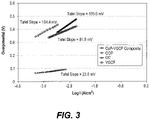
- FIG. 3 depicts Tafel plots corresponding to the linear sweep voltammograms of FIG. 2 .
- FIG. 4 depicts an energy-dispersive X-ray spectrograph of a porphyrin-based catalyst for water splitting.
- FIG. 5 depicts a graph of current density versus potential curves recorded from a porphyrin-based catalyst for water splitting coated electrode in solutions with varying pH.
- the porphyrin-based catalysts for water splitting are composites of porphyrin or metalloporphyrin active ingredients, conductive carbon (e.g., graphene sheets, vapor grown carbon fiber, carbon nanotube, carbon black, etc.), and a polymer or binder that may be coated on a glassy carbon electrode.
- the polymer binder may be Nafion oil or polyvinylidine difluoride (PVDF).
- the porphyrin may be a porphyrin having a transition metal or hydrogen at its center, and may be halogenated and/or have a thiophene substituent.
- the porphyrin has the structure:
- M is H 2 , Co, Ni, Cu, or Zn
- X is F, Cl, or Br.
- the catalysts are composites comprising porphyrin powder, carbon conductive materials, and polymer solution.
- the porphyrin has extraordinary catalytic activity towards the oxygen evolution reaction, while the conductive carbon additives provide an enhanced electrical conductivity, which is essentially required to catalyze the water splitting reaction. Additionally, the polymer will contribute in improving the mechanical integrity of the catalyst. Combining the unique properties of the components of the composite catalyst has significantly reduced the energy required to perform the water splitting process, and hence, improved the efficiency of oxygen gas production.
- the porphyrin-based catalyst is very stable and uniquely catalyzes the oxygen evolution reaction in acidic, neutral and basic media. Additionally, flexibility of the organic porphyrin molecules and carbon network has contributed in improving the stability of the catalyst.
- the catalysts are based on low cost carbon materials and scalable, synthesizable porphyrins, which make the catalysts a very cost effective technology for producing clean, renewable energy.
- the targeted-porphyrins may be prepared using a one-pot, multi-step approach.
- a mixture of equimolar quantity of pyrrole and selected aldehydes in dimethylformamide (DMF) was heated at 100° C. under argon atmosphere.
- a similar molar quantity of p-toluenesulfonic acid (PTSA) was added, and the reaction mixture was heated up gradually to 140° C. and kept at this temperature for one hour.
- the obtained dark violet solution was left to cool to room temperature.
- the dark violet solution was poured into cooled water/triethylamine (TEA) (5%) and left for 30 min. with stirring.
- the resulting solid precipitate was filtered, washed several times with water, air dried and purified by column chromatography (CHCl 3 /MeOH 99:1 v/v) and crystallization from CHCl 3 /MeOH.
- the resulting porphyrins may then be reacted with a metal acetate to produce a desired metallo-porphyrin complex as follows: a mixture of the free base porphyrin (1 mole) and metal acetate (3 moles of cobalt acetate, nickel acetate, copper acetate, or zinc acetate) is dissolved in dimethylformamide (DMF).
- DMF dimethylformamide
- the reaction mixture is heated and kept at 120° C. under argon atmosphere for 3 hours, left to cool, and poured into cool water.
- the solid product is collected by filtration, washed with water several times, air dried, and purified by column chromatography (CHCl 3 /MeOH 99:1 v/v) and crystall
- a preferred structure of the porphyrins is:
- M is H 2 , Co, Ni, Cu, or Zn
- X is F, Cl, or Br.
- Composite electrodes with the porphyrin-based catalysts may be made by dispersing a conductive carbon in an organic solvent (e.g., methanol, ethanol, propanol or mixtures thereof) to form a first reaction mixture, mixing the porphyrin complexes with the first reaction mixture to form a second reaction mixture, adding a polymer solution (e.g., Nafion oil, PVDF, etc.) to the second reaction mixture to produce a third reaction mixture (a thick, homogenous ink), and coating the third reaction mixture (between 100 and 200 ⁇ l) directly on a conducting substrate (e.g. a glassy carbon electrode), which is baked in a drying oven at 80° C. for ten minutes, thereby producing a composite electrode with a porphyrin-based catalyst.
- a conducting substrate e.g. a glassy carbon electrode
- Each reaction mixture may be mixed using an ultrasonic probe for about an hour.
- the weight percentage of the porphyrin compound, conductive carbon, and polymer used to form the composite electrode may vary, exemplary weight percentages being listed in Table 1.
- FIG. 1 shows a SEM micrograph of one such catalyst [50 wt % 5,10,15,20 tetrakis (5-bromothiophen-2-yl) porphyrin, 40 wt % vapor grown carbon fiber (VGCF) and 10 wt % Nafion oil].
- the carbon fibers can be easily recognized, while the porphyrin particles are visible as less dark particles physically attached to the fibers.
- the fibrous nature of the VGCF is also apparent, and the uniform distribution of the porphyrin-based catalyst throughout the VGCR carbon network is confirmed.
- Exemplary composite electrodes were made with the porphyrin-based catalysts and tested as follows. Performance of the electrocatalysts was evaluated by measuring overpotential ( ⁇ ), the difference between the applied potential (E) and the potential under equilibrium conditions (E eq ). A low ⁇ was indicative of improved catalytic performance.
- the rate of oxygen evolution reaction was calculated using the Tafel equation, correlating the rate of the electrochemical reaction and the overpotential according to Equation 3:
- Tafel slopes were also calculated by plotting log(i) versus ⁇ , producing lines with a slope of b.
- a small Tafel slope indicates that current density will increase significantly with little change in overpotential, thus indicating a faster reaction rate for oxygen evolution.
- small Tafel slopes were used as indicators of better performing electrocatalysts. Tafel slopes were calculated according to Equation 4:
- a bare glassy carbon electrode GC
- VGCF VGCF
- CoP cobalt-porphyrin compound
- CoP-VGCF glassy carbon electrode coated with 50 wt % cobalt-porphyrin compound, 10 wt % Nafion, and 40 wt % VGCF (CoP-VGCF).
- the weight load of the coated electrodes was 1 mg/cm 2 .
- FIG. 2 depicts linear sweep voltammograms recorded in 1 M NaOH solution at a scan rate of 100 mV/s for all four tested electrodes. Electrochemical measurements were performed using an Ezstat potentiostat/galvanostat supported with EZware software. Electrochemical measurements were carried out in a conventional three-electrode cell. A glassy carbon base electrode coated with 2 mg cm ⁇ 2 of the porphyrin-based catalyst was used as a working electrode. The counter electrode was made of a platinum mesh (area 1 cm 2 ). The reference electrode was Ag/AgCl/KCL (sat.). The potential was measured against the Ag/AgCl/KCl (Sat.) electrode, then converted to a normal hydrogen electrode by adding 0.197 V.
- the resulting voltammograms illustrate the low potential required for the CoP-VGCF composite catalyst to catalyze the oxygen evolution reaction.
- Tafel plots of the results shown in FIG. 2 are depicted in FIG. 3 , demonstrating the significantly reduced Tafel slope of the CoP-VCGF electrode when compared with the other tested electrodes.
- a porphyrin-based catalyst for water splitting was fabricated having 50 wt % cobalt porphyrin complex, 40 wt % VGCF, and 10 wt % Nafion oil.
- VGCF VGCF was dispersed in 2 ml methanol in an ultrasonic bath for an hour.
- 0.5 g cobalt-porphyrin complex were added in the ultrasonic bath for a further hour.
- a further 2 g of Nafion oil polymer solution (5 wt %) was added to the mixture, producing a thick homogenous ink.
- This mixture was then mixed in an ultrasonic bath for a further hour.
- the resulting ink was stable and homogenous.
- a volume of between 100 and 200 ⁇ l of the ink was coated directly onto the surface of a glass carbon electrode (2 mm diameter) and the electrode was transferred to a drying oven and baked at 80° C. for 10 minutes.
- FIG. 1 A scanning electron micrograph of this composite electrode is depicted in FIG. 1 , illustrating the fibrous nature of the VCGF and confirming that the cobalt porphyrin catalyst is uniformly distributed on the VGCF carbon network. These results were also confirmed by
- EDX Energy-Dispersive X-ray Spectroscopy
- the porphyrin-based water splitting catalysts were also tested to determine their impact on the oxygen evolution reaction in acidic, neutral, and basic media.
- a glassy carbon electrode was prepared according to Examples 1-2. The weight loading of the catalyst on top of the base electrode was 2 mg cm ⁇ 2 .
- Phosphate buffer solution, an aqueous mixture of 0.5 M potassium dihydrogen phosphate (KH 2 PO 4 ) and 0.5M potassium hydrogen phosphate (K 2 HPO 4 ) was used as medium.
- a neutral medium of pH 7 was obtained by mixing 21.0 ml of KH 2 PO 4 with 30.0 ml of K 2 HPO 4 .
- An acidic solution of pH 1 was obtained by mixing 49.3 ml of KH 2 PO 4 with 0.7 ml of K 2 HPO 4 .
- a basic solution of pH 13 was obtained by mixing 0.6 ml of KH 2 PO 4 with 49.4 ml of K 2 HPO 4 to produce a pH 8.85 buffer and adding sufficient NaOH to reach pH 13.
- Electrochemical measurements were performed using a conventional three-electrode cell and an Ezstat potentiostat/galvanostat supported by Ezstat software. The composite electrode was used as a working electrode.
- the counter electrode was made of a platinum mesh (area 1 cm 2 ).
- the reference electrode as Ag/AgCl/Kcl (sat.).
- Linear sweep voltammograms were recorded by scanning the potential of the working electrode at a scan rate of 100 mV s ⁇ 1 in a buffer solution of the required pH. The potential was measured against the Ag/AgCl/KCl (sat.), then was converted to a normal hydrogen electrode by adding 0.197 V.
- the dashed line indicates the electrode potential corresponding to a current density of 1 mA cm ⁇ 2 .
- the oxygen evolution reaction region is also highlighted. It is generally understood that the potential required to perform the oxygen evolution reaction increases as pH decreases.
- porphyrin-based catalysts for water splitting is not limited to the specific embodiments described above, but encompasses any and all embodiments within the scope of the generic language of the following claims enabled by the embodiments described herein, or otherwise shown in the drawings or described above in terms sufficient to enable one of ordinary skill in the art to make and use the claimed subject matter.
Landscapes
- Chemical & Material Sciences (AREA)
- Chemical Kinetics & Catalysis (AREA)
- Electrochemistry (AREA)
- Organic Chemistry (AREA)
- General Chemical & Material Sciences (AREA)
- Engineering & Computer Science (AREA)
- Materials Engineering (AREA)
- Manufacturing & Machinery (AREA)
- Inorganic Chemistry (AREA)
- Metallurgy (AREA)
- Catalysts (AREA)
Abstract
Description
2H 2 O⇄O 24H ++4e −(V anode=1.23Vvs.NHE) (1)
4H ++4e −⇄2H 2(V cathode=0.0Vvs.NHE) (2)
where NHE is the normal hydrogen electrode. Equation (1) is the oxygen evolution reaction (OER), which takes place at the anode. Equation (2) is the hydrogen evolution reaction (HER), which takes place at the cathode. The reverse of Equation (1) is the oxygen reduction reaction (ORR), which takes place at the cathode of some fuel cells.

wherein M is H2, CO, Ni, Cu, or Zn, and X is F, Cl, or Br.

wherein M is H2, Co, Ni, Cu, or Zn, and X is F, Cl, or Br.

wherein M is H2, Co, Ni, Cu, or Zn, and X is F, Cl, or Br.
| TABLE 1 |
| Exemplary Composition of Porphyrin- |
| Based Catalyst by Weight Percent |
| Porphyrin | Conductive Carbon | Polymer |
| 80 | 10 | 10 |
| 70 | 20 | 10 |
| 60 | 30 | 10 |
| 50 | 40 | 10 |
where i is the current density, io is the exchange current density (i.e., the current at zero potential), and b is the Tafel slope. The magnitude of the exchange current density (io) reflects the intrinsic bonding/charge transferring interaction between the electrocatalyst and the reactant. A high exchange current density was used as an indicator of a suitable catalyst for the reaction being tested.
| TABLE 2 |
| EDX of cobalt-porphyrin composite |
| Element | Weight % | Atomic % | Net Int. | Error % | ||
| CK | 89.2 | 93.05 | 187.29 | 6.06 | ||
| OK | 7.41 | 5.8 | 6.61 | 17.51 | ||
| SK | 2.54 | 0.99 | 60.09 | 5.03 | ||
| CoK | 0.49 | 0.1 | 4.37 | 32.8 | ||
| BrK | 0.36 | 0.06 | 0.76 | 72.57 | ||
Claims (4)

Priority Applications (2)
| Application Number | Priority Date | Filing Date | Title |
|---|---|---|---|
| US16/279,979 US11446648B2 (en) | 2019-02-19 | 2019-02-19 | Porphyrin-based catalysts for water splitting |
| US17/885,752 US20220395819A1 (en) | 2019-02-19 | 2022-08-11 | Porphyrin-based catalysts for water splitting |
Applications Claiming Priority (1)
| Application Number | Priority Date | Filing Date | Title |
|---|---|---|---|
| US16/279,979 US11446648B2 (en) | 2019-02-19 | 2019-02-19 | Porphyrin-based catalysts for water splitting |
Related Child Applications (1)
| Application Number | Title | Priority Date | Filing Date |
|---|---|---|---|
| US17/885,752 Division US20220395819A1 (en) | 2019-02-19 | 2022-08-11 | Porphyrin-based catalysts for water splitting |
Publications (2)
| Publication Number | Publication Date |
|---|---|
| US20200261897A1 US20200261897A1 (en) | 2020-08-20 |
| US11446648B2 true US11446648B2 (en) | 2022-09-20 |
Family
ID=72043231
Family Applications (2)
| Application Number | Title | Priority Date | Filing Date |
|---|---|---|---|
| US16/279,979 Active 2040-12-12 US11446648B2 (en) | 2019-02-19 | 2019-02-19 | Porphyrin-based catalysts for water splitting |
| US17/885,752 Pending US20220395819A1 (en) | 2019-02-19 | 2022-08-11 | Porphyrin-based catalysts for water splitting |
Family Applications After (1)
| Application Number | Title | Priority Date | Filing Date |
|---|---|---|---|
| US17/885,752 Pending US20220395819A1 (en) | 2019-02-19 | 2022-08-11 | Porphyrin-based catalysts for water splitting |
Country Status (1)
| Country | Link |
|---|---|
| US (2) | US11446648B2 (en) |
Families Citing this family (2)
| Publication number | Priority date | Publication date | Assignee | Title |
|---|---|---|---|---|
| CN115323424B (en) * | 2022-09-02 | 2025-05-27 | 南阳理工学院 | A preparation method and application of a coordination polymer based on 2,5-dichloro-3,6-dihydroxy-p-benzoquinone ligand |
| CN115678384B (en) * | 2022-11-12 | 2023-10-31 | 中山市海恒包装材料有限公司 | Water-based resin coating composition and preparation method thereof |
Citations (5)
| Publication number | Priority date | Publication date | Assignee | Title |
|---|---|---|---|---|
| US7037414B2 (en) | 2003-07-11 | 2006-05-02 | Gas Technology Institute | Photoelectrolysis of water using proton exchange membranes |
| WO2010088723A1 (en) | 2009-02-03 | 2010-08-12 | University Of Wollongong | Dye composition for use in photoelectric material |
| US20140061063A1 (en) | 2001-12-20 | 2014-03-06 | Makoto Yuasa | Electrode for active oxygen species and sensor using the electrode |
| US9205420B2 (en) | 2011-04-22 | 2015-12-08 | President And Fellows Of Harvard College | Nanostructures, systems, and methods for photocatalysis |
| US9459545B2 (en) | 2014-06-23 | 2016-10-04 | Canon Kabushiki Kaisha | Electrophotographic photosensitive member, manufacturing method of electrophotographic photosensitive member, process cartridge and electrophotographic apparatus, and a solid solution and manufacturing method of a solid solution |
Family Cites Families (1)
| Publication number | Priority date | Publication date | Assignee | Title |
|---|---|---|---|---|
| CA2668685A1 (en) * | 2006-11-06 | 2008-05-15 | Akermin, Inc. | Bioanode and biocathode stack assemblies |
-
2019
- 2019-02-19 US US16/279,979 patent/US11446648B2/en active Active
-
2022
- 2022-08-11 US US17/885,752 patent/US20220395819A1/en active Pending
Patent Citations (5)
| Publication number | Priority date | Publication date | Assignee | Title |
|---|---|---|---|---|
| US20140061063A1 (en) | 2001-12-20 | 2014-03-06 | Makoto Yuasa | Electrode for active oxygen species and sensor using the electrode |
| US7037414B2 (en) | 2003-07-11 | 2006-05-02 | Gas Technology Institute | Photoelectrolysis of water using proton exchange membranes |
| WO2010088723A1 (en) | 2009-02-03 | 2010-08-12 | University Of Wollongong | Dye composition for use in photoelectric material |
| US9205420B2 (en) | 2011-04-22 | 2015-12-08 | President And Fellows Of Harvard College | Nanostructures, systems, and methods for photocatalysis |
| US9459545B2 (en) | 2014-06-23 | 2016-10-04 | Canon Kabushiki Kaisha | Electrophotographic photosensitive member, manufacturing method of electrophotographic photosensitive member, process cartridge and electrophotographic apparatus, and a solid solution and manufacturing method of a solid solution |
Non-Patent Citations (5)
| Title |
|---|
| Downes et al., "Electrocatalytic Metal-Organic Frameworks for Energy Applications", ChemSumChem (2017), vol. 10, pp. 4374-4392. |
| Friedlein et al., "Solution-processed, highly oriented supramolecular architectures of functionalized porphyrins with extended electronic states," Chemical Communications, 15, 2005, pp. 1974-1976. |
| Ghazzali et al., "Synthesis, EPR and DFT calculations of rare Ag(II)porphyrins and the crystal structure of [Zn(II) tetrakis(4-bromo-2-thiophene)porphyrin]," Inorganic Chemistry Communications, 11:9, 2008, pp. 1019-1022. |
| Jia et al., "Pyrolyzed cobalt porphyrin-based conjugated mesoporous polymers as bifunctional catalysts for hydrogen production and oxygen evolution in water", Chemical Communications (2016), vol. 52, pp. 13483-13486 (Abstract only). |
| Kellett et al., "Cobalt(I) porphyrin catalysts of hydrogen production from water", Inorganic Chemistry (1985), vol. 24, No. 15, pp. 2373-2377 (Abstract only). |
Also Published As
| Publication number | Publication date |
|---|---|
| US20220395819A1 (en) | 2022-12-15 |
| US20200261897A1 (en) | 2020-08-20 |
Similar Documents
| Publication | Publication Date | Title |
|---|---|---|
| US11725292B2 (en) | Bifunctional porous non-noble metal phosphide catalyst for overall water splitting and methods of making and using same | |
| Do et al. | Pd–PdO nanodomains on amorphous Ru metallene oxide for high‐performance multifunctional electrocatalysis | |
| Dutta et al. | Promoting electrocatalytic overall water splitting with nanohybrid of transition metal nitride-oxynitride | |
| Jayabalan et al. | Enhancing biohydrogen production from sugar industry wastewater using metal oxide/graphene nanocomposite catalysts in microbial electrolysis cell | |
| EP3458191B1 (en) | Three-dimensional porous nise2 foam-based hybrid catalysts for ultra-efficient hydrogen evolution reaction in water splitting | |
| US10446852B2 (en) | Fuel-cell system and method of generating energy from crude fuel | |
| Zhao et al. | Noble-Metal-Free FeMn-NC catalyst for efficient oxygen reduction reaction in both alkaline and acidic media | |
| US20070254206A1 (en) | Methods for production of metals on carbon nitride powders and composites and their use as catalysts in fuel cell electrochemistry | |
| Pham Truong et al. | Polymer brushes ionic liquid as a catalyst for oxygen reduction and oxygen evolution reactions | |
| Chen et al. | In-situ phosphatizing of cobalt-molybdenum nanosheet arrays on self-supporting rGO/CNTs film as efficient electrocatalysts for hydrogen evolution reaction | |
| Giddaerappa et al. | Cobalt Phthalocyanine Based Metal–Organic Framework as an Efficient Bifunctional Electrocatalyst for Water Electrolysis | |
| US20220395819A1 (en) | Porphyrin-based catalysts for water splitting | |
| Yi et al. | Cost‐efficient photovoltaic‐water electrolysis over Ultrathin nanosheets of cobalt/iron–molybdenum oxides for potential large‐scale hydrogen production | |
| Lu et al. | Adjustable composition of self-supported amorphous Ni–Fe–P nanosheet decorated NiP microspheres for efficient and stable overall alkaline freshwater/seawater splitting | |
| Vijayarangan et al. | Cobalt doped sulfonated polyaniline with high electrocatalytic activity and stability for oxygen evolution reaction | |
| Yan et al. | First application of antimony (III) corrole for electrocatalytic hydrogen evolution | |
| CN110714209A (en) | Cobalt-nickel hydroxide sleeve type modified carbon fiber composite material and preparation method and application thereof | |
| Jiang et al. | Electrocatalytic performance of CNTs/graphene composited rare earth phthalocyanines (M= La, Y, Yb, Sc) | |
| Prasanna et al. | Pt and Pt-Sn nanoparticles decorated conductive polymer-biowaste ash composite for direct methanol fuel cell | |
| Ren et al. | Nonprecious Co-NPC@ Mo2TiC2 Catalyst for the high-performance oxygen reduction reaction in PEMFCs | |
| Devi et al. | Utilization of superhydrophilic metallosurfactant electrocatalyst for enhanced cathodic oxygen reduction reaction in Microbial Fuel Cell | |
| Leng et al. | Hierarchical CuO x@ Ni1–y Co y O Nanotube Arrays Grown on Cu Foam as a Binder-Free Electrode for Hydrazine-Assisted Unprecedented Efficient Hydrogen Generation | |
| Kumari et al. | Excellent ethanol oxidation and oxygen evolution reaction from ultrafine nickel hydroxide nanorods stabilized at room temperature | |
| Xu et al. | A non-noble material cathode catalyst dual-doped with sulfur and nitrogen as efficient electrocatalysts for oxygen reduction reaction | |
| Cao et al. | Enhancing the oxygen reduction reaction in microbial fuel cell by using NiFe-LDH@ NiCo2S4@ MWCNT as cathode catalyst |
Legal Events
| Date | Code | Title | Description |
|---|---|---|---|
| AS | Assignment |
Owner name: KING FAISAL UNIVERSITY, SAUDI ARABIA Free format text: ASSIGNMENT OF ASSIGNORS INTEREST;ASSIGNORS:ABDELSALAM, MAMDOUH E., DR.;ELGHAMRY, IBRAHIM A., DR.;REEL/FRAME:048376/0409 Effective date: 20181219 |
|
| FEPP | Fee payment procedure |
Free format text: ENTITY STATUS SET TO UNDISCOUNTED (ORIGINAL EVENT CODE: BIG.); ENTITY STATUS OF PATENT OWNER: SMALL ENTITY |
|
| FEPP | Fee payment procedure |
Free format text: ENTITY STATUS SET TO SMALL (ORIGINAL EVENT CODE: SMAL); ENTITY STATUS OF PATENT OWNER: SMALL ENTITY |
|
| STPP | Information on status: patent application and granting procedure in general |
Free format text: NON FINAL ACTION MAILED |
|
| STPP | Information on status: patent application and granting procedure in general |
Free format text: RESPONSE TO NON-FINAL OFFICE ACTION ENTERED AND FORWARDED TO EXAMINER |
|
| STPP | Information on status: patent application and granting procedure in general |
Free format text: NON FINAL ACTION MAILED |
|
| STPP | Information on status: patent application and granting procedure in general |
Free format text: RESPONSE TO NON-FINAL OFFICE ACTION ENTERED AND FORWARDED TO EXAMINER |
|
| STPP | Information on status: patent application and granting procedure in general |
Free format text: NOTICE OF ALLOWANCE MAILED -- APPLICATION RECEIVED IN OFFICE OF PUBLICATIONS |
|
| STCF | Information on status: patent grant |
Free format text: PATENTED CASE |
|
| FEPP | Fee payment procedure |
Free format text: MAINTENANCE FEE REMINDER MAILED (ORIGINAL EVENT CODE: REM.); ENTITY STATUS OF PATENT OWNER: SMALL ENTITY |